
The original seven astronauts for the Mercury Project pose in front of an Air Force Jet. From left to right: Scott Carpenter, L. Gordon Cooper, John H. Glenn, Virgil I. Gus Grissom, Walter M. Wally Schirra, Alan B. Shepard, and Donald K. Deke Slayton.
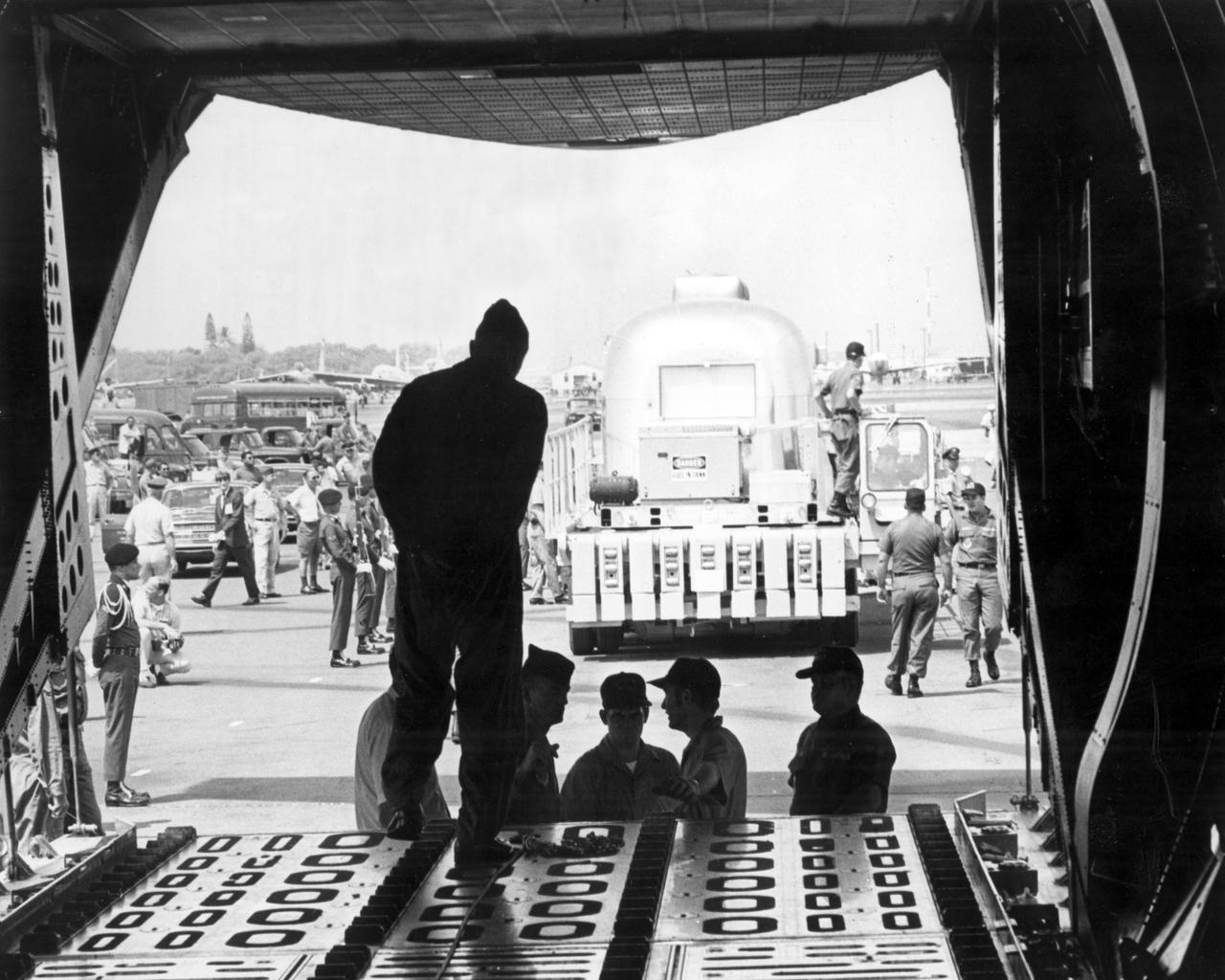
The Apollo 11 mission, the first manned lunar mission, launched from the Kennedy Space Center, Florida via the Marshall Space Flight Center (MSFC) developed Saturn V launch vehicle on July 16, 1969 and safely returned to Earth on July 24, 1969. Aboard the space craft were astronauts Neil A. Armstrong, commander; Michael Collins, Command Module (CM) pilot; and Edwin E. Aldrin Jr., Lunar Module (LM) pilot. The CM, piloted by Michael Collins remained in a parking orbit around the Moon while the LM, named “Eagle’’, carrying astronauts Neil Armstrong and Edwin Aldrin, landed on the Moon. During 2½ hours of surface exploration, the crew collected 47 pounds of lunar surface material for analysis back on Earth. The recovery operation took place in the Pacific Ocean where Navy para-rescue men recovered the capsule housing the 3-man Apollo 11 crew. The crew was airlifted to safety aboard the U.S.S. Hornet, where they were quartered in a Mobile Quarantine Facility (MQF) which served as their home until they reached the NASA Manned Spacecraft Center (MSC) Lunar Receiving Laboratory in Houston, Texas. In this photo taken at Pearl Harbor, Hawaii, the inhabited MQF is prepared for loading into an Air Force C-141 jet transport for the flight back to Ellington Air Force Base Texas and then on to the MSC.
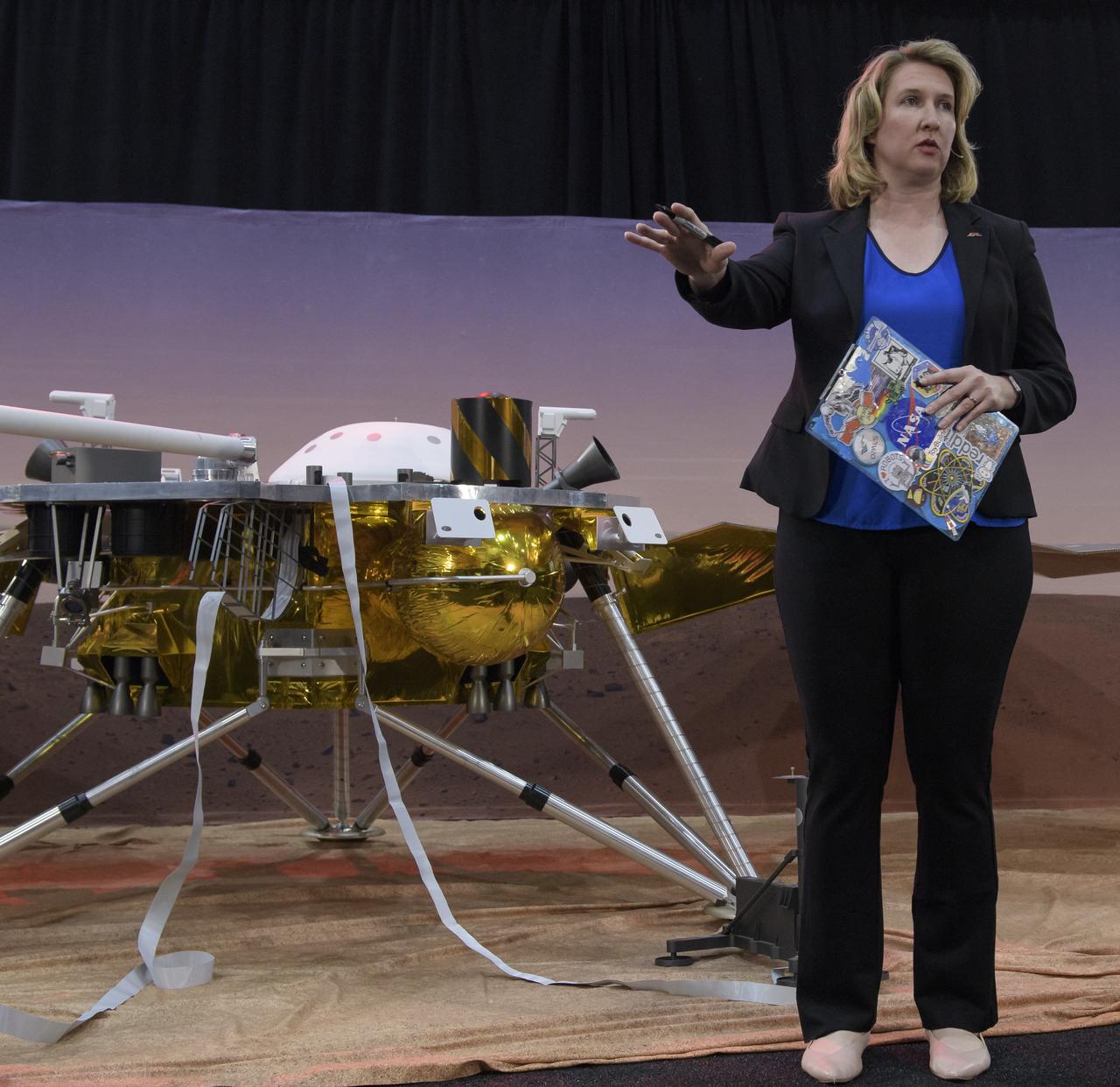
Stephanie Smith, Digital & Social Media Supervisor, Jet Propulsion Laboratory moderates a prelaunch media briefing for the NASA InSight mission, Thursday, May 3, 2018, at Vandenberg Air Force Base in California. InSight, short for Interior Exploration using Seismic Investigations, Geodesy and Heat Transport, is a Mars lander designed to study the "inner space" of Mars: its crust, mantle, and core. Photo Credit: (NASA/Bill Ingalls)
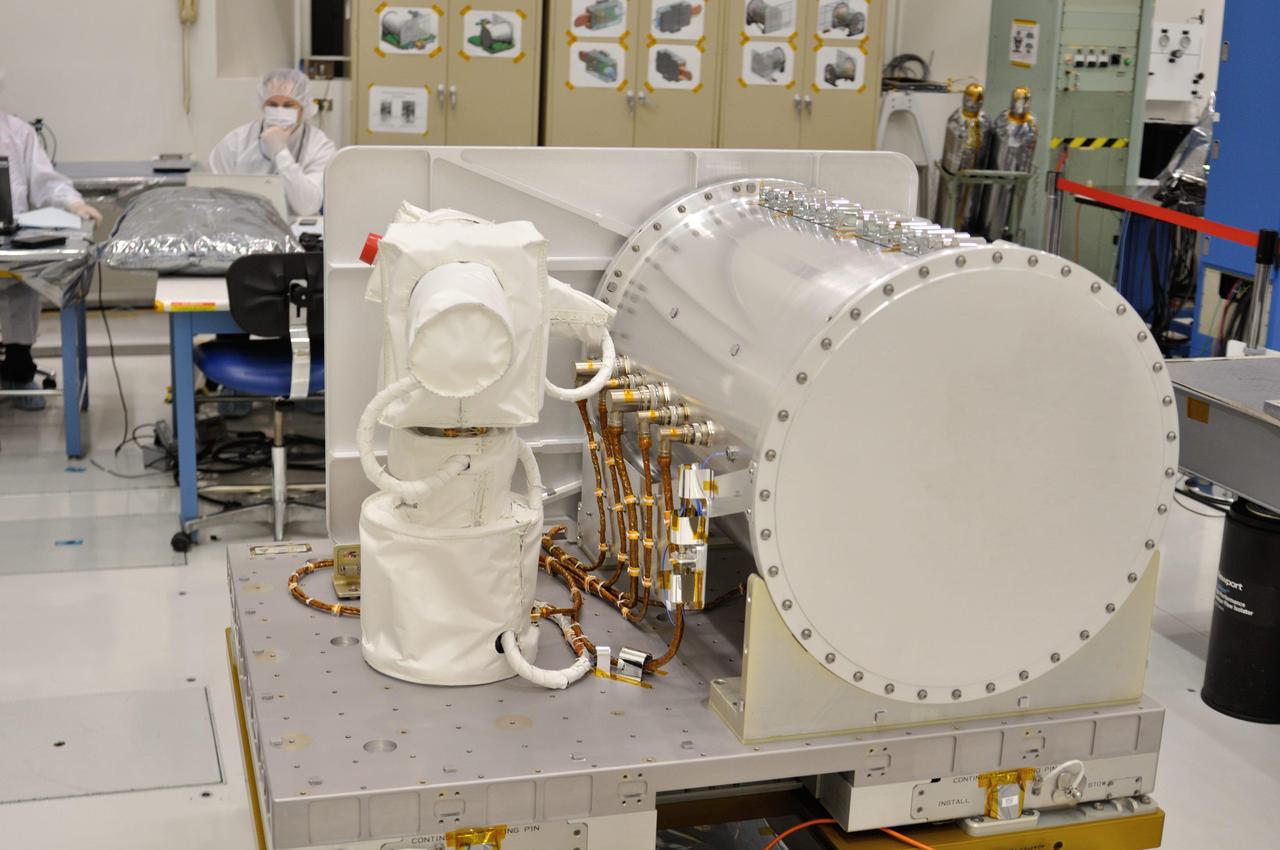
Optical PAyload for Lasercomm Science OPALS flight terminal undergoes final testing at NASA Jet Propulsion Laboratory. OPALS was launched to the International Space Station from Cape Canaveral Air Force Station in Florida on April 18, 2014.
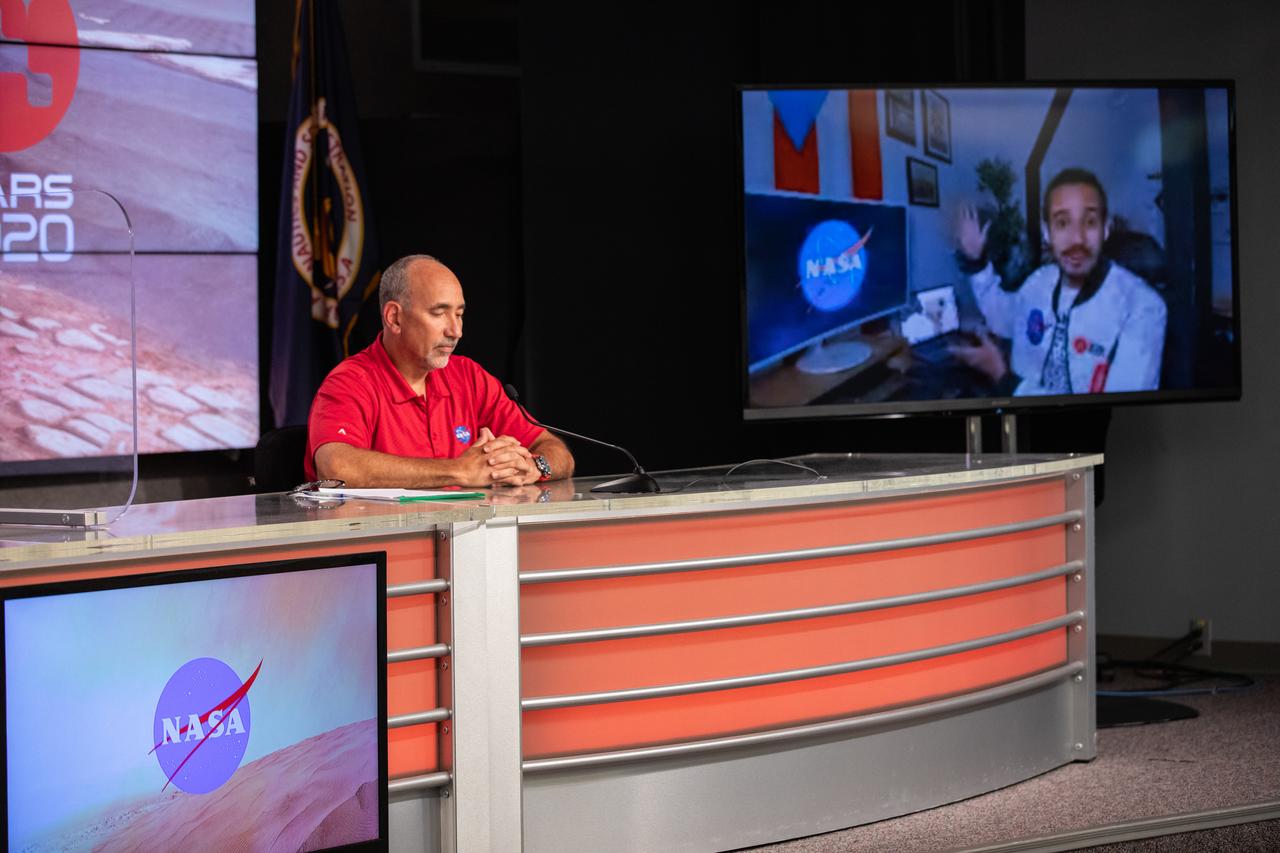
Elio Morillo, a Mars 2020 system testbed engineer from NASA’s Jet Propulsion Laboratory, speaks remotely while Albert Sierra, NASA’s Launch Services Program (LSP) chief of Flight Projects Office, listens during a “Mars 2020 Social Media Q&A: En Español” program on Wednesday, July 22, at NASA’s Kennedy Space Center in Florida. The event featured representatives from LSP and NASA’s Jet Propulsion Laboratory. The Mars Perseverance rover is scheduled to lift off aboard a United Launch Alliance Atlas V 541 rocket from Cape Canaveral Air Force Station’s Space Launch Complex 41 on Thursday, July 30. The two-hour window opens at 7:50 a.m. EDT. LSP, based at Kennedy, is managing the launch.

NASA Public Affairs Specialist Kristi Irastorza hosts a “Mars 2020 Social Media Q&A: En Español” program on Wednesday, July 22, at NASA’s Kennedy Space Center in Florida. The event featured representatives from NASA’s Launch Services Program (LSP) and NASA’s Jet Propulsion Laboratory. The Mars Perseverance rover is scheduled to lift off aboard a United Launch Alliance Atlas V 541 rocket from Cape Canaveral Air Force Station’s Space Launch Complex 41 on Thursday, July 30. The two-hour window opens at 7:50 a.m. EDT. LSP, based at Kennedy, is managing the launch.

NASA Public Affairs Specialist Kristi Irastorza hosts a “Mars 2020 Social Media Q&A: En Español” program on Wednesday, July 22, at NASA’s Kennedy Space Center in Florida. The event featured representatives from NASA’s Launch Services Program (LSP) and NASA’s Jet Propulsion Laboratory. The Mars Perseverance rover is scheduled to lift off aboard a United Launch Alliance Atlas V 541 rocket from Cape Canaveral Air Force Station’s Space Launch Complex 41 on Thursday, July 30. The two-hour window opens at 7:50 a.m. EDT. LSP, based at Kennedy, is managing the launch.
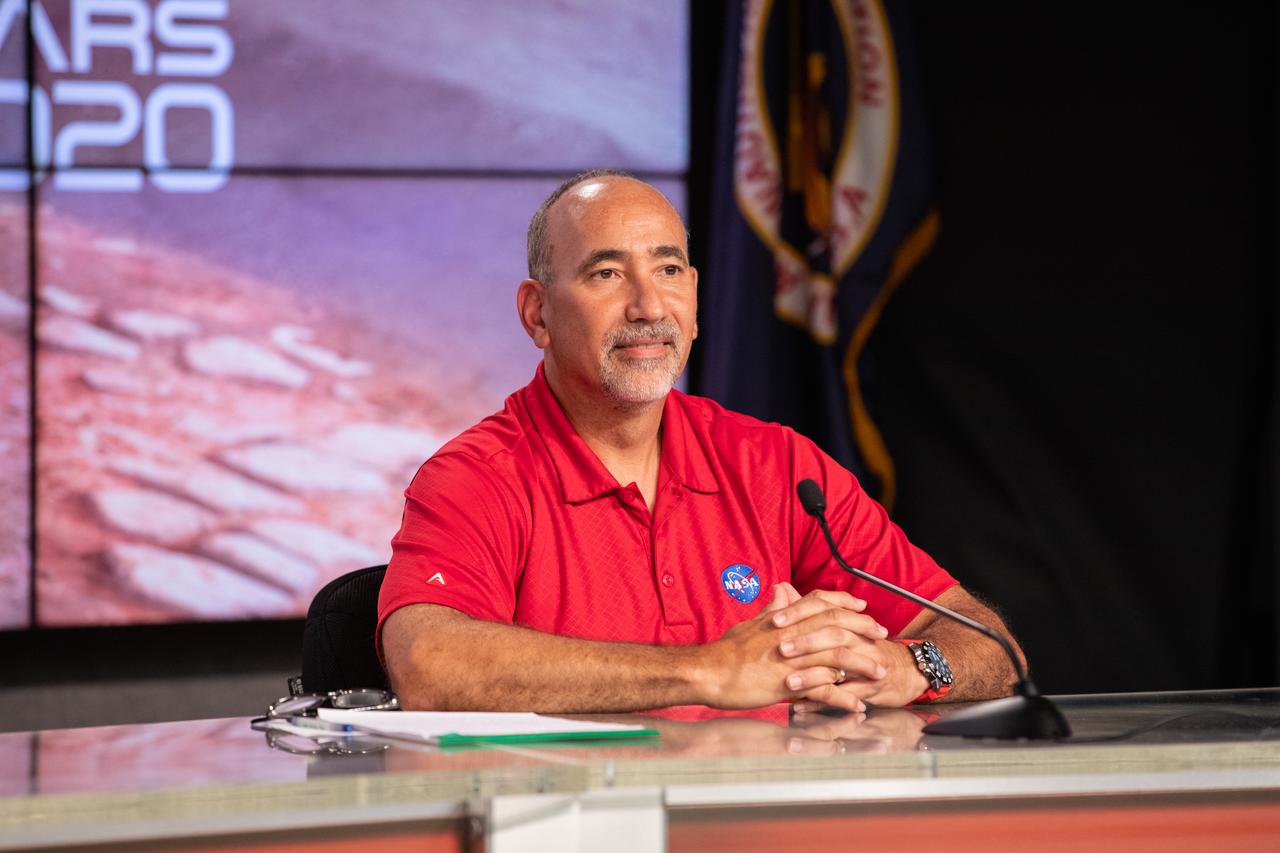
NASA’s Launch Services Program (LSP) Chief of Flight Projects Office Albert Sierra participates in a “Mars 2020 Social Media Q&A: En Español” program on Wednesday, July 22, at NASA’s Kennedy Space Center in Florida. The event featured representatives from LSP and NASA’s Jet Propulsion Laboratory. The Mars Perseverance rover is scheduled to lift off aboard a United Launch Alliance Atlas V 541 rocket from Cape Canaveral Air Force Station’s Space Launch Complex 41 on Thursday, July 30. The two-hour window opens at 7:50 a.m. EDT. LSP, based at Kennedy, is managing the launch.
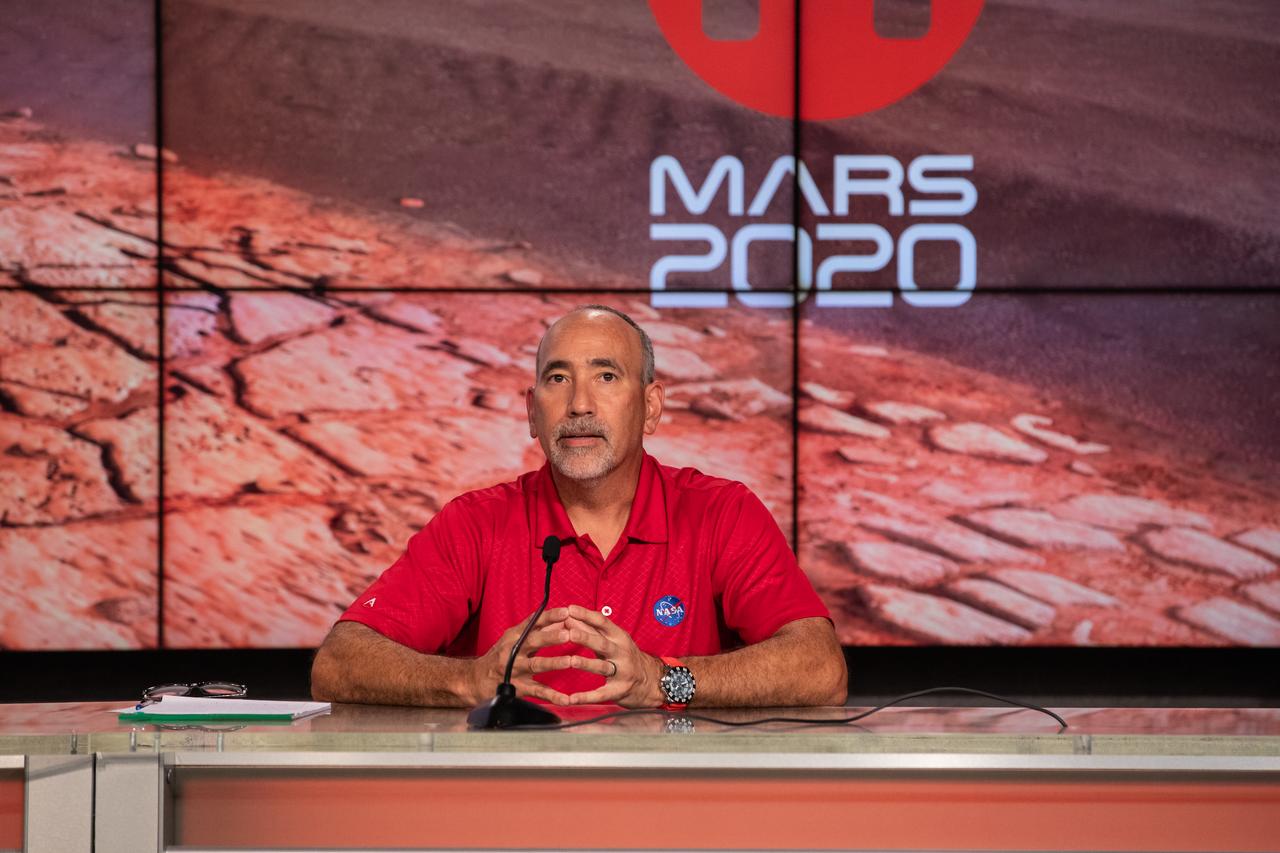
NASA’s Launch Services Program (LSP) Chief of Flight Projects Office Albert Sierra participates in a “Mars 2020 Social Media Q&A: En Español” program on Wednesday, July 22, at NASA’s Kennedy Space Center in Florida. The event featured representatives from LSP and NASA’s Jet Propulsion Laboratory. The Mars Perseverance rover is scheduled to lift off aboard a United Launch Alliance Atlas V 541 rocket from Cape Canaveral Air Force Station’s Space Launch Complex 41 on Thursday, July 30. The two-hour window opens at 7:50 a.m. EDT. LSP, based at Kennedy, is managing the launch.

NASA Public Affairs Specialist Kristi Irastorza hosts a “Mars 2020 Social Media Q&A: En Español” program on Wednesday, July 22, at NASA’s Kennedy Space Center in Florida. The event featured representatives from NASA’s Launch Services Program (LSP) and NASA’s Jet Propulsion Laboratory. The Mars Perseverance rover is scheduled to lift off aboard a United Launch Alliance Atlas V 541 rocket from Cape Canaveral Air Force Station’s Space Launch Complex 41 on Thursday, July 30. The two-hour window opens at 7:50 a.m. EDT. LSP, based at Kennedy, is managing the launch.
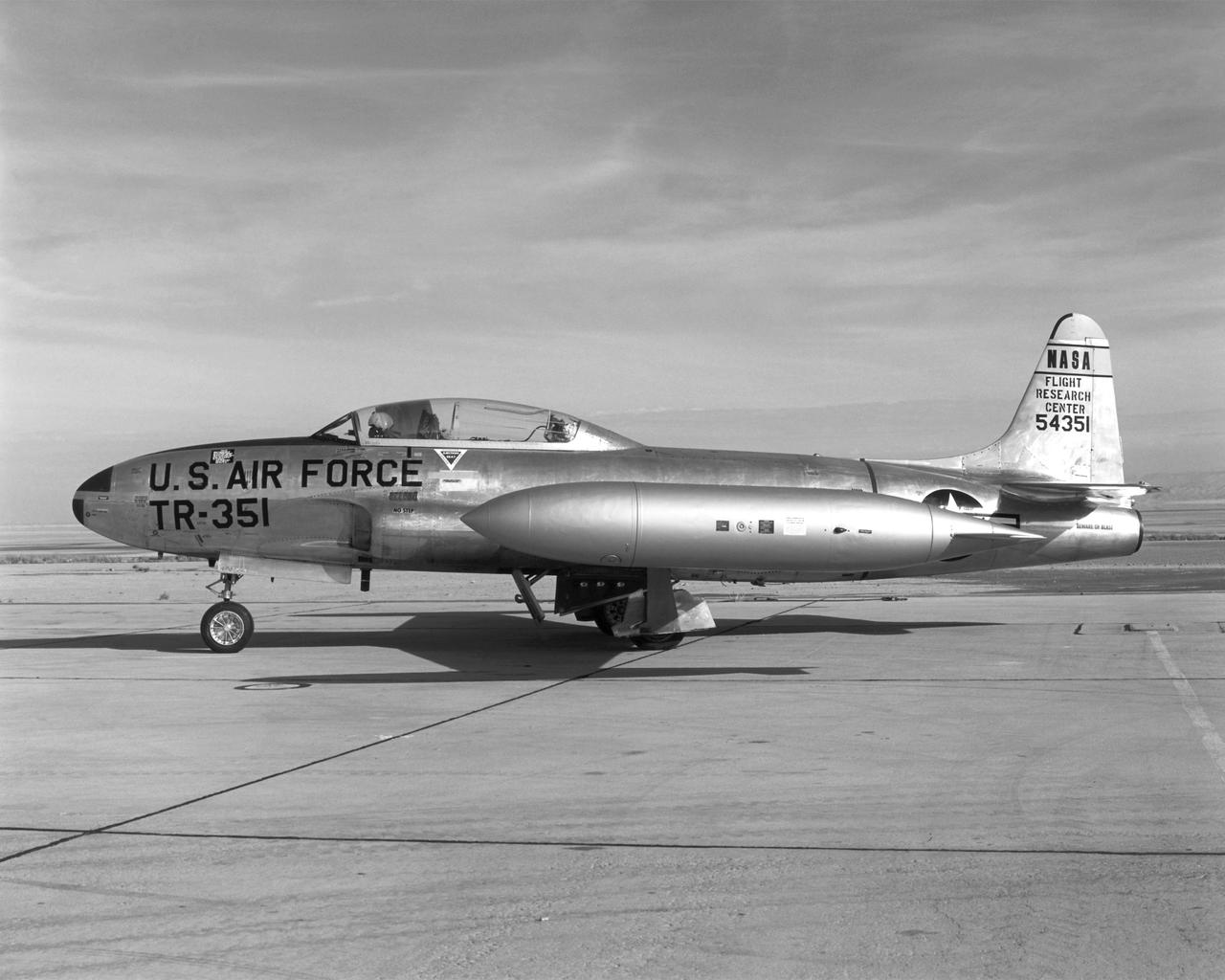
Arrived at NASA FRC January 9, 1963 Departed September 10, 1973 to Redding, California This aircraft, one of four T-33A jet trainers which NASA Dryden used from 1958 to 1973, was used in a monocular vision landing study. The T-33 was the first U.S. Air Force jet trainer, and was originally developed as a two-seat version of the F-80. The T-33 was used by not only the U.S. military, but also by foreign air forces as a trainer, fighter, and reconnaissance aircraft.
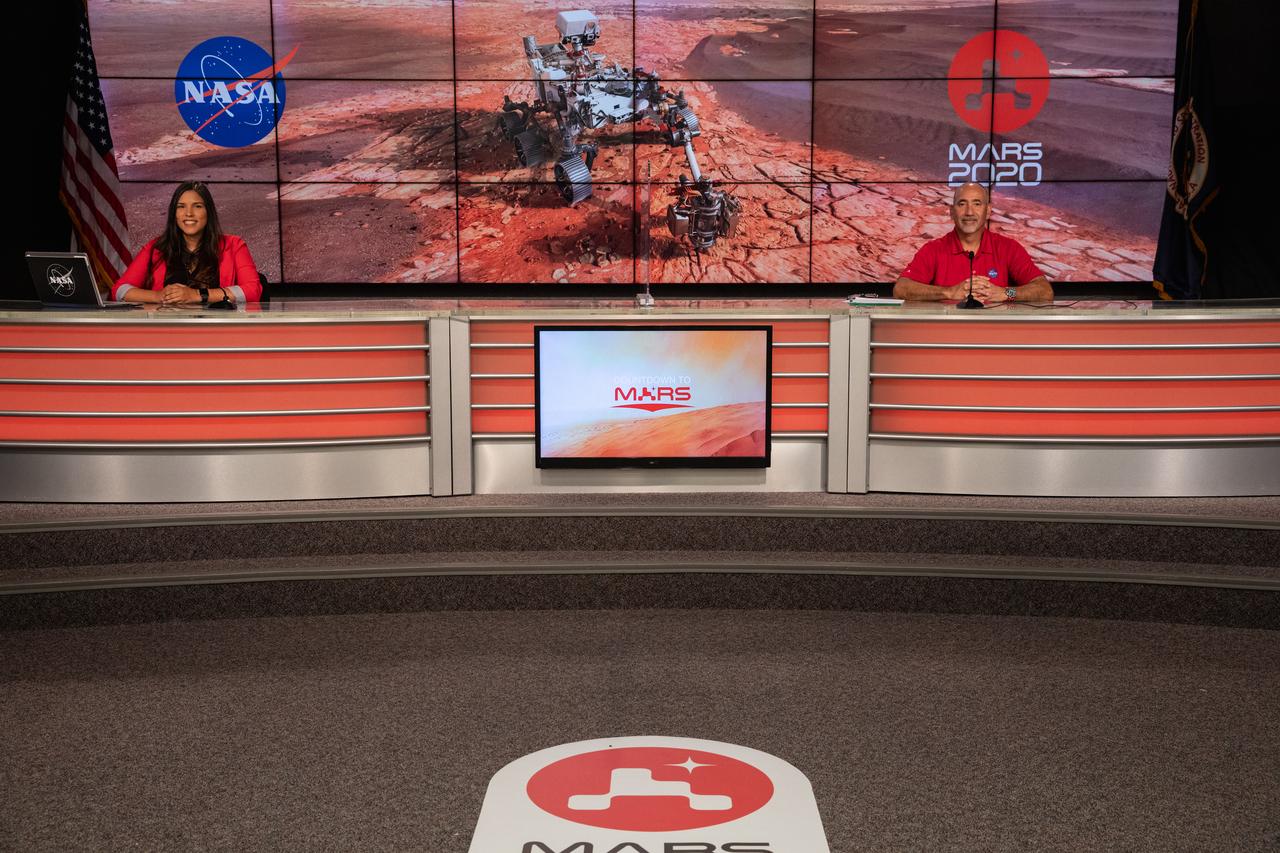
NASA Public Affairs Specialist Kristi Irastorza, left, and NASA’s Launch Services Program (LSP) Chief of Flight Projects Office Albert Sierra, participate in a “Mars 2020 Social Media Q&A: En Español” program on Wednesday, July 22, at NASA’s Kennedy Space Center in Florida. The event featured representatives from LSP and NASA’s Jet Propulsion Laboratory. The Mars Perseverance rover is scheduled to lift off aboard a United Launch Alliance Atlas V 541 rocket from Cape Canaveral Air Force Station’s Space Launch Complex 41 on Thursday, July 30. The two-hour window opens at 7:50 a.m. EDT. LSP, based at Kennedy, is managing the launch.
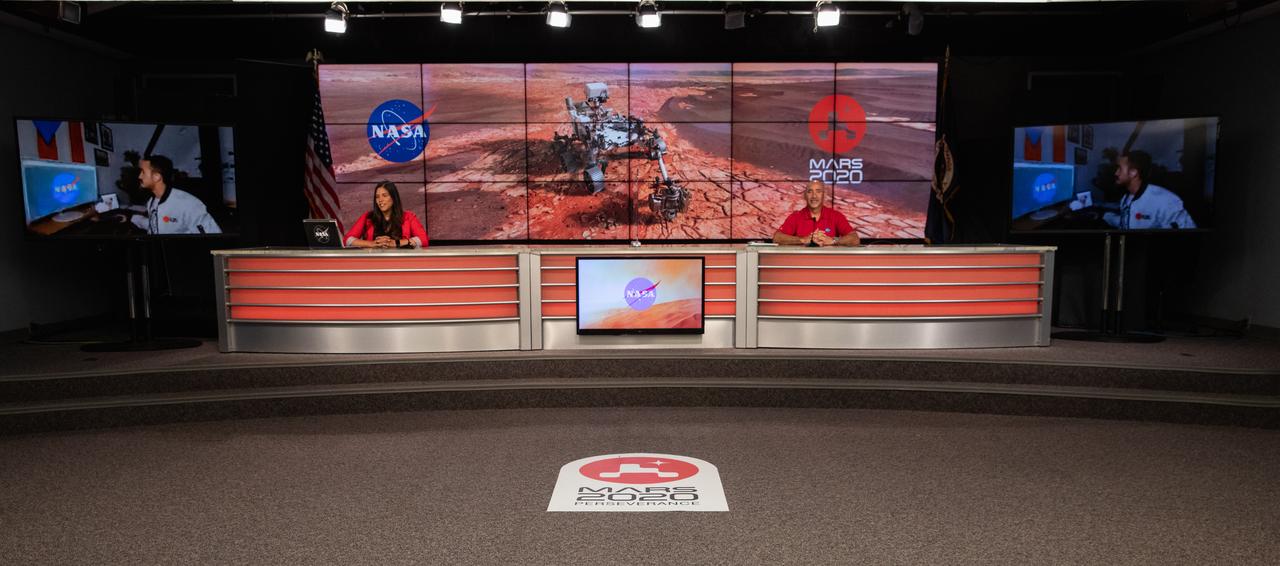
NASA Public Affairs Specialist Kristi Irastorza, left, and NASA’s Launch Services Program (LSP) Chief of Flight Projects Office Albert Sierra, participate in a “Mars 2020 Social Media Q&A: En Español” program on Wednesday, July 22, at NASA’s Kennedy Space Center in Florida. The event featured representatives from LSP and NASA’s Jet Propulsion Laboratory. The Mars Perseverance rover is scheduled to lift off aboard a United Launch Alliance Atlas V 541 rocket from Cape Canaveral Air Force Station’s Space Launch Complex 41 on Thursday, July 30. The two-hour window opens at 7:50 a.m. EDT. LSP, based at Kennedy, is managing the launch.

CAPE CANAVERAL, Fla. - The Royal Canadian Air Force Snowbird pilots flew their jets in tight formation over NASA's Kennedy Space Center in Florida. Photo credit: NASA/Jack Pfaller

The U.S. Air Force Thunderbirds fly over NASA’s Armstrong Flight Research Center in Edwards, California, during the second phase of its winter training in February 2025 to prepare for the upcoming air show season. The Thunderbirds perform all over the world in F-16 Fighting Falcons, a multi-role fighter jet.
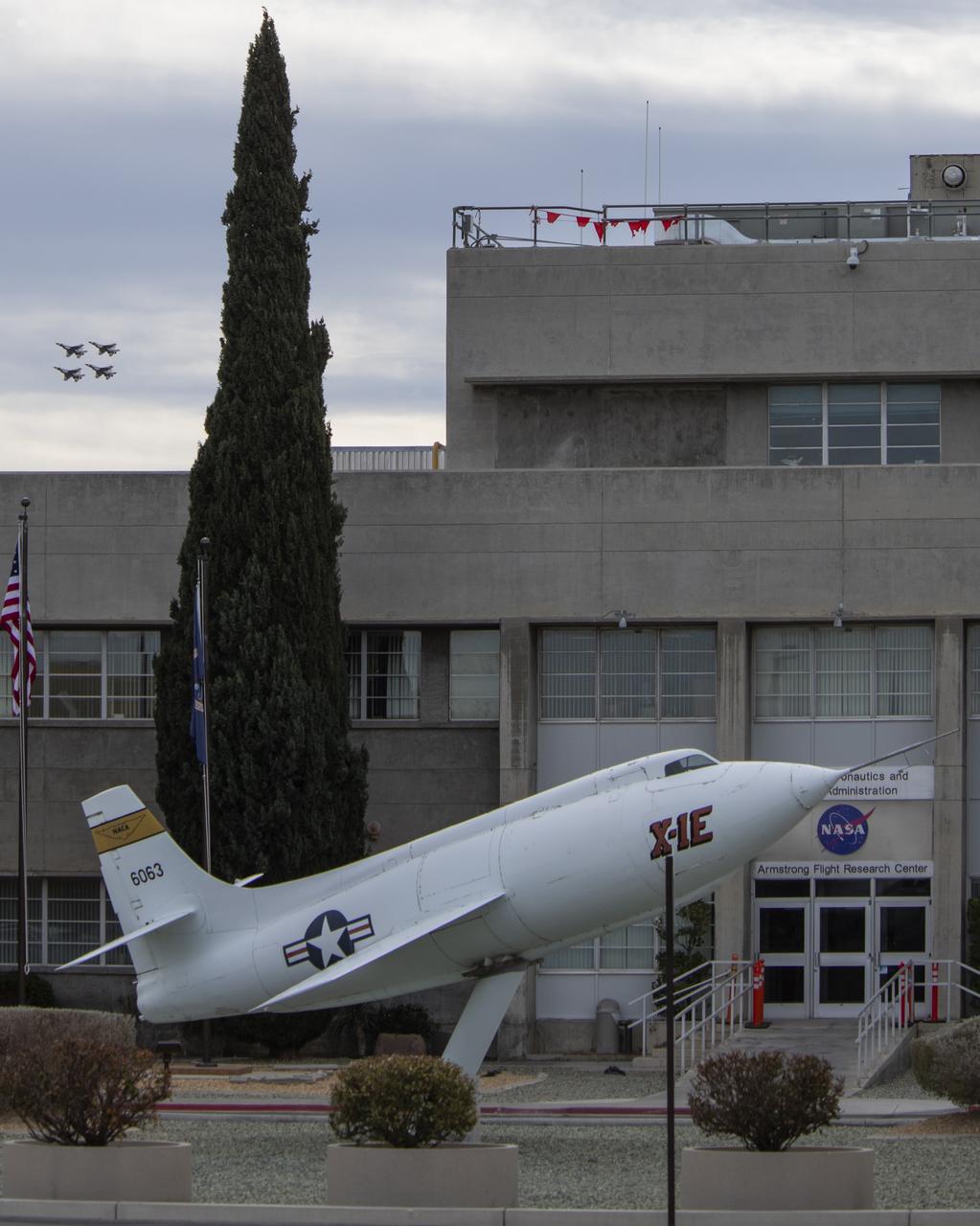
The U.S. Air Force Thunderbirds fly over NASA’s Armstrong Flight Research Center in Edwards, California, during the second phase of its winter training in February 2025 to prepare for the upcoming air show season. The Thunderbirds perform all over the world in F-16 Fighting Falcons, a multi-role fighter jet.
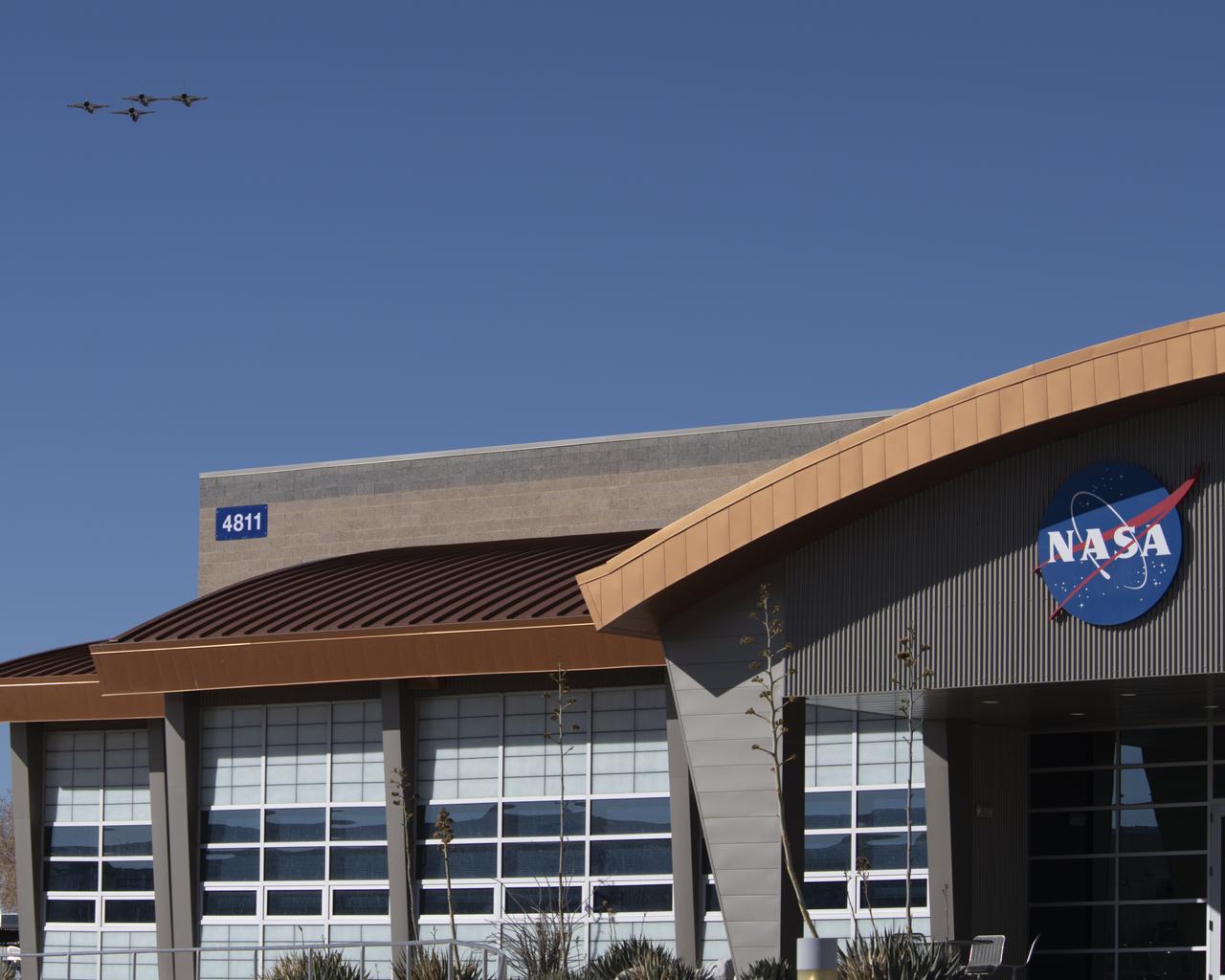
The U.S. Air Force Thunderbirds fly over NASA’s Armstrong Flight Research Center in Edwards, California, during the second phase of its winter training in February 2025 to prepare for the upcoming air show season. The Thunderbirds perform all over the world in F-16 Fighting Falcons, a multi-role fighter jet.
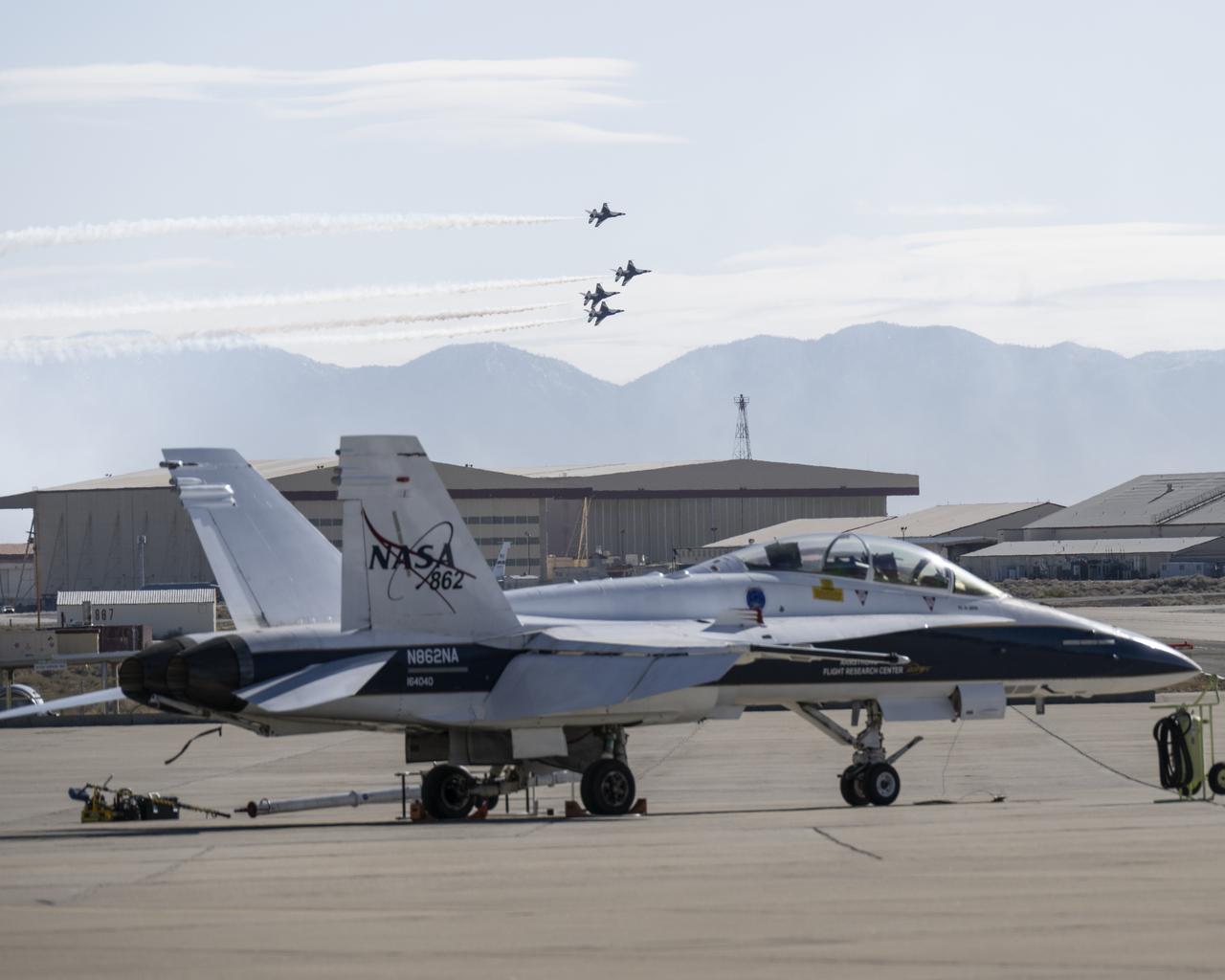
The U.S. Air Force Thunderbirds fly over NASA’s Armstrong Flight Research Center in Edwards, California, during the second phase of its winter training in February 2025 to prepare for the upcoming air show season. The Thunderbirds perform all over the world in F-16 Fighting Falcons, a multi-role fighter jet.

The U.S. Air Force Thunderbirds fly over NASA’s Armstrong Flight Research Center in Edwards, California, during the second phase of its winter training in February 2025 to prepare for the upcoming air show season. The Thunderbirds perform all over the world in F-16 Fighting Falcons, a multi-role fighter jet.
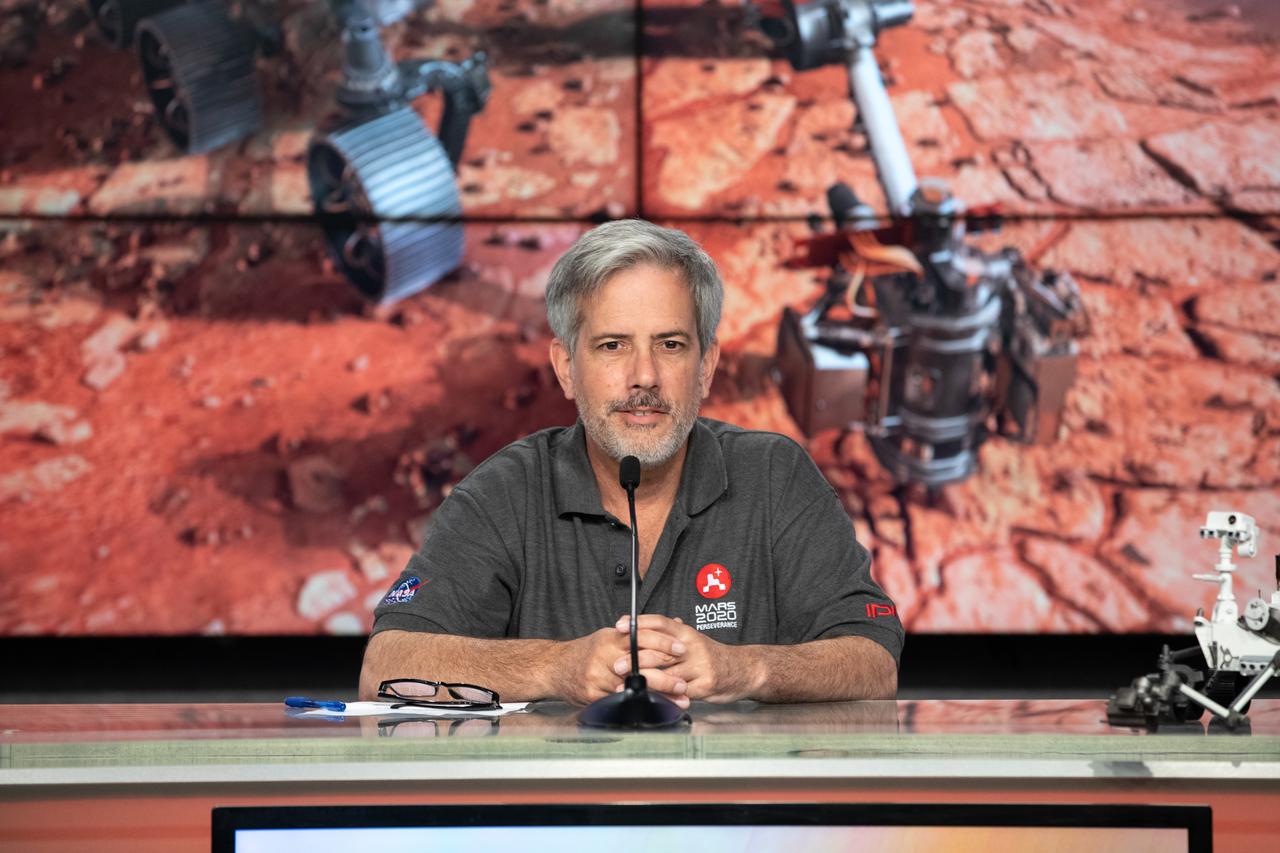
Matt Wallace, deputy project manager, NASA’s Jet Propulsion Laboratory, participates in a Mars 2020 prelaunch news briefing at NASA’s Kennedy Space Center in Florida on July 27, 2020. The Mars Perseverance rover is scheduled to launch on July 30, on a United Launch Alliance Atlas V 541 rocket from Space Launch Complex 41 at nearby Cape Canaveral Air Force Station. The rover is part of NASA’s Mars Exploration Program, a long-term effort of robotic exploration of the Red Planet. The rover will search for habitable conditions in the ancient past and signs of past microbial life on Mars. The Launch Services Program at Kennedy is responsible for launch management.

Several types of aircraft are on the tarmac at the Shuttle Landing Facility (SLF) at NASA's Kennedy Space in Florida. From left, are two Canadian Forces Snowbird CF-18 jets, a NASA Huey helicopter, and two NASA T-38 trainer aircraft. The Canadian Forces Snowbirds performed aerial maneuvers over Kennedy and Cape Canaveral Air Force Station during a practice flight on May 9, 2018, between their scheduled air shows.
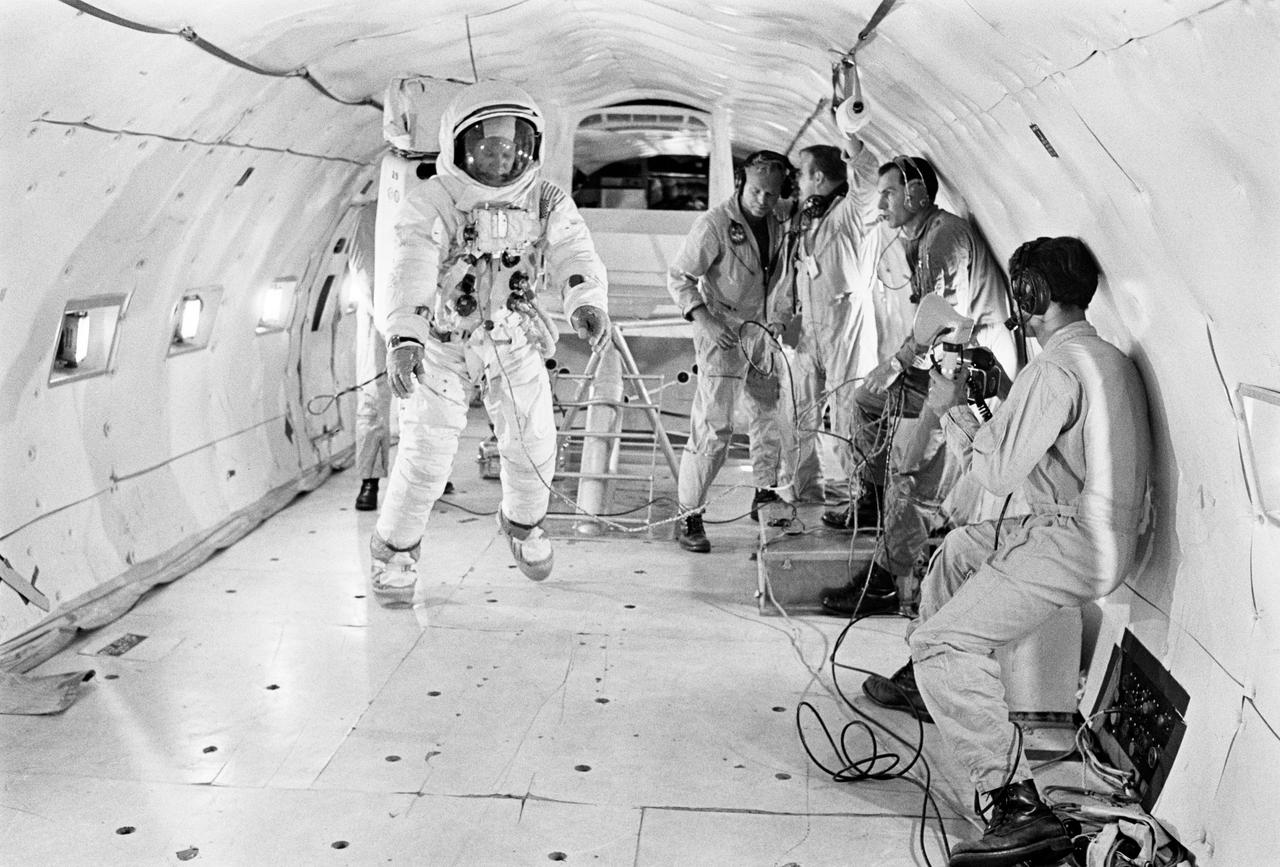
S69-39269 (10 July 1969) --- Astronaut Edwin E. Aldrin Jr., lunar module pilot of the Apollo 11 lunar landing mission, undergoes zero-gravity training aboard a U.S. Air Force KC-135 jet aircraft from nearby Patrick Air Force Base, Florida. Aldrin is wearing an Extravehicular Mobility Unit (EMU), the type of equipment which he will wear on the lunar surface.
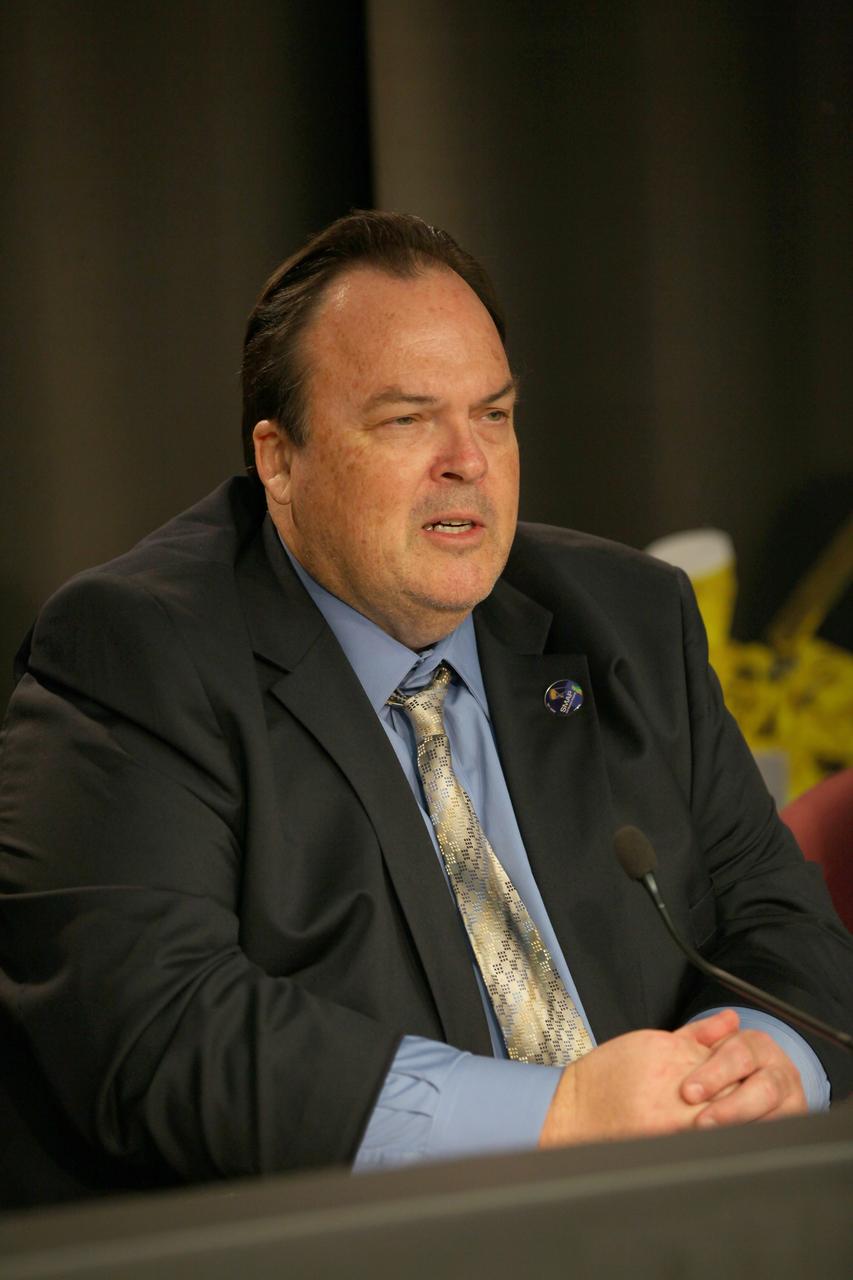
VANDENBERG AIR FORCE BASE, Calif. – Kent Kellogg, SMAP project manager at the Jet Propulsion Laboratory in Pasadena, California, participates in a news conference at Vandenberg Air Force Base in California following NASA's successful launch of the Soil Moisture Active Passive satellite, or SMAP, on its mission to study the Earth's soil moisture. To learn more about SMAP, visit http://www.nasa.gov/smap. Photo credit: NASA/Kim Shiflett
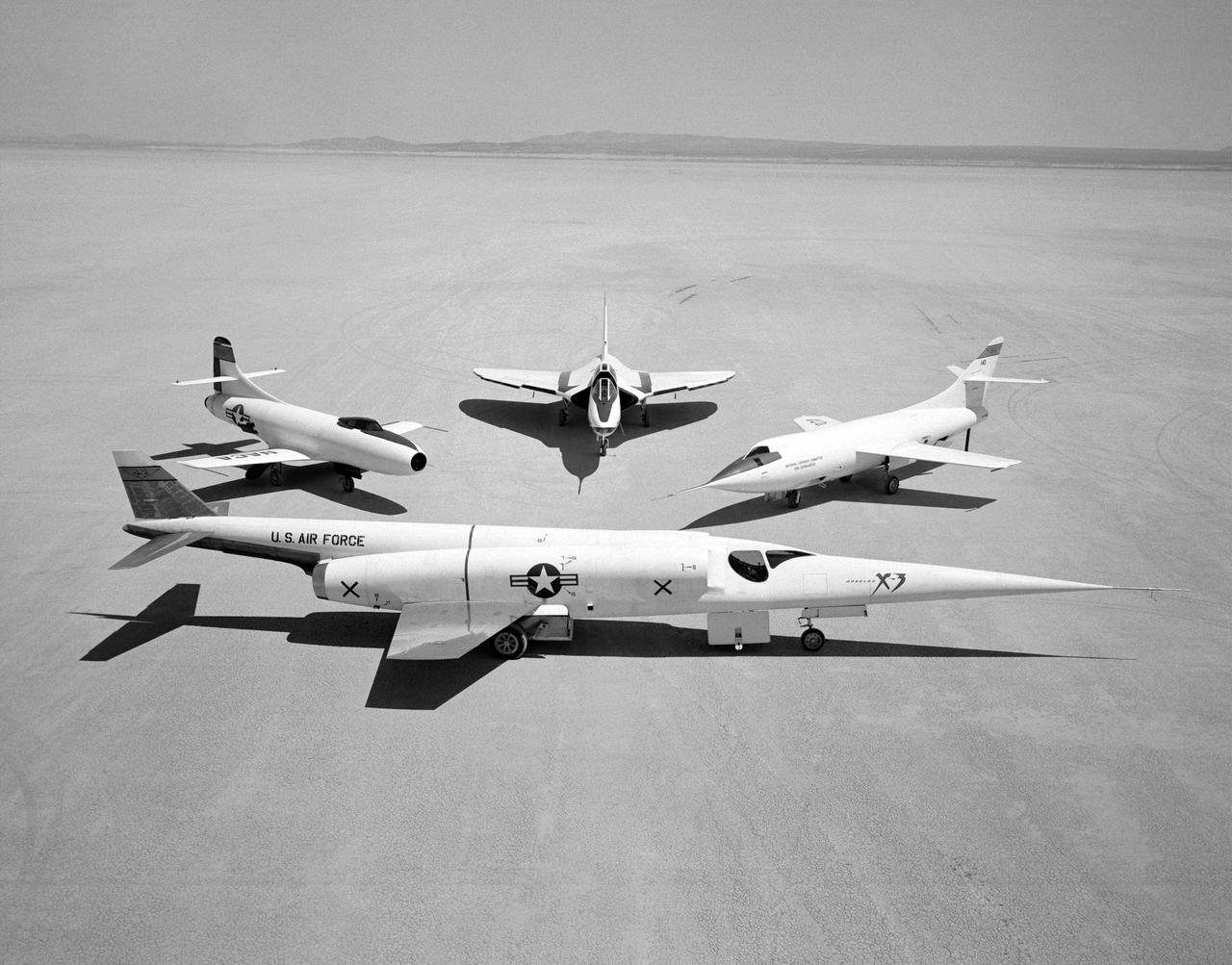
A group picture of Douglas Airplanes, taken for a photographic promotion in 1954, at what is now known as the Dryden Flight Research Center at Edwards Air Force Base, California. The photo includes the X-3 (in front--Air Force serial number 49-2892) then clockwise D-558-I, XF4D-1 (a Navy jet fighter prototype not flown by the NACA), and the first D-558-II (NACA tail number 143, Navy serial number 37973), which was flown only once by the NACA.
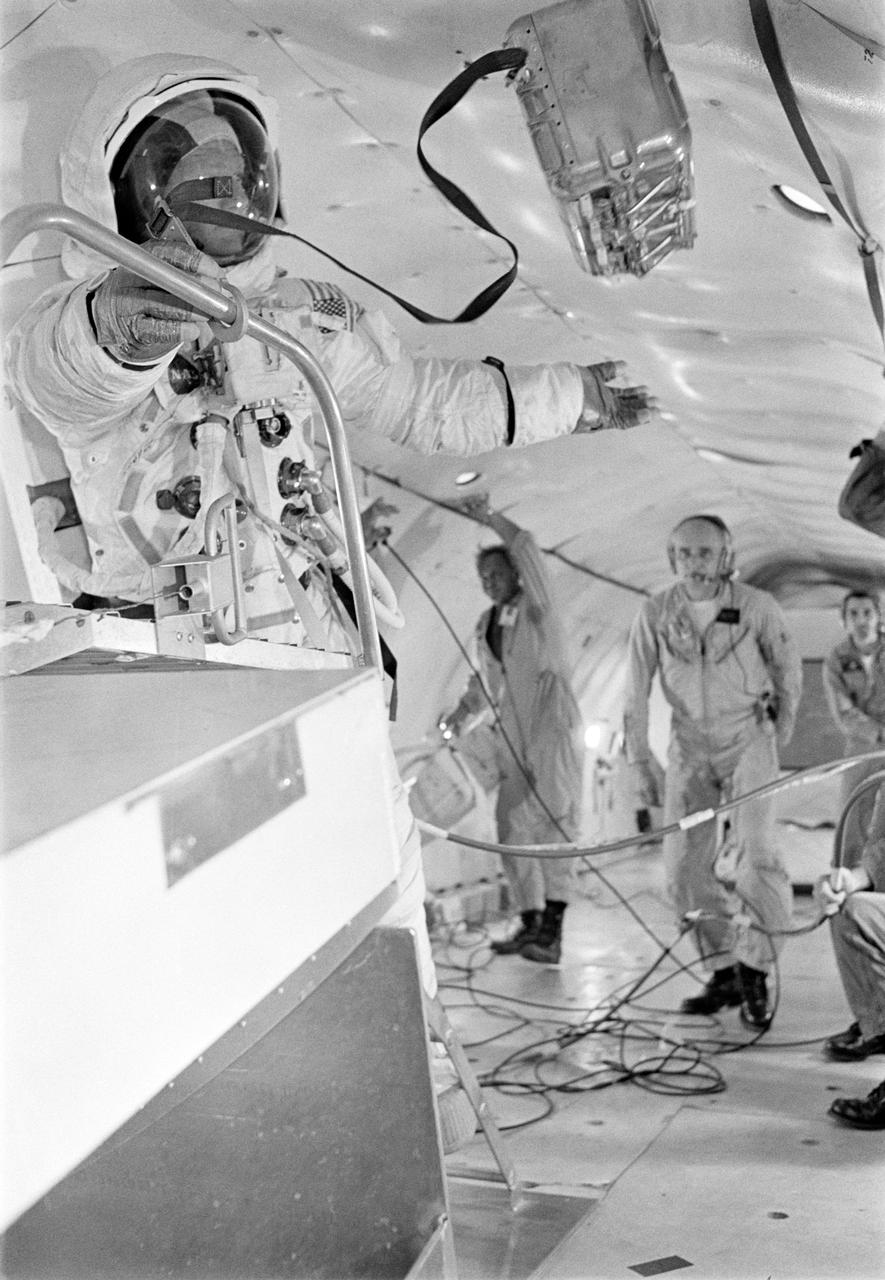
S69-39270 (10 July 1969) --- Astronaut Edwin E. Aldrin Jr., lunar module pilot of the Apollo 11 lunar landing mission, participates in lunar extravehicular activity training under weightlessness conditions aboard a U.S. Air Force KC-135 jet aircraft from nearby Patrick Air Force Base. Aldrin is wearing an Extravehicular Mobility Unit, the type of equipment which he will wear on the lunar surface.
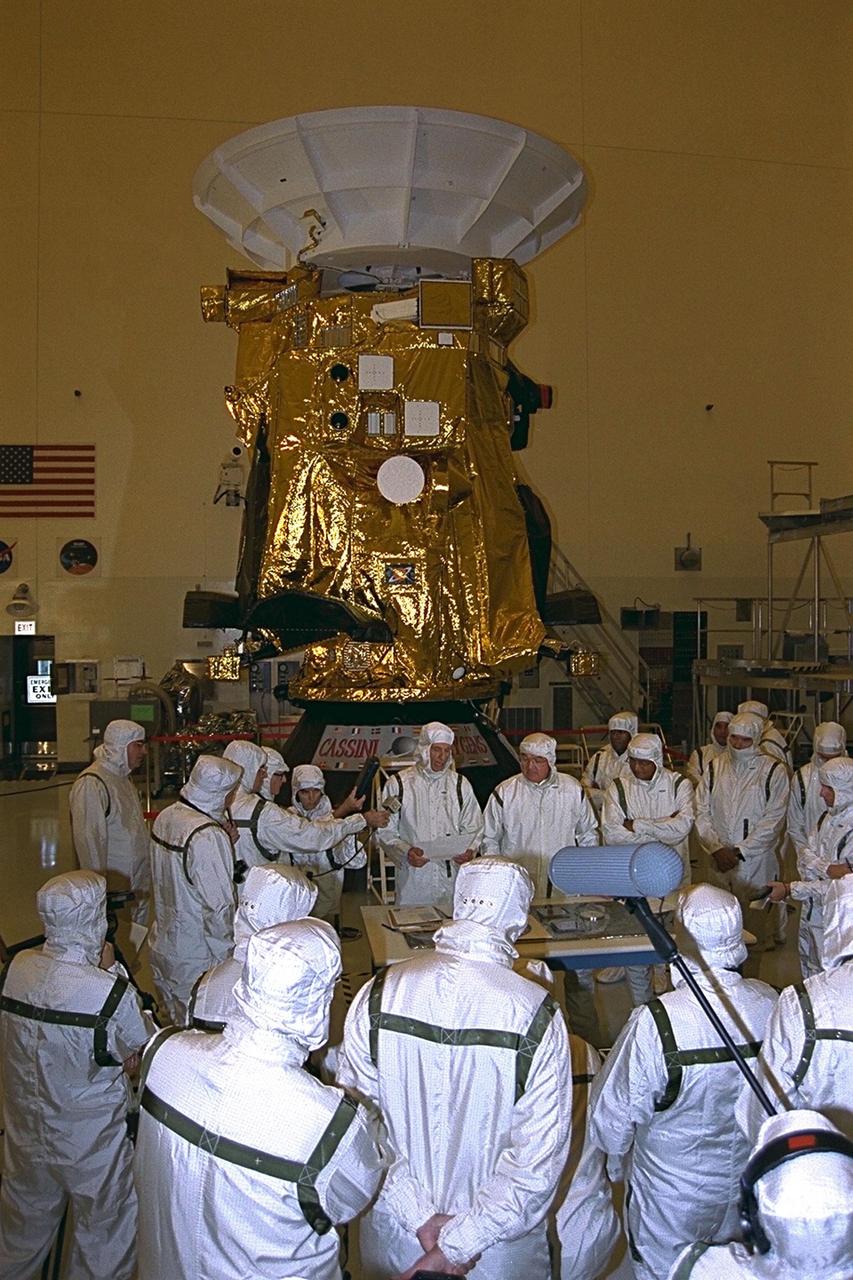
Scientists from the Cassini project at the Jet Propulsion Laboratory and the European Space Agency talk to photojournalists, news reporters, writers, television broadcasters, and cameramen in the Payload Hazardous Servicing Facility (PHSF) during the Cassini press showing. Cassini will launch on Oct. 6, 1997, on an Air Force Titan IV/Centaur launch vehicle and will arrive at Saturn in July 2004 to begin an international scientific mission to study the planet and its systems. Cassini is managed for NASA by the Jet Propulsion Laboratory at Pasadena, Calif
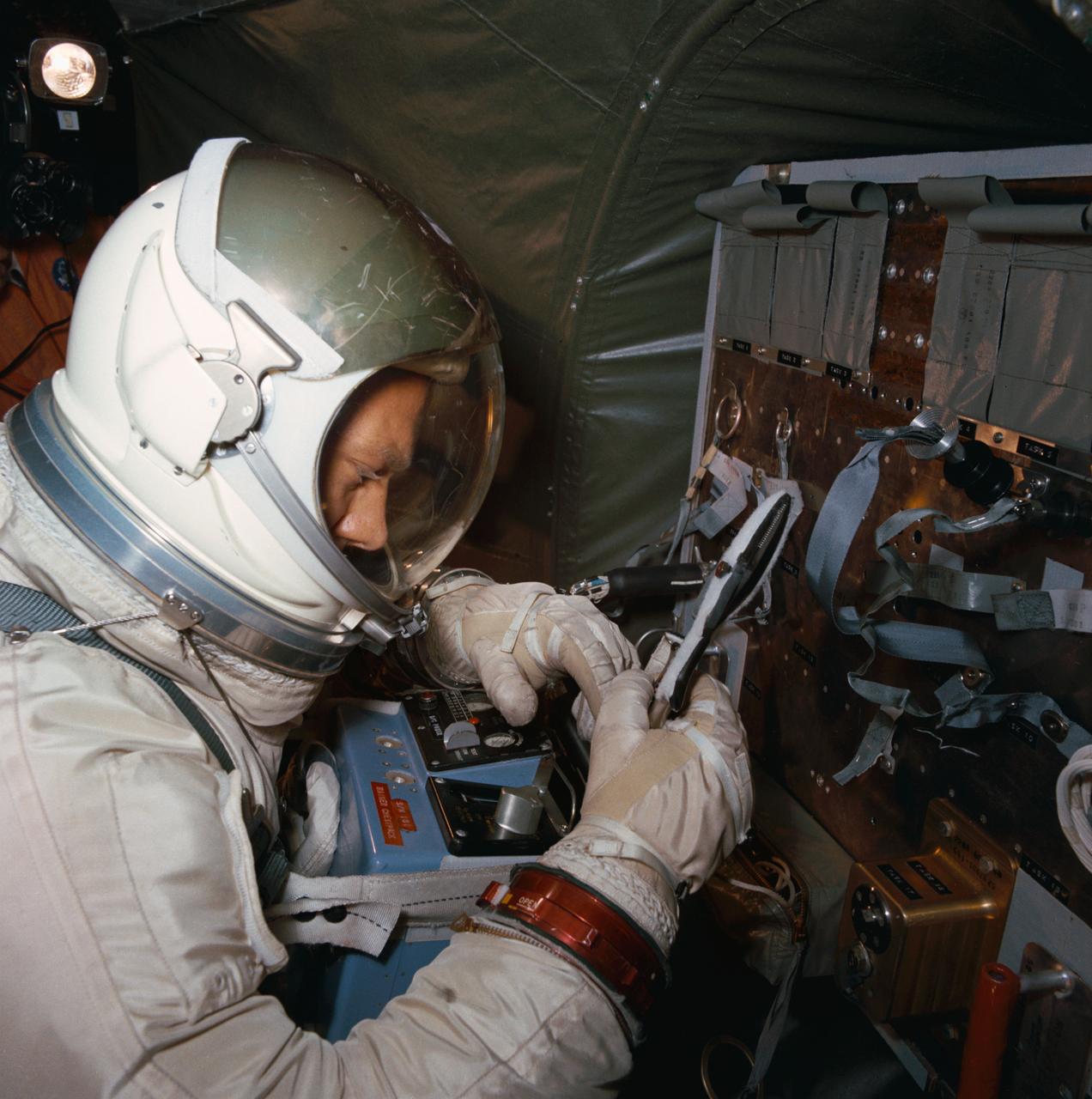
S66-57365 (13 Oct. 1966) --- Astronaut Edwin E. Aldrin Jr., pilot for the Gemini-12 spaceflight, practices work tasks during zero-gravity training. He is standing in a mock-up of the Gemini spacecraft's adapter section onboard an Air Force KC-135 jet aircraft. Photo credit: NASA

S90-45810 (29-31 July 1990) --- Susan J. Helms, one of 23 astronaut candidate who began a year's training and evaluation in July, climbs into a T-38 jet trainer during a survival training school at Vance Air Force Base in Oklahoma.
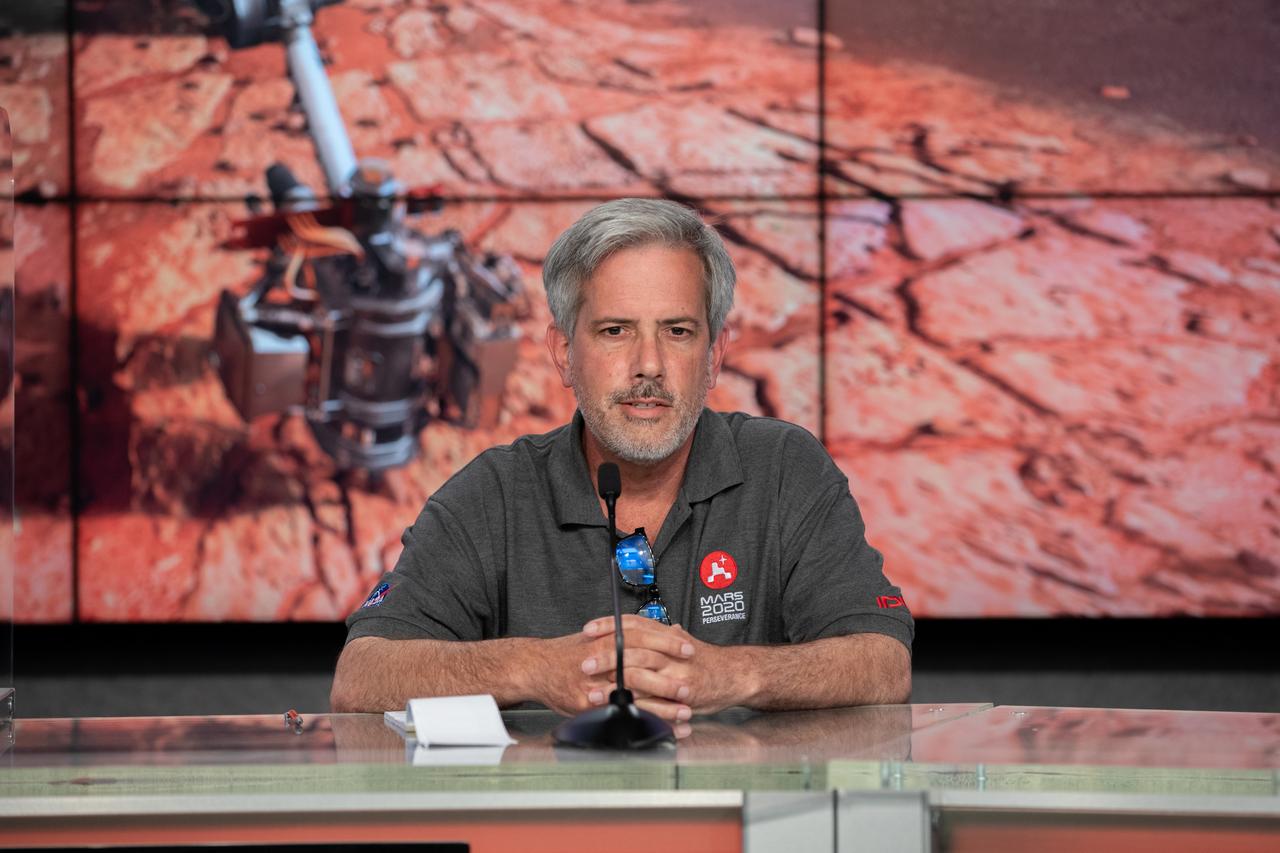
Matt Wallace, deputy project manager, NASA’s Jet Propulsion Laboratory, participates in a Mars 2020 post-launch news conference at NASA’s Kennedy Space Center in Florida on July 30, 2020. The United Launch Alliance Atlas V 541 rocket lifted off from Space Launch Complex 41 at Cape Canaveral Air Force Station at 7:50 a.m. EDT, carrying the agency’s Mars Perseverance rover and Ingenuity helicopter. The rover is part of NASA’s Mars Exploration Program, a long-term effort of robotic exploration of the Red Planet. The rover will search for habitable conditions in the ancient past and signs of past microbial life on Mars. The Launch Services Program at Kennedy is responsible for launch management.
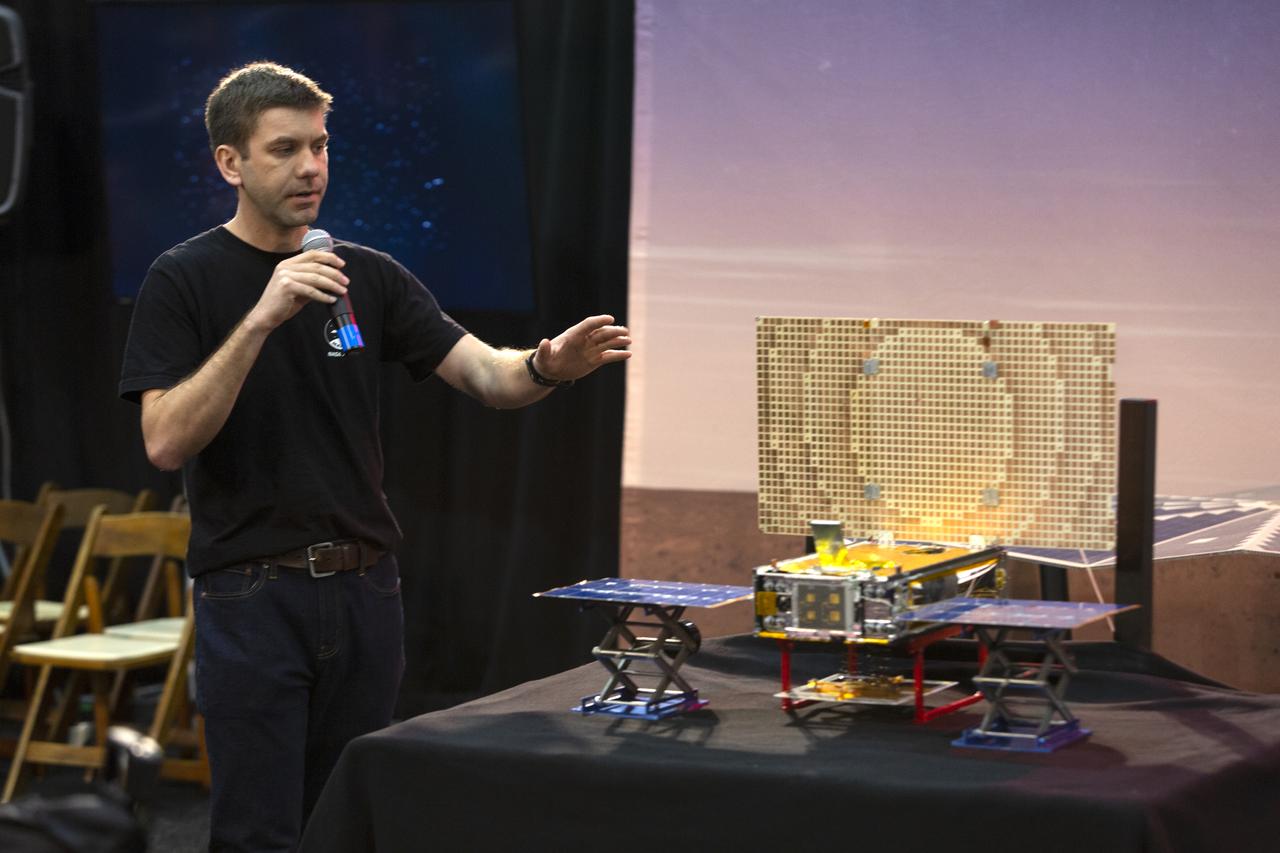
During a prelaunch briefing at Vandenberg Air Force Base in California, Andy Klesh, MarCO Chief Engineer at NASA's Jet Propulsion Laboratory, speaks to members of the media. The presentation focused on NASA's Interior Exploration using Seismic Investigations, Geodesy and Heat Transport, or InSight, Mars lander. InSight is scheduled for liftoff May 5, 2018, atop a United Launch Alliance (ULA) Atlas V rocket from Space Launch Complex 3 at Vandenberg. The spacecraft will be the first mission to look deep beneath the Martian surface studying the planet's interior by measuring its heat output and listen for marsquakes.

During a prelaunch briefing at Vandenberg Air Force Base in California, Bruce Banerdt, InSight Principal Investigator at NASA's Jet Propulsion Laboratory, speaks to members of the media. The presentation focused on NASA's Interior Exploration using Seismic Investigations, Geodesy and Heat Transport, or InSight, Mars lander. InSight is scheduled for liftoff May 5, 2018, atop a United Launch Alliance (ULA) Atlas V rocket from Space Launch Complex 3 at Vandenberg. The spacecraft will be the first mission to look deep beneath the Martian surface studying the planet's interior by measuring its heat output and listen for marsquakes.
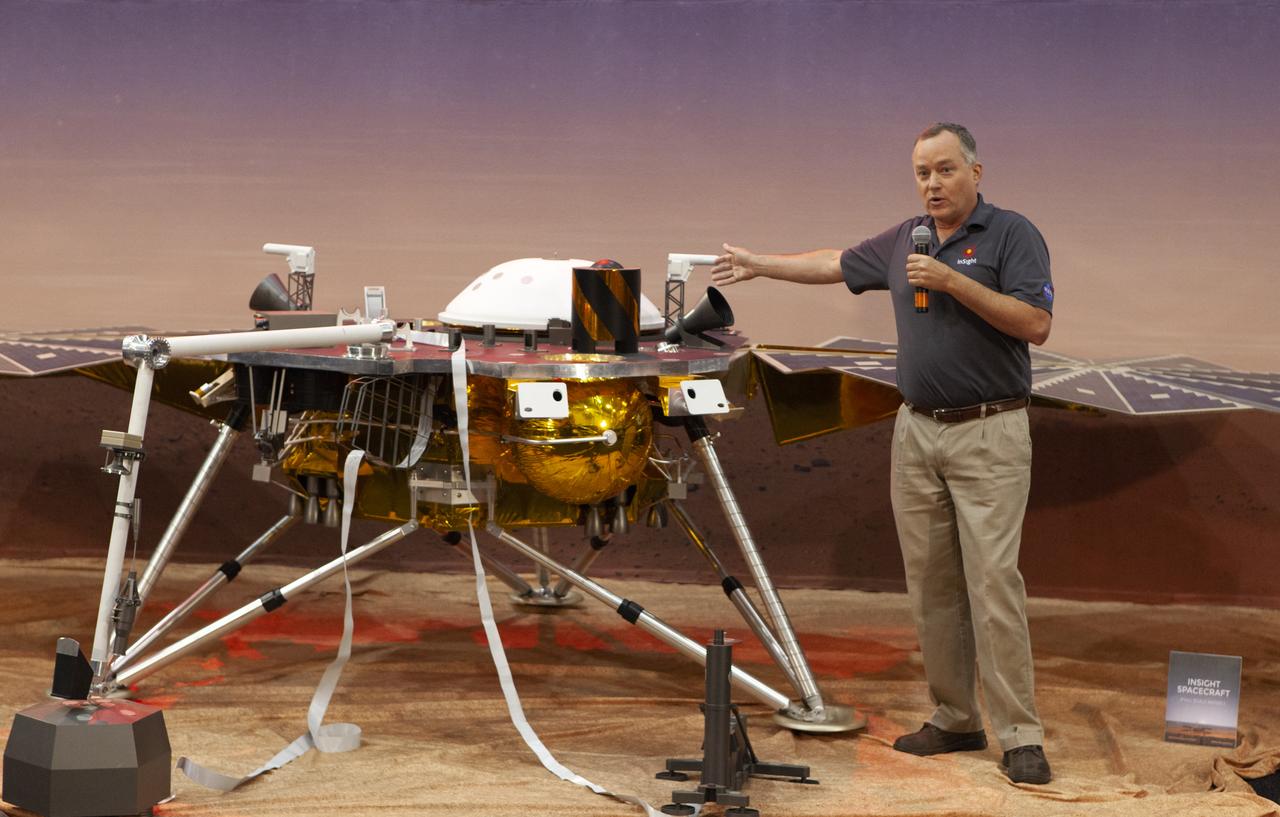
During a prelaunch briefing at Vandenberg Air Force Base in California, Tom Hoffman, InSight Project Manager at NASA's Jet Propulsion Laboratory, speaks to members of the media. The presentation focused on NASA's Interior Exploration using Seismic Investigations, Geodesy and Heat Transport, or InSight, Mars lander. InSight is scheduled for liftoff May 5, 2018, atop a United Launch Alliance (ULA) Atlas V rocket from Space Launch Complex 3 at Vandenberg. The spacecraft will be the first mission to look deep beneath the Martian surface studying the planet's interior by measuring its heat output and listen for marsquakes.
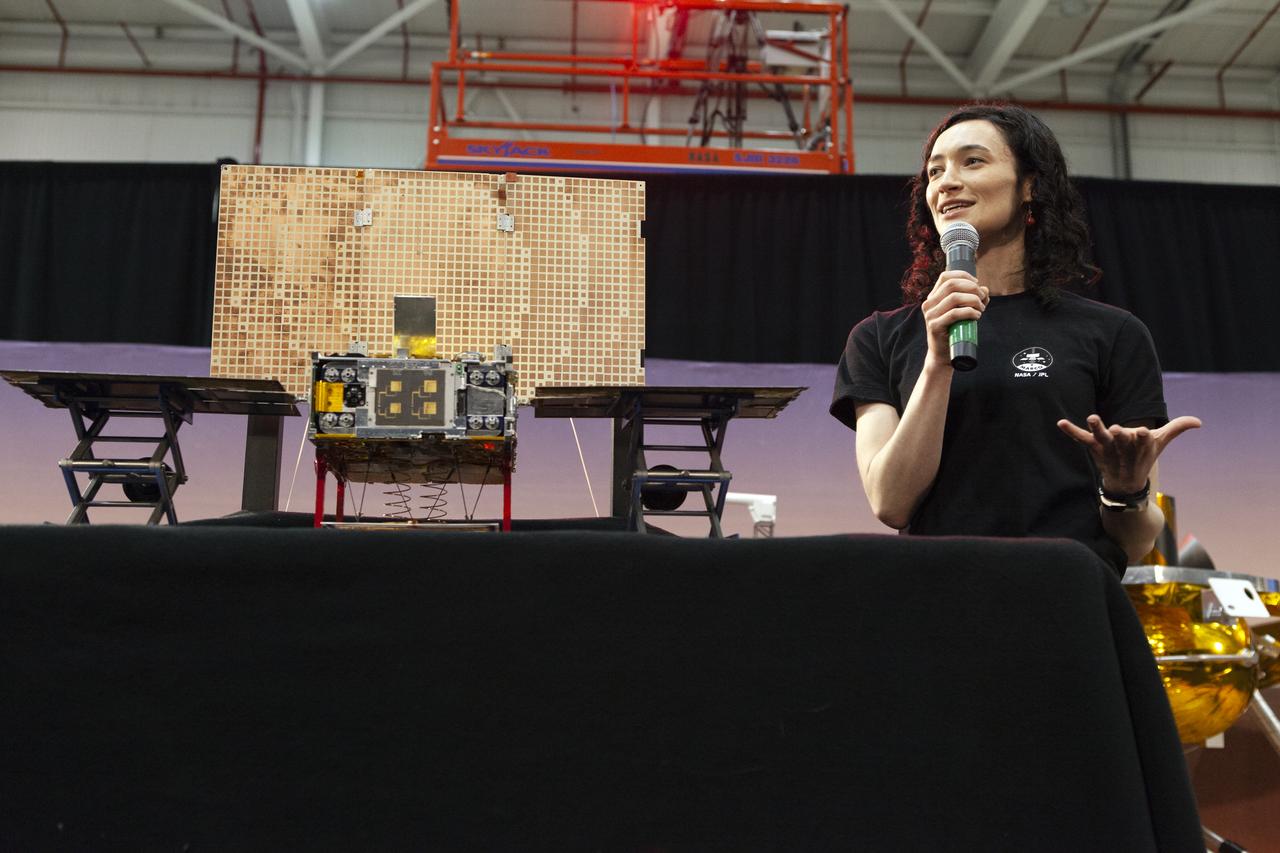
During a prelaunch briefing at Vandenberg Air Force Base in California, Annie Marinan, MarCO Systems Engineer at NASA's Jet Propulsion Laboratory, speaks to members of the media. The presentation focused on NASA's Interior Exploration using Seismic Investigations, Geodesy and Heat Transport, or InSight, Mars lander. InSight is scheduled for liftoff May 5, 2018, atop a United Launch Alliance (ULA) Atlas V rocket from Space Launch Complex 3 at Vandenberg. The spacecraft will be the first mission to look deep beneath the Martian surface studying the planet's interior by measuring its heat output and listen for marsquakes.
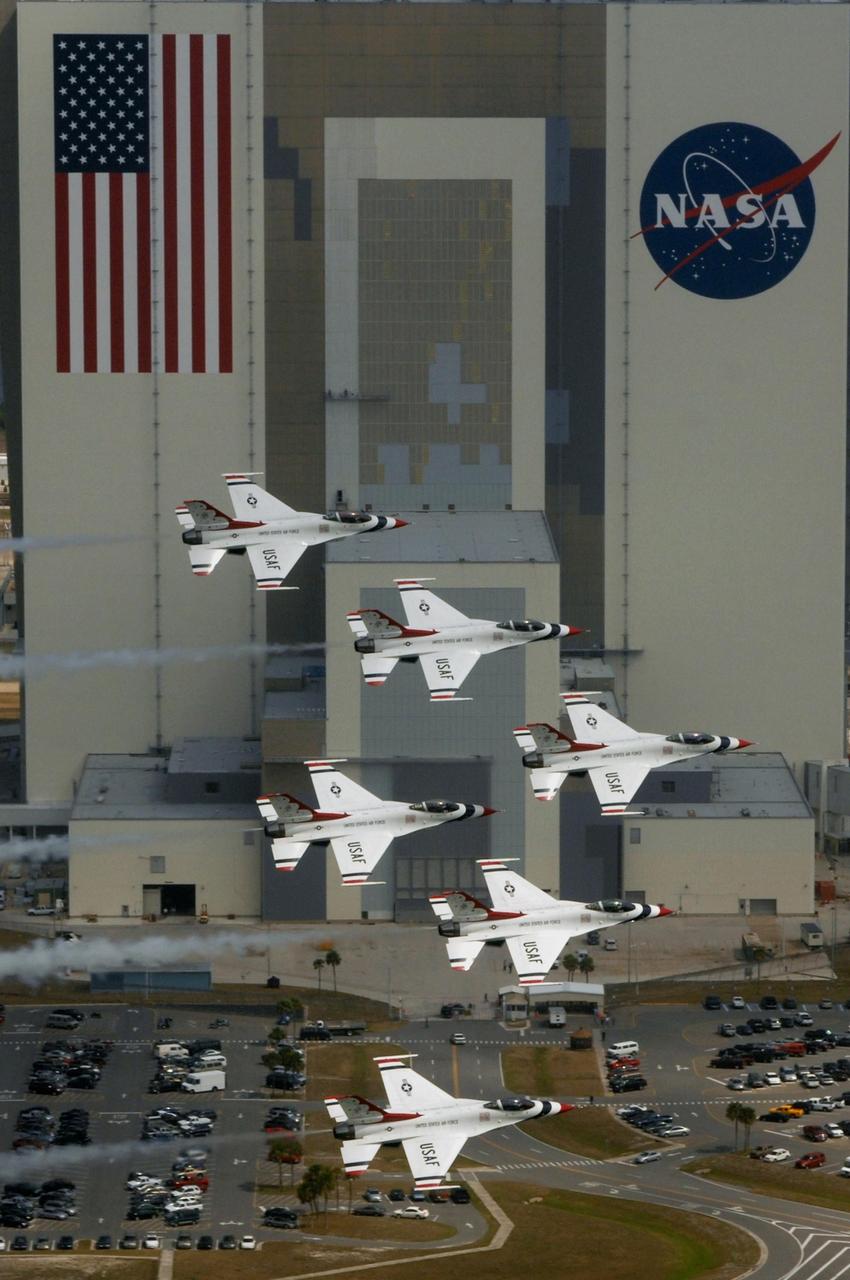
KENNEDY SPACE CENTER, FLA. -- U.S. Air Force Thunderbird F-16 jets fly in formation past the Vehicle Assembly Building in the Industrial Area of Kennedy Space Center. The purpose of the flyover was to photograph the planes at KSC for promotional purposes. The Kennedy Space Center Visitor Complex will host the inaugural World Space Expo from Nov. 3 to 11, featuring an aerial salute by the Thunderbirds on its opening weekend. The Expo will create one of the largest displays of space artifacts, hardware and personalities ever assembled in one location with the objective to inspire, educate and engage the public by highlighting the achievements and benefits of space exploration. Photo credit: U.S. Air Force photograph by TSgt Justin D. Pyle
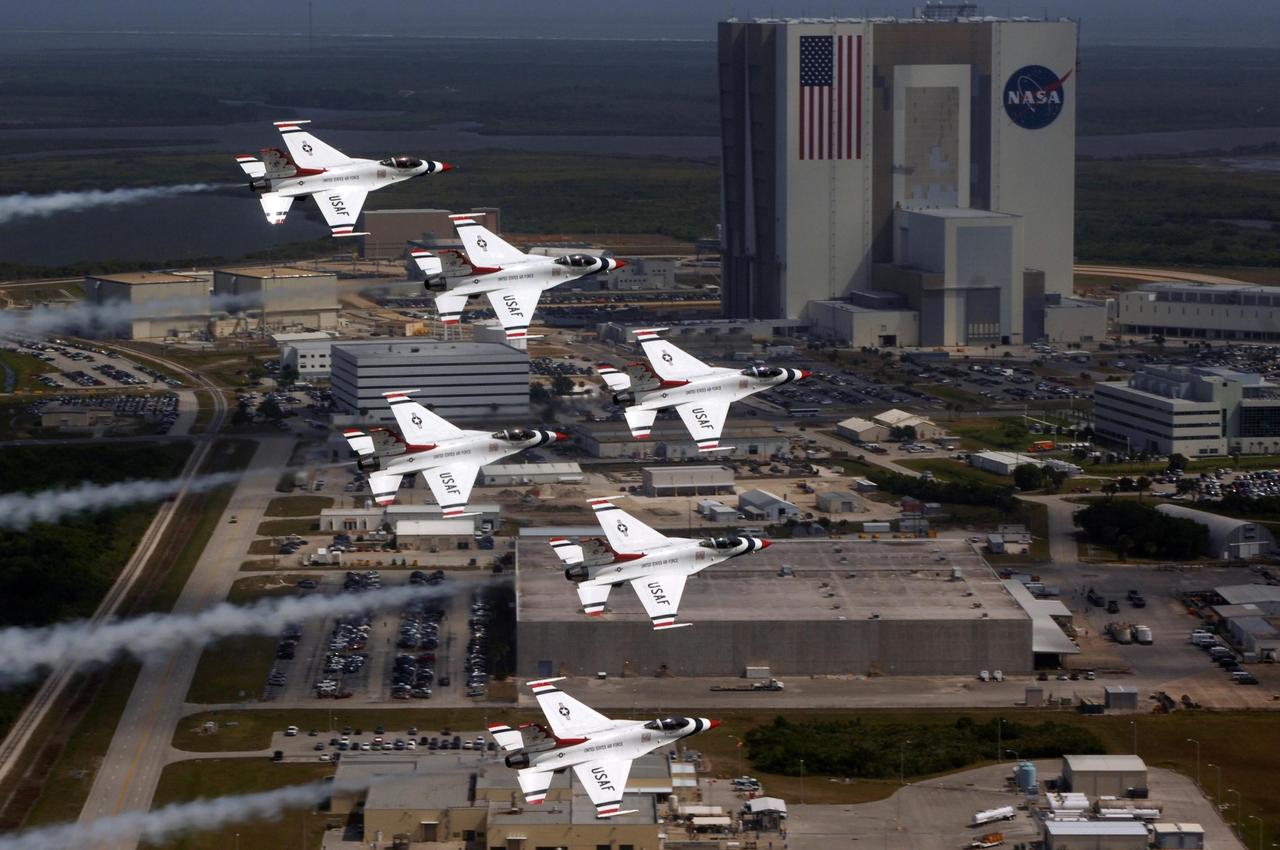
KENNEDY SPACE CENTER, FLA. -- U.S. Air Force Thunderbird F-16 jets fly in formation past the Vehicle Assembly Building in the Industrial Area of Kennedy Space Center. The purpose of the flyover was to photograph the planes at KSC for promotional purposes. The Kennedy Space Center Visitor Complex will host the inaugural World Space Expo from Nov. 3 to 11, featuring an aerial salute by the Thunderbirds on its opening weekend. The Expo will create one of the largest displays of space artifacts, hardware and personalities ever assembled in one location with the objective to inspire, educate and engage the public by highlighting the achievements and benefits of space exploration. Photo credit: U.S. Air Force photograph by TSgt Justin D. Pyle
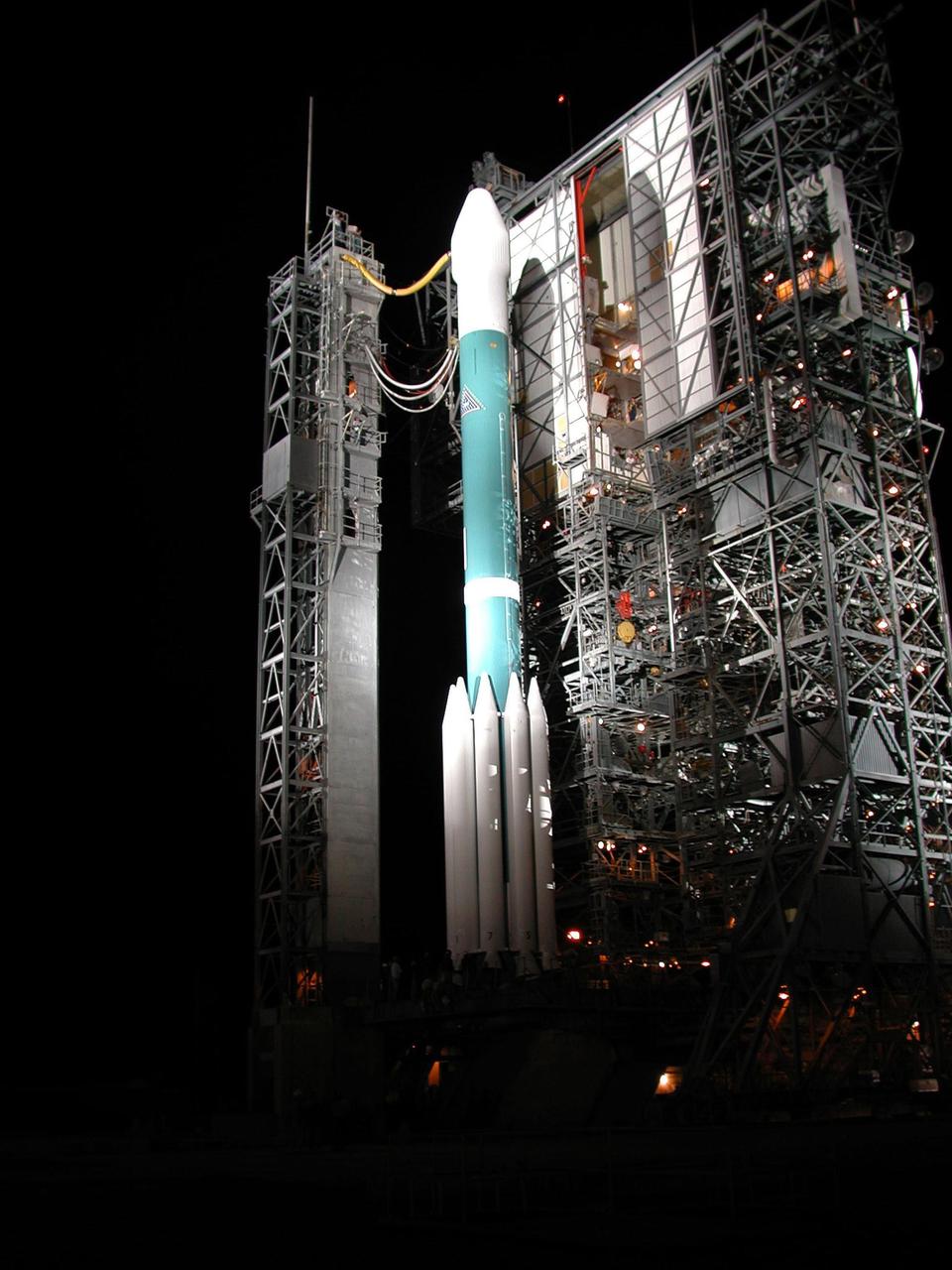
On Launch Complex 17, Cape Canaveral Air Force Station, the tower pulls away from the Boeing Delta II rocket carrying the 2001 Mars Odyssey spacecraft. Liftoff is scheduled for 11:02 a.m. EDT from Launch Complex 17-A at Cape Canaveral Air Force Station. After an approximate 7-month journey, Mars Odyssey will orbit the planet Mars. The spacecraft, built by Lockheed Martin Space Systems for the Jet Propulsion Laboratory, will map the Martian surface looking for geological features that could indicate the presence of water, now or in the past. Science gathered by three science instruments on board will be key to future missions to Mars, including orbital reconnaissance, lander and human missions
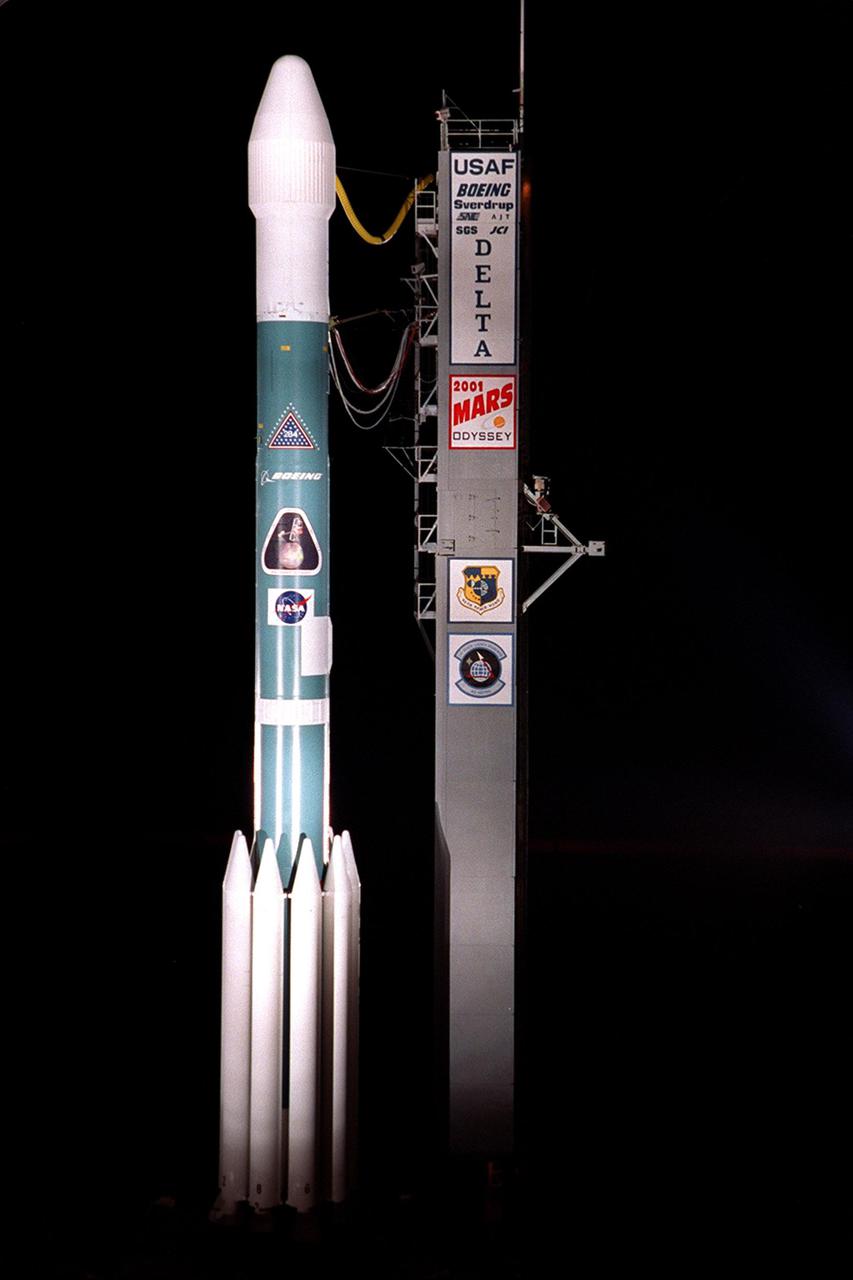
Spotlights capture the Boeing Delta II rocket waiting on Launch Complex 17, Cape Canaveral Air Force Station, to launch the 2001 Mars Odyssey spacecraft into space on its 7-month journey to Mars. Liftoff is scheduled for 11:02 a.m. EDT from Launch Complex 17-A at Cape Canaveral Air Force Station. The spacecraft, built by Lockheed Martin Space Systems for the Jet Propulsion Laboratory, will orbit Mars, mapping the surface looking for geological features that could indicate the presence of water, now or in the past. Science gathered by three science instruments on board will be key to future missions to Mars, including orbital reconnaissance, lander and human missions
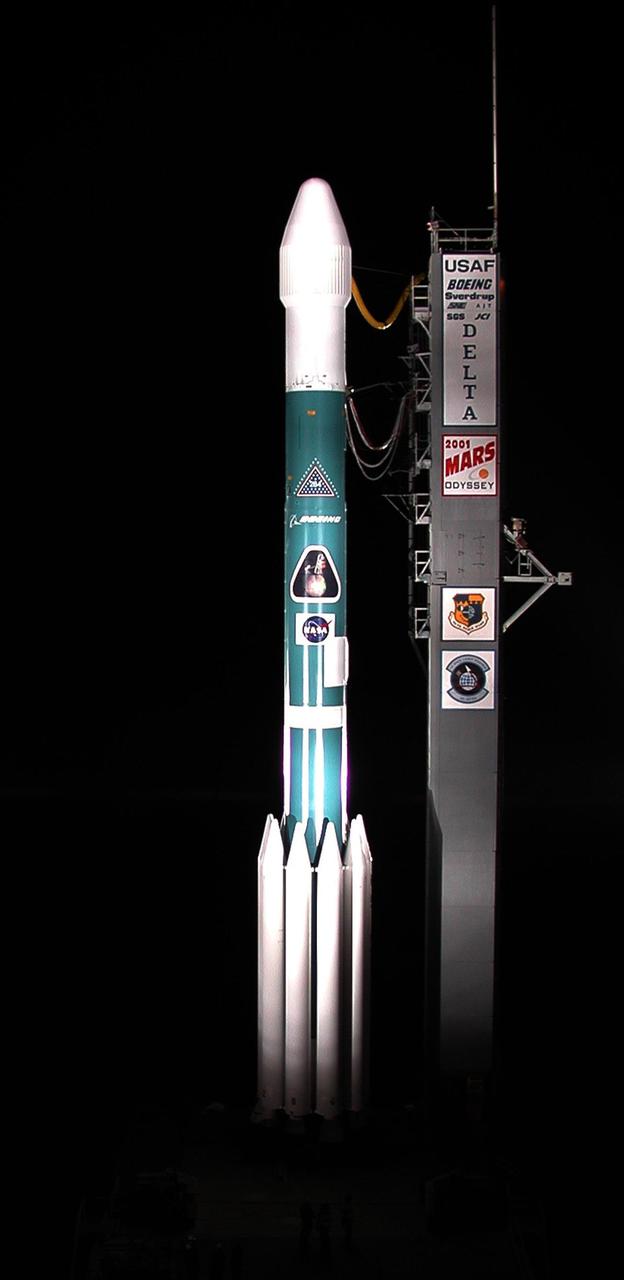
Spotlights capture the Boeing Delta II rocket waiting on Launch Complex 17, Cape Canaveral Air Force Station, to launch the 2001 Mars Odyssey spacecraft into space on its 7-month journey to Mars. Liftoff is scheduled for 11:02 a.m. EDT from Launch Complex 17-A at Cape Canaveral Air Force Station. The spacecraft, built by Lockheed Martin Space Systems for the Jet Propulsion Laboratory, will orbit Mars, mapping the surface looking for geological features that could indicate the presence of water, now or in the past. Science gathered by three science instruments on board will be key to future missions to Mars, including orbital reconnaissance, lander and human missions
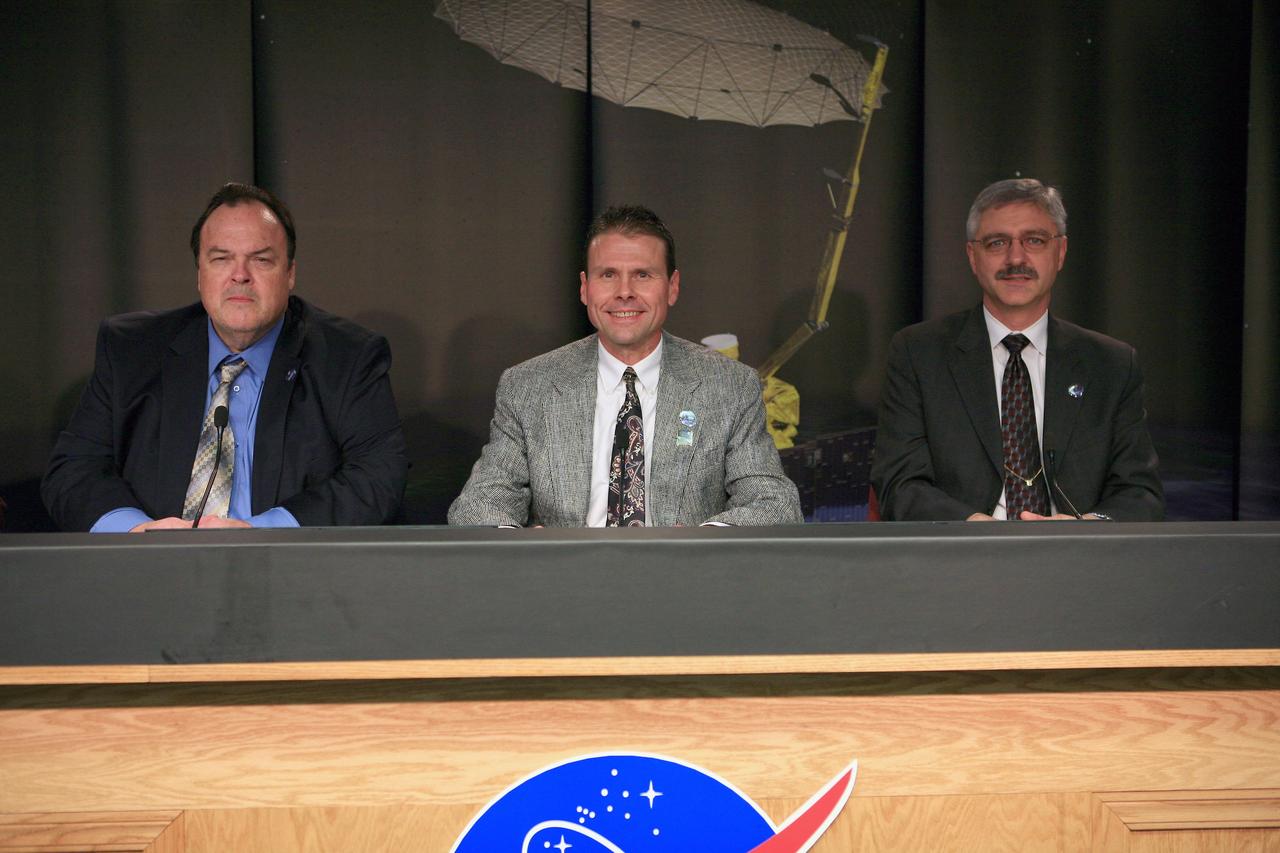
VANDENBERG AIR FORCE BASE, Calif. – During a news conference at Vandenberg Air Force Base in California, NASA officials discuss the launch of the Soil Moisture Active Passive satellite, or SMAP, and its mission to study the Earth's soil moisture. Participating in the briefing, from left, are Kent Kellogg, SMAP project manager at the Jet Propulsion Laboratory in Pasadena, California, Scott Higginbotham, NASA mission manager for Educational Launch of Nanosatellites, or ELaNa-X, at the Kennedy Space Center, and Geoff Yoder, deputy associate administrator of the Science Mission Directorate at NASA Headquarters. To learn more about SMAP, visit http://www.nasa.gov/smap. Photo credit: NASA/Kim Shiflett
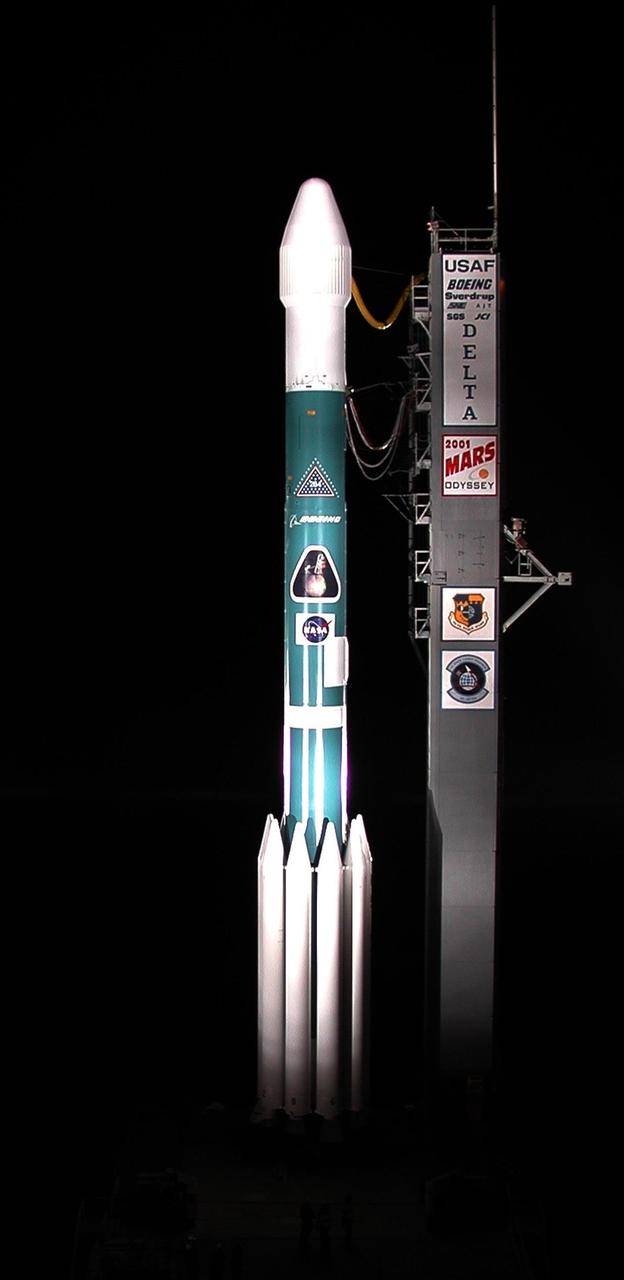
Spotlights capture the Boeing Delta II rocket waiting on Launch Complex 17, Cape Canaveral Air Force Station, to launch the 2001 Mars Odyssey spacecraft into space on its 7-month journey to Mars. Liftoff is scheduled for 11:02 a.m. EDT from Launch Complex 17-A at Cape Canaveral Air Force Station. The spacecraft, built by Lockheed Martin Space Systems for the Jet Propulsion Laboratory, will orbit Mars, mapping the surface looking for geological features that could indicate the presence of water, now or in the past. Science gathered by three science instruments on board will be key to future missions to Mars, including orbital reconnaissance, lander and human missions
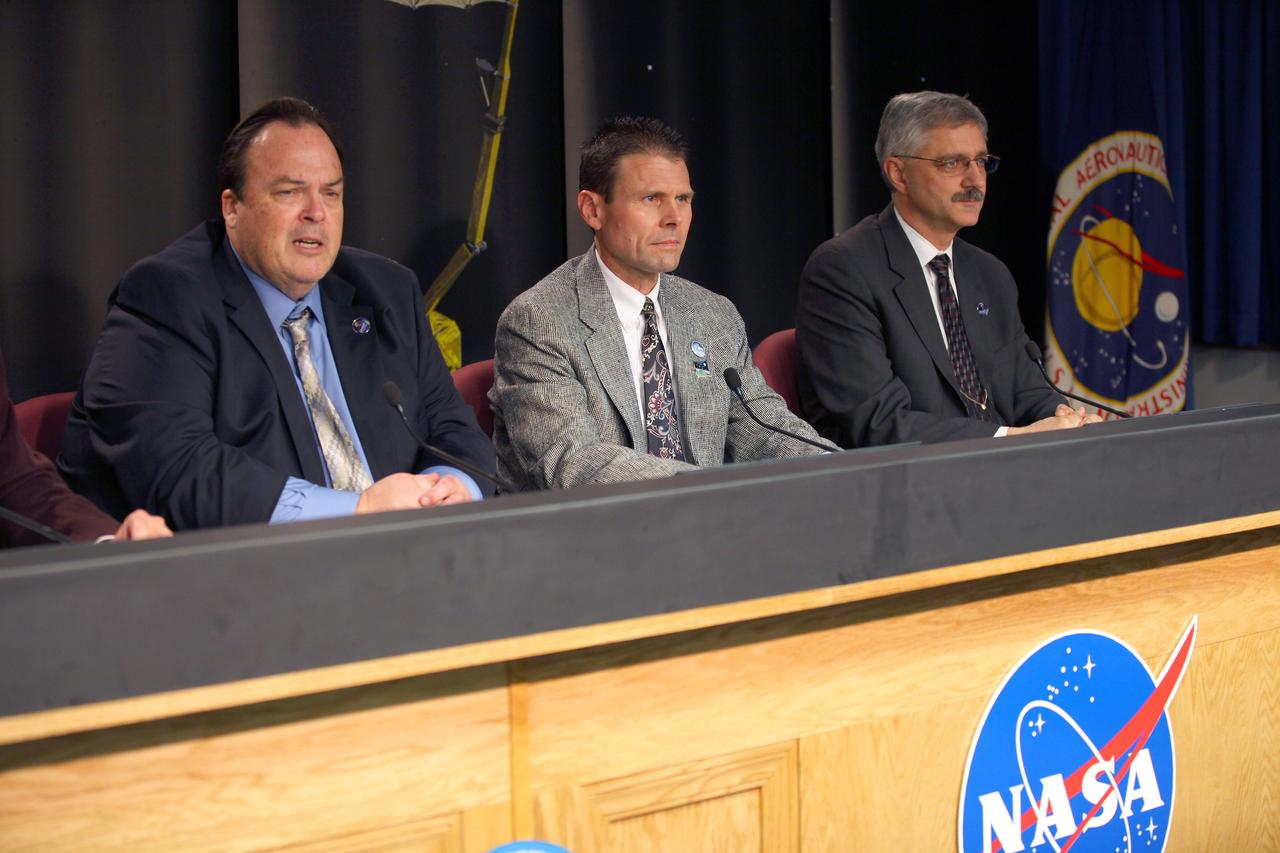
VANDENBERG AIR FORCE BASE, Calif. – During a news conference at Vandenberg Air Force Base in California, NASA officials discuss the launch of the Soil Moisture Active Passive satellite, or SMAP, and its mission to study the Earth's soil moisture. Participating in the briefing, from left, are Kent Kellogg, SMAP project manager at the Jet Propulsion Laboratory in Pasadena, California, Scott Higginbotham, NASA mission manager for Educational Launch of Nanosatellites, or ELaNa-X, at the Kennedy Space Center, and Geoff Yoder, deputy associate administrator of the Science Mission Directorate at NASA Headquarters. To learn more about SMAP, visit http://www.nasa.gov/smap. Photo credit: NASA/Kim Shiflett
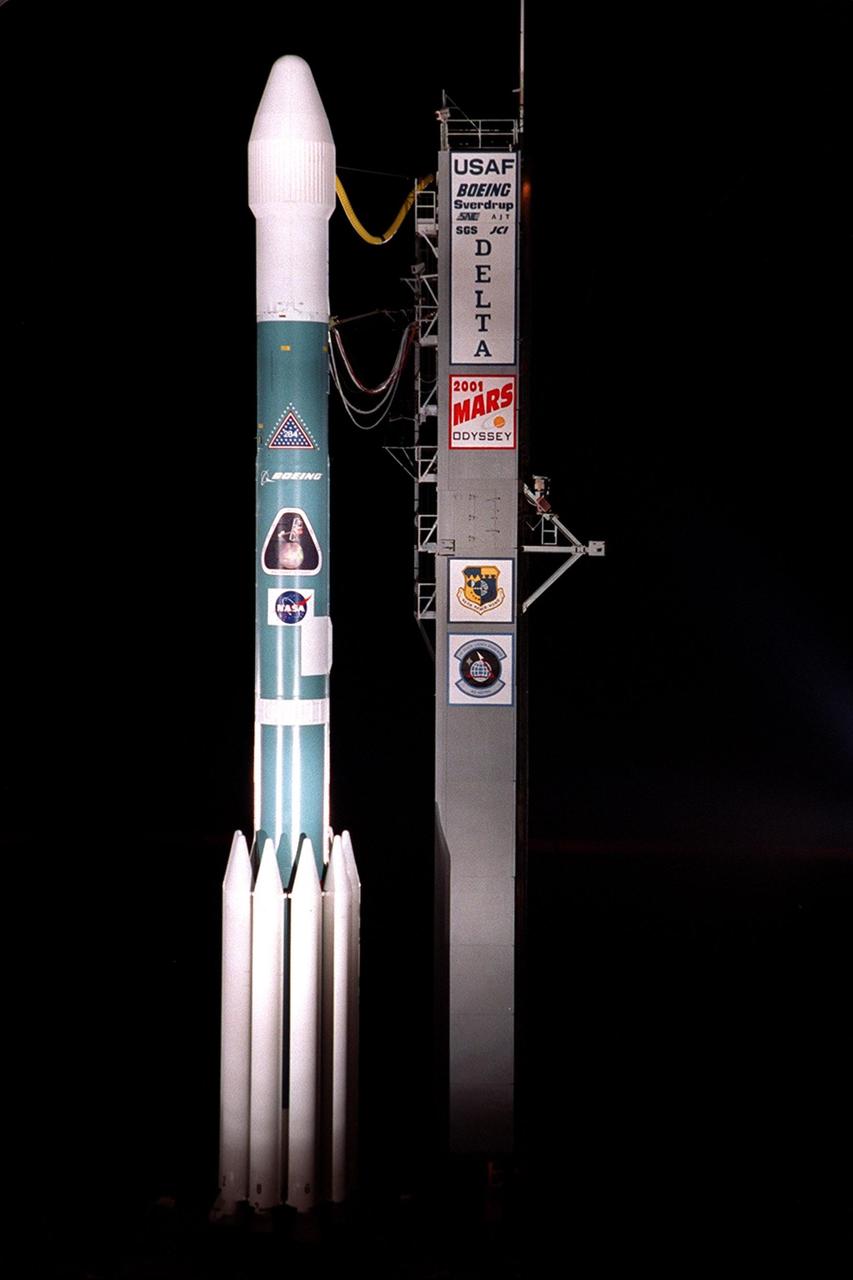
Spotlights capture the Boeing Delta II rocket waiting on Launch Complex 17, Cape Canaveral Air Force Station, to launch the 2001 Mars Odyssey spacecraft into space on its 7-month journey to Mars. Liftoff is scheduled for 11:02 a.m. EDT from Launch Complex 17-A at Cape Canaveral Air Force Station. The spacecraft, built by Lockheed Martin Space Systems for the Jet Propulsion Laboratory, will orbit Mars, mapping the surface looking for geological features that could indicate the presence of water, now or in the past. Science gathered by three science instruments on board will be key to future missions to Mars, including orbital reconnaissance, lander and human missions
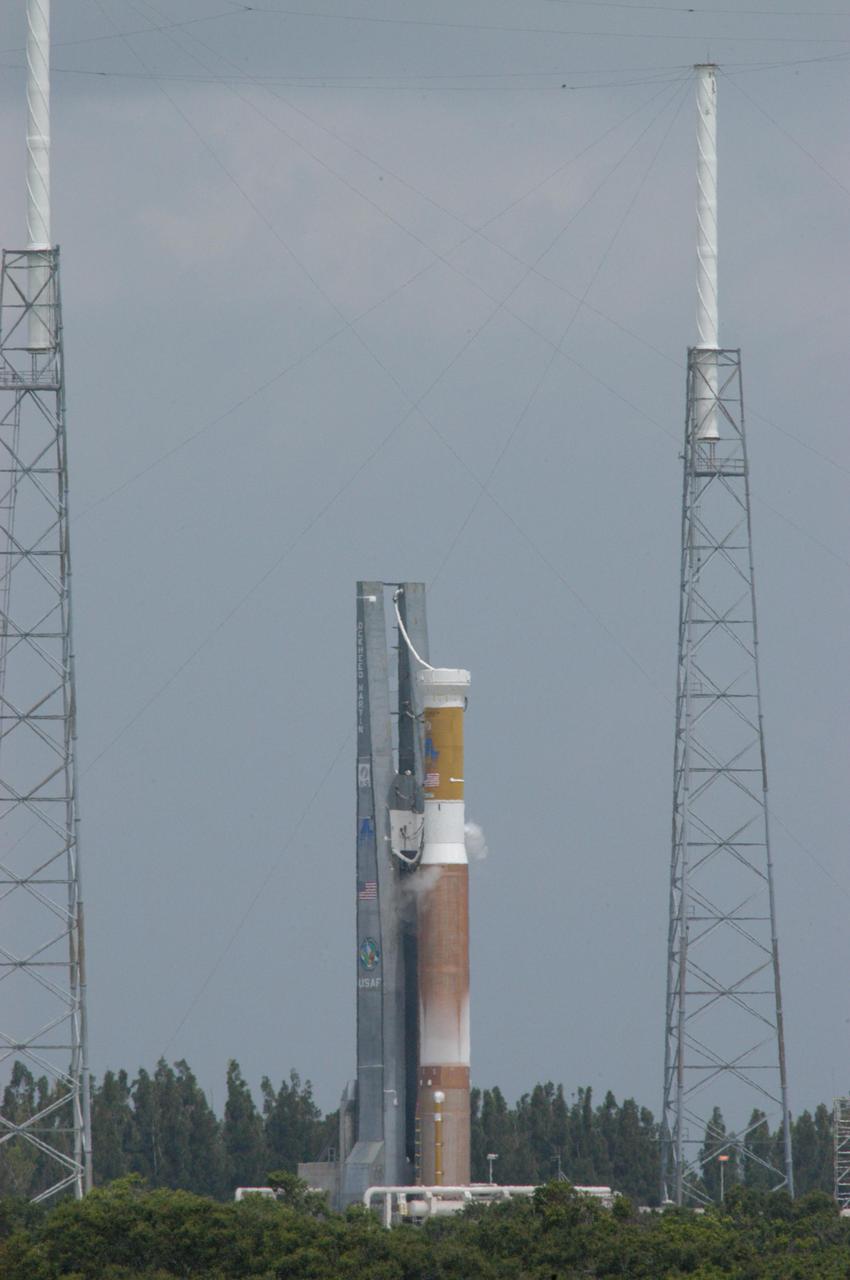
KENNEDY SPACE CENTER, FLA. - At Launch Complex 41 on Cape Canaveral Air Force Station in Florida stands the Atlas V rocket that will carry the Mars Reconnaissance Orbiter (MRO) into orbit, scheduled for Aug. 10. The Atlas V is part of the wet dress rehearsal under way. Launch of the MRO aboard an Atlas V rocket will be from Launch Complex 41 at Cape Canaveral Air Force Station in Florida. A wet rehearsal includes pre-liftoff operations and a fueling of the rocket’s engine. The MRO was built by Lockheed Martin for NASA Jet Propulsion Laboratory in California. It is the next major step in Mars exploration and scheduled for launch from Cape Canaveral Air Force Station. The MRO is an important next step in fulfilling NASA’s vision of space exploration and ultimately sending human explorers to Mars and beyond.
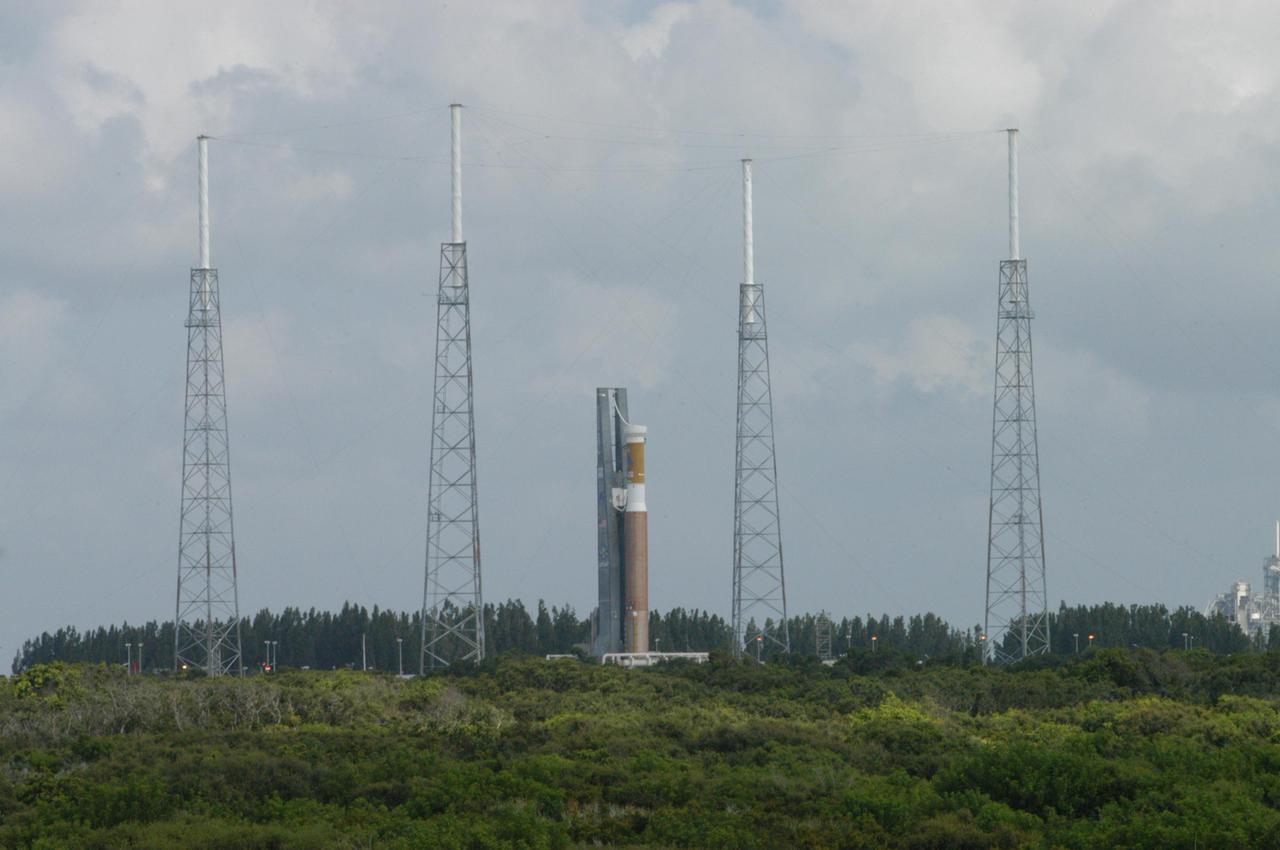
KENNEDY SPACE CENTER, FLA. - At Launch Complex 41 on Cape Canaveral Air Force Station in Florida stands the Atlas V rocket that will carry the Mars Reconnaissance Orbiter (MRO) into orbit, scheduled for Aug. 10. The Atlas V is part of the wet dress rehearsal under way. Launch of the MRO aboard an Atlas V rocket will be from Launch Complex 41 at Cape Canaveral Air Force Station in Florida. A wet rehearsal includes pre-liftoff operations and a fueling of the rocket’s engine. The MRO was built by Lockheed Martin for NASA Jet Propulsion Laboratory in California. It is the next major step in Mars exploration and scheduled for launch from Cape Canaveral Air Force Station. The MRO is an important next step in fulfilling NASA’s vision of space exploration and ultimately sending human explorers to Mars and beyond.

KENNEDY SPACE CENTER, FLA. - At Launch Complex 41 on Cape Canaveral Air Force Station in Florida, the Atlas V rocket is fueled as part of a wet dress rehearsal for launch of the Mars Reconnaissance Orbiter (MRO), scheduled for Aug. 10. Launch of the MRO aboard an Atlas V rocket will be from Launch Complex 41 at Cape Canaveral Air Force Station in Florida. A wet rehearsal includes pre-liftoff operations and fueling of the rocket’s engine. The MRO was built by Lockheed Martin for NASA Jet Propulsion Laboratory in California. It is the next major step in Mars exploration and scheduled for launch from Cape Canaveral Air Force Station. The MRO is an important next step in fulfilling NASA’s vision of space exploration and ultimately sending human explorers to Mars and beyond.
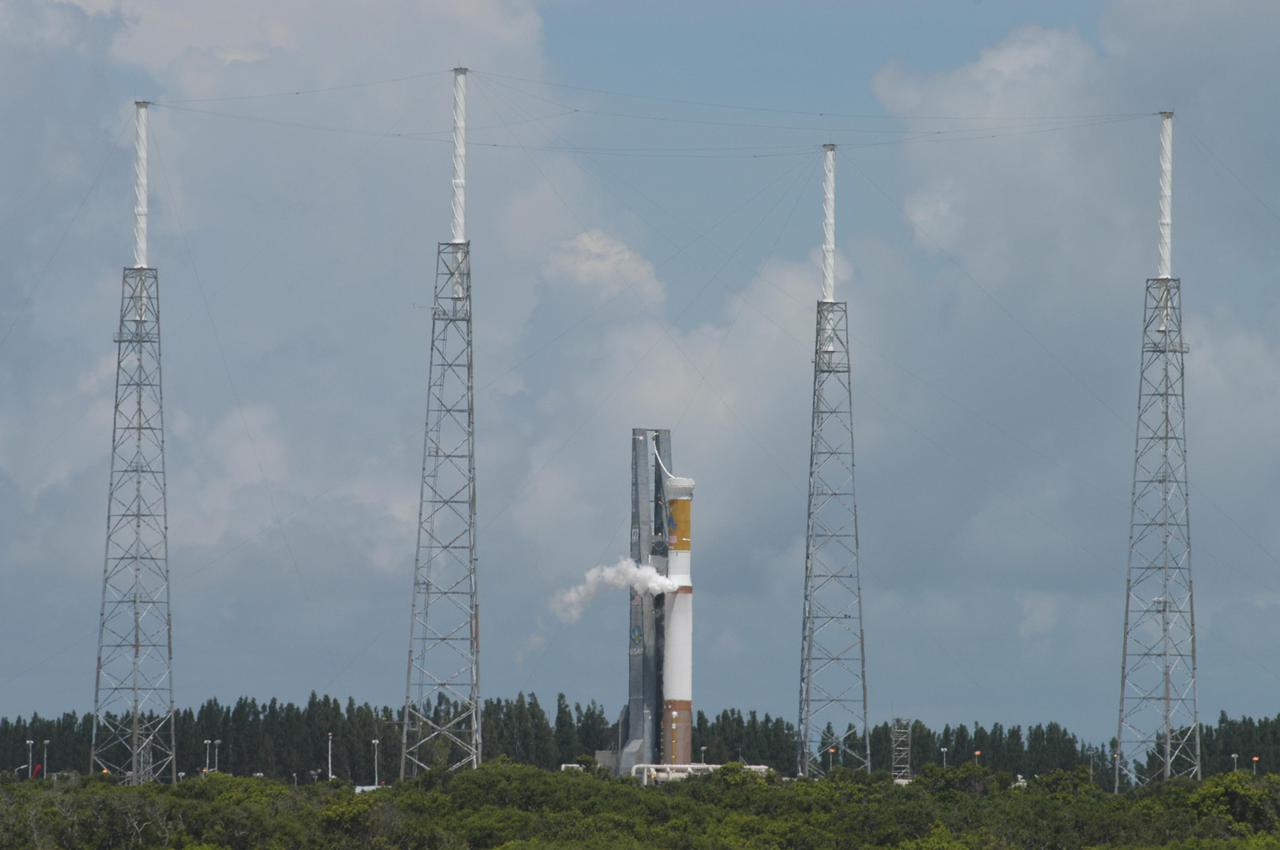
KENNEDY SPACE CENTER, FLA. - At Launch Complex 41 on Cape Canaveral Air Force Station in Florida, the Atlas V rocket is fueled as part of a wet dress rehearsal for launch of the Mars Reconnaissance Orbiter (MRO), scheduled for Aug. 10. Launch of the MRO aboard an Atlas V rocket will be from Launch Complex 41 at Cape Canaveral Air Force Station in Florida. A wet rehearsal includes pre-liftoff operations and fueling of the rocket’s engine. The MRO was built by Lockheed Martin for NASA Jet Propulsion Laboratory in California. It is the next major step in Mars exploration and scheduled for launch from Cape Canaveral Air Force Station. The MRO is an important next step in fulfilling NASA’s vision of space exploration and ultimately sending human explorers to Mars and beyond.
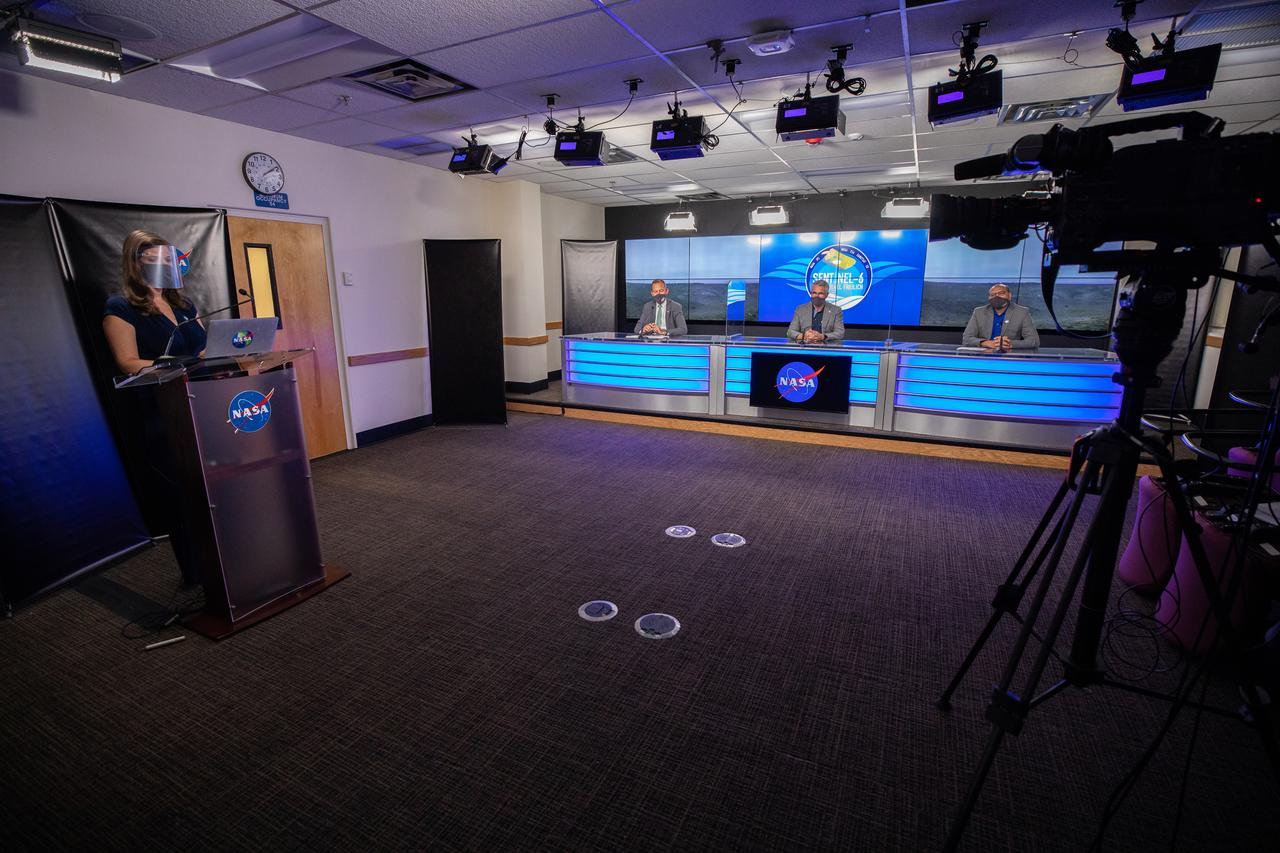
Mission and launch officials participate in a prelaunch news conference for the Sentinel-6 Michael Freilich mission at Vandenberg Air Force Base in California on Nov. 20, 2020. From left are Marina Jurica of NASA’s Jet Propulsion Laboratory in Pasadena; Thomas Zurbuchen, associate administrator for Science Mission Directorate at NASA Headquarters; Pierrik Vuilleumier, project manager, European Space Agency (ESA); and Parag Vaze, project manager, NASA’s Jet Propulsion Laboratory in Pasadena. The Sentinel-6/Jason-CS (Continuity of Service) mission consists of the Sentinel-6 Michael Freilich satellite, which will be followed by its twin, the Sentinel-6B satellite, in 2025. The Sentinel-6/Jason-CS mission is part of Copernicus, the European Union’s Earth observation program, managed by the European Commission. Continuing the legacy of the Jason series missions, Sentinel-6/Jason-CS will extend the records of sea level into their fourth decade, collecting accurate measurements of sea surface height for more than 90% of the world’s seas, and providing crucial information for operational oceanography, marine meteorology, and climate studies. Sentinel-6 Michael Freilich launched Nov. 21, 2020, at 9:17 PST (12:17 EST). NASA’s Launch Services Program at Kennedy Space Center was responsible for launch management.
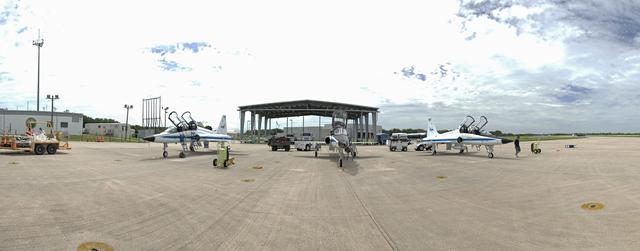
CAPE CANAVERAL, Fla. -- At NASA's Kennedy Space Center in Florida, three of NASA's T-38 training jets sit on the parking apron of the Shuttle Landing Facility. The STS-134 crew members flew the jets to Kennedy to watch the Alpha Magnetic Spectrometer (AMS) arrive aboard an Air Force C-5M aircraft from Europe. The state-of-the-art particle physics detector will operate as an external module on the International Space Station to study the universe and its origin by searching for dark matter. AMS will fly to the station aboard space shuttle Endeavour's STS-134 mission targeted to launch Feb. 26, 2011. Photo credit: NASA/Frankie Martin
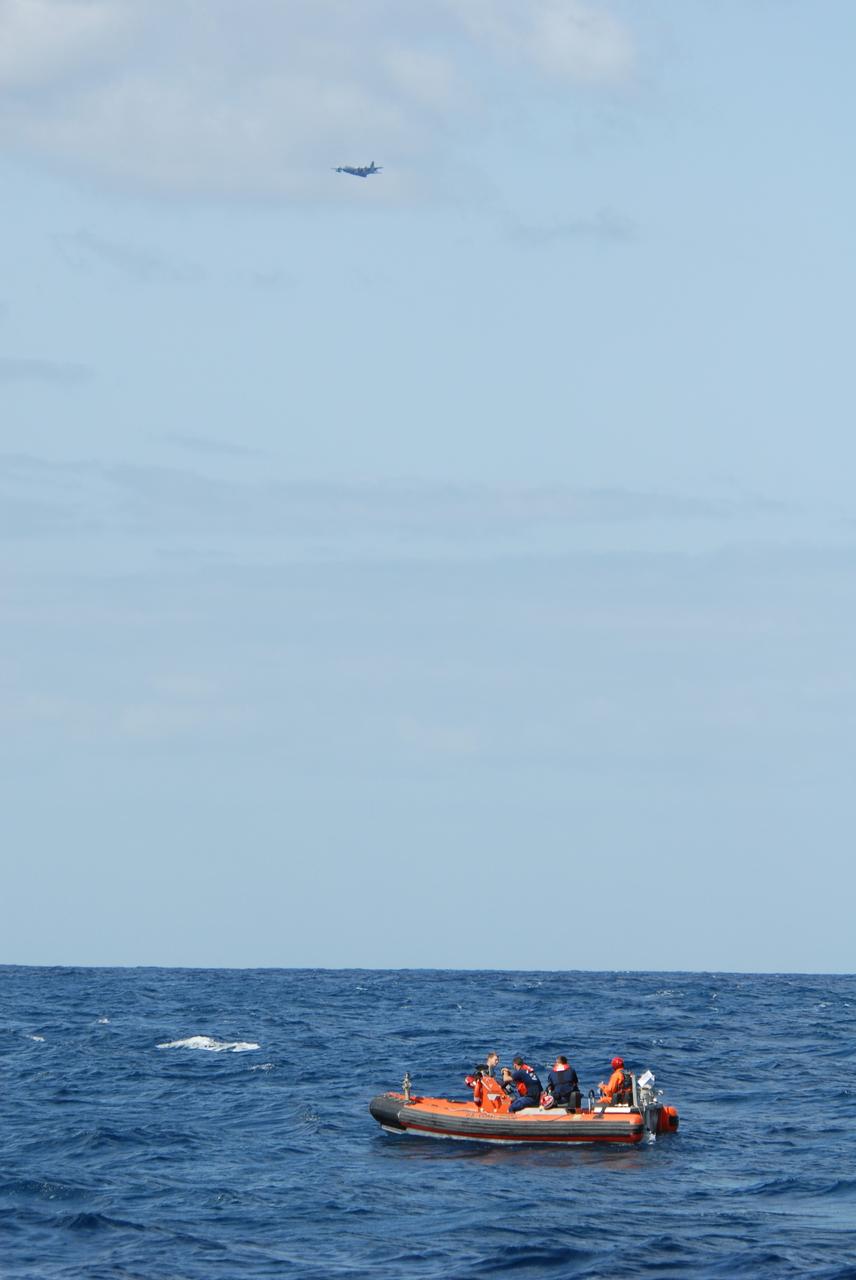
CAPE CANAVERAL, Fla. -- Participants take part in a rescue training exercise, known as Mode VIII, off Florida's central east coast while a U.S. Coast Guard HU-25 Falcon jet flies overhead. In support of, and with logistical support from, NASA, USSTRATCOM is hosting a major exercise involving Department of Defense, Department of Homeland Security, search and rescue (SAR) forces, including the 45th Space Wing at Patrick Air Force Base, which support space shuttle astronaut bailout contingency operations, known as Mode VIII. This exercise tests SAR capabilities to locate, recover and provide medical treatment for astronauts following a space shuttle launch phase open-ocean bailout. Participants include members of the U.S. Navy, U.S. Coast Guard, U.S. Air Force, and NASA's Kennedy Space Center and Johnson Space Center. Photo credit: NASA/Dimitri Gerondidakis
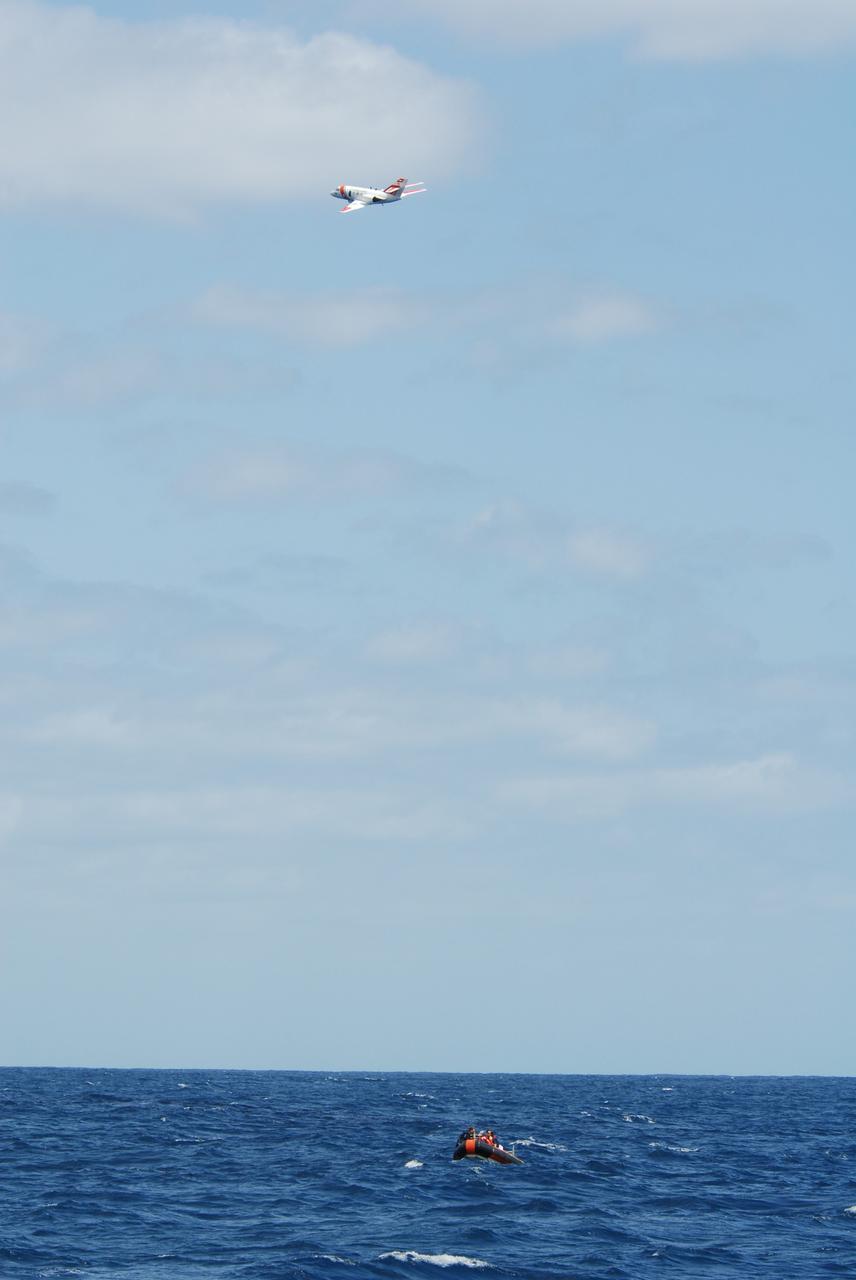
CAPE CANAVERAL, Fla. -- A U.S. Coast Guard HU-25 Falcon jet flies over a rescue boat during a training exercise, known as Mode VIII, off Florida's central east coast. In support of, and with logistical support from, NASA, USSTRATCOM is hosting a major exercise involving Department of Defense, Department of Homeland Security, search and rescue (SAR) forces, including the 45th Space Wing at Patrick Air Force Base, which support space shuttle astronaut bailout contingency operations, known as Mode VIII. This exercise tests SAR capabilities to locate, recover and provide medical treatment for astronauts following a space shuttle launch phase open-ocean bailout. Participants include members of the U.S. Navy, U.S. Coast Guard, U.S. Air Force, and NASA's Kennedy Space Center and Johnson Space Center. Photo credit: NASA/Dimitri Gerondidakis
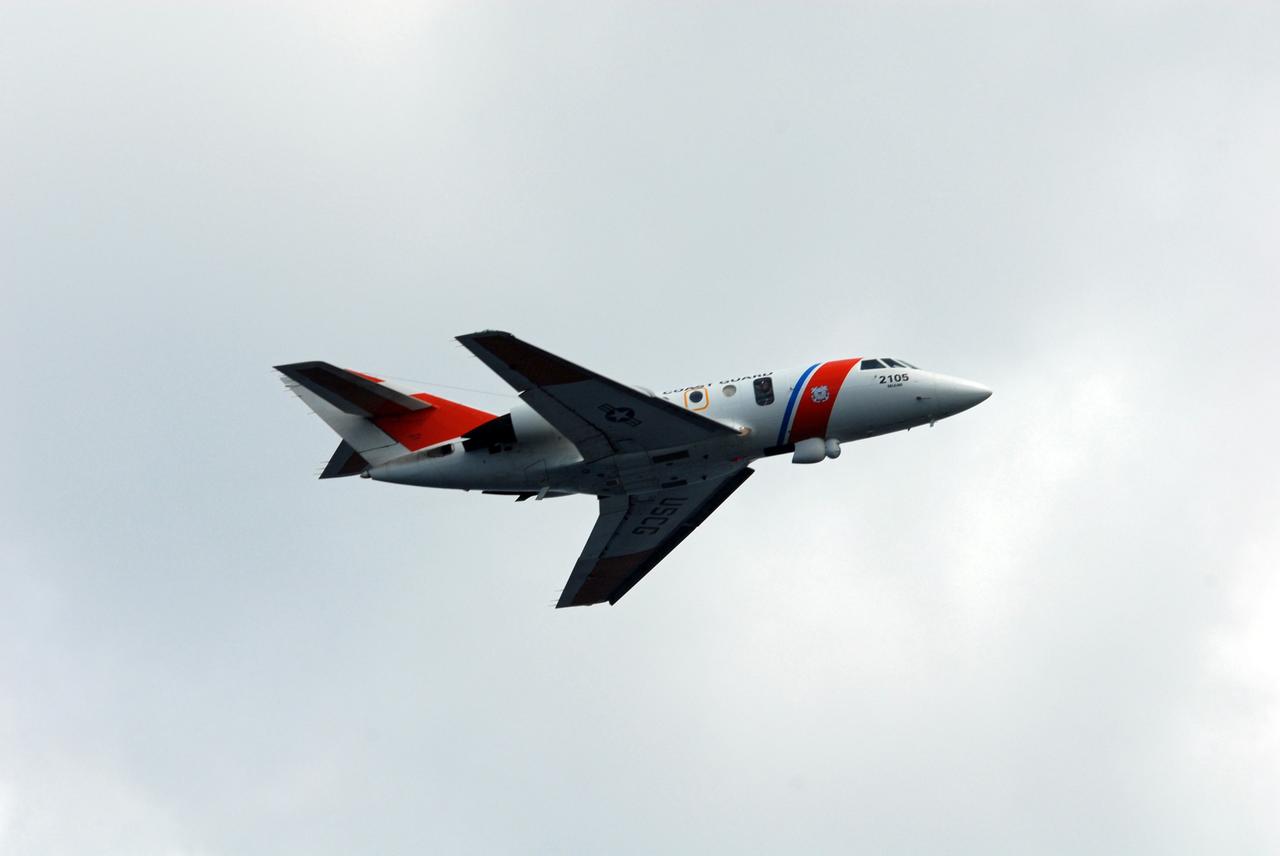
CAPE CANAVERAL, Fla. -- A U.S. Coast Guard HU-25 Falcon jet flies overhead during a rescue training exercise, known as Mode VIII, off Florida's central east coast. In support of, and with logistical support from, NASA, USSTRATCOM is hosting a major exercise involving Department of Defense, Department of Homeland Security, search and rescue (SAR) forces, including the 45th Space Wing at Patrick Air Force Base, which support space shuttle astronaut bailout contingency operations, known as Mode VIII. This exercise tests SAR capabilities to locate, recover and provide medical treatment for astronauts following a space shuttle launch phase open-ocean bailout. Participants include members of the U.S. Navy, U.S. Coast Guard, U.S. Air Force, and NASA's Kennedy Space Center and Johnson Space Center. Photo credit: NASA/Dimitri Gerondidakis
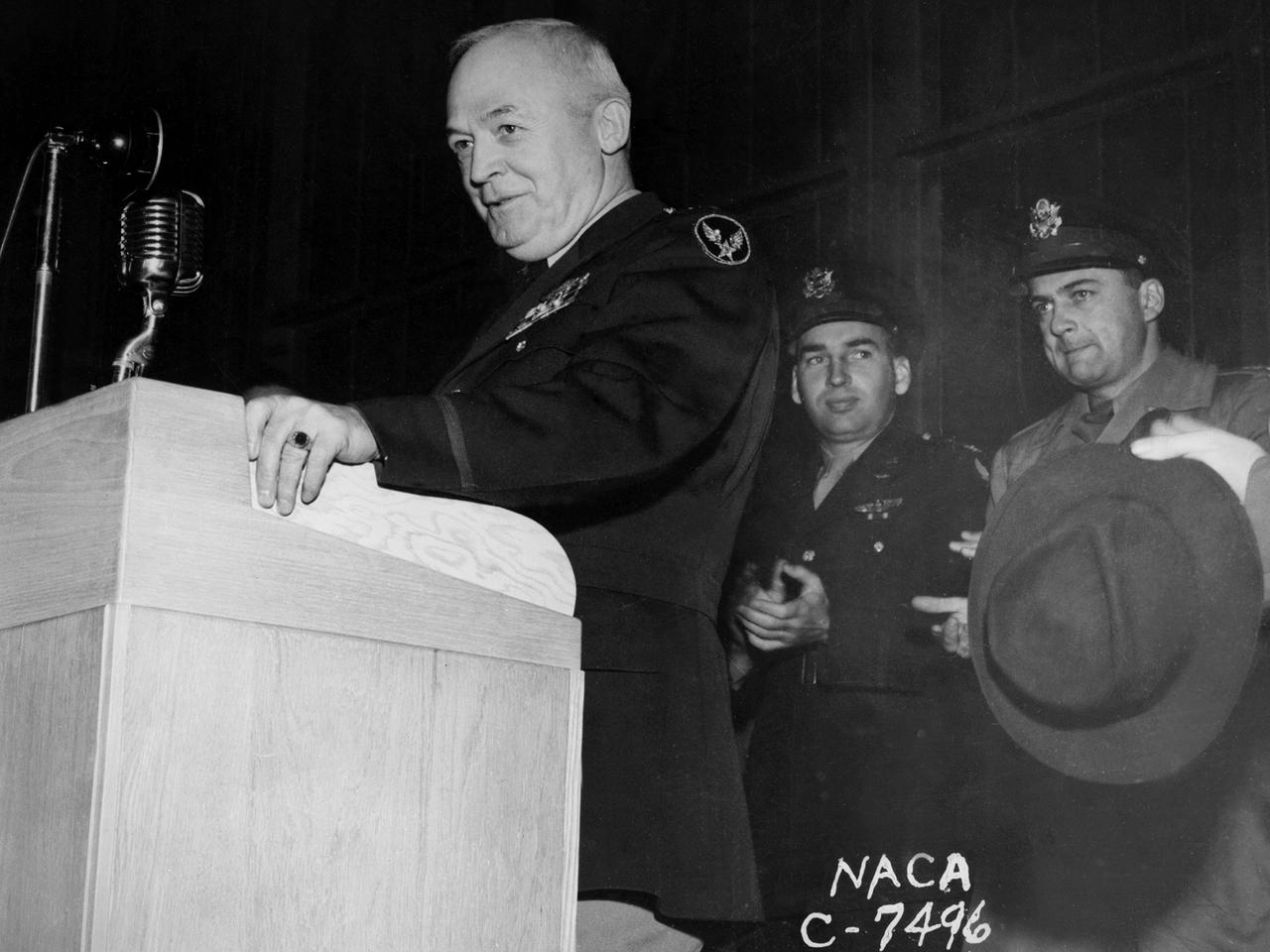
General Henry “Hap” Arnold, Commander of the US Army Air Forces during World War II, addresses the staff at the National Advisory Committee for Aeronautics (NACA) Aircraft Engine Research Laboratory on November 9, 1944. Arnold told the employees assembled in the hangar, “You’ve got a dual task. You’ve got a job ahead of you to keep the army and the navy air forces equipped with the finest equipment that you can for this war. You also have the job of looking forward into the future and starting now those developments, those experiments, that are going to keep us in our present situation—ahead of the world in the air. And that is quite a large order, and I leave it right in your laps.” Arnold served on the NACA’s Executive Committee in Washington from 1938 to 1944 and had been a strong advocate for the creation of the new engine research facility in Cleveland. Arnold believed in continual research and development. He pressed the nation’s aviation leaders to pursue the new jet engine technology, while simultaneously pushing to increase the performance of the nation’s largest piston engine for the B–29 Superfortress program. The general’s hectic wartime agenda limited his visit to the Cleveland laboratory to just a few hours, but he toured several of the NACA’s new test facilities including the Static Jet Propulsion Laboratory, the Icing Research Tunnel, and a B–24 Liberator in the hangar.
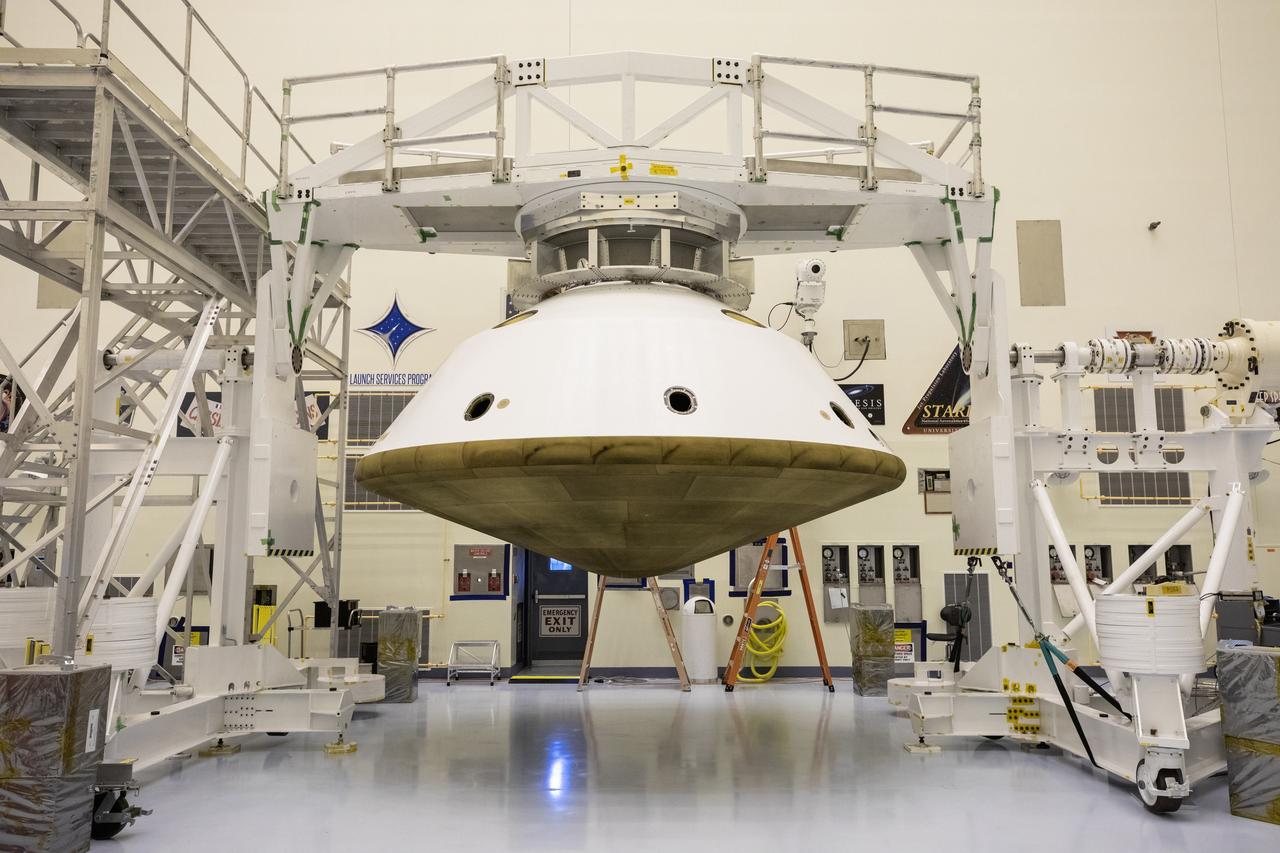
The Mars 2020 rover heat shield is mated to the back shell in the Payload Hazardous Servicing Facility at Kennedy Space Center in Florida on Jan. 10, 2020. Built by Lockheed Martin Space, the heat shield and back shell will protect the rover during its passage to Mars. The Mars 2020 rover is being manufactured at NASA’s Jet Propulsion Laboratory (JPL) in California and, once complete, will be delivered to Kennedy next month. The mission is scheduled to launch from Cape Canaveral Air Force Station in Florida in the summer of 2020.
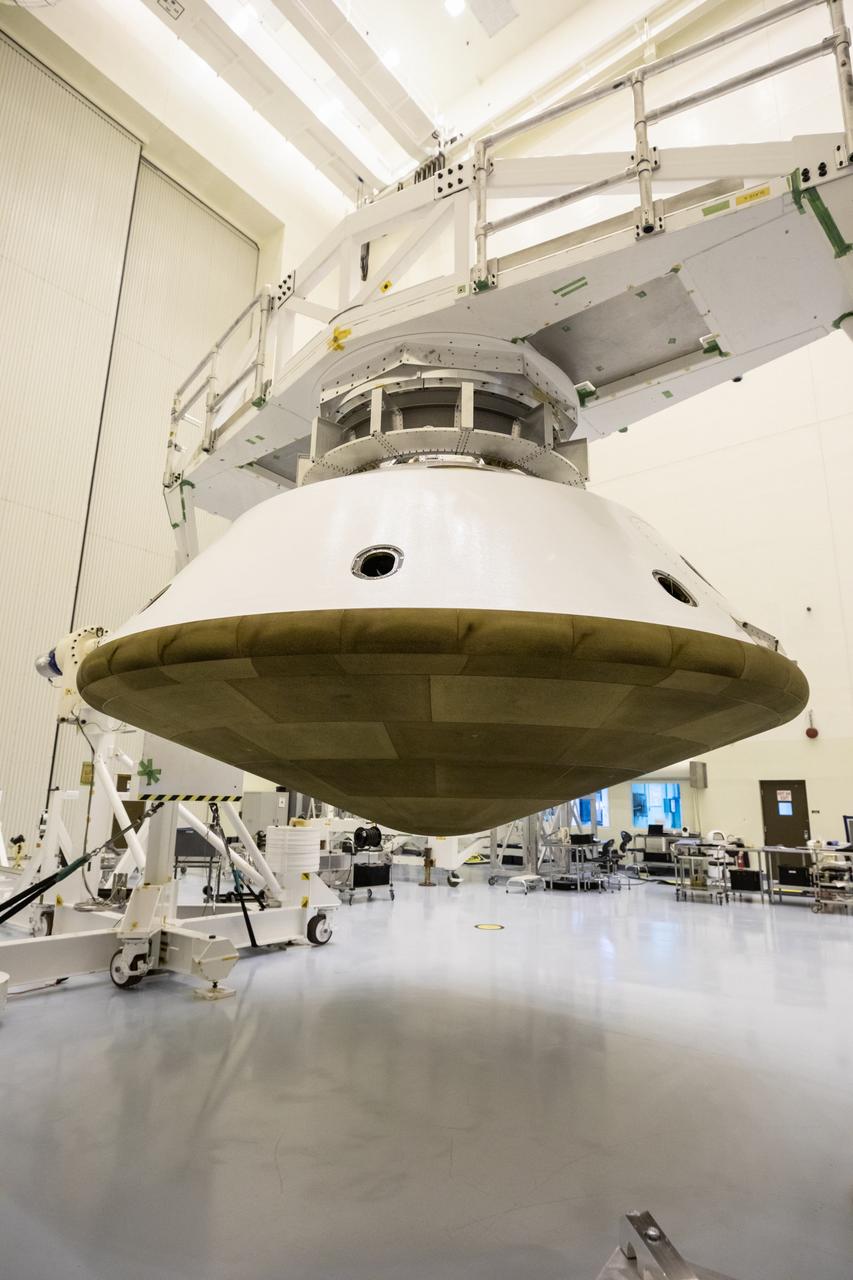
The Mars 2020 rover heat shield is mated to the back shell in the Payload Hazardous Servicing Facility at Kennedy Space Center in Florida on Jan. 10, 2020. Built by Lockheed Martin Space, the heat shield and back shell will protect the rover during its passage to Mars. The Mars 2020 rover is being manufactured at NASA’s Jet Propulsion Laboratory (JPL) in California and, once complete, will be delivered to Kennedy next month. The mission is scheduled to launch from Cape Canaveral Air Force Station in Florida in the summer of 2020.
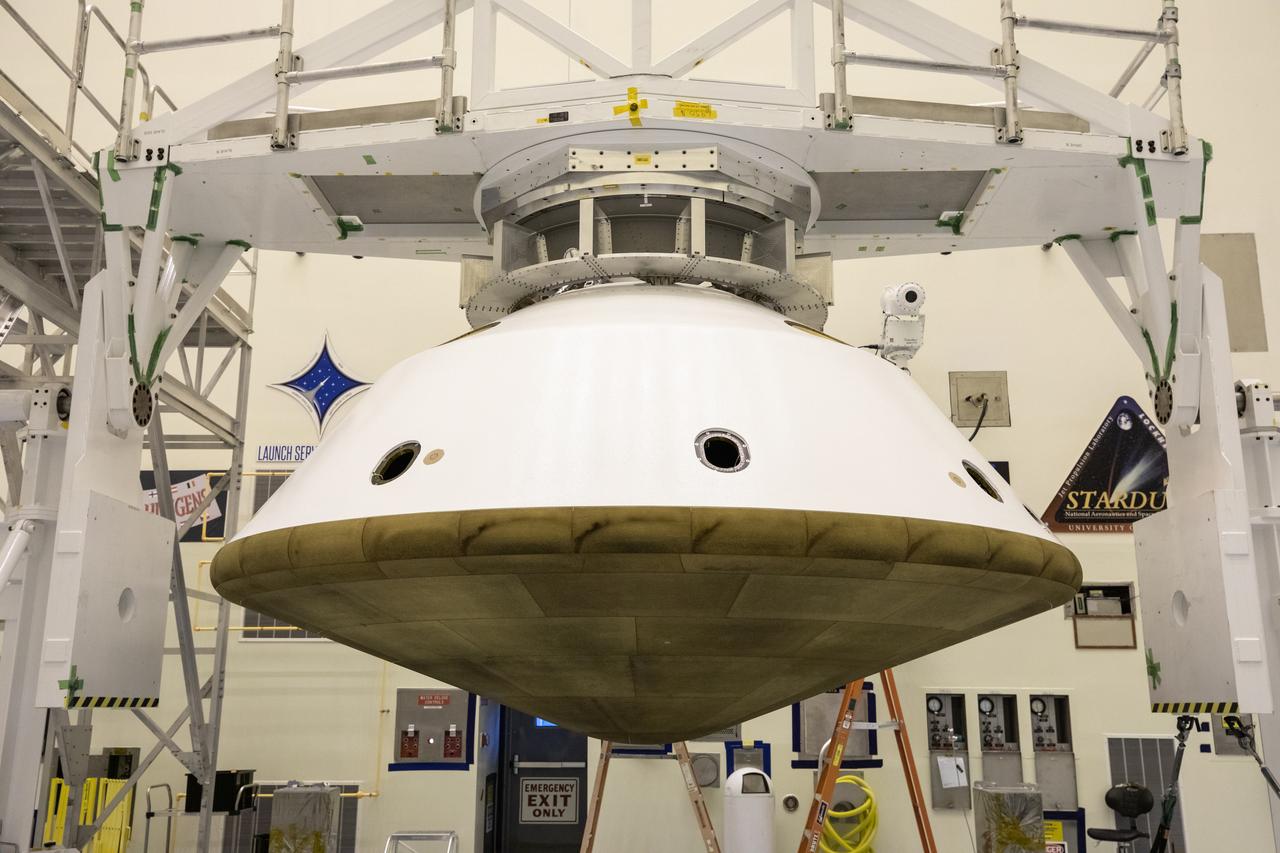
The Mars 2020 rover heat shield is mated to the back shell in the Payload Hazardous Servicing Facility at Kennedy Space Center in Florida on Jan. 10, 2020. Built by Lockheed Martin Space, the heat shield and back shell will protect the rover during its passage to Mars. The Mars 2020 rover is being manufactured at NASA’s Jet Propulsion Laboratory (JPL) in California and, once complete, will be delivered to Kennedy next month. The mission is scheduled to launch from Cape Canaveral Air Force Station in Florida in the summer of 2020.
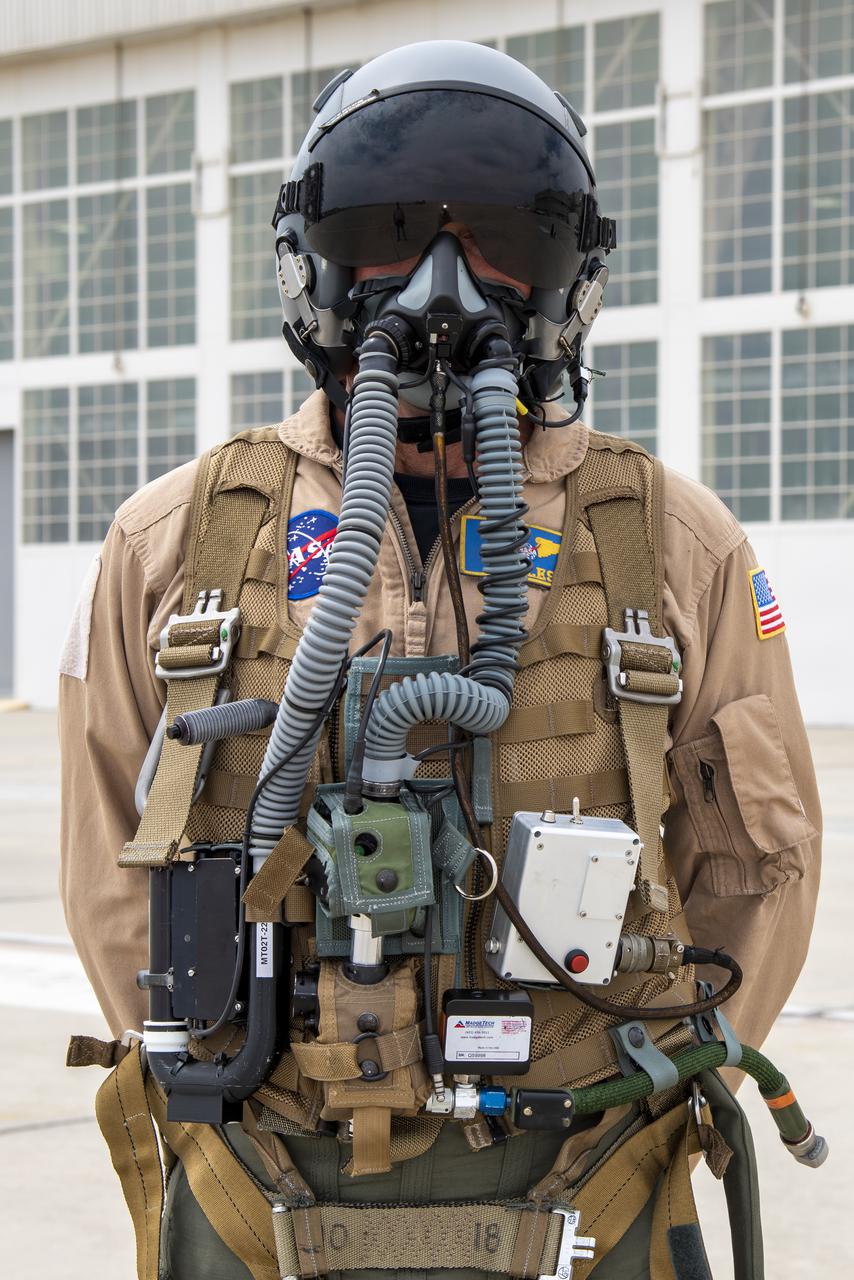
NASA research pilot Jim Less wears a U.S. Navy harness configuration with the NASA Jet Propulsion Laboratory in California prototype mask, which uses laser sensors to determine levels of carbon dioxide and water exhaled inside the mask. This prototype was tested in conjunction with the current VigilOX system, which measures the pilot’s oxygen concentration, breathing pressures and flow rates. This and the U.S. Air Force configuration was used in the Pilot Breathing Assessment program at NASA’s Armstrong Flight Research Center in California.

KENNEDY SPACE CENTER, FLA. - This closeup shows the size of the computer chip that holds about 35,000 laser-engraved signatures of visitors to the Mars Exploration Rovers at the Jet Propulsion Laboratory. It will be placed on the second rover to be launched to Mars; the first rover already has one. The signatures include those of senators, artists, and John Glenn. The identical Mars rovers are scheduled to launch June 5 and June 25 from Cape Canaveral Air Force Station.
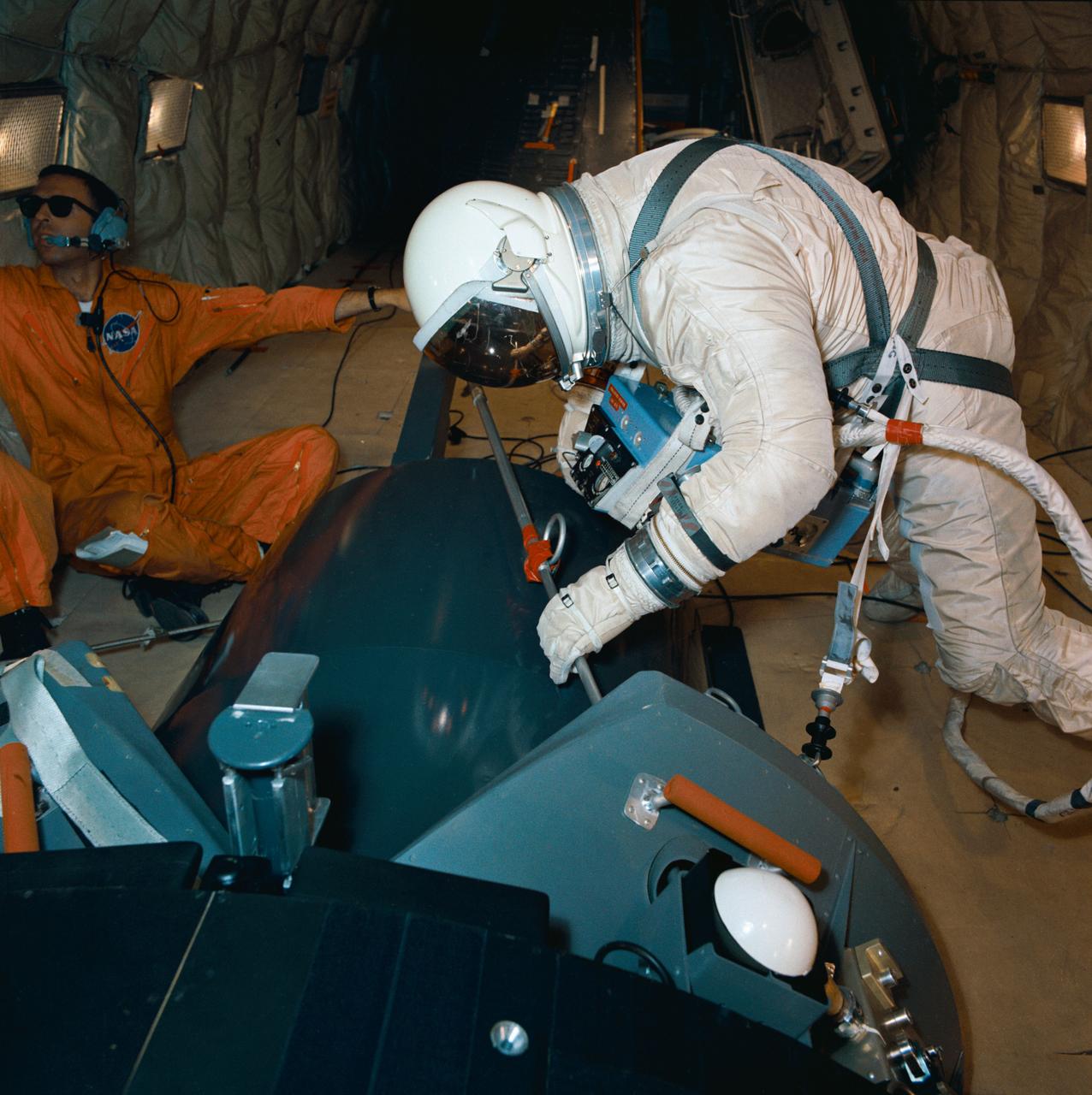
S66-57387 (13 Oct. 1966) --- Astronaut Edwin E. Aldrin Jr., pilot for the Gemini-12 spaceflight, practices work tasks during zero-gravity training. He is secured to a mock-up of the Agena Target Docking Vehicle by special tethers. The training took place onboard an Air Force KC-135 jet aircraft. Photo credit: NASA

The Mars 2020 rover is offloaded from a C-17 aircraft at the Launch and Landing Facility, formerly known as the Shuttle Landing Facility, at NASA’s Kennedy Space Center on Feb. 12, 2020. The rover made a cross-country trip to the Florida spaceport that started at NASA’s Jet Propulsion Laboratory in Pasadena, California. The mission, targeted for mid-July 2020, will launch aboard an Atlas V 541 rocket from Cape Canaveral Air Force Station. NASA’s Launch Services Program based at Kennedy is managing the launch.

The Mars 2020 rover arrives at the Launch and Landing Facility, formerly known as the Shuttle Landing Facility, at NASA’s Kennedy Space Center on Feb. 12, 2020. The rover was delivered to the Florida spaceport on a C-17 aircraft, making a cross-country trip that started at NASA’s Jet Propulsion Laboratory in Pasadena, California. The mission, targeted for mid-July 2020, will launch aboard an Atlas V 541 rocket from Cape Canaveral Air Force Station. NASA’s Launch Services Program based at Kennedy is managing the launch.

Jim Fanson, Kepler project manager, at NASA's Jet Propulsion Laboratory in Pasadena, Calif. talks about the Kepler mission during a media briefing, Thursday, Feb. 19, 2008, at NASA Headquarters in Washington. Kepler, the first mission with the ability to find planets like earth, is scheduled to launch on March 5, 2009 from Cape Canaveral Air Force Station, Fla. aboard a Delta II rocket. Photo Credit: (NASA/Paul. E. Alers)
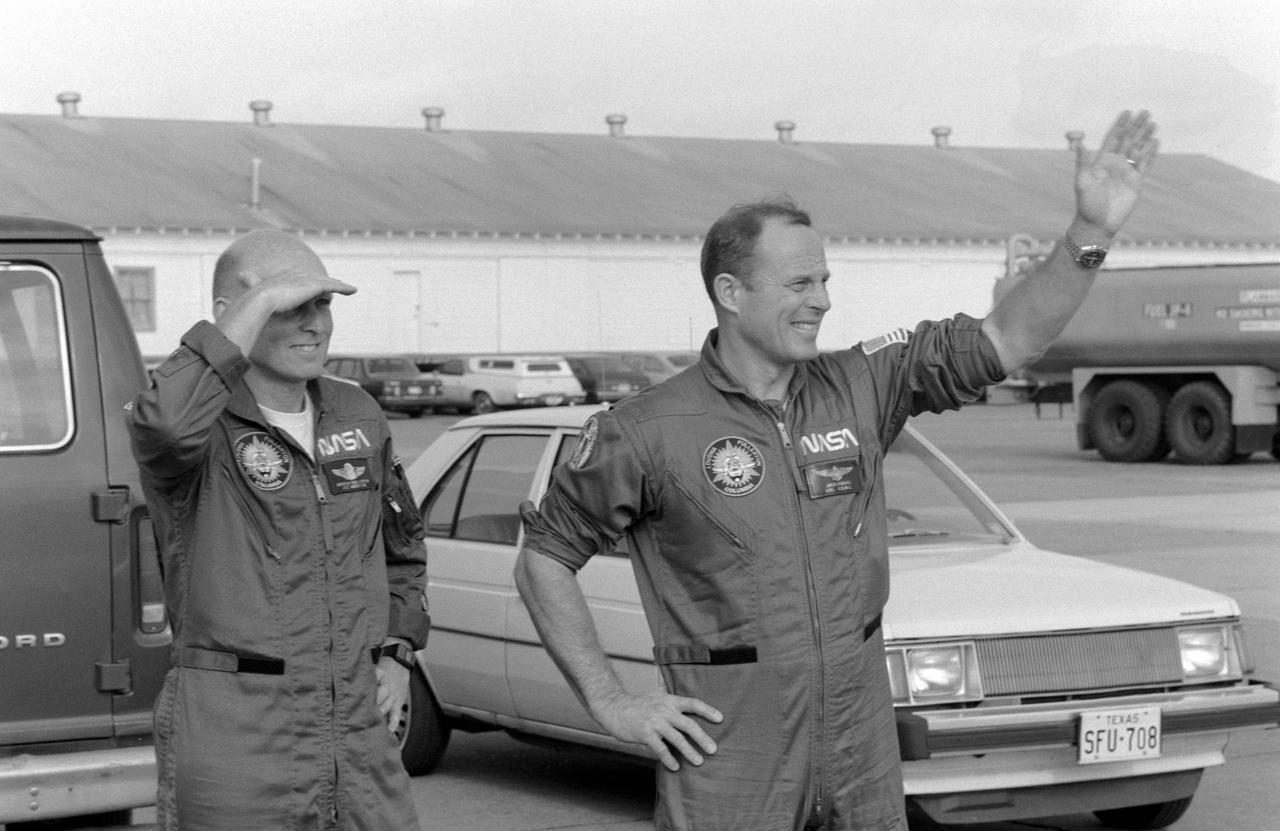
S82-28706 (20 March 1982) --- Astronaut Jack R. Lousma, right, STS-3 commander, and C. Gordon Fullerton, greet a crowd on hand at Ellington Air Force Base to bid them farewell prior to their departure to KSC in a pair of T-38 jet aircraft. The two are scheduled to liftoff in less than 48 hours from the Kennedy Space Center?s Launch Pad 39A, for the third in a series of space transportation system (STS-3) flights. Photo credit: NASA
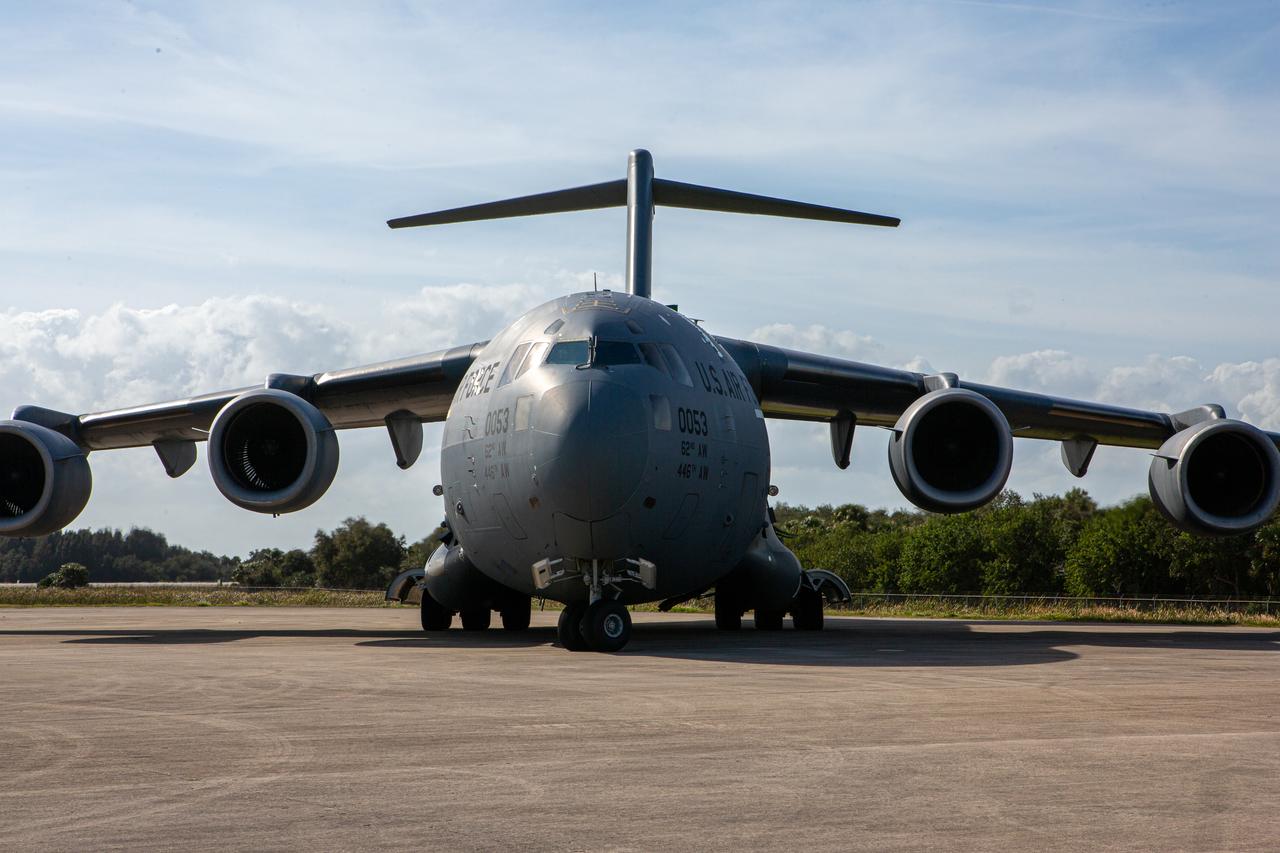
The Mars 2020 rover arrives at the Launch and Landing Facility, formerly known as the Shuttle Landing Facility, at NASA’s Kennedy Space Center on Feb. 12, 2020. The rover was delivered to the Florida spaceport on a C-17 aircraft, making a cross-country trip that started at NASA’s Jet Propulsion Laboratory in Pasadena, California. The mission, targeted for mid-July 2020, will launch aboard an Atlas V 541 rocket from Cape Canaveral Air Force Station. NASA’s Launch Services Program based at Kennedy is managing the launch.
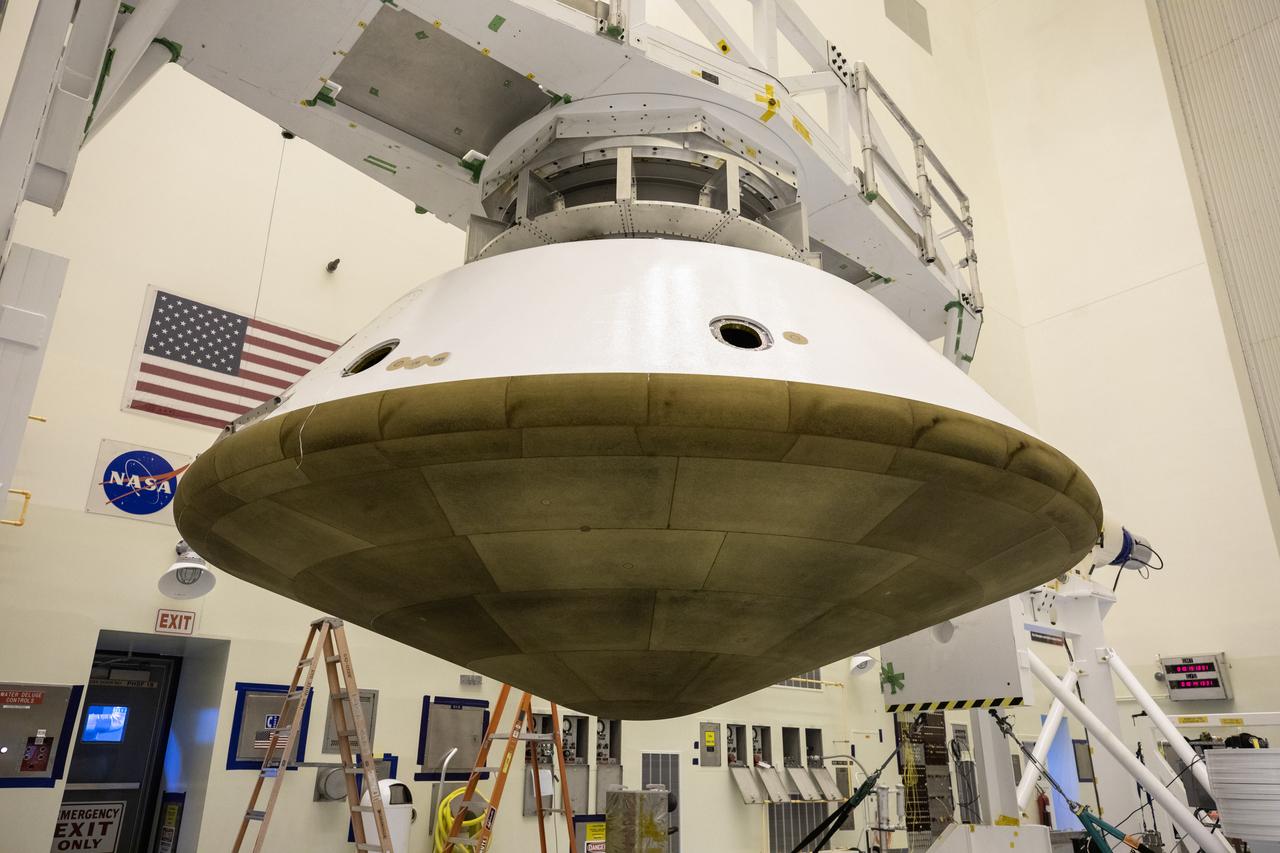
The Mars 2020 rover heat shield is mated to the back shell in the Payload Hazardous Servicing Facility at Kennedy Space Center in Florida on Jan. 10, 2020. Built by Lockheed Martin Space, the heat shield and back shell will protect the rover during its passage to Mars. The Mars 2020 rover is being manufactured at NASA’s Jet Propulsion Laboratory (JPL) in California and, once complete, will be delivered to Kennedy next month. The mission is scheduled to launch from Cape Canaveral Air Force Station in Florida in the summer of 2020.
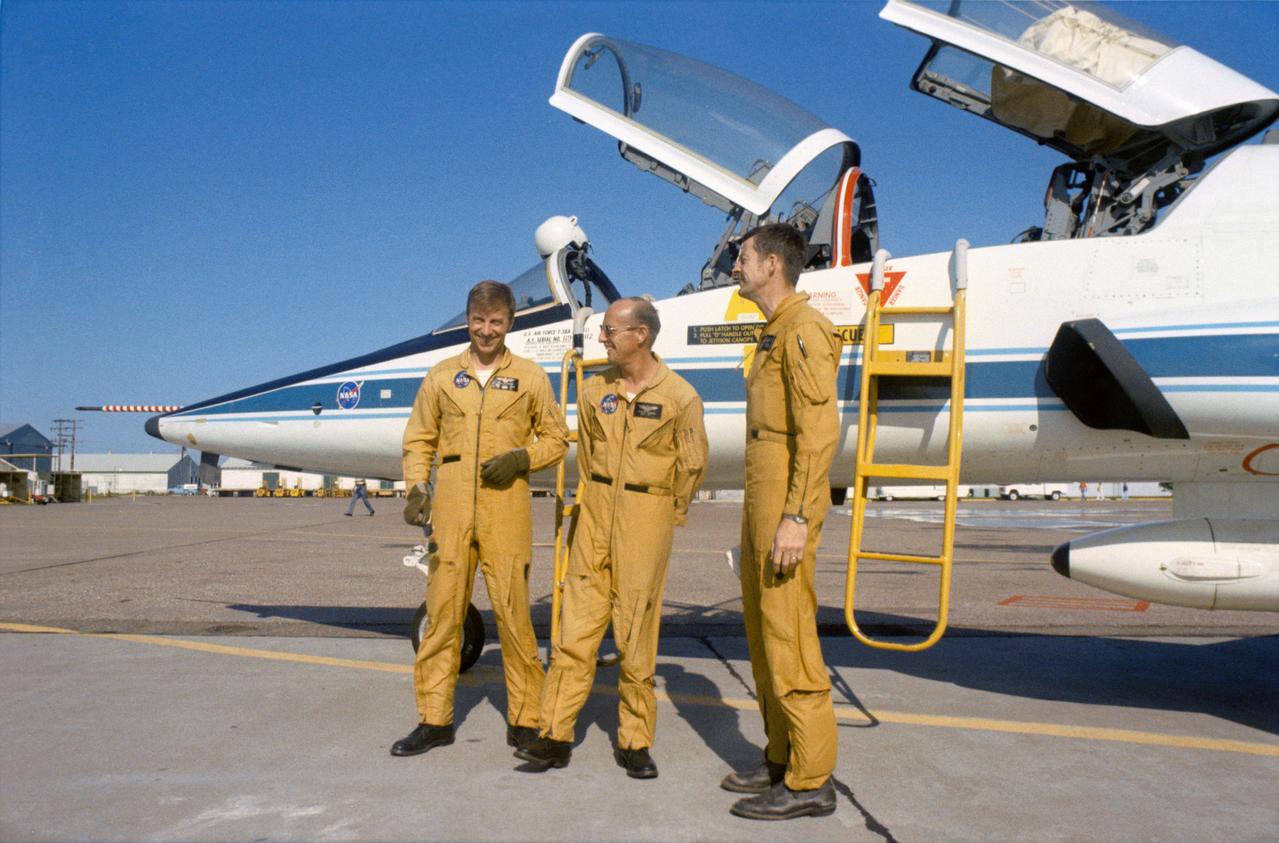
S73-25714 (13 May 1973) --- Members of the prime crew of the first manned Skylab Mission (Skylab 2) stand beside a NASA T-38 jet aircraft trainer at nearby Ellington Air Force Base prior to take off for the Kennedy Space Center, Florida. They are (left to right) astronauts Paul J. Weitz, mission pilot; Charles Conrad Jr., commander; and scientist Joseph P. Kerwin, science pilot. The three crewmen have completed their prelaunch training at JSC. Photo credit: NASA

Simon Hook, ECOSTRESS principal investigator, NASA’S Jet Propulsion Laboratory, speaks to members of the media during a briefing in the Kennedy Space Center’s Press Site auditorium. The briefing focused on research planned for launch to the International Space Station. The scientific materials and supplies will be aboard a SpaceX Dragon spacecraft scheduled for liftoff from Cape Canaveral Air Force Station's Space Launch Complex 40. The SpaceX Falcon 9 rocket will launch the company's 15th Commercial Resupply Services mission to the space station.
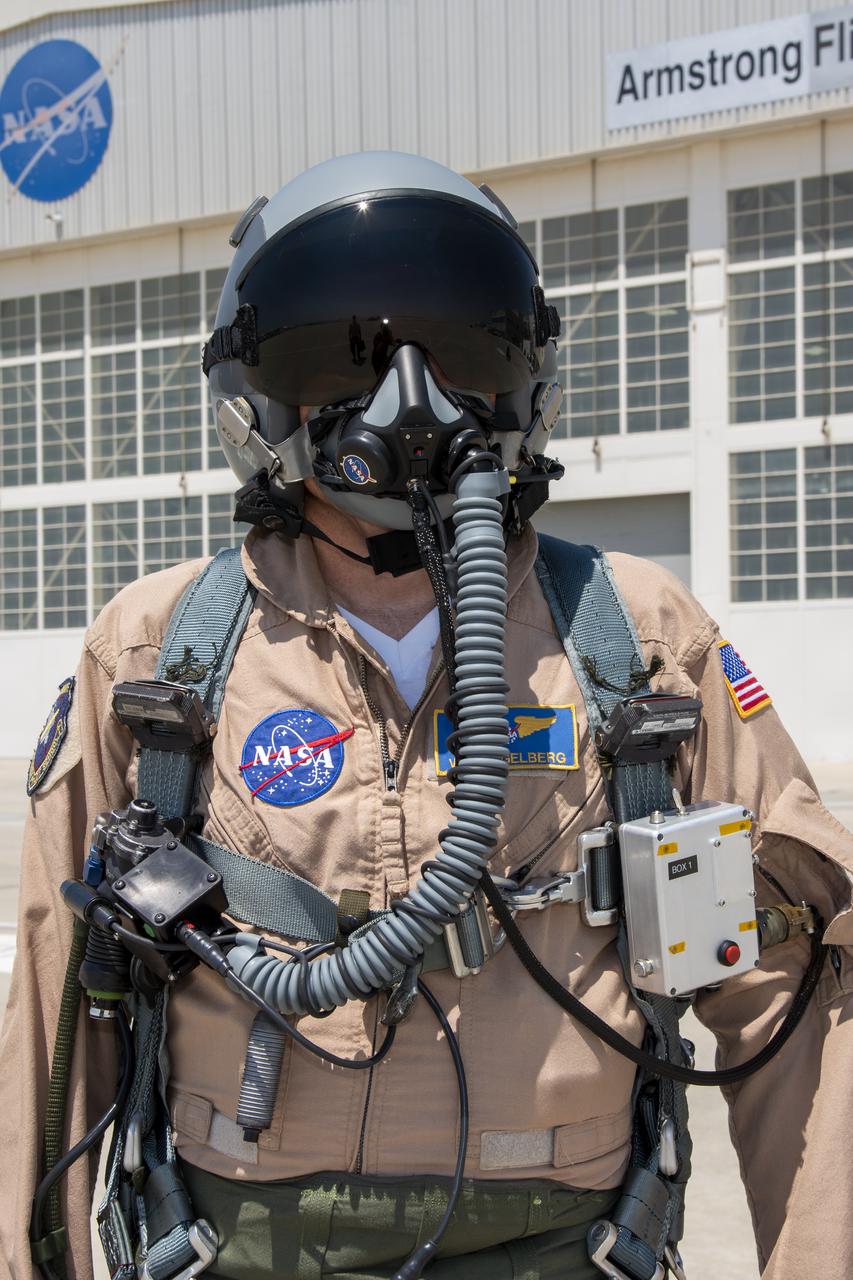
NASA research pilot Wayne Ringelberg wears a U.S. Air Force configuration of the NASA Jet Propulsion Laboratory in California prototype mask, which uses laser sensors to determine levels of carbon dioxide and water exhaled inside the mask. This prototype was tested in conjunction with the current VigilOX system, which measures the pilot’s oxygen concentration, breathing pressures and flow rates. This and the U.S. Navy configuration was used in the Pilot Breathing Assessment program at NASA’s Armstrong Flight Research Center in California.
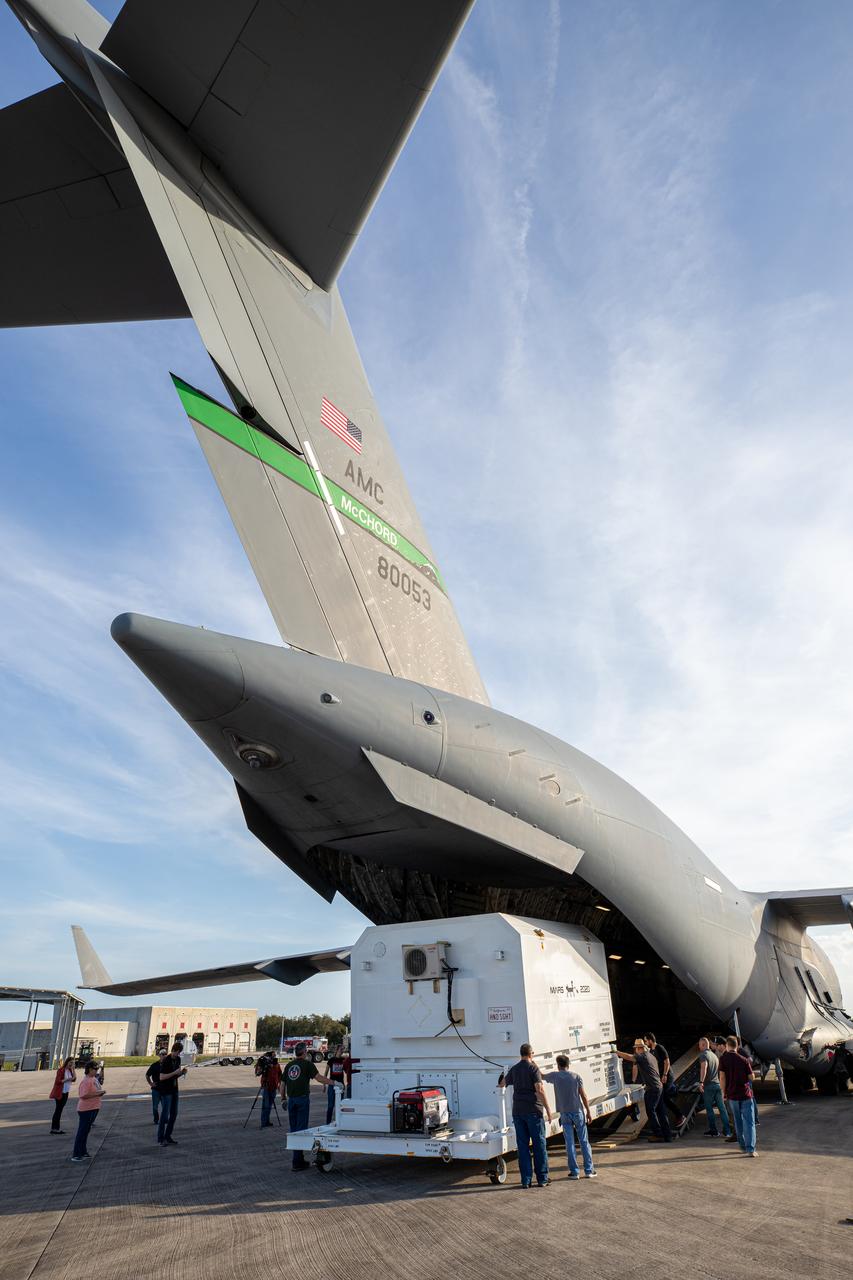
The Mars 2020 rover is offloaded from a C-17 aircraft at the Launch and Landing Facility, formerly known as the Shuttle Landing Facility, at NASA’s Kennedy Space Center on Feb. 12, 2020. The rover made a cross-country trip to the Florida spaceport that started at NASA’s Jet Propulsion Laboratory in Pasadena, California. The mission, targeted for mid-July 2020, will launch aboard an Atlas V 541 rocket from Cape Canaveral Air Force Station. NASA’s Launch Services Program based at Kennedy is managing the launch.
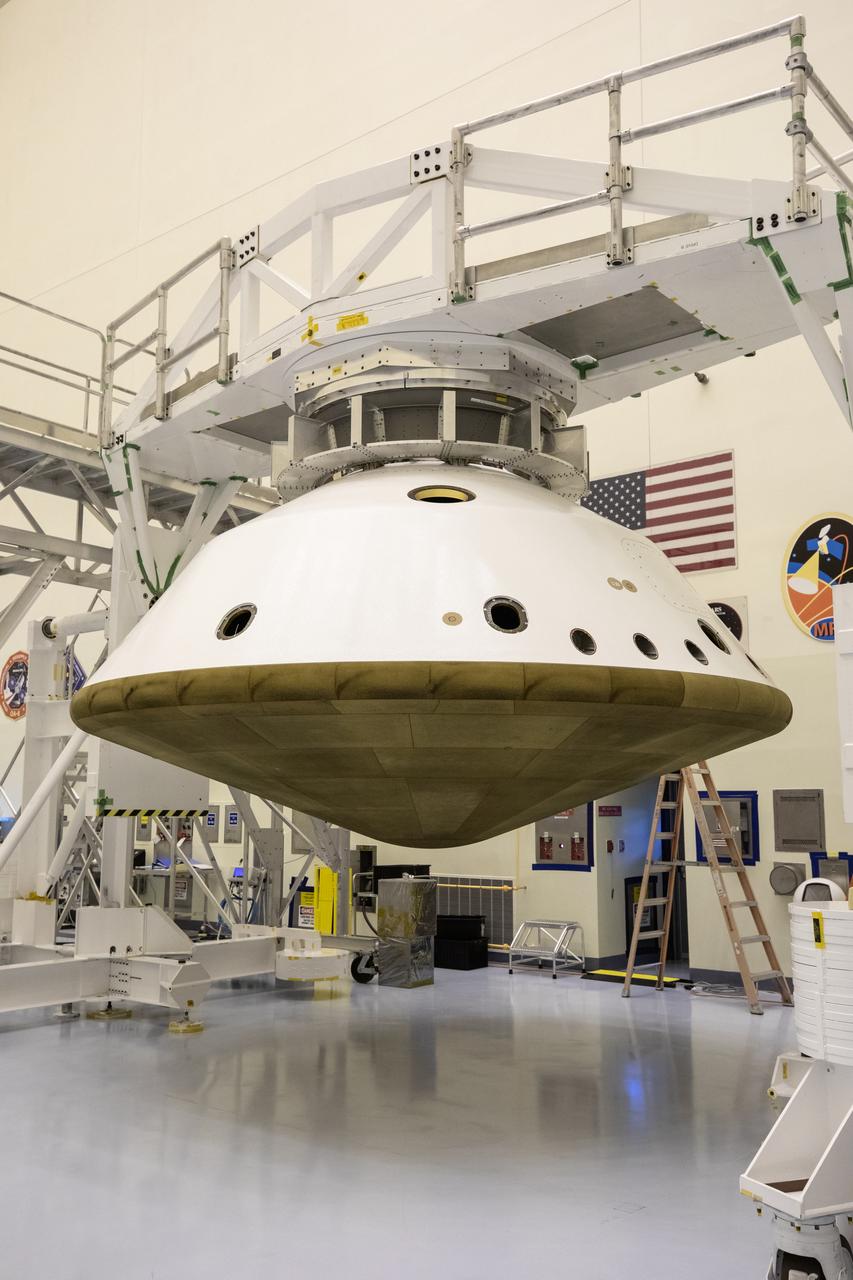
The Mars 2020 rover heat shield is mated to the back shell in the Payload Hazardous Servicing Facility at Kennedy Space Center in Florida on Jan. 10, 2020. Built by Lockheed Martin Space, the heat shield and back shell will protect the rover during its passage to Mars. The Mars 2020 rover is being manufactured at NASA’s Jet Propulsion Laboratory (JPL) in California and, once complete, will be delivered to Kennedy next month. The mission is scheduled to launch from Cape Canaveral Air Force Station in Florida in the summer of 2020.
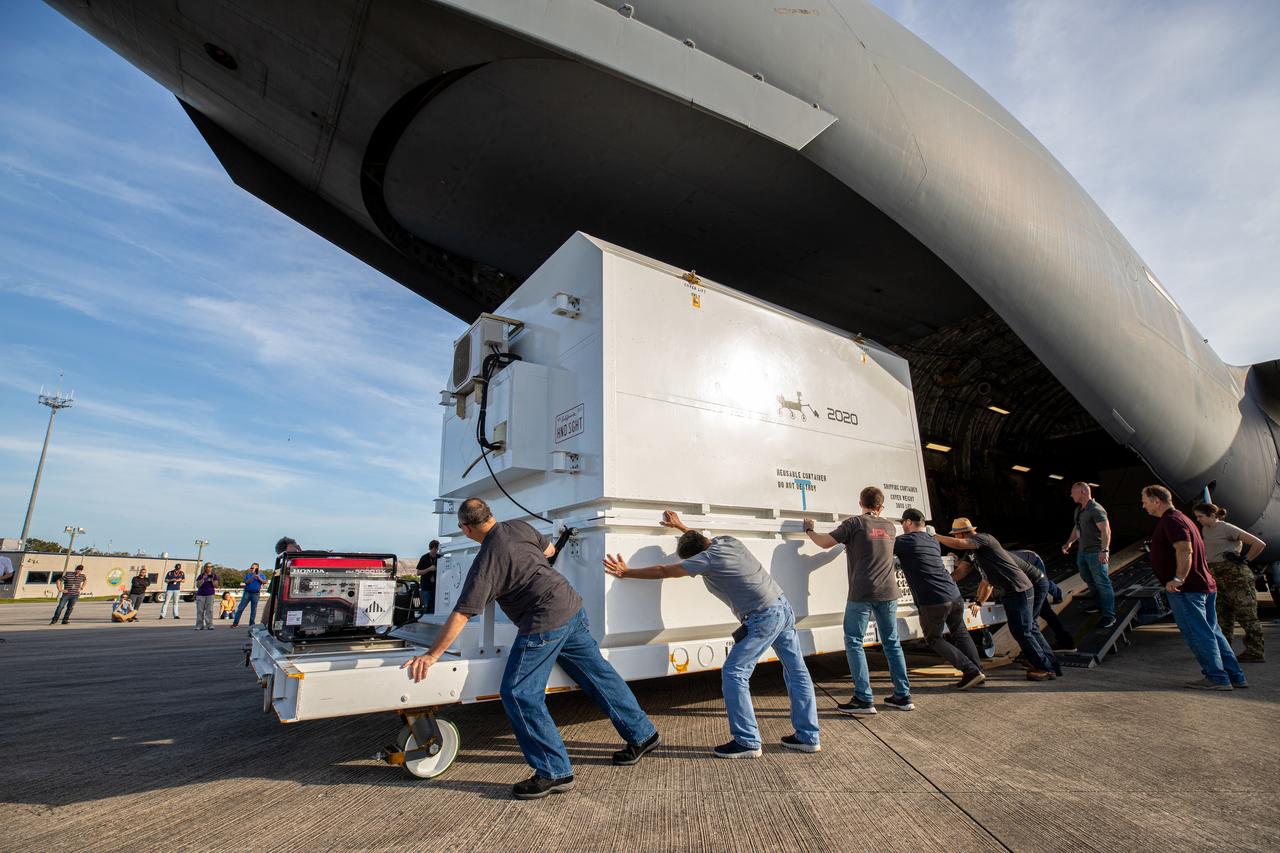
The Mars 2020 rover is offloaded from a C-17 aircraft at the Launch and Landing Facility, formerly known as the Shuttle Landing Facility, at NASA’s Kennedy Space Center on Feb. 12, 2020. The rover made a cross-country trip to the Florida spaceport that started at NASA’s Jet Propulsion Laboratory in Pasadena, California. The mission, targeted for mid-July 2020, will launch aboard an Atlas V 541 rocket from Cape Canaveral Air Force Station. NASA’s Launch Services Program based at Kennedy is managing the launch.
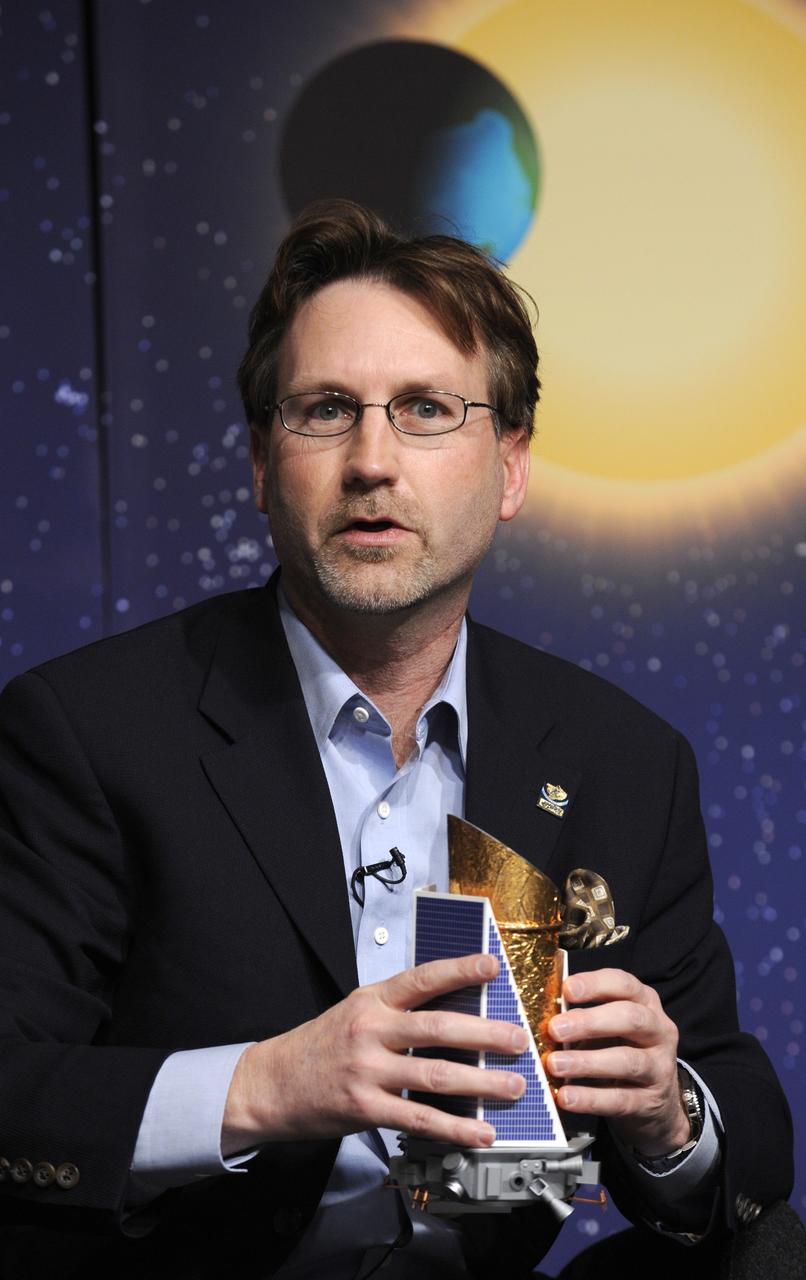
Jim Fanson, Kepler project manager, at NASA's Jet Propulsion Laboratory in Pasadena, Calif. holds a model of the Kepler spacecraft as he talks about the Kepler mission during a media briefing, Thursday, Feb. 19, 2008, at NASA Headquarters in Washington. Kepler, the first mission with the ability to find planets like earth, is scheduled to launch on March 5, 2009 from Cape Canaveral Air Force Station, Fla. aboard a Delta II rocket. Photo Credit: (NASA/Paul. E. Alers)

S90-45896 (29-31 July 1990) --- Susan J. Helms, one of the 23 astronaut candidates who began a year's training and evaluation program in July, participates in one of themany sessions at a survival training course at Vance Air Force Base. This portion of the course is designed to familiarize the trainee with procedures to follow in preparation for ejection from a jet aircraft.
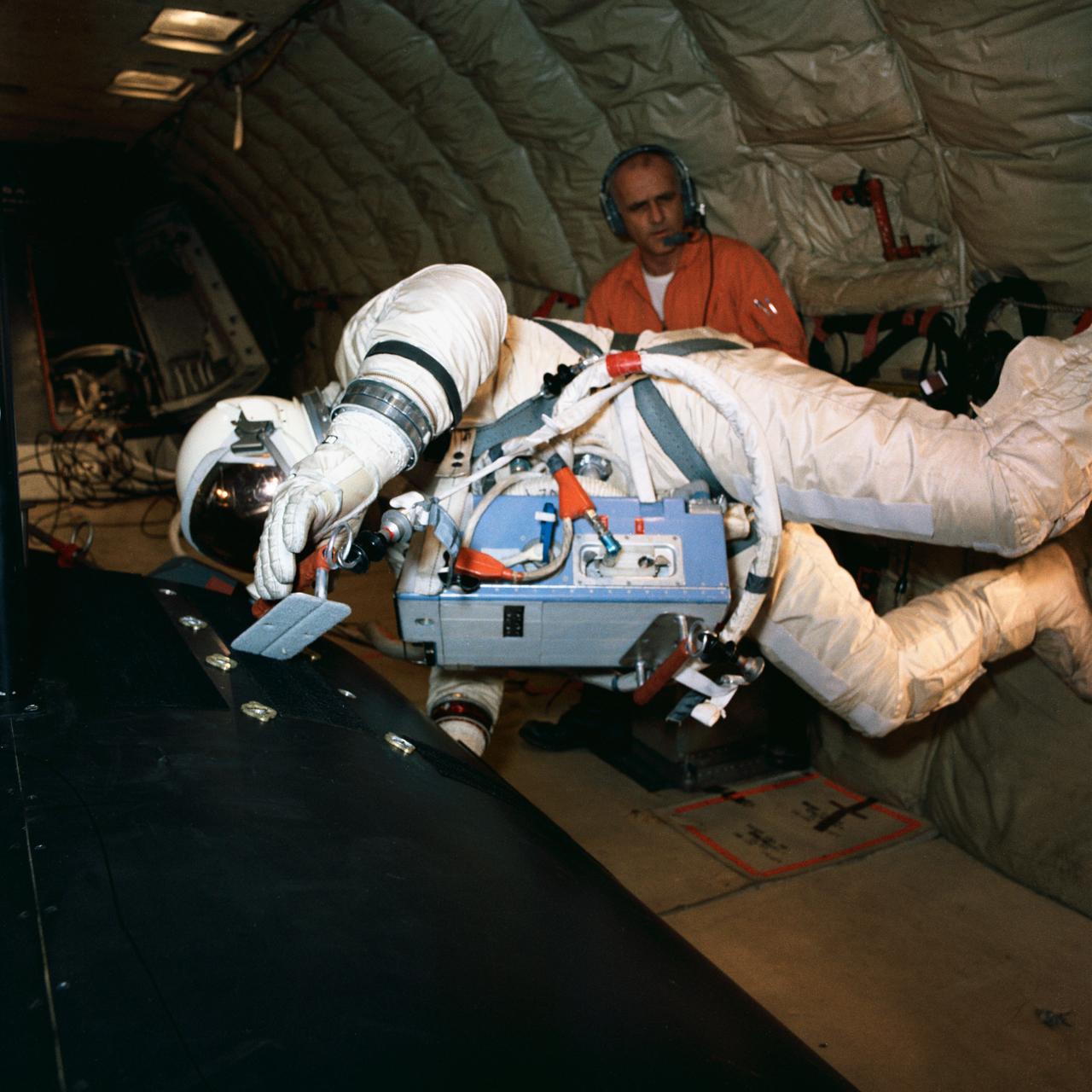
S66-57353 (13 Oct. 1966) --- Astronaut Edwin E. Aldrin Jr., pilot for the Gemini-12 spaceflight, practices work tasks on a mock-up of the adapter section of a spacecraft. Training took place onboard an Air Force KC-135 jet aircraft. He wears a life support chest pack during the exercise. Photo credit: NASA
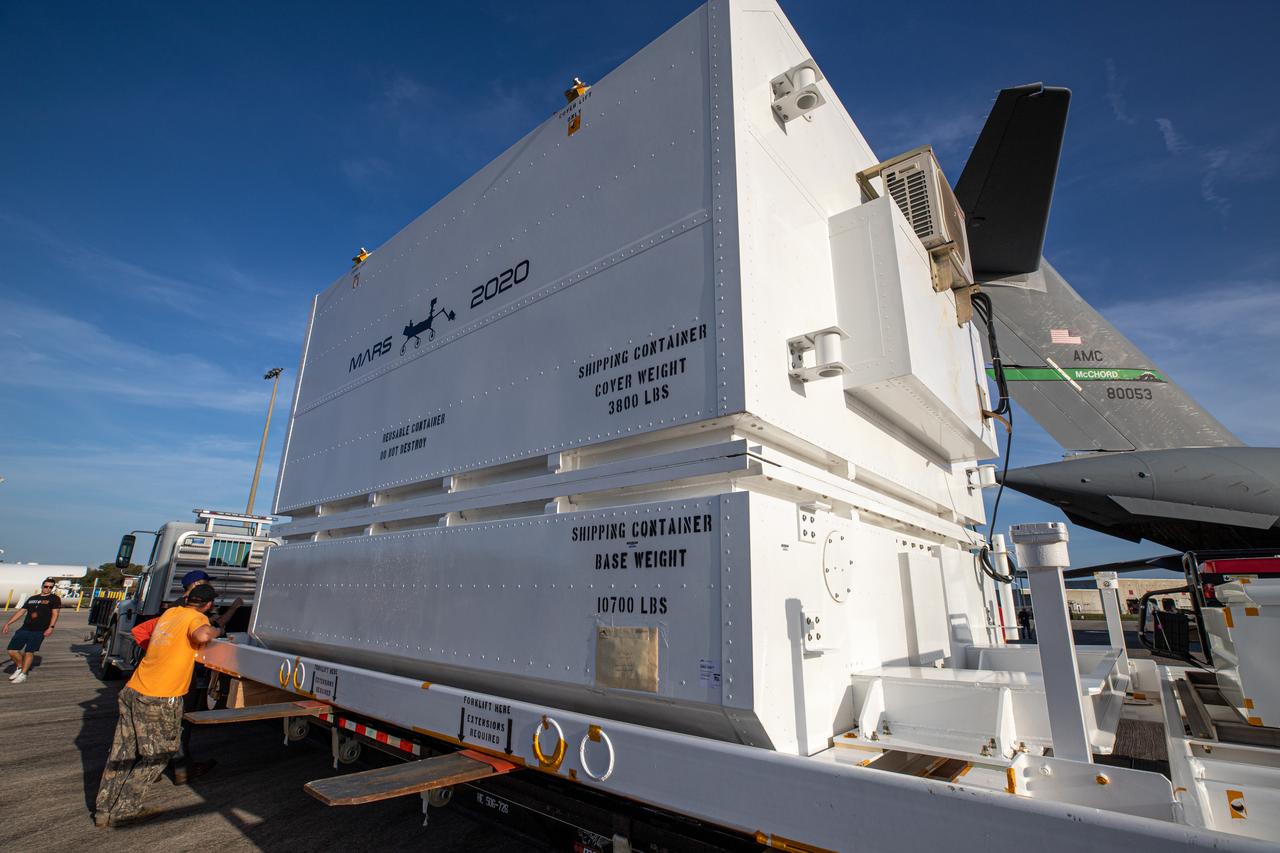
The Mars 2020 rover is offloaded from a C-17 aircraft at the Launch and Landing Facility, formerly known as the Shuttle Landing Facility, at NASA’s Kennedy Space Center on Feb. 12, 2020. The rover made a cross-country trip to the Florida spaceport that started at NASA’s Jet Propulsion Laboratory in Pasadena, California. The mission, targeted for mid-July 2020, will launch aboard an Atlas V 541 rocket from Cape Canaveral Air Force Station. NASA’s Launch Services Program based at Kennedy is managing the launch.
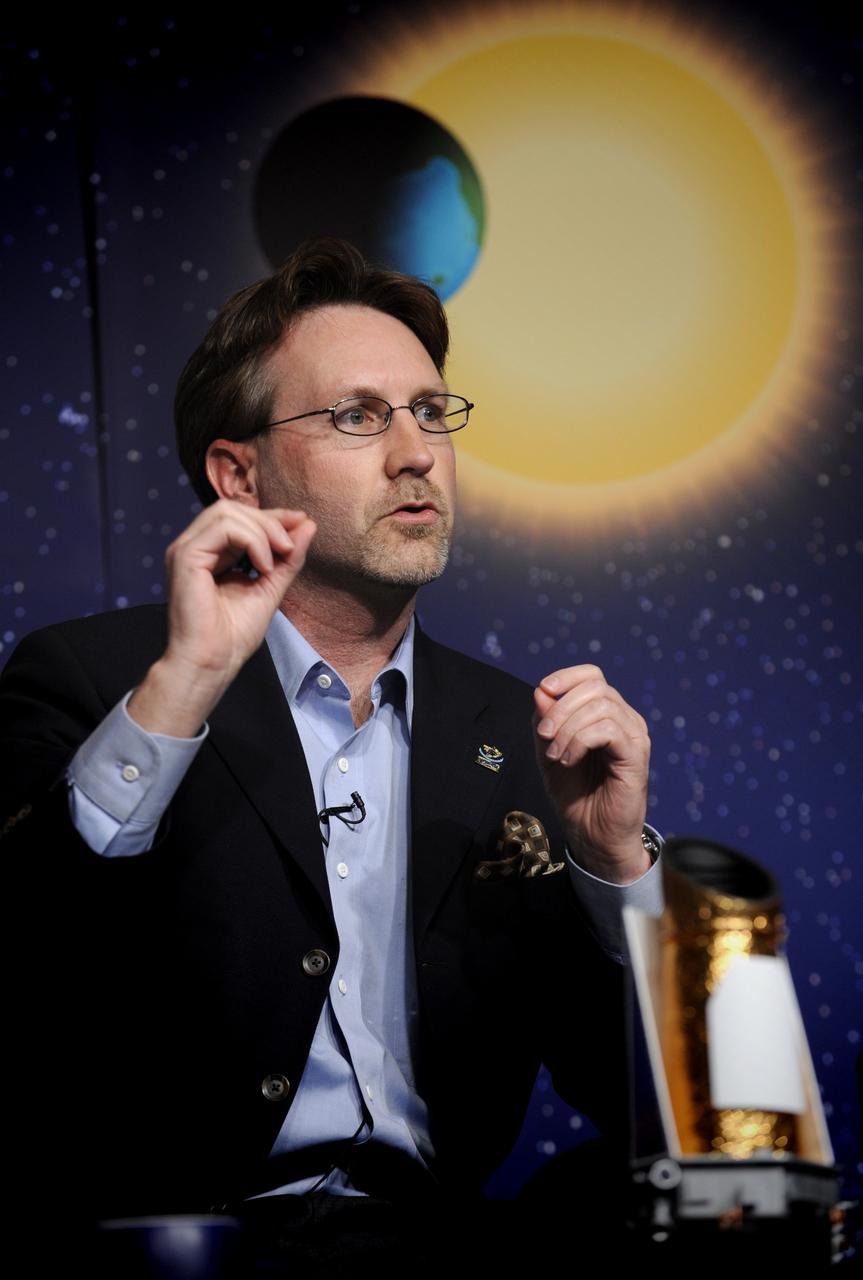
Jim Fanson, Kepler project manager, at NASA's Jet Propulsion Laboratory in Pasadena, Calif. talks about the Kepler mission during a media briefing, Thursday, Feb. 19, 2008, at NASA Headquarters in Washington. Kepler, the first mission with the ability to find planets like earth, is scheduled to launch on March 5, 2009 from Cape Canaveral Air Force Station, Fla. aboard a Delta II rocket. Photo Credit: (NASA/Paul. E. Alers)
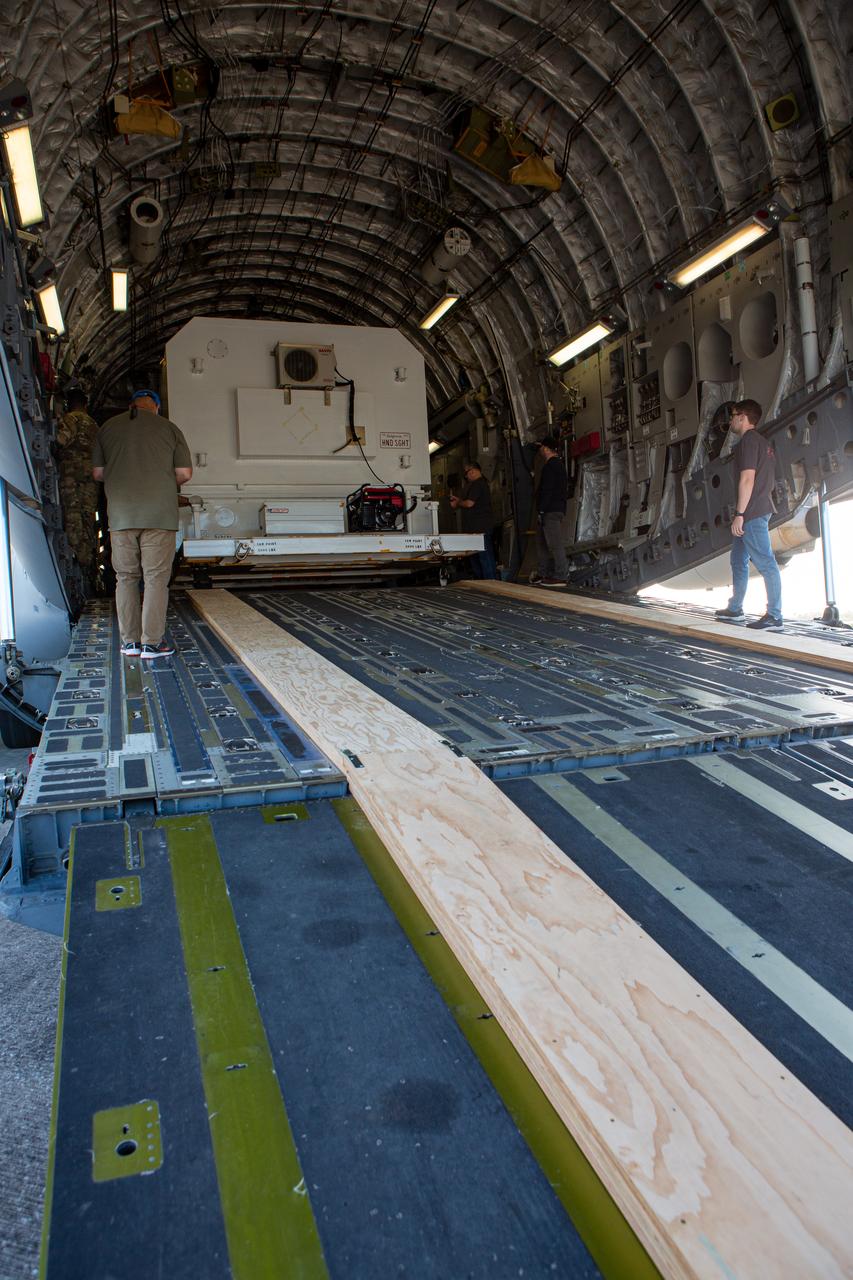
The Mars 2020 rover arrives at the Launch and Landing Facility, formerly known as the Shuttle Landing Facility, at NASA’s Kennedy Space Center on Feb. 12, 2020. The rover was delivered to the Florida spaceport on a C-17 aircraft, making a cross-country trip that started at NASA’s Jet Propulsion Laboratory in Pasadena, California. The mission, targeted for mid-July 2020, will launch aboard an Atlas V 541 rocket from Cape Canaveral Air Force Station. NASA’s Launch Services Program based at Kennedy is managing the launch.
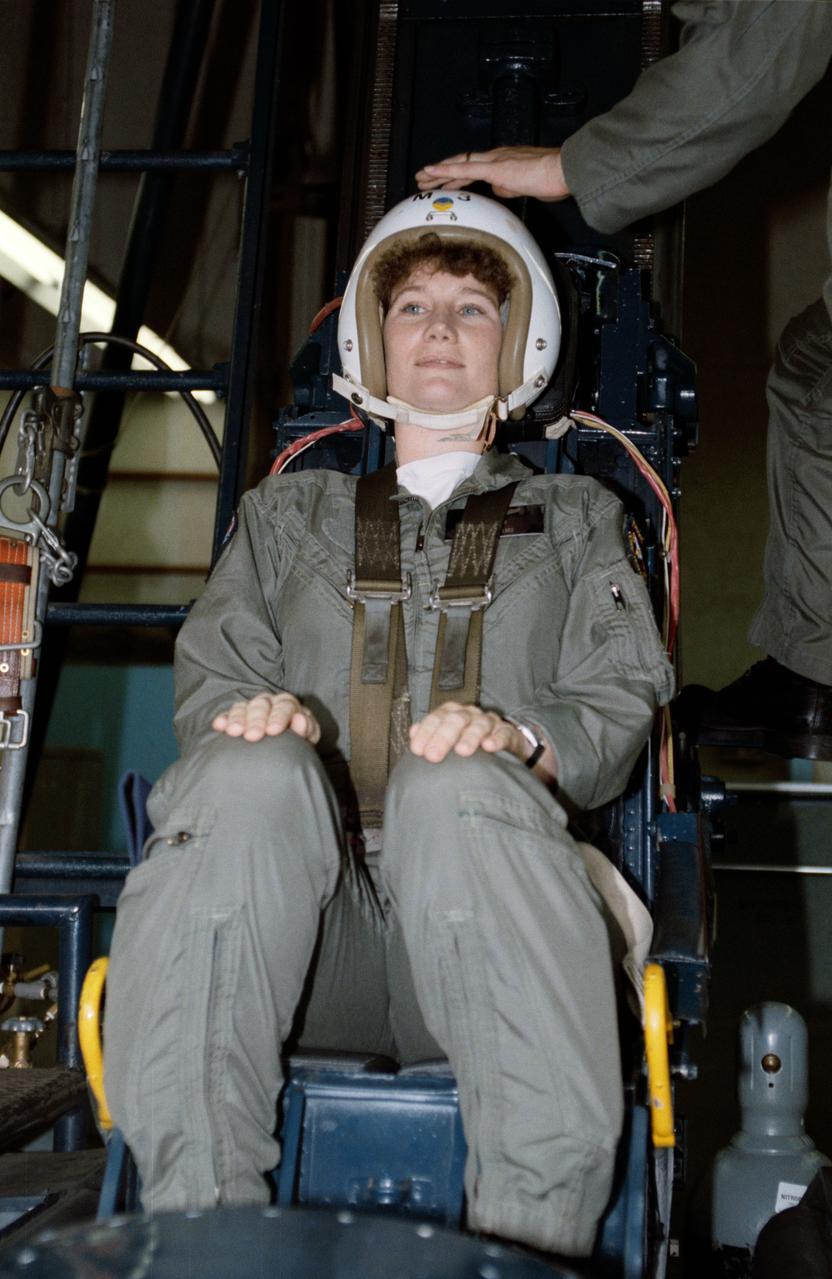
S90-45852 (29-31 July 1990) --- Susan J. Helms, one of 23 astronaut candidates who began a year's training and evaluation in July, participates in one of may sessions at a survival training course at Vance Air Force Base. This portion of the course is designed to familiarize the trainee with the "feel" of emergency ejection from a jet aircraft.
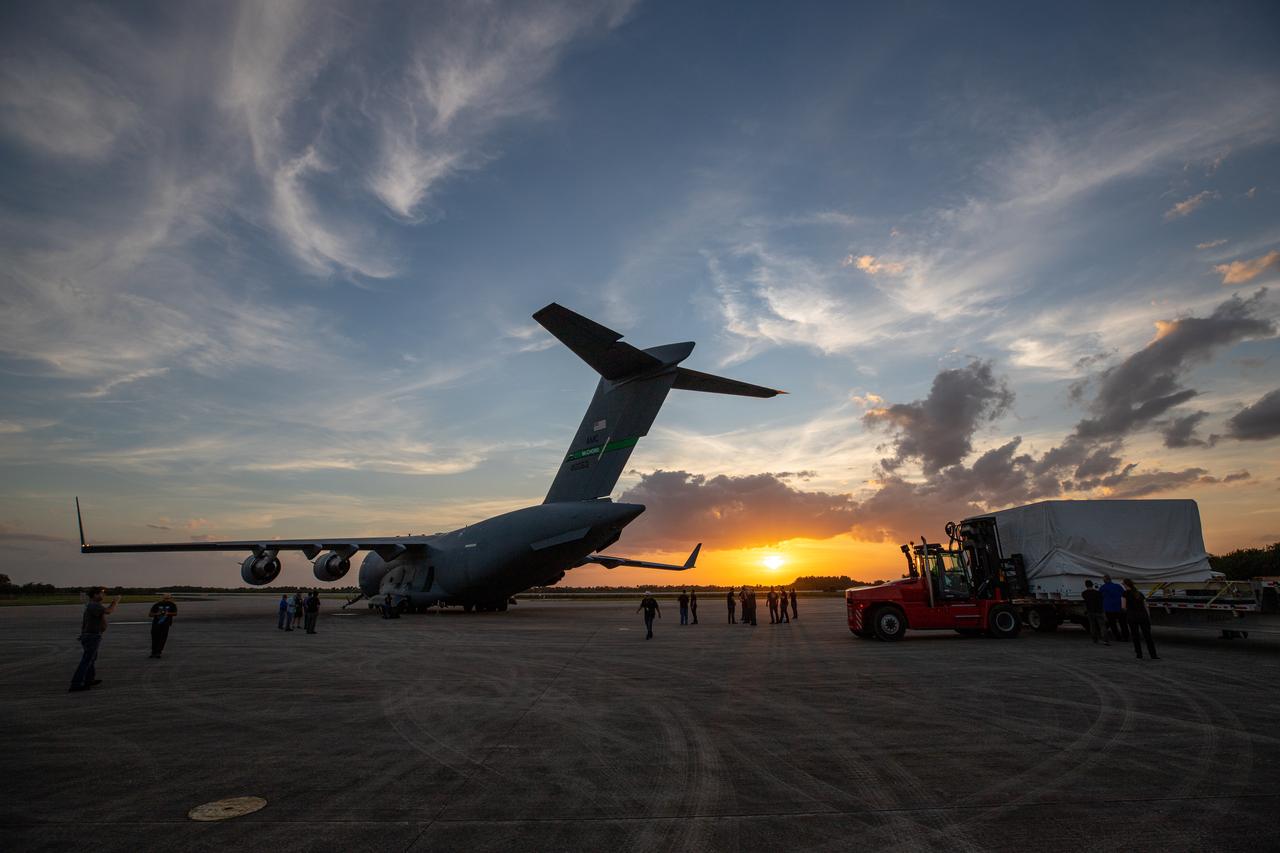
The C-17 aircraft that delivered the Mars 2020 rover sits at the Launch and Landing Facility, formerly known as the Shuttle Landing Facility, at NASA’s Kennedy Space Center on Feb. 12, 2020. The rover made a cross-country trip to the Florida spaceport that started at NASA’s Jet Propulsion Laboratory in Pasadena, California. The mission, targeted for mid-July 2020, will launch aboard an Atlas V 541 rocket from Cape Canaveral Air Force Station. NASA’s Launch Services Program based at Kennedy is managing the launch.
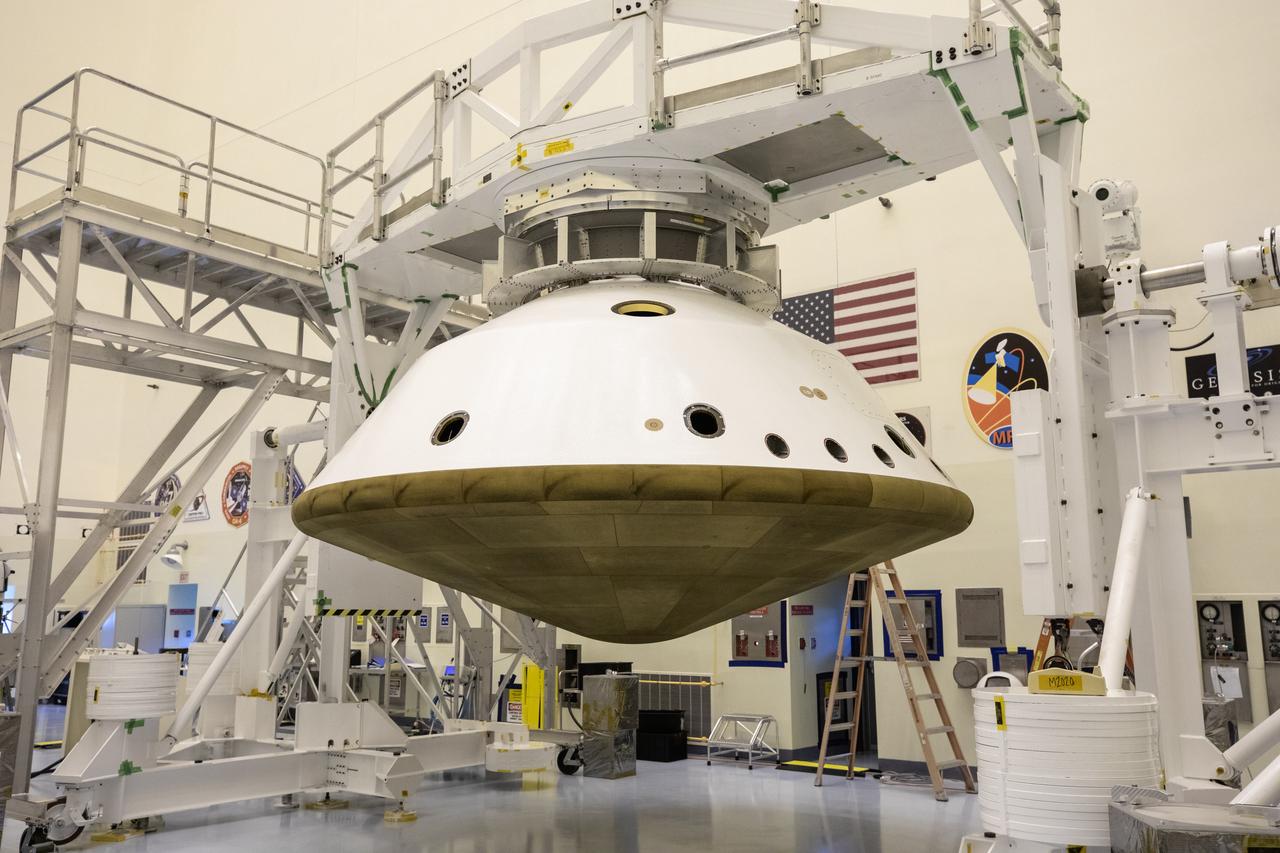
The Mars 2020 rover heat shield is mated to the back shell in the Payload Hazardous Servicing Facility at Kennedy Space Center in Florida on Jan. 10, 2020. Built by Lockheed Martin Space, the heat shield and back shell will protect the rover during its passage to Mars. The Mars 2020 rover is being manufactured at NASA’s Jet Propulsion Laboratory (JPL) in California and, once complete, will be delivered to Kennedy next month. The mission is scheduled to launch from Cape Canaveral Air Force Station in Florida in the summer of 2020.
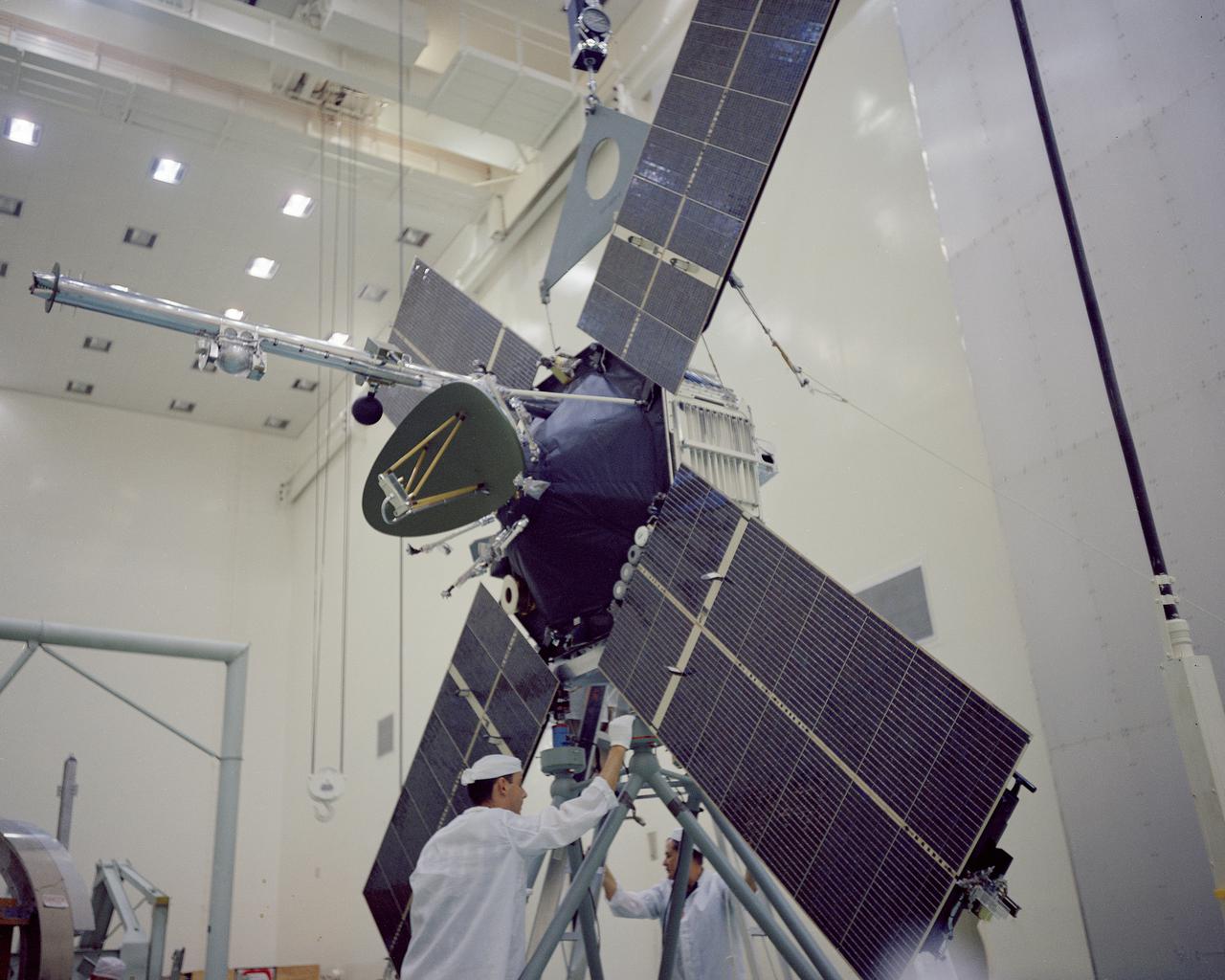
CAPE KENNEDY, Fla. -- In the AO Building at Cape Kennedy Air Force Station in Florida, the Mariner 3 spacecraft is processed prior to mating with its payload faring. Mariner is one of two identical deep-space probes designed and built by the Jet Propulsion Laboratory for NASA's Mariner Mars 1964 project. Mariner 3 is intended to conduct close-up scientific observations of Mars and transmit information back to Earth on interplanetary space and the space surrounding the Red Planet. Photo Credit: NASA
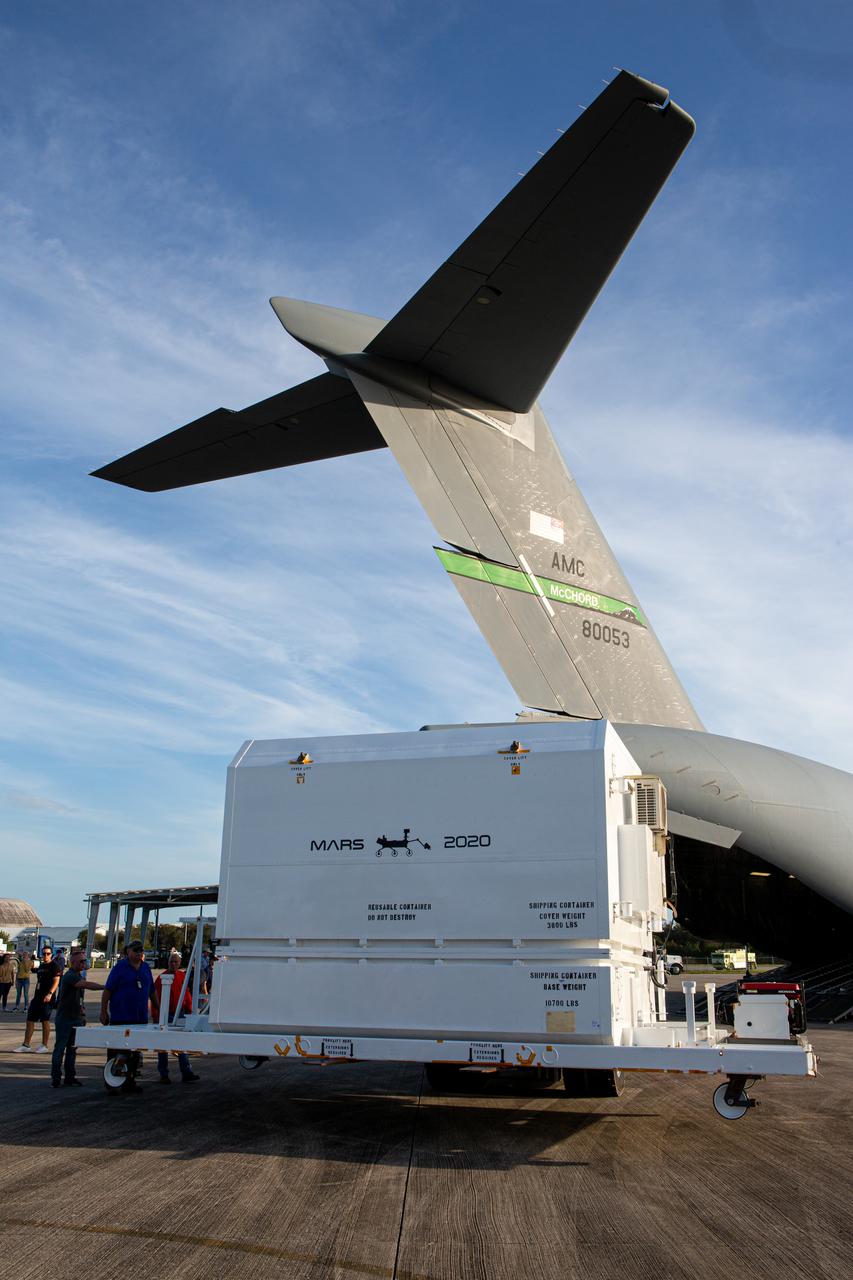
The Mars 2020 rover is pictured outside of the C-17 aircraft that delivered it to the Launch and Landing Facility, formerly known as the Shuttle Landing Facility, at NASA’s Kennedy Space Center in Florida on Feb. 12, 2020. The rover made a cross-country trip that started at NASA’s Jet Propulsion Laboratory in Pasadena, California. The mission, targeted for mid-July 2020, will launch aboard an Atlas V 541 rocket from Cape Canaveral Air Force Station. NASA’s Launch Services Program based at Kennedy is managing the launch.
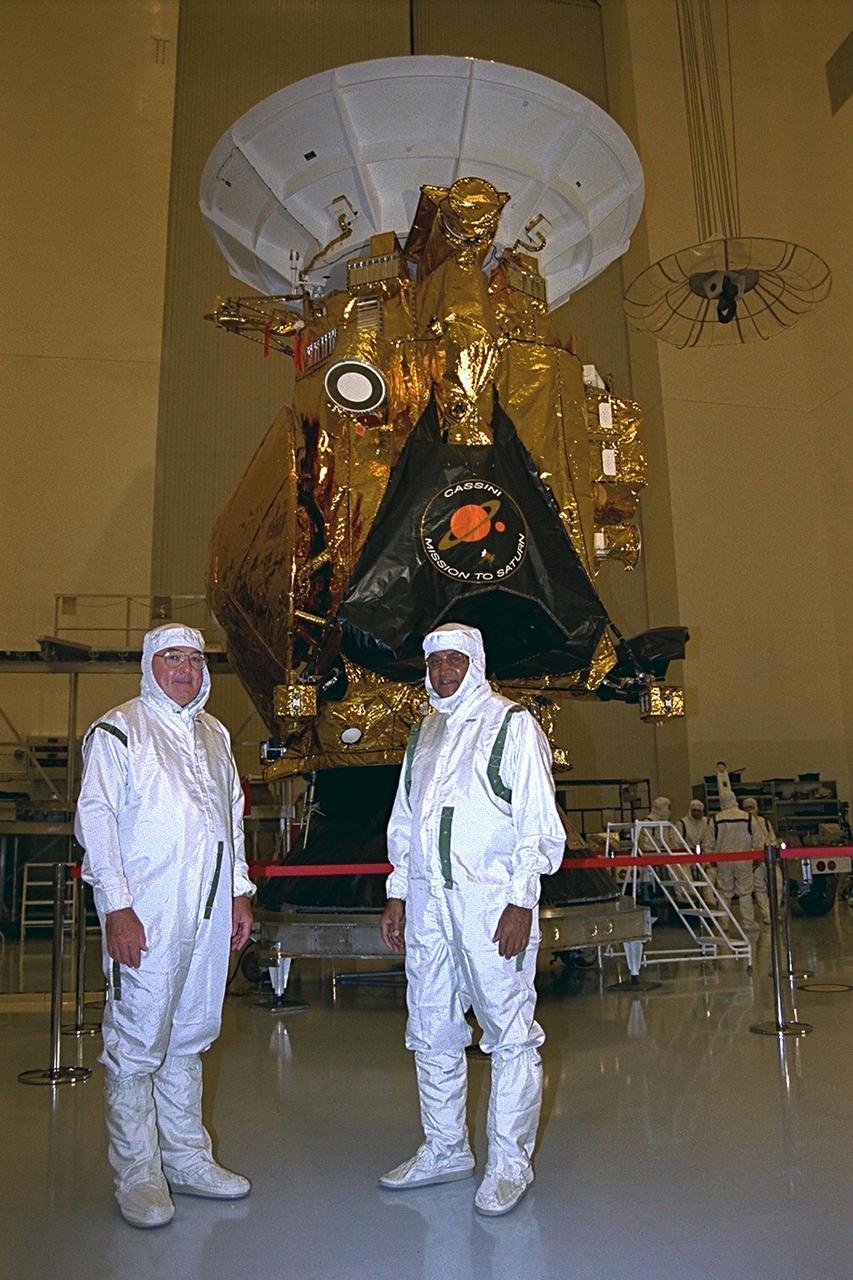
Richard Spehalski, program manager of the Cassini mission, and Hamid Hassan, the European Space Agency Huygens project manager, stand in front of the Cassini spacecraft in the Payload Hazardous Servicing Facility (PHSF). The Cassini spacecraft is scheduled to launch on an Air Force Titan IV/Centaur launch vehicle on Oct. 6, 1997. It is destined to arrive at Saturn in July 2004, to study Saturn, its rings, moons and magnetic environment for a four-year period. The Cassini project is managed for NASA by the Jet Propulsion Laboratory in Pasadena, Calif
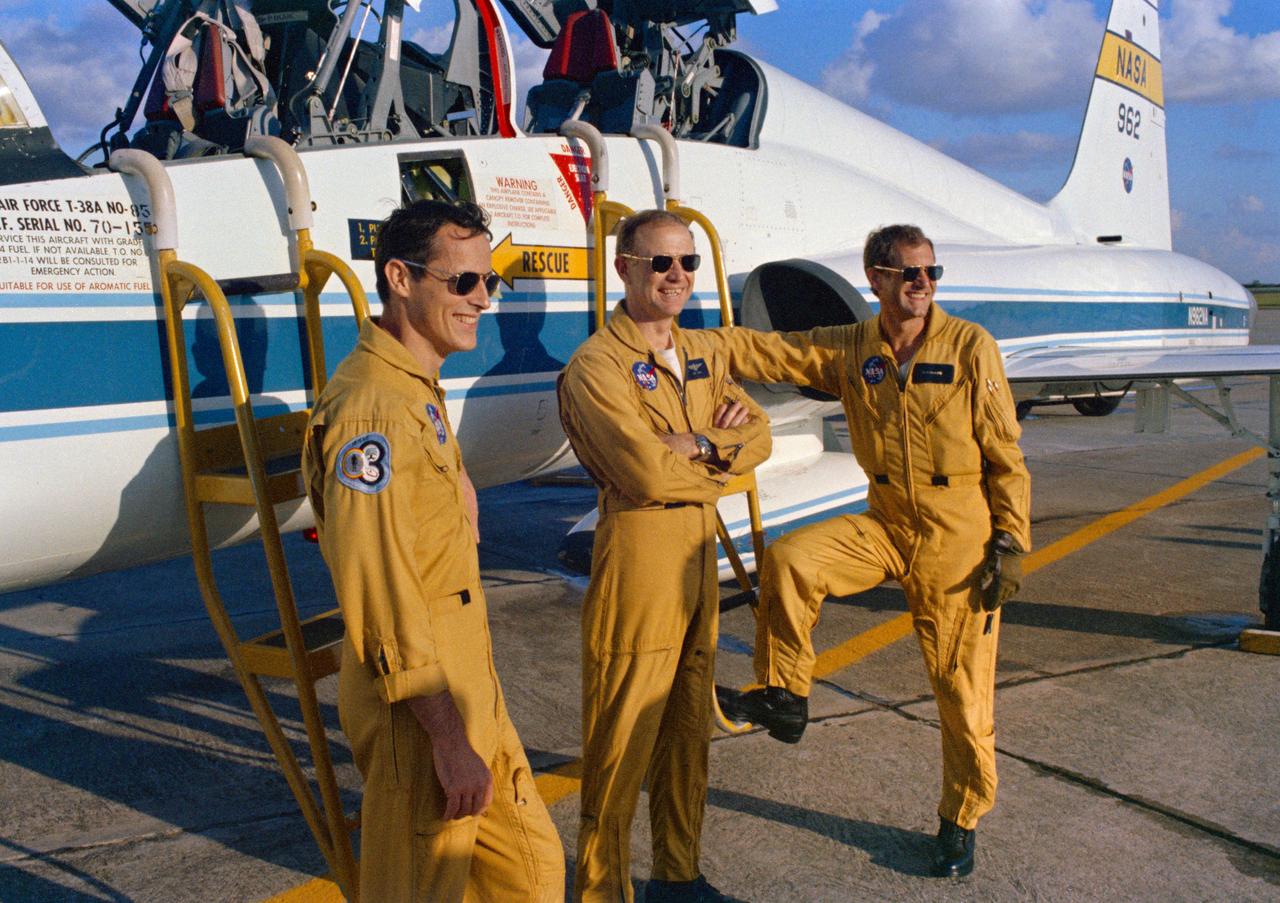
S73-36766 (November 1973) --- The prime crewmen of the third manned Skylab mission (Skylab 4) pause at a USAF T-38A jet at Ellington Air Force Base, Texas before flying to Kennedy Space Center (KSC) at Cape Canaveral, Florida. Skylab 4 crewmen are astronaut Gerald P. Carr, center, commander; scientist-astronaut Edward G. Gibson, science pilot, left; and astronaut William R. Pogue, pilot. Photo credit: NASA
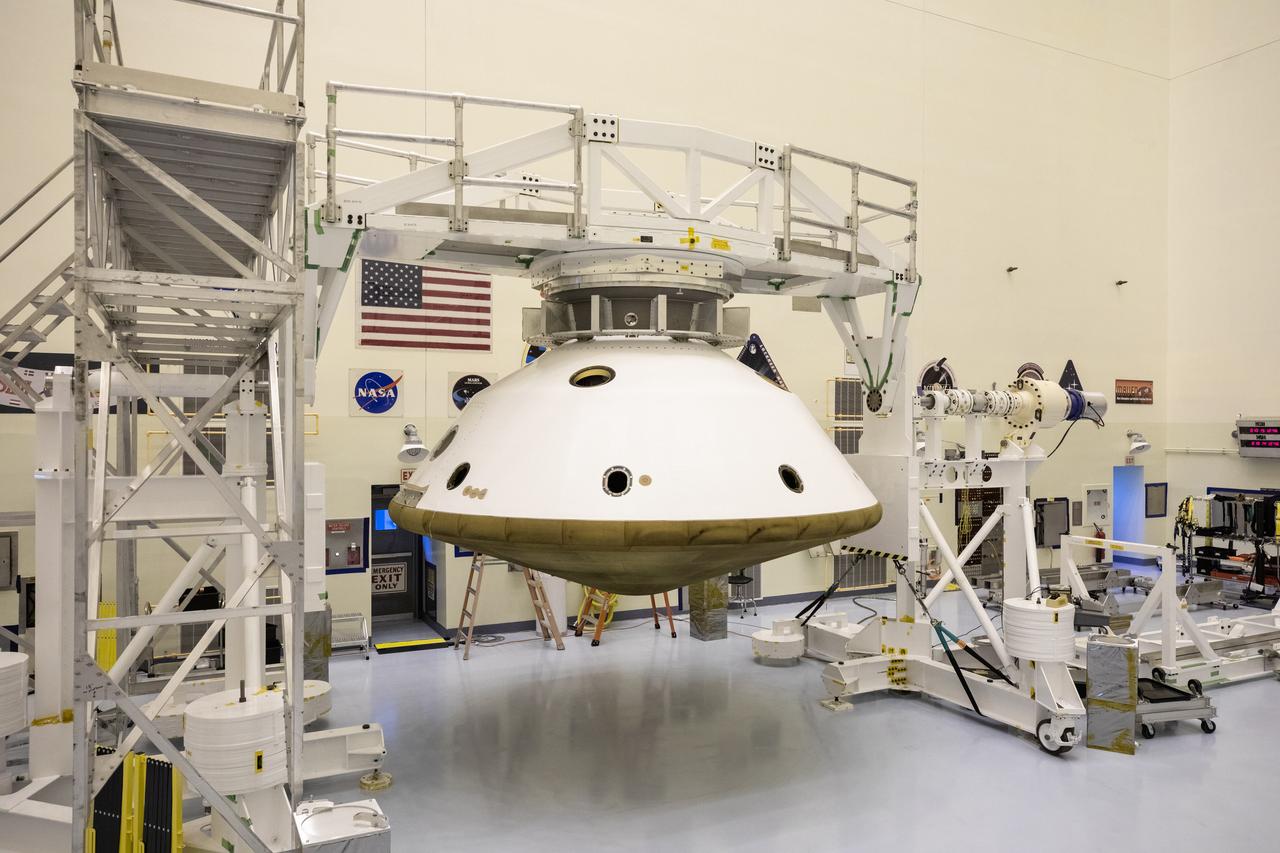
The Mars 2020 rover heat shield is mated to the back shell in the Payload Hazardous Servicing Facility at Kennedy Space Center in Florida on Jan. 10, 2020. Built by Lockheed Martin Space, the heat shield and back shell will protect the rover during its passage to Mars. The Mars 2020 rover is being manufactured at NASA’s Jet Propulsion Laboratory (JPL) in California and, once complete, will be delivered to Kennedy next month. The mission is scheduled to launch from Cape Canaveral Air Force Station in Florida in the summer of 2020.
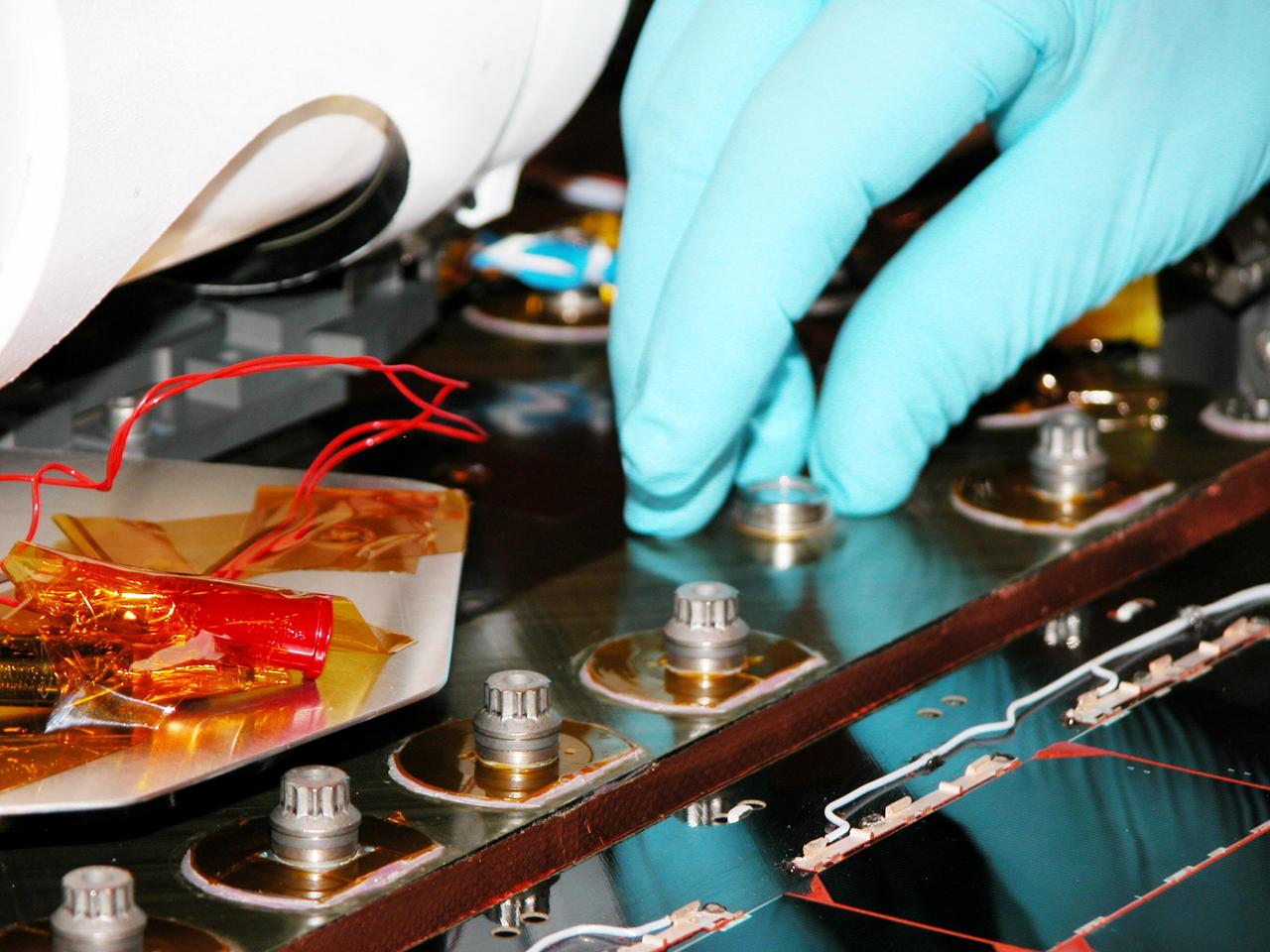
KENNEDY SPACE CENTER, FLA. - Jim Lloyd, with the Mars Exploration Rover (MER) program, places on MER-1 a computer chip with about 35,000 laser-engraved signatures of visitors to the rovers at the Jet Propulsion Laboratory. The signatures include those of senators, artists, and John Glenn. The identical Mars rovers are scheduled to launch June 5 and June 25 from Cape Canaveral Air Force Station.

KENNEDY SPACE CENTER, FLA. - Jim Lloyd, with the Mars Exploration Rover program, holds a computer chip with about 35,000 laser-engraved signatures of visitors to the Jet Propulsion Laboratory. The chip will be placed on the second rover to be launched to Mars (MER-1/MER-B); the first rover already has one. The signatures include those of senators, artists, and John Glenn. The identical Mars rovers are scheduled to launch June 5 and June 25 from Cape Canaveral Air Force Station.

KENNEDY SPACE CENTER, FLA. - Jim Lloyd, with the Mars Exploration Rover (MER) program, points to the place on MER-1 where he will place a computer chip with about 35,000 laser-engraved signatures of visitors to the rovers at the Jet Propulsion Laboratory. The signatures include those of senators, artists, and John Glenn. The identical Mars rovers are scheduled to launch June 5 and June 25 from Cape Canaveral Air Force Station.
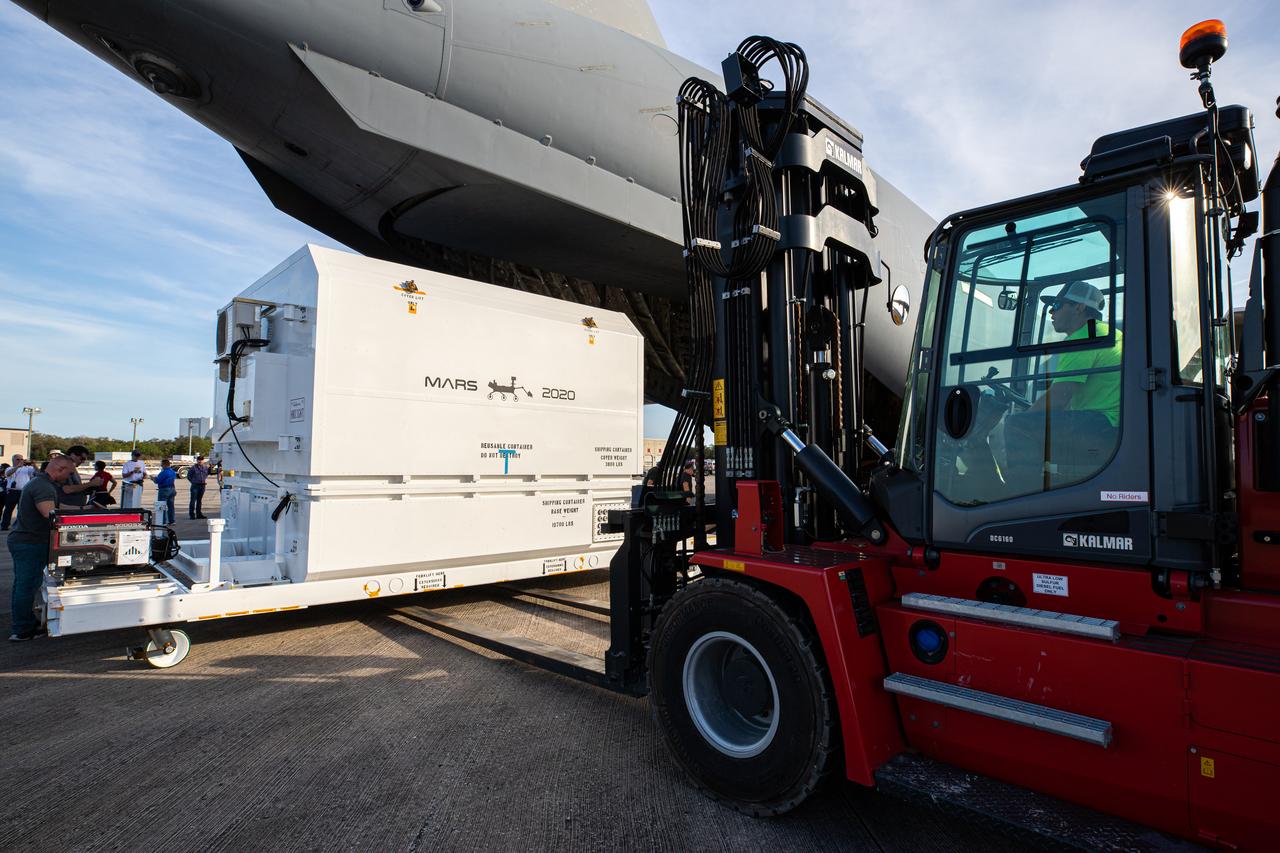
The Mars 2020 rover is offloaded from a C-17 aircraft at the Launch and Landing Facility, formerly known as the Shuttle Landing Facility, at NASA’s Kennedy Space Center on Feb. 12, 2020. The rover made a cross-country trip to the Florida spaceport that started at NASA’s Jet Propulsion Laboratory in Pasadena, California. The mission, targeted for mid-July 2020, will launch aboard an Atlas V 541 rocket from Cape Canaveral Air Force Station. NASA’s Launch Services Program based at Kennedy is managing the launch.
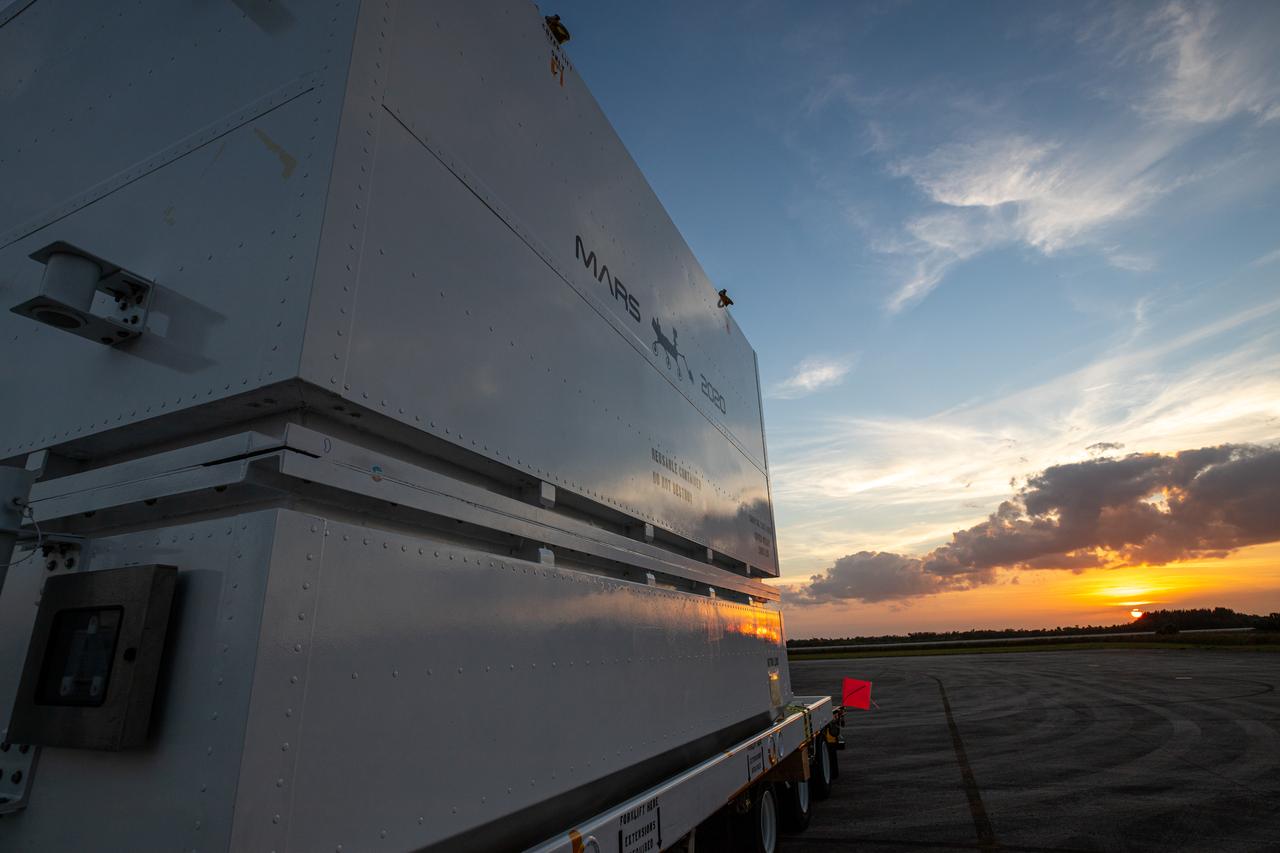
The Mars 2020 is pictured at the Launch and Landing Facility, formerly known as the Shuttle Landing Facility, at NASA’s Kennedy Space Center on Feb. 12, 2020. The rover was delivered to the Florida spaceport on a C-17 aircraft, making a cross-country trip that started at NASA’s Jet Propulsion Laboratory in Pasadena, California. The mission, targeted for mid-July 2020, will launch aboard an Atlas V 541 rocket from Cape Canaveral Air Force Station. NASA’s Launch Services Program based at Kennedy is managing the launch.
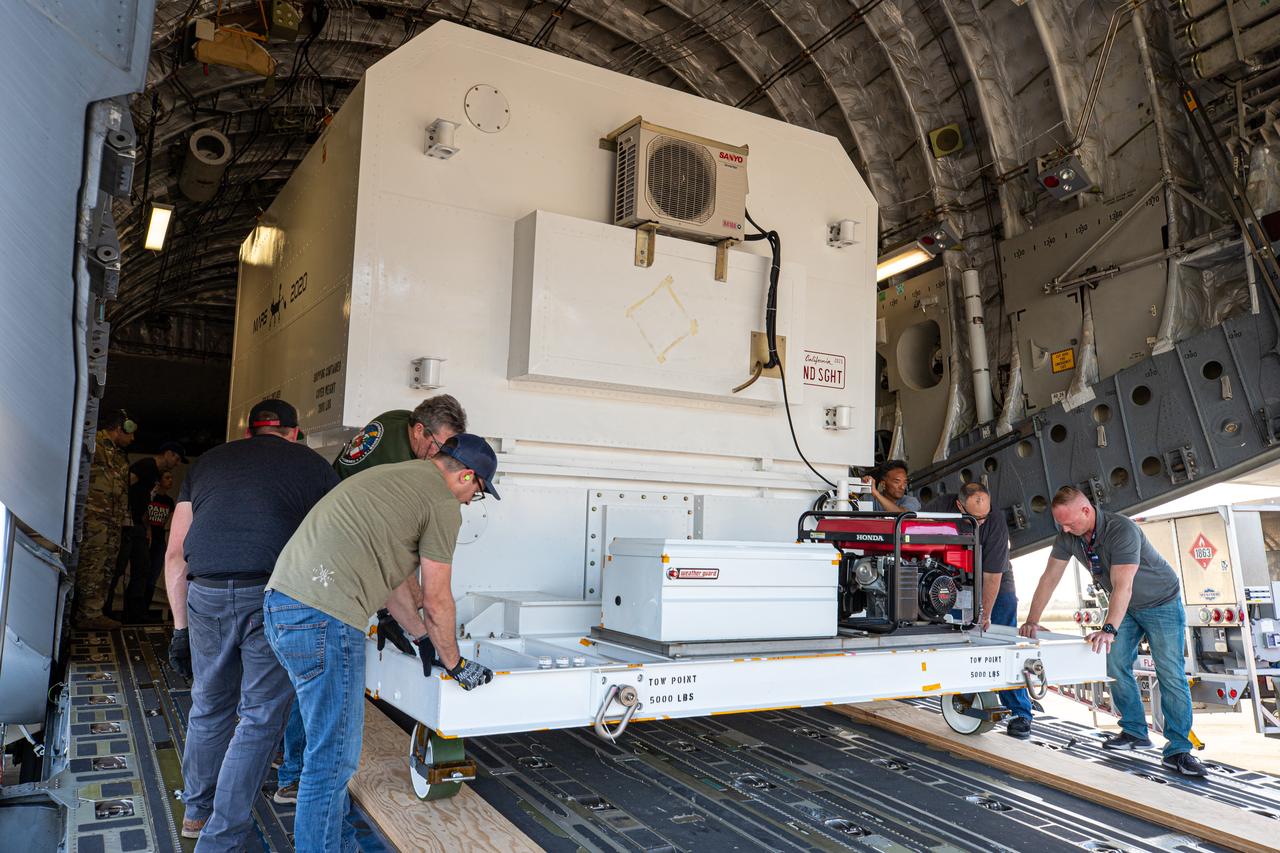
The Mars 2020 rover is offloaded from a C-17 aircraft at the Launch and Landing Facility, formerly known as the Shuttle Landing Facility, at NASA’s Kennedy Space Center on Feb. 12, 2020. The rover made a cross-country trip to the Florida spaceport that started at NASA’s Jet Propulsion Laboratory in Pasadena, California. The mission, targeted for mid-July 2020, will launch aboard an Atlas V 541 rocket from Cape Canaveral Air Force Station. NASA’s Launch Services Program based at Kennedy is managing the launch.
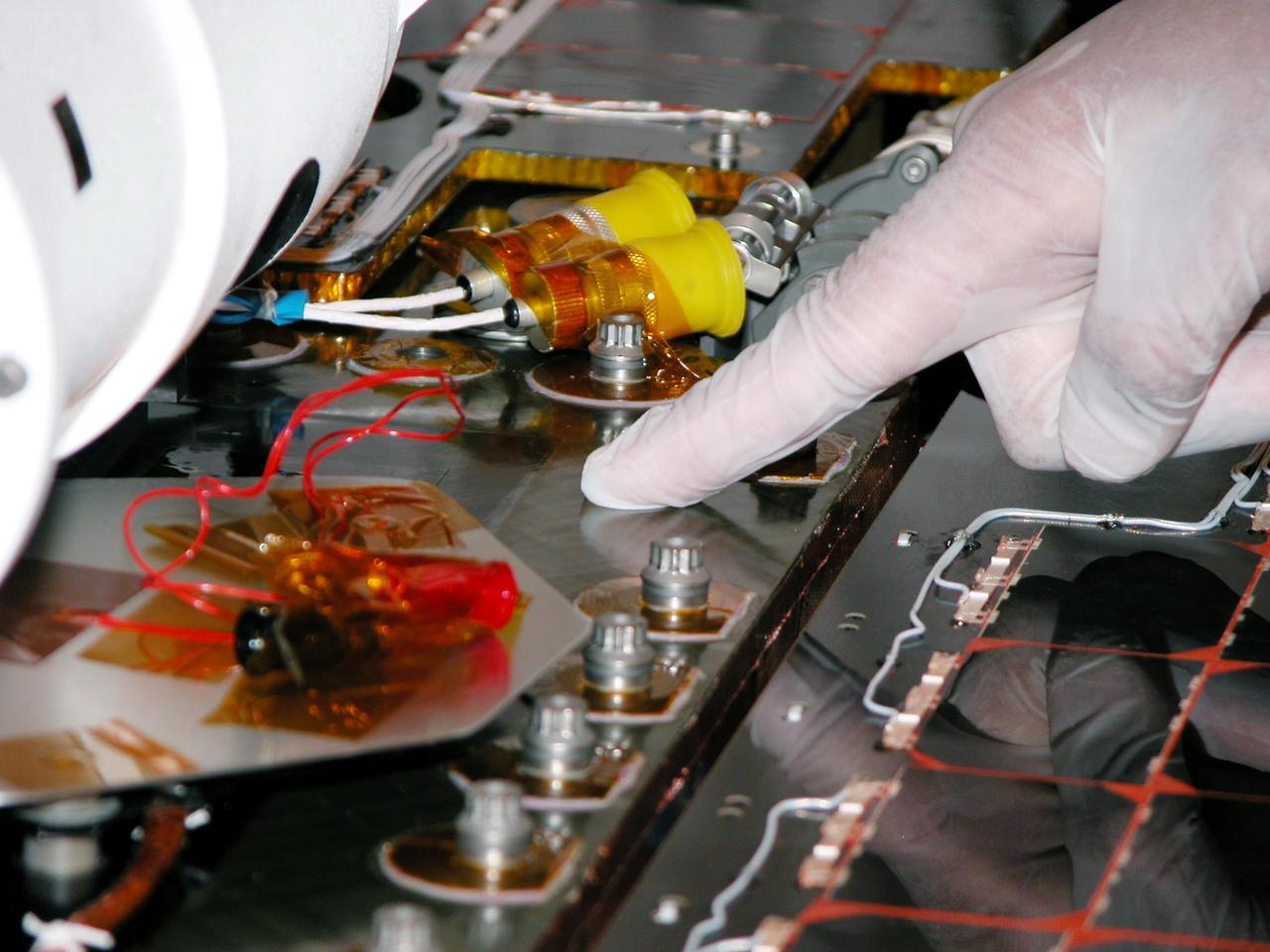
KENNEDY SPACE CENTER, FLA. - This hand points to the place on the Mars Exploration Rover 1 where a computer chip with about 35,000 laser-engraved signatures of visitors to the Jet Propulsion Laboratory will be placed. The first rover already has one. The signatures include those of senators, artists, and John Glenn. The identical Mars rovers are scheduled to launch June 5 and June 25 from Cape Canaveral Air Force Station.
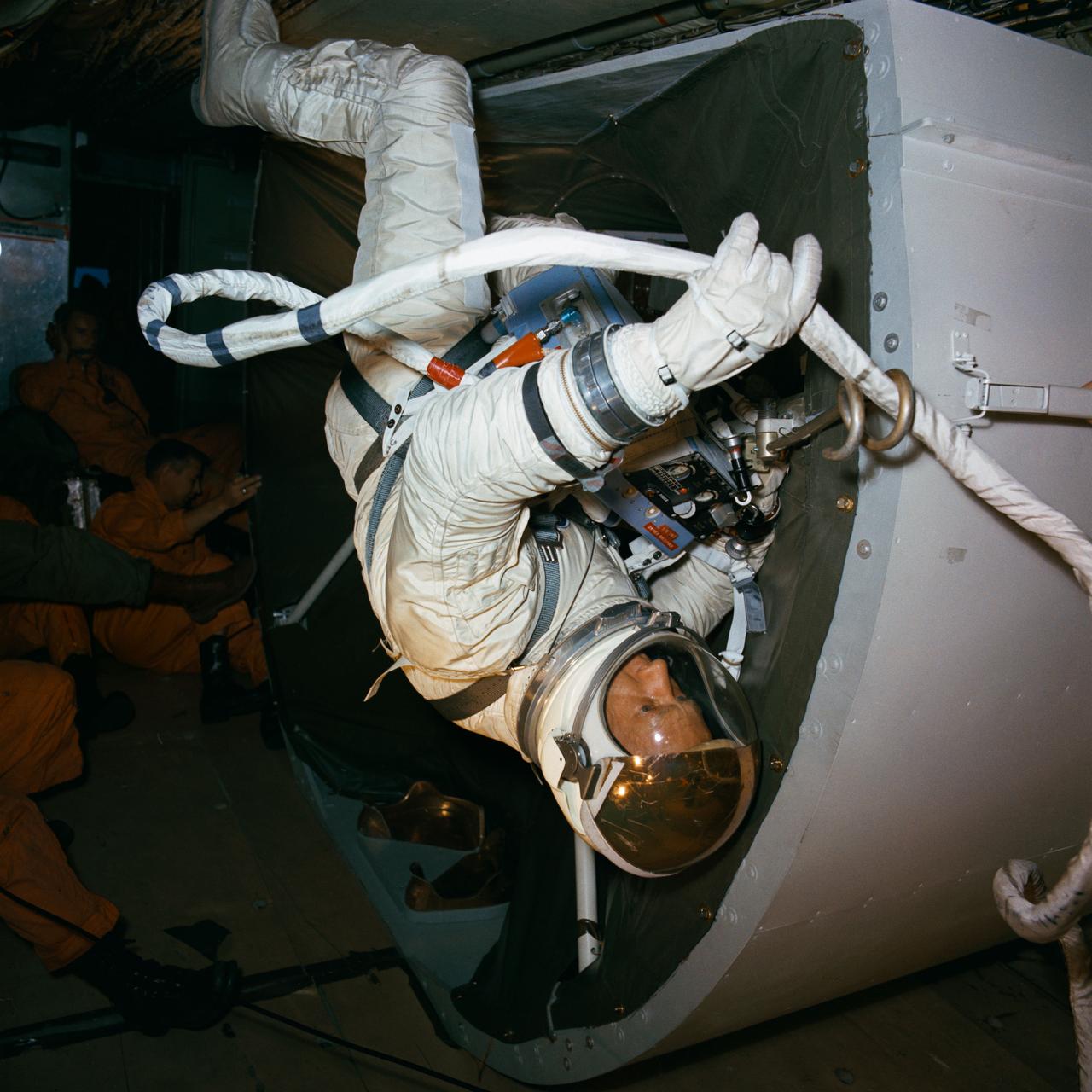
S66-57326 (13 Oct. 1966) --- Astronaut Edwin E. Aldrin Jr., pilot for the Gemini-12 spaceflight, attaches tether to hooks on mock-up of the adapter section of a Gemini spacecraft. He is taking part in zero-gravity training onboard an Air Force KC-135 jet aircraft in preparation for his extravehicular activity (EVA) during the actual mission. Photo credit: NASA
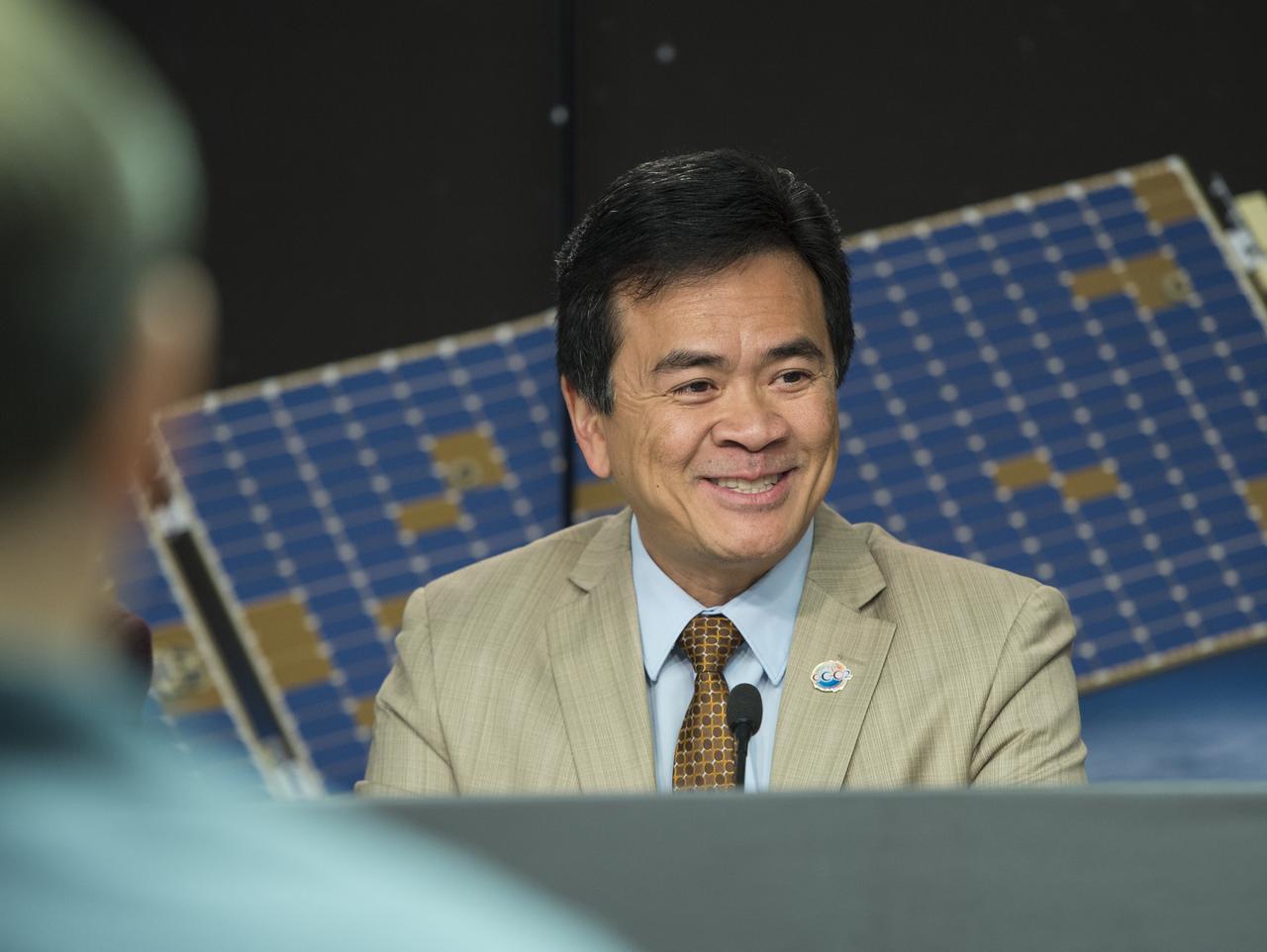
Ralph Basilio, OCO-2 project manager, Jet Propulsion Laboratory, discusses the successful launch of the Orbiting Carbon Observatory-2 (OCO-2), NASA’s first spacecraft dedicated to studying carbon dioxide, during a press briefing, Wednesday, July 2, 2014, at the Vandenberg Air Force Base, Calif. OCO-2 will measure the global distribution of carbon dioxide, the leading human-produced greenhouse gas driving changes in Earth’s climate. Photo Credit: (NASA/Bill Ingalls)
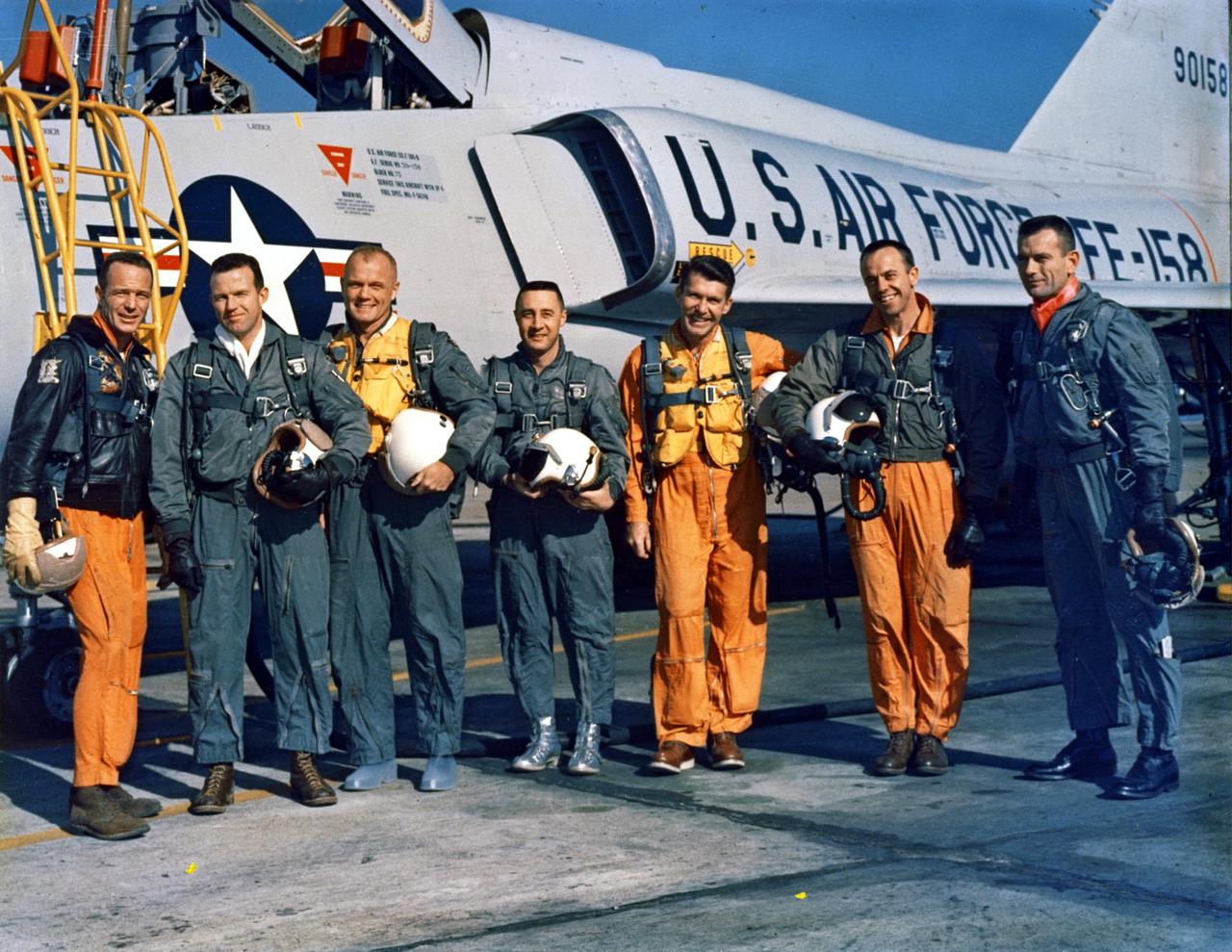
CAPE CANAVERAL, FLA. -- The Original Seven Mercury Astronauts pose beside an Air Force F-102 jet. Standing, left to right, are M. Scott Carpenter, L. Gordon Cooper, John H. Glenn Jr., Virgil I. 'Gus' Grissom, Walter M. Schirra Jr., Alan B. Shepherd Jr., and Donald K. 'Deke' Slayton.

S90-45883 (29-31 July 1990) --- Nancy J. Sherlock, one of 23 astronaut candidates who began a year's training and evaluation in July, participates in one of many sessions at a survival training course at Vance Air Force Base. Sherlock is about to take part in parachute drag training. The overall course is designed to familiarize the trainees with procedures to follow in the event of an emergency ejection from a jet aircraft.
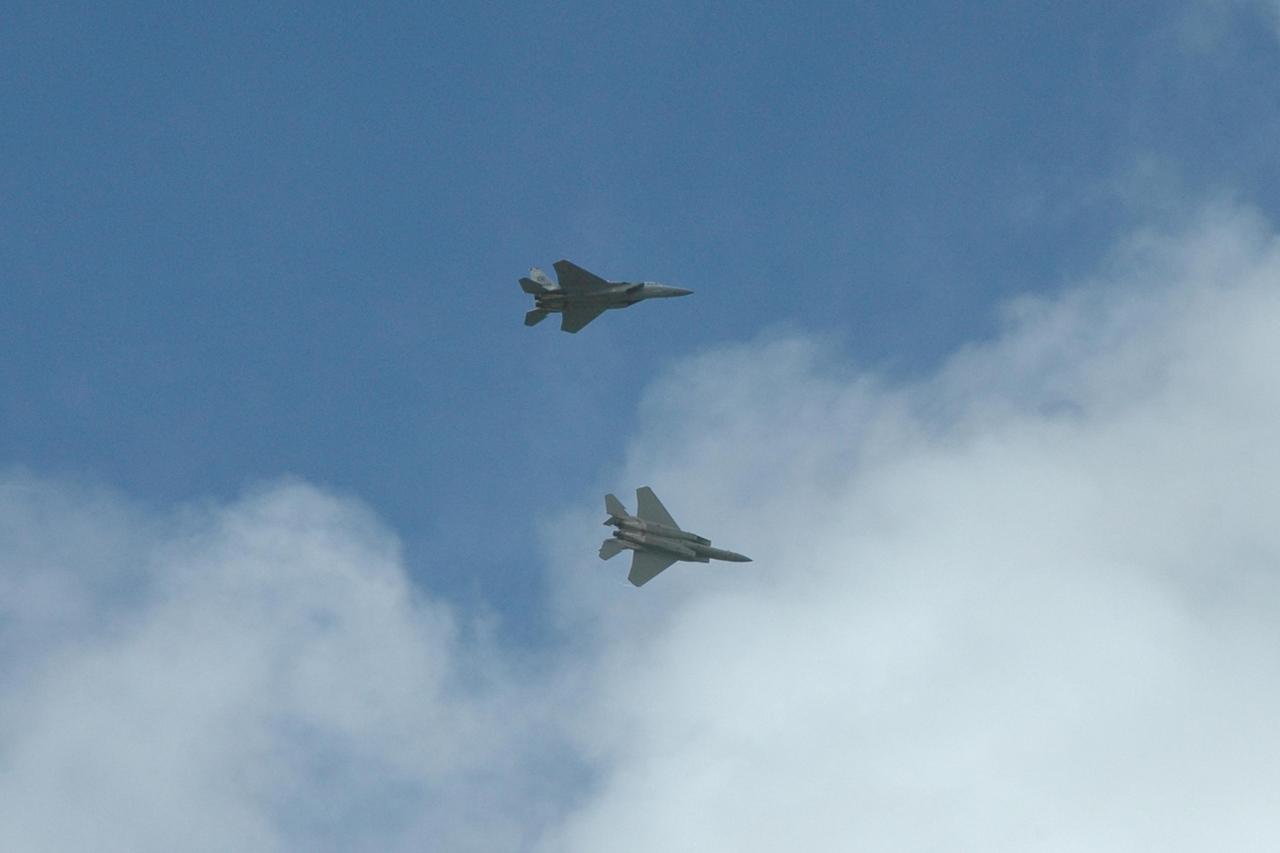
KENNEDY SPACE CENTER, FLA. -- Two of the U.S. Navy F-18 Super Hornets practice their maneuvers over NASA's Kennedy Space Center. The jets are participating in the World Space Expo being held from Nov. 1 to Nov. 4 at the NASA Kennedy Space Center Visitor Complex. Other aircraft joining in the salute include U.S. Air Force Thunderbirds Aerial Demonstration Squadron , U.S. Air Force F-22 Raptor, U.S. Air Force F-15 Eagle, the P-51 Mustang Heritage Flight and the U.S. Air Force 920th Rescue Wing, which was responsible for Mercury and Gemini capsule recovery. The U.S. Army Golden Knights also will demonstrate precision skydiving. The World Space Expo is an event to commemorate humanity's first 50 years in space while looking forward to returning people to the moon and exploring beyond. The expo will showcase various panels, presentations and educational programs. It also is a part of NASA's 50th anniversary celebrations, highlighting the 45th Anniversary of the Mercury Program celebration featuring original NASA astronauts John Glenn and Scott Carpenter and the Pioneering Women of Aerospace forum featuring Eileen Collins and other prominent female space veterans. The agency was founded Oct. 1, 1958. Photo credit: NASA/Jack Pfaller
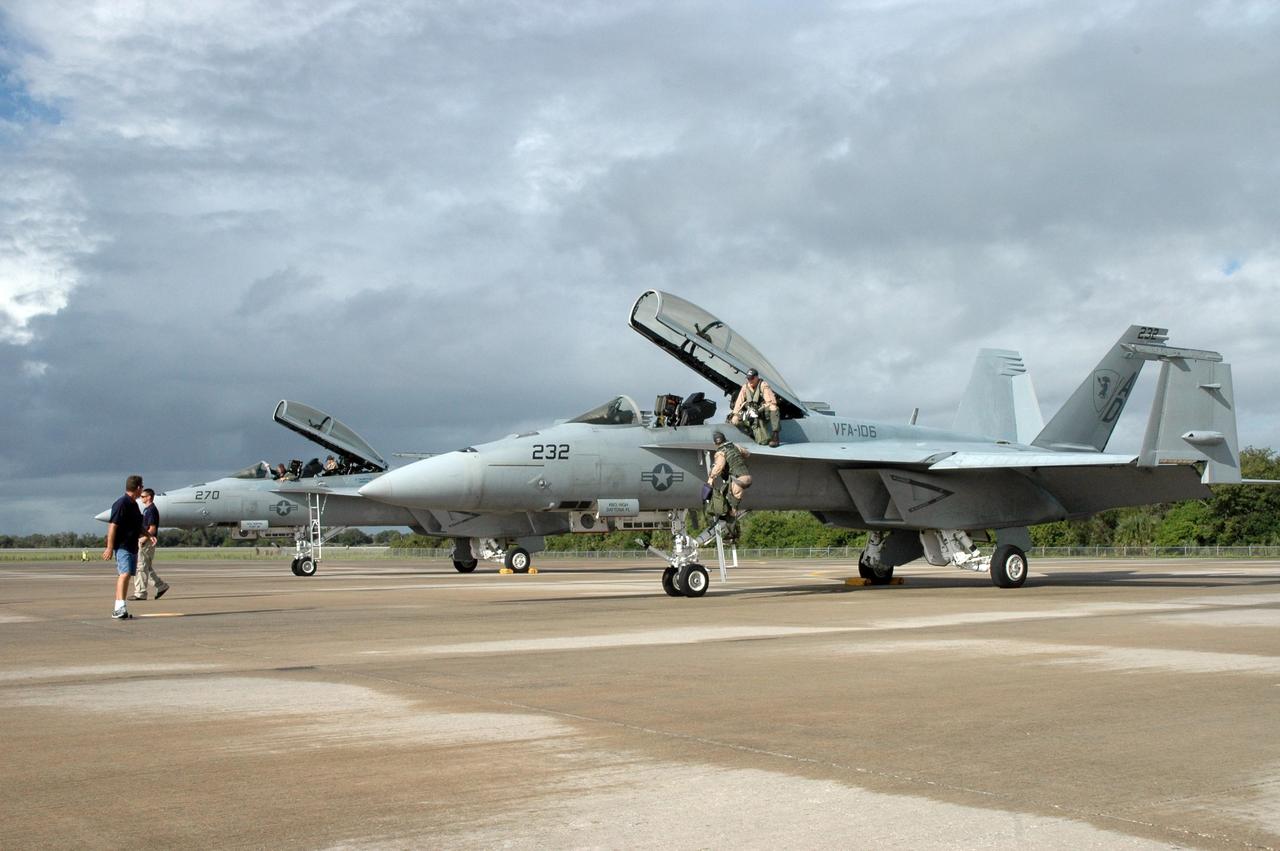
KENNEDY SPACE CENTER, FLA. -- Pilots of several U.S. Navy F-18 Super Hornet jets climb out of the cockpits on the Shuttle Landing Facility at NASA's Kennedy Space Center. Several of the planes are participating in the World Space Expo being held from Nov. 1 to Nov. 4 at the NASA Kennedy Space Center Visitor Complex. Other aircraft joining in the salute include U.S. Air Force Thunderbirds Aerial Demonstration Squadron , U.S. Air Force F-22 Raptor, U.S. Air Force F-15 Eagle, the P-51 Mustang Heritage Flight and the U.S. Air Force 920th Rescue Wing, which was responsible for Mercury and Gemini capsule recovery. The U.S. Army Golden Knights also will demonstrate precision skydiving. The World Space Expo is an event to commemorate humanity's first 50 years in space while looking forward to returning people to the moon and exploring beyond. The expo will showcase various panels, presentations and educational programs. It also is a part of NASA's 50th anniversary celebrations, highlighting the 45th Anniversary of the Mercury Program celebration featuring original NASA astronauts John Glenn and Scott Carpenter and the Pioneering Women of Aerospace forum featuring Eileen Collins and other prominent female space veterans. The agency was founded Oct. 1, 1958. Photo credit: NASA/Jack Pfaller

A Lockheed P-80 Shooting Star jet aircraft on the tarmac at the National Advisory Committee for Aeronautics (NACA) NACA Lewis Flight Propulsion Laboratory in Cleveland, Ohio. The Air Force aircraft was participating in the 1946 National Air Races over Labor Day weekend. The air races were held at the Cleveland Municipal Airport seven times between 1929 and 1939. The events included long distance, sprint, and circuit competitions, as well as aeronautical displays, demonstrations, and celebrities. The air races were suspended indefinitely in 1940 for a variety of reasons, including the start of World War II in Europe. The nature of the National Air Races changed dramatically when the event resumed in 1946. The introduction of jet aircraft, primarily the Lockheed P-80 seen here, required an entire separate division for each event. Since military pilots were the only ones with any jet aircraft experience, only they could participate in those divisions. In addition, the performance and quantity of commercially manufactured piston aircraft had increased dramatically during the war. By 1946, the custom-built racing aircraft that made the pre-war races so interesting were no longer present. The P-80 was the first US-designed and US-manufactured jet aircraft. Early models were tested during the war in NACA Lewis’ Altitude Wind Tunnel. A modified P-80 set the world’s speed record at the 1947 air races by achieving 620 miles per hour.
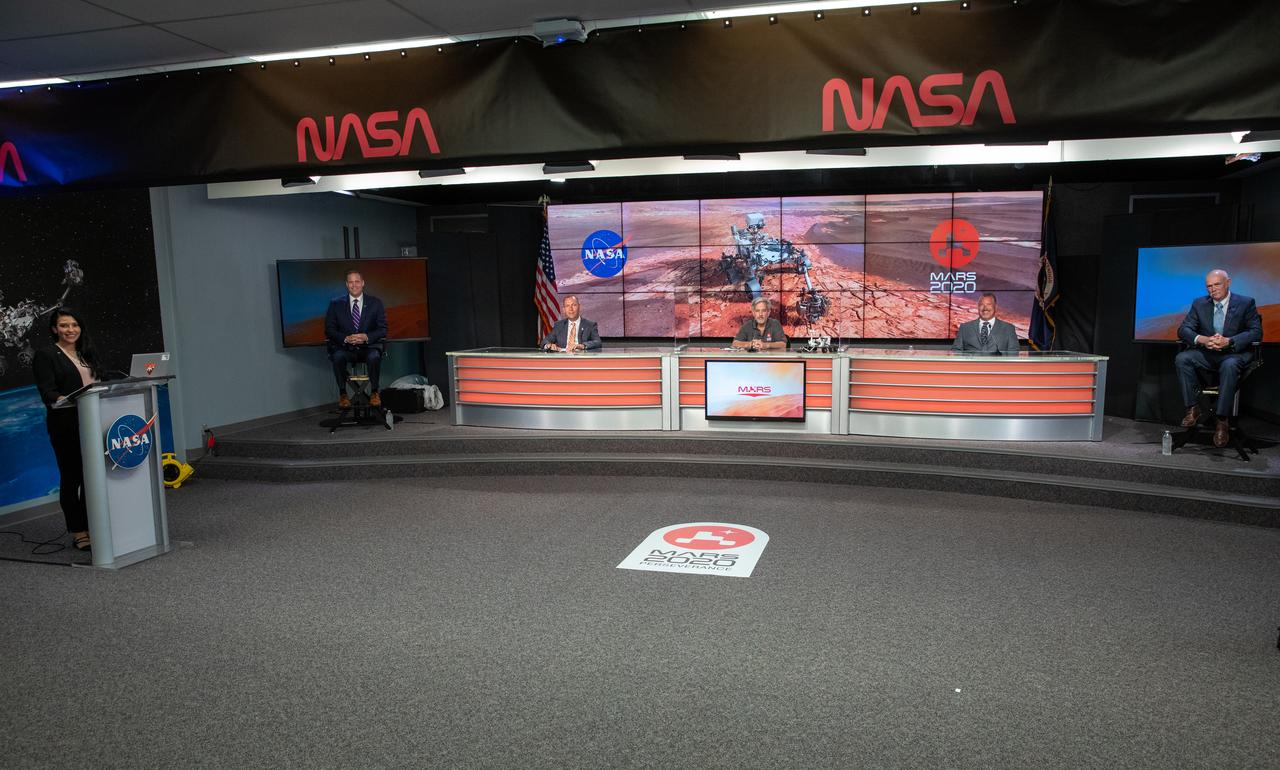
A Mars 2020 prelaunch news conference is held at NASA’s Kennedy Space Center in Florida on July 27, 2020. Participating in the briefing from left, are Moderator Bettina Inclan, NASA Headquarters; NASA Administrator Jim Bridenstine; Thomas Zurbuchen, NASA associate administrator, Science Mission Directorate; Matt Wallace, deputy project manager, NASA’s Jet Propulsion Laboratory; Launch Director Omar Baez, NASA’s Launch Services Program; and Tory Bruno, CEO, United Launch Alliance. The Mars Perseverance rover is scheduled to launch on July 30, on a United Launch Alliance Atlas V 541 rocket from Space Launch Complex 41 at nearby Cape Canaveral Air Force Station. The rover is part of NASA’s Mars Exploration Program, a long-term effort of robotic exploration of the Red Planet. The rover will search for habitable conditions in the ancient past and signs of past microbial life on Mars. The Launch Services Program at Kennedy is responsible for launch management.
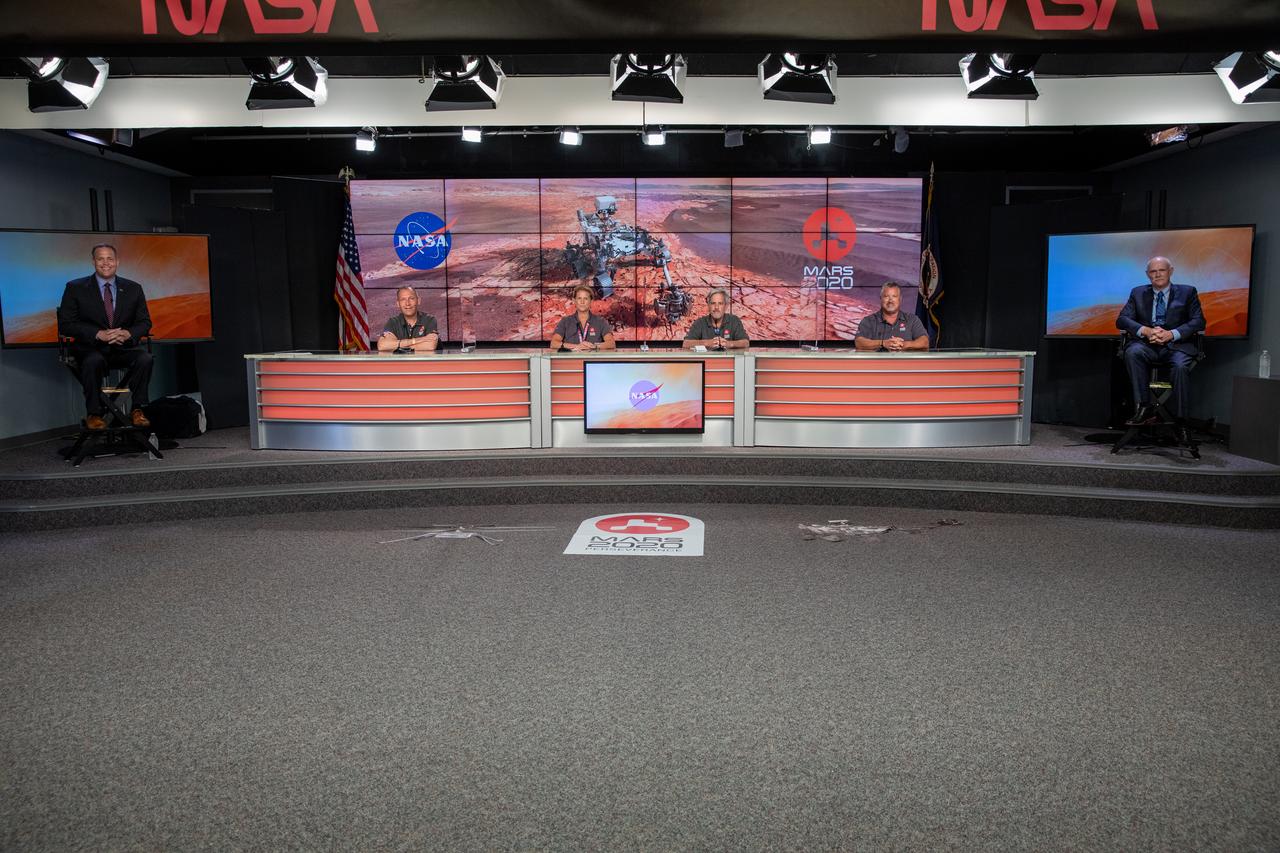
A Mars 2020 post-launch news conference is held at NASA’s Kennedy Space Center in Florida on July 30, 2020. Participants, from left, are NASA Administrator Jim Bridenstine; Thomas Zurbuchen, NASA associate administrator, Science Mission Directorate; Lori Glaze, Planetary Science Division director, NASA Headquarters; Matt Wallace, deputy project manager, NASA’s Jet Propulsion Laboratory; Omar Baez, launch director, NASA’s Launch Services Program; and Tory Bruno, president and CEO of United Launch Alliance. The United Launch Alliance Atlas V 541 rocket lifted off from Space Launch Complex 41 at Cape Canaveral Air Force Station at 7:50 a.m. EDT, carrying the agency’s Mars Perseverance rover and Ingenuity helicopter. The rover is part of NASA’s Mars Exploration Program, a long-term effort of robotic exploration of the Red Planet. The rover will search for habitable conditions in the ancient past and signs of past microbial life on Mars. The Launch Services Program at Kennedy is responsible for launch management.