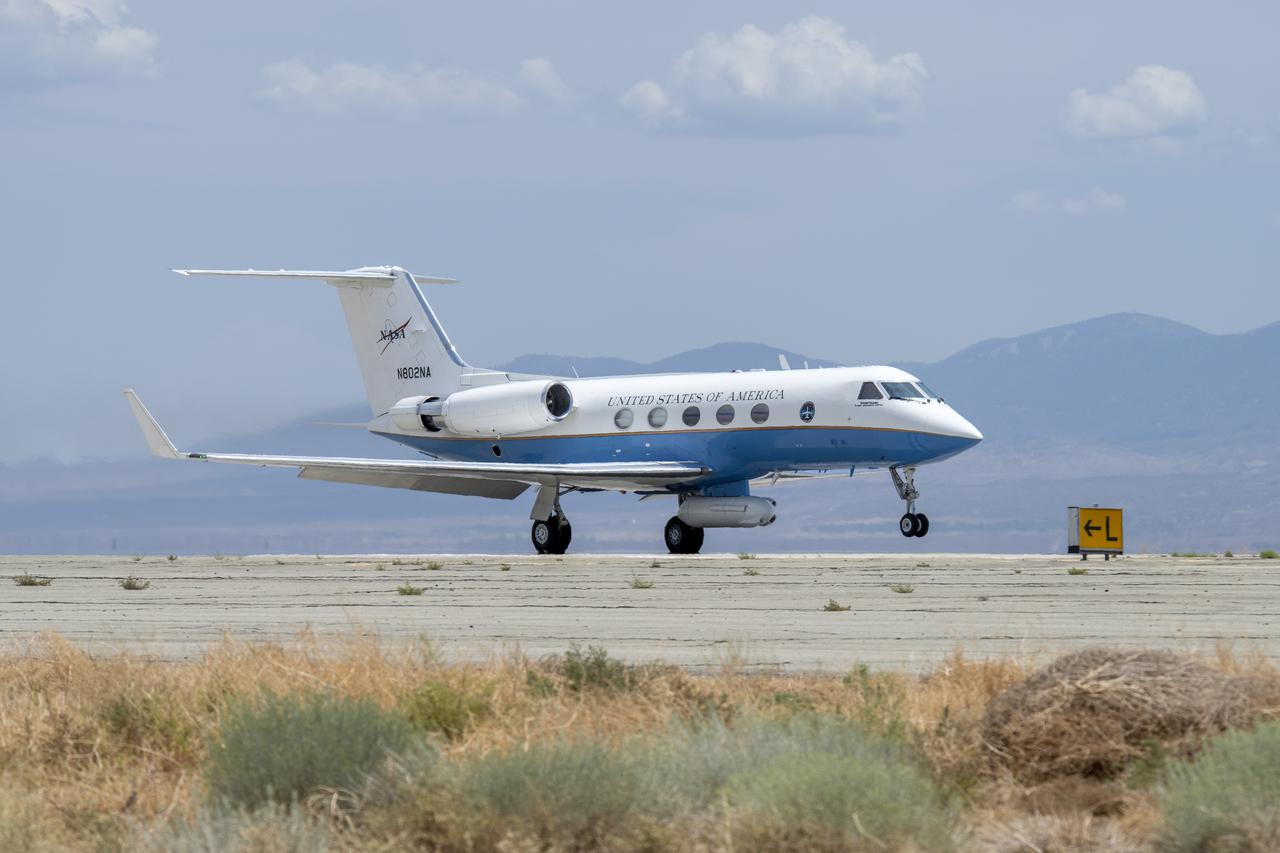
NASA’s Armstrong Flight Research Center flies the C-20 aircraft in support of the Advanced Synthetic Aperture Radar (ASAR) campaign on July 22, 2021.
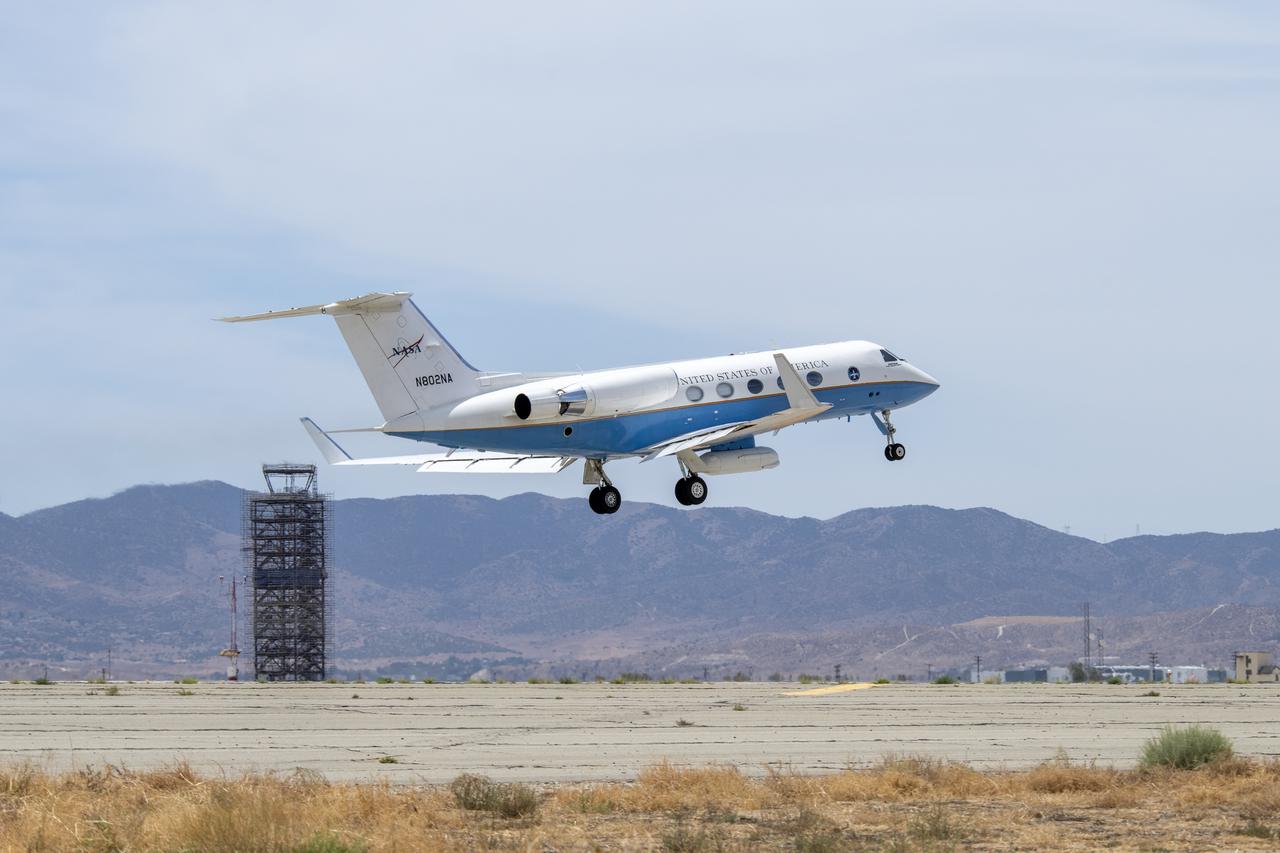
NASA's Armstrong Flight Research Center flies the C-20 aircraft in support of the Advanced Synthetic Aperture Radar (ASAR) campaign on July 22, 2021.
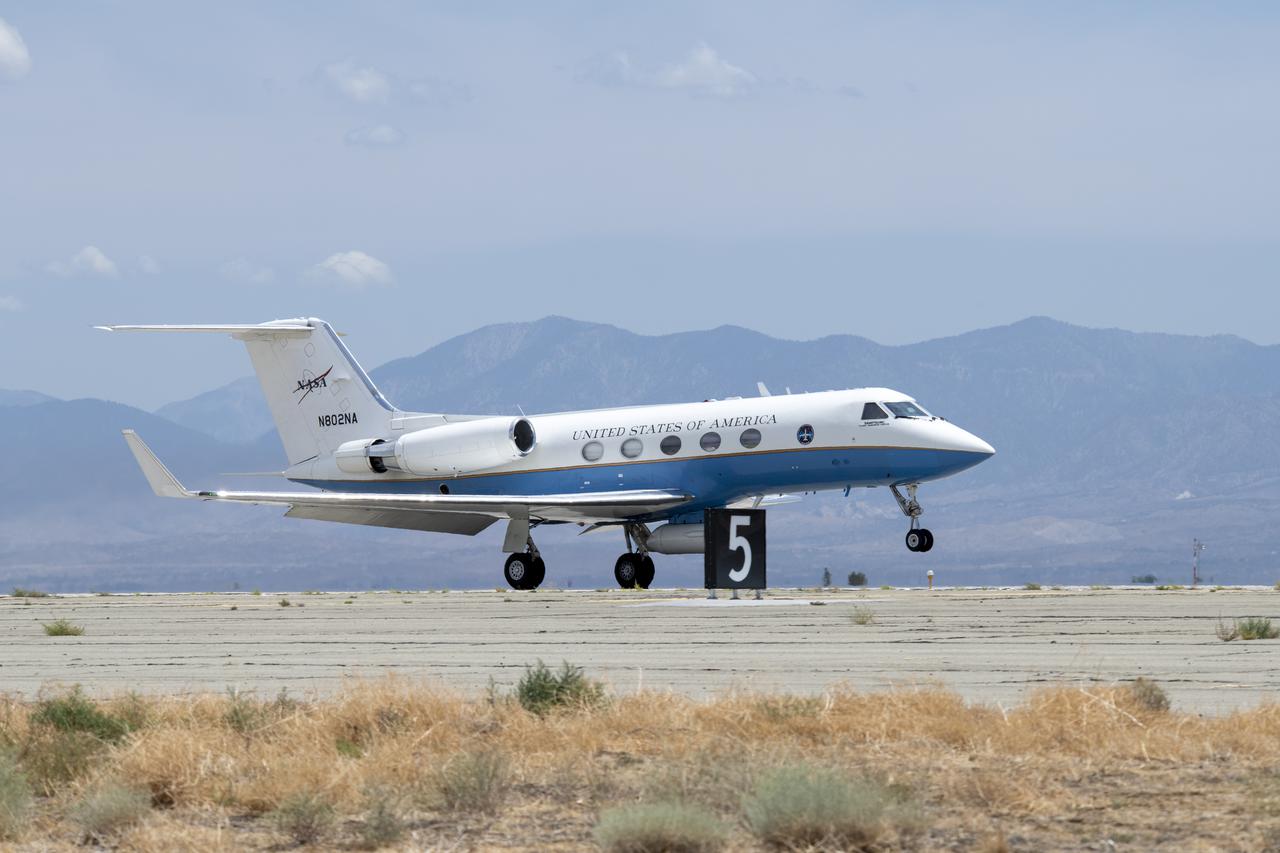
NASA's Armstrong Flight Research Center flies the C-20 aircraft in support of the Advanced Synthetic Aperture Radar (ASAR) campaign on July 22, 2021.
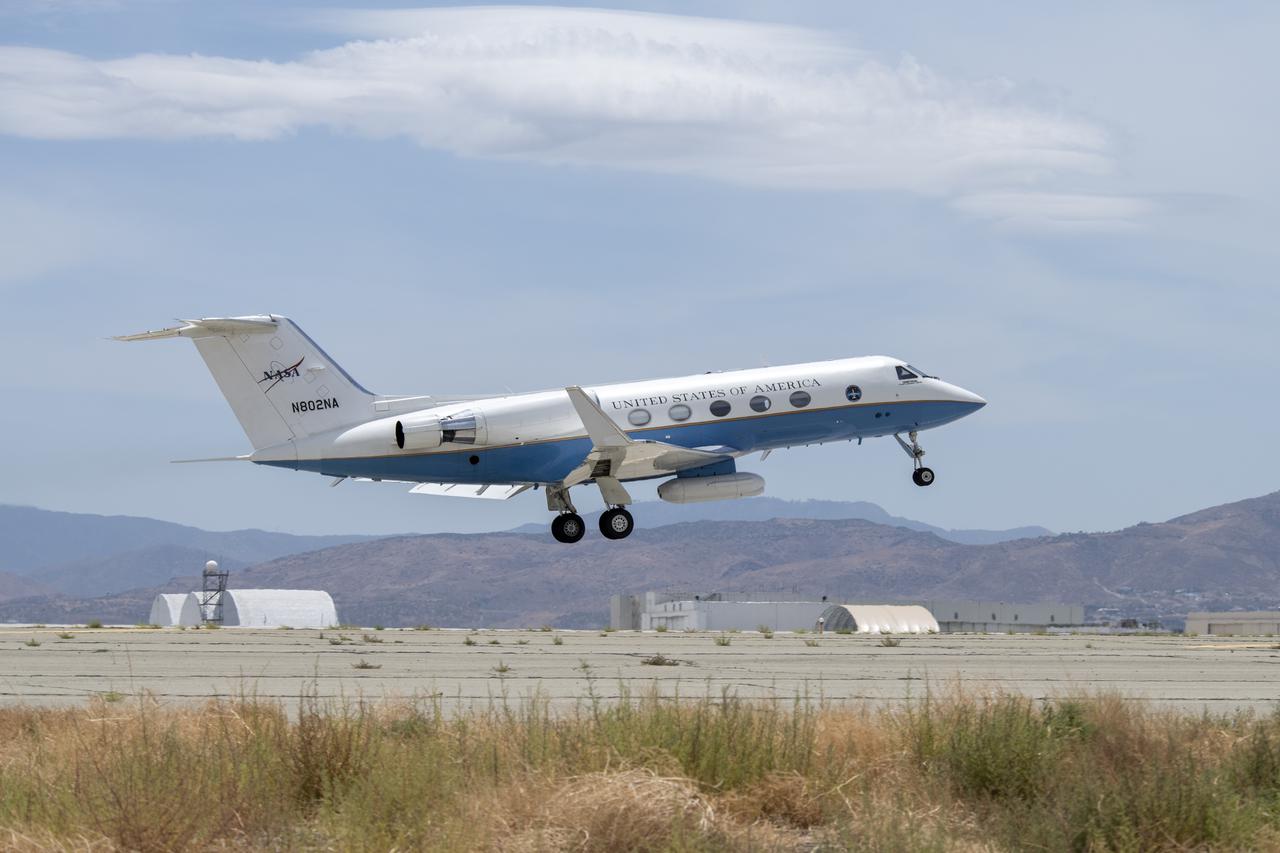
NASA’s Armstrong Flight Research Center flies the C-20 aircraft in support of the Advanced Synthetic Aperture Radar (ASAR) campaign on July 22, 2021.
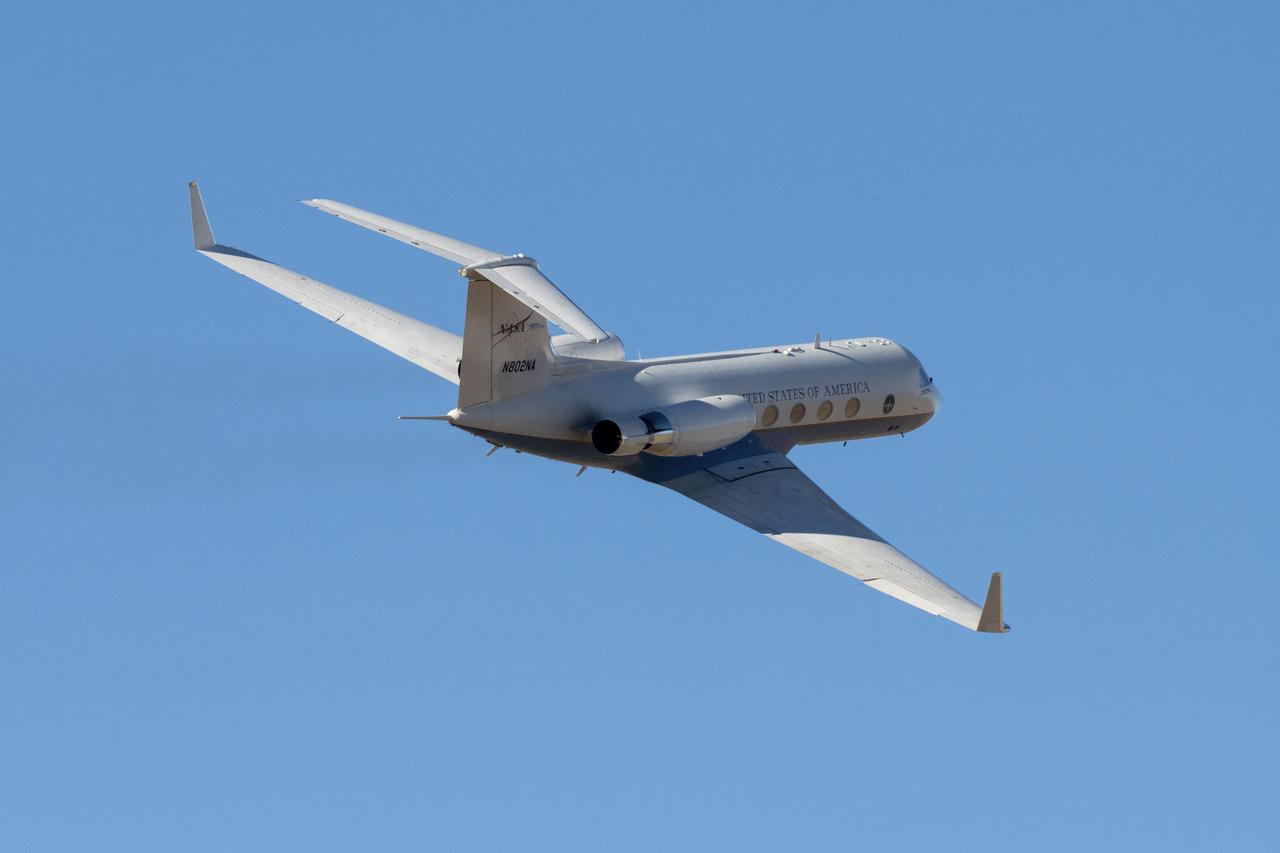
A C-20 based at NASA’s Armstrong Flight Research Center in Edwards, California, departs to use its Uninhabited Aerial Vehicle Synthetic Aperture Radar to support the Marine Oil Spill Thickness mission. Thousands of gallons of oil seep through cracks in the ocean floor and rise to the surface just off the coast of Santa Barbara. It’s one of the largest naturally occurring oil seeps and serves as a laboratory for NASA and the National Oceanic and Atmospheric Administration to test automated oil spill detection, oil extent mapping, and oil thickness characterization.
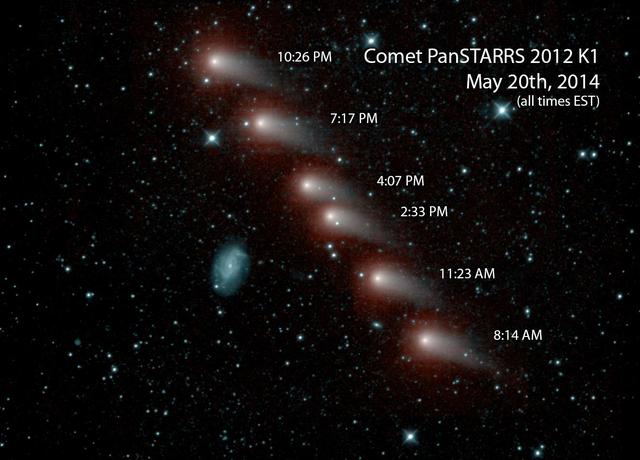
NASA NEOWISE mission captured this series of pictures of comet C/2012 K1 -- also known as comet Pan-STARRS -- as it swept across our skies on May 20, 2014.
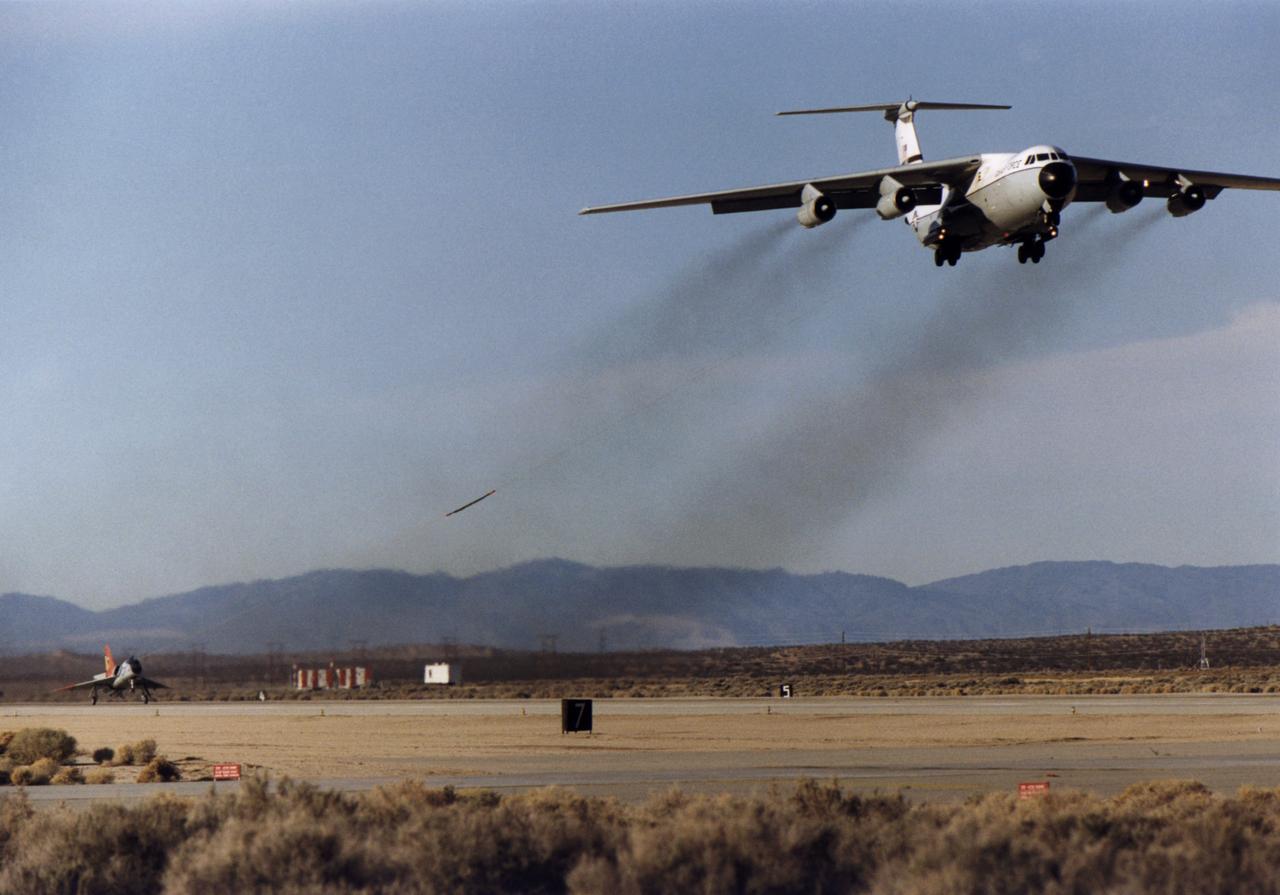
Eclipse project QF-106 and C-141A takeoff on first tethered flight December 20, 1997
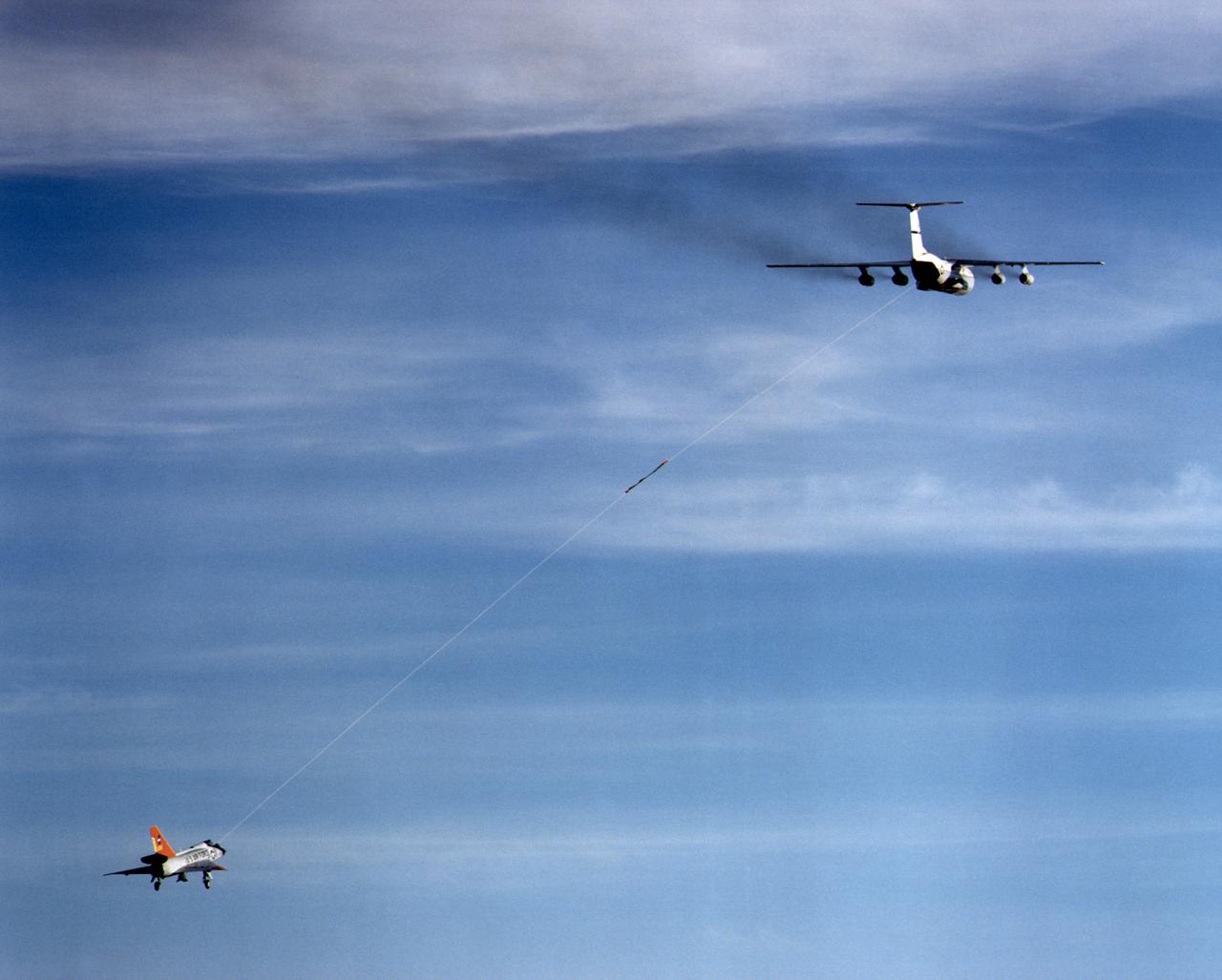
Eclipse project QF-106 and C-141A climbs out under tow on first tethered flight December 20, 1997

C-20A (Gulfstream III) in flight over the NASA Dryden Flight Research Center

Bob Meyer (right), acting deputy director of NASA Dryden, shakes hands with Les Bordelon, executive director of Edwards Air Force Base.

C-20A on NASA Dryden Ramp
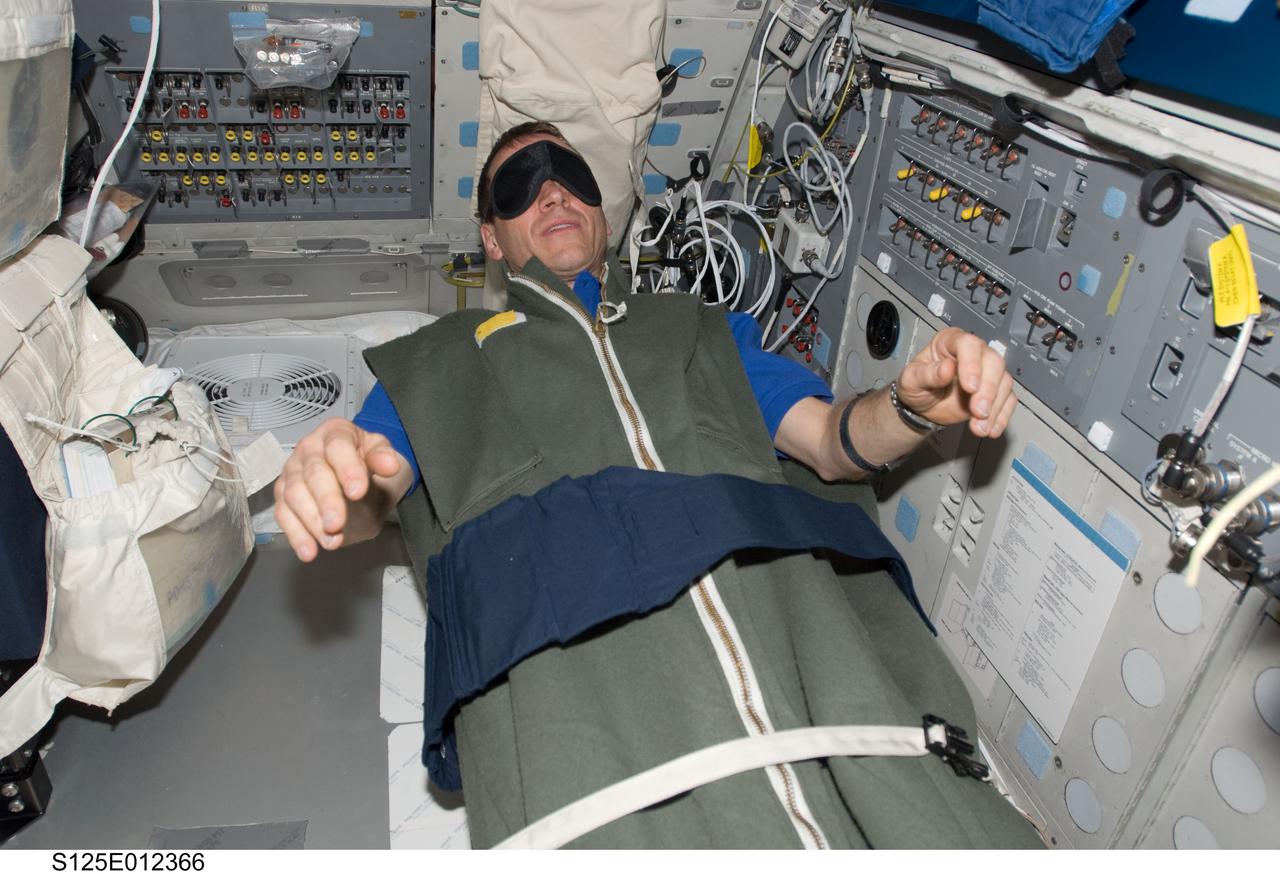
S125-E-012366 (20 May 2009) --- Astronaut Gregory C. Johnson, STS-125 pilot, rests in his sleeping bag on the flight deck of the Earth-orbiting Space Shuttle Atlantis at the end of flight day 10.
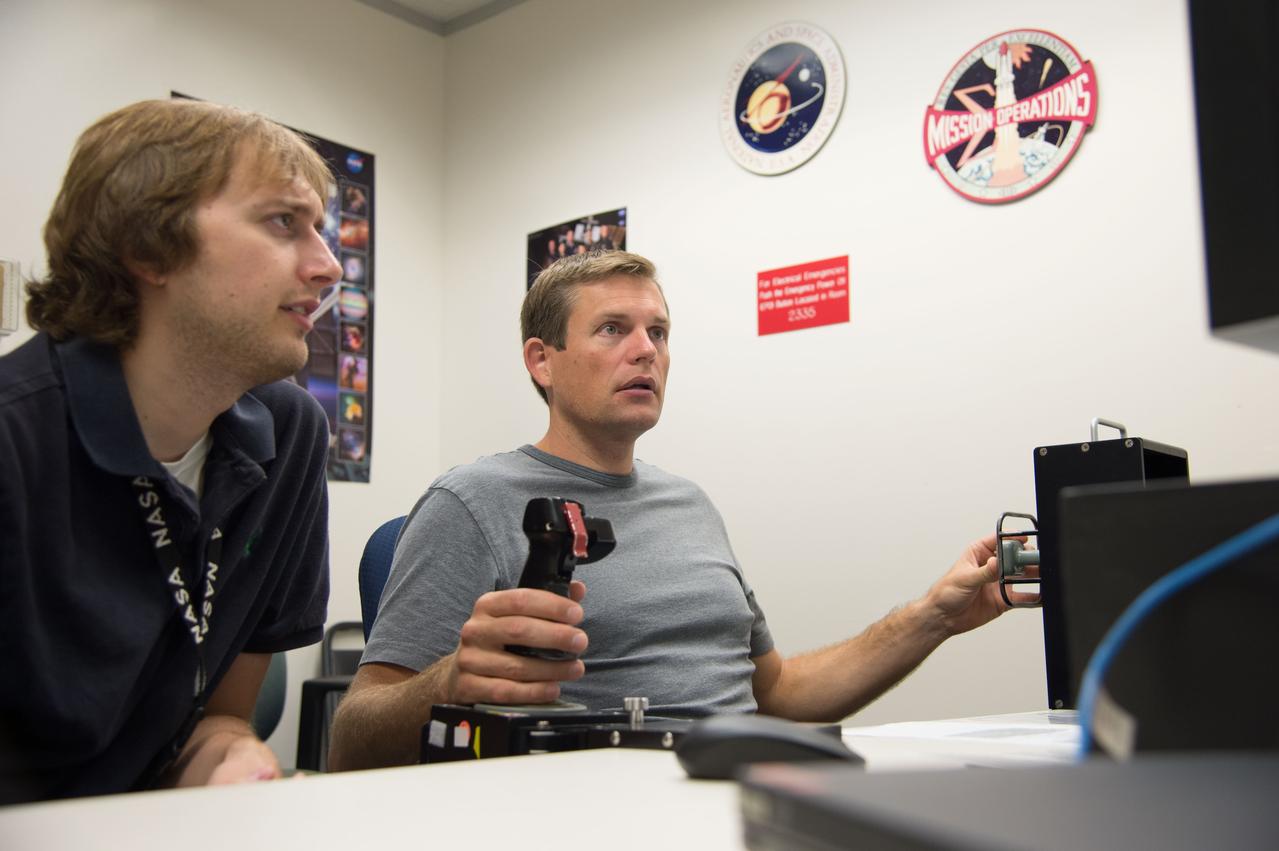
Date: 08-20-14 Location: bldg 4South, Rm 2901 Subject: European Astronaut Andy Mogensen during SSRMS T&C 3 training with instructors Graeme Newman. Photographer: James Blair
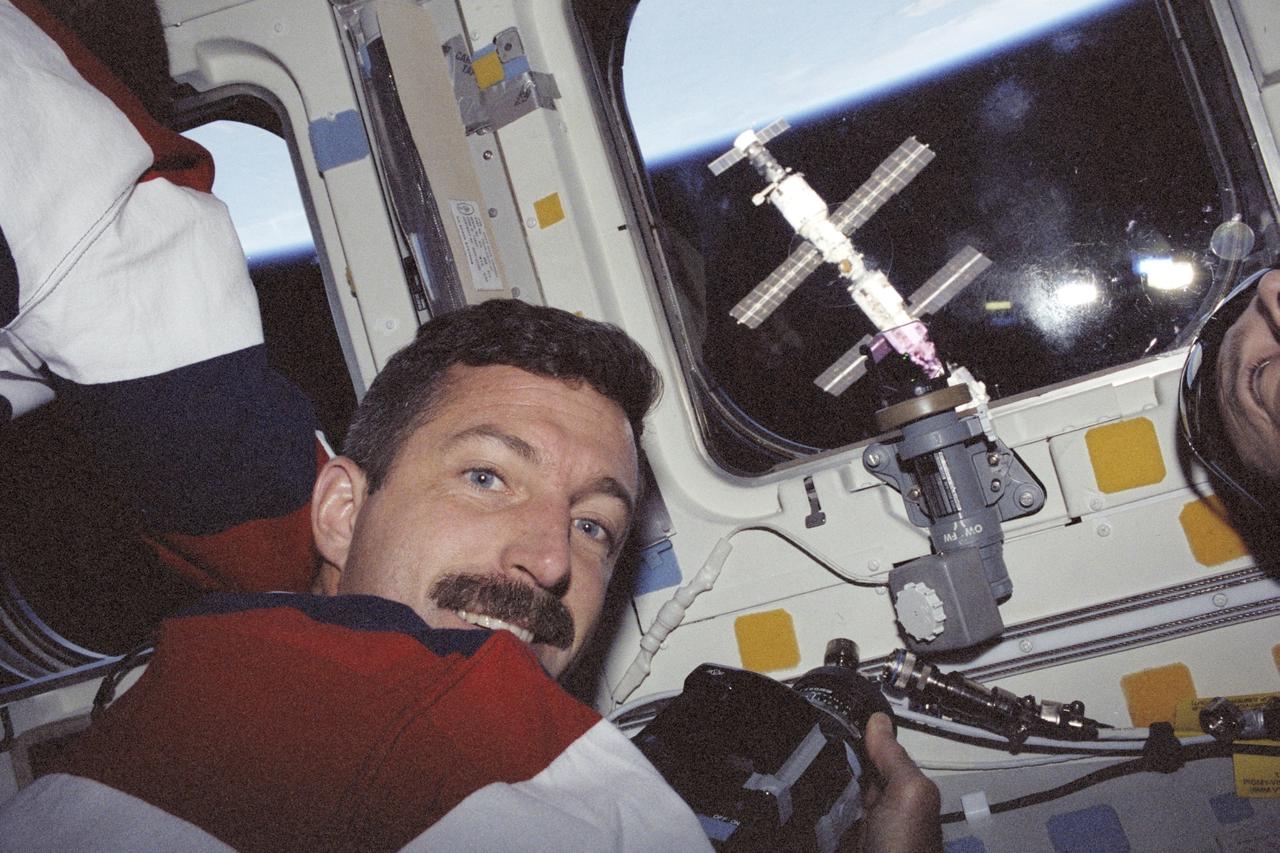
STS106-375-008 (8-20 September 2000) --- Astronaut Daniel C. Burbank, mission specialist, prepares to photograph the departing International Space Station through the overhead windows on the aft flight deck of the Space Shuttle Atlantis.
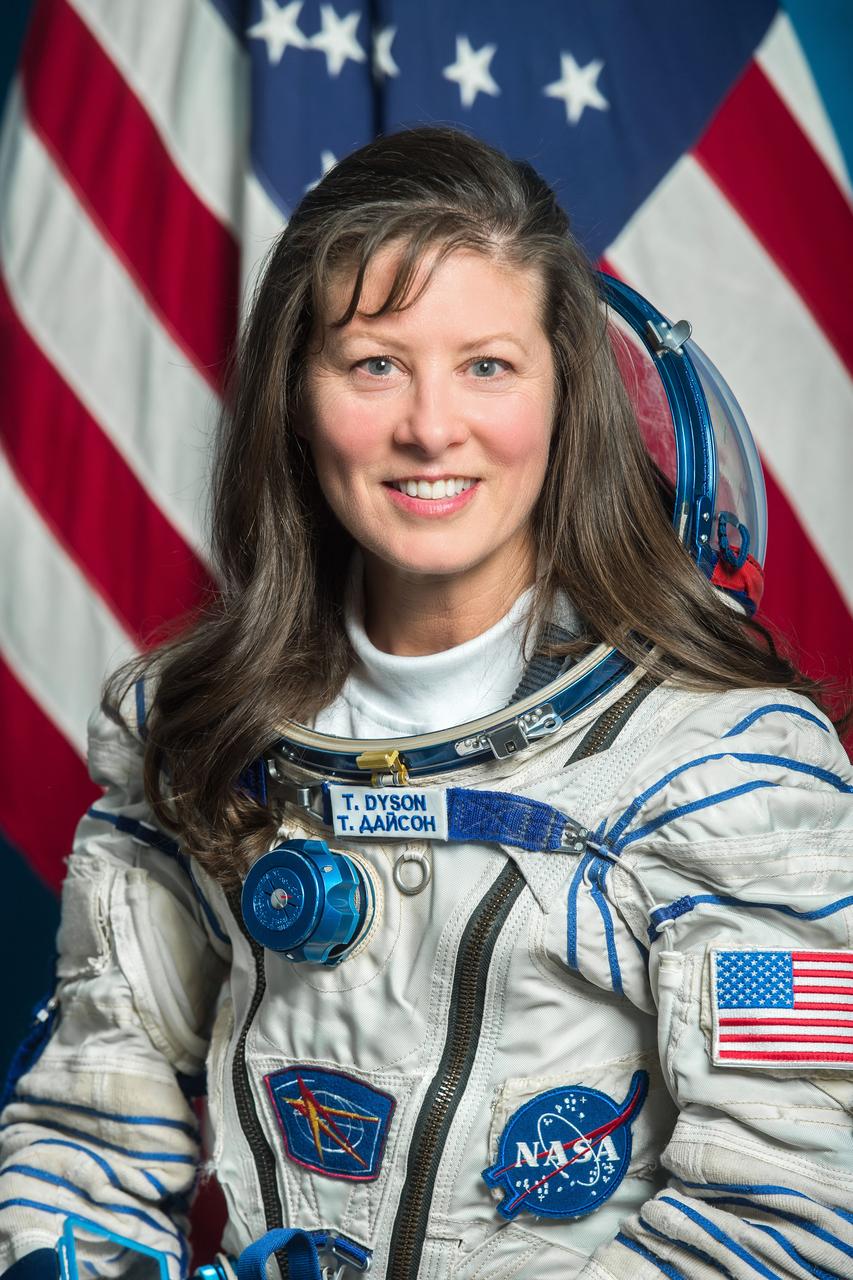
jsc2023e052359 (April 20, 2023) --- NASA astronaut Tracy C. Dyson poses for a portrait in her Sokol launch and entry suit at the Gagarin Cosmonaut Training Center in Star City, Russia. Credit: GCTC/Andrey Shelepin
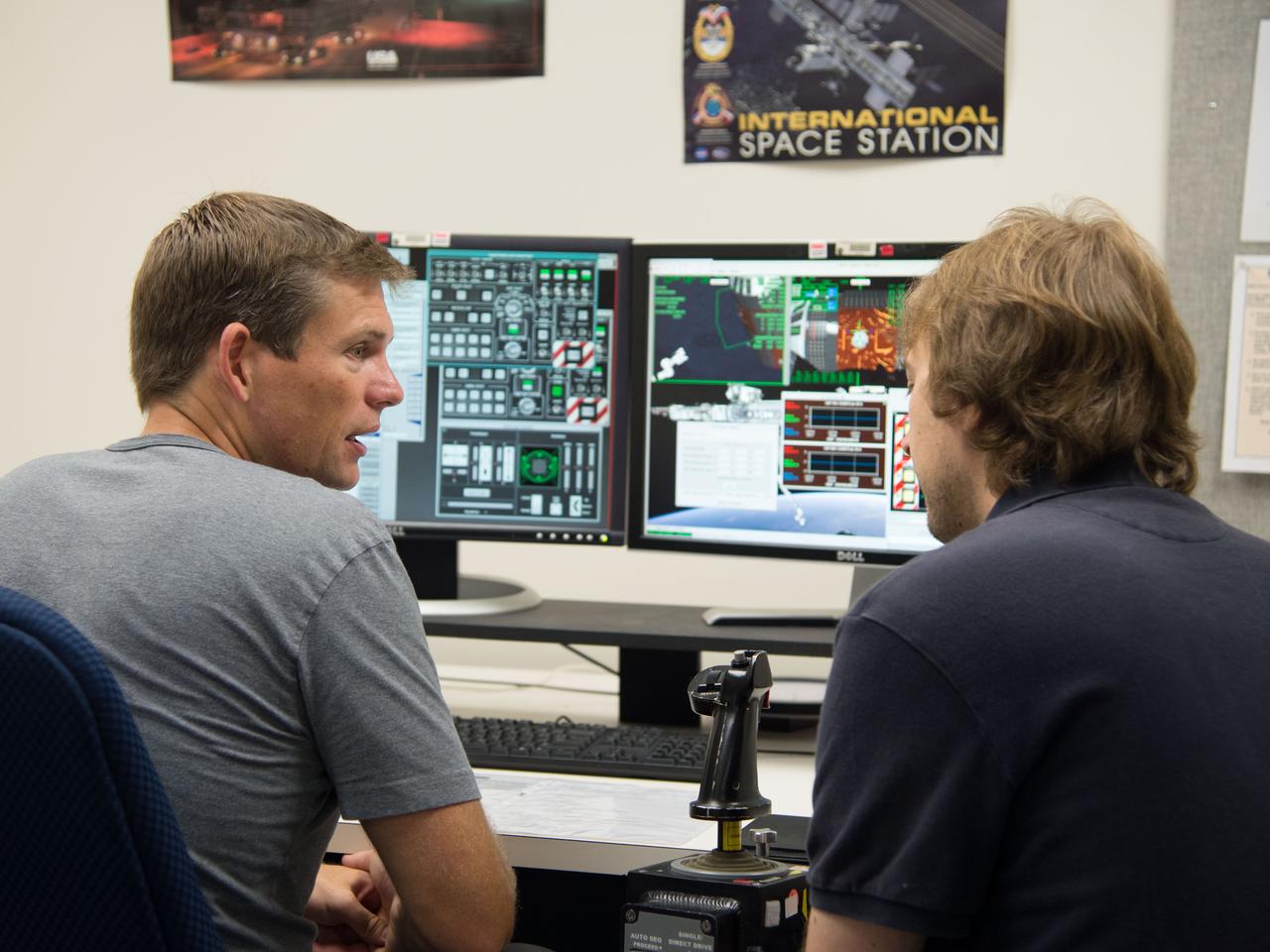
Date: 08-20-14 Location: bldg 4South, Rm 2901 Subject: European Astronaut Andy Mogensen during SSRMS T&C 3 training with instructors Graeme Newman. Photographer: James Blair
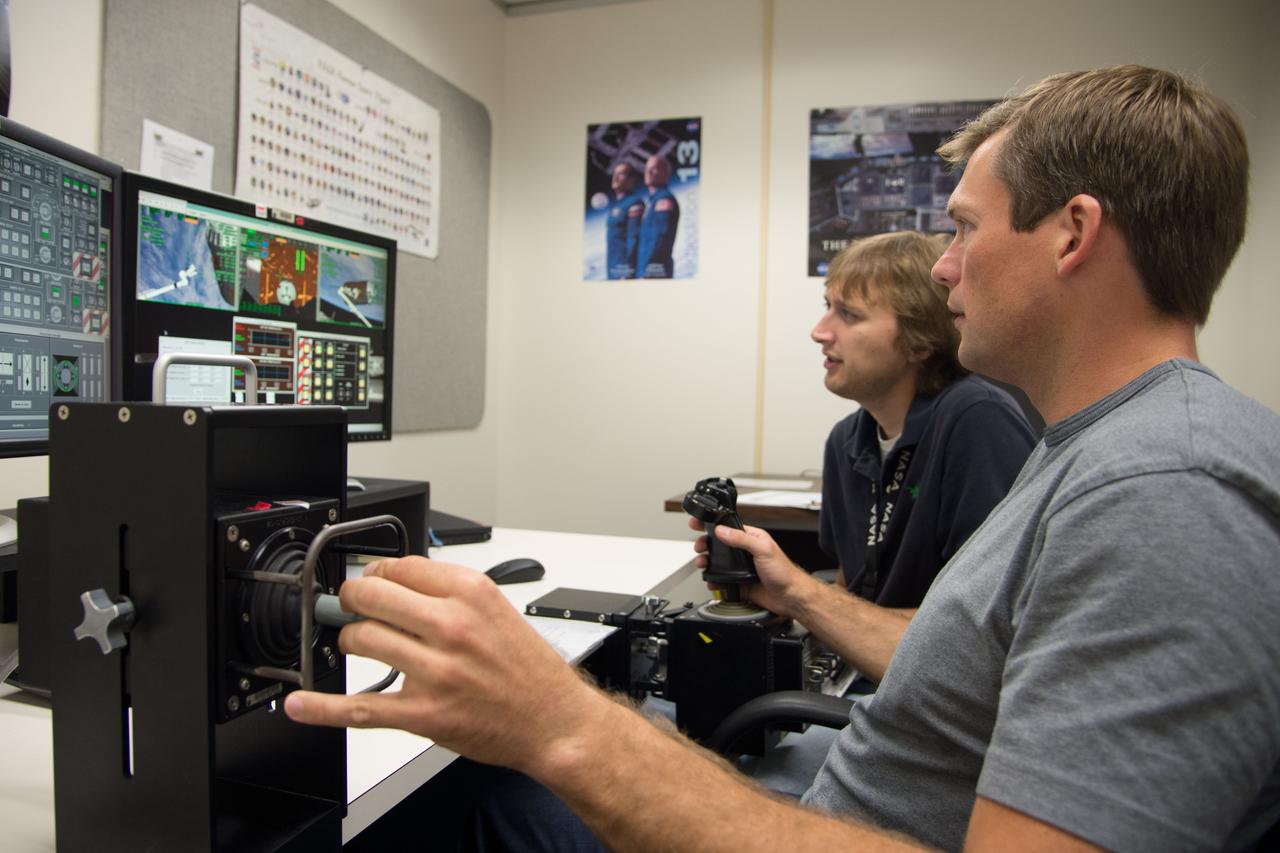
Date: 08-20-14 Location: bldg 4South, Rm 2901 Subject: European Astronaut Andy Mogensen during SSRMS T&C 3 training with instructors Graeme Newman. Photographer: James Blair
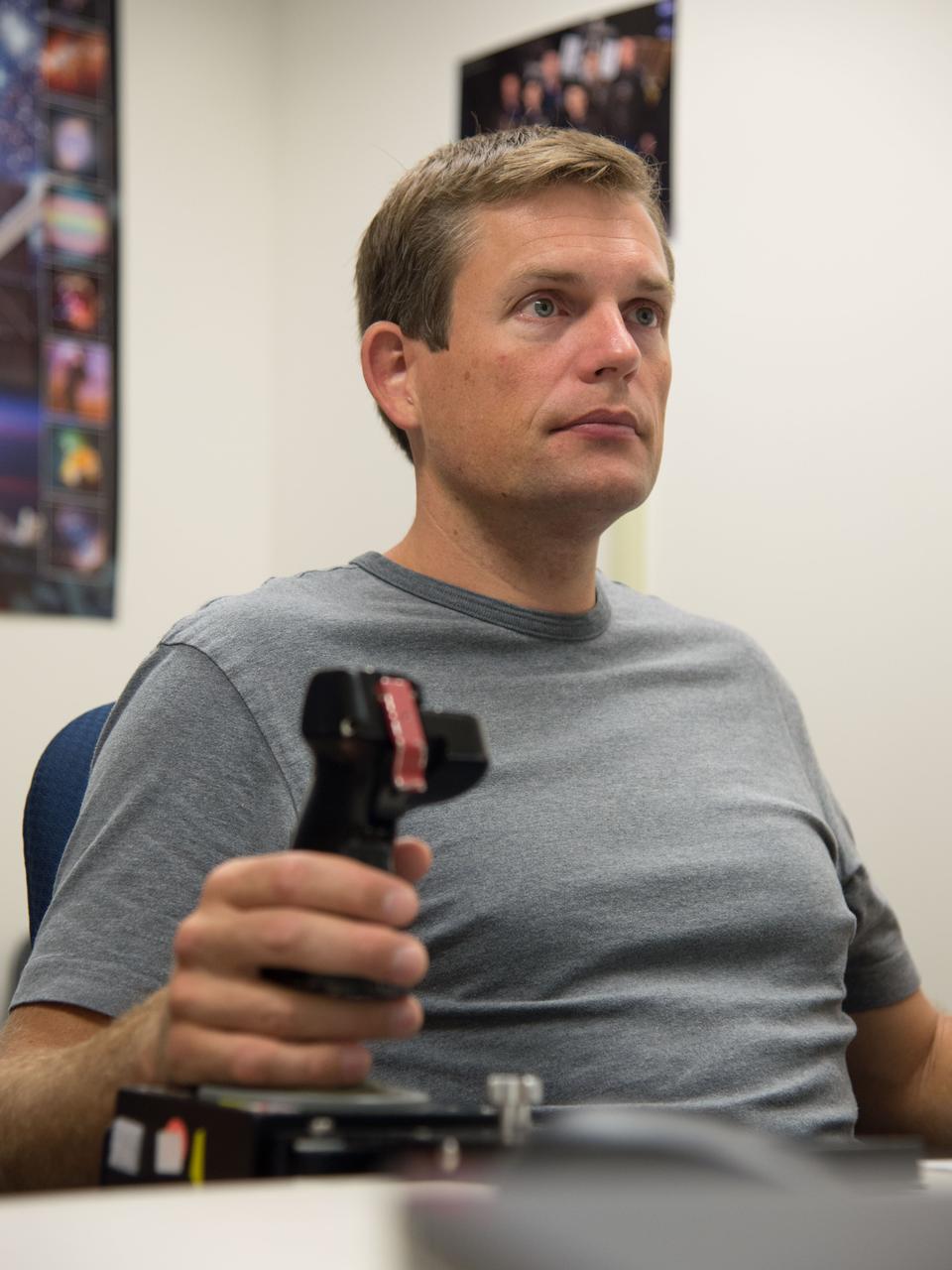
Date: 08-20-14 Location: bldg 4South, Rm 2901 Subject: European Astronaut Andy Mogensen during SSRMS T&C 3 training with instructors Graeme Newman. Photographer: James Blair
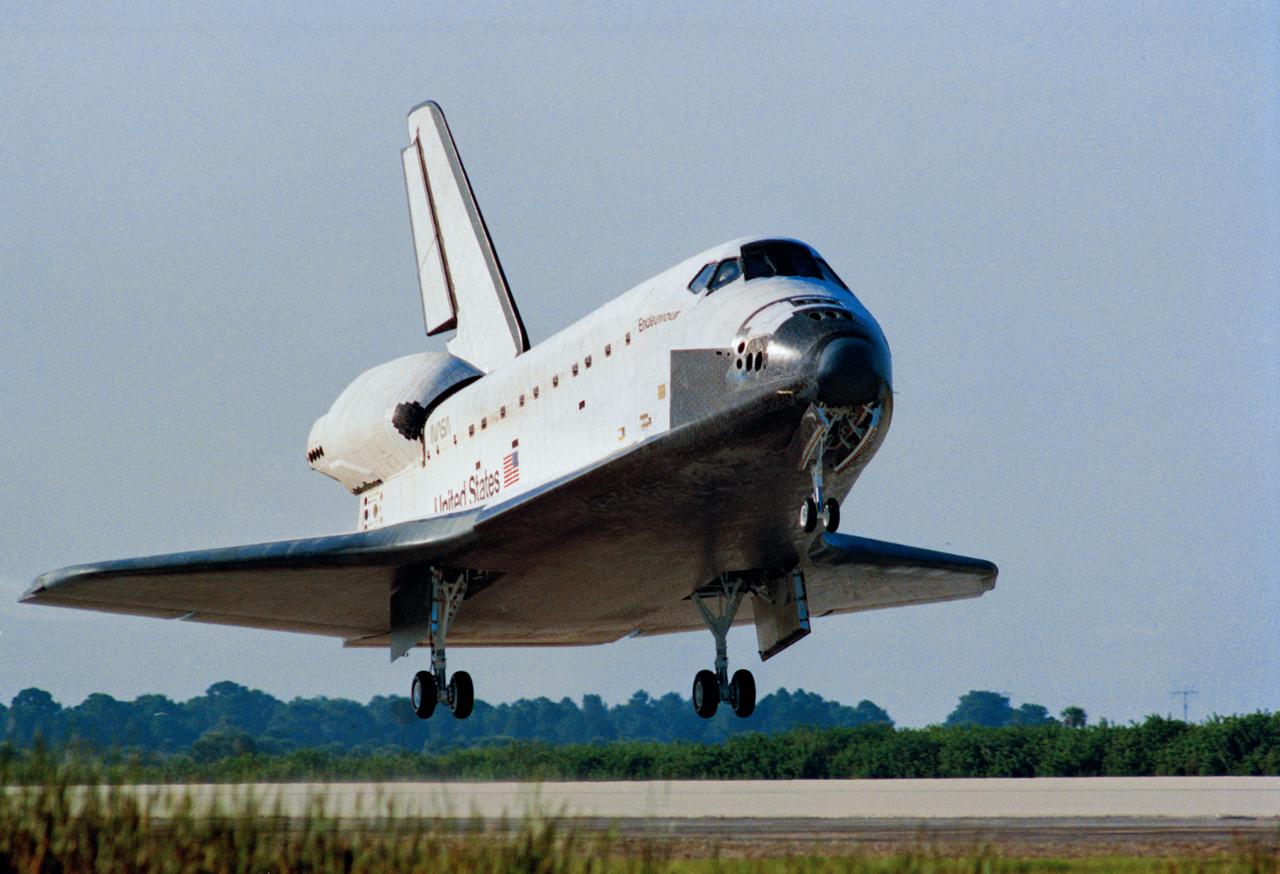
STS047-S-116 (20 Sept 1992) --- The Space Shuttle Endeavour prepares to land on the Kennedy Space Center's Shuttle landing facility runway. The successful landing marked the completion of an eight-day Earth-orbital mission for the orbiter, its seven-member crew and the Spacelab-J payload. Landing occurred at 8:53 a.m. (EDT), September 20, 1992. Onboard the spacecraft were astronauts Robert L. Gibson, Curtis L. Brown Jr., Mark C. Lee, Jerome (Jay) Apt, N. Jan Davis and Mae C. Jemison, along with Japanese payload specialist Dr. Mamoru Mohri.
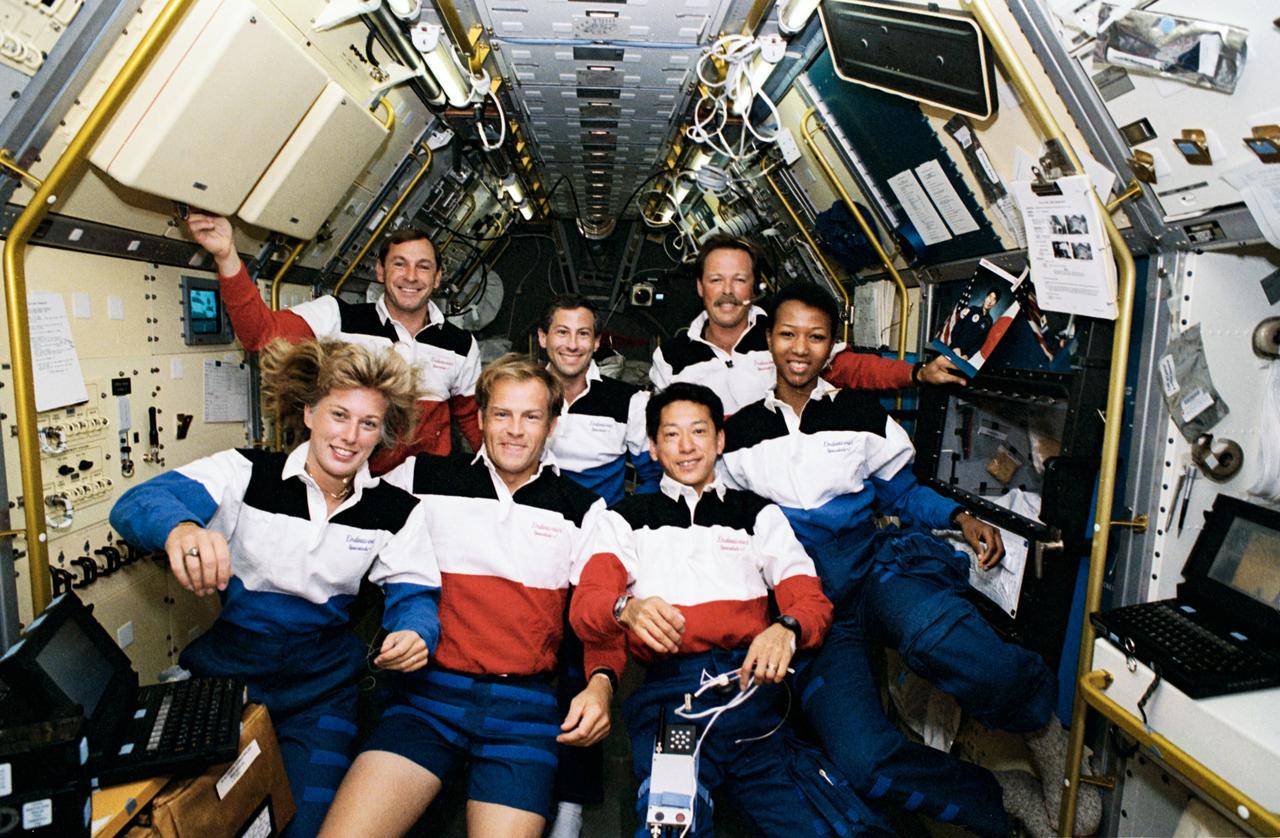
STS047-12-002 (12 - 20 Sept 1992) --- The crew members assemble for their traditional in-flight portrait in this 35mm frame photographed in the Science Module aboard the Earth-orbiting Space Shuttle Endeavour. Left to right (front) are N. Jan Davis, Mark C. Lee and Mamoru Mohri; and (rear) Curtis L. Brown, Jr., Jerome (Jay) Apt, Robert L. Gibson and Mae C. Jemison. The seven spent eight days in space in support of the Spacelab-J mission.
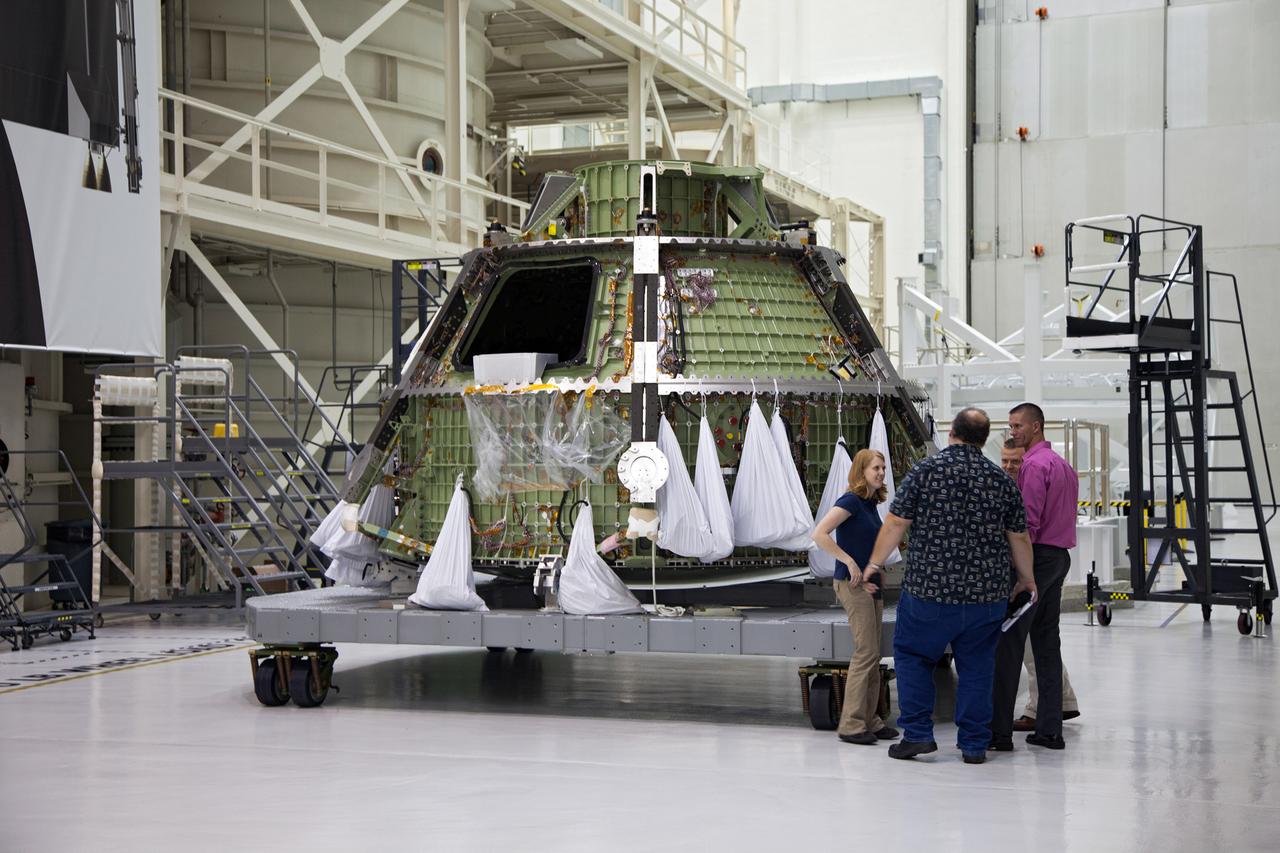
Technicians move the Exploration Flight Test-1 (EFT-1) Orion crew module pressure vessel in the Operations and Checkout (O&C) Building at Kennedy Space Center on March 20, 2013. Part of Batch image transfer from Flickr.
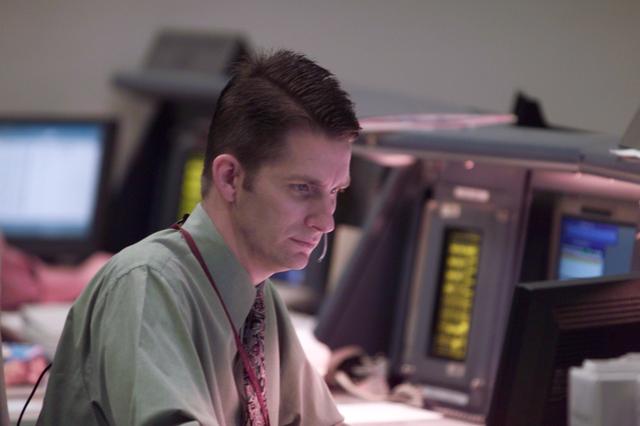
JSC2001-E-04270 (7-20 February 2001) --- Assembly and checkout officer (ACO) Thomas C. Miglin monitors data at his console in the station flight control room (BFCR) in Houston's Mission Control Center (MCC) during the STS-98/5A mission.
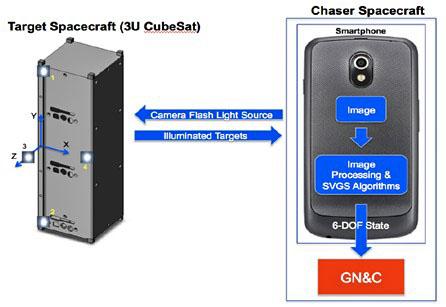
jsc2025e032818 (3/20/2025) --- The operational concept of Smartphone Video Guidance Sensor (SVGS). The target’s six-degrees-of-freedom (6DOF) state can be transmitted from the SVGS device to the spacecraft’s guidance, navigation and control system (GN & C). Image courtesy of Hector Gutierrez.
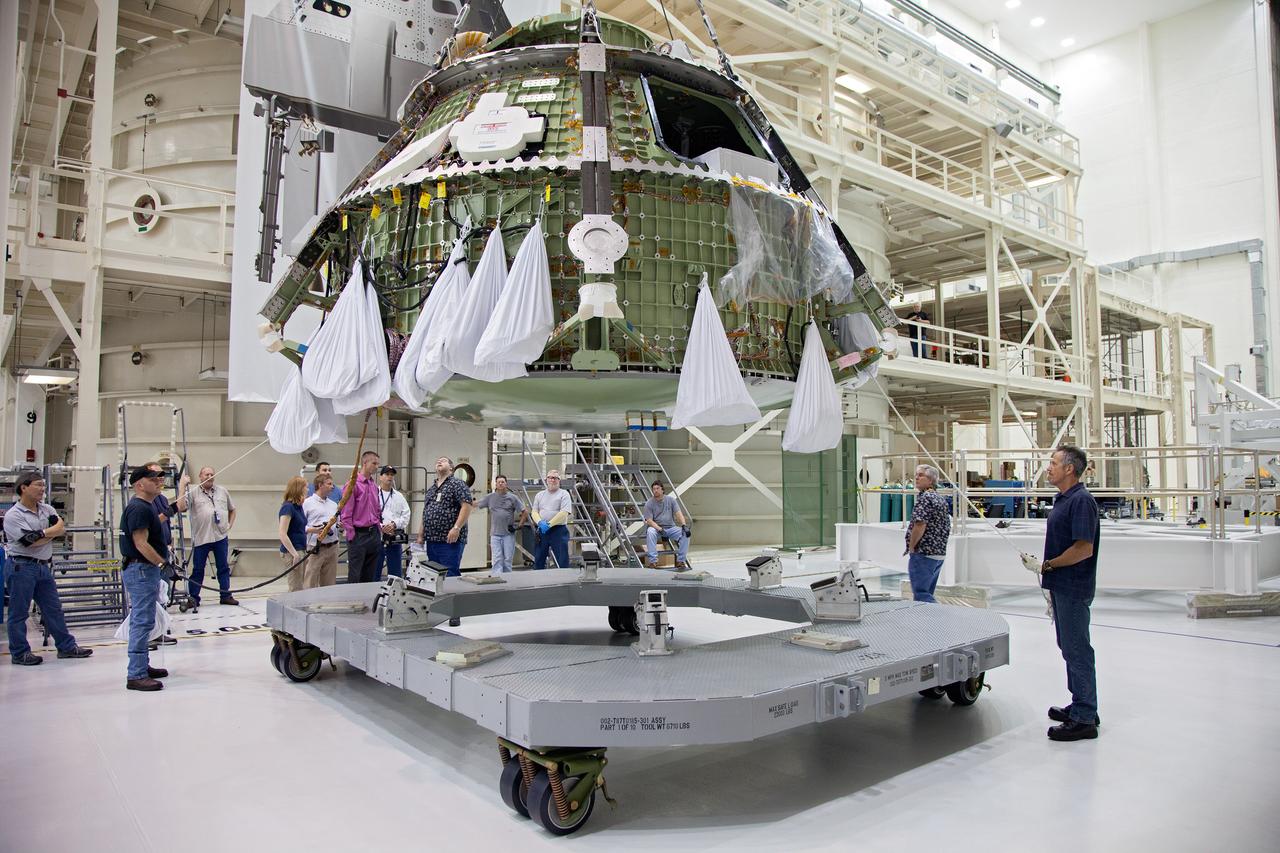
Technicians move the Exploration Flight Test-1 (EFT-1) Orion crew module pressure vessel in the Operations and Checkout (O&C) Building at Kennedy Space Center on March 20, 2013. Part of Batch image transfer from Flickr.
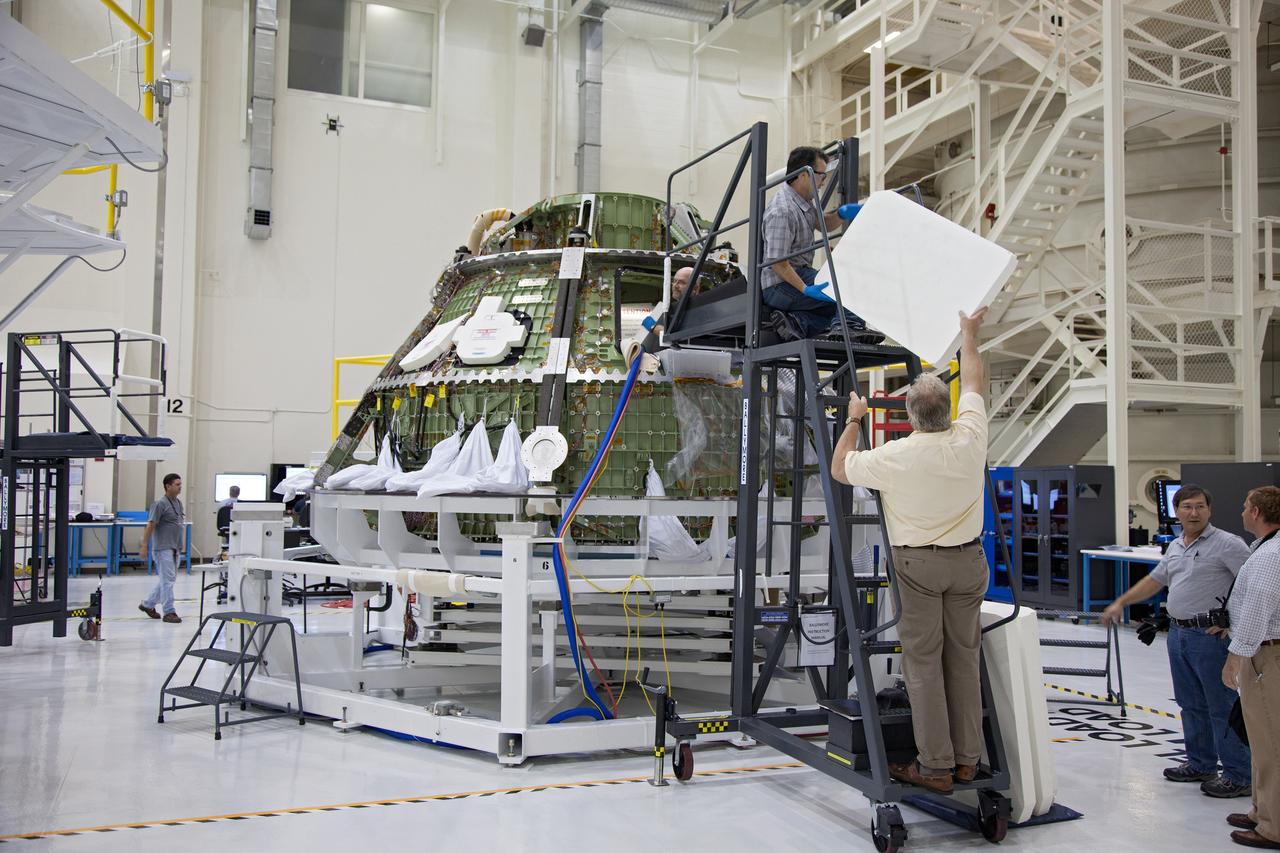
Technicians move the Exploration Flight Test-1 (EFT-1) Orion crew module pressure vessel in the Operations and Checkout (O&C) Building at Kennedy Space Center on March 20, 2013. Part of Batch image transfer from Flickr.
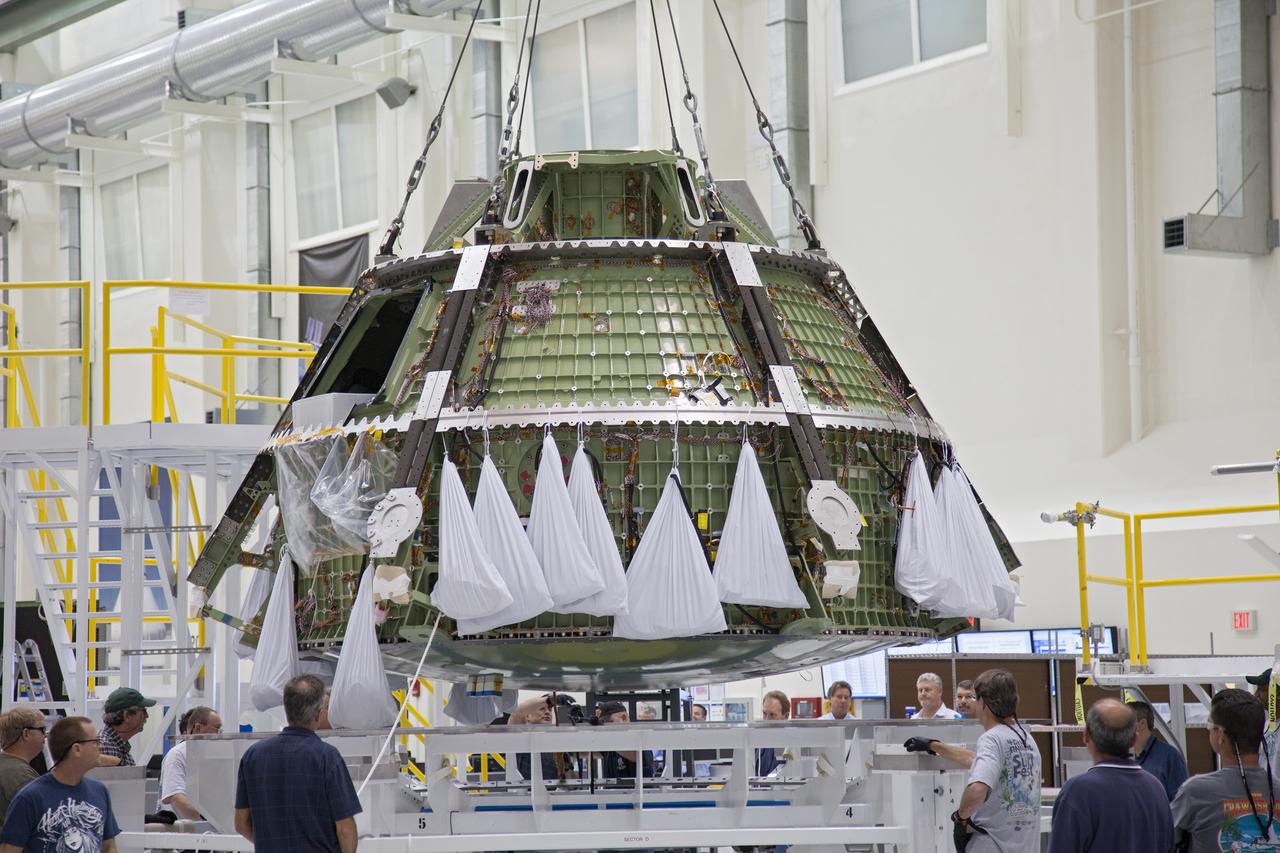
Technicians move the Exploration Flight Test-1 (EFT-1) Orion crew module pressure vessel in the Operations and Checkout (O&C) Building at Kennedy Space Center on March 20, 2013. Part of Batch image transfer from Flickr.
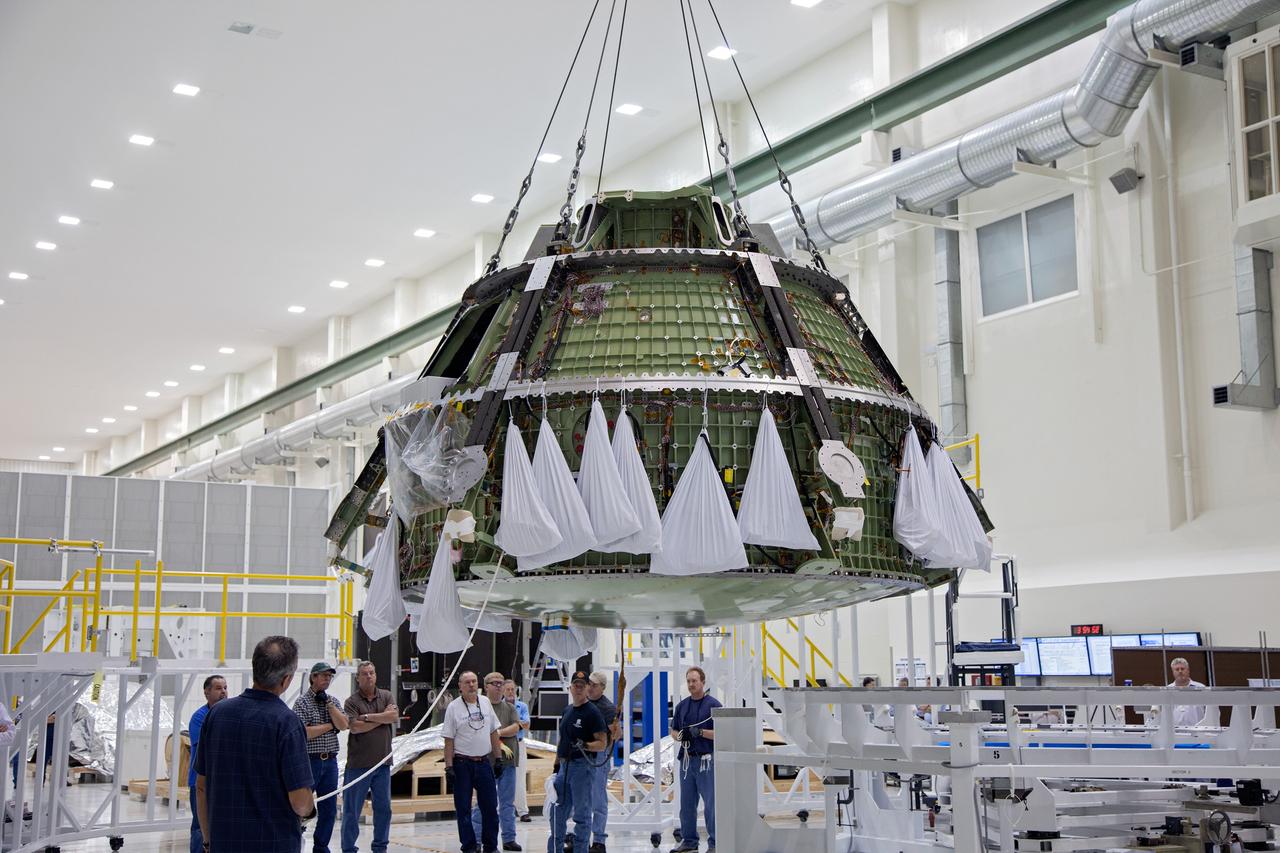
Technicians move the Exploration Flight Test-1 (EFT-1) Orion crew module pressure vessel in the Operations and Checkout (O&C) Building at Kennedy Space Center on March 20, 2013. Part of Batch image transfer from Flickr.
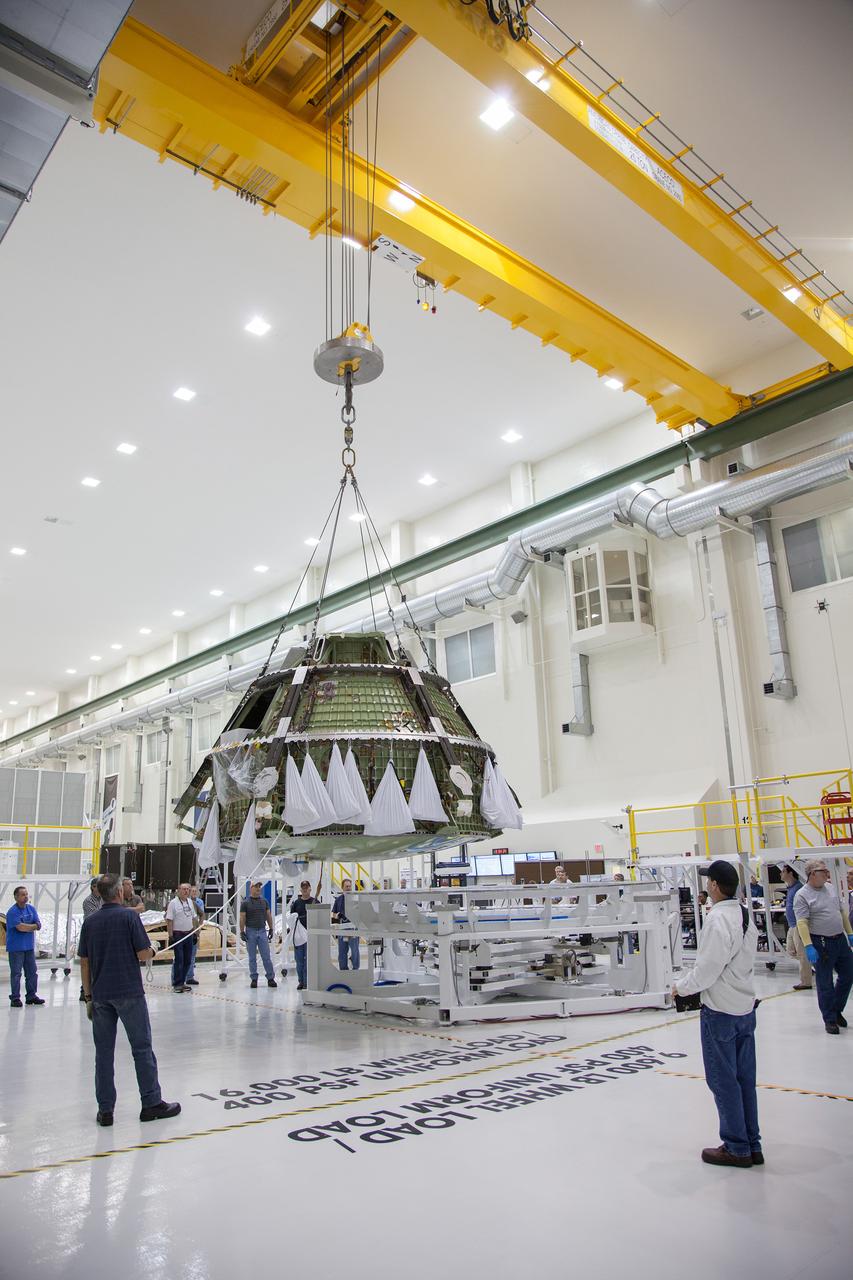
Technicians move the Exploration Flight Test-1 (EFT-1) Orion crew module pressure vessel in the Operations and Checkout (O&C) Building at Kennedy Space Center on March 20, 2013. Part of Batch image transfer from Flickr.

S67-36022 (20 June 1967) --- Apollo Spacecraft 017 is moved into position in the Vehicle Assembly Building's high bay area for mating with the Saturn V launch vehicle. S/C 017 will be flown on the Spacecraft 017/Saturn 501 (Apollo 4) space mission.
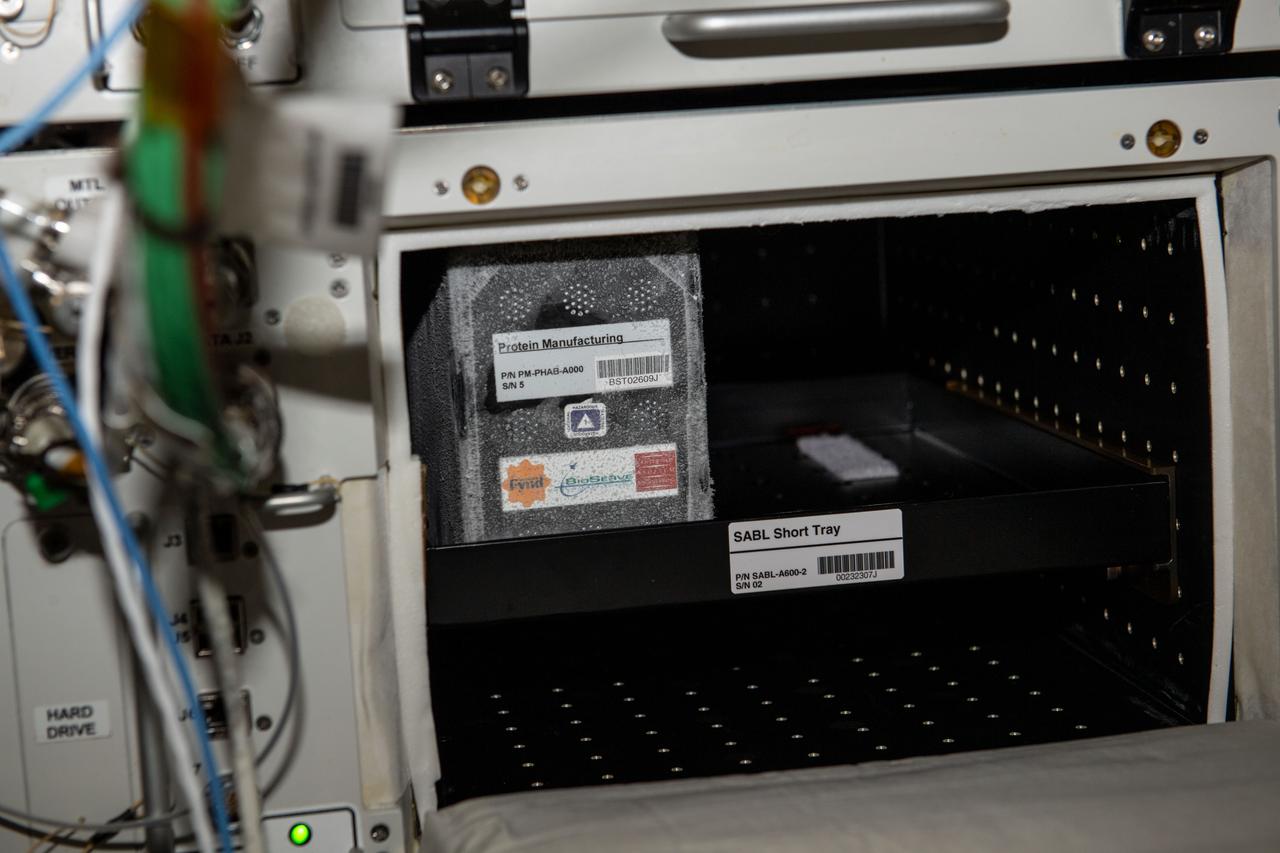
iss067e191207 (7/22/2022) --- A view of the of a Plate Habitat (PHAB) at -20°C after insertion into the SABL incubator aboard the International Space Station (ISS). The goal of the Protein Manufacturing project is to demonstrate the use of a novel bioreactor technology for growing high-protein food on the International Space Station (ISS).
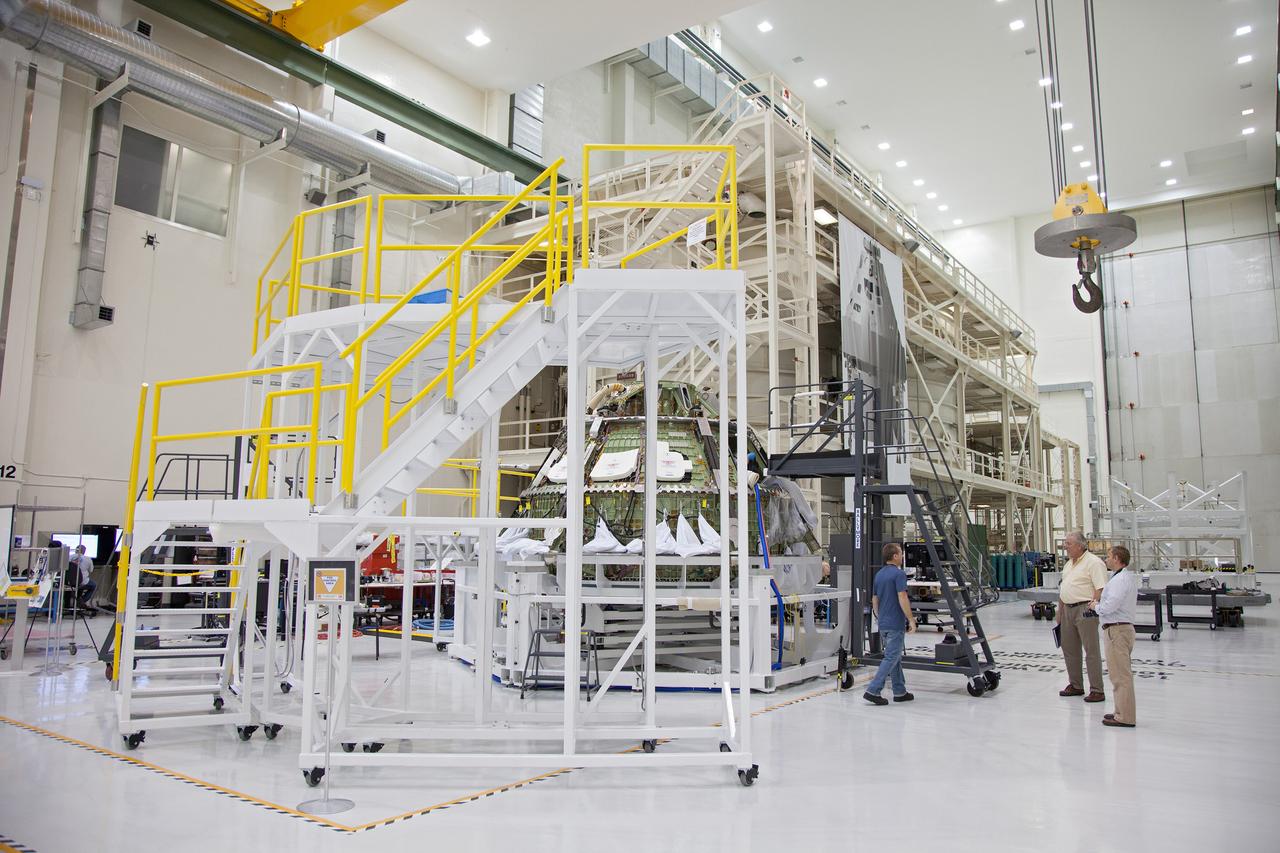
Technicians move the Exploration Flight Test-1 (EFT-1) Orion crew module pressure vessel in the Operations and Checkout (O&C) Building at Kennedy Space Center on March 20, 2013. Part of Batch image transfer from Flickr.
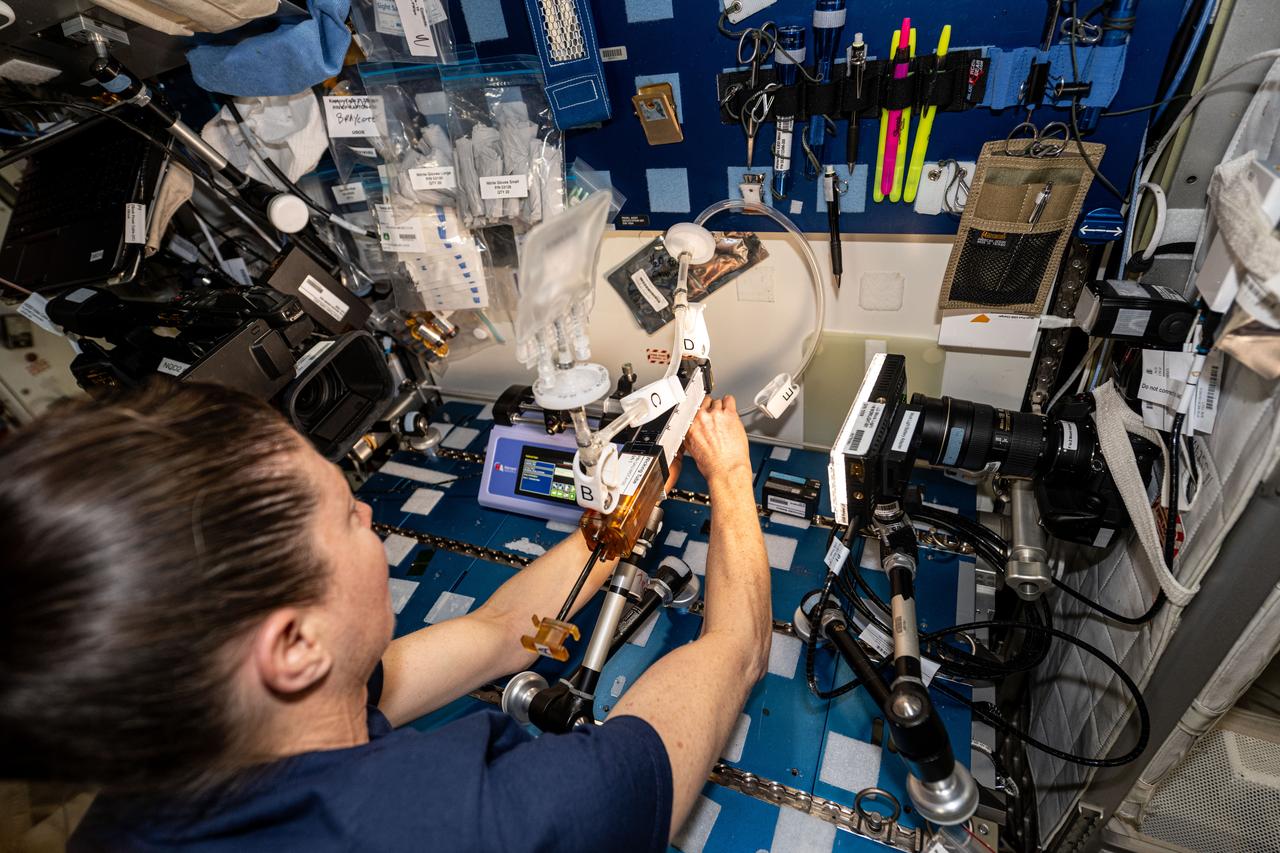
iss071e092807 (May 20, 2024) --- Expedition 71 Flight Engineer and NASA astronaut Tracy C. Dyson works on the Gaucho Lung investigation studying ways to improve the delivery of respiratory system drugs potentially offering benefits to both the health care and food industries.
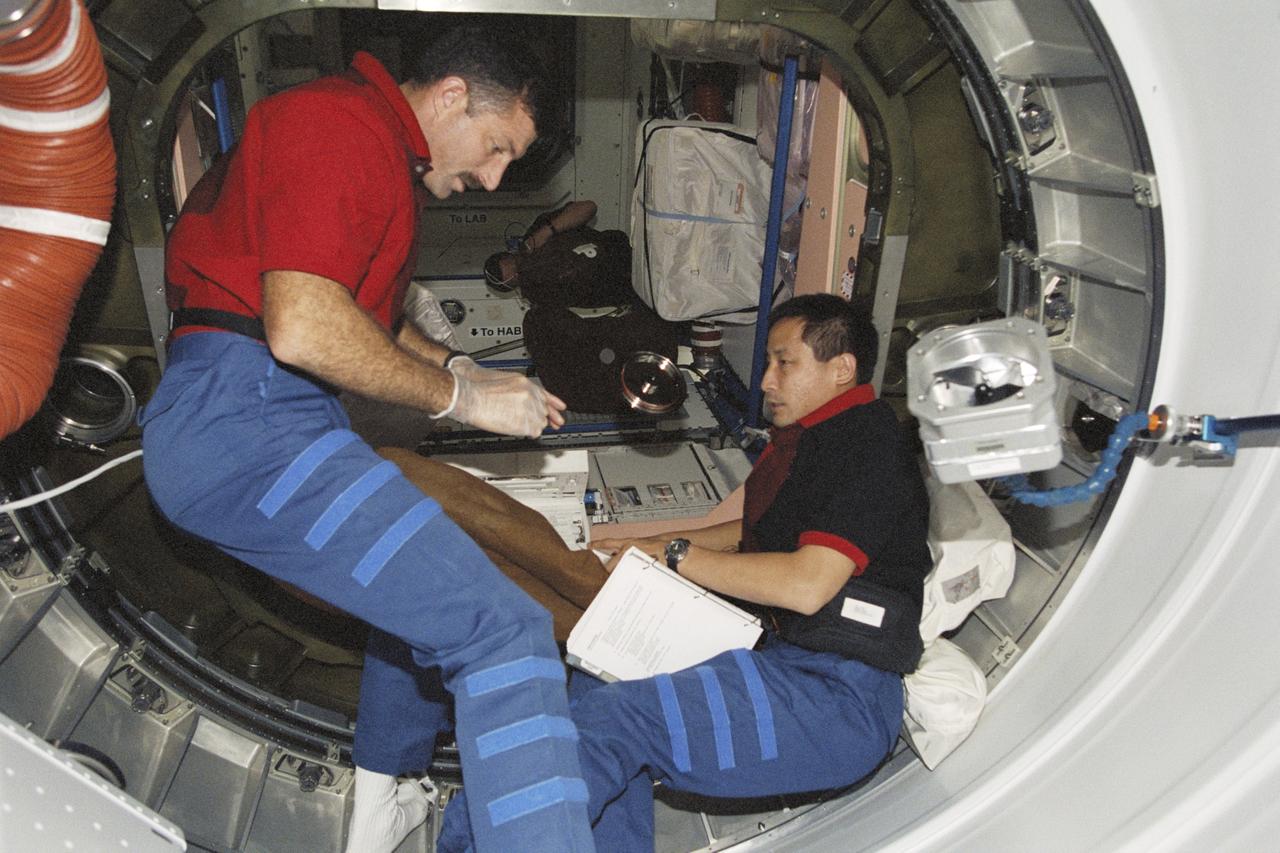
STS106-319-013 (8-20 September 2000) --- Astronauts Daniel C. Burbank (left) and Edward T. Lu, both mission specialists, work near the Pressurized Mating Adapter (PMA1) hatch between Unity node and the functional cargo block (FGB) or Zarya on the International Space Station (ISS).
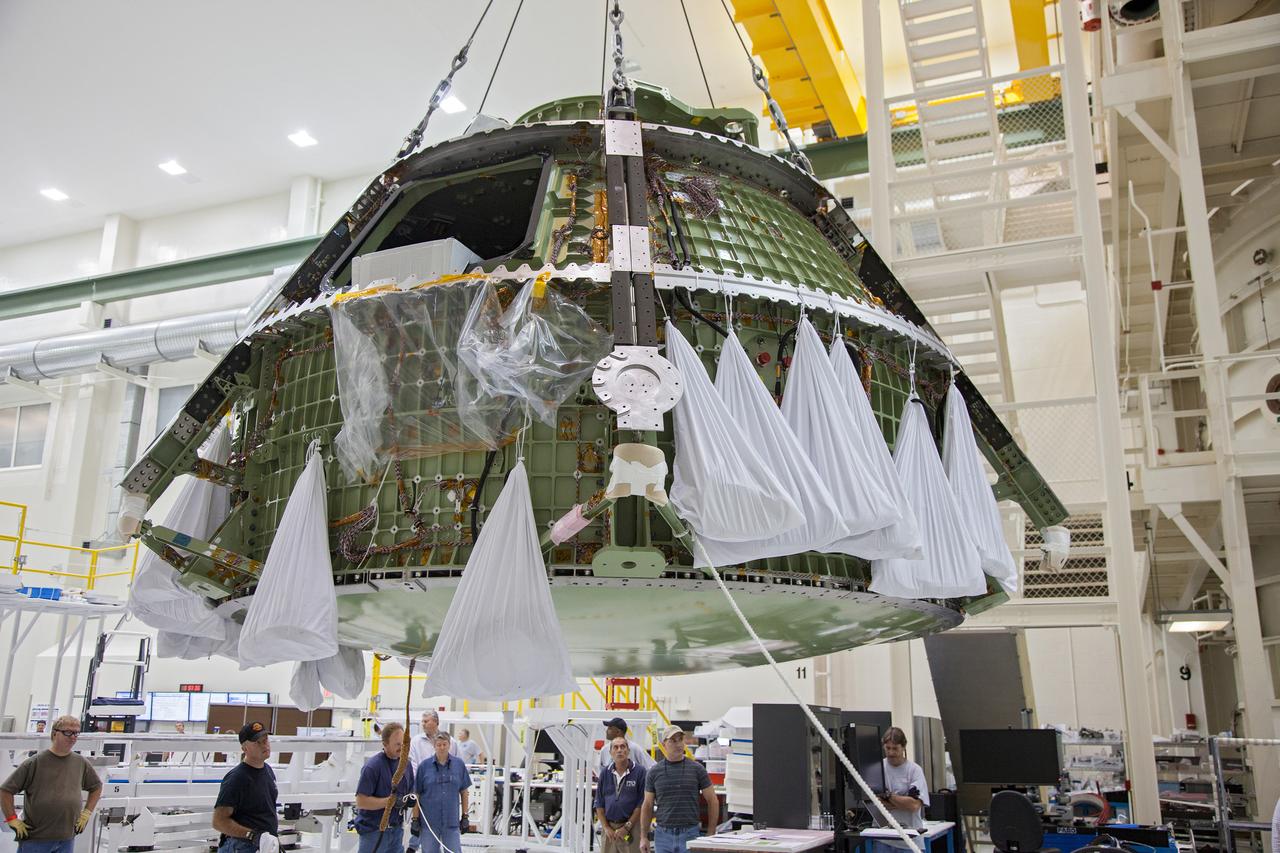
Technicians move the Exploration Flight Test-1 (EFT-1) Orion crew module pressure vessel in the Operations and Checkout (O&C) Building at Kennedy Space Center on March 20, 2013. Part of Batch image transfer from Flickr.
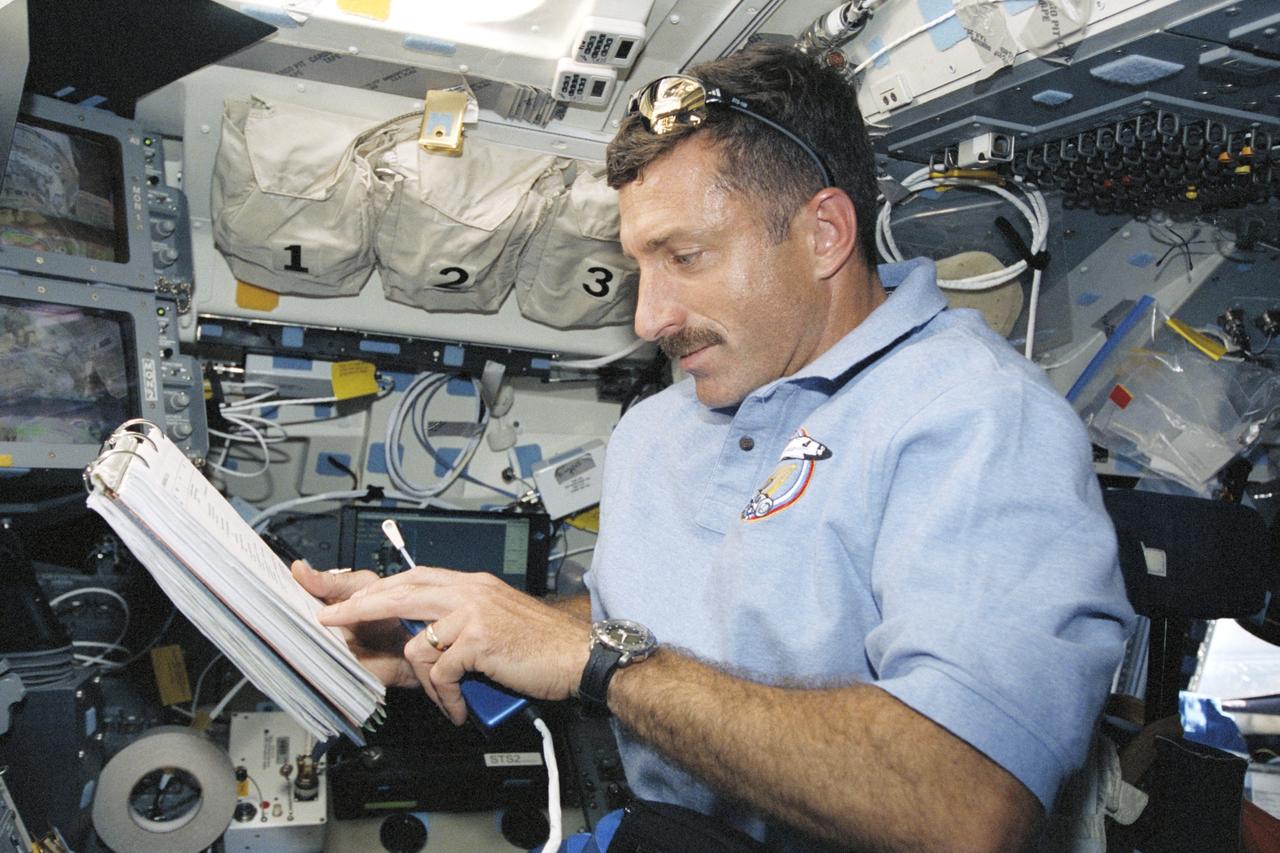
STS106-370-004 (8-20 September 2000) --- Astronaut Daniel C. Burbank, STS-106 mission specialist, looks over a procedures checklist on the aft flight deck of the Space Shuttle Atlantis. Burbank is marking his first space flight.
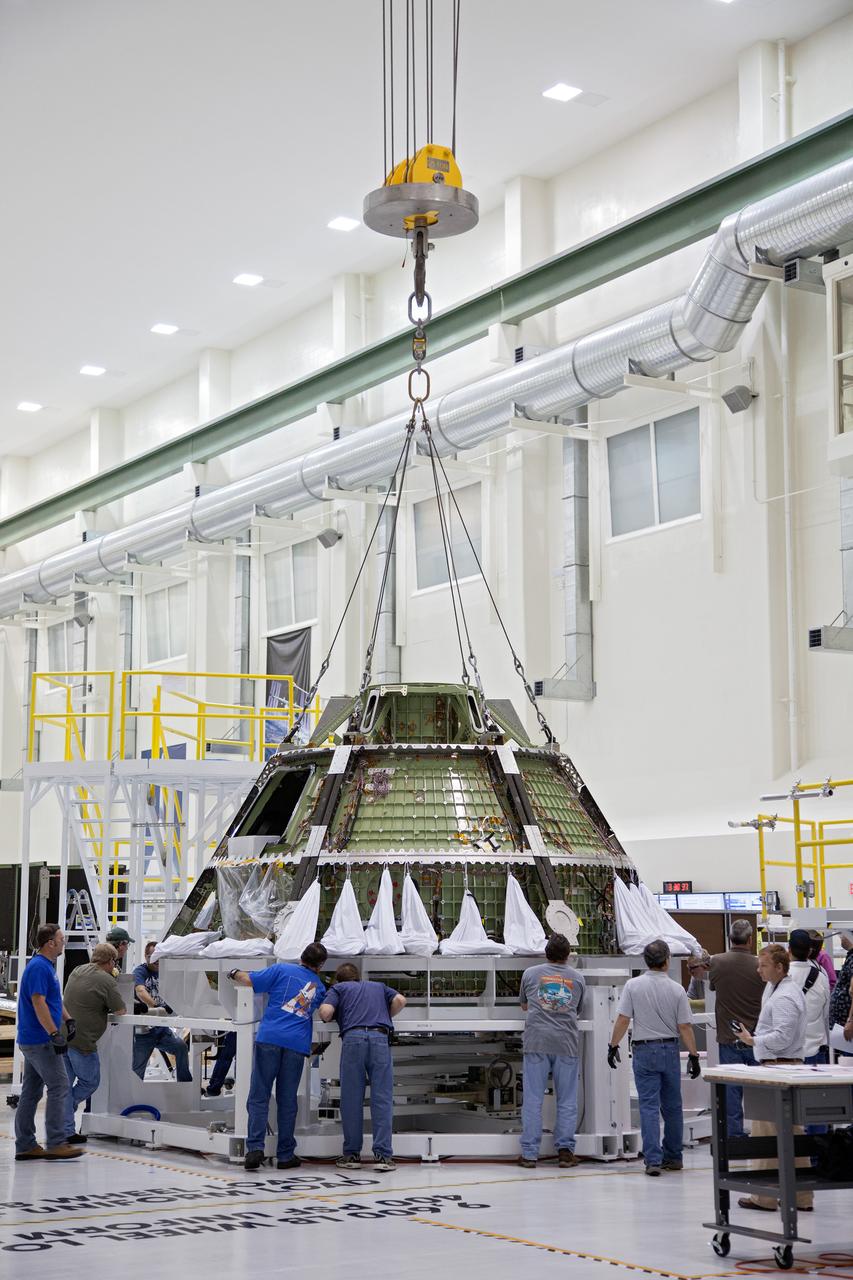
Technicians move the Exploration Flight Test-1 (EFT-1) Orion crew module pressure vessel in the Operations and Checkout (O&C) Building at Kennedy Space Center on March 20, 2013. Part of Batch image transfer from Flickr.
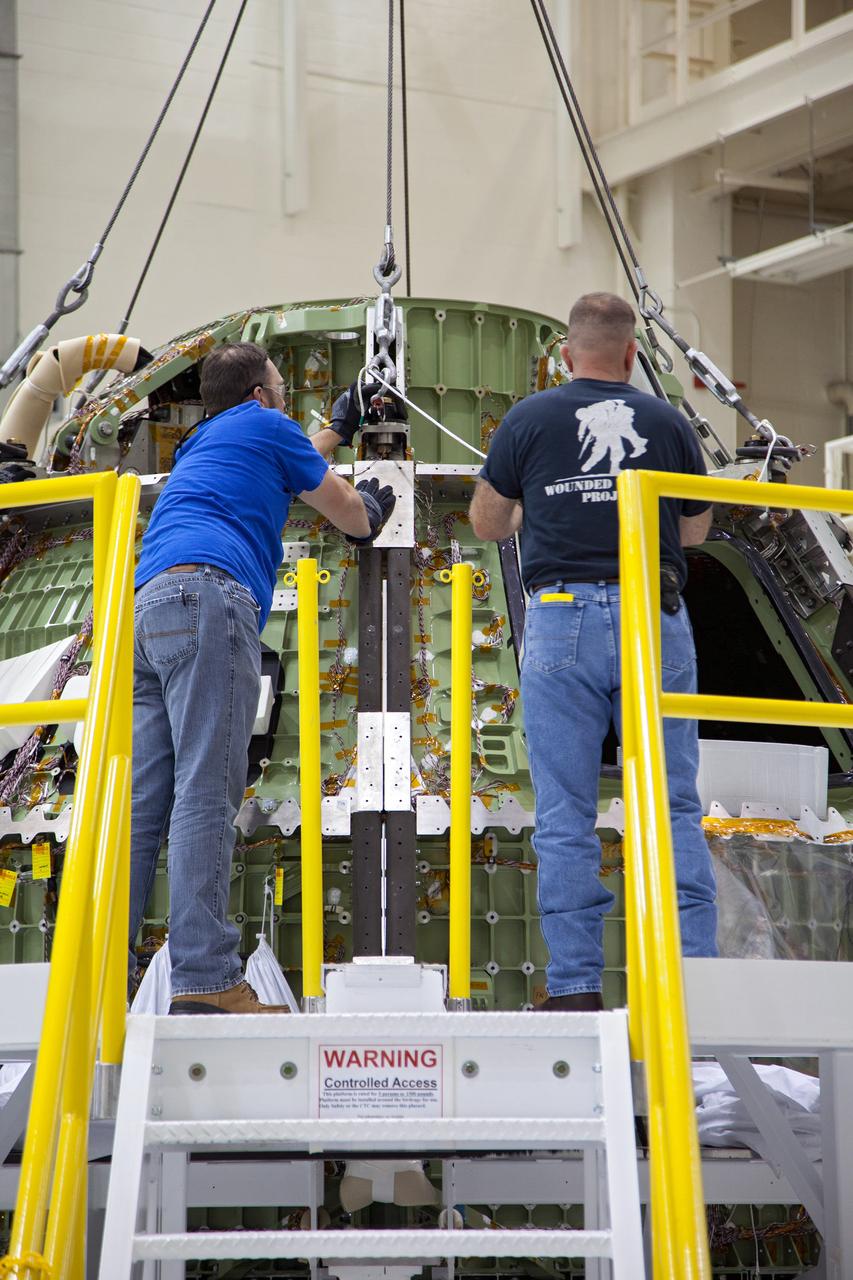
Technicians move the Exploration Flight Test-1 (EFT-1) Orion crew module pressure vessel in the Operations and Checkout (O&C) Building at Kennedy Space Center on March 20, 2013. Part of Batch image transfer from Flickr.
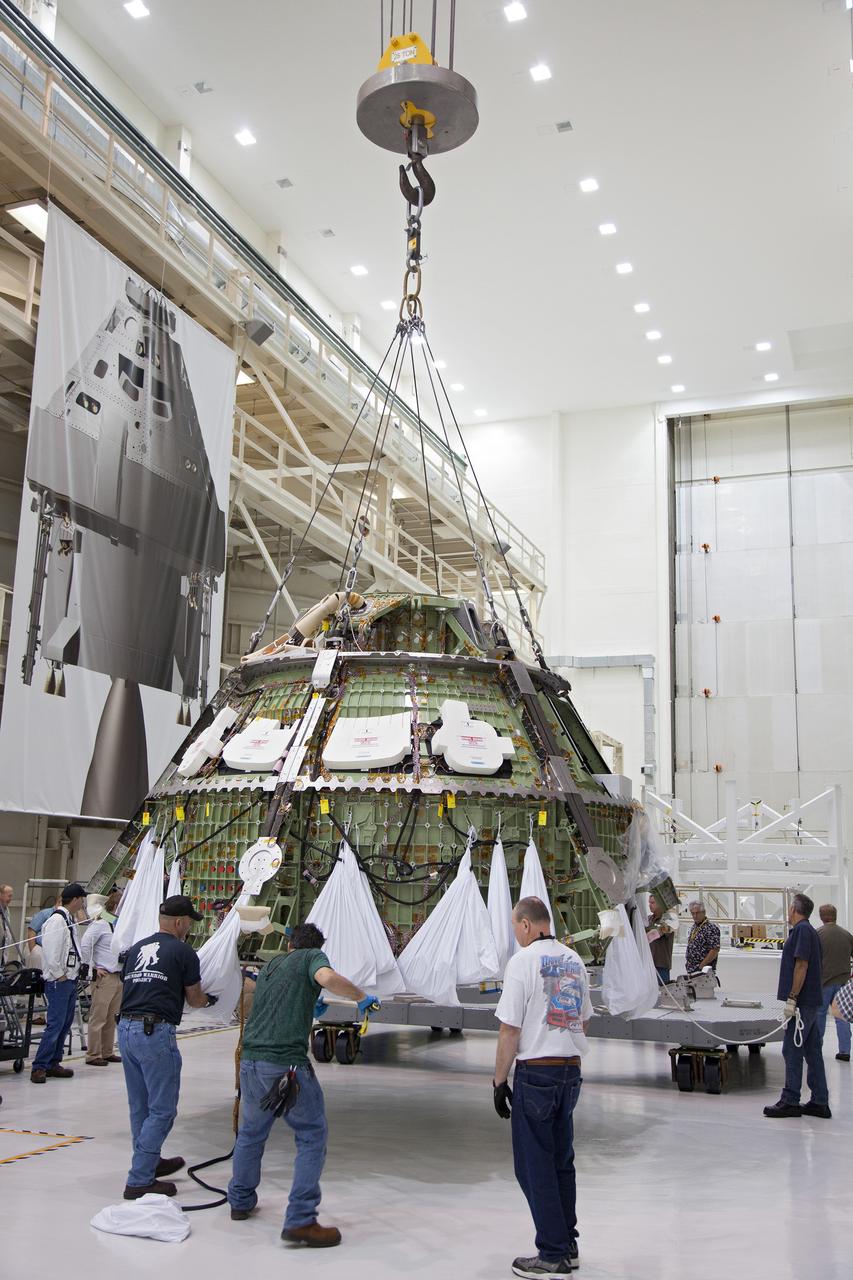
Technicians move the Exploration Flight Test-1 (EFT-1) Orion crew module pressure vessel in the Operations and Checkout (O&C) Building at Kennedy Space Center on March 20, 2013. Part of Batch image transfer from Flickr.
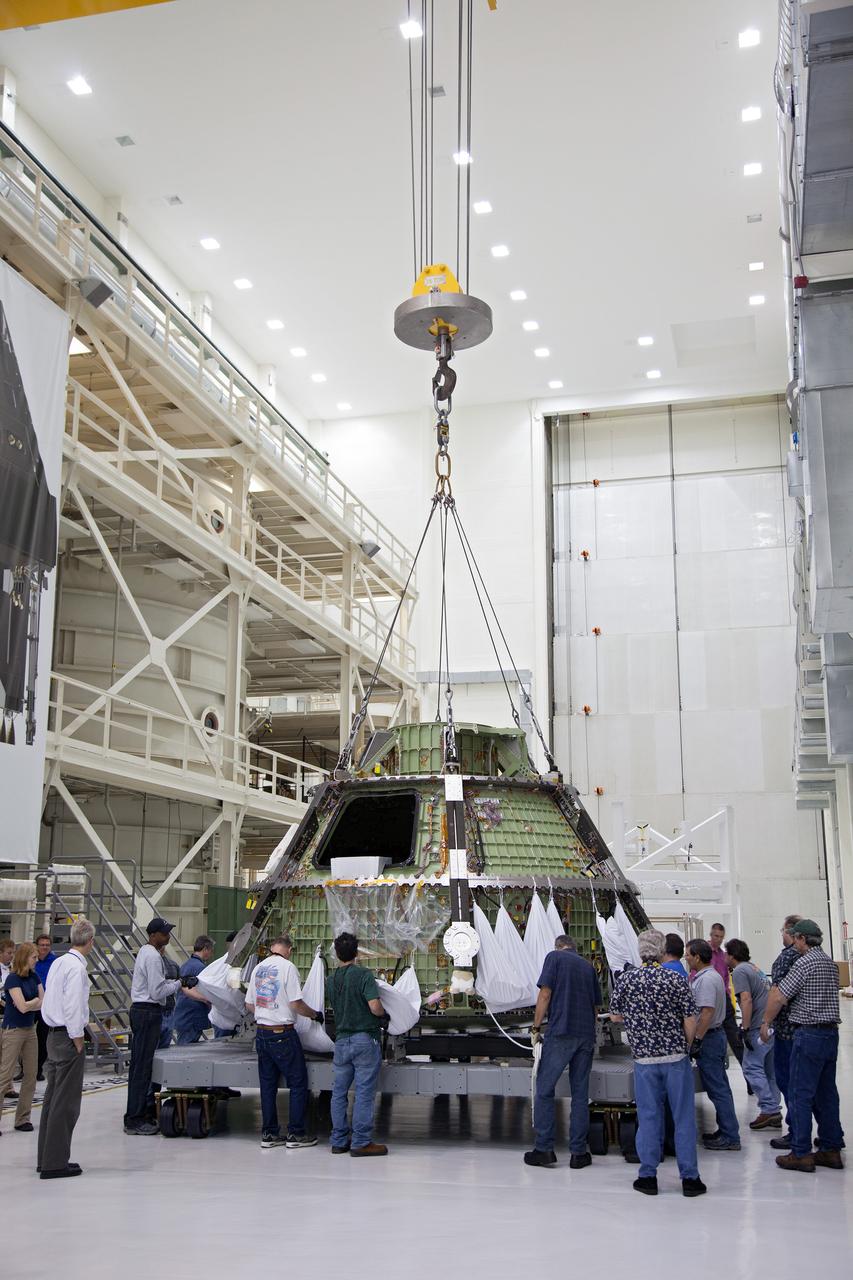
Technicians move the Exploration Flight Test-1 (EFT-1) Orion crew module pressure vessel in the Operations and Checkout (O&C) Building at Kennedy Space Center on March 20, 2013. Part of Batch image transfer from Flickr.
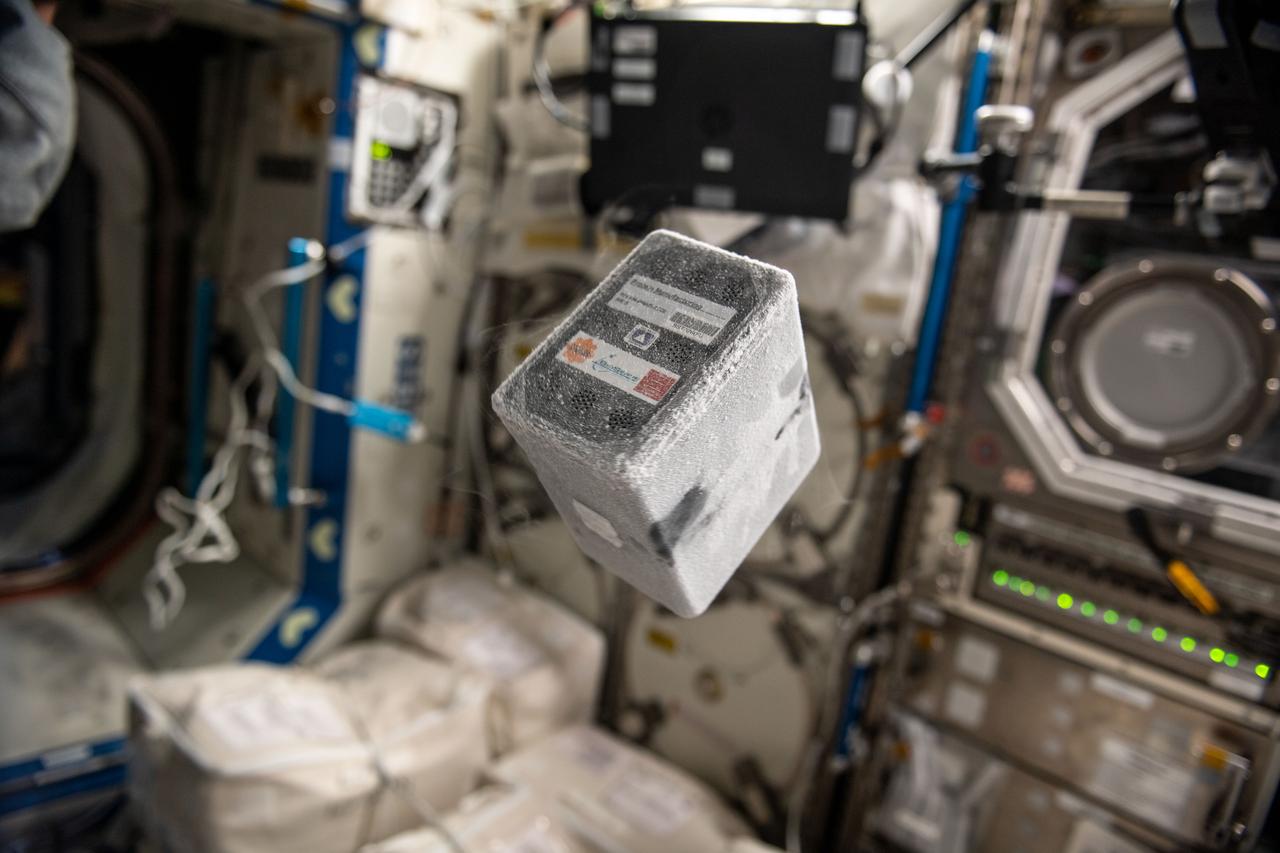
iss067e191182 (7/22/2022) --- A view of the of a Plate Habitat (PHAB) at -20°C prior to insertion into the SABL incubator aboard the International Space Station (ISS). The goal of the Protein Manufacturing project is to demonstrate the use of a novel bioreactor technology for growing high-protein food on the International Space Station (ISS).
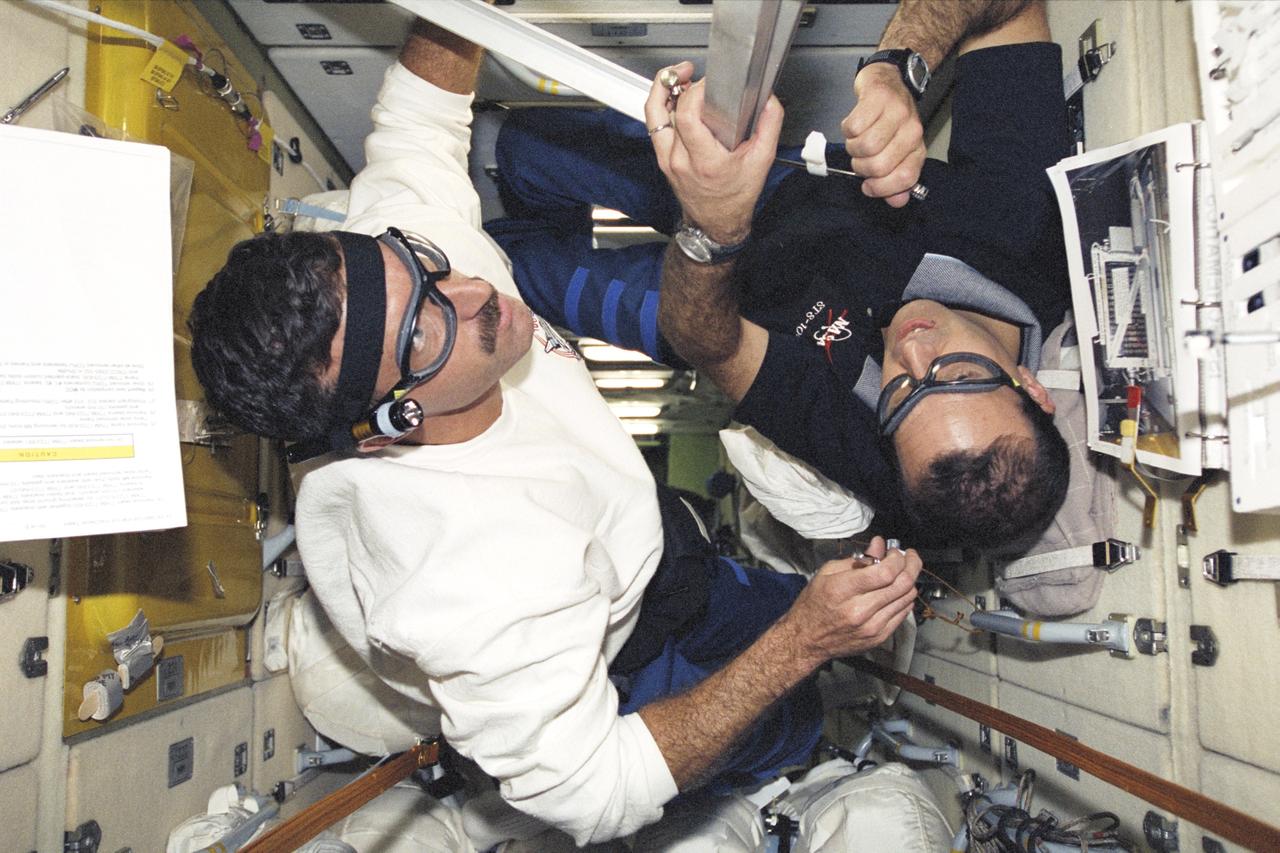
STS106-389-009 (8-20 September 2000) --- Astronauts Daniel C. Burbank (white shirt) and Richard A. Mastracchio, both mission specialists, work with equipment in the functional cargo block (FGB) or Zarya on the International Space Station (ISS).
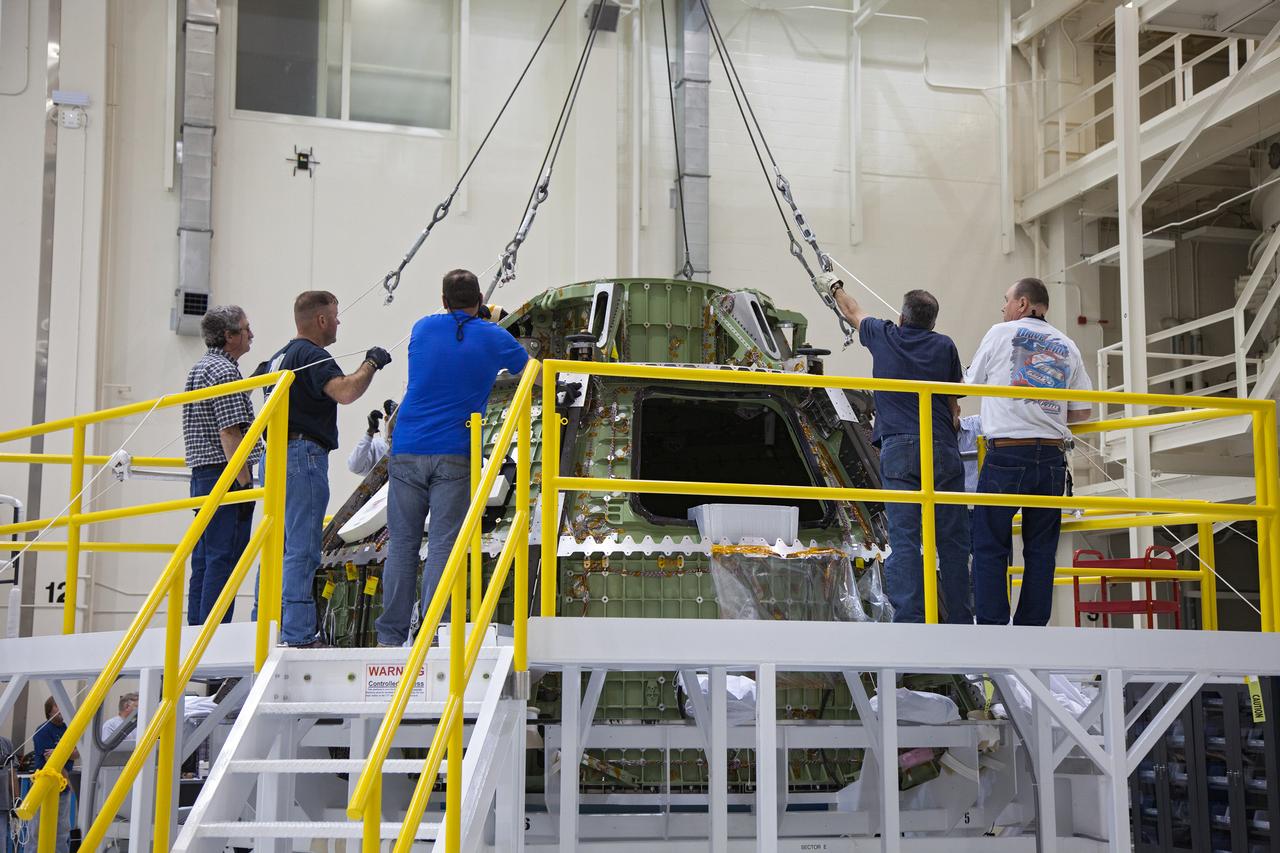
Technicians move the Exploration Flight Test-1 (EFT-1) Orion crew module pressure vessel in the Operations and Checkout (O&C) Building at Kennedy Space Center on March 20, 2013. Part of Batch image transfer from Flickr.
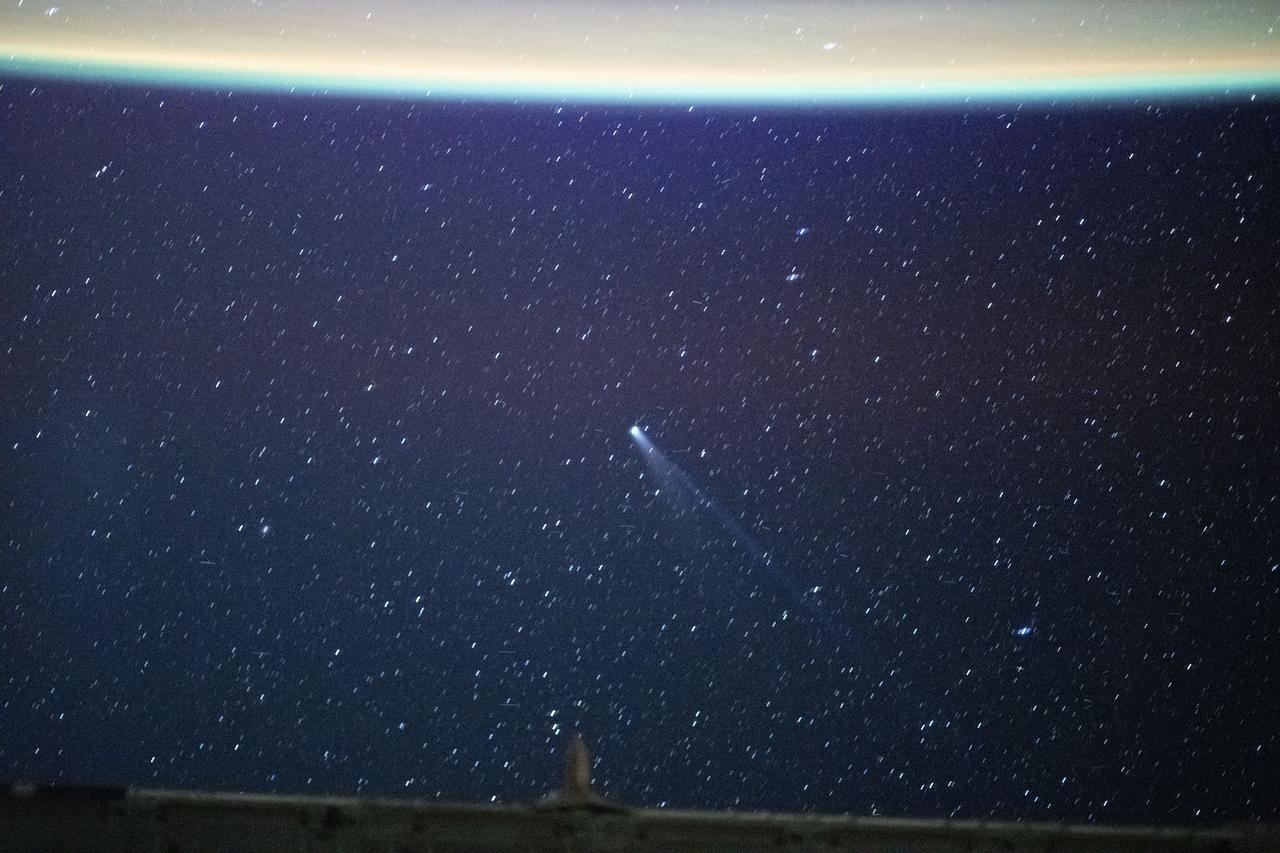
iss073e0916993 (Oct. 20, 2025) --- Comet Lemmon (C/2025 A6) appears approximately 55.4 million miles (89.2 million kilometers) from Earth in this long-exposure photograph taken from the International Space Station. The star trails in the background result from the camera’s extended shutter speed.
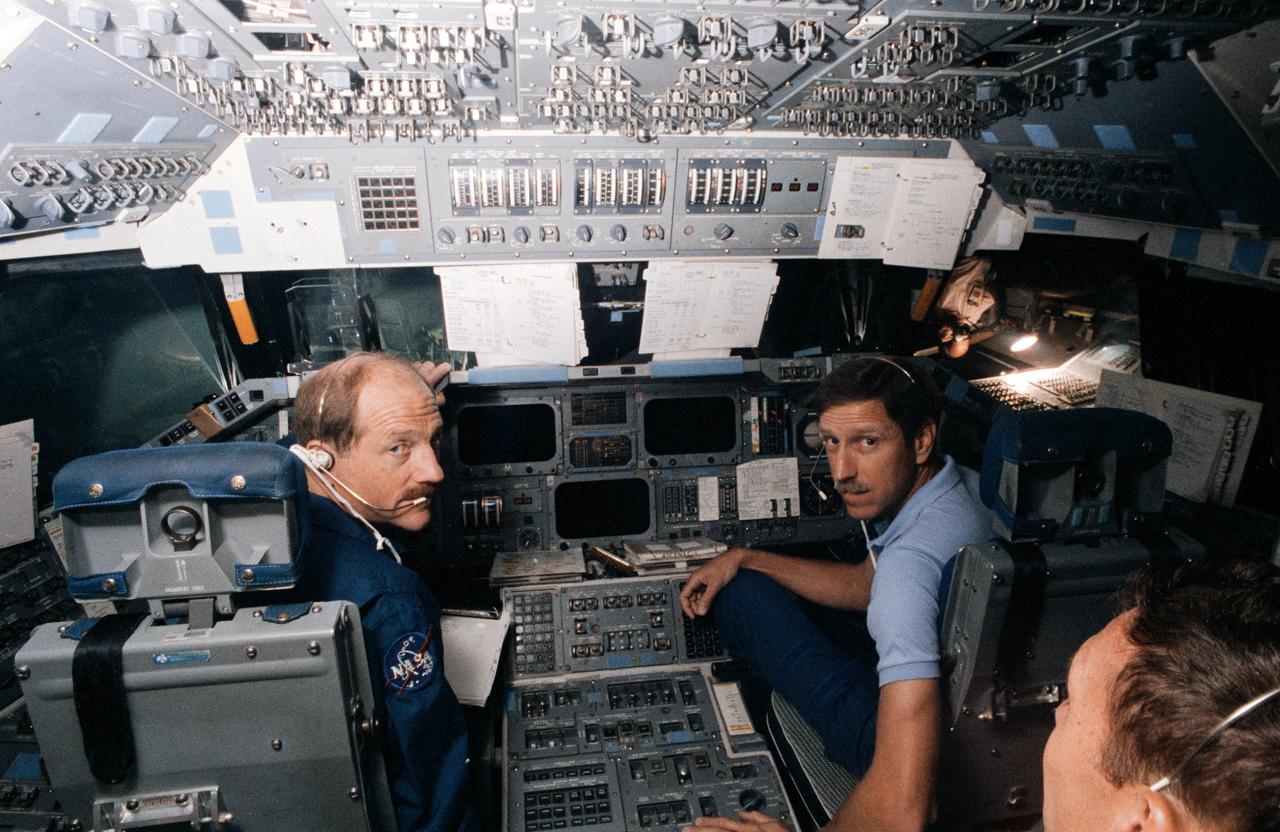
S87-46304 (20 Oct 1987) --- Astronauts Frederick H. (Rick) Hauck, left, STS-26 commander, and Richard O. Covey, pilot, man their respective stations in the Shuttle mission simulator (fixed base) at the Johnson Space Center. A simulation for their anticipated June 1988 flight aboard the space shuttle Discovery began Oct. 20. Astronaut David C. Hilmers, one of three mission specialists for the flight, is partially visible in the foreground.
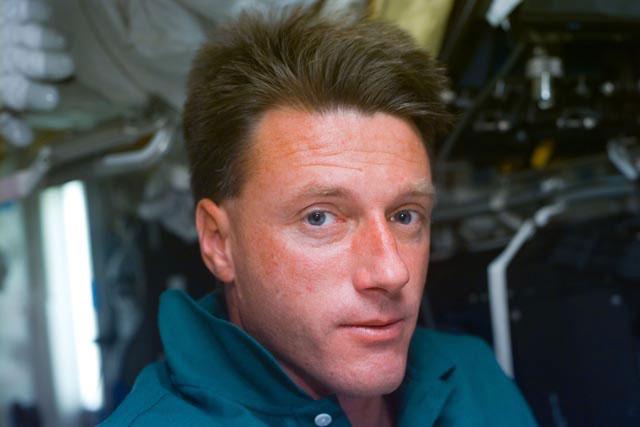
S103-E-5001 (20 December 1999) --- Astronaut C. Michael Foale, making his first mission into space since spending several months aboard the Russian Space Agency's (RSA) Mir space station, is pictured on Discovery's aft flight deck near the end of STS-103's first full day in space. The photo was taken with an electronic still camera (ESC) at 16:09:27 GMT, Dec. 20, 1999.
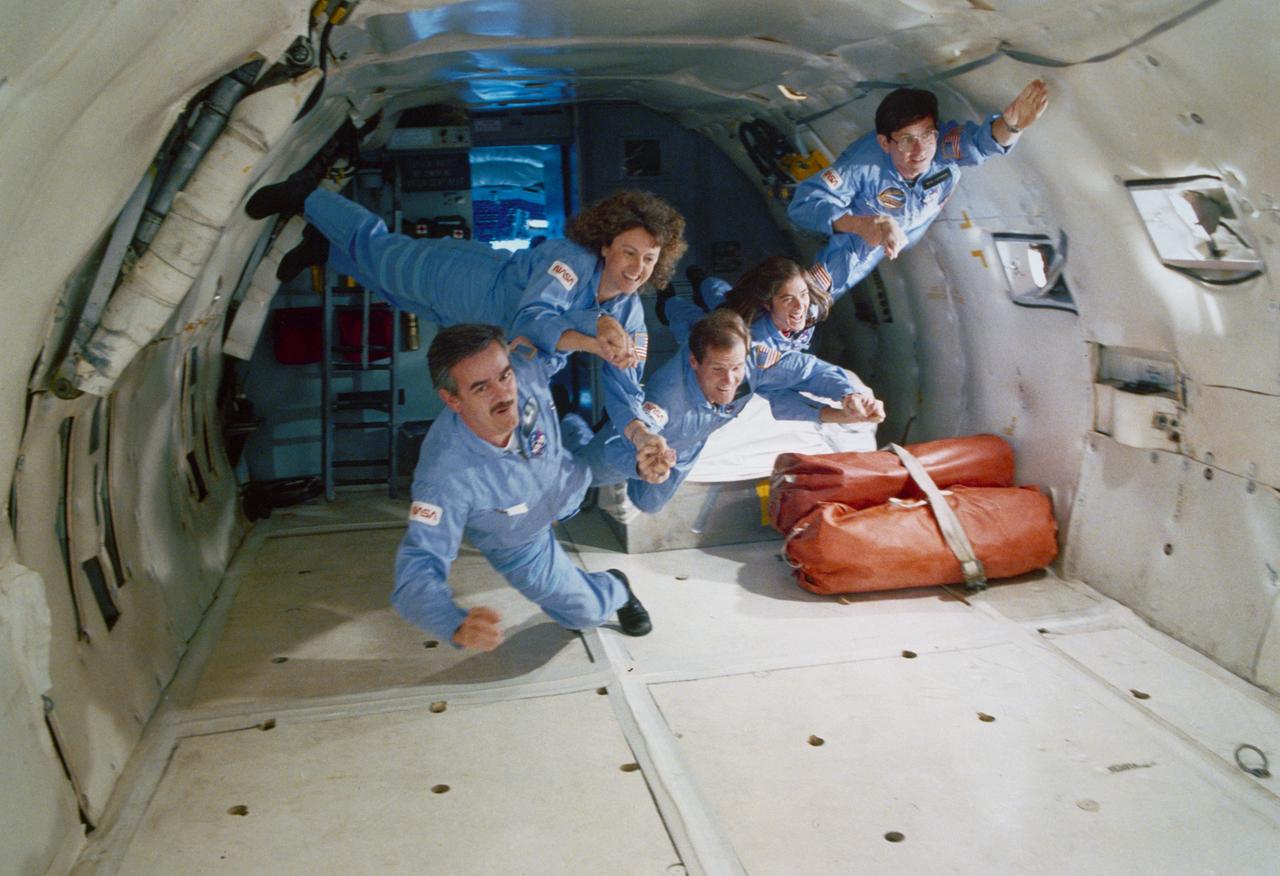
S85-44835 (20 Nov. 1985) --- This flying human chain represents prime and backup payload specialists for two upcoming STS missions. The group, representing trainees for STS-61C later this year and STS-51L early next year, shared some 40 parabolas in NASA?s KSC-135, ?Zero-G? aircraft on Nov. 20. Left to right are Gerard Magilton, RCA backup payload specialist for STS-61C; Sharon Christa McAuliffe, payload specialist/teacher citizen observer for STS-51L; U.S. Rep. Bill Nelson (D., Florida), scheduled for 61-C; Barbara R. Morgan, backup to McAuliffe; and Robert J. Cenker, RCA payload specialist for 61-C. The photo was taken by Keith Meyers, New York Times. Photo credit: NASA
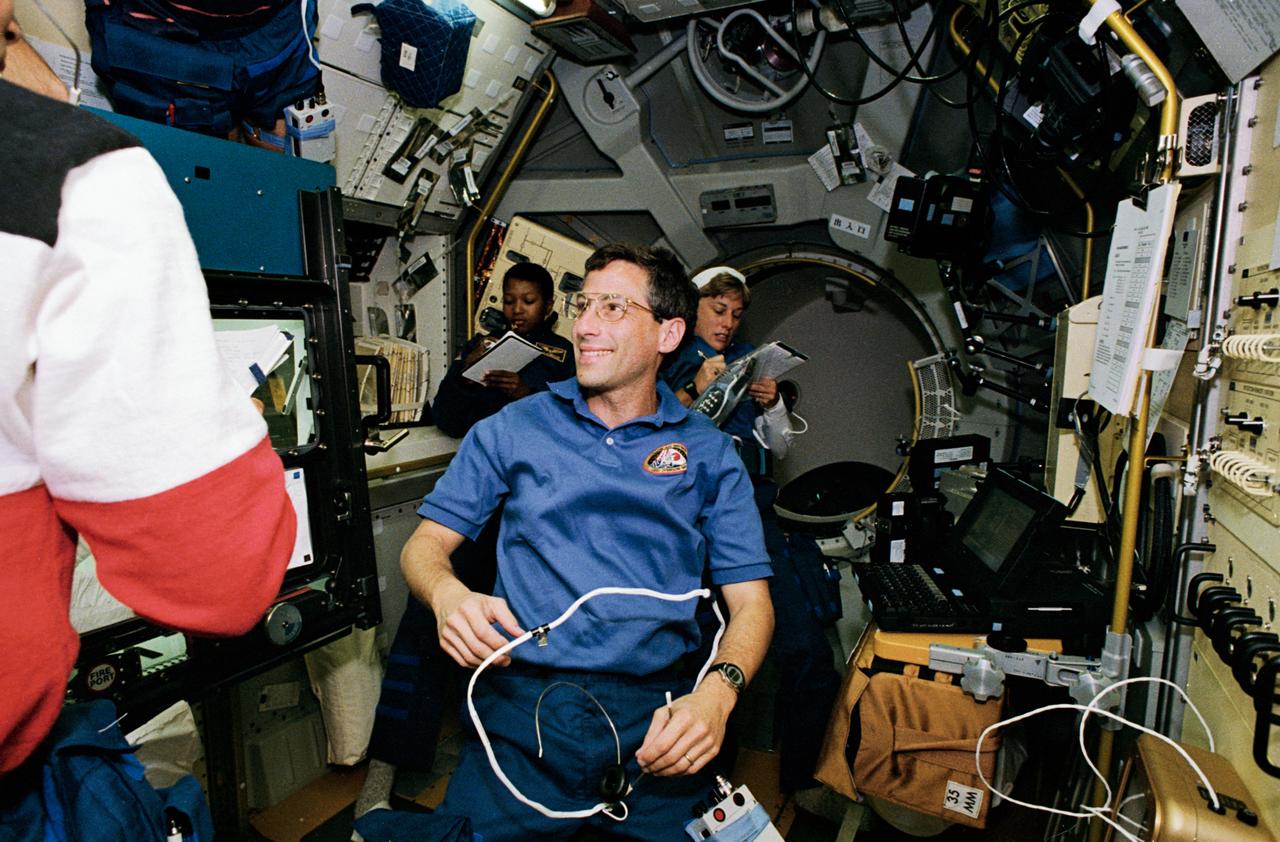
STS047-05-019 (12 - 20 Sept 1992) --- Astronaut Jerome (Jay) Apt, mission specialist, responds to a crew mate's query during a shift change in the Spacelab-J Science Module aboard the Earth-orbiting Space Shuttle Endeavour. Others pictured, left to right, are astronauts Mark C. Lee (immediate foreground, partially out of frame), payload commander; Mae C. Jemison and N. Jan Davis, mission specialists. The four joined two other NASA astronauts and a Japanese payload specialist for eight days aboard Endeavour in support of the joint Japanese-American effort.
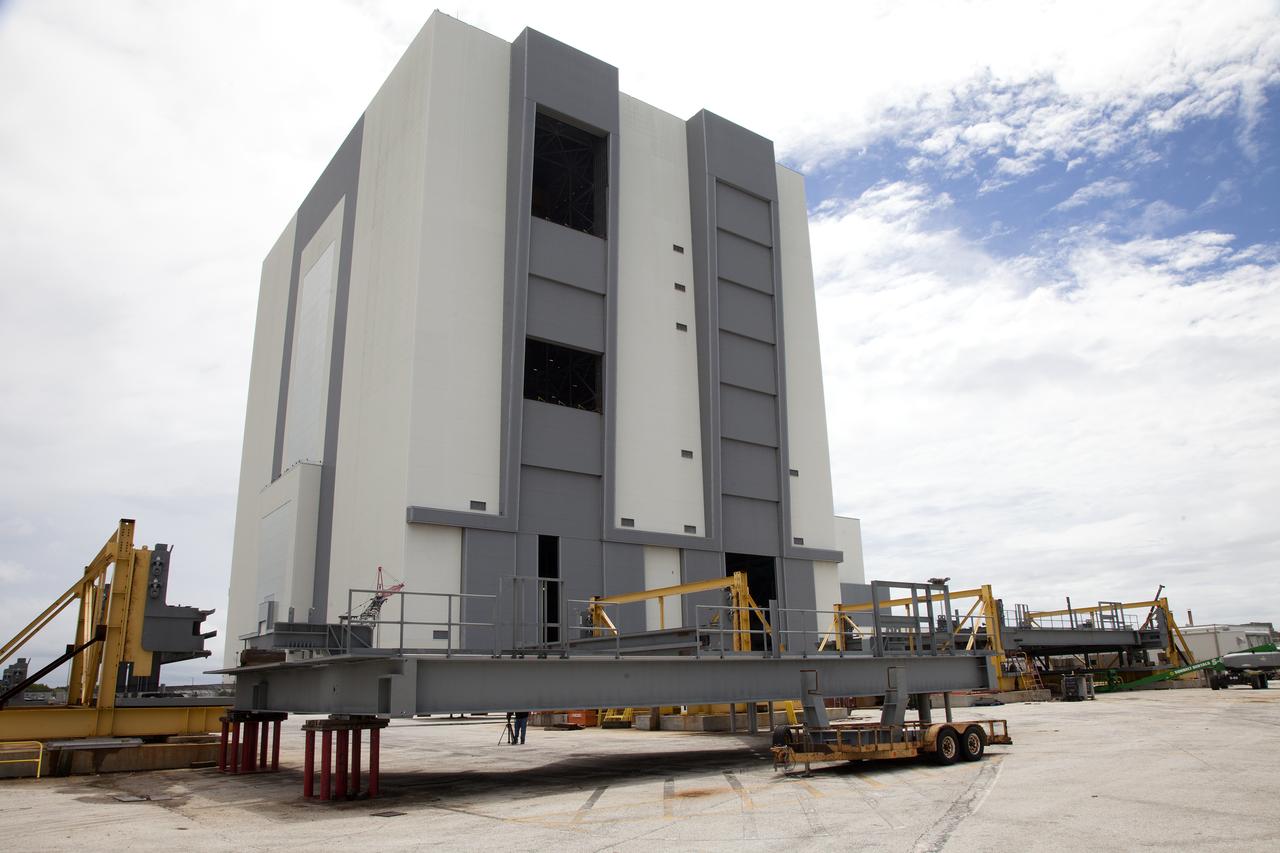
A section of the second half of the C-level platforms, C North, for NASA’s Space Launch System (SLS) rocket, arrives at the agency’s Kennedy Space Center in Florida. The platform was offloaded from a heavy lift transport truck and secured in a staging area in the west parking lot of the Vehicle Assembly Building (VAB). The Ground Systems Development and Operations Program is overseeing upgrades and modifications to VAB High Bay 3 to support processing of the SLS and Orion spacecraft. A total of 10 levels of new platforms, 20 platform halves altogether, will surround the SLS rocket and Orion spacecraft and provide access for testing and processing.
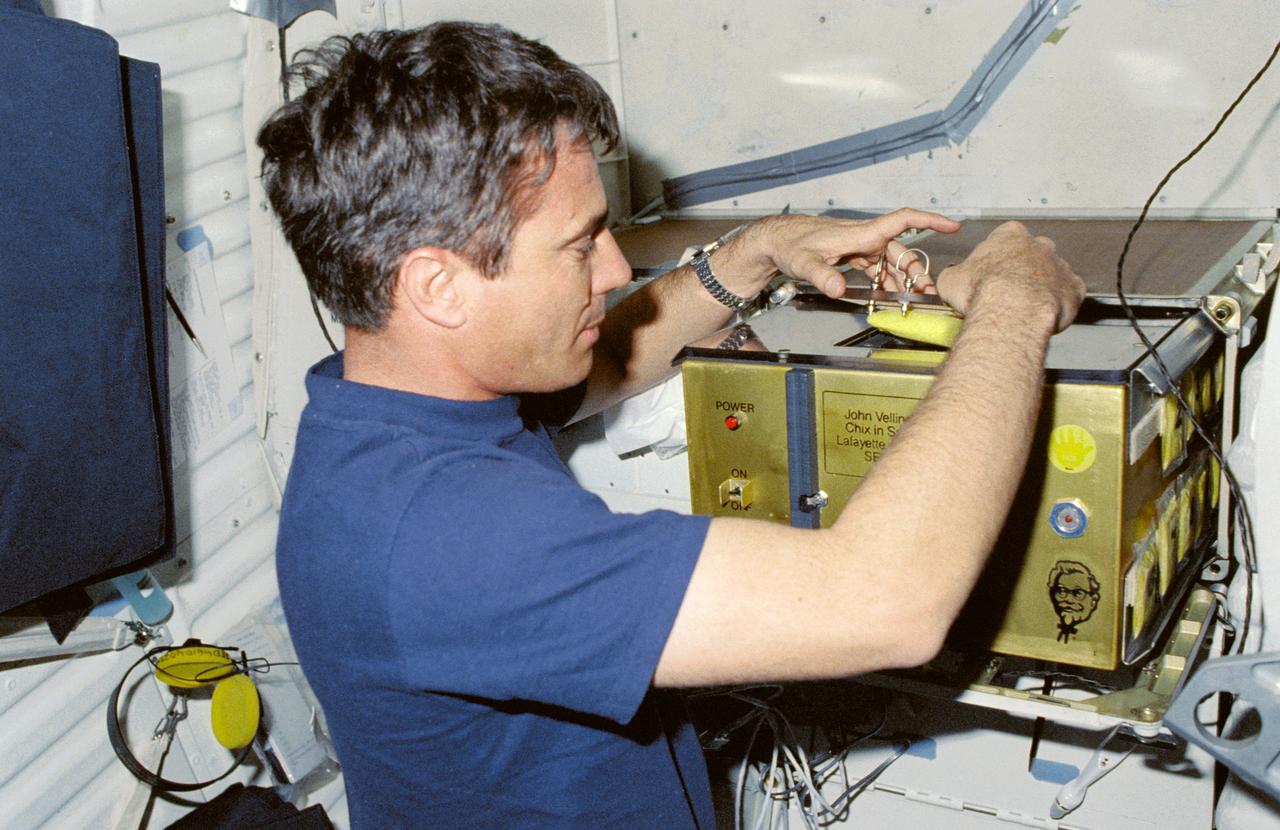
STS029-01-001 (16 Marach 1989) --- Astronaut John E. Blaha, STS-29 pilot, checks an incubator on the mid deck of Earth-orbiting Discovery during Flight Day 4 activity. The incubator is part of a student involvement program experiment titled, "Chicken Embryo Development in Space." The student experimenter is John C. Vellinger. The experiment's sponsor is Kentucky Fried Chicken. This photographic frame was among NASA's third STS-29 photo release. Monday, March 20, 1989. Crewmembers were Astronauts Michael L. Coats, John E. Blaha, James F. Buchli, Robert C. Springer and James P. Bagian.
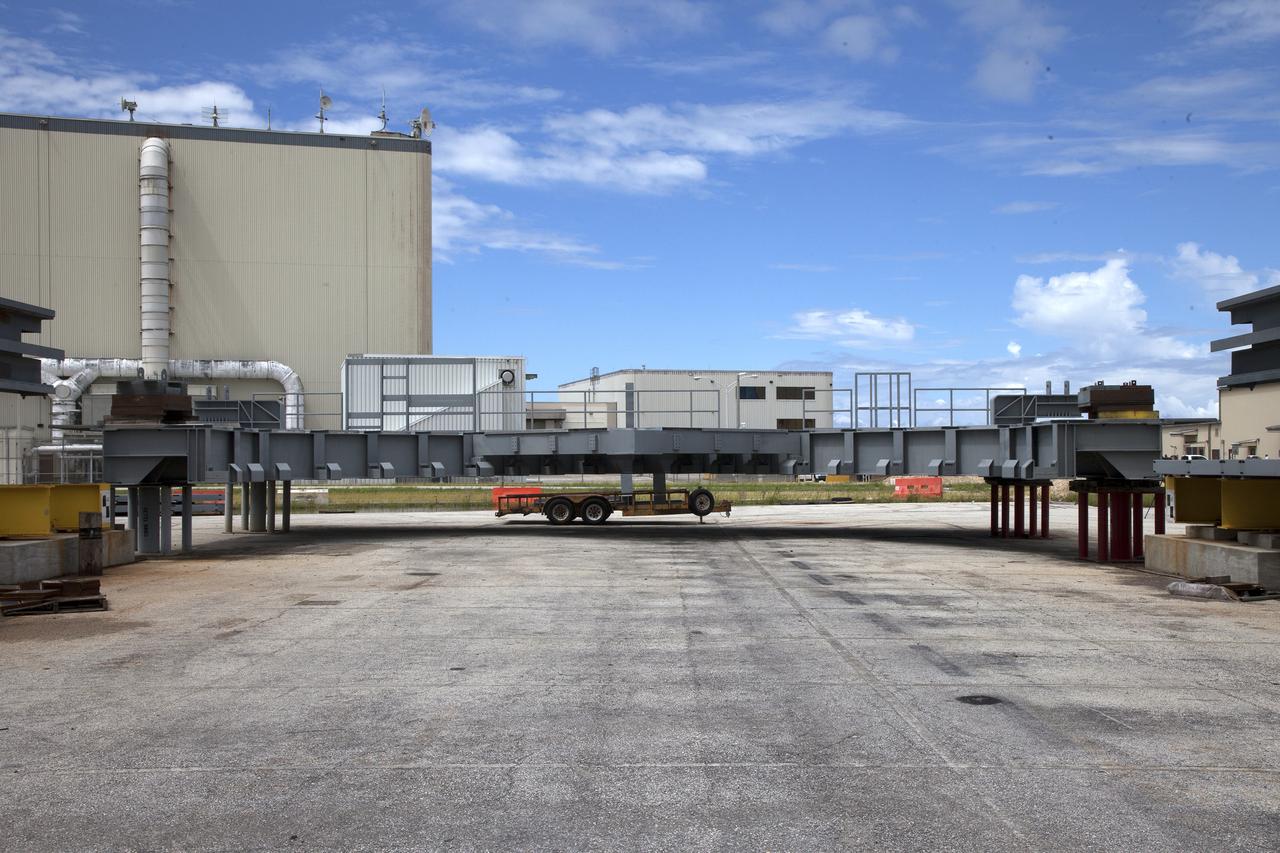
A section of the second half of the C-level platforms, C North, for NASA’s Space Launch System (SLS) rocket, arrives at the agency’s Kennedy Space Center in Florida. The platform was offloaded from a heavy lift transport truck and secured in a staging area in the west parking lot of the Vehicle Assembly Building (VAB). The Ground Systems Development and Operations Program is overseeing upgrades and modifications to VAB High Bay 3 to support processing of the SLS and Orion spacecraft. A total of 10 levels of new platforms, 20 platform halves altogether, will surround the SLS rocket and Orion spacecraft and provide access for testing and processing.
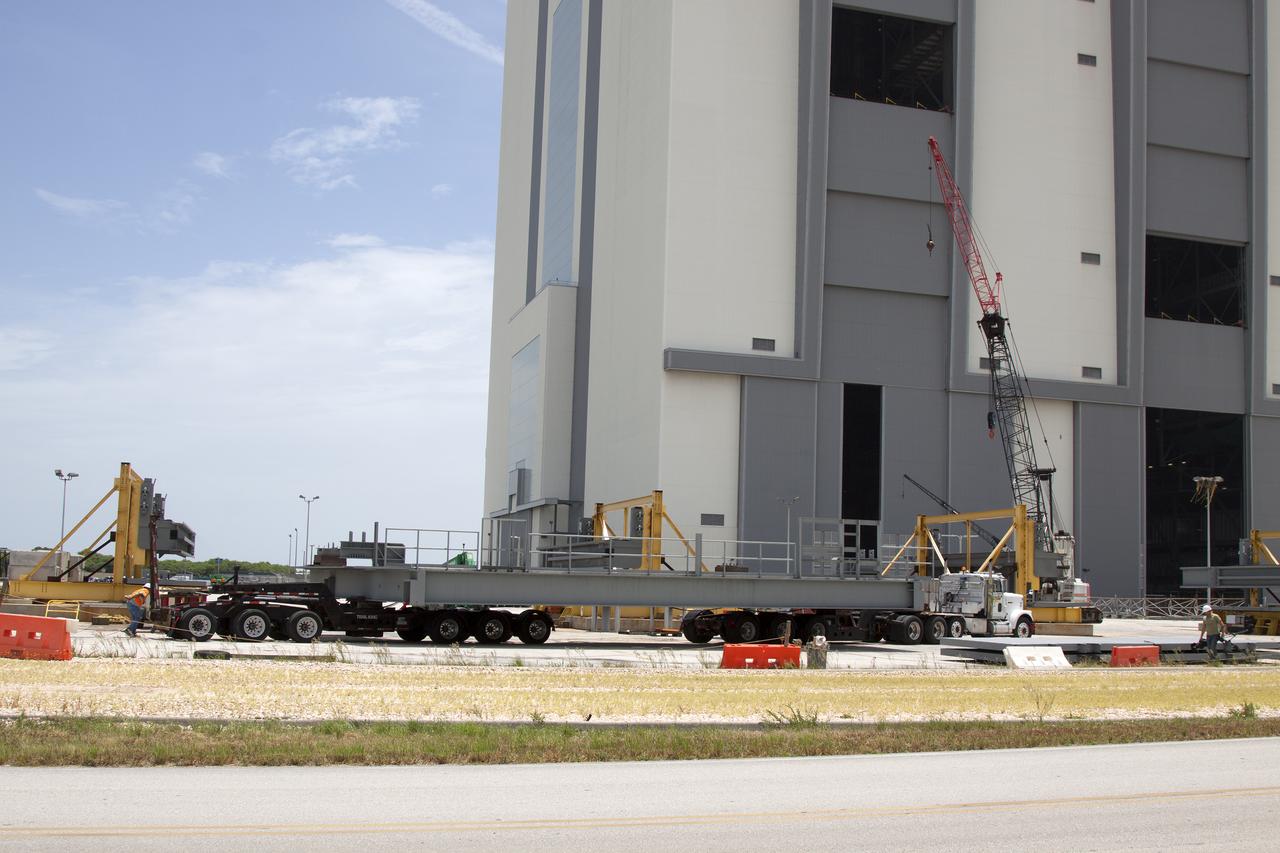
A heavy load transport truck from Tillett Heavy Hauling in Titusville, Florida, arrives at the Vehicle Assembly Building (VAB) at NASA’s Kennedy Space Center in Florida, carrying a section of the first half of the C-level work platforms, C south, for the agency’s Space Launch System (SLS) rocket. The platform will be delivered to the VAB staging area in the west parking lot. The Ground Systems Development and Operations Program is overseeing upgrades and modifications to VAB High Bay 3 to support processing of the SLS and Orion spacecraft. A total of 10 levels of new platforms, 20 platform halves altogether, will surround the SLS rocket and Orion spacecraft and provide access for testing and processing.
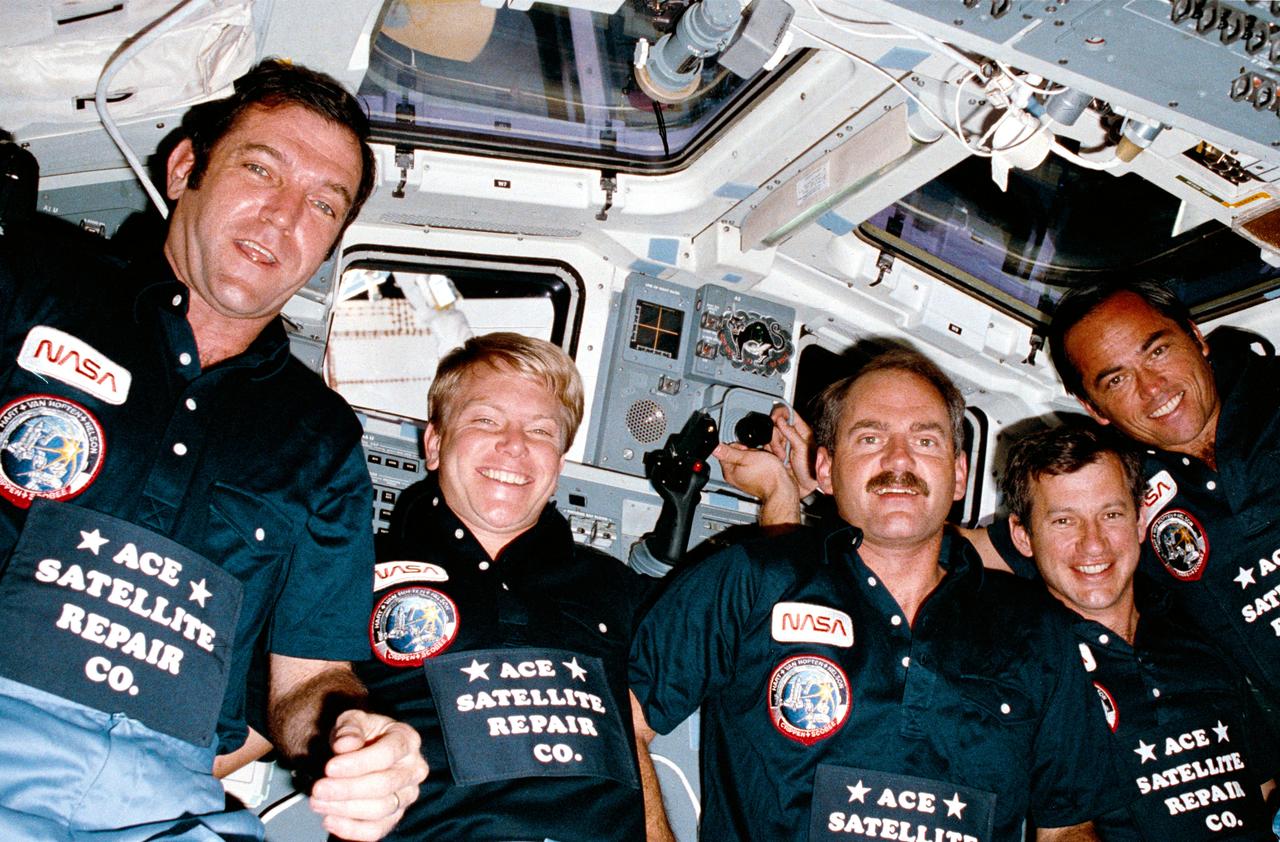
41C-07-262 (6-13 April 1984) --- Automatic exposure on a stationary 35mm camera recorded this "team" photograph of the 41-C astronauts at the aft flight deck of the Earth orbiting Challenger. Astronauts Robert L. Crippen, right, crew commander; and Francis R. (Dick) Scobee, left, pilot, flank the mission specialists--(l-r) George D. Nelson, James D. van Hoften and Terry J. Hart. This picture was among 20 frames of 41-C photography released by NASA on the weekend following the April 13 landing at Edwards Air Force Base and it was used as one of the visuals at the April 24 post-flight press conference. .

A heavy load transport truck from Tillett Heavy Hauling in Titusville, Florida, arrives at the Vehicle Assembly Building (VAB) at NASA’s Kennedy Space Center in Florida, carrying the second section of the first half of the C-level work platforms, C South, for the agency’s Space Launch System (SLS) rocket. The platform will be offloaded in the VAB staging area in the west parking lot. The Ground Systems Development and Operations Program is overseeing upgrades and modifications to VAB High Bay 3 to support processing of the SLS and Orion spacecraft. A total of 10 levels of new platforms, 20 platform halves altogether, will surround the SLS rocket and Orion spacecraft and provide access for testing and processing.
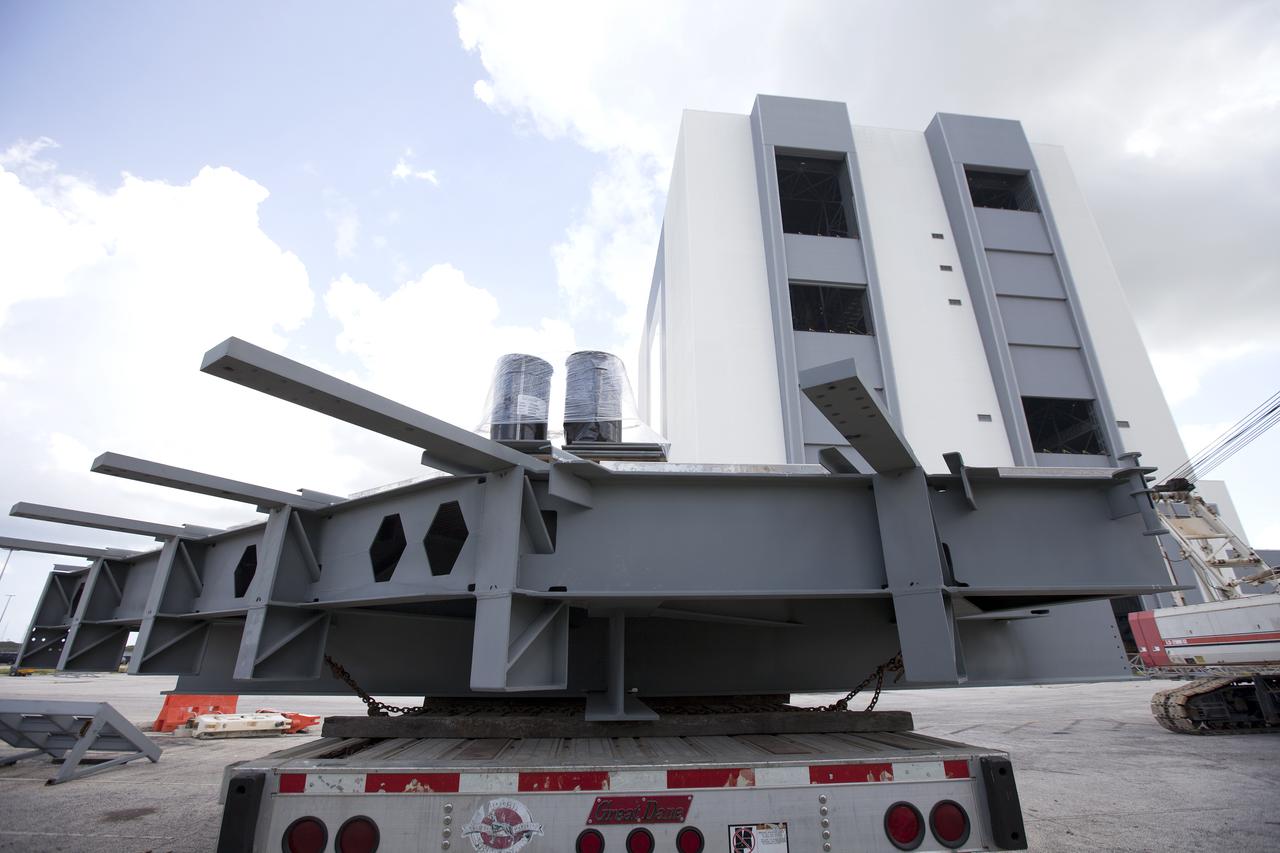
A heavy load transport truck from Tillett Heavy Hauling in Titusville, Florida, arrives at the Vehicle Assembly Building (VAB) at NASA’s Kennedy Space Center in Florida, carrying the second section of the first half of the C-level work platforms, C South, for the agency’s Space Launch System (SLS) rocket. The platform will be offloaded in the VAB staging area in the west parking lot. The Ground Systems Development and Operations Program is overseeing upgrades and modifications to VAB High Bay 3 to support processing of the SLS and Orion spacecraft. A total of 10 levels of new platforms, 20 platform halves altogether, will surround the SLS rocket and Orion spacecraft and provide access for testing and processing.
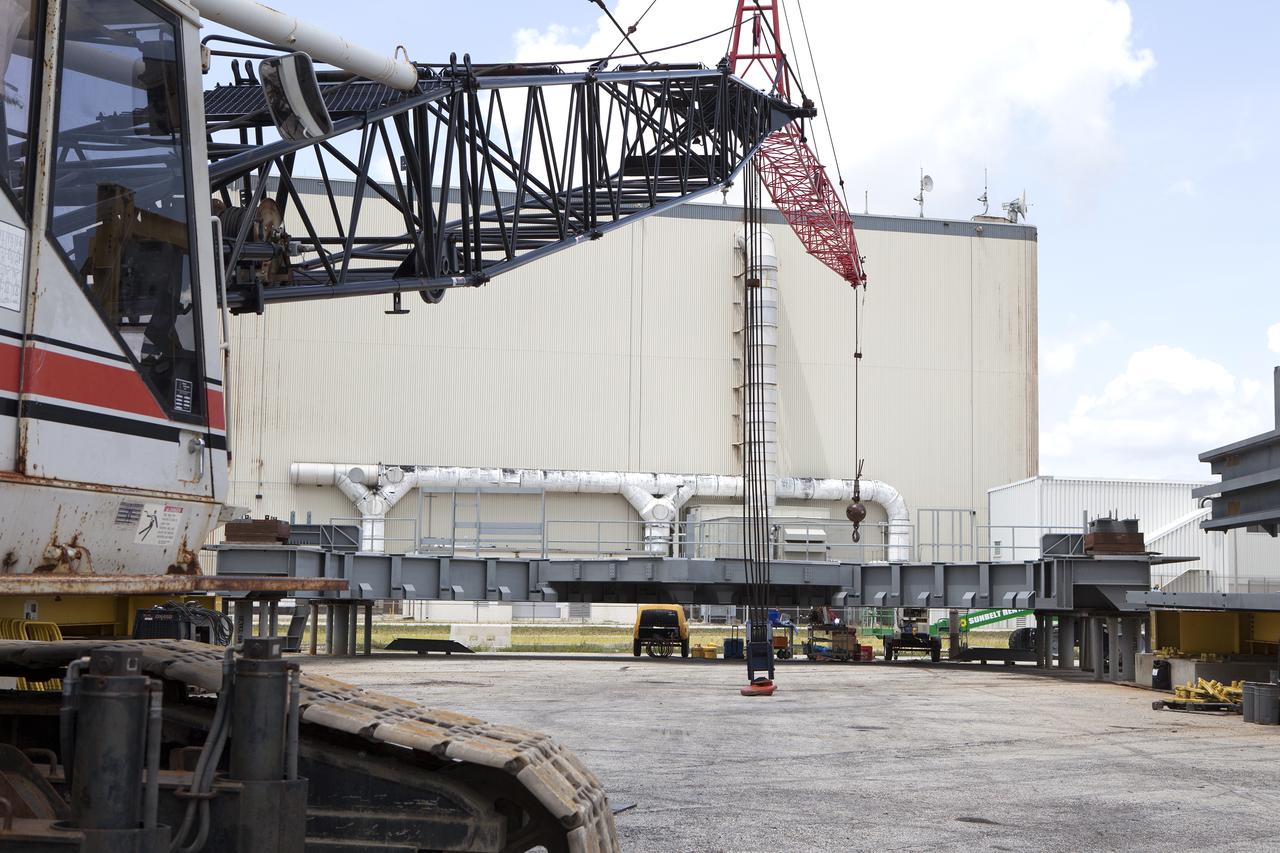
The second section of the first half of the C-level work platforms, C South, for NASA’s Space Launch System (SLS) rocket was offloaded from a heavy transport truck in a staging area on the west side of the Vehicle Assembly Building (VAB) at the agency’s Kennedy Space Center in Florida. The Ground Systems Development and Operations Program is overseeing upgrades and modifications to VAB High Bay 3 to support processing of the SLS and Orion spacecraft. A total of 10 levels of new platforms, 20 platform halves altogether, will surround the SLS rocket and Orion spacecraft and provide access for testing and processing.
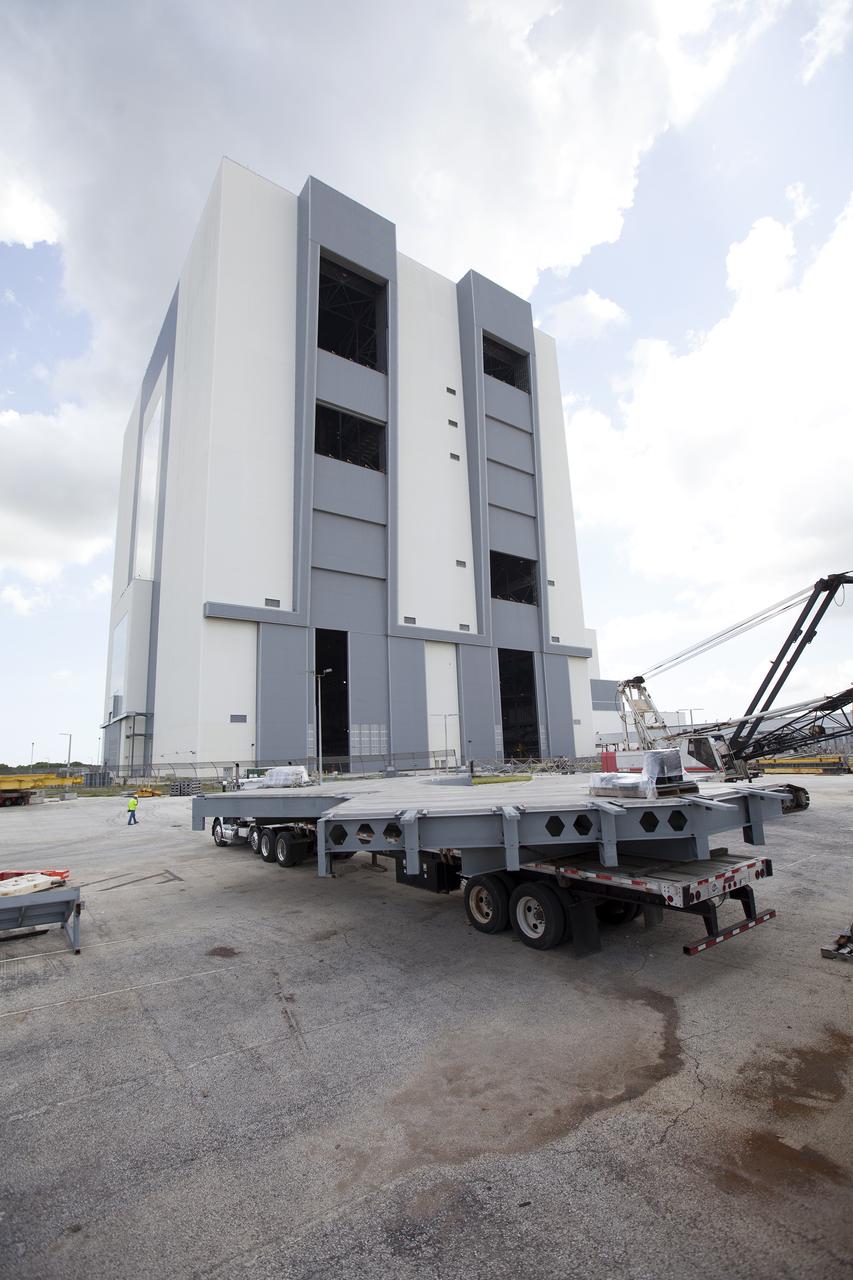
A heavy load transport truck from Tillett Heavy Hauling in Titusville, Florida, arrives at the Vehicle Assembly Building (VAB) at NASA’s Kennedy Space Center in Florida, carrying the second section of the first half of the C-level work platforms, C South, for the agency’s Space Launch System (SLS) rocket. The platform will be offloaded in the VAB staging area in the west parking lot. The Ground Systems Development and Operations Program is overseeing upgrades and modifications to VAB High Bay 3 to support processing of the SLS and Orion spacecraft. A total of 10 levels of new platforms, 20 platform halves altogether, will surround the SLS rocket and Orion spacecraft and provide access for testing and processing.
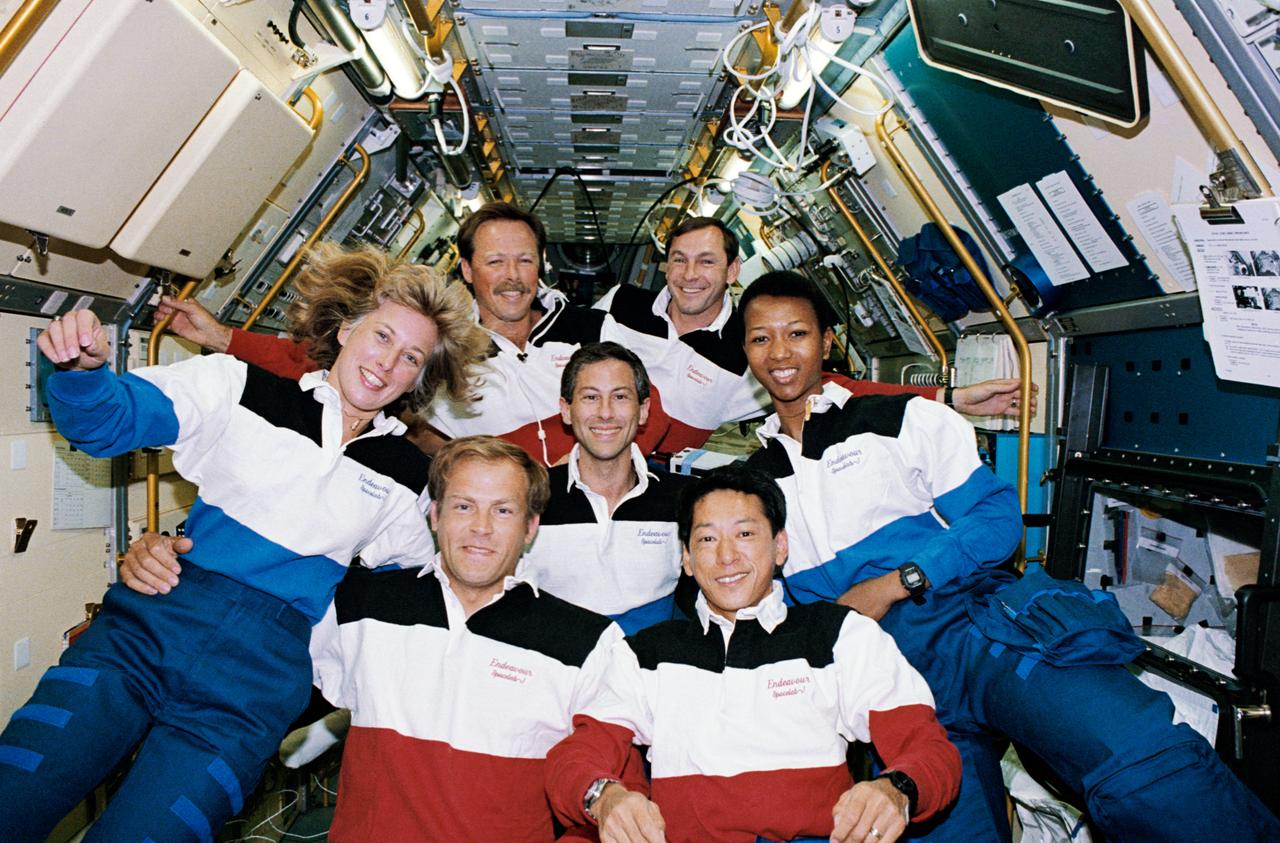
STS047-09-009 (12 - 20 Sept 1992) --- The seven crew members sharing eight days of research in support of Spacelab-J pose for the traditional inflight portrait in the Science Module. Pictured, left to right, back row, are Robert L. Gibson, mission commander; and Curtis L. Brown, Jr., pilot; middle row, N. Jan Davis, Jerome (Jay) Apt and Mae C. Jemison, all mission specialists; and front row, Mark C. Lee, payload commander, and Mamoru Mohri, payload specialist representing Japan's National Space Development Agency (NASDA).
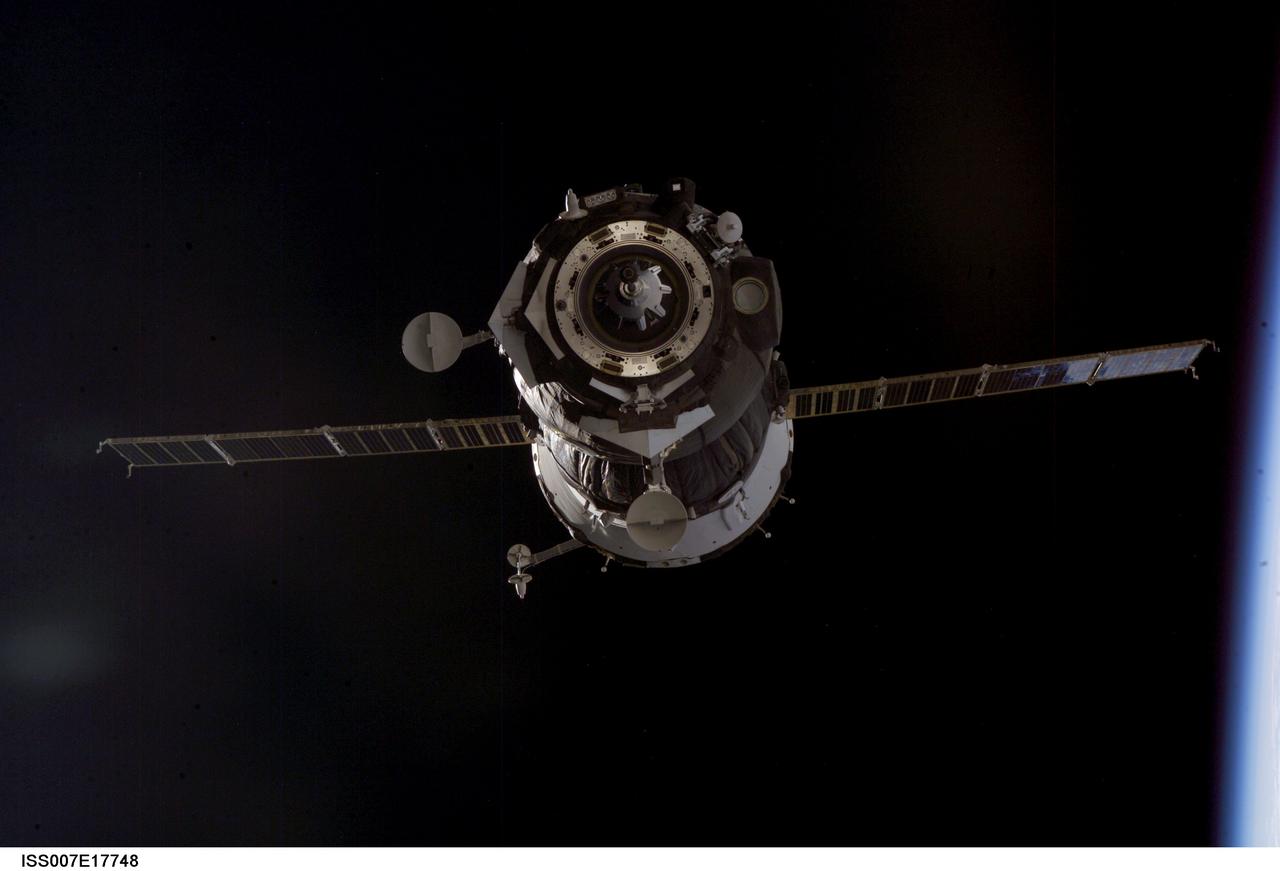
ISS007-E-17748 (20 October 2003) --- Two days after launching from Kazakhstan, the Soyuz TMA-3 spacecraft, carrying the two Expedition 8 crewmembers, astronaut C. Michael Foale, American commander and NASA ISS science officer; and Russian cosmonaut Alexander Kaleri, flight engineer and Soyuz commander, along with European Space Agency astronaut Pedro Duque, docked with the International Space Station at 2:16 a.m. CDT (0716 GMT) October 20. At the time of the actual docking, both spacecraft were orbiting Earth above Russia.
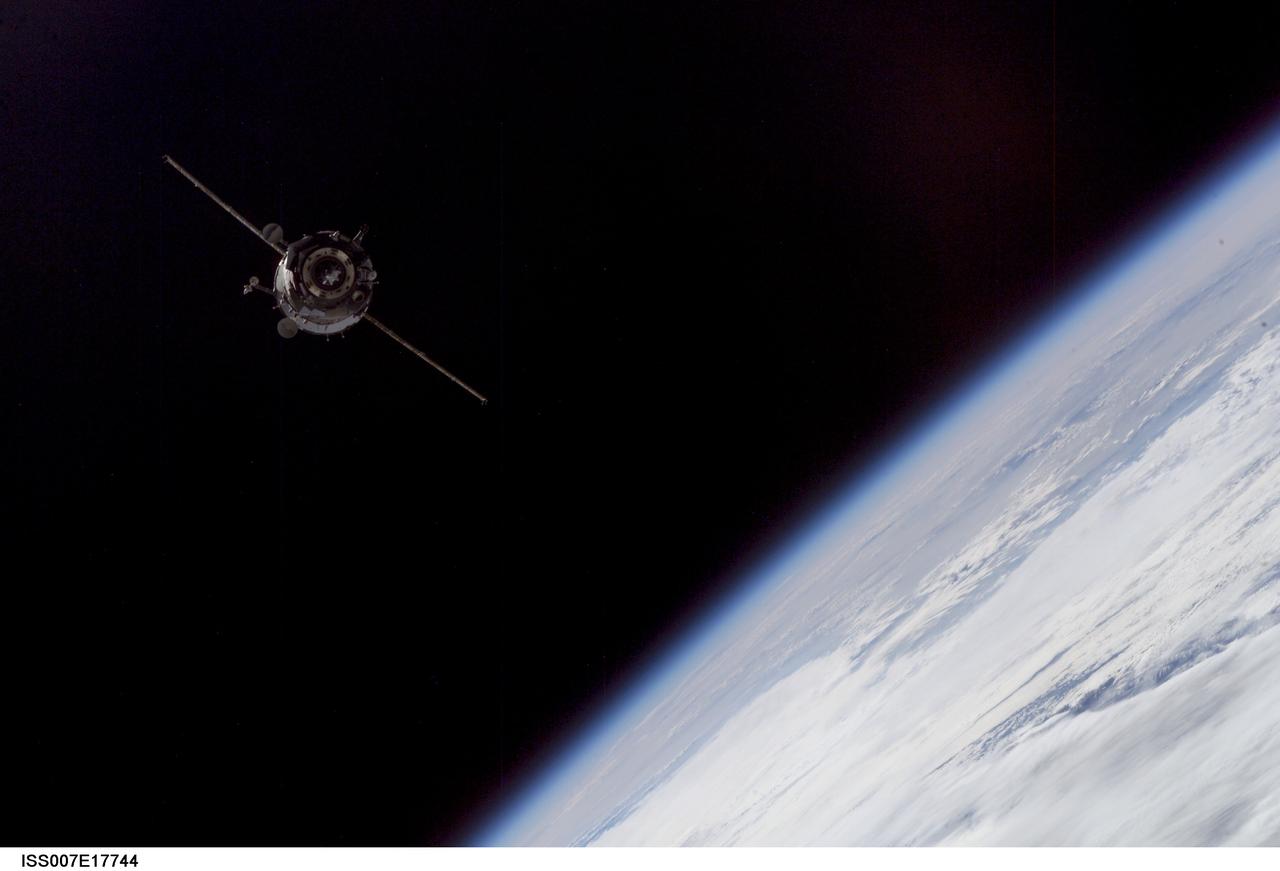
ISS007-E-17744 (20 October 2003) --- This picture of a distant Soyuz TMA-3 spacecraft was recorded by one of the Expedition 7 crewmembers aboard the International Space Station (ISS). Two days after launching from Kazakhstan, the Soyuz, carrying the two Expedition 8 crewmembers, astronaut C. Michael Foale, American commander and NASA ISS science officer, and Russian cosmonaut Alexander Kaleri, flight engineer and Soyuz commander, along with European Space Agency astronaut Pedro Duque, docked with the Station at 2:16 a.m. CDT (0716 GMT) October 20. At the time of the actual docking, both spacecraft were orbiting Earth above Russia.
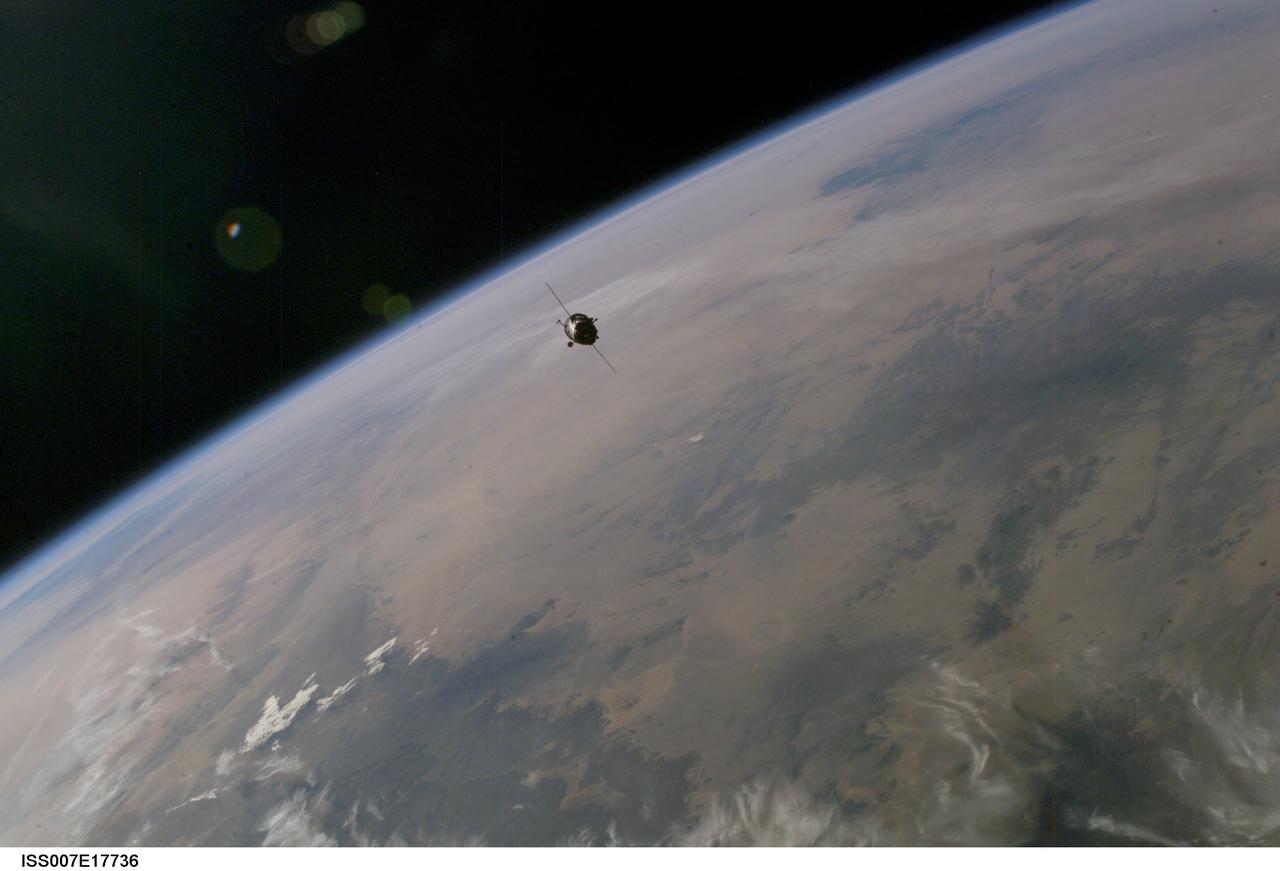
ISS007-E-17736 (20 October 2003) --- This picture of a distant Soyuz TMA-3 spacecraft was recorded by one of the Expedition 7 crewmembers aboard the International Space Station (ISS). Two days after launching from Kazakhstan, the Soyuz, carrying the two Expedition 8 crewmembers, astronaut C. Michael Foale, American commander and NASA ISS science officer, and Russian cosmonaut Alexander Kaleri, flight engineer and Soyuz commander, along with European Space Agency astronaut Pedro Duque, docked with the Station at 2:16 a.m. CDT (0716 GMT) October 20. At the time of the actual docking, both spacecraft were orbiting Earth above Russia.
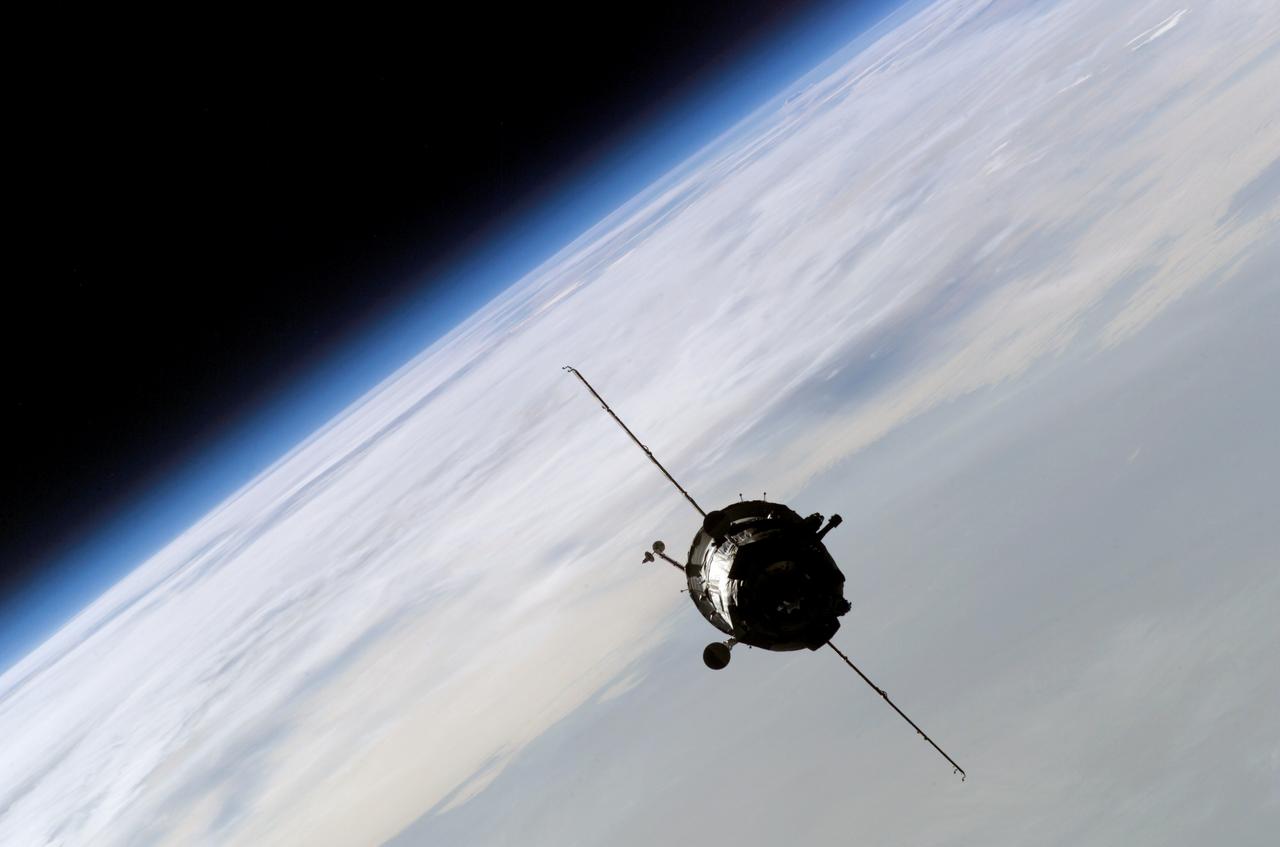
ISS007-E-17730 (20 October 2003) --- Two days after launching from Kazakhstan, the Soyuz TMA-3 spacecraft, carrying the two Expedition 8 crewmembers, astronaut C. Michael Foale, American commander and NASA ISS science officer; and Russian cosmonaut Alexander Kaleri, flight engineer and Soyuz commander, along with European Space Agency astronaut Pedro Duque, docked with the International Space Station at 2:16 a.m. CDT (0716 GMT) October 20. At the time of the actual docking, both spacecraft were orbiting Earth above Russia.
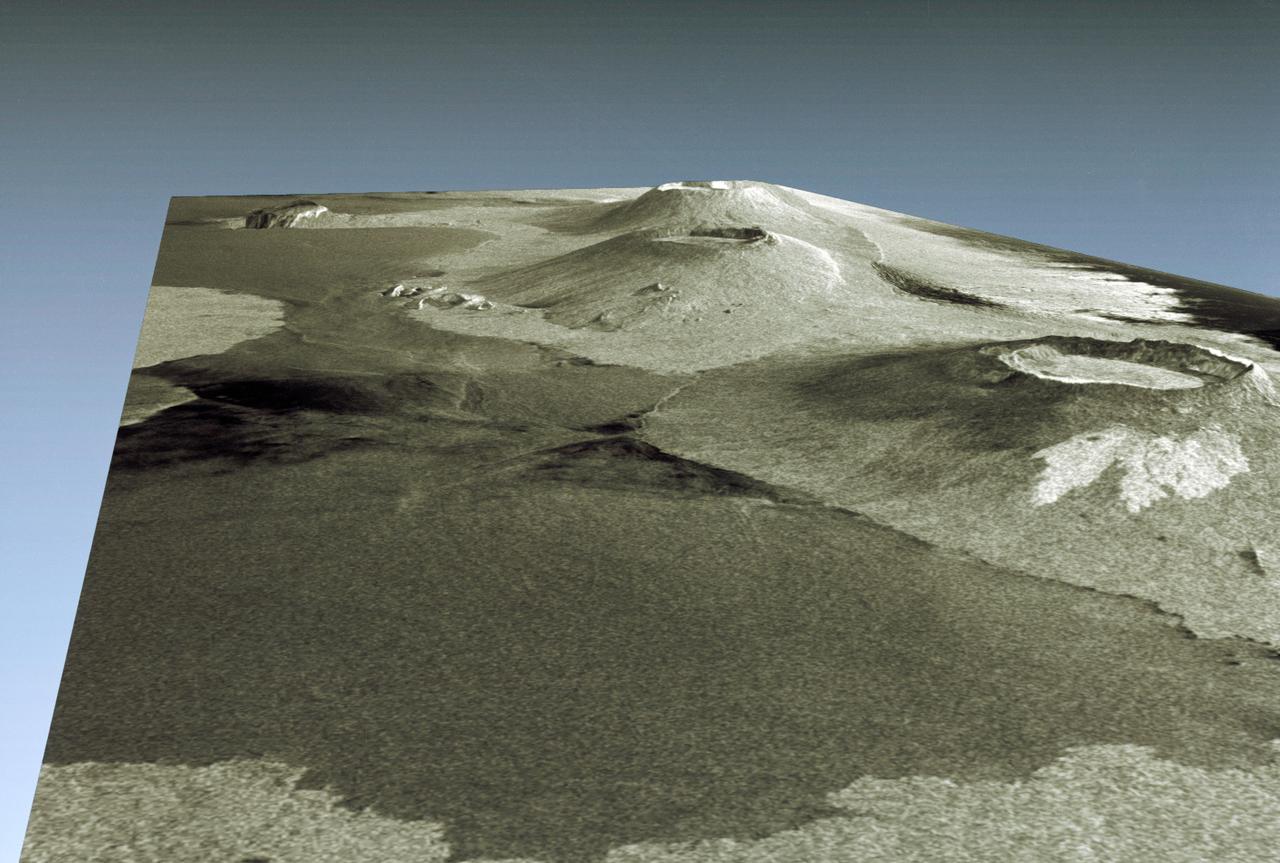
STS059-S-085 (18 April 1994) --- This is a three-dimensional perspective view of part of Isla Isabela in the western Galapagos Islands. It was taken by the L-Band radar in HH polarization from the Spaceborne Imaging Radar-C and X-Band Synthetic Aperture Radar (SIR-C/X-SAR) on the 40th orbit of the Space Shuttle Endeavour. This view was constructed by overlaying a SIR-C radar image on a U.S. Geological Survey digital elevation map. The image is centered at about .5 degrees south latitude and 91 degrees west longitude, and covers an area of 75 by 60 kilometers. The radar incidence angle at the center of the image is about 20 degrees. The western Galapagos Islands, which lie about 1200 kilometers west of Ecuador in the eastern Pacific, have six active volcanoes similar to the volcanoes found in Hawaii. Since the time of Charles Darwin's visit to the area in 1835, there have been over 60 recorded eruptions on these volcanoes. This SIR-C/X-SAR image of Alcedo and Sierra Negra volcanoes shows the rougher lava flows as bright features, while ash deposits and smooth pahoehoe lava flows appear dark. The Galapagos Islands are one of the SIR-C/X-SAR supersites and data of this area will be taken several times during the flight to allow scientists to conduct topographic change studies and to search for different lava flow types, ash deposits and fault lines. SIR-C/X-SAR is part of NASA's Mission to Planet Earth (MTPE). SIR-C/X-SAR radars illuminate Earth with microwaves allowing detailed observations at any time, regardless of weather or sunlight conditions. SIR-C/X-SAR uses three microwave wavelengths: L-Band (24 cm), C-Band (6 cm), and X-Band (3 cm). The multi-frequency data will be used by the international scientific community to better understand the global environment and how it is changing. The SIR-C/X-SAR data, complemented by aircraft and ground studies, will give scientists clearer insights into those environmental changes which are caused by nature and those changes which are induced by human activity. SIR-C was developed by NASA's Jet Propulsion Laboratory (JPL). X-SAR was developed by the Dornire and Alenia Spazio Companies for the German Space Agency, Deutsche Agentur fuer Raumfahrtangelegenheiten (DARA), and the Italian Space Agency, Agenzia Spaziale Italiana (ASI). JPL Photo ID: P-43938
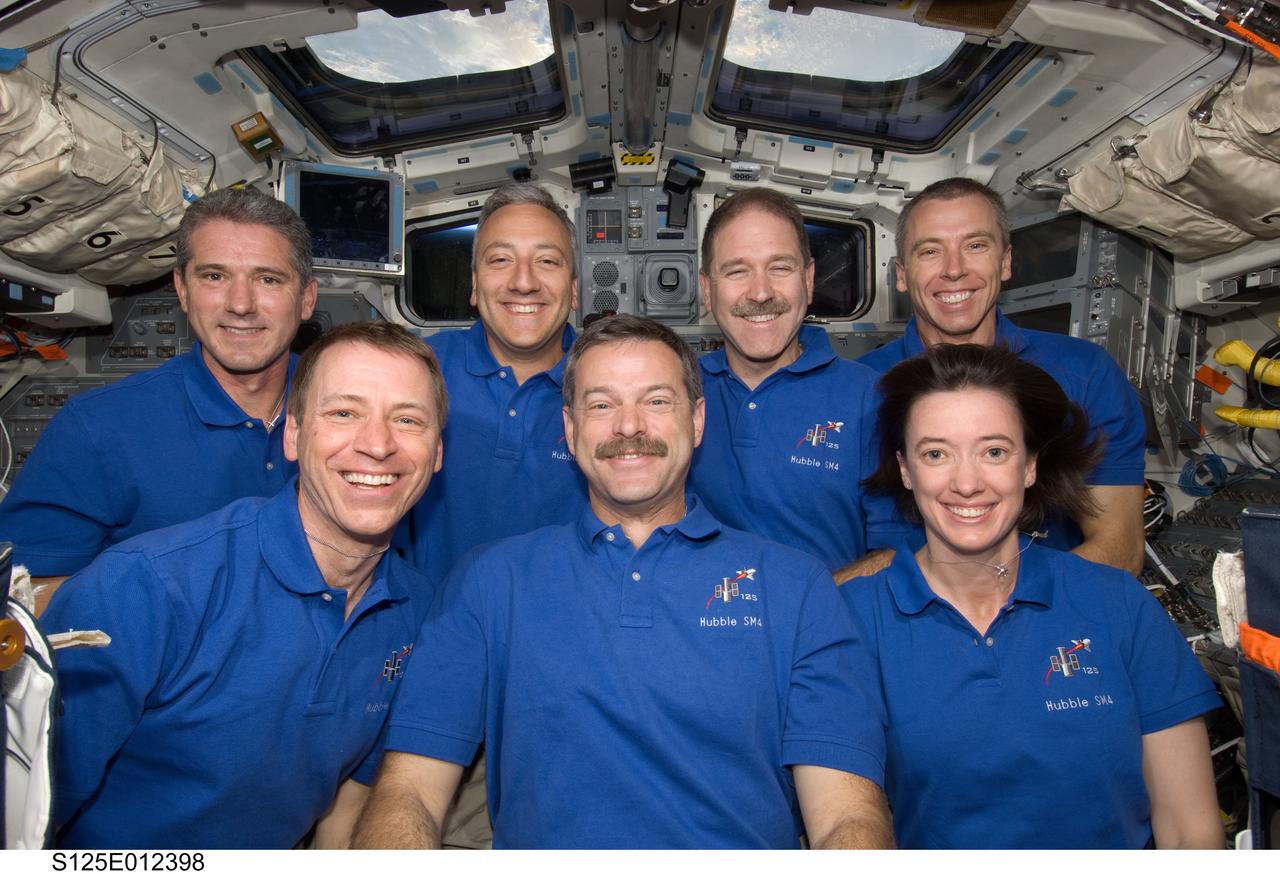
S125-E-012398 (20 May 2009) --- The crewmembers for the STS-125 mission pose for a photo following a news conference on the flight deck of the Earth-orbiting Space Shuttle Atlantis. Pictured on the front row are astronauts Scott Altman (center), commander; Gregory C. Johnson, pilot; and Megan McArthur, mission specialist. Pictured on the back row (left to right) are astronauts Michael Good, Mike Massimino, John Grunsfeld and Andrew Feustel, all mission specialists.
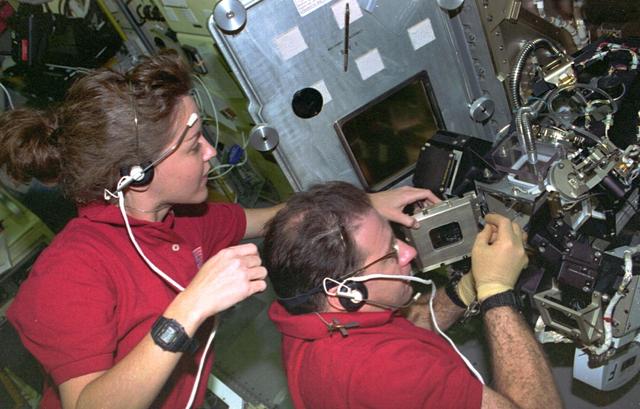
STS073-108-005 (20 October-5 November 1995) --- Two members of the crew perform an in-flight maintenance on the Drop Physics Module (DPM) in the science module aboard the Earth-orbiting Space Shuttle Columbia. Payload commander Kathryn C. Thornton and payload specialist Albert Sacco Jr. were part of a seven-member crew that spent 16 full days in space in support of the United States Microgravity Laboratory (USML-2) mission.
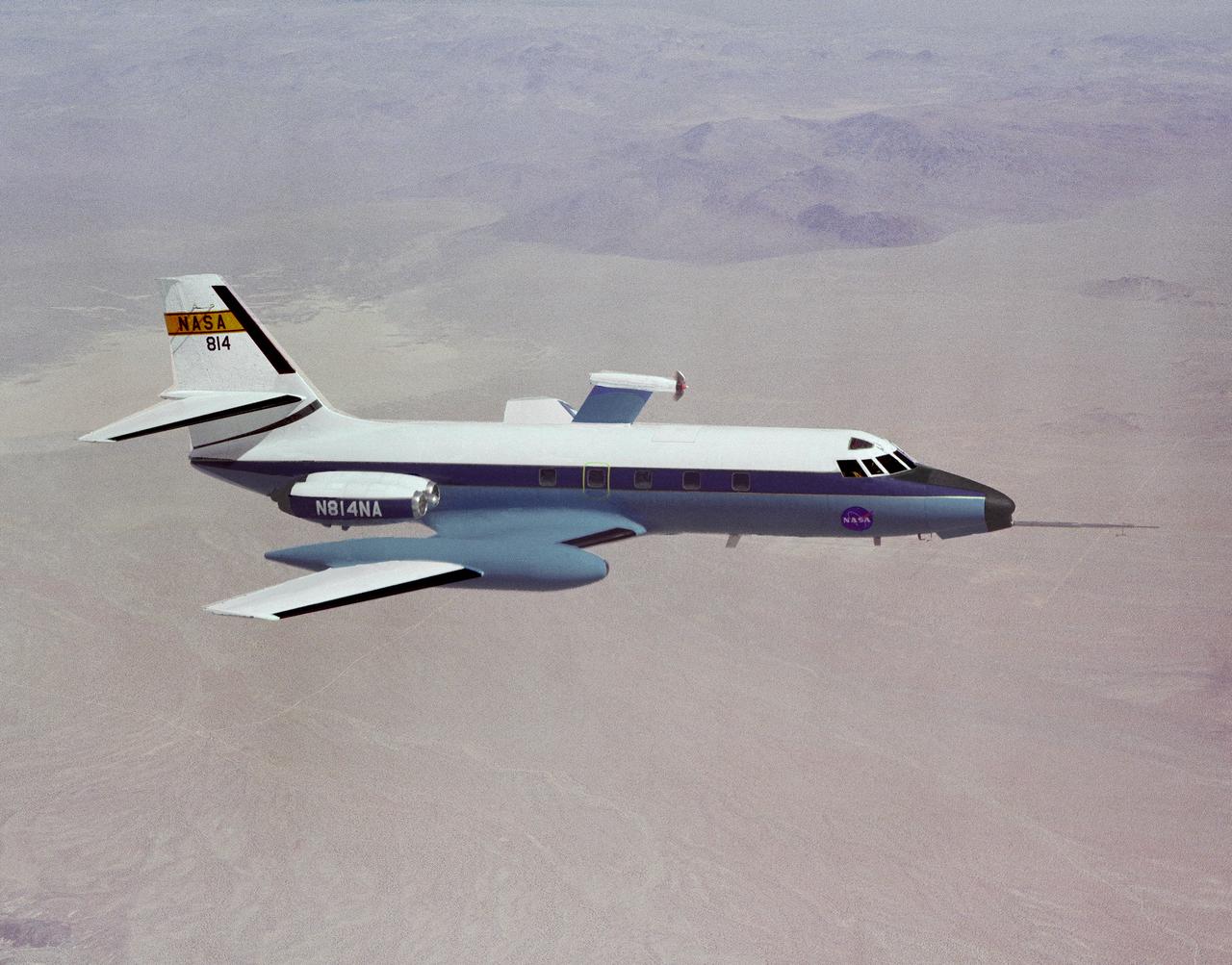
In this photograph, the C-140 JetStar is fitted with a model of a high-speed propeller. Three different designs were tested at NASA's Dryden Flight Research Facility in 1981-1982. Their swept-back blades were intended to increase the speed and fuel efficiency of turboprop aircraft. Speeds of Mach 0.8 were thought possible, while using 20 to 30 percent less fuel than standard jet engines.
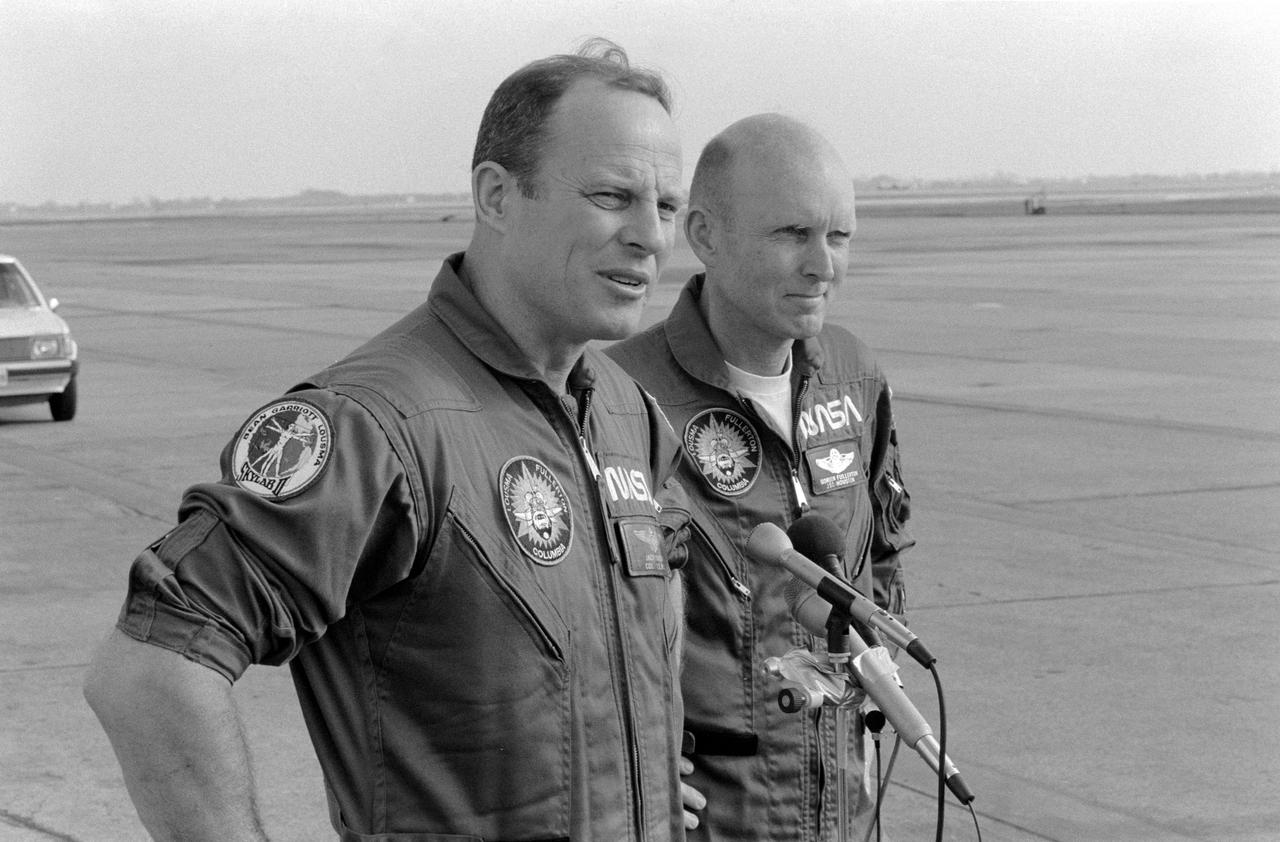
S82-28705 (20 March 1982) --- Astronaut Jack R. Lousma, left, and C. Gordon Fullerton pause for a moment at Ellington Air Force Base prior to their departure in T-38 aircraft to get to NASA?s Kennedy Space Center in time for last minute preparations for their Monday morning launch in the STS-3 space shuttle Columbia. Ellington Air Force Base is just a few miles north of the LBJ Space Center. Photo credit: NASA
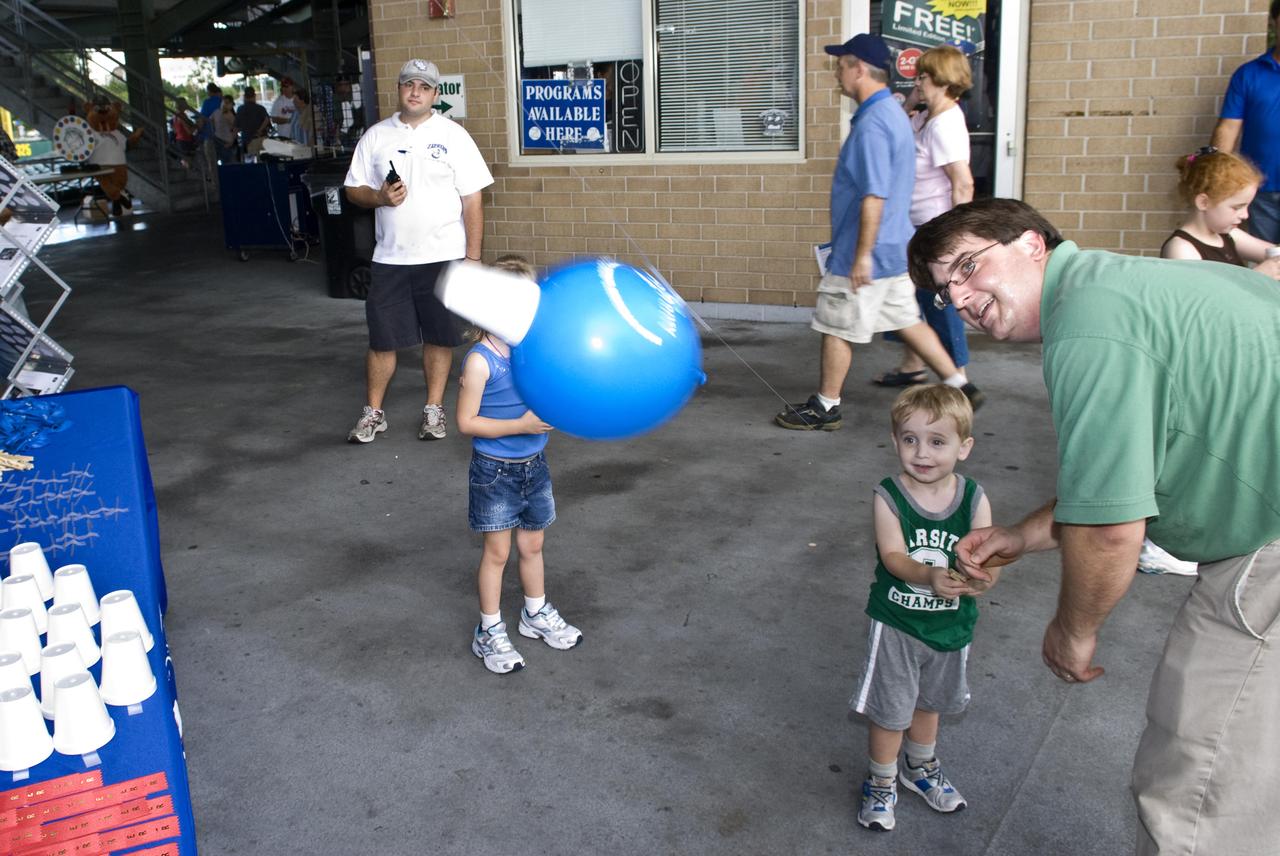
Stennis employee Chris Smith helps a young child 'launch' a balloon rocket. Employees from NASA's John C. Stennis Space Center traveled to New Orleans on Aug. 20 to host NASA Night at Zephyr Field. Stennis personnel provided a variety of activities and materials for persons attending a game between the New Orleans Zephyrs and the Las Vegas 51s.
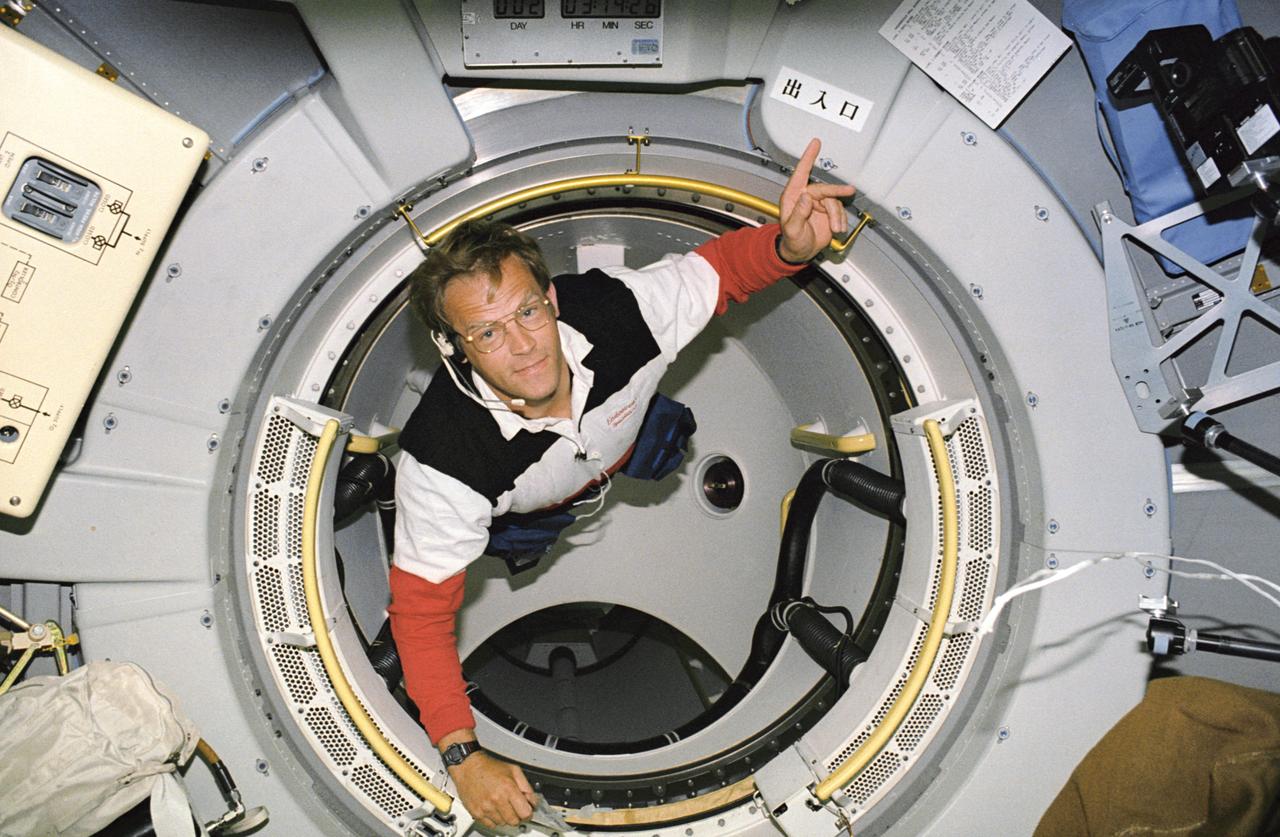
STS047-07-032 (12-20 Sept 1992) --- Astronaut Mark C. Lee, payload commander, floats through the tunnel that connects Spacelab-J's Science Module to the Space Shuttle Endeavour's cabin. Lee was in the midst of a televised "tour" of the shuttle and its primary payload when he pointed to the Japanese sign overhead, which translates to, "EXIT-ENTRANCE". Lee was joined by five NASA astronauts and a Japanese payload specialist for eight-days of research in support of the Spacelab-J project.
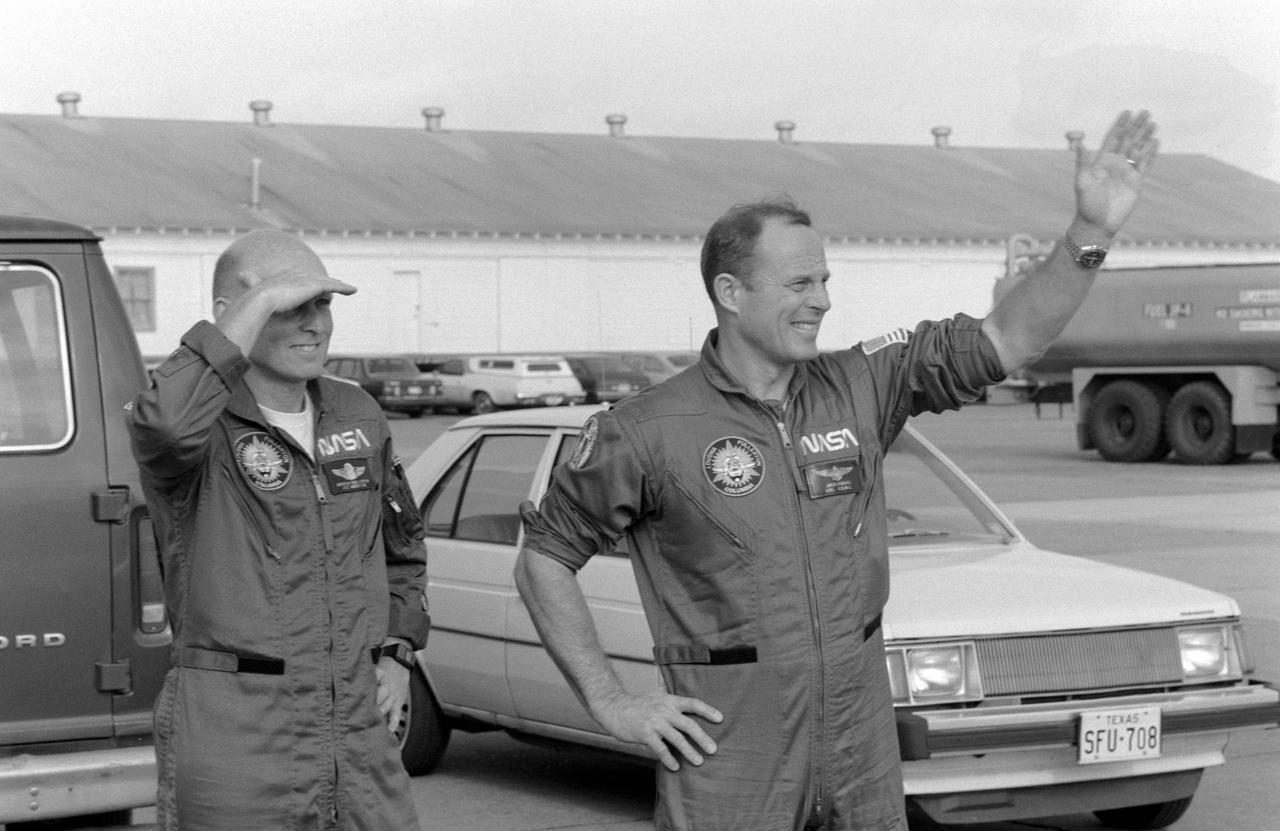
S82-28706 (20 March 1982) --- Astronaut Jack R. Lousma, right, STS-3 commander, and C. Gordon Fullerton, greet a crowd on hand at Ellington Air Force Base to bid them farewell prior to their departure to KSC in a pair of T-38 jet aircraft. The two are scheduled to liftoff in less than 48 hours from the Kennedy Space Center?s Launch Pad 39A, for the third in a series of space transportation system (STS-3) flights. Photo credit: NASA
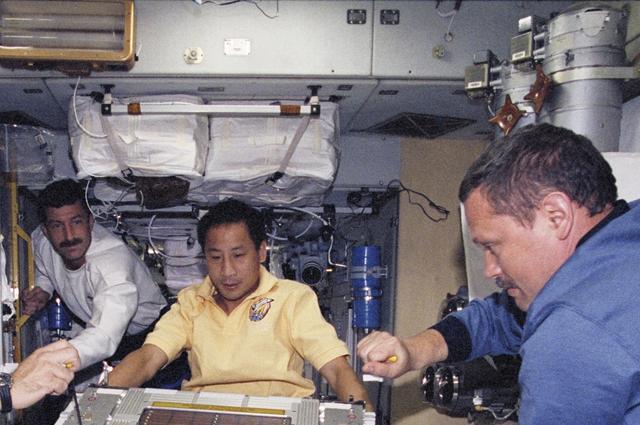
STS106-390-029 (8-20 September 2000) --- Astronauts Scott D. Altman (left), STS-106 pilot, Daniel C. Burbank, and Edward T. Lu, both mission specialists, along with cosmonaut Boris V. Morukov, mission specialist representing Rosaviakosmos, assemble a treadmill in the Zvezda Service Module on the International Space Station (ISS).
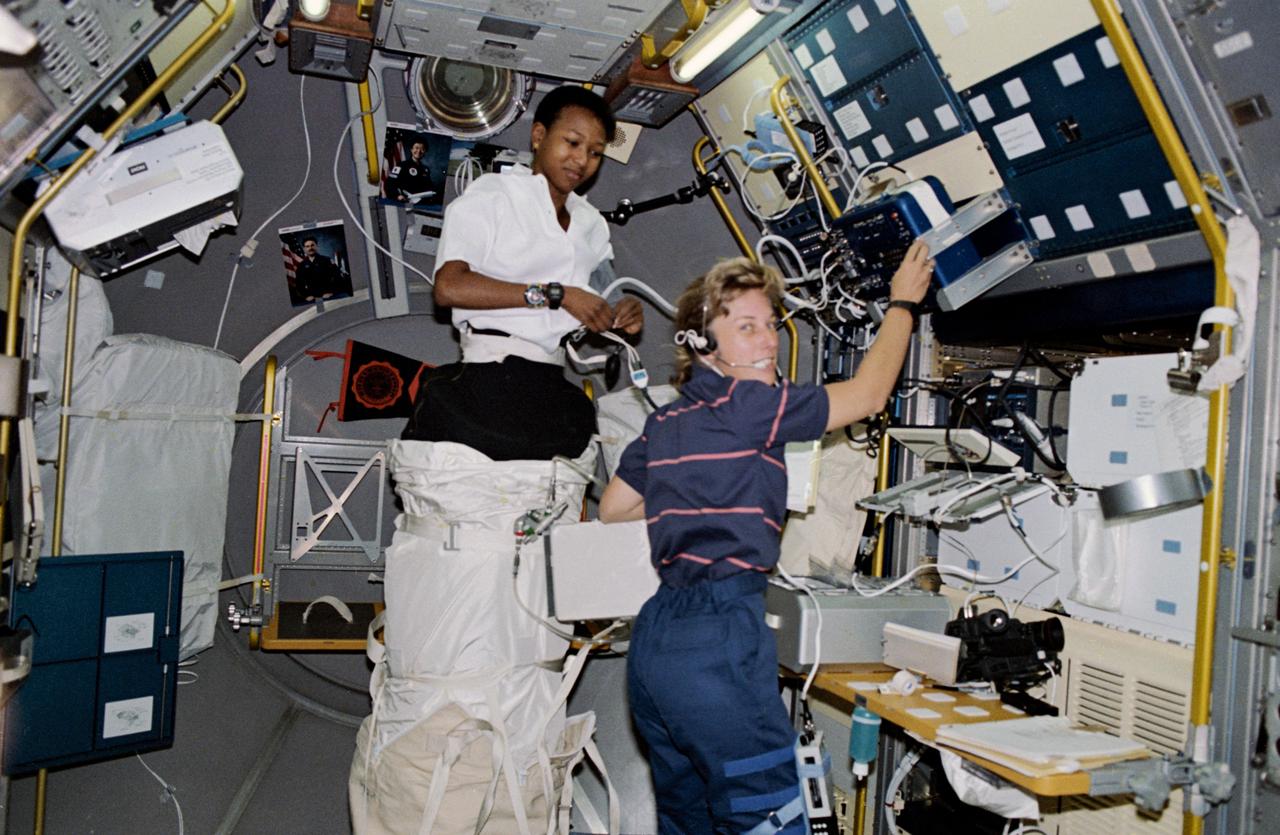
STS047-230-030 (12 - 20 Sept 1992) --- Astronauts Mae C. Jemison (left) and N. Jan Davis, mission specialists, are pictured in the Spacelab-J science module preparing to conduct a session with the Lower Body Negative Pressure (LBNP) experiment. The two joined four other NASA astronauts and a payload specialist representing Japan's National Space Development Agency (NASDA) aboard the Earth-orbiting Space Shuttle Endeavour for eight days of Spacelab-J research.
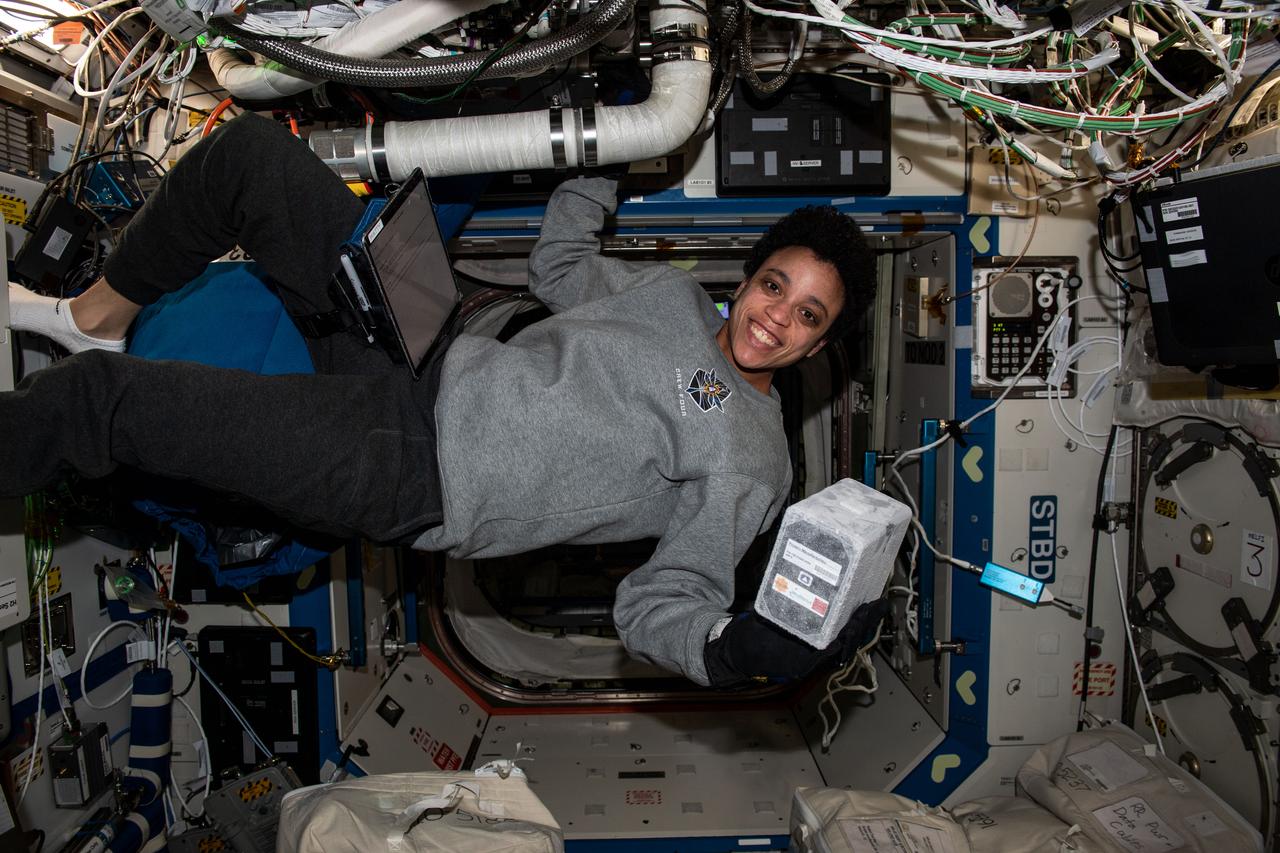
iss067e191193_alt (7/22/2022) --- NASA astronaut Jessica Watkins holding a Plate Habitat (PHAB) at -20°C prior to insertion into the Space Automated Bioproduct Laboratory (SABL) incubator aboard the International Space Station (ISS). The goal of the Protein Manufacturing project is to demonstrate the use of a novel bioreactor technology for growing high-protein food on the International Space Station (ISS).
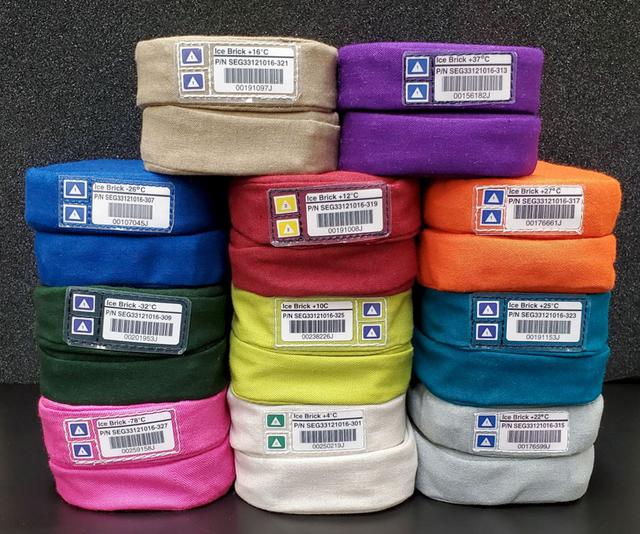
jsc2021e019957 (5/20/2021) --- A preflight Ice Brick group photo. Ice Bricks are flat rectangular packs for use in Coldbags that can be refrozen/reheated to -32, -26, +4, +10, +12, +16, +22, +25, +27, +37°C, with each temperature of Ice Brick in a different color 'softgoods' covering. The Mini Coldbag is a temperature control resource that provides for the specific needs for scientific samples and other temperature-sensitive payload items.
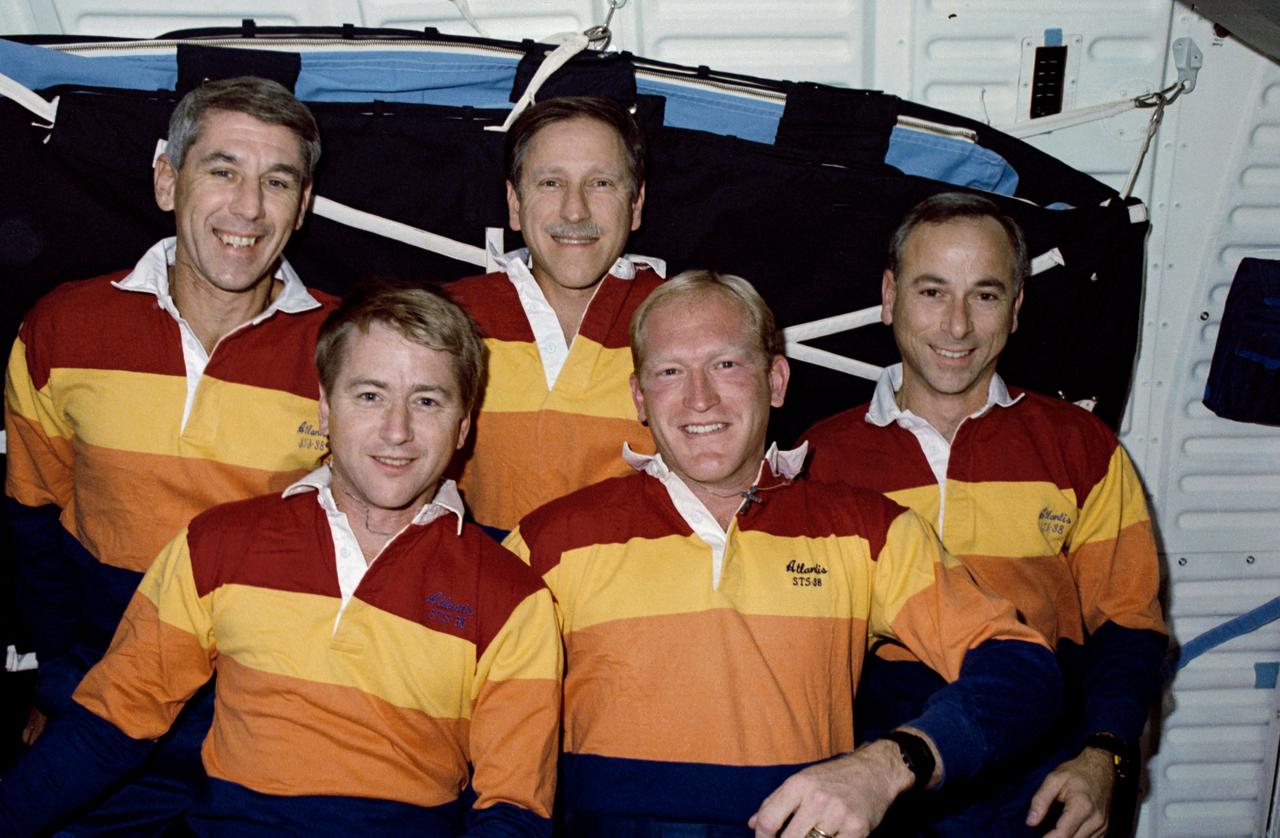
STS038-28-016 (20 Nov 1990) --- STS-38 crewmembers pose on Atlantis', Orbiter Vehicle (OV) 104's, middeck for traditional onboard (in-space) portrait. Wearing red, yellow, and orange crew polo shirts are (right to left) Mission Specialist (MS) Robert C. Springer, Pilot Frank L. Culbertson, Commander Richard O. Covey, MS Charles D. Gemar, and MS Carl J. Meade.
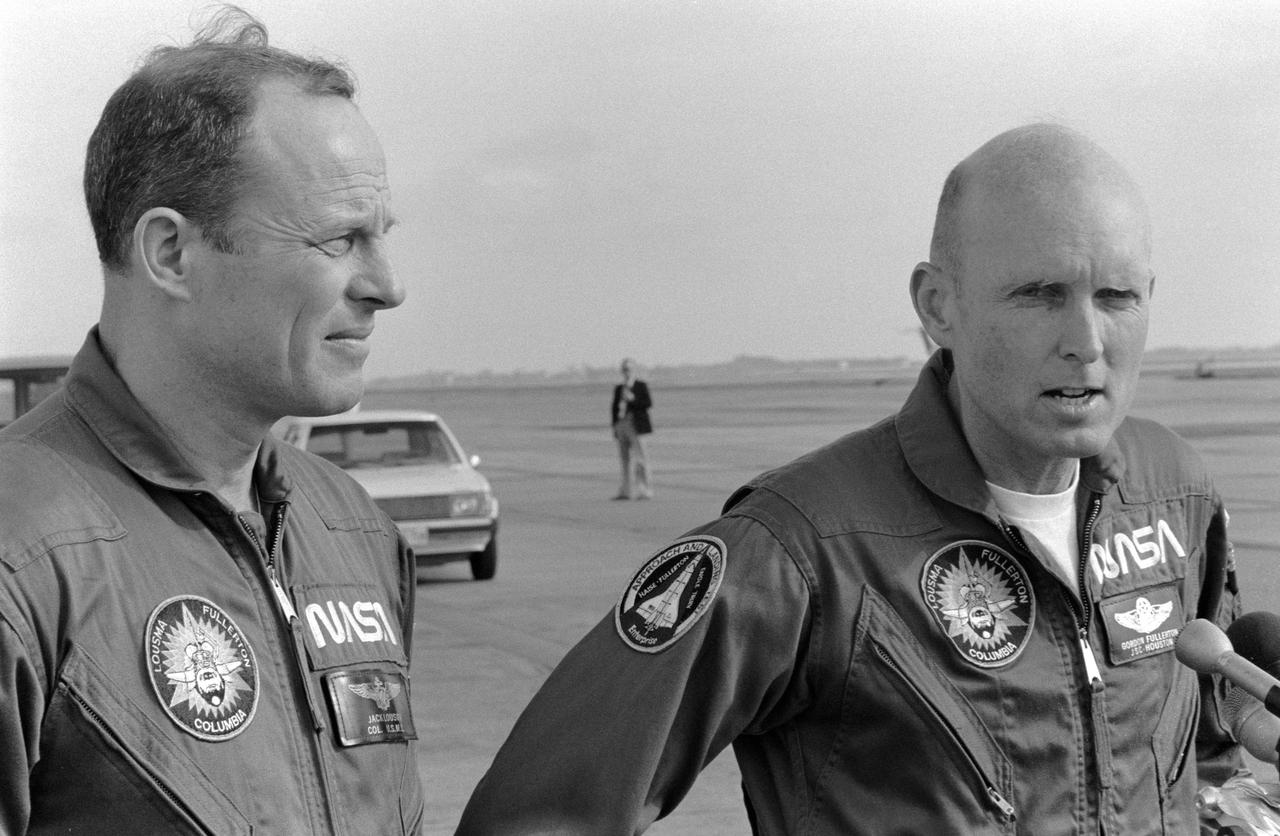
S82-28700 (20 March 1982) --- Astronauts Jack R. Lousma, left, and C. Gordon Fullerton pause for a moment at Ellington Air Force Base prior to their departure in T-38 aircraft to get to NASA?s Kennedy Space Center in time for last minute preparations for their Monday morning launch in the STS-3 space shuttle Columbia. Ellington Air Force Base is just a few miles north of the LBJ Space Center. Photo credit: NASA
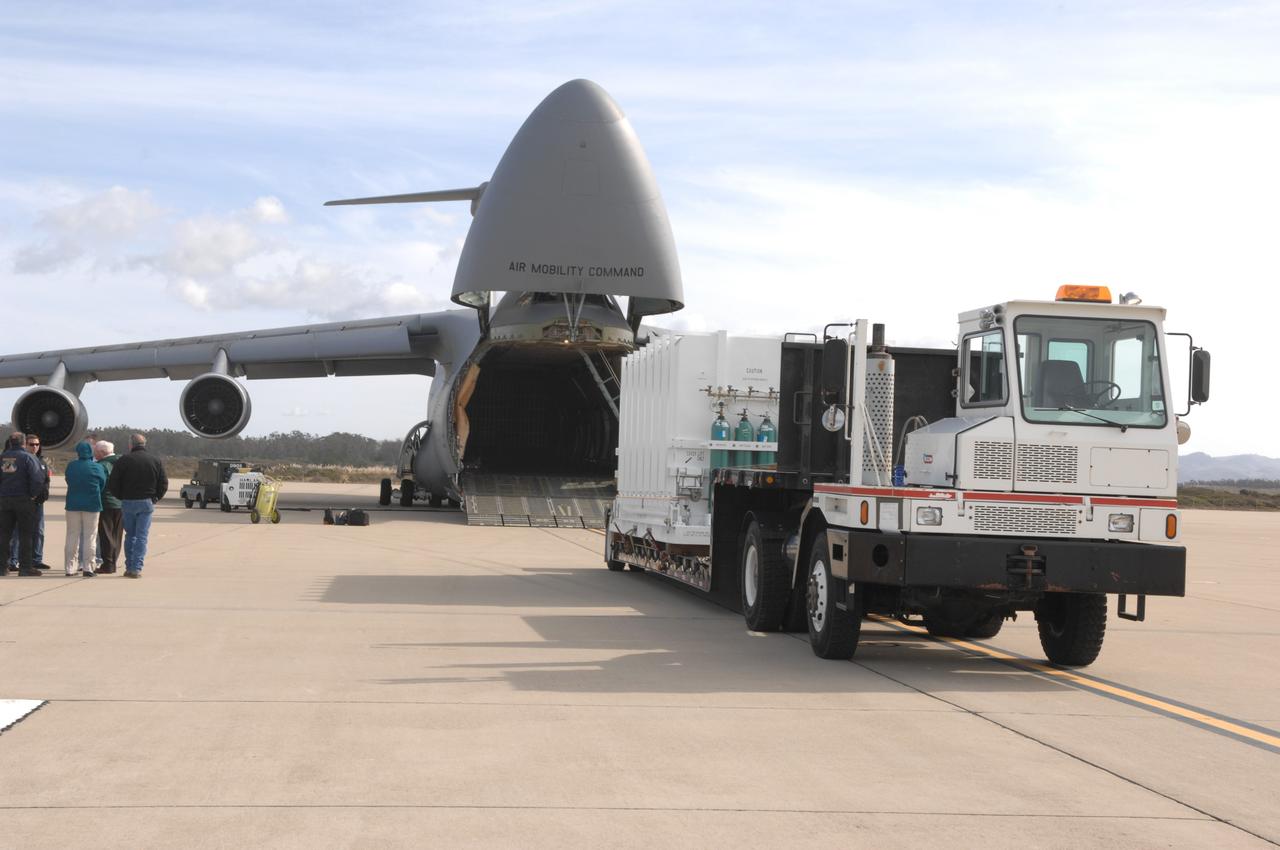
VANDENBERG AIR FORCE BASE, Calif. – The latest polar-orbiting operational environmental weather satellite developed by NASA for the National Oceanic and Atmospheric Administration, called NOAA-N Prime, is offloaded from the C-5A military cargo aircraft at Vandenberg Air Force Base, Calif., in preparation for a Feb. 4 launch. NOAA-N Prime, built by Lockheed Martin, is similar to NOAA-N launched on May 20, 2005.
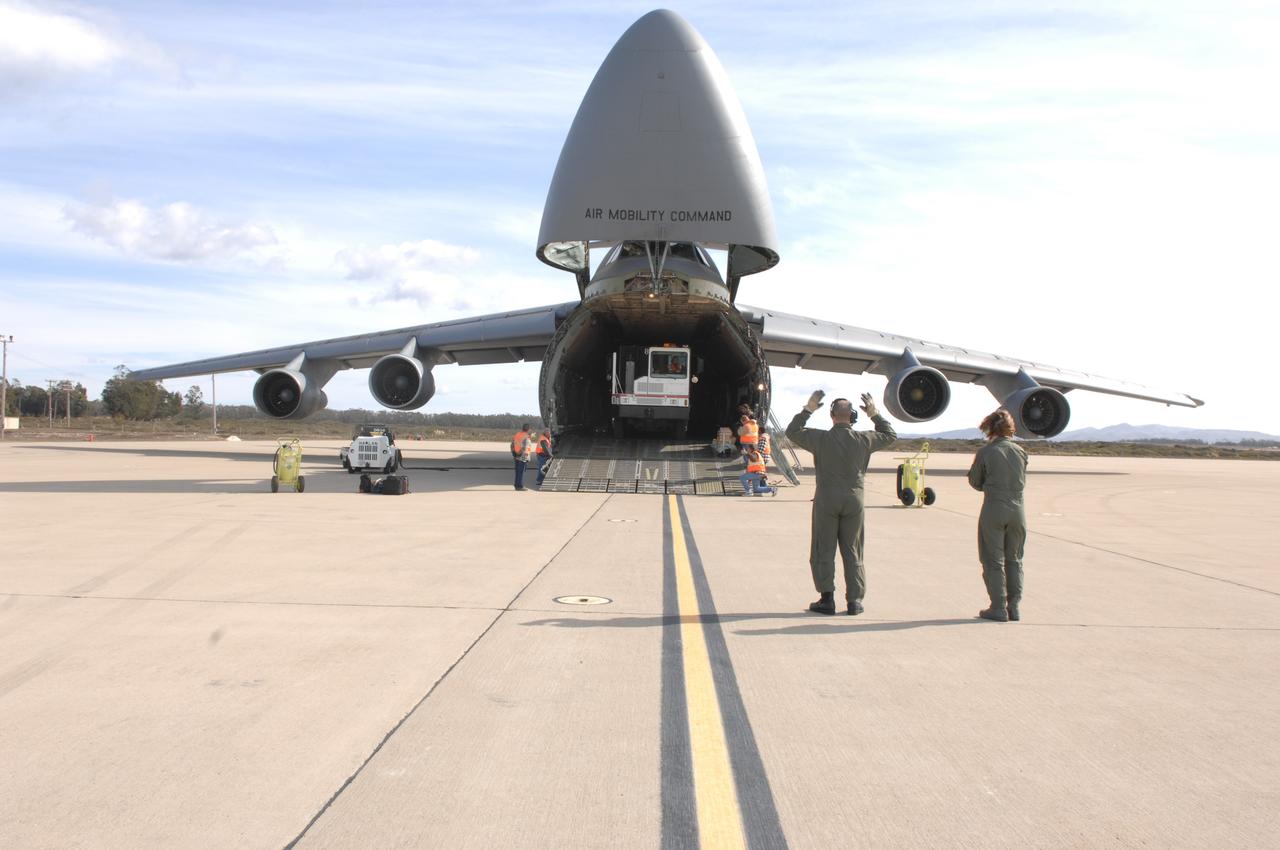
VANDENBERG AIR FORCE BASE, Calif. – The latest polar-orbiting operational environmental weather satellite developed by NASA for the National Oceanic and Atmospheric Administration, called NOAA-N Prime, is being offloaded from the C-5A military cargo aircraft at Vandenberg Air Force Base, Calif., in preparation for a Feb. 4 launch. NOAA-N Prime, built by Lockheed Martin, is similar to NOAA-N launched on May 20, 2005.
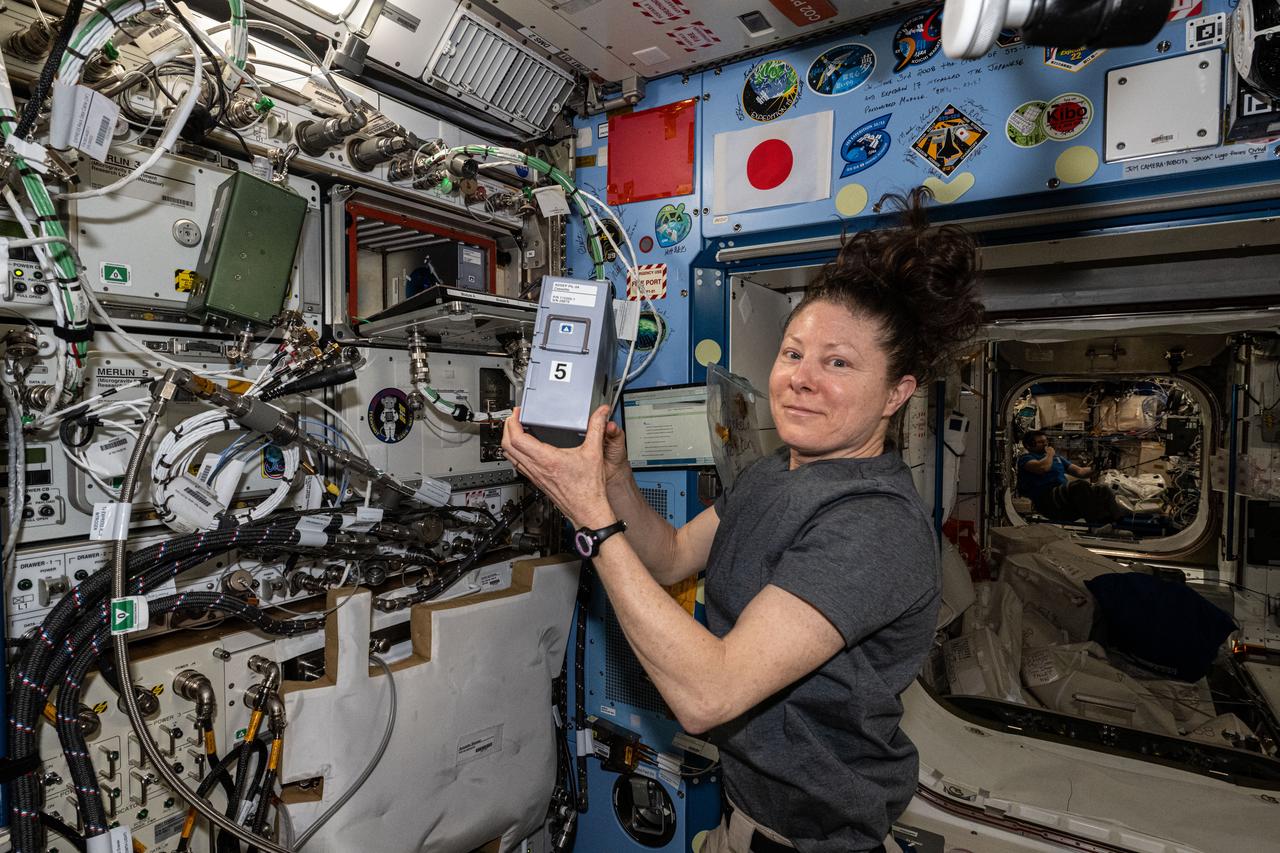
iss071e515505 (Aug. 20, 2024) --- NASA astronaut and Expedition 71 Flight Engineer Tracy C. Dyson displays a sample processor for the Pharmaceutical In-space Laboratory experiment that is exploring the production and manufacturing of medicines to benefit astronauts in space and humans on Earth. She installed the processor in the Advanced Space Experiment Processor, or ADSEP, that can house a variety of research samples and be delivered to the International Space Station and returned to Earth aboard the SpaceX Dragon cargo craft.
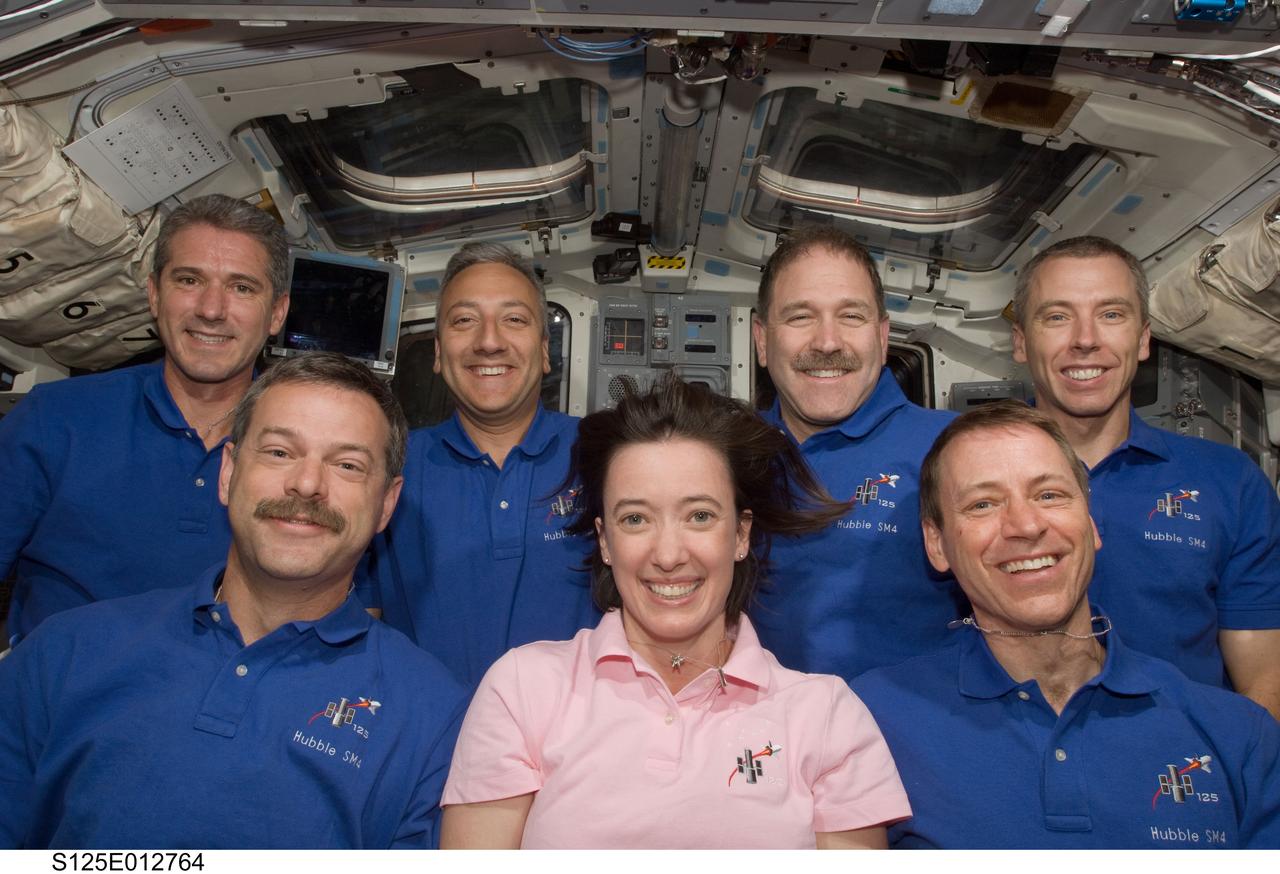
S125-E-012764 (20 May 2009) --- The crewmembers for the STS-125 mission pose for a photo on the flight deck of the Earth-orbiting Space Shuttle Atlantis. Pictured on the front row are astronauts Scott Altman (left), commander; Gregory C. Johnson, pilot; and Megan McArthur, mission specialist. Pictured on the back row (left to right) are astronauts Michael Good, Mike Massimino, John Grunsfeld and Andrew Feustel, all mission specialists.
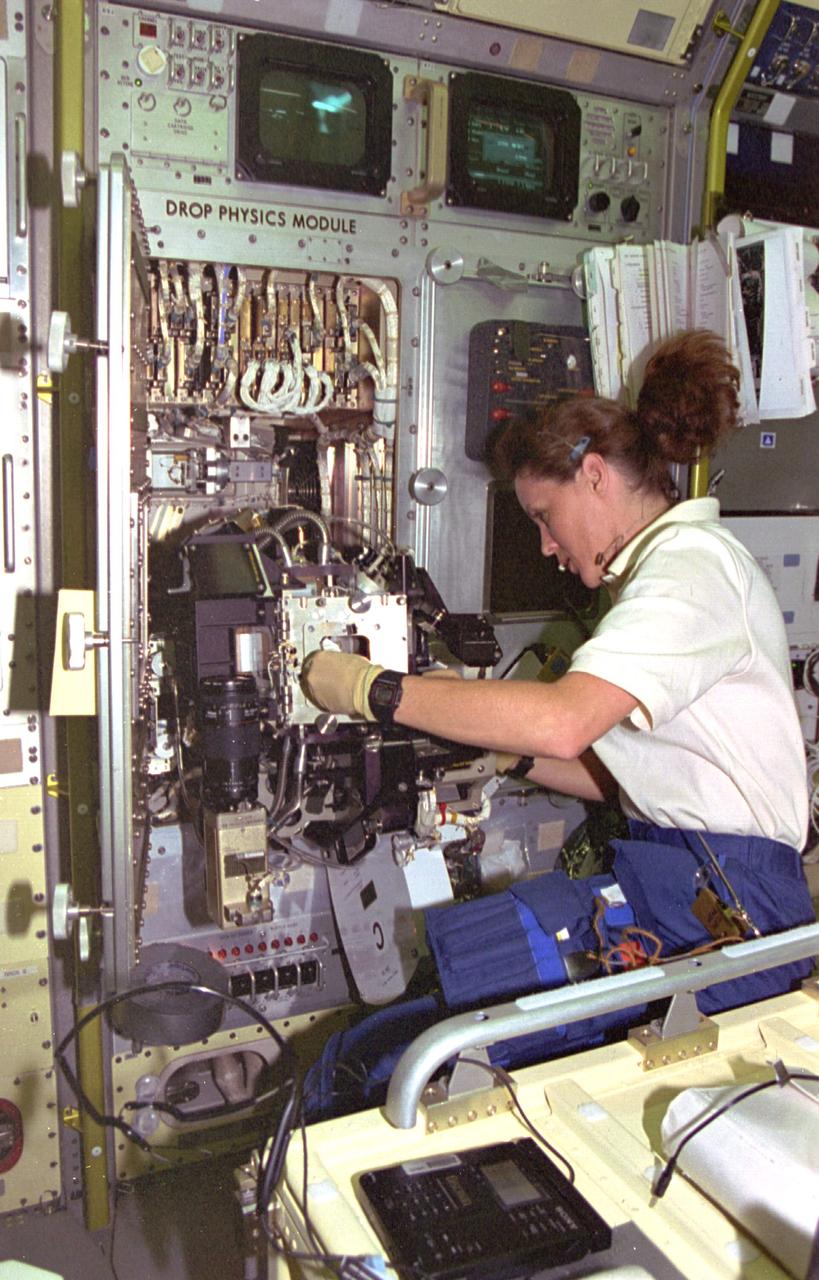
STS073-143-026 (20 October-5 November 1995) --- Astronaut Kathryn C. Thornton, STS-73 payload commander for the United States Microgravity Laboratory (USML-2), explores the inner workings of the Drop Physics Module (DPM). Thornton was joined by four other NASA astronauts and two guest researchers for almost 16 days of research aboard the Space Shuttle Columbia in Earth-orbit.
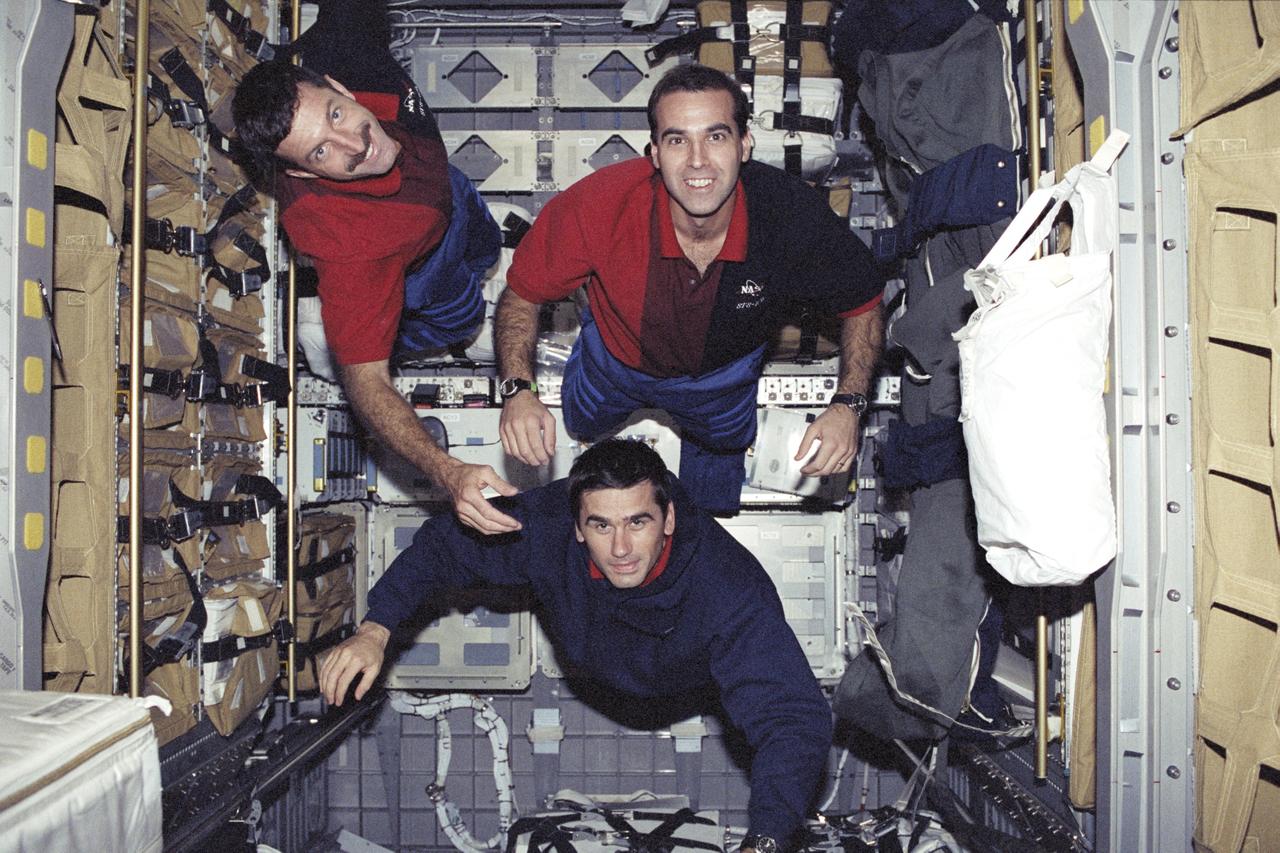
STS106-369-019 (8-20 September 2000) --- Two astronauts and a cosmonaut, all mission specialists, float onboard Spacehab. They are astronauts Daniel C. Burbank (top left) and Richard A. Mastracchio (top right), along with cosmonaut Yuri I. Malenchenko. The Spacehab double module is as "empty" as it was at any other time during the STS-106 mission in this scene, photographed during mission's end. The seven-man crew had moved a large amount of supplies and hardware to the International Space Station (ISS).
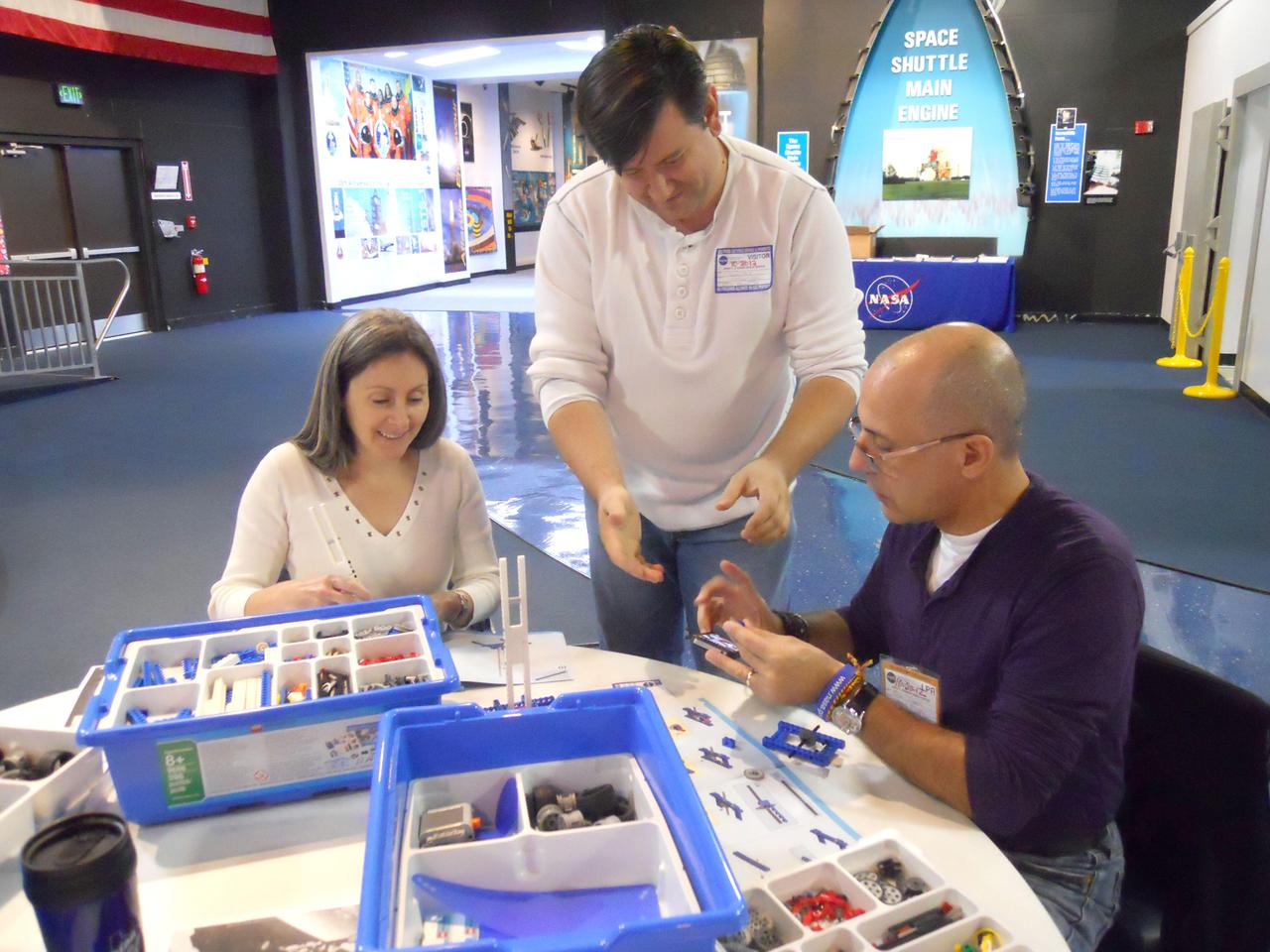
The John C. Stennis Space Center Educator Resource Center hosted an Oct. 20 workshop to equip teachers of grades 3 through 12 in using the LEGO Bricks in Space curriculum issued by NASA. Participants in the professional development workshop built their own LEGO simple machine prototypes and explored the engineering principles that make them work (on Earth and in space).
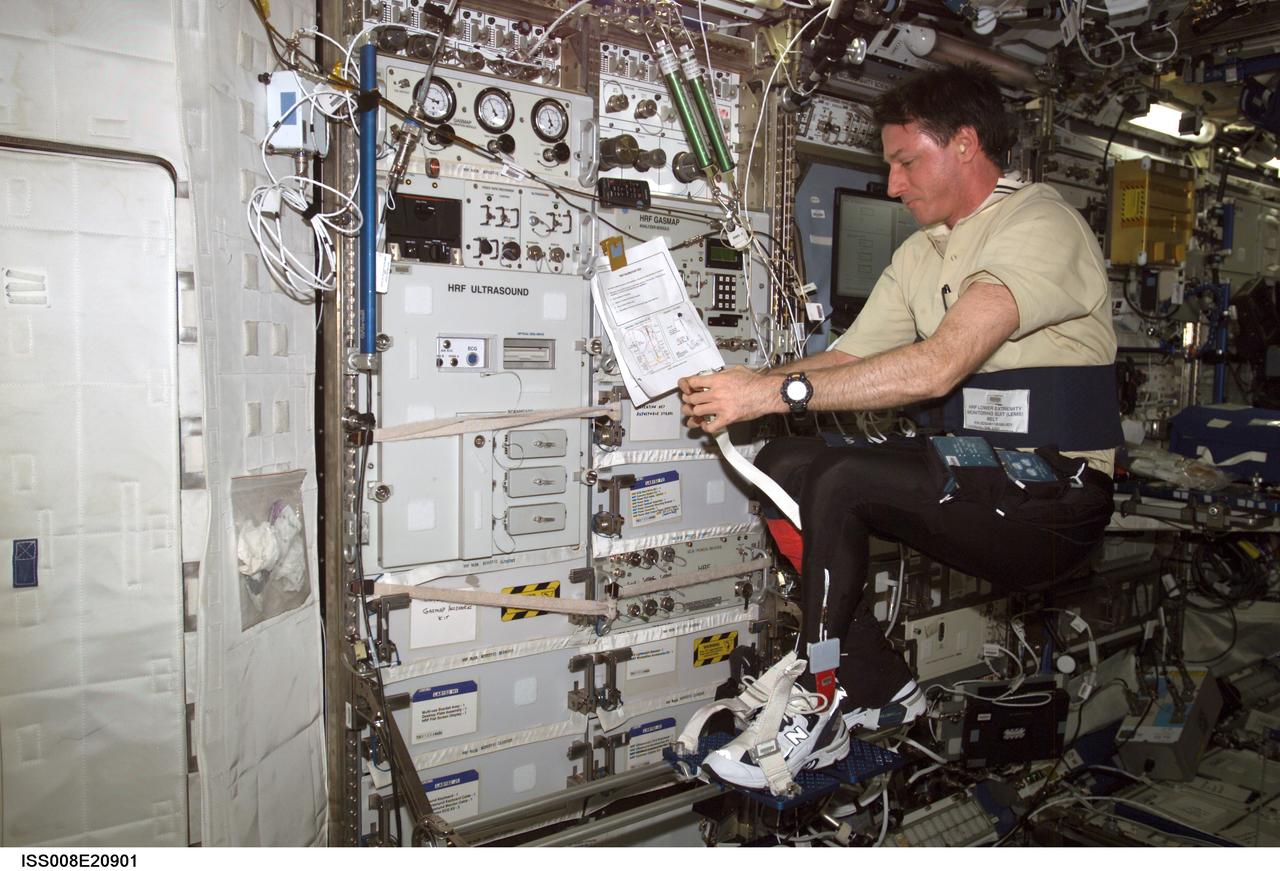
ISS008-E-20901 (7 April 2004) --- Astronaut C. Michael Foale, Expedition 8 commander and NASA ISS science officer, balances on the footplate of a special track attached to the Human Research Facility (HRF) rack in the Destiny laboratory on the International Space Station (ISS) to perform Foot/Ground Reaction Forces During Spaceflight (FOOT) / Electromyography (EMG) calibration operations. Foale is wearing the Lower Extremity Monitoring Suit (LEMS), the cycling tights outfitted with 20 sensors, which measures forces on joints and muscle activity.
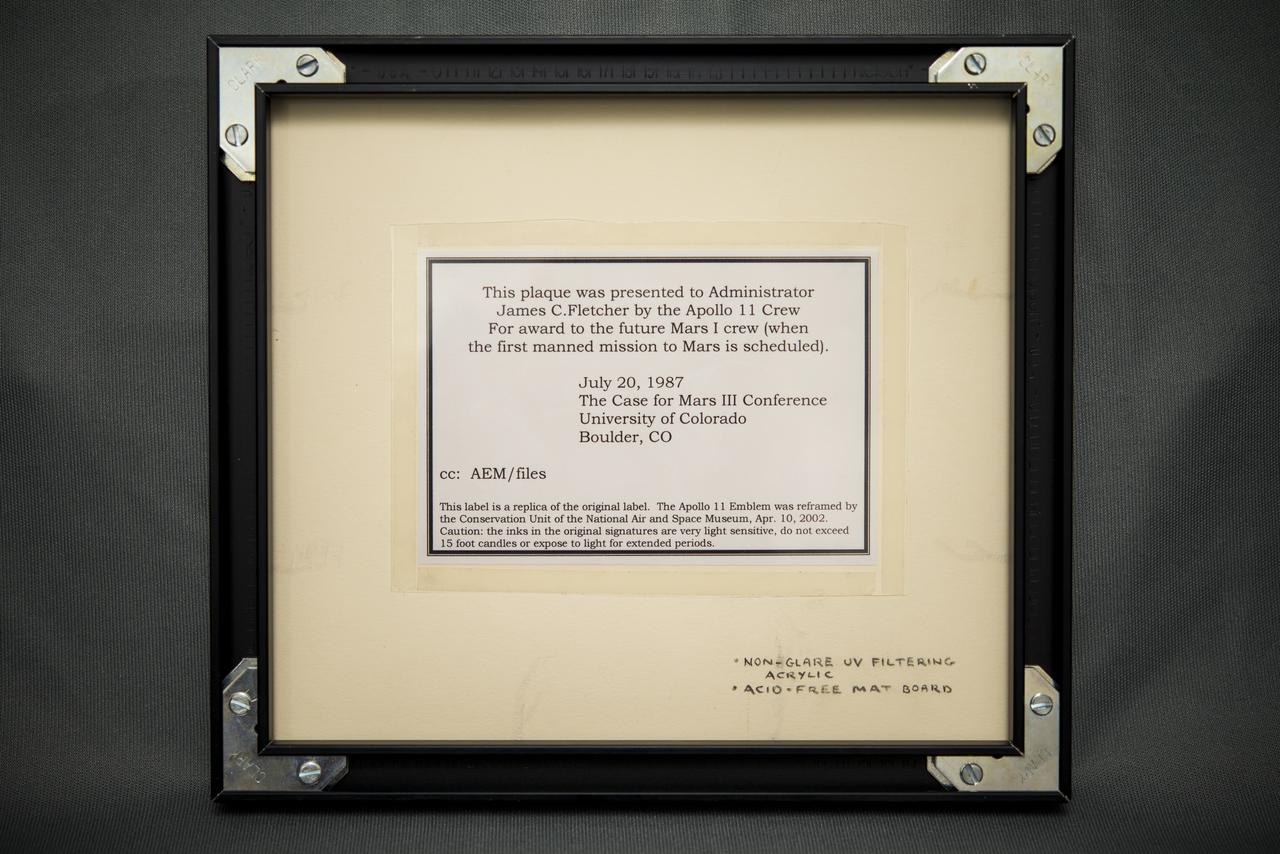
The description on the back of the plaque reads: "This plaque was presented to Administrator James C. Fletcher by the Apollo 11 Crew for award to the future Mars I crew (when the first manned mission to Mars is scheduled), July 20, 1987 at The Case for Mars III Conference at the University of Colorado in Boulder, Colorado." Photographed on Friday, July 11, 2014 in Washington, DC. Photo Credit: (NASA/Joel Kowsky)
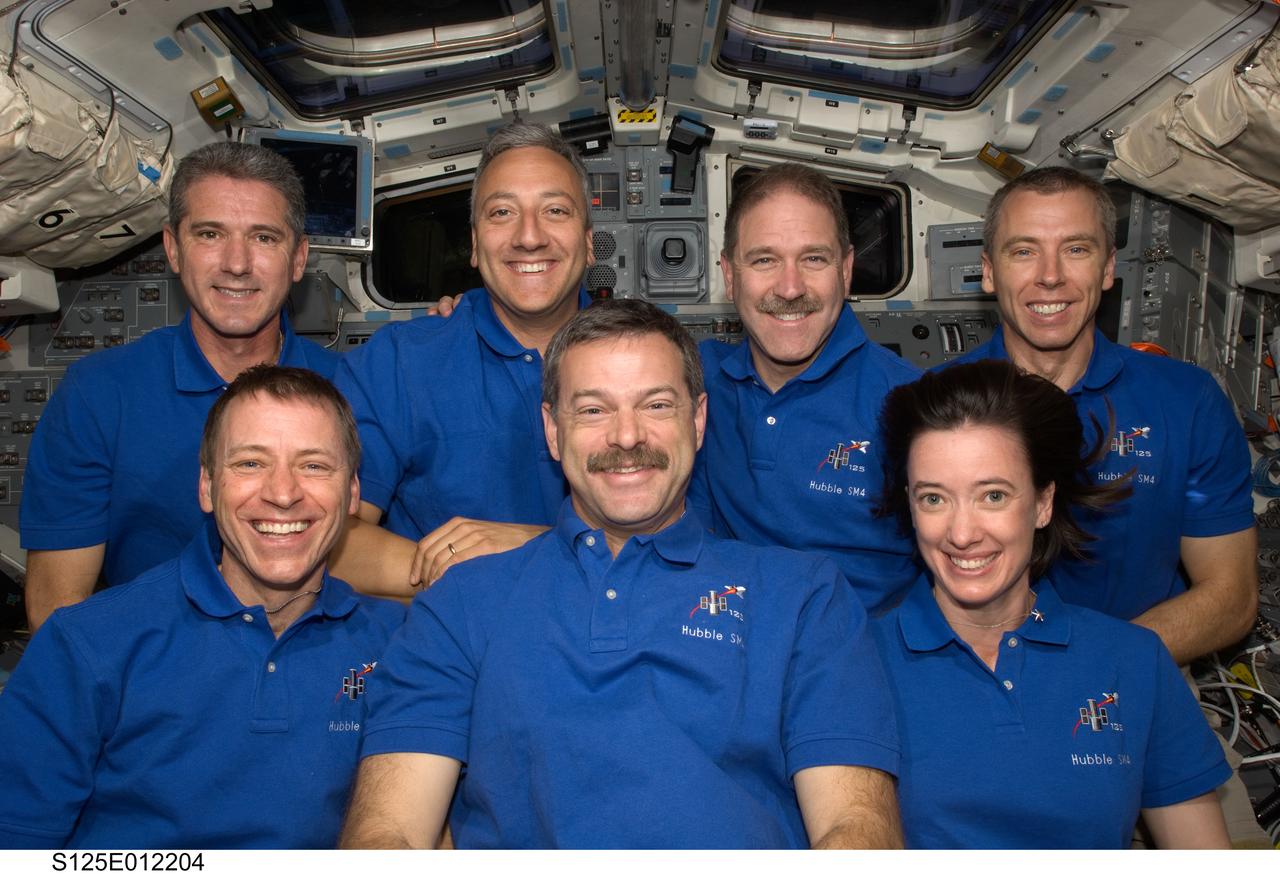
S125-E-012204 (20 May 2009) --- The crewmembers for the STS-125 mission pose for a photo following a news conference from the flight deck of the Earth-orbiting Space Shuttle Atlantis. Pictured on the front row are astronauts Scott Altman (center), commander; Gregory C. Johnson, pilot; and Megan McArthur, mission specialist. Pictured on the back row (left to right) are astronauts Michael Good, Mike Massimino, John Grunsfeld and Andrew Feustel, all mission specialists.
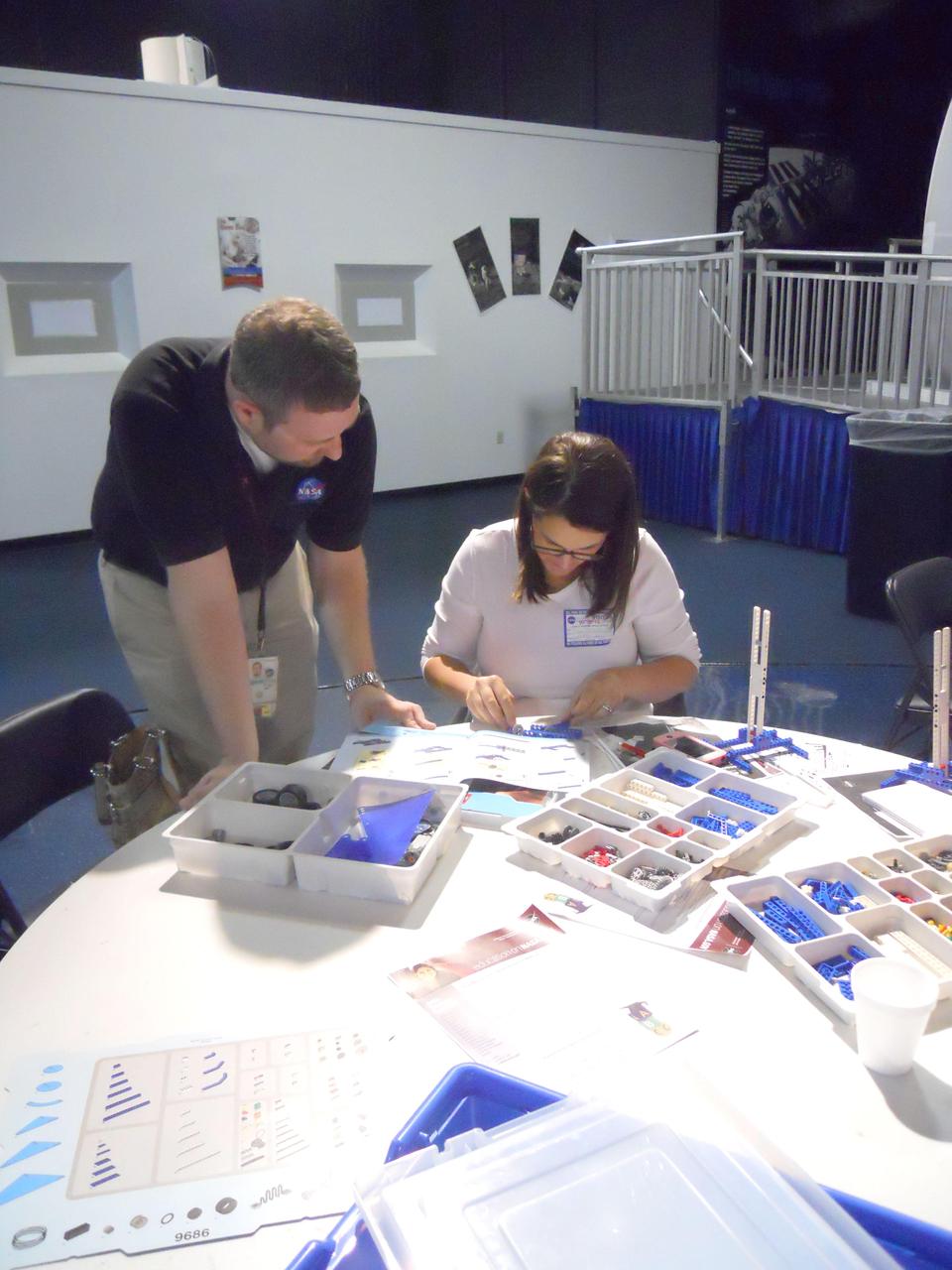
John C. Stennis Space Center educators and area teachers partnered together during a professional development workshop Oct. 20 to learn about the LEGO Bricks in Space curriculum issued by NASA. The curriculum is designed to encourage students in areas of science, technology, engineering and mathematics. The Stennis Space Center Educator Resource Center hosted the workshop to equip teachers of grades 3-12.
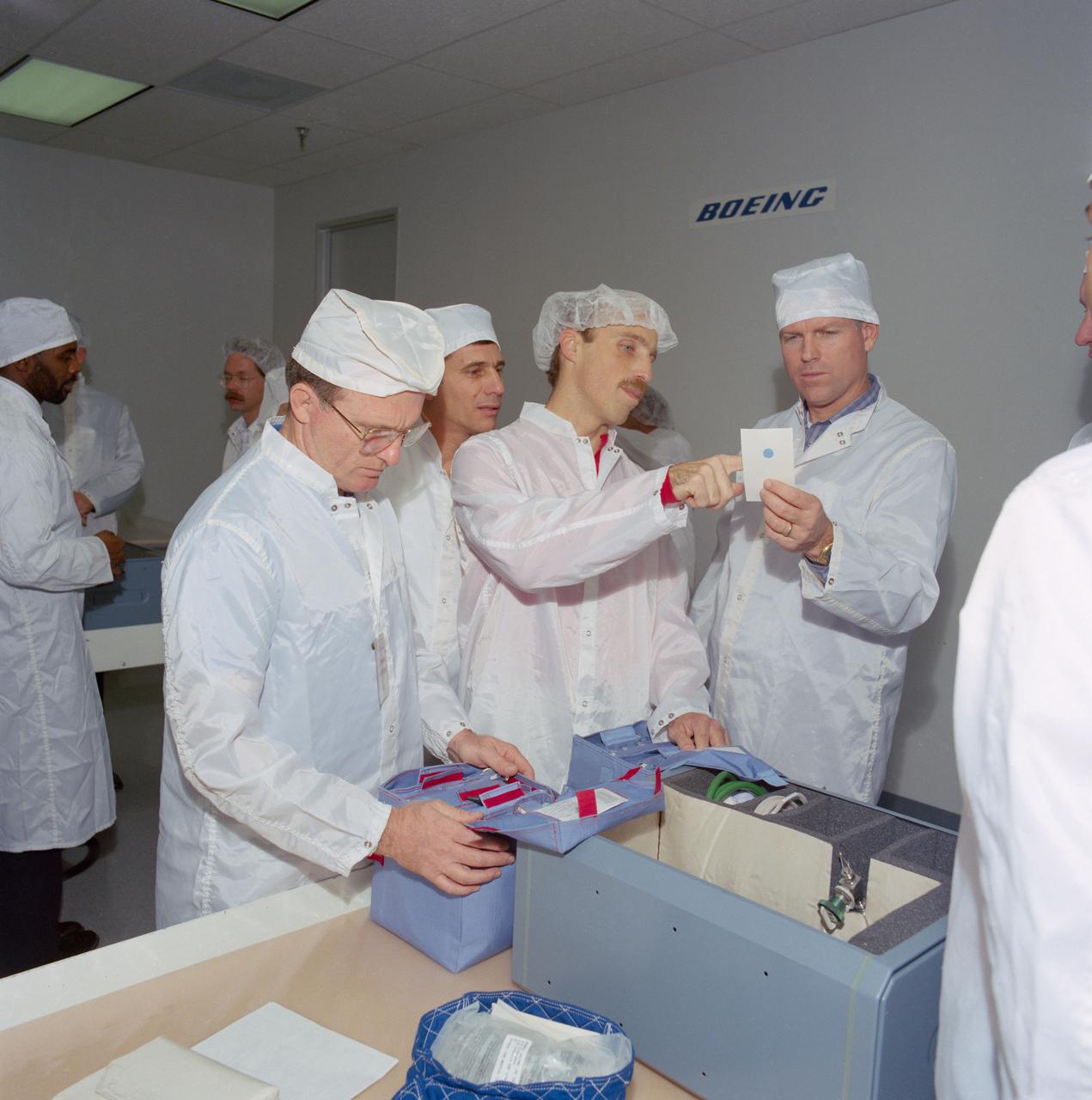
S89-26240 (20 Jan 1989) --- Four of the five STS-29 crewmembers inspect the content of their emergency medical and medication kits during the recent bench review of middeck locker equipment avaialable for their scheduled March 1989 flight. From left to right are Astronauts James H. Buchli, John E. Blaha, James P. Bagian and Michael L. Coats. Not pictured is Robert C. Springer.
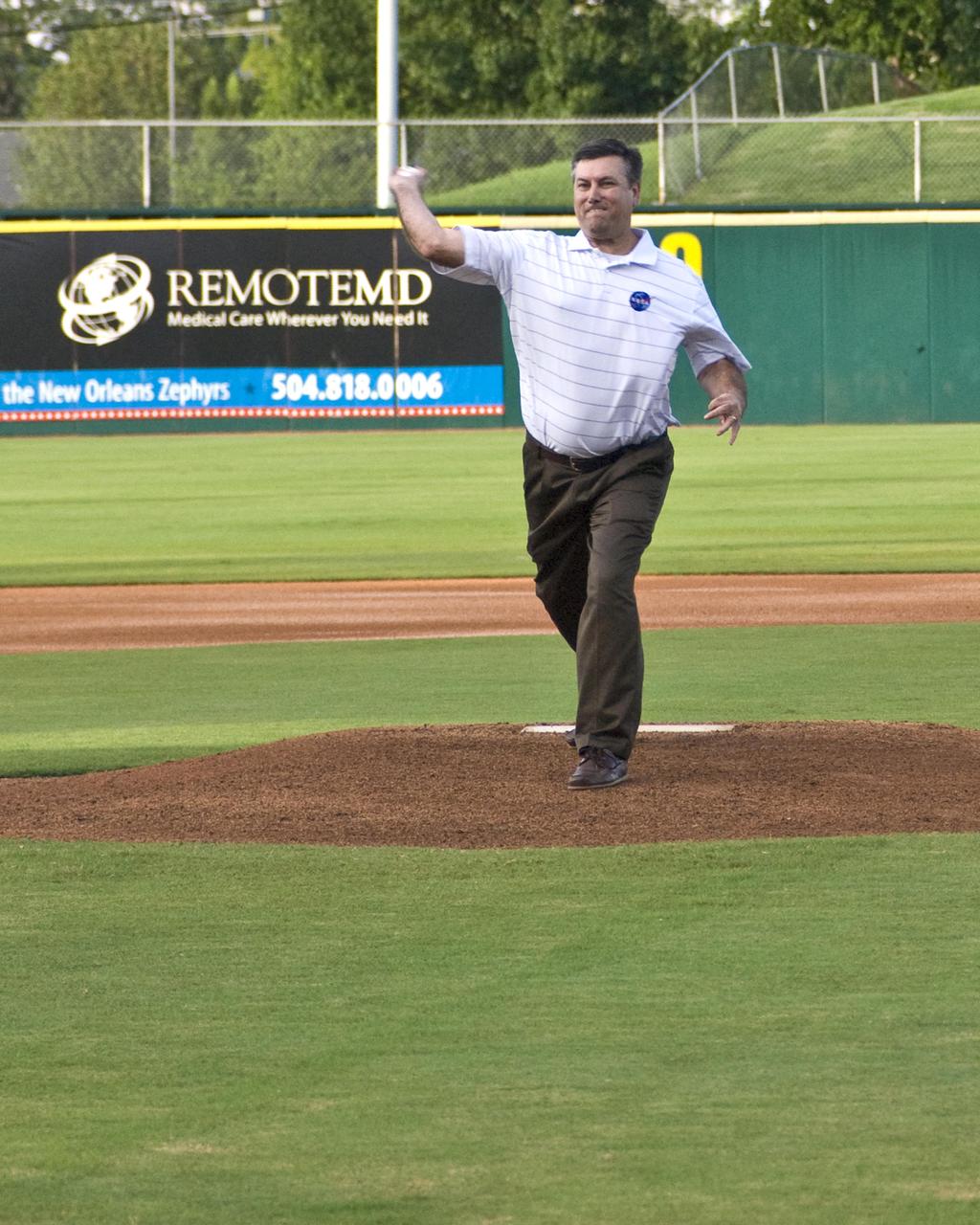
NASA's John C. Stennis Space Center Director Patrick Scheuermann throws the first pitch of the game Aug. 20 at New Orleans Zephyr Field. Stennis employees traveled to New Orleans to host NASA Night at Zephyr Field. Stennis personnel provided a variety of activities and materials for persons attending a game between the New Orleans Zephyrs and the Las Vegas 51s.
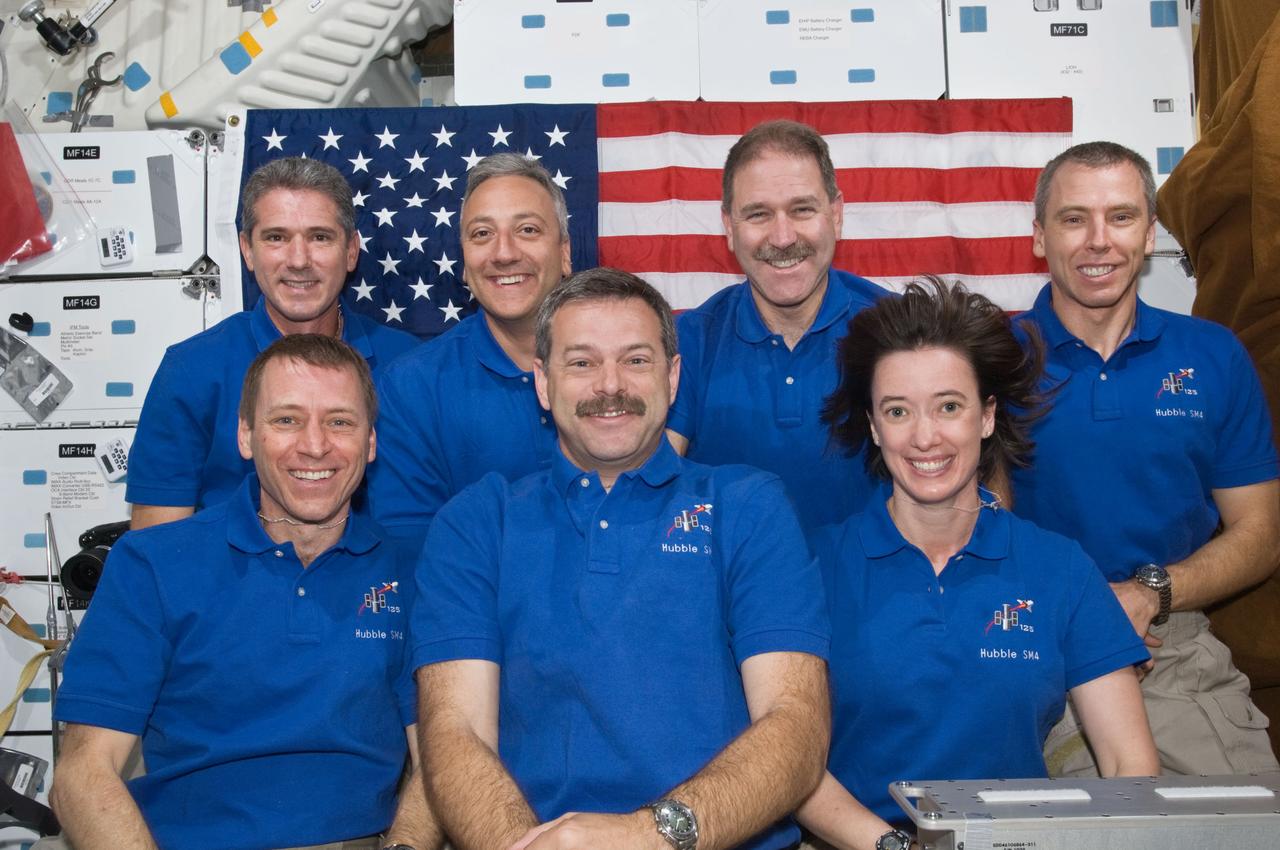
S125-E-012154 (20 May 2009) --- The crew members for the STS-125 mission pose for the traditional in-flight portrait on the middeck of the Earth-orbiting Space Shuttle Atlantis. Pictured on the front row are astronauts Scott Altman (center), commander; Gregory C. Johnson, pilot; and Megan McArthur, mission specialist. Pictured on the back row (left to right) are astronauts Michael Good, Mike Massimino, John Grunsfeld and Andrew Feustel, all mission specialists.
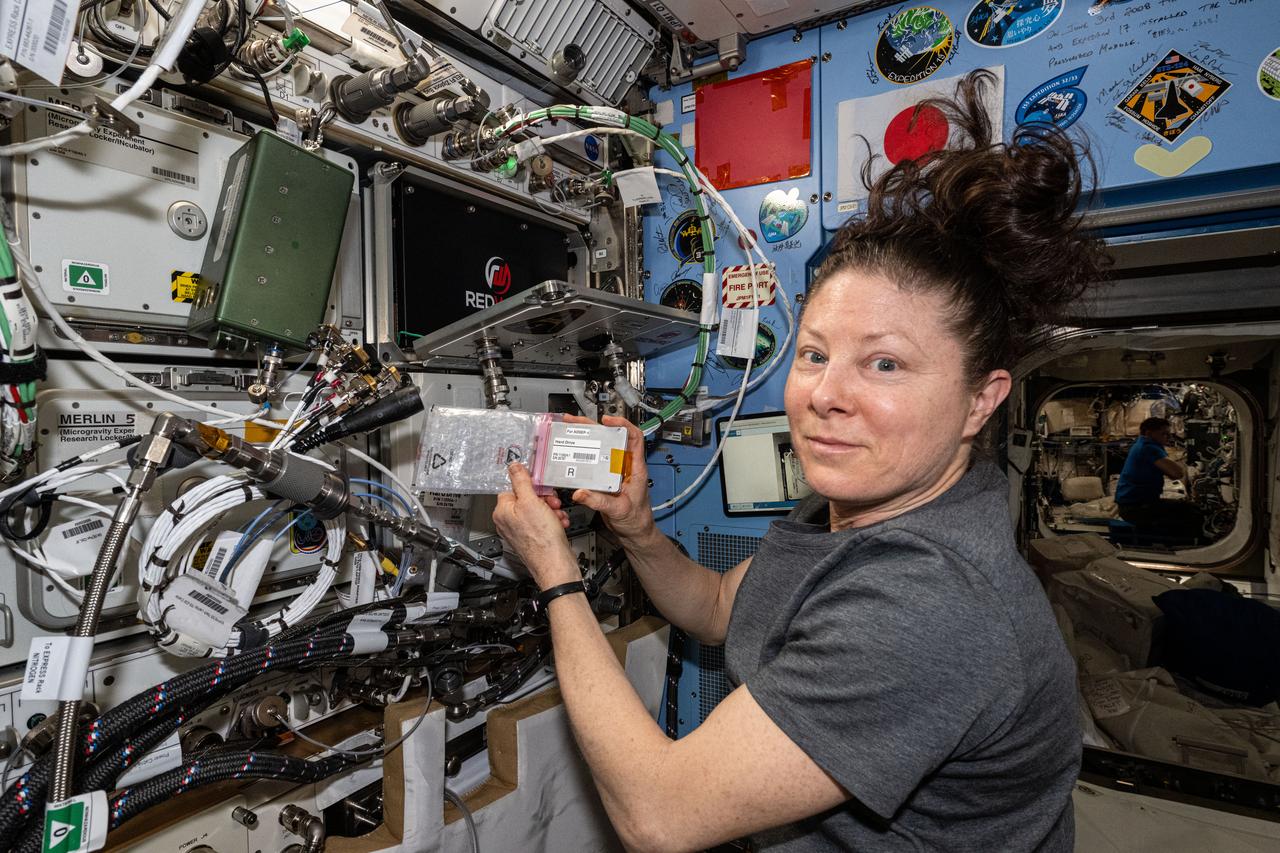
iss071e515518 (Aug. 20, 2024) --- NASA astronaut and Expedition 71 Flight Engineer Tracy C. Dyson swaps a hard drive inside the Advanced Space Experiment Processor-4, or ADSEP-4. The research device enables the automated processing of samples in microgravity, is configurable for space biology and space physics investigations, and can be launched to the International Space Station and returned to Earth inside the SpaceX Dragon cargo spacecraft for further processing and analysis.
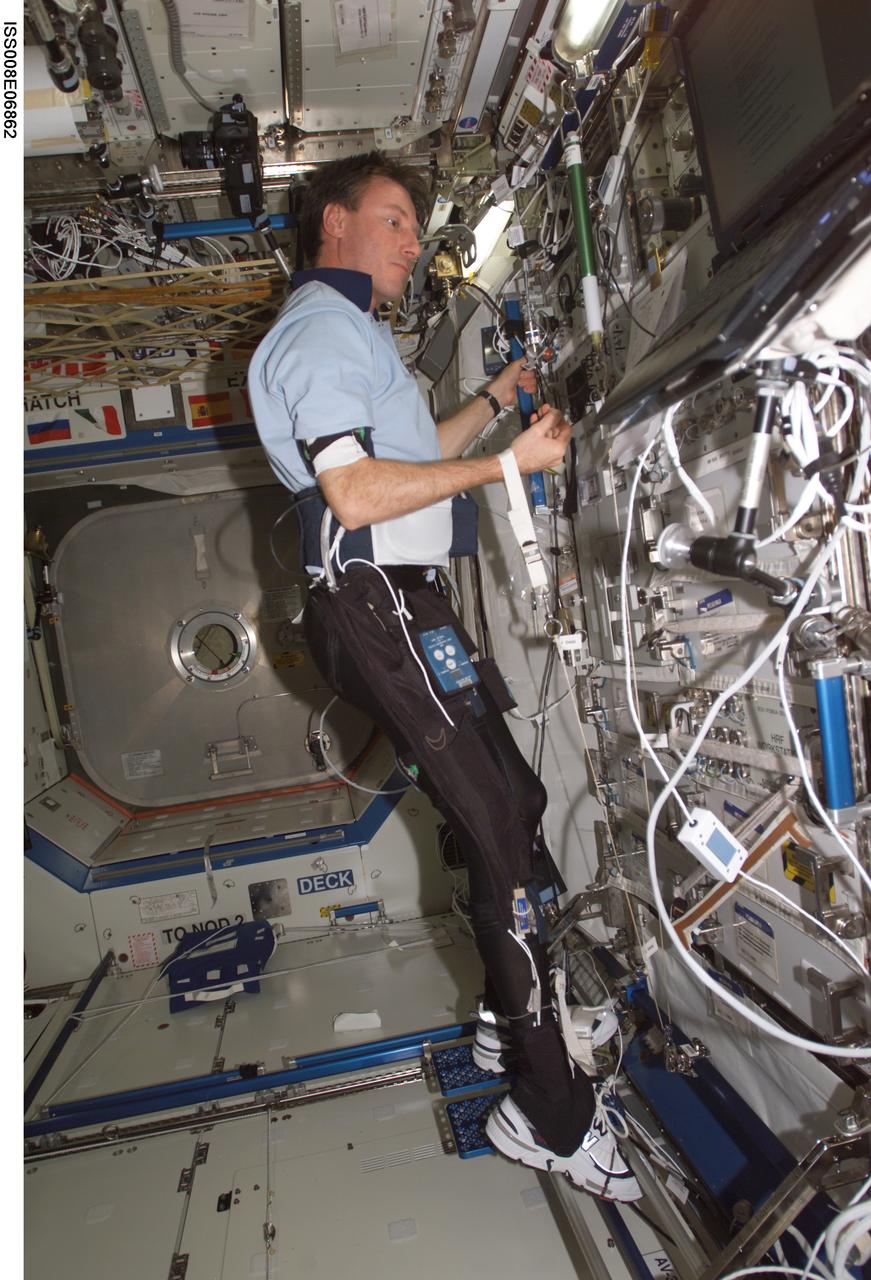
ISS008-E-06862 (3 December 2003) --- Astronaut C. Michael Foale, Expedition 8 mission commander and NASA ISS science officer, attired in instrumented biking tights, participates in the Foot/Ground Reaction Forces During Spaceflight (FOOT) experiment in the Destiny laboratory on the International Space Station (ISS). The Lower Extremity Monitoring Suit (LEMS), the cycling tights outfitted with 20 sensors, measured forces on Foale’s feet and joints and muscle activity while he went about his scheduled activities.
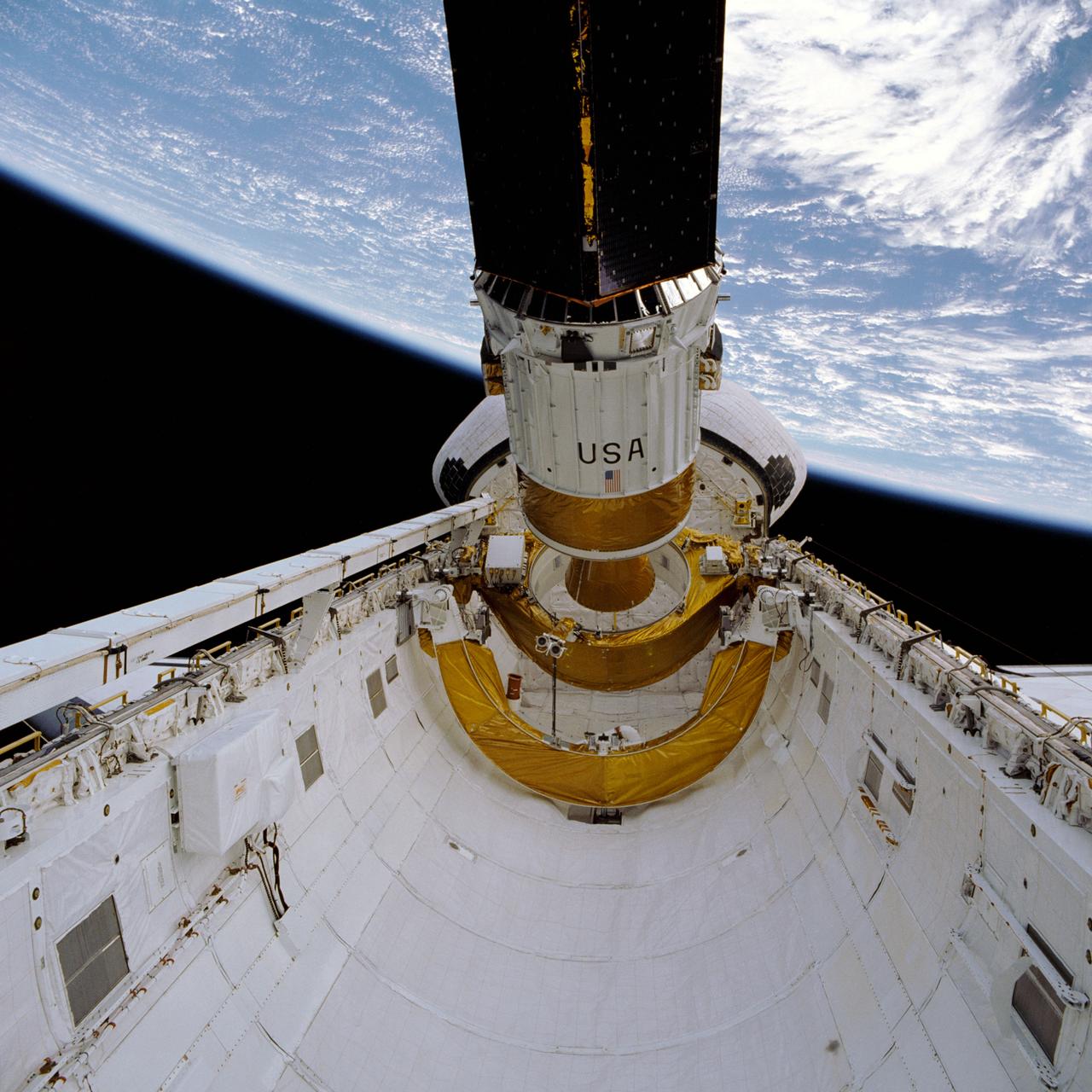
STS029-71-026 (13 March 1989) --- The Tracking and Data Relay Satellite (TDRS-D) is tilted in the cargo bay prior to its release via a remote system on Discovery's flight deck. This photographic frame was among NASA's third STS-29 photo release. Monday, March 20, 1989. Crewmembers were Astronauts Michael L. Coats, John E. Blaha, James F. Buchli, Robert C. Springer and James P. Bagian.

This Atlas/Centaur launch vehicle, carrying the High Energy Astronomy Observatory (HEAO)-3, lifted off on September 20, 1979. The HEAO-3's mission was to survey and map the celestial sphere for gamma-ray flux and make detailed measurements of cosmic-ray particles. It carried three scientific experiments: a gamma-ray spectrometer, a cosmic-ray isotope experiment, and a heavy cosmic-ray nuclei experiment. The HEAO-3 was originally identified as HEAO-C but the designation was changed once the spacecraft achieved orbit.
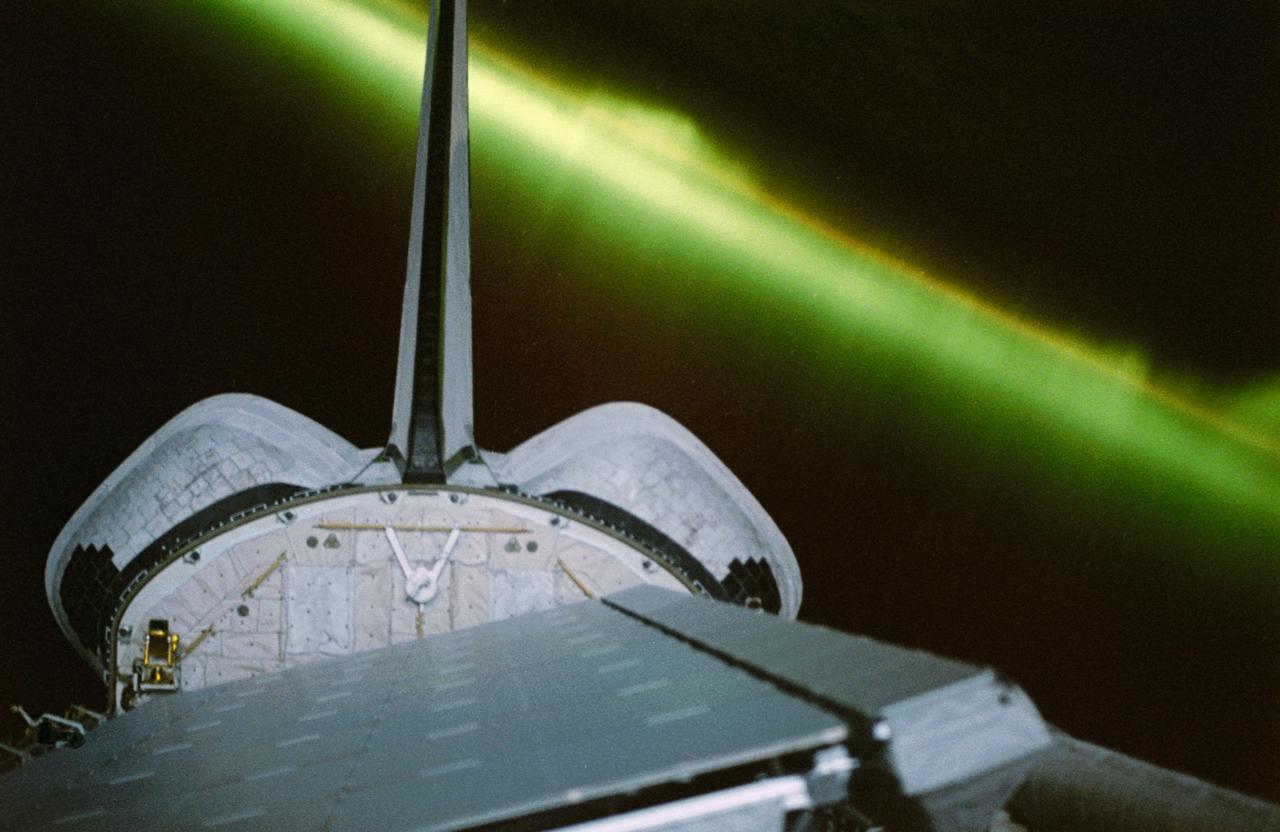
STS059-50-011 (9-20 April 94) --- A greenish appearing aurora forms the backdrop for this 35mm scene of the Earth orbiting Space Shuttle Endeavour's aft cargo bay. Featured in the bay are the antennae for the SIR-C/X-SAR imaging radar instruments, illuminated by moonlight. The crew sighted the southern lights (aurora australis) several times during each of the eleven days of the mission.
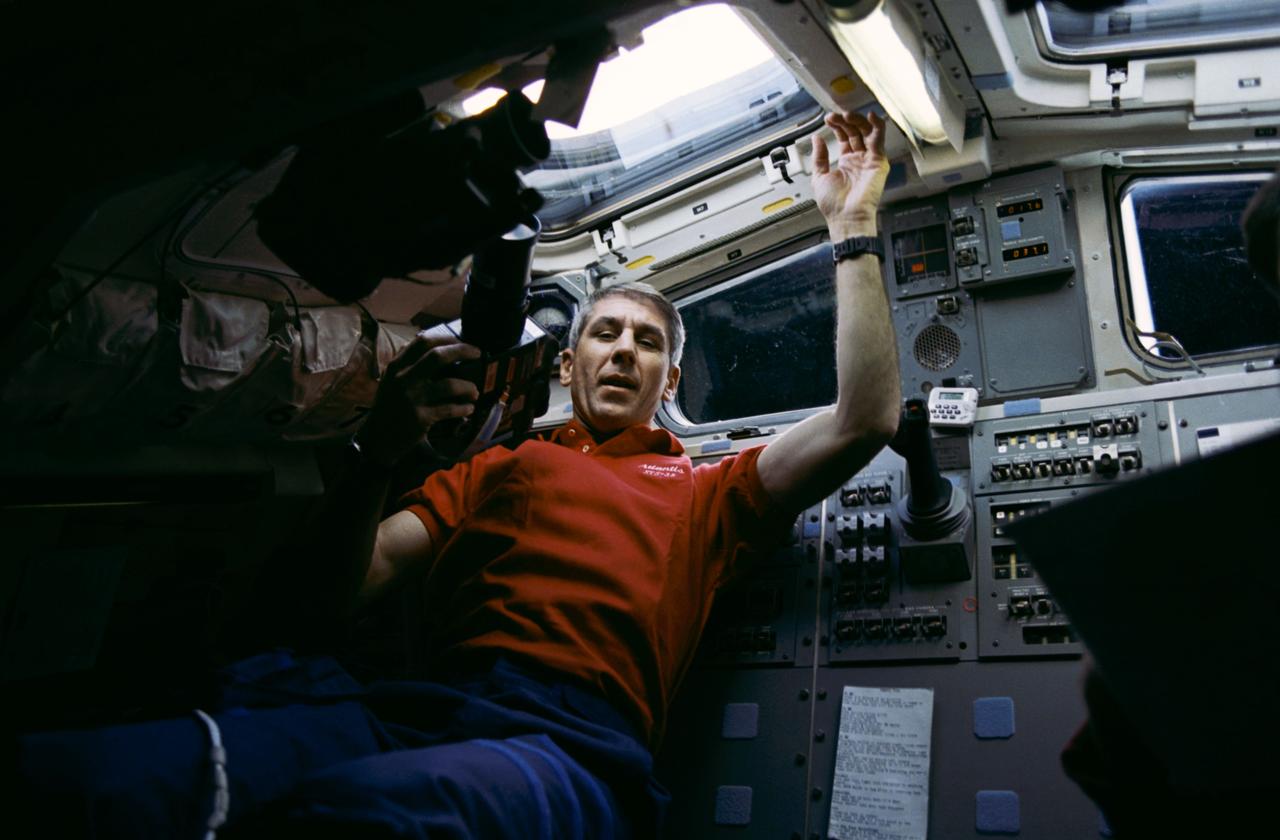
STS038-25-005 (20 Nov 1990) --- STS-38 Mission Specialist (MS) Robert C. Springer, holding HASSELBLAD camera, positions himself under aft flight deck overhead window W7 before recording the Earth's surface below. Behind Springer are Atlantis', Orbiter Vehicle (OV) 104's, on orbit station and aft flight deck viewing windows.
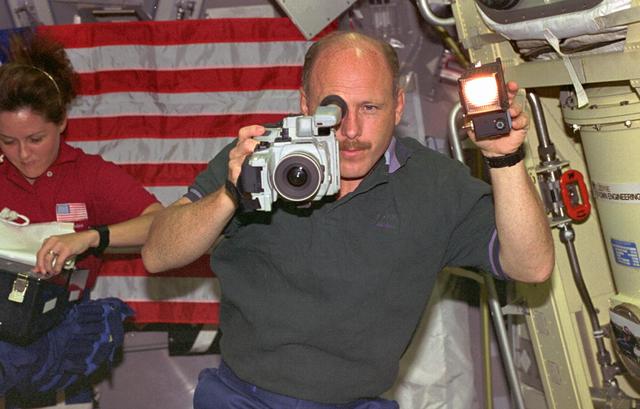
STS073-230-014 (20 October - 5 November 1995) --- Astronaut Kenneth D. Bowersox, STS-73 mission commander, uses a camcorder to record United States Microgravity Laboratory 2 (USML-2) activities onboard the Space Shuttle Columbia. Nearby, astronaut Kathryn C. Thornton, payload commander, prepares to open a supply chest to support one of many science experiments conducted by the seven-member crew during the 16-day USML-2 flight.
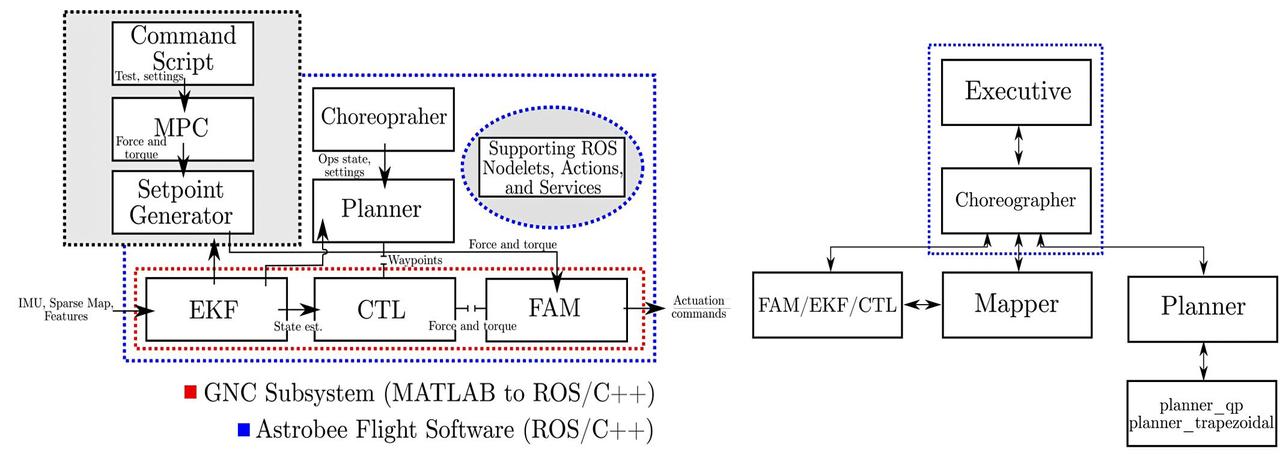
jsc2025e032820 (3/20/2025) --- Left: Astrobee’s guidance, navigation and control (GNC) subsystem. Components shown in black (Matlab/ROS/C++/Python) indicate a replacement pipeline overriding Astrobee’s default GNC subsystem, outlined in red. Right: software interface between GNC components and Astrobee’s finite state machines (FSMs). The FSM-based nodelets are outlined in blue. Image courtesy of Hector Gutierrez.
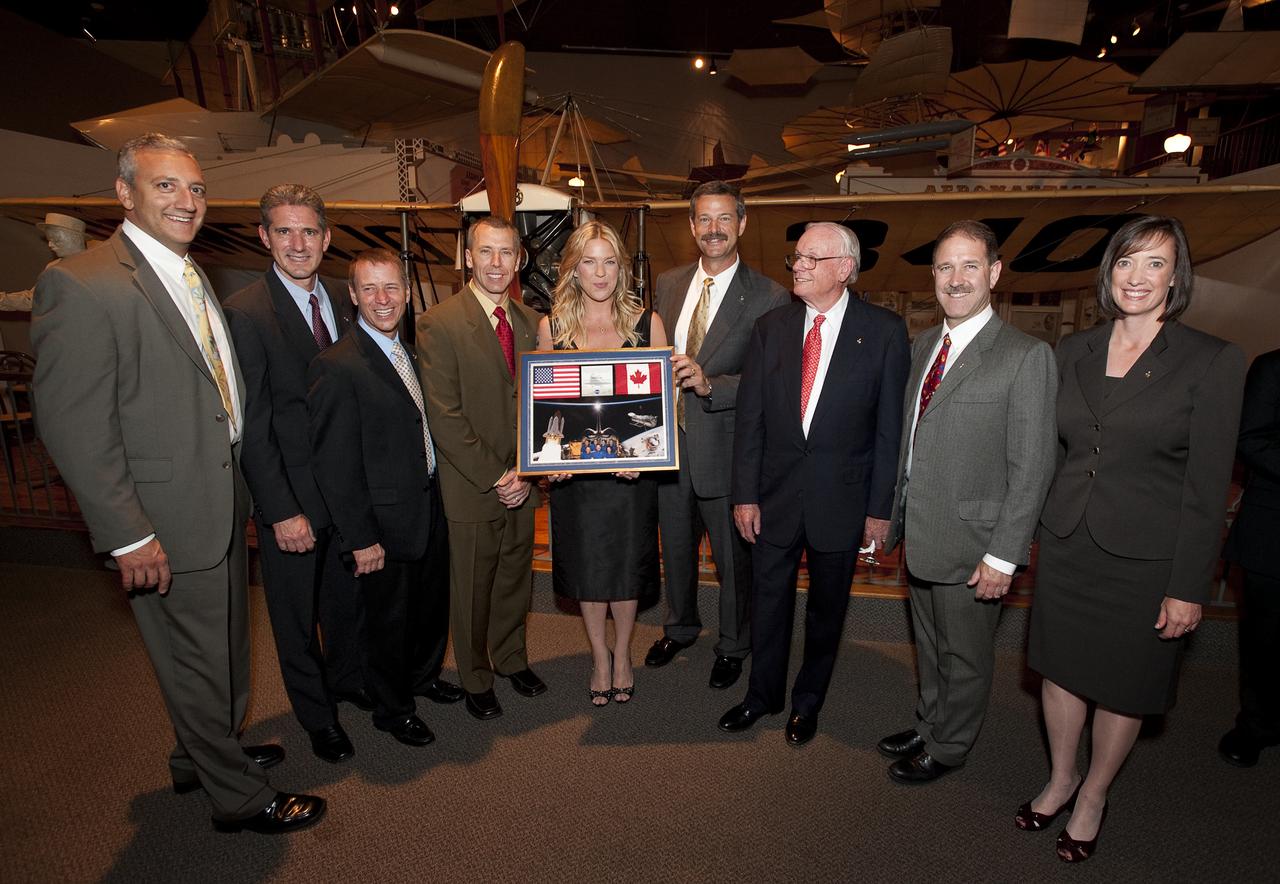
Jazz pianist and singer Diana Krall holds a montage given to her by the STS-125 space shuttle crew along with Apollo 11 Astronaut Neil Armstrong at the Apollo 40th anniversary celebration held at the National Air and Space Museum, Monday, July 20, 2009 in Washington. From left, Michael J. Massimino, Michael T. Good, Gregory C. Johnson, Andrew J. Feustel, Krall, Scott D. Altman, Neil Armstrong, John M. Grunsfeld and Megan McArthur. Photo Credit: (NASA/Bill Ingalls)
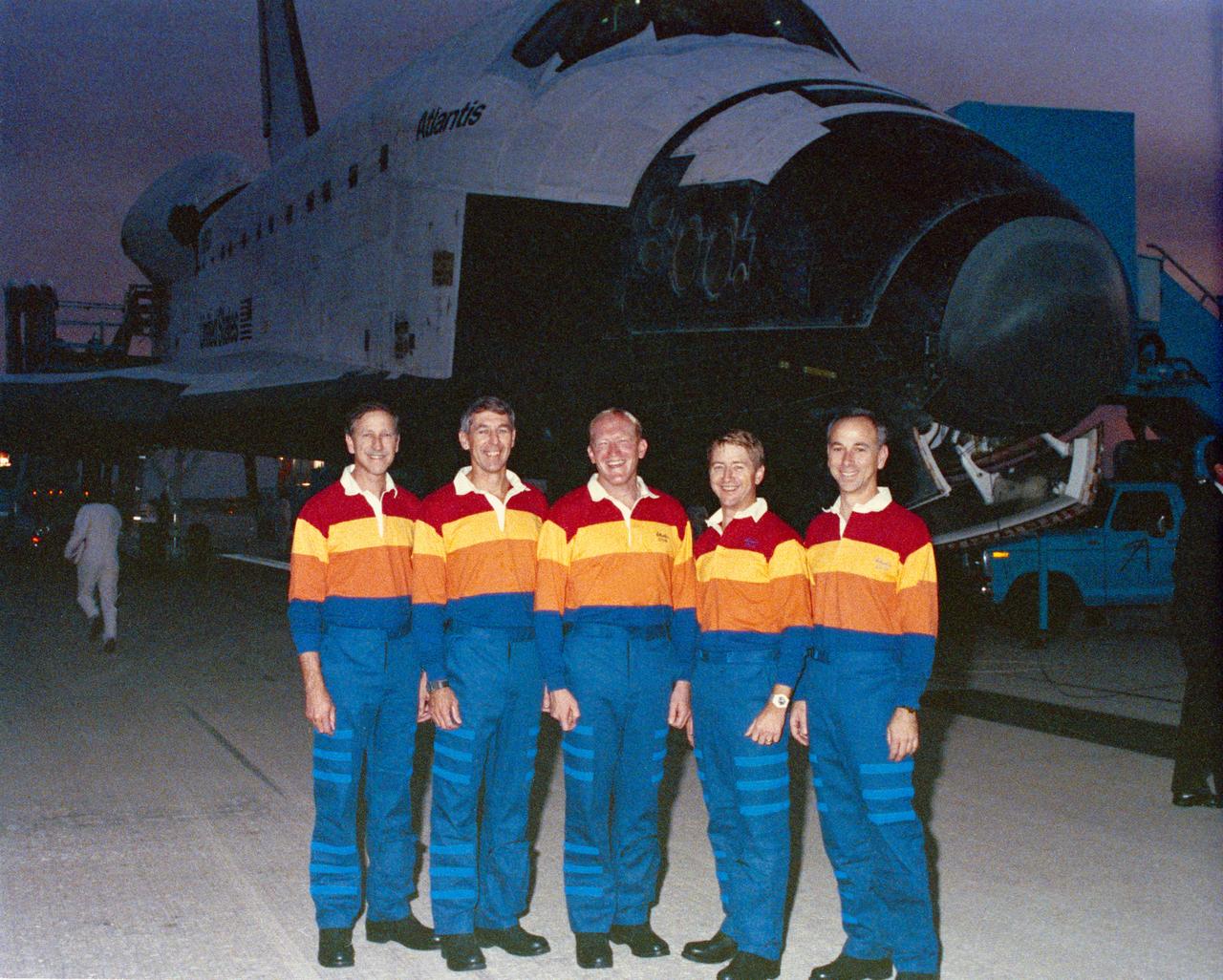
STS038-S-040 (20 Nov 1990) --- STS-38 crewmembers, wearing red, yellow, and orange polo shirts, pose in front of Atlantis, Orbiter Vehicle (OV) 104, parked on runway 33 at Kennedy Space Center's (KSC) Shuttle Landing Facility (SLF) during post flight activities. Left to right are Commander Richard O. Covey, Mission Specialist (MS) Robert C. Springer, MS Charles D. Gemar, Pilot Frank L. Culbertson, and MS Carl J. Meade.
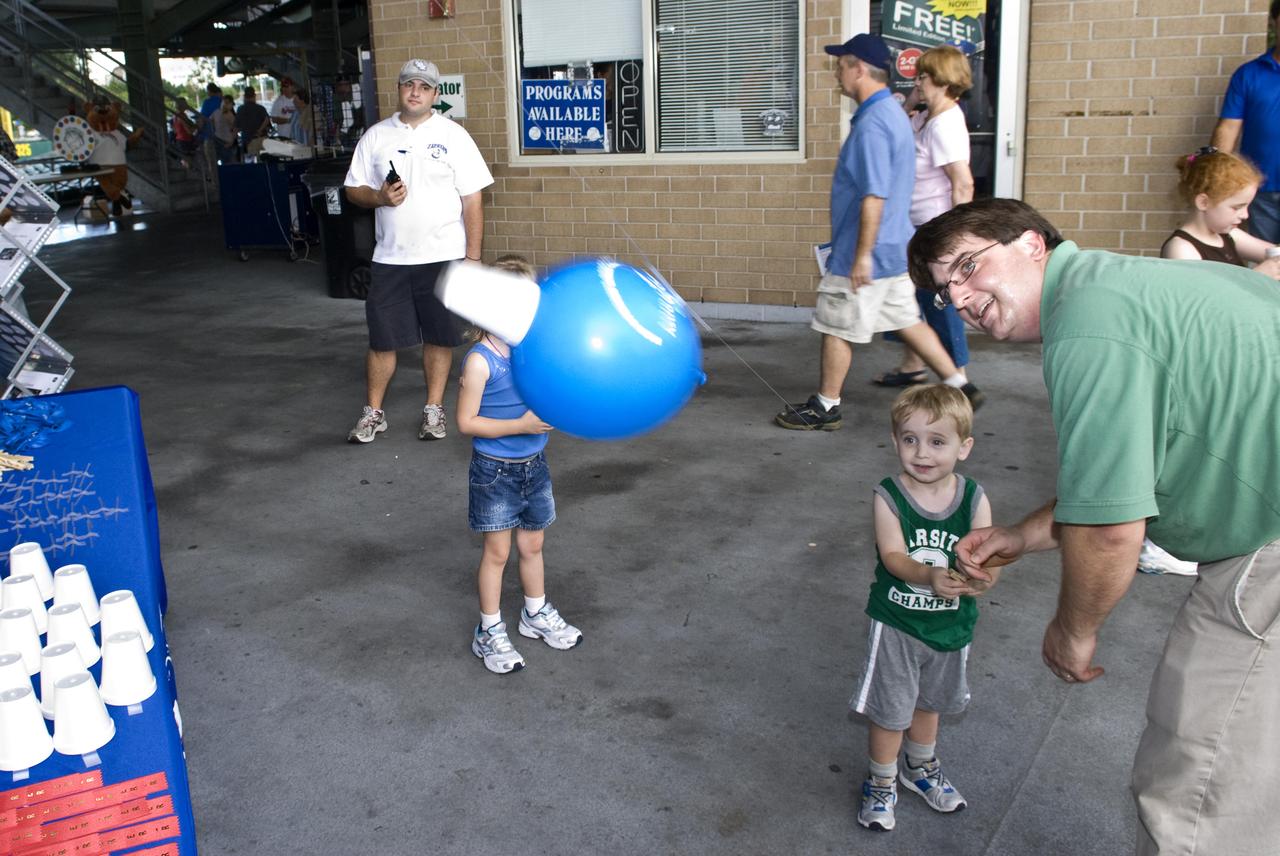
Stennis employee Chris Smith helps a young child 'launch' a balloon rocket. Employees from NASA's John C. Stennis Space Center traveled to New Orleans on Aug. 20 to host NASA Night at Zephyr Field. Stennis personnel provided a variety of activities and materials for persons attending a game between the New Orleans Zephyrs and the Las Vegas 51s.