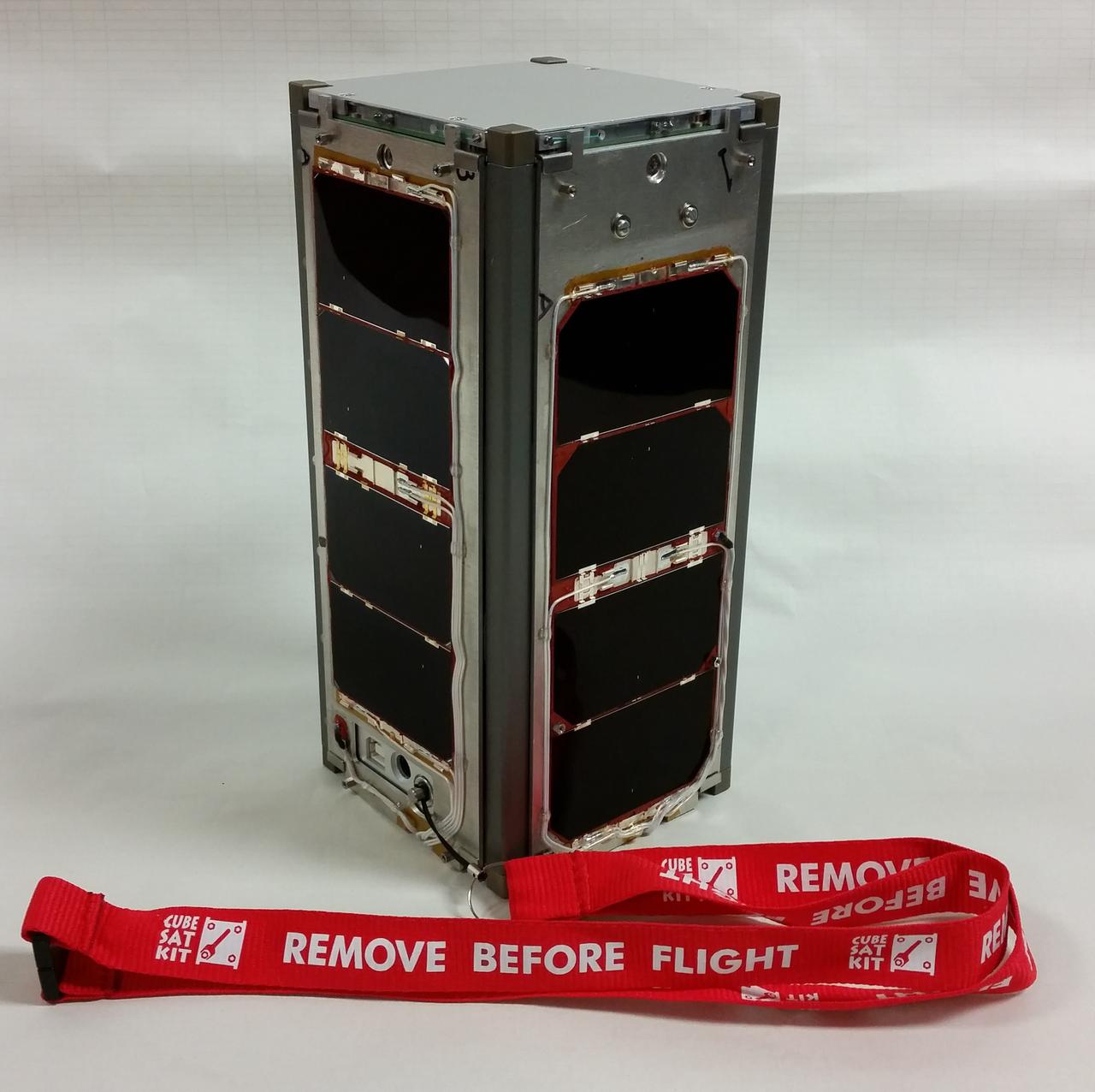
The primary mission of CSUNSat1 is to space test an innovative low temperature capable energy storage system developed by the Jet Propulsion Laboratory, raising its TRL level to 7 from 4 to 5. The success of this energy storage system will enable future missions, especially those in deep space to do more science while requiring less energy, mass and volume. This CubeSat was designed, built, programmed, and tested by a team of over 70 engineering and computer science students at CSUN. The primary source of funding for CSUNSat1 comes from NASA’s Smallest Technology Partnership program. Launched by NASA’s CubeSat Launch Initiative on the NET April 18, 2017 ELaNa XVII mission on the seventh Orbital-ATK Cygnus Commercial Resupply Services (OA-7) to the International Space Station and deployed on tbd.
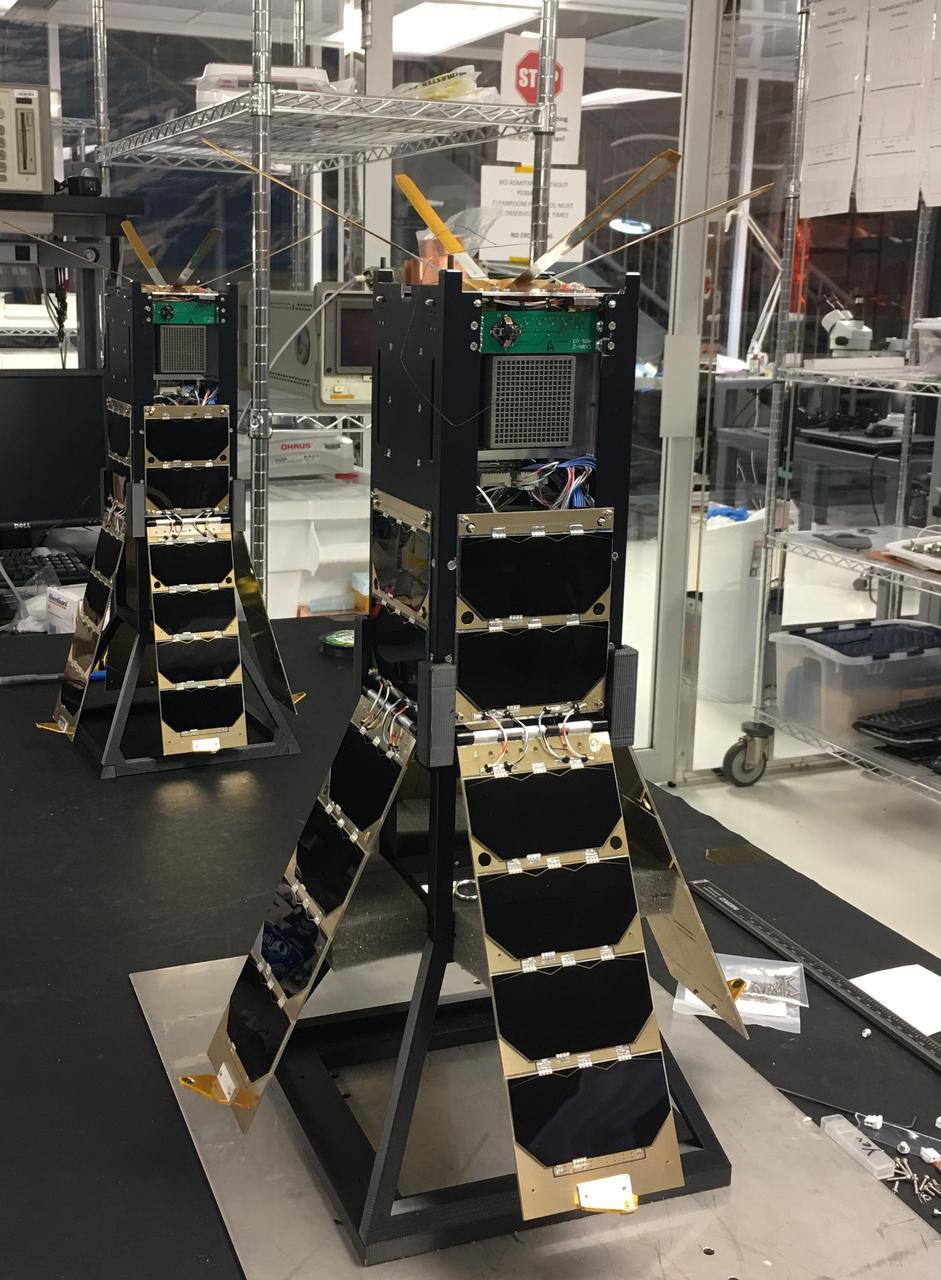
The Cosmic X-Ray Background NanoSat-2 (CXBN-2) CubeSat Mission developed by Morehead State University and its partners the Keldysh Institute (Moscow, Russia), the Maysville Community and Technical College (Morehead, KY) and KYSpace LLC (Lexington, KY) will increase the precision of measurements of the Cosmic X-Ray Background in the 30-50 keV range to a precision of <5%, thereby constraining models that attempt to explain the relative contribution of proposed sources lending insight into the underlying physics of the early universe. The mission addresses a fundamental science question that is central to our understanding of the structure, origin, and evolution of the universe by potentially lending insight into both the high-energy background radiation and into the evolution of primordial galaxies. Launched by NASA’s CubeSat Launch Initiative NET April 18, 2017 ELaNa XVII mission on the seventh Orbital-ATK Cygnus Commercial Resupply Services (OA-7) to the International Space Station and deployed on tbd.
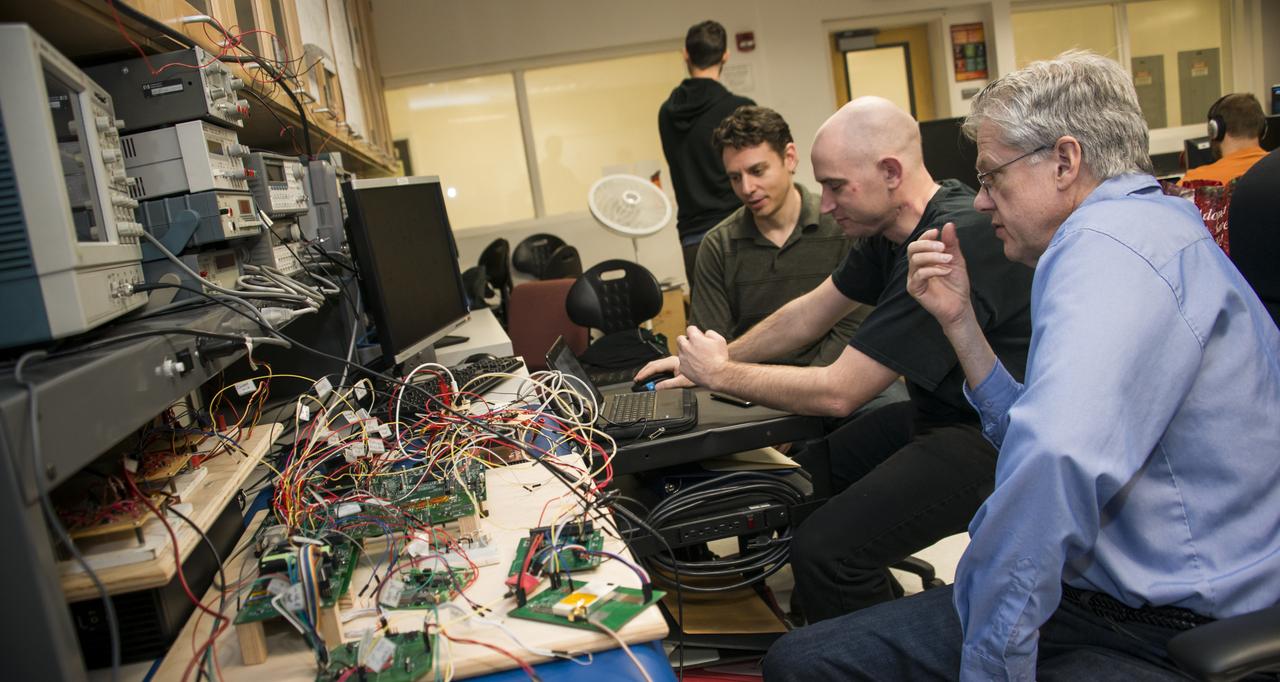
CSUNSat-1 Team (Adam Kaplan, James Flynn, Donald Eckels) working on their CubeSat at California State University Northridge. The primary mission of CSUNSat1 is to space test an innovative low temperature capable energy storage system developed by the Jet Propulsion Laboratory, raising its TRL level to 7 from 4 to 5. The success of this energy storage system will enable future missions, especially those in deep space to do more science while requiring less energy, mass and volume. This CubeSat was designed, built, programmed, and tested by a team of over 70 engineering and computer science students at CSUN. The primary source of funding for CSUNSat1 comes from NASA’s Smallest Technology Partnership program. Launched by NASA’s CubeSat Launch Initiative NET April 18, 2017 ELaNa XVII mission on the seventh Orbital-ATK Cygnus Commercial Resupply Services (OA-7) to the International Space Station and deployed on tbd.
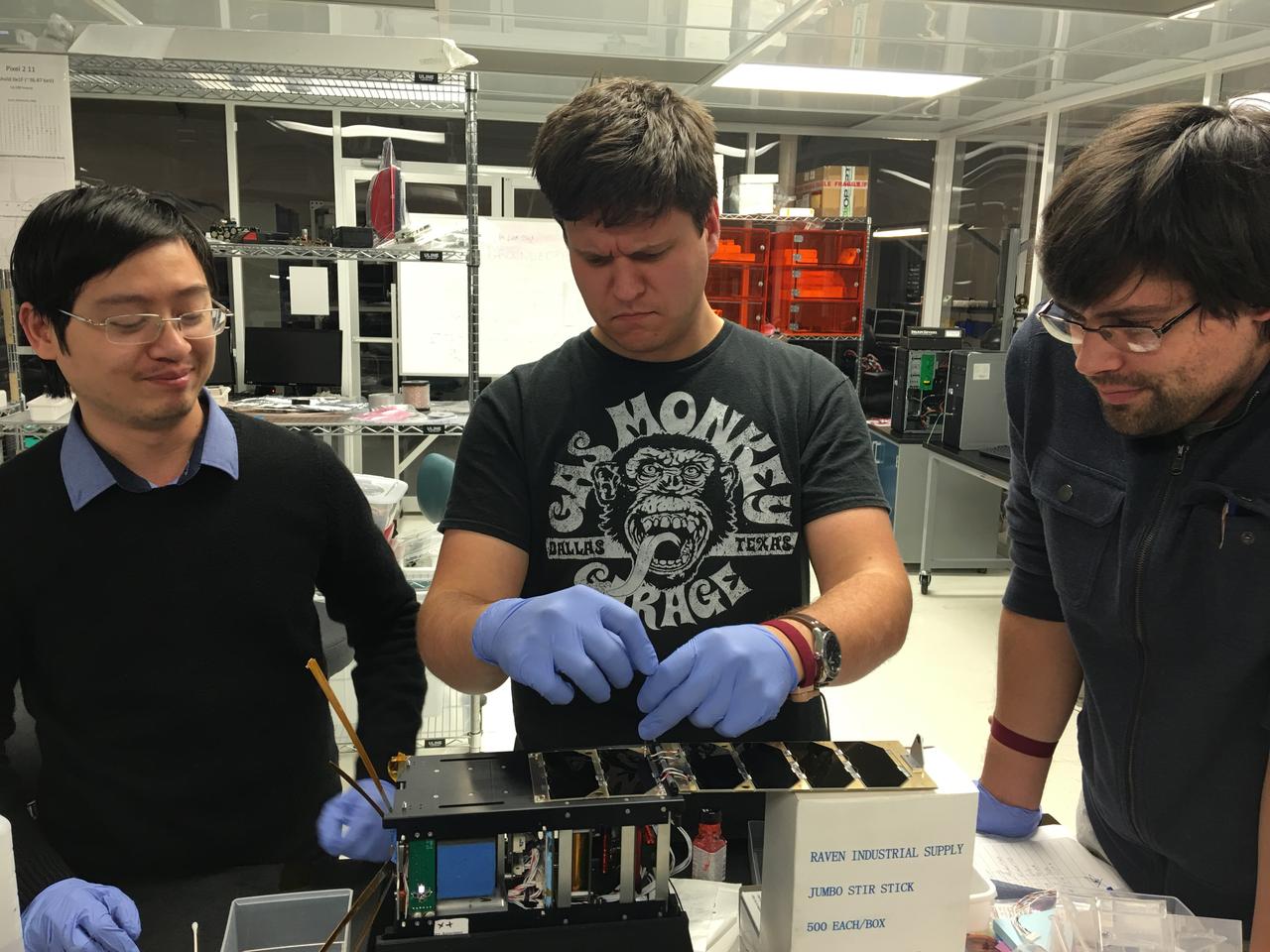
CXBN-2 Integration Team in the Morehead State University Spacecraft Integration and Assembly Facility. Left to right: Kein Dant, Yevgeniy Byleborodov, and Nate Richard. The Cosmic X-Ray Background NanoSat-2 (CXBN-2) CubeSat Mission developed by Morehead State University and its partners the Keldysh Institute (Moscow, Russia), the Maysville Community and Technical College (Morehead, KY) and KYSpace LLC (Lexington, KY) will increase the precision of measurements of the Cosmic X-Ray Background in the 30-50 keV range to a precision of <5%, thereby constraining models that attempt to explain the relative contribution of proposed sources lending insight into the underlying physics of the early universe. The mission addresses a fundamental science question that is central to our understanding of the structure, origin, and evolution of the universe by potentially lending insight into both the high-energy background radiation and into the evolution of primordial galaxies. Launched by NASA’s CubeSat Launch Initiative NET April 18, 2017 ELaNa XVII mission on the seventh Orbital-ATK Cygnus Commercial Resupply Services (OA-7) to the International Space Station and deployed on tbd.