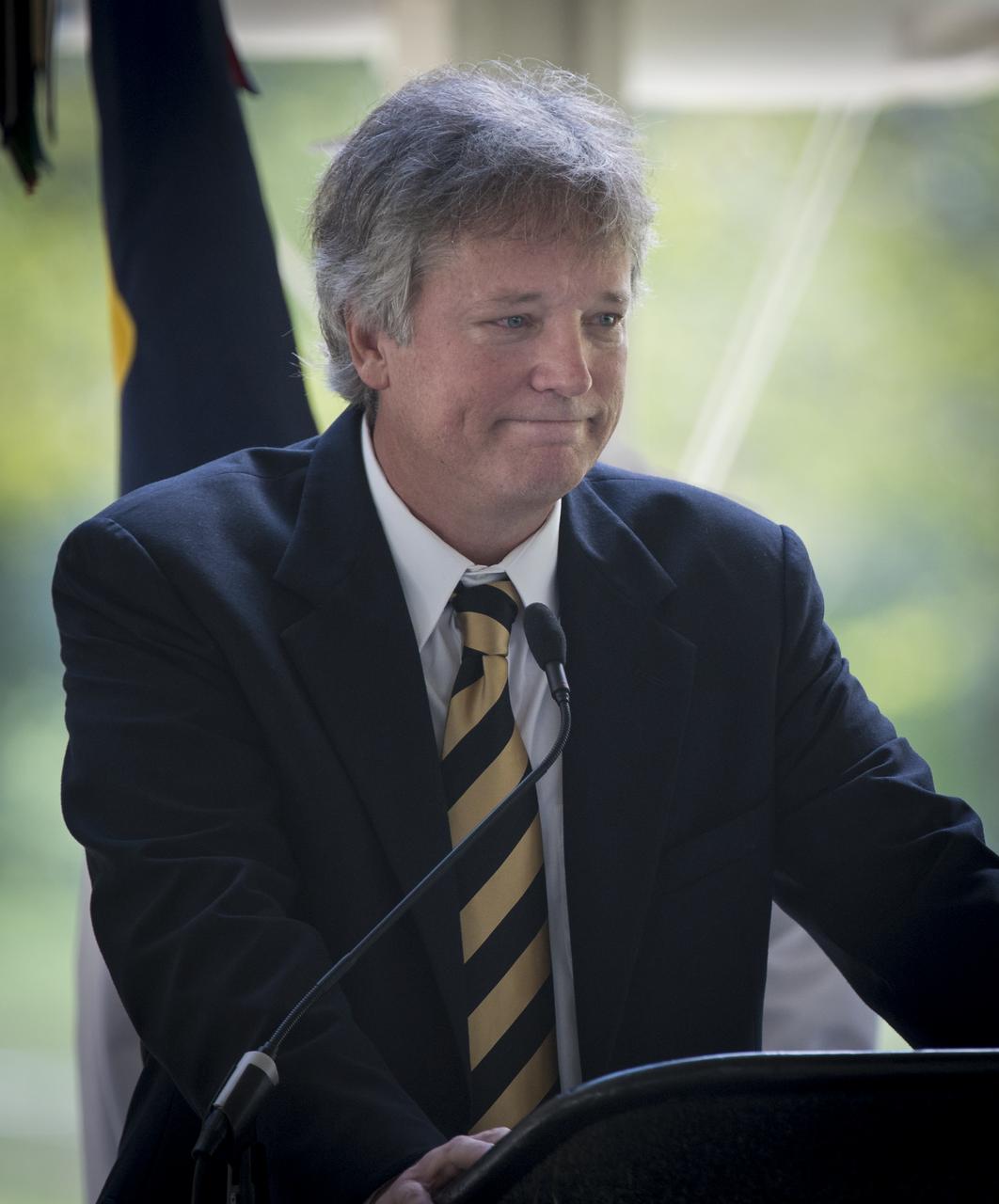
Eric "Rick" Armstrong, son of Neil Armstrong, speaks during a memorial service celebrating the life of his father, Friday, Aug. 31, 2012, at the Camargo Club in Cincinnati. Neil Armstrong, the first man to walk on the moon during the 1969 Apollo 11 mission, died Saturday, Aug. 25. He was 82. Photo Credit: (NASA/Bill Ingalls)
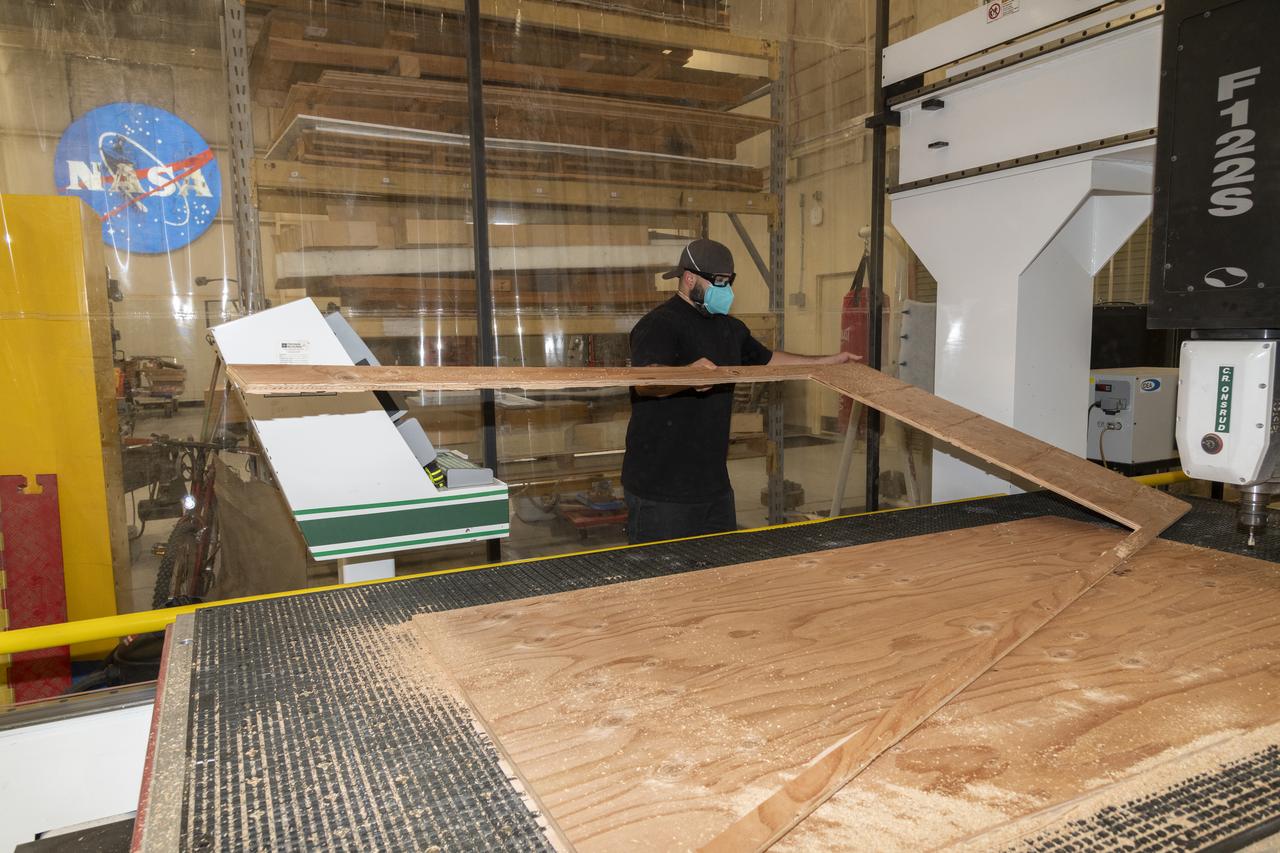
Eric Garza, an engineering technician in the Experimental Fabrication Shop at NASA’s Armstrong Flight Research Center in Edwards, California, cuts plywood to size for temporary floorboards for the X-66 experimental demonstrator aircraft on Aug. 26, 2024.
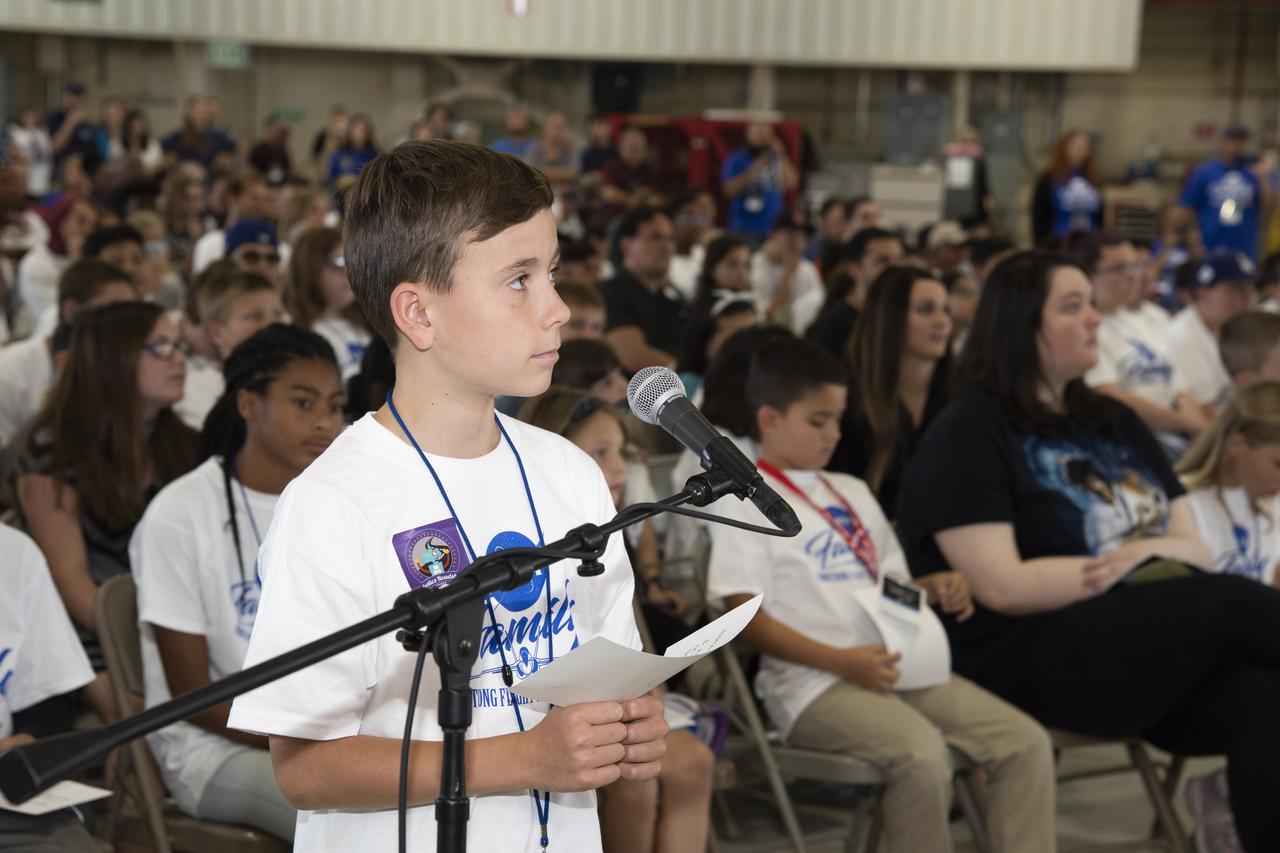
Eric Swanson stands at the microphone as he asks Serena M. Auñón-Chancel, a NASA astronaut, a question during the downlink event with NASA's Armstrong Flight Research Center.

Carol Armstrong, center, her son Eric, right, and daughter Molly Van Wagenen hold their hands to their hearts during a memorial service celebrating the life of Neil Armstrong at the Washington National Cathedral, Thursday, Sept. 13, 2012. Armstrong, the first man to walk on the moon during the 1969 Apollo 11 mission, died Saturday, Aug. 25. He was 82. Photo Credit: (NASA/Bill Ingalls)
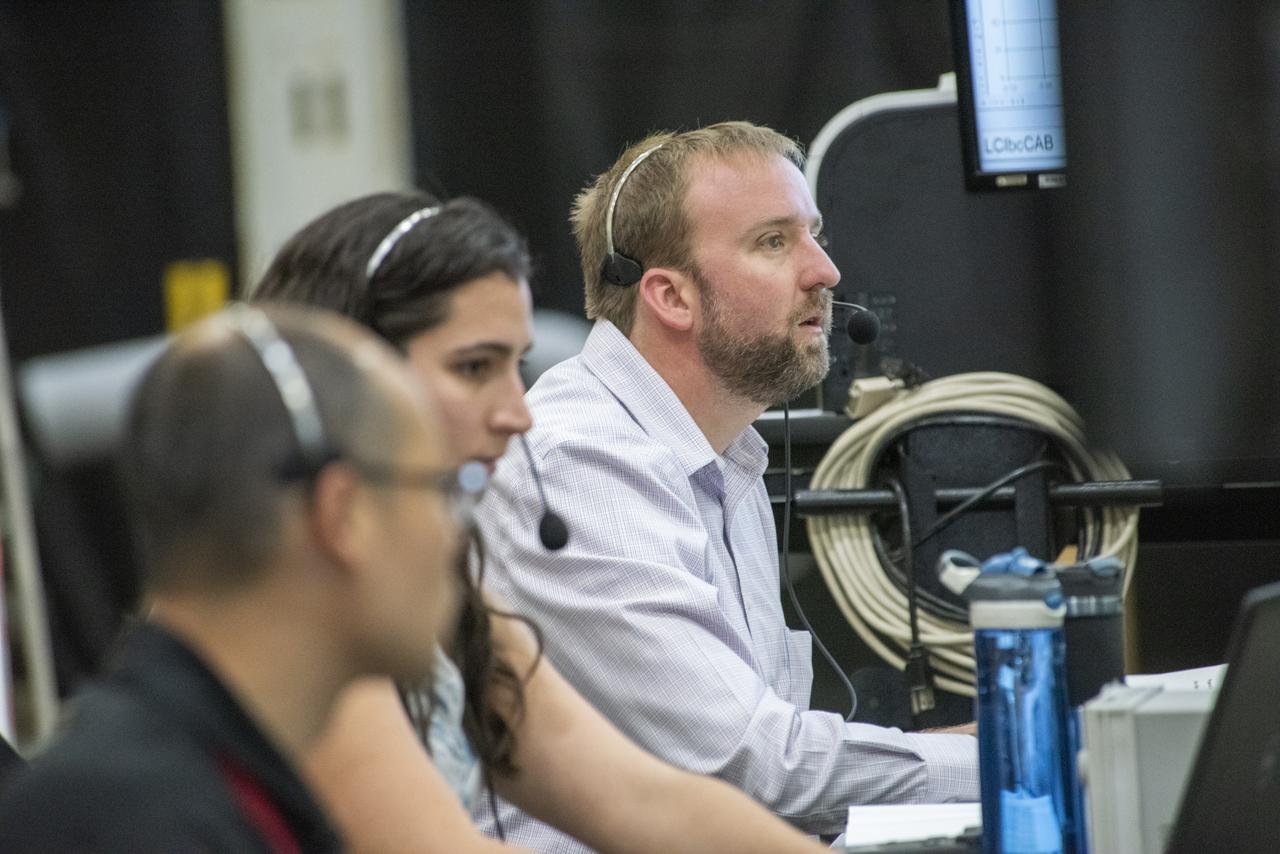
Wesley Li, Kirsten Boogaard and test conductor Eric Miller observe testing of the X-57 distributed electric aircraft wing at NASA's Armstrong Flight Research Center in California. Tests increased confidence in the wing's durability and calibrated installed strain gauges for inflight load monitoring of the wing.
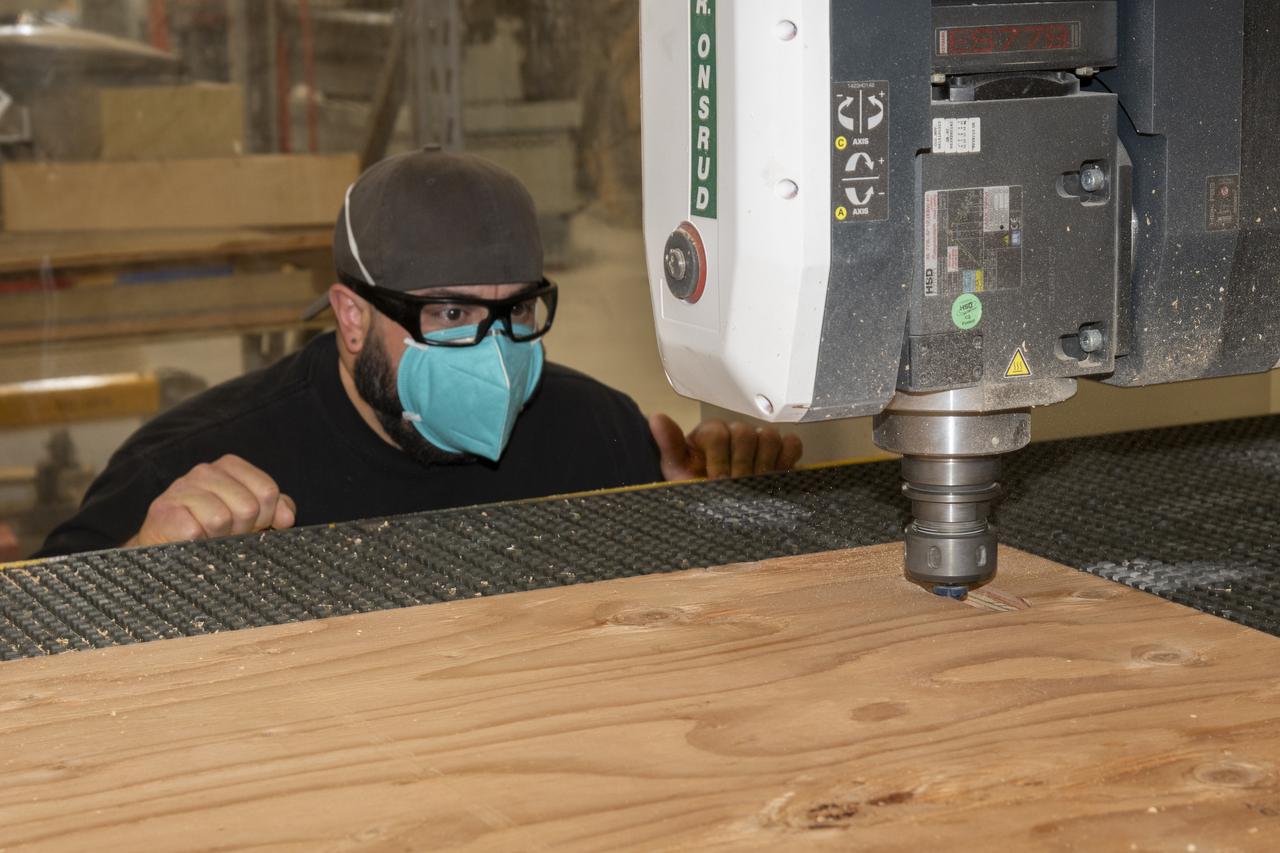
Eric Garza, an engineering technician in the Experimental Fabrication Shop at NASA’s Armstrong Flight Research Center in Edwards, California, observes a wood router cut holes for temporary floorboards on Aug. 26, 2024. The flooring was designed for the X-66 experimental demonstrator aircraft.

S69-40217 (27 July 1969) --- Neil A. Armstrong, commander of the Apollo 11 flight, greets his son Mark, on telephone intercom system, while his wife Jan and another son Eric look on. Armstrong had just arrived in early morning with the Mobile Quarantine Facility (MQF) at Ellington Air Force Base. Armstrong and fellow astronauts will remain in the MQF until arrival and confinement in the Crew Reception Area (CRA) of the Lunar Receiving Laboratory (LRL) at the Manned Spacecraft Center (MSC). Quarantine period will end on Aug. 11, 1969.
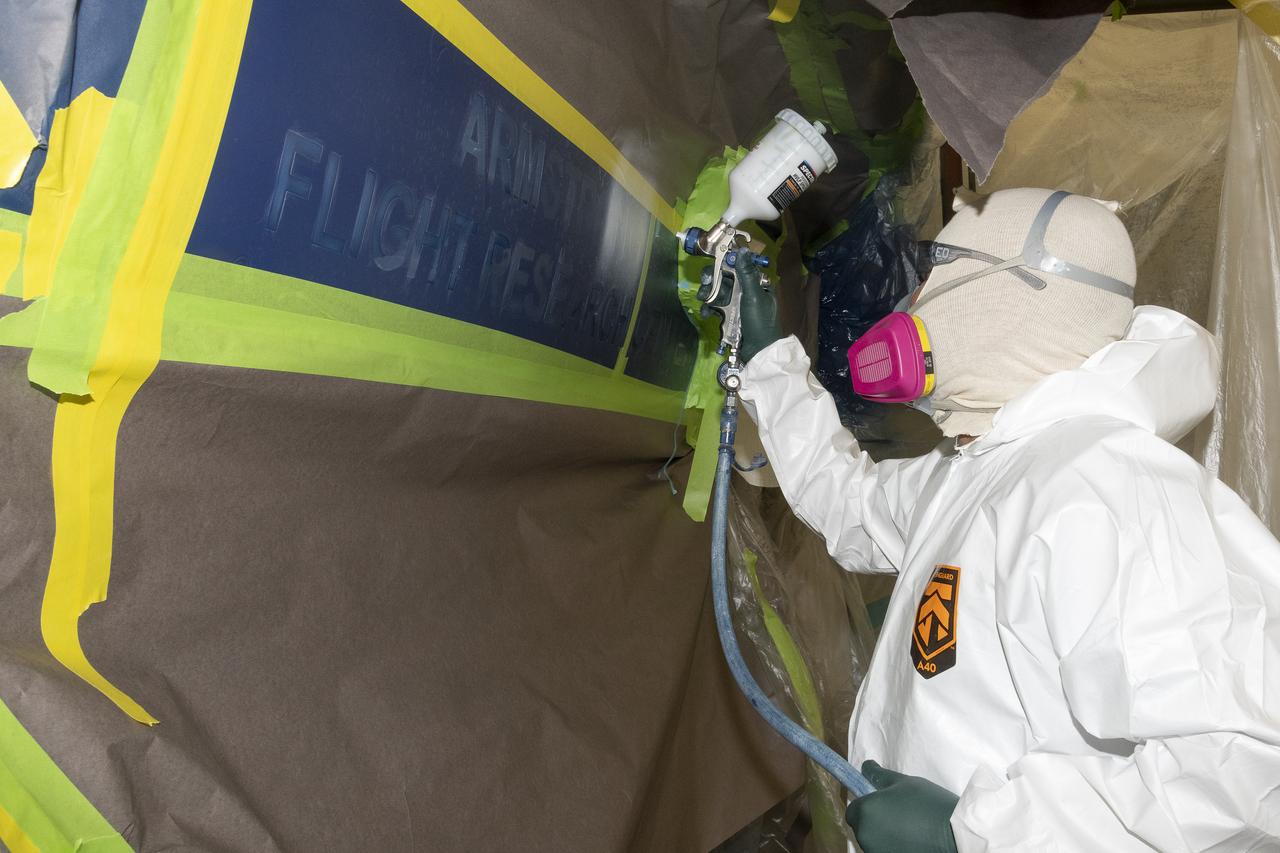
Eric Miranda, who works at the U.S. Air Force Corrosion Control Facility, paints areas in a stencil for adding some finishing touches to NASA 862, which is an F/A-18D based at NASA’s Armstrong Flight Research Center in Edwards, California. The corrosion control facility is located on Edwards Air Force Base and is also known as the Paint Barn.
![Neil Armstrong's Pressure Suit, A7-L, A19730040000, Apollo 11, that he wore to walk on the moon July 20, 1969 in its new display case in The Wright Brothers & the Invention of the Aerial Age Gallery of the National Air and Space Museum, July 12, 2019. (Smithsonian Air and Space Museum photo by Eric Long) [20190712JP-0089] [NASM2019-03995]](https://images-assets.nasa.gov/image/NHQ201907120004/NHQ201907120004~medium.jpg)
Neil Armstrong's Pressure Suit, A7-L, A19730040000, Apollo 11, that he wore to walk on the moon July 20, 1969 in its new display case in The Wright Brothers & the Invention of the Aerial Age Gallery of the National Air and Space Museum, July 12, 2019. (Smithsonian Air and Space Museum photo by Eric Long) [20190712JP-0089] [NASM2019-03995]
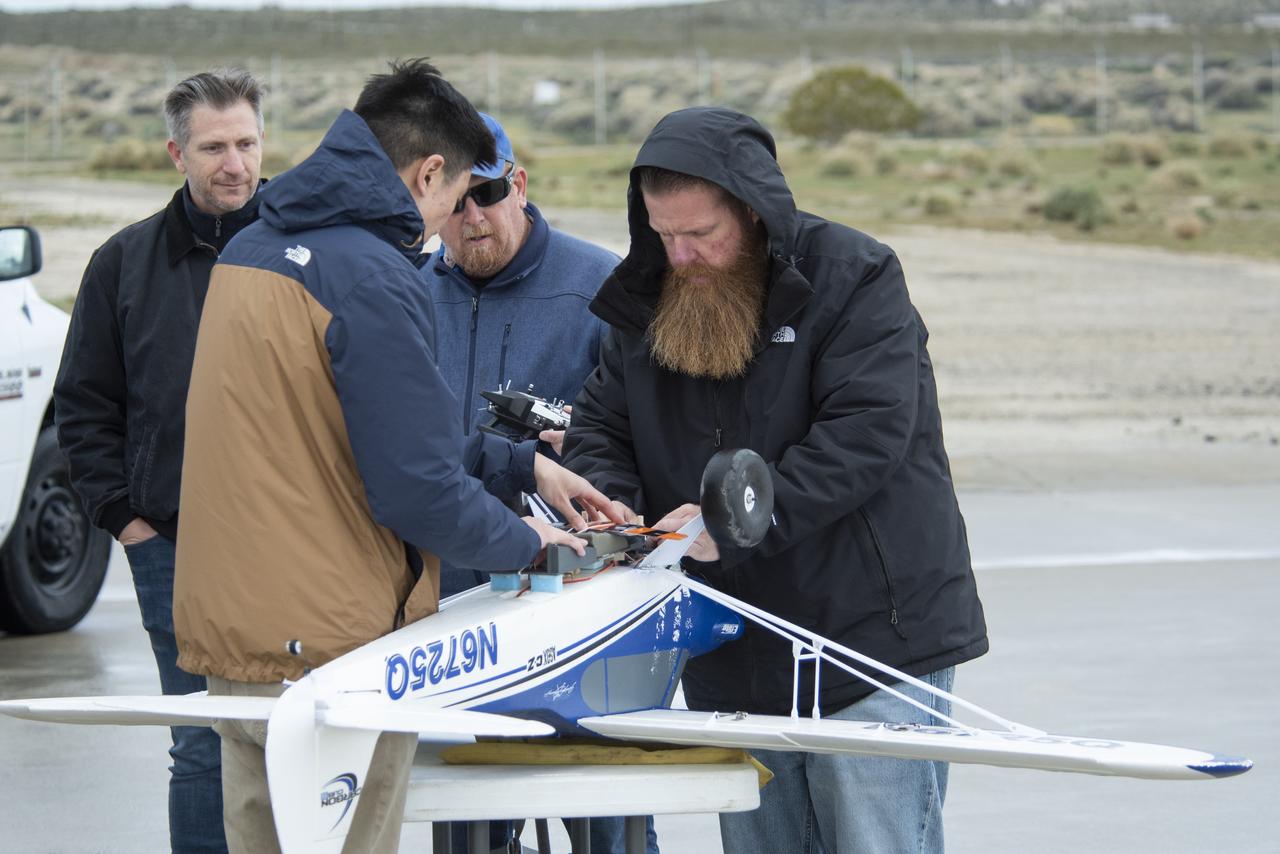
From left Eric Becker watches as Nathan Sam, Robert 'Red' Jensen and Justin Hall attach a Prandtl-M aircraft onto the Carbon Cub aircraft that air launched it at NASA's Armstrong Flight Research Center in California. The aircraft is the second of three prototypes of varying sizes to provide scientists with options to fly sensors in the Martian atmosphere to collect weather and landing site information for future human exploration of Mars.
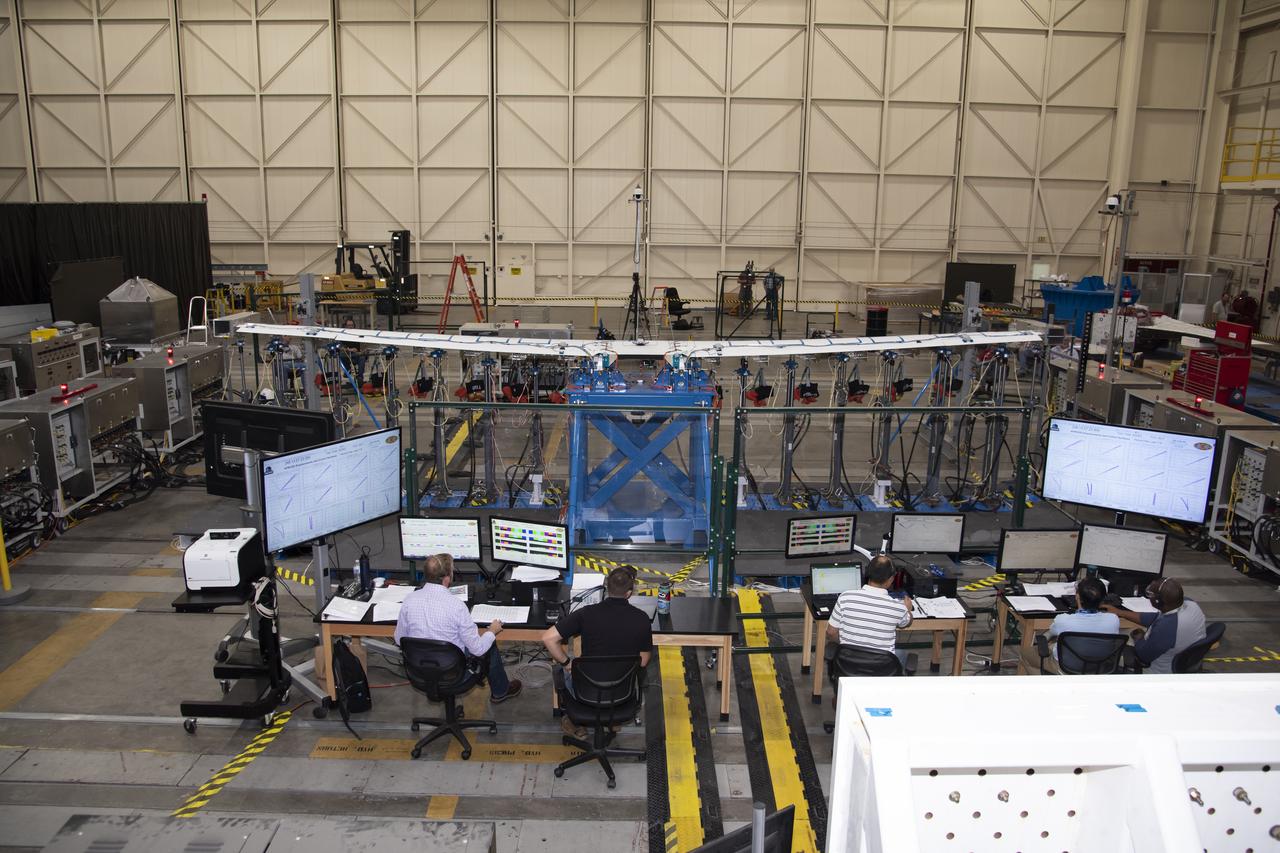
The X-57 distributed electric aircraft wing that will fly in the final configuration of the flight tests completed its testing at NASA's Armstrong Flight Research Center in California. The test above researched the wing's structure under stress of 120% of the design limit. Tests increased confidence in the wing's durability and calibrated installed strain gauges for inflight load monitoring of the wing. From left to right are Eric Miller, Tony Cash, Welsey Li, Shun-fat Lung and Ashante Jordan.
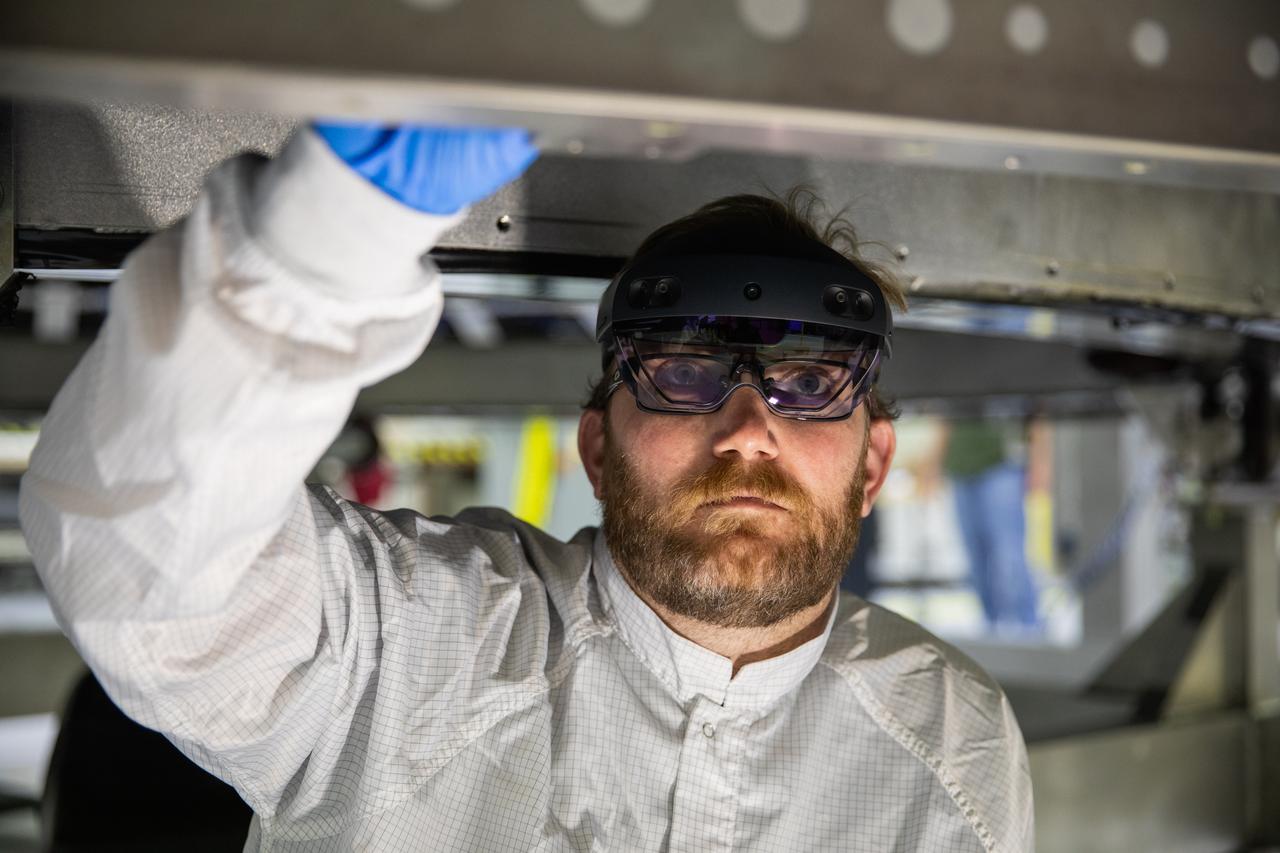
Eric Nolan, a technician with ASRC Federal Data Solutions, wears a pair of augmented reality (AR) goggles as he works on the heat shield for the crew module for NASA’s Artemis II mission inside the high bay of the Neil Armstrong Operations and Checkout Building at the agency’s Kennedy Space Center in Florida on March 18, 2020. Orion manufacturer Lockheed Martin provided the goggles to technicians to help place tapes where components will be installed on Orion for Artemis II, the first crewed mission aboard the spacecraft. Using the AR goggles saves significant labor and time to complete tasks. Manufactured by Microsoft, the goggles, called HoloLens2, are the second version used by Lockheed.
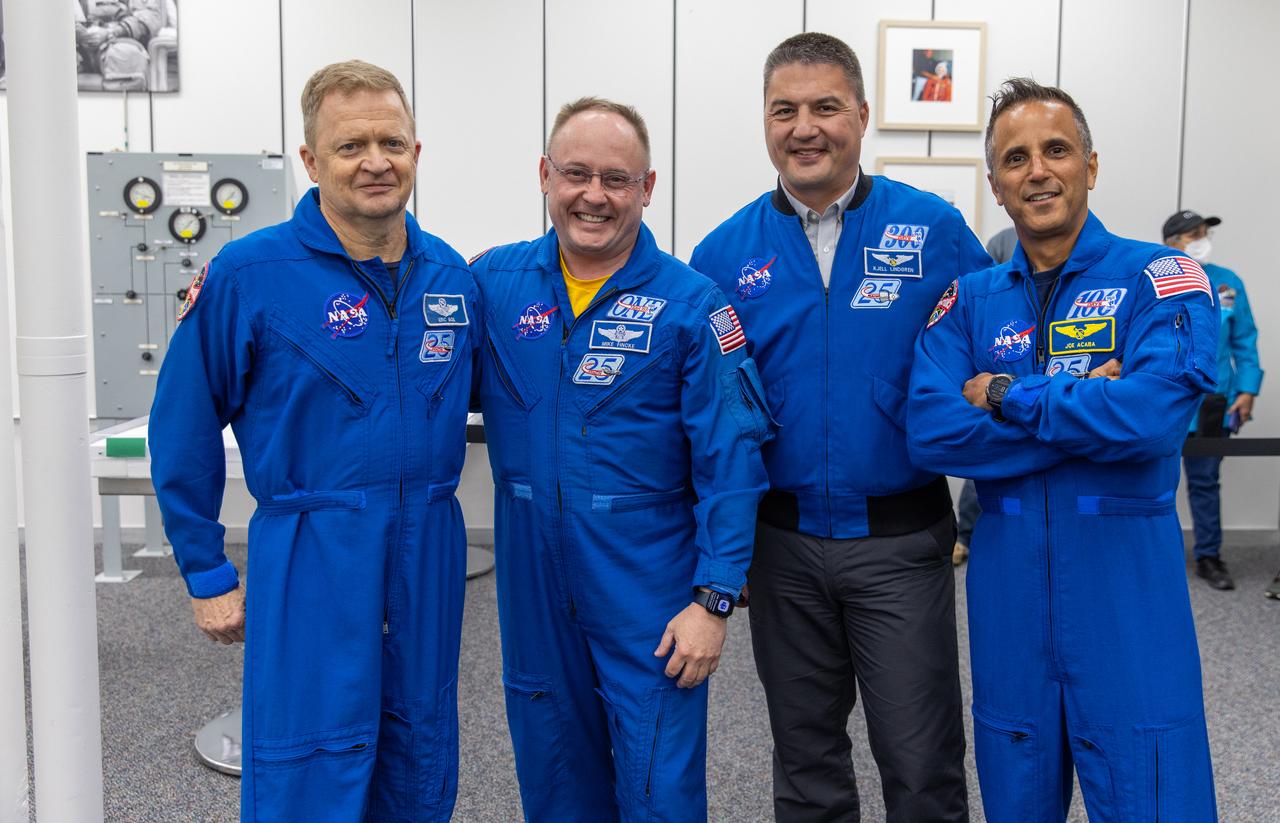
During the first launch attempt of NASA’s Boeing Crew Flight Test, NASA astronauts Eric Boe, Mike Fincke, Kjell Lindgren, and Joe Acaba are photographed inside the crew suit-up room in the Neil A. Armstrong Operations and Checkout Building at NASA’s Kennedy Space Center in Florida on Monday, May 6, 2024. As part of the agency’s Commercial Crew Program, the first crewed launch to the International Space Station aboard Boeing’s Starliner spacecraft atop a United Launch Alliance Atlas V rocket from Space Launch Complex-41 at nearby Cape Canaveral Space Force Station was targeted for 10:34 p.m. ET but scrubbed for the day.
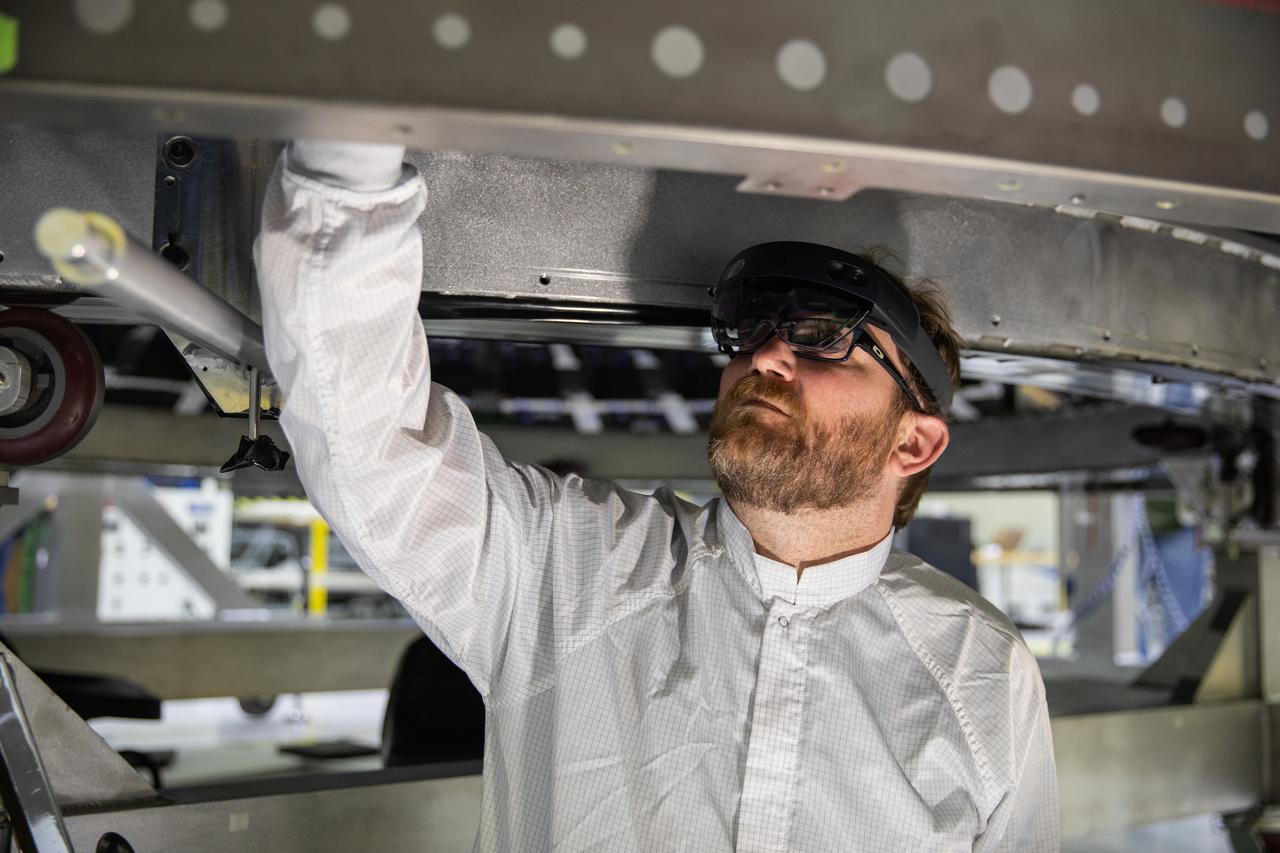
Eric Nolan, a technician with ASRC Federal Data Solutions, wears a pair of augmented reality (AR) goggles as he works on the heat shield for the crew module for NASA’s Artemis II mission inside the high bay of the Neil Armstrong Operations and Checkout Building at the agency’s Kennedy Space Center in Florida on March 18, 2020. Orion manufacturer Lockheed Martin provided the goggles to technicians to help place tapes where components will be installed on Orion for Artemis II, the first crewed mission aboard the spacecraft. Using the AR goggles saves significant labor and time to complete tasks. Manufactured by Microsoft, the goggles, called HoloLens2, are the second version used by Lockheed.
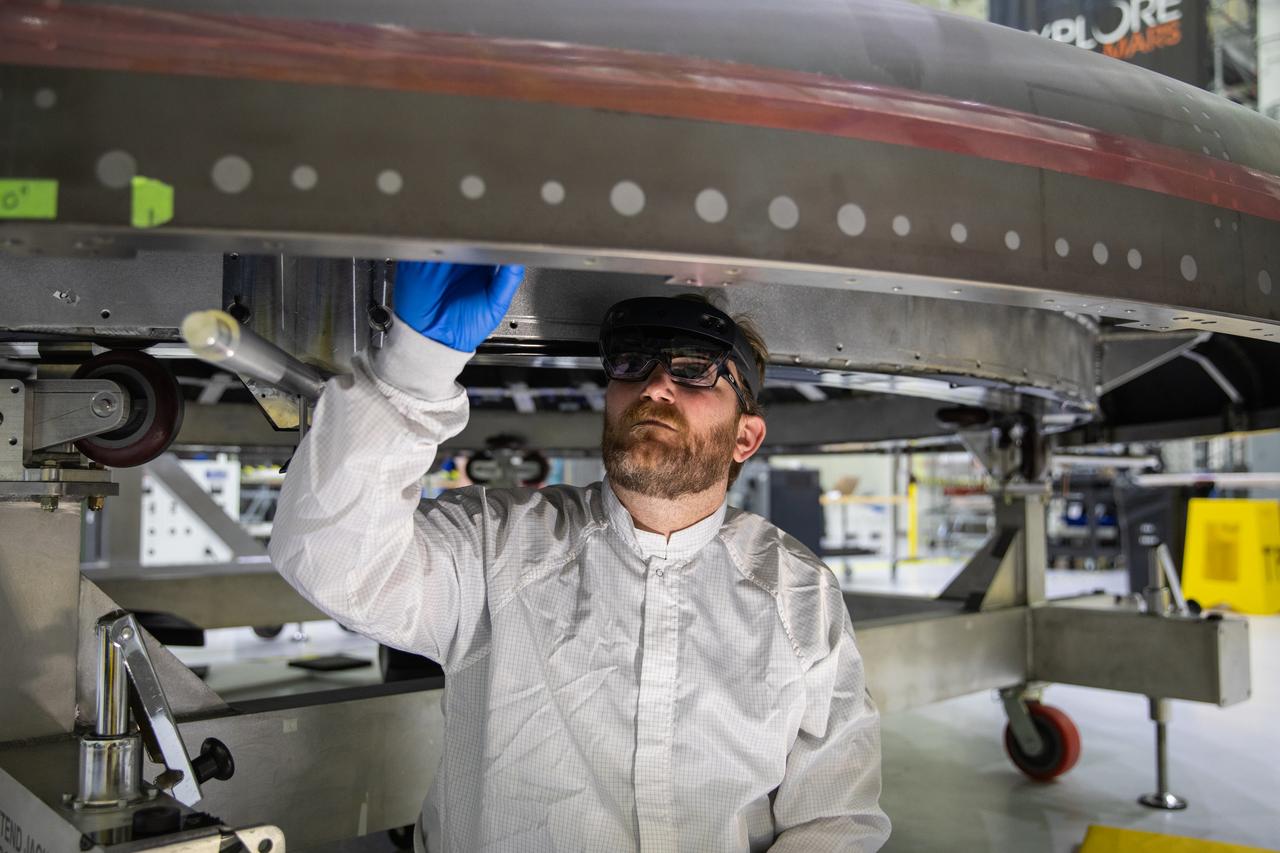
Eric Nolan, a technician with ASRC Federal Data Solutions, wears a pair of augmented reality (AR) goggles as he works on the heat shield for the crew module for NASA’s Artemis II mission inside the high bay of the Neil Armstrong Operations and Checkout Building at the agency’s Kennedy Space Center in Florida on March 18, 2020. Orion manufacturer Lockheed Martin provided the goggles to technicians to help place tapes where components will be installed on Orion for Artemis II, the first crewed mission aboard the spacecraft. Using the AR goggles saves significant labor and time to complete tasks. Manufactured by Microsoft, the goggles, called HoloLens2, are the second version used by Lockheed.

Dr. Eric H. Thoemmes, third from left, vice president of Space, Missile Defense and Strategic with Lockheed Martin, speaks to Russell Vought, second from left, director of the White House Office of Management and Budget, during a tour of the Neil Armstrong Operations and Checkout Building high bay at NASA’s Kennedy Space Center in Florida on Aug. 28, 2020. At far left is Larry Price, Lockheed Martin Orion Program manager. To the right of Thoemmes is NASA Deputy Administrator Jim Morhard, and Brian McCormack, associate director of the White House Office of Management and Budget. In view in the background is the heatshield for Artemis II. Inside the high bay, Orion spacecraft are being prepared for Artemis I and Artemis II. The Office of Management and Budget is working with the U.S. Congress to line up the necessary resources to land the first woman and the next man on the Moon in 2024.

Shawn Corwin, at left, ASRC technician, Shawn Corwin, at left, points to the Orion spacecraft for the Artemis I mission inside the Neil Armstrong Operations and Checkout Building at NASA’s Kennedy Space Center in Florida on Oct. 28, 2020. At right is Eric Nolan, ASRC technician. The NASA insignia, also called the “meatball,” and American Flag have been applied to the Orion crew module back shell. Attached below Orion are the crew module adapter and the European Service Module (ESM) with spacecraft adapter jettison fairings installed. Recently, teams from across the globe installed the four solar array wings, which are housed inside the protective covering of the fairings. The fairing panels will encapsulate the ESM to protect it from harsh environments such as heat, wind, and acoustics as the spacecraft is propelled out of Earth’s atmosphere atop the Space Launch System rocket during NASA’s Artemis I mission.

Representatives from NASA, Lockheed Martin and the White House Office of Management and Budget pause for a group photograph in front of the Artemis I spacecraft during a tour of the Neil Armstrong Operations and Checkout Building high bay at NASA’s Kennedy Space Center in Florida on Aug. 28, 2020. From left, are Kennedy Deputy Director Janet Petro; Jules Schneider, Lockheed Martin Assembly, Test and Launch Operations; Brian McCormack, associate director of the White House Office of Management and Budget; NASA Deputy Administrator Jim Morhard; Larry Price, Lockheed Martin Orion program manager; Dr. Eric H. Thoemmes, vice president of Space, Missile Defense and Strategic with Lockheed Martin; NASA Administrator Jim Bridenstine; Russell Vought, director of the White House Office of Management and Budget; Kennedy Space Center Director Bob Cabana; Glenn Chin, Deputy Manager of Orion Production Operations; and Joe Mayer, director of Government Relations with Lockheed Martin. Orion spacecraft are being prepared for Artemis I and Artemis II. In the background is the Orion spacecraft for Artemis I. The Office of Management and Budget is working with the U.S. Congress to line up the necessary resources to land the first woman and the next man on the Moon in 2024.

Larry Price, closest to the Artemis I spacecraft, Lockheed Martin Orion Program manager, accompanies Russell Vought, director of the White House Office of Management and Budget, during a tour of the Neil Armstrong Operations and Checkout Building high bay at NASA’s Kennedy Space Center in Florida on Aug. 28, 2020. Behind them, from left, are Brian McCormack, White House associate director of the Office of Management and Budget, and Kennedy Space Director Bob Cabana. At far right, from the front, are Jules Schneider, Lockheed Martin Assembly, Test and Launch Operations, NASA Administrator Jim Bridenstine, and Glenn Chin, Deputy Manager of Orion Production Operations. In the foreground, from left are Dr. Eric Thoemmes, vice president, Lockheed Martin Space, Missile Defense and Strategic, and NASA Deputy Administrator Jim Morhard. Inside the high bay, Orion spacecraft are being prepared for Artemis I and Artemis II. The Office of Management and Budget is working with the U.S. Congress to line up the necessary resources to land the first woman and the next man on the Moon in 2024.
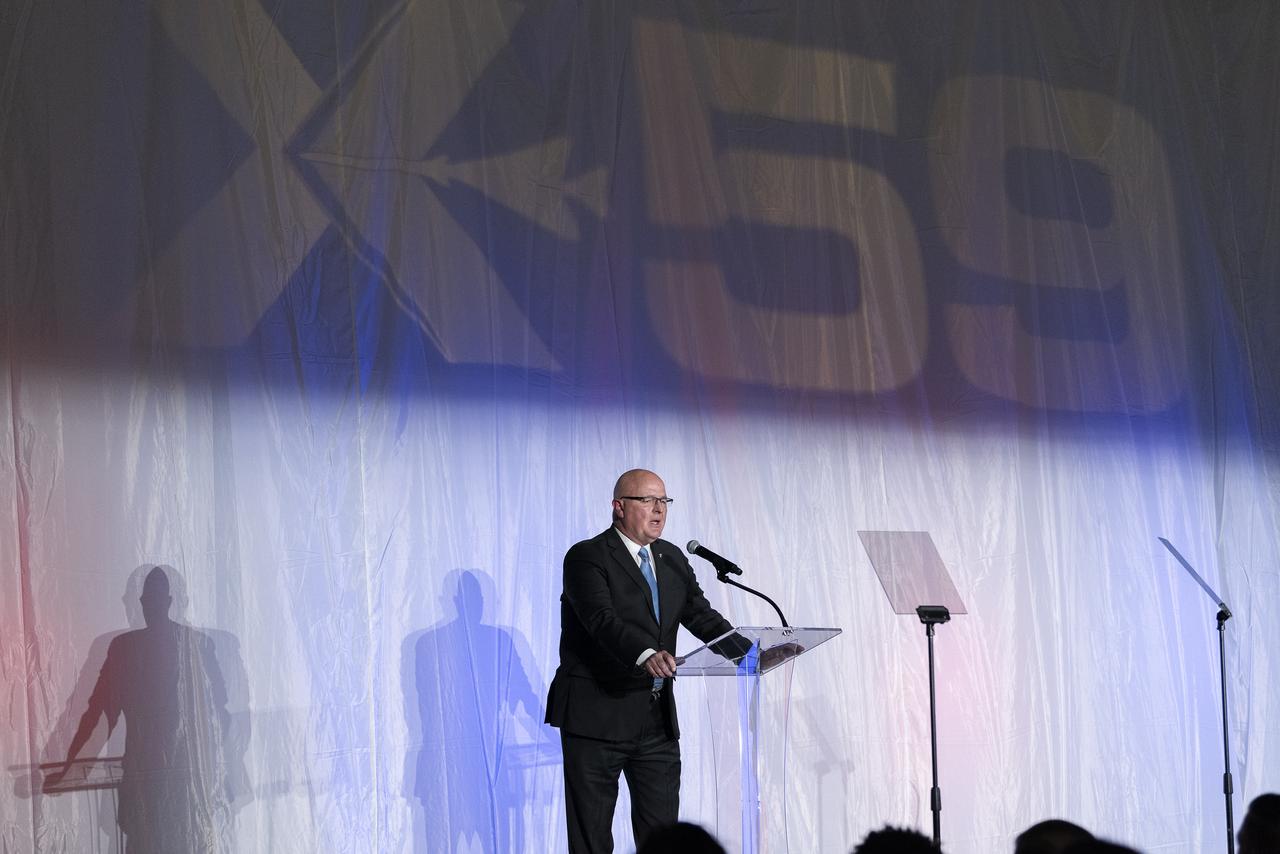
Lockheed Martin Skunk Works Director of Government Affairs Eric Fox speaks on stage prior to the unveiling of the agency’s X-59 quiet supersonic research aircraft at a January 12, 2024 event at Lockheed Martin Skunk Works in Palmdale, California. The X-59 is the centerpiece of NASA’s Quesst mission, which seeks to solve one of the major barriers to supersonic flight over land, currently banned in the United States, by making sonic booms quieter.
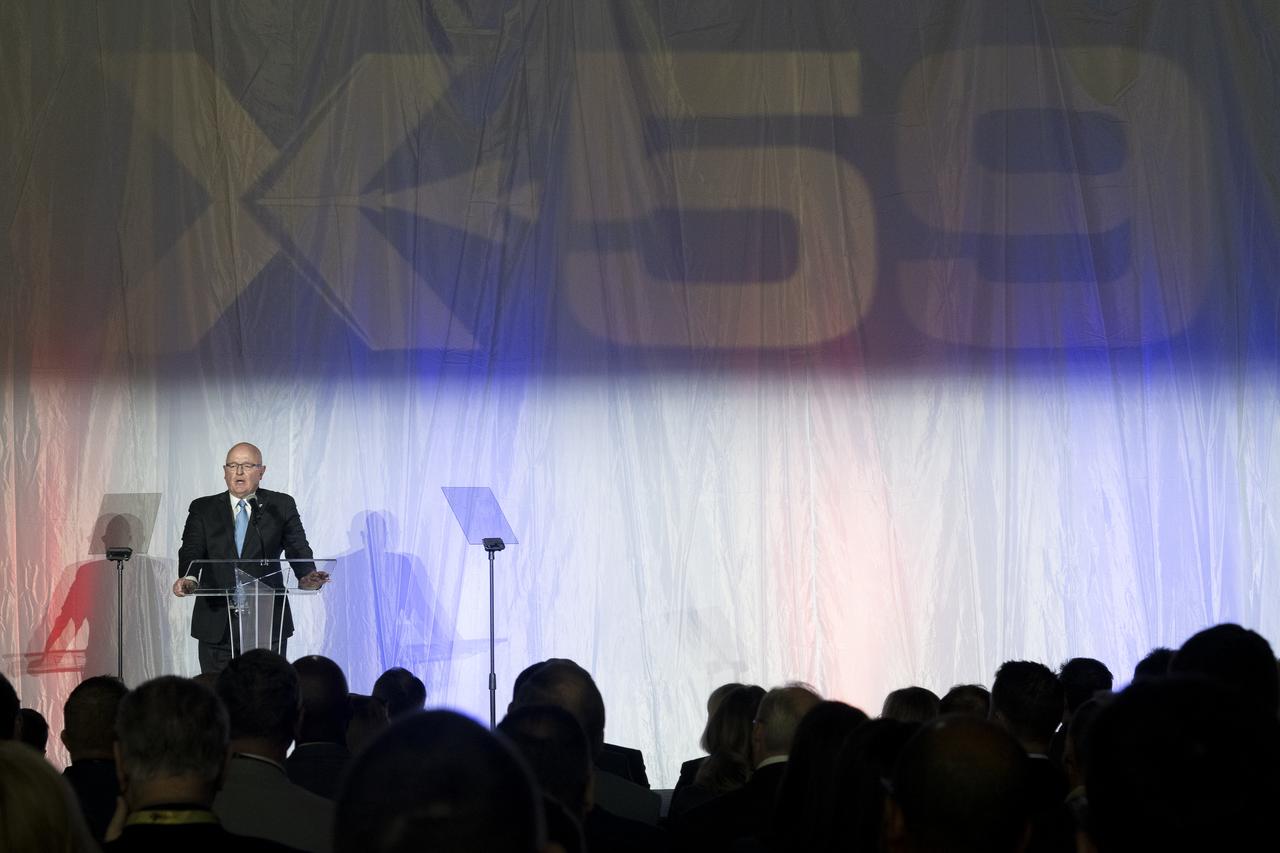
Lockheed Martin Skunk Works Director of Government Affairs Eric Fox speaks on stage prior to the unveiling of the agency’s X-59 quiet supersonic research aircraft at a January 12, 2024 event at Lockheed Martin Skunk Works in Palmdale, California. The X-59 is the centerpiece of NASA’s Quesst mission, which seeks to solve one of the major barriers to supersonic flight over land, currently banned in the United States, by making sonic booms quieter.