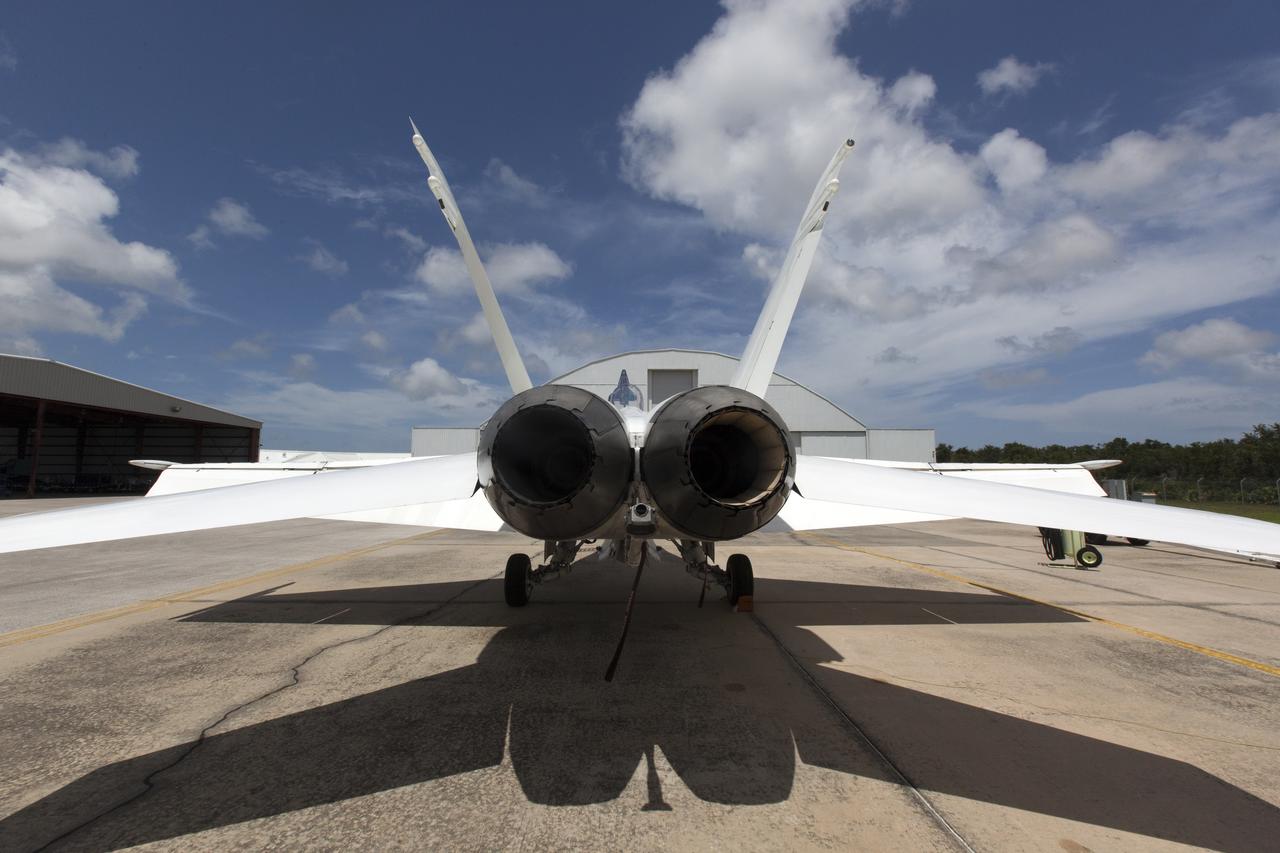
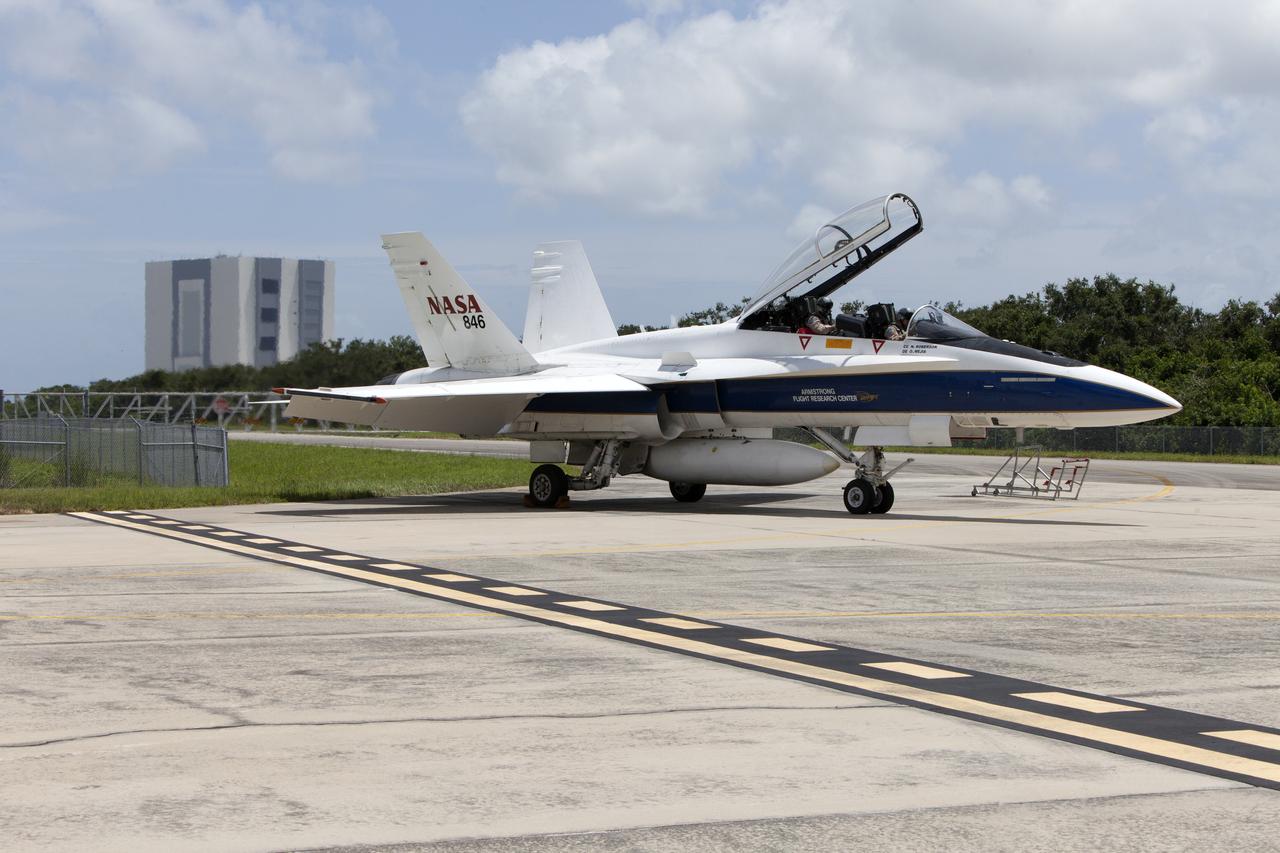
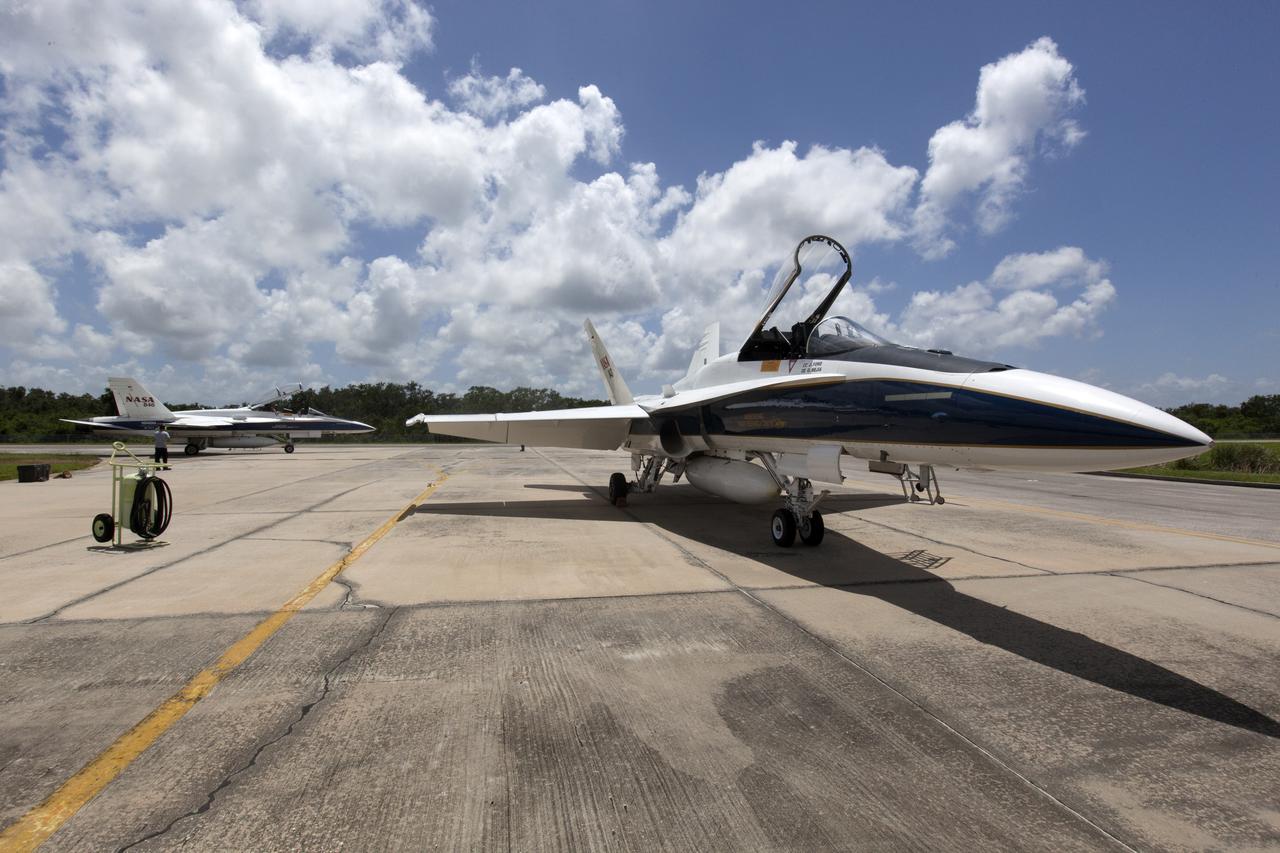
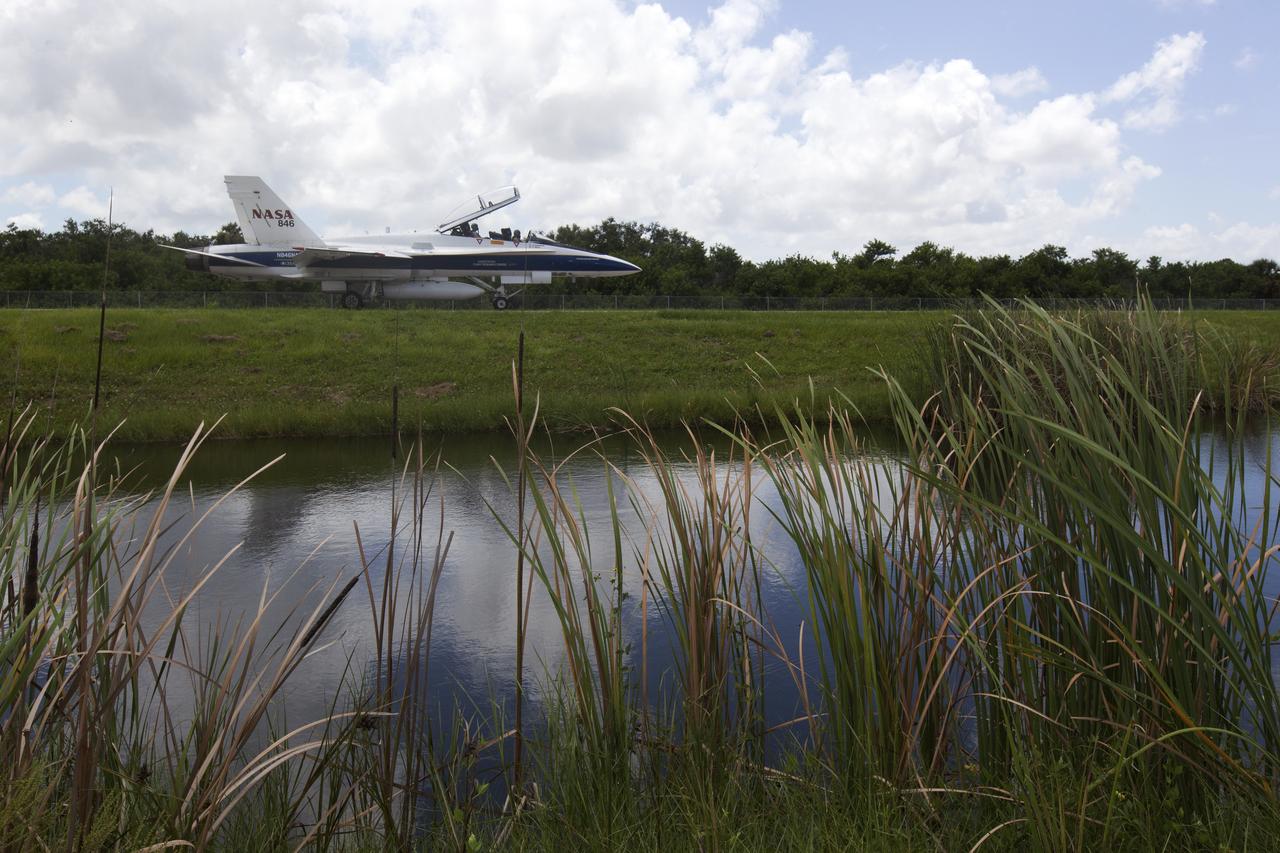
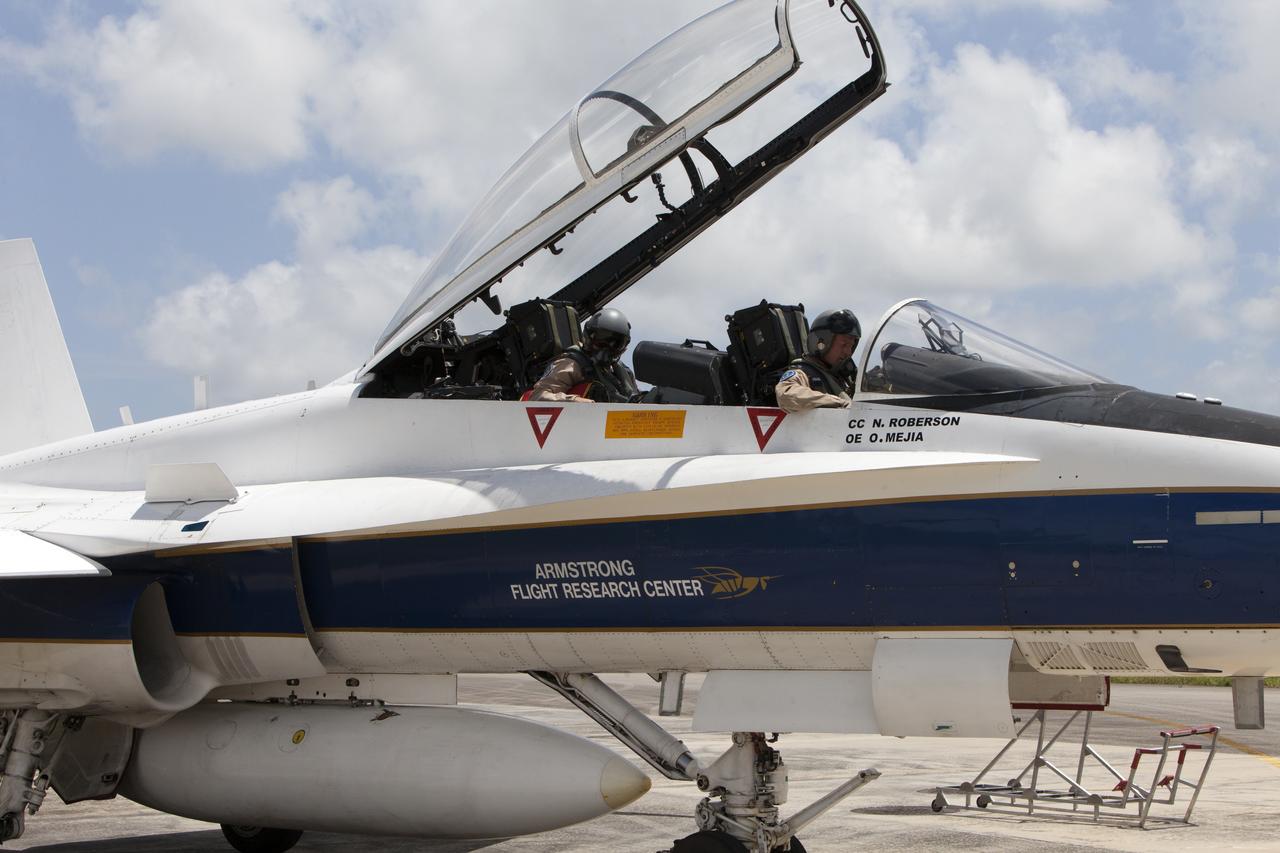
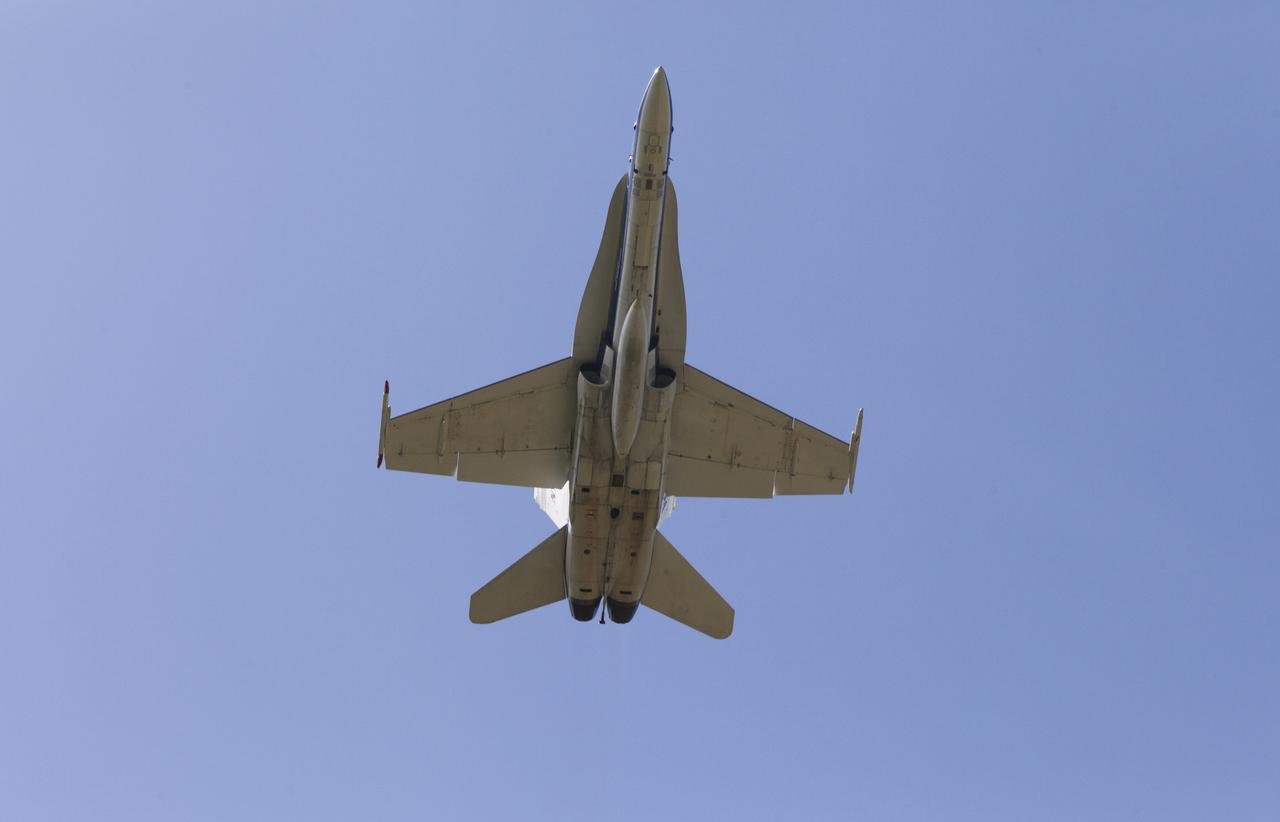
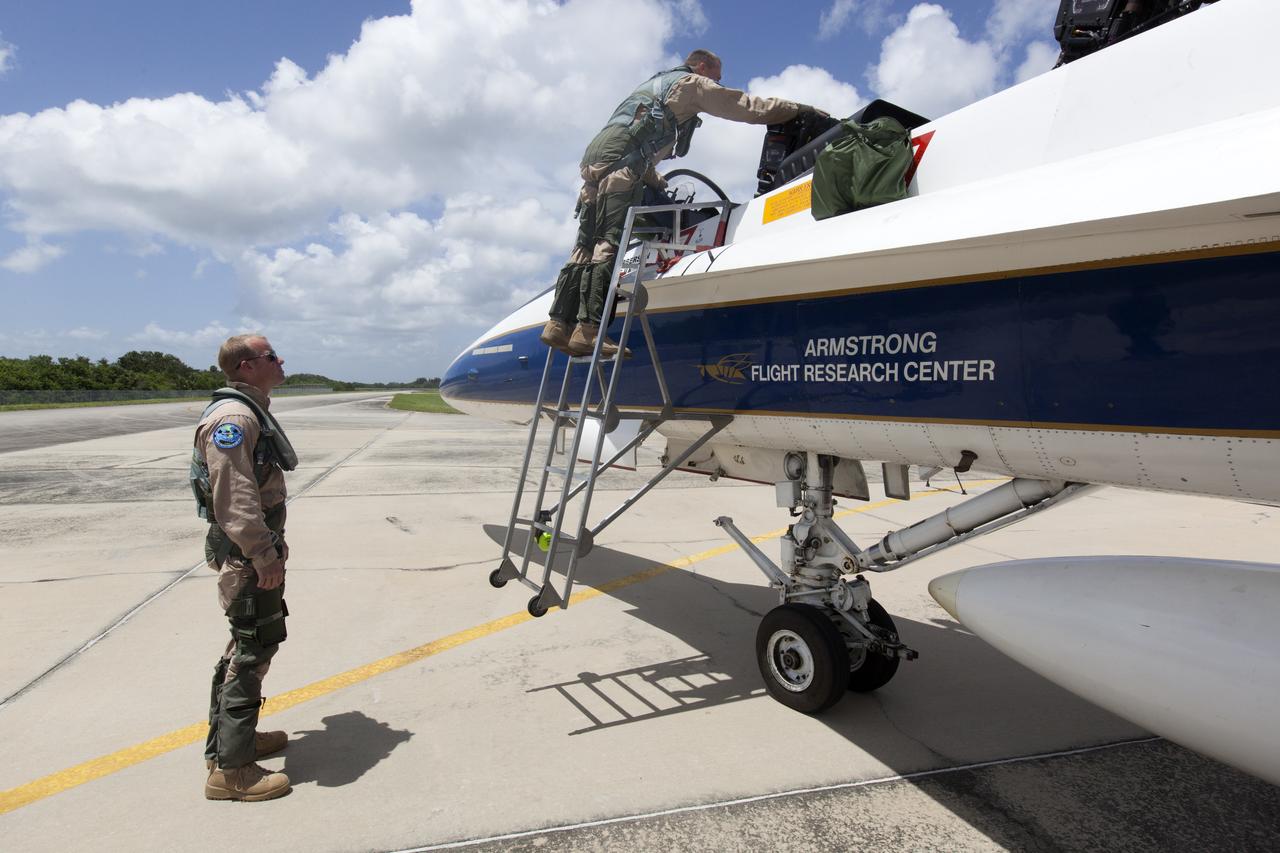
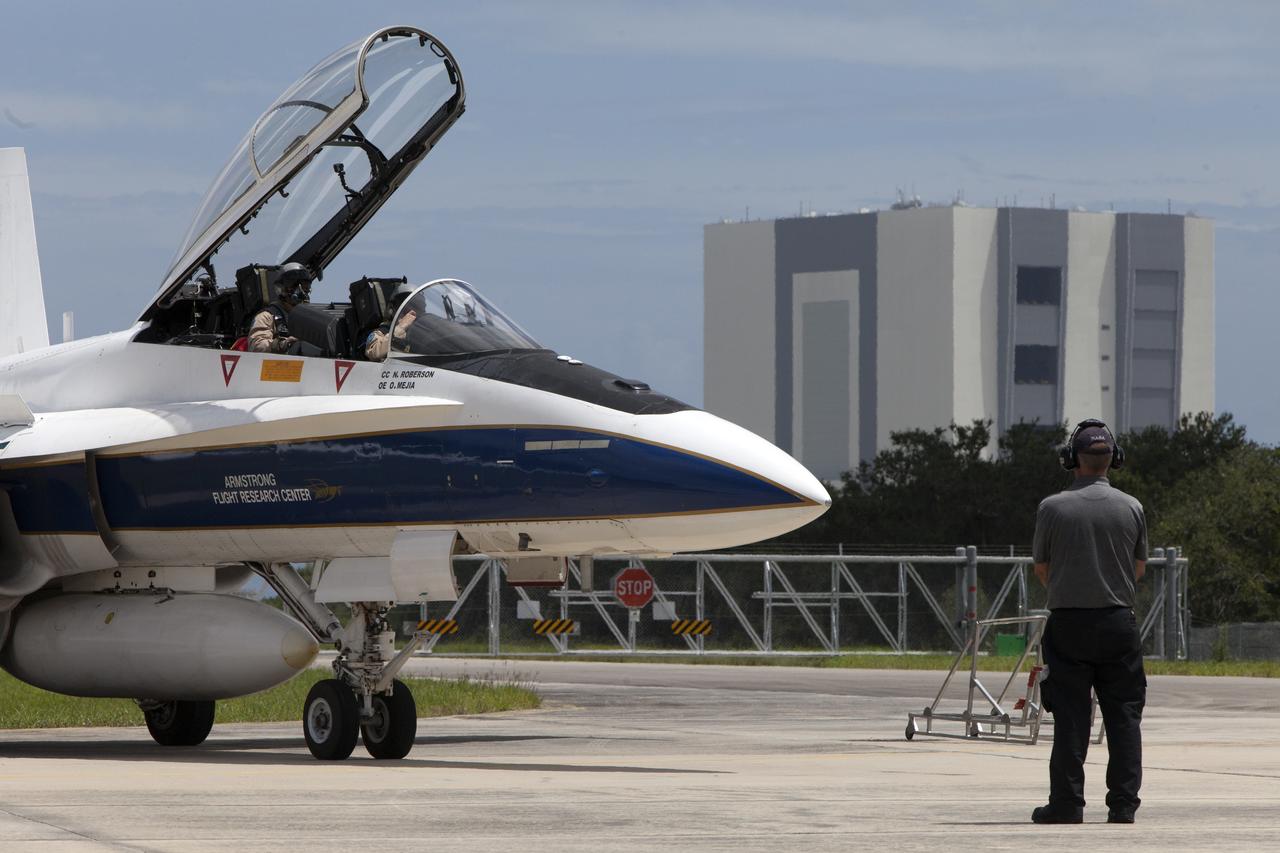
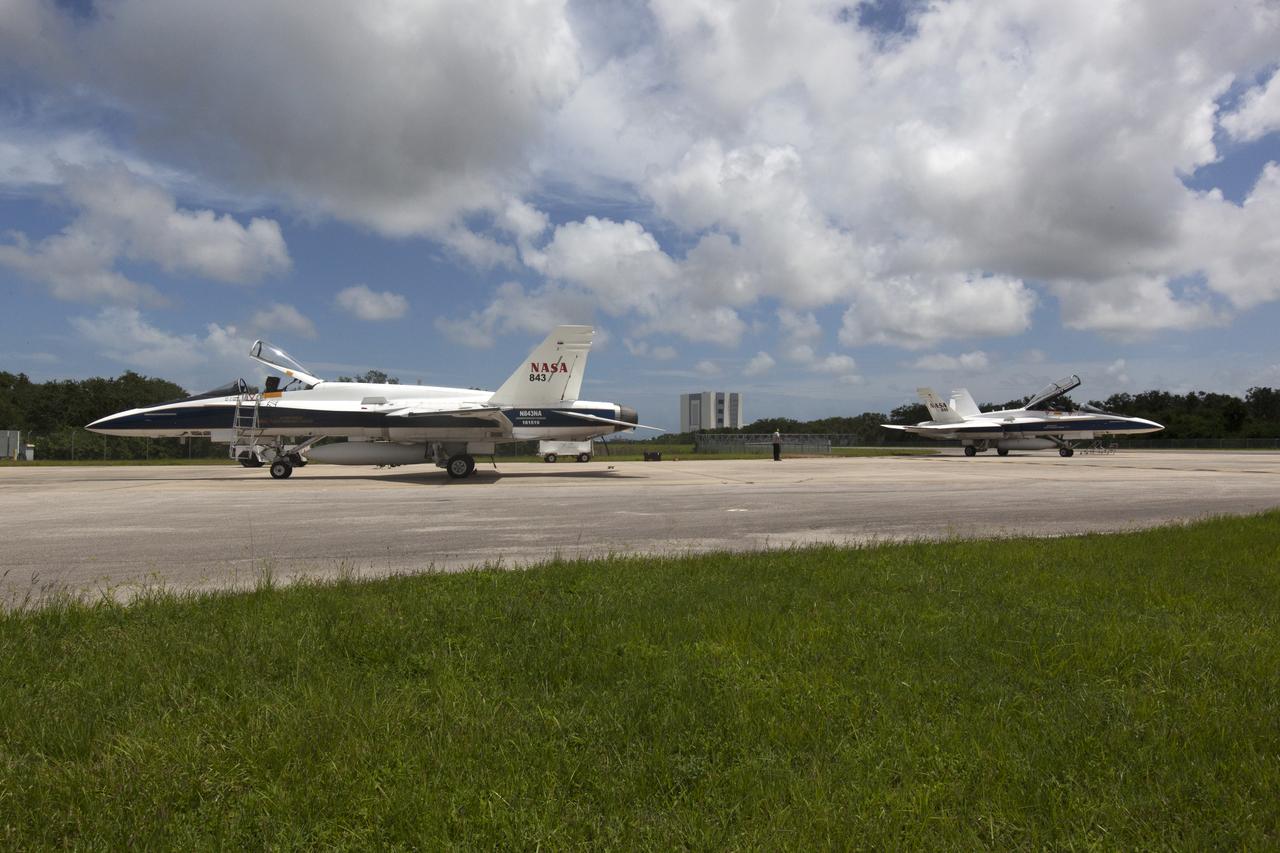
A NASA F-18 jet is prepared for takeoff from the agency's Shuttle Landing Facility at NASA's Kennedy Space Center in Florida. Several flights a day have been taking place the week of Aug. 21, 2017 to measure the effects of sonic booms. It is part of NASA's Sonic Booms in Atmospheric Turbulence, or SonicBAT II Program. NASA at Kennedy is partnering with the agency's Armstrong Flight Research Center in California, Langley Research Center in Virginia, and Space Florida for a program in which F-18 jets will take off from the Shuttle Landing Facility and fly at supersonic speeds while agency researchers measure the effects of low-altitude turbulence caused by sonic booms.
Sonic Booms in Atmospheric Turbulence (SonicBAT) Testing
NASA F-18 jets prepare for takeoff from the agency's Shuttle Landing Facility at NASA's Kennedy Space Center in Florida. Several flights a day have been taking place the week of Aug. 21, 2017 to measure the effects of sonic booms. It is part of NASA's Sonic Booms in Atmospheric Turbulence, or SonicBAT II Program. NASA at Kennedy is partnering with the agency's Armstrong Flight Research Center in California, Langley Research Center in Virginia, and Space Florida for a program in which F-18 jets will take off from the Shuttle Landing Facility and fly at supersonic speeds while agency researchers measure the effects of low-altitude turbulence caused by sonic booms.
Sonic Booms in Atmospheric Turbulence (SonicBAT) Testing
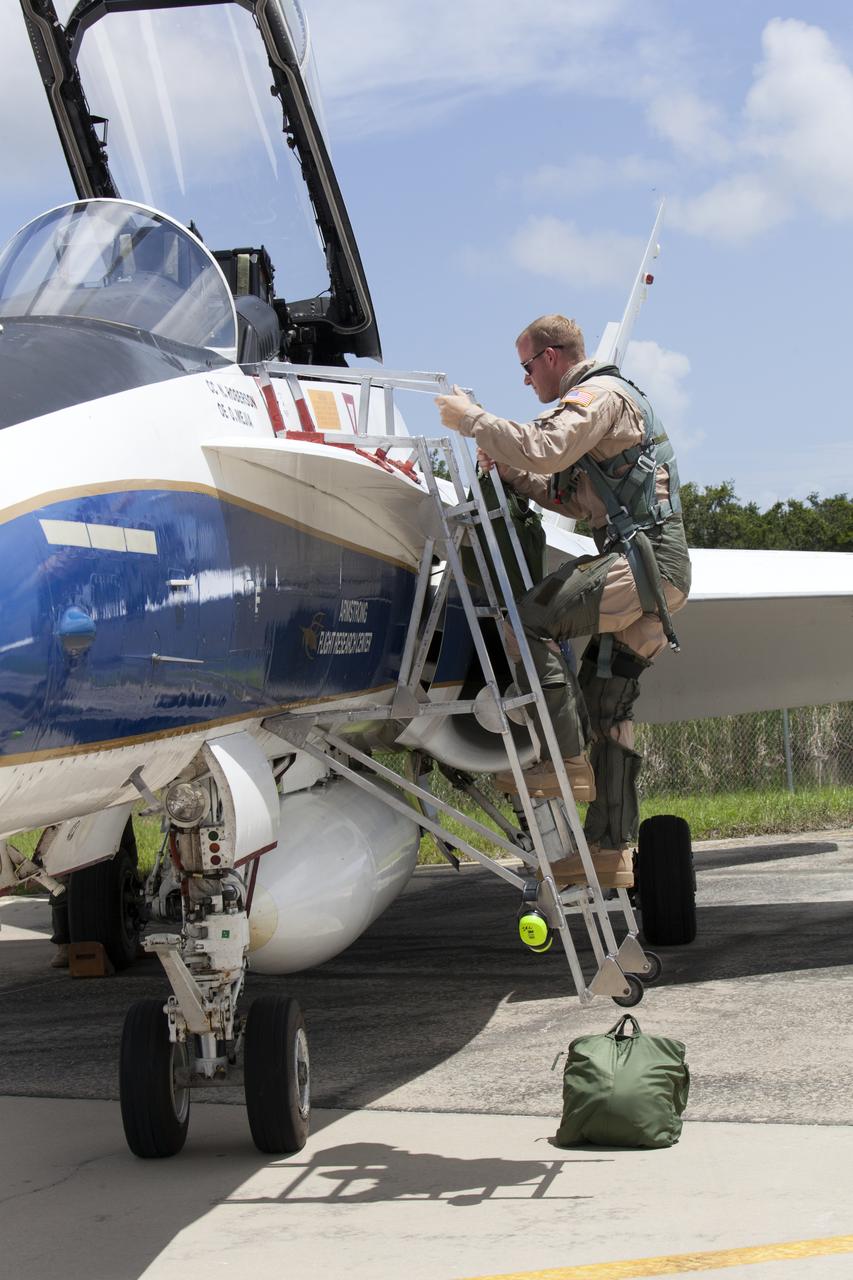
A NASA pilot boards an F-18 jet prior to take off from the agency's Shuttle Landing Facility at NASA's Kennedy Space Center in Florida. Several flights a day have been taking place the week of Aug. 21, 2017 to measure the effects of sonic booms. It is part of NASA's Sonic Booms in Atmospheric Turbulence, or SonicBAT II Program. NASA at Kennedy is partnering with the agency's Armstrong Flight Research Center in California, Langley Research Center in Virginia, and Space Florida for a program in which F-18 jets will take off from the Shuttle Landing Facility and fly at supersonic speeds while agency researchers measure the effects of low-altitude turbulence caused by sonic booms.
Sonic Booms in Atmospheric Turbulence (SonicBAT) Testing
A NASA F-18 jet is prepared for takeoff from the agency's Shuttle Landing Facility at NASA's Kennedy Space Center in Florida. Several flights a day have been taking place the week of Aug. 21, 2017 to measure the effects of sonic booms. It is part of NASA's Sonic Booms in Atmospheric Turbulence, or SonicBAT II Program. NASA at Kennedy is partnering with the agency's Armstrong Flight Research Center in California, Langley Research Center in Virginia, and Space Florida for a program in which F-18 jets will take off from the Shuttle Landing Facility and fly at supersonic speeds while agency researchers measure the effects of low-altitude turbulence caused by sonic booms.
Sonic Booms in Atmospheric Turbulence (SonicBAT) Testing
A NASA F-18 jet is prepared for takeoff from the agency's Shuttle Landing Facility at NASA's Kennedy Space Center in Florida. Several flights a day have been taking place the week of Aug. 21, 2017 to measure the effects of sonic booms. It is part of NASA's Sonic Booms in Atmospheric Turbulence, or SonicBAT II Program. NASA at Kennedy is partnering with the agency's Armstrong Flight Research Center in California, Langley Research Center in Virginia, and Space Florida for a program in which F-18 jets will take off from the Shuttle Landing Facility and fly at supersonic speeds while agency researchers measure the effects of low-altitude turbulence caused by sonic booms.
Sonic Booms in Atmospheric Turbulence (SonicBAT) Testing
A NASA F-18 jet is prepared for takeoff from the agency's Shuttle Landing Facility at NASA's Kennedy Space Center in Florida. Several flights a day have been taking place the week of Aug. 21, 2017 to measure the effects of sonic booms. It is part of NASA's Sonic Booms in Atmospheric Turbulence, or SonicBAT II Program. NASA at Kennedy is partnering with the agency's Armstrong Flight Research Center in California, Langley Research Center in Virginia, and Space Florida for a program in which F-18 jets will take off from the Shuttle Landing Facility and fly at supersonic speeds while agency researchers measure the effects of low-altitude turbulence caused by sonic booms.
Sonic Booms in Atmospheric Turbulence (SonicBAT) Testing
A NASA F-18 jet is prepared for takeoff from the agency's Shuttle Landing Facility at NASA's Kennedy Space Center in Florida. Several flights a day have been taking place the week of Aug. 21, 2017 to measure the effects of sonic booms. It is part of NASA's Sonic Booms in Atmospheric Turbulence, or SonicBAT II Program. NASA at Kennedy is partnering with the agency's Armstrong Flight Research Center in California, Langley Research Center in Virginia, and Space Florida for a program in which F-18 jets will take off from the Shuttle Landing Facility and fly at supersonic speeds while agency researchers measure the effects of low-altitude turbulence caused by sonic booms.
Sonic Booms in Atmospheric Turbulence (SonicBAT) Testing
A NASA F-18 jet is prepared for takeoff from the agency's Shuttle Landing Facility at NASA's Kennedy Space Center in Florida. Several flights a day have been taking place the week of Aug. 21, 2017 to measure the effects of sonic booms. It is part of NASA's Sonic Booms in Atmospheric Turbulence, or SonicBAT II Program. NASA at Kennedy is partnering with the agency's Armstrong Flight Research Center in California, Langley Research Center in Virginia, and Space Florida for a program in which F-18 jets will take off from the Shuttle Landing Facility and fly at supersonic speeds while agency researchers measure the effects of low-altitude turbulence caused by sonic booms.
Sonic Booms in Atmospheric Turbulence (SonicBAT) Testing
A NASA F-18 jet takes off from the agency's Shuttle Landing Facility at NASA's Kennedy Space Center in Florida. Several flights a day have been taking place the week of Aug. 21, 2017 to measure the effects of sonic booms. It is part of NASA's Sonic Booms in Atmospheric Turbulence, or SonicBAT II Program. NASA at Kennedy is partnering with the agency's Armstrong Flight Research Center in California, Langley Research Center in Virginia, and Space Florida for a program in which F-18 jets will take off from the Shuttle Landing Facility and fly at supersonic speeds while agency researchers measure the effects of low-altitude turbulence caused by sonic booms.
Sonic Booms in Atmospheric Turbulence (SonicBAT) Testing
NASA pilots board an F-18 jet prior to take off from the agency's Shuttle Landing Facility at NASA's Kennedy Space Center in Florida. Several flights a day have been taking place the week of Aug. 21, 2017 to measure the effects of sonic booms. It is part of NASA's Sonic Booms in Atmospheric Turbulence, or SonicBAT II Program. NASA at Kennedy is partnering with the agency's Armstrong Flight Research Center in California, Langley Research Center in Virginia, and Space Florida for a program in which F-18 jets will take off from the Shuttle Landing Facility and fly at supersonic speeds while agency researchers measure the effects of low-altitude turbulence caused by sonic booms.
Sonic Booms in Atmospheric Turbulence (SonicBAT) Testing
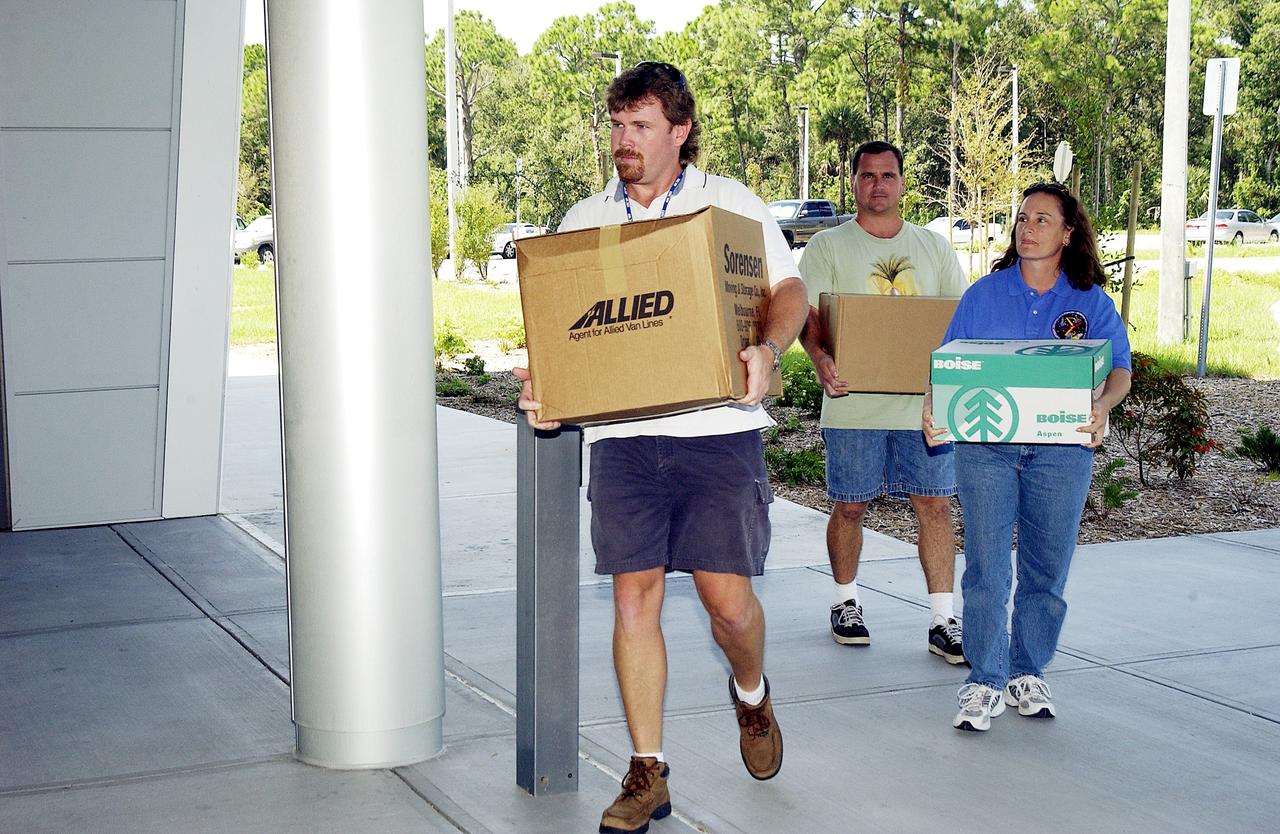
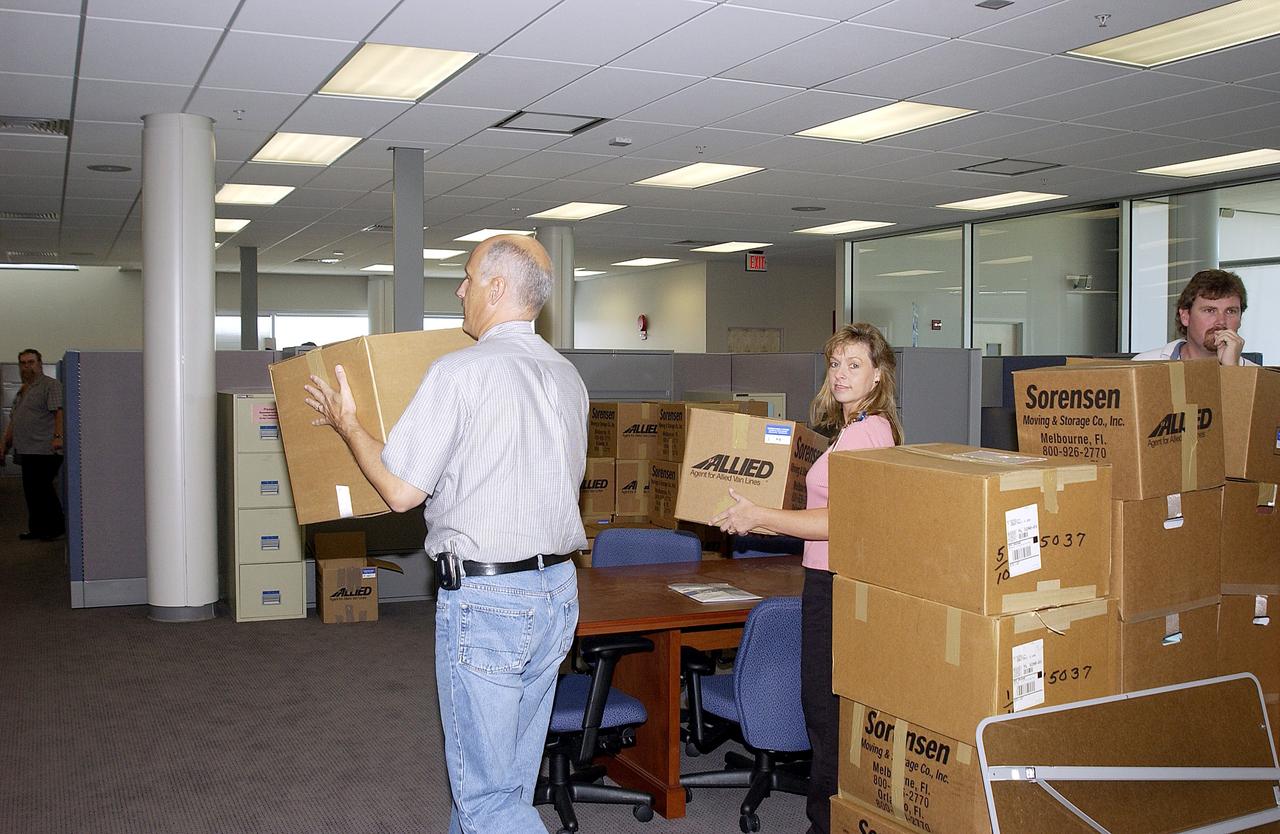
KENNEDY SPACE CENTER, FLA. -  Dynamac employees (from left) Larry Burns, Debbie Wells and Neil  Yorio carry boxes of hardware into the Space Life Sciences Lab (SLSL), formerly known as the Space Experiment Research and Processing Laboratory (SERPL).  They are transferring equipment from Hangar L. The new lab is a state-of-the-art facility being built for ISS biotechnology research. Developed as a partnership between NASA-KSC and the State of Florida, NASA’s life sciences contractor will be the primary tenant of the facility, leasing space to conduct flight experiment processing and NASA-sponsored research. About 20 percent of the facility will be available for use by Florida’s university researchers through the Florida Space Research Institute.
KENNEDY SPACE CENTER, FLA. - Dynamac employees (from left) Larry Burns, Debbie Wells and Neil Yorio carry boxes of hardware into the Space Life Sciences Lab (SLSL), formerly known as the Space Experiment Research and Processing Laboratory (SERPL). They are transferring equipment from Hangar L. The new lab is a state-of-the-art facility being built for ISS biotechnology research. Developed as a partnership between NASA-KSC and the State of Florida, NASA’s life sciences contractor will be the primary tenant of the facility, leasing space to conduct flight experiment processing and NASA-sponsored research. About 20 percent of the facility will be available for use by Florida’s university researchers through the Florida Space Research Institute.
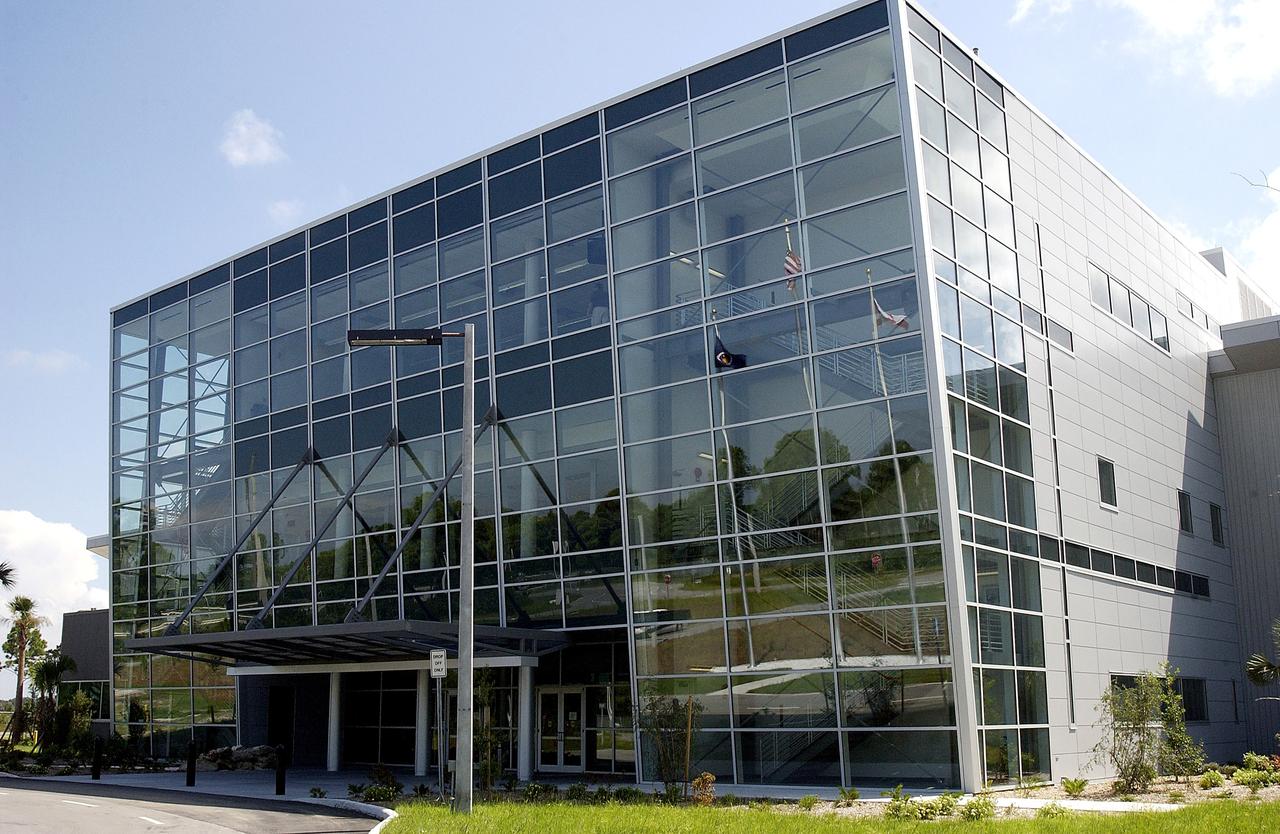
KENNEDY SPACE CENTER, FLA. -  The Space Life Sciences Lab (SLSL), formerly known as the Space Experiment Research and Processing Laboratory (SERPL), is nearing completion.  The new lab is a state-of-the-art facility being built for ISS biotechnology research. Developed as a partnership between NASA-KSC and the State of Florida, NASA’s life sciences contractor will be the primary tenant of the facility, leasing space to conduct flight experiment processing and NASA-sponsored research. About 20 percent of the facility will be available for use by Florida’s university researchers through the Florida Space Research Institute.
KENNEDY SPACE CENTER, FLA. - The Space Life Sciences Lab (SLSL), formerly known as the Space Experiment Research and Processing Laboratory (SERPL), is nearing completion. The new lab is a state-of-the-art facility being built for ISS biotechnology research. Developed as a partnership between NASA-KSC and the State of Florida, NASA’s life sciences contractor will be the primary tenant of the facility, leasing space to conduct flight experiment processing and NASA-sponsored research. About 20 percent of the facility will be available for use by Florida’s university researchers through the Florida Space Research Institute.
KENNEDY SPACE CENTER, FLA. -  Ivan Rodriguez, with Bionetics, and Michelle Crouch and Larry Burns, with Dynamac, carry boxes of equipment into the Space Life Sciences Lab (SLSL), formerly known as the Space Experiment Research and Processing Laboratory (SERPL).    They are transferring equipment from Hangar L. The new lab is a state-of-the-art facility being built for ISS biotechnology research. Developed as a partnership between NASA-KSC and the State of Florida, NASA’s life sciences contractor will be the primary tenant of the facility, leasing space to conduct flight experiment processing and NASA-sponsored research. About 20 percent of the facility will be available for use by Florida’s university researchers through the Florida Space Research Institute.
KENNEDY SPACE CENTER, FLA. - Ivan Rodriguez, with Bionetics, and Michelle Crouch and Larry Burns, with Dynamac, carry boxes of equipment into the Space Life Sciences Lab (SLSL), formerly known as the Space Experiment Research and Processing Laboratory (SERPL). They are transferring equipment from Hangar L. The new lab is a state-of-the-art facility being built for ISS biotechnology research. Developed as a partnership between NASA-KSC and the State of Florida, NASA’s life sciences contractor will be the primary tenant of the facility, leasing space to conduct flight experiment processing and NASA-sponsored research. About 20 percent of the facility will be available for use by Florida’s university researchers through the Florida Space Research Institute.
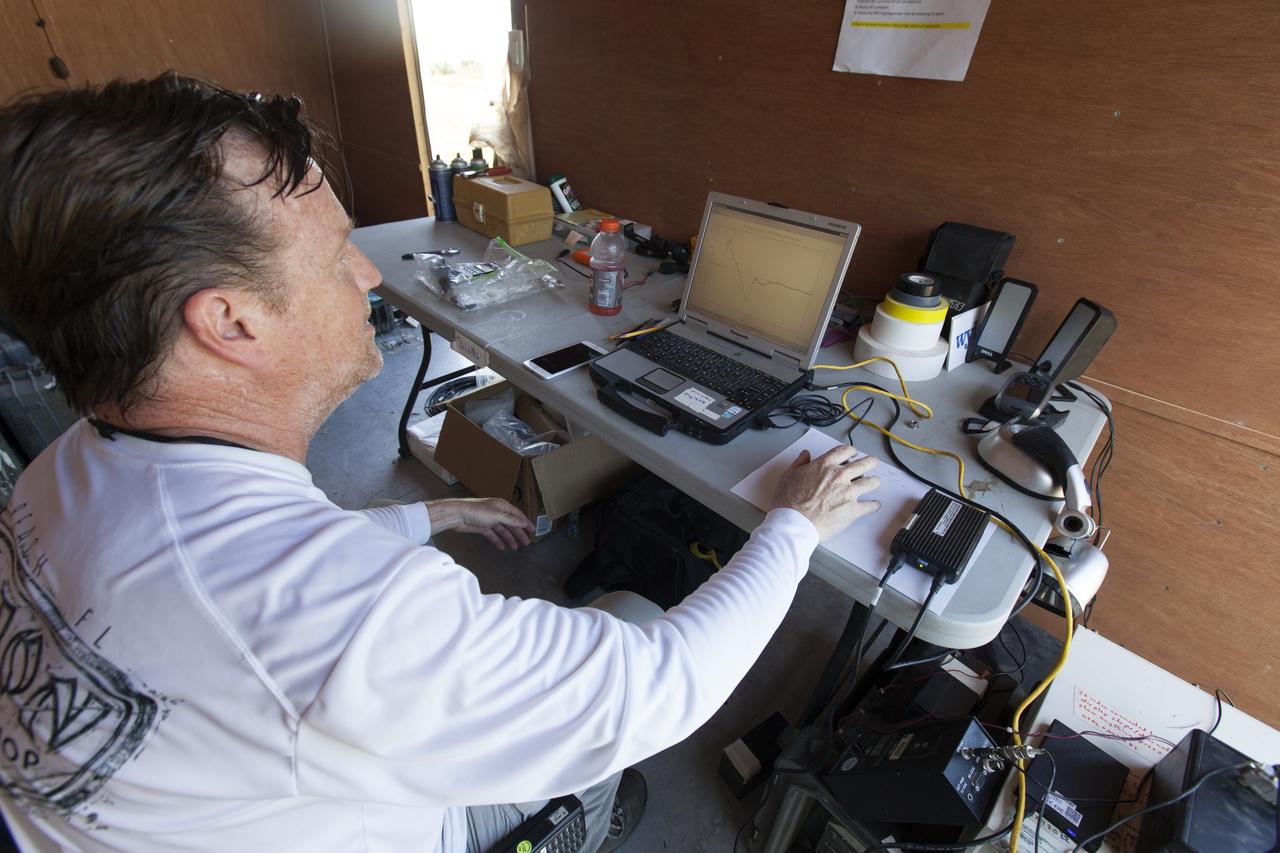
An engineer in a control trailer at NASA's Kennedy Space Center in Florida monitors data before flights of agency F-18 jets to measure the effects of sonic booms. Several flights a day have been taking place the week of Aug. 21, 2017 as part of NASA's Sonic Booms in Atmospheric Turbulence, or SonicBAT II Program. NASA at Kennedy is partnering with the agency's Armstrong Flight Research Center in California, Langley Research Center in Virginia, and Space Florida for a program in which F-18 jets will take off from the Shuttle Landing Facility and fly at supersonic speeds while agency researchers measure the effects of low-altitude turbulence caused by sonic booms.
Sonic Booms in Atmospheric Turbulence (SonicBAT) Testing
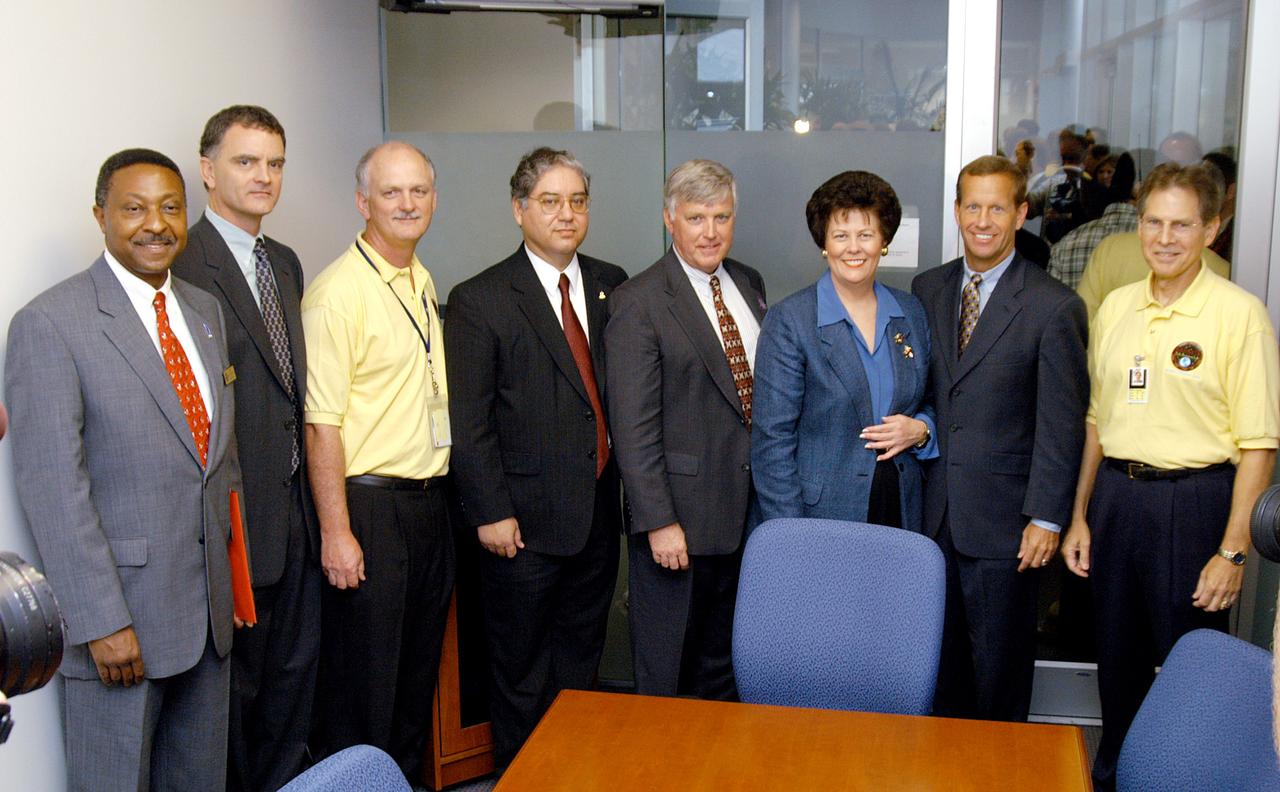
KENNEDY SPACE CENTER, FLA. -  Officials of the NASA-Kennedy Space Center and the state of Florida pose for a group portrait at a dedication and ribbon-cutting ceremony for the Space Life Sciences Lab at the new lab. From left are Capt. Winston Scott, executive director of the Florida Space Authority; Dr. Robert J. Ferl, director of Space Agriculture Biotechnology Research and Education (SABRE), University of Florida; Charlie Quincy, chief of the Biological Sciences Office, Kennedy Space Center; Jose Perez-Morales, NASA Project Manager for the Space Life Sciences Lab; Jim Kennedy, director of the Kennedy Space Center; The Honorable Toni Jennings, lieutenant governor of the state of Florida; Frank T. Brogan, president of the Florida Atlantic University; and Dr. Samuel Durrance, executive director of the Florida Space Research Institute.  Completed in August, the facility encompasses more than 100,000 square feet and was formerly known as the Space Experiment Research and Processing Laboratory or SERPL. The state, through the Florida Space Authority, built the research lab which is host to NASA, NASA’s Life Sciences Services contractor Dynamac Corp., Bionetics Corp., and researchers from the University of Florida.  Dynamac Corp. leases the facility.  The Florida Space Research Institute is responsible for gaining additional tenants from outside the NASA community.
KENNEDY SPACE CENTER, FLA. - Officials of the NASA-Kennedy Space Center and the state of Florida pose for a group portrait at a dedication and ribbon-cutting ceremony for the Space Life Sciences Lab at the new lab. From left are Capt. Winston Scott, executive director of the Florida Space Authority; Dr. Robert J. Ferl, director of Space Agriculture Biotechnology Research and Education (SABRE), University of Florida; Charlie Quincy, chief of the Biological Sciences Office, Kennedy Space Center; Jose Perez-Morales, NASA Project Manager for the Space Life Sciences Lab; Jim Kennedy, director of the Kennedy Space Center; The Honorable Toni Jennings, lieutenant governor of the state of Florida; Frank T. Brogan, president of the Florida Atlantic University; and Dr. Samuel Durrance, executive director of the Florida Space Research Institute. Completed in August, the facility encompasses more than 100,000 square feet and was formerly known as the Space Experiment Research and Processing Laboratory or SERPL. The state, through the Florida Space Authority, built the research lab which is host to NASA, NASA’s Life Sciences Services contractor Dynamac Corp., Bionetics Corp., and researchers from the University of Florida. Dynamac Corp. leases the facility. The Florida Space Research Institute is responsible for gaining additional tenants from outside the NASA community.
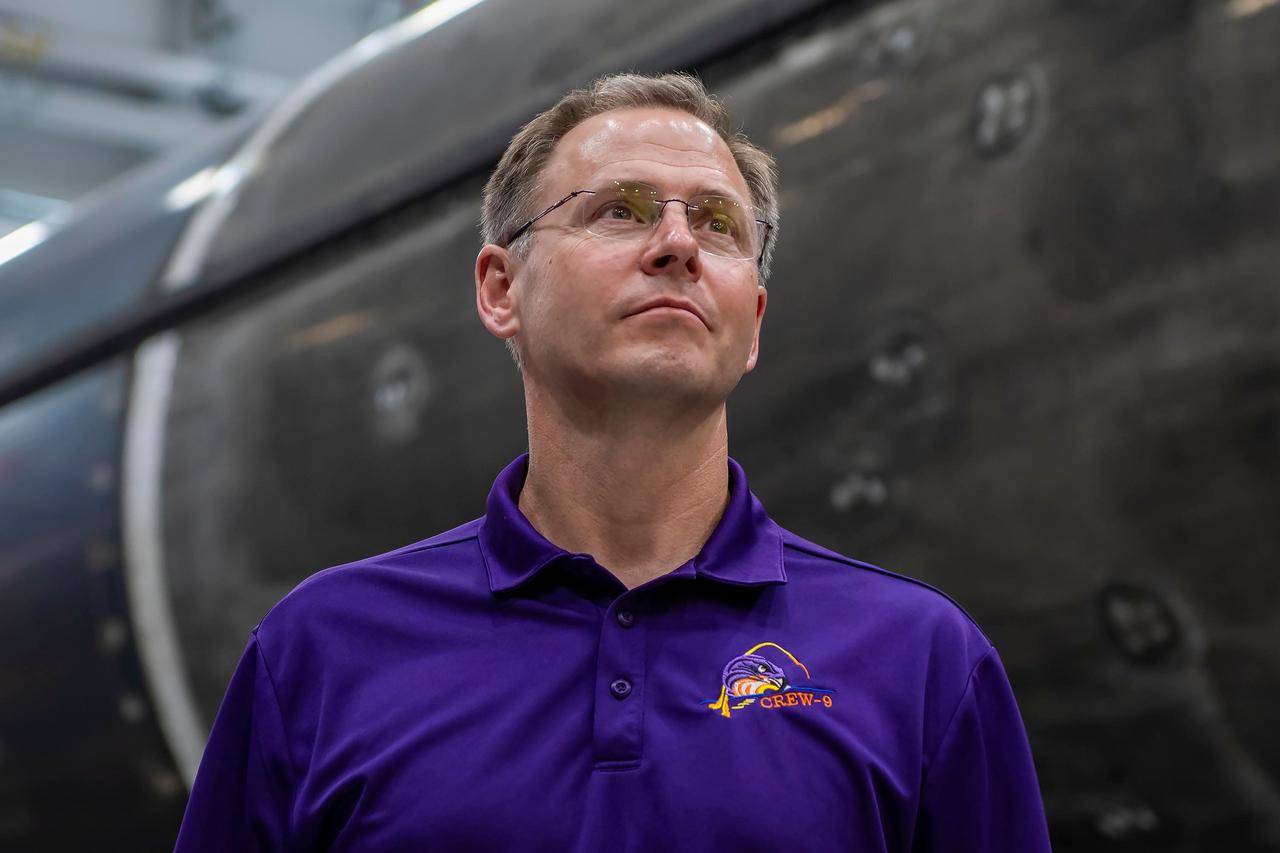
jsc2024e050141 (May 13, 2024) --- NASA’s SpaceX Crew-9 Pilot Nick Hague is pictured at SpaceX’s HangarX facility at NASA's Kennedy Space Center in Florida. Credit: SpaceX
NASA’s SpaceX Crew-9 Pilot Nick Hague
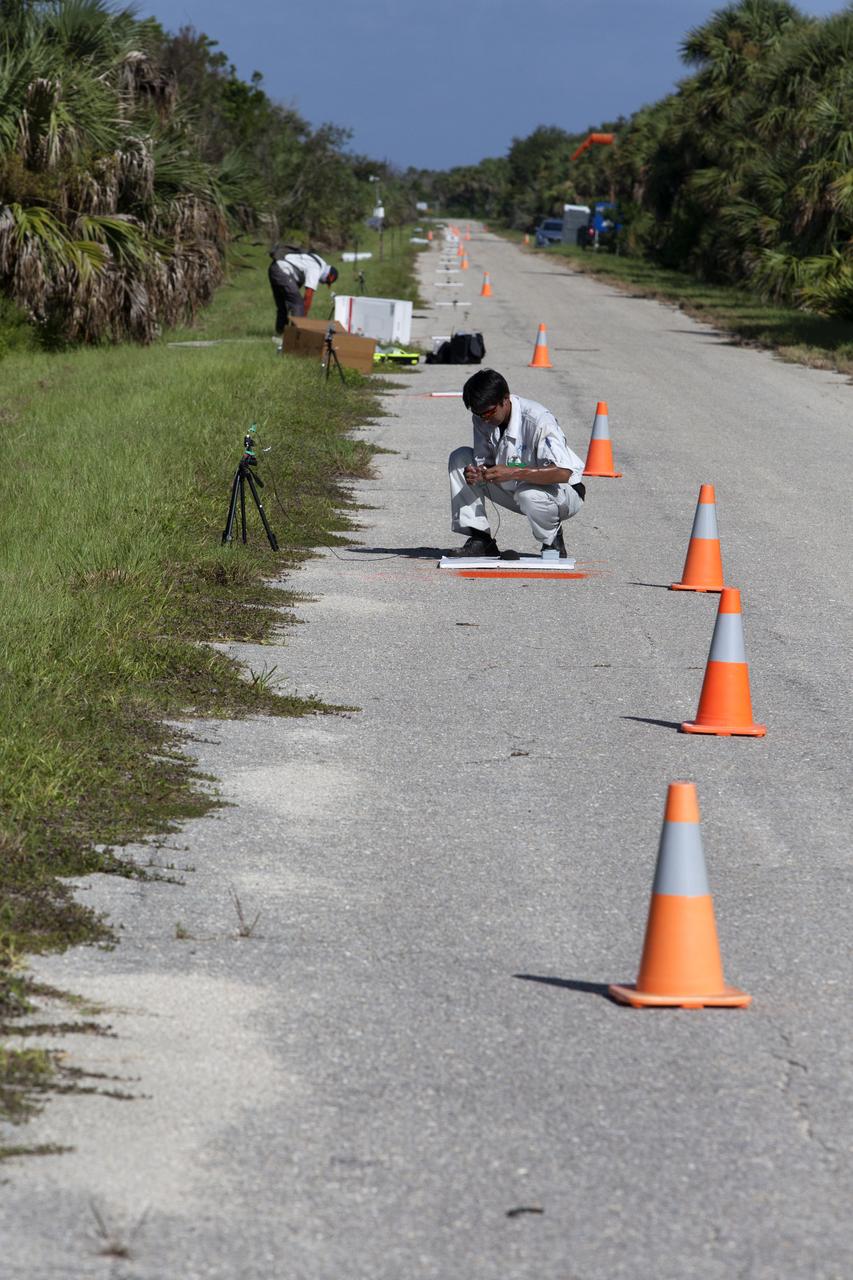
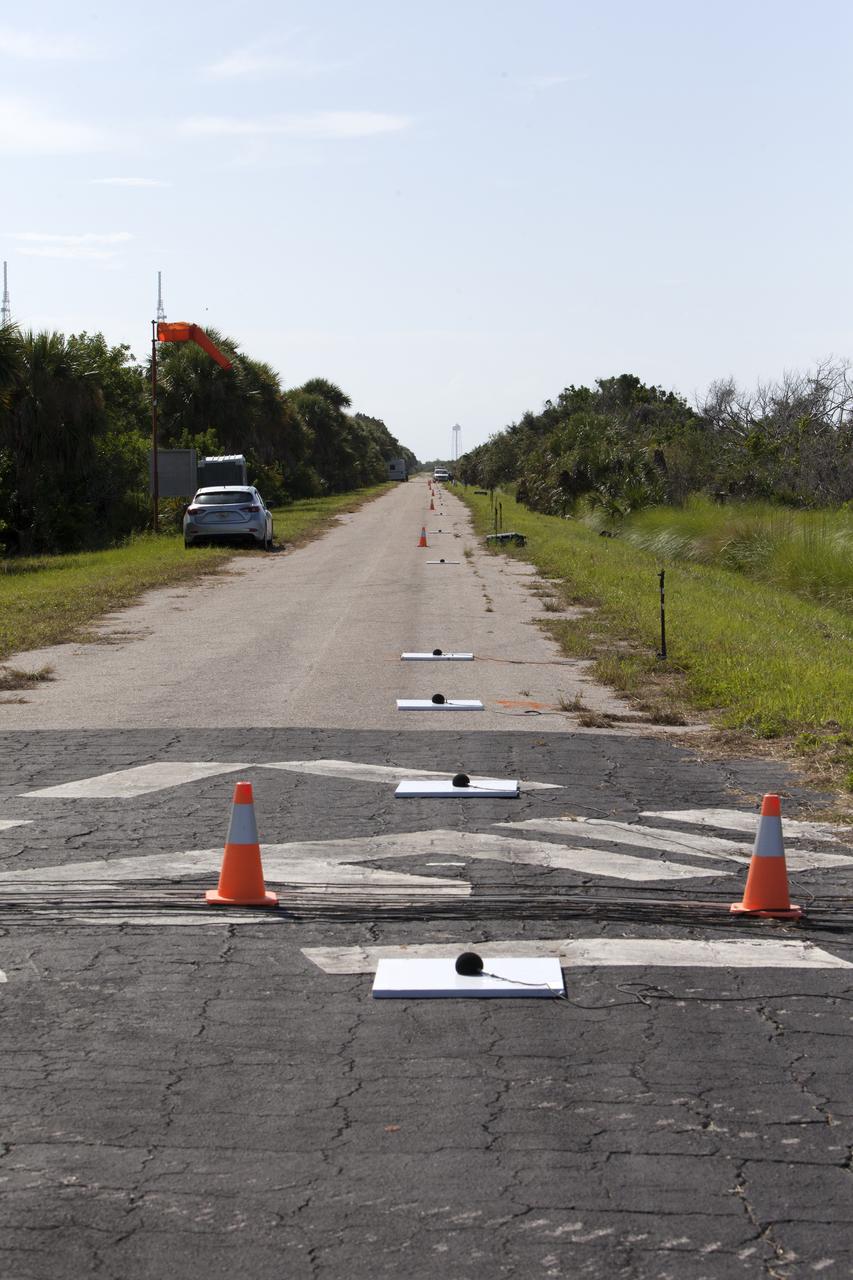
Microphone arrays are strategically positioned along the ground at NASA's Kennedy Space Center in Florida to collect sound signatures from sonic booms created by agency F-18 jets flying faster than the speed of sound. Several flights a day have been taking place the week of Aug. 21, 2017 as part of NASA's Sonic Booms in Atmospheric Turbulence, or SonicBAT II Program. NASA at Kennedy is partnering with the agency's Armstrong Flight Research Center in California, Langley Research Center in Virginia, and Space Florida for a program in which F-18 jets will take off from the Shuttle Landing Facility and fly at supersonic speeds while agency researchers measure the effects of low-altitude turbulence caused by sonic booms.
Sonic Booms in Atmospheric Turbulence (SonicBAT) Testing
Microphone arrays are strategically positioned along the ground at NASA's Kennedy Space Center in Florida to collect sound signatures from sonic booms created by agency F-18 jets flying faster than the speed of sound. Several flights a day have been taking place the week of Aug. 21, 2017 as part of NASA's Sonic Booms in Atmospheric Turbulence, or SonicBAT II Program. NASA at Kennedy is partnering with the agency's Armstrong Flight Research Center in California, Langley Research Center in Virginia, and Space Florida for a program in which F-18 jets will take off from the Shuttle Landing Facility and fly at supersonic speeds while agency researchers measure the effects of low-altitude turbulence caused by sonic booms.
Sonic Booms in Atmospheric Turbulence (SonicBAT) Testing
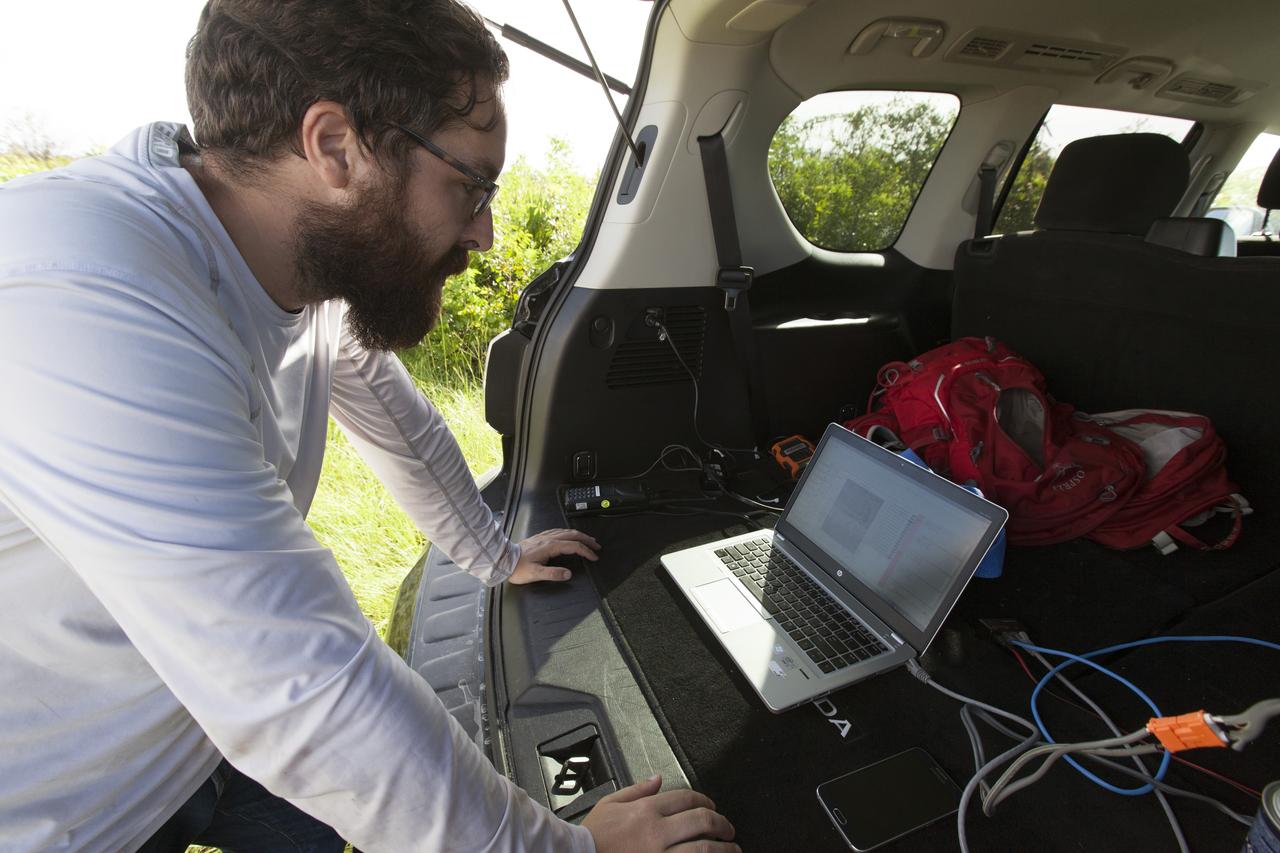
An engineer checks readings from microphone arrays that were strategically positioned along the ground at NASA's Kennedy Space Center in Florida to collect sound signatures from sonic booms created by agency F-18 jets flying faster than the speed of sound. Several flights a day have been taking place the week of Aug. 21, 2017 as part of NASA's Sonic Booms in Atmospheric Turbulence, or SonicBAT II Program. NASA at Kennedy is partnering with the agency's Armstrong Flight Research Center in California, Langley Research Center in Virginia, and Space Florida for a program in which F-18 jets will take off from the Shuttle Landing Facility and fly at supersonic speeds while agency researchers measure the effects of low-altitude turbulence caused by sonic booms.
Sonic Booms in Atmospheric Turbulence (SonicBAT) Testing
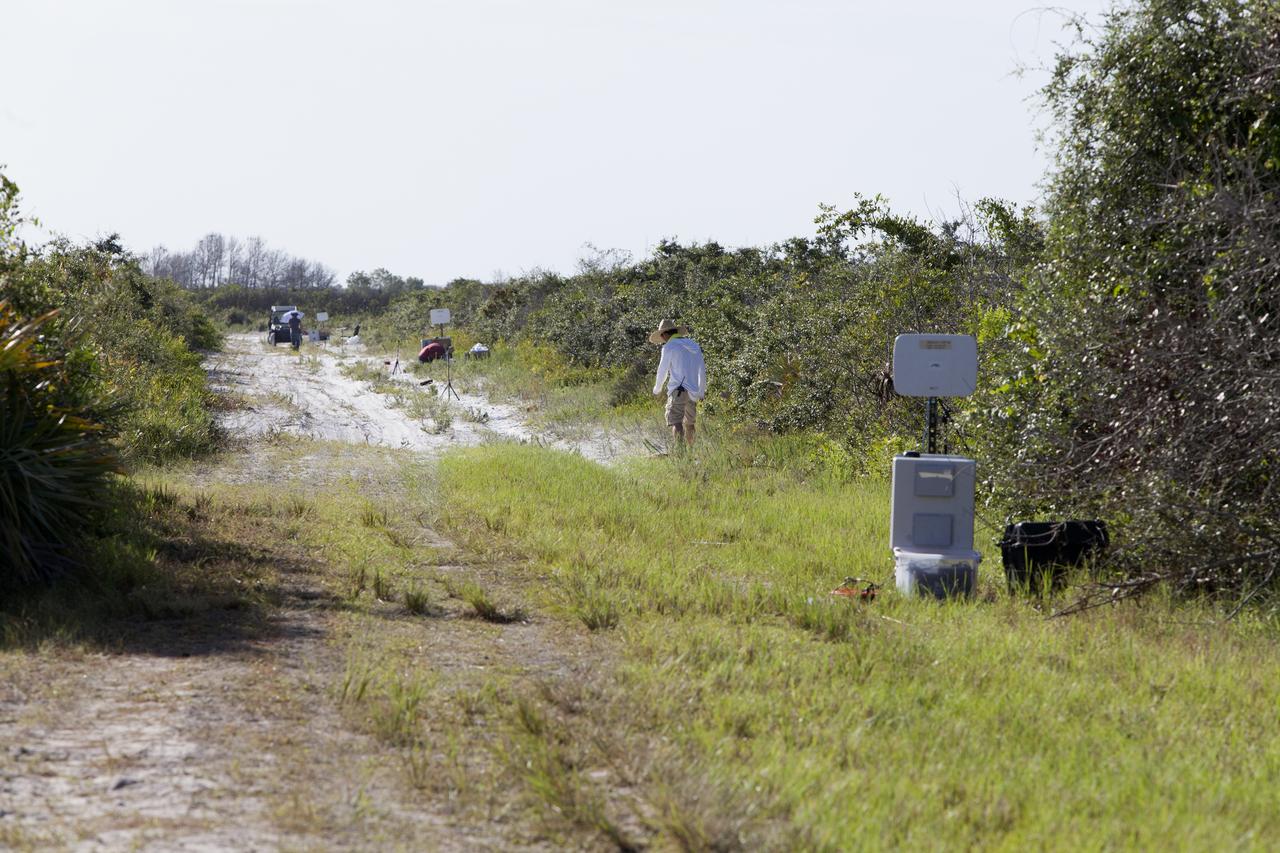
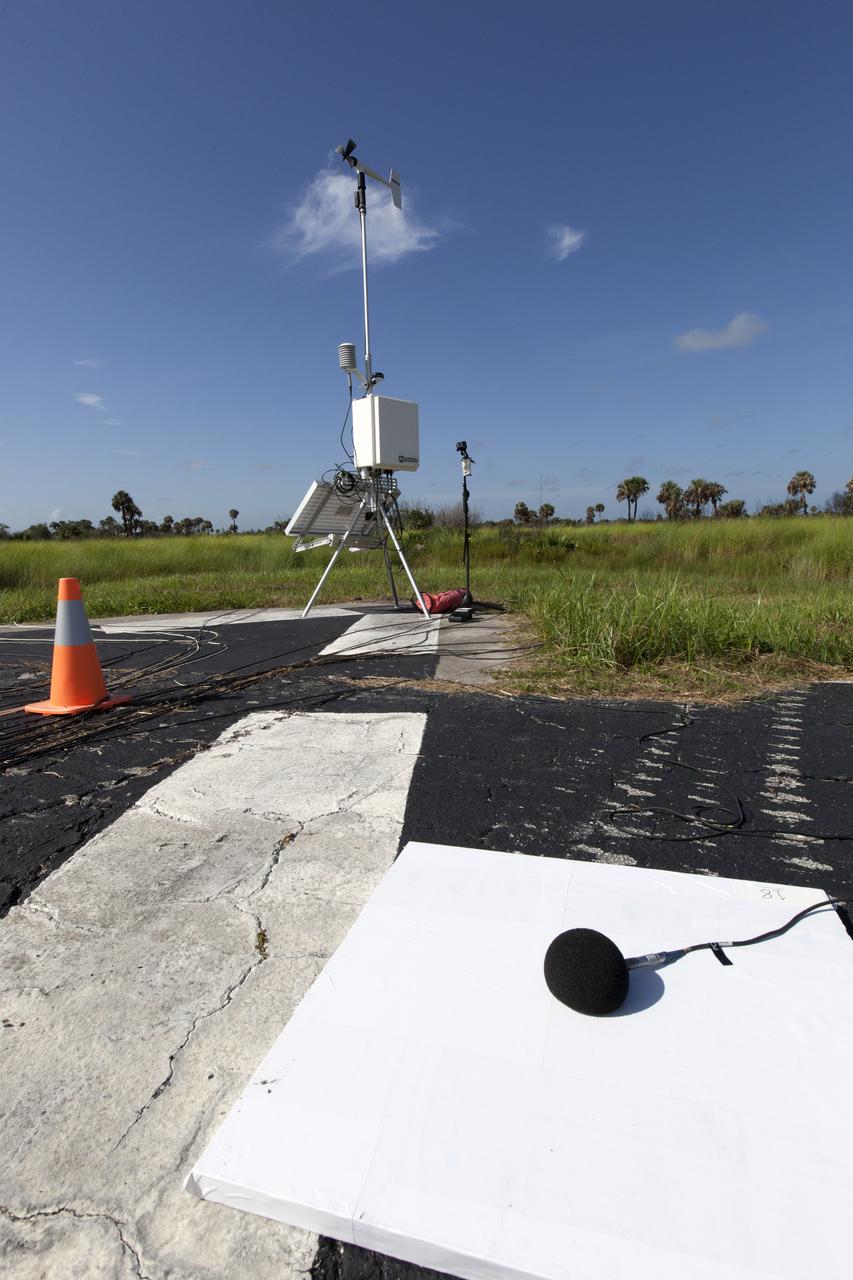
Microphone arrays and other instrumentation are strategically positioned along the ground at NASA's Kennedy Space Center in Florida. They have been set up to collect sound signatures from sonic booms created by agency F-18 jets flying faster than the speed of sound. Several flights a day have been taking place the week of Aug. 21, 2017 as part of NASA's Sonic Booms in Atmospheric Turbulence, or SonicBAT II Program. NASA at Kennedy is partnering with the agency's Armstrong Flight Research Center in California, Langley Research Center in Virginia, and Space Florida for a program in which F-18 jets will take off from the Shuttle Landing Facility and fly at supersonic speeds while agency researchers measure the effects of low-altitude turbulence caused by sonic booms.
Sonic Booms in Atmospheric Turbulence (SonicBAT) Testing
Microphone arrays and other instrumentation are strategically positioned along the ground at NASA's Kennedy Space Center in Florida. They have been set up to collect sound signatures from sonic booms created by agency F-18 jets flying faster than the speed of sound. Several flights a day have been taking place the week of Aug. 21, 2017 as part of NASA's Sonic Booms in Atmospheric Turbulence, or SonicBAT II Program. NASA at Kennedy is partnering with the agency's Armstrong Flight Research Center in California, Langley Research Center in Virginia, and Space Florida for a program in which F-18 jets will take off from the Shuttle Landing Facility and fly at supersonic speeds while agency researchers measure the effects of low-altitude turbulence caused by sonic booms.
Sonic Booms in Atmospheric Turbulence (SonicBAT) Testing
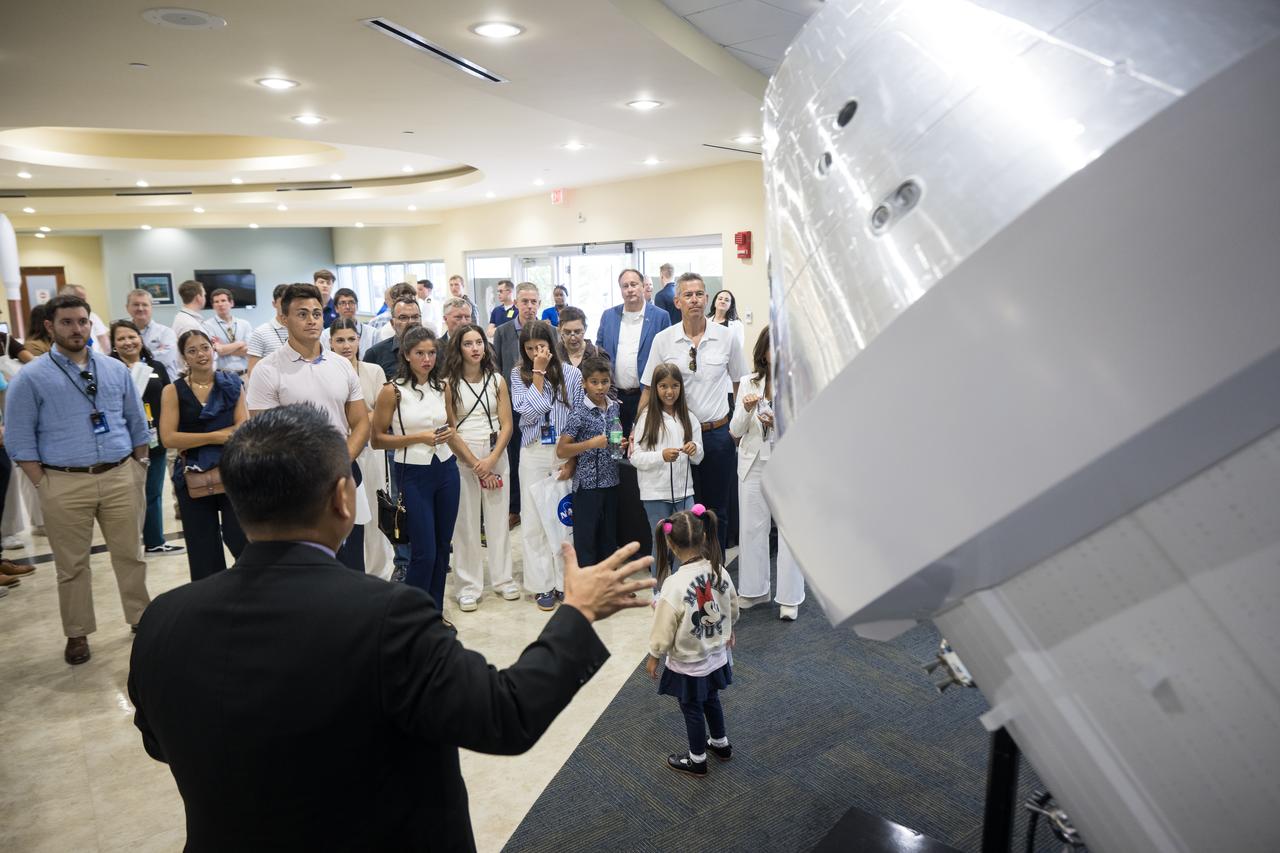
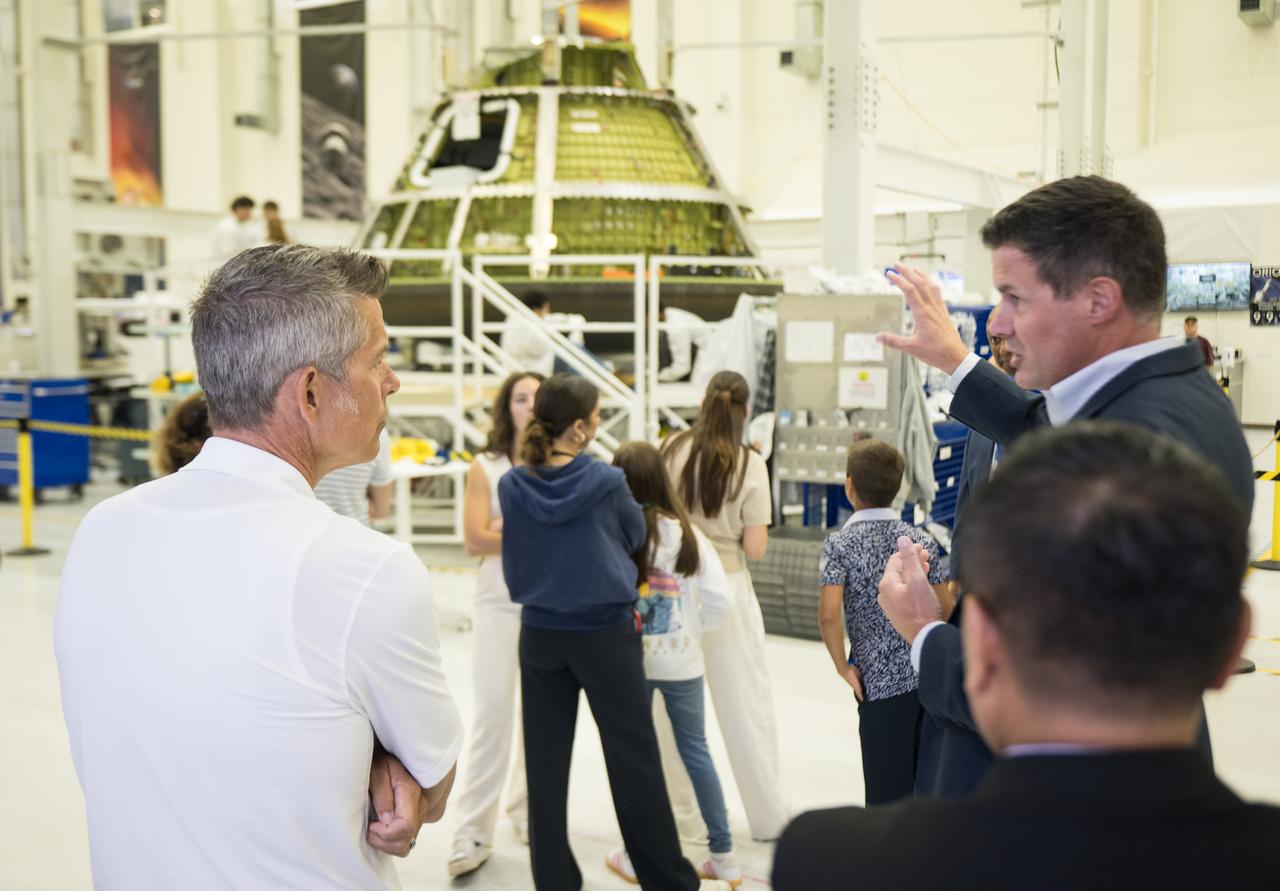
Acting NASA Administrator Sean Duffy and his family view a mockup of the Orion spacecraft during a tour of Lockheed Martin’s Orion Facility, Wednesday, July 30, 2025, at NASA’s Kennedy Space Center in Florida. Photo Credit: (NASA/Aubrey Gemignani)
Acting Administrator Sean Duffy Tours Orion Facility
Acting NASA Administrator Sean Duffy, left, views the Orion spacecraft hardware during a tour of Lockheed Martin’s Orion Facility, Wednesday, July 30, 2025, at NASA’s Kennedy Space Center in Florida. Photo Credit: (NASA/Aubrey Gemignani)
Acting Administrator Sean Duffy Tours Orion Facility
Acting NASA Administrator Sean Duffy, left, speaks with Orion Assembly, Test, and Launch Operations Director at Lockheed Martin, Nathan Varn, during a tour of Lockheed Martin’s Orion Facility, Wednesday, July 30, 2025, at NASA’s Kennedy Space Center in Florida. Photo Credit: (NASA/Aubrey Gemignani)
Acting Administrator Sean Duffy Tours Orion Facility
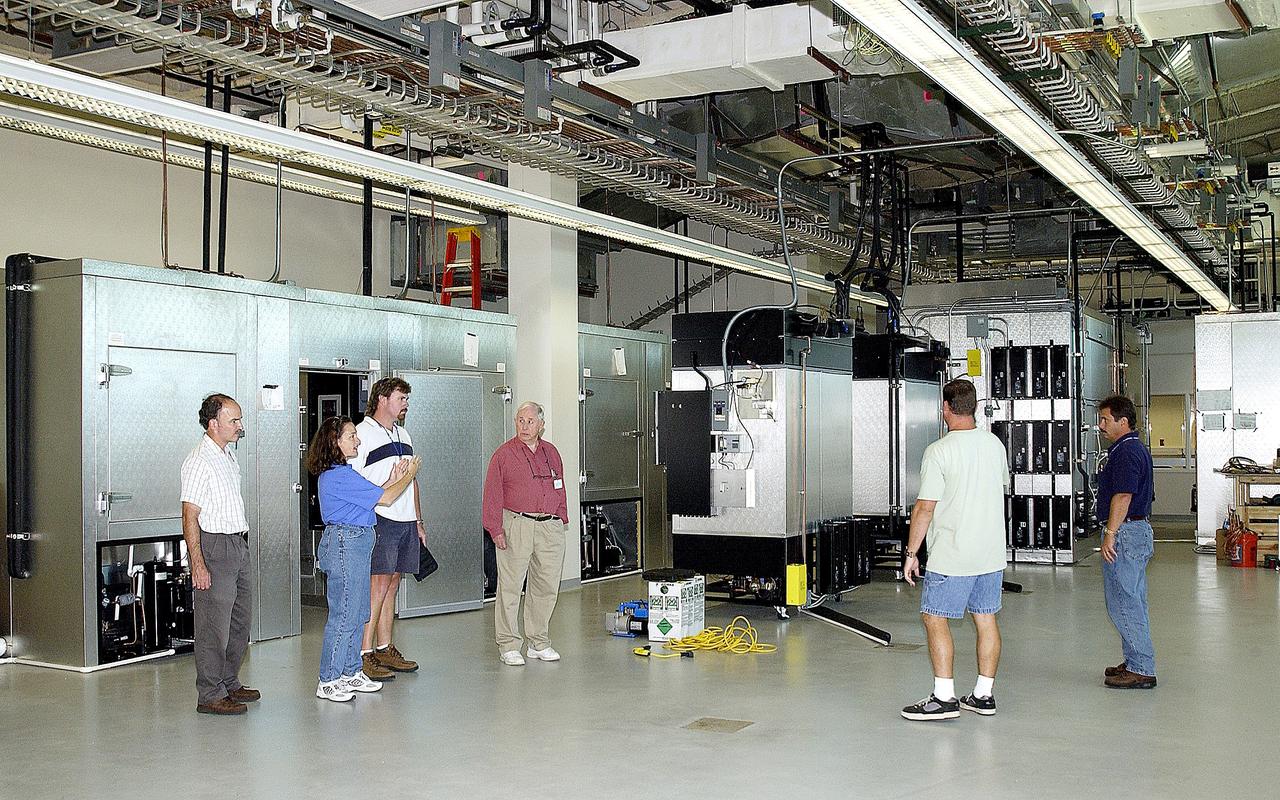
KENNEDY SPACE CENTER, FLA. -  Employees check out the new chamber facilities of the Space Life Sciences Lab (SLSL), formerly known as the Space Experiment Research and Processing Laboratory (SERPL).  From left are Ray Wheeler, with NASA; Debbie Wells and Larry Burns, with Dynamac; A.O. Rule, president of Environmental Growth Chambers, Inc. (ECG); Neil Yorio, with Dynamac; and John Wiezchowski, with ECG.  The SLSL is a state-of-the-art facility being built for ISS biotechnology research. Developed as a partnership between NASA-KSC and the State of Florida, NASA’s life sciences contractor will be the primary tenant of the facility, leasing space to conduct flight experiment processing and NASA-sponsored research. About 20 percent of the facility will be available for use by Florida’s university researchers through the Florida Space Research Institute.
KENNEDY SPACE CENTER, FLA. - Employees check out the new chamber facilities of the Space Life Sciences Lab (SLSL), formerly known as the Space Experiment Research and Processing Laboratory (SERPL). From left are Ray Wheeler, with NASA; Debbie Wells and Larry Burns, with Dynamac; A.O. Rule, president of Environmental Growth Chambers, Inc. (ECG); Neil Yorio, with Dynamac; and John Wiezchowski, with ECG. The SLSL is a state-of-the-art facility being built for ISS biotechnology research. Developed as a partnership between NASA-KSC and the State of Florida, NASA’s life sciences contractor will be the primary tenant of the facility, leasing space to conduct flight experiment processing and NASA-sponsored research. About 20 percent of the facility will be available for use by Florida’s university researchers through the Florida Space Research Institute.
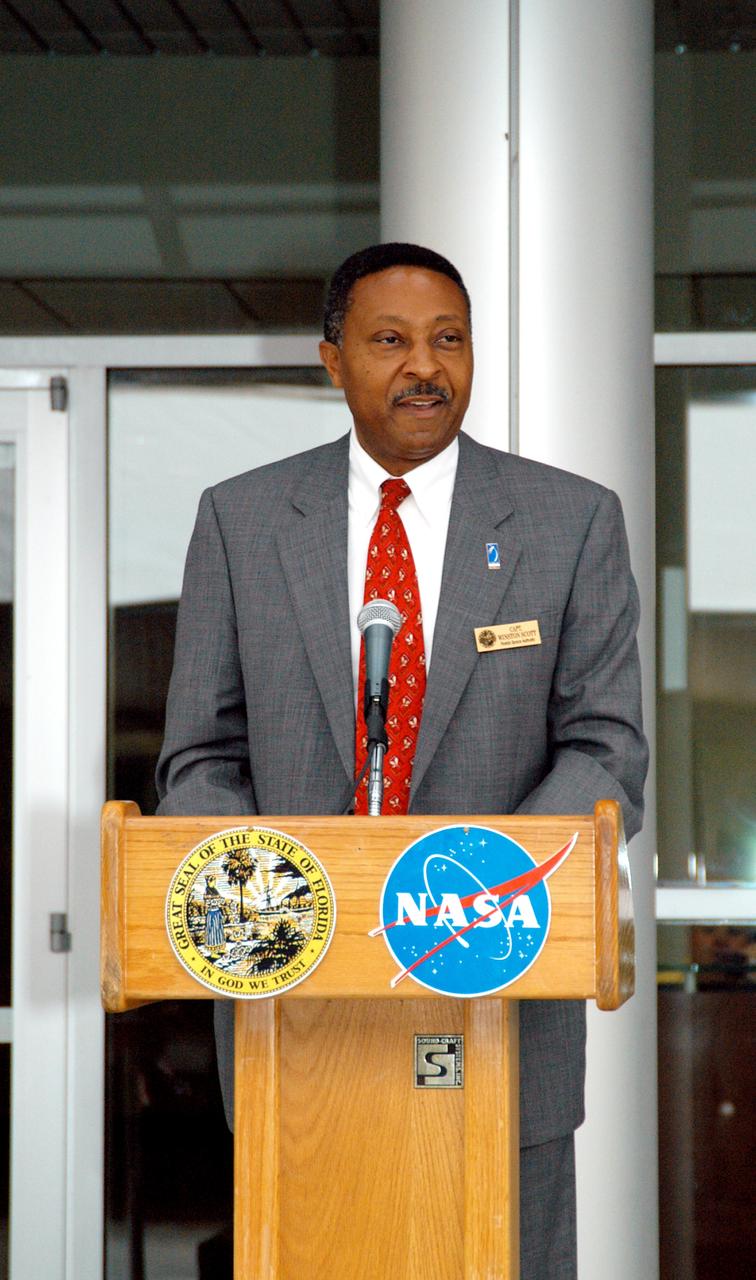
KENNEDY SPACE CENTER, FLA. -  Capt. Winston Scott, executive director of the Florida Space Authority, speaks at a dedication and ribbon-cutting ceremony for the Space Life Sciences Lab hosted by NASA-Kennedy Space Center and the state of Florida at the new lab. Completed in August, the facility encompasses more than 100,000 square feet and was formerly known as the Space Experiment Research and Processing Laboratory or SERPL. The state, through the Florida Space Authority, built the research lab which is host to NASA, NASA’s Life Sciences Services contractor Dynamac Corp., Bionetics Corp., and researchers from the University of Florida.  Dynamac Corp. leases the facility.  The Florida Space Research Institute is responsible for gaining additional tenants from outside the NASA community.
KENNEDY SPACE CENTER, FLA. - Capt. Winston Scott, executive director of the Florida Space Authority, speaks at a dedication and ribbon-cutting ceremony for the Space Life Sciences Lab hosted by NASA-Kennedy Space Center and the state of Florida at the new lab. Completed in August, the facility encompasses more than 100,000 square feet and was formerly known as the Space Experiment Research and Processing Laboratory or SERPL. The state, through the Florida Space Authority, built the research lab which is host to NASA, NASA’s Life Sciences Services contractor Dynamac Corp., Bionetics Corp., and researchers from the University of Florida. Dynamac Corp. leases the facility. The Florida Space Research Institute is responsible for gaining additional tenants from outside the NASA community.
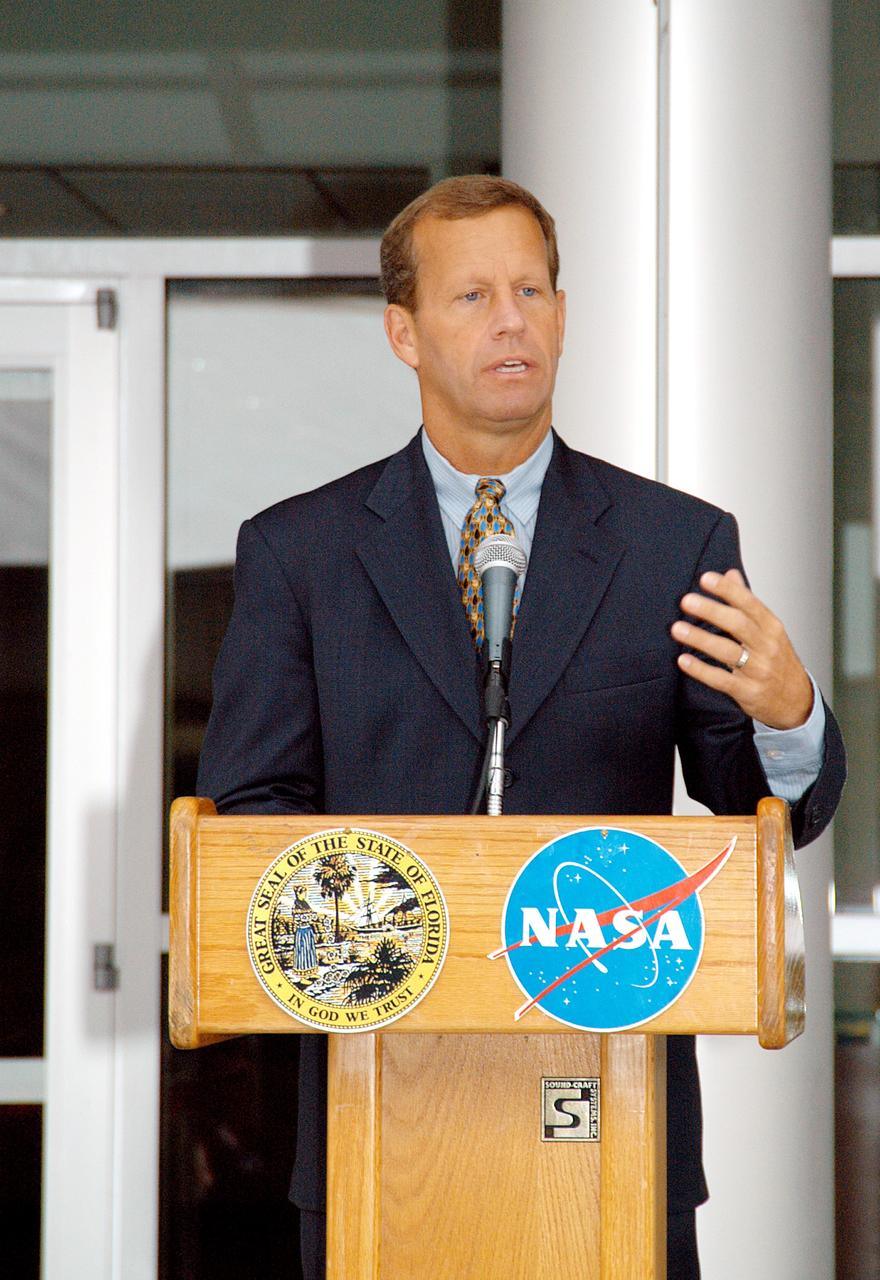
KENNEDY SPACE CENTER, FLA. -  Frank T. Brogan, president of the Florida Atlantic University, speaks at a dedication and ribbon-cutting ceremony for the Space Life Sciences Lab hosted by NASA-Kennedy Space Center and the state of Florida at the new lab. Completed in August, the facility encompasses more than 100,000 square feet and was formerly known as the Space Experiment Research and Processing Laboratory or SERPL. The state, through the Florida Space Authority, built the research lab which is host to NASA, NASA’s Life Sciences Services contractor Dynamac Corp., Bionetics Corp., and researchers from the University of Florida.  Dynamac Corp. leases the facility.  The Florida Space Research Institute is responsible for gaining additional tenants from outside the NASA community.
KENNEDY SPACE CENTER, FLA. - Frank T. Brogan, president of the Florida Atlantic University, speaks at a dedication and ribbon-cutting ceremony for the Space Life Sciences Lab hosted by NASA-Kennedy Space Center and the state of Florida at the new lab. Completed in August, the facility encompasses more than 100,000 square feet and was formerly known as the Space Experiment Research and Processing Laboratory or SERPL. The state, through the Florida Space Authority, built the research lab which is host to NASA, NASA’s Life Sciences Services contractor Dynamac Corp., Bionetics Corp., and researchers from the University of Florida. Dynamac Corp. leases the facility. The Florida Space Research Institute is responsible for gaining additional tenants from outside the NASA community.
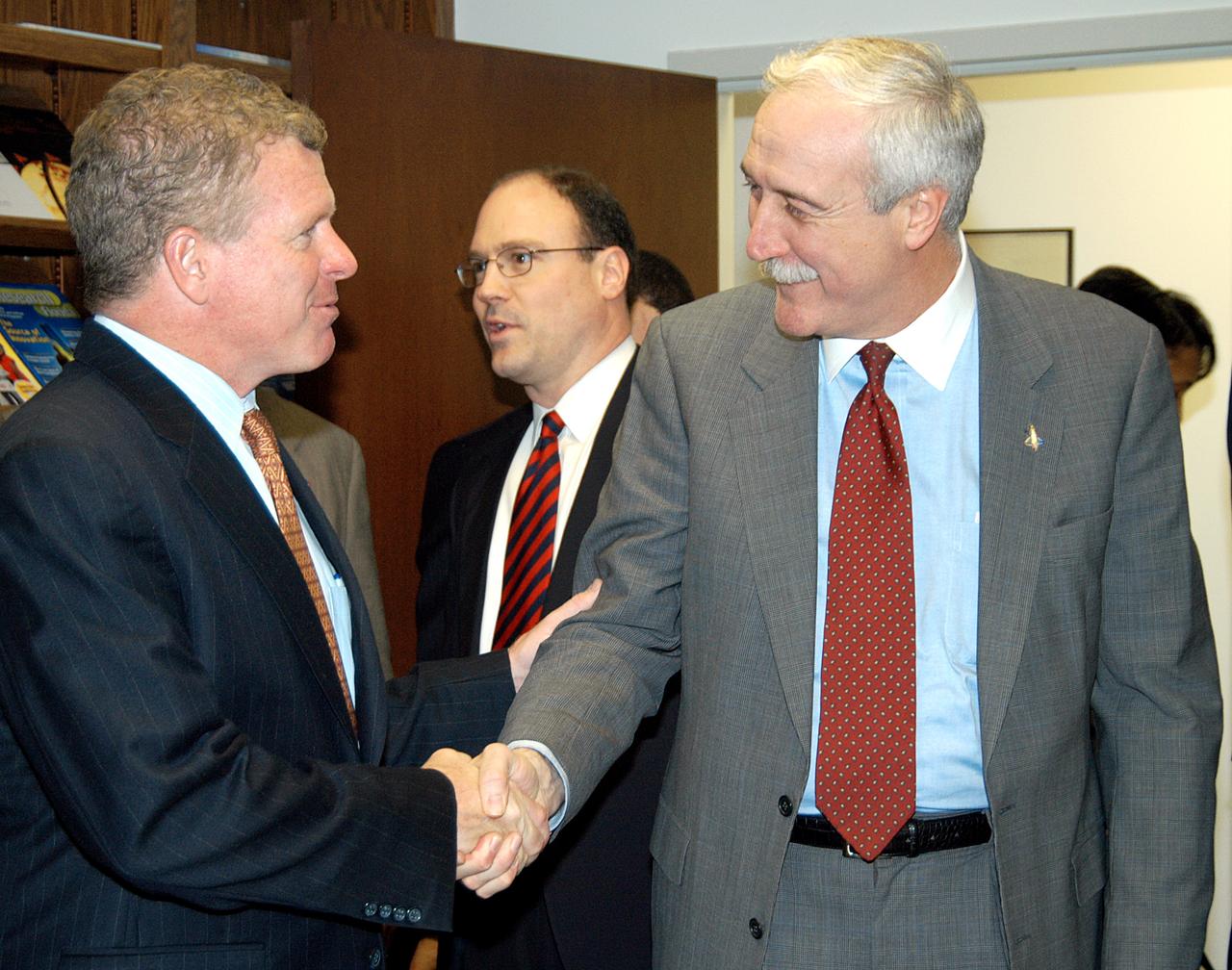
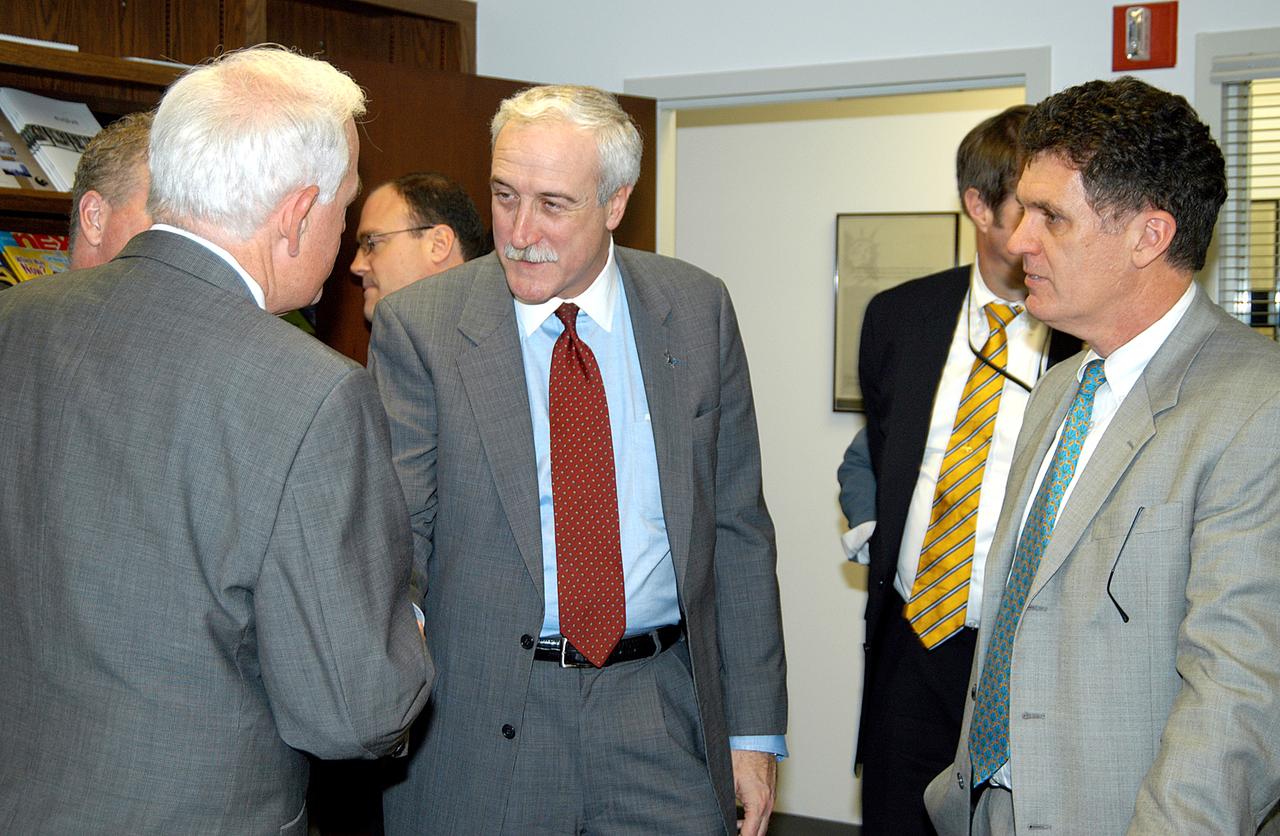
KENNEDY SPACE CENTER, FLA. - NASA Administrator Sean O’Keefe (right) greets Florida Congressman Tom Feeney during a tour of the Central Florida Research Park, near Orlando.  Central Florida leaders are proposing the research park as the site for the new NASA Shared Services Center.  The center would centralize NASA’s payroll, accounting, human resources, facilities and procurement offices that are now handled at each field center.  The consolidation is part of the One NASA focus.  Six sites around the U.S. are under consideration by NASA.
KENNEDY SPACE CENTER, FLA. - NASA Administrator Sean O’Keefe (right) greets Florida Congressman Tom Feeney during a tour of the Central Florida Research Park, near Orlando. Central Florida leaders are proposing the research park as the site for the new NASA Shared Services Center. The center would centralize NASA’s payroll, accounting, human resources, facilities and procurement offices that are now handled at each field center. The consolidation is part of the One NASA focus. Six sites around the U.S. are under consideration by NASA.
This archival photo shows Voyager 2 at the Spacecraft Assembly and Encapsulation Facility at NASA's Kennedy Space Center in Cape Canaveral, Florida.  https://photojournal.jpl.nasa.gov/catalog/PIA21728
Voyager 2 Encapsulation
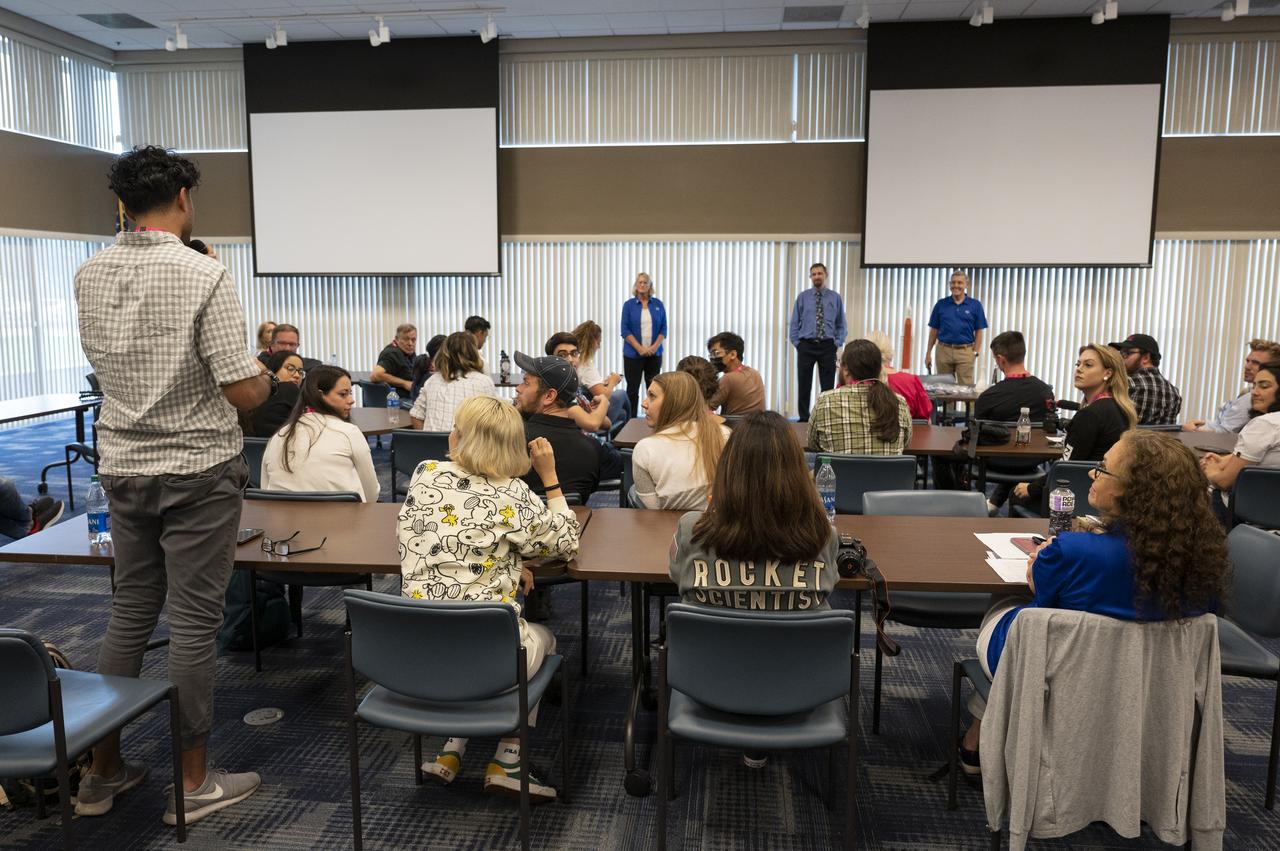
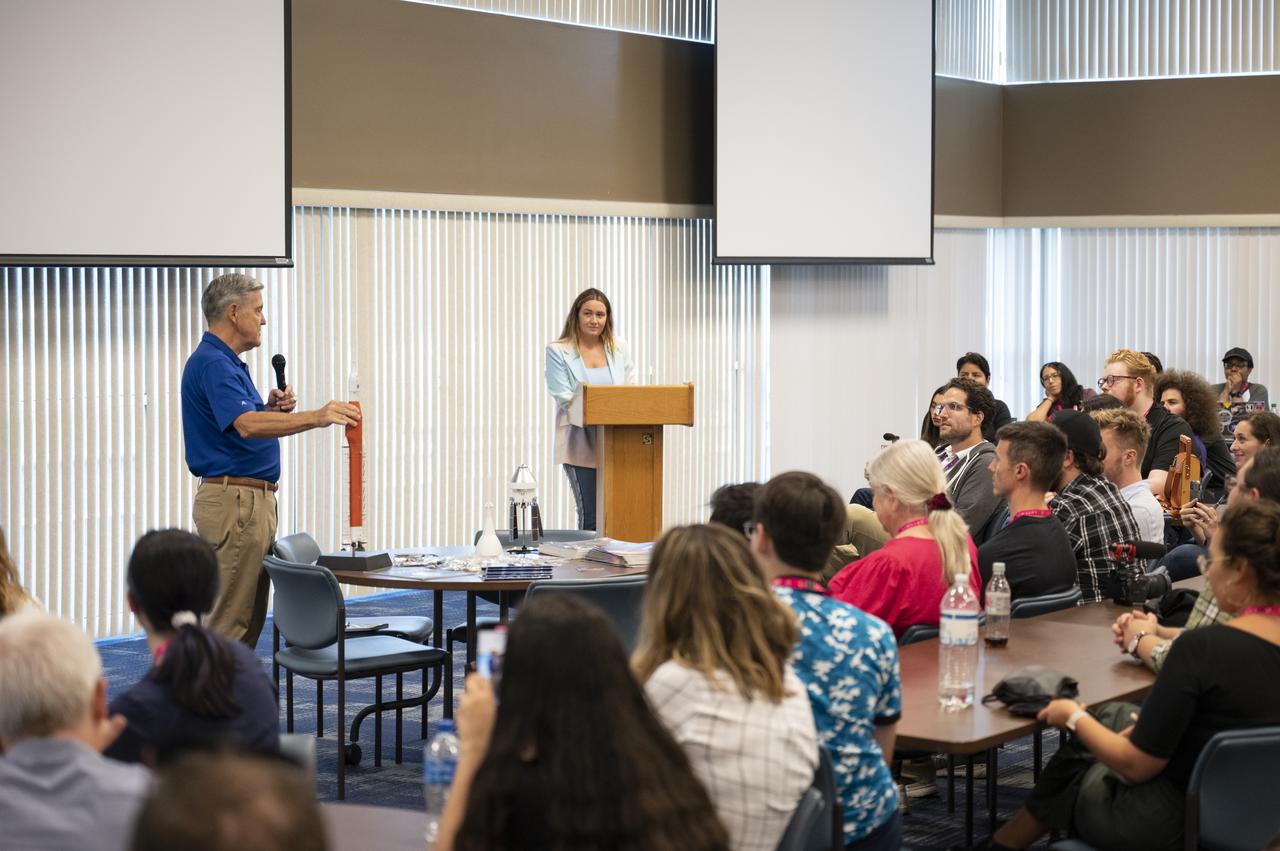
NASA leadership answers questions during a panel discussion with NASA Social attendees, Saturday, Aug. 27, 2022, at the Space Station Processing Facility at NASA’s Kennedy Space Center in Florida. NASA’s Artemis I flight test is the first integrated flight test of the agency’s deep space exploration systems: the Orion spacecraft, Space Launch System (SLS) rocket, and ground systems. Launch of the uncrewed flight test is targeted for no earlier than Aug. 29 at 8:33 a.m. ET. Photo Credit: (NASA/Keegan Barber)
Artemis I NASA Social Panel Discussion
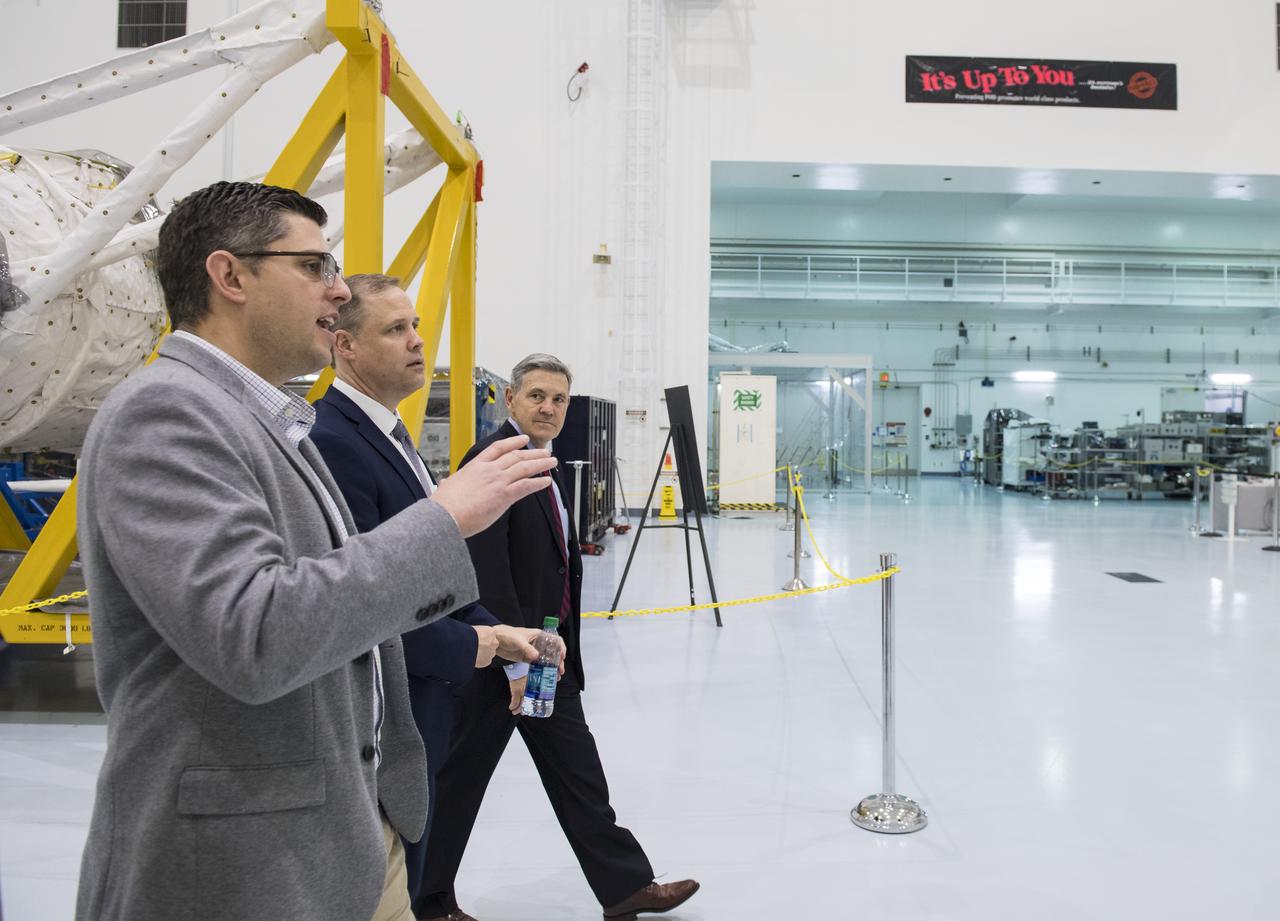
Bill Pratt, Lockheed Martin NextSTEP program manager, left, NASA Administrator Jim Bridenstine, center, and Kennedy Space Center Director, Bob Cabana, right, walk through the Space Station Processing Facility High Bay to the Lockheed Martin Gateway habitat prototype, after an event about NASA’s progress toward sending astronauts to the Moon and on to Mars, Monday March 11, 2019 at Kennedy Space Center in Florida. For information on NASA's Moon to Mars plans, visit: www.nasa.gov/moontomars Photo credit: (NASA/Aubrey Gemignani)
Moon to Mars Event
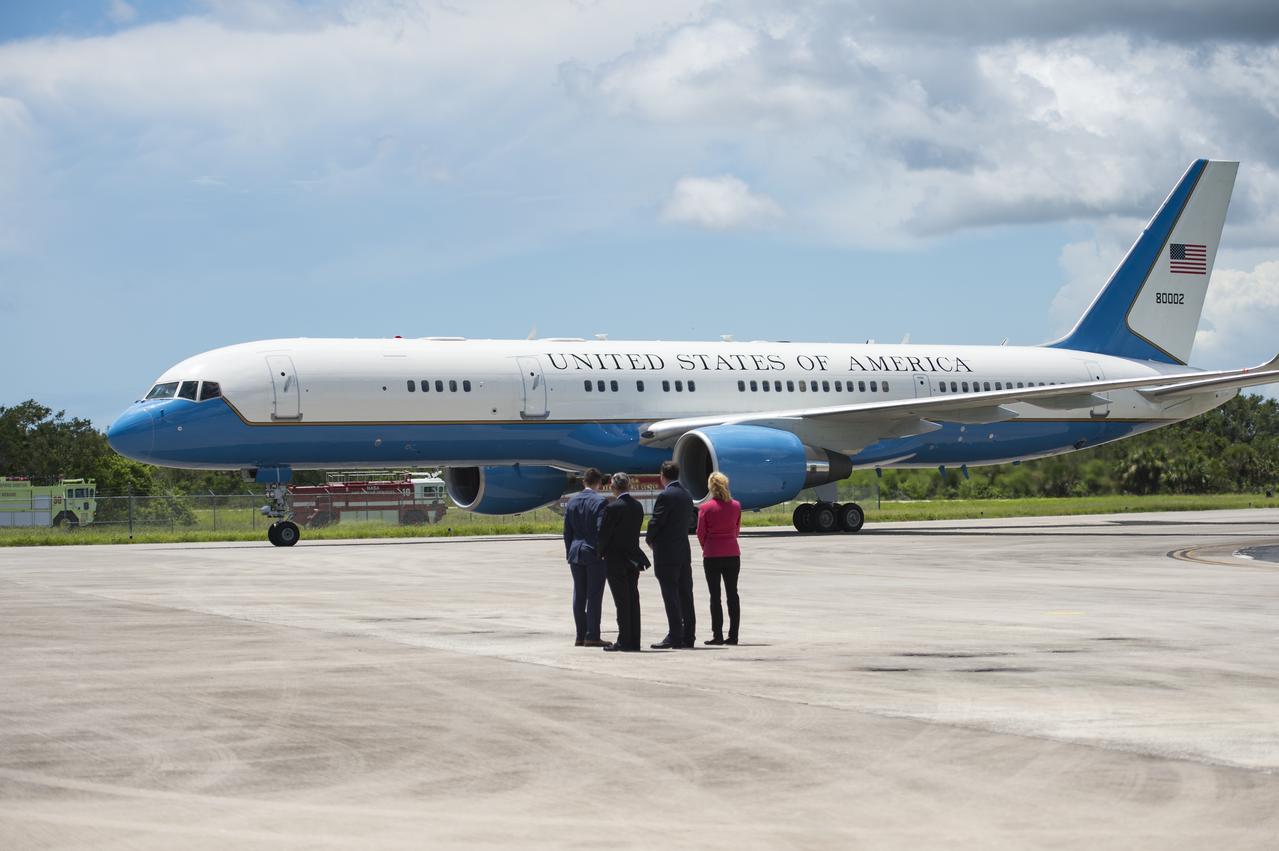
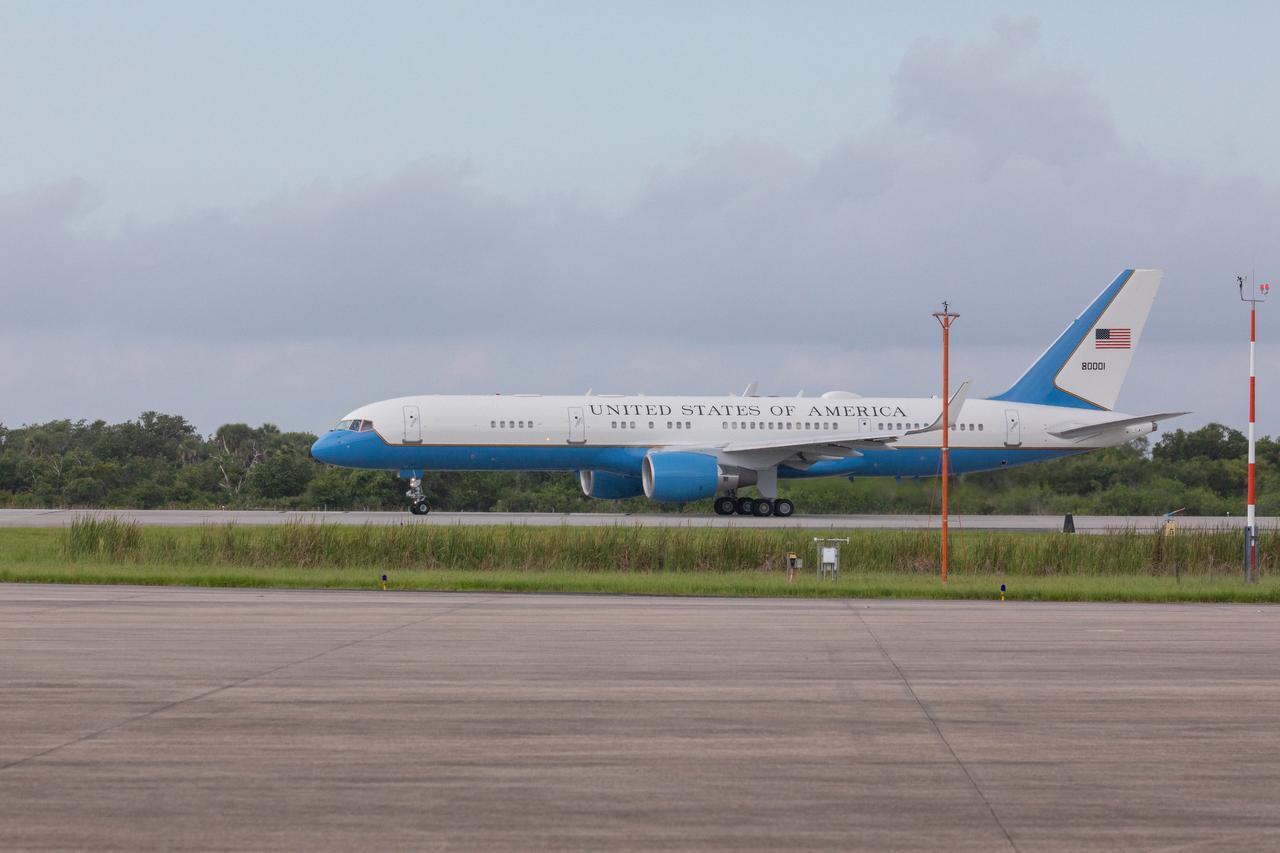
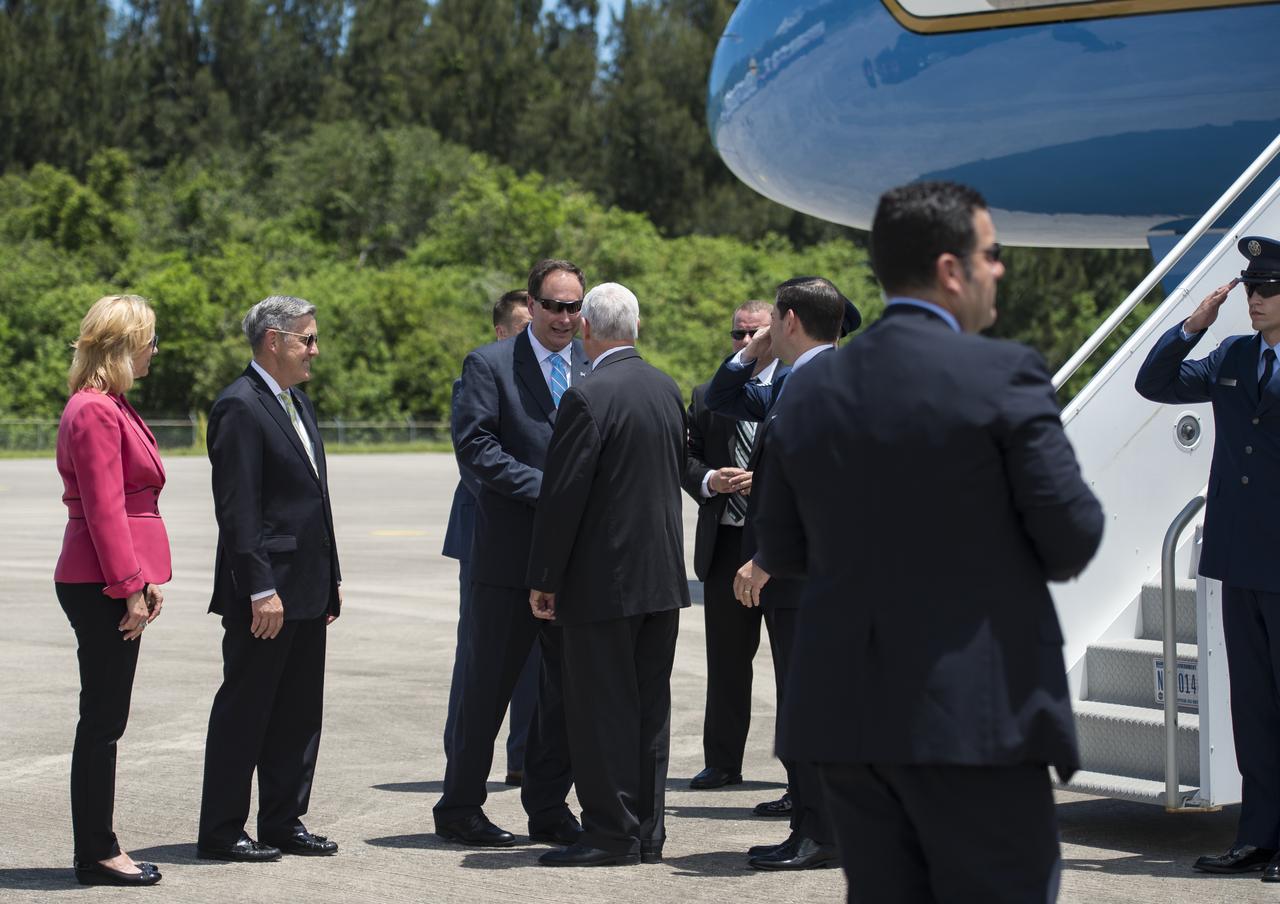
Vice President Mike Pence arrives in Air Force Two as NASA Leadership looks on, at the Shuttle Landing Facility (SLF) to highlight innovations made in America and tour some of the public/private partnership work that is helping to transform Kennedy Space Center (KSC) into a multi-user spaceport on Thursday, July 6, 2017 in Cape Canaveral, Florida. Photo Credit: (NASA/Aubrey Gemignani)
Vice President Mike Pence visits Kennedy Space Center
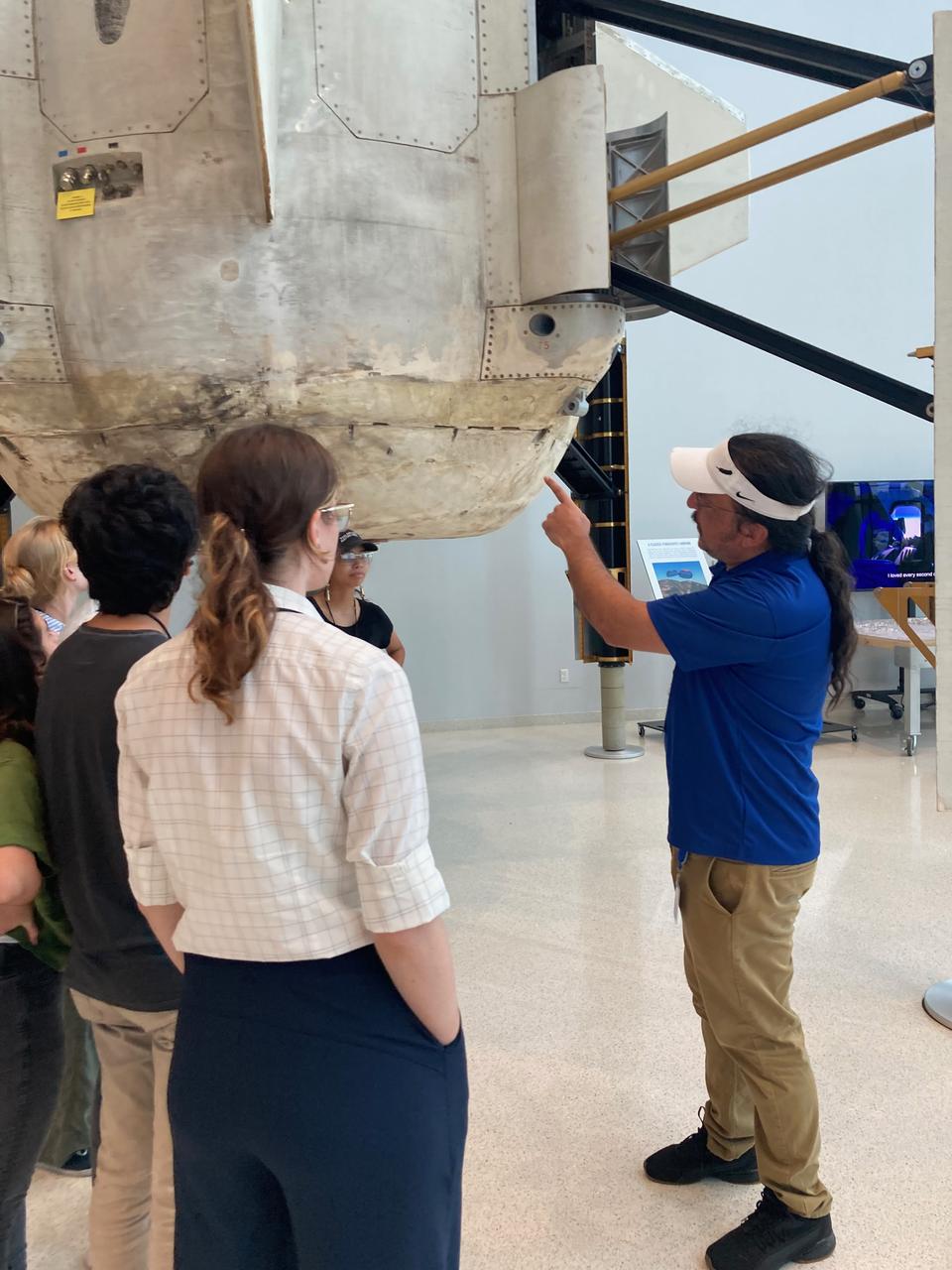
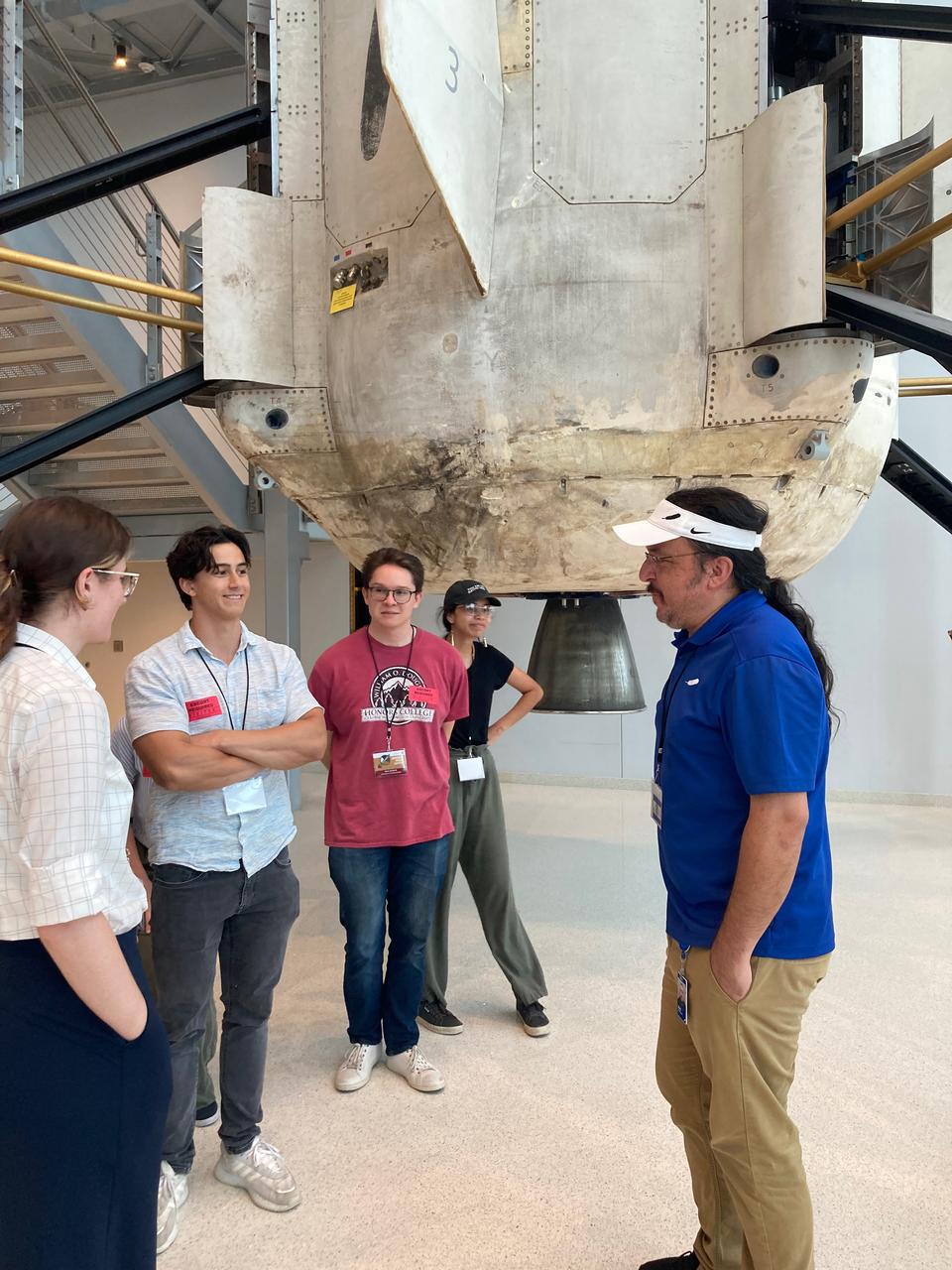
  Participants from the 14th First Nations Launch High-Power Rocket Competition watch NASA’s SpaceX Crew-7 launch from the Banana Creek viewing site at the agency’s Kennedy Space Center in Florida on Saturday, Aug. 26, 2023. A SpaceX Falcon 9 rocket carrying NASA astronaut Jasmin Moghbeli, ESA (European Space Agency) astronaut Andreas Mogensen, JAXA (Japan Aerospace Exploration Agency) astronaut Satoshi Furukawa, and Roscosmos cosmonaut Konstantin Borisov launched to the International Space Station at 3:27 a.m. EDT from Kennedy’s Launch Complex 39A. Students and advisors from University of Washington, University of Colorado-Boulder, and an international team from Queens University – this year’s First Nations Launch grand prize teams – traveled to Kennedy for a VIP tour, culminating in viewing the Crew-7 launch. Another highlight included a guided tour of historic Hangar AE, led by James Wood (Osage Nation and Loyal Shawnee), chief engineer of NASA’s Launch Services Program, technical advisor for the Crew-7 launch, and First Nations mentor and judge. One of NASA’s Artemis Student Challenges, the First Nations Launch competition comprises students from tribal colleges and universities, Native American-Serving Nontribal Institutions, and collegiate chapters of the American Indian Science and Engineering Society who design, build, and launch a high-powered rocket from a launch site in Kansasville, Wisconsin. The competition is facilitated by NASA’s Wisconsin Space Grant Consortium and managed by the agency’s Office of STEM Engagement at Kennedy.
OSTEM - First Nations Launch Students
  Participants from the 14th First Nations Launch High-Power Rocket Competition watch NASA’s SpaceX Crew-7 launch from the Banana Creek viewing site at the agency’s Kennedy Space Center in Florida on Saturday, Aug. 26, 2023. A SpaceX Falcon 9 rocket carrying NASA astronaut Jasmin Moghbeli, ESA (European Space Agency) astronaut Andreas Mogensen, JAXA (Japan Aerospace Exploration Agency) astronaut Satoshi Furukawa, and Roscosmos cosmonaut Konstantin Borisov launched to the International Space Station at 3:27 a.m. EDT from Kennedy’s Launch Complex 39A. Students and advisors from University of Washington, University of Colorado-Boulder, and an international team from Queens University – this year’s First Nations Launch grand prize teams – traveled to Kennedy for a VIP tour, culminating in viewing the Crew-7 launch. Another highlight included a guided tour of historic Hangar AE, led by James Wood (Osage Nation and Loyal Shawnee), chief engineer of NASA’s Launch Services Program, technical advisor for the Crew-7 launch, and First Nations mentor and judge. One of NASA’s Artemis Student Challenges, the First Nations Launch competition comprises students from tribal colleges and universities, Native American-Serving Nontribal Institutions, and collegiate chapters of the American Indian Science and Engineering Society who design, build, and launch a high-powered rocket from a launch site in Kansasville, Wisconsin. The competition is facilitated by NASA’s Wisconsin Space Grant Consortium and managed by the agency’s Office of STEM Engagement at Kennedy.
OSTEM - First Nations Launch Students
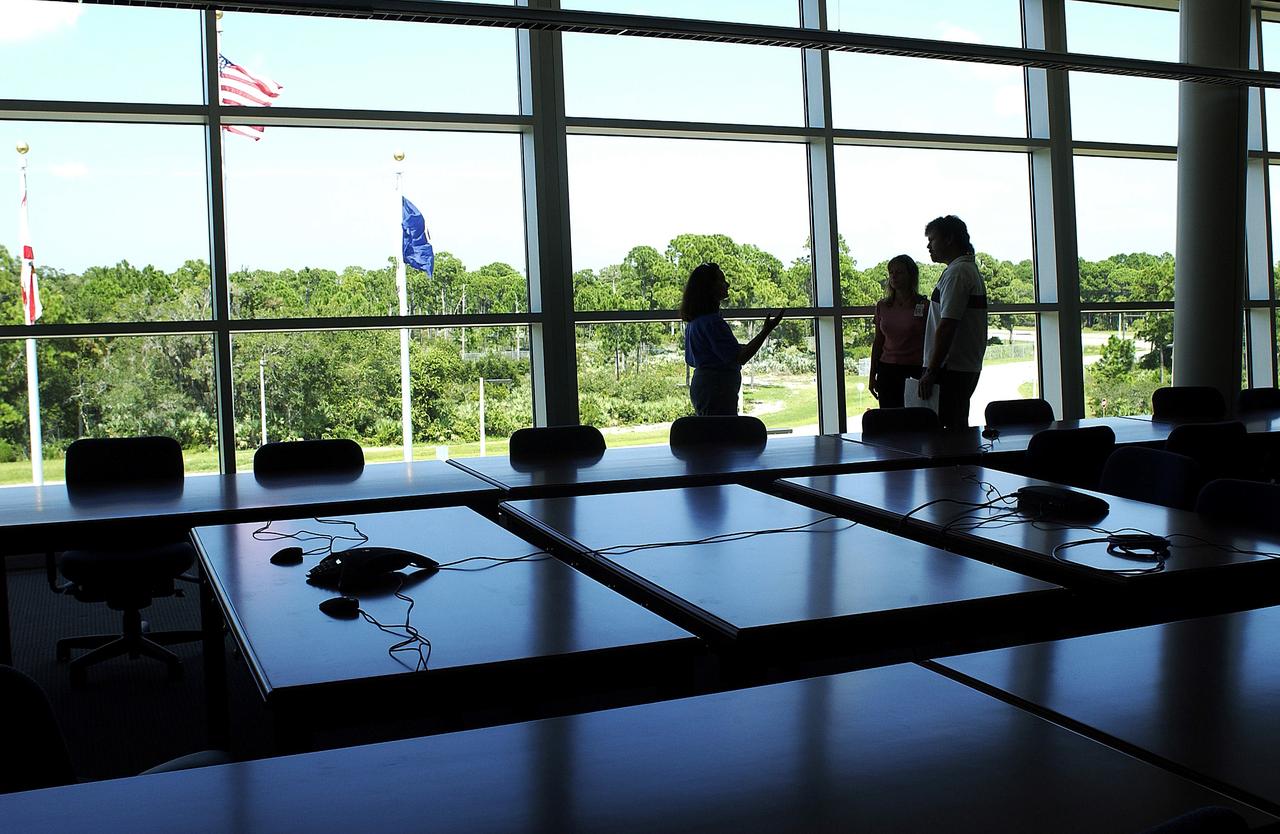
KENNEDY SPACE CENTER, FLA. - Dynamac employees Debbie Wells, Michelle Crouch and Larry Burns are silhouetted as they talk inside a conference room of the Space Life Sciences Lab (SLSL), formerly known as the Space Experiment Research and Processing Laboratory (SERPL).  They have been transferring equipment from Hangar L.  The new lab is a state-of-the-art facility being built for ISS biotechnology research. Developed as a partnership between NASA-KSC and the State of Florida, NASA’s life sciences contractor will be the primary tenant of the facility, leasing space to conduct flight experiment processing and NASA-sponsored research. About 20 percent of the facility will be available for use by Florida’s university researchers through the Florida Space Research Institute.
KENNEDY SPACE CENTER, FLA. - Dynamac employees Debbie Wells, Michelle Crouch and Larry Burns are silhouetted as they talk inside a conference room of the Space Life Sciences Lab (SLSL), formerly known as the Space Experiment Research and Processing Laboratory (SERPL). They have been transferring equipment from Hangar L. The new lab is a state-of-the-art facility being built for ISS biotechnology research. Developed as a partnership between NASA-KSC and the State of Florida, NASA’s life sciences contractor will be the primary tenant of the facility, leasing space to conduct flight experiment processing and NASA-sponsored research. About 20 percent of the facility will be available for use by Florida’s university researchers through the Florida Space Research Institute.
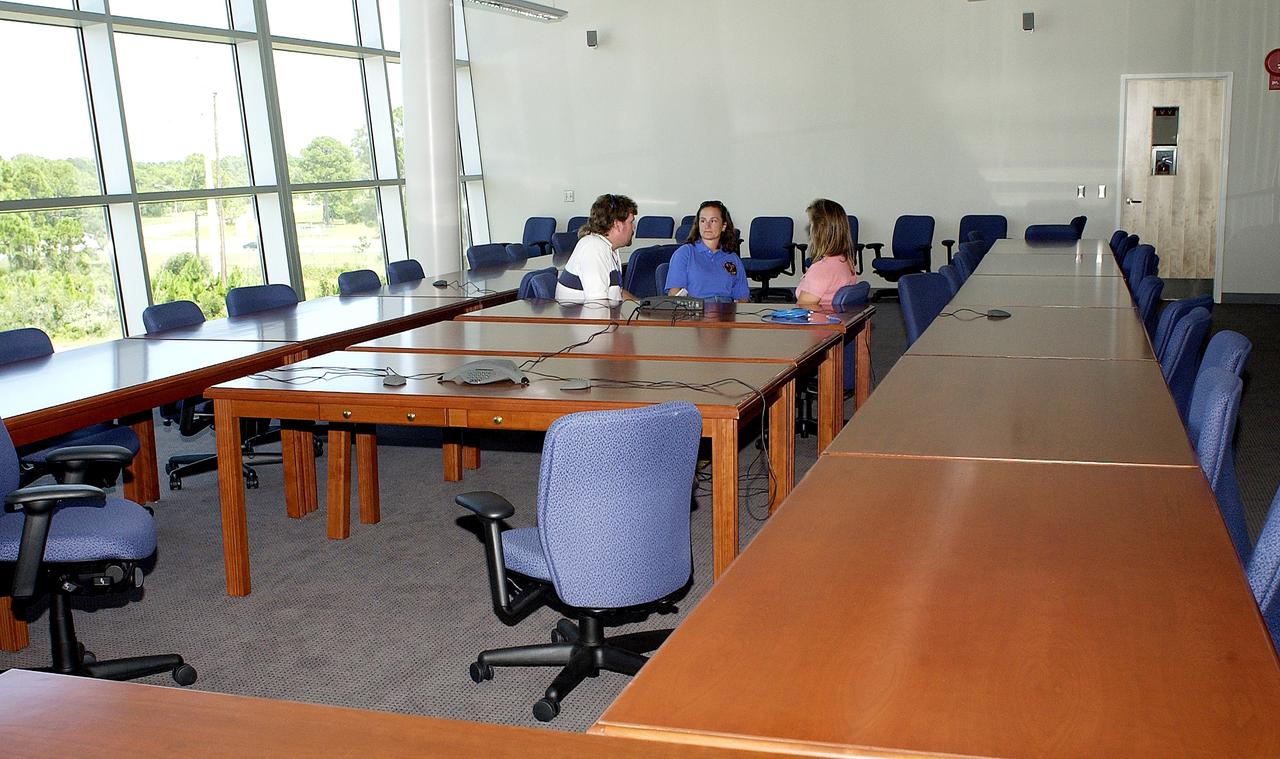
KENNEDY SPACE CENTER, FLA. - Dynamac employees (from left) Larry Burns, Debbie Wells and Michelle Crouch talk in a conference room of the Space Life Sciences Lab (SLSL), formerly known as the Space Experiment Research and Processing Laboratory (SERPL). They have been transferring equipment from Hangar L.  The new lab is a state-of-the-art facility being built for ISS biotechnology research. Developed as a partnership between NASA-KSC and the State of Florida, NASA’s life sciences contractor will be the primary tenant of the facility, leasing space to conduct flight experiment processing and NASA-sponsored research. About 20 percent of the facility will be available for use by Florida’s university researchers through the Florida Space Research Institute.
KENNEDY SPACE CENTER, FLA. - Dynamac employees (from left) Larry Burns, Debbie Wells and Michelle Crouch talk in a conference room of the Space Life Sciences Lab (SLSL), formerly known as the Space Experiment Research and Processing Laboratory (SERPL). They have been transferring equipment from Hangar L. The new lab is a state-of-the-art facility being built for ISS biotechnology research. Developed as a partnership between NASA-KSC and the State of Florida, NASA’s life sciences contractor will be the primary tenant of the facility, leasing space to conduct flight experiment processing and NASA-sponsored research. About 20 percent of the facility will be available for use by Florida’s university researchers through the Florida Space Research Institute.
KENNEDY SPACE CENTER, FLA. -  The Honorable Toni Jennings (left), lieutenant governor of the state of Florida, and Frank T. Brogan, president of Florida Atlantic University, receive a briefing on the research that will be conducted in the Space Life Sciences Lab from Dr. Robert J. Ferl (right), director of Space Agriculture Biotechnology Research and Education (SABRE), University of Florida.  Jennings and Brogan are speaking at a dedication and ribbon-cutting ceremony for the lab hosted by NASA-Kennedy Space Center and the state of Florida at the new lab. Completed in August, the facility encompasses more than 100,000 square feet and was formerly known as the Space Experiment Research and Processing Laboratory or SERPL. The state, through the Florida Space Authority, built the research lab which is host to NASA, NASA’s Life Sciences Services contractor Dynamac Corp., Bionetics Corp., and researchers from the University of Florida.  Dynamac Corp. leases the facility.  The Florida Space Research Institute is responsible for gaining additional tenants from outside the NASA community.
KENNEDY SPACE CENTER, FLA. - The Honorable Toni Jennings (left), lieutenant governor of the state of Florida, and Frank T. Brogan, president of Florida Atlantic University, receive a briefing on the research that will be conducted in the Space Life Sciences Lab from Dr. Robert J. Ferl (right), director of Space Agriculture Biotechnology Research and Education (SABRE), University of Florida. Jennings and Brogan are speaking at a dedication and ribbon-cutting ceremony for the lab hosted by NASA-Kennedy Space Center and the state of Florida at the new lab. Completed in August, the facility encompasses more than 100,000 square feet and was formerly known as the Space Experiment Research and Processing Laboratory or SERPL. The state, through the Florida Space Authority, built the research lab which is host to NASA, NASA’s Life Sciences Services contractor Dynamac Corp., Bionetics Corp., and researchers from the University of Florida. Dynamac Corp. leases the facility. The Florida Space Research Institute is responsible for gaining additional tenants from outside the NASA community.
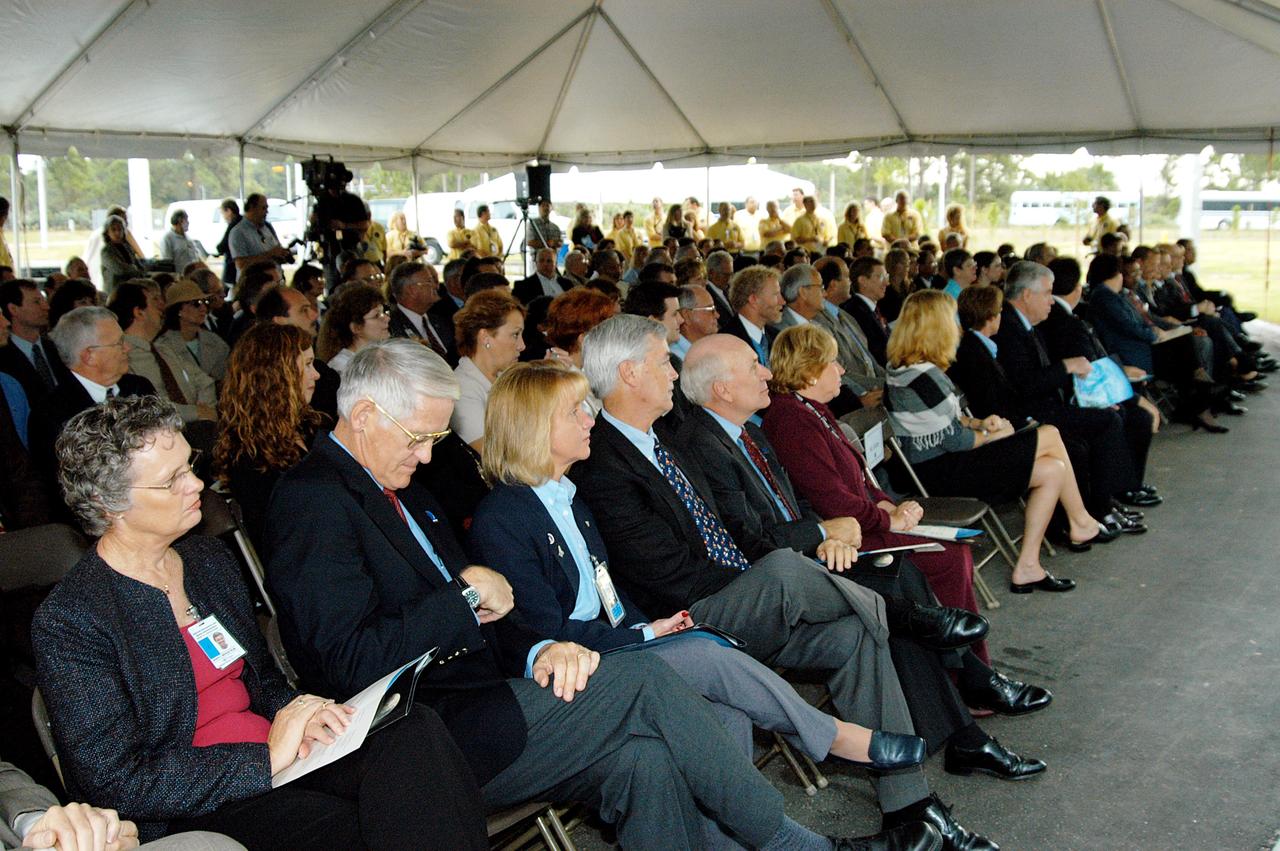
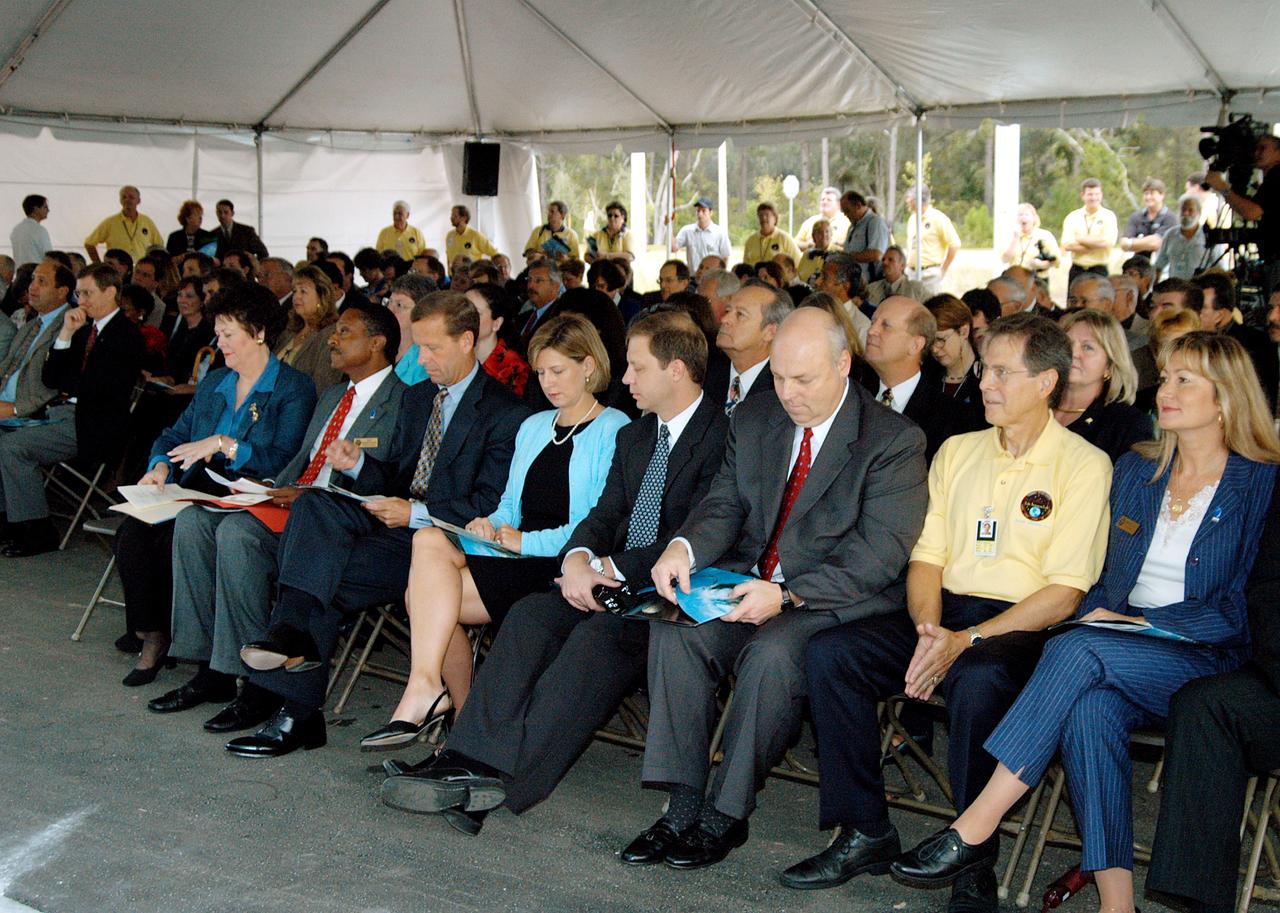
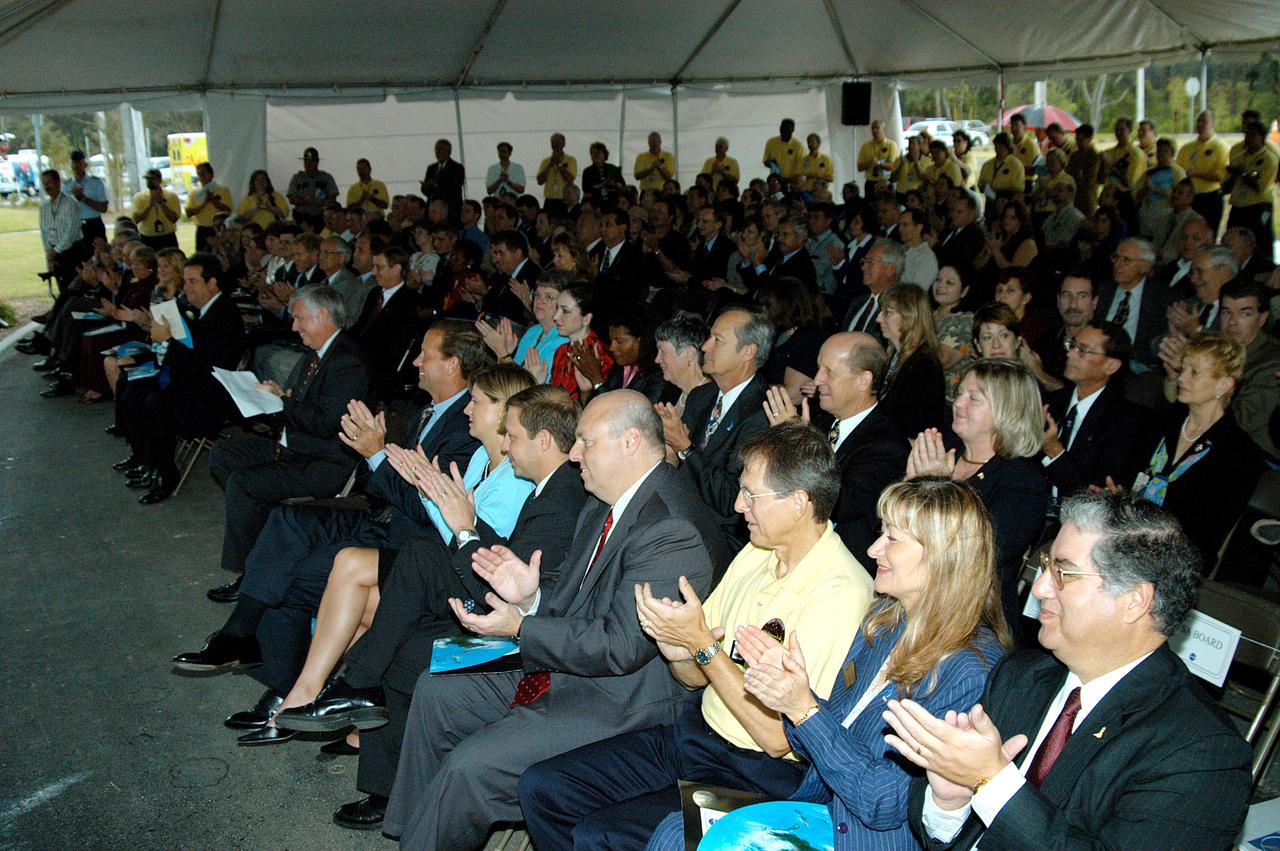
KENNEDY SPACE CENTER, FLA. -  Dignitaries, invited guests, space center employees, and the media gather for a dedication and ribbon-cutting ceremony for the Space Life Sciences Lab hosted by NASA-Kennedy Space Center and the state of Florida at the new lab. Completed in August, the facility encompasses more than 100,000 square feet and was formerly known as the Space Experiment Research and Processing Laboratory or SERPL. The state, through the Florida Space Authority, built the research lab which is host to NASA, NASA’s Life Sciences Services contractor Dynamac Corp., Bionetics Corp., and researchers from the University of Florida.  Dynamac Corp. leases the facility.  The Florida Space Research Institute is responsible for gaining additional tenants from outside the NASA community.
KENNEDY SPACE CENTER, FLA. - Dignitaries, invited guests, space center employees, and the media gather for a dedication and ribbon-cutting ceremony for the Space Life Sciences Lab hosted by NASA-Kennedy Space Center and the state of Florida at the new lab. Completed in August, the facility encompasses more than 100,000 square feet and was formerly known as the Space Experiment Research and Processing Laboratory or SERPL. The state, through the Florida Space Authority, built the research lab which is host to NASA, NASA’s Life Sciences Services contractor Dynamac Corp., Bionetics Corp., and researchers from the University of Florida. Dynamac Corp. leases the facility. The Florida Space Research Institute is responsible for gaining additional tenants from outside the NASA community.
KENNEDY SPACE CENTER, FLA. -  Dignitaries, invited guests, space center employees, and the media show their appreciation for the speakers at a dedication and ribbon-cutting ceremony for the Space Life Sciences Lab hosted by NASA-Kennedy Space Center and the state of Florida at the new lab. Completed in August, the facility encompasses more than 100,000 square feet and was formerly known as the Space Experiment Research and Processing Laboratory or SERPL. The state, through the Florida Space Authority, built the research lab which is host to NASA, NASA’s Life Sciences Services contractor Dynamac Corp., Bionetics Corp., and researchers from the University of Florida.  Dynamac Corp. leases the facility.  The Florida Space Research Institute is responsible for gaining additional tenants from outside the NASA community.
KENNEDY SPACE CENTER, FLA. - Dignitaries, invited guests, space center employees, and the media show their appreciation for the speakers at a dedication and ribbon-cutting ceremony for the Space Life Sciences Lab hosted by NASA-Kennedy Space Center and the state of Florida at the new lab. Completed in August, the facility encompasses more than 100,000 square feet and was formerly known as the Space Experiment Research and Processing Laboratory or SERPL. The state, through the Florida Space Authority, built the research lab which is host to NASA, NASA’s Life Sciences Services contractor Dynamac Corp., Bionetics Corp., and researchers from the University of Florida. Dynamac Corp. leases the facility. The Florida Space Research Institute is responsible for gaining additional tenants from outside the NASA community.
KENNEDY SPACE CENTER, FLA. -  Dignitaries, invited guests, space center employees, and the media gather for a dedication and ribbon-cutting ceremony for the Space Life Sciences Lab hosted by NASA-Kennedy Space Center and the state of Florida at the new lab. Completed in August, the facility encompasses more than 100,000 square feet and was formerly known as the Space Experiment Research and Processing Laboratory or SERPL. The state, through the Florida Space Authority, built the research lab which is host to NASA, NASA’s Life Sciences Services contractor Dynamac Corp., Bionetics Corp., and researchers from the University of Florida.  Dynamac Corp. leases the facility.  The Florida Space Research Institute is responsible for gaining additional tenants from outside the NASA community.
KENNEDY SPACE CENTER, FLA. - Dignitaries, invited guests, space center employees, and the media gather for a dedication and ribbon-cutting ceremony for the Space Life Sciences Lab hosted by NASA-Kennedy Space Center and the state of Florida at the new lab. Completed in August, the facility encompasses more than 100,000 square feet and was formerly known as the Space Experiment Research and Processing Laboratory or SERPL. The state, through the Florida Space Authority, built the research lab which is host to NASA, NASA’s Life Sciences Services contractor Dynamac Corp., Bionetics Corp., and researchers from the University of Florida. Dynamac Corp. leases the facility. The Florida Space Research Institute is responsible for gaining additional tenants from outside the NASA community.
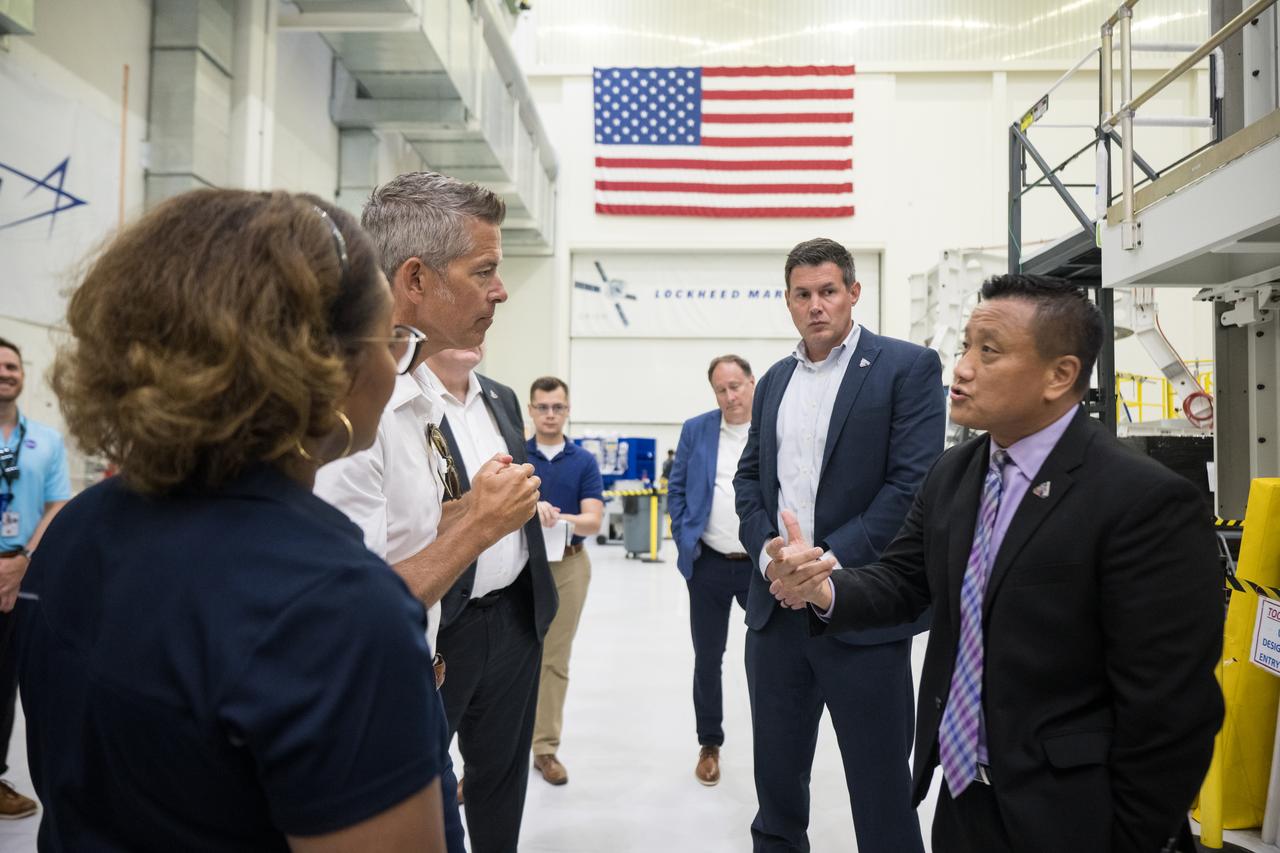
Acting NASA Administrator Sean Duffy speaks with Orion Program Manager, Howard Hu during a tour of Lockheed Martin’s Orion Facility, Wednesday, July 30, 2025, at NASA’s Kennedy Space Center in Florida. Photo Credit: (NASA/Aubrey Gemignani)
Acting Administrator Sean Duffy Tours Orion Facility
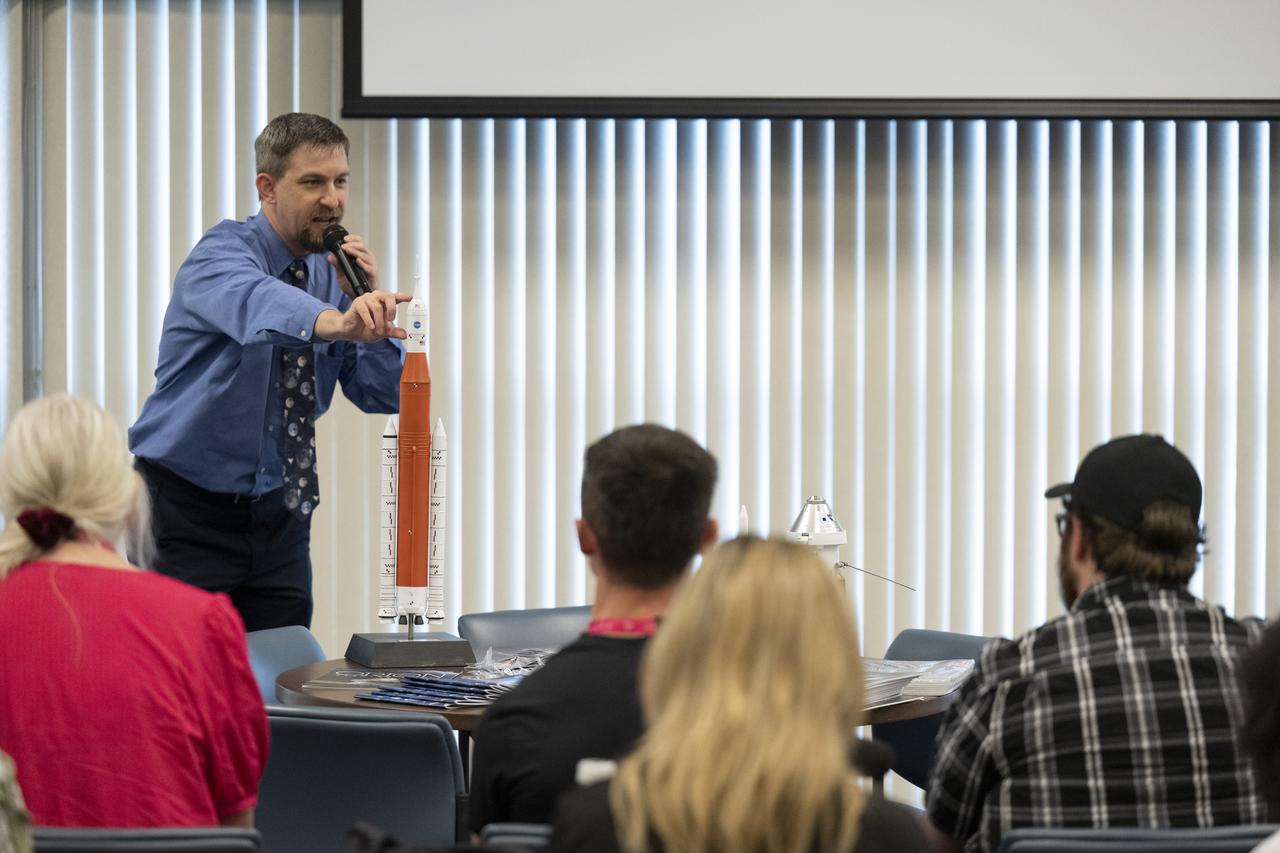
Program Planner for the Orion Spacecraft at Lockheed Martin Space Barry Bohnsack delivers remarks during a panel discussion with NASA Social attendees, Saturday, Aug. 27, 2022, at the Space Station Processing Facility at NASA’s Kennedy Space Center in Florida. NASA’s Artemis I flight test is the first integrated flight test of the agency’s deep space exploration systems: the Orion spacecraft, Space Launch System (SLS) rocket, and ground systems. Launch of the uncrewed flight test is targeted for no earlier than Aug. 29 at 8:33 a.m. ET. Photo Credit: (NASA/Keegan Barber)
Artemis I NASA Social Panel Discussion
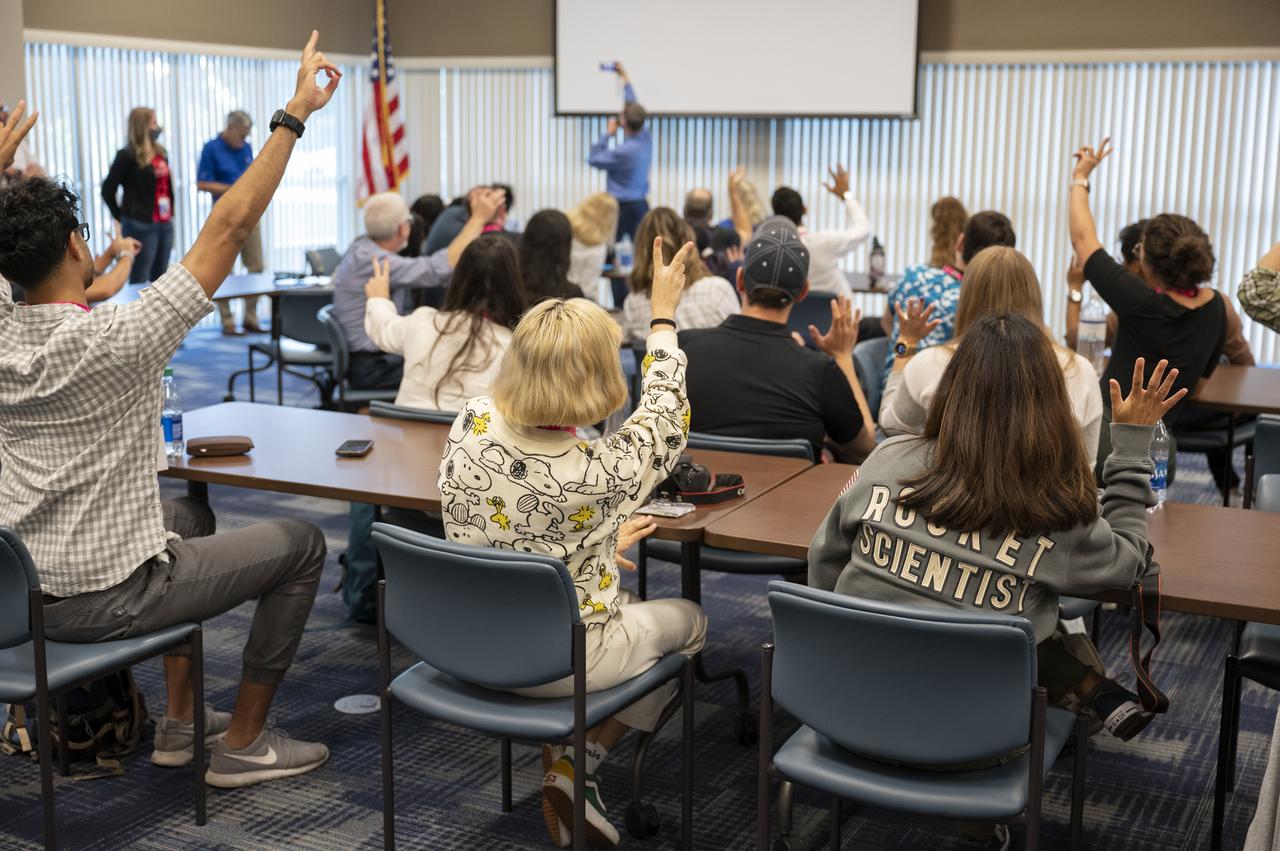
Program Planner for the Orion Spacecraft at Lockheed Martin Space Barry Bohnsack takes a selfie with NASA Social attendees, Saturday, Aug. 27, 2022, at the Space Station Processing Facility at NASA’s Kennedy Space Center in Florida. NASA’s Artemis I flight test is the first integrated flight test of the agency’s deep space exploration systems: the Orion spacecraft, Space Launch System (SLS) rocket, and ground systems. Launch of the uncrewed flight test is targeted for no earlier than Aug. 29 at 8:33 a.m. ET. Photo Credit: (NASA/Keegan Barber)
Artemis I NASA Social Panel Discussion
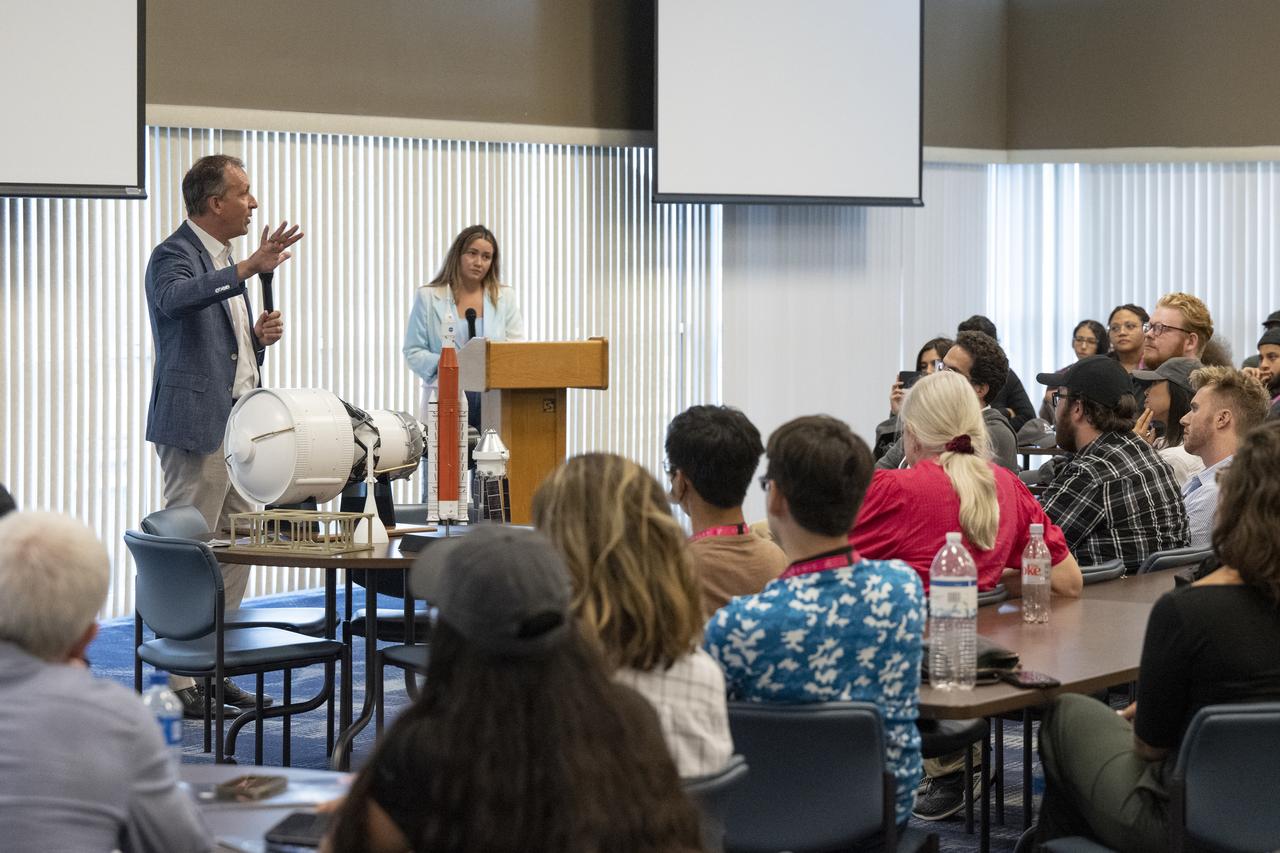
NASA Associate Administrator Bob Cabana delivers remarks during a panel discussion with NASA Social attendees, Saturday, Aug. 27, 2022, at the Space Station Processing Facility at NASA’s Kennedy Space Center in Florida. NASA’s Artemis I flight test is the first integrated flight test of the agency’s deep space exploration systems: the Orion spacecraft, Space Launch System (SLS) rocket, and ground systems. Launch of the uncrewed flight test is targeted for no earlier than Aug. 29 at 8:33 a.m. ET. Photo Credit: (NASA/Keegan Barber)
Artemis I NASA Social Panel Discussion
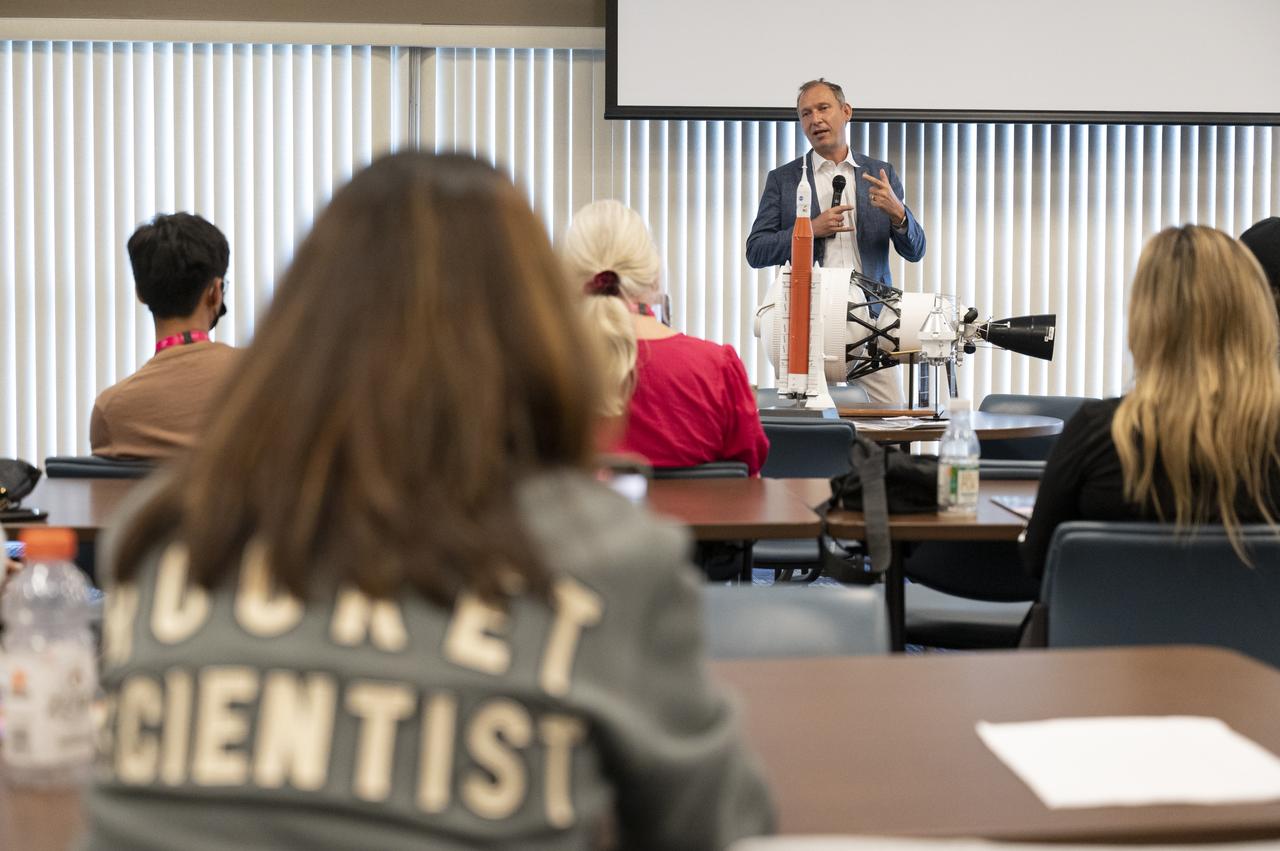
NASA Associate Administrator for the Science Mission Directorate Thomas Zurbuchen delivers remarks during a panel discussion with NASA Social attendees, Saturday, Aug. 27, 2022, at the Space Station Processing Facility at NASA’s Kennedy Space Center in Florida. NASA’s Artemis I flight test is the first integrated flight test of the agency’s deep space exploration systems: the Orion spacecraft, Space Launch System (SLS) rocket, and ground systems. Launch of the uncrewed flight test is targeted for no earlier than Aug. 29 at 8:33 a.m. ET. Photo Credit: (NASA/Keegan Barber)
Artemis I NASA Social Panel Discussion
NASA Associate Administrator for the Science Mission Directorate Thomas Zurbuchen delivers remarks during a panel discussion with NASA Social attendees, Saturday, Aug. 27, 2022, at the Space Station Processing Facility at NASA’s Kennedy Space Center in Florida. NASA’s Artemis I flight test is the first integrated flight test of the agency’s deep space exploration systems: the Orion spacecraft, Space Launch System (SLS) rocket, and ground systems. Launch of the uncrewed flight test is targeted for no earlier than Aug. 29 at 8:33 a.m. ET. Photo Credit: (NASA/Keegan Barber)
Artemis I NASA Social Panel Discussion
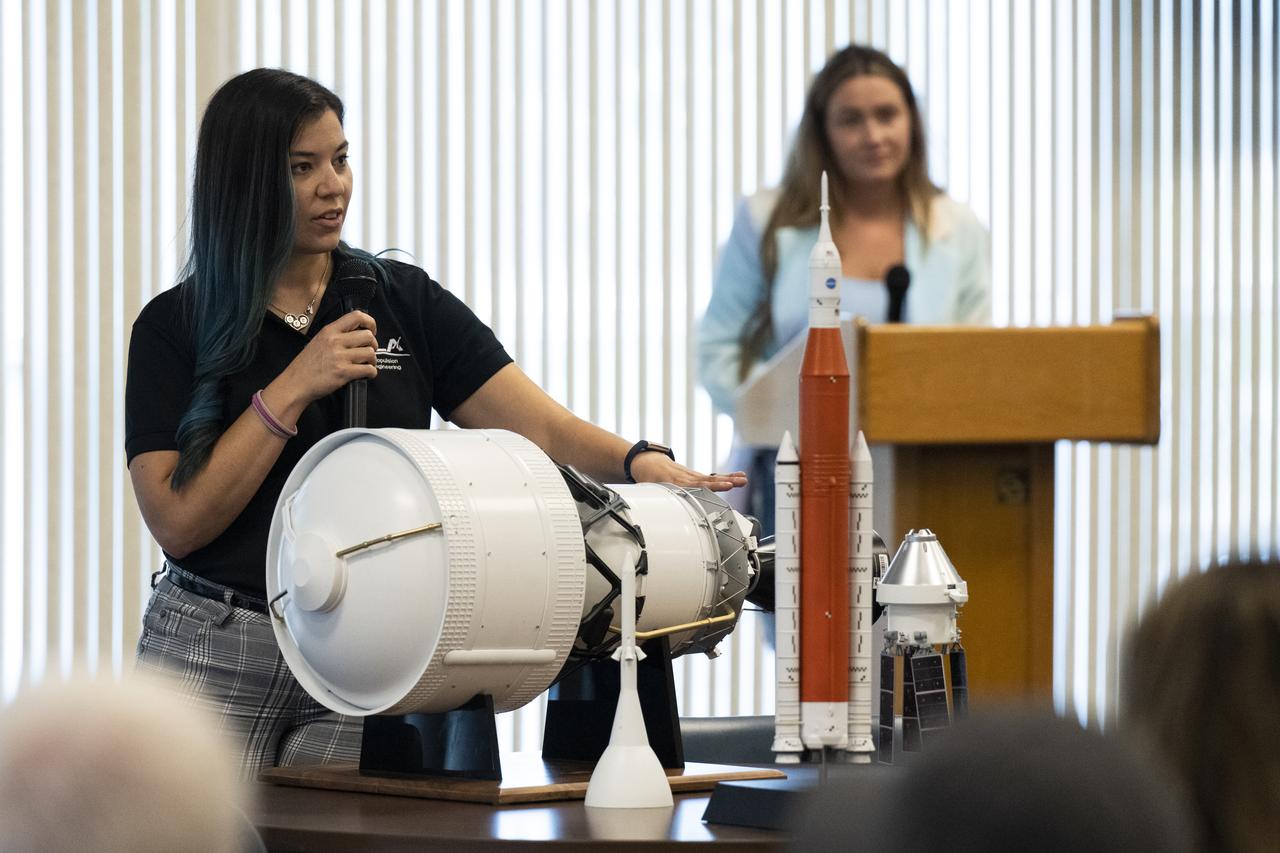
Interim Cryogenic Propulsive Stage (ICPS) Propulsion Lead at United Launch Alliance Julia Paez  delivers remarks during a panel discussion with NASA Social attendees, Saturday, Aug. 27, 2022, at the Space Station Processing Facility at NASA’s Kennedy Space Center in Florida. NASA’s Artemis I flight test is the first integrated flight test of the agency’s deep space exploration systems: the Orion spacecraft, Space Launch System (SLS) rocket, and ground systems. Launch of the uncrewed flight test is targeted for no earlier than Aug. 29 at 8:33 a.m. ET. Photo Credit: (NASA/Keegan Barber)
Artemis I NASA Social Panel Discussion
NASA Associate Administrator Bob Cabana delivers remarks during a panel discussion with NASA Social attendees, Saturday, Aug. 27, 2022, at the Space Station Processing Facility at NASA’s Kennedy Space Center in Florida. NASA’s Artemis I flight test is the first integrated flight test of the agency’s deep space exploration systems: the Orion spacecraft, Space Launch System (SLS) rocket, and ground systems. Launch of the uncrewed flight test is targeted for no earlier than Aug. 29 at 8:33 a.m. ET. Photo Credit: (NASA/Keegan Barber)
Artemis I NASA Social Panel Discussion
Orion Program Manager at Aerojet Don Mahr delivers remarks during a panel discussion with NASA Social attendees, Saturday, Aug. 27, 2022, at the Space Station Processing Facility at NASA’s Kennedy Space Center in Florida. NASA’s Artemis I flight test is the first integrated flight test of the agency’s deep space exploration systems: the Orion spacecraft, Space Launch System (SLS) rocket, and ground systems. Launch of the uncrewed flight test is targeted for no earlier than Aug. 29 at 8:33 a.m. ET. Photo Credit: (NASA/Keegan Barber)
Artemis I NASA Social Panel Discussion
NASA Associate Administrator Bob Cabana delivers remarks during a panel discussion with NASA Social attendees, Saturday, Aug. 27, 2022, at the Space Station Processing Facility at NASA’s Kennedy Space Center in Florida. NASA’s Artemis I flight test is the first integrated flight test of the agency’s deep space exploration systems: the Orion spacecraft, Space Launch System (SLS) rocket, and ground systems. Launch of the uncrewed flight test is targeted for no earlier than Aug. 29 at 8:33 a.m. ET. Photo Credit: (NASA/Keegan Barber)
Artemis I NASA Social Panel Discussion
Orion Spacecraft Assembly Operation Lead Marie Reed delivers remarks during a panel discussion with NASA Social attendees, Saturday, Aug. 27, 2022, at the Space Station Processing Facility at NASA’s Kennedy Space Center in Florida. NASA’s Artemis I flight test is the first integrated flight test of the agency’s deep space exploration systems: the Orion spacecraft, Space Launch System (SLS) rocket, and ground systems. Launch of the uncrewed flight test is targeted for no earlier than Aug. 29 at 8:33 a.m. ET. Photo Credit: (NASA/Keegan Barber)
Artemis I NASA Social Panel Discussion
KENNEDY SPACE CENTER, FLA. - - U.S. Representative Ric Keller (left) listens intently to a presentation proposing the use of the Central Florida Research Park, near Orlando, as the site of NASA’s new Shared Services Center.  NASA and Florida officials toured the research park as well.  Central Florida leaders are proposing the research park as the site for the center, which would centralize NASA’s payroll, accounting, human resources, facilities and procurement offices that are now handled at each field center.  The consolidation is part of the One NASA focus.  Six sites around the U.S. are under consideration by NASA.
KENNEDY SPACE CENTER, FLA. - - U.S. Representative Ric Keller (left) listens intently to a presentation proposing the use of the Central Florida Research Park, near Orlando, as the site of NASA’s new Shared Services Center. NASA and Florida officials toured the research park as well. Central Florida leaders are proposing the research park as the site for the center, which would centralize NASA’s payroll, accounting, human resources, facilities and procurement offices that are now handled at each field center. The consolidation is part of the One NASA focus. Six sites around the U.S. are under consideration by NASA.
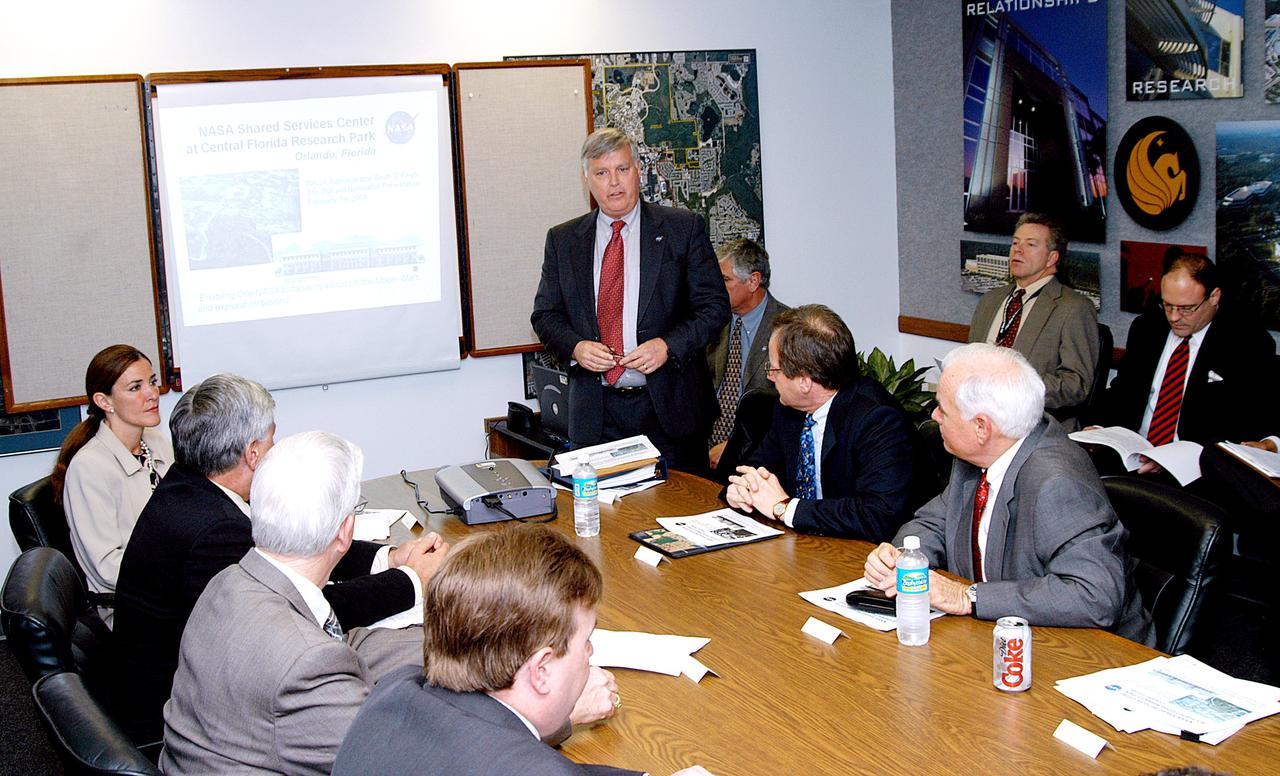
KENNEDY SPACE CENTER, FLA. - KSC Director Jim Kennedy makes a presentation to NASA and other officials about the benefits of locating NASA’s new Shared Services Center in the Central Florida Research Park, near Orlando.  At the far left is Pamella J. Dana, Ph.D., director, Office of Tourism, Trade, and Economic Development in Florida.  Central Florida leaders are proposing the research park as the site for the NASA Shared Services Center.  The center would centralize NASA’s payroll, accounting, human resources, facilities and procurement offices that are now handled at each field center.  The consolidation is part of the One NASA focus.  Six sites around the U.S. are under consideration by NASA.
KENNEDY SPACE CENTER, FLA. - KSC Director Jim Kennedy makes a presentation to NASA and other officials about the benefits of locating NASA’s new Shared Services Center in the Central Florida Research Park, near Orlando. At the far left is Pamella J. Dana, Ph.D., director, Office of Tourism, Trade, and Economic Development in Florida. Central Florida leaders are proposing the research park as the site for the NASA Shared Services Center. The center would centralize NASA’s payroll, accounting, human resources, facilities and procurement offices that are now handled at each field center. The consolidation is part of the One NASA focus. Six sites around the U.S. are under consideration by NASA.
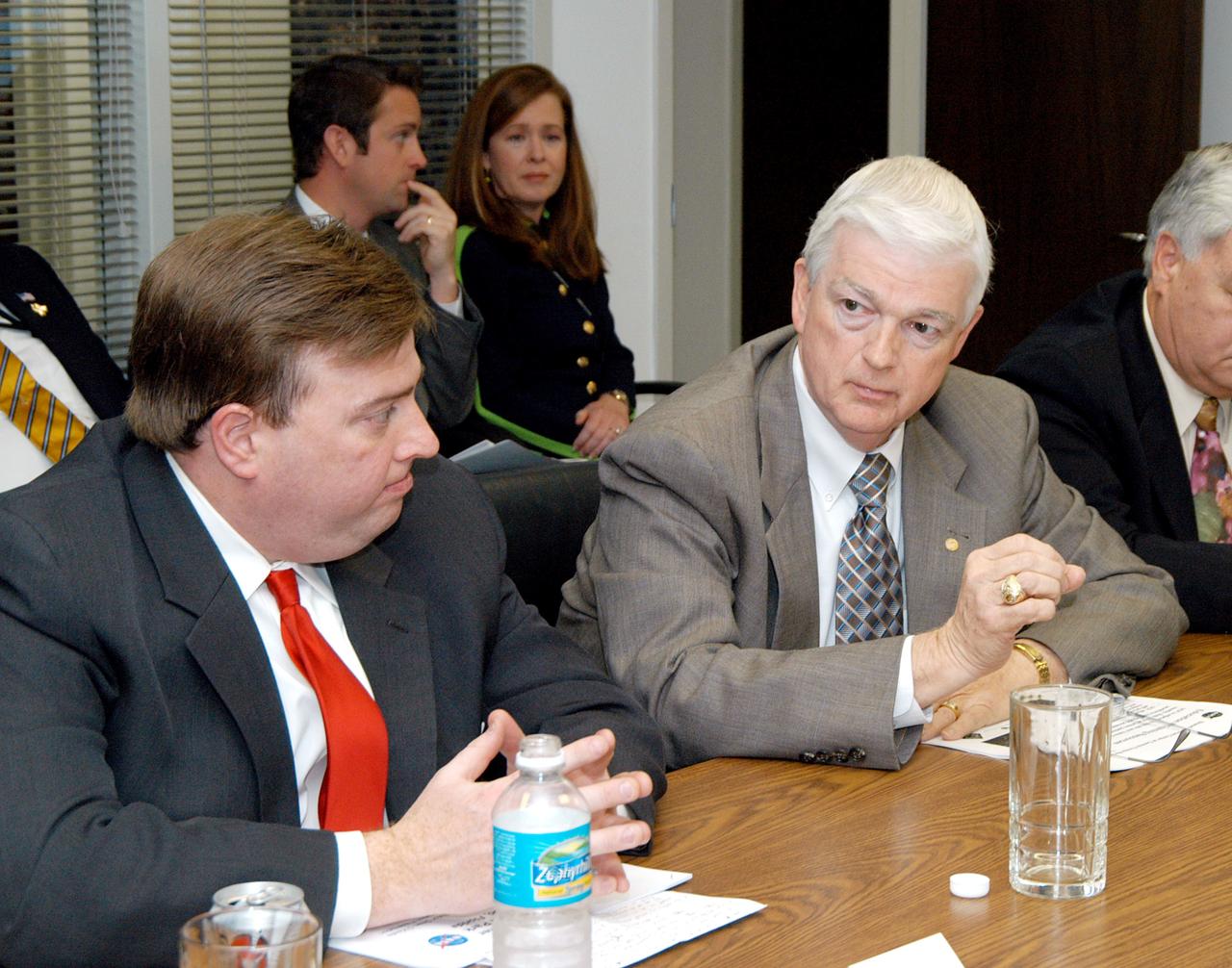
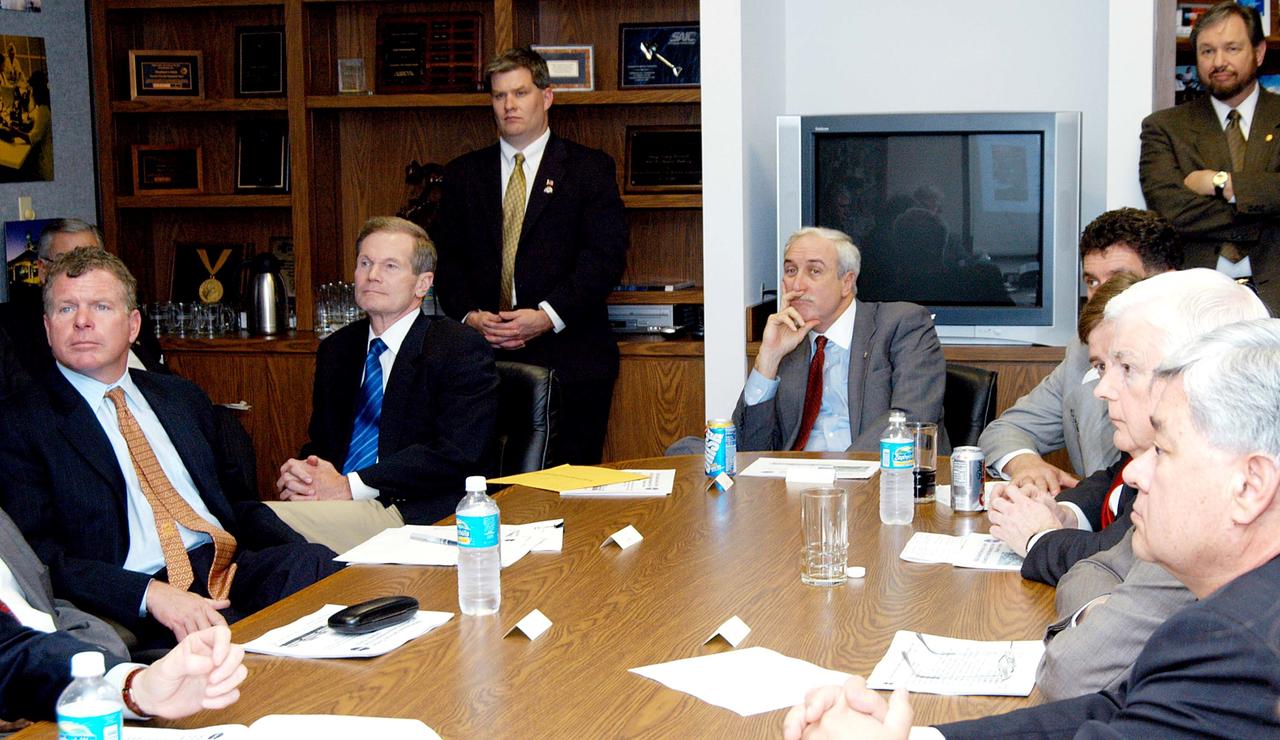
KENNEDY SPACE CENTER, FLA. - NASA officials and government representatives are gathered to learn about the assets of the Central Florida Research Park, near Orlando.  At the far end of the table is NASA Administrator Sean O’Keefe.  He is flanked, on the left, by Florida Congressman Tom Feeney and U.S. Senator Bill Nelson; and on the right by U.S. Congressman Dave Weldon. Central Florida leaders are proposing the research park as the site for the NASA Shared Services Center.  The center would centralize NASA’s payroll, accounting, human resources, facilities and procurement offices that are now handled at each field center.  The consolidation is part of the One NASA focus.  Six sites around the U.S. are under consideration by NASA.
KENNEDY SPACE CENTER, FLA. - NASA officials and government representatives are gathered to learn about the assets of the Central Florida Research Park, near Orlando. At the far end of the table is NASA Administrator Sean O’Keefe. He is flanked, on the left, by Florida Congressman Tom Feeney and U.S. Senator Bill Nelson; and on the right by U.S. Congressman Dave Weldon. Central Florida leaders are proposing the research park as the site for the NASA Shared Services Center. The center would centralize NASA’s payroll, accounting, human resources, facilities and procurement offices that are now handled at each field center. The consolidation is part of the One NASA focus. Six sites around the U.S. are under consideration by NASA.
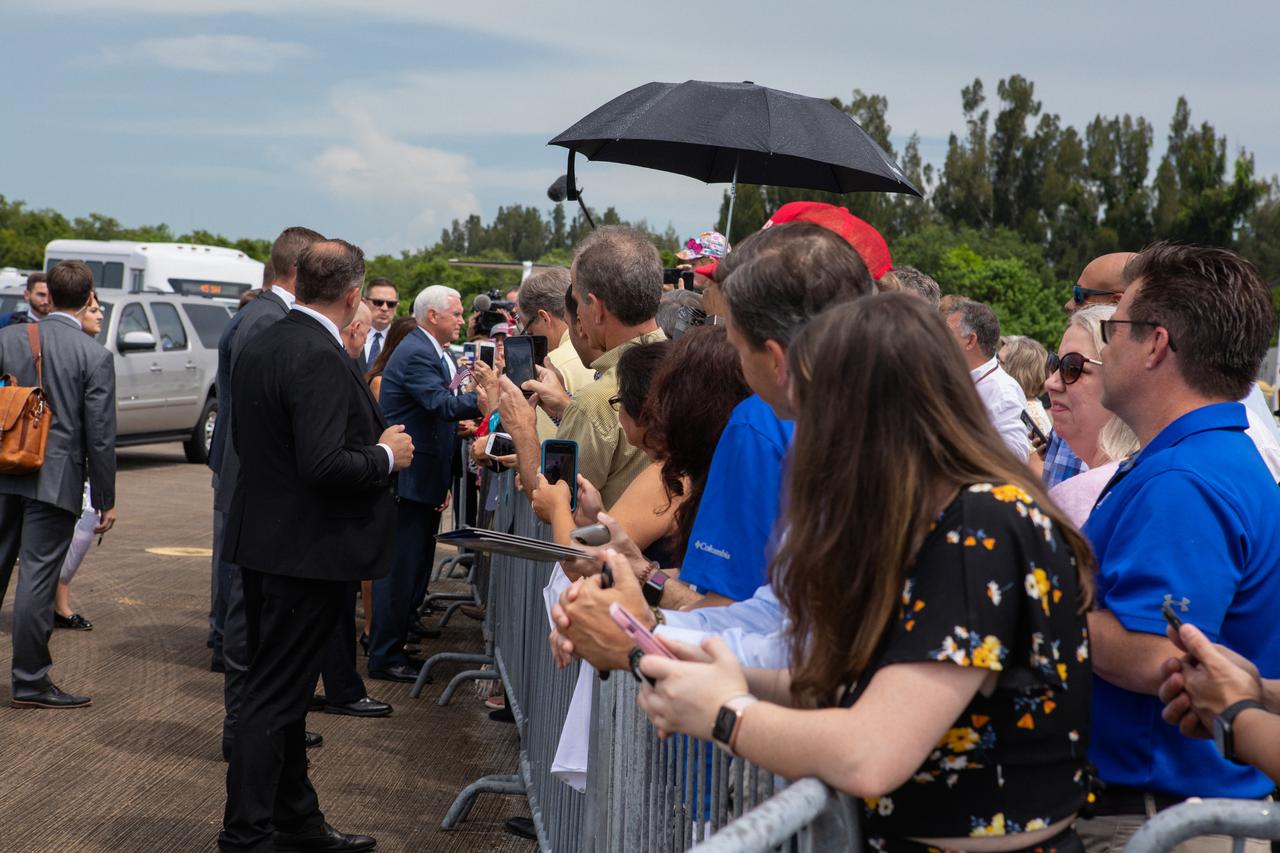
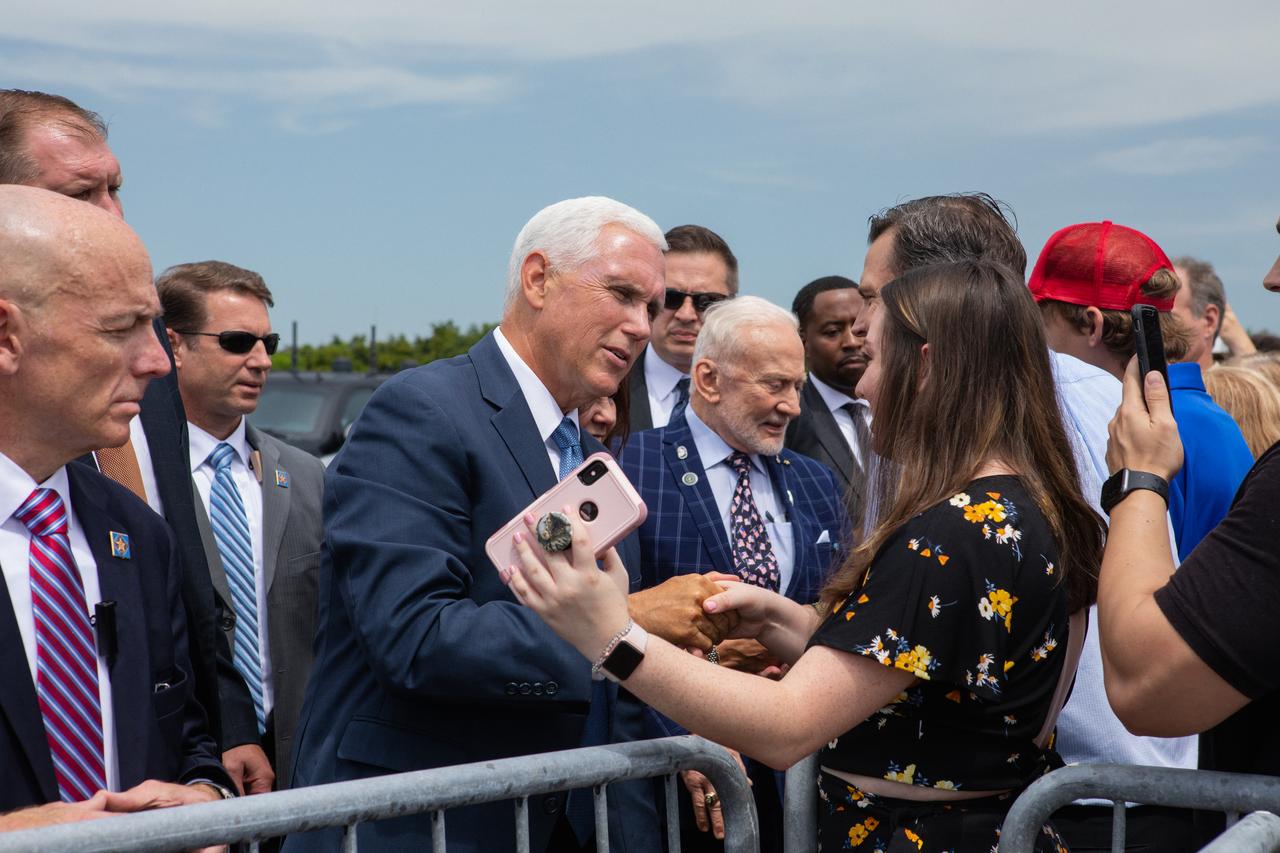
Vice President Pence arrives at Kennedy Space Center's Shuttle Landing Facility on July 20, 2019 and greets workers. Pence, who chairs the National Space Council, visited the Florida spaceport on the 50th anniversary of the Apollo 11 mission, which landed the first two humans on the Moon. He recognized the historic mission, while also addressing NASA’s future plans to travel to the Moon and on to Mars.
Vice President Pence at Kennedy for Apollo 11 Landing 50th Anniv
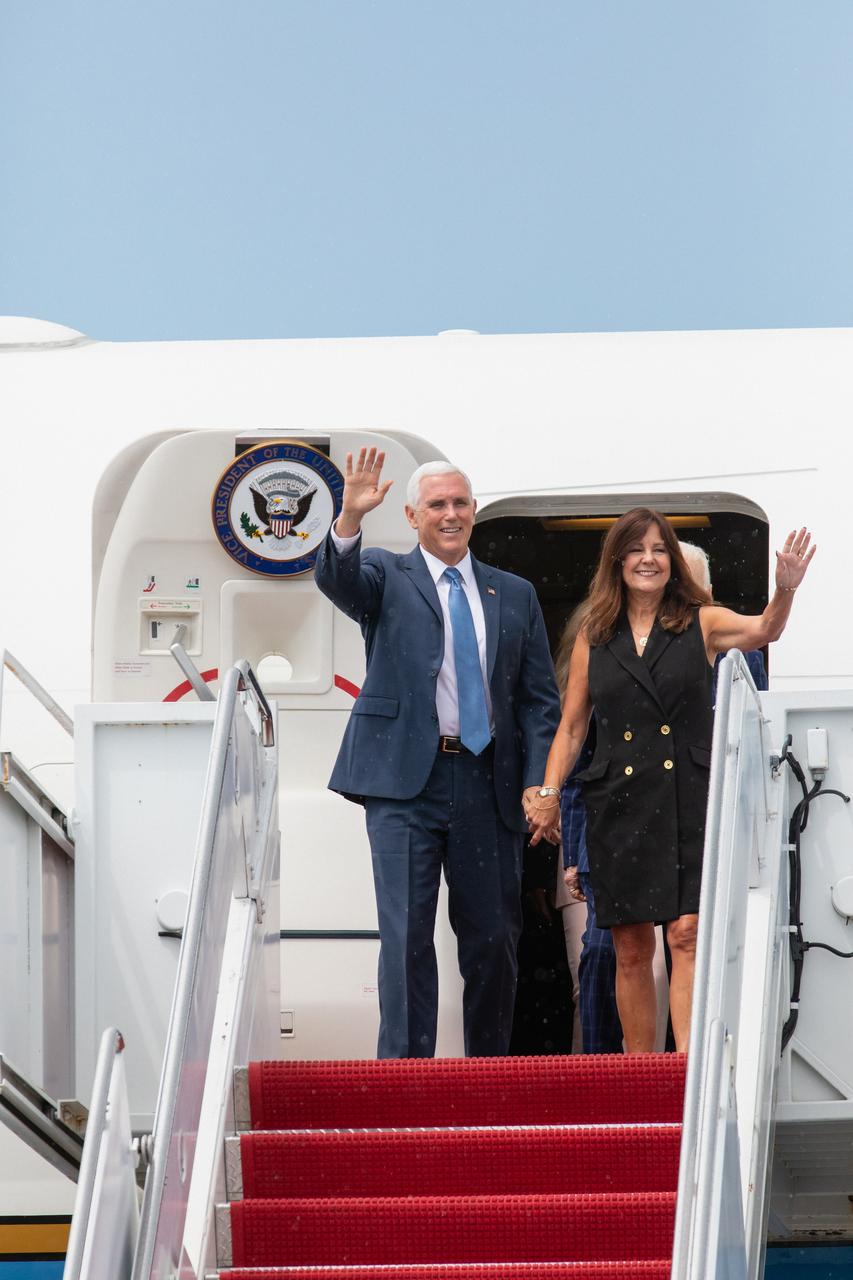
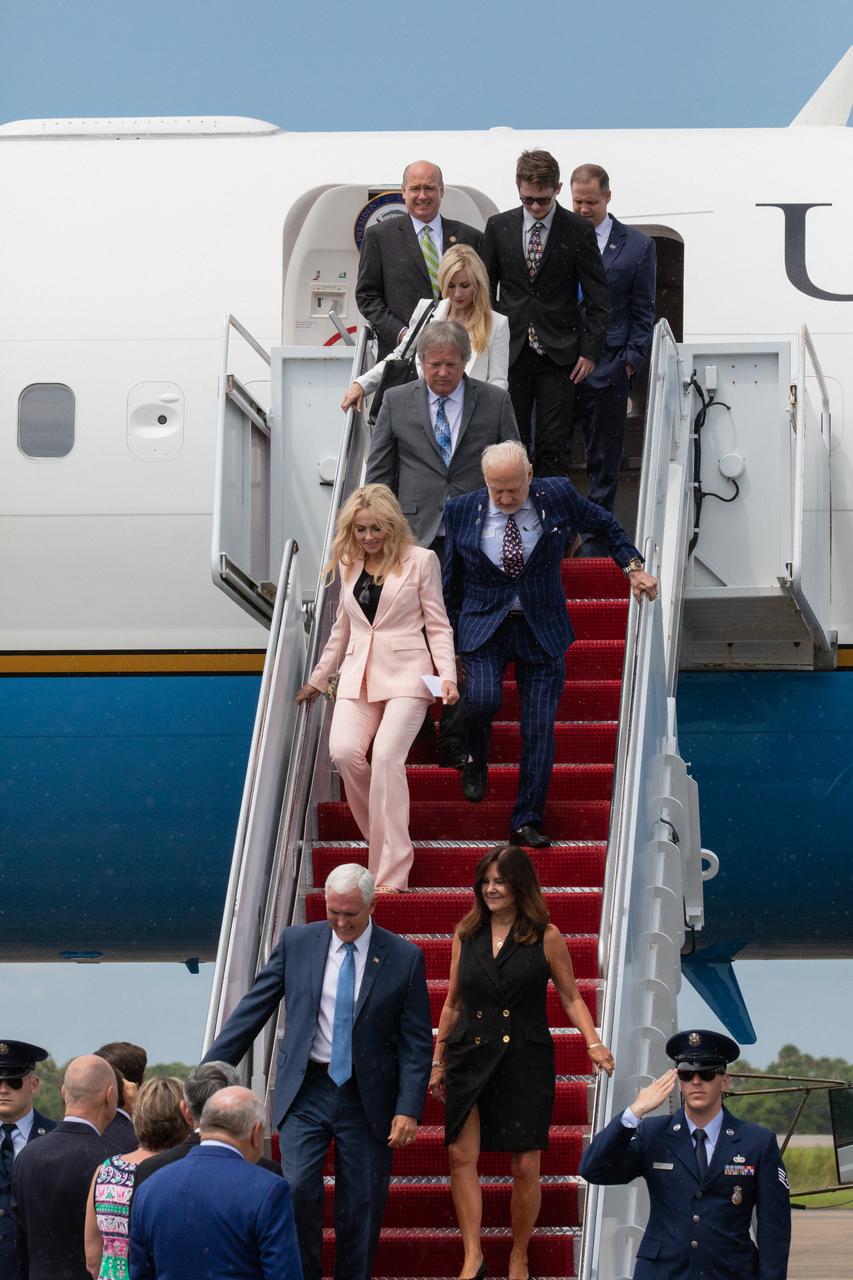
Vice President Mike Pence and second lady Karen Pence arrive at Kennedy Space Center’s Shuttle Landing Facility on July 20, 2019. Pence, who chairs the National Space Council, visited the Florida spaceport on the 50th anniversary of the Apollo 11 mission, which landed the first two humans on the Moon. He recognized the historic mission, while also addressing NASA’s future plans to travel to the Moon and on to Mars.
Vice President Pence at Kennedy for Apollo 11 Landing 50th Anniv
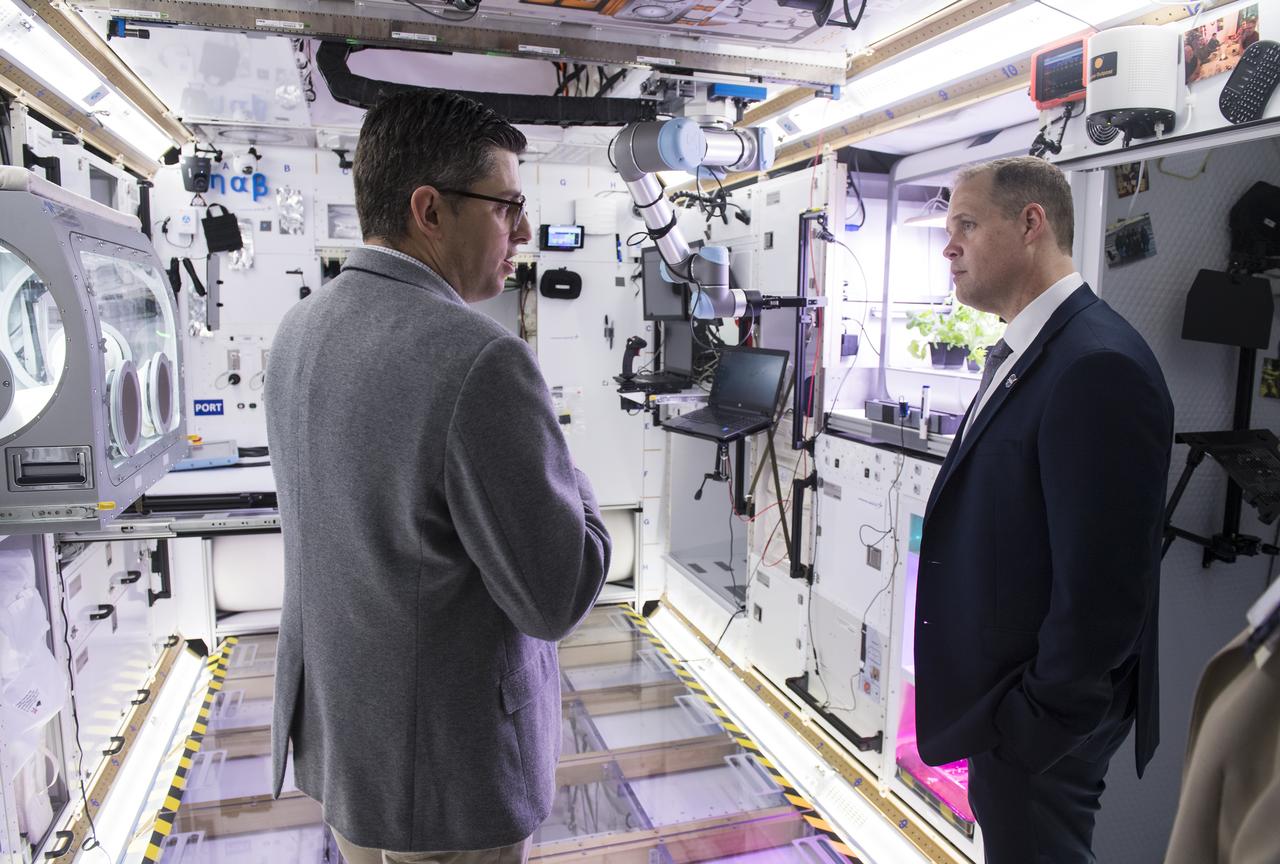
Bill Pratt, Lockheed Martin NextSTEP program manager gives NASA Administrator Jim Bridenstine a tour of the Lockheed Martin Gateway habitat prototype in the Space Station Processing Facility High Bay, after an event to discuss NASA’s progress toward sending astronauts to the Moon and on to Mars, Monday March 11, 2019 at Kennedy Space Center in Florida. For information on NASA's Moon to Mars plans, visit: www.nasa.gov/moontomars Photo credit: (NASA/Aubrey Gemignani)
Moon to Mars Event
Vice President Mike Pence and second lady Karen Pence arrive at Kennedy Space Center’s Shuttle Landing Facility on July 20, 2019. Pence, who chairs the National Space Council, visited the Florida spaceport on the 50th anniversary of the Apollo 11 mission, which landed the first two humans on the Moon. He recognized the historic mission, while also addressing NASA’s future plans to travel to the Moon and on to Mars.
Vice President Pence at Kennedy for Apollo 11 Landing 50th Anniv
Vice President Mike Pence and second lady Karen Pence arrive aboard Air Force Two at Kennedy Space Center’s Shuttle Landing Facility on July 20, 2019. Pence, who chairs the National Space Council, visited the Florida spaceport on the 50th anniversary of the Apollo 11 mission, which landed the first two humans on the Moon. He recognized the historic mission, while also addressing NASA’s future plans to travel to the Moon and on to Mars.
Vice President Pence at Kennedy for Apollo 11 Landing 50th Anniv
Vice President Mike Pence greets Acting NASA Administrator Robert Lightfoot after arriving at the Shuttle Landing Facility (SLF) to highlight innovations made in America and tour some of the public/private partnership work that is helping to transform Kennedy Space Center (KSC) into a multi-user spaceport on Thursday, July 6, 2017 in Cape Canaveral, Florida. Photo Credit: (NASA/Aubrey Gemignani)
Vice President Mike Pence visits Kennedy Space Center
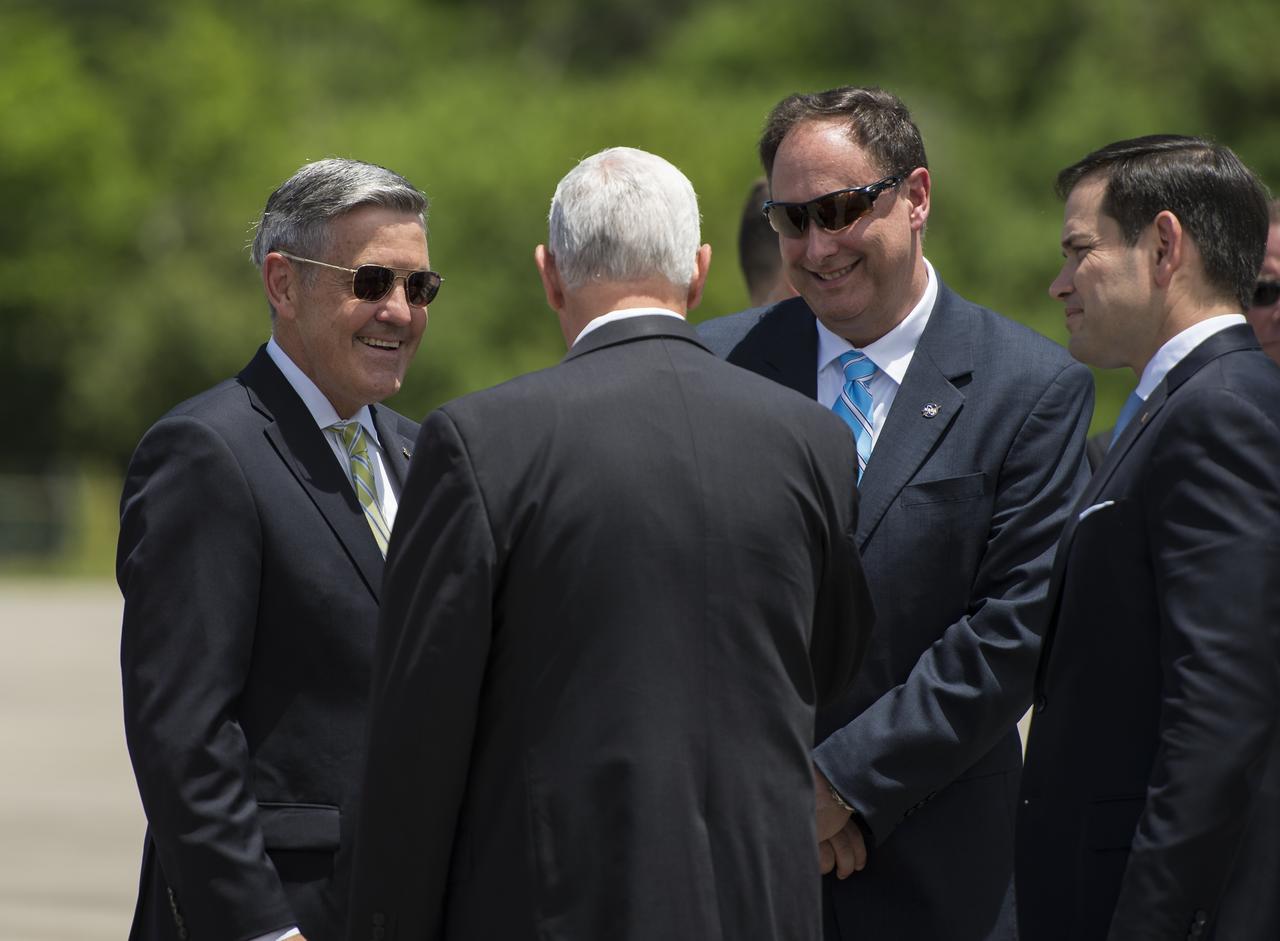
Vice President Mike Pence greets Acting NASA Administrator Robert Lightfoot, second from right, and Director, Kennedy Space Center, Robert Cabana, left, after arriving at the Shuttle Landing Facility (SLF) to highlight innovations made in America and tour some of the public/private partnership work that is helping to transform Kennedy Space Center (KSC) into a multi-user spaceport on Thursday, July 6, 2017 in Cape Canaveral, Florida. Photo Credit: (NASA/Aubrey Gemignani)
Vice President Mike Pence visits Kennedy Space Center
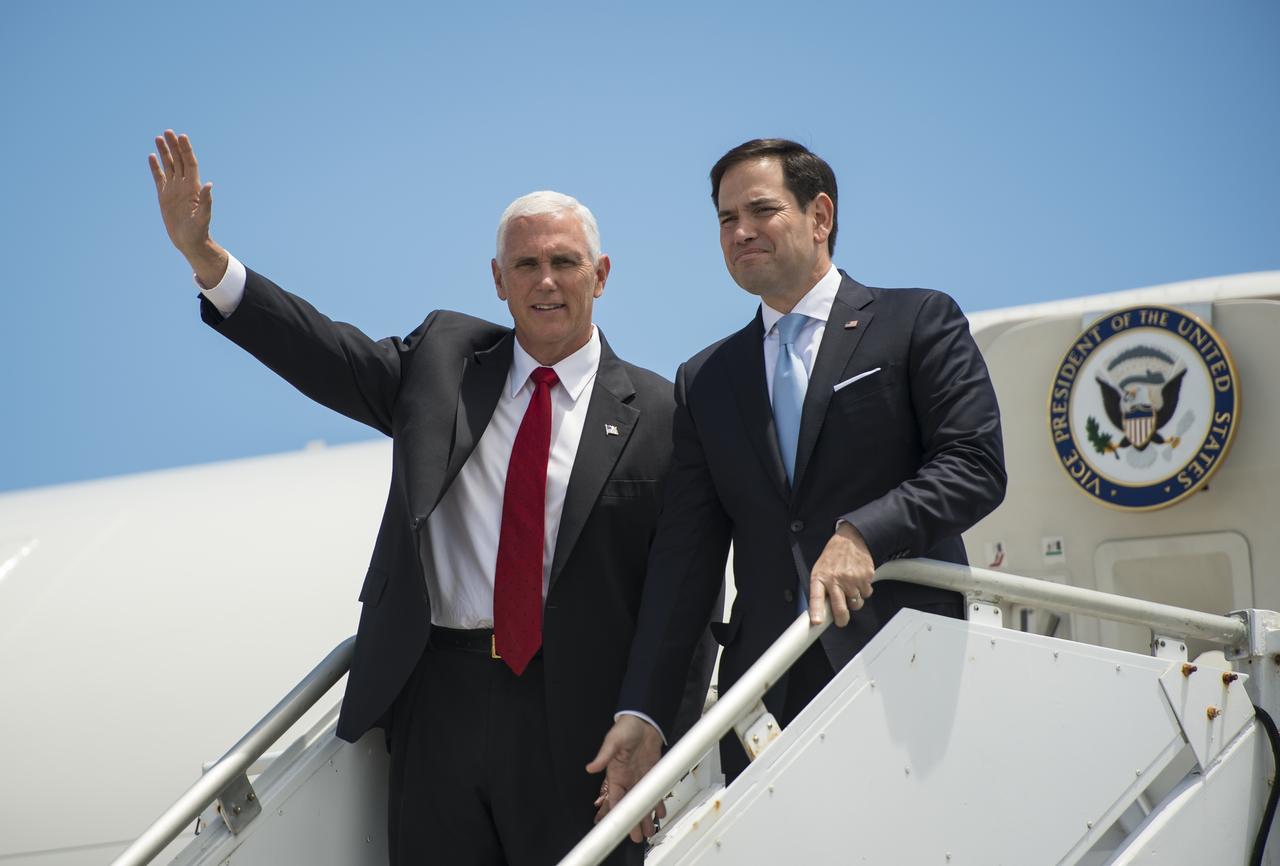
Vice President Mike Pence waves next to Sen. Marco Rubio, R-Fla., after they arrived on Air Force Two at the Shuttle Landing Facility (SLF) to highlight innovations made in America and tour some of the public/private partnership work that is helping to transform Kennedy Space Center (KSC) into a multi-user spaceport on Thursday, July 6, 2017 in Cape Canaveral, Florida. Photo Credit: (NASA/Aubrey Gemignani)
Vice President Mike Pence visits Kennedy Space Center
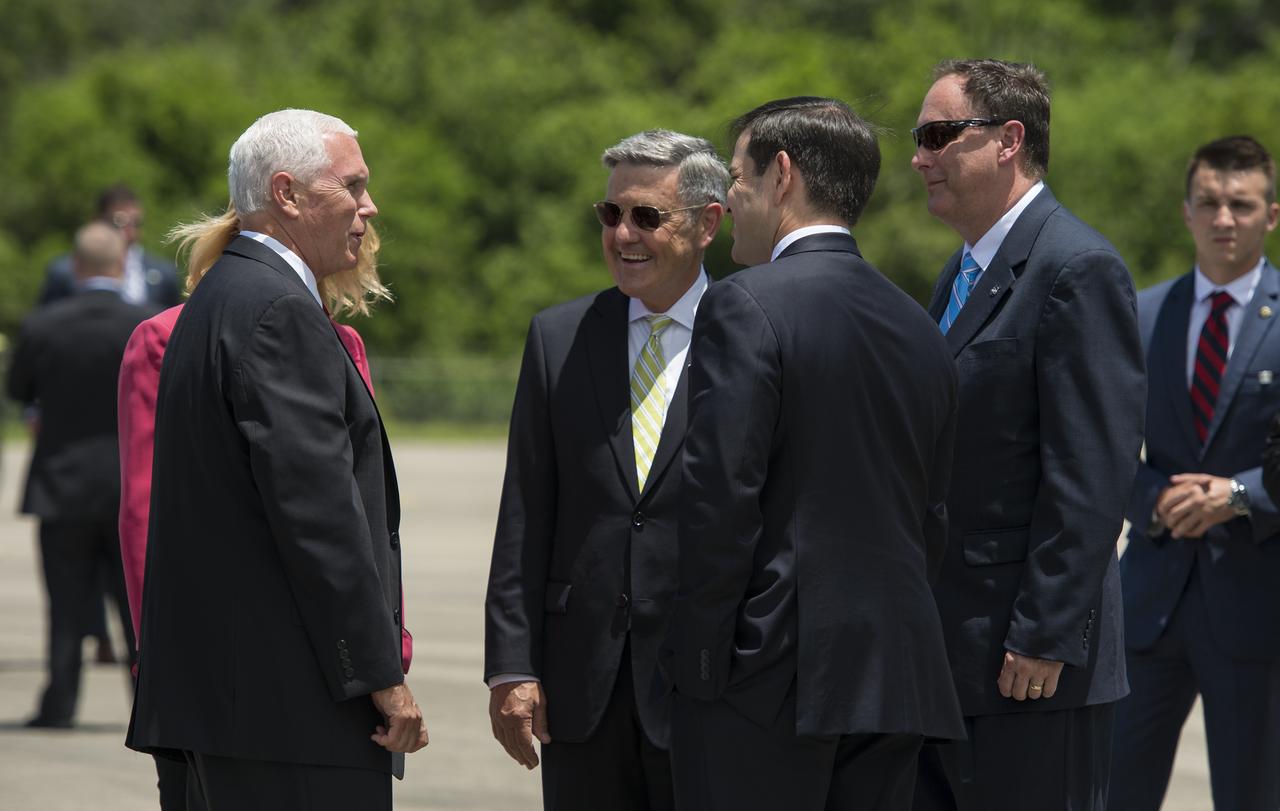
Vice President Mike Pence, left, greets Acting NASA Administrator Robert Lightfoot, right, and Director, Kennedy Space Center, Robert Cabana, second from left, with U.S. Senator Marco Rubio, center, after arriving at the Shuttle Landing Facility (SLF) to highlight innovations made in America and tour some of the public/private partnership work that is helping to transform Kennedy Space Center (KSC) into a multi-user spaceport on Thursday, July 6, 2017 in Cape Canaveral, Florida. Photo Credit: (NASA/Aubrey Gemignani)
Vice President Mike Pence visits Kennedy Space Center
Vice President Pence arrives at Kennedy Space Center's Shuttle Landing Facility on July 20, 2019 and greets workers. Pence, who chairs the National Space Council, visited the Florida spaceport on the 50th anniversary of the Apollo 11 mission, which landed the first two humans on the Moon. He recognized the historic mission, while also addressing NASA’s future plans to travel to the Moon and on to Mars.
Vice President Pence at Kennedy for Apollo 11 Landing 50th Anniv
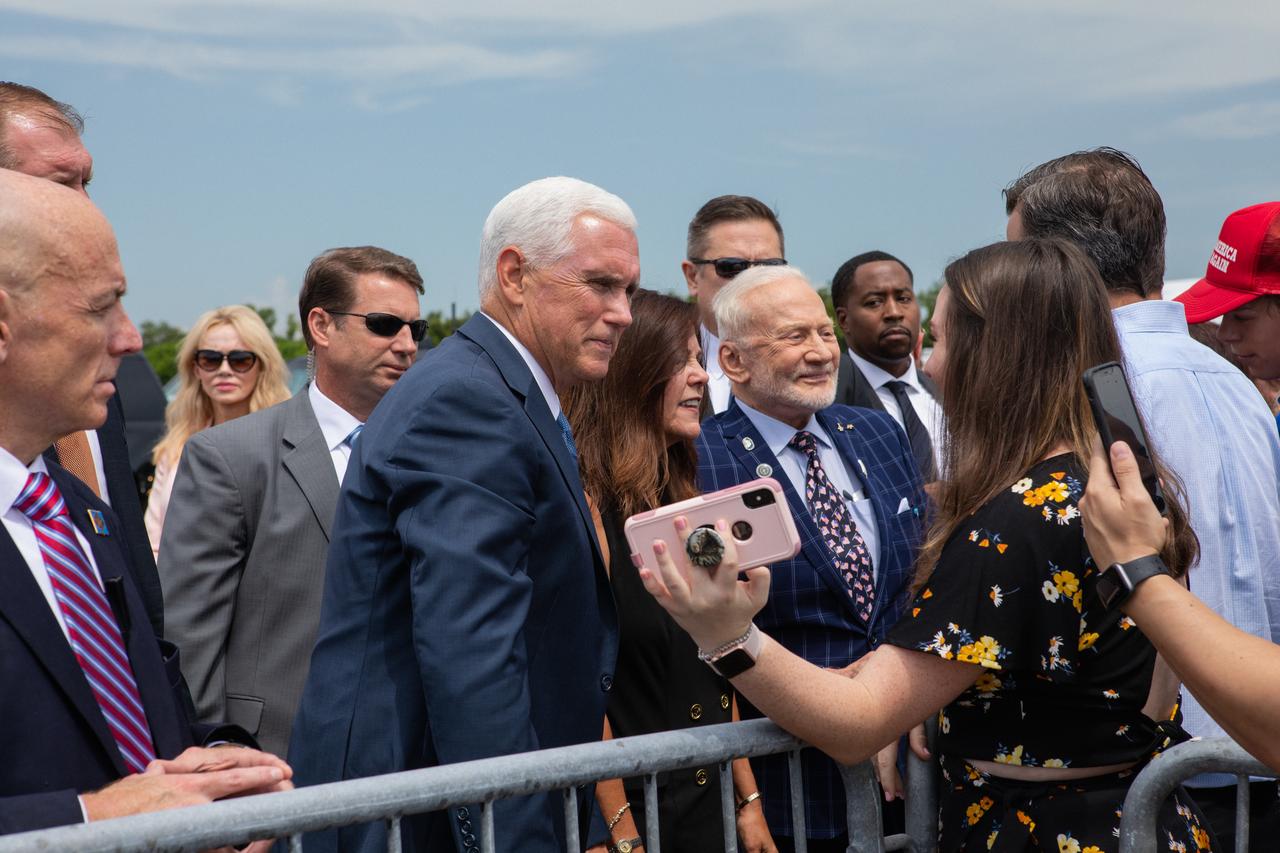
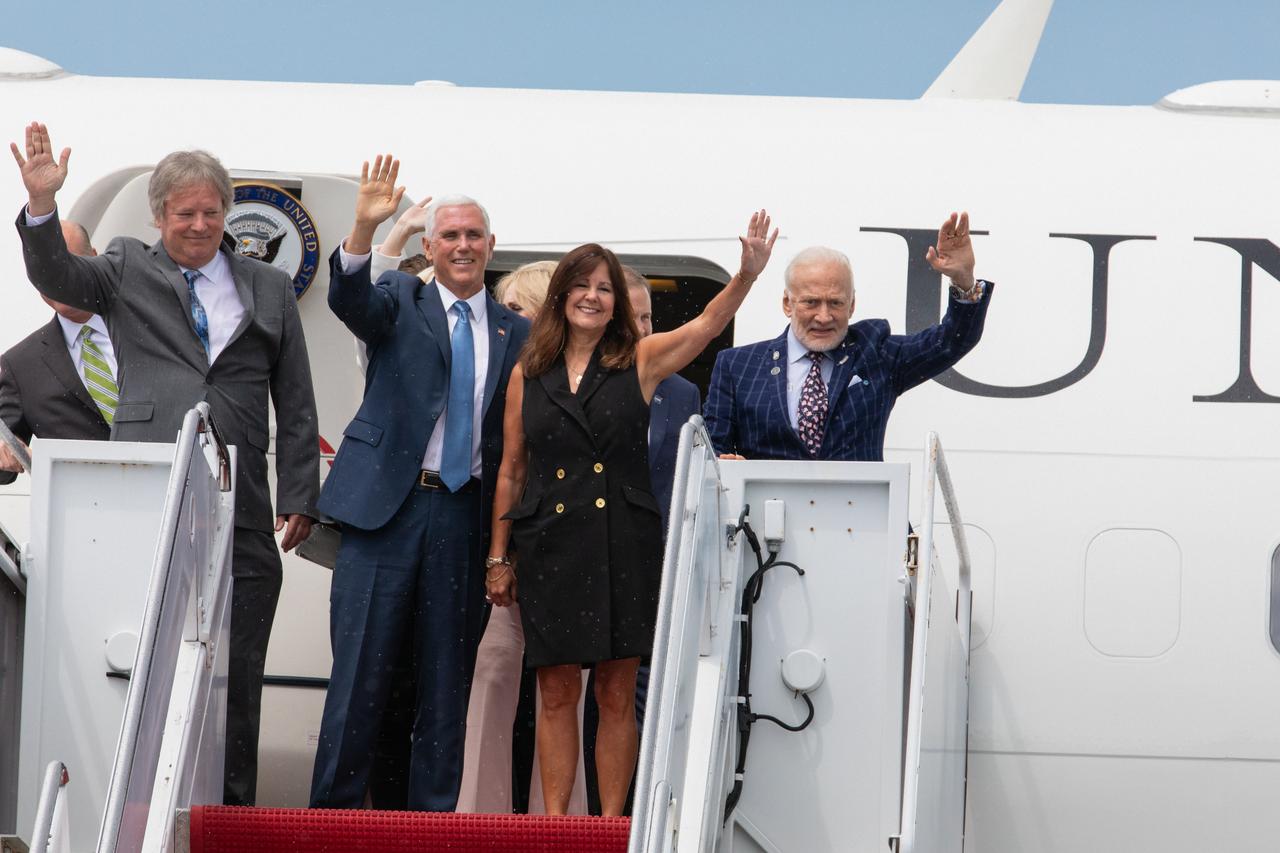
Vice President Pence arrives at Kennedy Space Center's Shuttle Landing Facility on July 20, 2019 and greets workers. At right is Apollo 11 Lunar Module Pilot Buzz Aldrin. Pence, who chairs the National Space Council, visited the Florida spaceport on the 50th anniversary of the Apollo 11 mission, which landed the first two humans on the Moon. He recognized the historic mission, while also addressing NASA’s future plans to travel to the Moon and on to Mars.
Vice President Pence at Kennedy for Apollo 11 Landing 50th Anniv
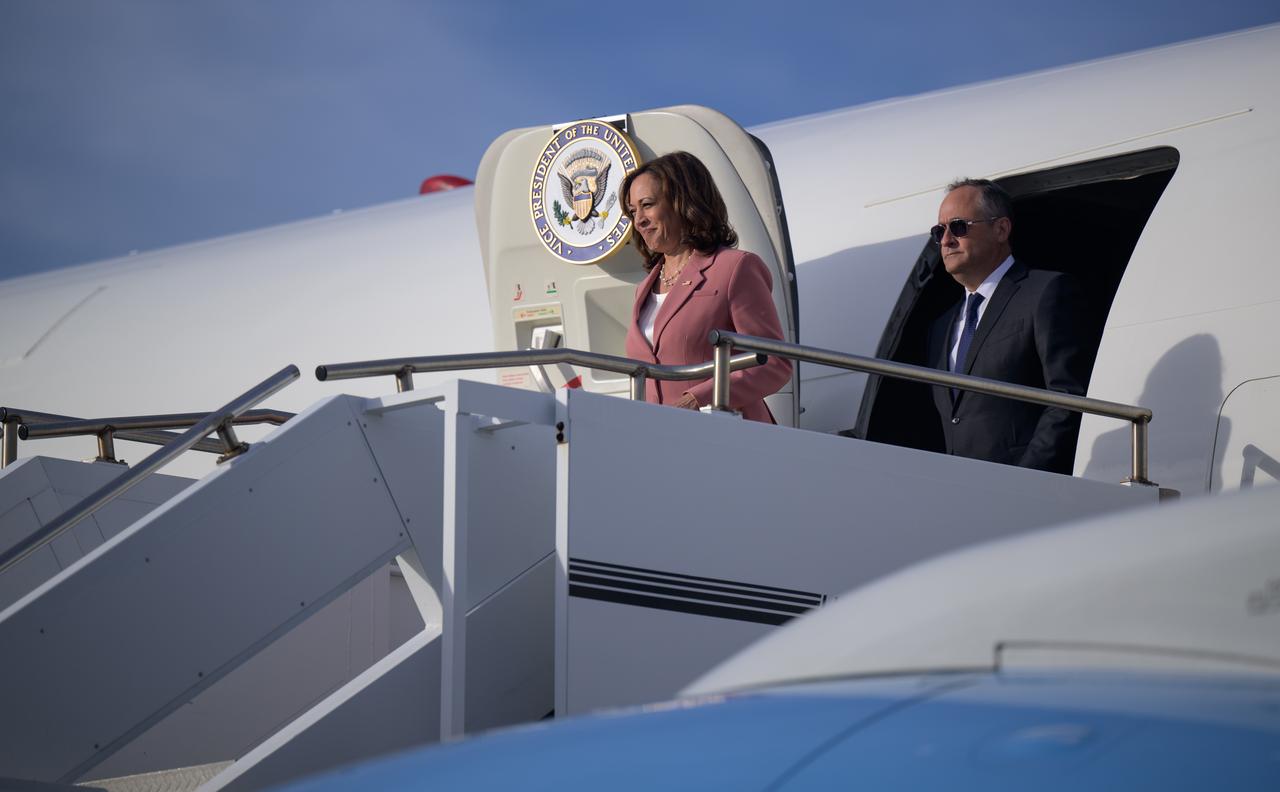
Vice President Kamala Harris and Second Gentleman Doug Emhoff exit their aircraft after landing at the Launch and Landing Facility at NASA’s Kennedy Space Center ahead of the launch of Artemis I, Monday, Aug. 29, 2022, in Florida. NASA’s Artemis I flight test is the first integrated flight test of the agency’s deep space exploration systems: the Orion spacecraft, Space Launch System (SLS) rocket, and ground systems. Photo Credit: (NASA/Bill Ingalls)
Artemis I Preflight
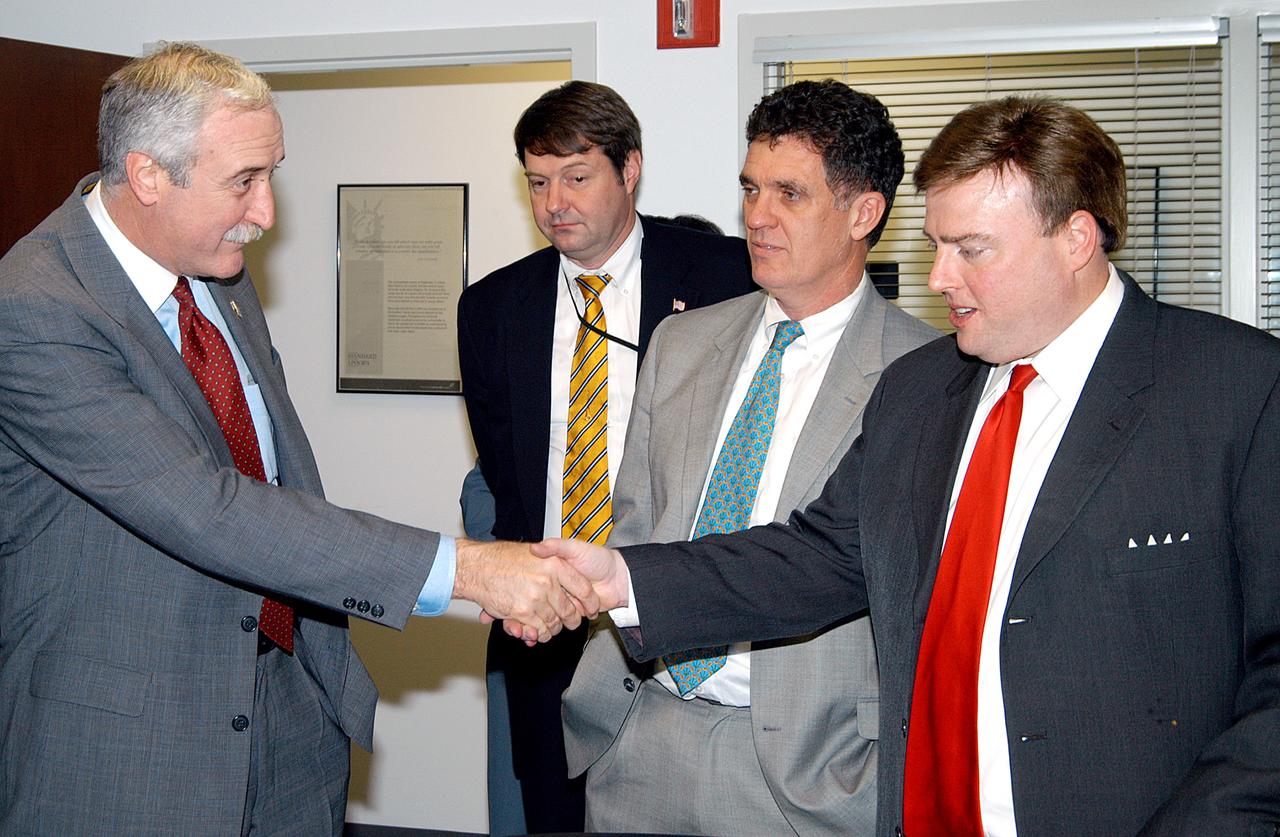
KENNEDY SPACE CENTER, FLA. - NASA Administrator Sean O’Keefe (left) greets U.S. Representative Ric Keller during a tour of the Central Florida Research Park, near Orlando.  Central Florida leaders are proposing the research park as the site for the new NASA Shared Services Center.  The center would centralize NASA’s payroll, accounting, human resources, facilities and procurement offices that are now handled at each field center.  The consolidation is part of the One NASA focus.  Six sites around the U.S. are under consideration by NASA.
KENNEDY SPACE CENTER, FLA. - NASA Administrator Sean O’Keefe (left) greets U.S. Representative Ric Keller during a tour of the Central Florida Research Park, near Orlando. Central Florida leaders are proposing the research park as the site for the new NASA Shared Services Center. The center would centralize NASA’s payroll, accounting, human resources, facilities and procurement offices that are now handled at each field center. The consolidation is part of the One NASA focus. Six sites around the U.S. are under consideration by NASA.
KENNEDY SPACE CENTER, FLA. - NASA Administrator Sean O’Keefe  (center) is welcomed to the Central Florida Research Park, near Orlando.  Central Florida leaders are proposing the research park as the site for the new NASA Shared Services Center.  The center would centralize NASA’s payroll, accounting, human resources, facilities and procurement offices that are now handled at each field center.  The consolidation is part of the One NASA focus.  Six sites around the U.S. are under consideration by NASA.
KENNEDY SPACE CENTER, FLA. - NASA Administrator Sean O’Keefe (center) is welcomed to the Central Florida Research Park, near Orlando. Central Florida leaders are proposing the research park as the site for the new NASA Shared Services Center. The center would centralize NASA’s payroll, accounting, human resources, facilities and procurement offices that are now handled at each field center. The consolidation is part of the One NASA focus. Six sites around the U.S. are under consideration by NASA.
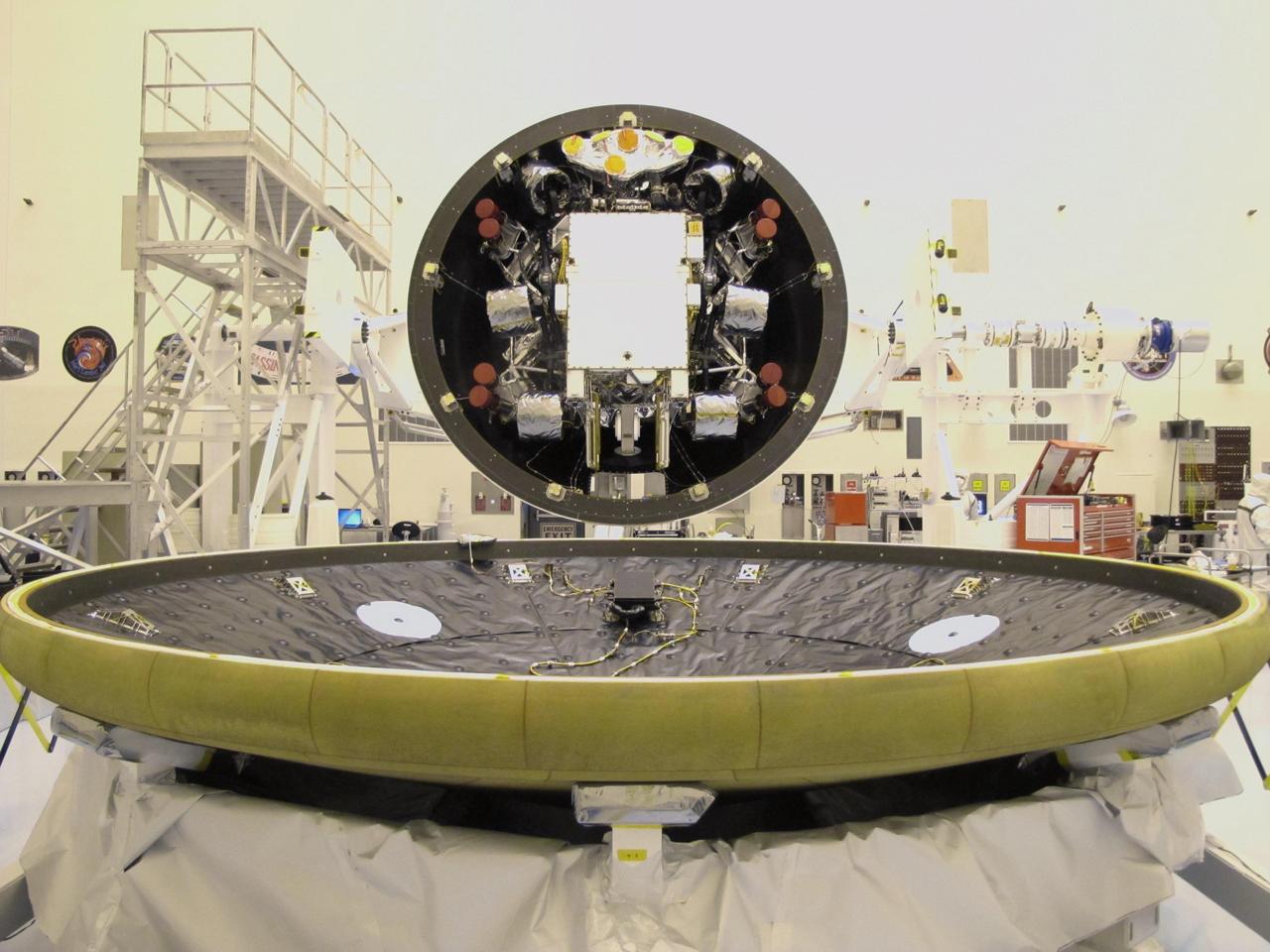
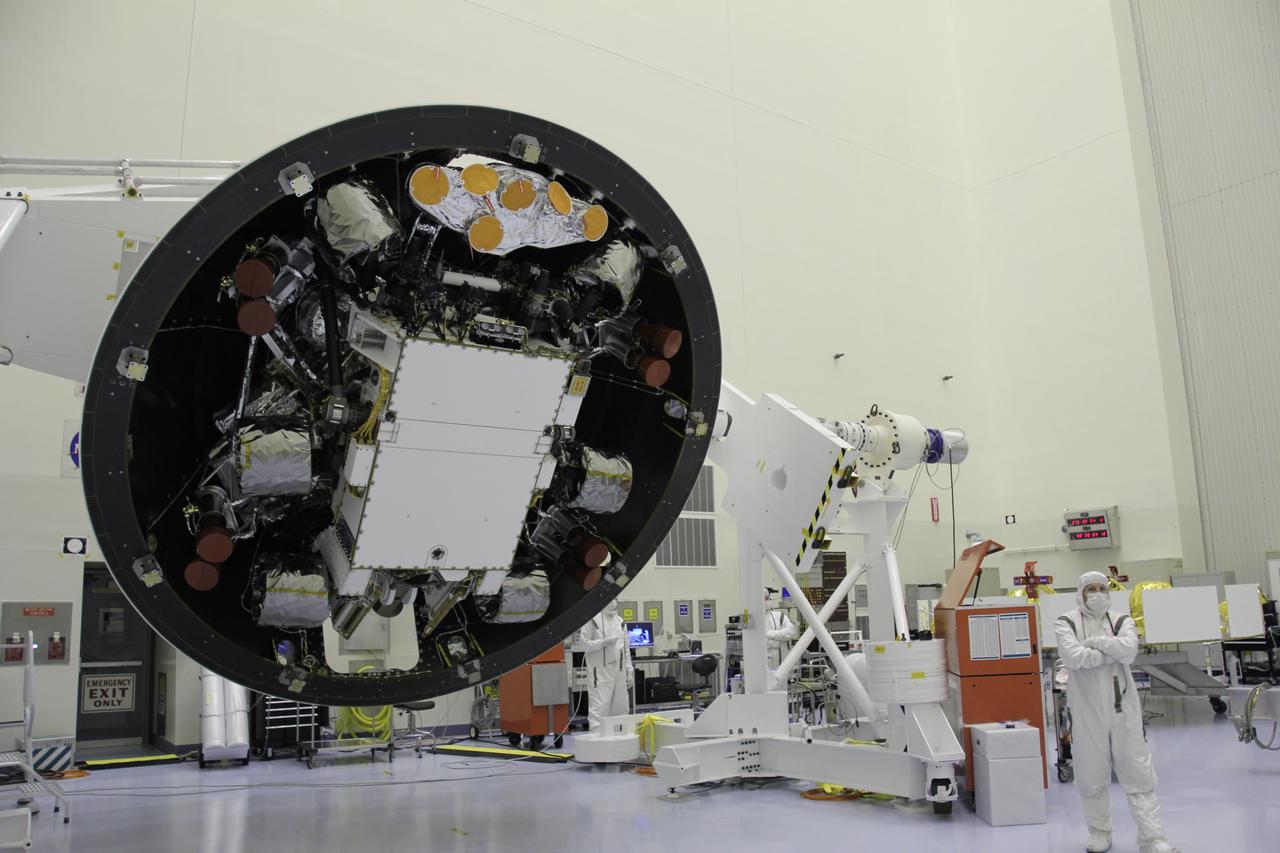
At the Payload Hazardous Servicing Facility at NASA Kennedy Space Center in Florida, the back shell powered descent vehicle configuration of NASA Mars Science Laboratory is being rotated for final closeout actions.
Final Closeout Actions for Curiosity Heat Shield and Back Shell
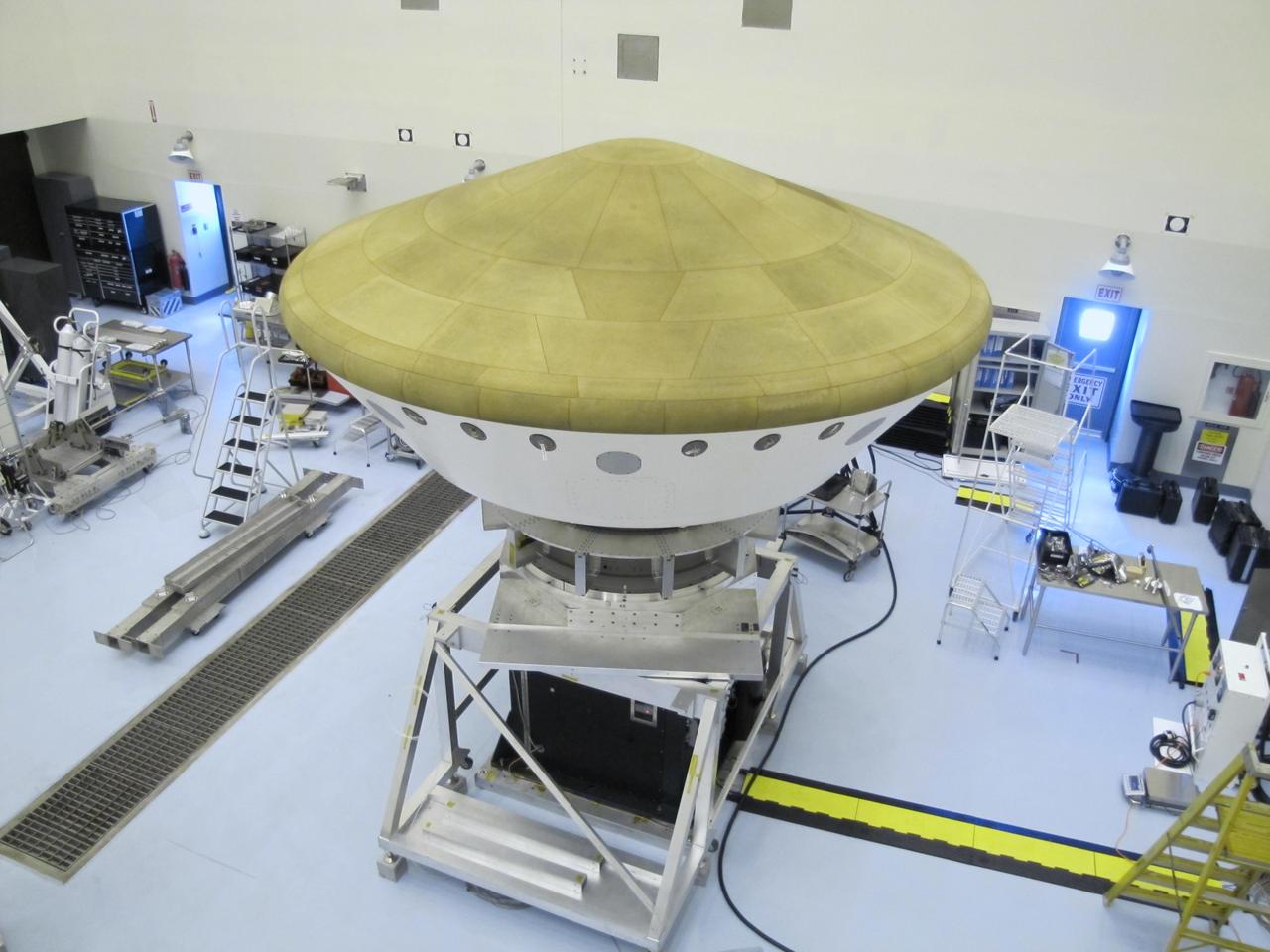
At the Payload Hazardous Servicing Facility at NASA Kennedy Space Center in Florida, the Mars Science Laboratory rover, Curiosity, and the spacecraft descent stage have been enclosed inside the spacecraft aeroshell.
Mars Science Laboratory Aeroshell with Curiosity Inside
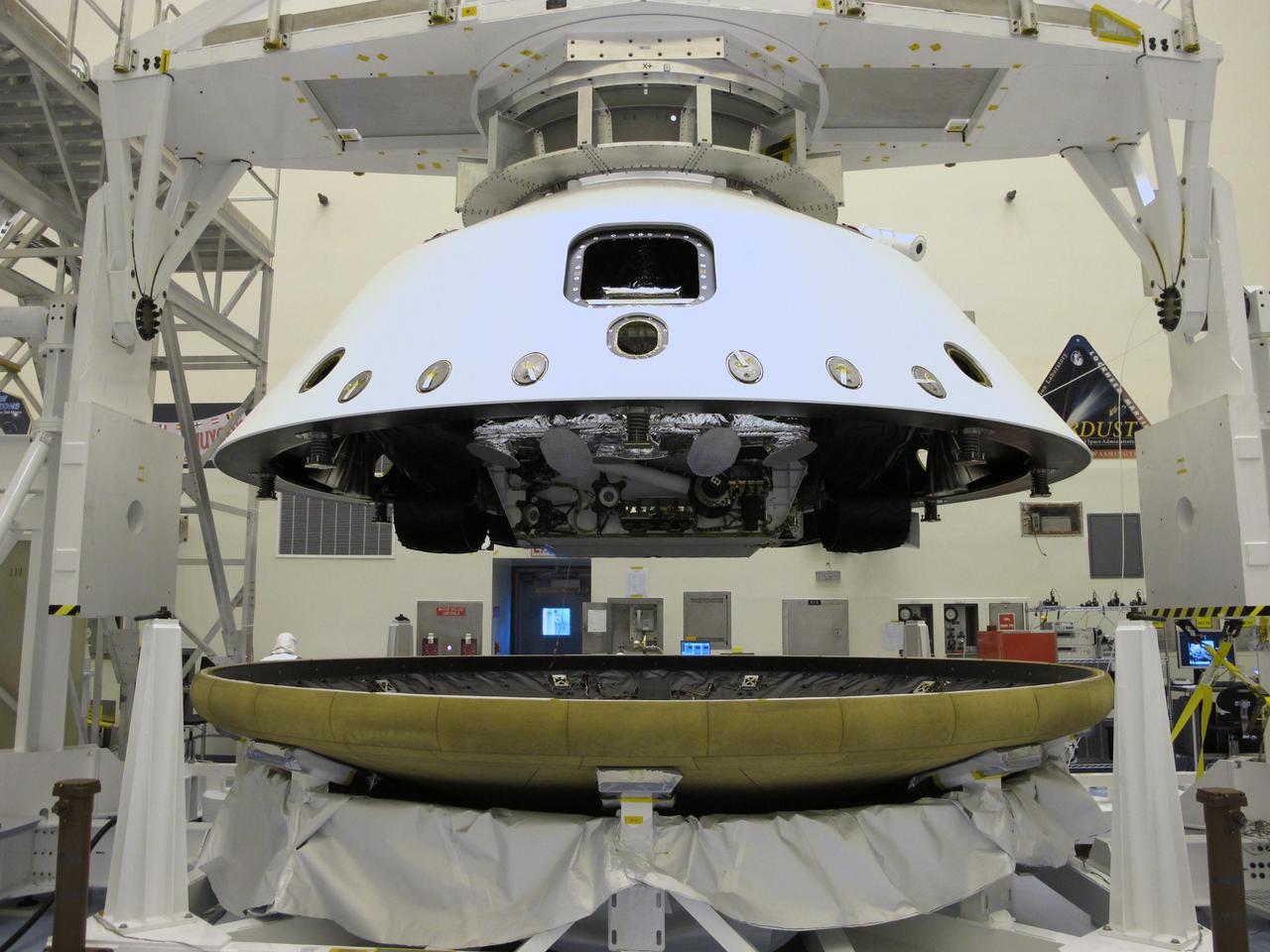
At the Payload Hazardous Servicing Facility at NASA Kennedy Space Center in Florida, the back shell powered descent vehicle configuration, containing NASA Mars Science Laboratory rover, Curiosity, is being placed on the spacecraft heat shield.
Connecting Curiosity Heat Shield and Back Shell
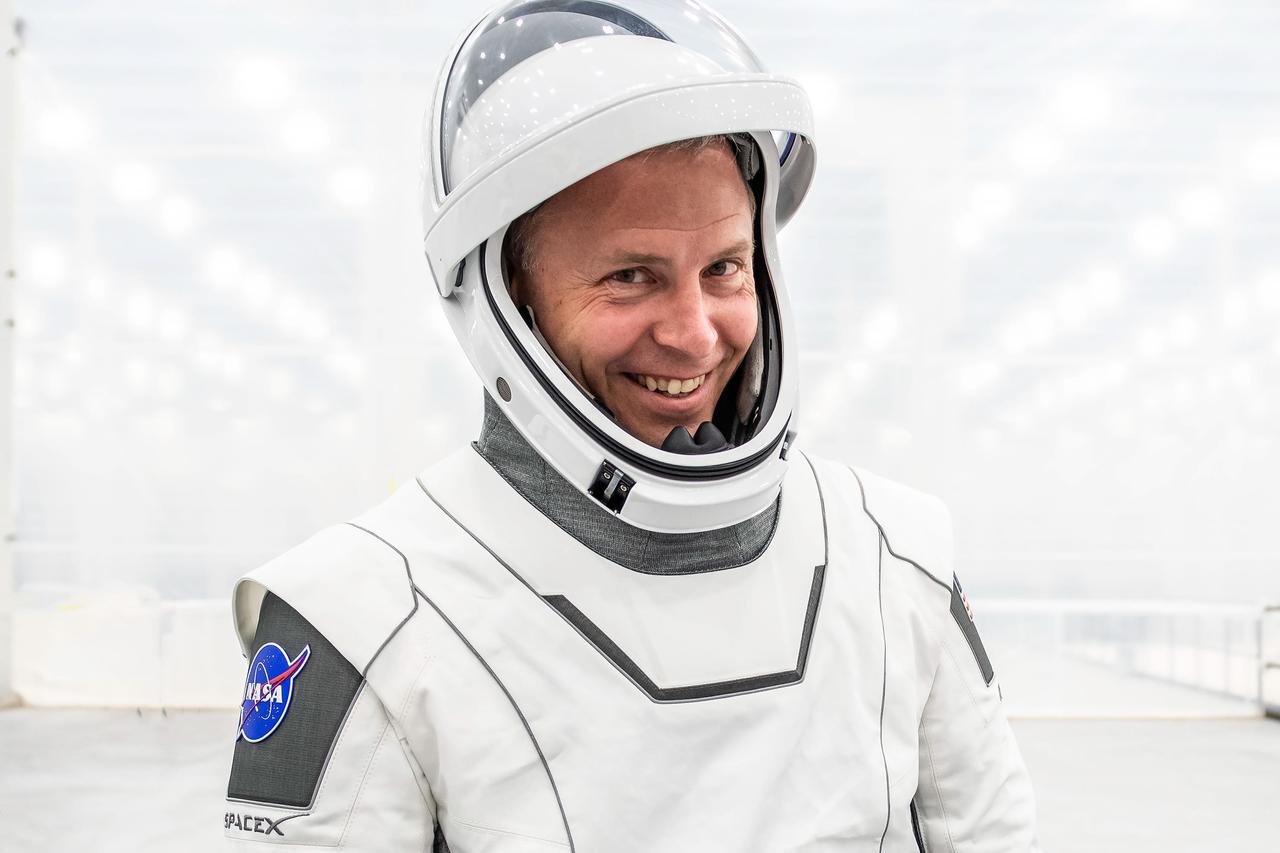
jsc2024e052326 (July 22, 2024) --- NASA’s SpaceX Crew-9 Pilot Nick Hague smiles in his flight suit at SpaceX’s new Dragon refurbishing facility at Kennedy Space Center in Florida. Credit: SpaceX
SpaceX Crew-9 Pilot Nick Hague
At the Payload Hazardous Servicing Facility at NASA Kennedy Space Center in Florida, the back shell powered descent vehicle configuration of NASA Mars Science Laboratory is being rotated for final closeout actions.
Rotating Curiosity Back Shell Powered Descent Vehicle
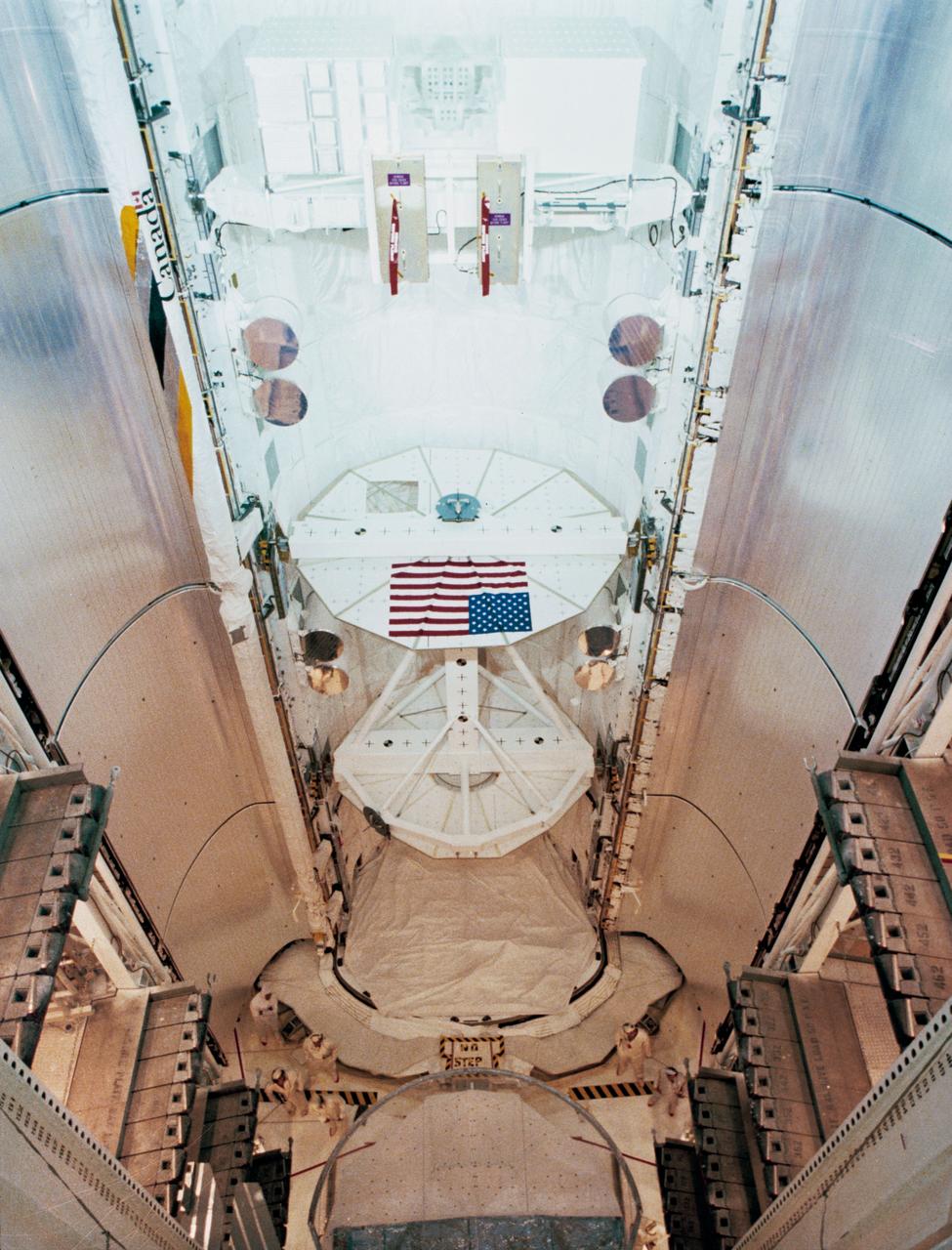
View of the Payload Flight Test Article (PFTA) installed into Challenger's cargo bay in the Payload Changeout Room at Pad 39A at the Kennedy Space Center (KSC). The American flag is visible on one side of the PFTA in the cargo bay. The Kennedy Space Center alternative photo number is KSC-108-83PC-566.
View of the Payload Flight Test Article (PFTA) installed in cargo bay
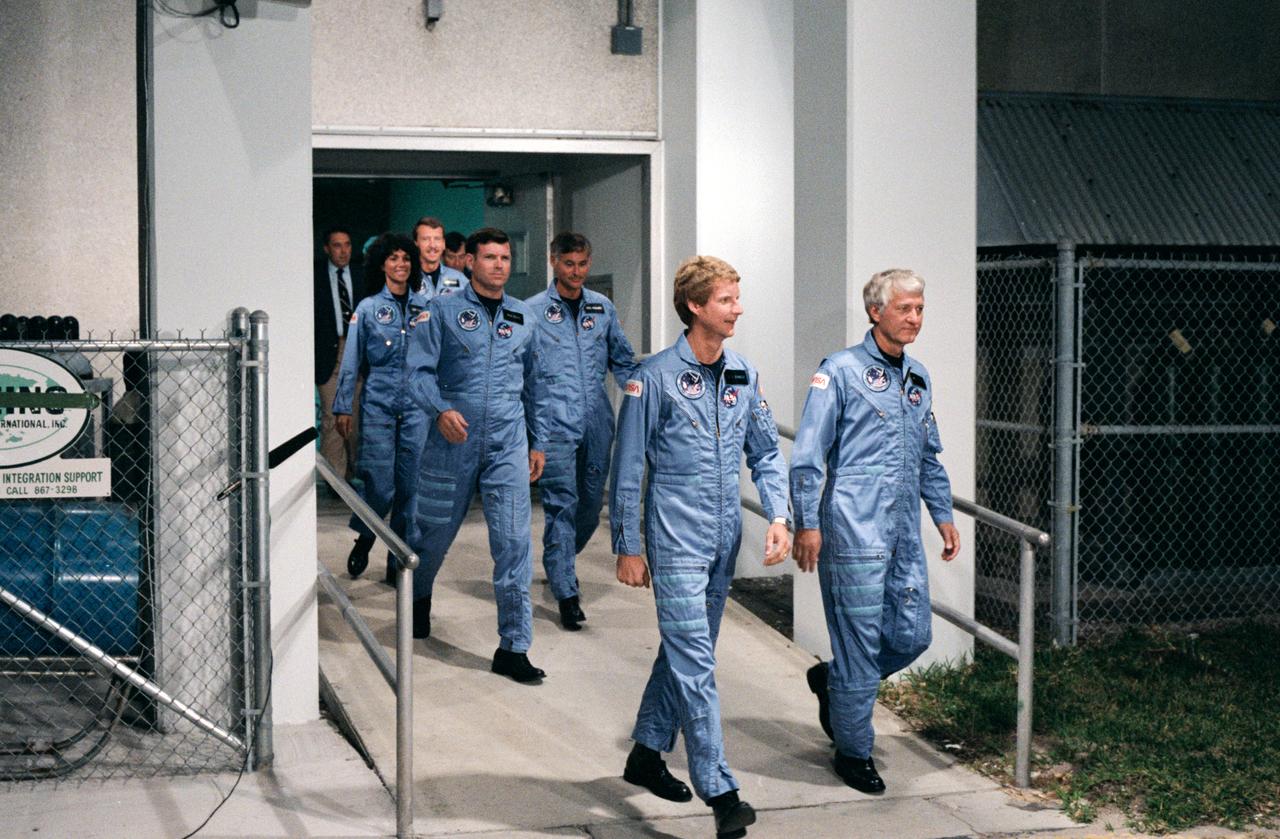
41D-3194 (30 Aug 1984)--- The six members of the 41-D Discovery crew leave the operations and checkout building at Kennedy Space to marke their way to Launch Pad 39A and a date with space. Leading the group is Henry W. hartsfield Jr., commander.  Michael L. Coats, pilot, is left center.  The mission specialists are Steven A. Hawley, second right, Richard M. (Mike) Mullane, right center, and Judith A. Resnik.  Charles D. Walker, payload specialist, follows Resnik. Behind the blue-suited crewmembers are George W.S. Abbey, left, director of flight crew operations and John W. Young, chief of the astronaut office.
41-D crew leaves operations and checkout building at KSC
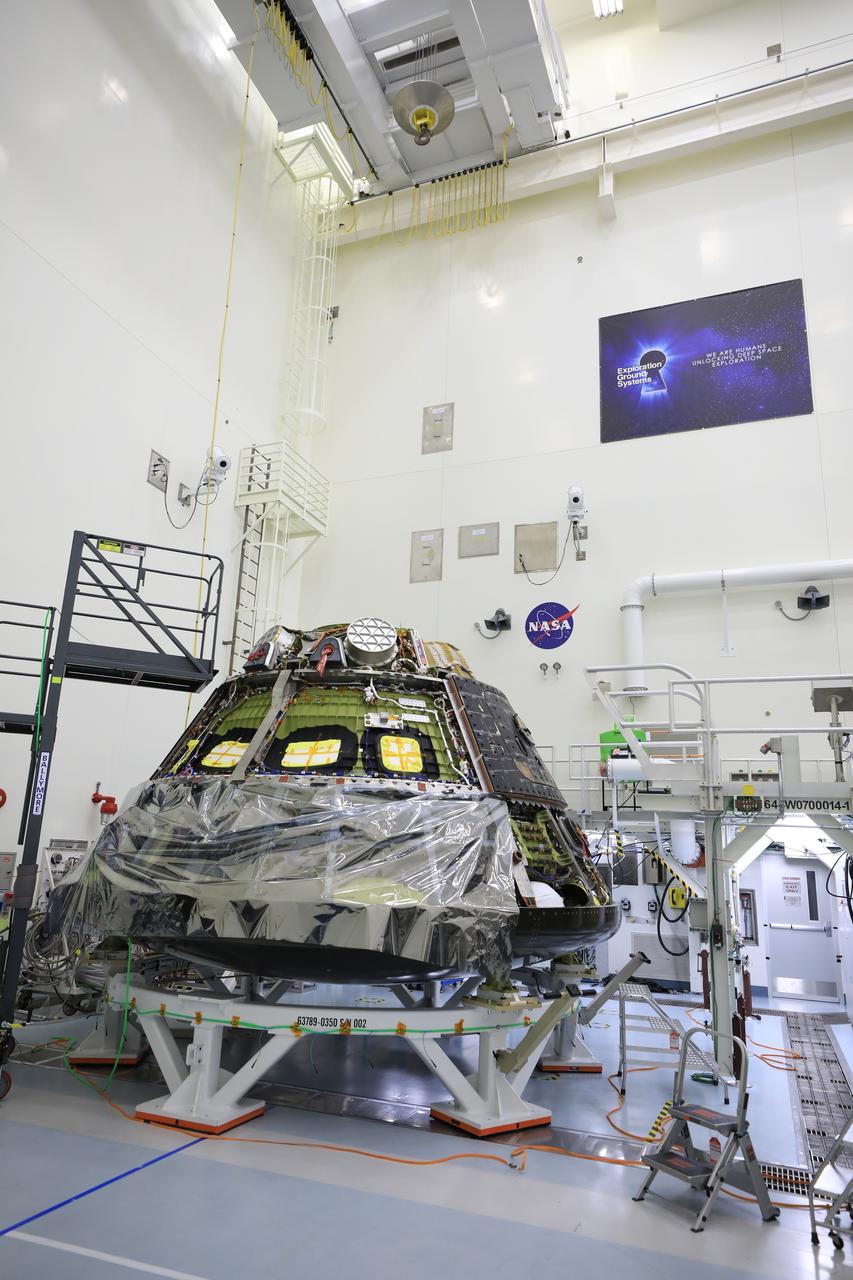
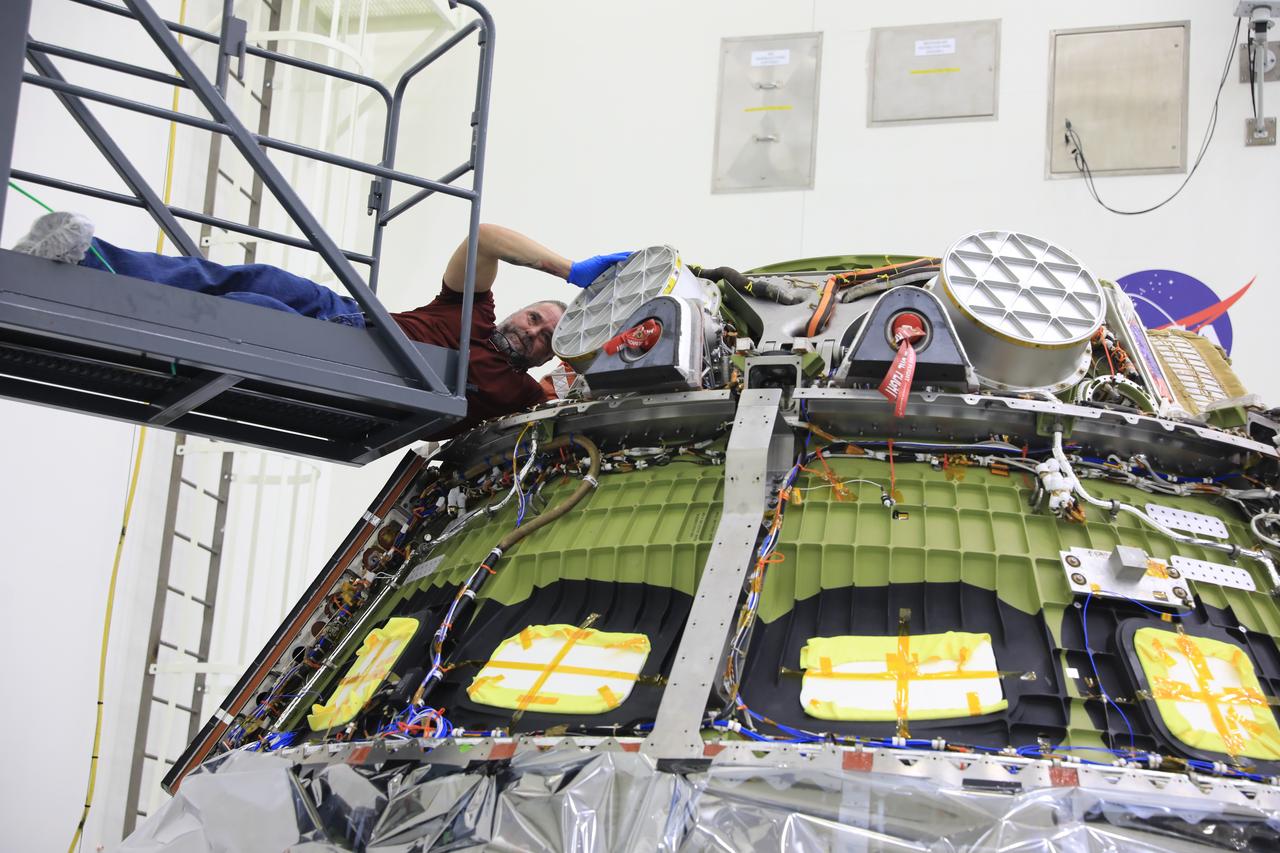
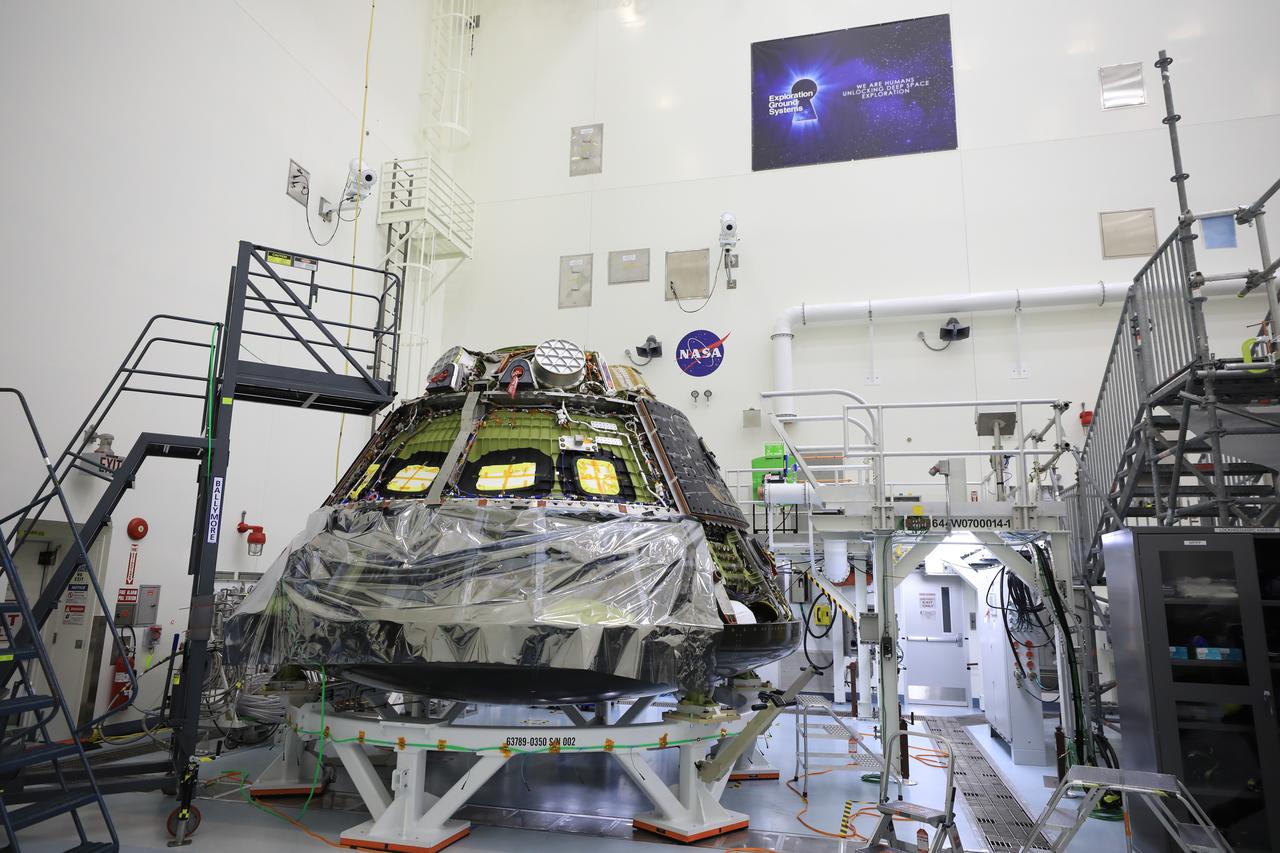
The Artemis I Orion crew module, now known as the Orion Environmental Test Article (ETA), arrives to NASA’s Kennedy Space Center in Florida on Saturday, Dec. 21, 2024, following an 11-month test campaign at NASA’s Neil Armstrong Test Facility in Sandusky, Ohio. The ETA will undergo propulsion functional testing at Kennedy’s Multi Payload Processing Facility. The ETA splashed down in the Pacific Ocean on Sunday, Dec. 11, 2022, following its journey around the Moon during the Artemis I mission.
Artemis I Environment Test Article (ETA) at the MPPF
The Artemis I Orion crew module, now known as the Orion Environmental Test Article (ETA), arrives to NASA’s Kennedy Space Center in Florida on Saturday, Dec. 21, 2024, following an 11-month test campaign at NASA’s Neil Armstrong Test Facility in Sandusky, Ohio. The ETA will undergo propulsion functional testing at Kennedy’s Multi Payload Processing Facility. The ETA splashed down in the Pacific Ocean on Sunday, Dec. 11, 2022, following its journey around the Moon during the Artemis I mission.
Artemis I Environment Test Article (ETA) at the MPPF
The Artemis I Orion crew module, now known as the Orion Environmental Test Article (ETA), arrives to NASA’s Kennedy Space Center in Florida on Saturday, Dec. 21, 2024, following an 11-month test campaign at NASA’s Neil Armstrong Test Facility in Sandusky, Ohio. The ETA will undergo propulsion functional testing at Kennedy’s Multi Payload Processing Facility. The ETA splashed down in the Pacific Ocean on Sunday, Dec. 11, 2022, following its journey around the Moon during the Artemis I mission.
Artemis I Environment Test Article (ETA) at the MPPF
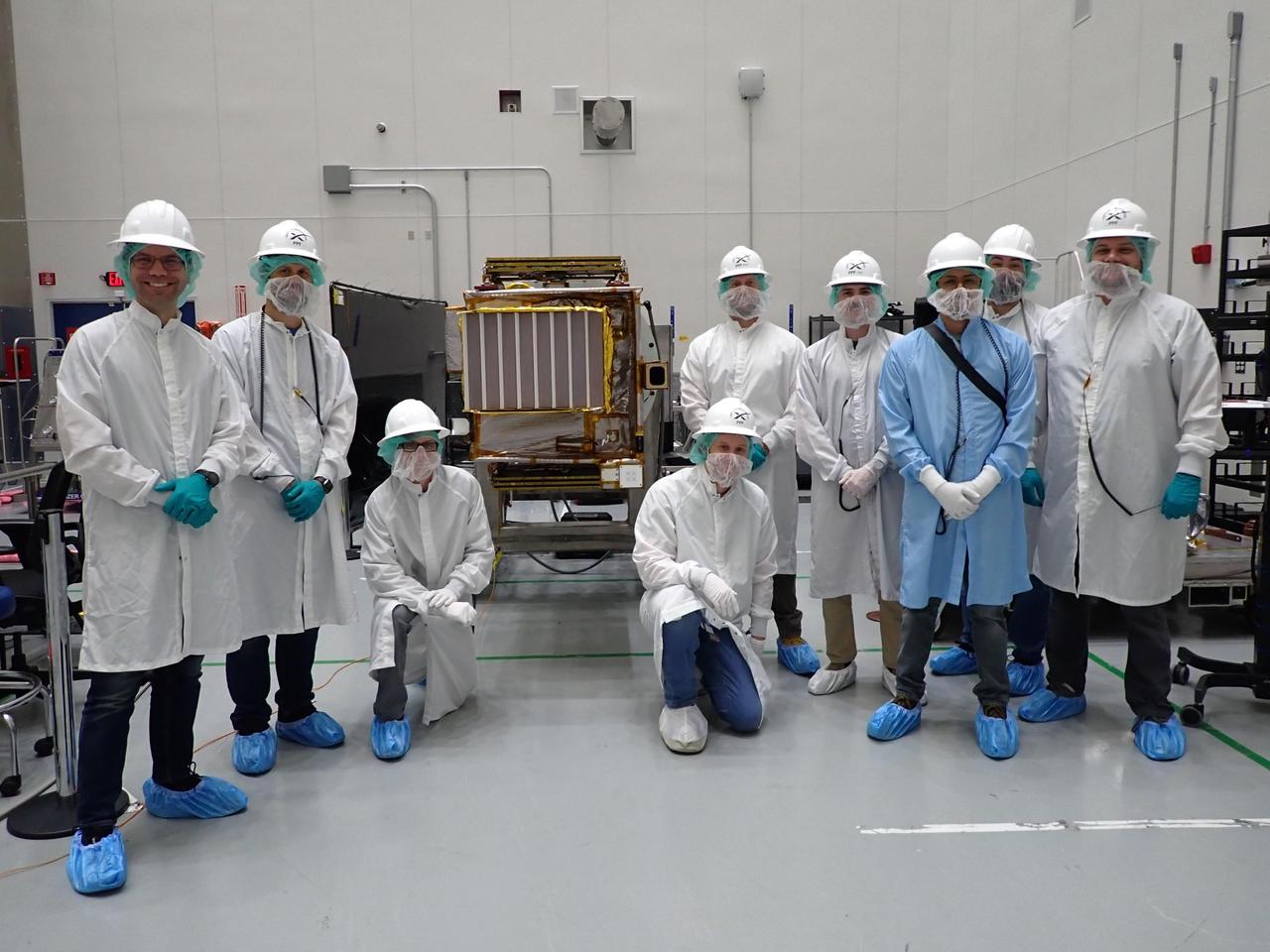
Members of NASA's Lunar Trailblazer team pose with the spacecraft at SpaceX's payload processing facility at NASA's Kennedy Space Center in Florida in early February 2025. The grated radiator of the High-resolution Volatiles and Minerals Moon Mapper (HVM³) instrument is facing the camera. Pictured, from left: Andrew Klesh, Jeff Pyle, Ryan Kressler, Willie Parker, Jon Newman, Alex Sugarman, David Rodriquez, Chris Calamateos-Brown, and David Hobbs.  https://photojournal.jpl.nasa.gov/catalog/PIA26581
NASA's Lunar Trailblazer Team Members Pose With Spacecraft
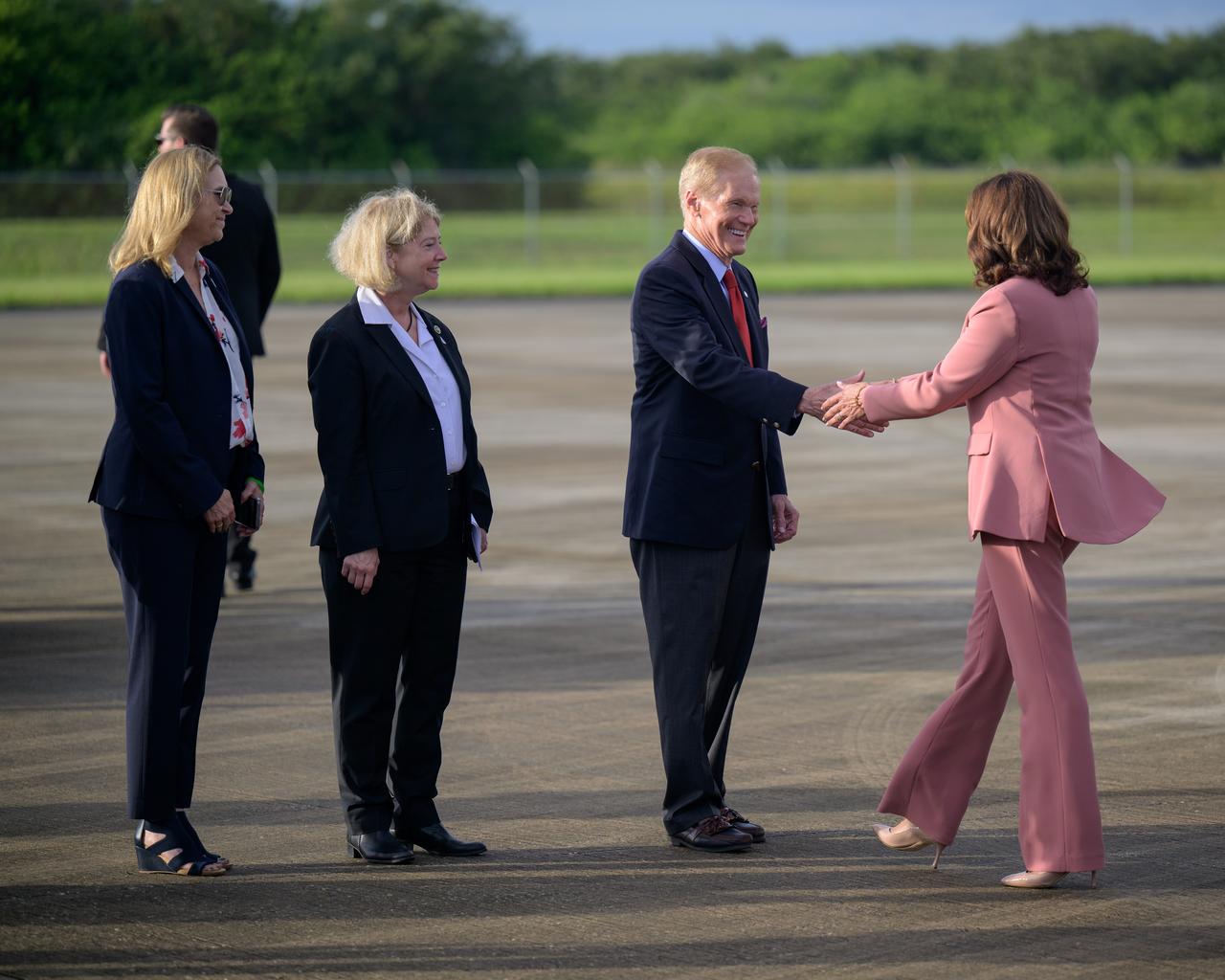
NASA Kennedy Space Center director Janet Petro, left, NASA Deputy Administrator Pam Melroy, and NASA Administrator Bill Nelson,  welcome Vice President Kamala Harris as she arrives at the Launch and Landing Facility at NASA’s Kennedy Space Center ahead of the planned launch of Artemis I, Monday, Aug. 29, 2022, in Florida. NASA’s Artemis I flight test is the first integrated flight test of the agency’s deep space exploration systems: the Orion spacecraft, Space Launch System (SLS) rocket, and ground systems.  Photo Credit: (NASA/Bill Ingalls)
Artemis I Preflight
Vice President Mike Pence and second lady Karen Pence, center, arrive at Kennedy Space Center’s Shuttle Landing Facility on July 20, 2019. Pence, who chairs the National Space Council, visited the Florida spaceport on the 50th anniversary of the Apollo 11 mission, which landed the first two humans on the Moon. He recognized the historic mission, while also addressing NASA’s future plans to travel to the Moon and on to Mars. At far left is Rick Armstrong, son of Apollo 11 Commander Neil Armstrong. At far right is Apollo 11 Lunar Module Pilot Buzz Aldrin.
Vice President Pence at Kennedy for Apollo 11 Landing 50th Anniv
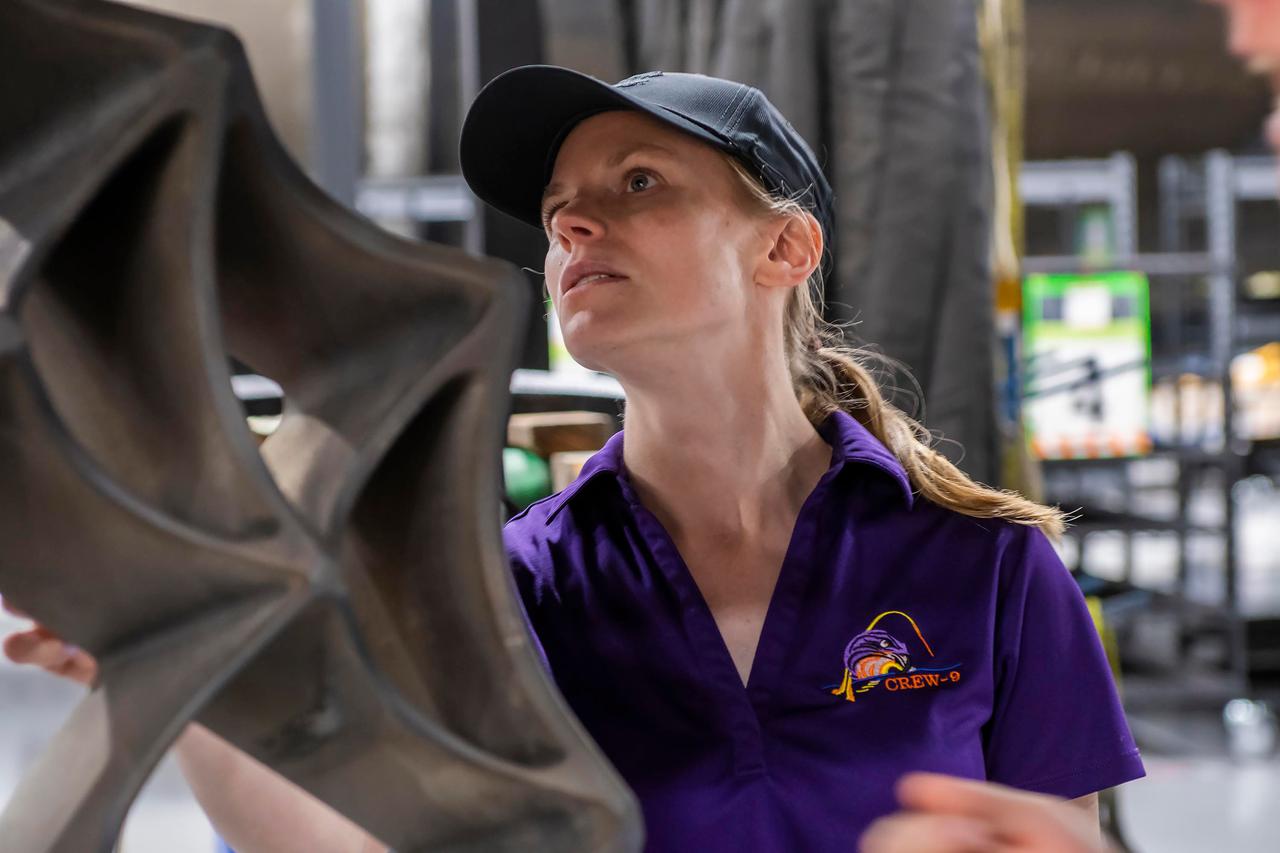
jsc2024e050142 (May 13, 2024) --- NASA’s SpaceX Crew-9 Commander Zena Cardman checks out a grid fin on a Falcon 9 first-stage booster at SpaceX’s HangarX facility at NASA's Kennedy Space Center in Florida. Credit: SpaceX
NASA’s SpaceX Crew-9 Commander Zena Cardman
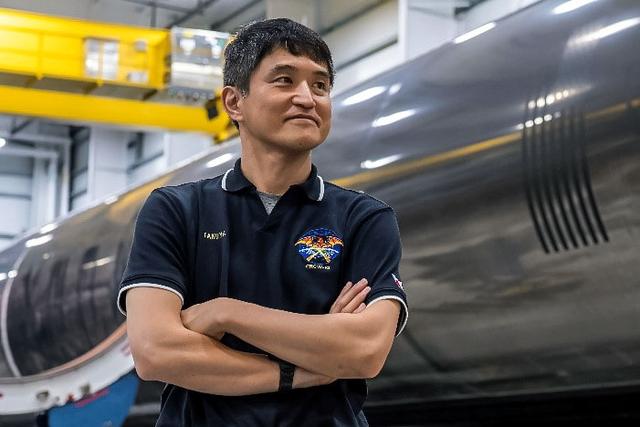
jsc2024e080749 (Dec. 13, 2024) --- NASA’s SpaceX Crew-10 Mission Specialist Takuya Onishi of JAXA (Japan Aerospace Exploration Agency), stands in front of a Falcon 9 first-stage booster at SpaceX’s HangarX facility at NASA's Kennedy Space Center in Florida. Credit: SpaceX
SpaceX Crew-10 Mission Specialist Takuya Onishi of JAXA
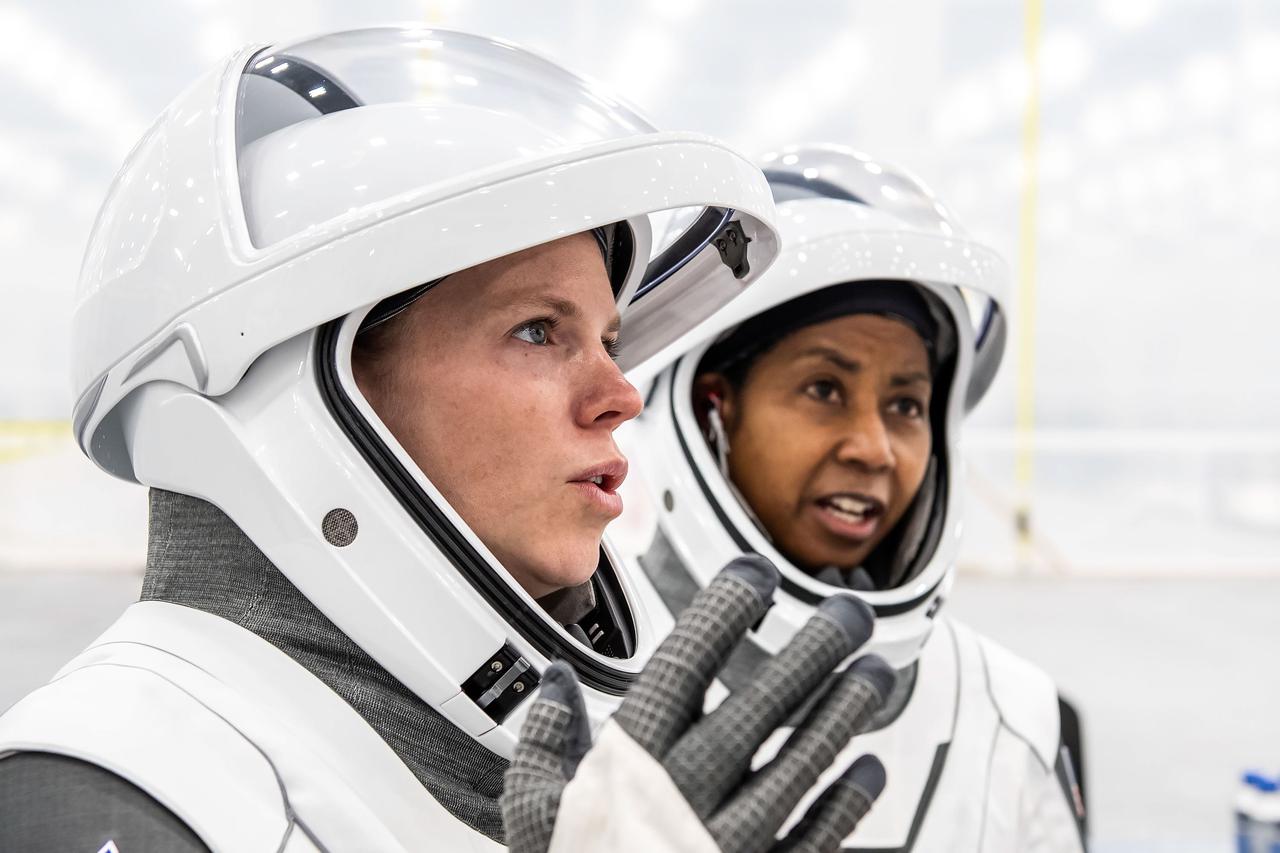
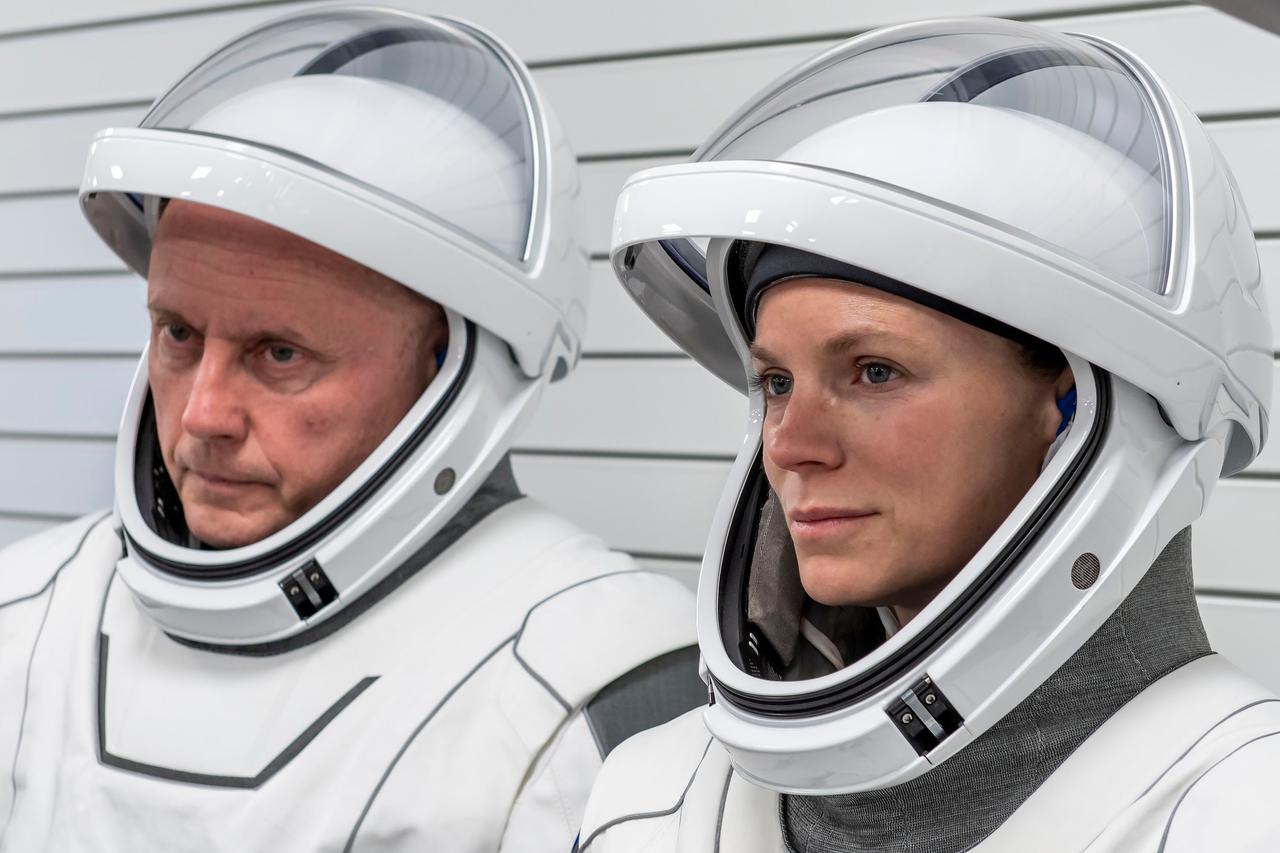
jsc2024e052324 (July 22, 2024) --- NASA’s SpaceX Crew-9 Commander Zena Cardman and Mission Specialist Stephanie Wilson are pictured in their flight suits at SpaceX’s new Dragon refurbishing facility at Kennedy Space Center in Florida. Credit: SpaceX
SpaceX Crew-9 members Zena Cardman and Stephanie Wilson
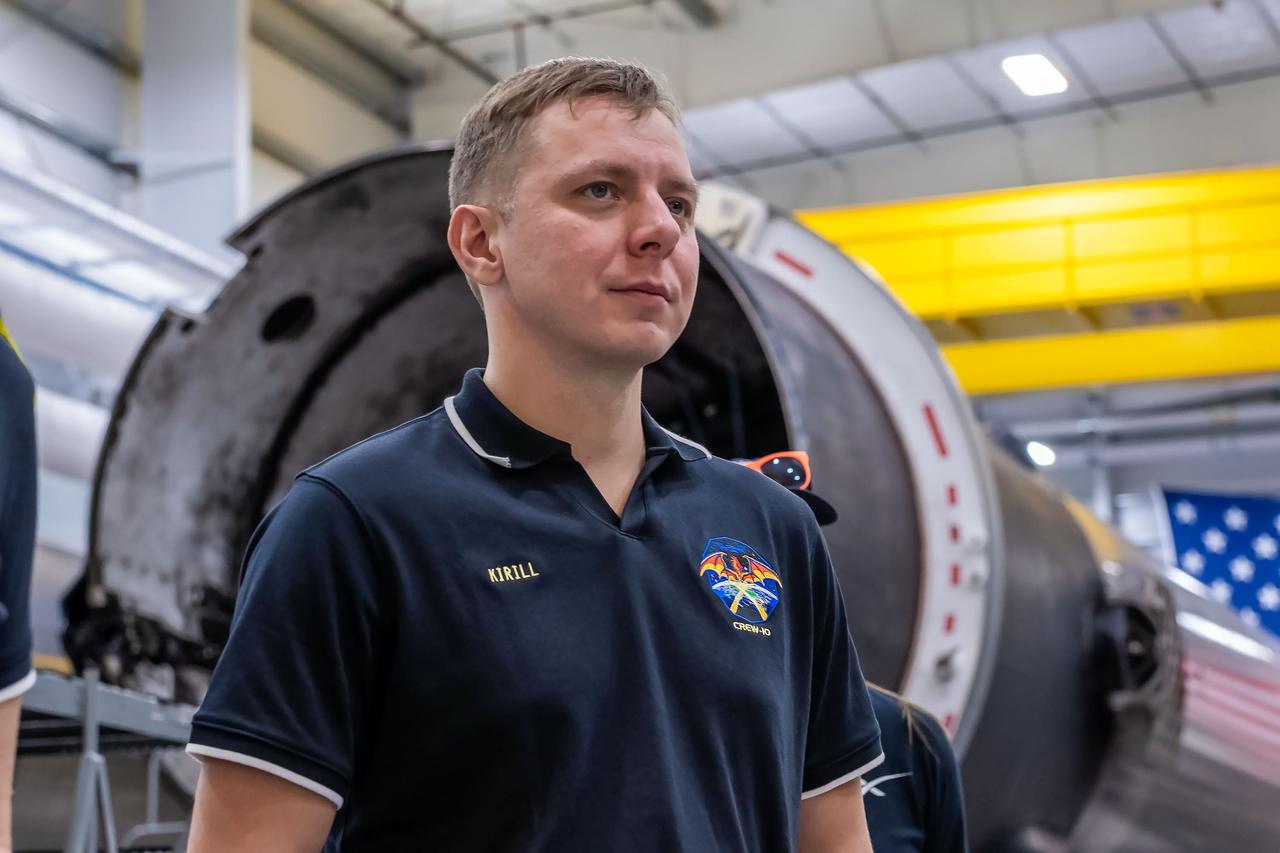
jsc2024e080750 (Nov. 18, 2024) --- NASA’s SpaceX Crew-10 Mission Specialist Kirill Peskov of Roscosmos stands in front of a Falcon 9 first-stage booster at SpaceX’s HangarX facility at NASA's Kennedy Space Center in Florida. Credit: SpaceX
SpaceX Crew-10 Mission Specialist Kirill Peskov of Roscosmo
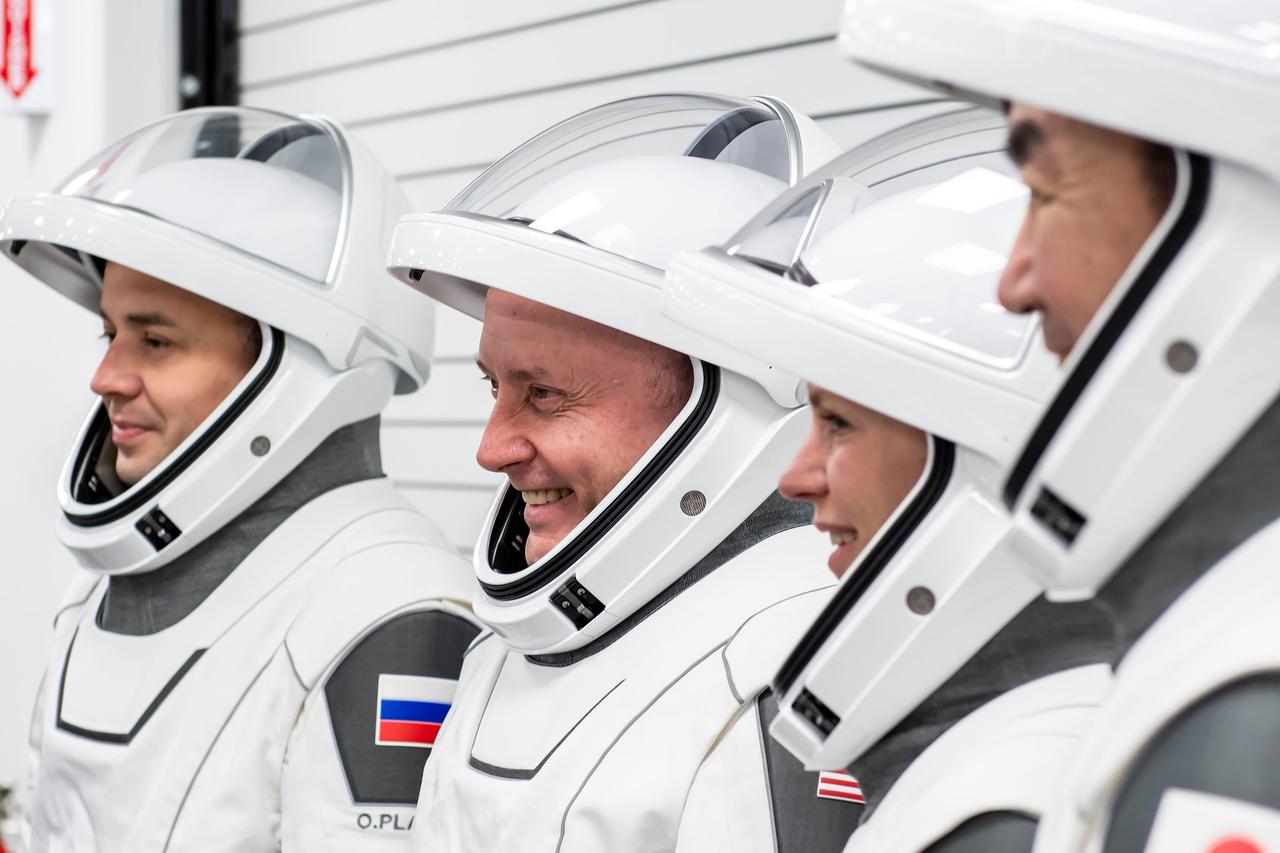
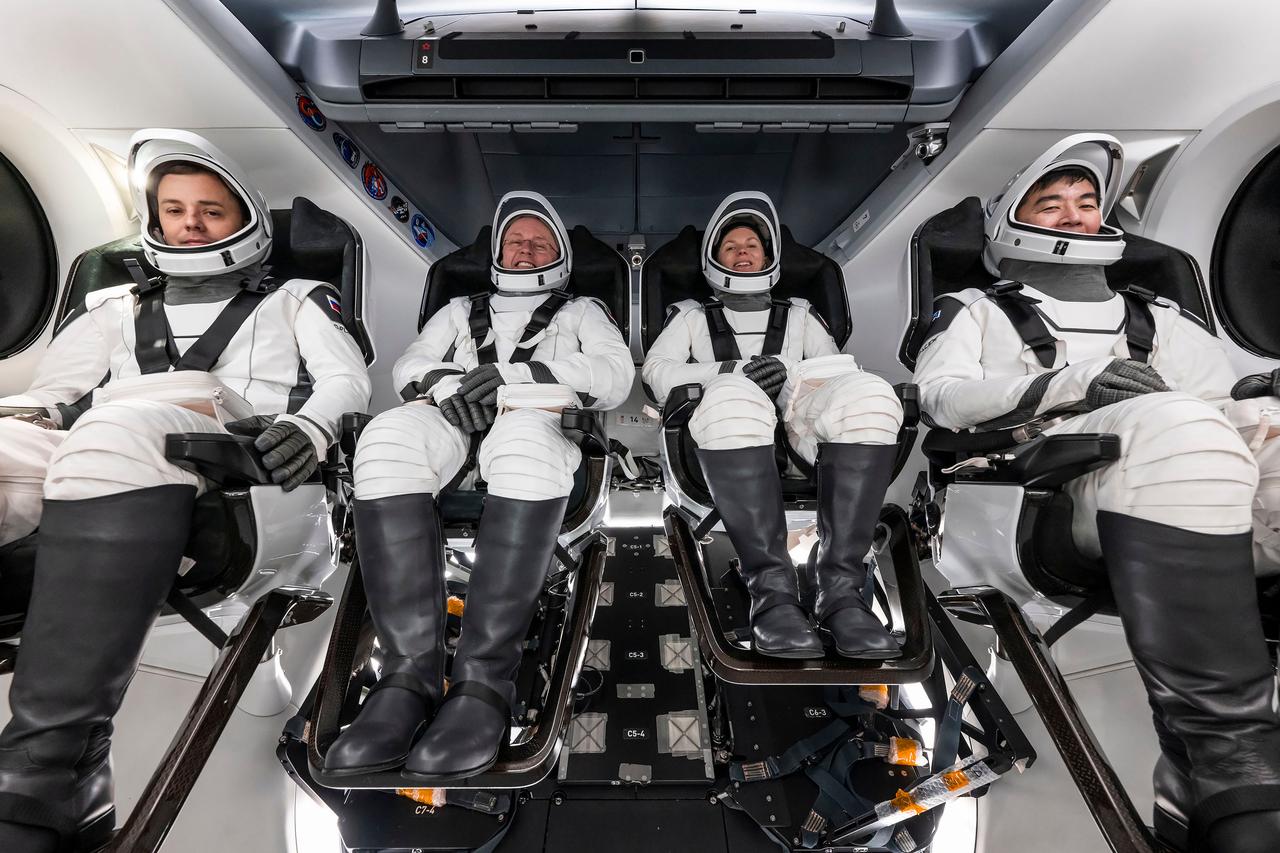
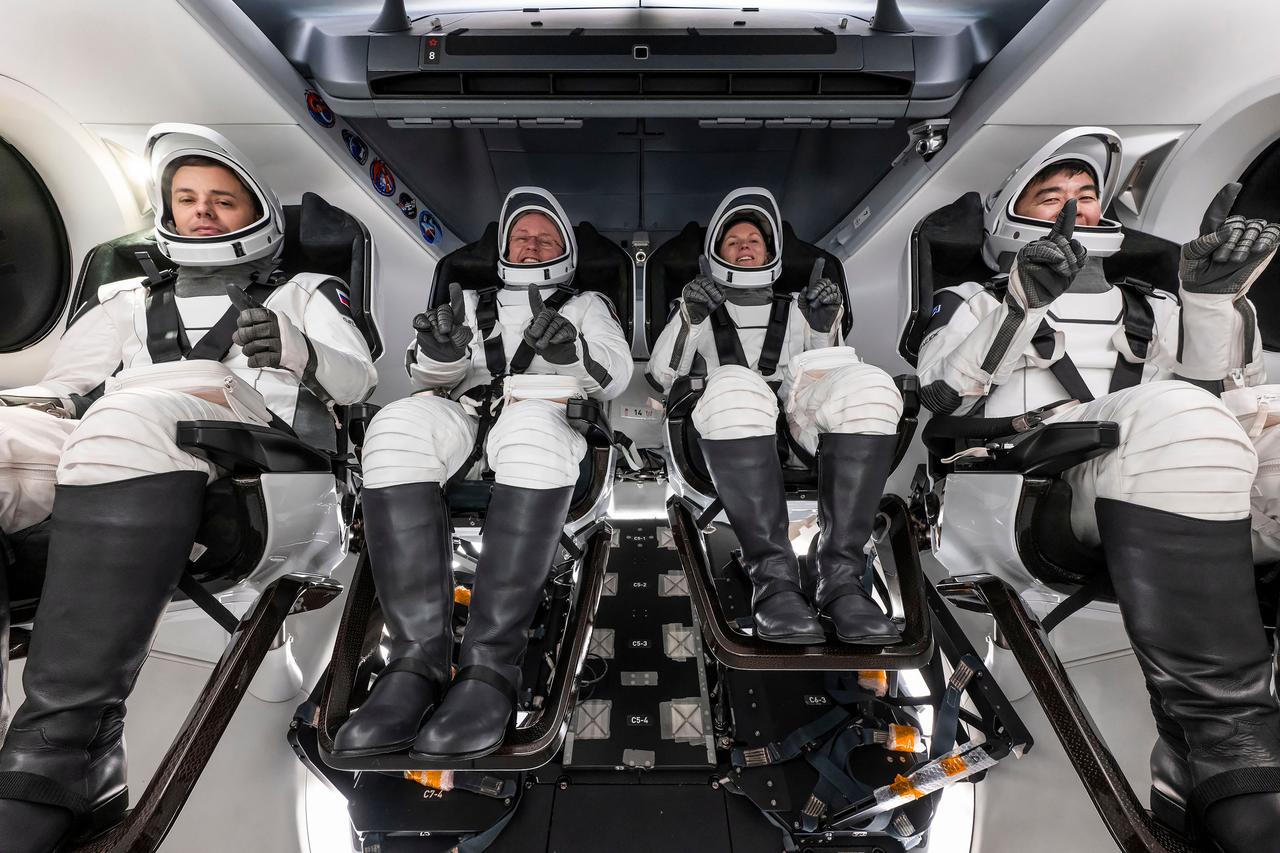
jsc2025e064544 (July 3, 2025) --- The crew of NASA’s SpaceX Crew-11 mission train for their upcoming trip to the International Space Station at SpaceX facilities in Florida. From left: Oleg Platonov, Mike Fincke, Zena Cardman, and Kimiya Yui. Credit: SpaceX
The crew of NASA’s SpaceX Crew-11 mission train for their upcoming trip
jsc2025e064550 (July 3, 2025) --- The crew of NASA’s SpaceX Crew-11 mission train for their upcoming trip to the International Space Station at SpaceX facilities in Florida. From left: Oleg Platonov, Mike Fincke, Zena Cardman, and Kimiya Yui. Credit: SpaceX
The crew of NASA’s SpaceX Crew-11 mission train for their upcoming trip
jsc2025e064545 (July 3, 2025) --- The crew of NASA’s SpaceX Crew-11 mission train for their upcoming trip to the International Space Station at SpaceX facilities in Florida. NASA astronauts Mike Fincke (left) and Zena Cardman are the pilot and commander of the mission. Credit: SpaceX
The crew of NASA’s SpaceX Crew-11 mission train for their upcoming trip
jsc2025e064551 (July 3, 2025) --- The crew of NASA’s SpaceX Crew-11 mission train for their upcoming trip to the International Space Station at SpaceX facilities in Florida. From left: Oleg Platonov, Mike Fincke, Zena Cardman, and Kimiya Yui. Credit: SpaceX
The crew of NASA’s SpaceX Crew-11 mission train for their upcoming trip
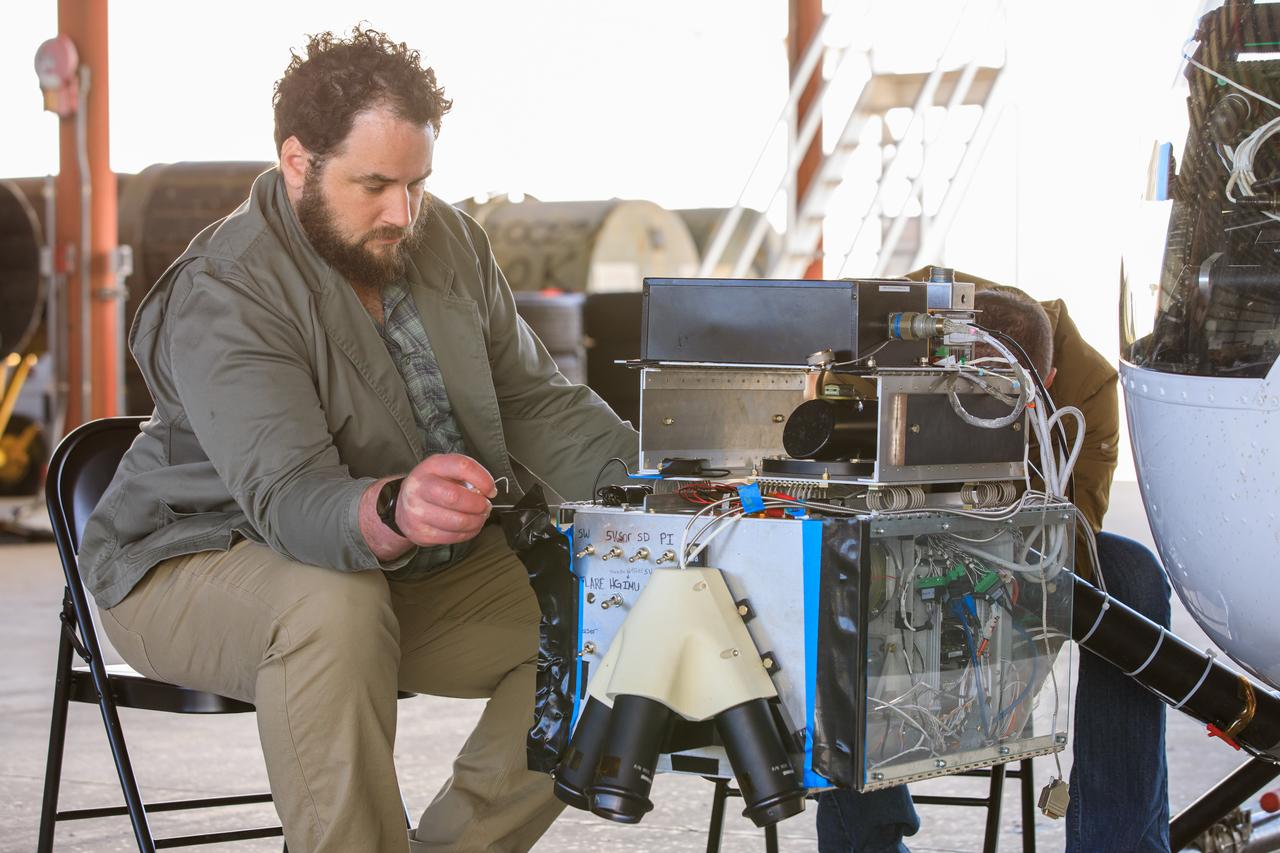
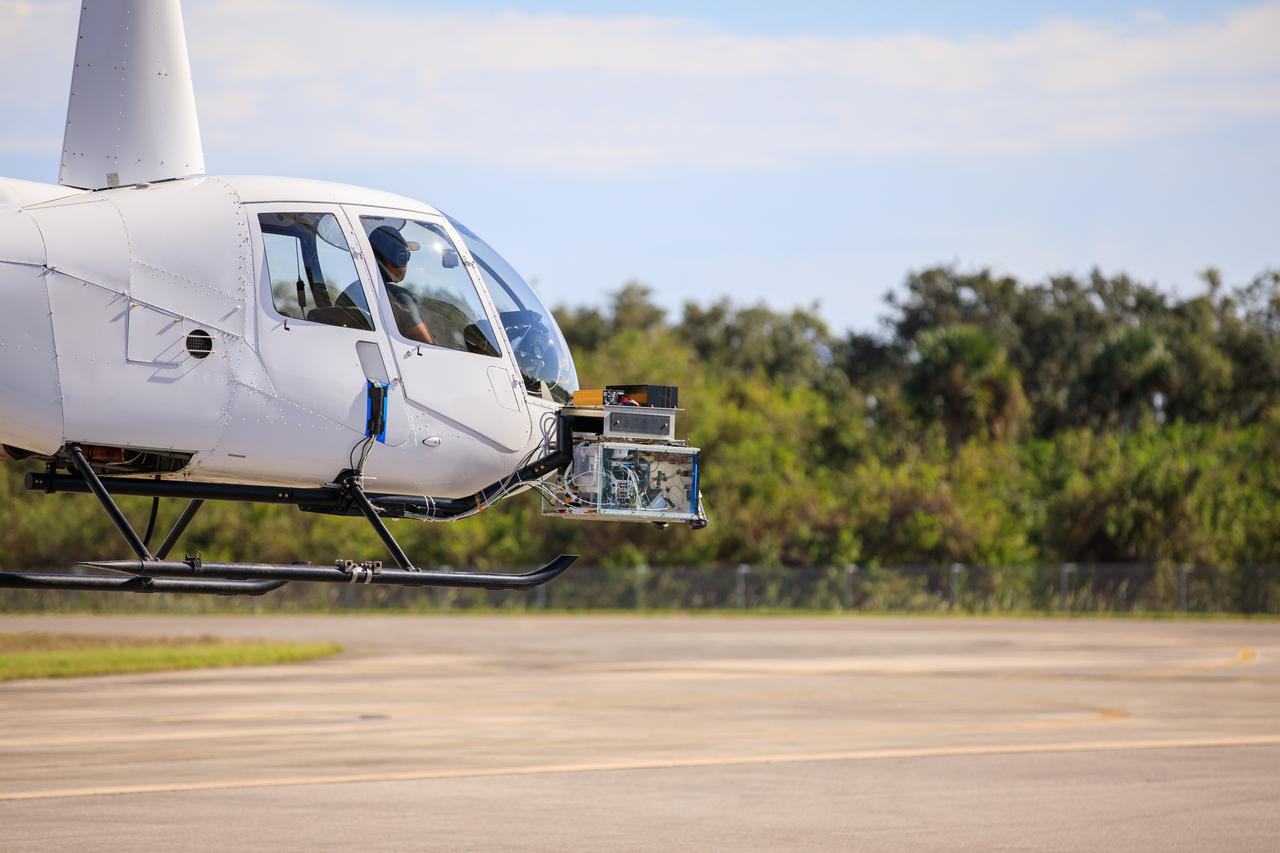
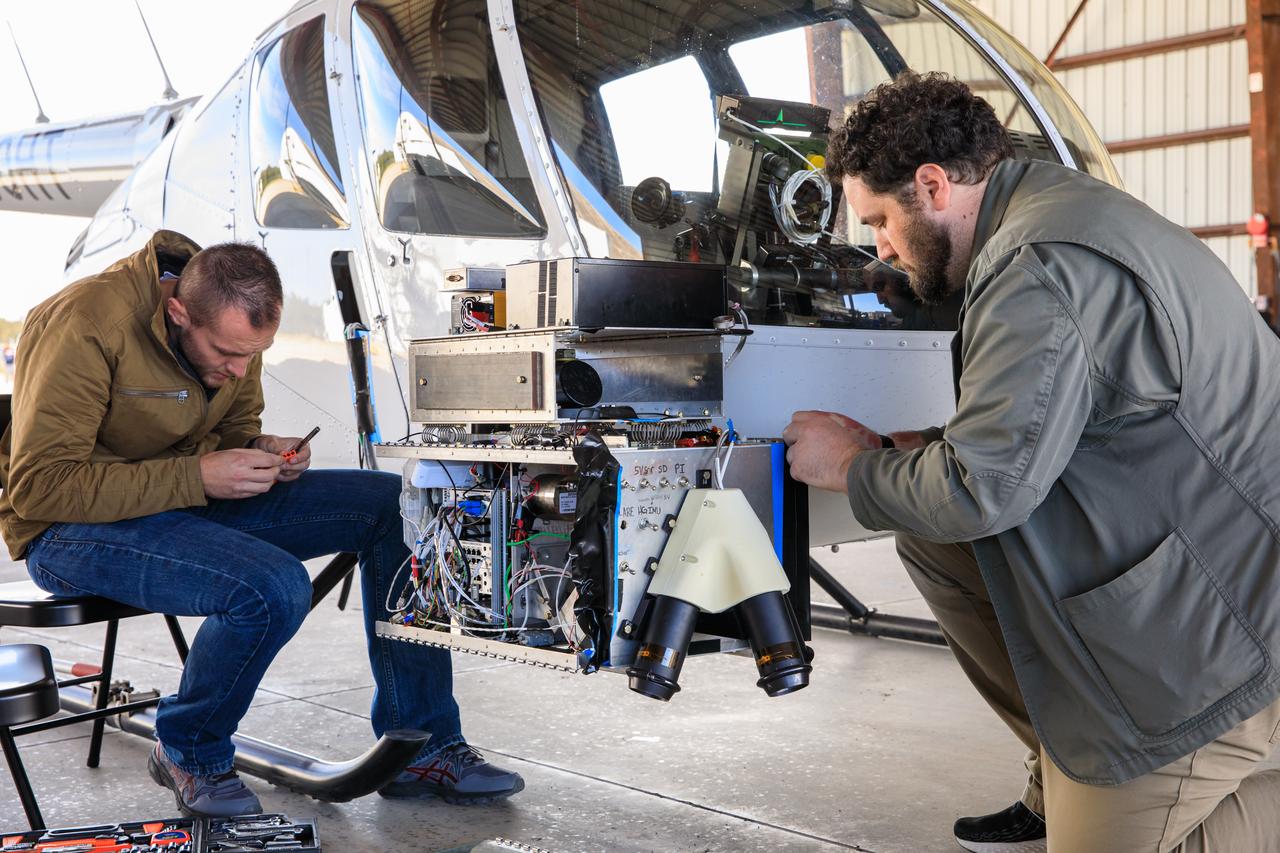
Two Intuitive Machines employees ready navigation pod sensors for the company’s Nova-C lunar lander in preparation for testing at NASA’s Kennedy Space Center in Florida on Nov. 18, 2022. The test involved flying the sensors over a simulated lunar surface at the Launch and Landing Facility on a private helicopter. Intuitive Machines is scheduled to launch two missions to the Moon in 2023 – one of which will carry NASA’s Mass Spectrometer observing lunar operations (MSolo) instrument that will help analyze the chemical makeup of landing sites on the Moon, as well as study water on the lunar surface. Through NASA’s Commercial Lunar Payload Services initiative, the agency selected Intuitive Machines to deliver science and technology demonstration payloads to the Moon, contributing to NASA’s goal of establishing a sustainable human presence on the lunar surface.
Intuitive Machines CLPS Testing
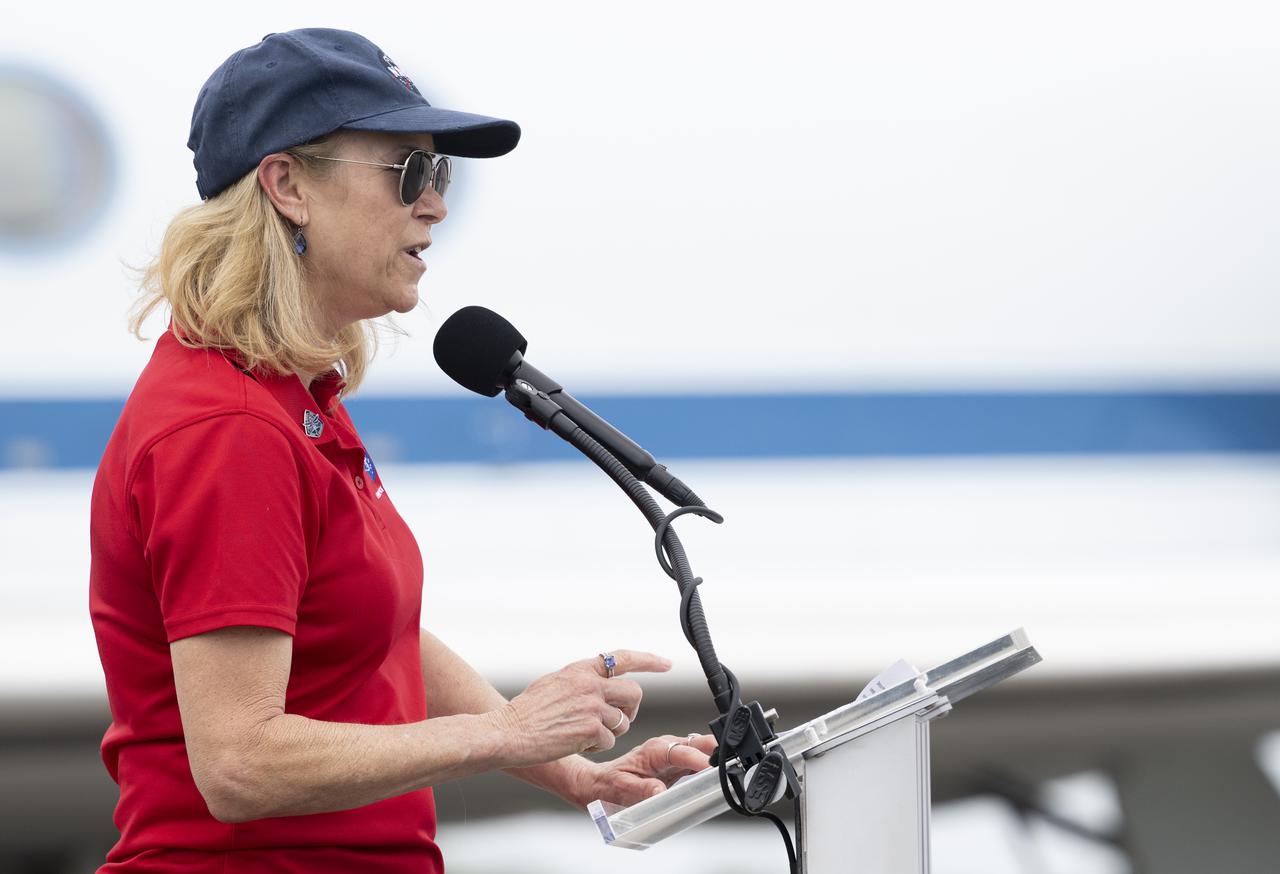
Kennedy Space Center director Janet Petro speaks to members of the media after the arrival of NASA astronauts Kjell Lindgren, Robert Hines, Jessica Watkins, and ESA (European Space Agency) astronaut Samantha Cristoforetti at the Launch and Landing Facility at NASA’s Kennedy Space Center ahead of SpaceX’s Crew-4 mission, Monday, April 18, 2022, in Florida. NASA’s SpaceX Crew-4 mission is the fourth crew rotation mission of the SpaceX Crew Dragon spacecraft and Falcon 9 rocket to the International Space Station as part of the agency’s Commercial Crew Program. Lindgren, Hines, Watkins, and Cristoforetti are scheduled to launch at April 23 at 5:26 a.m. EDT, from Launch Complex 39A at the Kennedy Space Center. Photo Credit: (NASA/Joel Kowsky)
SpaceX Crew-4 Crew Arrival
Testing of navigation pod sensors for Intuitive Machines’ Nova-C lunar lander is underway at NASA’s Kennedy Space Center in Florida on Nov. 18, 2022. The test involved flying the sensors over a simulated lunar surface at the Launch and Landing Facility on a private helicopter. Intuitive Machines is scheduled to launch two missions to the Moon in 2023 – one of which will carry NASA’s Mass Spectrometer observing lunar operations (MSolo) instrument that will help analyze the chemical makeup of landing sites on the Moon, as well as study water on the lunar surface. Through NASA’s Commercial Lunar Payload Services initiative, the agency selected Intuitive Machines to deliver science and technology demonstration payloads to the Moon, contributing to NASA’s goal of establishing a sustainable human presence on the lunar surface.
Intuitive Machines CLPS Testing
Kennedy Space Center director Janet Petro speaks after NASA astronauts Nicole Mann and Josh Cassada, Japan Aerospace Exploration Agency (JAXA) astronaut Koichi Wakata, and Roscosmos cosmonaut Anna Kikina arrived at the Launch and Landing Facility at NASA’s Kennedy Space Center ahead of SpaceX’s Crew-5 mission, Saturday, Oct. 1, 2022, in Florida. NASA’s SpaceX Crew-5 mission is the fifth crew rotation mission of the SpaceX Crew Dragon spacecraft and Falcon 9 rocket to the International Space Station as part of the agency’s Commercial Crew Program. Mann, Cassada, Wakata, and Kikini are scheduled to launch at 12:00 p.m. EDT on Oct. 5, from Launch Complex 39A at the Kennedy Space Center. Photo Credit: (NASA/Joel Kowsky)
NASA’s SpaceX Crew-5 Crew Arrival for Prelaunch Activities
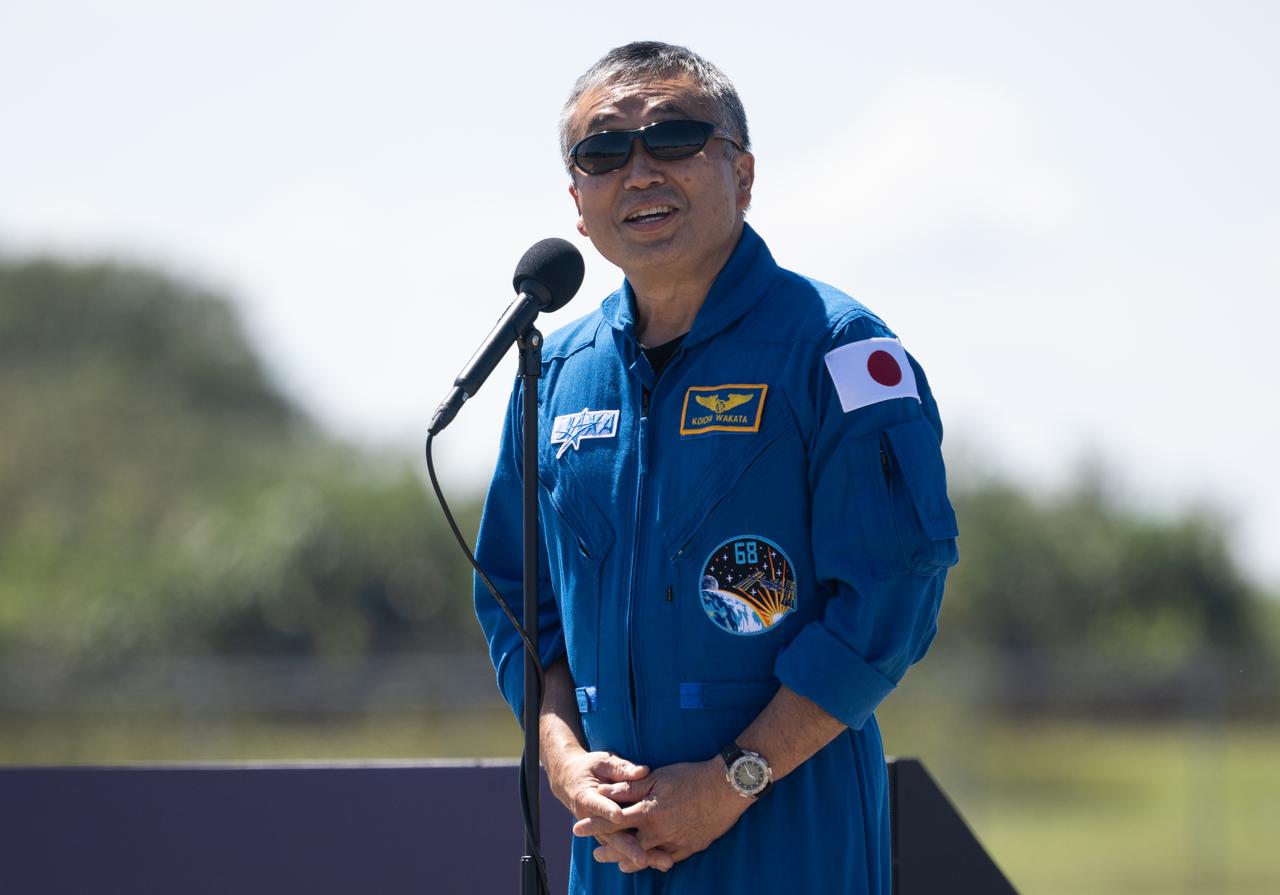
Japan Aerospace Exploration Agency (JAXA) astronaut Koichi Wakata speaks to members of the media after arriving at the Launch and Landing Facility with fellow crewmembers NASA astronauts Nicole Mann and Josh Cassada and Roscosmos cosmonaut Anna Kikina, at NASA’s Kennedy Space Center ahead of SpaceX’s Crew-5 mission, Saturday, Oct. 1, 2022, in Florida. NASA’s SpaceX Crew-5 mission is the fifth crew rotation mission of the SpaceX Crew Dragon spacecraft and Falcon 9 rocket to the International Space Station as part of the agency’s Commercial Crew Program. Mann, Cassada, Wakata, and Kikini are scheduled to launch at 12:00 p.m. EDT on Oct. 5, from Launch Complex 39A at the Kennedy Space Center. Photo Credit: (NASA/Joel Kowsky)
NASA’s SpaceX Crew-5 Crew Arrival for Prelaunch Activities
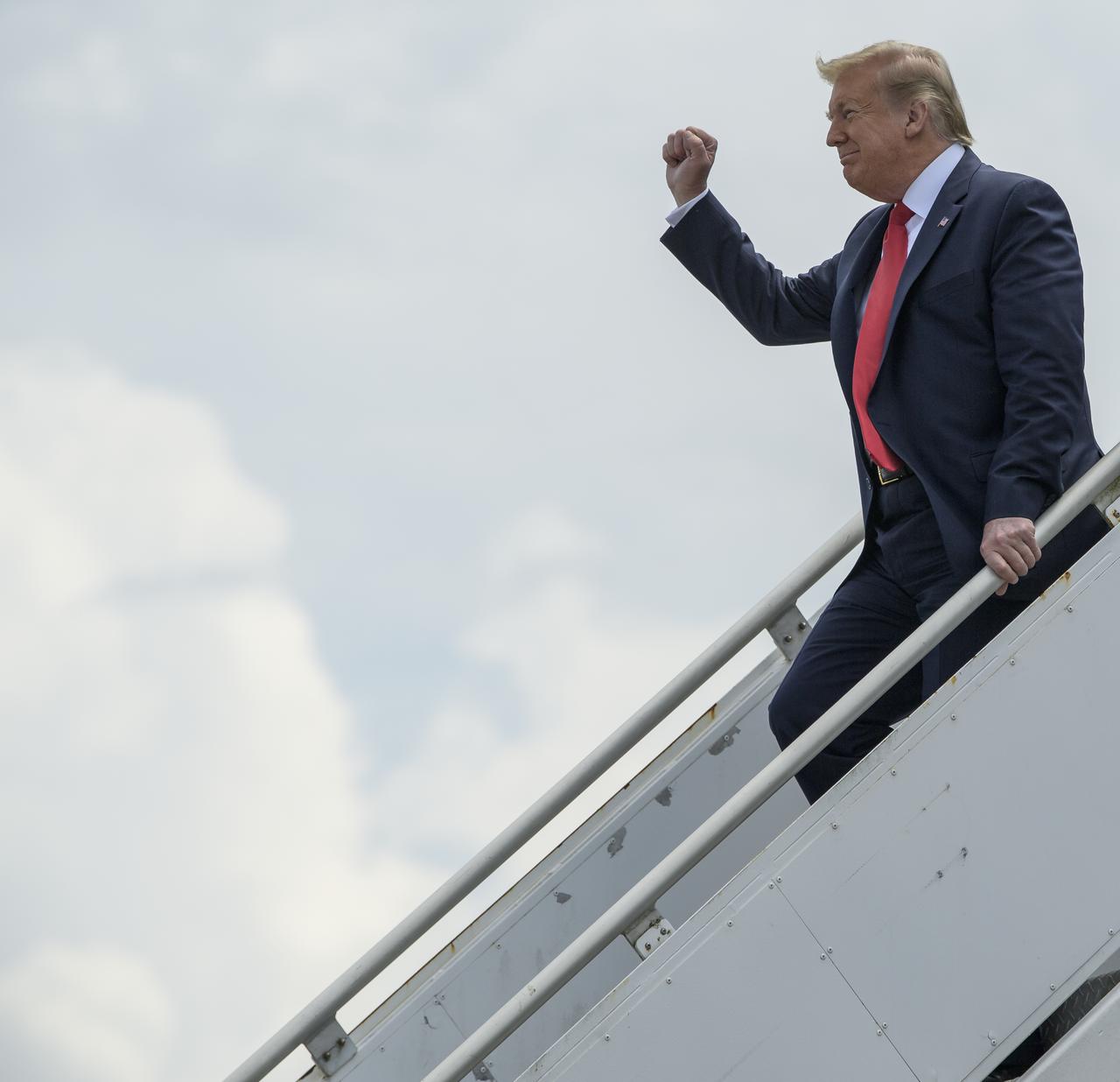
President Donald Trump departs Air Force One after arriving at NASA’s Kennedy Space Center Launch and Landing Facility ahead of SpaceX’s Demo-2 mission, Saturday, May 30, 2020, in Florida. NASA’s SpaceX Demo-2 mission is the first launch with astronauts of the SpaceX Crew Dragon spacecraft and Falcon 9 rocket to the International Space Station as part of the agency’s Commercial Crew Program. The test flight serves as an end-to-end demonstration of SpaceX’s crew transportation system. Behnken and Hurley are scheduled to launch at 3:22 p.m. EDT on Saturday, May 30, from Launch Complex 39A at the Kennedy Space Center. A new era of human spaceflight is set to begin as American astronauts once again launch on an American rocket from American soil to low-Earth orbit for the first time since the conclusion of the Space Shuttle Program in 2011.  Photo Credit: (NASA/Bill Ingalls)
SpaceX Demo-2 Preflight
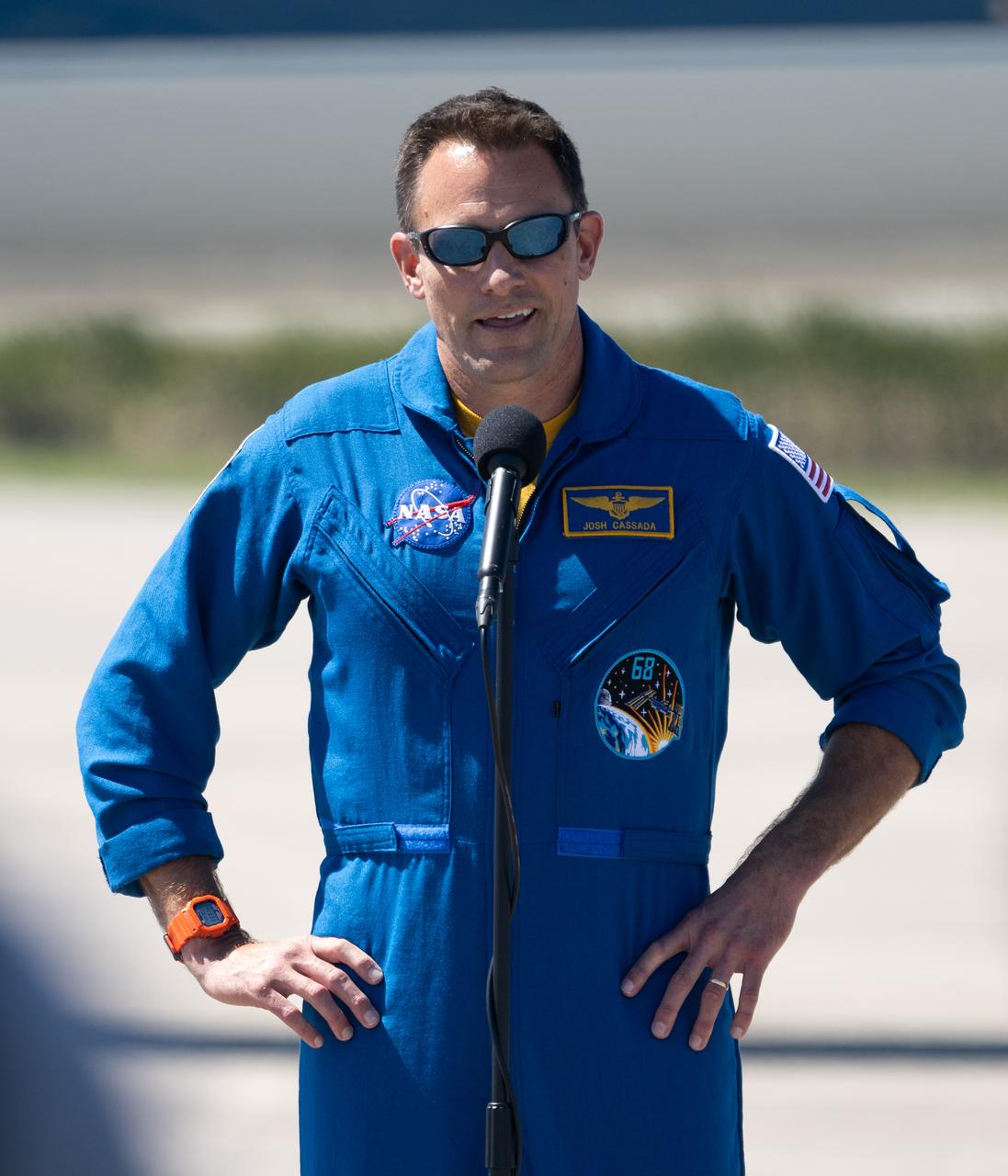
NASA astronaut Josh Cassada speaks to members of the media after arriving at the Launch and Landing Facility with fellow crewmembers NASA astronaut Nicole Mann, Japan Aerospace Exploration Agency (JAXA) astronaut Koichi Wakata, and Roscosmos cosmonaut Anna Kikina, at NASA’s Kennedy Space Center ahead of SpaceX’s Crew-5 mission, Saturday, Oct. 1, 2022, in Florida. NASA’s SpaceX Crew-5 mission is the fifth crew rotation mission of the SpaceX Crew Dragon spacecraft and Falcon 9 rocket to the International Space Station as part of the agency’s Commercial Crew Program. Mann, Cassada, Wakata, and Kikini are scheduled to launch at 12:00 p.m. EDT on Oct. 5, from Launch Complex 39A at the Kennedy Space Center. Photo Credit: (NASA/Joel Kowsky)
NASA’s SpaceX Crew-5 Crew Arrival for Prelaunch Activities
Testing of navigation pod sensors for Intuitive Machines’ Nova-C lunar lander is underway at NASA’s Kennedy Space Center in Florida on Nov. 18, 2022. The test involved flying the sensors over a simulated lunar surface at the Launch and Landing Facility on a private helicopter. Intuitive Machines is scheduled to launch two missions to the Moon in 2023 – one of which will carry NASA’s Mass Spectrometer observing lunar operations (MSolo) instrument that will help analyze the chemical makeup of landing sites on the Moon, as well as study water on the lunar surface. Through NASA’s Commercial Lunar Payload Services initiative, the agency selected Intuitive Machines to deliver science and technology demonstration payloads to the Moon, contributing to NASA’s goal of establishing a sustainable human presence on the lunar surface.
Intuitive Machines CLPS Testing
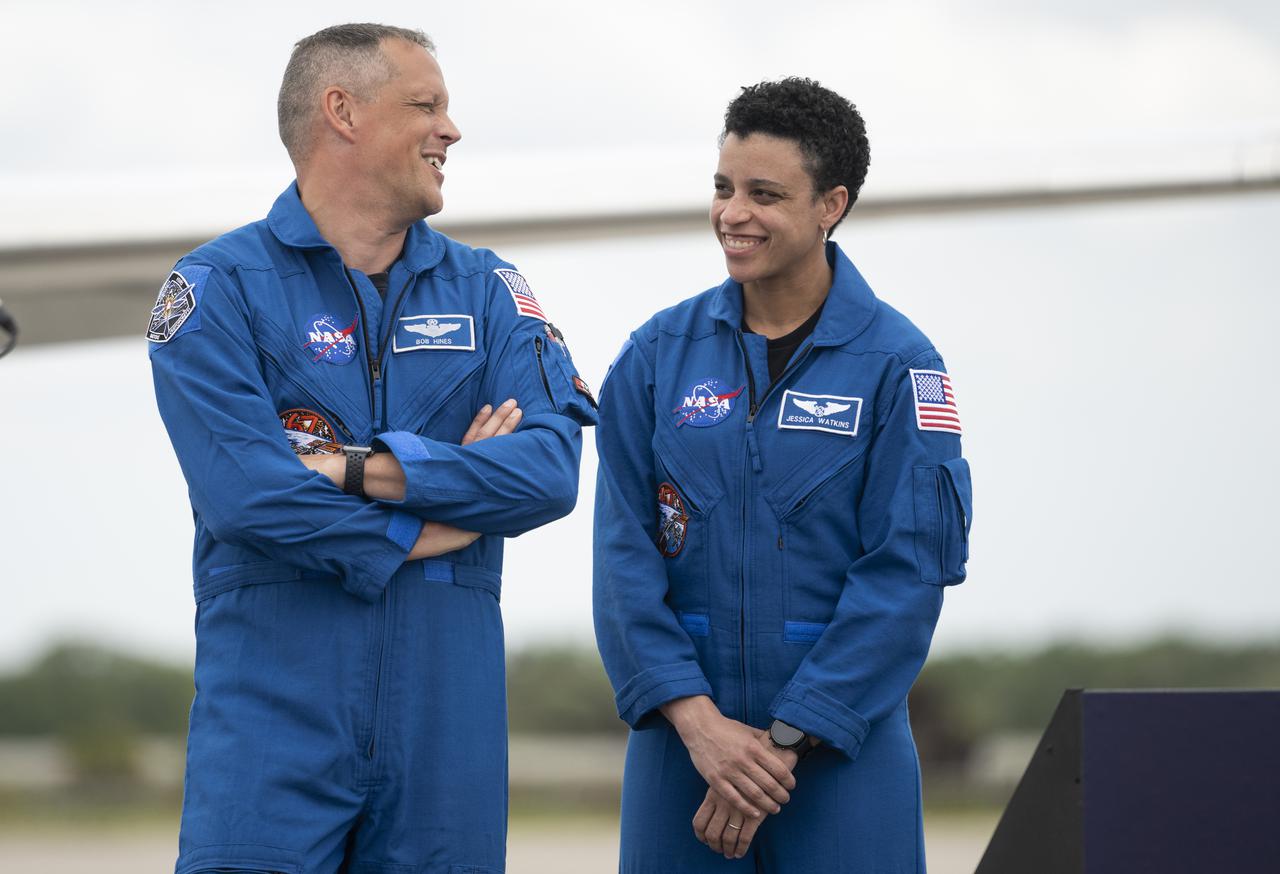
NASA astronauts Robert Hines, left, and Jessica Watkins, right, are seen after arriving at the Launch and Landing Facility at NASA’s Kennedy Space Center with fellow crewmates NASA astronaut Kjell Lindgren and ESA (European Space Agency) astronaut Samantha Cristoforetti ahead of SpaceX’s Crew-4 mission, Monday, April 18, 2022, in Florida. NASA’s SpaceX Crew-4 mission is the fourth crew rotation mission of the SpaceX Crew Dragon spacecraft and Falcon 9 rocket to the International Space Station as part of the agency’s Commercial Crew Program. Lindgren, Hines, Watkins, and Cristoforetti are scheduled to launch at April 23 at 5:26 a.m. EDT, from Launch Complex 39A at the Kennedy Space Center. Photo Credit: (NASA/Joel Kowsky)
SpaceX Crew-4 Crew Arrival
Two Intuitive Machines employees ready navigation pod sensors for the company’s Nova-C lunar lander in preparation for testing at NASA’s Kennedy Space Center in Florida on Nov. 18, 2022. The test involved flying the sensors over a simulated lunar surface at the Launch and Landing Facility on a private helicopter. Intuitive Machines is scheduled to launch two missions to the Moon in 2023 – one of which will carry NASA’s Mass Spectrometer observing lunar operations (MSolo) instrument that will help analyze the chemical makeup of landing sites on the Moon, as well as study water on the lunar surface. Through NASA’s Commercial Lunar Payload Services initiative, the agency selected Intuitive Machines to deliver science and technology demonstration payloads to the Moon, contributing to NASA’s goal of establishing a sustainable human presence on the lunar surface.
Intuitive Machines CLPS Testing
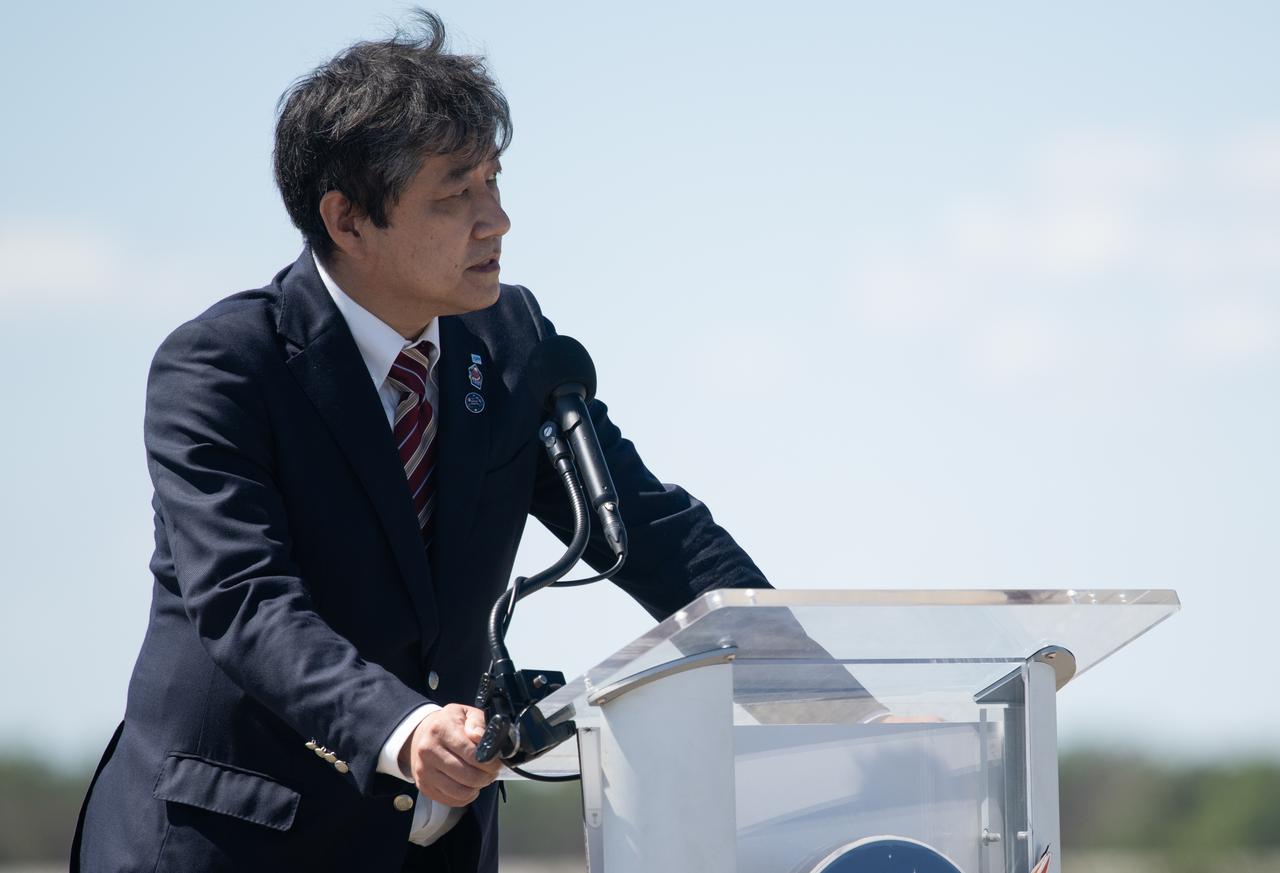
Junichi Sakai, manager of the International Space Station Program for the Japan Aerospace Exploration Agency (JAXA), speaks after NASA astronauts Nicole Mann and Josh Cassada, Japan Aerospace Exploration Agency (JAXA) astronaut Koichi Wakata, and Roscosmos cosmonaut Anna Kikina arrived at the Launch and Landing Facility at NASA’s Kennedy Space Center ahead of SpaceX’s Crew-5 mission, Saturday, Oct. 1, 2022, in Florida. NASA’s SpaceX Crew-5 mission is the fifth crew rotation mission of the SpaceX Crew Dragon spacecraft and Falcon 9 rocket to the International Space Station as part of the agency’s Commercial Crew Program. Mann, Cassada, Wakata, and Kikini are scheduled to launch at 12:00 p.m. EDT on Oct. 5, from Launch Complex 39A at the Kennedy Space Center. Photo Credit: (NASA/Joel Kowsky)
NASA’s SpaceX Crew-5 Crew Arrival for Prelaunch Activities