
The Ultra 500 Series golf balls, introduced in 1995 by Wilson Sporting Goods Company, has 500 dimples arranged in a pattern of 60 spherical triangles. The design employs NASA's aerodynamics technology analysis of air loads of the tank and Shuttle orbiter that was performed under the Space Shuttle External Tank program. According to Wilson, this technology provides "the most symmetrical ball surface available, sustaining initial velocity longer and producing the most stable ball flight for unmatched accuracy and distance." The dimples are in three sizes, shapes and depths mathematically positioned for the best effect. The selection of dimples and their placement optimizes the interaction of opposing forces of lift and drag. Large dimples reduce air drag, enhance lift, and maintain spin for distance. Small dimples prevent excessive lift that destabilizes the ball flight and the medium size dimples blend the other two.
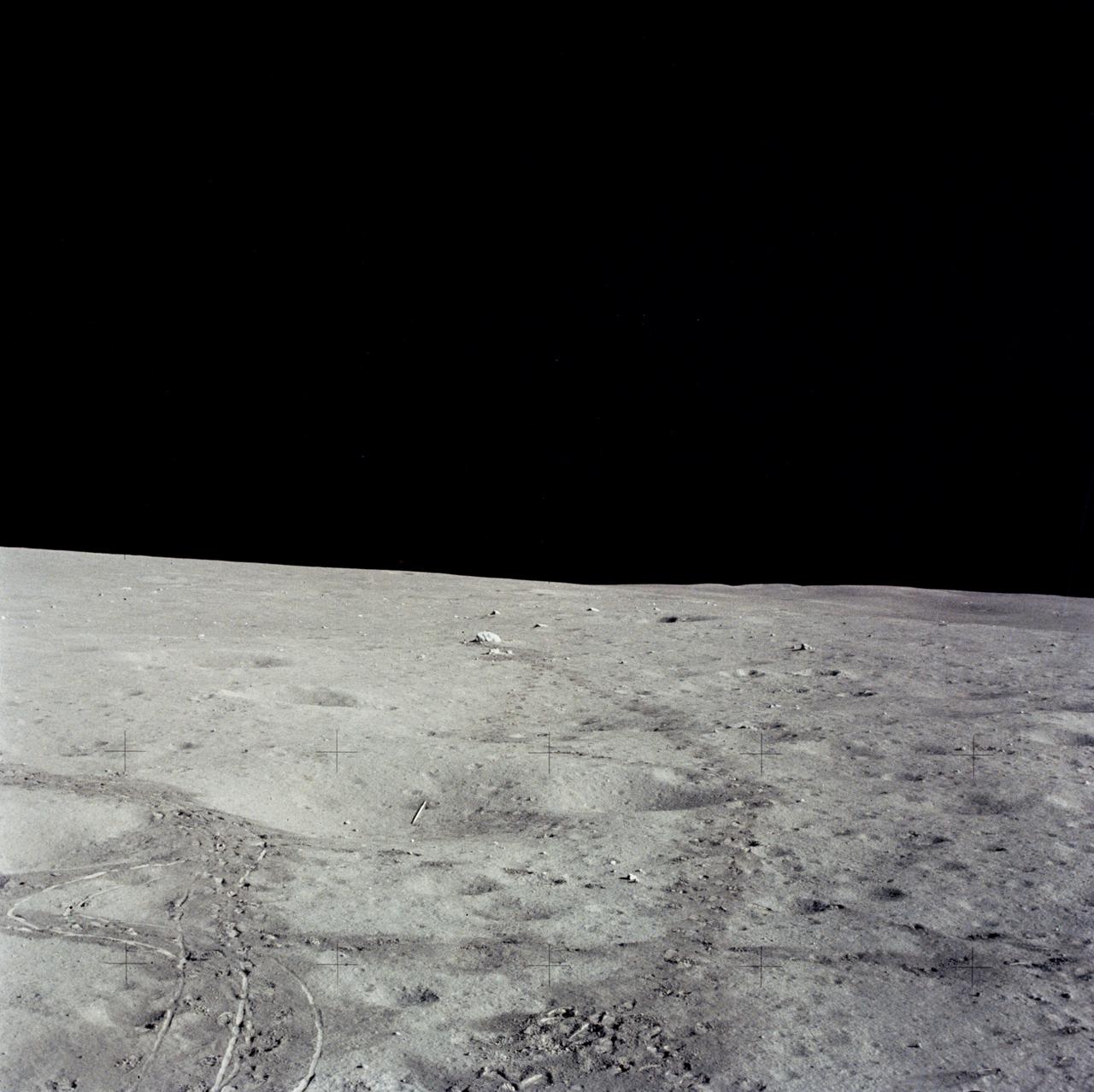
AS14-66-9337 (6 Feb. 1971) --- This view shows the "javelin" and golf ball used by astronaut Alan B. Shepard Jr., commander, during the mission's second extravehicular activity (EVA) on Feb. 6, 1971. Just to the left of center lies the "javelin", with the golf ball just below it, almost perpendicular to it. Dark colored trails are the results of tracks made by the lunar overshoes of the astronauts and the wheels of the modular equipment transporter (MET). This photograph was made through the right window of the Lunar Module (LM), looking northwest.

S71-20784 (5 Feb. 1971) --- Astronaut Alan B. Shepard Jr., Apollo 14 commander, can be seen preparing to swing at a golf ball during a television transmission near the close of the second Extravehicular Activity (EVA-2) at the Apollo 14 Fra Mauro landing site. Shepard is using a real golf ball and an actual six iron, attached to the end of the handle for the contingency sample return. Astronaut Edgar D. Mitchell, lunar module pilot, looks on. Also visible in the picture is the erectable S-Band antenna (left foreground). Astronaut Stuart A. Roosa, command module pilot, remained with the Command and Service Modules (CSM) in lunar orbit, while Shepard and Mitchell descended in the Lunar Module (LM) to explore the moon. Photo credit: NASA or National Aeronautics and Space Administration
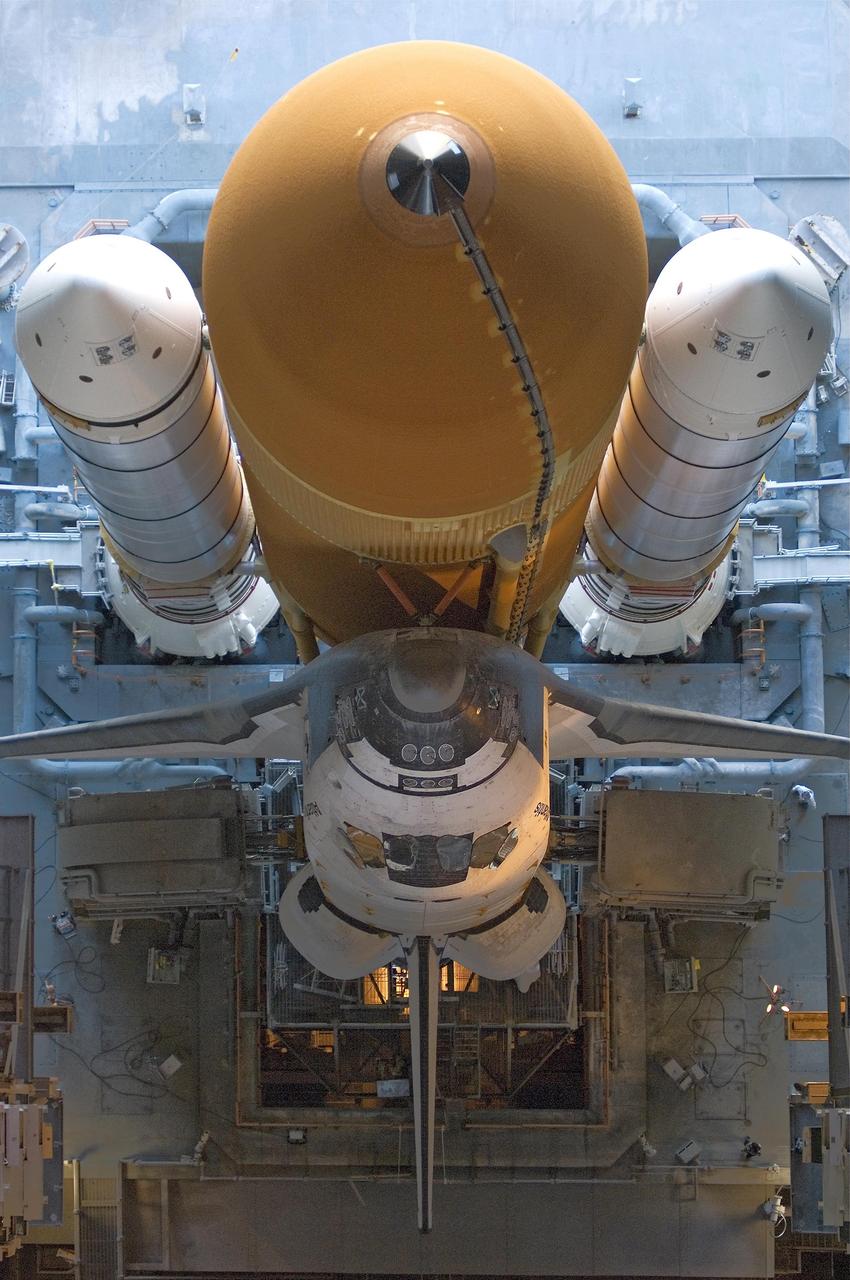
KENNEDY SPACE CENTER, FLA. -- Space Shuttle Atlantis, atop the mobile launcher platform, rolls back into high bay 1 of the Vehicle Assembly Building from Launch Pad 39A. A severe thunderstorm with golf ball-sized hail caused divots in the giant tank's foam insulation and minor surface damage to about 26 heat shield tiles on the shuttle's left wing. Photo credit: NASA/Jeff Wolfe
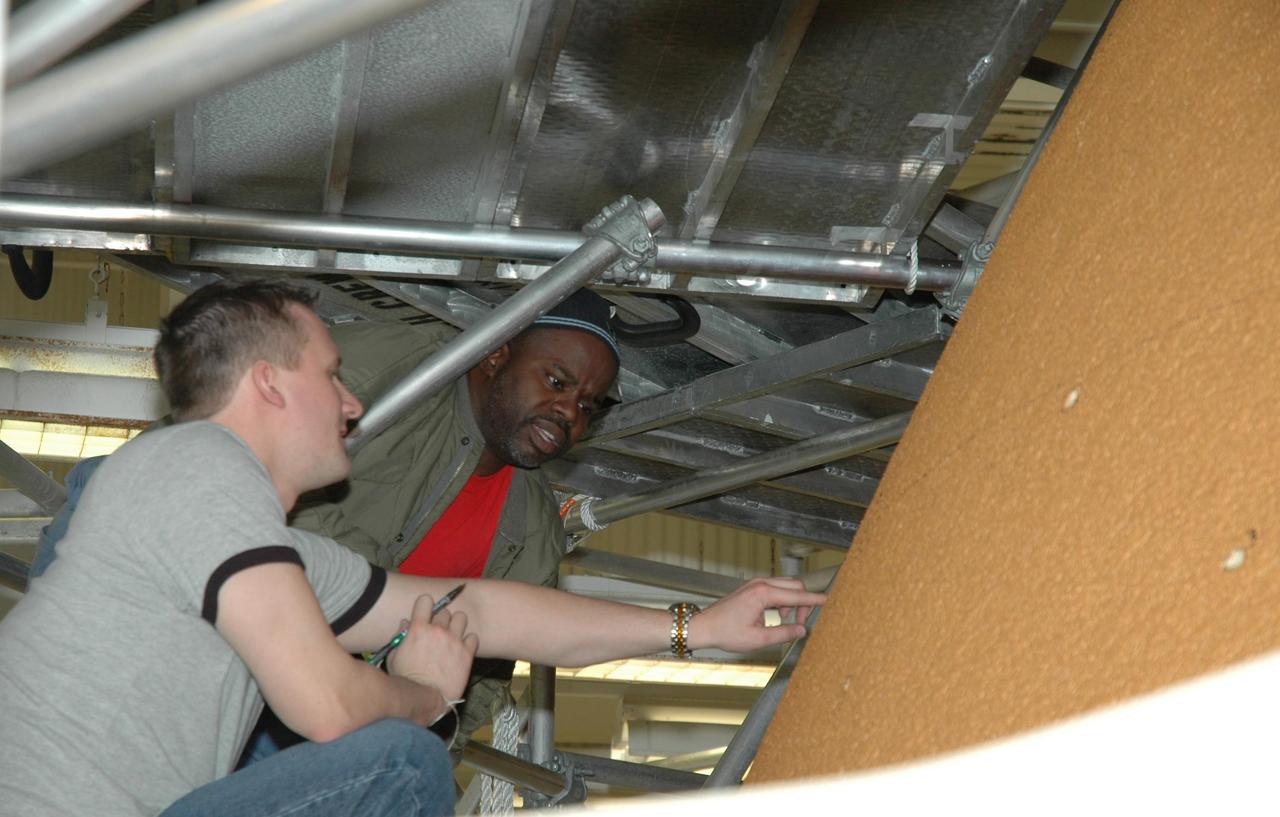
KENNEDY SPACE CENTER, FLA. -- In Highbay 1 inside the Vehicle Assembly Building, technicians look at hail damage on the external tank. A severe thunderstorm with golf ball-sized hail caused visible divots in the giant tank's foam insulation and minor surface damage to about 26 heat shield tiles on the shuttle's left wing. A new target launch date has not been determined, but teams will focus on preparing Atlantis for liftoff in late April on mission STS-117. Photo credit: NASA/Jim Grossmann
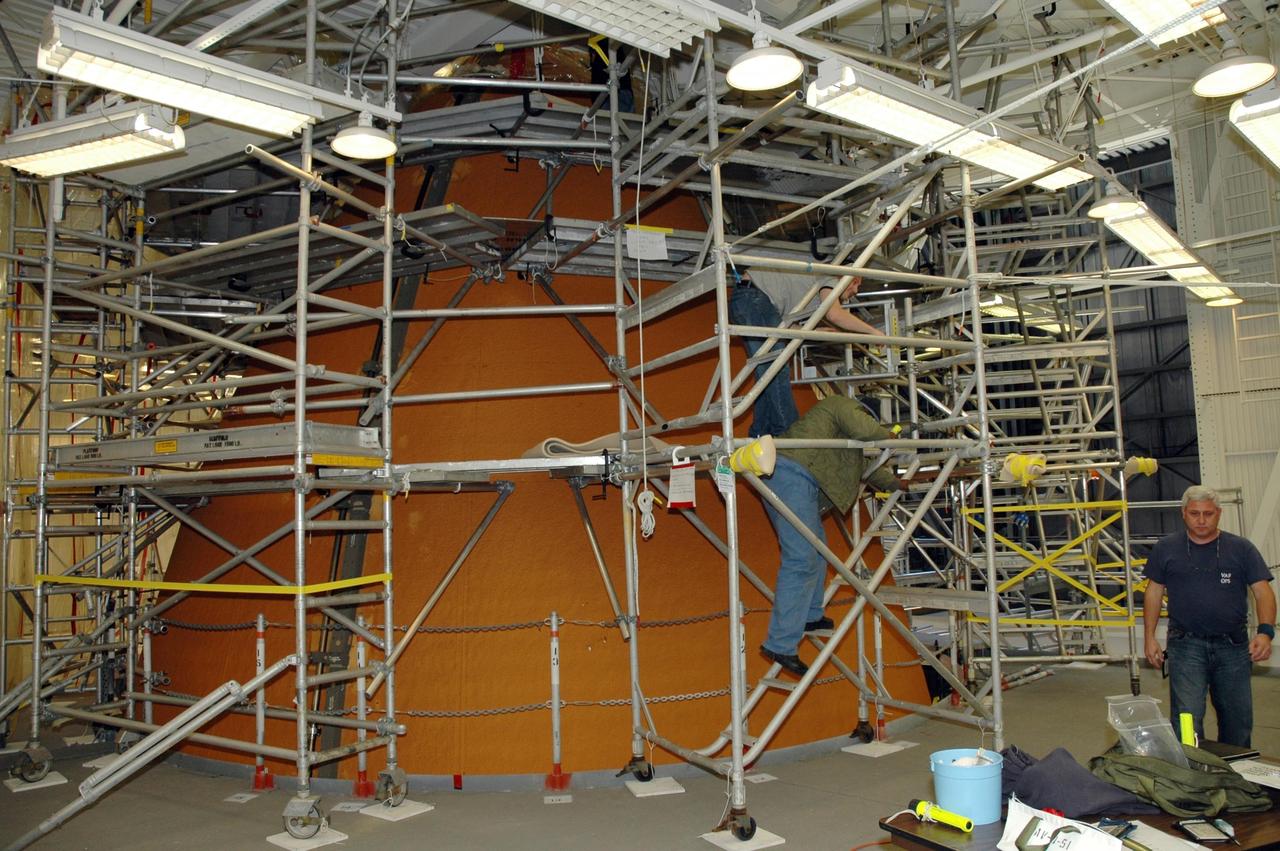
KENNEDY SPACE CENTER, FLA. -- In Highbay 1 inside the Vehicle Assembly Building, workers secure scaffolding around the external tank to prepare it for repairs. A severe thunderstorm with golf ball-sized hail caused visible divots in the giant tank's foam insulation and minor surface damage to about 26 heat shield tiles on the shuttle's left wing. A new target launch date has not been determined, but teams will focus on preparing Atlantis for liftoff in late April on mission STS-117. Photo credit: NASA/Jim Grossmann
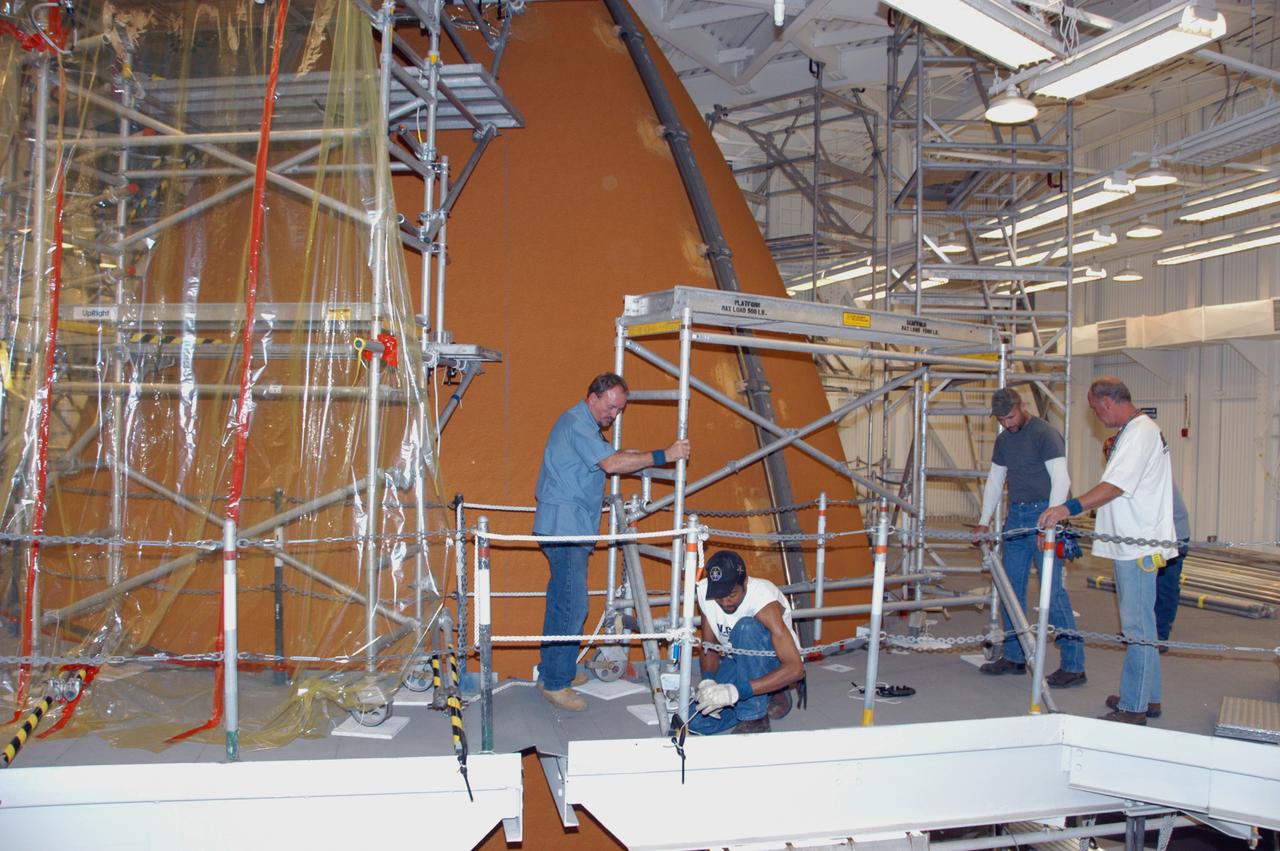
On an upper level of high bay 1 of the Vehicle Assembly Building, technicians secure protective material around Atlantis' external tank. The preparations are for future repair work of the hail damage that happened Feb. 27. A severe thunderstorm with golf ball-sized hail caused visible divots in the giant tank's foam insulation and minor surface damage to about 26 heat shield tiles on the shuttle's left wing. Further evaluation of the tank is necessary to get an accurate accounting of foam damage and determine the type of repair required and the time needed for that work. A new target launch date has not been determined, but teams will focus on preparing Atlantis for liftoff in late April on mission STS-117.
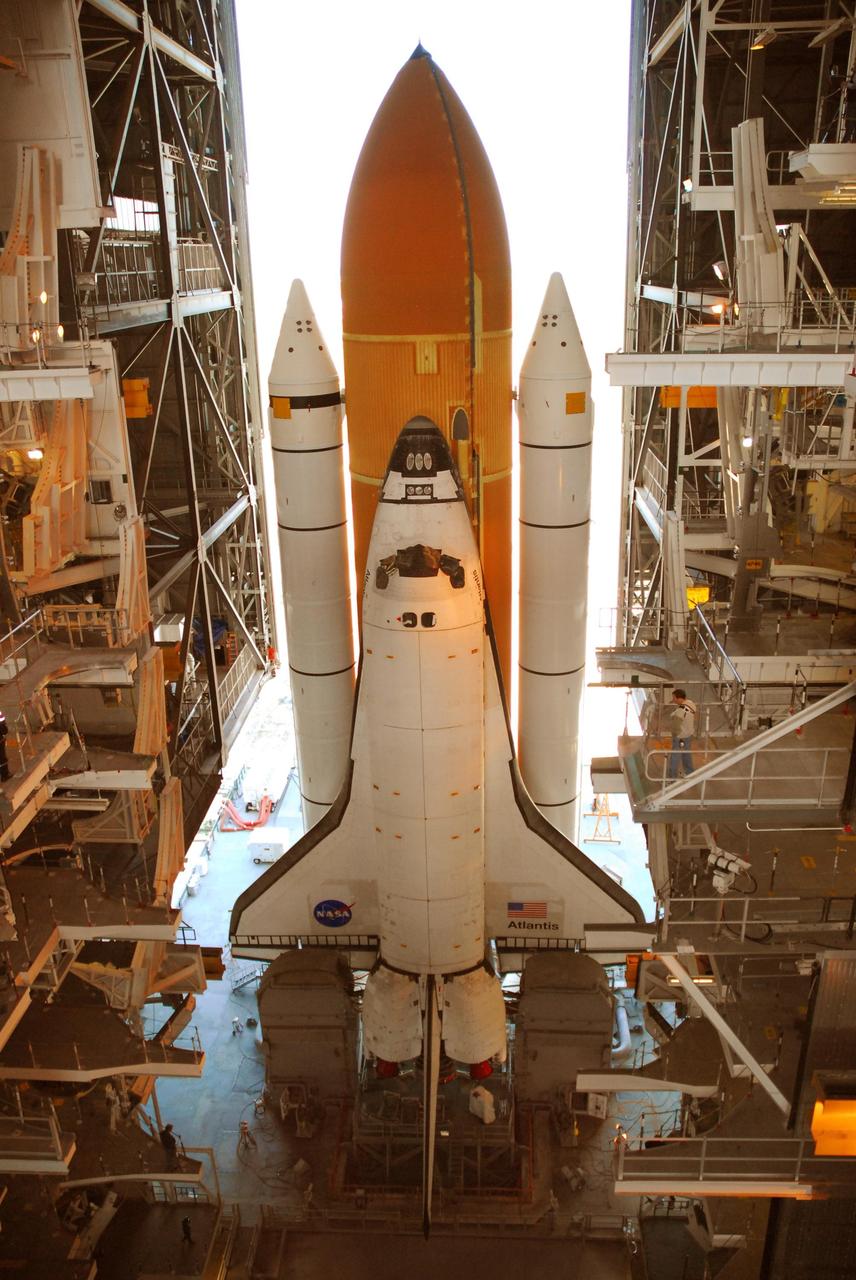
KENNEDY SPACE CENTER, FLA. -- After leaving Launch Pad 39A, Space Shuttle Atlantis, atop the mobile launcher platform, comes to rest in high bay 1 of the Vehicle Assembly Building. A severe thunderstorm with golf ball-sized hail caused divots in the giant tank's foam insulation and minor surface damage to about 26 heat shield tiles on the shuttle's left wing. Further evaluation of the tank is necessary to get an accurate accounting of foam damage and determine the type of repair required and the time needed for that work. A new target launch date has not been determined, but teams will focus on preparing Atlantis for liftoff in late April. Photo credit: NASA/Amanda Diller
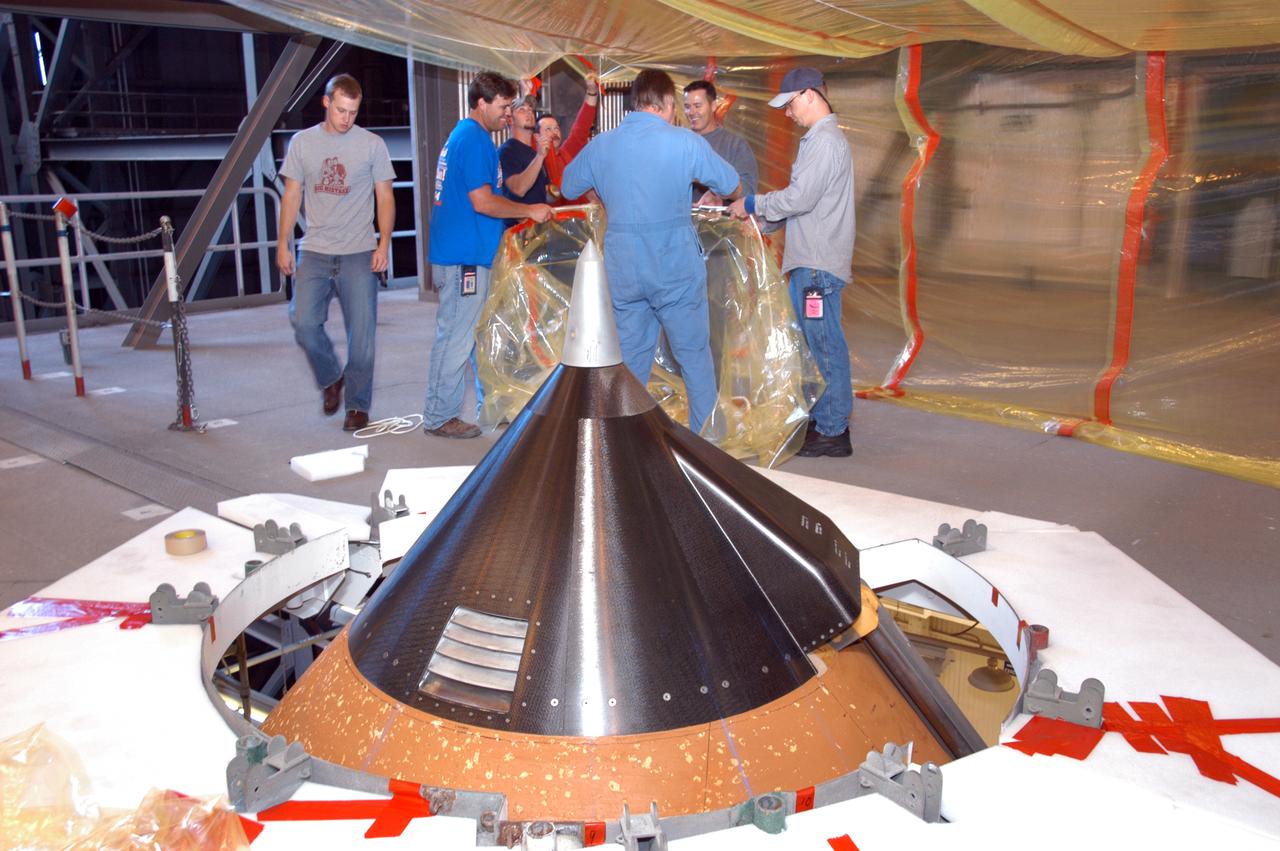
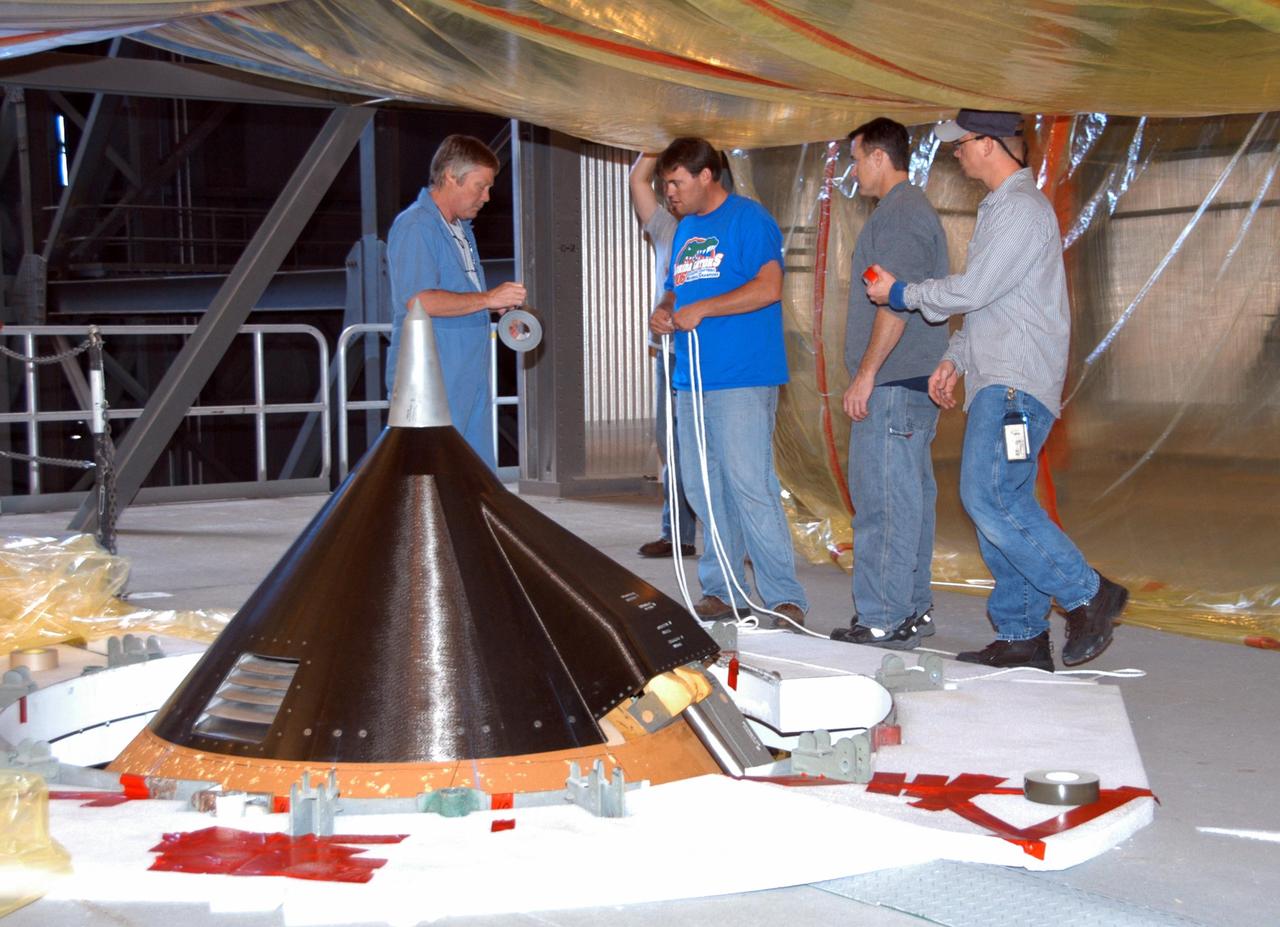
On an upper level of high bay 1 of the Vehicle Assembly Building, technicians prepare the area around the nose cone (foreground) of Atlantis' external tank that will undergo repair for hail damage. A severe thunderstorm with golf ball-sized hail caused visible divots in the giant tank's foam insulation and minor surface damage to about 26 heat shield tiles on the shuttle's left wing. Further evaluation of the tank is necessary to get an accurate accounting of foam damage and determine the type of repair required and the time needed for that work. A new target launch date has not been determined, but teams will focus on preparing Atlantis for liftoff in late April on mission STS-117.
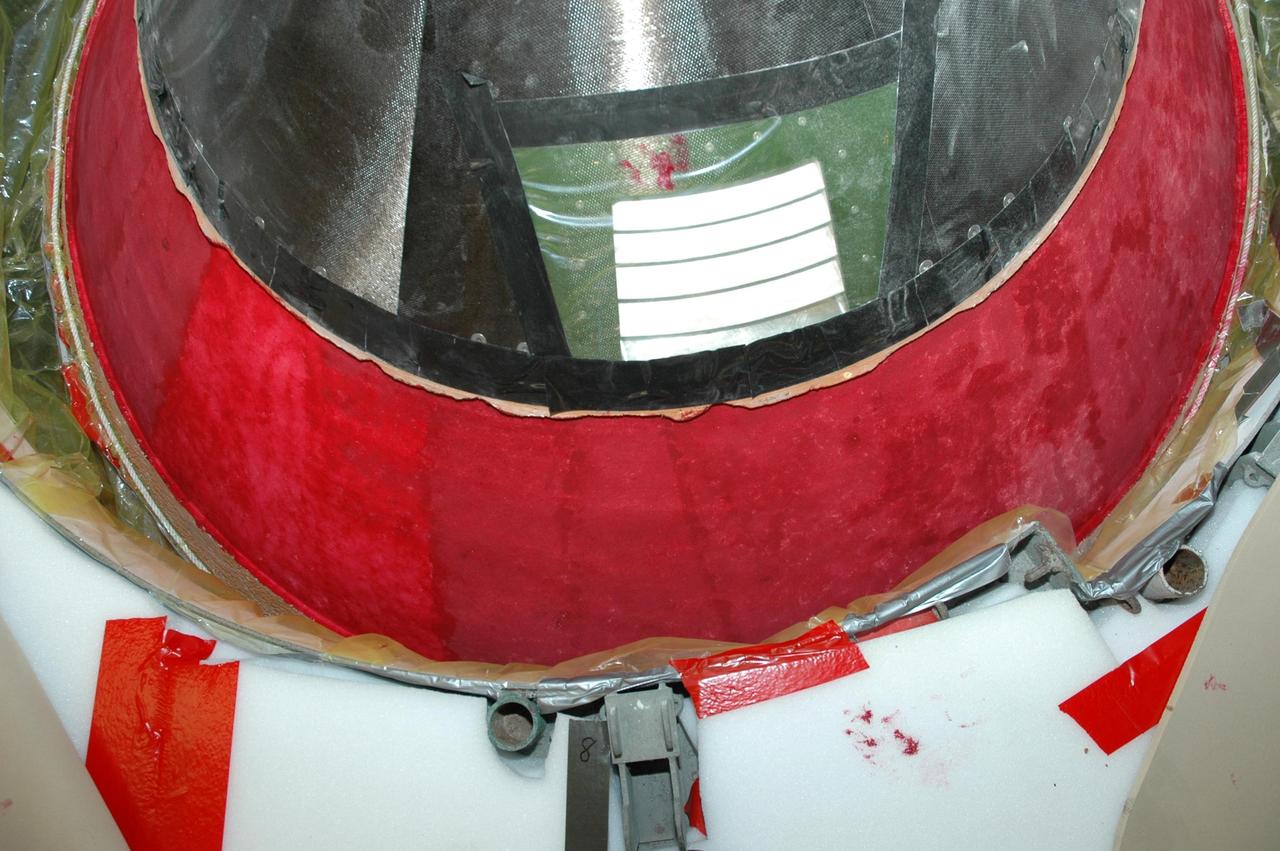
KENNEDY SPACE CENTER, FLA. -- In Highbay 1 inside the Vehicle Assembly Building, an area near the top of the external tank has been covered in a red dye to help expose cracks or compression dents. A severe thunderstorm with golf ball-sized hail caused visible divots in the giant tank's foam insulation and minor surface damage to about 26 heat shield tiles on the shuttle's left wing. A new target launch date has not been determined, but teams will focus on preparing Atlantis for liftoff in late April on mission STS-117. Photo credit: NASA/Jim Grossmann
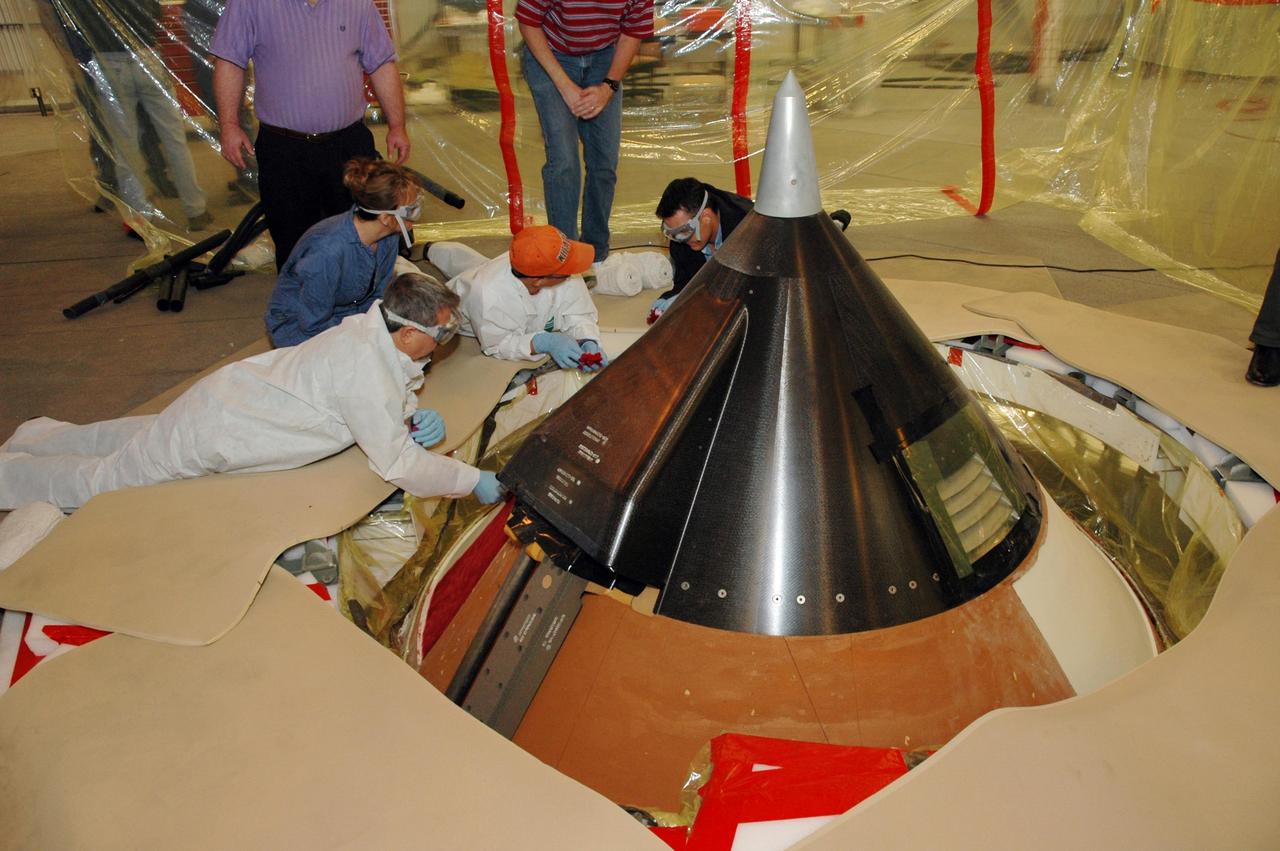
KENNEDY SPACE CENTER, FLA. -- In Highbay 1 inside the Vehicle Assembly Building, technicians perform repair techniques to the external tank inside a tented area that protects the top of the tank. A severe thunderstorm with golf ball-sized hail caused visible divots in the giant tank's foam insulation and minor surface damage to about 26 heat shield tiles on the shuttle's left wing. A new target launch date has not been determined, but teams will focus on preparing Atlantis for liftoff in late April on mission STS-117. Photo credit: NASA/Jim Grossmann
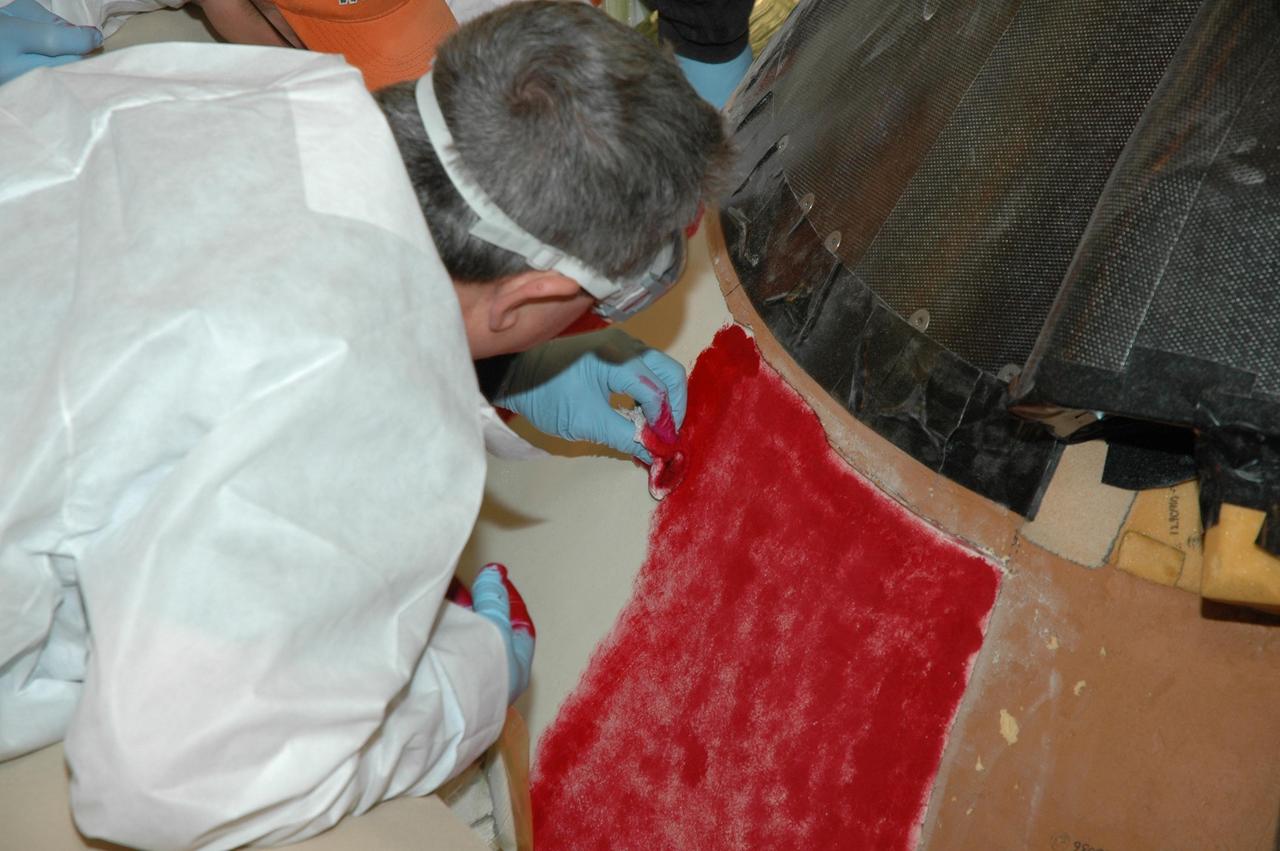
KENNEDY SPACE CENTER, FLA. -- In Highbay 1 inside the Vehicle Assembly Building, a technician carefully applies red dye to the external tank as part of repair operations. A severe thunderstorm with golf ball-sized hail caused visible divots in the giant tank's foam insulation and minor surface damage to about 26 heat shield tiles on the shuttle's left wing. A new target launch date has not been determined, but teams will focus on preparing Atlantis for liftoff in late April on mission STS-117. Photo credit: NASA/Jim Grossmann

On an upper level of high bay 1 of the Vehicle Assembly Building, technicians secure protective material around the base of the nose cone of Atlantis' external tank. The nose cone will undergo repair for hail damage. A severe thunderstorm with golf ball-sized hail caused visible divots in the giant tank's foam insulation and minor surface damage to about 26 heat shield tiles on the shuttle's left wing. Further evaluation of the tank is necessary to get an accurate accounting of foam damage and determine the type of repair required and the time needed for that work. A new target launch date has not been determined, but teams will focus on preparing Atlantis for liftoff in late April on mission STS-117.
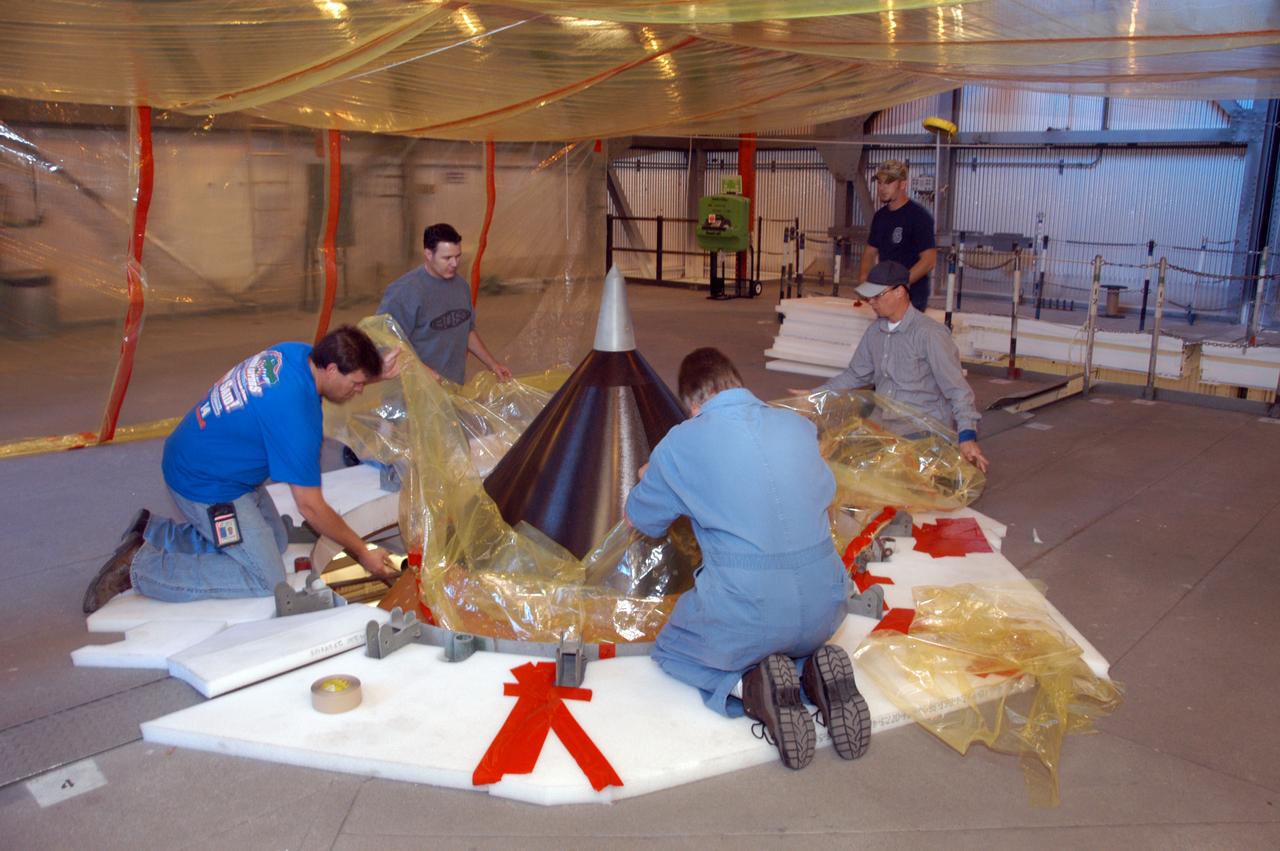
On an upper level of high bay 1 of the Vehicle Assembly Building, technicians place protective material around the nose cone of Atlantis' external tank. The nose cone will undergo repair for hail damage. A severe thunderstorm with golf ball-sized hail caused visible divots in the giant tank's foam insulation and minor surface damage to about 26 heat shield tiles on the shuttle's left wing. Further evaluation of the tank is necessary to get an accurate accounting of foam damage and determine the type of repair required and the time needed for that work. A new target launch date has not been determined, but teams will focus on preparing Atlantis for liftoff in late April on mission STS-117.
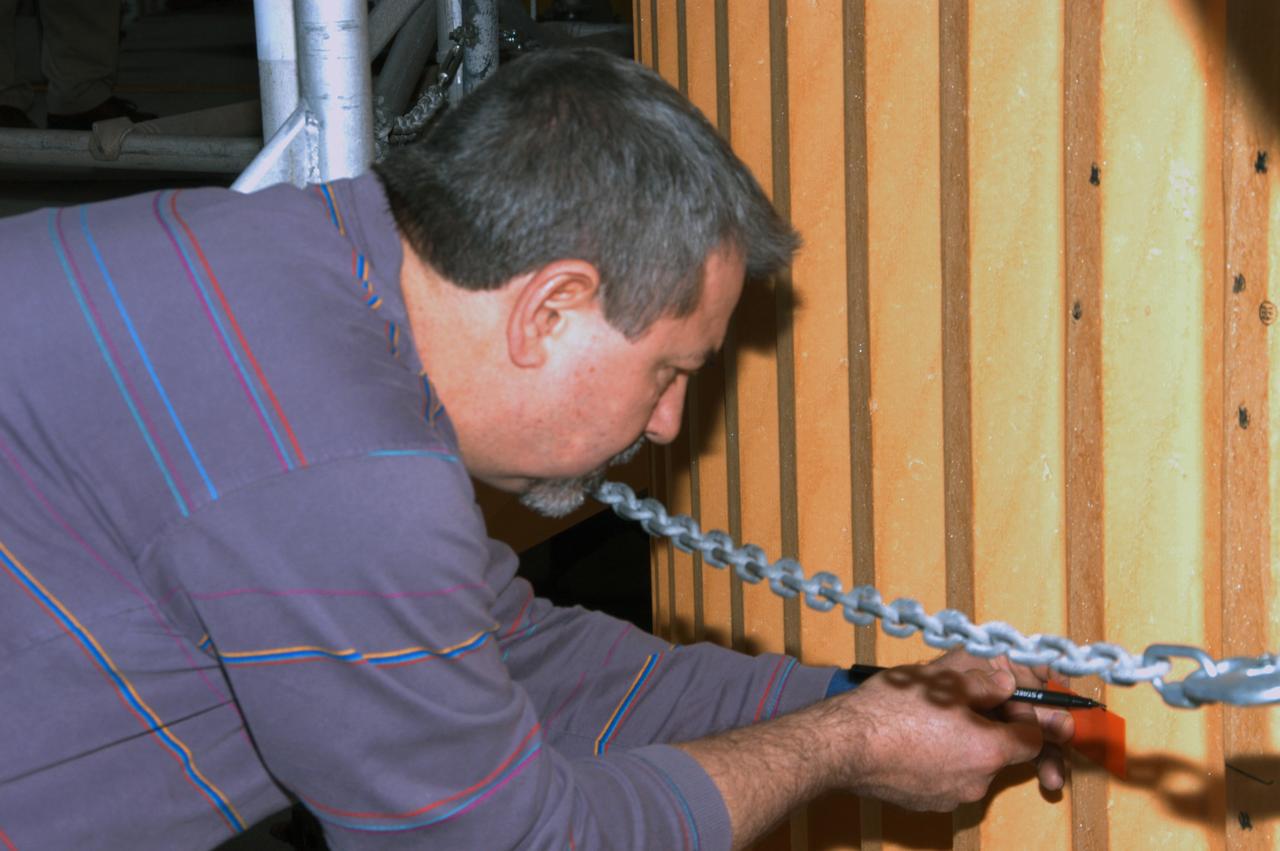
In high bay 1 of the Vehicle Assembly Building, a technician marks off an area for inspection on Atlantis' external tank. A severe thunderstorm with golf ball-sized hail caused visible divots in the giant tank's foam insulation and minor surface damage to about 26 heat shield tiles on the shuttle's left wing. Further evaluation of the tank is necessary to get an accurate accounting of foam damage and determine the type of repair required and the time needed for that work. A new target launch date has not been determined, but teams will focus on preparing Atlantis for liftoff in late April on mission STS-117.
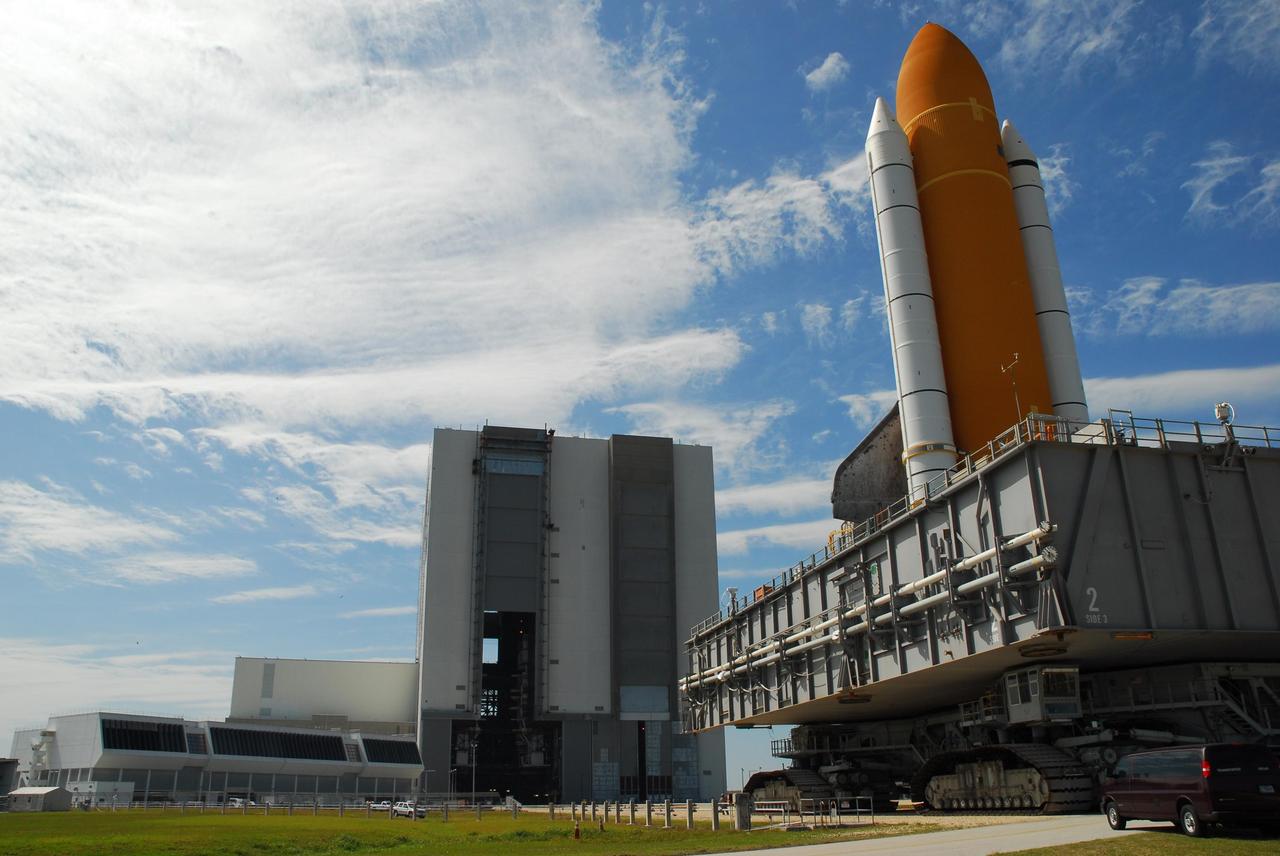
KENNEDY SPACE CENTER, FLA. -- Space Shuttle Atlantis, atop the mobile launcher platform, rolls toward the Vehicle Assembly Building. In the VAB, the shuttle will be examined for hail damage. A severe thunderstorm with golf ball-sized hail caused divots in the giant tank's foam insulation and minor surface damage to about 26 heat shield tiles on the shuttle's left wing. Further evaluation of the tank is necessary to get an accurate accounting of foam damage and determine the type of repair required and the time needed for that work. A new target launch date has not been determined, but teams will focus on preparing Atlantis for liftoff in late April. Photo credit: NASA/Amanda Diller
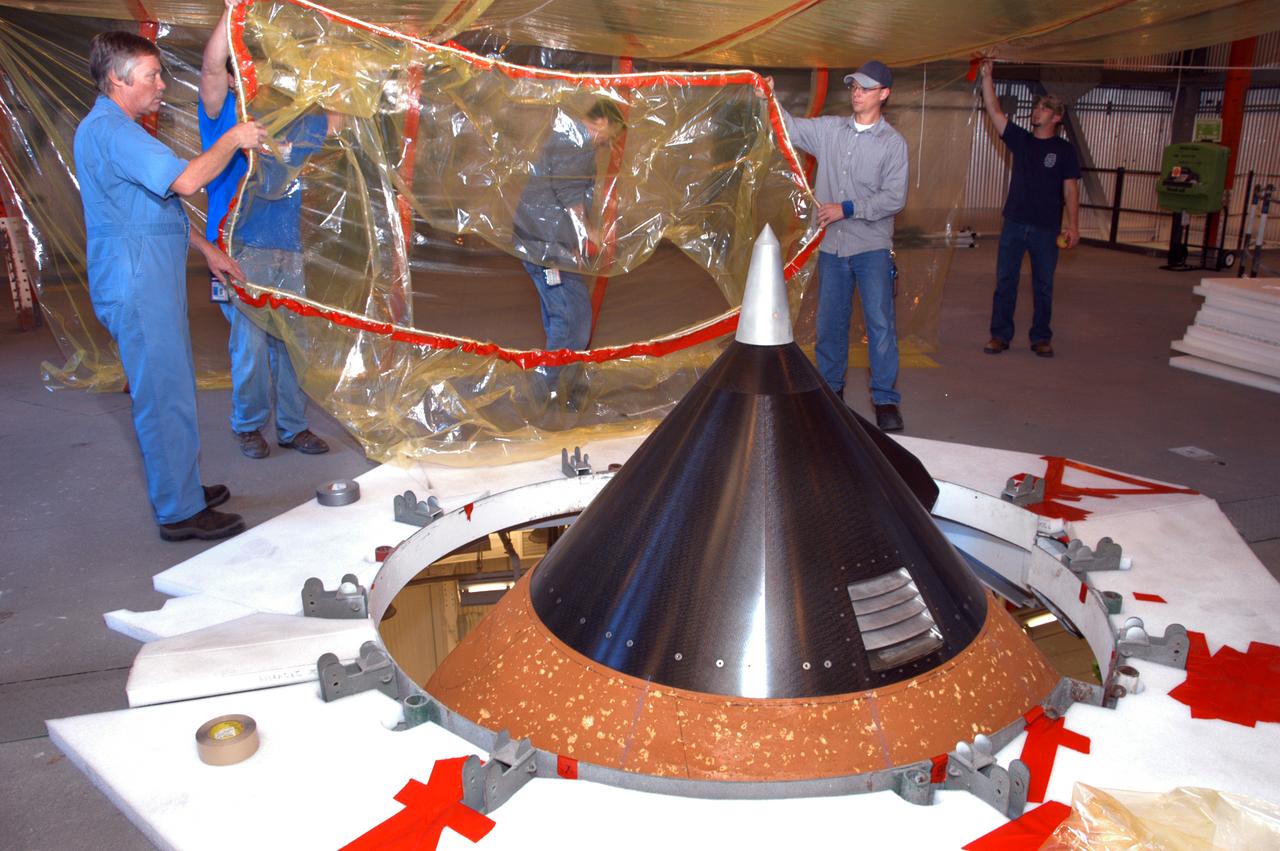
On an upper level of high bay 1 of the Vehicle Assembly Building, technicians move protective material toward the nose cone (foreground) of Atlantis' external tank. The nose cone will undergo repair for hail damage. A severe thunderstorm with golf ball-sized hail caused visible divots in the giant tank's foam insulation and minor surface damage to about 26 heat shield tiles on the shuttle's left wing. Further evaluation of the tank is necessary to get an accurate accounting of foam damage and determine the type of repair required and the time needed for that work. A new target launch date has not been determined, but teams will focus on preparing Atlantis for liftoff in late April on mission STS-117.

KENNEDY SPACE CENTER, FLA. -- In Highbay 1 inside the Vehicle Assembly Building, a technician carefully begins to carefully sand away the red dye that has been applied to the external tank to help expose cracks or compression dents. A severe thunderstorm with golf ball-sized hail caused visible divots in the giant tank's foam insulation and minor surface damage to about 26 heat shield tiles on the shuttle's left wing. A new target launch date has not been determined, but teams will focus on preparing Atlantis for liftoff in late April on mission STS-117. Photo credit: NASA/Jim Grossmann

KENNEDY SPACE CENTER, FLA. -- In Highbay 1 inside the Vehicle Assembly Building, technicians work on repair techniques to the hail-damaged external tank. They are inside a tented area that protects the tank. Scaffolding around the tank can be seen below. A severe thunderstorm with golf ball-sized hail caused visible divots in the giant tank's foam insulation and minor surface damage to about 26 heat shield tiles on the shuttle's left wing. A new target launch date has not been determined, but teams will focus on preparing Atlantis for liftoff in late April on mission STS-117. Photo credit: NASA/Jim Grossmann
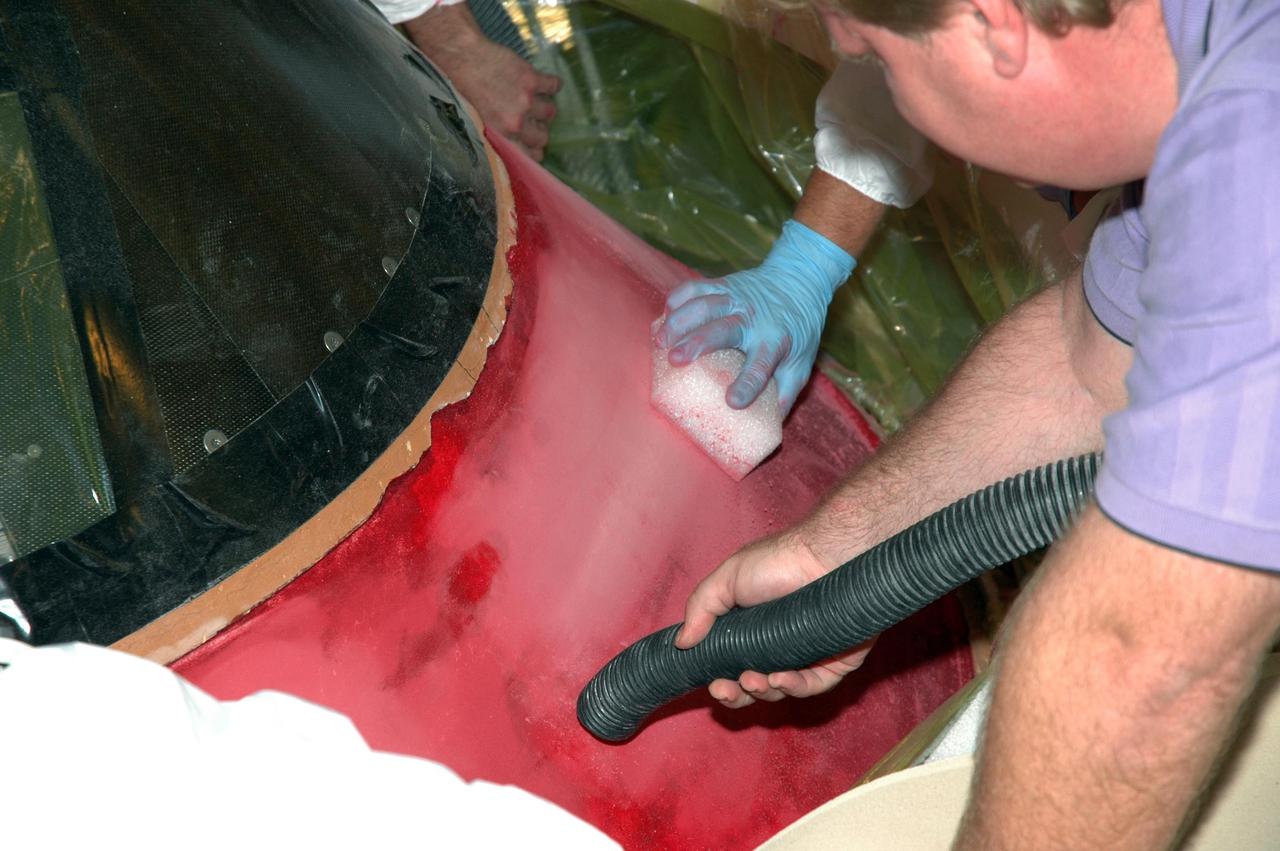
KENNEDY SPACE CENTER, FLA. -- In Highbay 1 inside the Vehicle Assembly Building, a technician carefully sands away the red dye that has been applied to the external tank to help expose cracks or compression dents, while another technician uses a compression hose to remove excess particles. A severe thunderstorm with golf ball-sized hail caused visible divots in the giant tank's foam insulation and minor surface damage to about 26 heat shield tiles on the shuttle's left wing. A new target launch date has not been determined, but teams will focus on preparing Atlantis for liftoff in late April on mission STS-117. Photo credit: NASA/Jim Grossmann
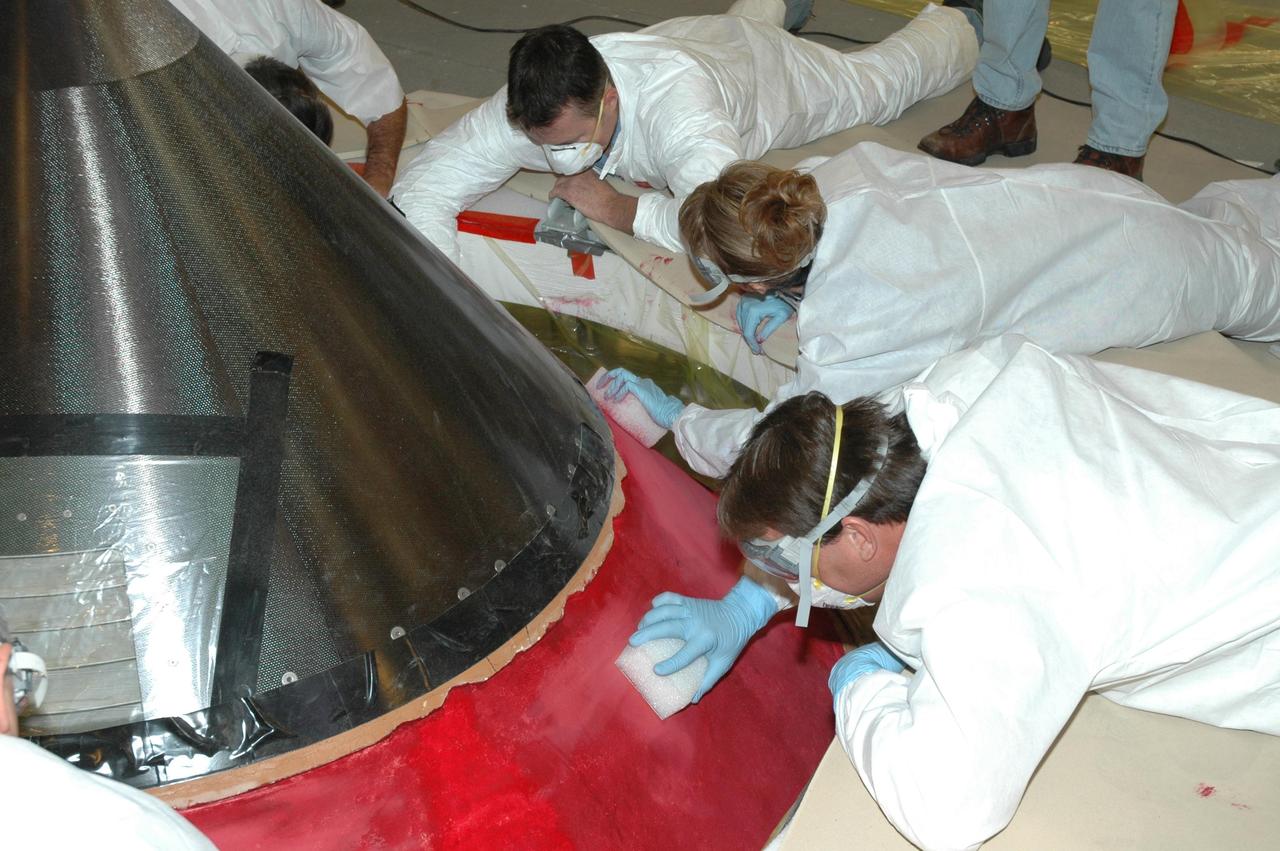
KENNEDY SPACE CENTER, FLA. -- In Highbay 1 inside the Vehicle Assembly Building, technicians begin to carefully sand away the red dye that has been applied to the external tank to help expose cracks or compression dents. A severe thunderstorm with golf ball-sized hail caused visible divots in the giant tank's foam insulation and minor surface damage to about 26 heat shield tiles on the shuttle's left wing. A new target launch date has not been determined, but teams will focus on preparing Atlantis for liftoff in late April on mission STS-117. Photo credit: NASA/Jim Grossmann
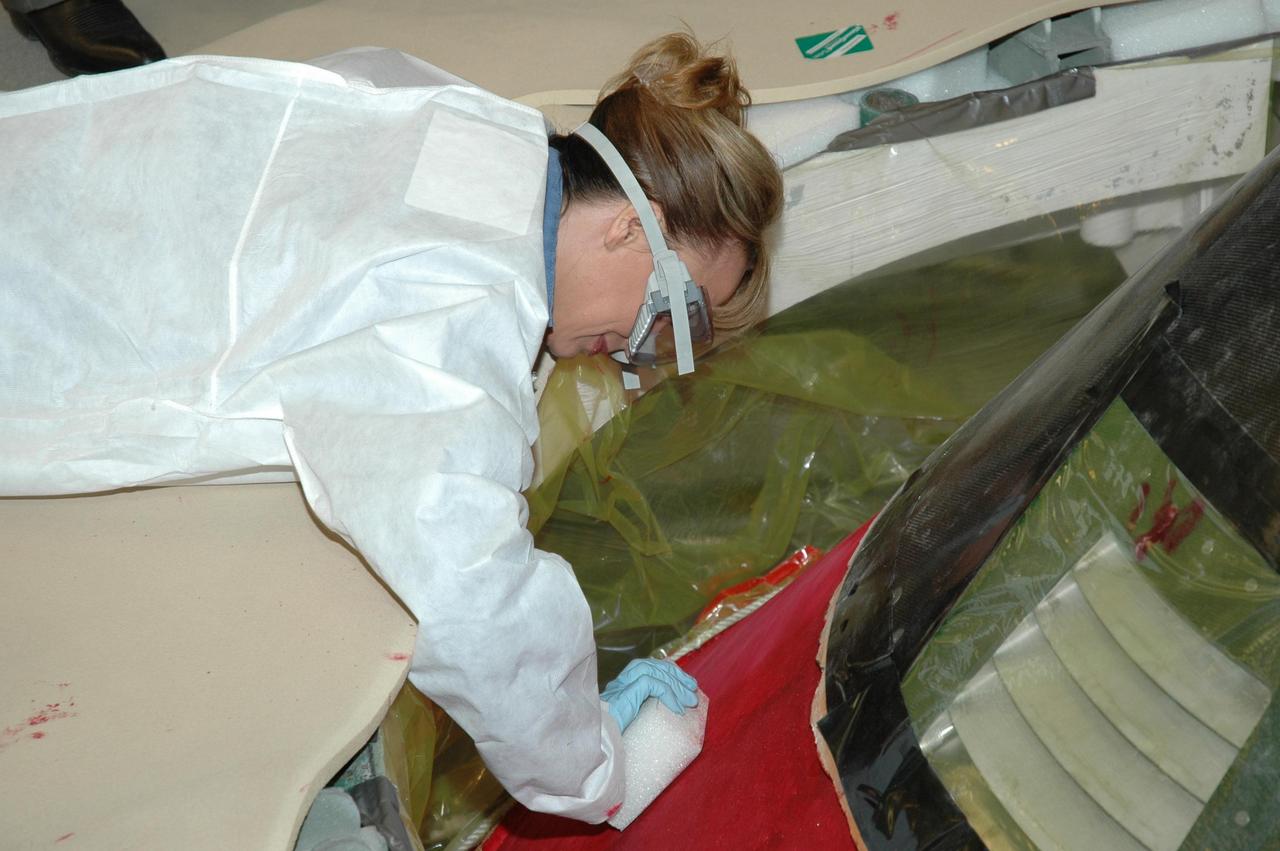
KENNEDY SPACE CENTER, FLA. -- In Highbay 1 inside the Vehicle Assembly Building, a technician carefully begins to sand away the red dye that has been applied to the external tank to help expose cracks or compression dents. A severe thunderstorm with golf ball-sized hail caused visible divots in the giant tank's foam insulation and minor surface damage to about 26 heat shield tiles on the shuttle's left wing. A new target launch date has not been determined, but teams will focus on preparing Atlantis for liftoff in late April on mission STS-117. Photo credit: NASA/Jim Grossmann
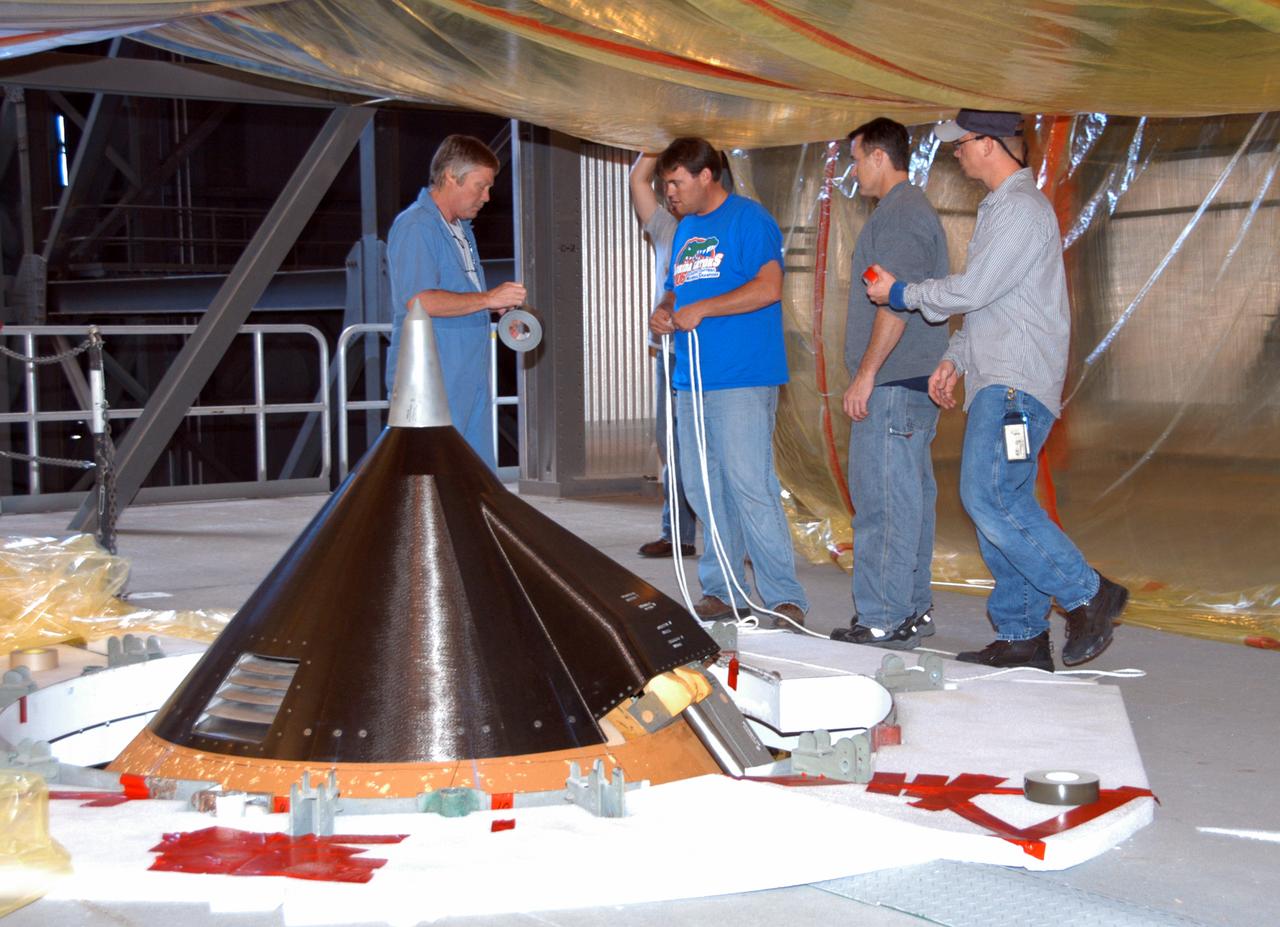
On an upper level of high bay 1 of the Vehicle Assembly Building, technicians prepare the area around the nose cone (left) of Atlantis' external tank that will undergo repair for hail damage. A severe thunderstorm with golf ball-sized hail caused visible divots in the giant tank's foam insulation and minor surface damage to about 26 heat shield tiles on the shuttle's left wing. Further evaluation of the tank is necessary to get an accurate accounting of foam damage and determine the type of repair required and the time needed for that work. A new target launch date has not been determined, but teams will focus on preparing Atlantis for liftoff in late April on mission STS-117.
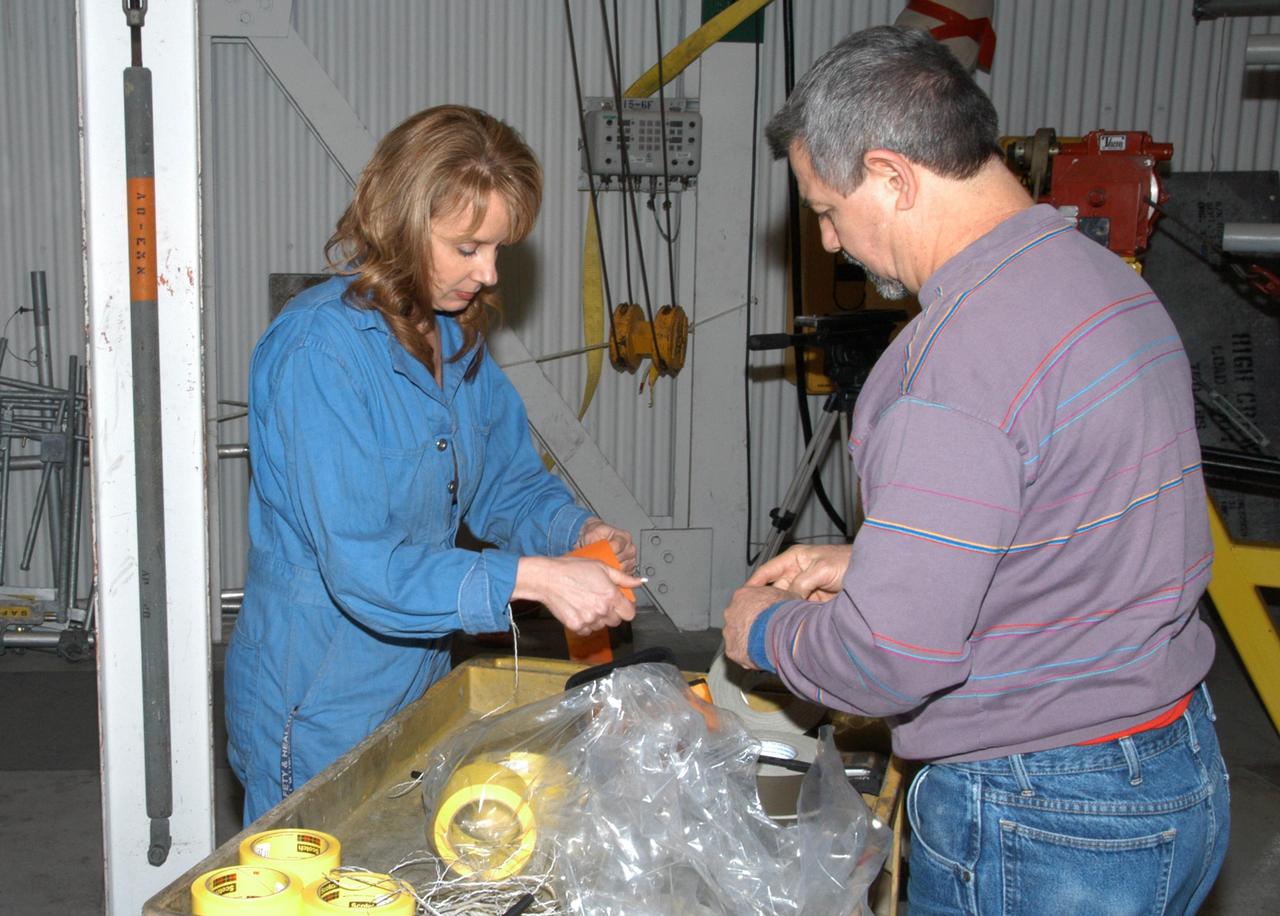
KENNEDY SPACE CENTER, FLA. -- Technicians in the Vehicle Assembly Building prepare materials that will be used during repair of the nose cone on Atlantis' external tank. A severe thunderstorm with golf ball-sized hail caused visible divots in the giant tank's foam insulation and minor surface damage to about 26 heat shield tiles on the shuttle's left wing. Further evaluation of the tank is necessary to get an accurate accounting of foam damage and determine the type of repair required and the time needed for that work. A new target launch date has not been determined, but teams will focus on preparing Atlantis for liftoff in late April on mission STS-117. Photo credit: NASA/George Shelton
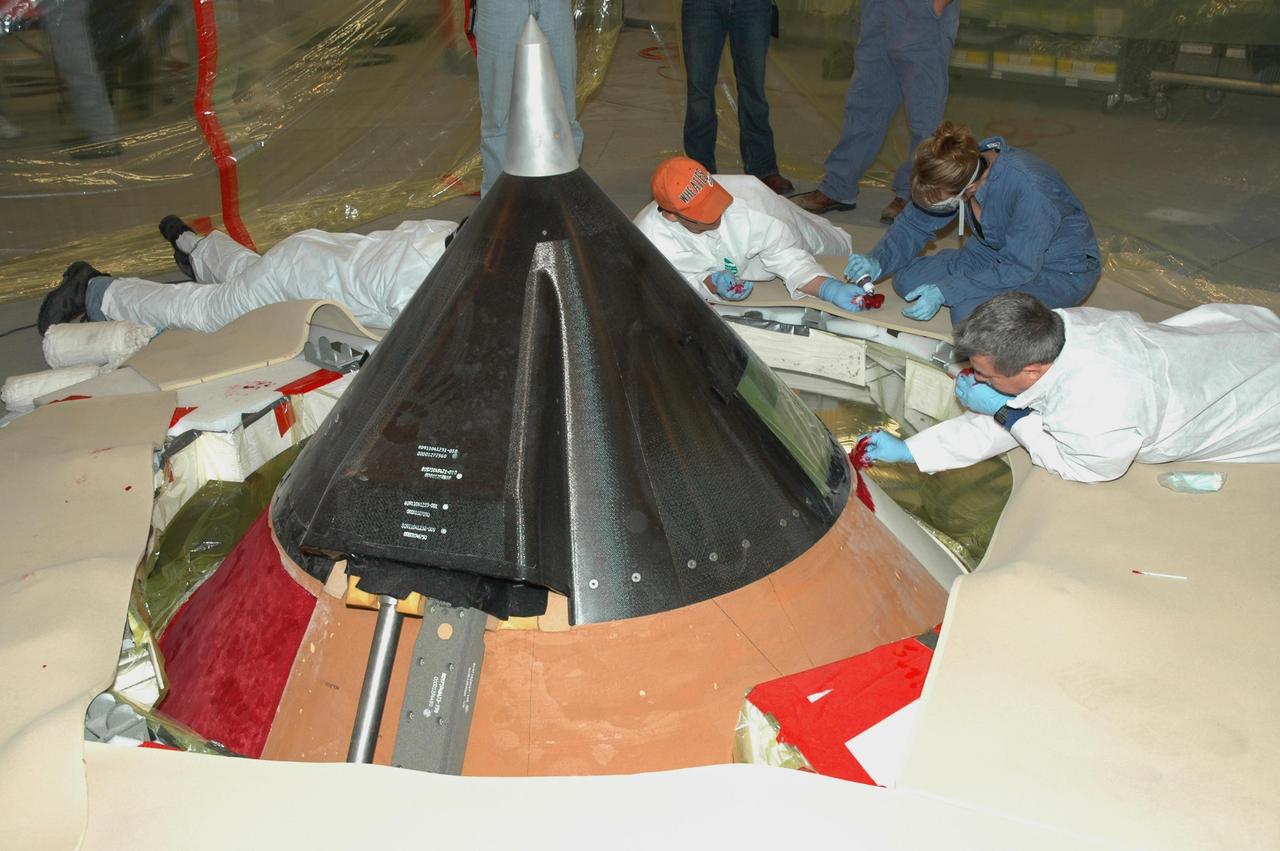
KENNEDY SPACE CENTER, FLA. -- In Highbay 1 inside the Vehicle Assembly Building, technicians carefully apply red dye to the external tank as part of repair operations. A severe thunderstorm with golf ball-sized hail caused visible divots in the giant tank's foam insulation and minor surface damage to about 26 heat shield tiles on the shuttle's left wing. A new target launch date has not been determined, but teams will focus on preparing Atlantis for liftoff in late April on mission STS-117. Photo credit: NASA/Jim Grossmann
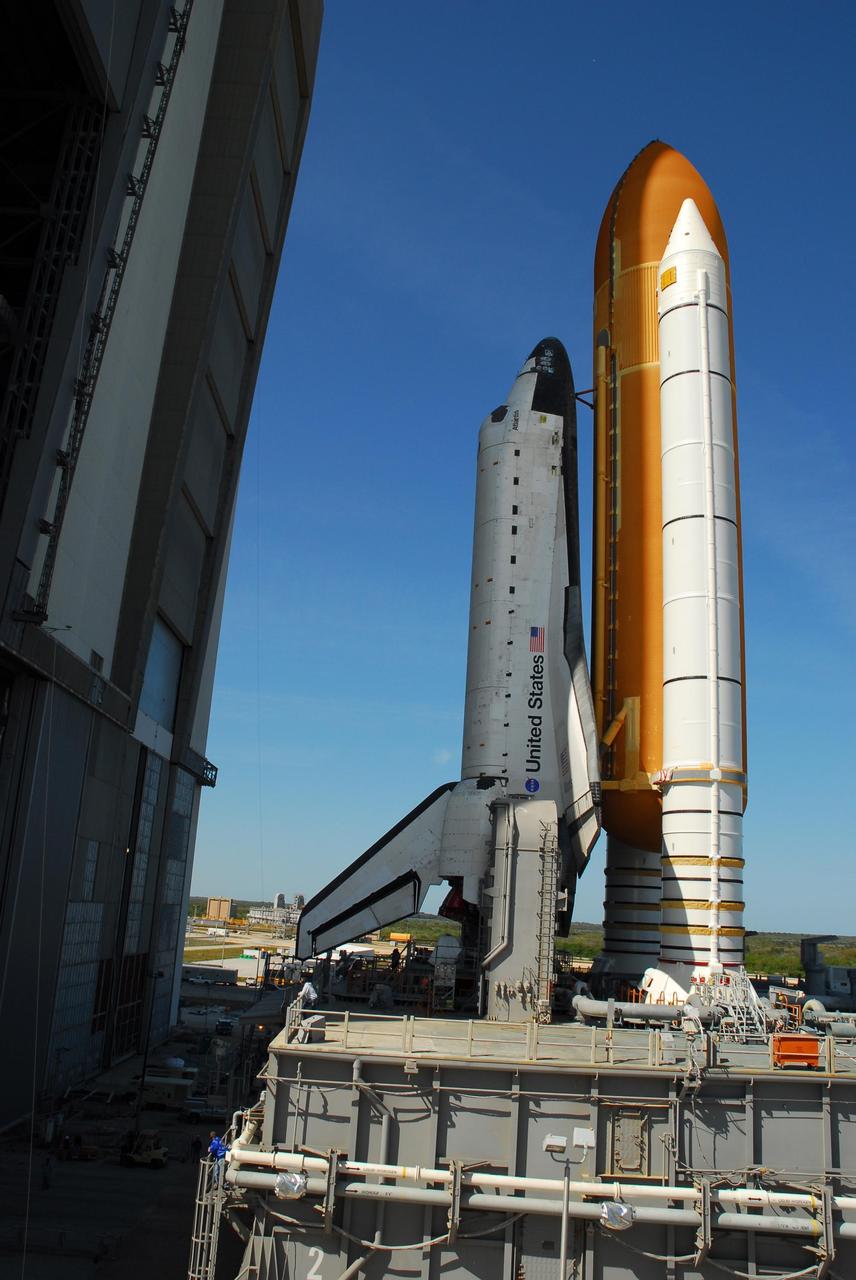
KENNEDY SPACE CENTER, FLA. -- Space Shuttle Atlantis, atop the mobile launcher platform, rolls into the Vehicle Assembly Building after leaving Launch Pad 39A. In the VAB, the shuttle will be examined for hail damage. A severe thunderstorm with golf ball-sized hail caused divots in the giant tank's foam insulation and minor surface damage to about 26 heat shield tiles on the shuttle's left wing. Further evaluation of the tank is necessary to get an accurate accounting of foam damage and determine the type of repair required and the time needed for that work. A new target launch date has not been determined, but teams will focus on preparing Atlantis for liftoff in late April. Photo credit: NASA/Amanda Diller
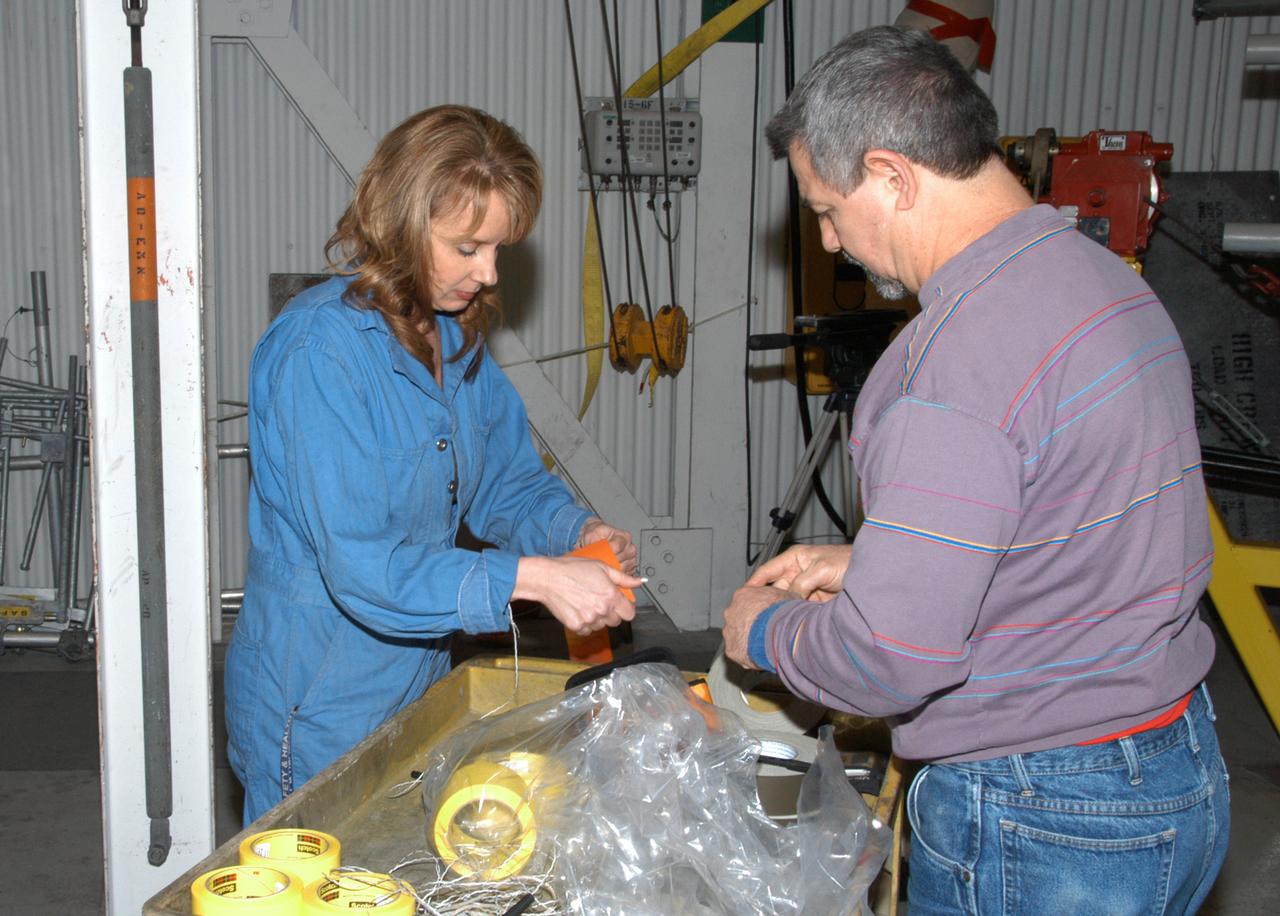
Technicians in the Vehicle Assembly Building prepare materials that will be used during repair of the nose cone on Atlantis' external tank. A severe thunderstorm with golf ball-sized hail caused visible divots in the giant tank's foam insulation and minor surface damage to about 26 heat shield tiles on the shuttle's left wing. Further evaluation of the tank is necessary to get an accurate accounting of foam damage and determine the type of repair required and the time needed for that work. A new target launch date has not been determined, but teams will focus on preparing Atlantis for liftoff in late April on mission STS-117.
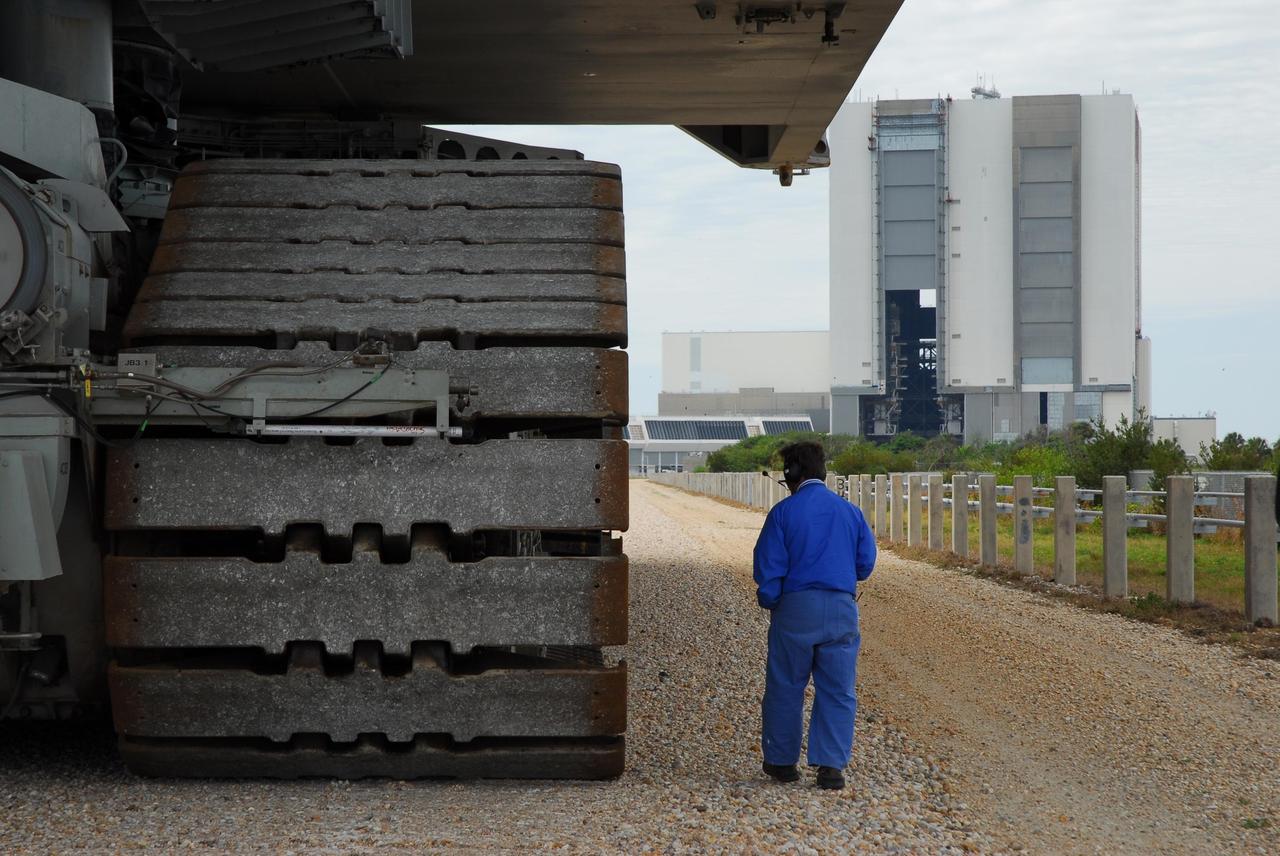
KENNEDY SPACE CENTER, FLA. -- A worker walks alongside the massive treads of the crawler-transporter that is moving Space Shuttle Atlantis back to the Vehicle Assembly Building, at right. In the VAB, the shuttle will be examined for hail damage. A severe thunderstorm with golf ball-sized hail caused divots in the giant tank's foam insulation and minor surface damage to about 26 heat shield tiles on the shuttle's left wing. Further evaluation of the tank is necessary to get an accurate accounting of foam damage and determine the type of repair required and the time needed for that work. A new target launch date has not been determined, but teams will focus on preparing Atlantis for liftoff in late April. Photo credit: NASA/Amanda Diller
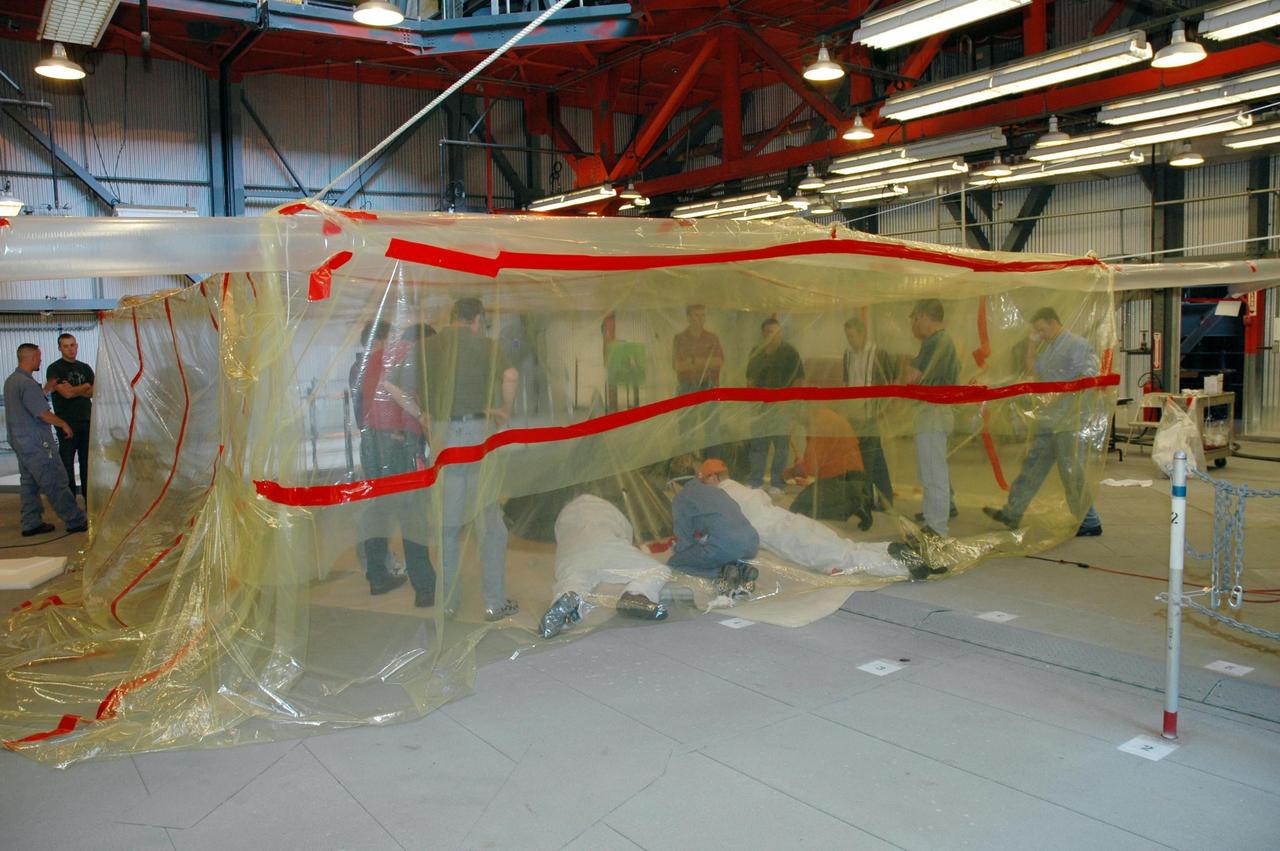
KENNEDY SPACE CENTER, FLA. -- In Highbay 1 inside the Vehicle Assembly Building, technicians work on repair techniques to the external tank. They are inside a tented area that protects the tank. A severe thunderstorm with golf ball-sized hail caused visible divots in the giant tank's foam insulation and minor surface damage to about 26 heat shield tiles on the shuttle's left wing. A new target launch date has not been determined, but teams will focus on preparing Atlantis for liftoff in late April on mission STS-117. Photo credit: NASA/Jim Grossmann
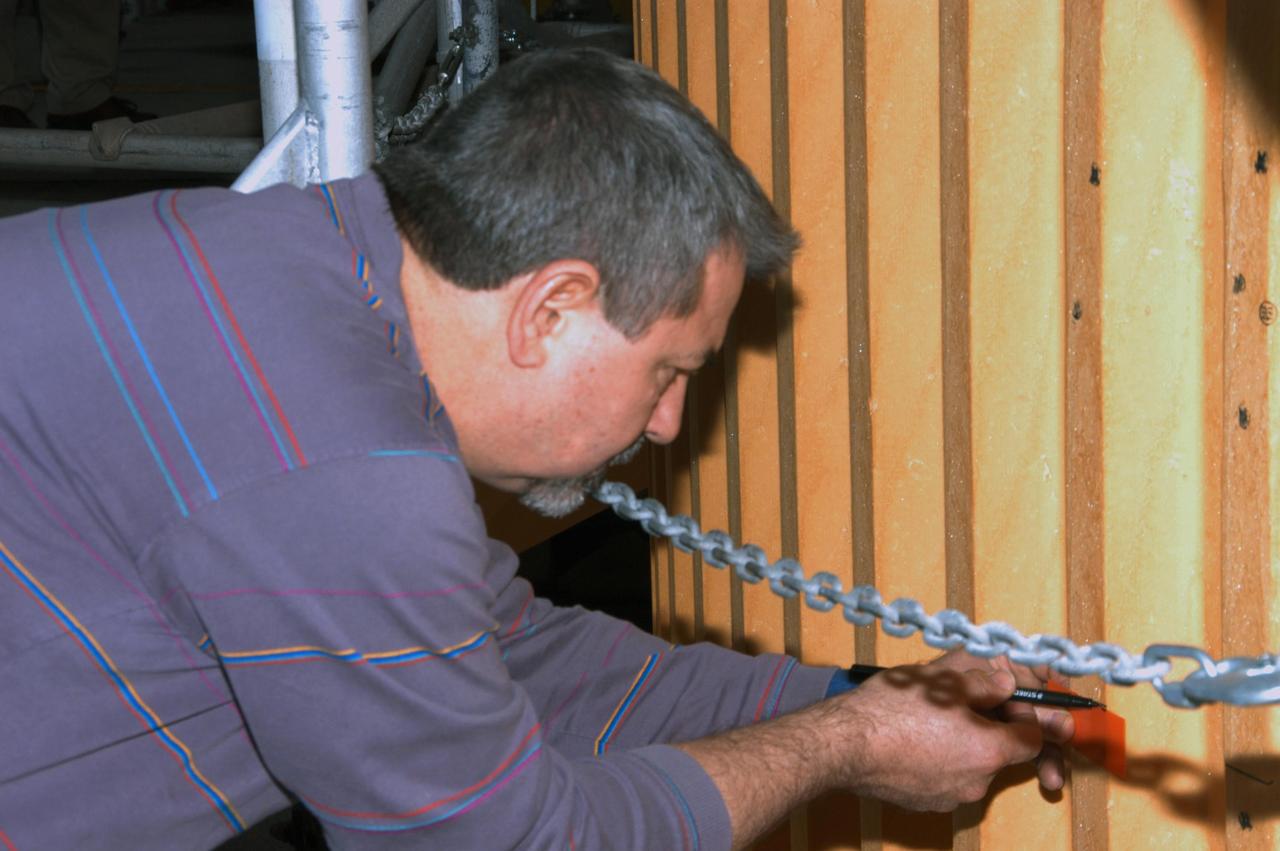
KENNEDY SPACE CENTER, FLA. -- In high bay 1 of the Vehicle Assembly Building, a technician marks off an area for inspection on Atlantis' external tank. A severe thunderstorm with golf ball-sized hail caused visible divots in the giant tank's foam insulation and minor surface damage to about 26 heat shield tiles on the shuttle's left wing. Further evaluation of the tank is necessary to get an accurate accounting of foam damage and determine the type of repair required and the time needed for that work. A new target launch date has not been determined, but teams will focus on preparing Atlantis for liftoff in late April on mission STS-117. Photo credit: NASA/George Shelton
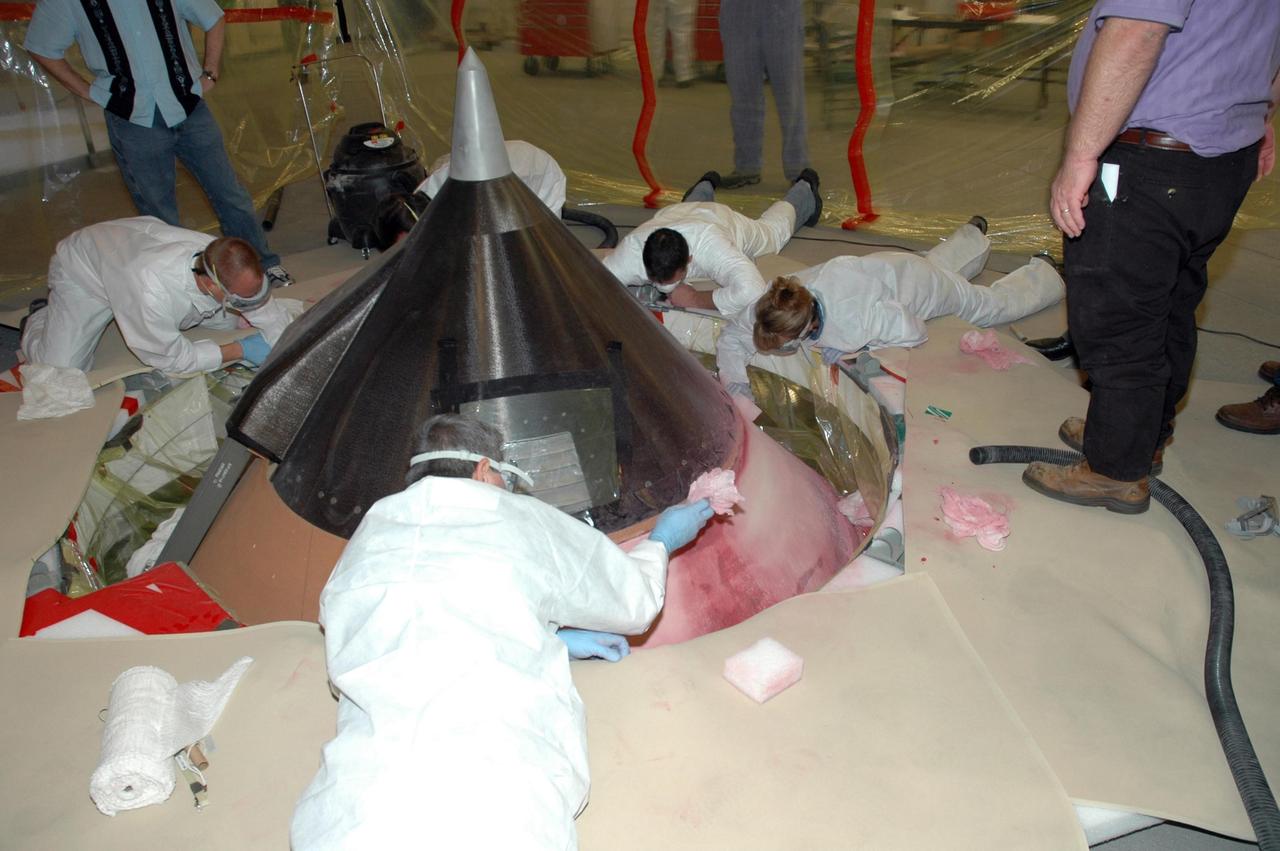
KENNEDY SPACE CENTER, FLA. -- In Highbay 1 inside the Vehicle Assembly Building, technicians carefully sand away the red dye that has been applied to the external tank to help expose cracks or compression dents. A severe thunderstorm with golf ball-sized hail caused visible divots in the giant tank's foam insulation and minor surface damage to about 26 heat shield tiles on the shuttle's left wing. A new target launch date has not been determined, but teams will focus on preparing Atlantis for liftoff in late April on mission STS-117. Photo credit: NASA/Jim Grossmann

KENNEDY SPACE CENTER, FLA. -- In Highbay 1 inside the Vehicle Assembly Building, technicians carefully inspect a portion of the external tank foam that has been covered in red dye to help expose cracks or compression dents. A severe thunderstorm with golf ball-sized hail caused visible divots in the giant tank's foam insulation and minor surface damage to about 26 heat shield tiles on the shuttle's left wing. A new target launch date has not been determined, but teams will focus on preparing Atlantis for liftoff in late April on mission STS-117. Photo credit: NASA/Jim Grossmann

KENNEDY SPACE CENTER, FLA. -- In Highbay 1 inside the Vehicle Assembly Building, a technician carefully applies red dye to the external tank as part of repair operations. A severe thunderstorm with golf ball-sized hail caused visible divots in the giant tank's foam insulation and minor surface damage to about 26 heat shield tiles on the shuttle's left wing. A new target launch date has not been determined, but teams will focus on preparing Atlantis for liftoff in late April on mission STS-117. Photo credit: NASA/Jim Grossmann
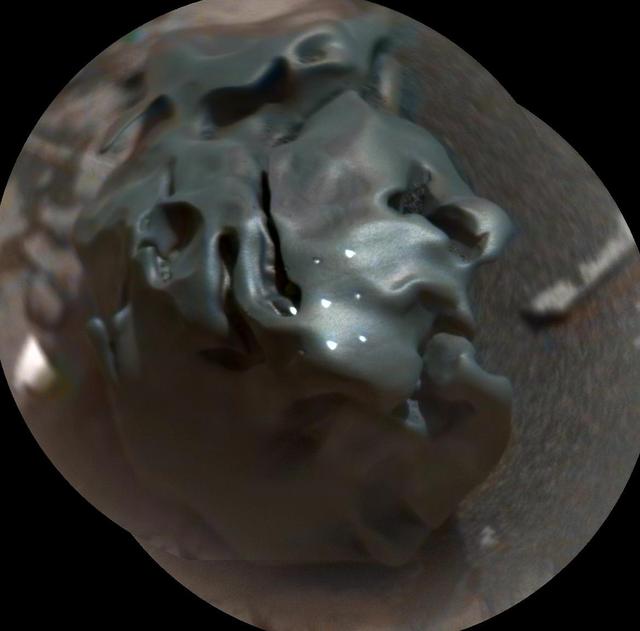
The dark, golf-ball-size object in this composite, colorized view from the Chemistry and Camera (ChemCam) instrument on NASA's Curiosity Mars rover shows a grid of shiny dots where ChemCam had fired laser pulses used for determining the chemical elements in the target's composition. The analysis confirmed that this object, informally named "Egg Rock," is an iron-nickel meteorite. Iron-nickel meteorites are a common class of space rocks found on Earth, and previous examples have been found on Mars, but Egg Rock is the first on Mars to be examined with a laser-firing spectrometer. The laser pulses on Oct. 30, 2016, induced bursts of glowing gas at the target, and ChemCam's spectrometer read the wavelengths of light from those bursts to gain information about the target's composition. The laser pulses also burned through the dark outer surface, exposing bright interior material. This view combines two images taken later the same day by ChemCam's remote micro-imager (RMI) camera, with color added from an image taken by Curiosity's Mast Camera (Mastcam). A Mastcam image of Egg Rock is at PIA21134. http://photojournal.jpl.nasa.gov/catalog/PIA21133
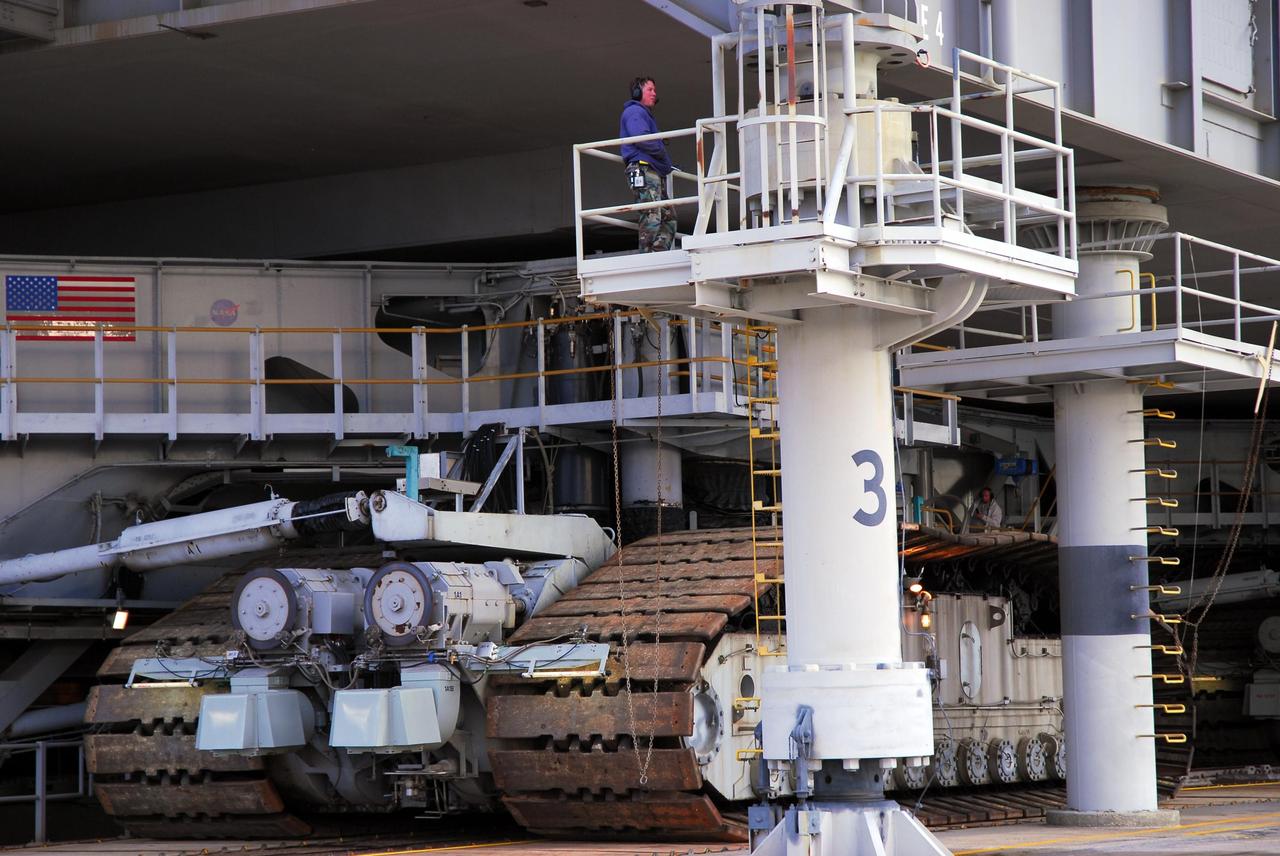
KENNEDY SPACE CENTER, FLA. -- The crawler-transporter, with its massive treads, has moved under the mobile launcher platform holding Space Shuttle Atlantis on Launch Pad 39A. The crawler will move the shuttle back to the Vehicle Assembly Building where the shuttle will be examined for hail damage. A severe thunderstorm with golf ball-sized hail caused divots in the giant tank's foam insulation and minor surface damage to about 26 heat shield tiles on the shuttle's left wing. Further evaluation of the tank is necessary to get an accurate accounting of foam damage and determine the type of repair required and the time needed for that work. A new target launch date has not been determined, but teams will focus on preparing Atlantis for liftoff in late April. Photo credit: NASA/Amanda Diller
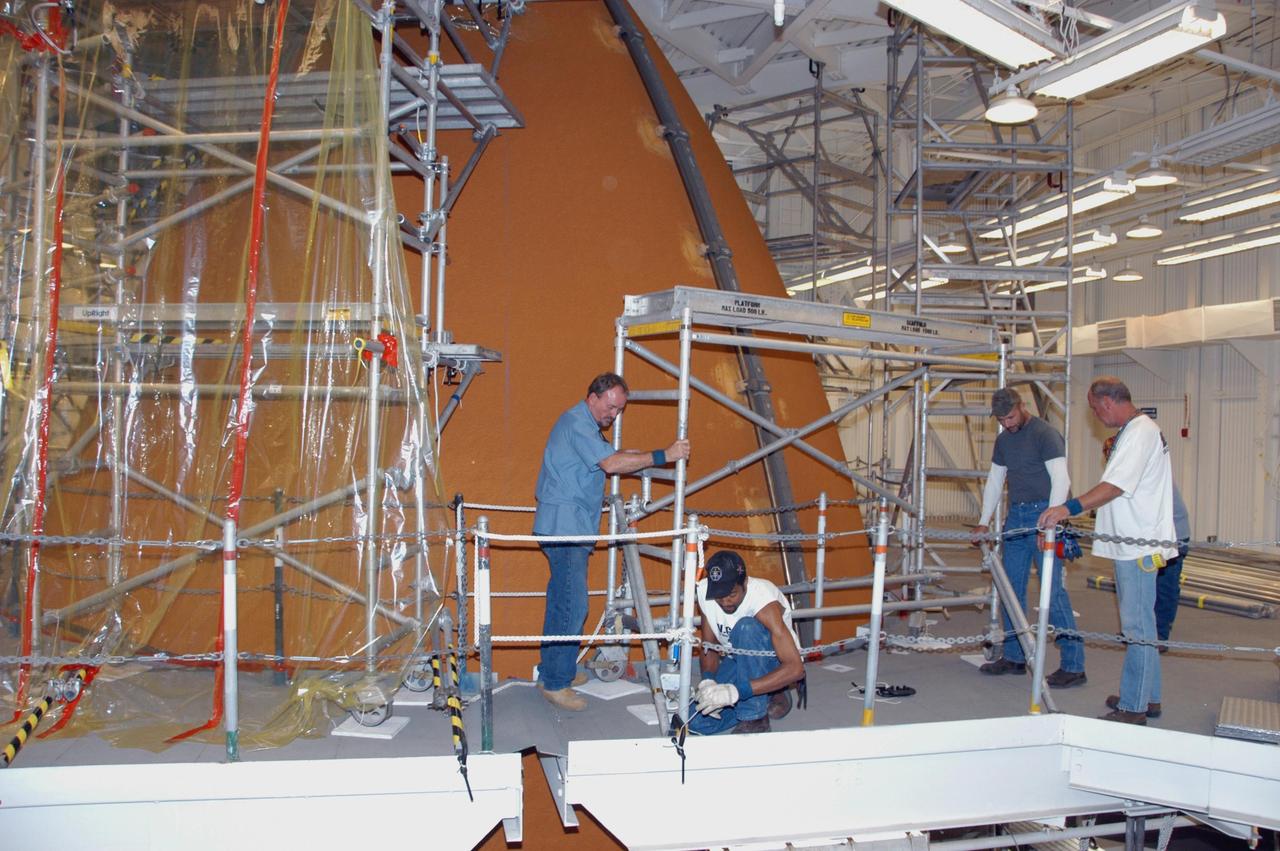
KENNEDY SPACE CENTER, FLA. -- On an upper level of high bay 1 of the Vehicle Assembly Building, technicians secure protective material around Atlantis' external tank. The preparations are for future repair work of the hail damage that happened Feb. 27. A severe thunderstorm with golf ball-sized hail caused visible divots in the giant tank's foam insulation and minor surface damage to about 26 heat shield tiles on the shuttle's left wing. Further evaluation of the tank is necessary to get an accurate accounting of foam damage and determine the type of repair required and the time needed for that work. A new target launch date has not been determined, but teams will focus on preparing Atlantis for liftoff in late April on mission STS-117. Photo credit: NASA/George Shelton
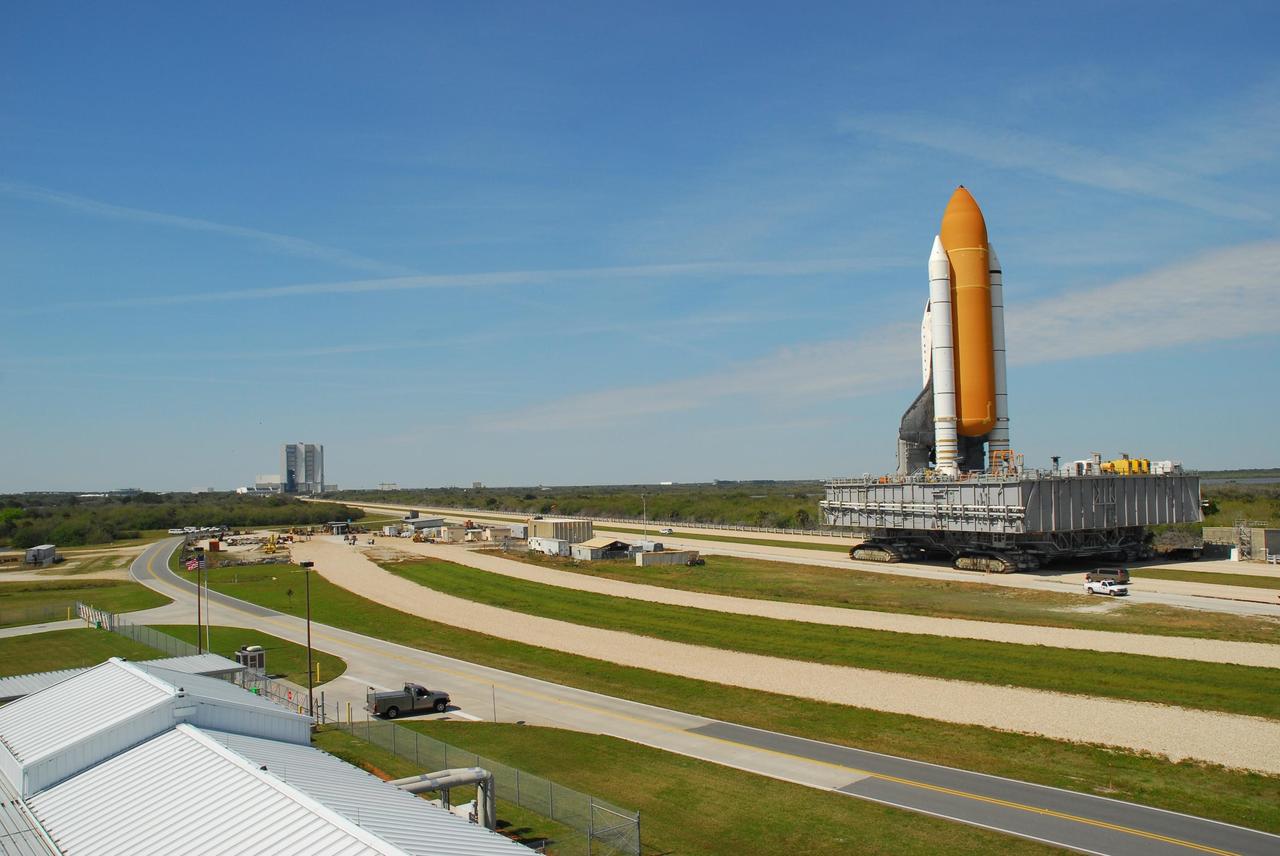
KENNEDY SPACE CENTER, FLA. -- Under blue sky streaked with contrails, Space Shuttle Atlantis, atop the mobile launcher platform, is being rolled back to the Vehicle Assembly Building (at left in the background) from Launch Pad 39A. In the VAB, the shuttle will be examined for hail damage. A severe thunderstorm with golf ball-sized hail caused divots in the giant tank's foam insulation and minor surface damage to about 26 heat shield tiles on the shuttle's left wing. Further evaluation of the tank is necessary to get an accurate accounting of foam damage and determine the type of repair required and the time needed for that work. A new target launch date has not been determined, but teams will focus on preparing Atlantis for liftoff in late April. Photo credit: NASA/Amanda Diller
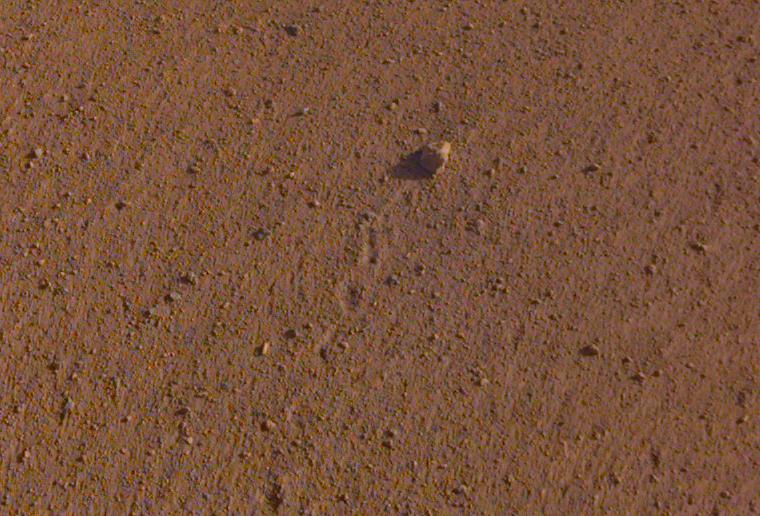
The rock in the center of this image was tossed about 3 feet (1 meter) by NASA's InSight spacecraft as it touched down on Mars on November 26, 2018. The rock was later nicknamed "Rolling Stones Rock" in honor of The Rolling Stones. A little larger than a golf ball, the rock is about 2.2 inches (5.5 centimeters) in diameter and 1 inch (2.4 centimeters) in height. A series of 10 or so divots marks the rock's course after being set in motion by the landing. It's the farthest NASA has seen a rock roll after landing a spacecraft on another planet. Though fitting, "Rolling Stones Rock" is not an official designation by the International Astronomical Union, which is responsible to approving the names given to geographical and geological features on other planets. This image, which has been cropped, was taken by the Instrument Deployment Camera (IDC) on InSight's robotic arm. The uncropped image is provided as well. https://photojournal.jpl.nasa.gov/catalog/PIA23349
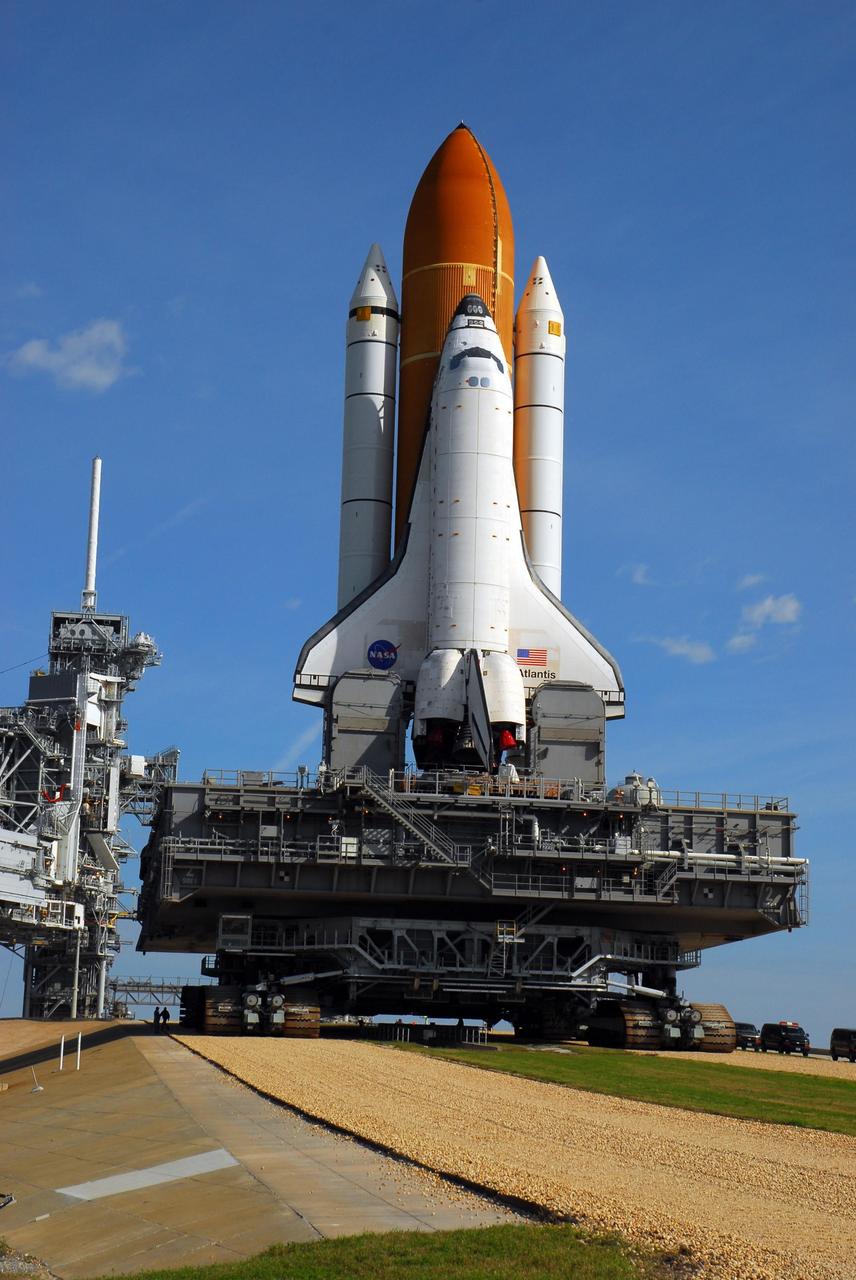
KENNEDY SPACE CENTER, FLA. -- Under a nearly clear blue sky, Space Shuttle Atlantis rolls off Launch Pad 39A back to the Vehicle Assembly Building. In the VAB, the shuttle will be examined for hail damage. A severe thunderstorm with golf ball-sized hail caused divots in the giant tank's foam insulation and minor surface damage to about 26 heat shield tiles on the shuttle's left wing. Further evaluation of the tank is necessary to get an accurate accounting of foam damage and determine the type of repair required and the time needed for that work. A new target launch date has not been determined, but teams will focus on preparing Atlantis for liftoff in late April. Photo credit: NASA/Amanda Diller
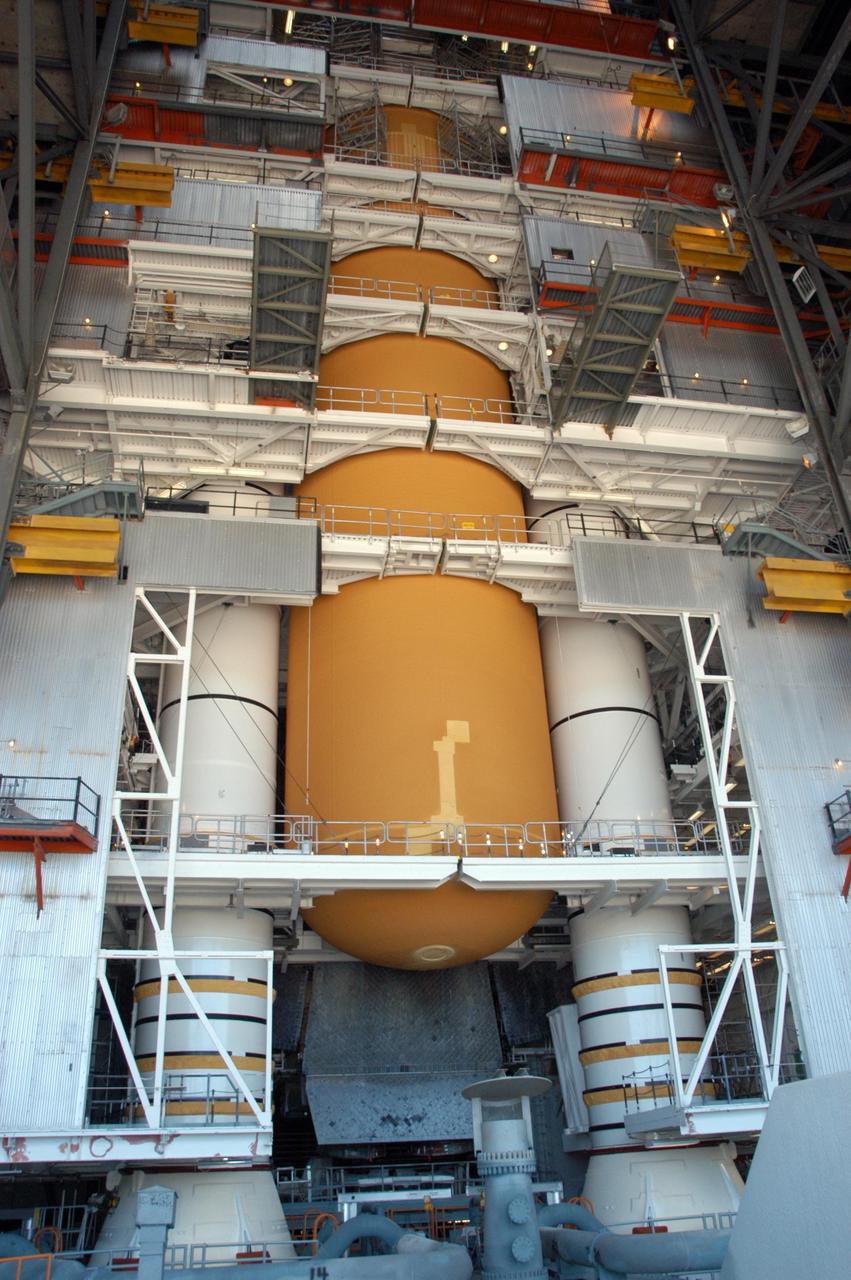
KENNEDY SPACE CENTER, FLA. -- In high bay 1 of the Vehicle Assembly Building, work is underway to repair the damage to Atlantis' external tank, seen here. Technicians will prepare the nose cone for future work. A severe thunderstorm with golf ball-sized hail caused visible divots in the giant tank's foam insulation and minor surface damage to about 26 heat shield tiles on the shuttle's left wing. Further evaluation of the tank is necessary to get an accurate accounting of foam damage and determine the type of repair required and the time needed for that work. A new target launch date has not been determined, but teams will focus on preparing Atlantis for liftoff in late April on mission STS-117. Photo credit: NASA/George Shelton
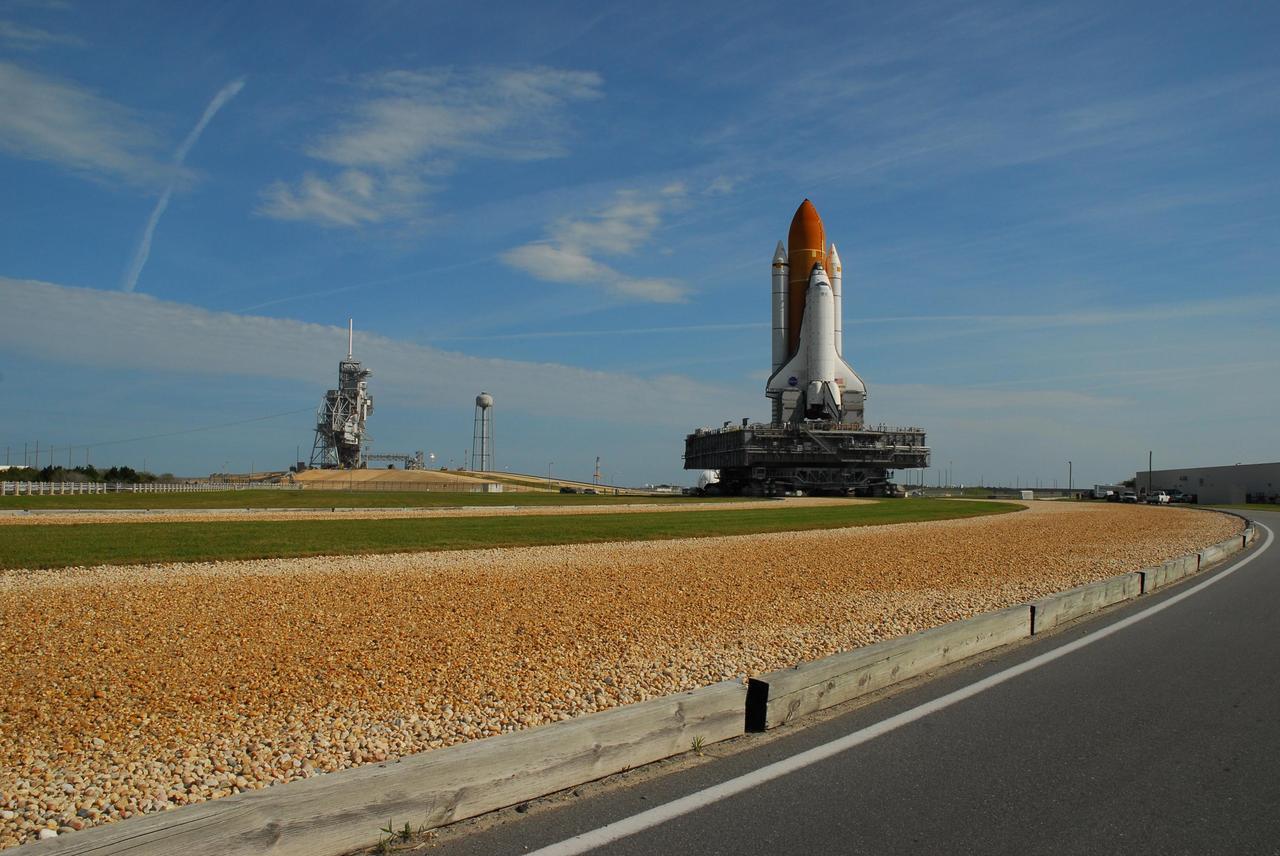
KENNEDY SPACE CENTER, FLA. -- Under a nearly clear blue sky, Space Shuttle Atlantis maneuvers the curve on the crawlerway as it heads back to the Vehicle Assembly Building from Launch Pad 39A (in the background, left). In the VAB, the shuttle will be examined for hail damage. A severe thunderstorm with golf ball-sized hail caused divots in the giant tank's foam insulation and minor surface damage to about 26 heat shield tiles on the shuttle's left wing. Further evaluation of the tank is necessary to get an accurate accounting of foam damage and determine the type of repair required and the time needed for that work. A new target launch date has not been determined, but teams will focus on preparing Atlantis for liftoff in late April. Photo credit: NASA/Amanda Diller
KENNEDY SPACE CENTER, FLA. -- On an upper level of high bay 1 of the Vehicle Assembly Building, technicians prepare the area around the nose cone (left) of Atlantis' external tank that will undergo repair for hail damage. A severe thunderstorm with golf ball-sized hail caused visible divots in the giant tank's foam insulation and minor surface damage to about 26 heat shield tiles on the shuttle's left wing. Further evaluation of the tank is necessary to get an accurate accounting of foam damage and determine the type of repair required and the time needed for that work. A new target launch date has not been determined, but teams will focus on preparing Atlantis for liftoff in late April on mission STS-117. Photo credit: NASA/George Shelton
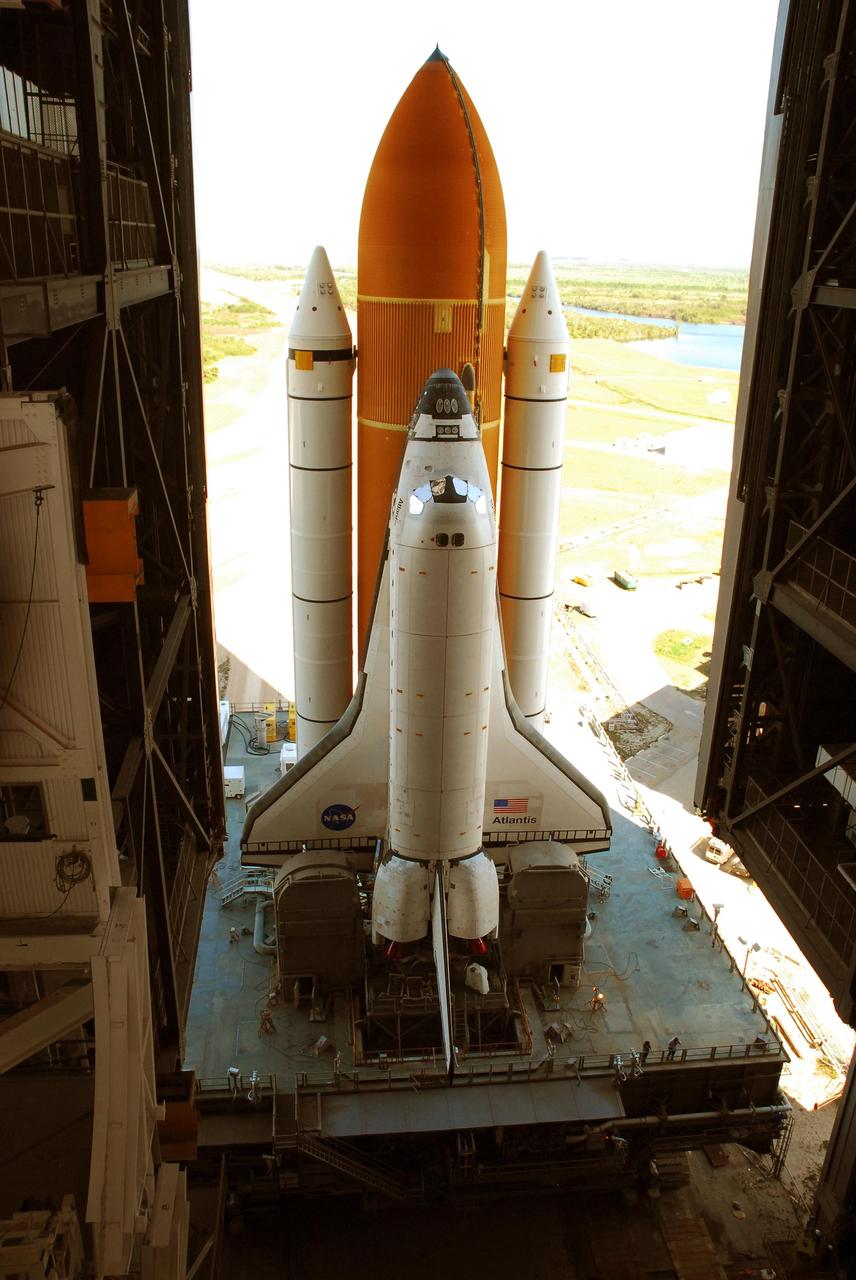
KENNEDY SPACE CENTER, FLA. -- Viewed from inside the Vehicle Assembly Building, Space Shuttle Atlantis, atop the mobile launcher platform, rolls into high bay 1 after leaving Launch Pad 39A. A severe thunderstorm with golf ball-sized hail caused divots in the giant tank's foam insulation and minor surface damage to about 26 heat shield tiles on the shuttle's left wing. Further evaluation of the tank is necessary to get an accurate accounting of foam damage and determine the type of repair required and the time needed for that work. A new target launch date has not been determined, but teams will focus on preparing Atlantis for liftoff in late April. Photo credit: NASA/Amanda Diller

Modern jet engines are loud, but they used to be much louder. NASA’s Glenn Research Center has been at the forefront of the nation’s efforts to reduce aircraft engine noise for over 70 years. During this time, the center has built an array of test facilities to carry out this work, culminating in the Aero-Acoustic Propulsion Laboratory (AAPL), a world-class noise-reduction research facility. The AAPL, referred to as “the dome,” contains multiple test rigs enclosed in a large, echo-free chamber. The unique 130-foot diameter and 65-foot-high hemispherical structure stands out on Glenn’s campus. Its triangular sections make it appear like a golf ball rising from the ground. The interior is covered in spiky, fiberglass sound-dampening wedges and an overhead array of microphones that capture engine noise data.
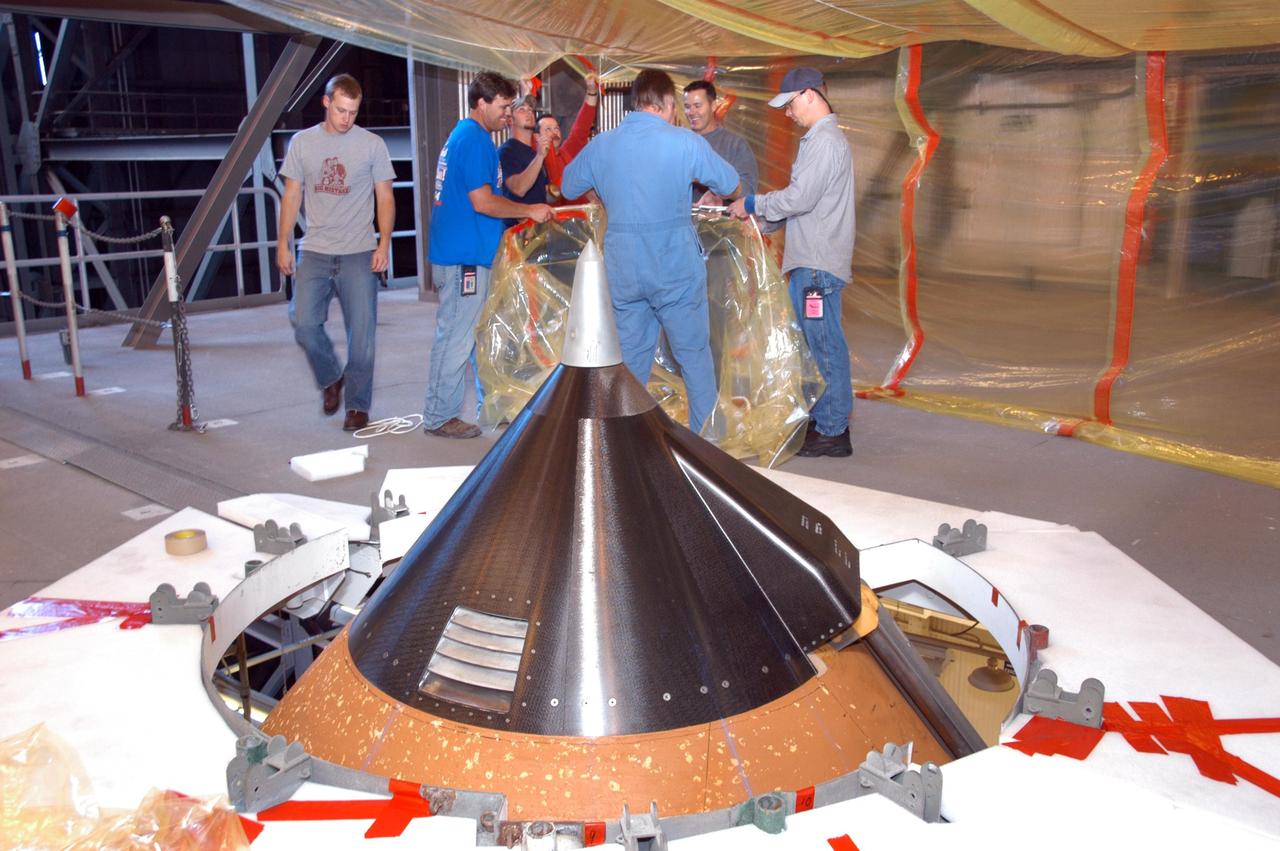
KENNEDY SPACE CENTER, FLA. -- On an upper level of high bay 1 of the Vehicle Assembly Building, technicians prepare the area around the nose cone (foreground) of Atlantis' external tank that will undergo repair for hail damage. A severe thunderstorm with golf ball-sized hail caused visible divots in the giant tank's foam insulation and minor surface damage to about 26 heat shield tiles on the shuttle's left wing. Further evaluation of the tank is necessary to get an accurate accounting of foam damage and determine the type of repair required and the time needed for that work. A new target launch date has not been determined, but teams will focus on preparing Atlantis for liftoff in late April on mission STS-117. Photo credit: NASA/George Shelton
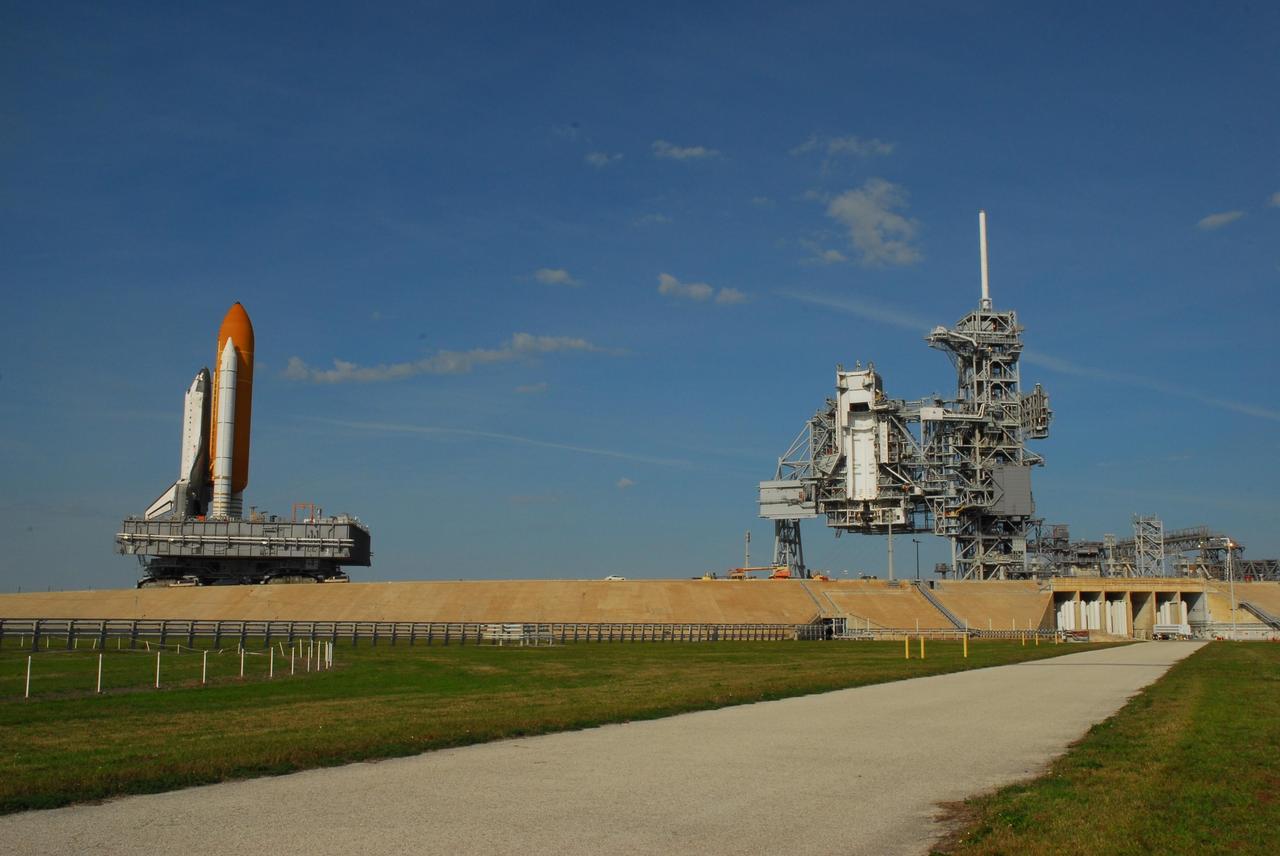
KENNEDY SPACE CENTER, FLA. -- Under a nearly clear blue sky, Space Shuttle Atlantis (left) is being rolled back to the Vehicle Assembly Building from Launch Pad 39A. In the VAB, the shuttle will be examined for hail damage. A severe thunderstorm with golf ball-sized hail caused divots in the giant tank's foam insulation and minor surface damage to about 26 heat shield tiles on the shuttle's left wing. Further evaluation of the tank is necessary to get an accurate accounting of foam damage and determine the type of repair required and the time needed for that work. A new target launch date has not been determined, but teams will focus on preparing Atlantis for liftoff in late April. Photo credit: NASA/Amanda Diller
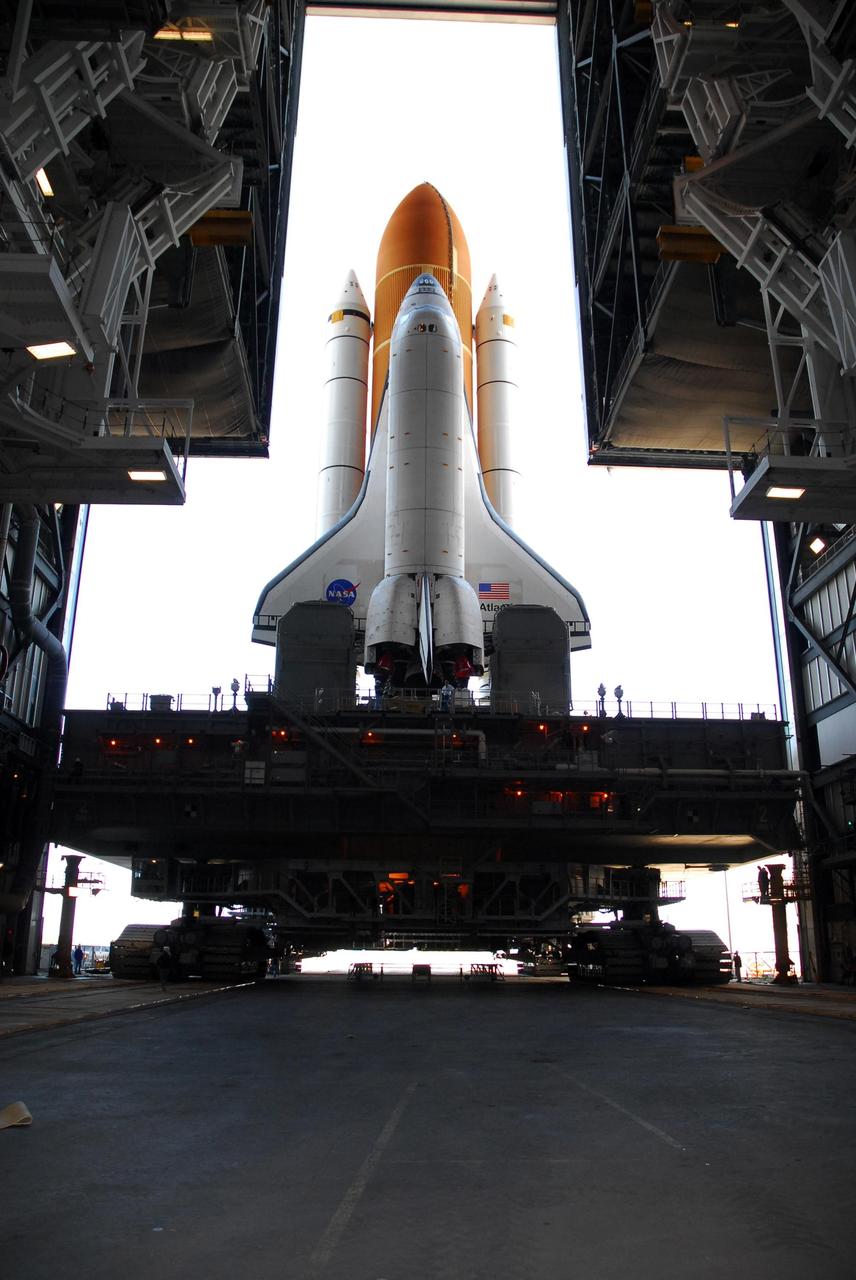
KENNEDY SPACE CENTER, FLA. -- Viewed from inside the Vehicle Assembly Building, Space Shuttle Atlantis, atop the mobile launcher platform, rolls through the door of high bay 1 after leaving Launch Pad 39A. In the VAB, the shuttle will be examined for hail damage. A severe thunderstorm with golf ball-sized hail caused divots in the giant tank's foam insulation and minor surface damage to about 26 heat shield tiles on the shuttle's left wing. Further evaluation of the tank is necessary to get an accurate accounting of foam damage and determine the type of repair required and the time needed for that work. A new target launch date has not been determined, but teams will focus on preparing Atlantis for liftoff in late April. Photo credit: NASA/Amanda Diller

KENNEDY SPACE CENTER, FLA. -- Under a nearly clear blue sky, Space Shuttle Atlantis (left) rolls away from Launch Pad 39A (right) back to the Vehicle Assembly Building. In the VAB, the shuttle will be examined for hail damage. A severe thunderstorm with golf ball-sized hail caused divots in the giant tank's foam insulation and minor surface damage to about 26 heat shield tiles on the shuttle's left wing. Further evaluation of the tank is necessary to get an accurate accounting of foam damage and determine the type of repair required and the time needed for that work. A new target launch date has not been determined, but teams will focus on preparing Atlantis for liftoff in late April. Photo credit: NASA/Amanda Diller
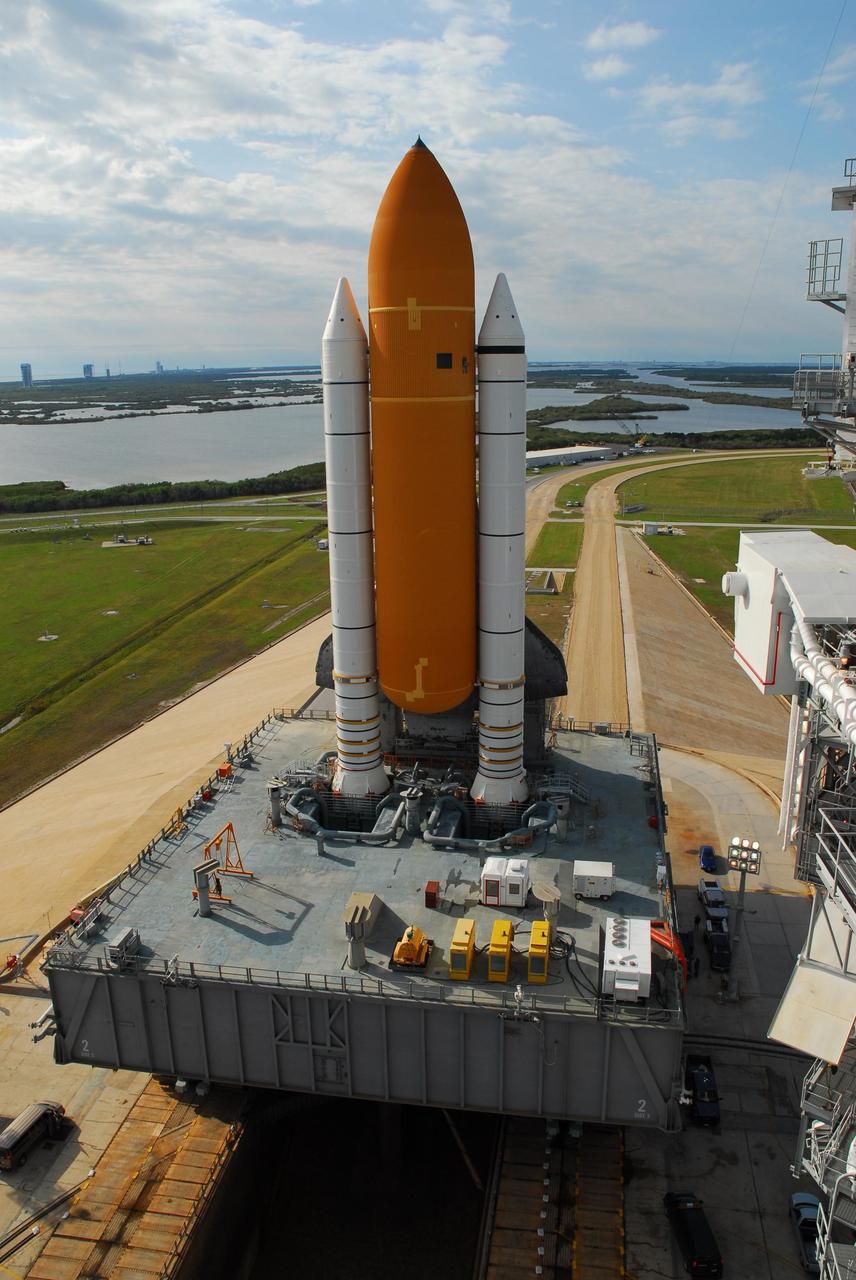
KENNEDY SPACE CENTER, FLA. -- Seen from behind the mobile launcher platform, the orange external tank and solid rocket boosters all but hide Atlantis. The crawlerway stretches in a curve on the other side. The shuttle is being rolled back to the Vehicle Assembly Building where it will be examined for hail damage. A severe thunderstorm with golf ball-sized hail caused divots in the giant tank's foam insulation and minor surface damage to about 26 heat shield tiles on the shuttle's left wing. Further evaluation of the tank is necessary to get an accurate accounting of foam damage and determine the type of repair required and the time needed for that work. A new target launch date has not been determined, but teams will focus on preparing Atlantis for liftoff in late April. Photo credit: NASA/Amanda Diller
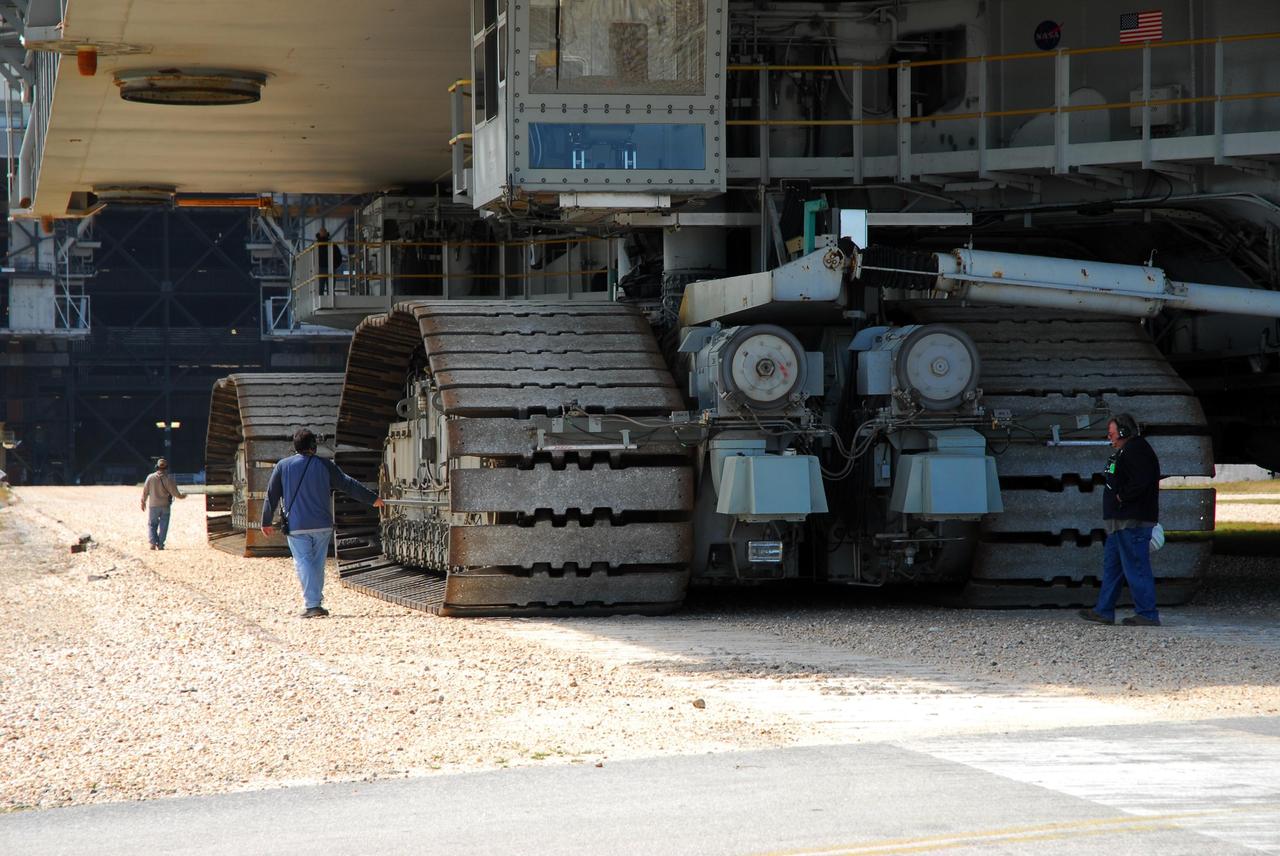
KENNEDY SPACE CENTER, FLA. -- Workers stride alongside the massive treads of the crawler-transporter, which is moving Space Shuttle Atlantis, atop the mobile launcher platform, to the Vehicle Assembly Building. In the VAB, the shuttle will be examined for hail damage. A severe thunderstorm with golf ball-sized hail caused divots in the giant tank's foam insulation and minor surface damage to about 26 heat shield tiles on the shuttle's left wing. Further evaluation of the tank is necessary to get an accurate accounting of foam damage and determine the type of repair required and the time needed for that work. A new target launch date has not been determined, but teams will focus on preparing Atlantis for liftoff in late April. Photo credit: NASA/Amanda Diller
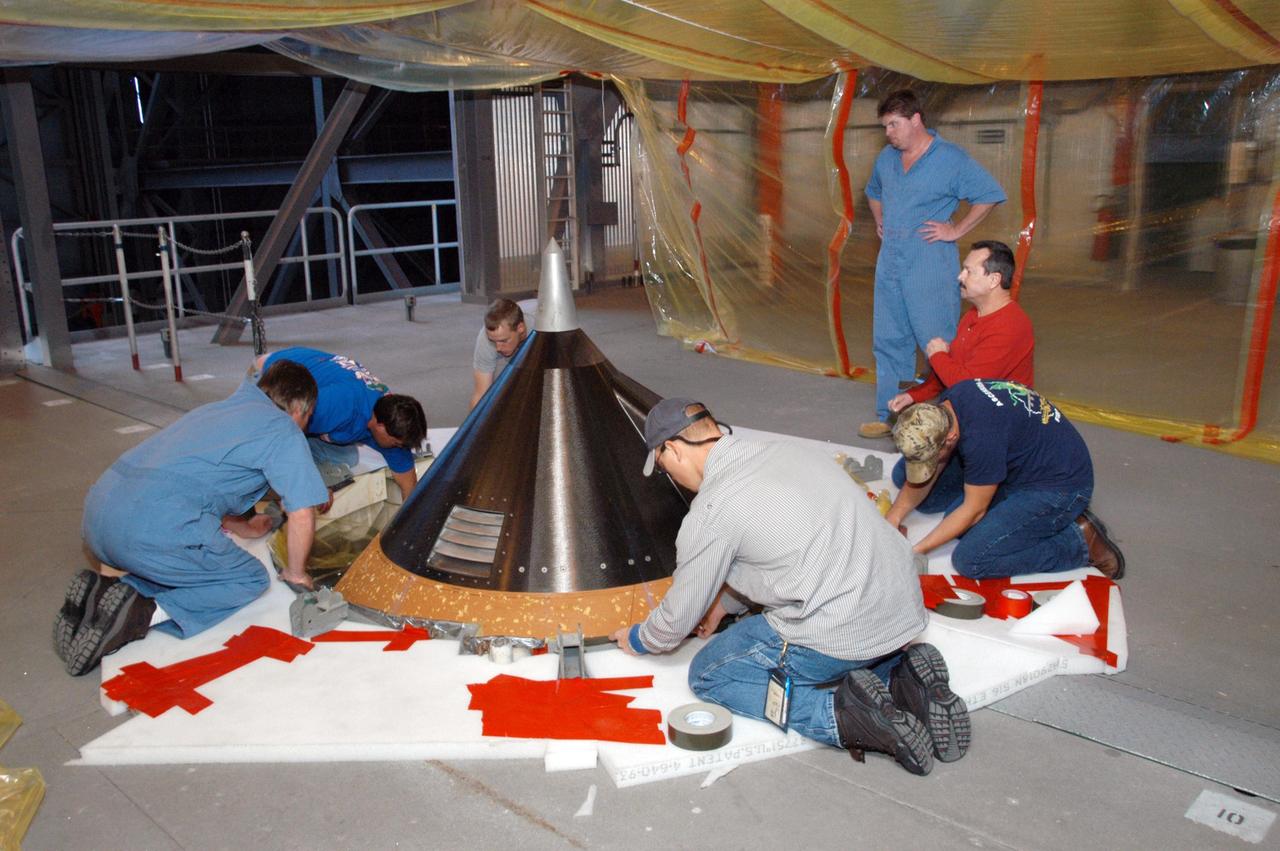
KENNEDY SPACE CENTER, FLA. -- On an upper level of high bay 1 of the Vehicle Assembly Building, technicians secure protective material around the base of the nose cone of Atlantis' external tank. The nose cone will undergo repair for hail damage. A severe thunderstorm with golf ball-sized hail caused visible divots in the giant tank's foam insulation and minor surface damage to about 26 heat shield tiles on the shuttle's left wing. Further evaluation of the tank is necessary to get an accurate accounting of foam damage and determine the type of repair required and the time needed for that work. A new target launch date has not been determined, but teams will focus on preparing Atlantis for liftoff in late April on mission STS-117. Photo credit: NASA/George Shelton
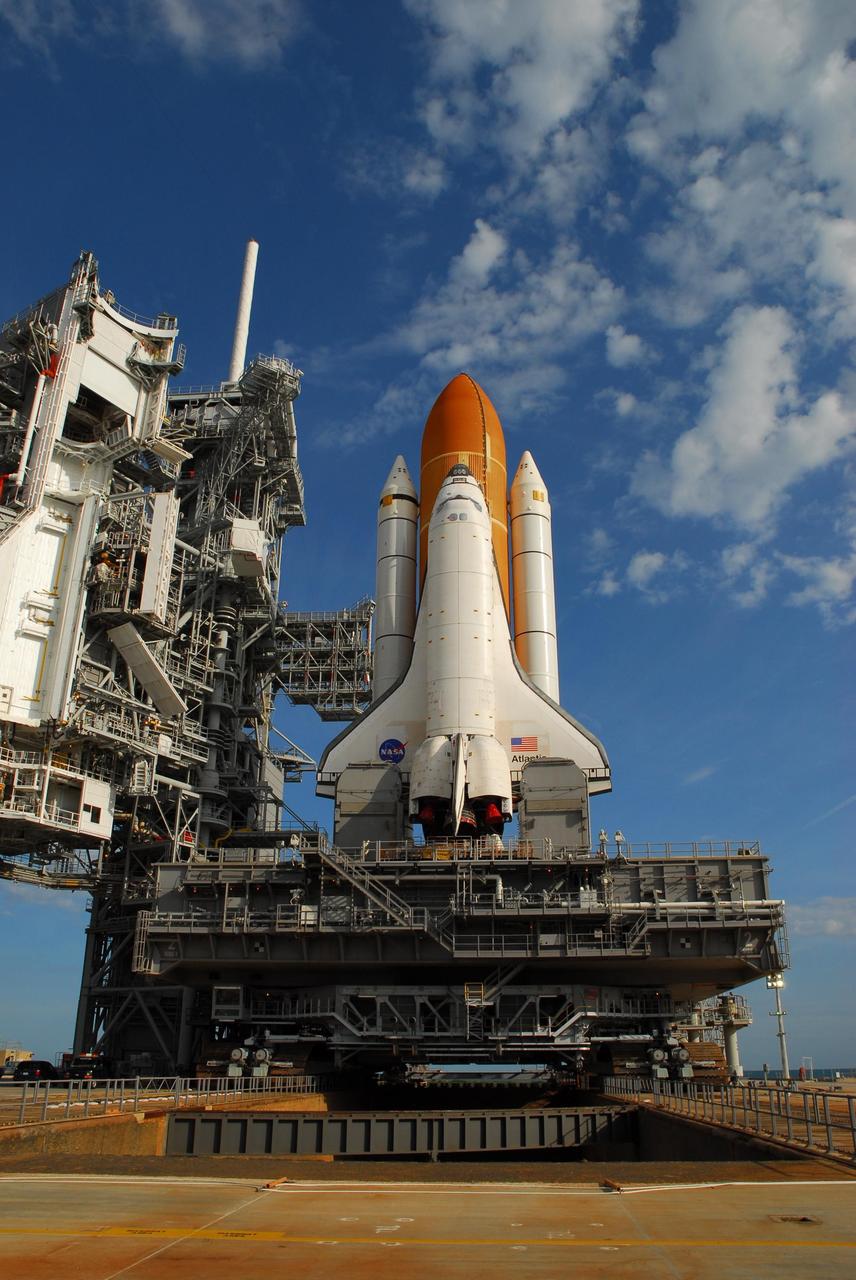
KENNEDY SPACE CENTER, FLA. -- In the early morning light on Launch Pad 39A, Space Shuttle Atlantis is revealed after rollback of the rotating service structure (at left). The shuttle is being rolled back to the Vehicle Assembly Building where it will be examined for hail damage. A severe thunderstorm with golf ball-sized hail caused divots in the giant tank's foam insulation and minor surface damage to about 26 heat shield tiles on the shuttle's left wing. Further evaluation of the tank is necessary to get an accurate accounting of foam damage and determine the type of repair required and the time needed for that work. A new target launch date has not been determined, but teams will focus on preparing Atlantis for liftoff in late April. Photo credit: NASA/Amanda Diller
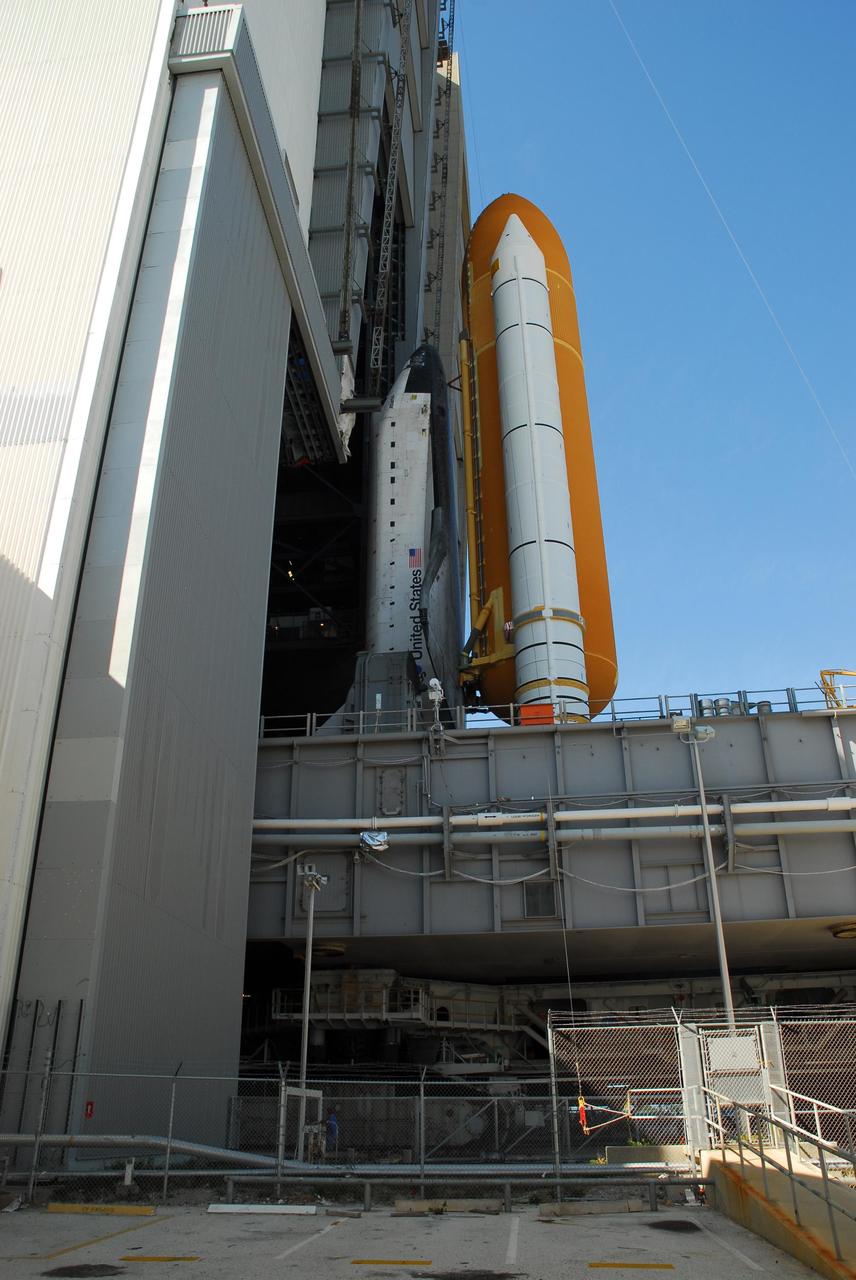
KENNEDY SPACE CENTER, FLA. -- Space Shuttle Atlantis, atop the mobile launcher platform, rolls through the door of high bay 1 of the Vehicle Assembly Building after leaving Launch Pad 39A. In the VAB, the shuttle will be examined for hail damage. A severe thunderstorm with golf ball-sized hail caused divots in the giant tank's foam insulation and minor surface damage to about 26 heat shield tiles on the shuttle's left wing. Further evaluation of the tank is necessary to get an accurate accounting of foam damage and determine the type of repair required and the time needed for that work. A new target launch date has not been determined, but teams will focus on preparing Atlantis for liftoff in late April. Photo credit: NASA/Amanda Diller
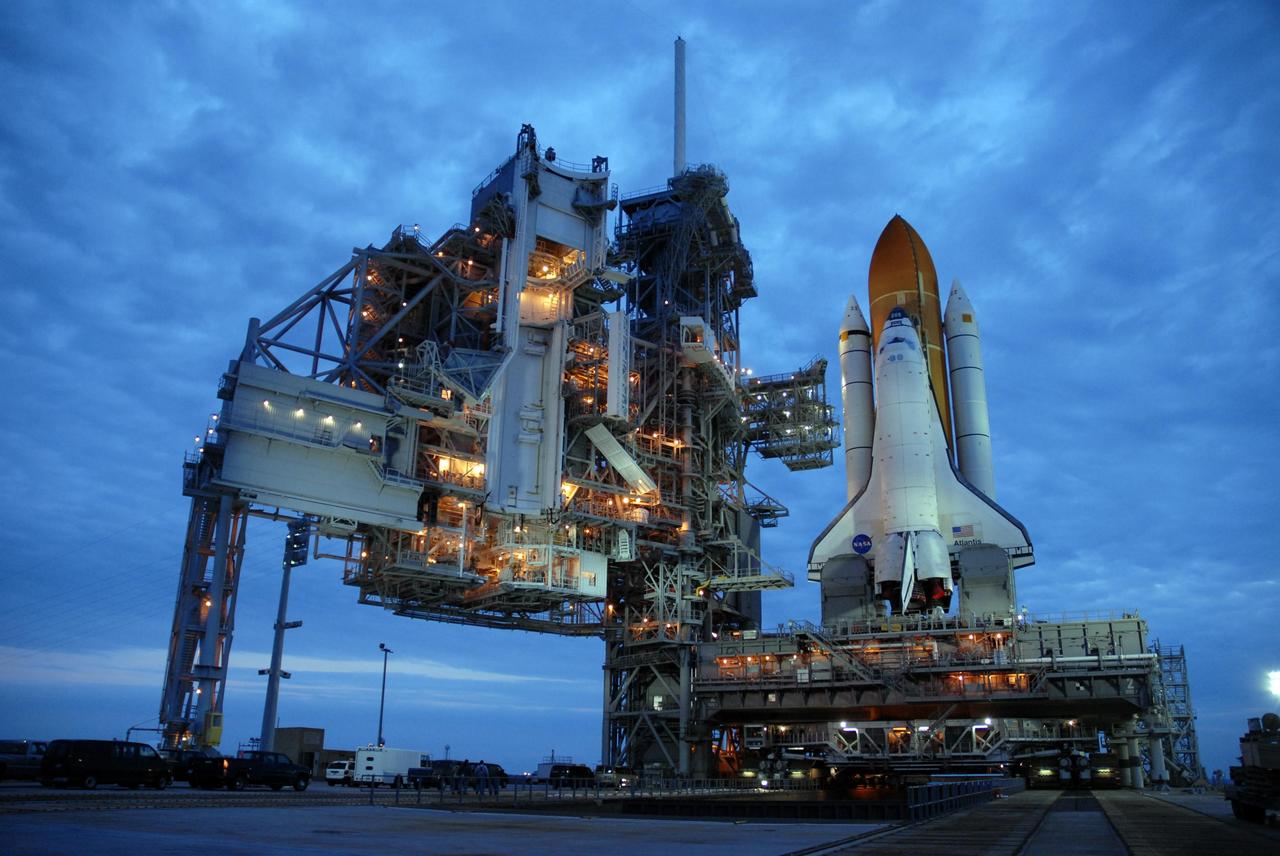
KENNEDY SPACE CENTER, FLA. -- Just before dawn on Launch Pad 39A, Space Shuttle Atlantis is revealed after rollback of the rotating service structure (at left). The shuttle is being rolled back to the Vehicle Assembly Building where it will be examined for hail damage. A severe thunderstorm with golf ball-sized hail caused divots in the giant tank's foam insulation and minor surface damage to about 26 heat shield tiles on the shuttle's left wing. Further evaluation of the tank is necessary to get an accurate accounting of foam damage and determine the type of repair required and the time needed for that work. A new target launch date has not been determined, but teams will focus on preparing Atlantis for liftoff in late April. Photo credit: NASA/Amanda Diller

This animation illustrates NASA's InSight lander touching down on Mars, causing a rock to roll 3 feet (1 meter) as the lander touched down on Mars on Nov. 26, 2018. A little bigger than a golf ball, the rock was later nicknamed "Rolling Stones Rock" by the InSight team in honor of The Rolling Stones. A series of 10 or so divots marked the rock's course after being set in motion by the landing. It's the farthest NASA has seen a rock roll after landing a spacecraft on another planet. Though fitting, "Rolling Stones Rock" is not an official designation by the International Astronomical Union, which is responsible to approving the names given to geographical and geological features on other planets. The rock was imaged by the Instrument Deployment Camera (IDC) on InSight's robotic arm, which is not visible here. Movie available at https://photojournal.jpl.nasa.gov/catalog/PIA23345
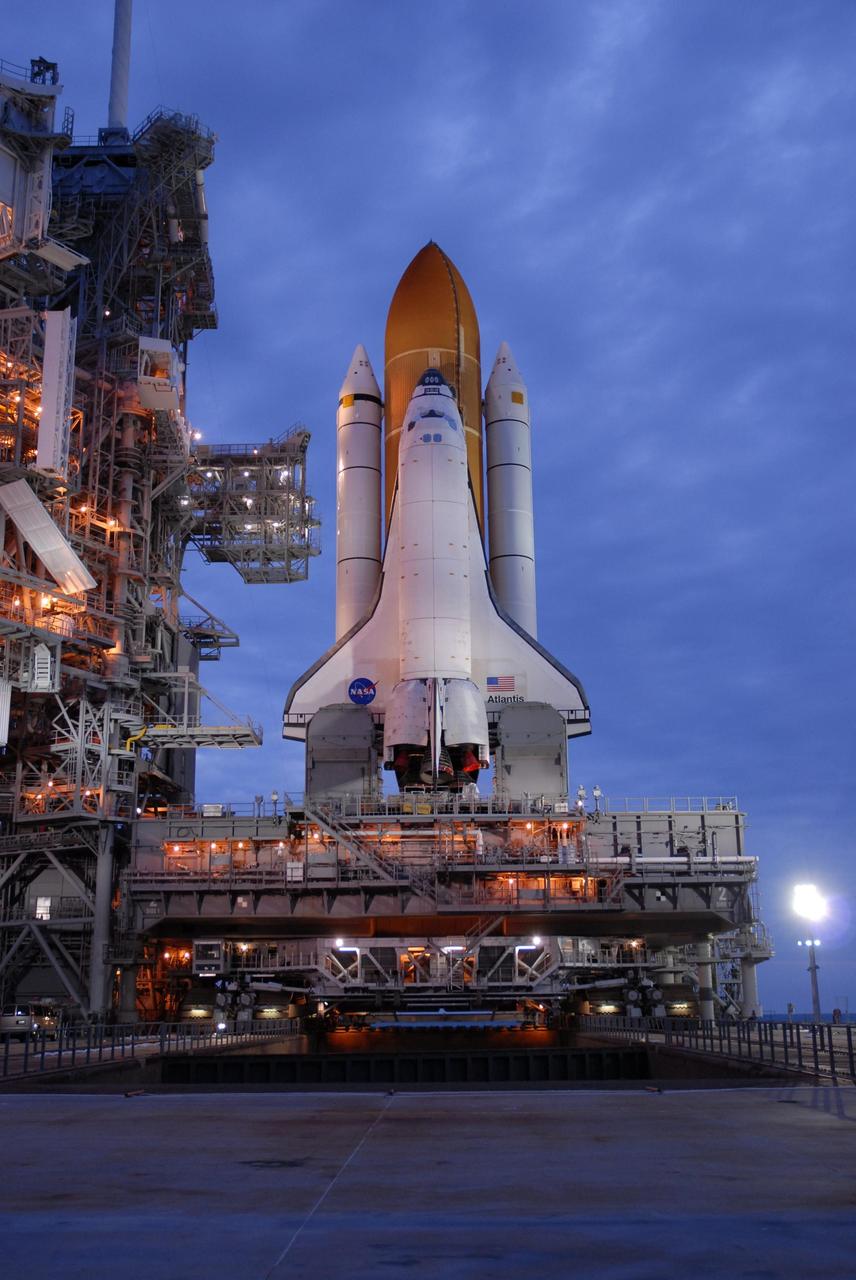
KENNEDY SPACE CENTER, FLA. -- Just before dawn on Launch Pad 39A, Space Shuttle Atlantis is revealed after rollback of the rotating service structure. The shuttle is being rolled back to the Vehicle Assembly Building where it will be examined for hail damage. A severe thunderstorm with golf ball-sized hail caused divots in the giant tank's foam insulation and minor surface damage to about 26 heat shield tiles on the shuttle's left wing. Further evaluation of the tank is necessary to get an accurate accounting of foam damage and determine the type of repair required and the time needed for that work. A new target launch date has not been determined, but teams will focus on preparing Atlantis for liftoff in late April. Photo credit: NASA/Amanda Diller
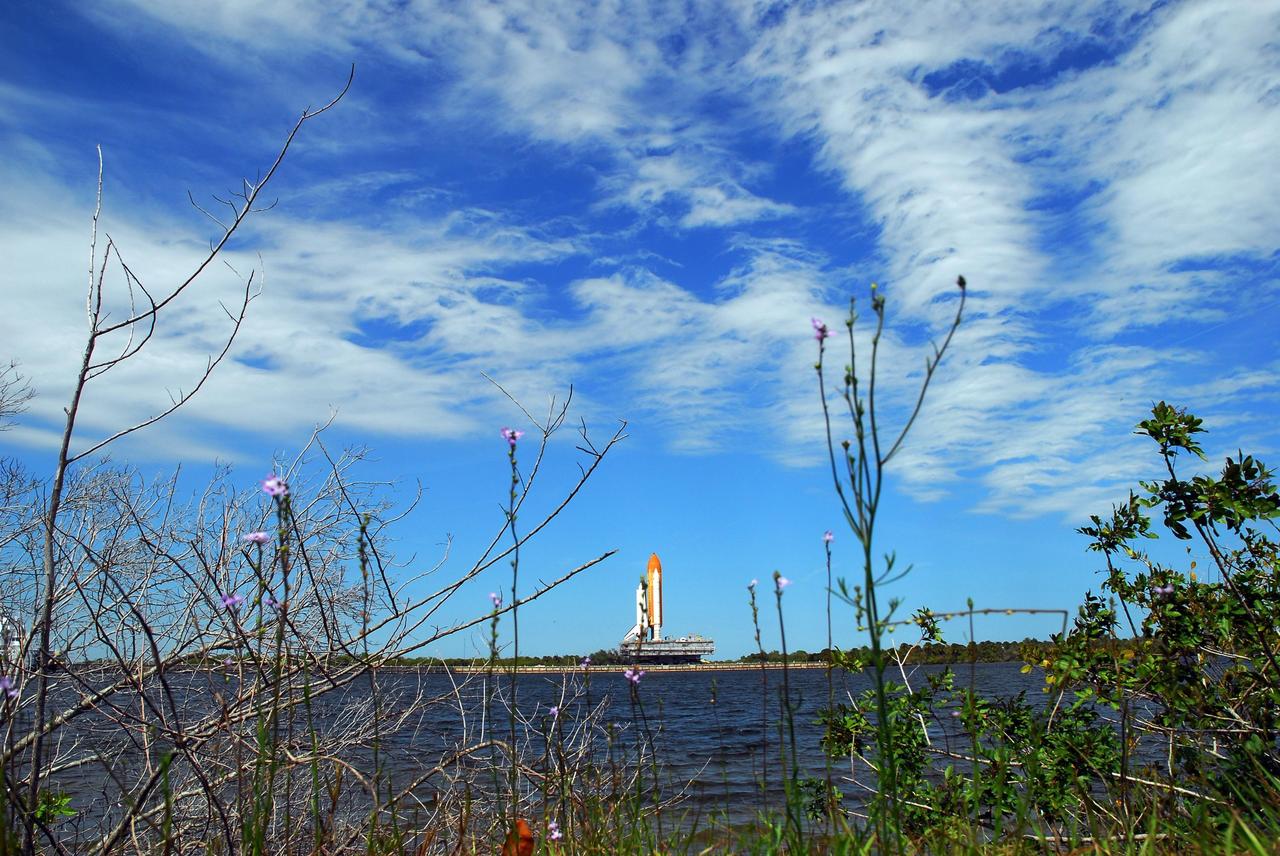
KENNEDY SPACE CENTER, FLA. -- As it rolls back to the Vehicle Assembly Building, Space Shuttle Atlantis, atop the mobile launcher platform, is framed in the photo by winter-stripped branches topped by spring blossoms. In the VAB, the shuttle will be examined for hail damage. A severe thunderstorm with golf ball-sized hail caused divots in the giant tank's foam insulation and minor surface damage to about 26 heat shield tiles on the shuttle's left wing. Further evaluation of the tank is necessary to get an accurate accounting of foam damage and determine the type of repair required and the time needed for that work. A new target launch date has not been determined, but teams will focus on preparing Atlantis for liftoff in late April. Photo credit: NASA/Amanda Diller

KENNEDY SPACE CENTER, FLA. -- On an upper level of high bay 1 of the Vehicle Assembly Building, technicians move protective material toward the nose cone (foreground) of Atlantis' external tank. The nose cone will undergo repair for hail damage. A severe thunderstorm with golf ball-sized hail caused visible divots in the giant tank's foam insulation and minor surface damage to about 26 heat shield tiles on the shuttle's left wing. Further evaluation of the tank is necessary to get an accurate accounting of foam damage and determine the type of repair required and the time needed for that work. A new target launch date has not been determined, but teams will focus on preparing Atlantis for liftoff in late April on mission STS-117. Photo credit: NASA/George Shelton
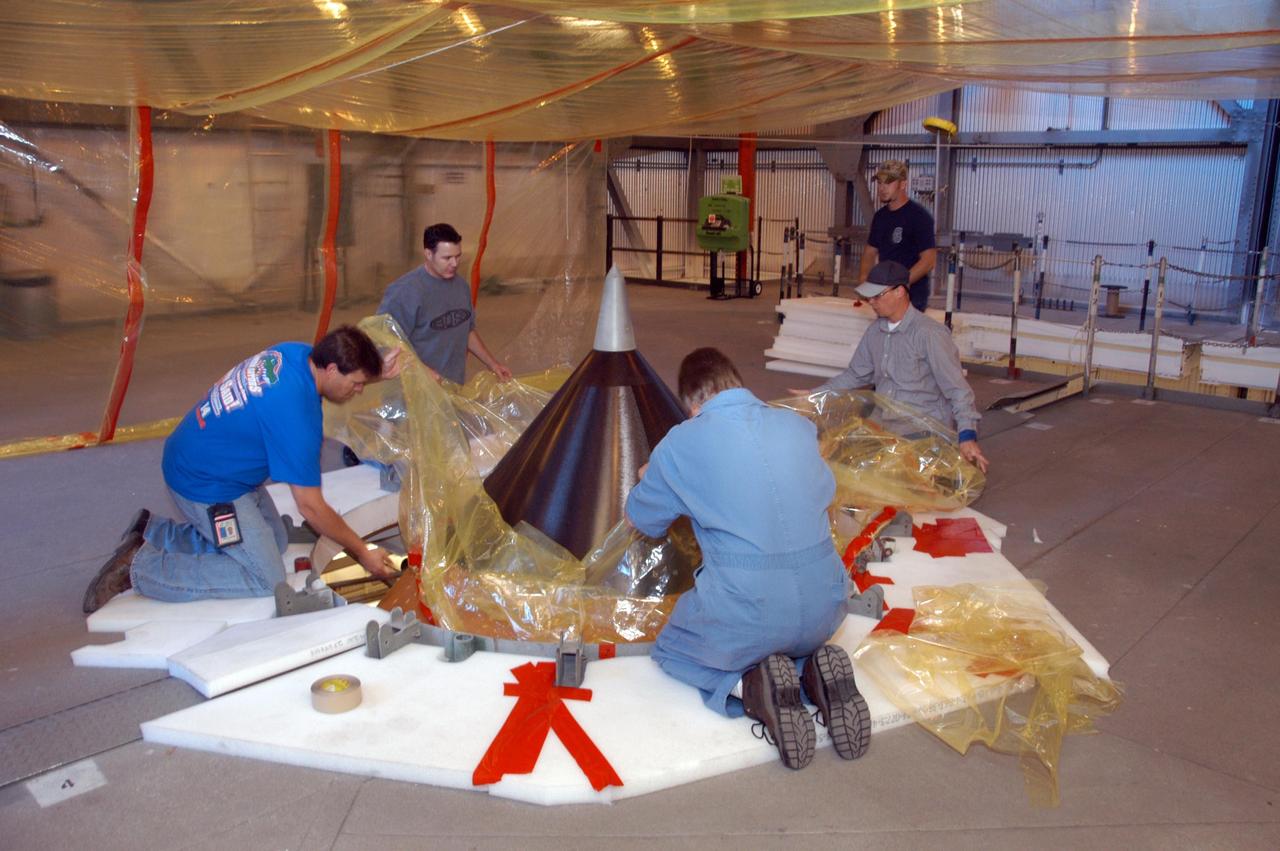
KENNEDY SPACE CENTER, FLA. -- On an upper level of high bay 1 of the Vehicle Assembly Building, technicians place protective material around the nose cone of Atlantis' external tank. The nose cone will undergo repair for hail damage. A severe thunderstorm with golf ball-sized hail caused visible divots in the giant tank's foam insulation and minor surface damage to about 26 heat shield tiles on the shuttle's left wing. Further evaluation of the tank is necessary to get an accurate accounting of foam damage and determine the type of repair required and the time needed for that work. A new target launch date has not been determined, but teams will focus on preparing Atlantis for liftoff in late April on mission STS-117. Photo credit: NASA/George Shelton
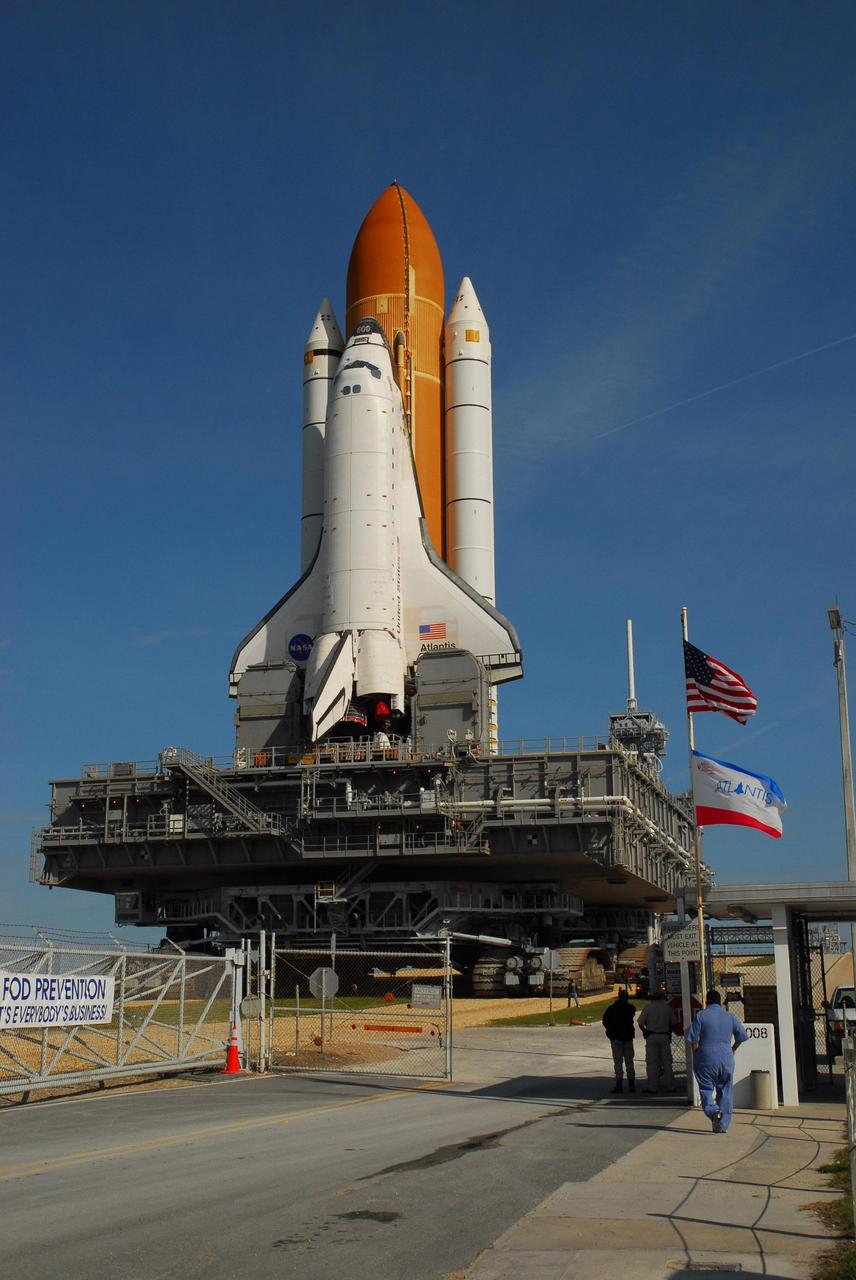
KENNEDY SPACE CENTER, FLA. -- Under a nearly clear blue sky, Space Shuttle Atlantis rolls through the gate to Launch Pad 39A on its way back to the Vehicle Assembly Building. In the VAB, the shuttle will be examined for hail damage. A severe thunderstorm with golf ball-sized hail caused divots in the giant tank's foam insulation and minor surface damage to about 26 heat shield tiles on the shuttle's left wing. Further evaluation of the tank is necessary to get an accurate accounting of foam damage and determine the type of repair required and the time needed for that work. A new target launch date has not been determined, but teams will focus on preparing Atlantis for liftoff in late April. Photo credit: NASA/Amanda Diller
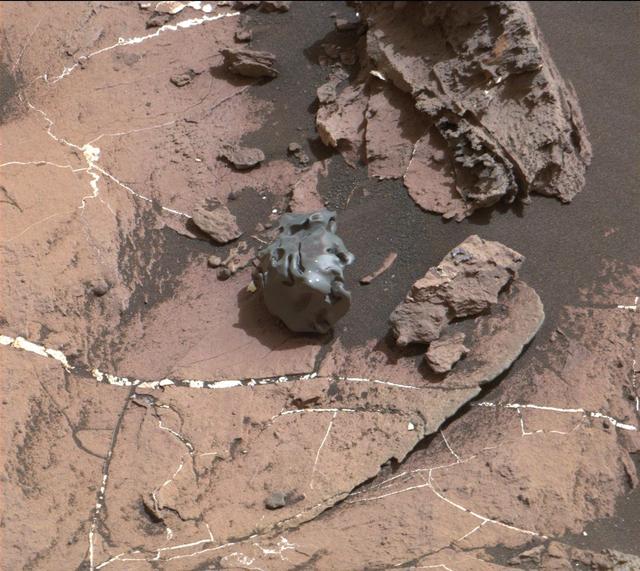
The dark, smooth-surfaced object at the center of this Oct. 30, 2016, image from the Mast Camera (Mastcam) on NASA's Curiosity Mars rover was examined with laser pulses and confirmed to be an iron-nickel meteorite. The grid of shiny points visible on the object resulted from that laser zapping by Curiosity's Chemistry and Camera (ChemCam) instrument. The meteorite is about the size of a golf ball. It is informally named "Egg Rock," for a site in Maine. Locations around Bar Harbor, Maine, are the naming theme for an area on Mars' Mount Sharp that Curiosity reached in October. Iron-nickel meteorites are a common class of space rocks found on Earth, and previous examples have been found on Mars, but Egg Rock is the first on Mars to be examined with a laser-firing spectrometer. The scene is presented with a color adjustment that approximates white balancing, to resemble how the rocks and sand would appear under daytime lighting conditions on Earth. Figure 1 includes a scale bar of 5 centimeters (about 2 inches). http://photojournal.jpl.nasa.gov/catalog/PIA21134