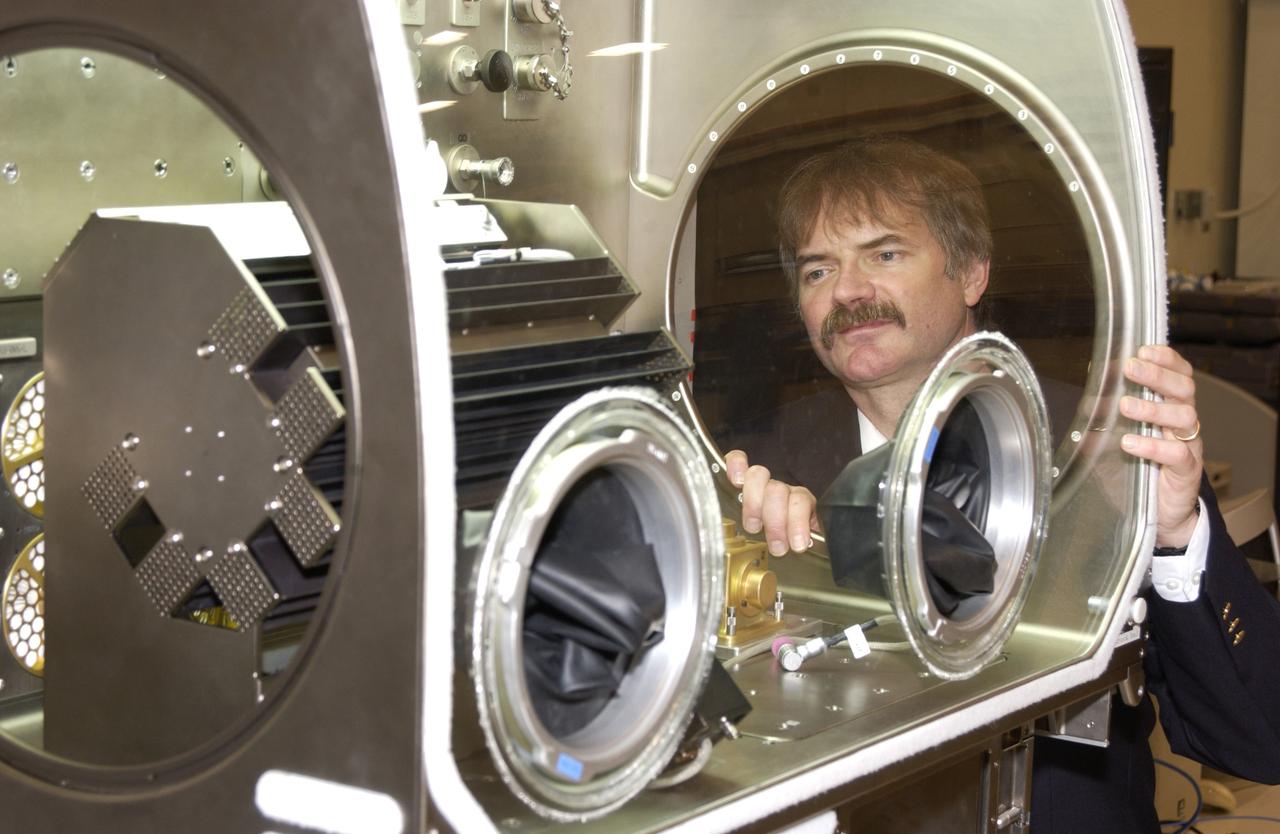
Dr. Richard Grugel, a materials scientist at NASA's Marshall Space Flight in Huntsville, Ala., examines the furnace used to conduct his Pore Formation and Mobility Investigation -- one of the first two materials science experiments to be conducted on the International Space Station. This experiment studies materials processes similar to those used to make components used in jet engines. Grugel's furnace was installed in the Microgravity Science Glovebox through the circular port on the side. In space, crewmembers are able to change out samples using the gloves on the front of the facility's work area.
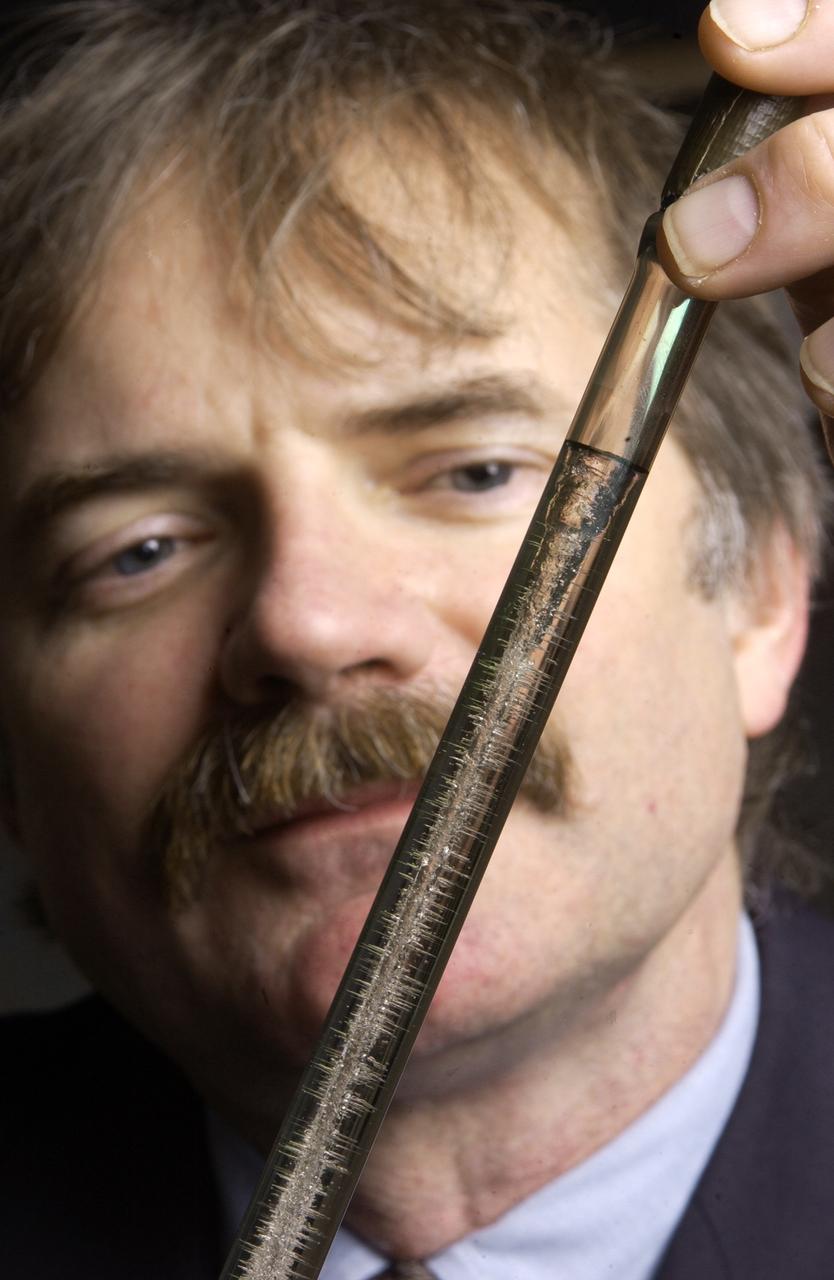
On Earth when scientists melt metals, bubbles that form in the molten material can rise to the surface, pop and disappear. In microgravity -- the near-weightless environment created as the International Space Station orbits Earth -- the lighter bubbles do not rise and disappear. Prior space experiments have shown that bubbles often become trapped in the final metal or crystal sample -similar to the bubbles trapped in this sample. In the solid, these bubbles, or porosity, are defects that diminish both the material's strength and usefulness. The Pore Formation and Mobility Investigation will melt samples of a transparent modeling material, succinonitrile and succinonitrile water mixtures, shown here in an ampoule being examined by Dr. Richard Grugel, the principal investigator for the experiment at NASA's Marshall Space Flight Center in Huntsville, Ala. As the samples are processed in space, Grugel will be able to observe how bubbles form in the samples and study their movements and interactions.
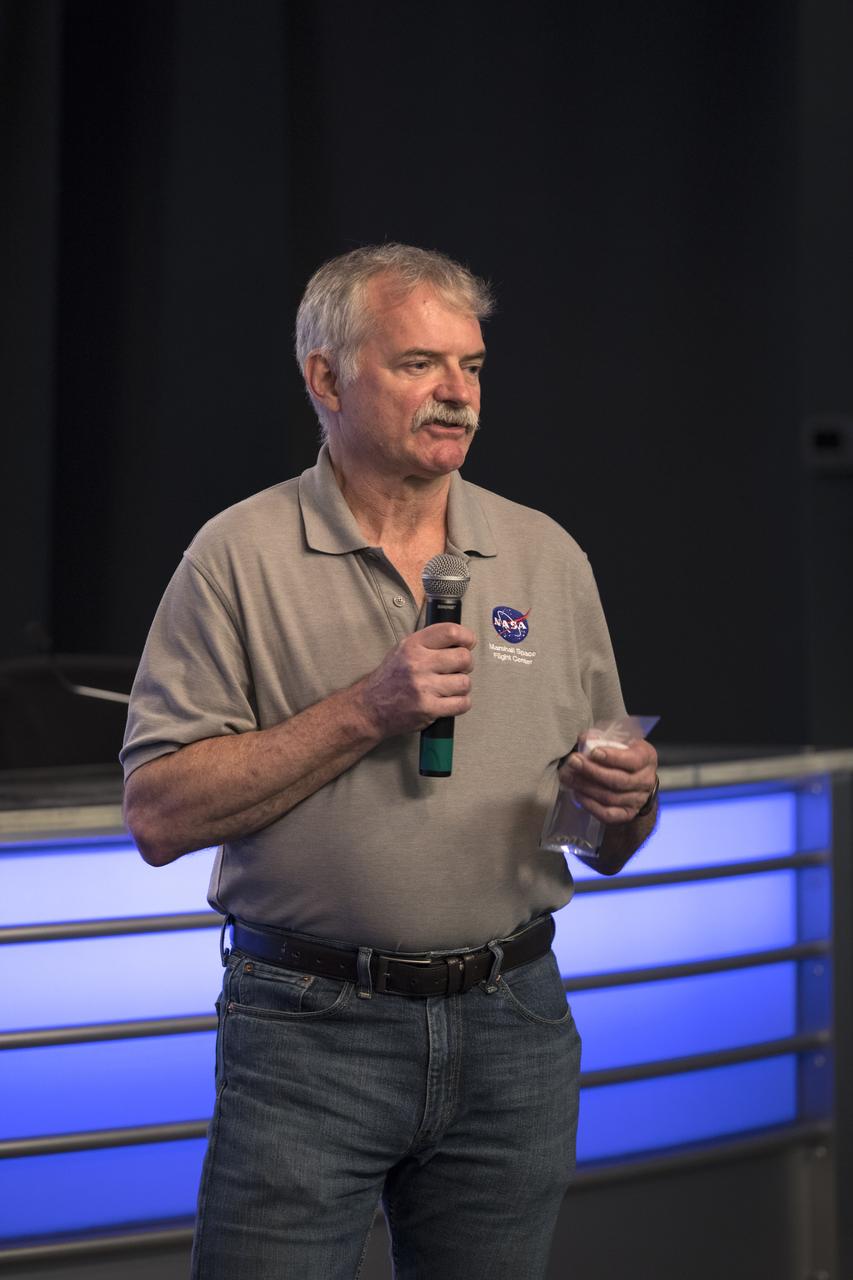
Richard Grugel, principal investigator, NASA’s Marshall Spaceflight Center, speaks to members of the media during a briefing in the Kennedy Space Center’s Press Site auditorium. The briefing focused on research planned for launch to the International Space Station. The scientific materials and supplies will be aboard a SpaceX Dragon spacecraft scheduled for liftoff from Cape Canaveral Air Force Station's Space Launch Complex 40. The SpaceX Falcon 9 rocket will launch the company's 15th Commercial Resupply Services mission to the space station.
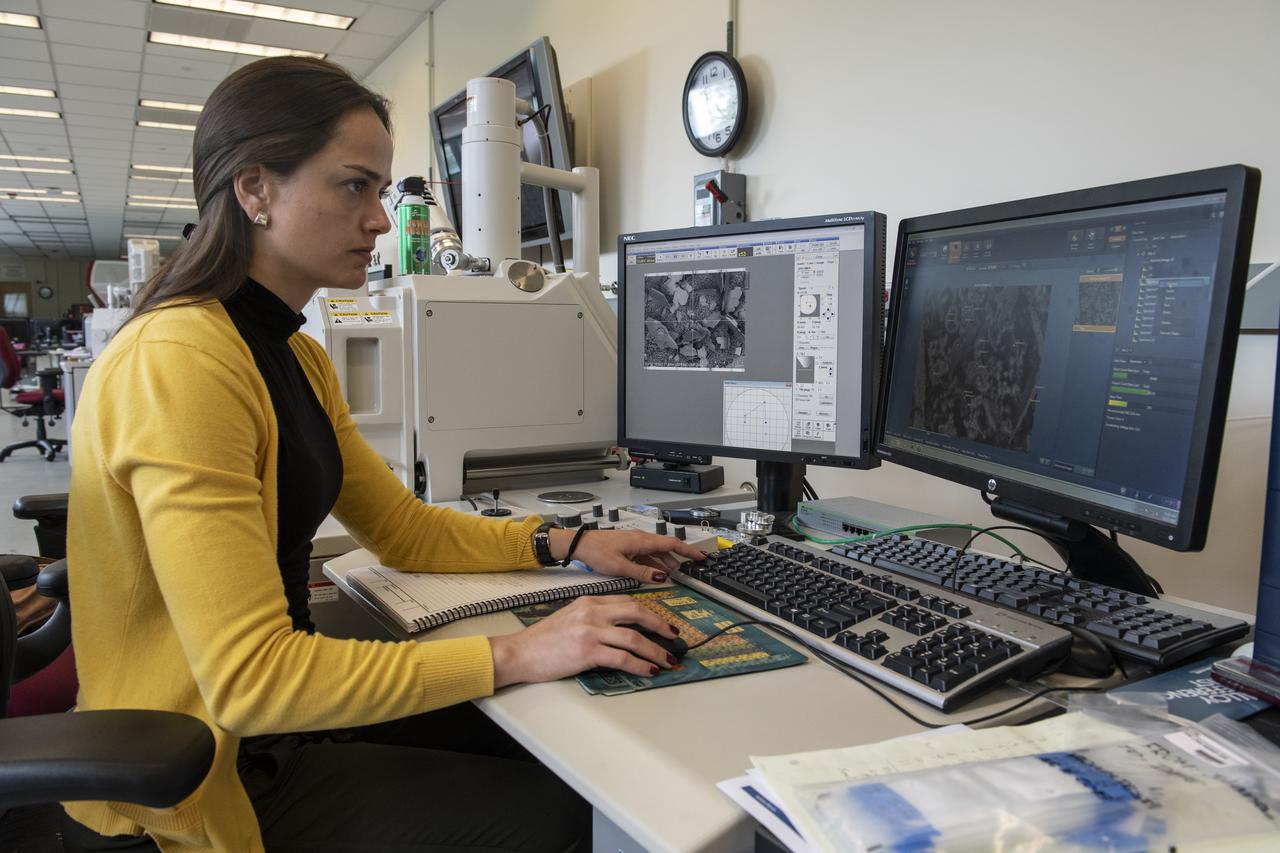
Marshall graduate student researcher Juliana Neves, who is pursuing her doctorate in civil engineering at Pennsylvania State University, monitors cement paste samples returned from space as part of the Microgravity Investigation of Cement Solidification. Neves, investigators at Penn State and Marshall researchers led by NASA materials scientist Richard Grugel mirrored each sample experiment conducted on the International Space Station -- 120 tests on the ground, 120 in orbit -- and will continue to assess their findings in months to come.
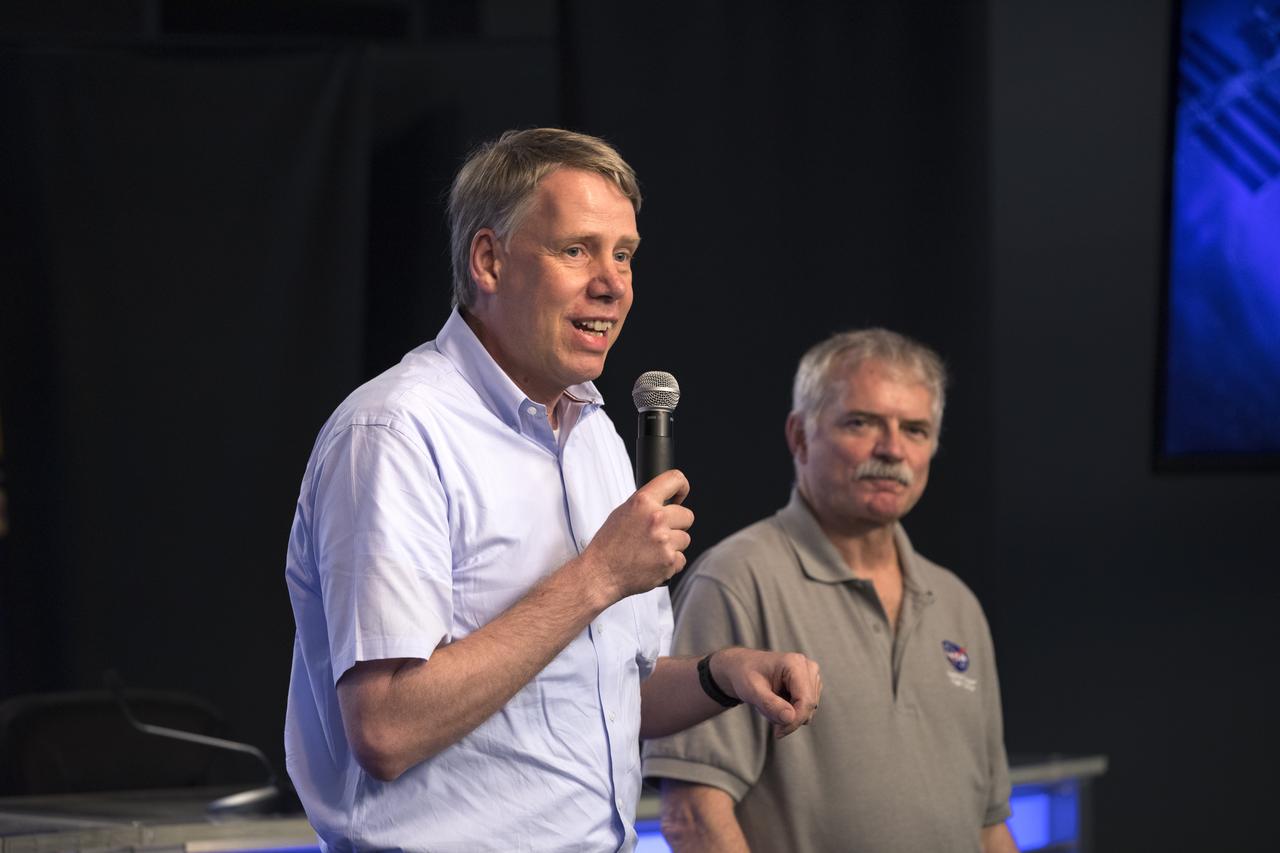
Oliver Steinbock, left, principal investigator, Florida State University, and Richard Grugel, principal investigator, NASA’s Marshall Spaceflight Center, speak to members of the media during a briefing in the Kennedy Space Center’s Press Site auditorium. The briefing focused on research planned for launch to the International Space Station. The scientific materials and supplies will be aboard a SpaceX Dragon spacecraft scheduled for liftoff from Cape Canaveral Air Force Station's Space Launch Complex 40. The SpaceX Falcon 9 rocket will launch the company's 15th Commercial Resupply Services mission to the space station.