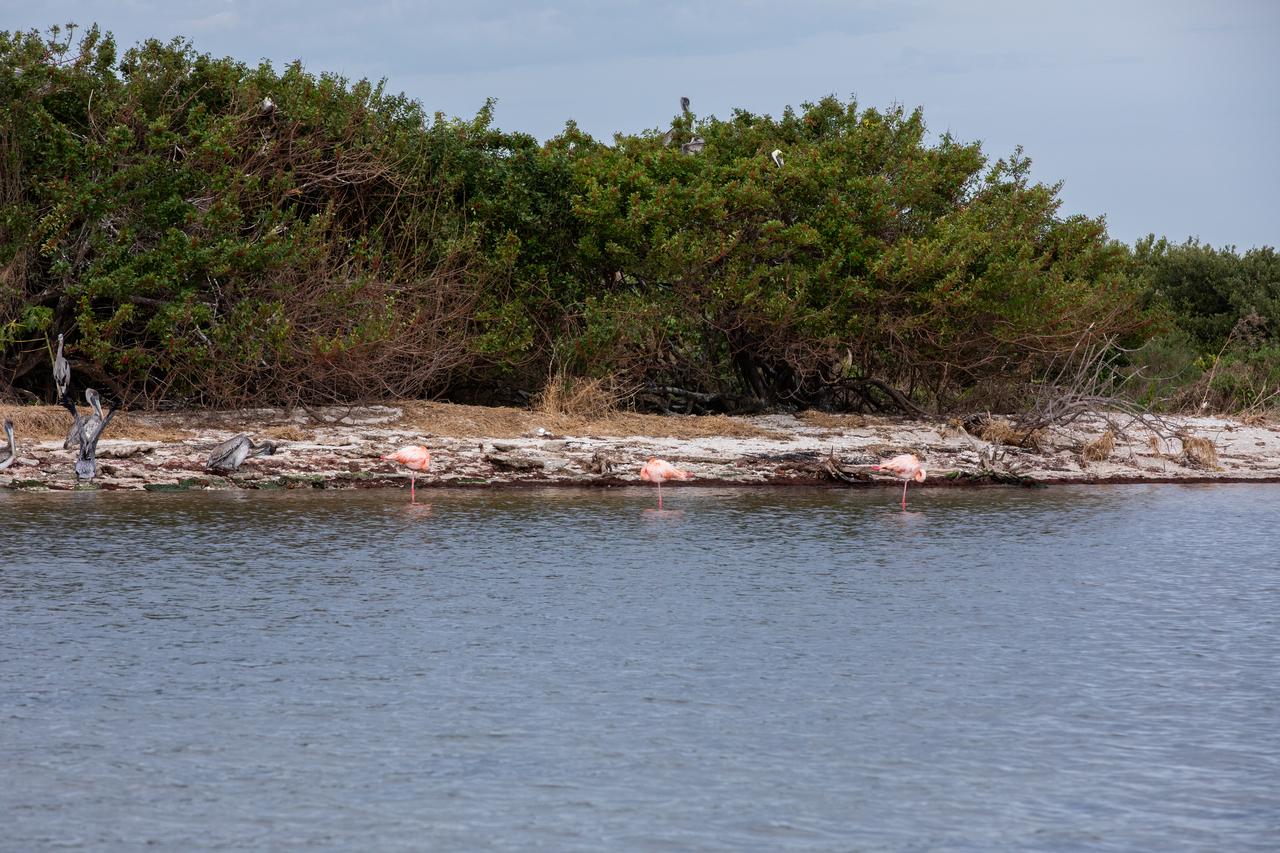
Three American Flamingos cool off in the Indian River at Haulover Canal on Merritt Island on Thursday, Jan. 11, 2024. The American Flamingos are more common in Mexico and Cuba but the winds from Hurricane Idalia relocated them to Florida in September 2023. Kennedy Space Center in Florida shares a border with the Merritt Island National Wildlife Refuge where more than 310 species of birds inhabit the refuge.
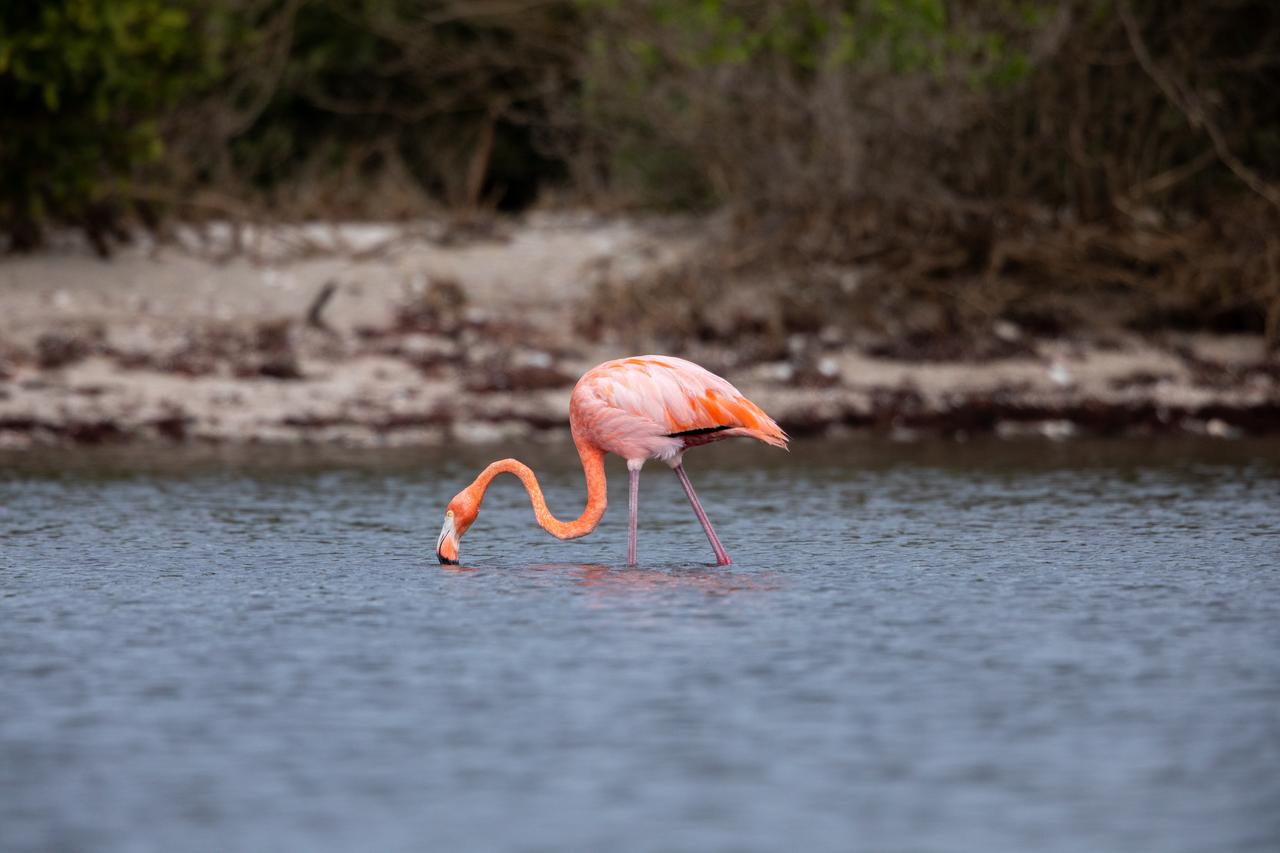
An American Flamingo takes a sip of water in the Indian River at Haulover Canal on Merritt Island on Thursday, Jan. 11, 2024. The American Flamingos are more common in Mexico and Cuba but the winds from Hurricane Idalia relocated them to Florida in September 2023. Kennedy Space Center in Florida shares a border with the Merritt Island National Wildlife Refuge where more than 310 species of birds inhabit the refuge.
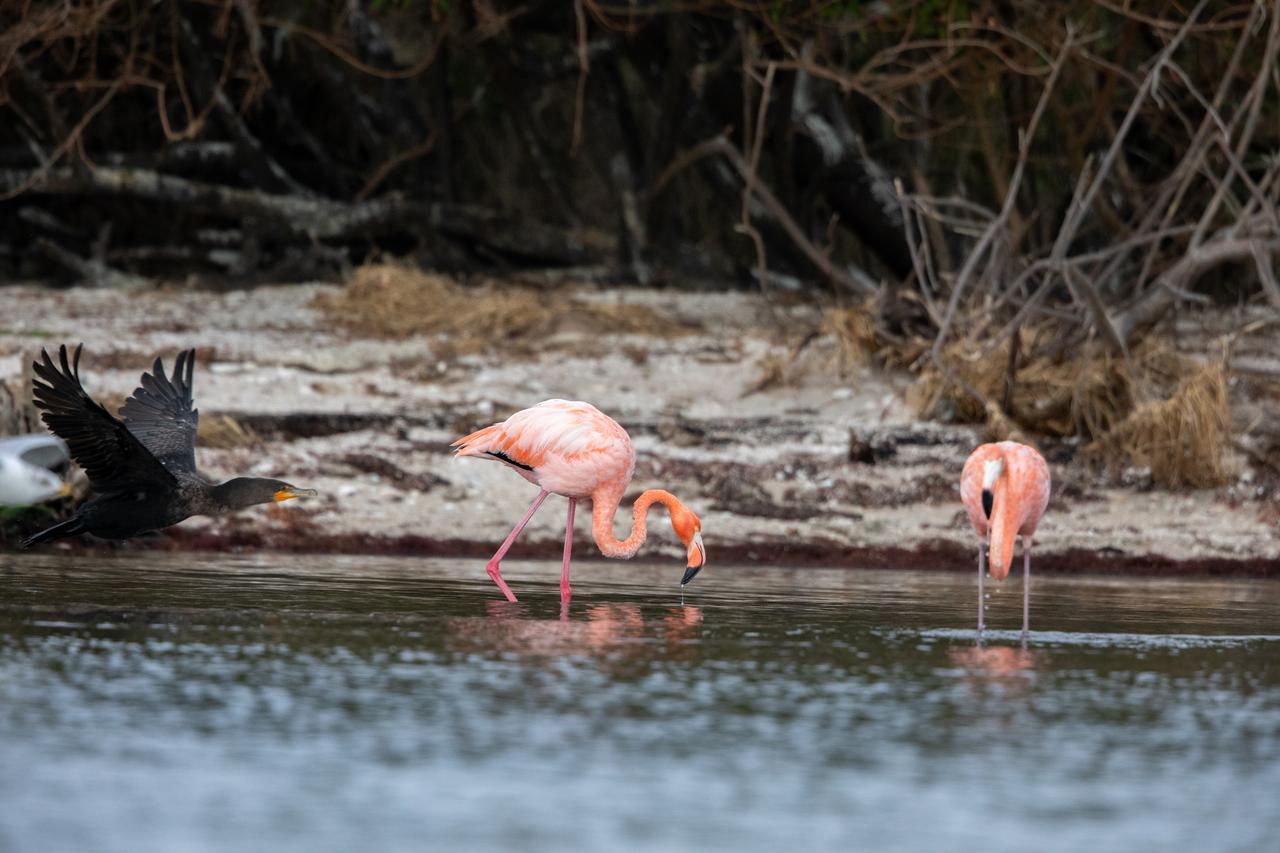
American Flamingos cool off in the Indian River at Haulover Canal on Merritt Island on Thursday, Jan. 11, 2024. The American Flamingos are more common in Mexico and Cuba but the winds from Hurricane Idalia relocated them to Florida in September 2023. Kennedy Space Center in Florida shares a border with the Merritt Island National Wildlife Refuge where more than 310 species of birds inhabit the refuge.
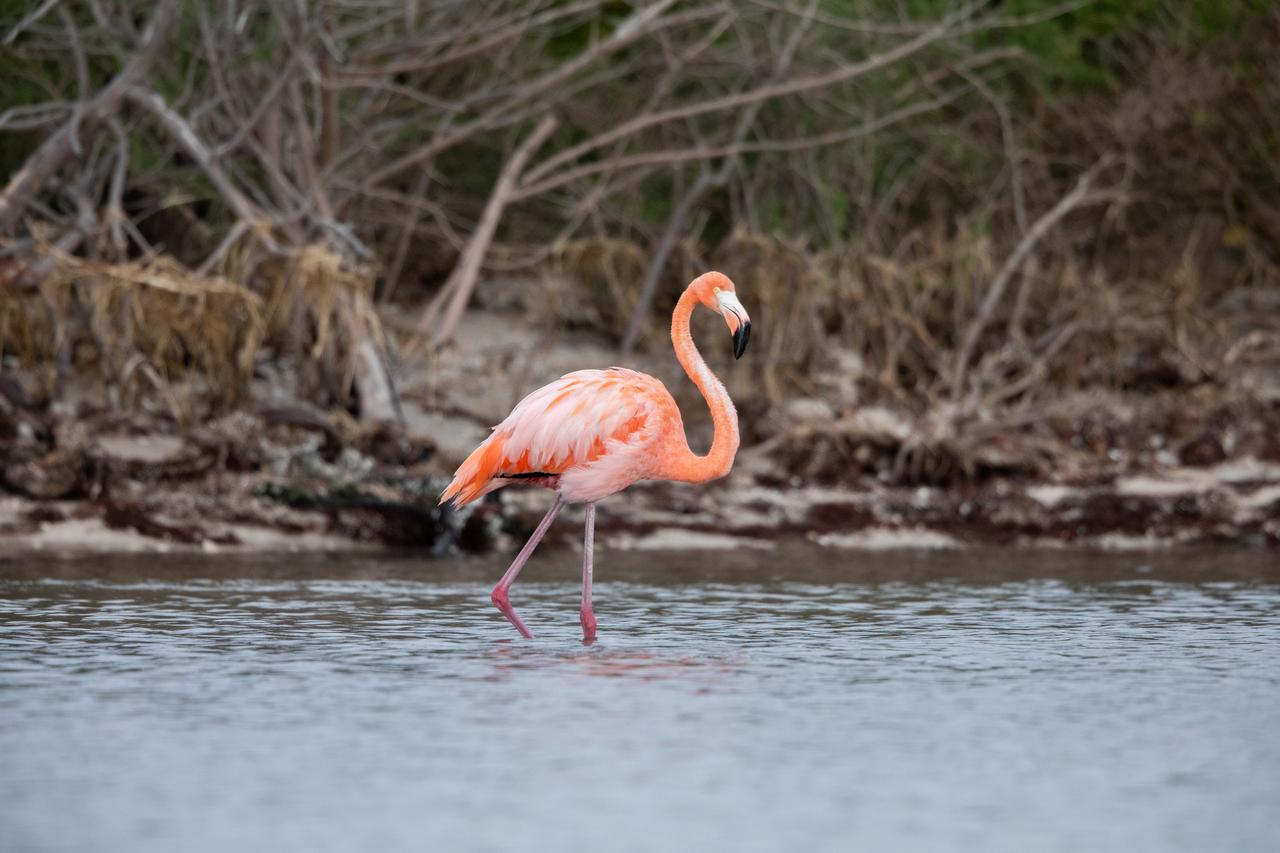
An American Flamingo cools off in the Indian River at Haulover Canal on Merritt Island on Thursday, Jan. 11, 2024. The American Flamingos are more common in Mexico and Cuba but the winds from Hurricane Idalia relocated them to Florida in September 2023. Kennedy Space Center in Florida shares a border with the Merritt Island National Wildlife Refuge where more than 310 species of birds inhabit the refuge.
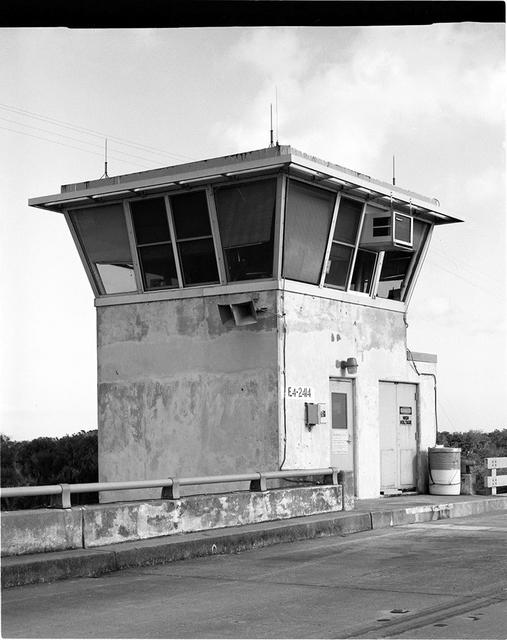
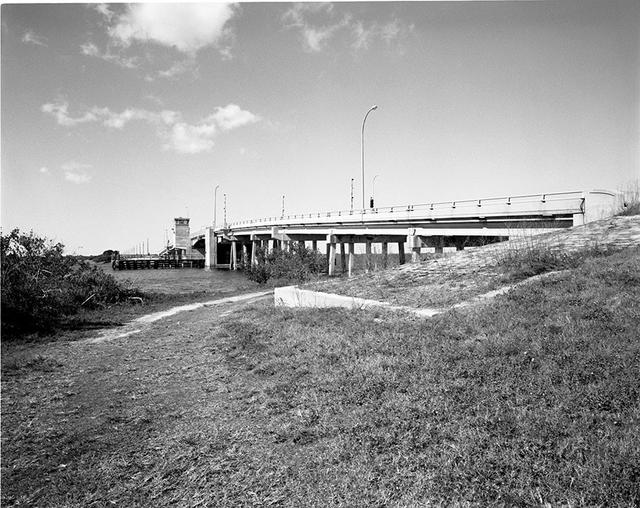
View of the Haulover Canal Bridge

View of the Haulover Canal Bridge
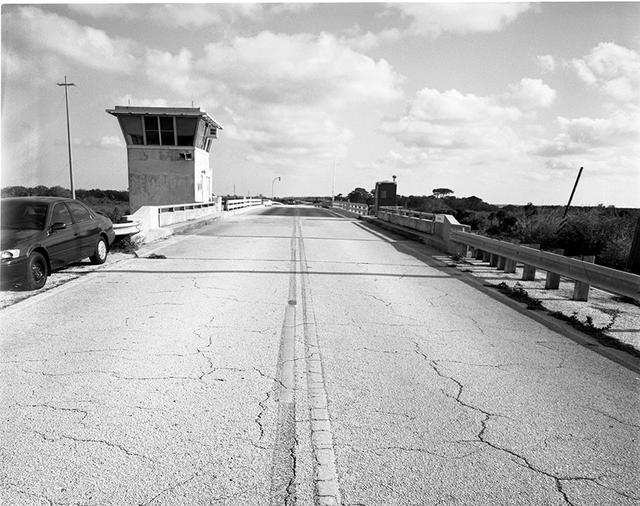
View of the Haulover Canal Bridge
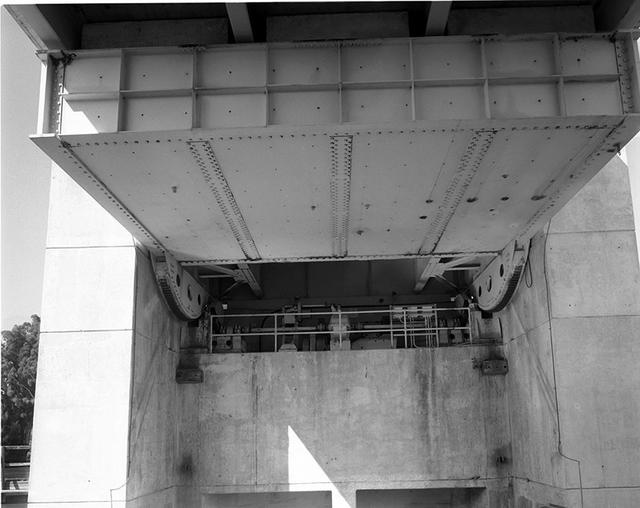
View of the Haulover Canal Bridge
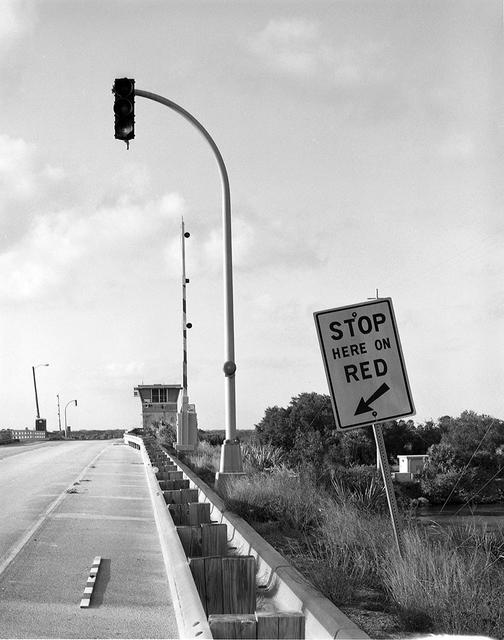
View of the Haulover Canal Bridge
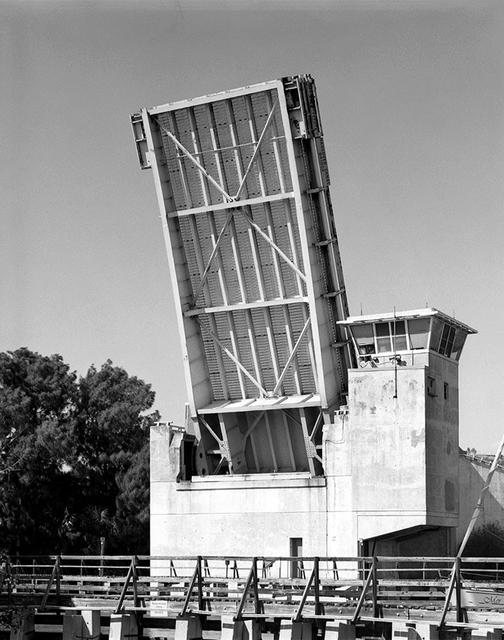
View of the Haulover Canal Bridge
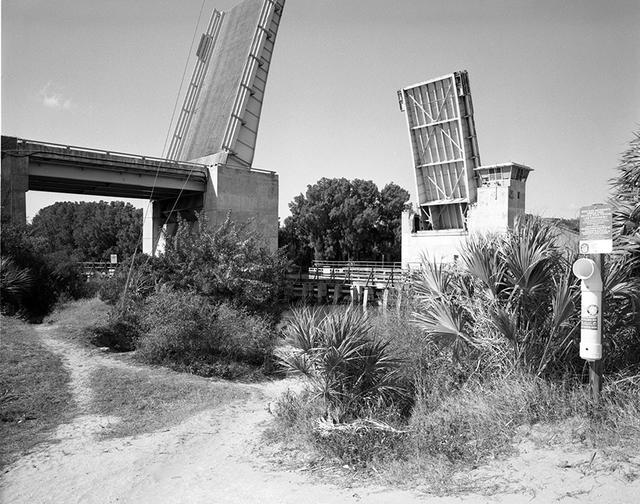
View of the Haulover Canal Bridge
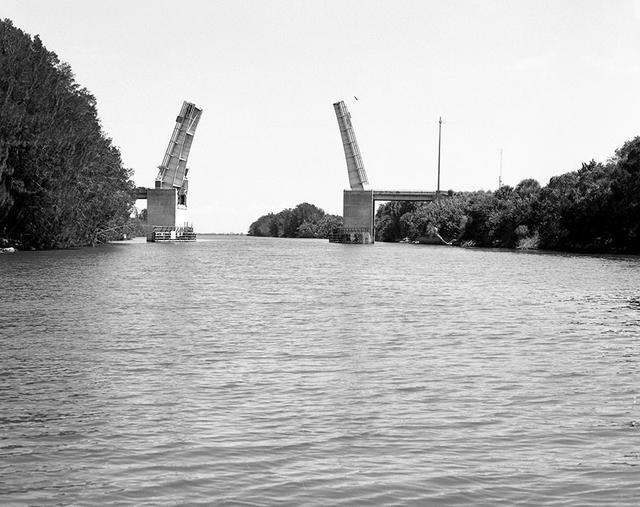
View of the Haulover Canal Bridge
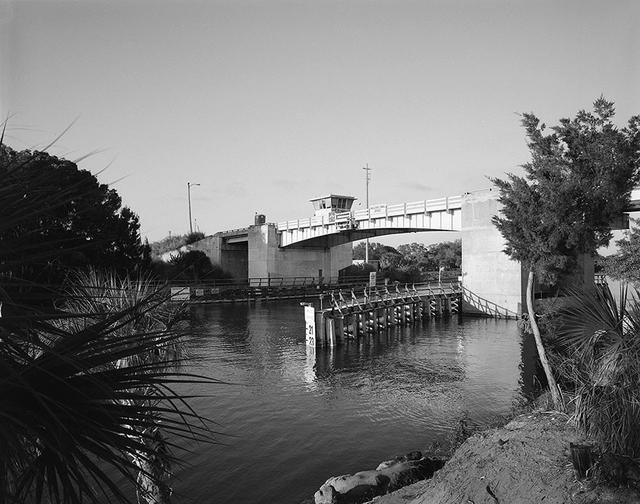
View of the Haulover Canal Bridge
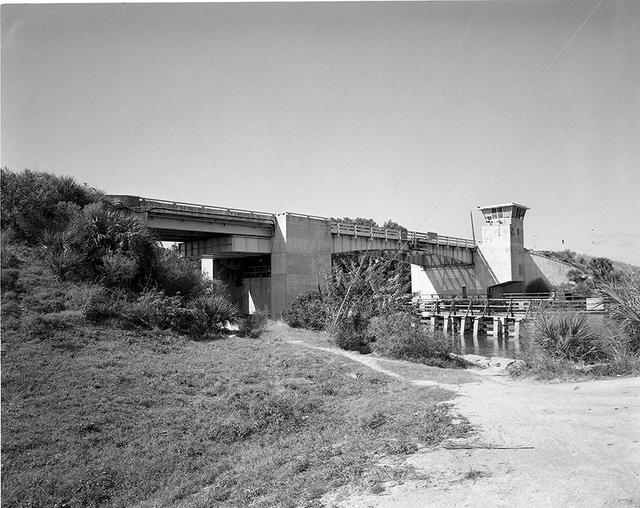
View of the Haulover Canal Bridge
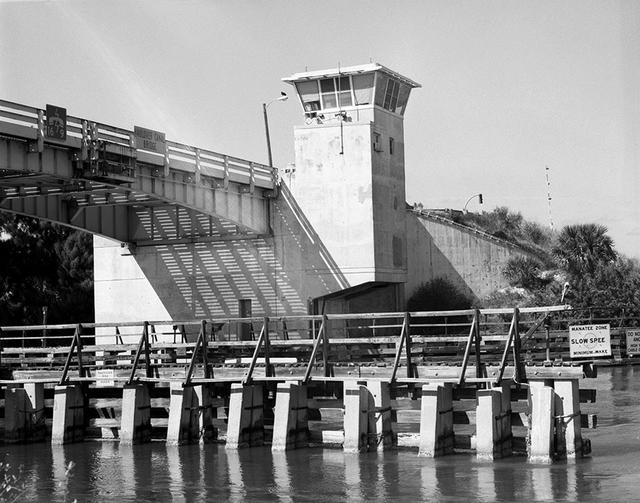
View of the Haulover Canal Bridge
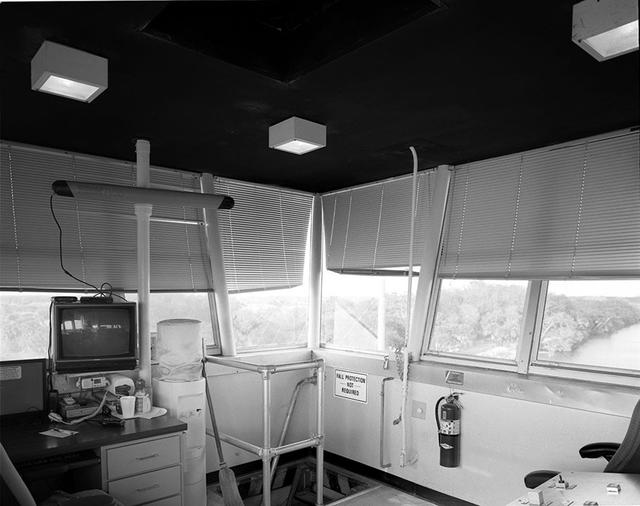
Interior view of the Haulover Canal Bridge Control Tower
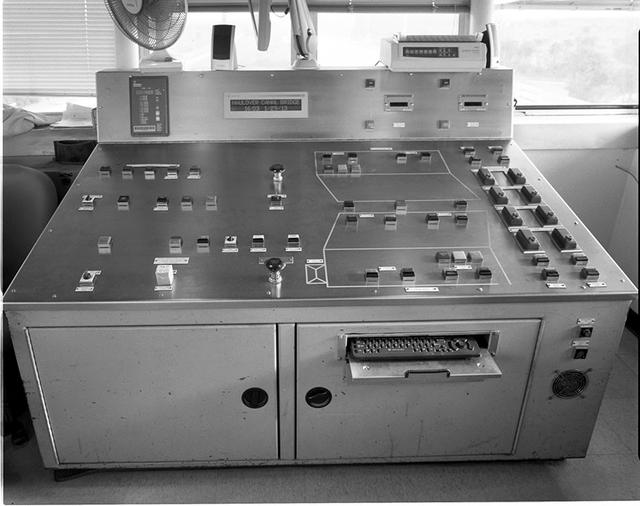
Interior view of the Haulover Canal Bridge Control Tower
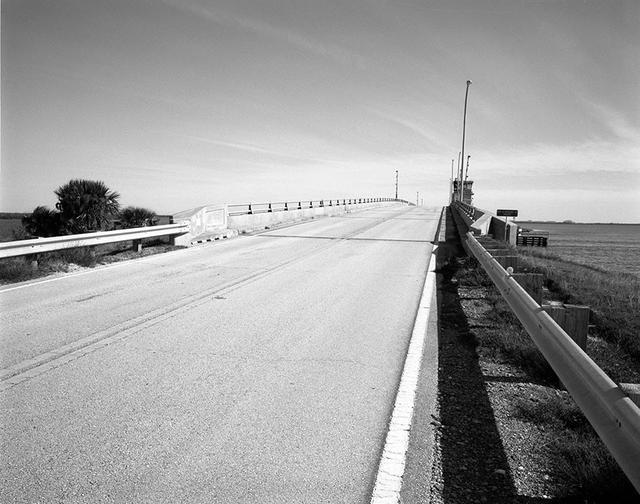
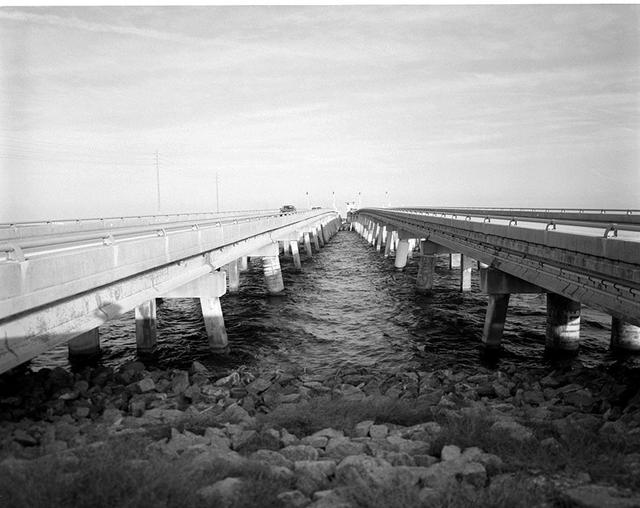
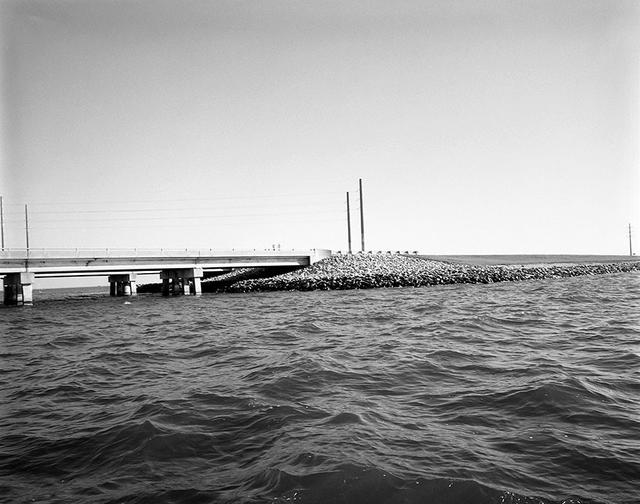
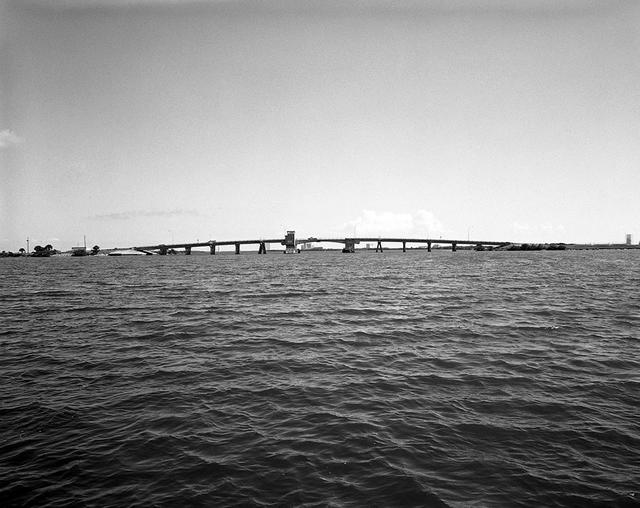
View of the Banana River Bridge
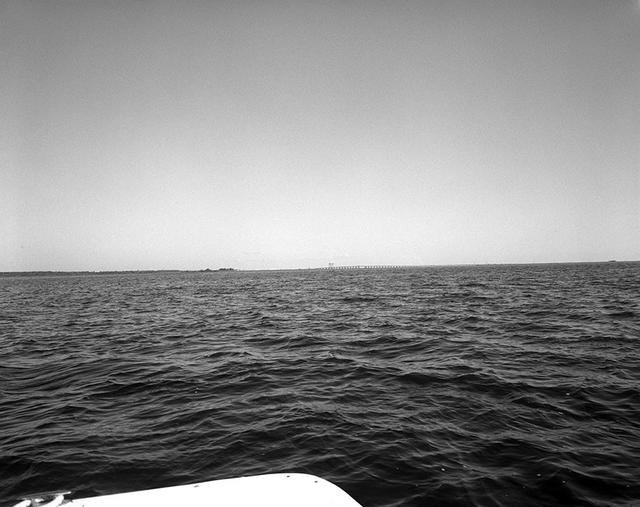
View of the Indian River Bridge
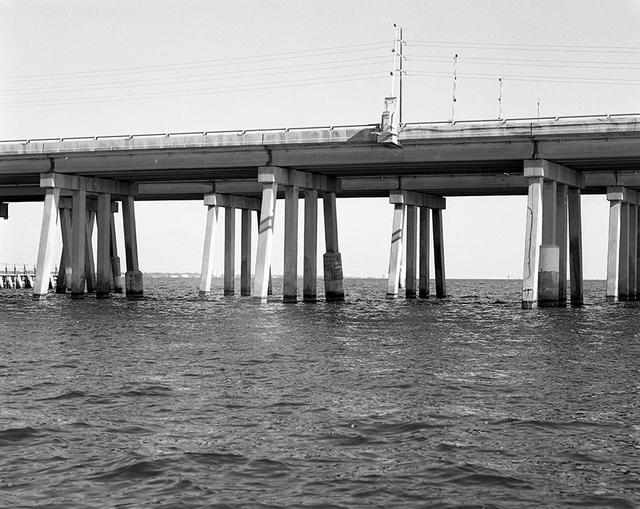
View of the Indian River Bridge
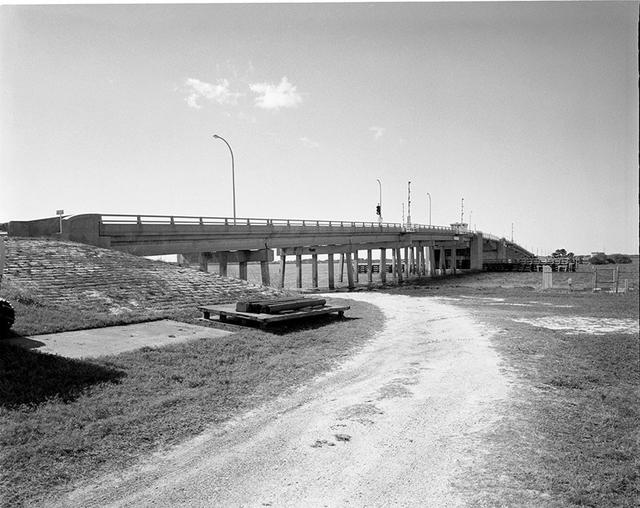
View of the Banana River Bridge
View of the Indian River Bridge
View of the Indian River Bridge
View of the Banana River Bridge
View of the Banana River Bridge
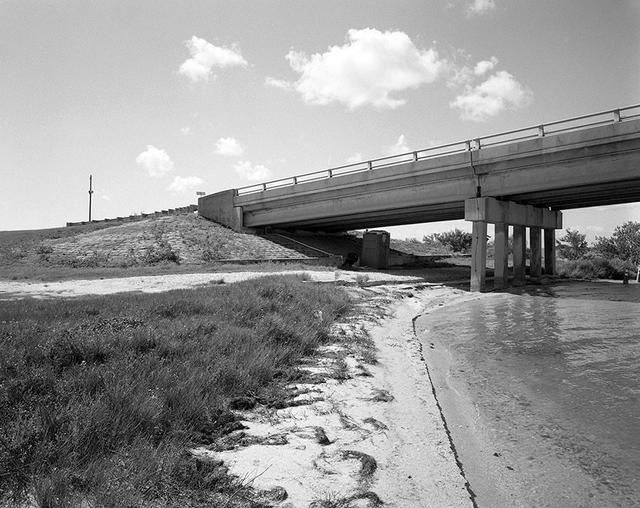
View of the Banana River Bridge
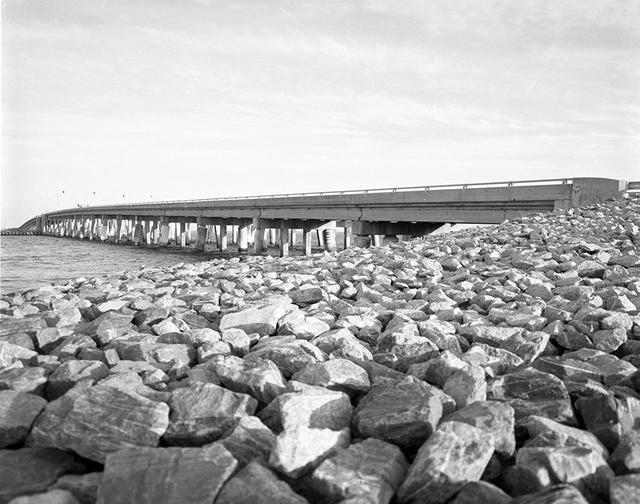
View of the Indian River Bridge
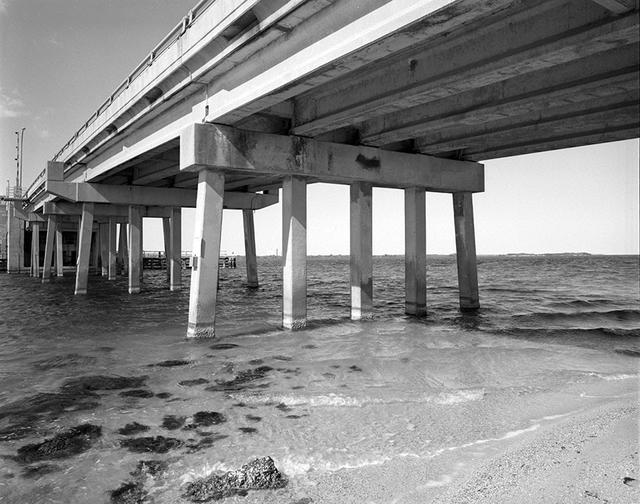
View of the Banana River Bridge
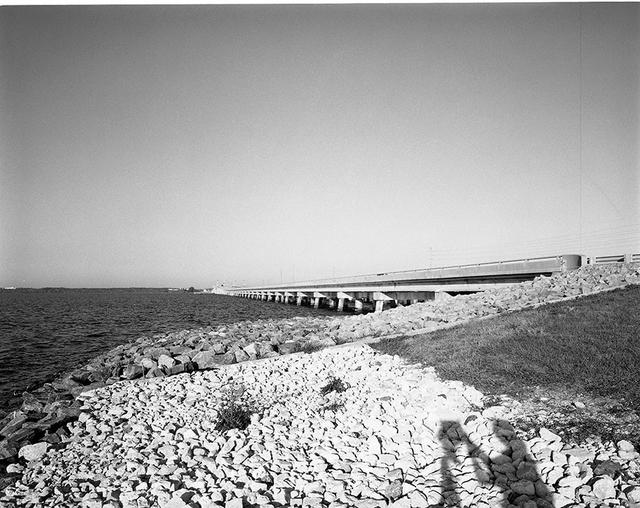
View of the Indian River Bridge
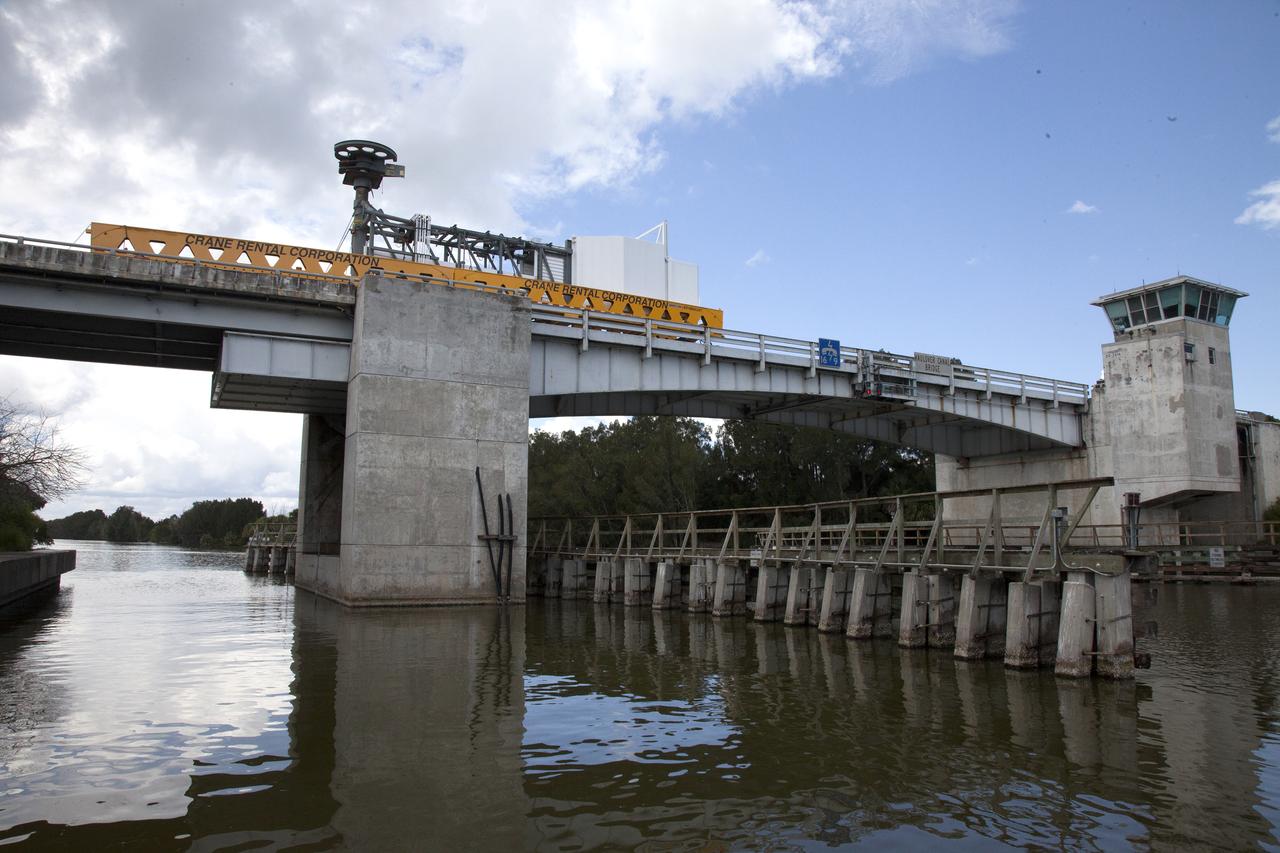
A heavy-lift transport truck, carrying the Crew Access Arm for Space Launch Complex 41, crosses the Haulover Canal Bridge on its way to the entrance of NASA’s Kennedy Space Center in Florida. The arm will be installed on the Complex 41 Crew Access Tower at Cape Canaveral Air Force Station. It will be used as a bridge by astronauts to board Boeing's CST-100 Starliner spacecraft as it stands on the launch pad atop a United Launch Alliance Atlas V rocket.
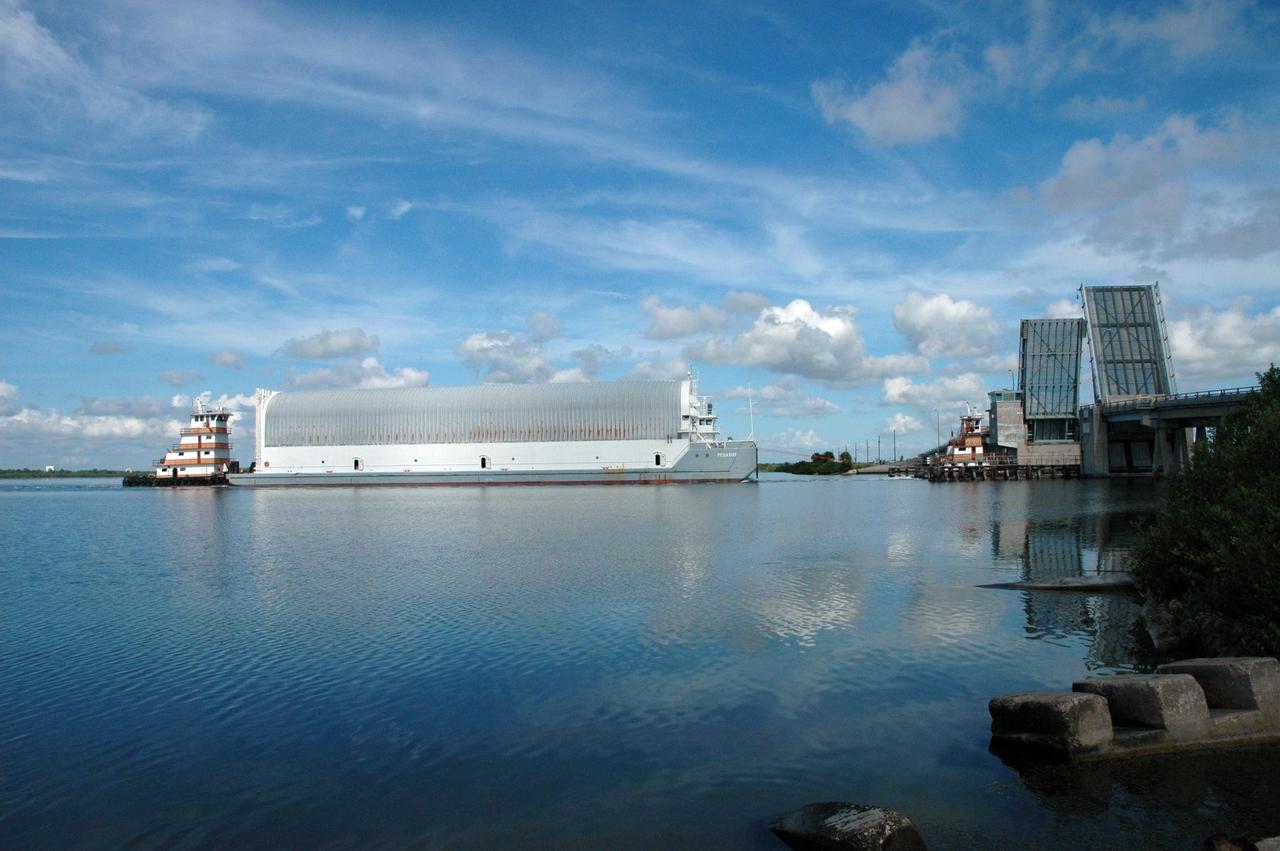
KENNEDY SPACE CENTER, FLA. -- Tugboats tow the Pegasus barge through the bridge at the haulover canal on the Banana River. The barge is carrying external tank No. 125. After it is offloaded, the tank will be moved to the Vehicle Assembly Building. The external tank will be used on space shuttle Atlantis for mission STS-122 targeted for launch on Dec. 6. Photo credit: NASA/Troy Cryder
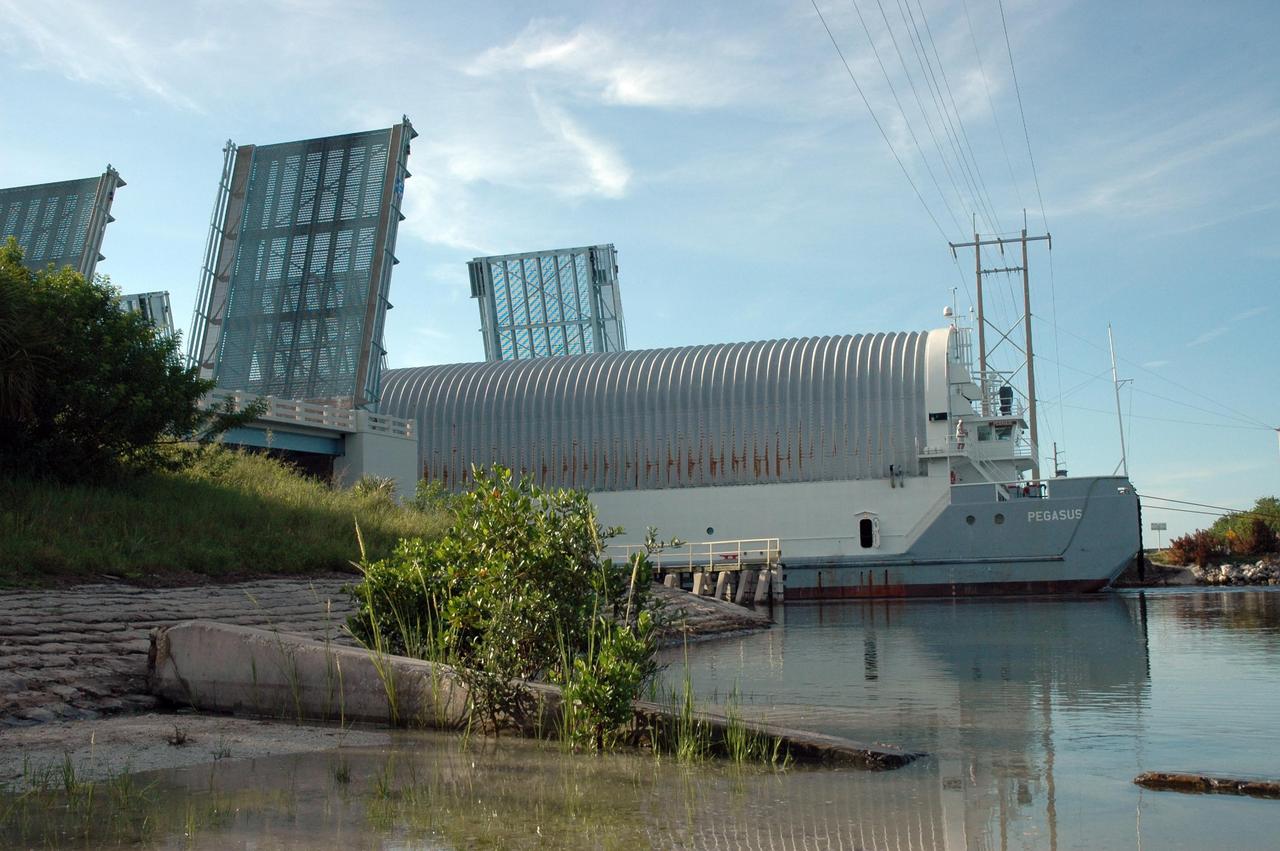
KENNEDY SPACE CENTER, FLA. -- The Pegasus barge passes through the haulover canal on the Banana River with its cargo of external tank No. 125. The barge is being towed to the turn basin in the Launch Complex 39 Area where the external tank will be offloaded and moved to the Vehicle Assembly Building. The external tank will be used on space shuttle Atlantis for mission STS-122 targeted for launch on Dec. 6. Photo credit: NASA/Troy Cryder
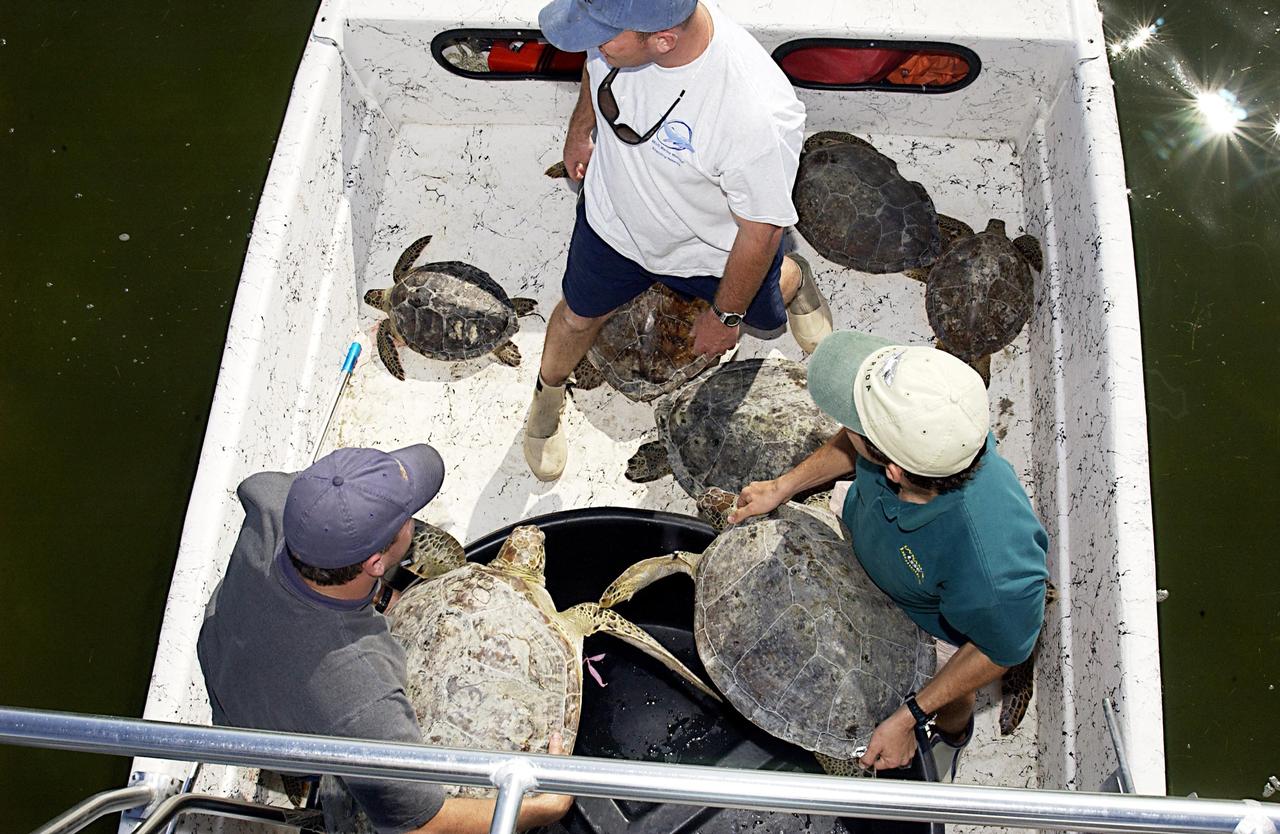
KENNEDY SPACE CENTER, FLA. - Several sea turtles await their release into the Mosquito Lagoon. They were found stunned, impacted by the unseasonal cold temperatures experienced in Central Florida. The cooperative effort of KSC contractor Dynamac Corporation's Aquatics Program and the Merritt Island National Wildlife Refuge warmed the turtles and evaluated them for release. Most were tagged and the largest one received a transmitter, provided by the University of Central Florida, for satellite tracking. The turtles were then transported through the Haulover Canal to a location away from the main channel for release.
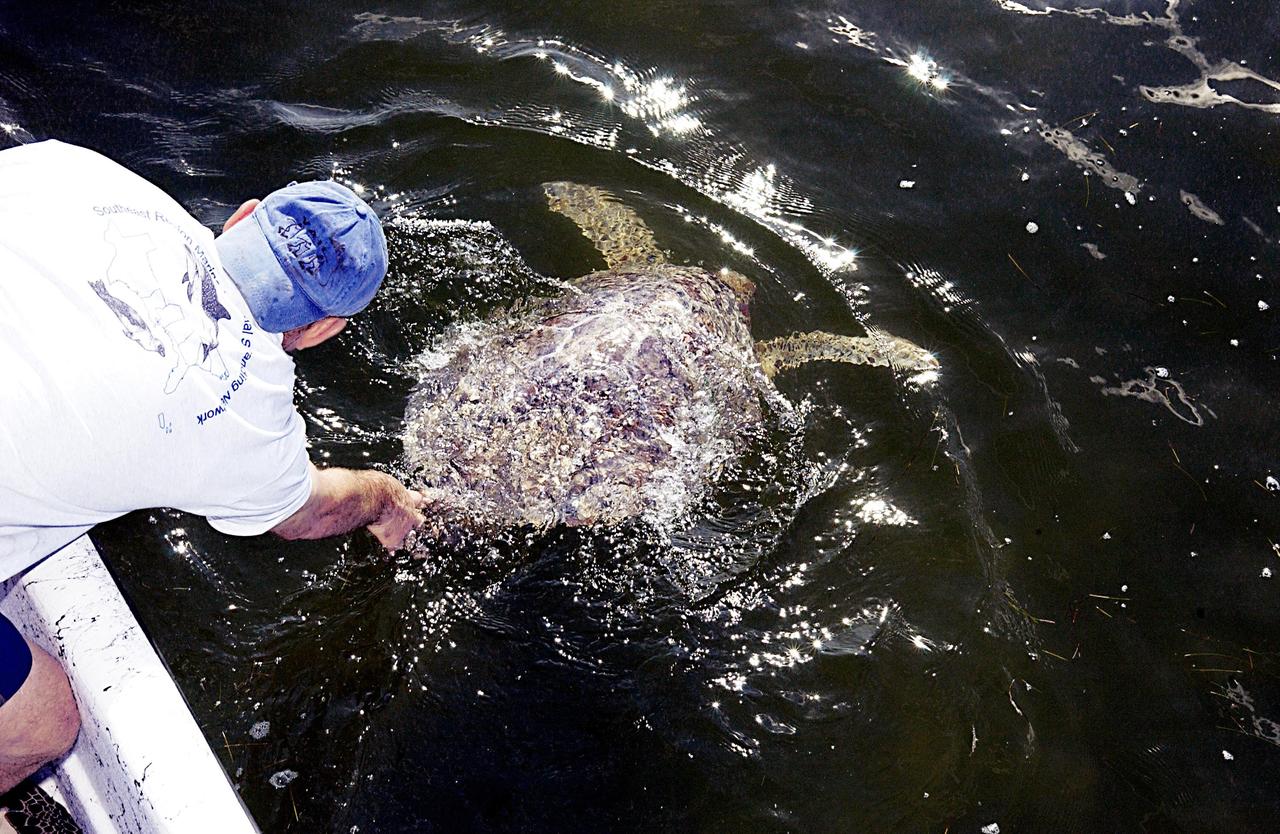
KENNEDY SPACE CENTER, FLA. - A sea turtle is released into the Mosquito Lagoon. It is one of several turtles found stunned, impacted by the unseasonal cold temperatures experienced in Central Florida. The cooperative effort of KSC contractor Dynamac Corporation's Aquatics Program and the Merritt Island National Wildlife Refuge warmed the turtles and evaluated them for release. Most were tagged and the largest one received a transmitter, provided by the University of Central Florida, for satellite tracking. The turtles were then transported through the Haulover Canal to a location away from the main channel for release..
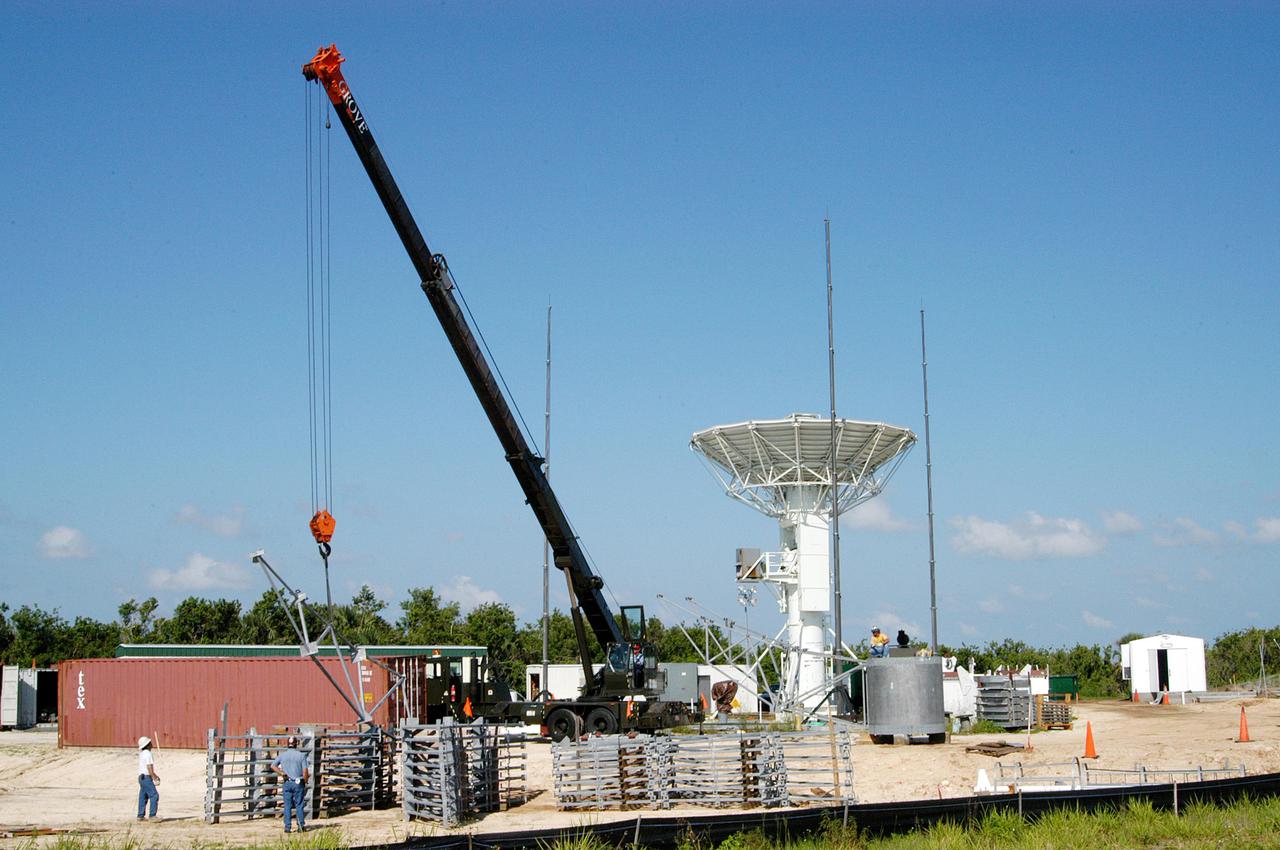
KENNEDY SPACE CENTER, FLA. - At a radar site on North Merritt Island, Fla., north of the Haulover Canal, a 50-foot dish for NASA’s C-band radar is being assembled. The radar will be used for long-term Shuttle missions to track the launches and observe possible debris coming from the Shuttle. In the background is an existing 30-foot C-band Pathfinder radar whose use was demonstrated on the Delta Messenger launch. It will be used on the upcoming two Return to Flight missions. The launch window for the first Return to Flight mission, STS-114, is July 13 to July 31.
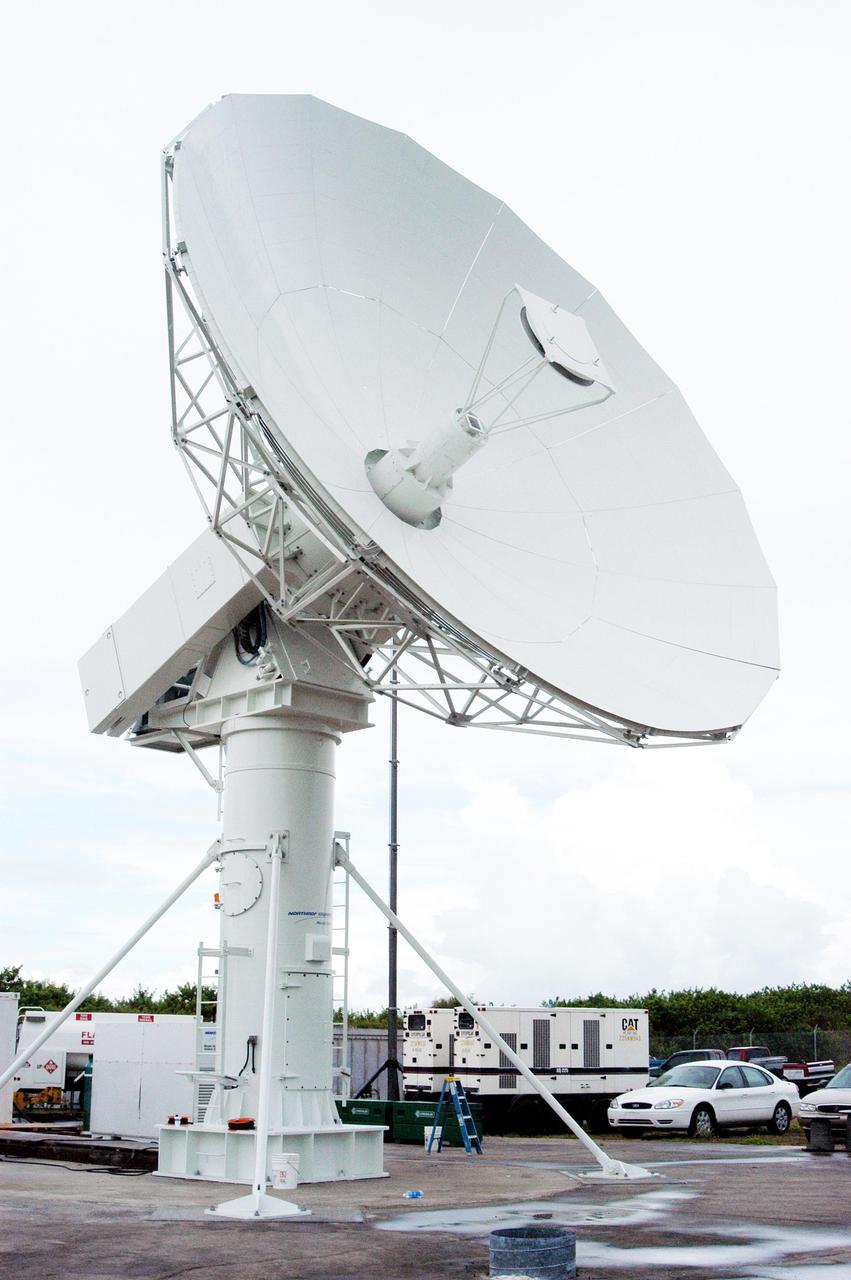
KENNEDY SPACE CENTER, FLA. - A C-band radar antenna stands ready to observe the MESSENGER (Mercury Surface, Space Environment, Geochemistry and Ranging) launch. This antenna and an X-band radar antenna are on loan to KSC from the USNS Pathfinder, a U.S. Navy instrumentation ship. They have been installed at site north of Haulover Canal where the National Center for Atmospheric Research previously had a radar for thunderstorm research. NASA is evaluating the pair of radars for their ability to observe possible debris coming from the Space Shuttle during launch, part of NASA’s initiative to return the Space Shuttle to flight.
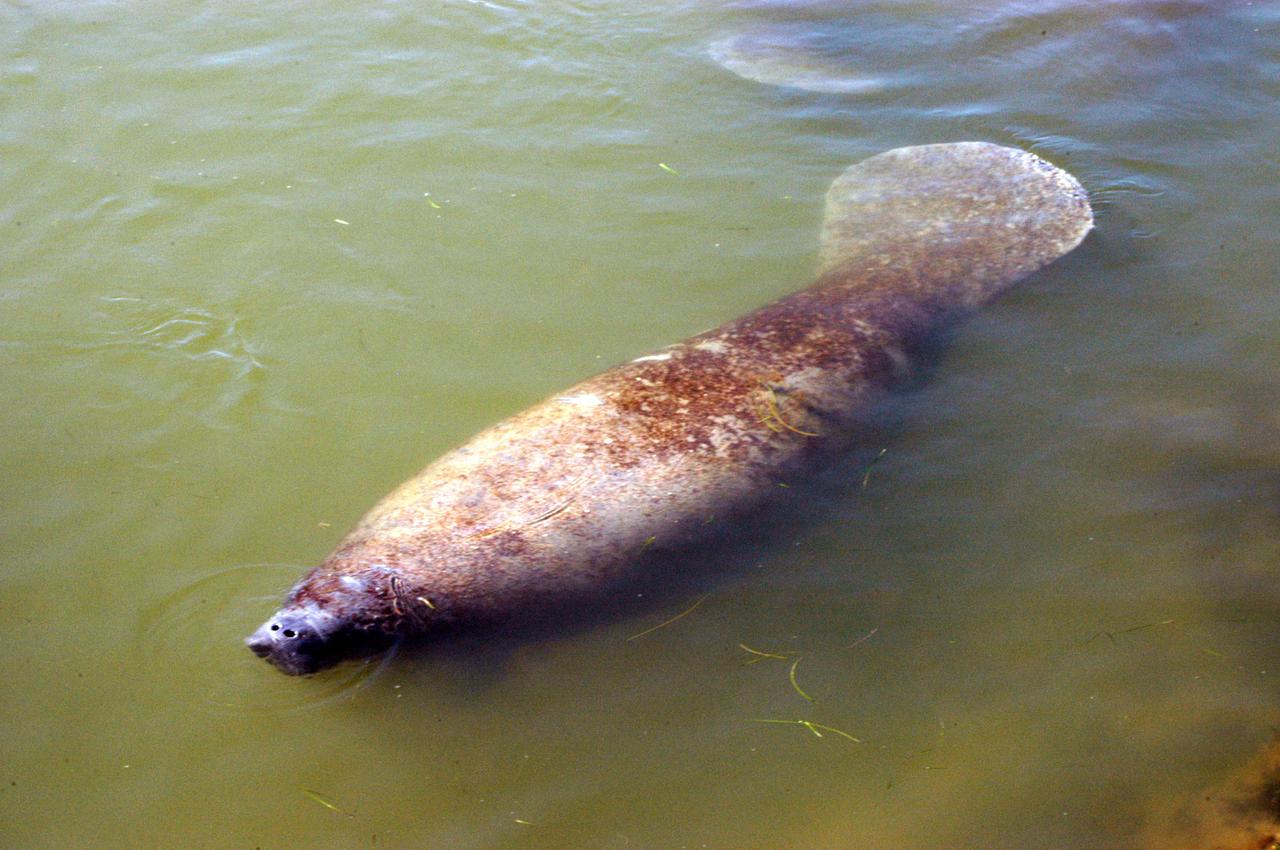
KENNEDY SPACE CENTER, FLA. - Seemingly asleep, a manatee floats in the Haulover Canal near NASA’s Kennedy Space Center. Manatees live in Florida's warm-water rivers and inland springs. The Florida manatee feeds on more than 60 varieties of grasses and plants. Manatee cows give birth about once every three years. Gestation lasts about 12 months. KSC shares a boundary with the Merritt Island National Wildlife Refuge, which encompasses 92,000 acres that are a habitat for more than 331 species of birds, 31 mammals, 117 fishes, and 65 amphibians and reptiles.
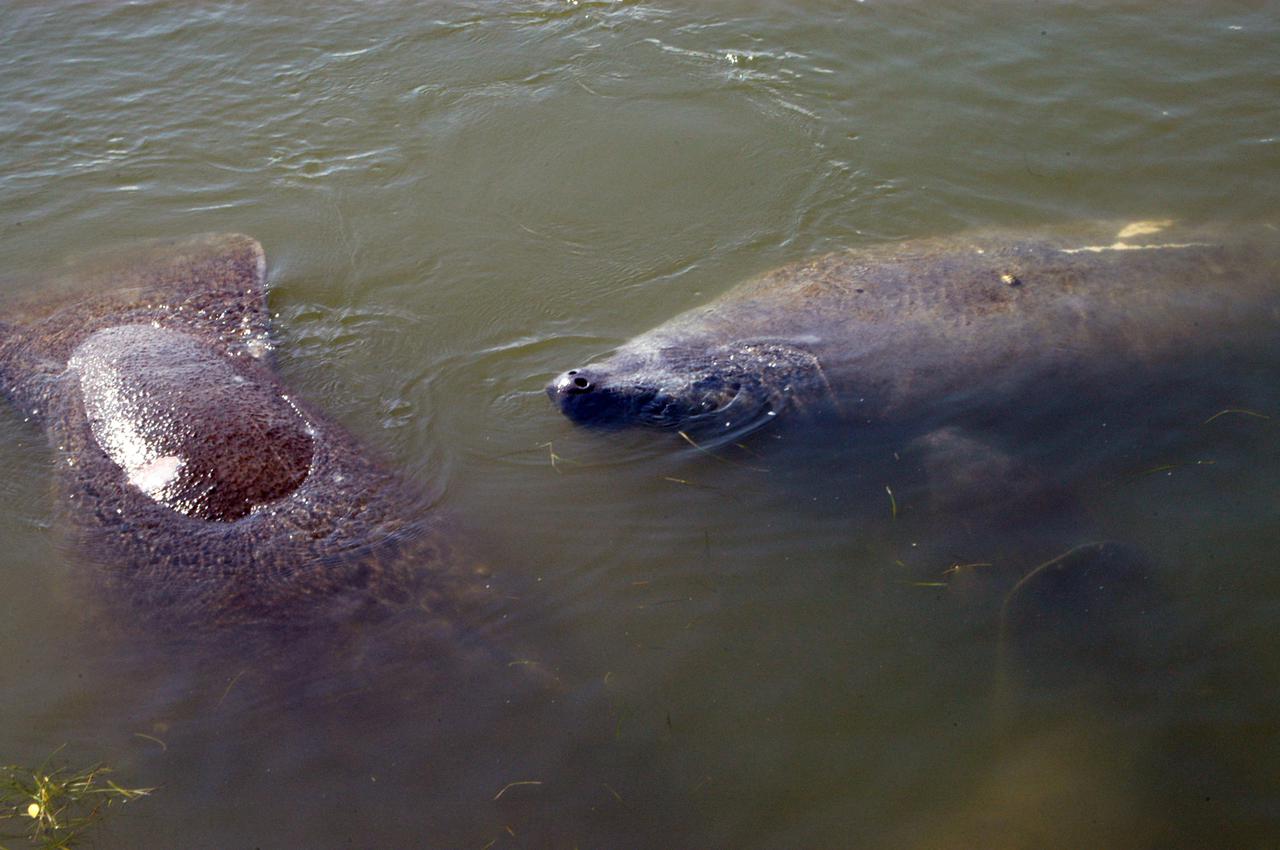
KENNEDY SPACE CENTER, FLA. - Two manatees surface in the Haulover Canal near NASA’s Kennedy Space Center. Manatees live in Florida's warm-water rivers and inland springs. The Florida manatee feeds on more than 60 varieties of grasses and plants. Manatee cows give birth about once every three years. Gestation lasts about 12 months. KSC shares a boundary with the Merritt Island National Wildlife Refuge, which encompasses 92,000 acres that are a habitat for more than 331 species of birds, 31 mammals, 117 fishes, and 65 amphibians and reptiles.
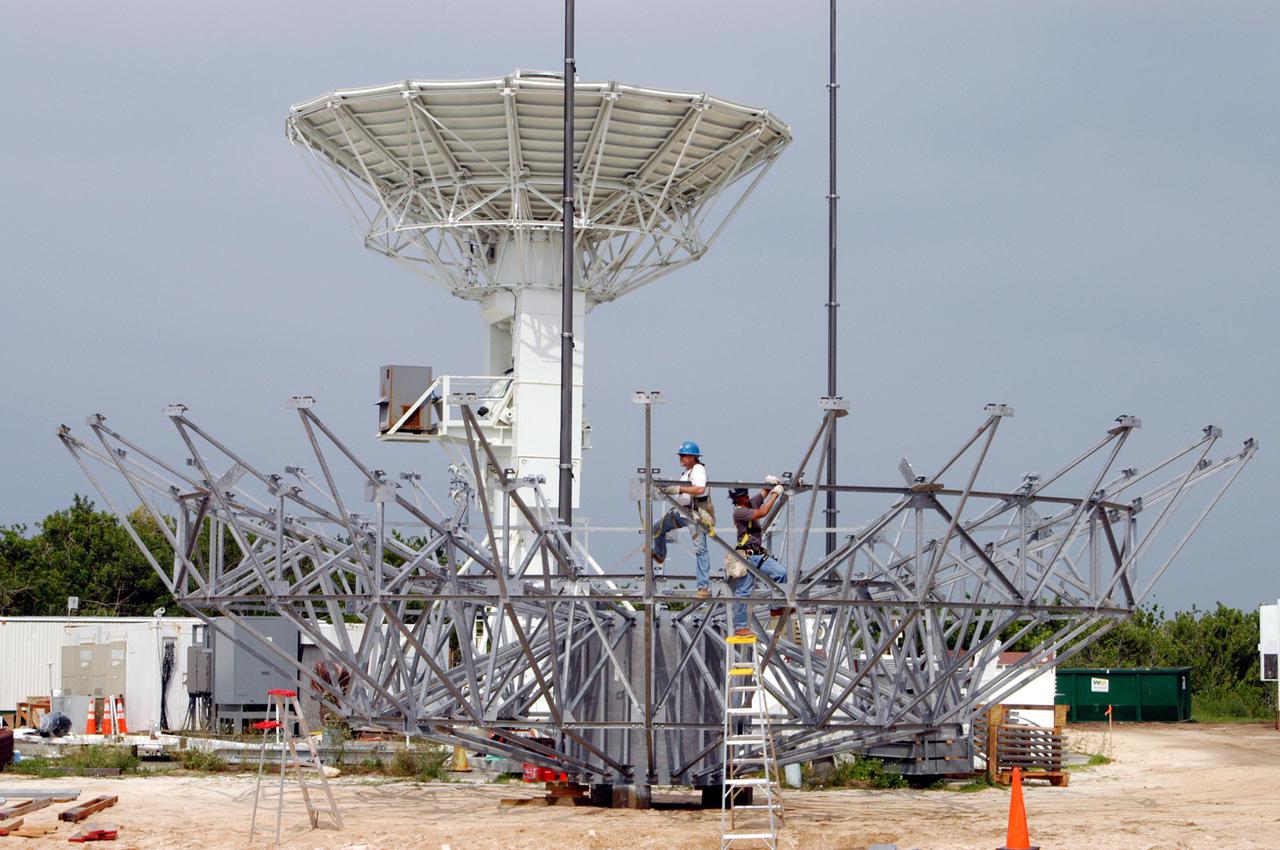
KENNEDY SPACE CENTER, FLA. - At a radar site on North Merritt Island, Fla., north of the Haulover Canal, workers continue assembling a 50-foot C-band radar. The radar will be used for long-term Shuttle missions to track the launches and observe possible debris coming from the Shuttle. In the background is an existing 30-foot C-band Pathfinder radar whose use was demonstrated on the Delta Messenger launch. It will be used on the upcoming two Return to Flight missions. The launch window for the first Return to Flight mission, STS-114, is July 13 to July 31.
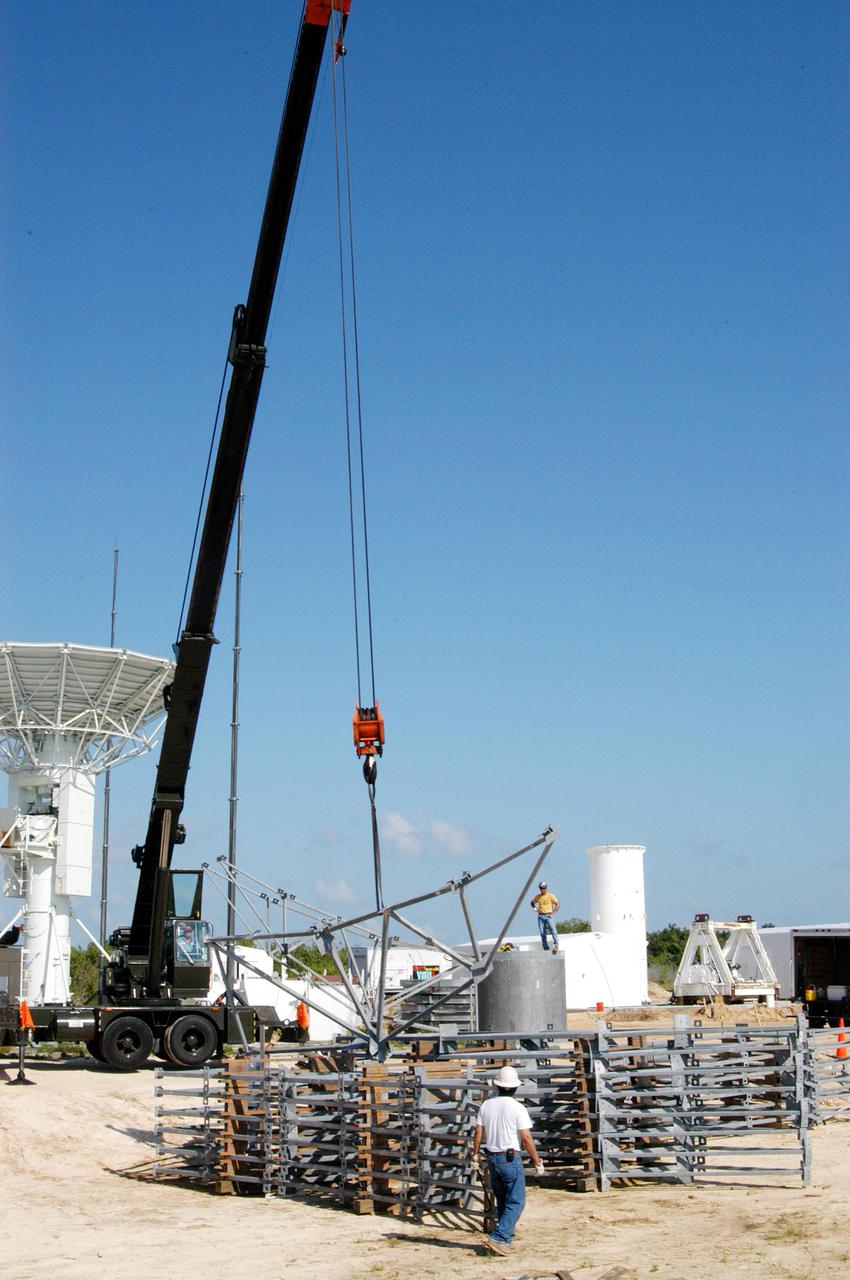
KENNEDY SPACE CENTER, FLA. - At a radar site on North Merritt Island, Fla., north of the Haulover Canal, a 50-foot dish for NASA’s C-band radar is being assembled. The radar will be used for long-term Shuttle missions to track the launches and observe possible debris coming from the Shuttle. At left is an existing 30-foot C-band Pathfinder radar whose use was demonstrated on the Delta Messenger launch. It will be used on the upcoming two Return to Flight missions. The launch window for the first Return to Flight mission, STS-114, is July 13 to July 31.
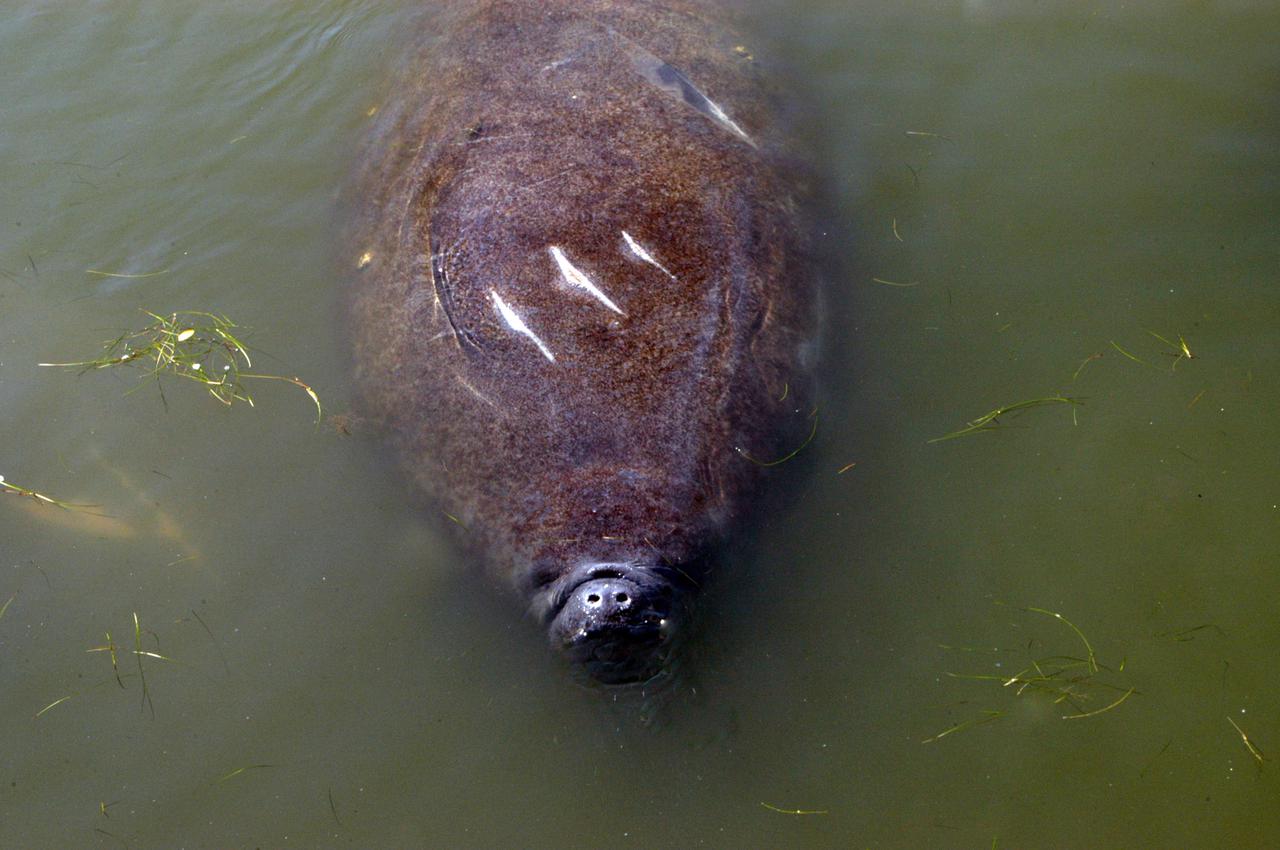
KENNEDY SPACE CENTER, FLA. - Looking more like an alien life form than a mammal, a manatee floats on its back in the Haulover Canal near NASA’s Kennedy Space Center. Manatees live in Florida's warm-water rivers and inland springs. The Florida manatee feeds on more than 60 varieties of grasses and plants. Manatee cows give birth about once every three years. Gestation lasts about 12 months. KSC shares a boundary with the Merritt Island National Wildlife Refuge, which encompasses 92,000 acres that are a habitat for more than 331 species of birds, 31 mammals, 117 fishes, and 65 amphibians and reptiles.
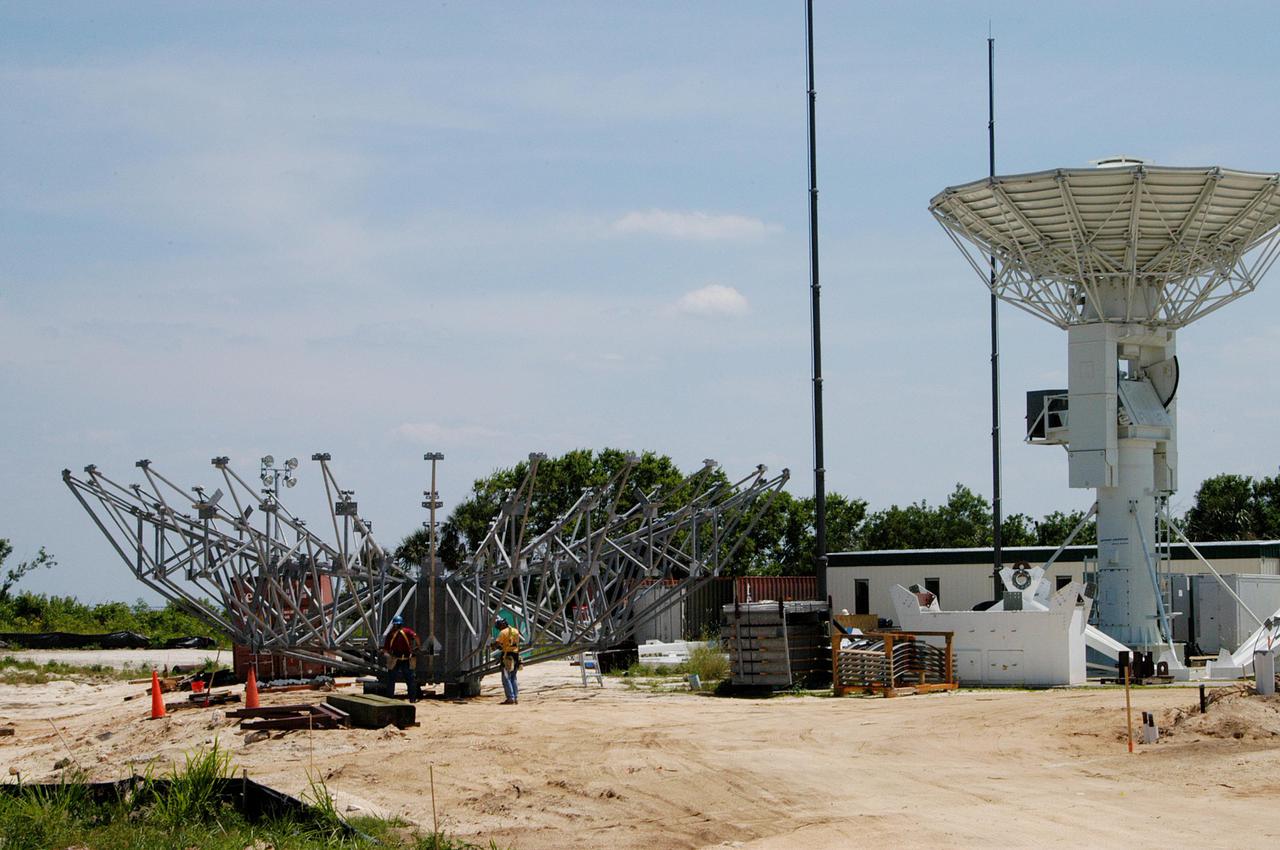
KENNEDY SPACE CENTER, FLA. - At a radar site on North Merritt Island, Fla., north of the Haulover Canal, a 50-foot dish for NASA’s C-band radar is being assembled. The radar will be used for long-term Shuttle missions to track the launches and observe possible debris coming from the Shuttle. On the right is an existing 30-foot C-band Pathfinder radar whose use was demonstrated on the Delta Messenger launch. It will be used on the upcoming two Return to Flight missions. The launch window for the first Return to Flight mission, STS-114, is July 13 to July 31.

KENNEDY SPACE CENTER, FLA. - At a radar site on North Merritt Island, Fla., north of the Haulover Canal, workers are assembling the dish for the 50-foot NASA C-band radar. The radar will be used for long-term Shuttle missions to track the launches and observe possible debris coming from the Shuttle. In the background is an existing 30-foot C-band Pathfinder radar whose use was demonstrated on the Delta Messenger launch. It will be used on the upcoming two Return to Flight missions. The launch window for the first Return to Flight mission, STS-114, is July 13 to July 31..
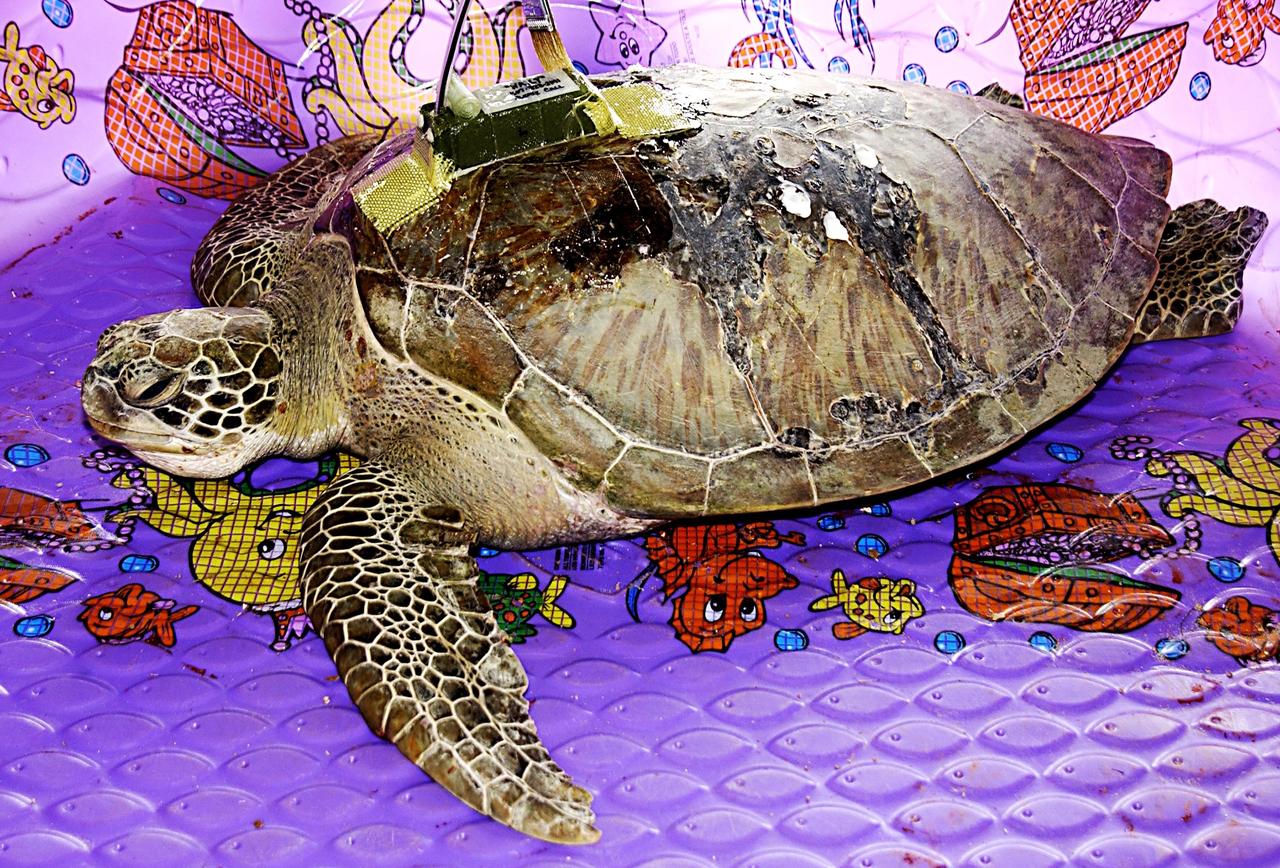
KENNEDY SPACE CENTER, FLA. -- A sea turtle rescued from the Mosquito Lagoon is seen with a transmitter recently attached to its back. Several turtles were found stunned, impacted by the unseasonal cold temperatures experienced in Central Florida. The cooperative effort of KSC contractor Dynamac Corporation's Aquatics Program and the Merritt Island National Wildlife Refuge warmed the turtles and evaluated them for release. Most were tagged and one received the transmitter, provided by the University of Central Florida, for satellite tracking. The turtles were then transported in a skiff through the Haulover Canal to a location away from the main channel and released back into the Mosquito Lagoon.
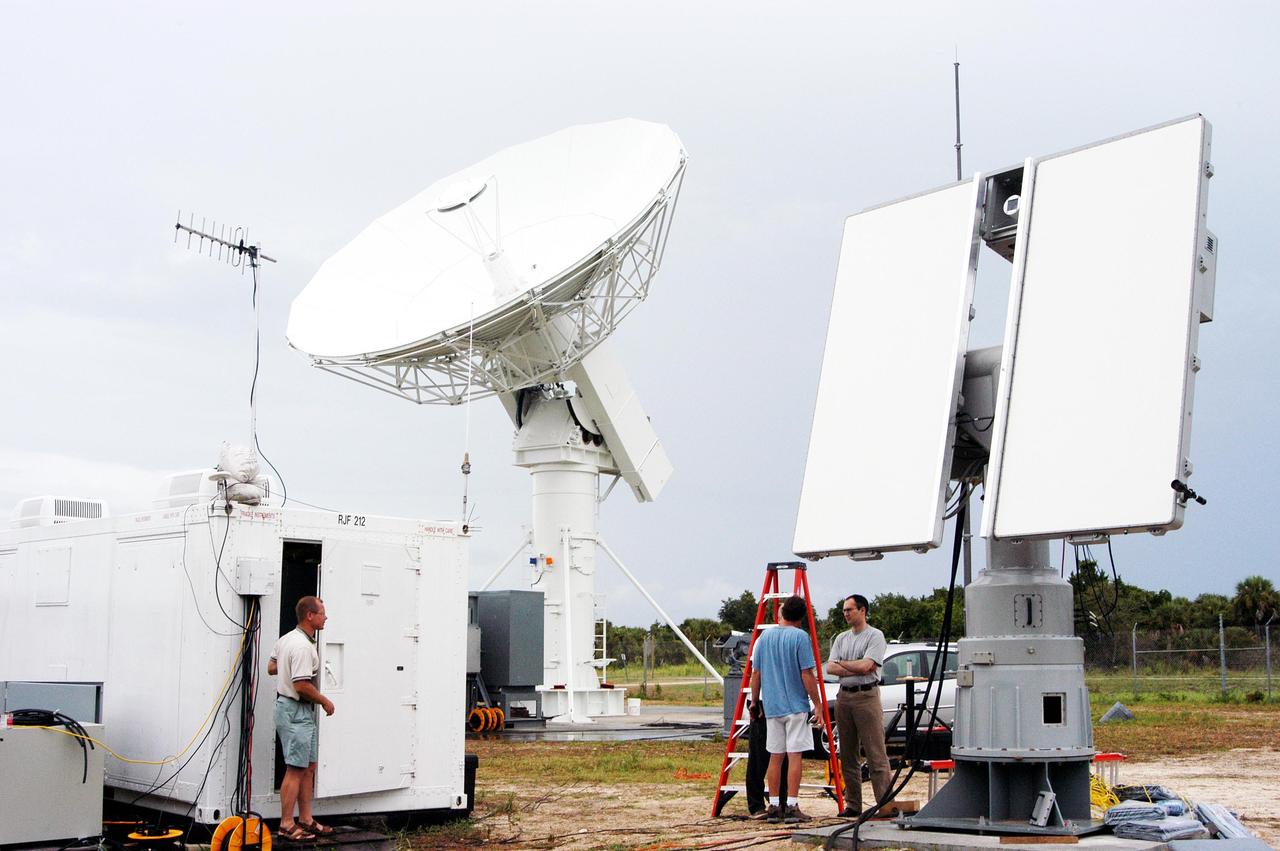
KENNEDY SPACE CENTER, FLA. - A C-band (left) and an X-band radar antenna are positioned to observe the MESSENGER (Mercury Surface, Space Environment, Geochemistry and Ranging) launch. The antennas are on loan to KSC from the USNS Pathfinder, a U.S. Navy instrumentation ship. They have been installed at site north of Haulover Canal where the National Center for Atmospheric Research previously had a radar for thunderstorm research. NASA is evaluating the pair of radars for their ability to observe possible debris coming from the Space Shuttle during launch, part of NASA’s initiative to return the Space Shuttle to flight.
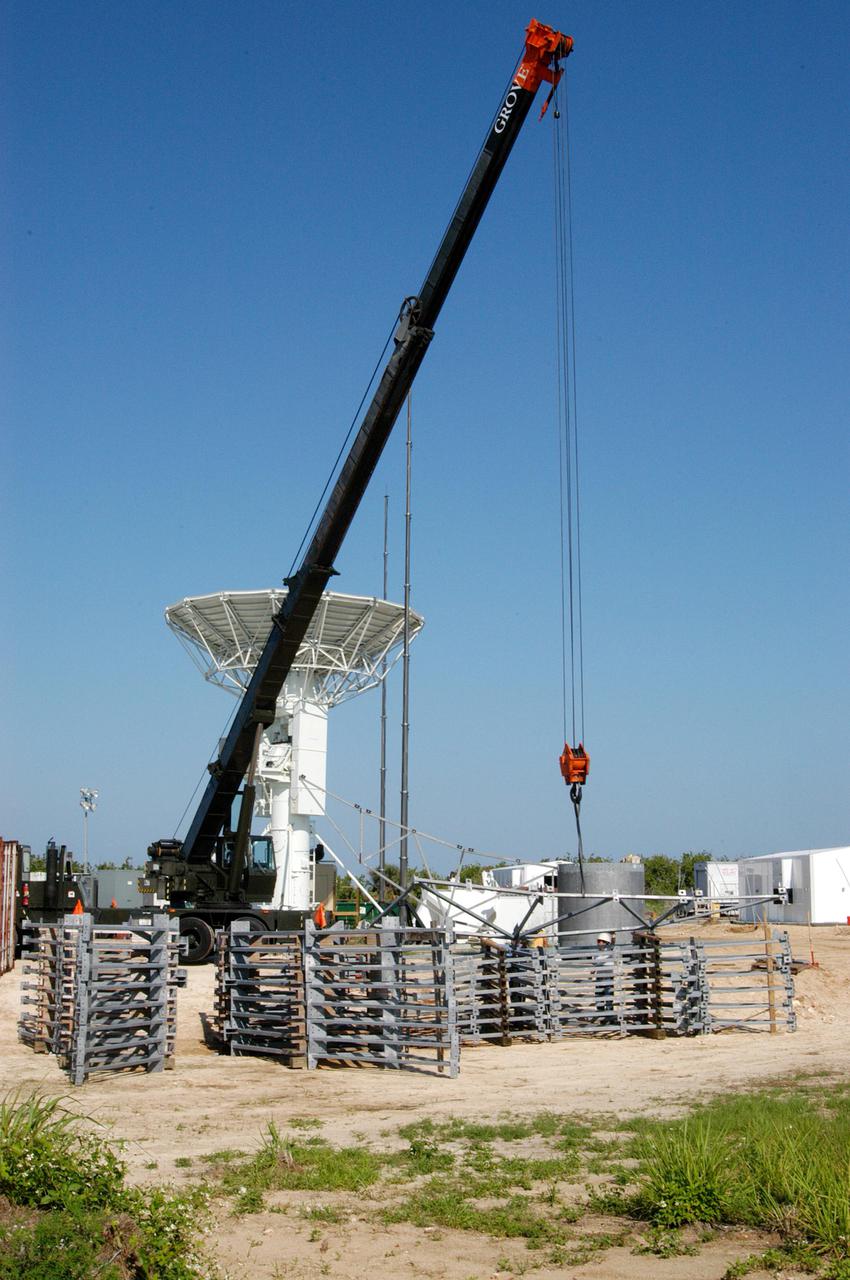
KENNEDY SPACE CENTER, FLA. - At a radar site on North Merritt Island, Fla., north of the Haulover Canal, workers begin assembling the dish for the 50-foot NASA C-band radar. The radar will be used for long-term Shuttle missions to track the launches and observe possible debris coming from the Shuttle. In the background is an existing 30-foot C-band Pathfinder radar whose use was demonstrated on the Delta Messenger launch. It will be used on the upcoming two Return to Flight missions. The launch window for the first Return to Flight mission, STS-114, is July 13 to July 31.
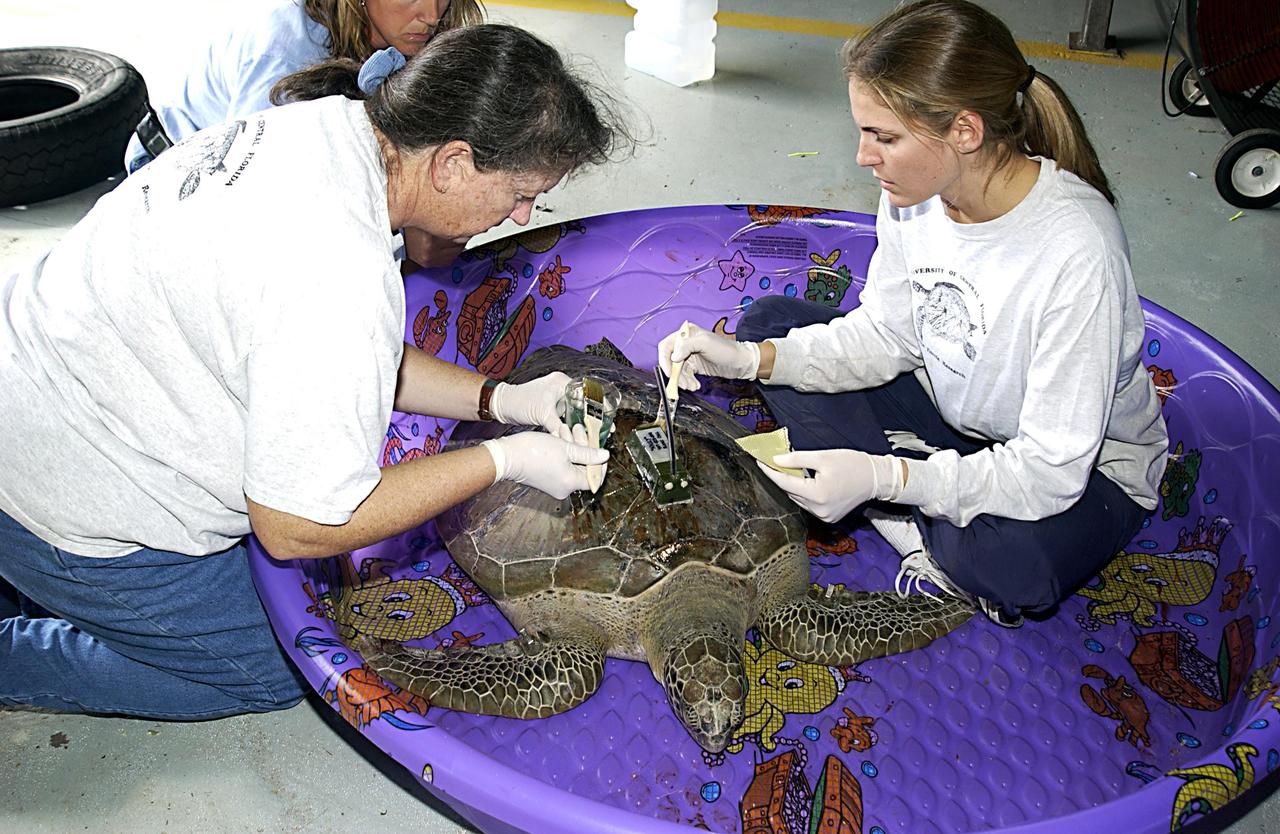
KENNEDY SPACE CENTER, FLA. - A sea turtle rescued from the Mosquito Lagoon is prepared to receive a transmitter on its back. Several turtles were found stunned, impacted by the unseasonal cold temperatures experienced in Central Florida. The cooperative effort of KSC contractor Dynamac Corporation's Aquatics Program and the Merritt Island National Wildlife Refuge warmed the turtles and evaluated them for release. Most were tagged and one received the transmitter, provided by the University of Central Florida, for satellite tracking. The turtles were then transported in a skiff through the Haulover Canal to a location away from the main channel and released into the Indian River Lagoon.
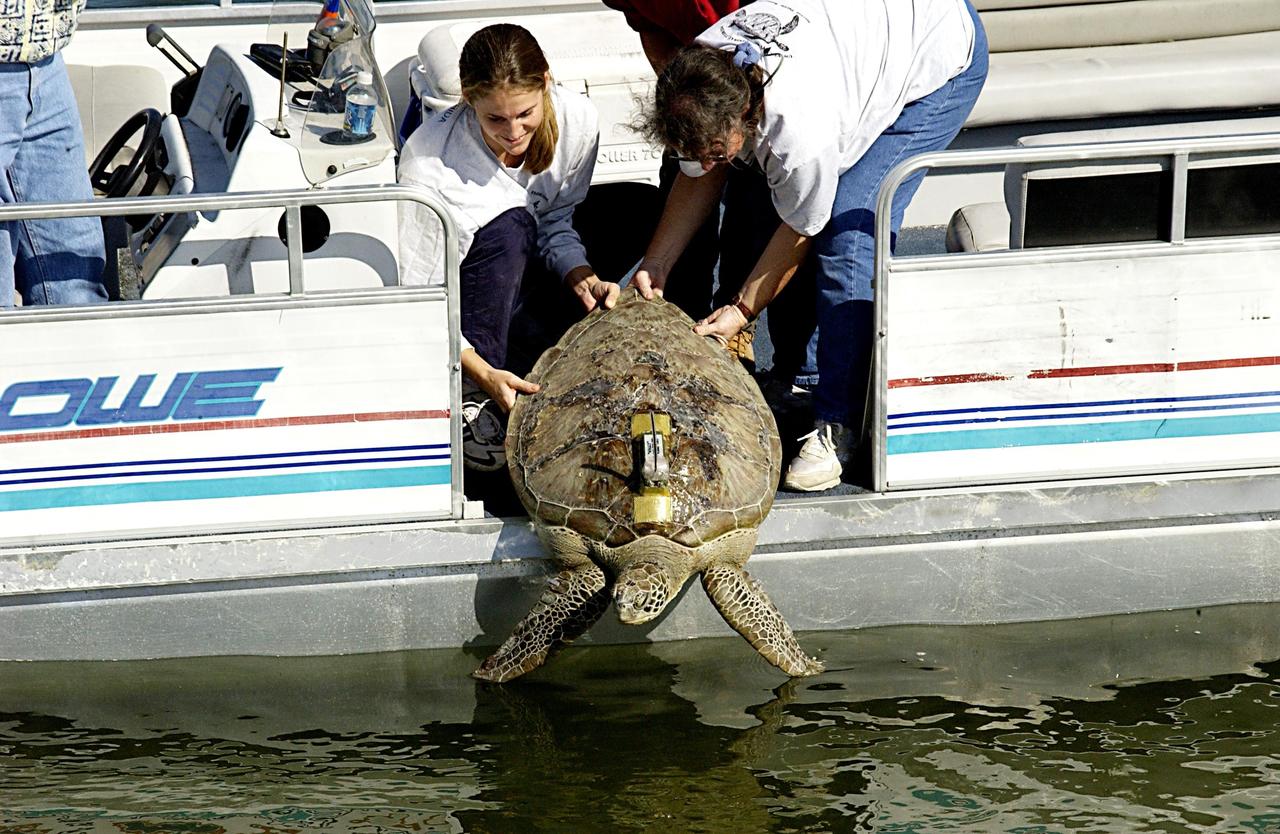
KENNEDY SPACE CENTER, FLA. -- A large sea turtle with a transmitter is released into the Mosquito Lagoon. It is one of several turtles found stunned, impacted by the unseasonal cold temperatures experienced in Central Florida. The cooperative effort of KSC contractor Dynamac Corporation's Aquatics Program and the Merritt Island National Wildlife Refuge warmed the turtles and evaluated them for release. Most were tagged and the largest one received a transmitter, provided by the University of Central Florida, for satellite tracking. The turtles were then transported through the Haulover Canal to a location away from the main channel for release.
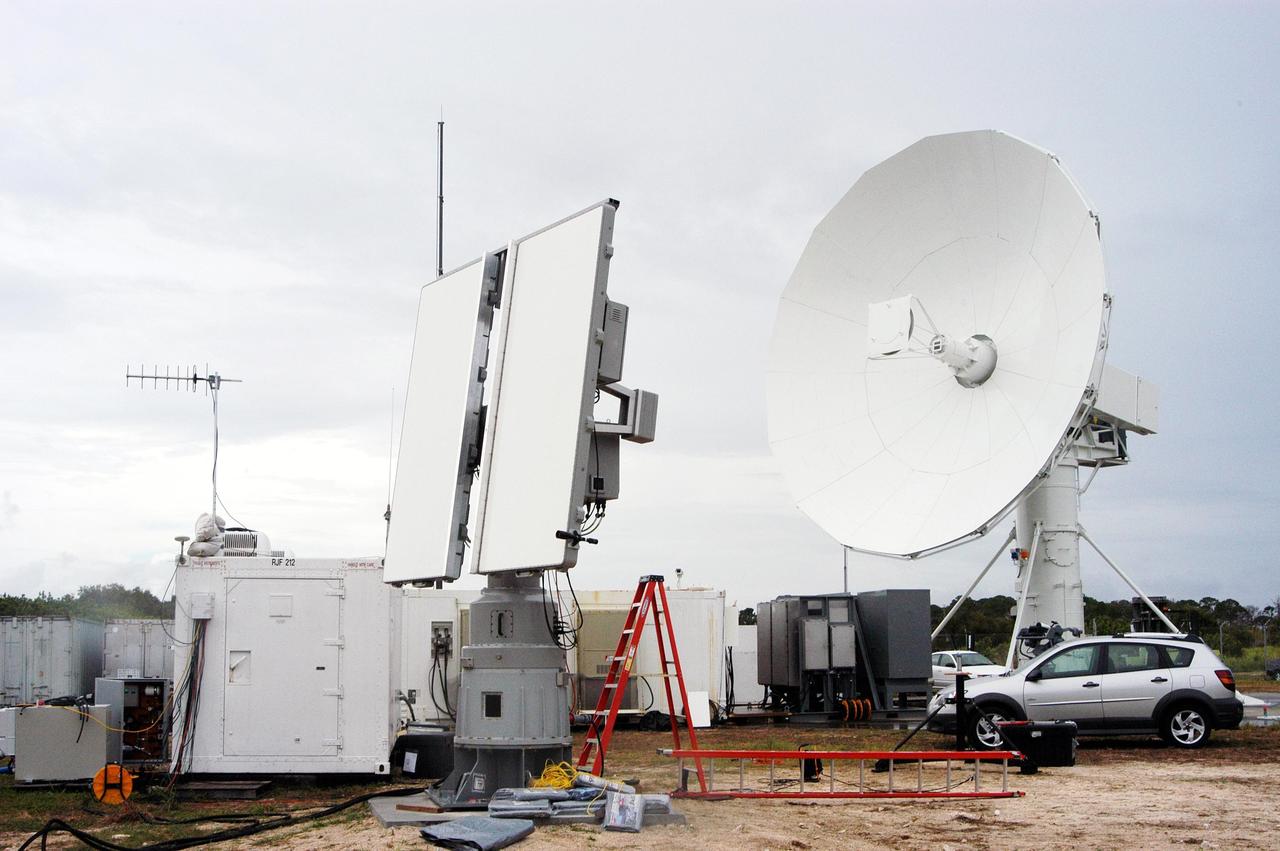
KENNEDY SPACE CENTER, FLA. - An X-band (left) and a C-band radar antenna are prepared to observe the MESSENGER (Mercury Surface, Space Environment, Geochemistry and Ranging) launch. The antennas are on loan to KSC from the USNS Pathfinder, a U.S. Navy instrumentation ship. They have been installed at site north of Haulover Canal where the National Center for Atmospheric Research previously had a radar for thunderstorm research. NASA is evaluating the pair of radars for their ability to observe possible debris coming from the Space Shuttle during launch, part of NASA’s initiative to return the Space Shuttle to flight.
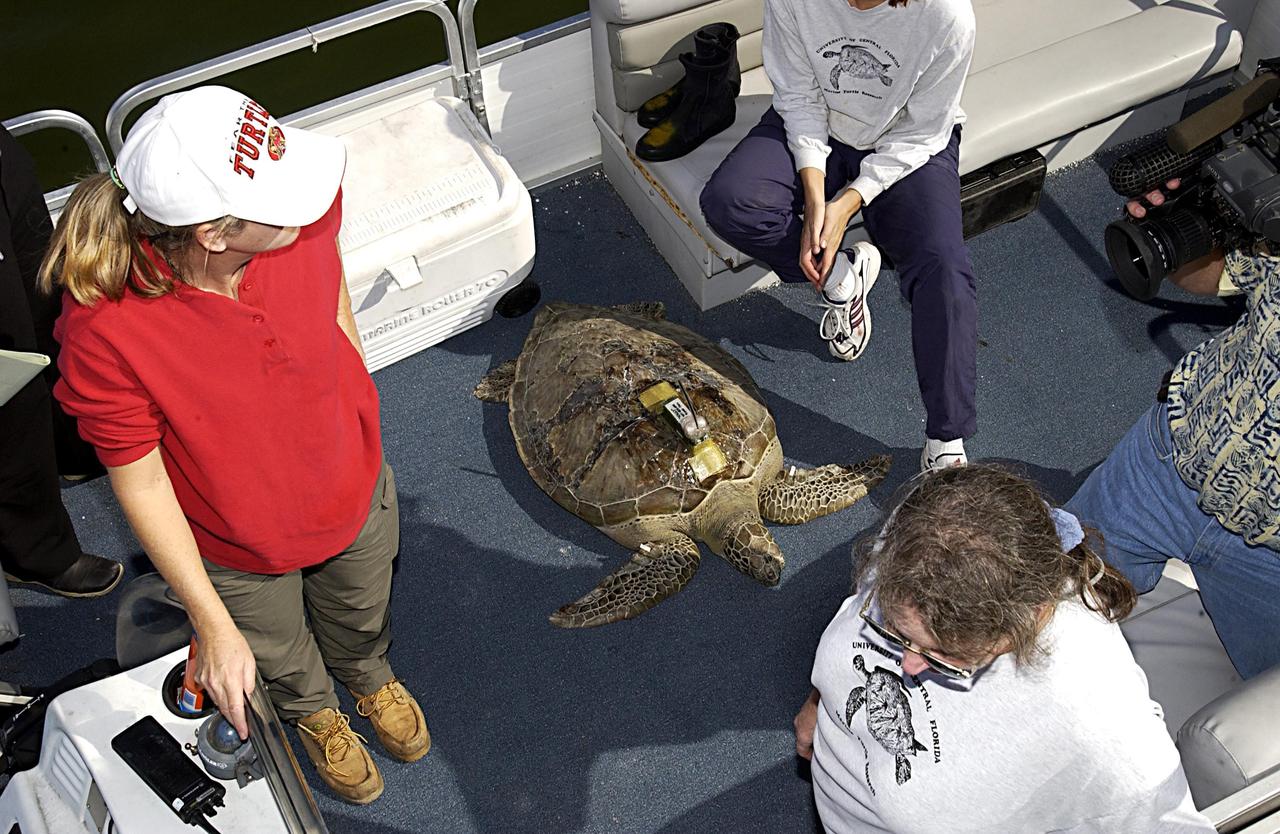
KENNEDY SPACE CENTER, FLA. -- A large sea turtle with a transmitter lies in the skiff that will return it to the Mosquito Lagoon. It is one of several turtles found stunned, impacted by the unseasonal cold temperatures experienced in Central Florida. The cooperative effort of KSC contractor Dynamac Corporation's Aquatics Program and the Merritt Island National Wildlife Refuge warmed the turtles and evaluated them for release. Most were tagged and one received a transmitter, provided by the University of Central Florida, for satellite tracking. The turtles were then transported through the Haulover Canal to a location away from the main channel and released.
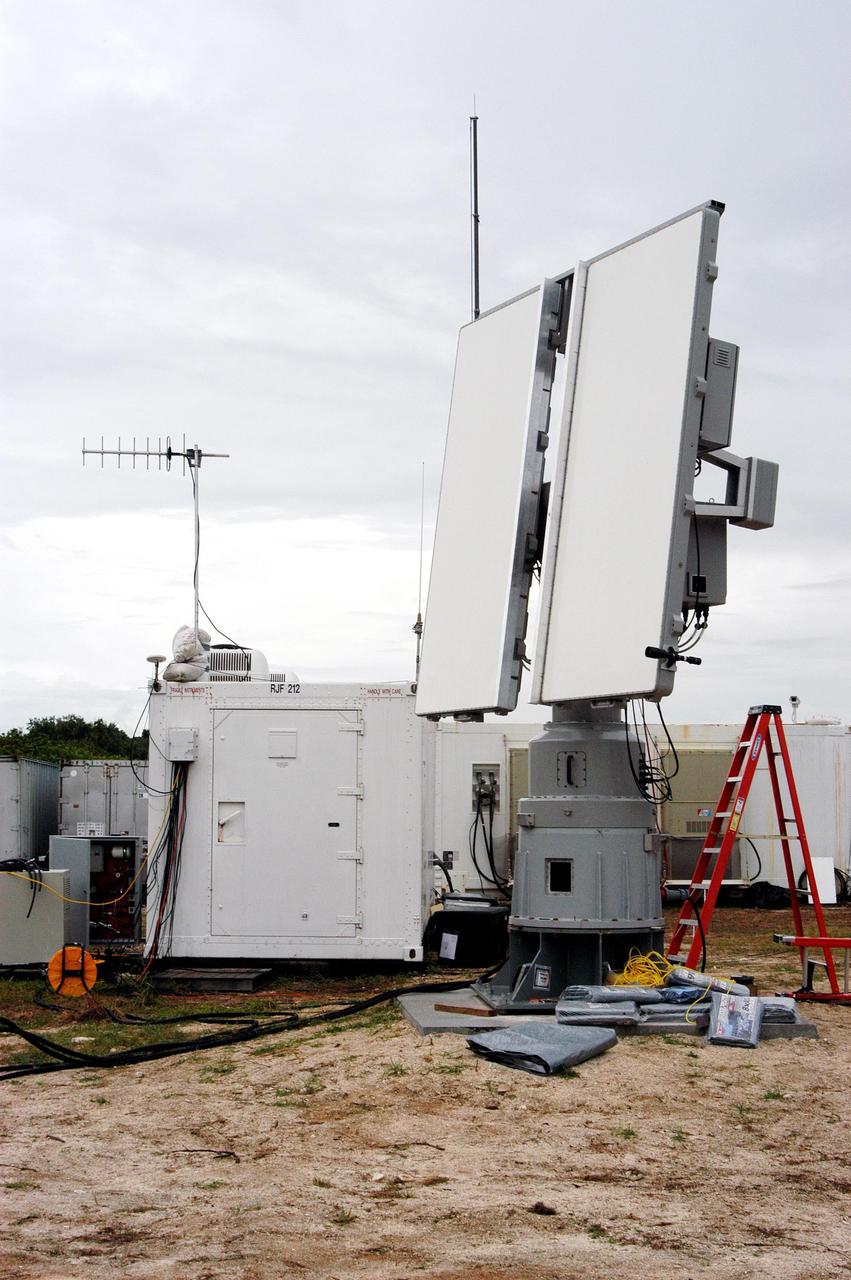
KENNEDY SPACE CENTER, FLA. - An X-band radar antenna is prepared to observe the MESSENGER (Mercury Surface, Space Environment, Geochemistry and Ranging) launch. This antenna and a C-band radar antenna are on loan to KSC from the USNS Pathfinder, a U.S. Navy instrumentation ship. They have been installed at site north of Haulover Canal where the National Center for Atmospheric Research previously had a radar for thunderstorm research. NASA is evaluating the pair of radars for their ability to observe possible debris coming from the Space Shuttle during launch, part of NASA’s initiative to return the Space Shuttle to flight.
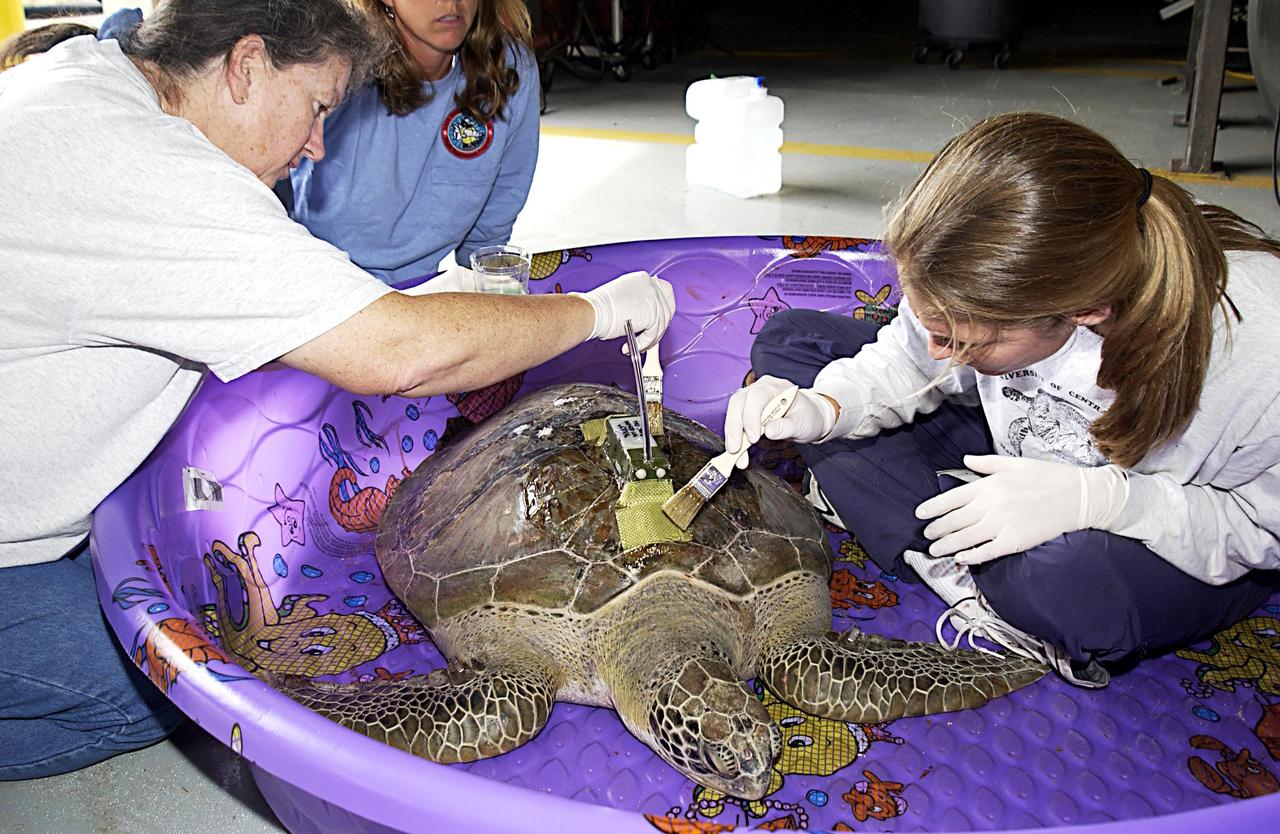
KENNEDY SPACE CENTER, FLA. -- A sea turtle rescued from the Mosquito Lagoon is prepared to receive a transmitter on its back. Several turtles were found stunned, impacted by the unseasonal cold temperatures experienced in Central Florida. The cooperative effort of KSC contractor Dynamac Corporation's Aquatics Program and the Merritt Island National Wildlife Refuge warmed the turtles and evaluated them for release. Most were tagged and one received the transmitter, provided by the University of Central Florida, for satellite tracking. The turtles were then transported in a skiff through the Haulover Canal to a location away from the main channel and released into the Indian River Lagoon.
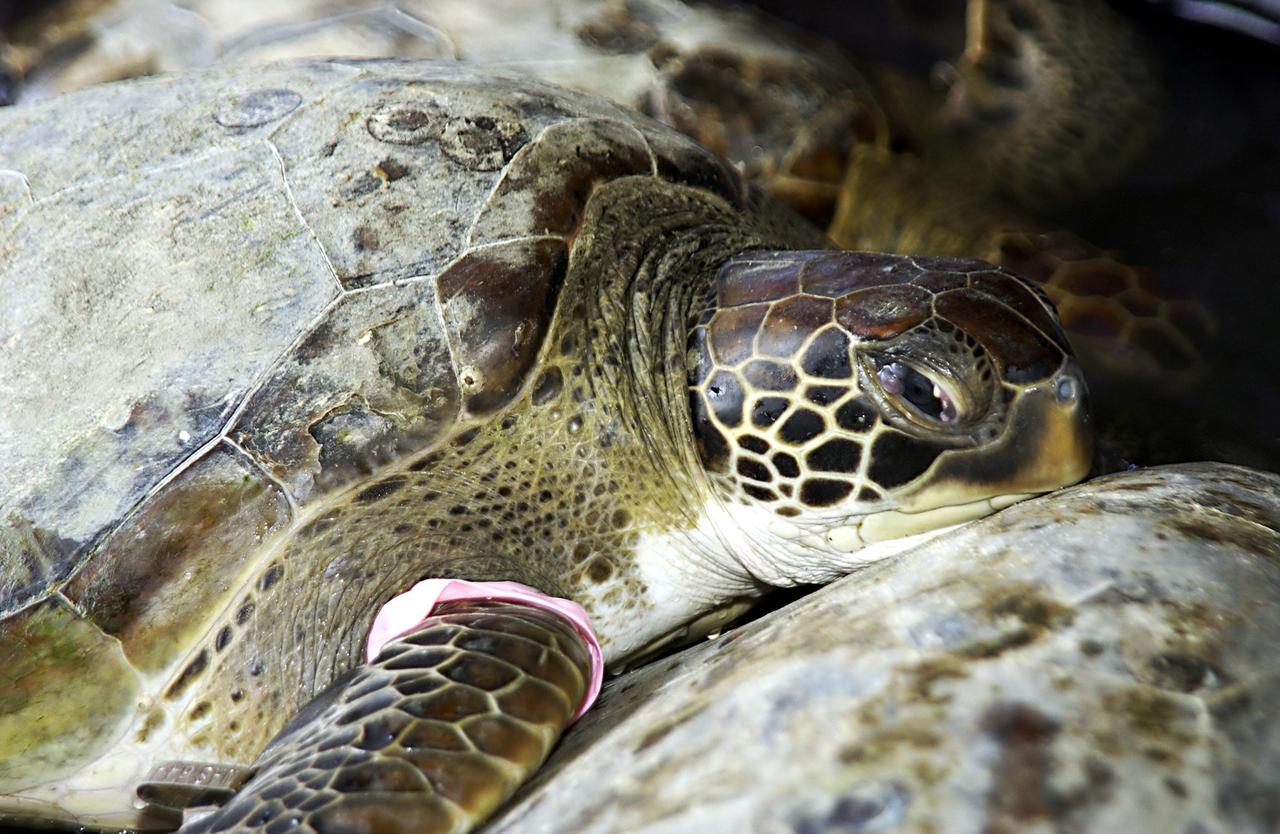
KENNEDY SPACE CENTER, FLA. - One of several sea turtles rescued from the Mosquito Lagoon is ready for release. The turtles were found stunned, impacted by the unseasonal cold temperatures experienced in Central Florida. The cooperative effort of KSC contractor Dynamac Corporation's Aquatics Program and the Merritt Island National Wildlife Refuge warmed the turtles and evaluated them for release. Most were tagged and one received the transmitter, provided by the University of Central Florida, for satellite tracking. The turtles were then transported in a skiff through the Haulover Canal to a location away from the main channel and released back into the Mosquito Lagoon.
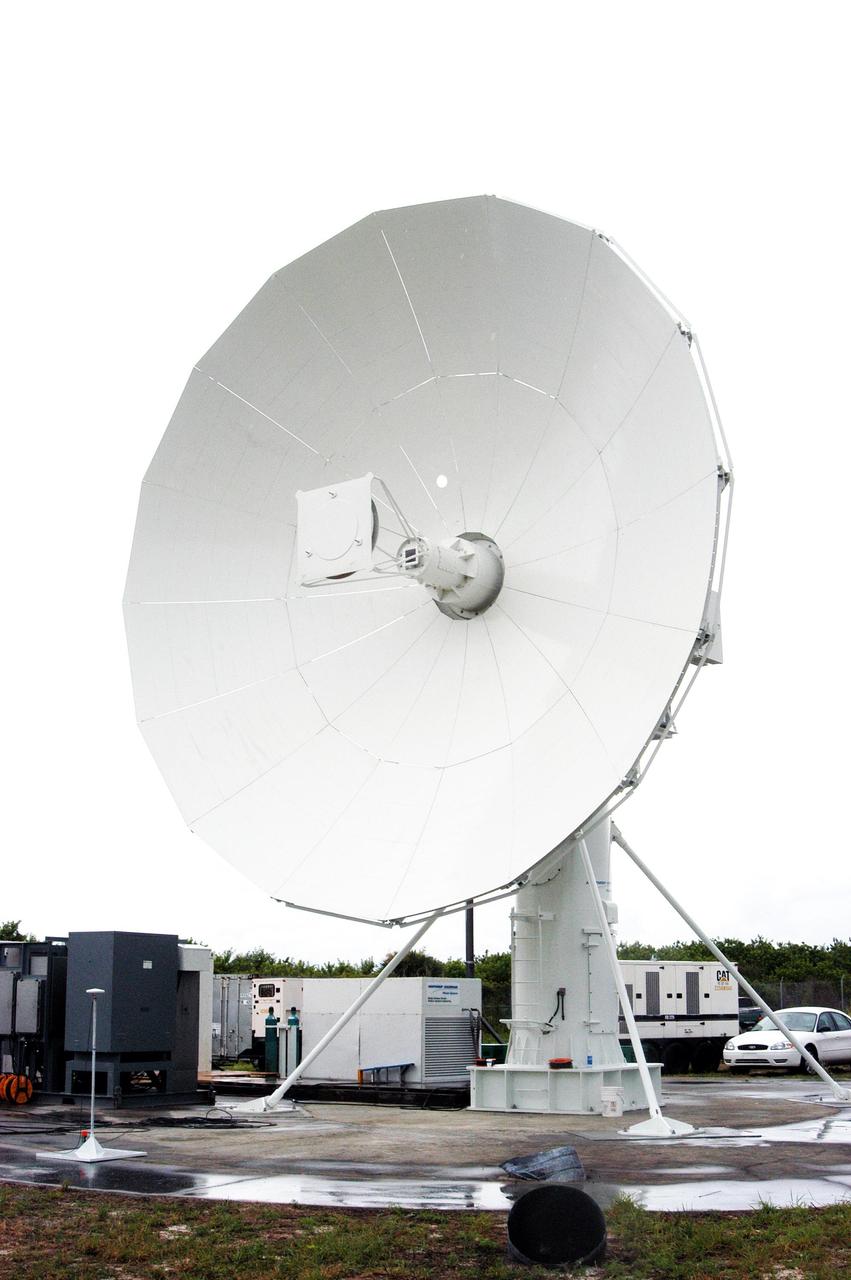
KENNEDY SPACE CENTER, FLA. - A C-band radar antenna is prepared to observe the MESSENGER (Mercury Surface, Space Environment, Geochemistry and Ranging) launch. This antenna and an X-band radar antenna are on loan to KSC from the USNS Pathfinder, a U.S. Navy instrumentation ship. They have been installed at site north of Haulover Canal where the National Center for Atmospheric Research previously had a radar for thunderstorm research. NASA is evaluating the pair of radars for their ability to observe possible debris coming from the Space Shuttle during launch, part of NASA’s initiative to return the Space Shuttle to flight.
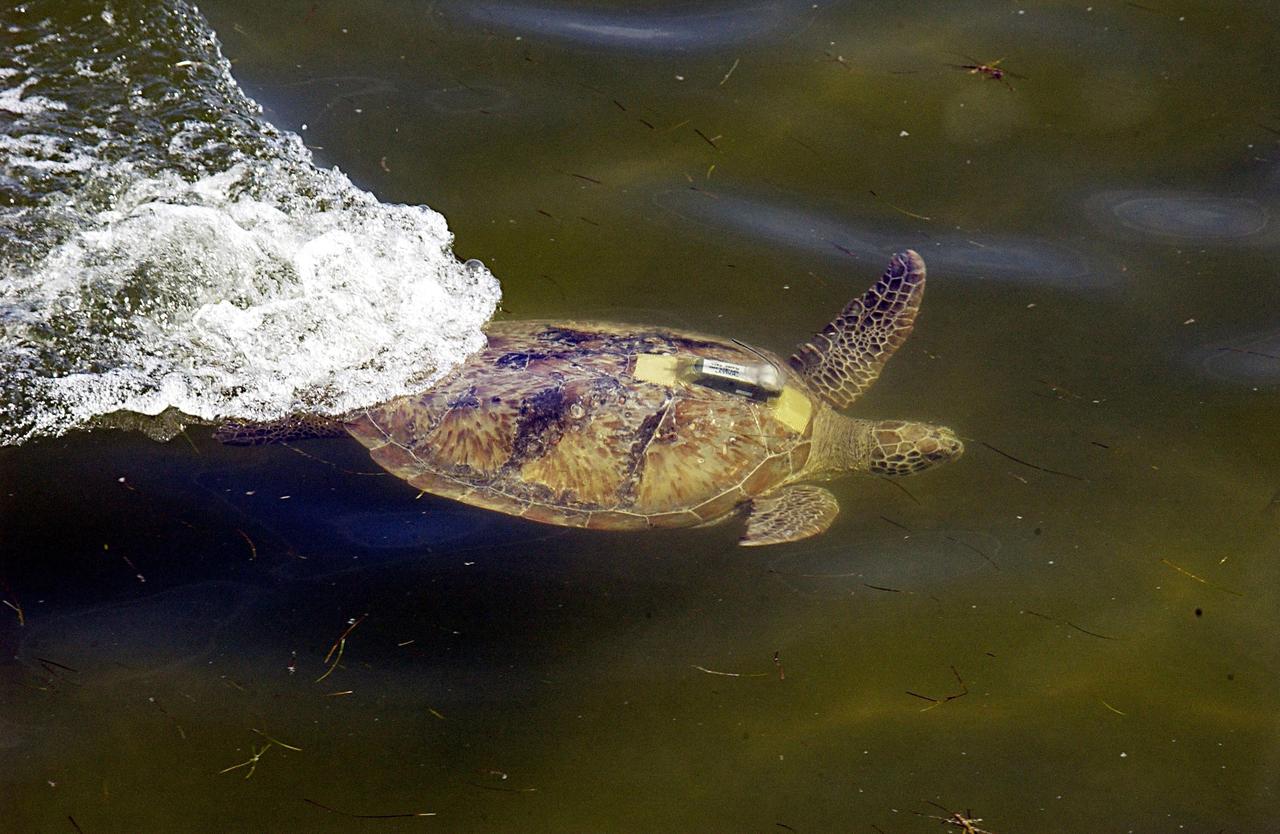
KENNEDY SPACE CENTER, FLA. -- A large sea turtle with a transmitter swims away after release into the Mosquito Lagoon. It is one of several turtles found stunned, impacted by the unseasonal cold temperatures experienced in Central Florida. The cooperative effort of KSC contractor Dynamac Corporation's Aquatics Program and the Merritt Island National Wildlife Refuge warmed the turtles and evaluated them for release. Most were tagged and the largest one received a transmitter, provided by the University of Central Florida, for satellite tracking. The turtles were then transported through the Haulover Canal to a location away from the main channel for release.
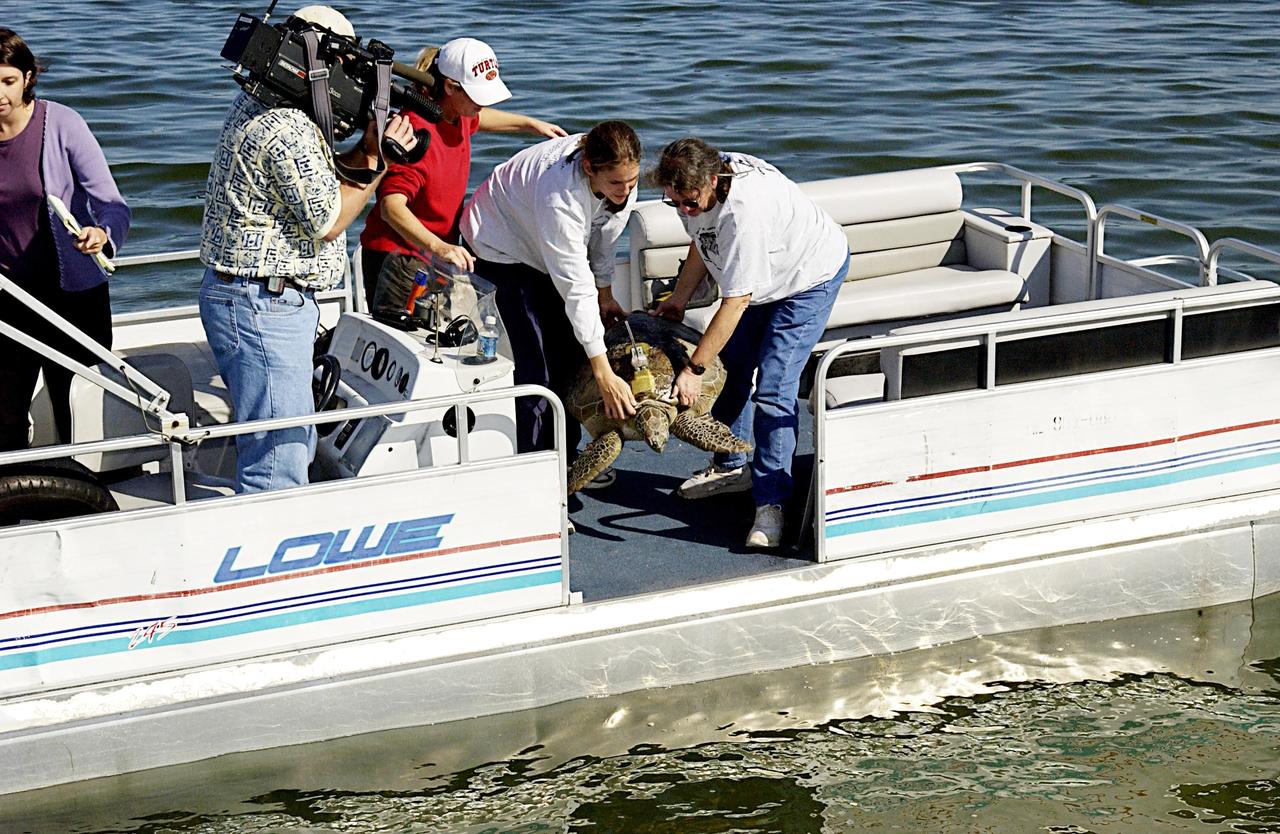
KENNEDY SPACE CENTER, FLA. -- A large sea turtle with a transmitter is ready to be returned to the Mosquito Lagoon. It is one of several turtles found stunned, impacted by the unseasonal cold temperatures experienced in Central Florida. The cooperative effort of KSC contractor Dynamac Corporation's Aquatics Program and the Merritt Island National Wildlife Refuge warmed the turtles and evaluated them for release. Most were tagged and the one received a transmitter, provided by the University of Central Florida, for satellite tracking. The turtles were then transported through the Haulover Canal to a location away from the main channel and released.
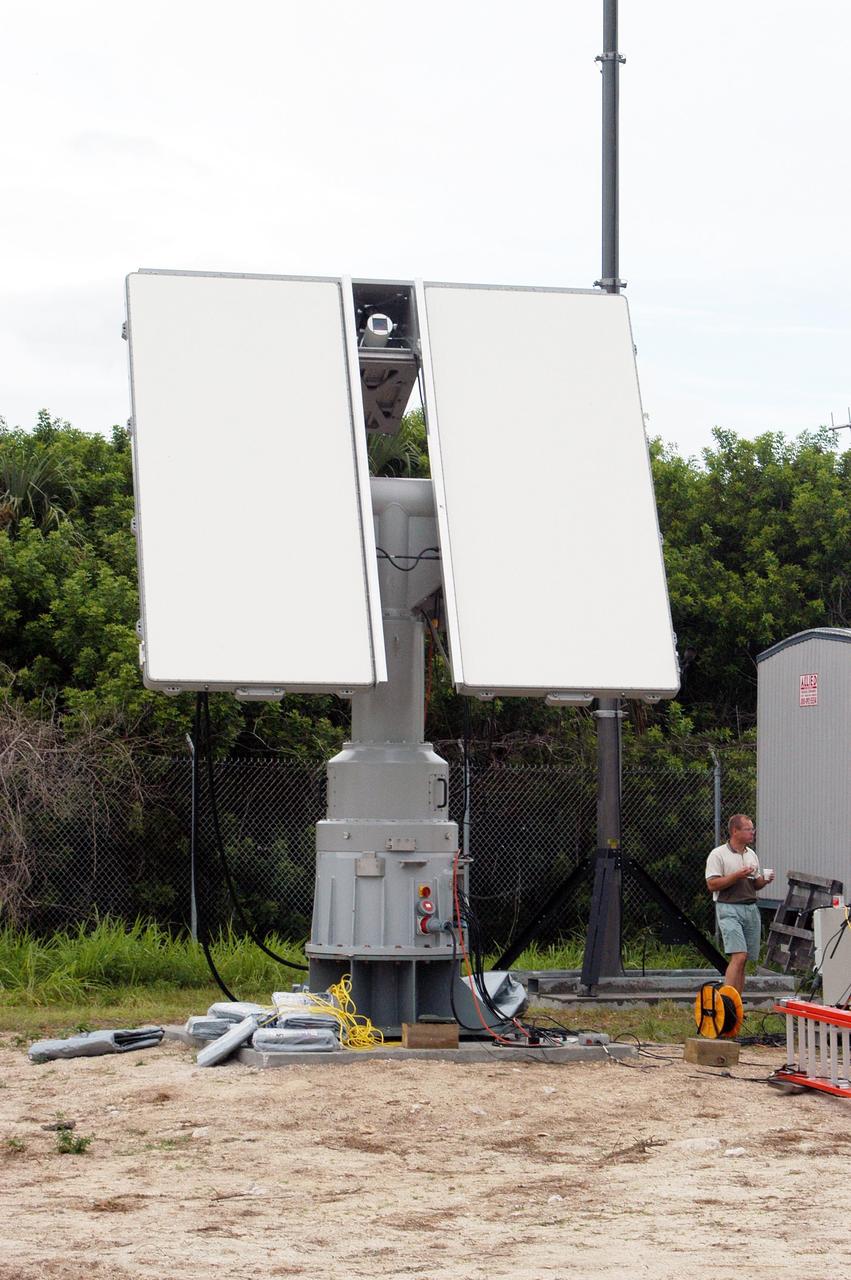
KENNEDY SPACE CENTER, FLA. - An X-band radar antenna is in place to observe the MESSENGER (Mercury Surface, Space Environment, Geochemistry and Ranging) launch. This antenna and a C-band radar antenna are on loan to KSC from the USNS Pathfinder, a U.S. Navy instrumentation ship. They have been installed at site north of Haulover Canal where the National Center for Atmospheric Research previously had a radar for thunderstorm research. NASA is evaluating the pair of radars for their ability to observe possible debris coming from the Space Shuttle during launch, part of NASA’s initiative to return the Space Shuttle to flight.
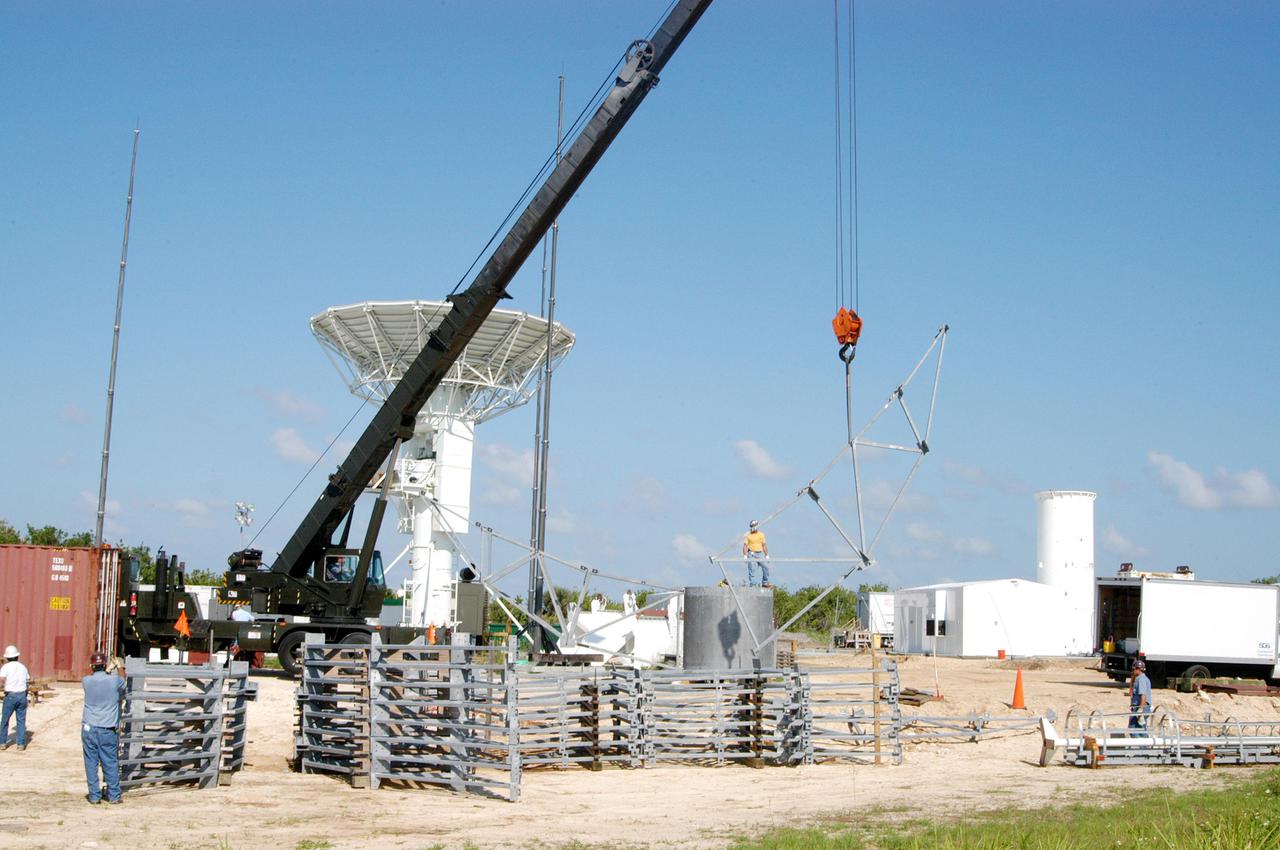
KENNEDY SPACE CENTER, FLA. - At a radar site on North Merritt Island, Fla., north of the Haulover Canal, a 50-foot dish for NASA’s C-band radar is being assembled. The radar will be used for long-term Shuttle missions to track the launches and observe possible debris coming from the Shuttle. Behind the dish is an existing 30-foot C-band Pathfinder radar whose use was demonstrated on the Delta Messenger launch. It will be used on the upcoming two Return to Flight missions. The launch window for the first Return to Flight mission, STS-114, is July 13 to July 31.
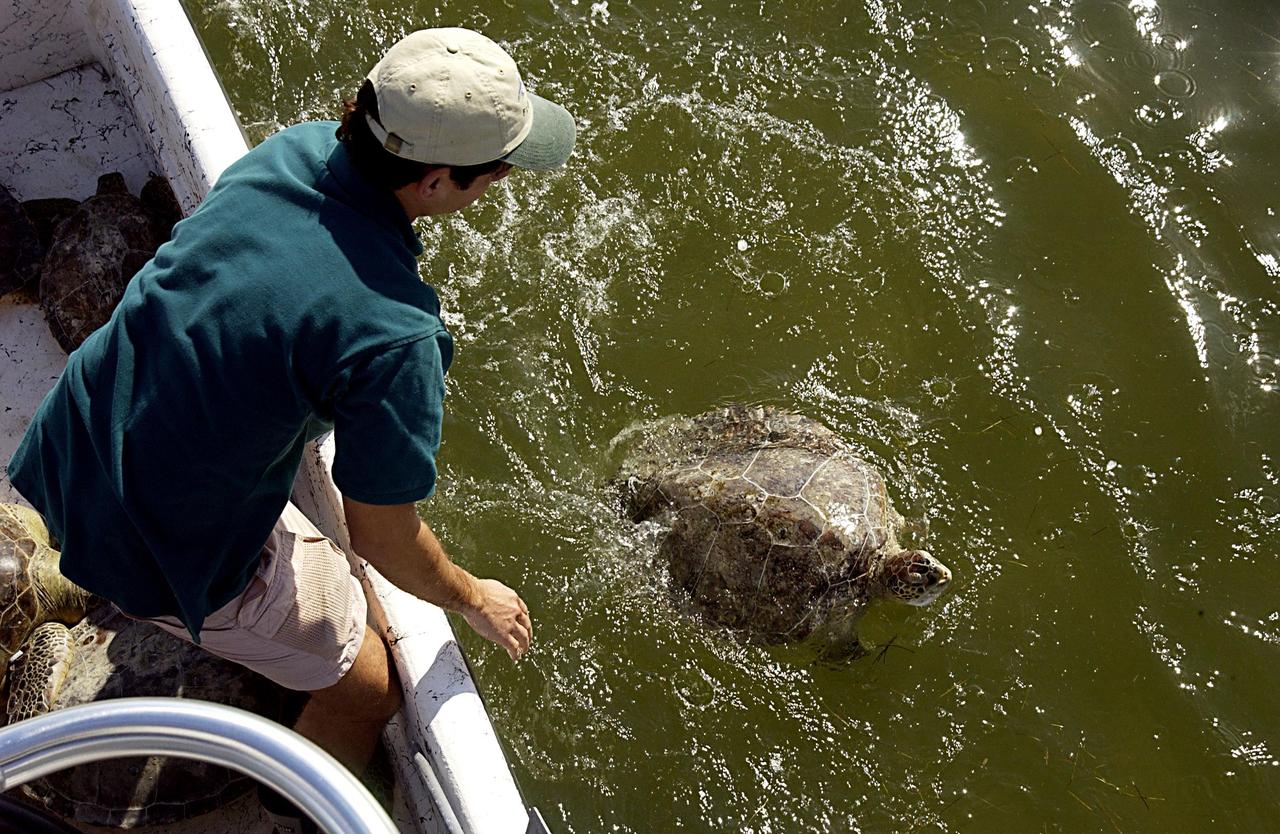
KENNEDY SPACE CENTER, FLA. - A worker watches as one of the rescued sea turtles swims away in Mosquito Lagoon. It is one of several turtles found stunned, impacted by the unseasonal cold temperatures experienced in Central Florida. The cooperative effort of KSC contractor Dynamac Corporation's Aquatics Program and the Merritt Island National Wildlife Refuge warmed the turtles and evaluated them for release. Most were tagged and the largest one received a transmitter, provided by the University of Central Florida, for satellite tracking. The turtles were then transported through the Haulover Canal to a location away from the main channel for release.
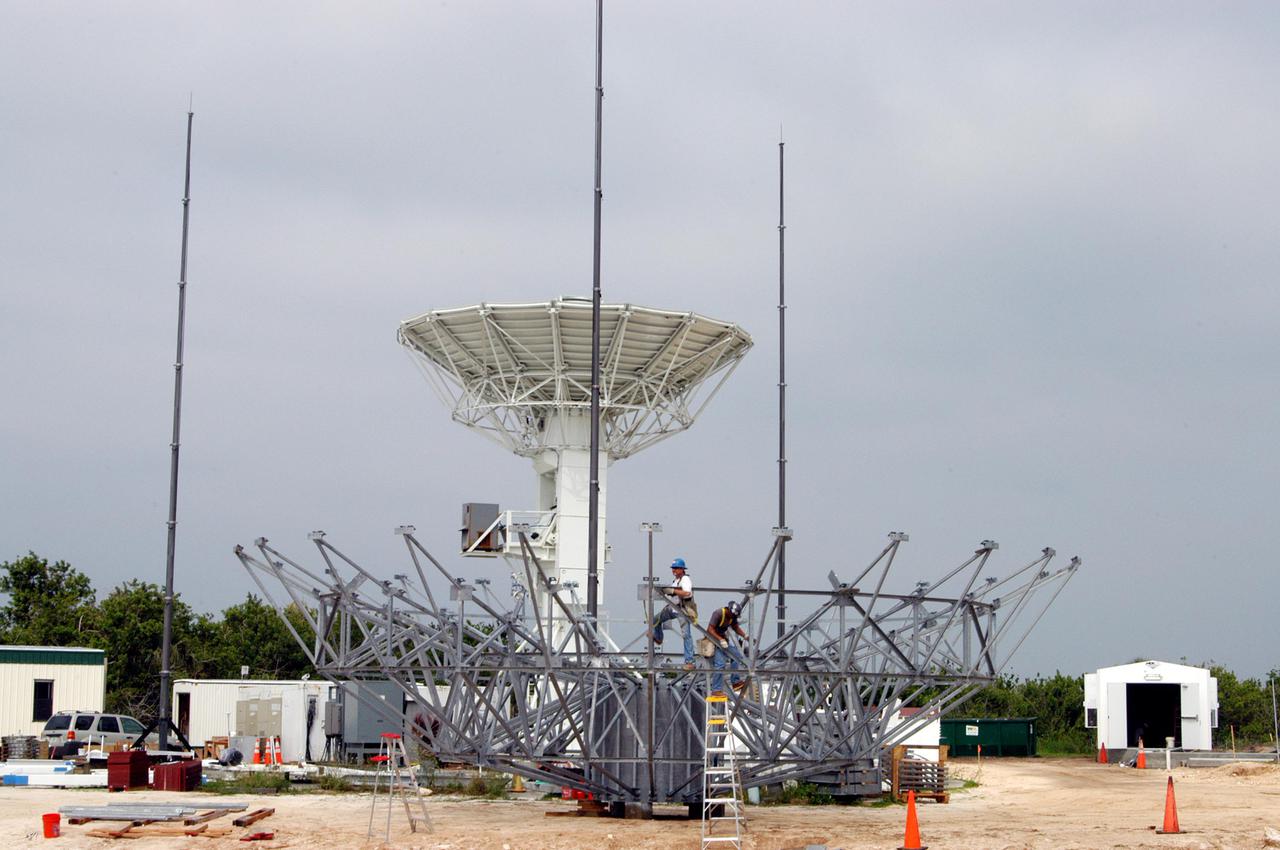
KENNEDY SPACE CENTER, FLA. - At a radar site on North Merritt Island, Fla., north of the Haulover Canal, workers continue assembling a 50-foot C-band radar. The radar will be used for long-term Shuttle missions to track the launches and observe possible debris coming from the Shuttle. In the background is an existing 30-foot C-band Pathfinder radar whose use was demonstrated on the Delta Messenger launch. It will be used on the upcoming two Return to Flight missions. The launch window for the first Return to Flight mission, STS-114, is July 13 to July 31.
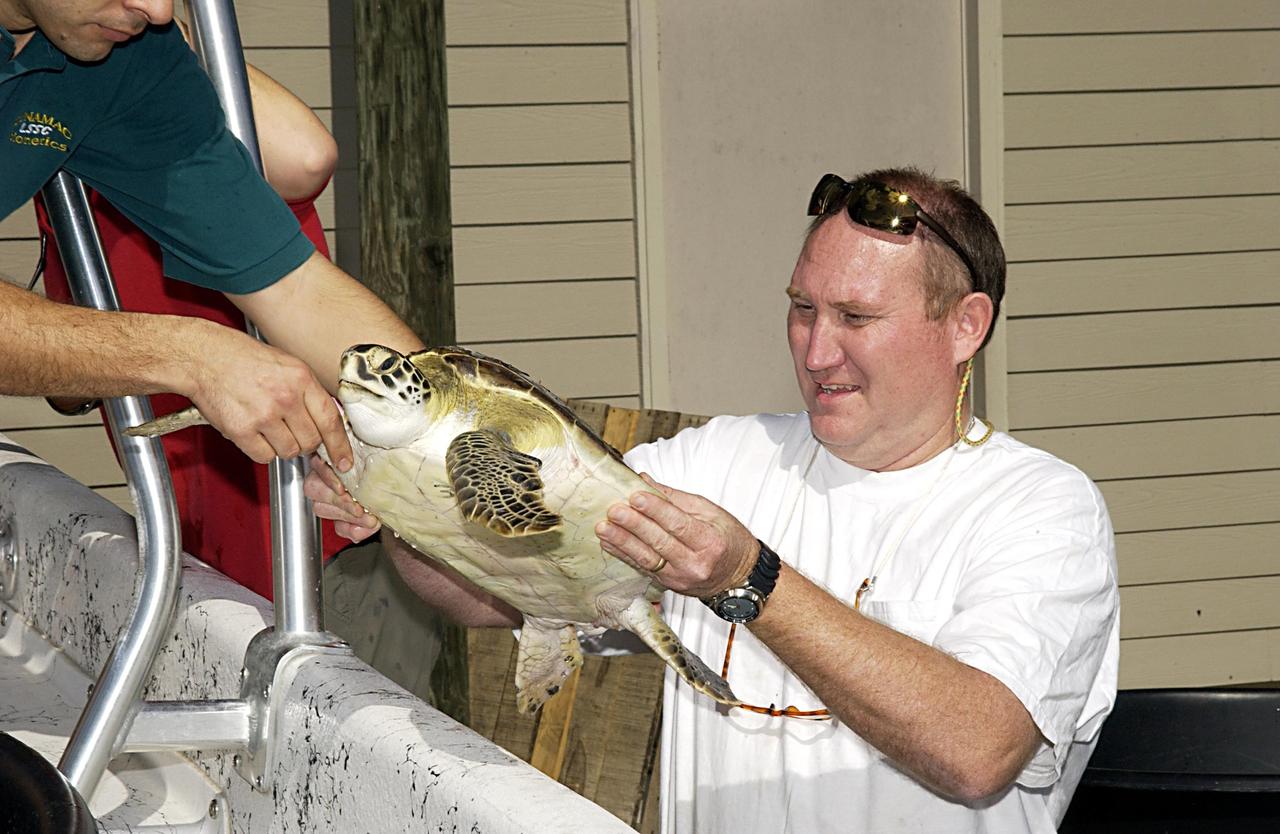
KENNEDY SPACE CENTER, FLA. -- A sea turtle is carried toward the skiff that will return it to the lagoon. It is one of several turtles found stunned, impacted by the unseasonal cold temperatures experienced in Central Florida. The cooperative effort of KSC contractor Dynamac Corporation's Aquatics Program and the Merritt Island National Wildlife Refuge warmed the turtles and evaluated them for release. Most were tagged and one received a transmitter, provided by the University of Central Florida, for satellite tracking. The turtles were then transported through the Haulover Canal to a location away from the main channel and released.
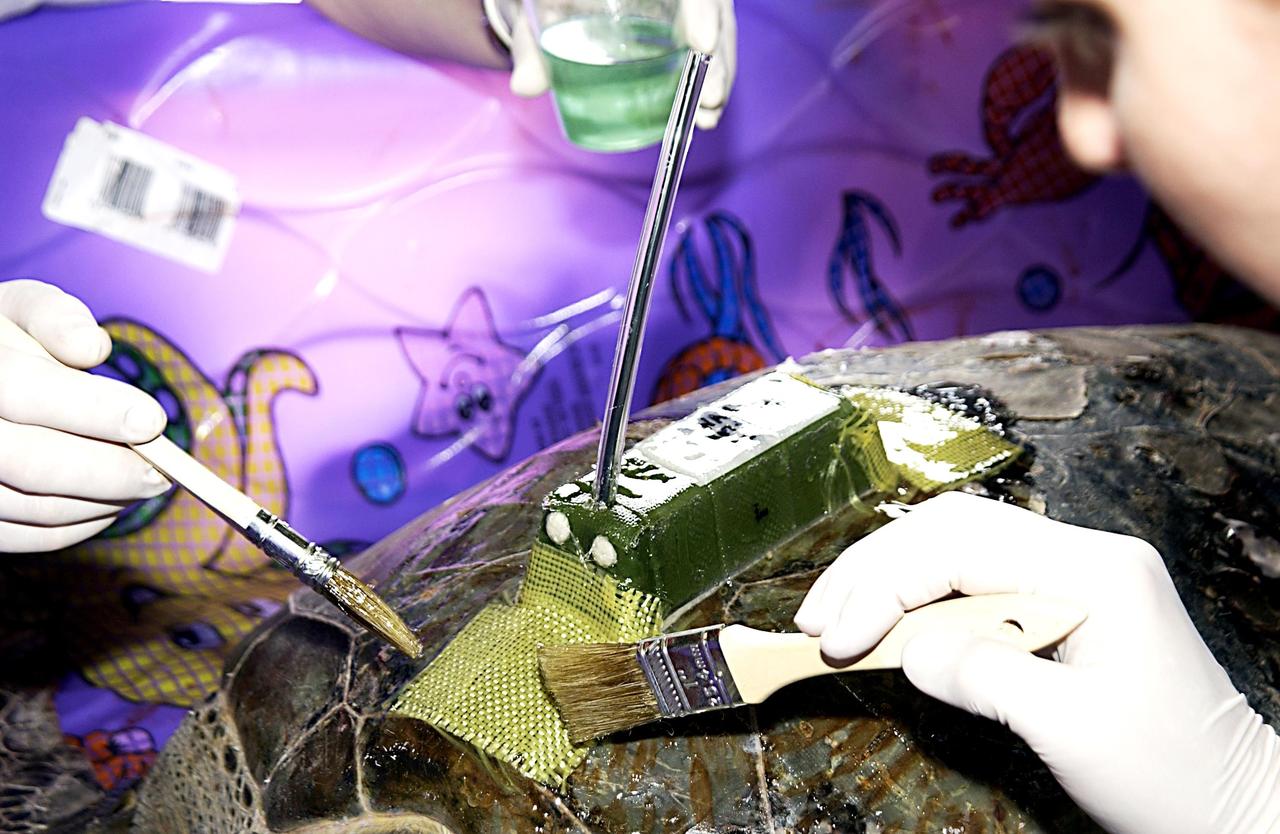
KENNEDY SPACE CENTER, FLA. -- This closeup shows the transmitter being attached to a sea turtle rescued from the Mosquito Lagoon. Several turtles were found stunned, impacted by the unseasonal cold temperatures experienced in Central Florida. The cooperative effort of KSC contractor Dynamac Corporation's Aquatics Program and the Merritt Island National Wildlife Refuge warmed the turtles and evaluated them for release. Most were tagged and one received the transmitter, provided by the University of Central Florida, for satellite tracking. The turtles were then transported in a skiff through the Haulover Canal to a location away from the main channel and released into the Indian River Lagoon.

KENNEDY SPACE CENTER, FLA. - On the dock at Port Canaveral in Florida, a worker secures a crane hook on an X-band radar to be transferred to and installed on the U.S. Naval Ship Hayes. The radar will support the July 1 launch of Space Shuttle Discovery on mission STS-121. There are two Continuous Pulse Doppler X-band radars located on ships for the STS-121 launch. The other one is mounted on a booster recovery ship downrange of the launch site. The two radars provide velocity and differential Shuttle/debris motion information. Combined with the C-band radar located at the Haulover Canal near the launch site, they provide high definition images of any debris that might fall from the external tank/shuttle. The X-band data (screen captures) will be sent from the ships via satellite link to the National Center for Atmospheric Research site. Photo credit: NASA/Jim Grossmann
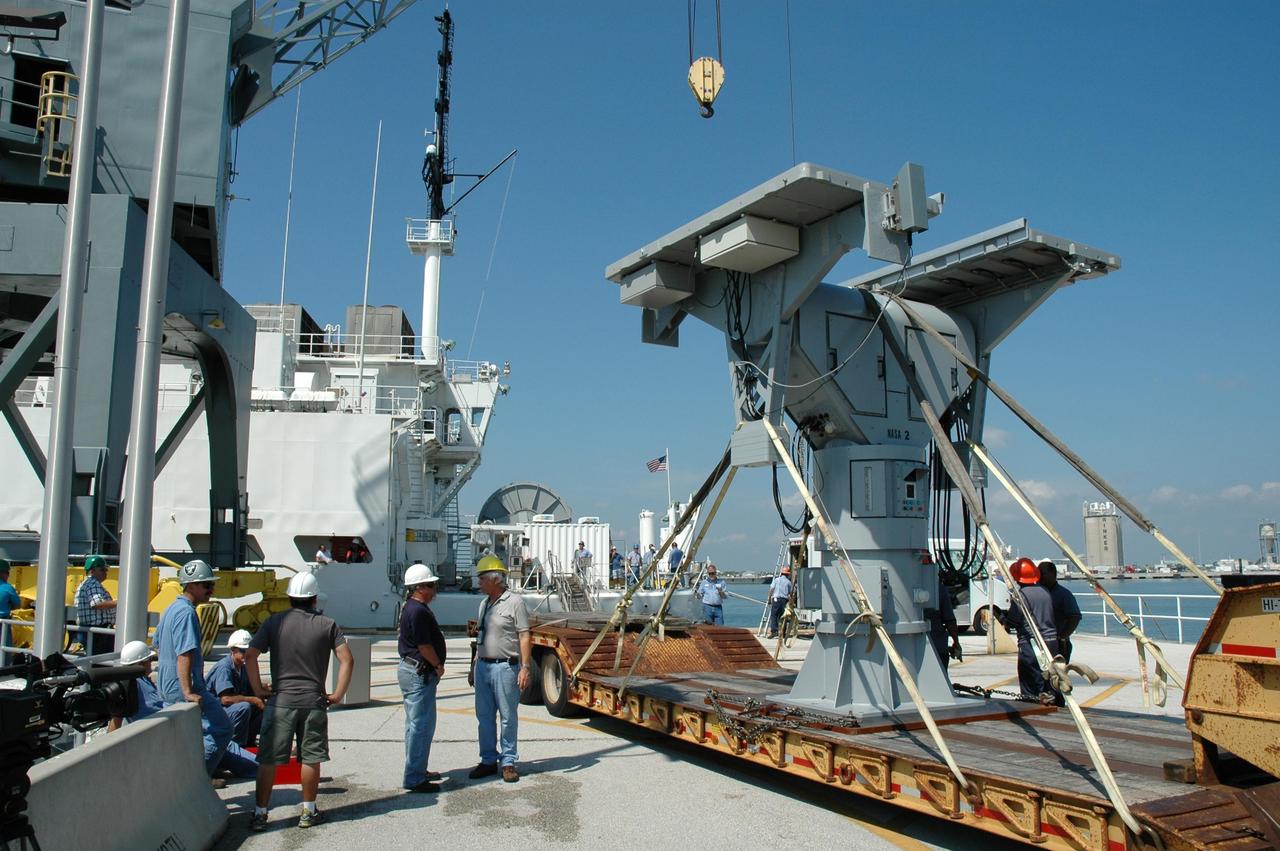
KENNEDY SPACE CENTER, FLA. - An X-band radar is ready to be loaded on the U.S. Naval Ship Hayes at Port Canaveral in Florida to support the July 1 launch of Space Shuttle Discovery on mission STS-121. There are two Continuous Pulse Doppler X-band radars located on ships for the STS-121 launch. The other one is mounted on a booster recovery ship downrange of the launch site. The two radars provide velocity and differential Shuttle/debris motion information. Combined with the C-band radar located at the Haulover Canal near the launch site, they provide high definition images of any debris that might fall from the external tank/shuttle. The X-band data (screen captures) will be sent from the ships via satellite link to the National Center for Atmospheric Research site. Photo credit: NASA/Jim Grossmann
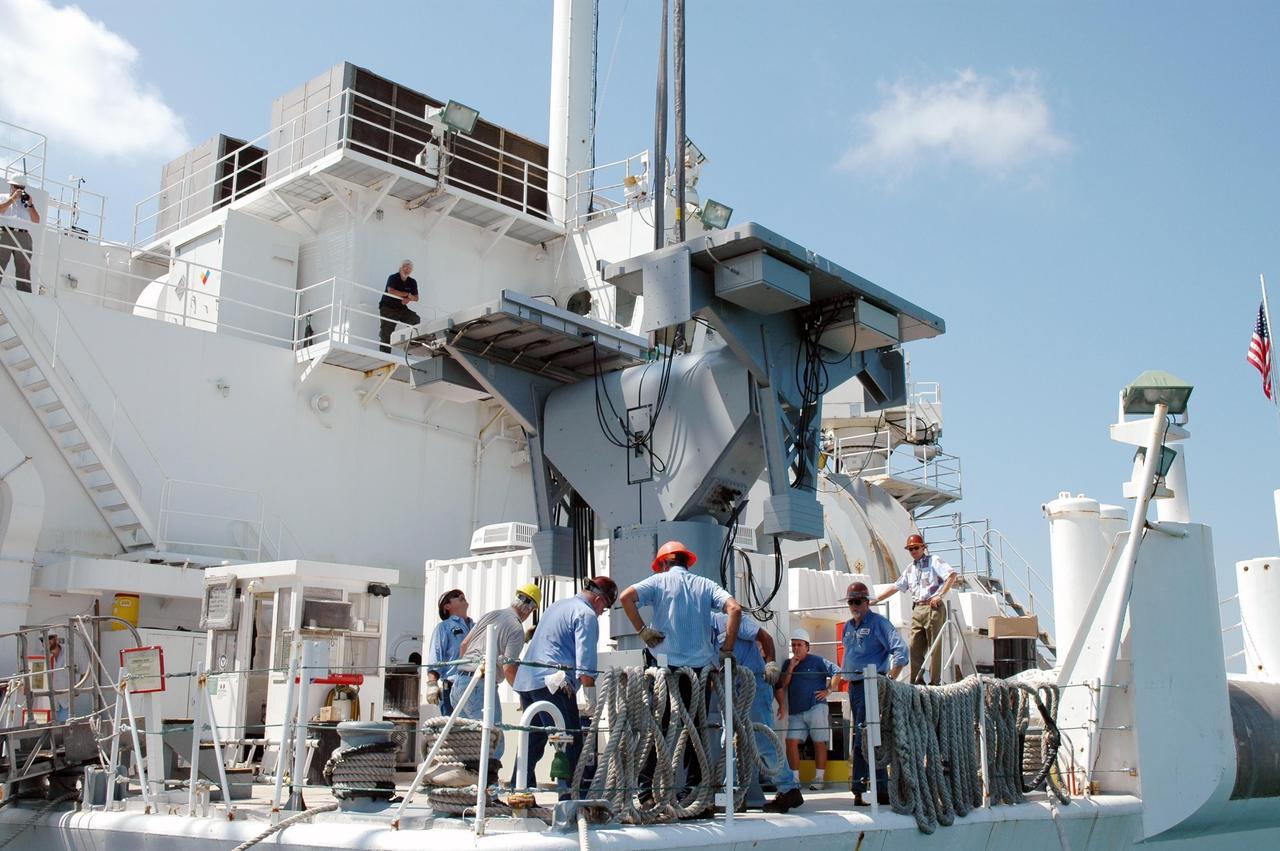
KENNEDY SPACE CENTER, FLA. - An X-band radar is installed on the U.S. Naval Ship Hayes at Port Canaveral in Florida to support the July 1 launch of Space Shuttle Discovery on mission STS-121. There are two Continuous Pulse Doppler X-band radars located on ships for the STS-121 launch. The other one is mounted on a booster recovery ship downrange of the launch site. The two radars provide velocity and differential Shuttle/debris motion information. Combined with the C-band radar located at the Haulover Canal near the launch site, they provide high definition images of any debris that might fall from the external tank/shuttle. The X-band data (screen captures) will be sent from the ships via satellite link to the National Center for Atmospheric Research site. Photo credit: NASA/Jim Grossmann
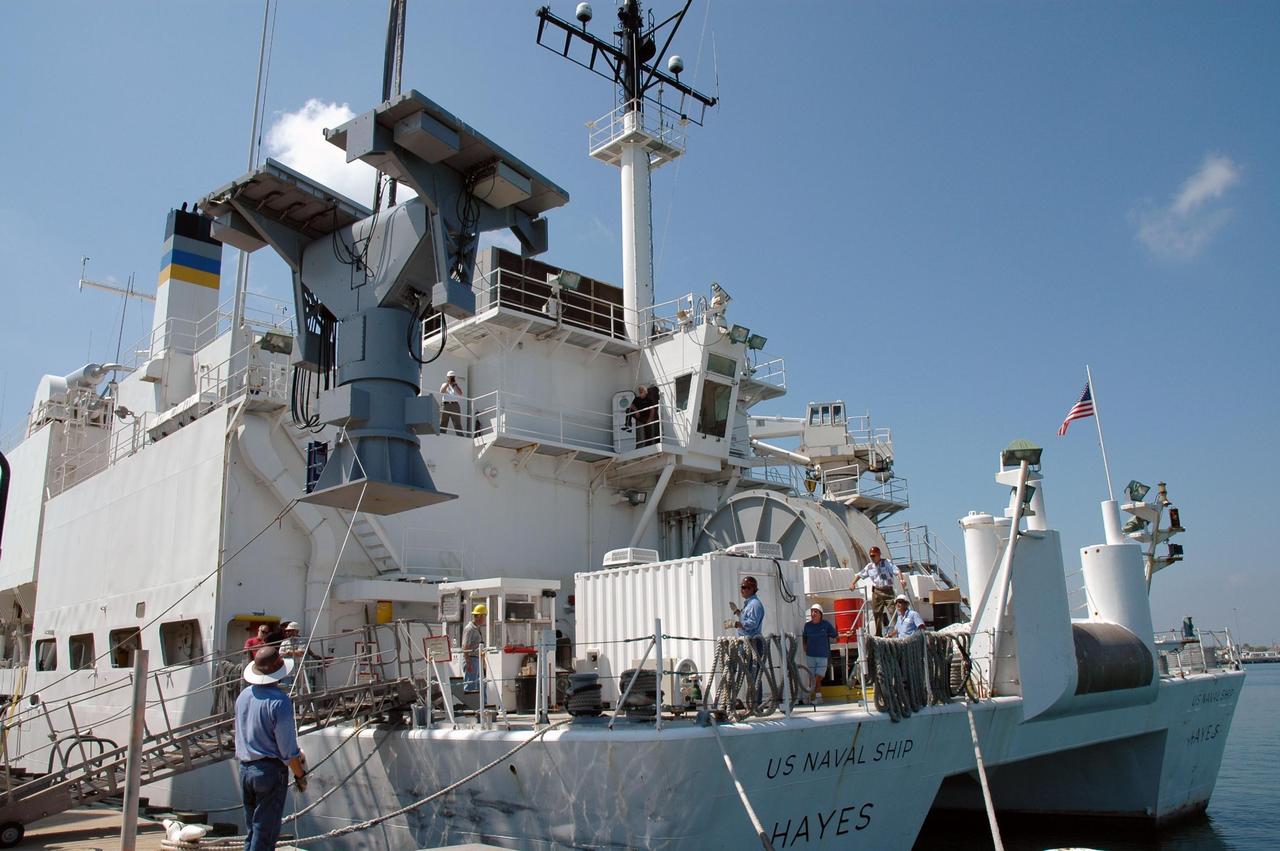
KENNEDY SPACE CENTER, FLA. - An X-band radar is transferred onto the U.S. Naval Ship Hayes at Port Canaveral in Florida to support the July 1 launch of Space Shuttle Discovery on mission STS-121. There are two Continuous Pulse Doppler X-band radars located on ships for the STS-121 launch. The other one is mounted on a booster recovery ship downrange of the launch site. The two radars provide velocity and differential Shuttle/debris motion information. Combined with the C-band radar located at the Haulover Canal near the launch site, they provide high definition images of any debris that might fall from the external tank/shuttle. The X-band data (screen captures) will be sent from the ships via satellite link to the National Center for Atmospheric Research site. Photo credit: NASA/Jim Grossmann
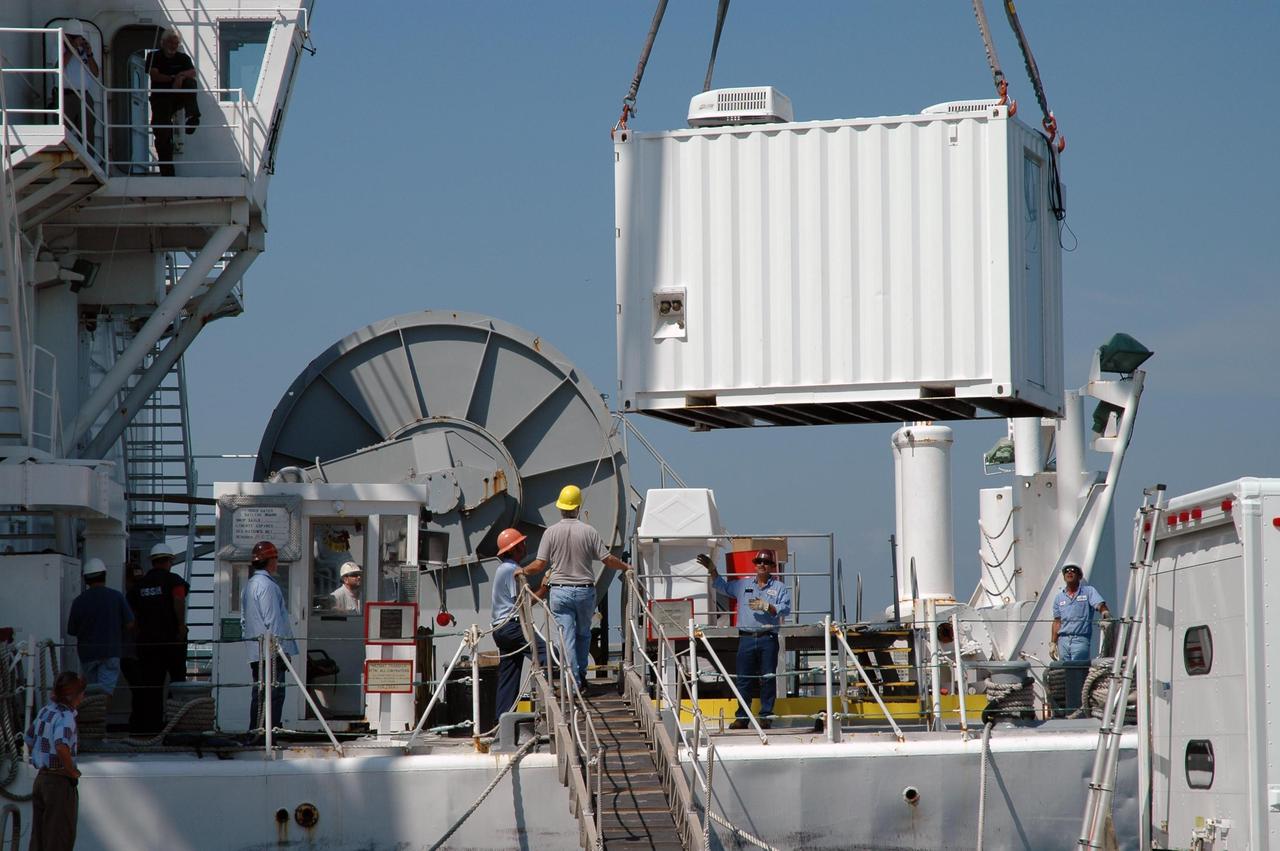
KENNEDY SPACE CENTER, FLA. - A support equipment module for an X-band radar is being loaded on the U.S. Naval Ship Hayes at Port Canaveral in Florida to support the July 1 launch of Space Shuttle Discovery on mission STS-121. There are two Continuous Pulse Doppler X-band radars located on ships for the STS-121 launch. The other one is mounted on a booster recovery ship downrange of the launch site. The two radars provide velocity and differential Shuttle/debris motion information. Combined with the C-band radar located at the Haulover Canal near the launch site, they provide high definition images of any debris that might fall from the external tank/shuttle. The X-band data (screen captures) will be sent from the ships via satellite link to the National Center for Atmospheric Research site. Photo credit: NASA/Jim Grossmann
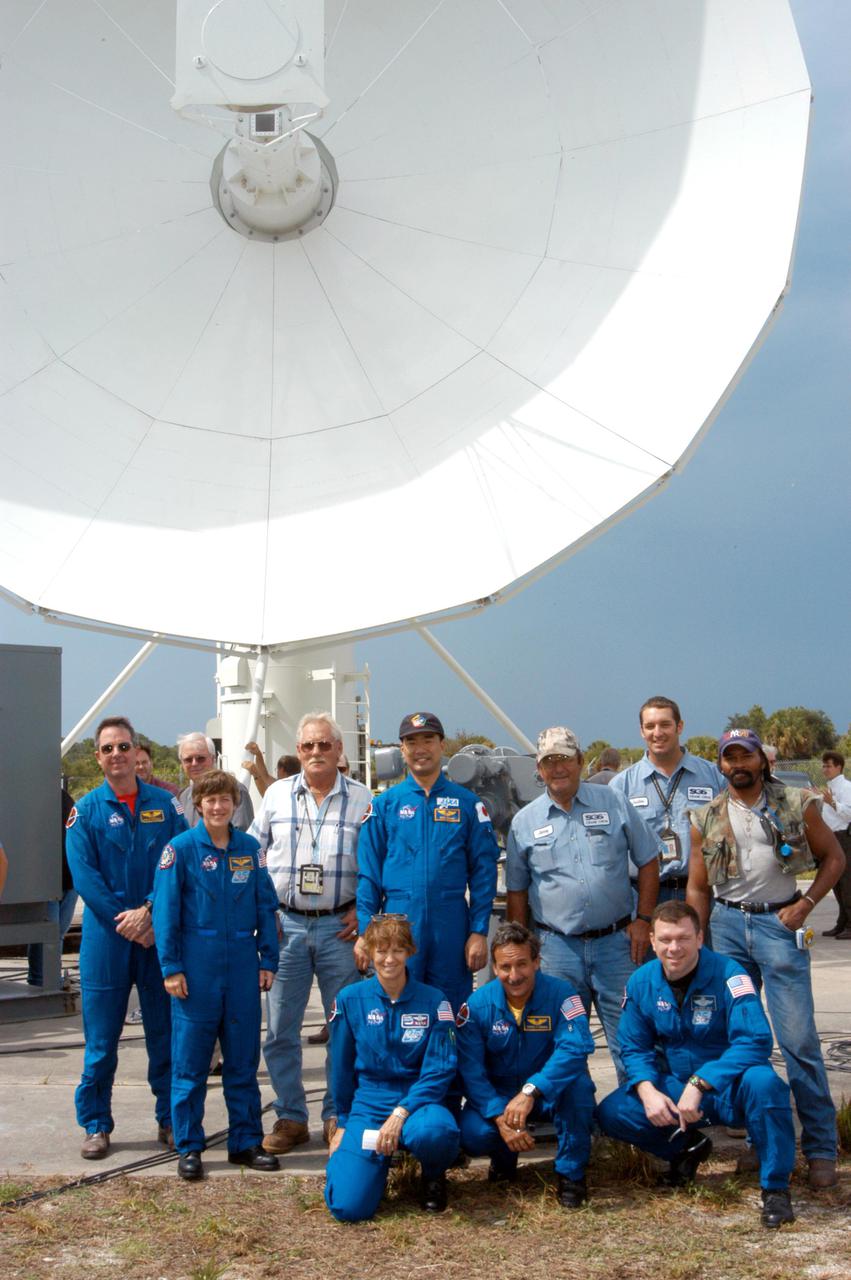
KENNEDY SPACE CENTER, FLA. - Members of the STS-114 crew pose for a photo with workers installing the 30-foot-diameter C-band antenna (above them) and a smaller X-band antenna north of the Haulover Canal. The astronauts are, standing from left, Mission Specialists Stephen Robinson, Wendy Lawrence and Soichi Noguchi; kneeling from left are Commander Eileen Collins, Mission Specialist Charles Camarda and Pilot James Kelly. The antennas are being tested during the launch of a Delta II rocket carrying NASA’s MESSENGER spacecraft bound for the planet Mercury that will work together to create an image of the Delta rocket in flight. The test will evaluate the use of the radars as part of NASA’s Return to Flight program for the Space Shuttle to observe possible debris coming from the Shuttle during launch. If successful, the radar configuration could be used on ships downrange, including on one of the solid rocket booster retrieval ships. And it may enable the return to launching Space Shuttles at night. The launch window for Return to Flight mission STS-114 is May 12 through June 3, 2005.
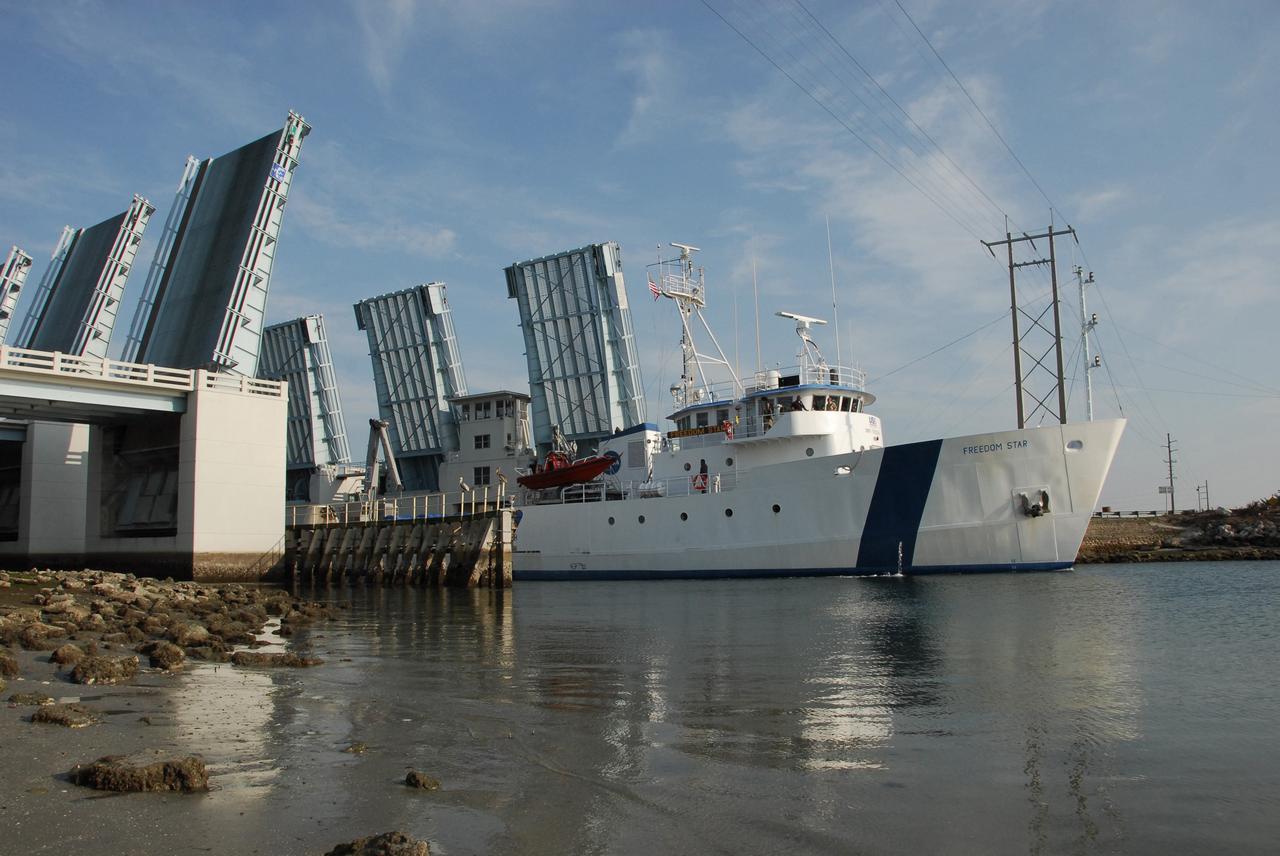
KENNEDY SPACE CENTER, FLA. -- The Freedom Star, one of NASA's solid rocket booster retrieval ships, crosses through the drawbridge over the Haulover Canal into the Banana River. The ship is towing a solid rocket booster alongside. The booster is from space shuttle Endeavour, which launched the STS-123 mission on March 11. The space shuttle’s solid rocket booster casings and associated flight hardware are recovered at sea. The boosters impact the Atlantic Ocean approximately seven minutes after liftoff. The splashdown area is a square of about 6 by 9 nautical miles located about 140 nautical miles downrange from the launch pad. The retrieval ships are stationed approximately 8 to 10 nautical miles from the impact area at the time of splashdown. As soon as the boosters enter the water, the ships accelerate to a speed of 15 knots and quickly close on the boosters, which they tow back to port. After transfer to a position alongside the ship, the booster will be towed to Hangar AF at Cape Canaveral Air Force Station. There, the expended boosters are disassembled, refurbished and reloaded with solid propellant for reuse. Photo credit: NASA/Jack Pfaller
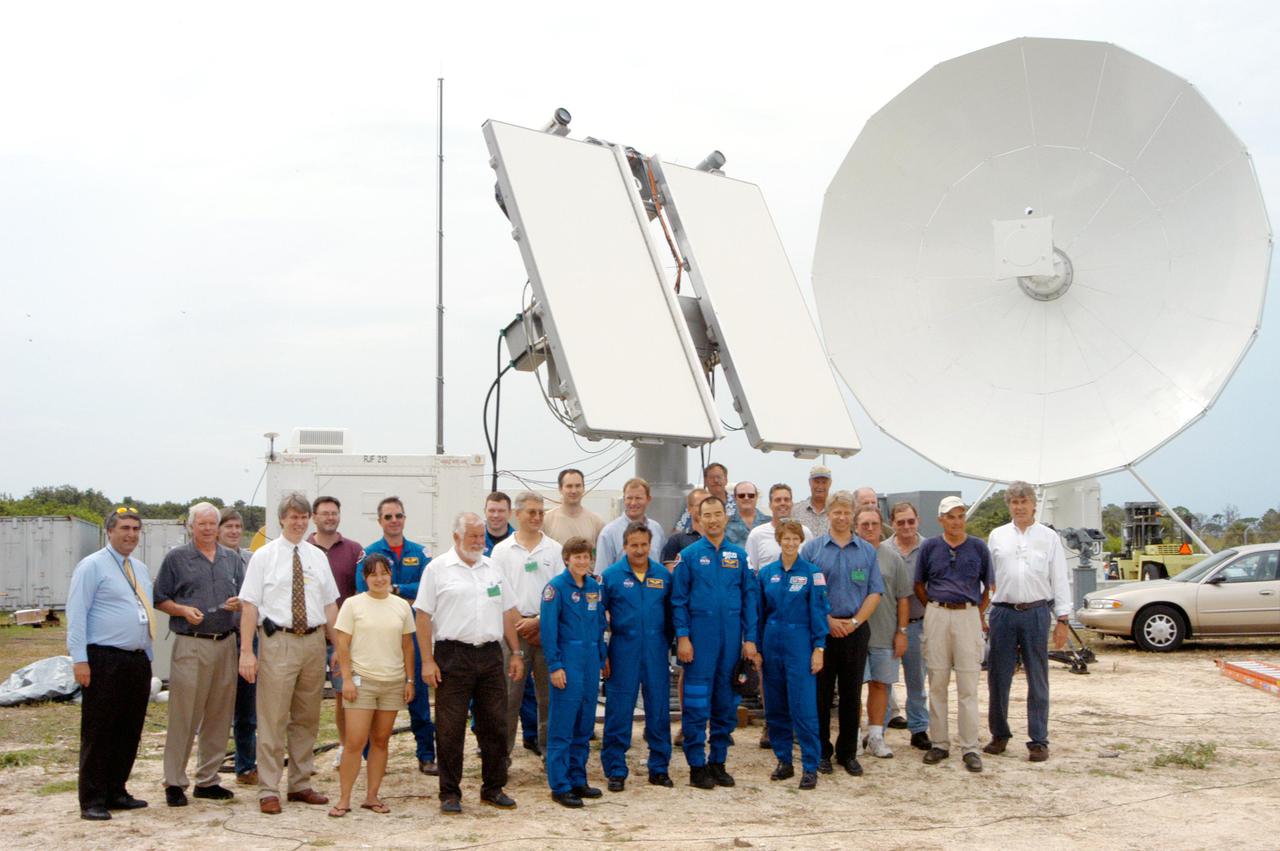
KENNEDY SPACE CENTER, FLA. - Members of the STS-114 crew pose for a photo with workers installing the 30-foot-diameter C-band antenna and a smaller X-band antenna (behind them) north of the Haulover Canal. The astronauts are Mission Specialist Stephen Robinson and Pilot James Kelly, in the back row at left; and in front, Mission Specialists Wendy Lawrence, Charles Camarda and Soichi Noguchi, and Commander Eileen Collins. The antennas are being tested during the launch of a Delta II rocket carrying NASA’s MESSENGER spacecraft bound for the planet Mercury that will work together to create an image of the Delta rocket in flight. The test will evaluate the use of the radars as part of NASA’s Return to Flight program for the Space Shuttle to observe possible debris coming from the Shuttle during launch. If successful, the radar configuration could be used on ships downrange, including on one of the solid rocket booster retrieval ships. And it may enable the return to launching Space Shuttles at night. The launch window for Return to Flight mission STS-114 is May 12 through June 3, 2005.
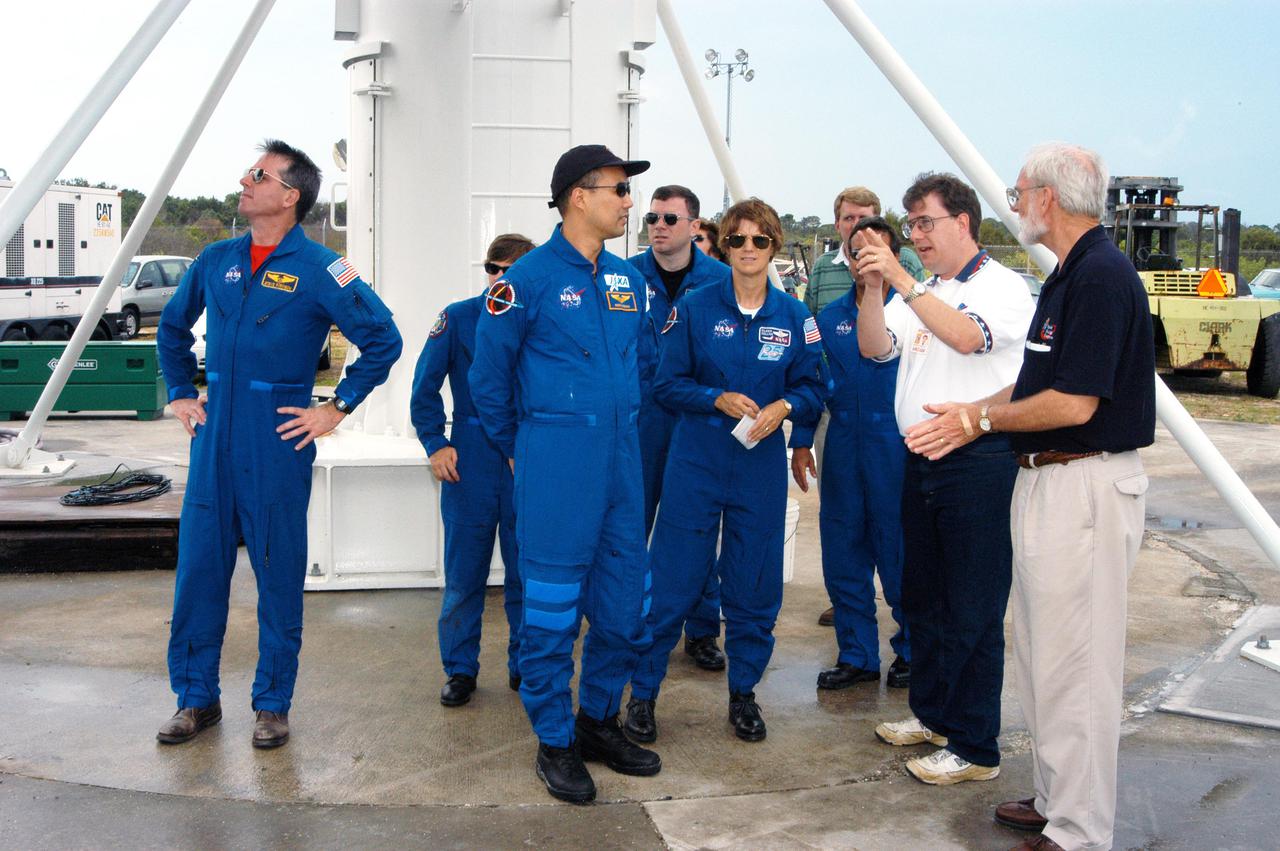
KENNEDY SPACE CENTER, FLA. - Members of the STS-114 crew learn about a 30-foot-diameter C-band antenna (above them) and smaller X-band antenna being installed at KSC, north of the Haulover Canal. From left are Mission Specialists Stephen Robinson, Wendy Lawrence (partially hidden) and Soichi Noguchi; Pilot James Kelly; Commander Eileen Collins; and Mission Specialist Charles Camarda (partially hidden). At far right is Denny Kross, deputy Space Shuttle Program manager. Next to him is Tony Griffith, JSC project manager for the Ascent Debris Radar Working Group. The antennas are being tested during the launch of a Delta II rocket carrying NASA’s MESSENGER spacecraft bound for the planet Mercury that will work together to create an image of the Delta rocket in flight. The test will evaluate the use of the radars as part of NASA’s Return to Flight program for the Space Shuttle to observe possible debris coming from the Shuttle during launch. If successful, the radar configuration could be used on ships downrange, including on one of the solid rocket booster retrieval ships. And it may enable the return to launching Space Shuttles at night. The launch window for Return to Flight mission STS-114 is May 12 through June 3, 2005.
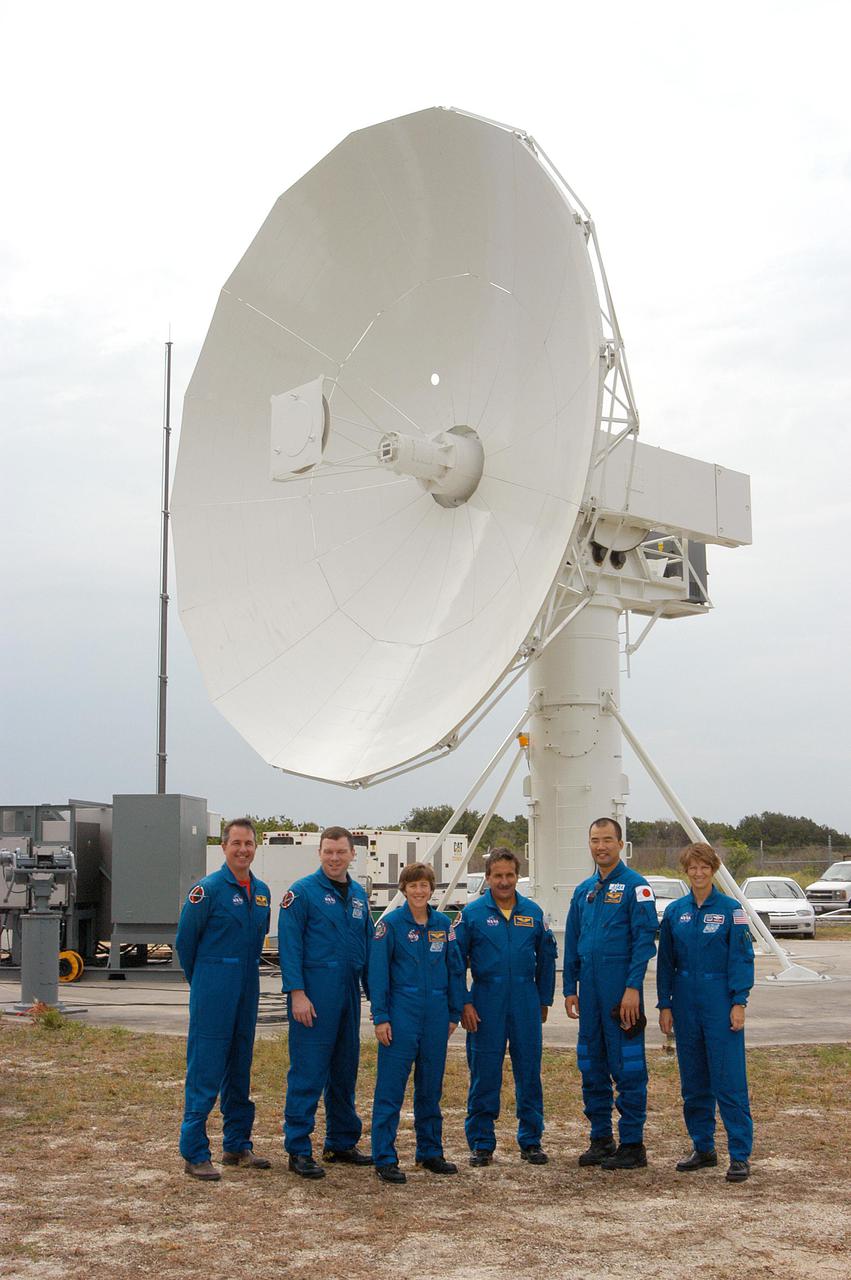
KENNEDY SPACE CENTER, FLA. - Members of the STS-114 crew pose for a photo in front of the 30-foot-diameter C-band antenna installed north of the Haulover Canal. A smaller X-band antenna was also installed. From left are Mission Specialist Stephen Robinson, Pilot James Kelly, Mission Specialists Wendy Lawrence, Charles Camarda and Soichi Noguchi, and Commander Eileen Collins. The antennas are being tested during the launch of a Delta II rocket carrying NASA’s MESSENGER spacecraft bound for the planet Mercury that will work together to create an image of the Delta rocket in flight. The test will evaluate the use of the radars as part of NASA’s Return to Flight program for the Space Shuttle to observe possible debris coming from the Shuttle during launch. If successful, the radar configuration could be used on ships downrange, including on one of the solid rocket booster retrieval ships. And it may enable the return to launching Space Shuttles at night. The launch window for Return to Flight mission STS-114 is May 12 through June 3, 2005.
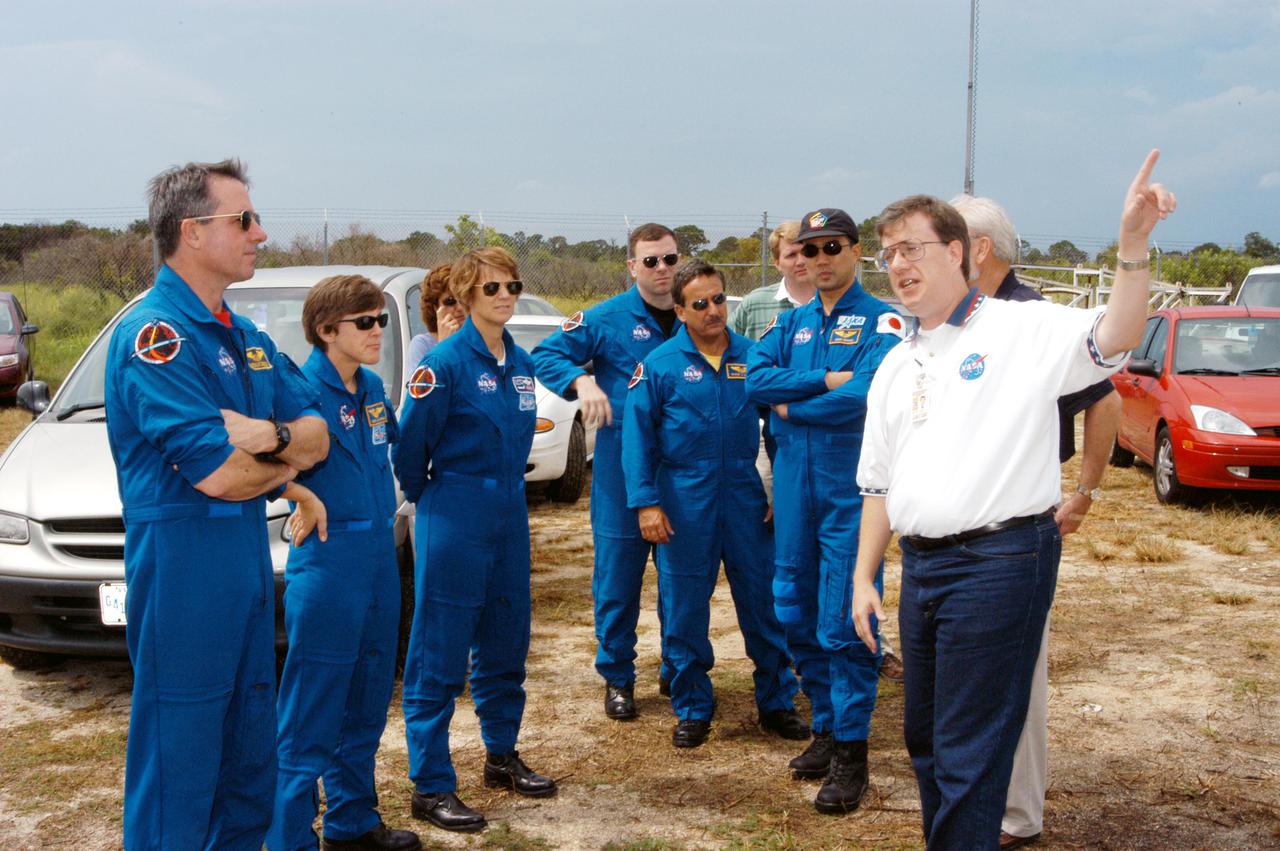
KENNEDY SPACE CENTER, FLA. - Members of the STS-114 crew learn about a 30-foot-diameter C-band antenna and smaller X-band antenna being installed at KSC, north of the Haulover Canal, from Tony Griffith, JSC project manager for the Ascent Debris Radar Working Group. From left are Mission Specialists Stephen Robinson and Wendy Lawrence; Commander Eileen Collins and Pilot James Kelly, and Mission Specialists Charles Camarda and Soichi Noguchi. The antennas are being tested during the launch of a Delta II rocket carrying NASA’s MESSENGER spacecraft bound for the planet Mercury that will work together to create an image of the Delta rocket in flight. The test will evaluate the use of the radars as part of NASA’s Return to Flight program for the Space Shuttle to observe possible debris coming from the Shuttle during launch. If successful, the radar configuration could be used on ships downrange, including on one of the solid rocket booster retrieval ships. And it may enable the return to launching Space Shuttles at night. The launch window for Return to Flight mission STS-114 is May 12 through June 3, 2005.