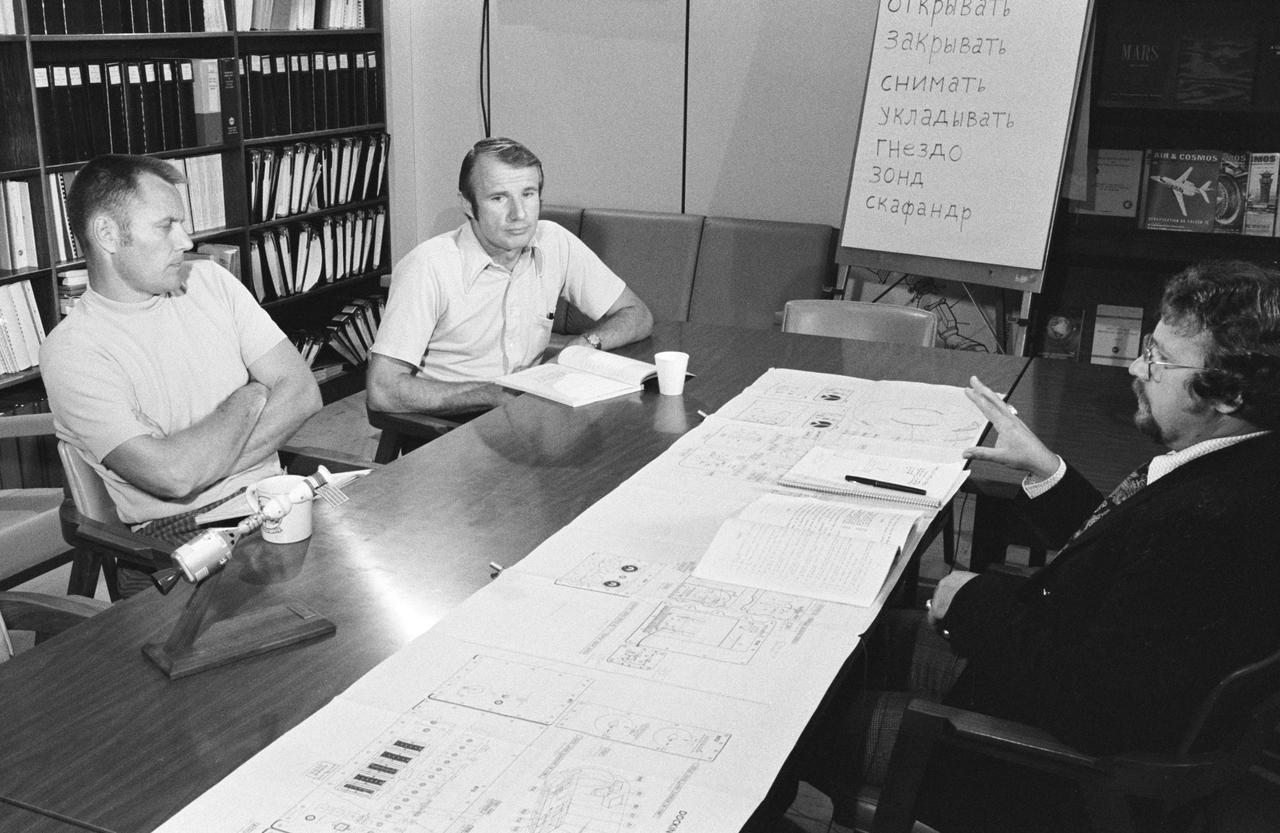
S74-23117 (6 June 1974) --- Two astronauts associated with the joint U.S.-USSR Apollo-Soyuz Test Project receive instructions in the Russian language during ASTP activity at the Johnson Space Center. They are Robert F. Overmyer, a member of the support team of the American ASTP crew, who is seated at left; and Vance D. Brand (center), the command module pilot of the American ASTP prime crew. The instructor is Anatoli Forestanko.
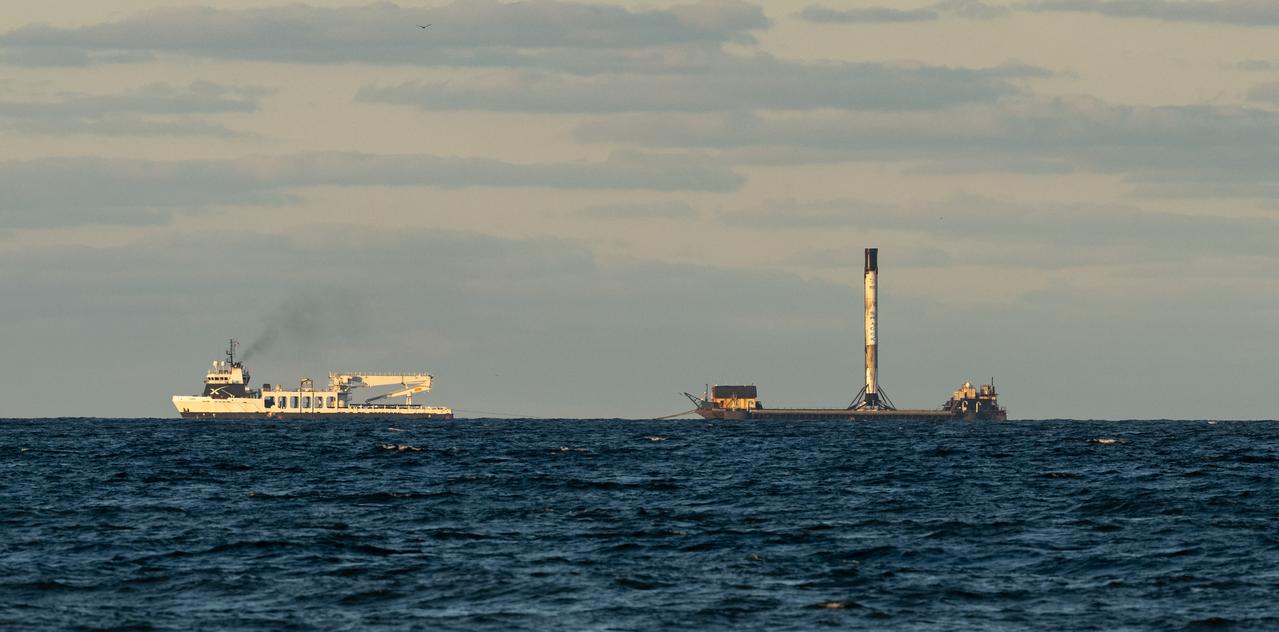
The Falcon 9 rocket booster used for NASA’s SpaceX Crew-5 launch sits atop the autonomous spaceport drone ship (ASDS), named Just Read the Instructions (JRTI), as it is towed into Port Canaveral by the SpaceX multi-purpose recovery ship Doug, Saturday, Oct. 8, 2022, in Cape Canaveral, Florida. NASA’s SpaceX Crew-5 mission is the fifth crew rotation mission of the SpaceX Crew Dragon spacecraft and Falcon 9 rocket to the International Space Station as part of the agency’s Commercial Crew Program. NASA astronauts Nicole Mann and Josh Cassada, Japan Aerospace Exploration Agency (JAXA) astronaut Koichi Wakata, and Roscosmos cosmonaut Anna Kikina launched on Oct. 5 from Launch Complex 39A at the Kennedy Space Center. Photo Credit: (NASA/Bill Ingalls)
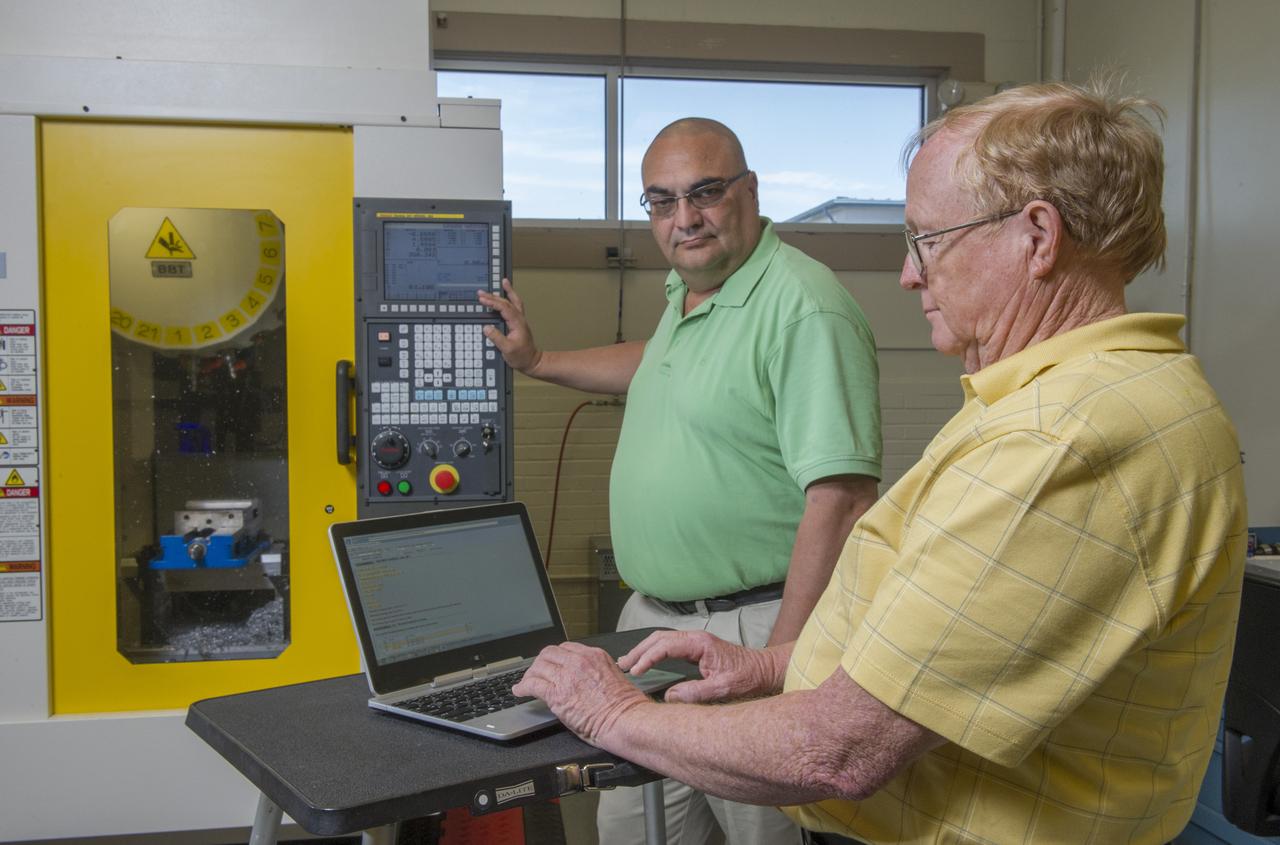
RON BROOKS (FOREGROUND) AND DON JAMES (BACKGROUND) USING THE SOLUMINA MANUFACTURING EXECUTION SYSTEM TO DELIVER AND EXECUTE WORK INSTRUCTIONS ON THE SHOP FLOOR.
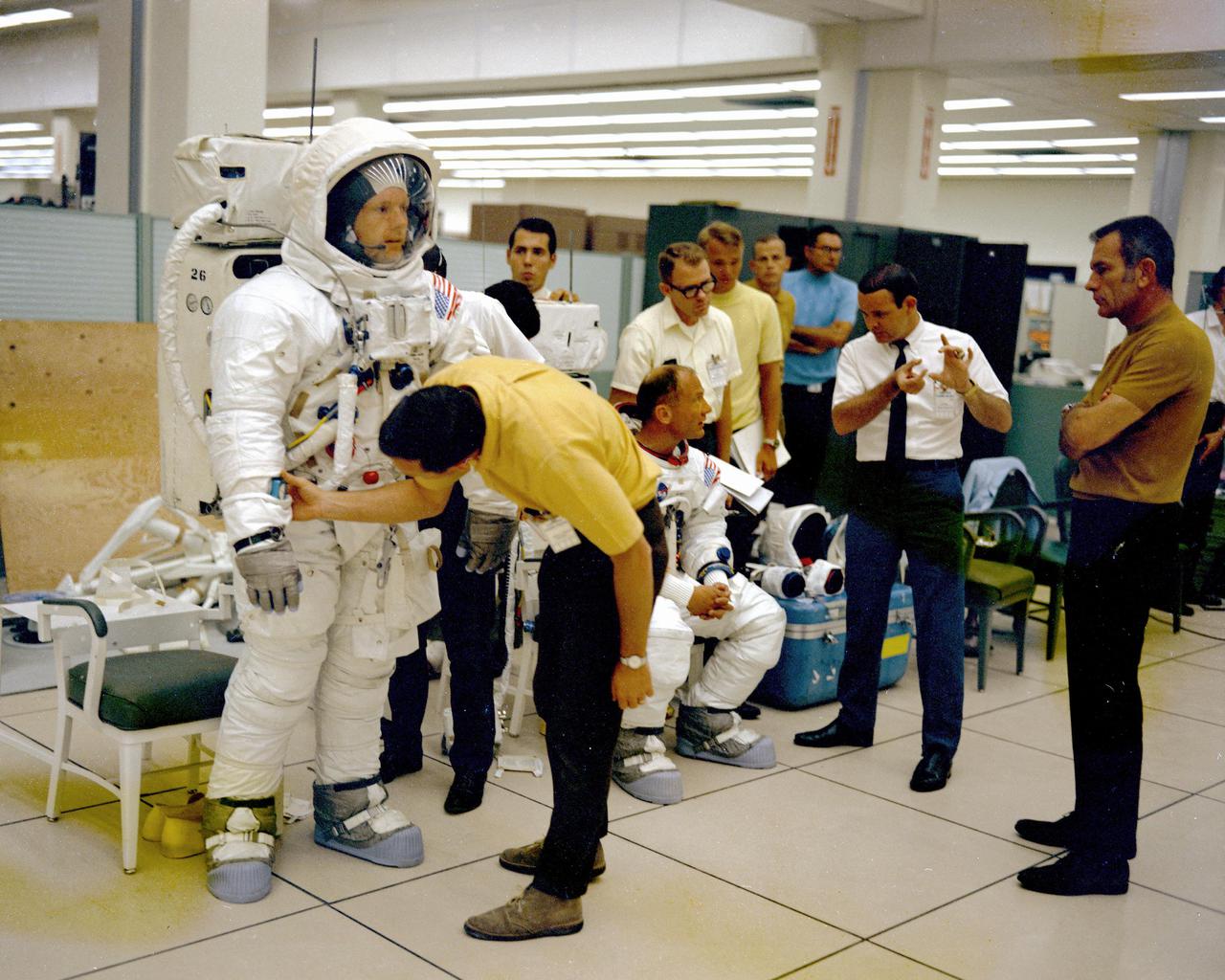
KENNEDY SPACE CENTER, FLA. - The Apollo 11 flight crew are given instructions by technicians and management while undergoing the Extravehicular Activity (EVA) training and the Lunar Module walk-through in preparation for the first manned landing on the Moon.
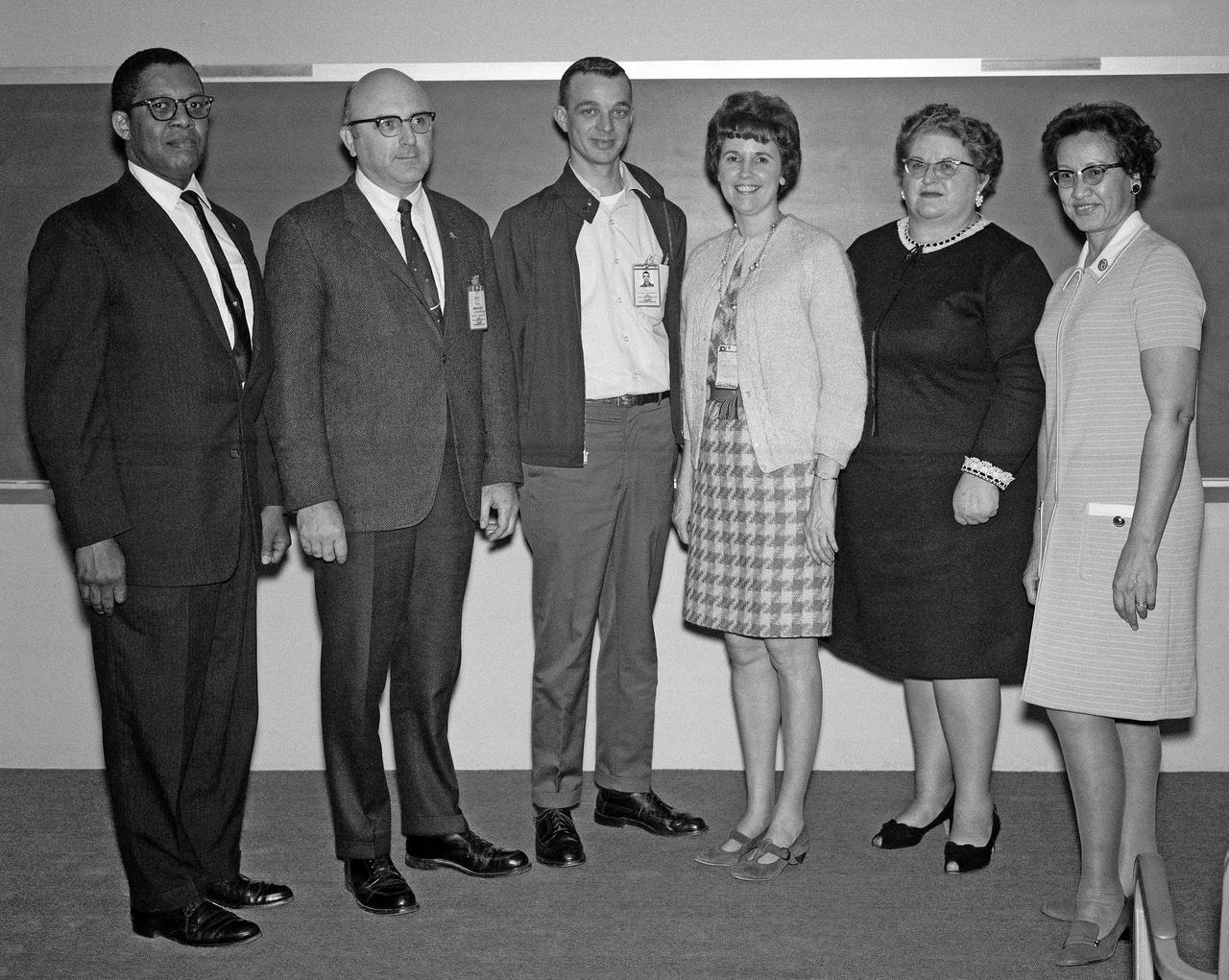
Trainees Honored: Langley Researcher, March 6, 1970 page 6. Six staff members instructed the trainees in various subjects Horace Bellamy, Fred Eichenbrenner,Thomas Hall, Evelyn Myers, Eloise McGehee, and Katherine Johnson.
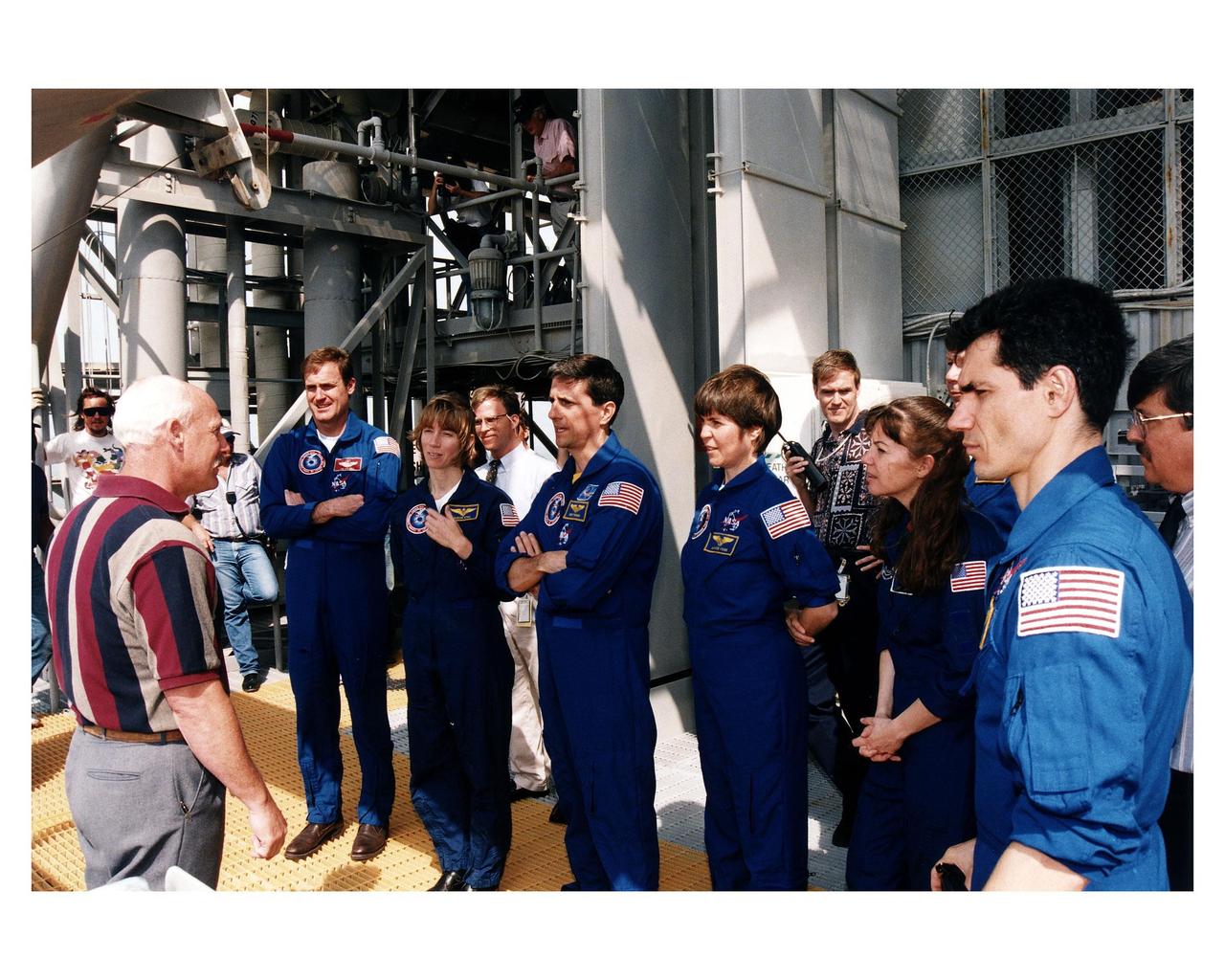
Members of the STS-83 crew receive instruction at Launch Complex 39A during the crew's <a href="http://www-pao.ksc.nasa.gov/kscpao/release/1997/40-97.htm">Terminal Countdown Demonstration Test (TCDT).</a
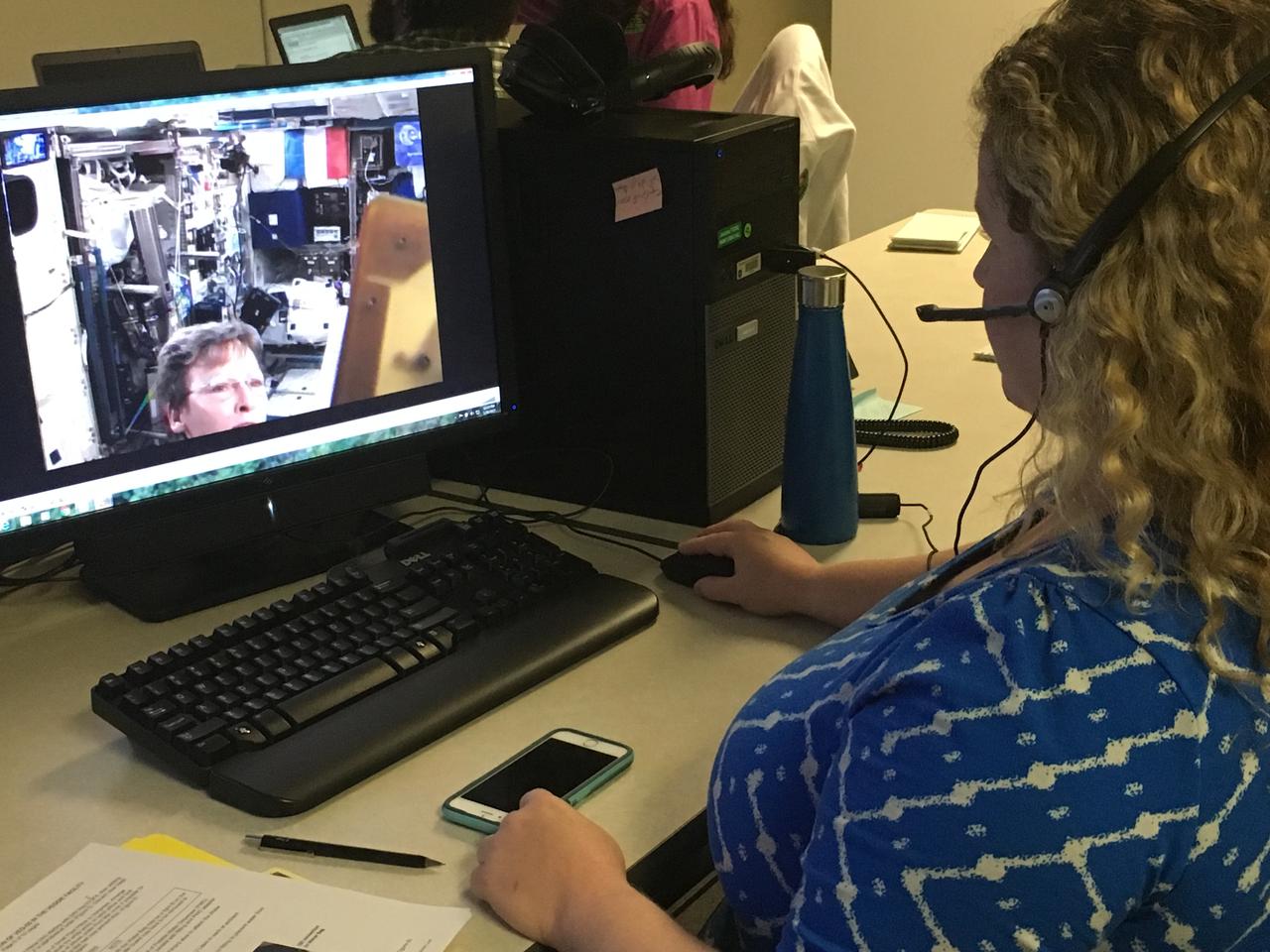
Veggie Project Manager Nicole Dufour provides real-time instructions to astronaut Peggy Whitson aboard the International Space Station as she initiates the latest Veggie experiment.
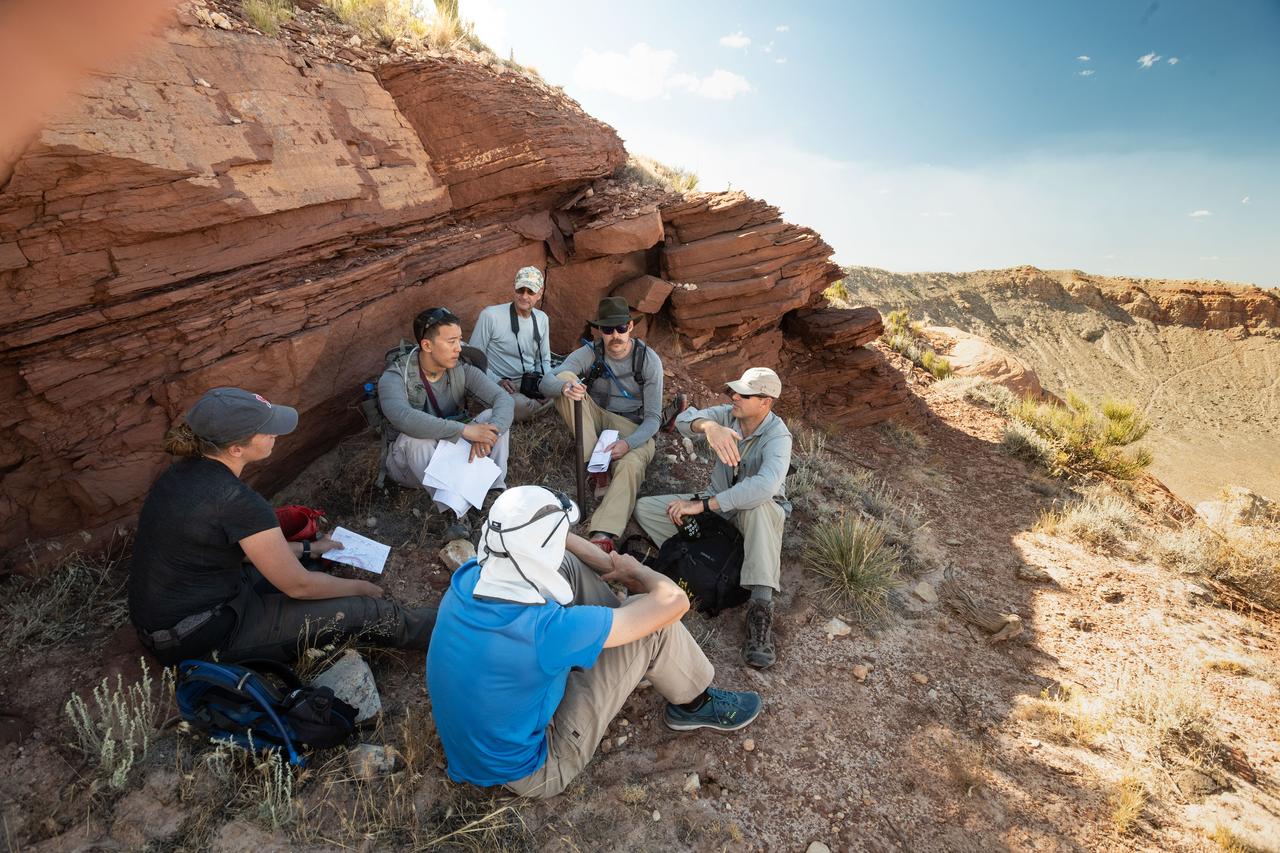
jsc2019e055491 (09-19-19) --- 2017 NASA astronaut candidates gather to discuss further instruction with their field instructor during geology training in Arizona. Photo Credit: (NASA/Bill Stafford)
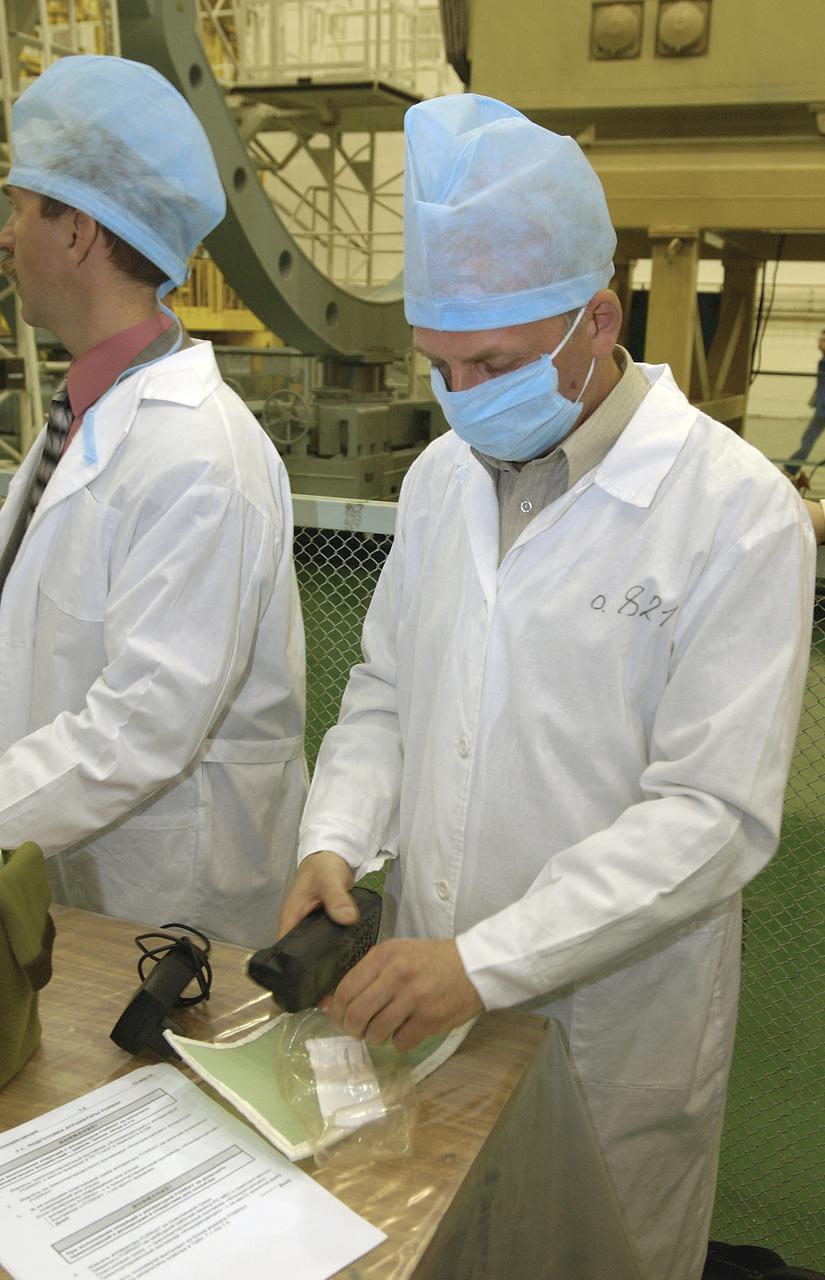
A technician at the Baikonur Cosmodrome packs a satellite phone after instructing the Expedition 9 crew on its use, Wednesday, April, 14, 2004, in Baikonur, Kazakhstan. Photo Credit: (NASA/Bill Ingalls)
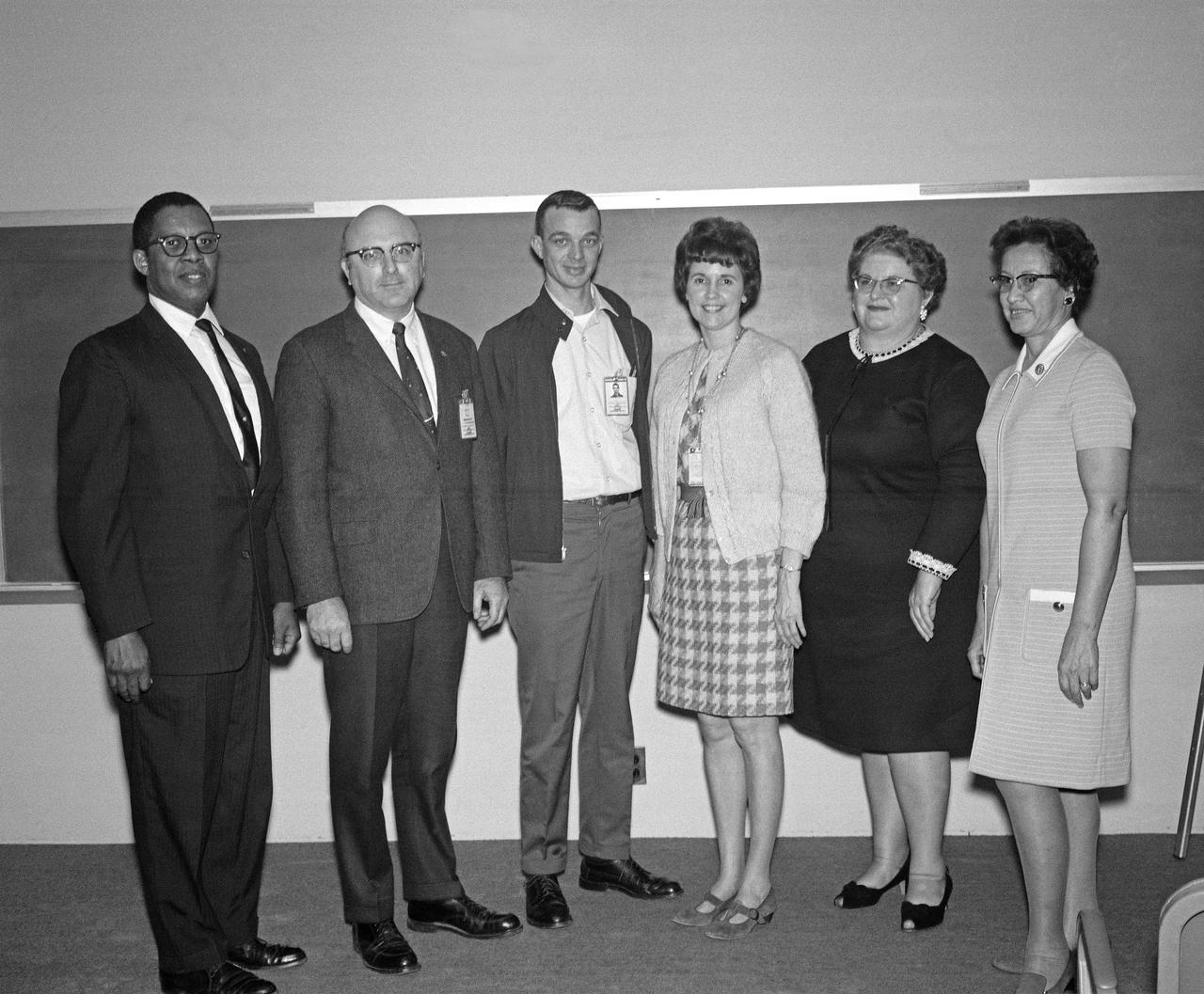
Trainees Honored: Langley Researcher, March 6, 1970 page 6. Six staff members instructed the trainees in various subjects Horace Bellamy, Fred Eichenbrenner,Thomas Hall, Evelyn Myers, Eloise McGehee, and Katherine Johnson.
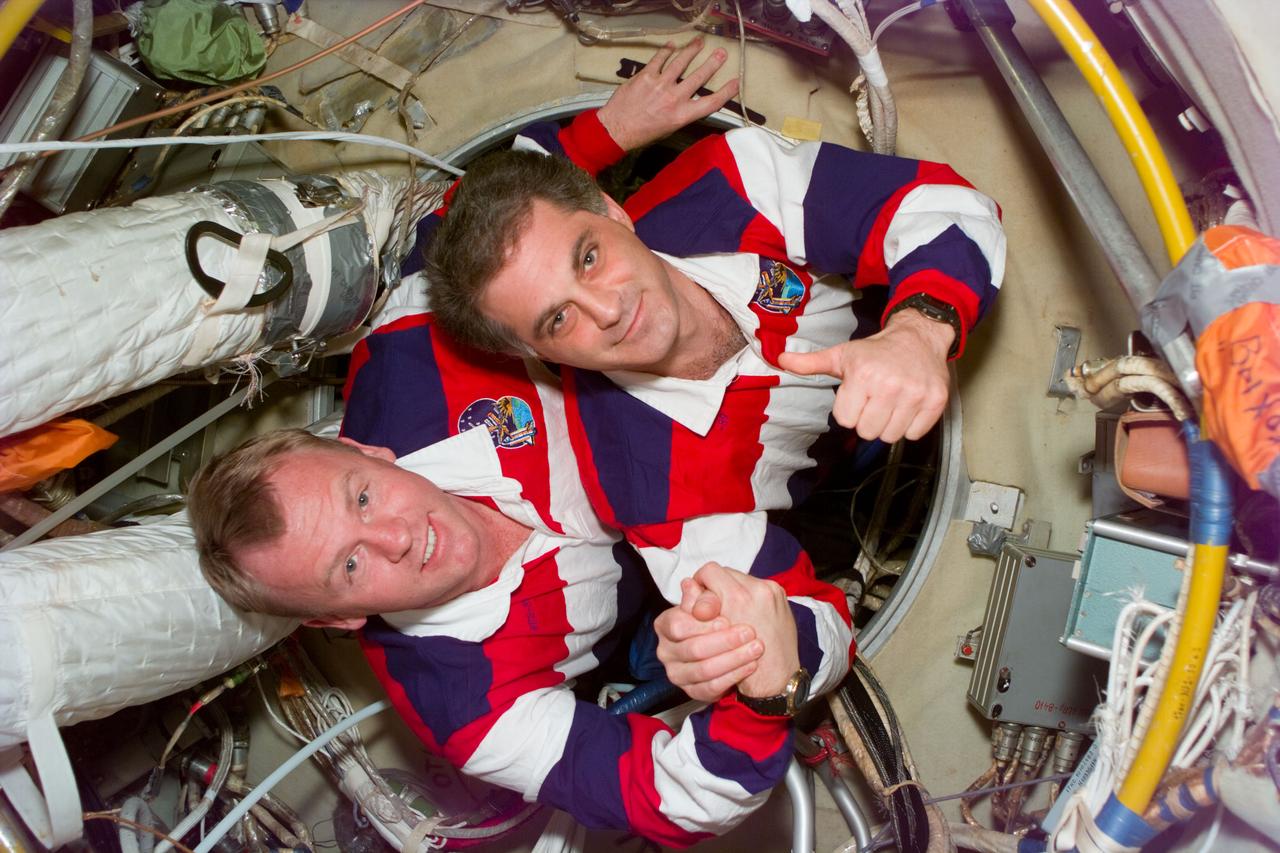
S89-E-5315 (26 Jan 1998) --- This Electronic Still Camera (ESC) image shows astronauts and cosmonaut guest researchers Andrew S. W. Thomas and David A. Wolf (giving thumbs up) in a hatchway onboard Russia's Mir Space Station. Thomas, replacing Wolf as cosmonaut guest researcher, will be the last American astronaut to serve a tour aboard Mir. This ESC view was taken on January 26, 1998, at 15:52:27 MET.
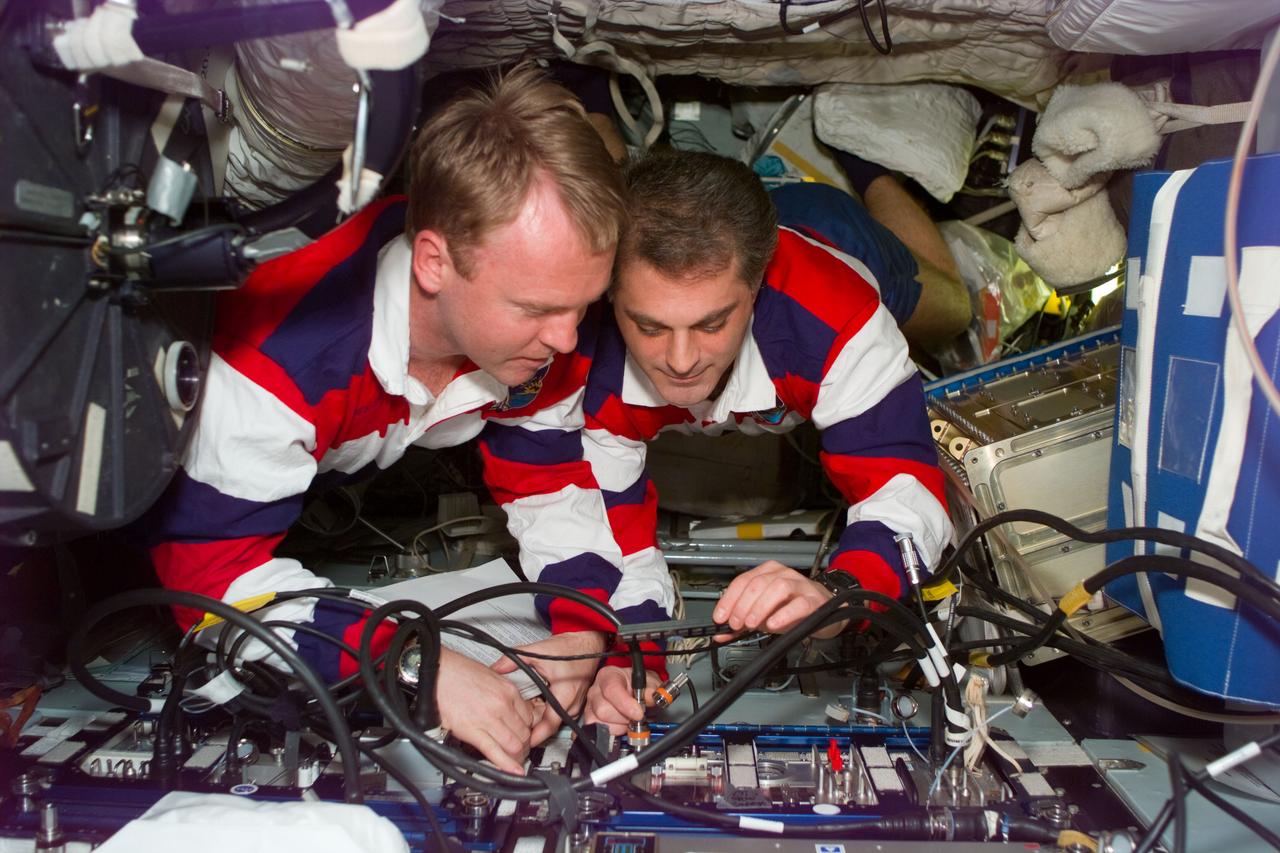
S89-E-5320 (26 Jan 1998) --- This Electronic Still Camera (ESC) image shows astronauts and cosmonaut guest researchers Andrew S. W. Thomas (on left) and David A. Wolf during hand-over operations onboard the Russian Mir Space Station. Wolf is explaining the operations of this equipment to Thomas. Thomas, replacing Wolf as cosmonaut guest researcher, will be the last American astronaut to serve a tour aboard the Mir. This ESC view was taken on January 26, 1998, at 15:58:39 MET.

S89-E-5310 (26 Jan 1998) --- This Electronic Still Camera (ESC) image shows astronauts David A. Wolf, former cosmonaut guest researcher (on left), and Andrew S. W. Thomas, future cosmonaut guest researcher. Wolf, during hand-over operations, explains the use of this scientific piece of equipment to Thomas, who will use this equipment during his tour aboard the Russian Mir Space Station. This ESC view was taken on January 26, 1998, at 15:50:31 MET.
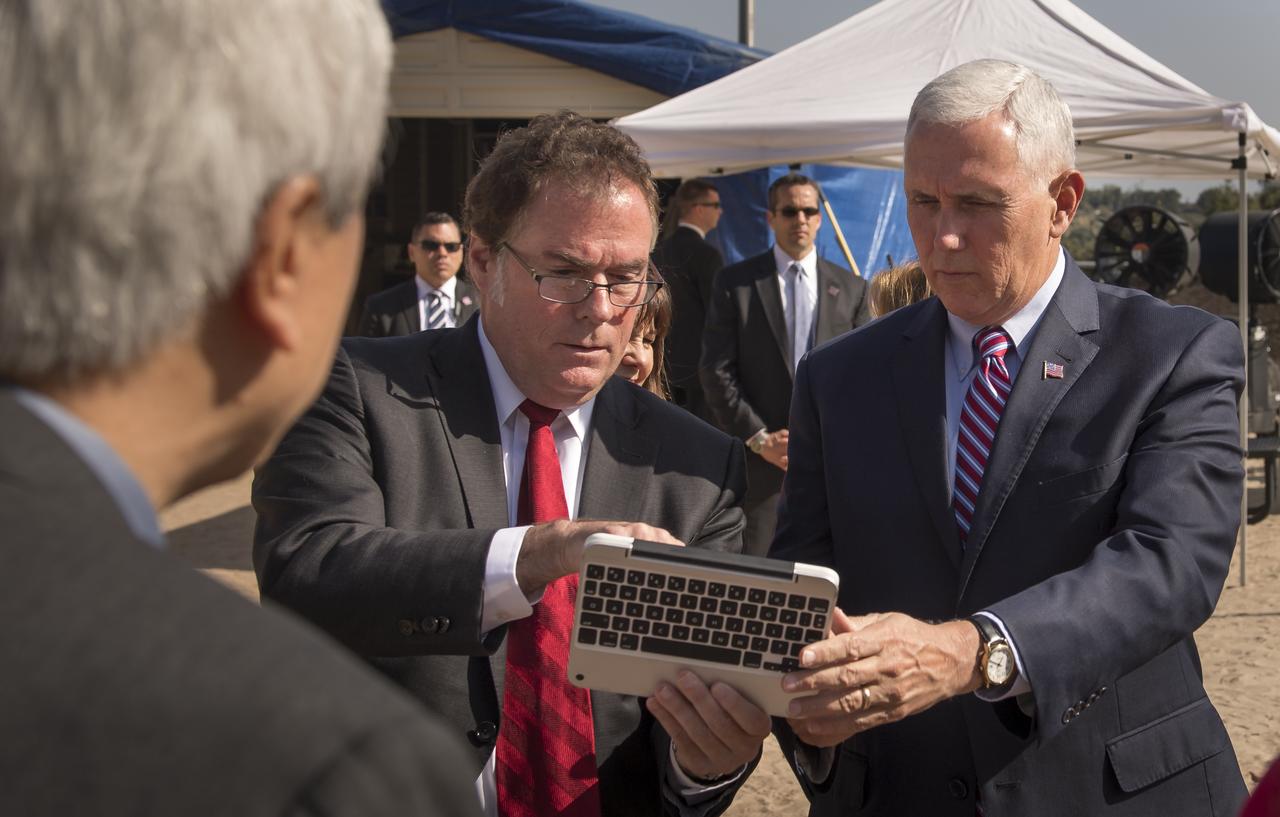
U.S. Vice President Mike Pence is given instructions on how to drive a rover nicknamed "Scarecrow" by JPL Director Michael Watkins at NASA's Jet Propulsion Laboratory Mars Yard, Saturday, April 28, 2018 in Pasadena, California. Scarecrow is used to test mobility of rovers on Mars. Photo Credit: (NASA/Bill Ingalls)
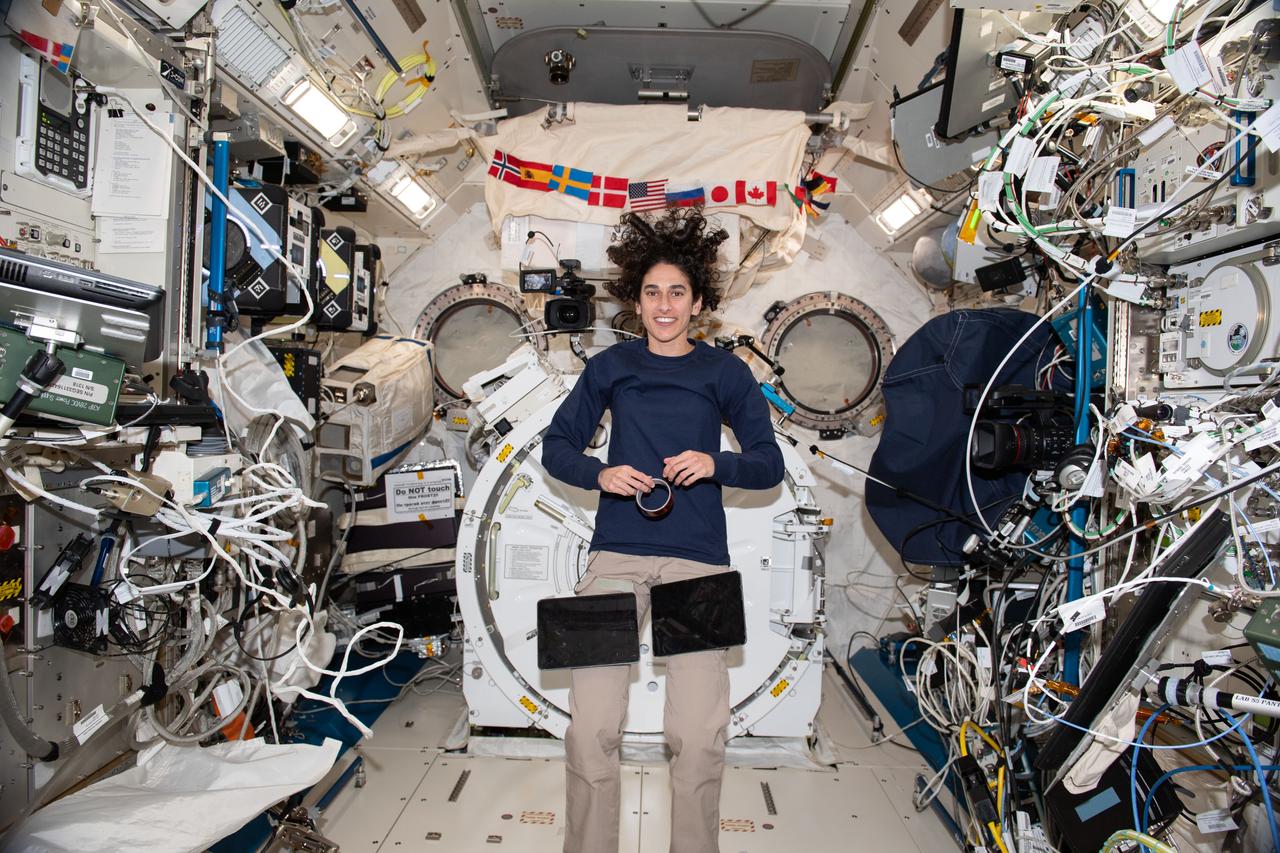
iss070e035105 (Nov. 30, 2023) --- NASA astronaut and Expedition 70 Flight Engineer Jasmin Moghbeli takes a break during operations and poses for a portrait inside the International Space Station's Kibo laboratory module. A pair of computer tablets are attached to velcro straps on Moghbeli's pants for ease of access when reviewing procedures and instructions.
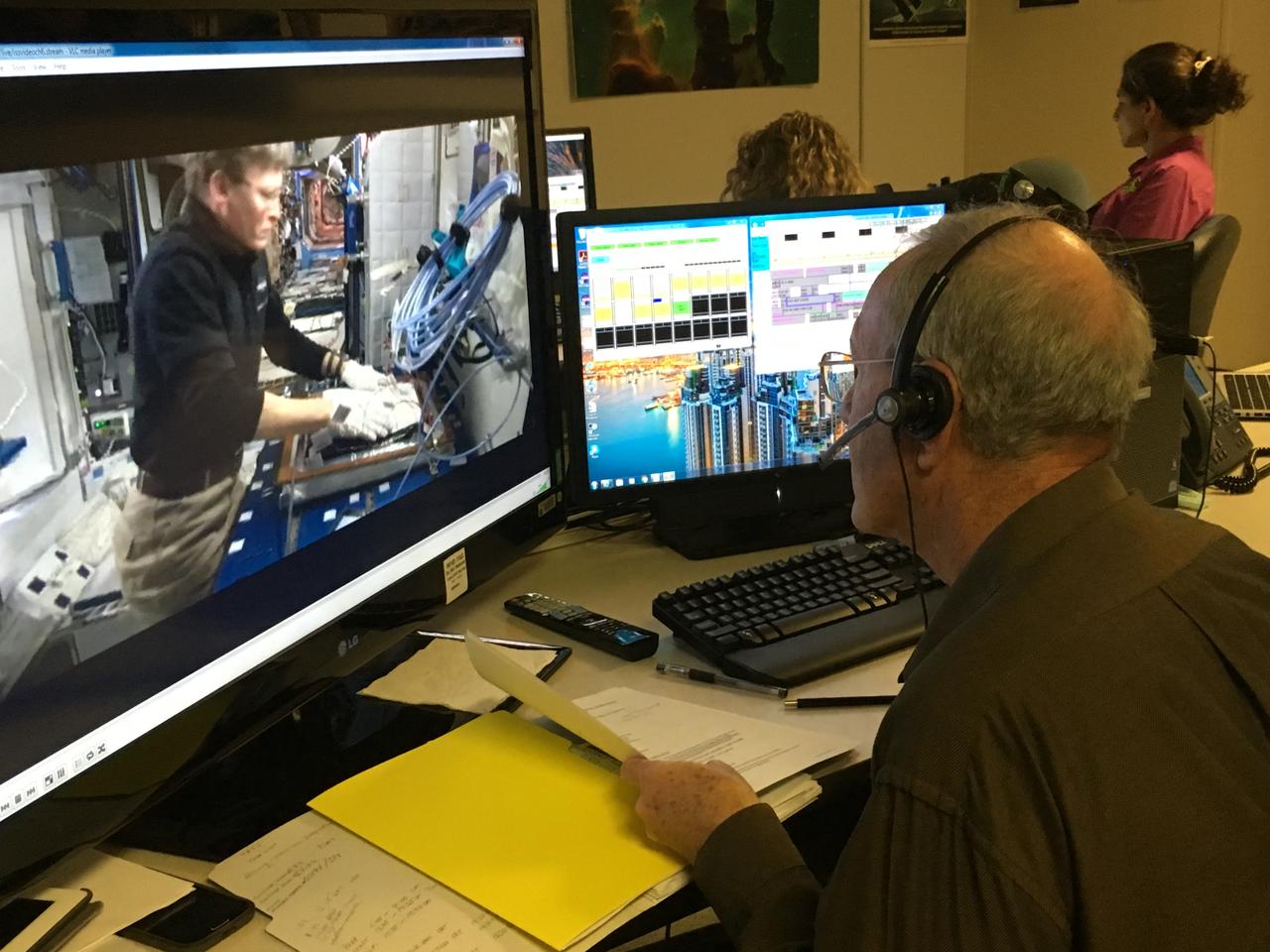
Charles Spern, project manager on the Engineering Services Contract, communicates instructions for the Veggie system to astronaut Peggy Whitson aboard the International Space Station during the initiation of the second Chinese cabbage to be grown aboard the orbiting laboratory on April 3, 2017.
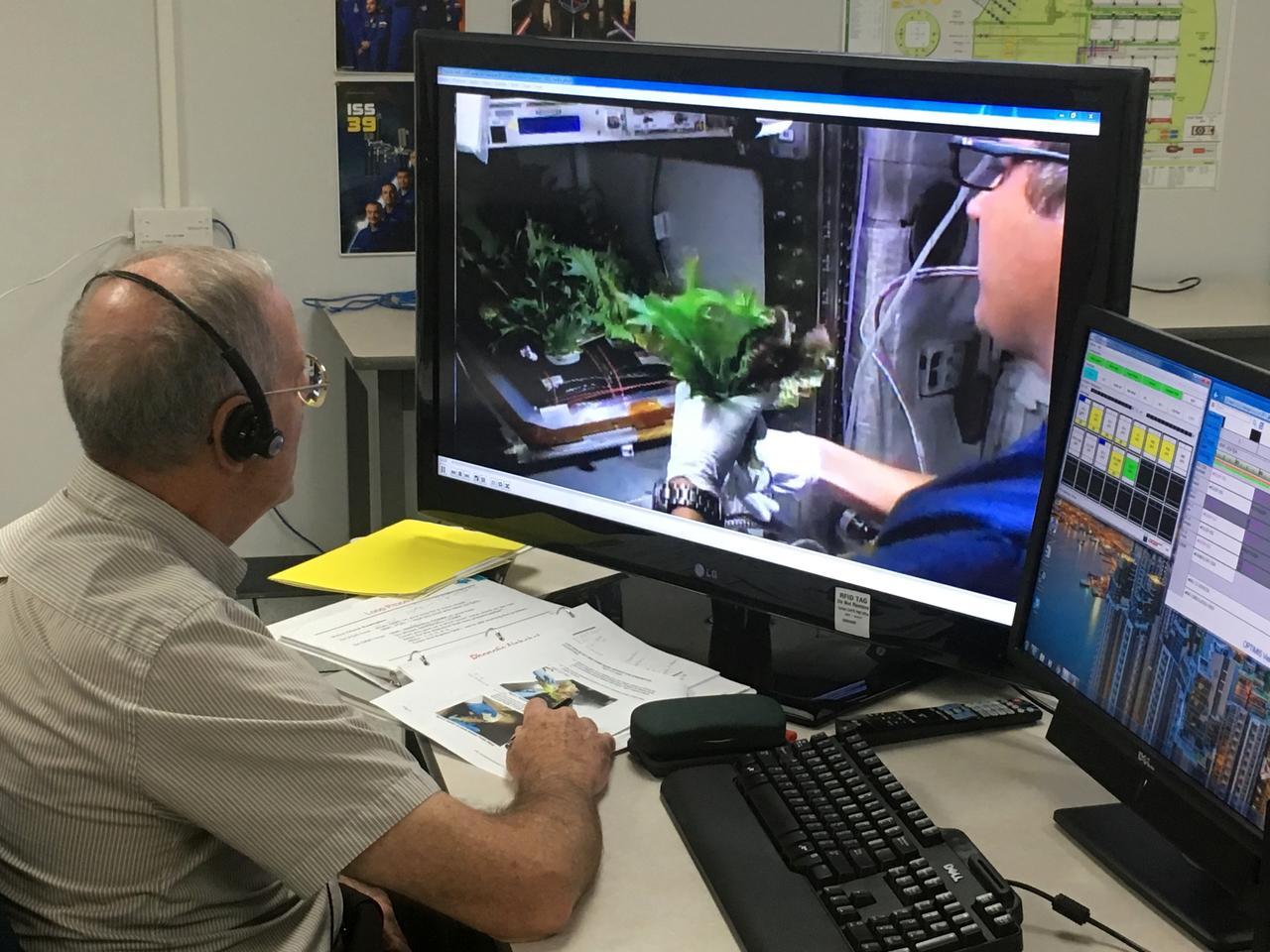
Charles Spern, project manager on the Engineering Services Contract, communicates instructions for the Veggie system to astronaut Joe Acaba on the International Space Station. Spern is in the Experiment Monitoring Room in the Space Station Processing Facility at Kennedy Space Center in Florida. Three different varieties of plants from the Veg-03D plant experiment were harvested.

jsc2017e118961 (September 21, 2017) --- (From left) 2017 NASA astronaut candidates Zena Cardman, Kayla Barron, and Warren Hoburg await next steps and instruction during helicopter water survival training at NASA Johnson Space Center’s Neutral Buoyancy Laboratory in Houston. Photo Credit: (NASA/Josh Valcarcel)
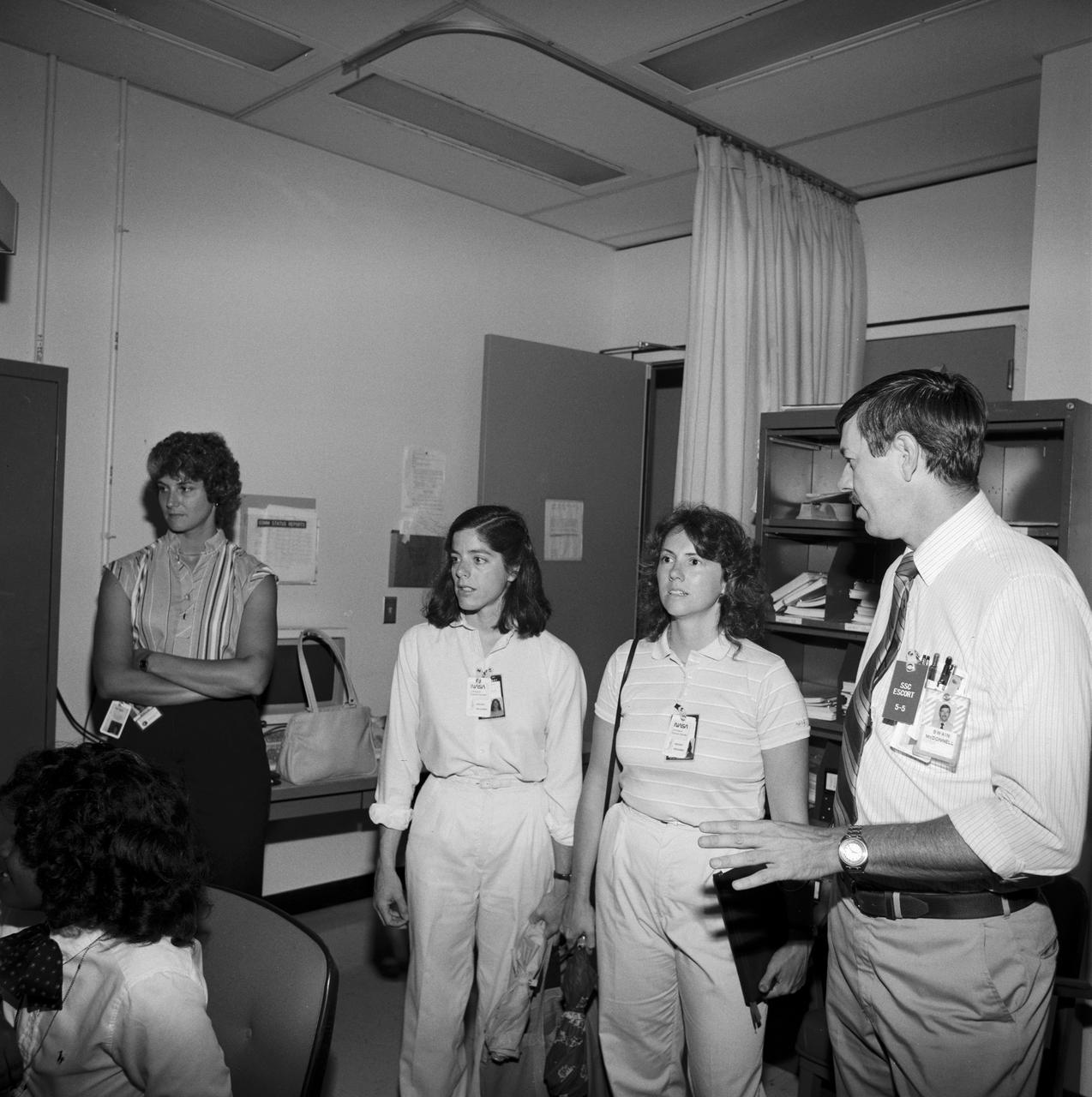
S85-40510 & S85-40511 (23 Sept. 1985) --- Two women representing the Teacher-in-Space Project undergo training in preparation for the 51-L mission in two photographs made in the Johnson Space Center’s mission simulation and training facility. In S85-40510, Sharon Christa McAuliffe (second right), prime crew member; and Barbara R. Morgan (second left), backup, are briefed in the shuttle mission simulator’s instruction station by Jerry Swain, right, instruction team leader. Others pictured are Michelle Brekke (far left) of the payload specialists’ office and Patricia A. Lawson (lower left foreground). Astronaut Ellison S. Onizuka, in S85-40511, assists Morgan with a head set as the two trainees are familiarized with launch and entry stations in the motion base shuttle mission simulator (SMS). The citizen observer (McAuliffe) is scheduled to be seated on the middeck. This picture, however, was taken at the mission specialists’ station on the flight deck. Photo credit: NASA
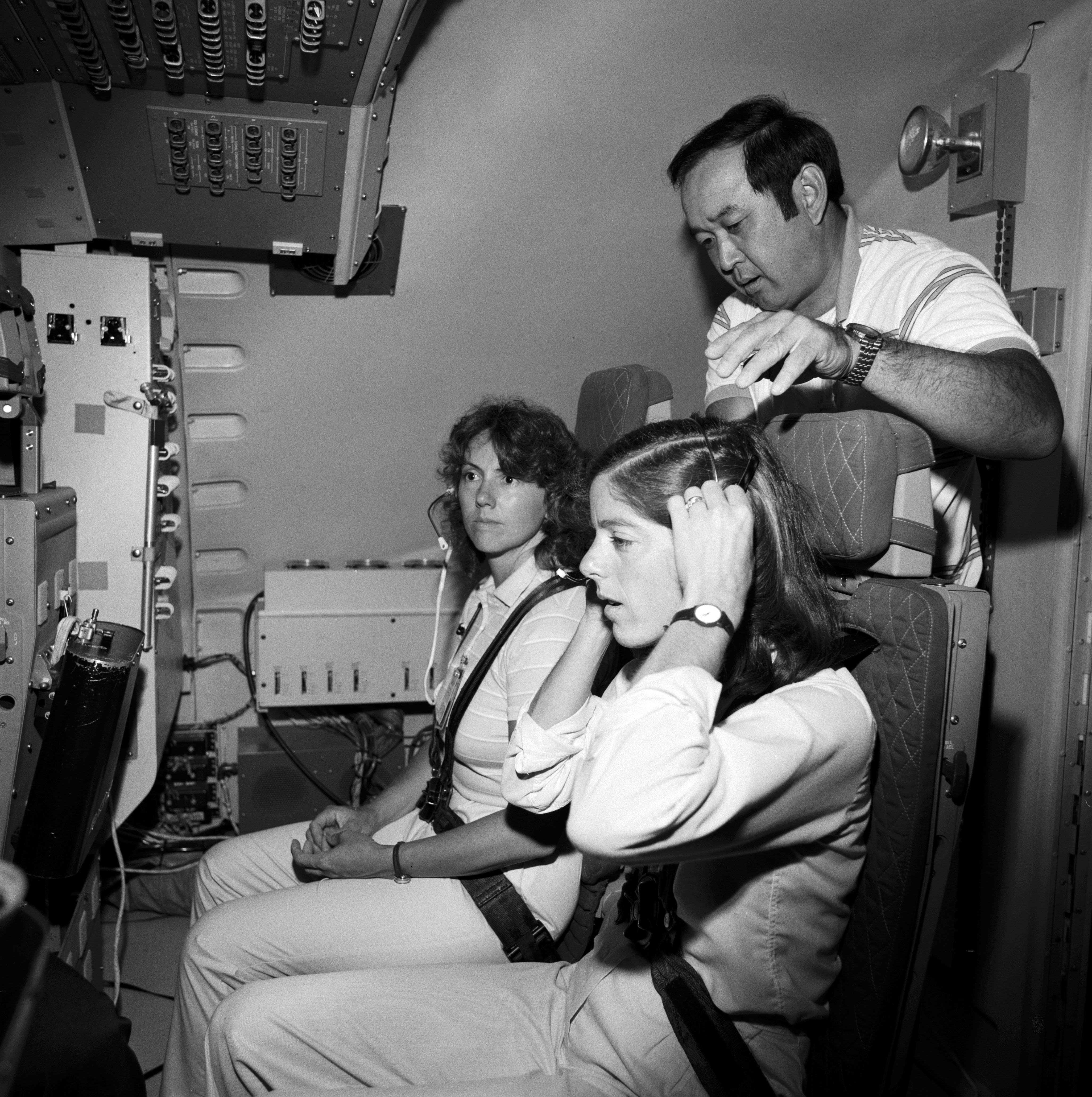
S85-40510 & S85-40511 (23 Sept. 1985) --- Two women representing the Teacher-in-Space Project undergo training in preparation for the 51-L mission in two photographs made in the Johnson Space Center’s mission simulation and training facility. In S85-40510, Sharon Christa McAuliffe (second right), prime crew member; and Barbara R. Morgan (second left), backup, are briefed in the shuttle mission simulator’s instruction station by Jerry Swain, right, instruction team leader. Others pictured are Michelle Brekke (far left) of the payload specialists’ office and Patricia A. Lawson (lower left foreground). Astronaut Ellison S. Onizuka, in S85-40511, assists Morgan with a head set as the two trainees are familiarized with launch and entry stations in the motion base shuttle mission simulator (SMS). The citizen observer (McAuliffe) is scheduled to be seated on the middeck. This picture, however, was taken at the mission specialists’ station on the flight deck. Photo credit: NASA
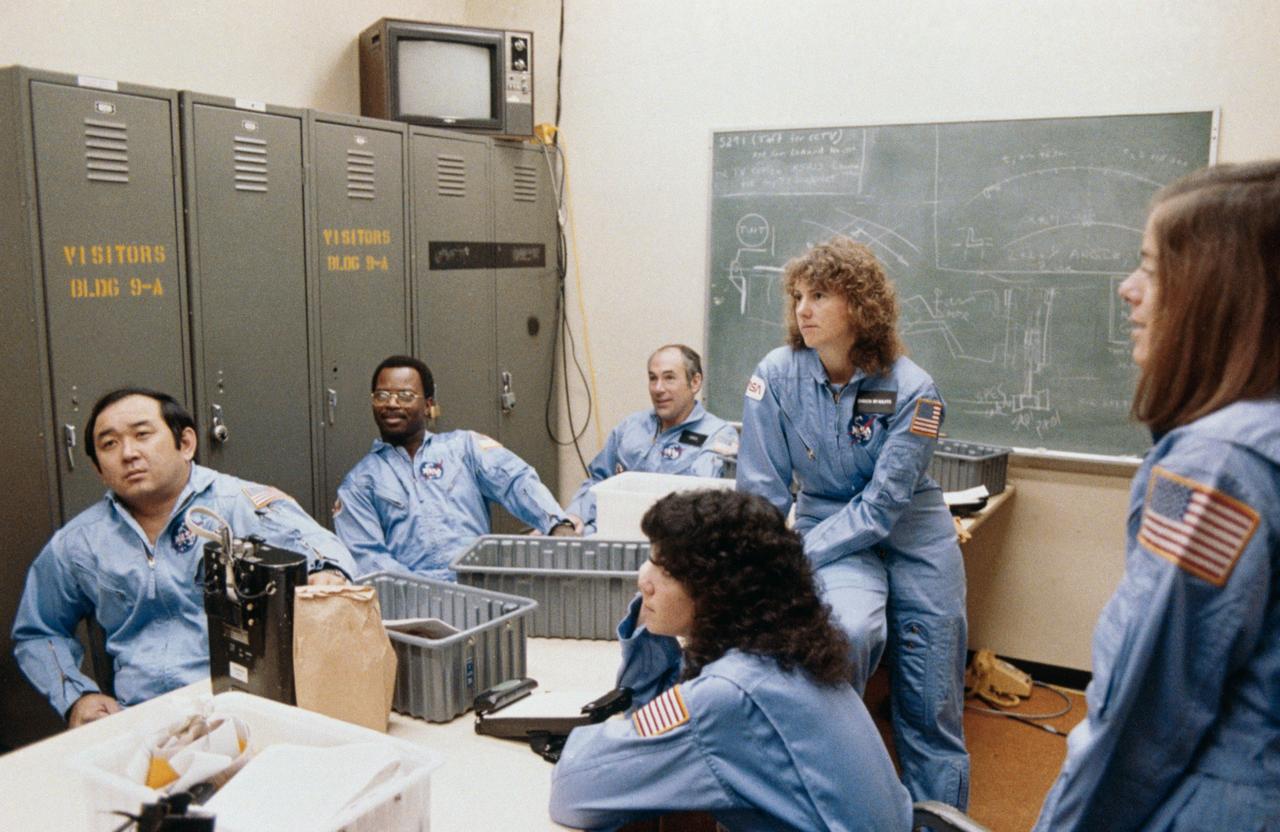
S86-25186 (December 1985) --- Five members of the prime crew for NASA?s STS-51L mission and a backup crew member are briefed during a training session in the Johnson Space Center?s (JSC) Shuttle Mock-up and Integration Laboratory. From left to right are astronaut Ellison S. Onizuka, mission specialist; Ronald E. McNair, mission specialist; Gregory D. Jarvis, Hughes payload specialist; Judith A. Resnik, mission specialist; Sharon Christa McAuliffe, citizen observer/payload specialist representing the Teacher-in-Space Project; and Barbara R. Morgan, backup payload specialist. The photograph was taken by Keith Meyers of the New York Times. EDITOR?S NOTE: The STS-51L crew members lost their lives in the space shuttle Challenger accident moments after launch on Jan. 28, 1986 from the Kennedy Space Center (KSC). Photo credit: NASA
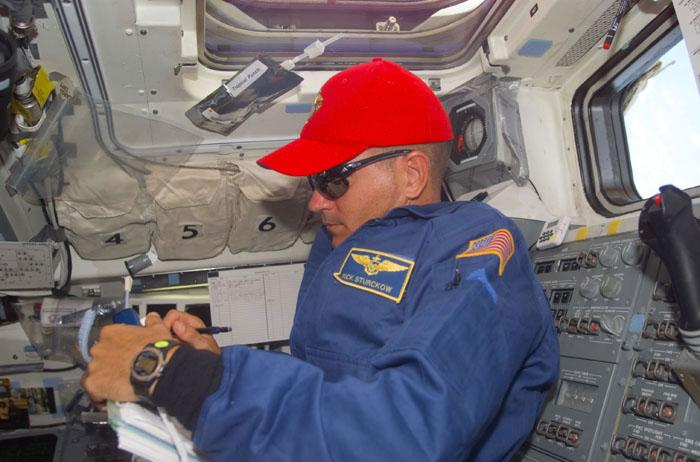
STS105-E-5283 (16 August 2001) --- Astronaut Frederick W. (Rick) Sturckow, STS-105 pilot, reviews a procedures checklist on the aft flight deck of the Space Shuttle Discovery which is currently docked to the International Space Station (ISS). This image was taken with a digital still camera.
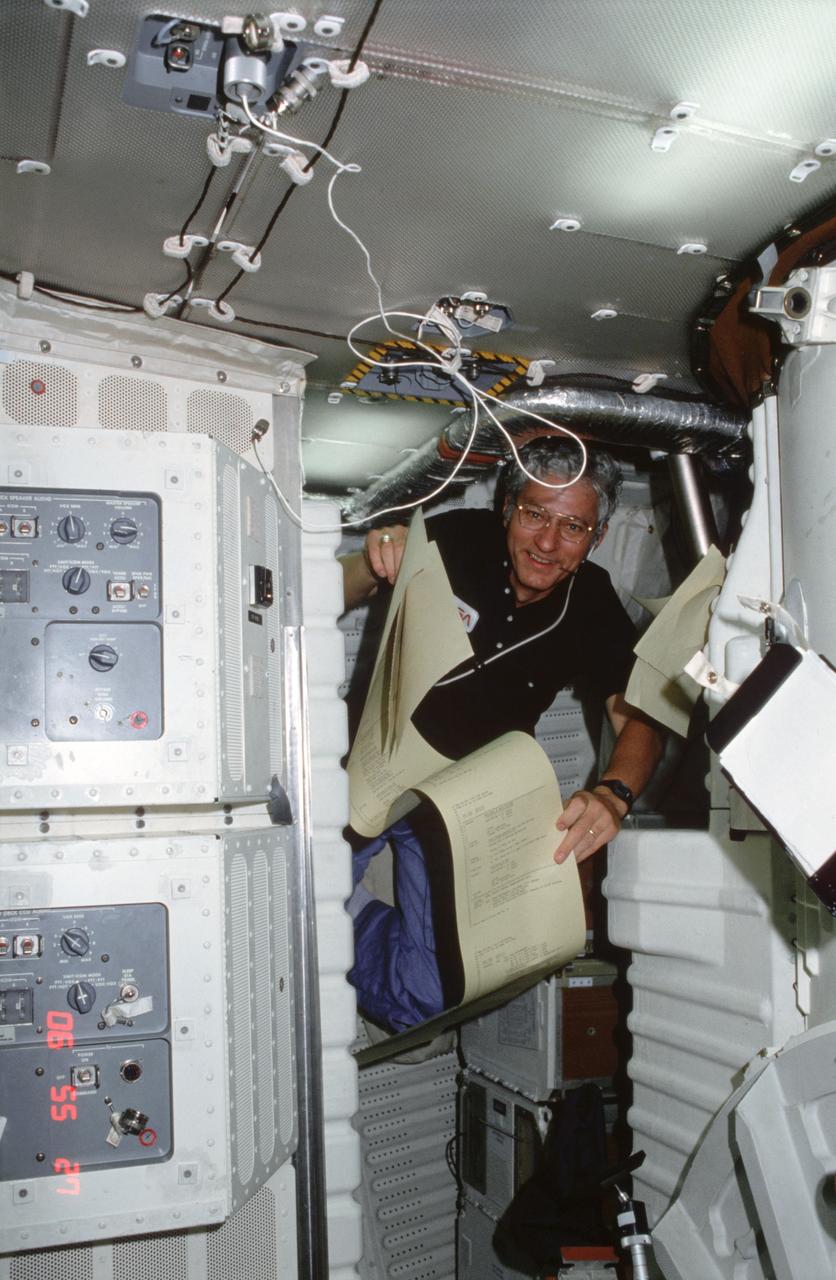
STS004-26-243 (27 June 1982) --- Astronaut Henry W. Hartsfield Jr., STS-4 pilot, has just torn off a rather prolific gathering of hard copy print-outs from the teleprinter aboard the Earth-orbiting space shuttle Columbia during NASA?s fourth orbital flight test. The teleprinter is located in the middeck area of the reusable spacecraft. The photograph was made by astronaut Thomas K. Mattingly II, STS-4 commander. The two shared a little more than seven days of duties aboard the space shuttle Columbia. Photo credit: NASA
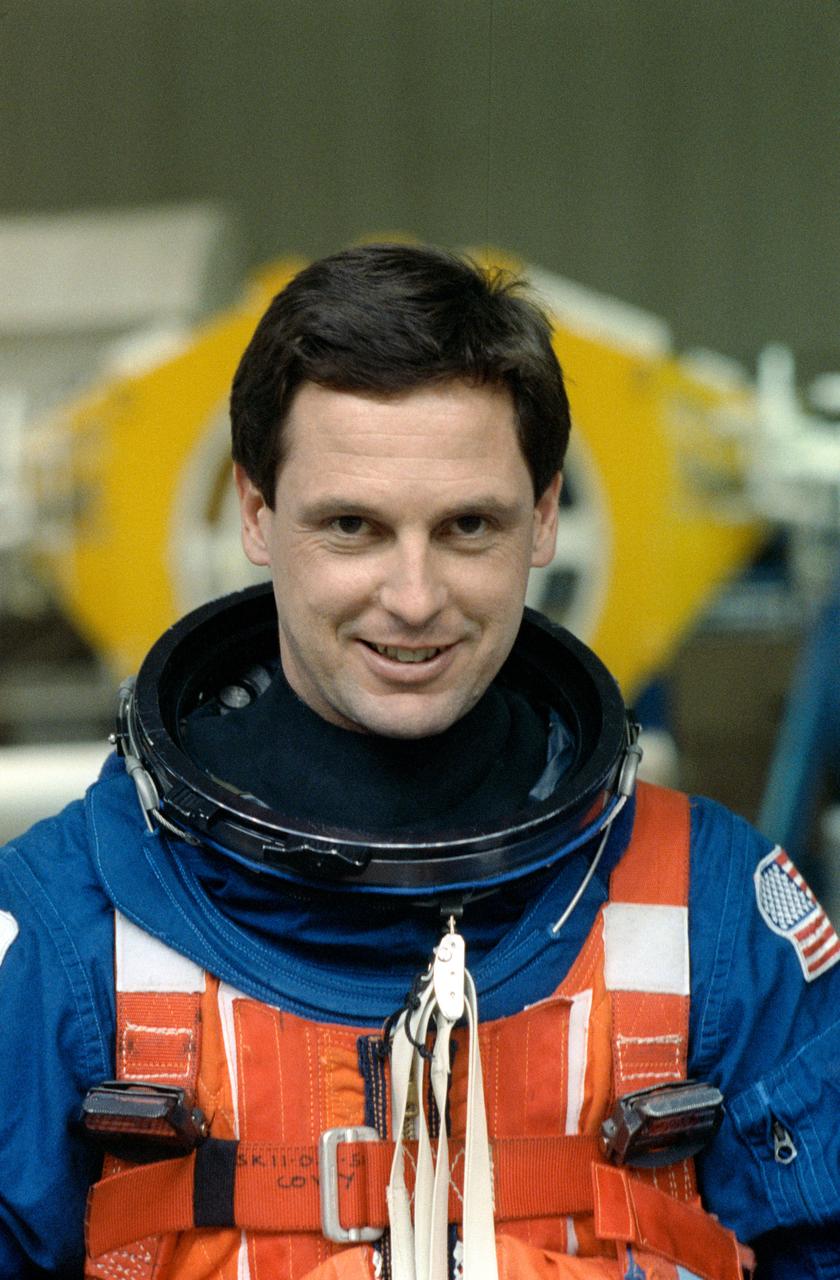
S90-54764 (7 Dec 1990) --- Astronaut Gregory J. Harbaugh, mission specialist, listens attentively as a trainer (out of frame) briefs the STS-39 crewmembers on emergency egress measures. The seven astronauts were in the Johnson Space Center's (JSC) weightless environment training facility (WET-F). This type training uses the WET-F's 25 ft. deep pool to simulate an ocean parachute landing.
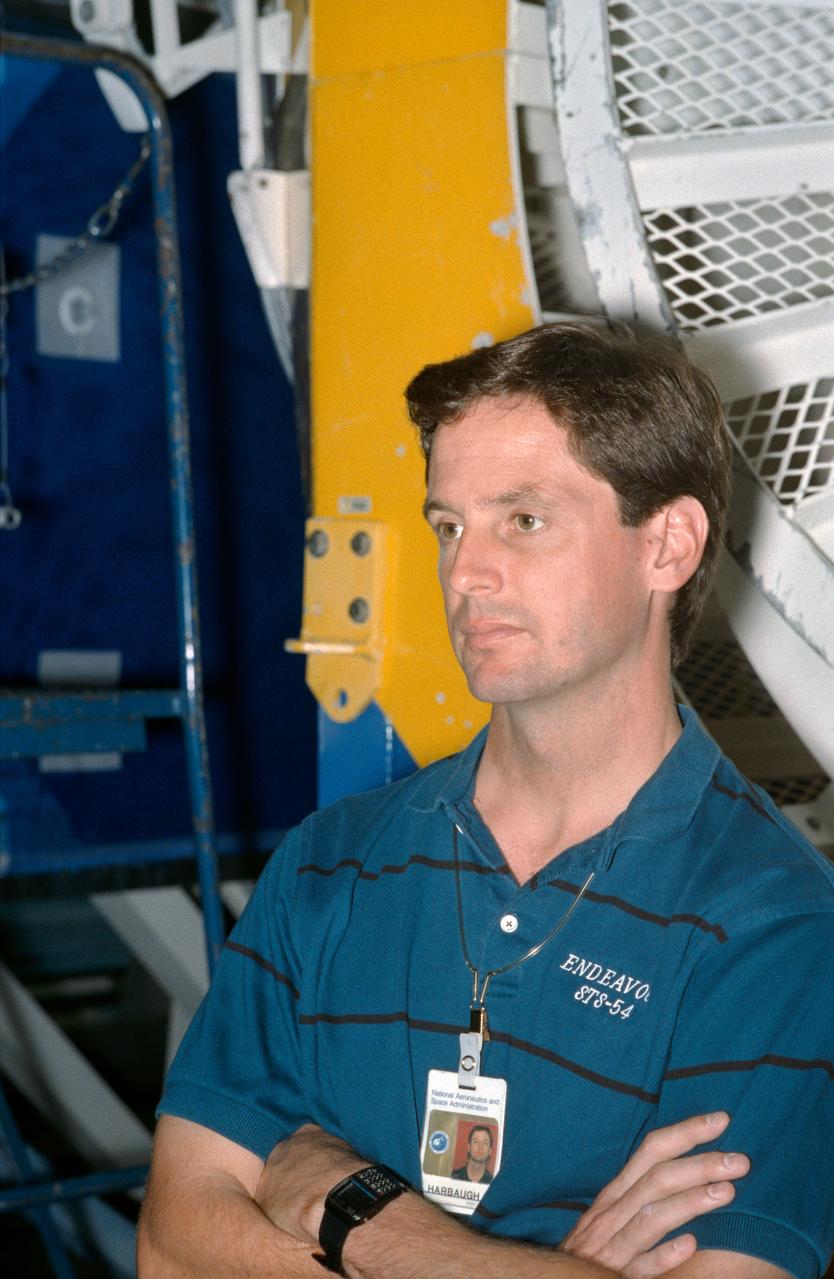
S92-40569 (Aug 1992) --- Gregory J. Harbaugh, one of five astronaut crewmembers assigned to fly aboard the Space Shuttle Endeavour for the STS-54 mission, pauses for a break during training and preparations for the six-day mission. Harbaugh will be joined by John H. Casper, mission Donald R. McMonagle, pilot; along with Mario Runco Jr. and Susan J. Helms, mission specialists. Harbaugh is in the weightless environment training facility (WET-F) at the Johnson Space Center (JSC).
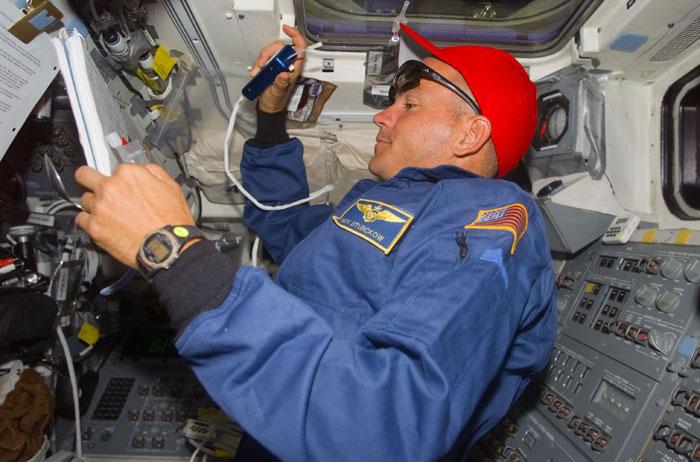
STS105-E-5290 (16 August 2001) --- Astronaut Frederick W. (Rick) Sturckow, STS-105 pilot, reviews a procedures checklist on the aft flight deck of the Space Shuttle Discovery which is currently docked to the International Space Station (ISS). This image was taken with a digital still camera.

jsc2018e043415 (May 10, 2018) --- At the Gagarin Cosmonaut Training Center in Star City, Russia, Expedition 56 prime crew member Serena Aunon-Chancellor of NASA reacts to space officials’ instructions during the first of two days of final Soyuz qualification exams May 10. Aunon-Chancellor, Sergey Prokopyev of Roscosmos and Alexander Gerst of the European Space Agency will launch June 6 from the Baikonur Cosmodrome in Kazakhstan on the Soyuz MS-09 spacecraft for a six-month mission on the International Space Station...NASA/Elizabeth Weissinger.
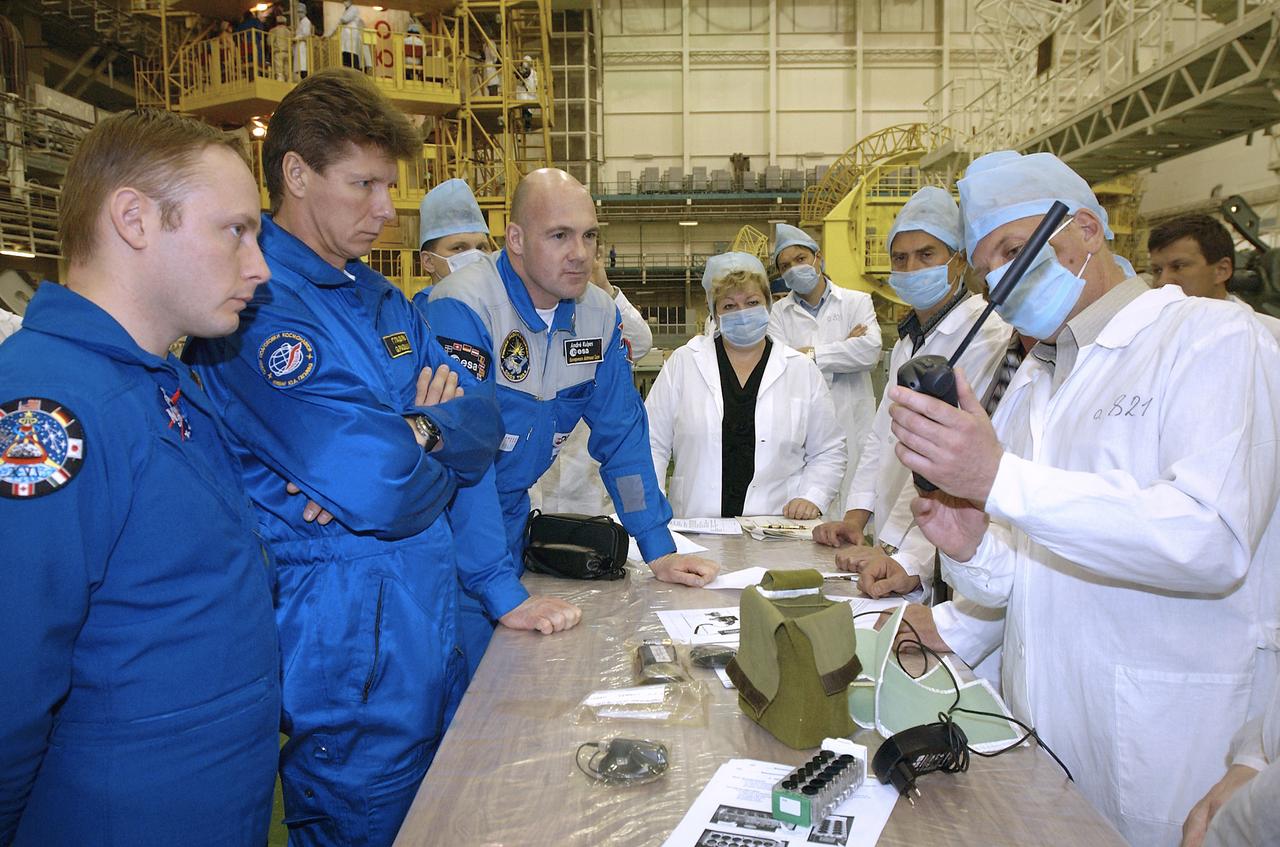
Expedition 9 Science Officer and Flight Engineer Mike Fincke, left, Expedition 9 Commander Gennady Padalka, second from left and Flight Engineer and European Space Agency astronaut Andre Kuipers of the Netherlands listen to instructions on satellite phone and GPS use at building 254 at Baikonur Cosmodrome Wednesday, April 14, 2004, in Baikonur, Kazakhstan. Photo Credit: (NASA/Bill Ingalls)
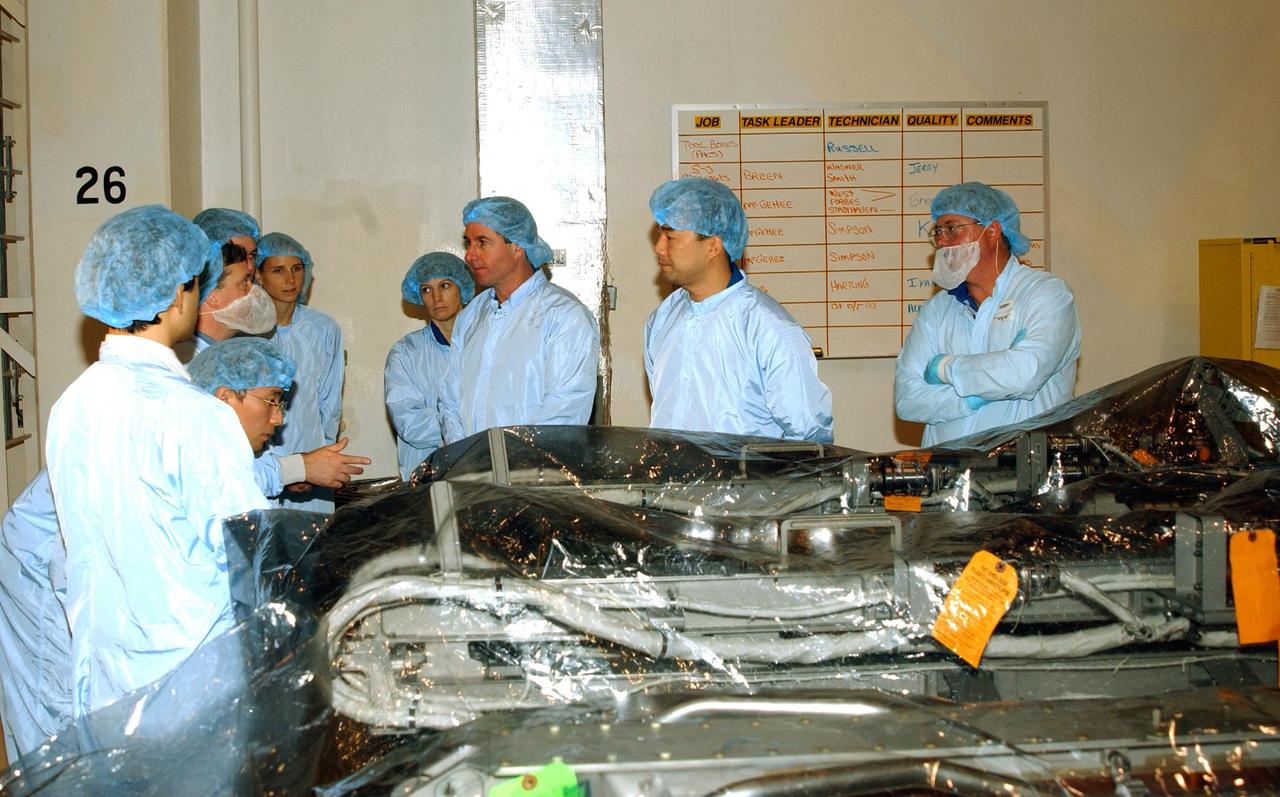
KENNEDY SPACE CENTER, FLA. -- During training at KSC, STS-114 crew members get instructions from a KSC worker. In the center are Commander Eileen Collins, and Mission Specialists Stephen Robinson and Soichi Noguchi, who is with the National Space and Development Agency of Japan. STS-114 is a utilization and logistics flight that will carry Multi-Purpose Logistics Module Raffaello and the External Stowage Platform (ESP-2), plus the Expedition 7 crew to the International Space Station. Launch of STS-114 is currently scheduled for January 2003
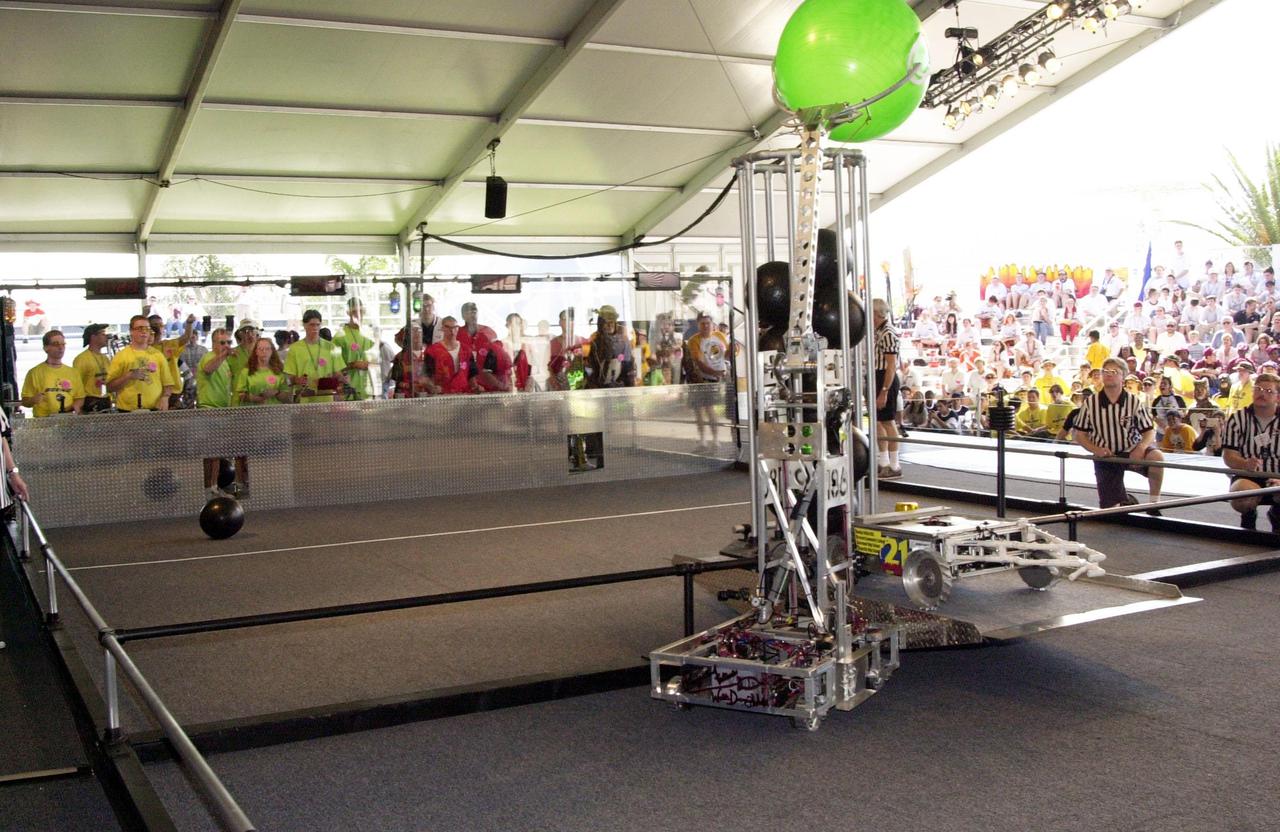
Student teams and spectators look over the playing field and listen to instructions about the competition at the NASA_KSC FIRST Southeastern Regional event held March 1-3, 2001. FIRST (For Inspiration and Recognition of Science and Technology) events are held nationwide, pitting robots against each other and the clock on a playing field. Many teams are sponsored by corporations and academic institutions. There are 27 teams throughout the State of Florida who are competing. KSC, which sponsors nine teams, has held the regional event for two years
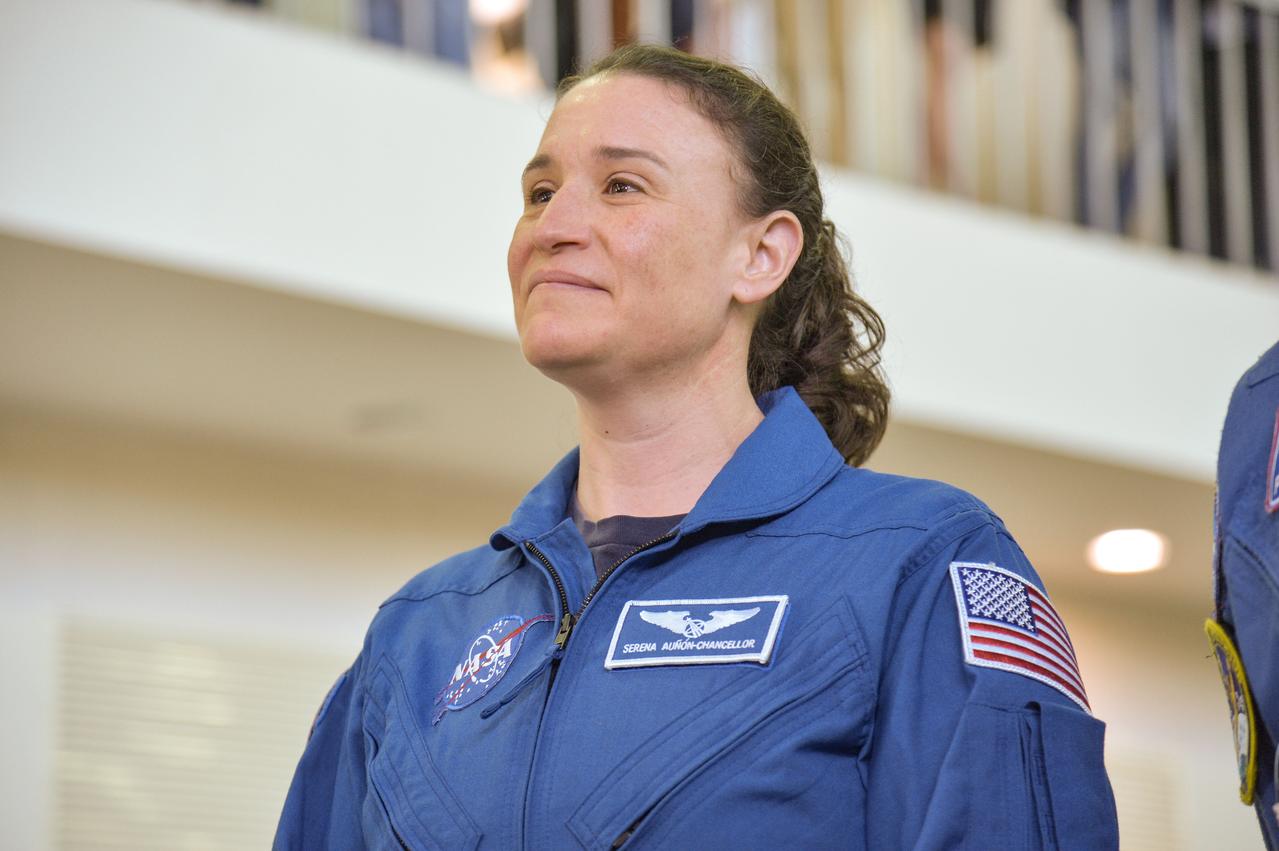
jsc2018e043414 (May 10, 2018) --- At the Gagarin Cosmonaut Training Center in Star City, Russia, Expedition 56 prime crew member Serena Aunon-Chancellor of NASA listens to space officials’ instructions during the first of two days of final Soyuz qualification exams May 10. Aunon-Chancellor, Sergey Prokopyev of Roscosmos and Alexander Gerst of the European Space Agency will launch June 6 from the Baikonur Cosmodrome in Kazakhstan on the Soyuz MS-09 spacecraft for a six-month mission on the International Space Station...NASA/Elizabeth Weissinger.
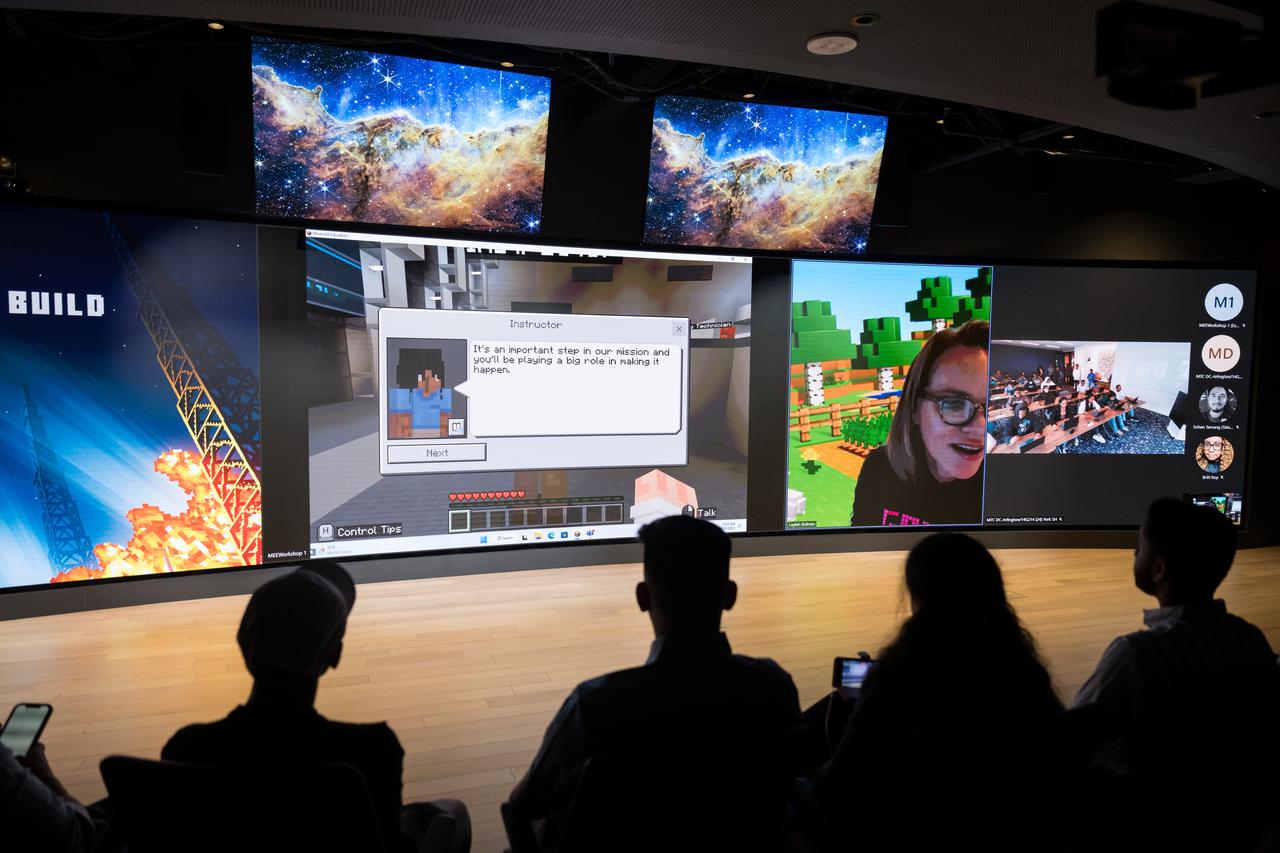
Microsoft Senior Program Manager and Executive Game Producer for Minecraft Education, Laylah Busman, provides instruction to DC area students during Space Education Day, Tuesday, June 20, 2023, at the Microsoft Technology Center in Arlington, Va. Microsoft hosted the event to showcase the collaboration, early successes, and future plans for high quality student engagement through activities that combined space content and technologies like artificial intelligence and cloud computing. Photo Credit: (NASA/Aubrey Gemignani)
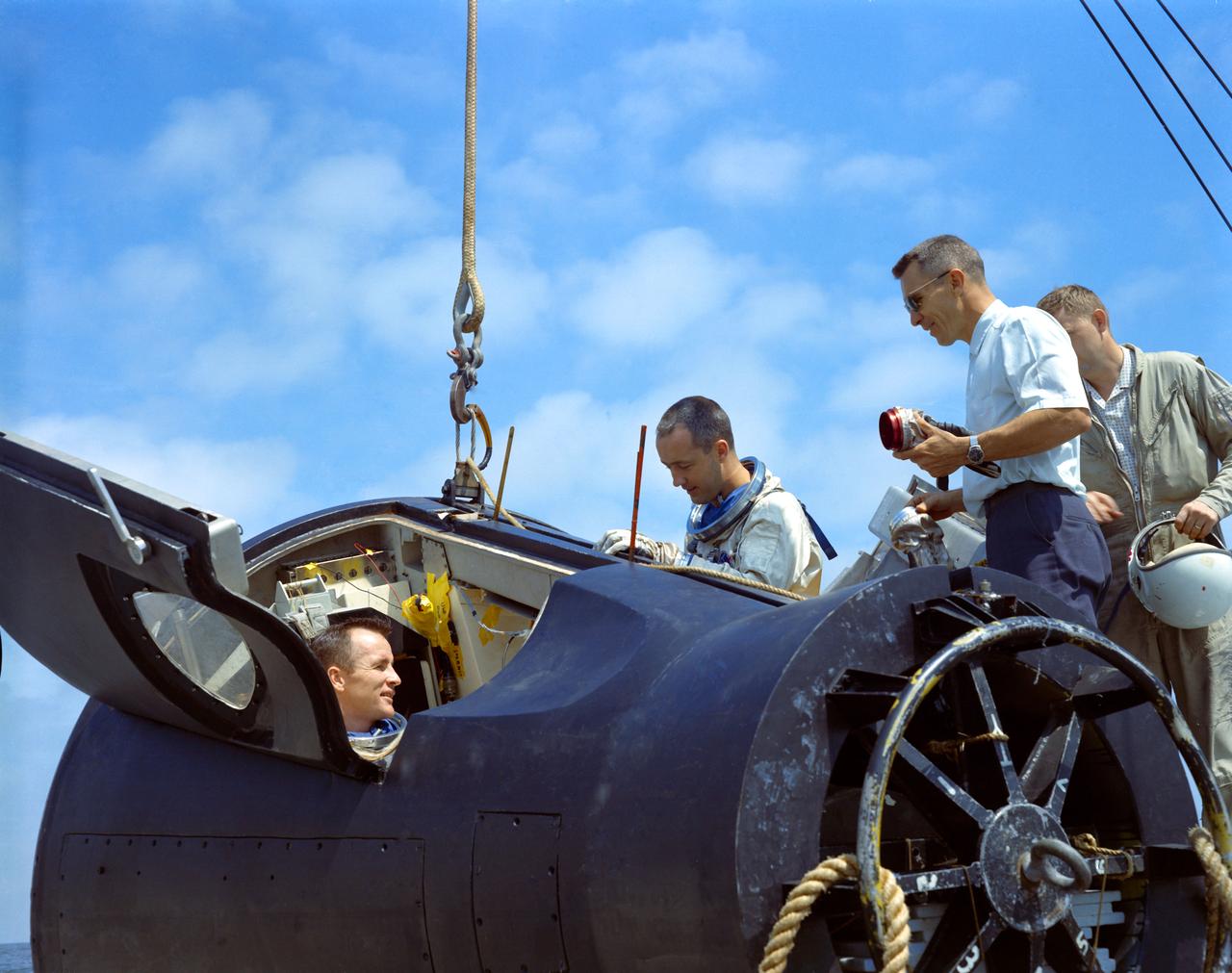
S65-22639 (14 April 1965) --- The Gemini-Titan 4 prime crew, astronauts Edward H. White II (left), pilot; and James A. McDivitt (getting in the spacecraft), command pilot, received instructions from Gordon Harvey, Flight Crew Support Division; and Alan M. Rochford, suit technician, Crew Systems Division, before closing of hatches prior to undergoing water egress training in the Gulf of Mexico.
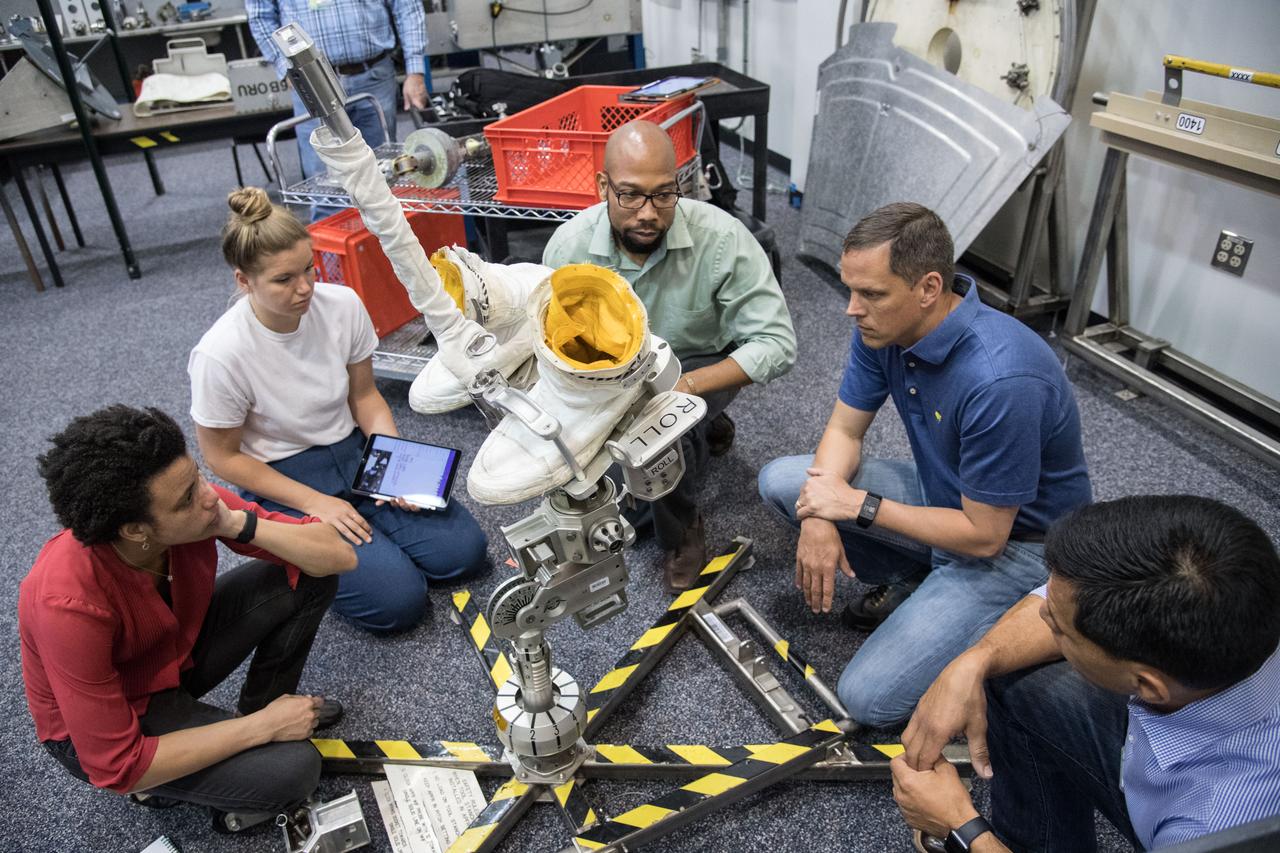
jsc2018e049894 (05-18-18) ---(From left) 2017 NASA astronaut candidate Jessica Watkins, Canadian Space Agency astronaut candidate Jennifer Sidey-Gibbons, and NASA astronaut candidates Bob Hines and Frank Rubio are instructed on International Space Station tools associated with their spacesuits at NASA Johnson Space Center’s Neutral Buoyancy Laboratory in Houston. Photo Credit: (NASA/James Blair)
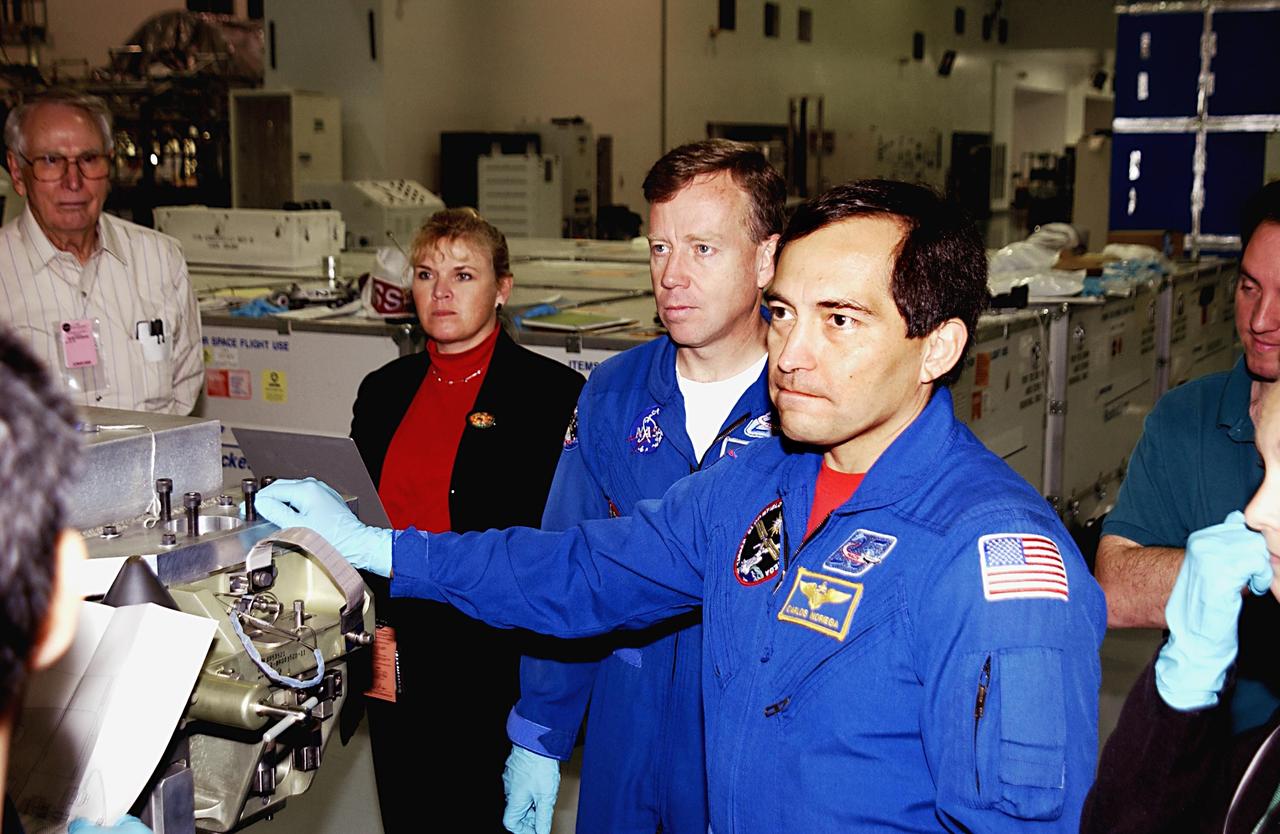
KENNEDY SPACE CENTER, FLA. - During a Crew Equipment Interface Test activity, STS-119 Commander Steven Lindsey (center) and Mission Specialist Carlos Noriega (right) listen to instructions on the equipment that will be part of the mission. Scheduled to launch in January 2004, the mission will deliver the fourth and final set of U.S. solar arrays along with the fourth starboard truss segment, the S6 truss.

Expedition 9 Science Officer and Flight Engineer Mike Fincke, left, Expedition 9 Commander Gennady Padalka, center and the backup crew, left of center, receive some final instructions from engineers, technicians and Valery Korzun, Chief of Cosmonauts, Gagarin Cosmonaut Training Center, right, in building 254 at the Baikonur Cosmodrome, Wednesday, April 14, 2004, in Baikonur, Kazakhstan. Photo Credit: (NASA/Bill Ingalls)
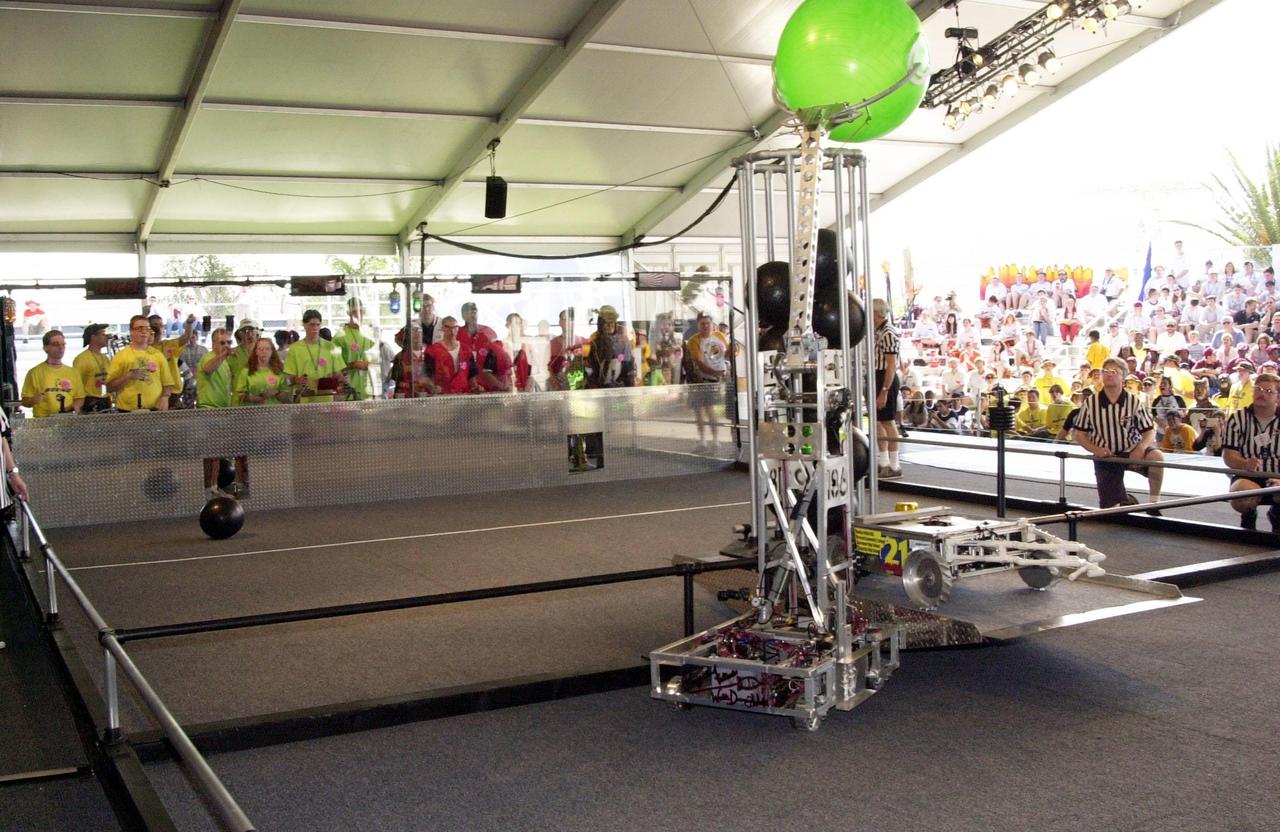
Student teams and spectators look over the playing field and listen to instructions about the competition at the NASA/KSC FIRST Southeastern Regional event held March 1-3, 2001. FIRST (For Inspiration and Recognition of Science and Technology) events are held nationwide, pitting robots against each other and the clock on a playing field. Many teams are sponsored by corporations and academic institutions. There are 27 teams throughout the State of Florida who are competing. KSC, which sponsors nine teams, has held the regional event for two years
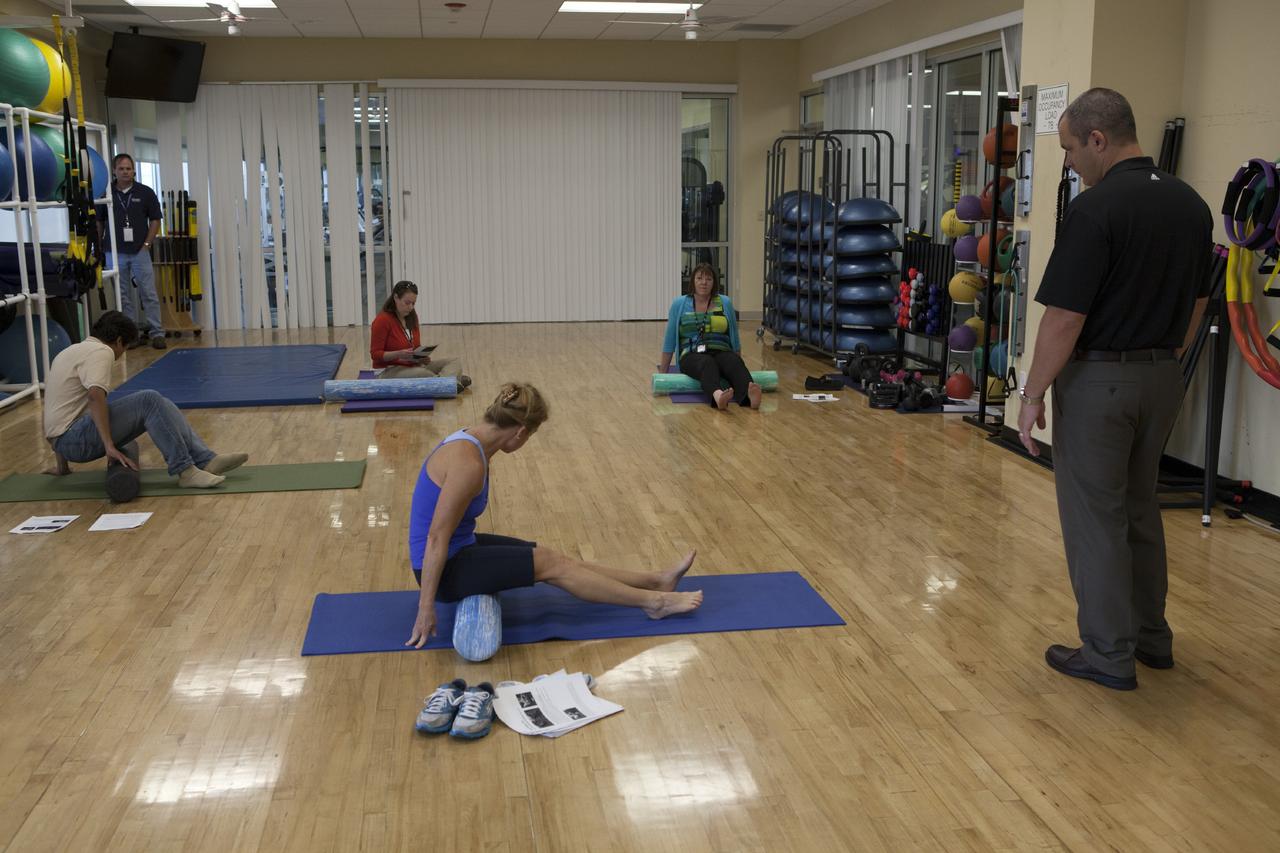
CAPE CANAVERAL, Fla. – Erik Nason, an athletic trainer with InoMedic Health/RehabWorks, instructs Kennedy Space Center workers during a foam rolling class. The class was part of the National Employee Health and Fitness Day event. Yoga, cardio dance, and boot camp classes were also offered throughout the day at the Operations and Checkout Building's Fitness Center. Photo credit: NASA/ Dimitri Gerondidakis
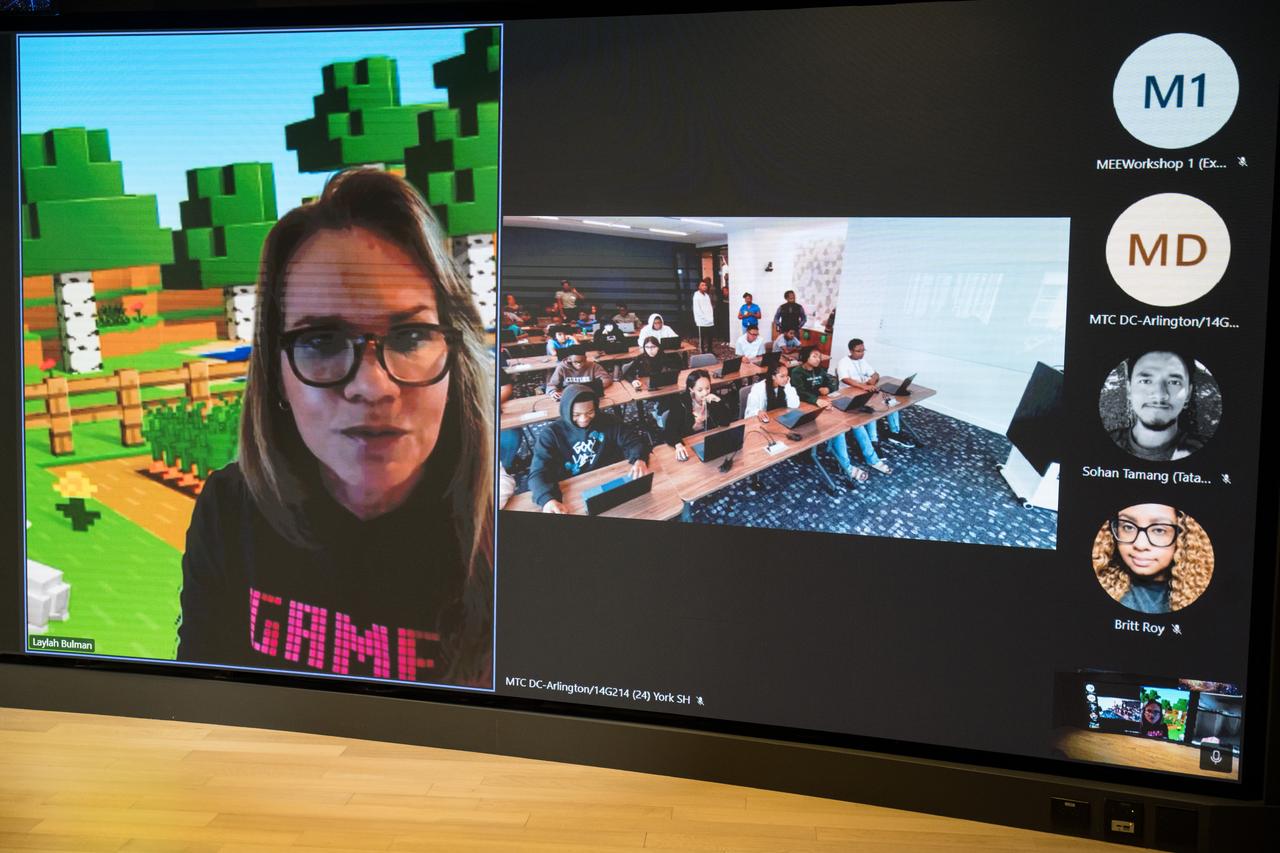
Microsoft Senior Program Manager and Executive Game Producer for Minecraft Education, Laylah Bulman, provides instruction to DC area students during Space Education Day, Tuesday, June 20, 2023, at the Microsoft Technology Center in Arlington, Va. Microsoft hosted the event to showcase the collaboration, early successes, and future plans for high quality student engagement through activities that combined space content and technologies like artificial intelligence and cloud computing. Photo Credit: (NASA/Aubrey Gemignani)
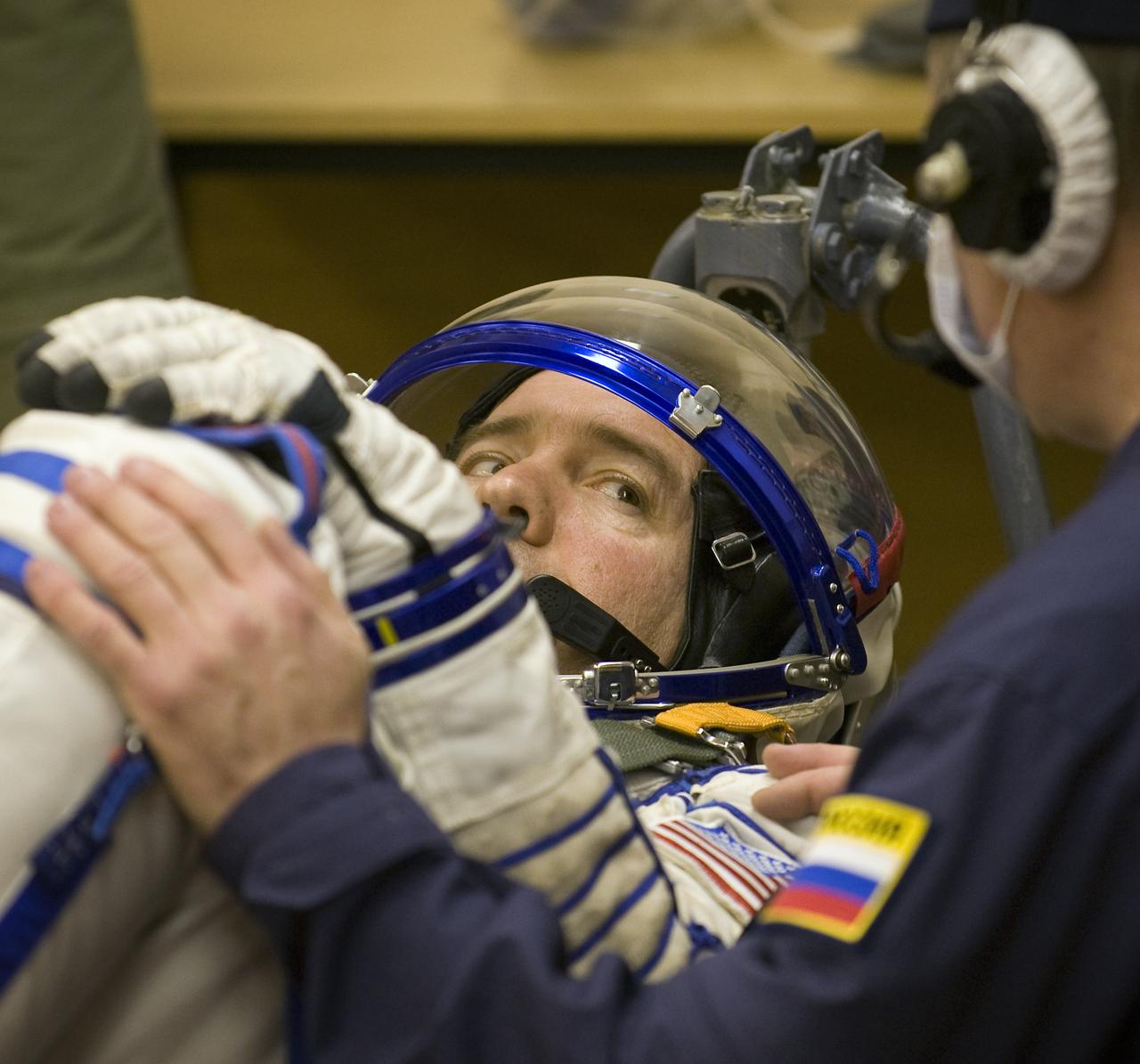
Expedition 19 Flight Engineer Michael R. Barratt listens to instructions prior to having his Russian Sokol suit pressure checked in preparation for his Soyuz launch to the International Space Station with Commander Gennady I. Padalka and Spaceflight Participant Charles Simonyi on Thursday, March 26, 2009 in Baikonur, Kazakhstan. (Photo Credit: NASA/Bill Ingalls)
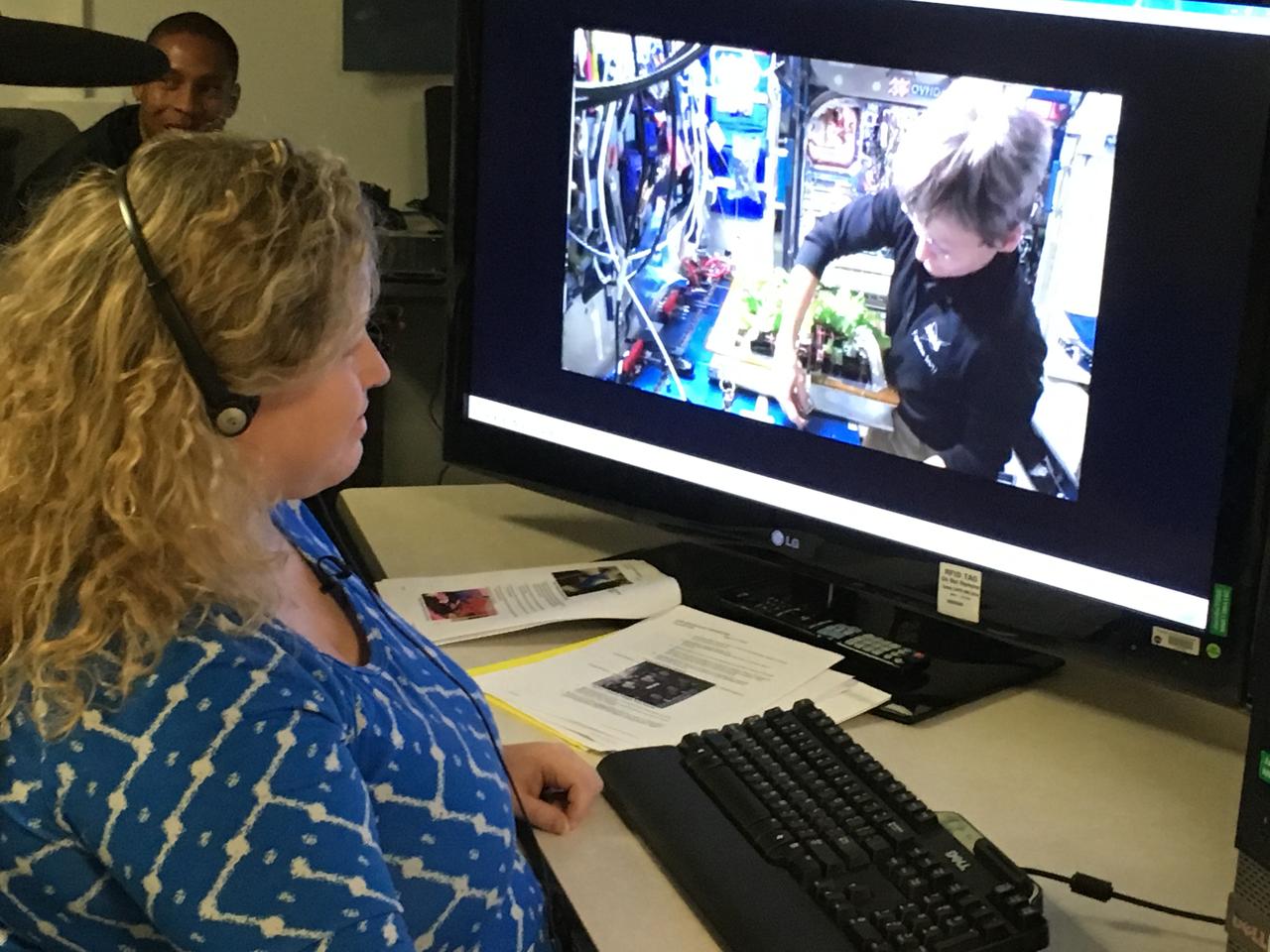
At Kennedy Space Center in Florida, Veggie Project Manager Nicole Dufour instructs astronaut Peggy Whitson during the harvest of Chinese cabbage aboard the International Space Station. While the space station crew will get to eat some of the Chinese cabbage, the rest is being saved for scientific study back at Kennedy Space Center. This is the fifth crop grown aboard the station, and the first Chinese cabbage.
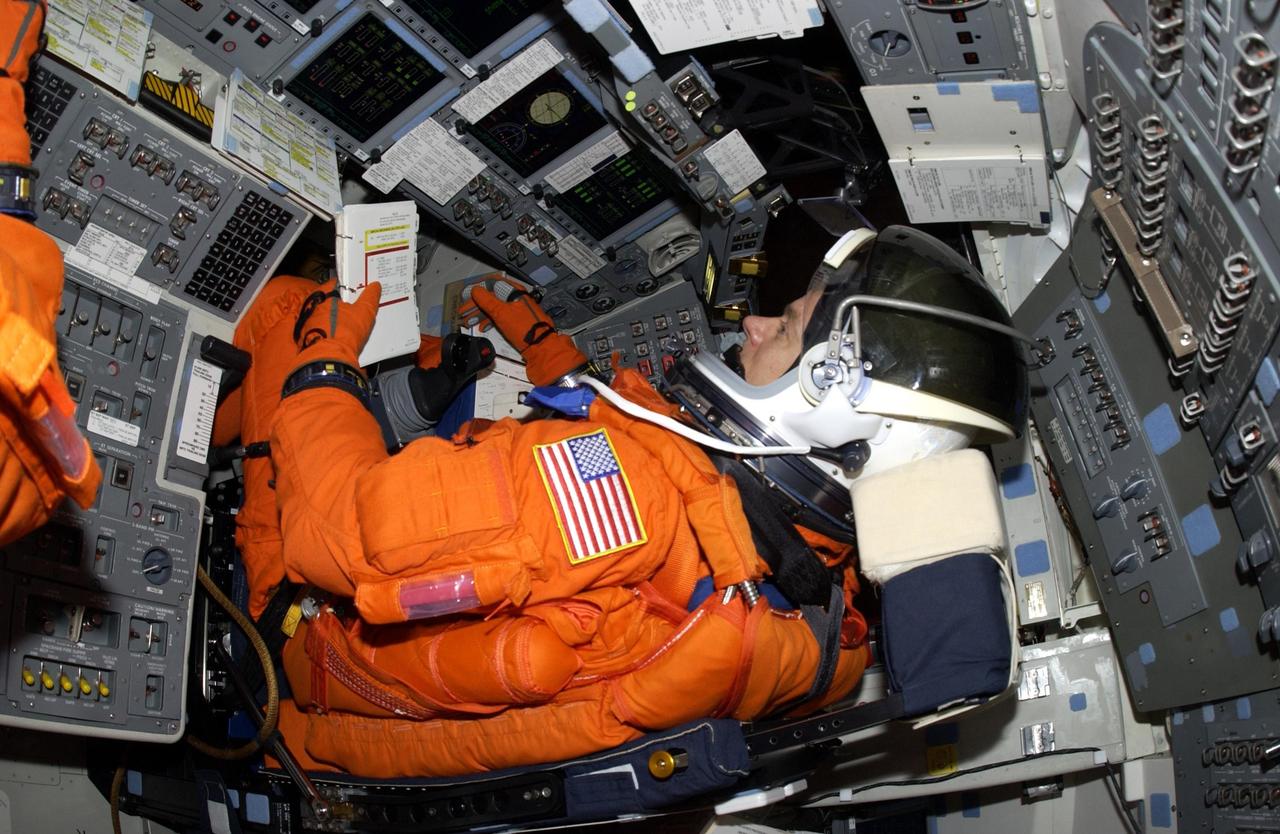
KENNEDY SPACE CENTER, FLA. - STS-107 Pilot William "Willie" McCool checks instructions in the cockpit of Space Shuttle Columbia during a simulated launch countdown, part of Terminal Countdown Demonstration Test activities. STS-107 is a mission devoted to research and will include more than 80 experiments that will study Earth and space science, advanced technology development, and astronaut health and safety. Launch is planned for Jan. 16, 2003, between 10 a.m. and 2 p.m. EST aboard Space Shuttle Columbia. .
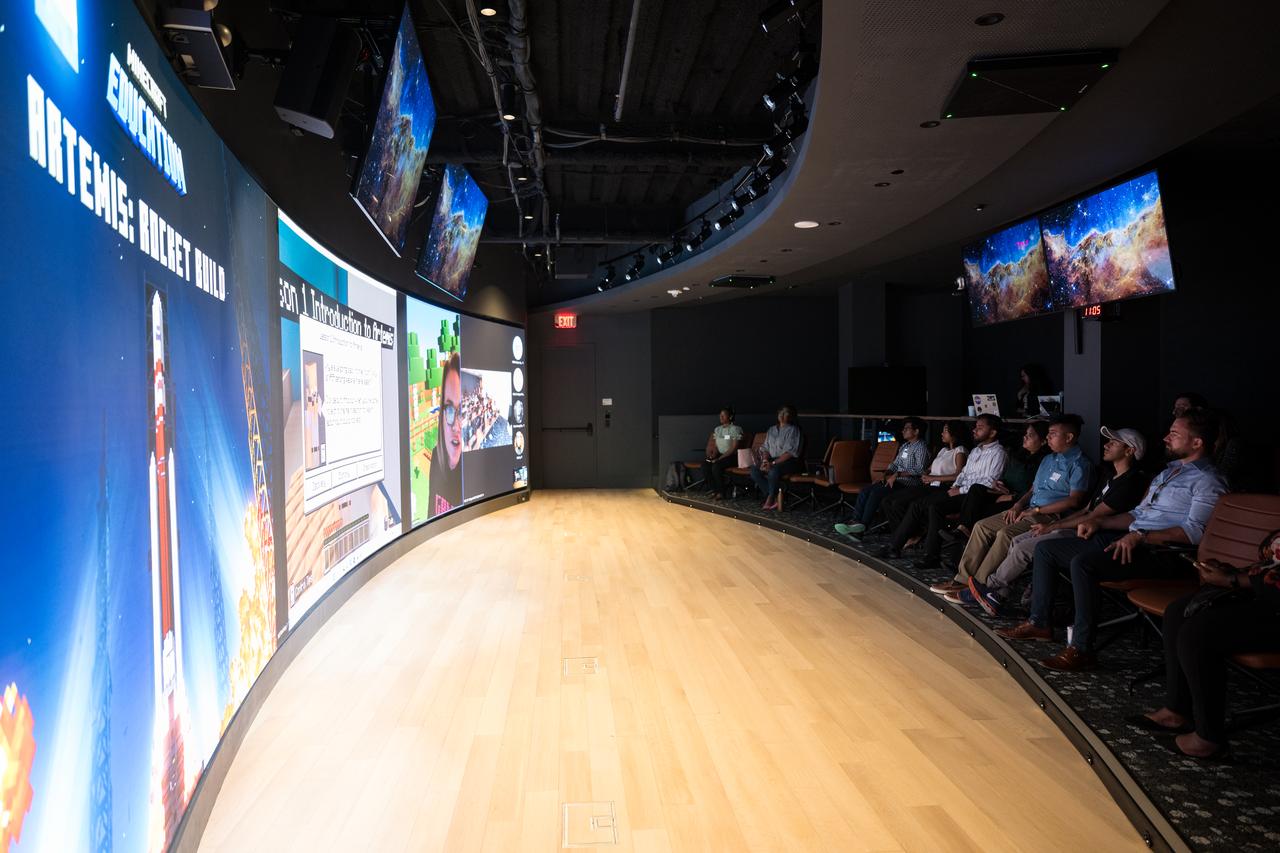
Microsoft Senior Program Manager and Executive Game Producer for Minecraft Education, Laylah Busman, provides instruction to DC area students during Space Education Day, Tuesday, June 20, 2023, at the Microsoft Technology Center in Arlington, Va. Microsoft hosted the event to showcase the collaboration, early successes, and future plans for high quality student engagement through activities that combined space content and technologies like artificial intelligence and cloud computing. Photo Credit: (NASA/Aubrey Gemignani)
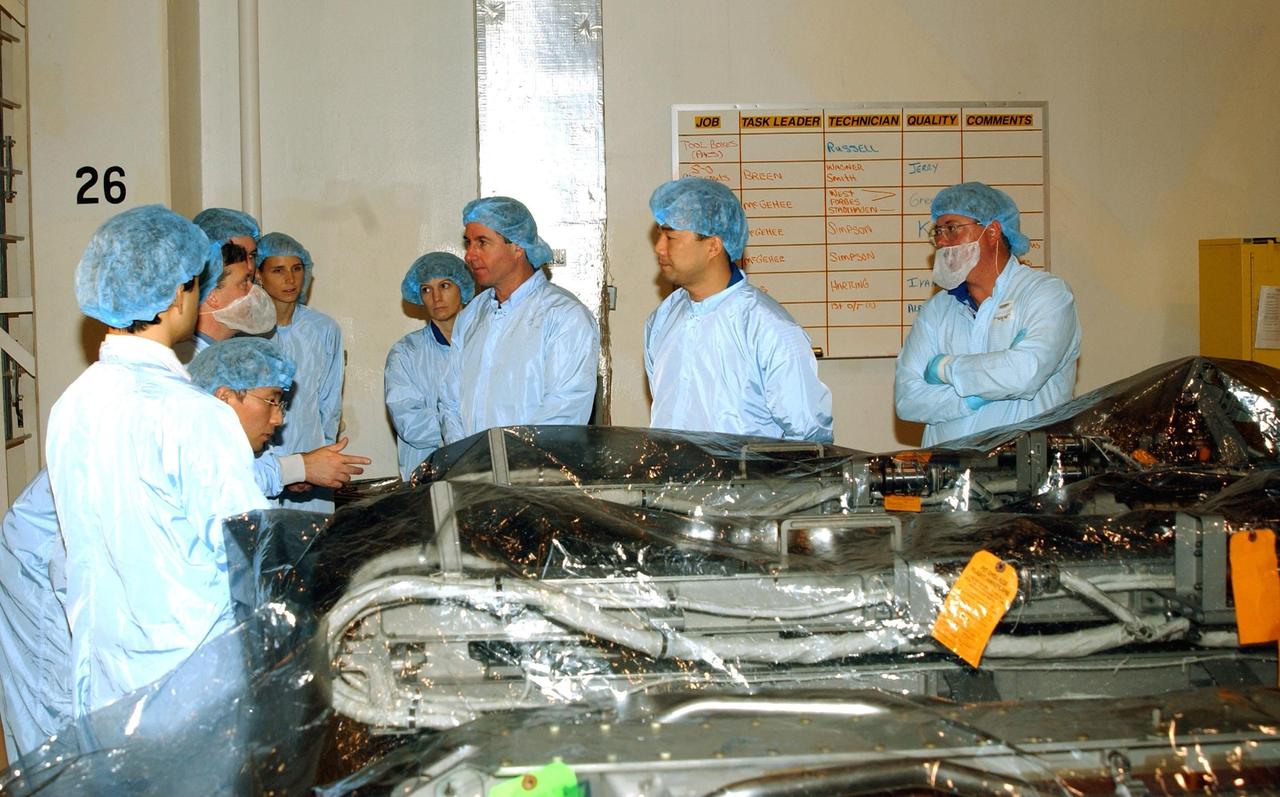
KENNEDY SPACE CENTER, FLA. -- During training at KSC, STS-114 crew members get instructions from a KSC worker. In the center are Commander Eileen Collins, and Mission Specialists Stephen Robinson and Soichi Noguchi, who is with the National Space and Development Agency of Japan. STS-114 is a utilization and logistics flight that will carry Multi-Purpose Logistics Module Raffaello and the External Stowage Platform (ESP-2), plus the Expedition 7 crew to the International Space Station. Launch of STS-114 is currently scheduled for January 2003
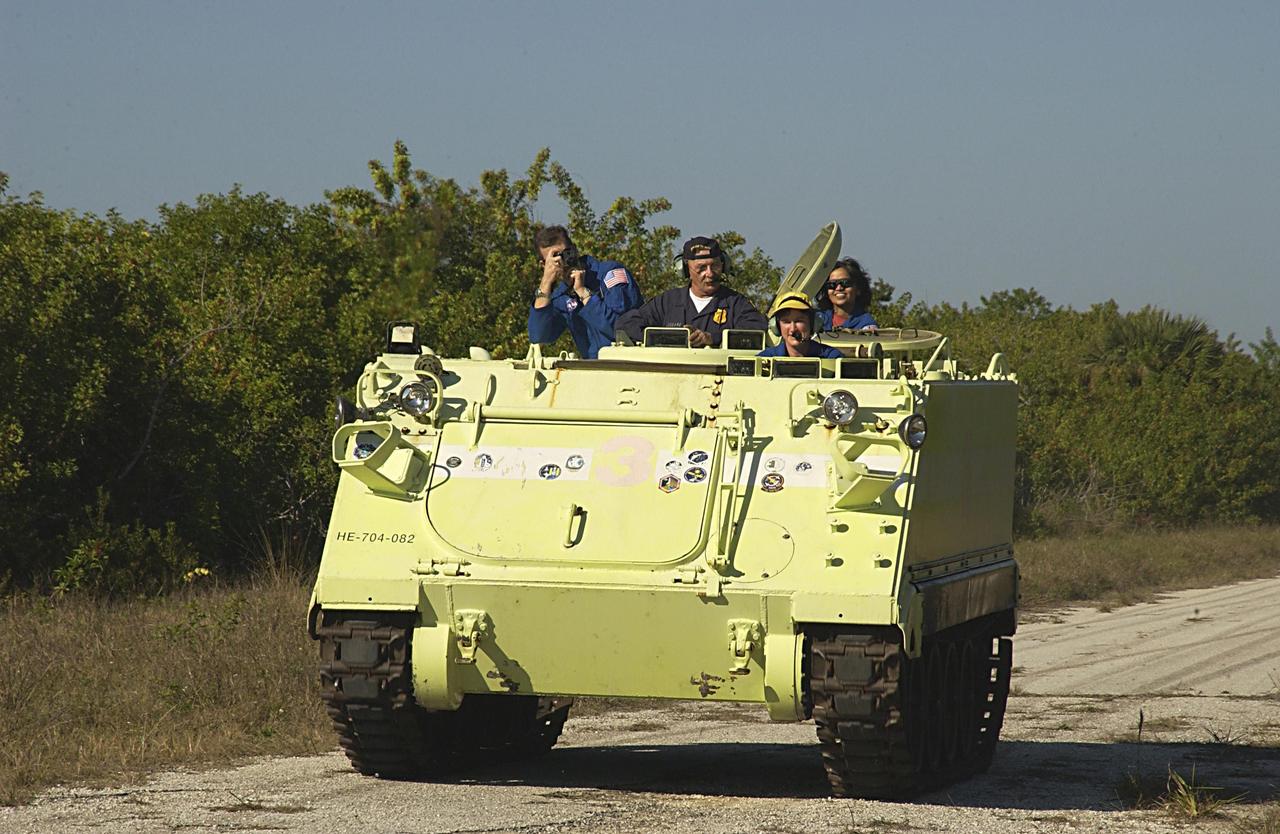
KENNEDY SPACE CENTER, FLA. -- STS-107 Mission Specialist Laurel Clark (in yellow cap) is instructed on the operation of an M113 armored personnel carrier during Terminal Countdown Demonstration Test activities, a standard part of launch preparations. STS-107 is a mission devoted to research and will include more than 80 experiments that will study Earth and space science, advanced technology development, and astronaut health and safety. Launch is planned for Jan. 16, 2003, between 10 a.m. and 2 p.m. EST aboard Space Shuttle Columbia.
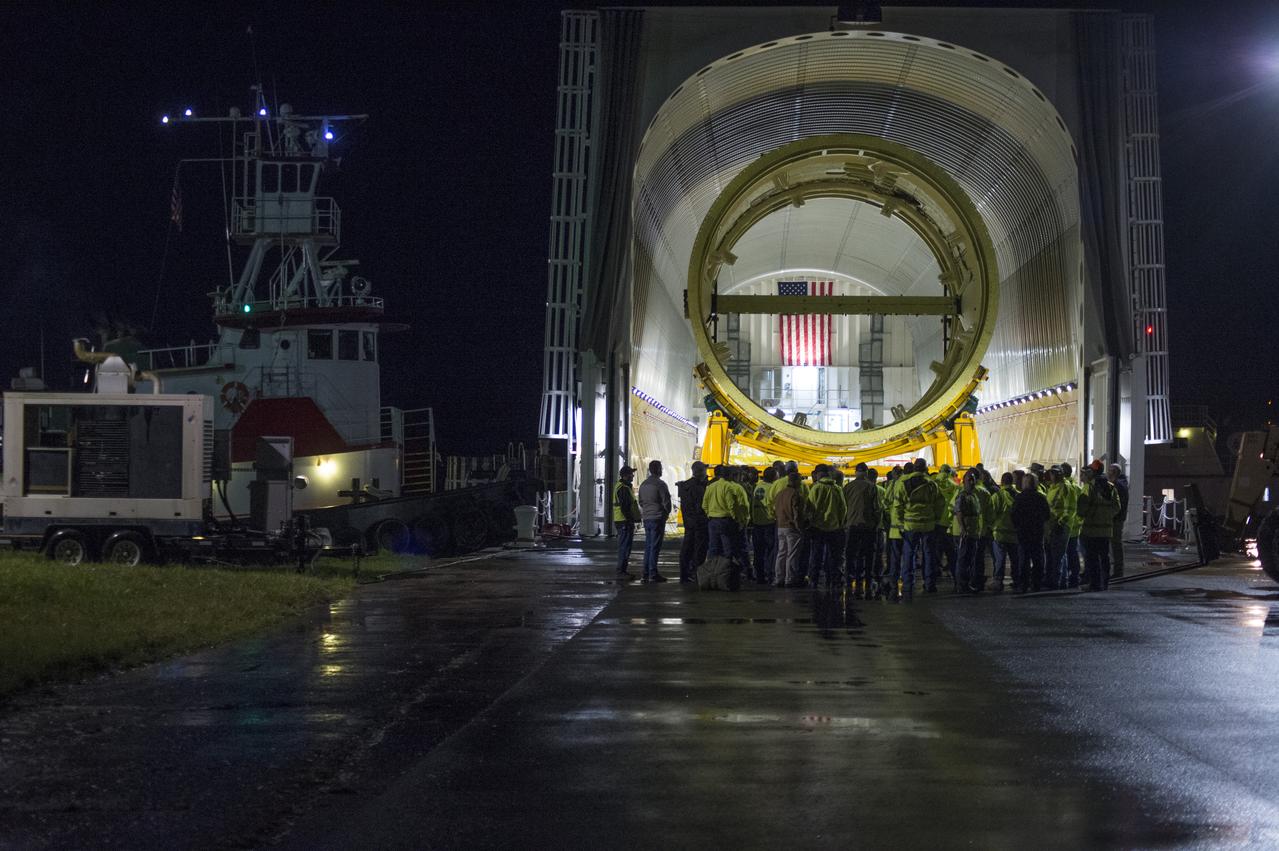
The SLS Stages Intertank Structural Test Assembly (STA) is rolling off the NASA Pegasus Barge at the MSFC Dock enroute to the MSFC 4619 Load Test Annex test facility for qualification testing. Members of MSFC Logistics Office and Move Team members gather for last minute instructions and safety briefing before off-loading STA hardware.
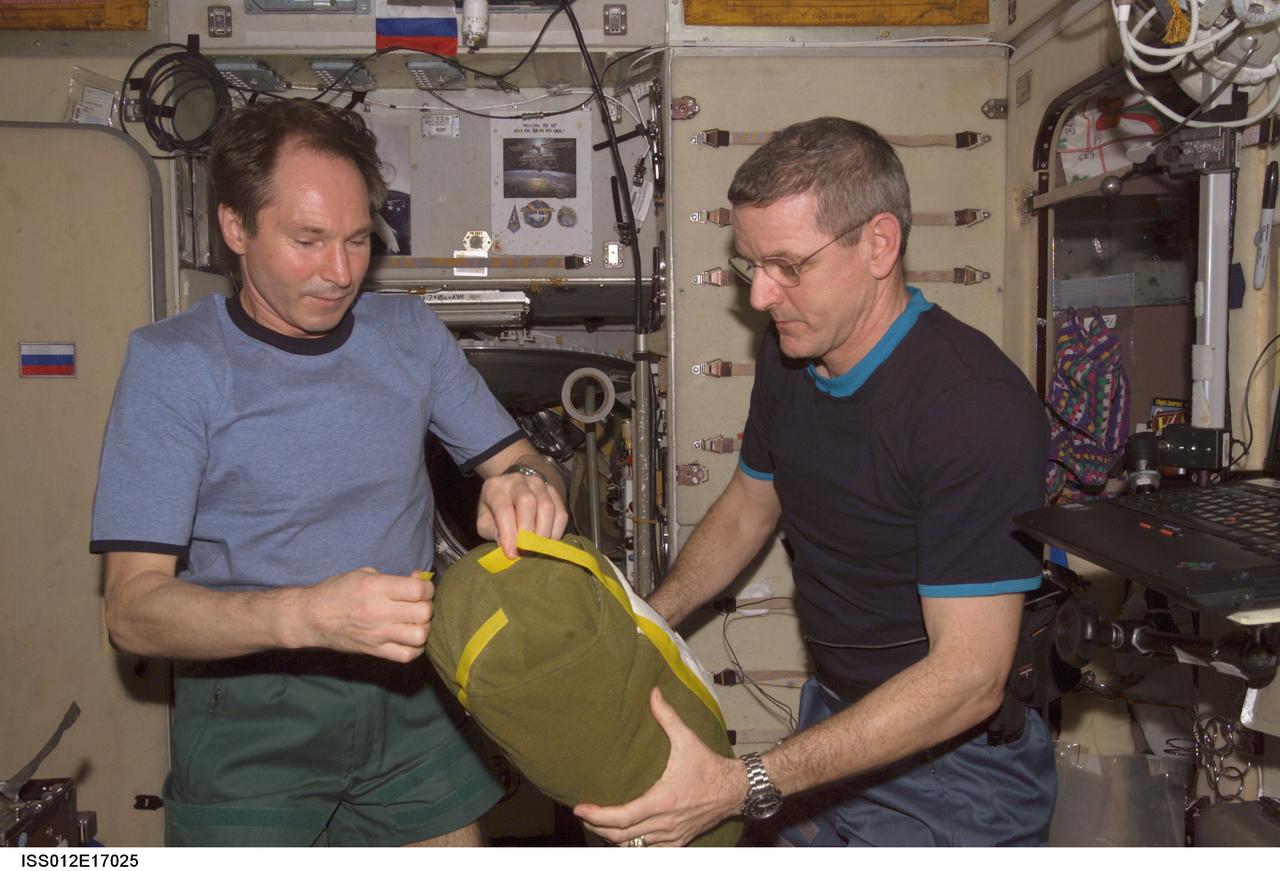
ISS012-E-17025 (23 Jan. 2006) --- Cosmonaut Valery I. Tokarev (left), Expedition 12 flight engineer representing Russia's Federal Space Agency, and astronaut William S. (Bill) McArthur, commander and NASA space station science officer, unpack the Radioskaf (SuitSat) package sent up on a Progress spacecraft. It contained instructions and a compact disk that included items such as artwork and photos from different schools.
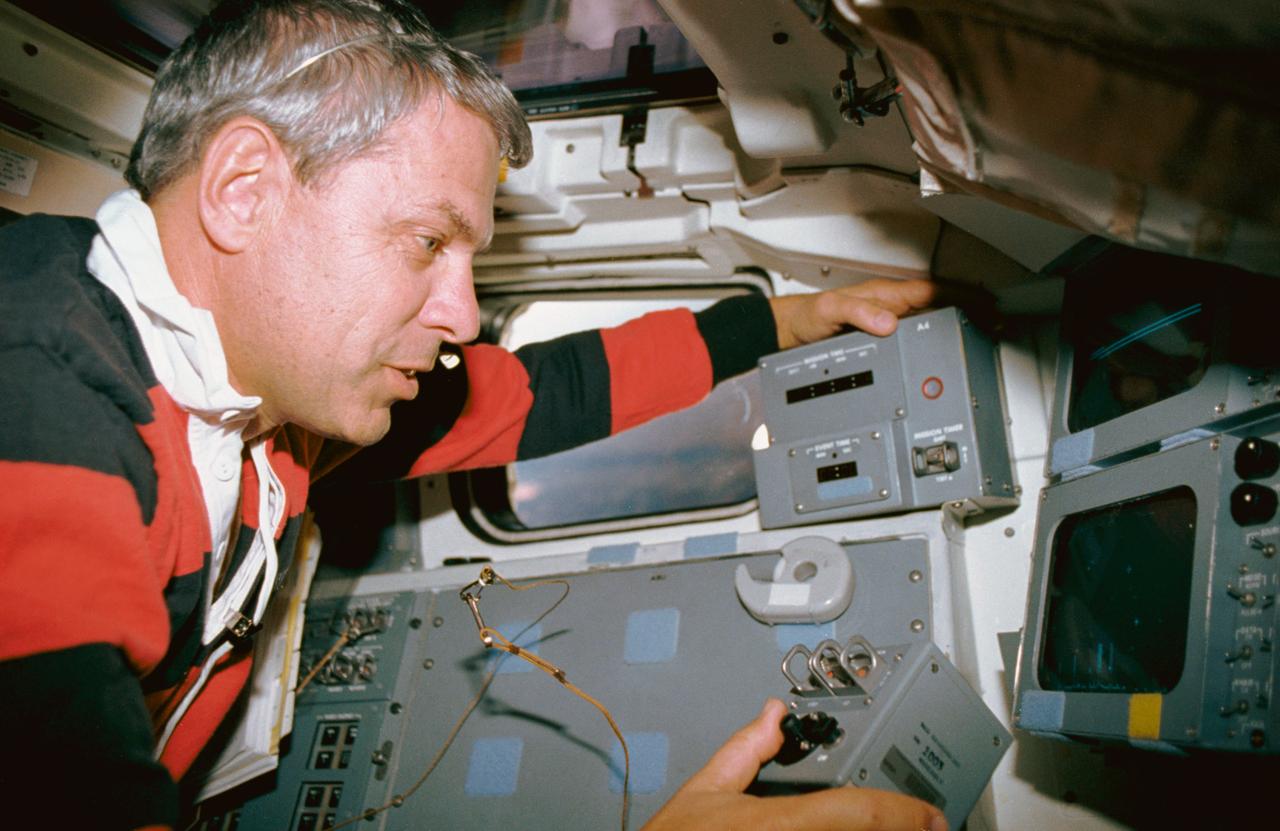
STS035-10-011 (2-10 Dec 1990) --- STS-35 Mission Specialist (MS) Robert A.R. Parker operates Astronomy Laboratory 1 (ASTRO-1) manual pointing controller (MPC) on the aft flight deck of Columbia, Orbiter Vehicle (OV) 102. Parker monitors a closed circuit television (CCTV) screen at the payload station as he uses the MPC to send data collection instructions to the ASTRO-1 instrument pointing system (IPS).

Engineers at NASA's Jet Propulsion Laboratory – from left, Brandon Creager, Juan Gloria, Joshua Nachtigal, and Sonny Gutierrez – are shown assembling the electronics palette for the Coronagraph Instrument on NASA's Roman Space Telescope in December 2022. One of two main sections of the instrument, this layer houses the instrument electronics that receive instructions from the Roman spacecraft and send back the Coronagraph Instrument's scientific data. The electronics also control the mechanical components on the optical bench and the instrument heaters. https://photojournal.jpl.nasa.gov/catalog/PIA25435
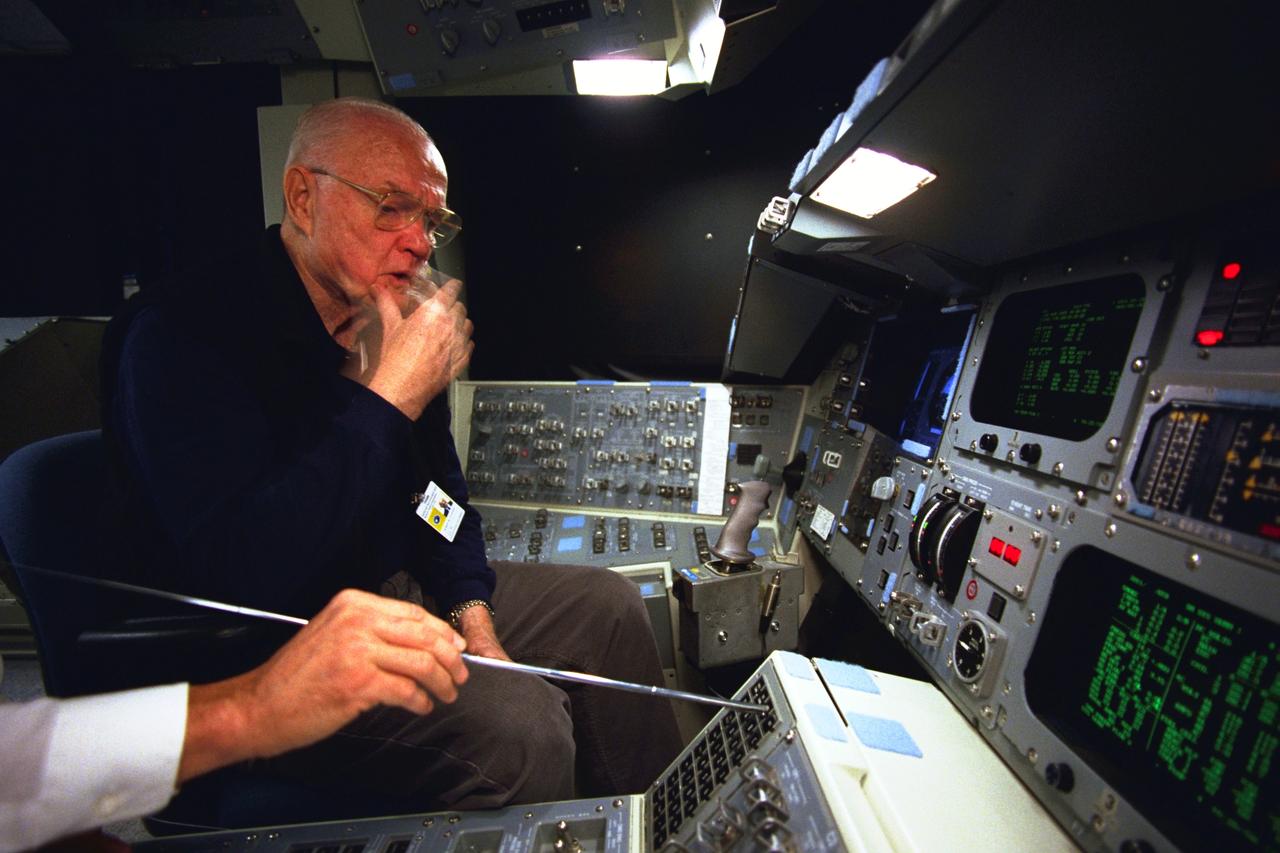
S98-08640 (6 April 1998) --- U.S. Sen. John H. Glenn Jr. (D.-Ohio) temporarily occupies the commander's station in a space shuttle instruction facility called the single systems trainer. The senator is training as a payload specialist for the STS-95 mission, scheduled for launch aboard the Space Shuttle Discovery later this year. The photo was taken by Joe Mcnally, National Geographic, for NASA.
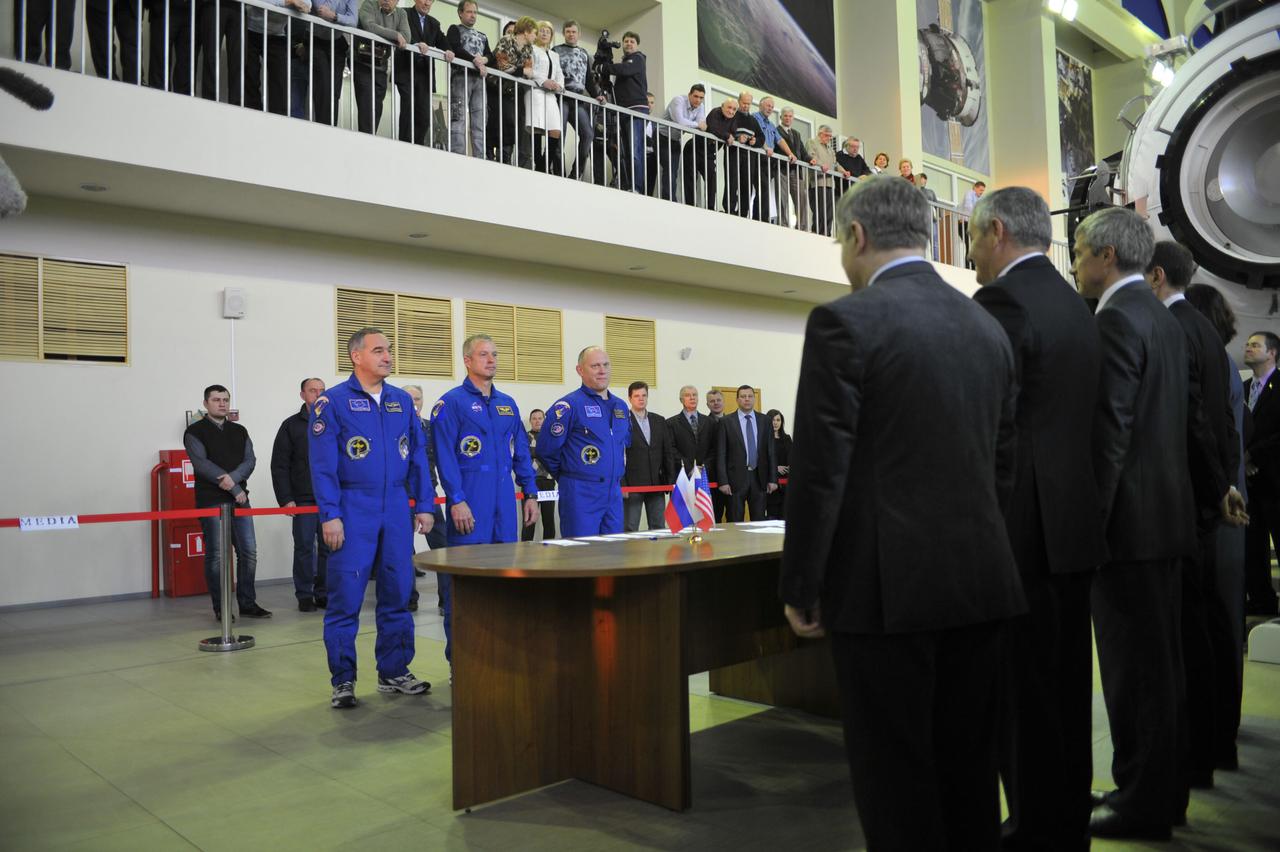
At the Gagarin Cosmonaut Training Center in Star City, Russia, Expedition 39/40 Soyuz Commander Alexander Skvortsov (left), Flight Engineer Steve Swanson of NASA (center) and Flight Engineer Oleg Artemyev of Roscosmos listen to instructions from Russian space officials at the start of qualification exams March 4. The trio is preparing for launch to the International Space Station from the Baikonur Cosmodrome in Kazakhstan on March 26, Kazakh time in their Soyuz TMA-12M spacecraft for a six-month mission. NASA/Stephanie Stoll
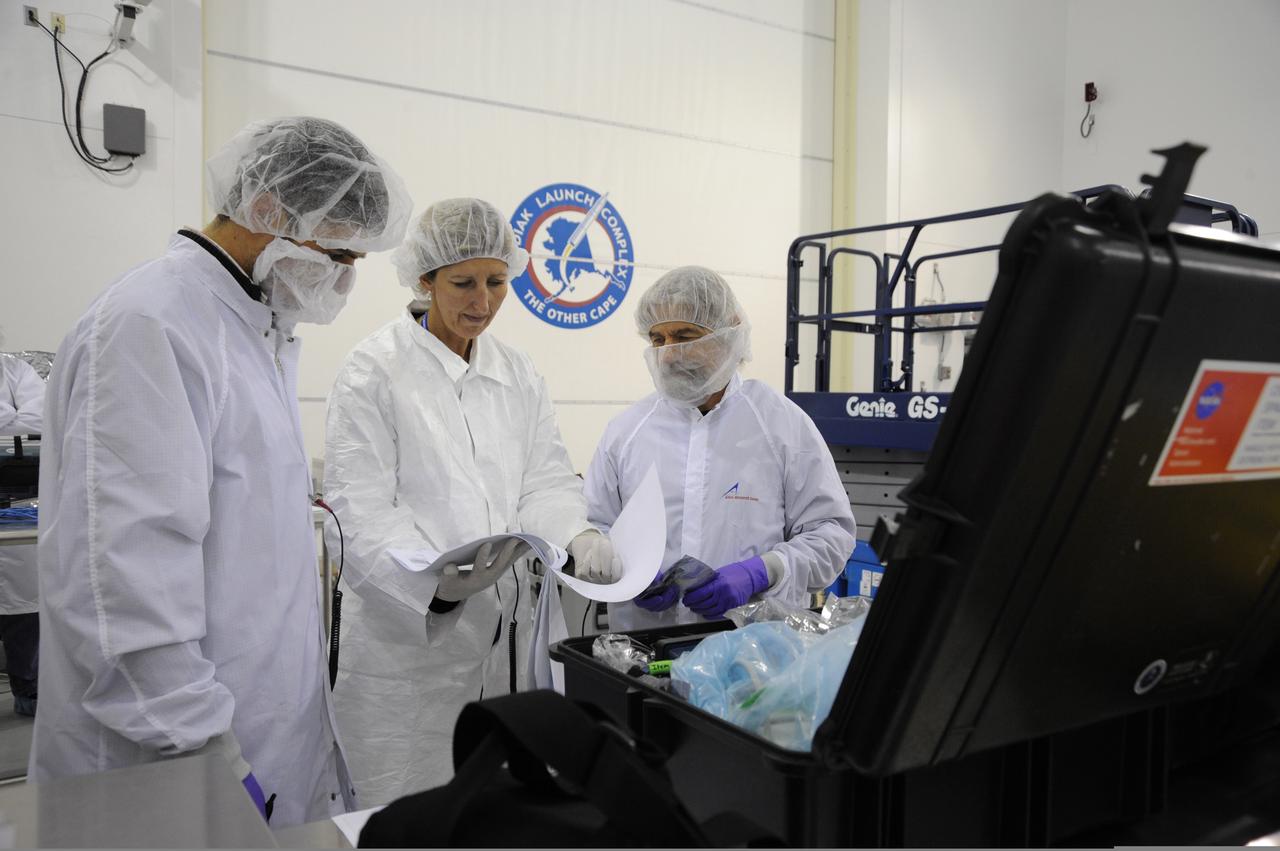
From left, Giovanni Minelli with the NASA's Ames Research Center; Center: Kitty Sedam with Aerospace Corp.; and Charlie Friedericks with Ames inspect the packing list and instructions for the Ames-managed O/OREOS and NanoSail-D from NASA's Marshall Space Flgith Center nano satellites at Kodiak Launch Complex, Alaska . Image credit: U.S. Air Force/Lou Hernandez
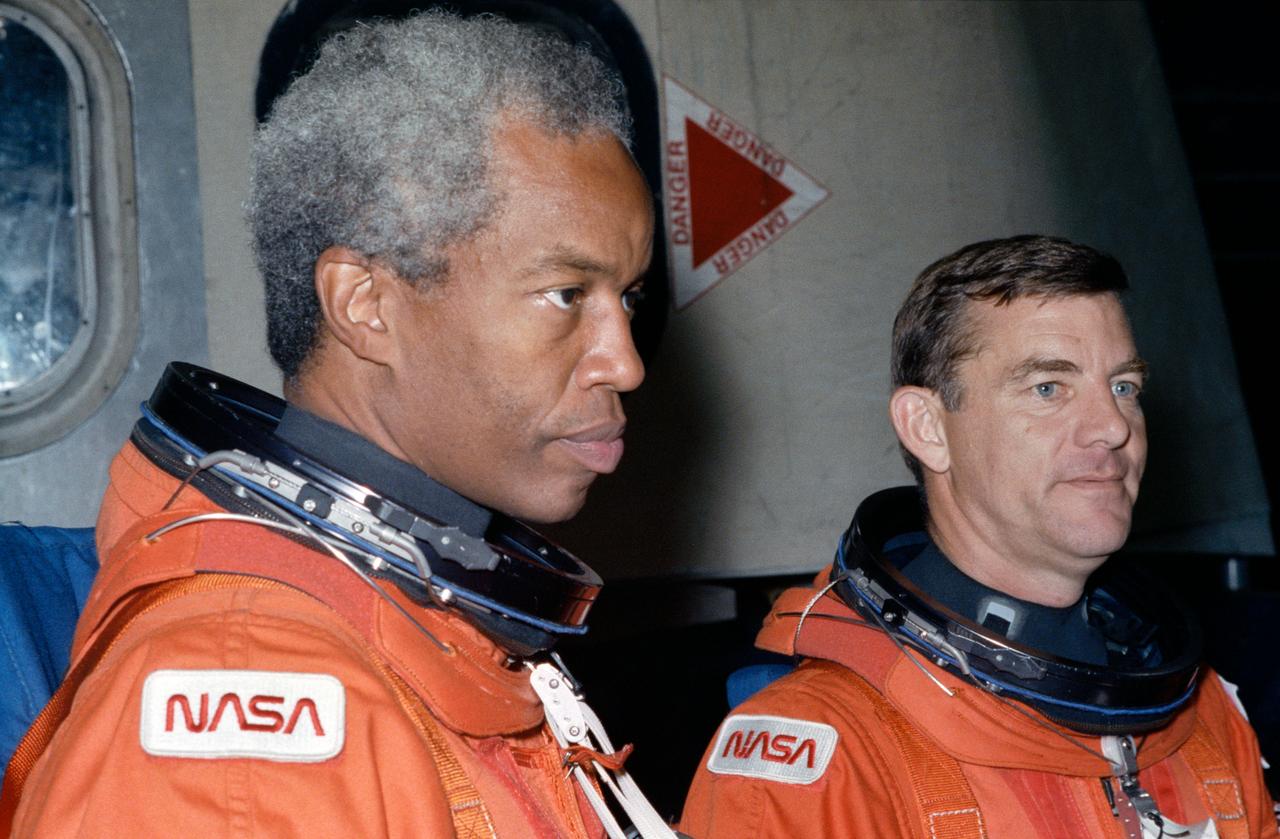
S92-49644 (1994) --- STS-53 Discovery, Orbiter Vehicle (OV) 103, Mission Specialist (MS) Guion S. Bluford (left) and MS James S. Voss, wearing launch and entry suits (LESs), listen to instructions prior to launch emergency egress bailout training. Bluford and Voss, along with the other STS-53 crewmembers, will practice bailout procedures in JSC's crew compartment trainer (CCT) located in the Mockup and Integration Laboratory (MAIL) Bldg 9NE
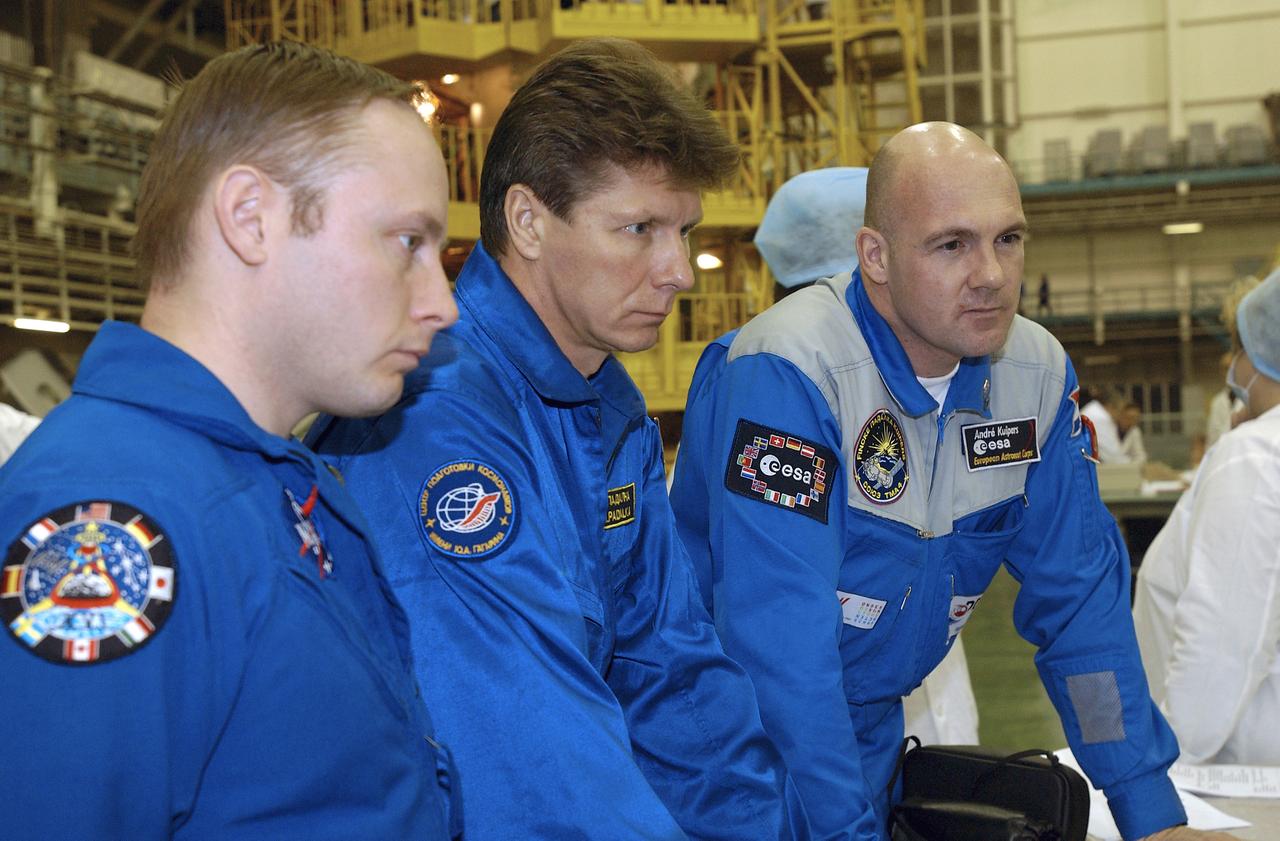
Expedition 9 Science Officer and Flight Engineer Mike Fincke, left, Expedition 9 Commander Gennady Padalka, center and European Space Agency astronaut Andre Kuipers of the Netherlands listen to instructions on satellite phone and GPS use in building 254 at the Baikonur Cosmodrome, Wednesday, April 14, 2004, in Baikonur, Kazakhstan. Photo Credit: (NASA/Bill Ingalls)
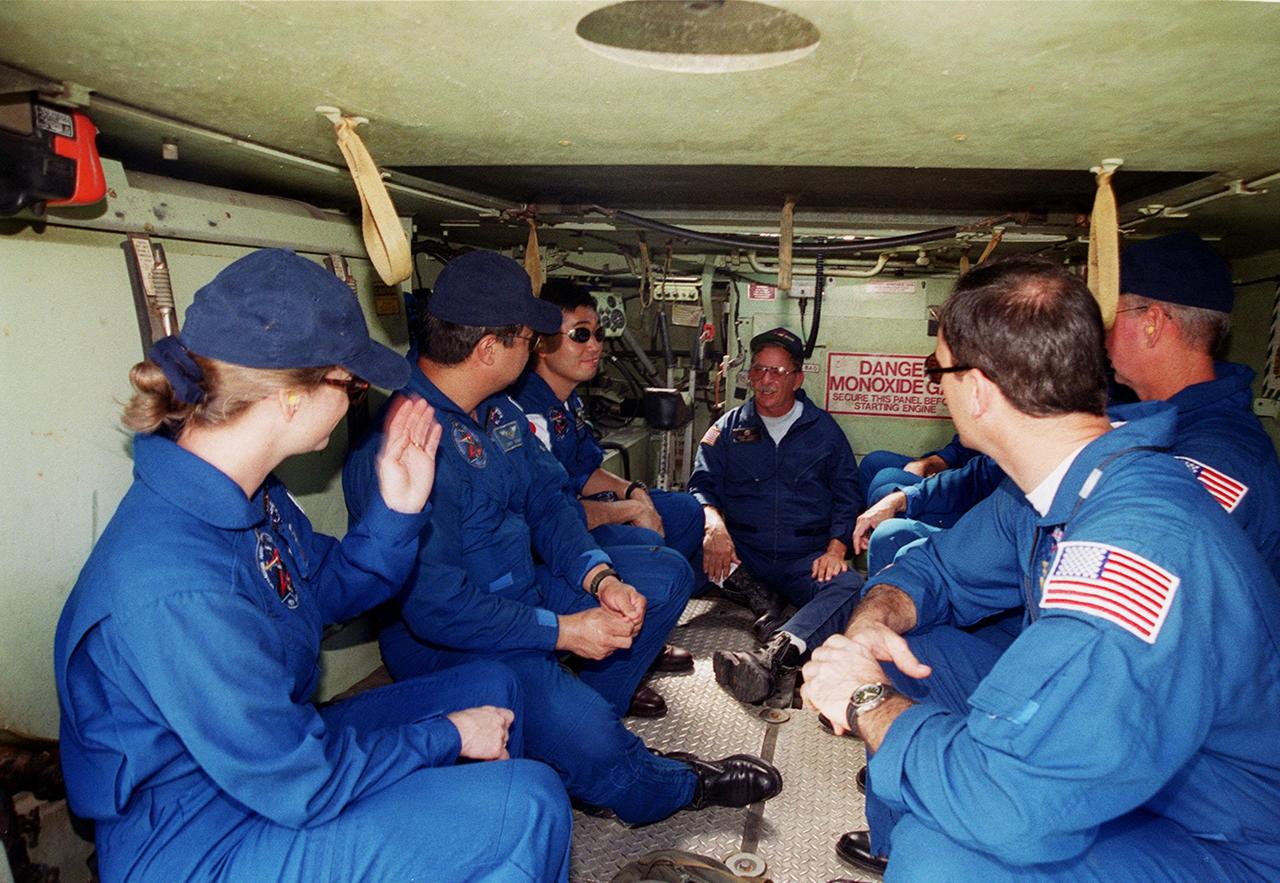
As part of emergency egress training during Terminal Countdown Demonstration Test (TCDT) activities, members of the STS-92 crew get instructions about the M-113 they are seated in at Launch Pad 39A. Seen on the left are Pilot Pam Melroy and Mission Specialists Leroy Chaio and Koichi Wakata of Japan In the middle, giving the instructions, is Capt. George Hoggard, trainer with the KSC Fire Department. At right are Commander Brian Duffy (leaning back) and Mission Specialist Michael Lopez-Alegria. The other crew members (not seen) are Mission Specialists Jeff Wisoff and Bill McArthur. The tracked vehicle could be used by the crew in the event of an emergency at the pad during which the crew must make a quick exit from the area. The TCDT also provides simulated countdown exercises and opportunities to inspect the mission payloads in the orbiter’s payload bay. STS-92 is scheduled to launch Oct. 5 at 9:30 p.m. EDT on the fifth flight to the International Space Station. It will carry two elements of the Space Station, the Integrated Truss Structure Z1 and the third Pressurized Mating Adapter. The mission is also the 100th flight in the Shuttle program
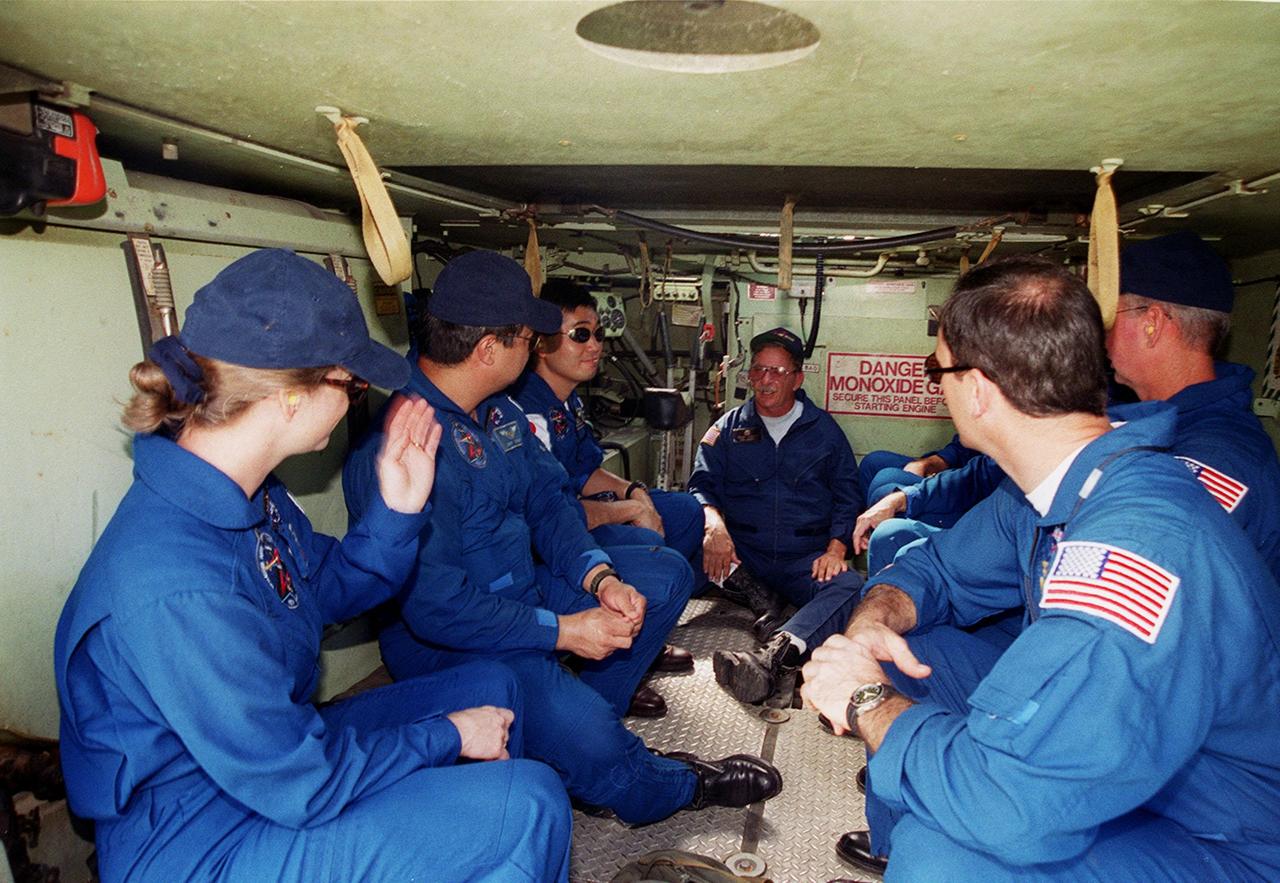
As part of emergency egress training during Terminal Countdown Demonstration Test (TCDT) activities, members of the STS-92 crew get instructions about the M-113 they are seated in at Launch Pad 39A. Seen on the left are Pilot Pam Melroy and Mission Specialists Leroy Chaio and Koichi Wakata of Japan In the middle, giving the instructions, is Capt. George Hoggard, trainer with the KSC Fire Department. At right are Commander Brian Duffy (leaning back) and Mission Specialist Michael Lopez-Alegria. The other crew members (not seen) are Mission Specialists Jeff Wisoff and Bill McArthur. The tracked vehicle could be used by the crew in the event of an emergency at the pad during which the crew must make a quick exit from the area. The TCDT also provides simulated countdown exercises and opportunities to inspect the mission payloads in the orbiter’s payload bay. STS-92 is scheduled to launch Oct. 5 at 9:30 p.m. EDT on the fifth flight to the International Space Station. It will carry two elements of the Space Station, the Integrated Truss Structure Z1 and the third Pressurized Mating Adapter. The mission is also the 100th flight in the Shuttle program
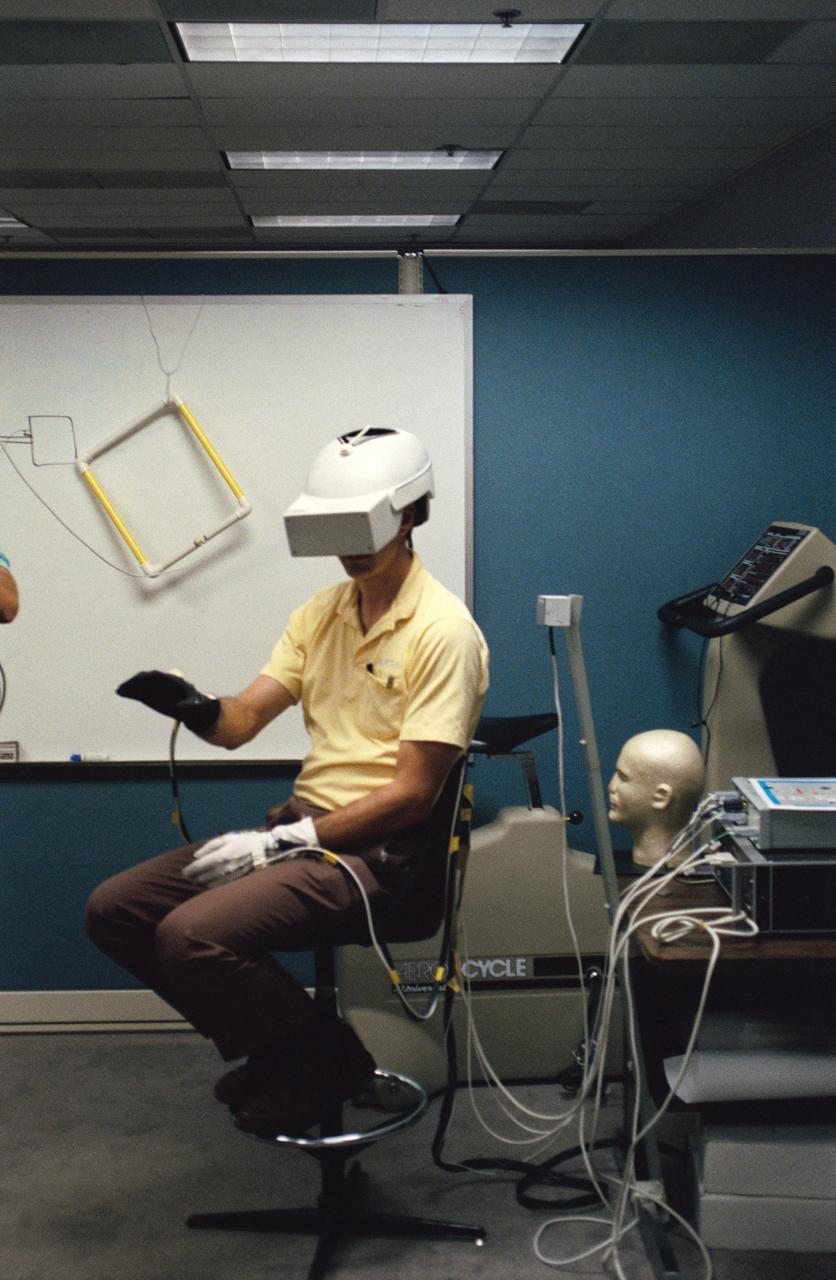
Astronaut Jeffrey A. Hoffman, one of four crewmembers for STS-61 that will conduct scheduled spacewalks during the flight, wears a special helmet and gloves designed to assist in proper positioning near the telescope while on the end of the robot arm. Crewmembers are utilizing a new virtual reality training aid which assists in refining positioning patterns for Space Shuttle Endeavour's Remote Manipulator System (RMS) (36890); Astronaut Claude Nicollier looks at a computer display of the Shuttle's robot arm movements as Thomas D. Akers and Kathryn C. Thornton, mission specialists look on. Nicollier will be responsible for maneuvering the astronauts while they stand in a foot restraint on the end of the RMS arm (36891,36894); Hoffman wears a special helmet and gloves designed to assist in proper positioning near the telescope while on the end of the robot arm (35892); Nicollier looks at a computer display of the Shuttle's robot arm movements as Akers looks on (36893); While (l-r) Astronauts Kenneth Bowersox, Kathryn Thornton, Richard O. Covey and Thomas D. Akers watch, Nicollier moves the Robot arm to desired locations in the Shuttle's payload bay using the Virtual Reality program (36895); Bowersox takes his turn maneuvering the RMS while mission specialist Hoffman, wearing the Virtual Reality helmet, follows his own progress on the end of the robot arm. Crewmembers participating during the training session are (l-r) Astronauts Akers, Hoffman, Bowersox, Nicollier, Covey, and Thornton. In the background, David Homan, an engineer in the JSC Engineering Directorate's Automation and Robotics Division, looks on (36896).
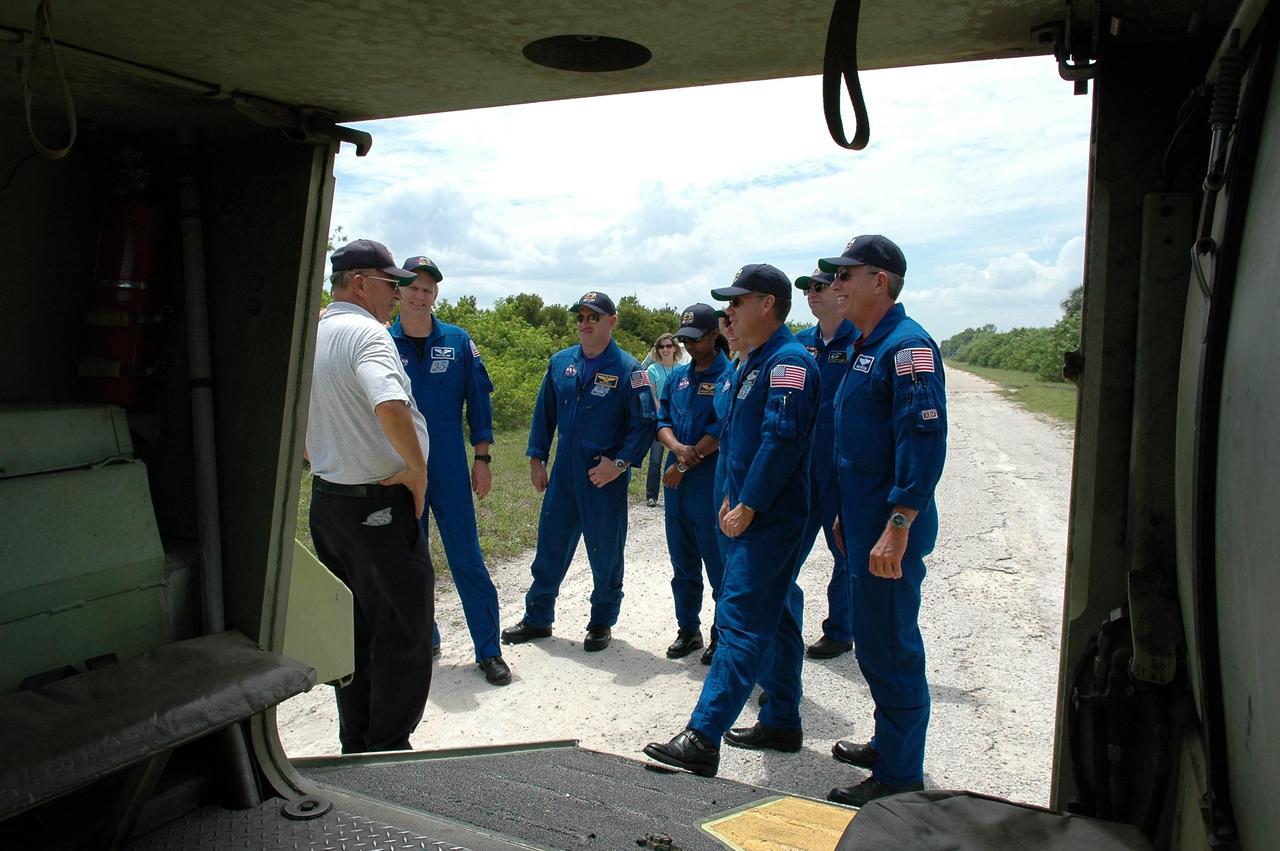
KENNEDY SPACE CENTER, FLA. - During Terminal Countdown Demonstration Test (TCDT) activities, the STS-121 crew gets instructions about emergency egress from the pad from Capt. George Hoggard (left), who is astronaut rescue team leader. Crew members are (from left) Mission Specialist Piers Sellers, Pilot Mark Kelly, Mission Specialists Stephanie Wilson and Lisa Nowak, Commander Steven Lindsey, and Mission Specialists Thomas Reiter and Michael Fossum. Part of the training will be driving an M-113, which is an armored personnel carrier. Mission STS-121 is designated for launch on July 1. Photo credit: NASA/Kim Shiflett
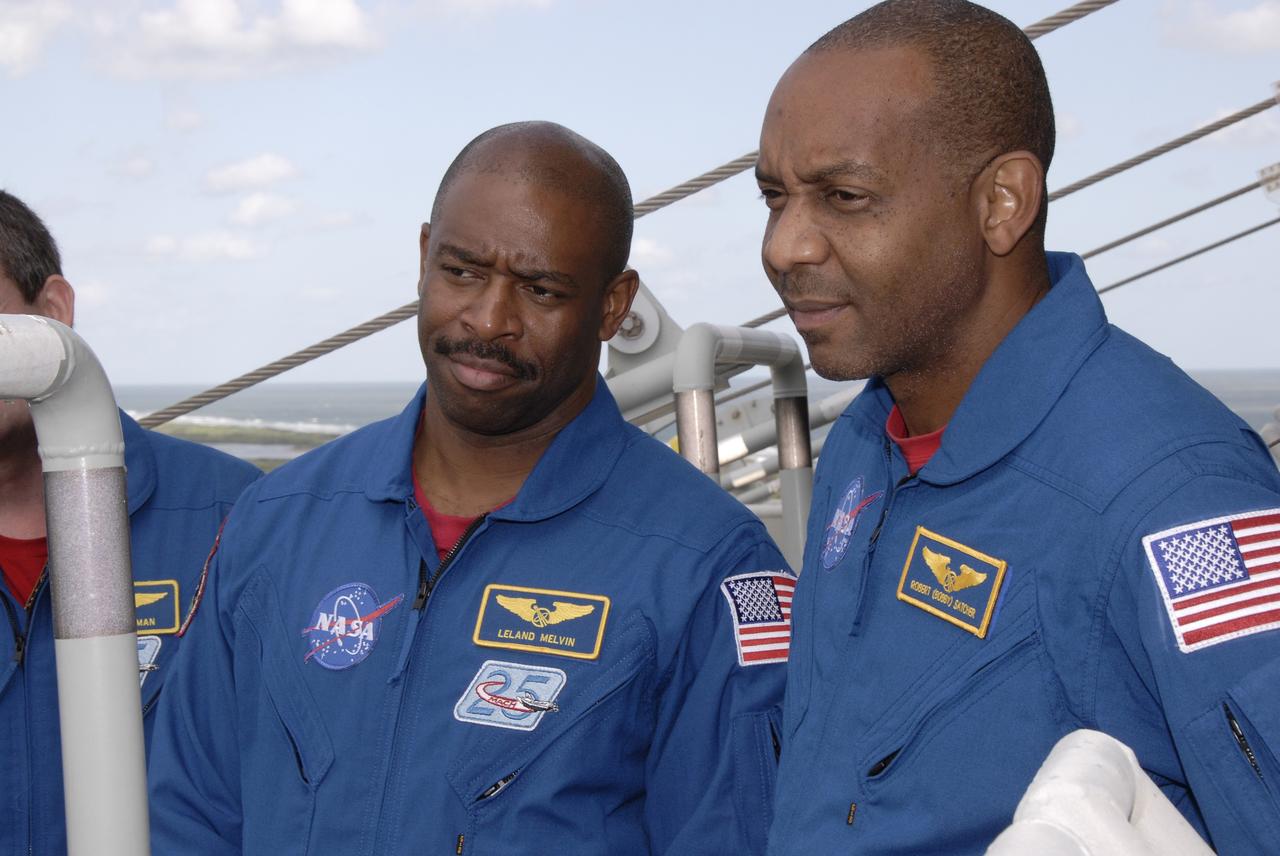
CAPE CANAVERAL, Fla. - Members of space shuttle Atlantis' STS-129 crew are instructed on the operation of the emergency escape slidewire baskets at Launch Pad 39A at NASA's Kennedy Space Center in Florida. From left are Mission Specialists Leland Melvin and Robert L. Satcher Jr. The crew members of space shuttle Atlantis' STS-129 mission are at Kennedy for training related to their launch dress rehearsal, the Terminal Countdown Demonstration Test. Launch of Atlantis on its STS-129 mission to the International Space Station is targeted for Nov. 16. For information on the STS-129 mission objectives and crew, visit http://www.nasa.gov/mission_pages/shuttle/shuttlemissions/sts129/index.html. Photo credit: NASA/Kim Shiflett
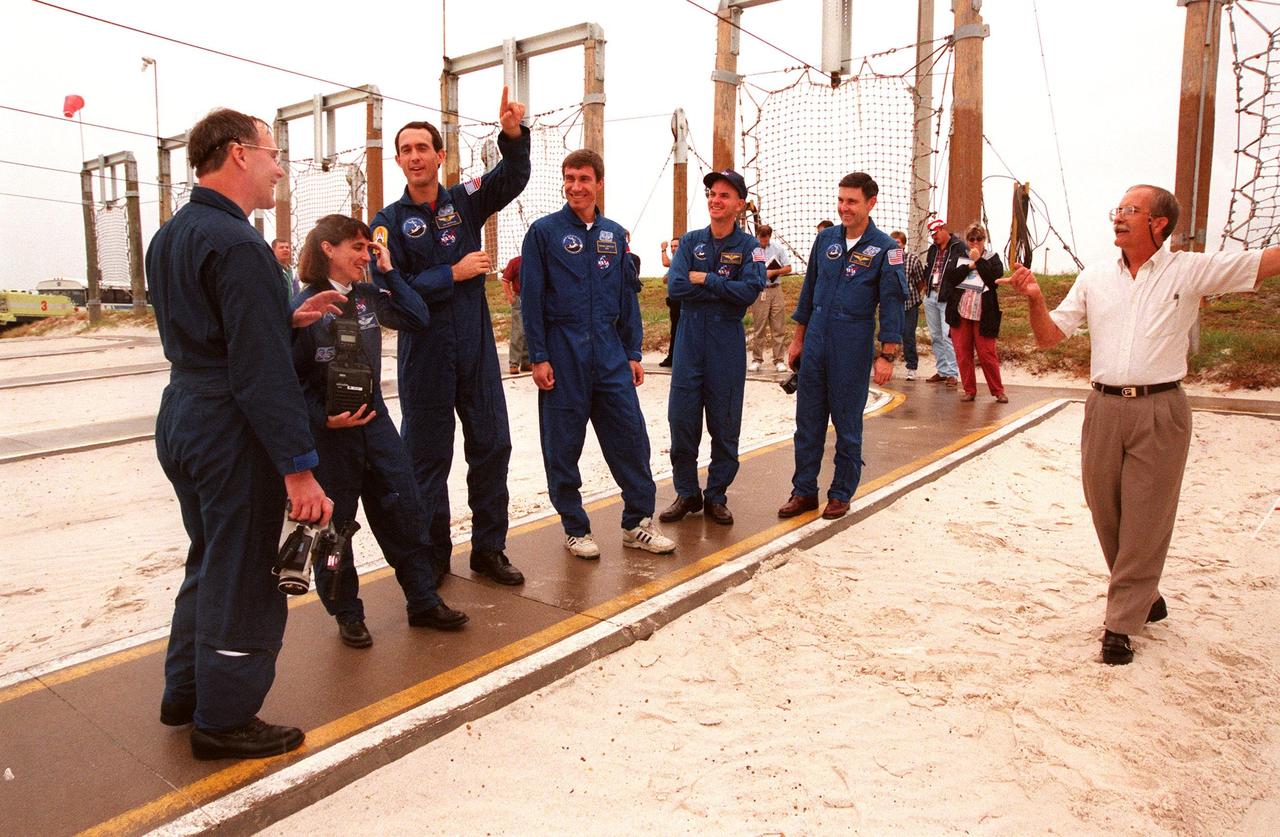
KENNEDY SPACE CENTER, Fla. -- The STS-88 crew get instruction from Ken Clark, at right, a training instructor with United Space Alliance (USA), on emergency egress procedures from launch pad 39A. From left, they are Mission Specialists Jerry L. Ross, Nancy J. Currie, James H. Newman and Sergei Krikalev, a Russian cosmonaut, Pilot Frederick W. "Rick" Sturckow, and Mission Commander Robert D. Cabana. The crew are at KSC to participate in the Terminal Countdown Demonstration Test (TCDT), a dress rehearsal for launch. Mission STS-88 is targeted for launch on Dec. 3, 1998. It is the first U.S. flight for the assembly of the International Space Station and will carry the Unity connecting module
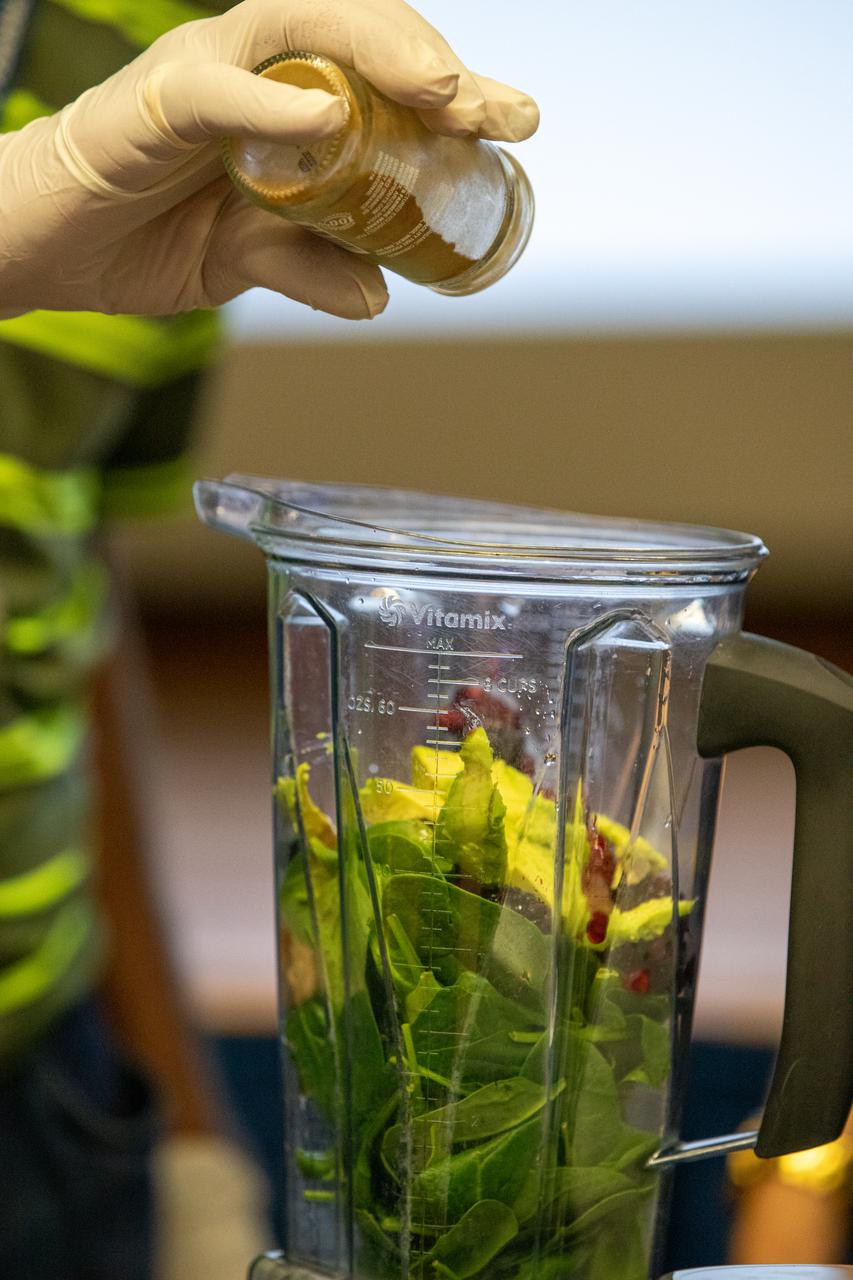
A Kennedy Space Center employee, following instructions from guest speaker Carly Paige, an integrative nutrition health coach and chef, demonstrates how to make a smoothie inside the Florida spaceport’s Training Auditorium on March 5, 2020. The demonstration was part of a presentation given by Paige during the center’s annual Safety and Health Days, which took place March 2 through March 6. Throughout the week, Kennedy employees had the opportunity to attend a variety of presentations – all of which focused on how to maintain a safe and healthy workforce. Paige’s presentation included information on simple swaps that can be made to incorporate healthier habits on a daily basis.
KENNEDY SPACE CENTER, FLA. - The STS-107 crew gets instruction on emergency egress from the pad during Terminal Countdown Demonstration Test activities. Standing in the slidewire basket are (from left) Mission Specialist Laurel Clark, Payload Specialist Ilan Ramon (the first Israeli astronaut) and Payload Commander Michael Anderson. The TCDT also includes a simulated launch countdown. STS-107 is a mission devoted to research and will include more than 80 experiments that will study Earth and space science, advanced technology development, and astronaut health and safety. Launch is planned for Jan. 16, 2003, between 10 a.m. and 2 p.m. EST aboard Space Shuttle Columbia. .

The STS-102 crew wait for instructions about the M-113 armored carrier they are seated in. At left is Mission Specialist Andy Thomas. On the right side are (left to right) Mission Specialist Paul Richards, Commander James Wetherbee and Pilot James Kelly. In the event of an emergency at the pad prior to launch, the carrier could be used to transport the crew to a nearby bunker or farther. The STS-102 crew is at KSC to take part in Terminal Countdown Demonstration Test activities, which also include a simulated launch countdown. STS-102 is the eighth construction flight to the International Space Station, carrying as payload the Multi-Purpose Logistics Module Leonardo. Launch on mission STS-102 is scheduled for March 8

1782: At the Gagarin Cosmonaut Training Center in Star City, Russia, Expedition 41/42 backup crewmembers Scott Kelly of NASA (left), Gennady Padalka of the Russian Federal Space Agency (Roscosmos, center) and Mikhail Kornienko of Roscosmos (right) listen to initial instructions from officials September 3 as they began final qualification exams. They are the backups to NASA’s Barry Wilmore and Alexander Samokutyaev and Elena Serova of Roscosmos, who will launch from the Baikonur Cosmodrome in Kazakhstan September 26, Kazakh time, in the Soyuz TMA-14M spacecraft for a 5 ½ month mission on the International Space Station. Kelly and Kornienko will launch next March to spend a full year in space. NASA/Stephanie Stoll
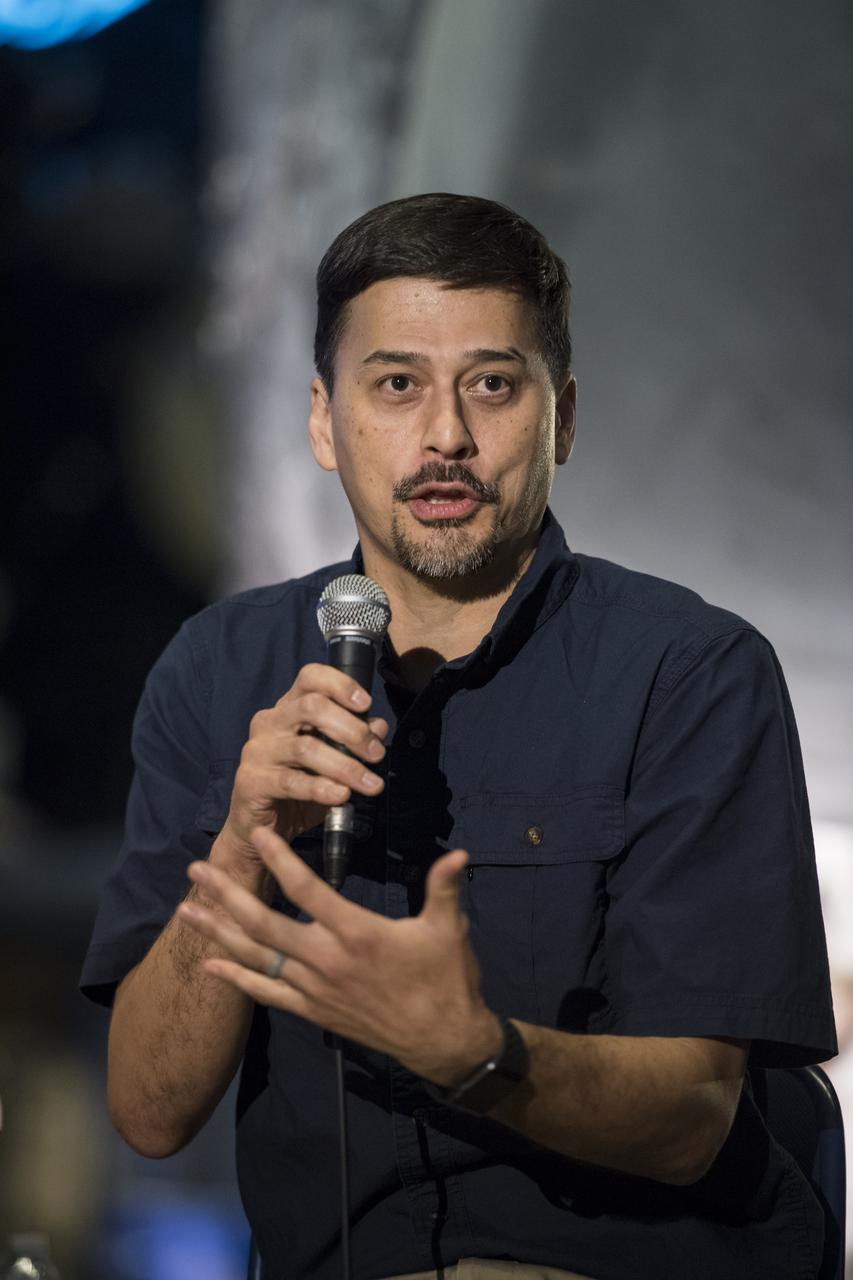
Josh Ajima, instructional facilitator for technology, Loudoun County Public Schools and DesignMakeTeach.com blog, speaks on a panel on "igniting NOVA K-12 engineering and maker education", at a pop-up makerspace hosted by Future Engineers with support from NASA and The American Society of Mechanical Engineers (ASME), at the Steven F. Udvar-Hazy Center, Thursday, September 21, 2017 in Chantilly, Virginia. Participants were able to create digital 3D models using Autodesk Tinkercad and watch objects being printed with Makerbot 3D printers. Photo Credit: (NASA/Aubrey Gemignani)

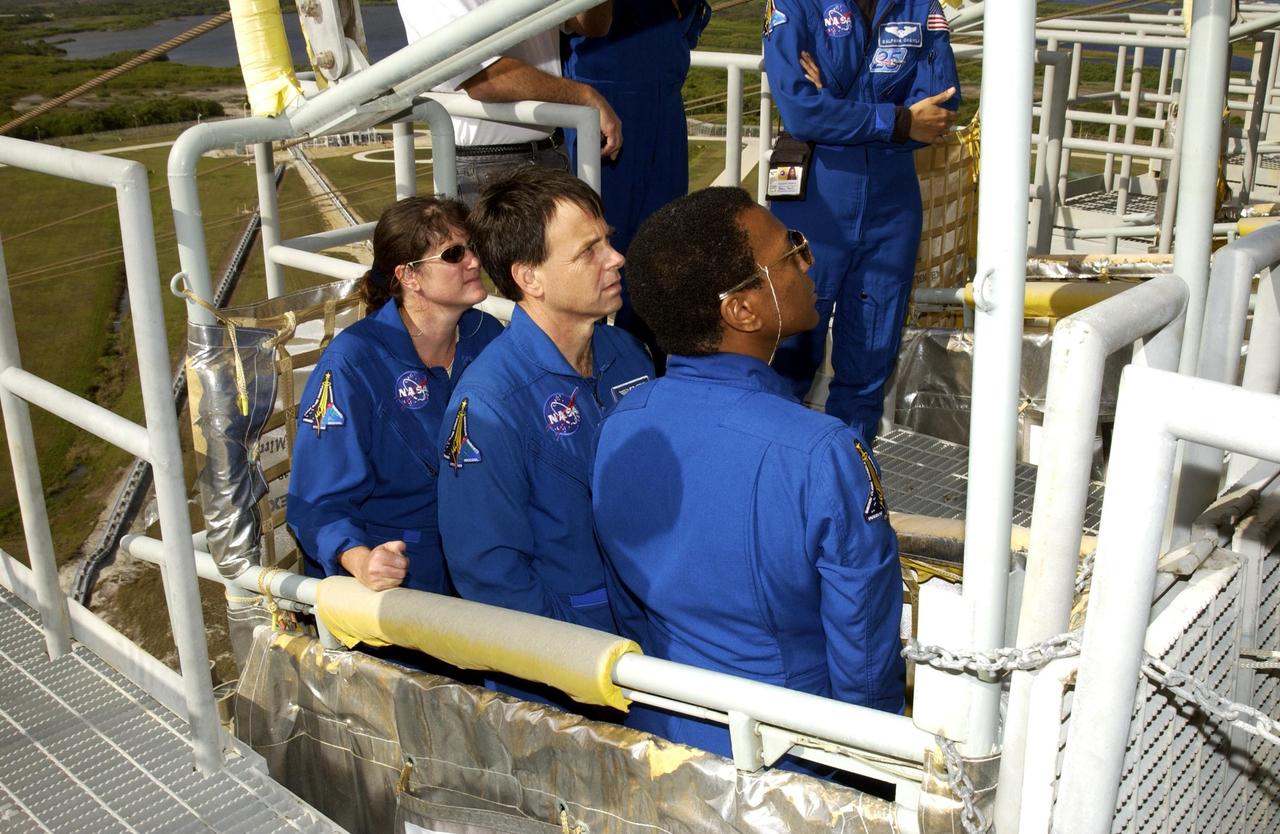
KENNEDY SPACE CENTER, FLA. -- On the fixed service structure on Launch Pad 39B, the STS-116 crew gets instruction on using the slidewire baskets for emergency egress from the orbiter. The astronauts seen here are (on the left) Mission Specialists Christer Fuglesang, Sunita Williams and Joan Higginbotham and (on the right) Mission Specialists Robert Curbeam and Nicholas Patrick. The mission crew is at KSC for the TCDT, which includes a simulated launch countdown. The STS-116 mission is No. 20 to the International Space Station and construction flight 12A.1. The mission payload is the SPACEHAB module, the P5 integrated truss structure and other key components. Launch is scheduled for no earlier than Dec. 7. Photo credit: NASA/Kim Shiflett
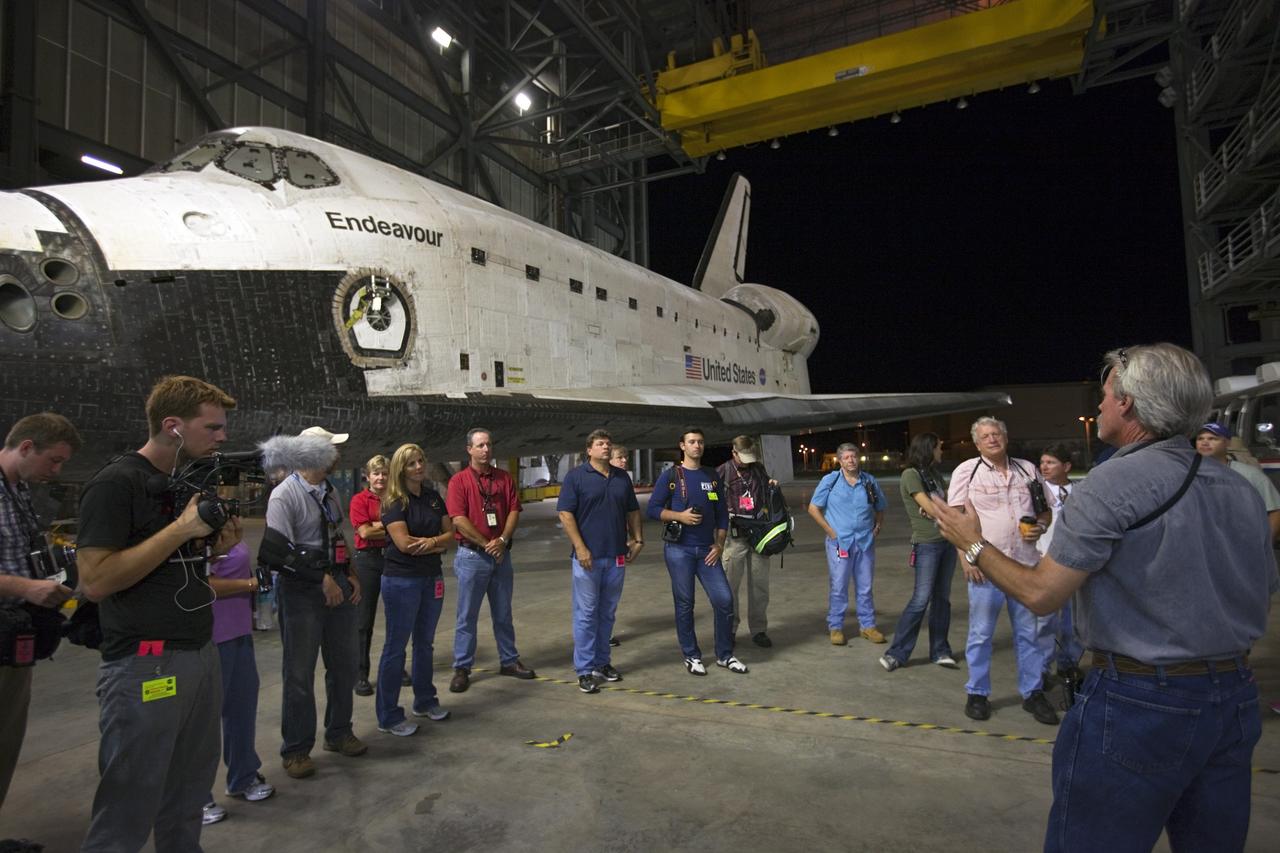
CAPE CANAVERAL, Fla. – A team of workers gets final instructions before moving space shuttle Endeavour out of the Vehicle Assembly Building to the Mate-Demate Device, or MDD, at NASA's Kennedy Space Center in Florida. The MDD is located at the Shuttle Landing Facility at Kennedy. The shuttle will be lifted and connected to the top of NASA's Shuttle Carrier Aircraft SCA, a modified 747 jetliner. The shuttle has been fitted with an aerodynamic tailcone for its flight aboard the SCA to Los Angeles where it will be placed on public display. Photo credit: NASA/Kim Shiflett
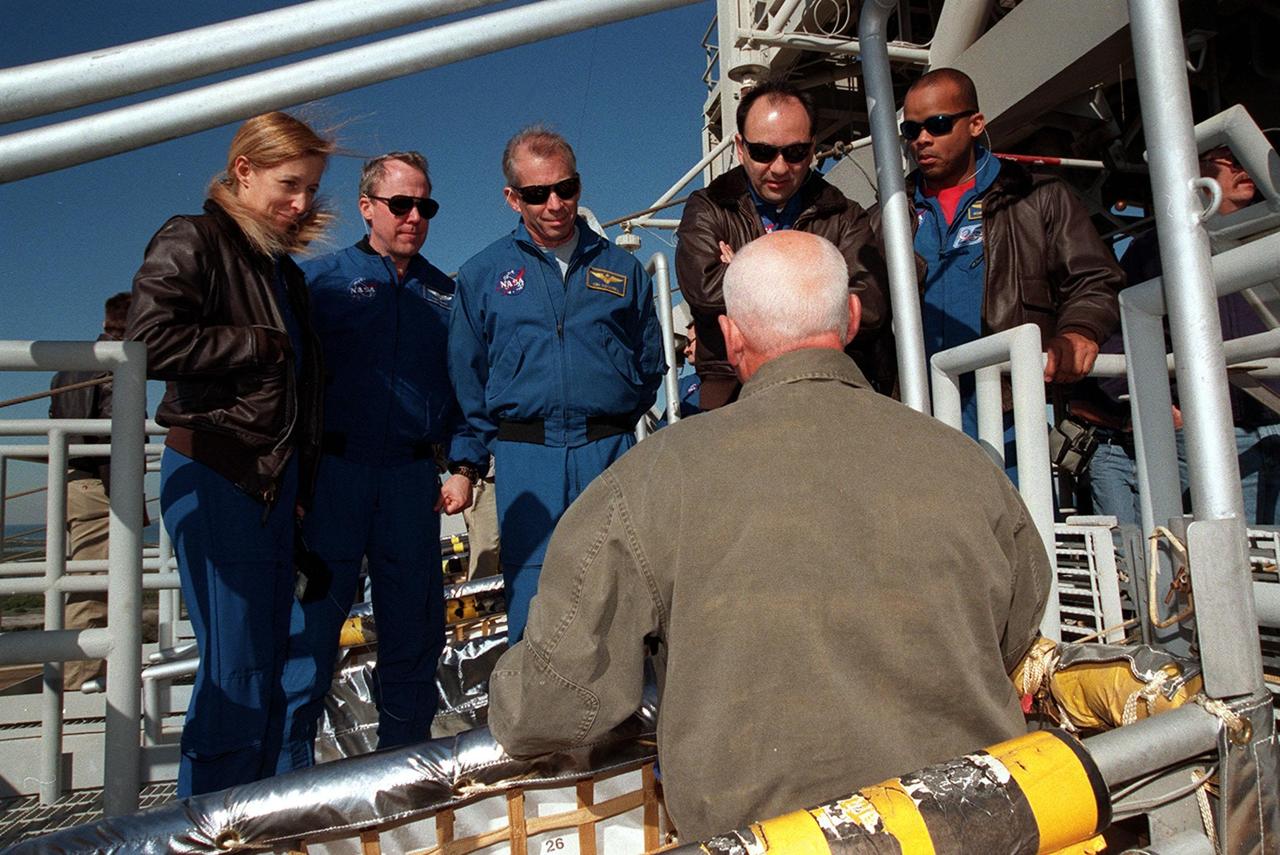
The STS-98 crew listens to instructions on use of the slidewire basket, part of emergency egress equipment from the launch pad. At the 195-foot level of the Fixed Service Structure are Mission Specialists Marsha Ivins and Thomas Jones, Commander Ken Cockrell, Pilot Mark Polansky and Mission Specialist Robert Curbeam. The crew is at KSC to take part in Terminal Countdown Demonstration Test activities, which include emergency egress training and a simulated launch countdown at the pad. STS-98 is the seventh construction flight to the International Space Station, carrying as payload the U.S. Lab Destiny, a key element in the construction of the ISS. Launch of STS-98 is scheduled for Jan. 19 at 2:11 a.m
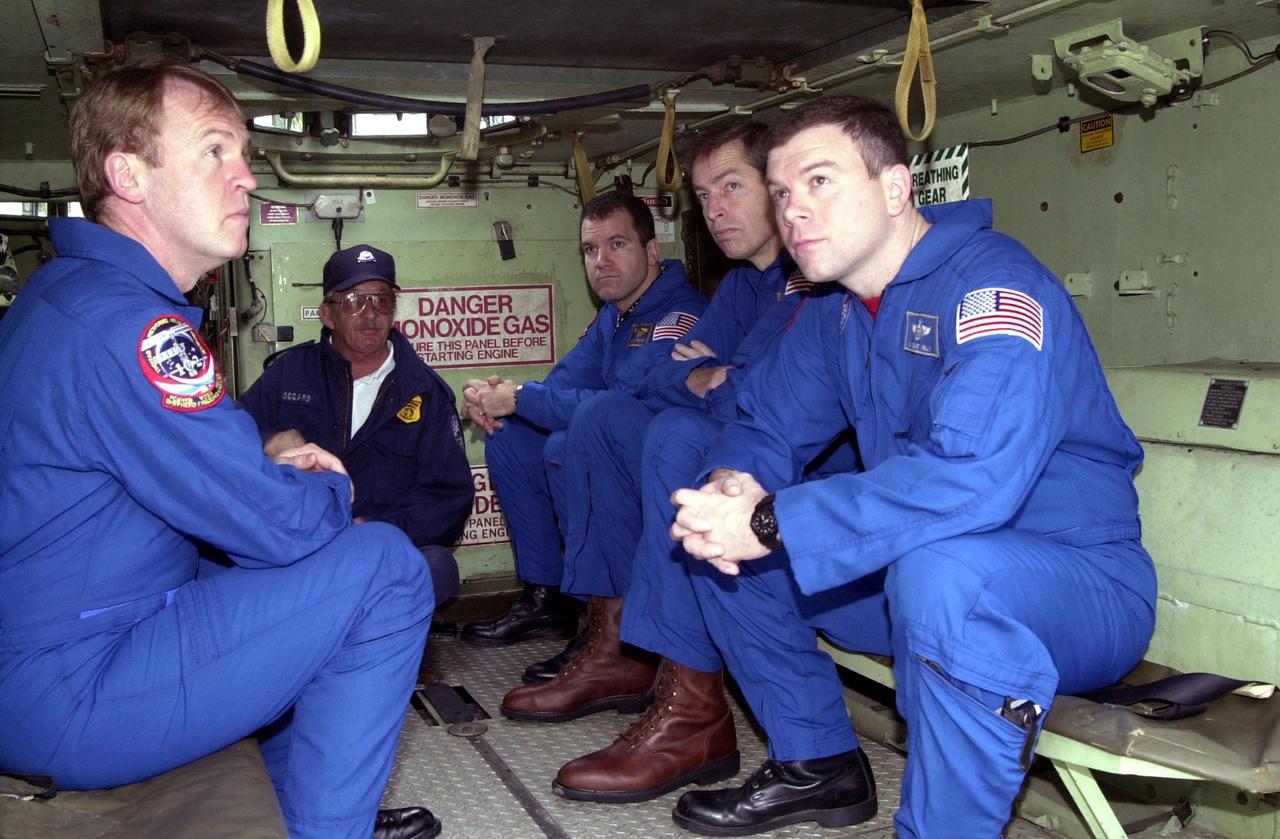
The STS-102 crew wait for instructions about the M-113 armored carrier they are seated in. At left is Mission Specialist Andy Thomas. On the right side are (left to right) Mission Specialist Paul Richards, Commander James Wetherbee and Pilot James Kelly. In the event of an emergency at the pad prior to launch, the carrier could be used to transport the crew to a nearby bunker or farther. The STS-102 crew is at KSC to take part in Terminal Countdown Demonstration Test activities, which also include a simulated launch countdown. STS-102 is the eighth construction flight to the International Space Station, carrying as payload the Multi-Purpose Logistics Module Leonardo. Launch on mission STS-102 is scheduled for March 8
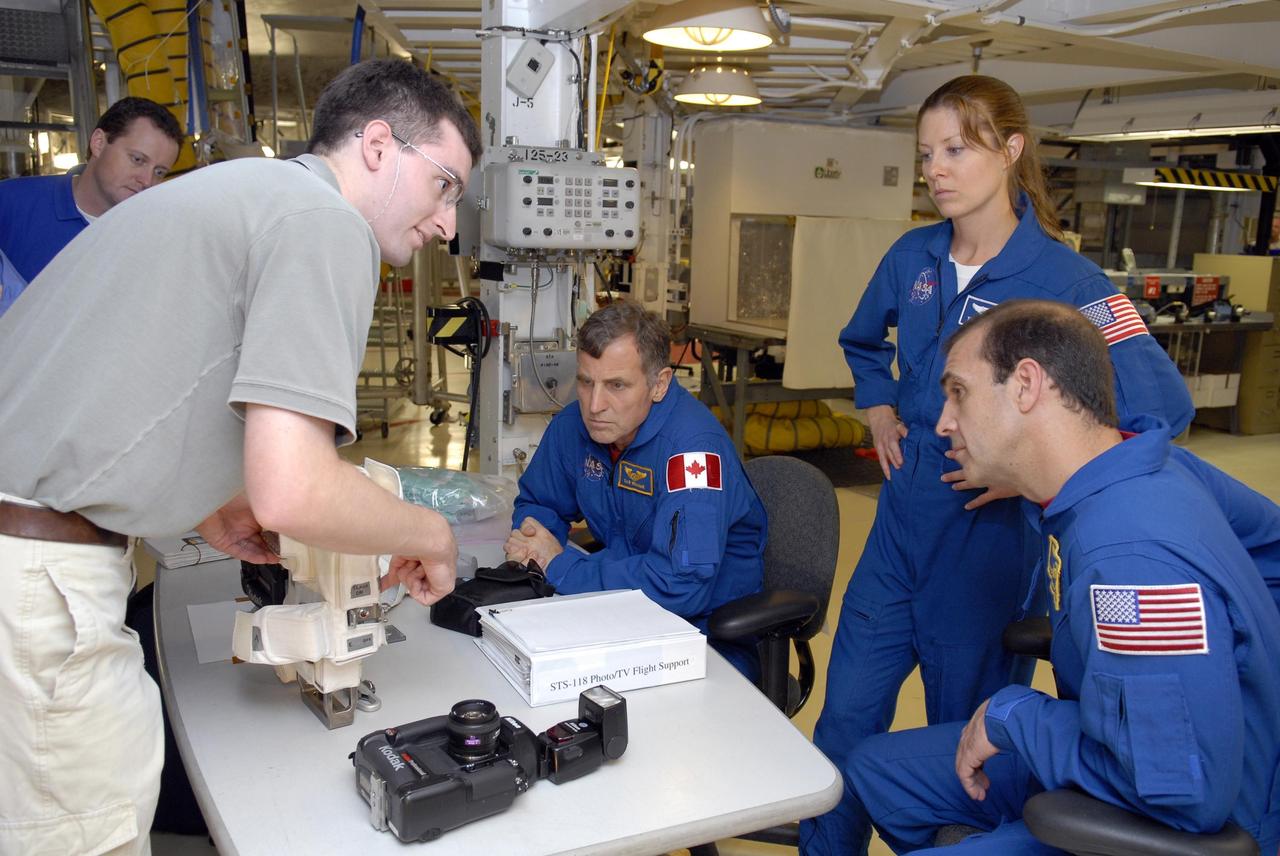
KENNEDY SPACE CENTER, FLA. -- In Orbiter Processing Facility bay 2, during crew equipment interface test activities, STS-118 Mission Specialists Dr. Dafydd Williams, Tracy Caldwell and Richard Mastrocchio get instructions on using photo equipment for their flight. The STS-118 mission will be delivering the third starboard truss segment, the ITS S5, to the International Space Station, as well as the SPACEHAB single cargo module filled with supplies and equipment. Launch aboard Space Shuttle Endeavour is targeted for Aug. 9. Photo credit: NASA/Kim Shiflett
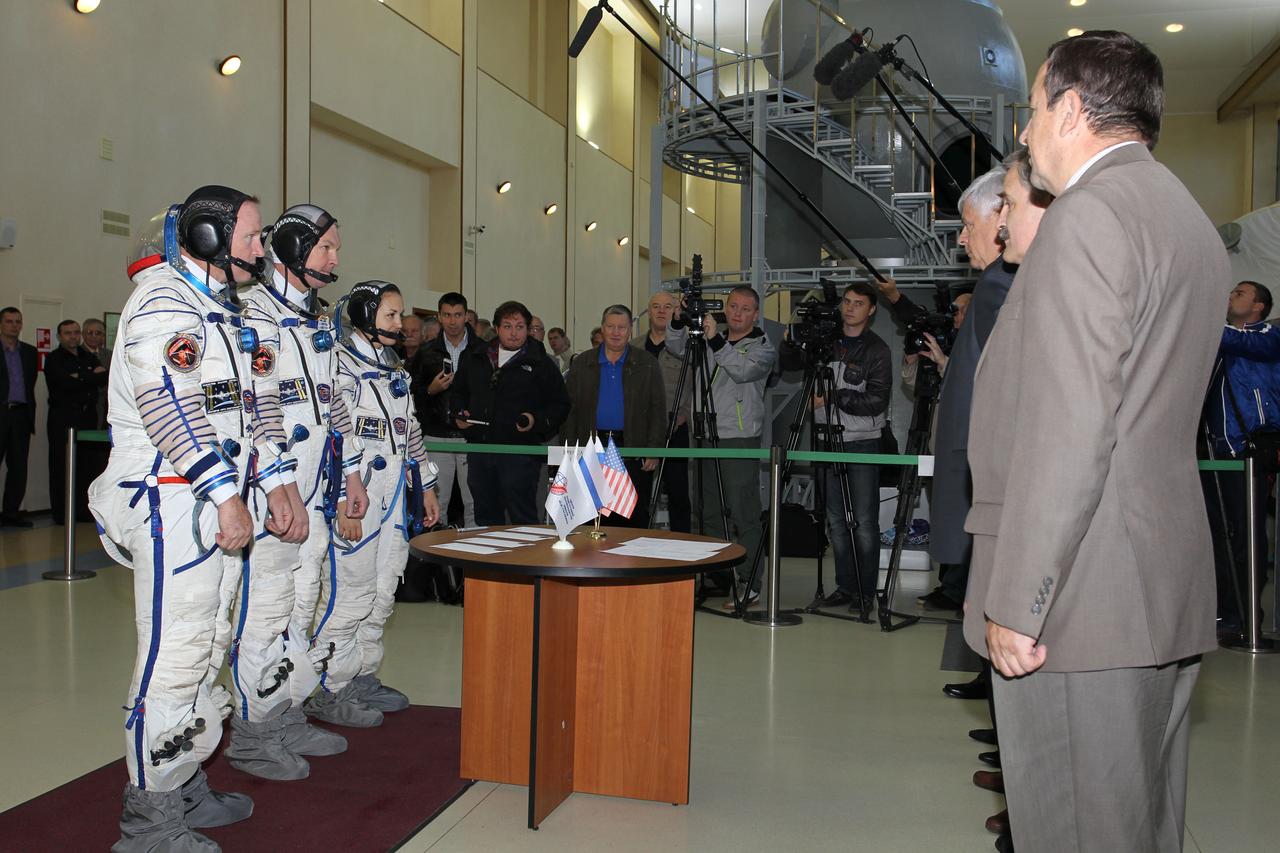
2037: At the Gagarin Cosmonaut Training Center in Star City, Russia, Expedition 41/42 prime crewmembers Barry Wilmore of NASA (left), Alexander Samokutyaev of the Russian Federal Space Agency (Roscosmos, center) and Elena Serova of Roscosmos (right) listen to instructions from officials September 4 at the start of the second day of final qualification exams. The trio will launch from the Baikonur Cosmodrome in Kazakhstan, Sept. 26, Kazakh time, in their Soyuz TMA-14M spacecraft for a 5 ½ month mission on the International Space Station. Serova will become the fourth Russian woman to fly in space and the first Russian woman to conduct a long duration mission on the station. NASA/Stephanie Stoll
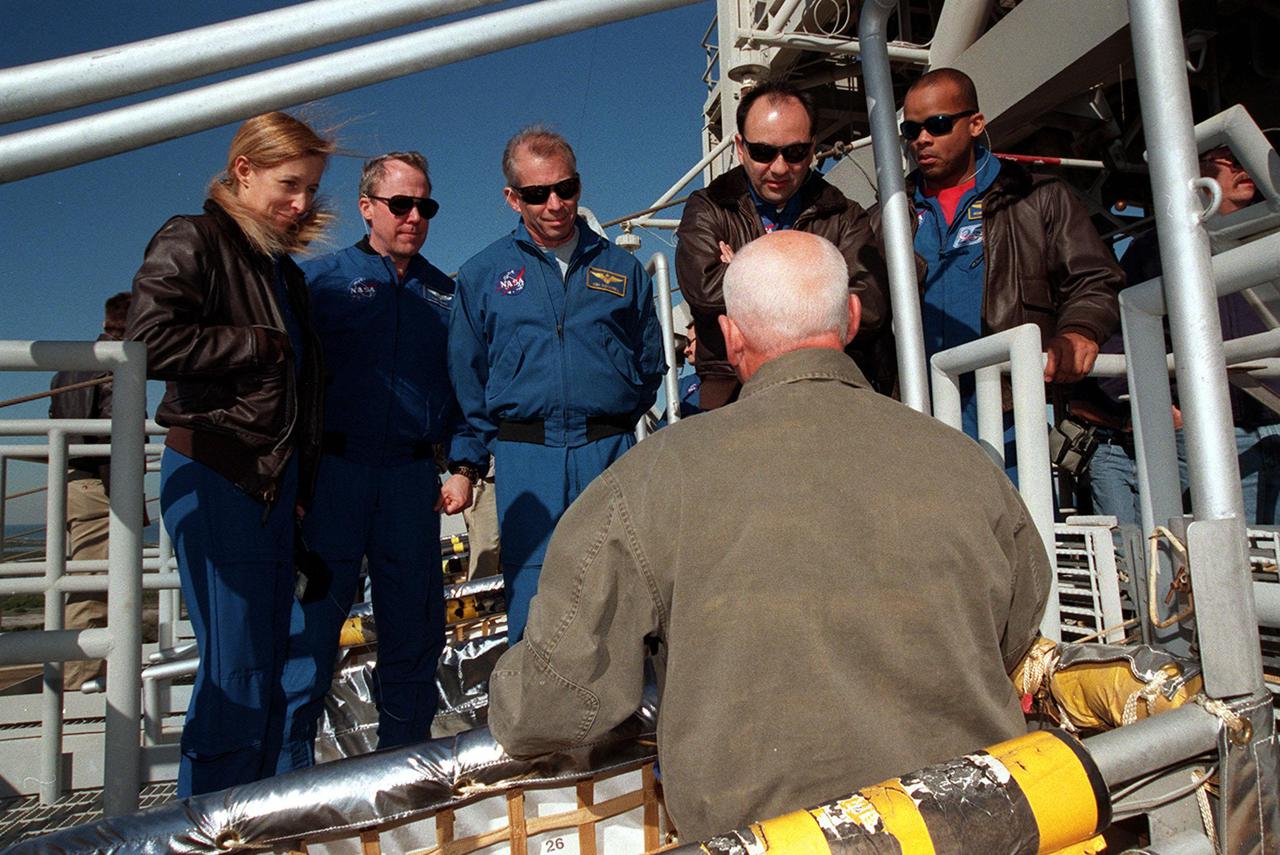
The STS-98 crew listens to instructions on use of the slidewire basket, part of emergency egress equipment from the launch pad. At the 195-foot level of the Fixed Service Structure are Mission Specialists Marsha Ivins and Thomas Jones, Commander Ken Cockrell, Pilot Mark Polansky and Mission Specialist Robert Curbeam. The crew is at KSC to take part in Terminal Countdown Demonstration Test activities, which include emergency egress training and a simulated launch countdown at the pad. STS-98 is the seventh construction flight to the International Space Station, carrying as payload the U.S. Lab Destiny, a key element in the construction of the ISS. Launch of STS-98 is scheduled for Jan. 19 at 2:11 a.m
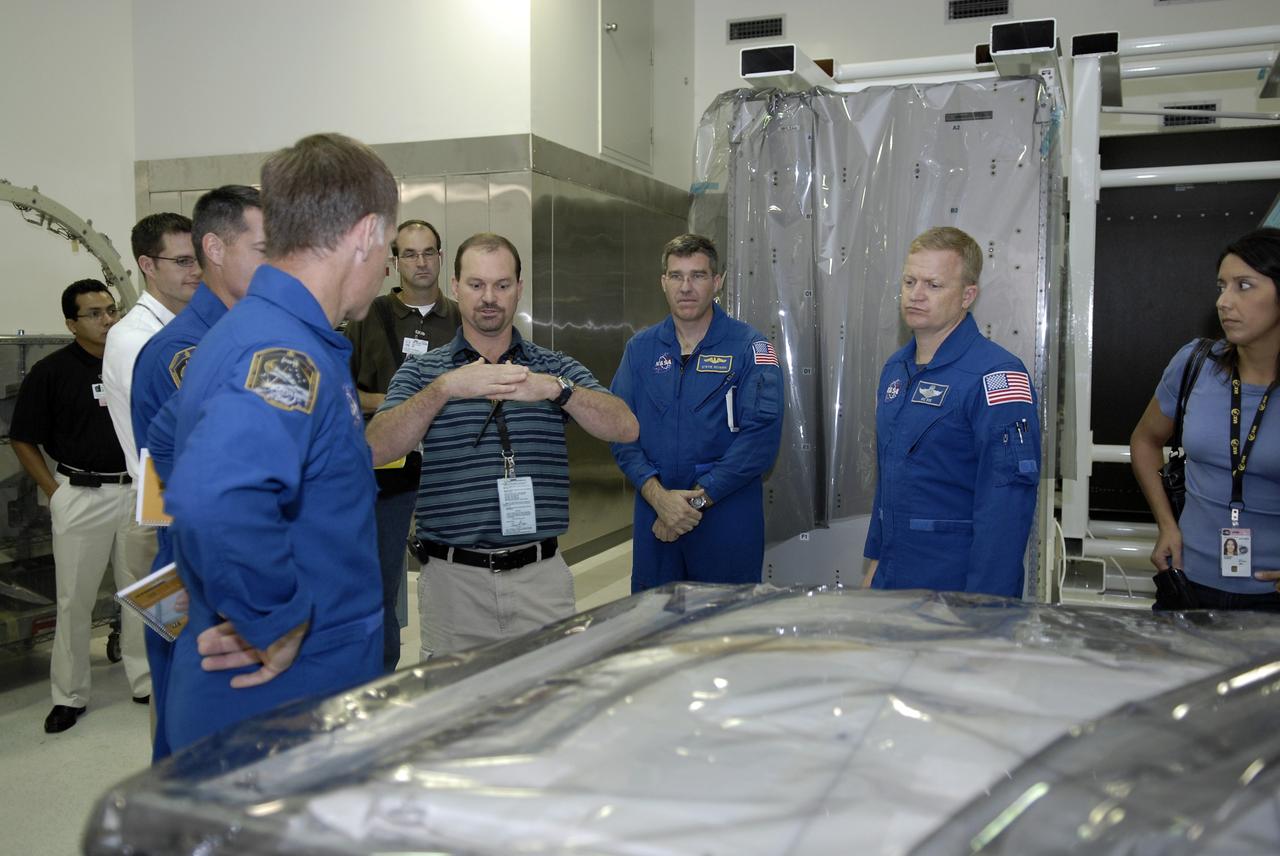
CAPE CANAVERAL, Fla. – In the Space Station Processing Facility at NASA's Kennedy Space Center, members of space shuttle Endeavour's STS-126 crew participate in a crew equipment interface test, or CEIT. Here, from in the blue flight suits, Commander Chris Ferguson, Mission Specialist Steve Bowen and Pilot Eric Boe receive instruction from a Kennedy employee. The CEIT provides hands-on experience with hardware and equipment slated to fly on their mission. Endeavour will deliver a multi-purpose logistics module to the International Space Station on the STS-126 mission. Launch is targeted for Nov. 10. Photo credit: NASA/Kim Shiflett
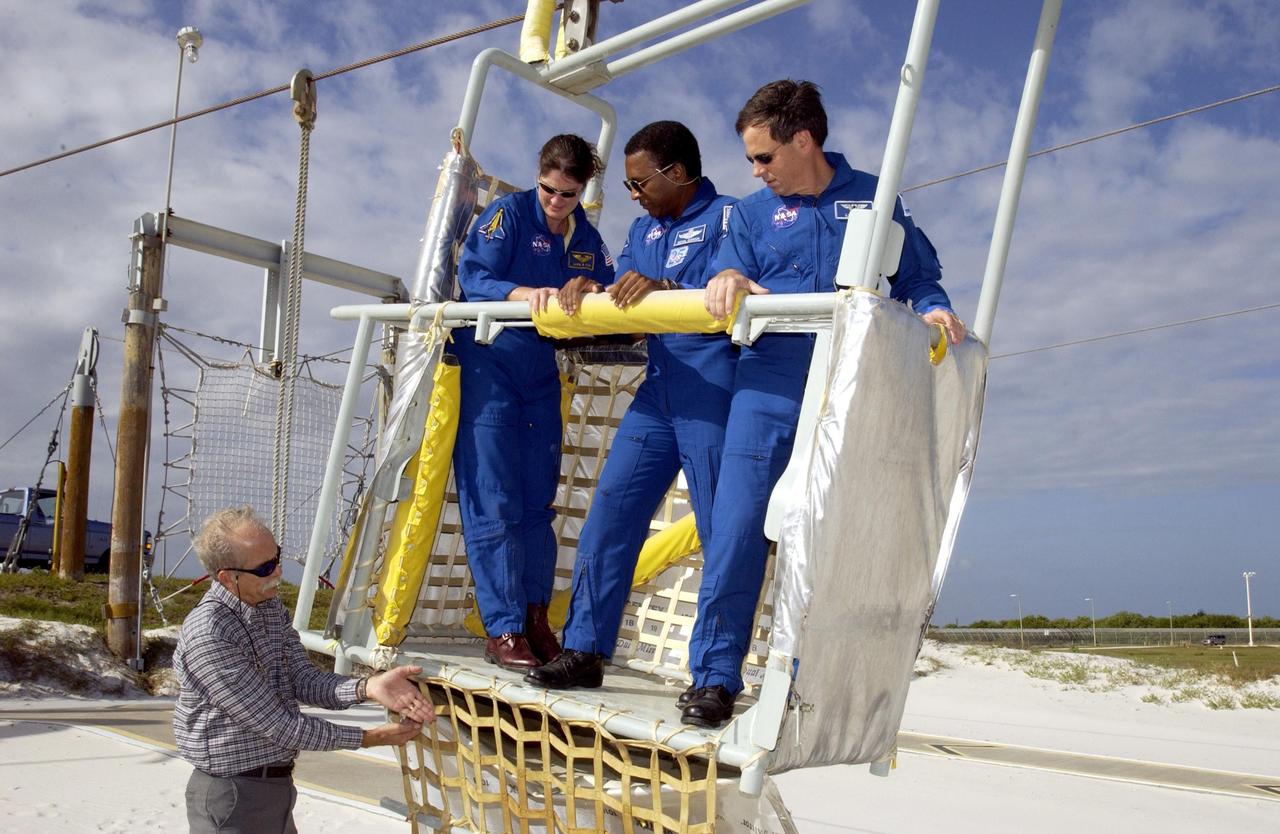
KENNEDY SPACE CENTER, FLA. -- The STS-107 crew gets instruction on the slidewire basket during emergency egress training, part of Terminal Countdown Demonstration Test activities. Seen are Mission Specialist Laurel Clark, Payload Commander Michael Anderson and Payload Specialist Ilan Ramon (the first Israeli astronaut). The TCDT also includes a simulated launch countdown. STS-107 is a mission devoted to research and will include more than 80 experiments that will study Earth and space science, advanced technology development, and astronaut health and safety. Launch is planned for Jan. 16, 2003, between 10 a.m. and 2 p.m. EST aboard Space Shuttle Columbia. .
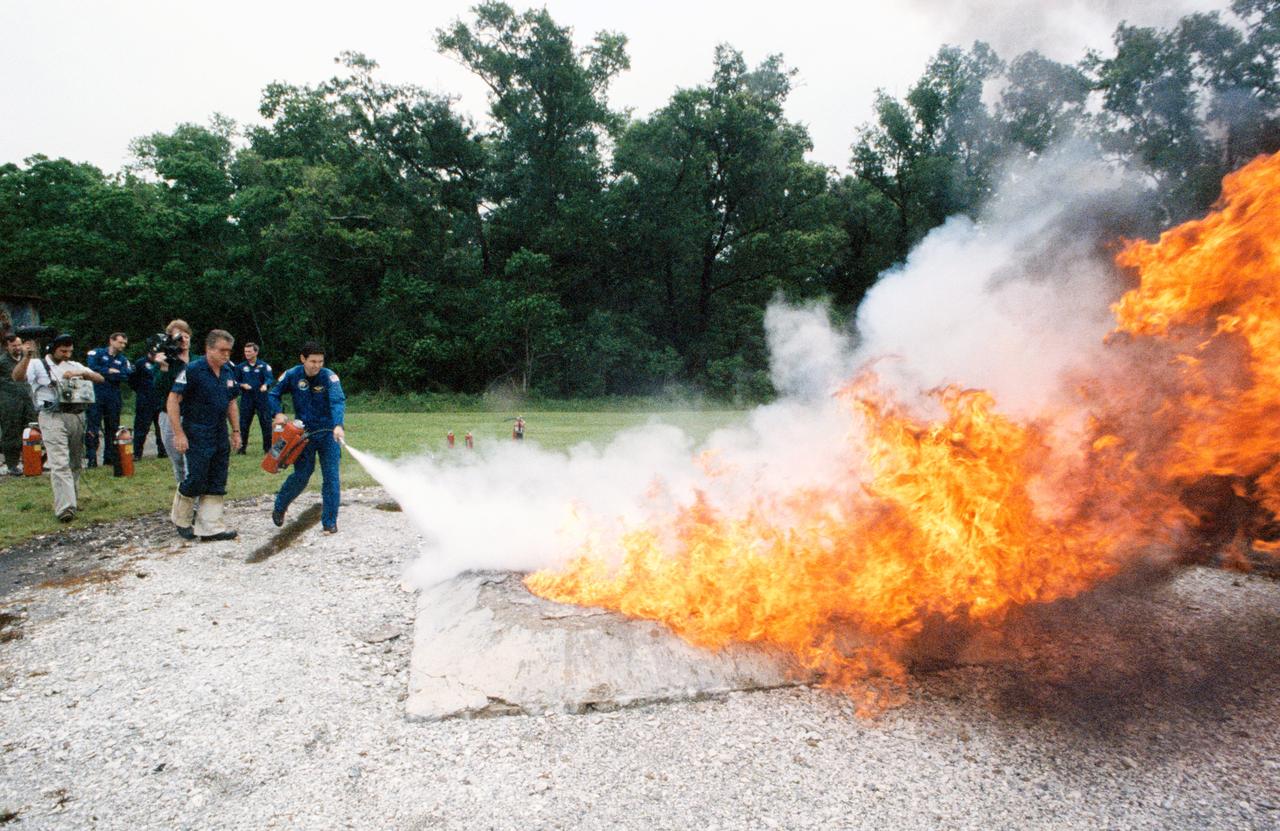
S90-38933 (4 May 1990) --- The STS-41 astronaut crew participates in fire control training exercises at the Johnson Space Center (JSC). Controlling the fire extinguisher at left frame is astronaut Robert D. Cabana, STS-41 pilot. Watching in the background are other STS-41 astronauts who participated in the session. They were Richard N. Richards, William M. Shepherd, Bruce E. Melnick and Thomas D. Akers. This type training is provided all crewmembers assigned to seats aboard Space Shuttle. Members of the both the Houston and Pasadena fire departments instruct the sessions.
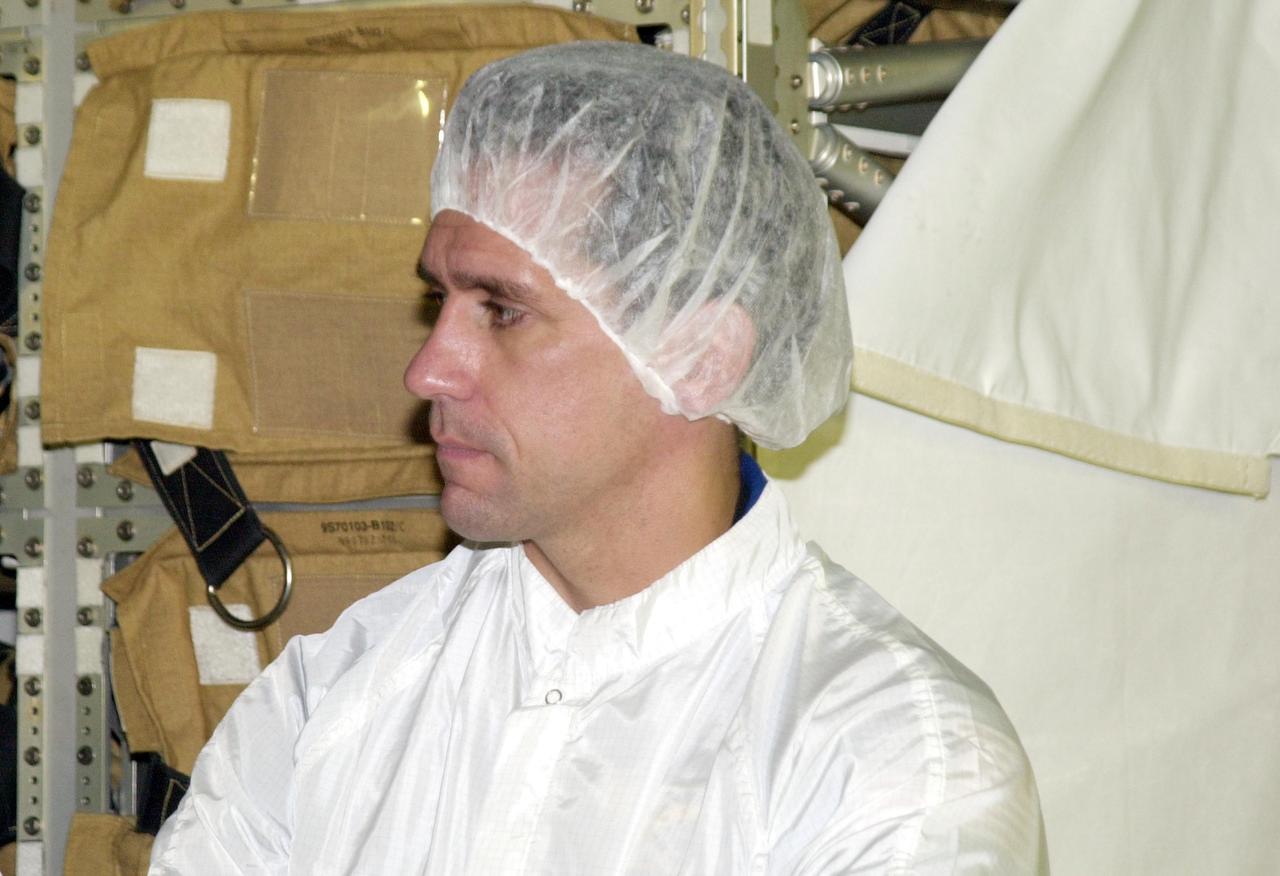
KENNEDY SPACE CENTER, FLA. - STS-116 Mission Specialist Christer Fugelsang, who is with the European Space Agency, listens to instructions in the SPACEHAB module. He and other crew members are taking part in equipment familiarization at SPACEHAB. The objective of their mission to the International Space Station is to deliver and attach the third port truss segment, the P5 Truss, deactivate and retract P6 Truss Channel 4B (port-side) solar array, reconfigure station power from 2A and 4A solar arrays, deliver the Expedition 8 crew to the Station and return the Expedition 7 crew to Earth. The mission is currently targeted for launch in July 2003..

1910: At the Gagarin Cosmonaut Training Center in Star City, Russia, Expedition 41/42 prime crewmembers Alexander Samokutyaev of the Russian Federal Space Agency (left), Elena Serova of Roscosmos (center) and NASA’s Barry Wilmore (right) listen to instructions from officials September 3 at the start of final qualification exams. They will launch September 26 from the Baikonur Cosmodrome in Kazakhstan, Kazakh time, in the Soyuz TMA-14M spacecraft for a 5 ½ month mission on the International Space Station. Serova will become only the fourth Russian woman to fly in space and the first Russian woman to conduct a long duration mission on the station. NASA/Stephanie Stoll
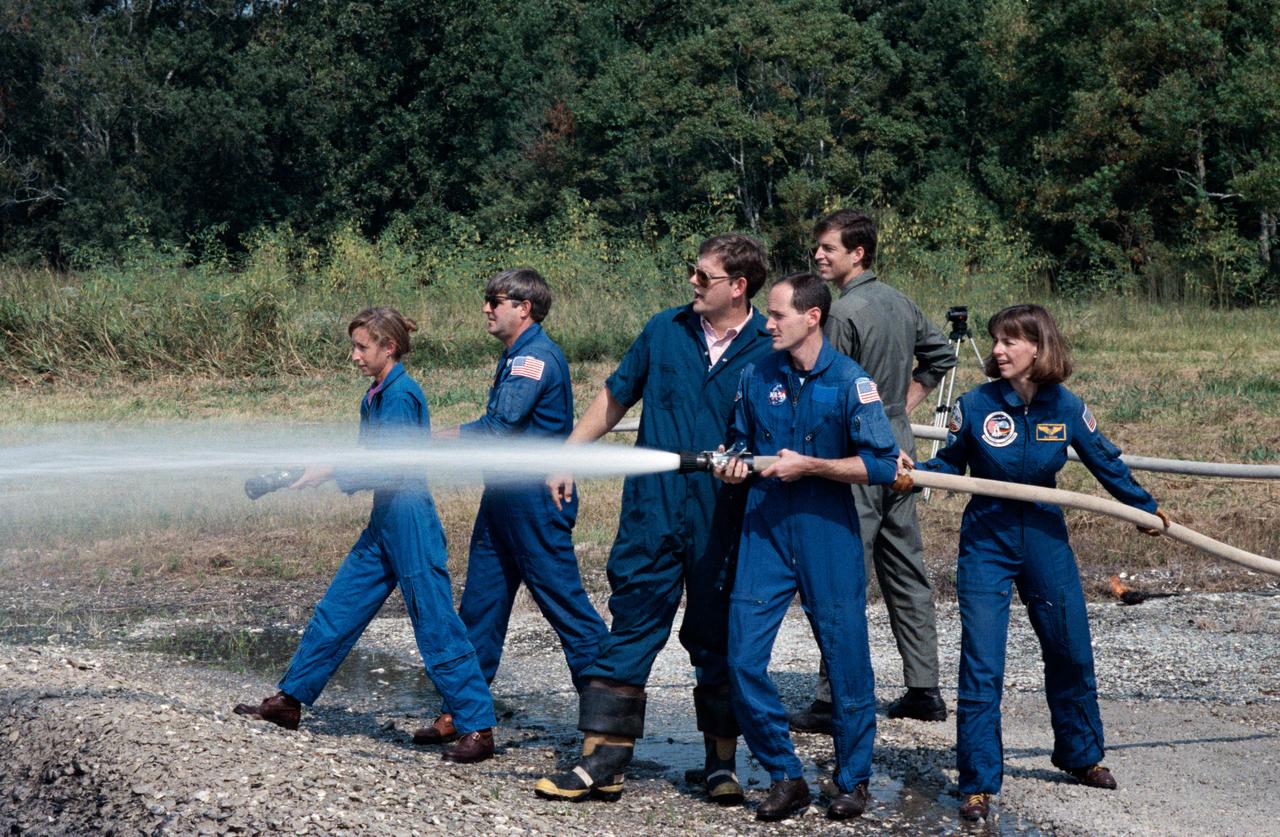
STS-32 crewmembers use water hoses during fire fighting exercises at JSC's Fire Training Pit across from the Gilruth Center Bldg 207. Mission Specialist (MS) G. David Low with nozzle open directs water into the fire as fire/ security personnel coaches and instructs him on his attempt to extinguish the blaze. MS Bonnie J. Dunbar maneuvers the hose behind Low. A second group of crewmembers alongside Low and Dunbar, MS Marsha S. Ivins, holding hose nozzle, Commander Daniel C. Brandenstein, and Pilot James D. Wetherbee position themselves before opening hose nozzle.
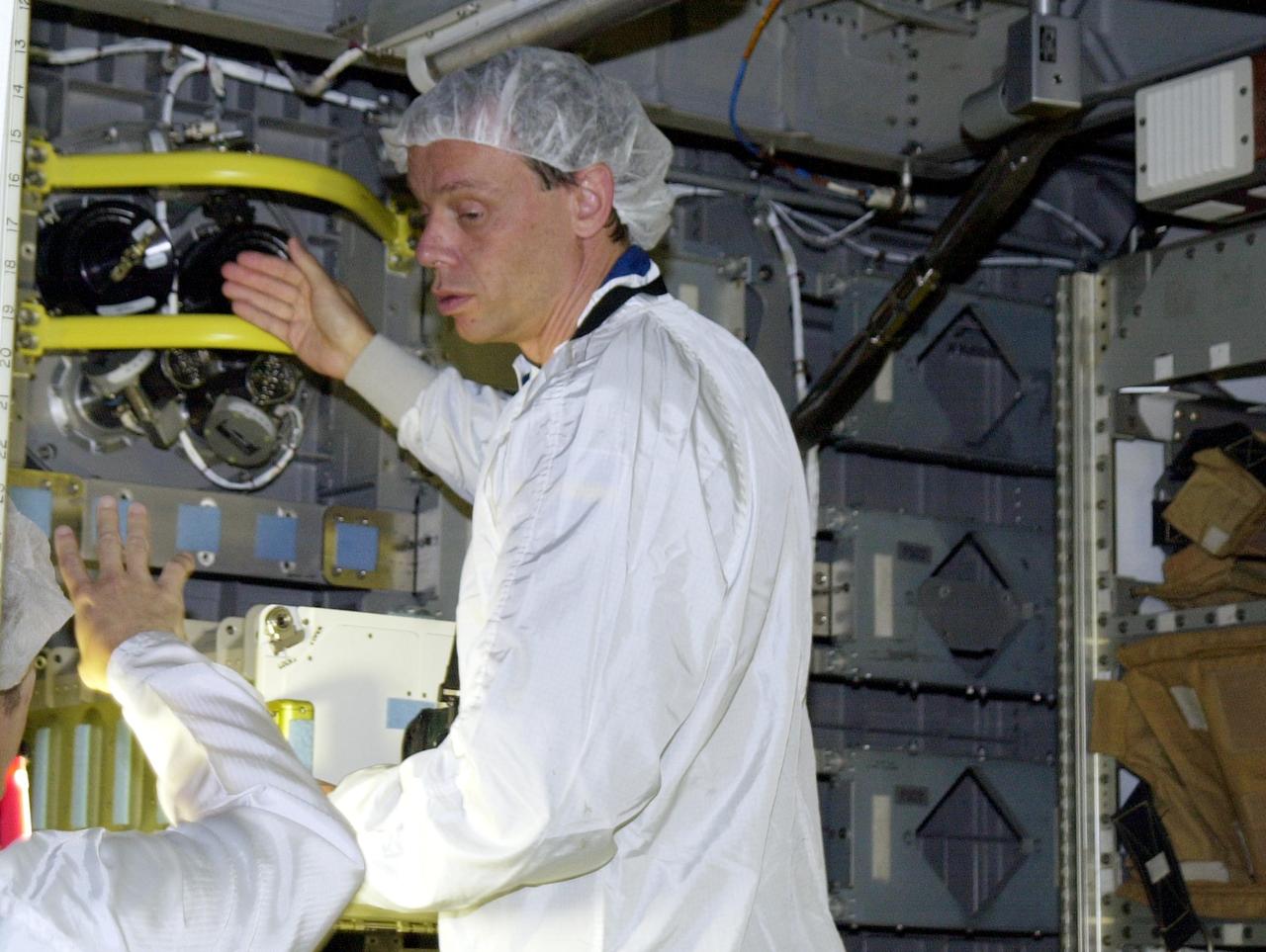
KENNEDY SPACE CENTER, FLA. -- STS-116 Mission Specialist Christer Fugelsang, who is with the European Space Agency, gets instruction about a piece of equipment in the SPACEHAB module. He and other crew members are taking part in equipment familiarization. Objective of their mission to the International Space Station is to deliver and attach the third port truss segment, the P5 Truss, deactivate and retract P6 Truss Channel 4B (port-side) solar array, reconfigure station power from 2A and 4A solar arrays, deliver the Expedition 8 crew to the Station and return the Expedition 7 crew to Earth. The mission is currently targeted for launch in July 2003.
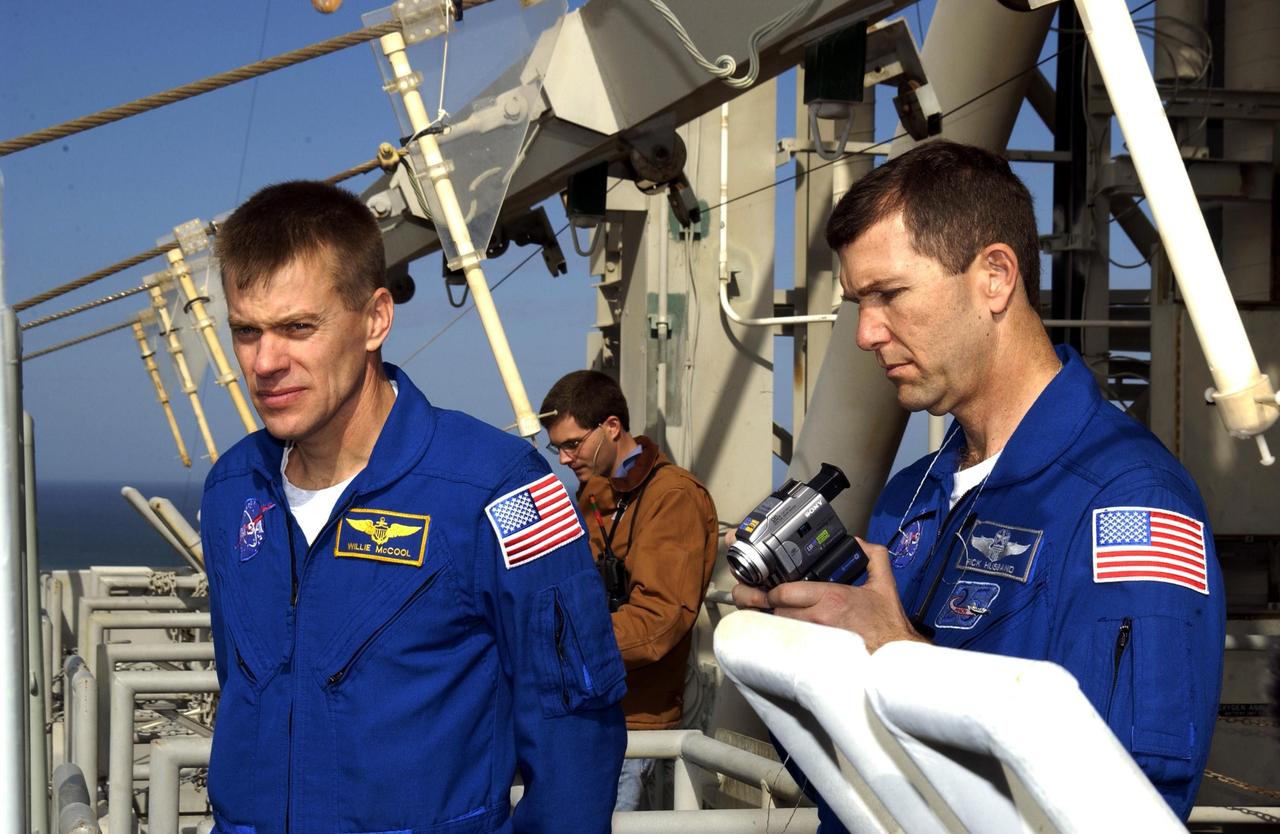
KENNEDY SPACE CENTER, FLA. -- The STS-107 crew gets instruction on emergency egress from the pad during Terminal Countdown Demonstration Test activities. Seen are Pilot William "Willie" McCool and Commander Rick Husband. The TCDT also includes a simulated launch countdown. STS-107 is a mission devoted to research and will include more than 80 experiments that will study Earth and space science, advanced technology development, and astronaut health and safety. Launch is planned for Jan. 16, 2003, between 10 a.m. and 2 p.m. EST aboard Space Shuttle Columbia. .
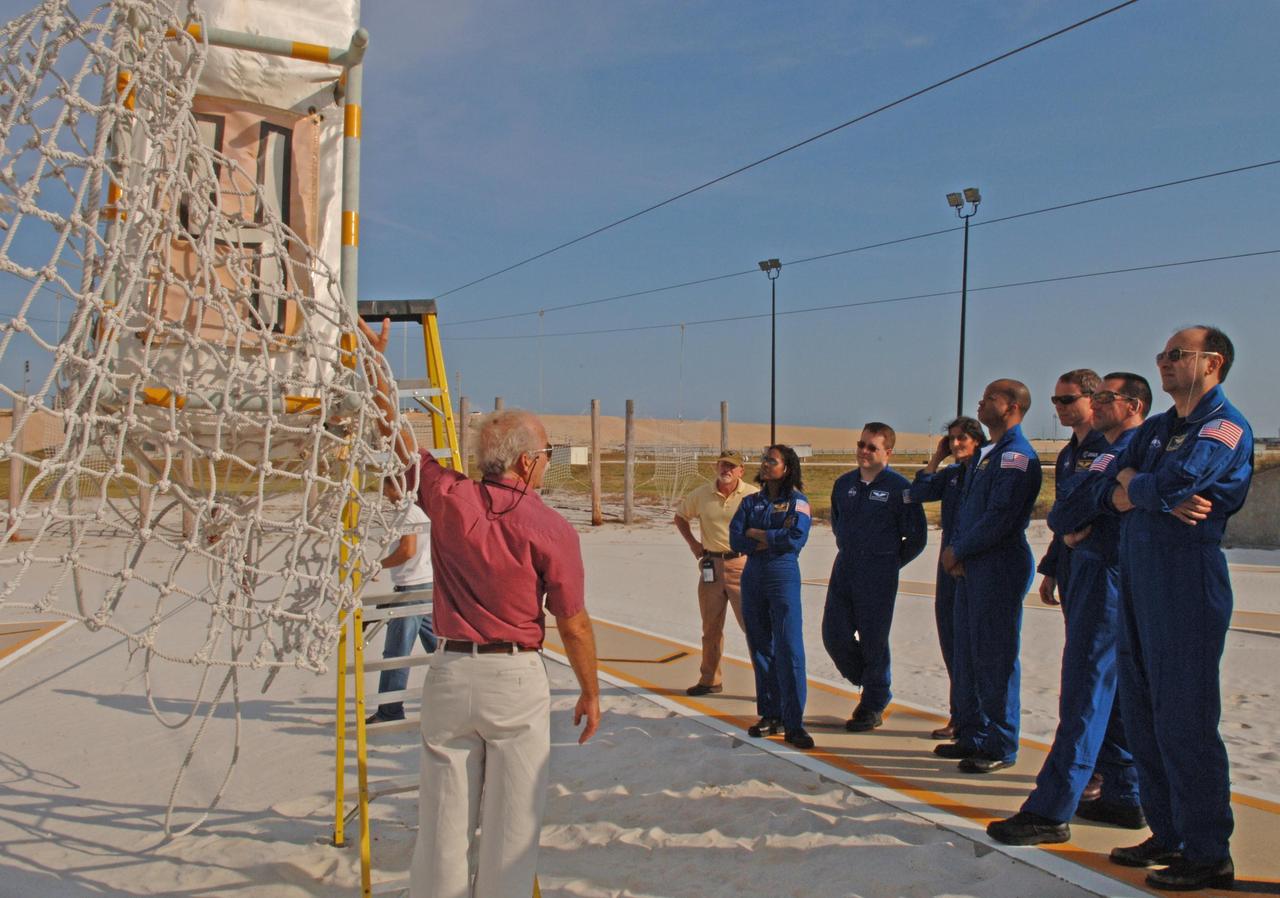
KENNEDY SPACE CENTER, FLA. -- At the slidewire basket landing area at Launch Pad 39B, STS-116 crew members get instructions for exiting the baskets used for emergency egress from the orbiter. Standing at right are (from left) Mission Specialists Joan Higginbotham, Nicholas Patrick, Sunita Williams, Robert Curbeam and Christer Fuglesang; Pilot William Oefelein; and Commander Mark Polansky. The STS-116 mission is No. 20 to the International Space Station and construction flight 12A.1. The mission payload is the SPACEHAB module, the P5 integrated truss structure and other key components. Launch is scheduled for no earlier than Dec. 7. Photo credit: NASA/Kim Shiflett
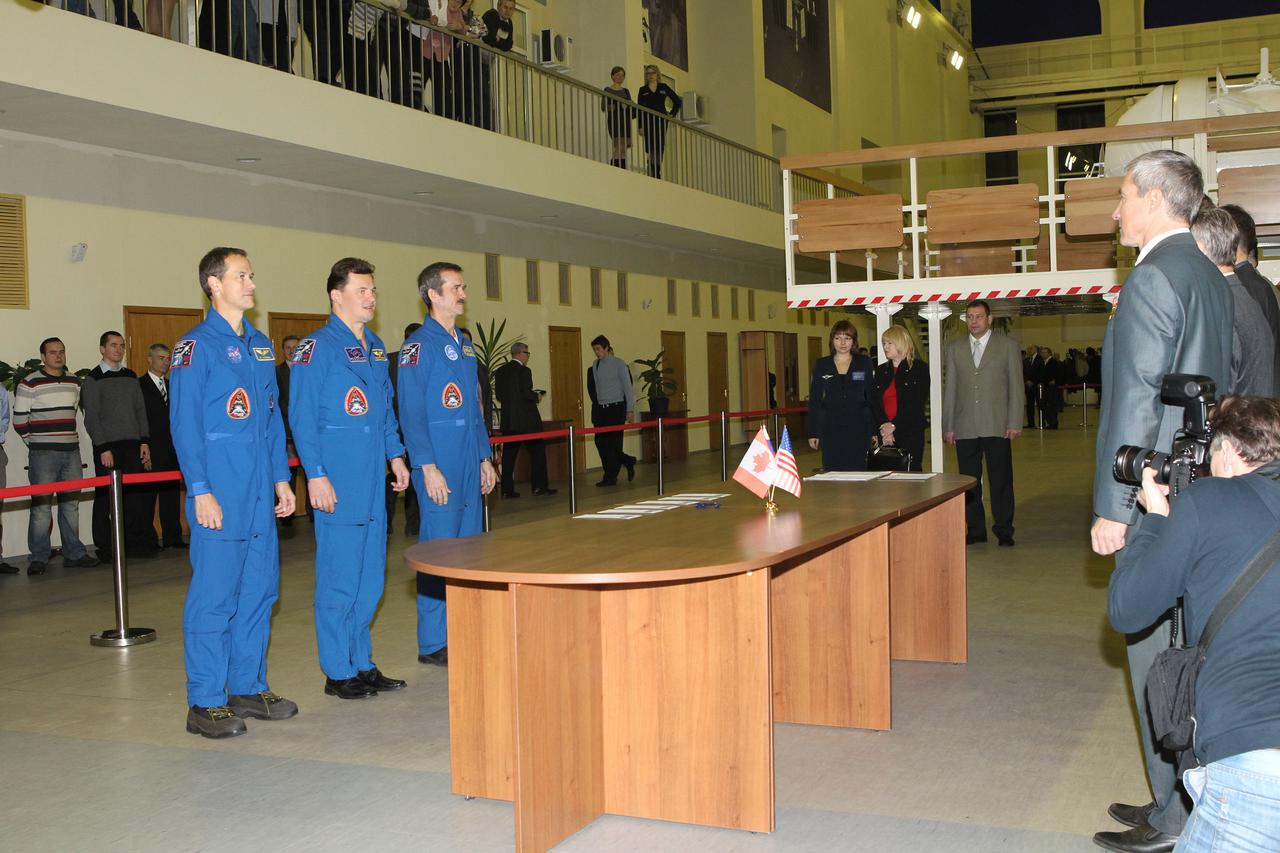
At the Gagarin Cosmonaut Training Center (GCTC) in Star City, Russia, the next trio of residents to be launched to the International Space Station began two days of certification exams for flight Nov. 27, 2012. Expedition 34/35 NASA Flight Engineer Tom Marshburn (left), Soyuz Commander Roman Romanenko (center) and Flight Engineer Chris Hadfield of the Canadian Space Agency received preliminary instructions from GCTC Director Sergei Krikalev (far right). Romanenko, Marshburn and Hadfield and their backups are in the final weeks of training for launch on the Soyuz TMA-07M spacecraft from the Baikonur Cosmodrome in Kazakhstan on Dec. 19 for 5 ½ months on the orbital laboratory. NASA/Stephanie Stoll

KENNEDY SPACE CENTER, FLA. - In the Space Station Processing Facility, STS-116 Pilot William Oefelein gets instruction on work to be done installing the port integrated truss structure, P5, on the International Space Station. The crew is taking part in a Crew Equipment Interface Test that enables them to become familiar with the equipment and payloads they will be using. STS-116 will be mission No. 20 to the International Space Station and construction flight 12A.1. The mission payload is the SPACEHAB module, the P5 integrated truss structure and other key components. Launch is scheduled for no earlier than Dec. 7. Photo credit: NASA/Kim Shiflett
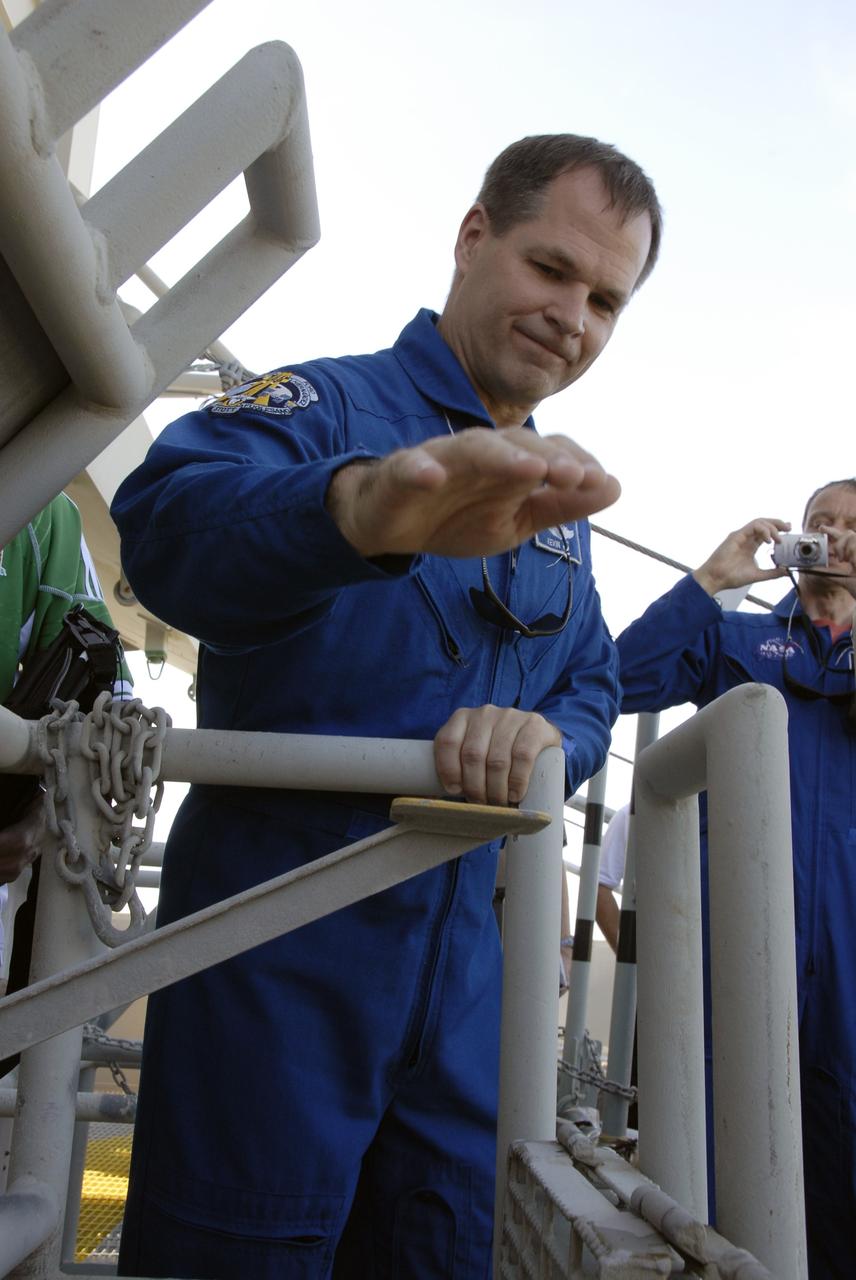
CAPE CANAVERAL, Fla. – STS-128 Pilot Kevin Ford gets ready to push the lever for the slidewire basket on Launch Pad 39A at NASA's Kennedy Space Center in Florida. He and other crew members are being instructed in emergency exit procedures from the pad. The crew is at Kennedy for a launch dress rehearsal called the terminal countdown demonstration test, or TCDT, which includes emergency exit training and equipment familiarization, as well as a simulated launch countdown. Discovery will deliver 33,000 pounds of equipment to the station, including science and storage racks, a freezer to store research samples, a new sleeping compartment and the COLBERT treadmill. Photo credit: NASA/Kim Shiflett
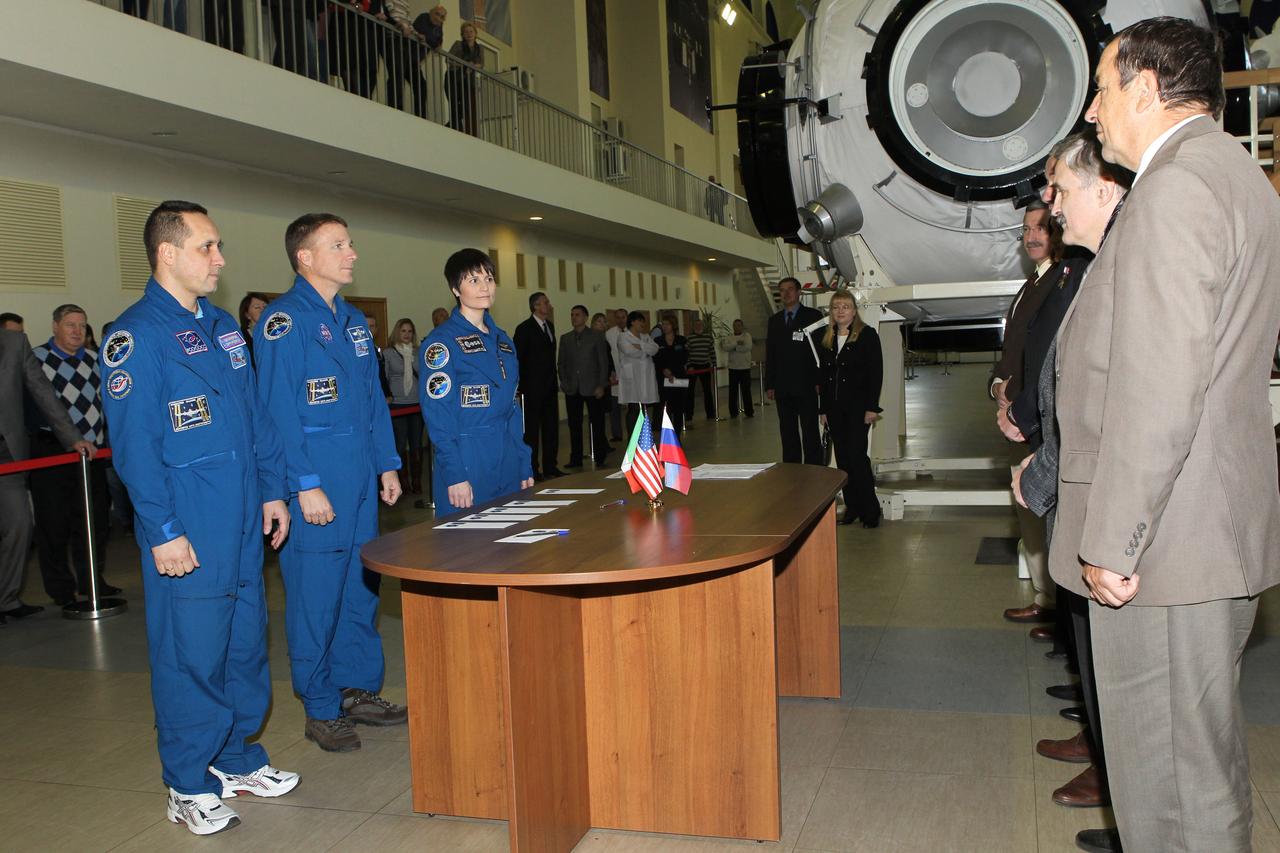
#3333 - (30 October 2014) --- At the Gagarin Cosmonaut Training Center in Star City, Russia, Expedition 42/43 Soyuz Commander Anton Shkaplerov of Roscosmos (left), Flight Engineer Terry Virts of NASA (center) and Flight Engineer Samantha Cristoforetti of the European Space Agency (right) listen to instructions from Russian space officials at the start of their qualification exams October 30. The trio is preparing for launch to the International Space Station from the Baikonur Cosmodrome in Kazakhstan on November 24, Kazakh time, in the Soyuz TMA-15M spacecraft to begin a five and a half month mission on the International Space Station. Photo credit: NASA/Stephanie Stoll
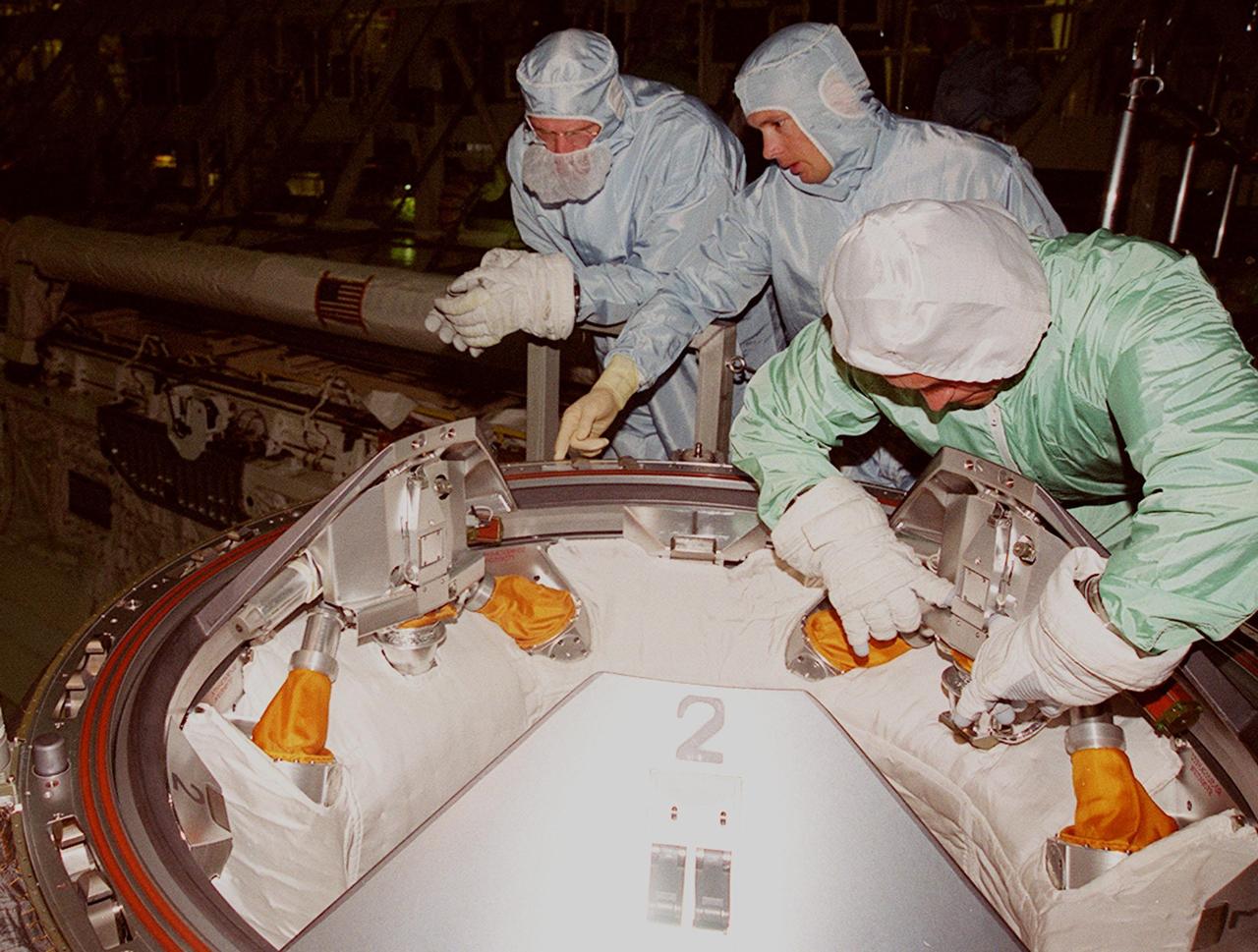
KENNEDY SPACE CENTER, FLA. -- In Orbiter Processing Facility (OPF) bay 2 during Crew Equipment Interface Test (CEIT), Mission Specialist Joe Tanner (left) gets instruction from a worker while Mission Specialist Carlos Noriega (right) practices working latches on the Orbital Docking System in Endeavour’s payload bay. The CEIT provides an opportunity for crew members to check equipment and facilities that will be on board the orbiter during their mission. The STS-97 mission will be the sixth construction flight to the International Space Station. The payload includes a photovoltaic (PV) module, providing solar power to the Station. STS-97 is scheduled to launch Nov. 30 from KSC for the 10-day mission
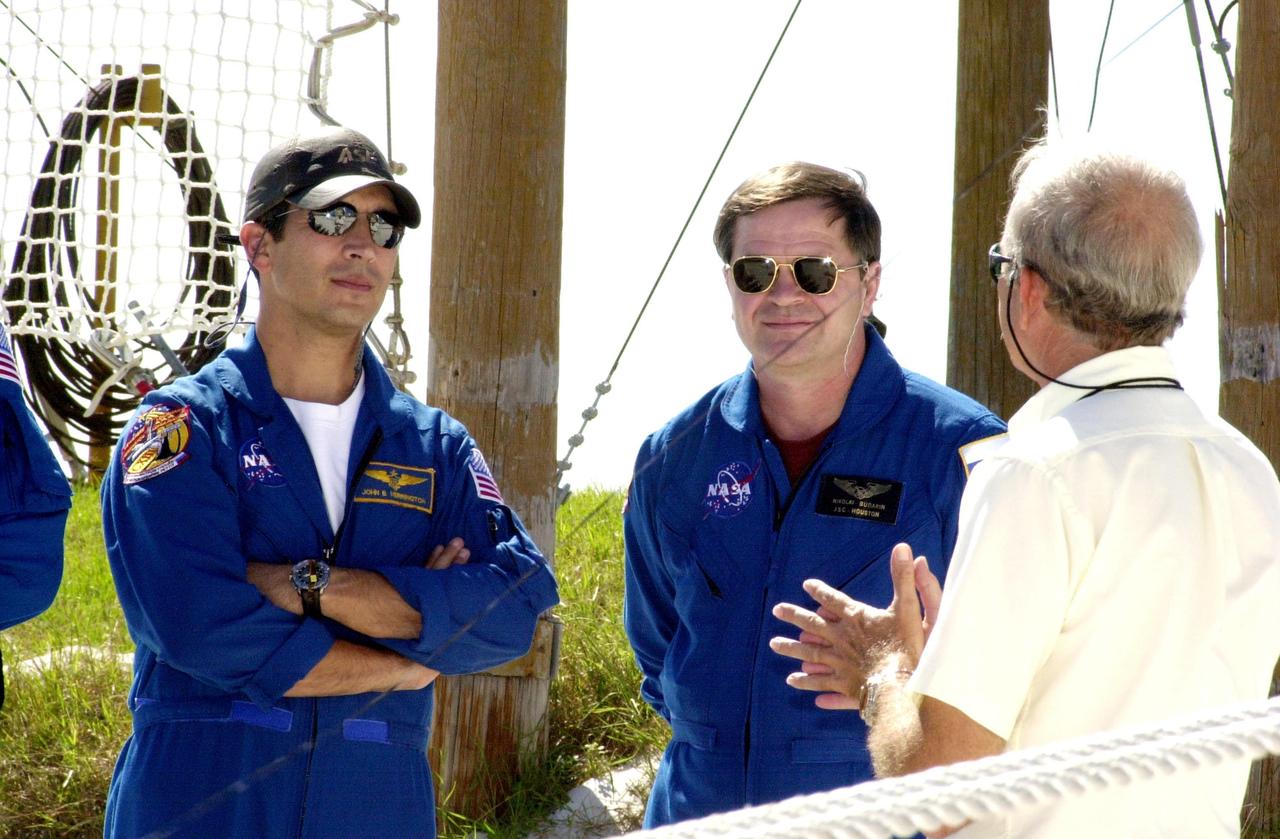
KENNEDY SPACE CENTER, FLA. - STS-113 Mission Specialist John Herrington (left) and cosmonaut Nikolai Budarin (center) listen to instructions from a trainer on the emergency egress system on Launch Pad 39A. They are other crew members are taking part in Terminal Countdown Demonstration Test (TCDT) activities, which also include a simulated launch countdown. The 16th assembly flight to the International Space Station, STS-113 will carry the Port 1 (P1) truss aboard Space Shuttle Endeavour as well as the Expedition 6 crew, who will replace Expedition 5 on the Station. Mission STS-113 is scheduled to launch Nov. 10, 2002.
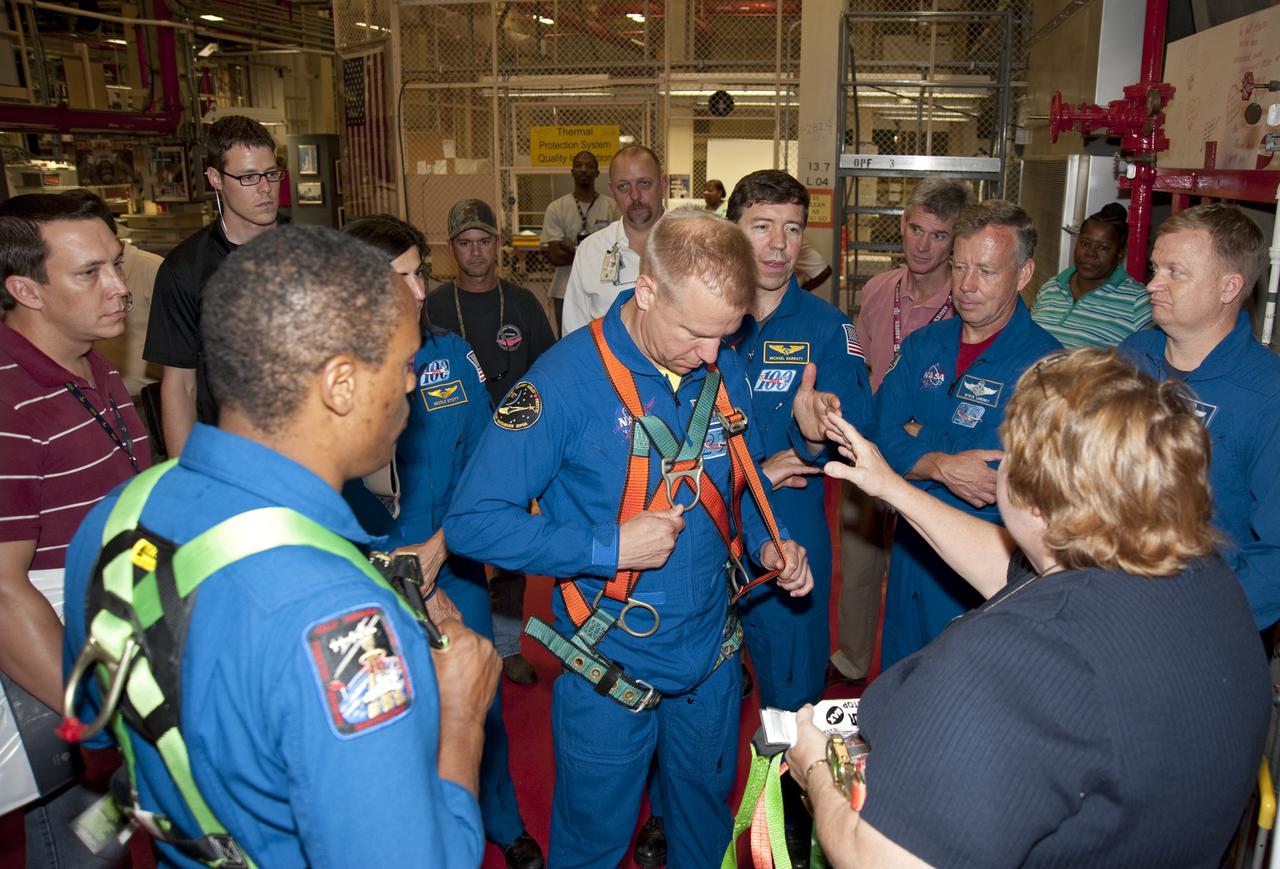
CAPE CANAVERAL, Fla. -- In Orbiter Processing Facility-3 at NASA's Kennedy Space Center in Florida, the STS-133 crew members are instructed on the correct fit of a harness. From right are Pilot Eric Boe, Commander Steve Lindsey, Mission Specialists Michael Barratt, Tim Kopra (with harness) Nicole Stott and Alvin Drew. The astronauts are at Kennedy for the Crew Equipment Interface Test, or CEIT, which provides the crew with hands-on training and observation of shuttle and flight hardware for their mission to the International Space Station. Launch of the STS-133 mission on space shuttle Discovery is targeted for Nov. 1 at 4:33 p.m. EDT. Photo credit: NASA_Kim Shiflett
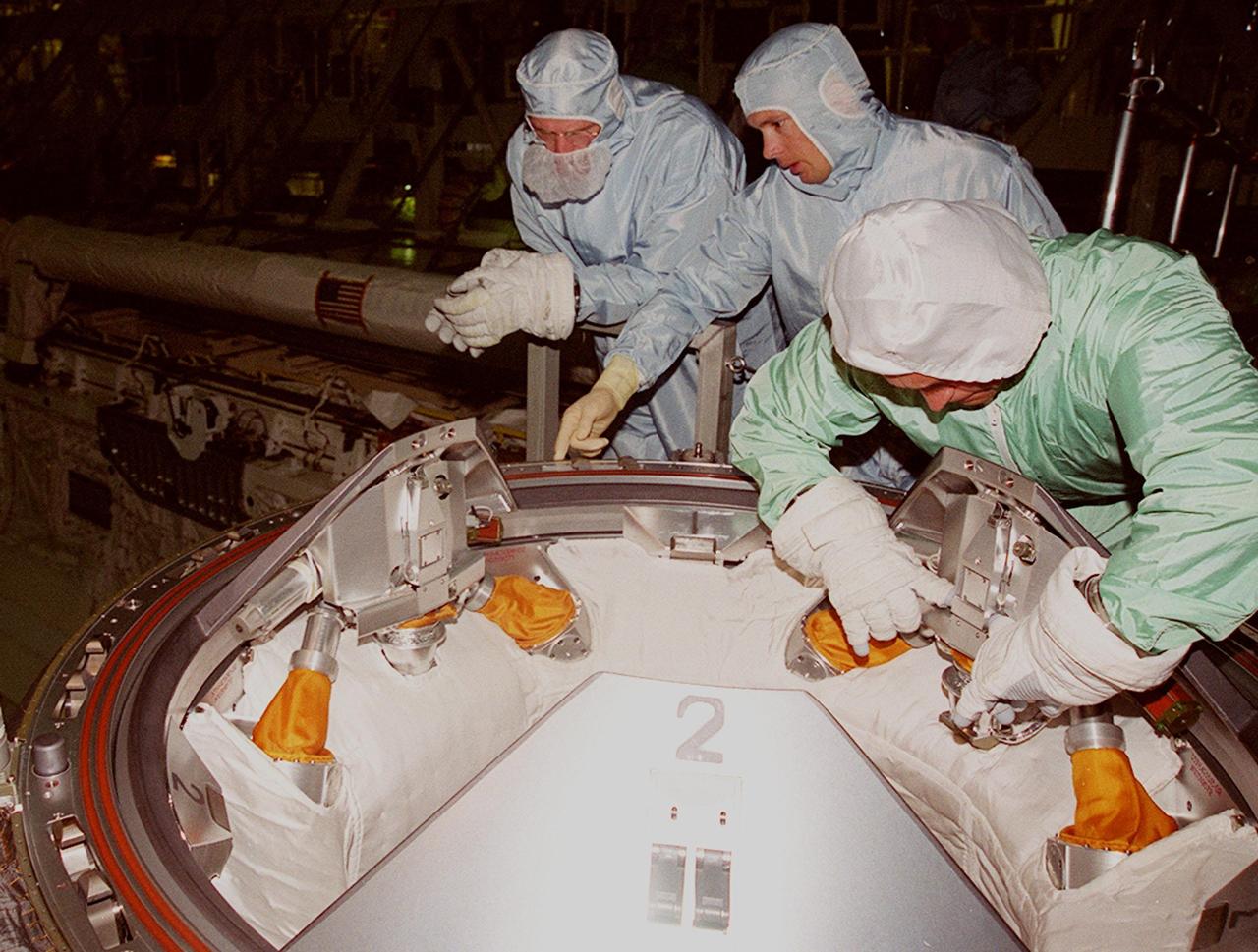
KENNEDY SPACE CENTER, FLA. -- In Orbiter Processing Facility (OPF) bay 2 during Crew Equipment Interface Test (CEIT), Mission Specialist Joe Tanner (left) gets instruction from a worker while Mission Specialist Carlos Noriega (right) practices working latches on the Orbital Docking System in Endeavour’s payload bay. The CEIT provides an opportunity for crew members to check equipment and facilities that will be on board the orbiter during their mission. The STS-97 mission will be the sixth construction flight to the International Space Station. The payload includes a photovoltaic (PV) module, providing solar power to the Station. STS-97 is scheduled to launch Nov. 30 from KSC for the 10-day mission
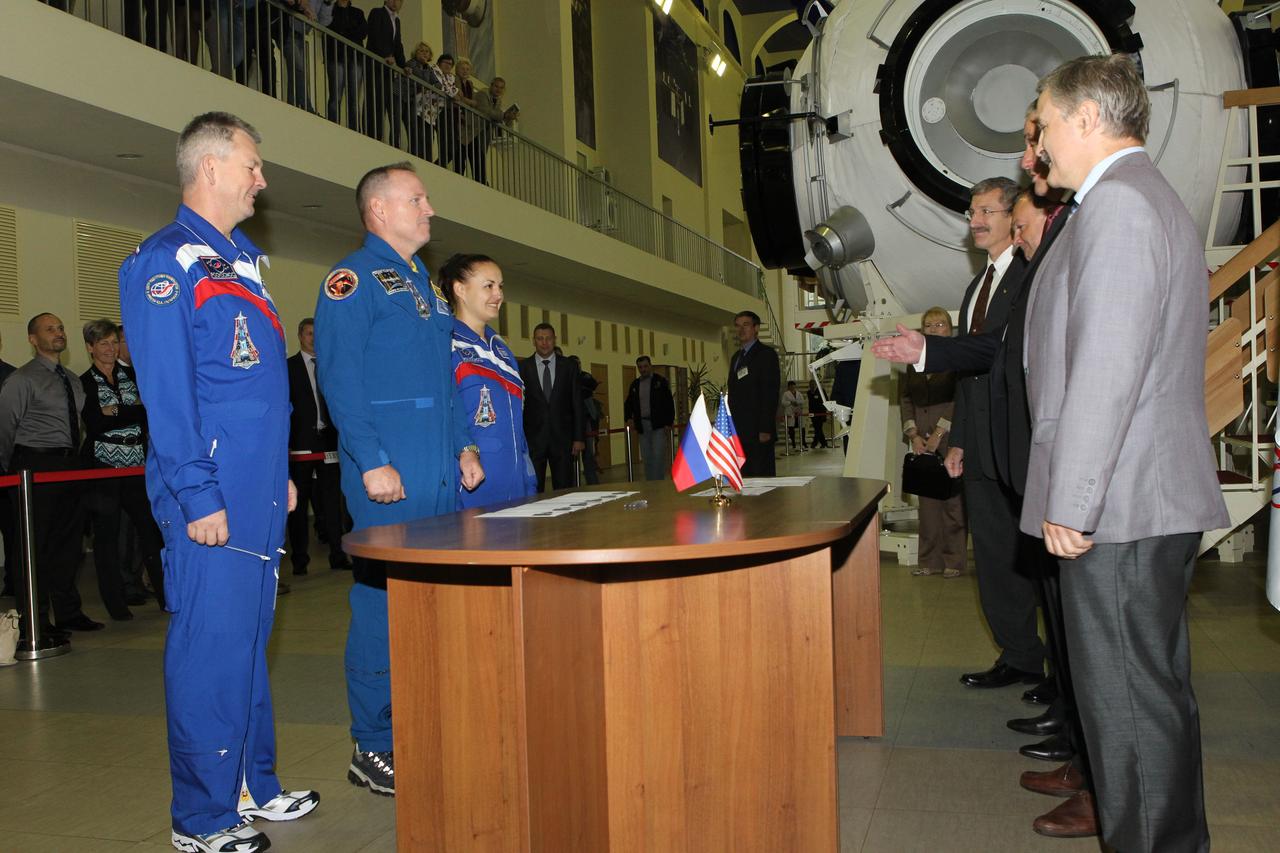
1863: At the Gagarin Cosmonaut Training Center in Star City, Russia, Expedition 41/42 prime crewmembers Alexander Samokutyaev of the Russian Federal Space Agency (left), NASA’s Barry Wilmore (center) and Elena Serova of Roscosmos (right) listen to instructions from officials September 3 at the start of final qualification exams. They will launch September 26 from the Baikonur Cosmodrome in Kazakhstan, Kazakh time, in the Soyuz TMA-14M spacecraft for a 5 ½ month mission on the International Space Station. Serova will become only the fourth Russian woman to fly in space and the first Russian woman to conduct a long duration mission on the station. NASA/Stephanie Stoll

KENNEDY SPACE CENTER, FLA. -- On the fixed service structure on Launch Pad 39B, the STS-116 crew gets instruction on using the slidewire baskets for emergency egress from the orbiter. The astronauts seen here are (from left) Mission Specialists Robert Curbeam and Nicholas Patrick, Pilot William Oefelein and Commander Mark Polansky. The mission crew is at KSC for the TCDT, which includes a simulated launch countdown. The STS-116 mission is No. 20 to the International Space Station and construction flight 12A.1. The mission payload is the SPACEHAB module, the P5 integrated truss structure and other key components. Launch is scheduled for no earlier than Dec. 7. Photo credit: NASA/Kim Shiflett
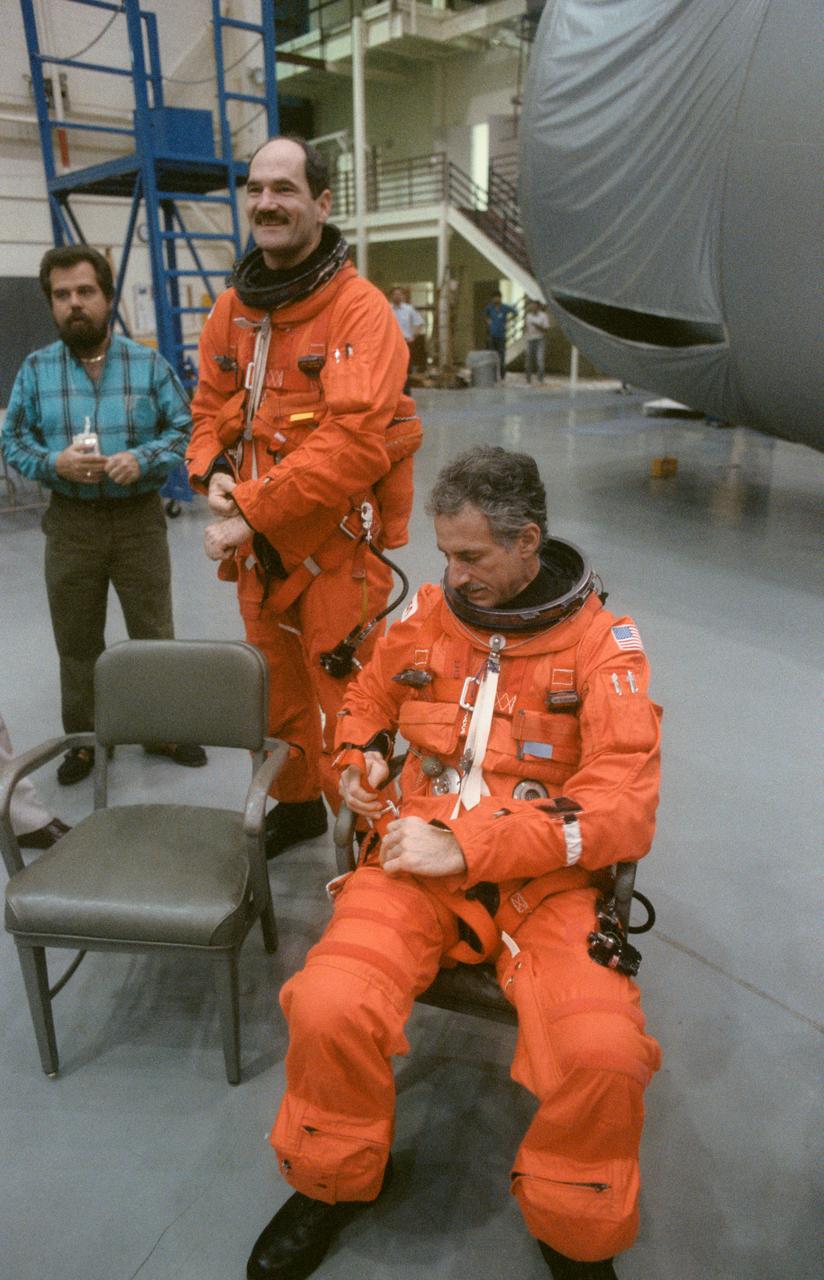
S90-28710 (12 Feb 1990) --- Astronaut Guy S. Gardner, STS-35 pilot, (standing) and Jeffrey A. Hoffman, mission specialist, prepare for egress training at the Johnson Space Center?s (JSC) Mockup and Integration Laboratory (MAIL) Bldg 9A. Gardner and Hoffman, wearing orange launch and entry suits (LES), adjust their parachute harnesses as they listen to instructions before training begins. The astronaut crewmembers and payload specialists for the scheduled May flight were specifically learning proper measures to take in the event of an emergency on the launch pad necessitating emergency evacuation of the orbiter.
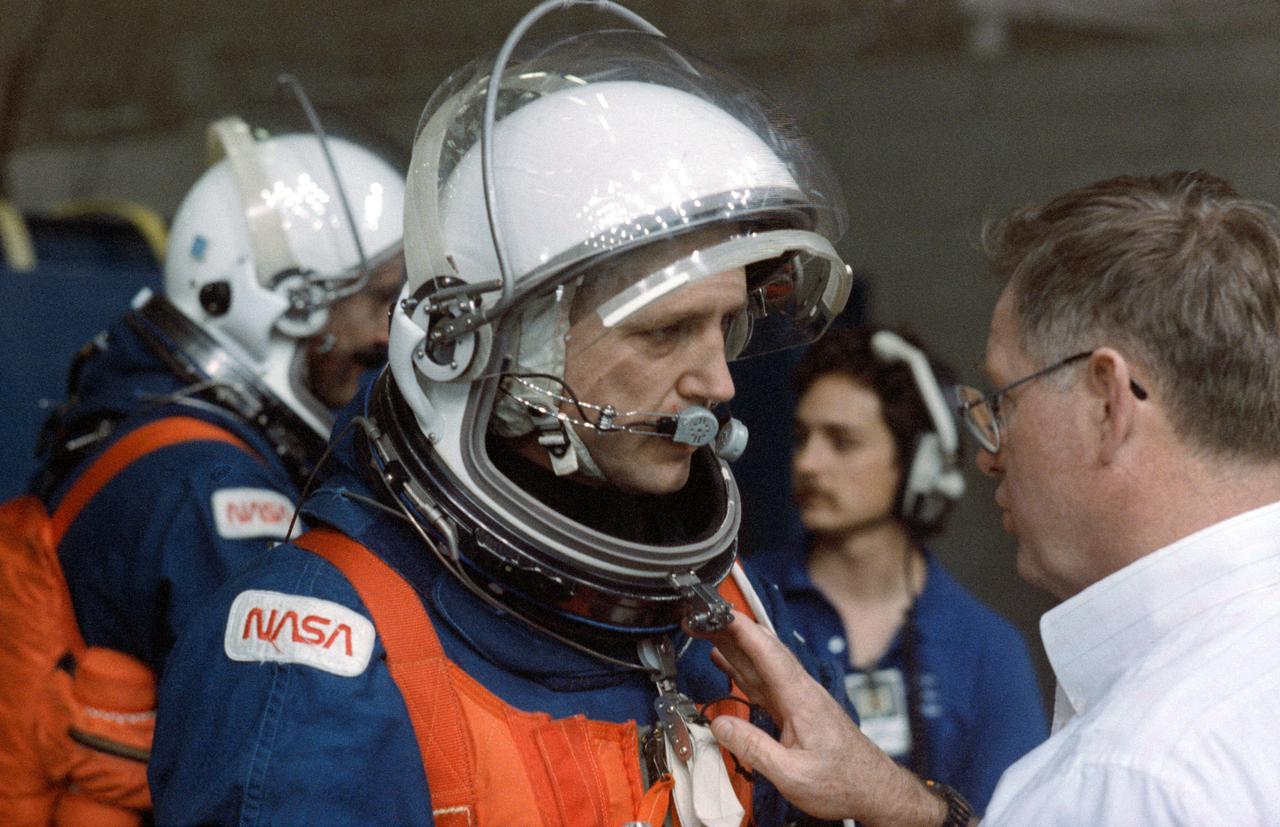
S92-26413 (March 1992) --- Astronaut Thomas D. Akers, left, is briefed by suit technician Alan M. Rochford of JSC's EVA branch office during a bailout training exercise in the Johnson Space Center's weightless environment training facility (WET-F). Akers was joined by six crewmates for the training session in the Johnson Space Center's Shuttle Mockup and Integration Laboratory. The seven will be aboard Endeavour in May for a week-long mission, during which a satellite will be retrieved and boosted toward a higher orbit, and extravehicular activity evaluations for Space Station Freedom assembly techniques will be conducted.

S88-54948 (6 Dec 1988) --- The STS-29 crewmembers are trained in procedures to follow in the event of a fire with their spacecraft. Here, the crew is briefed on correct handling of the fire extinguisher by Robert Fife (far left) of NASA's fire and security staff. Pictured, left to right, are Astronauts John E. Blaha, pilot; Michael L. Coats, mission commander; Robert C. Springer, James F. Buchli and James P. Bagian, mission specialists. The training exercise took place on the northern end of the 1625-acre JSC facility.
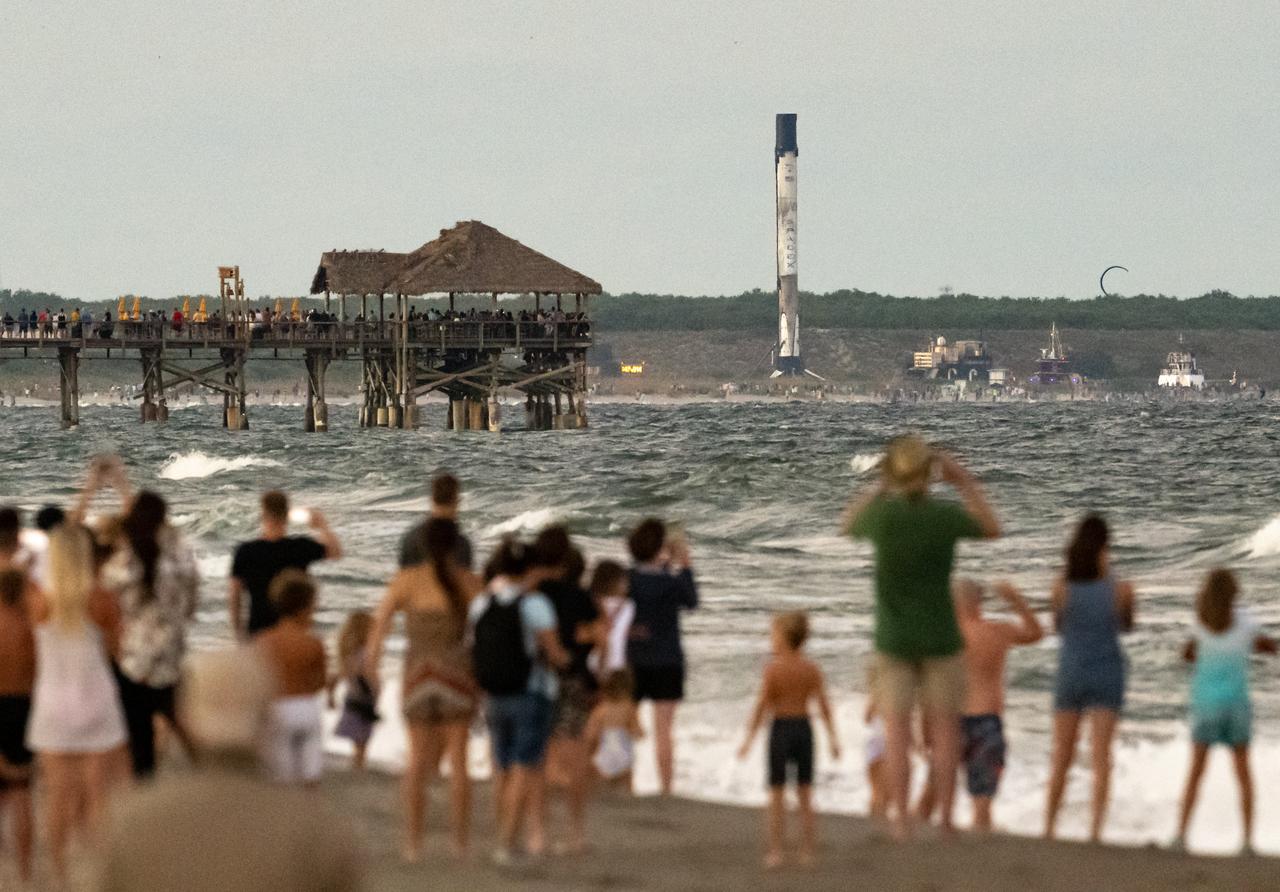
Beach goers watch as the Falcon 9 rocket booster used for NASA’s SpaceX Crew-5 launch, sitting atop the autonomous spaceport drone ship (ASDS), is towed into Port Canaveral, Saturday, Oct. 8, 2022, in Cape Canaveral, Florida. NASA’s SpaceX Crew-5 mission is the fifth crew rotation mission of the SpaceX Crew Dragon spacecraft and Falcon 9 rocket to the International Space Station as part of the agency’s Commercial Crew Program. NASA astronauts Nicole Mann and Josh Cassada, Japan Aerospace Exploration Agency (JAXA) astronaut Koichi Wakata, and Roscosmos cosmonaut Anna Kikina launched on Oct. 5 from Launch Complex 39A at the Kennedy Space Center. Photo Credit: (NASA/Bill Ingalls)
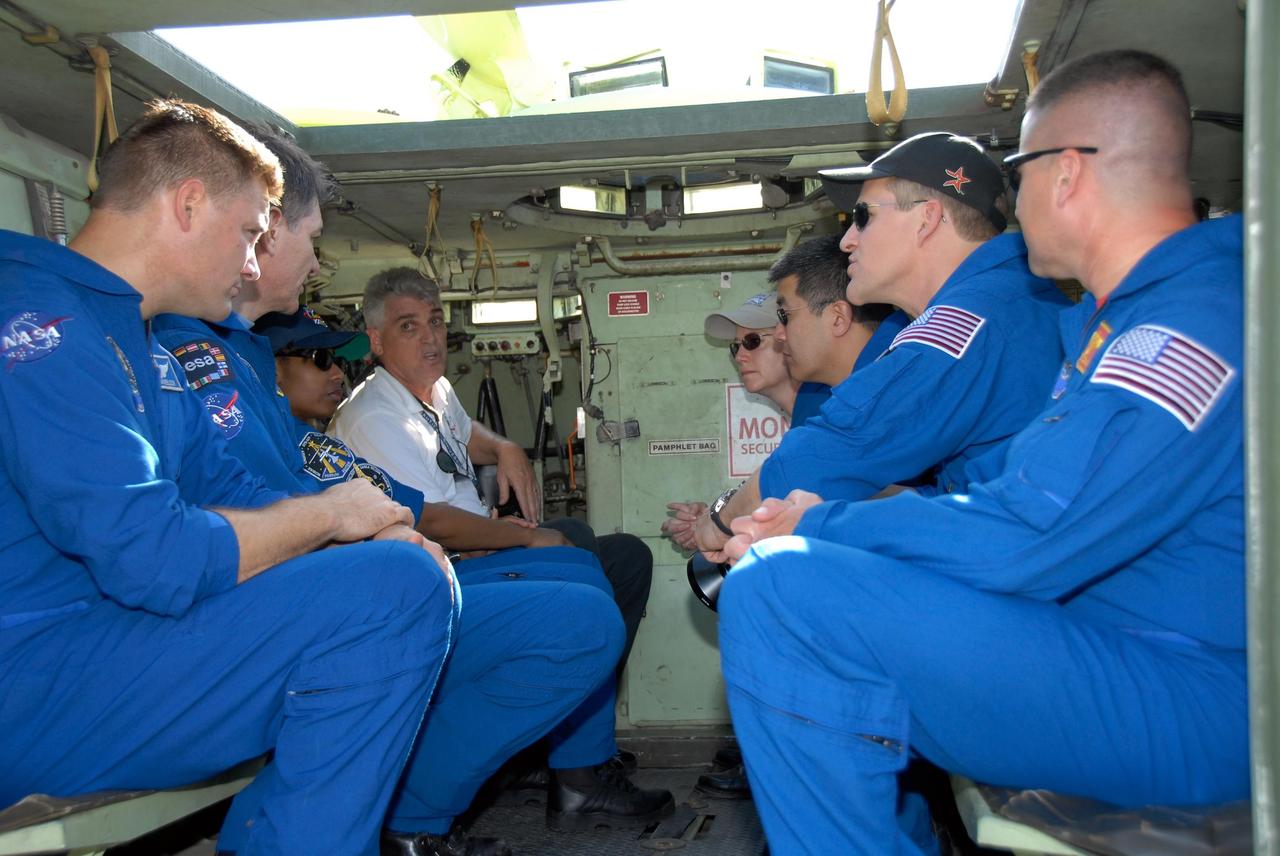
KENNEDY SPACE CENTER, FLA. -- STS-120 crew members listen to instructions about the use of the M-113 armored personnel carrier for emergency exit procedures from Launch Pad 39A. From the front, on the left, are Mission Specialists Doug Wheelock, Paolo Nespoli and Stephanie Wilson; at right are Pilot George Zamka, Mission Specialists Scott Parazynski and Daniel Tani, and Commander Pamela Melroy. Nespoli represents the European Space Agency. The training is part of terminal countdown demonstration test, or TCDT, activities the crew is undertaking at NASA's Kennedy Space Center. The TCDT also includes equipment familiarization and a simulated launch countdown. Mission STS-120, which will carry the Italian-built U.S. Node 2 to the International Space Station, is targeted for launch on Oct. 23. Photo credit: NASA/Kim Shiflett
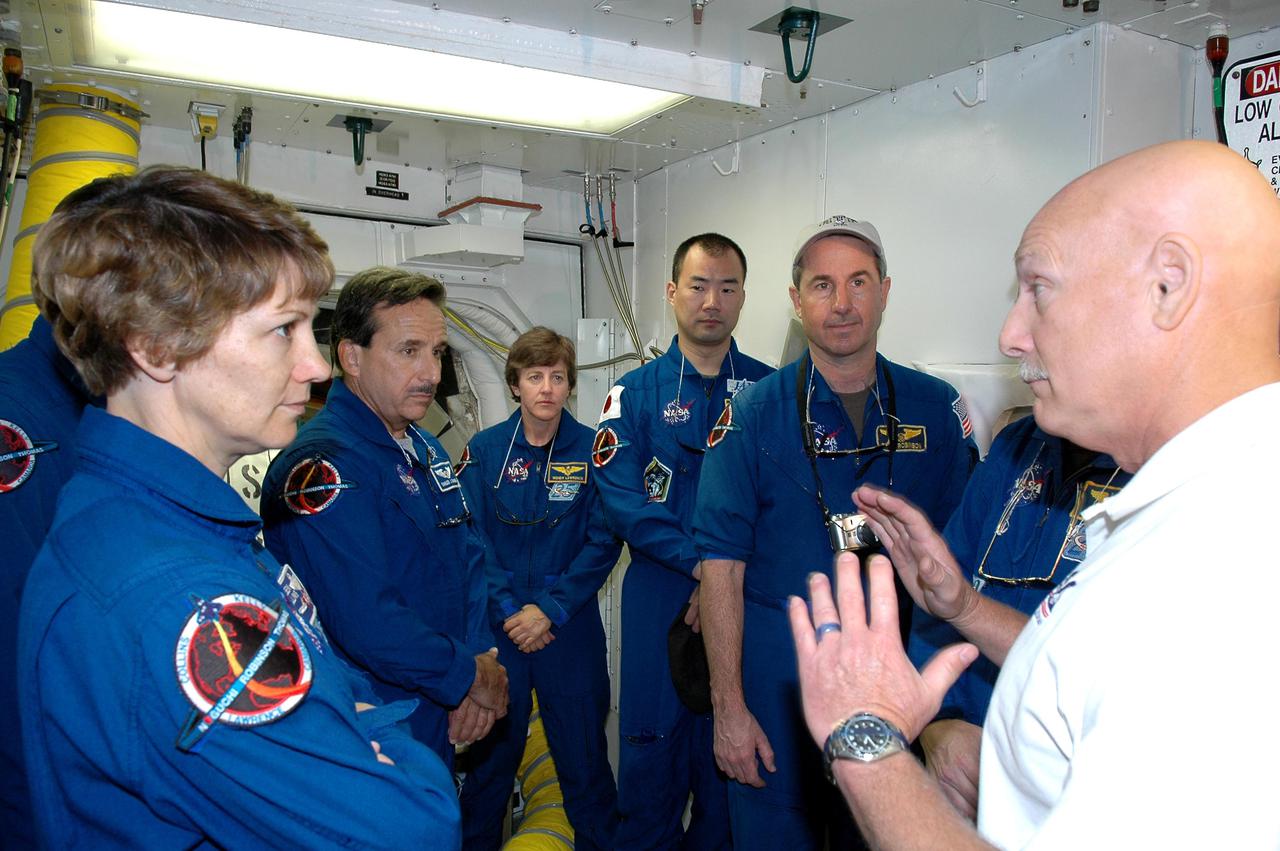
KENNEDY SPACE CENTER, FLA. - During Terminal Countdown Demonstration Test (TCDT) activities, the STS-114 crew gets instructions about the White Room they are in. It is the point of entry into Space Shuttle Discovery. The crew, from left, are Commander Eileen Collins and Mission Specialists Charles Camarda, Wendy Lawrence, Soichi Noguchi and Stephen Robinson. Not seen are Pilot James Kelly and Mission Specialist Andrew Thomas. The TCDT is held at KSC prior to each Space Shuttle flight. It provides the crew of each mission an opportunity to participate in simulated countdown activities. The test ends with a mock launch countdown culminating in a simulated main engine cutoff. The crew also spends time undergoing emergency egress training exercises at the launch pad. STS-114 is designated the first Return to Flight mission, with a launch window extending from July 13 to July 31.
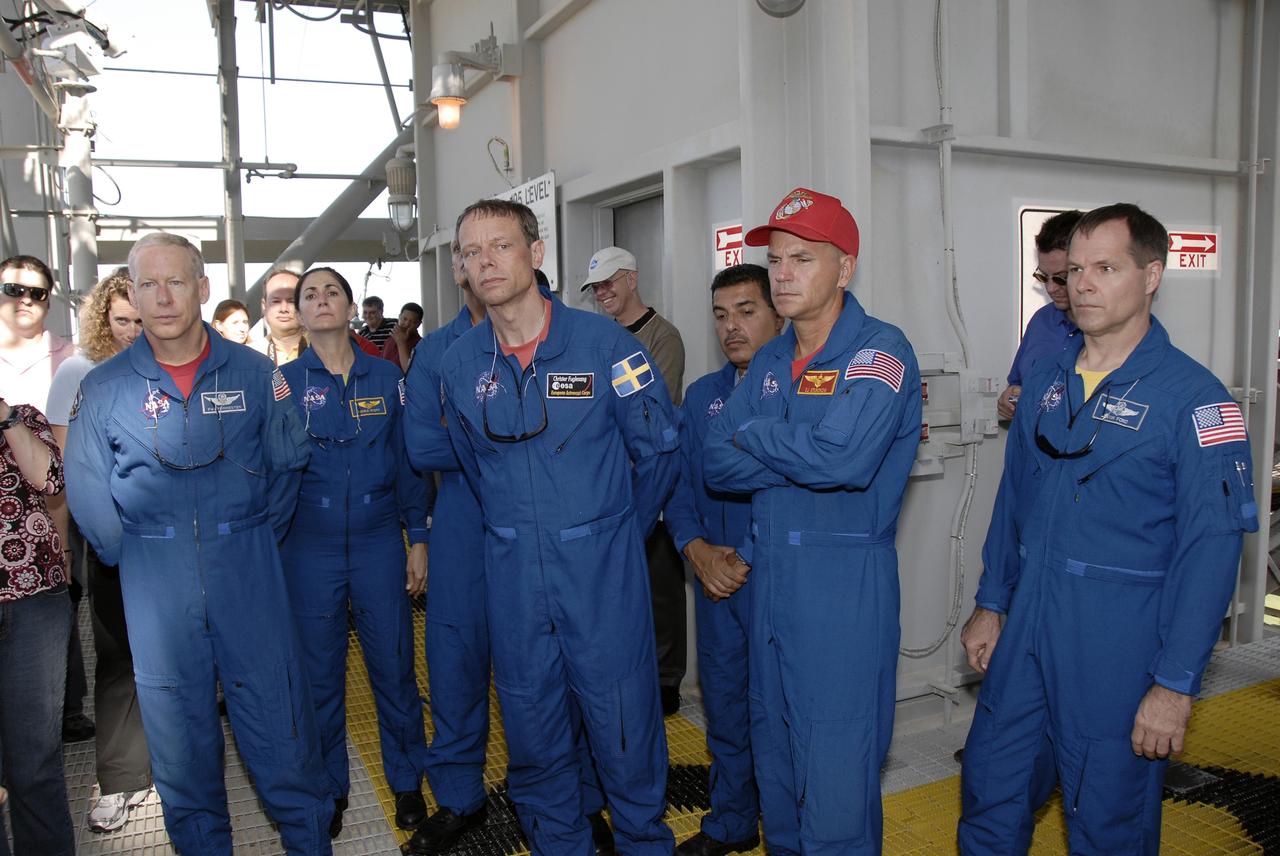
CAPE CANAVERAL, Fla. – At NASA's Kennedy Space Center in Florida, STS-128 crew members get instructions about using slidewire baskets for emergency exit from the fixed service structure on Launch Pad 39A. From left are Mission Specialist Patrick Forrester, Nicole Stott, Christer Fuglesang and Jose Hernandez, Commander Rick Sturckow and Pilot Kevin Ford. The crew is at Kennedy for a launch dress rehearsal called the terminal countdown demonstration test, or TCDT, which includes emergency exit training and equipment familiarization, as well as a simulated launch countdown. Discovery will deliver 33,000 pounds of equipment to the station, including science and storage racks, a freezer to store research samples, a new sleeping compartment and the COLBERT treadmill. Photo credit: NASA/Kim Shiflett
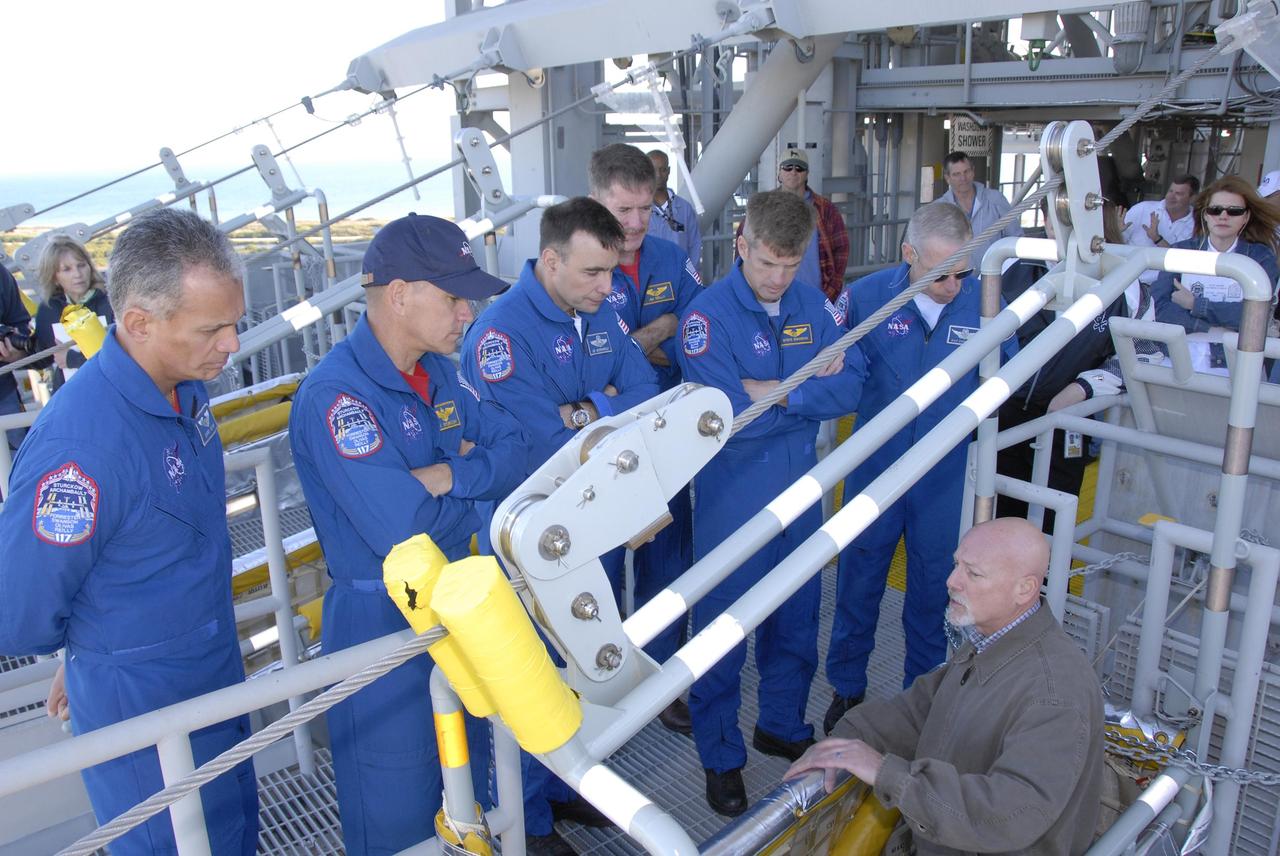
KENNEDY SPACE CENTER, FLA. -- At the 195-foot level of the fixed service structure on Launch Pad 39A, STS-117 crew members receive instruction on emergency egress during Terminal Countdown Demonstration Test activities. From left are Mission Specialist Danny Olivas, Commander Rick Sturckow, Pilot Lee Archambault, and Mission Specialists James Reilly, Steven Swanson and Patrick Forrester. They are practicing the emergency egress procedure using the slidewire basket system to get off the pad. The TCDT also includes M-113 armored personnel carrier training, and a simulated launch countdown. The mission payload aboard Space Shuttle Atlantis is the S3/S4 integrated truss structure, along with a third set of solar arrays and batteries. The crew of six astronauts will install the truss to continue assembly of the International Space Station. Photo credit: NASA/Kim Shiflett
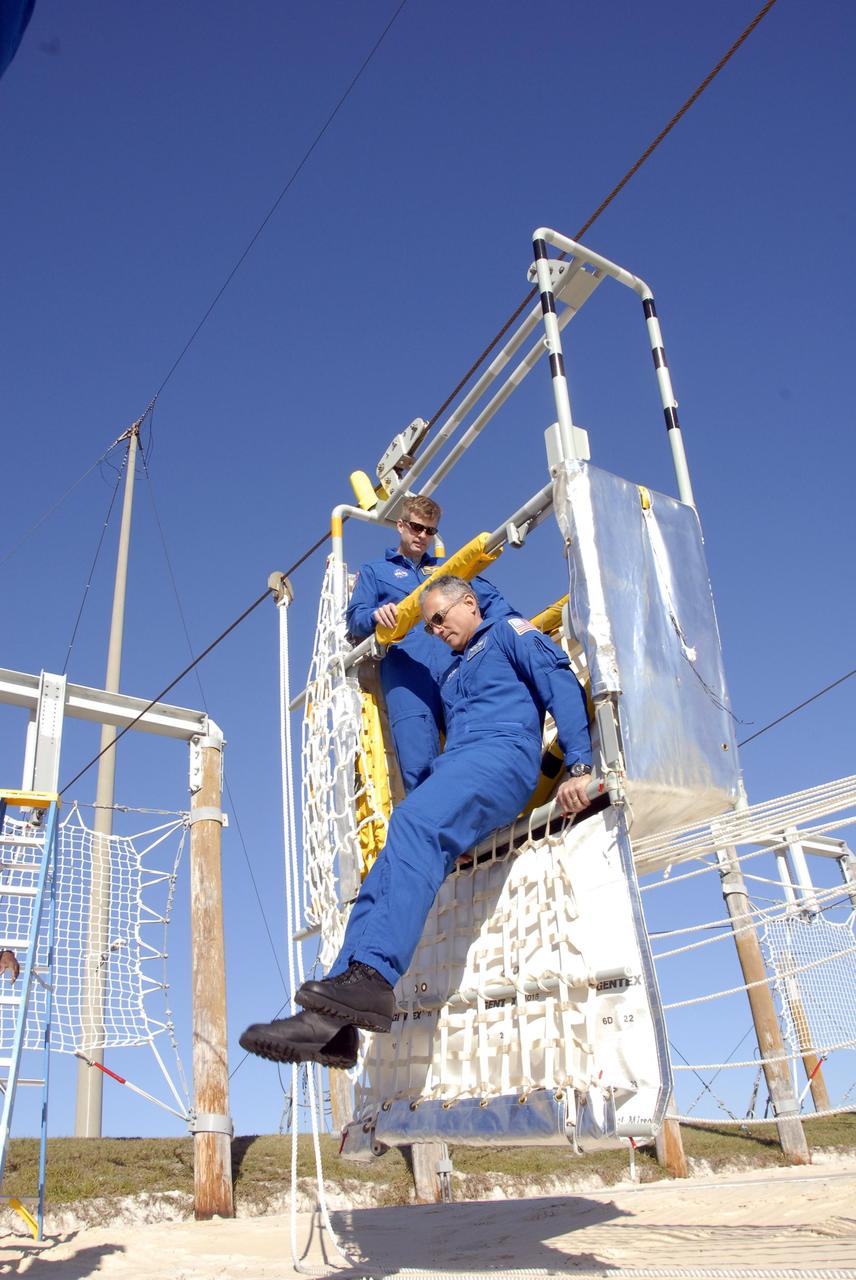
KENNEDY SPACE CENTER, FLA. -- In the Launch Pad 39A area, Mission STS-117 crew members receive instruction on emergency egress using the slidewire basket system during Terminal Countdown Demonstration Test activities. Here, Mission Specialists Steven Swanson (left) and Danny Olivas (right) practice exiting from the slidewire basket. The TCDT also includes M-113 armored personnel carrier training, and a simulated launch countdown. The mission payload aboard Space Shuttle Atlantis is the S3/S4 integrated truss structure, along with a third set of solar arrays and batteries. The crew of six astronauts will install the truss to continue assembly of the International Space Station. Photo credit: NASA/Kim Shiflett