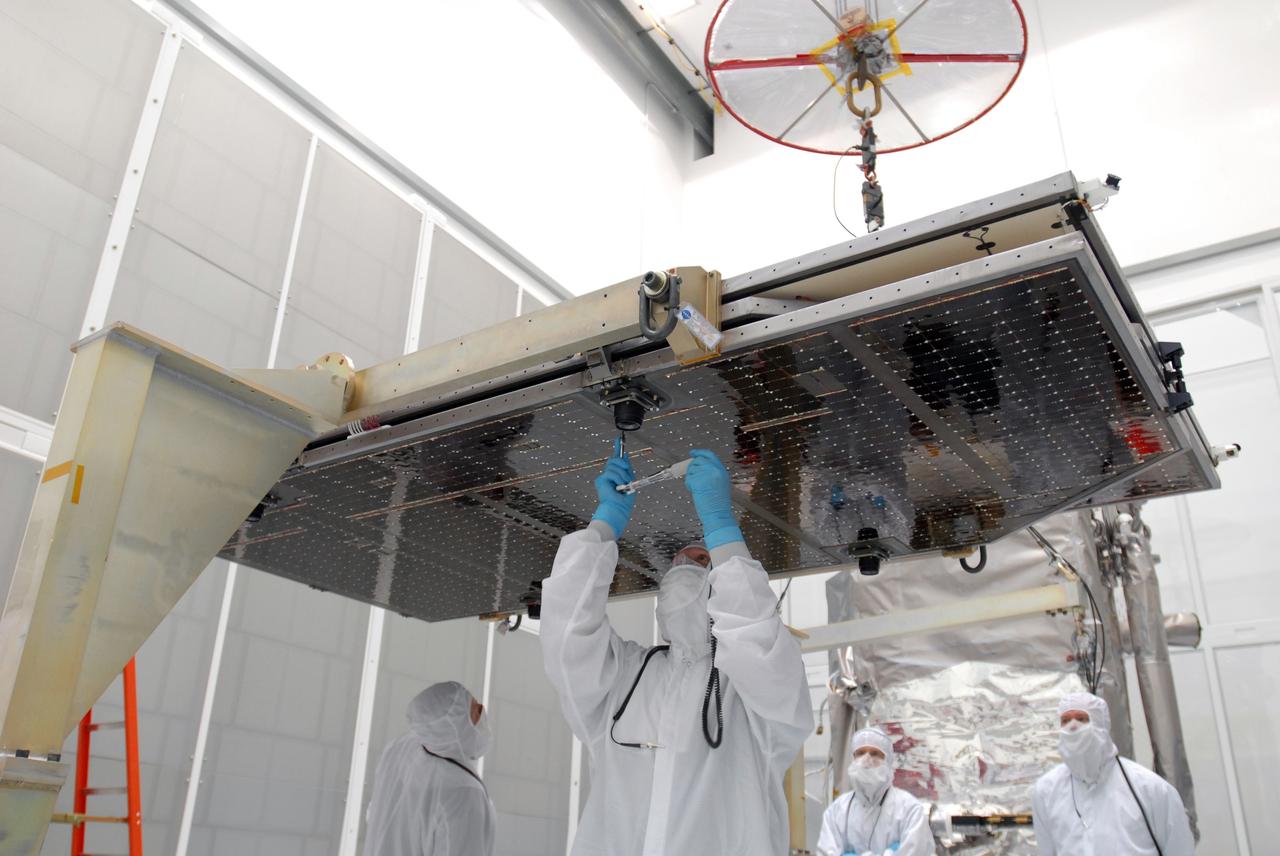
CAPE CANAVERAL, Fla. –– At Astrotech Space Operations in Titusville, Fla., technicians prepare the solar array panel for installation on the Lunar Reconnaissance Orbiter, or LRO. The orbiter will carry seven instruments to provide scientists with detailed maps of the lunar surface and enhance our understanding of the moon's topography, lighting conditions, mineralogical composition and natural resources. Information gleaned from LRO will be used to select safe landing sites, determine locations for future lunar outposts and help mitigate radiation dangers to astronauts. The polar regions of the moon are the main focus of the mission because continuous access to sunlight may be possible and water ice may exist in permanently shadowed areas of the poles. Launch of LRO is targeted for June 2. Photo credit: NASA/Jim Grossmann
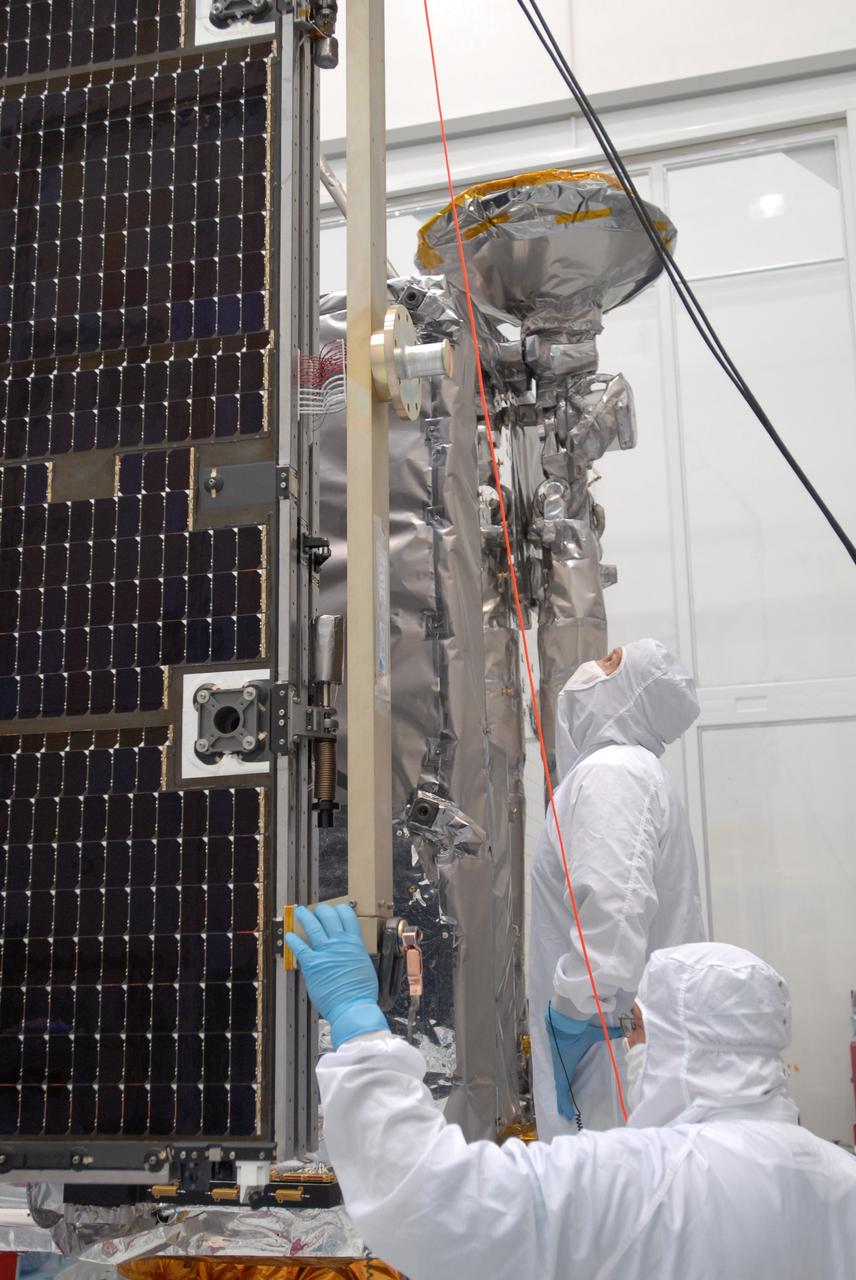
CAPE CANAVERAL, Fla. –– At Astrotech Space Operations in Titusville, Fla., technicians prepare to install the solar array panel to the Lunar Reconnaissance Orbiter, or LRO. The orbiter will carry seven instruments to provide scientists with detailed maps of the lunar surface and enhance our understanding of the moon's topography, lighting conditions, mineralogical composition and natural resources. Information gleaned from LRO will be used to select safe landing sites, determine locations for future lunar outposts and help mitigate radiation dangers to astronauts. The polar regions of the moon are the main focus of the mission because continuous access to sunlight may be possible and water ice may exist in permanently shadowed areas of the poles. Launch of LRO is targeted for June 2. Photo credit: NASA/Jim Grossmann
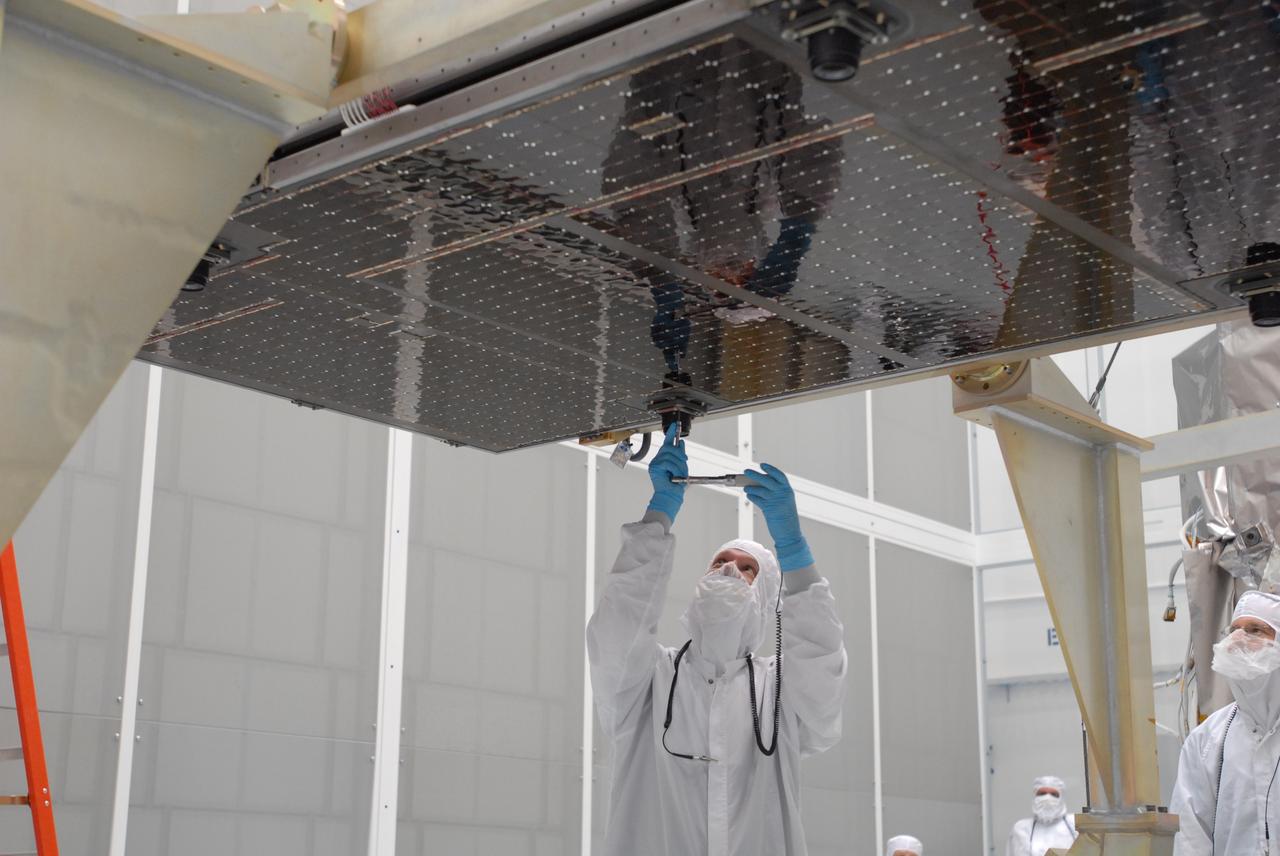
CAPE CANAVERAL, Fla. –– At Astrotech Space Operations in Titusville, Fla., technicians prepare the solar array panel for installation on the Lunar Reconnaissance Orbiter, or LRO. The orbiter will carry seven instruments to provide scientists with detailed maps of the lunar surface and enhance our understanding of the moon's topography, lighting conditions, mineralogical composition and natural resources. Information gleaned from LRO will be used to select safe landing sites, determine locations for future lunar outposts and help mitigate radiation dangers to astronauts. The polar regions of the moon are the main focus of the mission because continuous access to sunlight may be possible and water ice may exist in permanently shadowed areas of the poles. Launch of LRO is targeted for June 2. Photo credit: NASA/Jim Grossmann
CAPE CANAVERAL, Fla. –– At Astrotech Space Operations in Titusville, Fla., technicians prepare the solar array panel for installation on the Lunar Reconnaissance Orbiter, or LRO. The orbiter will carry seven instruments to provide scientists with detailed maps of the lunar surface and enhance our understanding of the moon's topography, lighting conditions, mineralogical composition and natural resources. Information gleaned from LRO will be used to select safe landing sites, determine locations for future lunar outposts and help mitigate radiation dangers to astronauts. The polar regions of the moon are the main focus of the mission because continuous access to sunlight may be possible and water ice may exist in permanently shadowed areas of the poles. Launch of LRO is targeted for June 2. Photo credit: NASA/Jim Grossmann
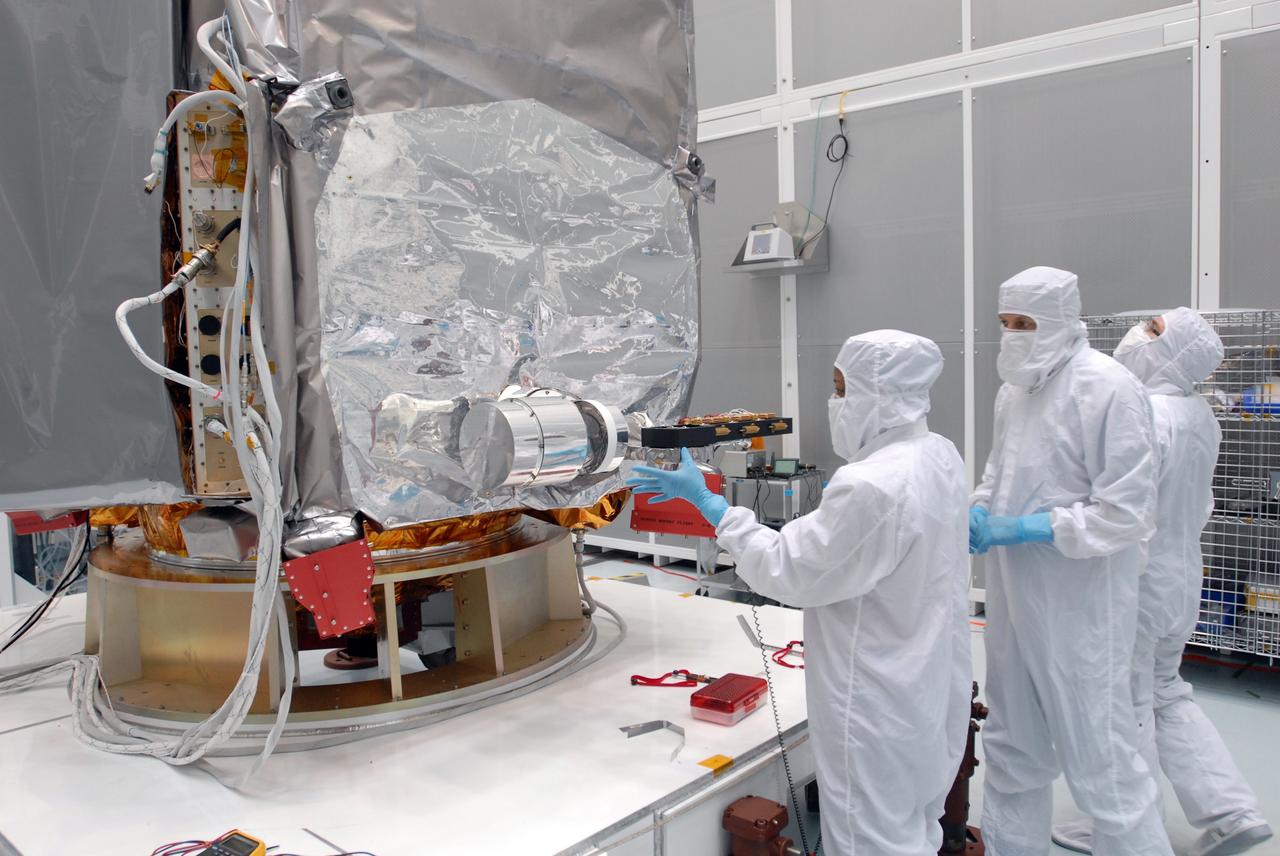
CAPE CANAVERAL, Fla. –– At Astrotech Space Operations in Titusville, Fla., technicians prepare the Lunar Reconnaissance Orbiter, or LRO, for installation of the solar array panels. The orbiter will carry seven instruments to provide scientists with detailed maps of the lunar surface and enhance our understanding of the moon's topography, lighting conditions, mineralogical composition and natural resources. Information gleaned from LRO will be used to select safe landing sites, determine locations for future lunar outposts and help mitigate radiation dangers to astronauts. The polar regions of the moon are the main focus of the mission because continuous access to sunlight may be possible and water ice may exist in permanently shadowed areas of the poles. Launch of LRO is targeted for June 2. Photo credit: NASA/Jim Grossmann
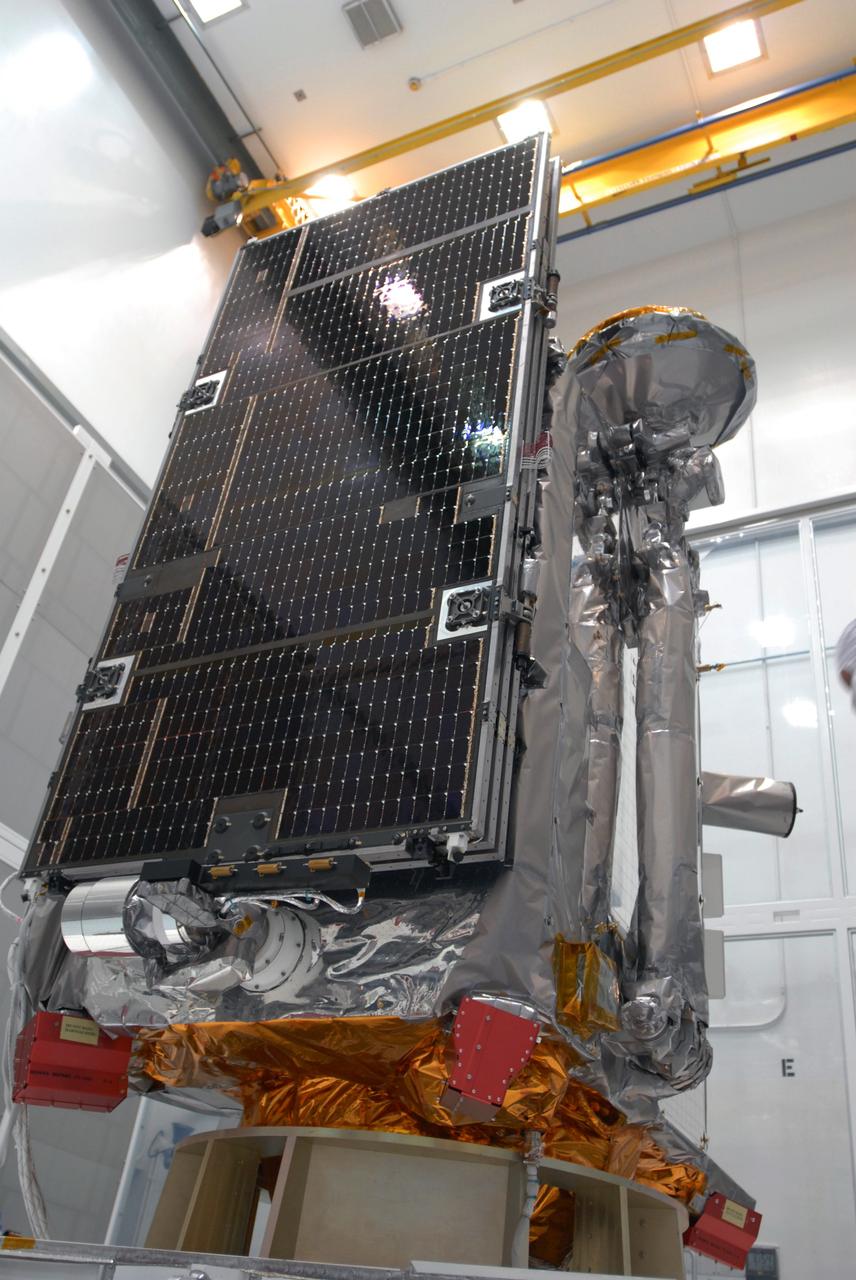
CAPE CANAVERAL, Fla. –– At Astrotech Space Operations in Titusville, Fla., the Lunar Reconnaissance Orbiter, or LRO, with a solar array panel installed. The orbiter will carry seven instruments to provide scientists with detailed maps of the lunar surface and enhance our understanding of the moon's topography, lighting conditions, mineralogical composition and natural resources. Information gleaned from LRO will be used to select safe landing sites, determine locations for future lunar outposts and help mitigate radiation dangers to astronauts. The polar regions of the moon are the main focus of the mission because continuous access to sunlight may be possible and water ice may exist in permanently shadowed areas of the poles. Launch of LRO is targeted for June 2. Photo credit: NASA/Jim Grossmann
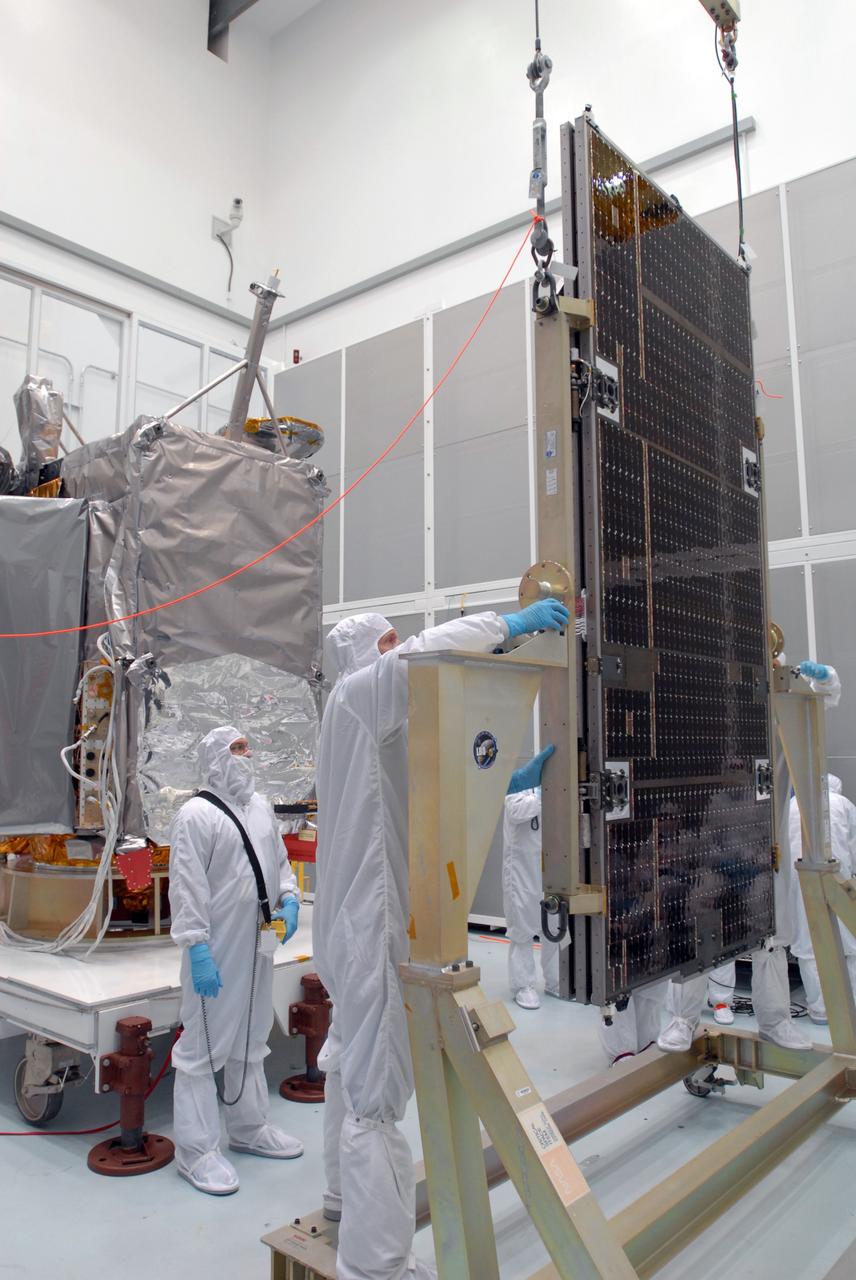
CAPE CANAVERAL, Fla. –– At Astrotech Space Operations in Titusville, Fla., technicians prepare the solar array panel for installation on the Lunar Reconnaissance Orbiter, or LRO, at left. The orbiter will carry seven instruments to provide scientists with detailed maps of the lunar surface and enhance our understanding of the moon's topography, lighting conditions, mineralogical composition and natural resources. Information gleaned from LRO will be used to select safe landing sites, determine locations for future lunar outposts and help mitigate radiation dangers to astronauts. The polar regions of the moon are the main focus of the mission because continuous access to sunlight may be possible and water ice may exist in permanently shadowed areas of the poles. Launch of LRO is targeted for June 2. Photo credit: NASA/Jim Grossmann
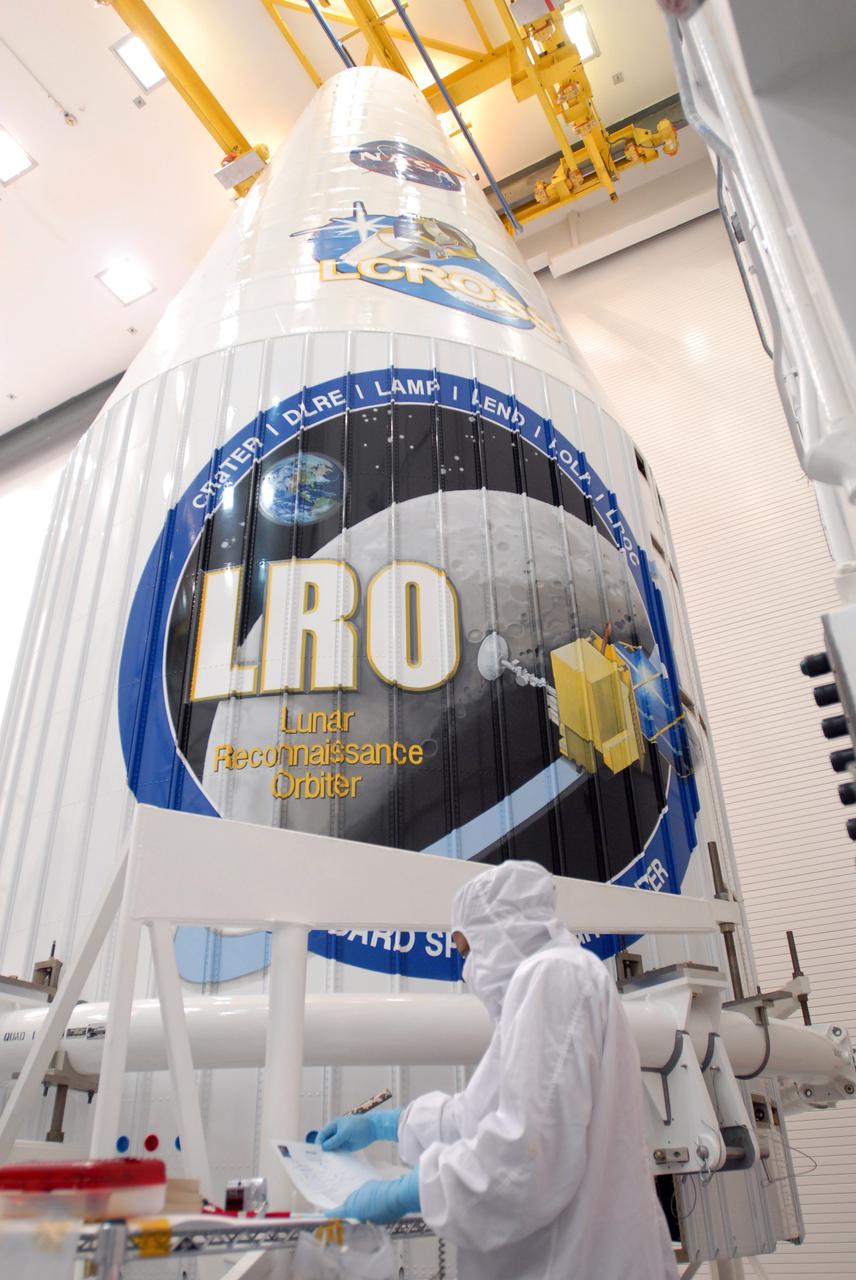
CAPE CANAVERAL, Fla. –– At Astrotech Space Operations in Titusville, Fla., a technician prepares for the installation of the solar array panel on the Lunar Reconnaissance Orbiter, or LRO. He stands in front of the fairing that will encapsulate the spacecraft at a later date. The orbiter will carry seven instruments to provide scientists with detailed maps of the lunar surface and enhance our understanding of the moon's topography, lighting conditions, mineralogical composition and natural resources. Information gleaned from LRO will be used to select safe landing sites, determine locations for future lunar outposts and help mitigate radiation dangers to astronauts. The polar regions of the moon are the main focus of the mission because continuous access to sunlight may be possible and water ice may exist in permanently shadowed areas of the poles. Launch of LRO is targeted for June 2. Photo credit: NASA/Jim Grossmann
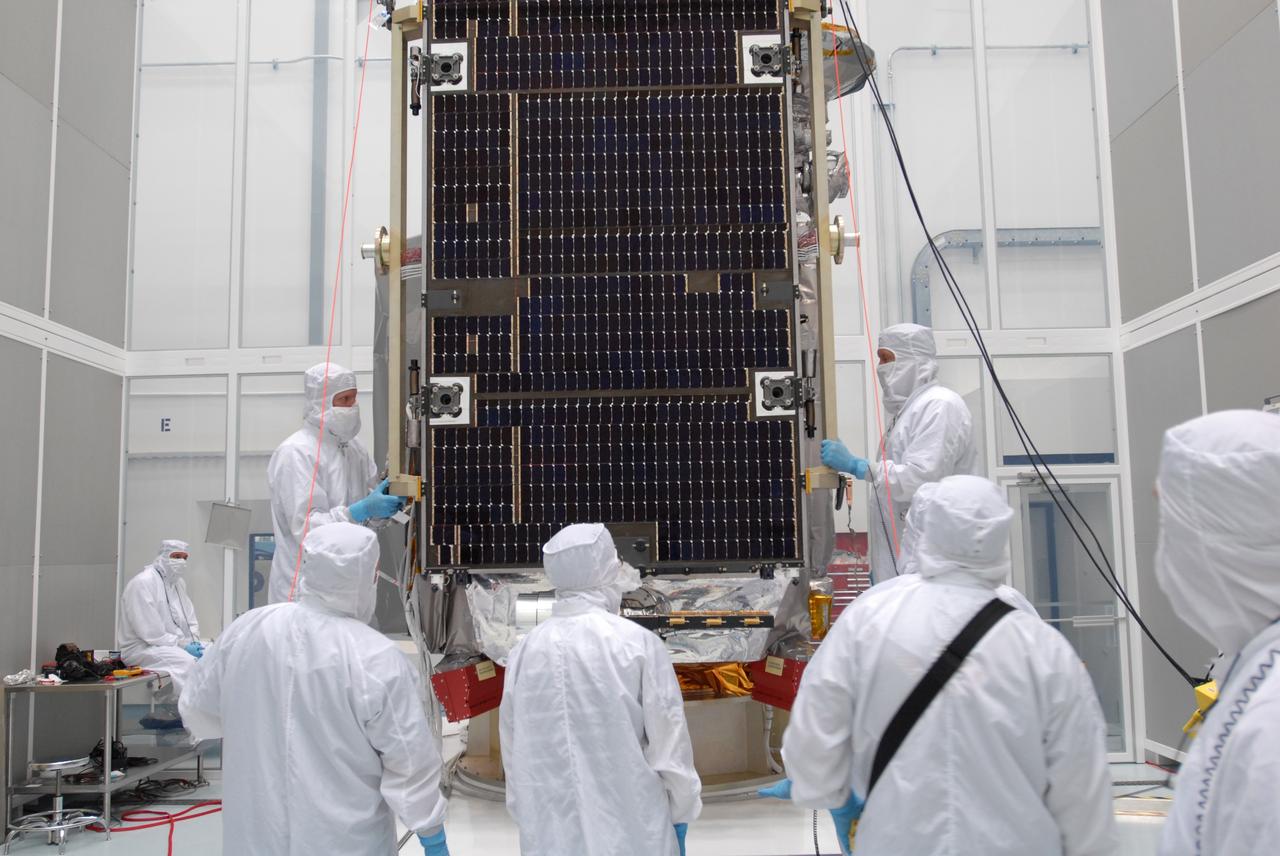
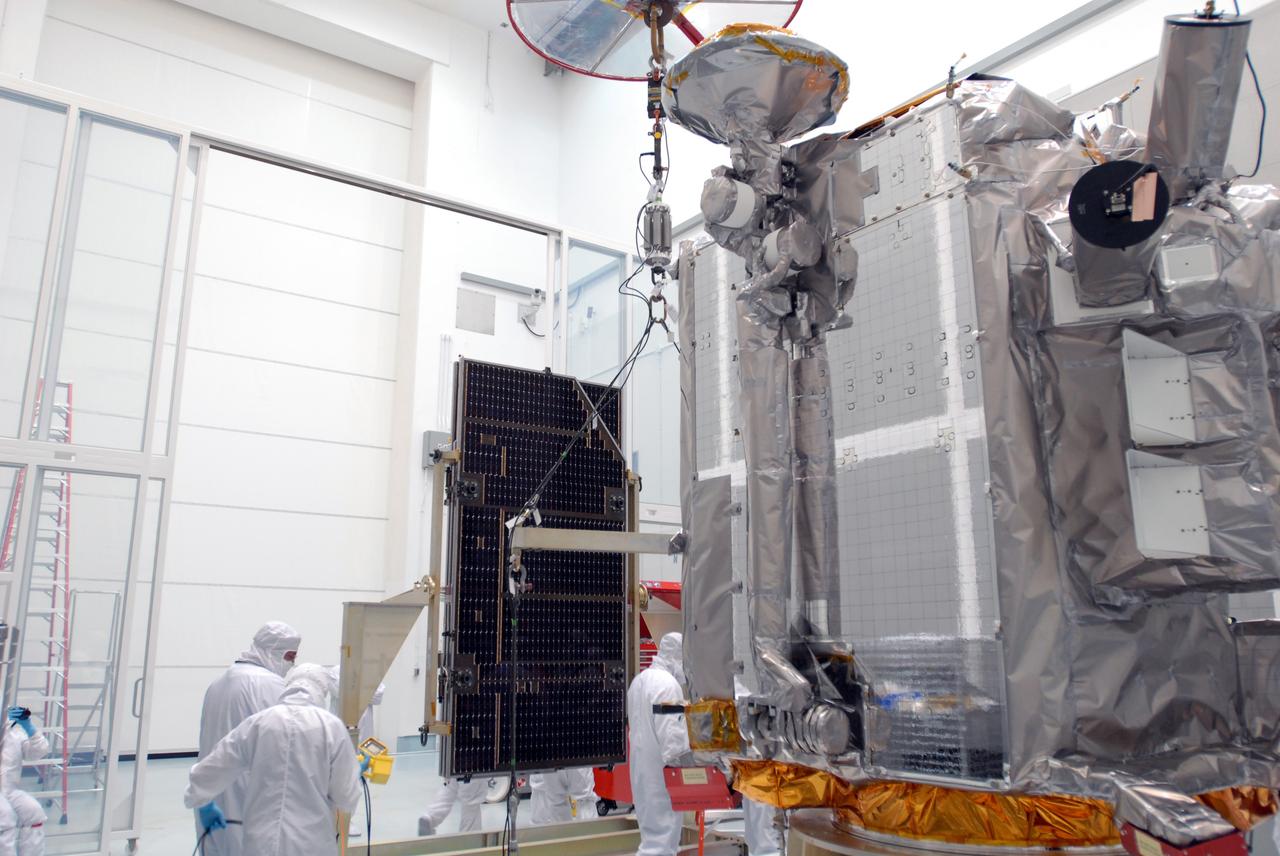
CAPE CANAVERAL, Fla. –– At Astrotech Space Operations in Titusville, Fla., technicians move the solar array panel closer to the Lunar Reconnaissance Orbiter, or LRO, for installation. The orbiter will carry seven instruments to provide scientists with detailed maps of the lunar surface and enhance our understanding of the moon's topography, lighting conditions, mineralogical composition and natural resources. Information gleaned from LRO will be used to select safe landing sites, determine locations for future lunar outposts and help mitigate radiation dangers to astronauts. The polar regions of the moon are the main focus of the mission because continuous access to sunlight may be possible and water ice may exist in permanently shadowed areas of the poles. Launch of LRO is targeted for June 2. Photo credit: NASA/Jim Grossmann
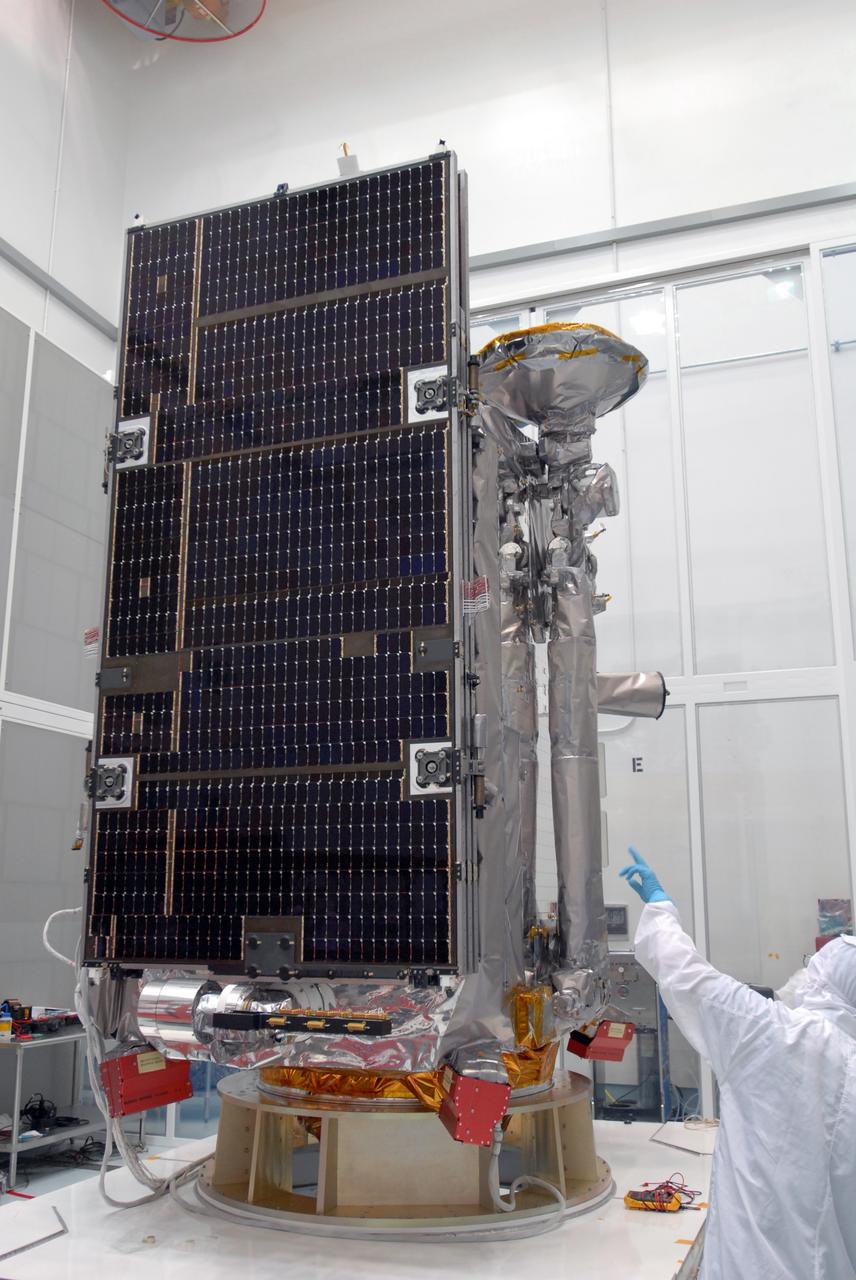
CAPE CANAVERAL, Fla. –– At Astrotech Space Operations in Titusville, Fla., a technician checks the installation of a solar array panel on the Lunar Reconnaissance Orbiter, or LRO. The orbiter will carry seven instruments to provide scientists with detailed maps of the lunar surface and enhance our understanding of the moon's topography, lighting conditions, mineralogical composition and natural resources. Information gleaned from LRO will be used to select safe landing sites, determine locations for future lunar outposts and help mitigate radiation dangers to astronauts. The polar regions of the moon are the main focus of the mission because continuous access to sunlight may be possible and water ice may exist in permanently shadowed areas of the poles. Launch of LRO is targeted for June 2. Photo credit: NASA/Jim Grossmann

CAPE CANAVERAL, Fla. –– At Astrotech Space Operations in Titusville, Fla., technicians prepare for installation of the solar array panels on the Lunar Reconnaissance Orbiter, or LRO. The orbiter will carry seven instruments to provide scientists with detailed maps of the lunar surface and enhance our understanding of the moon's topography, lighting conditions, mineralogical composition and natural resources. Information gleaned from LRO will be used to select safe landing sites, determine locations for future lunar outposts and help mitigate radiation dangers to astronauts. The polar regions of the moon are the main focus of the mission because continuous access to sunlight may be possible and water ice may exist in permanently shadowed areas of the poles. Launch of LRO is targeted for June 2. Photo credit: NASA/Jim Grossmann