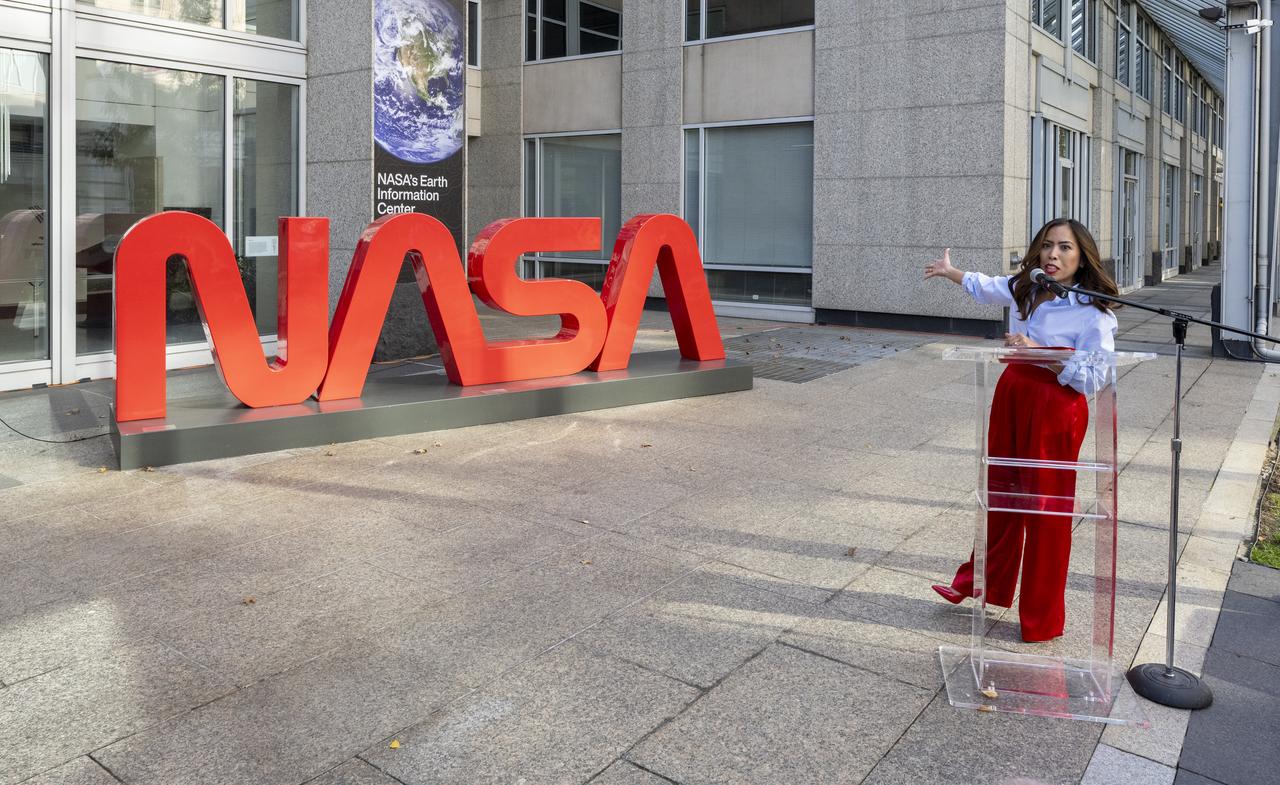
NASA Public Affairs Specialist Megan Cruz delivers remarks during a dedication event for Richard Danne, creator of the NASA worm logotype, Monday, Nov. 6, 2023, at the Mary W. Jackson NASA Headquarters building in Washington. Photo Credit: (NASA/Keegan Barber)
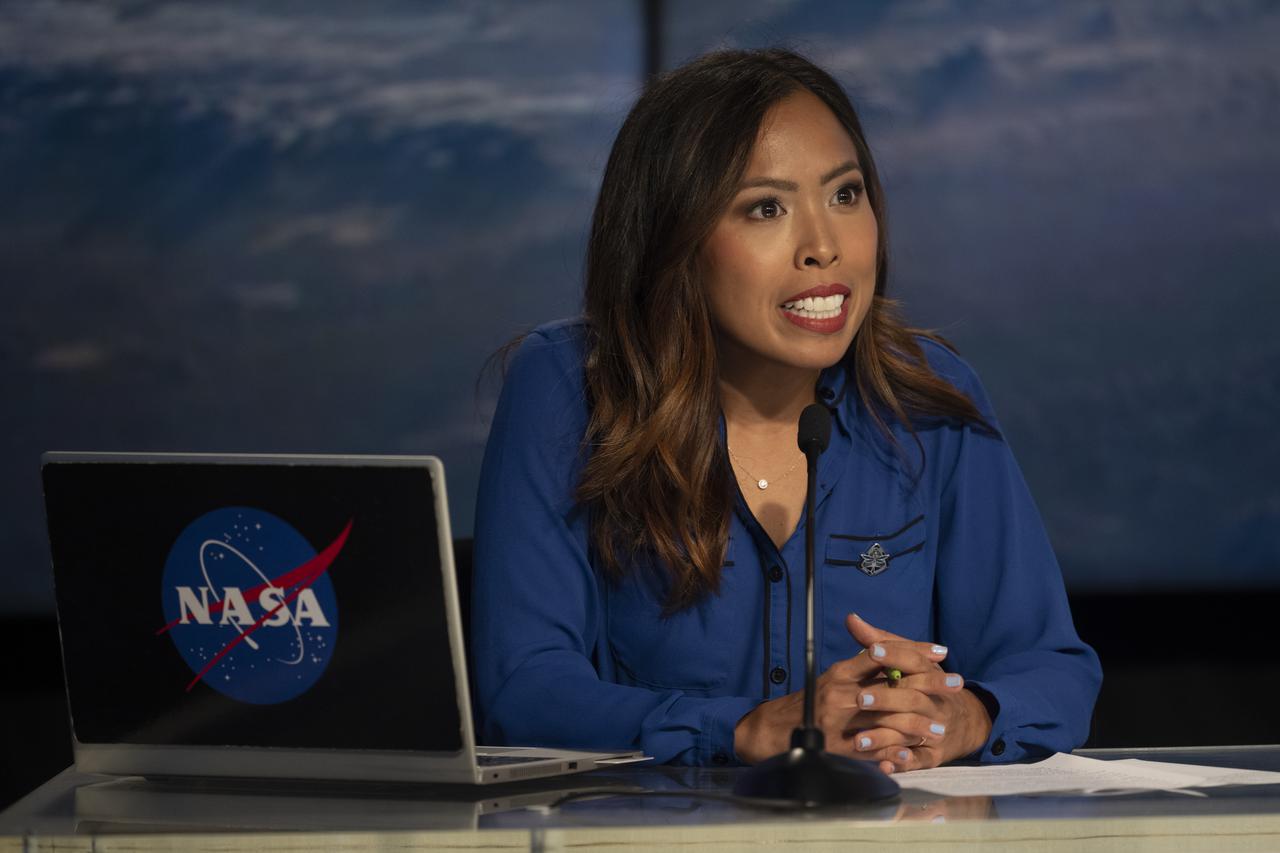
Megan Cruz, NASA Communications, moderates a press conference ahead of the Crew-4 launch, Tuesday, April 26, 2022, at NASA’s Kennedy Space Center in Florida. NASA’s SpaceX Crew-4 mission is the fourth crew rotation mission of the SpaceX Crew Dragon spacecraft and Falcon 9 rocket to the International Space Station as part of the agency’s Commercial Crew Program. NASA astronauts Kjell Lindgren, Robert Hines, Jessica Watkins, and ESA (European Space Agency) astronaut Samantha Cristoforetti are scheduled to launch at 3:52 a.m. ET on April 27 from Launch Complex 39A at the Kennedy Space Center. Photo Credit: (NASA/Joel Kowsky)
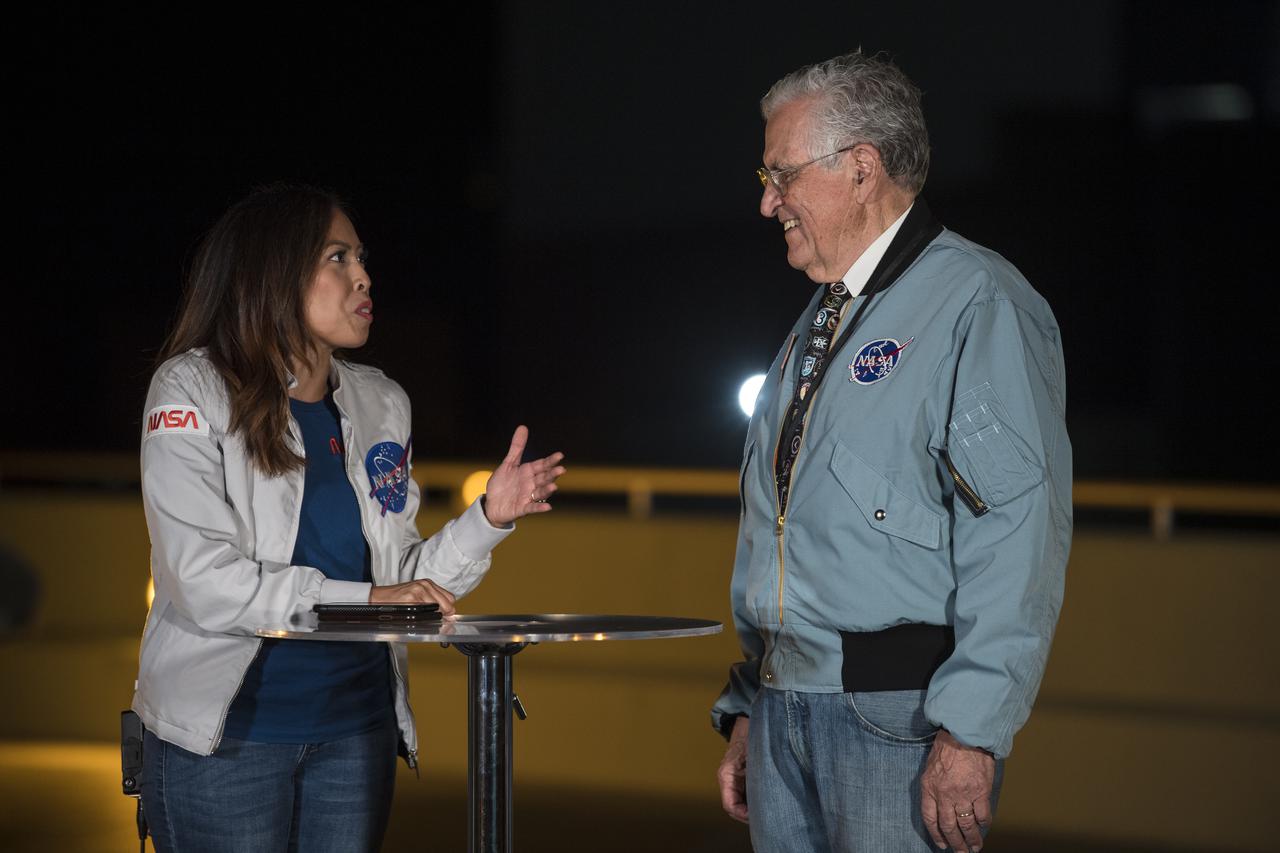
Apollo 17 astronaut, Harrison Schmitt, right, is interviewed by Kennedy Space Center public affairs officer, Megan Cruz, at the Operations Support Building II prior to the launch of a SpaceX Falcon 9 rocket carrying the company's Crew Dragon spacecraft on NASA’s SpaceX Crew-4 mission with NASA astronauts Kjell Lindgren, Robert Hines, Jessica Watkins, and ESA (European Space Agency) astronaut Samantha Cristoforetti onboard, Wednesday, April 27, 2022, at NASA’s Kennedy Space Center in Florida. NASA’s SpaceX Crew-4 mission is the fourth crew rotation mission of the SpaceX Crew Dragon spacecraft and Falcon 9 rocket to the International Space Station as part of the agency’s Commercial Crew Program. Lindgren, Hines, Watkins, and Cristoforetti launched at 3:52 a.m. ET from Launch Complex 39A at the Kennedy Space Center to begin a six month mission onboard the orbital outpost. Photo Credit: (NASA/Aubrey Gemignani)
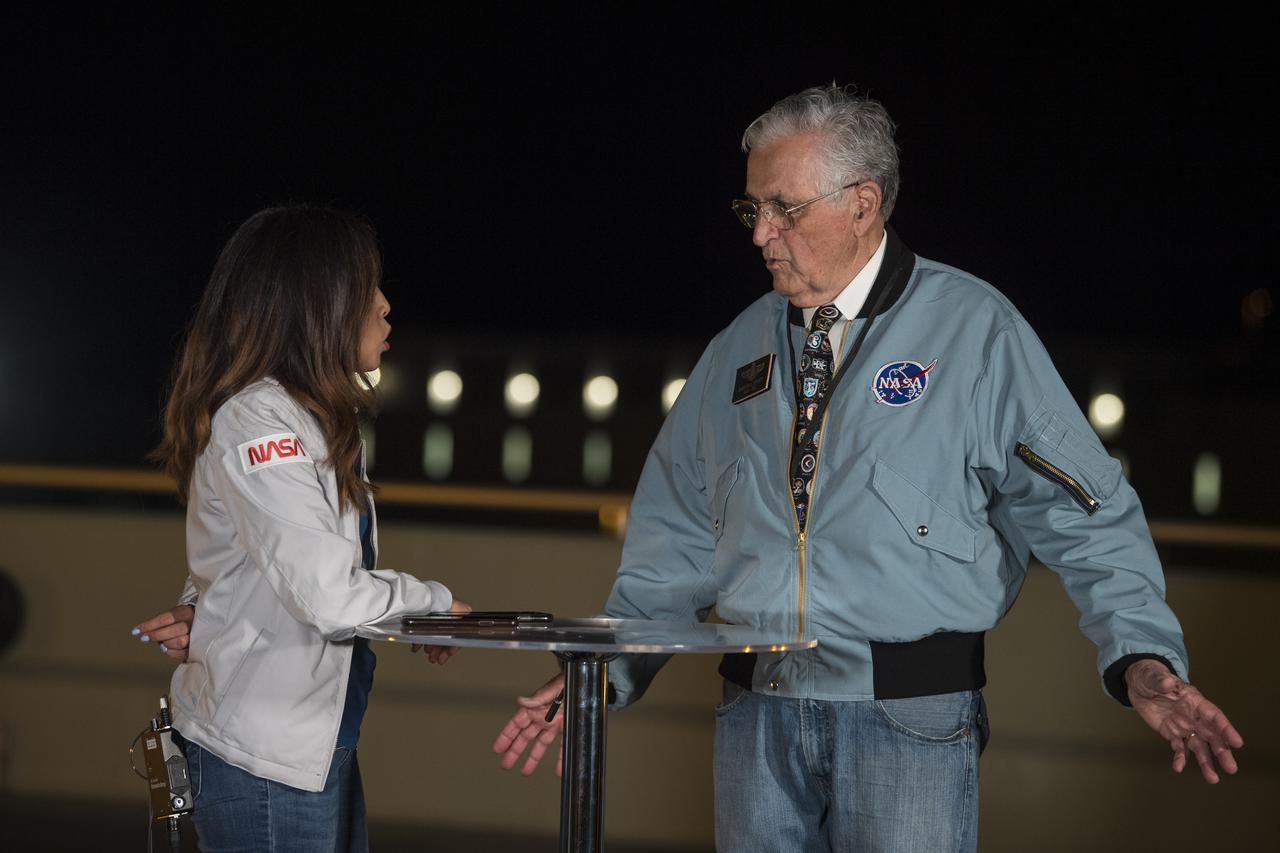
Apollo 17 astronaut, Harrison Schmitt, right, is interviewed by Kennedy Space Center public affairs officer, Megan Cruz, at the Operations Support Building II prior to the launch of a SpaceX Falcon 9 rocket carrying the company's Crew Dragon spacecraft on NASA’s SpaceX Crew-4 mission with NASA astronauts Kjell Lindgren, Robert Hines, Jessica Watkins, and ESA (European Space Agency) astronaut Samantha Cristoforetti onboard, Wednesday, April 27, 2022, at NASA’s Kennedy Space Center in Florida. NASA’s SpaceX Crew-4 mission is the fourth crew rotation mission of the SpaceX Crew Dragon spacecraft and Falcon 9 rocket to the International Space Station as part of the agency’s Commercial Crew Program. Lindgren, Hines, Watkins, and Cristoforetti launched at 3:52 a.m. ET from Launch Complex 39A at the Kennedy Space Center to begin a six month mission onboard the orbital outpost. Photo Credit: (NASA/Aubrey Gemignani)
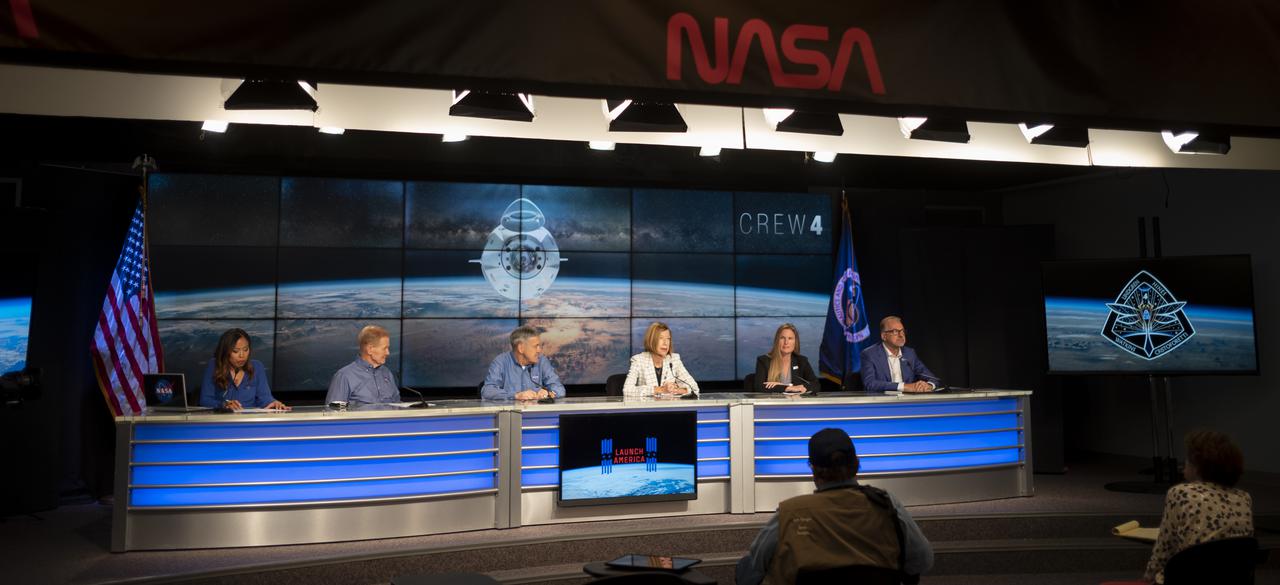
Megan Cruz, NASA Communications, left, NASA Administrator Bill Nelson, second from left, Bob Cabana, NASA associate administrator, third from left, Kathy Lueders, associate administrator for NASA's Space Operations Mission Directorate, third from right, Heidi Parris, associate program scientist for the International Space Station Program at NASA’s Johnson Space Center , second from right, and Josef Aschbacher, Director General of ESA (European Space Agency), right, are seen during a press conference ahead of the Crew-4 launch, Tuesday, April 26, 2022, at NASA’s Kennedy Space Center in Florida. NASA’s SpaceX Crew-4 mission is the fourth crew rotation mission of the SpaceX Crew Dragon spacecraft and Falcon 9 rocket to the International Space Station as part of the agency’s Commercial Crew Program. NASA astronauts Kjell Lindgren, Robert Hines, Jessica Watkins, and ESA (European Space Agency) astronaut Samantha Cristoforetti are scheduled to launch at 3:52 a.m. ET on April 27 from Launch Complex 39A at the Kennedy Space Center. Photo Credit: (NASA/Joel Kowsky)
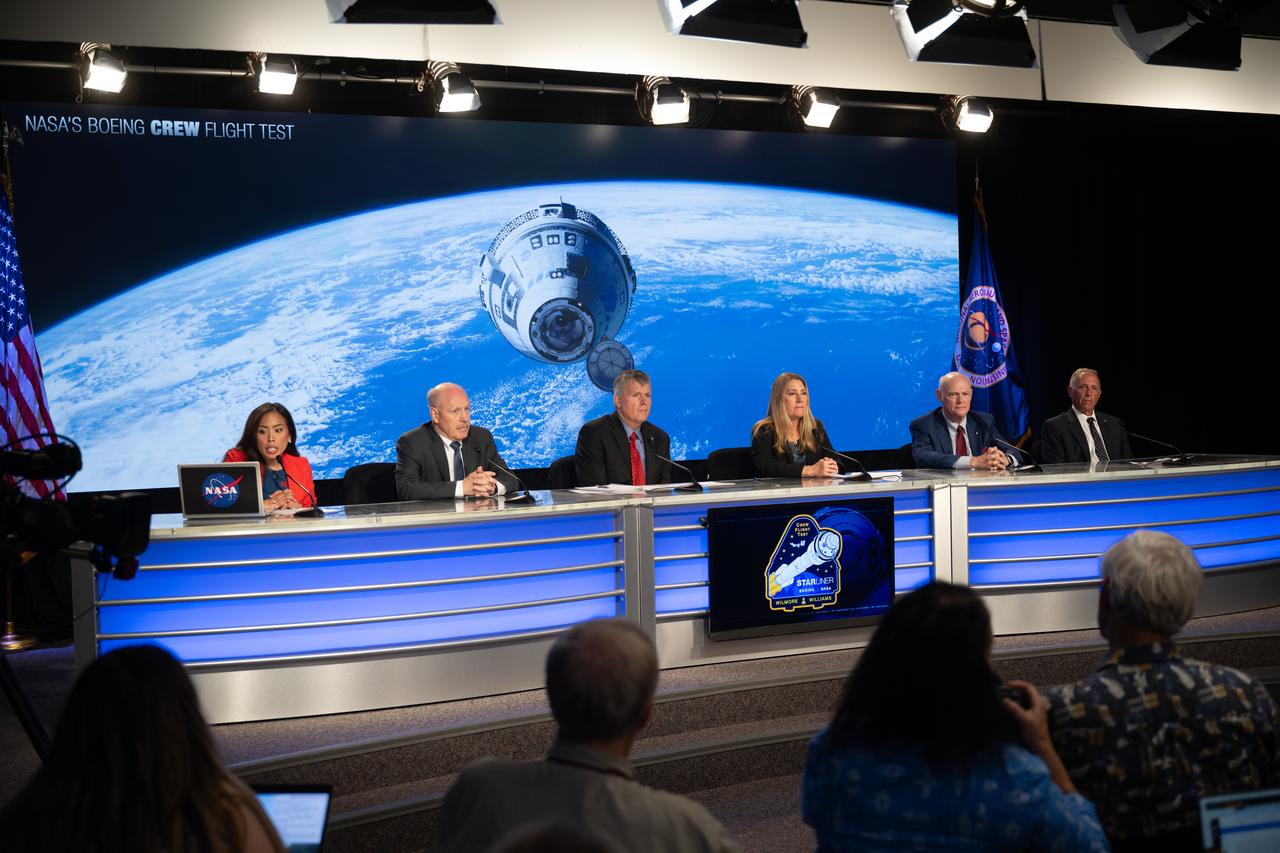
Megan Cruz, NASA Communications, left, moderates a press conference with Ken Bowersox, associate administrator for NASA's Space Operations Mission Directorate, second from left, Steve Stich, manager of NASA's Commercial Crew Program, Dana Weigel, manager of NASA's International Space Station Program, Tory Bruno, president and CEO of United Launch Alliance, and Mark Nappi, vice president and program manager for the Commercial Crew Program at Boeing, after the first launch attempt of NASA’s Boeing Crew Flight Test was scrubbed for the day, Monday, May 6, 2024, at NASA’s Kennedy Space Center in Florida. NASA’s Boeing Crew Flight Test is the first launch with astronauts of the Boeing CFT-100 spacecraft and United Launch Alliance Atlas V rocket to the International Space Station as part of the agency’s Commercial Crew Program. The flight test, targeted for launch no earlier than Friday, May 10, serves as an end-to-end demonstration of Boeing’s crew transportation system and will carry NASA astronauts Butch Wilmore and Suni Williams to and from the orbiting laboratory. Photo Credit: (NASA/Joel Kowsky)

Megan Cruz, NASA Communications, participates in a prelaunch briefing for NASA’s uncrewed Boeing Orbital Flight Test (OFT-2) at the agency’s Kennedy Space Center in Florida, May 17, 2022. Boeing’s CST-100 Starliner is targeted to launch at 6:54 p.m. EDT on Thursday, May 19, on a United Launch Alliance Atlas V rocket from Space Launch Complex-41 at Cape Canaveral Space Force Station in Florida to rendezvous and dock with the International Space Station.
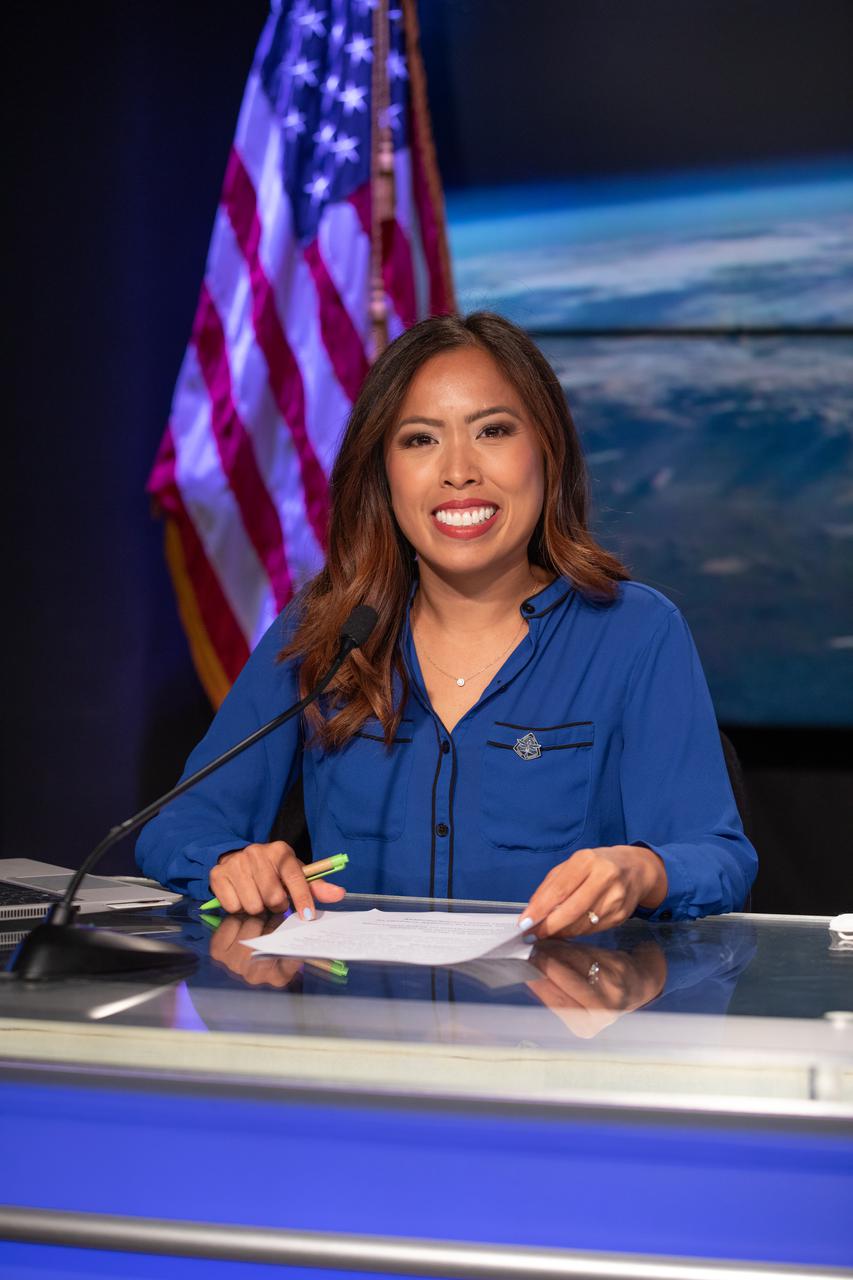
Megan Cruz, NASA Communications, moderates a Crew-4 press briefing April 26, 2022, at NASA’s Kennedy Space Center in Florida ahead of the agency’s SpaceX Crew-4 launch. Crew-4 is the fourth crew rotation flight to the International Space Station as part of NASA’s Commercial Crew Program. The SpaceX Crew Dragon capsule will launch atop the company’s Falcon 9 rocket from Launch Complex 39A to the space station on Wednesday, April 27, at 3:52 a.m. EDT.

Megan Cruz, NASA Communications, leads an Artemis I mission status press briefing at Kennedy Space Center in Florida on Aug. 27, 2022. NASA’s Space Launch System rocket and Orion spacecraft are targeted to lift off from Kennedy’s Launch Complex 39B no earlier than Aug. 29, 2022, at 8:33 a.m. EDT.
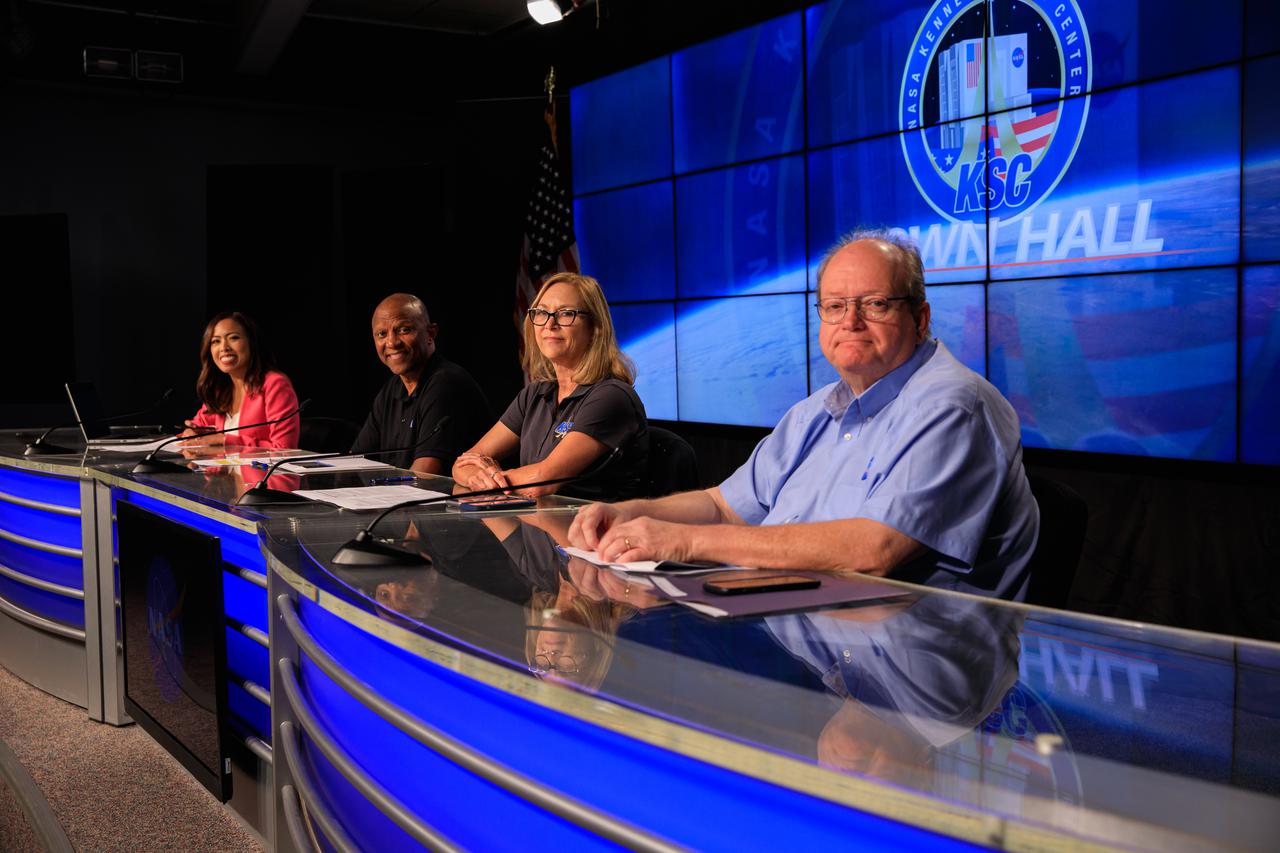
From left to right, Megan Cruz, NASA Communications; Kelvin Manning, Kennedy Space Center deputy director; Janet Petro, Kennedy director; and Burt Summerfield, Kennedy associate director, management participate in a virtual town hall meeting at the Florida spaceport on July 9, 2021. Topics included the center’s COVID-19 status, Kennedy missions and milestones, and the agency budget request. Employees at Kennedy had the opportunity to send in questions, which were answered by the center’s senior leaders.
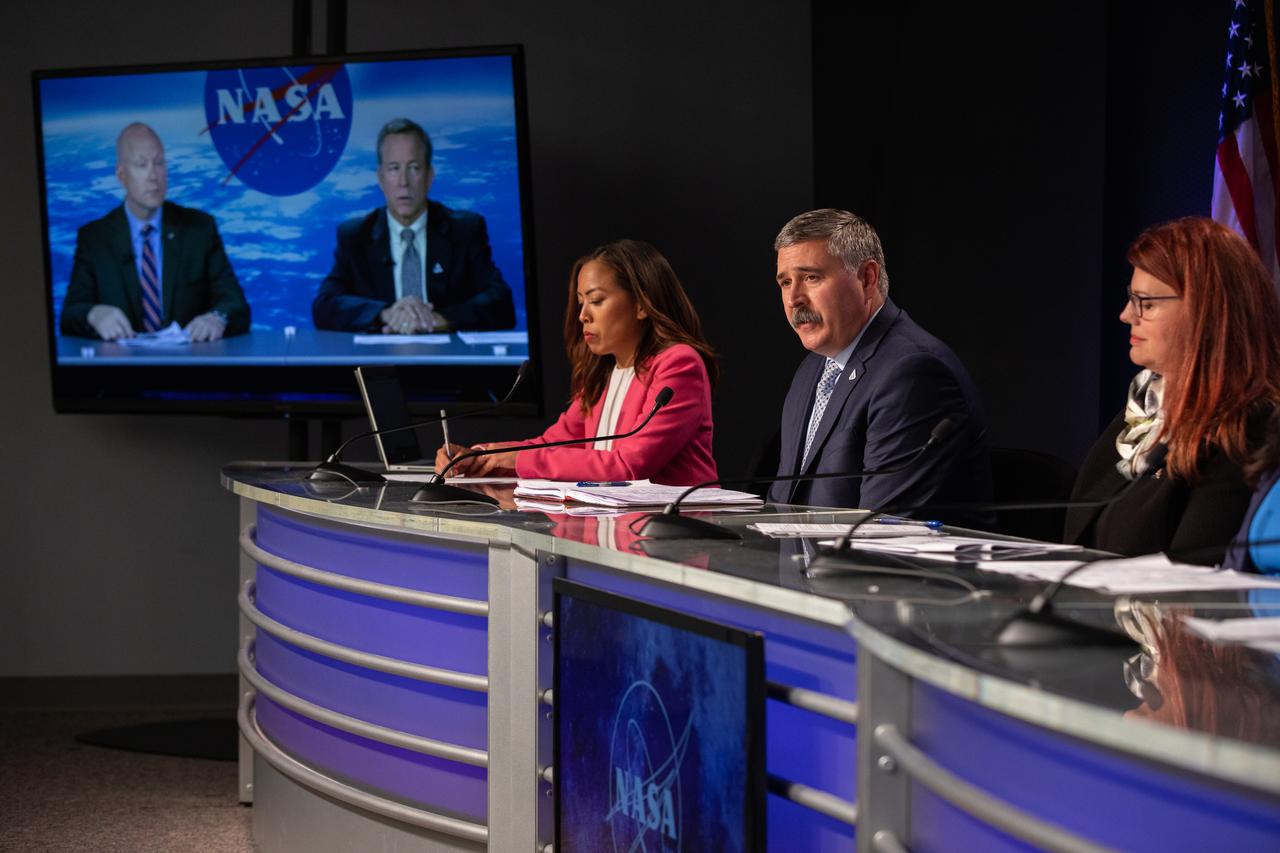
From left, Megan Cruz, NASA Communications; Mike Sarafin, Artemis mission manager, NASA Headquarters; and Charlie Blackwell-Thompson, Artemis launch director, Kennedy Space Center, participate in an Artemis I mission status press briefing at Kennedy on Aug. 27, 2022. NASA’s Space Launch System rocket and Orion spacecraft are targeted to lift off from Kennedy’s Launch Complex 39B no earlier than Aug. 29, 2022, at 8:33 a.m. EDT.

Megan Cruz, NASA Communications, participates in a crew and science media briefing ahead of Boeing’s Orbital Flight Test-2 (OFT-2) at the agency’s Kennedy Space Center in Florida, July 29, 2021. Boeing’s CST-100 Starliner spacecraft will launch atop a United Launch Alliance Atlas V rocket from Space Launch Complex-41 at Cape Canaveral Space Force Station.
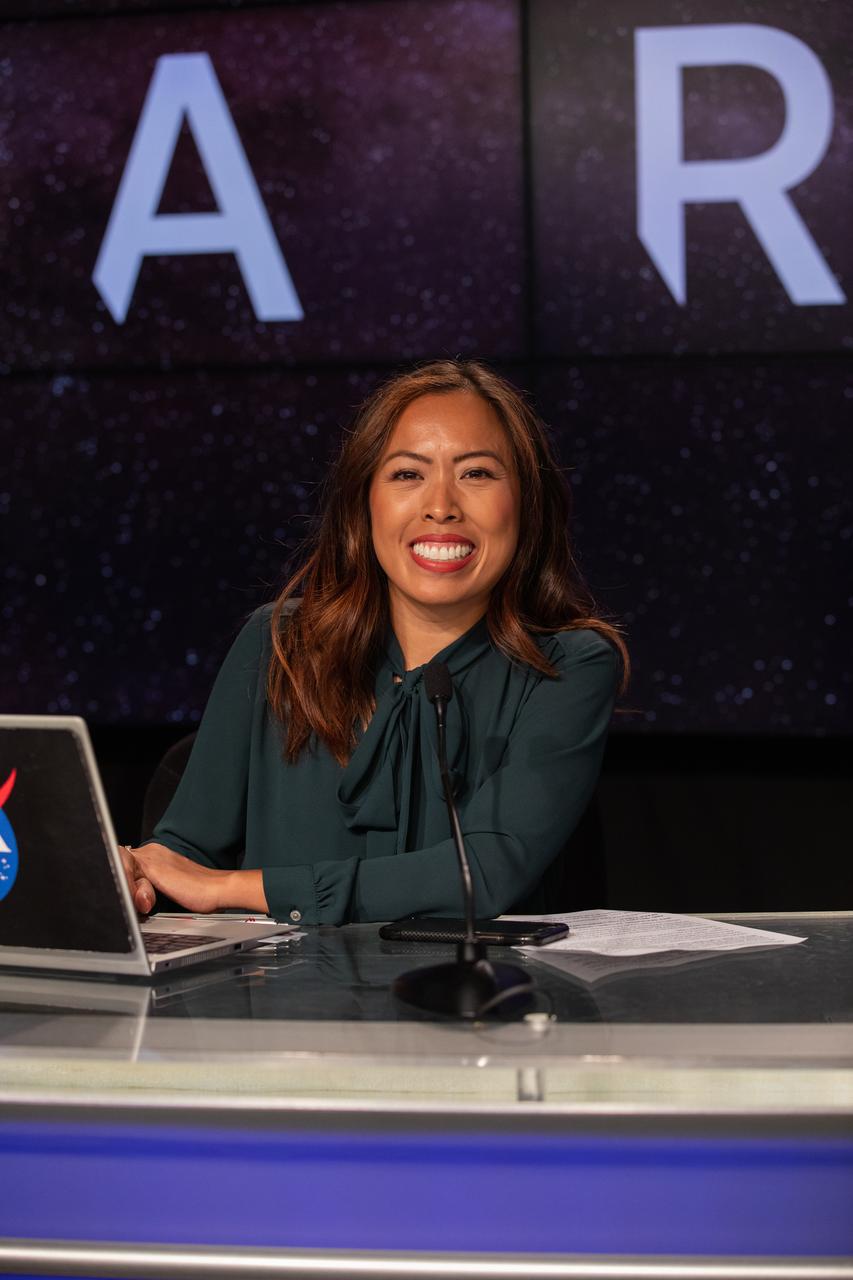
Megan Cruz, NASA Communications, participates in a prelaunch media briefing on the status of the Artemis countdown is held on Aug. 28, at NASA’s Kennedy Space Center in Florida. Artemis I is scheduled to launch Aug. 29, at 8:33 a.m. EDT from Kennedy’s Launch Complex 39B. The first in a series of increasingly complex missions, Artemis I will provide a foundation for human deep space exploration and demonstrate our commitment and capability to extend human presence to the Moon and beyond. The primary goal of Artemis I is to thoroughly test the integrated systems before crewed missions by operating the spacecraft in a deep space environment, testing Orion’s heat shield, and recovering the crew module after reentry, descent, and splashdown.
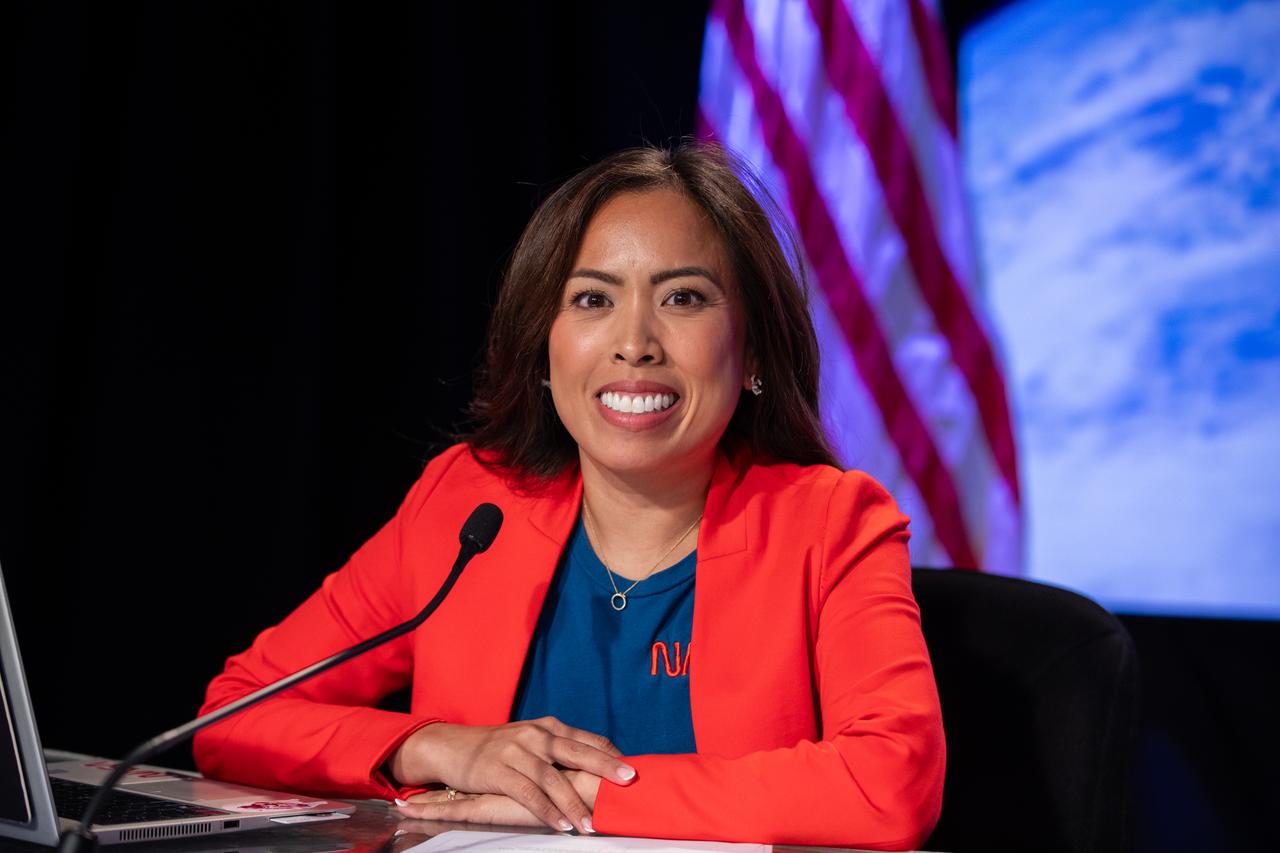
Megan Cruz, NASA communications, is photographed during a news conference held on Monday, May 6, 2024, at the agency’s Kennedy Space Center in Florida following the first launch attempt of NASA’s Boeing Crew Flight Test. As part of the agency’s Commercial Crew Program, the first crewed launch to the International Space Station aboard Boeing’s Starliner spacecraft atop a United Launch Alliance Atlas V rocket from Space Launch Complex-41 at nearby Cape Canaveral Space Force Station was targeted for 10:34 p.m. ET but scrubbed for the day.

Megan Cruz, NASA Communications, participates in an International Space Station 101 Panel Livestream inside the John Holliman Auditorium of the News Center at NASA’s Kennedy Space Center in Florida on Friday, Sept. 27, 2024, ahead of NASA’s SpaceX Crew-9 mission to the International Space Station. Liftoff of the ninth crew rotation mission with SpaceX to the space station as part of the agency’s Commercial Crew Program is targeted for 1:17 p.m. EDT Sept. 28, 2024, from Space Launch Complex-40 at Cape Canaveral Space Force Station in Florida.

Megan Cruz, NASA Communications, participates in a prelaunch news conference at NASA’s Kennedy Space Center in Florida on Friday, Sept. 27, 2024, ahead of the agency’s SpaceX Crew-9 launch. NASA astronaut Nick Hague and Roscosmos cosmonaut Aleksandr Gorbunov will launch to the International Space Station aboard SpaceX’s Dragon spacecraft and Falcon 9 rocket. Launch is targeted for 1:17 p.m. EDT Sept. 28, 2024, from Space Launch Complex-40 at Cape Canaveral Space Force Station in Florida. Crew-9 is the ninth crew rotation mission with SpaceX to the space station as part of the agency’s Commercial Crew Program.

Megan Cruz, NASA Communications at NASA’s Kennedy Space Center, participates in a mission dress rehearsal on Monday, June 17, 2024, inside Hangar AE at Cape Canaveral Space Force Station in Florida for the National Oceanic and Atmospheric Administration (NOAA) GOES-U (Geostationary Operational Environmental Satellite U) mission. The GOES-U satellite, the final addition to GOES-R series, will serve a critical role in providing continuous coverage of the Western Hemisphere, including monitoring tropical systems in the eastern Pacific and Atlantic oceans launched Tuesday, June 25, 2024.

NASA Communications’ Megan Cruz moderates a postlaunch news conference for NASA’s SpaceX Crew-5 mission inside the News Auditorium at the agency’s Kennedy Space Center in Florida on Oct. 5, 2022. SpaceX’s Dragon Endurance is carrying NASA astronauts Nicole Mann, commander; Josh Cassada, pilot; and Mission Specialists Koichi Wakata, of JAXA (Japan Aerospace Exploration Agency), and Roscosmos cosmonaut Anna Kikina to the International Space Station for a science expedition mission as part of NASA’s Commercial Crew Program. SpaceX’s Falcon 9 rocket lifted off at noon EDT from Kennedy’s Launch Complex 39A.
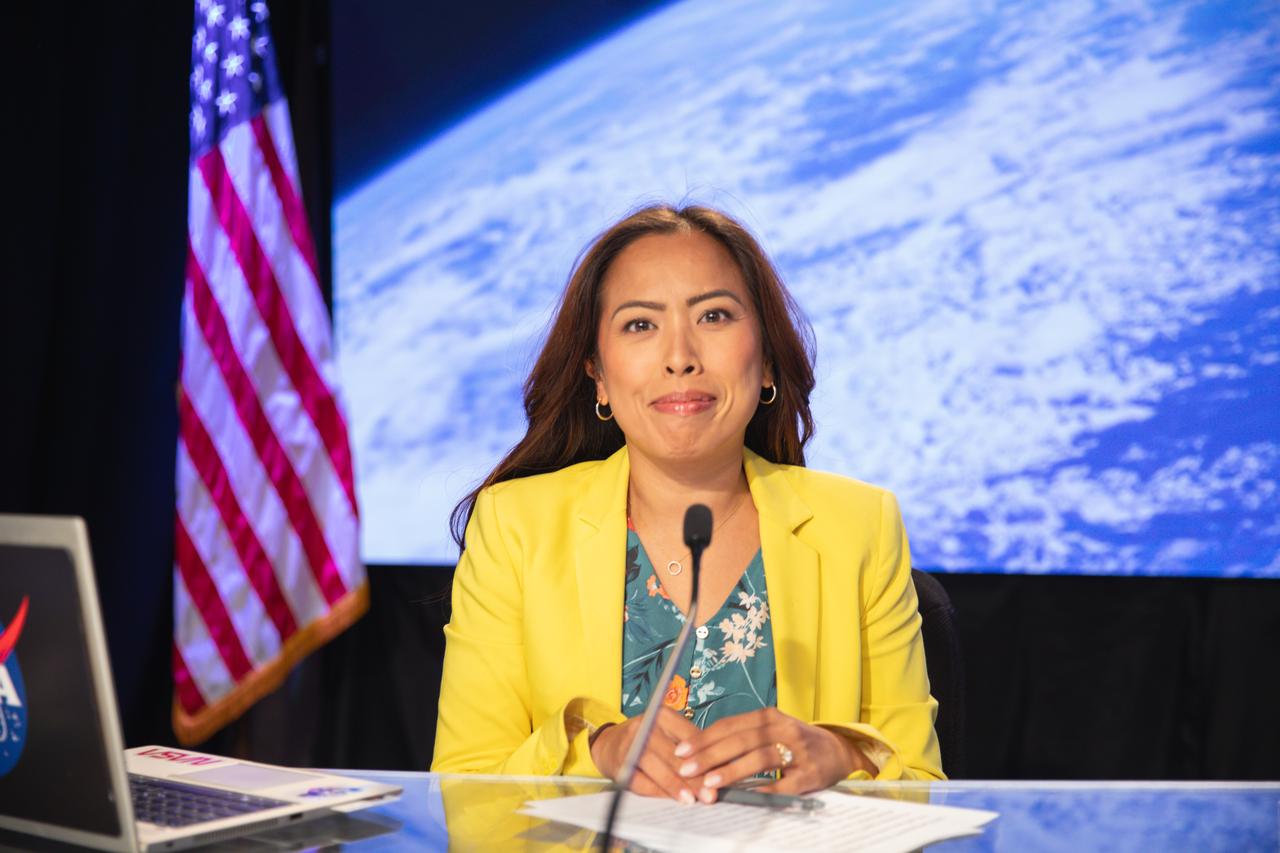
Megan Cruz, NASA Communications, participates in a news conference held at the agency’s Kennedy Space Center in Florida on Saturday, June 1, 2024, after the second launch attempt of NASA’s Boeing Crew Flight Test scrubbed for the day. As part of the agency’s Commercial Crew Program, NASA astronauts Butch Wilmore and Suni Williams will be the first to launch to the International Space Station aboard Boeing’s Starliner spacecraft atop a ULA (United Launch Alliance) Atlas V rocket from Space Launch Complex-41 at nearby Cape Canaveral Space Force Station.
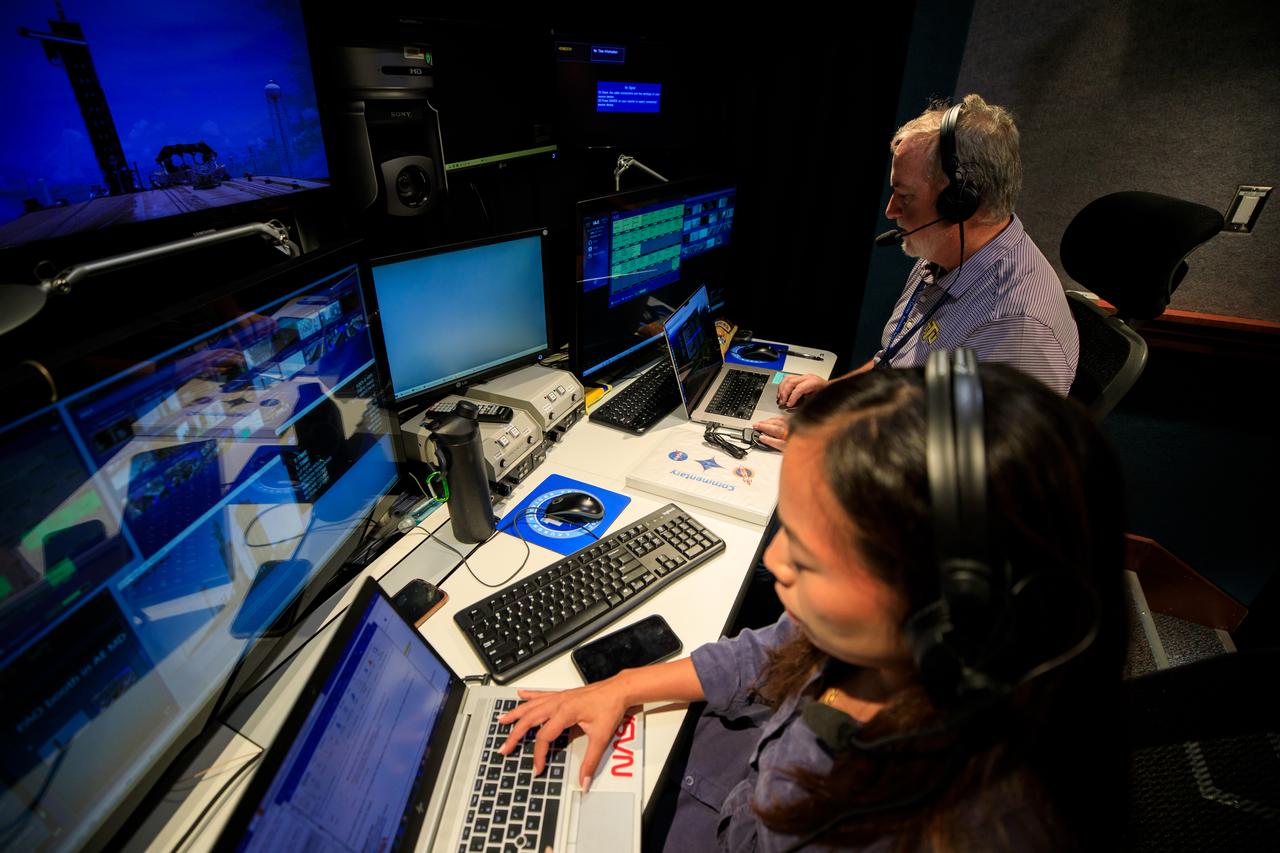
From left, Megan Cruz, NASA Communications at NASA’s Kennedy Space Center and Mic Woltman, chief of Fleet Systems Integration for the Launch Services Program at NASA’s Kennedy Space Center participate in a mission dress rehearsal on Monday, June 17, 2024, inside Hangar AE at Cape Canaveral Space Force Station in Florida for the National Oceanic and Atmospheric Administration (NOAA) GOES-U (Geostationary Operational Environmental Satellite U) mission. The GOES-U satellite, the final addition to GOES-R series, will serve a critical role in providing continuous coverage of the Western Hemisphere, including monitoring tropical systems in the eastern Pacific and Atlantic oceans launched Tuesday, June 25, 2024.
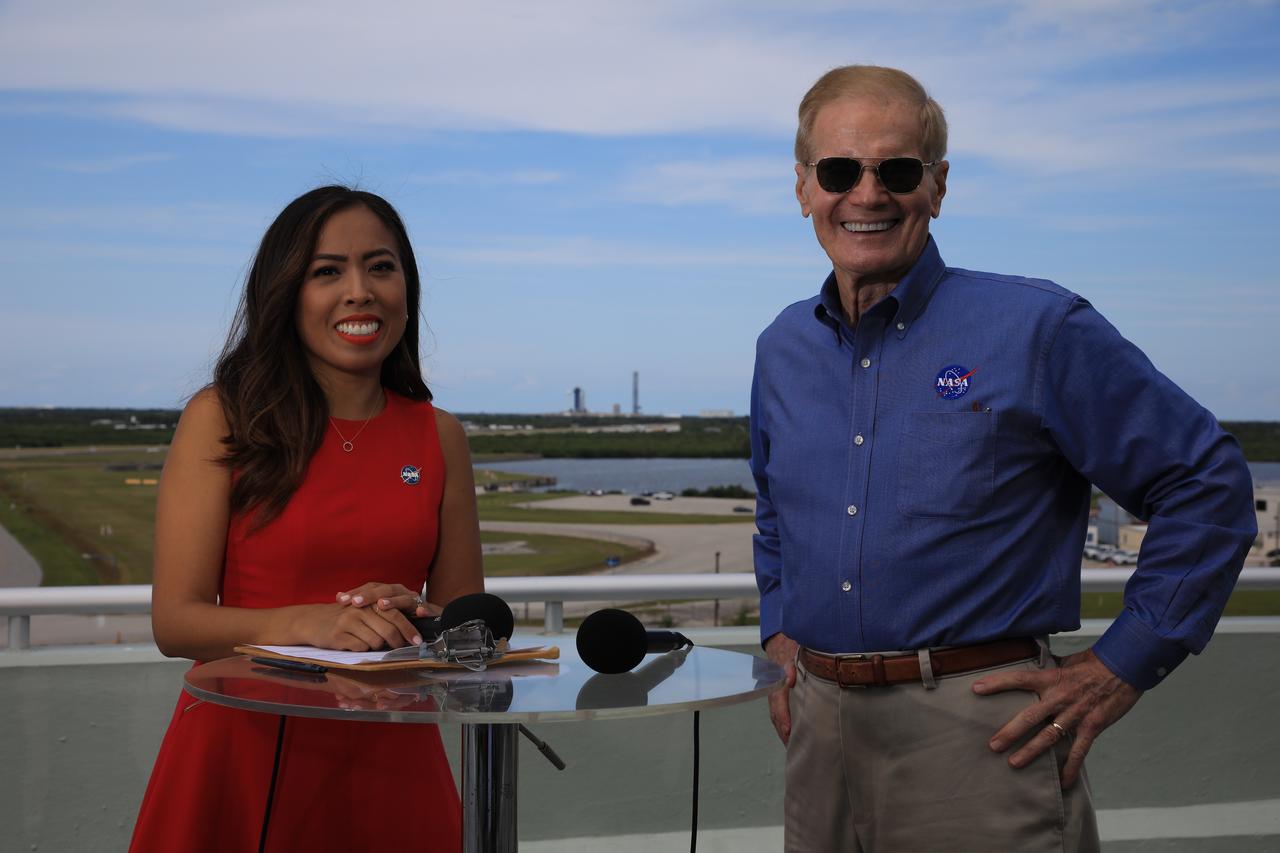
NASA Communications’ Megan Cruz (left) prepares to interview NASA Administrator Bill Nelson during a live broadcast ahead of the Axiom Mission 2 (Ax-2) launch from the agency’s Kennedy Space Center in Florida on May 21, 2023. Ax-2 is the second all private astronaut mission to the International Space Station, sending Commander Peggy Whitson, Pilot John Shoffner, and Mission Specialists Ali Alqarni and Rayyanah Barnawi to the orbiting laboratory, where they will spend about 10 days conducting scientific research, outreach, and commercial activities. Liftoff occurred at 5:37 p.m. EDT from Kennedy’s Launch Complex 39A.
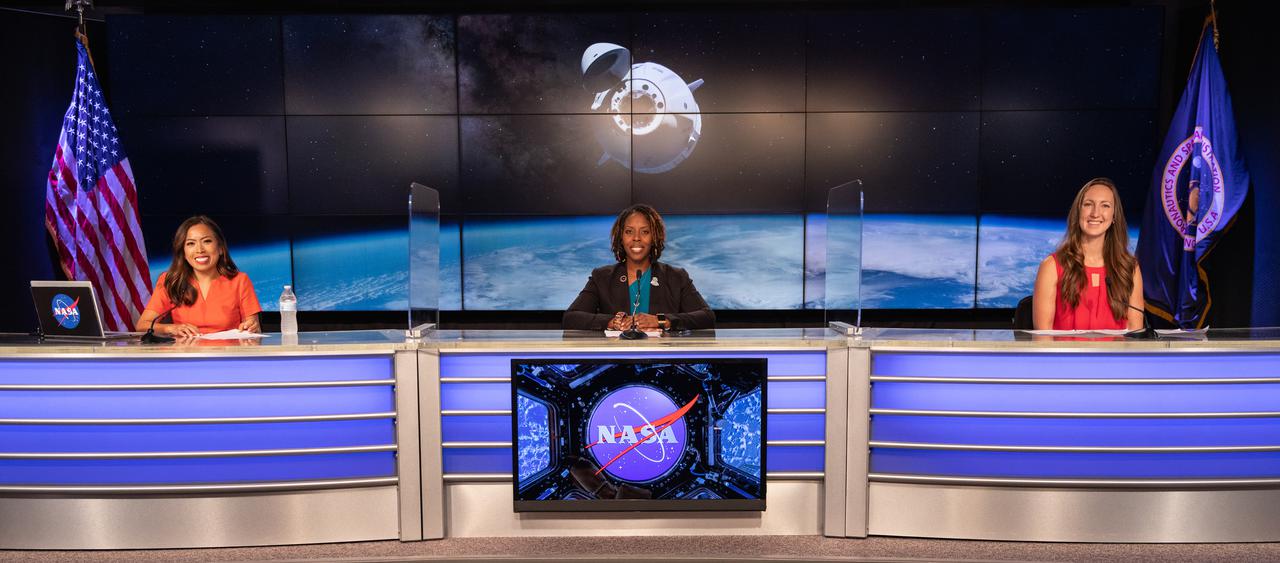
From left, NASA Communications’ Megan Cruz; Jennifer Scott Williams, manager for the Applications Client Support Office for the International Space Station Program; and Sarah Walker, director of Dragon mission management for SpaceX participate in a prelaunch news conference for SpaceX’s 23rd commercial resupply services mission at NASA’s Kennedy Space Center in Florida on Aug. 27, 2021. SpaceX’s Falcon 9 rocket, with the Dragon spacecraft atop, is targeted to lift off from Kennedy’s Launch Complex 39A at 3:37 a.m. on Saturday, Aug. 28. The mission will deliver new science investigations, supplies, and equipment to the crew aboard the International Space Station.
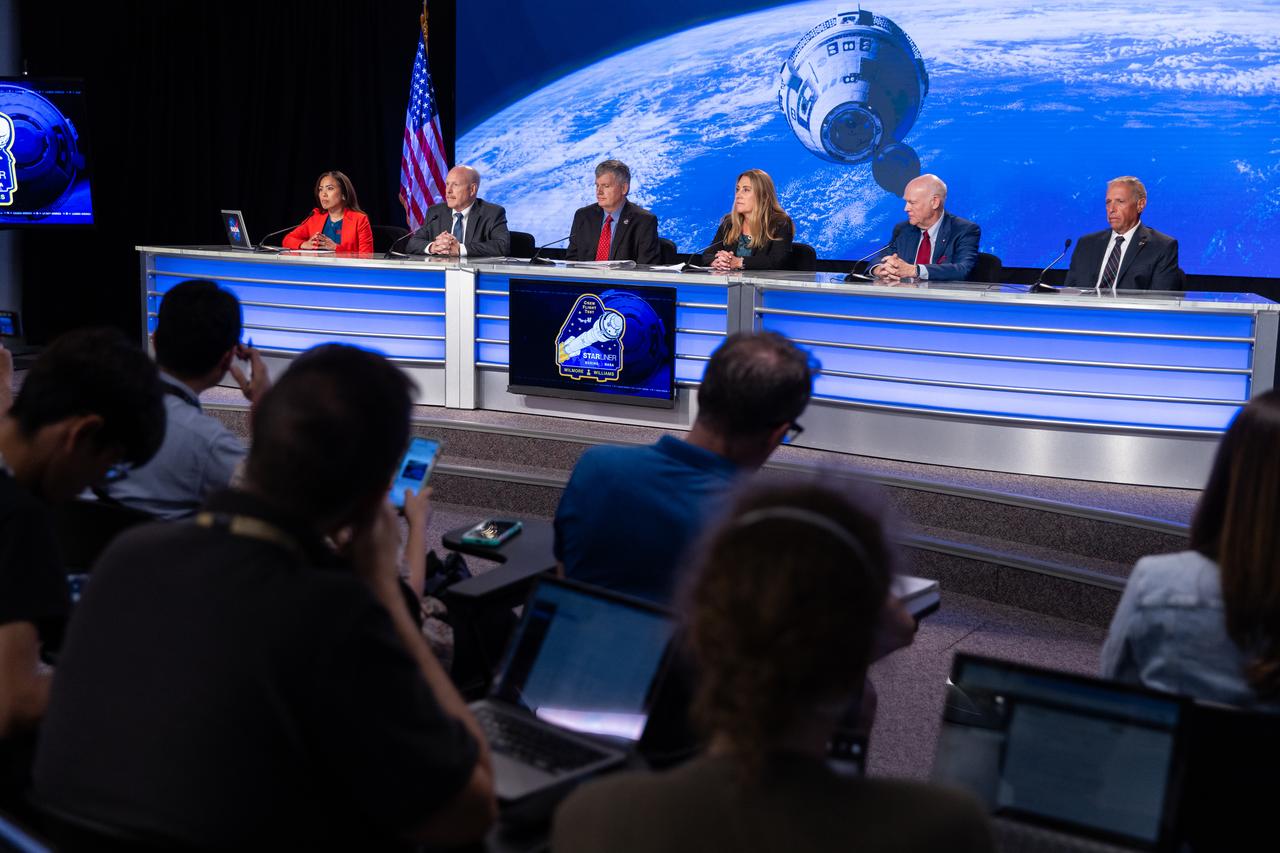
After the first launch attempt of NASA’s Boeing Crew Flight Test, a news conference is held on Monday, May 6, 2024, at the agency’s Kennedy Space Center in Florida. As part of the agency’s Commercial Crew Program, the first crewed launch to the International Space Station aboard Boeing’s Starliner spacecraft atop a United Launch Alliance Atlas V rocket from Space Launch Complex-41 at nearby Cape Canaveral Space Force Station was targeted for 10:34 p.m. ET but scrubbed for the day. Participants, from left to right are, Megan Cruz, NASA Communications; NASA Associate Administrator for Space Operations Ken Bowersox; NASA Commercial Crew Program Manager Steve Stich; NASA International Space Station Program Manager Dana Weigel; ULA (United Launch Alliance) President and CEO, Tory Bruno; and Vice President and Program Manager of Boeing’s Commercial Crew Program Mark Nappi.
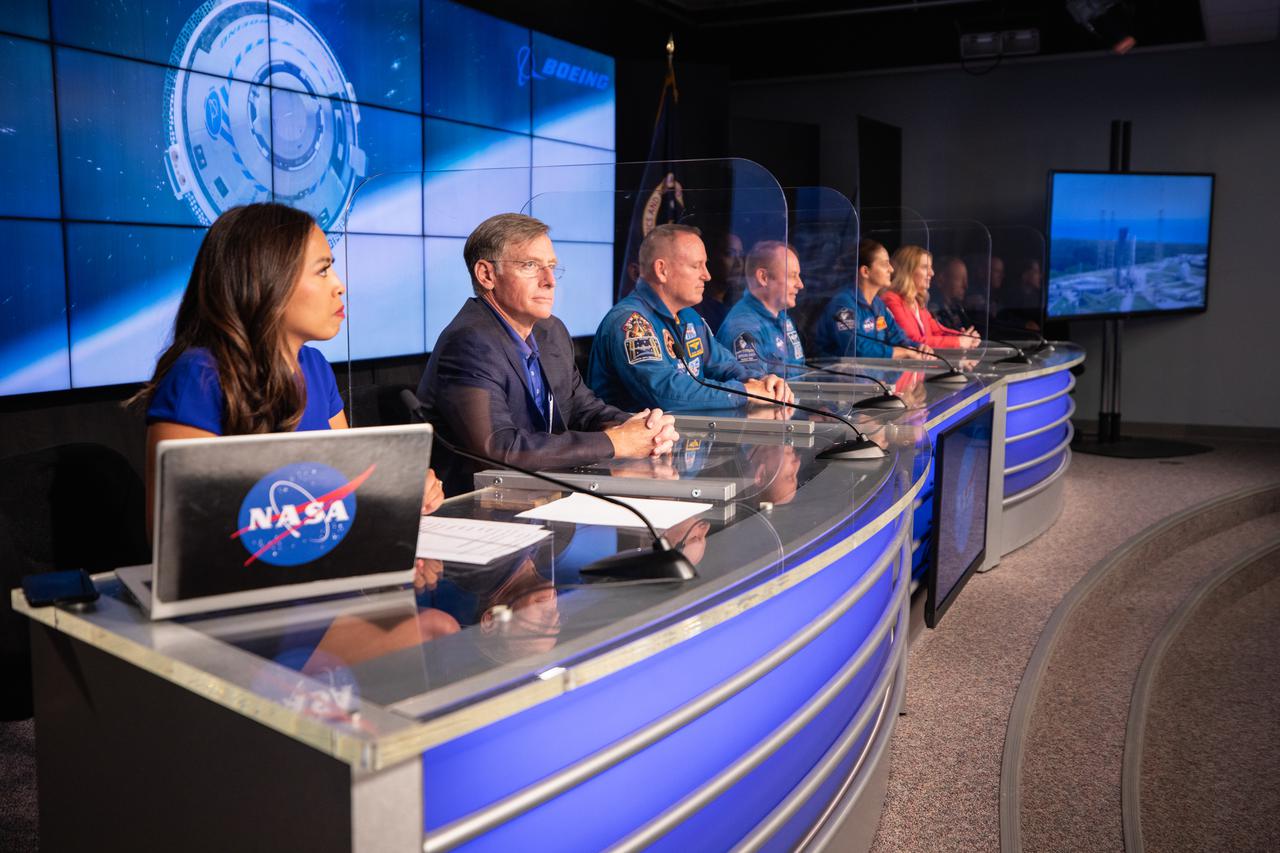
Officials from NASA participate in a crew and science media briefing ahead or Boeing’s Orbital Flight Test-2 (OFT-2) at the agency’s Kennedy Space Center in Florida, July 29, 2021. From left to right are Megan Cruz, NASA Communications; Chris Ferguson, director, Starliner Mission Operations and Integration/Crew Systems; Barry “Butch” Wilmore, NASA astronaut, Crew Flight Test; E. Michael “Mike” Fincke, NASA astronaut, Crew Flight Test; Nicole Mann, NASA astronaut, Crew Flight Test; Jennifer Buchli, deputy chief scientist, NASA’s International Space Station Program. Boeing’s CST-100 Starliner spacecraft will launch atop a ULA Atlas V rocket from Space Launch Complex-41 at Cape Canaveral Space Force Station on a mission to dock with the space station. The uncrewed OFT-2 will be the Starliner’s second flight for NASA’s Commercial Crew Program.
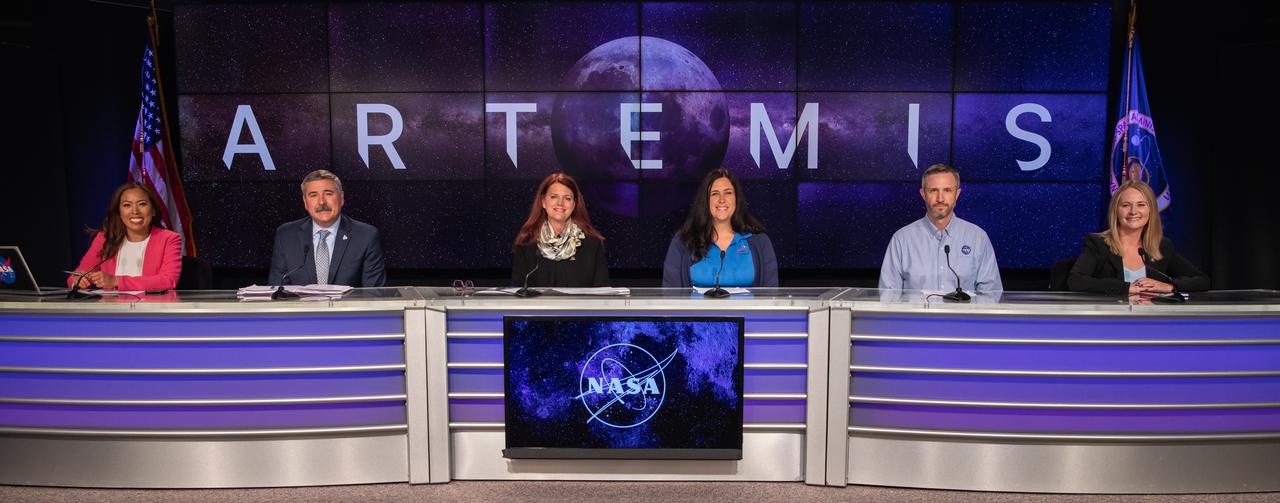
From left, Megan Cruz, NASA Communications; Mike Sarafin, Artemis mission manager, NASA Headquarters; Charlie Blackwell-Thompson, Artemis launch director, Kennedy Space Center; Melissa Jones, recovery director, Exploration Ground Systems Program, Kennedy; Jacob Bleacher, chief exploration scientist, Exploration Systems Development Mission Directorate, NASA Headquarters; and Melody Lovin, weather officer, Space Launch Delta 45, participate in an Artemis I mission status press briefing at Kennedy on Aug. 27, 2022. NASA’s Space Launch System rocket and Orion spacecraft are targeted to lift off from Kennedy’s Launch Complex 39B no earlier than Aug. 29, 2022, at 8:33 a.m. EDT.

Megan Cruz, NASA Communications, moderates a prelaunch media briefing following completion of NASA’s Flight Readiness Review for Artemis I on Aug. 22, 2022, at the agency’s Kennedy Space Center in Florida. Artemis I is scheduled to launch at 8:33 a.m. EDT on Aug. 29, 2022, from Kennedy’s Launch Complex 39B. The first in a series of increasingly complex missions, Artemis I will provide a foundation for human deep space exploration and demonstrate our commitment and capability to extend human presence to the Moon and beyond. The primary goal of Artemis I is to thoroughly test the integrated systems before crewed missions by operating the spacecraft in a deep space environment, testing Orion’s heat shield, and recovering the crew module after reentry, descent, and splashdown.
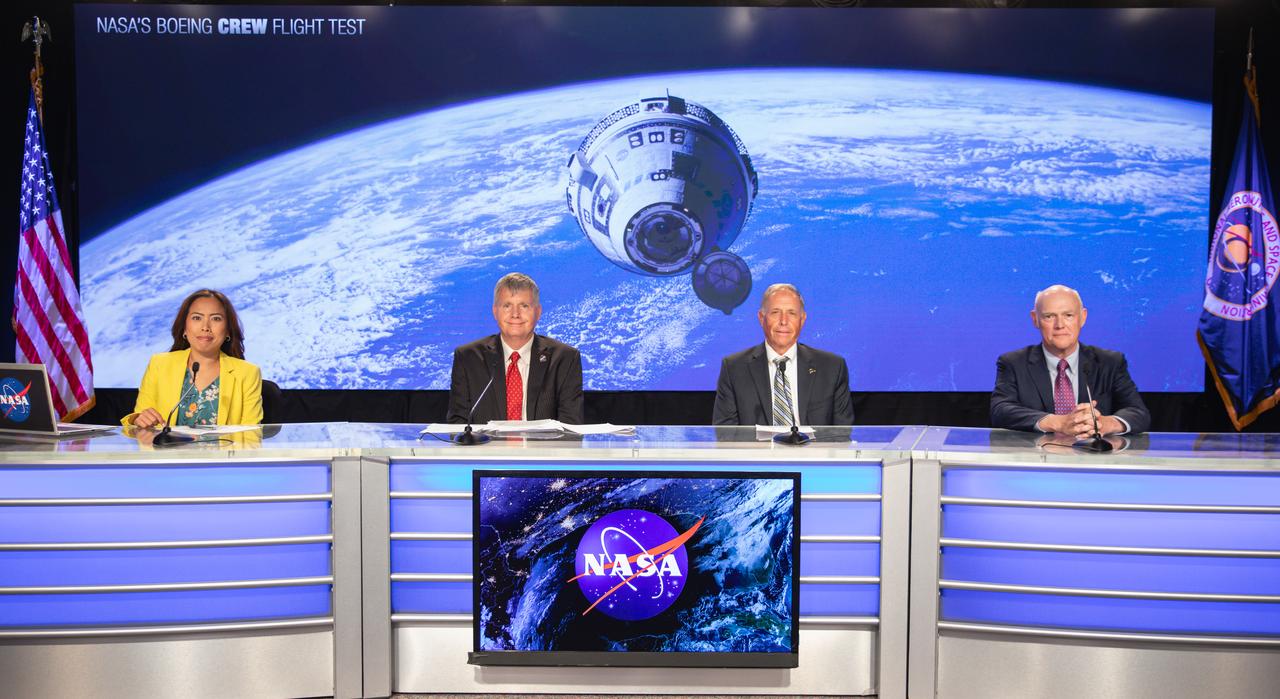
A news conference is held at the agency’s Kennedy Space Center in Florida on Saturday, June 1, 2024, after the second launch attempt of NASA’s Boeing Crew Flight Test scrubbed for the day. As part of the agency’s Commercial Crew Program, NASA astronauts Butch Wilmore and Suni Williams will be the first to launch to the International Space Station aboard Boeing’s Starliner spacecraft atop a ULA (United Launch Alliance) Atlas V rocket from Space Launch Complex-41 at nearby Cape Canaveral Space Force Station. Participants, from left to right, are Megan Cruz, NASA Communications; Steve Stich, NASA Commercial Crew Program manager; Mark Nappi, vice president and program manager for the Commercial Crew Program at Boeing; and Tory Bruno, ULA president and CEO.
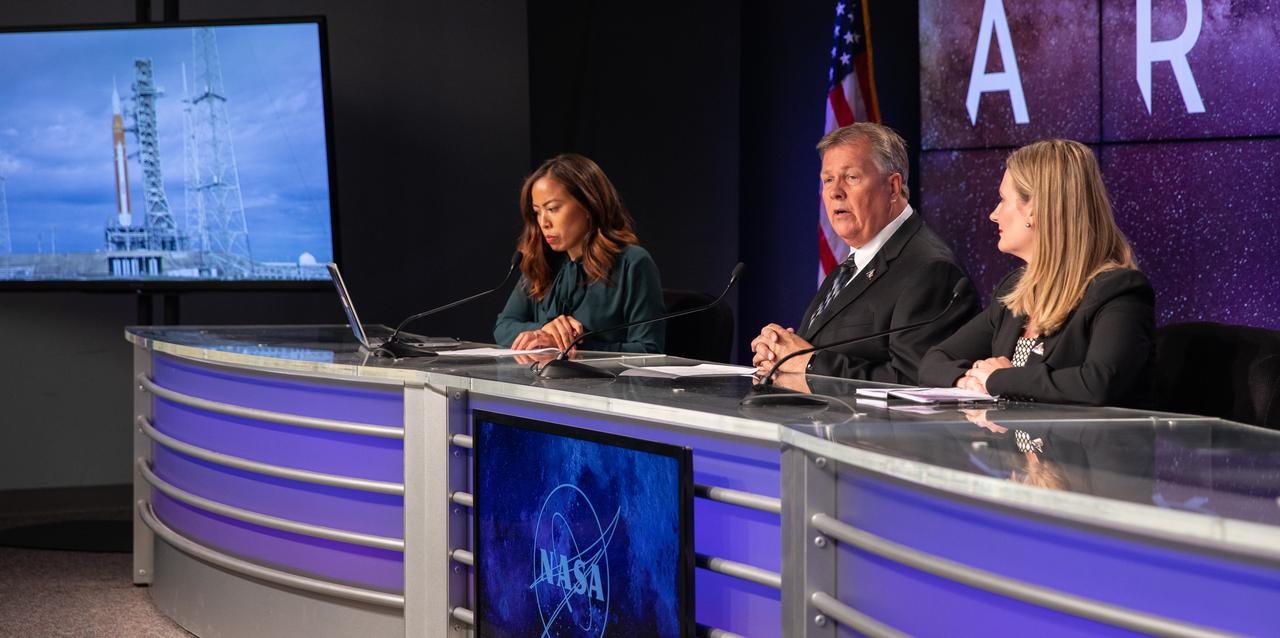
A prelaunch media briefing on the status of the Artemis countdown is held on Aug. 28, at NASA’s Kennedy Space Center in Florida. From left are Megan Cruz, NASA Communications; Jeff Spaulding, Artemis I senior NASA test director; Melody Lovin, weather officer, Space Launch Delta 45. Artemis I is scheduled to launch Aug. 29, at 8:33 a.m. EDT from Kennedy’s Launch Complex 39B. The first in a series of increasingly complex missions, Artemis I will provide a foundation for human deep space exploration and demonstrate our commitment and capability to extend human presence to the Moon and beyond. The primary goal of Artemis I is to thoroughly test the integrated systems before crewed missions by operating the spacecraft in a deep space environment, testing Orion’s heat shield, and recovering the crew module after reentry, descent, and splashdown.
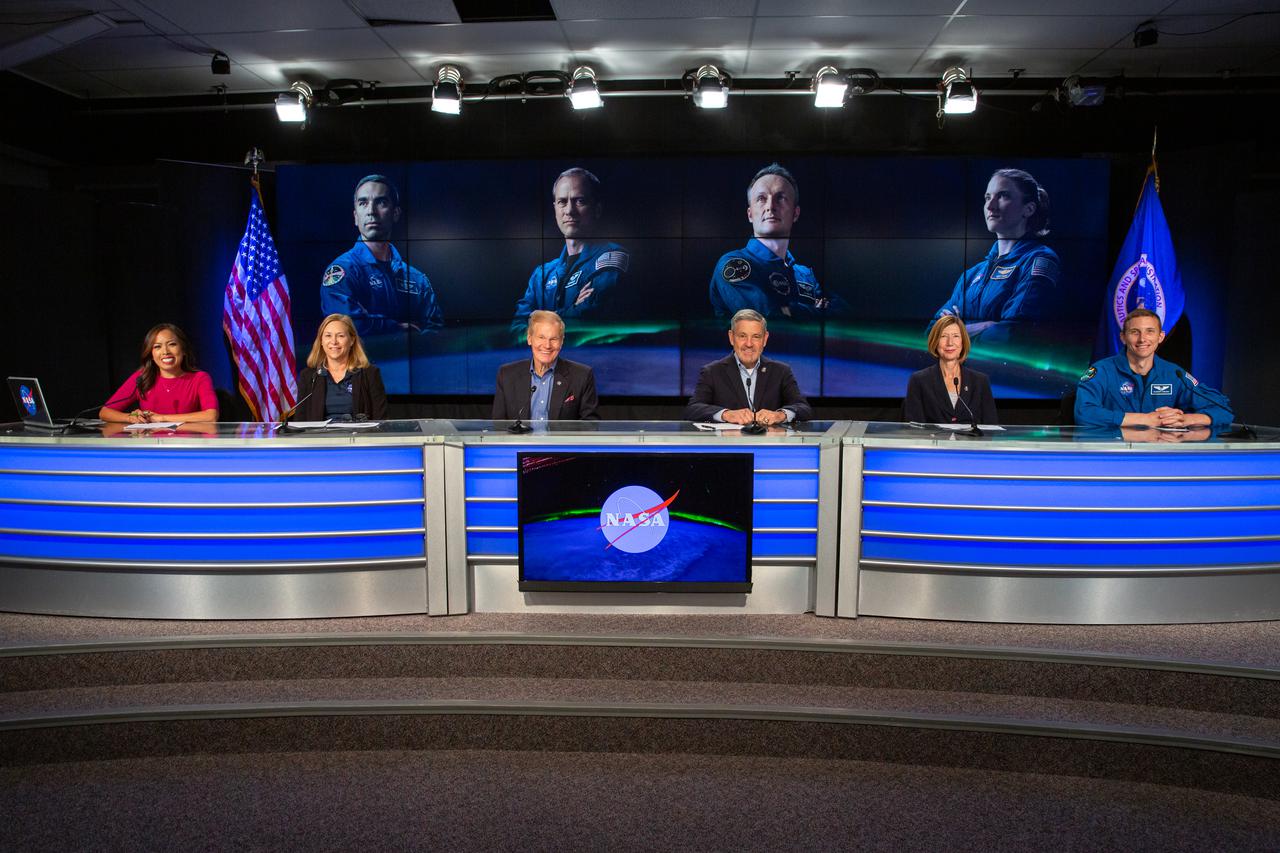
NASA Administrator Bill Nelson, third from left, joins Kennedy Space Center Director Janet Petro, second from left, on Oct. 29, 2021, at the center for a briefing on the upcoming SpaceX Crew-3 mission. The briefing was moderated by Megan Cruz, far left, NASA Communications. Also participating were Bob Cabana, NASA associate administrator; Kathy Lueders, NASA associate administrator for Space Operations; and NASA astronaut Woody Hoburg. The SpaceX Falcon 9 with Crew Dragon atop is scheduled to launch Oct. 31 at 2:21 a.m. EDT from Launch Complex 39A at Kennedy. Crew Dragon will carry four astronauts to the International Space Station for NASA’s Commercial Crew Program. Crew-3 is the third crew rotation flight to the space station, and the first flight of a new Crew Dragon spacecraft.
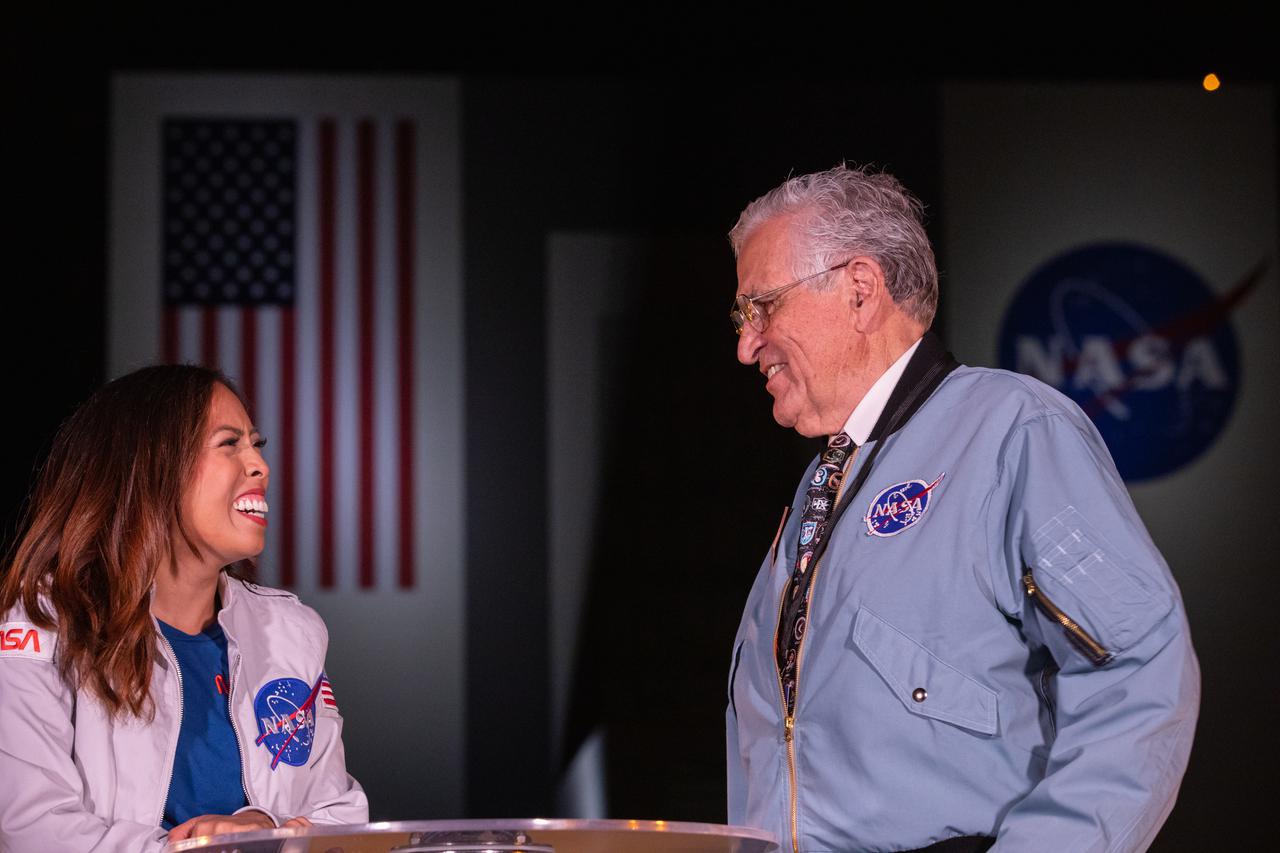
Megan Cruz of NASA Communications interviews Apollo 17 astronaut Harrison Schmitt at NASA’s Kennedy Space Center in Florida prior to liftoff of the Crew-4 mission from Kennedy’s Launch Complex 39A on April 27, 2022. The SpaceX Falcon 9 rocket, with the company’s Crew Dragon atop, launched at 3:52 a.m. EDT on April 27. Aboard the spacecraft are NASA astronauts Kjell Lindgren, commander; Bob Hines, pilot; and Jessica Watkins, mission specialist, along with ESA (European Space Agency) astronaut Samantha Cristoforetti, mission specialist. Nicknamed Freedom by the Crew-4 astronauts, Dragon will carry the crew to the International Space Station as part of NASA’s Commercial Crew Program. Freedom is scheduled to dock to the space station at 8:15 p.m. EDT today.

NASA Communications’ Megan Cruz moderates a SpaceX 24th commercial resupply services mission prelaunch news conference at Kennedy Space Center in Florida on Tuesday, Dec. 20, 2021. Participants included Joel Montalbano, manager, International Space Station Program; Dr. Bob Dempsey, acting deputy chief scientist, International Space Station Program; Sarah Walker, director, Dragon mission management, SpaceX; and Arlena Moses, launch weather officer, 45th Weather Squadron, Cape Canaveral Space Force Station. Liftoff of the SpaceX Falcon 9 rocket with the company’s Dragon spacecraft on board is targeted for Tuesday, Dec. 21, 2021, at 5:07 a.m. EST. The mission will deliver new science investigations, supplies, and equipment to the crew on board the International Space Station.
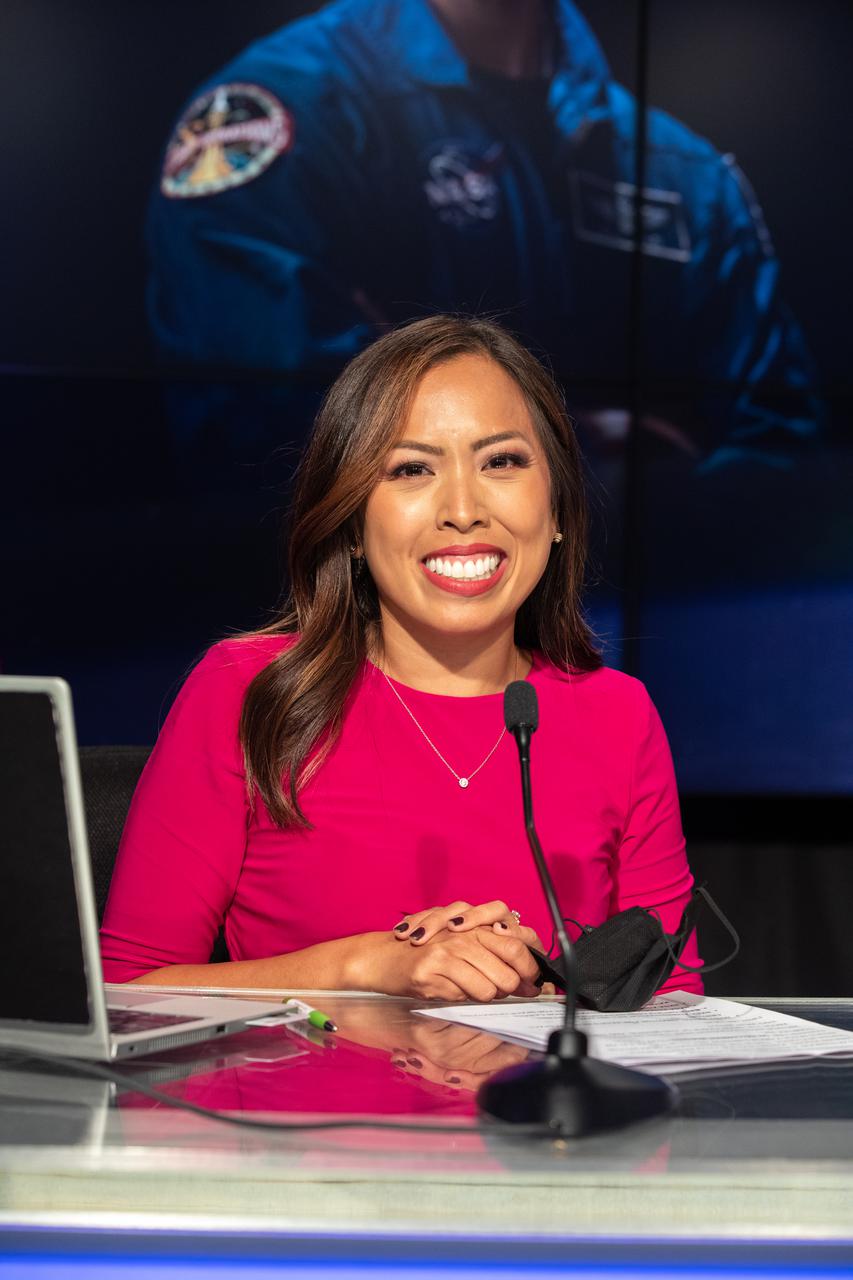
Megan Cruz, NASA Communications, moderates a briefing on the upcoming SpaceX Crew-3 mission, featuring NASA Administrator Bill Nelson, at Kennedy Space Center in Florida on Oct. 29, 2021. Participants included Kennedy Director Janet Petro, Bob Cabana, NASA associate administrator, Kathy Lueders, NASA associate administrator for Space Operations; and NASA astronaut Woody Hoburg. The SpaceX Falcon 9 with Crew Dragon atop is scheduled to launch Oct. 31 at 2:21 a.m. EDT from Launch Complex 39A at Kennedy. Crew Dragon will carry four astronauts to the International Space Station for NASA’s Commercial Crew Program. Crew-3 is the third crew rotation flight to the space station, and the first flight of a new Crew Dragon spacecraft.
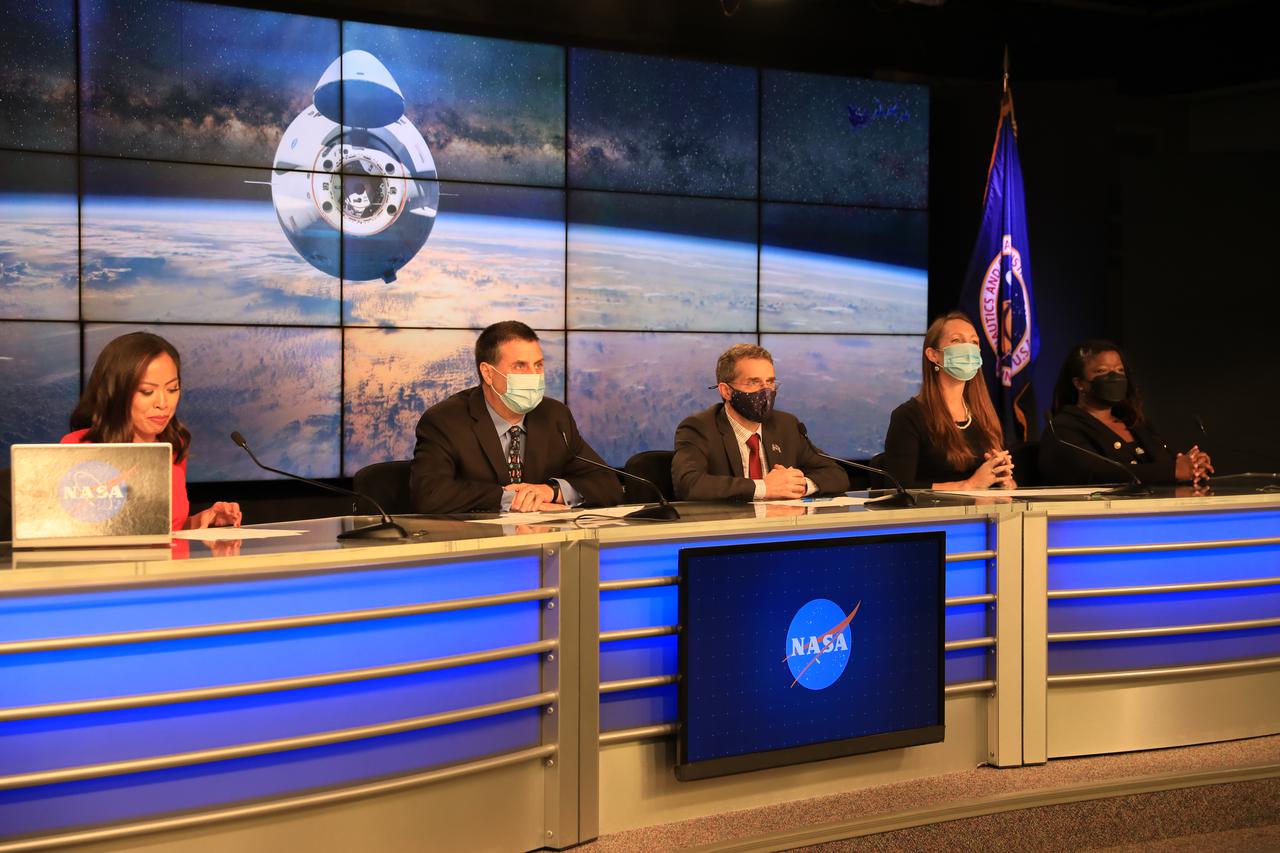
From left, Megan Cruz, NASA Communications; Joel Montalbano, manager, International Space Station Program; Dr. Bob Dempsey, acting deputy chief scientist, International Space Station Program; Sarah Walker, director, Dragon mission management, SpaceX; and Arlena Moses, launch weather officer, 45th Weather Squadron, Cape Canaveral Space Force Station, participate in NASA’s SpaceX 24th commercial resupply services mission prelaunch news conference at Kennedy Space Center in Florida on Tuesday, Dec. 20, 2021. Liftoff of the SpaceX Falcon 9 rocket with the company’s Dragon spacecraft on board is targeted for Tuesday, Dec. 21, 2021, at 5:07 a.m. EST. The mission will deliver new science investigations, supplies, and equipment to the crew on board the International Space Station.
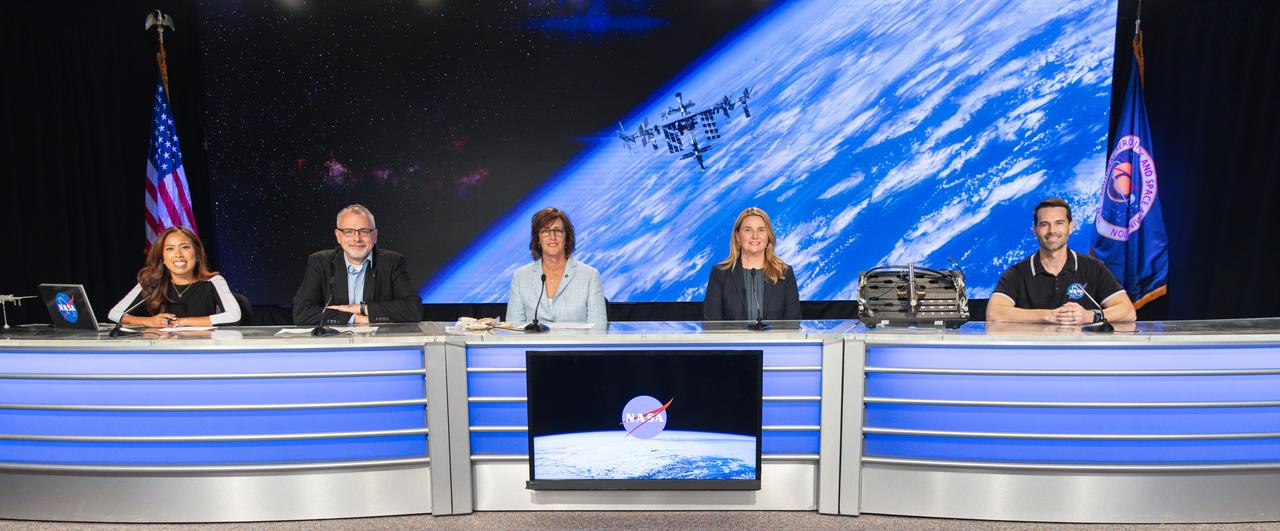
NASA leaders participate in an International Space Station 101 Panel Livestream inside the John Holliman Auditorium of the News Center at the agency’s Kennedy Space Center in Florida on Friday, Sept. 27, 2024, ahead of NASA’s SpaceX Crew-9 mission to the International Space Station. Participants, from left to right, are Megan Cruz, NASA Communications; NASA Associate Administrator Jim Free; Robyn Gatens, director, NASA’s International Space Station Program, and acting director, NASA’s Commercial Spaceflight Division; Jennifer Buchli, chief scientist, NASA’s International Space Station Program; and John Posey, Dragon engineer, NASA’s Commercial Crew Program. Liftoff of the ninth crew rotation mission with SpaceX to the space station as part of the agency’s Commercial Crew Program is targeted for 1:17 p.m. EDT Sept. 28, 2024, from Space Launch Complex-40 at Cape Canaveral Space Force Station in Florida.
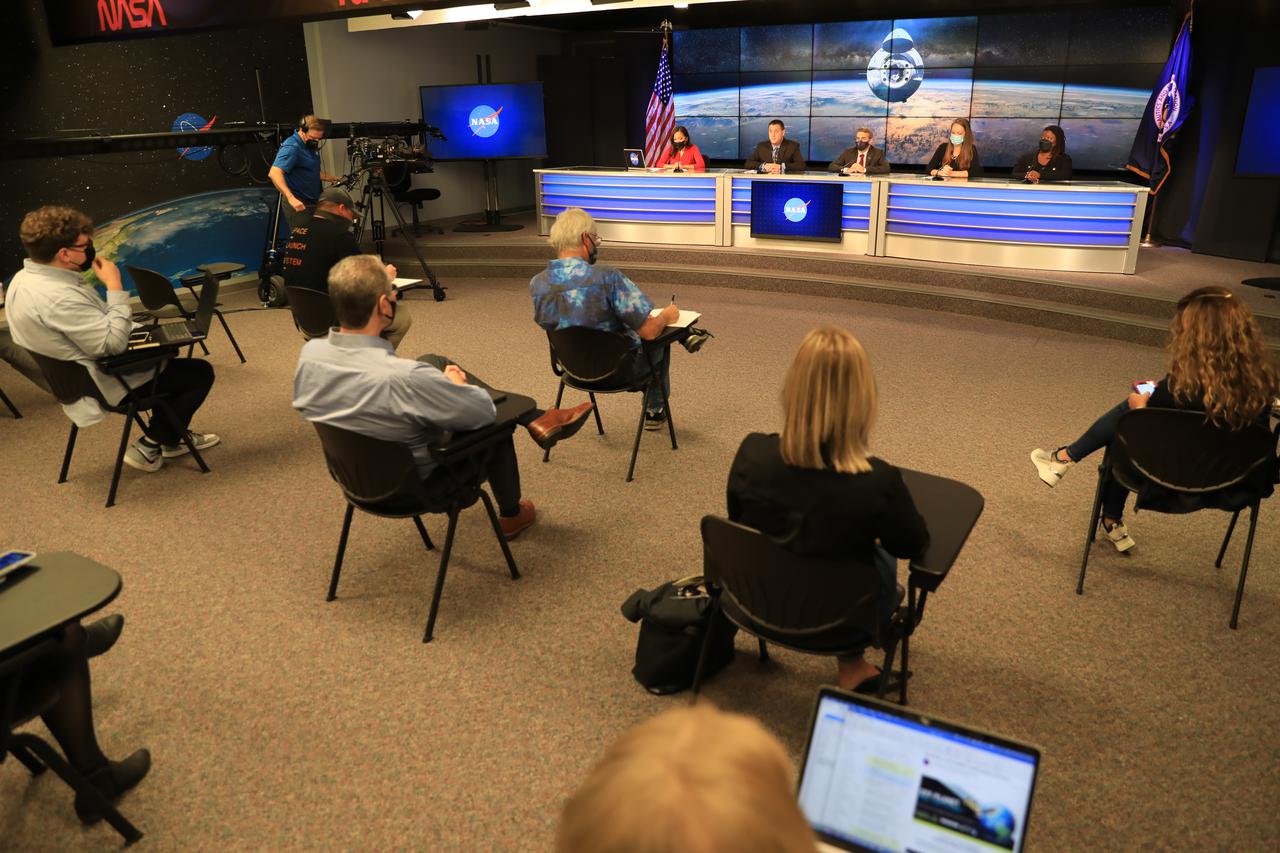
Media members participate in NASA’s SpaceX 24th commercial resupply services mission prelaunch news conference at Kennedy Space Center in Florida on Tuesday, Dec. 20, 2021. Participants included Joel Montalbano, manager, International Space Station Program; Dr. Bob Dempsey, acting deputy chief scientist, International Space Station Program; Sarah Walker, director, Dragon mission management, SpaceX; and Arlena Moses, launch weather officer, 45th Weather Squadron, Cape Canaveral Space Force Station. NASA Communications’ Megan Cruz moderated the event. Liftoff of the SpaceX Falcon 9 rocket with the company’s Dragon spacecraft on board is targeted for Tuesday, Dec. 21, 2021, at 5:07 a.m. EST. The mission will deliver new science investigations, supplies, and equipment to the crew on board the International Space Station.
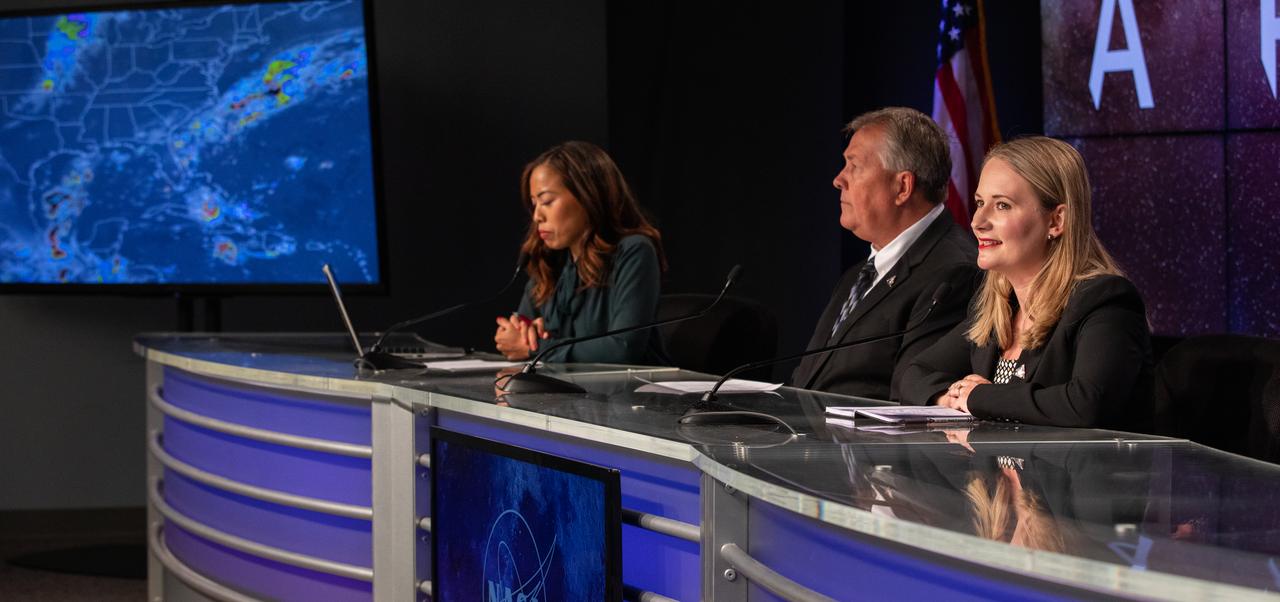
A prelaunch media briefing on the status of the Artemis countdown is held on Aug. 28, at NASA’s Kennedy Space Center in Florida. From left are Megan Cruz, NASA Communications; Jeff Spaulding, Artemis I senior NASA test director; Melody Lovin, weather officer, Space Launch Delta 45. Artemis I is scheduled to launch Aug. 29, at 8:33 a.m. EDT from Kennedy’s Launch Complex 39B. The first in a series of increasingly complex missions, Artemis I will provide a foundation for human deep space exploration and demonstrate our commitment and capability to extend human presence to the Moon and beyond. The primary goal of Artemis I is to thoroughly test the integrated systems before crewed missions by operating the spacecraft in a deep space environment, testing Orion’s heat shield, and recovering the crew module after reentry, descent, and splashdown.

Megan Cruz, NASA Communications, moderates a prelaunch media briefing on the status of the Artemis I countdown on Sept. 2, 2022, at NASA’s Kennedy Space Center in Florida. Artemis I is scheduled to launch at 2:17 p.m. EDT on Sept. 3, from Kennedy’s Launch Complex 39B. Launch was waved off on Aug. 29 due to an issue during tanking. The first in a series of increasingly complex missions, Artemis I will provide a foundation for human deep space exploration and demonstrate NASA’s capability to extend human presence to the Moon and beyond. The primary goal of Artemis I is to thoroughly test the integrated systems before crewed missions by operating the spacecraft in a deep space environment, testing Orion’s heat shield, and recovering the crew module after reentry, descent, and splashdown.

A prelaunch media briefing on the status of the Artemis countdown is held on Aug. 28, at NASA’s Kennedy Space Center in Florida. From left are Megan Cruz, NASA Communications; Jeff Spaulding, Artemis I senior NASA test director; Melody Lovin, weather officer, Space Launch Delta 45. Artemis I is scheduled to launch Aug. 29, at 8:33 a.m. EDT from Kennedy’s Launch Complex 39B. The first in a series of increasingly complex missions, Artemis I will provide a foundation for human deep space exploration and demonstrate our commitment and capability to extend human presence to the Moon and beyond. The primary goal of Artemis I is to thoroughly test the integrated systems before crewed missions by operating the spacecraft in a deep space environment, testing Orion’s heat shield, and recovering the crew module after reentry, descent, and splashdown.
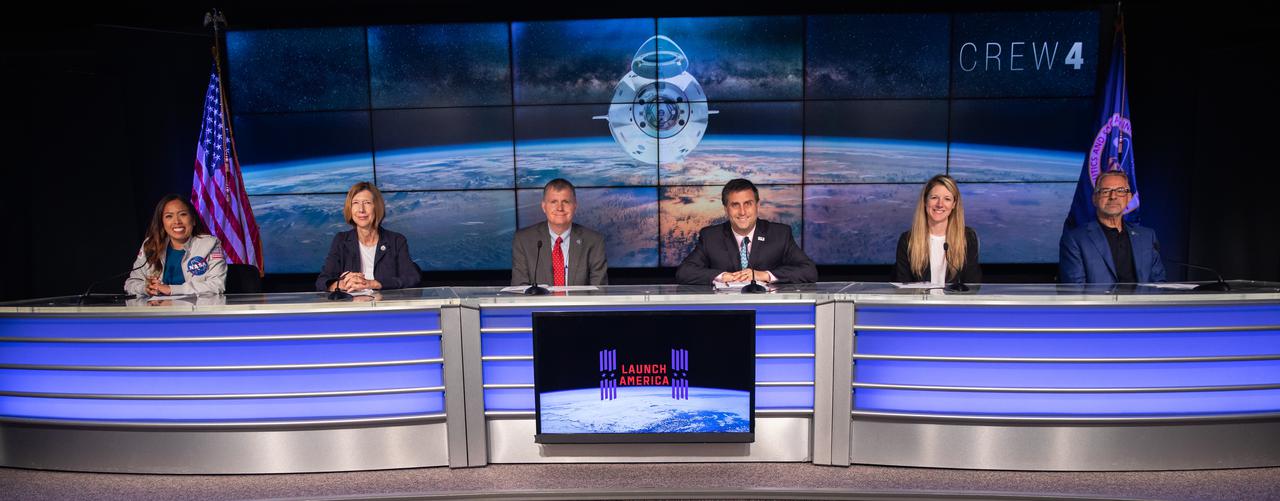
From left, moderator Megan Cruz, NASA Communications; Kathryn Lueders, associate administrator, NASA’s Space Operations Mission Directorate; Steve Stich, manager, NASA’s Commercial Crew Program; Joel Montalbano, manager, NASA’s International Space Station Program; Jessica Jensen, vice president of customer operations and Integration, SpaceX; and Josef Aschbacher, director general, ESA (European Space Agency) participate in a Crew-4 postlaunch news conference April 27, 2022, at NASA’s Kennedy Space Center in Florida. The SpaceX Crew Dragon spacecraft, powered by the company’s Falcon 9 rocket, lifted off from Kennedy’s Launch Complex 39A at 3:52 a.m. EDT on April 27. Named Freedom by mission astronauts Kjell Lindgren, Bob Hines, Jessica Watkins, and Samantha Cristoforetti, Dragon is scheduled to dock to the space station today at 8:15 p.m. EDT.
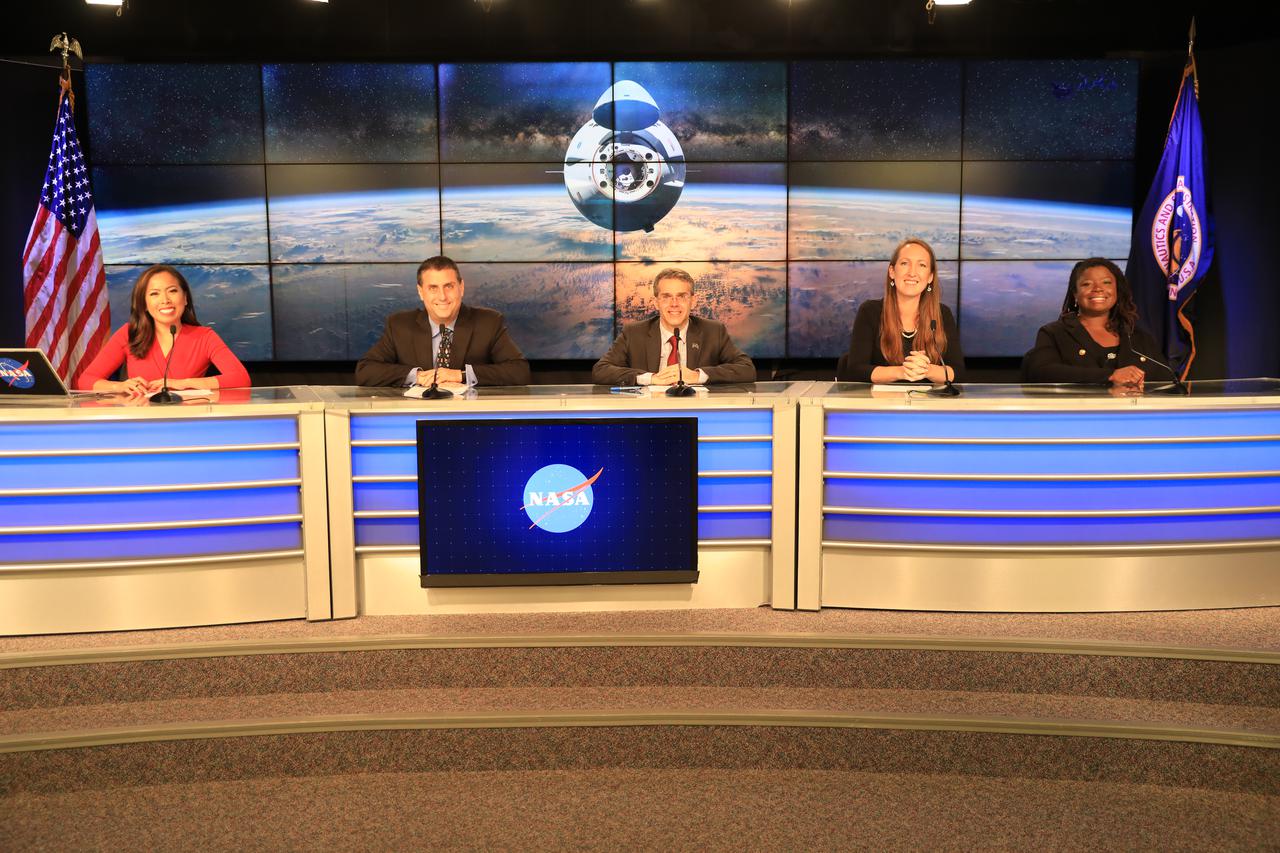
From left, Megan Cruz, NASA Communications; Joel Montalbano, manager, International Space Station Program; Dr. Bob Dempsey, acting deputy chief scientist, International Space Station Program; Sarah Walker, director, Dragon mission management, SpaceX; and Arlena Moses, launch weather officer, 45th Weather Squadron, Cape Canaveral Space Force Station, participate in NASA’s SpaceX 24th commercial resupply services mission prelaunch news conference at Kennedy Space Center in Florida on Tuesday, Dec. 20, 2021. Liftoff of the SpaceX Falcon 9 rocket with the company’s Dragon spacecraft on board is targeted for Tuesday, Dec. 21, 2021, at 5:07 a.m. EST. The mission will deliver new science investigations, supplies, and equipment to the crew on board the International Space Station.
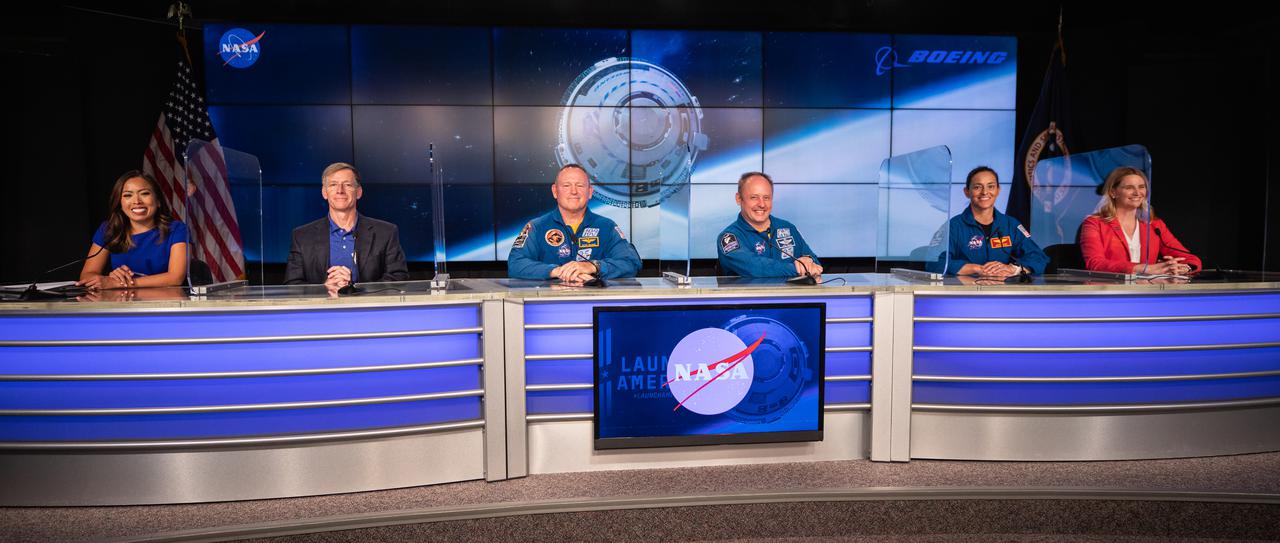
Officials from NASA participate in a crew and science media briefing ahead or Boeing’s Orbital Flight Test-2 (OFT-2) at the agency’s Kennedy Space Center in Florida, July 29, 2021. From left to right are Megan Cruz, NASA Communications; Chris Ferguson, director, Starliner Mission Operations and Integration/Crew Systems; Barry “Butch” Wilmore, NASA astronaut, Crew Flight Test; E. Michael “Mike” Fincke, NASA astronaut, Crew Flight Test; Nicole Mann, NASA astronaut, Crew Flight Test; Jennifer Buchli, deputy chief scientist, NASA’s International Space Station Program. Boeing’s CST-100 Starliner spacecraft will launch atop a ULA Atlas V rocket from Space Launch Complex-41 at Cape Canaveral Space Force Station on a mission to dock with the space station. The uncrewed OFT-2 will be the Starliner’s second flight for NASA’s Commercial Crew Program.
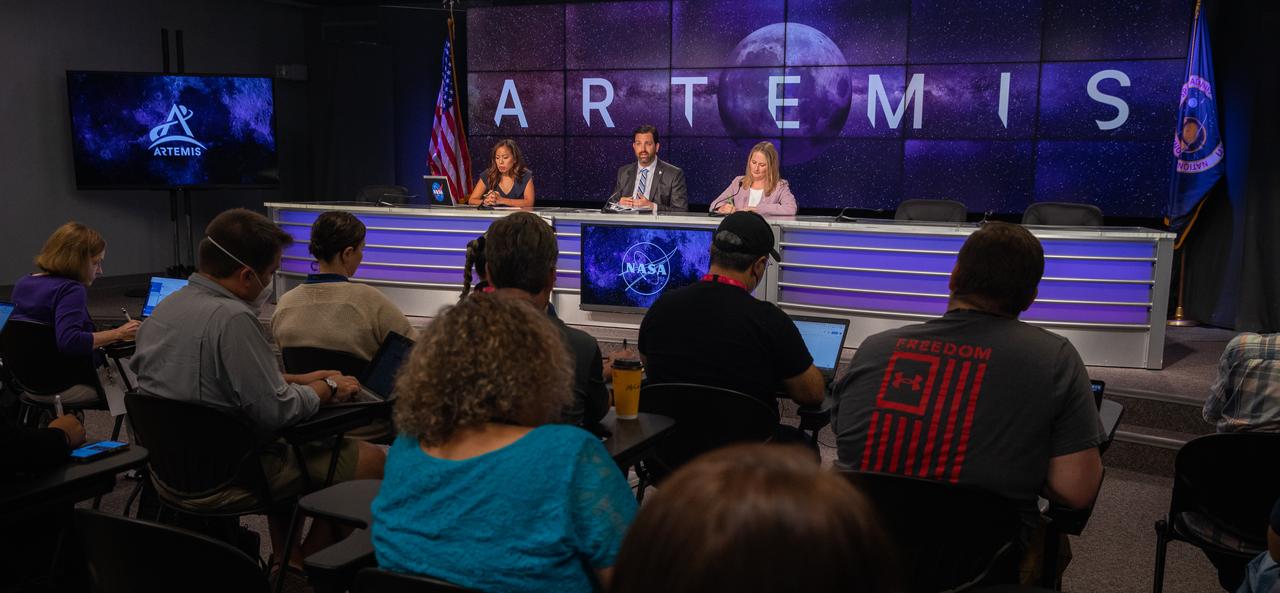
NASA holds a prelaunch media briefing on the status of the Artemis I countdown on Sept. 2, 2022, at NASA’s Kennedy Space Center in Florida. Participants are, from left, Megan Cruz, moderator, NASA Communications; Jeremy Parsons, Exploration Ground Systems, deputy program manager, NASA Kennedy; and Melody Lovin, weather officer, Space Launch Delta 45. Artemis I is scheduled to launch at 2:17 p.m. EDT on Sept. 3, from Kennedy’s Launch Complex 39B. Launch was waved off on Aug. 29 due to an issue during tanking. The first in a series of increasingly complex missions, Artemis I will provide a foundation for human deep space exploration and demonstrate NASA’s capability to extend human presence to the Moon and beyond. The primary goal of Artemis I is to thoroughly test the integrated systems before crewed missions by operating the spacecraft in a deep space environment, testing Orion’s heat shield, and recovering the crew module after reentry, descent, and splashdown.
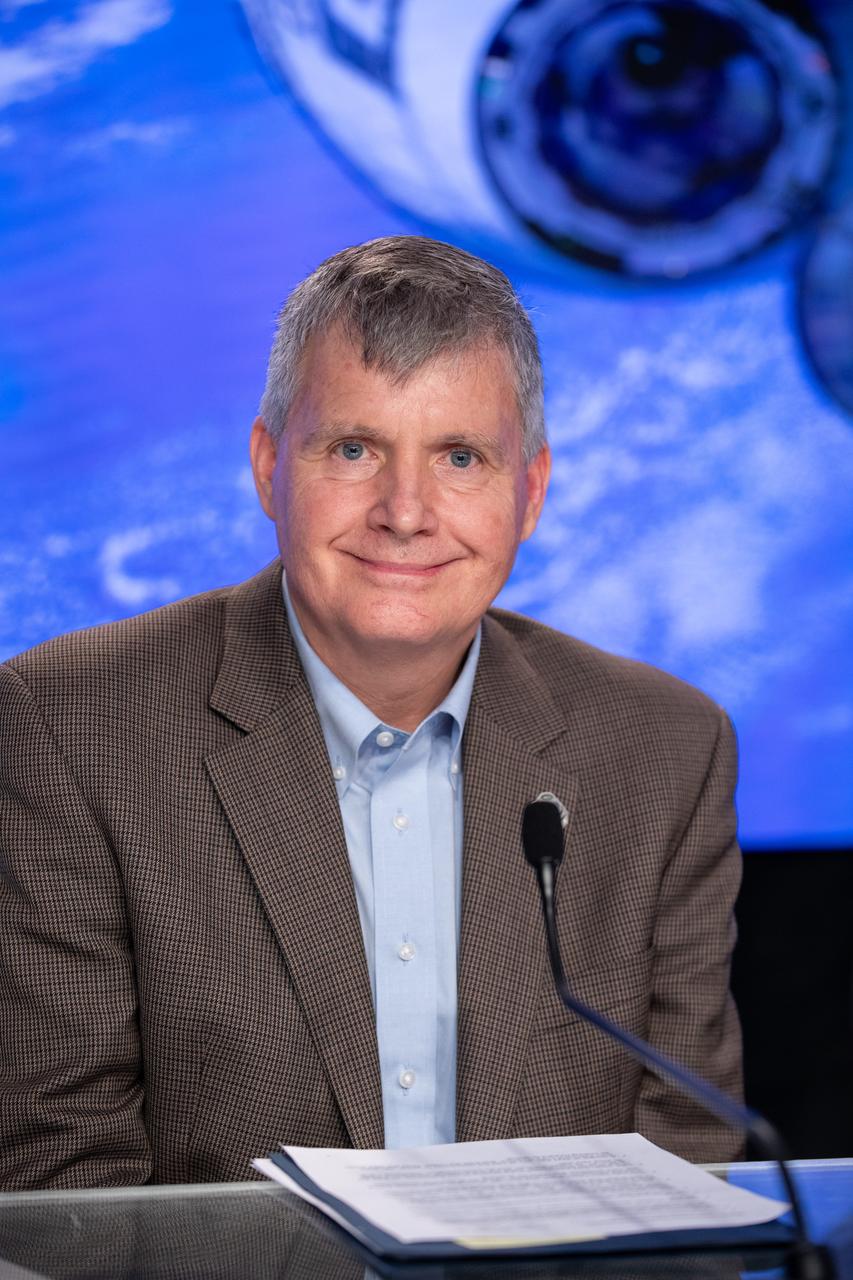
Officials from NASA, Boeing, ULA (United Launch Alliance) , and the U.S. Space Force 45th Weather Squadron participate in a prelaunch briefing for NASA’s Boeing Crew Flight Test at the agency’s Kennedy Space Center in Florida, Friday, May 3, 2024. From left to right at the dais are Megan Cruz, NASA Communications; Bill Nelson, NASA administrator; Steve Stich, manager, NASA’s Commercial Crew Program; Dana Weigel, manager, NASA’s International Space Station Program; Jennifer Buchli, chief scientist, NASA’s International Space Station Program; Mark Nappi, vice president and program manager, Boeing Commercial Crew Program; Gary Wentz, vice president, Government and Commercial Programs, ULA; Brian Cizek, launch weather officer, U.S. Space Force, 45th Weather Squadron. As part of the agency’s Commercial Crew Program, NASA astronauts Butch Wilmore and Suni Williams are the first to launch aboard Boeing’s Starliner spacecraft atop a ULA Atlas V rocket from Space Launch Complex-41 at Cape Canaveral Space Force Station in Florida. Liftoff is scheduled for 10:34 p.m. ET on Monday, May 6.
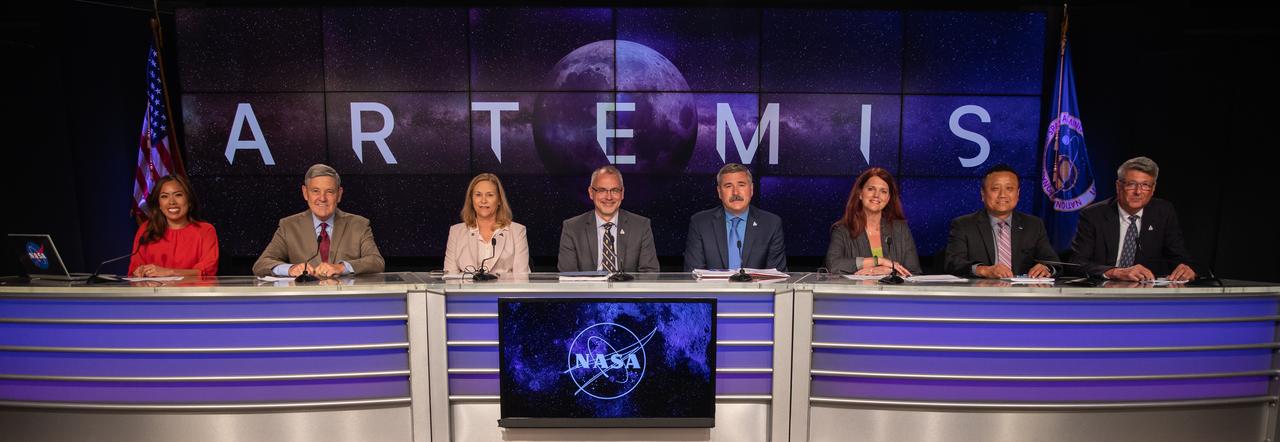
A prelaunch media briefing is held following completion of NASA’s Flight Readiness Review for Artemis I on Aug. 22, 2022, at the agency’s Kennedy Space Center in Florida. Participants are, from left, Megan Cruz, NASA Communications; Bob Cabana, NASA Associate Administrator; Janet Petro, Director, Kennedy Space Center; Jim Free, Associate Administrator, Exploration Systems Development; Mike Sarafin, Mission Manager, Artemis I; Charlie Blackwell-Thompson, Launch Director, Artemis I; Howard Hu, Manager, Orion Program; Chris Cianciola, Deputy Manager, SLS Program. Artemis I is scheduled to launch at 8:33 a.m. EDT on Aug. 29, 2022, from Kennedy’s Launch Complex 39B. The first in a series of increasingly complex missions, Artemis I will provide a foundation for human deep space exploration and demonstrate our commitment and capability to extend human presence to the Moon and beyond. The primary goal of Artemis I is to thoroughly test the integrated systems before crewed missions by operating the spacecraft in a deep space environment, testing Orion’s heat shield, and recovering the crew module after reentry, descent, and splashdown.
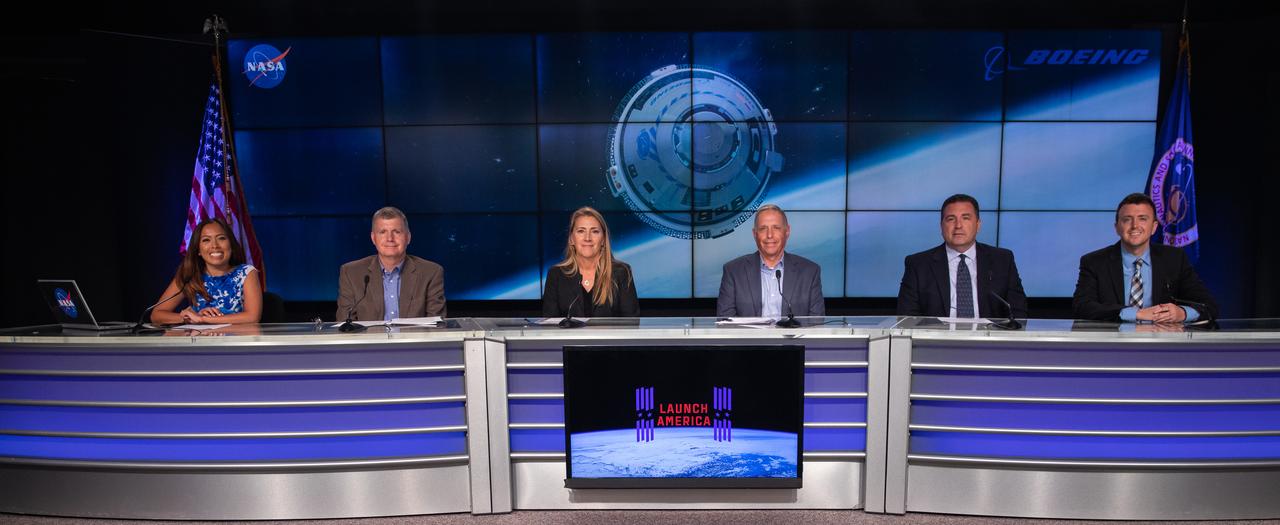
Officials from NASA, Boeing, United Launch Alliance (ULA) and the U.S. Space Force 45th Weather Squadron participate in a prelaunch briefing for NASA’s uncrewed Boeing Orbital Flight Test (OFT-2) at the agency’s Kennedy Space Center in Florida, May 17, 2022. From left to right at the dais are Megan Cruz, NASA Communications; Steve Stich, manager, NASA’s Commercial Crew Program; Dana Weigel, deputy manager, International Space Station Program; Mark Nappi, vice president and manager, Boeing Commercial Crew Program; Gary Wentz, vice president, Government and Commercial Programs, ULA; Will Ulrich, launch weather officer, U.S. Space Force, 45th Weather Squadron. Boeing’s CST-100 Starliner is targeted to launch at 6:54 p.m. EDT on Thursday, May 19, on a ULA Atlas V rocket from Space Launch Complex-41 at Cape Canaveral Space Force Station in Florida to rendezvous and dock with the space station.
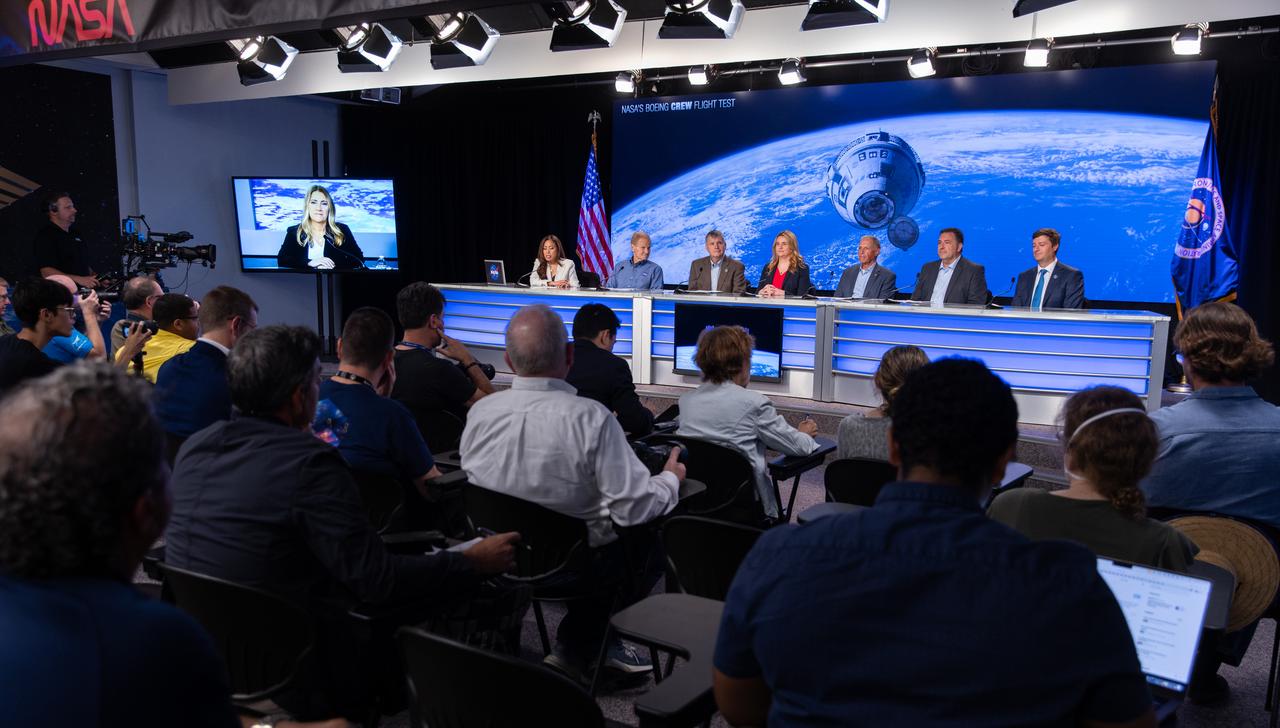
Officials from NASA, Boeing, ULA (United Launch Alliance) , and the U.S. Space Force 45th Weather Squadron participate in a prelaunch briefing for NASA’s Boeing Crew Flight Test at the agency’s Kennedy Space Center in Florida, Friday, May 3, 2024. From left to right at the dais are Megan Cruz, NASA Communications; Bill Nelson, NASA administrator; Steve Stich, manager, NASA’s Commercial Crew Program; Dana Weigel, manager, NASA’s International Space Station Program; Jennifer Buchli, chief scientist, NASA’s International Space Station Program; Mark Nappi, vice president and program manager, Boeing Commercial Crew Program; Gary Wentz, vice president, Government and Commercial Programs, ULA; Brian Cizek, launch weather officer, U.S. Space Force, 45th Weather Squadron. As part of the agency’s Commercial Crew Program, NASA astronauts Butch Wilmore and Suni Williams are the first to launch aboard Boeing’s Starliner spacecraft atop a ULA Atlas V rocket from Space Launch Complex-41 at Cape Canaveral Space Force Station in Florida. Liftoff is scheduled for 10:34 p.m. ET on Monday, May 6.
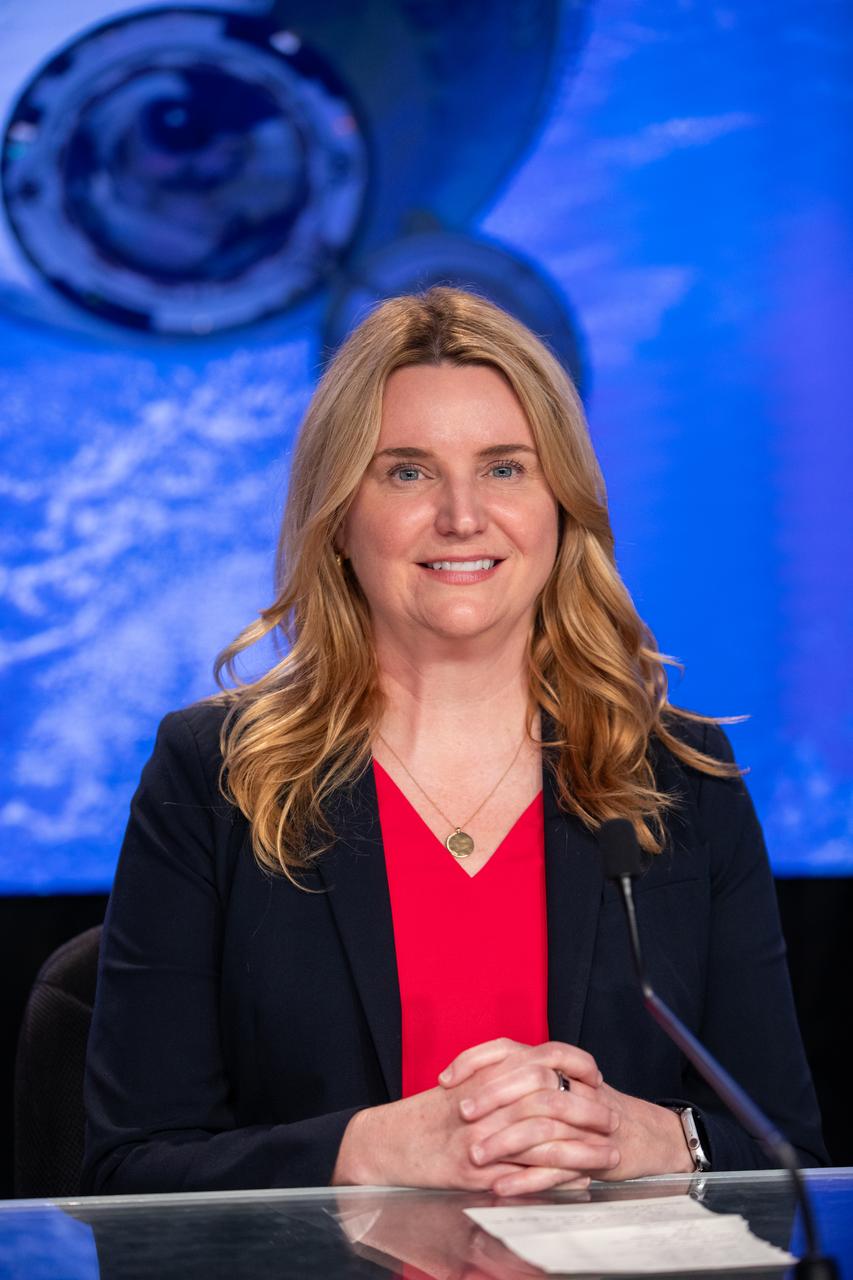
Officials from NASA, Boeing, ULA (United Launch Alliance) , and the U.S. Space Force 45th Weather Squadron participate in a prelaunch briefing for NASA’s Boeing Crew Flight Test at the agency’s Kennedy Space Center in Florida, Friday, May 3, 2024. From left to right at the dais are Megan Cruz, NASA Communications; Bill Nelson, NASA administrator; Steve Stich, manager, NASA’s Commercial Crew Program; Dana Weigel, manager, NASA’s International Space Station Program; Jennifer Buchli, chief scientist, NASA’s International Space Station Program; Mark Nappi, vice president and program manager, Boeing Commercial Crew Program; Gary Wentz, vice president, Government and Commercial Programs, ULA; Brian Cizek, launch weather officer, U.S. Space Force, 45th Weather Squadron. As part of the agency’s Commercial Crew Program, NASA astronauts Butch Wilmore and Suni Williams are the first to launch aboard Boeing’s Starliner spacecraft atop a ULA Atlas V rocket from Space Launch Complex-41 at Cape Canaveral Space Force Station in Florida. Liftoff is scheduled for 10:34 p.m. ET on Monday, May 6.
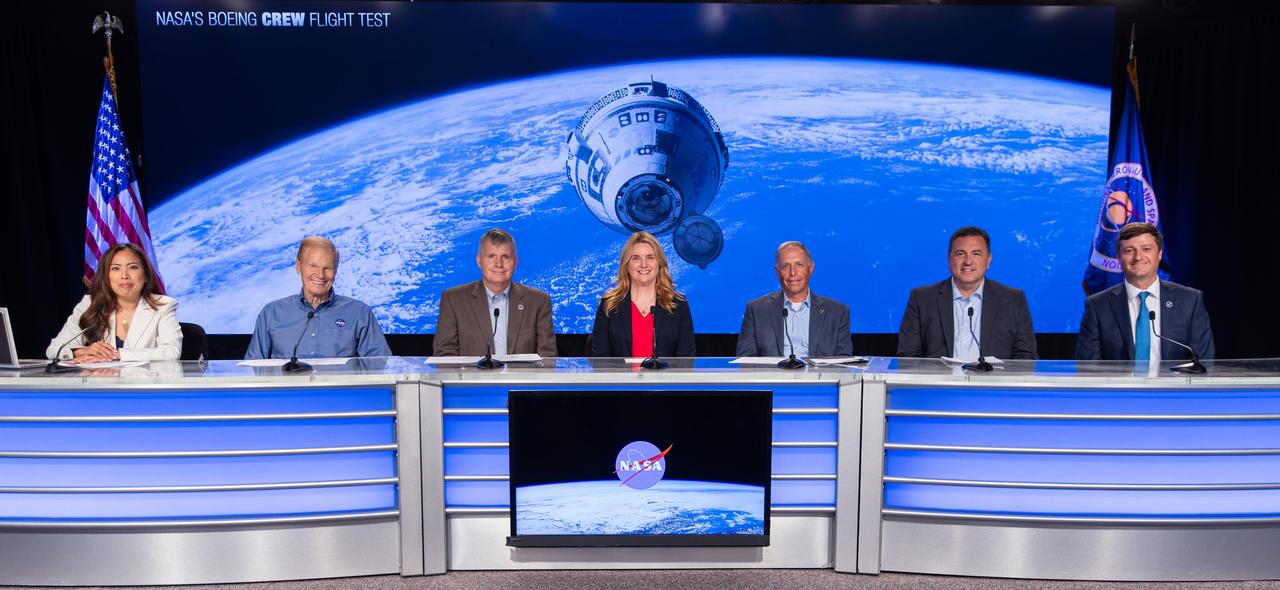
Officials from NASA, Boeing, ULA (United Launch Alliance) , and the U.S. Space Force 45th Weather Squadron participate in a prelaunch briefing for NASA’s Boeing Crew Flight Test at the agency’s Kennedy Space Center in Florida, Friday, May 3, 2024. From left to right at the dais are Megan Cruz, NASA Communications; Bill Nelson, NASA administrator; Steve Stich, manager, NASA’s Commercial Crew Program; Dana Weigel, manager, NASA’s International Space Station Program; Jennifer Buchli, chief scientist, NASA’s International Space Station Program; Mark Nappi, vice president and program manager, Boeing Commercial Crew Program; Gary Wentz, vice president, Government and Commercial Programs, ULA; Brian Cizek, launch weather officer, U.S. Space Force, 45th Weather Squadron. As part of the agency’s Commercial Crew Program, NASA astronauts Butch Wilmore and Suni Williams are the first to launch aboard Boeing’s Starliner spacecraft atop a ULA Atlas V rocket from Space Launch Complex-41 at Cape Canaveral Space Force Station in Florida. Liftoff is scheduled for 10:34 p.m. ET on Monday, May 6.
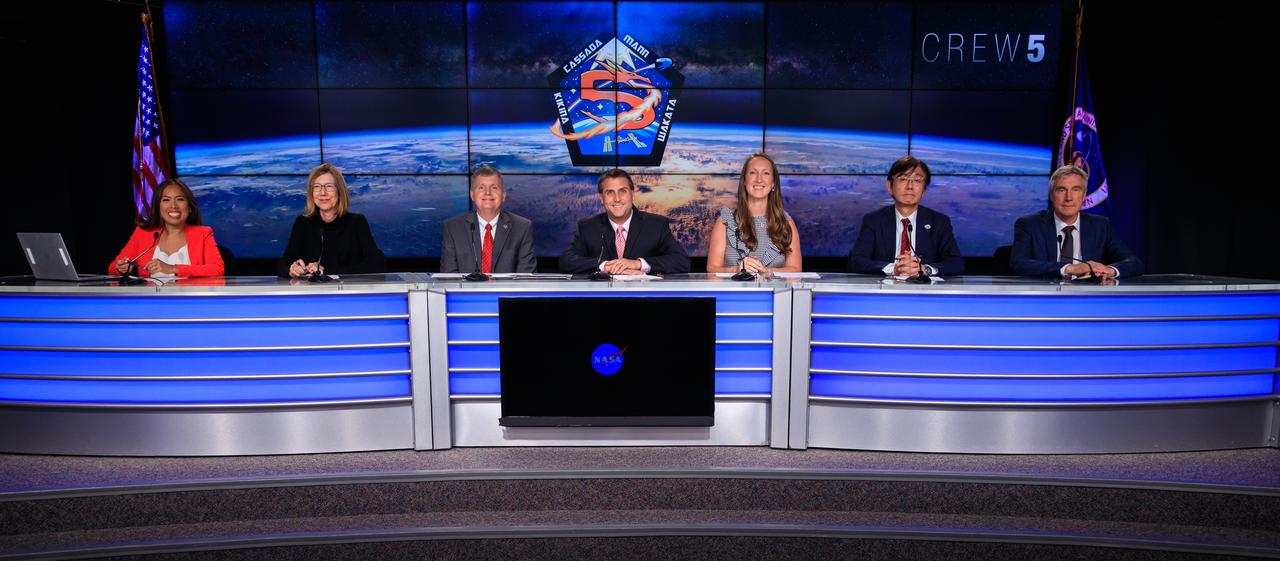
A postlaunch news conference for NASA’s SpaceX Crew-5 mission is held inside the News Auditorium at the agency’s Kennedy Space Center in Florida on Oct. 5, 2022. Participants are, from left: Megan Cruz, moderator, NASA Communications; Kathy Lueders, associate administrator, Human Exploration and Operations Mission Directorate, NASA Headquarters; Steve Stich, manager, Commercial Crew Program, Kennedy; Joel Montalbano, manager, International Space Station, Johnson Space Center; Sarah Walker, director, Dragon Mission Management, SpaceX; Hiroshi Sasaki, vice president and director general, JAXA’s (Japan Aerospace Exploration Agency) Human Spaceflight Technology Directorate; and Sergei Krikalev, executive director, Human Space Flight Programs, Roscosmos. SpaceX’s Dragon Endurance is carrying NASA astronauts Nicole Mann, commander; Josh Cassada, pilot; and Mission Specialists Koichi Wakata, of JAXA (Japan Aerospace Exploration Agency), and Roscosmos cosmonaut Anna Kikina to the International Space Station for a science expedition mission as part of NASA’s Commercial Crew Program. SpaceX’s Falcon 9 rocket lifted off at noon EDT from Kennedy’s Launch Complex 39A.
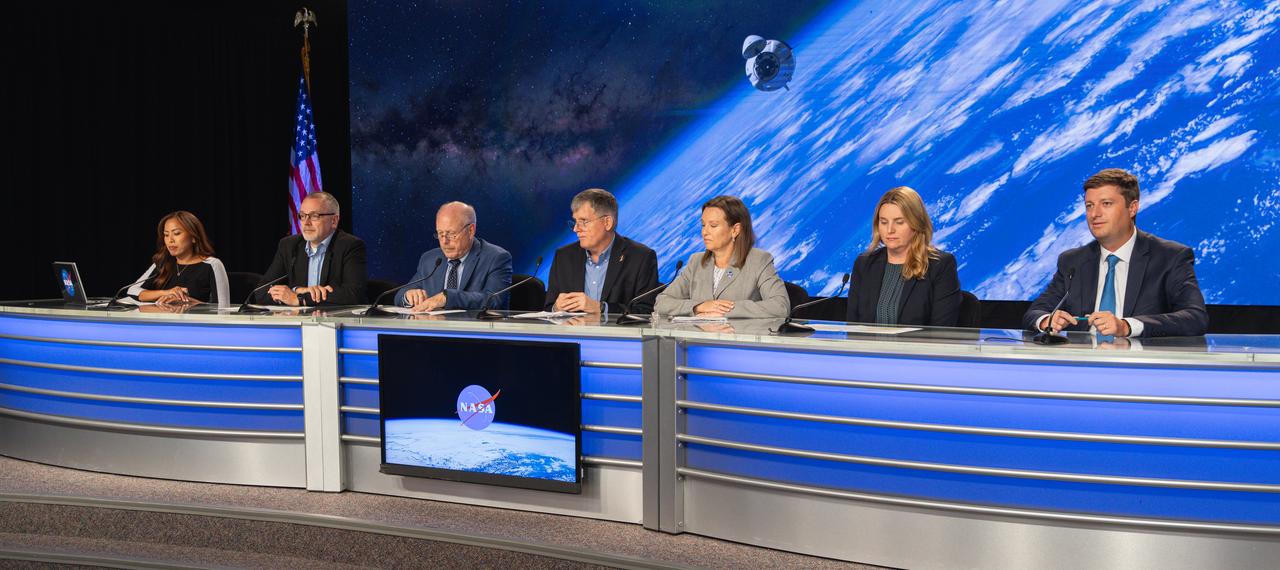
A prelaunch news briefing takes place inside the John Holliman Auditorium of the News Center at NASA’s Kennedy Space Center in Florida on Friday, Sept. 27, 2024, ahead of NASA’s SpaceX Crew-9 mission to the International Space Station. Participants, from left to right, are Megan Cruz, NASA Communications; NASA Associate Administrator Jim Free; Ken Bowersox, associate administrator, NASA’s Space Operations Mission Directorate; Steve Stich, manager, NASA’s Commercial Crew Program; Dina Contella, deputy manager, NASA’s International Space Station Program; Jennifer Buchli, chief scientist, NASA’s International Space Station Program; and Brian Cizek, launch weather officer, 45th Weather Squadron, Cape Canaveral Space Force Station. Liftoff of the ninth crew rotation mission with SpaceX to the space station as part of the agency’s Commercial Crew Program is targeted for 1:17 p.m. EDT Sept. 28, 2024, from Space Launch Complex-40 at Cape Canaveral Space Force Station in Florida.
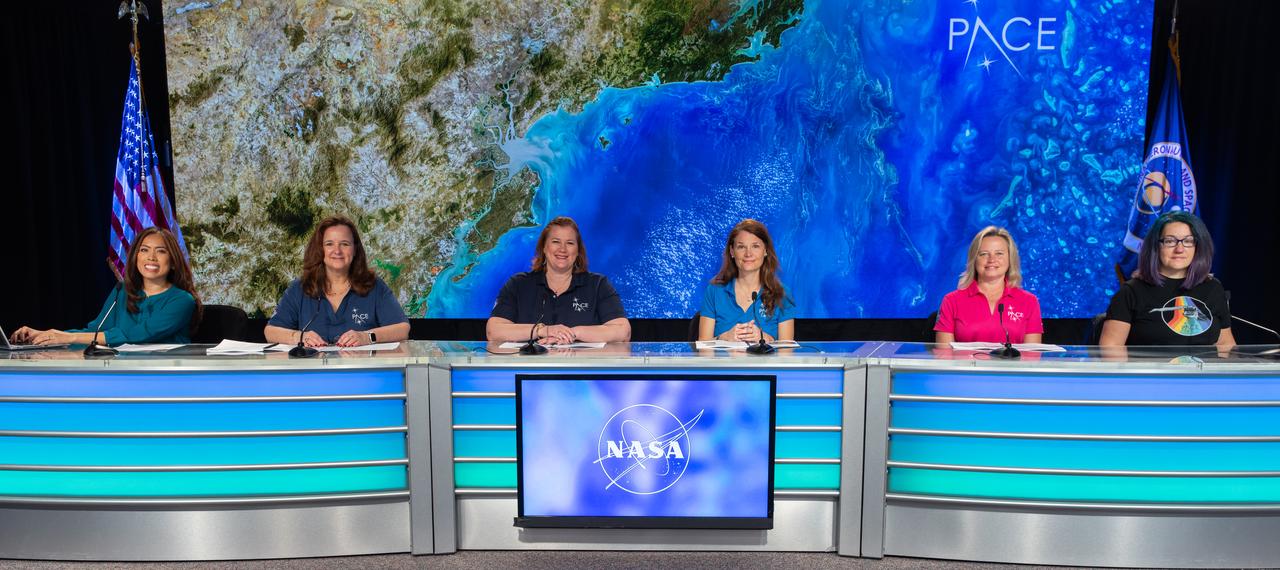
A PACE (Plankton, Aerosol, Cloud, ocean Ecosystem) mission and social media panel discussion takes place at NASA’s Kennedy Space Center in Florida on Sunday, Feb. 4, 2024. Participants, from left to right are: Megan Cruz, NASA Communications; Karen St. Germain, Earth Science division director, NASA Headquarters; Marjorie Haskell, PACE program executive, NASA Headquarters; Laura Lorenzoni, PACE program scientist, NASA Headquarters; Juli Lander, PACE deputy project manager, NASA’s Goddard Space Flight Center; and Ivona Cetinic, PACE Ocean scientist, NASA’s Goddard Space Flight Center. PACE is NASA’s newest earth-observing satellite that will help increase our understanding of Earth’s oceans, atmosphere, and climate by delivering hyperspectral observations of microscopic marine organisms called phytoplankton, as well new data on clouds and aerosols. Liftoff aboard a SpaceX Falcon 9 rocket from Space Launch Complex 40 at Cape Canaveral Space Force Station in Florida is set for no earlier than 1:33 a.m. EST on Tuesday, Feb 6, 2024.
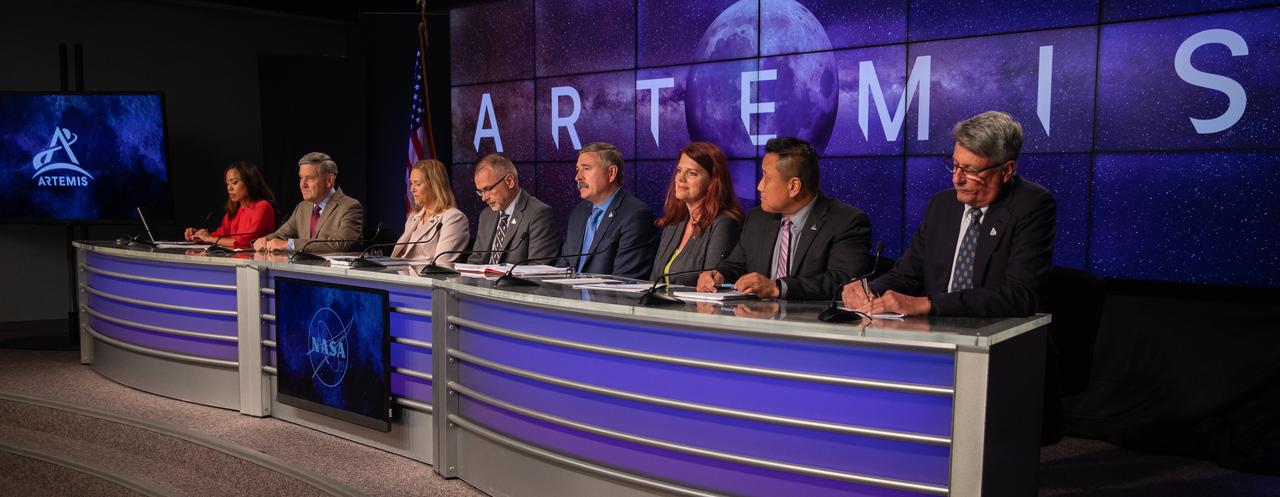
A prelaunch media briefing is held following completion of NASA’s Flight Readiness Review for Artemis I on Aug. 22, 2022, at the agency’s Kennedy Space Center in Florida. Participants are, from left, Megan Cruz, NASA Communications; Bob Cabana, NASA Associate Administrator; Janet Petro, Director, Kennedy Space Center; Jim Free, Associate Administrator, Exploration Systems Development; Mike Sarafin, Mission Manager, Artemis I; Charlie Blackwell-Thompson, Launch Director, Artemis I; Howard Hu, Manager, Orion Program; Chris Cianciola, Deputy Manager, SLS Program. Artemis I is scheduled to launch at 8:33 a.m. EDT on Aug. 29, 2022, from Kennedy’s Launch Complex 39B. The first in a series of increasingly complex missions, Artemis I will provide a foundation for human deep space exploration and demonstrate our commitment and capability to extend human presence to the Moon and beyond. The primary goal of Artemis I is to thoroughly test the integrated systems before crewed missions by operating the spacecraft in a deep space environment, testing Orion’s heat shield, and recovering the crew module after reentry, descent, and splashdown.
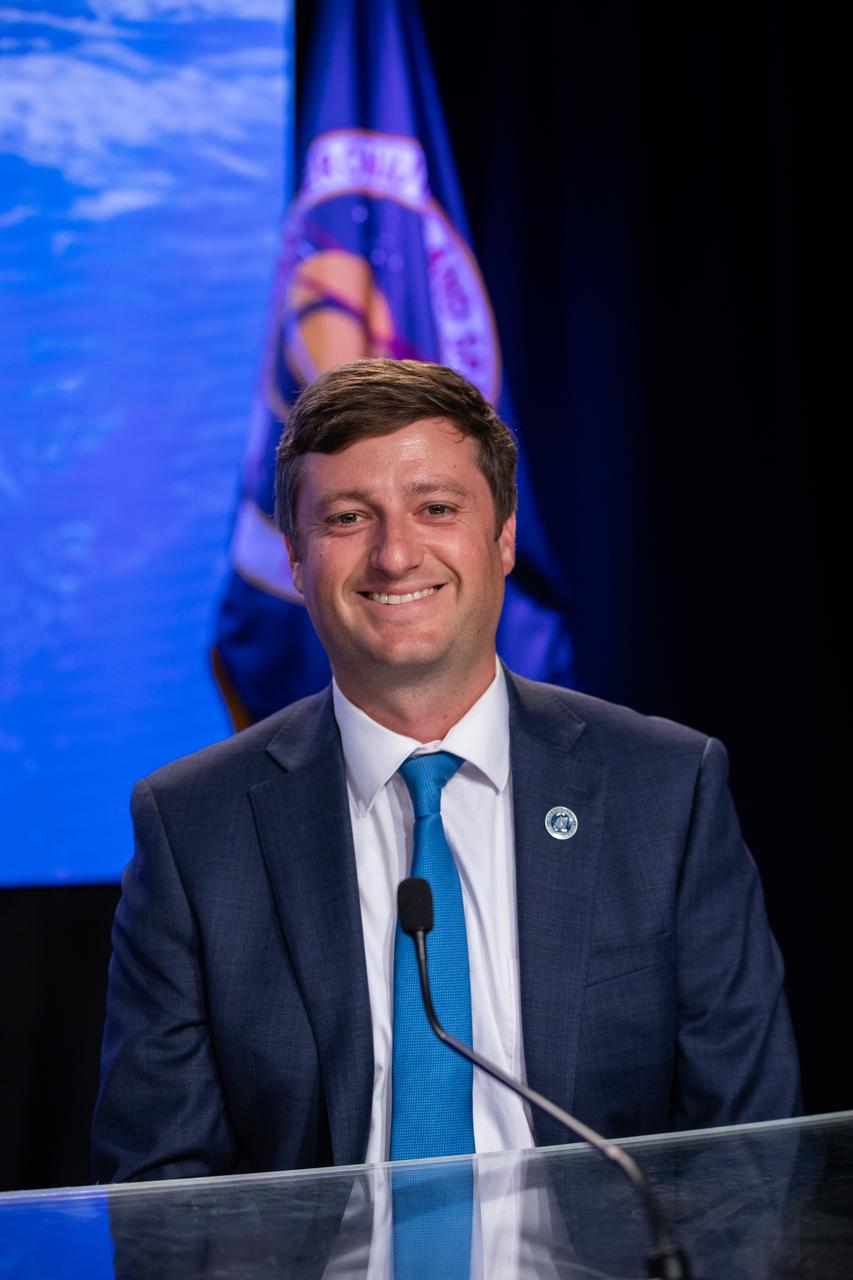
Officials from NASA, Boeing, ULA (United Launch Alliance) , and the U.S. Space Force 45th Weather Squadron participate in a prelaunch briefing for NASA’s Boeing Crew Flight Test at the agency’s Kennedy Space Center in Florida, Friday, May 3, 2024. From left to right at the dais are Megan Cruz, NASA Communications; Bill Nelson, NASA administrator; Steve Stich, manager, NASA’s Commercial Crew Program; Dana Weigel, manager, NASA’s International Space Station Program; Jennifer Buchli, chief scientist, NASA’s International Space Station Program; Mark Nappi, vice president and program manager, Boeing Commercial Crew Program; Gary Wentz, vice president, Government and Commercial Programs, ULA; Brian Cizek, launch weather officer, U.S. Space Force, 45th Weather Squadron. As part of the agency’s Commercial Crew Program, NASA astronauts Butch Wilmore and Suni Williams are the first to launch aboard Boeing’s Starliner spacecraft atop a ULA Atlas V rocket from Space Launch Complex-41 at Cape Canaveral Space Force Station in Florida. Liftoff is scheduled for 10:34 p.m. ET on Monday, May 6.
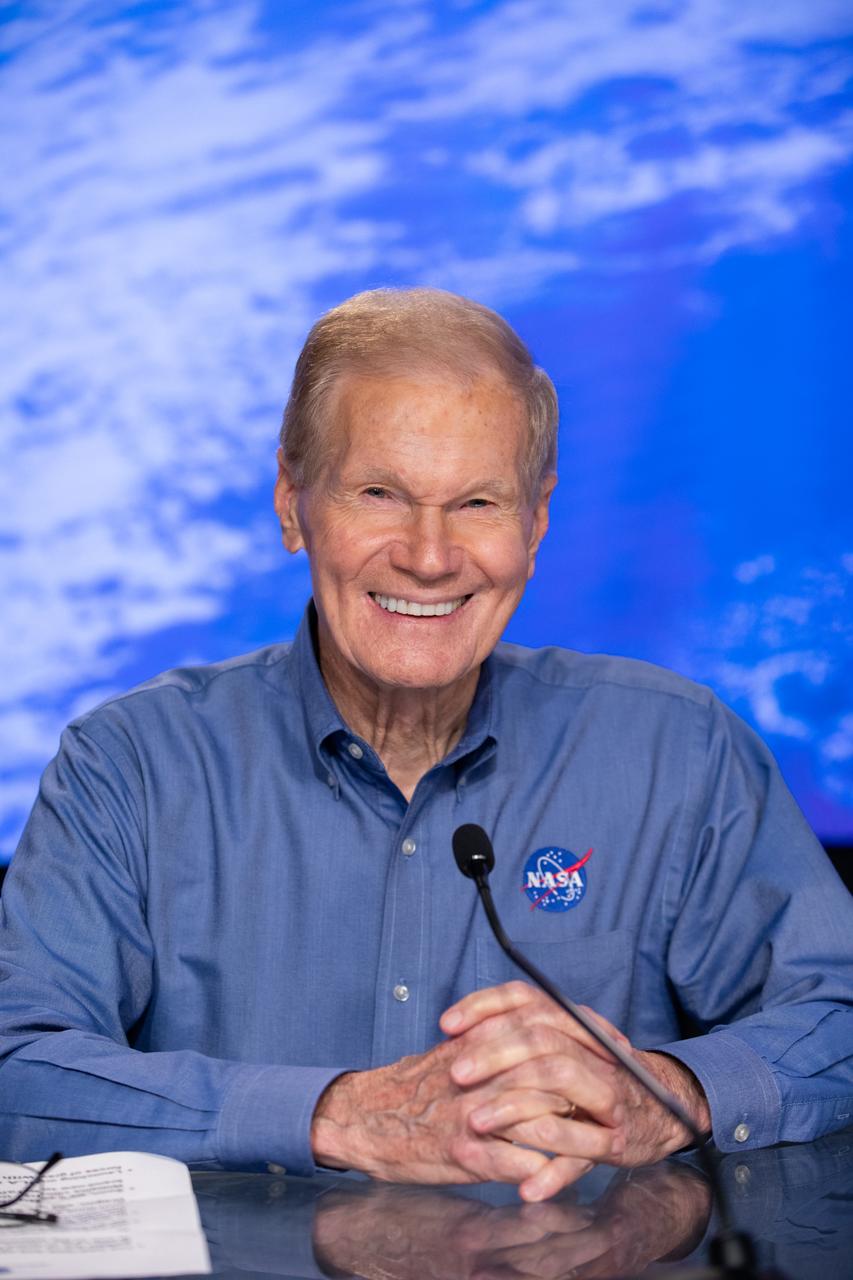
Officials from NASA, Boeing, ULA (United Launch Alliance) , and the U.S. Space Force 45th Weather Squadron participate in a prelaunch briefing for NASA’s Boeing Crew Flight Test at the agency’s Kennedy Space Center in Florida, Friday, May 3, 2024. From left to right at the dais are Megan Cruz, NASA Communications; Bill Nelson, NASA administrator; Steve Stich, manager, NASA’s Commercial Crew Program; Dana Weigel, manager, NASA’s International Space Station Program; Jennifer Buchli, chief scientist, NASA’s International Space Station Program; Mark Nappi, vice president and program manager, Boeing Commercial Crew Program; Gary Wentz, vice president, Government and Commercial Programs, ULA; Brian Cizek, launch weather officer, U.S. Space Force, 45th Weather Squadron. As part of the agency’s Commercial Crew Program, NASA astronauts Butch Wilmore and Suni Williams are the first to launch aboard Boeing’s Starliner spacecraft atop a ULA Atlas V rocket from Space Launch Complex-41 at Cape Canaveral Space Force Station in Florida. Liftoff is scheduled for 10:34 p.m. ET on Monday, May 6.
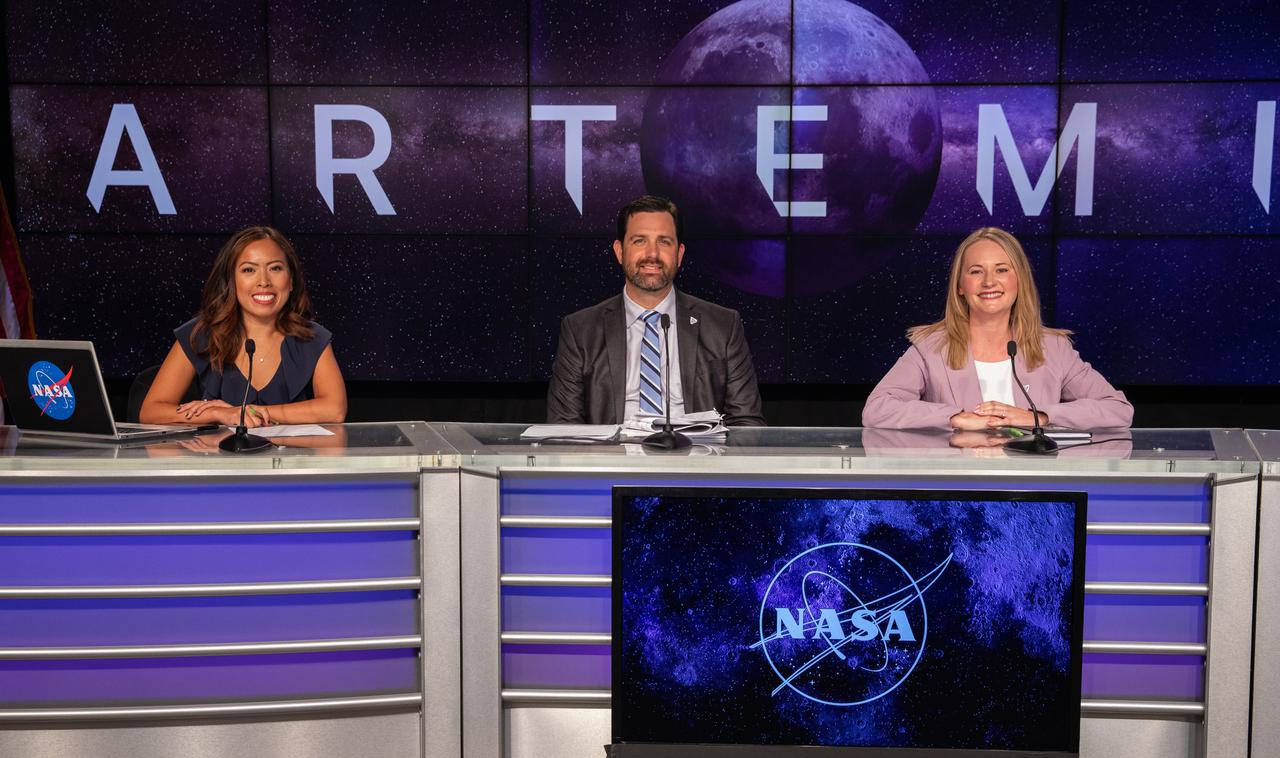
NASA holds a prelaunch media briefing on the status of the Artemis I countdown on Sept. 2, 2022, at NASA’s Kennedy Space Center in Florida. Participants are, from left, Megan Cruz, moderator, NASA Communications; Jeremy Parsons, Exploration Ground Systems, deputy program manager, NASA Kennedy; and Melody Lovin, weather officer, Space Launch Delta 45. Artemis I is scheduled to launch at 2:17 p.m. EDT on Sept. 3, from Kennedy’s Launch Complex 39B. Launch was waved off on Aug. 29 due to an issue during tanking. The first in a series of increasingly complex missions, Artemis I will provide a foundation for human deep space exploration and demonstrate NASA’s capability to extend human presence to the Moon and beyond. The primary goal of Artemis I is to thoroughly test the integrated systems before crewed missions by operating the spacecraft in a deep space environment, testing Orion’s heat shield, and recovering the crew module after reentry, descent, and splashdown.

Officials from NASA, Boeing, ULA (United Launch Alliance) , and the U.S. Space Force 45th Weather Squadron participate in a prelaunch briefing for NASA’s Boeing Crew Flight Test at the agency’s Kennedy Space Center in Florida, Friday, May 3, 2024. From left to right at the dais are Megan Cruz, NASA Communications; Bill Nelson, NASA administrator; Steve Stich, manager, NASA’s Commercial Crew Program; Dana Weigel, manager, NASA’s International Space Station Program; Jennifer Buchli, chief scientist, NASA’s International Space Station Program; Mark Nappi, vice president and program manager, Boeing Commercial Crew Program; Gary Wentz, vice president, Government and Commercial Programs, ULA; Brian Cizek, launch weather officer, U.S. Space Force, 45th Weather Squadron. As part of the agency’s Commercial Crew Program, NASA astronauts Butch Wilmore and Suni Williams are the first to launch aboard Boeing’s Starliner spacecraft atop a ULA Atlas V rocket from Space Launch Complex-41 at Cape Canaveral Space Force Station in Florida. Liftoff is scheduled for 10:34 p.m. ET on Monday, May 6.
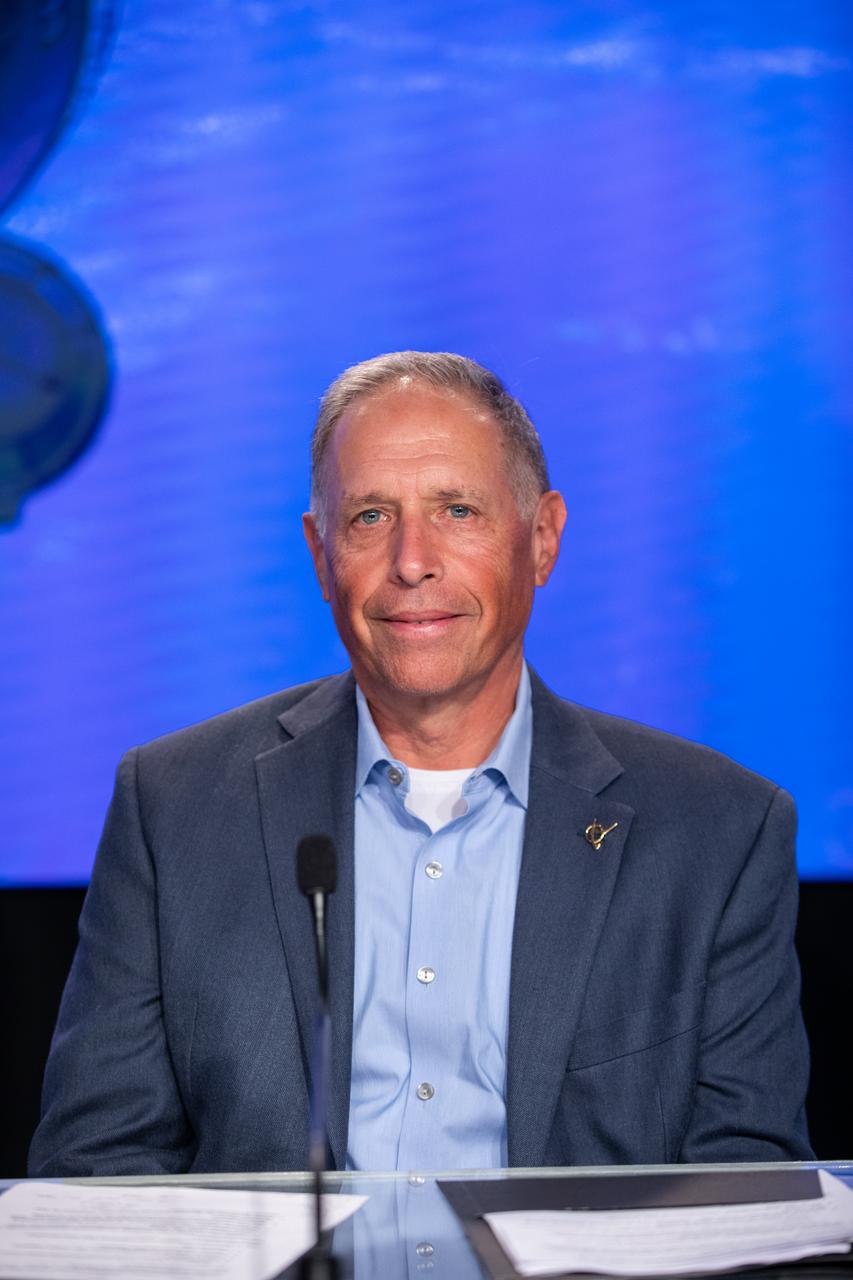
Officials from NASA, Boeing, ULA (United Launch Alliance) , and the U.S. Space Force 45th Weather Squadron participate in a prelaunch briefing for NASA’s Boeing Crew Flight Test at the agency’s Kennedy Space Center in Florida, Friday, May 3, 2024. From left to right at the dais are Megan Cruz, NASA Communications; Bill Nelson, NASA administrator; Steve Stich, manager, NASA’s Commercial Crew Program; Dana Weigel, manager, NASA’s International Space Station Program; Jennifer Buchli, chief scientist, NASA’s International Space Station Program; Mark Nappi, vice president and program manager, Boeing Commercial Crew Program; Gary Wentz, vice president, Government and Commercial Programs, ULA; Brian Cizek, launch weather officer, U.S. Space Force, 45th Weather Squadron. As part of the agency’s Commercial Crew Program, NASA astronauts Butch Wilmore and Suni Williams are the first to launch aboard Boeing’s Starliner spacecraft atop a ULA Atlas V rocket from Space Launch Complex-41 at Cape Canaveral Space Force Station in Florida. Liftoff is scheduled for 10:34 p.m. ET on Monday, May 6.
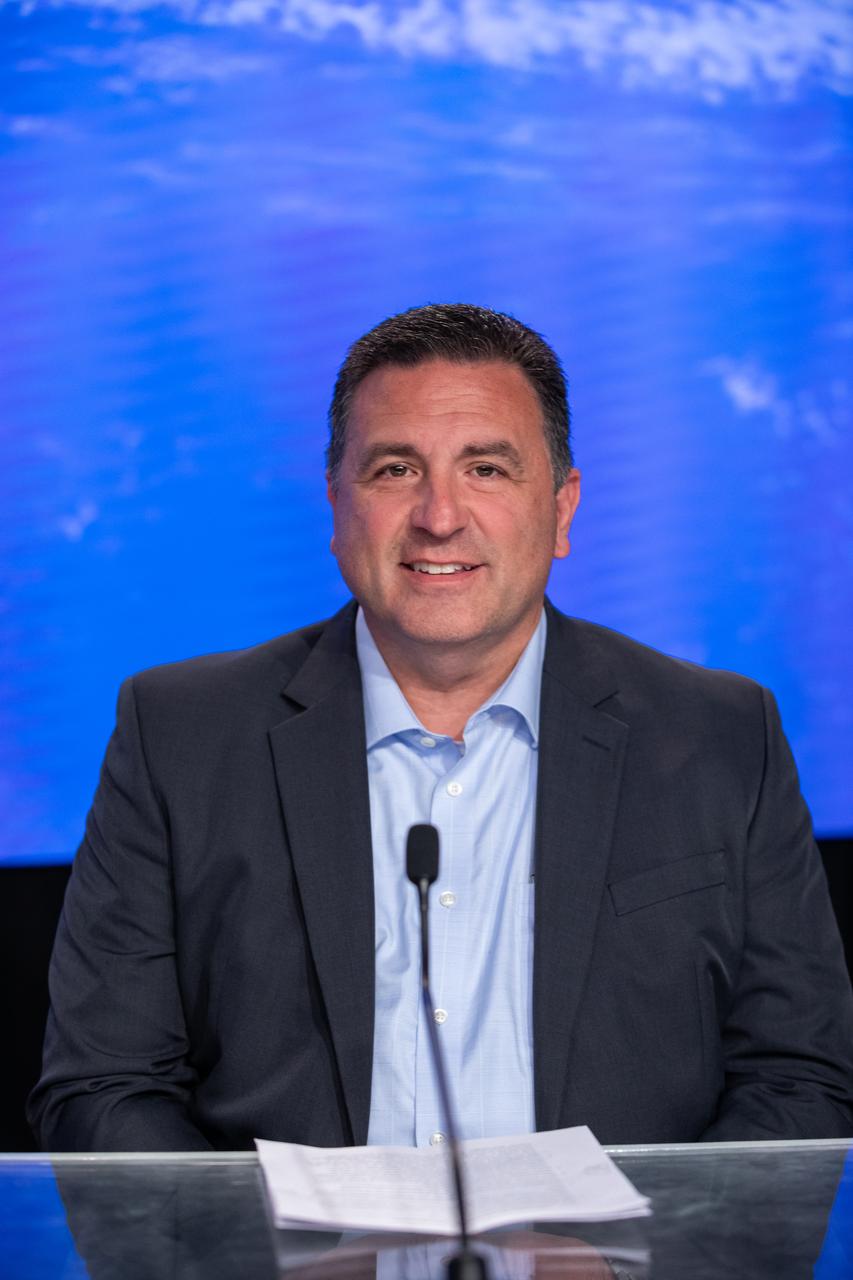
Officials from NASA, Boeing, ULA (United Launch Alliance) , and the U.S. Space Force 45th Weather Squadron participate in a prelaunch briefing for NASA’s Boeing Crew Flight Test at the agency’s Kennedy Space Center in Florida, Friday, May 3, 2024. From left to right at the dais are Megan Cruz, NASA Communications; Bill Nelson, NASA administrator; Steve Stich, manager, NASA’s Commercial Crew Program; Dana Weigel, manager, NASA’s International Space Station Program; Jennifer Buchli, chief scientist, NASA’s International Space Station Program; Mark Nappi, vice president and program manager, Boeing Commercial Crew Program; Gary Wentz, vice president, Government and Commercial Programs, ULA; Brian Cizek, launch weather officer, U.S. Space Force, 45th Weather Squadron. As part of the agency’s Commercial Crew Program, NASA astronauts Butch Wilmore and Suni Williams are the first to launch aboard Boeing’s Starliner spacecraft atop a ULA Atlas V rocket from Space Launch Complex-41 at Cape Canaveral Space Force Station in Florida. Liftoff is scheduled for 10:34 p.m. ET on Monday, May 6.
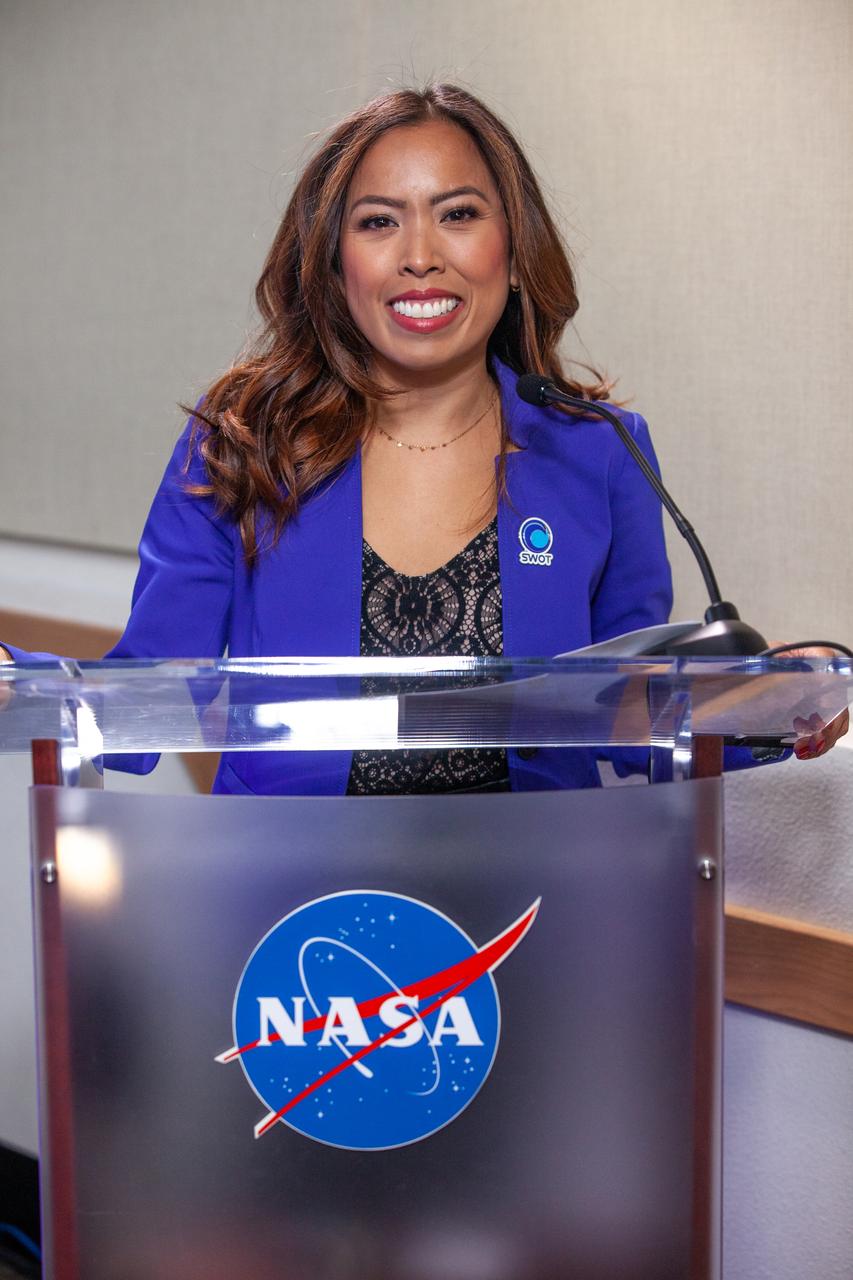
Megan Cruz, NASA Communications, moderates a prelaunch news conference held by NASA, SpaceX, and the French space agency Centre National d’Études Spatiales (CNES) for the Surface Water and Ocean Topography (SWOT) mission on Dec. 14, 2022, at Vandenberg Space Force Base in California. SWOT is scheduled to launch on a SpaceX Falcon 9 rocket from Space Launch Complex-4 East at Vandenberg on Dec. 15, 2022, at 3:46 a.m. PST. SWOT will be NASA’s first global survey of nearly all water on Earth’s surface. Scientists plan to use its observations to better understand the global water cycle, furnish insight into the ocean’s role in how climate change unfolds, and provide a global inventory of water resources. The SWOT mission is a collaborative effort between NASA and CNES with contributions from the Canadian Space Agency and the UK Space Agency. NASA’s Launch Services Program, based at the agency’s Kennedy Space Center in Florida, is managing the launch service.
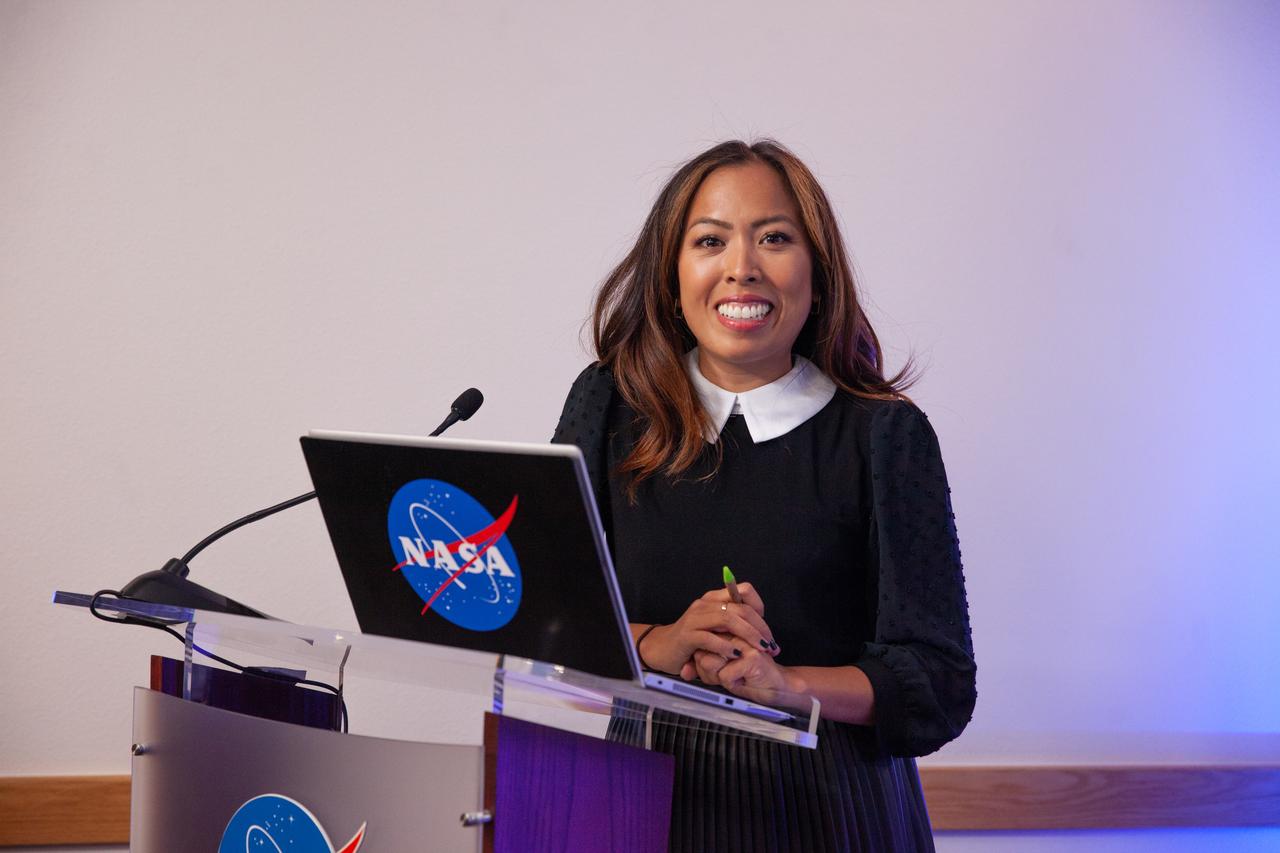
Megan Cruz, NASA Communications, moderates a prelaunch news conference for the National Oceanic and Atmospheric Administration’s (NOAA) Joint Polar Satellite System-2 (JPSS-2) and NASA Low-Earth Orbit Flight Test of an Inflatable Decelerator (LOFTID) technology demonstration at Vandenberg Space Force Base in California on Oct. 28, 2022. JPSS-2 is the third satellite in the polar satellite series and is expected to capture data to improve weather forecasts, helping scientists predict and prepare for extreme weather events and climate change. JPSS-2 is scheduled to launch at 2:25 a.m. PDT Tuesday, Nov. 1, on a United Launch Alliance (ULA) Atlas V 401 rocket from Space Launch Complex 3 at Vandenberg Space Force Base in California. Launching with JPSS-2 is NASA’s LOFTID technology demonstration. After JPSS-2 safely reaches orbit, LOFTID will follow a re-entry trajectory from low-Earth orbit to demonstrate the inflatable heat shield’s ability to slow down and survive re-entry. LOFTID is a partnership with ULA and is dedicated to the memory of Bernard Kutter, one of the company’s engineers who played a key role in developing the technology. LOFTID will demonstrate how the inflatable aeroshell, or heat shield, can slow down and survive re-entry in conditions relevant to many potential applications, whether landing humans on Mars, new missions to Venus and Titan, or returning heavier payloads and samples from low-Earth orbit.

NASA held a prelaunch news conference for the National Oceanic and Atmospheric Administration’s (NOAA) Joint Polar Satellite System-2 (JPSS-2) and the agency’s Low-Earth Orbit Flight Test of an Inflatable Decelerator (LOFTID) technology demonstration at Vandenberg Space Force Base in California on Oct. 28, 2022. Participants from left are: Megan Cruz, NASA Communications; John Gagosian, director, NASA’s Joint Agency Satellite Division; Omar Baez, launch director, NASA’s Launch Services Program; Gary Wentz, vice president, Government and Commercial Programs, ULA; Irene Parker, deputy assistant administrator, NOAA Systems, National Environmental Satellite, Data, and Services; Tim Walsh, director, NOAA’s JPSS Program Office, NOAA; Jim Reuter, associate administrator for NASA’s Space Technology Mission Directorate; Capt. Zack Zounes, launch weather officer, U.S. Space Force. JPSS-2 is the third satellite in the polar satellite series and is expected to capture data to improve weather forecasts, helping scientists predict and prepare for extreme weather events and climate change. JPSS-2 is scheduled to launch at 2:25 a.m. PDT Tuesday, Nov. 1, on a United Launch Alliance (ULA) Atlas V 401 rocket from Space Launch Complex 3 at Vandenberg Space Force Base in California. Launching with JPSS-2 is NASA’s LOFTID technology demonstration. After JPSS-2 safely reaches orbit, LOFTID will follow a re-entry trajectory from low-Earth orbit to demonstrate the inflatable heat shield’s ability to slow down and survive re-entry. LOFTID is a partnership with ULA and is dedicated to the memory of Bernard Kutter, one of the company’s engineers who played a key role in developing the technology. LOFTID will demonstrate how the inflatable aeroshell, or heat shield, can slow down and survive re-entry in conditions relevant to many potential applications, whether landing humans on Mars, new missions to Venus and Titan, or returning heavier payloads and samples from low-Earth or