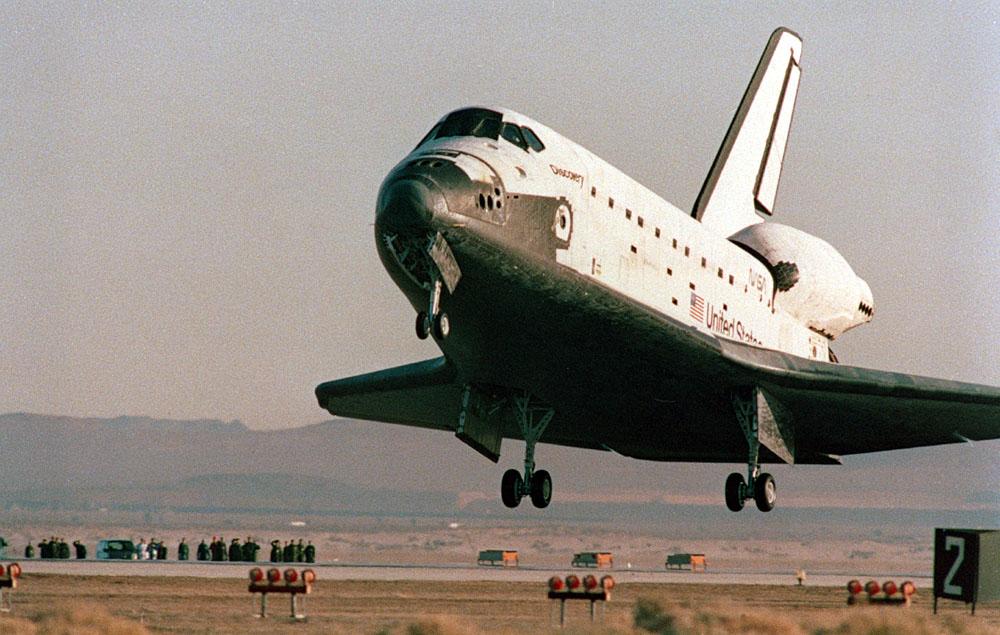
Space Shuttle Discovery STS-42) is just about to ease down its main gear on Runway 22 at Edwards Air Force Base in southern California. The successful landing completed an eight-day mission for five NASA astronauts and two payload specialists supporting the first International Microgravity Laboratory (IML-1) mission.
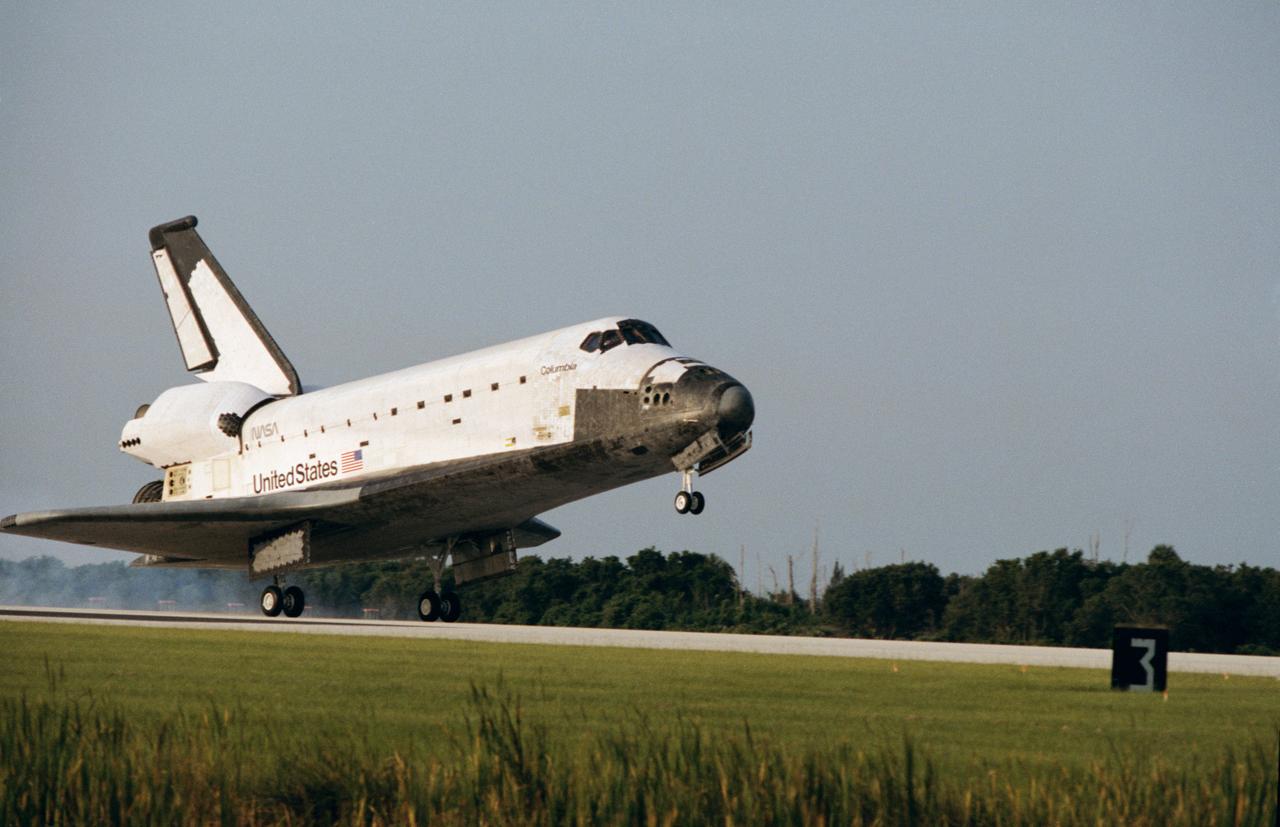
STS-50 Columbia's, Orbiter Vehicle (OV) 102's, main landing gear touches down on runway 33 at the Kennedy Space Center (KSC) Shuttle Landing Facility (SLF) producing a small cloud of dust. Landing occurred at 7:42 am (Eastern Daylight Time (EDT)). In this view of the OV-102's starboard side, the nose landing gear (NLG) continues to ride above the runway surface. Florida vegetation, a runway sign, and runway lights appear in the foreground.
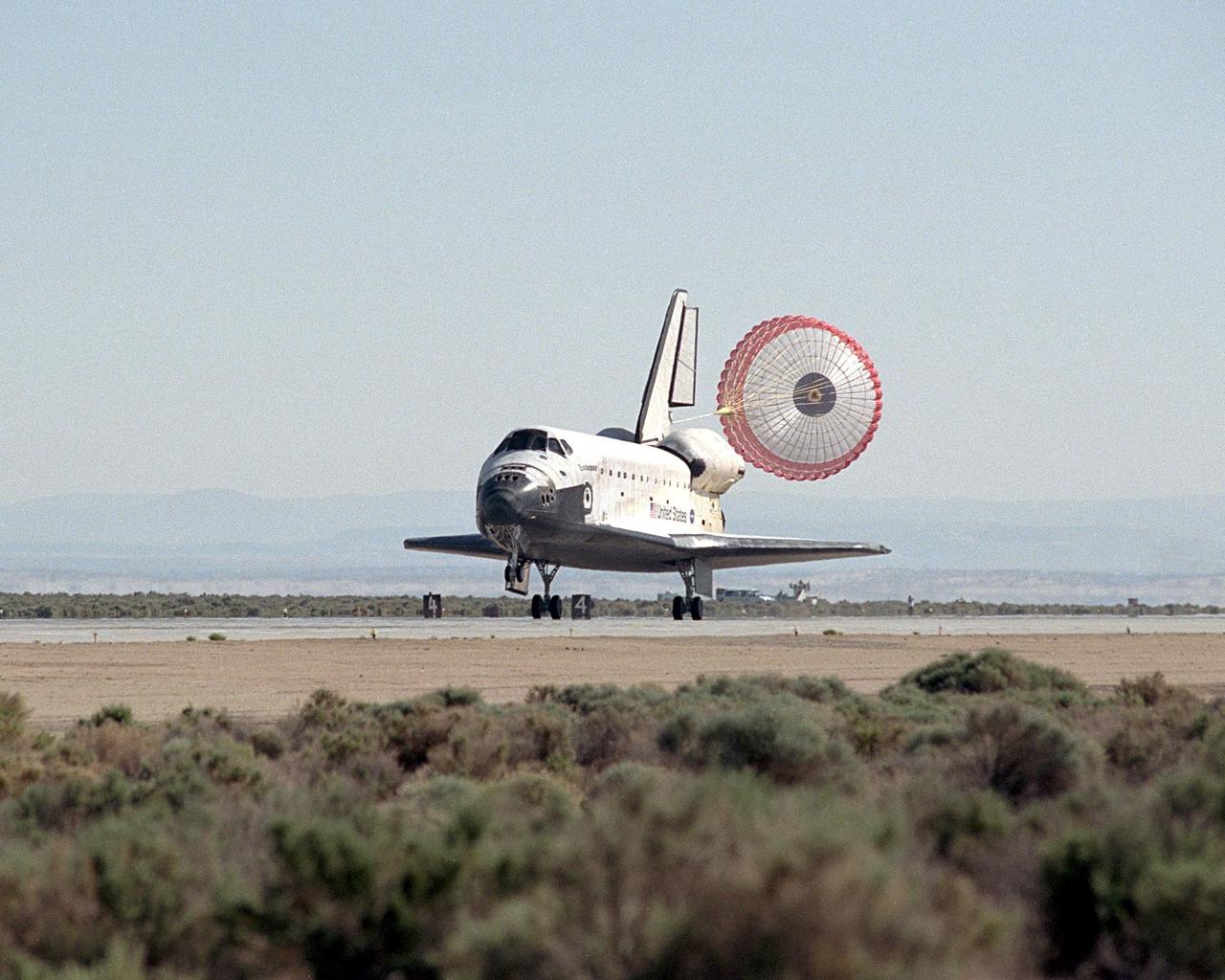
NASA/EDWARDS AFB, CALIF. -- With its drag chute deployed, Endeavour lands on runway 22 at Edwards Air Force Base, Calif., at 12:10:42 p.m. EDT after a mission of 11 days, 12 hours, 54 minutes to the International Space Station on mission STS-100. The orbiter and its crew of seven logged about 4.9 million statute miles in 186 orbits. Due to unfavorable weather conditions, landing at KSC was waved off. The landing marked the third consecutive landing at EAFB.
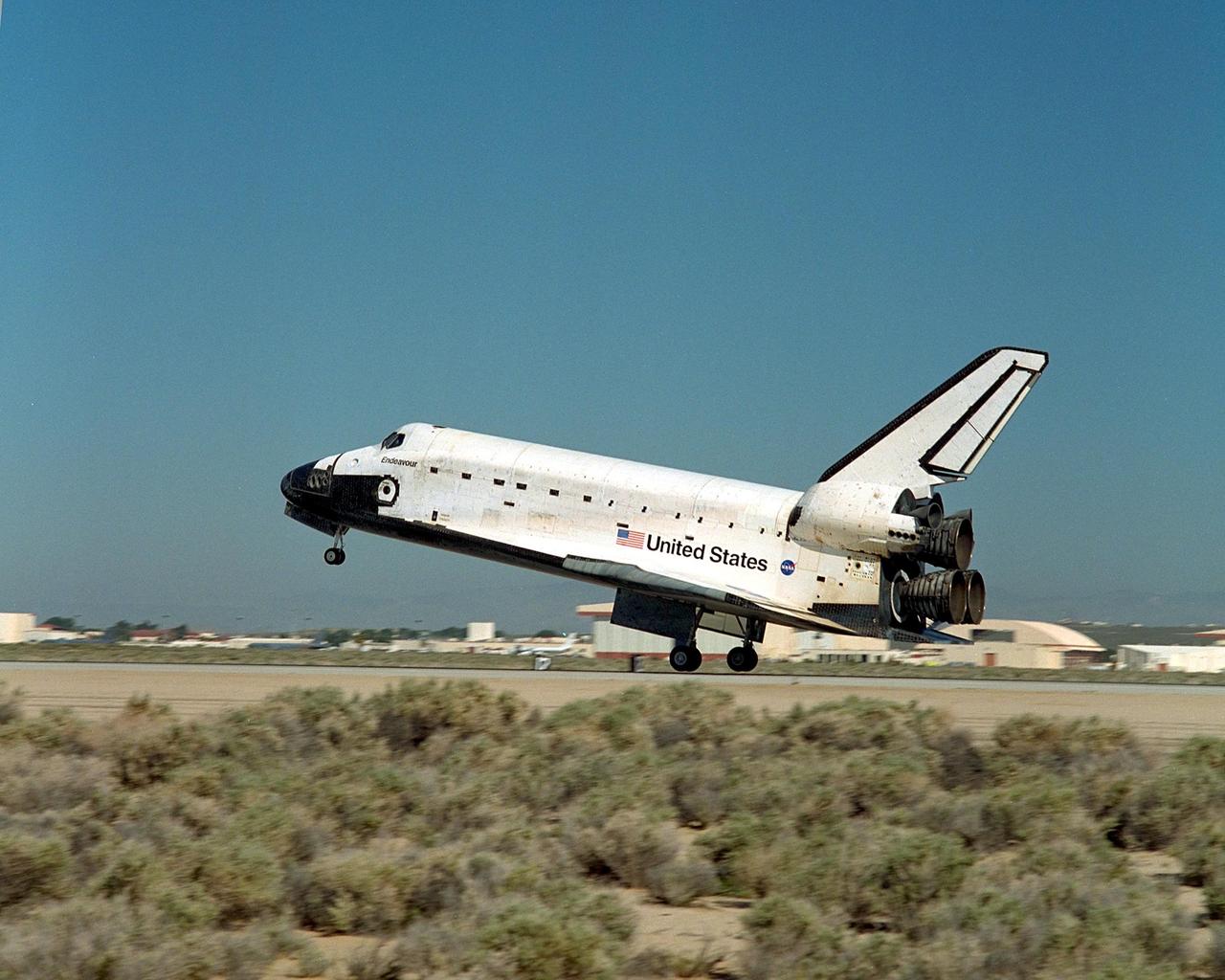
NASA/EDWARDS AFB, CALIF. -- Endeavour’s rear wheels touch down on runway 22 at Edwards Air Force Base, Calif., after the 11-day, 12-hour, 54-minute mission STS-100 to the International Space Station. Landing time was 12:10:42 p.m. EDT. The orbiter and its crew of seven logged about 4.9 million statute miles in 186 orbits. Due to unfavorable weather conditions, landing at KSC was waved off. The landing marked the third consecutive landing at EAFB.

The Space Shuttle Endeavour, atop NASA's 747 Shuttle Carrier Aircraft (SCA), taking off for the Kennedy Space Center shortly after its landing on 11 October 1994, at Edwards, California, to complete mission STS-68. Endeavour was being ferried from the Kennedy Space Center, Florida, to Air Force Plant 42, Palmdale, California, where it will undergo six months of inspections, modifications, and systems upgrades. The STS-68 11-day mission was devoted to radar imaging of Earth's geological features with the Space Radar Laboratory.
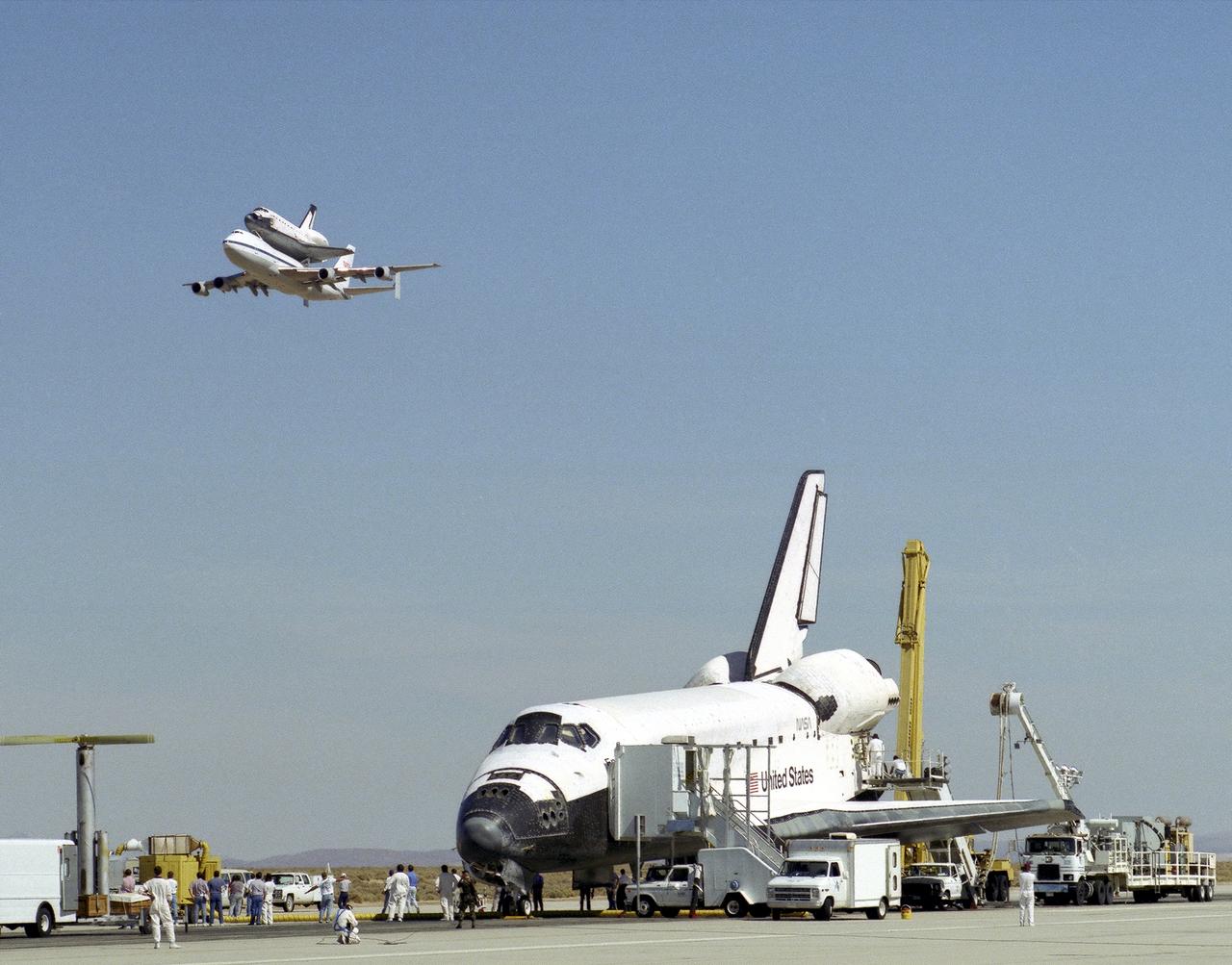
The space shuttle Endeavour receives a high-flying salute from its sister shuttle, Columbia, atop NASA's Shuttle Carrier Aircraft, shortly after Endeavor’s landing 11 October 1994, at Edwards, California, to complete mission STS-68. Columbia was being ferried from the Kennedy Space Center, Florida, to Air Force Plant 42, Palmdale, California, where it will undergo six months of inspections, modifications, and systems upgrades. The STS-68 11-day mission was devoted to radar imaging of Earth's geological features with the Space Radar Laboratory. The orbiter is surrounded by equipment and personnel that make up the ground support convoy that services the space vehicles as soon as they land.
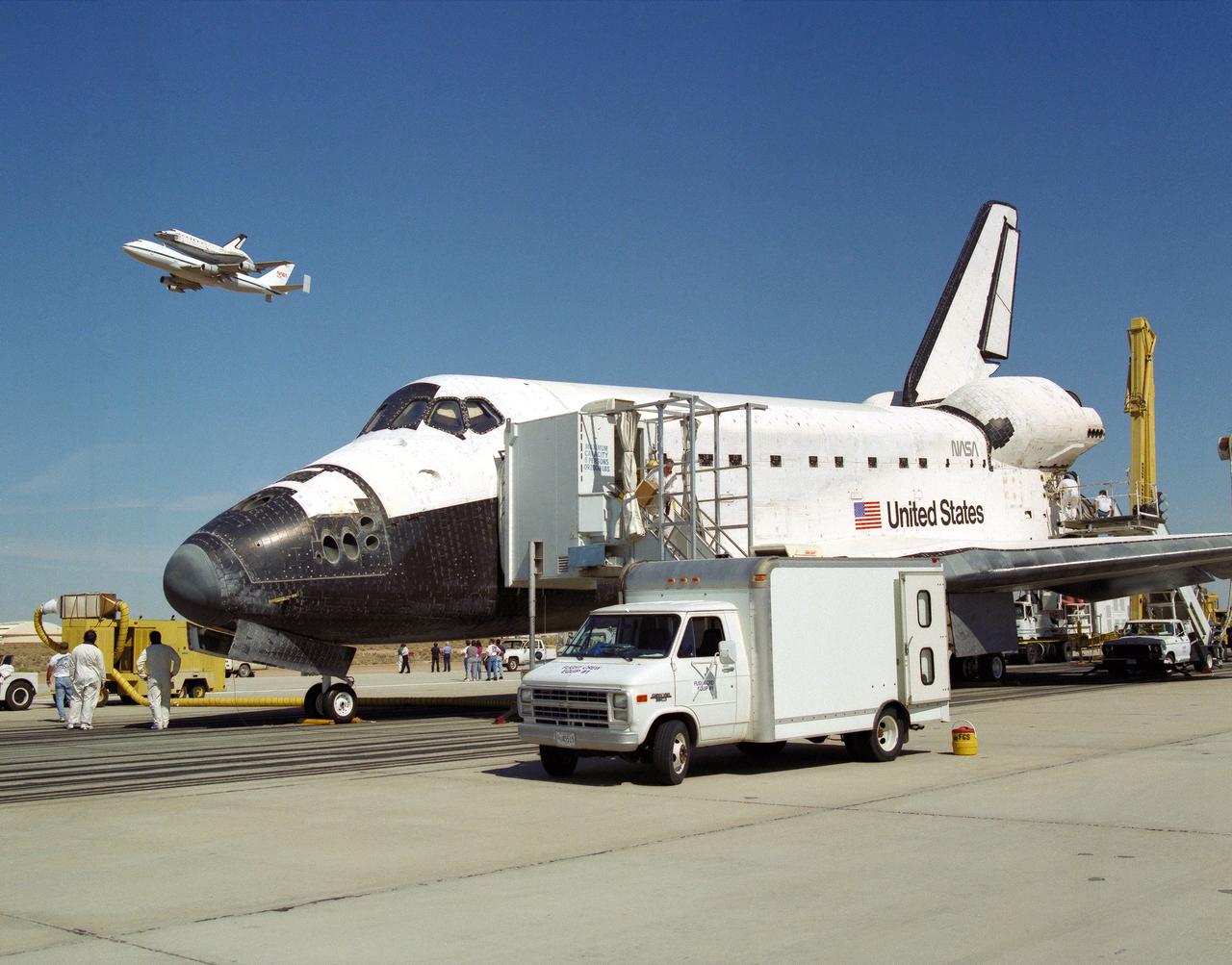
The space shuttle Endeavour receives a high-flying salute from its sister shuttle, Columbia, atop NASA's Shuttle Carrier Aircraft, shortly after Endeavor’s landing 11 October 1994, at Edwards, California, to complete mission STS-68. Columbia was being ferried from the Kennedy Space Center, Florida, to Air Force Plant 42, Palmdale, California, where it will undergo six months of inspections, modifications, and systems upgrades. The STS-68 11-day mission was devoted to radar imaging of Earth's geological features with the Space Radar Laboratory. The orbiter is surrounded by equipment and personnel that make up the ground support convoy that services the space vehicles as soon as they land.
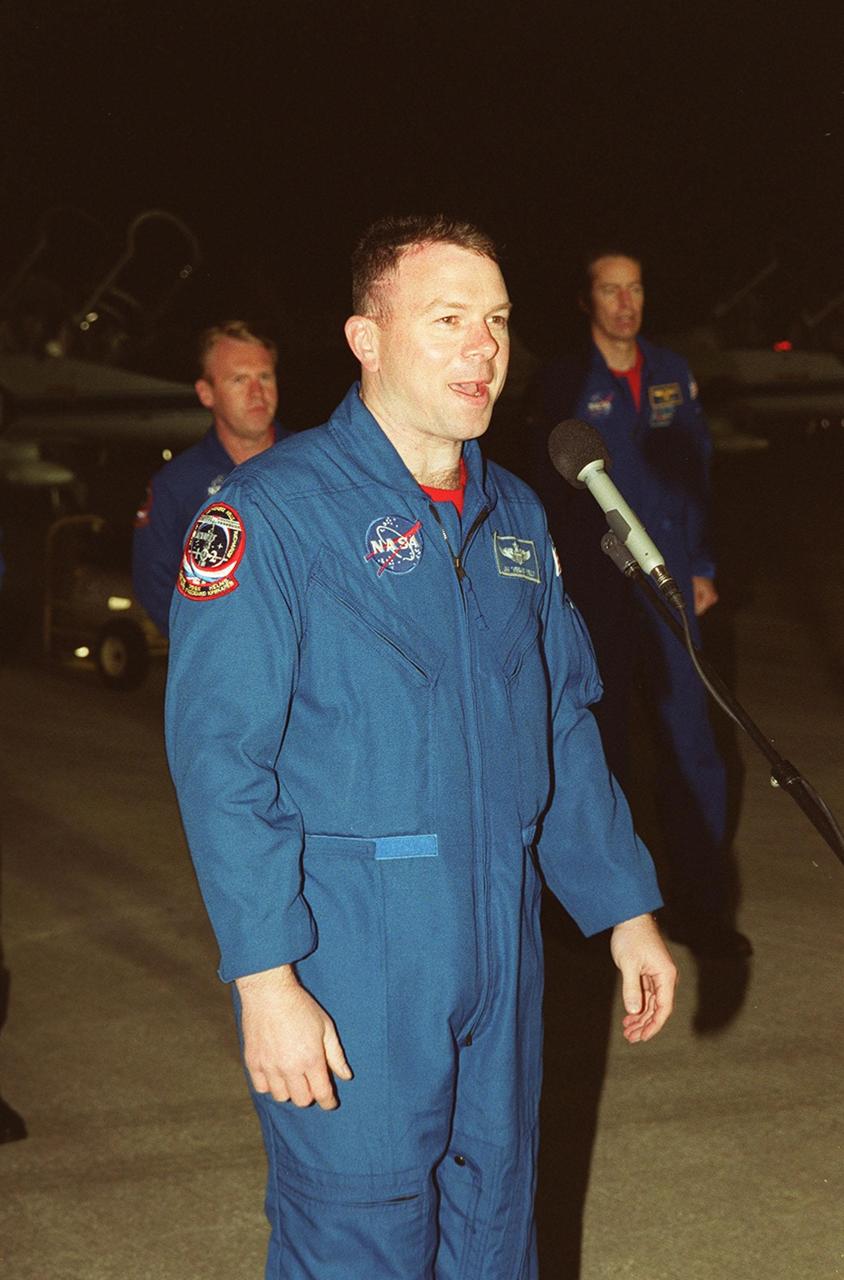
After arrival at the Shuttle Landing Facility, STS-102 Pilot James Kelly addresses the media. Behind him are Mission Specialist Andrew Thomas (left) and Commander James Wetherbee (right). The crew is making the eighth construction flight to the International Space Station. STS-102 will be carrying the Multi-Purpose Logistics Module Leonardo, the primary delivery system used to resupply and return Station cargo requiring a pressurized environment. Leonardo will deliver up to 10 tons of laboratory racks filled with equipment, experiments and supplies for outfitting the newly installed U.S. Laboratory Destiny. STS-102 is scheduled to launch March 8 at 6:42 a.m. EST
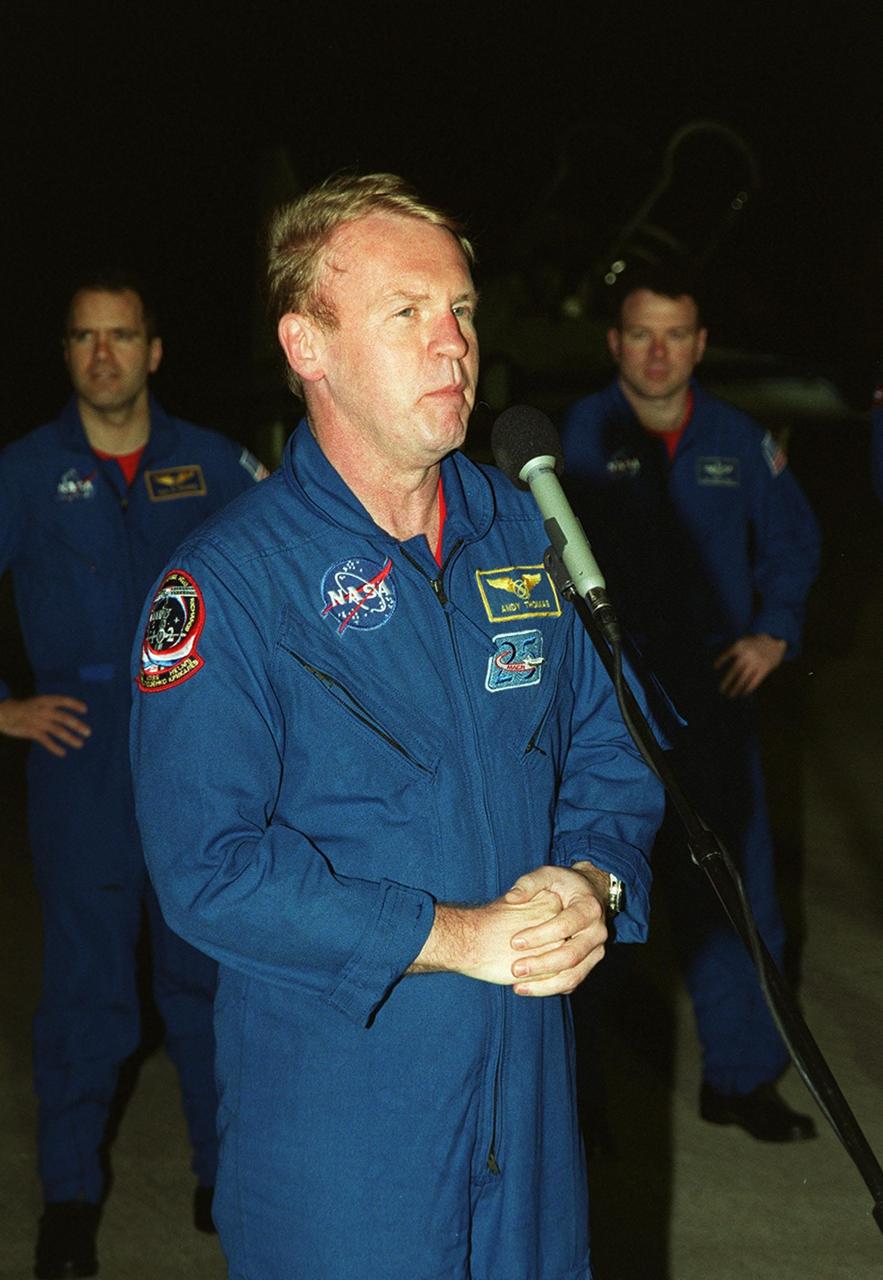
After arrival at the Shuttle Landing Facility, STS-102 Mission Specialist Andrew Thomas addresses the media. Behind him are Mission Specialist Paul Richards (left) and Pilot James Kelly (right). The crew is making the eighth construction flight to the International Space Station. STS-102 will be carrying the Multi-Purpose Logistics Module Leonardo, the primary delivery system used to resupply and return Station cargo requiring a pressurized environment. Leonardo will deliver up to 10 tons of laboratory racks filled with equipment, experiments and supplies for outfitting the newly installed U.S. Laboratory Destiny. STS-102 is scheduled to launch March 8 at 6:42 a.m. EST
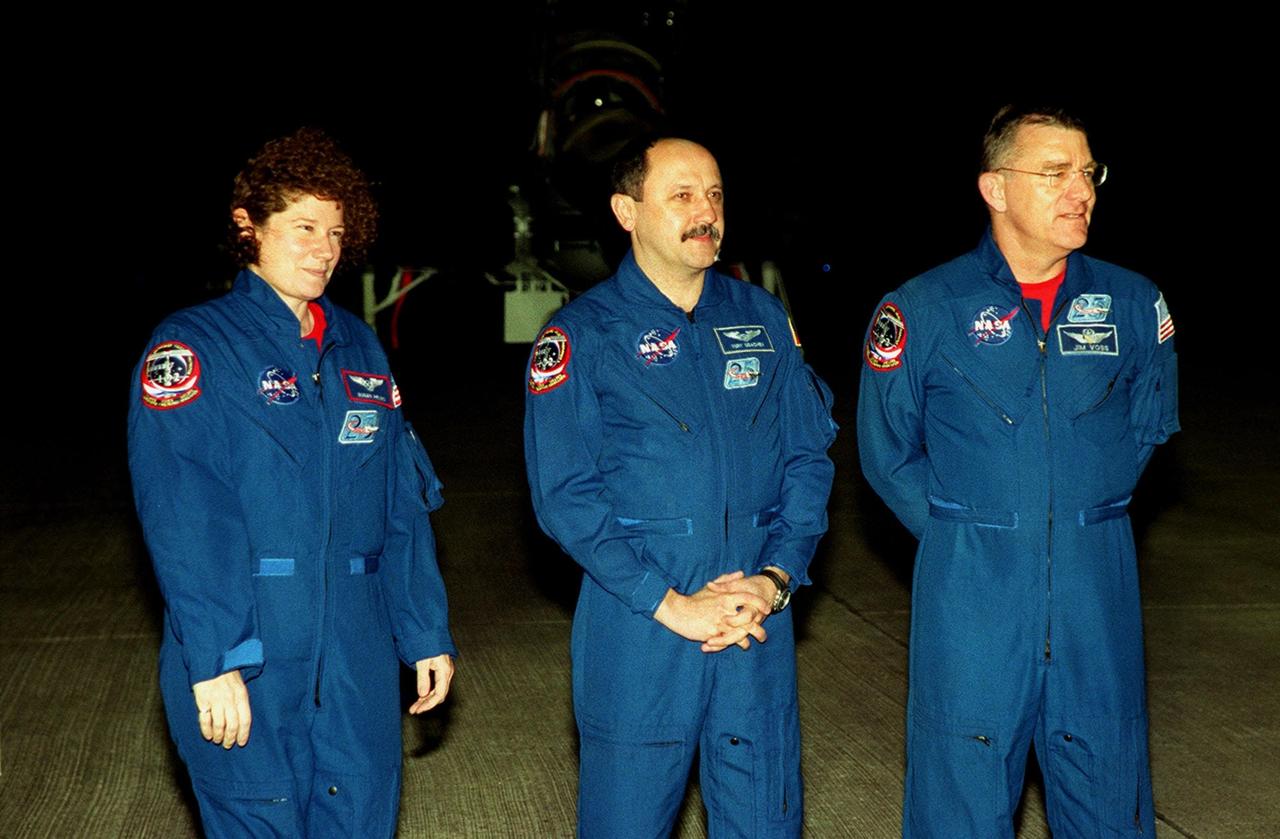
After their arrival at the Shuttle Landing Facility, STS-102 Mission Specialists (left to right) Susan Helms, Yury Usachev and James Voss happily greet the media. They are also the Expedition Two crew replacing Expedition One on the International Space Station. STS-102 will be carrying the Multi-Purpose Logistics Module Leonardo, the primary delivery system used to resupply and return Station cargo requiring a pressurized environment. Leonardo will deliver up to 10 tons of laboratory racks filled with equipment, experiments and supplies for outfitting the newly installed U.S. Laboratory Destiny. STS-102 is scheduled to launch March 8 at 6:42 a.m. EST
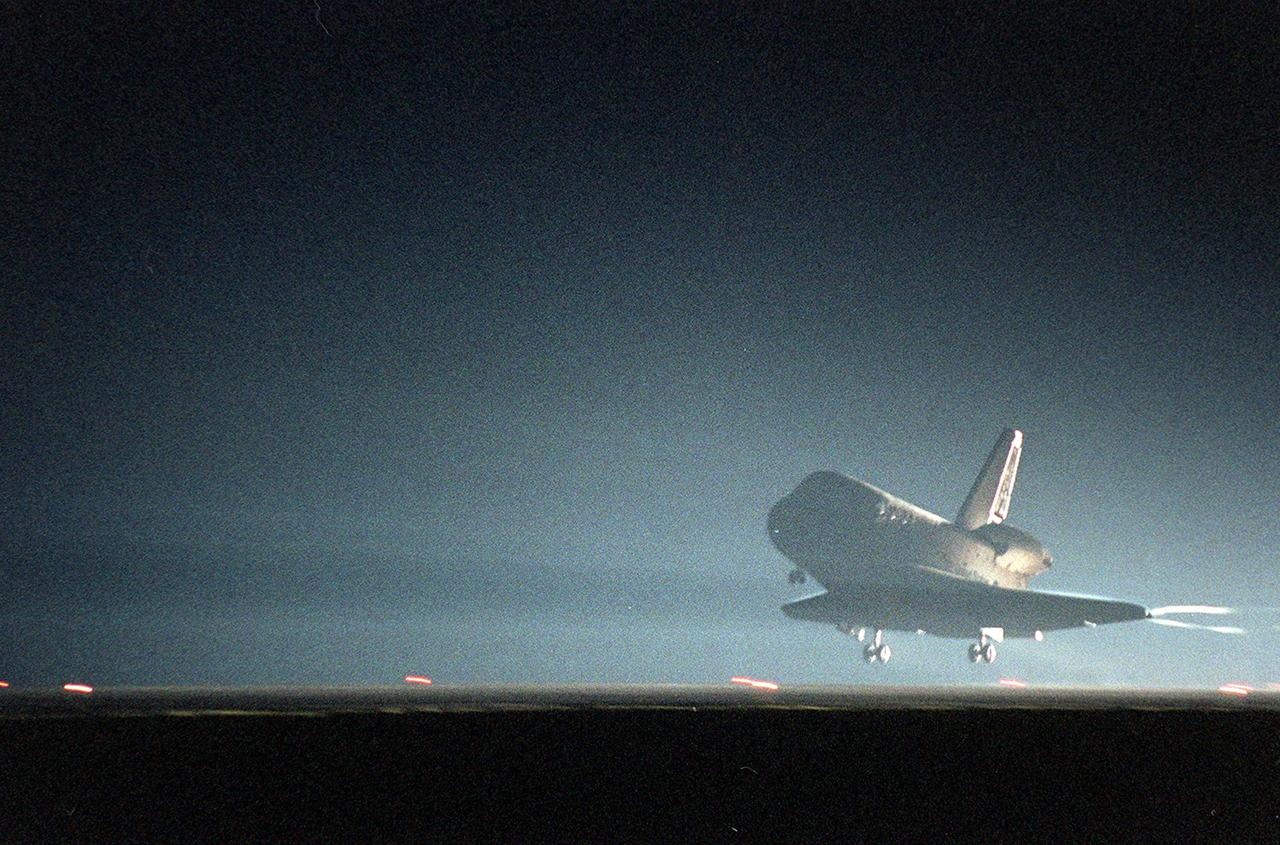
KENNEDY SPACE CENTER, Fla. -- Space Shuttle Discovery prepares to land at the KSC Shuttle Landing Facility on runway 15. Main gear touchdown occurred about 2:31:42 a.m. EST, nose wheel touchdown at 2:31:54 a.m., and wheel stop at 2:33:06 a.m. The landing, on orbit 201, concluded mission STS-102, the eighth flight to the International Space Station, carrying the first Multi-Purpose Logistics Module Leonardo, to the ISS and Expedition Two, a replacement crew for the Station. The 12-day, 19-hour, 51-minute mission returned both the Leonardo and the first resident crew of the ISS, Expedition One, to KSC. Discovery logged 5.3 million miles on this mission. The landing marked the 54th at KSC in the history of the program, and the 12th night landing at KSC
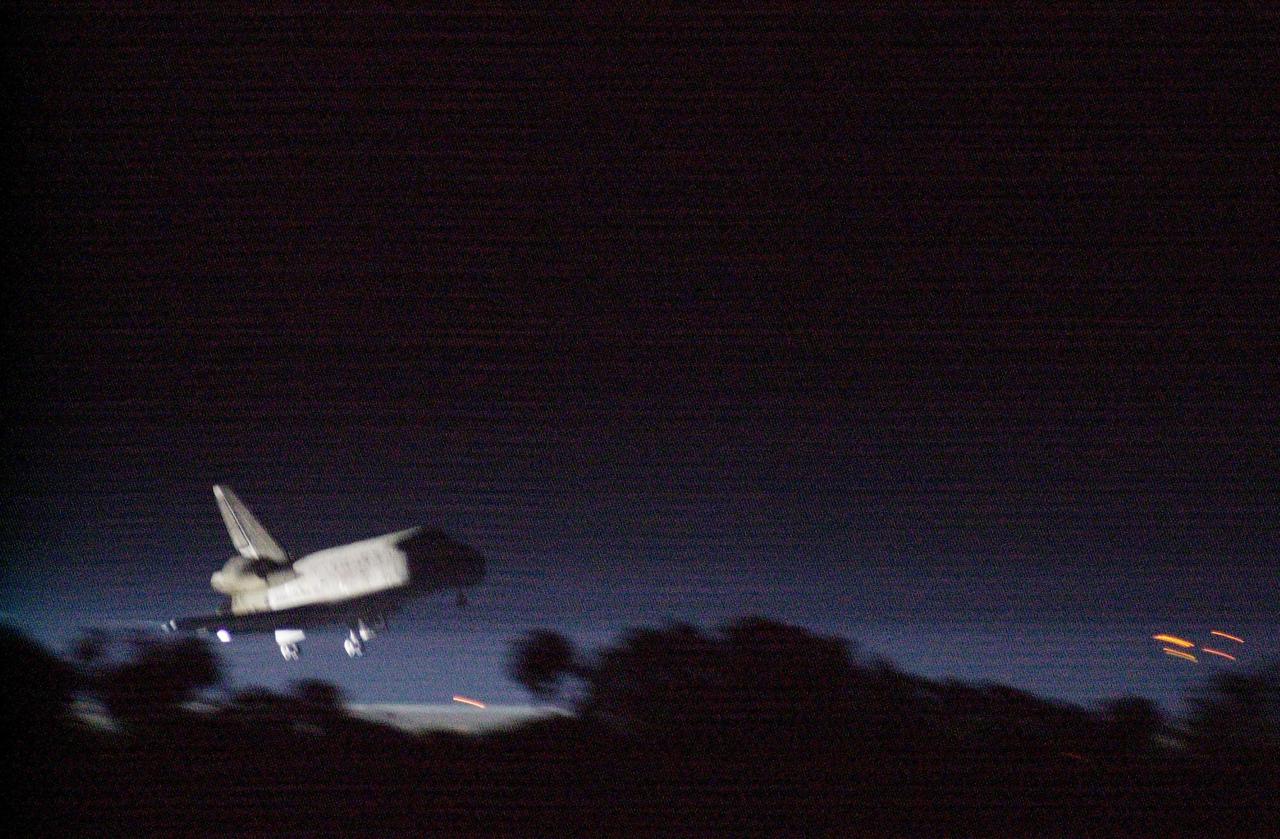
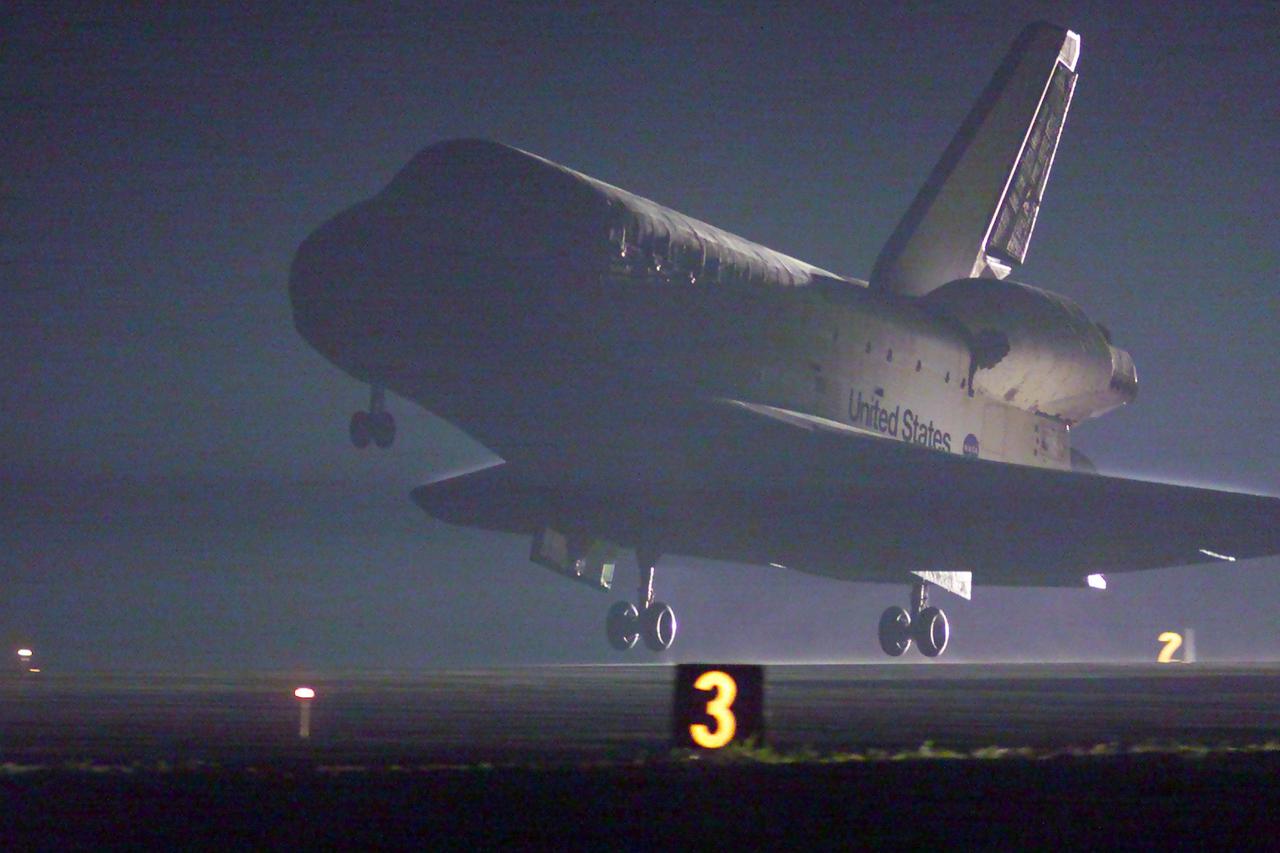
KENNEDY SPACE CENTER, Fla. -- Getting a break in the weather, Space Shuttle Discovery prepares to land at the KSC Shuttle Landing Facility March 21, on runway 15. Main gear touchdown occurred at 2:31:42 a.m. EST, nose wheel touchdown at 2:31:54 a.m., and wheel stop at 2:33:06 a.m. The landing on orbit 201 concluded mission STS-102, the eighth flight to the International Space Station, carrying the first Multi-Purpose Logistics Module Leonardo, to the ISS and Expedition Two, a replacement crew for the Station. The 12-day, 19-hour, 51-minute mission returned both the Leonardo and the first resident crew of the ISS, Expedition One, to KSC. Discovery logged 5.3 million miles on this mission. The landing marked the 54th at KSC in the history of the program, and the 12th night landing at KSC
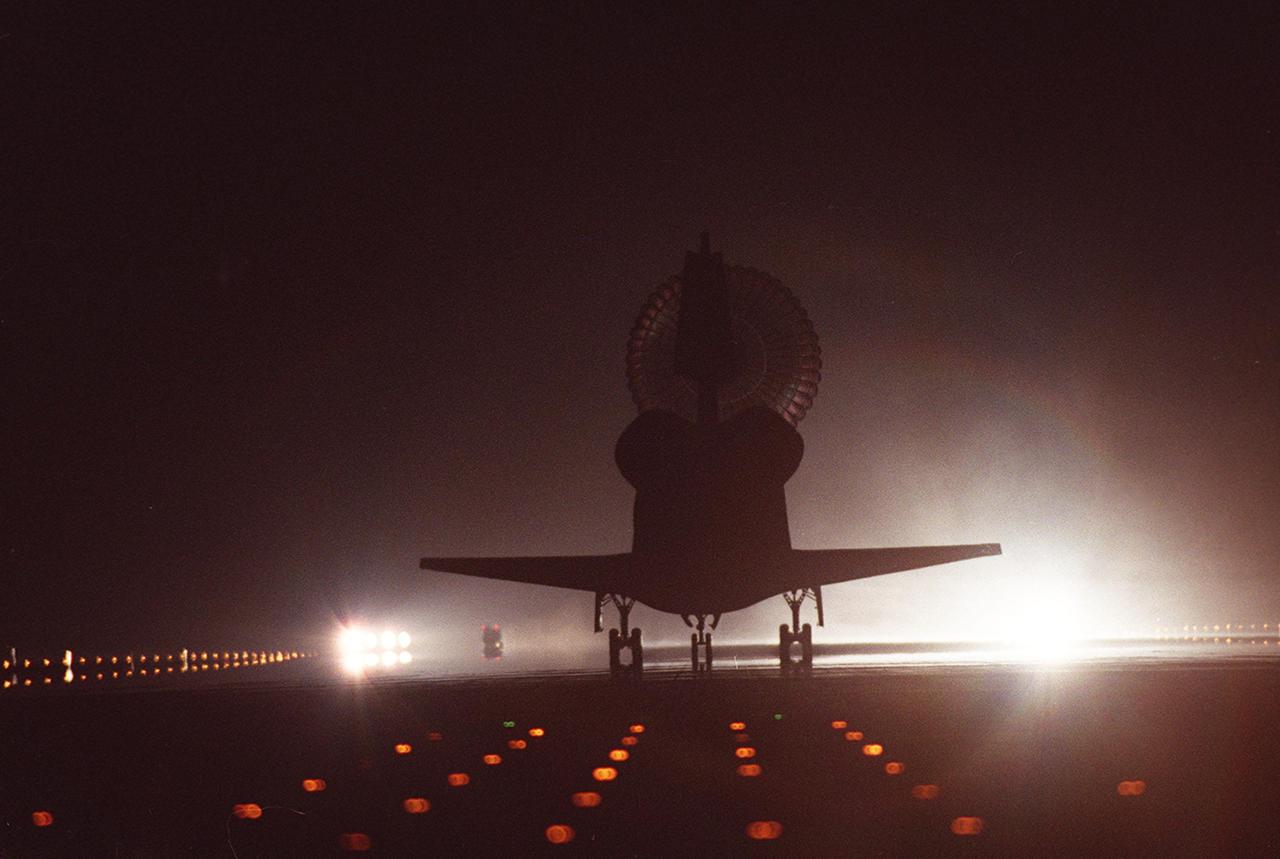
KENNEDY SPACE CENTER, Fla. -- Space Shuttle Discovery is silhouetted by the brilliant runway lights of runway 15 as it lands at the KSC Shuttle Landing Facility. Main gear touchdown occurred at 2:31:42 a.m. EST. Nose wheel touchdown occurred at 2:31:54 a.m., and wheel stop at 2:33:06 a.m. The landing on orbit 201 concluded mission STS-102, the eighth flight to the International Space Station, carrying the first Multi-Purpose Logistics Module, Leonardo, to the ISS and Expedition Two, a replacement crew for the Station. The 12-day, 19-hour, 51-minute mission returned both the Leonardo and the first resident crew of the ISS, Expedition One, to KSC. Discovery logged 5.3 million miles on this mission. The landing marked the 54th at KSC in the history of the program, and the 12th night landing at KSC
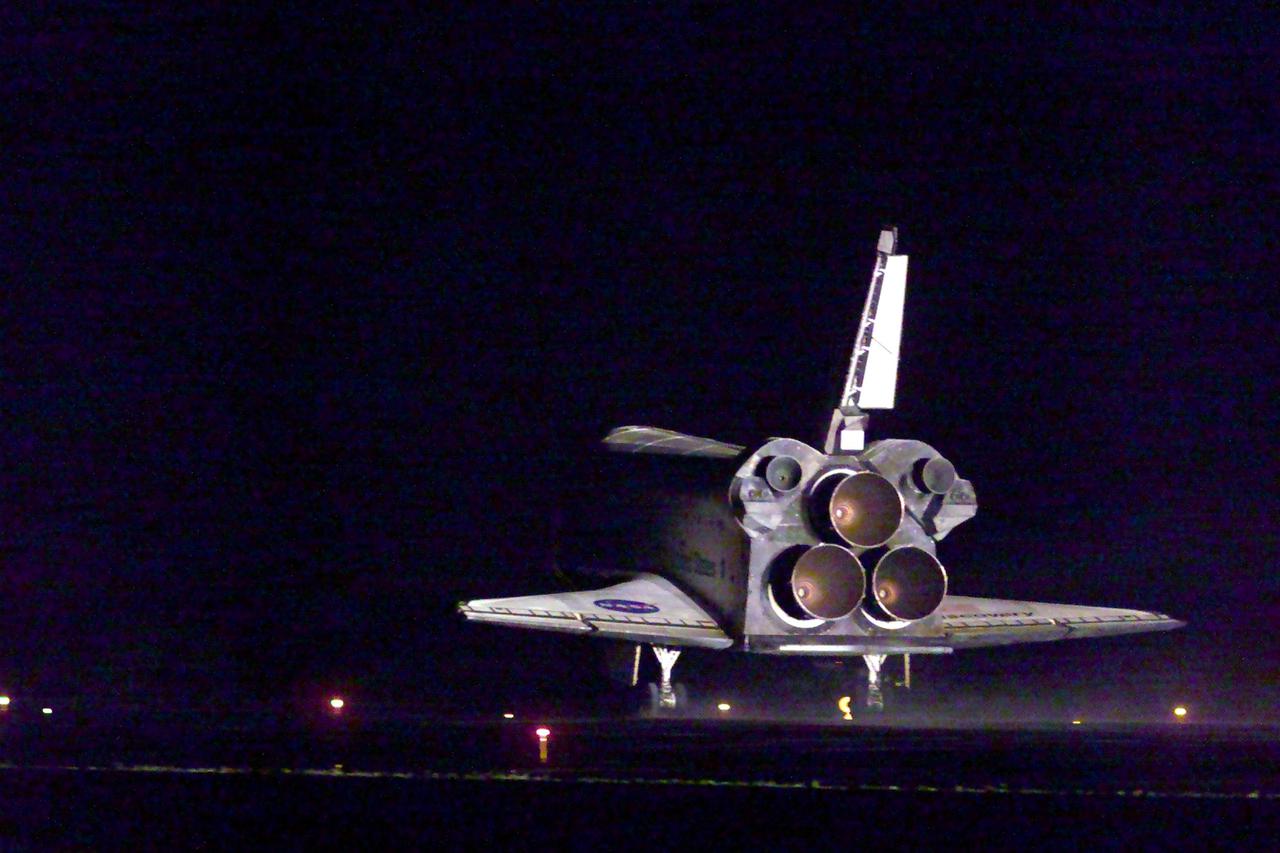
KENNEDY SPACE CENTER, Fla. -- Viewed from behind, Space Shuttle Discovery is seen landing on runway 15 of the KSC Shuttle Landing Facility. Main gear touchdown occurred at 2:31:42 a.m. EST. Nose wheel touchdown occurred at 2:31:54 a.m., and wheel stop at 2:33:06 a.m. The landing on orbit 201 concluded mission STS-102, the eighth flight to the International Space Station, carrying the first Multi-Purpose Logistics Module Leonardo, to the ISS and Expedition Two, a replacement crew for the Station. The 12-day, 19-hour, 51-minute mission returned both the Leonardo and the first resident crew of the ISS, Expedition One, to KSC. Discovery logged 5.3 million miles on this mission. The landing marked the 54th at KSC in the history of the program, and the 12th night landing at KSC
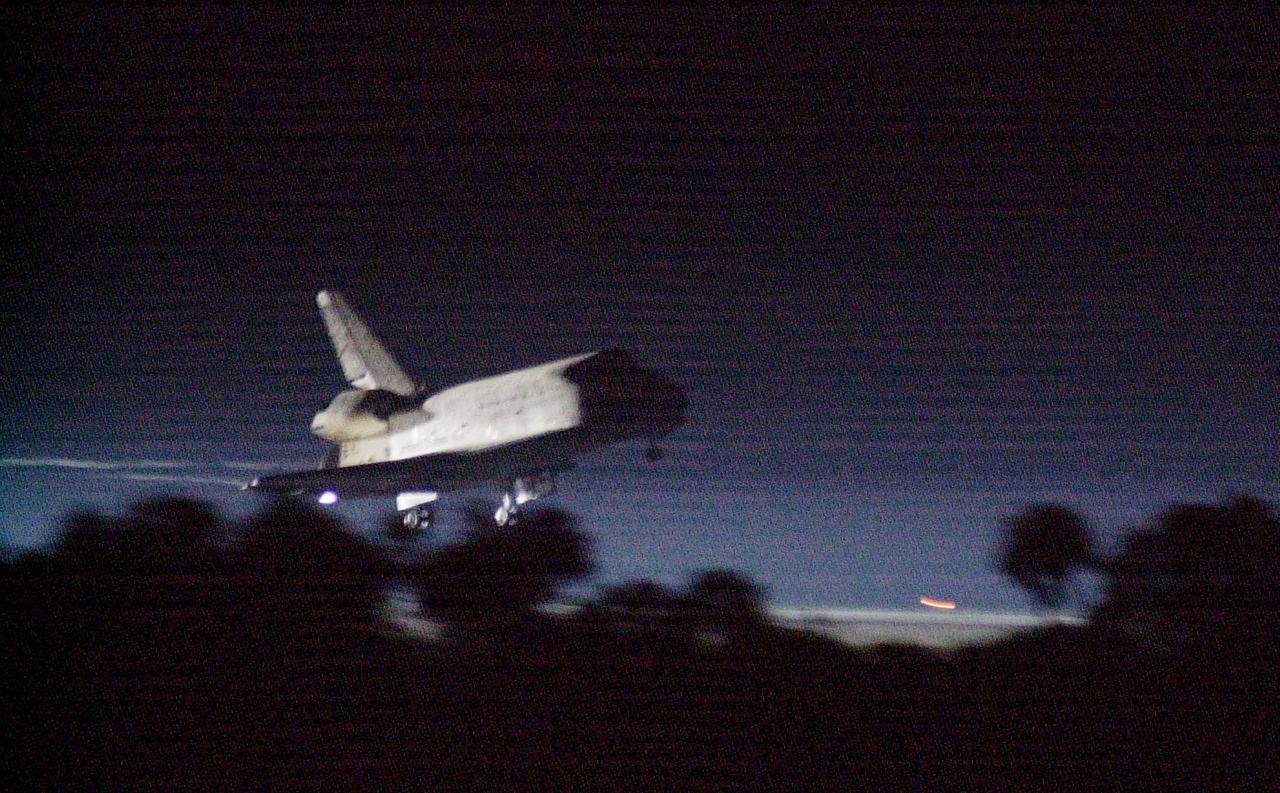
KENNEDY SPACE CENTER, Fla. -- Getting a break in the weather, Space Shuttle Discovery prepares to land at the KSC Shuttle Landing Facility March 21, on runway 15. Main gear touchdown occurred at 2:31:42 a.m. EST, nose wheel touchdown at 2:31:54 a.m., and wheel stop at 2:33:06 a.m. The landing on orbit 201 concluded mission STS-102, the eighth flight to the International Space Station, carrying the first Multi-Purpose Logistics Module Leonardo, to the ISS and Expedition Two, a replacement crew for the Station. The 12-day, 19-hour, 51-minute mission returned both the Leonardo; and the first resident crew of the ISS, Expedition One, to KSC. Discovery logged 5.3 million miles on this mission. The landing marked the 54th at KSC in the history of the program, and the 12th night landing at KSC
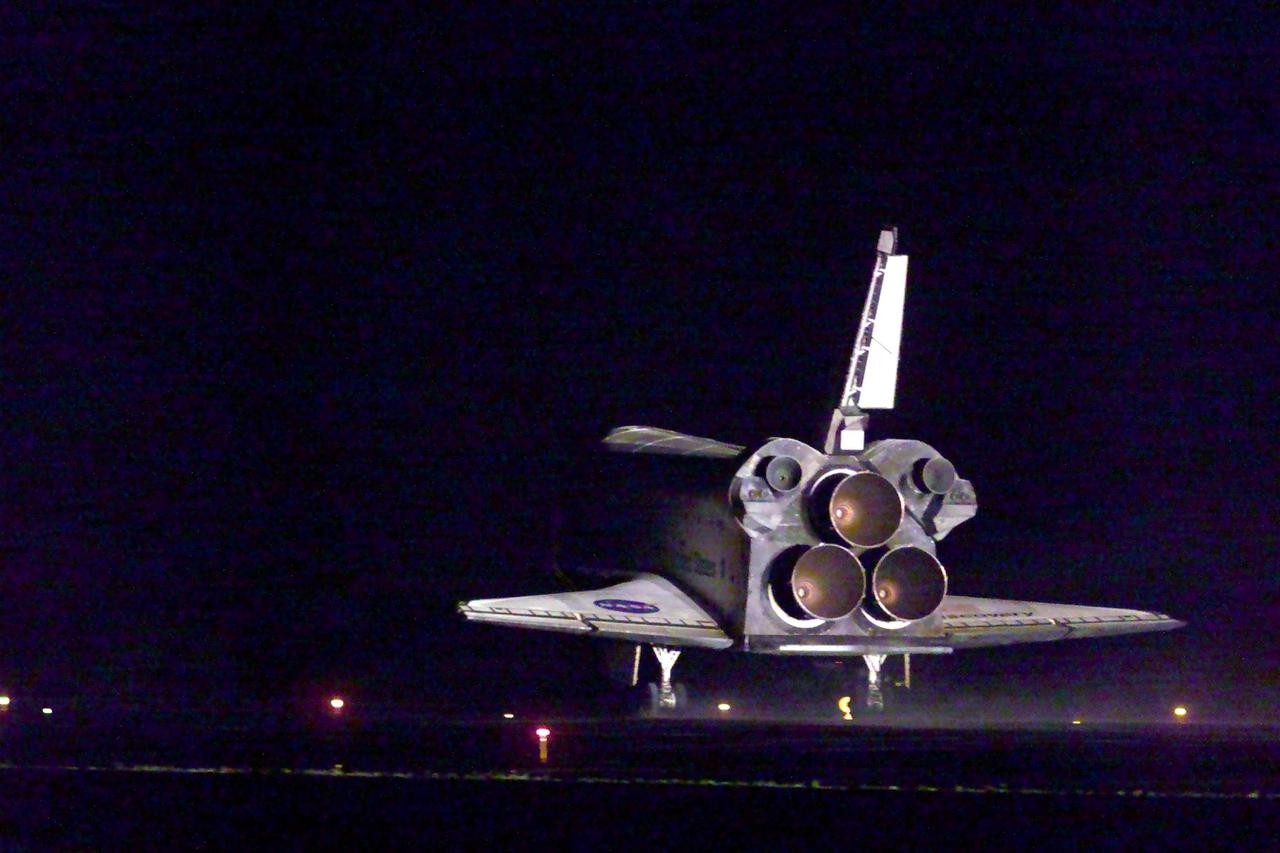
KENNEDY SPACE CENTER, Fla. -- Viewed from behind, Space Shuttle Discovery is seen landing on runway 15 of the KSC Shuttle Landing Facility. Main gear touchdown occurred at 2:31:42 a.m. EST. Nose wheel touchdown occurred at 2:31:54 a.m., and wheel stop at 2:33:06 a.m. The landing on orbit 201 concluded mission STS-102, the eighth flight to the International Space Station, carrying the first Multi-Purpose Logistics Module Leonardo, to the ISS and Expedition Two, a replacement crew for the Station. The 12-day, 19-hour, 51-minute mission returned both the Leonardo and the first resident crew of the ISS, Expedition One, to KSC. Discovery logged 5.3 million miles on this mission. The landing marked the 54th at KSC in the history of the program, and the 12th night landing at KSC
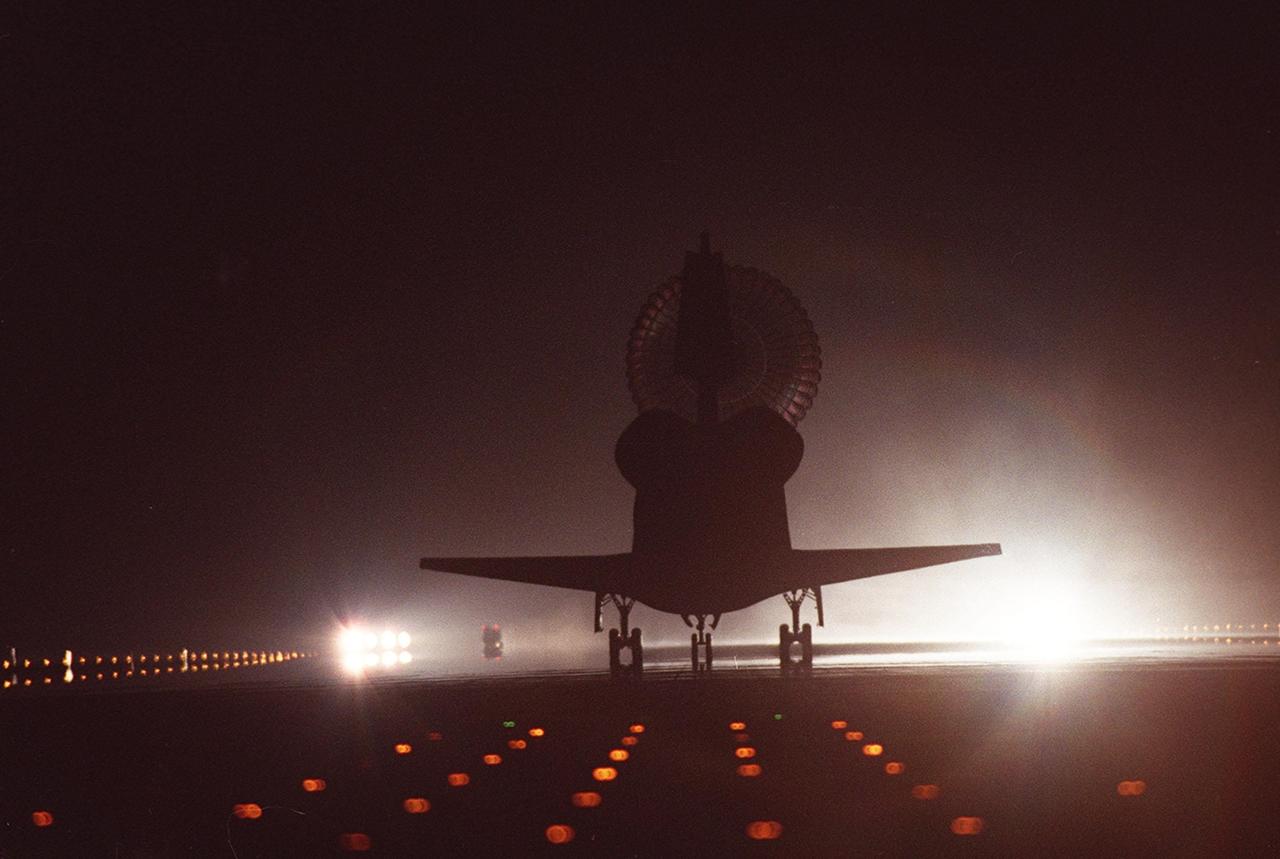
KENNEDY SPACE CENTER, Fla. -- Space Shuttle Discovery is silhouetted by the brilliant runway lights of runway 15 as it lands at the KSC Shuttle Landing Facility. Main gear touchdown occurred at 2:31:42 a.m. EST. Nose wheel touchdown occurred at 2:31:54 a.m., and wheel stop at 2:33:06 a.m. The landing on orbit 201 concluded mission STS-102, the eighth flight to the International Space Station, carrying the first Multi-Purpose Logistics Module, Leonardo, to the ISS and Expedition Two, a replacement crew for the Station. The 12-day, 19-hour, 51-minute mission returned both the Leonardo and the first resident crew of the ISS, Expedition One, to KSC. Discovery logged 5.3 million miles on this mission. The landing marked the 54th at KSC in the history of the program, and the 12th night landing at KSC
KENNEDY SPACE CENTER, Fla. -- Getting a break in the weather, Space Shuttle Discovery prepares to land at the KSC Shuttle Landing Facility March 21, on runway 15. Main gear touchdown occurred at 2:31:42 a.m. EST, nose wheel touchdown at 2:31:54 a.m., and wheel stop at 2:33:06 a.m. The landing on orbit 201 concluded mission STS-102, the eighth flight to the International Space Station, carrying the first Multi-Purpose Logistics Module Leonardo, to the ISS and Expedition Two, a replacement crew for the Station. The 12-day, 19-hour, 51-minute mission returned both the Leonardo and the first resident crew of the ISS, Expedition One, to KSC. Discovery logged 5.3 million miles on this mission. The landing marked the 54th at KSC in the history of the program, and the 12th night landing at KSC
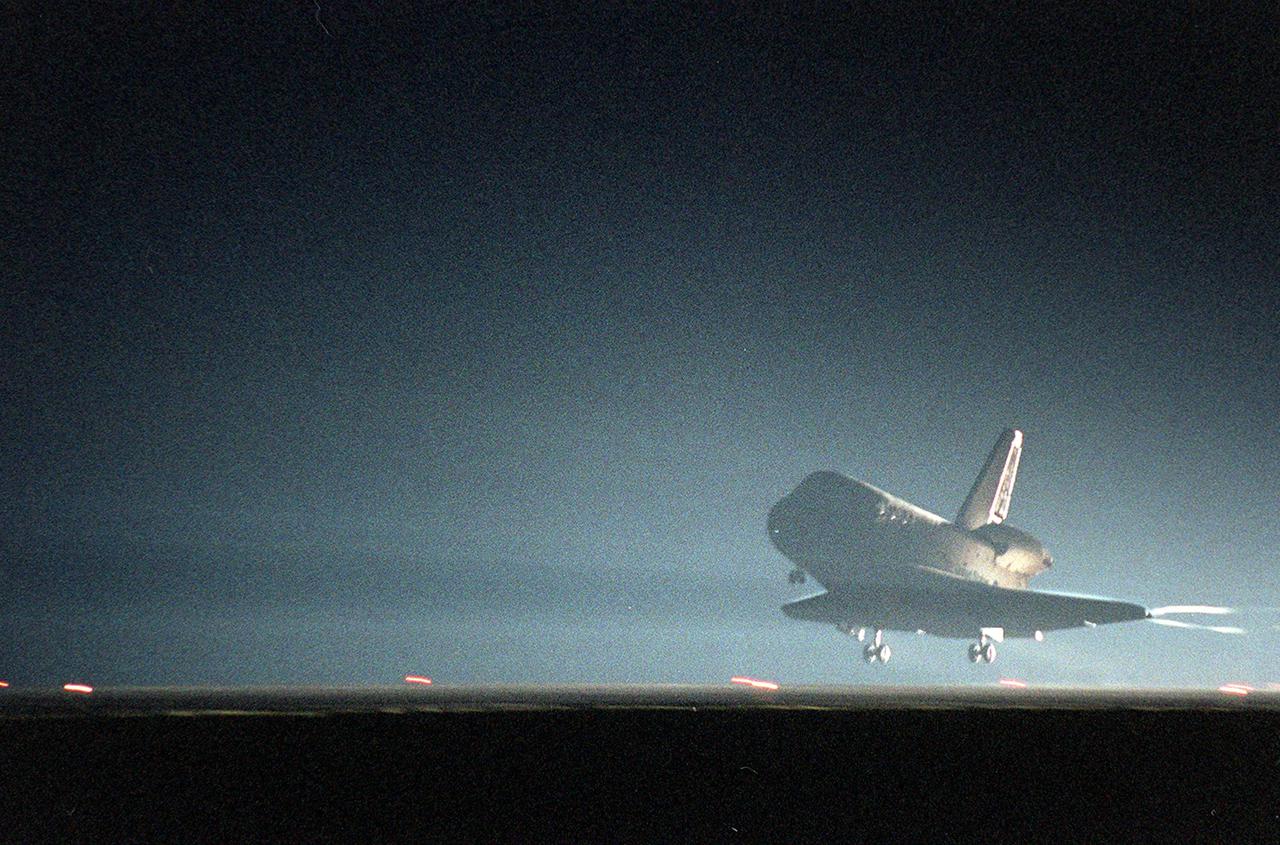
KENNEDY SPACE CENTER, Fla. -- Space Shuttle Discovery prepares to land at the KSC Shuttle Landing Facility on runway 15. Main gear touchdown occurred at 2:31:42 a.m. EST, nose wheel touchdown at 2:31:54 a.m., and wheel stop at 2:33:06 a.m. The landing on orbit 201 concluded mission STS-102, the eighth flight to the International Space Station, carrying the first Multi-Purpose Logistics Module Leonardo, to the ISS and Expedition Two, a replacement crew for the Station. The 12-day, 19-hour, 51-minute mission returned both the Leonardo and the first resident crew of the ISS, Expedition One, to KSC. Discovery logged 5.3 million miles on this mission. The landing marked the 54th at KSC in the history of the program, and the 12th night landing at KSC
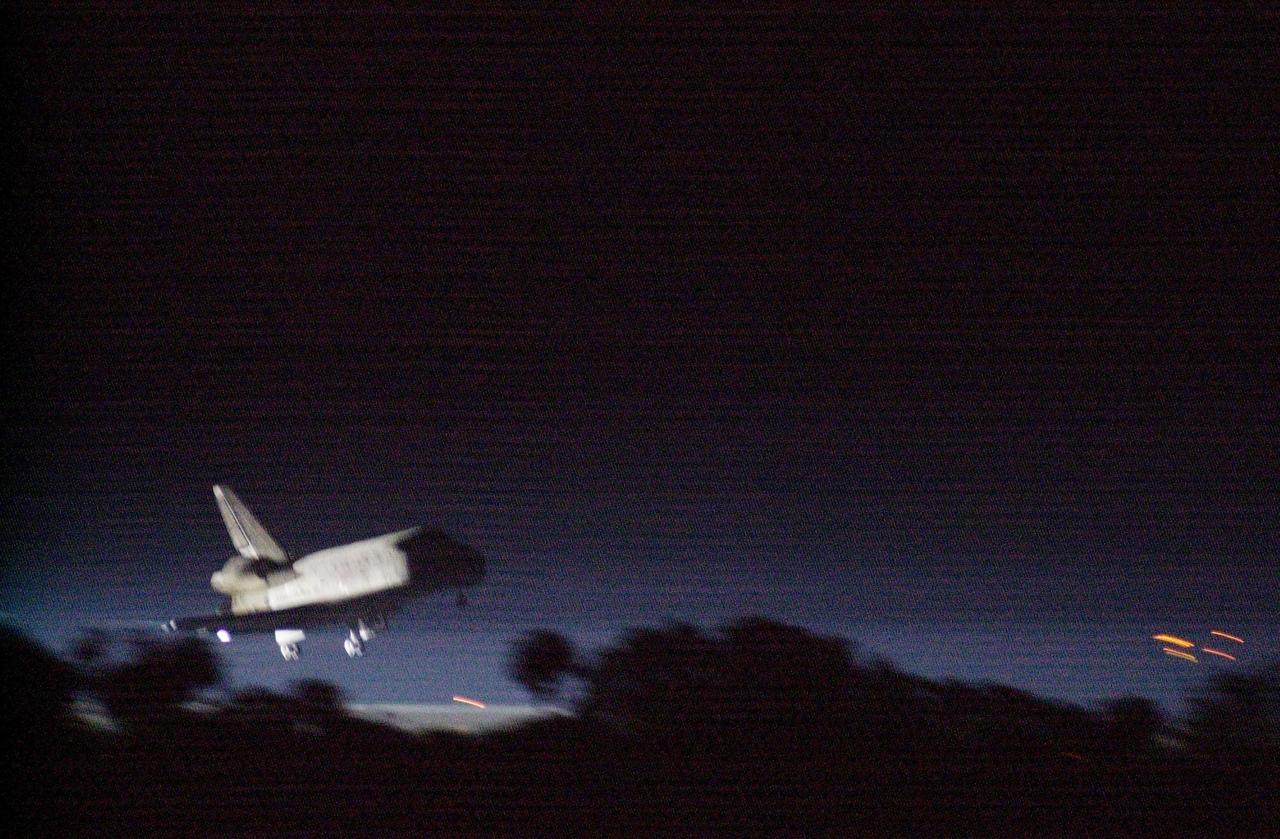
KENNEDY SPACE CENTER, Fla. -- Space Shuttle Discovery prepares to land at the KSC Shuttle Landing Facility on runway 15. Main gear touchdown occurred about 2:31:42 a.m. EST, nose wheel touchdown at 2:31:54 a.m., and wheel stop at 2:33:06 a.m. The landing, on orbit 201, concluded mission STS-102, the eighth flight to the International Space Station, carrying the first Multi-Purpose Logistics Module Leonardo, to the ISS and Expedition Two, a replacement crew for the Station. The 12-day, 19-hour, 51-minute mission returned both the Leonardo and the first resident crew of the ISS, Expedition One, to KSC. Discovery logged 5.3 million miles on this mission. The landing marked the 54th at KSC in the history of the program, and the 12th night landing at KSC
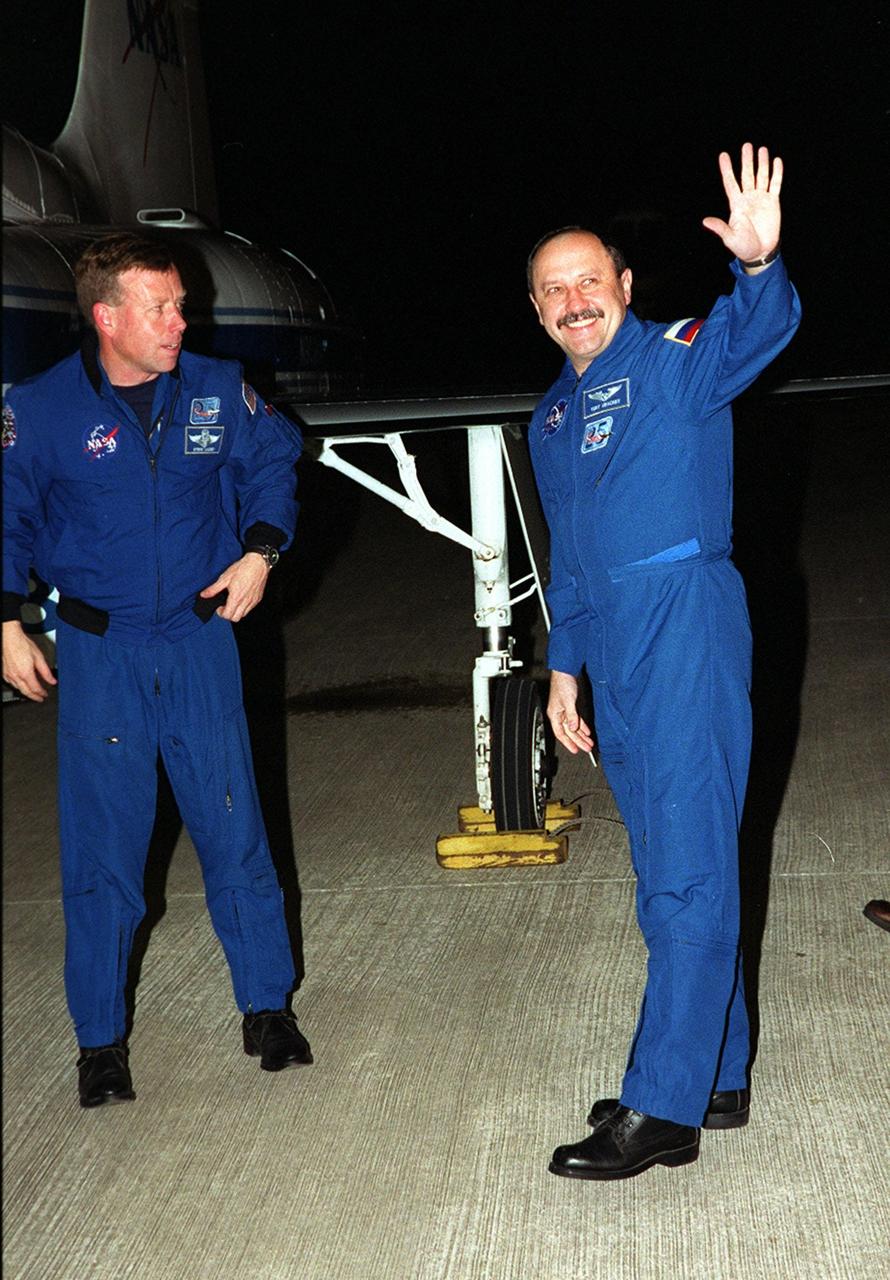
After landing at KSC’s Shuttle Landing Facility, Russian cosmonaut and STS-102 Mission Specialist Yury Usachev (right) waves to the media. Pilot James Kelly (left) is ready to join the other crew members at the microphone. The crew comprises Commander James Wetherbee, Kelly, and Mission Specialists Andrew Thomas, Paul Richards, James Voss, Susan Helms and Usachev. Helms, Usachev and Voss are also the Expedition Two crew replacing Expedition One on the International Space Station. STS-102 will be carrying the Multi-Purpose Logistics Module Leonardo, the primary delivery system used to resupply and return Station cargo requiring a pressurized environment. Leonardo will deliver up to 10 tons of laboratory racks filled with equipment, experiments and supplies for outfitting the newly installed U.S. Laboratory Destiny. STS-102 is scheduled to launch March 8 at 6:42 a.m. EST
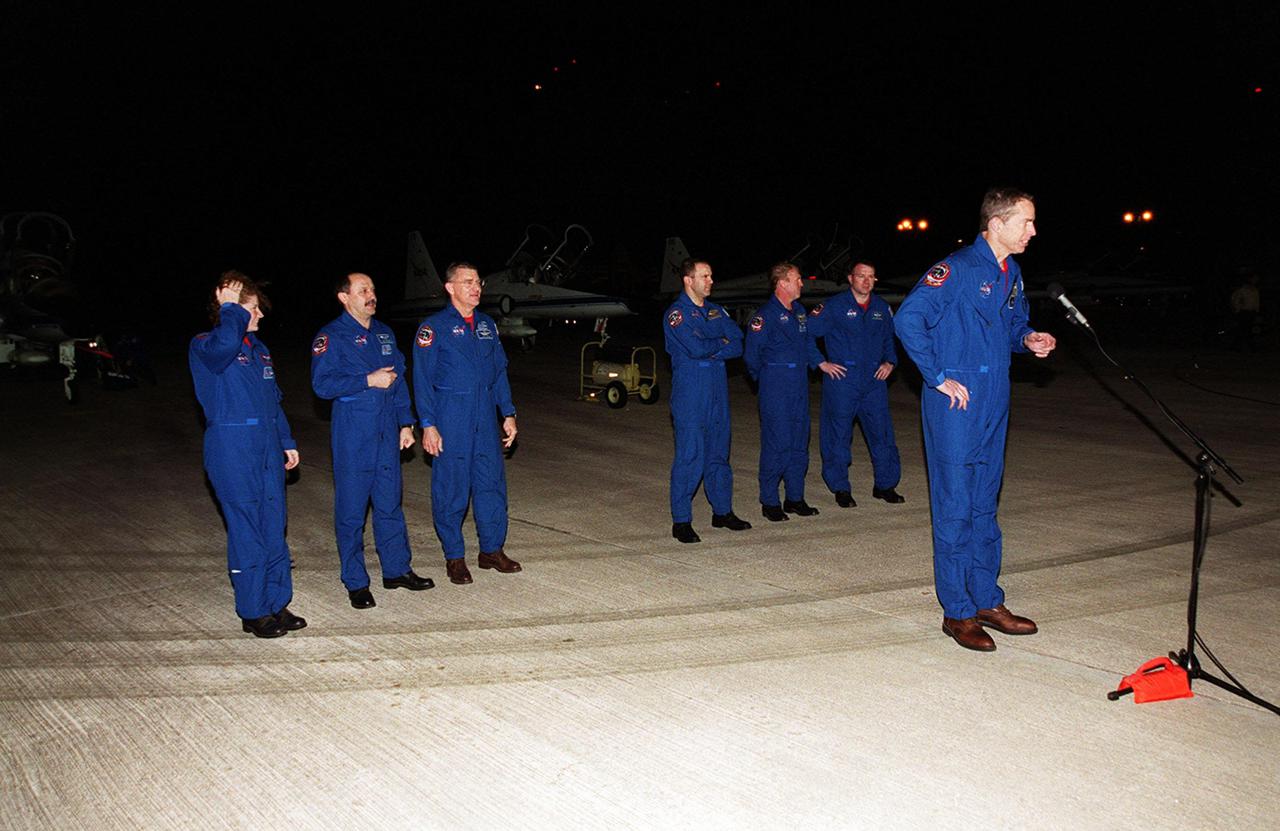
After landing at KSC’s Shuttle Landing Facility, the STS-102 crew pauses to brief the media. At the microphone is Commander James Wetherbee. Standing behind him (left to right) are Missions Specialists Susan Helms, Yury Usachev and James Voss, who are also the Expedition Two crew due to replace Expedition One on the International Space Station; Mission Specialists Paul Richards and Andrew Thomas; and Pilot James Kelly. STS-102 will be carrying the Multi-Purpose Logistics Module Leonardo, the primary delivery system used to resupply and return Station cargo requiring a pressurized environment. Leonardo will deliver up to 10 tons of laboratory racks filled with equipment, experiments and supplies for outfitting the newly installed U.S. Laboratory Destiny. STS-102 is scheduled to launch March 8 at 6:42 a.m. EST
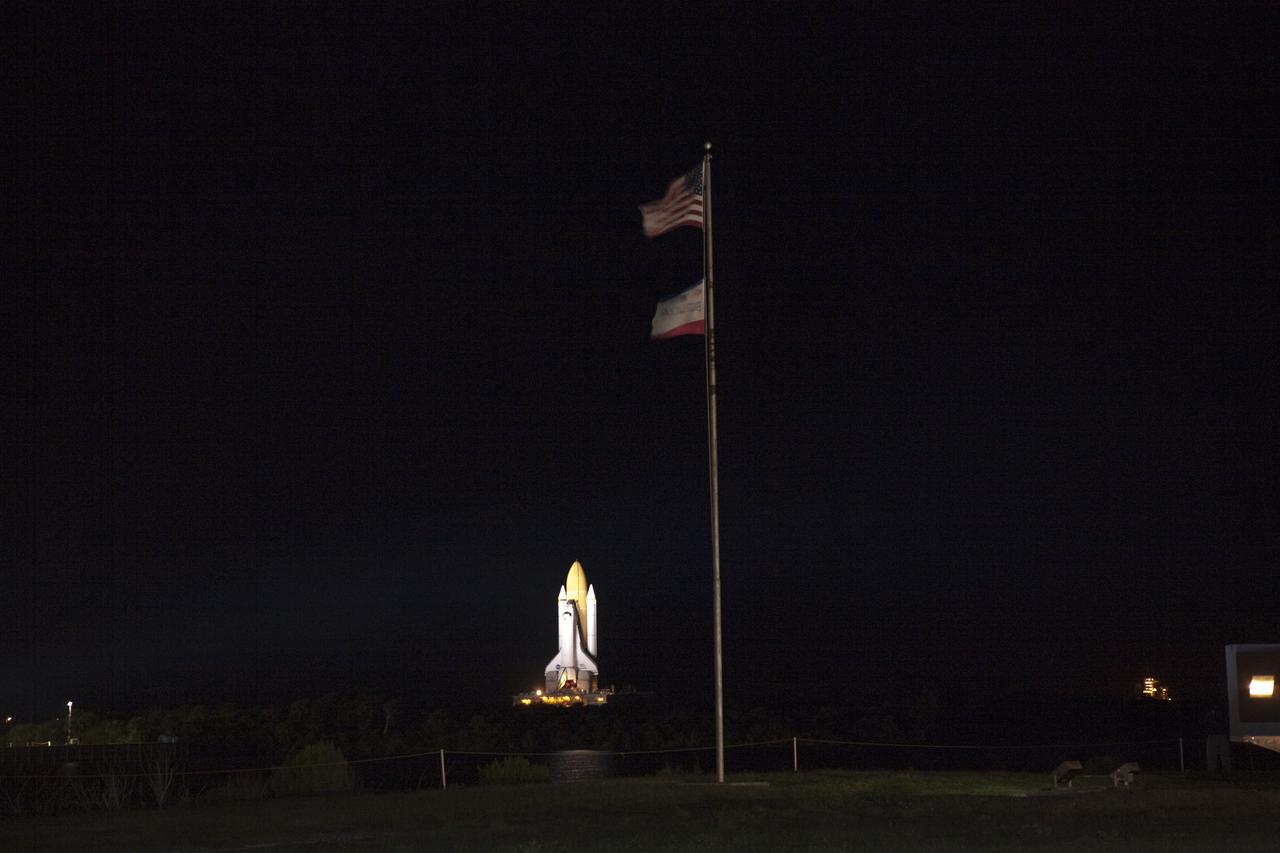
CAPE CANAVERAL, Fla. -- Space shuttle Atlantis makes its historic final journey from the Vehicle Assembly Building to Launch Pad 39A at NASA's Kennedy Space Center in Florida while the flags of America and shuttle Endeavour wave proudly in a light breeze. First motion was at 8:42 p.m. EDT. The milestone move, known as "rollout," paves the way for the launch of the STS-135 mission to the International Space Station, targeted for July 8. Atlantis is slated to arrive at its seaside launch pad about an hour after Endeavour lands on Kennedy's Shuttle Landing Facility runway for the last time, bringing an end to the STS-134 mission. STS-135 will be the 33rd flight of Atlantis, the 37th shuttle mission to the space station, and the 135th and final mission of NASA's Space Shuttle Program. For more information visit, www.nasa.gov/mission_pages/shuttle/shuttlemissions/sts135/index.html. Photo credit: NASA/Gianni Woods
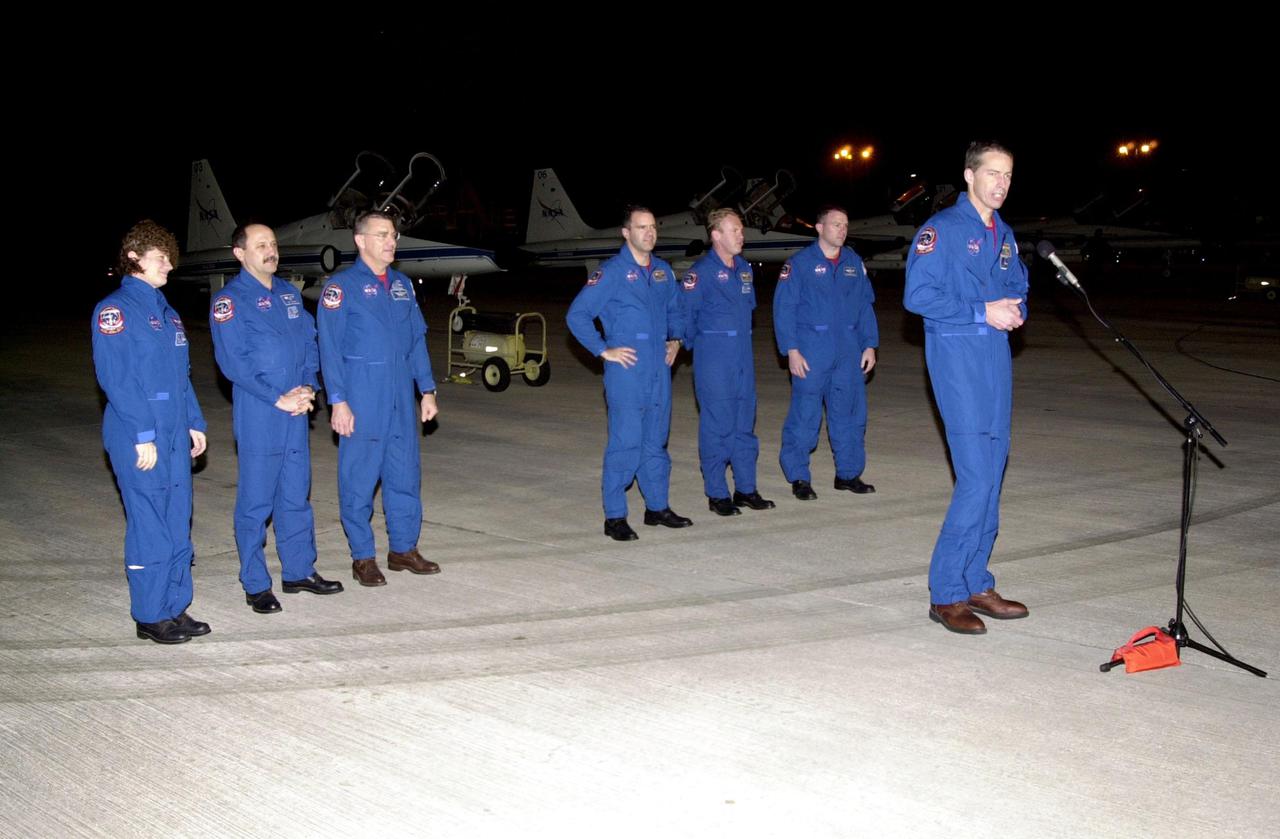
After landing at KSC’s Shuttle Landing Facility, the STS-102 crew pause to brief the media. At the microphone is Commander James Wetherbee. Standing behind him (left to right) are Missions Specialists Susan Helms, Yury Usachev and James Voss, who are also the Expedition Two crew due to replace Expedition One on the International Space Station; Mission Specialists Paul Richards and Andrew Thomas; and Pilot James Kelly. STS-102 will be carrying the Multi-Purpose Logistics Module Leonardo, the primary delivery system used to resupply and return Station cargo requiring a pressurized environment. Leonardo will deliver up to 10 tons of laboratory racks filled with equipment, experiments and supplies for outfitting the newly installed U.S. Laboratory Destiny. STS-102 is scheduled to launch March 8 at 6:42 a.m. EST
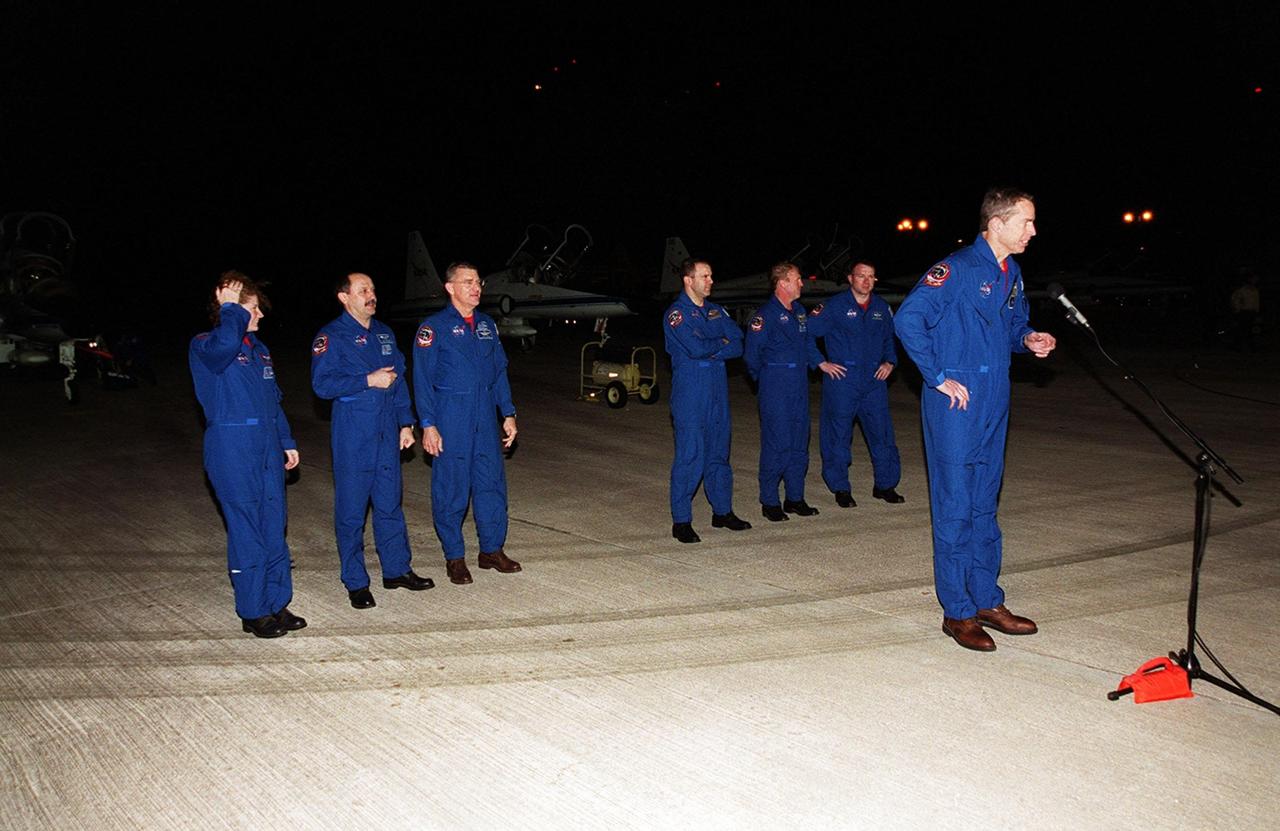
After landing at KSC’s Shuttle Landing Facility, the STS-102 crew pauses to brief the media. At the microphone is Commander James Wetherbee. Standing behind him (left to right) are Missions Specialists Susan Helms, Yury Usachev and James Voss, who are also the Expedition Two crew due to replace Expedition One on the International Space Station; Mission Specialists Paul Richards and Andrew Thomas; and Pilot James Kelly. STS-102 will be carrying the Multi-Purpose Logistics Module Leonardo, the primary delivery system used to resupply and return Station cargo requiring a pressurized environment. Leonardo will deliver up to 10 tons of laboratory racks filled with equipment, experiments and supplies for outfitting the newly installed U.S. Laboratory Destiny. STS-102 is scheduled to launch March 8 at 6:42 a.m. EST
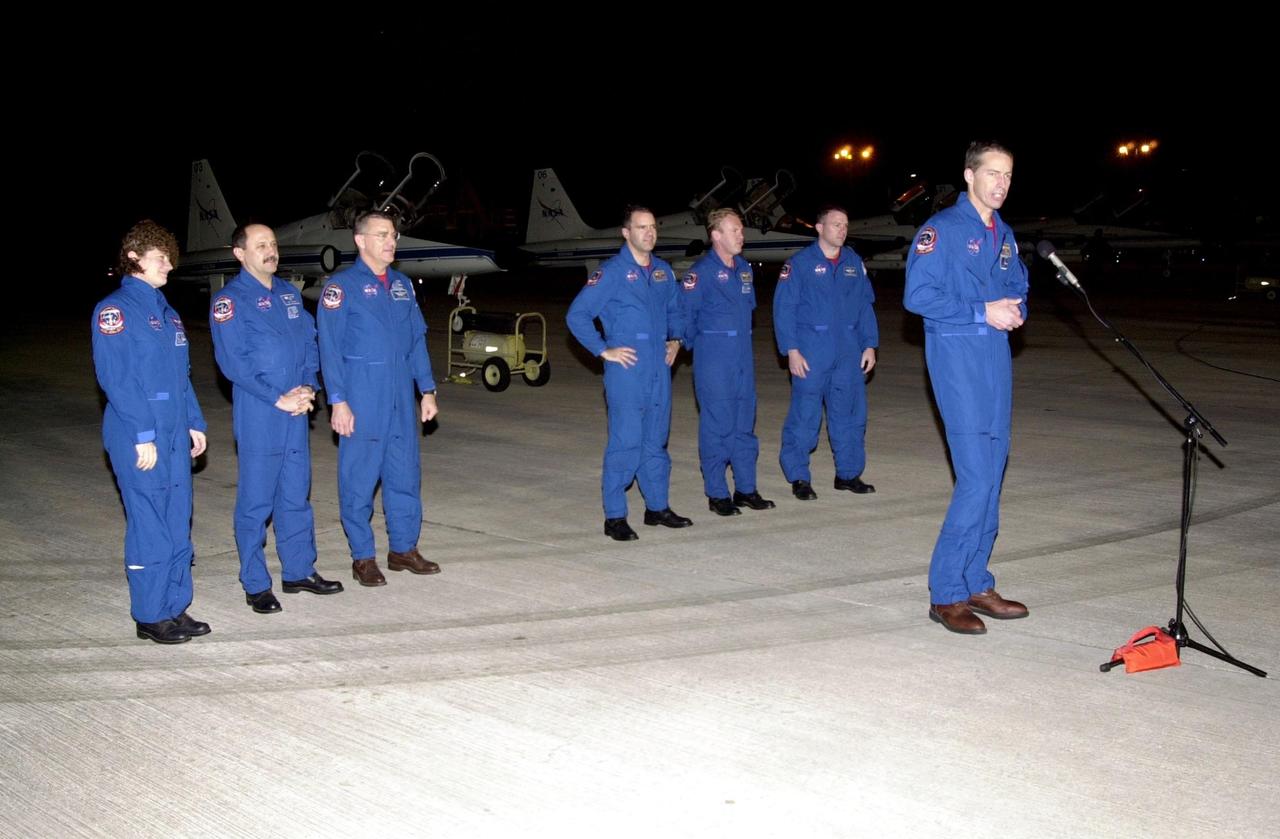
After landing at KSC’s Shuttle Landing Facility, the STS-102 crew pause to brief the media. At the microphone is Commander James Wetherbee. Standing behind him (left to right) are Missions Specialists Susan Helms, Yury Usachev and James Voss, who are also the Expedition Two crew due to replace Expedition One on the International Space Station; Mission Specialists Paul Richards and Andrew Thomas; and Pilot James Kelly. STS-102 will be carrying the Multi-Purpose Logistics Module Leonardo, the primary delivery system used to resupply and return Station cargo requiring a pressurized environment. Leonardo will deliver up to 10 tons of laboratory racks filled with equipment, experiments and supplies for outfitting the newly installed U.S. Laboratory Destiny. STS-102 is scheduled to launch March 8 at 6:42 a.m. EST
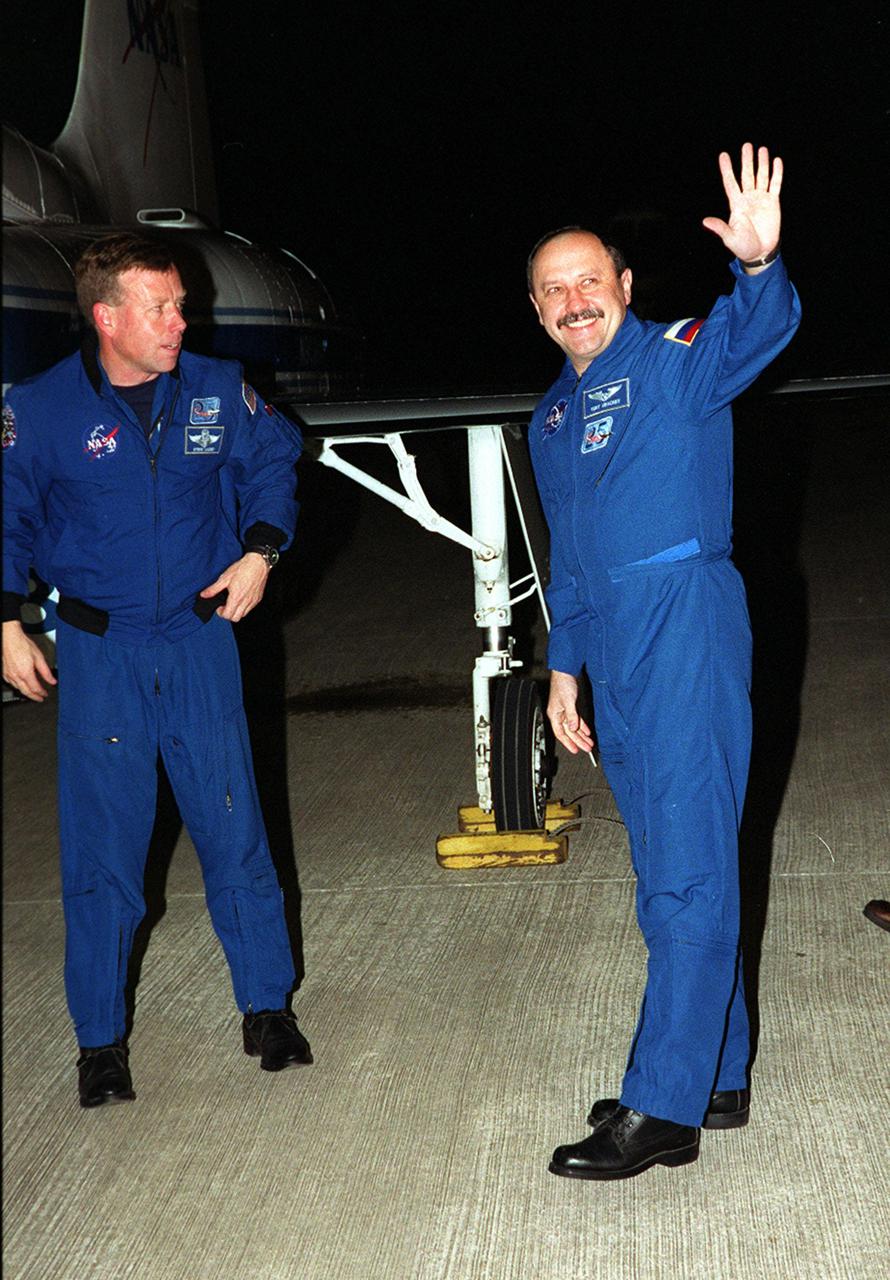
After landing at KSC’s Shuttle Landing Facility, Russian cosmonaut and STS-102 Mission Specialist Yury Usachev (right) waves to the media. Pilot James Kelly (left) is ready to join the other crew members at the microphone. The crew comprises Commander James Wetherbee, Kelly, and Mission Specialists Andrew Thomas, Paul Richards, James Voss, Susan Helms and Usachev. Helms, Usachev and Voss are also the Expedition Two crew replacing Expedition One on the International Space Station. STS-102 will be carrying the Multi-Purpose Logistics Module Leonardo, the primary delivery system used to resupply and return Station cargo requiring a pressurized environment. Leonardo will deliver up to 10 tons of laboratory racks filled with equipment, experiments and supplies for outfitting the newly installed U.S. Laboratory Destiny. STS-102 is scheduled to launch March 8 at 6:42 a.m. EST
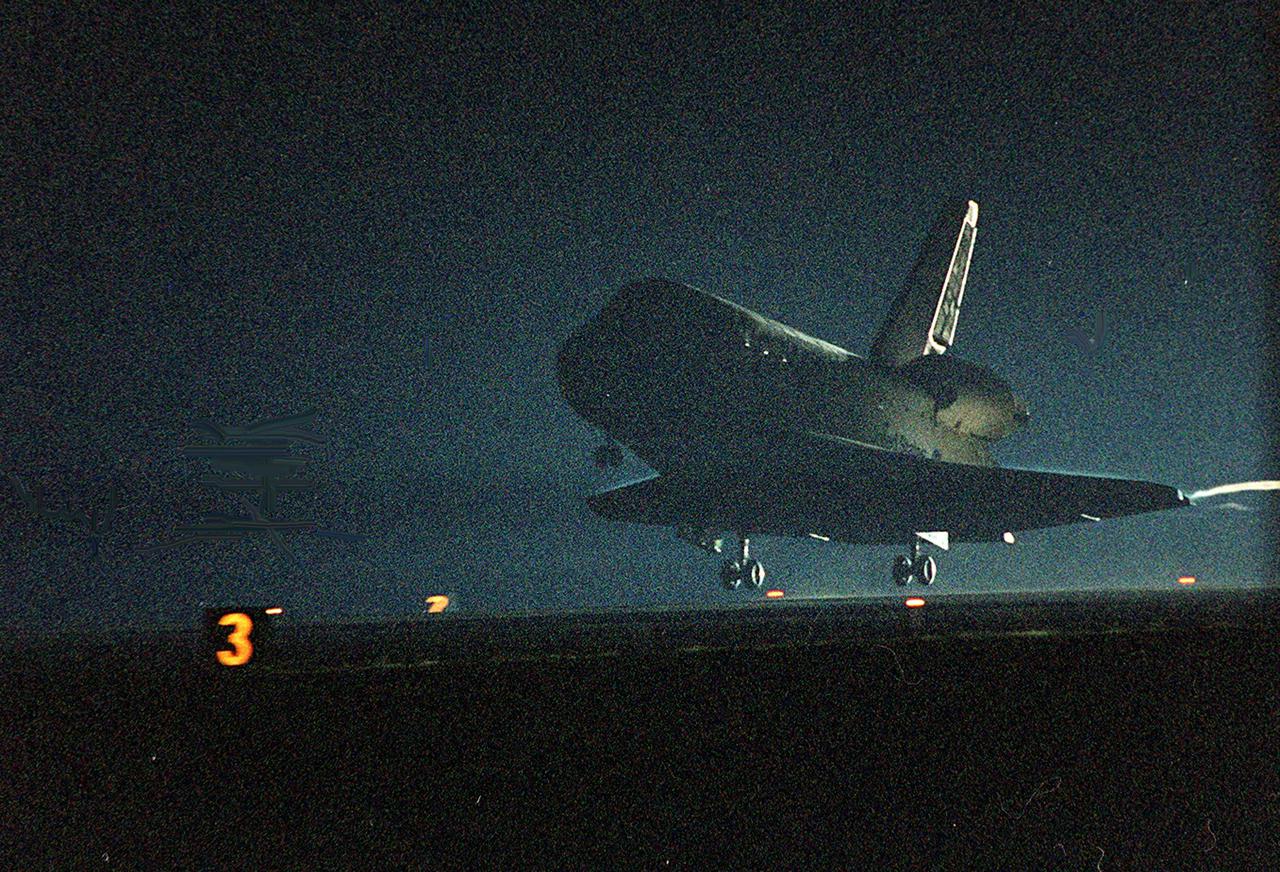
KENNEDY SPACE CENTER, Fla. -- Space Shuttle Discovery approaches touchdown on runway 15 at the KSC Shuttle Landing Facility. Main gear touchdown occurred about 2:31:42 a.m. EST, nose wheel touchdown at 2:31:54 a.m., and wheel stop at 2:33:06 a.m. The landing, on orbit 201, concluded mission STS-102, the eighth flight to the International Space Station, carrying the first Multi-Purpose Logistics Module Leonardo, to the ISS and Expedition Two, a replacement crew for the Station. The 12-day, 19-hour, 51-minute mission returned both the Leonardo and the first resident crew of the ISS, Expedition One, to KSC. Discovery logged 5.3 million miles on this mission. The landing marked the 54th at KSC in the history of the program, and the 12th night landing at KSC
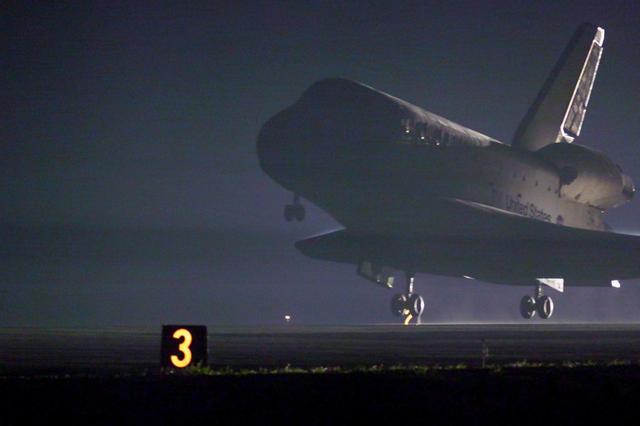
KENNEDY SPACE CENTER, Fla. -- Space Shuttle Discovery approaches touchdown on runway 15 at the KSC Shuttle Landing Facility. Main gear touchdown occurred at 2:31:42 a.m. EST, nose wheel touchdown at 2:31:54 a.m., and wheel stop at 2:33:06 a.m. The landing on orbit 201 concluded mission STS-102, the eighth flight to the International Space Station, carrying the first Multi-Purpose Logistics Module Leonardo, to the ISS and Expedition Two, a replacement crew for the Station. The 12-day, 19-hour, 51-minute mission returned both the Leonardo and the first resident crew of the ISS, Expedition One, to KSC . Discovery logged 5.3 million miles on this mission. The landing marked the 54th at KSC in the history of the program, and the 12th night landing at KSC
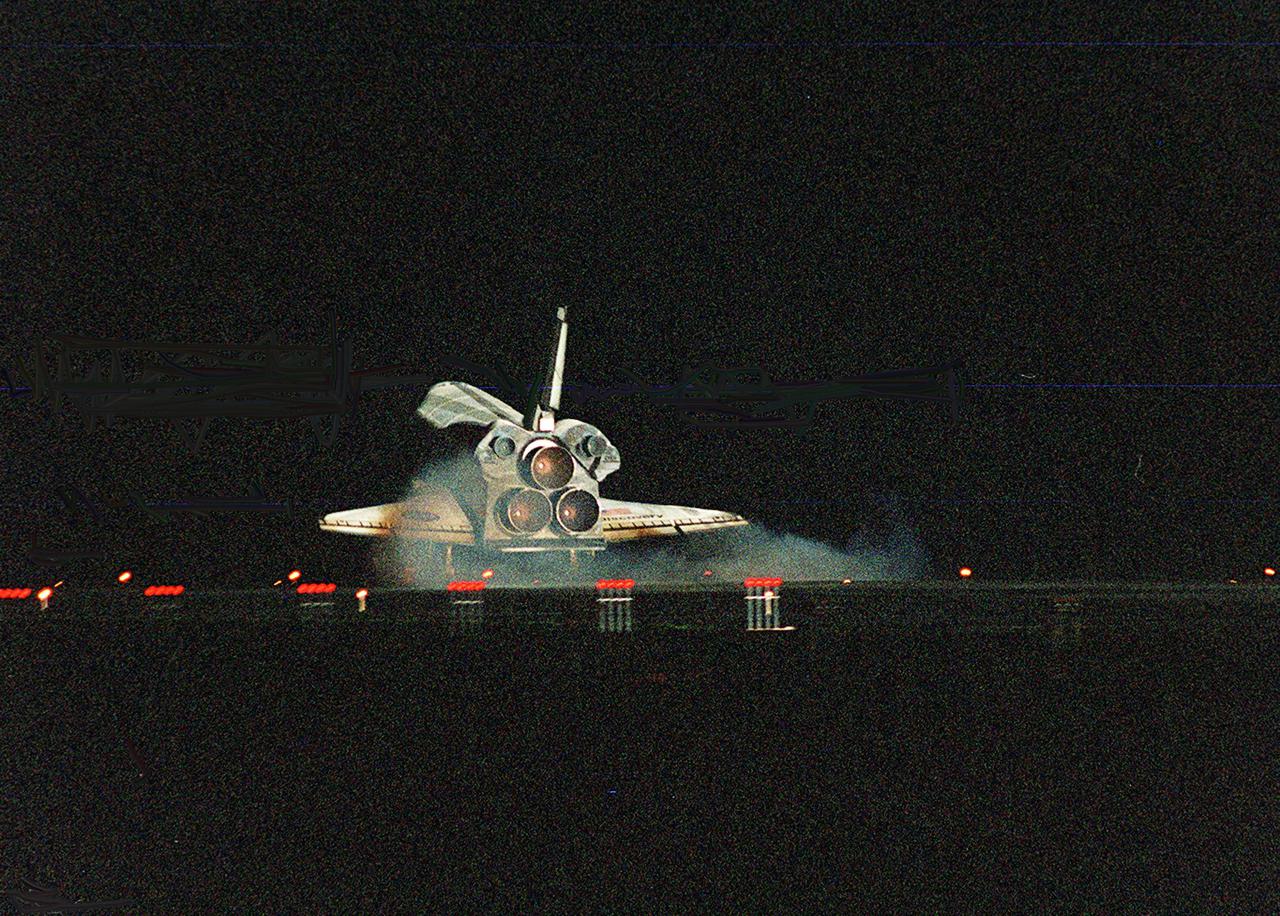
KENNEDY SPACE CENTER, Fla. -- Space Shuttle Discovery kicks up a swirl of dust as it touches down on runway 15 at the KSC Shuttle Landing Facility. Main gear touchdown occurred about 2:31:42 a.m. EST, nose wheel touchdown at 2:31:54 a.m., and wheel stop at 2:33:06 a.m. The landing, on orbit 201, concluded mission STS-102, the eighth flight to the International Space Station, carrying the first Multi-Purpose Logistics Module Leonardo, to the ISS and Expedition Two, a replacement crew for the Station. The 12-day, 19-hour, 51-minute mission returned both the Leonardo and the first resident crew of the ISS, Expedition One, to KSC. Discovery logged 5.3 million miles on this mission. The landing marked the 54th at KSC in the history of the program, and the 12th night landing at KSC
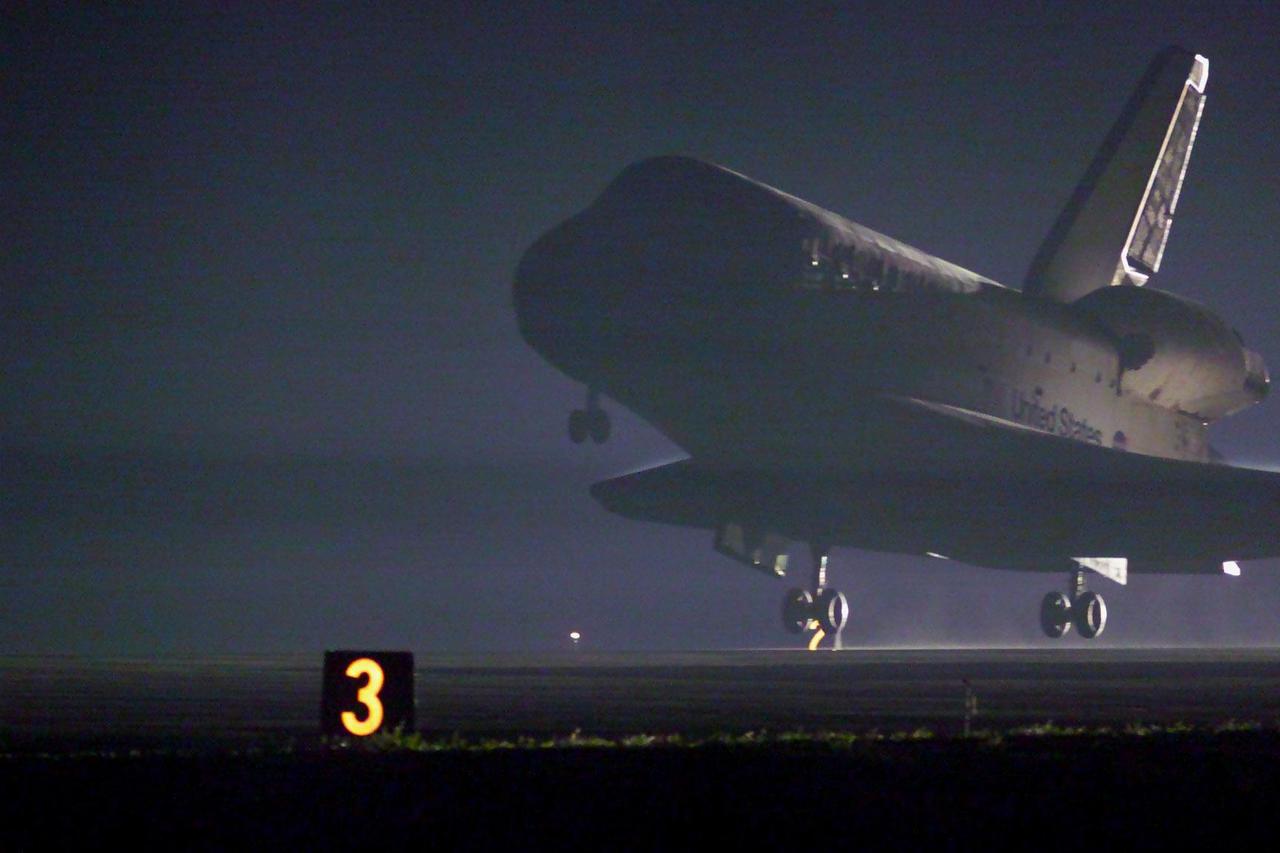
KENNEDY SPACE CENTER, Fla. -- Space Shuttle Discovery approaches touchdown on runway 15 at the KSC Shuttle Landing Facility. Main gear touchdown occurred at 2:31:42 a.m. EST, nose wheel touchdown at 2:31:54 a.m., and wheel stop at 2:33:06 a.m. The landing on orbit 201 concluded mission STS-102, the eighth flight to the International Space Station, carrying the first Multi-Purpose Logistics Module Leonardo, to the ISS and Expedition Two, a replacement crew for the Station. The 12-day, 19-hour, 51-minute mission returned both the Leonardo and the first resident crew of the ISS, Expedition One, to KSC . Discovery logged 5.3 million miles on this mission. The landing marked the 54th at KSC in the history of the program, and the 12th night landing at KSC
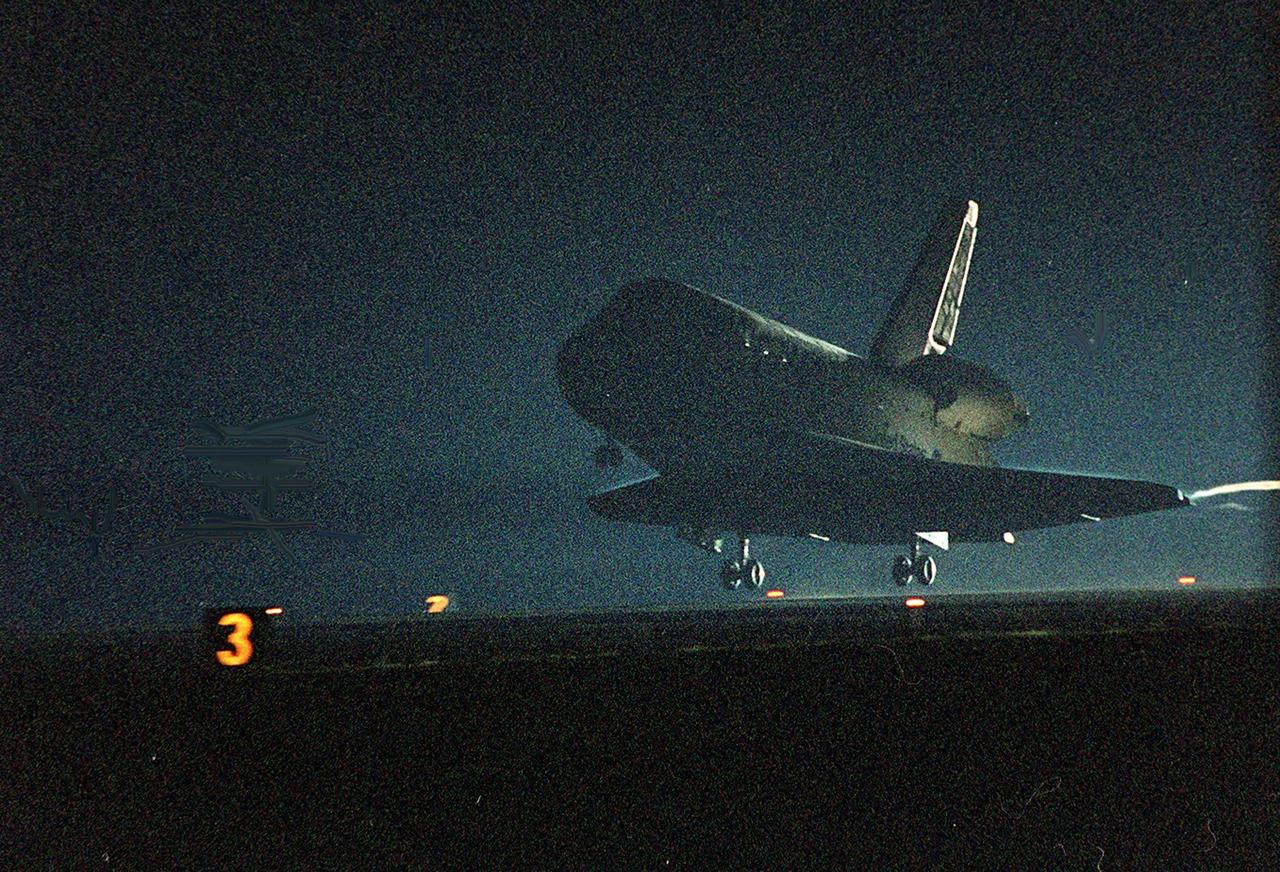
KENNEDY SPACE CENTER, Fla. -- Space Shuttle Discovery approaches touchdown on runway 15 at the KSC Shuttle Landing Facility. Main gear touchdown occurred about 2:31:42 a.m. EST, nose wheel touchdown at 2:31:54 a.m., and wheel stop at 2:33:06 a.m. The landing, on orbit 201, concluded mission STS-102, the eighth flight to the International Space Station, carrying the first Multi-Purpose Logistics Module Leonardo, to the ISS and Expedition Two, a replacement crew for the Station. The 12-day, 19-hour, 51-minute mission returned both the Leonardo and the first resident crew of the ISS, Expedition One, to KSC. Discovery logged 5.3 million miles on this mission. The landing marked the 54th at KSC in the history of the program, and the 12th night landing at KSC
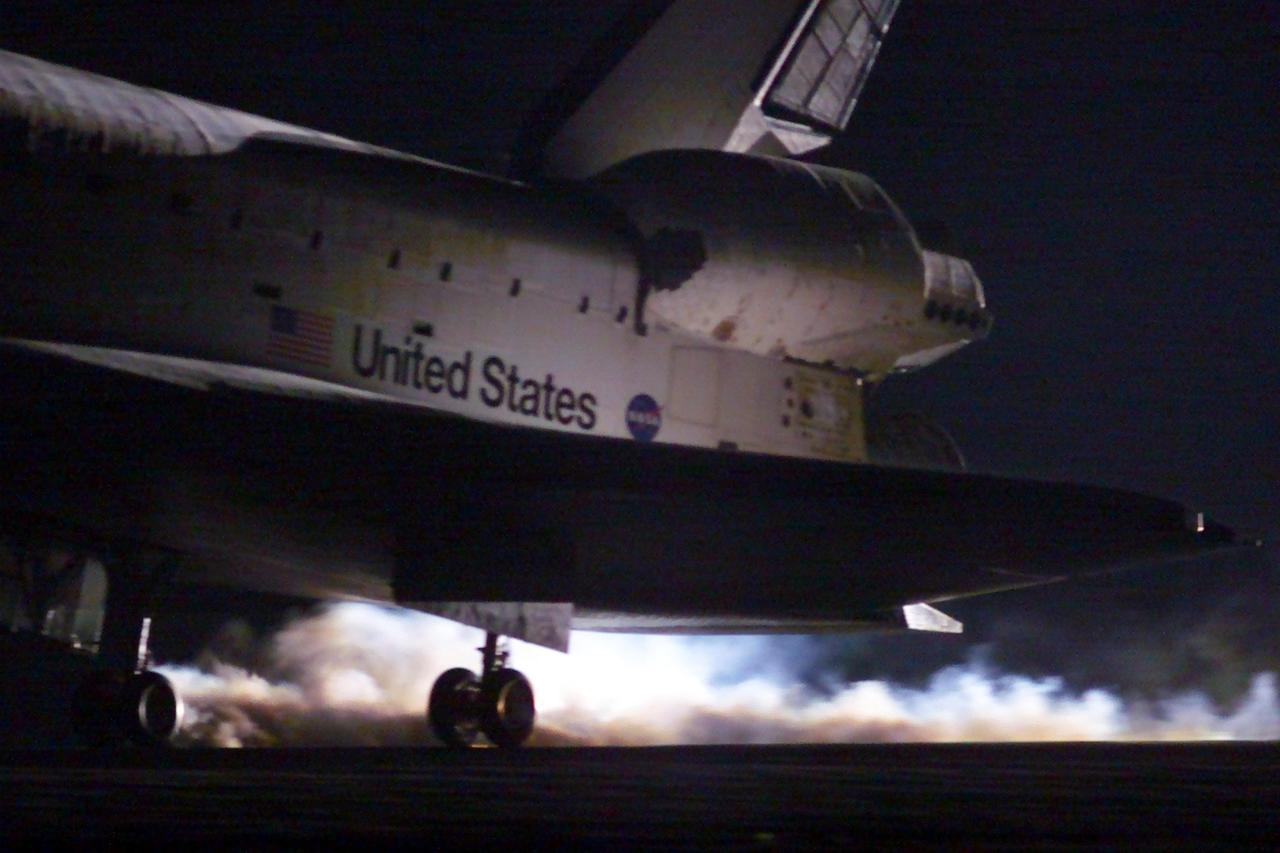
KENNEDY SPACE CENTER, Fla. -- In this view, the rear wheels on Space Shuttle Discovery are seen touching down on runway 15 of the KSC Shuttle Landing Facility. Main gear touchdown occurred at 2:31:42 a.m. EST. Nose wheel touchdown occurred at 2:31:54 a.m., and wheel stop at 2:33:06 a.m. The landing on orbit 201 concluded mission STS-102, the eighth flight to the International Space Station, carrying the first Multi-Purpose Logistics Module Leonardo, to the ISS and Expedition Two, a replacement crew for the Station. The 12-day, 19-hour, 51-minute mission returned both the Leonardo and the first resident crew of the ISS, Expedition One, to KSC. Discovery logged 5.3 million miles on this mission. The landing marked the 54th at KSC in the history of the program, and the 12th night landing at KSC
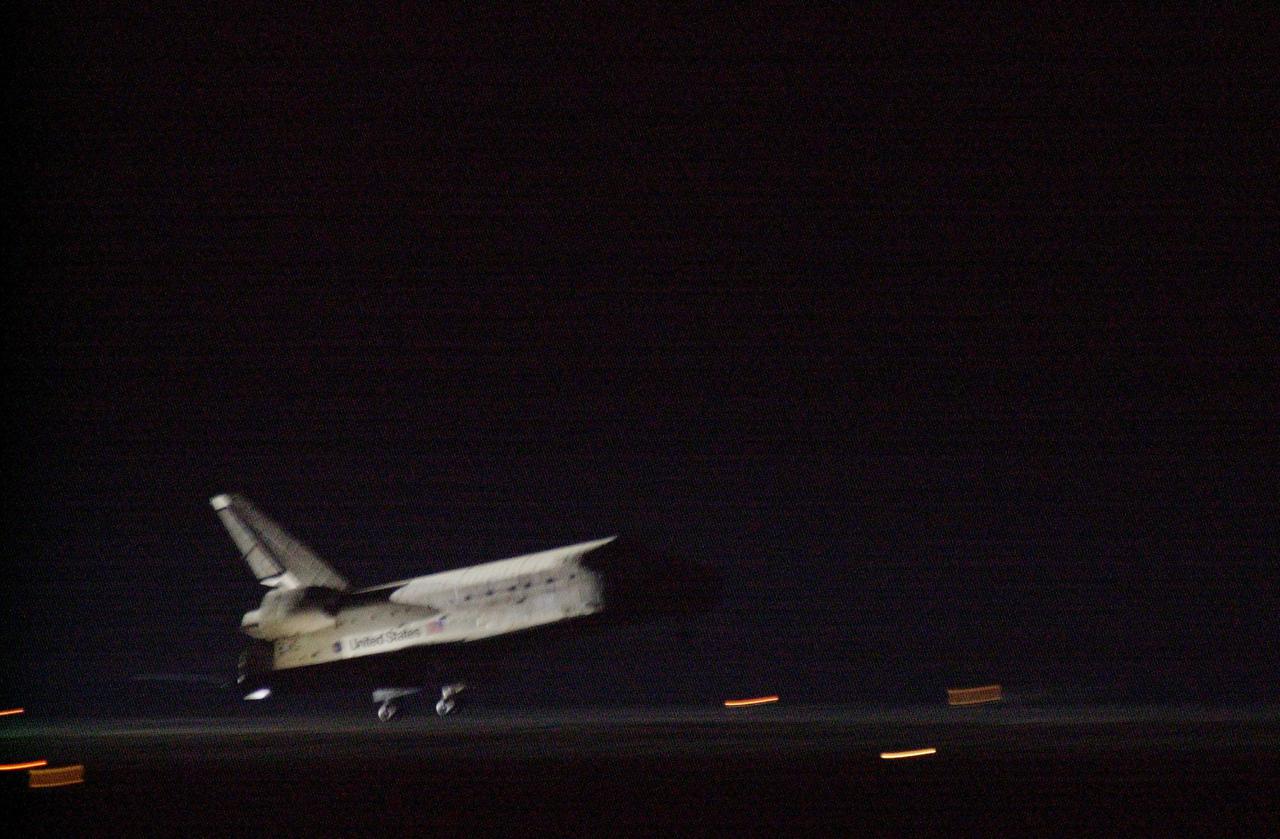
KENNEDY SPACE CENTER, Fla. -- Space Shuttle Discovery approaches runway 15 at the KSC Shuttle Landing Facility March 21. Main gear touchdown occurred at 2:31:42 a.m. EST, nose wheel touchdown at 2:31:54 a.m., and wheel stop at 2:33:06 a.m. The landing on orbit 201 concluded mission STS-102, the eighth flight to the International Space Station, carrying the first Multi-Purpose Logistics Module Leonardo, to the ISS and Expedition Two, a replacement crew for the Station. The 12-day, 19-hour, 51-minute mission returned both the Leonardo and the first resident crew of the ISS, Expedition One, to KSC . Discovery logged 5.3 million miles on this mission. The landing marked the 54th at KSC in the history of the program, and the 12th night landing at KSC
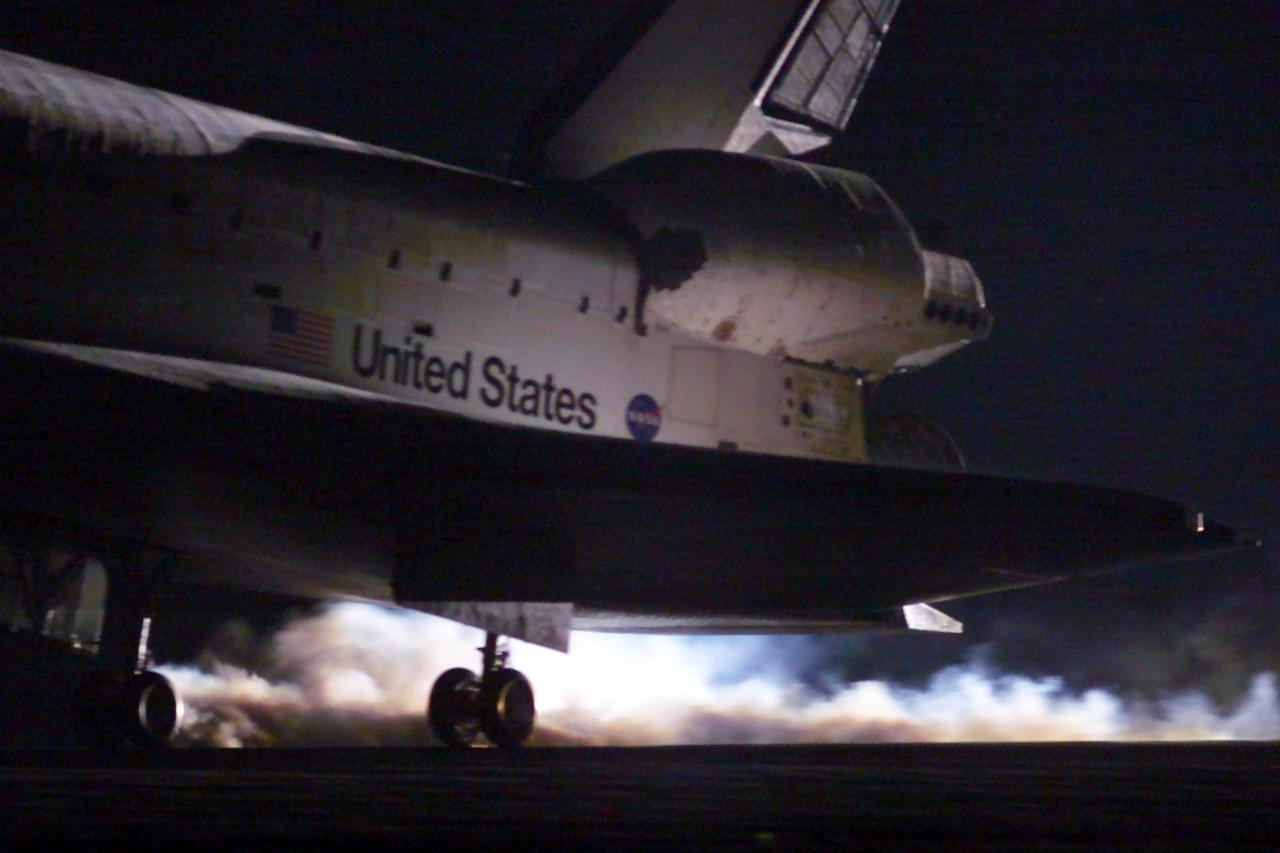
KENNEDY SPACE CENTER, Fla. -- In this view, the rear wheels on Space Shuttle Discovery are seen touching down on runway 15 of the KSC Shuttle Landing Facility. Main gear touchdown occurred at 2:31:42 a.m. EST. Nose wheel touchdown occurred at 2:31:54 a.m., and wheel stop at 2:33:06 a.m. The landing on orbit 201 concluded mission STS-102, the eighth flight to the International Space Station, carrying the first Multi-Purpose Logistics Module Leonardo, to the ISS and Expedition Two, a replacement crew for the Station. The 12-day, 19-hour, 51-minute mission returned both the Leonardo and the first resident crew of the ISS, Expedition One, to KSC. Discovery logged 5.3 million miles on this mission. The landing marked the 54th at KSC in the history of the program, and the 12th night landing at KSC
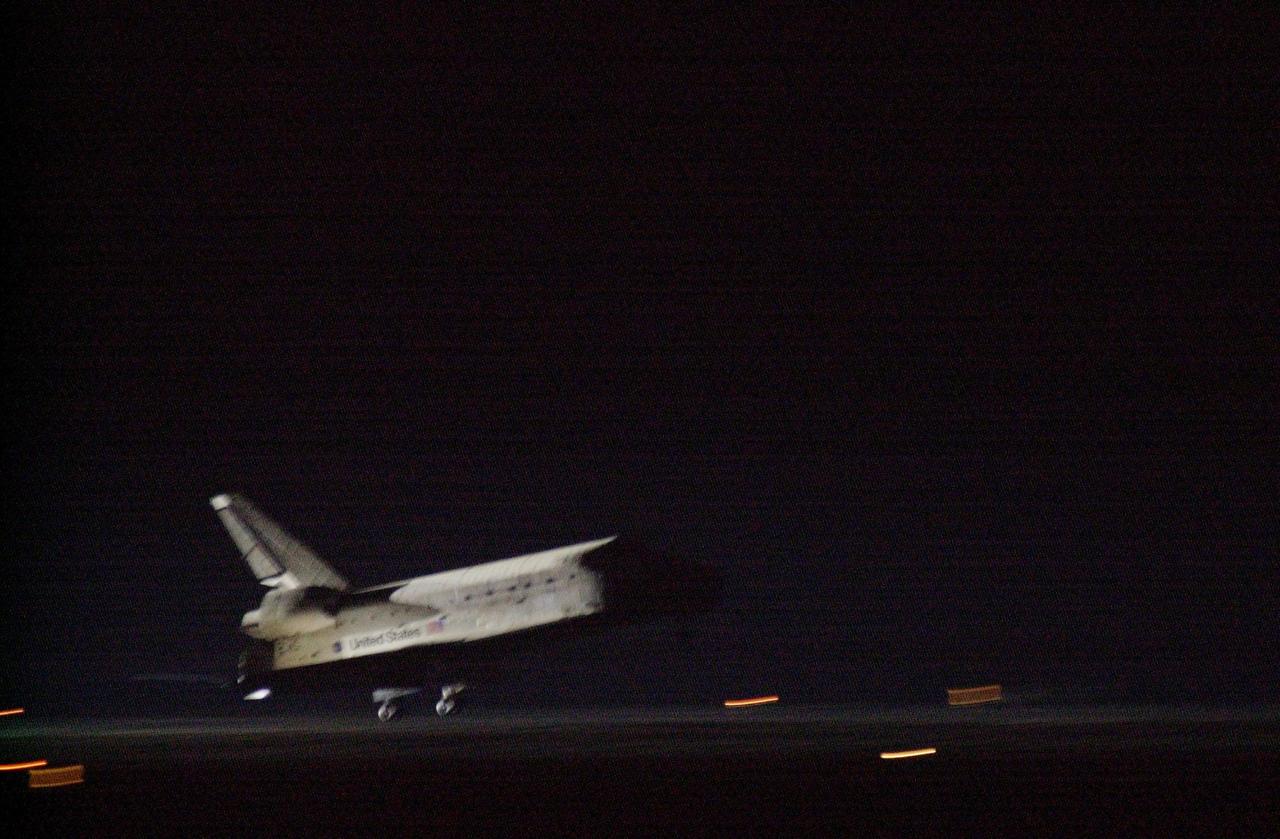
KENNEDY SPACE CENTER, Fla. -- Space Shuttle Discovery approaches runway 15 at the KSC Shuttle Landing Facility March 21. Main gear touchdown occurred at 2:31:42 a.m. EST, nose wheel touchdown at 2:31:54 a.m., and wheel stop at 2:33:06 a.m. The landing on orbit 201 concluded mission STS-102, the eighth flight to the International Space Station, carrying the first Multi-Purpose Logistics Module Leonardo, to the ISS and Expedition Two, a replacement crew for the Station. The 12-day, 19-hour, 51-minute mission returned both the Leonardo and the first resident crew of the ISS, Expedition One, to KSC . Discovery logged 5.3 million miles on this mission. The landing marked the 54th at KSC in the history of the program, and the 12th night landing at KSC
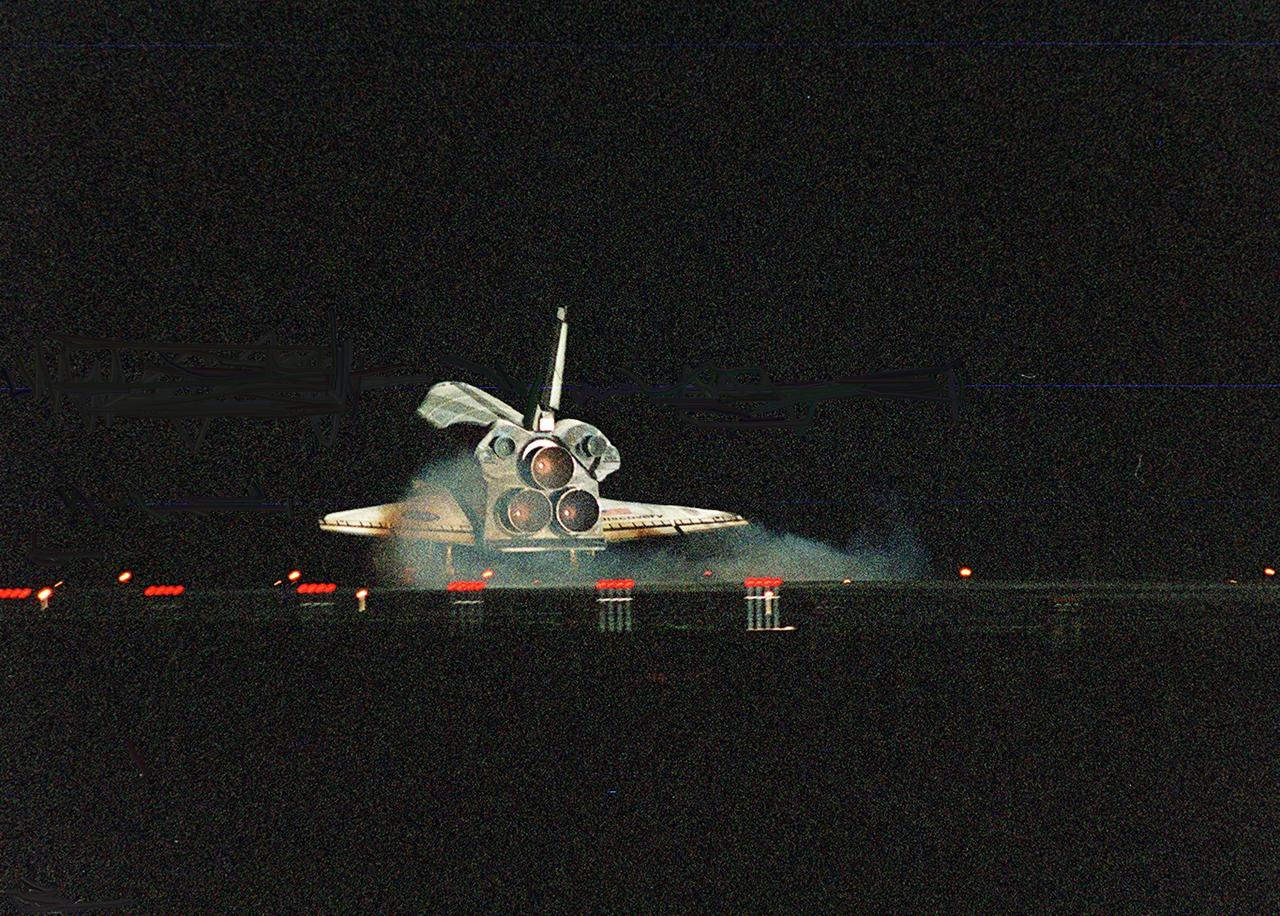
KENNEDY SPACE CENTER, Fla. -- Space Shuttle Discovery kicks up a swirl of dust as it touches down on runway 15 at the KSC Shuttle Landing Facility. Main gear touchdown occurred about 2:31:42 a.m. EST, nose wheel touchdown at 2:31:54 a.m., and wheel stop at 2:33:06 a.m. The landing, on orbit 201, concluded mission STS-102, the eighth flight to the International Space Station, carrying the first Multi-Purpose Logistics Module Leonardo, to the ISS and Expedition Two, a replacement crew for the Station. The 12-day, 19-hour, 51-minute mission returned both the Leonardo and the first resident crew of the ISS, Expedition One, to KSC. Discovery logged 5.3 million miles on this mission. The landing marked the 54th at KSC in the history of the program, and the 12th night landing at KSC
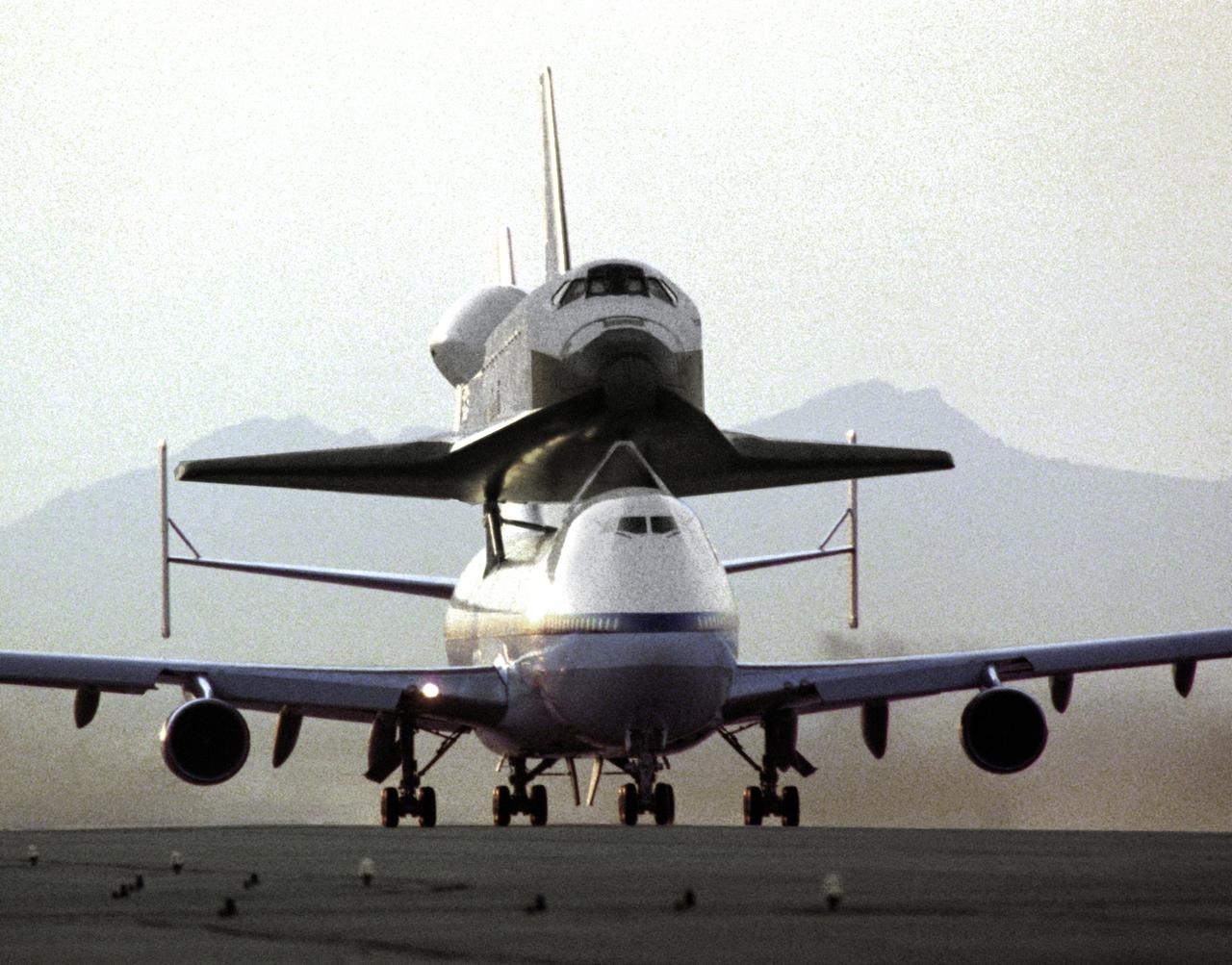
NASA's 747 Shuttle Carrier Aircraft No. 911, with the space shuttle orbiter Endeavour securely mounted atop its fuselage, taxies to the runway to begin the ferry flight from Rockwell's Plant 42 at Palmdale, California, where the orbiter was built, to the Kennedy Space Center, Florida. At Kennedy, the space vehicle was processed and launched on orbital mission STS-49, which landed at NASA's Ames-Dryden Flight Research Facility (later redesignated Dryden Flight Research Center), Edwards, California, 16 May 1992. NASA 911, the second modified 747 that went into service in November 1990, has special support struts atop the fuselage and internal strengthening to accommodate the added weight of the orbiters.
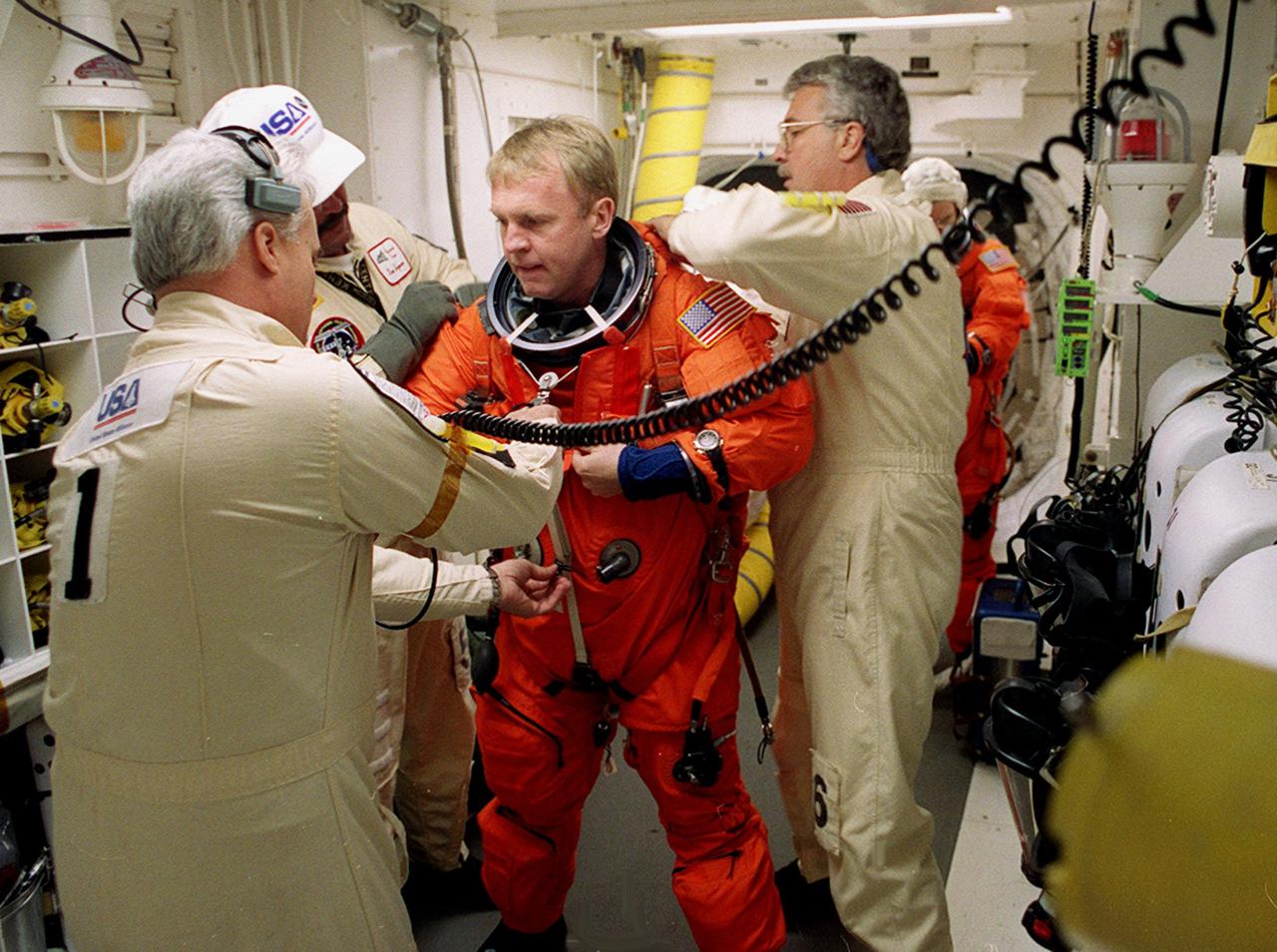
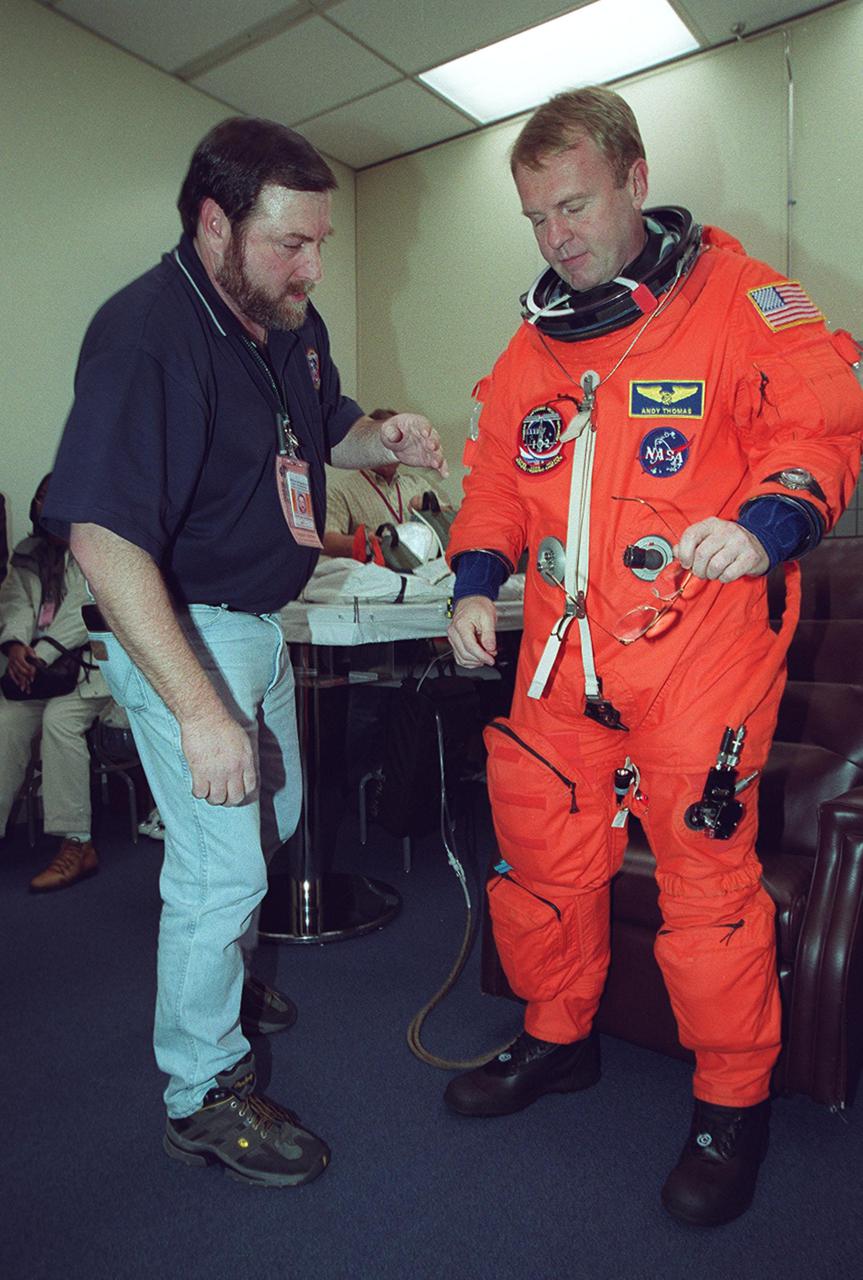
Before entering Space Shuttle Discovery, STS-102 Mission Specialist Andrew Thomas is helped with his launch and entry suit by technicians in the White Room. The mission is Thomas’s third Shuttle flight. Discovery is carrying the Multi-Purpose Logistics Module Leonardo on the eighth construction flight to the International Space Station. The primary delivery system used to resupply and return Station cargo requiring a pressurized environment, Leonardo will deliver up to 10 tons of laboratory racks filled with equipment, experiments and supplies for outfitting the newly installed U.S. Laboratory Destiny. Discovery is set to launch March 8 at 6:42 a.m. EST. The 12-day mission is expected to end with a landing at KSC on March 20
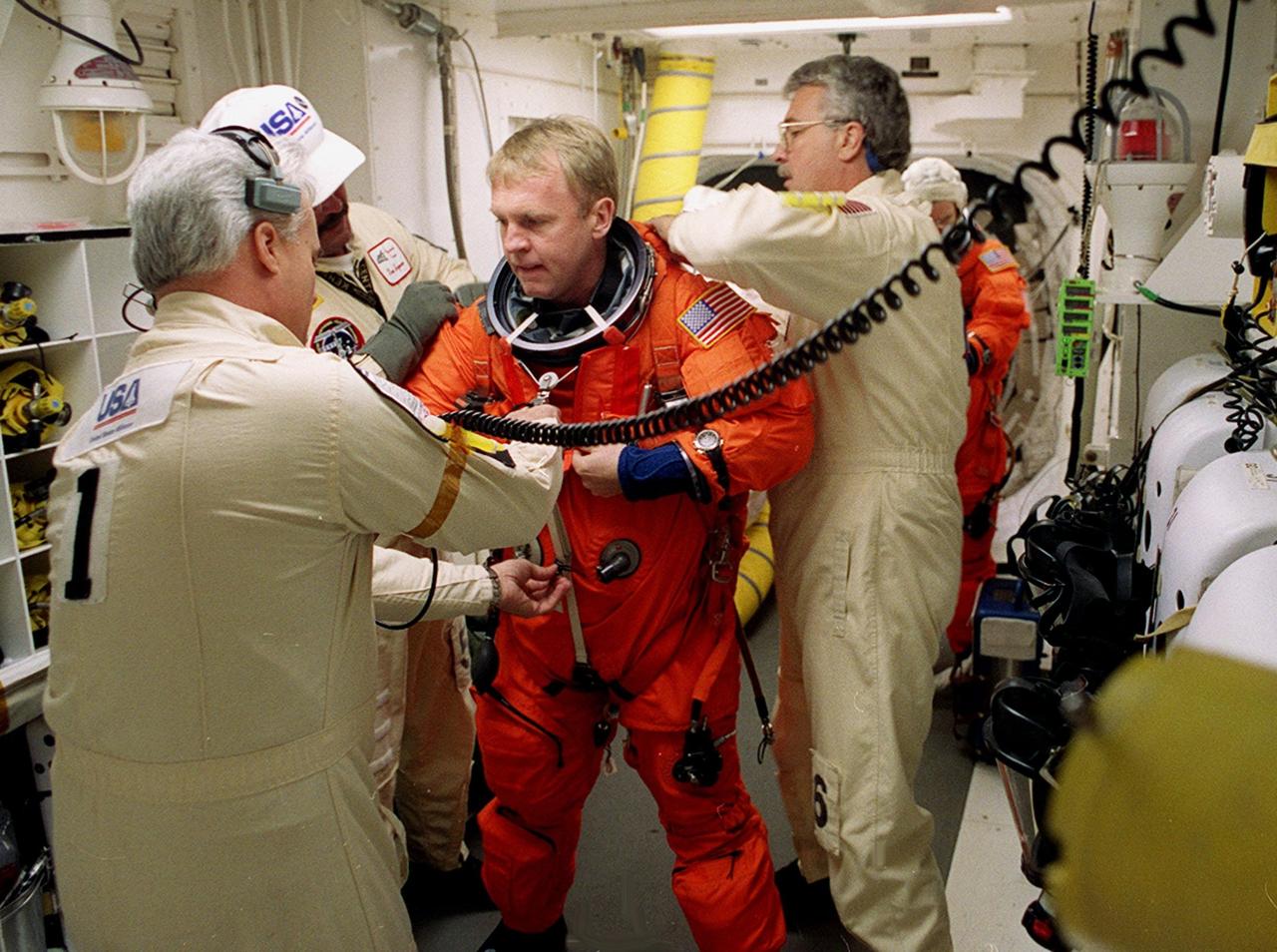
Before entering Space Shuttle Discovery, STS-102 Mission Specialist Andrew Thomas is helped with his launch and entry suit by technicians in the White Room. The mission is Thomas’s third Shuttle flight. Discovery is carrying the Multi-Purpose Logistics Module Leonardo on the eighth construction flight to the International Space Station. The primary delivery system used to resupply and return Station cargo requiring a pressurized environment, Leonardo will deliver up to 10 tons of laboratory racks filled with equipment, experiments and supplies for outfitting the newly installed U.S. Laboratory Destiny. Discovery is set to launch March 8 at 6:42 a.m. EST. The 12-day mission is expected to end with a landing at KSC on March 20
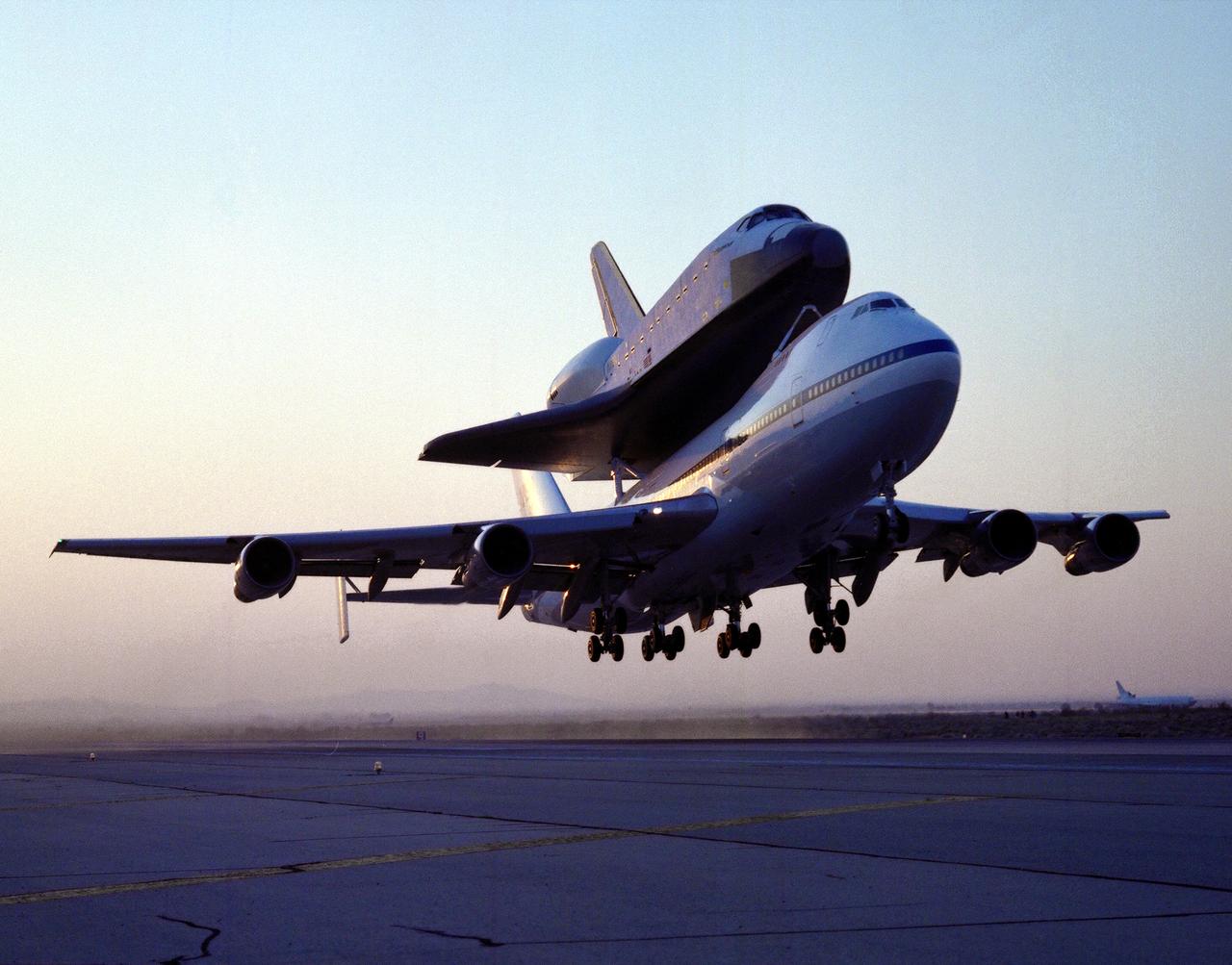
NASA's 747 Shuttle Carrier Aircraft No. 911, with the space shuttle orbiter Endeavour securely mounted atop its fuselage, begins the ferry flight from Rockwell's Plant 42 at Palmdale, California, where the orbiter was built, to the Kennedy Space Center, Florida. At Kennedy, the space vehicle was processed and launched on orbital mission STS-49, which landed at NASA's Ames-Dryden Flight Research Facility (later redesignated Dryden Flight Research Center), Edwards, California, 16 May 1992. NASA 911, the second modified 747 that went into service in November 1990, has special support struts atop the fuselage and internal strengthening to accommodate the added weight of the orbiters.
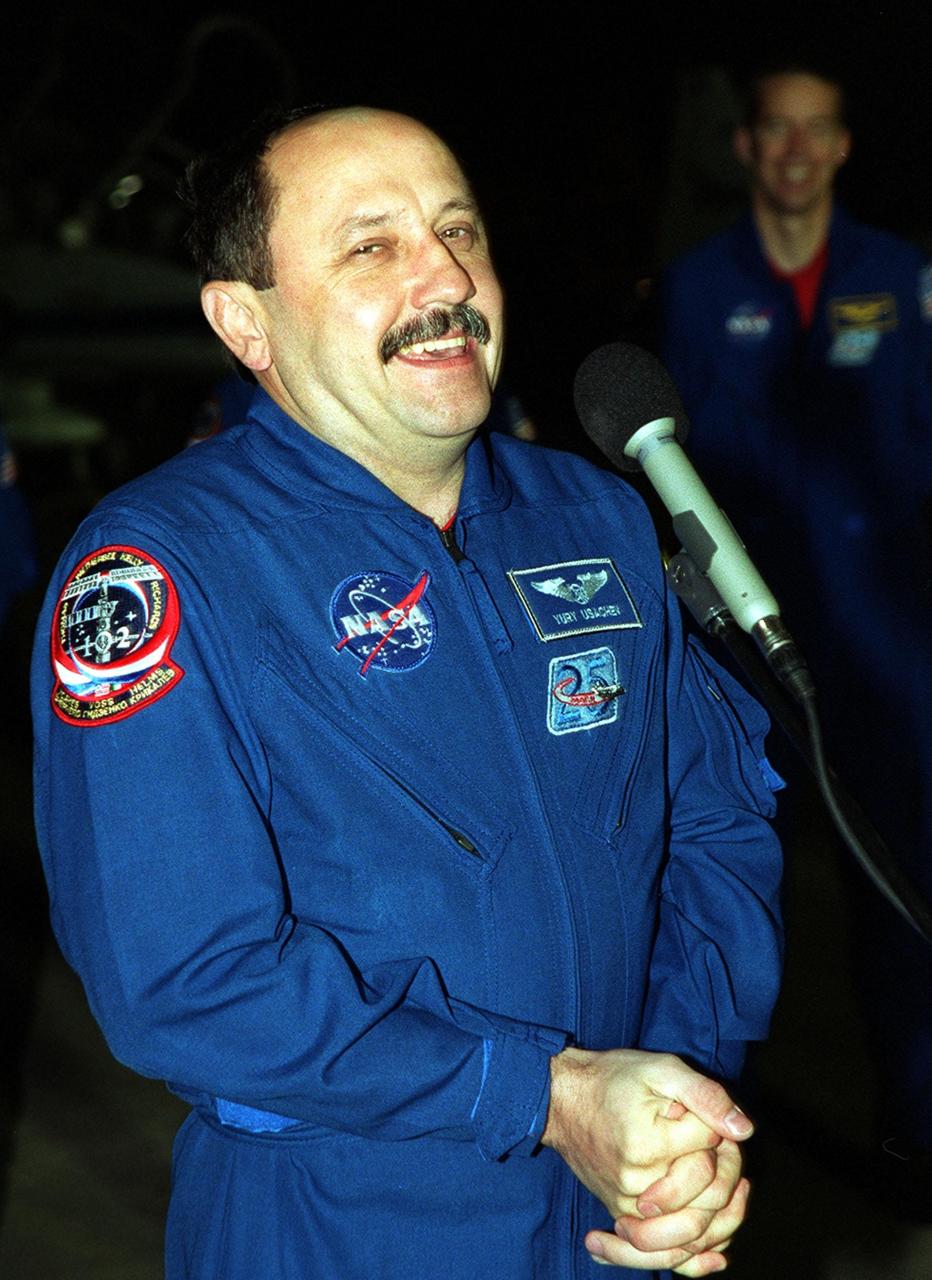
After arrival at the Shuttle Landing Facility, STS-102 Mission Specialist Yury Usachev laughs at a comment from the media. At the right can be seen Commander James Wetherbee. The crew is making the eighth construction flight to the International Space Station. In addition, Usachev is part of the Expedition Two crew who will be replacing Expedition One on the Station. STS-102 will be carrying the Multi-Purpose Logistics Module Leonardo, the primary delivery system used to resupply and return Station cargo requiring a pressurized environment. Leonardo will deliver up to 10 tons of laboratory racks filled with equipment, experiments and supplies for outfitting the newly installed U.S. Laboratory Destiny. STS-102 is scheduled to launch March 8 at 6:42 a.m. EST
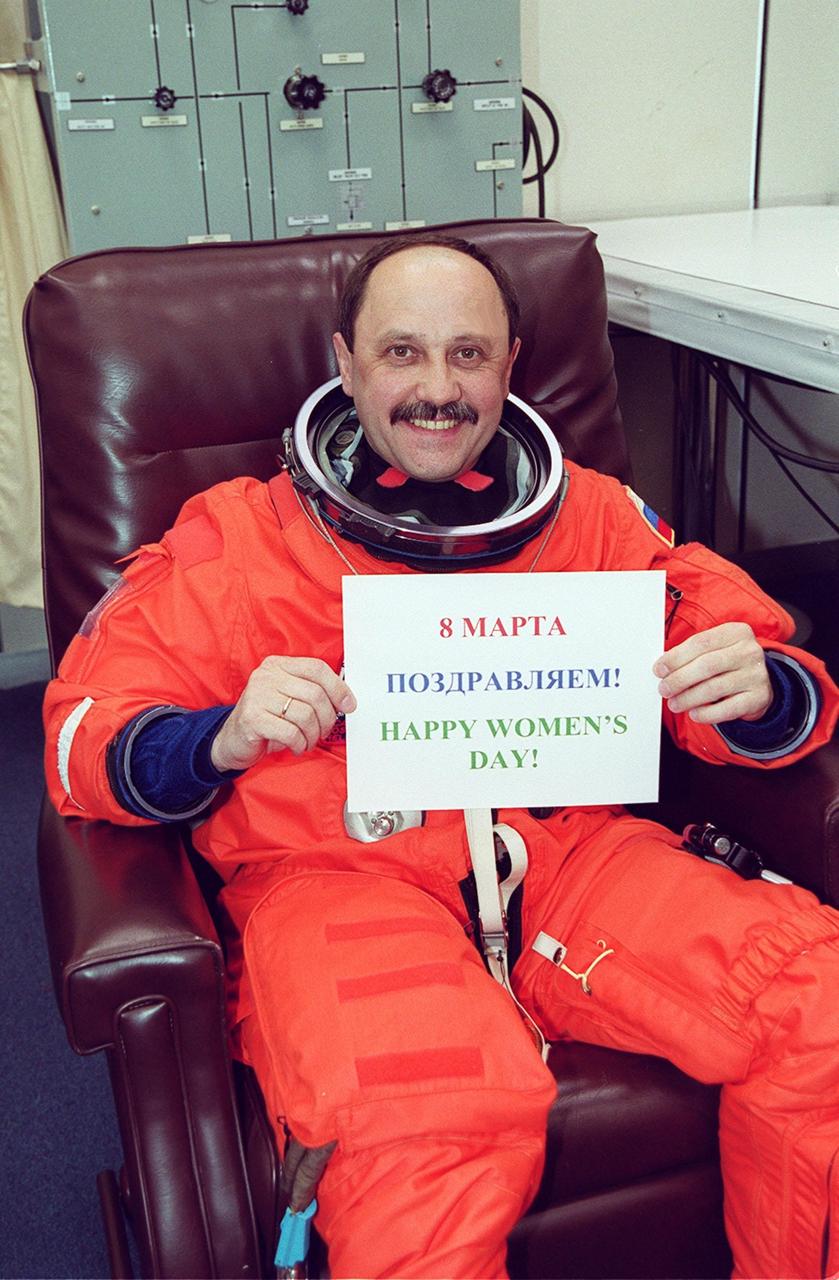
STS-102 Mission Specialist Yury Usachev, a Russian cosmonaut, shows his support of International Women’s Day, March 8, with a sign in both Cyrillic and English. This will be Usachev’s second Shuttle flight. Usachev is also part of a crew, known as Expedition One, who will be replacing Expedition One on the International Space Station. STS-102 is the eighth construction flight to the Space Station, carrying the Multi-Purpose Logistics Module Leonardo. The primary delivery system used to resupply and return Station cargo requiring a pressurized environment, Leonardo will deliver up to 10 tons of laboratory racks filled with equipment, experiments and supplies for outfitting the newly installed U.S. Laboratory Destiny. Discovery is set to launch March 8 at 6:42 a.m. EST. The 12-day mission is expected to end with a landing at KSC on March 20
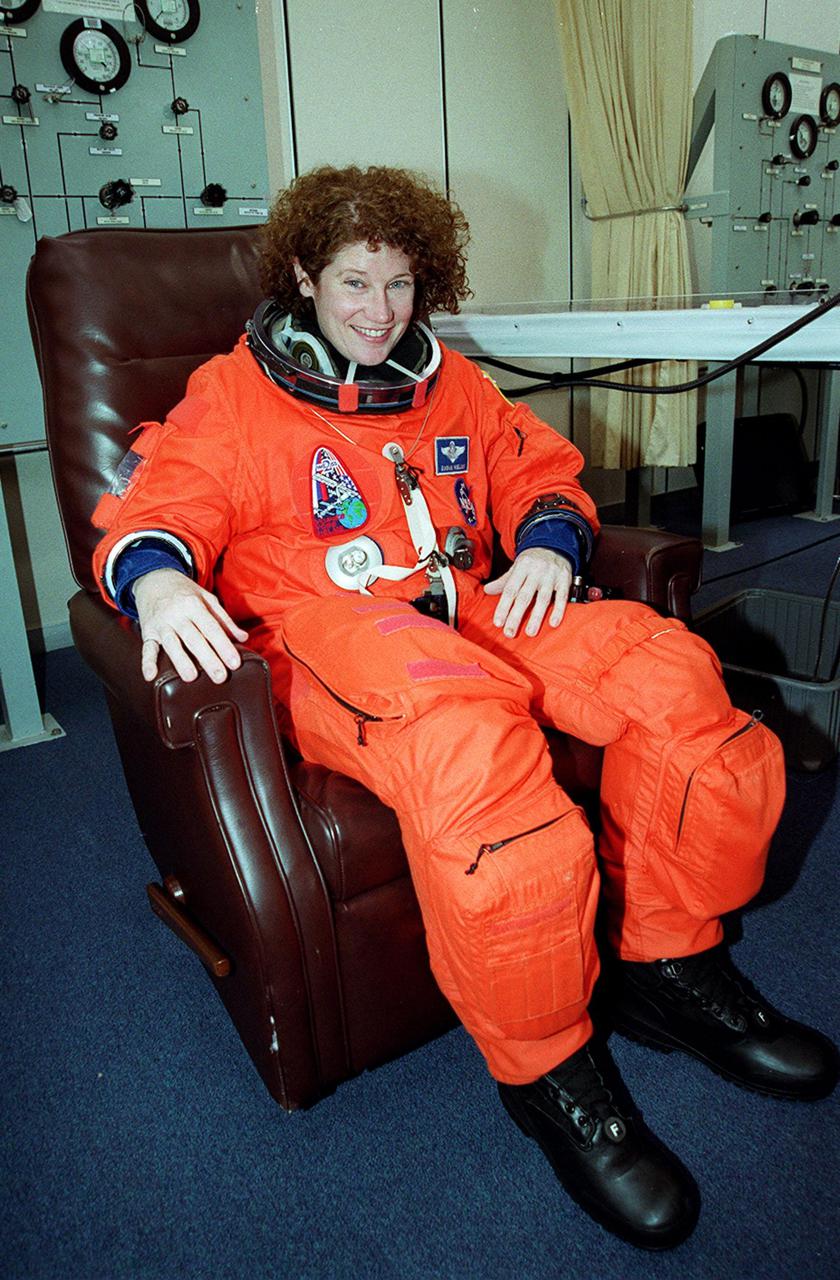
STS-102 Mission Specialist Susan Helms shows her pleasure at the imminent launch to the International Space Station. This will be Helms’ fifth Shuttle flight. She is also part of the Expedition Two crew replacing Expedition One. STS-102 is the eighth construction flight to the Station, carrying the Multi-Purpose Logistics Module Leonardo. The primary delivery system used to resupply and return Station cargo requiring a pressurized environment, Leonardo will deliver up to 10 tons of laboratory racks filled with equipment, experiments and supplies for outfitting the newly installed U.S. Laboratory Destiny. Discovery is set to launch March 8 at 6:42 a.m. EST. The 12-day mission is expected to end with a landing at KSC on March 20
STS-102 Mission Specialist Susan Helms shows her pleasure at the imminent launch to the International Space Station. This will be Helms’ fifth Shuttle flight. She is also part of the Expedition Two crew replacing Expedition One. STS-102 is the eighth construction flight to the Station, carrying the Multi-Purpose Logistics Module Leonardo. The primary delivery system used to resupply and return Station cargo requiring a pressurized environment, Leonardo will deliver up to 10 tons of laboratory racks filled with equipment, experiments and supplies for outfitting the newly installed U.S. Laboratory Destiny. Discovery is set to launch March 8 at 6:42 a.m. EST. The 12-day mission is expected to end with a landing at KSC on March 20

STS-102 Mission Specialist Paul Richards signals thumbs up for launch as he suits up in the Operations and Checkout Building. This will be Richards’ first Shuttle launch. . STS-102 is the eighth construction flight to the International Space Station, carrying the Multi-Purpose Logistics Module Leonardo. The primary delivery system used to resupply and return Station cargo requiring a pressurized environment, Leonardo will deliver up to 10 tons of laboratory racks filled with equipment, experiments and supplies for outfitting the newly installed U.S. Laboratory Destiny. In addition, three of the crew members Mission Specialists James Voss, Susan Helms and Yury Usachev, known as Expedition Two are flying to the Station to replace Expedition One, who will return to Earth on Discovery. Discovery is set to launch March 8 at 6:42 a.m. EST. The 12-day mission is expected to end with a landing at KSC on March 20
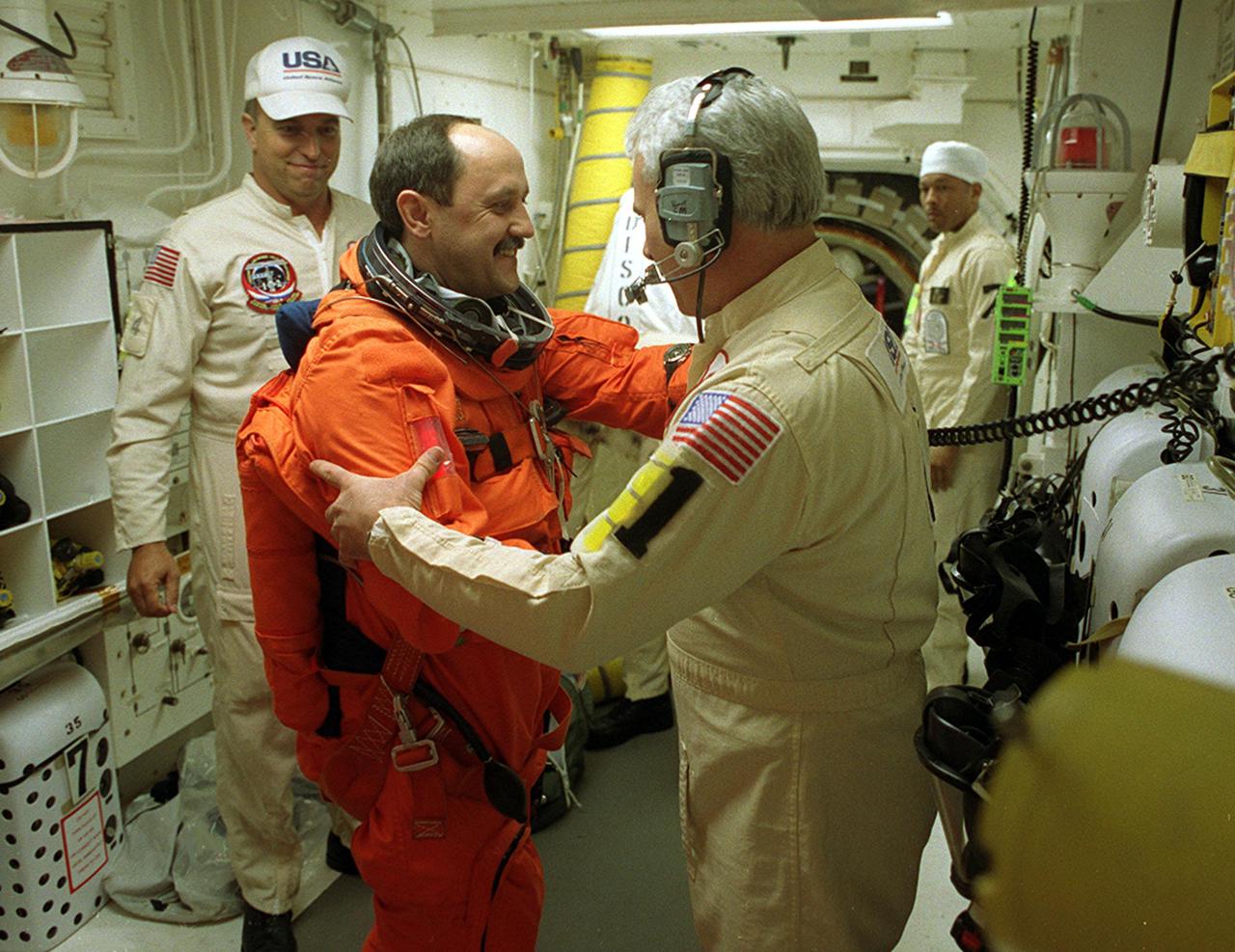
In the White Room, Launch Pad 39B, STS-102 Mission Specialist Yury Usachev gets warm greetings from one of the suit technicians helping with final preparations before entering Space Shuttle Discovery. STS-102 is Russian cosmonaut Usachev’s second Shuttle flight. He is also part of the Expedition Two crew flying on the mission to replace the Expedition One crew on the Station. Discovery is carrying the Multi-Purpose Logistics Module Leonardo on the eighth construction flight to the International Space Station. The primary delivery system used to resupply and return Station cargo requiring a pressurized environment, Leonardo will deliver up to 10 tons of laboratory racks filled with equipment, experiments and supplies for outfitting the newly installed U.S. Laboratory Destiny. Discovery is set to launch March 8 at 6:42 a.m. EST. The 12-day mission is expected to end with a landing at KSC on March 20
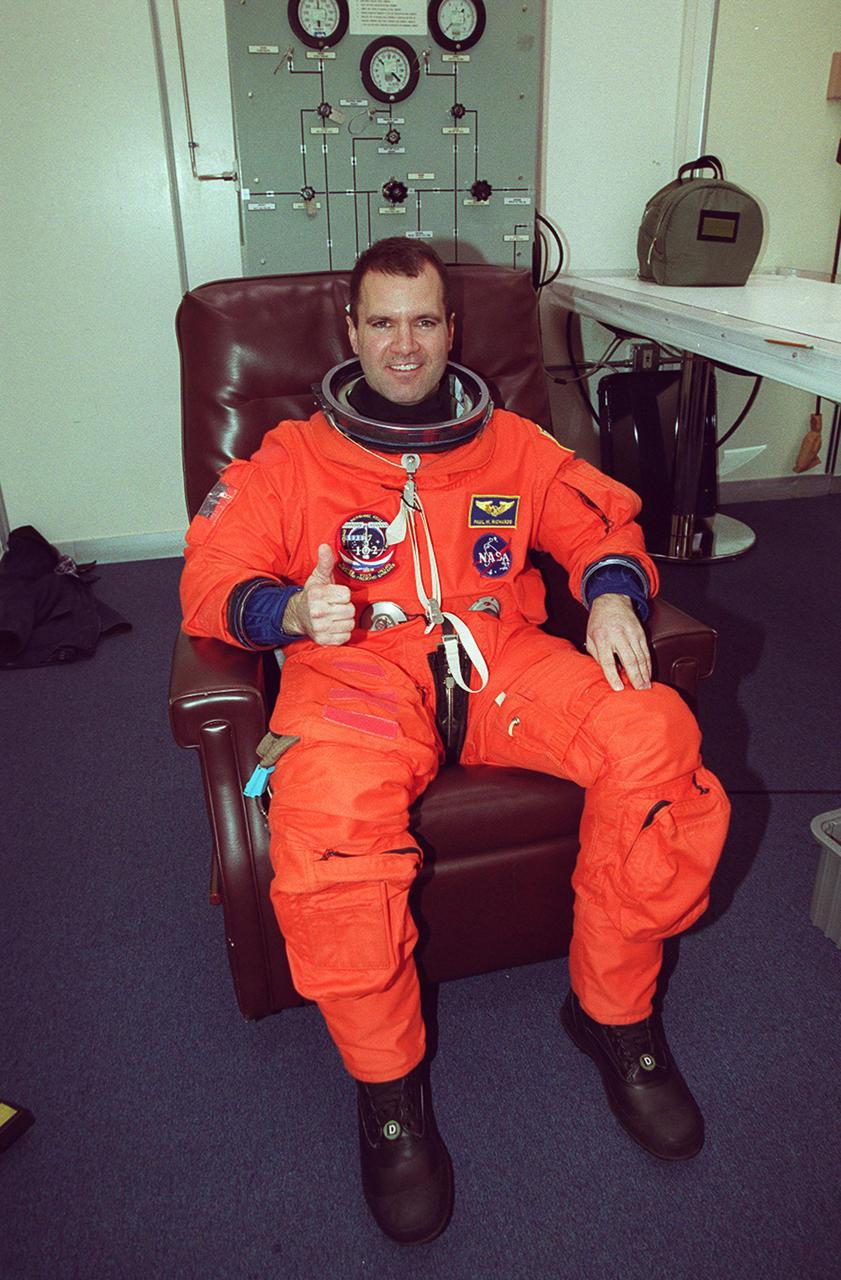
STS-102 Mission Specialist Paul Richards signals thumbs up for launch as he suits up in the Operations and Checkout Building. This will be Richards’ first Shuttle launch. . STS-102 is the eighth construction flight to the International Space Station, carrying the Multi-Purpose Logistics Module Leonardo. The primary delivery system used to resupply and return Station cargo requiring a pressurized environment, Leonardo will deliver up to 10 tons of laboratory racks filled with equipment, experiments and supplies for outfitting the newly installed U.S. Laboratory Destiny. In addition, three of the crew members Mission Specialists James Voss, Susan Helms and Yury Usachev, known as Expedition Two are flying to the Station to replace Expedition One, who will return to Earth on Discovery. Discovery is set to launch March 8 at 6:42 a.m. EST. The 12-day mission is expected to end with a landing at KSC on March 20
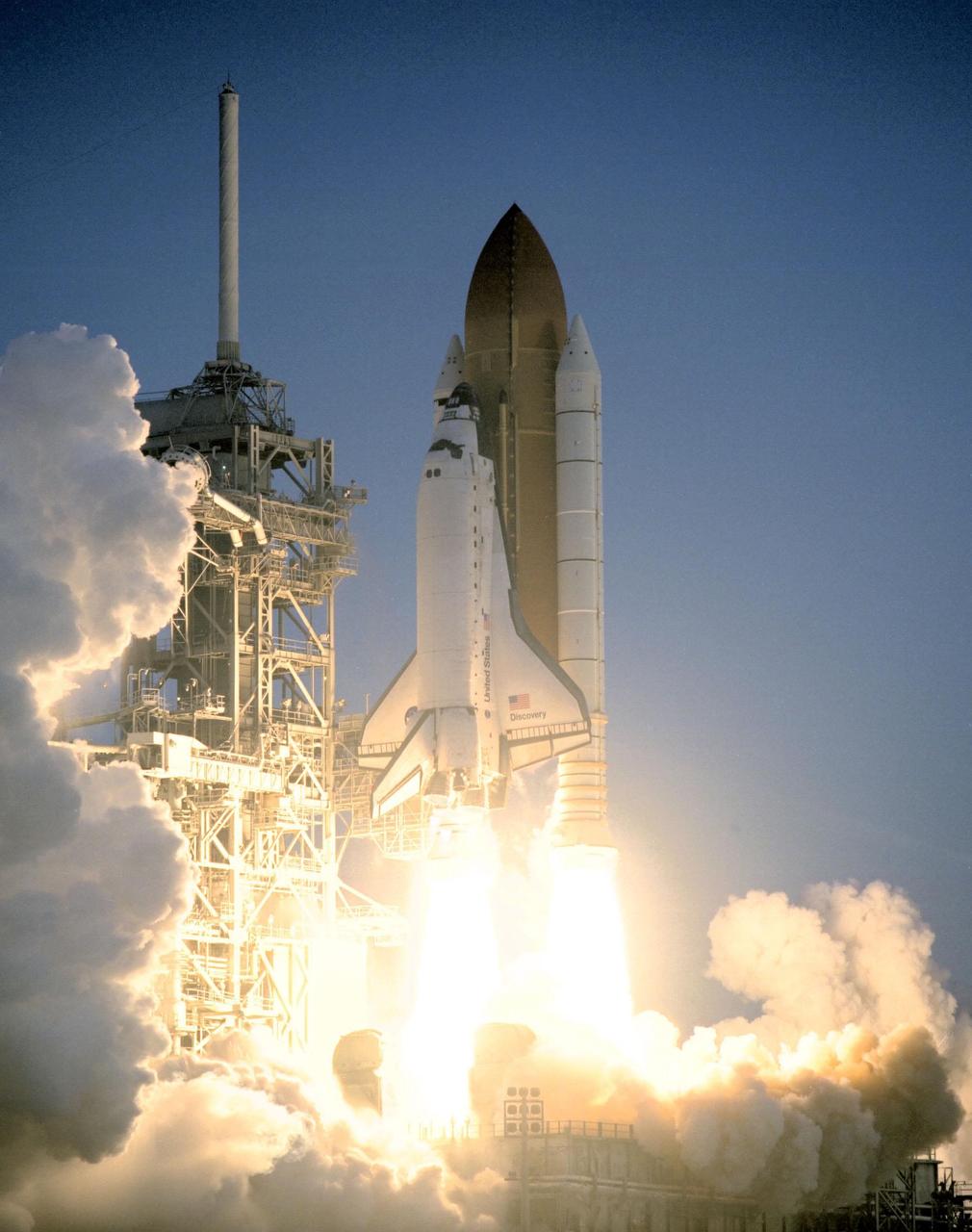
KENNEDY SPACE CENTER, FLA. -- Space Shuttle Discovery lifts off from Launch Pad 39B in a blaze of light amid billows of smoke and steam. With a crew of seven, mission STS-96 launched on time at 6:49:42 a.m. EDT. STS-96 is a 10-day logistics and resupply mission for the International Space Station, carrying about 4,000 pounds of supplies, to be stored aboard the station for use by future crews, including laptop computers, cameras, tools, spare parts, and clothing. The mission also includes such payloads as a Russian crane, the Strela; a U.S.-built crane; the Spacehab Oceaneering Space System Box (SHOSS), a logistics items carrier; and STARSHINE, a student-involved experiment. It will include a space walk to attach the cranes to the outside of the ISS for use in future construction. Landing is expected at the SLF on June 6 about 1:58 a.m. EDT
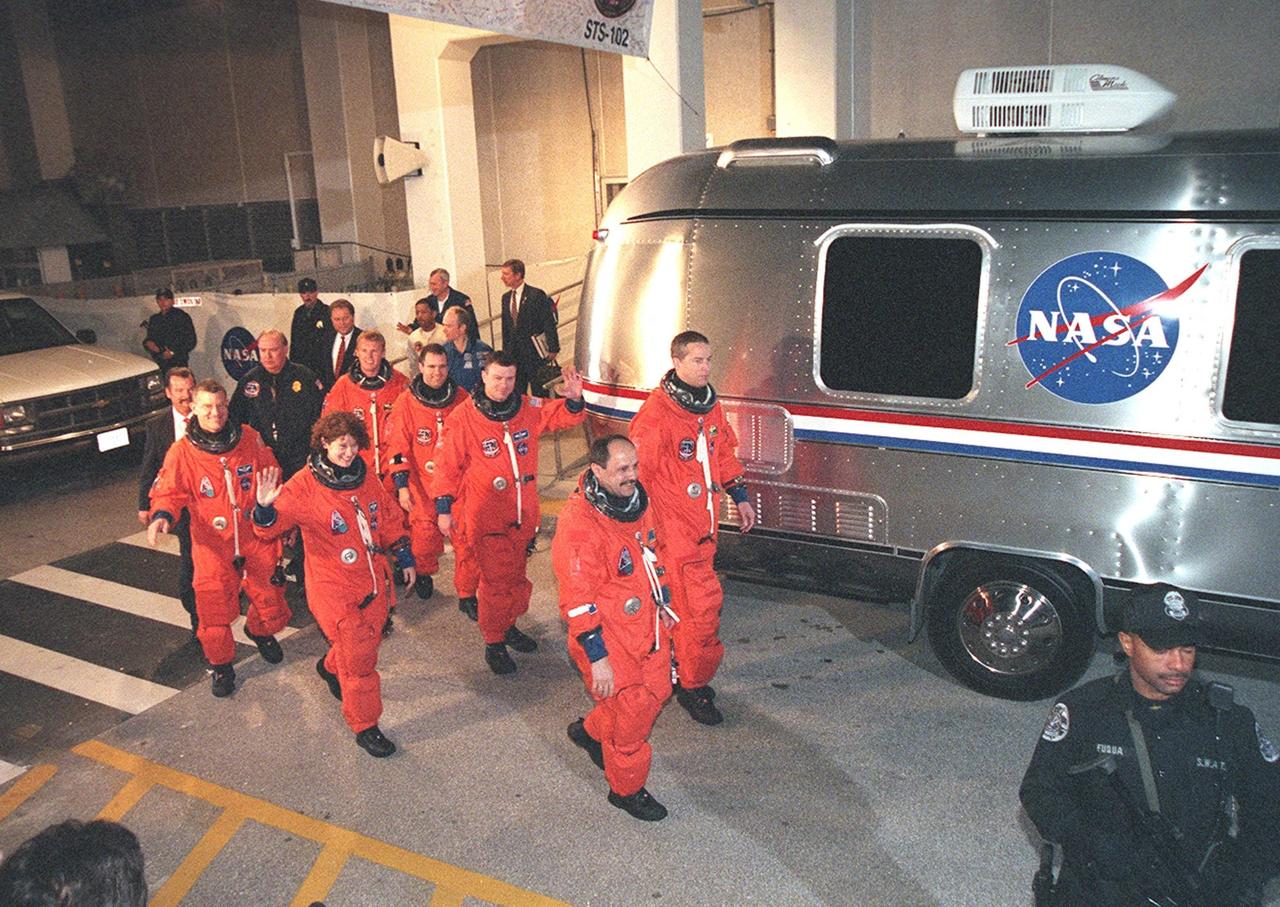
The STS-102 crew heads for the Astrovan after leaving the Operations and Checkout Building behind them. In front, left to right, are Mission Specialists James Voss, Susan Helms and Yury Usachev. In back, left to right, are Mission Specialists Andrew Thomas and Paul Richards, Pilot James Kelly and Commander James Wetherbee. STS-102 is the eighth construction flight to the Space Station, carrying the Multi-Purpose Logistics Module Leonardo. The primary delivery system used to resupply and return Station cargo requiring a pressurized environment, Leonardo will deliver up to 10 tons of laboratory racks filled with equipment, experiments and supplies for outfitting the newly installed U.S. Laboratory Destiny. In addition, Voss, Helms and Usachev, known as Expedition Two, are flying to the Station to replace Expedition One, who will return to Earth on Discovery. Discovery is set to launch March 8 at 6:42 a.m. EST. The 12-day mission is expected to end with a landing at KSC on March 20
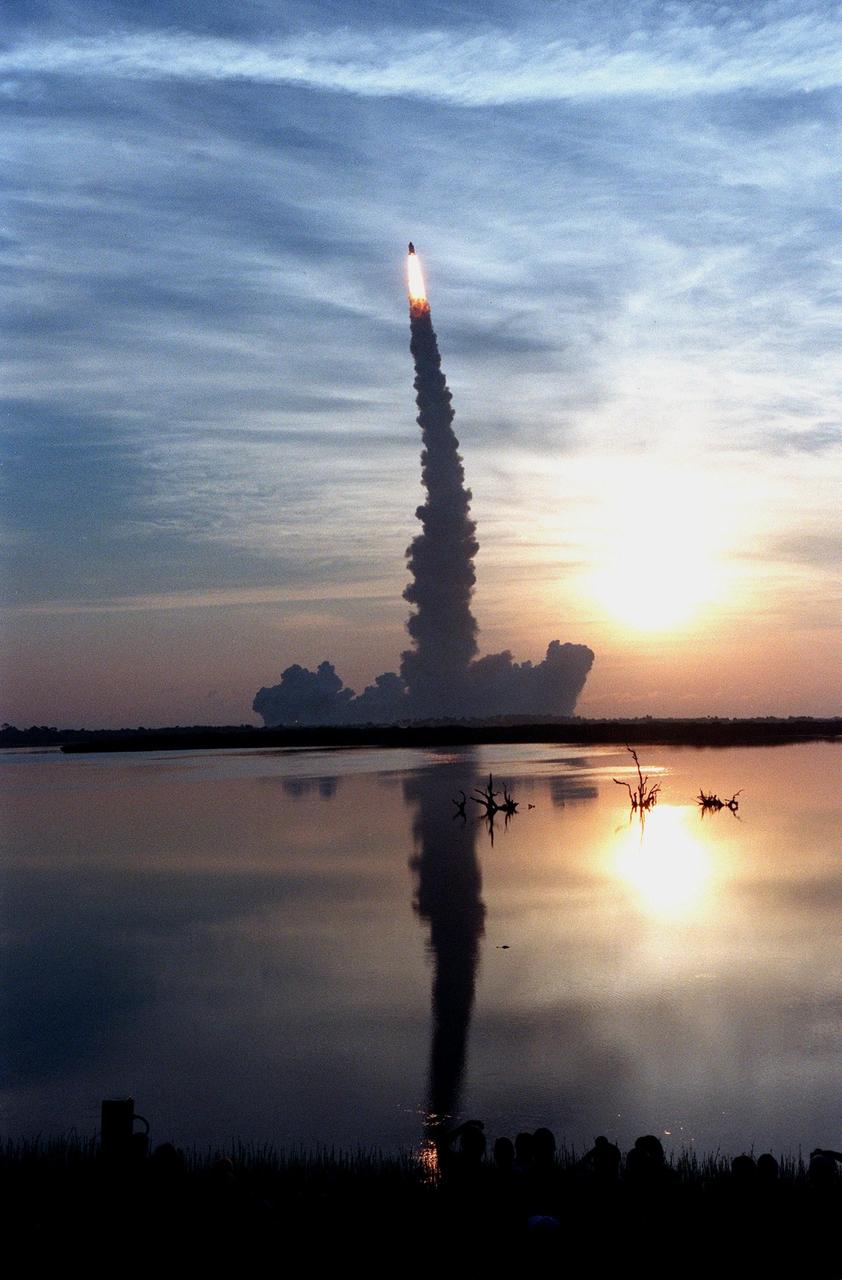
KENNEDY SPACE CENTER, FLA. -- The launch of Space Shuttle Discovery on mission STS-96 is reflected in the waters of Banana Creek just after sunrise. Liftoff occurred at 6:49:42 a.m. EDT. In the shadows near the bottom are silhouetted a number of spectators at the Banana Creek viewing site. STS-96 is on a 10-day logistics and resupply mission for the International Space Station. Along with such payloads as a Russian crane, the Strela; a U.S.-built crane; the Spacehab Oceaneering Space System Box (SHOSS), a logistics items carrier; and STARSHINE, a student-involved experiment, Discovery carries about 4,000 pounds of supplies, to be stored aboard the station for use by future crews, including laptop computers, cameras, tools, spare parts, and clothing. The mission includes a space walk to attach the cranes to the outside of the ISS for use in future construction. Landing is expected at the SLF on June 6 about 1:58 a.m. EDT
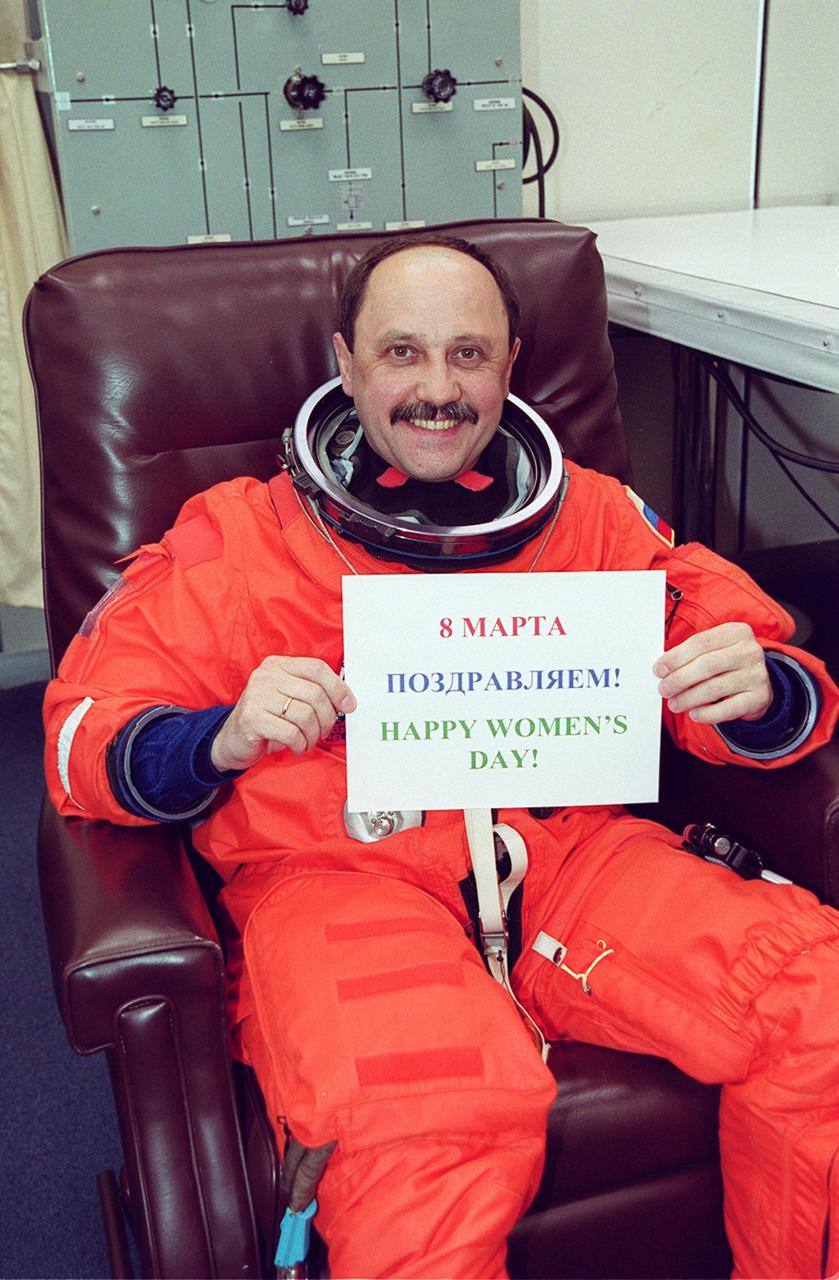
STS-102 Mission Specialist Yury Usachev, a Russian cosmonaut, shows his support of International Women’s Day, March 8, with a sign in both Cyrillic and English. This will be Usachev’s second Shuttle flight. Usachev is also part of a crew, known as Expedition One, who will be replacing Expedition One on the International Space Station. STS-102 is the eighth construction flight to the Space Station, carrying the Multi-Purpose Logistics Module Leonardo. The primary delivery system used to resupply and return Station cargo requiring a pressurized environment, Leonardo will deliver up to 10 tons of laboratory racks filled with equipment, experiments and supplies for outfitting the newly installed U.S. Laboratory Destiny. Discovery is set to launch March 8 at 6:42 a.m. EST. The 12-day mission is expected to end with a landing at KSC on March 20
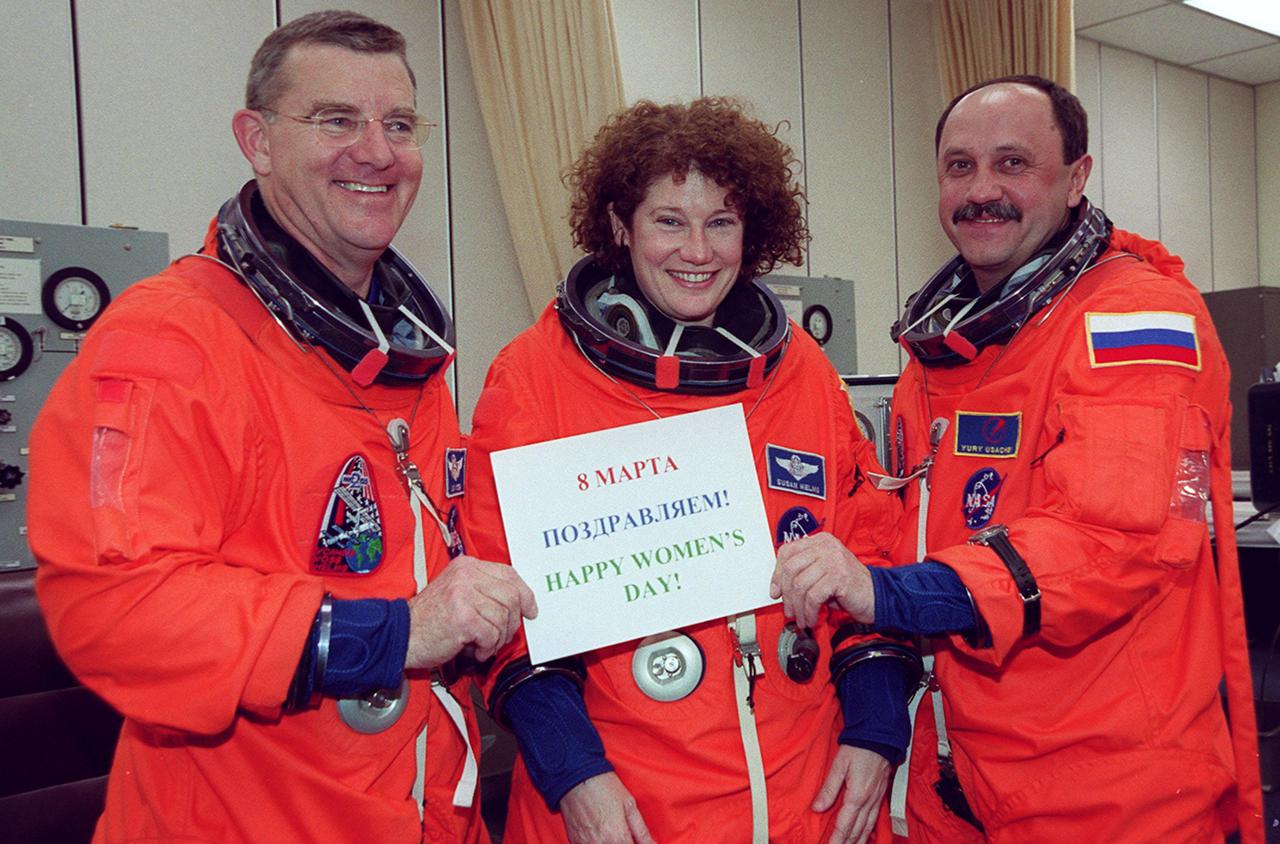
STS-102 Mission Specialists James Voss, Susan Helms and Yury Usachev hold up a sign after donning their launch and entry suits. In Cyrillic and English, the sign recognizes International Women’s Day, March 8. Voss and Helms are making their fifth Shuttle flights and Usachev is making his second. All three are the Expedition Two crew who are replacing Expedition One on the International Space Station. STS-102 is the eighth construction flight to the Station, carrying the Multi-Purpose Logistics Module Leonardo. . The primary delivery system used to resupply and return Station cargo requiring a pressurized environment, Leonardo will deliver up to 10 tons of laboratory racks filled with equipment, experiments and supplies for outfitting the newly installed U.S. Laboratory Destiny. Discovery is set to launch March 8 at 6:42 a.m. EST. The 12-day mission is expected to end with a landing at KSC on March 20
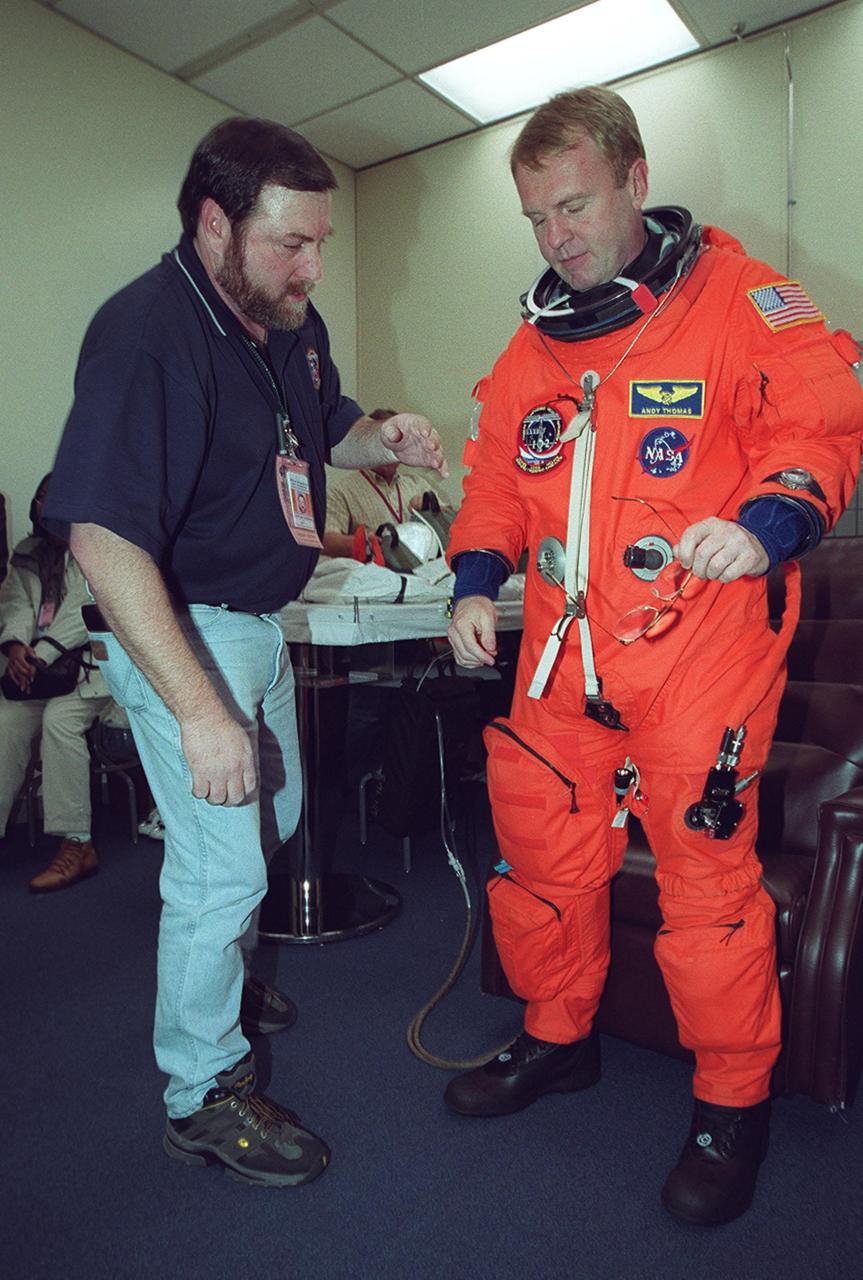
STS-102 Mission Specialist Susan Helms shows her pleasure at the imminent launch to the International Space Station. This will be Helms’ fifth Shuttle flight. She is also part of the Expedition Two crew replacing Expedition One. STS-102 is the eighth construction flight to the Station, carrying the Multi-Purpose Logistics Module Leonardo. The primary delivery system used to resupply and return Station cargo requiring a pressurized environment, Leonardo will deliver up to 10 tons of laboratory racks filled with equipment, experiments and supplies for outfitting the newly installed U.S. Laboratory Destiny. Discovery is set to launch March 8 at 6:42 a.m. EST. The 12-day mission is expected to end with a landing at KSC on March 20
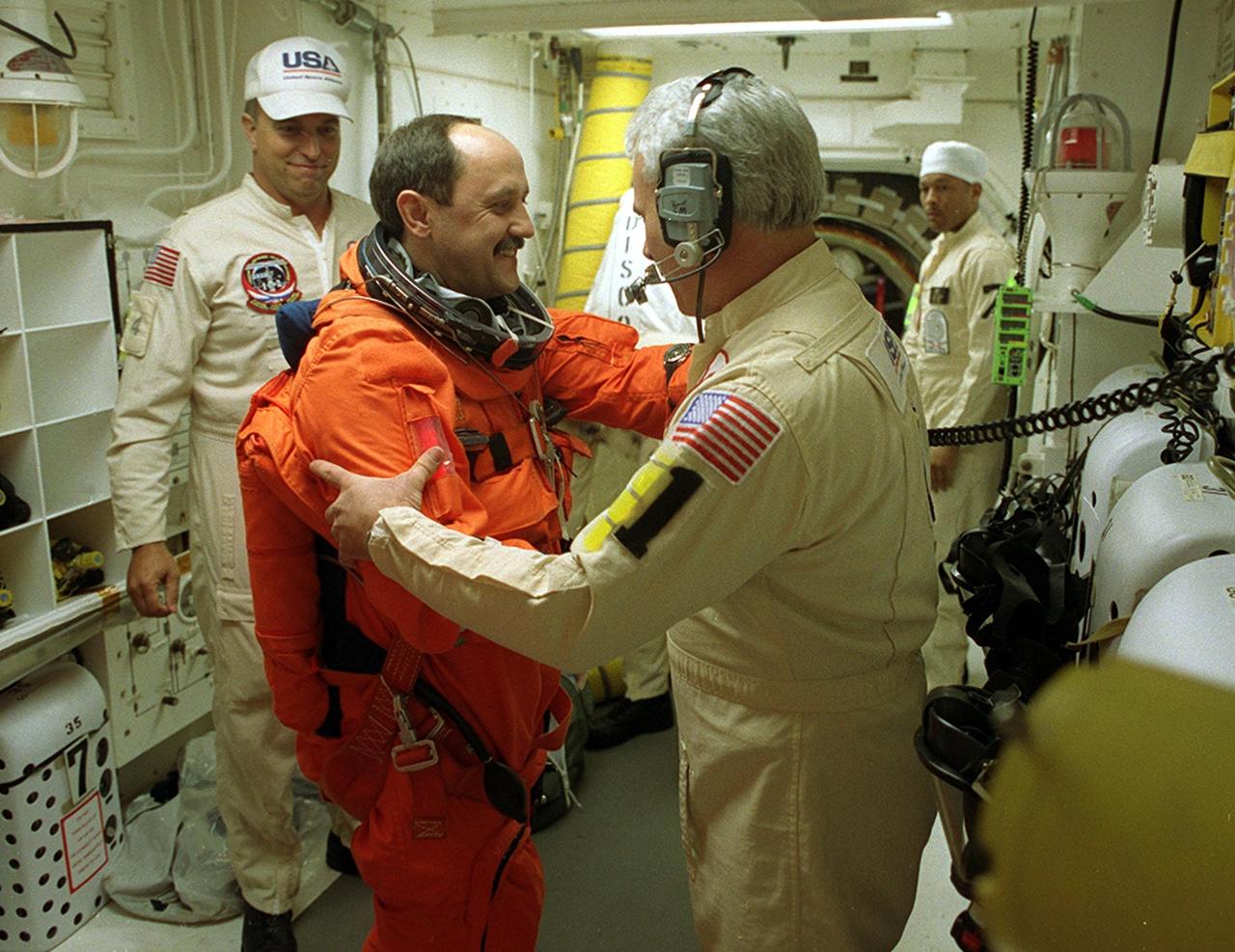
In the White Room, Launch Pad 39B, STS-102 Mission Specialist Yury Usachev gets warm greetings from one of the suit technicians helping with final preparations before entering Space Shuttle Discovery. STS-102 is Russian cosmonaut Usachev’s second Shuttle flight. He is also part of the Expedition Two crew flying on the mission to replace the Expedition One crew on the Station. Discovery is carrying the Multi-Purpose Logistics Module Leonardo on the eighth construction flight to the International Space Station. The primary delivery system used to resupply and return Station cargo requiring a pressurized environment, Leonardo will deliver up to 10 tons of laboratory racks filled with equipment, experiments and supplies for outfitting the newly installed U.S. Laboratory Destiny. Discovery is set to launch March 8 at 6:42 a.m. EST. The 12-day mission is expected to end with a landing at KSC on March 20
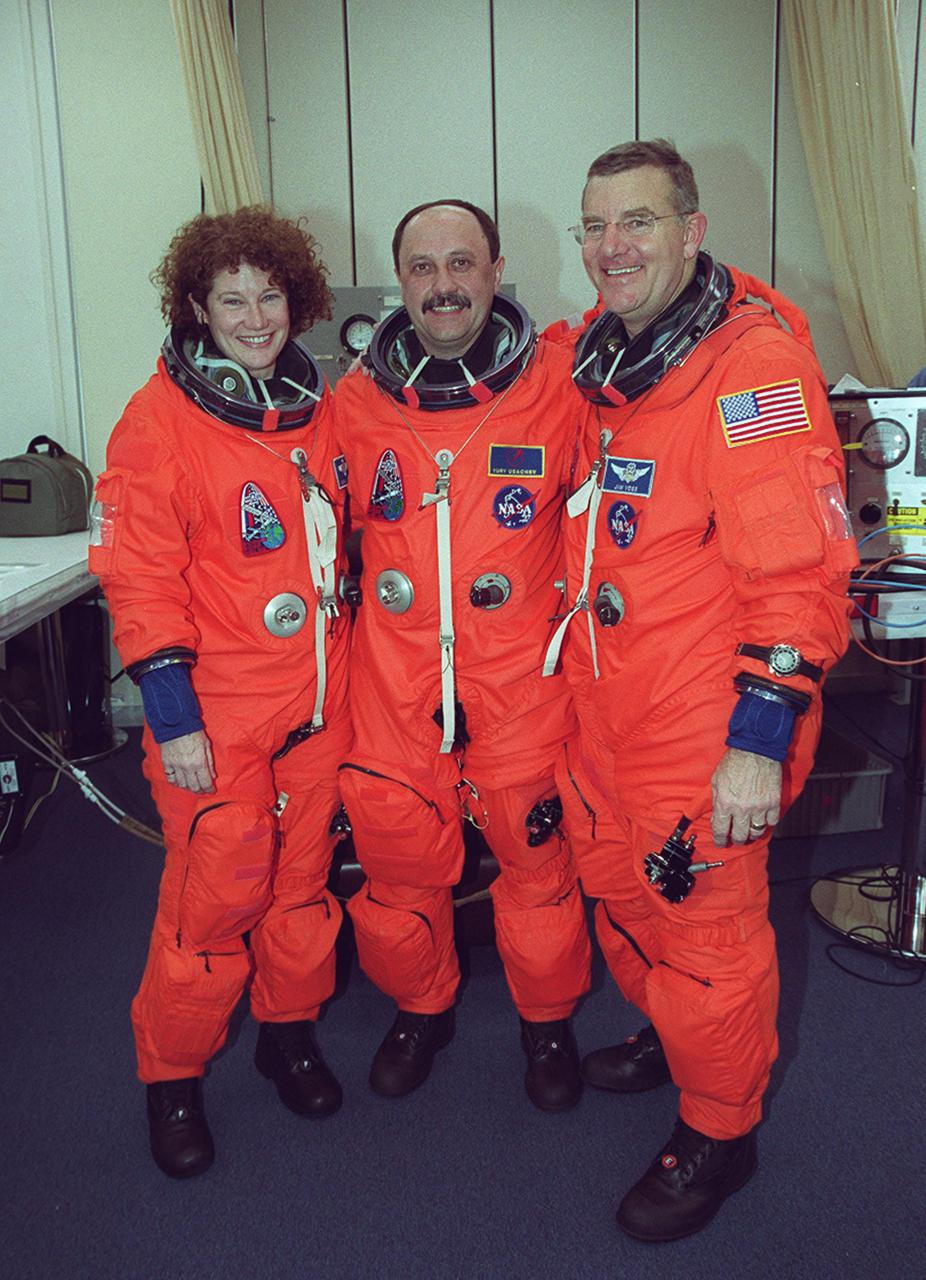
STS-102 Mission Specialists, Susan Helms, Yury Usachev and James Voss pose after suitup. Voss and Helms are making their fifth Shuttle flights and Usachev is making his second. All three are the Expedition Two crew who are replacing Expedition One on the International Space Station. STS-102 is the eighth construction flight to the Station, carrying the Multi-Purpose Logistics Module Leonardo. . The primary delivery system used to resupply and return Station cargo requiring a pressurized environment, Leonardo will deliver up to 10 tons of laboratory racks filled with equipment, experiments and supplies for outfitting the newly installed U.S. Laboratory Destiny. Discovery is set to launch March 8 at 6:42 a.m. EST. The 12-day mission is expected to end with a landing at KSC on March 20
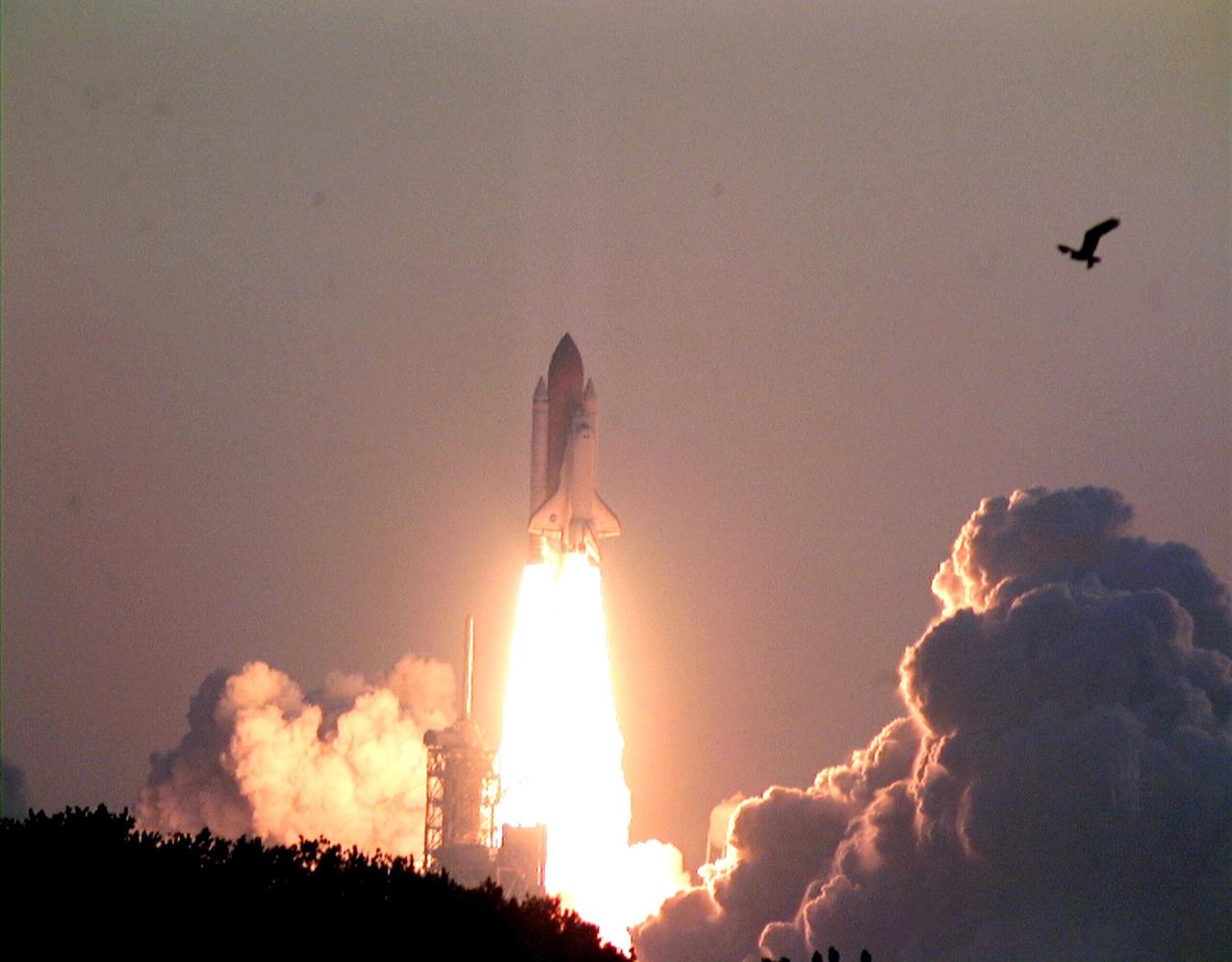
Launched on time at 6:49:42 a.m. EDT, Space Shuttle Discovery blasts through a gossamer sky on mission STS-96. A 10-day logistics and resupply mission for the International Space Station, STS-96 is carrying about 4,000 pounds of supplies, to be stored aboard the station for use by future crews, including laptop computers, cameras, tools, spare parts, and clothing. The mission also includes such payloads as a Russian crane, the Strela; a U.S.-built crane; the Spacehab Oceaneering Space System Box (SHOSS), a logistics items carrier; and STARSHINE, a student-involved experiment. It will include a space walk to attach the cranes to the outside of the ISS for use in future construction. Landing is expected at the SLF on June 6 about 1:58 a.m. EDT

In the White Room, Launch Pad 39B, STS-102 Commander James Wetherbee gets help with final suit preparations before entering Space Shuttle Discovery. STS-102 is Wetherbee’s fifth Shuttle flight. Discovery is carrying the Multi-Purpose Logistics Module Leonardo on the eighth construction flight to the International Space Station. The primary delivery system used to resupply and return Station cargo requiring a pressurized environment, Leonardo will deliver up to 10 tons of laboratory racks filled with equipment, experiments and supplies for outfitting the newly installed U.S. Laboratory Destiny. In addition, Discovery is transporting Expedition Two, three crew members who are replacing Expedition One on the Station. Discovery is set to launch March 8 at 6:42 a.m. EST. The 12-day mission is expected to end with a landing at KSC on March 20
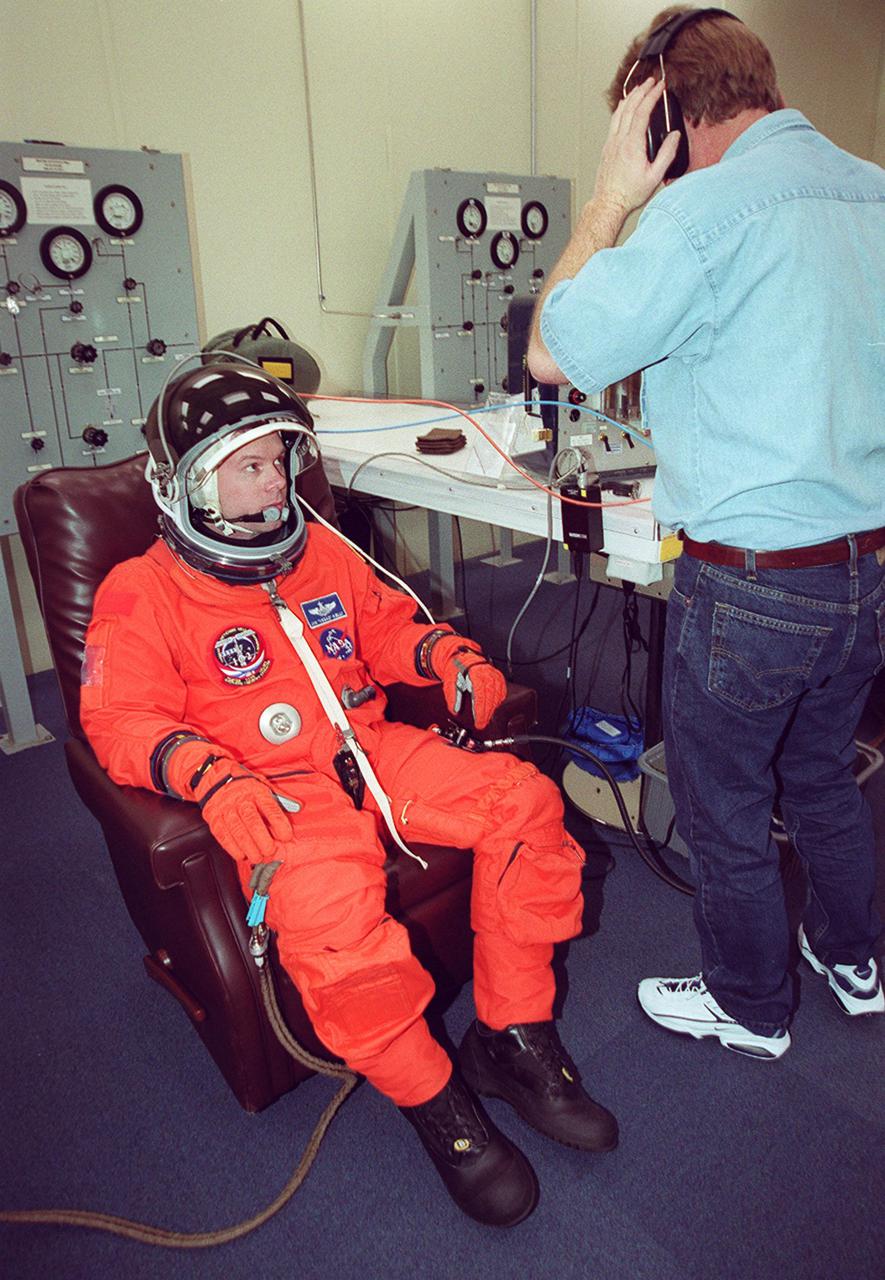
STS-102 Pilot James Kelly gets a final fitting in his launch and entry suit. This will be Kelly’s first Shuttle launch. . STS-102 is the eighth construction flight to the International Space Station, carrying the Multi-Purpose Logistics Module Leonardo. The primary delivery system used to resupply and return Station cargo requiring a pressurized environment, Leonardo will deliver up to 10 tons of laboratory racks filled with equipment, experiments and supplies for outfitting the newly installed U.S. Laboratory Destiny. In addition, three of the crew members Mission Specialists James Voss, Susan Helms and Yury Usachev, known as Expedition Two are flying to the Station to replace Expedition One, who will return to Earth on Discovery. Discovery is set to launch March 8 at 6:42 a.m. EST. The 12-day mission is expected to end with a landing at KSC on March 20
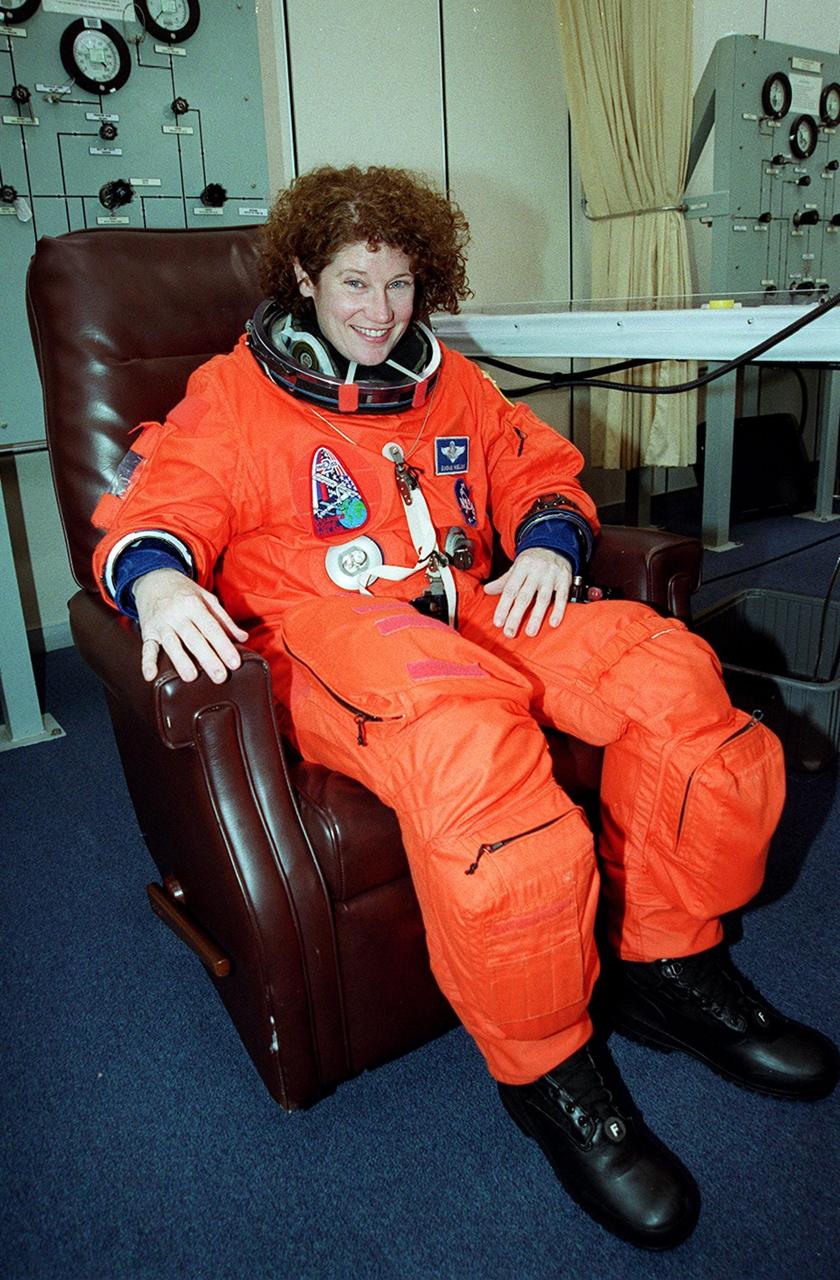
STS-102 Mission Specialist Susan Helms shows her pleasure at the imminent launch to the International Space Station. This will be Helms’ fifth Shuttle flight. She is also part of the Expedition Two crew replacing Expedition One. STS-102 is the eighth construction flight to the Station, carrying the Multi-Purpose Logistics Module Leonardo. The primary delivery system used to resupply and return Station cargo requiring a pressurized environment, Leonardo will deliver up to 10 tons of laboratory racks filled with equipment, experiments and supplies for outfitting the newly installed U.S. Laboratory Destiny. Discovery is set to launch March 8 at 6:42 a.m. EST. The 12-day mission is expected to end with a landing at KSC on March 20
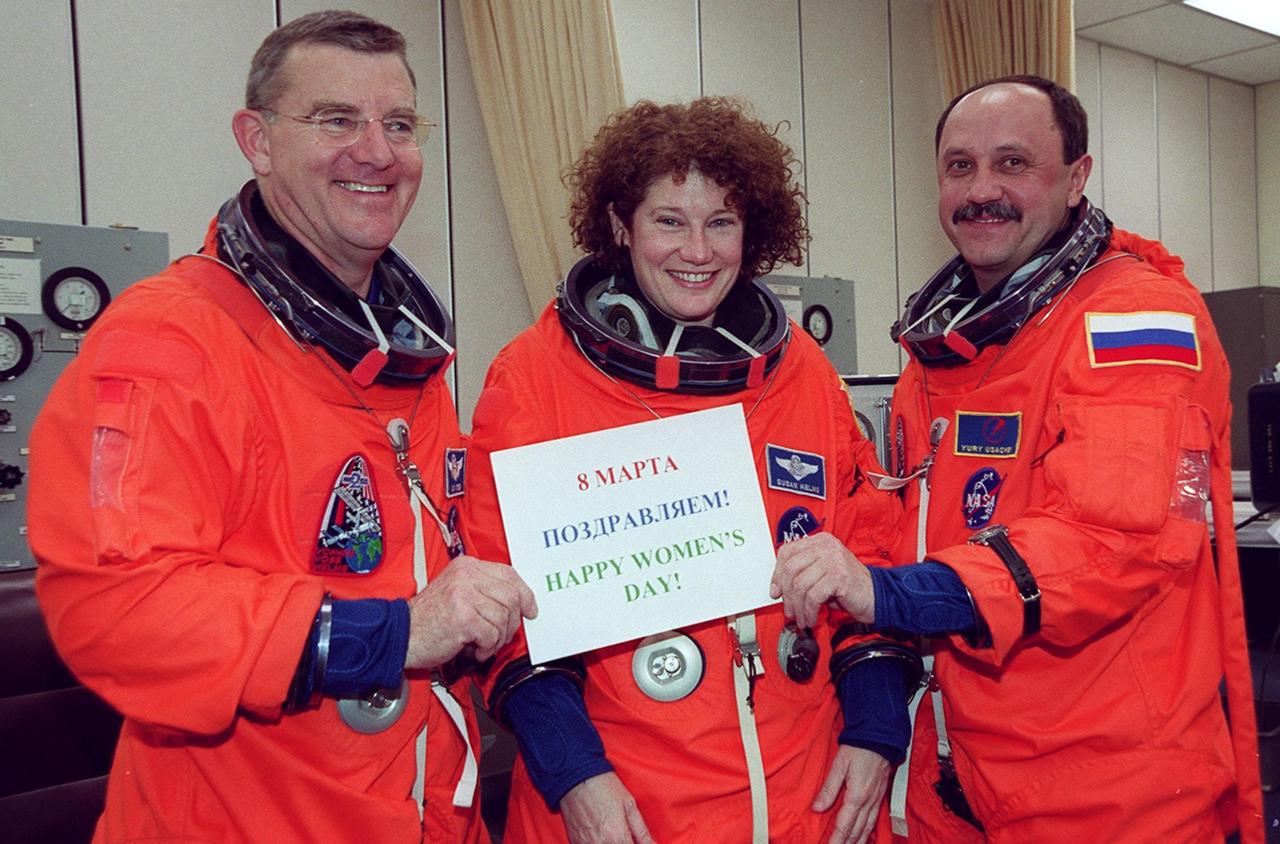
STS-102 Mission Specialists James Voss, Susan Helms and Yury Usachev hold up a sign after donning their launch and entry suits. In Cyrillic and English, the sign recognizes International Women’s Day, March 8. Voss and Helms are making their fifth Shuttle flights and Usachev is making his second. All three are the Expedition Two crew who are replacing Expedition One on the International Space Station. STS-102 is the eighth construction flight to the Station, carrying the Multi-Purpose Logistics Module Leonardo. . The primary delivery system used to resupply and return Station cargo requiring a pressurized environment, Leonardo will deliver up to 10 tons of laboratory racks filled with equipment, experiments and supplies for outfitting the newly installed U.S. Laboratory Destiny. Discovery is set to launch March 8 at 6:42 a.m. EST. The 12-day mission is expected to end with a landing at KSC on March 20
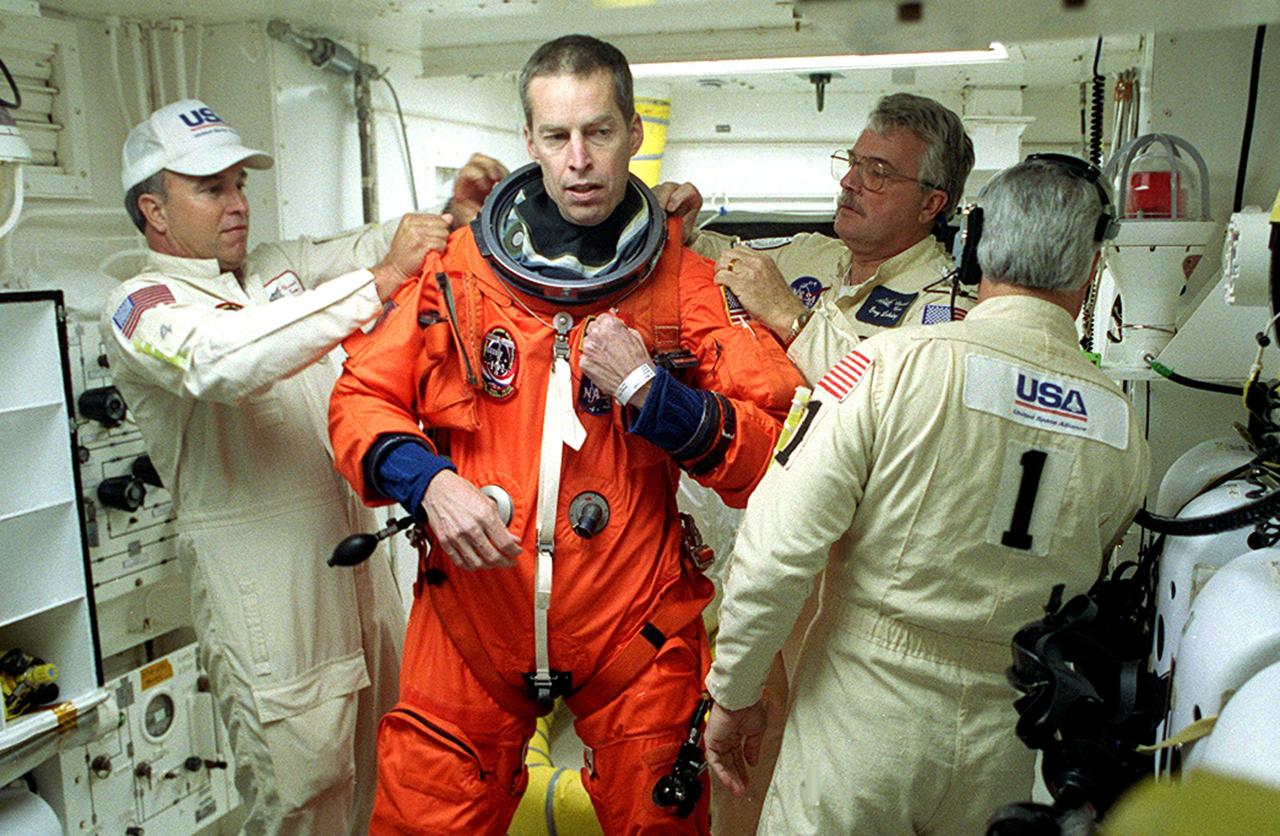
In the White Room, Launch Pad 39B, STS-102 Commander James Wetherbee gets help with final suit preparations before entering Space Shuttle Discovery. STS-102 is Wetherbee’s fifth Shuttle flight. Discovery is carrying the Multi-Purpose Logistics Module Leonardo on the eighth construction flight to the International Space Station. The primary delivery system used to resupply and return Station cargo requiring a pressurized environment, Leonardo will deliver up to 10 tons of laboratory racks filled with equipment, experiments and supplies for outfitting the newly installed U.S. Laboratory Destiny. In addition, Discovery is transporting Expedition Two, three crew members who are replacing Expedition One on the Station. Discovery is set to launch March 8 at 6:42 a.m. EST. The 12-day mission is expected to end with a landing at KSC on March 20
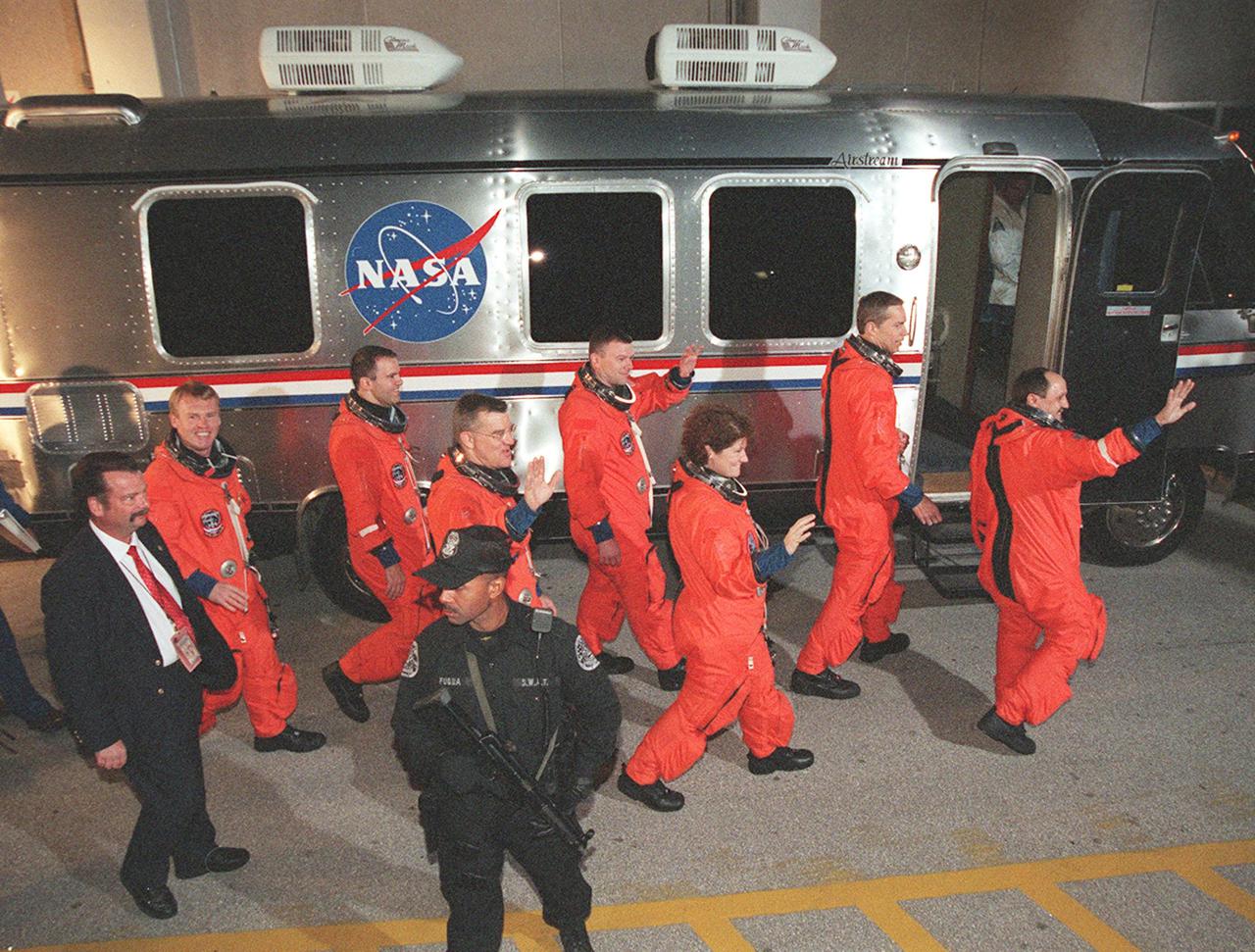
The STS-102 crew wave to onlookers as they head for the Astrovan after leaving the Operations and Checkout Building. Left to right are Mission Specialists Andrew Thomas, Paul Richards and James Voss; Pilot James Kelly; Mission Specialist Susan Helms; Commander James Wetherbee; and Mission Specialist Yury Usachev. STS-102 is the eighth construction flight to the Space Station, carrying the Multi-Purpose Logistics Module Leonardo. The primary delivery system used to resupply and return Station cargo requiring a pressurized environment, Leonardo will deliver up to 10 tons of laboratory racks filled with equipment, experiments and supplies for outfitting the newly installed U.S. Laboratory Destiny. In addition, Voss, Helms and Usachev, known as Expedition Two, are flying to the Station to replace Expedition One, who will return to Earth on Discovery. Discovery is set to launch March 8 at 6:42 a.m. EST. The 12-day mission is expected to end with a landing at KSC on March 20
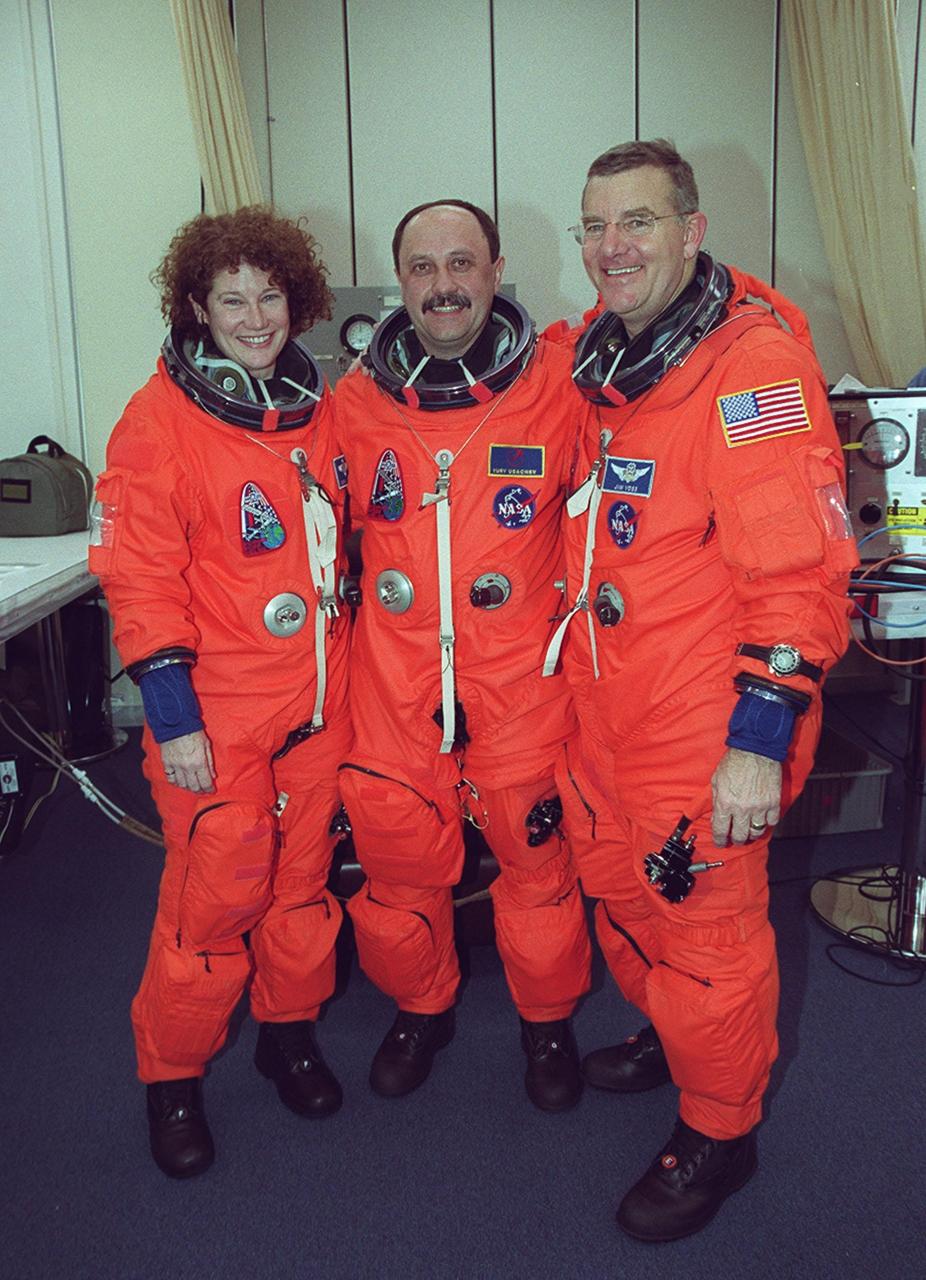
STS-102 Mission Specialists, Susan Helms, Yury Usachev and James Voss pose after suitup. Voss and Helms are making their fifth Shuttle flights and Usachev is making his second. All three are the Expedition Two crew who are replacing Expedition One on the International Space Station. STS-102 is the eighth construction flight to the Station, carrying the Multi-Purpose Logistics Module Leonardo. . The primary delivery system used to resupply and return Station cargo requiring a pressurized environment, Leonardo will deliver up to 10 tons of laboratory racks filled with equipment, experiments and supplies for outfitting the newly installed U.S. Laboratory Destiny. Discovery is set to launch March 8 at 6:42 a.m. EST. The 12-day mission is expected to end with a landing at KSC on March 20
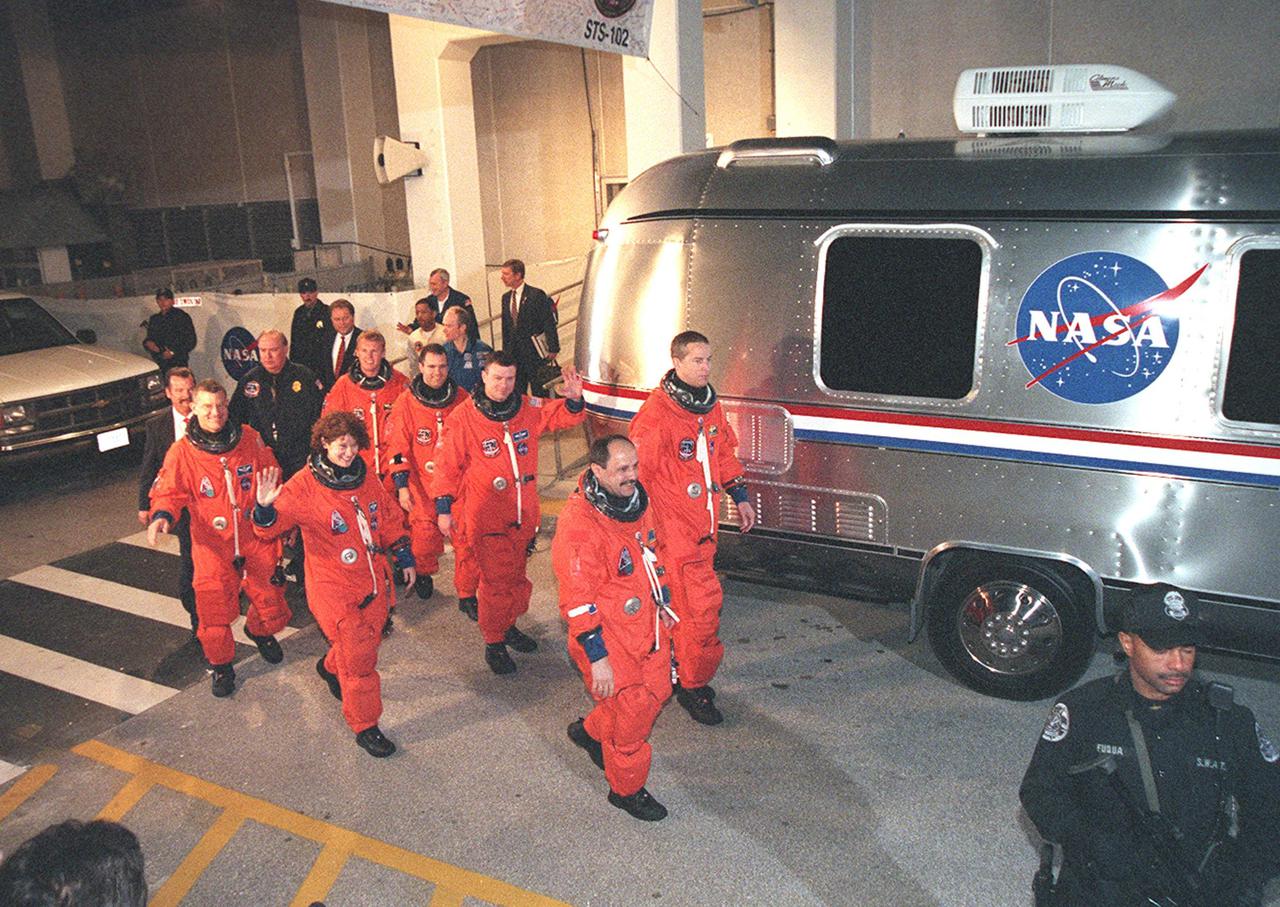
The STS-102 crew heads for the Astrovan after leaving the Operations and Checkout Building behind them. In front, left to right, are Mission Specialists James Voss, Susan Helms and Yury Usachev. In back, left to right, are Mission Specialists Andrew Thomas and Paul Richards, Pilot James Kelly and Commander James Wetherbee. STS-102 is the eighth construction flight to the Space Station, carrying the Multi-Purpose Logistics Module Leonardo. The primary delivery system used to resupply and return Station cargo requiring a pressurized environment, Leonardo will deliver up to 10 tons of laboratory racks filled with equipment, experiments and supplies for outfitting the newly installed U.S. Laboratory Destiny. In addition, Voss, Helms and Usachev, known as Expedition Two, are flying to the Station to replace Expedition One, who will return to Earth on Discovery. Discovery is set to launch March 8 at 6:42 a.m. EST. The 12-day mission is expected to end with a landing at KSC on March 20
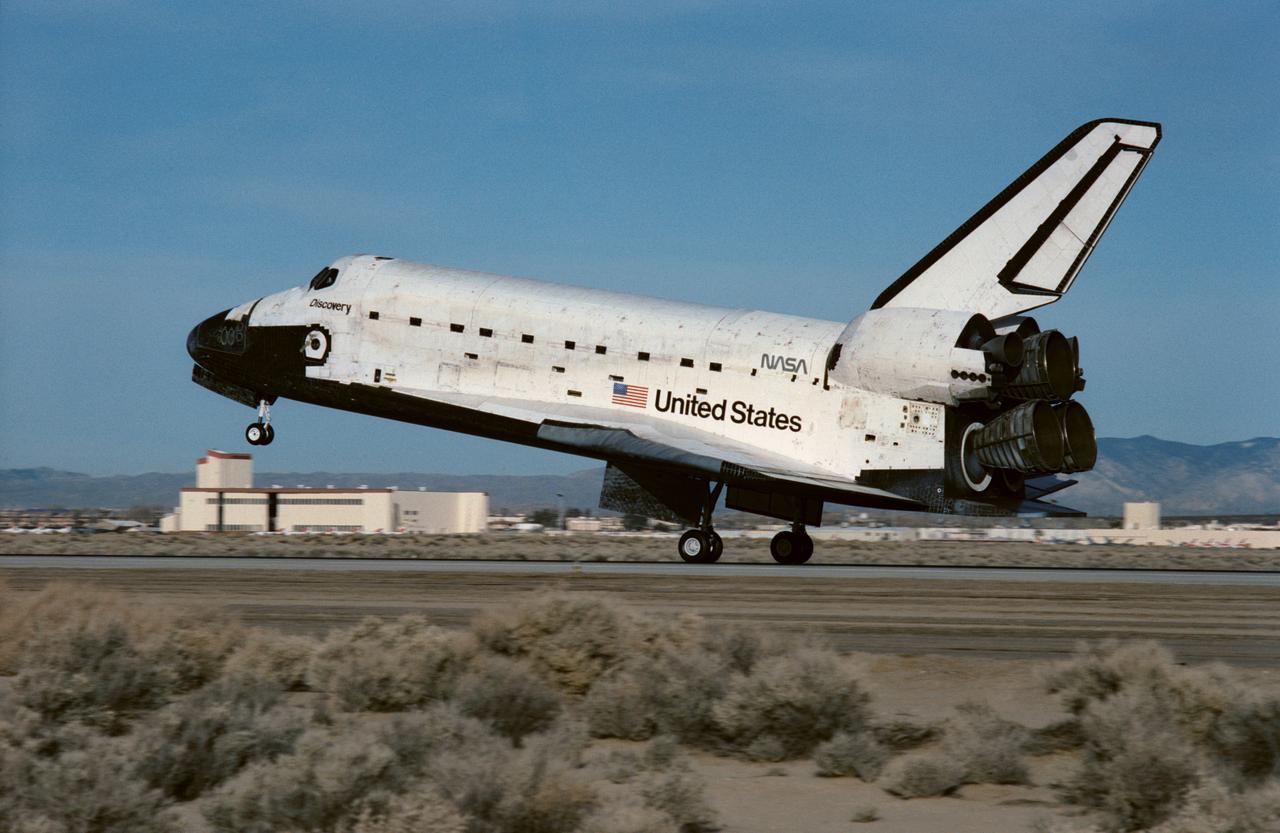
STS042-S-094 (30 Jan 1992) --- Space Shuttle Discovery lands on Runway 22 at Edwards Air Force Base in southern California to complete an eight-day mission. Main gear touchdown occurred at 8:07:18 a.m. (PST), Jan. 30, 1992. The crewmembers aboard Discovery for the first International Microgravity Laboratory (IML-1) mission were astronauts Ronald J. Grabe, mission commander; Stephen S. Oswald, pilot; Norman E. Thagard, payload commander; and David C. Hilmers and William F. Readdy, both mission specialists; and payload specialists Roberta L. Bondar of Canada and Ulf Merbold, representing the European Space Agency (ESA).
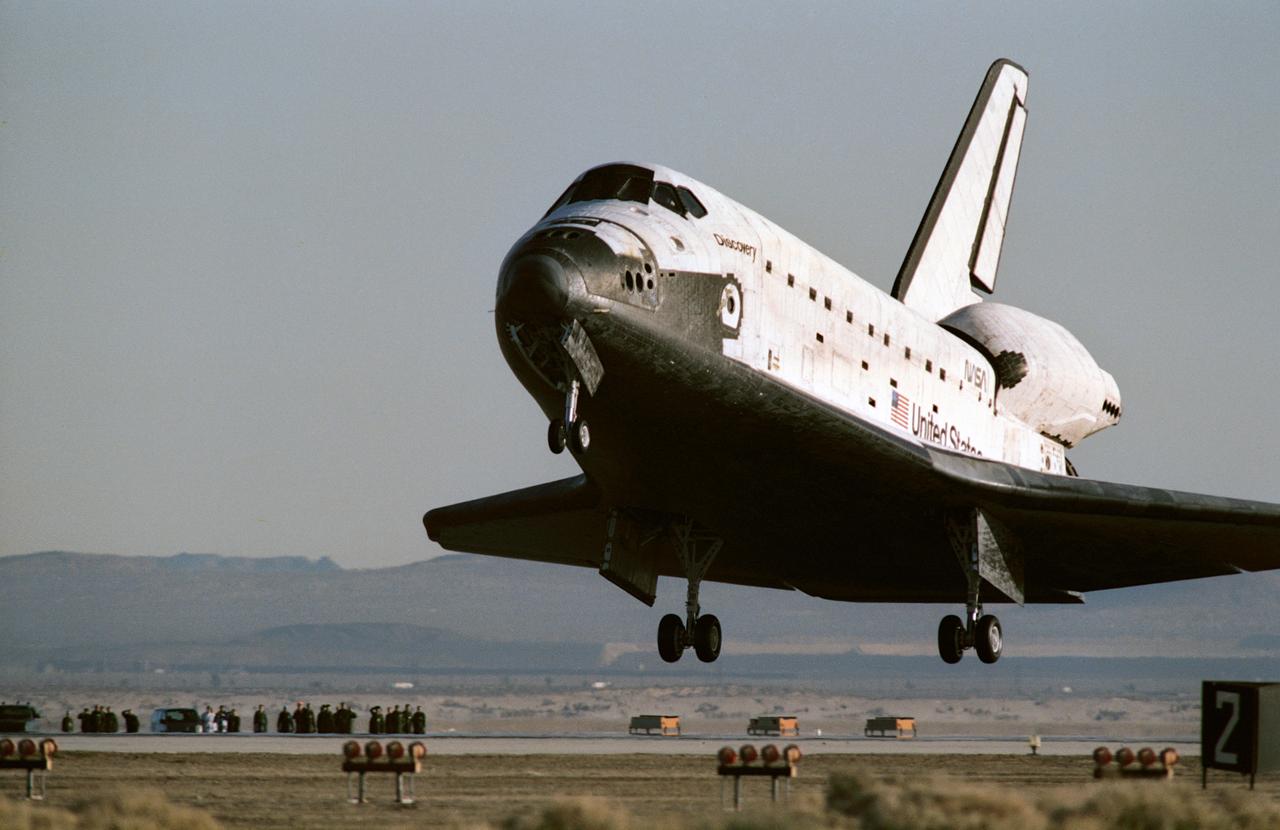
STS042-S-093 (30 Jan 1992) --- Space Shuttle Discovery is just about to ease down its main gear on Runway 22 at Edwards Air Force Base in southern California. Main gear touchdown occurred at 8:07:18 a.m. (PST), Jan. 30, 1992. The successful landing completed an eight-day mission for five NASA astronauts and two payload specialists supporting the first International Microgravity Laboratory (IML-1) mission. Onboard were astronauts Ronald J. Grabe, mission commander; Stephen S. Oswald, pilot; Norman E. Thagard, payload commander; David C. Hilmers and William F. Readdy, both mission specialists; and payload specialists Roberta L. Bondar of Canada and Ulf Merbold, representing the European Space Agency (ESA).
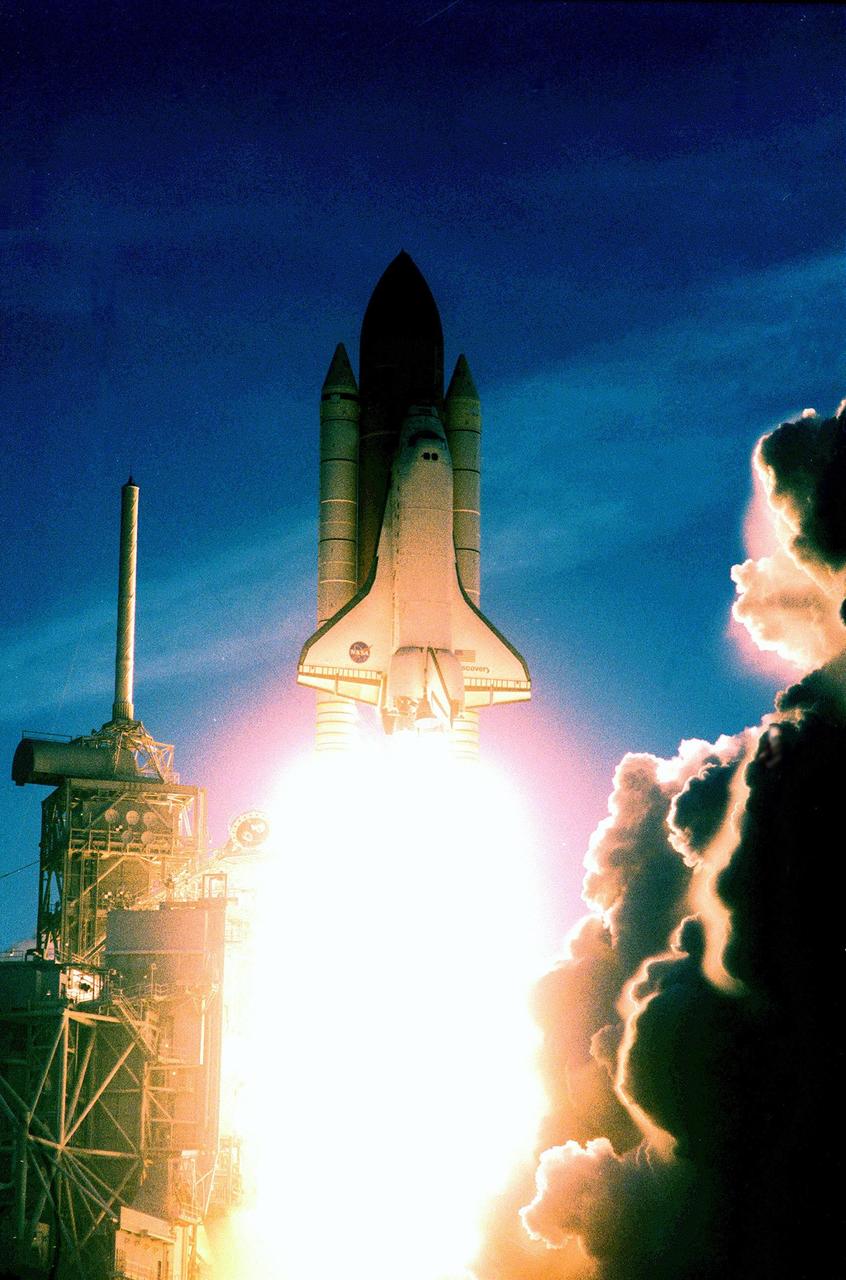
KENNEDY SPACE CENTER, FLA. -- On its perfect launch today, Space Shuttle Discovery's brilliant flames illuminate the tower at left, with the lightning mast on top, and the billows of smoke and steam at right. Liftoff into a gossamer dawn sky for mission STS-96 occurred at 6:49:42 a.m. EDT. The crew of seven begin a 10-day logistics and resupply mission for the International Space Station, carrying about 4,000 pounds of supplies, to be stored aboard the station for use by future crews, including laptop computers, cameras, tools, spare parts, and clothing. The mission also includes such payloads as a Russian crane, the Strela; a U.S.-built crane; the Spacehab Oceaneering Space System Box (SHOSS), a logistics items carrier; and STARSHINE, a student-involved experiment. It will include a space walk to attach the cranes to the outside of the ISS for use in future construction. Landing is expected at the SLF on June 6 about 1:58 a.m. EDT
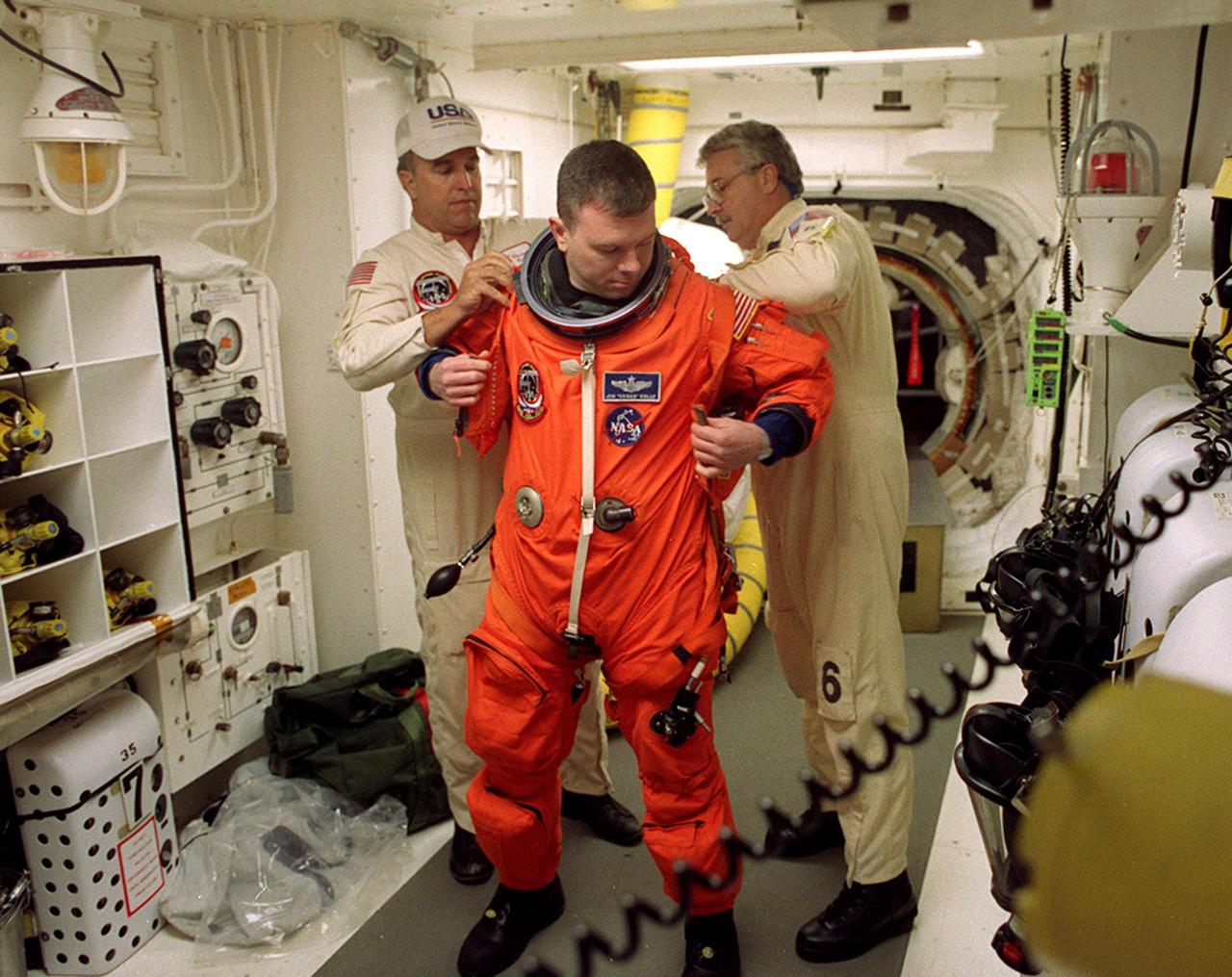
Before entering Space Shuttle Discovery, STS-102 Pilot James Kelly gets help with his launch and entry suit from technicians in the White Room. The mission is Kelly’s first Shuttle flight. Discovery is carrying the Multi-Purpose Logistics Module Leonardo on the eighth construction flight to the International Space Station. The primary delivery system used to resupply and return Station cargo requiring a pressurized environment, Leonardo will deliver up to 10 tons of laboratory racks filled with equipment, experiments and supplies for outfitting the newly installed U.S. Laboratory Destiny. Discovery is set to launch March 8 at 6:42 a.m. EST. The 12-day mission is expected to end with a landing at KSC on March 20
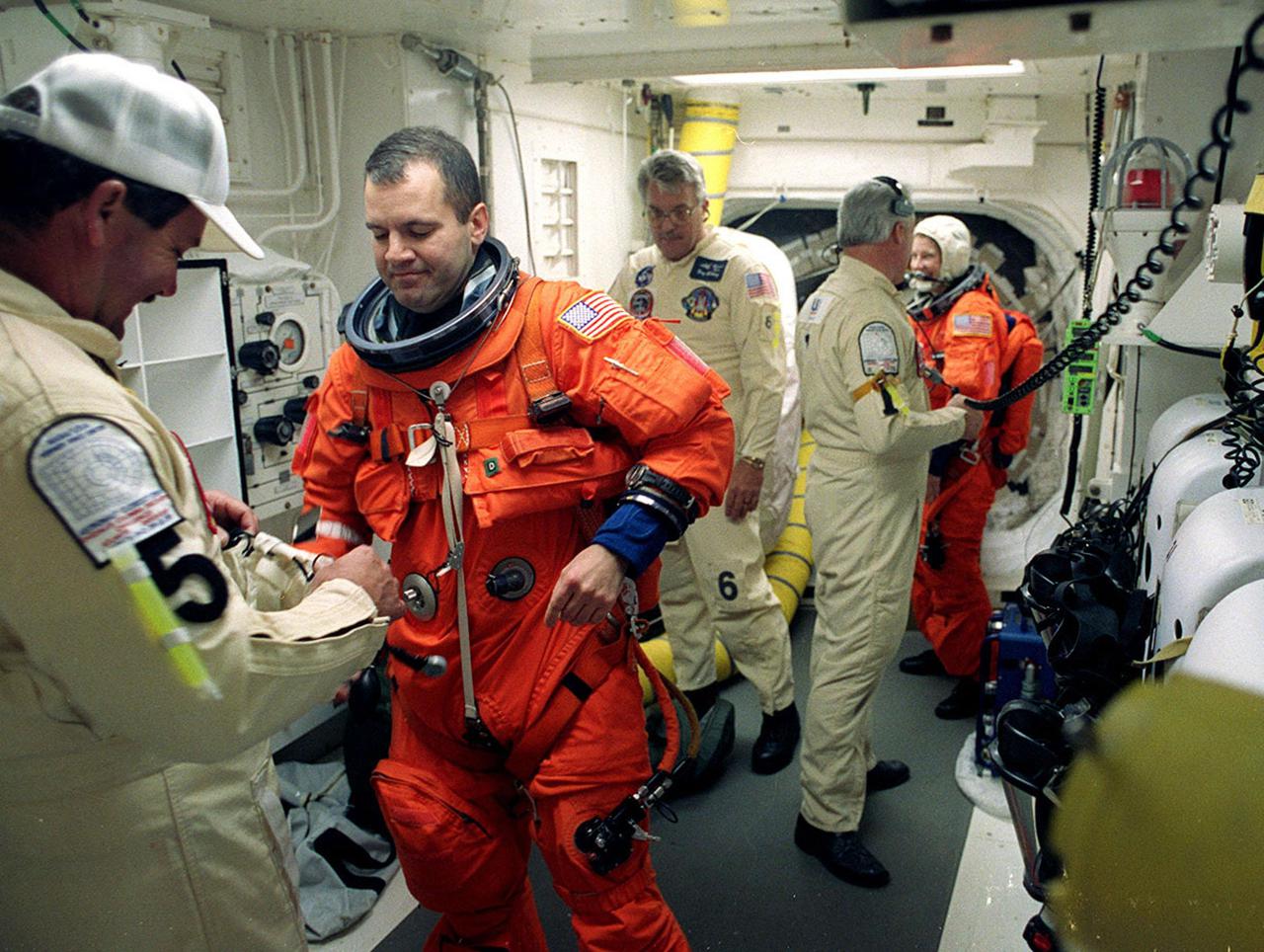
Technicians in the White Room, Launch Pad 39B, help STS-102 Mission Specialist Paul Richards with his launch and entry suit before he enters Space Shuttle Discovery. The mission is Richards’ first Shuttle flight. In the background is Mission Specialist Susan Helms. Discovery is carrying the Multi-Purpose Logistics Module Leonardo on the eighth construction flight to the International Space Station. The primary delivery system used to resupply and return Station cargo requiring a pressurized environment, Leonardo will deliver up to 10 tons of laboratory racks filled with equipment, experiments and supplies for outfitting the newly installed U.S. Laboratory Destiny. Discovery is set to launch March 8 at 6:42 a.m. EST. The 12-day mission is expected to end with a landing at KSC on March 20
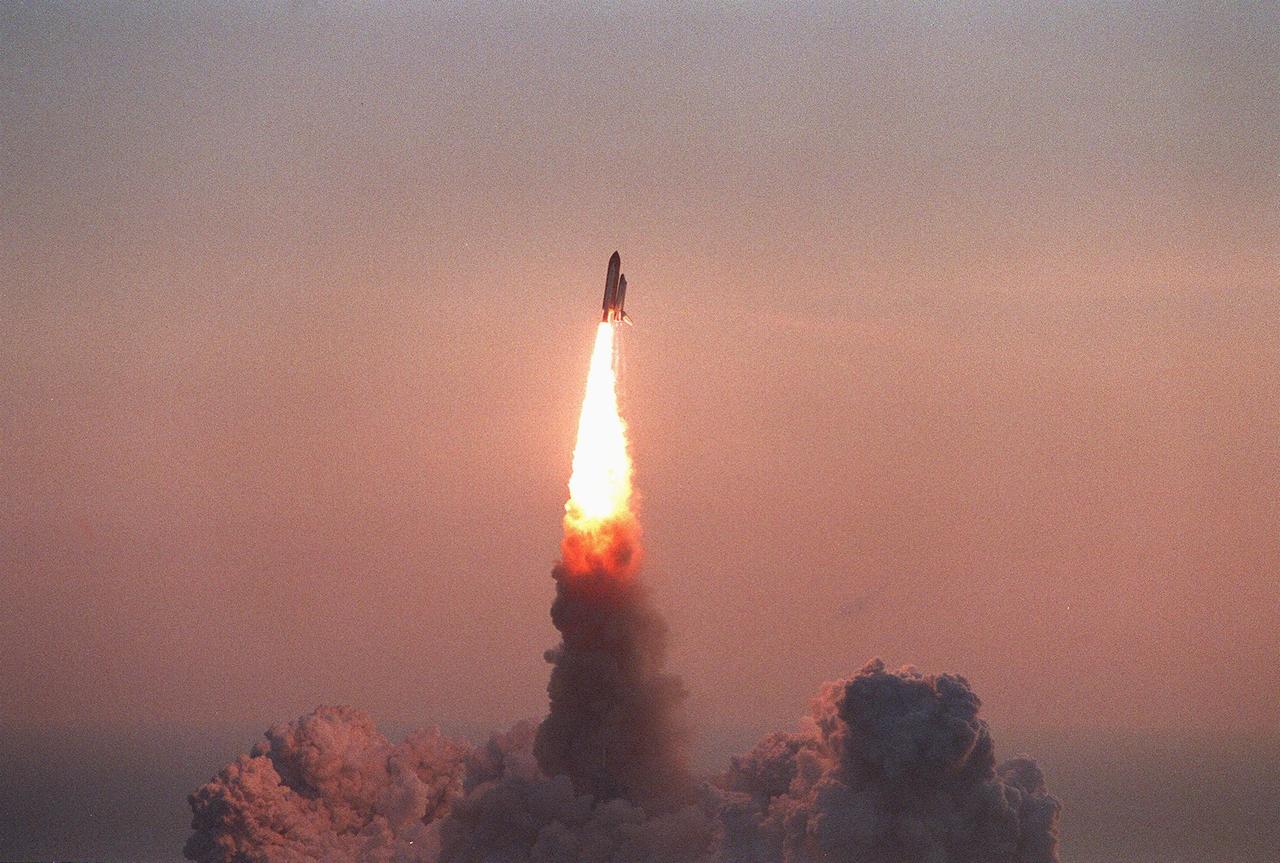
KENNEDY SPACE CENTER, FLA. -- The brilliant flames from the launch of Space Shuttle Discovery light up the billows of steam below. Mission STS-96 lifted off at 6:49:42 a.m. EDT. The crew of seven begin a 10-day logistics and resupply mission for the International Space Station, carrying about 4,000 pounds of supplies, to be stored aboard the station for use by future crews, including laptop computers, cameras, tools, spare parts, and clothing. The mission also includes such payloads as a Russian crane, the Strela; a U.S.-built crane; the Spacehab Oceaneering Space System Box (SHOSS), a logistics items carrier; and STARSHINE, a student-involved experiment. It will include a space walk to attach the cranes to the outside of the ISS for use in future construction. Landing is expected at the SLF on June 6 about 1:58 a.m. EDT
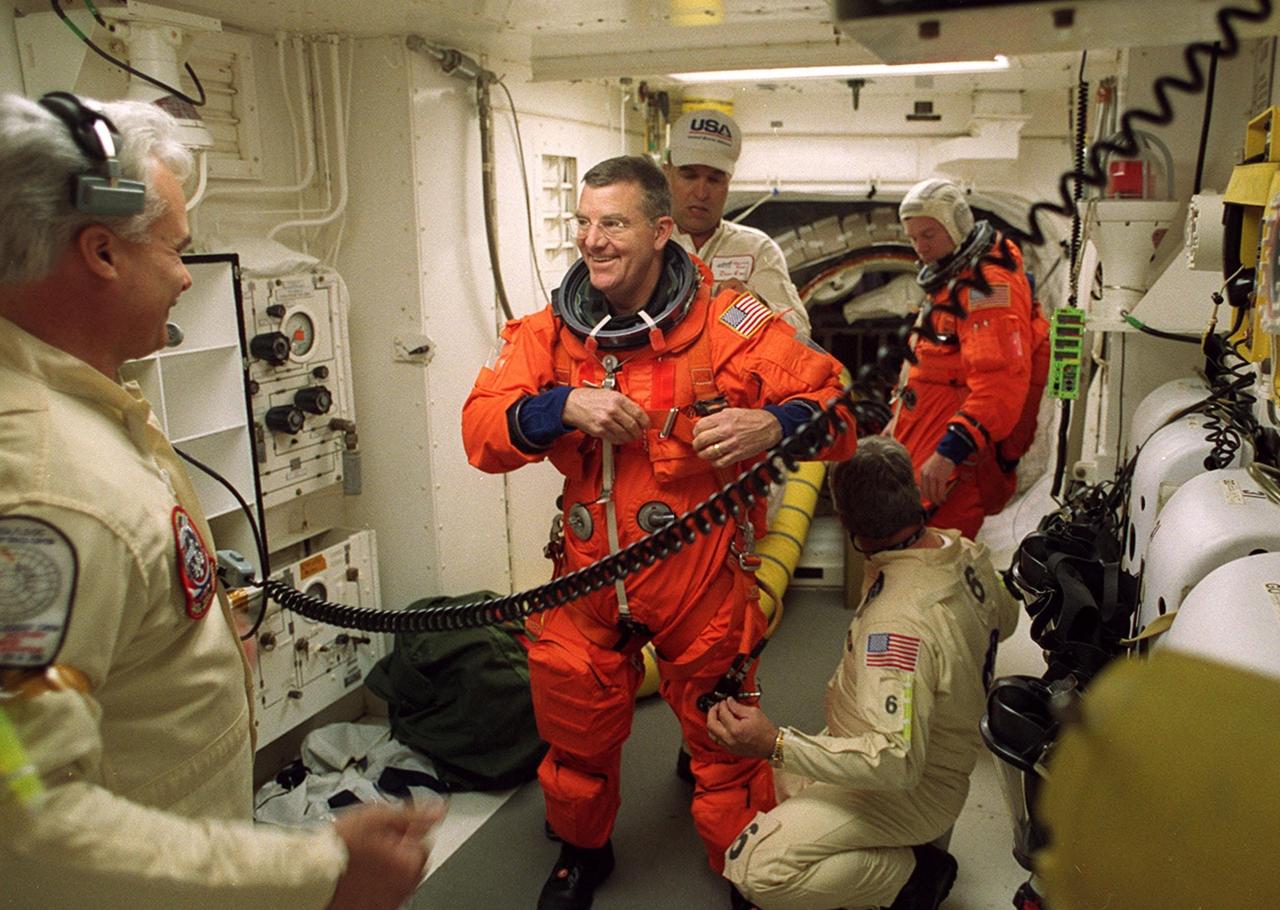
Before entering Space Shuttle Discovery, STS-102 Mission Specialist James Voss (center) is helped preparing his launch and entry suit for launch from technicians in the White Room. The mission is Voss’s fifth Shuttle flight. In the background is Pilot James Kelly waiting to enter Discovery. Voss is also part of the Expedition Two crew flying on the mission to replace the Expedition One crew on the Station. Discovery is carrying the Multi-Purpose Logistics Module Leonardo on the eighth construction flight to the International Space Station. The primary delivery system used to resupply and return Station cargo requiring a pressurized environment, Leonardo will deliver up to 10 tons of laboratory racks filled with equipment, experiments and supplies for outfitting the newly installed U.S. Laboratory Destiny. Discovery is set to launch March 8 at 6:42 a.m. EST. The 12-day mission is expected to end with a landing at KSC on March 20
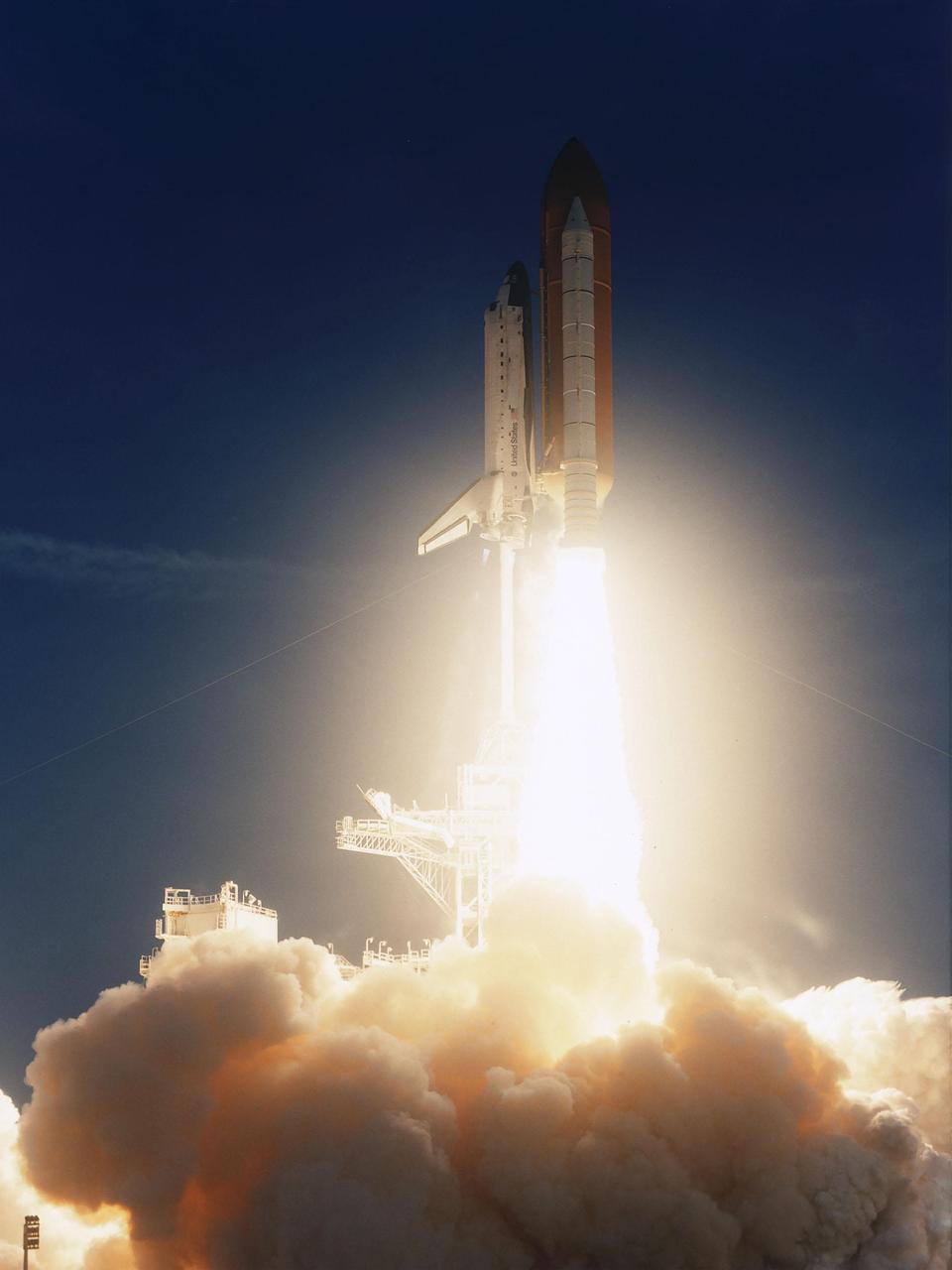
KENNEDY SPACE CENTER, FLA. -- In the early dawn, the brilliant flames from the launch of Space Shuttle Discovery light up the billows of steam below. Mission STS-96 lifted off at 6:49:42 a.m. EDT. The crew of seven begin a 10-day logistics and resupply mission for the International Space Station, carrying about 4,000 pounds of supplies, to be stored aboard the station for use by future crews, including laptop computers, cameras, tools, spare parts, and clothing. The mission also includes such payloads as a Russian crane, the Strela; a U.S.-built crane; the Spacehab Oceaneering Space System Box (SHOSS), a logistics items carrier; and STARSHINE, a student-involved experiment. It will include a space walk to attach the cranes to the outside of the ISS for use in future construction. Landing is expected at the SLF on June 6 about 1:58 a.m. EDT
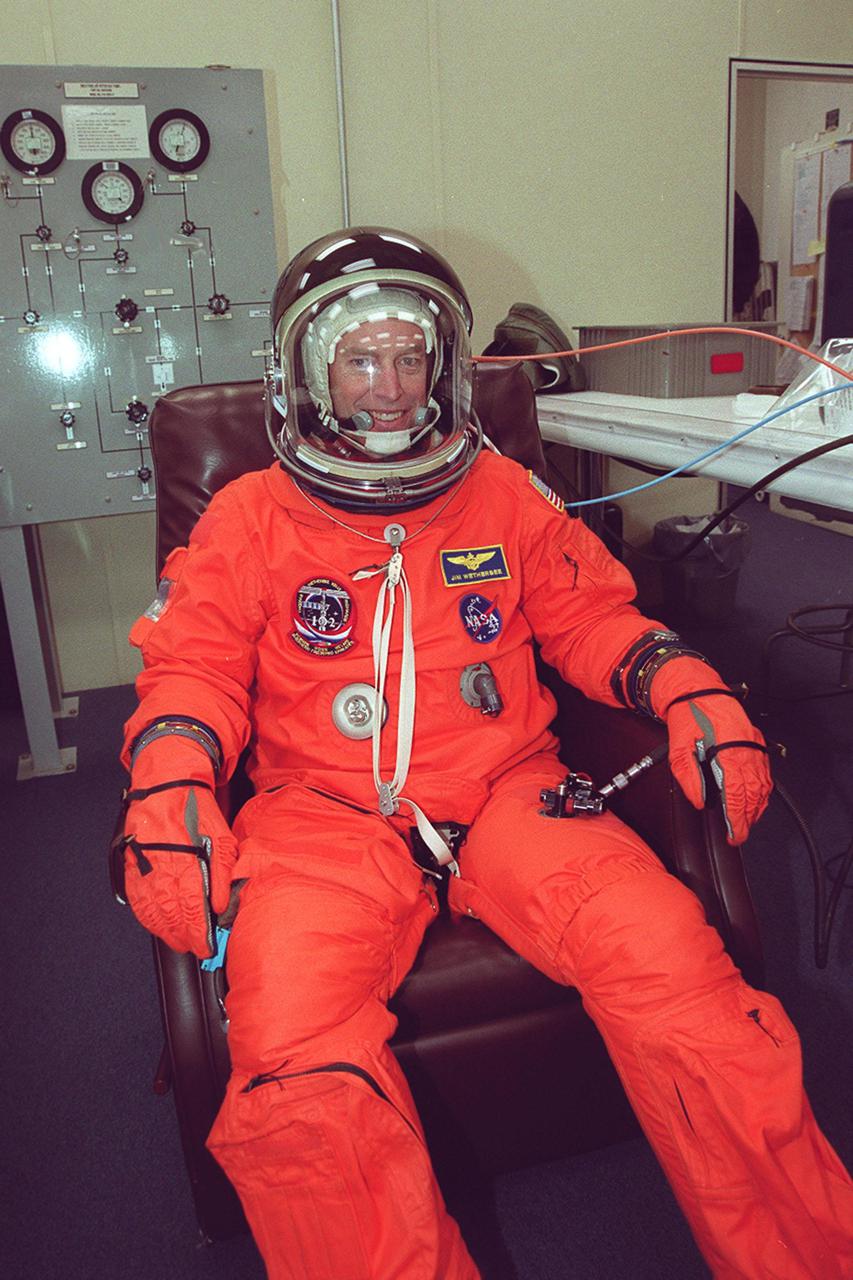
STS-102 Commander James Wetherbee gets final adjustments on his launch and entry suit before heading to Space Shuttle Discovery on Launch Pad 39B. This mission is Wetherbee’s fifth Shuttle flight. Discovery is scheduled to launch March 8 at 6:42 a.m. EST, carrying the Multi-Purpose Logistics Module Leonardo to the International Space Station. The primary delivery system used to resupply and return Station cargo requiring a pressurized environment, Leonardo will deliver up to 10 tons of laboratory racks filled with equipment, experiments and supplies for outfitting the newly installed U.S. Laboratory Destiny. In addition, three crew members Mission Specialists James Voss, Susan Helms and Russian cosmonaut Yury Usachev are the Expedition Two crew replacing Expedition One on the Station. Discovery is expected to land at KSC on March 20 at 2:02 a.m
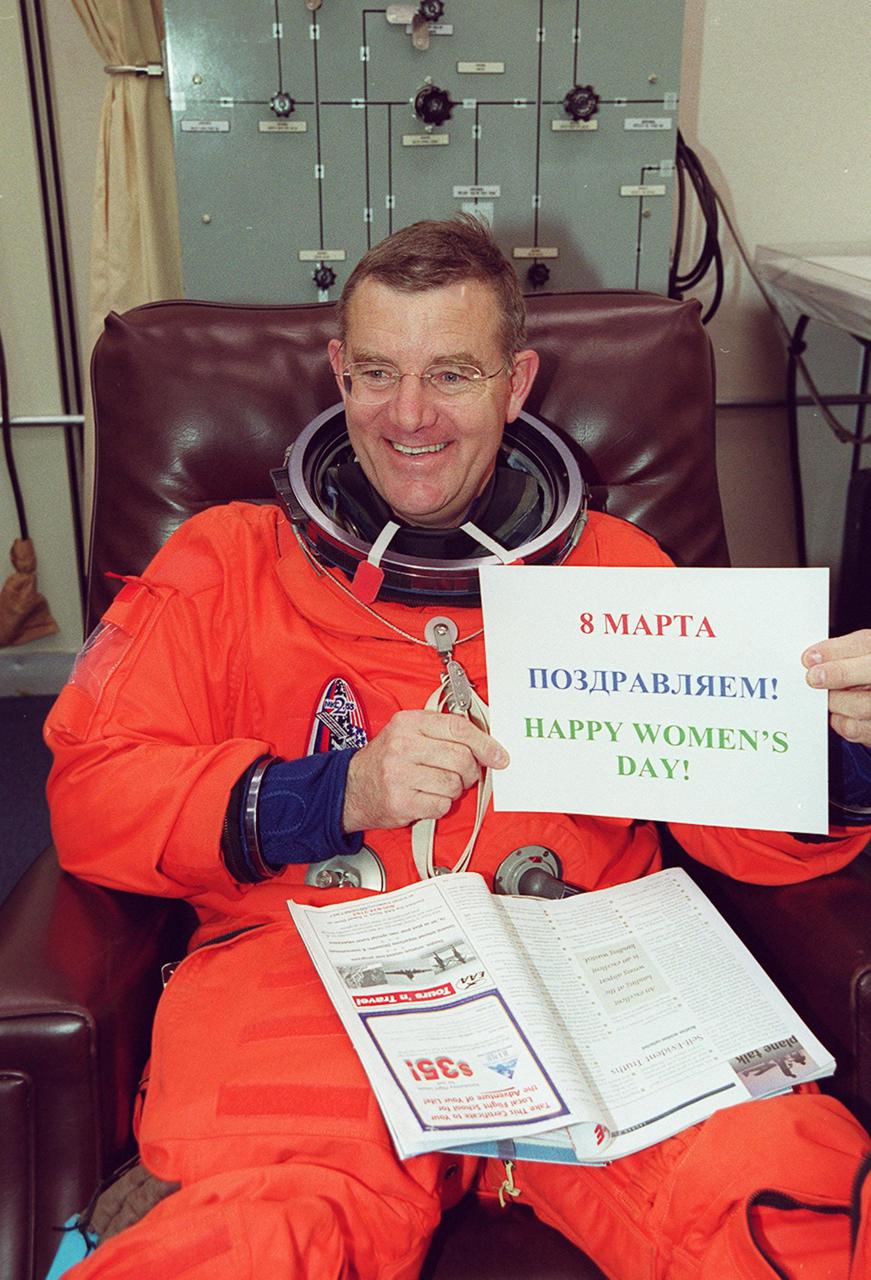
While suiting up in the Operations and Checkout Building, Mission Specialist James Voss shows his support of International Women’s Day, March 8, with a sign in both Cyrillic and English. Voss is also part of a crew, known as Expedition One, who will be replacing Expedition One on the International Space Station. STS-102 is the eighth construction flight to the Space Station, carrying the Multi-Purpose Logistics Module Leonardo. The primary delivery system used to resupply and return Station cargo requiring a pressurized environment, Leonardo will deliver up to 10 tons of laboratory racks filled with equipment, experiments and supplies for outfitting the newly installed U.S. Laboratory Destiny. Discovery is set to launch March 8 at 6:42 a.m. EST. The 12-day mission is expected to end with a landing at KSC on March 20
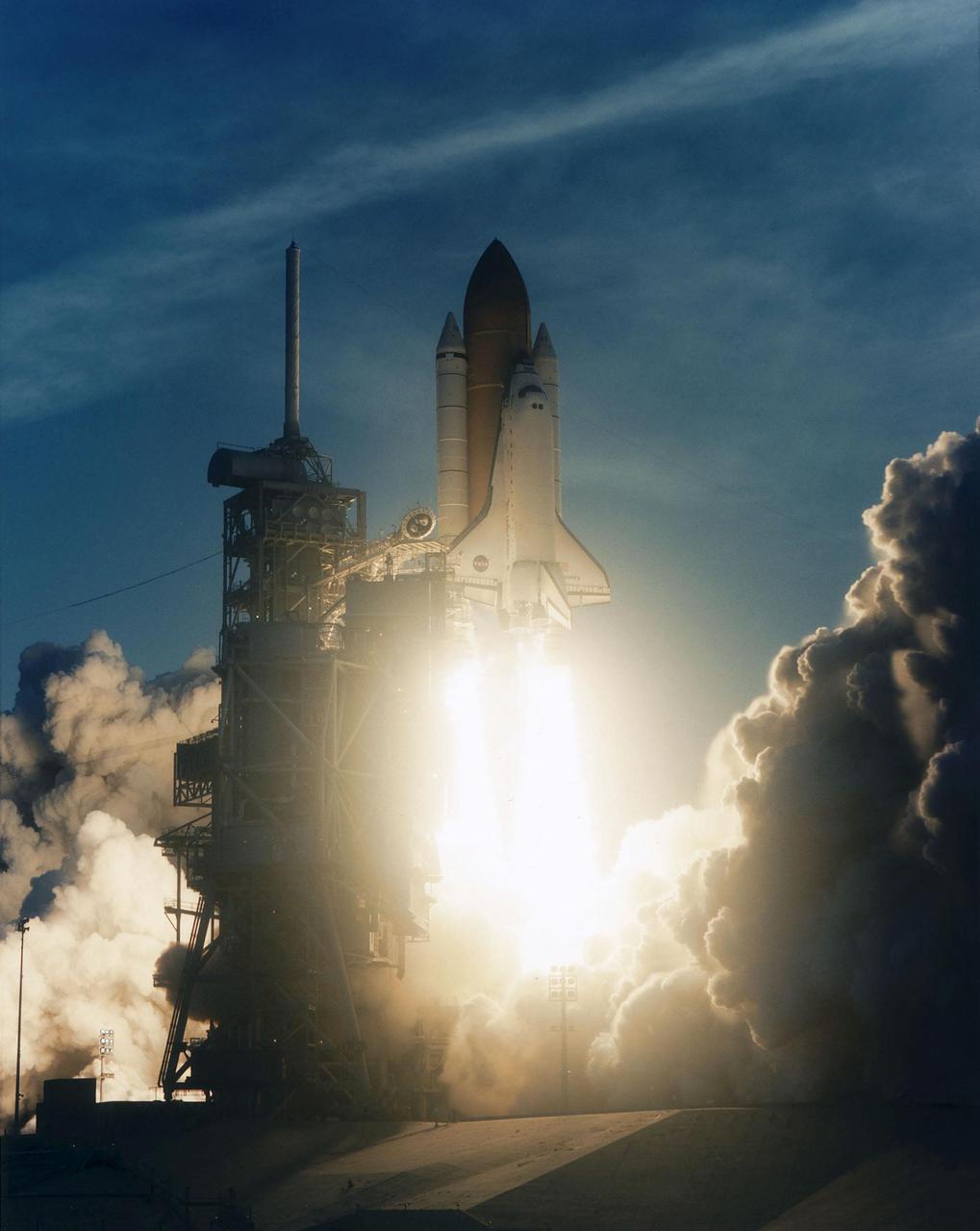
KENNEDY SPACE CENTER, FLA. -- Competing with the sunrise, the brilliant flames from the launch of Space Shuttle Discovery light up the morning sky. Mission STS-96 lifted off at 6:49:42 a.m. EDT. The crew of seven begin a 10-day logistics and resupply mission for the International Space Station, carrying about 4,000 pounds of supplies, to be stored aboard the station for use by future crews, including laptop computers, cameras, tools, spare parts, and clothing. The mission also includes such payloads as a Russian crane, the Strela; a U.S.-built crane; the Spacehab Oceaneering Space System Box (SHOSS), a logistics items carrier; and STARSHINE, a student-involved experiment. It will include a space walk to attach the cranes to the outside of the ISS for use in future construction. Landing is expected at the SLF on June 6 about 1:58 a.m. EDT
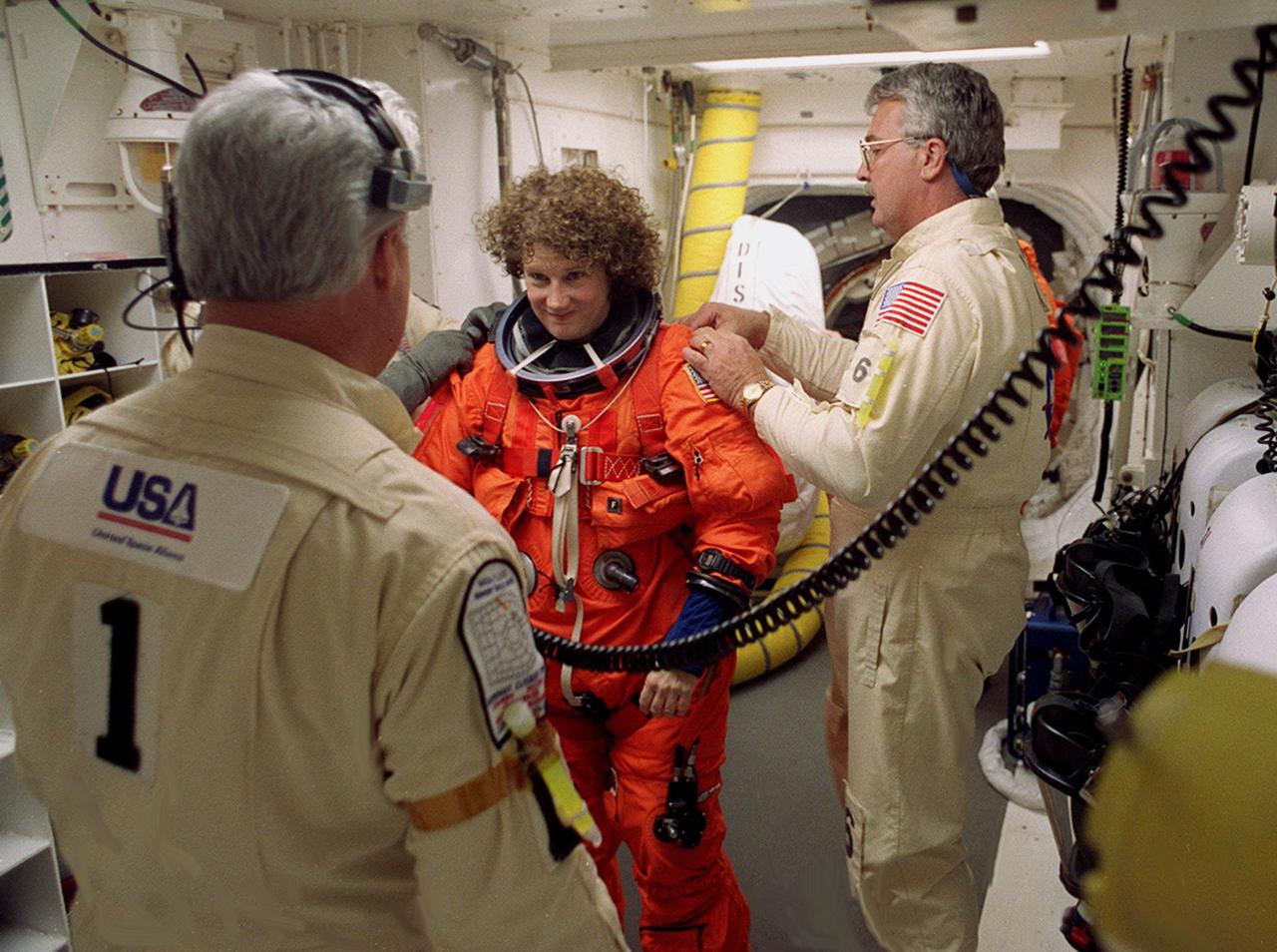
Technicians in the White Room, Launch Pad 39B, help STS-102 Mission Specialist Susan Helms with her launch and entry suit before she enters Space Shuttle Discovery. The mission is Helms’ fifth Shuttle flight. Helms is also part of the Expedition Two crew flying on the mission to replace the Expedition One crew on the Station. Discovery is carrying the Multi-Purpose Logistics Module Leonardo on the eighth construction flight to the International Space Station. The primary delivery system used to resupply and return Station cargo requiring a pressurized environment, Leonardo will deliver up to 10 tons of laboratory racks filled with equipment, experiments and supplies for outfitting the newly installed U.S. Laboratory Destiny. Discovery is set to launch March 8 at 6:42 a.m. EST. The 12-day mission is expected to end with a landing at KSC on March 20
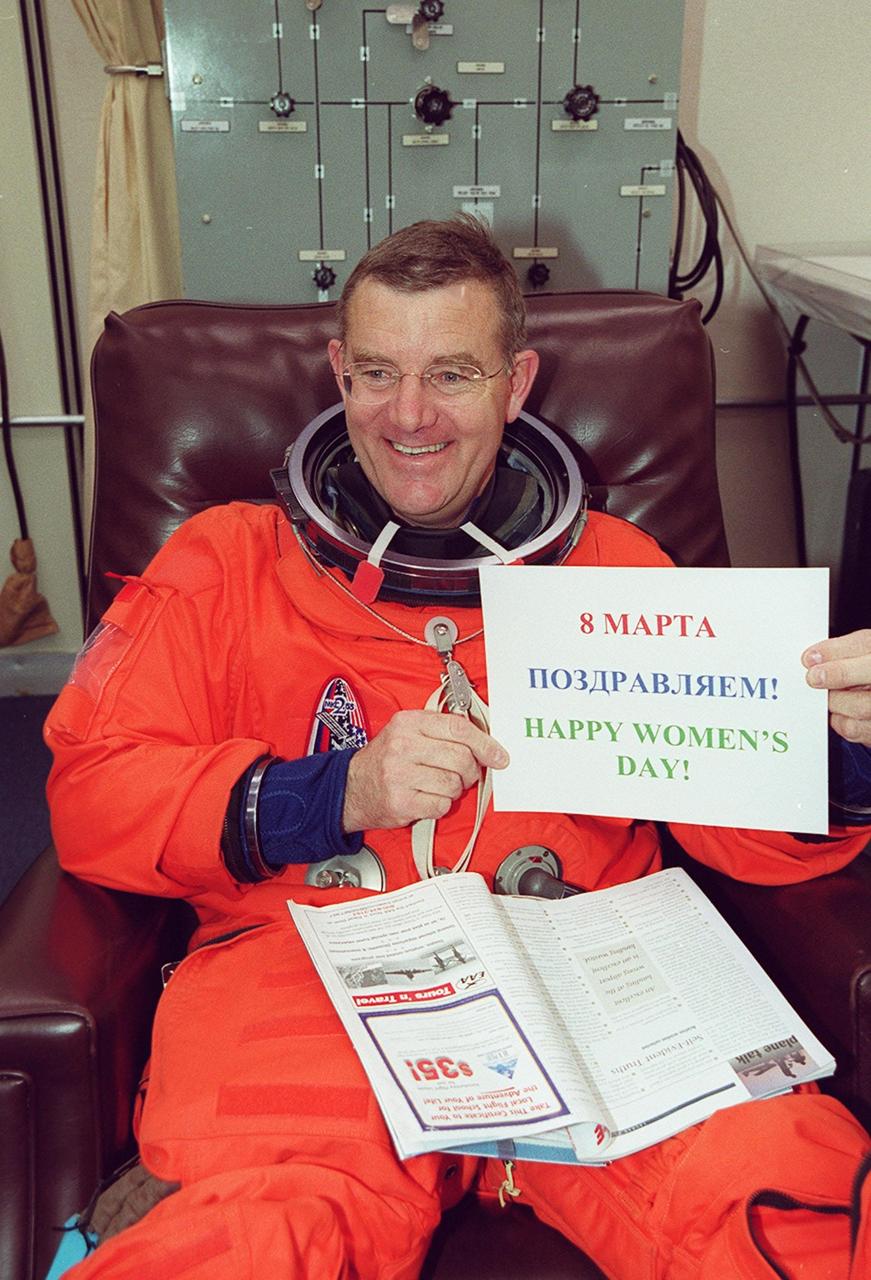
While suiting up in the Operations and Checkout Building, Mission Specialist James Voss shows his support of International Women’s Day, March 8, with a sign in both Cyrillic and English. Voss is also part of a crew, known as Expedition One, who will be replacing Expedition One on the International Space Station. STS-102 is the eighth construction flight to the Space Station, carrying the Multi-Purpose Logistics Module Leonardo. The primary delivery system used to resupply and return Station cargo requiring a pressurized environment, Leonardo will deliver up to 10 tons of laboratory racks filled with equipment, experiments and supplies for outfitting the newly installed U.S. Laboratory Destiny. Discovery is set to launch March 8 at 6:42 a.m. EST. The 12-day mission is expected to end with a landing at KSC on March 20
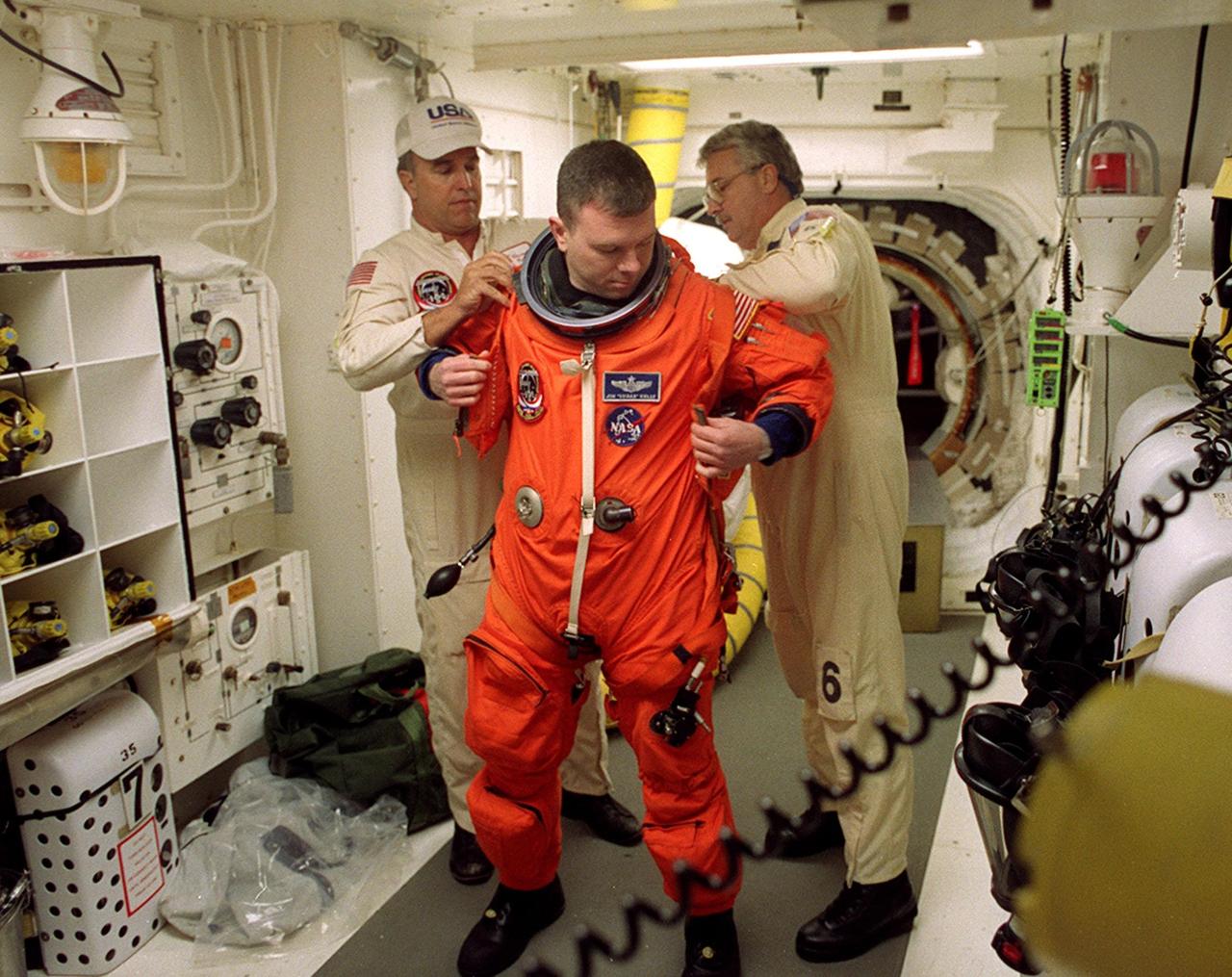
Before entering Space Shuttle Discovery, STS-102 Pilot James Kelly gets help with his launch and entry suit from technicians in the White Room. The mission is Kelly’s first Shuttle flight. Discovery is carrying the Multi-Purpose Logistics Module Leonardo on the eighth construction flight to the International Space Station. The primary delivery system used to resupply and return Station cargo requiring a pressurized environment, Leonardo will deliver up to 10 tons of laboratory racks filled with equipment, experiments and supplies for outfitting the newly installed U.S. Laboratory Destiny. Discovery is set to launch March 8 at 6:42 a.m. EST. The 12-day mission is expected to end with a landing at KSC on March 20
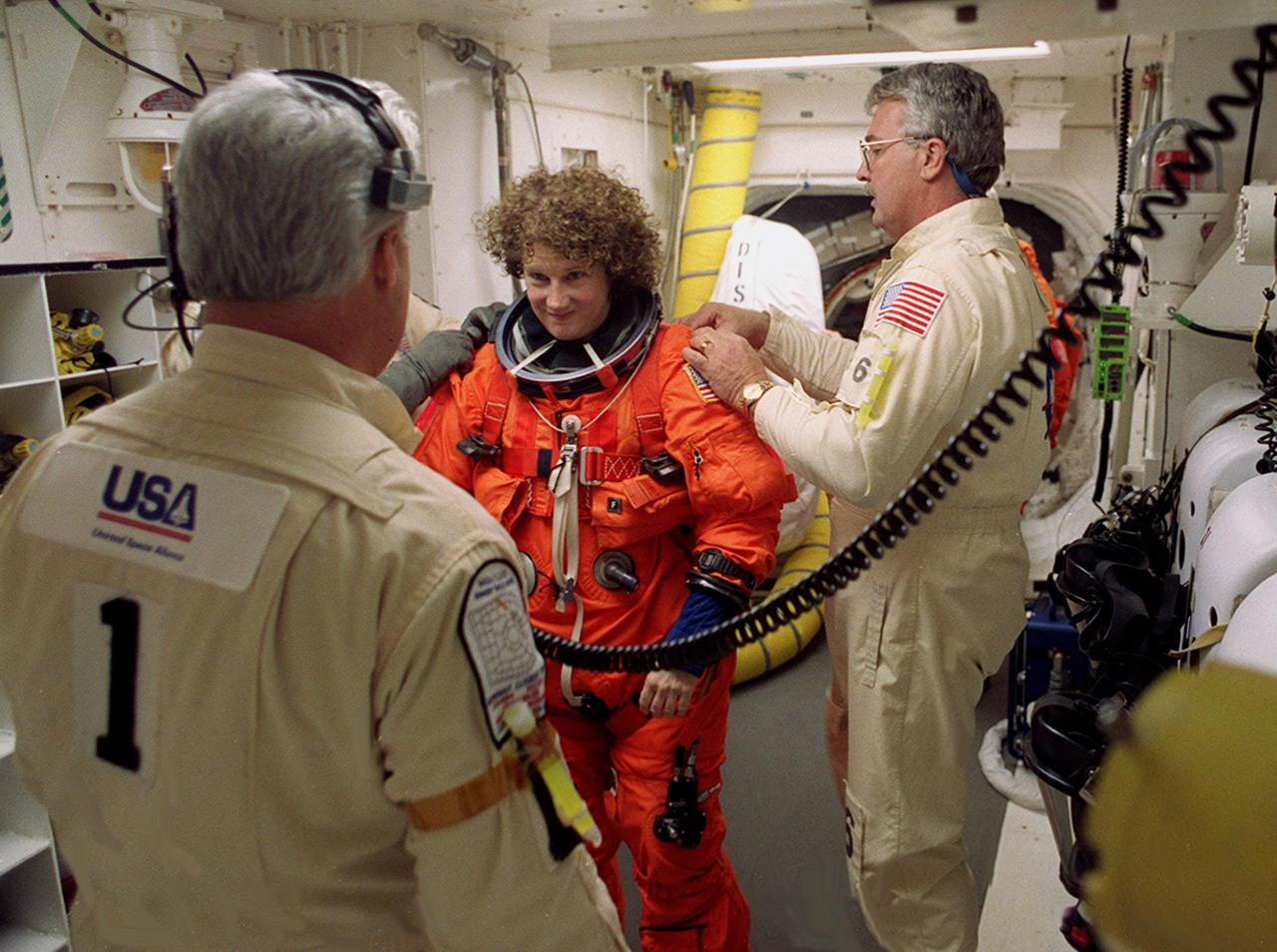
Technicians in the White Room, Launch Pad 39B, help STS-102 Mission Specialist Susan Helms with her launch and entry suit before she enters Space Shuttle Discovery. The mission is Helms’ fifth Shuttle flight. Helms is also part of the Expedition Two crew flying on the mission to replace the Expedition One crew on the Station. Discovery is carrying the Multi-Purpose Logistics Module Leonardo on the eighth construction flight to the International Space Station. The primary delivery system used to resupply and return Station cargo requiring a pressurized environment, Leonardo will deliver up to 10 tons of laboratory racks filled with equipment, experiments and supplies for outfitting the newly installed U.S. Laboratory Destiny. Discovery is set to launch March 8 at 6:42 a.m. EST. The 12-day mission is expected to end with a landing at KSC on March 20
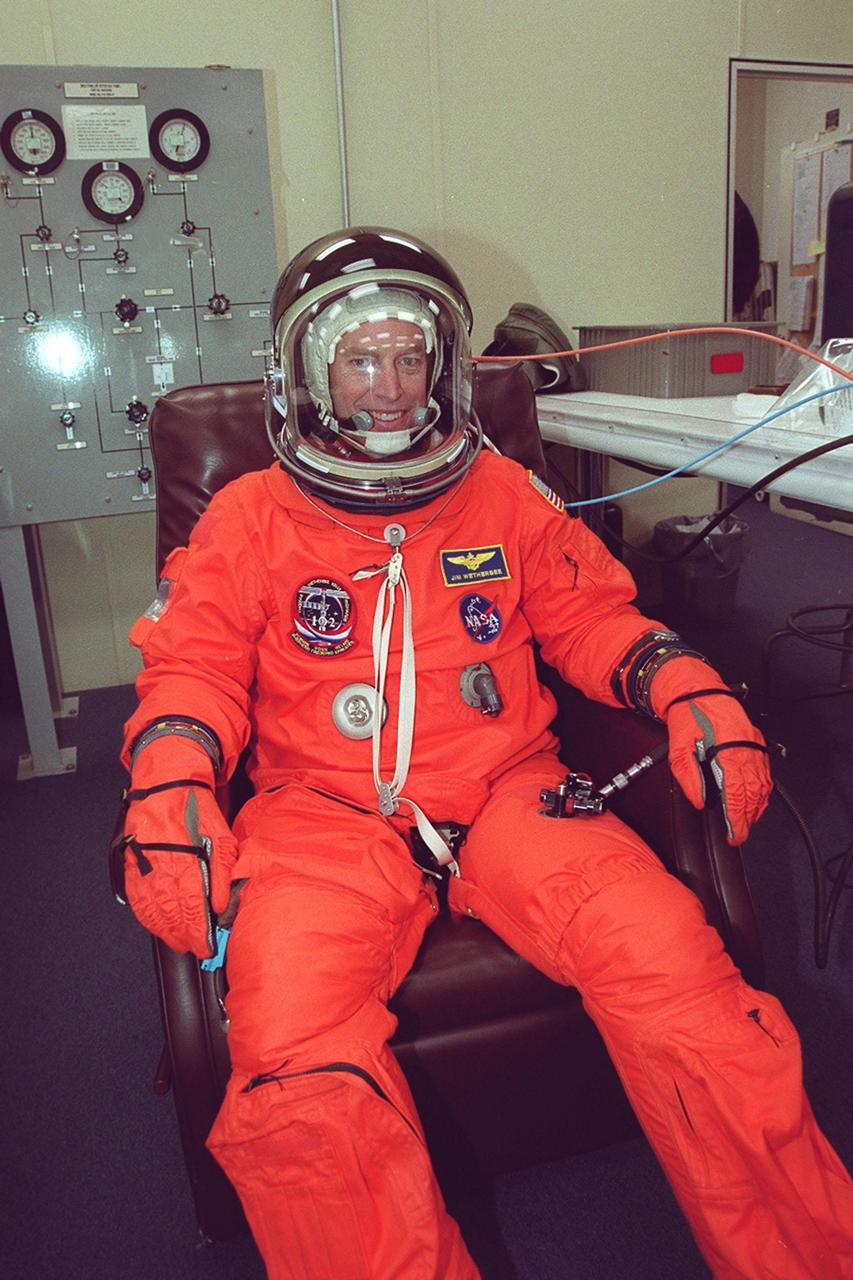
STS-102 Commander James Wetherbee gets final adjustments on his launch and entry suit before heading to Space Shuttle Discovery on Launch Pad 39B. This mission is Wetherbee’s fifth Shuttle flight. Discovery is scheduled to launch March 8 at 6:42 a.m. EST, carrying the Multi-Purpose Logistics Module Leonardo to the International Space Station. The primary delivery system used to resupply and return Station cargo requiring a pressurized environment, Leonardo will deliver up to 10 tons of laboratory racks filled with equipment, experiments and supplies for outfitting the newly installed U.S. Laboratory Destiny. In addition, three crew members Mission Specialists James Voss, Susan Helms and Russian cosmonaut Yury Usachev are the Expedition Two crew replacing Expedition One on the Station. Discovery is expected to land at KSC on March 20 at 2:02 a.m
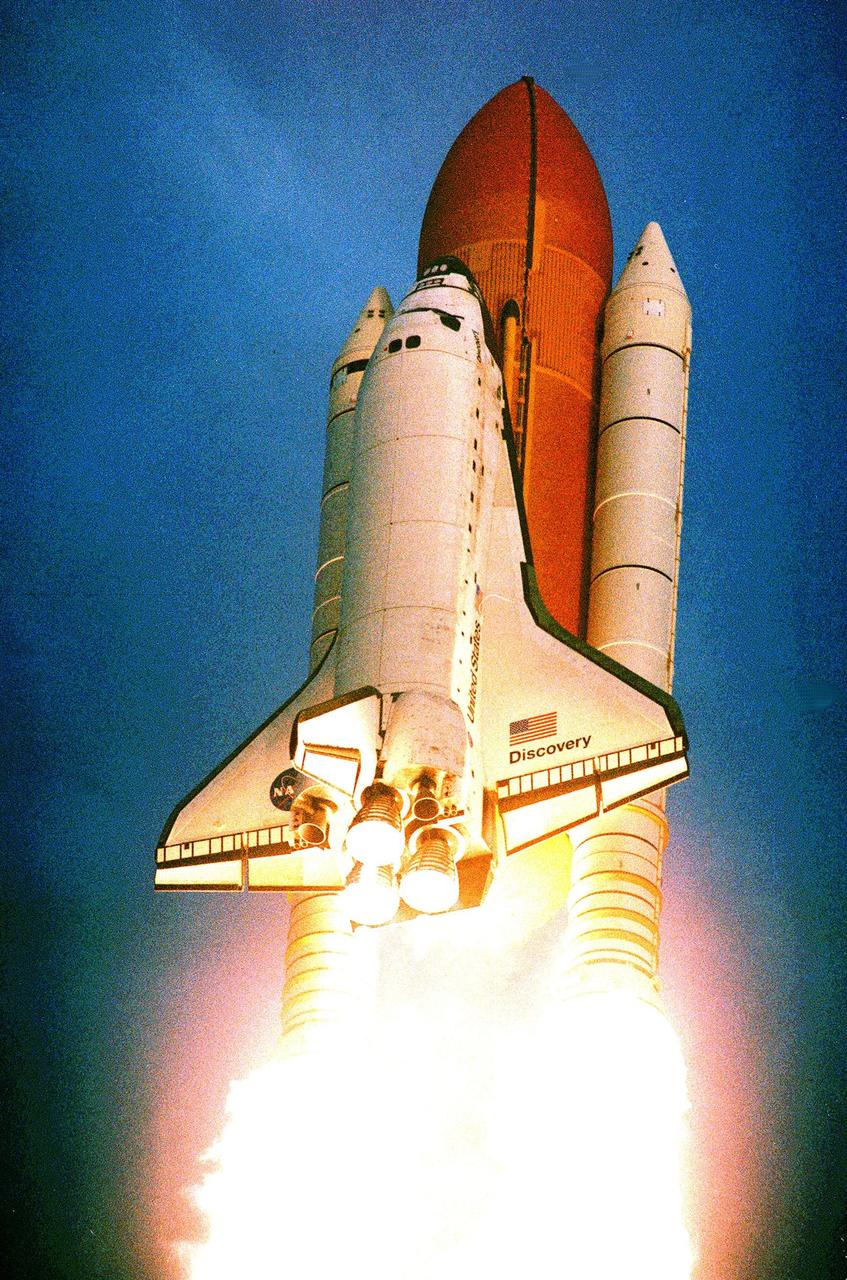
KENNEDY SPACE CENTER, FLA. -- Space Shuttle Discovery is hurled through a gossamer sky after launch today on mission STS-96. Lifting off at 6:49:42 a.m. EDT, the crew of seven begin a 10-day logistics and resupply mission for the International Space Station. Discovery carries about 4,000 pounds of supplies, to be stored aboard the station for use by future crews, including laptop computers, cameras, tools, spare parts, and clothing. The mission also includes such payloads as a Russian crane, the Strela; a U.S.-built crane; the Spacehab Oceaneering Space System Box (SHOSS), a logistics items carrier; and STARSHINE, a student-involved experiment. It will include a space walk to attach the cranes to the outside of the ISS for use in future construction. Landing is expected at the SLF on June 6 about 1:58 a.m. EDT
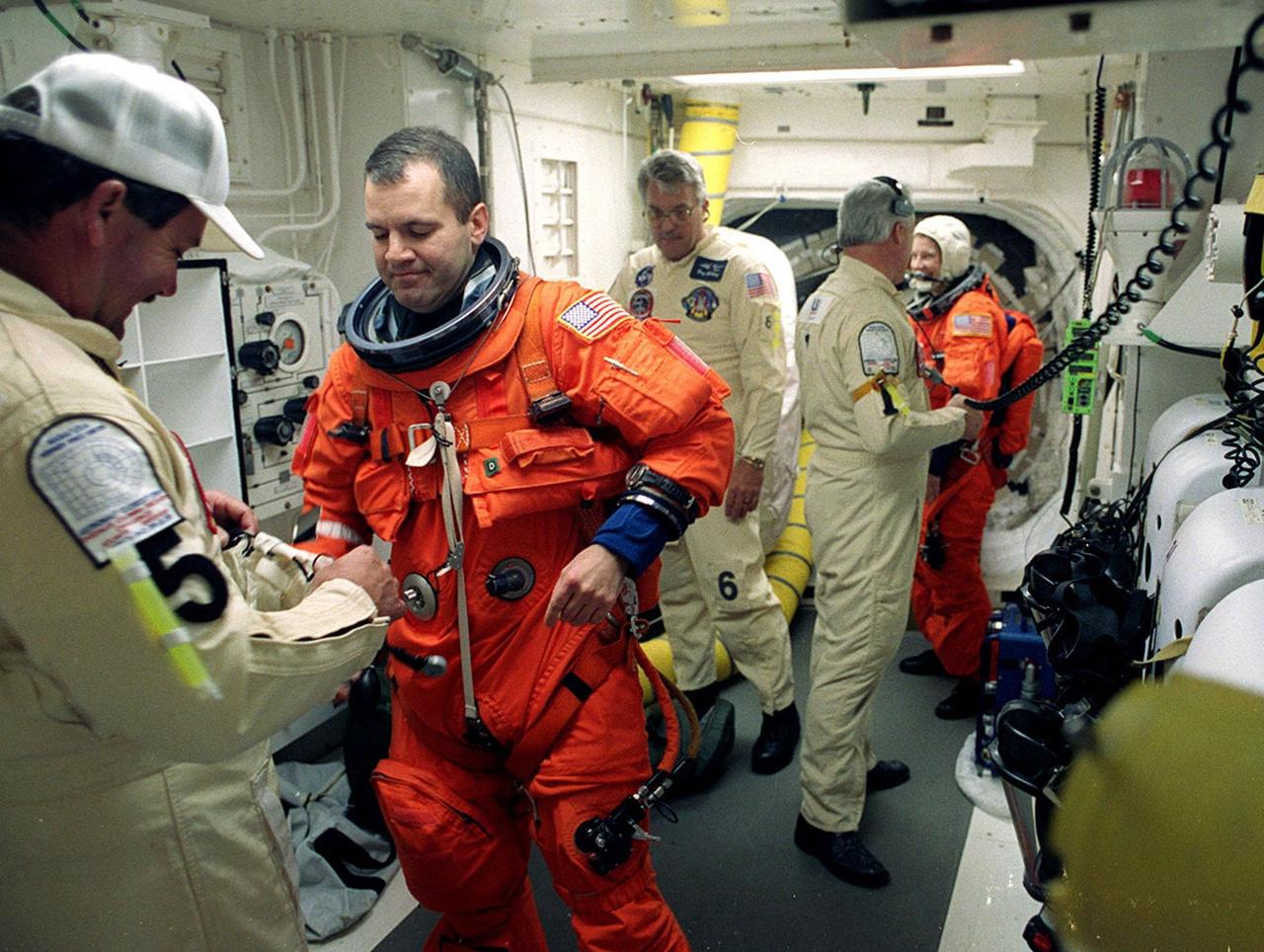
Technicians in the White Room, Launch Pad 39B, help STS-102 Mission Specialist Paul Richards with his launch and entry suit before he enters Space Shuttle Discovery. The mission is Richards’ first Shuttle flight. In the background is Mission Specialist Susan Helms. Discovery is carrying the Multi-Purpose Logistics Module Leonardo on the eighth construction flight to the International Space Station. The primary delivery system used to resupply and return Station cargo requiring a pressurized environment, Leonardo will deliver up to 10 tons of laboratory racks filled with equipment, experiments and supplies for outfitting the newly installed U.S. Laboratory Destiny. Discovery is set to launch March 8 at 6:42 a.m. EST. The 12-day mission is expected to end with a landing at KSC on March 20

Before entering Space Shuttle Discovery, STS-102 Mission Specialist James Voss (center) is helped preparing his launch and entry suit for launch from technicians in the White Room. The mission is Voss’s fifth Shuttle flight. In the background is Pilot James Kelly waiting to enter Discovery. Voss is also part of the Expedition Two crew flying on the mission to replace the Expedition One crew on the Station. Discovery is carrying the Multi-Purpose Logistics Module Leonardo on the eighth construction flight to the International Space Station. The primary delivery system used to resupply and return Station cargo requiring a pressurized environment, Leonardo will deliver up to 10 tons of laboratory racks filled with equipment, experiments and supplies for outfitting the newly installed U.S. Laboratory Destiny. Discovery is set to launch March 8 at 6:42 a.m. EST. The 12-day mission is expected to end with a landing at KSC on March 20

NASA Administrator Daniel Goldin (left) greets Mme. Aline Chretien, wife of the Canadian Prime Minister, at the launch of STS-96. Looking on in the background (between them) is former astronaut Jean-Loup Chretien (no relation), who flew on STS-86. Mme. Chretien attended the launch because one of the STs-96 crew is Mission Specialist Julie Payette, who represents the Canadian Space Agency. Space Shuttle Discovery launched on time at 6:49:42 a.m. EDT to begin a 10-day logistics and resupply mission for the International Space Station. Along with such payloads as a Russian crane, the Strela; a U.S.-built crane; the Spacehab Oceaneering Space System Box (SHOSS), a logistics items carrier; and STARSHINE, a student-involved experiment, Discovery carries about 4,000 pounds of supplies, to be stored aboard the station for use by future crews, including laptop computers, cameras, tools, spare parts, and clothing. The mission includes a space walk to attach the cranes to the outside of the ISS for use in future construction. Landing is expected at the SLF on June 6 about 1:58 a.m. EDT