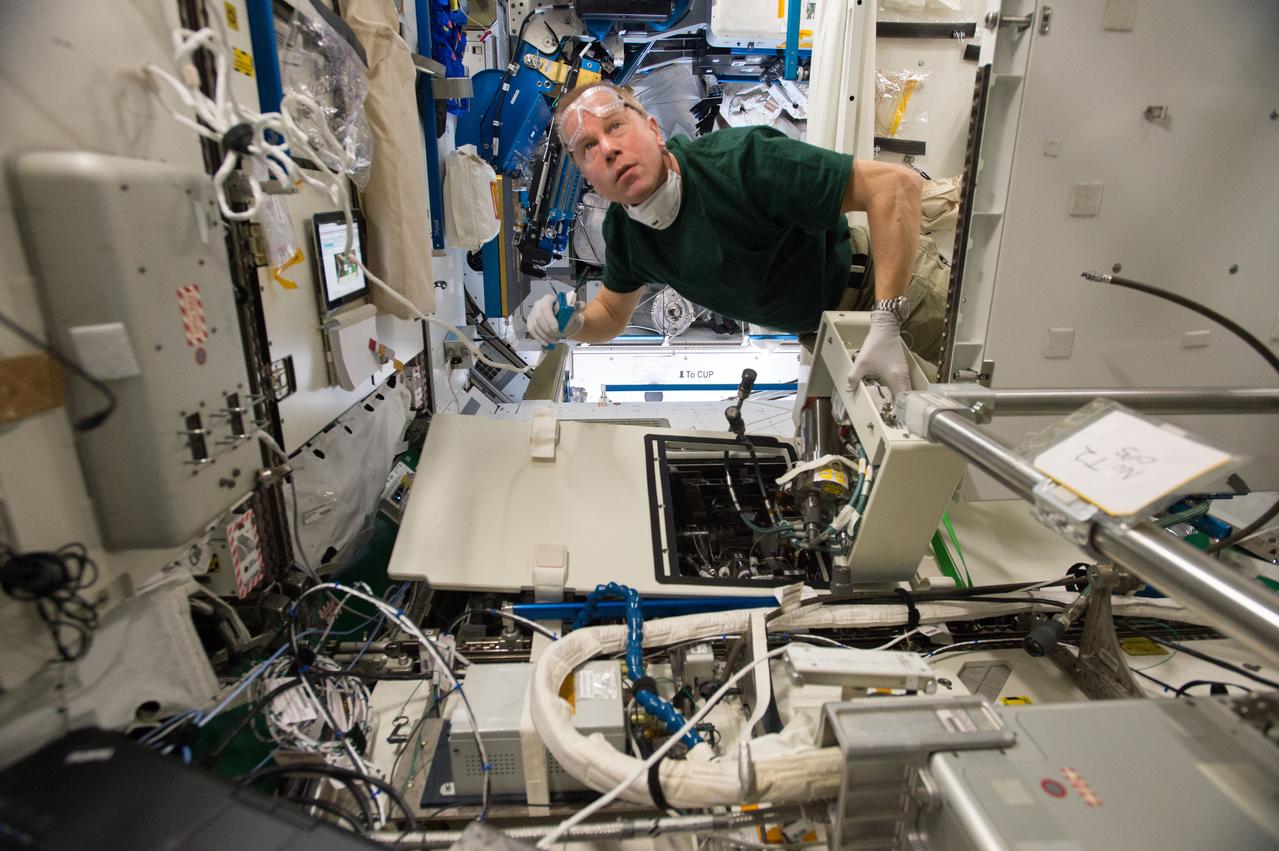
ISS046e023885 (01/25/2016) --- NASA astronaut Tim Kopra performs regular maintenance on the Urine Processing Assembly (UPA) aboard the International Space Station. The UPA is used by the crew to recycle water for use on the station. The image shows Tim replacing the brine filter from the UPA Fill Drain Valve enclosure.
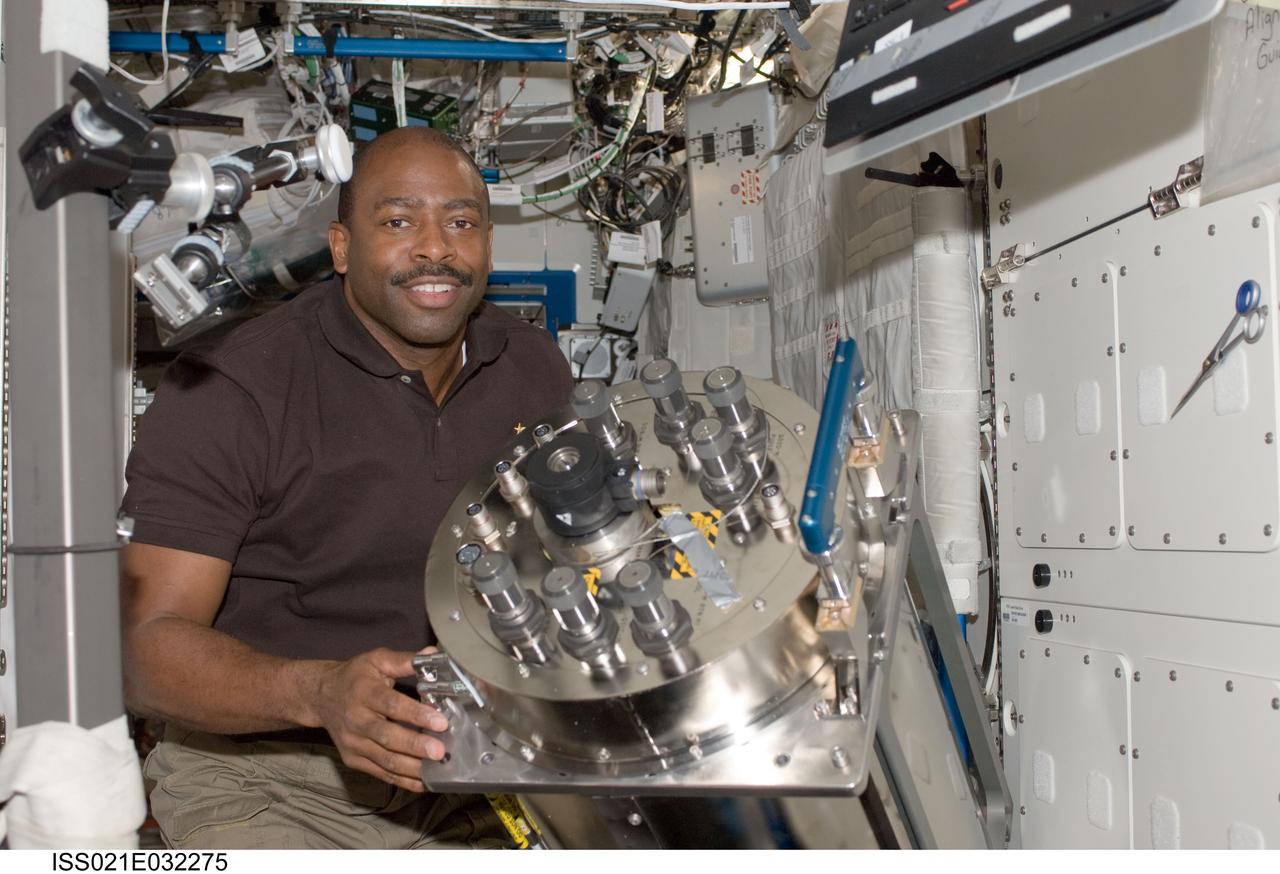
ISS021-E-032275 (23 Nov. 2009) --- NASA astronaut Leland Melvin, STS-129 mission specialist, holds the failed Urine Processor Assembly / Distillation Assembly (UPA DA) in the Destiny laboratory of the International Space Station while space shuttle Atlantis remains docked with the station. Melvin and European Space Agency astronaut Frank De Winne (out of frame), Expedition 21 commander, removed and packed the UPA DA, then transferred it from the Water Recovery System 2 (WRS-2) rack to Atlantis for stowage on the middeck.
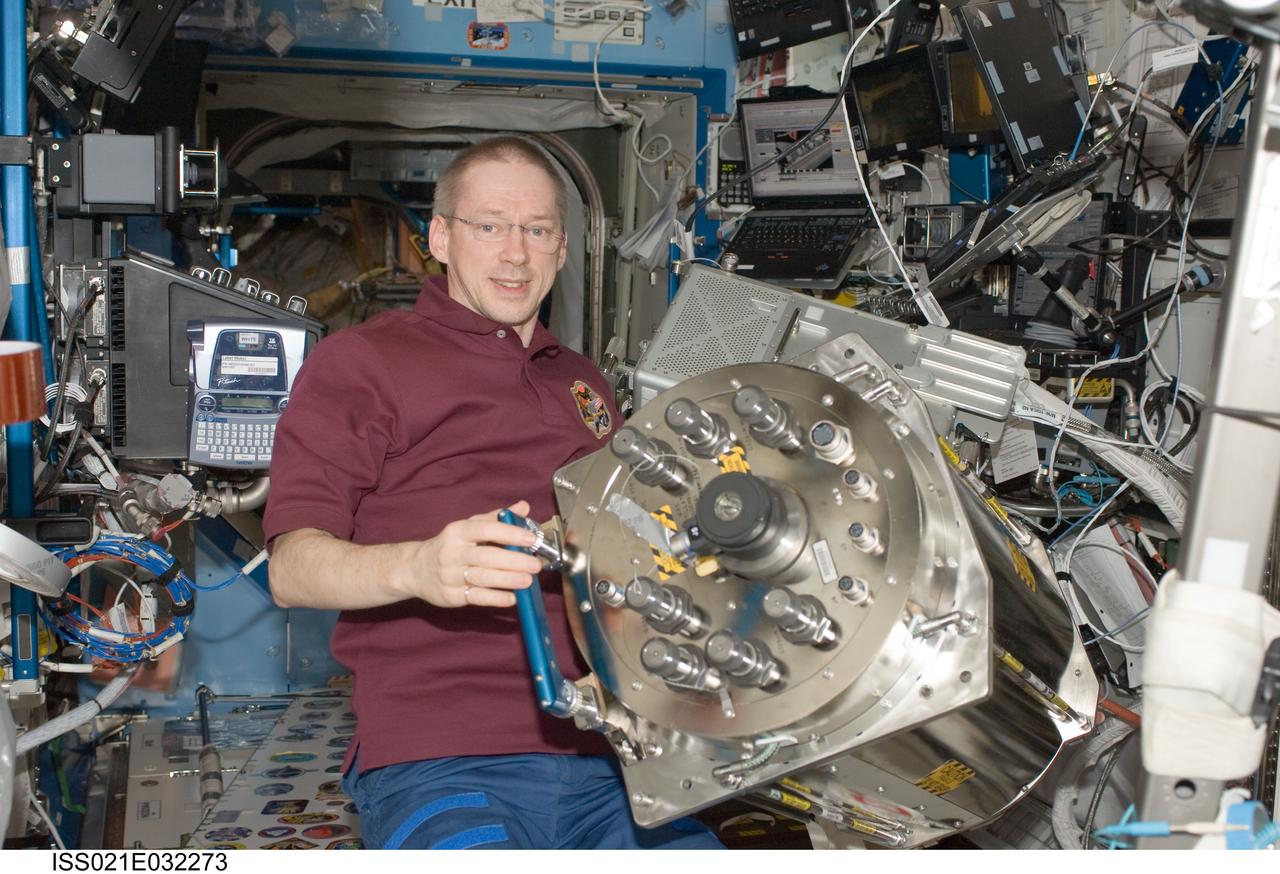
ISS021-E-032273 (23 Nov. 2009) --- European Space Agency astronaut Frank De Winne, Expedition 21 commander, holds the failed Urine Processor Assembly / Distillation Assembly (UPA DA) in the Destiny laboratory of the International Space Station while space shuttle Atlantis remains docked with the station. De Winne and NASA astronaut Leland Melvin (out of frame), STS-129 mission specialist, removed and packed the UPA DA, then transferred it from the Water Recovery System 2 (WRS-2) rack to Atlantis for stowage on the middeck.
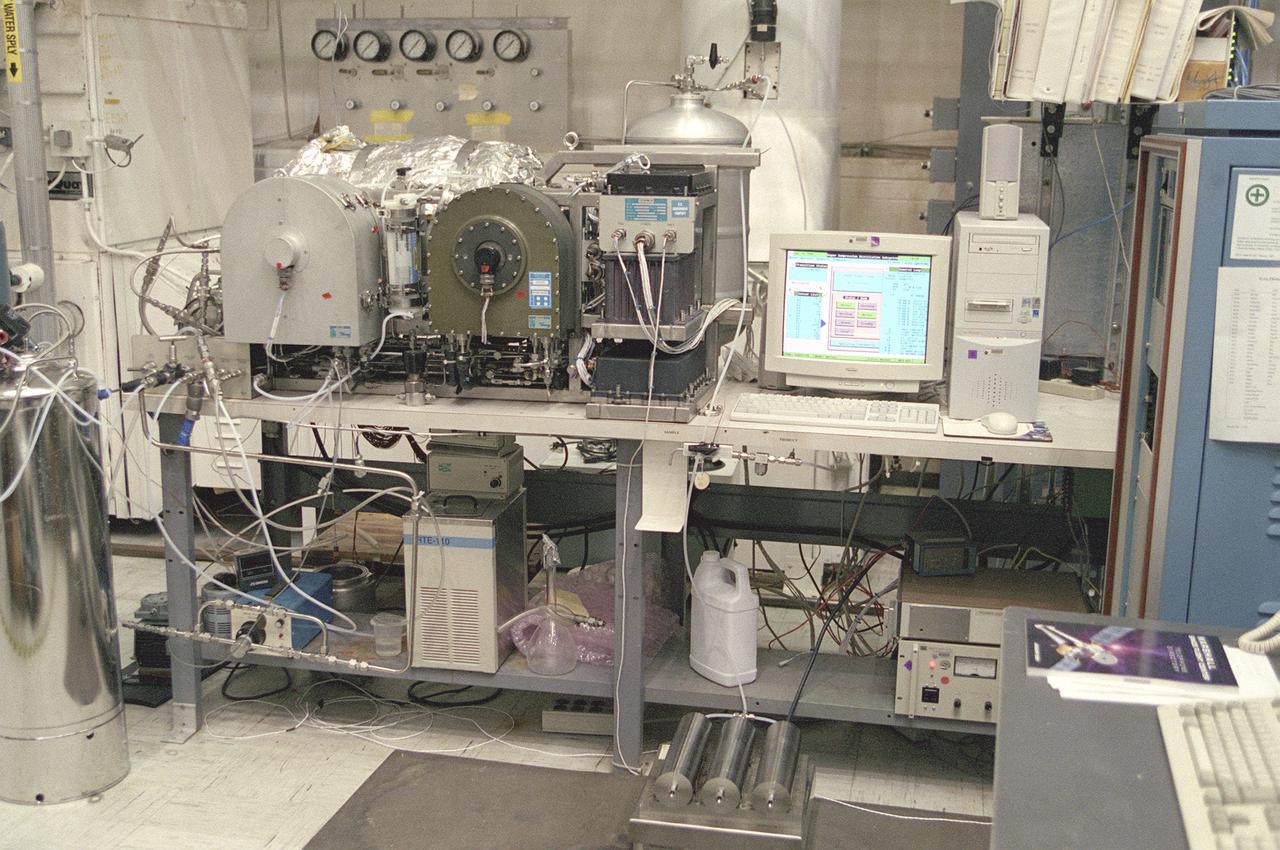
The Marshall Space Flight Center (MSFC) is responsible for designing and building the life support systems that will provide the crew of the International Space Station (ISS) a comfortable environment in which to live and work. Scientists and engineers at the MSFC are working together to provide the ISS with systems that are safe, efficient, and cost-effective. These compact and powerful systems are collectively called the Environmental Control and Life Support Systems, or simply, ECLSS. This photograph shows the fifth generation Urine Processor Development Hardware. The Urine Processor Assembly (UPA) is a part of the Water Recovery System (WRS) on the ISS. It uses a chase change process called vapor compression distillation technology to remove contaminants from urine. The UPA accepts and processes pretreated crewmember urine to allow it to be processed along with other wastewaters in the Water Processor Assembly (WPA). The WPA removes free gas, organic, and nonorganic constituents before the water goes through a series of multifiltration beds for further purification. Product water quality is monitored primarily through conductivity measurements. Unacceptable water is sent back through the WPA for reprocessing. Clean water is sent to a storage tank.
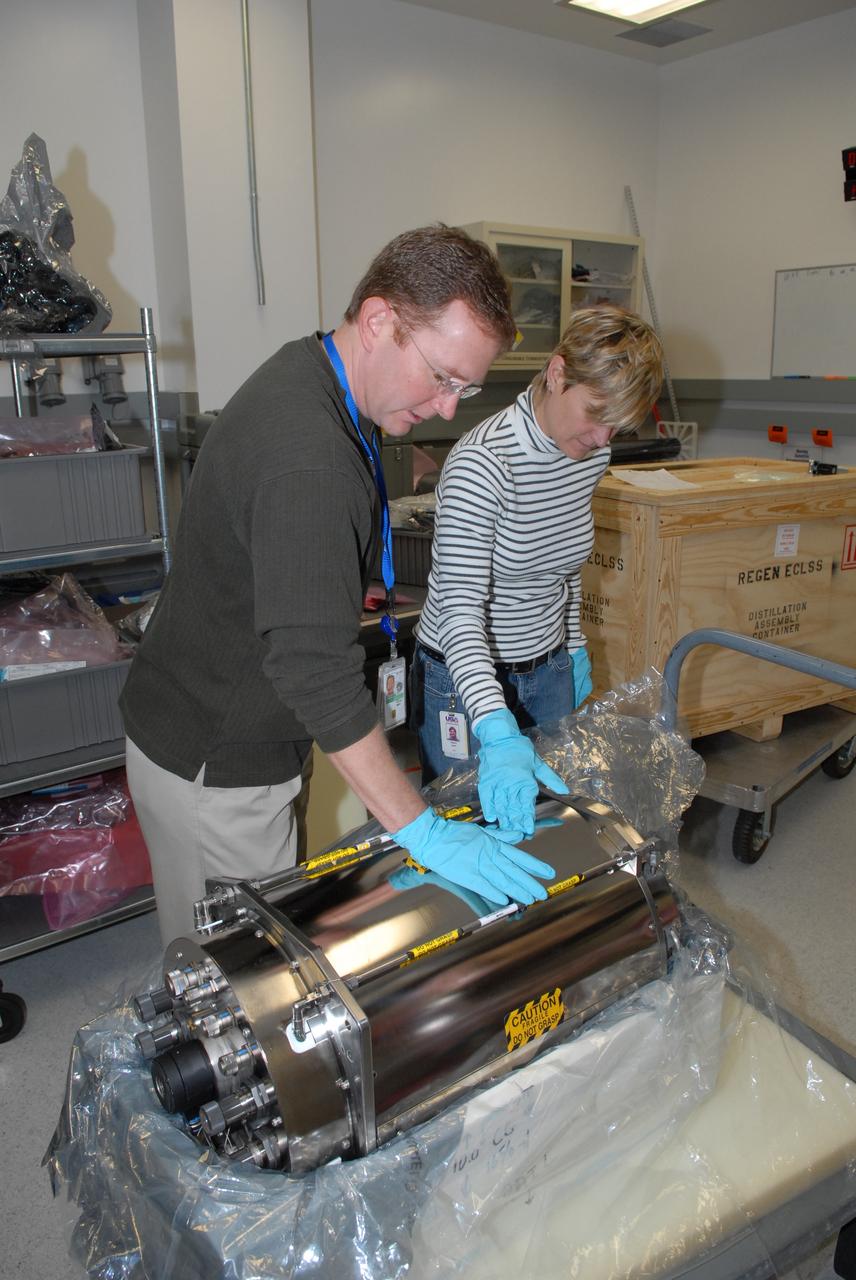
CAPE CANAVERAL, Fla. – A replacement distillation assembly for the International Space Station's new water recycling system is being checked out in the Space Station Processing Facility at NASA's Kennedy Space Center in Florida. The unit is part of the Urine Processing Assembly that removes impurities from urine in an early stage of the recycling process. It will be flown to the station aboard space shuttle Discovery on the STS-119 mission. Photo credit: NASA/Jack Pfaller

CAPE CANAVERAL, Fla. – A replacement distillation assembly for the International Space Station's new water recycling system is being checked out in the Space Station Processing Facility at NASA's Kennedy Space Center in Florida. The unit is part of the Urine Processing Assembly that removes impurities from urine in an early stage of the recycling process. It will be flown to the station aboard space shuttle Discovery on the STS-119 mission. Photo credit: NASA/Jack Pfaller
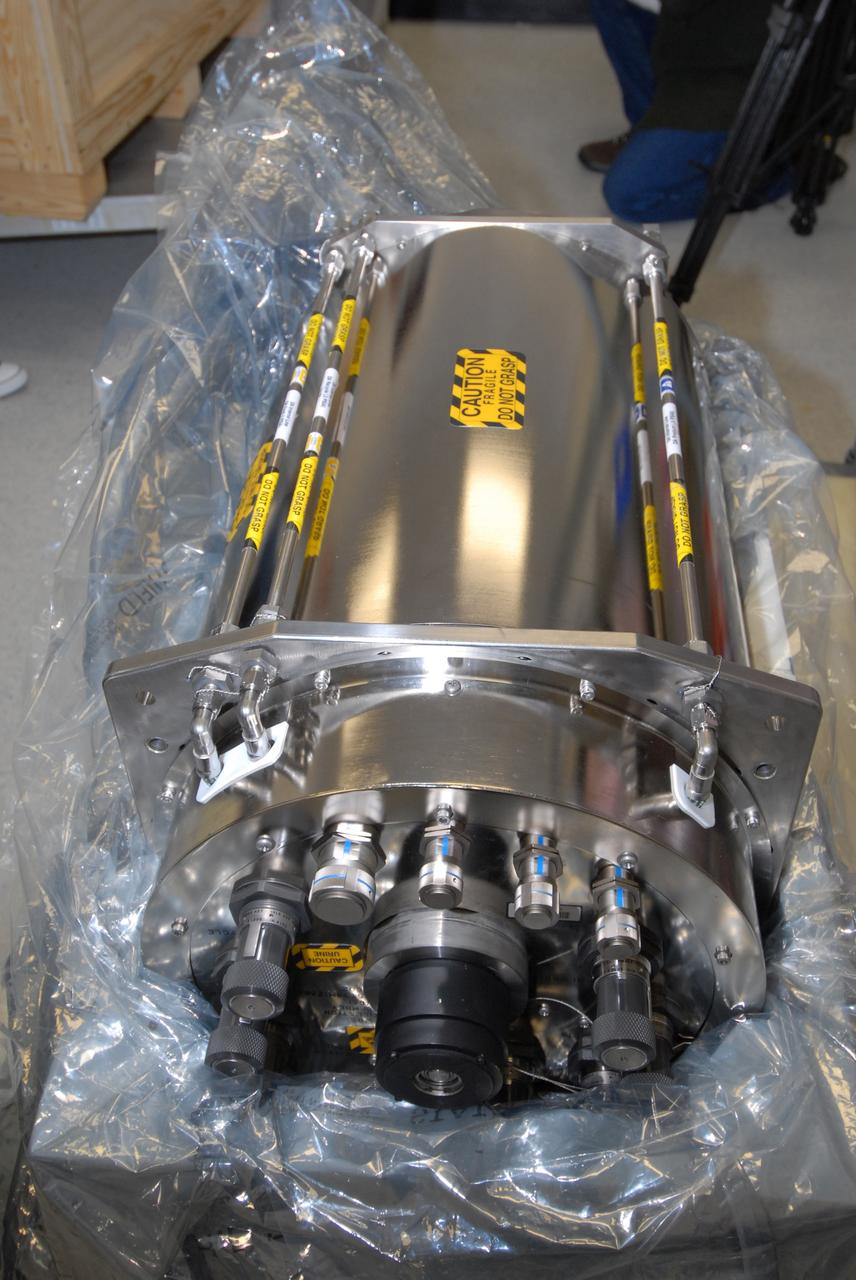
CAPE CANAVERAL, Fla. – A closeup of the replacement distillation assembly for the International Space Station's new water recycling system being checked out in the Space Station Processing Facility at NASA's Kennedy Space Center in Florida. The unit is part of the Urine Processing Assembly that removes impurities from urine in an early stage of the recycling process. It will be flown to the station aboard space shuttle Discovery on the STS-119 mission. Photo credit: NASA/Jack Pfaller
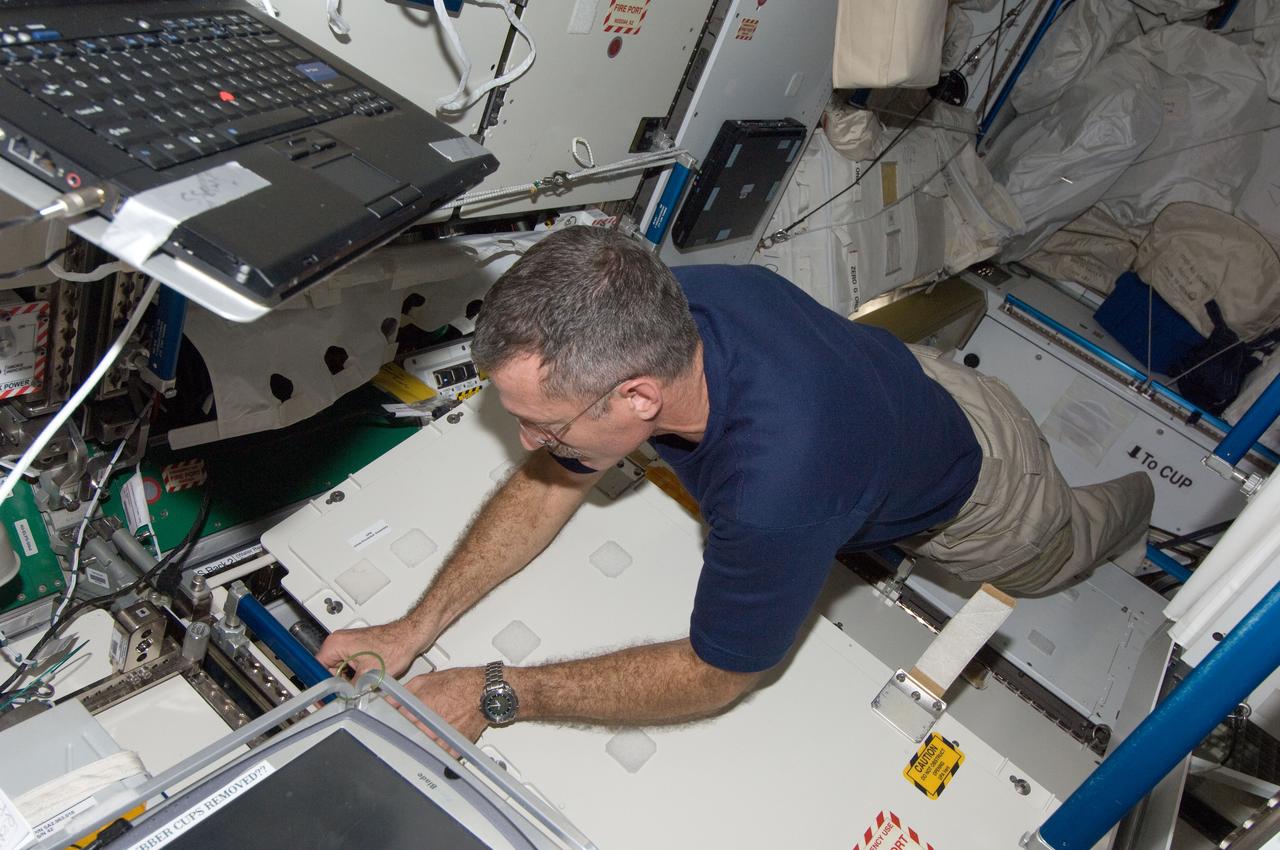
ISS029-E-043447 (19 Nov. 2011) --- NASA astronaut Dan Burbank, Expedition 29 flight engineer, works with the Urine Processor Assembly (UPA) in the Tranquility node of the International Space Station.
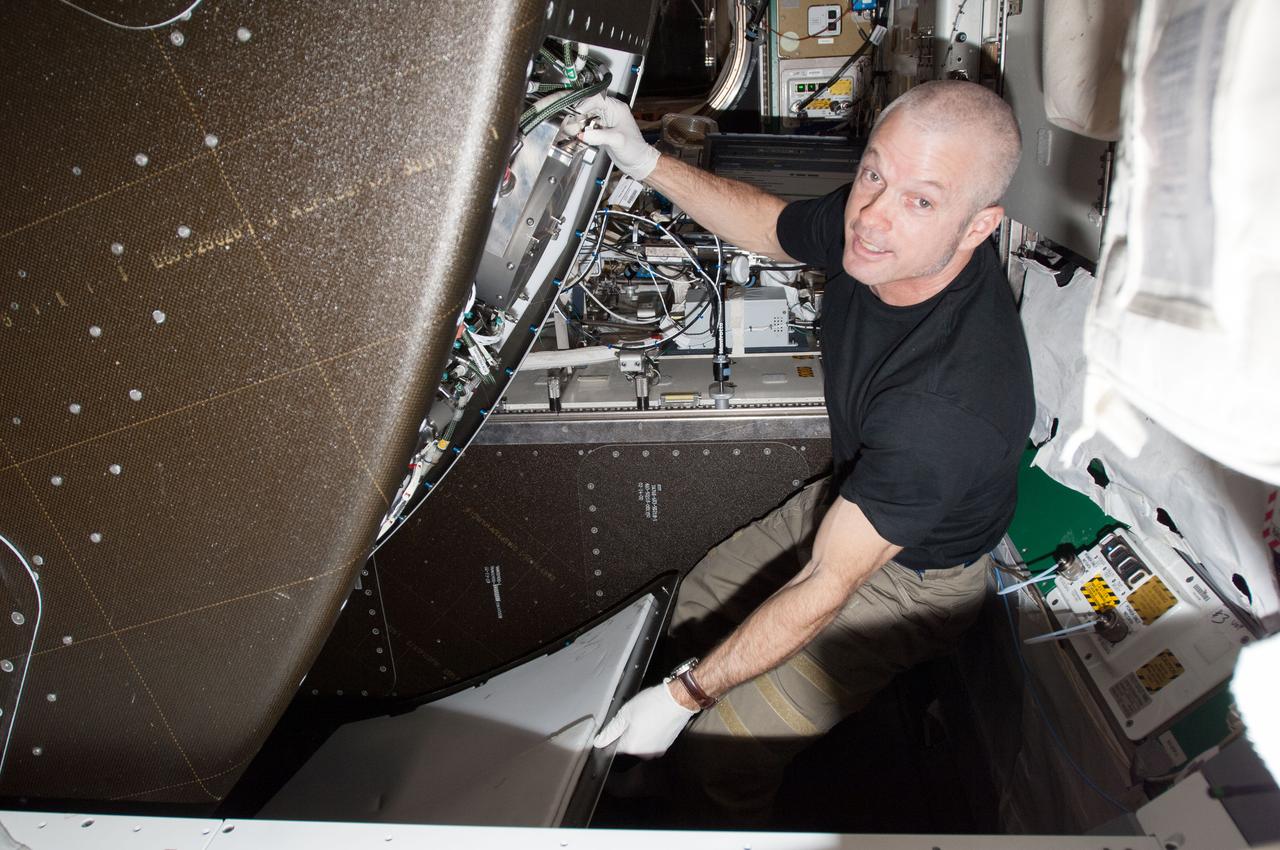
ISS040-E-026307 (1 July 2014) --- NASA astronaut Steve Swanson, Expedition 40 commander, performs in-flight maintenance behind a rack in the Tranquility node of the International Space Station.
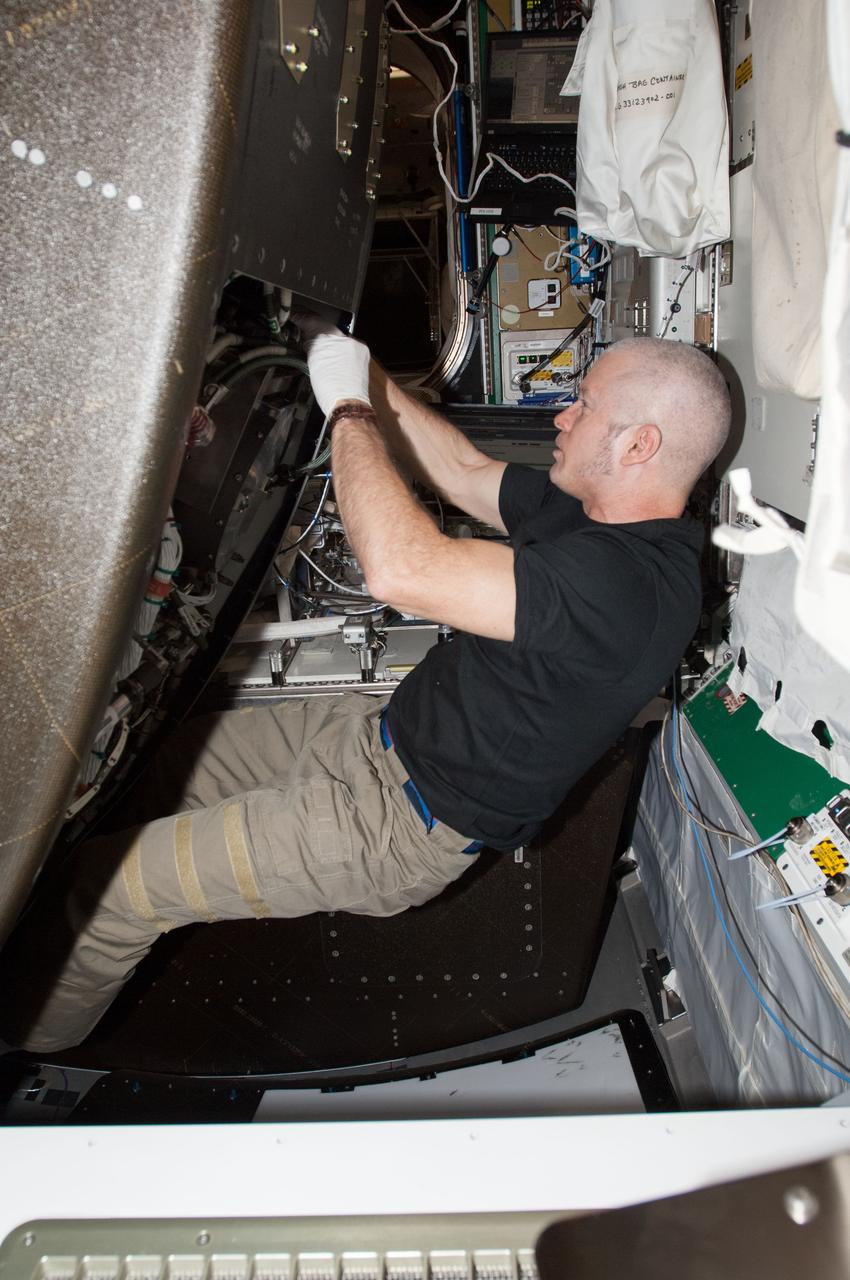
ISS040-E-026305 (1 July 2014) --- NASA astronaut Steve Swanson, Expedition 40 commander, performs in-flight maintenance behind a rack in the Tranquility node of the International Space Station.
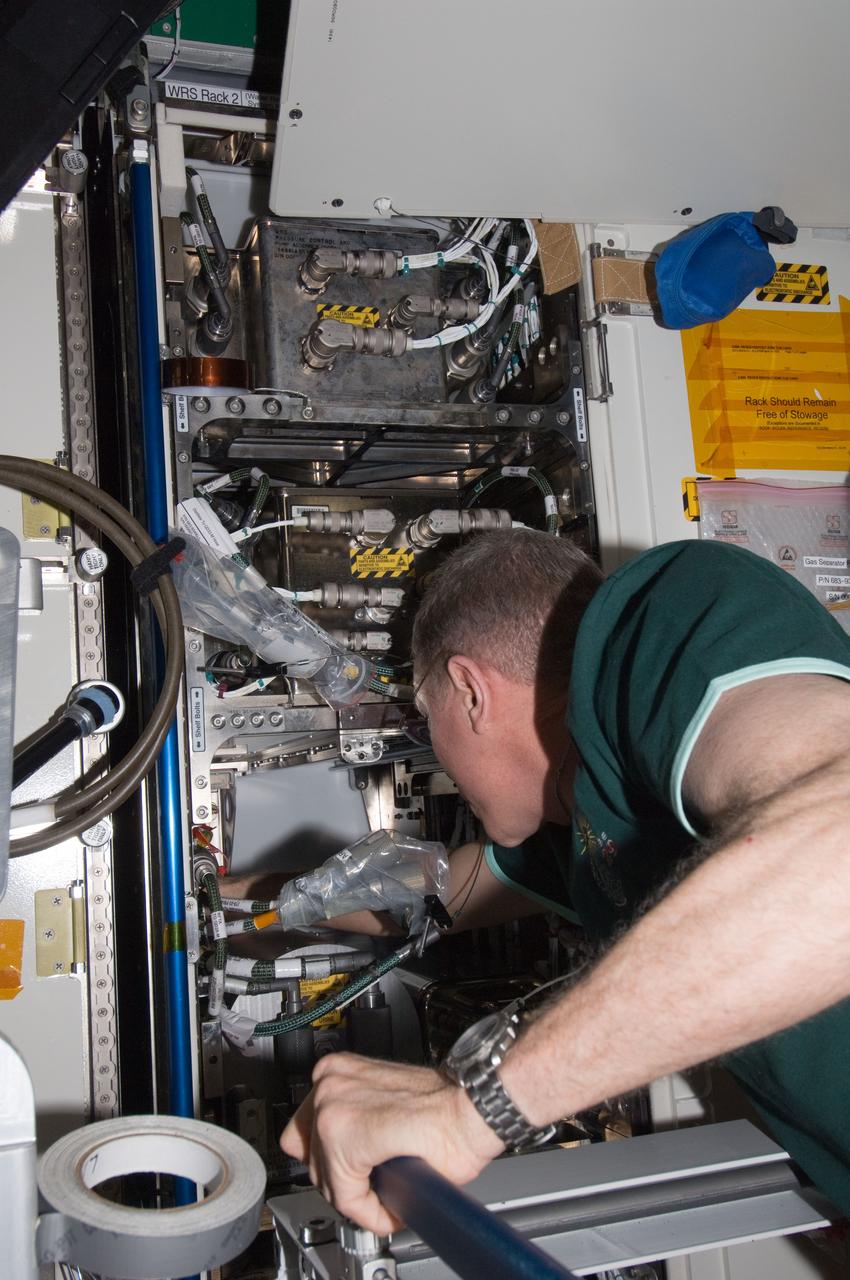
ISS029-E-021648 (10 Oct. 2011) --- NASA astronaut Mike Fossum, Expedition 29 commander, installs the Advanced Recycle Filter Tank Assembly (ARFTA) at the Urine Processor Assembly / Water Recovery System (UPA WRS) in the Destiny laboratory of the International Space Station.
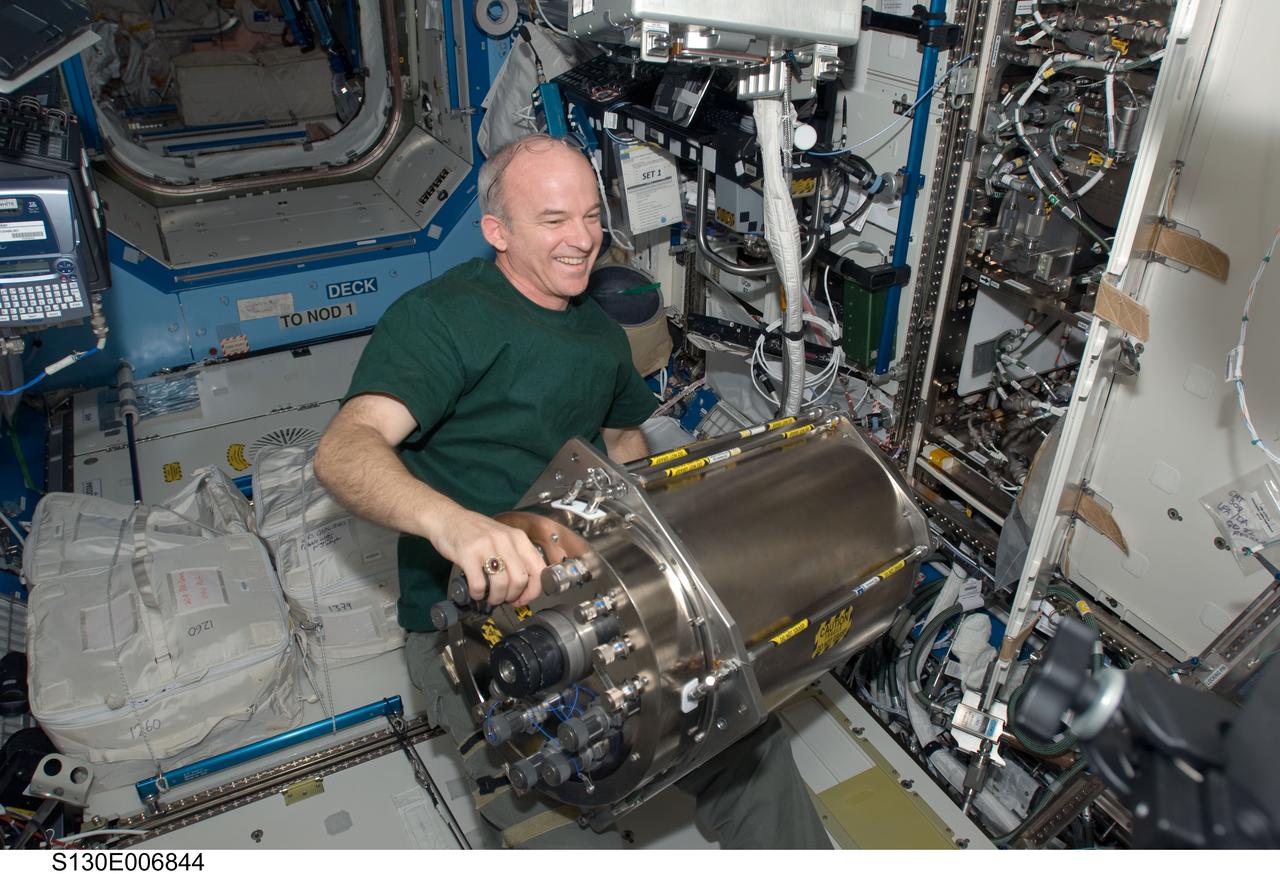
S130-E-006844 (10 Feb. 2010) --- NASA astronaut Jeffrey Williams, Expedition 22 commander, installs a Urine Processor Assembly / Distillation Assembly (UPA DA) in the Water Recovery System (WRS) rack in the Destiny laboratory of the International Space Station while space shuttle Endeavour (STS-130) remains docked with the station.
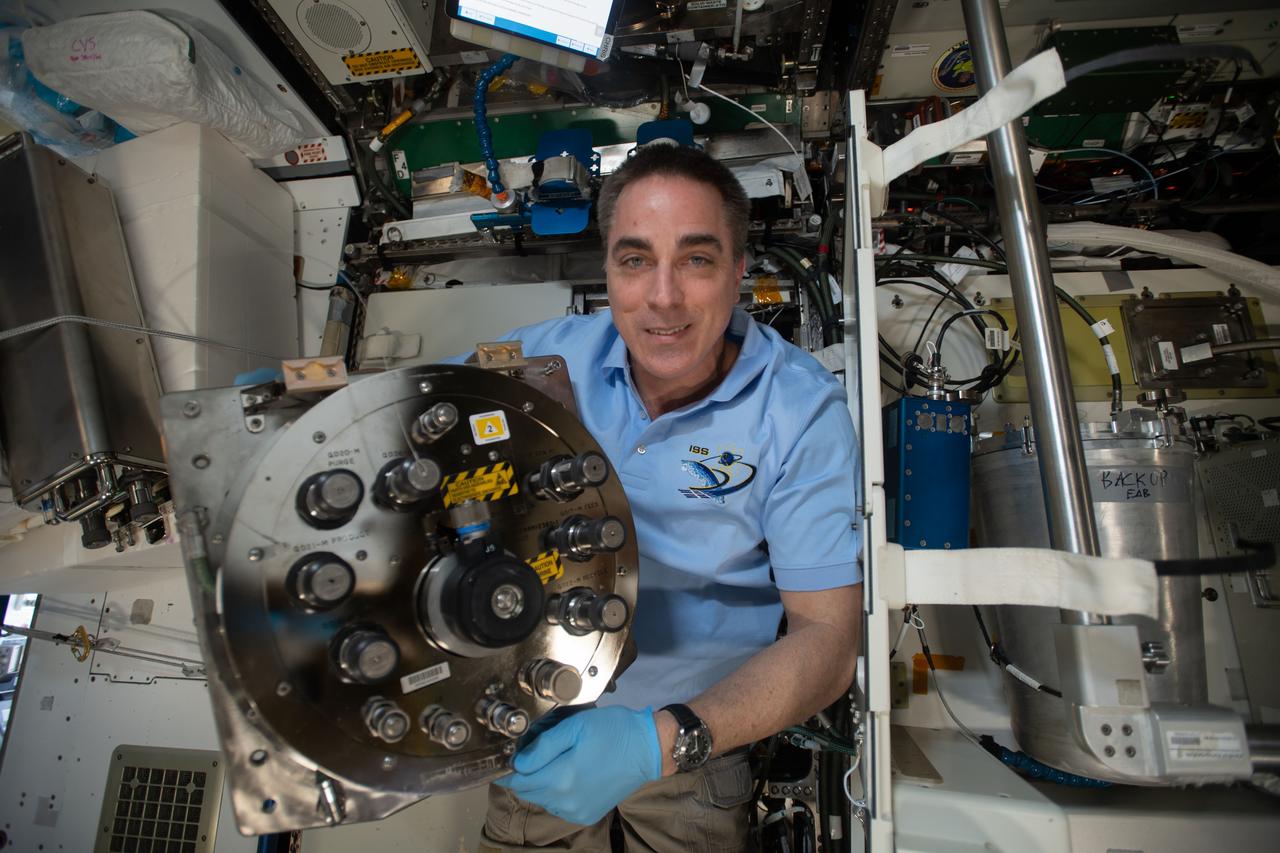
iss063e087568 (Sept. 10, 2020) --- NASA astronaut and Expedition 63 Commander Chris Cassidy replaces components inside the Waste and Hygiene Compartment, the International Space Station's bathroom located inside the Tranquility module.
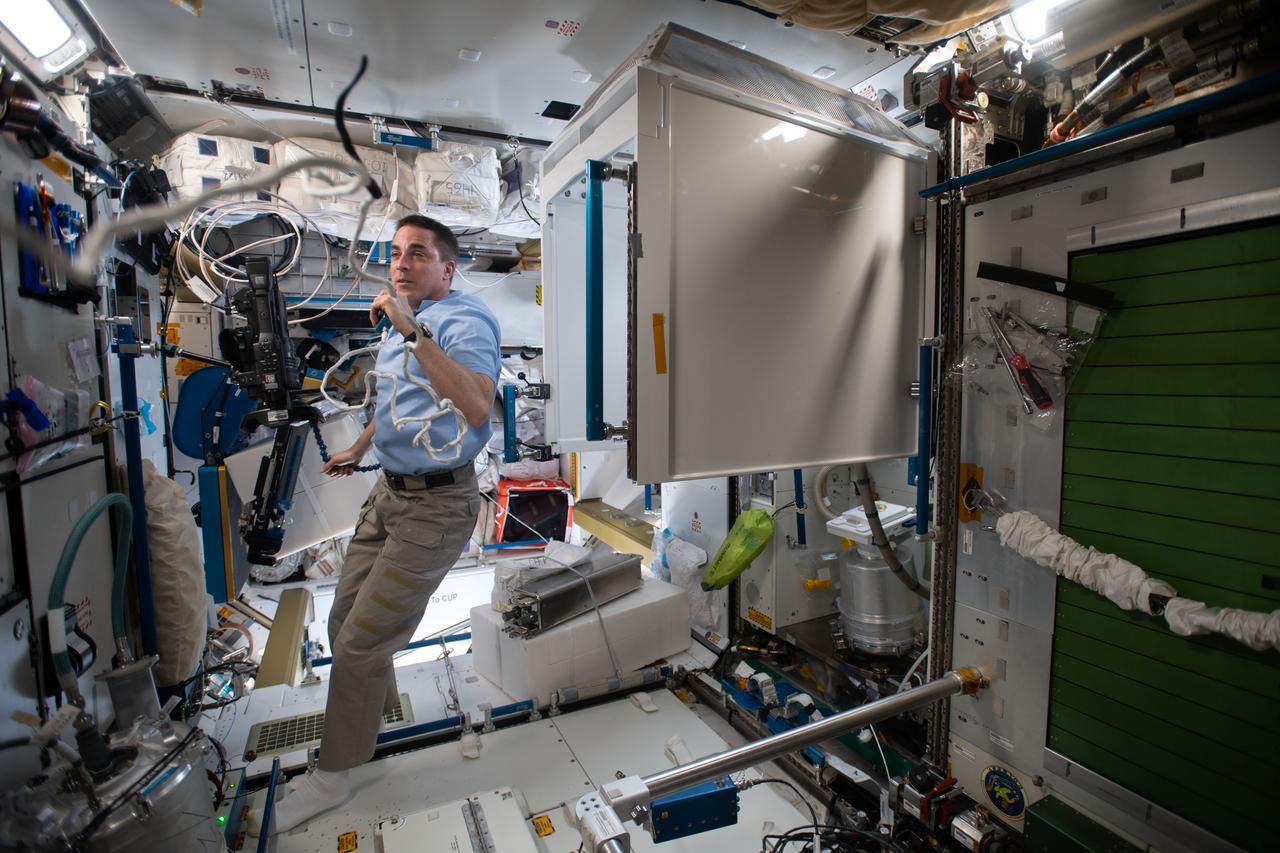
iss063e087493 (Sept. 10, 2020) --- NASA astronaut and Expedition 63 Commander Chris Cassidy calls down to Mission Control and gets ready for high-flying, orbital plumbing work inside the Waste and Hygiene Compartment, the International Space Station's bathroom located inside the Tranquility module.
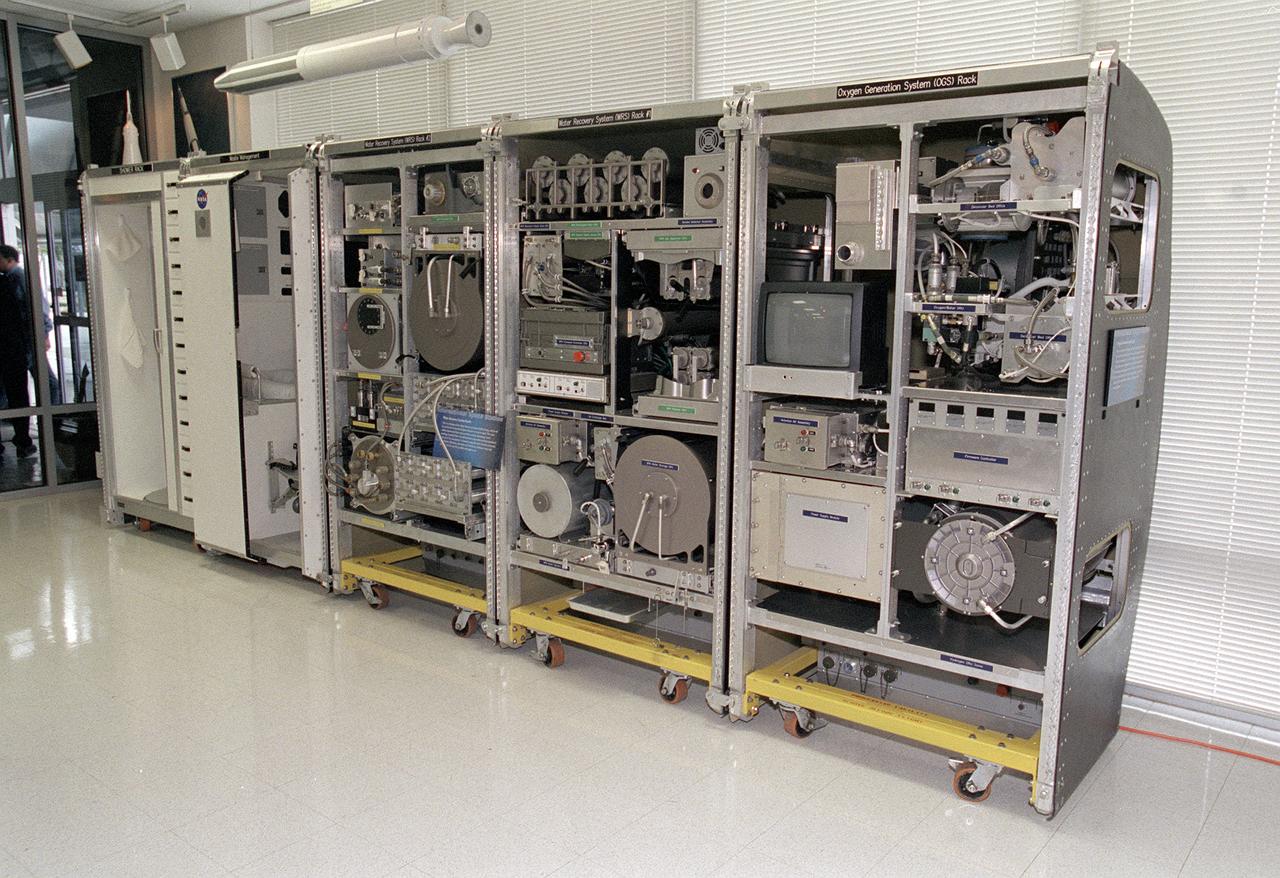
The Environmental Control and Life Support System (ECLSS) Group of the Flight Projects Directorate at the Marshall Space Flight Center in Huntsville, Alabama, is responsible for designing and building the life support systems that will provide the crew of the International Space Station (ISS) a comfortable environment in which to live and work. This photograph shows the mockup of the the ECLSS to be installed in the Node 3 module of the ISS. From left to right, shower rack, waste management rack, Water Recovery System (WRS) Rack #2, WRS Rack #1, and Oxygen Generation System (OGS) rack are shown. The WRS provides clean water through the reclamation of wastewaters and is comprised of a Urine Processor Assembly (UPA) and a Water Processor Assembly (WPA). The UPA accepts and processes pretreated crewmember urine to allow it to be processed along with other wastewaters in the WPA. The WPA removes free gas, organic, and nonorganic constituents before the water goes through a series of multifiltration beds for further purification. The OGS produces oxygen for breathing air for the crew and laboratory animals, as well as for replacing oxygen loss. The OGS is comprised of a cell stack, which electrolyzes (breaks apart the hydrogen and oxygen molecules) some of the clean water provided by the WRS, and the separators that remove the gases from the water after electrolysis.

ISS034-E-031133 (17 Jan. 2013) --- NASA astronaut Tom Marshburn, Expedition 34 flight engineer, updates software on the Waste and Hygiene Compartment?s Urine Processor Assembly in the Tranquility node of the International Space Station.
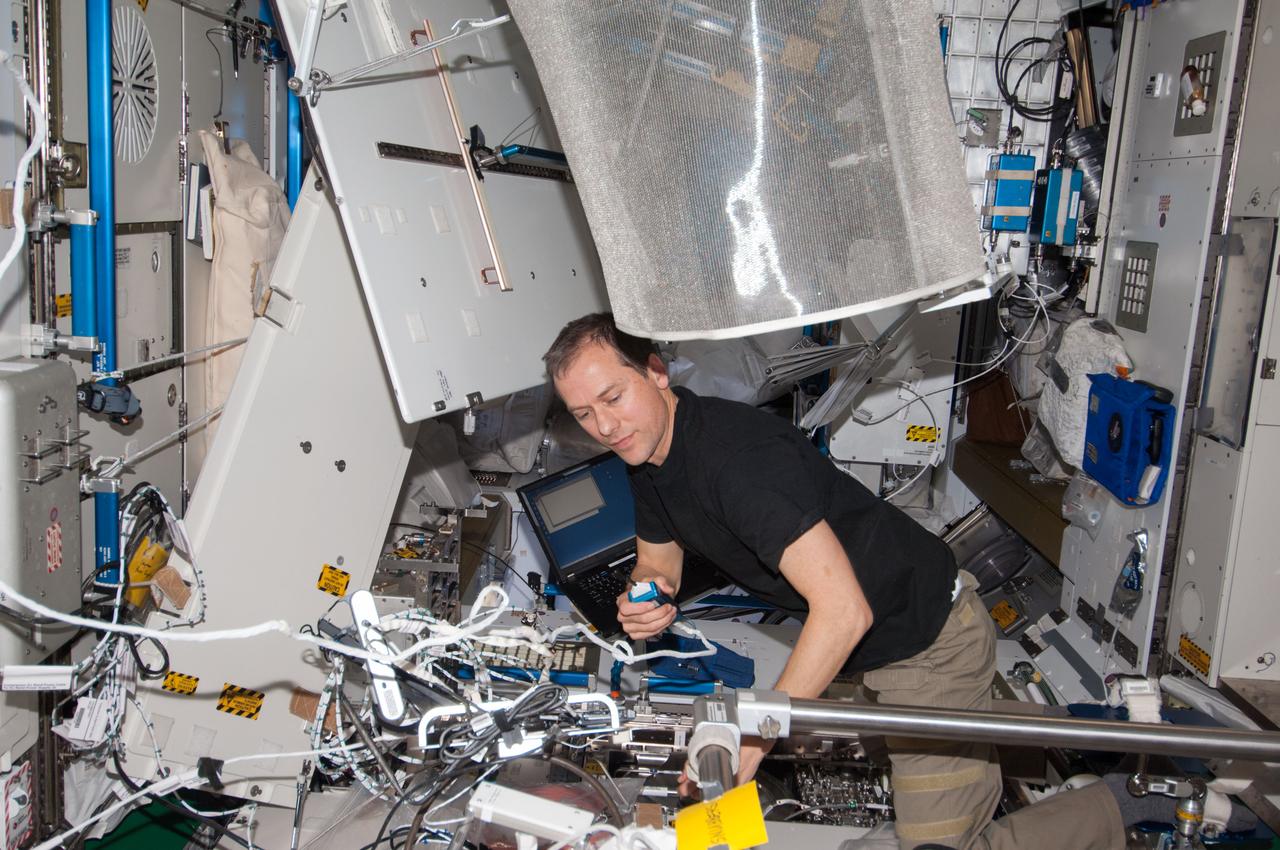
ISS034-E-031130 (17 Jan. 2013) --- NASA astronaut Tom Marshburn, Expedition 34 flight engineer, updates software on the Waste and Hygiene Compartment?s Urine Processor Assembly in the Tranquility node of the International Space Station.
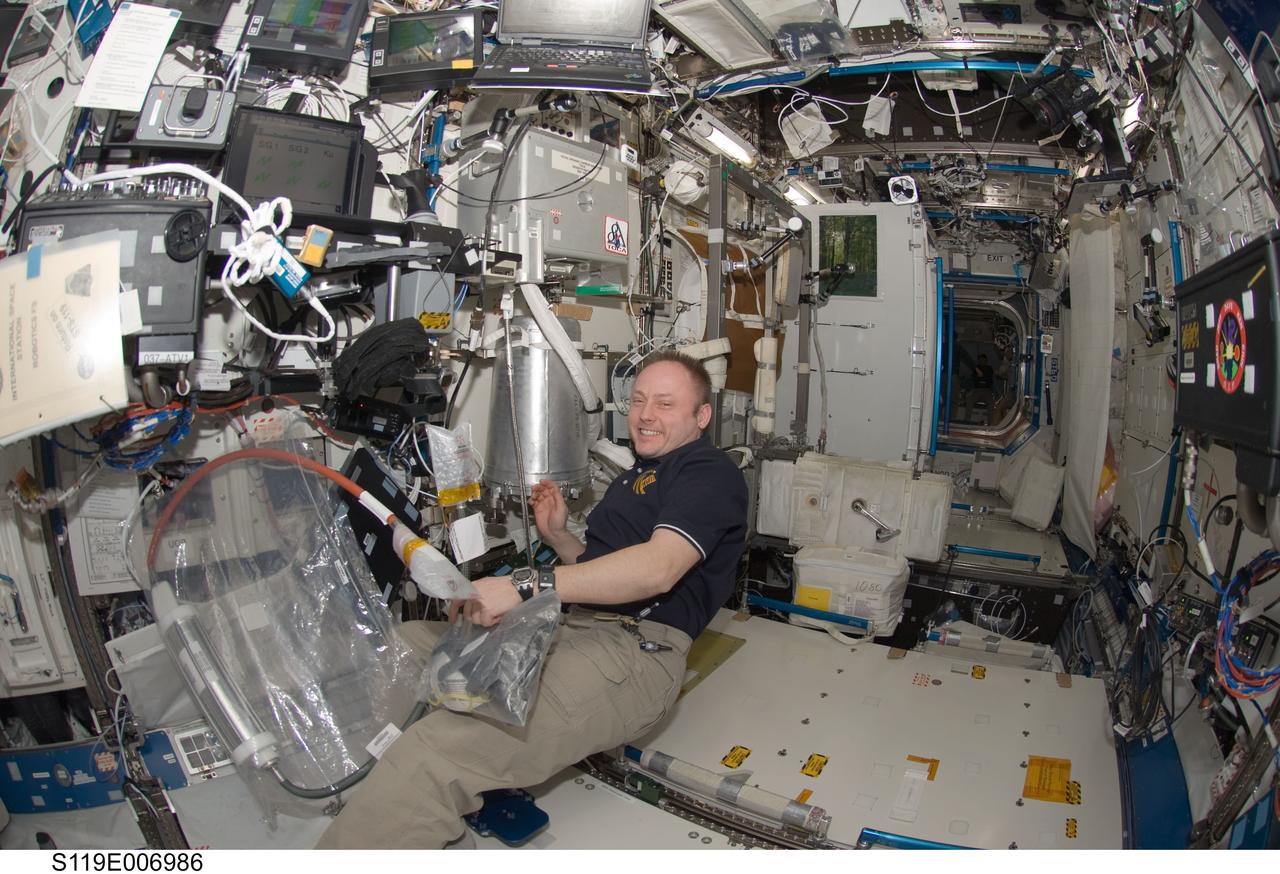
S119-E-006986 (22 March 2009) --- Astronaut Michael Fincke, Expedition 18 commander, works in the Destiny laboratory of the International Space Station while Space Shuttle Discovery (STS-119) is docked with the station.
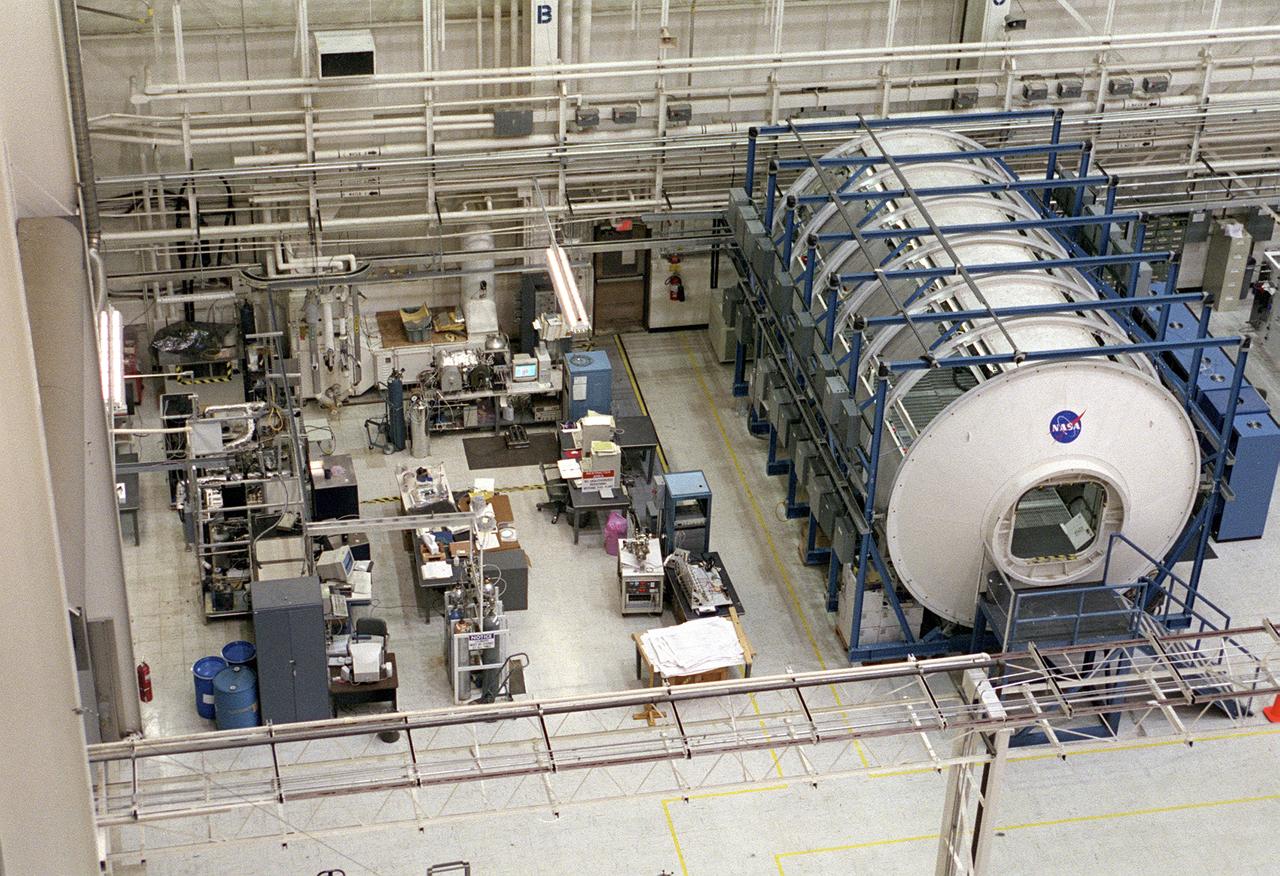
The Marshall Space Flight Center (MSFC) is responsible for designing and building the life support systems that will provide the crew of the International Space Station (ISS) a comfortable environment in which to live and work. Scientists and engineers at the MSFC are working together to provide the ISS with systems that are safe, efficient, and cost-effective. These compact and powerful systems are collectively called the Environmental Control and Life Support Systems, or simply, ECLSS. In this photograph, the life test area on the left of the MSFC ECLSS test facility is where various subsystems and components are tested to determine how long they can operate without failing and to identify components needing improvement. Equipment tested here includes the Carbon Dioxide Removal Assembly (CDRA), the Urine Processing Assembly (UPA), the mass spectrometer filament assemblies and sample pumps for the Major Constituent Analyzer (MCA). The Internal Thermal Control System (ITCS) simulator facility (in the module in the right) duplicates the function and operation of the ITCS in the ISS U.S. Laboratory Module, Destiny. This facility provides support for Destiny, including troubleshooting problems related to the ITCS.