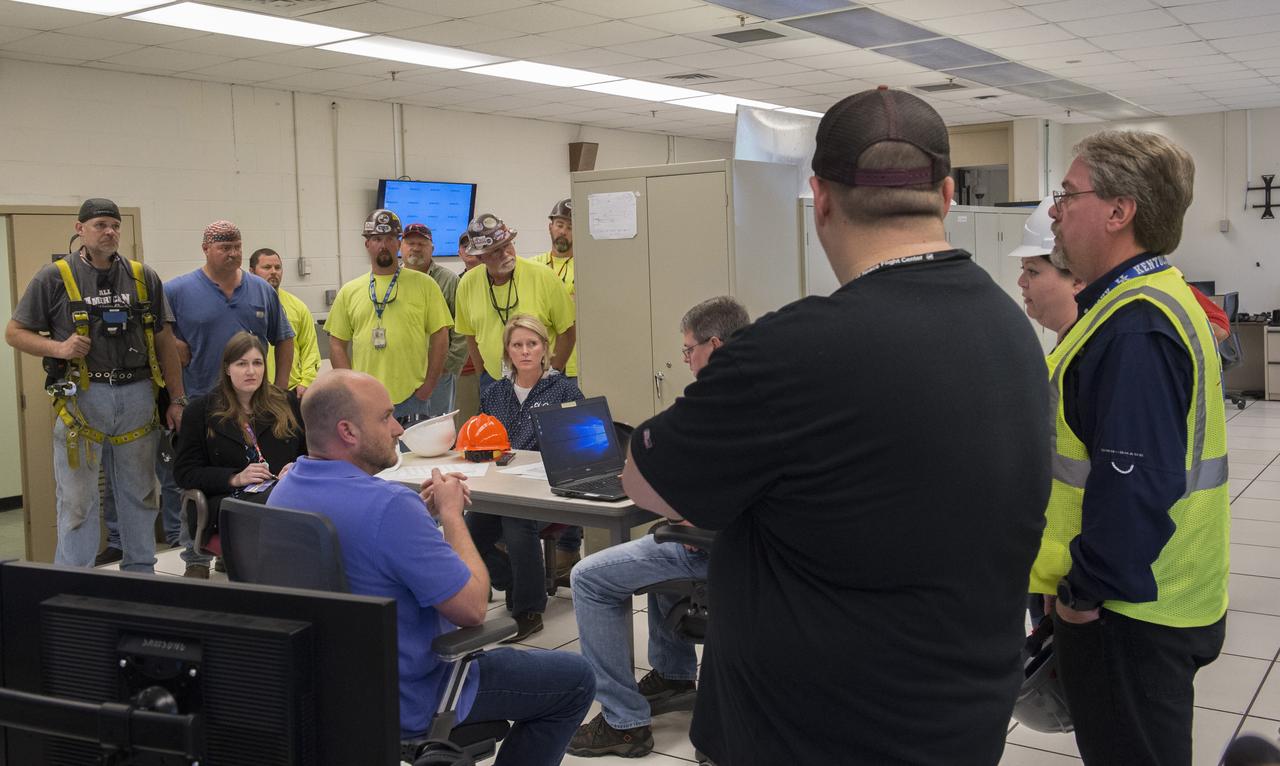
SLS INTERTANK TEST ARTICLE IS ATTACHED TO CROSSHEAD OF LOAD TEST ANNEX, BLDG. 4619, AND REMOVED FROM BED OF KMAG TRANSPORTER. Matt Cash conducts tag up meeting before lift of ITA from KMAG transporter
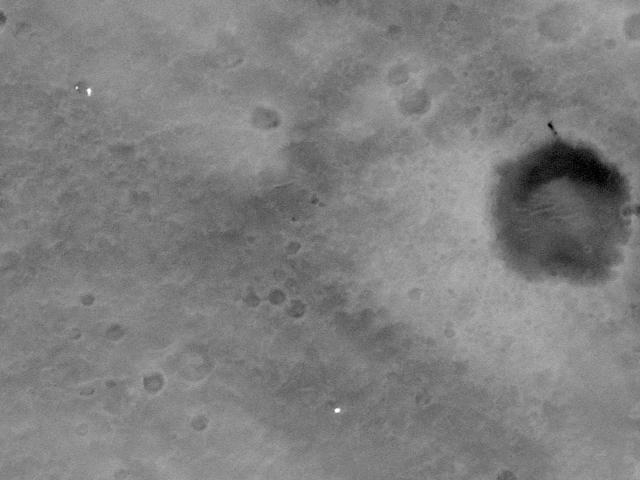
Spirit Lightens the Load
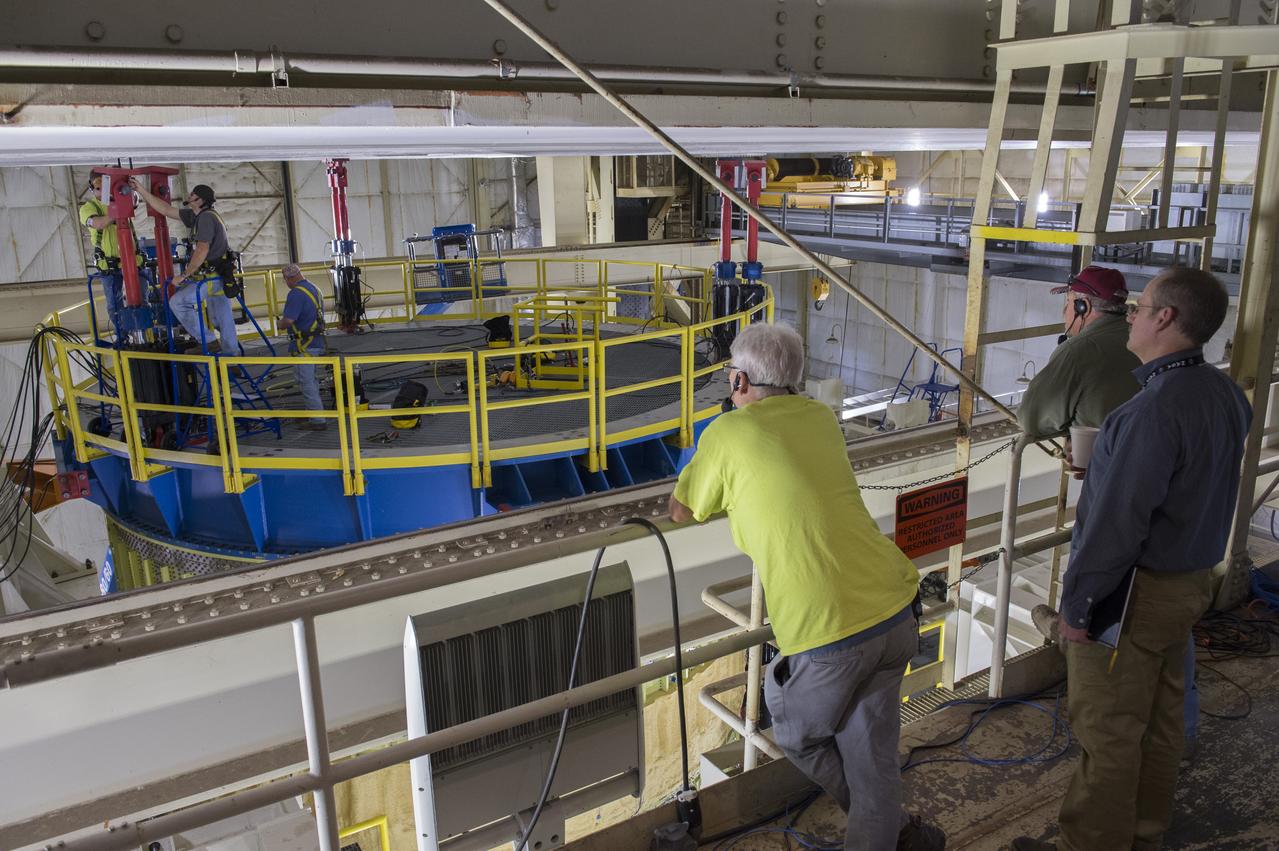
Robert Bobo, standing extreme right, and technicians view as SLS Intertank Test Article, ITA, is attached to crosshead of load test Annex, Bldg. 4619
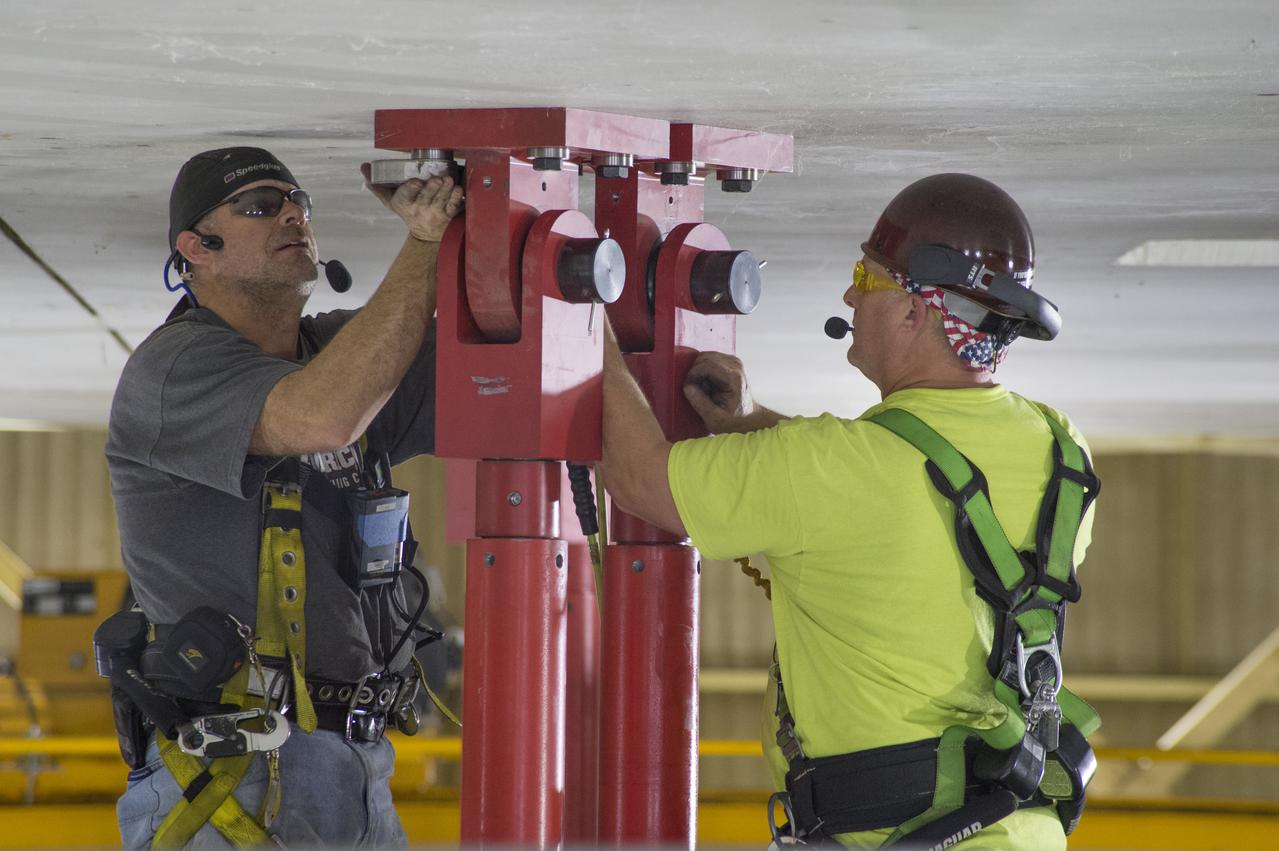
SLS Intertank Test Article, ITA, is attached to crosshead of load test Annex, Bldg. 4619, and removed from bed of KMAG transporter. Rob Ziegler, (L), and Roger Myrick (R), of Aerie Aerospace attach load lines to Aft Load Ring of Intertank Test Article.
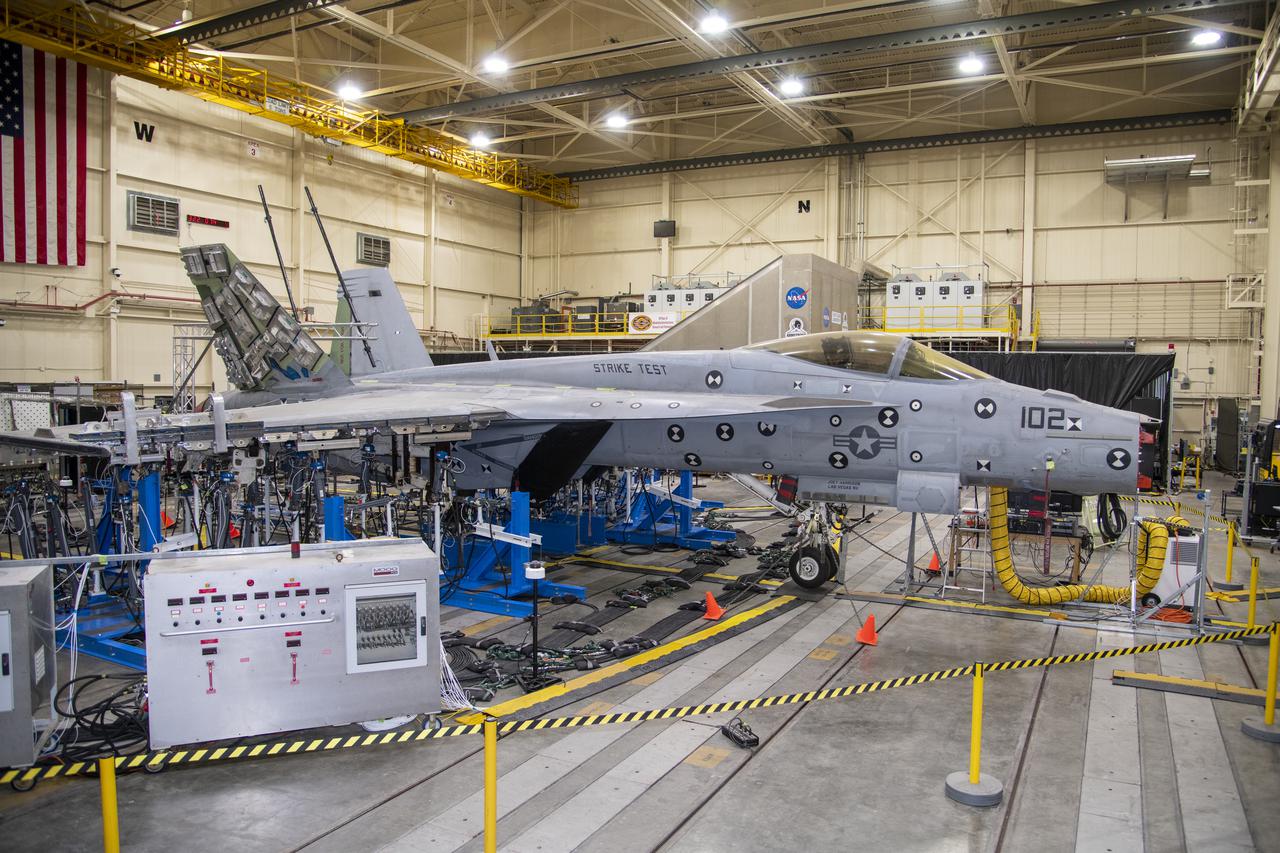
NASA’s Armstrong Flight Research Center Flight Loads Laboratory in Edwards, California, is working on one of its biggest load calibrations tests on an F/A-18E Super Hornet from the Naval Air Systems Command (NAVAIR) in Patuxent River, Maryland. This testing is needed before the aircraft can serve as a test vehicle for determining if it can safely manage maneuvers and proposed upgrades. This is a view of the test setup for the wing loads testing that is set to begin in December 2021.
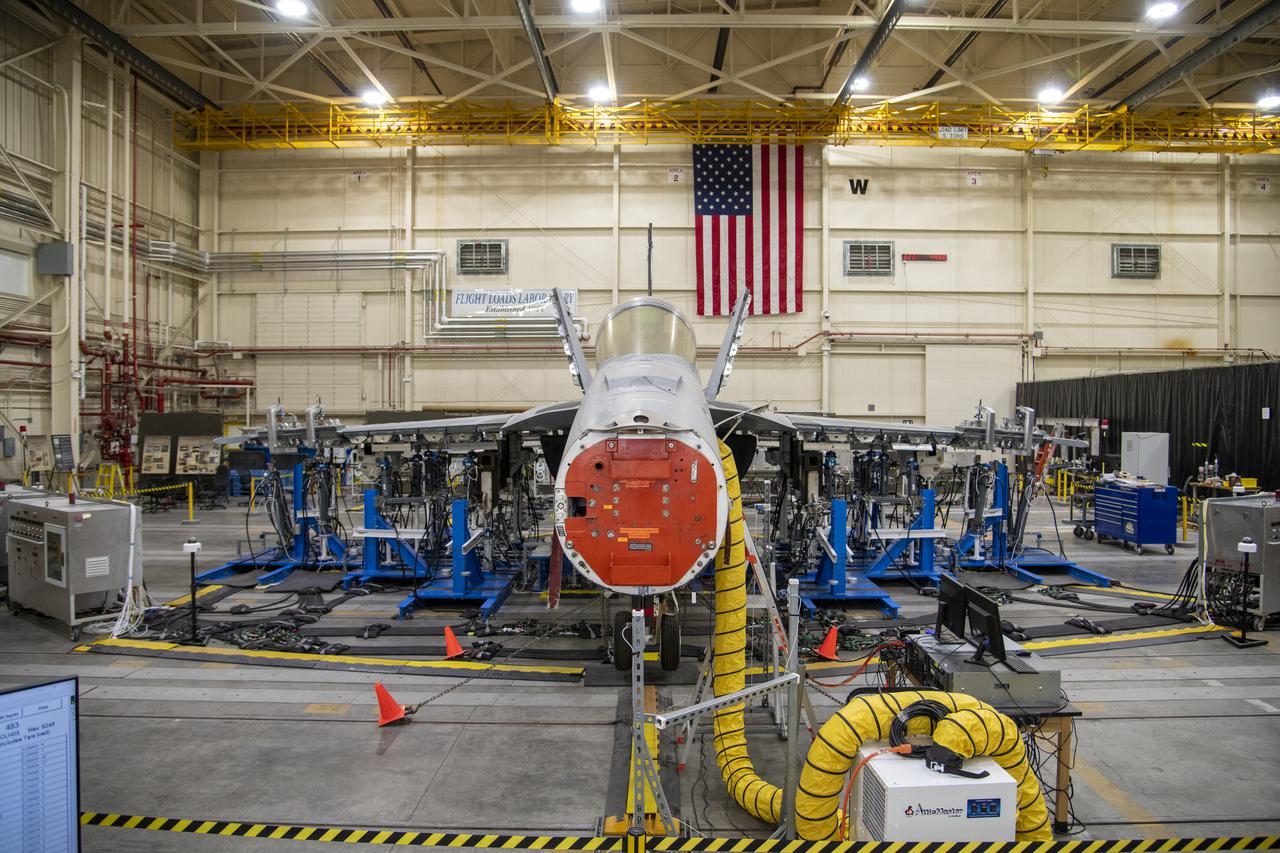
NASA’s Armstrong Flight Research Center Flight Loads Laboratory in Edwards, California, is working on one of its biggest load calibrations tests on an F/A-18E Super Hornet from the Naval Air Systems Command (NAVAIR) in Patuxent River, Maryland. This testing is needed before the aircraft can serve as a test vehicle for determining if it can safely manage maneuvers and proposed upgrades. This is a view of the test setup for the wing loads testing that is set to begin in December 2021.
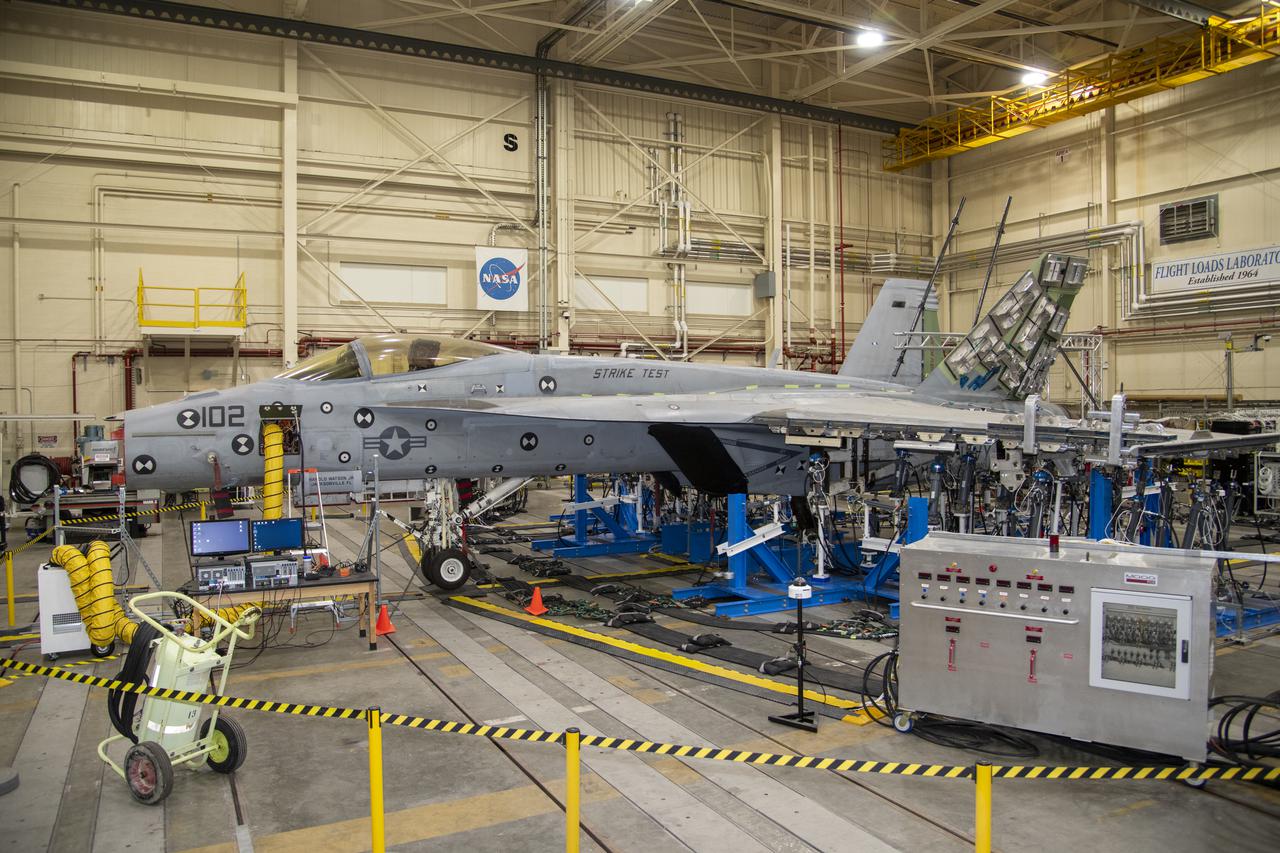
NASA’s Armstrong Flight Research Center Flight Loads Laboratory in Edwards, California, is working on one of its biggest load calibrations tests on an F/A-18E Super Hornet from the Naval Air Systems Command (NAVAIR) in Patuxent River, Maryland. This testing is needed before the aircraft can serve as a test vehicle for determining if it can safely manage maneuvers and proposed upgrades. This is a view of the test setup for the wing loads testing that is set to begin in December 2021.

NASA’s Armstrong Flight Research Center Flight Loads Laboratory in Edwards, California, is working on one of its biggest load calibrations tests on an F/A-18E Super Hornet from the Naval Air Systems Command (NAVAIR) in Patuxent River, Maryland. This testing is needed before the aircraft can serve as a test vehicle for determining if it can safely manage maneuvers and proposed upgrades. This is a view of the test setup for the wing loads testing that is set to begin in December 2021.
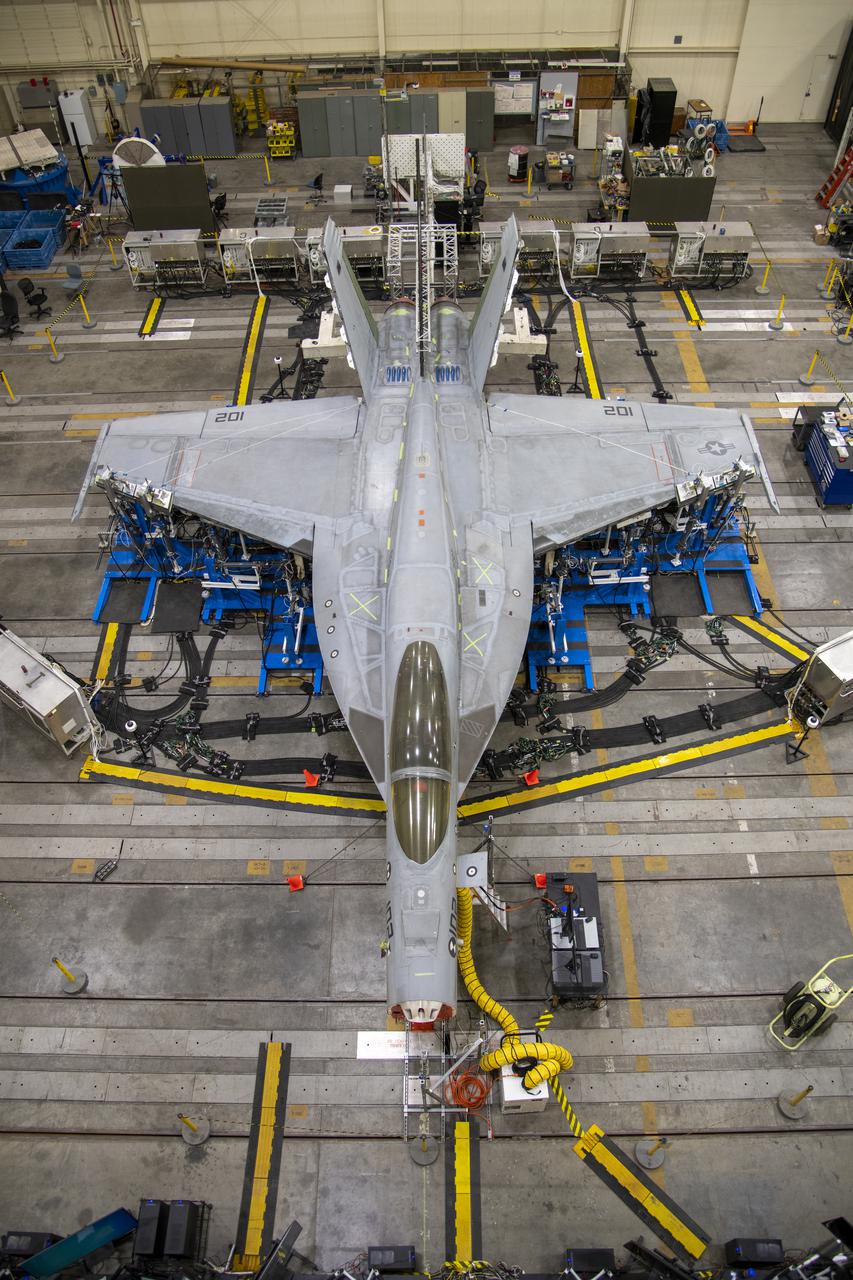
NASA’s Armstrong Flight Research Center Flight Loads Laboratory in Edwards, California, is working on one of its biggest load calibrations tests on an F/A-18E Super Hornet from the Naval Air Systems Command (NAVAIR) in Patuxent River, Maryland. This testing is needed before the aircraft can serve as a test vehicle for determining if it can safely manage maneuvers and proposed upgrades. This is a view of the test setup for the wing loads testing that is set to begin in December 2021.
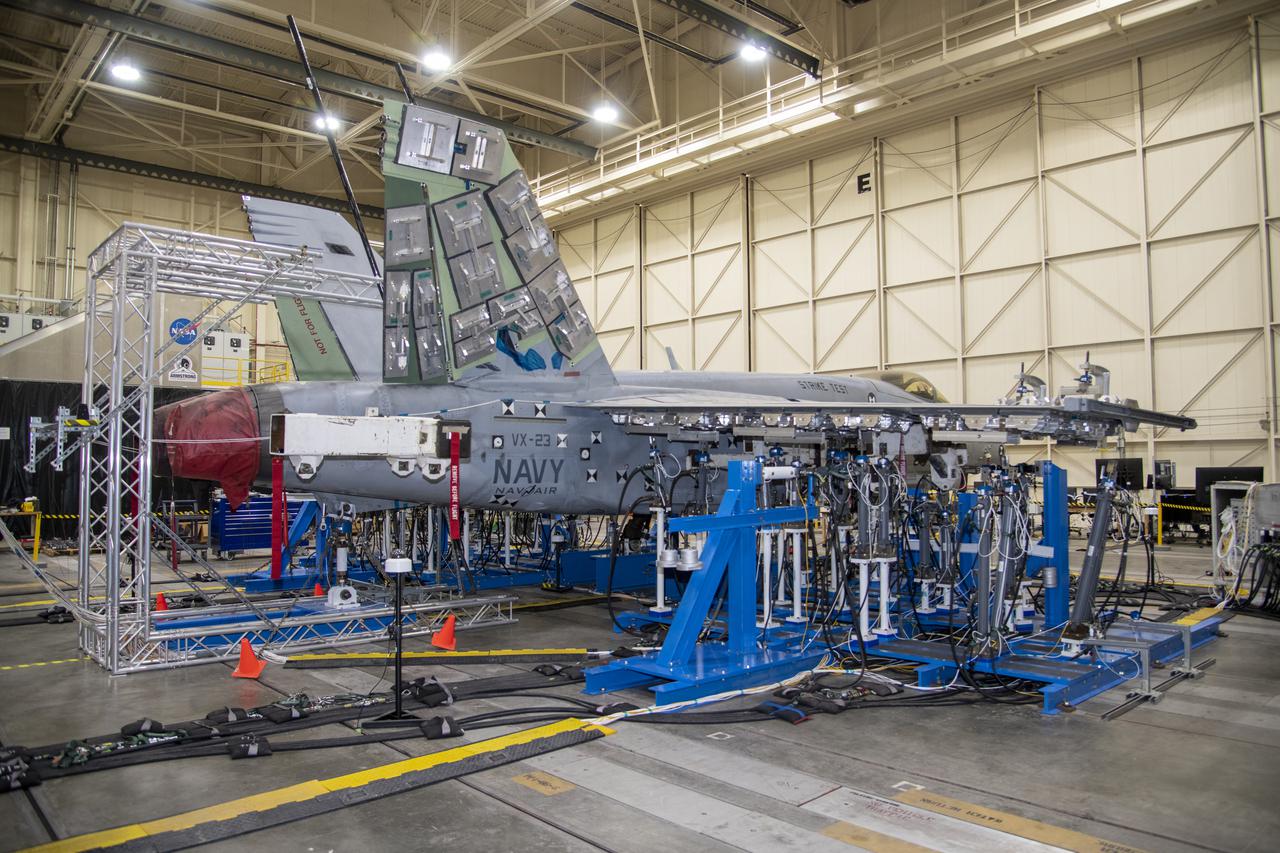
NASA’s Armstrong Flight Research Center Flight Loads Laboratory in Edwards, California, is working on one of its biggest load calibrations tests on an F/A-18E Super Hornet from the Naval Air Systems Command (NAVAIR) in Patuxent River, Maryland. This testing is needed before the aircraft can serve as a test vehicle for determining if it can safely manage maneuvers and proposed upgrades. This is a view of the test setup for the wing loads testing that is set to begin in December 2021.
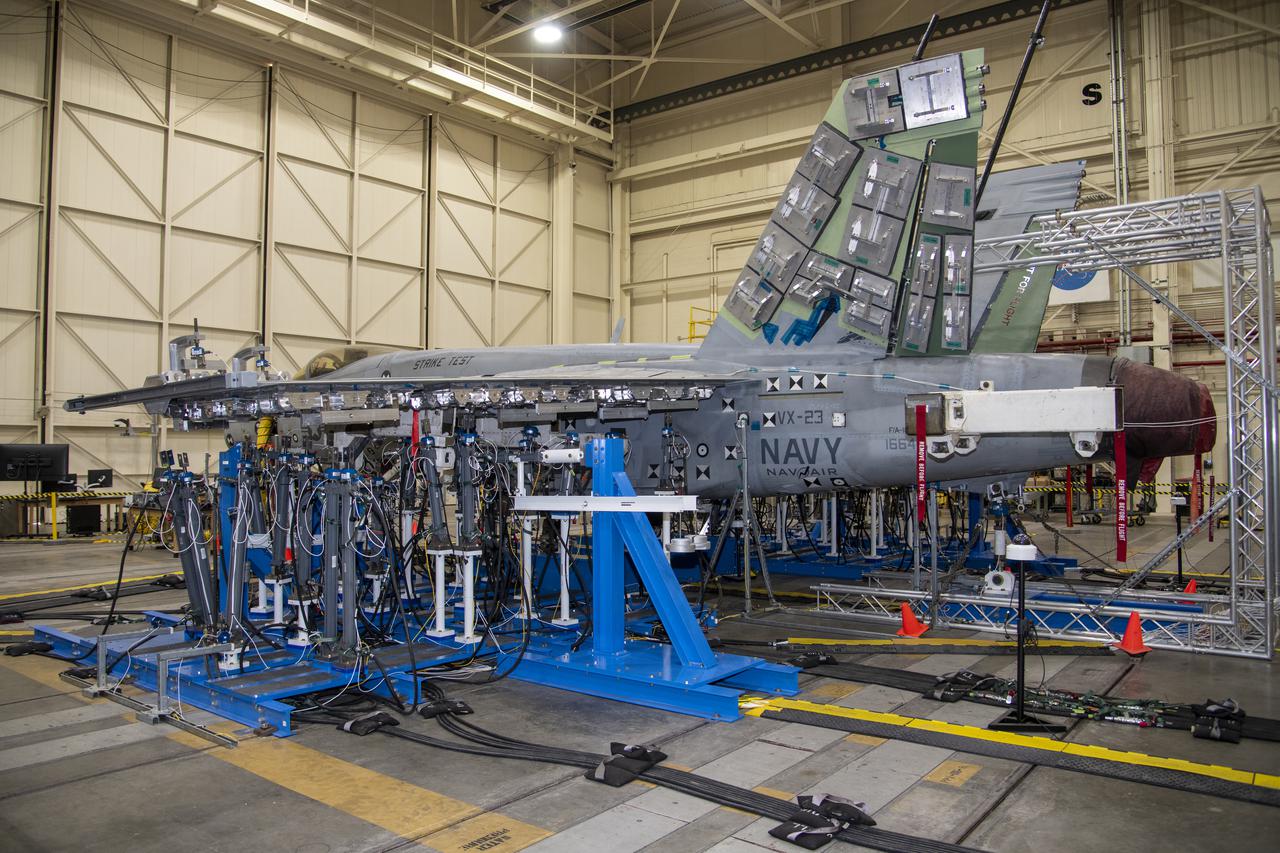
NASA’s Armstrong Flight Research Center Flight Loads Laboratory in Edwards, California, is working on one of its biggest load calibrations tests on an F/A-18E Super Hornet from the Naval Air Systems Command (NAVAIR) in Patuxent River, Maryland. This testing is needed before the aircraft can serve as a test vehicle for determining if it can safely manage maneuvers and proposed upgrades. This is a view of the test setup for the wing loads testing that is set to begin in December 2021.
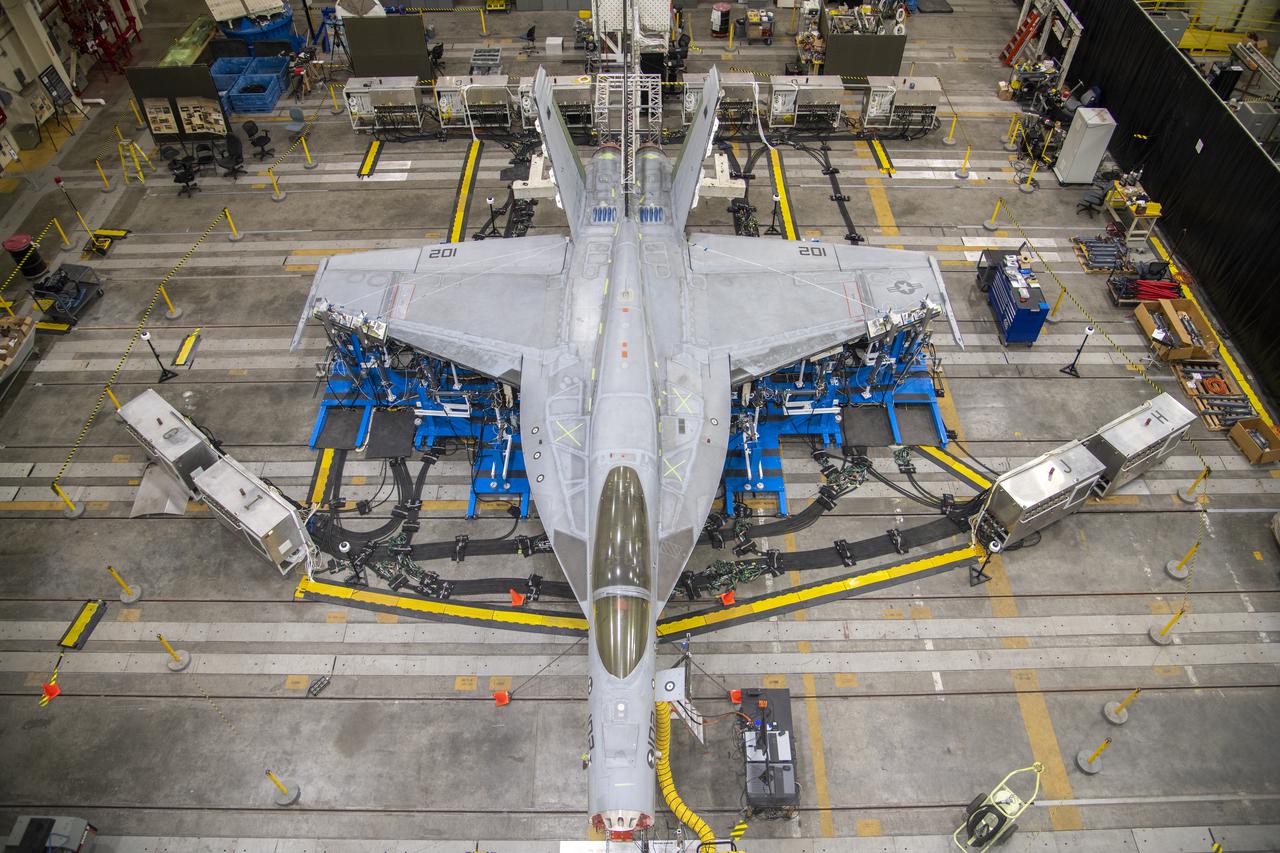
NASA’s Armstrong Flight Research Center Flight Loads Laboratory in Edwards, California, is working on one of its biggest load calibrations tests on an F/A-18E Super Hornet from the Naval Air Systems Command (NAVAIR) in Patuxent River, Maryland. This testing is needed before the aircraft can serve as a test vehicle for determining if it can safely manage maneuvers and proposed upgrades. This is a view of the test setup for the wing loads testing that is set to begin in December 2021.
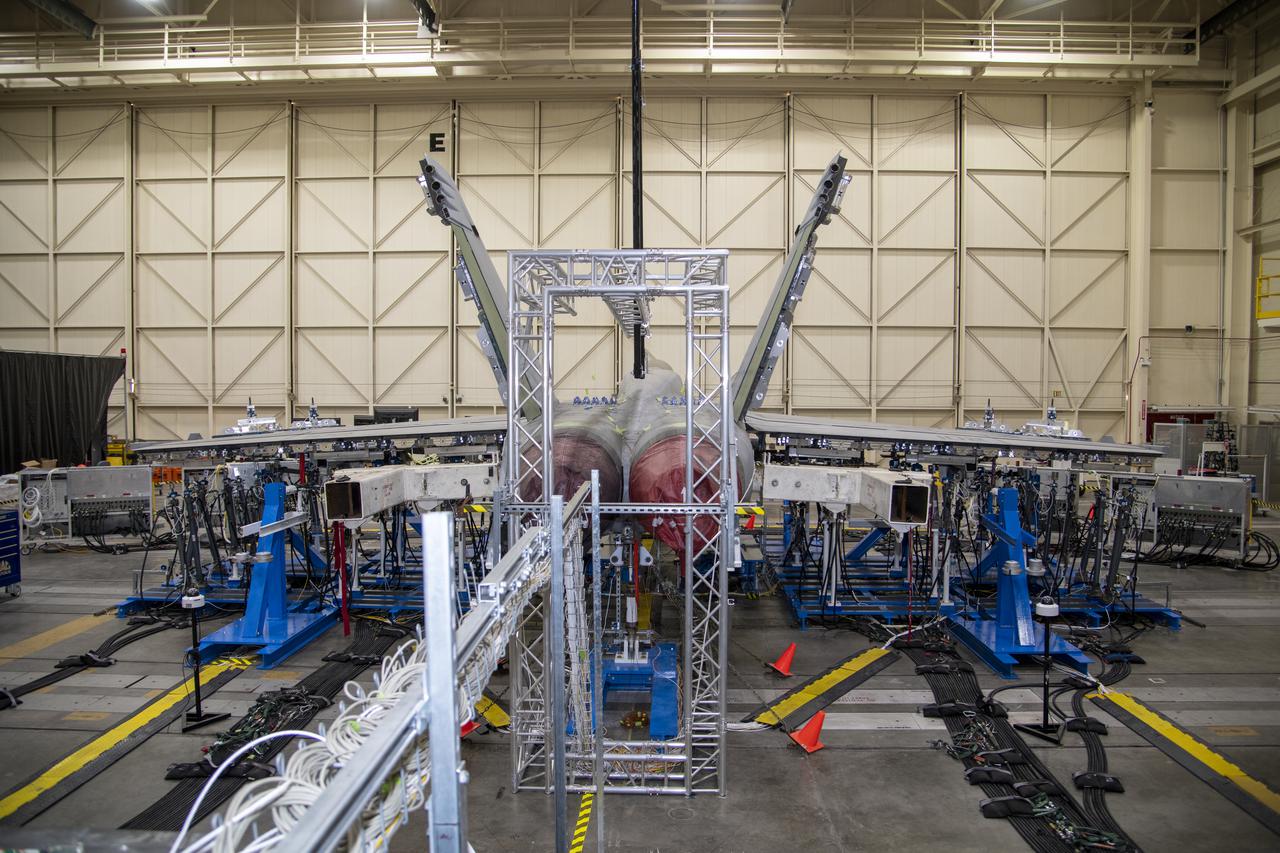
NASA’s Armstrong Flight Research Center Flight Loads Laboratory in Edwards, California, is working on one of its biggest load calibrations tests on an F/A-18E Super Hornet from the Naval Air Systems Command (NAVAIR) in Patuxent River, Maryland. This testing is needed before the aircraft can serve as a test vehicle for determining if it can safely manage maneuvers and proposed upgrades. This is a view of the test setup for the wing loads testing that is set to begin in December 2021.
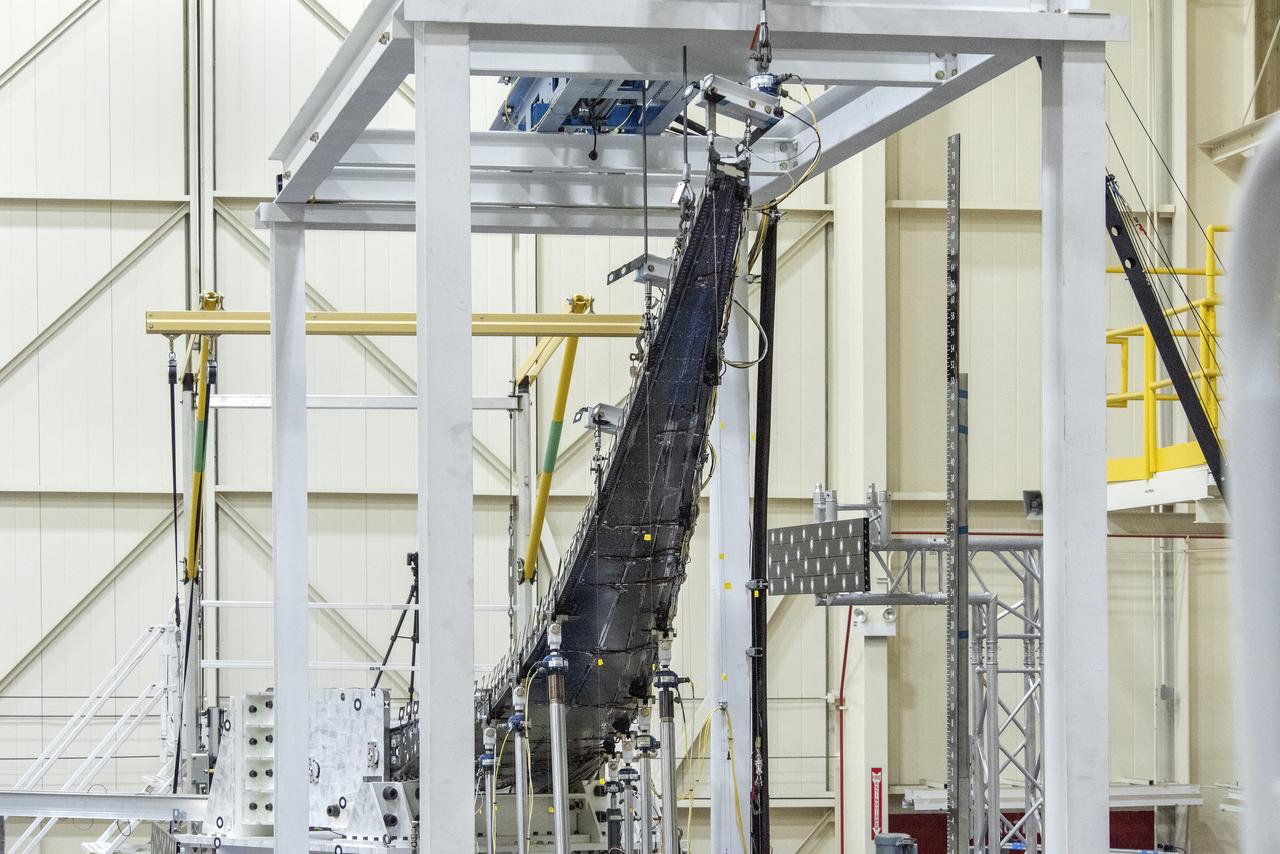
The Passive Aeroelastic Tailored (PAT) wing bends under pressure from the highest loads applied during testing at NASA’s Armstrong Flight Research Center in California.
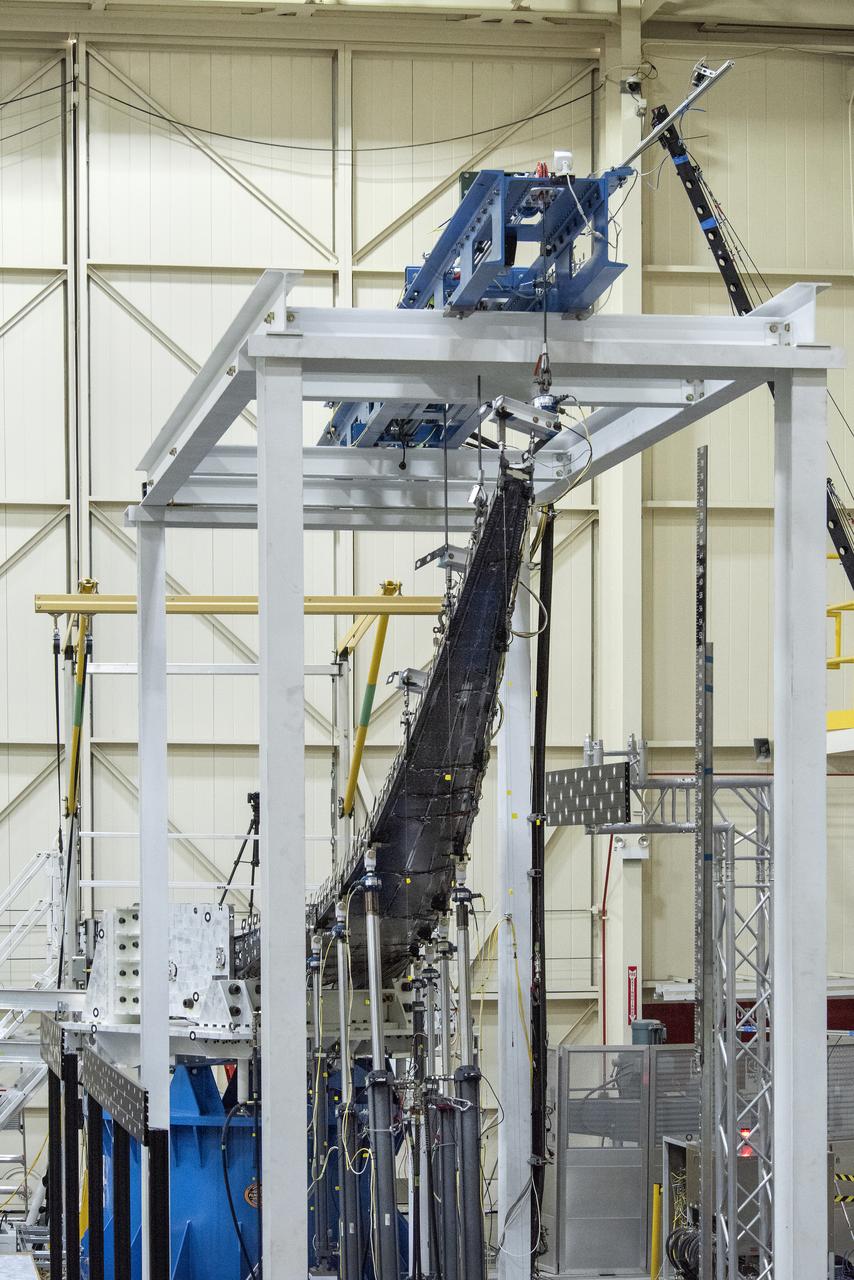
The Passive Aeroelastic Tailored (PAT) wing bends under pressure from the highest loads applied during testing at NASA’s Armstrong Flight Research Center in California.

NASA’s Armstrong Flight Research Center Flight Loads Laboratory in Edwards, California, is working on one of its biggest load calibrations tests on an F/A-18E Super Hornet from the Naval Air Systems Command (NAVAIR) in Patuxent River, Maryland. This testing is needed before the aircraft can serve as a test vehicle for determining if it can safely manage maneuvers and proposed upgrades. The horizontal tail spindle testing, the first of three phases, wrapped up in October 2021. The next phase focuses on wing loads testing that is set to begin in December 2021.
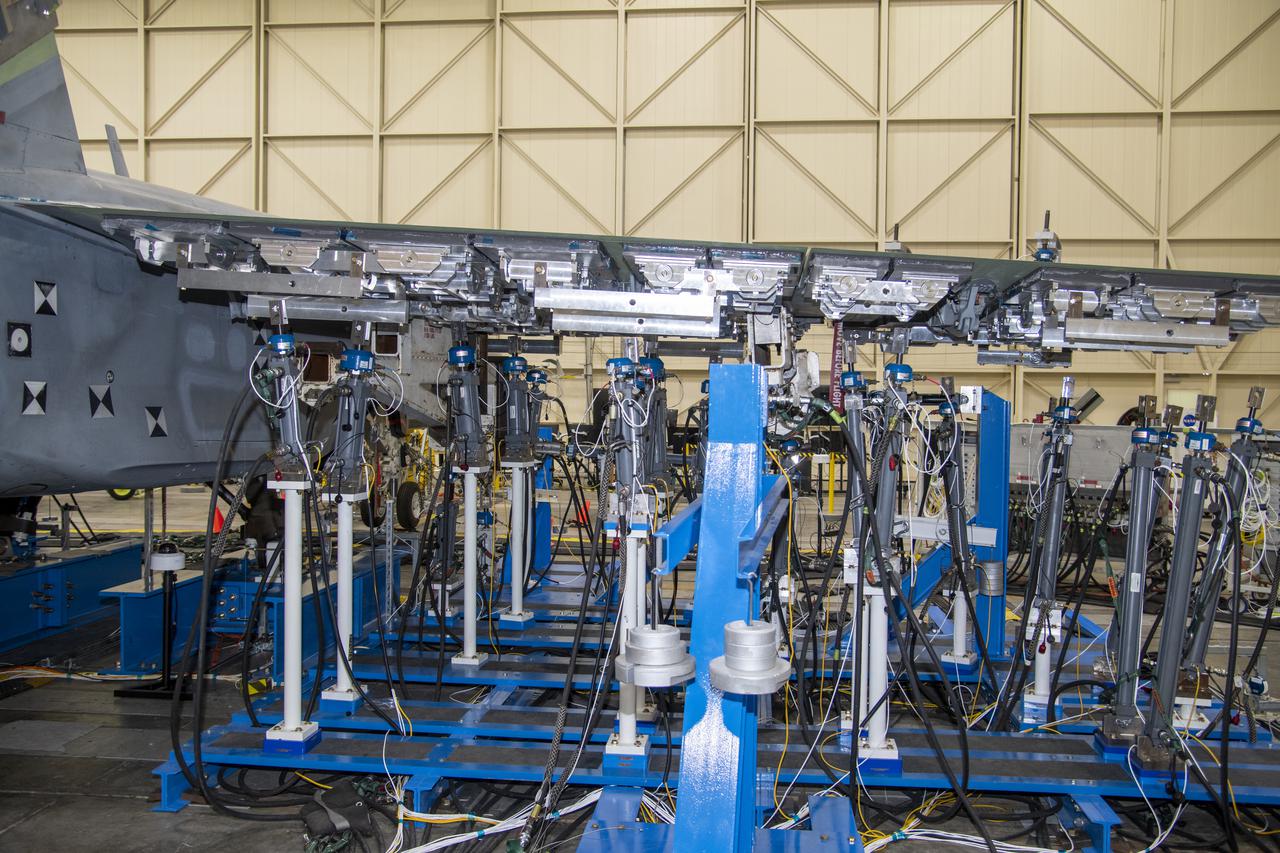
NASA’s Armstrong Flight Research Center Flight Loads Laboratory in Edwards, California, is working on one of its biggest load calibrations tests on an F/A-18E Super Hornet from the Naval Air Systems Command (NAVAIR) in Patuxent River, Maryland. This testing is needed before the aircraft can serve as a test vehicle for determining if it can safely manage maneuvers and proposed upgrades. The horizontal tail spindle testing, the first of three phases, wrapped up in October 2021. The next phase focuses on wing loads testing that is set to begin in December 2021.
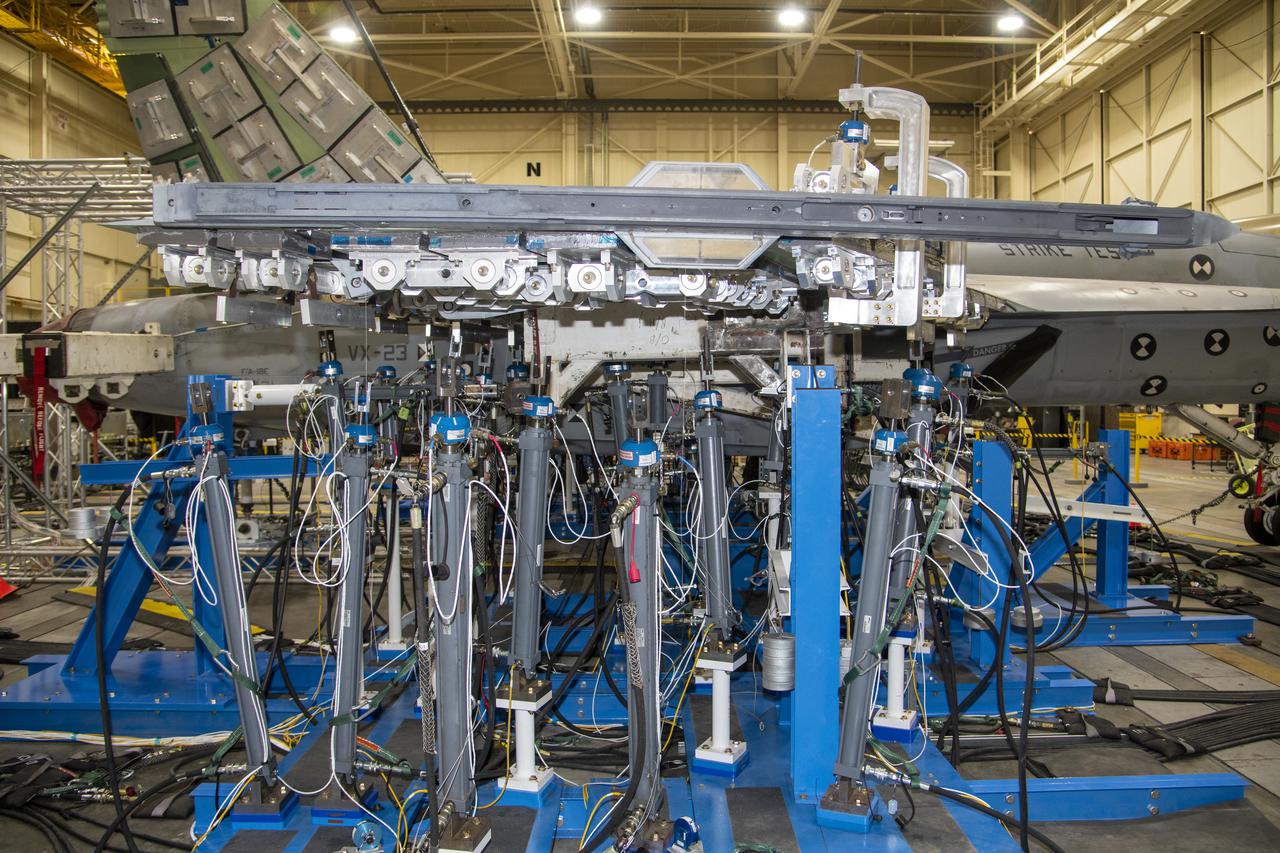
NASA’s Armstrong Flight Research Center Flight Loads Laboratory in Edwards, California, is working on one of its biggest load calibrations tests on an F/A-18E Super Hornet from the Naval Air Systems Command (NAVAIR) in Patuxent River, Maryland. This testing is needed before the aircraft can serve as a test vehicle for determining if it can safely manage maneuvers and proposed upgrades. The horizontal tail spindle testing, the first of three phases, wrapped up in October 2021. The next phase focuses on wing loads testing that is set to begin in December 2021.
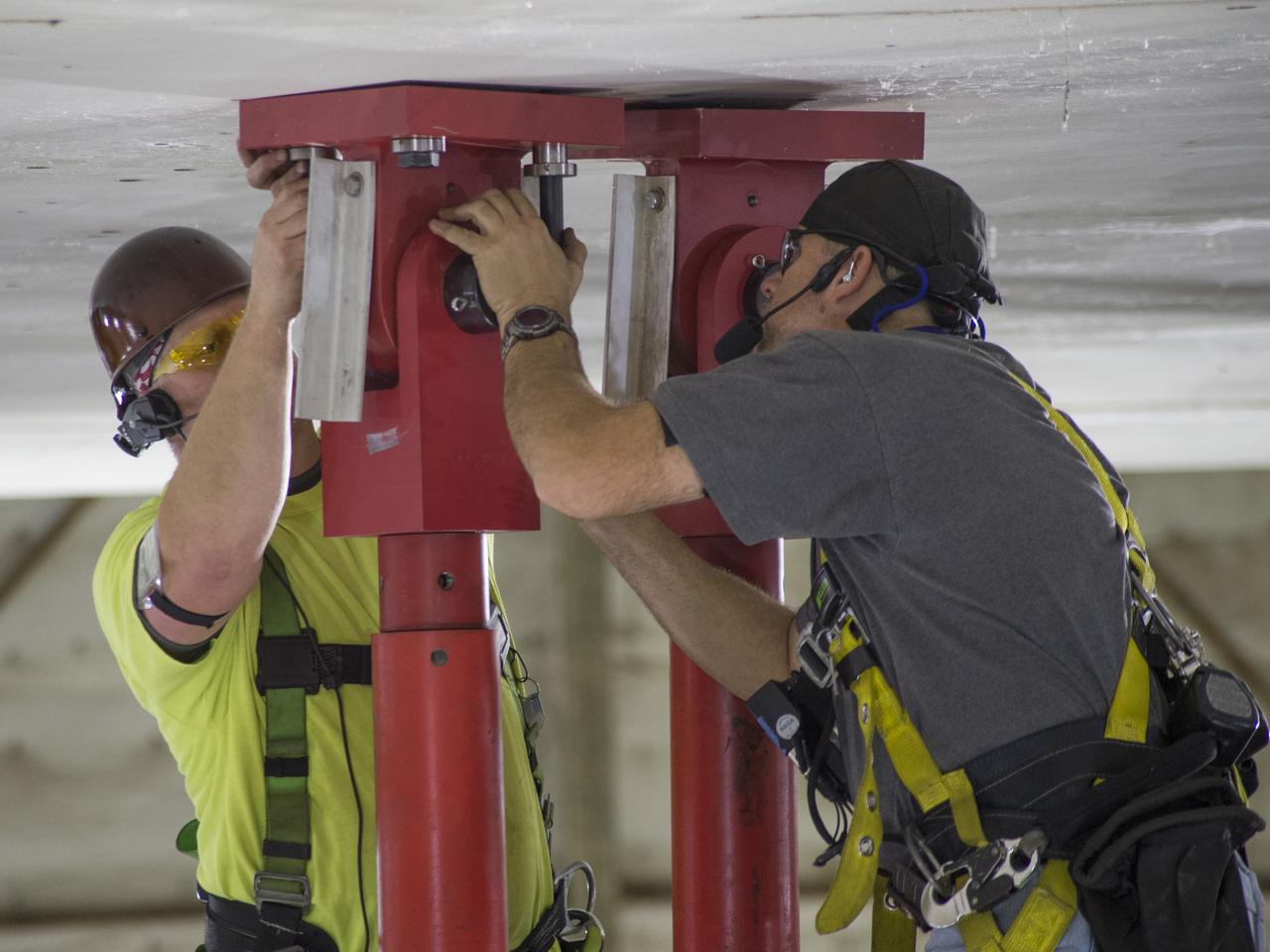
SLS Intertank Test Article, ITA, is attached to crosshead of load test Annex, Bldg. 4619, and removed from bed of KMAG transporter. Rob Ziegler, L, and Roger Myrick, R, of Aerie Aerospace attach load lines to Aft Load Ring of Intertank Test Articlle
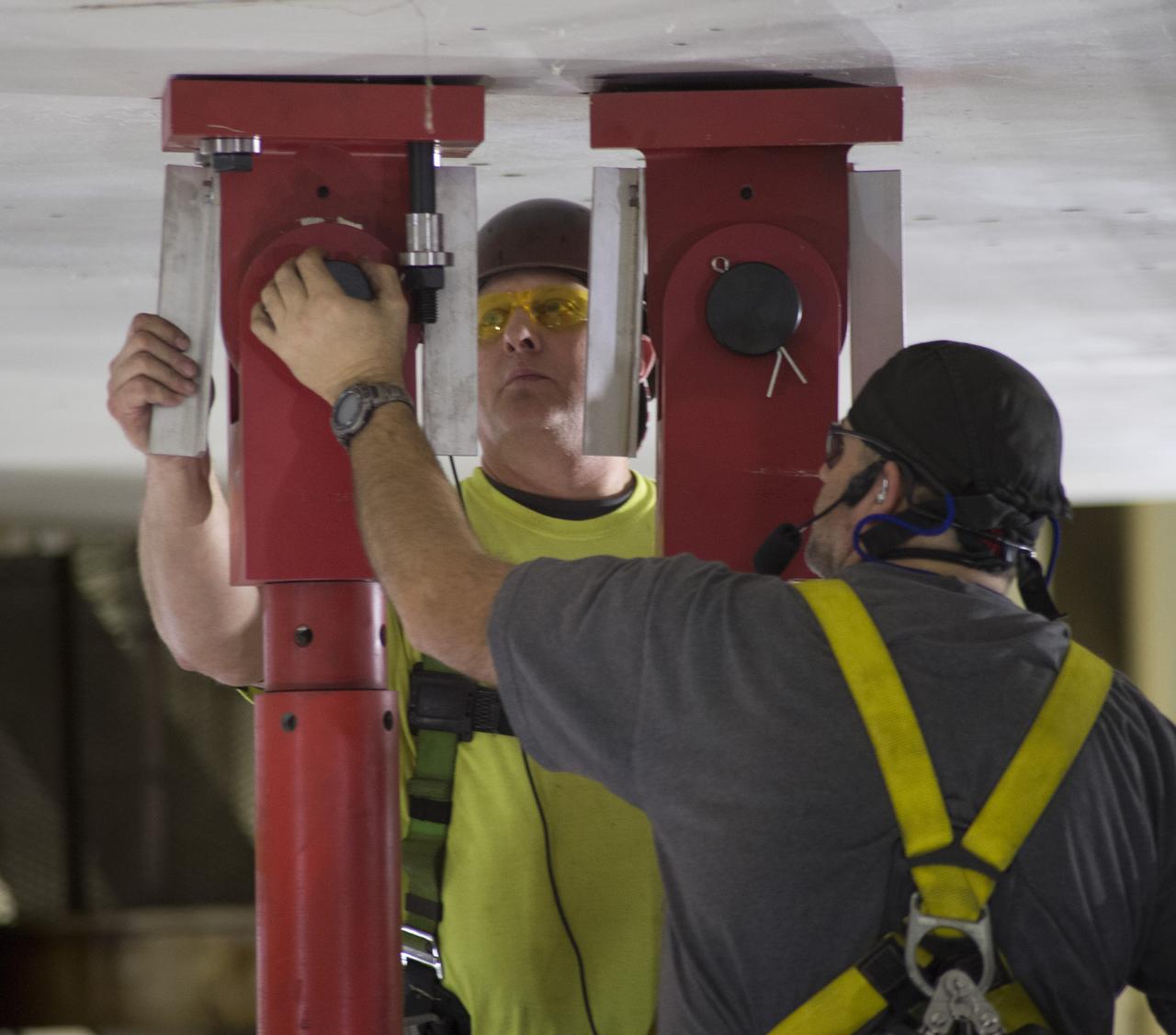
SLS Intertank Test Article, ITA, is attached to crosshead of load test Annex, Bldg. 4619, and removed from bed of KMAG transporter. Rob Ziegler, (L), and Roger Myrick (R), of Aerie Aerospace attach load lines to Aft Load Ring of Intertank Test Article.
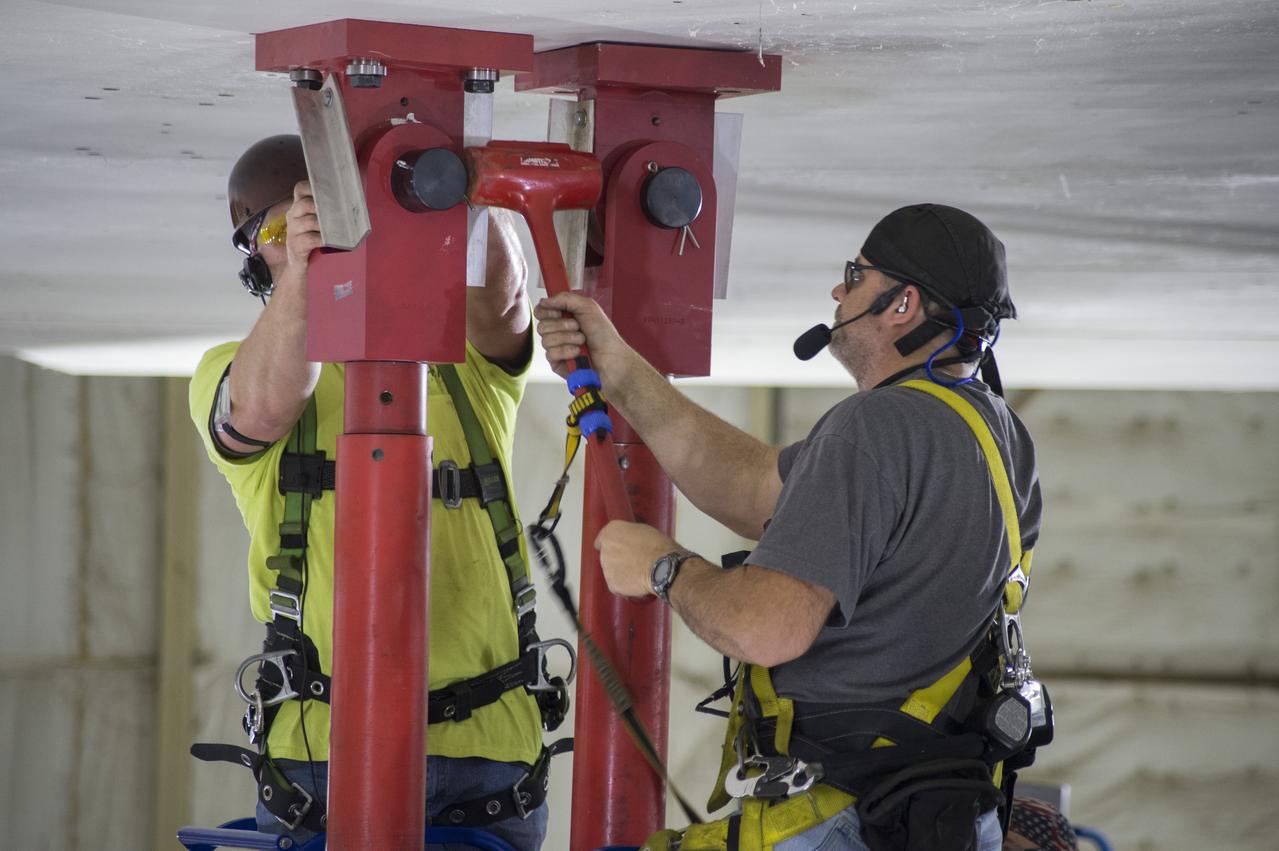
SLS Intertank Test Article, ITA, is attached to crosshead of load test Annex, Bldg. 4619, and removed from bed of KMAG transporter. Rob Ziegler, (L), and Roger Myrick (R), of Aerie Aerospace attach load lines to Aft Load Ring of Intertank Test Article.
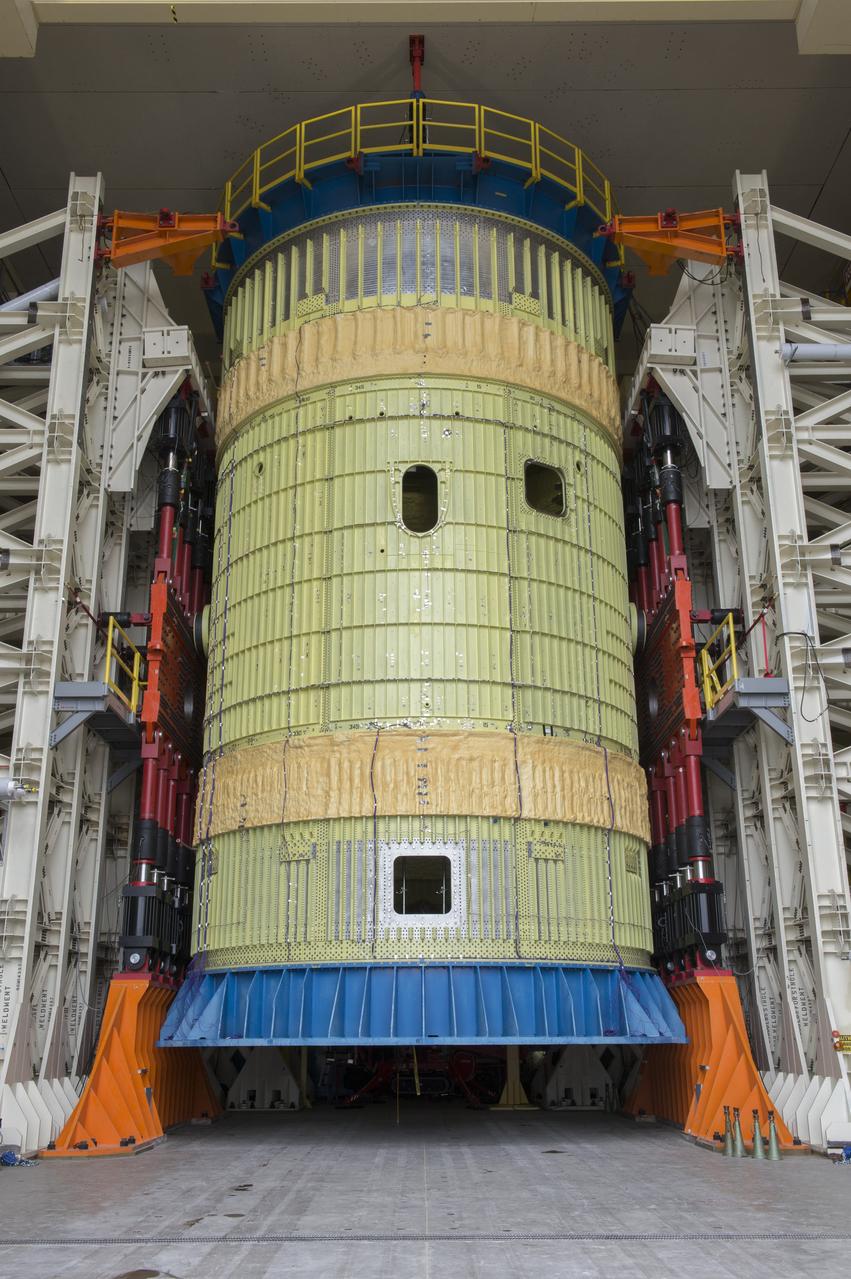
SLS Intertank Test Article, ITA, is attached to crosshead of load test Annex, Bldg. 4619, and removed from bed of KMAG transporter. ITA is suspended from crosshead of Load Test Annex
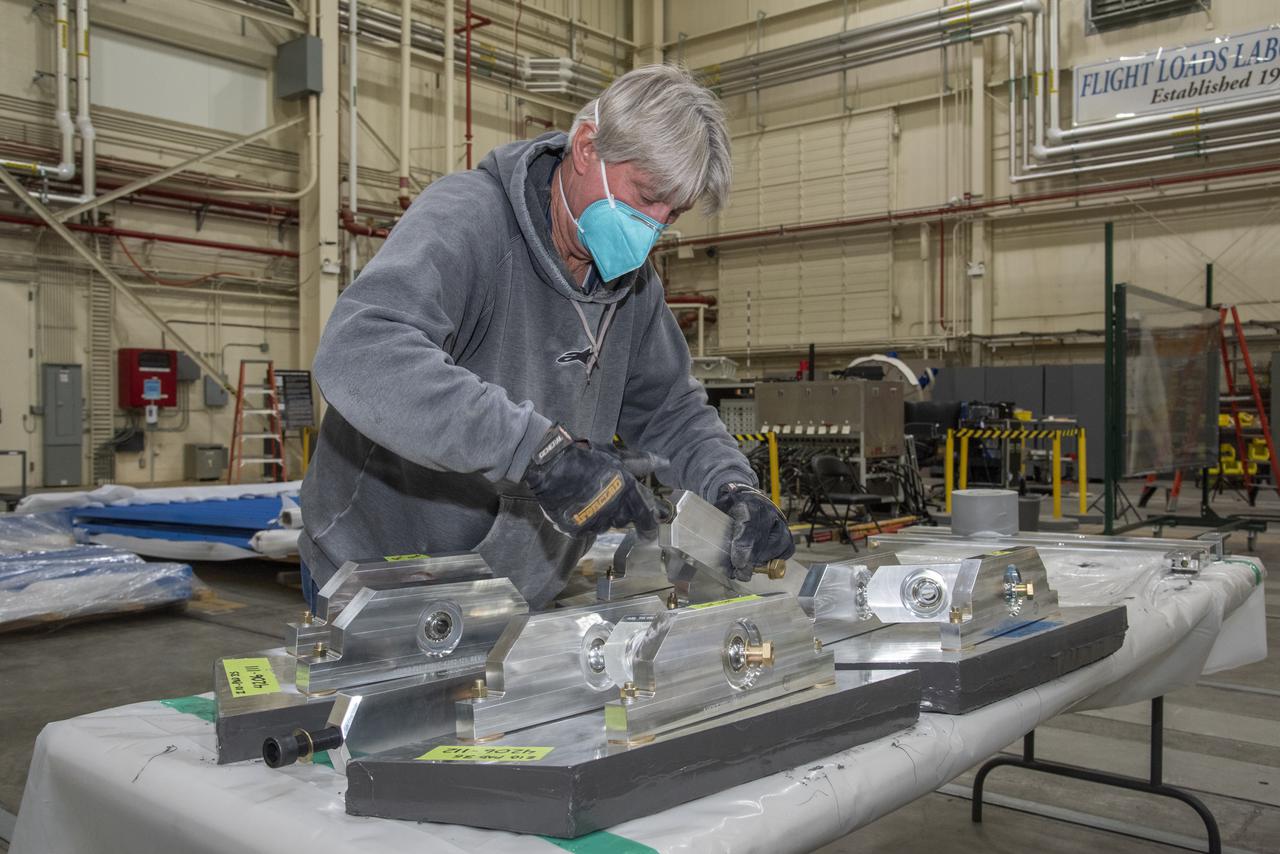
Assembled test structures called whiffle trees, which are needed to distribute prescribed hydraulic actuator loads, are attached to load pads to test the F/A-18E from the Naval Air Systems Command (NAVAIR) in Patuxent River, Maryland. The aircraft is in NASA’s Armstrong Flight Research Center Flight Loads Laboratory in Edwards, California, for the center’s biggest load calibrations tests. This testing is needed before the aircraft can serve as a test vehicle for determining if it can safely manage maneuvers and proposed upgrades.
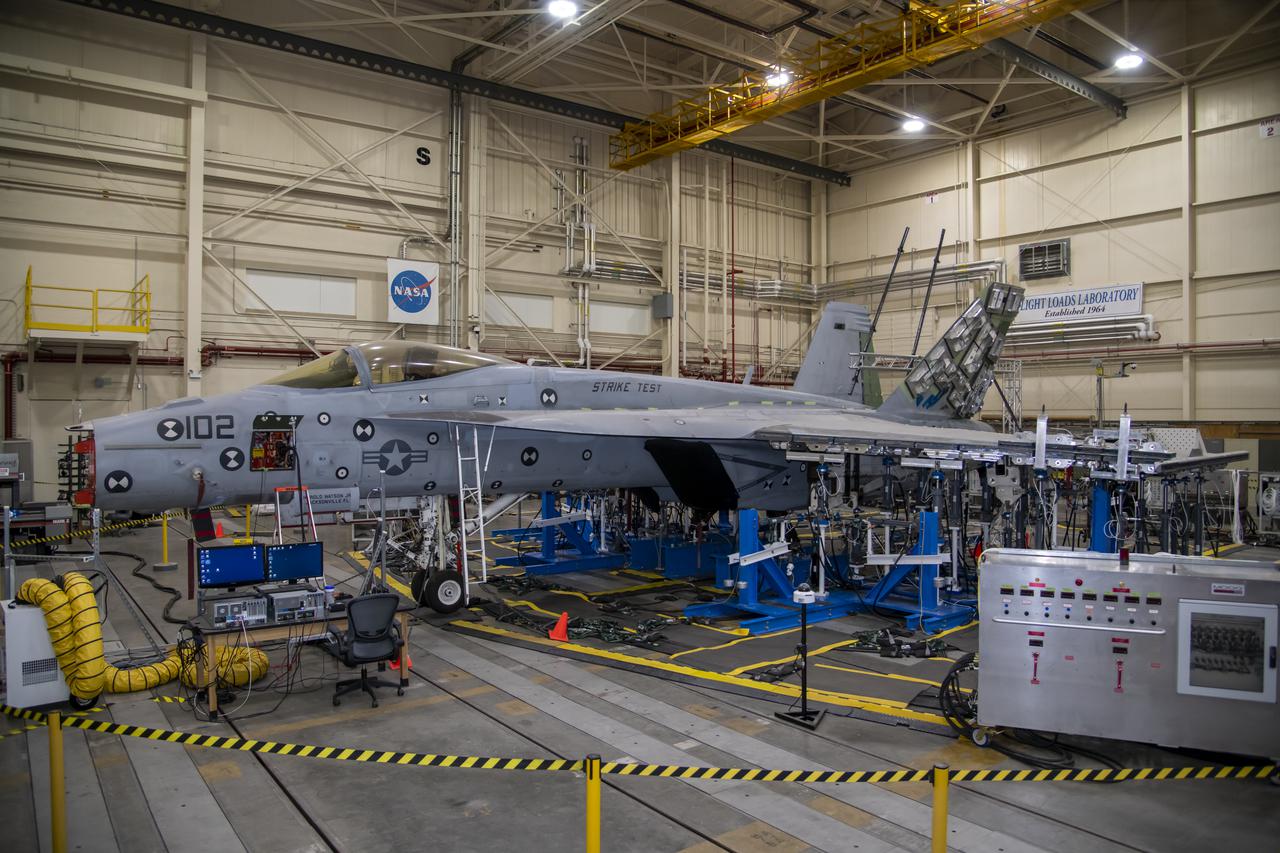
This view shows the left wing loading test configuration and testing area of an F/A-18E from the Naval Air Systems Command (NAVAIR) in Patuxent River, Maryland. The aircraft is in NASA's Armstrong Flight Research Center Flight Loads Laboratory in Edwards, California, for the center's biggest load calibrations tests. This testing is needed before the aircraft can serve as a test vehicle for determining if it can safely manage maneuvers and proposed upgrades.
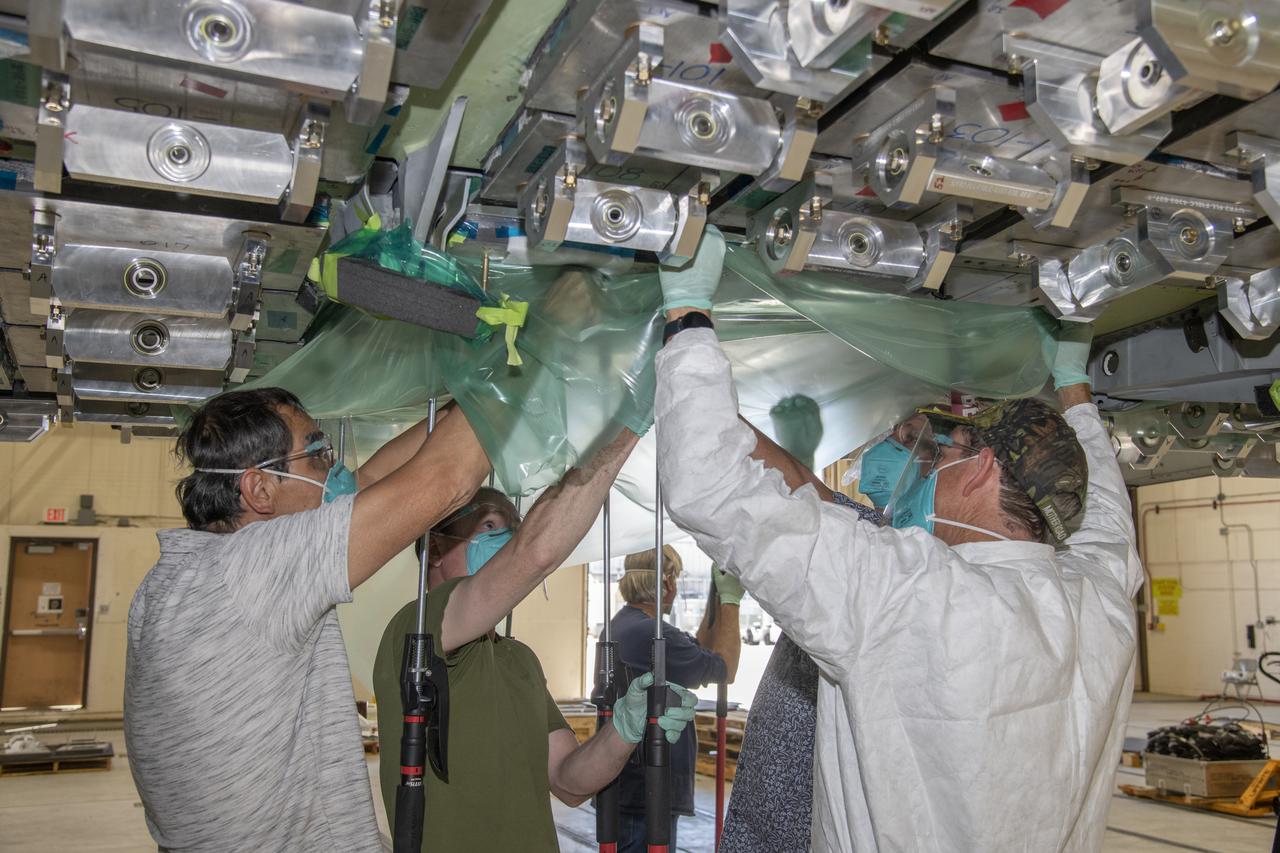
From left, Ronnie Haraguchi, Chris Mount, and Ray Sadler vacuum bag load pads on the aircraft surface of a F/A-18E from the Naval Air Systems Command (NAVAIR) in Patuxent River, Maryland. The aircraft is in NASA's Armstrong Flight Research Center Flight Loads Laboratory in Edwards, California, for the center's biggest load calibrations tests. This testing is needed before the aircraft can serve as a test vehicle for determining if it can safely manage maneuvers and proposed upgrades.
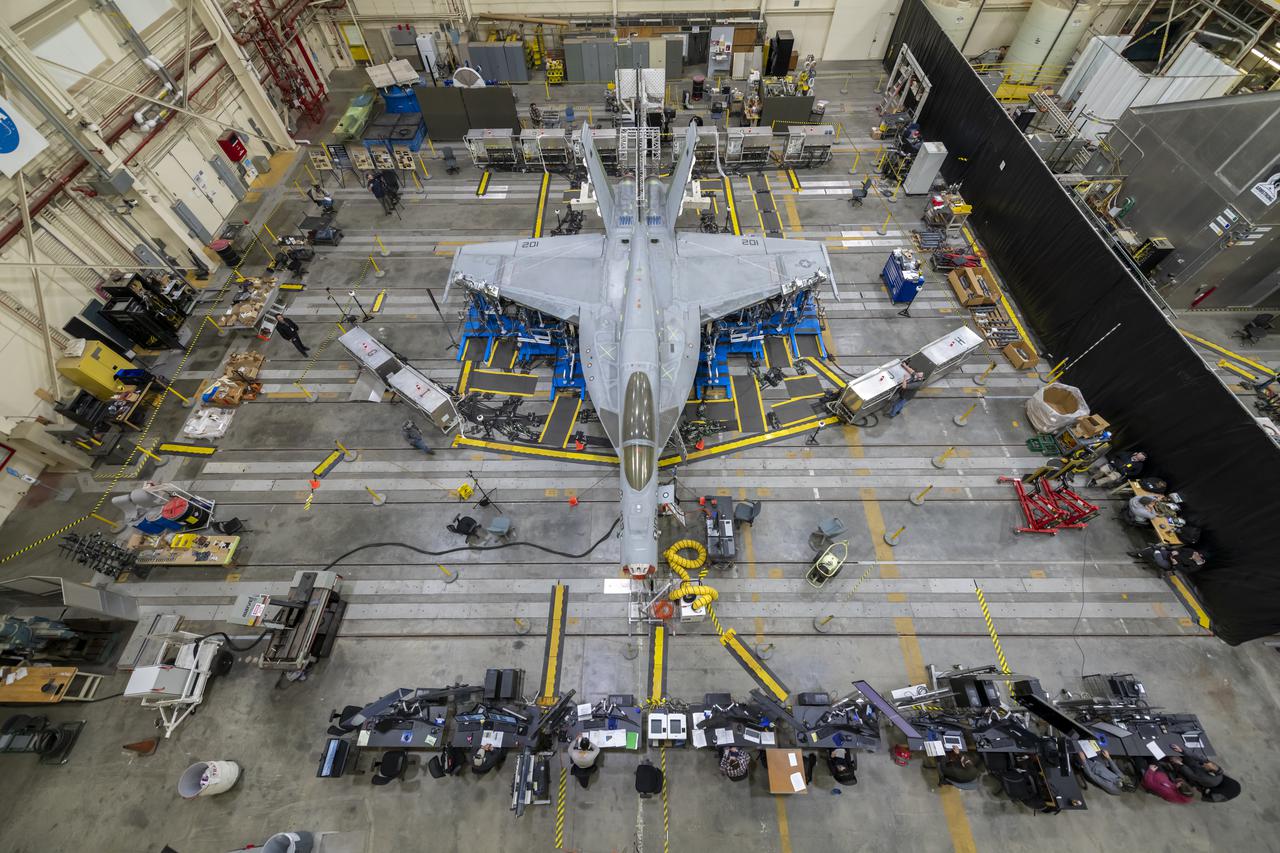
A center top view shows the wing loading test configuration and testing area of an F/A-18E from the Naval Air Systems Command (NAVAIR) in Patuxent River; Maryland. The aircraft is in NASA's Armstrong Flight Research Center Flight Loads Laboratory in Edwards; California; for the center's biggest load calibrations tests. This testing is needed before the aircraft can serve as a test vehicle for determining if it can safely manage maneuvers and proposed upgrades.
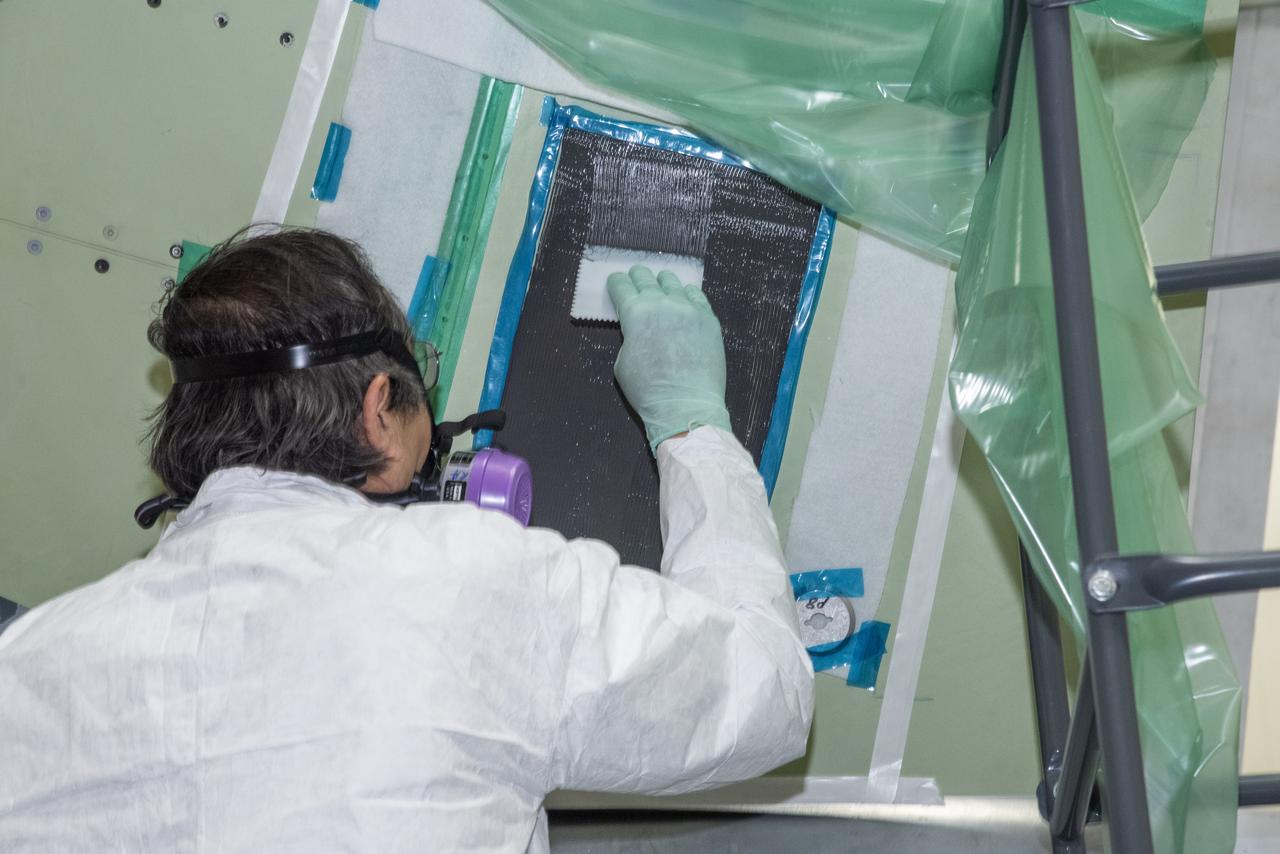
The load pad bonding process for the vertical tails was a preliminary step in the process to test the F/A-18E from the Naval Air Systems Command (NAVAIR) in Patuxent River, Maryland. The aircraft is in NASA’s Armstrong Flight Research Center Flight Loads Laboratory in Edwards, California, for the center’s biggest load calibrations tests. This testing is needed before the aircraft can serve as a test vehicle for determining if it can safely manage maneuvers and proposed upgrades.
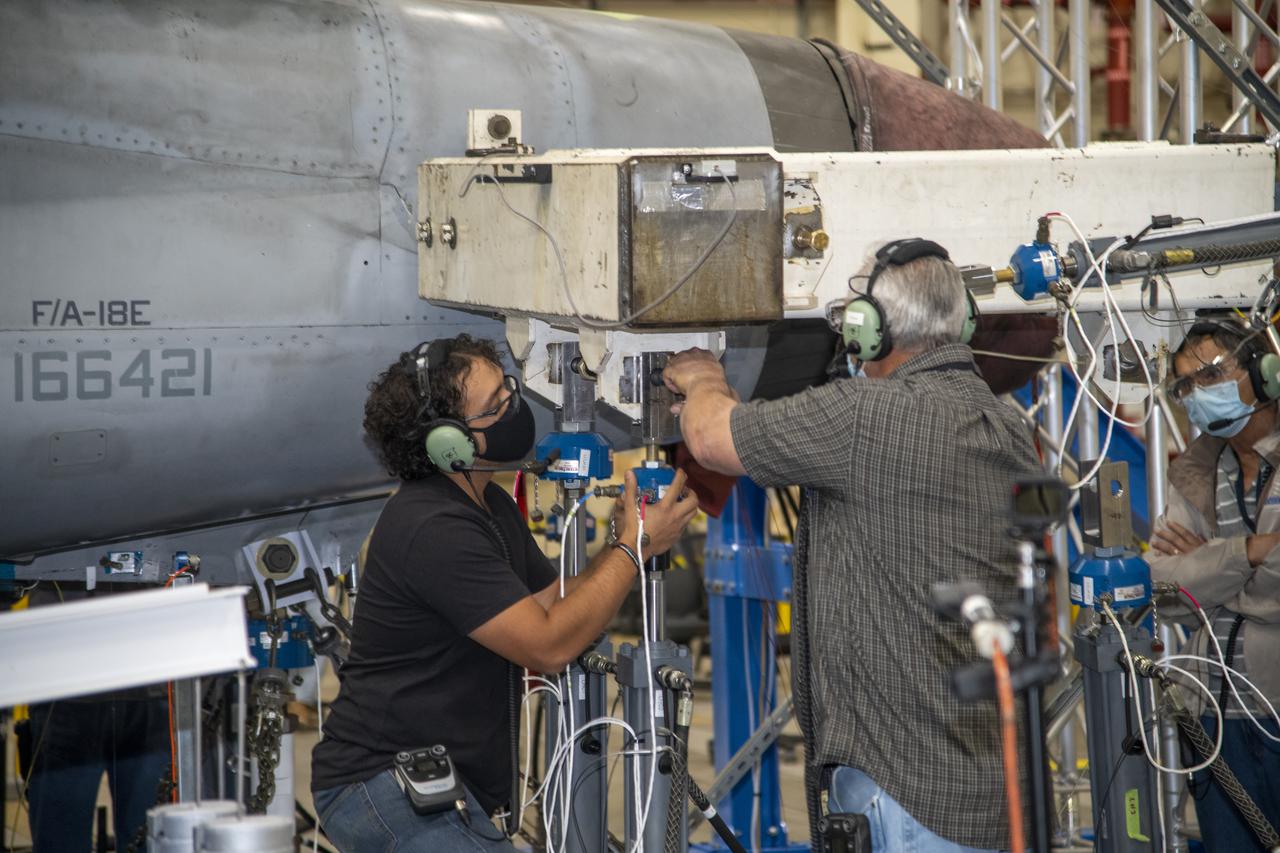
The actuator on the F/A-18E from the Naval Air Systems Command (NAVAIR) in Patuxent River, Maryland, is pinned to the horizontal tail load test fixture. The aircraft is in NASA’s Armstrong Flight Research Center Flight Loads Laboratory in Edwards, California, for the center’s biggest load calibrations tests. This testing is needed before the aircraft can serve as a test vehicle for determining if it can safely manage maneuvers and proposed upgrades.
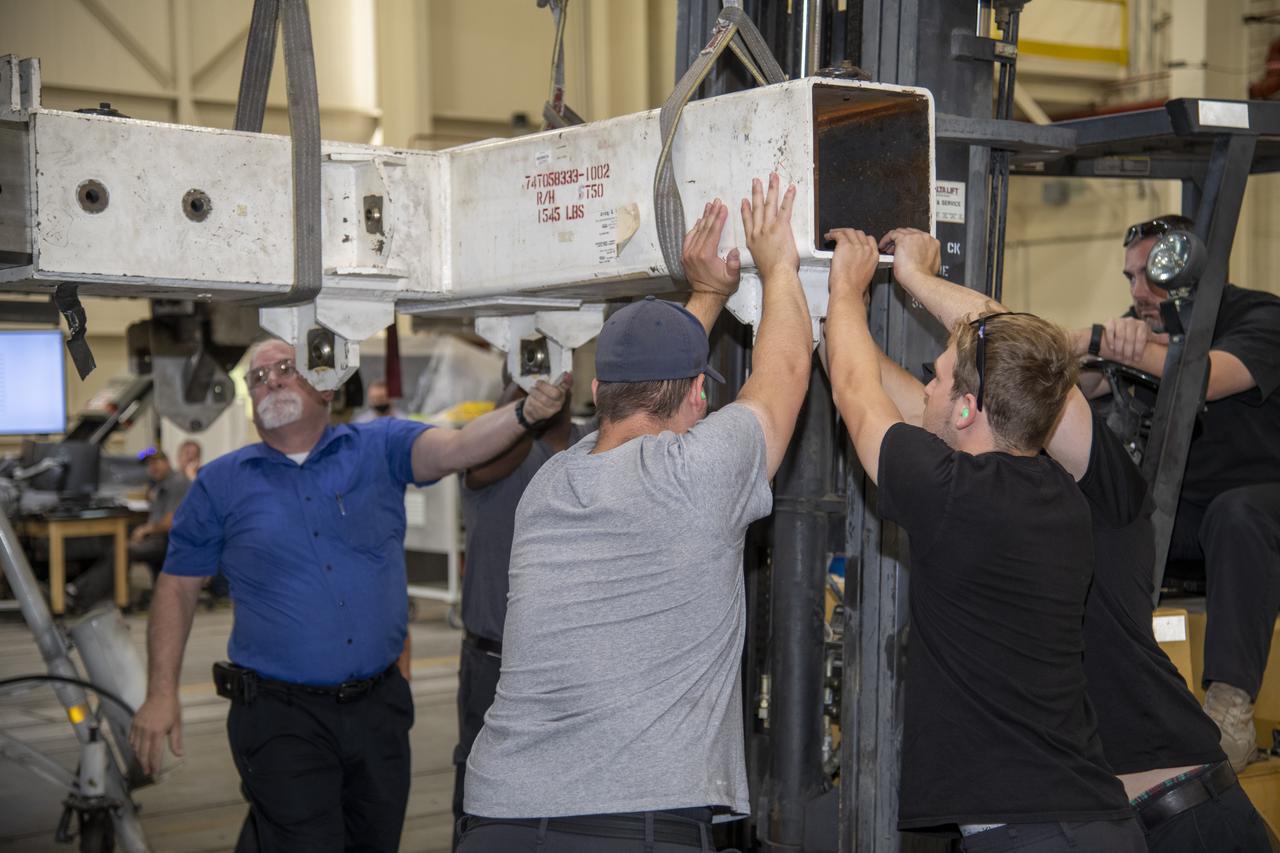
The horizontal tail and load fixture is moved into position for testing the F/A-18E from the Naval Air Systems Command (NAVAIR) in Patuxent River, Maryland. The aircraft is in NASA’s Armstrong Flight Research Center Flight Loads Laboratory in Edwards, California, for the center’s biggest load calibrations tests. This testing is needed before the aircraft can serve as a test vehicle for determining if it can safely manage maneuvers and proposed upgrades.
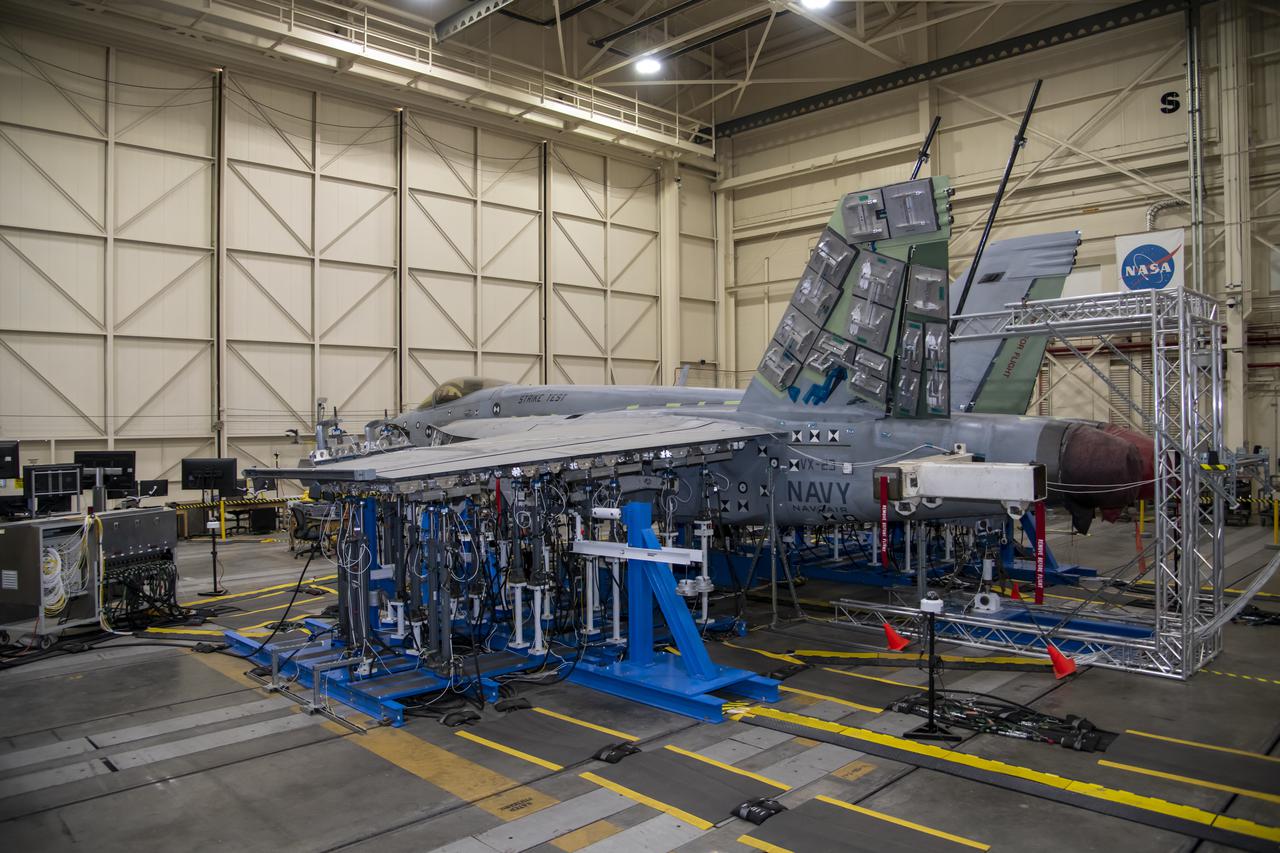
This rear view of the left wing load hardware shows the setup for testing a F/A-18E from the Naval Air Systems Command (NAVAIR) in Patuxent River, Maryland. The aircraft is in NASA's Armstrong Flight Research Center Flight Loads Laboratory in Edwards, California, for the center's biggest load calibrations tests. This testing is needed before the aircraft can serve as a test vehicle for determining if it can safely manage maneuvers and proposed upgrades.Â
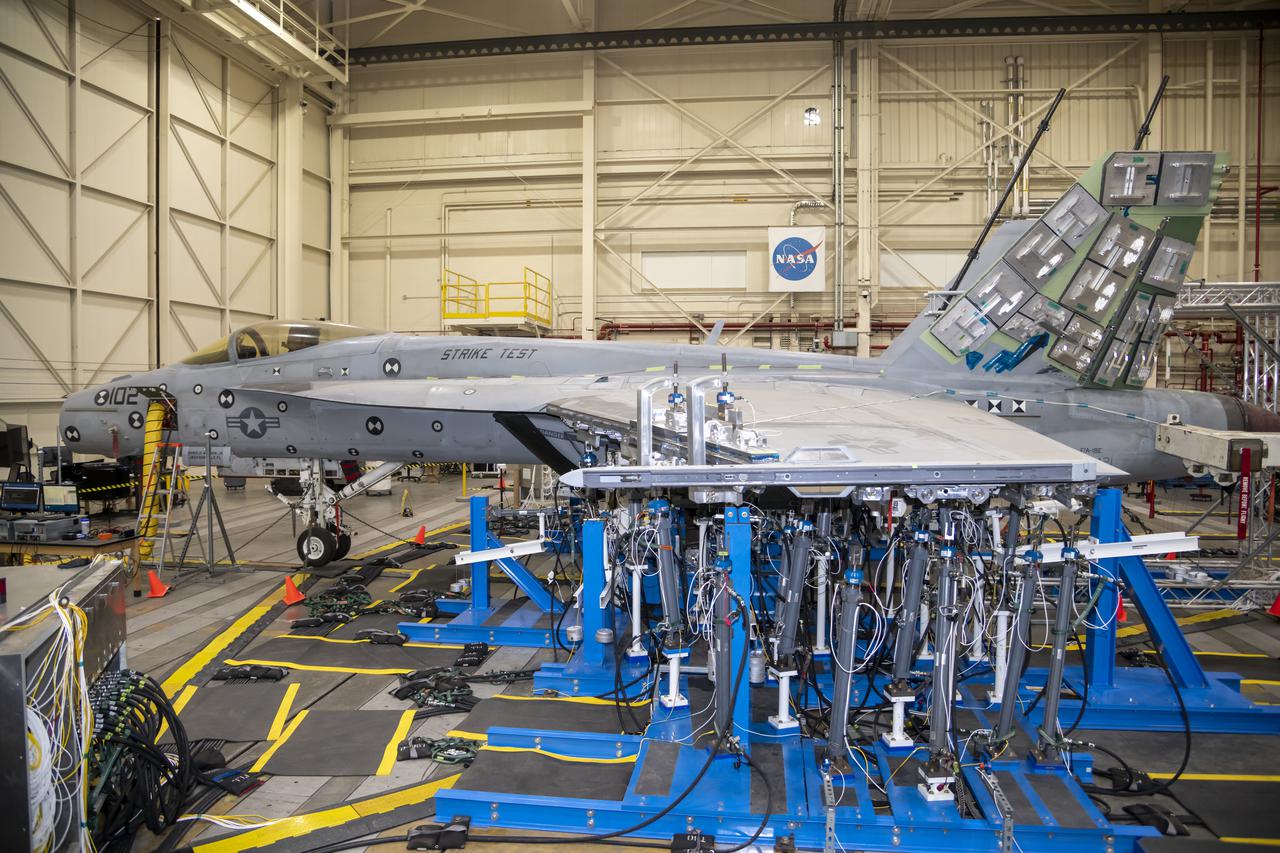
Left wing load hardware is setup for testing a F/A-18E from the Naval Air Systems Command (NAVAIR) in Patuxent River, Maryland. The aircraft is in NASA's Armstrong Flight Research Center Flight Loads Laboratory in Edwards, California, for the center's biggest load calibrations tests. This testing is needed before the aircraft can serve as a test vehicle for determining if it can safely manage maneuvers and proposed upgrades.
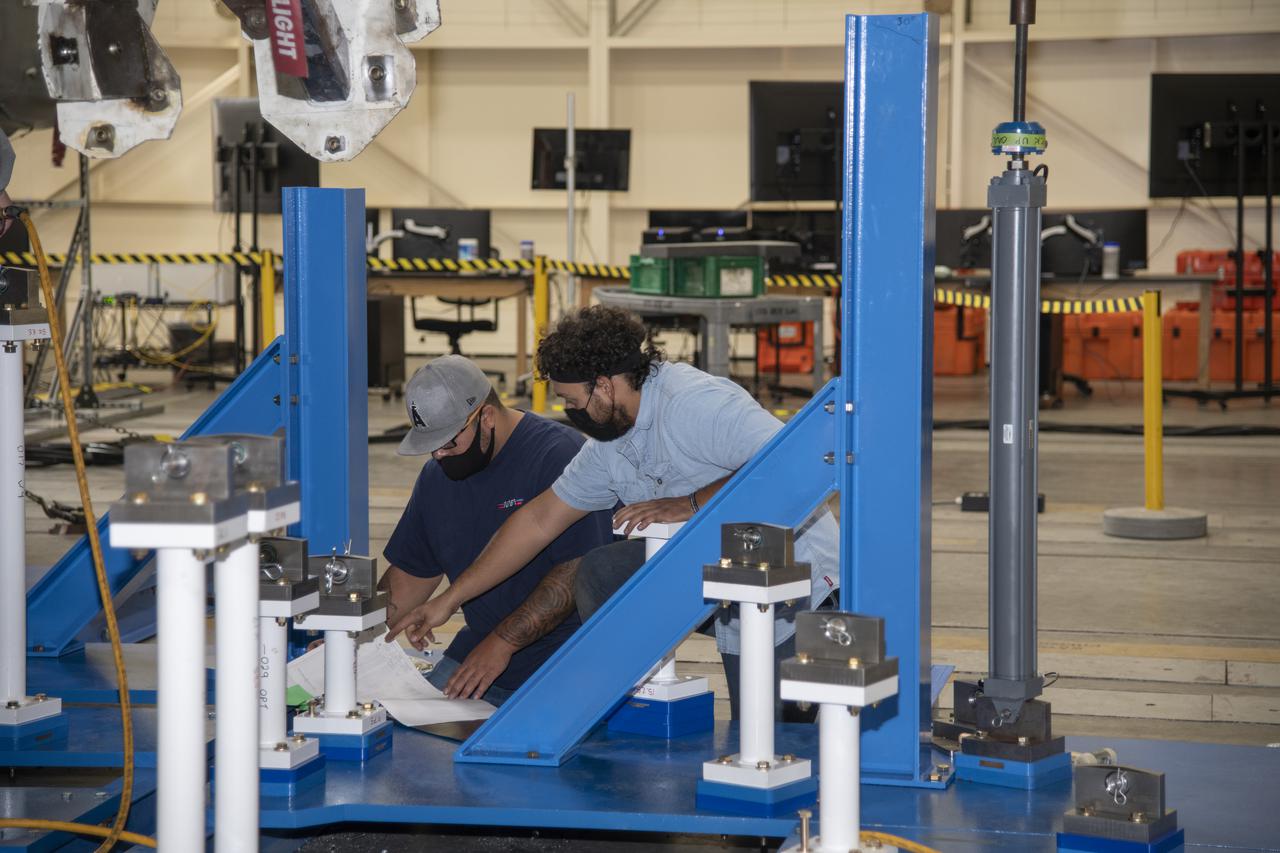
From left, Dominic Barela and Lucas Oramas review a drawing for installing the wing load test fixturing on a F/A-18E from the Naval Air Systems Command (NAVAIR) in Patuxent River, Maryland. The aircraft is in NASA’s Armstrong Flight Research Center Flight Loads Laboratory in Edwards, California, for the center’s biggest load calibrations tests. This testing is needed before the aircraft can serve as a test vehicle for determining if it can safely manage maneuvers and proposed upgrades.

The load pad bonding process for the vertical tails was a preliminary step in the process to test the F/A-18E from the Naval Air Systems Command (NAVAIR) in Patuxent River, Maryland. The aircraft is in NASA’s Armstrong Flight Research Center Flight Loads Laboratory in Edwards, California, for the center’s biggest load calibrations tests. This testing is needed before the aircraft can serve as a test vehicle for determining if it can safely manage maneuvers and proposed upgrades.

Load pads are bonded to the aircraft surface of a F/A-18E from the Naval Air Systems Command (NAVAIR) in Patuxent River, Maryland, while under pressure. The aircraft is in NASA’s Armstrong Flight Research Center Flight Loads Laboratory in Edwards, California, for the center’s biggest load calibrations tests. This testing is needed before the aircraft can serve as a test vehicle for determining if it can safely manage maneuvers and proposed upgrades
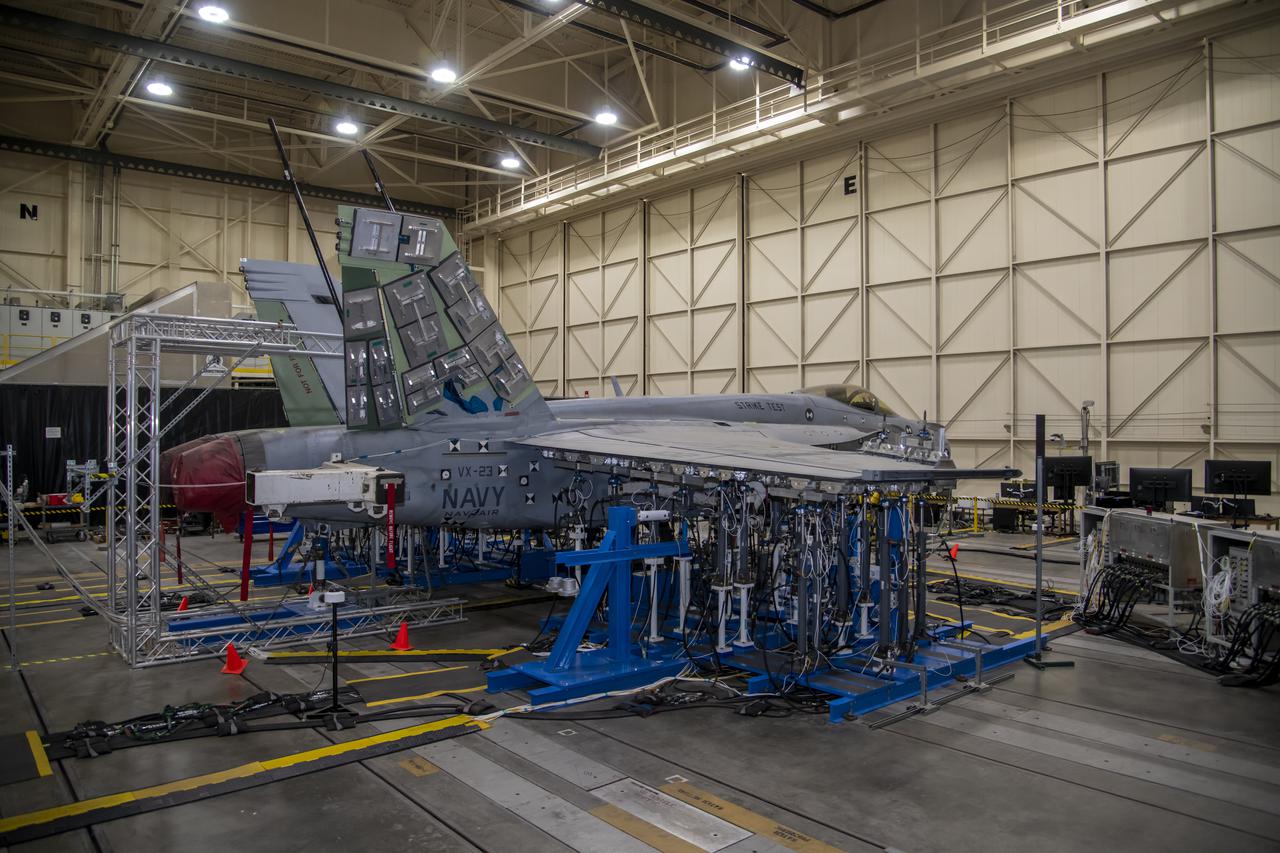
This rear view of the right wing load hardware shows the setup for testing a F/A-18E from the Naval Air Systems Command (NAVAIR) in Patuxent River, Maryland. The aircraft is in NASA's Armstrong Flight Research Center Flight Loads Laboratory in Edwards, California, for the center's biggest load calibrations tests. This testing is needed before the aircraft can serve as a test vehicle for determining if it can safely manage maneuvers and proposed upgrades.
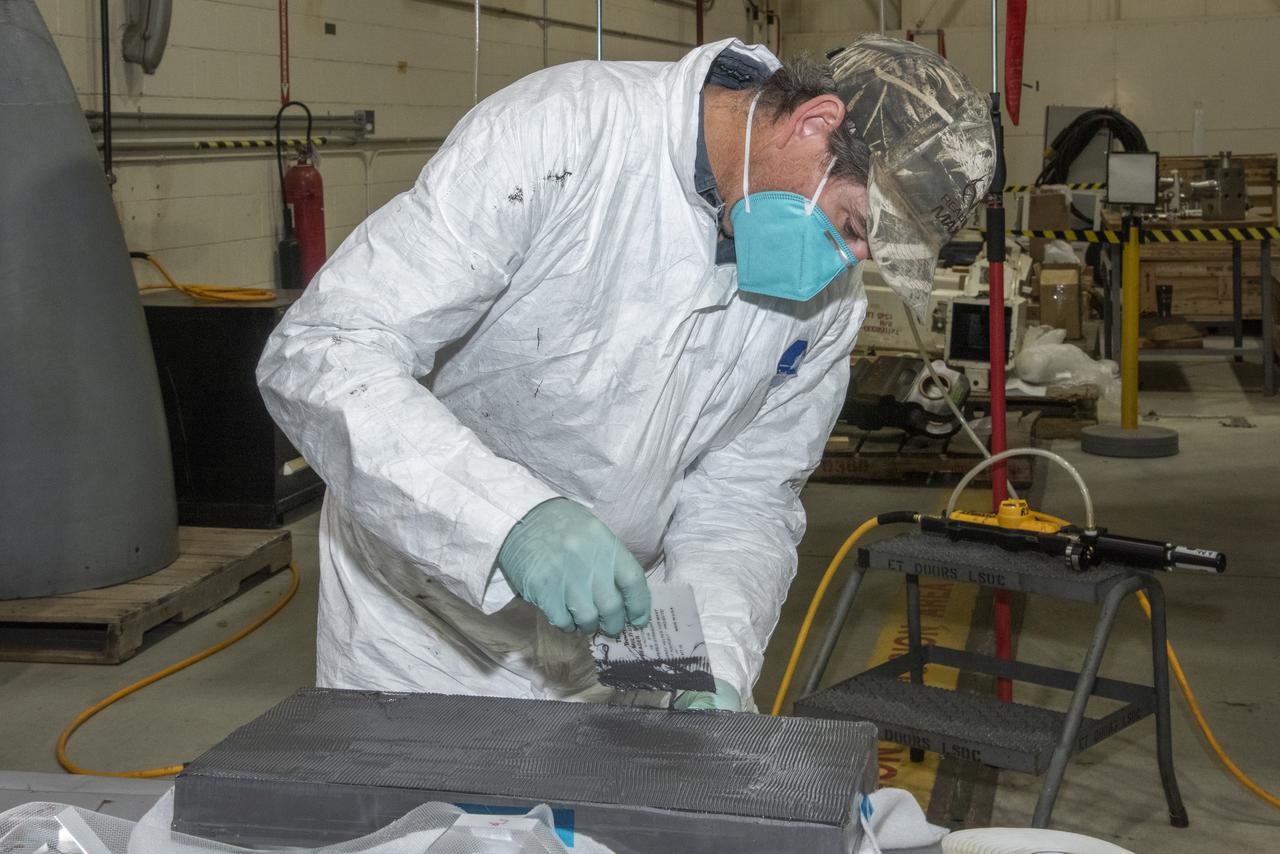
The load pad bonding process for the vertical tails was a preliminary step in the process to test the F/A-18E from the Naval Air Systems Command (NAVAIR) in Patuxent River, Maryland. The aircraft is in NASA’s Armstrong Flight Research Center Flight Loads Laboratory in Edwards, California, for the center’s biggest load calibrations tests. This testing is needed before the aircraft can serve as a test vehicle for determining if it can safely manage maneuvers and proposed upgrades.
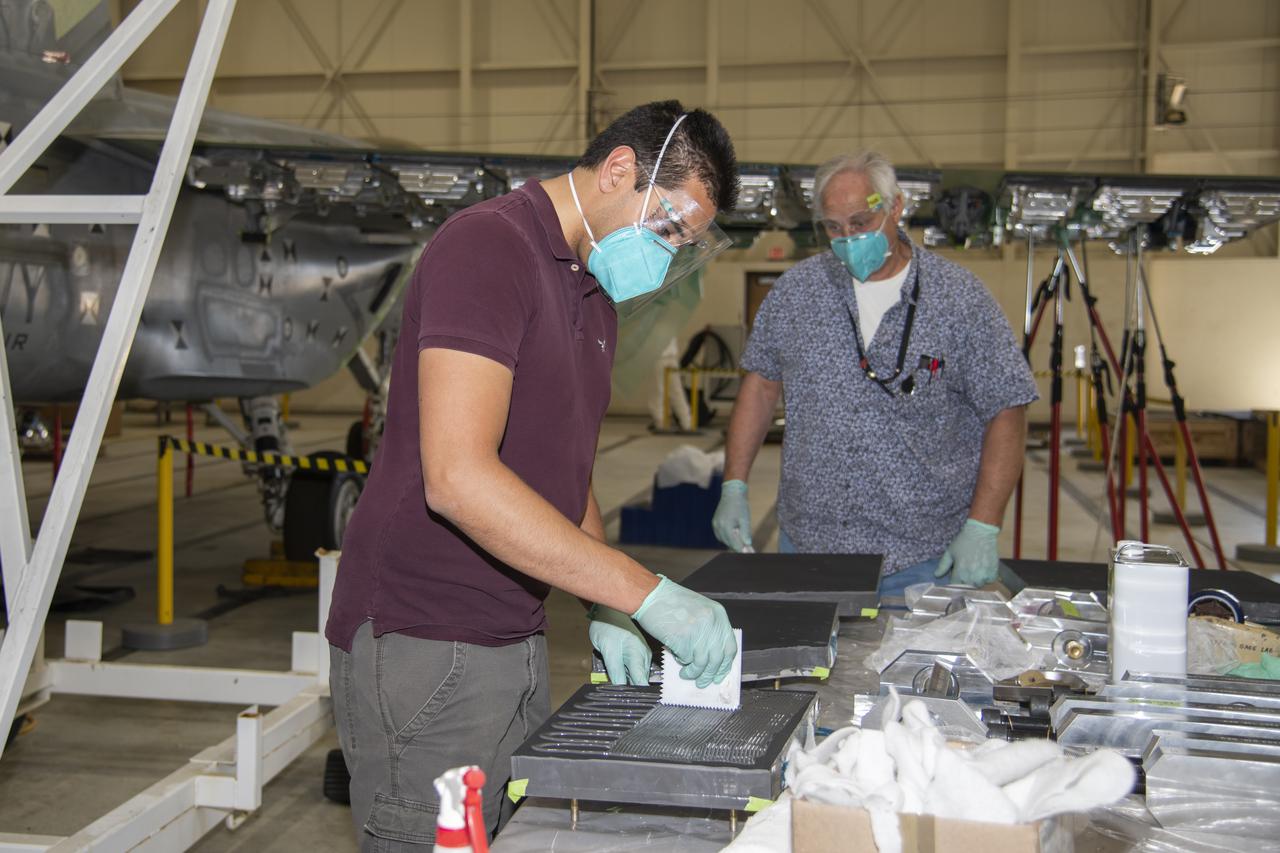
Jeremy Woellner, from left, and Ted Powers spread tank sealant on rubber load pads, a step in the process to test a F/A-18E from the Naval Air Systems Command (NAVAIR) in Patuxent River, Maryland. The aircraft is in NASA’s Armstrong Flight Research Center Flight Loads Laboratory in Edwards, California, for the center’s biggest load calibrations tests. This testing is needed before the aircraft can serve as a test vehicle for determining if it can safely manage maneuvers and proposed upgrades.
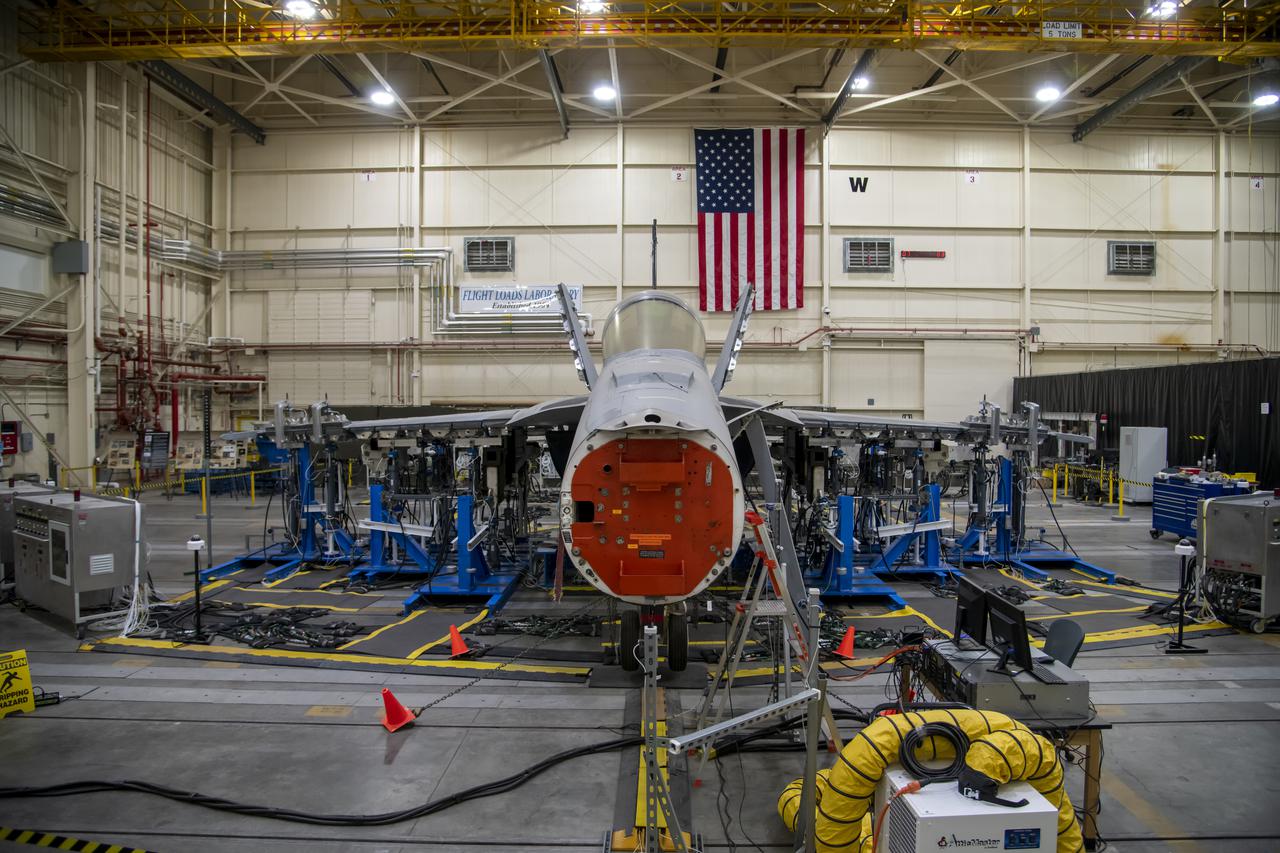
This front view shows the wing loading test configuration and testing area of an F/A-18E from the Naval Air Systems Command (NAVAIR) in Patuxent River, Maryland. The aircraft is in NASA's Armstrong Flight Research Center Flight Loads Laboratory in Edwards, California, for the center's biggest load calibrations tests. This testing is needed before the aircraft can serve as a test vehicle for determining if it can safely manage maneuvers and proposed upgrades.
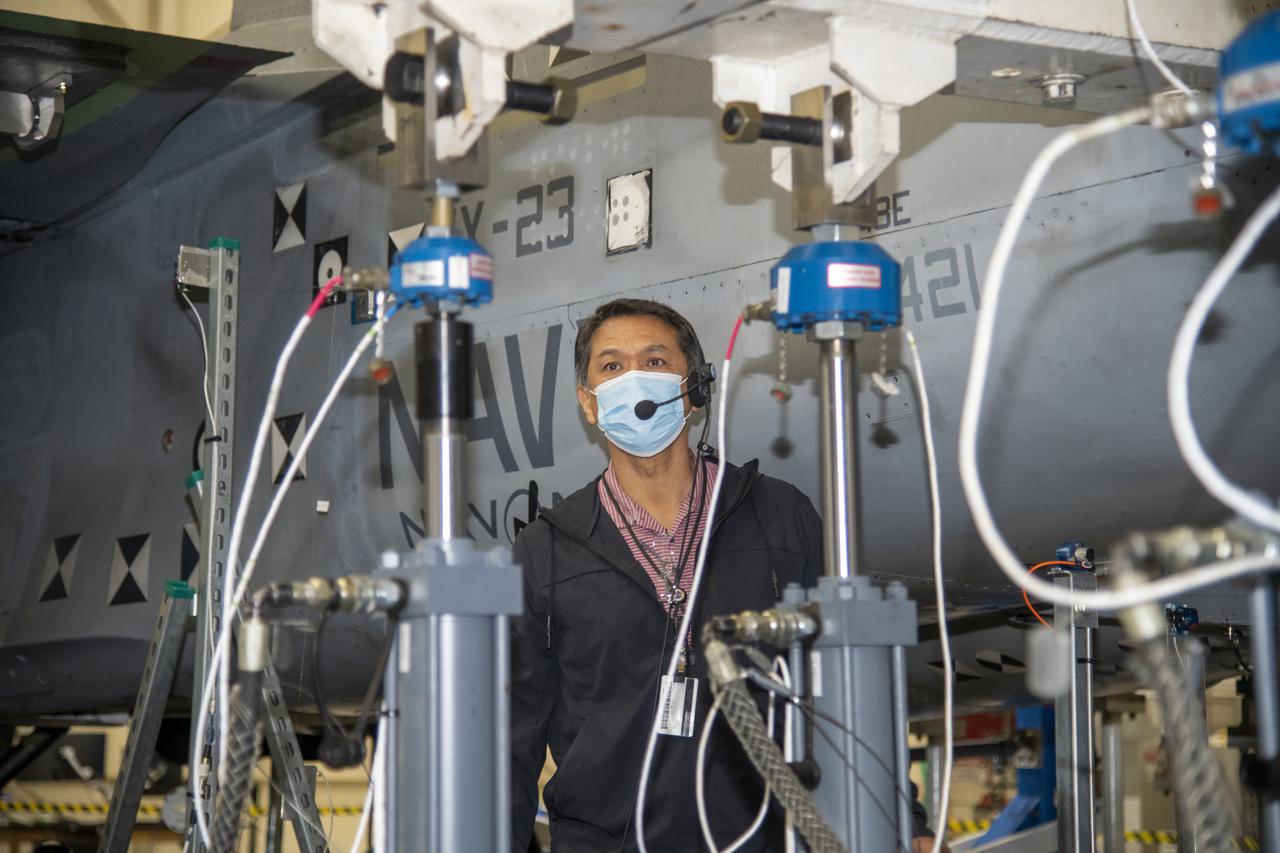
Larry Hudson does an inspection after the actuator on the F/A-18E from the Naval Air Systems Command (NAVAIR) in Patuxent River, Maryland, is pinned to the horizontal tail load test fixture. The aircraft is in NASA’s Armstrong Flight Research Center Flight Loads Laboratory in Edwards, California, for the center’s biggest load calibrations tests. This testing is needed before the aircraft can serve as a test vehicle for determining if it can safely manage maneuvers and proposed upgrades.

From left, Ray Sadler, Ted Powers, and Walter Hargis align load pads on the aircraft surface of a F/A-18E from the Naval Air Systems Command (NAVAIR) in Patuxent River, Maryland. The aircraft is in NASA’s Armstrong Flight Research Center Flight Loads Laboratory in Edwards, California, for the center’s biggest load calibrations tests. This testing is needed before the aircraft can serve as a test vehicle for determining if it can safely manage maneuvers and proposed upgrades.
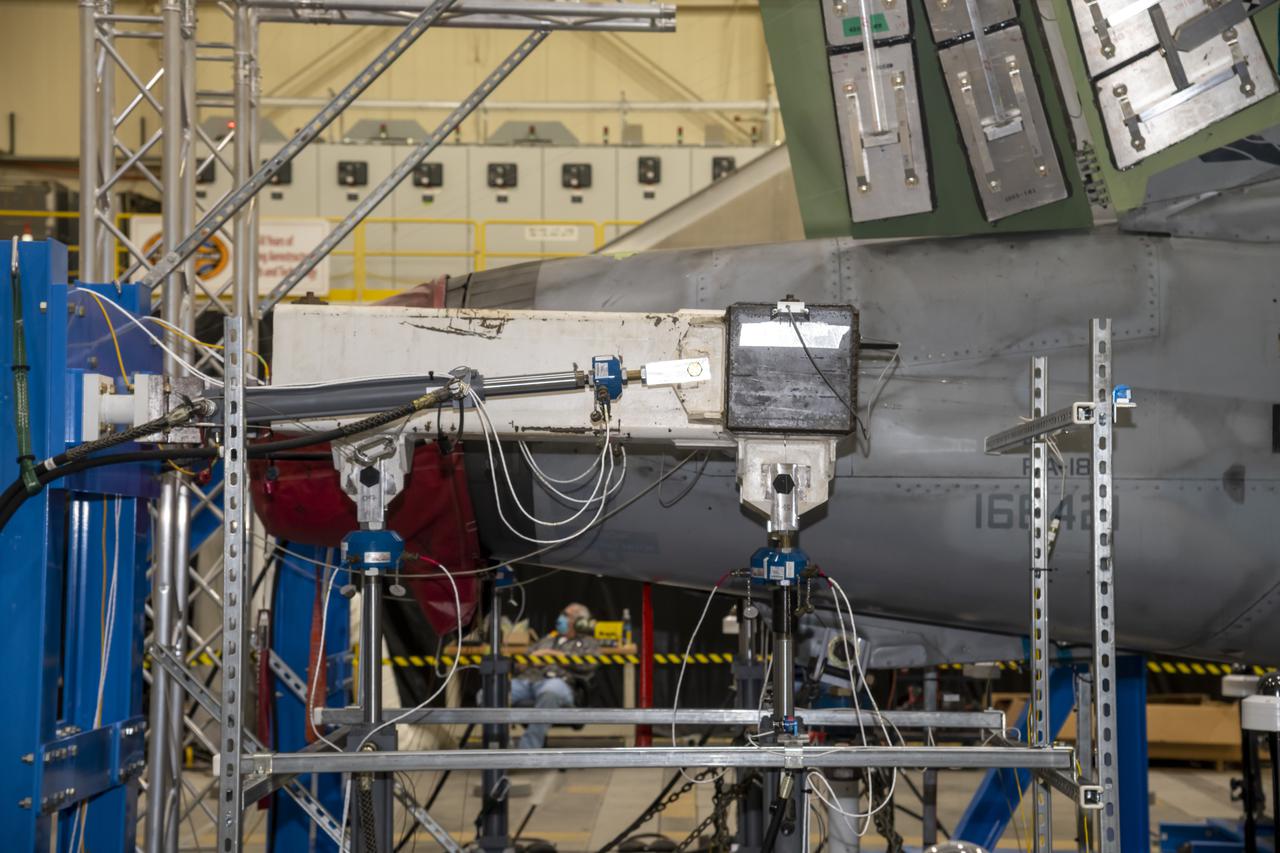
The horizontal tail is under test load on a F/A-18E from the Naval Air Systems Command (NAVAIR) in Patuxent River, Maryland. The aircraft is in NASA’s Armstrong Flight Research Center Flight Loads Laboratory in Edwards, California, for the center’s biggest load calibrations tests. This testing is needed before the aircraft can serve as a test vehicle for determining if it can safely manage maneuvers and proposed upgrades.
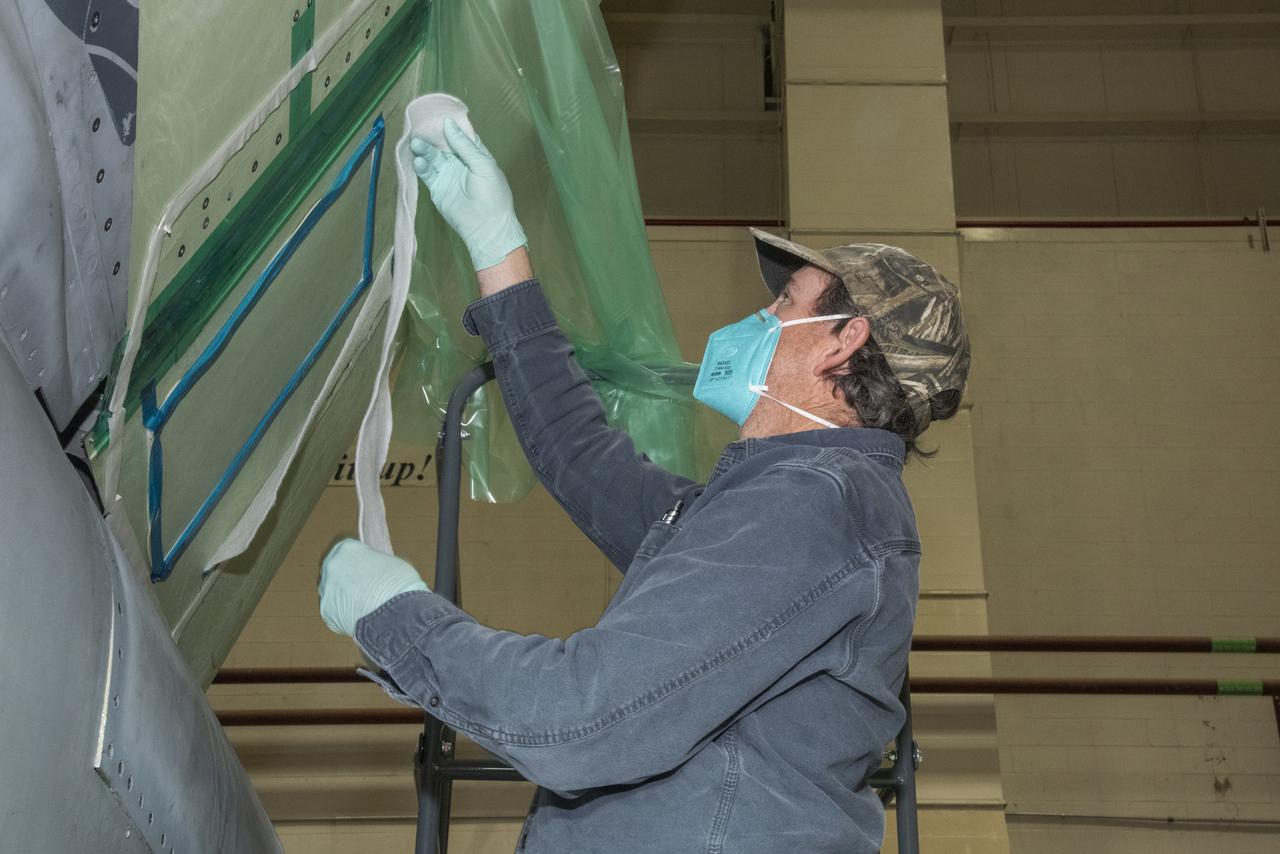
The load pad bonding process for the vertical tails was a preliminary step in the process to test the F/A-18E from the Naval Air Systems Command (NAVAIR) in Patuxent River, Maryland. The aircraft is in NASA’s Armstrong Flight Research Center Flight Loads Laboratory in Edwards, California, for the center’s biggest load calibrations tests. This testing is needed before the aircraft can serve as a test vehicle for determining if it can safely manage maneuvers and proposed upgrades.
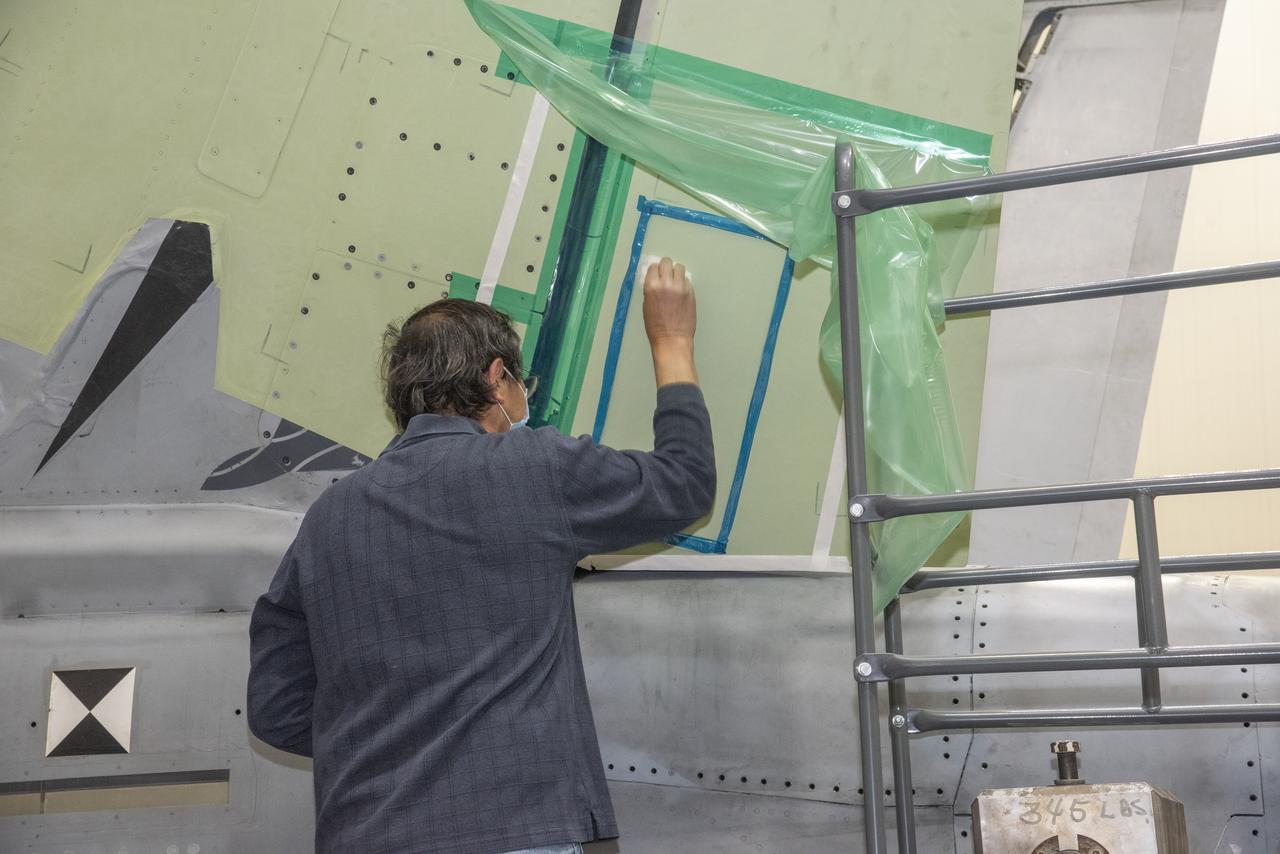
The load pad bonding process for the vertical tails was a preliminary step in the process to test the F/A-18E from the Naval Air Systems Command (NAVAIR) in Patuxent River, Maryland. The aircraft is in NASA’s Armstrong Flight Research Center Flight Loads Laboratory in Edwards, California, for the center’s biggest load calibrations tests. This testing is needed before the aircraft can serve as a test vehicle for determining if it can safely manage maneuvers and proposed upgrades.
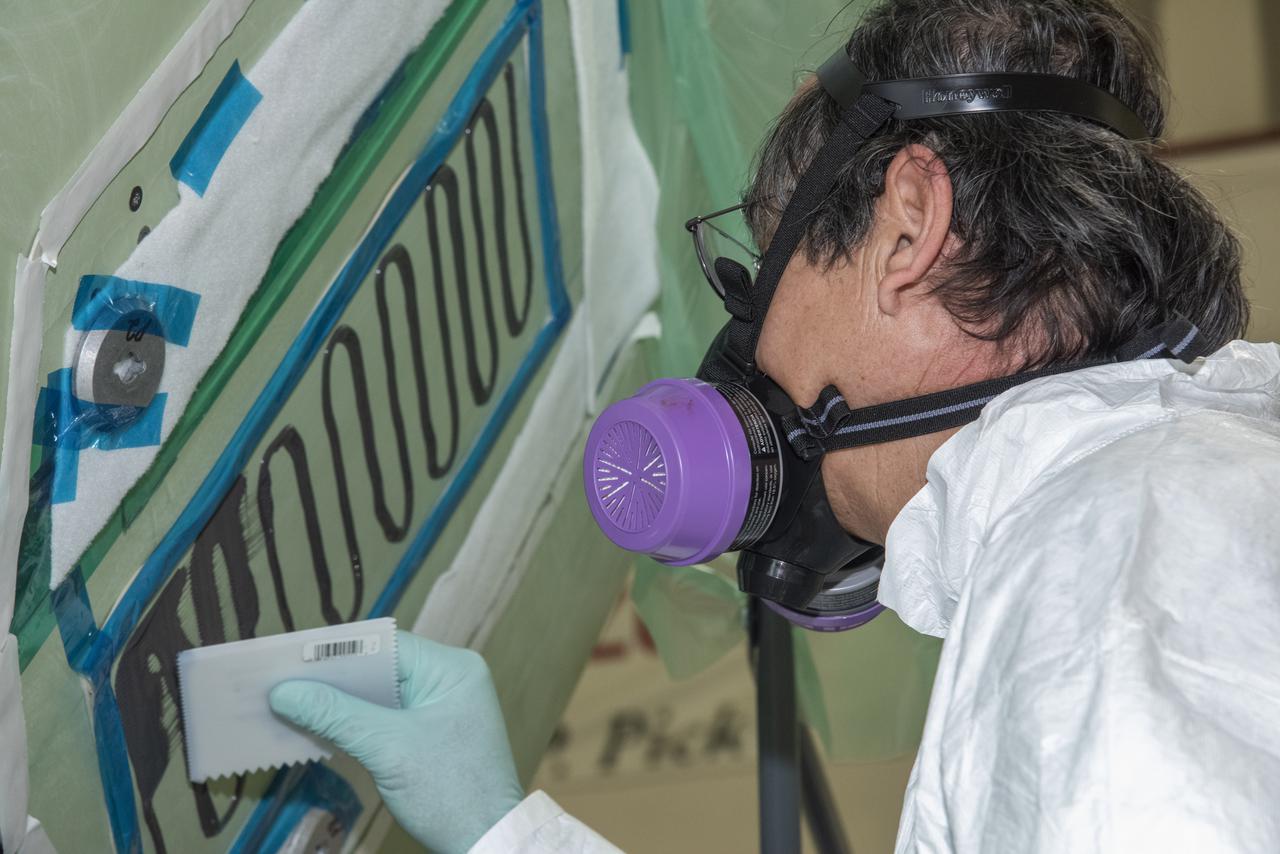
The load pad bonding process for the vertical tails was a preliminary step in the process to test the F/A-18E from the Naval Air Systems Command (NAVAIR) in Patuxent River, Maryland. The aircraft is in NASA’s Armstrong Flight Research Center Flight Loads Laboratory in Edwards, California, for the center’s biggest load calibrations tests. This testing is needed before the aircraft can serve as a test vehicle for determining if it can safely manage maneuvers and proposed upgrades.
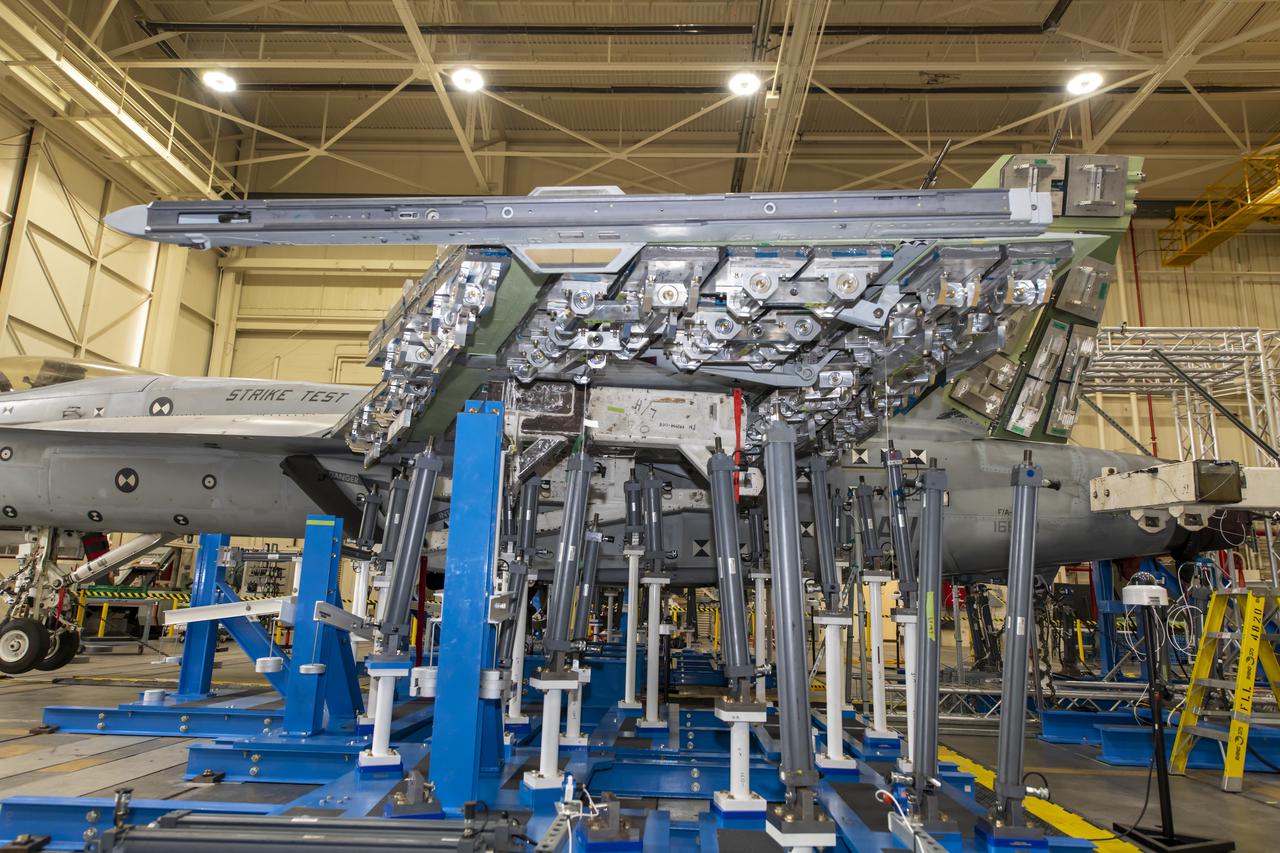
– Installation of wing load test hardware is installed under the wing of a F/A-18E from the Naval Air Systems Command (NAVAIR) in Patuxent River, Maryland. The aircraft is in NASA’s Armstrong Flight Research Center Flight Loads Laboratory in Edwards, California, for the center’s biggest load calibrations tests. This testing is needed before the aircraft can serve as a test vehicle for determining if it can safely manage maneuvers and proposed upgrades.
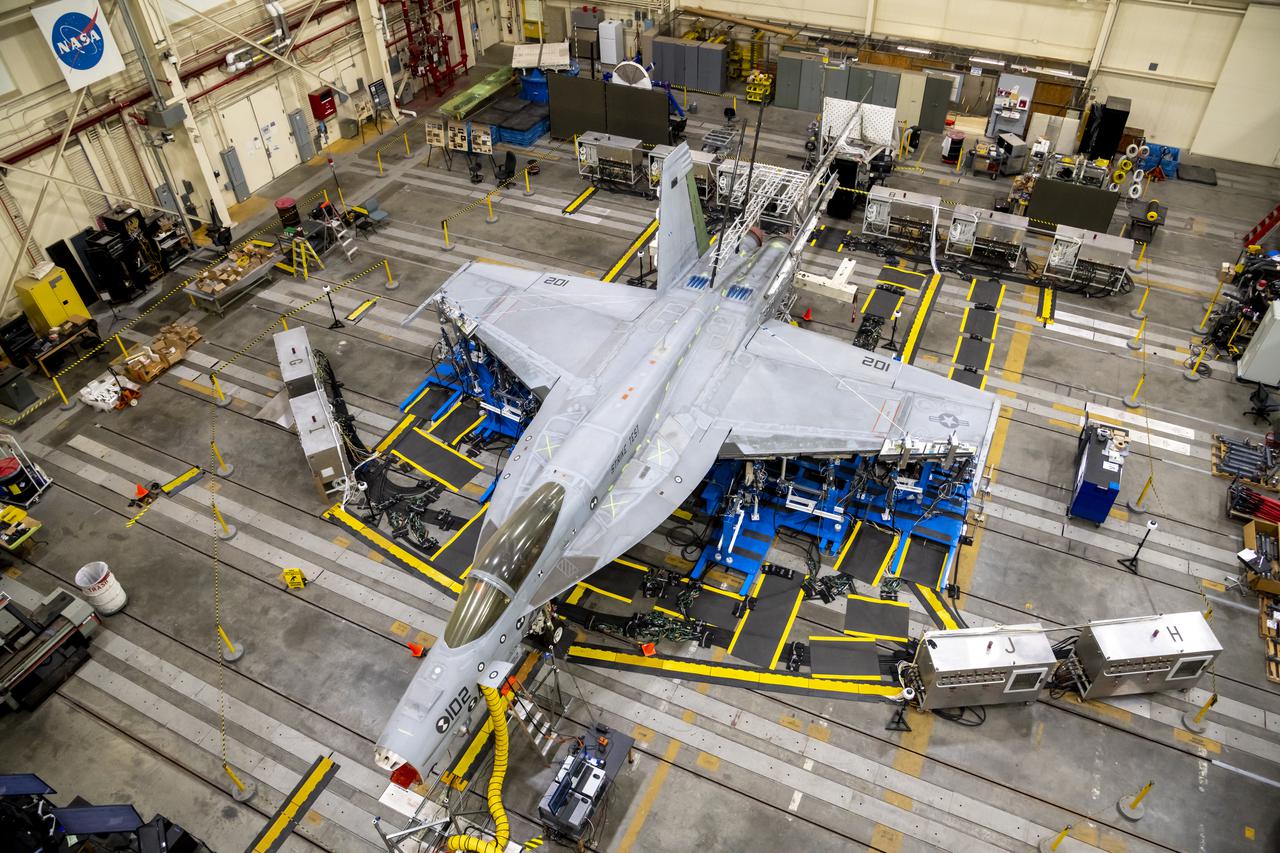
A top view shows the wing loading test configuration of a F/A-18E from the Naval Air Systems Command (NAVAIR) in Patuxent River, Maryland. The aircraft is in NASA’s Armstrong Flight Research Center Flight Loads Laboratory in Edwards, California, for the center’s biggest load calibrations tests. This testing is needed before the aircraft can serve as a test vehicle for determining if it can safely manage maneuvers and proposed upgrades.
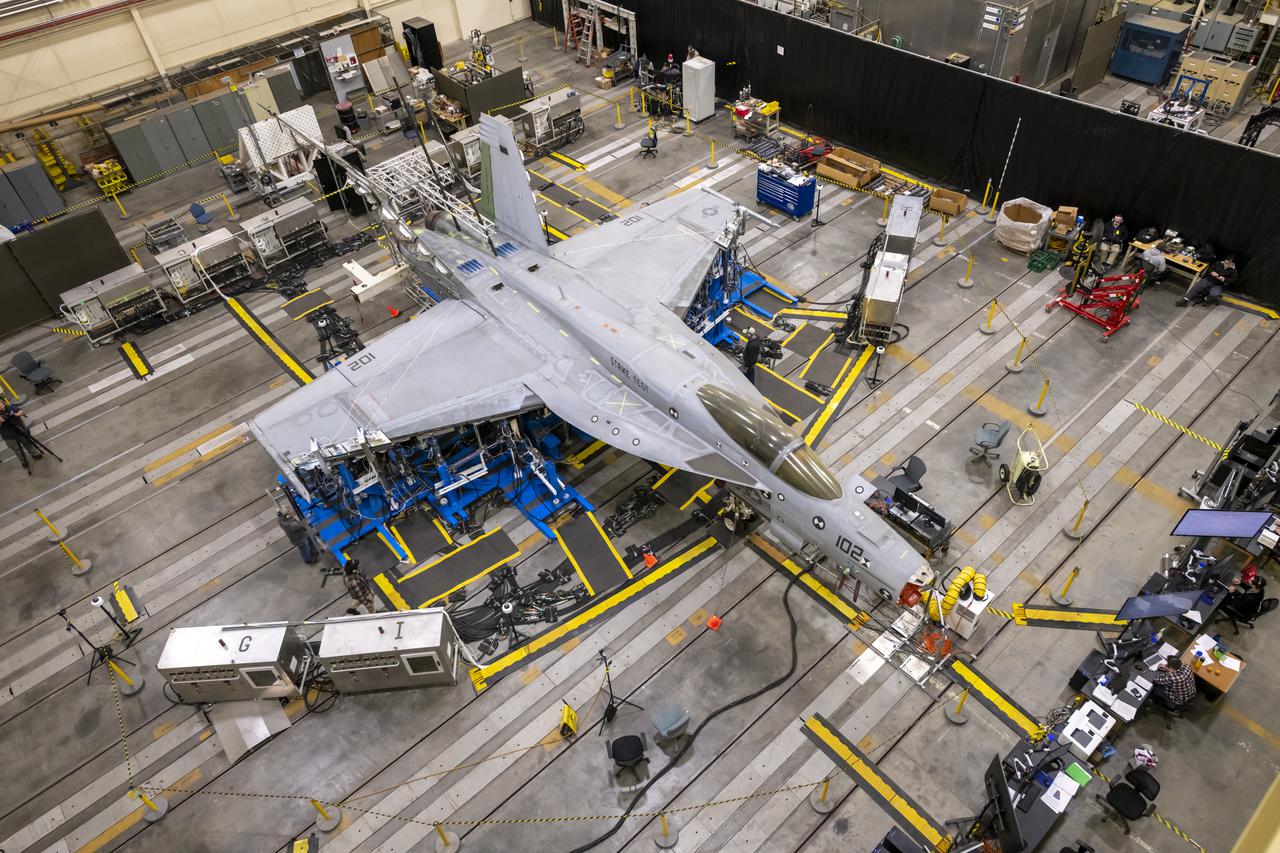
A top view shows the wing loading test configuration of an F/A-18E from the Naval Air Systems Command (NAVAIR) in Patuxent River; Maryland. The aircraft is in NASA's Armstrong Flight Research Center Flight Loads Laboratory in Edwards; California; for the center's biggest load calibrations tests. This testing is needed before the aircraft can serve as a test vehicle for determining if it can safely manage maneuvers and proposed upgrades.
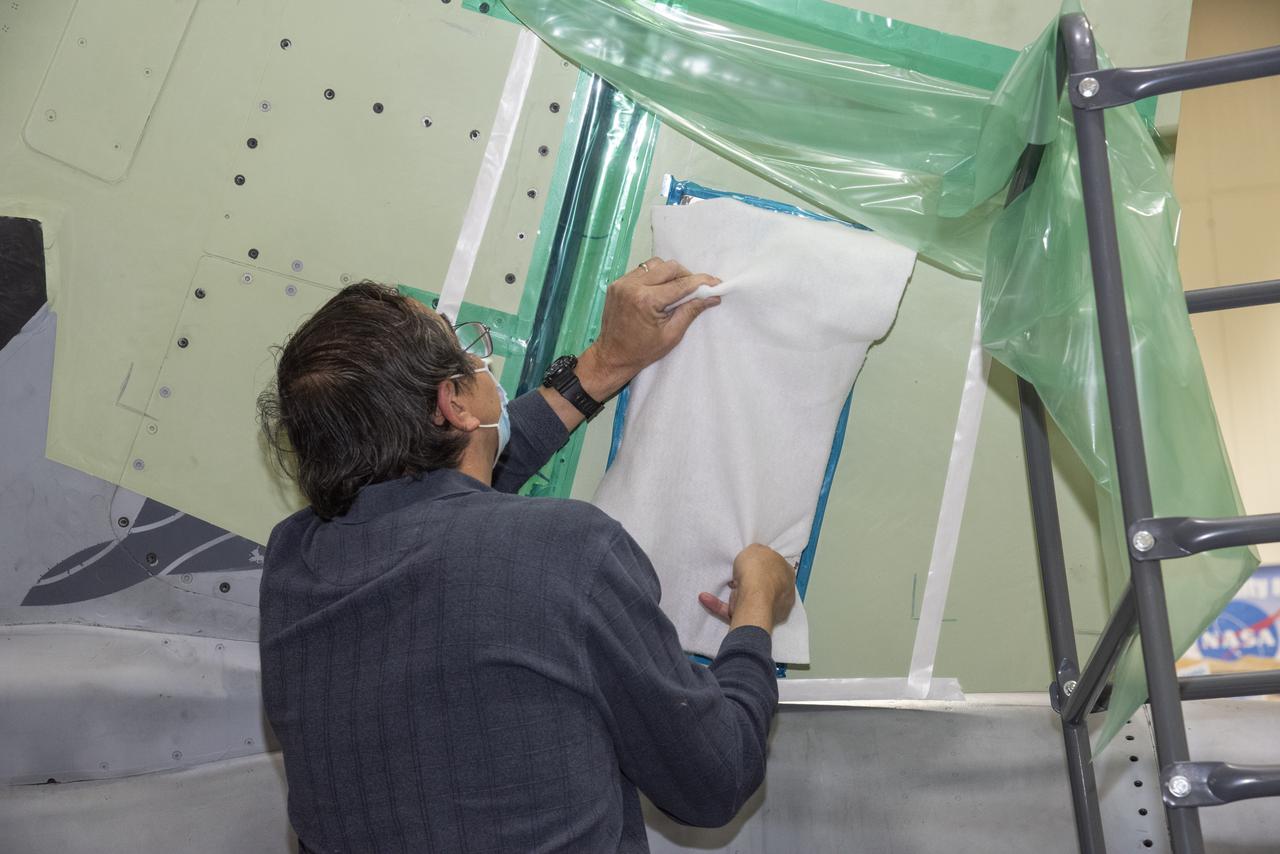
The load pad bonding process for the vertical tails was a preliminary step in the process to test the F/A-18E from the Naval Air Systems Command (NAVAIR) in Patuxent River, Maryland. The aircraft is in NASA’s Armstrong Flight Research Center Flight Loads Laboratory in Edwards, California, for the center’s biggest load calibrations tests. This testing is needed before the aircraft can serve as a test vehicle for determining if it can safely manage maneuvers and proposed upgrades.
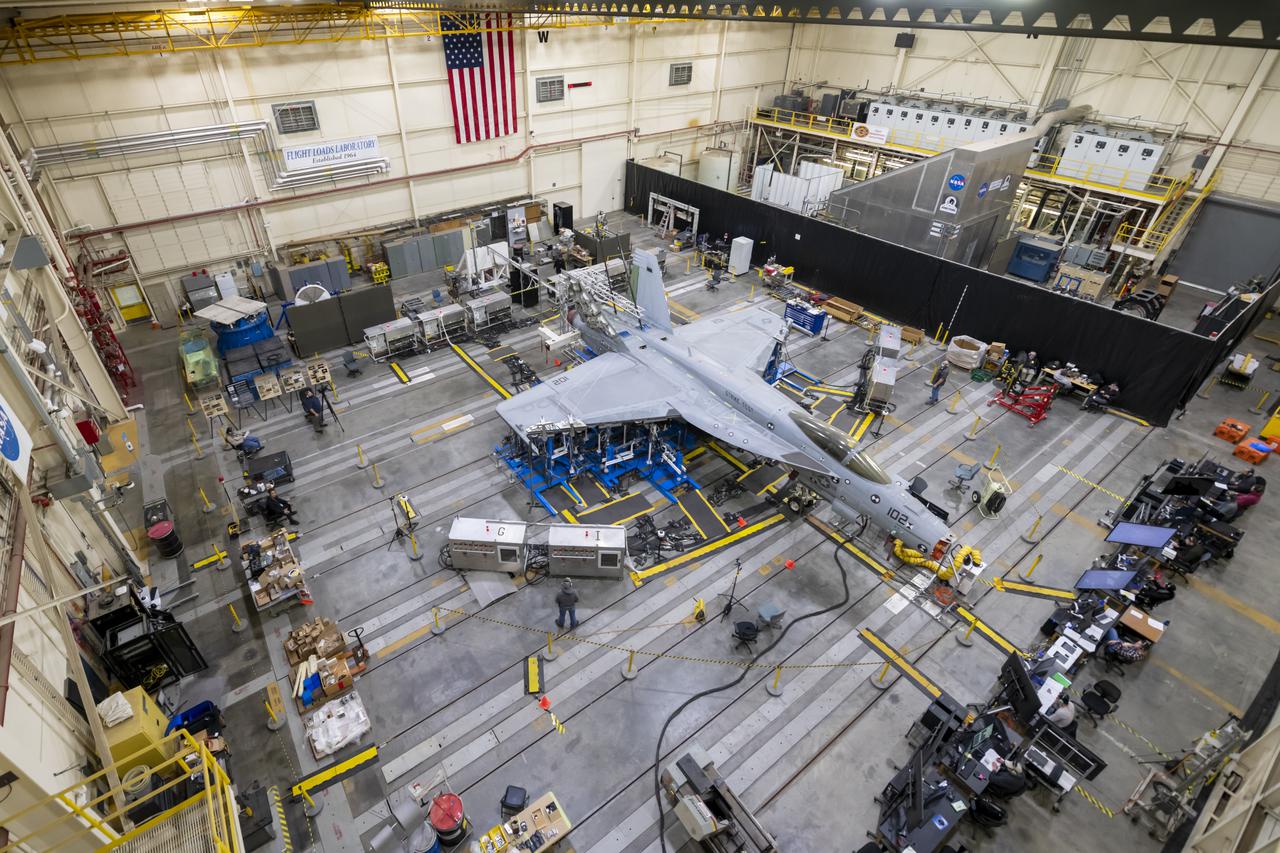
A top view shows the wing loading test configuration and testing area of an F/A-18E from the Naval Air Systems Command (NAVAIR) in Patuxent River; Maryland. The aircraft is in NASA's Armstrong Flight Research Center Flight Loads Laboratory in Edwards; California; for the center's biggest load calibrations tests. This testing is needed before the aircraft can serve as a test vehicle for determining if it can safely manage maneuvers and proposed upgrades.
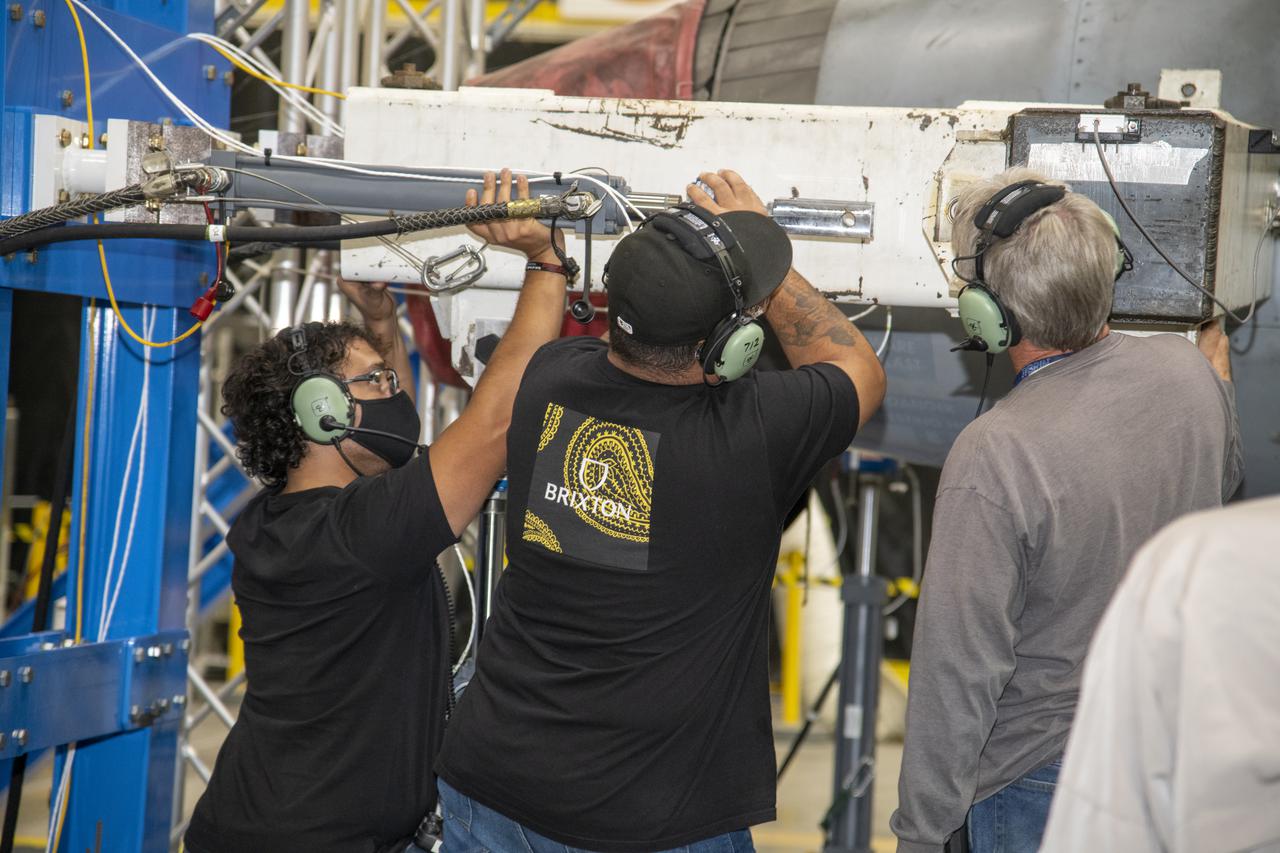
The actuator on the F/A-18E from the Naval Air Systems Command (NAVAIR) in Patuxent River, Maryland, is positioned for pinning to the horizontal tail load test fixture. The aircraft is in NASA’s Armstrong Flight Research Center Flight Loads Laboratory in Edwards, California, for the center’s biggest load calibrations tests. This testing is needed before the aircraft can serve as a test vehicle for determining if it can safely manage maneuvers and proposed upgrades.
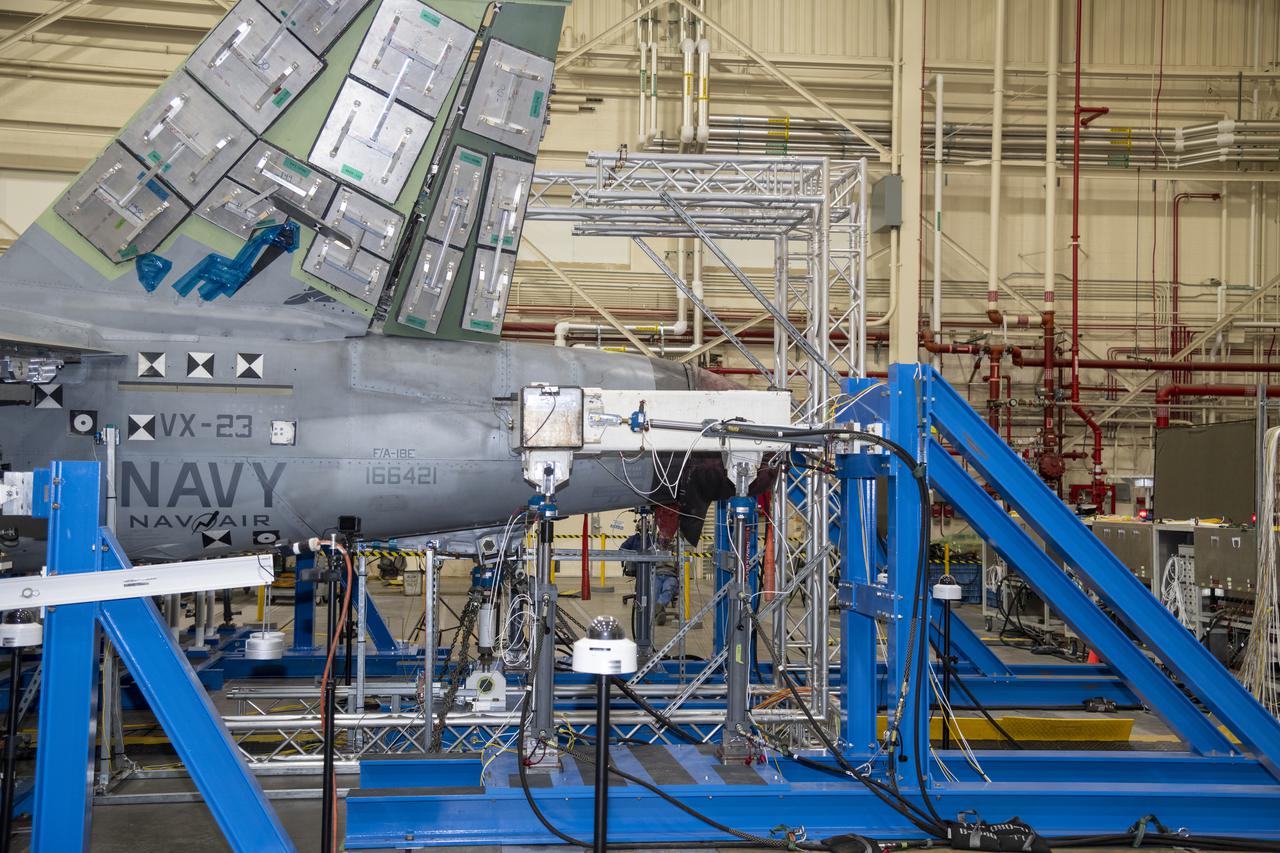
The horizontal tail is under test load on a F/A-18E from the Naval Air Systems Command (NAVAIR) in Patuxent River, Maryland. The aircraft is in NASA’s Armstrong Flight Research Center Flight Loads Laboratory in Edwards, California, for the center’s biggest load calibrations tests. This testing is needed before the aircraft can serve as a test vehicle for determining if it can safely manage maneuvers and proposed upgrades.
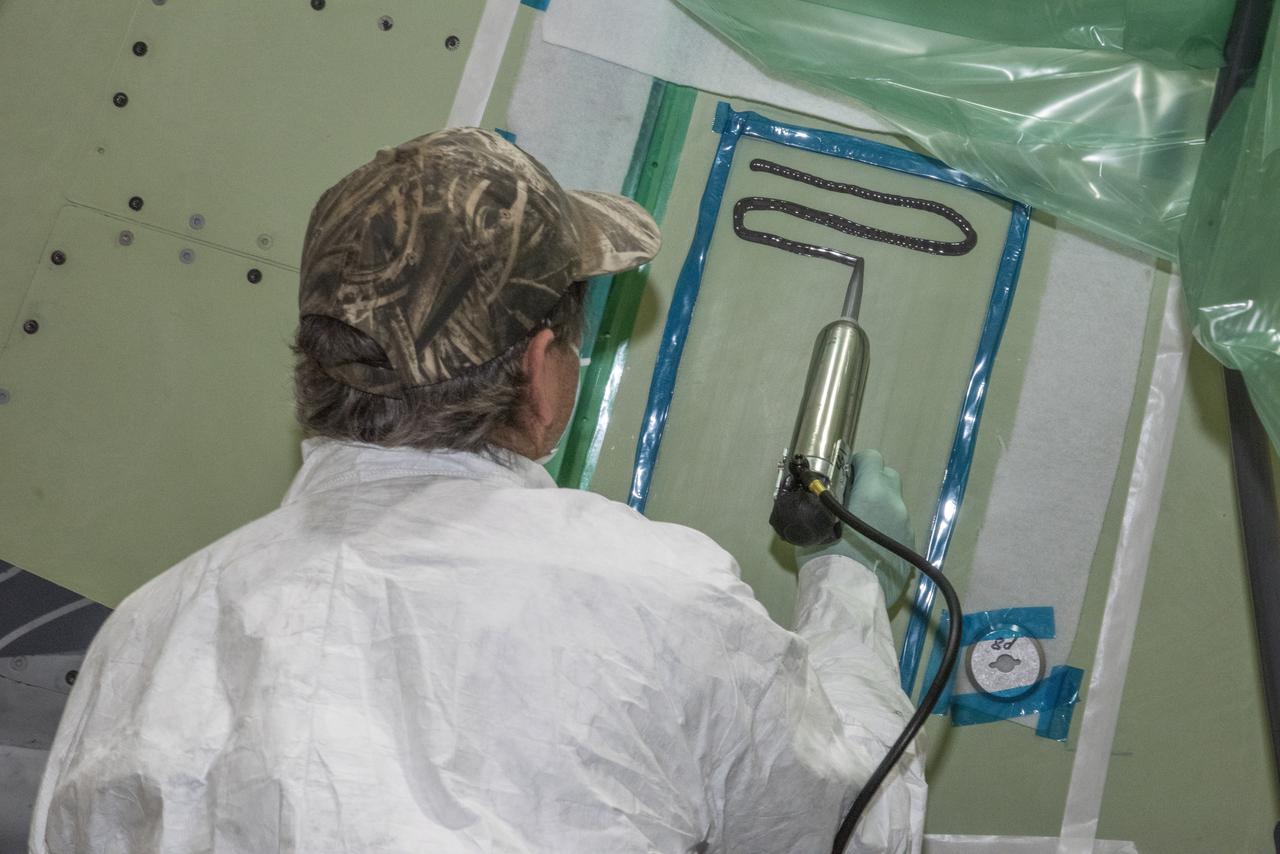
The load pad bonding process for the vertical tails was a preliminary step in the process to test the F/A-18E from the Naval Air Systems Command (NAVAIR) in Patuxent River, Maryland. The aircraft is in NASA’s Armstrong Flight Research Center Flight Loads Laboratory in Edwards, California, for the center’s biggest load calibrations tests. This testing is needed before the aircraft can serve as a test vehicle for determining if it can safely manage maneuvers and proposed upgrades.
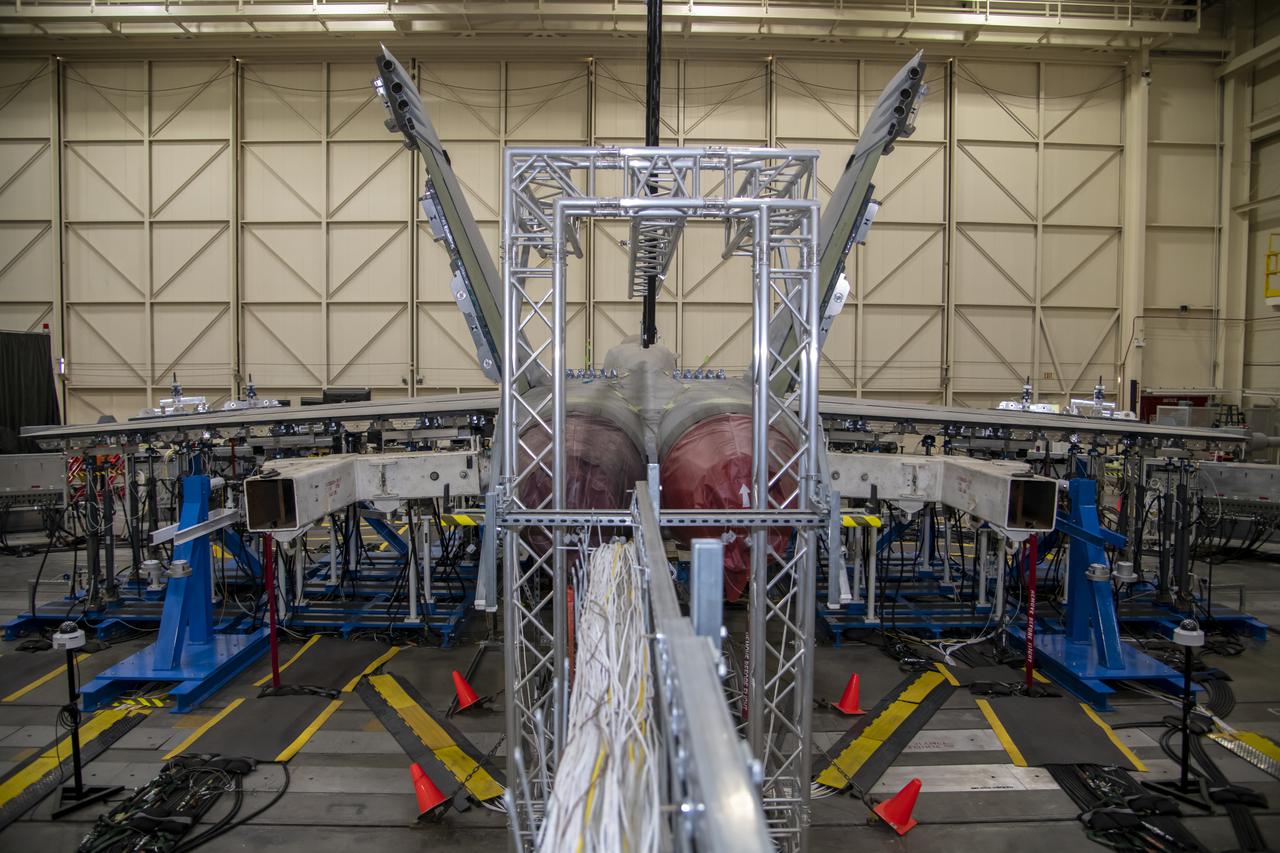
This rear view shows the wing loading test configuration and testing area of an F/A-18E from the Naval Air Systems Command (NAVAIR) in Patuxent River, Maryland. The aircraft is in NASA's Armstrong Flight Research Center Flight Loads Laboratory in Edwards, California, for the center's biggest load calibrations tests. This testing is needed before the aircraft can serve as a test vehicle for determining if it can safely manage maneuvers and proposed upgrades
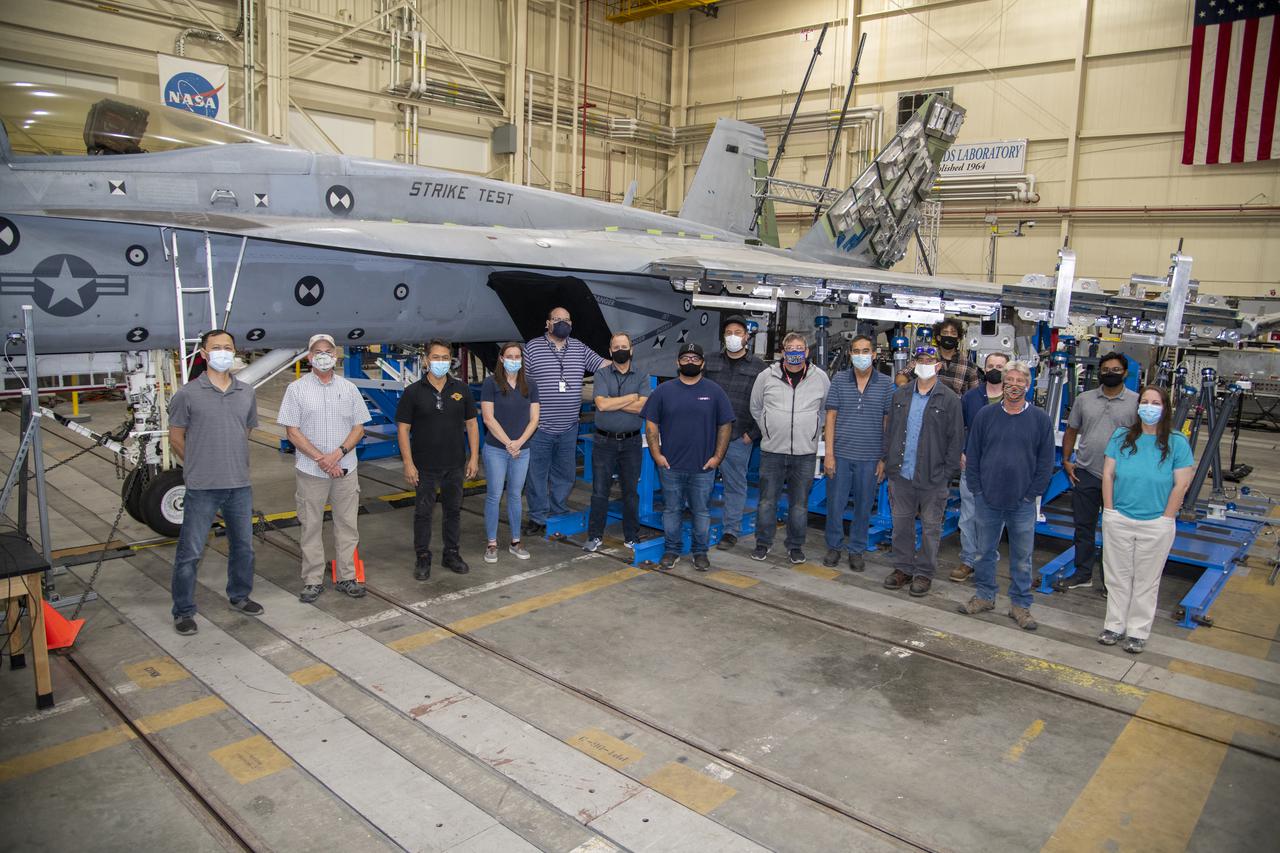
The team who worked on the load testing of the horizontal tails stands by the F/A-18E from the Naval Air Systems Command (NAVAIR) in Patuxent River, Maryland. The aircraft is in NASA’s Armstrong Flight Research Center Flight Loads Laboratory in Edwards, California, for the center’s biggest load calibrations tests. This testing is needed before the aircraft can serve as a test vehicle for determining if it can safely manage maneuvers and proposed upgrades.
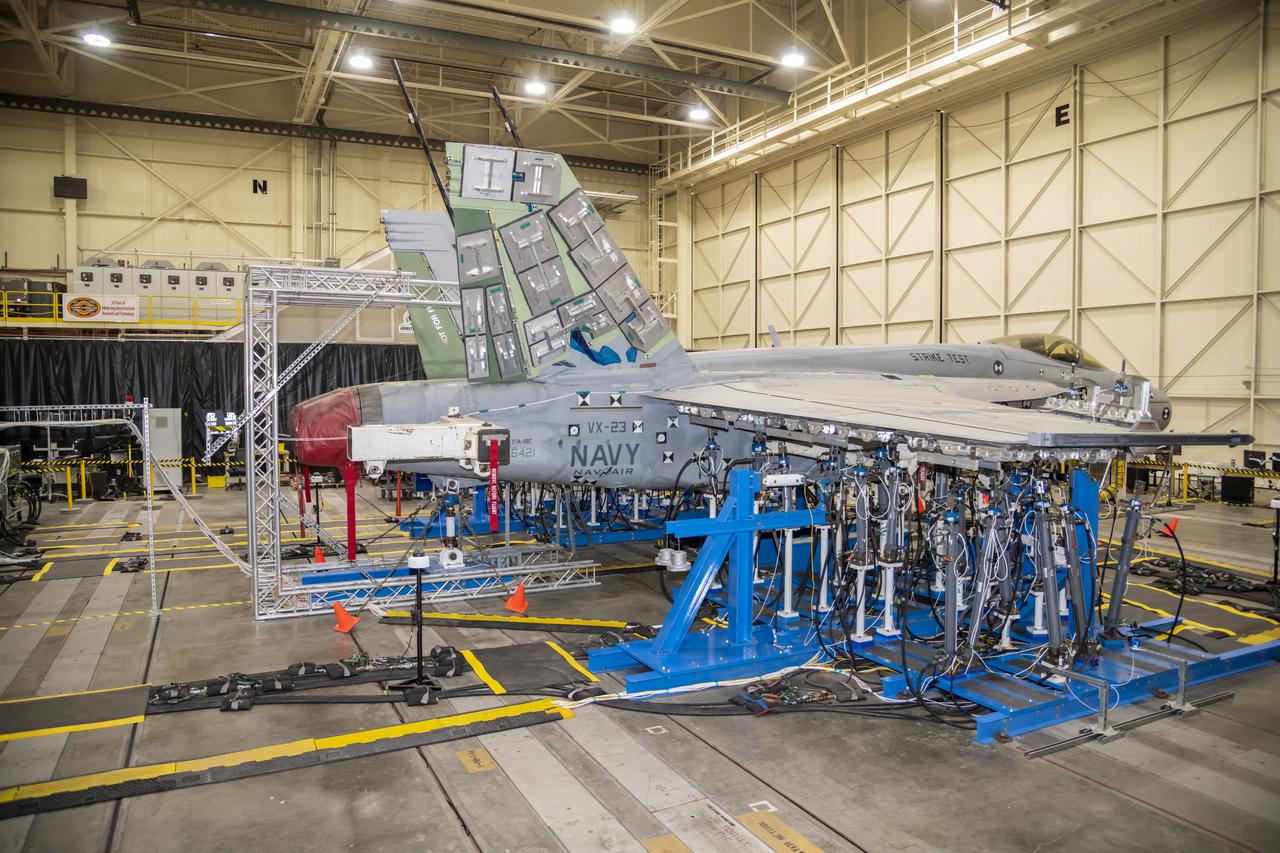
Wing load test hardware is setup under wing of a F/A-18E from the Naval Air Systems Command (NAVAIR) in Patuxent River, Maryland. The aircraft is in NASA’s Armstrong Flight Research Center Flight Loads Laboratory in Edwards, California, for the center’s biggest load calibrations tests. This testing is needed before the aircraft can serve as a test vehicle for determining if it can safely manage maneuvers and proposed upgrades.
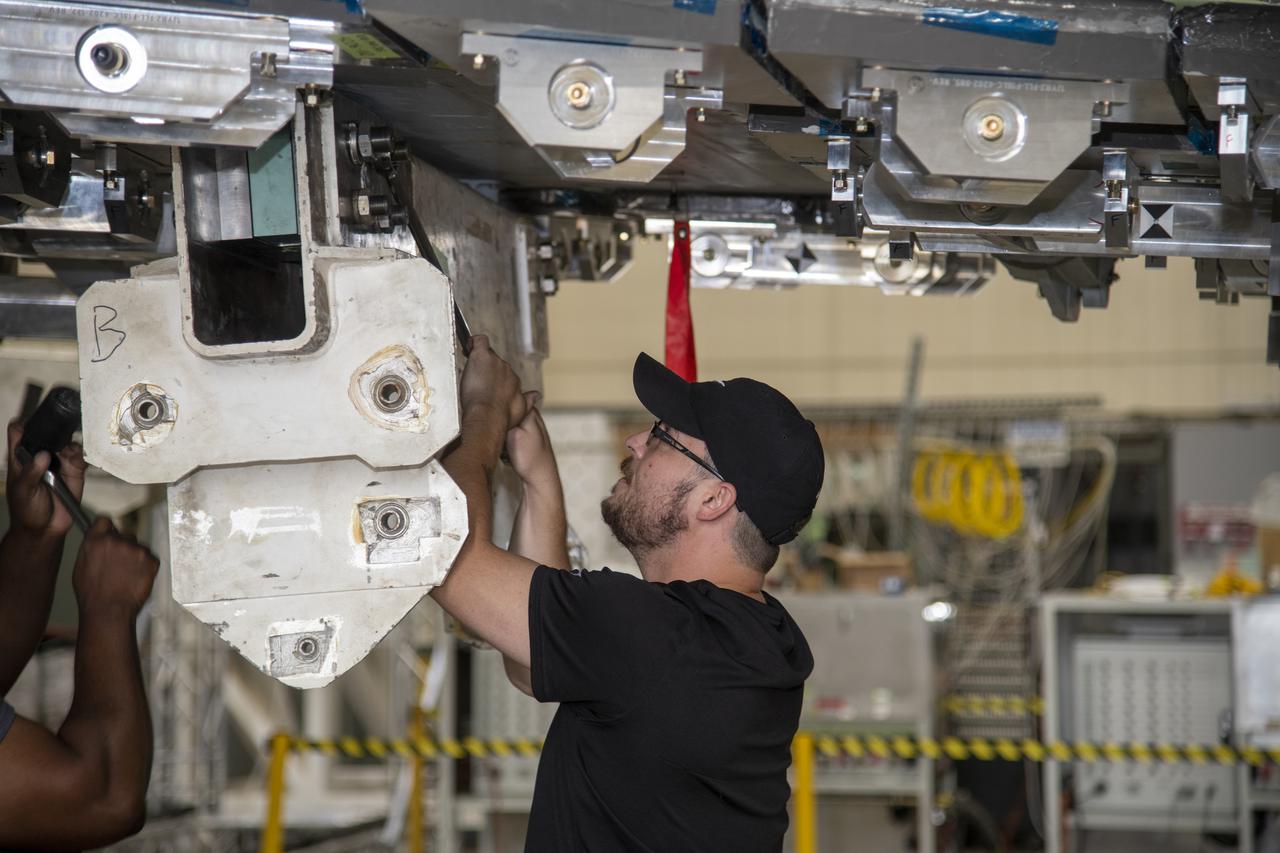
The outboard pylon load fixture is secured for the F/A-18E from the Naval Air Systems Command (NAVAIR) in Patuxent River, Maryland. The aircraft is in NASA’s Armstrong Flight Research Center Flight Loads Laboratory in Edwards, California, for the center’s biggest load calibrations tests. This testing is needed before the aircraft can serve as a test vehicle for determining if it can safely manage maneuvers and proposed upgrades.
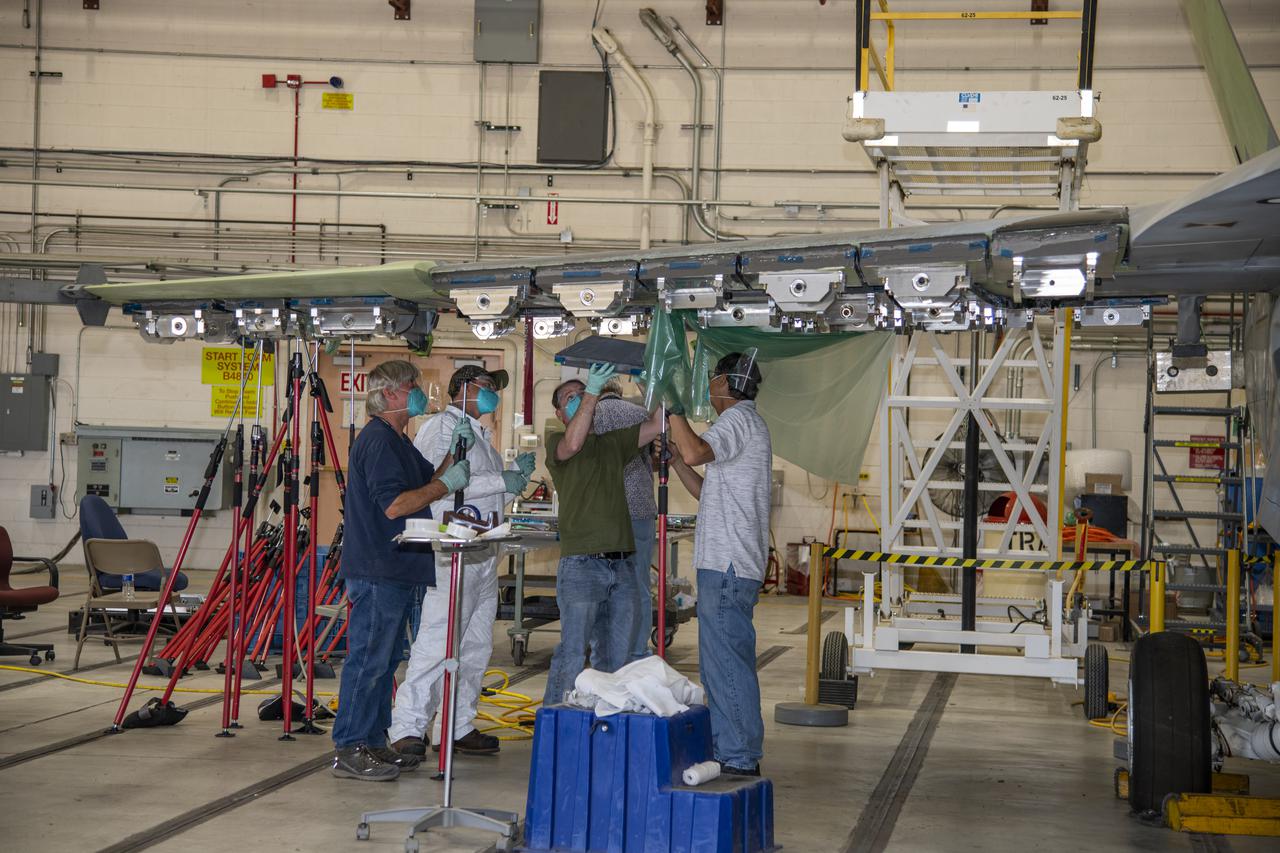
From left, Wally Hargis, Ray Sadler, Chris Mount, and Ronnie Haraguchi place a load pad on the aircraft surface of a F/A-18E from the Naval Air Systems Command (NAVAIR) in Patuxent River, Maryland. The aircraft is in NASA’s Armstrong Flight Research Center Flight Loads Laboratory in Edwards, California, for the center’s biggest load calibrations tests. This testing is needed before the aircraft can serve as a test vehicle for determining if it can safely manage maneuvers and proposed upgrades.
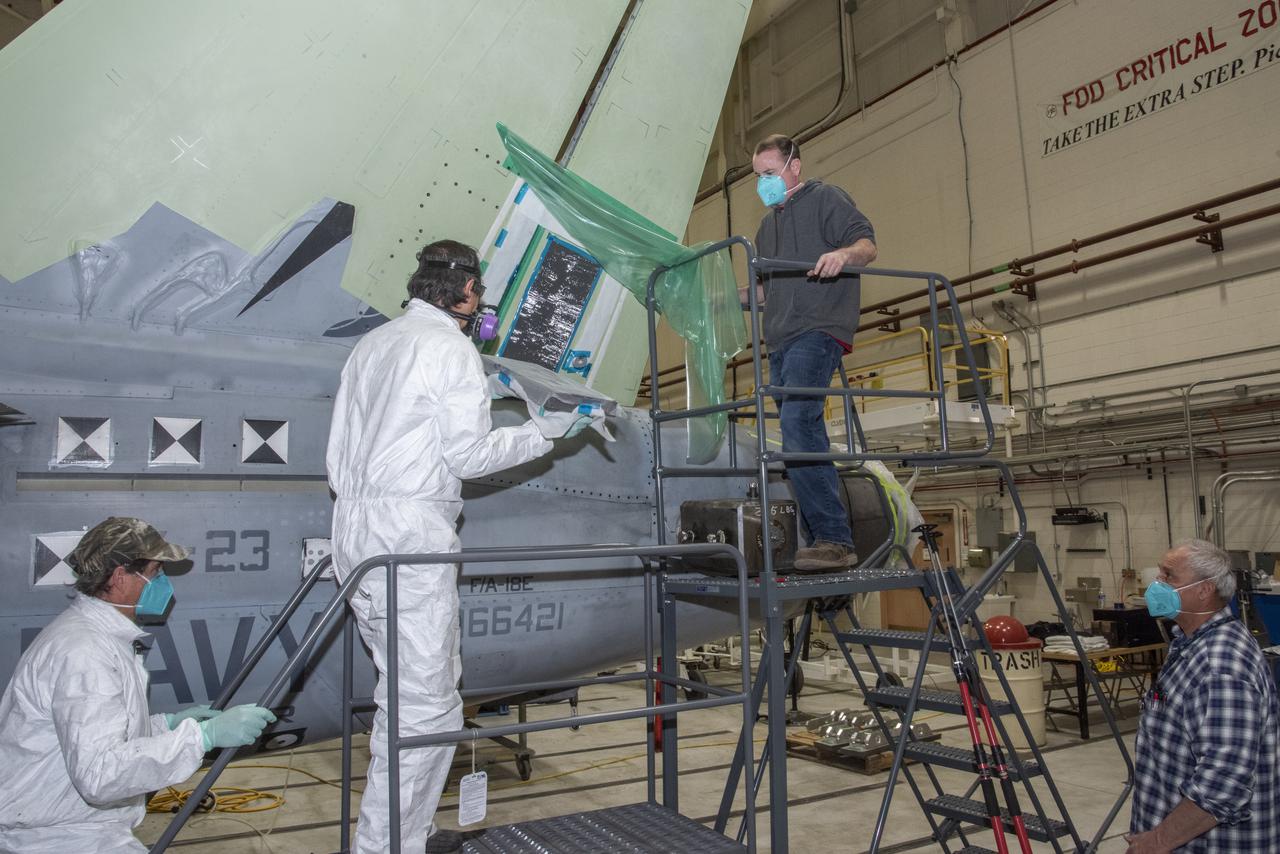
The load pad bonding process for the vertical tails was a preliminary step in the process to test the F/A-18E from the Naval Air Systems Command (NAVAIR) in Patuxent River, Maryland. The aircraft is in NASA’s Armstrong Flight Research Center Flight Loads Laboratory in Edwards, California, for the center’s biggest load calibrations tests. This testing is needed before the aircraft can serve as a test vehicle for determining if it can safely manage maneuvers and proposed upgrades.
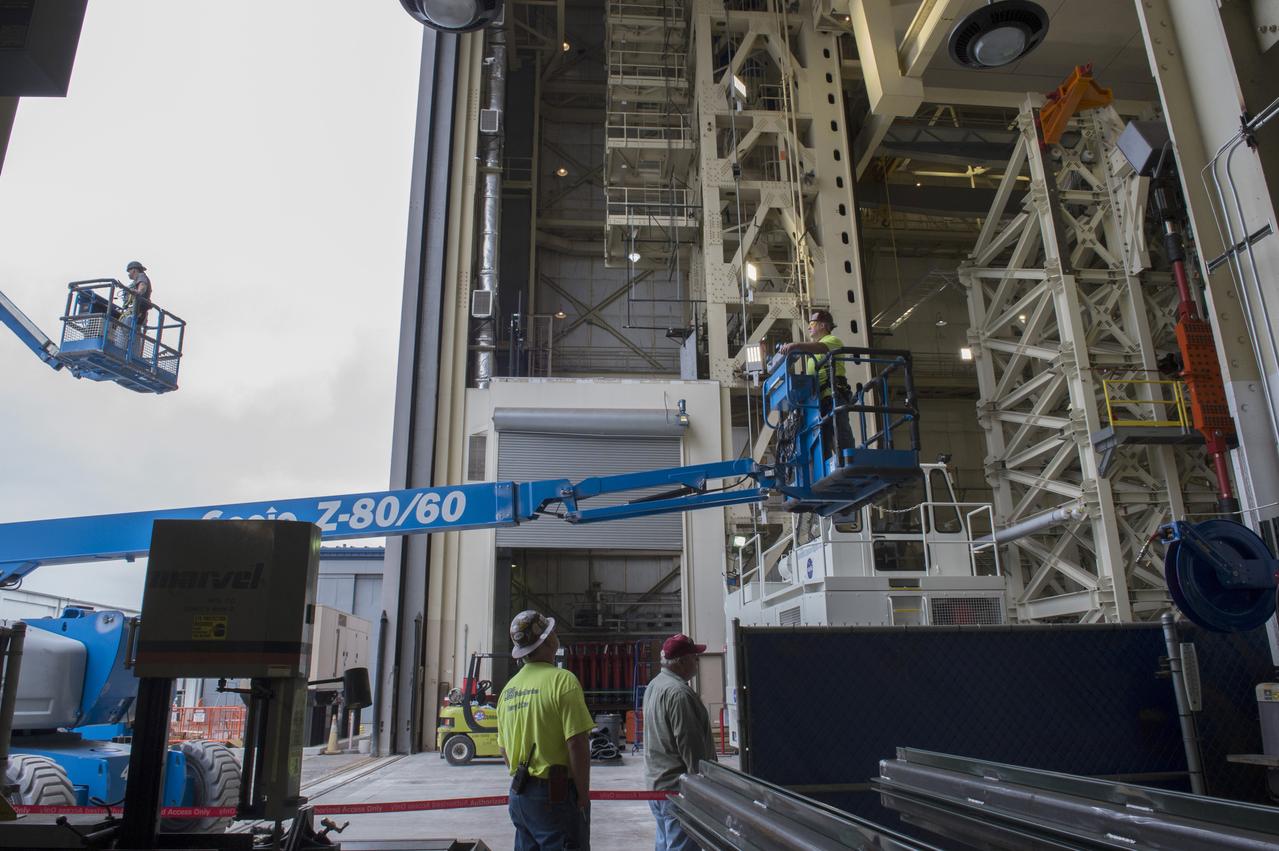
Technicians are removed from SLS Intertank Test Article, ITA, after attaching to crosshead of load test Annex, Bldg. 4619,
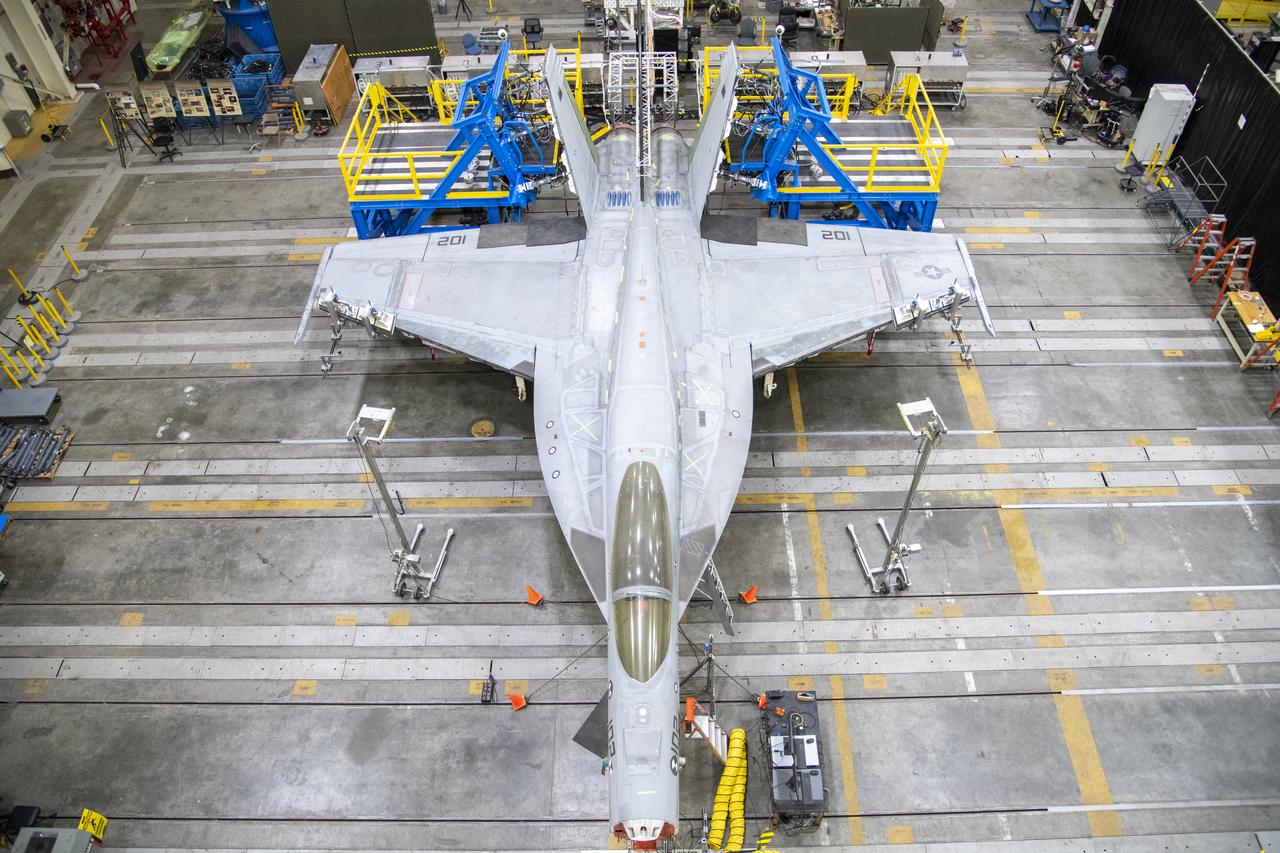
This view from above shows the vertical tail loads testing on a Navy F/A-18E that concluded in May, wrapping up the third phase of research at NASA’s Armstrong Flight Research Center in Edwards, California. The first two phases included loads calibration testing focused on the aircraft’s horizontal tails and wings. The aircraft is from the Naval Air Systems Command (NAVAIR) in Patuxent River, Maryland. NAVAIR retired its previous loads test aircraft and NASA Armstrong staff are assisting to prepare the new aircraft for its role to help safely manage flight maneuvers and determine how the F/A-18E fleet will perform if proposed upgrades are incorporated.
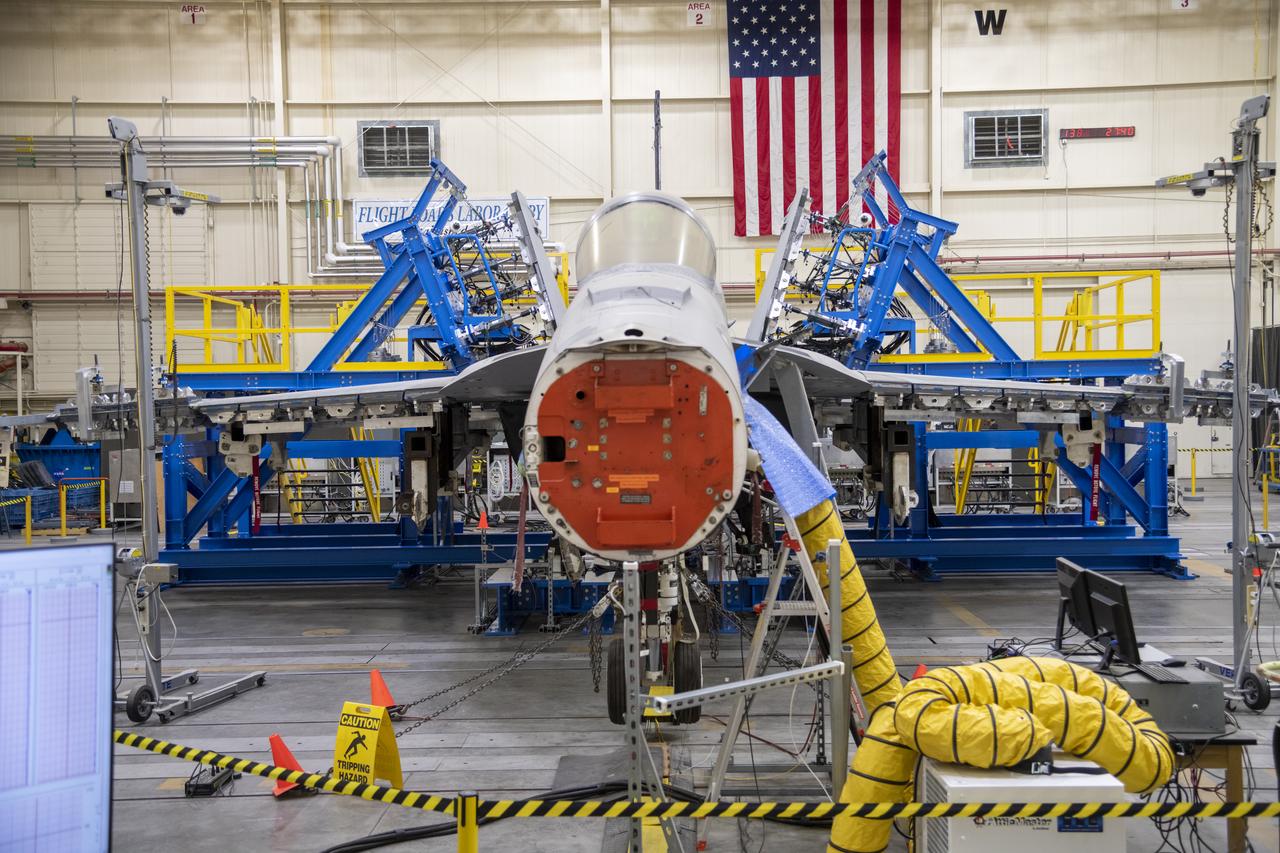
This is a front view of the vertical tail loads testing on a Navy F/A-18E that concluded in May, wrapping up the third phase of research at NASA’s Armstrong Flight Research Center in Edwards, California. The first two phases included loads calibration testing focused on the aircraft’s horizontal tails and wings. The aircraft is from the Naval Air Systems Command (NAVAIR) in Patuxent River, Maryland. NAVAIR retired its previous loads test aircraft and NASA Armstrong staff are assisting to prepare the new aircraft for its role to help safely manage flight maneuvers and determine how the F/A-18E fleet will perform if proposed upgrades are incorporated.
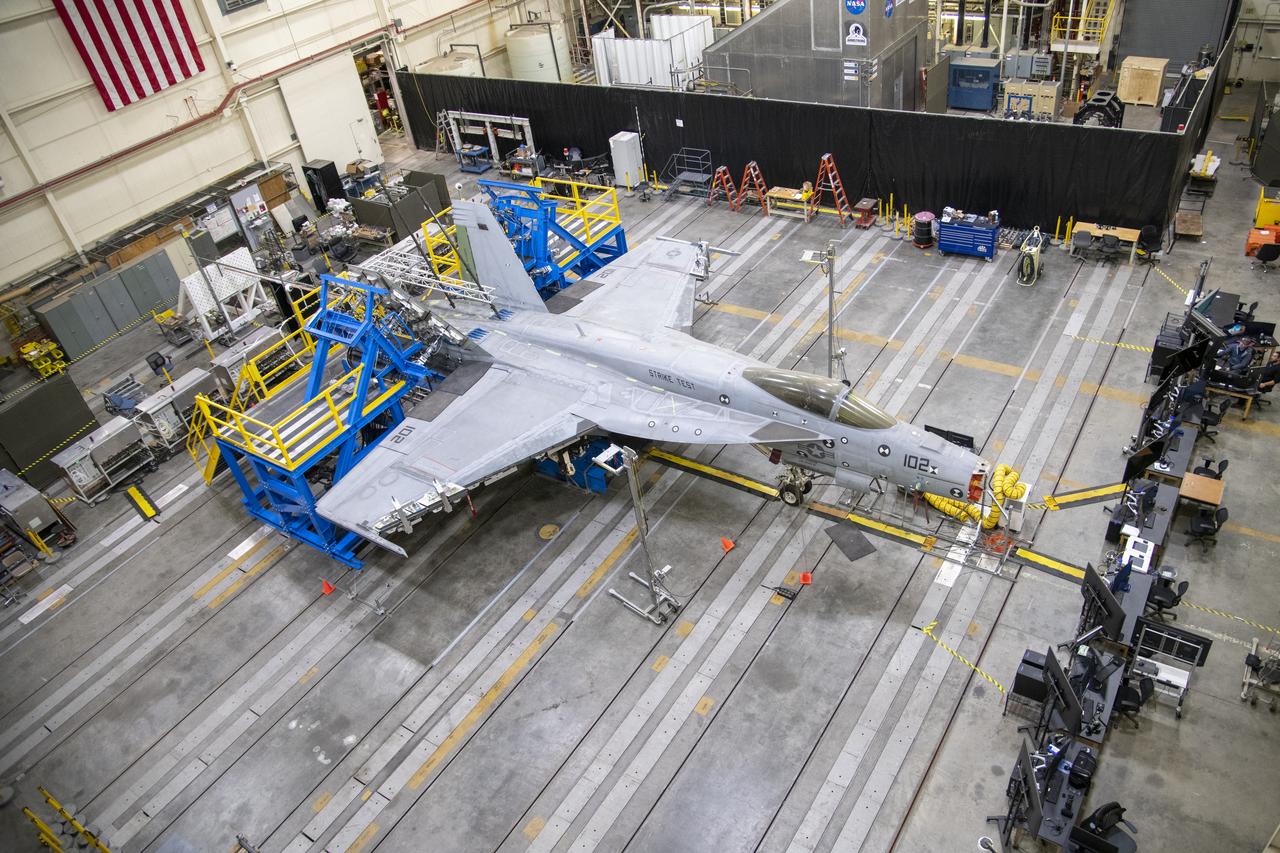
This view from above shows the vertical tail loads testing on a Navy F/A-18E that concluded in May, wrapping up the third phase of research at NASA’s Armstrong Flight Research Center in Edwards, California. The first two phases included loads calibration testing focused on the aircraft’s horizontal tails and wings. The aircraft is from the Naval Air Systems Command (NAVAIR) in Patuxent River, Maryland. NAVAIR retired its previous loads test aircraft and NASA Armstrong staff are assisting to prepare the new aircraft for its role to help safely manage flight maneuvers and determine how the F/A-18E fleet will perform if proposed upgrades are incorporated.
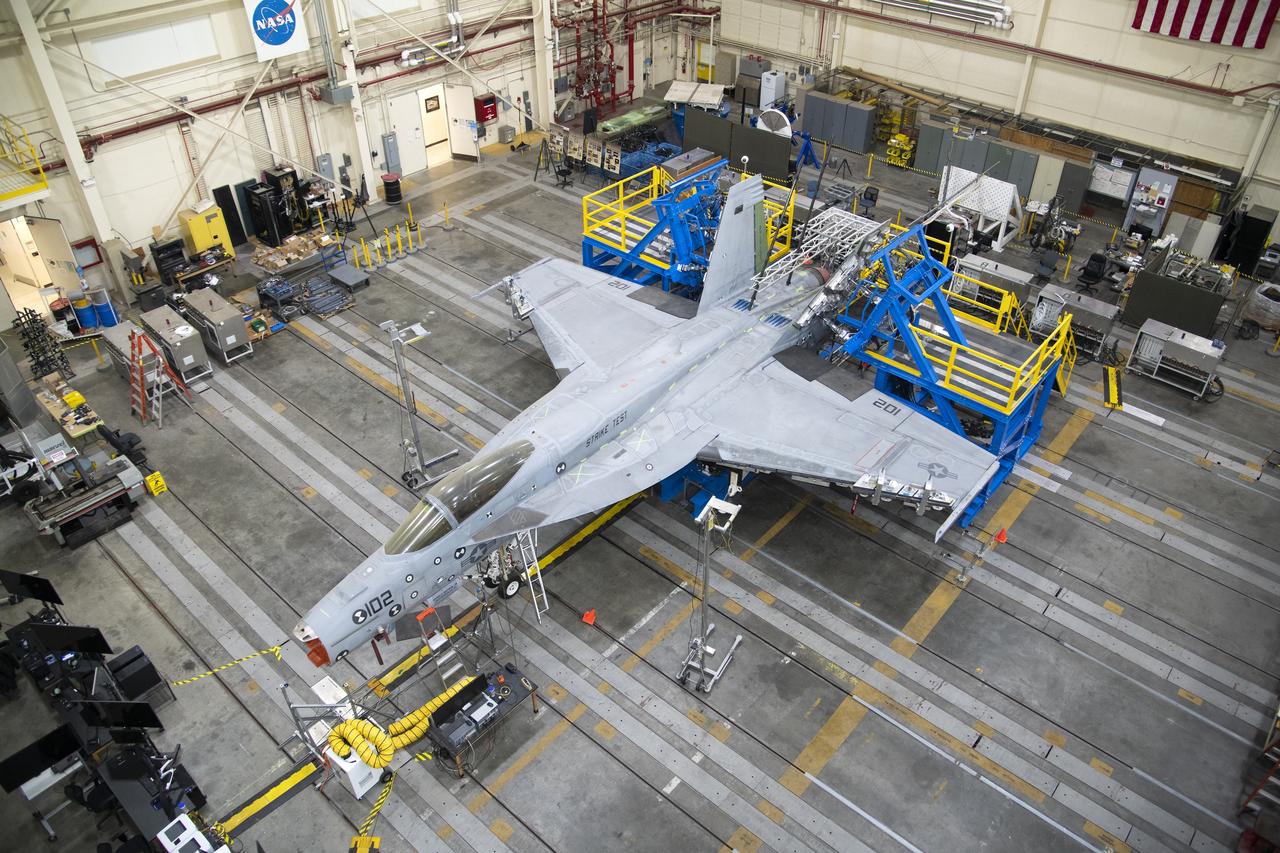
This view from above shows the vertical tail loads testing on a Navy F/A-18E that concluded in May, wrapping up the third phase of research at NASA’s Armstrong Flight Research Center in Edwards, California. The first two phases included loads calibration testing focused on the aircraft’s horizontal tails and wings. The aircraft is from the Naval Air Systems Command (NAVAIR) in Patuxent River, Maryland. NAVAIR retired its previous loads test aircraft and NASA Armstrong staff are assisting to prepare the new aircraft for its role to help safely manage flight maneuvers and determine how the F/A-18E fleet will perform if proposed upgrades are incorporated.
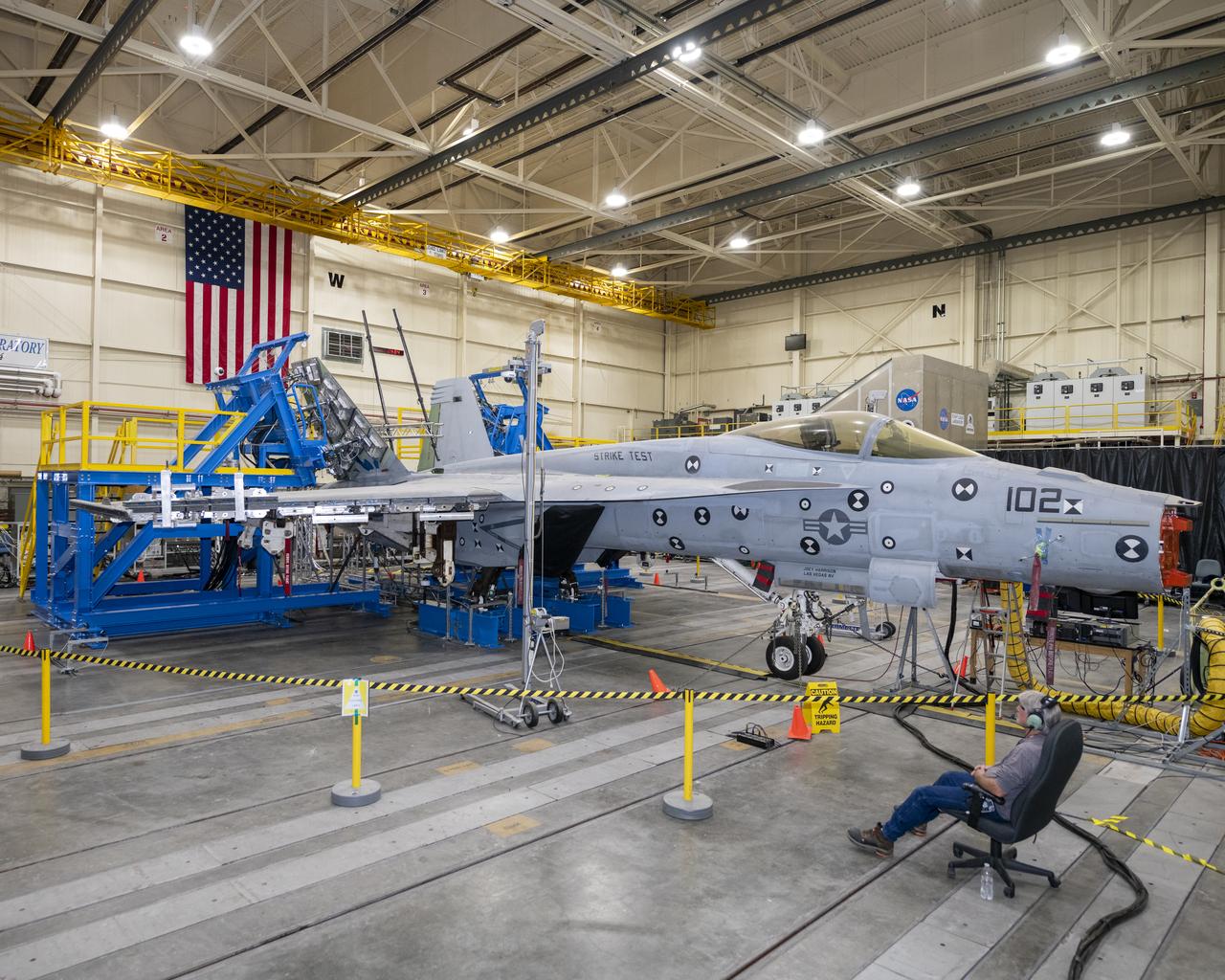
Here is another view of the vertical tail loads testing on a Navy F/A-18E that concluded in May, wrapping up the third phase of research at NASA’s Armstrong Flight Research Center in Edwards, California. The first two phases included loads calibration testing focused on the aircraft’s horizontal tails and wings. The aircraft is from the Naval Air Systems Command (NAVAIR) in Patuxent River, Maryland. NAVAIR retired its previous loads test aircraft and NASA Armstrong staff are assisting to prepare the new aircraft for its role to help safely manage flight maneuvers and determine how the F/A-18E fleet will perform if proposed upgrades are incorporated.
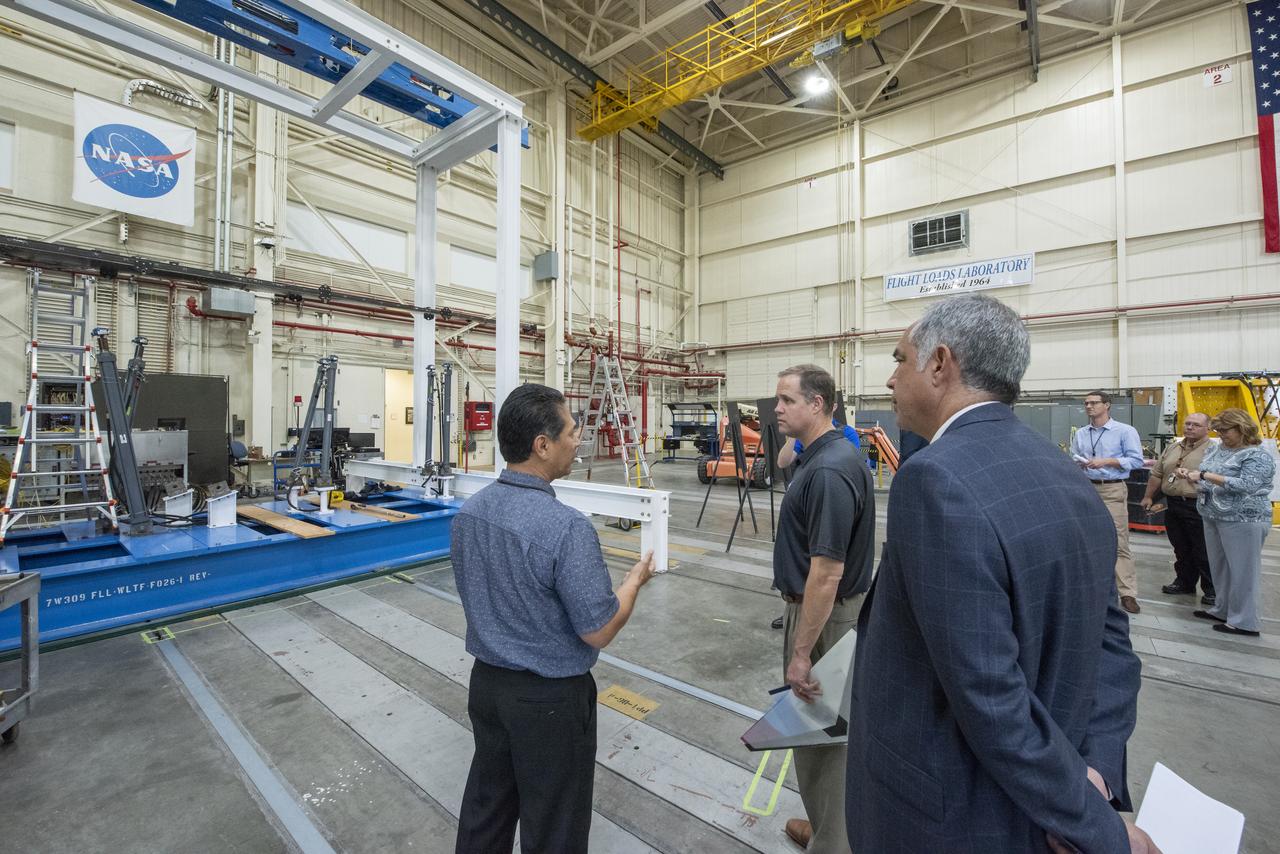
NASA Administrator Bridenstine talks with Armstrong's Larry Hudson about the capabilities of the Flight Loads Lab to conduct mechanical-load and thermal studies of structural components and complete flight vehicles.

The jacks are lowered to remove them from under the F/A-18E from the Naval Air Systems Command (NAVAIR) in Patuxent River, Maryland. The aircraft is in NASA’s Armstrong Flight Research Center Flight Loads Laboratory in Edwards, California, for the center’s biggest load calibrations tests. This testing is needed before the aircraft can serve as a test vehicle for determining if it can safely manage maneuvers and proposed upgrades.
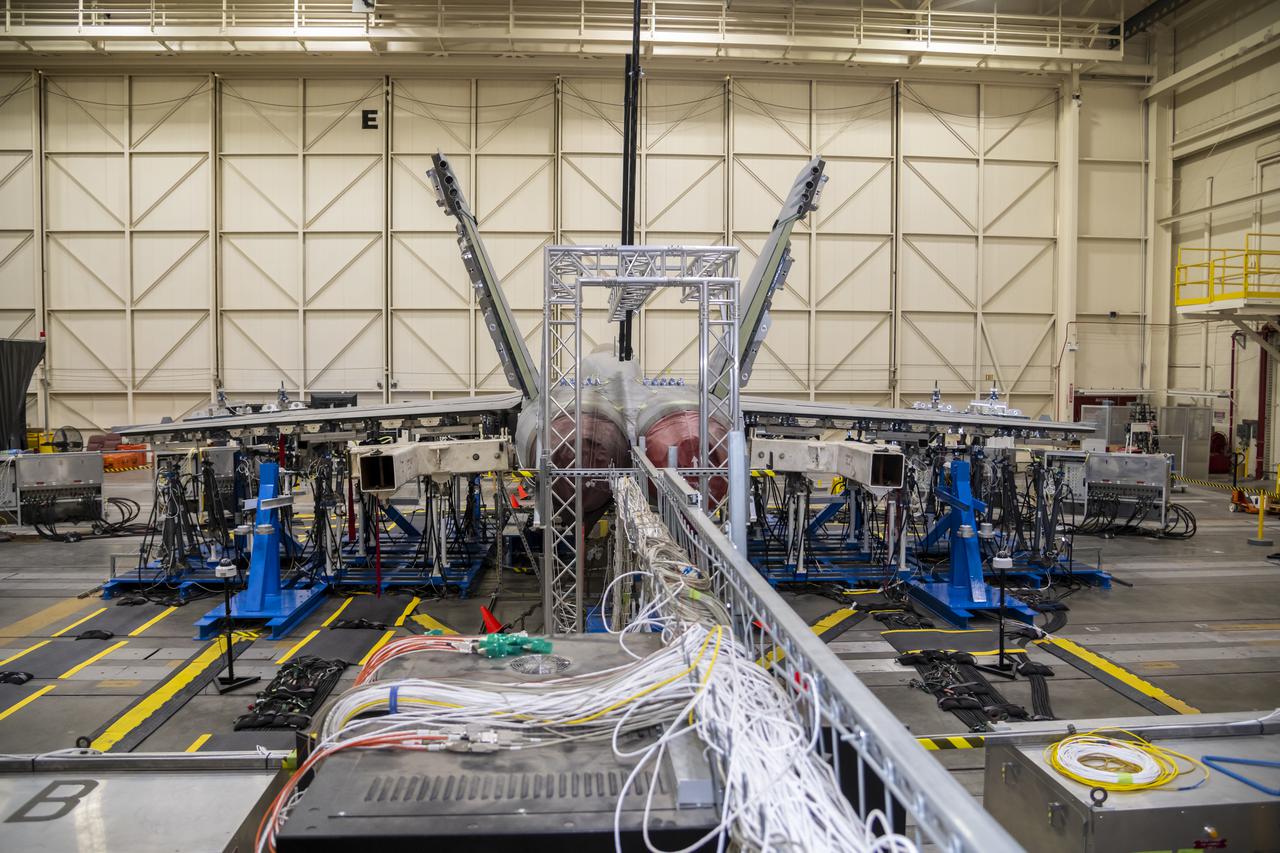
Instrumentation wire extends from the aft end of a F/A-18E from the Naval Air Systems Command (NAVAIR) in Patuxent River, Maryland. The aircraft is in NASA’s Armstrong Flight Research Center Flight Loads Laboratory in Edwards, California, for the center’s biggest load calibrations tests. This testing is needed before the aircraft can serve as a test vehicle for determining if it can safely manage maneuvers and proposed upgrades.
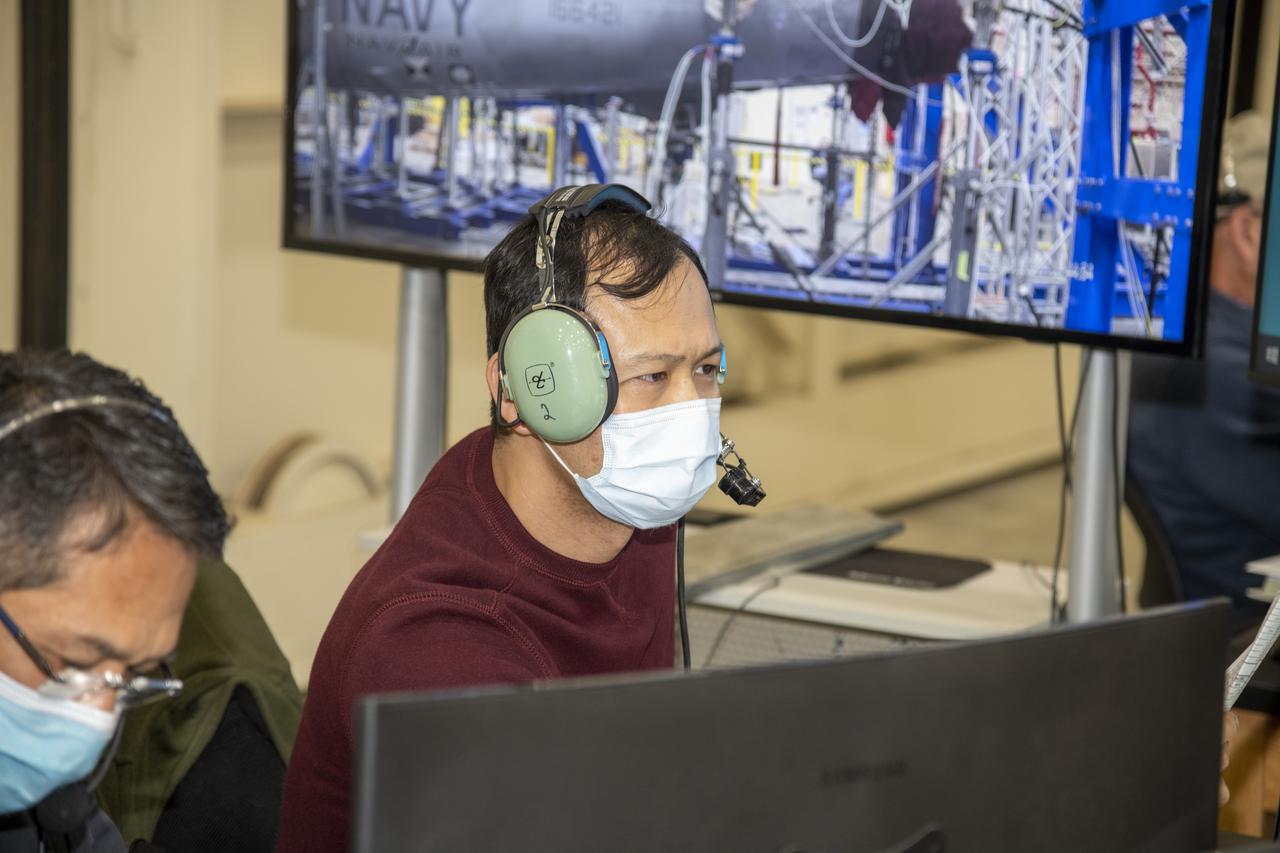
Larry Hudson and Tony Chen inspect test data during horizontal tail testing on a F/A-18E from the Naval Air Systems Command (NAVAIR) in Patuxent River, Maryland. The aircraft is in NASA's Armstrong Flight Research Center Flight Loads Laboratory in Edwards, California, for the center's biggest load calibrations tests. This testing is needed before the aircraft can serve as a test vehicle for determining if it can safely manage maneuvers and proposed upgrades.
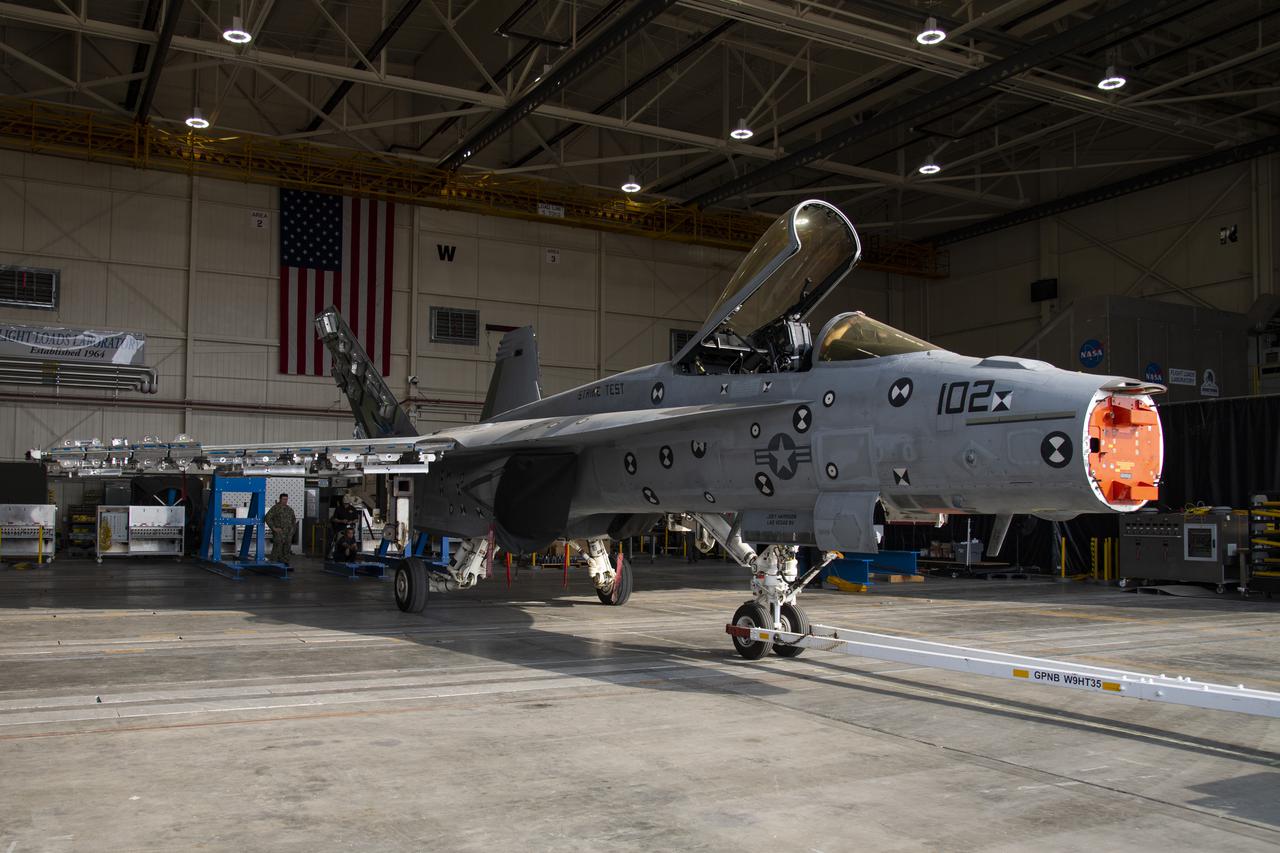
The Naval Air Systems Command (NAVAIR) in Patuxent River, Maryland F/A-18E is moved to NASA’s Armstrong Flight Research Center Flight Loads Laboratory in Edwards, California. NASA Armstrong is working on its biggest load calibrations tests on an F/A-18E Super Hornet. This testing is needed before the aircraft can serve as a test vehicle for determining if it can safely manage maneuvers and proposed upgrades.
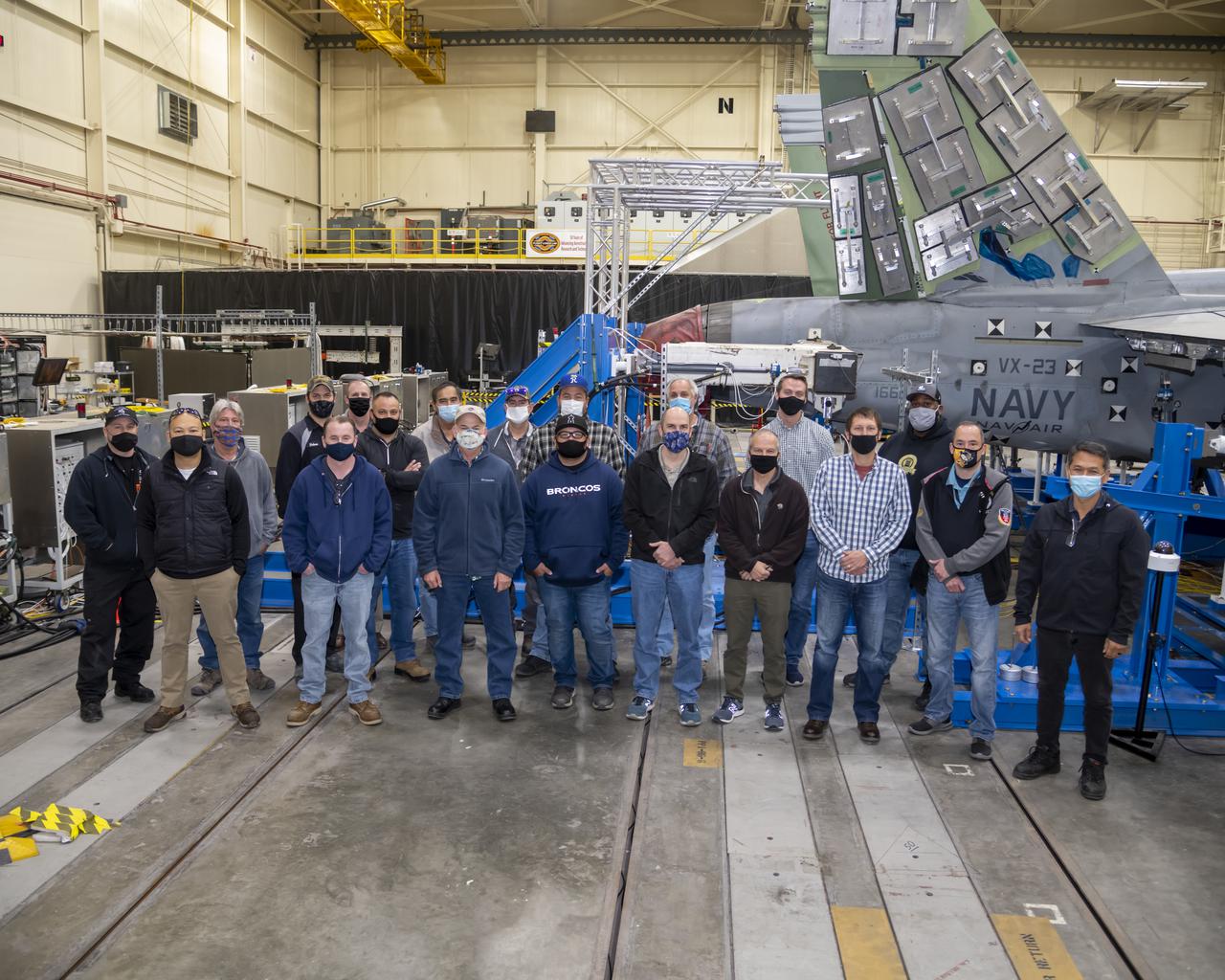
– A team working on tests on a F/A-18E from the Naval Air Systems Command (NAVAIR) in Patuxent River, Maryland, stand by the aircraft. The F/A-18E is in NASA’s Armstrong Flight Research Center Flight Loads Laboratory in Edwards, California, for the center’s biggest load calibrations tests. This testing is needed before the aircraft can serve as a test vehicle for determining if it can safely manage maneuvers and proposed upgrades.
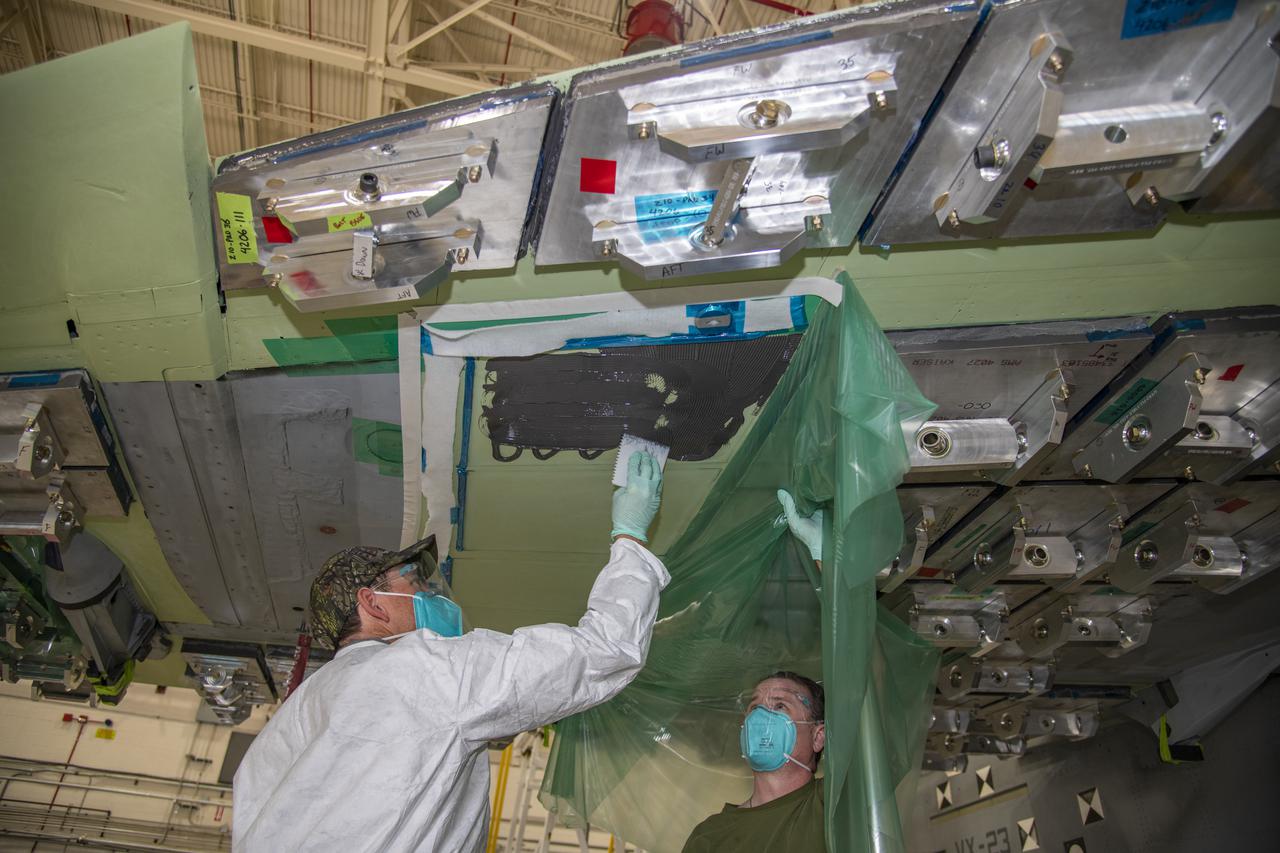
Ray Sadler, left, and Chris Mount spread tank sealant on the aircraft surface of a F/A-18E from the Naval Air Systems Command (NAVAIR) in Patuxent River, Maryland. The aircraft is in NASA’s Armstrong Flight Research Center Flight Loads Laboratory in Edwards, California, for the center’s biggest load calibrations tests. This testing is needed before the aircraft can serve as a test vehicle for determining if it can safely manage maneuvers and proposed upgrades.

Walter Hargis, left, and Chris Mount apply tank sealant on the aircraft surface of a F/A-18E from the Naval Air Systems Command (NAVAIR) in Patuxent River, Maryland. The aircraft is in NASA’s Armstrong Flight Research Center Flight Loads Laboratory in Edwards, California, for the center’s biggest load calibrations tests. This testing is needed before the aircraft can serve as a test vehicle for determining if it can safely manage maneuvers and proposed upgrades.
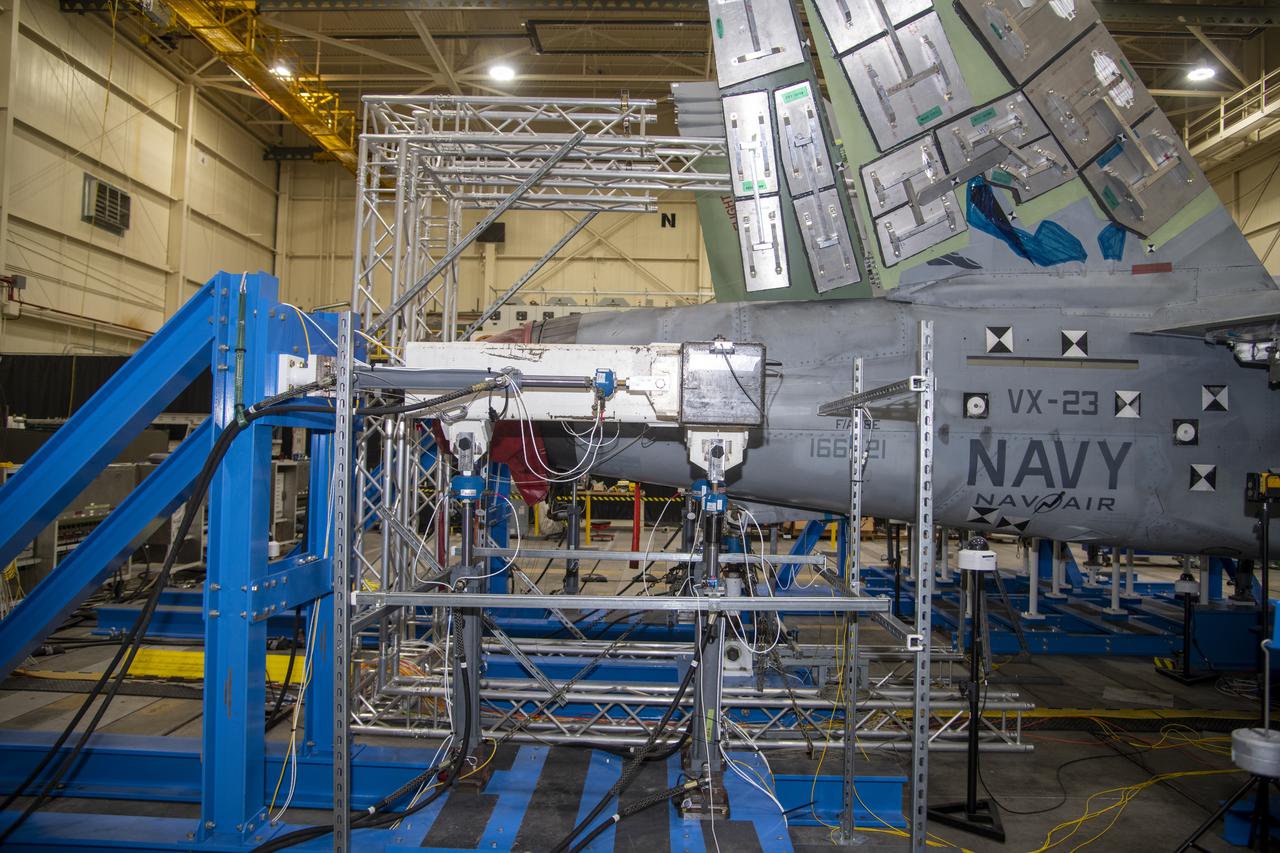
– Hydraulic actuators are pinned to horizontal tail test fixture for testing a F/A-18E from the Naval Air Systems Command (NAVAIR) in Patuxent River, Maryland. The aircraft is in NASA’s Armstrong Flight Research Center Flight Loads Laboratory in Edwards, California, for the center’s biggest load calibrations tests. This testing is needed before the aircraft can serve as a test vehicle for determining if it can safely manage maneuvers and proposed upgrades.
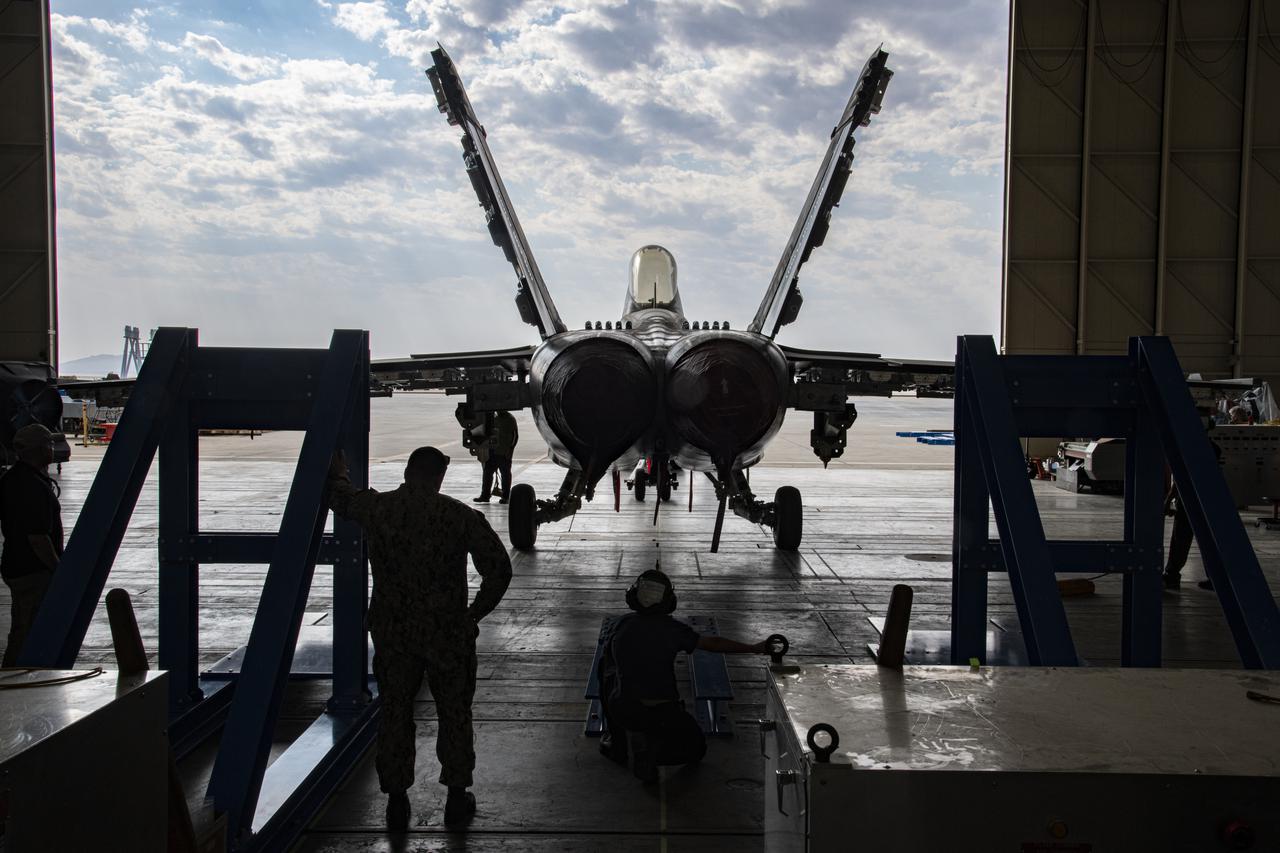
The Naval Air Systems Command (NAVAIR) in Patuxent River, Maryland F/A-18E is moved to NASA’s Armstrong Flight Research Center Flight Loads Laboratory in Edwards, California. NASA Armstrong is working on its biggest load calibrations tests on an F/A-18E Super Hornet. This testing is needed before the aircraft can serve as a test vehicle for determining if it can safely manage maneuvers and proposed upgrades.
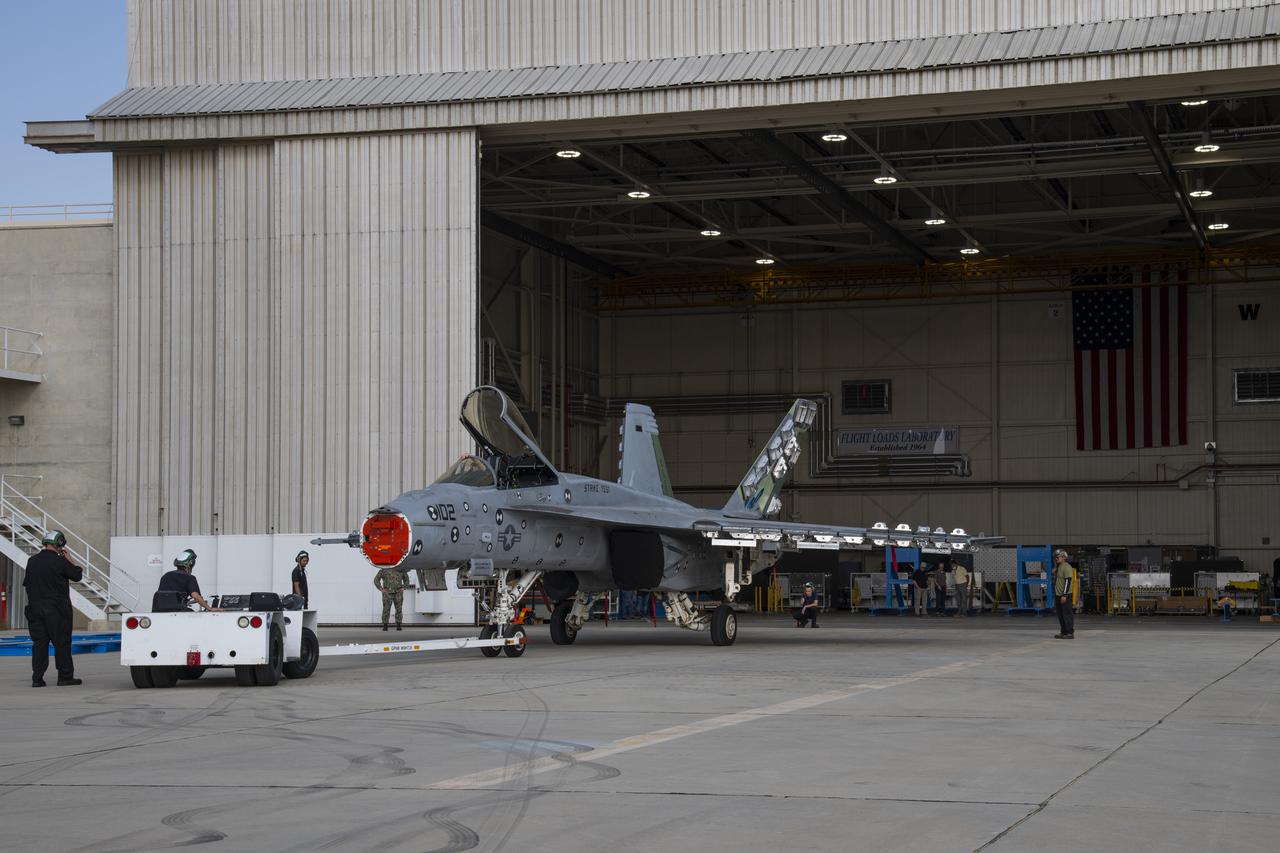
The Naval Air Systems Command (NAVAIR) in Patuxent River, Maryland F/A-18E is moved to NASA’s Armstrong Flight Research Center Flight Loads Laboratory in Edwards, California. NASA Armstrong is working on its biggest load calibrations tests on an F/A-18E Super Hornet. This testing is needed before the aircraft can serve as a test vehicle for determining if it can safely manage maneuvers and proposed upgrades.
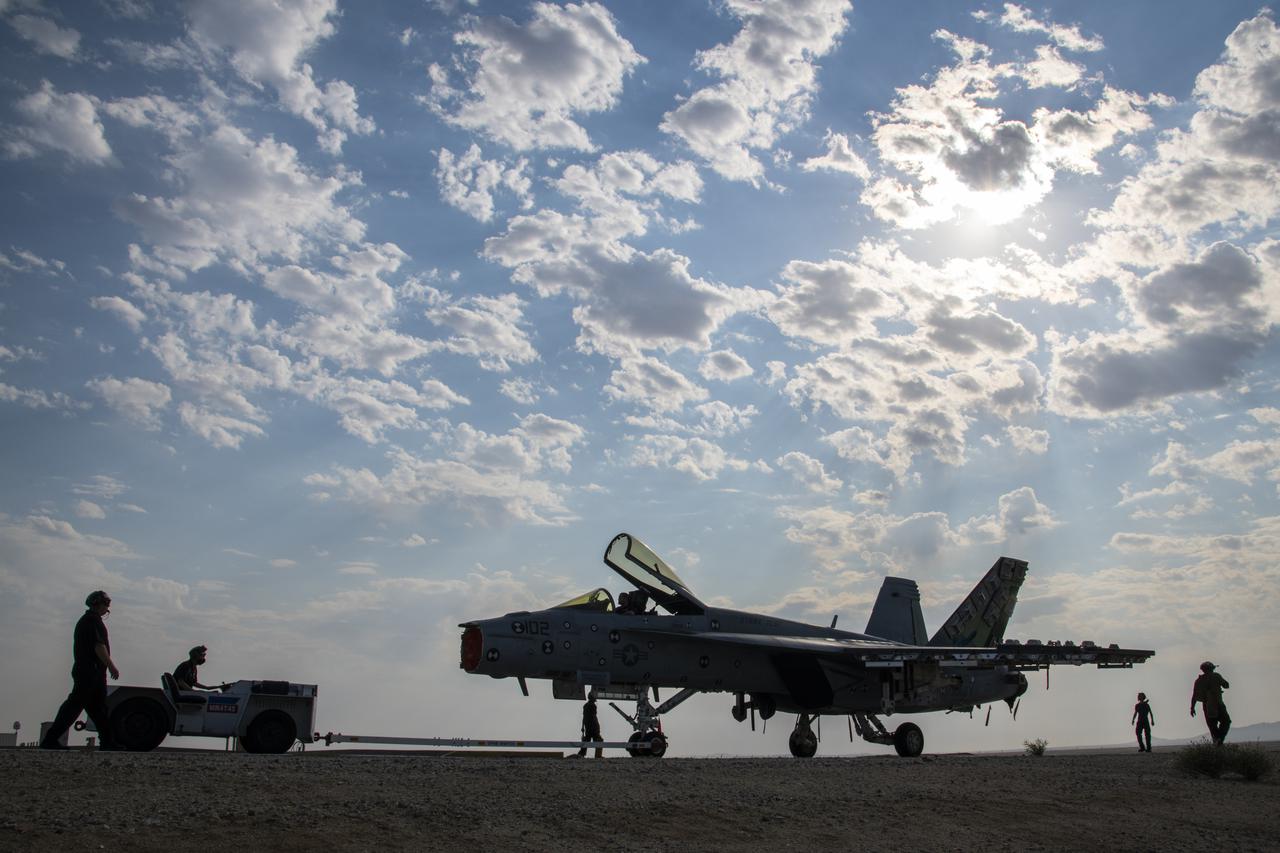
The Naval Air Systems Command (NAVAIR) in Patuxent River, Maryland F/A-18E is moved to NASA’s Armstrong Flight Research Center Flight Loads Laboratory in Edwards, California. NASA Armstrong is working on its biggest load calibrations tests on an F/A-18E Super Hornet. This testing is needed before the aircraft can serve as a test vehicle for determining if it can safely manage maneuvers and proposed upgrades.
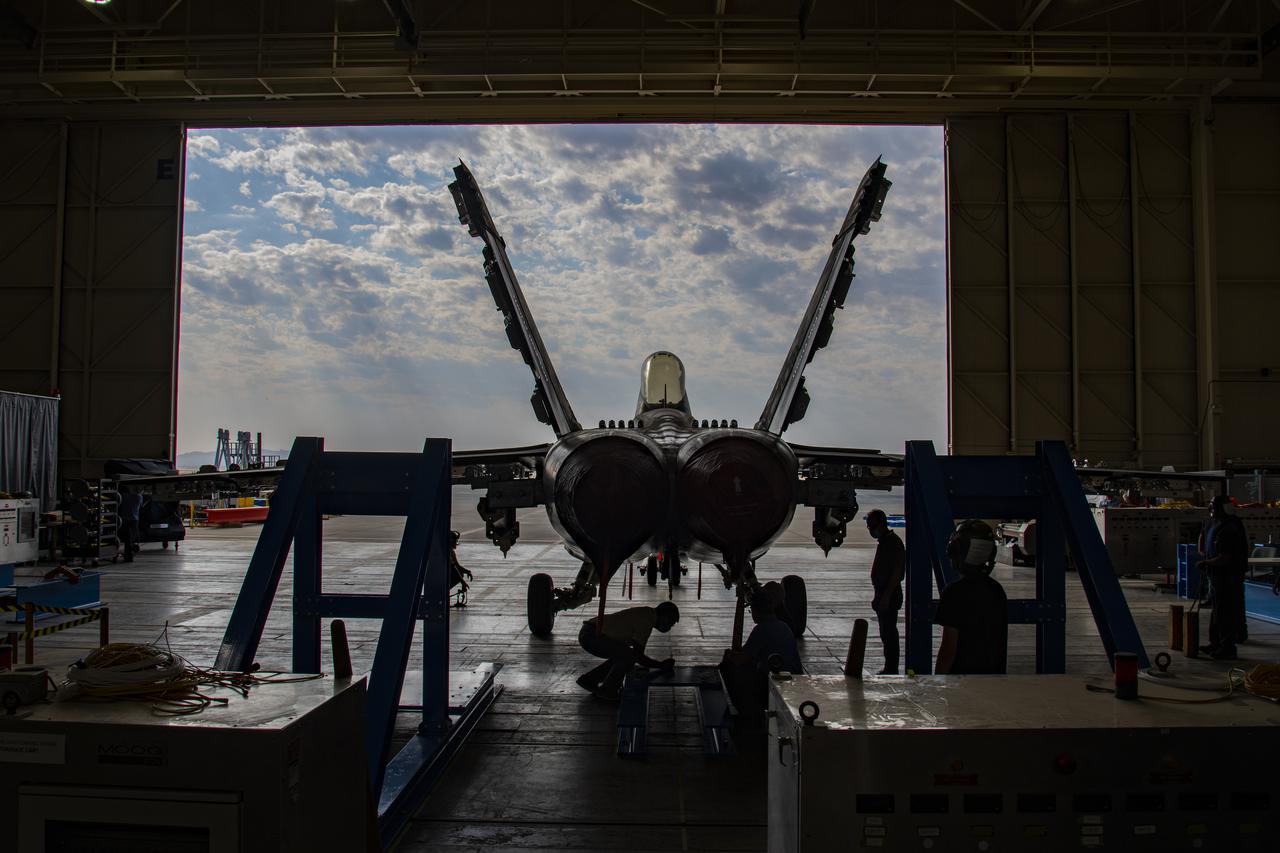
The Naval Air Systems Command (NAVAIR) in Patuxent River, Maryland F/A-18E is moved to NASA’s Armstrong Flight Research Center Flight Loads Laboratory in Edwards, California. NASA Armstrong is working on its biggest load calibrations tests on an F/A-18E Super Hornet. This testing is needed before the aircraft can serve as a test vehicle for determining if it can safely manage maneuvers and proposed upgrades.
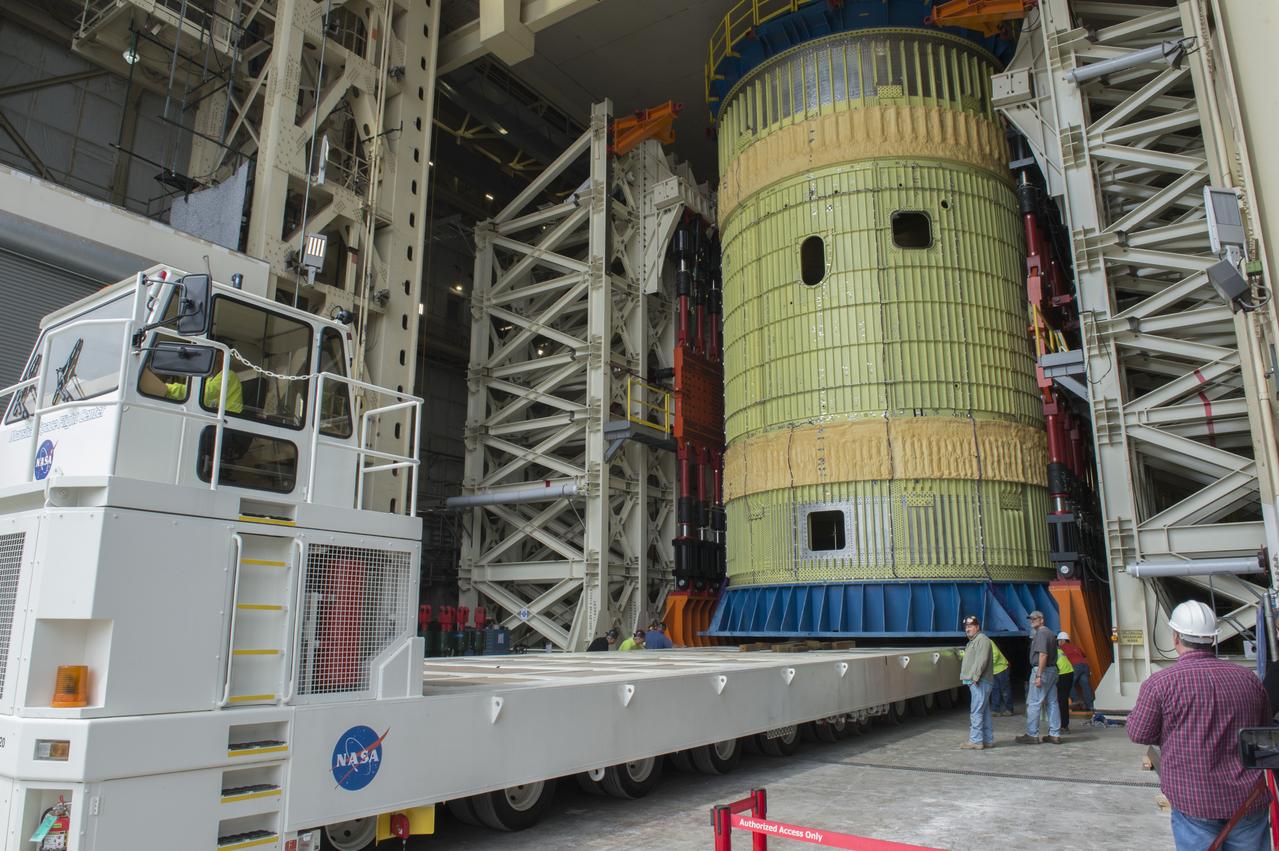
SLS Intertank Test Article, ITA, is attached to crosshead of load test Annex, Bldg. 4619, and removed from bed of KMAG transporter. ITA is slowly raised from bed of KMAG transporter and KMAG is removed.
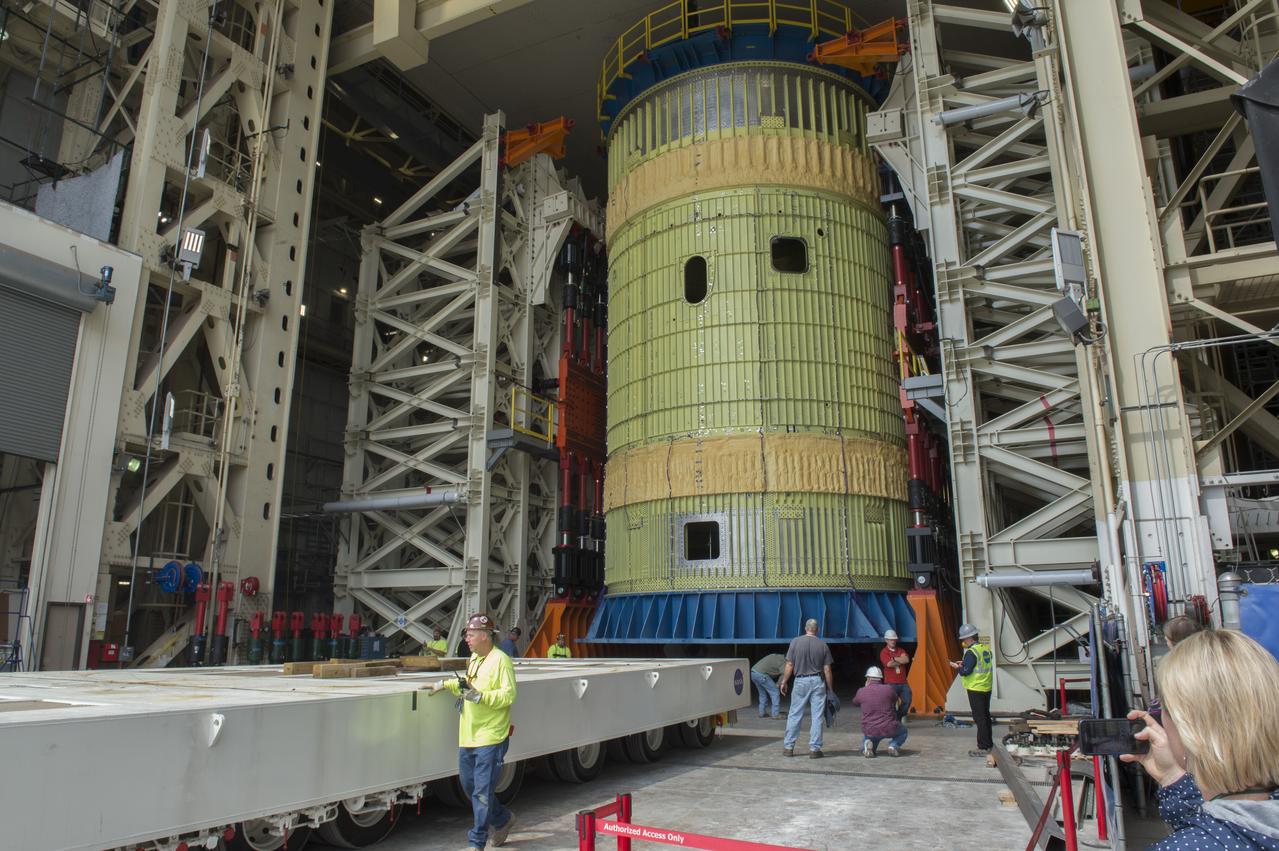
SLS Intertank Test Article, ITA, is attached to crosshead of load test Annex, Bldg. 4619, and removed from bed of KMAG transporter. ITA is slowly raised from bed of KMAG transporter and KMAG is removed.
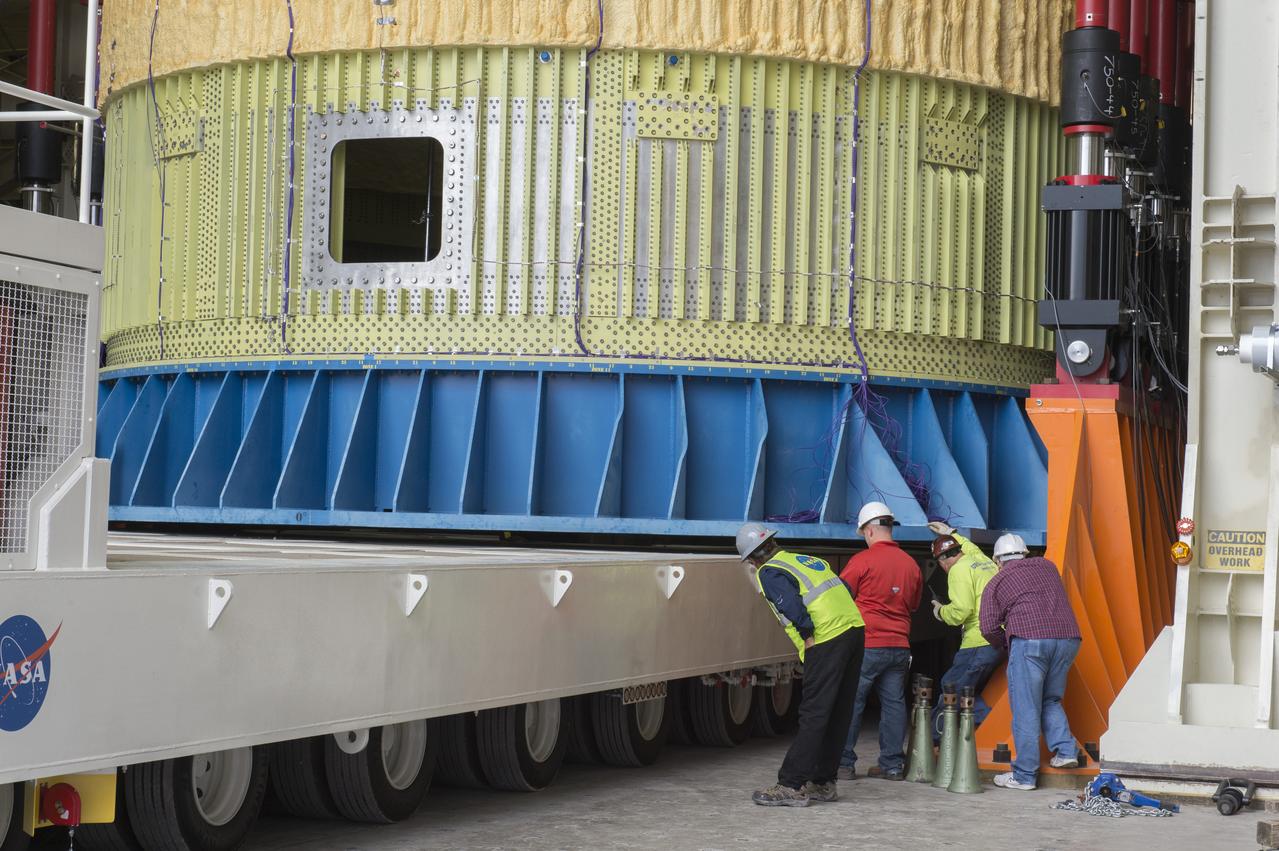
SLS Intertank Test Article, ITA, is attached to crosshead of load test Annex, Bldg. 4619, and removed from bed of KMAG transporter. ITA is slowly raised from bed of KMAG transporter and KMAG is removed.
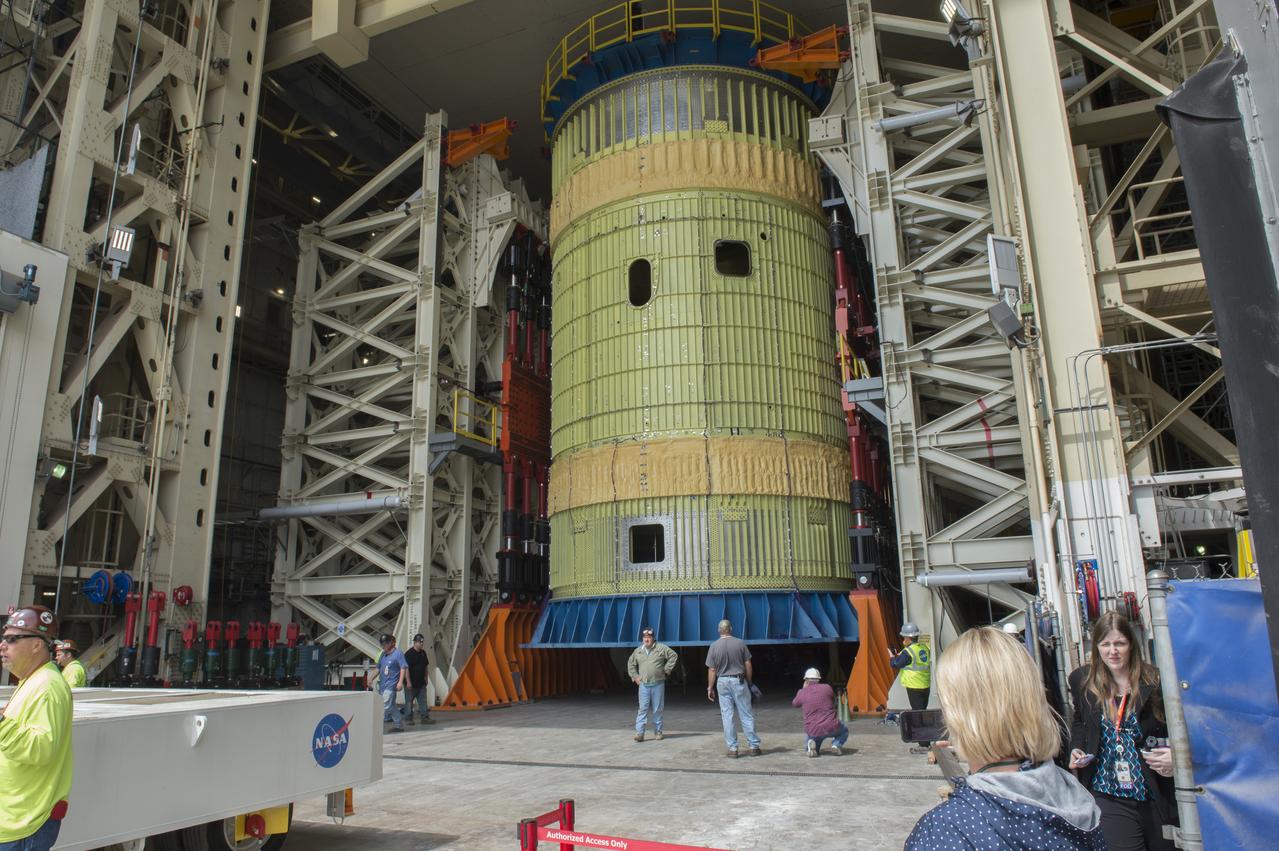
SLS Intertank Test Article, ITA, is attached to crosshead of load test Annex, Bldg. 4619, and removed from bed of KMAG transporter. ITA is slowly raised from bed of KMAG transporter and KMAG is removed.

Test Engineer, Ron Cantrell loads the sample in the (AADSF) Advanced Automated Directional Solidification Furnace.
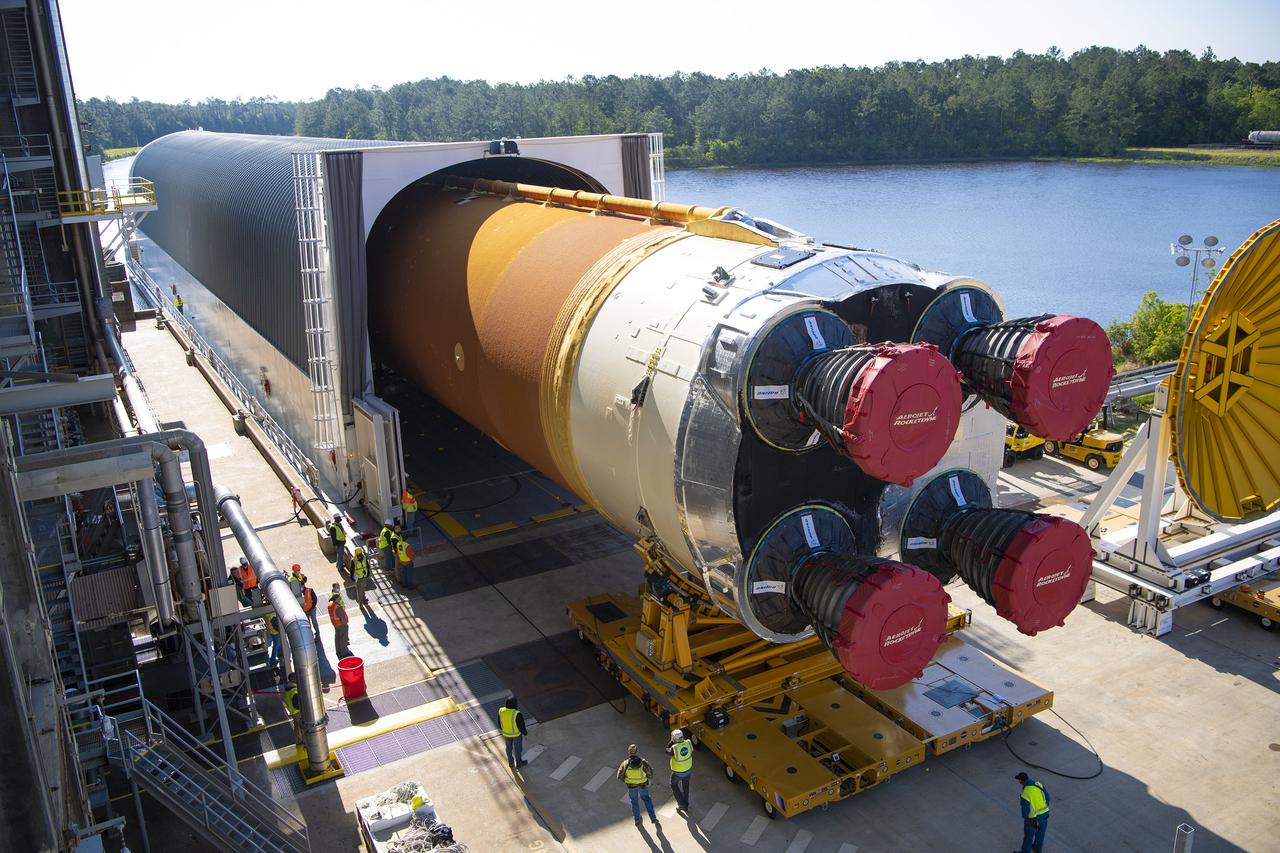
Team members at NASA’s Stennis Space Center near Bay St. Louis, Mississippi, load the first core stage of the agency’s Space Launch System (SLS) rocket on to the agency’s Pegasus barge in preparation for its transport to Kennedy Space Center in Florida. The loading activity followed removal of the stage from the B-2 Test Stand at Stennis on April 19-20, 2021. It comes about a month after NASA conducted a successful hot fire of the stage and its four RS-25 engines on March 18 and after teams completed various refurbishment activities. Once at Kennedy, the will be integrated with the rest of SLS rocket and prepared for the launch of the Artemis I mission to the Moon. Photo Credit: NASA
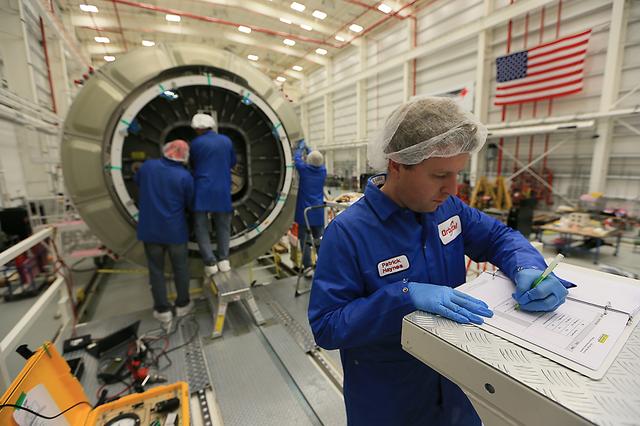
Orbital Sciences Corp. completed final cargo load of the Cygnus cargo spacecraft Oct. 23, 2014, in preparation for launch to the International Space Station, scheduled for 6:45 p.m. EDT, Monday, Oct. 27, from Mid-Atlantic Regional Spaceport Pad 0A at NASA's Wallops Flight Facility. The spacecraft is mated to the company's Antares rocket with roll-out to the launch pad scheduled for Friday, Oct. 24. This mission is the third of eight Orbital flights NASA contracted with the company to resupply the space station, and the fourth trip by a Cygnus spacecraft to the ISS. Cygnus will transport some 5,000 pounds of supplies and experiments to the orbiting laboratory. More at <a href="http://www.nasa.gov/orbital" rel="nofollow">www.nasa.gov/orbital</a> Credit: NASA's Wallops Flight Facility/Patrick Black <b><a href="http://www.nasa.gov/audience/formedia/features/MP_Photo_Guidelines.html" rel="nofollow">NASA image use policy.</a></b> <b><a href="http://www.nasa.gov/centers/goddard/home/index.html" rel="nofollow">NASA Goddard Space Flight Center</a></b> enables NASA’s mission through four scientific endeavors: Earth Science, Heliophysics, Solar System Exploration, and Astrophysics. Goddard plays a leading role in NASA’s accomplishments by contributing compelling scientific knowledge to advance the Agency’s mission. <b>Follow us on <a href="http://twitter.com/NASAGoddardPix" rel="nofollow">Twitter</a></b> <b>Like us on <a href="http://www.facebook.com/pages/Greenbelt-MD/NASA-Goddard/395013845897?ref=tsd" rel="nofollow">Facebook</a></b> <b>Find us on <a href="http://instagram.com/nasagoddard?vm=grid" rel="nofollow">Instagram</a></b>
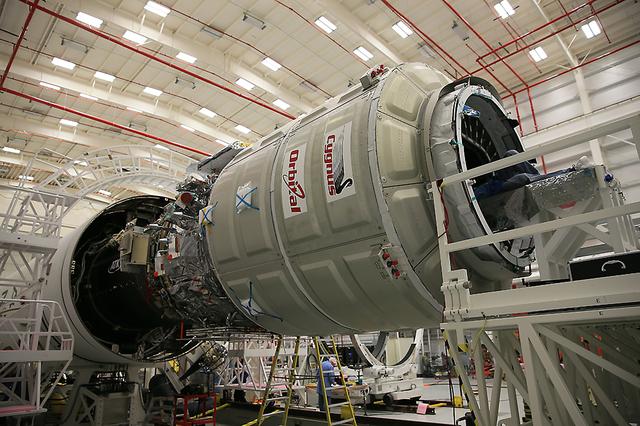
Orbital Sciences Corp. completed final cargo load of the Cygnus cargo spacecraft Oct. 23, 2014, in preparation for launch to the International Space Station, scheduled for 6:45 p.m. EDT, Monday, Oct. 27, from Mid-Atlantic Regional Spaceport Pad 0A at NASA's Wallops Flight Facility. The spacecraft is mated to the company's Antares rocket with roll-out to the launch pad scheduled for Friday, Oct. 24. This mission is the third of eight Orbital flights NASA contracted with the company to resupply the space station, and the fourth trip by a Cygnus spacecraft to the ISS. Cygnus will transport some 5,000 pounds of supplies and experiments to the orbiting laboratory. More at <a href="http://www.nasa.gov/orbital" rel="nofollow">www.nasa.gov/orbital</a> Credit: NASA's Wallops Flight Facility/Patrick Black <b><a href="http://www.nasa.gov/audience/formedia/features/MP_Photo_Guidelines.html" rel="nofollow">NASA image use policy.</a></b> <b><a href="http://www.nasa.gov/centers/goddard/home/index.html" rel="nofollow">NASA Goddard Space Flight Center</a></b> enables NASA’s mission through four scientific endeavors: Earth Science, Heliophysics, Solar System Exploration, and Astrophysics. Goddard plays a leading role in NASA’s accomplishments by contributing compelling scientific knowledge to advance the Agency’s mission. <b>Follow us on <a href="http://twitter.com/NASAGoddardPix" rel="nofollow">Twitter</a></b> <b>Like us on <a href="http://www.facebook.com/pages/Greenbelt-MD/NASA-Goddard/395013845897?ref=tsd" rel="nofollow">Facebook</a></b> <b>Find us on <a href="http://instagram.com/nasagoddard?vm=grid" rel="nofollow">Instagram</a></b>
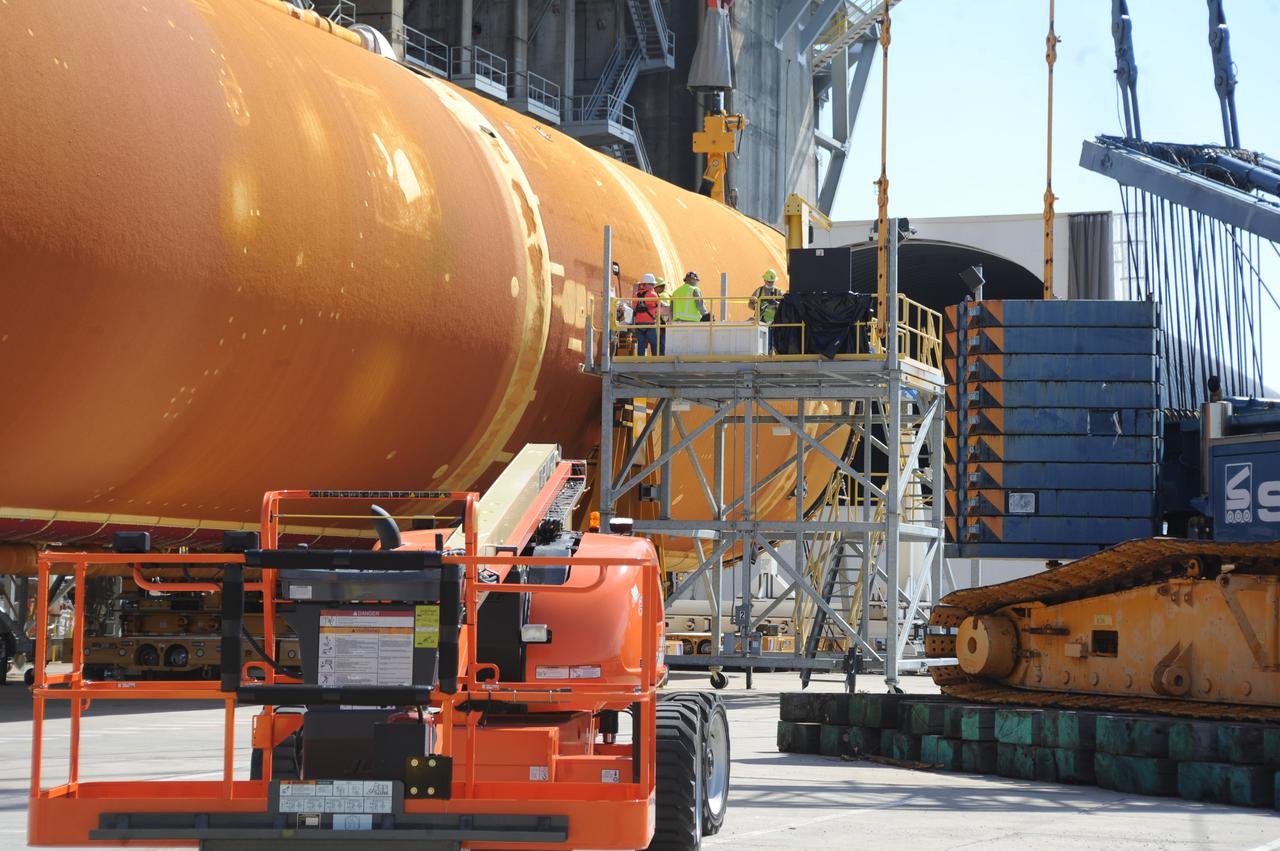
Team members at NASA’s Stennis Space Center near Bay St. Louis, Mississippi, load the first core stage of the agency’s Space Launch System (SLS) rocket on to the agency’s Pegasus barge in preparation for its transport to Kennedy Space Center in Florida. The loading activity followed removal of the stage from the B-2 Test Stand at Stennis on April 19-20, 2021. It comes about a month after NASA conducted a successful hot fire of the stage and its four RS-25 engines on March 18 and after teams completed various refurbishment activities. Once at Kennedy, the will be integrated with the rest of SLS rocket and prepared for the launch of the Artemis I mission to the Moon. Photo Credit: NASA
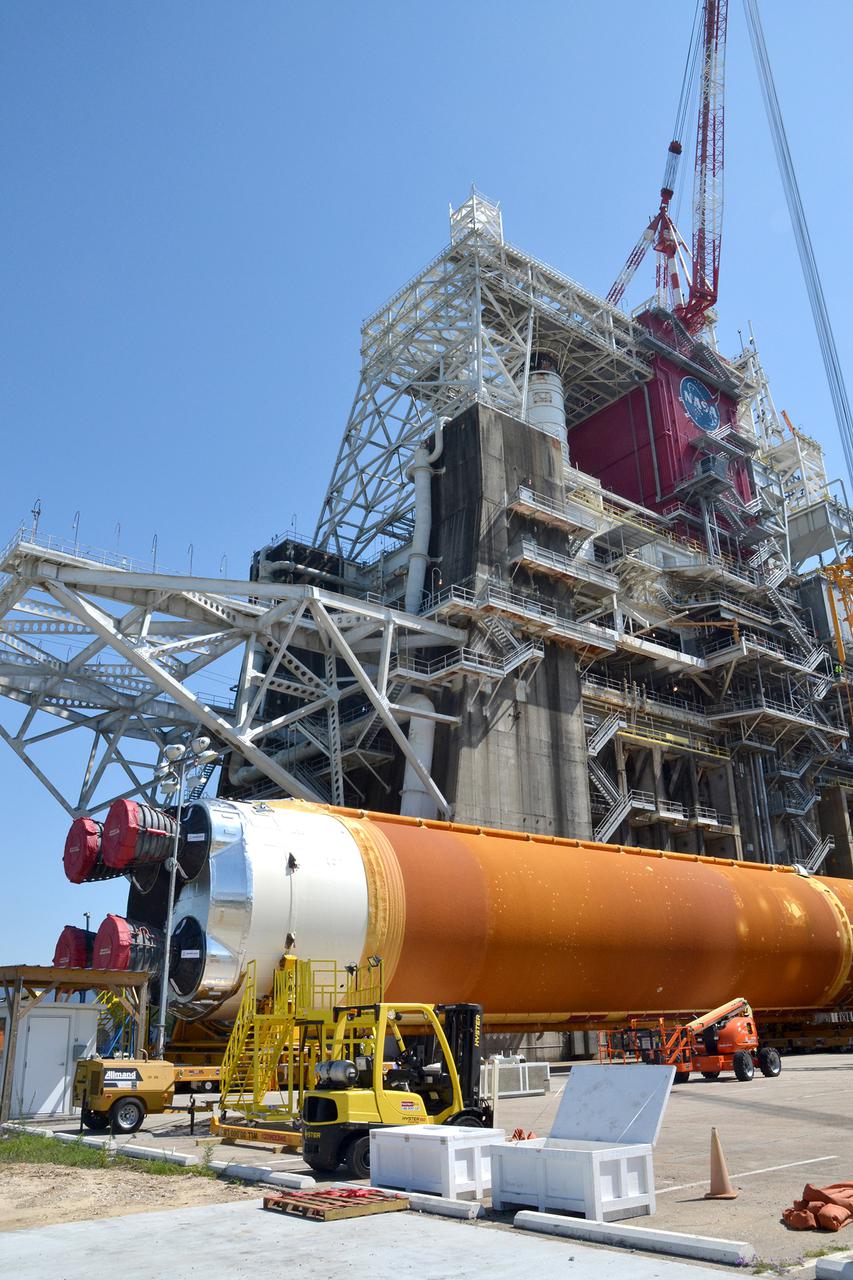
Team members at NASA’s Stennis Space Center near Bay St. Louis, Mississippi, load the first core stage of the agency’s Space Launch System (SLS) rocket on to the agency’s Pegasus barge in preparation for its transport to Kennedy Space Center in Florida. The loading activity followed removal of the stage from the B-2 Test Stand at Stennis on April 19-20, 2021. It comes about a month after NASA conducted a successful hot fire of the stage and its four RS-25 engines on March 18 and after teams completed various refurbishment activities. Once at Kennedy, the will be integrated with the rest of SLS rocket and prepared for the launch of the Artemis I mission to the Moon. Photo Credit: NASA
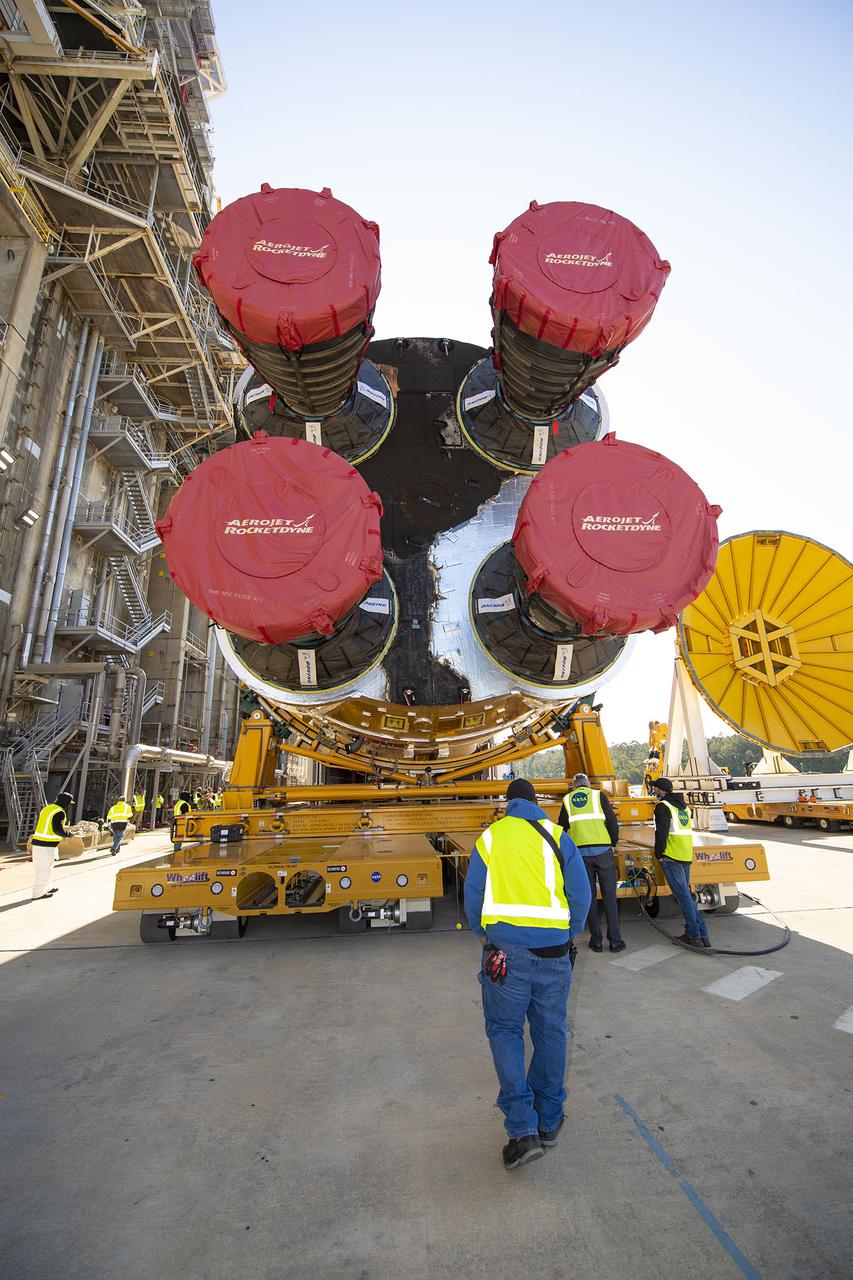
Team members at NASA’s Stennis Space Center near Bay St. Louis, Mississippi, load the first core stage of the agency’s Space Launch System (SLS) rocket on to the agency’s Pegasus barge in preparation for its transport to Kennedy Space Center in Florida. The loading activity followed removal of the stage from the B-2 Test Stand at Stennis on April 19-20, 2021. It comes about a month after NASA conducted a successful hot fire of the stage and its four RS-25 engines on March 18 and after teams completed various refurbishment activities. Once at Kennedy, the will be integrated with the rest of SLS rocket and prepared for the launch of the Artemis I mission to the Moon. Photo Credit: NASA
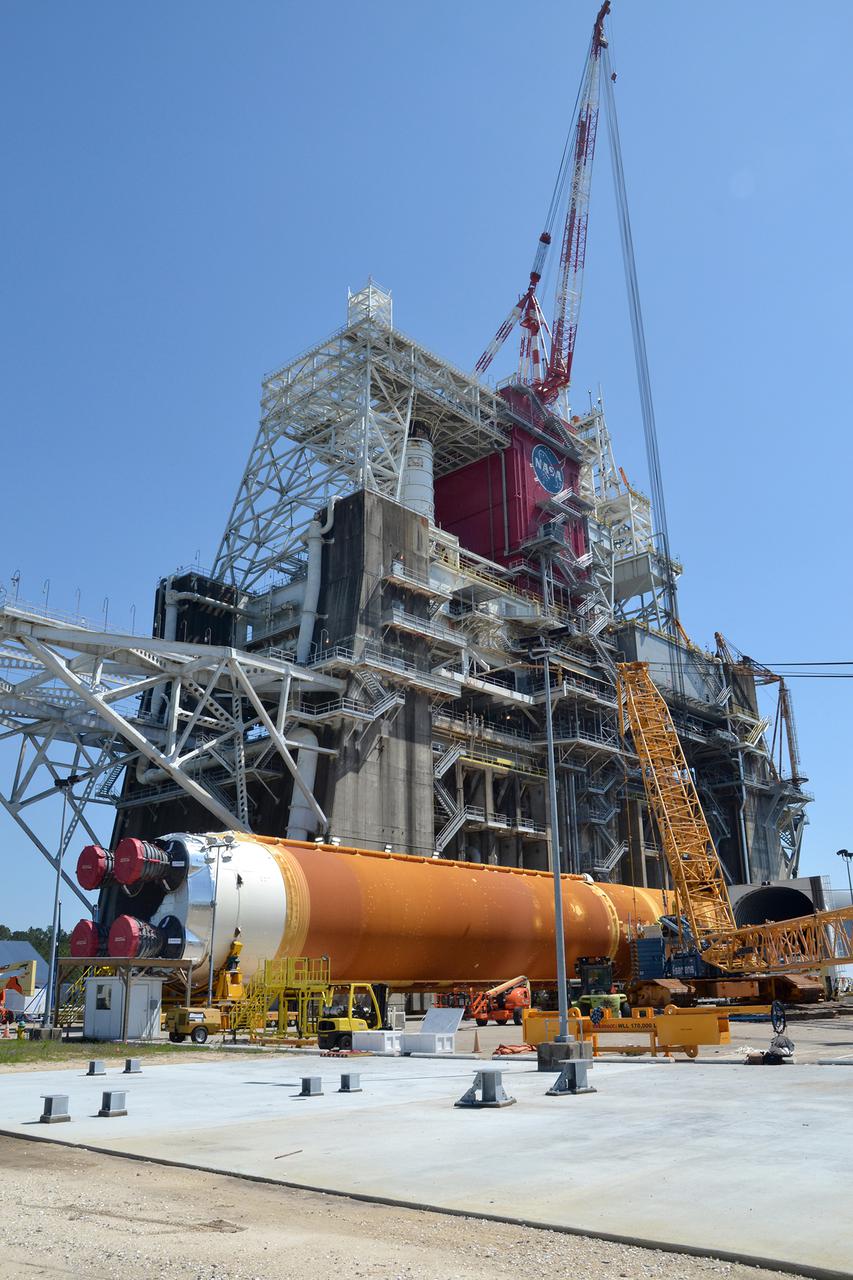
Team members at NASA’s Stennis Space Center near Bay St. Louis, Mississippi, load the first core stage of the agency’s Space Launch System (SLS) rocket on to the agency’s Pegasus barge in preparation for its transport to Kennedy Space Center in Florida. The loading activity followed removal of the stage from the B-2 Test Stand at Stennis on April 19-20, 2021. It comes about a month after NASA conducted a successful hot fire of the stage and its four RS-25 engines on March 18 and after teams completed various refurbishment activities. Once at Kennedy, the will be integrated with the rest of SLS rocket and prepared for the launch of the Artemis I mission to the Moon. Photo Credit: NASA
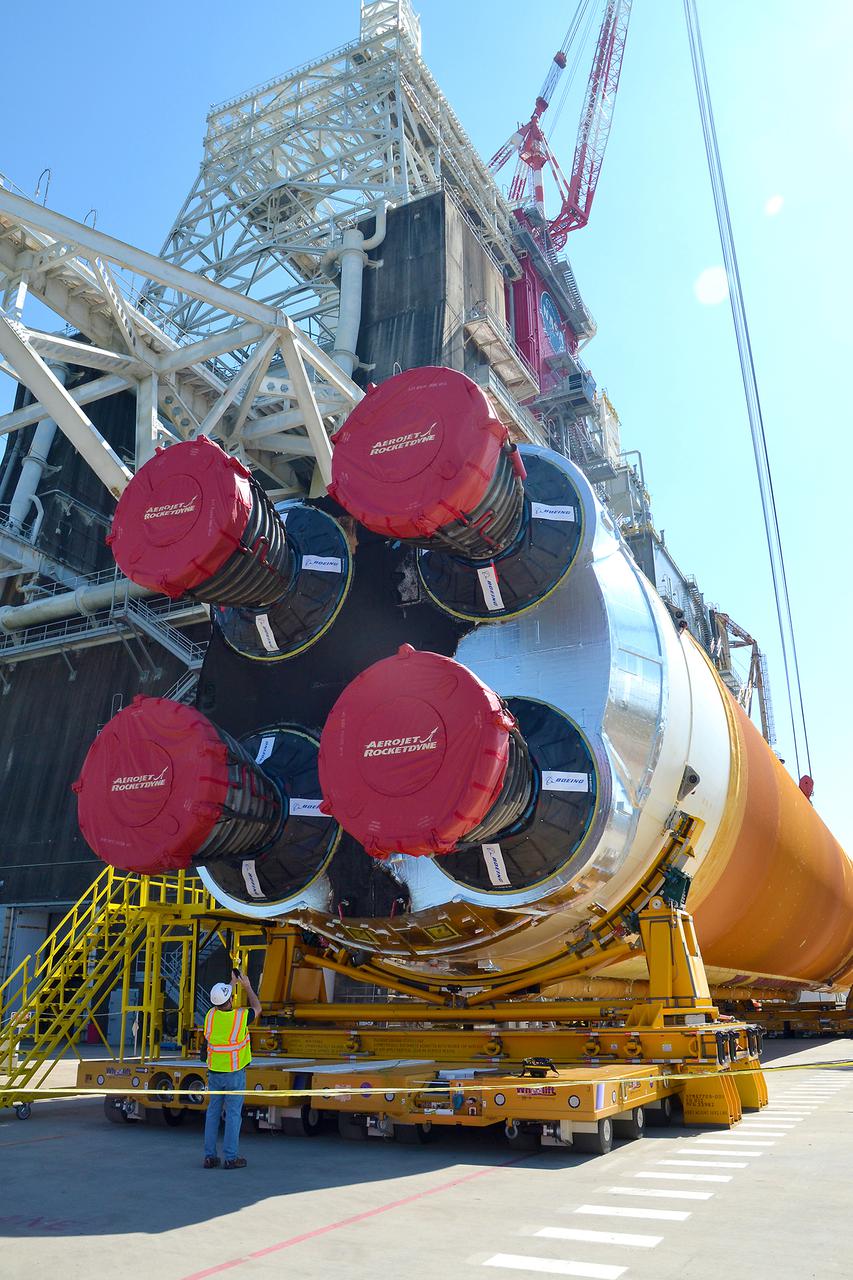
Team members at NASA’s Stennis Space Center near Bay St. Louis, Mississippi, load the first core stage of the agency’s Space Launch System (SLS) rocket on to the agency’s Pegasus barge in preparation for its transport to Kennedy Space Center in Florida. The loading activity followed removal of the stage from the B-2 Test Stand at Stennis on April 19-20, 2021. It comes about a month after NASA conducted a successful hot fire of the stage and its four RS-25 engines on March 18 and after teams completed various refurbishment activities. Once at Kennedy, the will be integrated with the rest of SLS rocket and prepared for the launch of the Artemis I mission to the Moon. Photo Credit: NASA
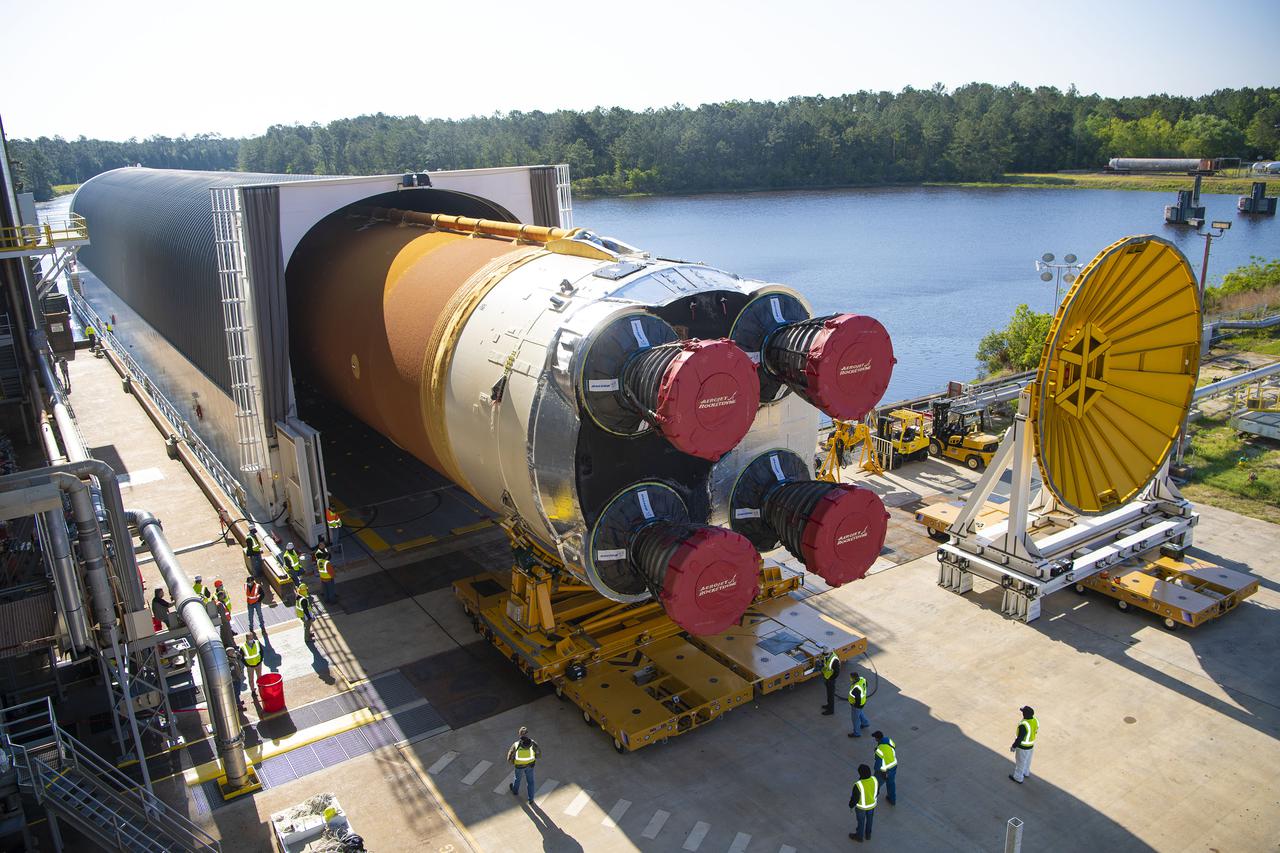
Team members at NASA’s Stennis Space Center near Bay St. Louis, Mississippi, load the first core stage of the agency’s Space Launch System (SLS) rocket on to the agency’s Pegasus barge in preparation for its transport to Kennedy Space Center in Florida. The loading activity followed removal of the stage from the B-2 Test Stand at Stennis on April 19-20, 2021. It comes about a month after NASA conducted a successful hot fire of the stage and its four RS-25 engines on March 18 and after teams completed various refurbishment activities. Once at Kennedy, the will be integrated with the rest of SLS rocket and prepared for the launch of the Artemis I mission to the Moon. Photo Credit: NASA
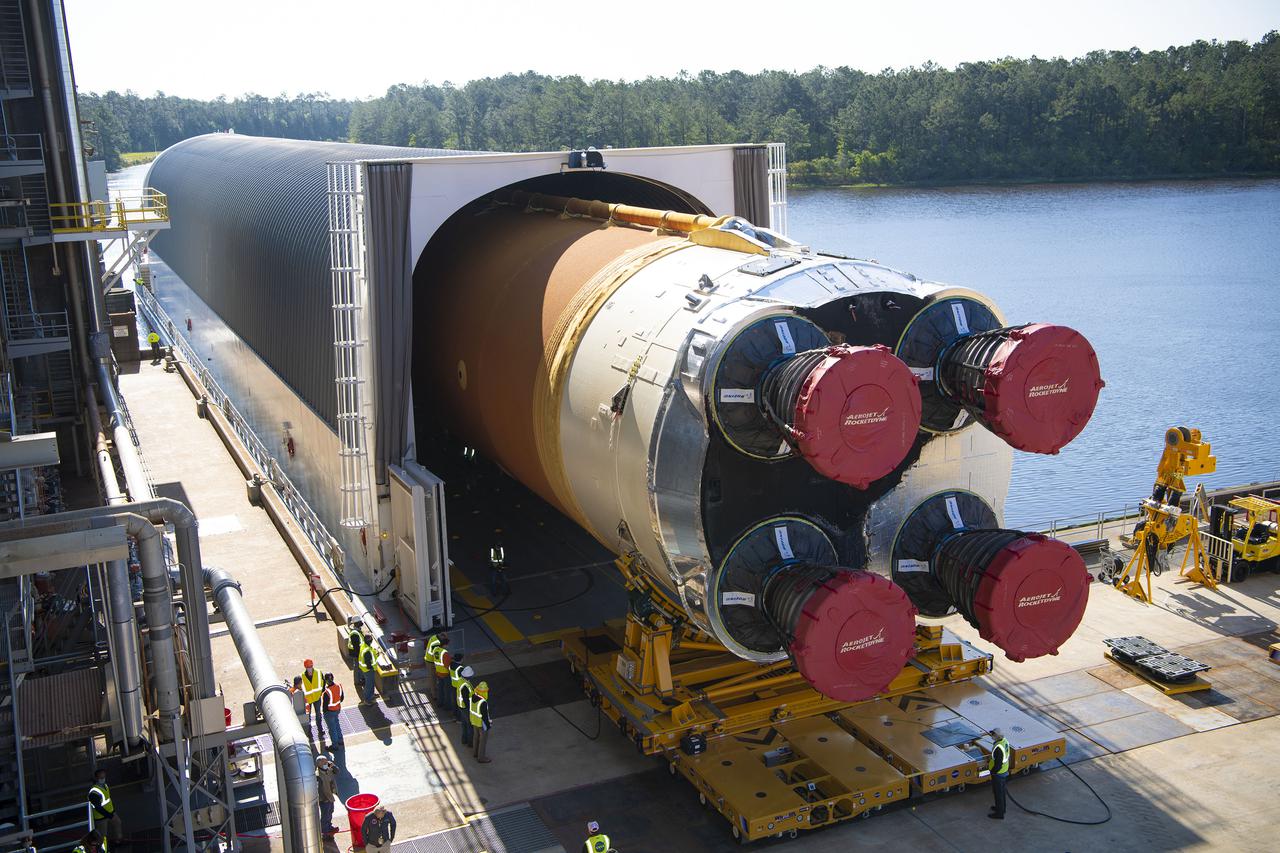
Team members at NASA’s Stennis Space Center near Bay St. Louis, Mississippi, load the first core stage of the agency’s Space Launch System (SLS) rocket on to the agency’s Pegasus barge in preparation for its transport to Kennedy Space Center in Florida. The loading activity followed removal of the stage from the B-2 Test Stand at Stennis on April 19-20, 2021. It comes about a month after NASA conducted a successful hot fire of the stage and its four RS-25 engines on March 18 and after teams completed various refurbishment activities. Once at Kennedy, the will be integrated with the rest of SLS rocket and prepared for the launch of the Artemis I mission to the Moon. Photo Credit: NASA
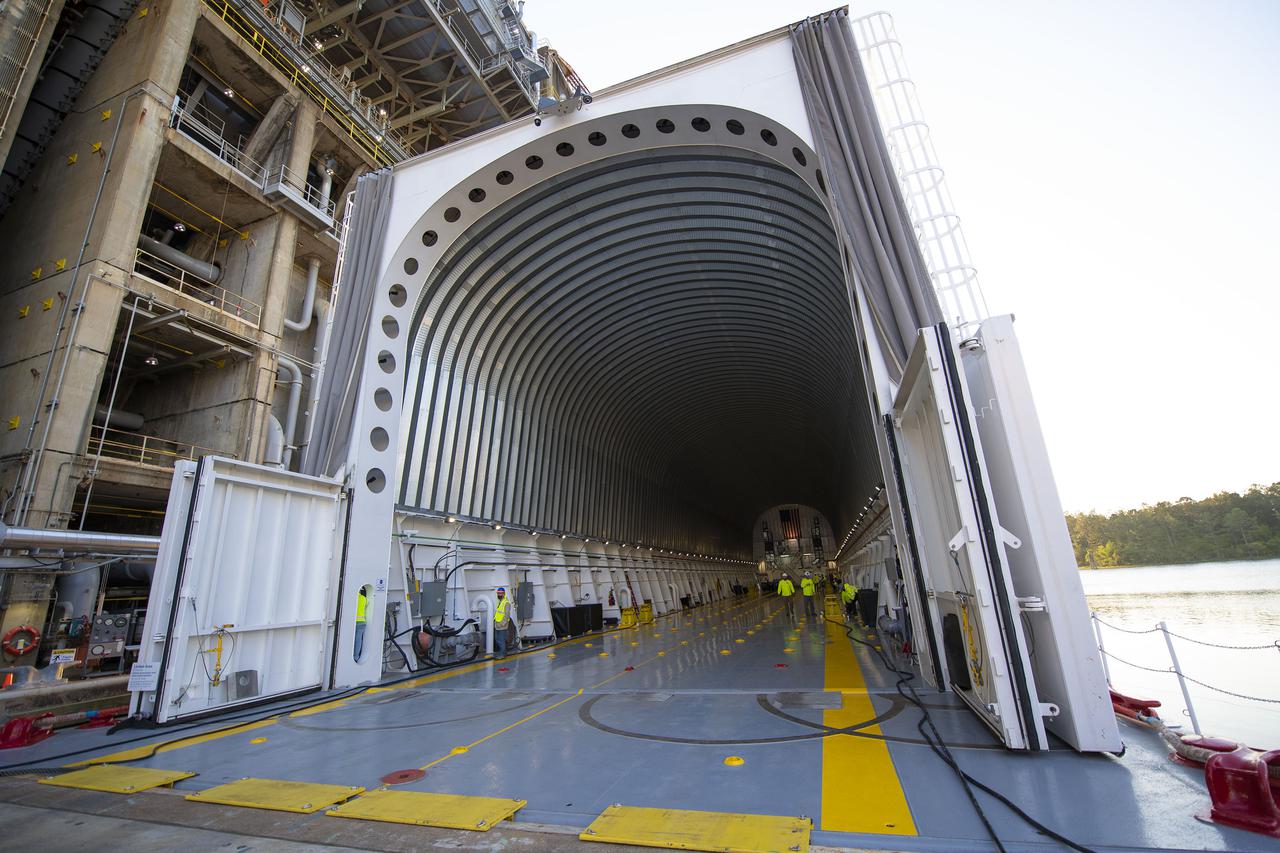
Team members at NASA’s Stennis Space Center near Bay St. Louis, Mississippi, load the first core stage of the agency’s Space Launch System (SLS) rocket on to the agency’s Pegasus barge in preparation for its transport to Kennedy Space Center in Florida. The loading activity followed removal of the stage from the B-2 Test Stand at Stennis on April 19-20, 2021. It comes about a month after NASA conducted a successful hot fire of the stage and its four RS-25 engines on March 18 and after teams completed various refurbishment activities. Once at Kennedy, the will be integrated with the rest of SLS rocket and prepared for the launch of the Artemis I mission to the Moon. Photo Credit: NASA
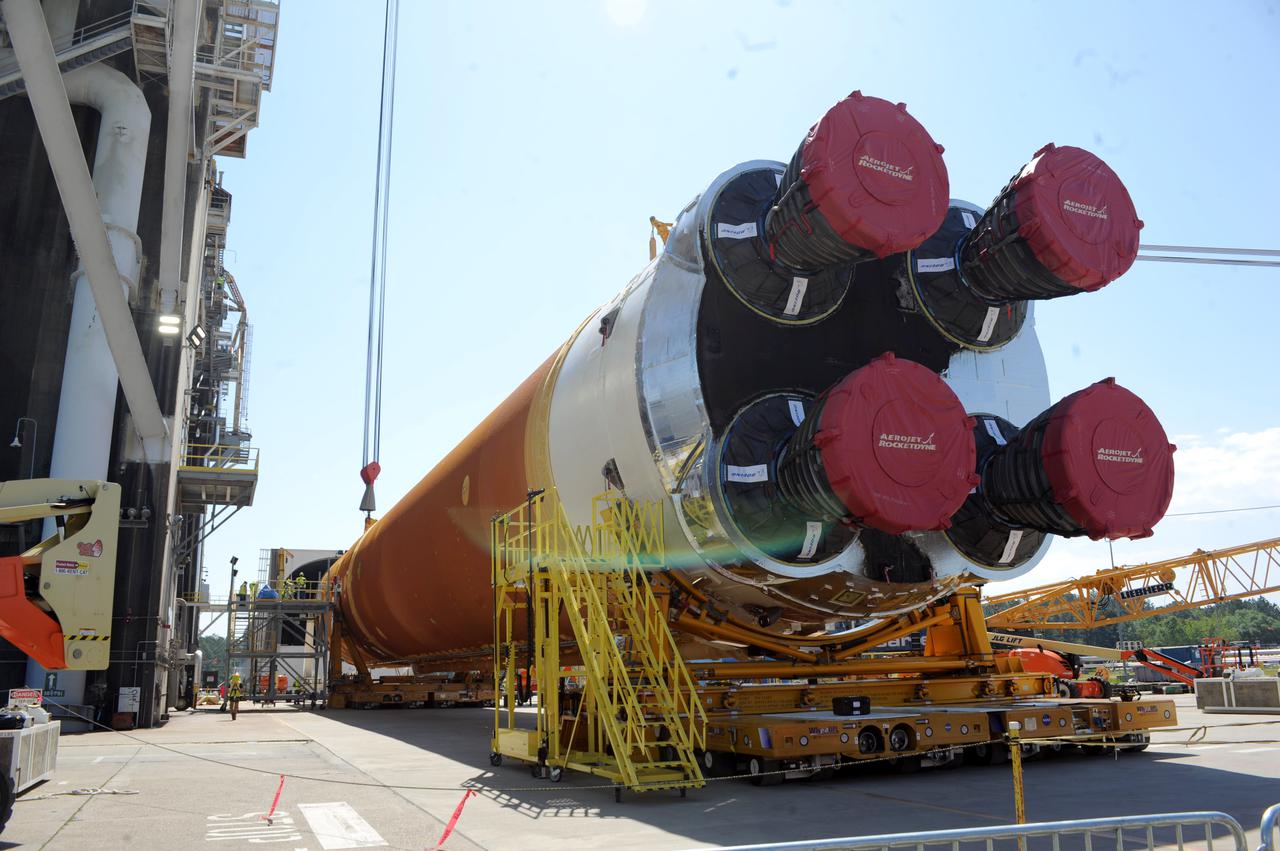
Team members at NASA’s Stennis Space Center near Bay St. Louis, Mississippi, load the first core stage of the agency’s Space Launch System (SLS) rocket on to the agency’s Pegasus barge in preparation for its transport to Kennedy Space Center in Florida. The loading activity followed removal of the stage from the B-2 Test Stand at Stennis on April 19-20, 2021. It comes about a month after NASA conducted a successful hot fire of the stage and its four RS-25 engines on March 18 and after teams completed various refurbishment activities. Once at Kennedy, the will be integrated with the rest of SLS rocket and prepared for the launch of the Artemis I mission to the Moon. Photo Credit: NASA
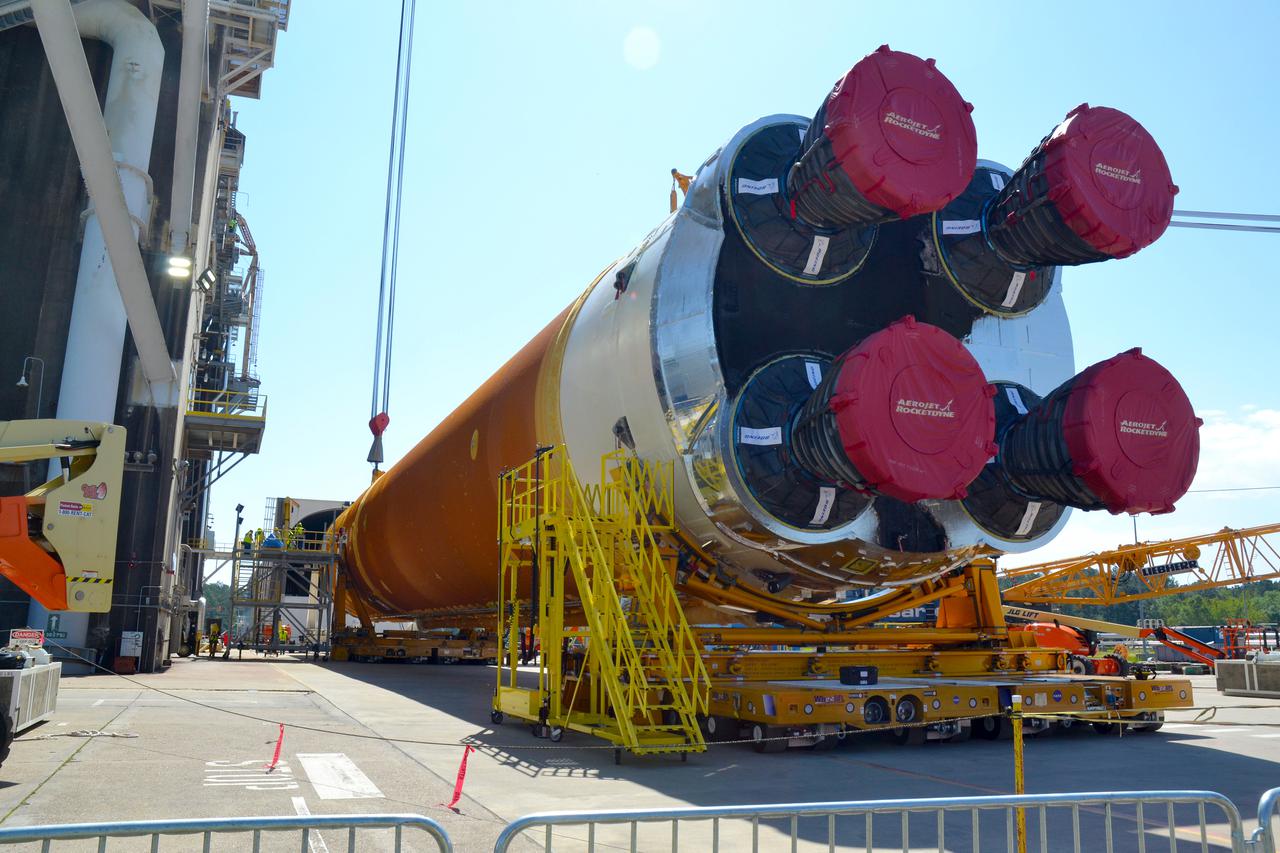
Team members at NASA’s Stennis Space Center near Bay St. Louis, Mississippi, load the first core stage of the agency’s Space Launch System (SLS) rocket on to the agency’s Pegasus barge in preparation for its transport to Kennedy Space Center in Florida. The loading activity followed removal of the stage from the B-2 Test Stand at Stennis on April 19-20, 2021. It comes about a month after NASA conducted a successful hot fire of the stage and its four RS-25 engines on March 18 and after teams completed various refurbishment activities. Once at Kennedy, the will be integrated with the rest of SLS rocket and prepared for the launch of the Artemis I mission to the Moon. Photo Credit: NASA
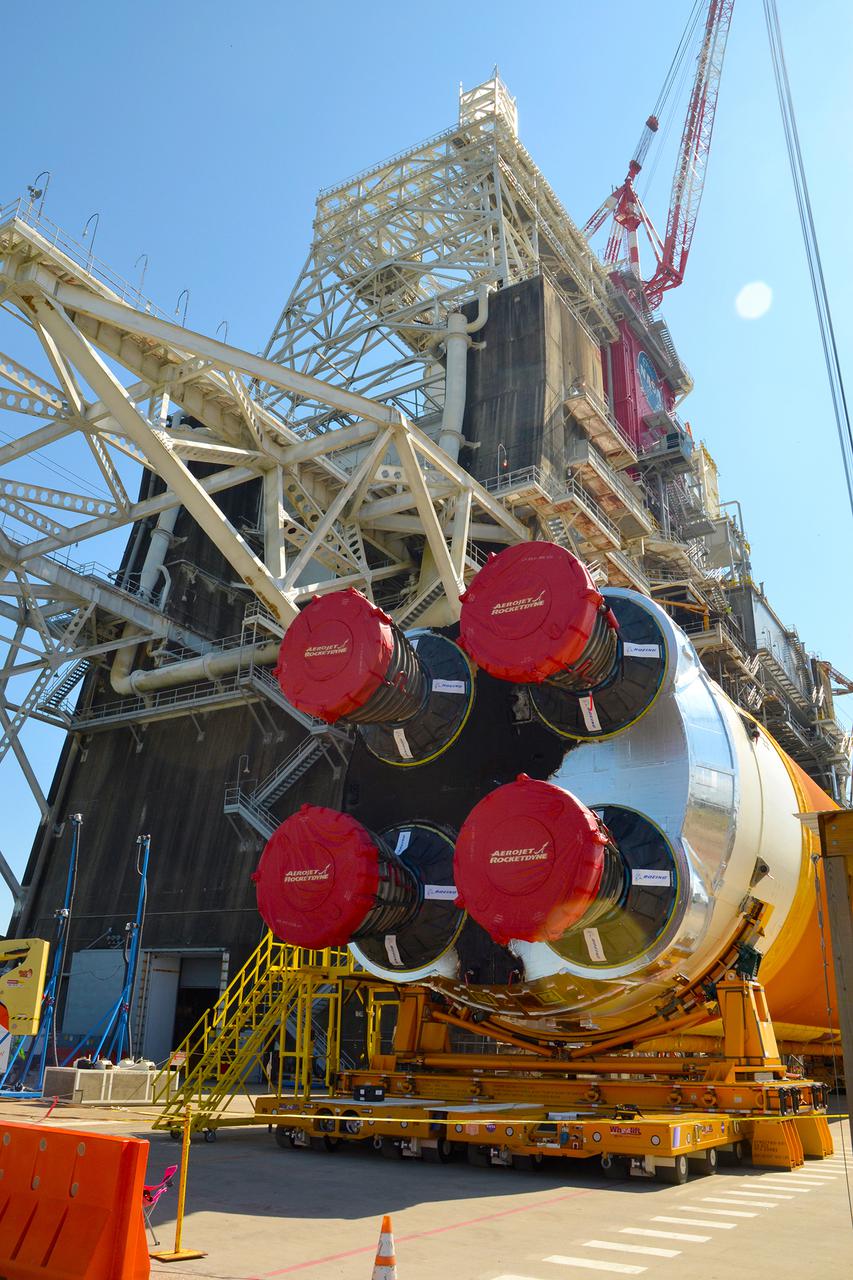
Team members at NASA’s Stennis Space Center near Bay St. Louis, Mississippi, load the first core stage of the agency’s Space Launch System (SLS) rocket on to the agency’s Pegasus barge in preparation for its transport to Kennedy Space Center in Florida. The loading activity followed removal of the stage from the B-2 Test Stand at Stennis on April 19-20, 2021. It comes about a month after NASA conducted a successful hot fire of the stage and its four RS-25 engines on March 18 and after teams completed various refurbishment activities. Once at Kennedy, the will be integrated with the rest of SLS rocket and prepared for the launch of the Artemis I mission to the Moon. Photo Credit: NASA
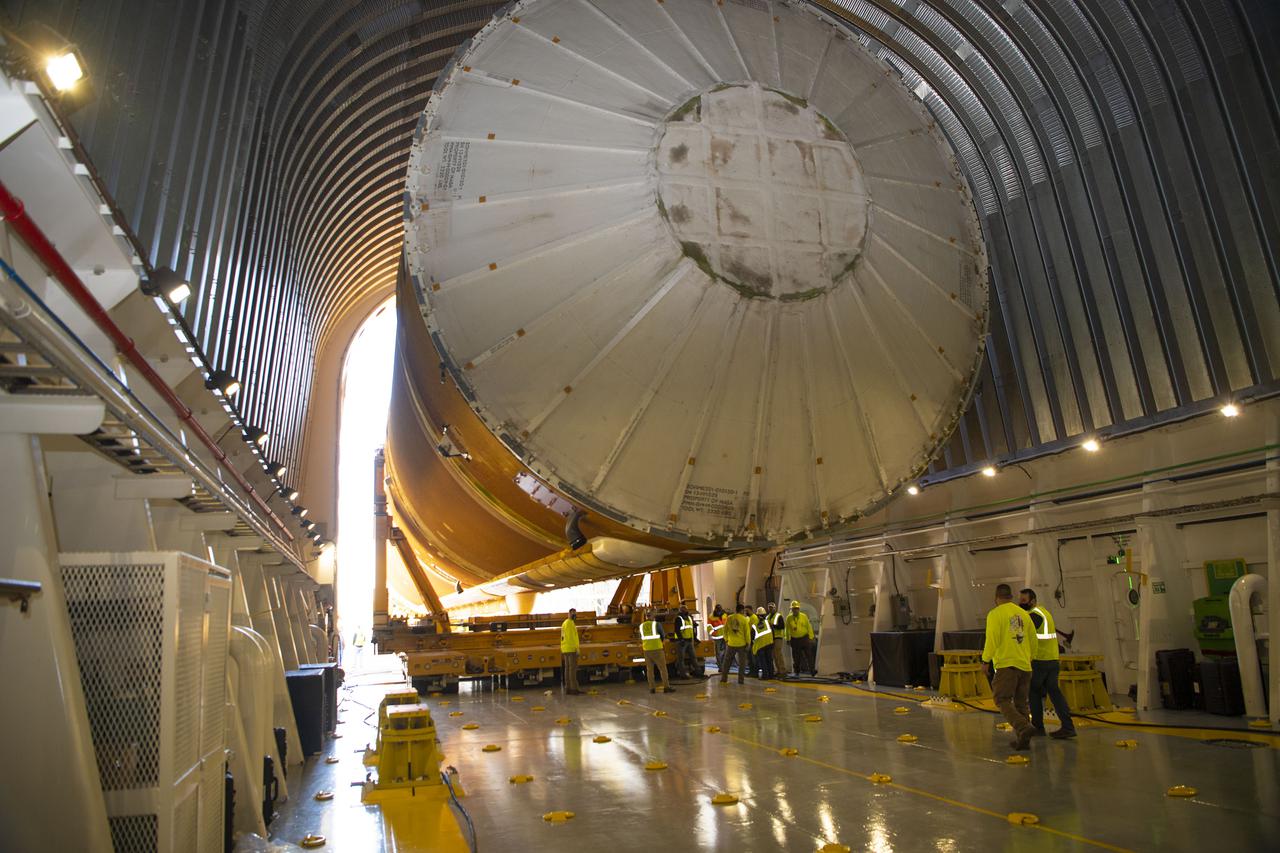
Team members at NASA’s Stennis Space Center near Bay St. Louis, Mississippi, load the first core stage of the agency’s Space Launch System (SLS) rocket on to the agency’s Pegasus barge in preparation for its transport to Kennedy Space Center in Florida. The loading activity followed removal of the stage from the B-2 Test Stand at Stennis on April 19-20, 2021. It comes about a month after NASA conducted a successful hot fire of the stage and its four RS-25 engines on March 18 and after teams completed various refurbishment activities. Once at Kennedy, the will be integrated with the rest of SLS rocket and prepared for the launch of the Artemis I mission to the Moon. Photo Credit: NASA
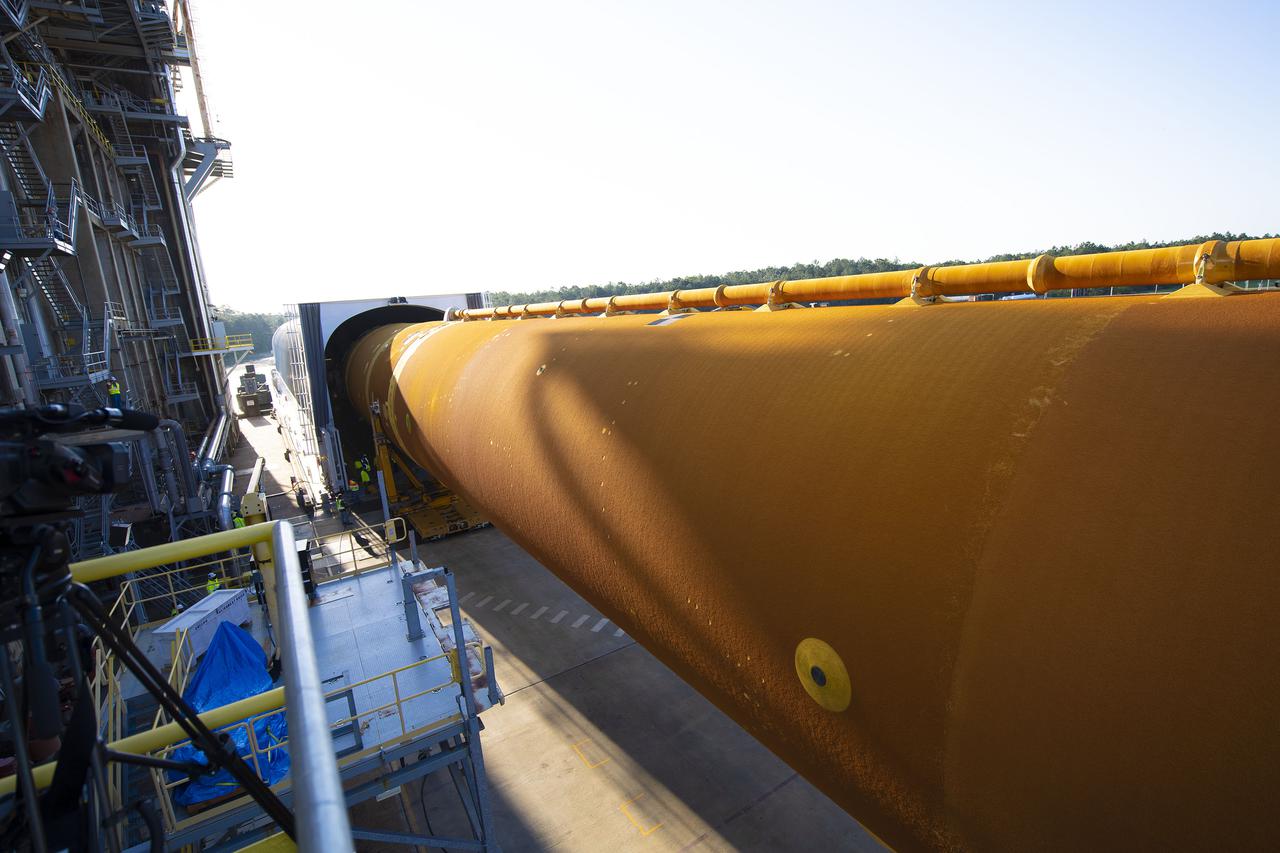
Team members at NASA’s Stennis Space Center near Bay St. Louis, Mississippi, load the first core stage of the agency’s Space Launch System (SLS) rocket on to the agency’s Pegasus barge in preparation for its transport to Kennedy Space Center in Florida. The loading activity followed removal of the stage from the B-2 Test Stand at Stennis on April 19-20, 2021. It comes about a month after NASA conducted a successful hot fire of the stage and its four RS-25 engines on March 18 and after teams completed various refurbishment activities. Once at Kennedy, the will be integrated with the rest of SLS rocket and prepared for the launch of the Artemis I mission to the Moon. Photo Credit: NASA
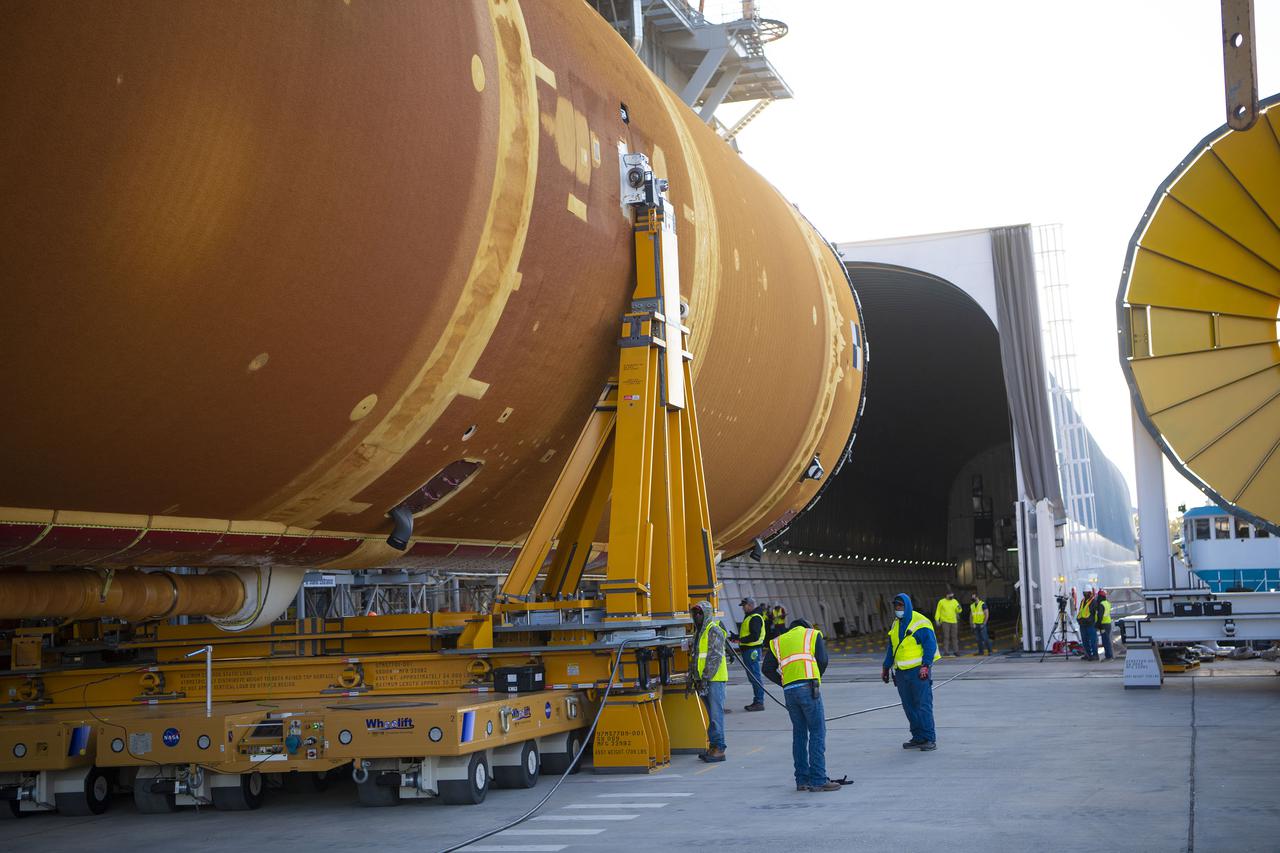
Team members at NASA’s Stennis Space Center near Bay St. Louis, Mississippi, load the first core stage of the agency’s Space Launch System (SLS) rocket on to the agency’s Pegasus barge in preparation for its transport to Kennedy Space Center in Florida. The loading activity followed removal of the stage from the B-2 Test Stand at Stennis on April 19-20, 2021. It comes about a month after NASA conducted a successful hot fire of the stage and its four RS-25 engines on March 18 and after teams completed various refurbishment activities. Once at Kennedy, the will be integrated with the rest of SLS rocket and prepared for the launch of the Artemis I mission to the Moon. Photo Credit: NASA
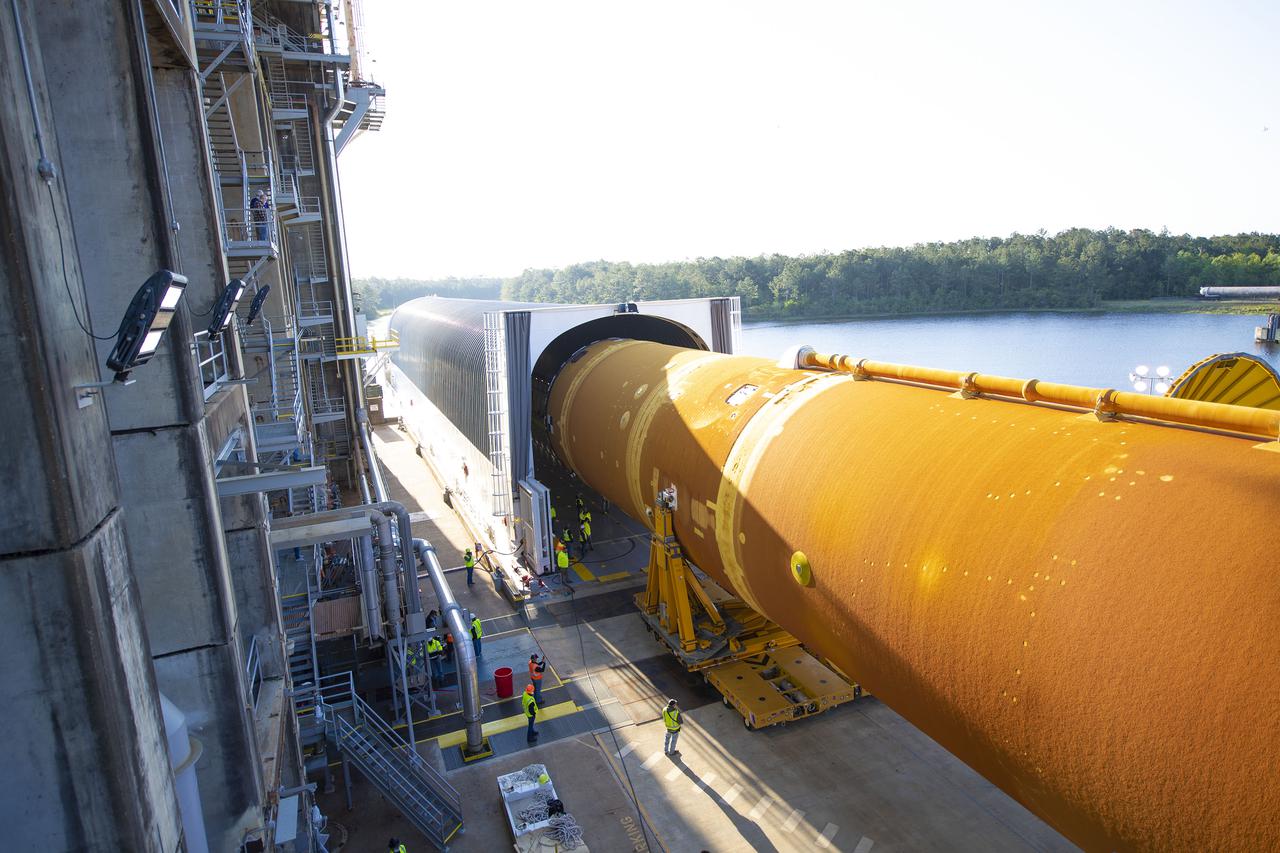
Team members at NASA’s Stennis Space Center near Bay St. Louis, Mississippi, load the first core stage of the agency’s Space Launch System (SLS) rocket on to the agency’s Pegasus barge in preparation for its transport to Kennedy Space Center in Florida. The loading activity followed removal of the stage from the B-2 Test Stand at Stennis on April 19-20, 2021. It comes about a month after NASA conducted a successful hot fire of the stage and its four RS-25 engines on March 18 and after teams completed various refurbishment activities. Once at Kennedy, the will be integrated with the rest of SLS rocket and prepared for the launch of the Artemis I mission to the Moon. Photo Credit: NASA