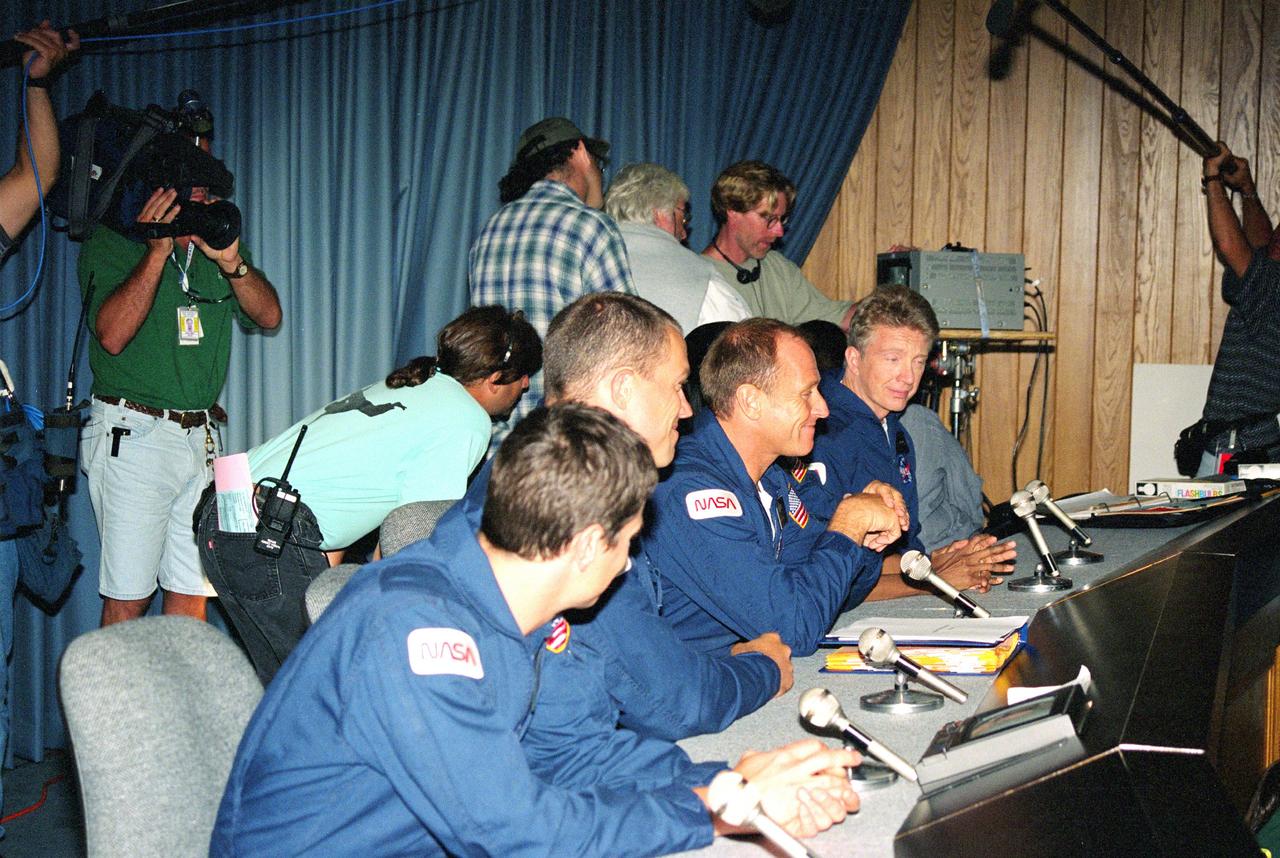
KSC's Press Site serves as the stage for makers of "The Cape," a pilot television movie starring Corbin Bernsen (third from front).
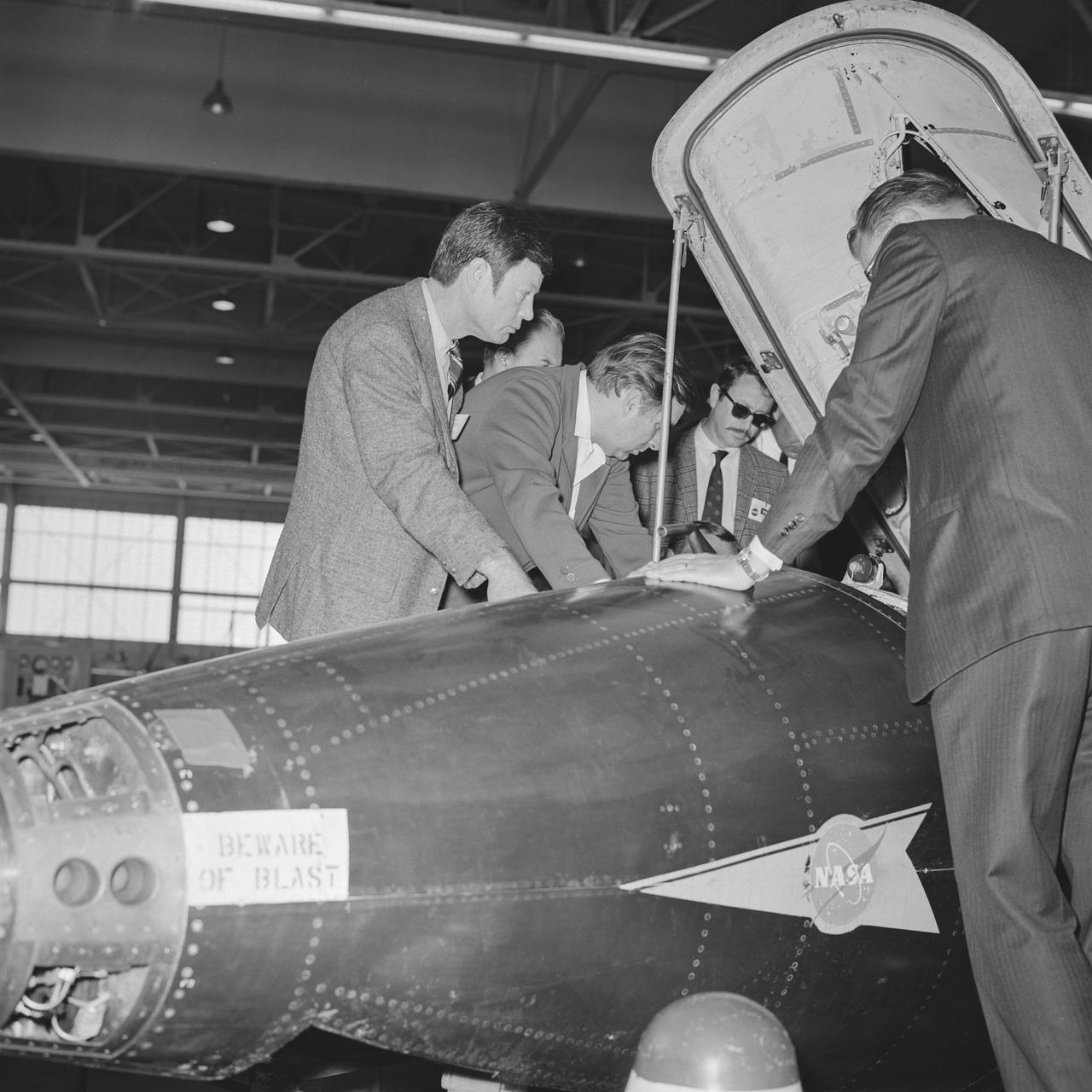
The 1960s Star Trek television series’ cast members visit NASA Dryden Flight Research Center, now Armstrong, in 1967. Chief Medical Officer Leonard ‘Bones’ McCoy played by DeForest Kelley and the show’s creator Gene Roddenberry receive briefing on X-15 cockpit as they view inside.
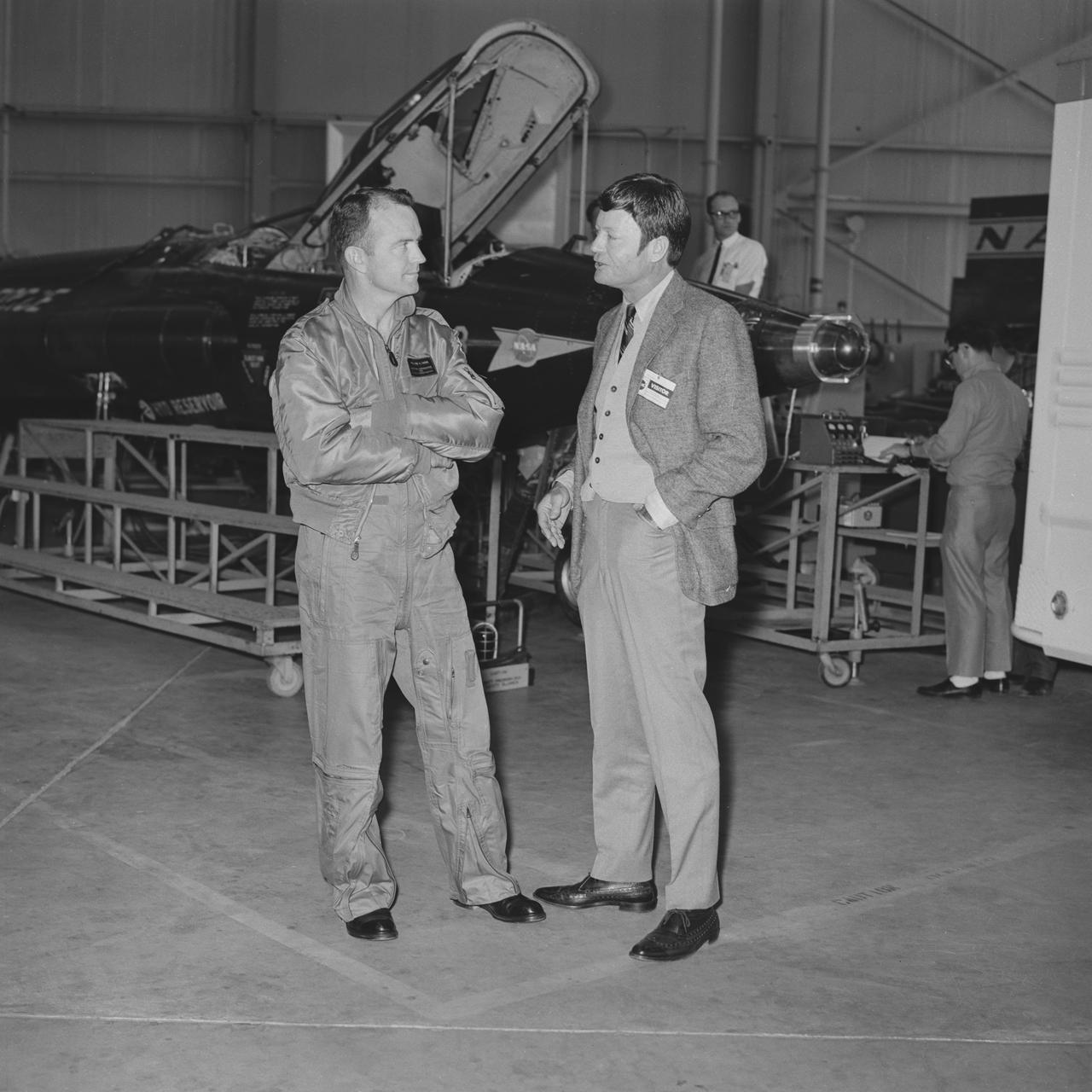
The 1960s Star Trek television series’ cast member Chief Medical Officer Leonard ‘Bones’ McCoy played by DeForest Kelley talks to Bill Dana, NASA X-15 pilot, in front of one of three X-15’s during visit to NASA Dryden Flight Research Center, now Armstrong, back in 1967.
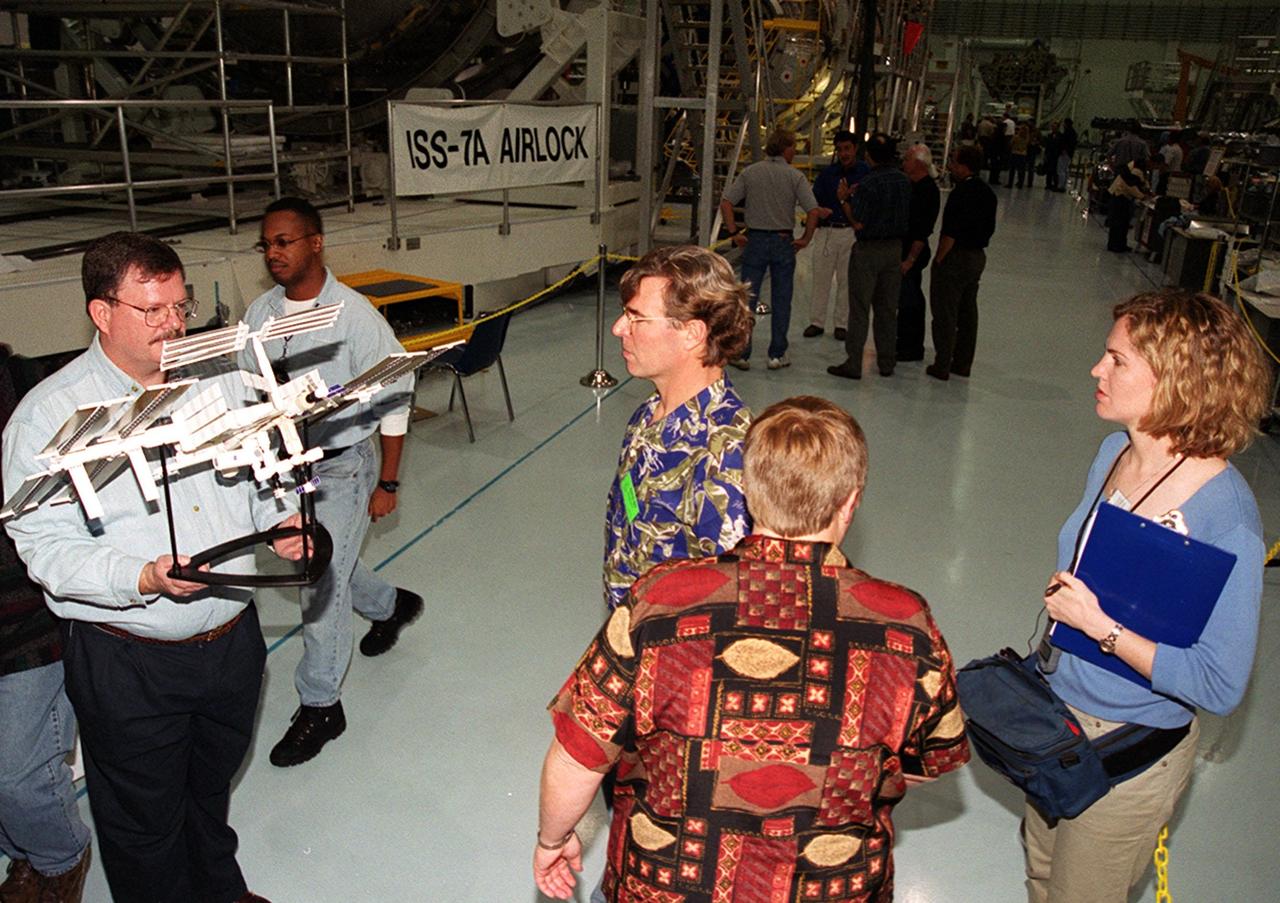
KENNEDY SPACE CENTER, FLA. -- In the Space Station Processing Facility, Steve Thomas (center), looks at a model of the International Space Station being held by a worker. Thomas is host of the television series "This Old House." In the foreground and at right are crew members of the television series.; They are at KSC to film an episode of the series
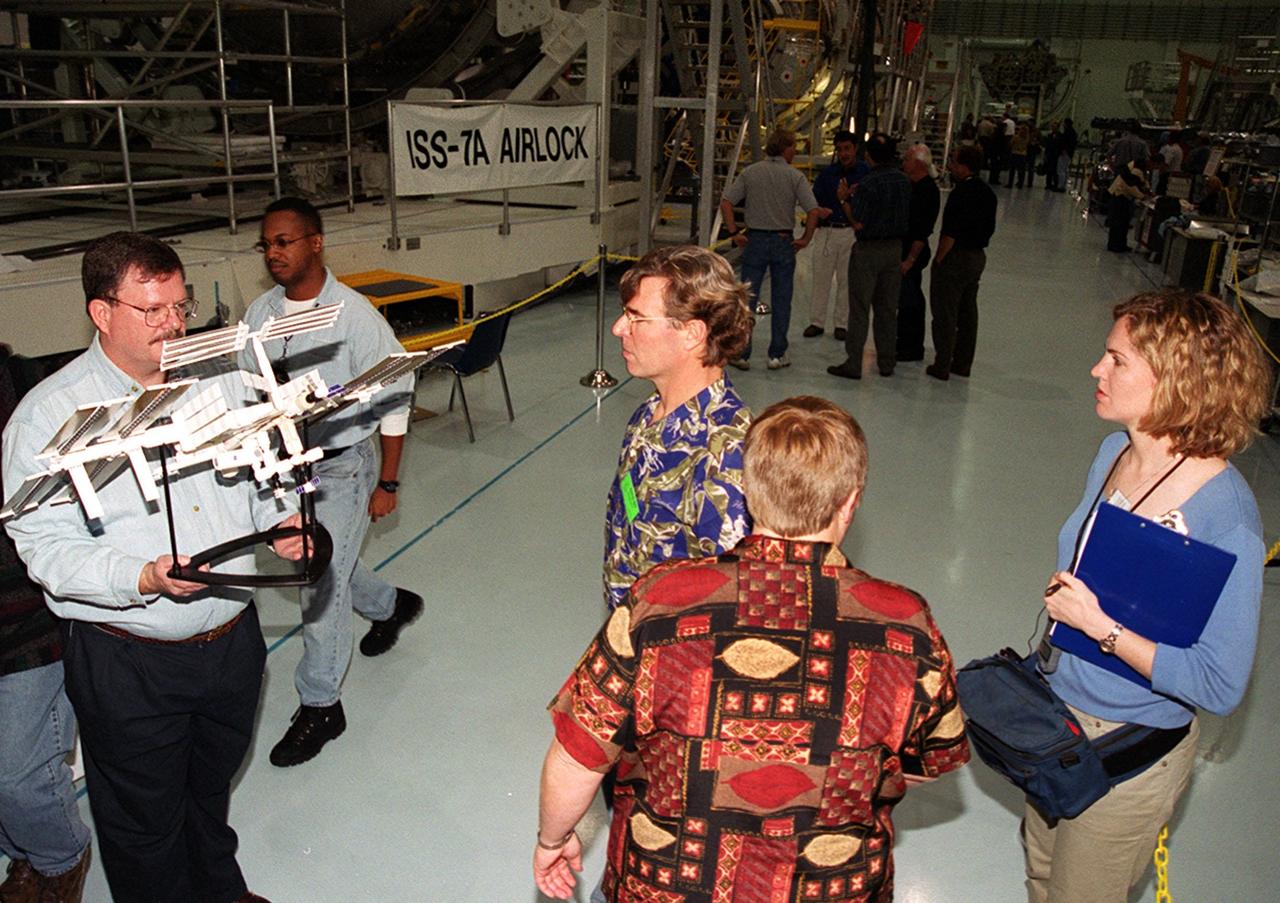
KENNEDY SPACE CENTER, FLA. -- In the Space Station Processing Facility, Steve Thomas (center), looks at a model of the International Space Station being held by a worker. Thomas is host of the television series "This Old House." In the foreground and at right are crew members of the television series.; They are at KSC to film an episode of the series
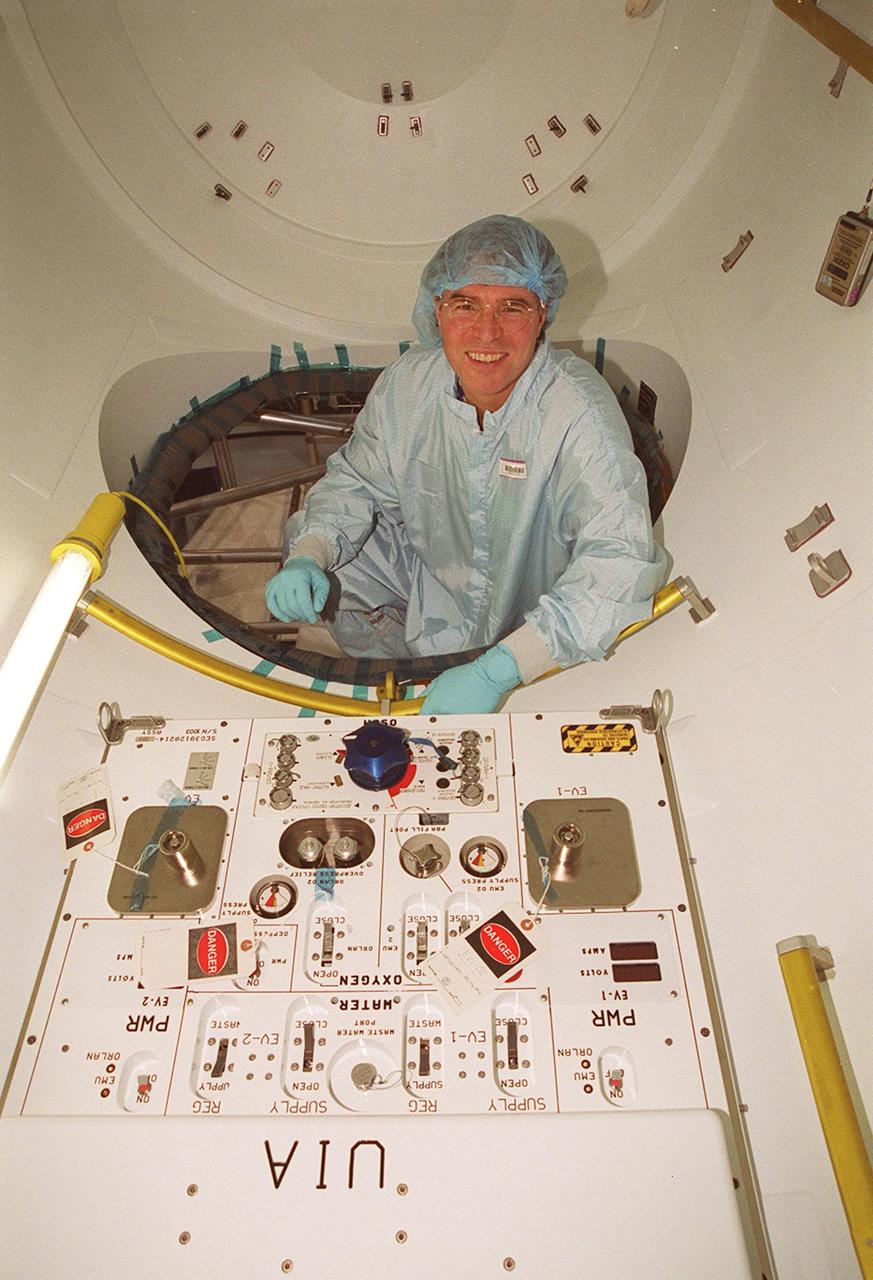
Steve Thomas, host of the television series "This Old House," gets a close look at one of the modules in the Space Station Processing Facility. He and the series’ master carpenter Norm Abram are at KSC to film an episode of the series
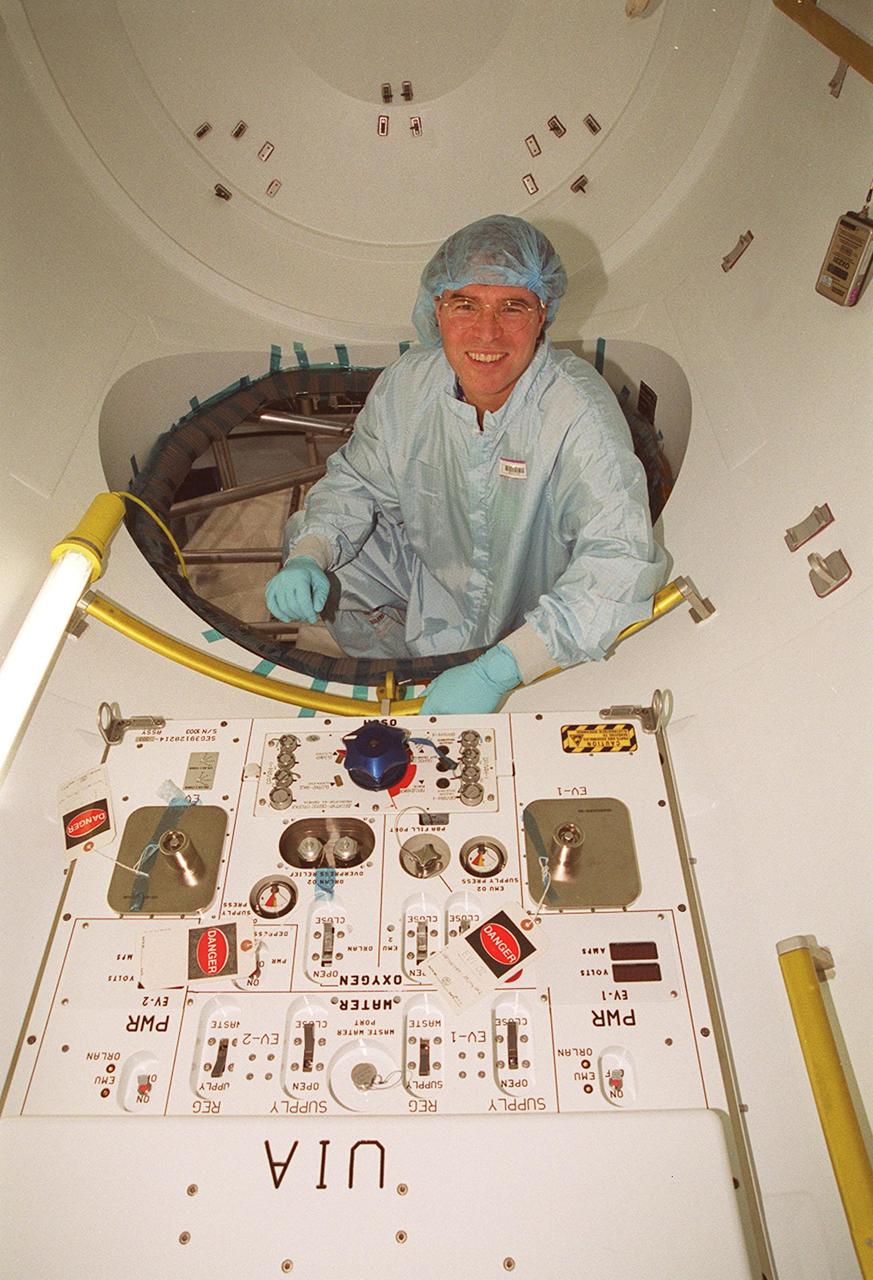
Steve Thomas, host of the television series "This Old House," gets a close look at one of the modules in the Space Station Processing Facility. He and the series’ master carpenter Norm Abram are at KSC to film an episode of the series
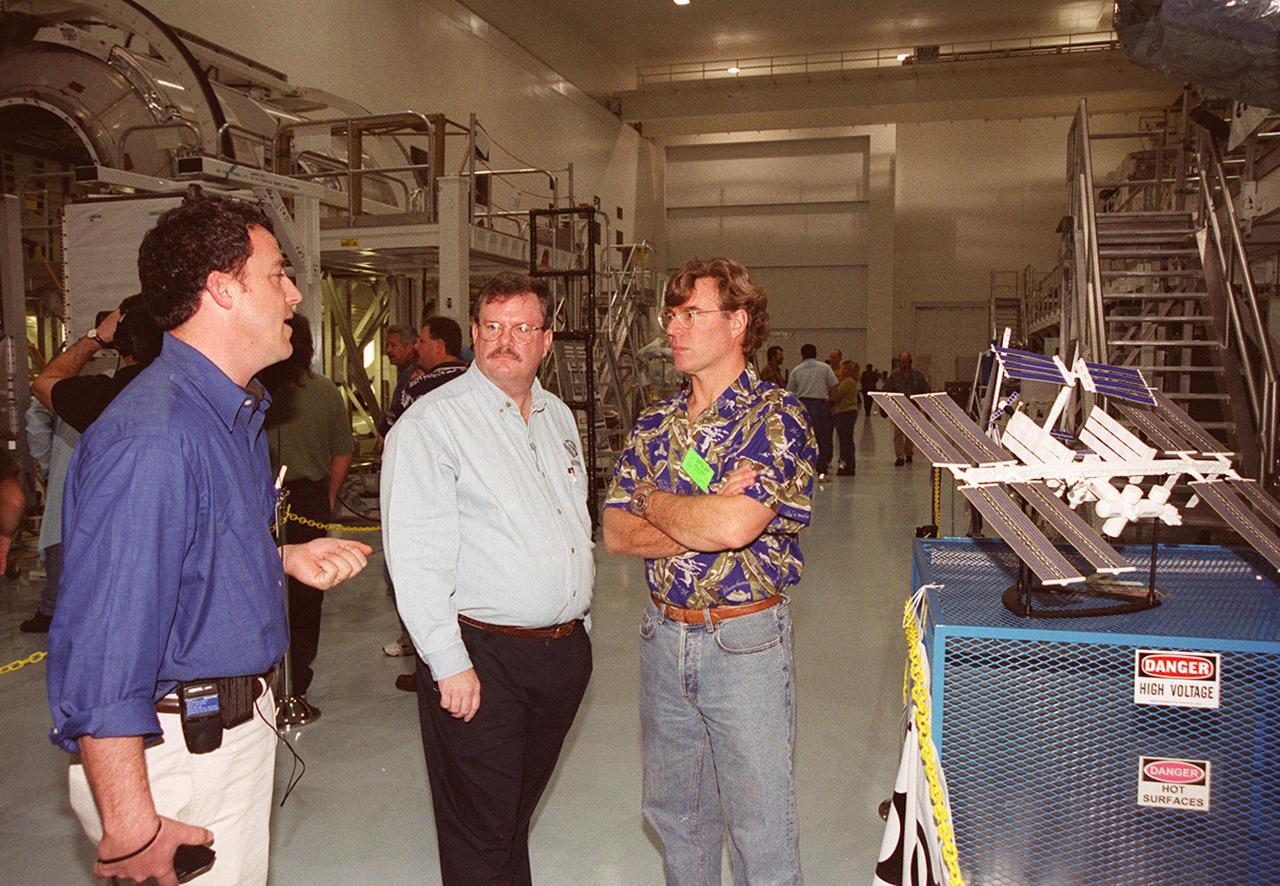
KENNEDY SPACE CENTER, FLA. -- On a tour of Kennedy Space Center, Steve Thomas, host of the television series "This Old House," talks with a member of the film crew while in the Space Station Processing Facility. He and the series’ master carpenter Norm Abram are at KSC to film an episode of the series
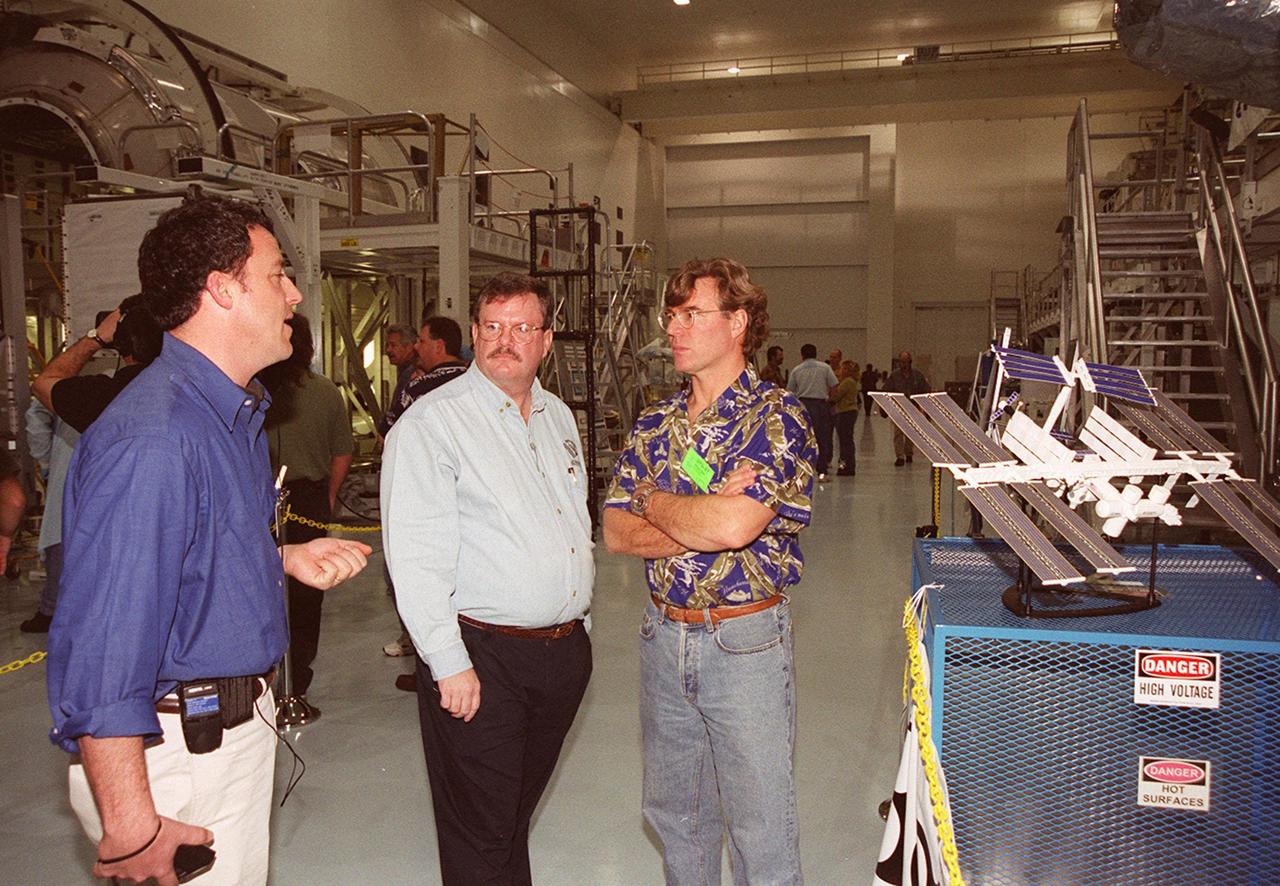
KENNEDY SPACE CENTER, FLA. -- On a tour of Kennedy Space Center, Steve Thomas, host of the television series "This Old House," talks with a member of the film crew while in the Space Station Processing Facility. He and the series’ master carpenter Norm Abram are at KSC to film an episode of the series
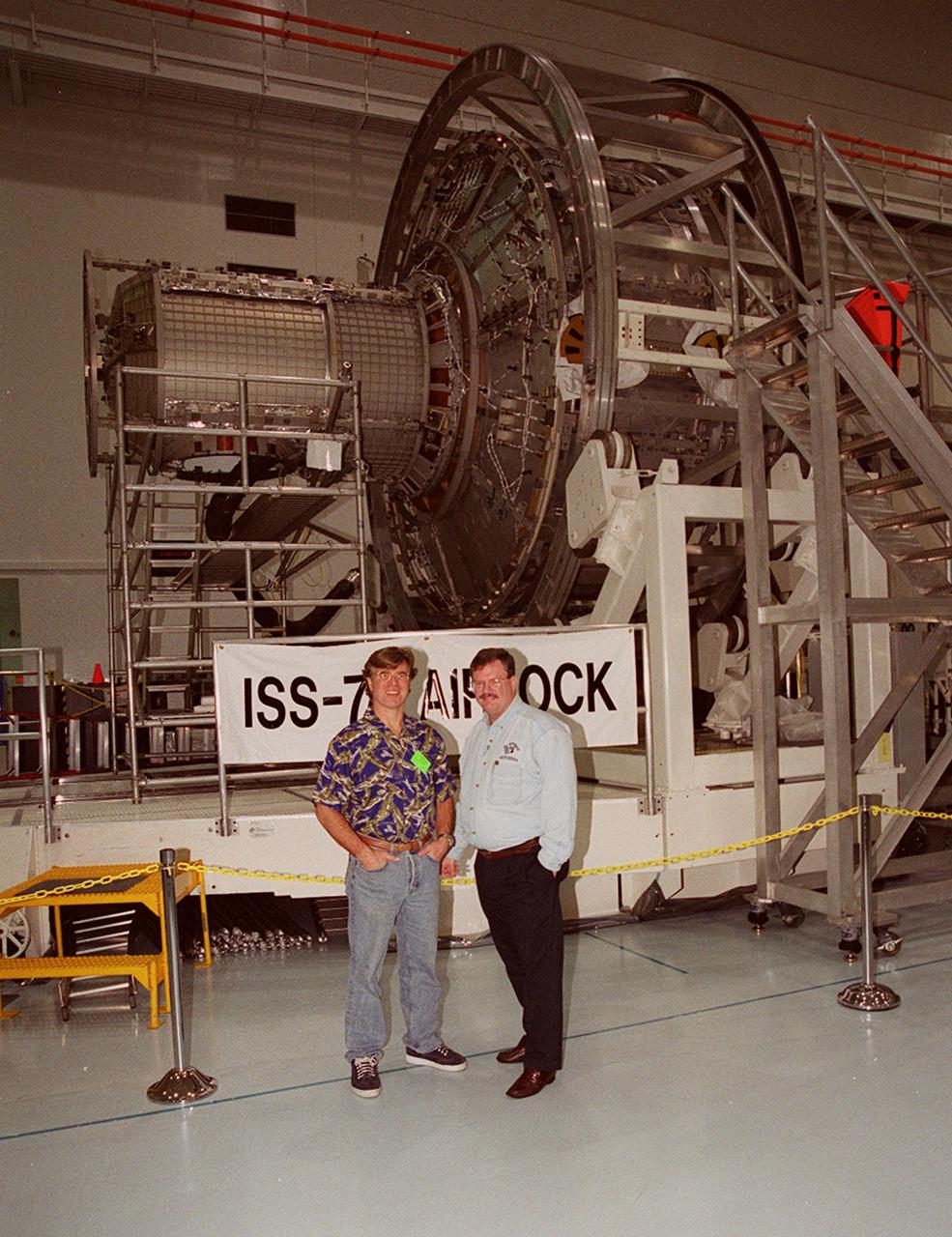
KENNEDY SPACE CENTER, FLA. -- In the Space Station Processing Facility, Steve Thomas (left), host of the television series "This Old House," poses in front of the Joint Airlock module. Thomas and Norm Abram, master carpenter with "This Old House," are at KSC to film an episode of the series
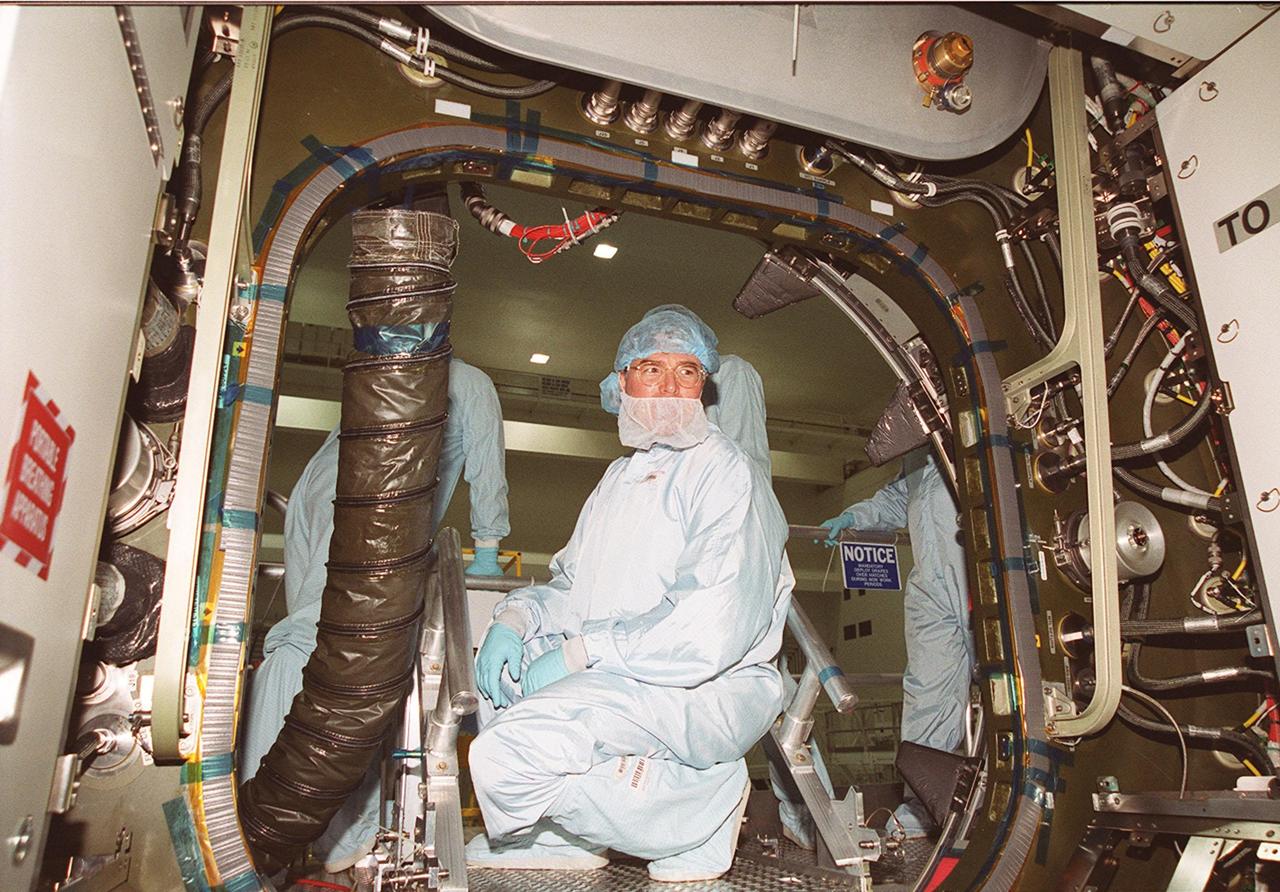
KENNEDY SPACE CENTER, FLA. -- Steve Thomas, host of the television series "This Old House," gets a look inside one of the Space Station modules in the Space Station Processing Facility. He and the show's master carpenter Norm Abram are at KSC to film an episode of the series
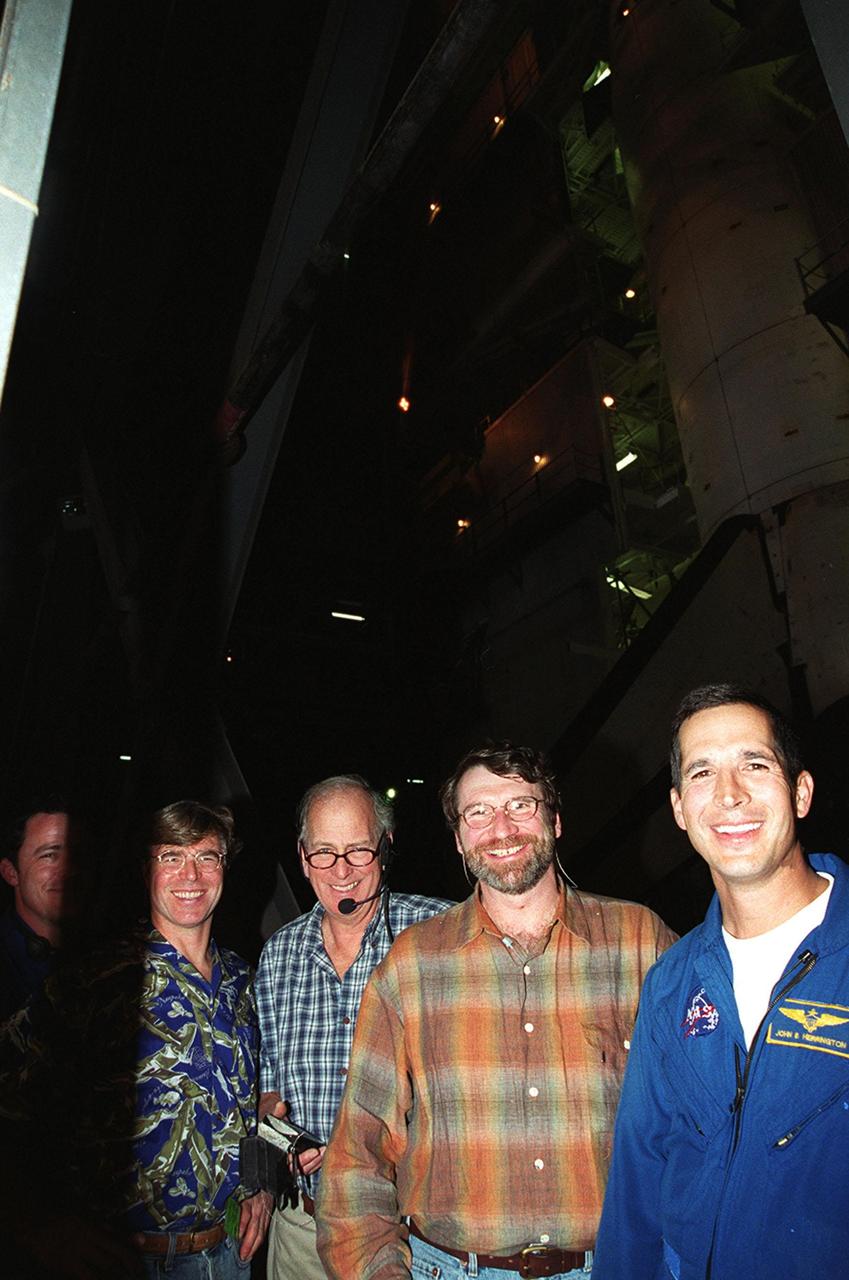
Members of the crew of the television series This Old House pause for a photo during a tour of KSC with astronaut John Herrington (far right). Second from left is Steve Thomas, host of the show. Second from right is Norm Abram, master carpenter on the series. The cast and crew of This Old House are filming at KSC for an episode of the show
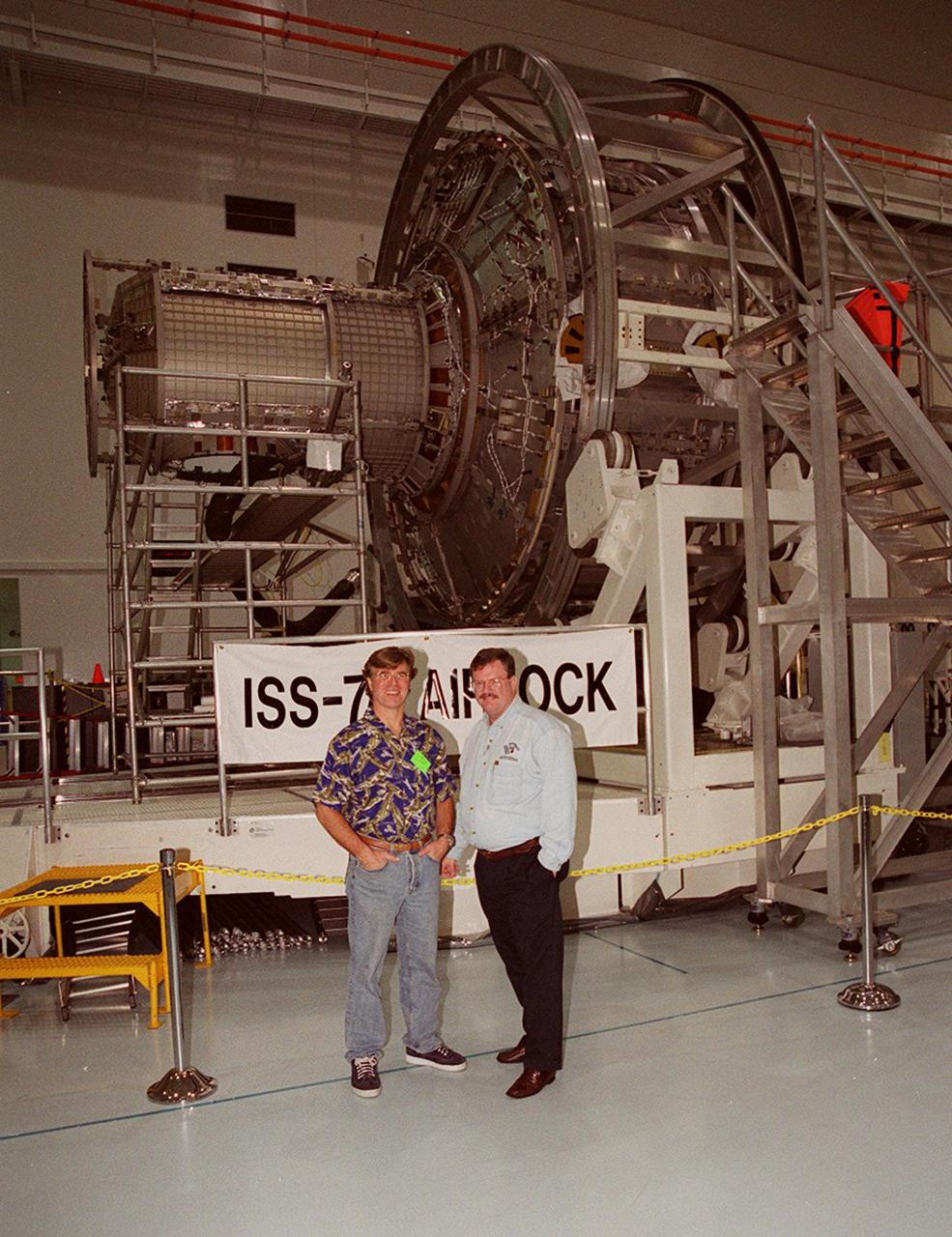
KENNEDY SPACE CENTER, FLA. -- In the Space Station Processing Facility, Steve Thomas (left), host of the television series "This Old House," poses in front of the Joint Airlock module. Thomas and Norm Abram, master carpenter with "This Old House," are at KSC to film an episode of the series
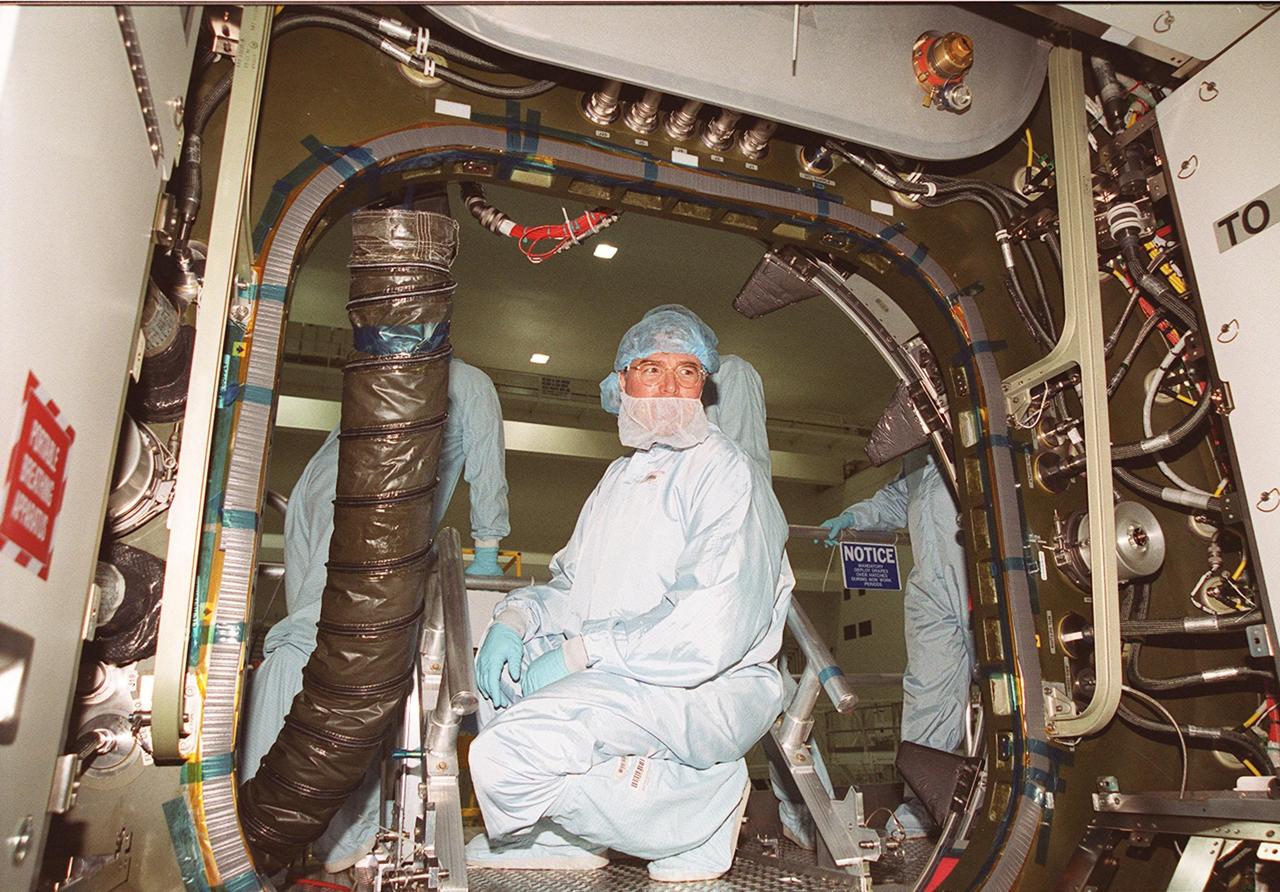
KENNEDY SPACE CENTER, FLA. -- Steve Thomas, host of the television series "This Old House," gets a look inside one of the Space Station modules in the Space Station Processing Facility. He and the show's master carpenter Norm Abram are at KSC to film an episode of the series
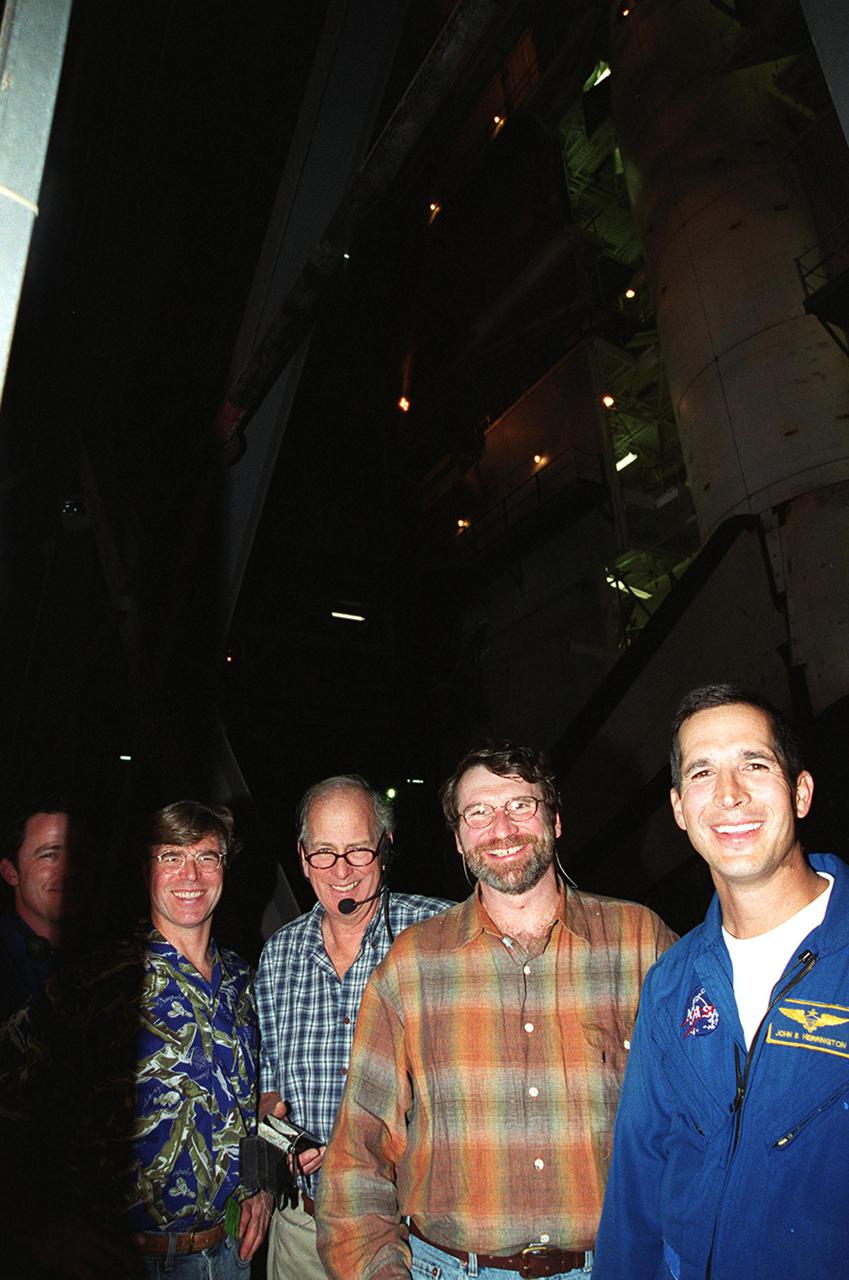
Members of the crew of the television series This Old House pause for a photo during a tour of KSC with astronaut John Herrington (far right). Second from left is Steve Thomas, host of the show. Second from right is Norm Abram, master carpenter on the series. The cast and crew of This Old House are filming at KSC for an episode of the show
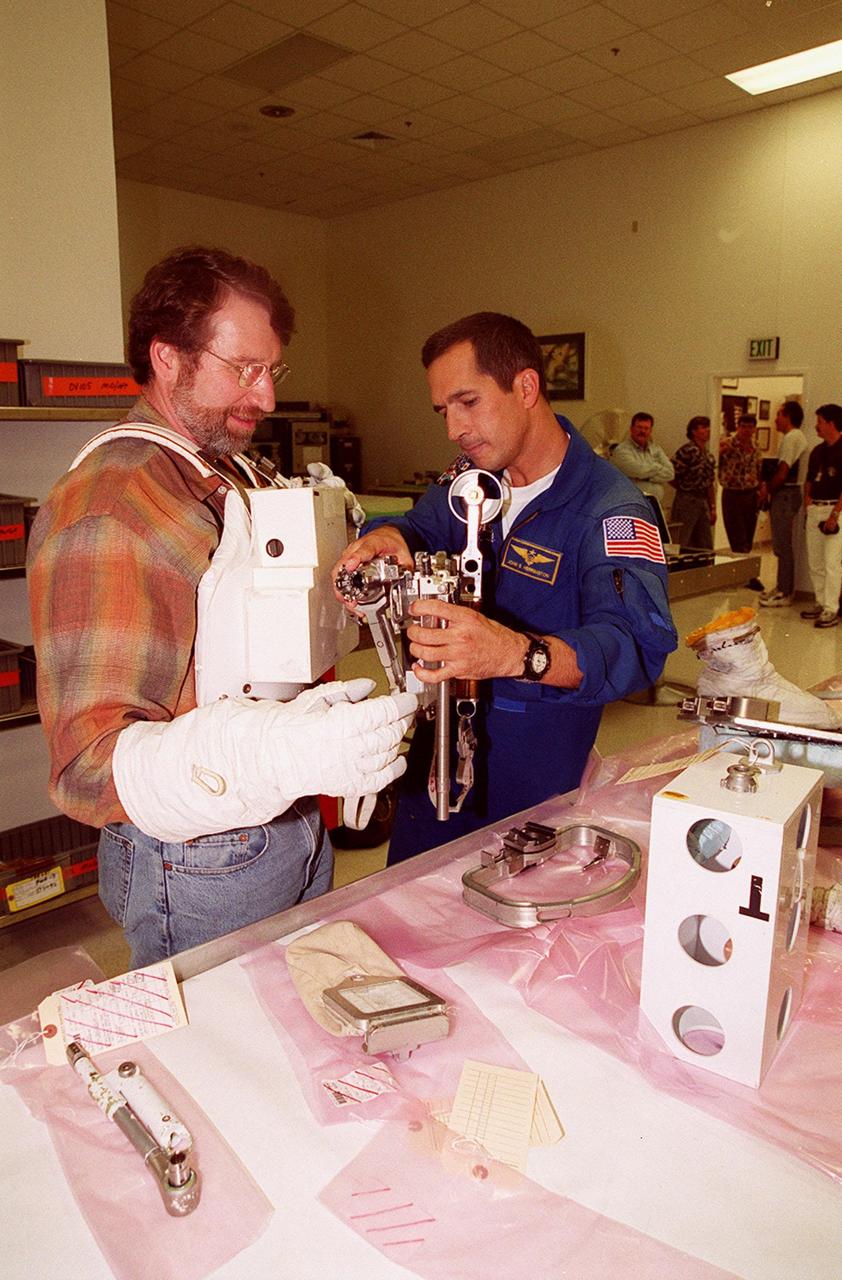
KENNEDY SPACE CENTER, FLA. -- Astronaut John Herrington (right) helps Norm Abram try on a tool carrier used in space. Abram is the master carpenter on television’s "This Old House." He is at KSC to film an episode of the series
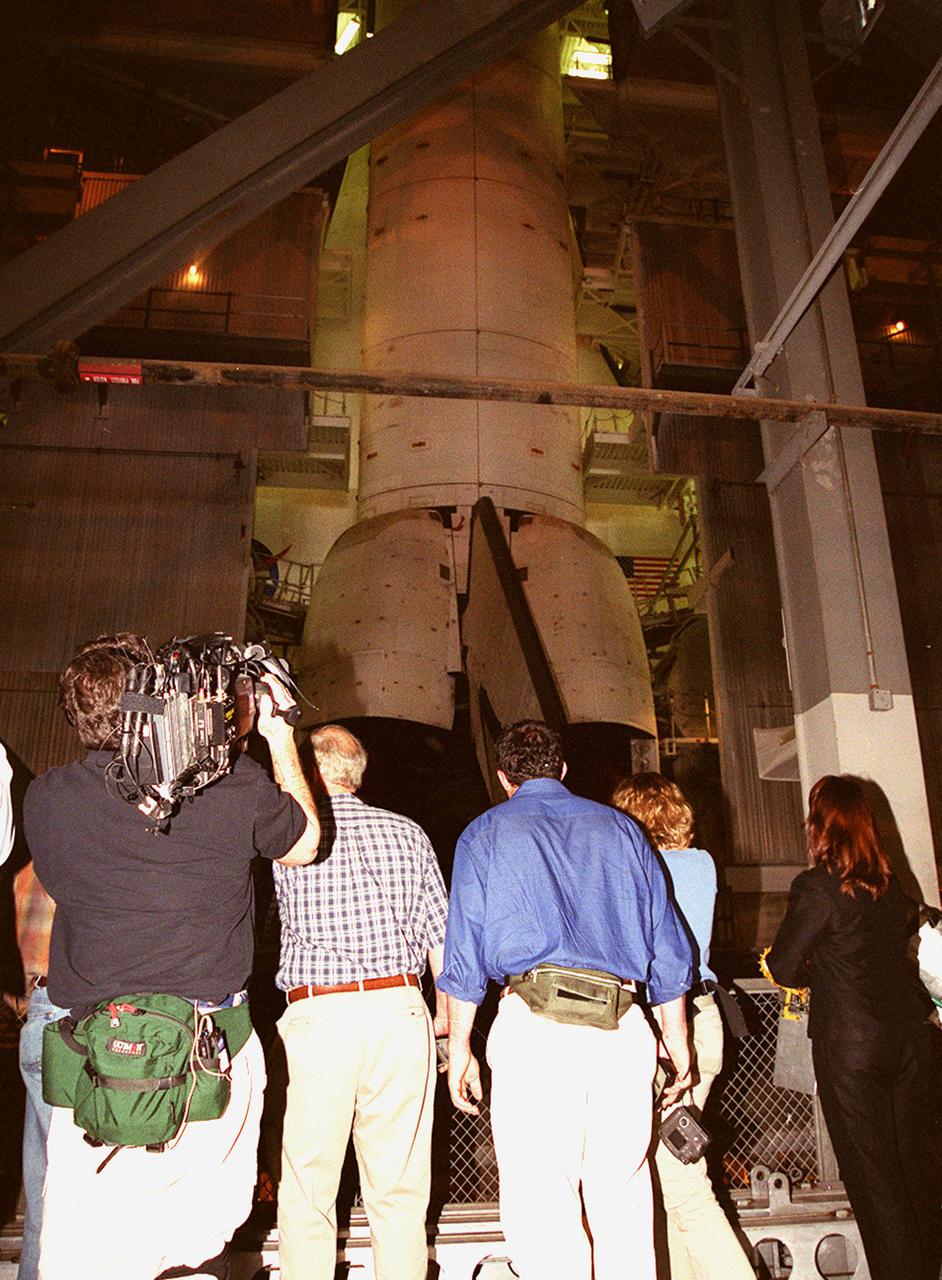
The crew of the television series This Old House film the Space Shuttle Atlantis in the Vehicle Assembly Building. The cast and crew of This Old House, including host Steve Thomas and master carpenter Norm Abram, are filming at KSC for an episode of the show
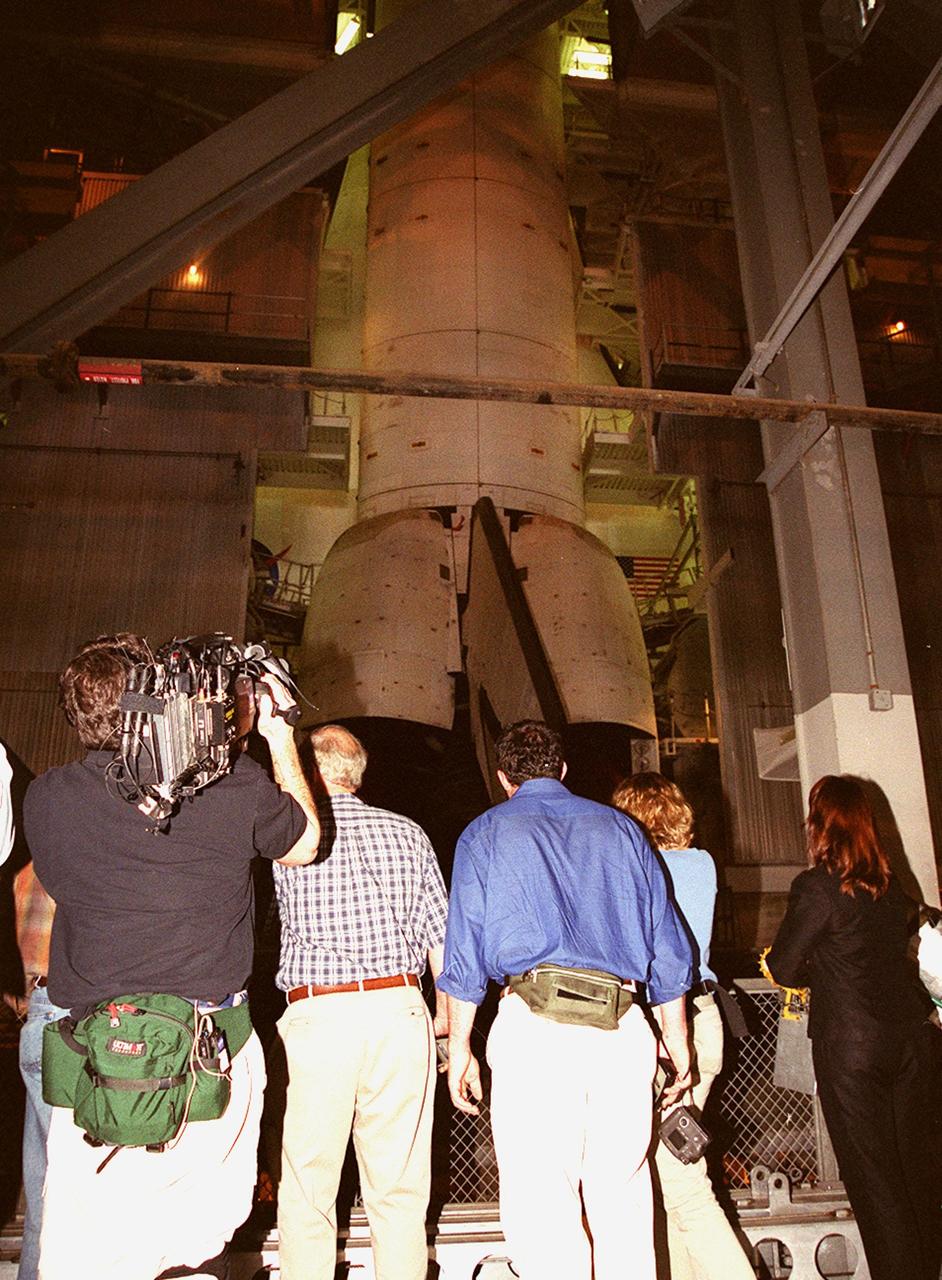
The crew of the television series This Old House film the Space Shuttle Atlantis in the Vehicle Assembly Building. The cast and crew of This Old House, including host Steve Thomas and master carpenter Norm Abram, are filming at KSC for an episode of the show
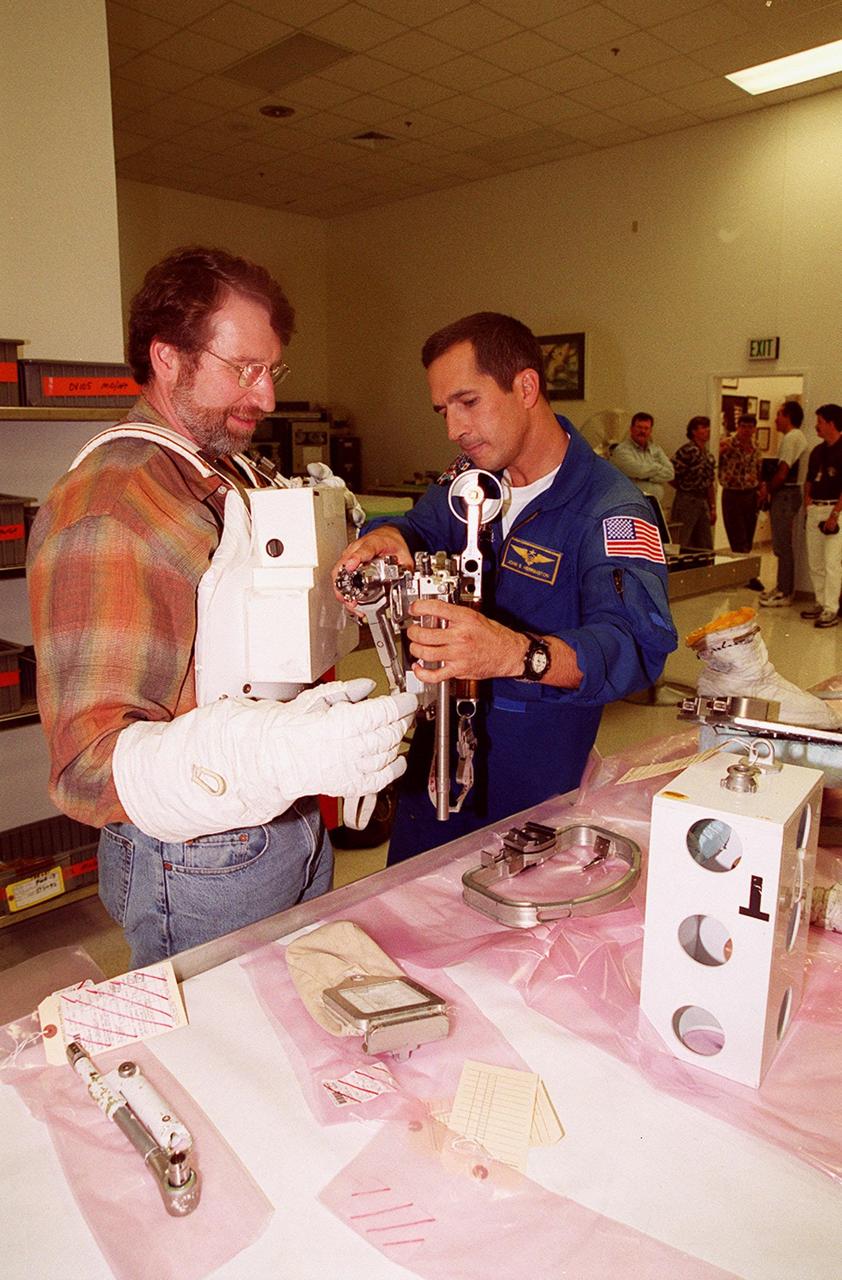
KENNEDY SPACE CENTER, FLA. -- Astronaut John Herrington (right) helps Norm Abram try on a tool carrier used in space. Abram is the master carpenter on television’s "This Old House." He is at KSC to film an episode of the series

Astronaut John Herrington (right) shares a humorous moment with Steve Thomas (left) and Norm Abram (second from left), who are seen in the television series " This Old House." In the background is Johnny Johnson, media escort. Abram is at KSC to film an episode of "This Old House.
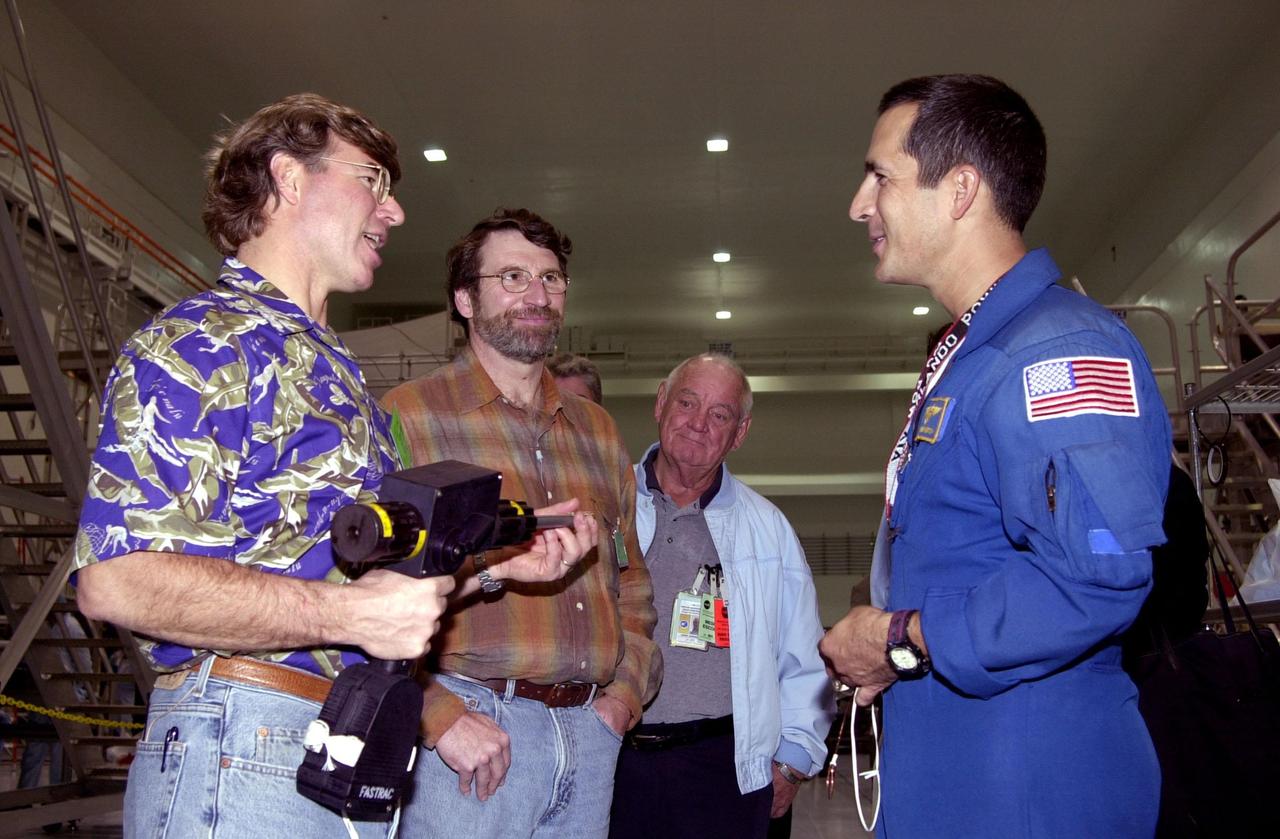
KENNEDY SPACE CENTER, FLA. -- Steve Thomas (left) and Norm Abram (second from left), who are seen in the television series "This Old House," talk with astronaut John Herrington (right). In the background is Johnny Johnson, media escort. Abram is at KSC to film an episode of "This Old House.

The Atlas-Agena B space Vehicle waits on the launch pad to launch the National Aeronautics and Space Administration’s Ranger V Spacecraft on a 66 – 62 hour journey to the moon. Ranger V is a 735-pound gold and chrome Plated payload designed to perform a series of complicated tasks, including taking television pictures of the lunar surface.
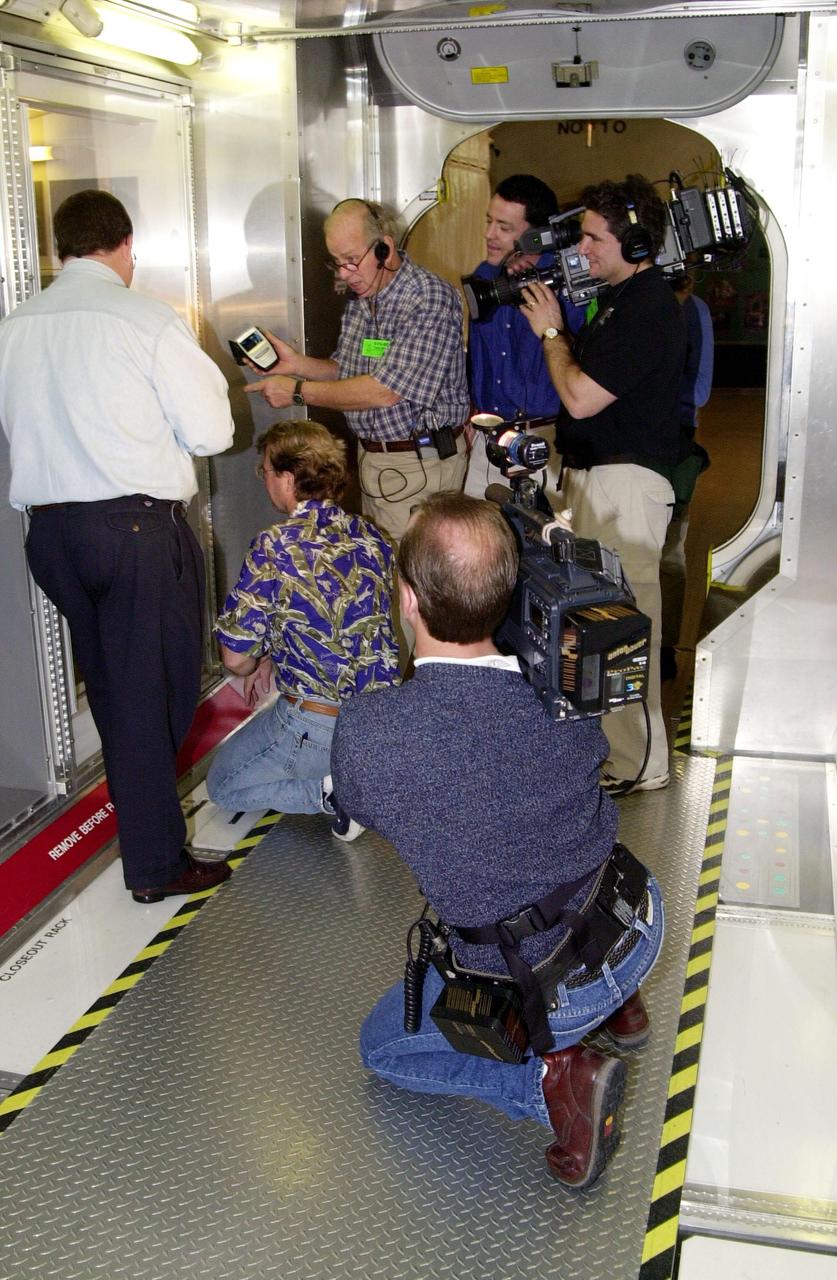
KENNEDY SPACE CENTER, FLA. -- A film crew gather around Steve Thomas (kneeling) as they shoot inside a mockup of the U.S. Lab, located in the International Space Station Center, a tour facility. Thomas and Norm Abram, host and master carpenter, respectively, of television’s "This Old House," are at KSC to film an episode of the series
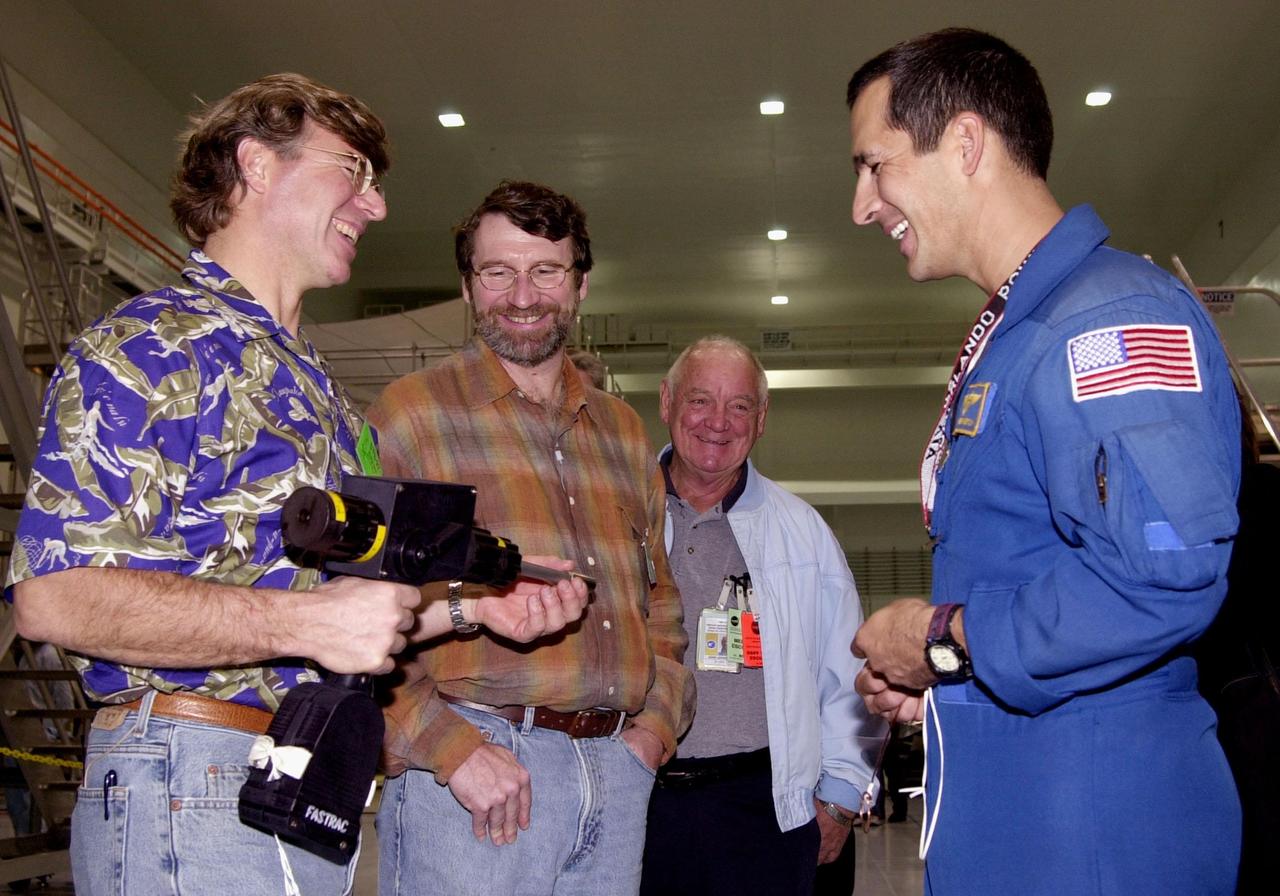
Astronaut John Herrington (right) shares a humorous moment with Steve Thomas (left) and Norm Abram (second from left), who are seen in the television series " This Old House." In the background is Johnny Johnson, media escort. Abram is at KSC to film an episode of "This Old House.

KENNEDY SPACE CENTER, FLA. -- At an STS-109 post-landing conference, NASA Administrator Sean O'Keefe talks to the media gathered in the KSC television studio. STS-109 rejuvenated the Hubble Space Telescope in a series of five spacewalks, installing new and improved equipment
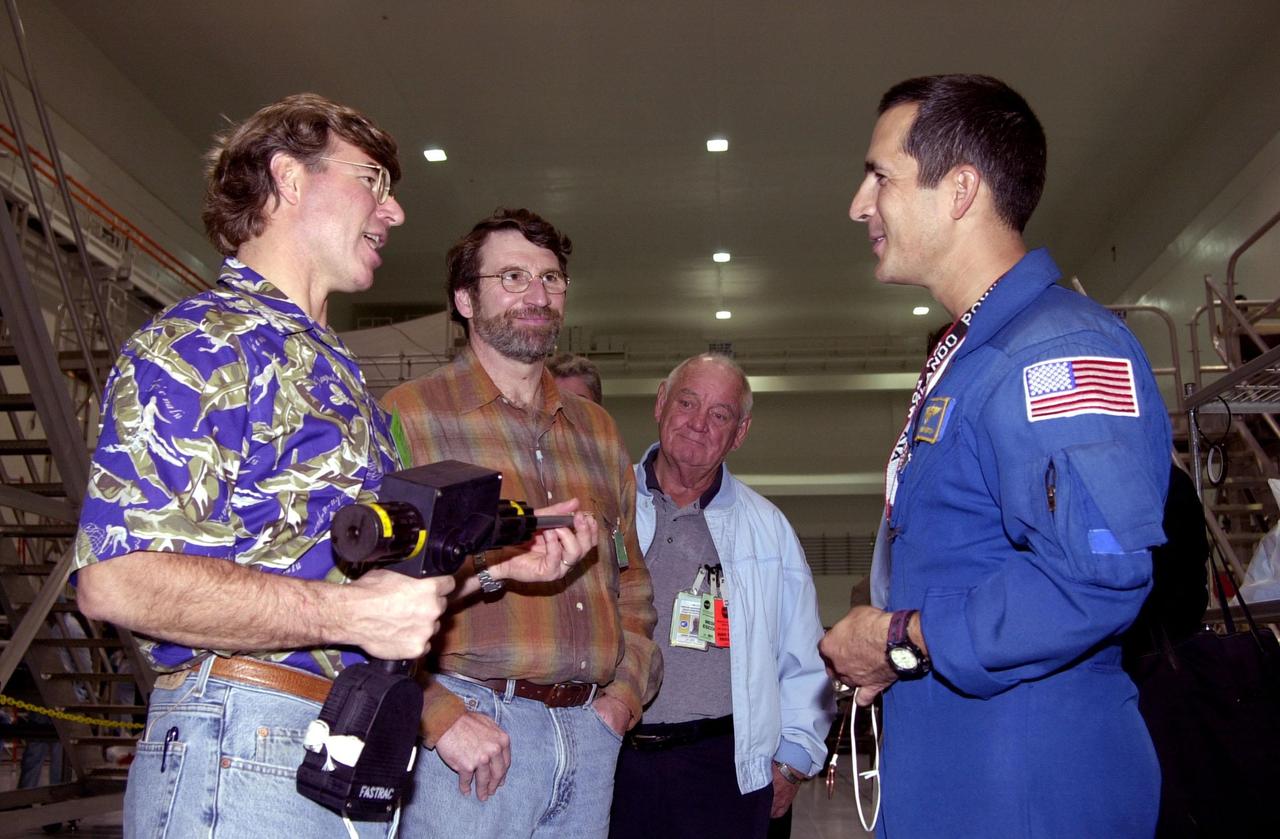
KENNEDY SPACE CENTER, FLA. -- Steve Thomas (left) and Norm Abram (second from left), who are seen in the television series "This Old House," talk with astronaut John Herrington (right). In the background is Johnny Johnson, media escort. Abram is at KSC to film an episode of "This Old House.
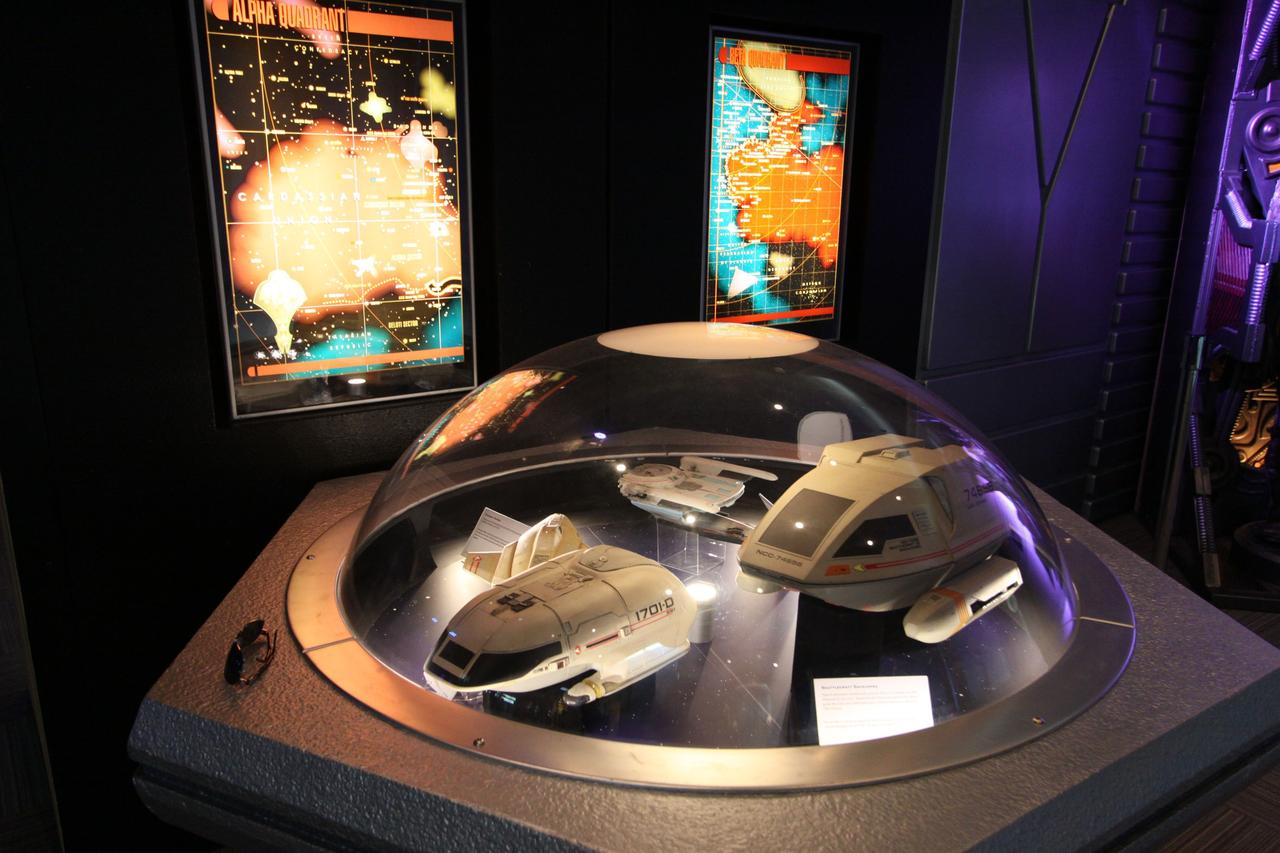
CAPE CANAVERAL, Fla. -- At NASA Kennedy Space Center's Visitor Complex, Star Trek memorabilia is being displayed this summer through Sept. 5. Appearing for the first time in the southeast, "Star Trek: The Exhibition" is an interactive exhibit of authentic Star Trek artifacts from the past 40 years, featuring one-of-a-kind costumes, props and filming models from every Star Trek television series and feature film, including a recreation of the U.S.S. Enterprise Bridge from the original series. Photo credit: NASA/Jack Pfaller
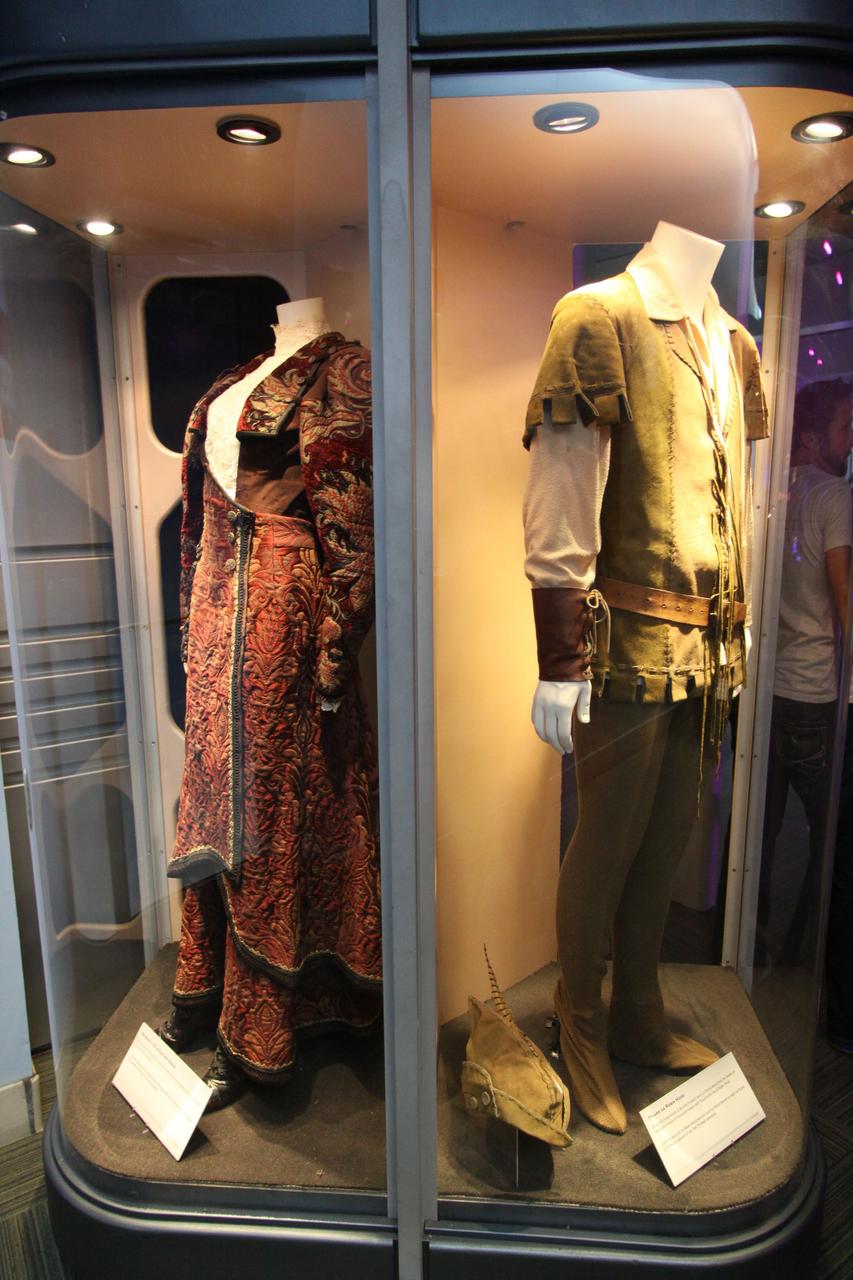
CAPE CANAVERAL, Fla. -- At NASA Kennedy Space Center's Visitor Complex, Star Trek memorabilia is being displayed this summer through Sept. 5. Appearing for the first time in the southeast, "Star Trek: The Exhibition" is an interactive exhibit of authentic Star Trek artifacts from the past 40 years, featuring one-of-a-kind costumes, props and filming models from every Star Trek television series and feature film, including a recreation of the U.S.S. Enterprise Bridge from the original series. Photo credit: NASA/Jack Pfaller

Members of the crew of the television series This Old House get a close look at one of the main engines on Space Shuttle Atlantis in the Vehicle Assembly Building. At left is Norm Abram, master carpenter on the series. Next to him is Steve Thomas, host of the show. At the far right is astronaut John Herrington, who is accompanying the film crew on their tour of KSC. The cast and crew of This Old House are filming at KSC for an episode of the show

KENNEDY SPACE CENTER, FLA. -- Master Carpenter Norm Abram and crew of the television series "This Old House" stop in the Space Station Processing Facility on their tour of KSC. Abram is at left center. Escorting them is Bill Johnson (center, in the aisle), NASA TV manager; accompanying them is astronaut John Herrington (behind Johnson). Abram is at KSC to film an episode of the series
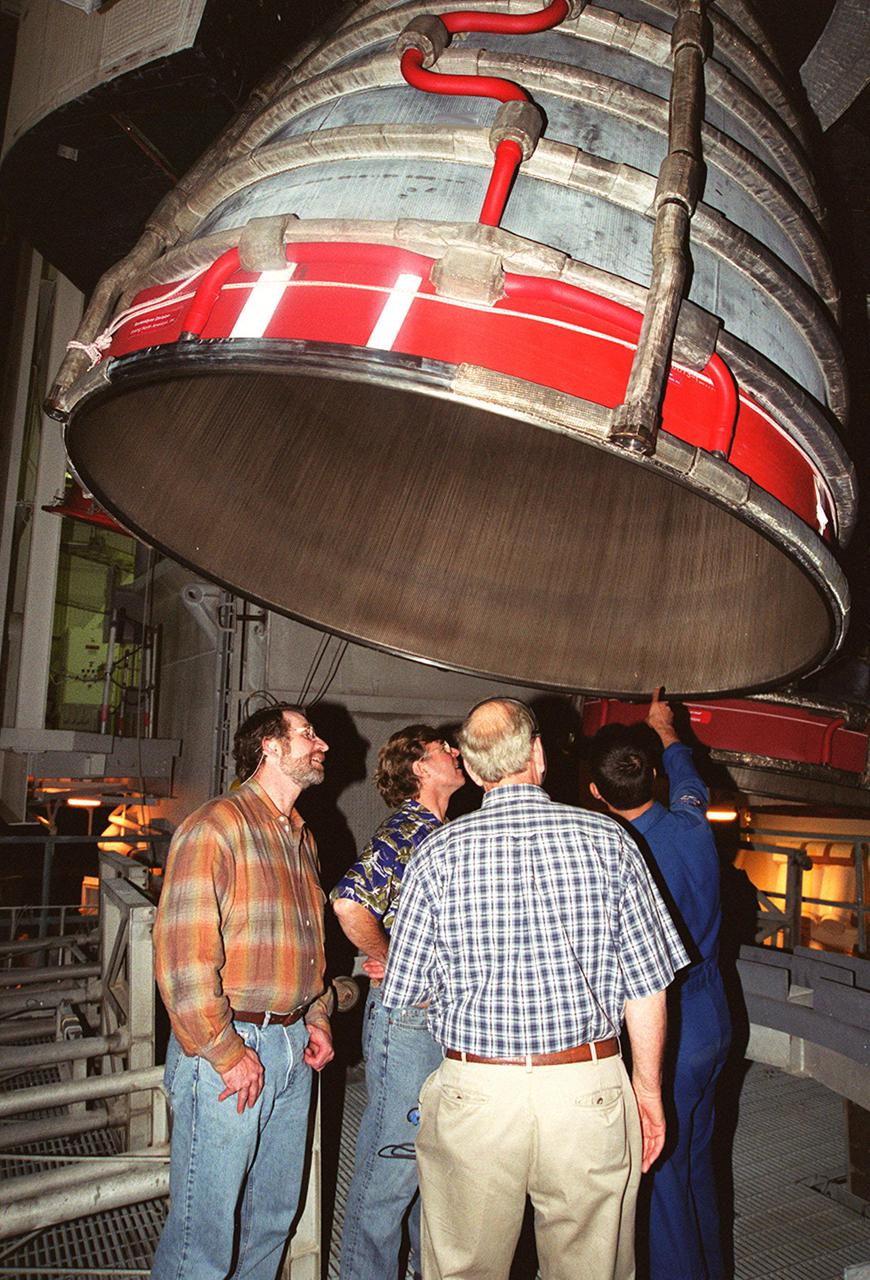
Members of the crew of the television series This Old House get a close look at one of the main engines on Space Shuttle Atlantis in the Vehicle Assembly Building. At left is Norm Abram, master carpenter on the series. Next to him is Steve Thomas, host of the show. At the far right is astronaut John Herrington, who is accompanying the film crew on their tour of KSC. The cast and crew of This Old House are filming at KSC for an episode of the show
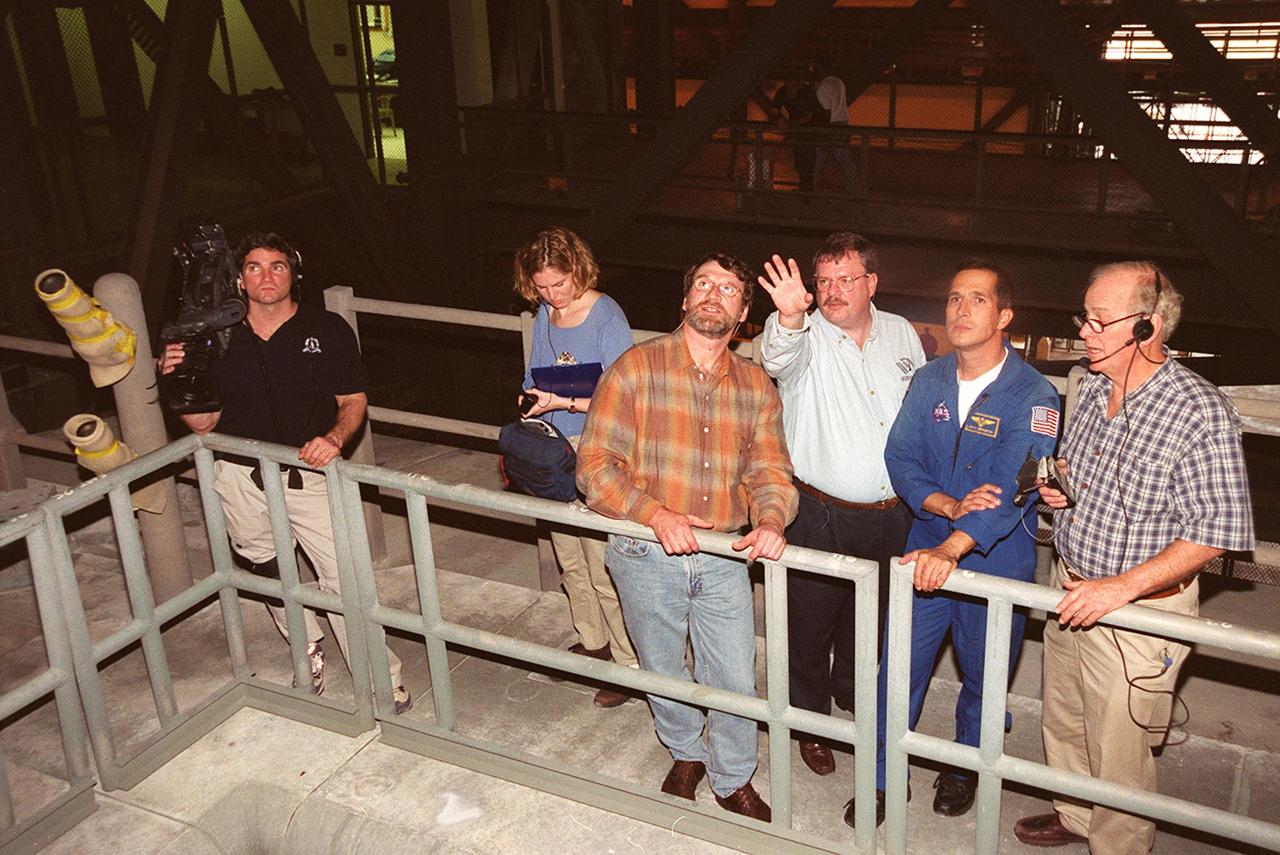
Members of the crew of the television series This Old House get a close look at Space Shuttle Atlantis in the Vehicle Assembly Building. In the center is Norm Abram, master carpenter on the series. Second from the right is astronaut John Herrington, who is accompanying the film crew on their tour of KSC. The cast and crew of This Old House are filming at KSC for an episode of the show
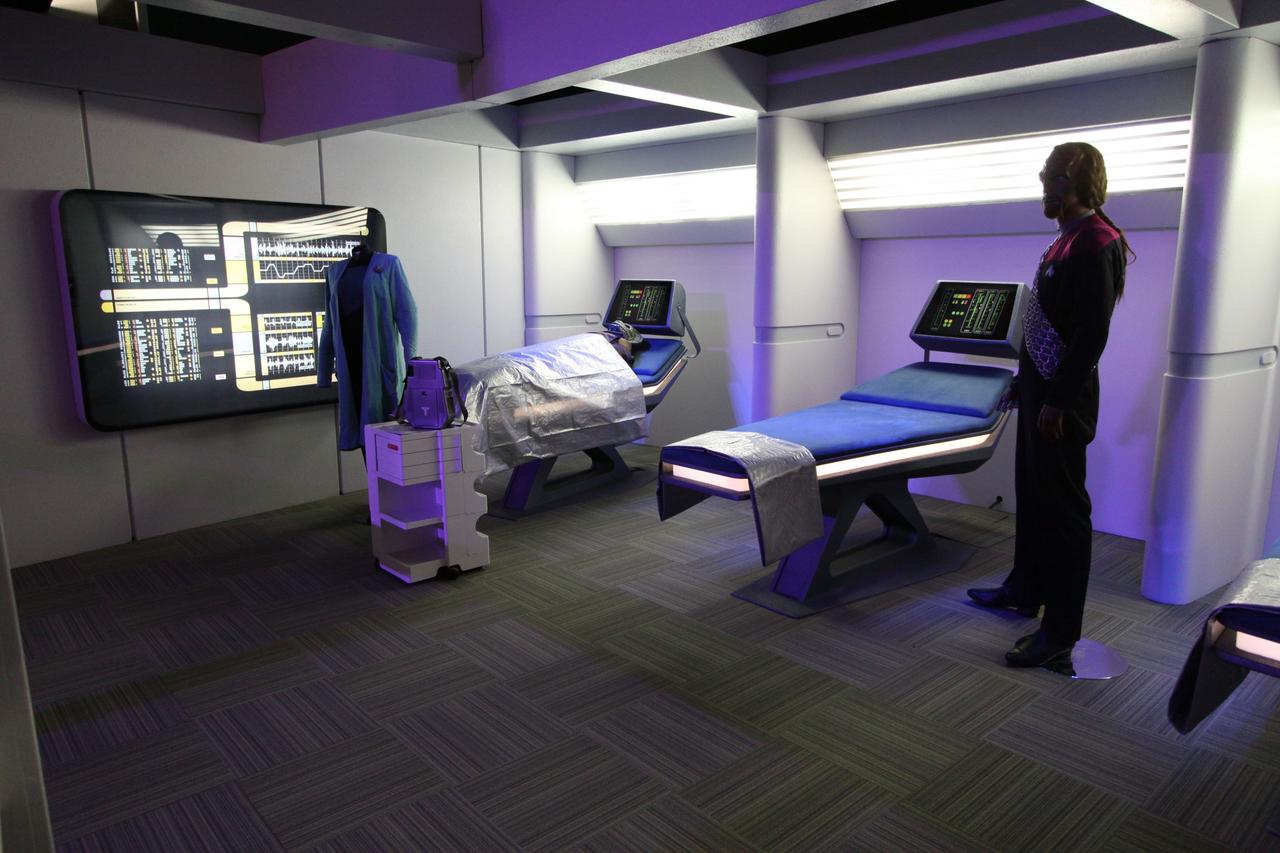
CAPE CANAVERAL, Fla. -- At NASA Kennedy Space Center's Visitor Complex, Star Trek memorabilia is being displayed this summer through Sept. 5. Appearing for the first time in the southeast, "Star Trek: The Exhibition" is an interactive exhibit of authentic Star Trek artifacts from the past 40 years, featuring one-of-a-kind costumes, props and filming models from every Star Trek television series and feature film, including a recreation of the U.S.S. Enterprise Bridge from the original series. Photo credit: NASA/Jack Pfaller
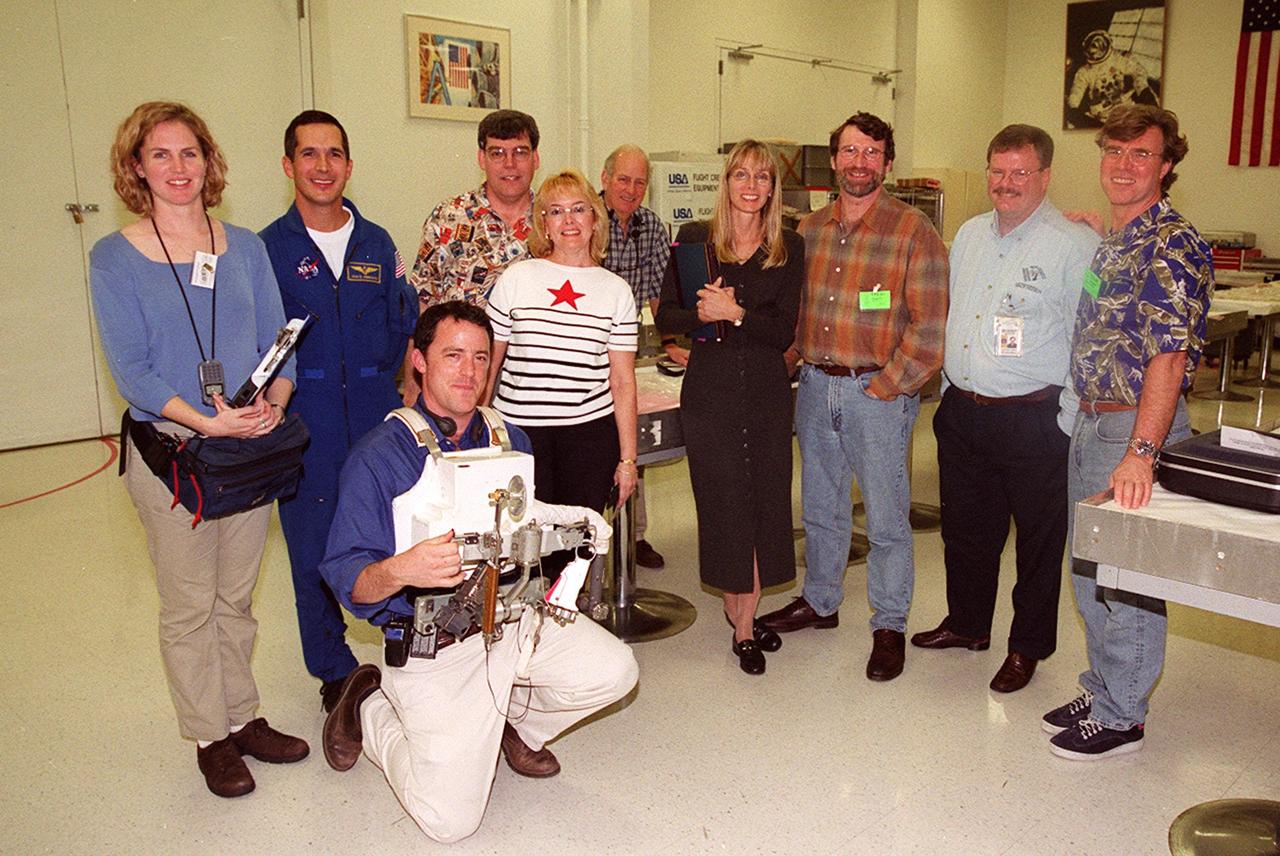
The crew of the television series This Old House pauses for a photo during a tour of KSC. At the far right is Steve Thomas, host of the series. Second from the right is Norm Abram, master carpenter on the show. Accompanying the film crew is astronaut John Herrington (second from left). The cast and crew of This Old House are filming at KSC for an episode of the show
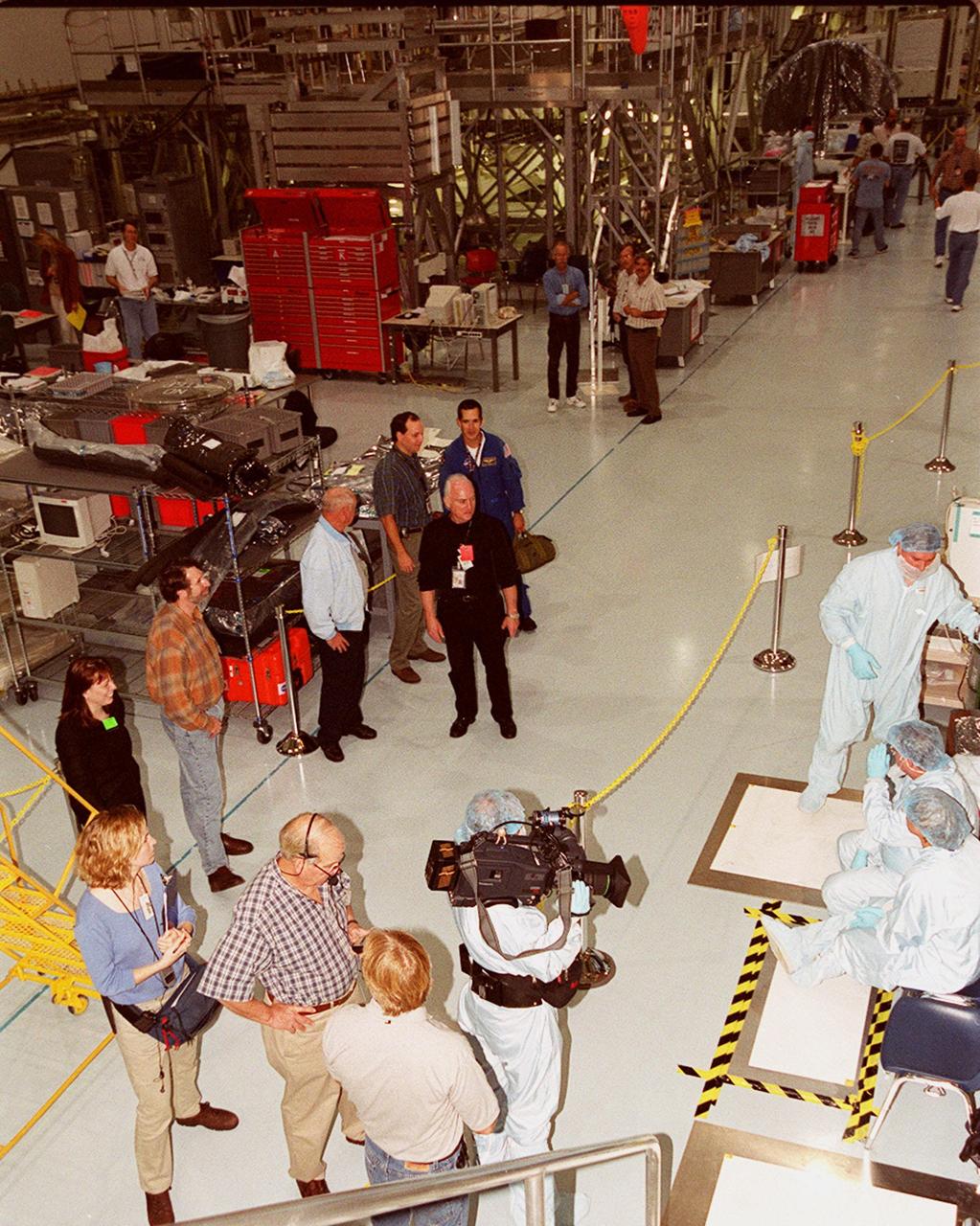
KENNEDY SPACE CENTER, FLA. -- Master Carpenter Norm Abram and crew of the television series "This Old House" stop in the Space Station Processing Facility on their tour of KSC. Abram is at left center. Escorting them is Bill Johnson (center, in the aisle), NASA TV manager; accompanying them is astronaut John Herrington (behind Johnson). Abram is at KSC to film an episode of the series
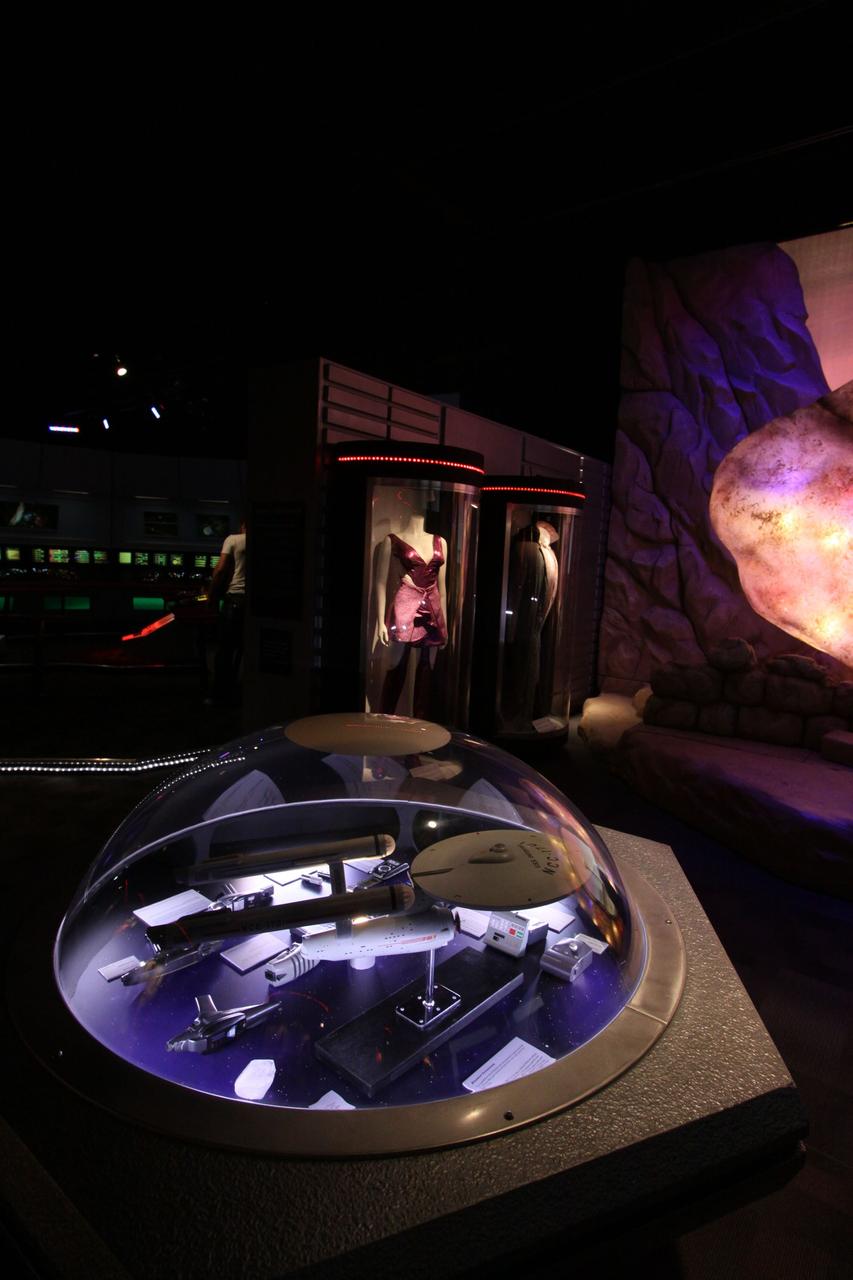
CAPE CANAVERAL, Fla. -- At NASA Kennedy Space Center's Visitor Complex, Star Trek memorabilia is being displayed this summer through Sept. 5. Appearing for the first time in the southeast, "Star Trek: The Exhibition" is an interactive exhibit of authentic Star Trek artifacts from the past 40 years, featuring one-of-a-kind costumes, props and filming models from every Star Trek television series and feature film, including a recreation of the U.S.S. Enterprise Bridge from the original series. Photo credit: NASA/Jack Pfaller
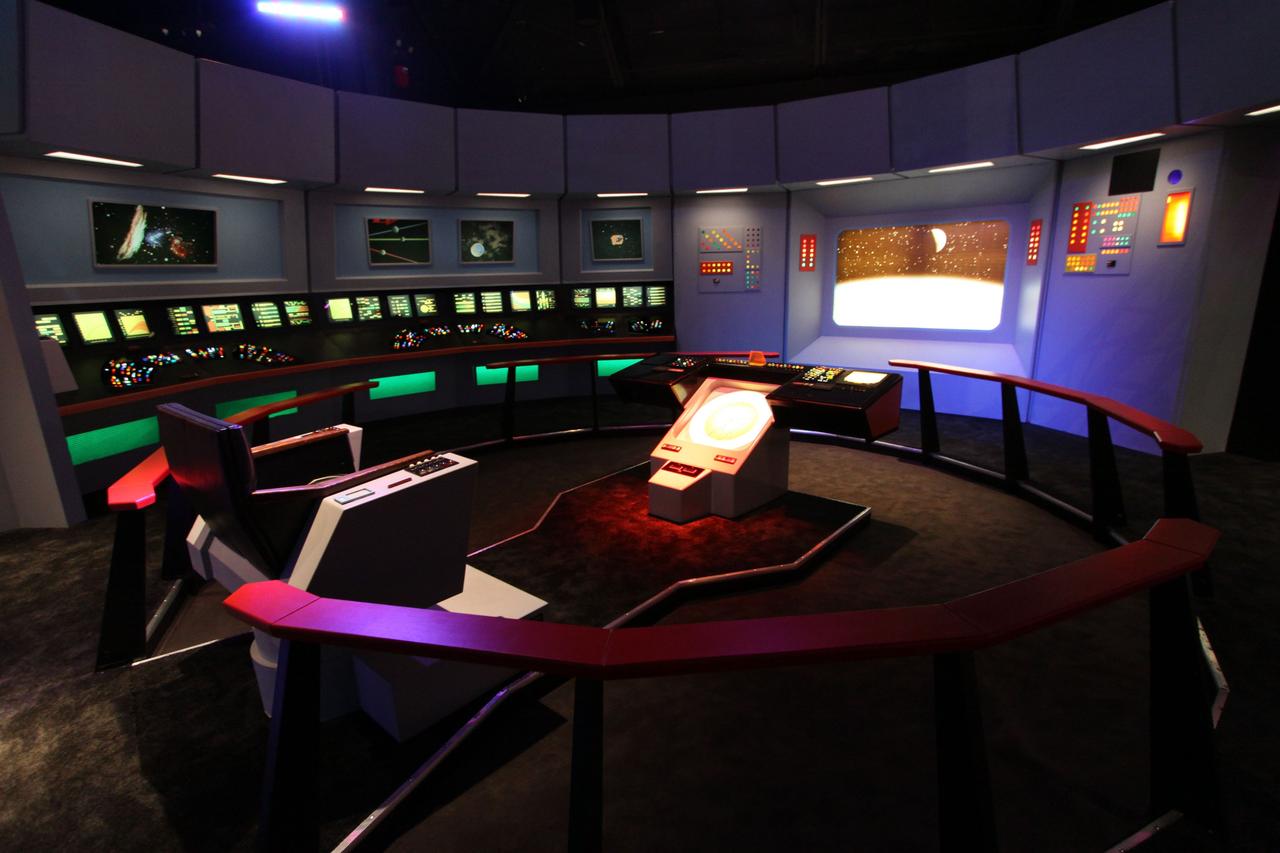
CAPE CANAVERAL, Fla. -- At NASA Kennedy Space Center's Visitor Complex, Star Trek memorabilia is being displayed this summer through Sept. 5. Appearing for the first time in the southeast, "Star Trek: The Exhibition" is an interactive exhibit of authentic Star Trek artifacts from the past 40 years, featuring one-of-a-kind costumes, props and filming models from every Star Trek television series and feature film, including a recreation of the U.S.S. Enterprise Bridge from the original series. Photo credit: NASA/Jack Pfaller
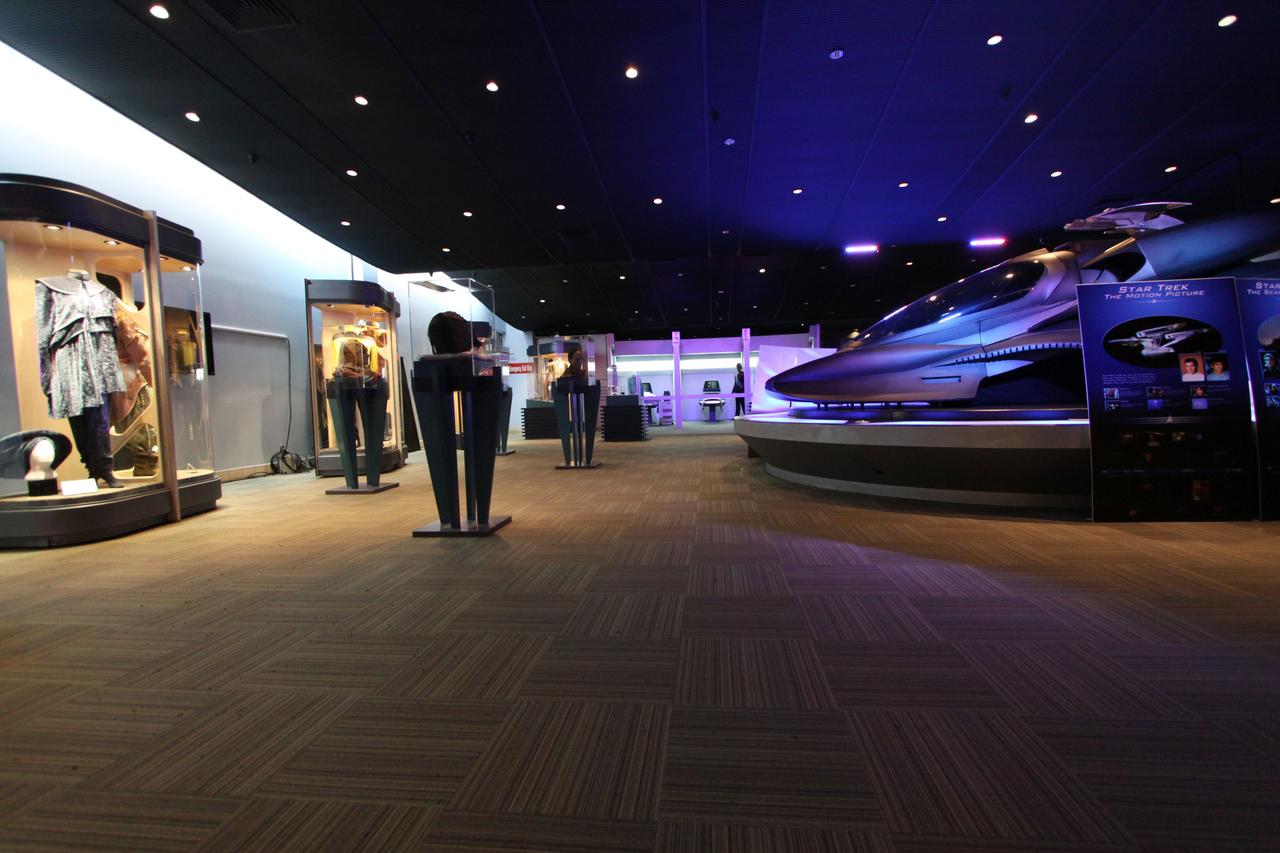
CAPE CANAVERAL, Fla. -- At NASA Kennedy Space Center's Visitor Complex, Star Trek memorabilia is being displayed this summer through Sept. 5. Appearing for the first time in the southeast, "Star Trek: The Exhibition" is an interactive exhibit of authentic Star Trek artifacts from the past 40 years, featuring one-of-a-kind costumes, props and filming models from every Star Trek television series and feature film, including a recreation of the U.S.S. Enterprise Bridge from the original series. Photo credit: NASA/Jack Pfaller
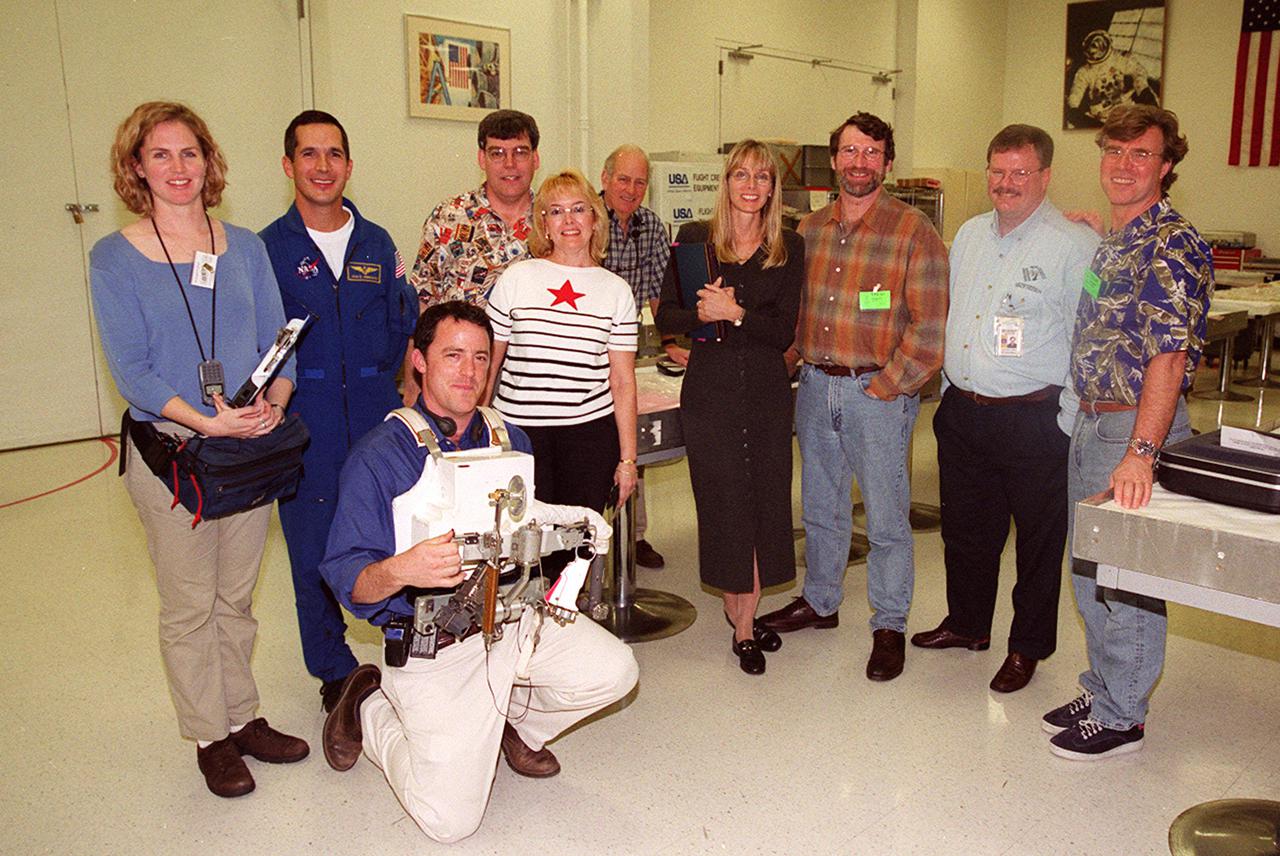
The crew of the television series This Old House pauses for a photo during a tour of KSC. At the far right is Steve Thomas, host of the series. Second from the right is Norm Abram, master carpenter on the show. Accompanying the film crew is astronaut John Herrington (second from left). The cast and crew of This Old House are filming at KSC for an episode of the show
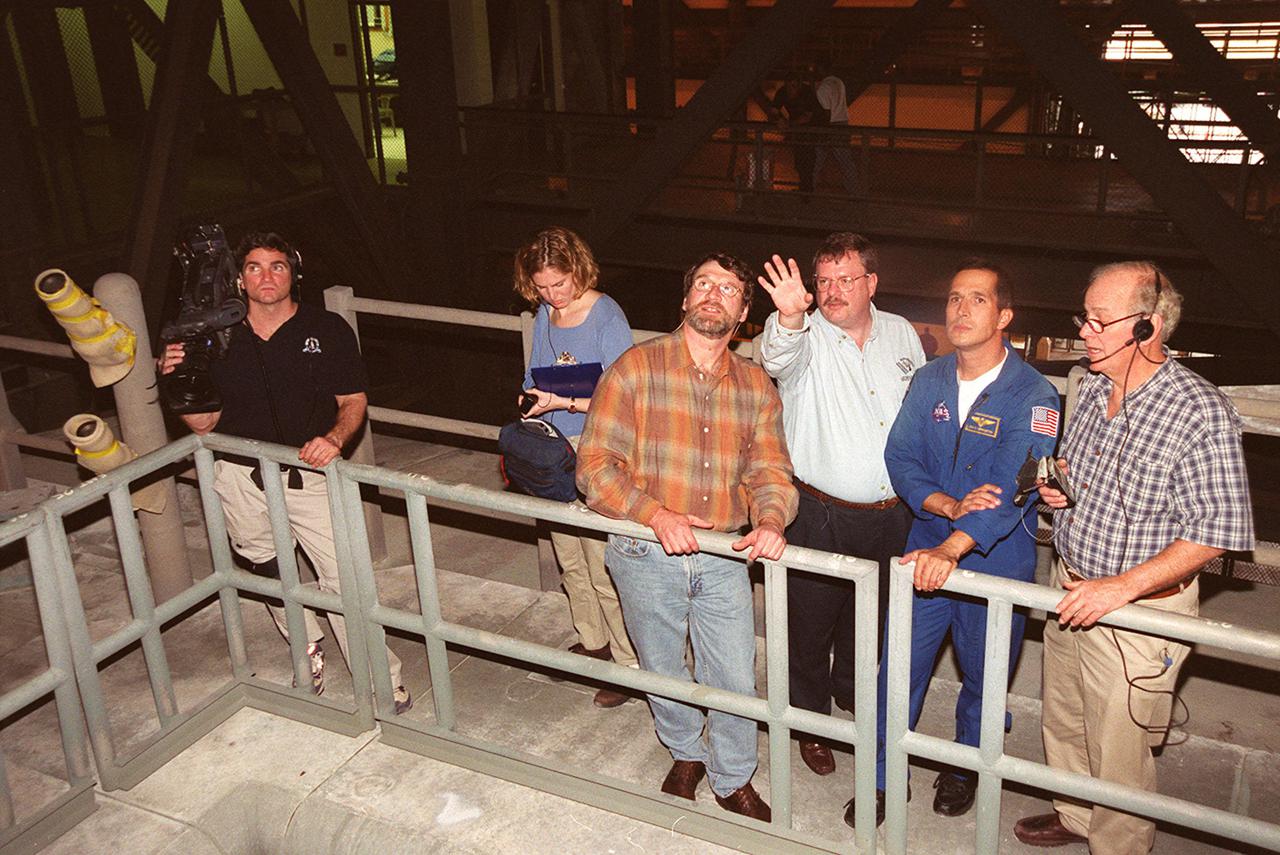
Members of the crew of the television series This Old House get a close look at Space Shuttle Atlantis in the Vehicle Assembly Building. In the center is Norm Abram, master carpenter on the series. Second from the right is astronaut John Herrington, who is accompanying the film crew on their tour of KSC. The cast and crew of This Old House are filming at KSC for an episode of the show
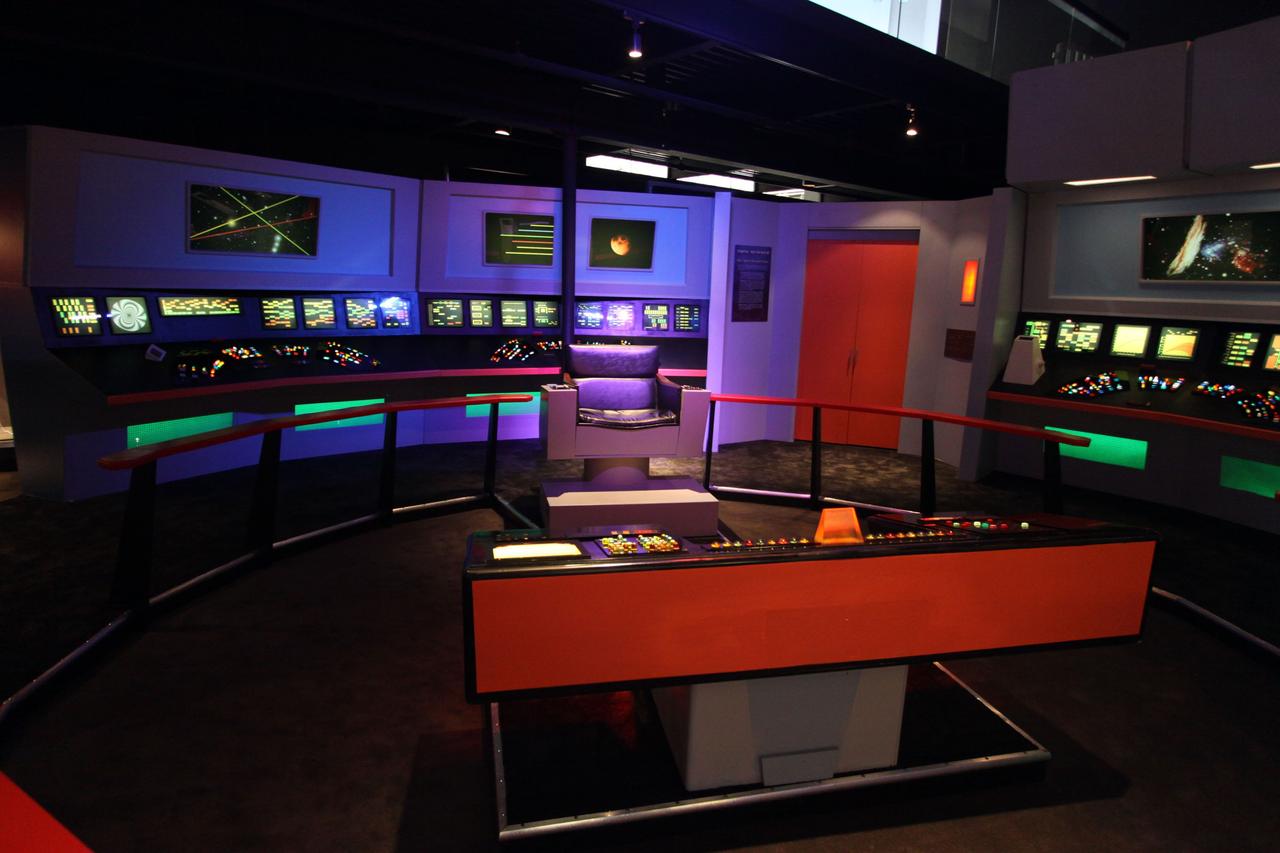
CAPE CANAVERAL, Fla. -- At NASA Kennedy Space Center's Visitor Complex, Star Trek memorabilia is being displayed this summer through Sept. 5. Appearing for the first time in the southeast, "Star Trek: The Exhibition" is an interactive exhibit of authentic Star Trek artifacts from the past 40 years, featuring one-of-a-kind costumes, props and filming models from every Star Trek television series and feature film, including a recreation of the U.S.S. Enterprise Bridge from the original series. Photo credit: NASA/Jack Pfaller
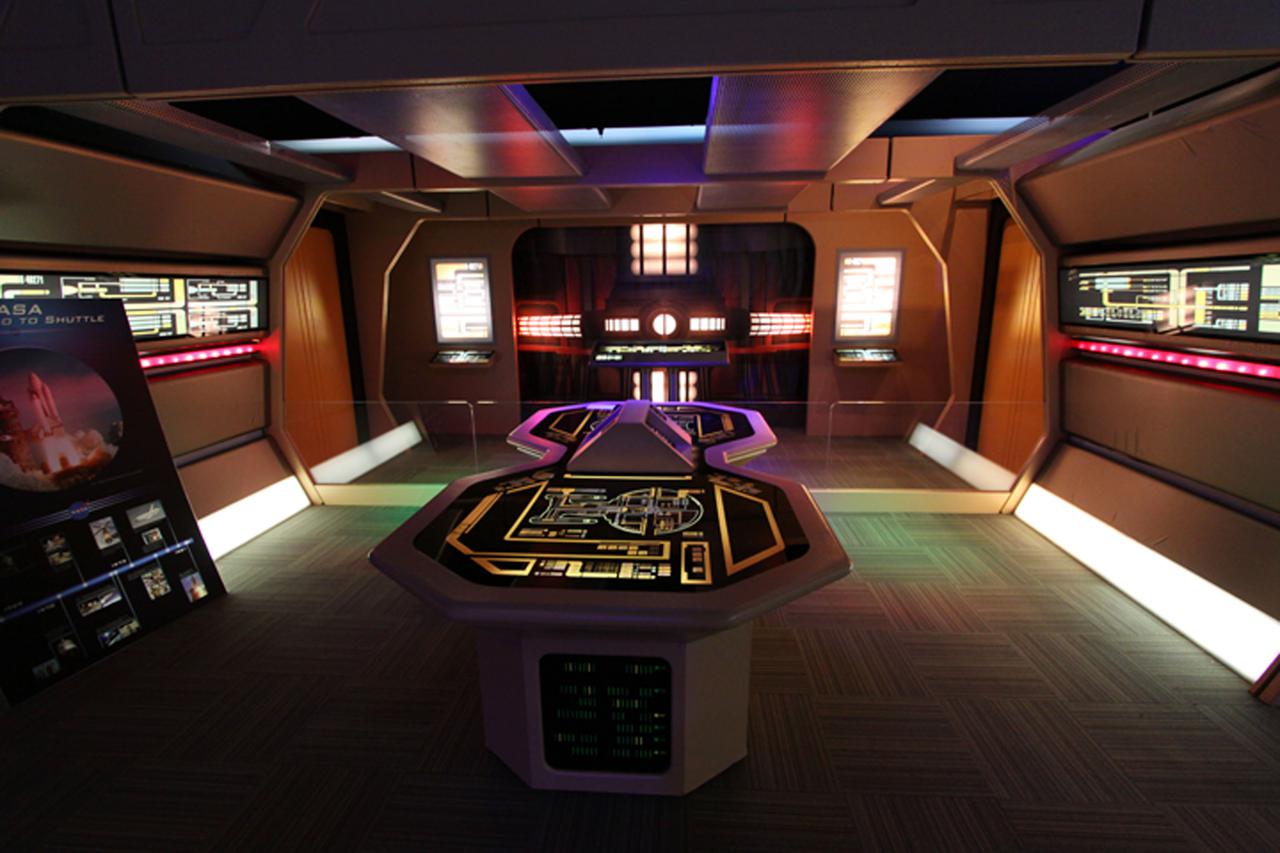
CAPE CANAVERAL, Fla. -- At NASA Kennedy Space Center's Visitor Complex, Star Trek memorabilia is being displayed this summer through Sept. 5. Appearing for the first time in the southeast, 'Star Trek: The Exhibition' is an interactive exhibit of authentic Star Trek artifacts from the past 40 years, featuring one-of-a-kind costumes, props and filming models from every Star Trek television series and feature film, including a recreation of the U.S.S. Enterprise Bridge from the original series. Photo credit: NASA_Jack Pfaller
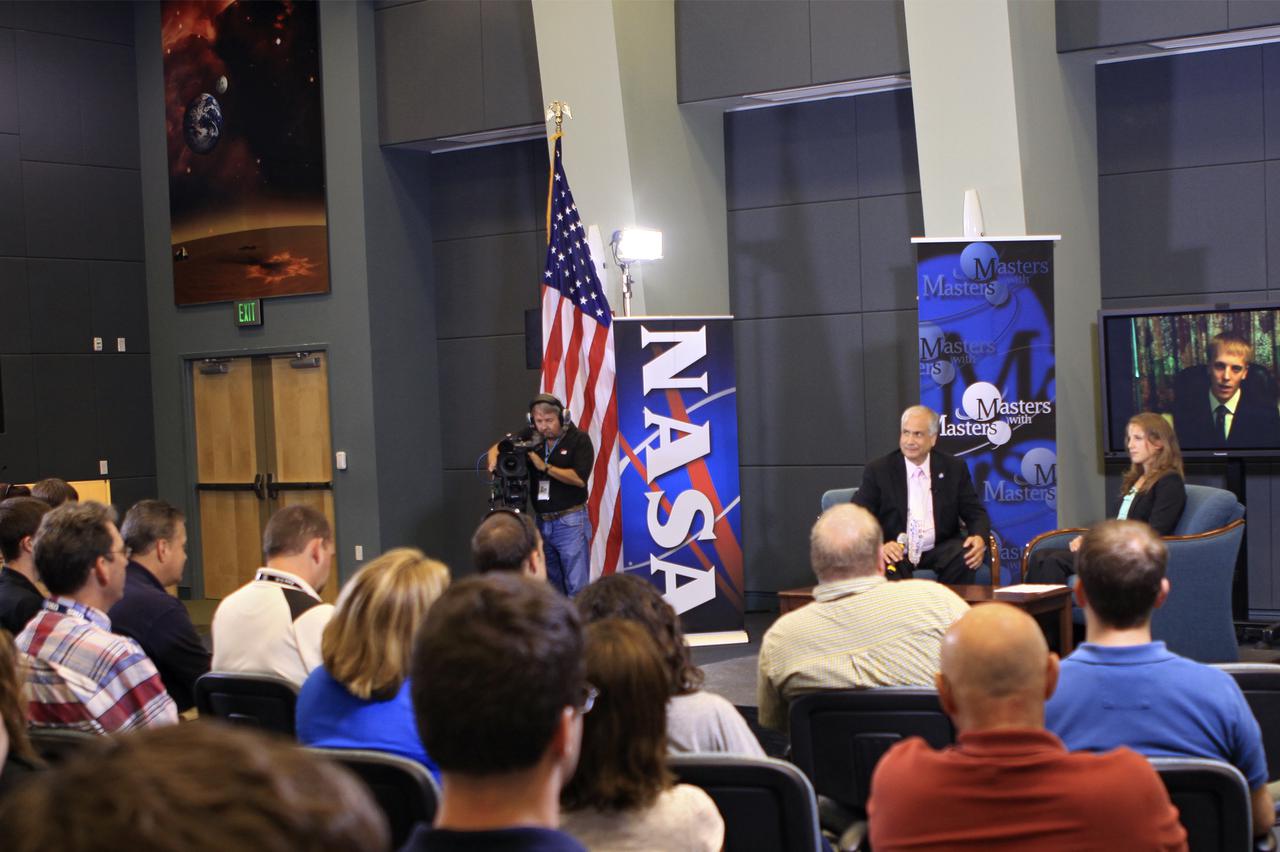
CAPE CANAVERAL, Fla. – At NASA's Kennedy Space Center in Florida, Ed Hoffman and Annie Caraccio discuss the 'Young Professional's Perspective at NASA' during the final day of a weeklong series called 'Masters with Masters.' Hoffman, NASA's chief Knowledge officer, and Caraccio, a chemical engineer in the Engineering and Technology Directorate at Kennedy, were joined by Philip Harris, an International Operations engineer from the Johnson Space Center via a television link with NASA's office in Moscow. Photo credit: NASA_Jim Grossmann
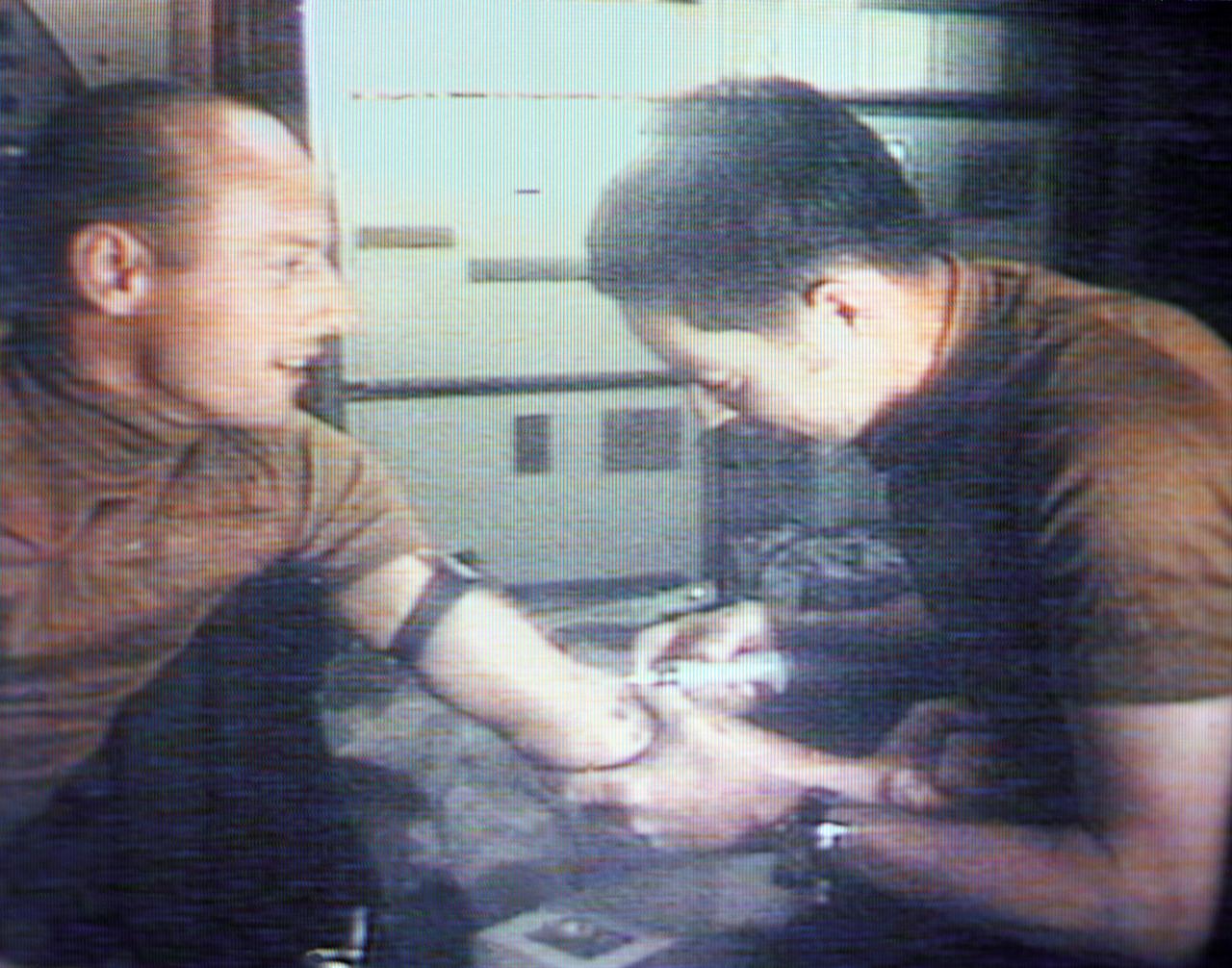
S73-27509 (6 June 1973) --- Scientist-astronaut Joseph P. Kerwin (right), Skylab 2 science pilot and a doctor of medicine, takes a blood sample from astronaut Charles Conrad Jr., Skylab 2 commander, as seen in this reproduction taken from a color television transmission made by a TV camera aboard the Skylab 1 and 2 space station cluster in Earth orbit. The blood sampling was part of the Skylab Hematology and Immunology Experiment M110 series. Photo credit: NASA
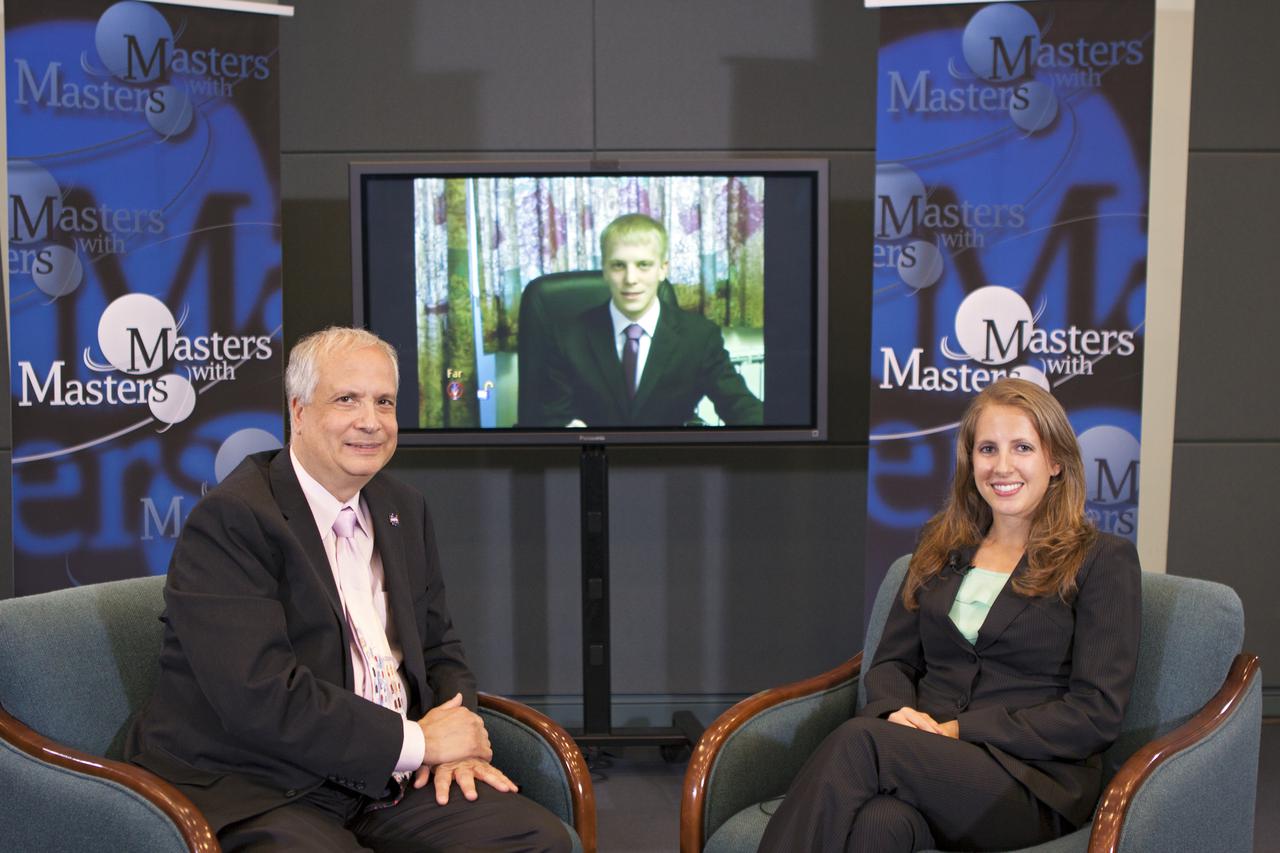
CAPE CANAVERAL, Fla. – At NASA's Kennedy Space Center in Florida, Ed Hoffman and Annie Caraccio discuss the 'Young Professional's Perspective at NASA' during the final day of a weeklong series called 'Masters with Masters.' Hoffman, NASA's chief Knowledge officer, and Caraccio, a chemical engineer in the Engineering and Technology Directorate at Kennedy, were joined by Philip Harris, an International Operations engineer from the Johnson Space Center via a television link with NASA's office in Moscow. Photo credit: NASA_Jim Grossmann
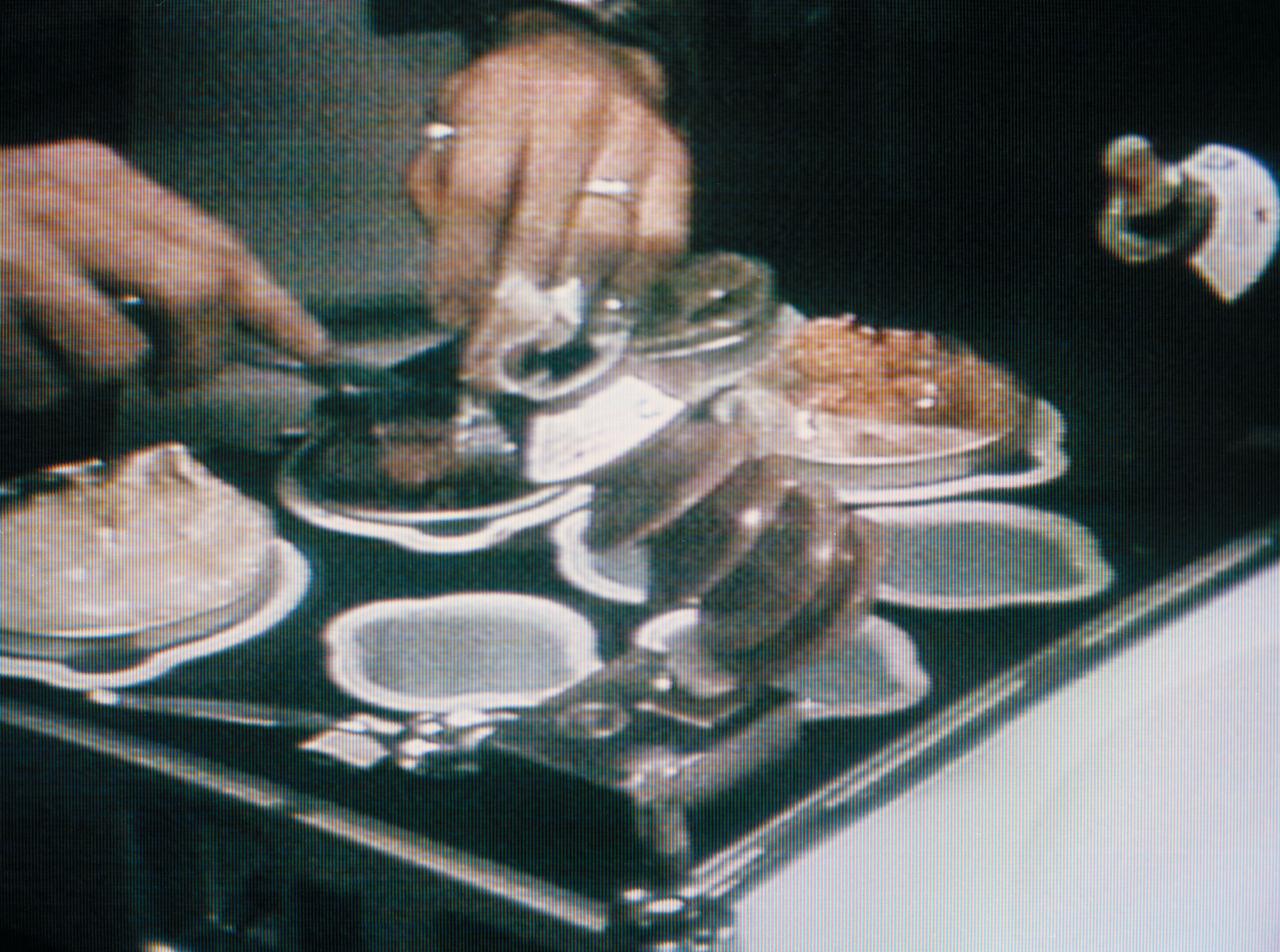
S73-34198 (1 Aug. 1973) --- A close-up view of the hands of astronaut Jack R. Lousma, Skylab 3 pilot, using a silverware utensil to gather food at the food station, in this photographic reproduction taken from a television transmission made by a color TV camera aboard the Skylab space station in Earth orbit. Astronaut Alan L. Bean, commander, had just zoomed the TV camera in for this close-up of the food tray following a series of wide shots of Lousma at the food station. Photo credit: NASA
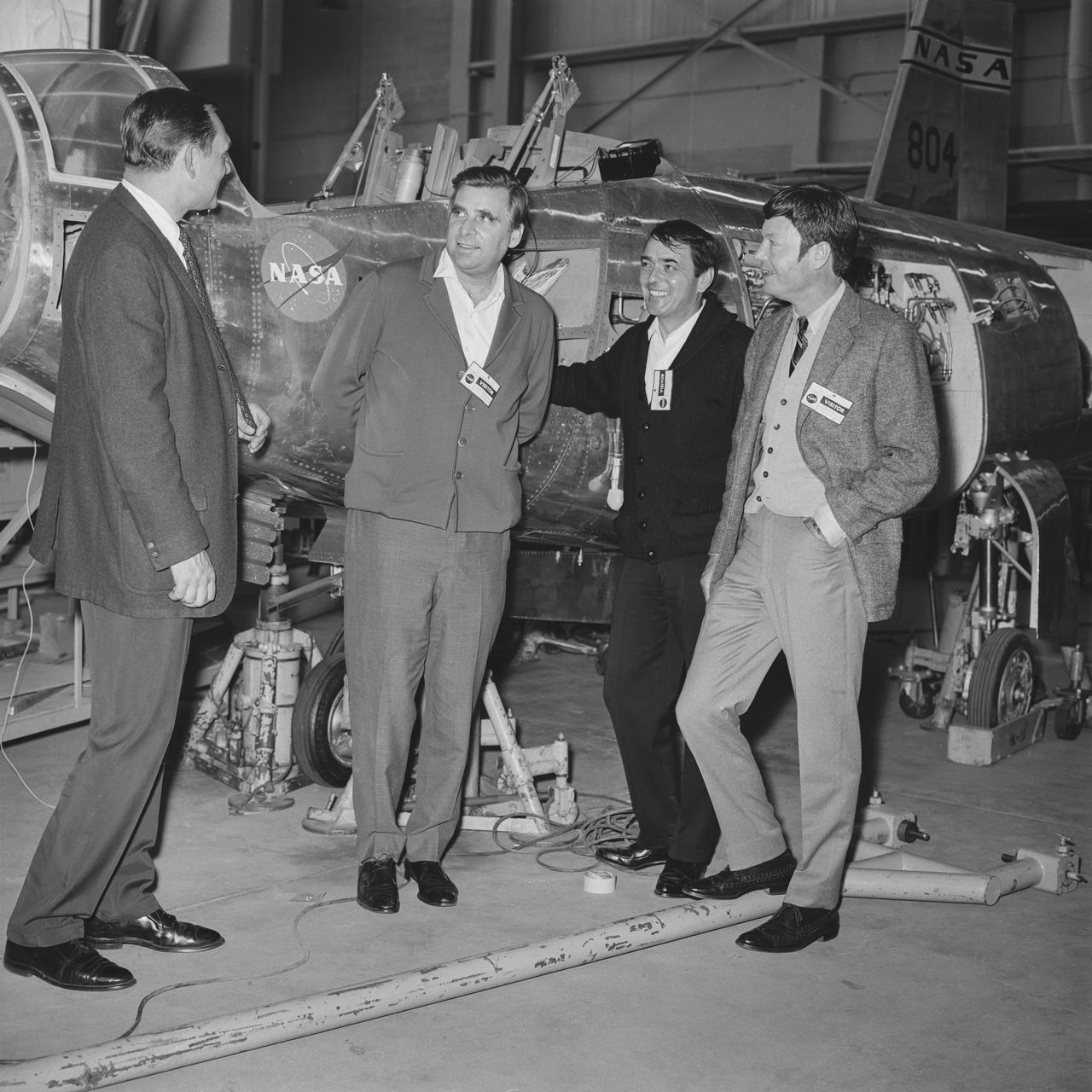
The 1960s Star Trek television series cast members Chief Engineer Montgomery ‘Scotty’ Scott played by James Doohan and Chief Medical Officer Leonard ‘Bones’ McCoy played by DeForest Kelley and the show’s creator Gene Roddenberry receive briefing on NASA Dryden Flight Research Center, now Armstrong, in front of HL-10
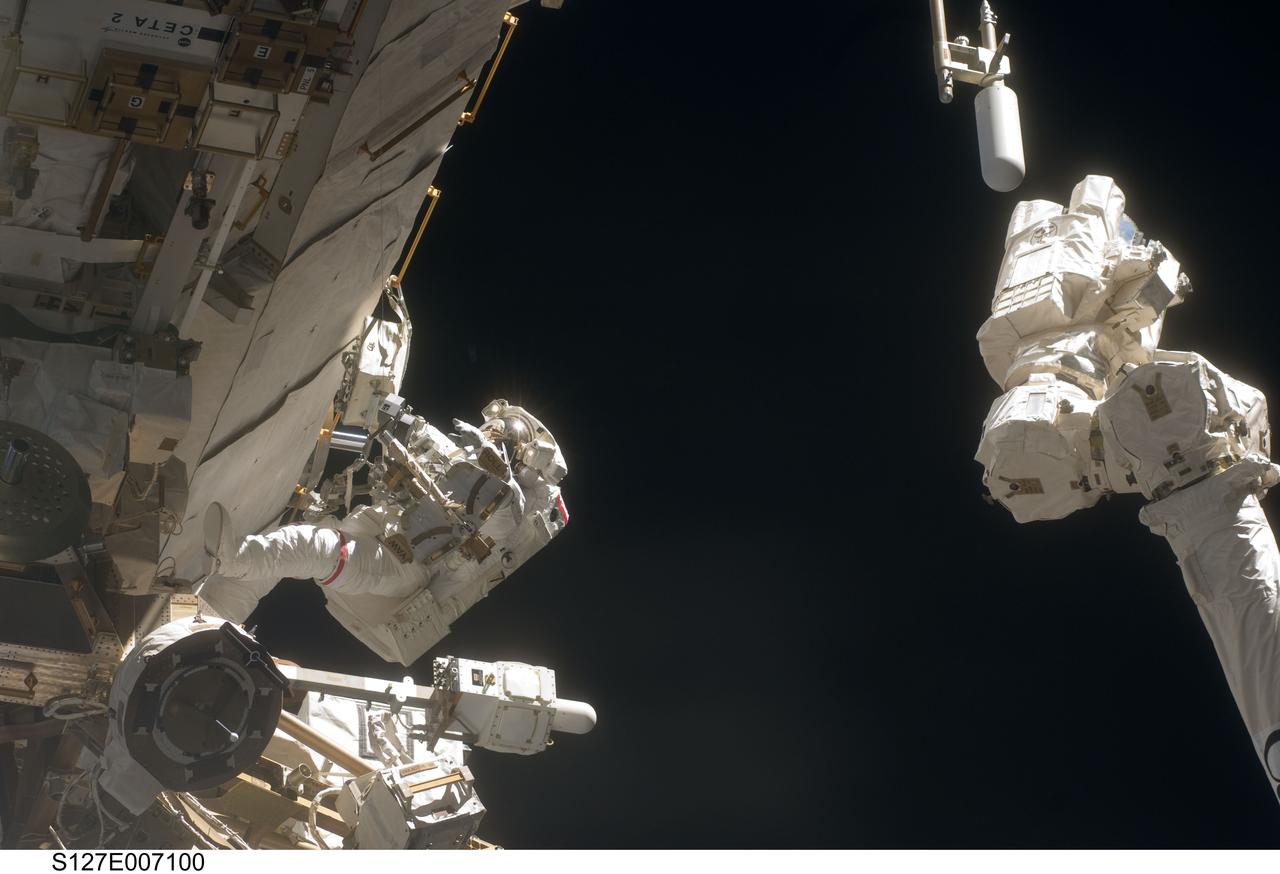
S127-E-007100 (20 July 2009) --- This is one of a series of digital still images showing astronaut Dave Wolf performing his second spacewalk and the Endeavour’s second also of the scheduled five overall in a little over a week’s time to continue work on the International Space Station. Astronauts Wolf and Tom Marshburn (out of frame), both mission specialists, successfully transferred a spare KU-band antenna to long-term storage on the space station, along with a backup coolant system pump module and a spare drive motor for the station's robot arm transporter. Installation of a television camera on the Japanese Exposed Facility experiment platform was deferred to a later spacewalk.
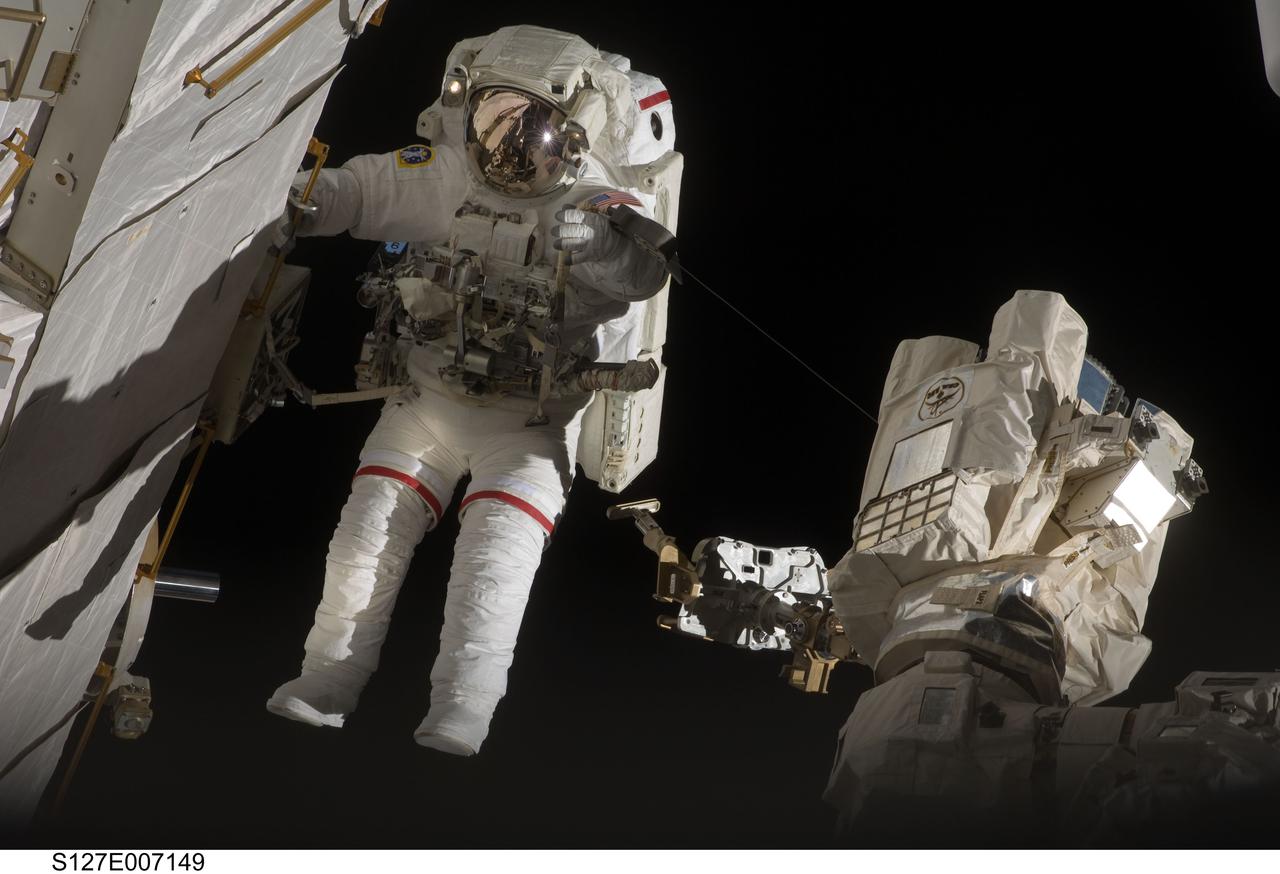
S127-E-007149 (20 July 2009) --- This is one of a series of digital still images showing astronaut Dave Wolf performing his second spacewalk and the Endeavour’s second also of the scheduled five overall in a little over a week’s time to continue work on the International Space Station. Astronauts Wolf and Tom Marshburn (out of frame), both mission specialists, successfully transferred a spare KU-band antenna to long-term storage on the space station, along with a backup coolant system pump module and a spare drive motor for the station's robot arm transporter. Installation of a television camera on the Japanese Exposed Facility experiment platform was deferred to a later spacewalk.
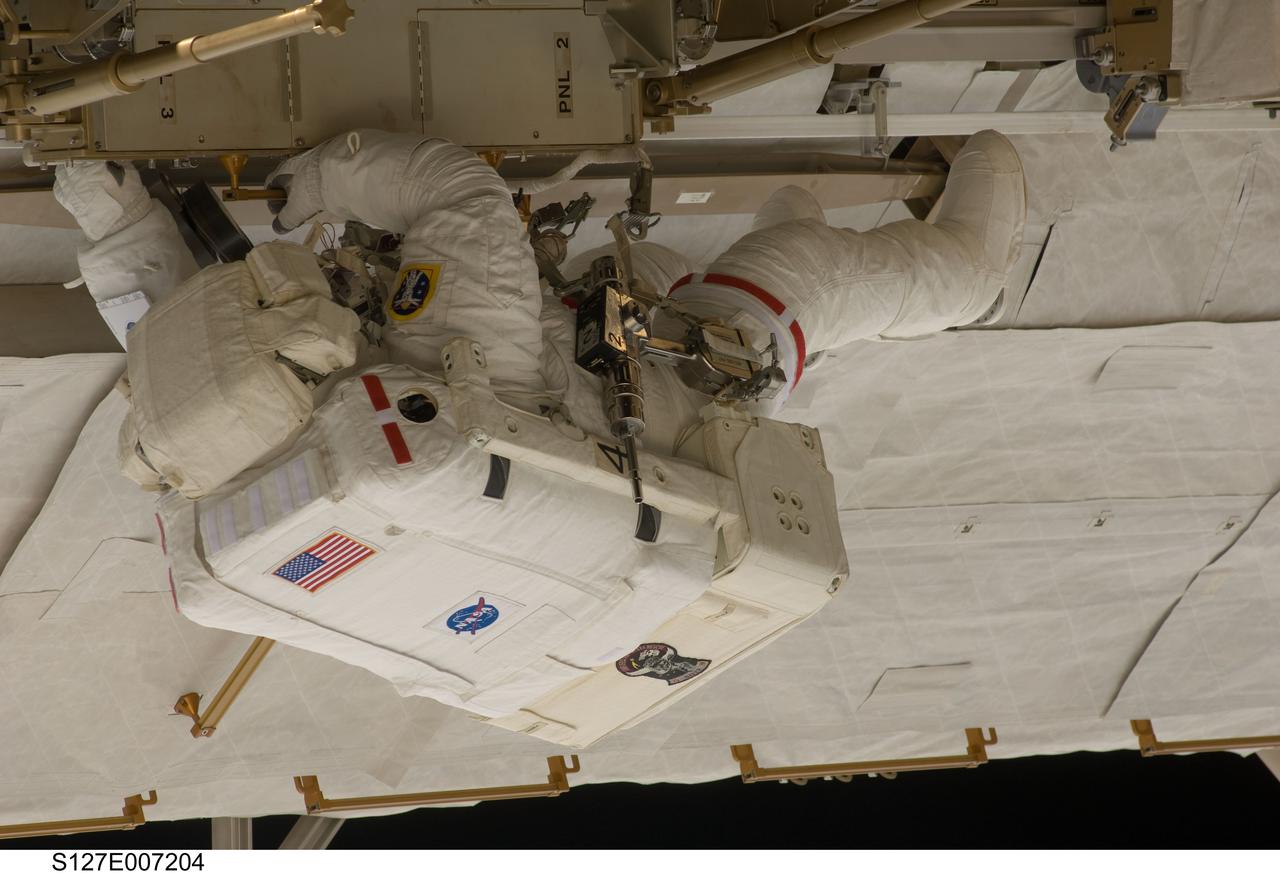
S127-E-007204 (20 July 2009) --- This is one of a series of digital still images showing astronaut Tom Marshburn performing his first spacewalk and the Endeavour crew’s second of the scheduled five overall in a little more than a week to continue work on the International Space Station. Astronauts Marshburn and Dave Wolf (out of frame), both mission specialists, successfully transferred a spare KU-band antenna to long-term storage on the space station, along with a backup coolant system pump module and a spare drive motor for the station's robot arm transporter. Installation of a television camera on the Japanese Exposed Facility experiment platform was deferred to a later spacewalk.
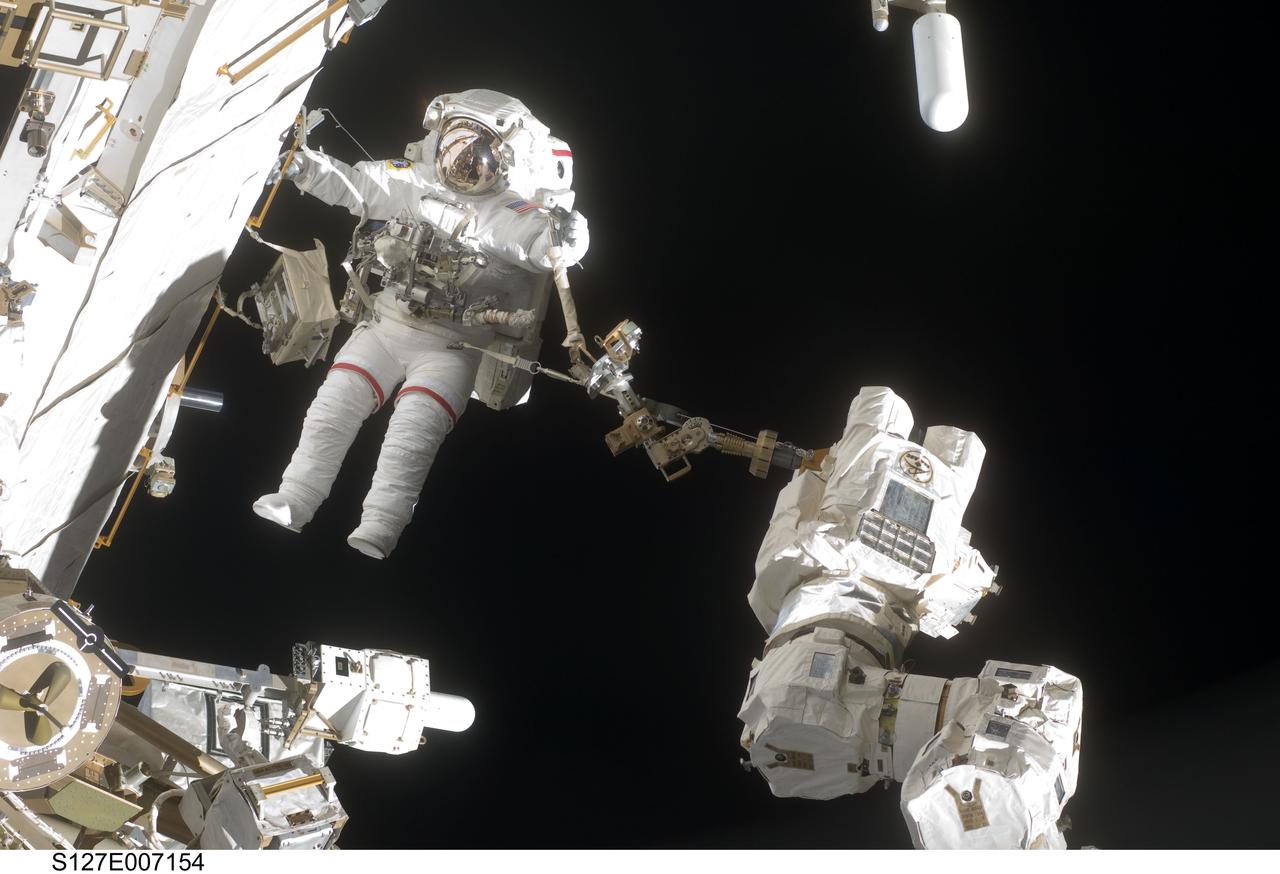
S127-E-007154 (20 July 2009) --- This is one of a series of digital still images showing astronaut Dave Wolf performing his second spacewalk and the Endeavour’s second also of the scheduled five overall in a little over a week’s time to continue work on the International Space Station. Astronauts Wolf and Tom Marshburn (out of frame), both mission specialists, successfully transferred a spare KU-band antenna to long-term storage on the space station, along with a backup coolant system pump module and a spare drive motor for the station's robot arm transporter. Installation of a television camera on the Japanese Exposed Facility experiment platform was deferred to a later spacewalk.
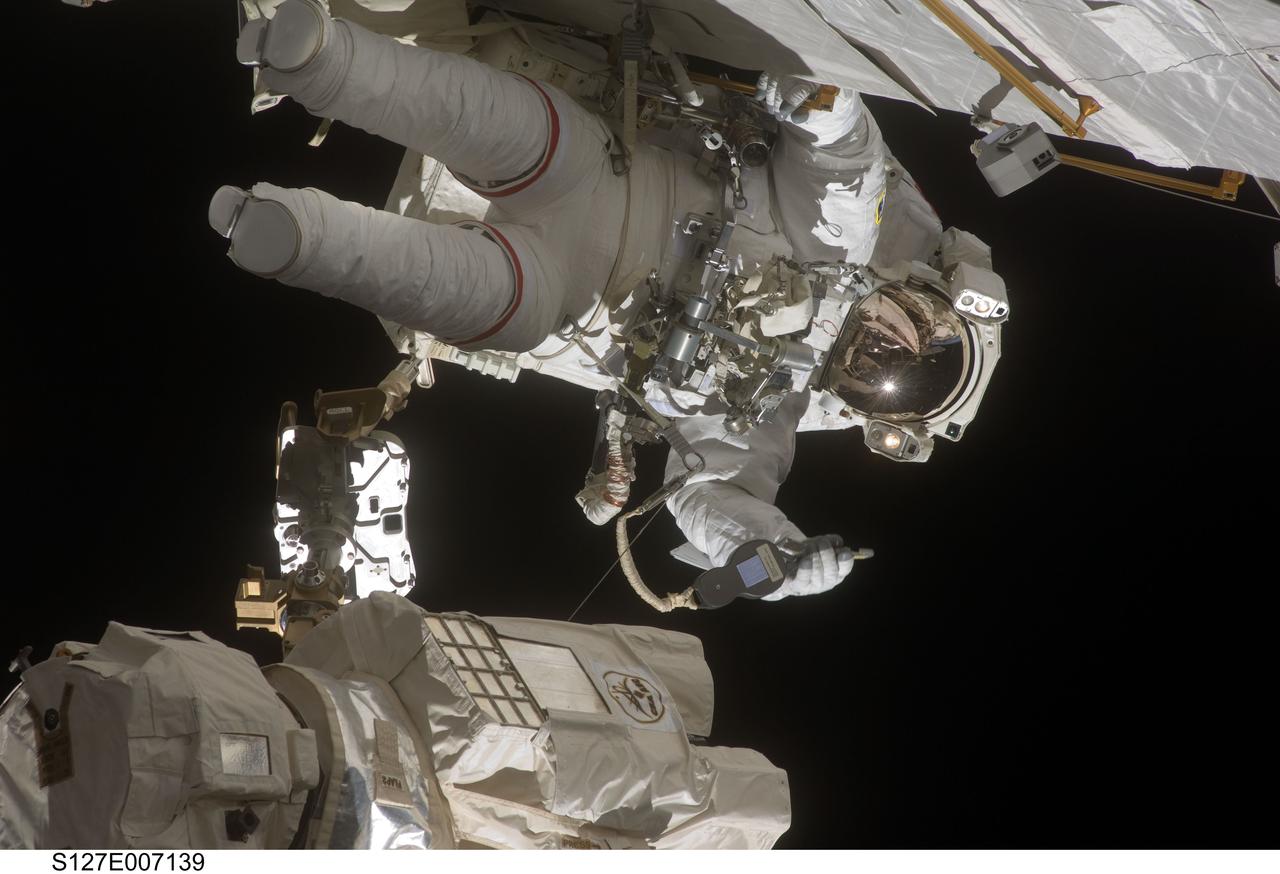
S127-E-007139 (20 July 2009) --- This is one of a series of digital still images showing astronaut Dave Wolf performing his second spacewalk and the Endeavour’s second also of the scheduled five overall in a little over a week’s time to continue work on the International Space Station. Astronauts Wolf and Tom Marshburn (out of frame), both mission specialists, successfully transferred a spare KU-band antenna to long-term storage on the space station, along with a backup coolant system pump module and a spare drive motor for the station's robot arm transporter. Installation of a television camera on the Japanese Exposed Facility experiment platform was deferred to a later spacewalk.
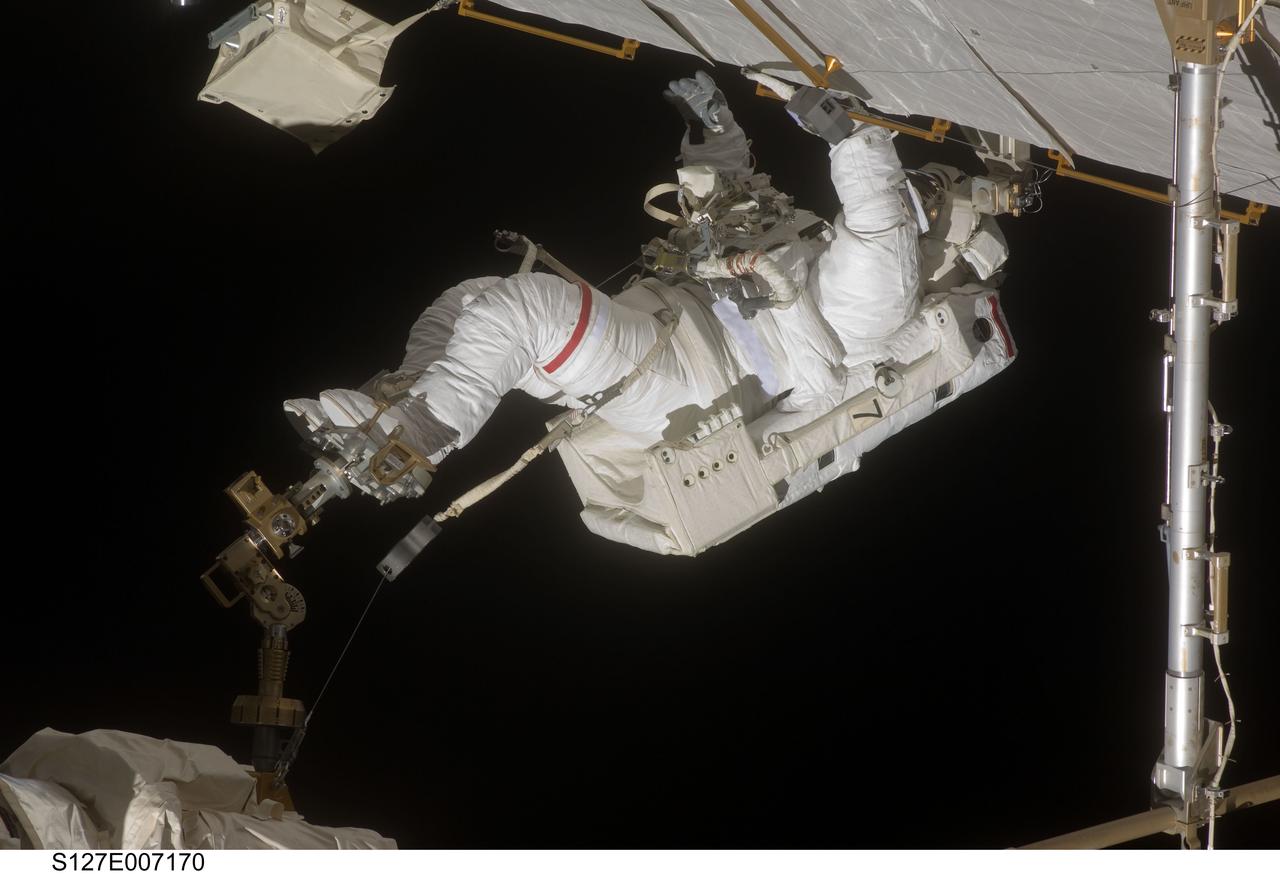
S127-E-007170 (20 July 2009) --- This is one of a series of digital still images showing astronaut Dave Wolf performing his second spacewalk and the Endeavour’s second also of the scheduled five overall in a little over a week’s time to continue work on the International Space Station. Astronauts Wolf and Tom Marshburn (out of frame), both mission specialists, successfully transferred a spare KU-band antenna to long-term storage on the space station, along with a backup coolant system pump module and a spare drive motor for the station's robot arm transporter. Installation of a television camera on the Japanese Exposed Facility experiment platform was deferred to a later spacewalk.

S83-34270 (18 June 1983) --- Astronaut C. Gordon Fullerton supplies helpful consultation for Edward I. Fendell (seated) at the Integrated Communications System (INCO) console in the Mission Operations Control Room (MOCR) of the Johnson Space Center's (JSC) Mission Control Center (MCC). Fendell had control over the TV systems during a brief television transmission that featured the opening of the payload bay doors and the revealing of the cargo in the space shuttle Challenger's 18-meter (60-feet) long payload bay. The door-opening was the first of a series of many TV sessions planned for this six-day flight. Photo credit: NASA
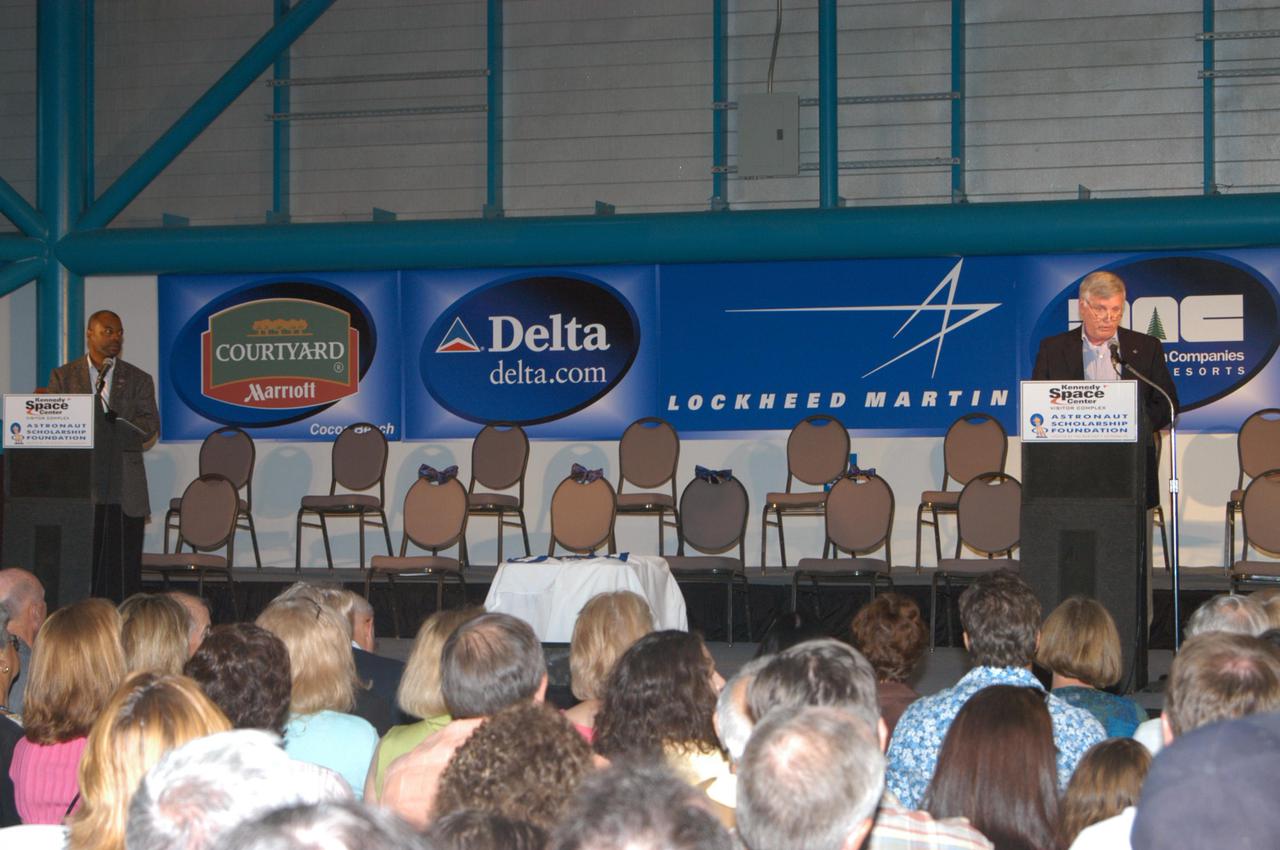
KENNEDY SPACE CENTER, FLA. - Kennedy Space Center Director Jim Kennedy talks to inductees and guests at the Astronaut Hall of Fame Induction ceremony held in Kennedy Space Center Visitor Complex’s Apollo_Saturn V Center. At far left is the master of ceremonies, LeVar Burton, who starred in the television series “Star Trek: The Next Generation.” The new inductees are Bruce McCandless, Joe Allen and Gordon Fullerton. Recognized for their individual flight accomplishments and contributions to the success and future success of the U.S. space program, this elite group of inductees is among only 60 astronauts to be honored in the Hall of Fame and the fourth group of Space Shuttle astronauts named.
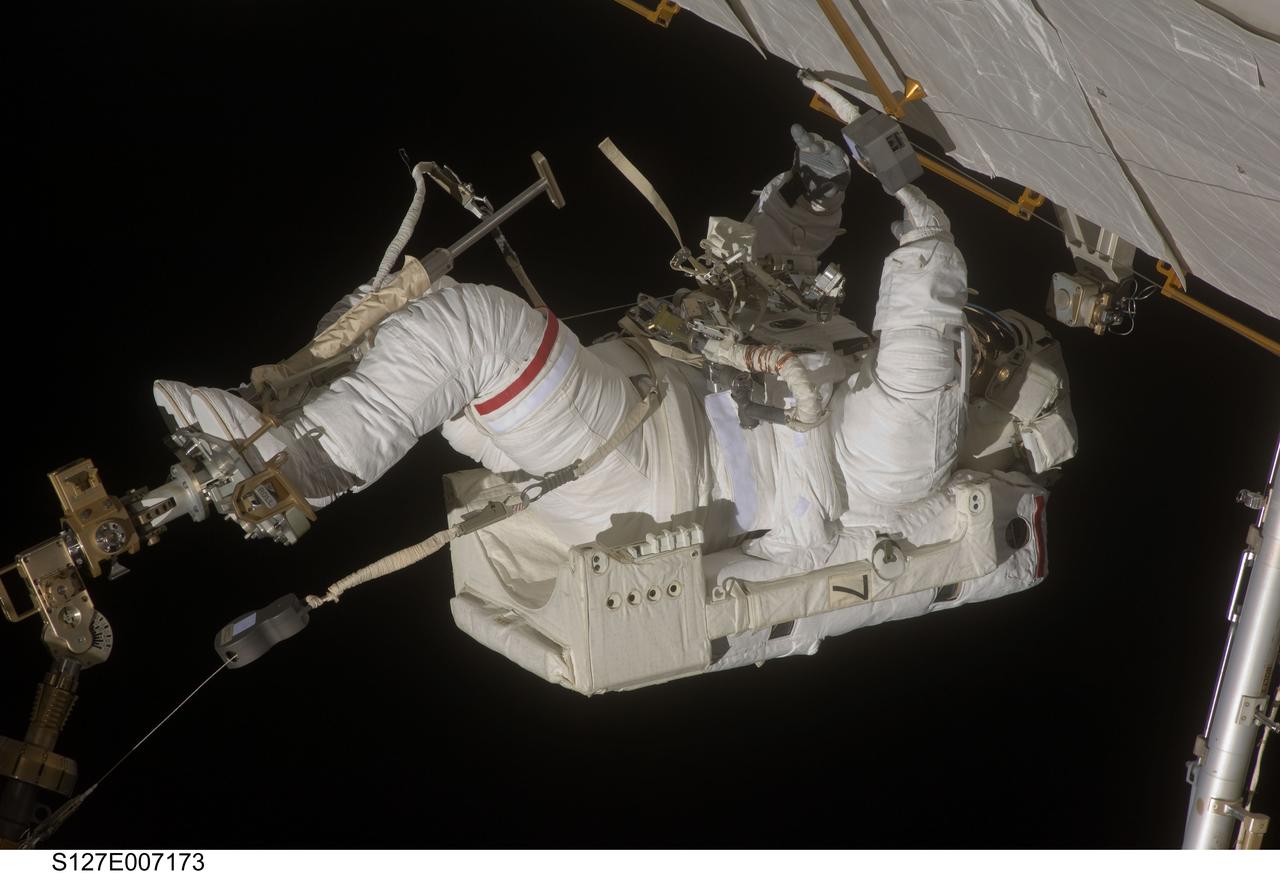
S127-E-007173 (20 July 2009) --- This is one of a series of digital still images showing astronaut Dave Wolf performing his second spacewalk and the Endeavour’s second also of the scheduled five overall in a little over a week’s time to continue work on the International Space Station. Astronauts Wolf and Tom Marshburn (out of frame), both mission specialists, successfully transferred a spare KU-band antenna to long-term storage on the space station, along with a backup coolant system pump module and a spare drive motor for the station's robot arm transporter. Installation of a television camera on the Japanese Exposed Facility experiment platform was deferred to a later spacewalk.
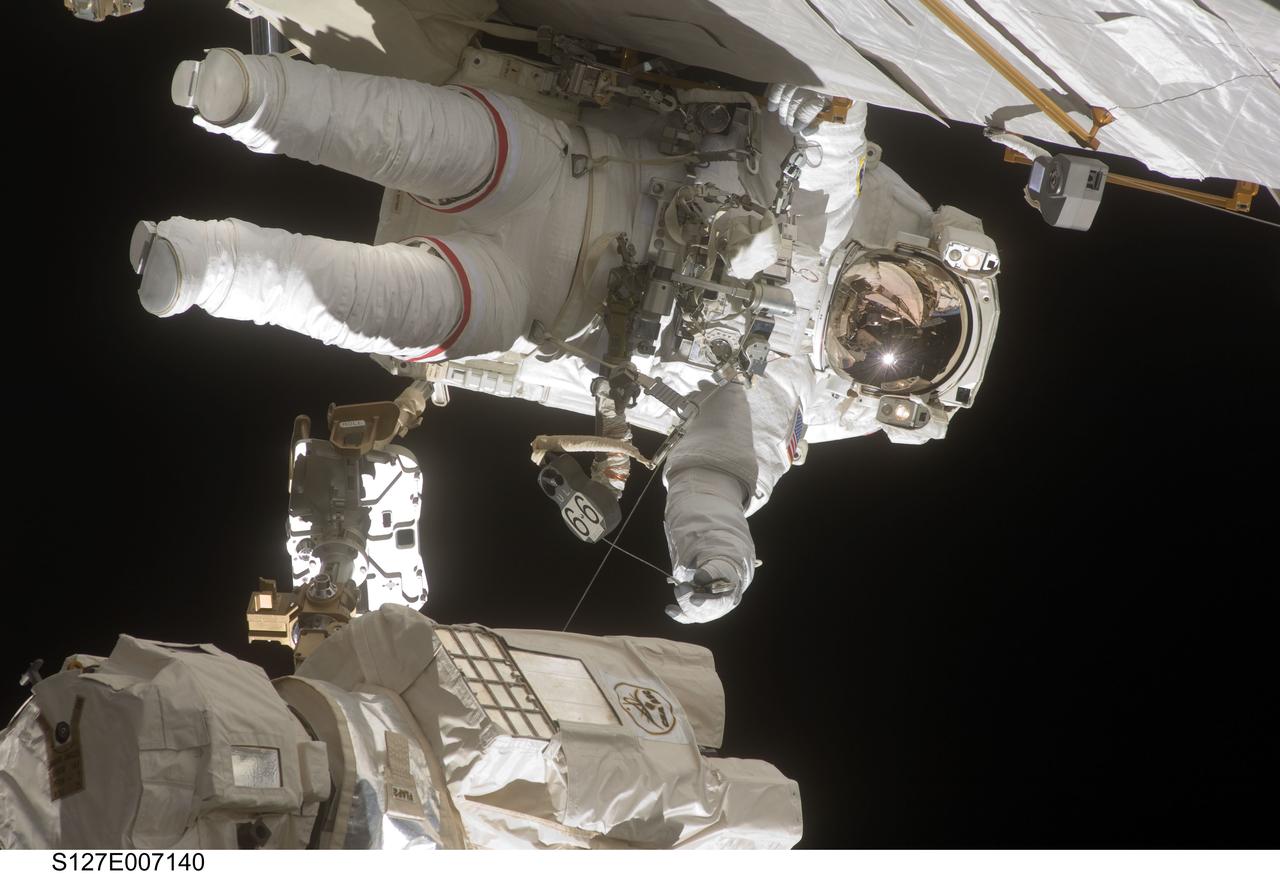
S127-E-007140 (20 July 2009) --- This is one of a series of digital still images showing astronaut Dave Wolf performing his second spacewalk and the Endeavour’s second also of the scheduled five overall in a little over a week’s time to continue work on the International Space Station. Astronauts Wolf and Tom Marshburn (out of frame), both mission specialists, successfully transferred a spare KU-band antenna to long-term storage on the space station, along with a backup coolant system pump module and a spare drive motor for the station's robot arm transporter. Installation of a television camera on the Japanese Exposed Facility experiment platform was deferred to a later spacewalk.
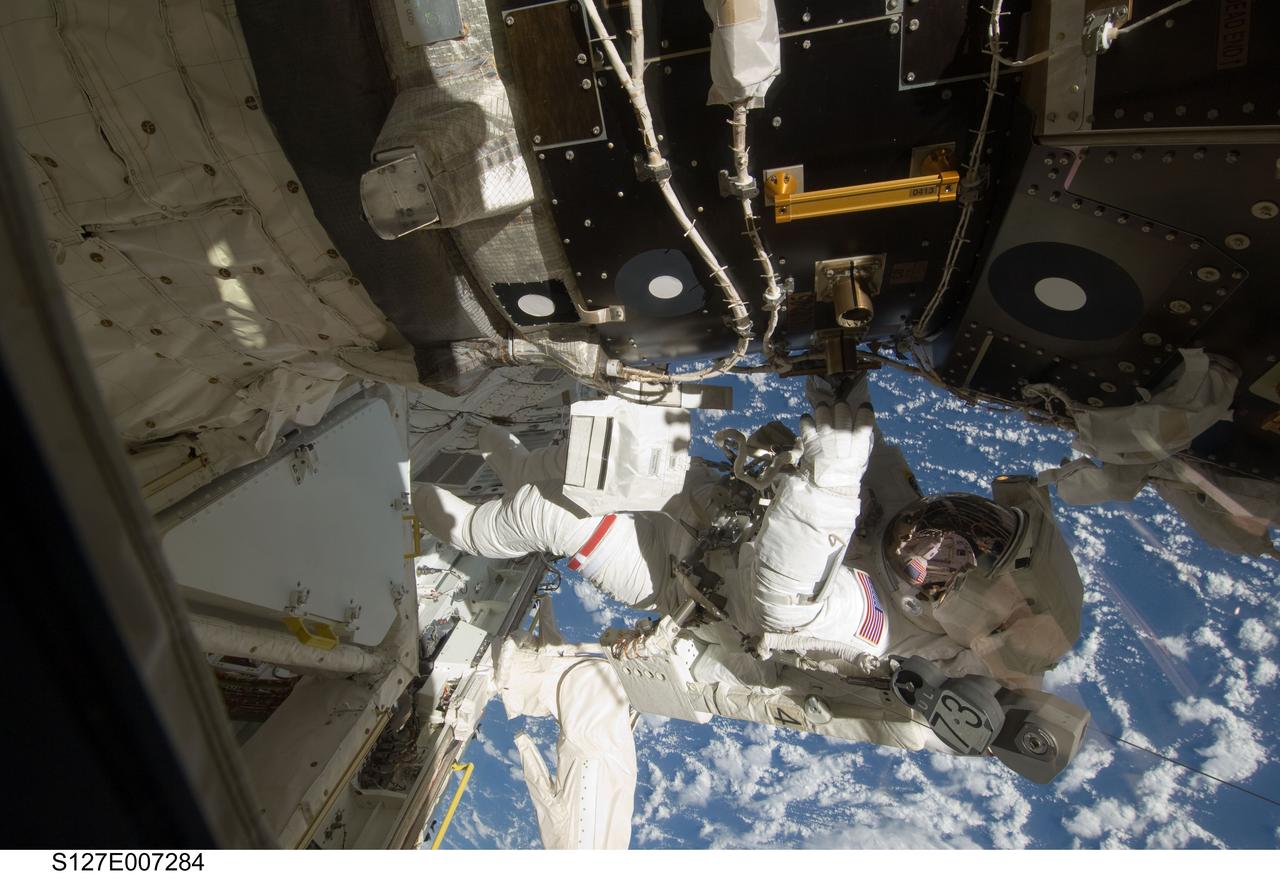
S127-E-007284 (20 July 2009) --- This is one of a series of digital still images showing astronaut Tom Marshburn performing his first spacewalk and the Endeavour crew’s second of the scheduled five overall in a little more than a week to continue work on the International Space Station. Astronauts Marshburn and Dave Wolf (out of frame), both mission specialists, successfully transferred a spare KU-band antenna to long-term storage on the space station, along with a backup coolant system pump module and a spare drive motor for the station's robot arm transporter. Installation of a television camera on the Japanese Exposed Facility experiment platform was deferred to a later spacewalk.
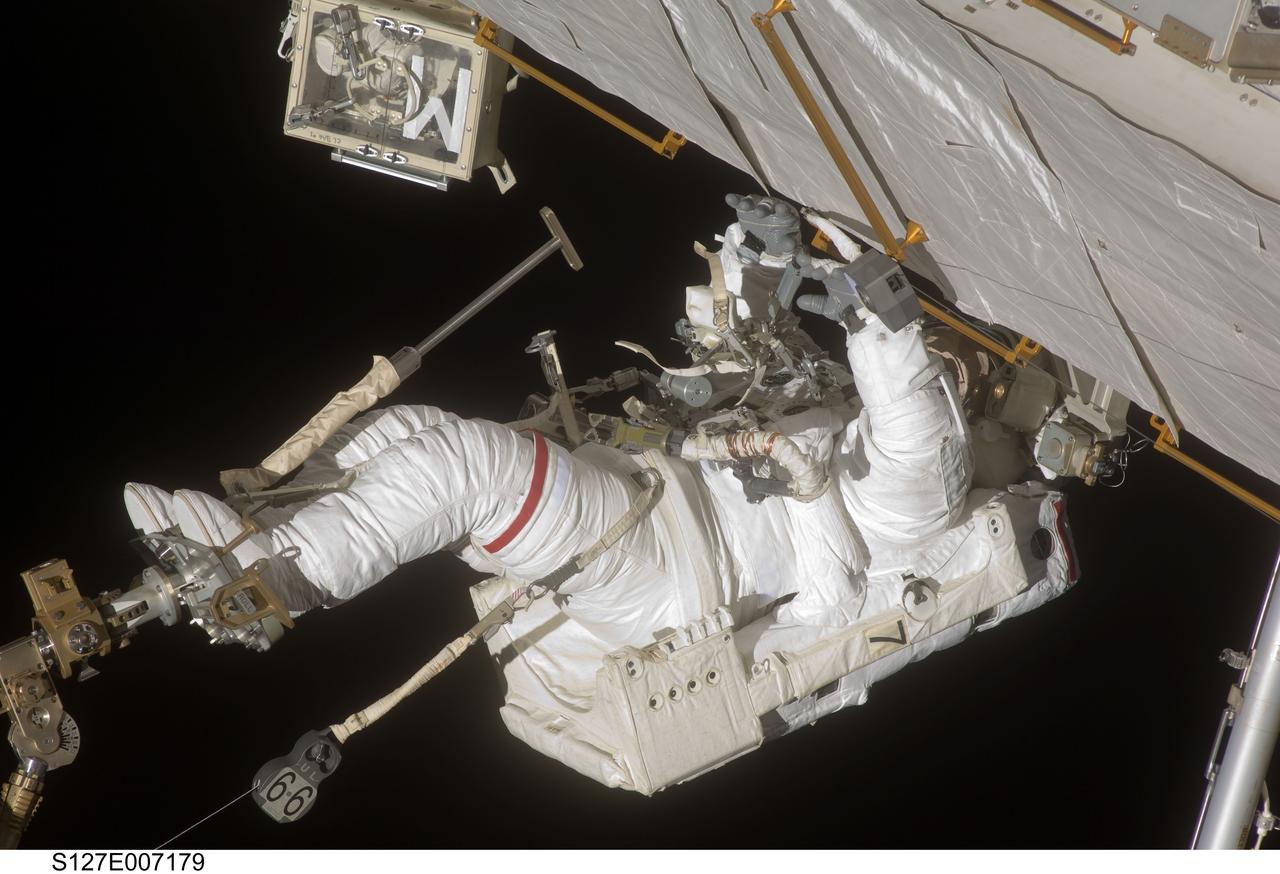
S127-E-007179 (20 July 2009) --- This is one of a series of digital still images showing astronaut Dave Wolf performing his second spacewalk and the Endeavour’s second also of the scheduled five overall in a little over a week’s time to continue work on the International Space Station. Astronauts Wolf and Tom Marshburn (out of frame), both mission specialists, successfully transferred a spare KU-band antenna to long-term storage on the space station, along with a backup coolant system pump module and a spare drive motor for the station's robot arm transporter. Installation of a television camera on the Japanese Exposed Facility experiment platform was deferred to a later spacewalk.
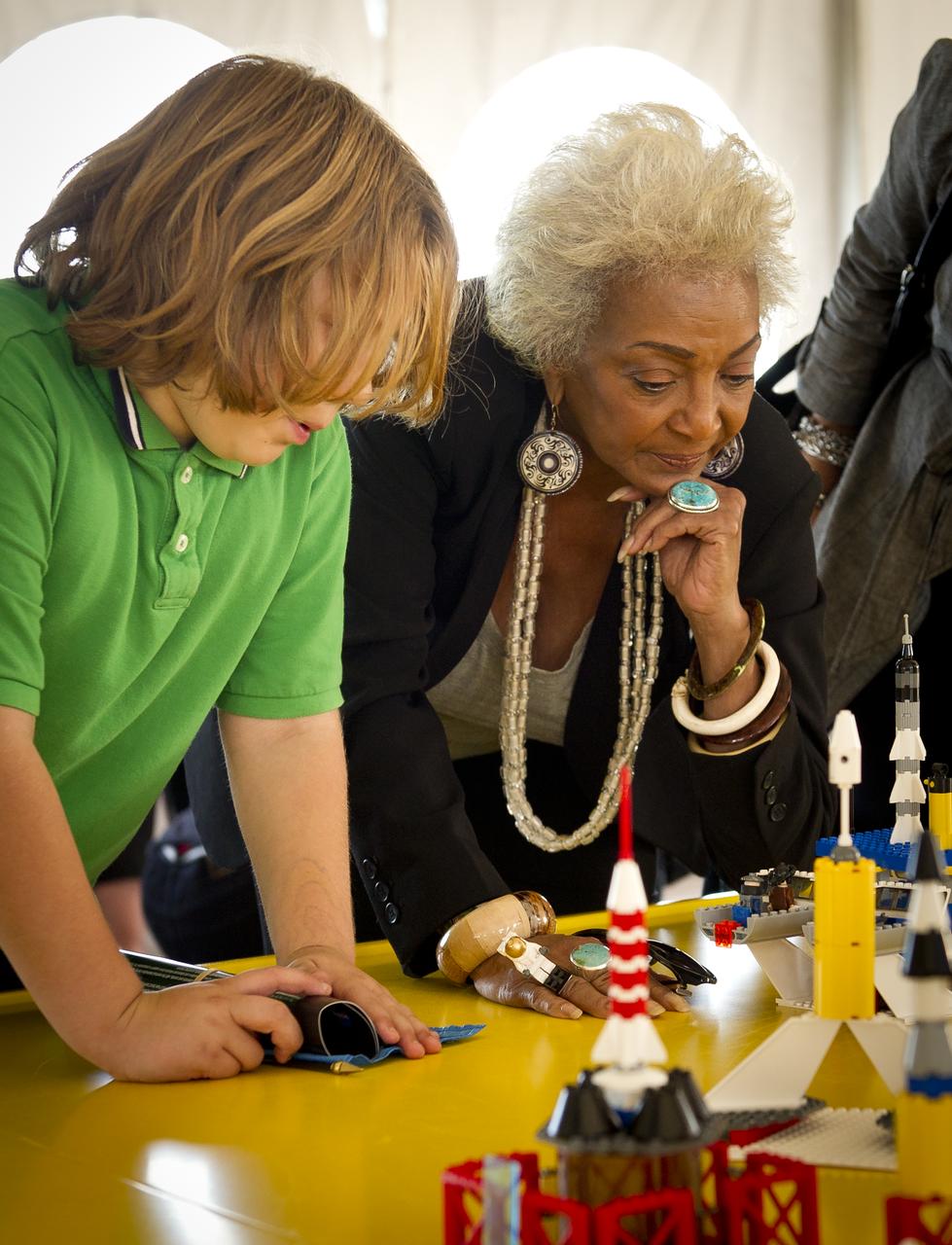
Actress Nichelle Nichols, known for her most famous role as communications officer Lieutenant Uhura aboard the USS Enterprise in the popular Star Trek television series, talks with school children during the “Build the Future” activity where students created their vision of the future in space with LEGO bricks and elements inside a tent that was set up on the launch viewing area at NASA's Kennedy Space Center in Cape Canaveral, Fla. on Monday, Nov. 1, 2010. NASA and The LEGO Group signed a Space Act Agreement to spark children's interest in science, technology, engineering and math (STEM). Photo Credit: (NASA/Bill Ingalls)
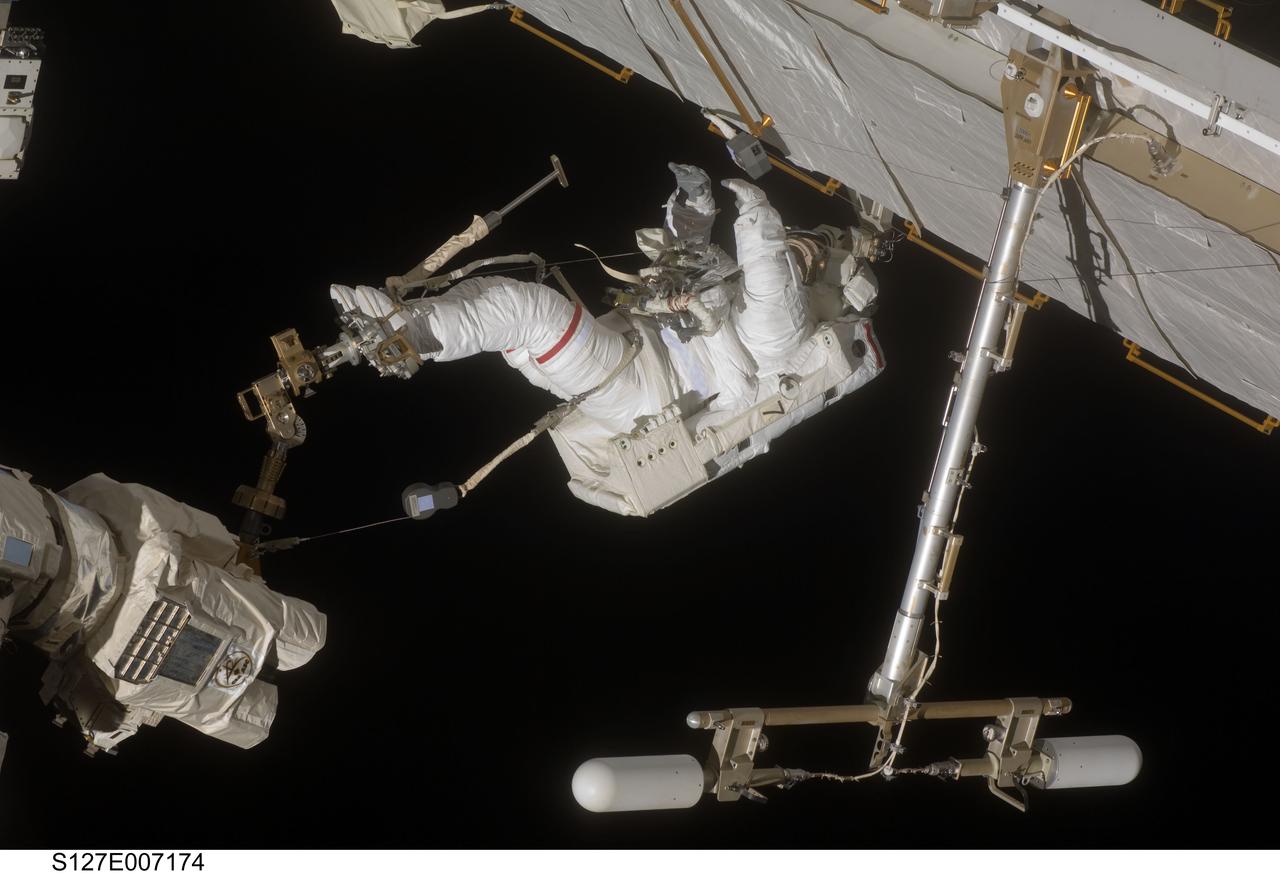
S127-E-007174 (20 July 2009) --- This is one of a series of digital still images showing astronaut Dave Wolf performing his second spacewalk and the Endeavour’s second also of the scheduled five overall in a little over a week’s time to continue work on the International Space Station. Astronauts Wolf and Tom Marshburn (out of frame), both mission specialists, successfully transferred a spare KU-band antenna to long-term storage on the space station, along with a backup coolant system pump module and a spare drive motor for the station's robot arm transporter. Installation of a television camera on the Japanese Exposed Facility experiment platform was deferred to a later spacewalk.
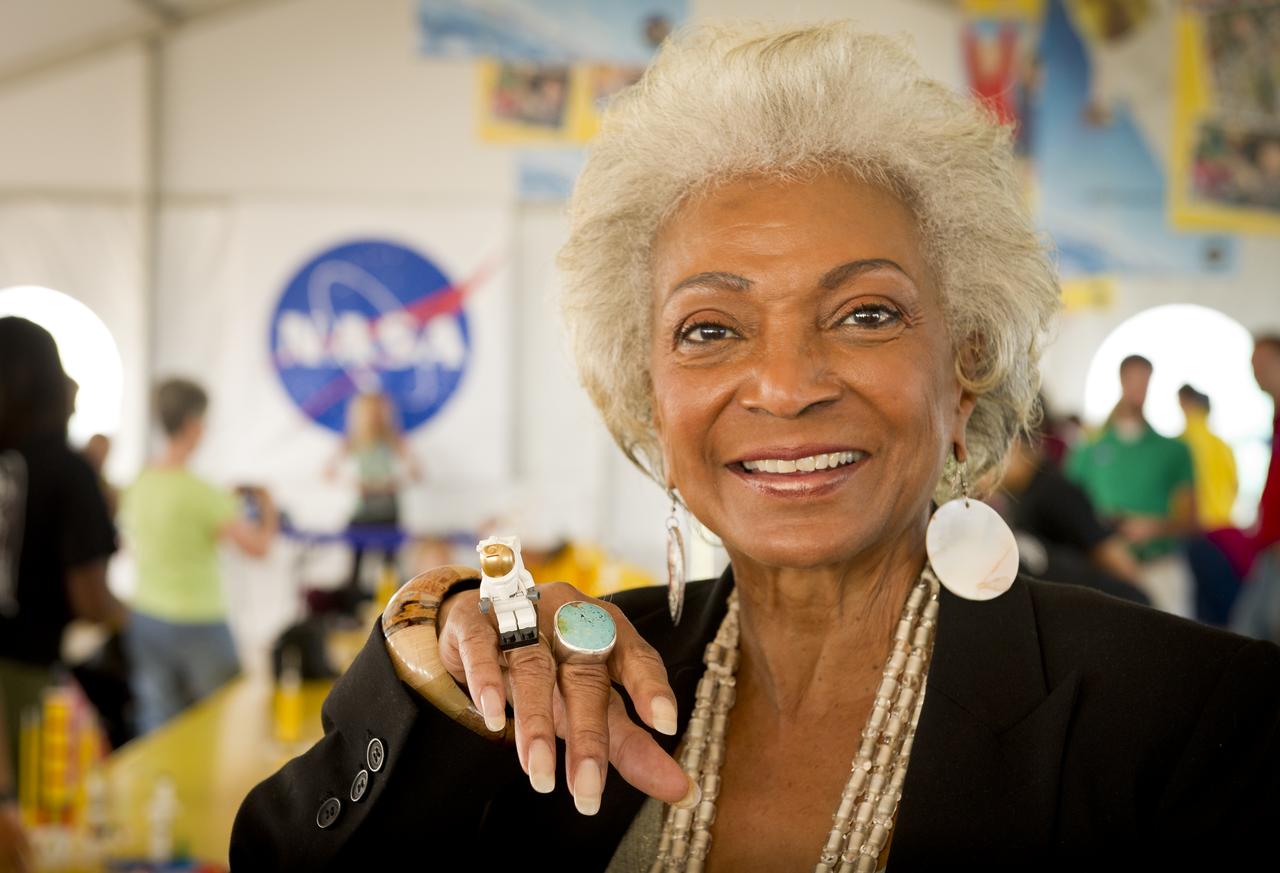
Actress Nichelle Nichols, known for her most famous role as communications officer Lieutenant Uhura aboard the USS Enterprise in the popular Star Trek television series, displays her Lego astronaut ring while visiting the “Build the Future” activity where students created their vision of the future in space with LEGO bricks and elements inside a tent that was set up on the launch viewing area at NASA's Kennedy Space Center in Cape Canaveral, Fla. on Monday, Nov. 1, 2010. NASA and The LEGO Group signed a Space Act Agreement to spark children's interest in science, technology, engineering and math (STEM). Photo Credit: (NASA/Bill Ingalls)
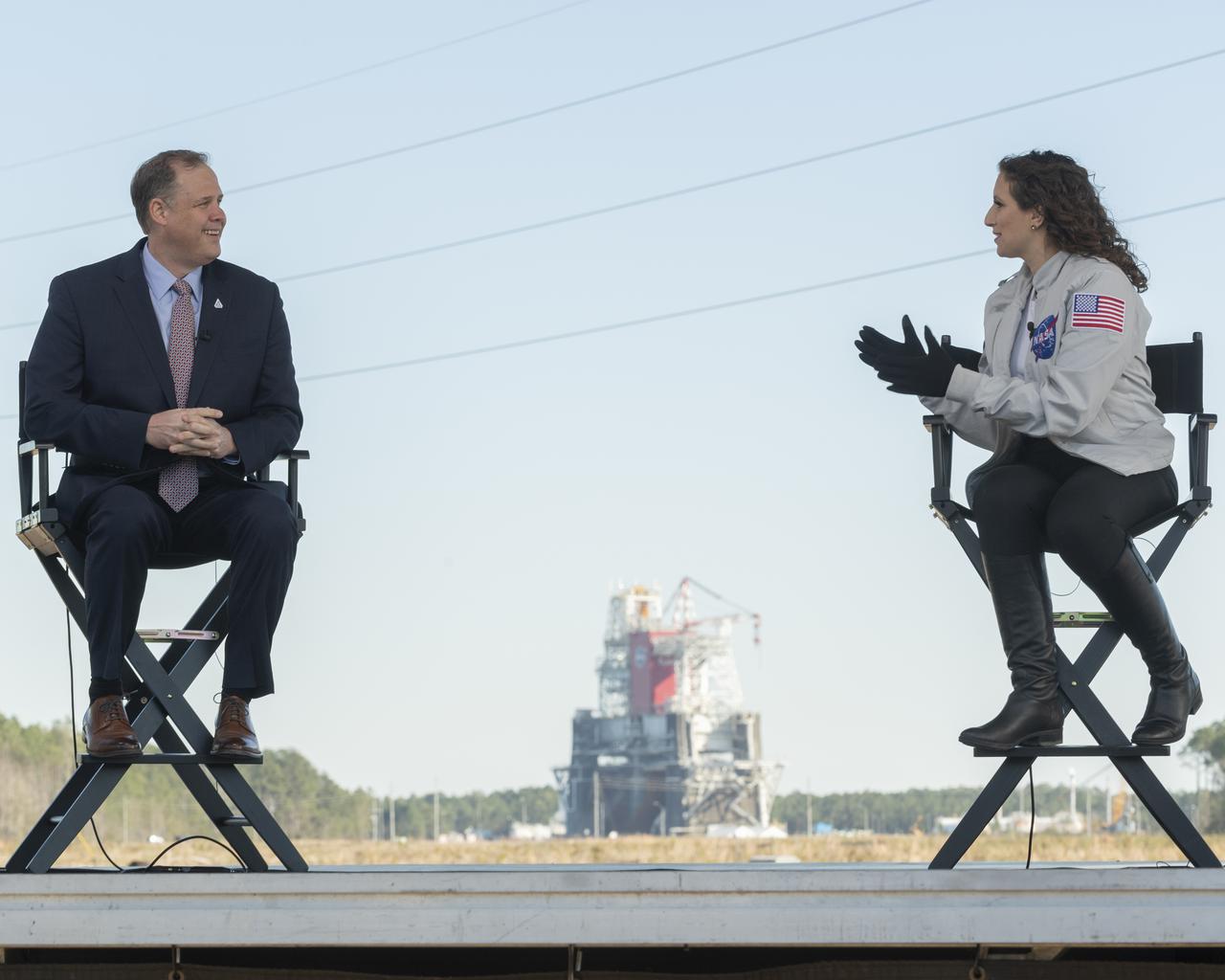
NASA Administrator Jim Bridenstine discusses the upcoming Green Run hot fire test on NASA television with Leigh D’Angelo of NASA, Saturday, January 16, 2021, at NASA's Stennis Space Center near Bay St. Louis, Mississippi. In the background, the core stage for the first flight of NASA’s Space Launch System rocket is seen in the B-2 Test Stand ahead of a scheduled eight minute duration hot fire test. The hot fire test is the final stage of the Green Run test series, a comprehensive assessment of the Space Launch System’s core stage prior to launching the Artemis I mission to the Moon. Photo Credit: (NASA/Robert Markowitz)
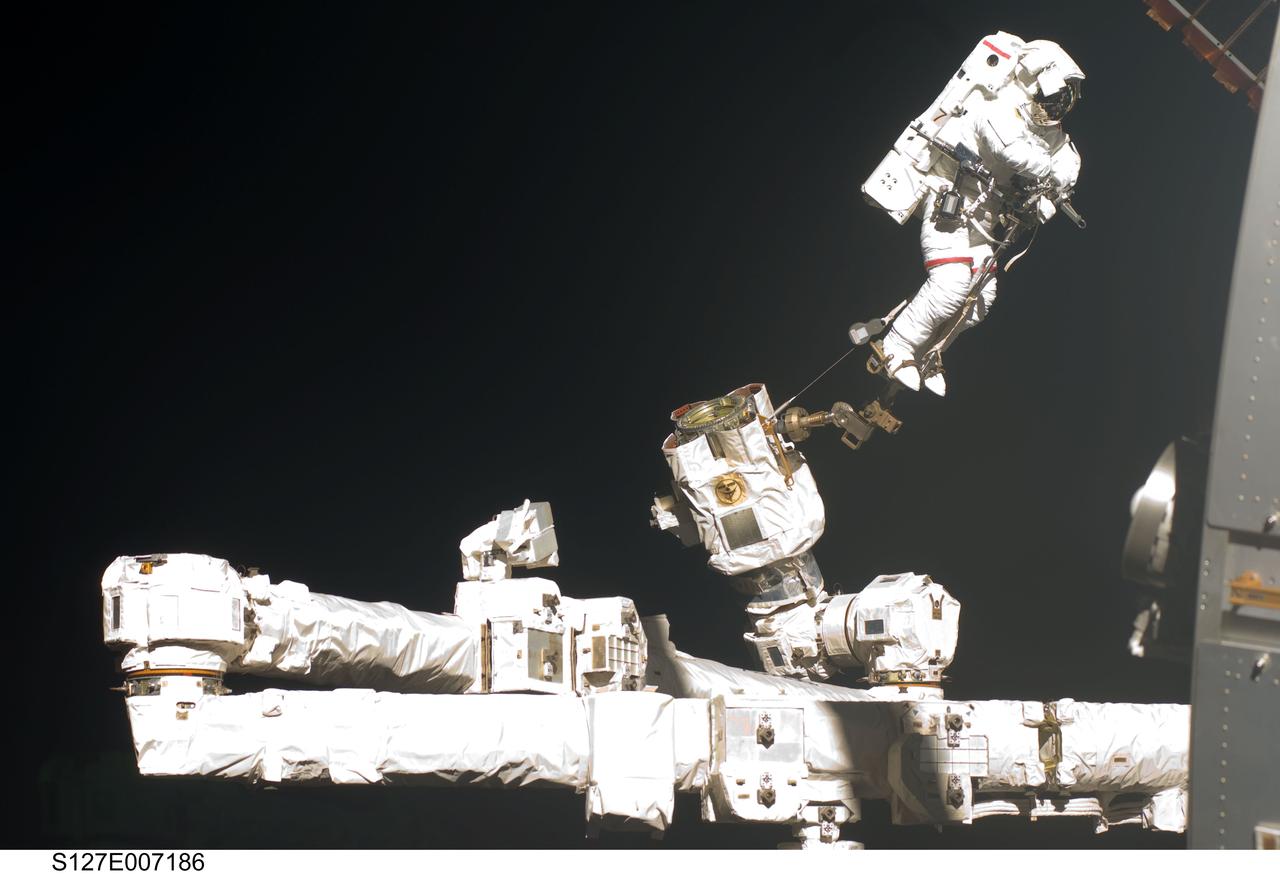
S127-E-007186 (20 July 2009) --- This is one of a series of digital still images showing astronaut Dave Wolf performing his second spacewalk and the Endeavour’s second also of the scheduled five overall in a little over a week’s time to continue work on the International Space Station. Astronauts Wolf and Tom Marshburn (out of frame), both mission specialists, successfully transferred a spare KU-band antenna to long-term storage on the space station, along with a backup coolant system pump module and a spare drive motor for the station's robot arm transporter. Installation of a television camera on the Japanese Exposed Facility experiment platform was deferred to a later spacewalk.
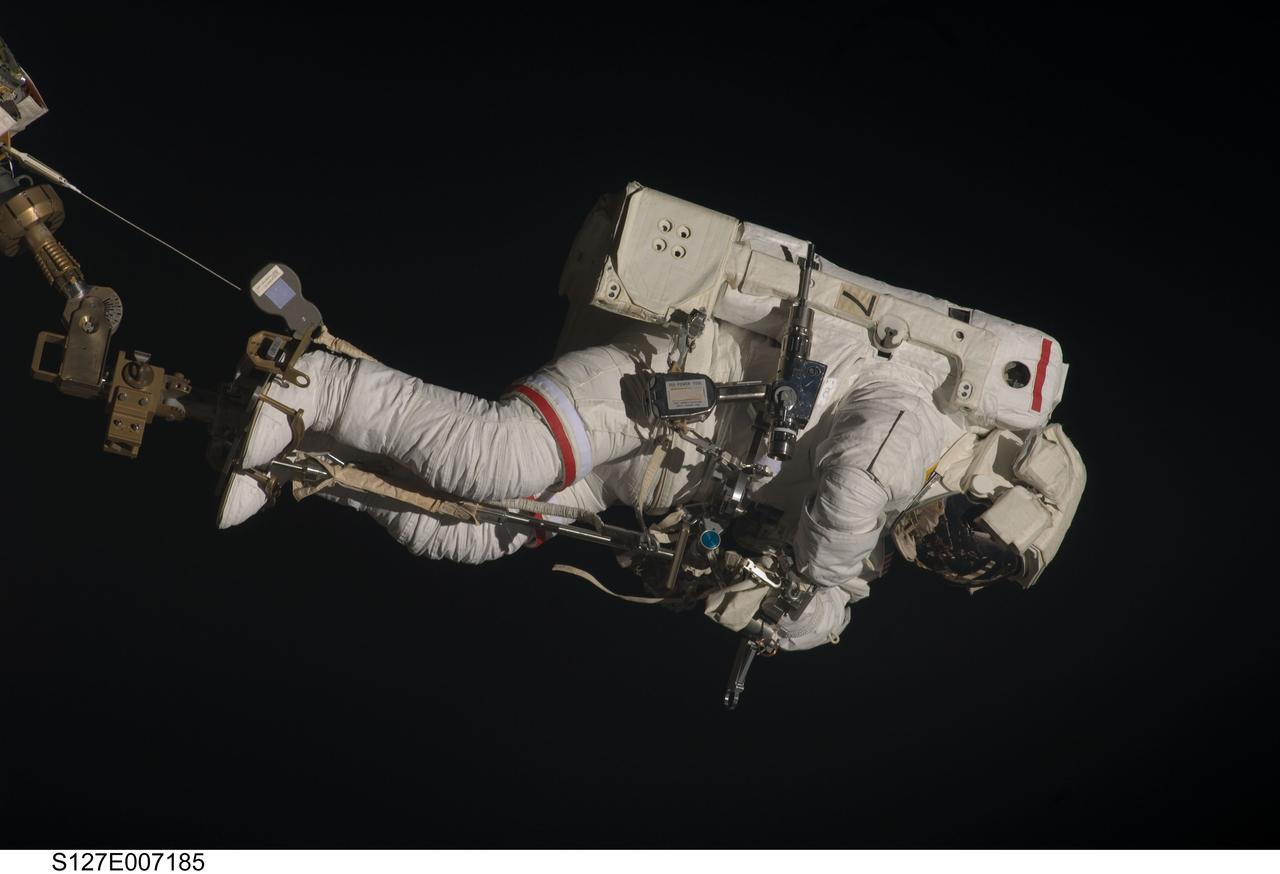
S127-E-007185 (20 July 2009) --- This is one of a series of digital still images showing astronaut Dave Wolf performing his second spacewalk and the Endeavour’s second also of the scheduled five overall in a little over a week’s time to continue work on the International Space Station. Astronauts Wolf and Tom Marshburn (out of frame), both STS-127 mission specialists, successfully transferred a spare KU-band antenna to long-term storage on the space station, along with a backup coolant system pump module and a spare drive motor for the station's robot arm transporter. Installation of a television camera on the Japanese Exposed Facility experiment platform was deferred to a later spacewalk.
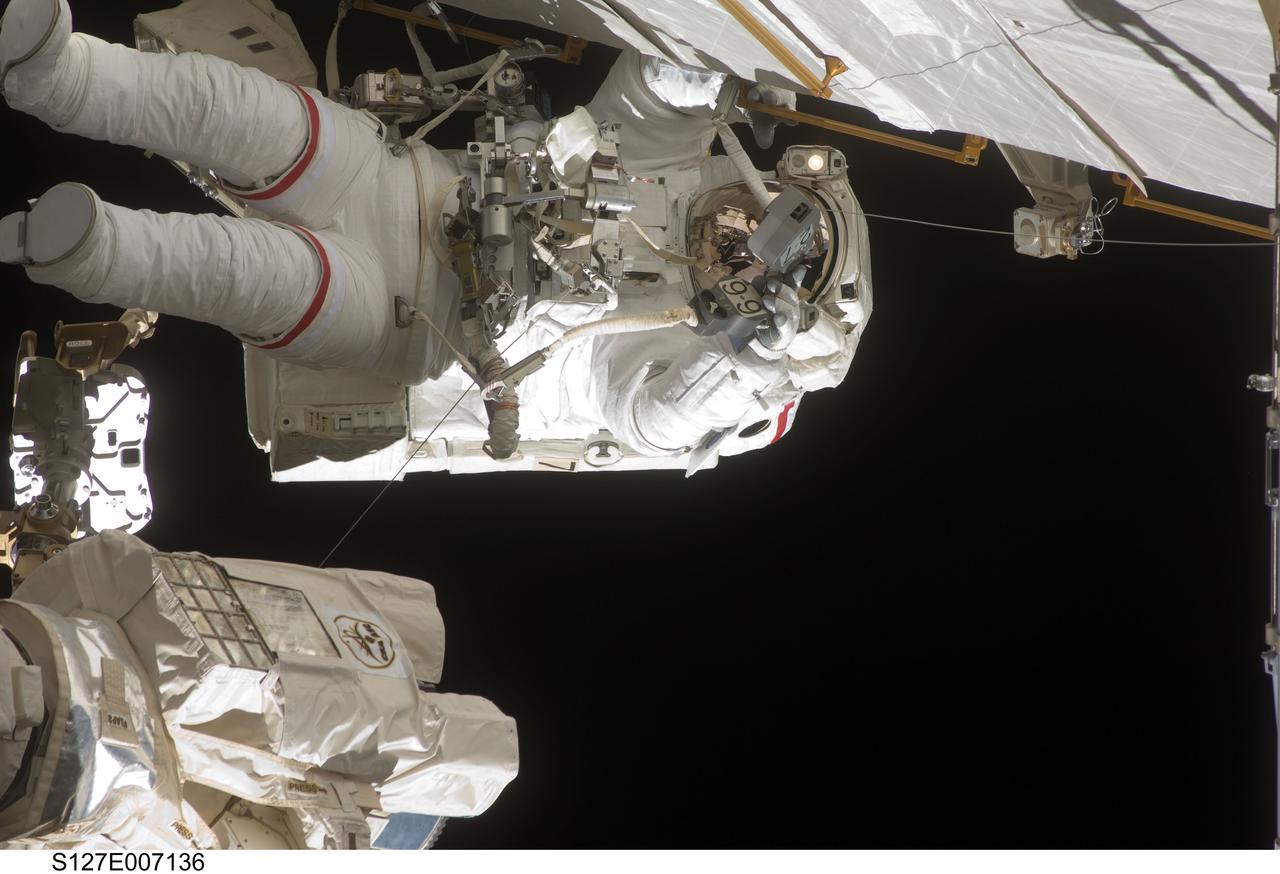
S127-E-007136 (20 July 2009) --- This is one of a series of digital still images showing astronaut Dave Wolf performing his second spacewalk and the Endeavour’s second also of the scheduled five overall in a little over a week’s time to continue work on the International Space Station. Astronauts Wolf and Tom Marshburn (out of frame), both mission specialists, successfully transferred a spare KU-band antenna to long-term storage on the space station, along with a backup coolant system pump module and a spare drive motor for the station's robot arm transporter. Installation of a television camera on the Japanese Exposed Facility experiment platform was deferred to a later spacewalk.
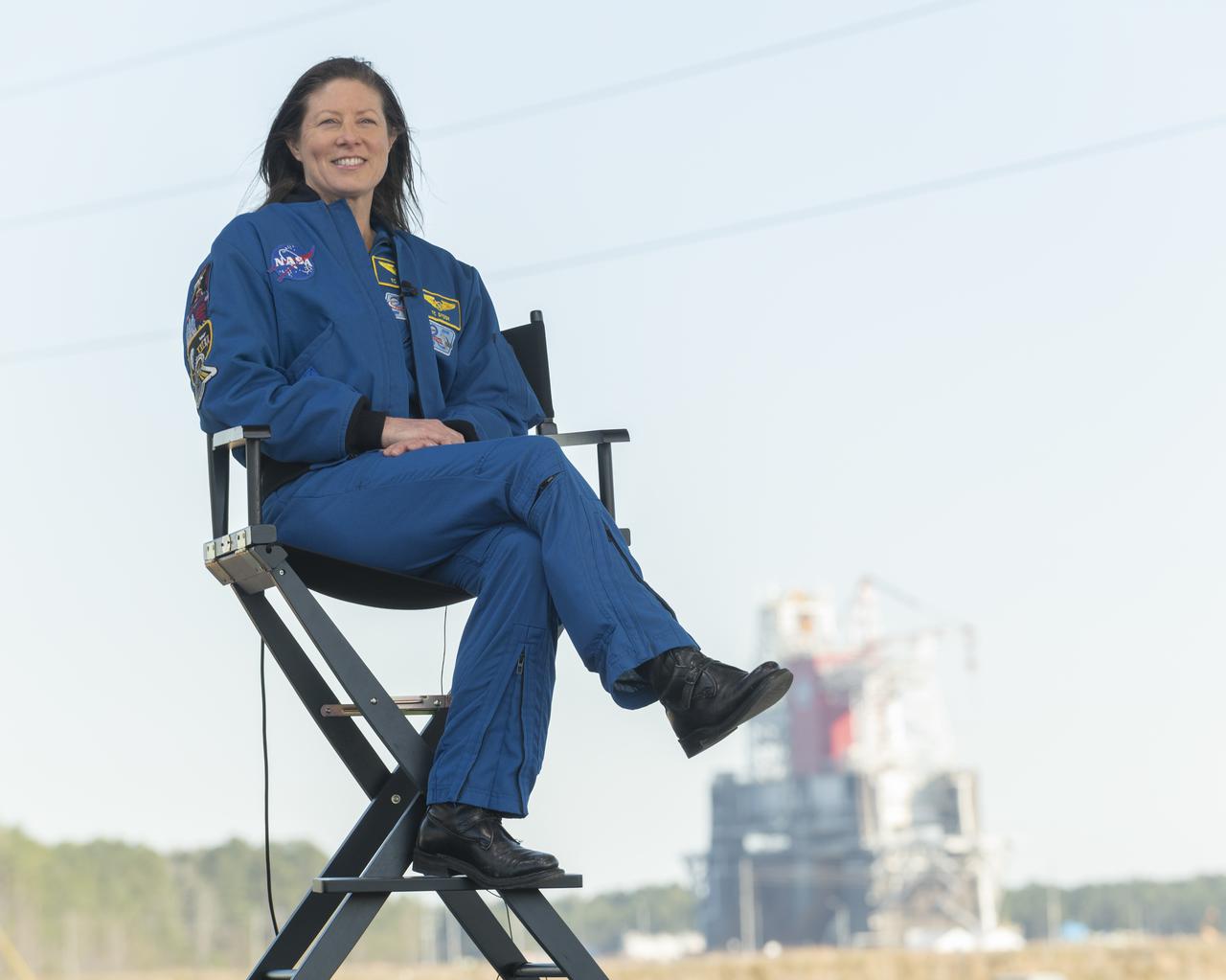
NASA astronaut Tracy Caldwell Dyson discusses the upcoming Green Run hot fire test on NASA television, Saturday, January 16, 2021, at NASA's Stennis Space Center near Bay St. Louis, Mississippi. In the background, the core stage for the first flight of NASA’s Space Launch System rocket is seen in the B-2 Test Stand ahead of a scheduled eight minute duration hot fire test. The hot fire test is the final stage of the Green Run test series, a comprehensive assessment of the Space Launch System’s core stage prior to launching the Artemis I mission to the Moon. Photo Credit: (NASA/Robert Markowitz)
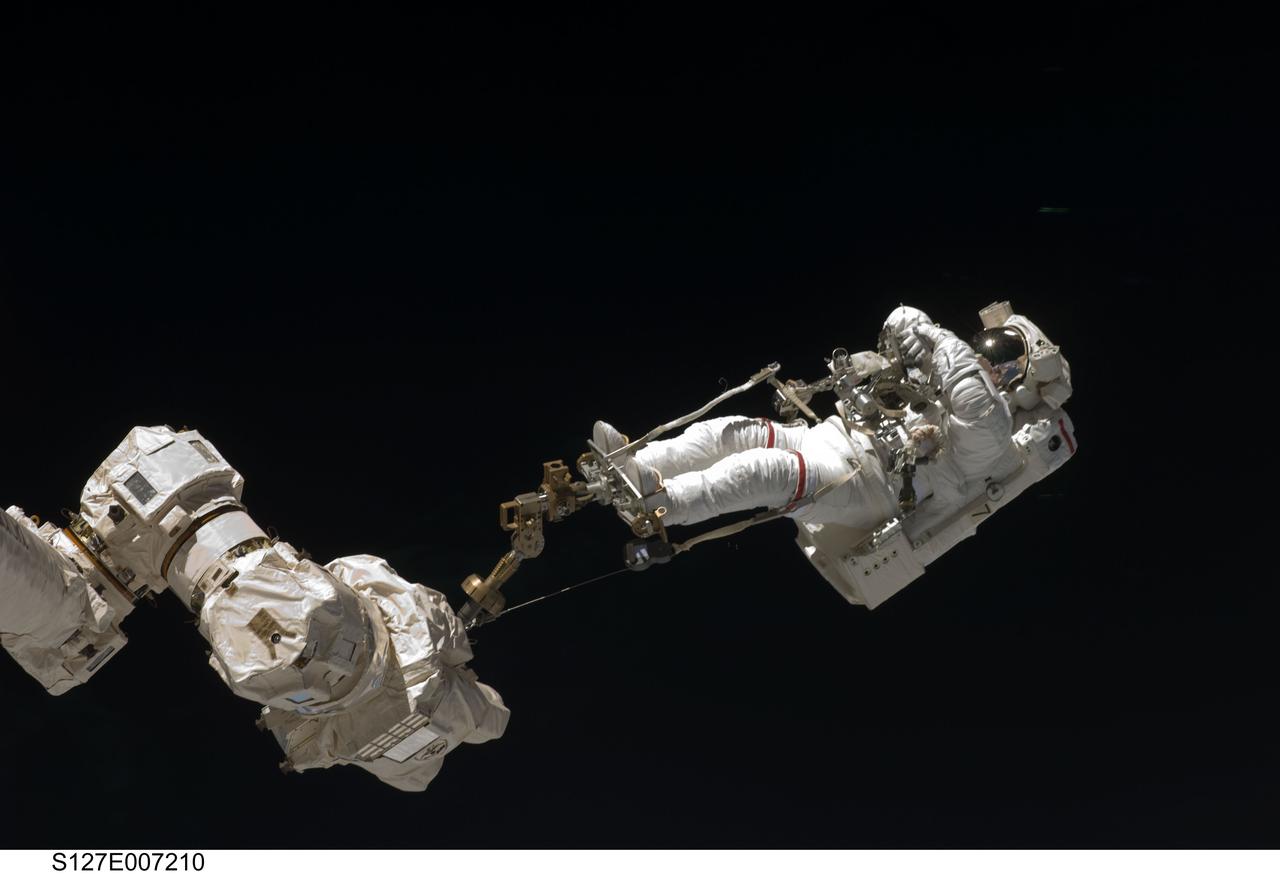
S127-E-007210 (20 July 2009) --- This is one of a series of digital still images showing astronaut Dave Wolf performing his second spacewalk and the Endeavour’s second also of the scheduled five overall in a little over a week’s time to continue work on the International Space Station. Astronauts Wolf and Tom Marshburn (out of frame), both mission specialists, successfully transferred a spare KU-band antenna to long-term storage on the space station, along with a backup coolant system pump module and a spare drive motor for the station's robot arm transporter. Installation of a television camera on the Japanese Exposed Facility experiment platform was deferred to a later spacewalk.
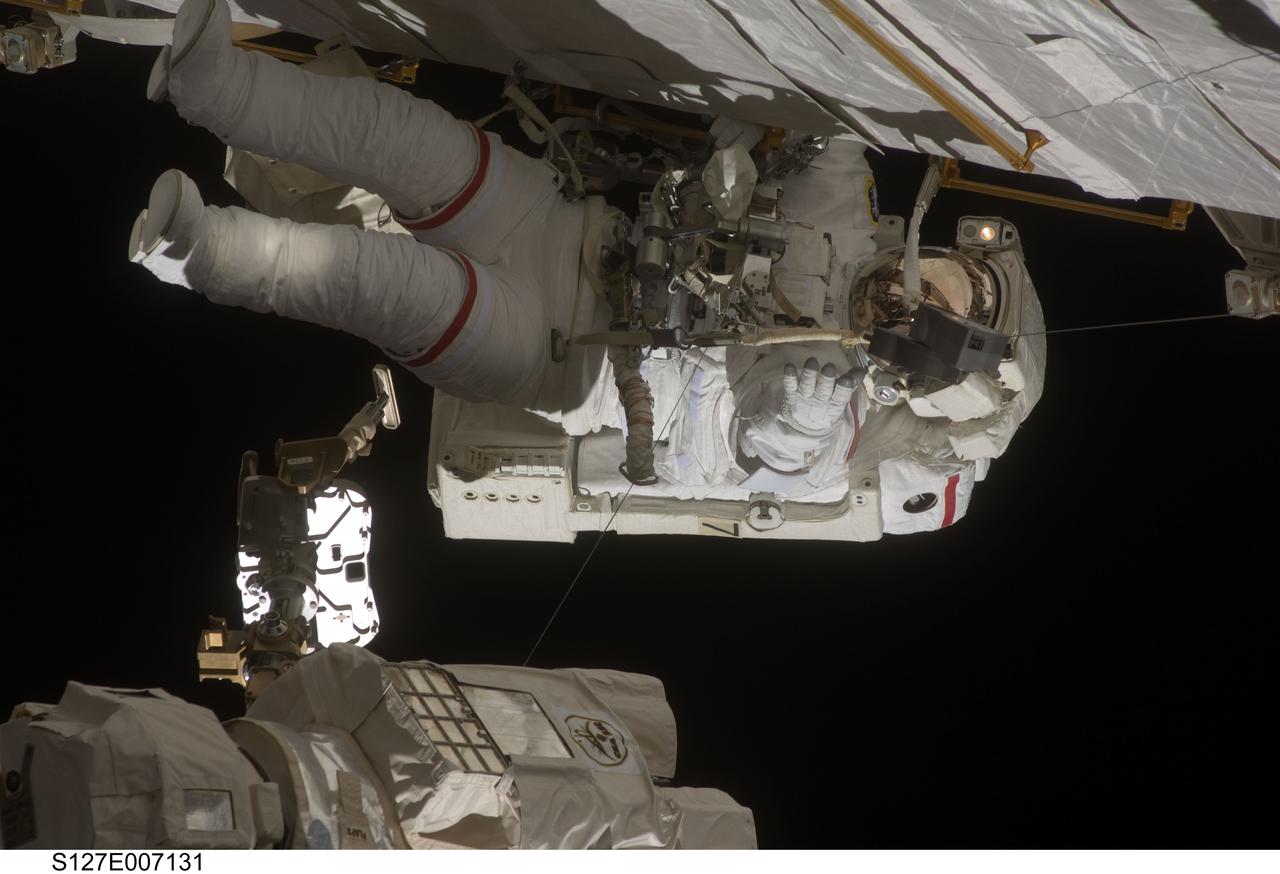
S127-E-007131 (20 July 2009) --- This is one of a series of digital still images showing astronaut Dave Wolf performing his second spacewalk and the Endeavour’s second also of the scheduled five overall in a little over a week’s time to continue work on the International Space Station. Astronauts Wolf and Tom Marshburn (out of frame), both mission specialists, successfully transferred a spare KU-band antenna to long-term storage on the space station, along with a backup coolant system pump module and a spare drive motor for the station's robot arm transporter. Installation of a television camera on the Japanese Exposed Facility experiment platform was deferred to a later spacewalk.
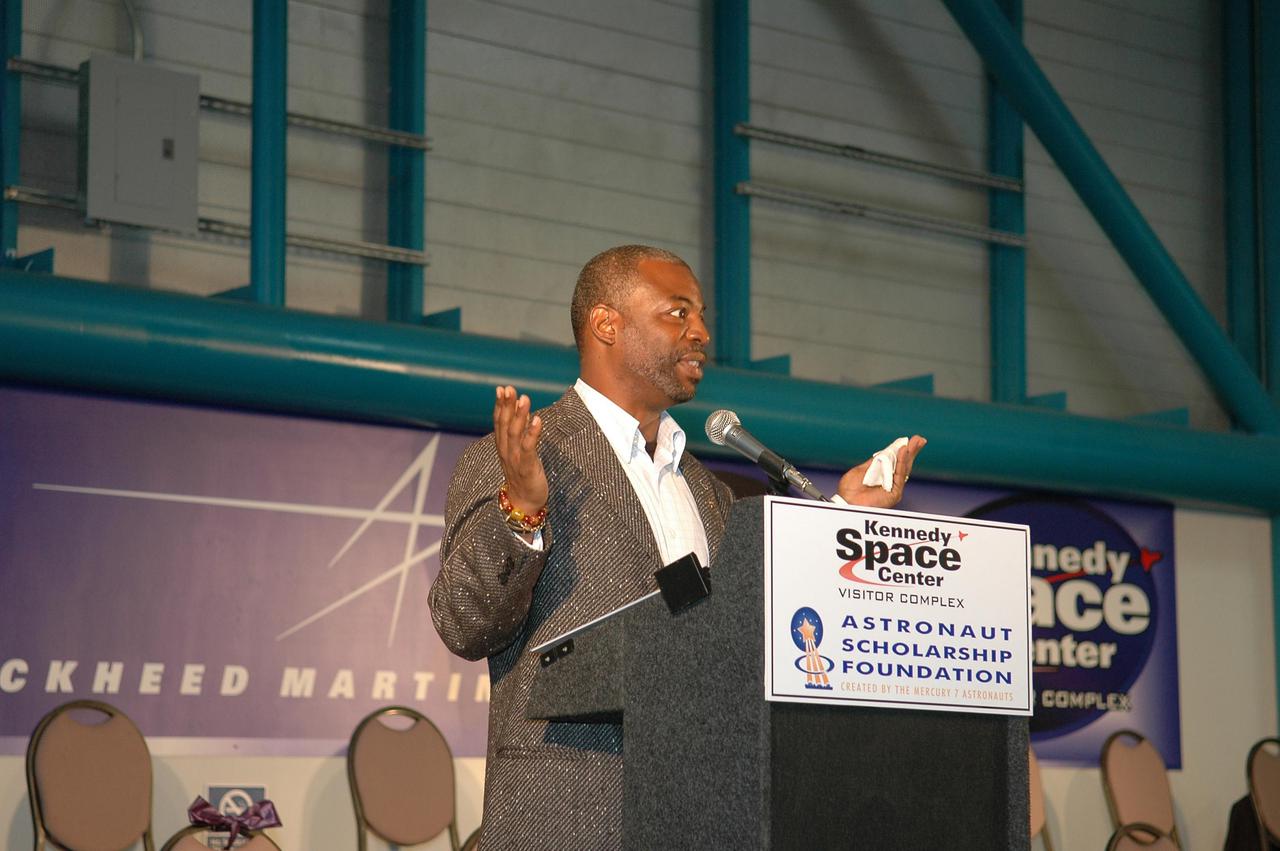
KENNEDY SPACE CENTER, FLA. - LeVar Burton, who starred in the television series “Star Trek: The Next Generation,” talks to guests as master of ceremonies for the Astronaut Hall of Fame Induction ceremony in Kennedy Space Center Visitor Complex’s Apollo_Saturn V Center. The new inductees are Bruce McCandless, Joe Allen and Gordon Fullerton. Recognized for their individual flight accomplishments and contributions to the success and future success of the U.S. space program, this elite group of inductees is among only 60 astronauts to be honored in the Hall of Fame and the fourth group of Space Shuttle astronauts named.
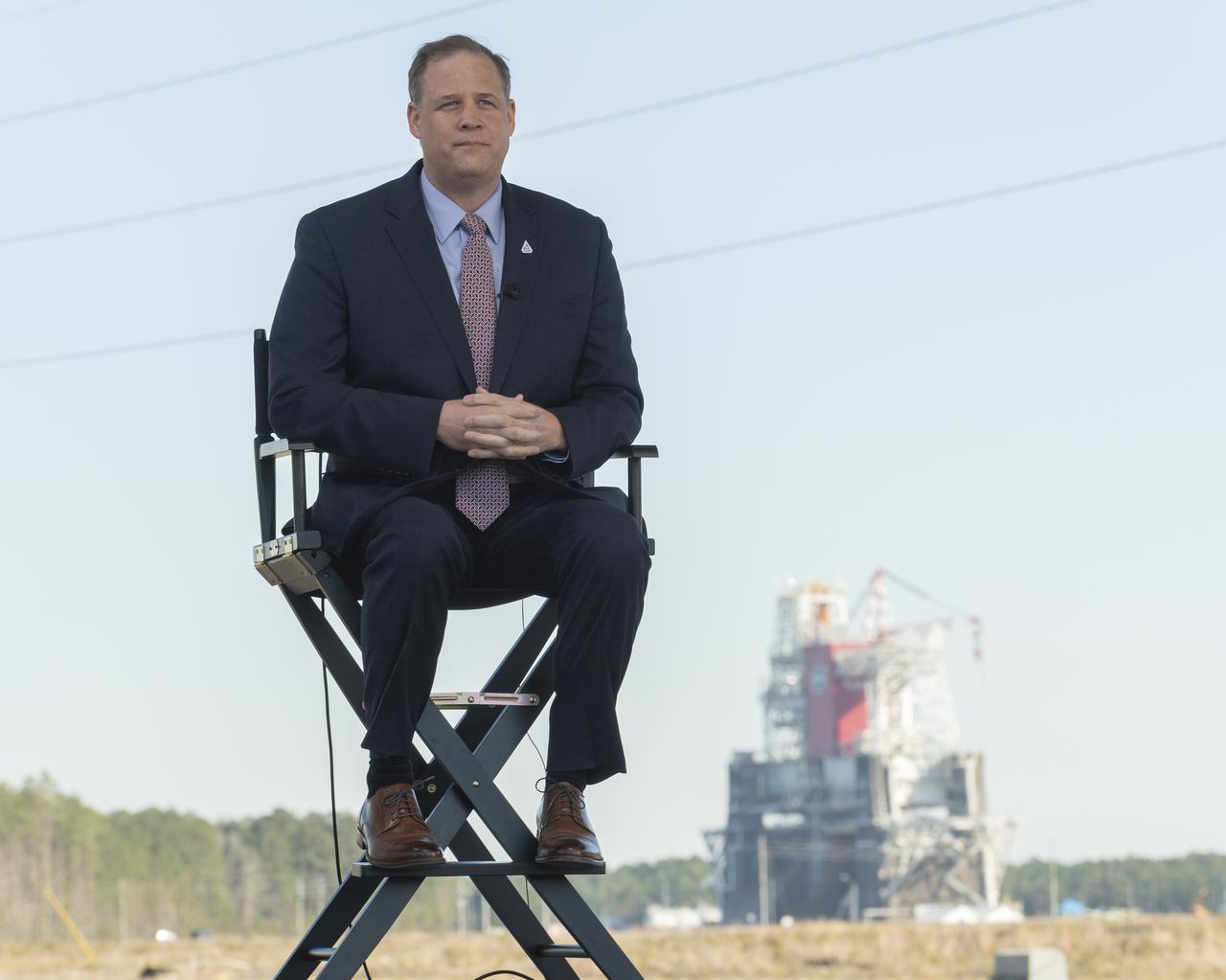
NASA Administrator Jim Bridenstine discusses the upcoming Green Run hot fire test on NASA television, Saturday, January 16, 2021, at NASA's Stennis Space Center near Bay St. Louis, Mississippi. In the background, the core stage for the first flight of NASA’s Space Launch System rocket is seen in the B-2 Test Stand ahead of a scheduled eight minute duration hot fire test. The hot fire test is the final stage of the Green Run test series, a comprehensive assessment of the Space Launch System’s core stage prior to launching the Artemis I mission to the Moon. Photo Credit: (NASA/Robert Markowitz)
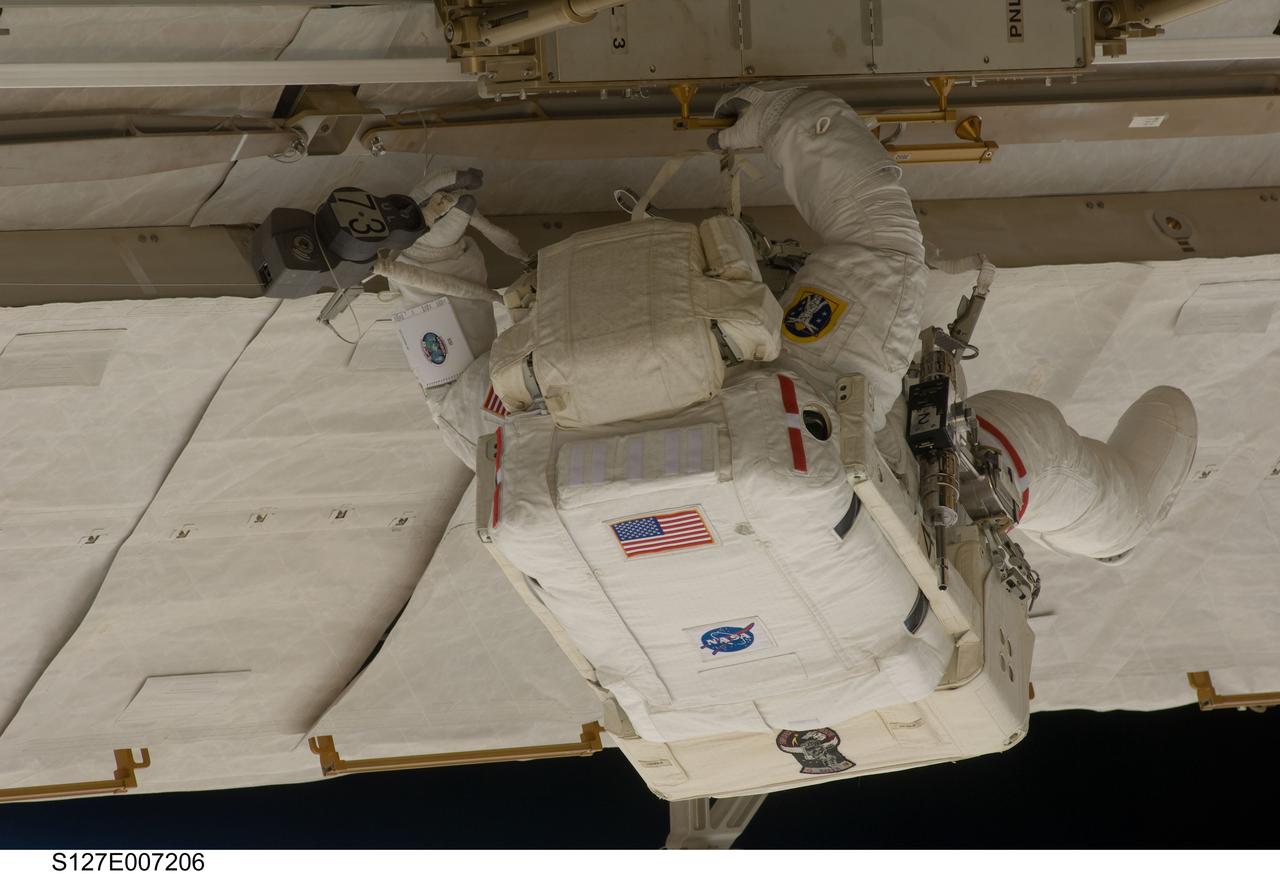
S127-E-007206 (20 July 2009) --- This is one of a series of digital still images showing astronaut Tom Marshburn performing his first spacewalk and the Endeavour crew’s second of the scheduled five overall in a little more than a week to continue work on the International Space Station. Astronauts Marshburn and Dave Wolf (out of frame), both mission specialists, successfully transferred a spare KU-band antenna to long-term storage on the space station, along with a backup coolant system pump module and a spare drive motor for the station's robot arm transporter. Installation of a television camera on the Japanese Exposed Facility experiment platform was deferred to a later spacewalk.
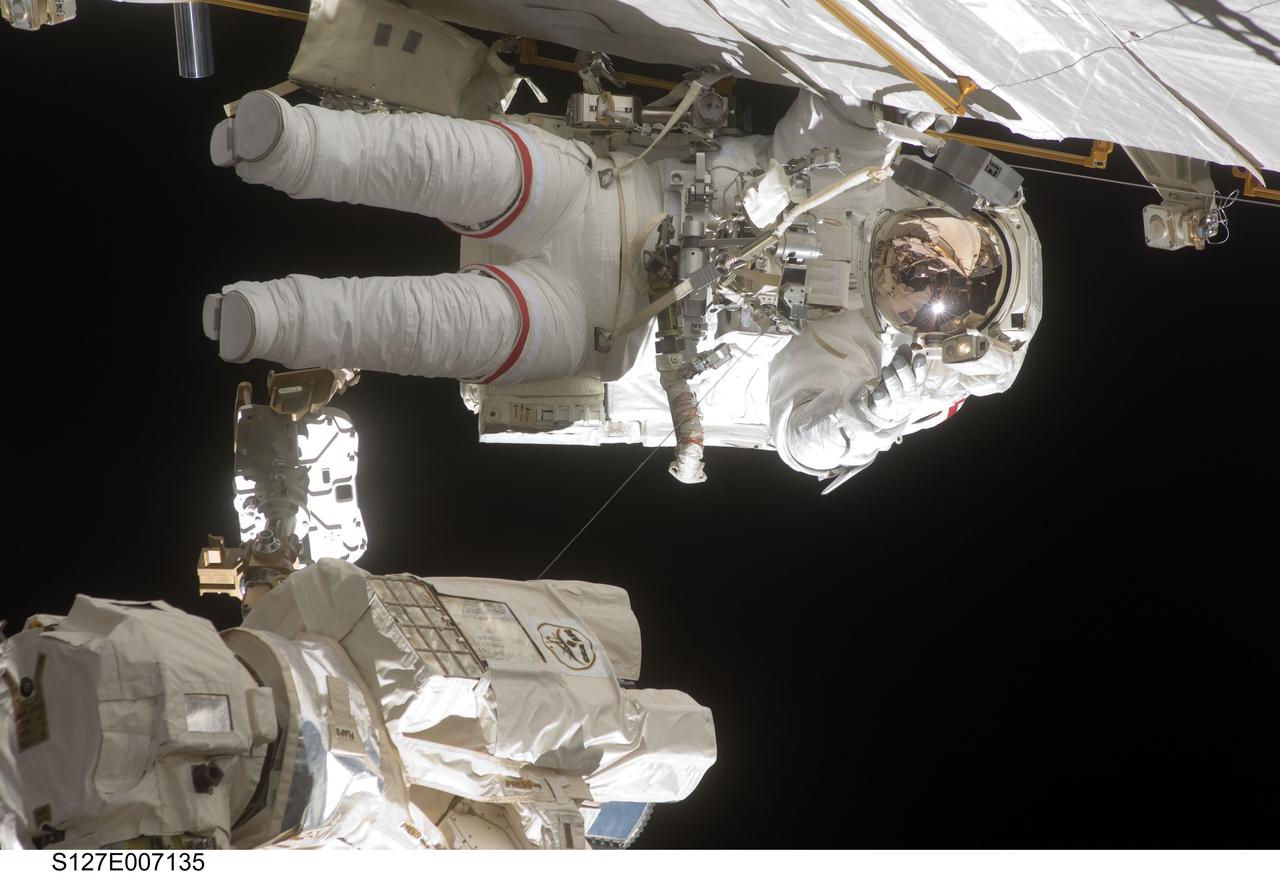
S127-E-007135 (20 July 2009) --- This is one of a series of digital still images showing astronaut Dave Wolf performing his second spacewalk and the Endeavour’s second also of the scheduled five overall in a little over a week’s time to continue work on the International Space Station. Astronauts Wolf and Tom Marshburn (out of frame), both mission specialists, successfully transferred a spare KU-band antenna to long-term storage on the space station, along with a backup coolant system pump module and a spare drive motor for the station's robot arm transporter. Installation of a television camera on the Japanese Exposed Facility experiment platform was deferred to a later spacewalk.
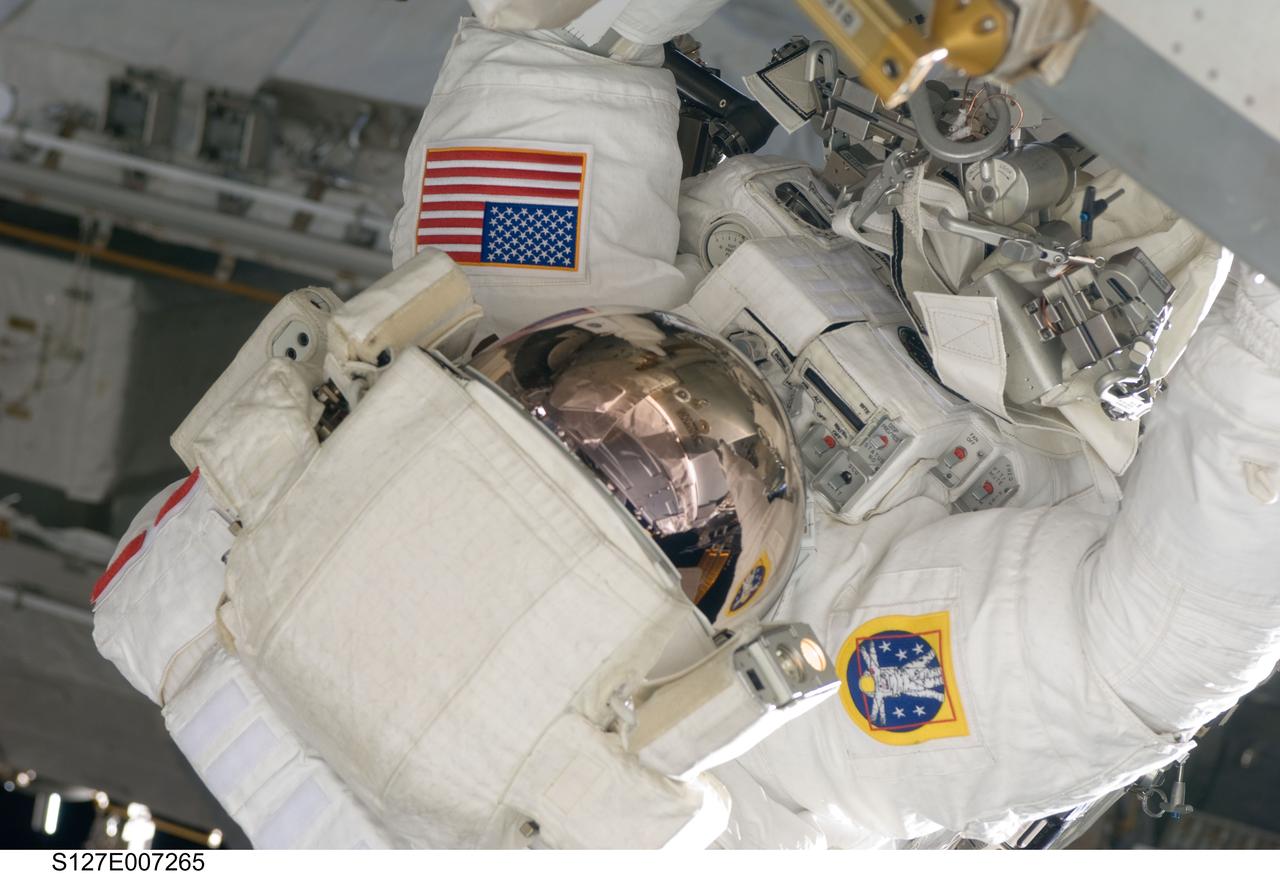
S127-E-007265 (20 July 2009) --- This is one of a series of digital still images showing astronaut Tom Marshburn performing his first spacewalk and the Endeavour crew’s second of the scheduled five overall in a little more than a week to continue work on the International Space Station. Astronauts Marshburn and Dave Wolf (out of frame), both mission specialists, successfully transferred a spare KU-band antenna to long-term storage on the space station, along with a backup coolant system pump module and a spare drive motor for the station's robot arm transporter. Installation of a television camera on the Japanese Exposed Facility experiment platform was deferred to a later spacewalk.

S127-E-007236 (20 July 2009) --- This is one of a series of digital still images showing astronaut Tom Marshburn performing his first spacewalk and the Endeavour crew’s second of the scheduled five overall in a little more than a week to continue work on the International Space Station. Astronauts Marshburn and Dave Wolf (out of frame), both mission specialists, successfully transferred a spare KU-band antenna to long-term storage on the space station, along with a backup coolant system pump module and a spare drive motor for the station's robot arm transporter. Installation of a television camera on the Japanese Exposed Facility experiment platform was deferred to a later spacewalk.
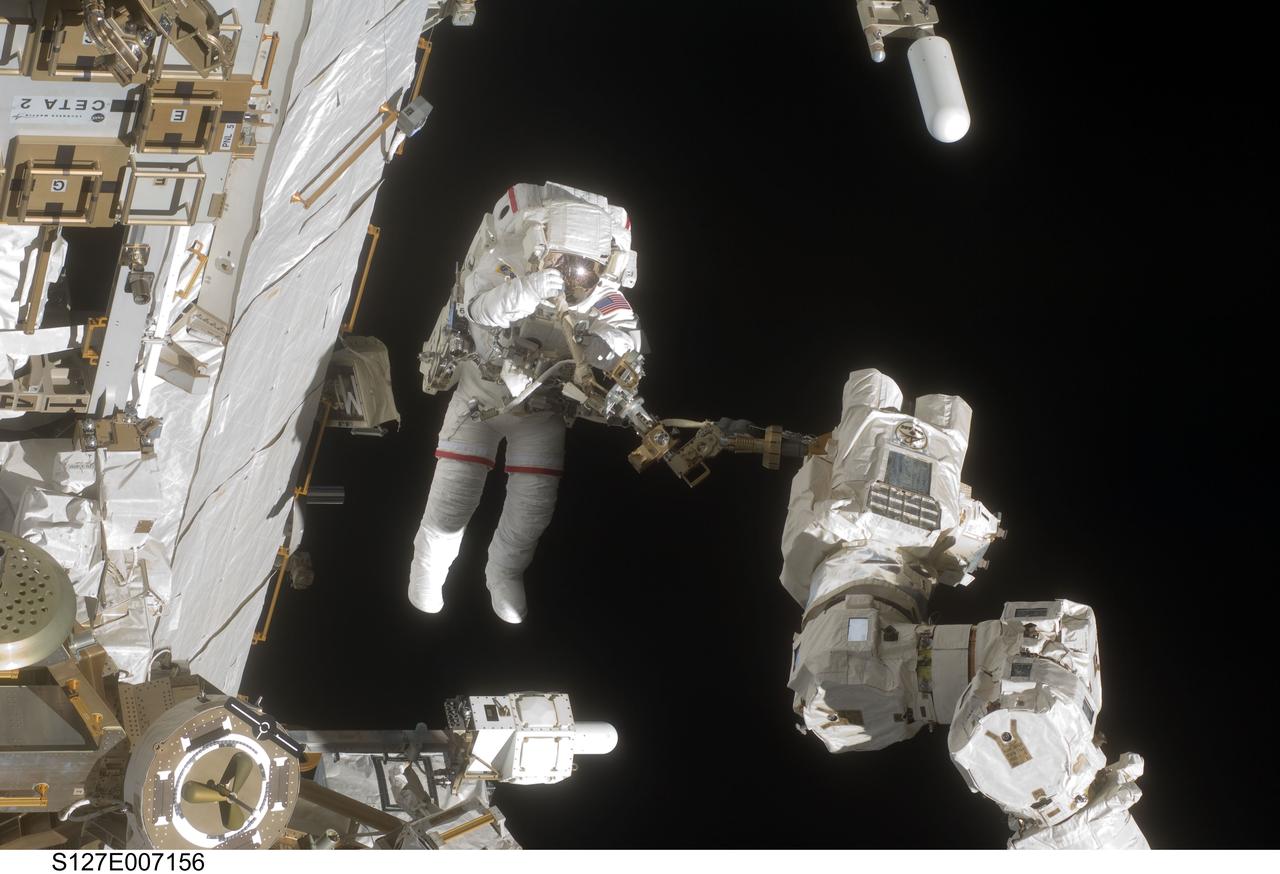
S127-E-007156 (20 July 2009) --- This is one of a series of digital still images showing astronaut Dave Wolf performing his second spacewalk and the Endeavour’s second also of the scheduled five overall in a little over a week’s time to continue work on the International Space Station. Astronauts Wolf and Tom Marshburn (out of frame), both mission specialists, successfully transferred a spare KU-band antenna to long-term storage on the space station, along with a backup coolant system pump module and a spare drive motor for the station's robot arm transporter. Installation of a television camera on the Japanese Exposed Facility experiment platform was deferred to a later spacewalk.
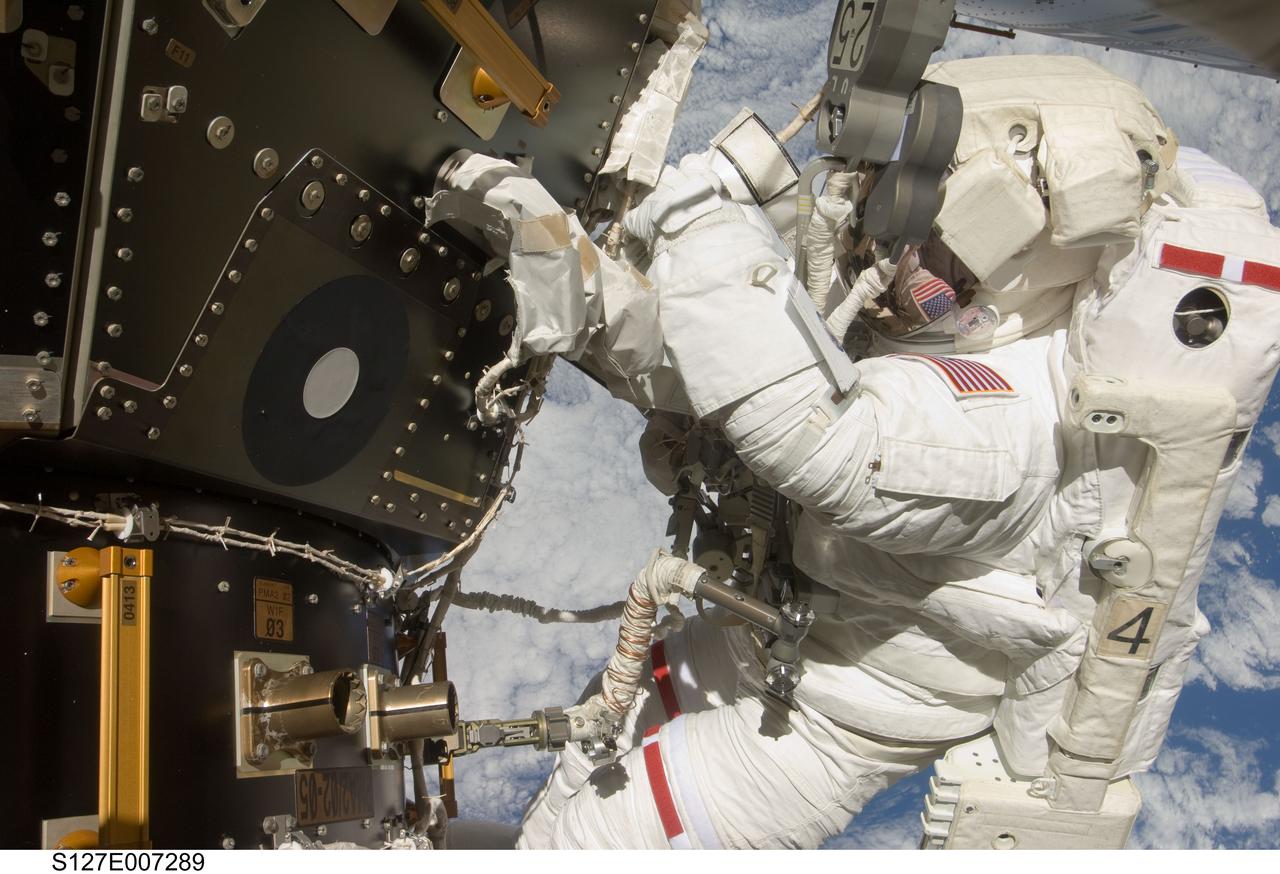
S127-E-007289 (20 July 2009) --- This is one of a series of digital still images showing astronaut Tom Marshburn performing his first spacewalk and the Endeavour crew’s second of the scheduled five overall in a little more than a week to continue work on the International Space Station. Astronauts Marshburn and Dave Wolf (out of frame), both mission specialists, successfully transferred a spare KU-band antenna to long-term storage on the space station, along with a backup coolant system pump module and a spare drive motor for the station's robot arm transporter. Installation of a television camera on the Japanese Exposed Facility experiment platform was deferred to a later spacewalk.
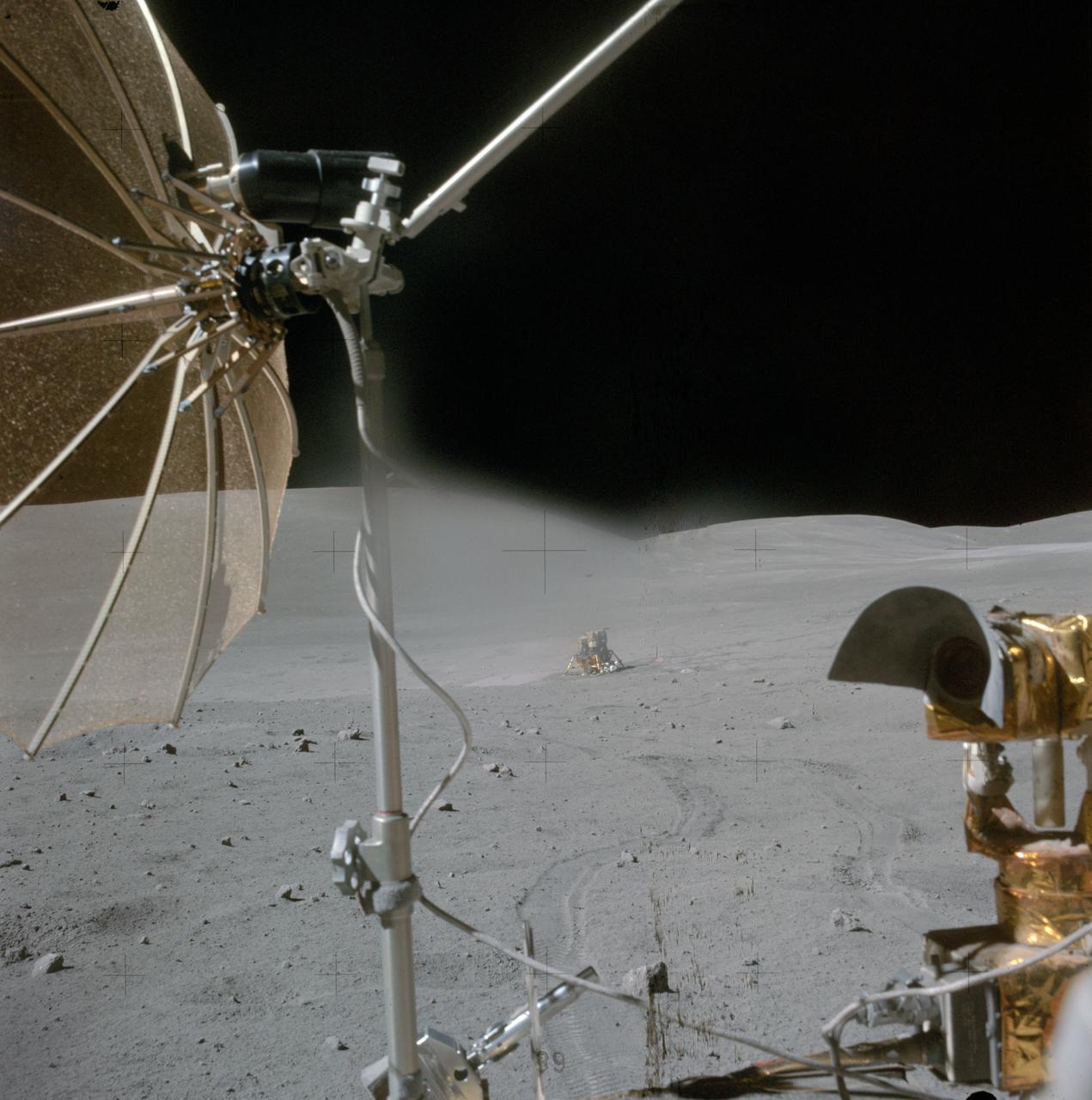
AS16-116-18678 (23 April 1972) --- A view from the moving Apollo 16 Lunar Roving Vehicle (LRV) as the crew men headed "home" at the end of the mission's third and final extravehicular activity (EVA). Astronaut John W. Young called attention to the series of block fields between the Lunar Module (LM) and LRV. Young also noted that, "The LM was obviously sitting in the only flat place around." Stone Mountain stretches about half way across the background. The high gain antenna and the RCA television camera on the LRV are in the foreground. While astronauts Young, commander; and Charles M. Duke Jr., lunar module pilot; descended in the Apollo 16 LM "Orion" to explore the Descartes highlands landing site on the moon, astronaut Thomas K. Mattingly II, command module pilot, remained with the Command and Service Modules (CSM) "Casper" in lunar orbit.
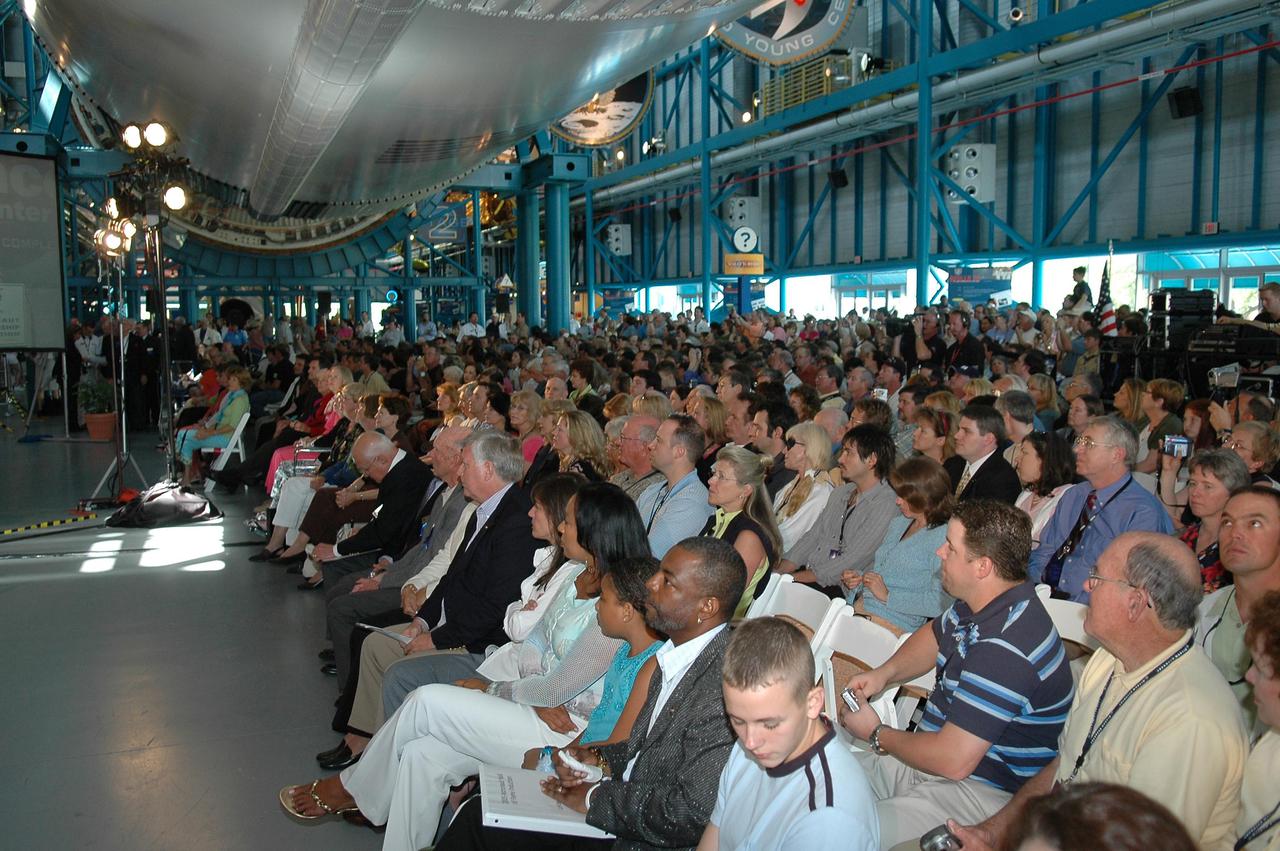
KENNEDY SPACE CENTER, FLA. - A crowd of 1,000 gather in Kennedy Space Center Visitor Complex’s Apollo_Saturn V Center for the Astronaut Hall of Fame Induction Ceremony. The event was attended by KSC Director Jim Kennedy and his wife, Bernadette, many previous inductees and invited guests, as well as the media, to honor the newest inductees Bruce McCandless, Joe Allen and Gordon Fullerton. Master of Ceremonies was LeVar Burton, who starred in the television series “Star Trek: The Next Generation.” Recognized for their individual flight accomplishments and contributions to the success and future success of the U.S. space program, this elite group of inductees is among only 60 astronauts to be honored in the Hall of Fame and the fourth group of Space Shuttle astronauts named.
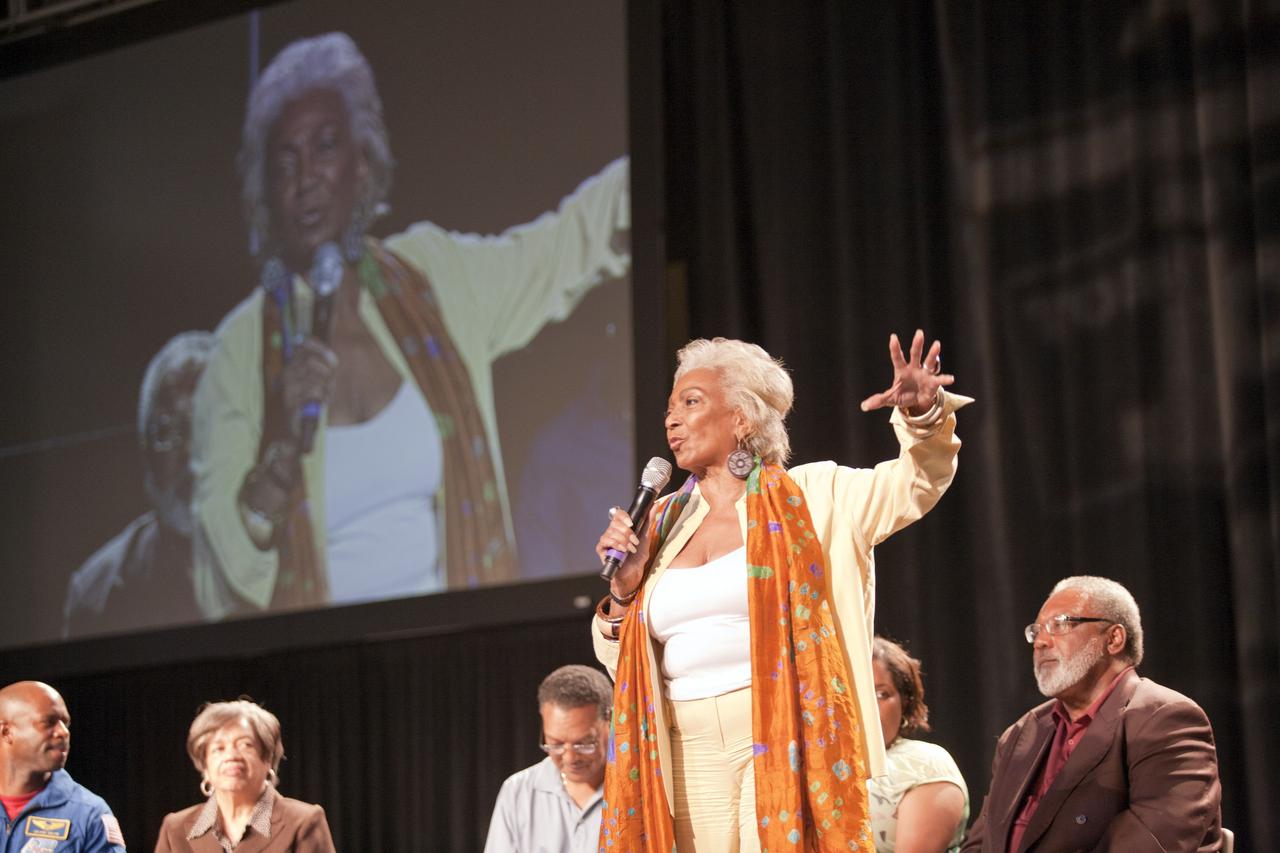
ORLANDO, Fla. -- During the 2010 Tom Joyner Family Reunion, space activist and actress Nichelle Nichols talks to attendees at the Gaylord Palms Convention Center in Orlando, Fla. To encourage student attendees to focus on pursuing careers in science, technology, engineering and mathematics (STEM), NASA featured some of its greatest legends and trailblazers during a panel discussion at the reunion event. In the 1960s, Nichols played communications officer Lieutenant Uhura in the Star Trek television series. Other panel members included NASA astronaut Leland Melvin, Christine Darden, Lew Braxton, Robyn Gordon and Jim Jennings. NASA's Education Office sponsored the panel discussion and educational activities as part of the agency's "Summer of Innovation" initiative and the federal "Educate to Innovate" campaign. Photo credit: NASA/Amanda Diller
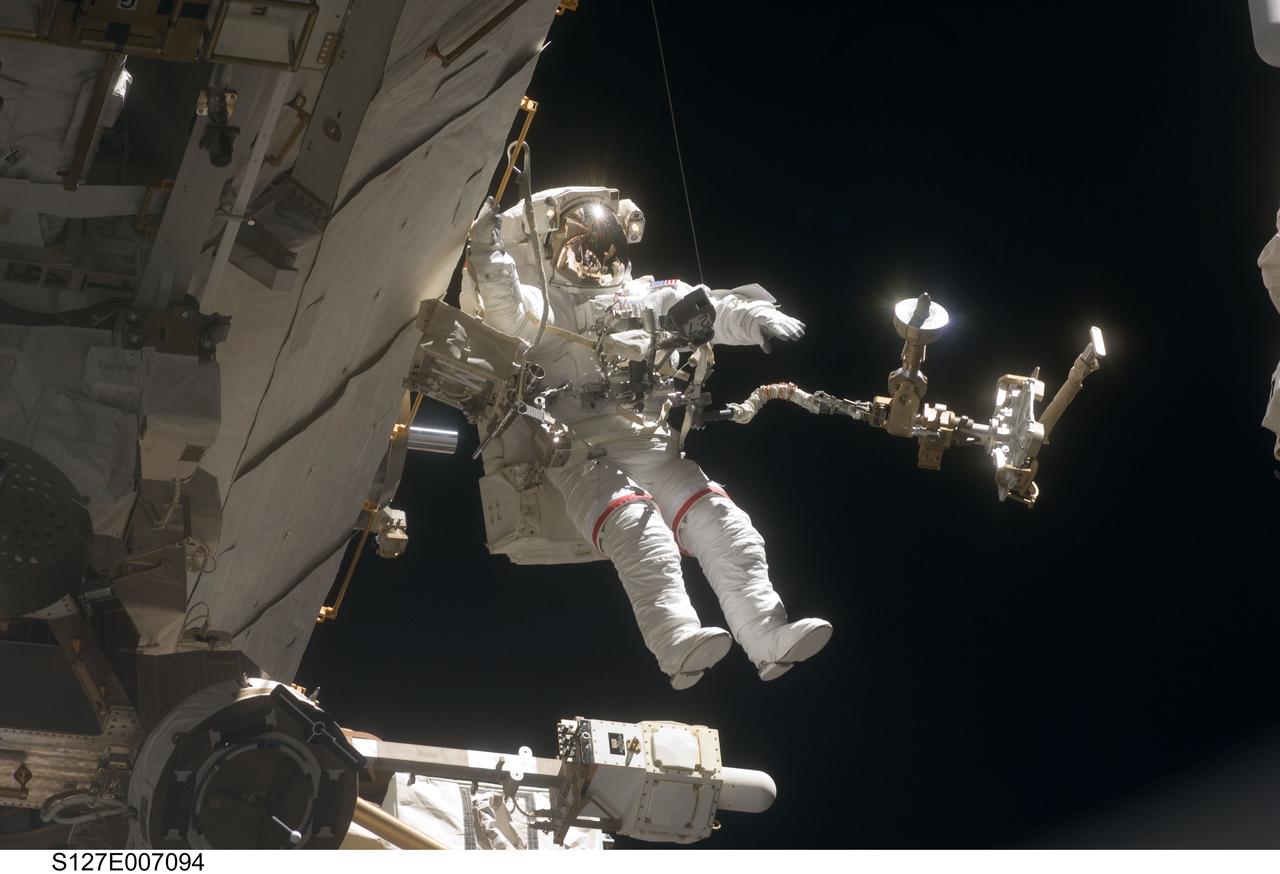
S127-E-007094 (20 July 2009) --- This is one of a series of digital still images showing astronaut Dave Wolf performing his second spacewalk and the Endeavour’s second also of the scheduled five overall in a little over a week’s time to continue work on the International Space Station. The equipment floating in front of Wolf is tethered to his spacesuit. Astronauts Wolf and Tom Marshburn (out of frame), both mission specialists, successfully transferred a spare KU-band antenna to long-term storage on the space station, along with a backup coolant system pump module and a spare drive motor for the station's robot arm transporter. Installation of a television camera on the Japanese Exposed Facility experiment platform was deferred to a later spacewalk.
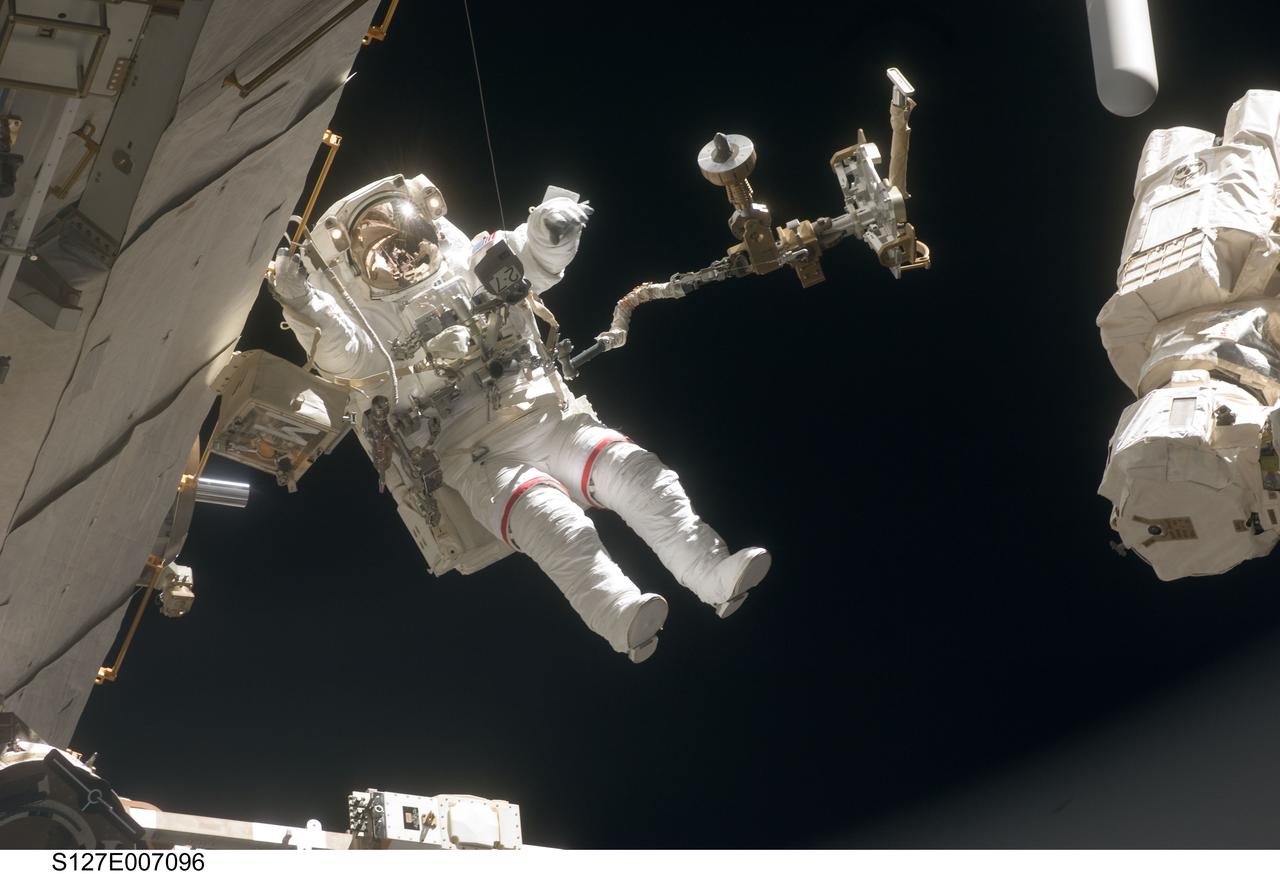
S127-E-007096 (20 July 2009) --- This is one of a series of digital still images showing astronaut Dave Wolf performing his second spacewalk and the Endeavour’s second also of the scheduled five overall in a little over a week’s time to continue work on the International Space Station. The equipment floating in front of Wolf is tethered to his spacesuit. Astronauts Wolf and Tom Marshburn (out of frame), both mission specialists, successfully transferred a spare KU-band antenna to long-term storage on the space station, along with a backup coolant system pump module and a spare drive motor for the station's robot arm transporter. Installation of a television camera on the Japanese Exposed Facility experiment platform was deferred to a later spacewalk.
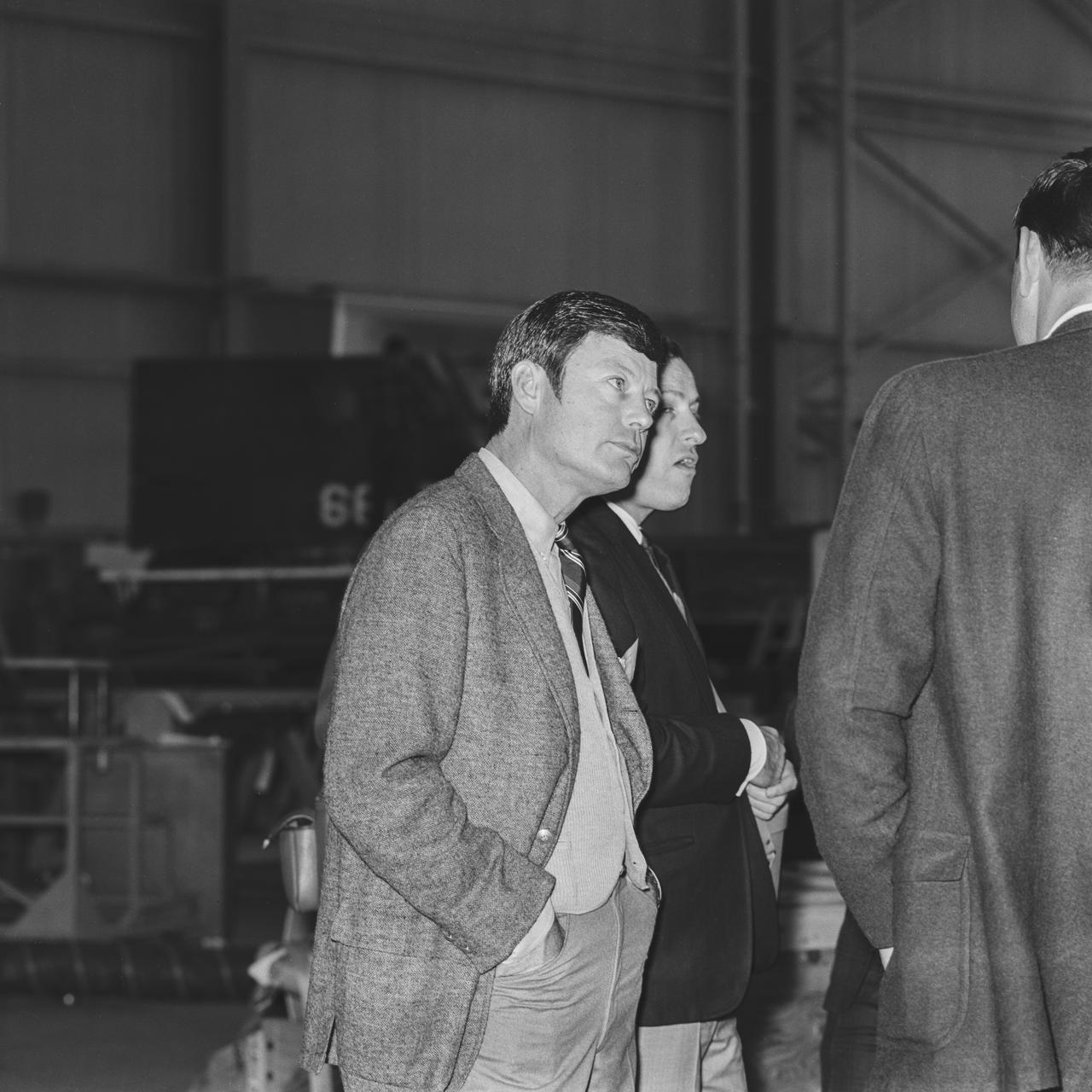
The 1960s Star Trek television series’ cast members visit NASA Dryden Flight Research Center, now Armstrong, in 1967. Chief Medical Officer Leonard ‘Bones’ McCoy played by DeForest Kelley talks with NASA officials in one of the center’s aircraft hangar.
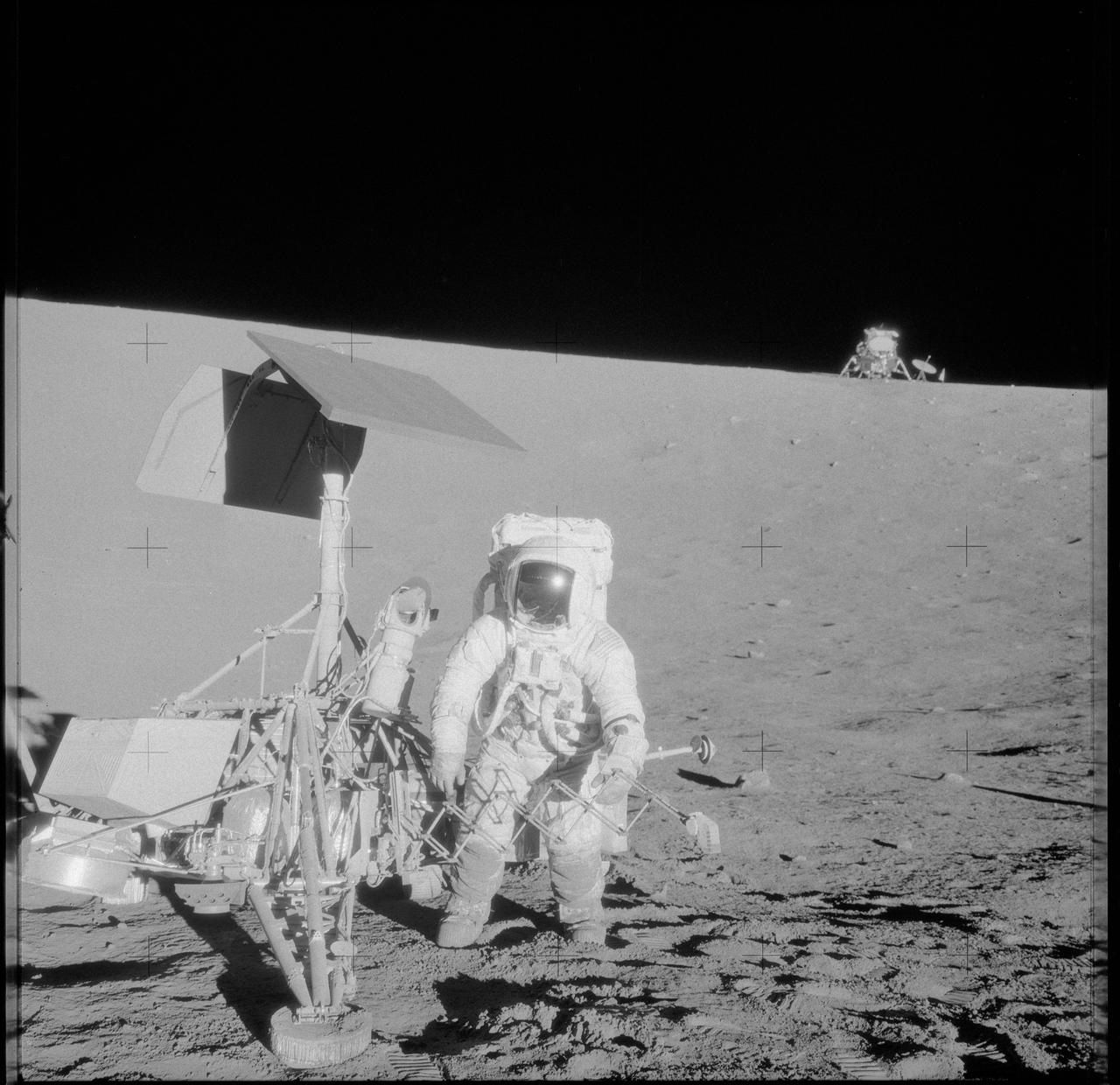
AS12-48-7136 (20 Nov. 1969) --- Astronaut Charles Conrad Jr., commander, examines the unmanned Surveyor 3 spacecraft during the second Apollo 12 extravehicular activity (EVA). In the background is the lunar module, parked where the crew had landed it in the Ocean of Storms only 600 feet from Surveyor 3. This series of pictures documents the only occasion wherein Apollo astronauts landed near or had hands-on contact with another spacecraft which had arrived on the moon's surface well ahead of them. This picture was taken by astronaut Alan L. Bean, lunar module pilot. The television camera and several other pieces were taken from Surveyor 3 and brought back to Earth for scientific examination. Surveyor 3 soft-landed on the moon on April 19, 1967. Astronaut Richard F. Gordon Jr., command module pilot, remained with the Command and Service Modules (CSM) in lunar orbit while astronauts Conrad and Bean descended in the LM to explore the moon. Photo credit: NASA

KENNEDY SPACE CENTER, FLA. - Owen Garriott, chairman of the Astronaut Hall of Fame, speaks to guests at the Induction Ceremony of three new additions to the Hall of Fame: Gordon Fullerton, Bruce McCandless and Joe Allen. Seated on stage are current Hall of Famers, from left in the back row, Dick Gordon, Walt Cunningham, Bill Anders, Ed Mitchell, Al Worden, Charles Duke, Jack Lousma, Bill Pogue, Robert Crippen, Dan Brandenstein, Robert “Hoot” Gibson and Stephen Covey. In front, from left, are Master of Ceremonies LeVar Burton, who starred in the television series “Star Trek: The Next Generation,” and Hall of Famers Scott Carpenter and John Young, and at right, Jim Lovell and Fred Haise. The ceremony is being held in the Kennedy Space Center Visitor Complex’s Apollo_Saturn V Center. Recognized for their individual flight accomplishments and contributions to the success and future success of the U.S. space program, this elite group of inductees is among only 60 astronauts to be honored in the Hall of Fame and the fourth group of Space Shuttle astronauts named.
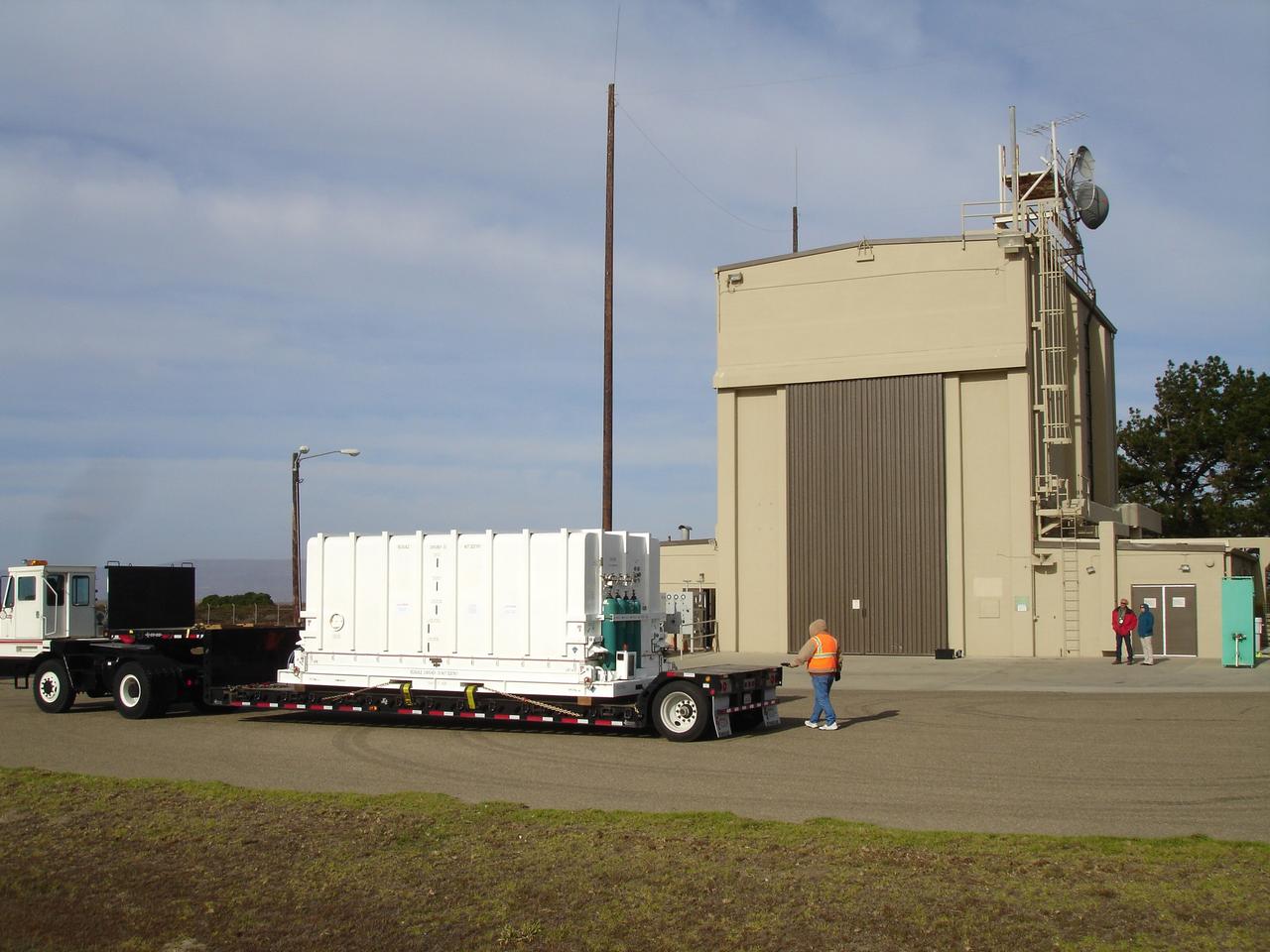
VANDENBERG AIR FORCE BASE, Calif. – The NOAA-N Prime spacecraft arrives at NASA's Hazardous Processing Facility on Vandenberg Air Force Base in California. NOAA-N Prime was built by Lockheed Martin Space Systems Company for its Advanced Television Infrared Observational Satellites -N series. It is the latest polar-orbiting operational environmental weather satellite developed by NASA for the National Oceanic and Atmospheric Administration. The satellite will provide a platform to support environmental monitoring instruments for imaging and measuring the Earth's atmosphere, its surface and cloud cover, including Earth radiation, atmospheric ozone, aerosol distribution, sea surface temperature and vertical temperature and water profiles in the troposphere and stratosphere. The satellite will assist in measuring proton and electron fluxes at orbit altitude, collecting data from remote platforms to assist the Search and Rescue Satellite-Aided Tracking system. The satellite will be launched from the Western Range at Vandenberg AFB by a United Launch Alliance two-stage Delta II rocket managed by NASA's Launch Service Program at Kennedy. Photo credit: NASA/Jerry Nagy, VAFB
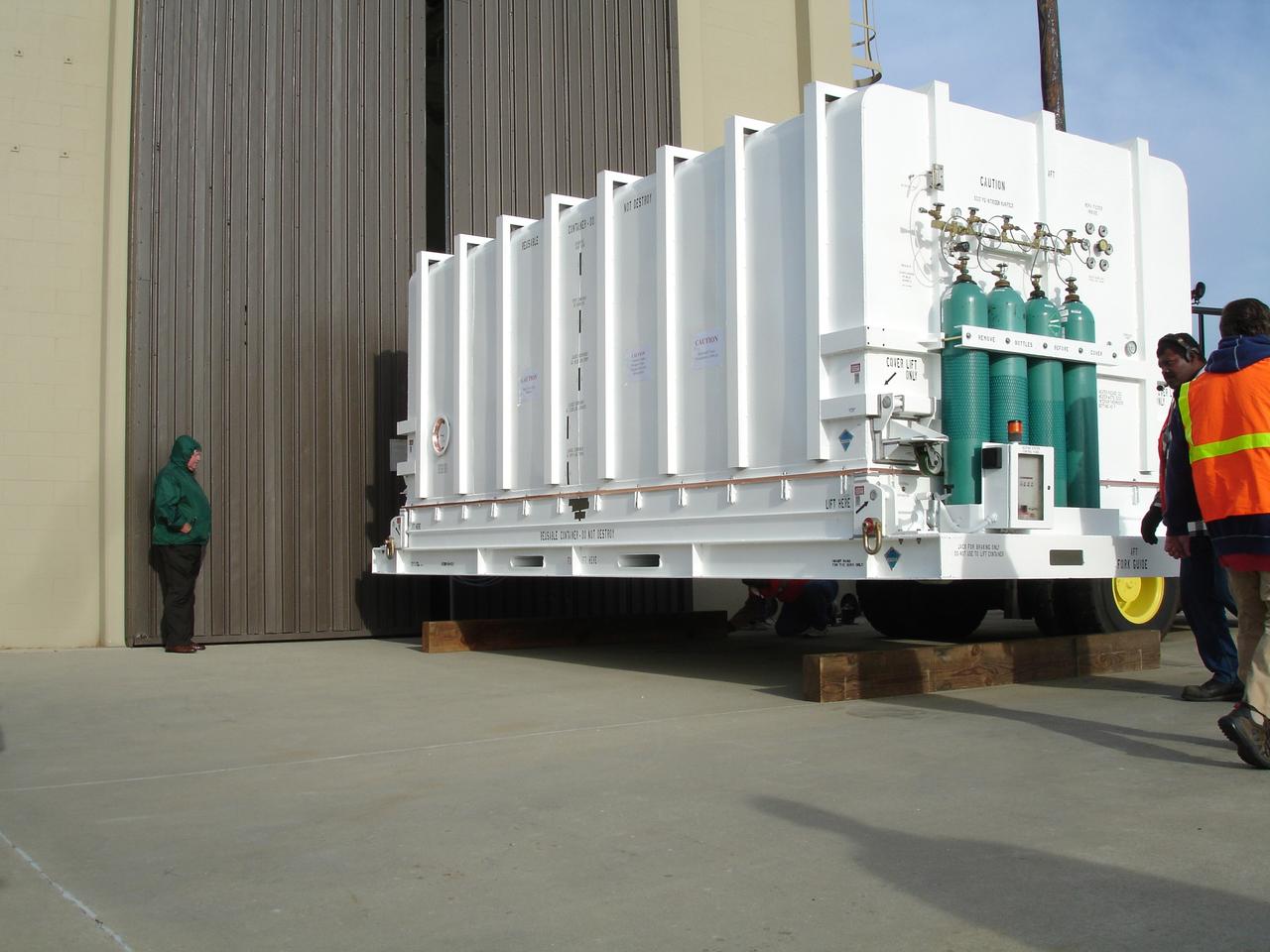
VANDENBERG AIR FORCE BASE, Calif. – The NOAA-N Prime spacecraft is positioned for movement into NASA's Hazardous Processing Facility on Vandenberg Air Force Base in California. NOAA-N Prime was built by Lockheed Martin Space Systems Company for its Advanced Television Infrared Observational Satellites -N series. It is the latest polar-orbiting operational environmental weather satellite developed by NASA for the National Oceanic and Atmospheric Administration. The satellite will provide a platform to support environmental monitoring instruments for imaging and measuring the Earth's atmosphere, its surface and cloud cover, including Earth radiation, atmospheric ozone, aerosol distribution, sea surface temperature and vertical temperature and water profiles in the troposphere and stratosphere. The satellite will assist in measuring proton and electron fluxes at orbit altitude, collecting data from remote platforms to assist the Search and Rescue Satellite-Aided Tracking system. The satellite will be launched from the Western Range at Vandenberg AFB by a United Launch Alliance two-stage Delta II rocket managed by NASA's Launch Service Program at Kennedy. Photo credit: NASA/Jerry Nagy, VAFB
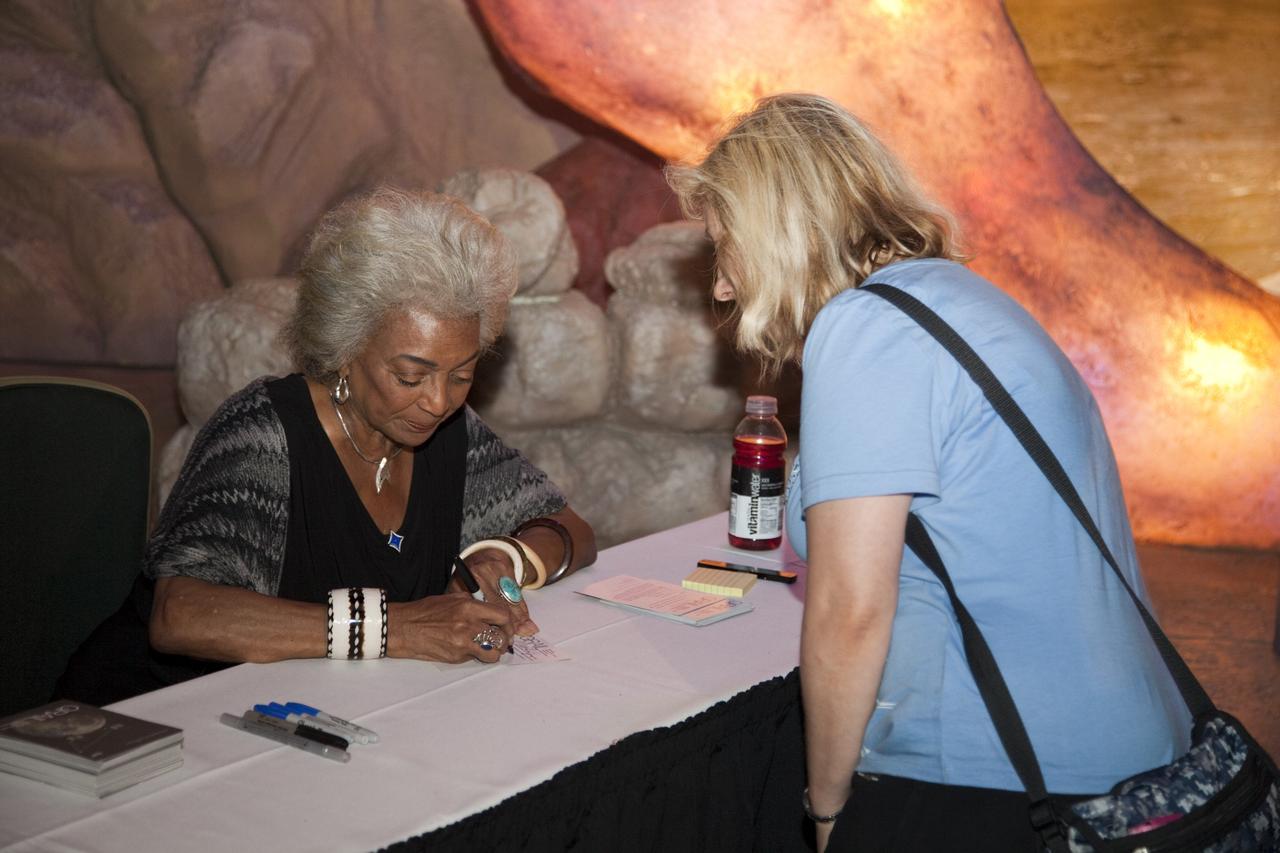
CAPE CANAVERAL, Fla. – CAPE CANAVERAL, Fla. – Actress Nichelle Nichols (Lt. Uhura on Star Trek) signs autographs for a guest at the Kennedy Space Center Visitor Complex in Florida during activities for the agency’s Gravity Recovery and Interior Laboratory mission (GRAIL). Nichols was on hand to celebrate the 45th anniversary of the first airing of the Star Trek television series. The Kennedy Space Center Visitor Complex is hosting “Star Trek: The Exhibition” to show visitors where “science fiction meets science fact.” GRAIL will fly twin spacecraft in tandem around the moon to precisely measure and map variations in the moon's gravitational field. The mission will provide the most accurate global gravity field to date for any planet, including Earth. This detailed information will reveal differences in the density of the moon's crust and mantle and will help answer fundamental questions about the moon's internal structure, thermal evolution, and history of collisions with asteroids. The aim is to map the moon's gravity field so completely that future moon vehicles can safely navigate anywhere on the moon’s surface. For more information, visit http://www.nasa.gov/grail. Photo credit: NASA/Frankie Martin

A Mod-1 2000-kilowatt wind turbine designed by National Aeronautics and Space Administration (NASA) Lewis Research Center and constructed in Boone, North Carolina. The wind turbine program was a joint program between NASA and the Energy Research and Development Administration (ERDA) during the 1970s to develop less expensive forms of energy. NASA Lewis was assigned the responsibility of developing large horizontal-axis wind turbines. The program included a series of increasingly powerful wind turbines, designated: Mod-0A, Mod-1, WTS-4, and Mod-5. The program’s first device was a Mod-0 100-kilowatt wind turbine test bed at NASA’s Plum Brook Station. There were four Mod-0A 200-kilowatt turbines built in New Mexico, Hawaii, Puerto Rico, and Rhode Island. The 2000-kilowatt wind turbine in North Carolina, seen here, was the only Mod-1 machine constructed. The two-bladed, 200-foot diameter device was built in May 1979 and began operation that September. The Mod-1 turbine performed exceedingly well and was fully integrated into the local power grid. NASA researchers also used the North Carolina device to study its effect on noise and television transmission.
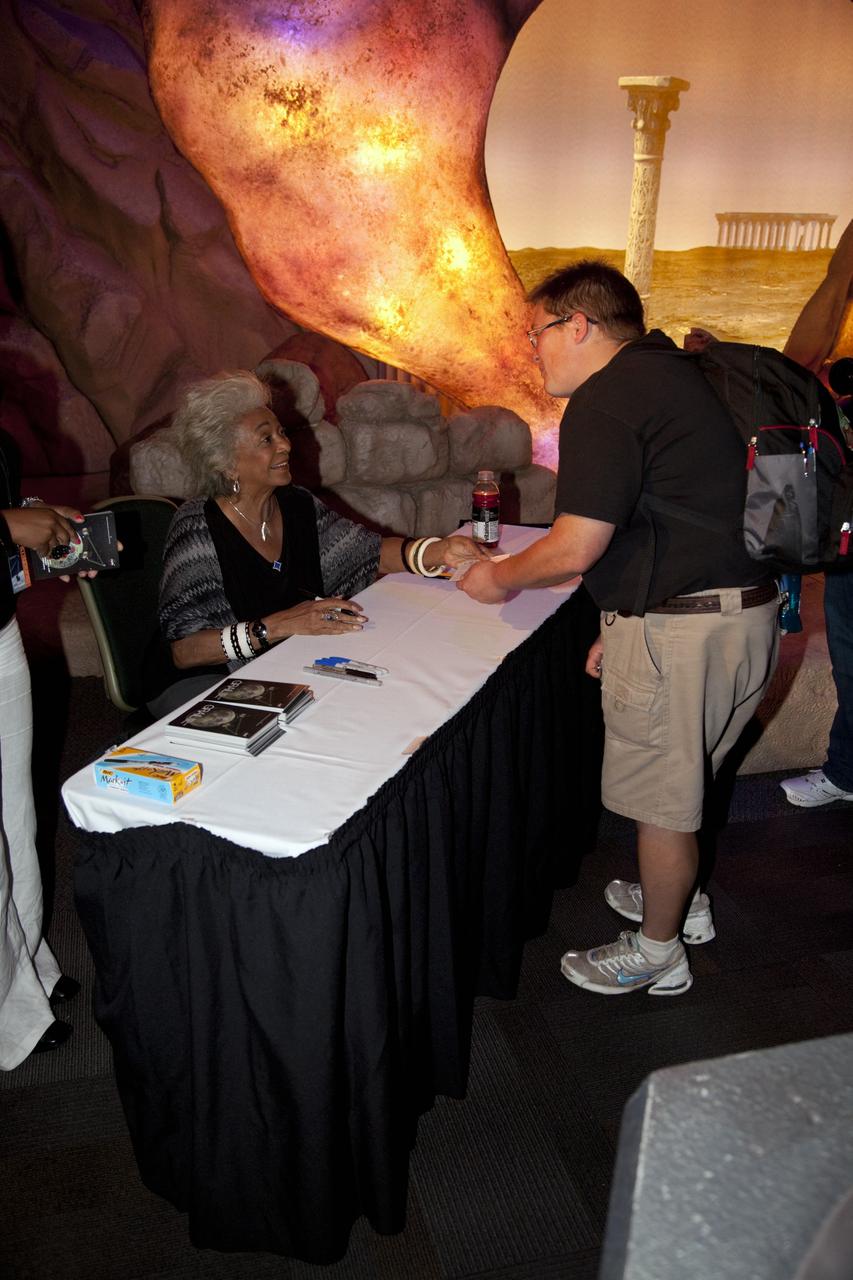
CAPE CANAVERAL, Fla. – Actress Nichelle Nichols (Lt. Uhura on Star Trek) signs autographs for a guest at the Kennedy Space Center Visitor Complex in Florida during activities for the agency’s Gravity Recovery and Interior Laboratory mission (GRAIL). Nichols was on hand to celebrate the 45th anniversary of the first airing of the Star Trek television series. The Kennedy Space Center Visitor Complex is hosting “Star Trek: The Exhibition” to show visitors where “science fiction meets science fact.” GRAIL will fly twin spacecraft in tandem around the moon to precisely measure and map variations in the moon's gravitational field. The mission will provide the most accurate global gravity field to date for any planet, including Earth. This detailed information will reveal differences in the density of the moon's crust and mantle and will help answer fundamental questions about the moon's internal structure, thermal evolution, and history of collisions with asteroids. The aim is to map the moon's gravity field so completely that future moon vehicles can safely navigate anywhere on the moon’s surface. For more information, visit http://www.nasa.gov/grail. Photo credit: NASA/Frankie Martin

VANDENBERG AIR FORCE BASE, Calif. – Workers move the NOAA-N Prime spacecraft into NASA's Hazardous Processing Facility on Vandenberg Air Force Base in California. NOAA-N Prime was built by Lockheed Martin Space Systems Company for its Advanced Television Infrared Observational Satellites -N series. It is the latest polar-orbiting operational environmental weather satellite developed by NASA for the National Oceanic and Atmospheric Administration. The satellite will provide a platform to support environmental monitoring instruments for imaging and measuring the Earth's atmosphere, its surface and cloud cover, including Earth radiation, atmospheric ozone, aerosol distribution, sea surface temperature and vertical temperature and water profiles in the troposphere and stratosphere. The satellite will assist in measuring proton and electron fluxes at orbit altitude, collecting data from remote platforms to assist the Search and Rescue Satellite-Aided Tracking system. The satellite will be launched from the Western Range at Vandenberg AFB by a United Launch Alliance two-stage Delta II rocket managed by NASA's Launch Service Program at Kennedy. Photo credit: NASA/Jerry Nagy, VAFB
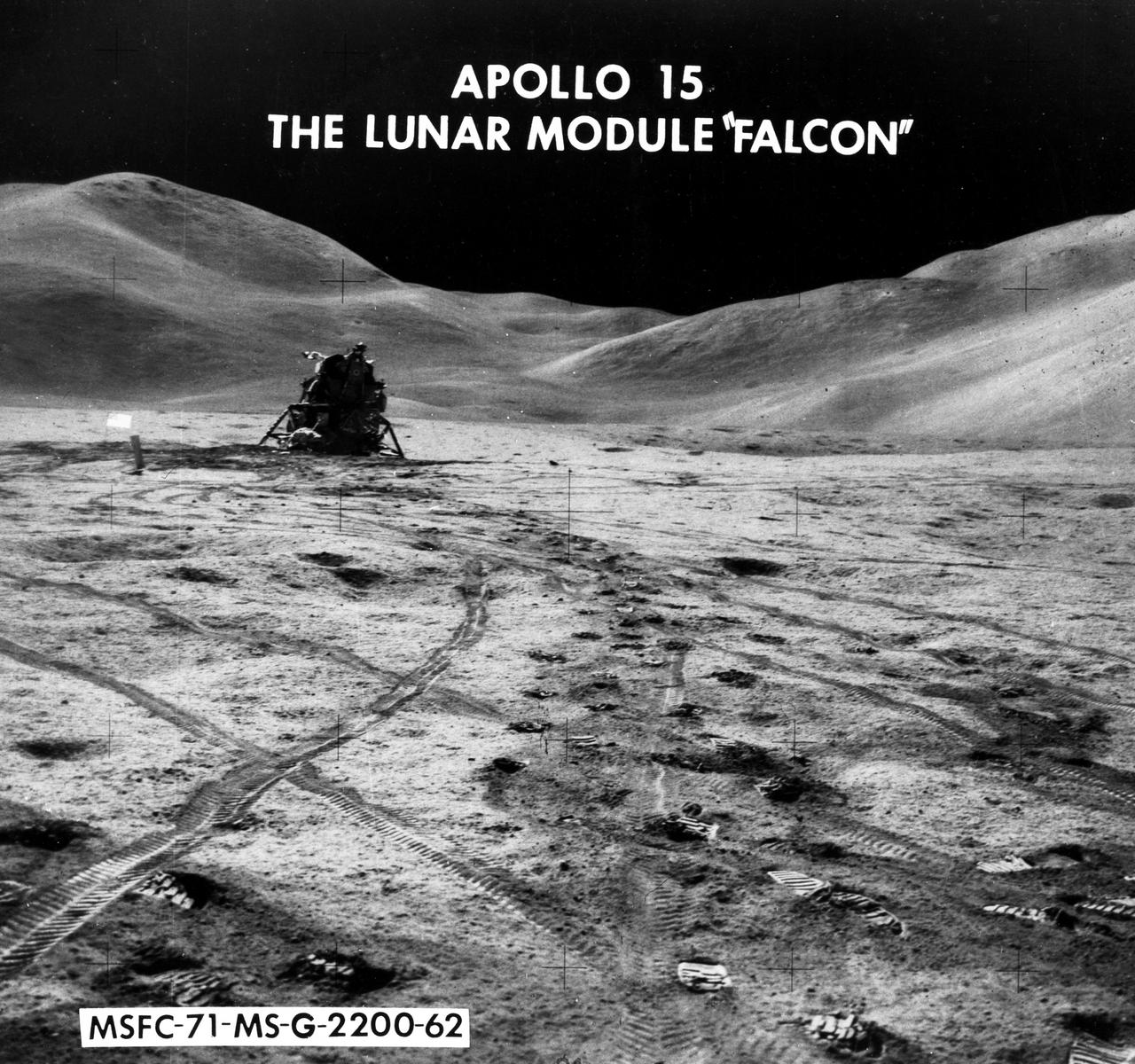
This is a photo of the Apollo 15 Lunar Module, Falcon, on the lunar surface. Apollo 15 launched from Kennedy Space Center (KSC) on July 26, 1971 via a Saturn V launch vehicle. Aboard was a crew of three astronauts including David R. Scott, Mission Commander; James B. Irwin, Lunar Module Pilot; and Alfred M. Worden, Command Module Pilot. The first mission designed to explore the Moon over longer periods, greater ranges and with more instruments for the collection of scientific data than on previous missions, the mission included the introduction of a $40,000,000 lunar roving vehicle (LRV) that reached a top speed of 16 kph (10 mph) across the Moon's surface. The successful Apollo 15 lunar landing mission was the first in a series of three advanced missions planned for the Apollo program. The primary scientific objectives were to observe the lunar surface, survey and sample material and surface features in a preselected area of the Hadley-Apennine region, setup and activation of surface experiments and conduct in-flight experiments and photographic tasks from lunar orbit. Apollo 15 televised the first lunar liftoff and recorded a walk in deep space by Alfred Worden. Both the Saturn V rocket and the LRV were developed at the Marshall Space Flight Center.
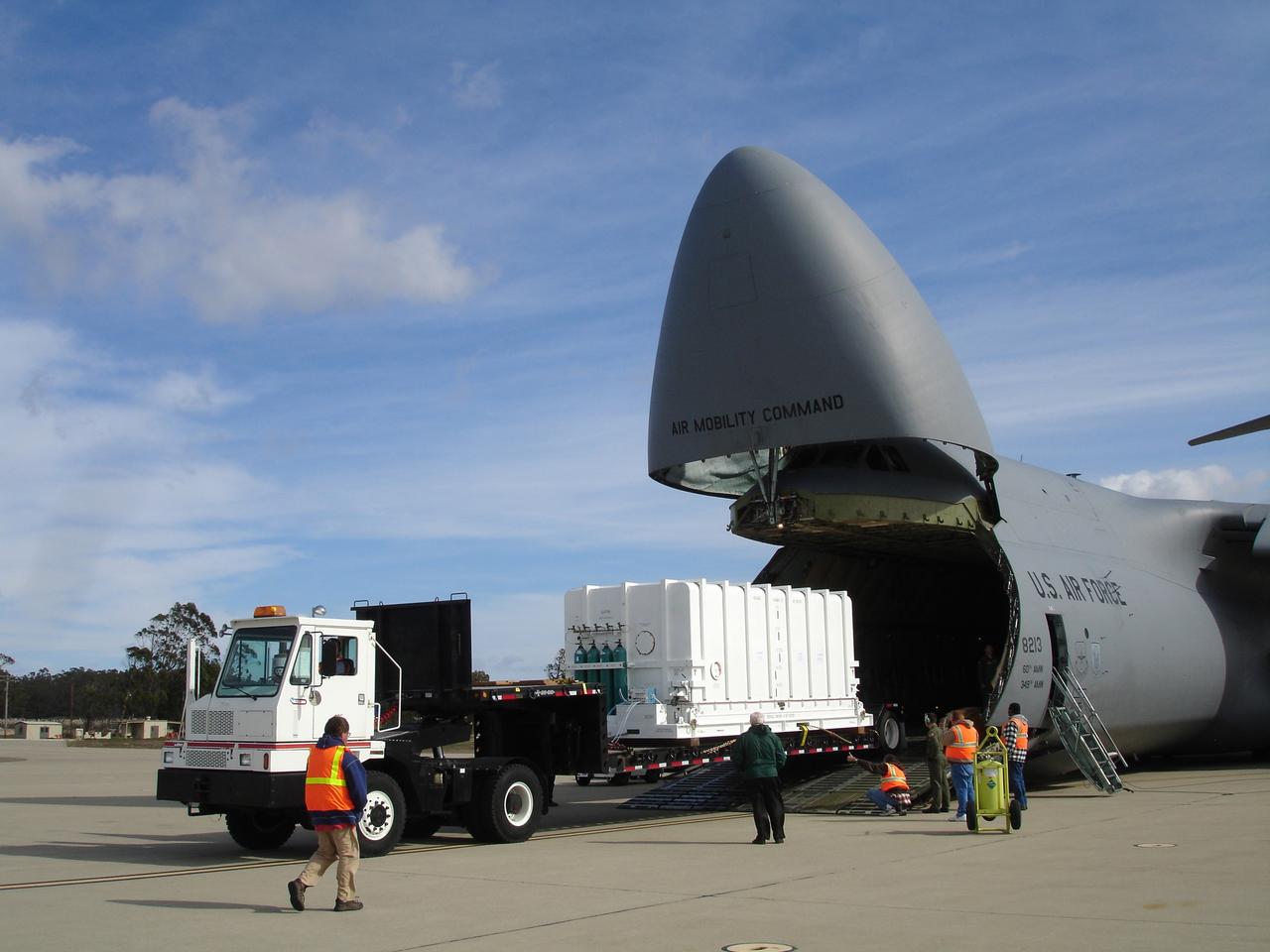
VANDENBERG AIR FORCE BASE, Calif. – The NOAA-N Prime spacecraft is offloaded from a C-5 aircraft after arrival at Vandenberg Air Force Base Airfield in California. NOAA-N Prime was built by Lockheed Martin Space Systems Company for its Advanced Television Infrared Observational Satellites -N series. It is the latest polar-orbiting operational environmental weather satellite developed by NASA for the National Oceanic and Atmospheric Administration. The satellite will provide a platform to support environmental monitoring instruments for imaging and measuring the Earth's atmosphere, its surface and cloud cover, including Earth radiation, atmospheric ozone, aerosol distribution, sea surface temperature and vertical temperature and water profiles in the troposphere and stratosphere. The satellite will assist in measuring proton and electron fluxes at orbit altitude, collecting data from remote platforms to assist the Search and Rescue Satellite-Aided Tracking system. The satellite will be launched from the Western Range at Vandenberg AFB by a United Launch Alliance two-stage Delta II rocket managed by NASA's Launch Service Program at Kennedy. Photo credit: NASA/Jerry Nagy, VAFB

VANDENBERG AIR FORCE BASE, Calif. – The NOAA-N Prime spacecraft is offloaded from the transporter at NASA's Hazardous Processing Facility on Vandenberg Air Force Base in California. NOAA-N Prime was built by Lockheed Martin Space Systems Company for its Advanced Television Infrared Observational Satellites -N series. It is the latest polar-orbiting operational environmental weather satellite developed by NASA for the National Oceanic and Atmospheric Administration. The satellite will provide a platform to support environmental monitoring instruments for imaging and measuring the Earth's atmosphere, its surface and cloud cover, including Earth radiation, atmospheric ozone, aerosol distribution, sea surface temperature and vertical temperature and water profiles in the troposphere and stratosphere. The satellite will assist in measuring proton and electron fluxes at orbit altitude, collecting data from remote platforms to assist the Search and Rescue Satellite-Aided Tracking system. The satellite will be launched from the Western Range at Vandenberg AFB by a United Launch Alliance two-stage Delta II rocket managed by NASA's Launch Service Program at Kennedy. Photo credit: NASA/Jerry Nagy, VAFB
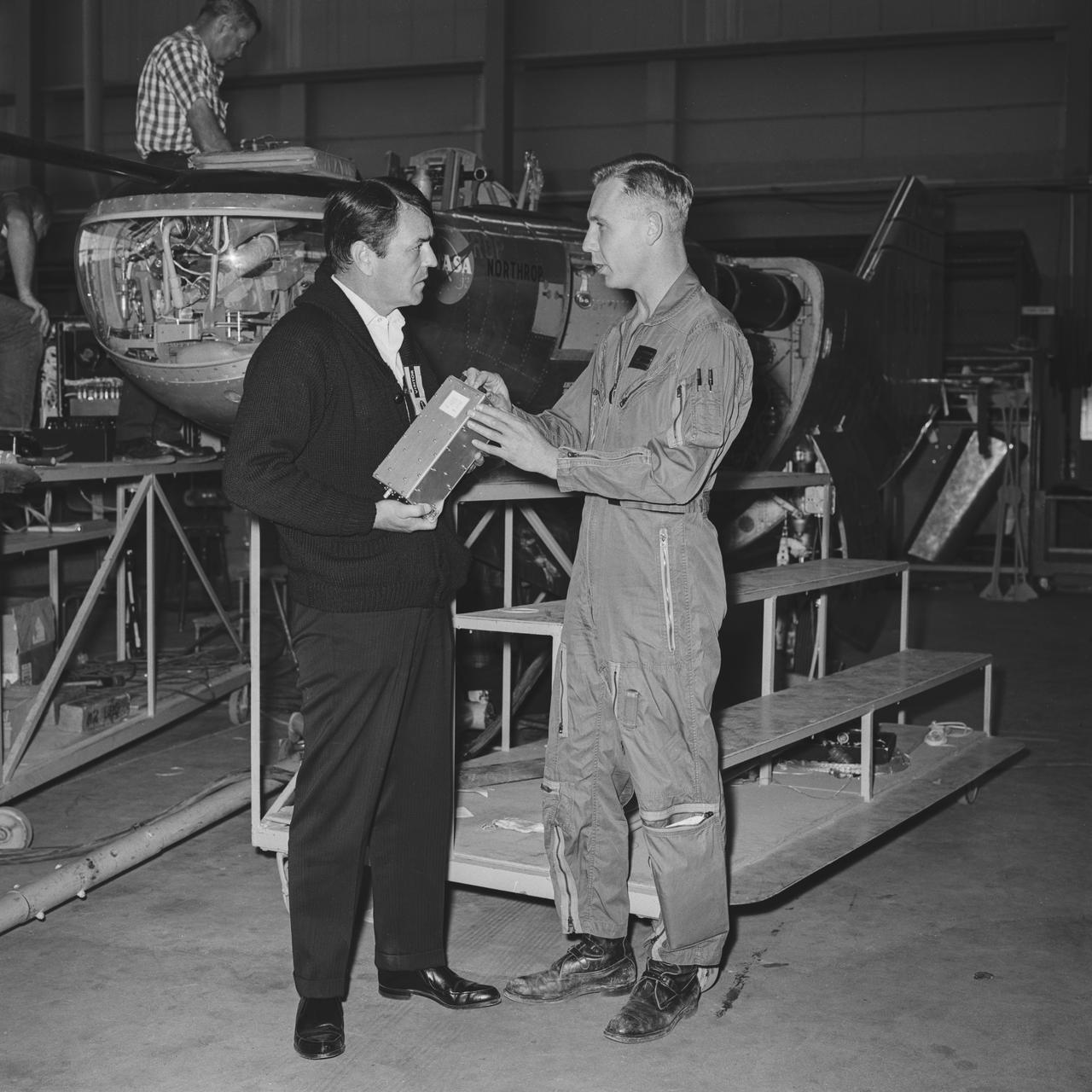
The 1960s Star Trek television series’ cast members visit NASA Dryden Flight Research Center, now called Armstrong, in 1967. The show’s Chief Engineer Montgomery ‘Scotty’ Scott played by James Doohan talks with NASA Pilot Bruce Peterson.