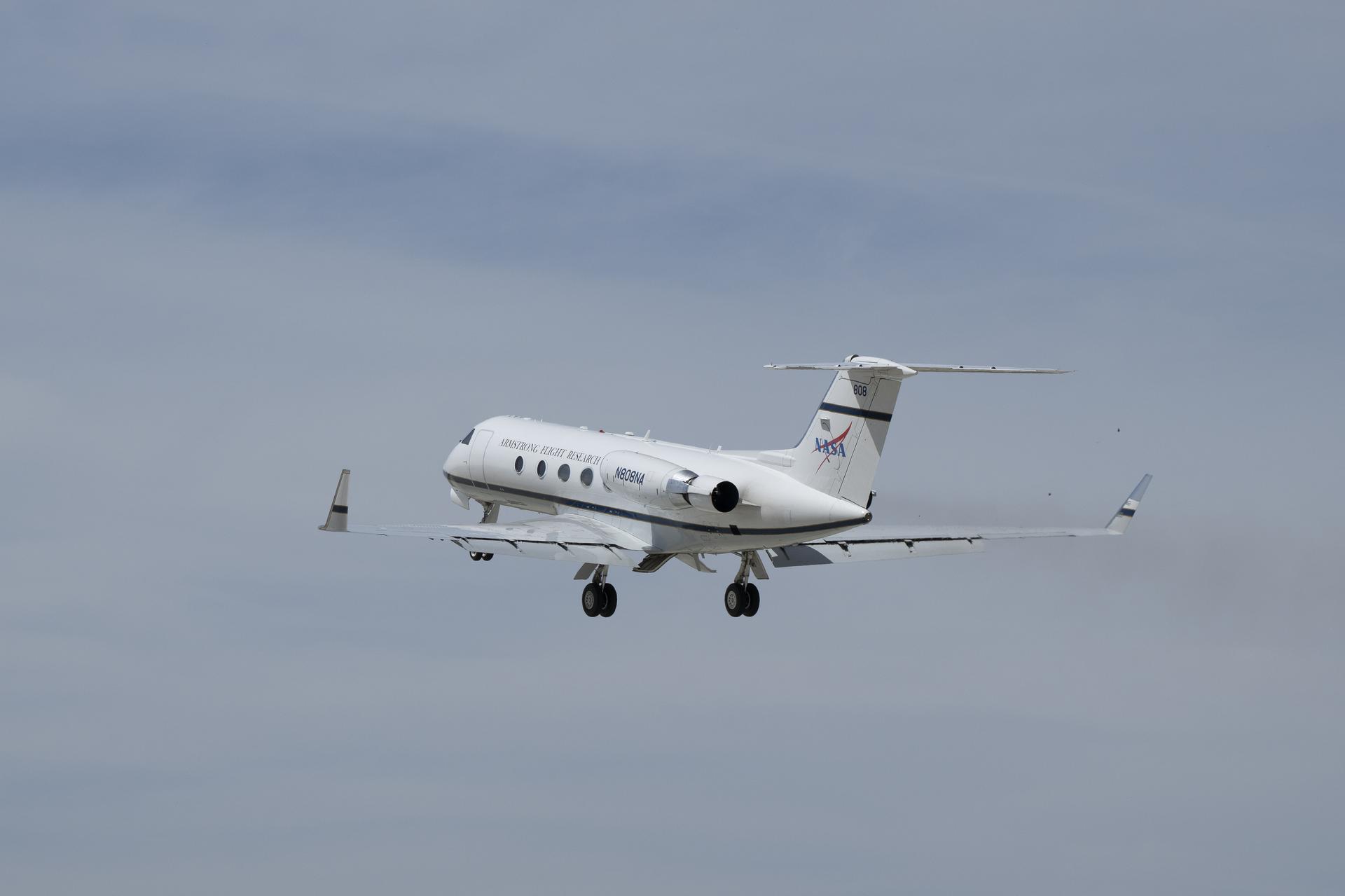
A Gulfstream G-III takes off Friday, March 27, 2026, from NASA’s Armstrong Flight Research Center in Edwards, California. The G-III will join other NASA aircraft to capture imagery of the Orion spacecraft’s heat shield during Artemis II reentry. The mission is part of NASA’s Scientifically Calibrated In-Flight Imagery (SCIFLI) project, based at NASA’s Langley Research Center in Hampton, Virginia.
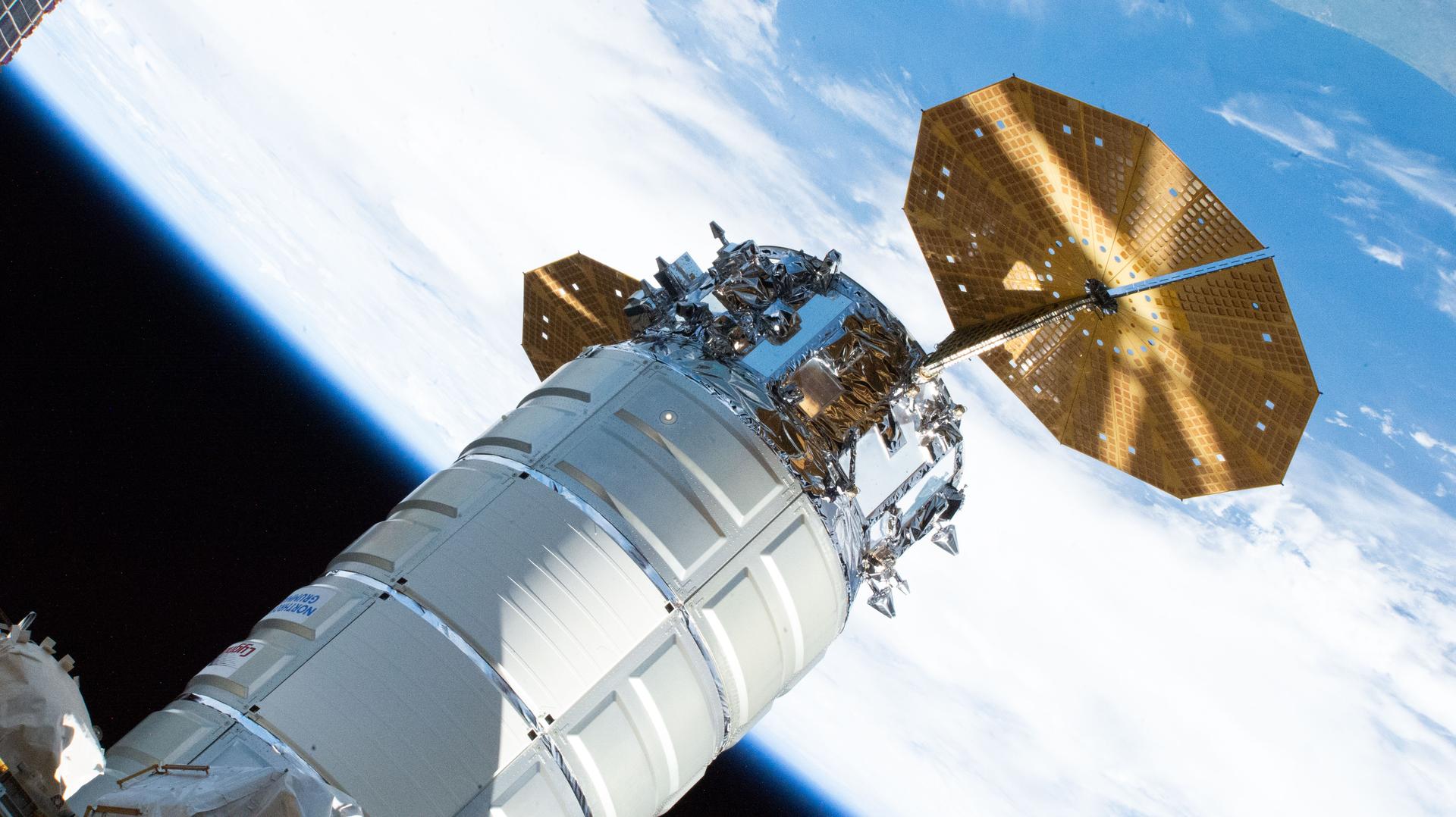
iss075e0085136 (Aug. 27, 2026) --- Northrop Grumman’s Cygnus XL cargo spacecraft, with its prominent cymbal‑shaped UltraFlex solar arrays, is pictured berthed to the International Space Station’s Unity module. Credit: NASA
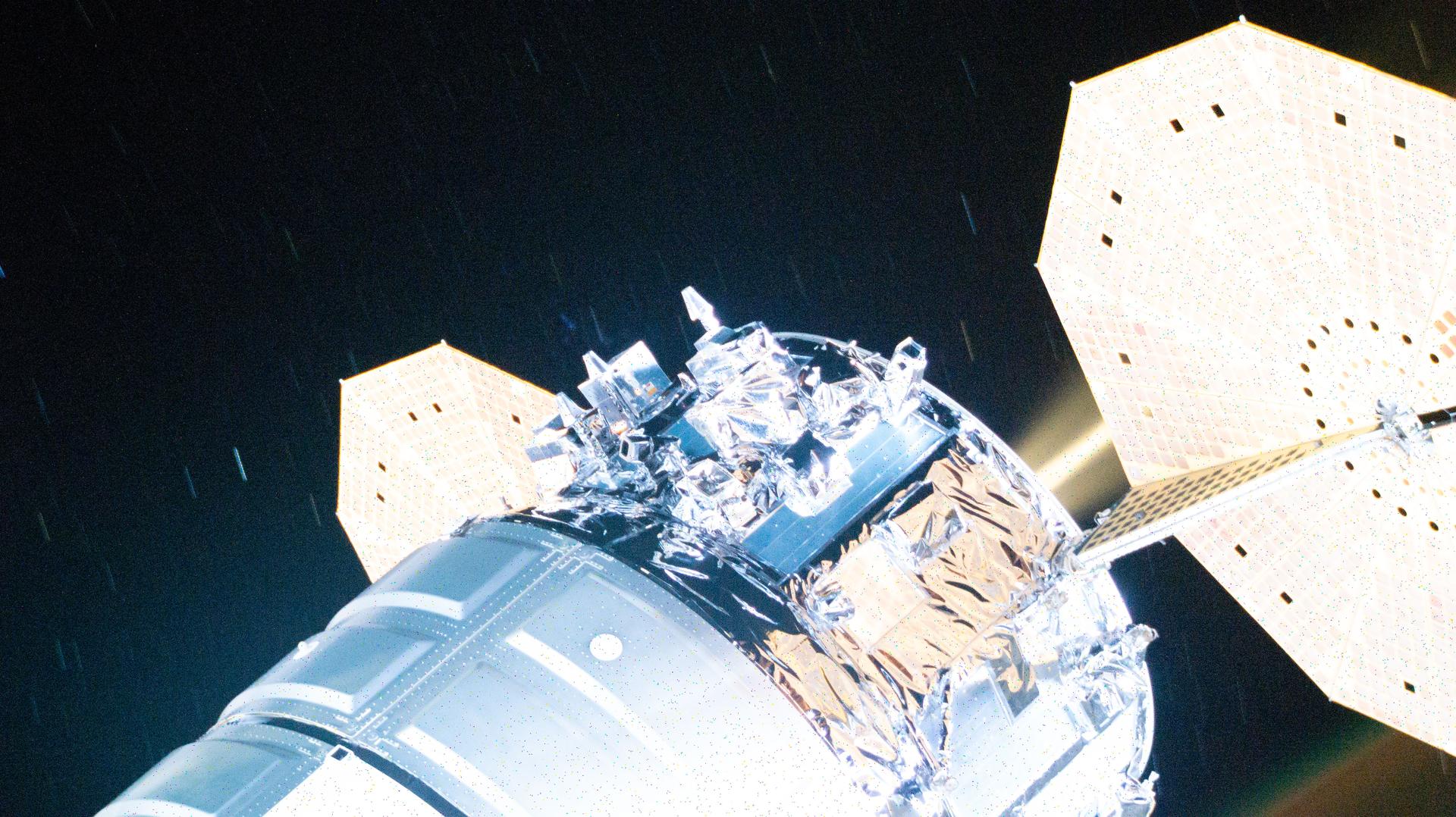
iss075e0085138 (Aug. 27, 2026) --- Northrop Grumman’s Cygnus XL cargo spacecraft fires its engines while berthed to the Unity module, lifting the International Space Station’s orbit. The orbital reboost placed the station at the correct altitude for the rendezvous and docking of the Progress 96 resupply ship, scheduled to launch in early September. Credit: NASA
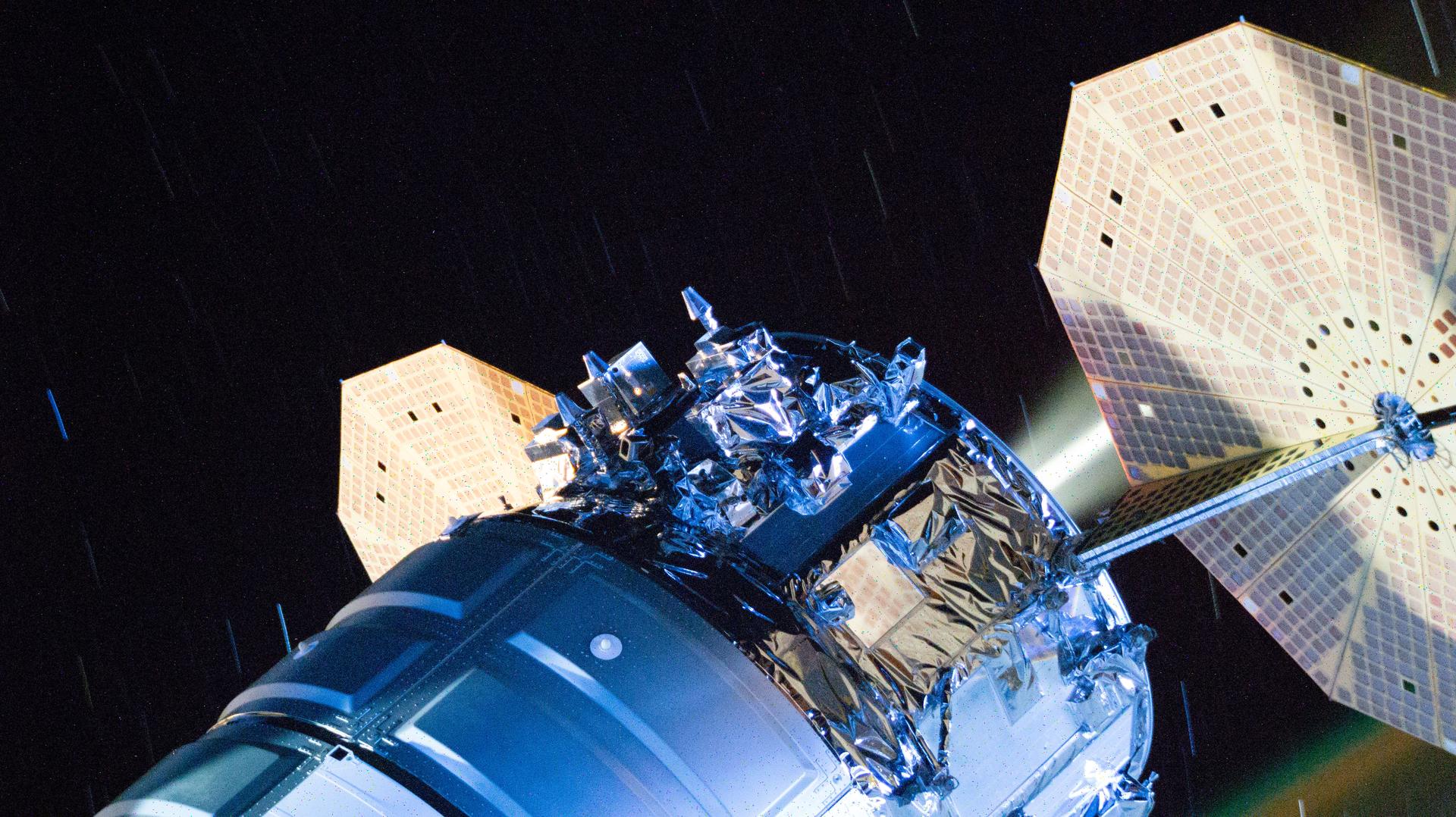
iss075e0085139 (Aug. 27, 2026) --- Northrop Grumman’s Cygnus XL cargo spacecraft fires its engines while berthed to the Unity module, lifting the International Space Station’s orbit. The orbital reboost placed the station at the correct altitude for the rendezvous and docking of the Progress 96 resupply ship, scheduled to launch in early September. Credit: NASA
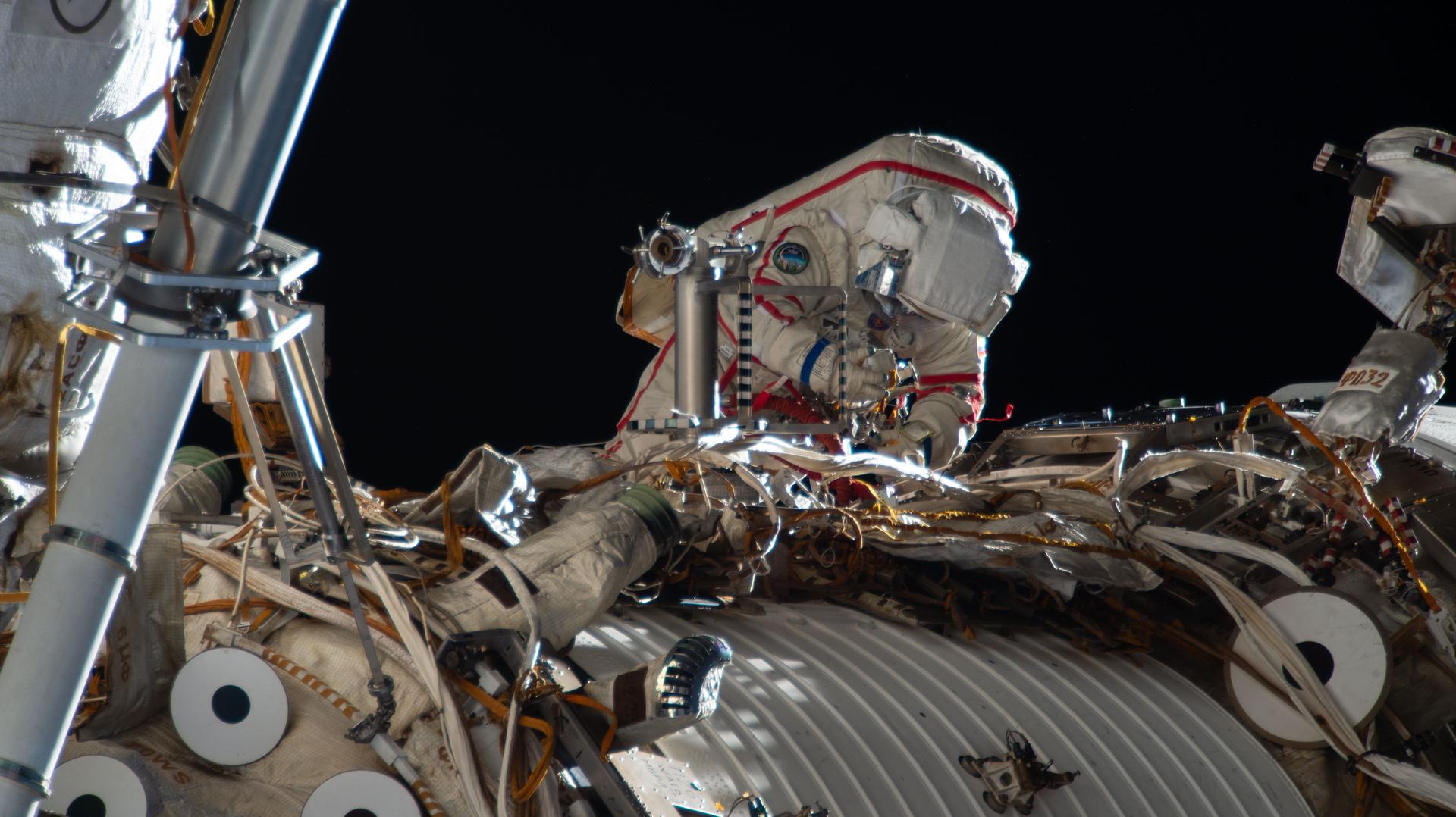
iss074e0619980 (May 27, 2026) --- Roscosmos cosmonaut and Expedition 74 commander Sergey Kud-Sverchkov works outside the International Space Station in his Orlan spacesuit with red stripes. During the six-hour and five-minute spacewalk, Kud‑Sverchkov, along with Roscosmos cosmonaut Sergei Mikaev (out of frame), installed a solar radiation experiment and removed physics and microbiology research hardware from the orbital outpost. Credit: NASA
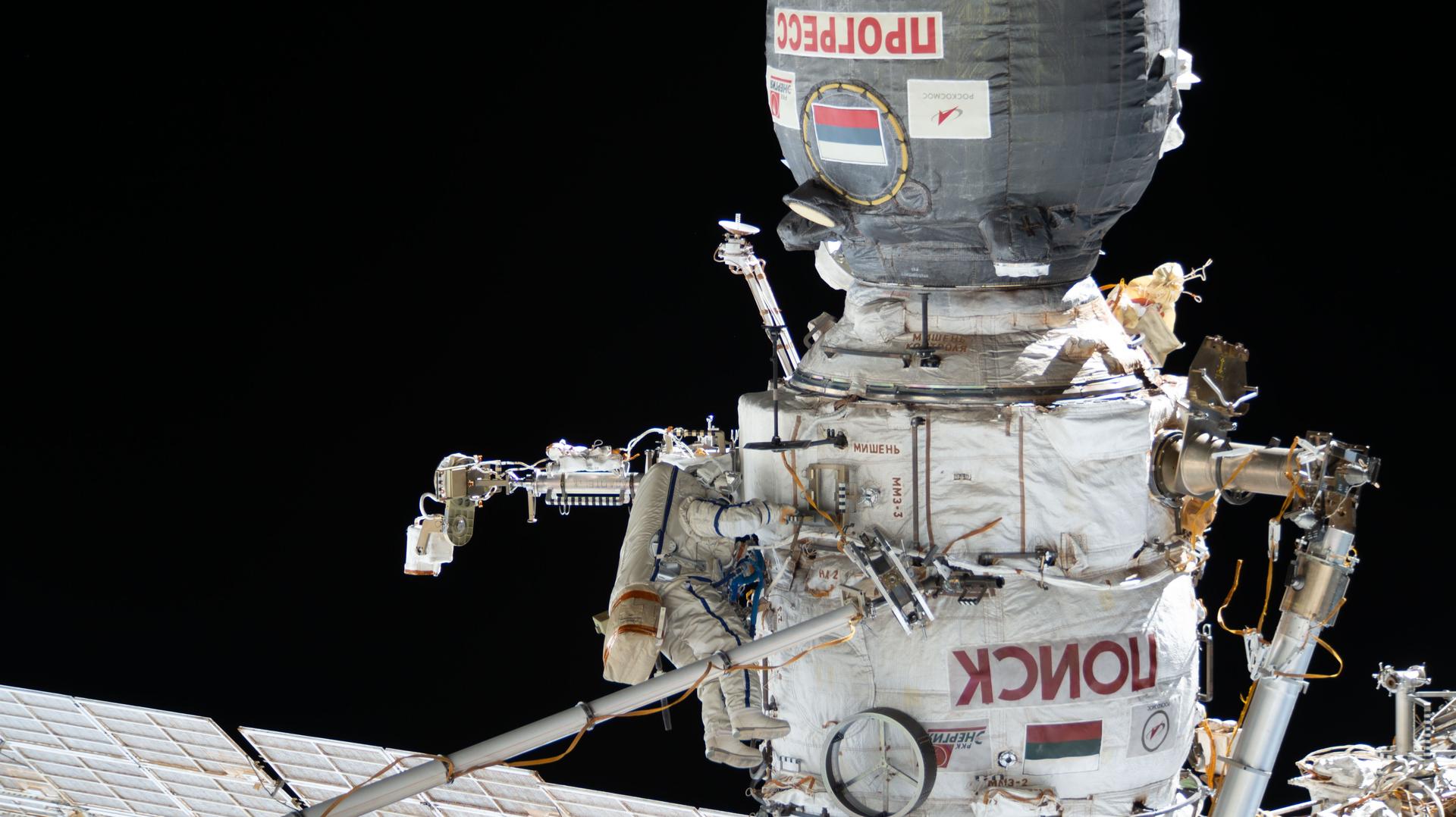
iss074e0619960 (May 27, 2026) --- Roscosmos cosmonaut and Expedition 74 flight engineer Sergei Mikaev (lower center) works outside the International Space Station's Poisk module in his Orlan spacesuit with blue stripes. During the six-hour and five-minute spacewalk, Mikaev, along with Roscosmos cosmonaut Sergey Kud-Sverchkov (out of frame), installed a solar radiation experiment and removed physics and microbiology research hardware from the orbital outpost. Credit: NASA

iss074e0417599 (March 27, 2026) --- The West African coast, highlighting the nations of Senegal, The Gambia, and Guinea‑Bissau, transitions from arid plains to swampy coastal lowlands. The Gambia River (top center), which flows through the middle of the tiny nation of The Gambia, supports a wide array of wildlife including migratory birds, chimpanzees, hippos, crocodiles, and manatees. It is also important for transportation and agriculture throughout the Senegambia region. Credit: NASA
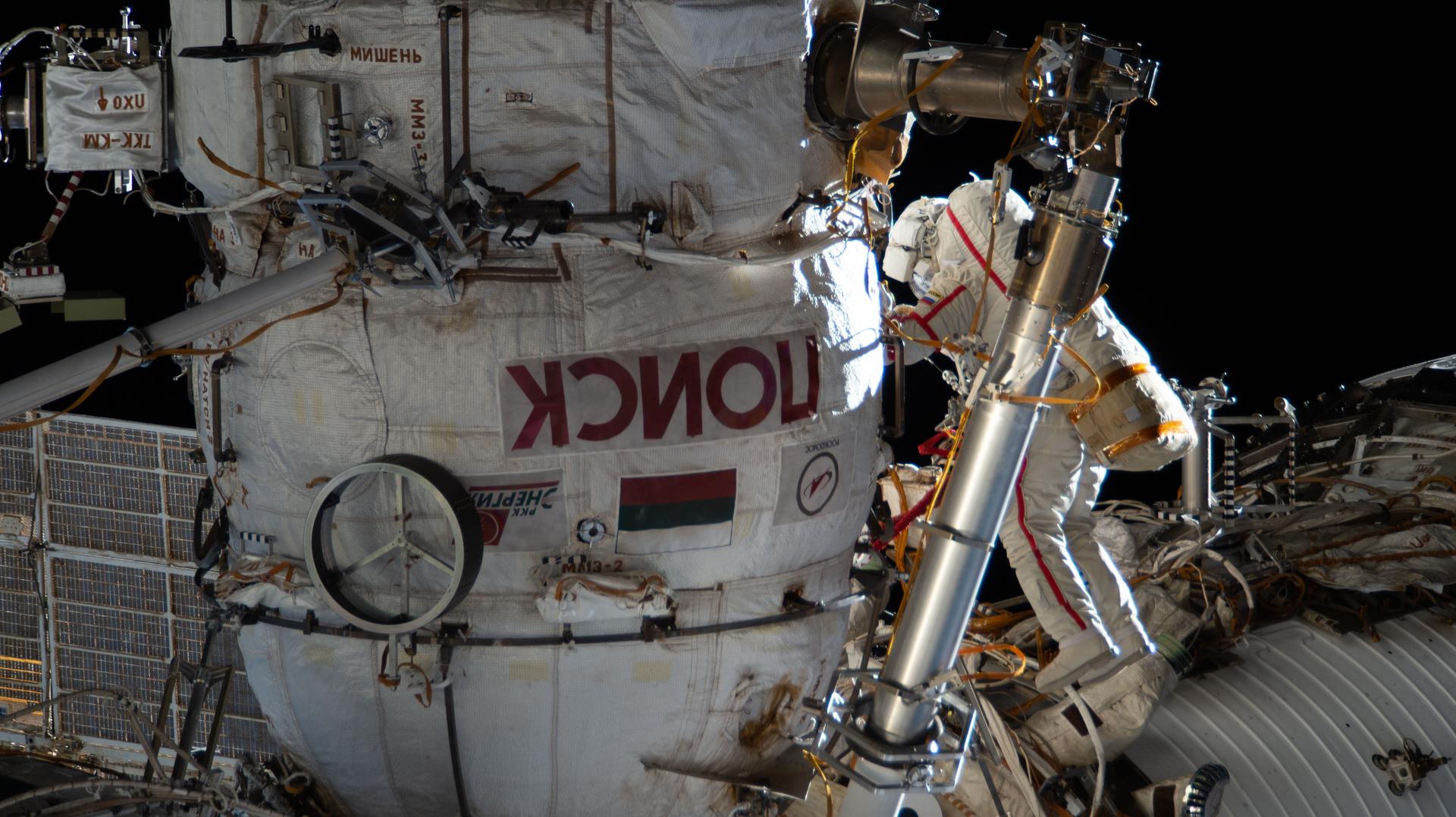
iss074e0619966 (May 27, 2026) --- Roscosmos cosmonaut and Expedition 74 commander Sergey Kud-Sverchkov works outside the International Space Station in his Orlan spacesuit with red stripes. During the six-hour and five-minute spacewalk, Kud‑Sverchkov, along with Roscosmos cosmonaut Sergei Mikaev (out of frame), installed a solar radiation experiment and removed physics and microbiology research hardware from the orbital outpost. Credit: NASA

iss074e0417435 (March 27, 2026) ---
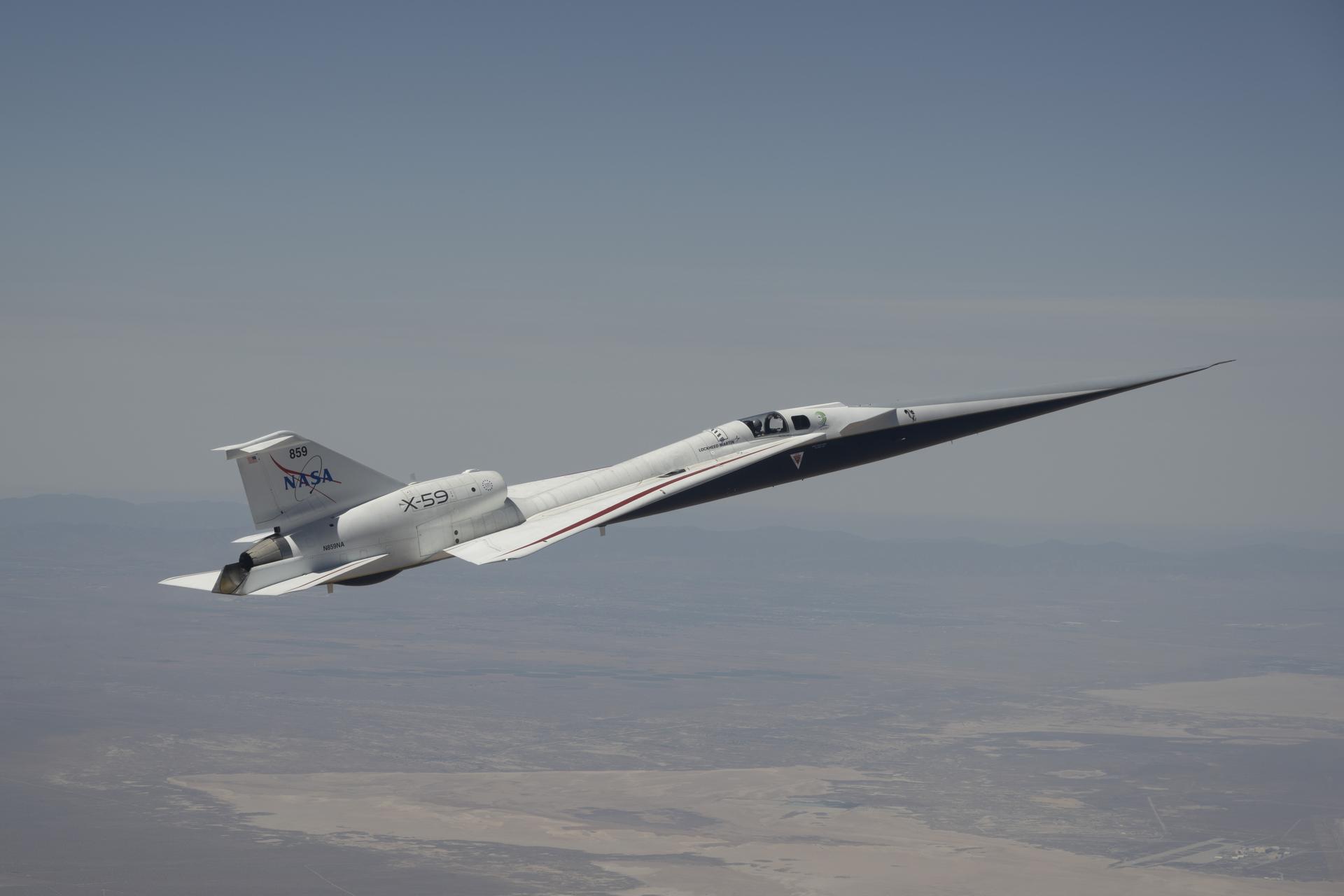
NASA’s X-59 quiet supersonic research aircraft flies above mountains near NASA’s Armstrong Flight Research Center in Edwards, California, on Tuesday, May 12, 2026. NASA continues expanding the aircraft’s flight envelope to evaluate its performance across a range of flight conditions ahead of flight tests at speeds faster than the speed of sound in support of the agency’s Quesst mission.

NASA’s C-20A takes off from NASA’s Armstrong Flight Research Center in Edwards, California, on Wednesday, April 29, 2026. The aircraft conducted science flights over Central California carrying NASA’s UAVSAR (Uninhabited Aerial Vehicle Synthetic Aperture Radar), which collects detailed ground‑movement data to improve earthquake‑hazard models and support a new Earth‑observing satellite.
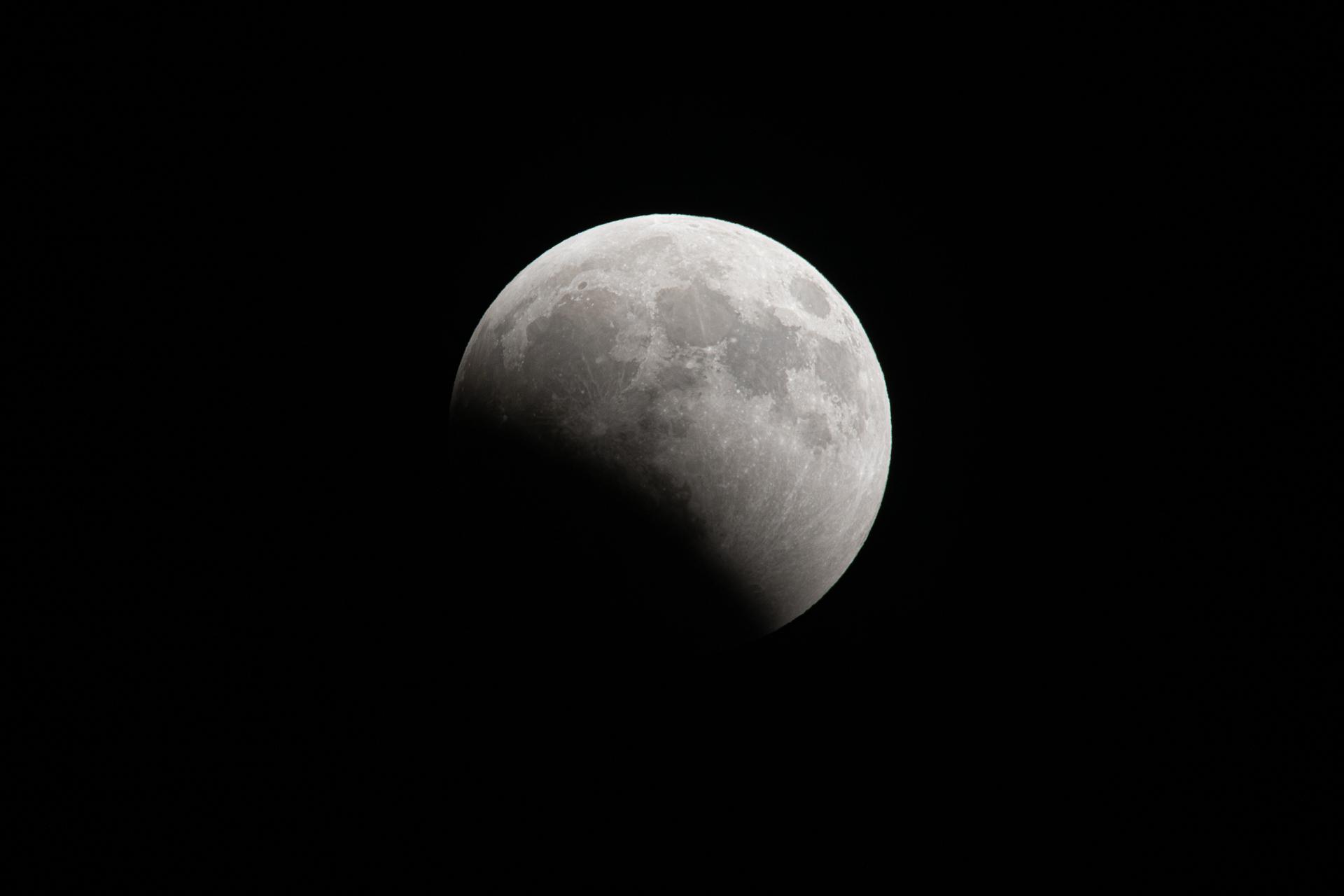
A lunar eclipse is visible over southern Louisiana. The lunar eclipse was visible throughout much of North and South America and part of Europe and Africa between Aug. 27-28. The Full Moon slipped through Earth’s shadow on Aug. 27, continuing into Aug. 28 for some parts of the world, resulting in the lunar eclipse. At maximum eclipse, the Moon takes on a dramatic dark, ruddy or coppery tint along the covered edge. New Orleans is home to NASA’s Michoud Assembly Facility, where stages for NASA’s SLS (Space Launch System) rocket and structures for Orion spacecraft are produced for the Artemis missions.
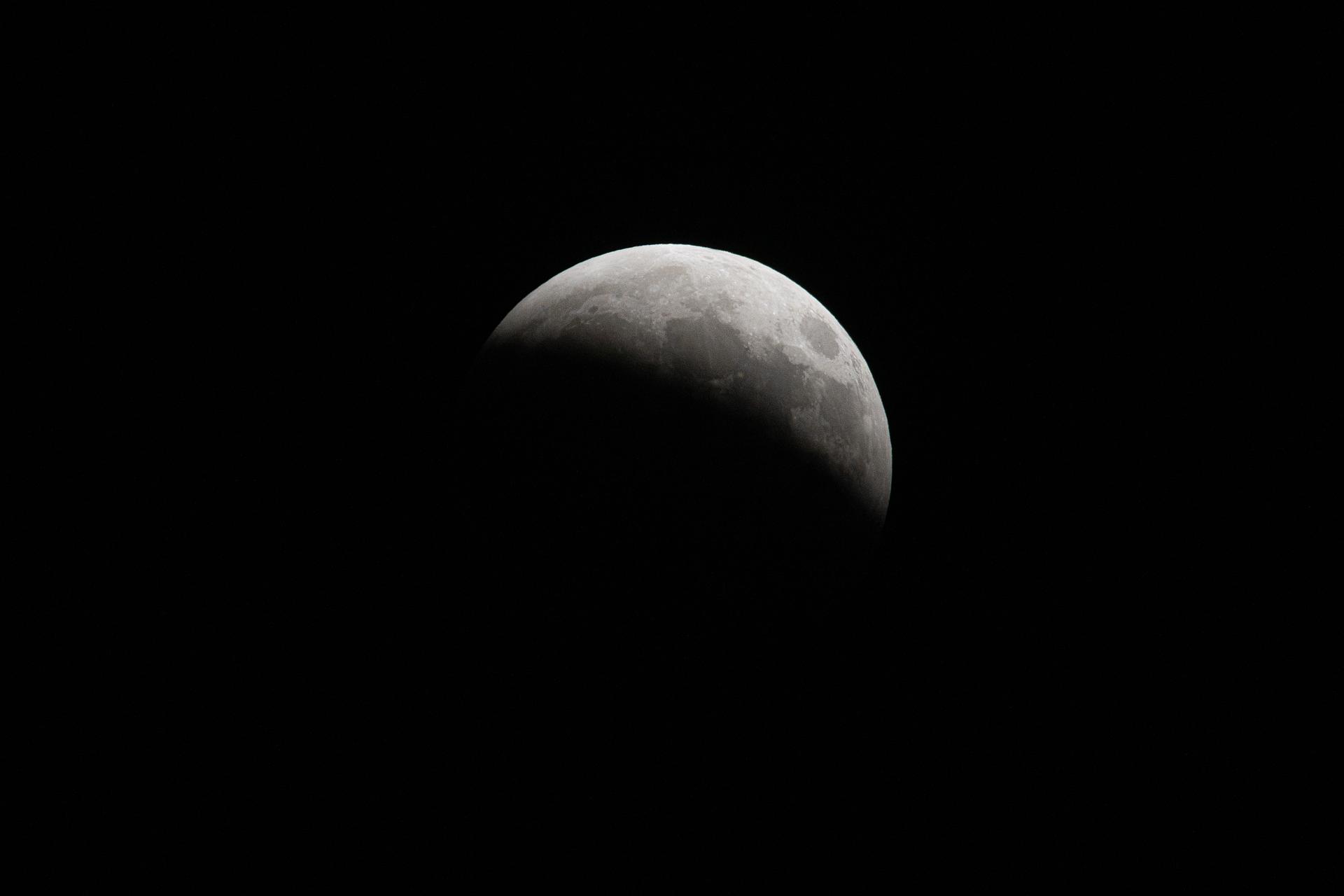
A lunar eclipse is visible over southern Louisiana. The lunar eclipse was visible throughout much of North and South America and part of Europe and Africa between Aug. 27-28. The Full Moon slipped through Earth’s shadow on Aug. 27, continuing into Aug. 28 for some parts of the world, resulting in the lunar eclipse. At maximum eclipse, the Moon takes on a dramatic dark, ruddy or coppery tint along the covered edge. New Orleans is home to NASA’s Michoud Assembly Facility, where stages for NASA’s SLS (Space Launch System) rocket and structures for Orion spacecraft are produced for the Artemis missions.
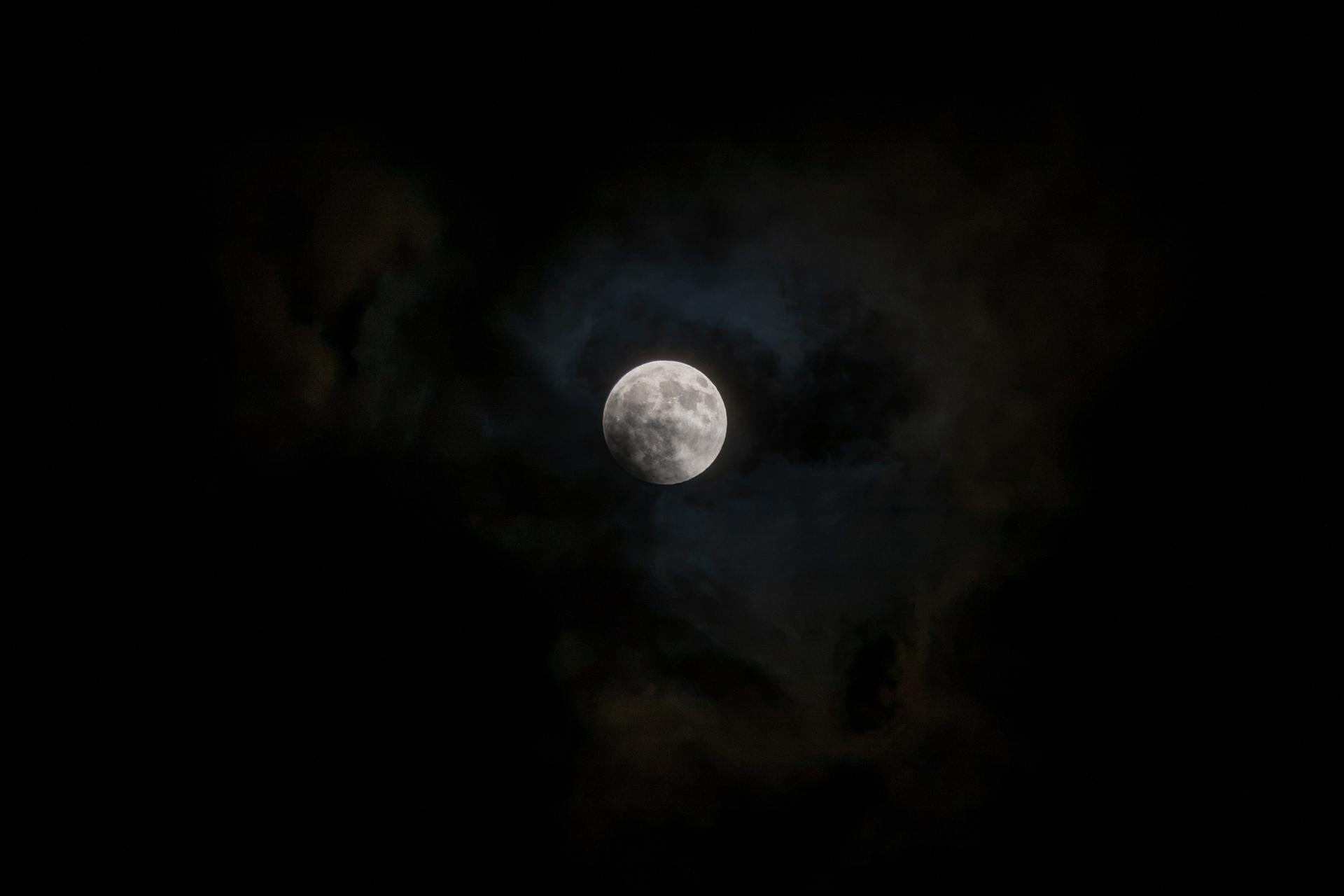
A lunar eclipse is visible over southern Louisiana. The lunar eclipse was visible throughout much of North and South America and part of Europe and Africa between Aug. 27-28. The Full Moon slipped through Earth’s shadow on Aug. 27, continuing into Aug. 28 for some parts of the world, resulting in the lunar eclipse. At maximum eclipse, the Moon takes on a dramatic dark, ruddy or coppery tint along the covered edge. New Orleans is home to NASA’s Michoud Assembly Facility, where stages for NASA’s SLS (Space Launch System) rocket and structures for Orion spacecraft are produced for the Artemis missions.
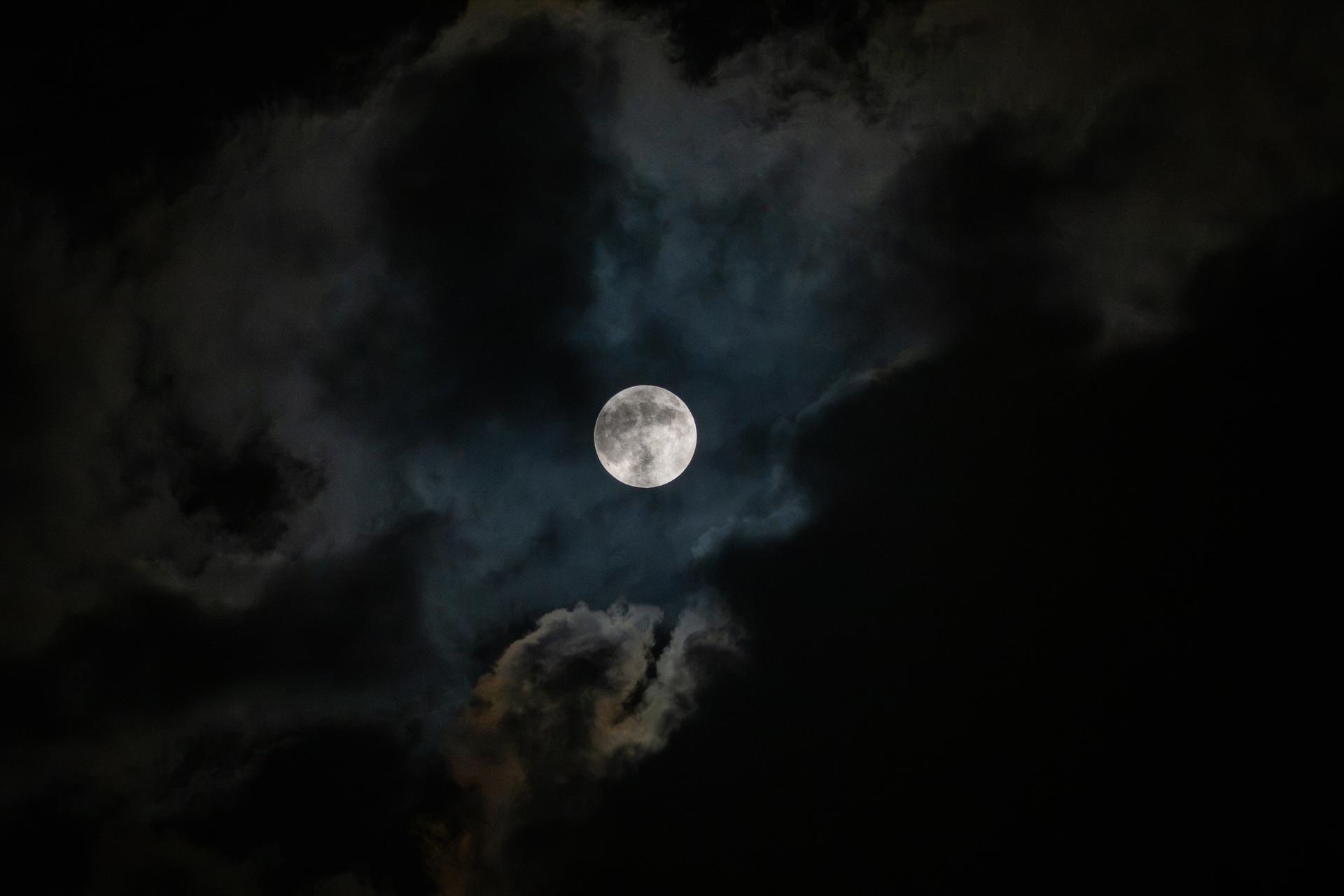
A lunar eclipse is visible over southern Louisiana. The lunar eclipse was visible throughout much of North and South America and part of Europe and Africa between Aug. 27-28. The Full Moon slipped through Earth’s shadow on Aug. 27, continuing into Aug. 28 for some parts of the world, resulting in the lunar eclipse. At maximum eclipse, the Moon takes on a dramatic dark, ruddy or coppery tint along the covered edge. New Orleans is home to NASA’s Michoud Assembly Facility, where stages for NASA’s SLS (Space Launch System) rocket and structures for Orion spacecraft are produced for the Artemis missions.
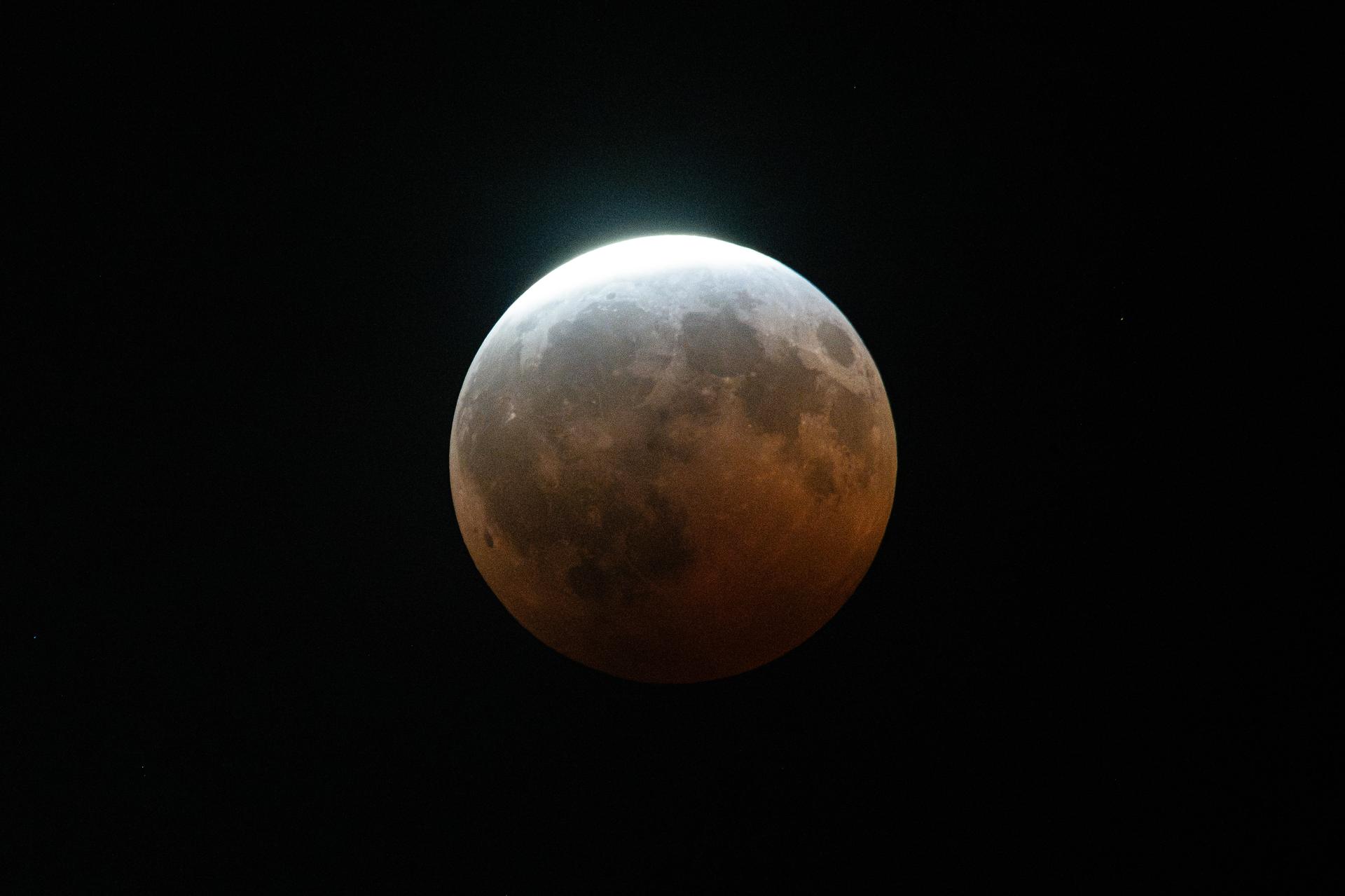
A lunar eclipse is visible over southern Louisiana. The lunar eclipse was visible throughout much of North and South America and part of Europe and Africa between Aug. 27-28. The Full Moon slipped through Earth’s shadow on Aug. 27, continuing into Aug. 28 for some parts of the world, resulting in the lunar eclipse. At maximum eclipse, the Moon takes on a dramatic dark, ruddy or coppery tint along the covered edge. New Orleans is home to NASA’s Michoud Assembly Facility, where stages for NASA’s SLS (Space Launch System) rocket and structures for Orion spacecraft are produced for the Artemis missions.
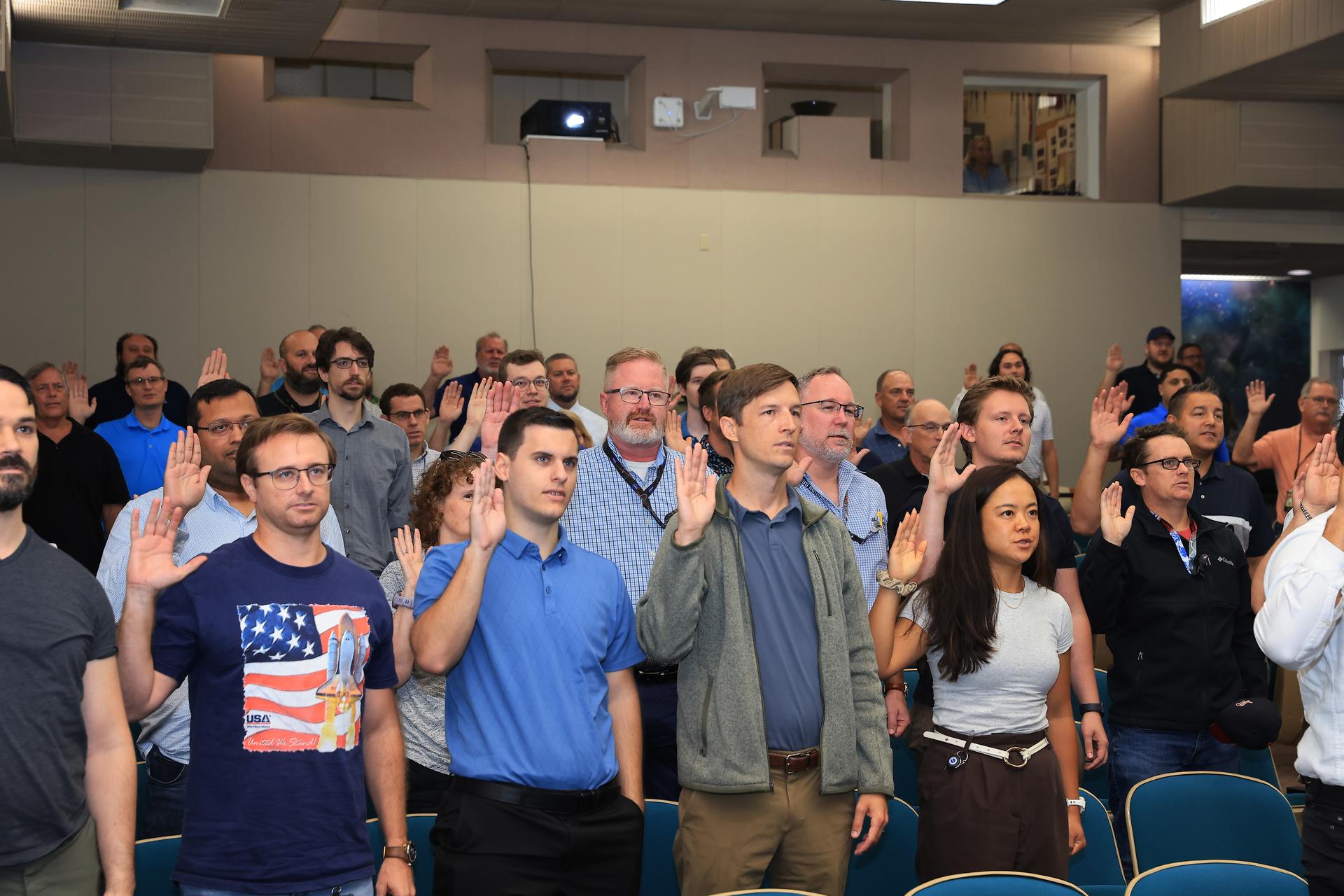
NASA’s Kennedy Space Center Director Brian Hughes swore in employees formerly from the Consolidated Operations, Management, Engineering, and Test (COMET) contract as new NASA civil servants on Monday, July 27, 2026, at NASA Kennedy in Florida. The latest round of civil servants is part of the administrator’s workforce directive to restore technical core competencies within the civil servants ranks.

NASA’s Kennedy Space Center Director Brian Hughes swore in employees formerly from the Consolidated Operations, Management, Engineering, and Test (COMET) contract as new NASA civil servants on Monday, July 27, 2026, at NASA Kennedy in Florida. The latest round of civil servants is part of the administrator’s workforce directive to restore technical core competencies within the civil servants ranks.
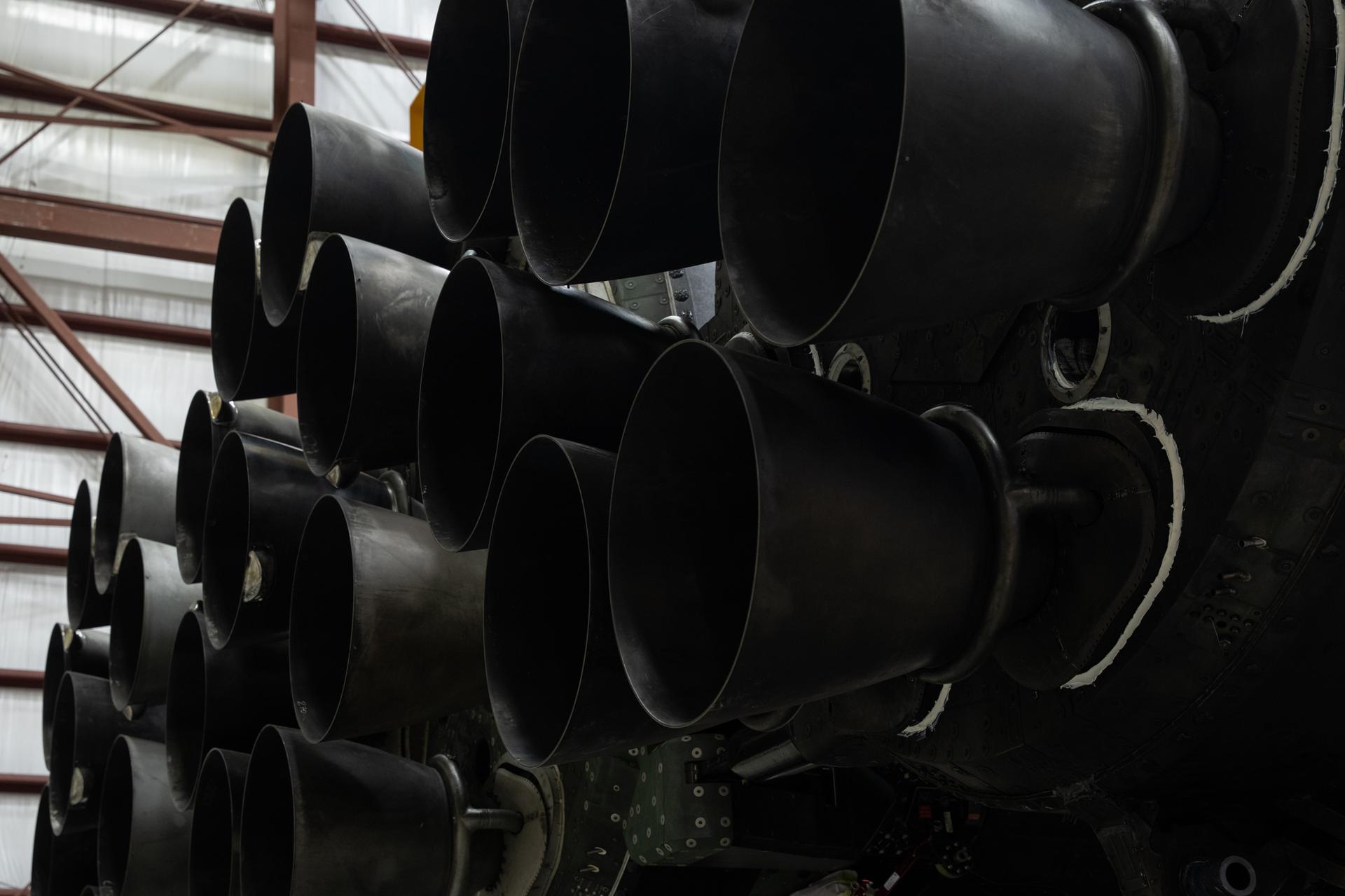
Teams continue launch preparations on the SpaceX Falcon Heavy that will launch NASA's Nancy Grace Roman Space Telescope, inside the SpaceX hangar at Launch Complex 39A at Kennedy Space Center in Florida on Wednesday, Aug. 26, 2026. The rocket has 27 Merlin engines on its first stage and can generate more than five million pounds of thrust at liftoff. NASA and SpaceX are targeting launch no earlier than 7:26 a.m. EDT Sunday, Aug. 30, from Kennedy.
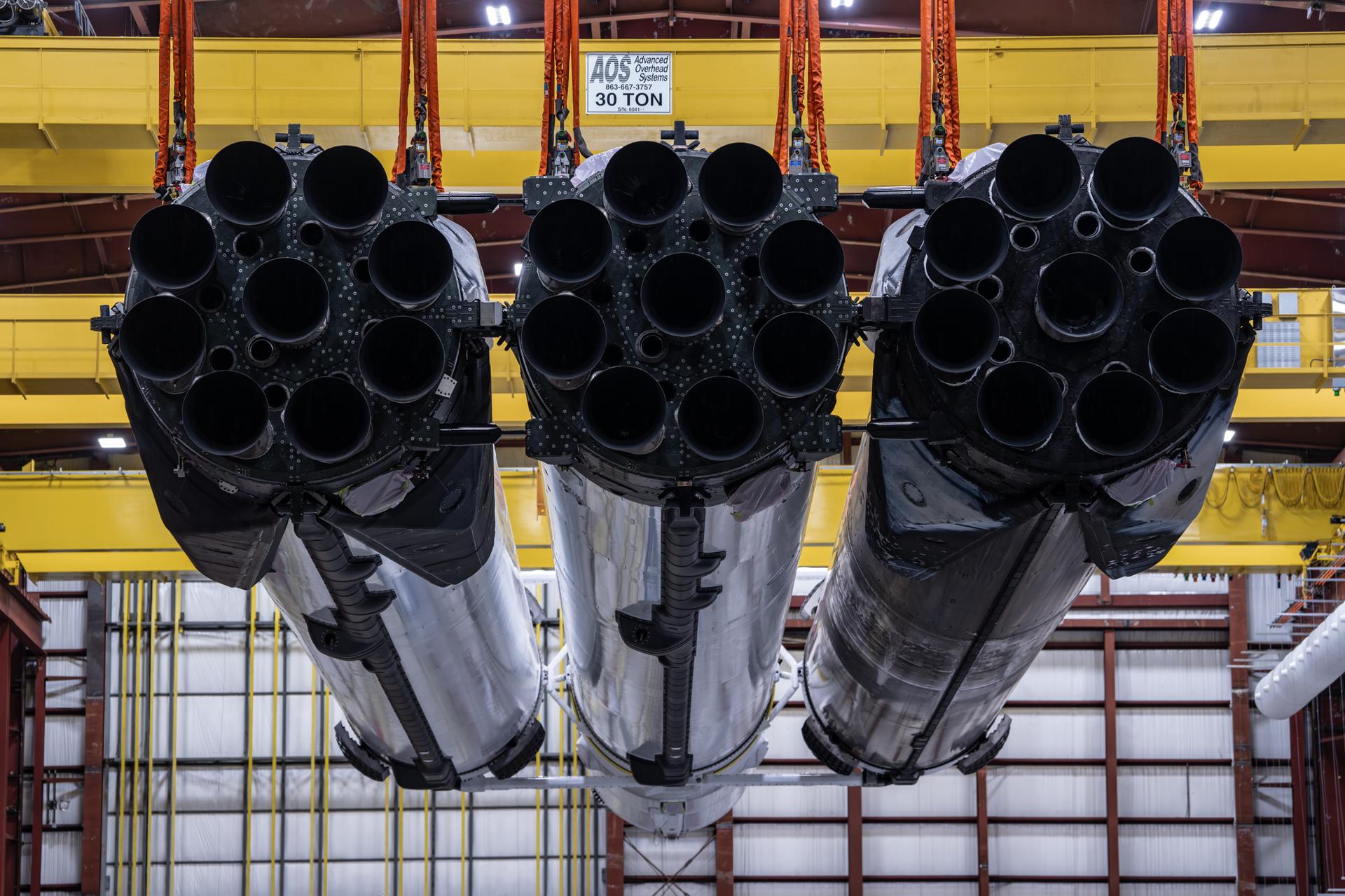
Teams continue launch preparations on the SpaceX Falcon Heavy that will launch NASA's Nancy Grace Roman Space Telescope, inside the SpaceX hangar at Launch Complex 39A at Kennedy Space Center in Florida on Wednesday, Aug. 26, 2026. The rocket has 27 Merlin engines on its first stage and can generate more than five million pounds of thrust at liftoff. NASA and SpaceX are targeting launch no earlier than 7:26 a.m. EDT Sunday, Aug. 30, from Kennedy.
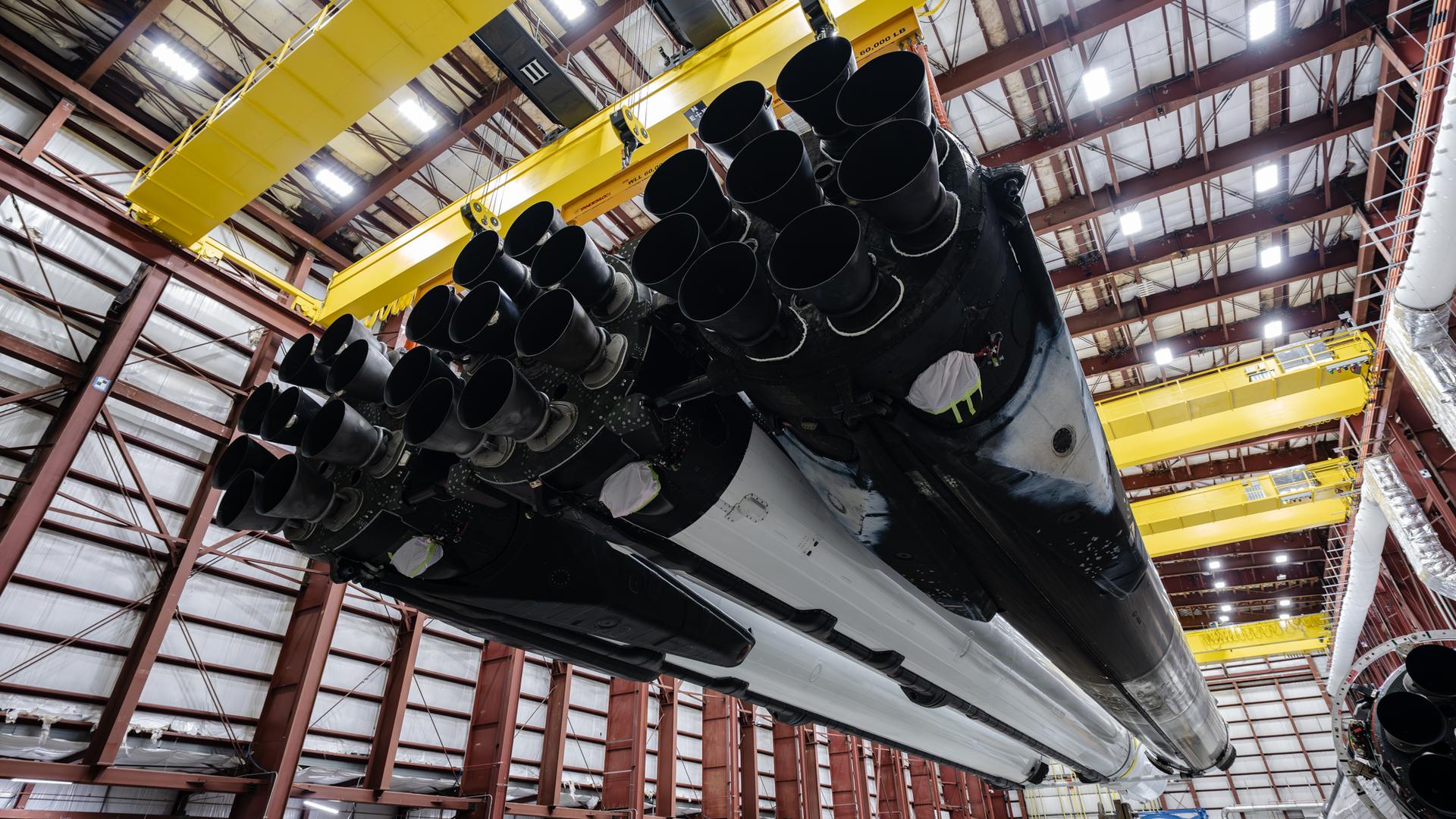
Teams continue launch preparations on the SpaceX Falcon Heavy that will launch NASA's Nancy Grace Roman Space Telescope, inside the SpaceX hangar at Launch Complex 39A at Kennedy Space Center in Florida on Wednesday, Aug. 26, 2026. The rocket has 27 Merlin engines on its first stage and can generate more than five million pounds of thrust at liftoff. NASA and SpaceX are targeting launch no earlier than 7:26 a.m. EDT Sunday, Aug. 30, from Kennedy.

NASA Administrator Jared Isaacman speaks with staff in the Mission Integration Auditorium Center during a visit to NASA's Glenn Research Center in Cleveland on Jan. 27, 2026.
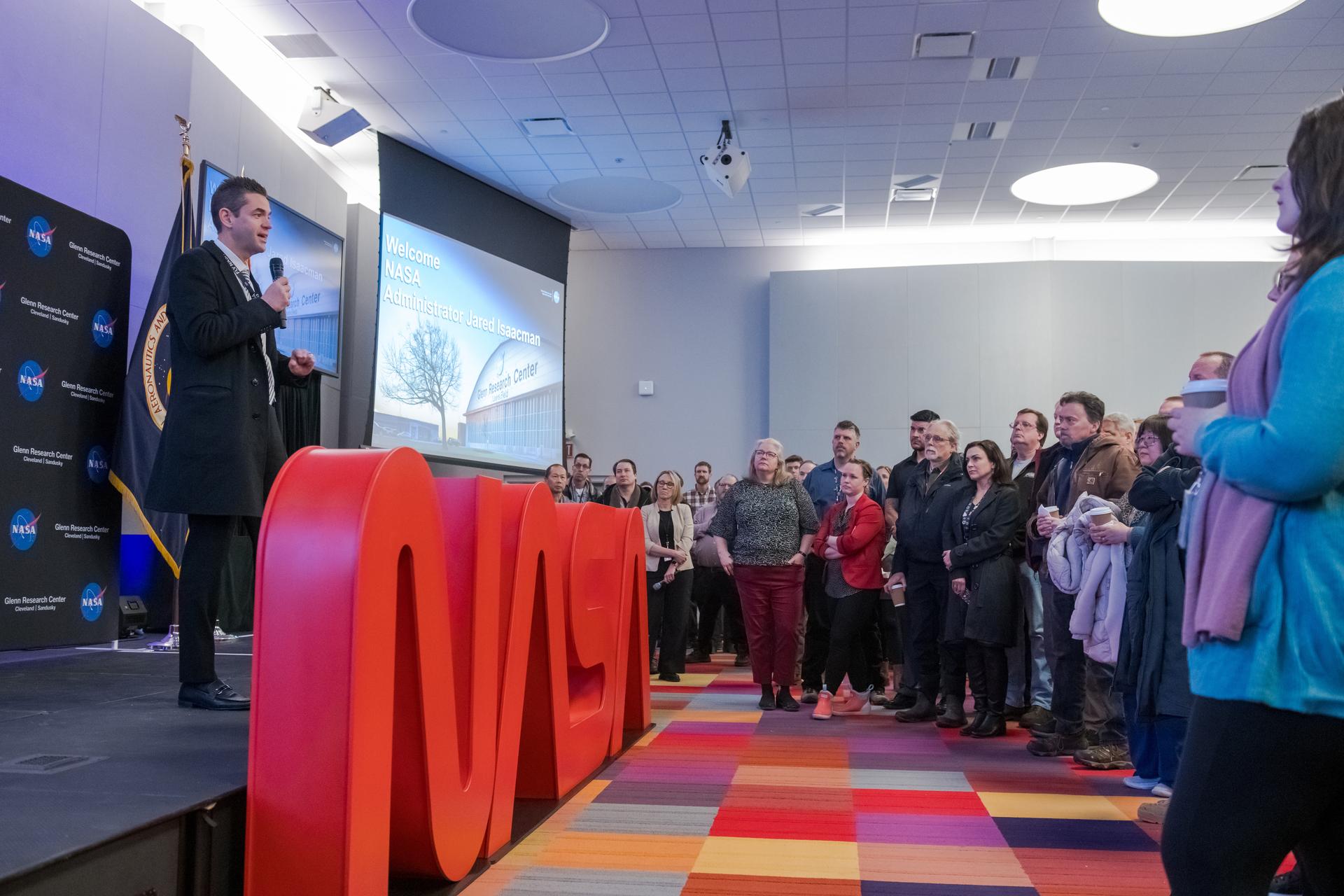
NASA Administrator Jared Isaacman speaks with staff in the Mission Integration Auditorium Center during a visit to NASA's Glenn Research Center in Cleveland on Jan. 27, 2026.

NASA Administrator Jared Isaacman speaks with staff in the Mission Integration Center Auditorium during a visit to NASA's Glenn Research Center in Cleveland on Jan. 27, 2026.
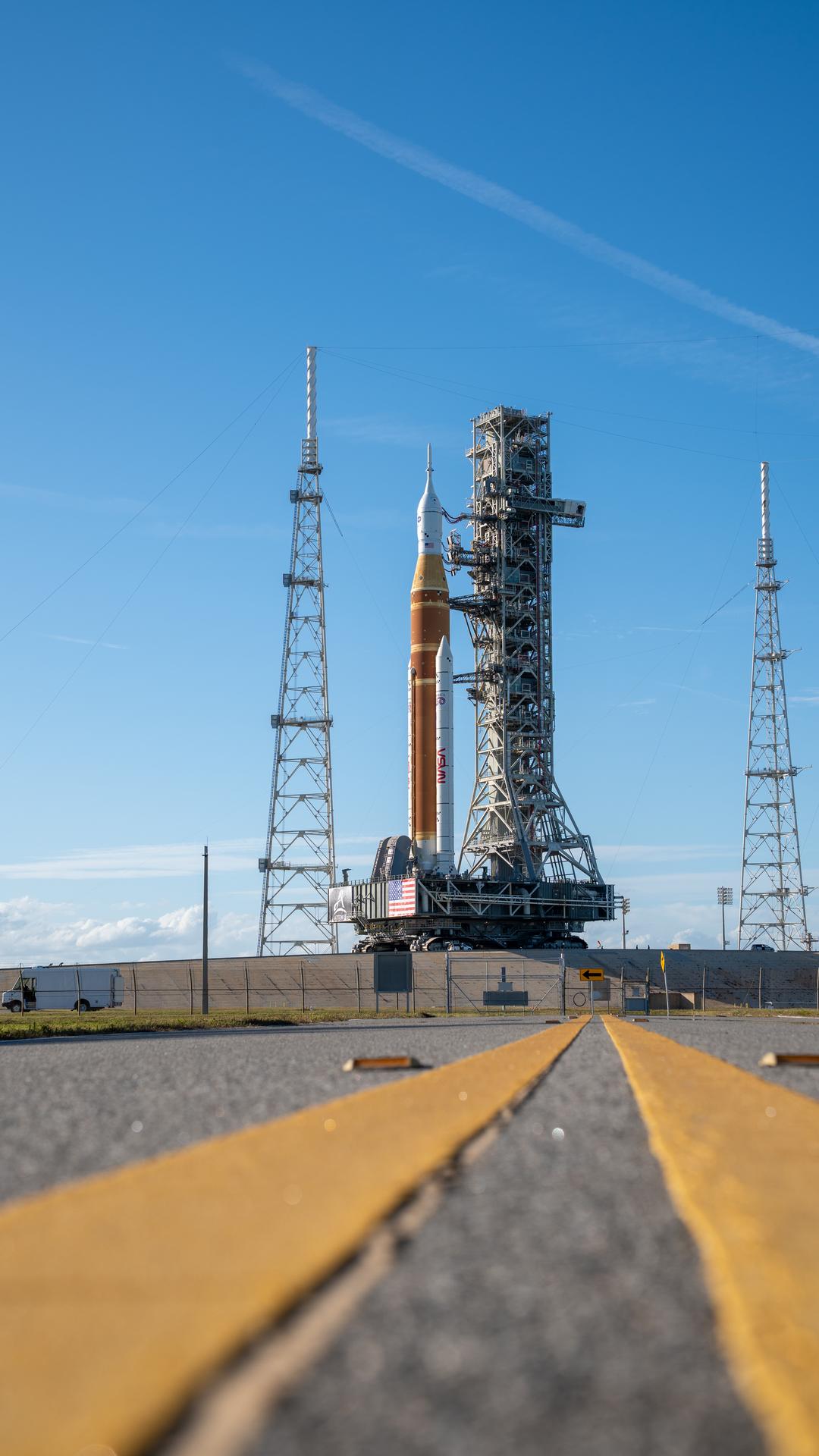
This image shows NASA’s SLS (Space Launch System) and Orion spacecraft rolling out of the Vehicle Assembly Building at NASA’s Kennedy Space Center. NASA's massive Crawler-Transporter, upgraded for the Artemis program, carries the powerful SLS rocket and Orion spacecraft on the Mobile Launcher from the Vehicle Assembly Building to Launch Pad 39B at Kennedy Space Center in preparation for the Artemis II mission.

One of NASA Administrator Jared Isaacman's personal F-5 aircraft is seen at sunset, Friday, March 27, 2026, at NASA's Kennedy Space Center in Florida. Photo Credit: (NASA/John Kraus)

NASA Administrator Jared Isaacman walks with staff through the Electric Propulsion and Power Laboratory during a visit to NASA's Glenn Research Center in Cleveland on Jan. 27, 2026.
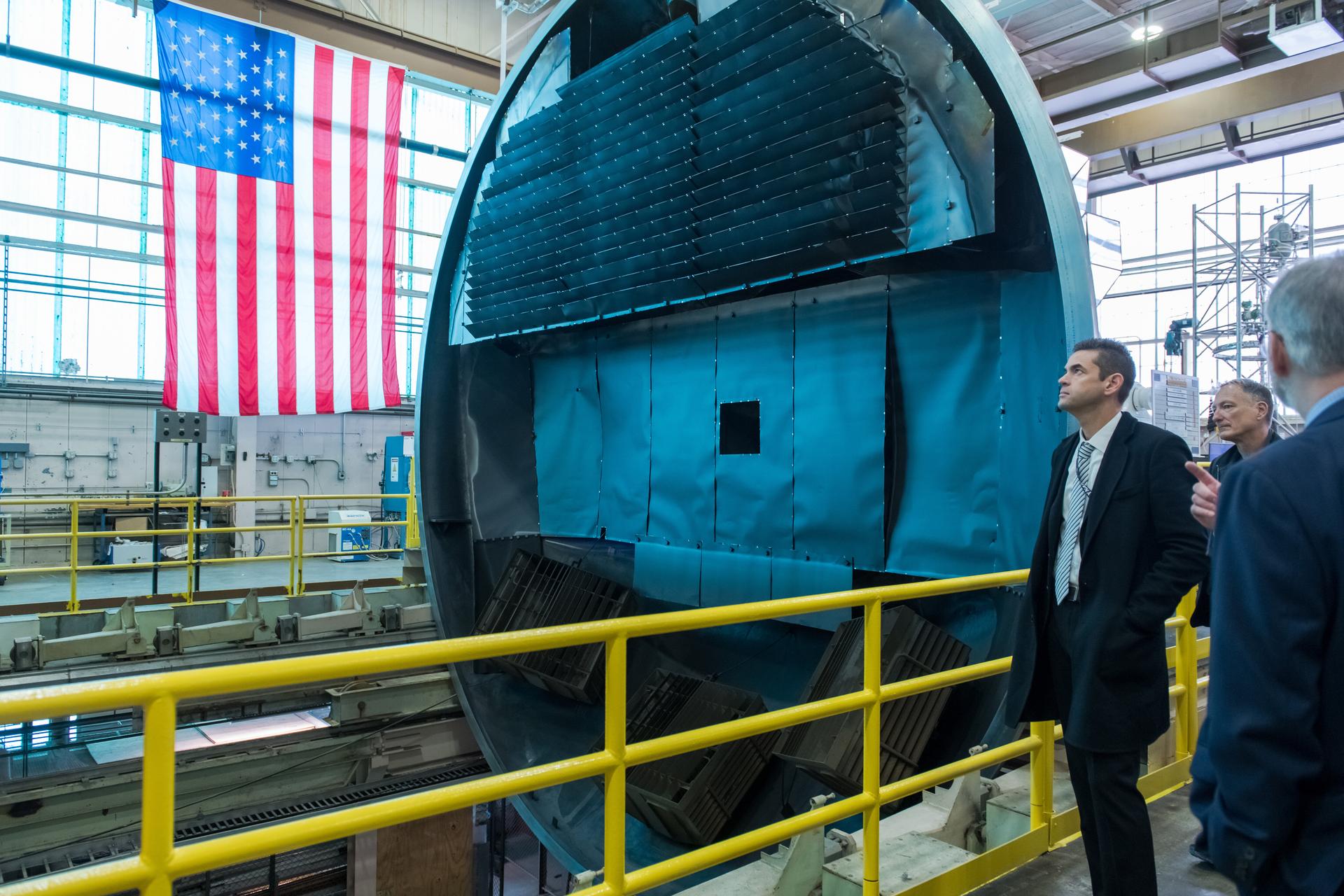
NASA Administrator Jared Isaacman looks inside Vacuum Facility-6 in the Electric Propulsion and Power Laboratory during a visit to NASA's Glenn Research Center in Cleveland on Jan. 27, 2026.

jsc2026e409150 (June 27, 2026) -- James Spicer, Crew Health and Performance Exploration Analog (CHAPEA) Mission 2 flight engineer, tends to crops grown in the habitat’s hydroponic crop system. Credit: NASA
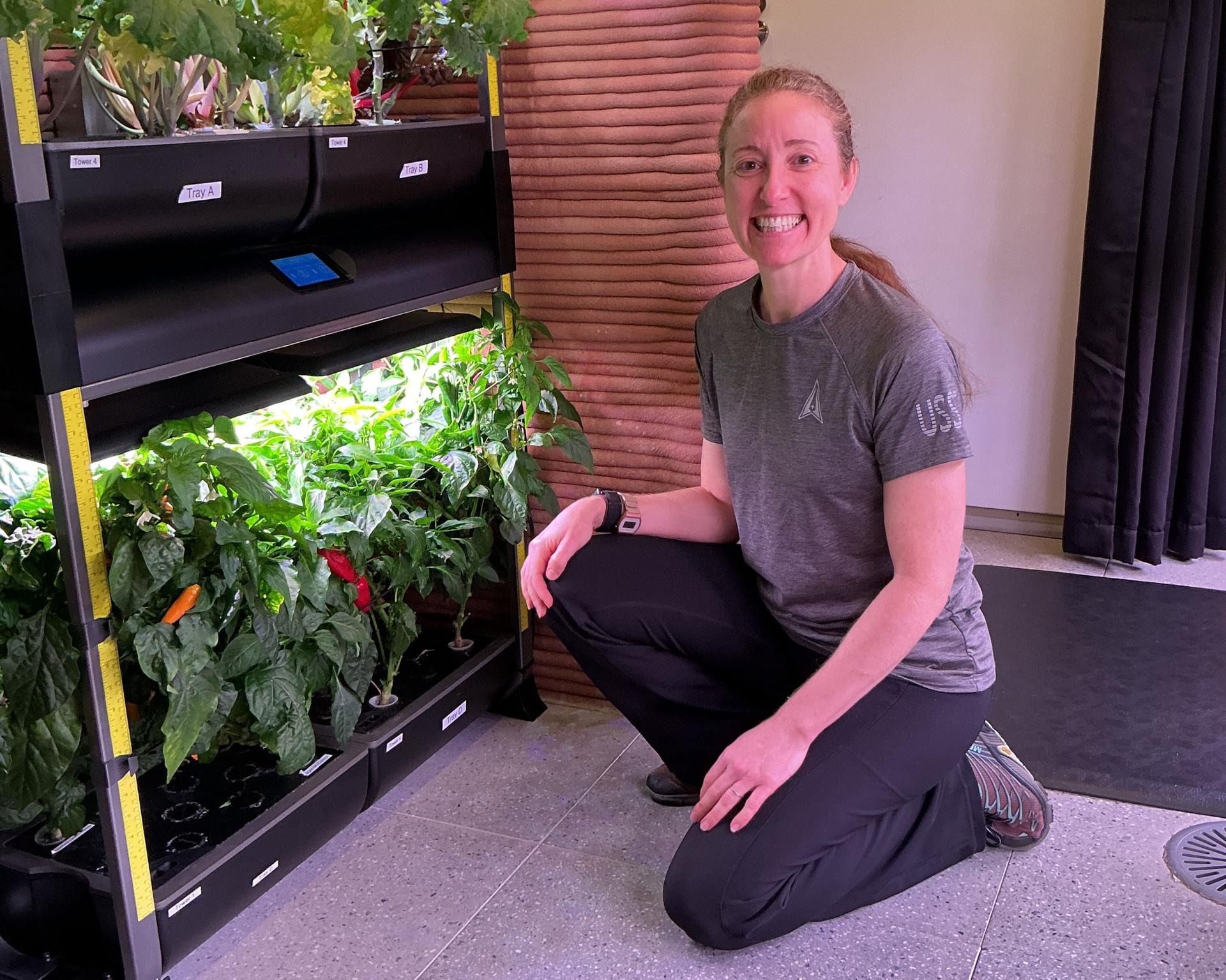
jsc2026e409148 (June 27, 2026) -- Crew Health and Performance Exploration Analog (CHAPEA) Mission 2 medical officer, Ellen Ellis, kneels in front of the hydroponic growth system. Credit: NASA
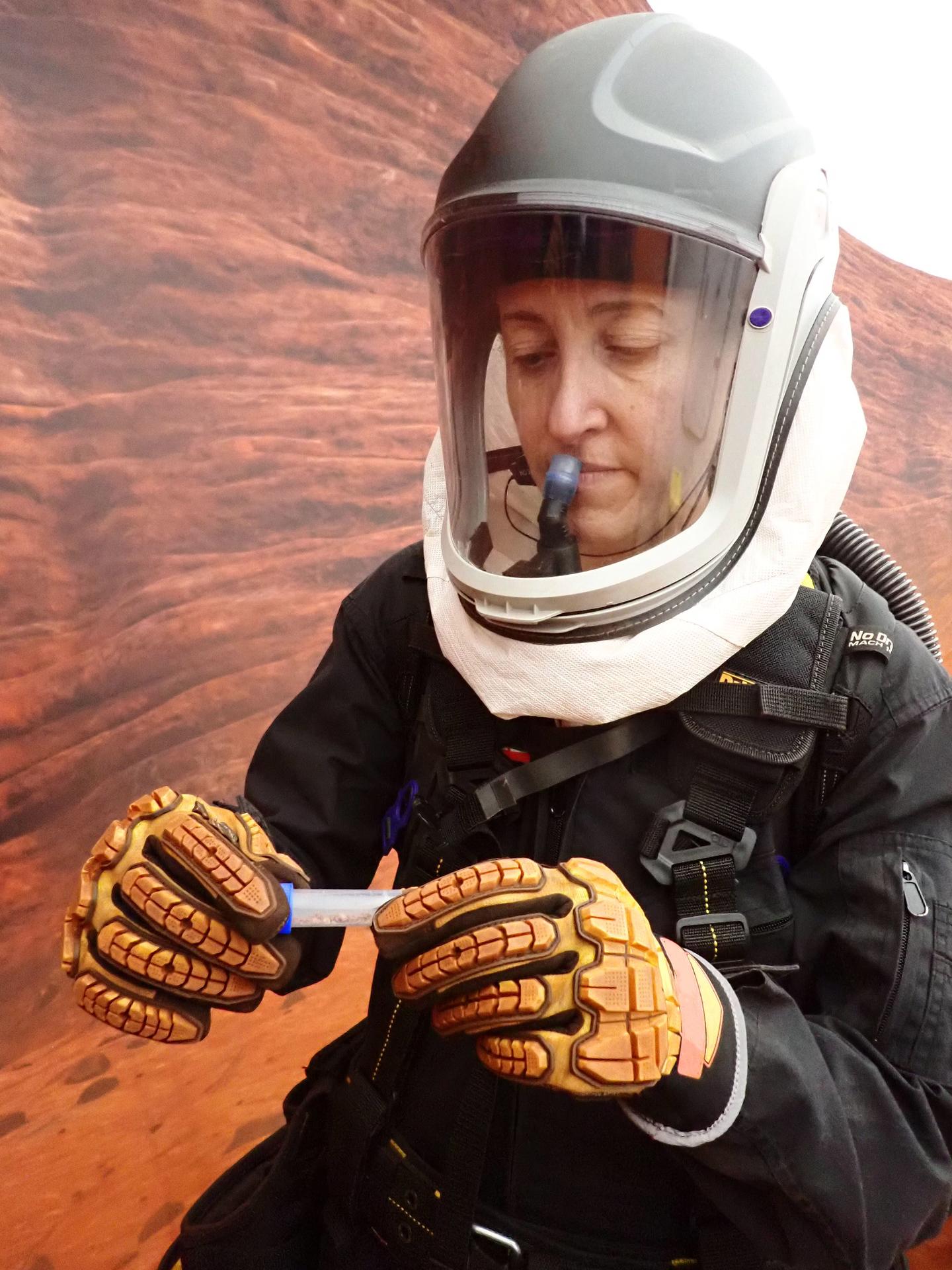
jsc2026e403171 (Feb. 27, 2026) -- CHAPEA mission 2 medical officer, Ellen Ellis, collects samples during an extravehicular activity, also known as a spacewalk. Credit: NASA

iss074e0409125 (March 24, 2026) -- The Progress 94 cargo spacecraft is pictured docked to the International Space Station's Poisk module. Credit: NASA
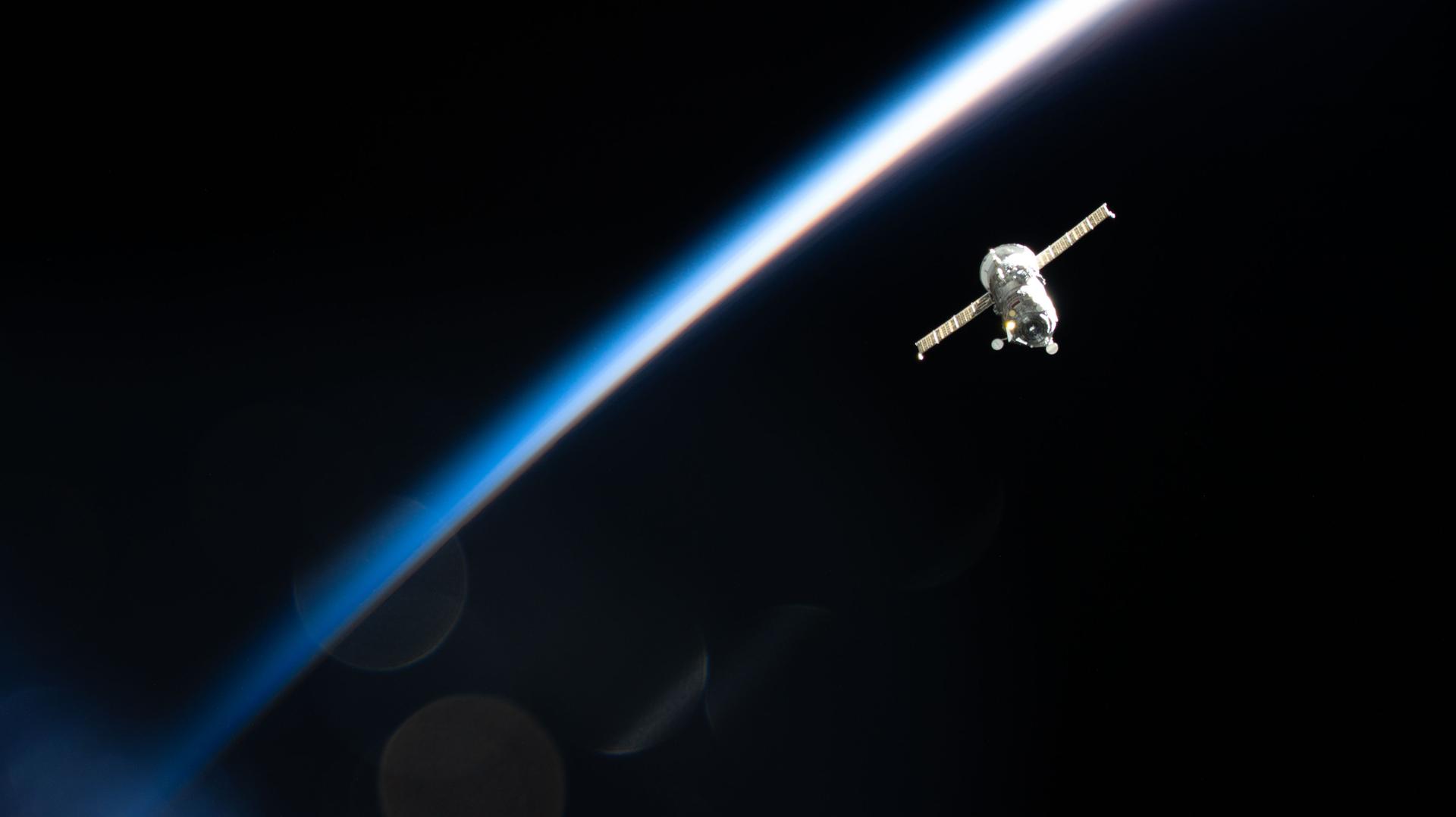
iss074e0395792 (March 16, 2026) --- The Progress 92 cargo spacecraft from Roscosmos departs the International Space Station while soaring into an orbital sunset 267 miles above the Russia–Mongolia border. Credit: NASA

NASA Administrator Jared Isaacman testifies during a hearing held by the House Appropriations Subcommittee on Commerce, Justice, Science, and Related Agencies to review NASA’s Fiscal Year 2027 budget request, Monday, April 27, 2026, at the Rayburn House Office Building in Washington. Photo Credit: (NASA/Joel Kowsky)

NASA Administrator Jared Isaacman testifies during a hearing held by the House Appropriations Subcommittee on Commerce, Justice, Science, and Related Agencies to review NASA’s Fiscal Year 2027 budget request, Monday, April 27, 2026, at the Rayburn House Office Building in Washington. Photo Credit: (NASA/Joel Kowsky)
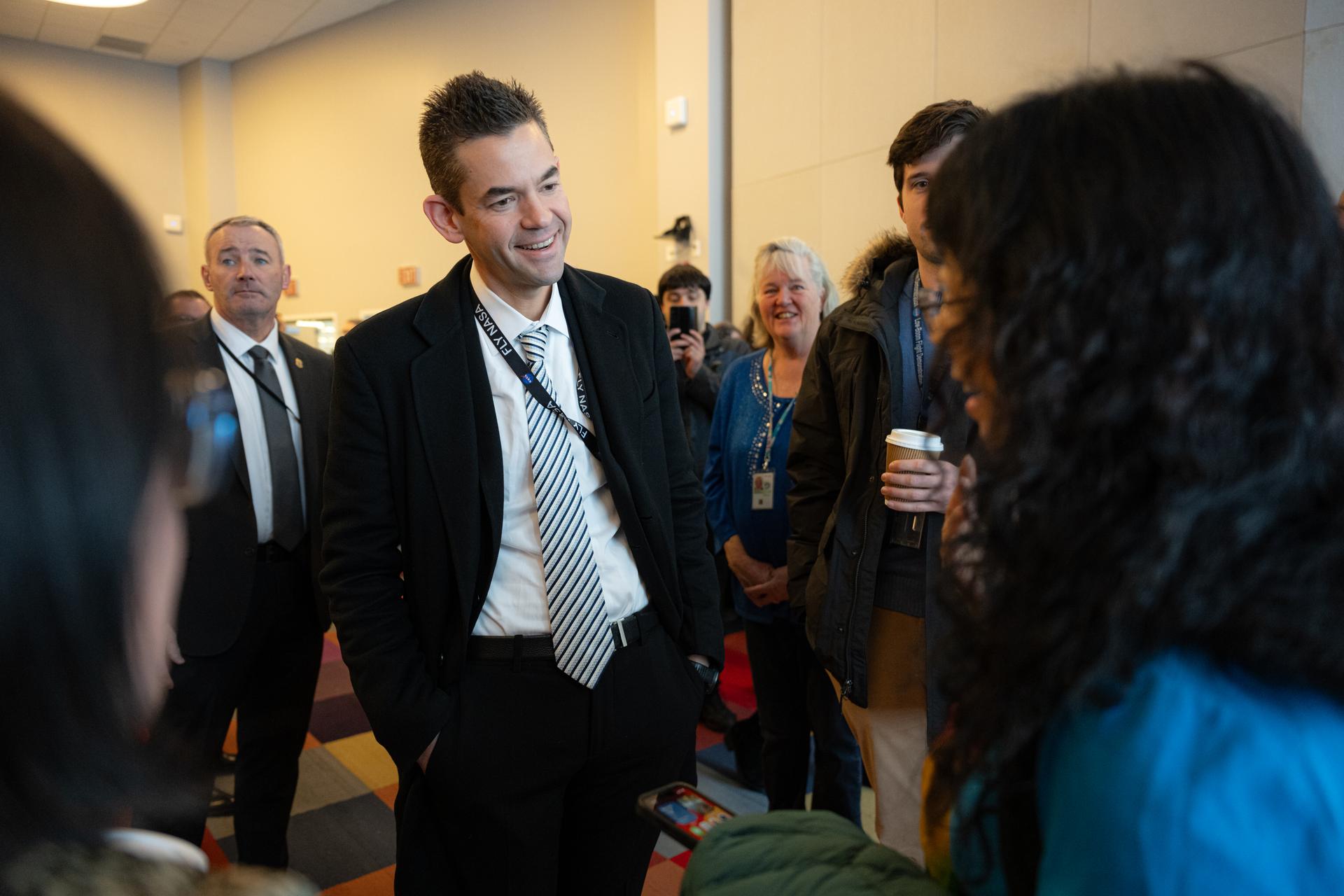
NASA Administrator Jared Isaacman greets members of the workforce, Tuesday, Jan. 27, 2026, at NASA’s Glenn Research Center in Cleveland, Ohio. Glenn marks the eleventh stop in Isaacman’s roadshow to visit NASA facilities and engage directly with the agency’s workforce. Photo Credit: (NASA/John Kraus)
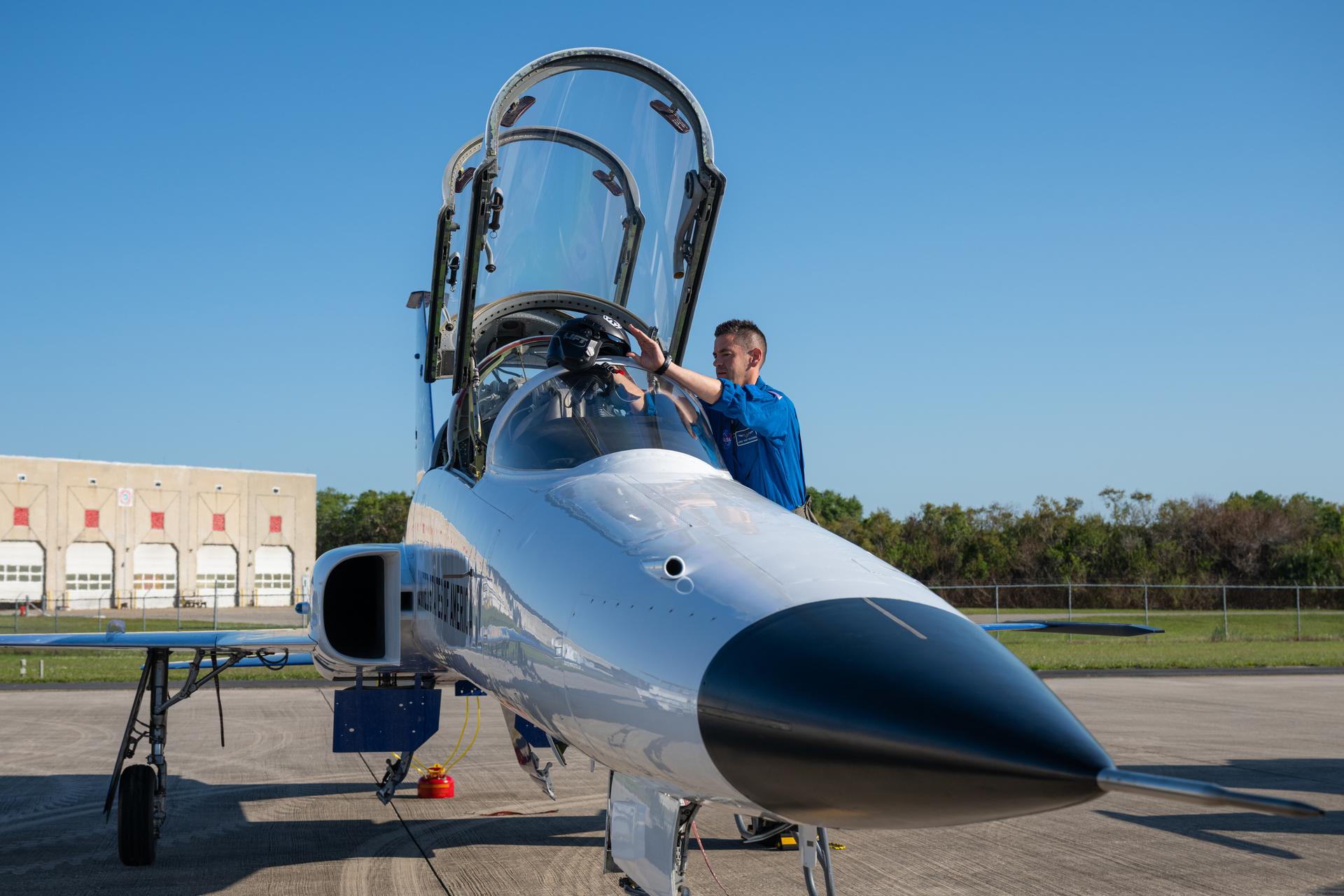
NASA Administrator Jared Isaacman is seen before an employee incentive flying event using his personal F-5 aircraft, Friday, March 27, 2026, at NASA’s Kennedy Space Center in Florida. Photo Credit: (NASA/John Kraus)
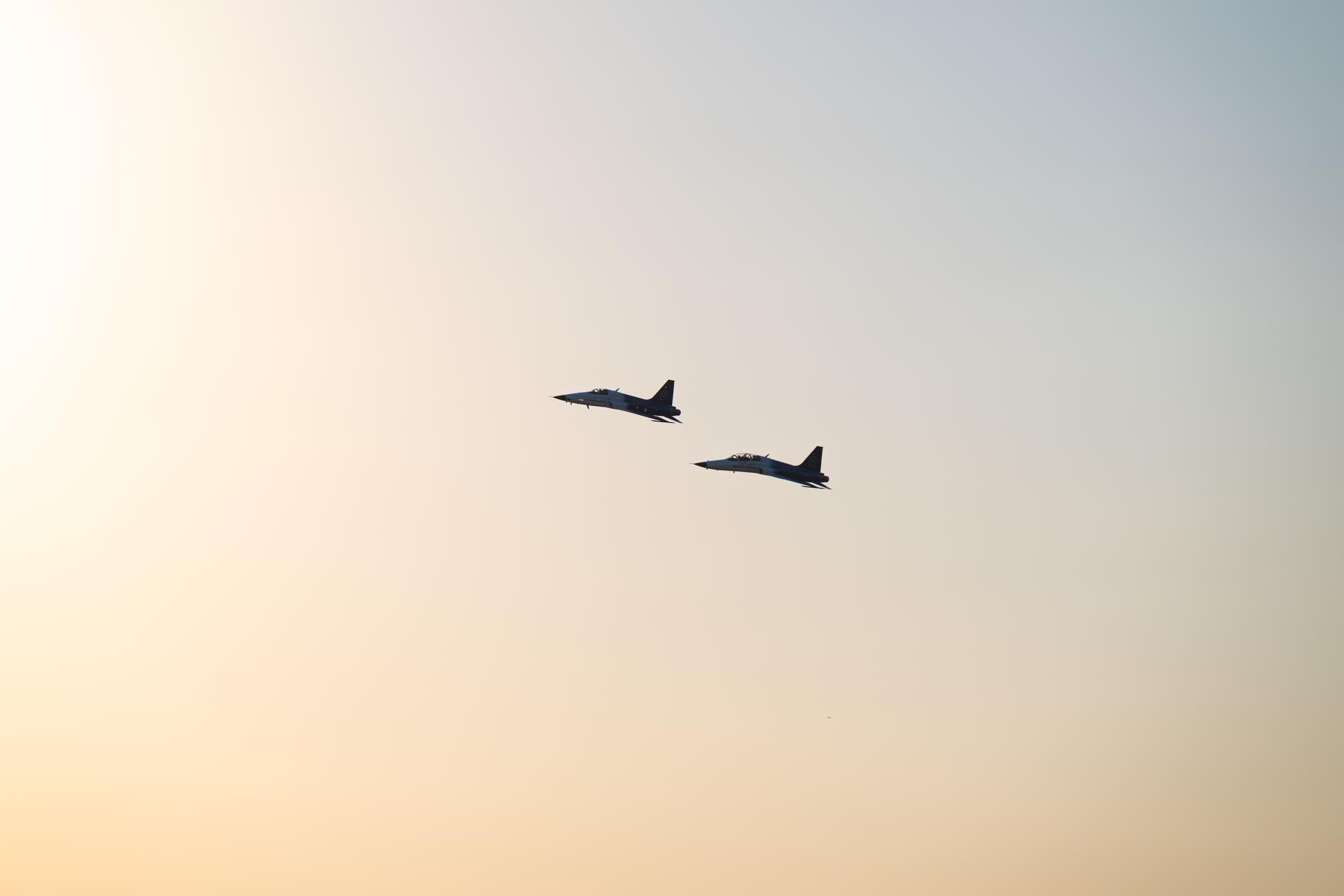
NASA employees participate in an employee incentive flying event using NASA Administrator Jared Isaacman's personal F-5 aircraft, Friday, March 27, 2026, at NASA’s Kennedy Space Center in Florida. Photo Credit: (NASA/John Kraus)

NASA Administrator Jared Isaacman testifies during a hearing held by the House Appropriations Subcommittee on Commerce, Justice, Science, and Related Agencies to review NASA’s Fiscal Year 2027 budget request, Monday, April 27, 2026, at the Rayburn House Office Building in Washington. Photo Credit: (NASA/Joel Kowsky)
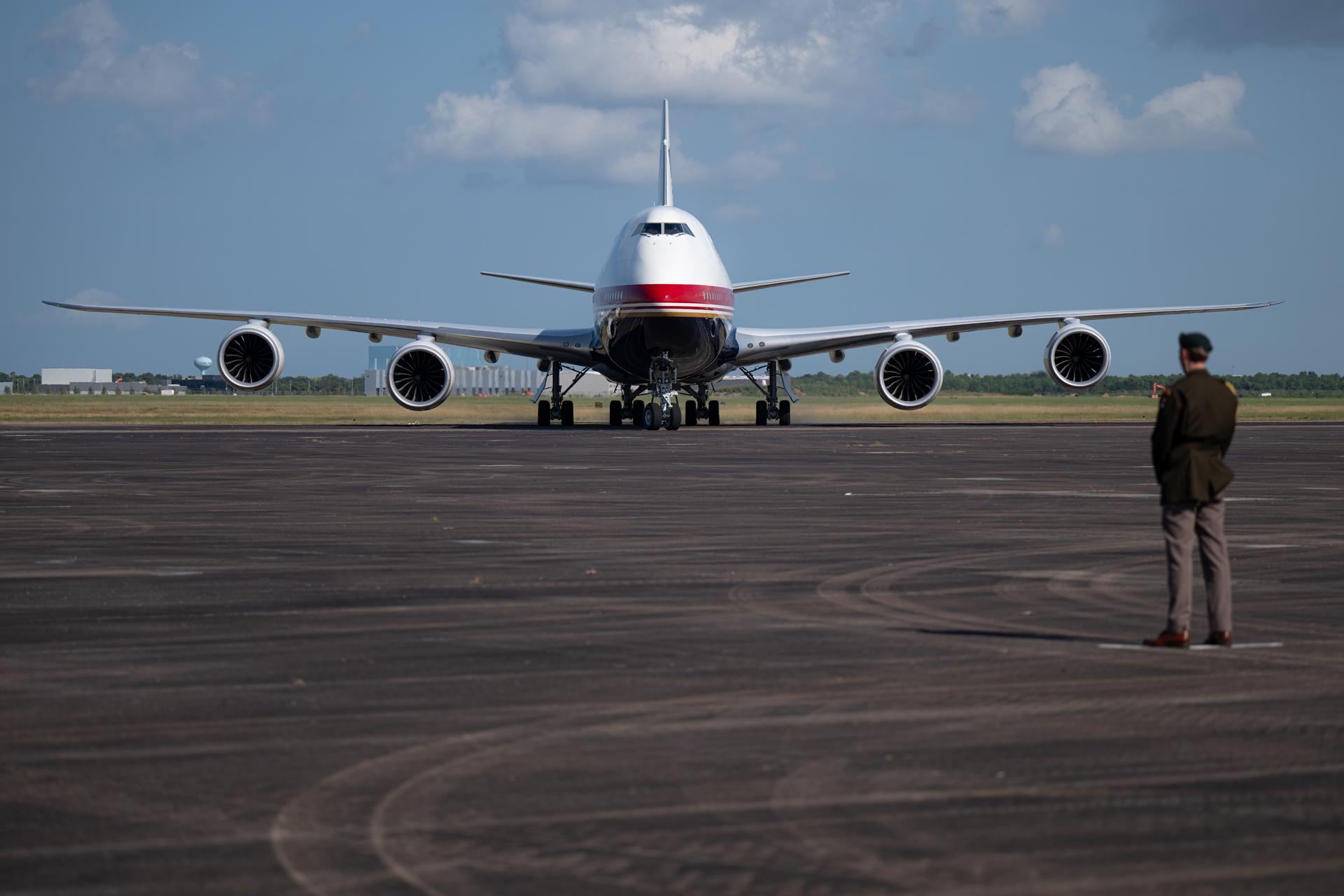
Air Force One is seen after landing, Thursday, Aug. 27, 2026, at Ellington Field Joint Reserve Base in Houston, Texas. President Trump is visiting NASA’s Johnson Space Center to award the Congressional Space Medal of Honor to the Artemis II crew on Friday, Aug. 28. Photo Credit: (NASA/John Kraus)

NASA Administrator Jared Isaacman testifies during a hearing held by the House Appropriations Subcommittee on Commerce, Justice, Science, and Related Agencies to review NASA’s Fiscal Year 2027 budget request, Monday, April 27, 2026, at the Rayburn House Office Building in Washington. Photo Credit: (NASA/Joel Kowsky)

NASA Administrator Jared Isaacman testifies during a hearing held by the House Appropriations Subcommittee on Commerce, Justice, Science, and Related Agencies to review NASA’s Fiscal Year 2027 budget request, Monday, April 27, 2026, at the Rayburn House Office Building in Washington. Photo Credit: (NASA/Joel Kowsky)
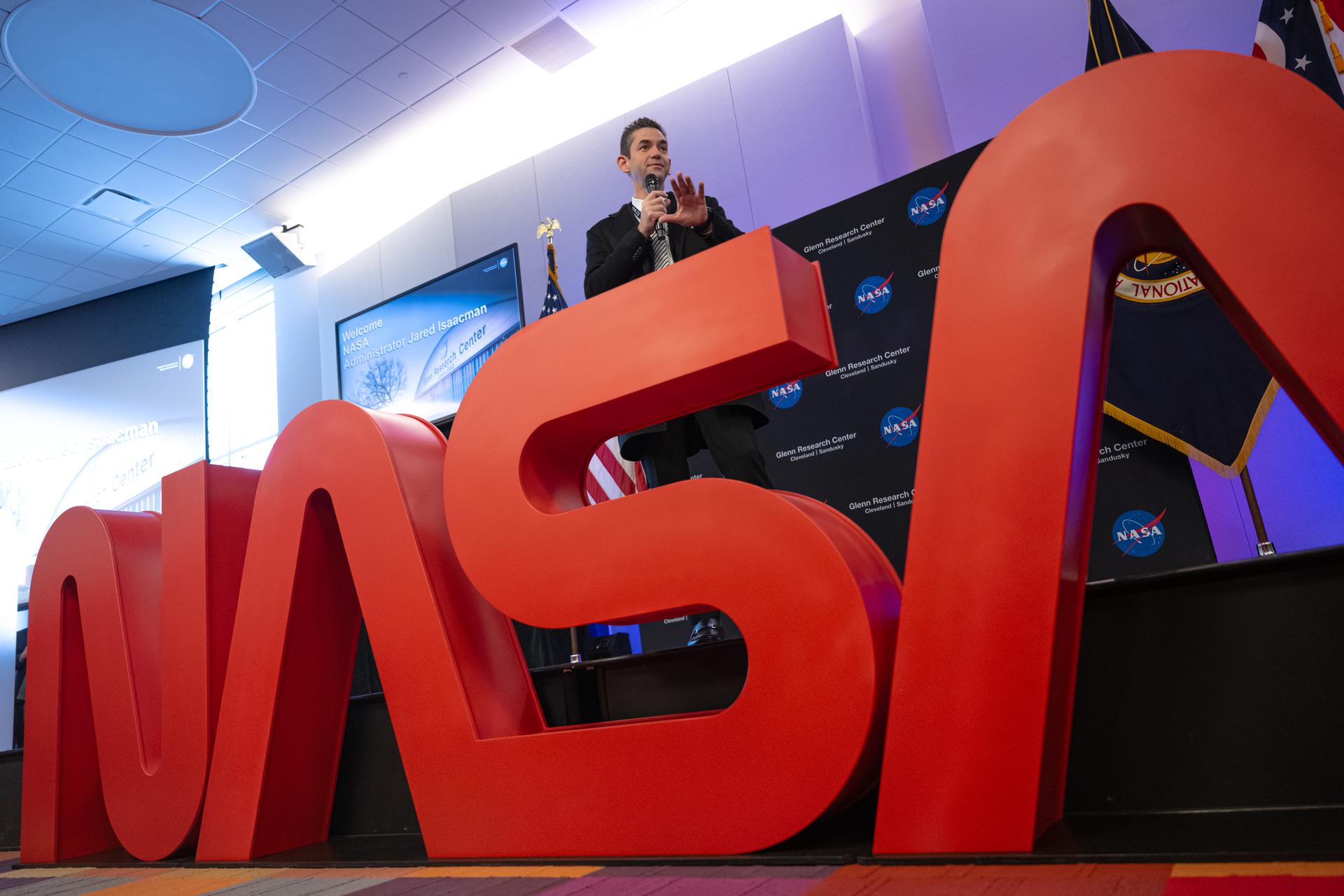
NASA Administrator Jared Isaacman speaks during a workforce Q&A session, Tuesday, Jan. 27, 2026, at NASA’s Glenn Research Center in Cleveland, Ohio. Glenn marks the eleventh stop in Isaacman’s roadshow to visit NASA facilities and engage directly with the agency’s workforce. Photo Credit: (NASA/John Kraus)

NASA Administrator Jared Isaacman testifies during a hearing held by the House Appropriations Subcommittee on Commerce, Justice, Science, and Related Agencies to review NASA’s Fiscal Year 2027 budget request, Monday, April 27, 2026, at the Rayburn House Office Building in Washington. Photo Credit: (NASA/Joel Kowsky)

NASA Administrator Jared Isaacman testifies during a hearing held by the House Appropriations Subcommittee on Commerce, Justice, Science, and Related Agencies to review NASA’s Fiscal Year 2027 budget request, Monday, April 27, 2026, at the Rayburn House Office Building in Washington. Photo Credit: (NASA/Joel Kowsky)

NASA Administrator Jared Isaacman testifies during a hearing held by the House Appropriations Subcommittee on Commerce, Justice, Science, and Related Agencies to review NASA’s Fiscal Year 2027 budget request, Monday, April 27, 2026, at the Rayburn House Office Building in Washington. Photo Credit: (NASA/Joel Kowsky)

The table where NASA Administrator Jared Isaacman will sit during a hearing held by the House Appropriations Subcommittee on Commerce, Justice, Science, and Related Agencies to review NASA’s Fiscal Year 2027 budget request is seen, Monday, April 27, 2026, at the Rayburn House Office Building in Washington. Photo Credit: (NASA/Joel Kowsky)

NASA Administrator Jared Isaacman testifies during a hearing held by the House Appropriations Subcommittee on Commerce, Justice, Science, and Related Agencies to review NASA’s Fiscal Year 2027 budget request, Monday, April 27, 2026, at the Rayburn House Office Building in Washington. Photo Credit: (NASA/Joel Kowsky)

NASA Administrator Jared Isaacman testifies during a hearing held by the House Appropriations Subcommittee on Commerce, Justice, Science, and Related Agencies to review NASA’s Fiscal Year 2027 budget request, Monday, April 27, 2026, at the Rayburn House Office Building in Washington. Photo Credit: (NASA/Joel Kowsky)
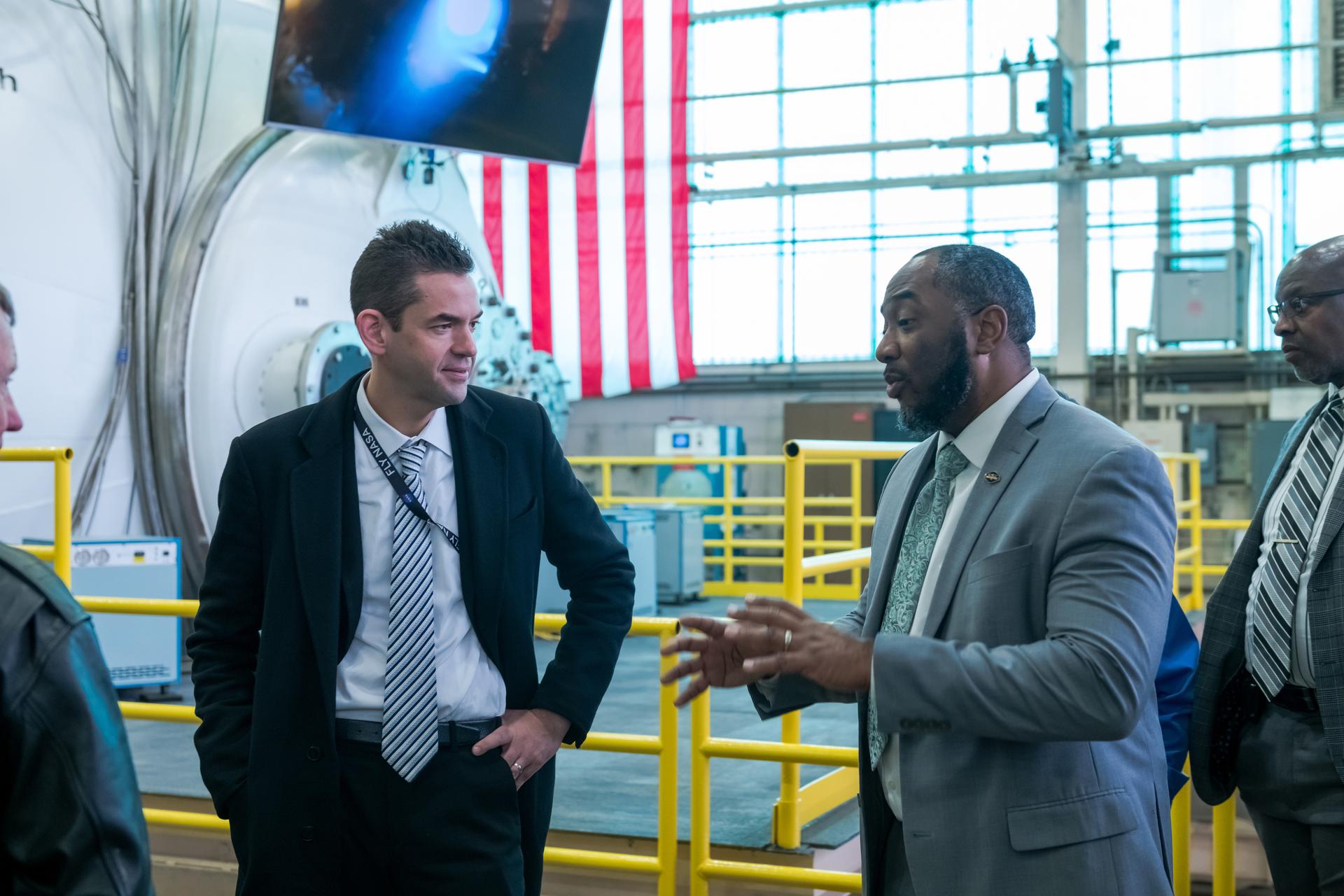
During a visit to NASA's Glenn Research Center in Cleveland on Tuesday, Jan. 27, 2026, NASA Administrator Jared Isaacman speaks with Carl Sandifer, manager of the Radioisotope Power Systems Program, inside the Electric Propulsion and Power Laboratory as Rickey Shyne, director of Research and Engineering, looks on.

NASA Administrator Jared Isaacman testifies during a hearing held by the House Appropriations Subcommittee on Commerce, Justice, Science, and Related Agencies to review NASA’s Fiscal Year 2027 budget request, Monday, April 27, 2026, at the Rayburn House Office Building in Washington. Photo Credit: (NASA/Joel Kowsky)

NASA Administrator Jared Isaacman testifies during a hearing held by the House Appropriations Subcommittee on Commerce, Justice, Science, and Related Agencies to review NASA’s Fiscal Year 2027 budget request, Monday, April 27, 2026, at the Rayburn House Office Building in Washington. Photo Credit: (NASA/Joel Kowsky)

NASA Administrator Jared Isaacman testifies during a hearing held by the House Appropriations Subcommittee on Commerce, Justice, Science, and Related Agencies to review NASA’s Fiscal Year 2027 budget request, Monday, April 27, 2026, at the Rayburn House Office Building in Washington. Photo Credit: (NASA/Joel Kowsky)

NASA Administrator Jared Isaacman testifies during a hearing held by the House Appropriations Subcommittee on Commerce, Justice, Science, and Related Agencies to review NASA’s Fiscal Year 2027 budget request, Monday, April 27, 2026, at the Rayburn House Office Building in Washington. Photo Credit: (NASA/Joel Kowsky)

Luis Muniz, radiation safety officer at NASA’s Goddard Space Flight Center, poses for a photograph before an employee incentive flying event with NASA Administrator Jared Isaacman's personal F-5 aircraft, Friday, March 27, 2026, at NASA’s Kennedy Space Center in Florida. Photo Credit: (NASA/John Kraus)

Air Force One is seen after landing, Thursday, Aug. 27, 2026, at Ellington Field Joint Reserve Base in Houston, Texas. President Trump is visiting NASA’s Johnson Space Center to award the Congressional Space Medal of Honor to the Artemis II crew on Friday, Aug. 28. Photo Credit: (NASA/John Kraus)
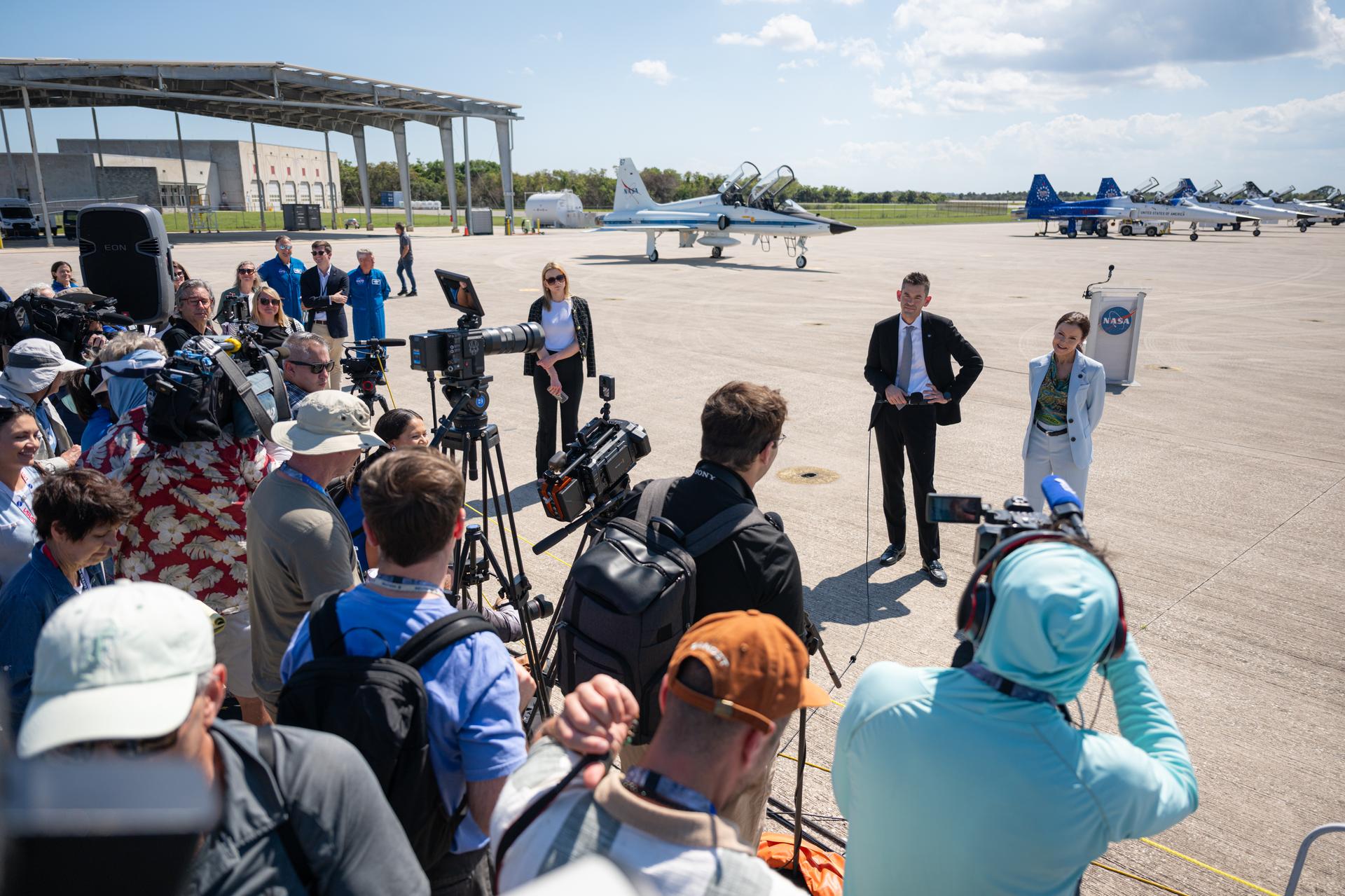
NASA Administrator Jared Isaacman, center right, and Lisa Campbell, president of the Canadian Space Agency, right, participate in a media gaggle following the arrival of the Artemis II crew, Friday, March 27, 2026, at the Launch and Landing Facility at NASA’s Kennedy Space Center in Florida. Photo Credit: (NASA/John Kraus)
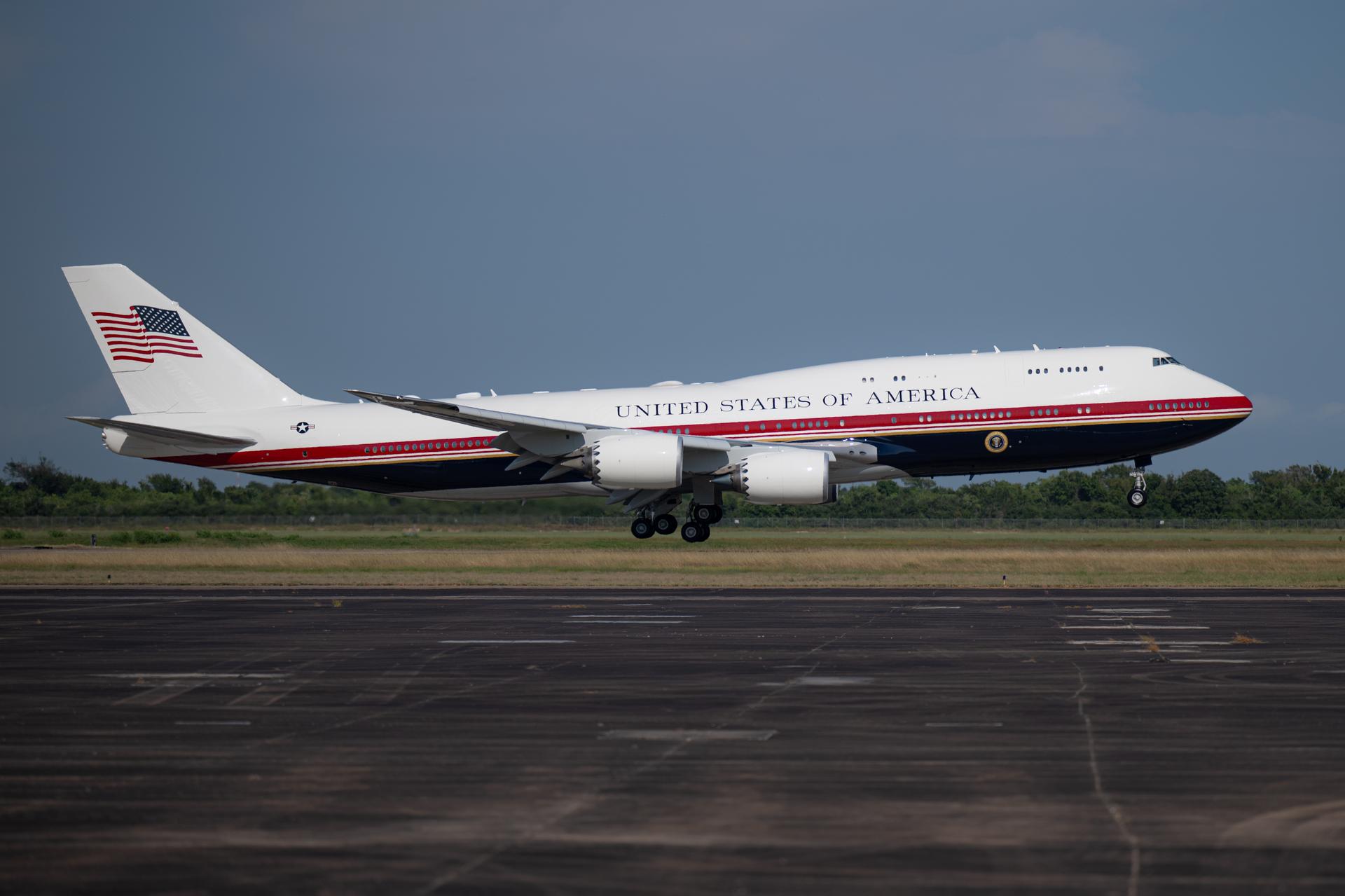
Air Force One is seen landing, Thursday, Aug. 27, 2026, at Ellington Field Joint Reserve Base in Houston, Texas. President Trump is visiting NASA’s Johnson Space Center to award the Congressional Space Medal of Honor to the Artemis II crew on Friday, Aug. 28. Photo Credit: (NASA/John Kraus)
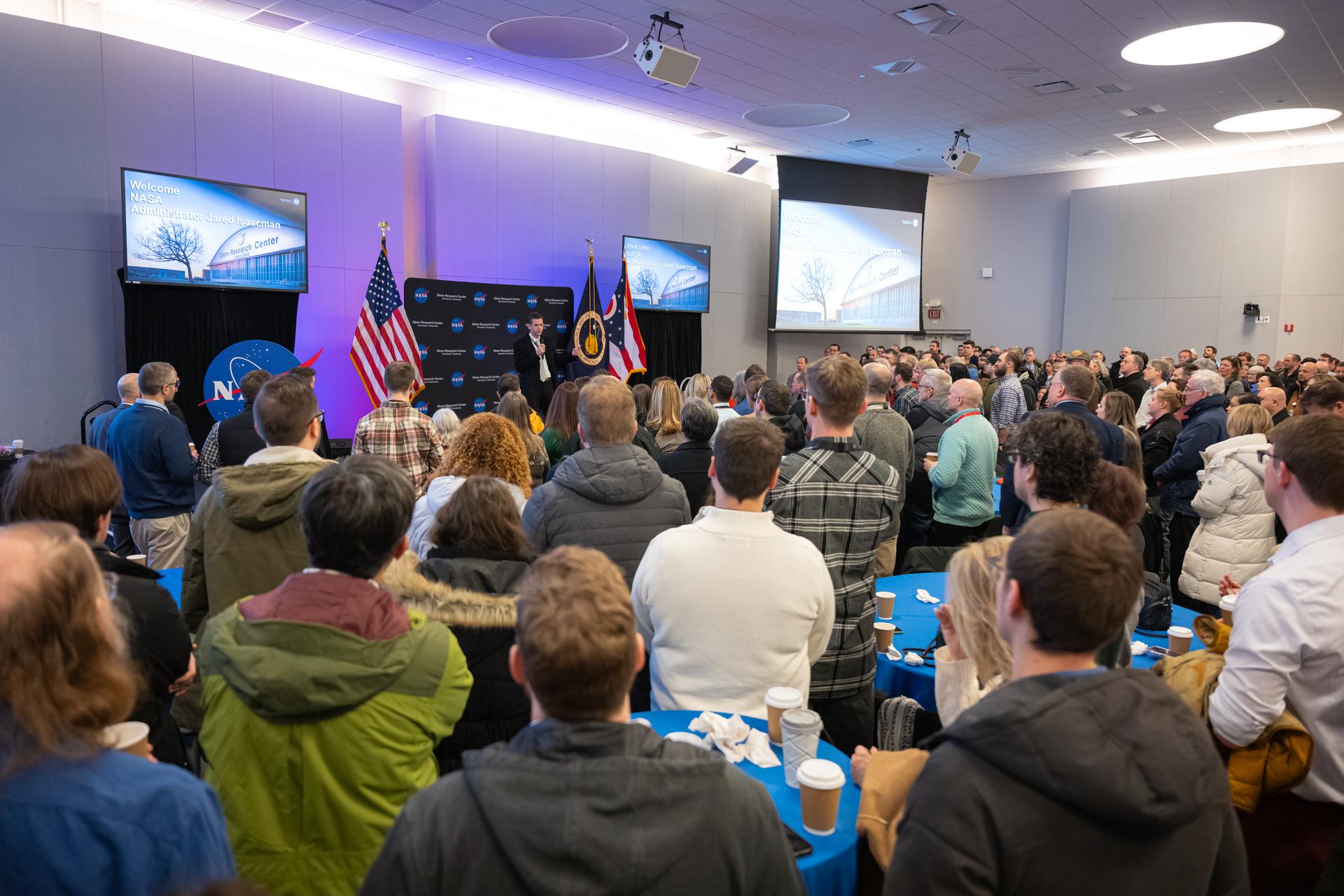
NASA Administrator Jared Isaacman speaks during a workforce Q&A session, Tuesday, Jan. 27, 2026, at NASA’s Glenn Research Center in Cleveland, Ohio. Glenn marks the eleventh stop in Isaacman’s roadshow to visit NASA facilities and engage directly with the agency’s workforce. Photo Credit: (NASA/John Kraus)
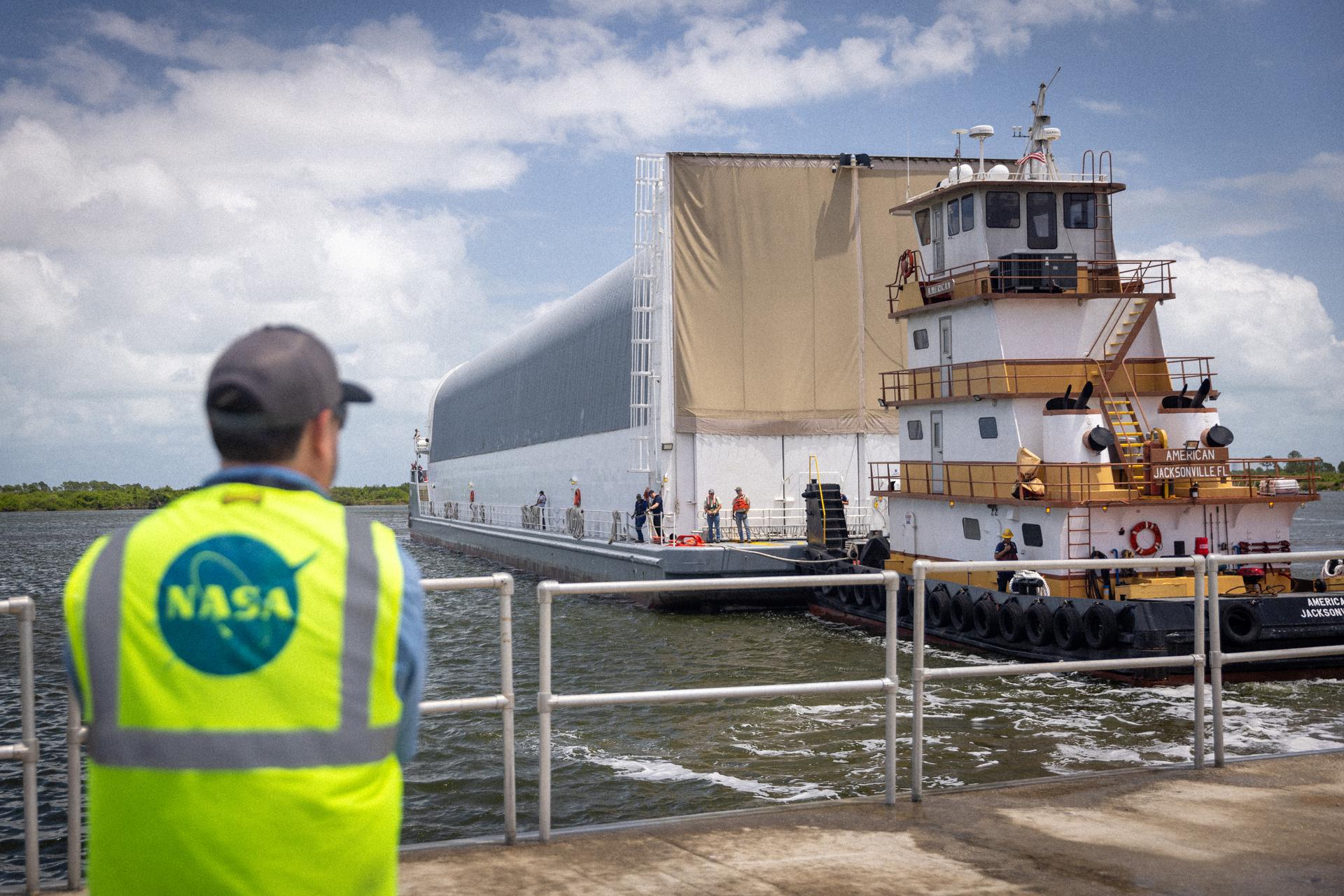
NASA’s Pegasus barge, carrying the top four-fifths of the agency’s SLS (Space Launch System) core stage for the Artemis III mission, arrives at NASA’s Kennedy Space Center Complex 39 turn basin wharf in Florida on Monday, April 27, 2026. Artemis III will launch astronauts to Earth’s orbit aboard the Orion spacecraft on top of SLS to test rendezvous and docking capabilities between Orion and commercial spacecraft needed to land Artemis IV astronauts on the Moon in 2028.
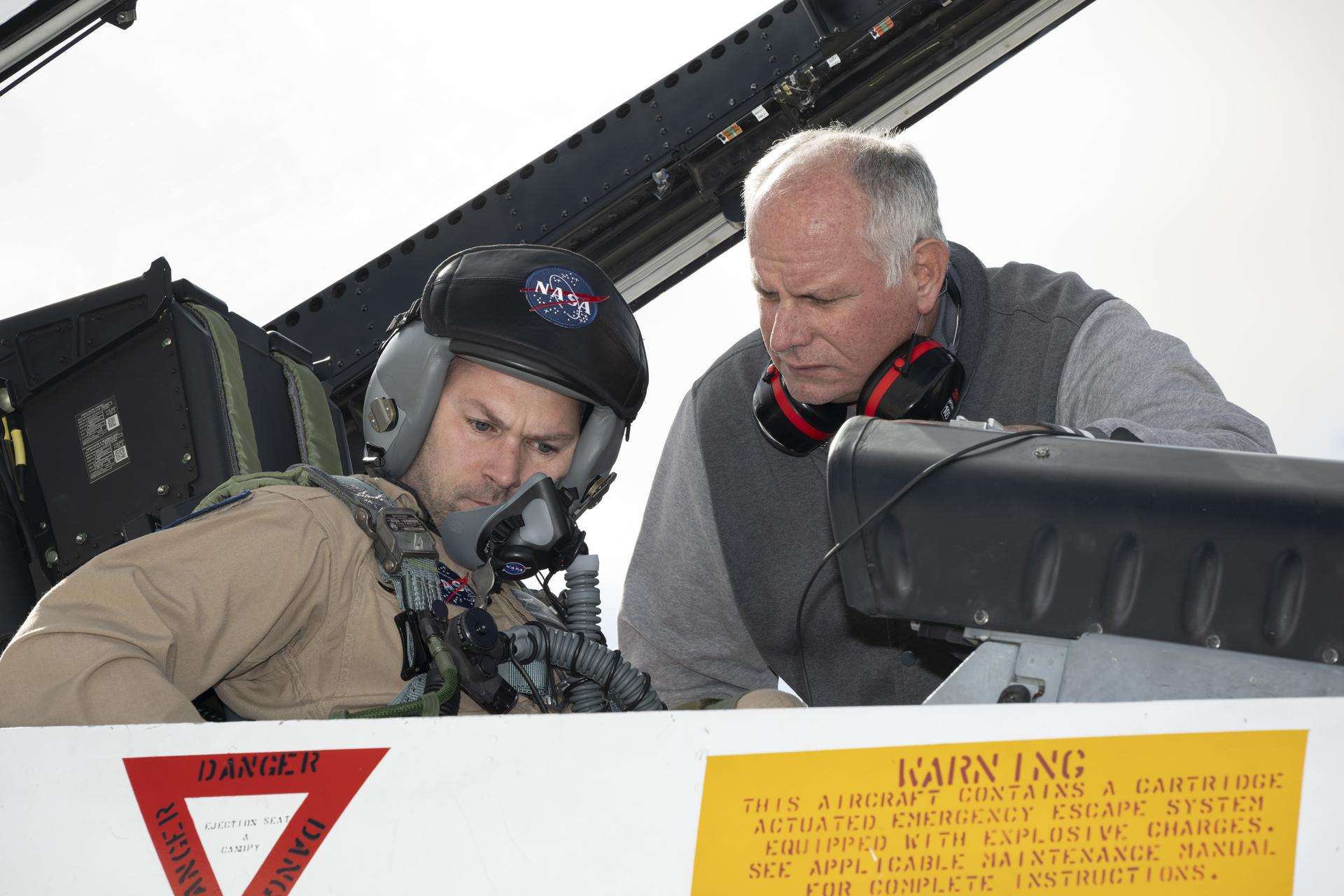
Phil Wellner, aircrew life support technician, help prepare Kelly Jellison, lead avionics technician for NASA’s C-20 and G-V aircraft for an employee incentive flight in an F/A-18 aircraft at NASA’s Armstrong Flight Research Center in Edwards, California, on Wednesday, May 27, 2026. NASA Administrator Jared Isaacman established the ride‑along program to recognize and reward workforce members for their dedication to advancing the agency’s priorities.

President Donald Trump is seen after disembarking Air Force One, Thursday, Aug. 27, 2026, at Ellington Field Joint Reserve Base in Houston, Texas. President Trump is visiting NASA’s Johnson Space Center to award the Congressional Space Medal of Honor to the Artemis II crew on Friday, Aug. 28. Photo Credit: (NASA/John Kraus)
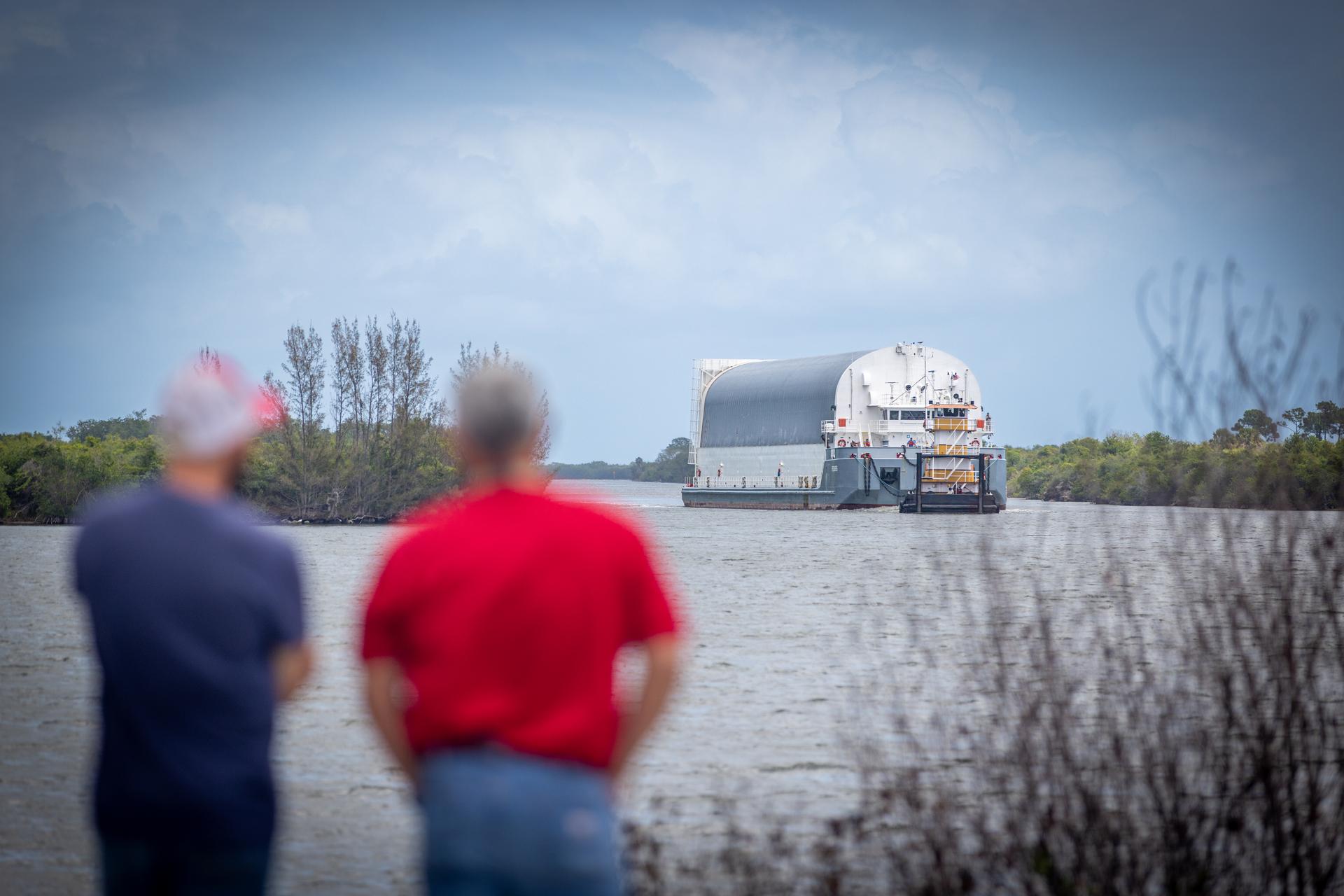
NASA’s Pegasus barge, carrying the top four-fifths of the agency’s SLS (Space Launch System) core stage for the Artemis III mission, arrives at NASA’s Kennedy Space Center Complex 39 turn basin wharf in Florida on Monday, April 27, 2026. Artemis III will launch astronauts to Earth’s orbit aboard the Orion spacecraft on top of SLS to test rendezvous and docking capabilities between Orion and commercial spacecraft needed to land Artemis IV astronauts on the Moon in 2028.

The Sun sets behind NASA’s Artemis II SLS (Space Launch System) rocket and Orion spacecraft atop a mobile launcher at Launch Complex 39B at NASA’s Kennedy Space Center in Florida on Friday, March 27, 2026. The Artemis II test flight will take Commander Reid Wiseman, Pilot Victor Glover, and Mission Specialist Christina Koch from NASA, and Mission Specialist Jeremy Hansen from the CSA (Canadian Space Agency), around the Moon and back to Earth.
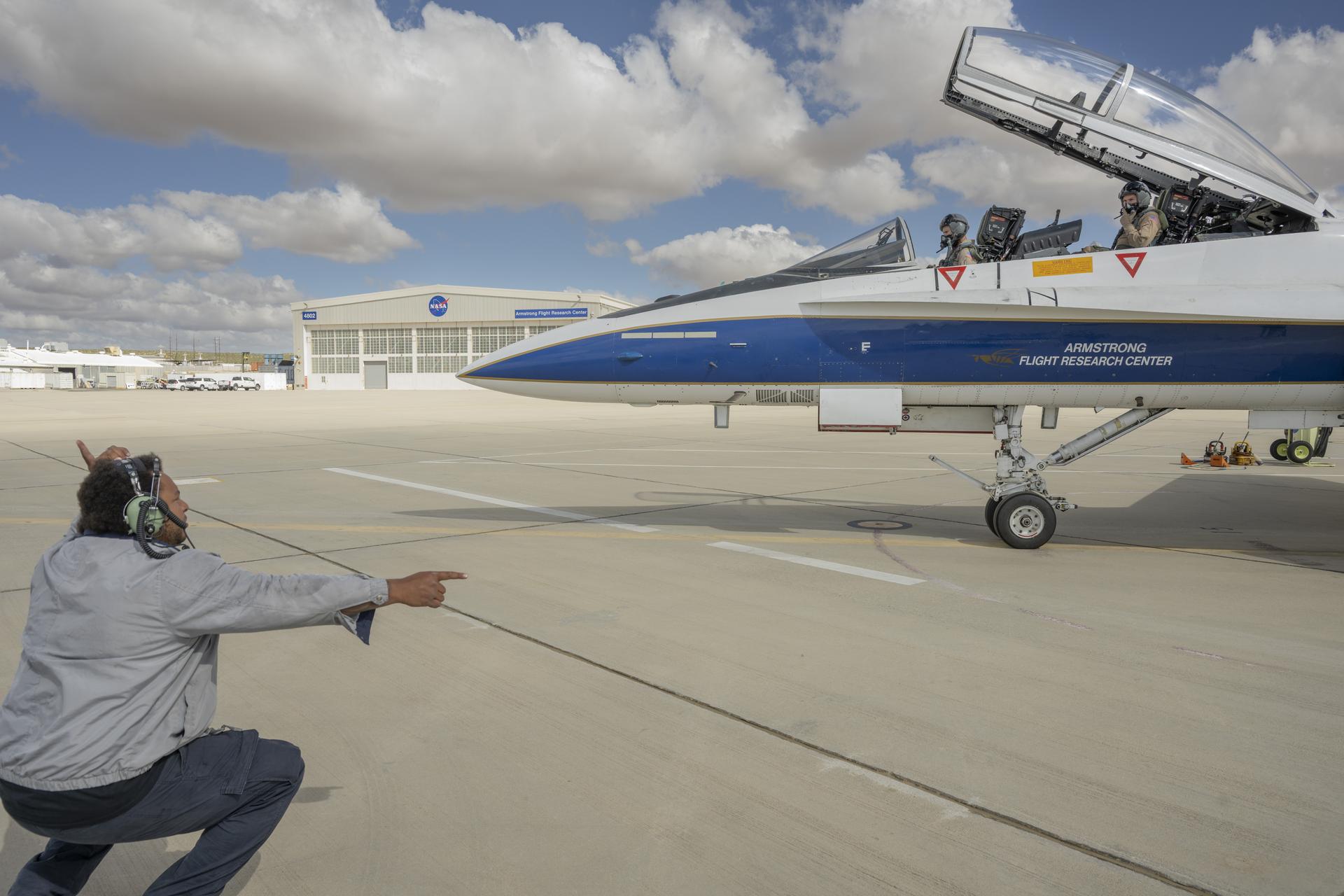
Crew chief, Andric McCartin, prepares NASA pilot Tim Williams and Kelly Jellison, lead avionics technician for NASA’s C-20 and G-V aircraft, for an employee incentive flight in an F/A-18 aircraft at NASA’s Armstrong Flight Research Center in Edwards, California, on Wednesday, May 27, 2026. NASA Administrator Jared Isaacman established the ride‑along program to recognize and reward workforce members for their dedication to advancing the agency’s priorities.

President Donald Trump speaks with members of the U.S. Air Force and U.S. Representative Brian Babin of Texas's 36th congressional district after disembarking Air Force One, Thursday, Aug. 27, 2026, at Ellington Field Joint Reserve Base in Houston, Texas. President Trump is visiting NASA’s Johnson Space Center to award the Congressional Space Medal of Honor to the Artemis II crew on Friday, Aug. 28. Photo Credit: (NASA/John Kraus)
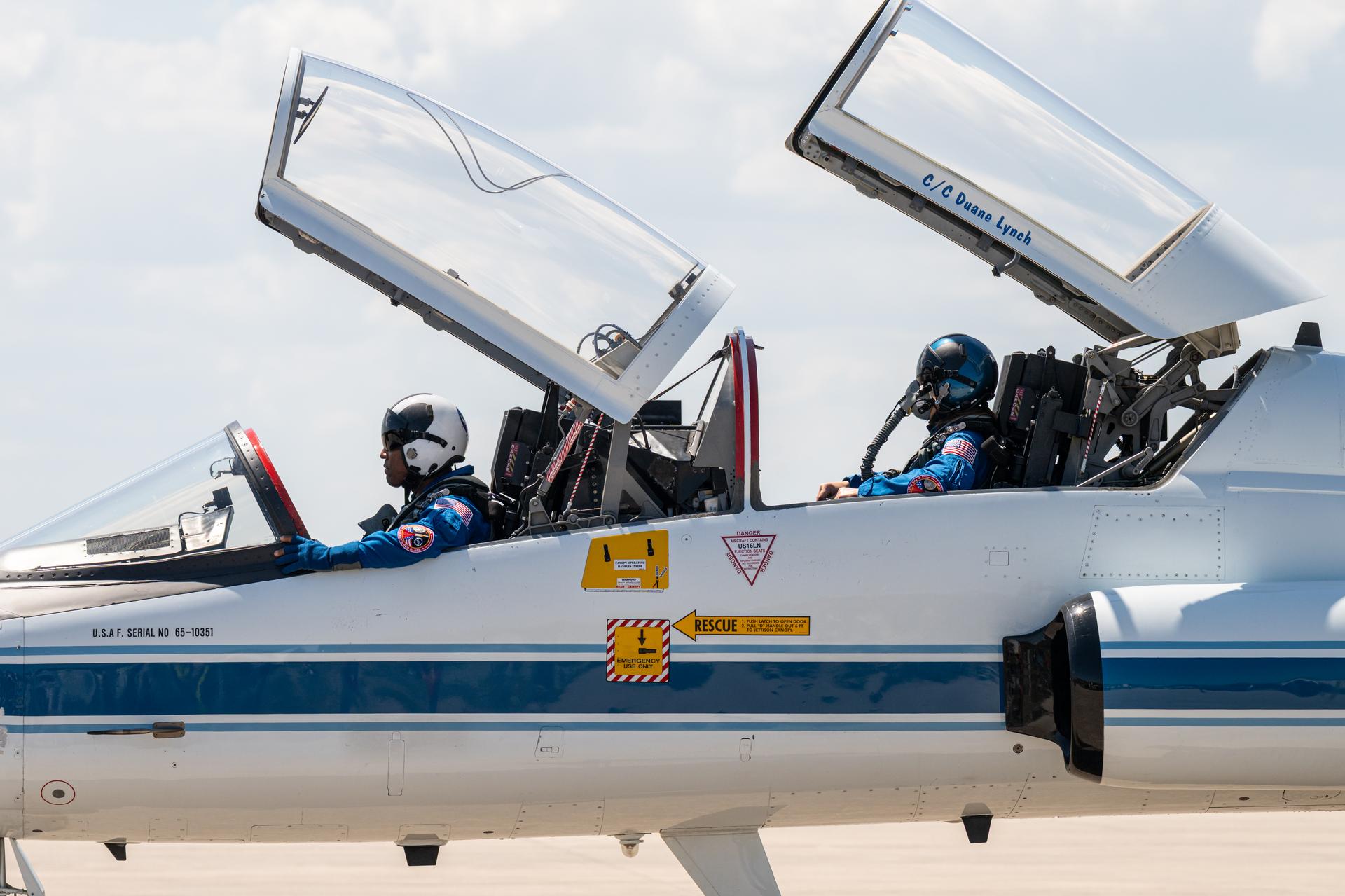
NASA astronauts Victor Glover, Artemis II pilot, and Christina Koch, Artemis II mission specialist, are seen in a T-38 aircraft, Friday, March 27, 2026, after arriving at the Launch and Landing Facility at NASA’s Kennedy Space Center in Florida. The Artemis II mission will launch the crew on a 10-day journey around the Moon and back no earlier than April 1. Photo Credit: (NASA/John Kraus)

iss074e0334264 (Feb. 27, 2026) --- Detroit, Michigan—home to America’s automotive pioneers and with a history of more than 300 years—sits on the Detroit River across from Windsor, Ontario, Canada. The International Space Station was orbiting 264 miles above North America at approximately 1:18 a.m. local time when this photograph was taken. Credit: NASA/Chris Williams
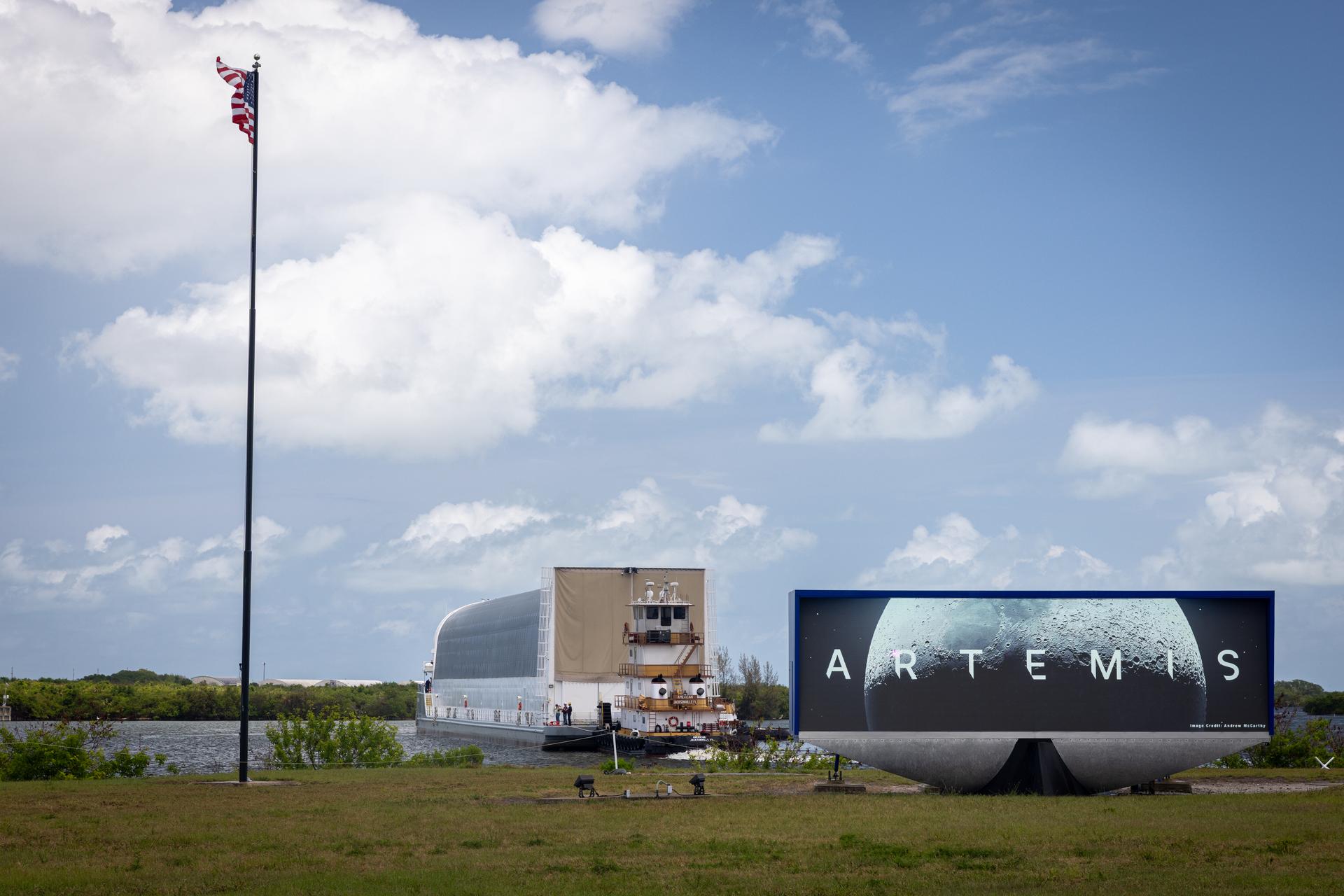
NASA’s Pegasus barge, carrying the top four-fifths of the agency’s SLS (Space Launch System) core stage for the Artemis III mission, arrives at NASA’s Kennedy Space Center Complex 39 turn basin wharf in Florida on Monday, April 27, 2026. Artemis III will launch astronauts to Earth’s orbit aboard the Orion spacecraft on top of SLS to test rendezvous and docking capabilities between Orion and commercial spacecraft needed to land Artemis IV astronauts on the Moon in 2028.

These images show the moments shortly after the arrival of the Artemis II crew to NASA’s Kennedy Space Center on March 27, 2026 ahead of the launch. The four astronauts, Victor Glover, Reid Wiseman, Christina Koch, and Jeremy Hansen, arrived on a T38, which can be seen behind them. They took turns speaking to the crowd as they also announced the zero-gravity indicator they would be taking with them on their journey.
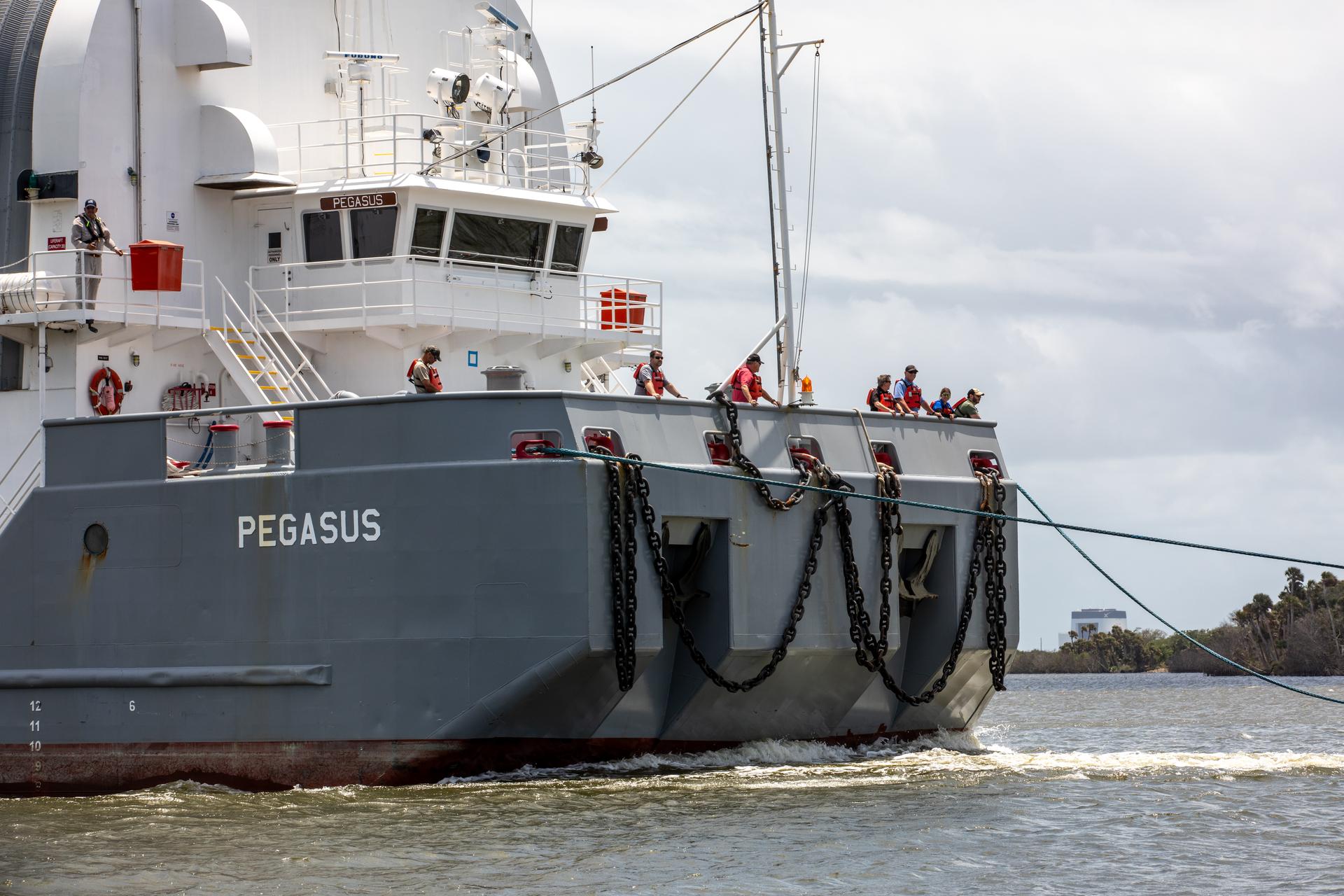
NASA’s Pegasus barge, carrying the top four-fifths of the agency’s SLS (Space Launch System) core stage for the Artemis III mission, arrives at NASA’s Kennedy Space Center Complex 39 turn basin wharf in Florida on Monday, April 27, 2026. Artemis III will launch astronauts to Earth’s orbit aboard the Orion spacecraft on top of SLS to test rendezvous and docking capabilities between Orion and commercial spacecraft needed to land Artemis IV astronauts on the Moon in 2028.

NASA’s Artemis II Space Launch System (SLS) rocket and Orion spacecraft are seen at sunset at Launch Complex 39B, Friday, March 27, 2026, at NASA’s Kennedy Space Center in Florida. The Artemis II test flight will take Commander Reid Wiseman, Pilot Victor Glover, and Mission Specialist Christina Koch from NASA, and Mission Specialist Jeremy Hansen from the CSA (Canadian Space Agency), around the Moon and back to Earth with launch opportunities beginning in April 2026. Photo Credit: (NASA/Aubrey Gemignani)
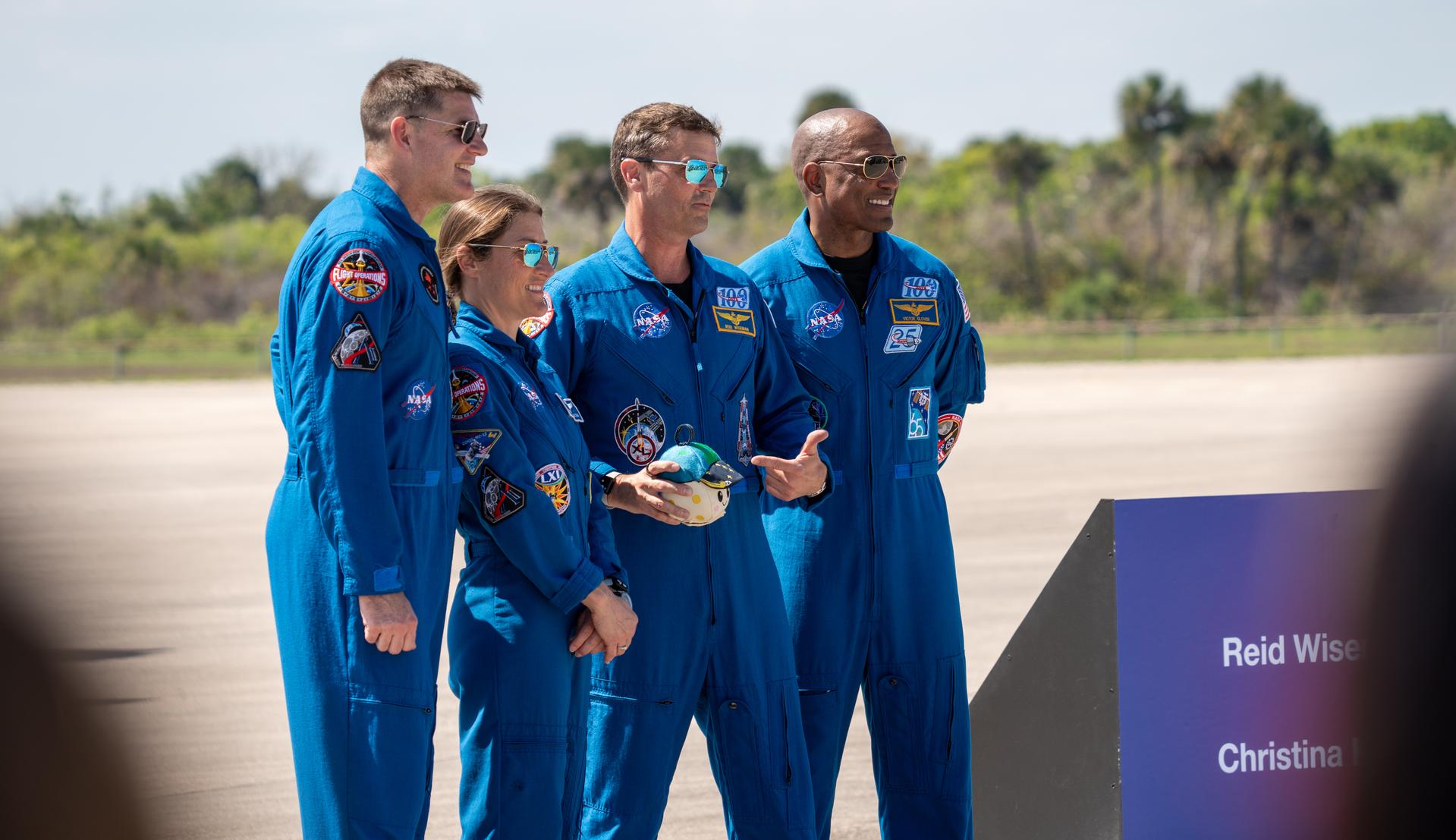
These images show the moments shortly after the arrival of the Artemis II crew to NASA’s Kennedy Space Center on March 27, 2026 ahead of the launch. The four astronauts, Victor Glover, Reid Wiseman, Christina Koch, and Jeremy Hansen, arrived on a T38, which can be seen behind them. They took turns speaking to the crowd as they also announced the zero-gravity indicator they would be taking with them on their journey.

NASA’s Artemis II Space Launch System (SLS) rocket and Orion spacecraft are seen at Launch Complex 39B, Friday, March 27, 2026, at NASA’s Kennedy Space Center in Florida. The Artemis II test flight will take Commander Reid Wiseman, Pilot Victor Glover, and Mission Specialist Christina Koch from NASA, and Mission Specialist Jeremy Hansen from the CSA (Canadian Space Agency), around the Moon and back to Earth with launch opportunities beginning in April 2026. Photo Credit: (NASA/Aubrey Gemignani)
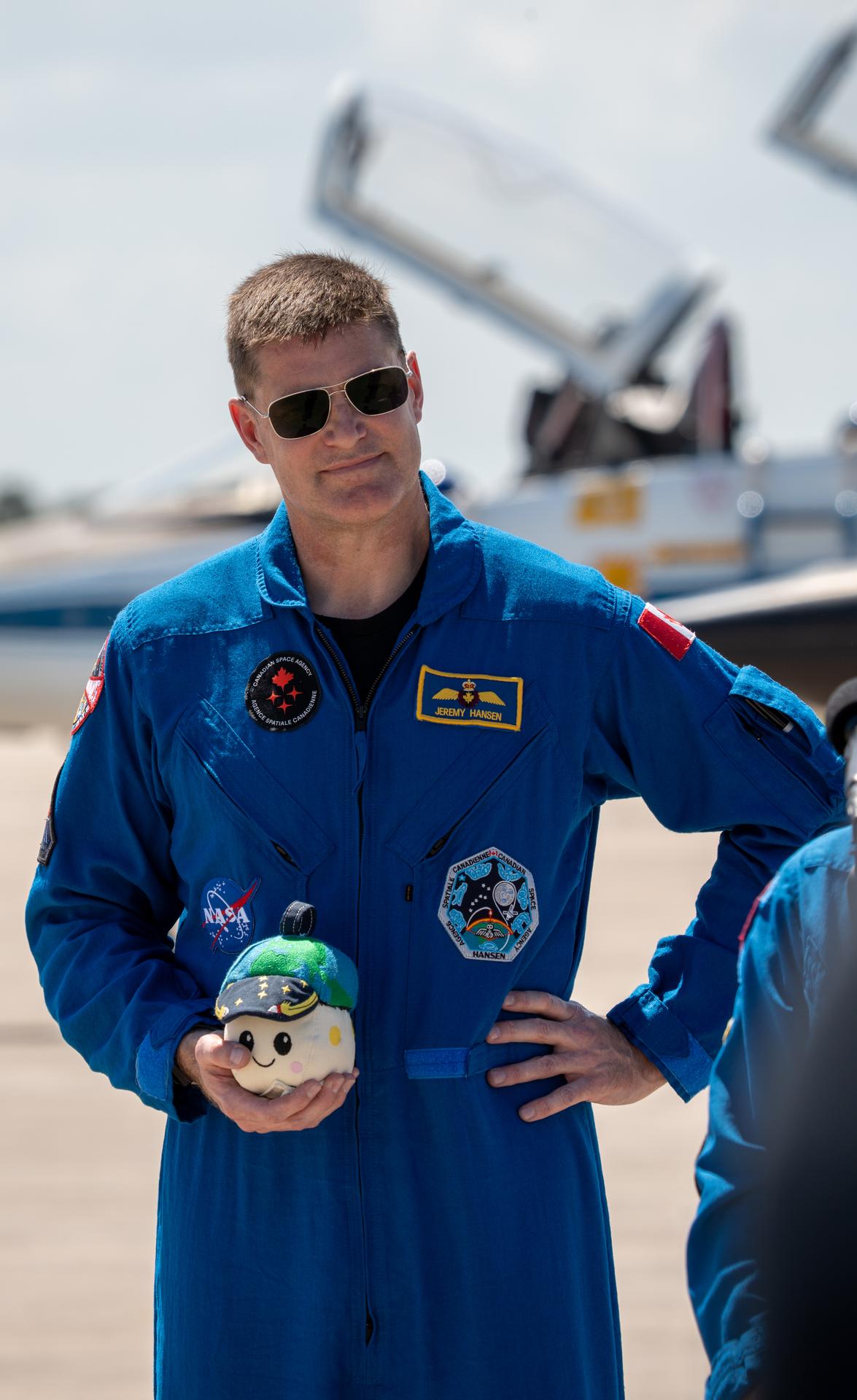
These images show the moments shortly after the arrival of the Artemis II crew to NASA’s Kennedy Space Center on March 27, 2026 ahead of the launch. The four astronauts, Victor Glover, Reid Wiseman, Christina Koch, and Jeremy Hansen, arrived on a T38, which can be seen behind them. They took turns speaking to the crowd as they also announced the zero-gravity indicator they would be taking with them on their journey.
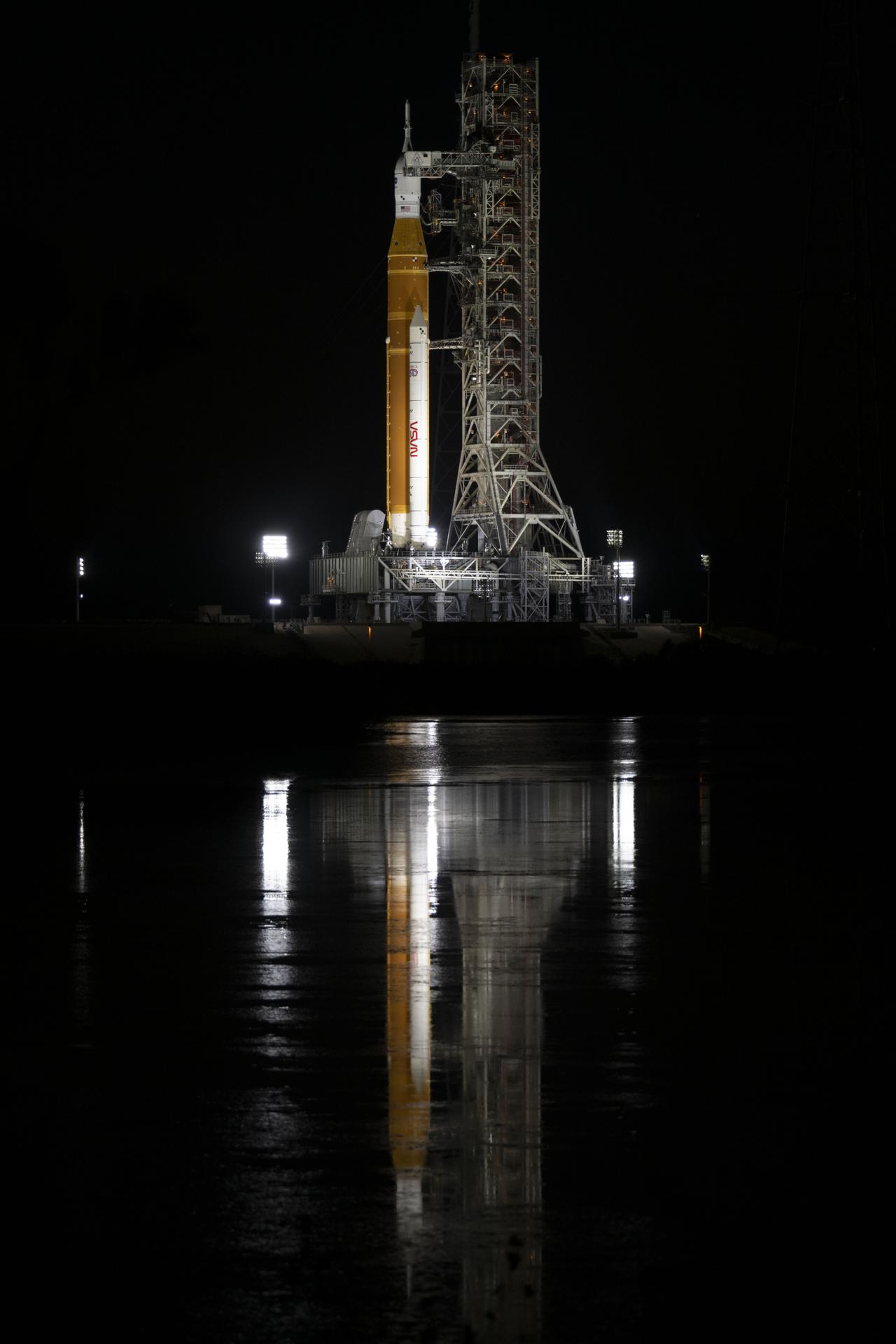
Spotlights illuminate NASA’s SLS (Space Launch System) rocket with the Orion spacecraft atop a mobile launcher at Launch Complex 39B at NASA’s Kennedy Space Center in Florida on Friday, March 27, 2026. The Artemis II test flight will take Commander Reid Wiseman, Pilot Victor Glover, and Mission Specialist Christina Koch from NASA, and Mission Specialist Jeremy Hansen from the CSA (Canadian Space Agency), around the Moon and back to Earth.
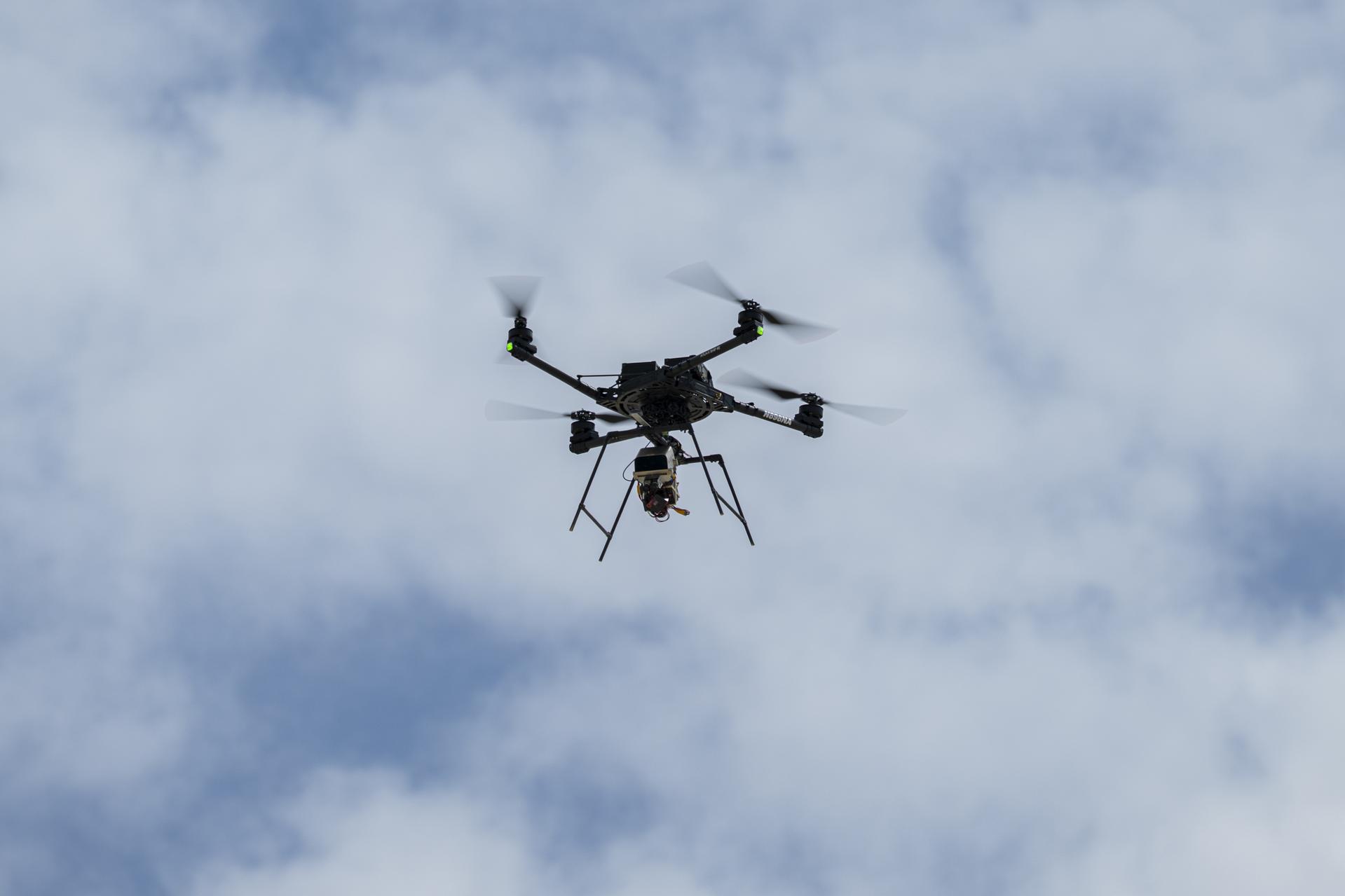
An Alta-X drone flies an advanced guidance and navigation system known as the Safe and Precise Landing – Integrated Capabilities Evolution (SPLICE) experiment near NASA’s Armstrong Flight Research Center in Edwards, California, on Thursday, Aug. 27, 2026. Researchers at NASA’s Johnson Space Center in Houston developed SPLICE, which successfully completed simulated lunar descent and landing maneuvers during recent testing. SPLICE will help spacecraft land precisely and detect and avoid potential hazards, which is critical for NASA missions to the Moon and to Mars.
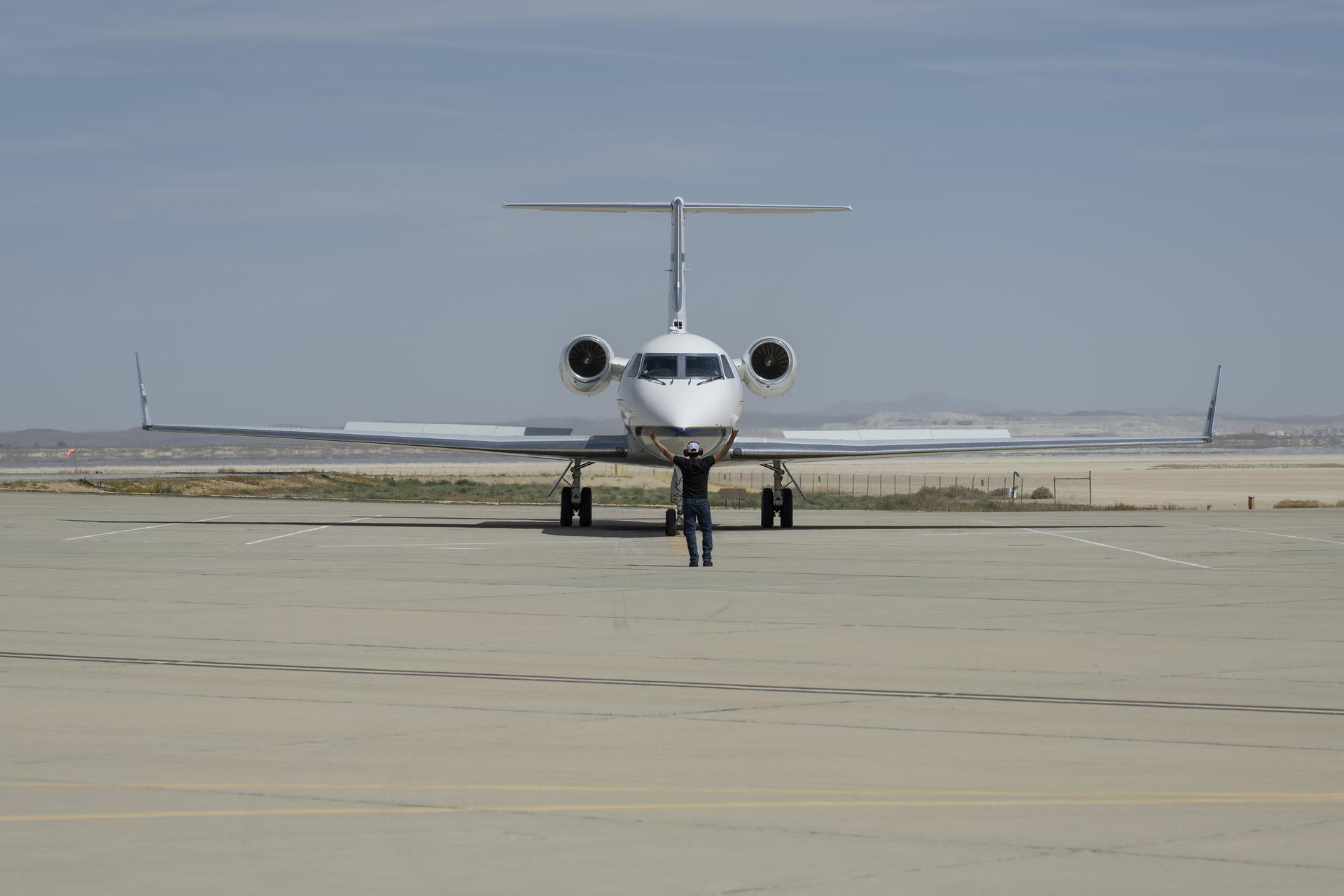
Manny Rodriguez, Gulfstream G-III crew chief, completes flight control checks with the pilots on Friday, March 27, 2026, at NASA’s Armstrong Flight Research Center in Edwards, California. The G-III will join other NASA aircraft to capture imagery of the Orion spacecraft’s heat shield during Artemis II reentry. The mission is part of NASA’s Scientifically Calibrated In-Flight Imagery (SCIFLI) project, based at NASA’s Langley Research Center in Hampton, Virginia.

jsc2026e017239 (March 27, 2026) --- Close-up of a cylindrical section of rattan wood, showcasing its naturally porous structure. These pores are preserved during the transformation process to create b.Bone biomaterials. B Bone products are made from rattan wood and function as a scaffold for human bone marrow stromal cells. These products may have applications in the medical field by providing scaffolding for osteoporosis patients with fragile bones. Credit:t. GreenBone Ortho.

iss074e0608854 (May 27, 2026) --- NASA astronaut and Expedition 74 flight engineer Chris Williams shows off the Destiny laboratory module’s Microgravity Science Glovebox aboard the International Space Station. WIlliams was supporting semiconductor crystal research to help advance the commercial space economy and promoting Earth-based industries. Credit: NASA/Chris Williams
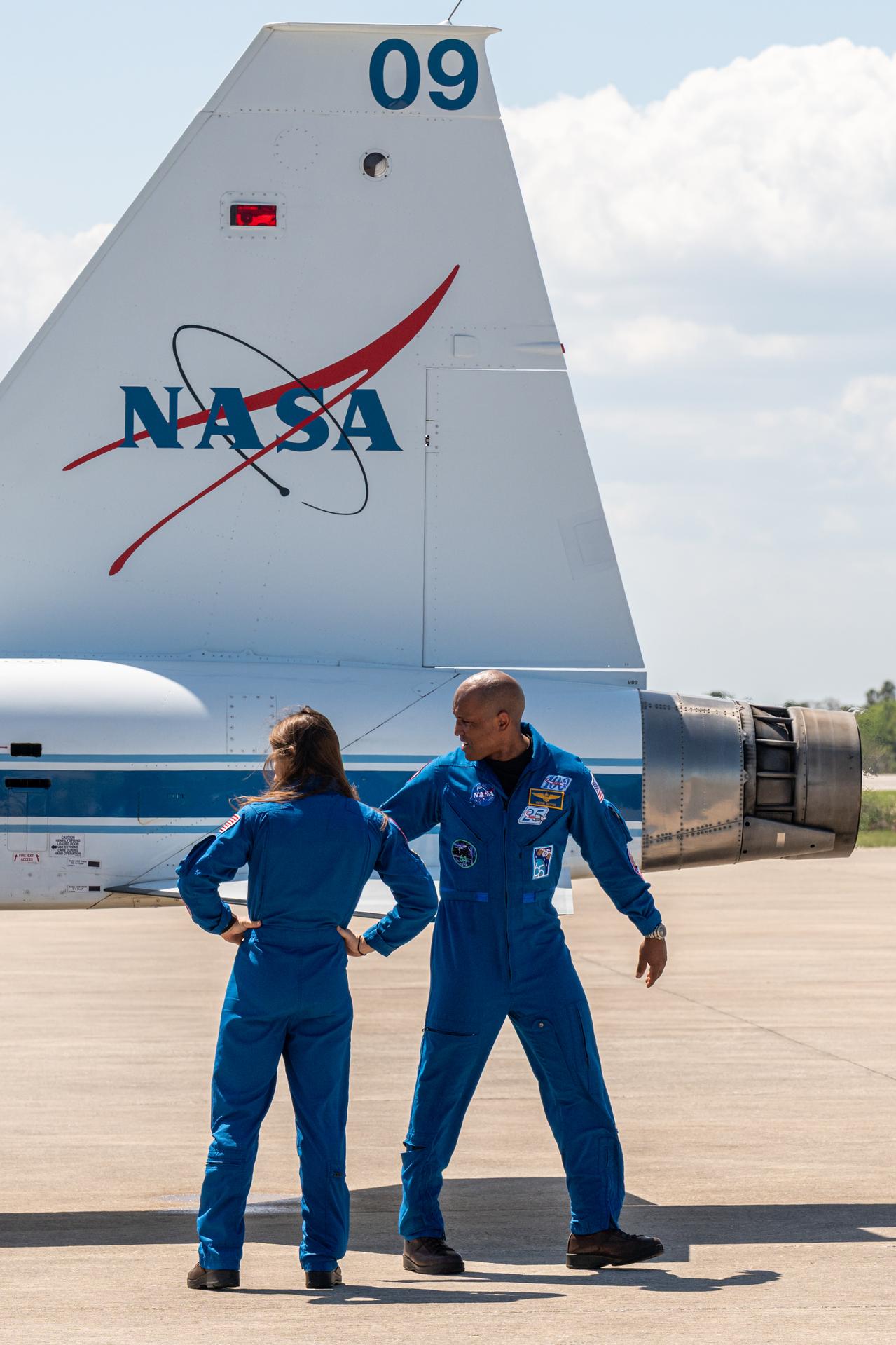
NASA astronauts Victor Glover, Artemis II pilot, and Christina Koch, Artemis II mission specialist, are seen with a T-38 aircraft, Friday, March 27, 2026, after arriving at the Launch and Landing Facility at NASA’s Kennedy Space Center in Florida. The Artemis II mission will launch the crew on a 10-day journey around the Moon and back no earlier than April 1. Photo Credit: (NASA/John Kraus)
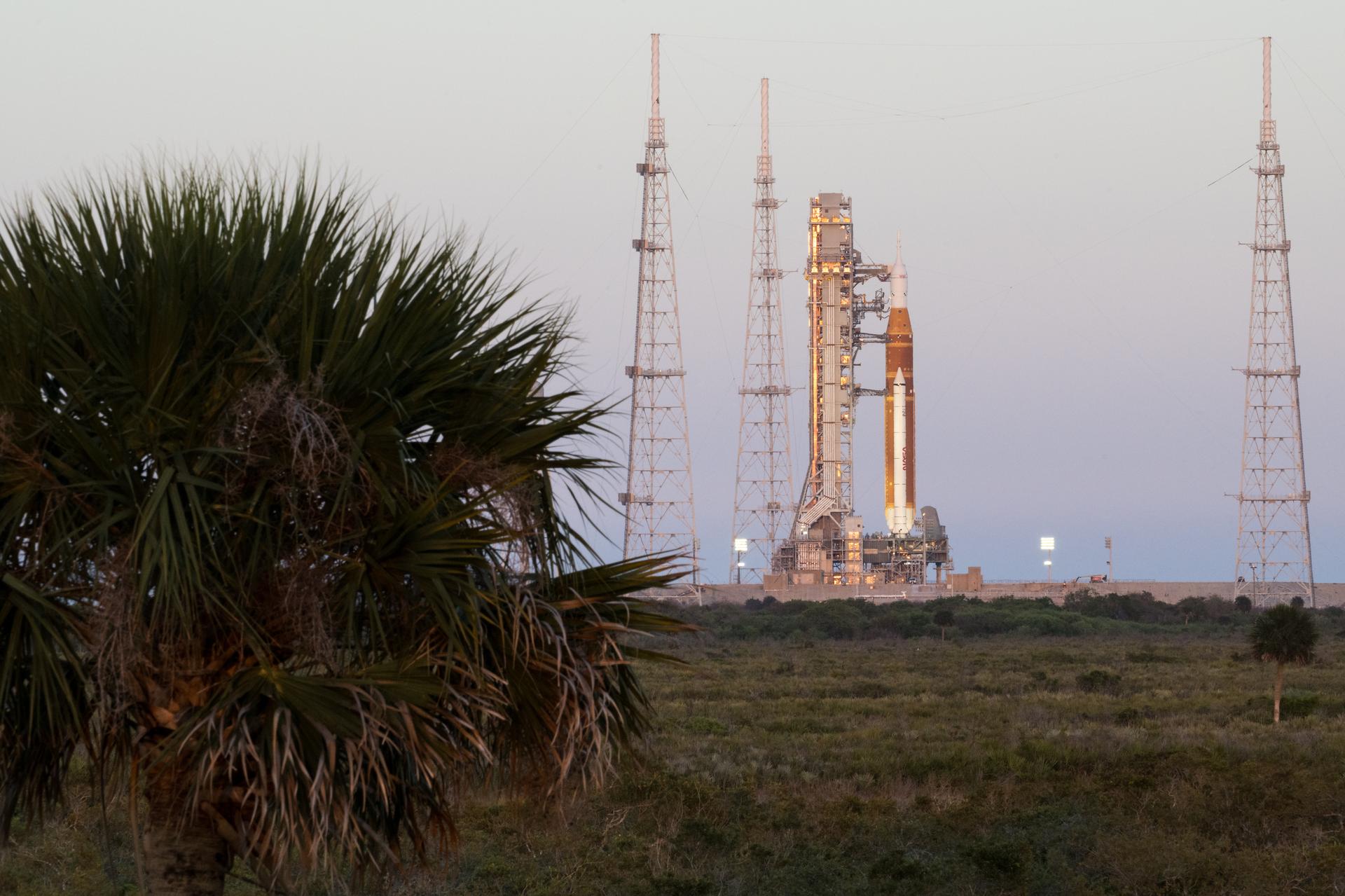
NASA’s Artemis II Space Launch System (SLS) rocket and Orion spacecraft are seen at sunset at Launch Complex 39B, Friday, March 27, 2026, at NASA’s Kennedy Space Center in Florida. The Artemis II test flight will take Commander Reid Wiseman, Pilot Victor Glover, and Mission Specialist Christina Koch from NASA, and Mission Specialist Jeremy Hansen from the CSA (Canadian Space Agency), around the Moon and back to Earth with launch opportunities beginning in April 2026. Photo Credit: (NASA/Aubrey Gemignani)
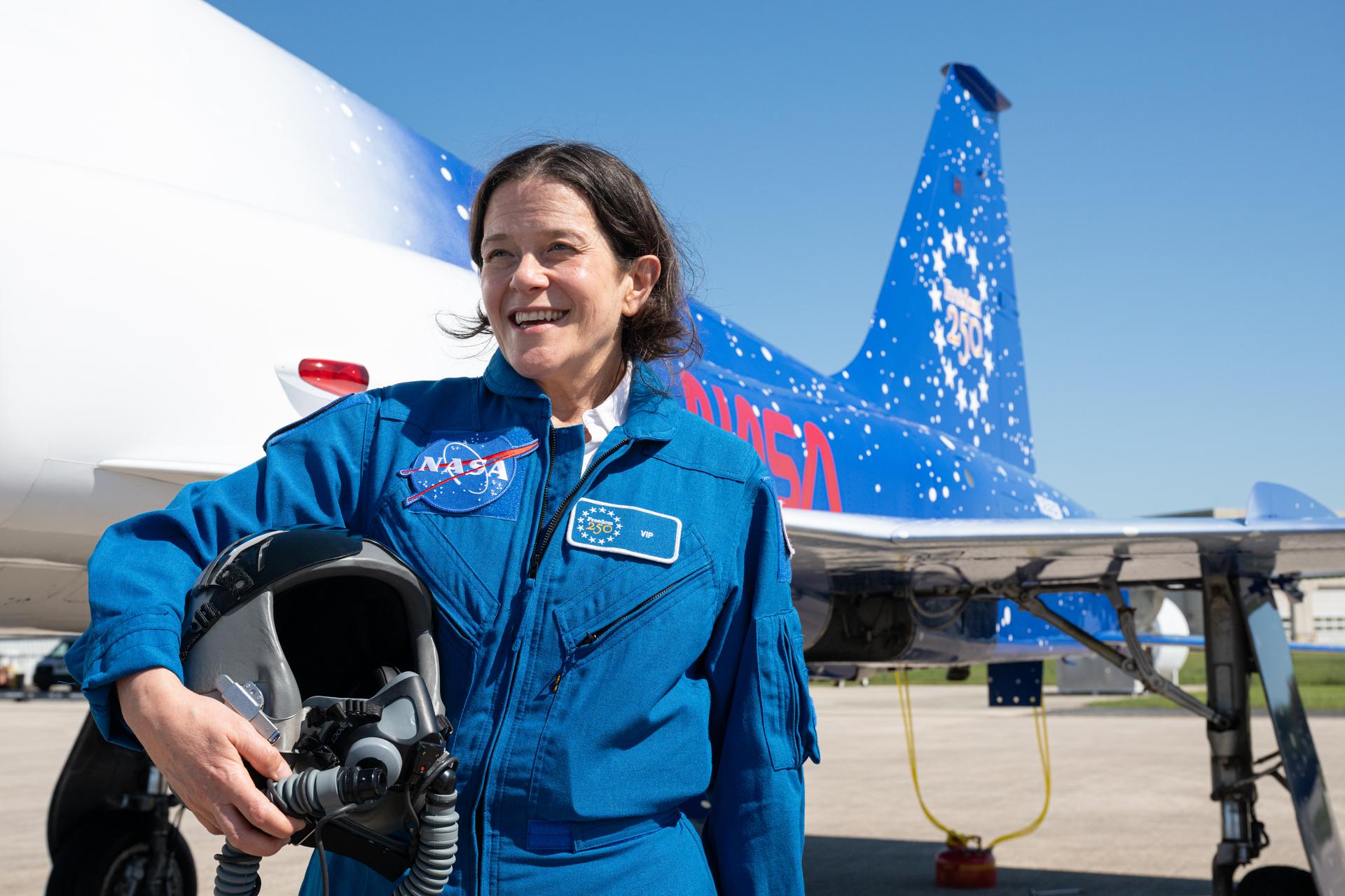
Teresa Nieves-Chinchilla, director of the Moon to Mars Space Weather Analysis Office at NASA’s Goddard Space Flight Center, poses for a photograph before an employee incentive flying event with NASA Administrator Jared Isaacman's personal F-5 aircraft, Friday, March 27, 2026, at NASA’s Kennedy Space Center in Florida. Photo Credit: (NASA/John Kraus)
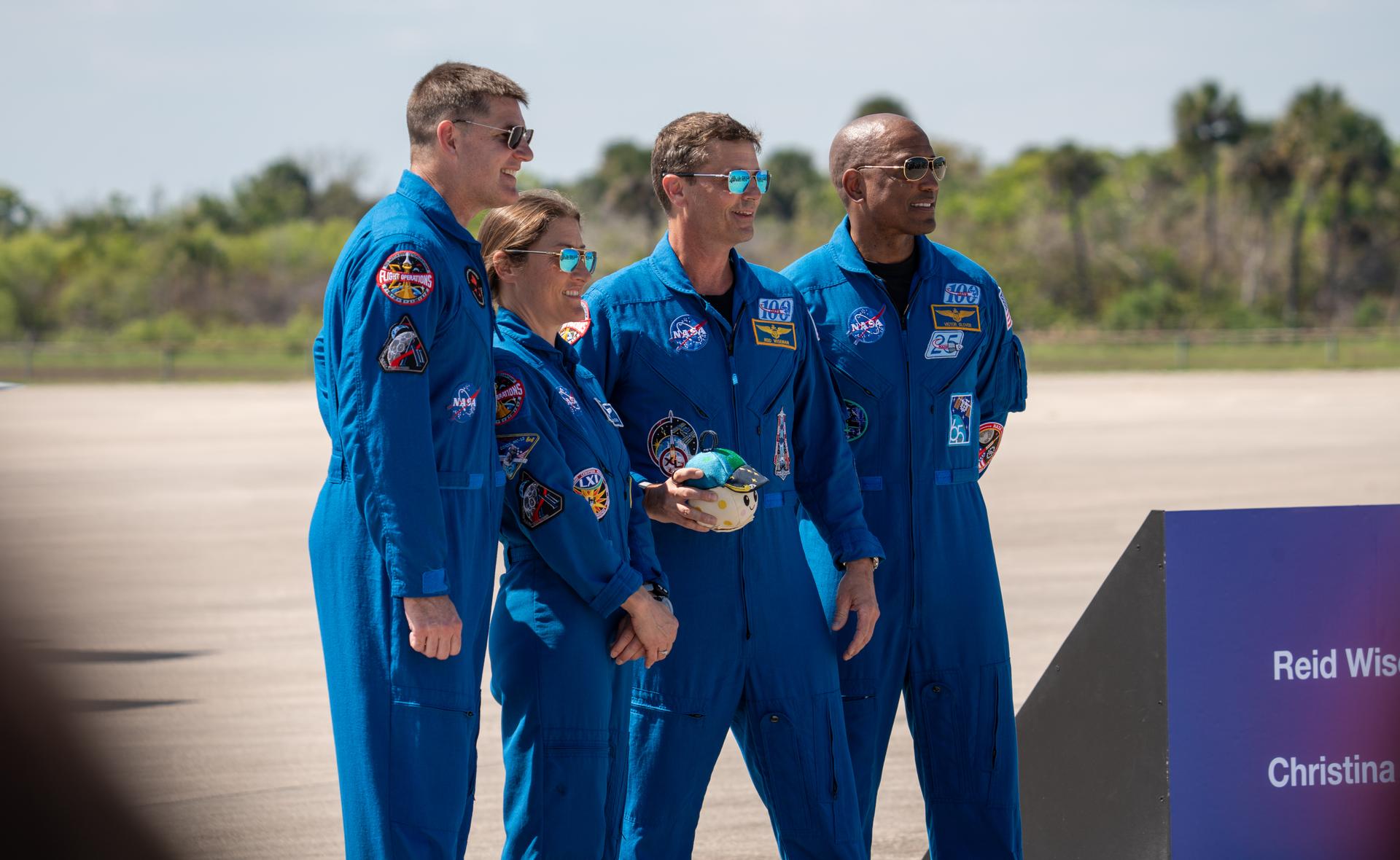
These images show the moments shortly after the arrival of the Artemis II crew to NASA’s Kennedy Space Center on March 27, 2026 ahead of the launch. The four astronauts, Victor Glover, Reid Wiseman, Christina Koch, and Jeremy Hansen, arrived on a T38, which can be seen behind them. They took turns speaking to the crowd as they also announced the zero-gravity indicator they would be taking with them on their journey.

NASA’s Artemis II Space Launch System (SLS) rocket and Orion spacecraft are seen at Launch Complex 39B, Friday, March 27, 2026, at NASA’s Kennedy Space Center in Florida. The Artemis II test flight will take Commander Reid Wiseman, Pilot Victor Glover, and Mission Specialist Christina Koch from NASA, and Mission Specialist Jeremy Hansen from the CSA (Canadian Space Agency), around the Moon and back to Earth with launch opportunities beginning in April 2026. Photo Credit: (NASA/Aubrey Gemignani)
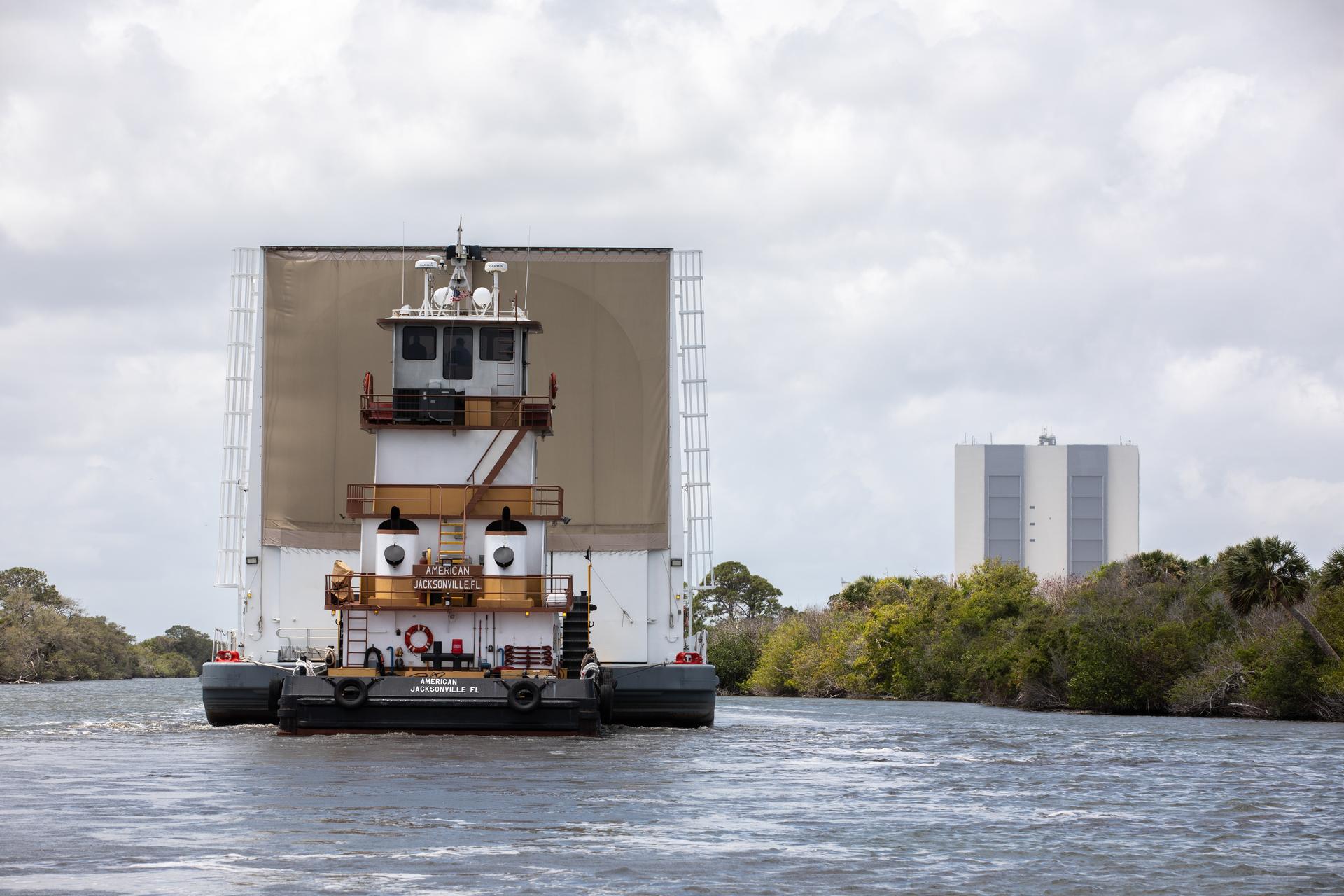
NASA’s Pegasus barge, carrying the top four-fifths of the agency’s SLS (Space Launch System) core stage for the Artemis III mission, arrives at NASA’s Kennedy Space Center Complex 39 turn basin wharf in Florida on Monday, April 27, 2026. Artemis III will launch astronauts to Earth’s orbit aboard the Orion spacecraft on top of SLS to test rendezvous and docking capabilities between Orion and commercial spacecraft needed to land Artemis IV astronauts on the Moon in 2028.

iss074e0334334 (Feb. 27, 2026) --- Quebec City, one of North America’s oldest cities at more than 400 years old, sits on the St. Lawrence River in Canada’s province of Quebec. This photograph was taken at approximately 1:21 a.m. local time from the International Space Station as it orbited 264 miles above North America. Credit: NASA/Chris Williams
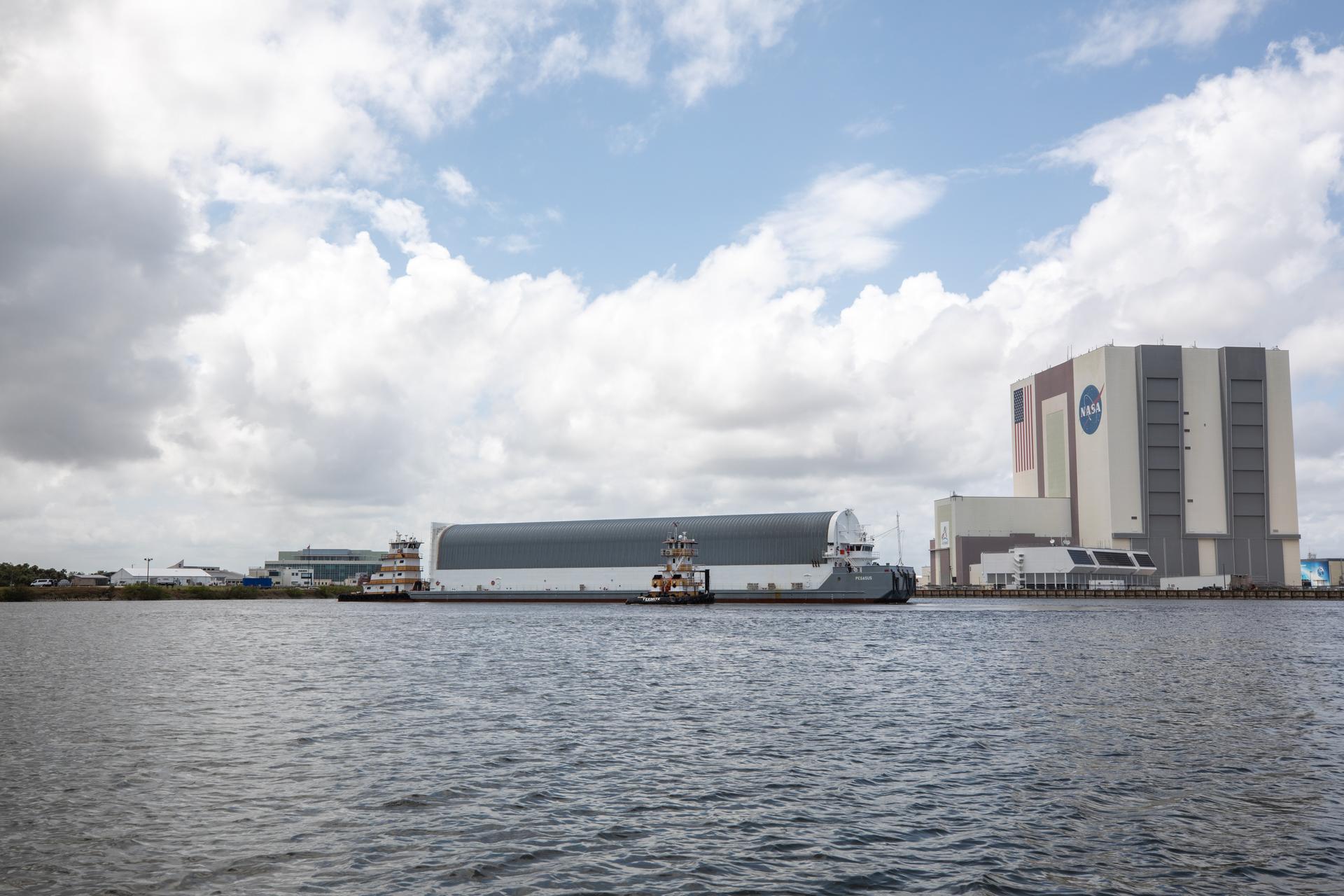
NASA’s Pegasus barge, carrying the top four-fifths of the agency’s SLS (Space Launch System) core stage for the Artemis III mission, arrives at NASA’s Kennedy Space Center Complex 39 turn basin wharf in Florida on Monday, April 27, 2026. Artemis III will launch astronauts to Earth’s orbit aboard the Orion spacecraft on top of SLS to test rendezvous and docking capabilities between Orion and commercial spacecraft needed to land Artemis IV astronauts on the Moon in 2028.

NASA’s Pegasus barge, carrying the top four-fifths of the agency’s SLS (Space Launch System) core stage for the Artemis III mission, arrives at NASA’s Kennedy Space Center Complex 39 turn basin wharf in Florida on Monday, April 27, 2026. Artemis III will launch astronauts to Earth’s orbit aboard the Orion spacecraft on top of SLS to test rendezvous and docking capabilities between Orion and commercial spacecraft needed to land Artemis IV astronauts on the Moon in 2028.
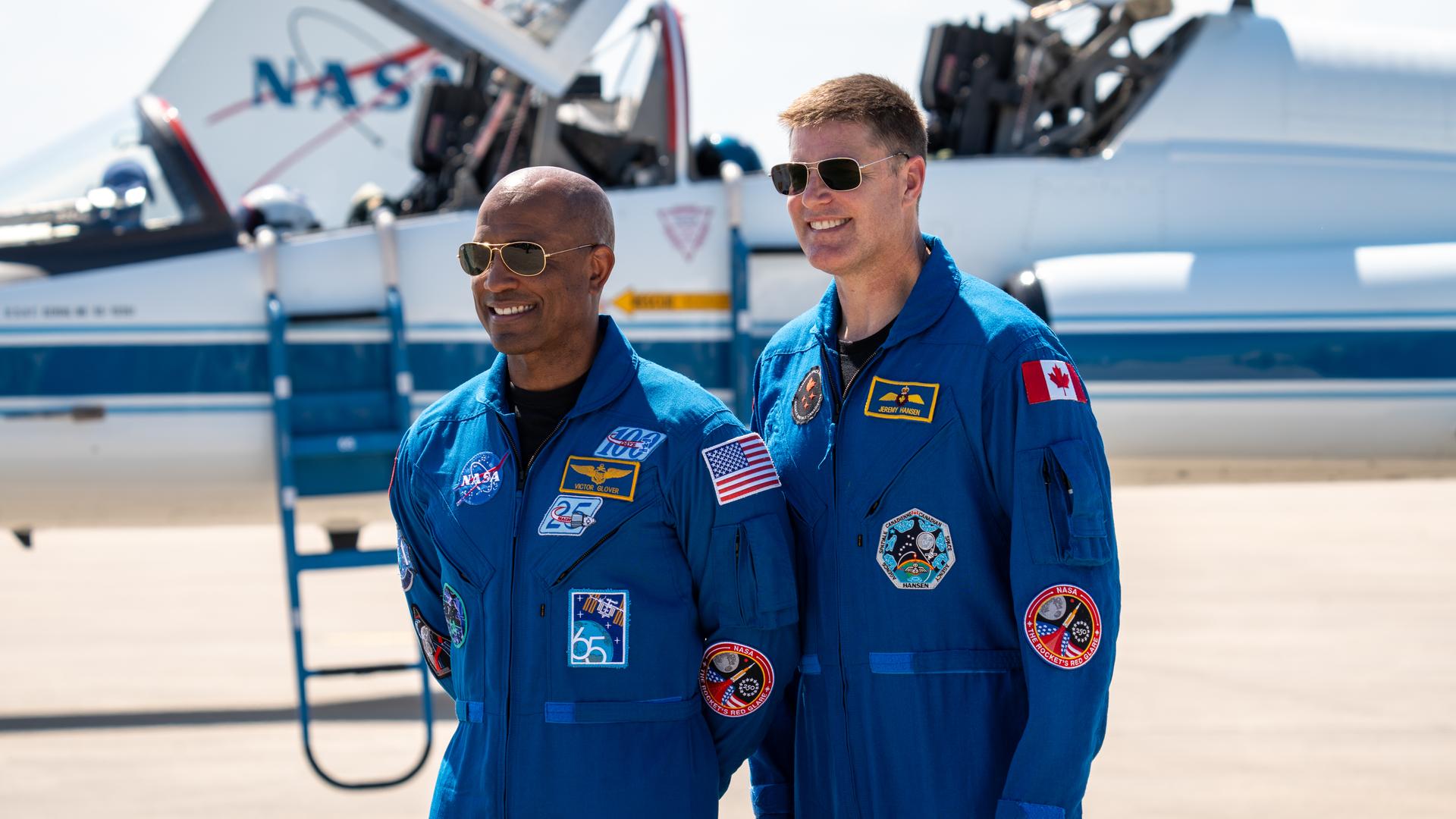
DESCRIPTION: These images show the moments shortly after the arrival of the Artemis II crew to NASA’s Kennedy Space Center on March 27, 2026 ahead of the launch. The four astronauts, Victor Glover, Reid Wiseman, Christina Koch, and Jeremy Hansen, arrived on a T38, which can be seen behind them. They took turns speaking to the crowd as they also announced the zero-gravity indicator they would be taking with them on their journey.
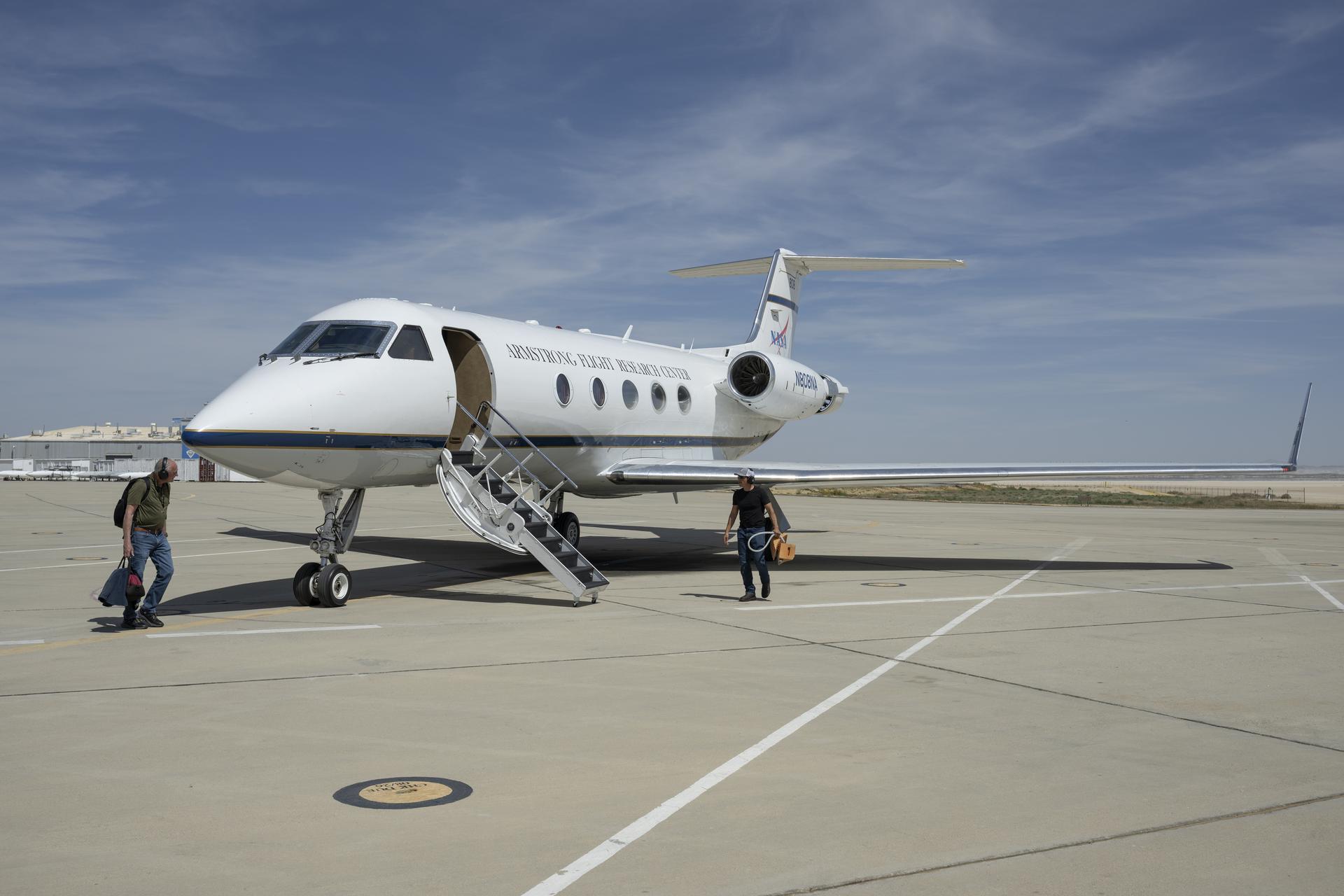
Scott Erickson, left, a quality assurance inspector, and Manny Rodriguez, Gulfstream G-III crew chief, prepare the aircraft for flight on Friday, March 27, 2026, at NASA’s Armstrong Flight Research Center in Edwards, California. The G-III will join other NASA aircraft to capture imagery of the Orion spacecraft’s heat shield during Artemis II reentry. The mission is part of NASA’s Scientifically Calibrated In-Flight Imagery (SCIFLI) project, based at NASA’s Langley Research Center in Hampton, Virginia.

President Donald Trump speaks with members of the U.S. Air Force and U.S. Representative Brian Babin of Texas's 36th congressional district after disembarking Air Force One, Thursday, Aug. 27, 2026, at Ellington Field Joint Reserve Base in Houston, Texas. President Trump is visiting NASA’s Johnson Space Center to award the Congressional Space Medal of Honor to the Artemis II crew on Friday, Aug. 28. Photo Credit: (NASA/John Kraus)
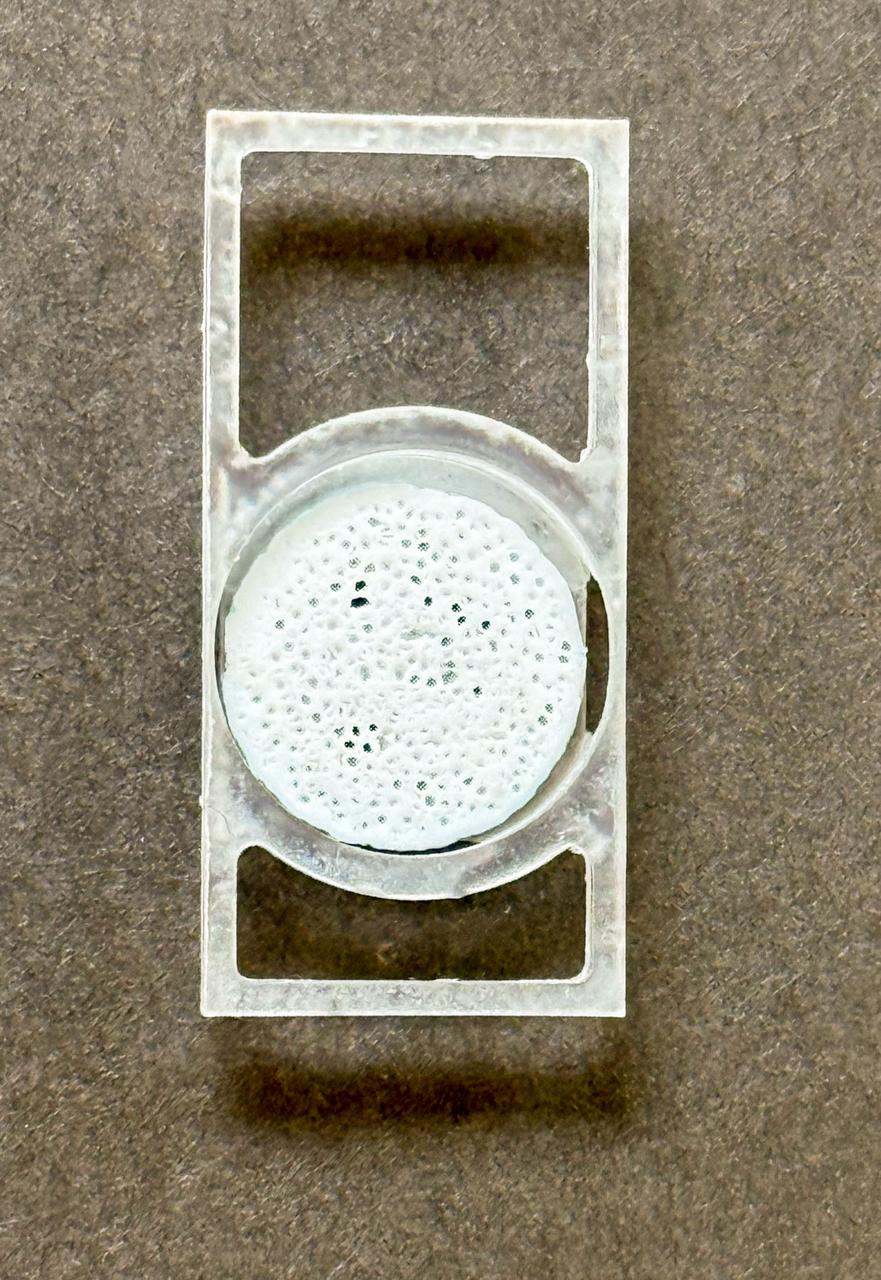
jsc2026e017240 (March 27, 2026) --- Preflight image of Aa b.Bone biomaterial scaffold is positioned within a custom 3D-printed sample holder, engineered to securely house the scaffold inside the SPHINX bioreactor as part of the Green Bone investigation. This research studies how human mesenchymal stem cells (hMSCs) grow on a biomimetic bone scaffold, b Bone, made from rattan wood in microgravity. .Credit:. GreenBone Ortho.
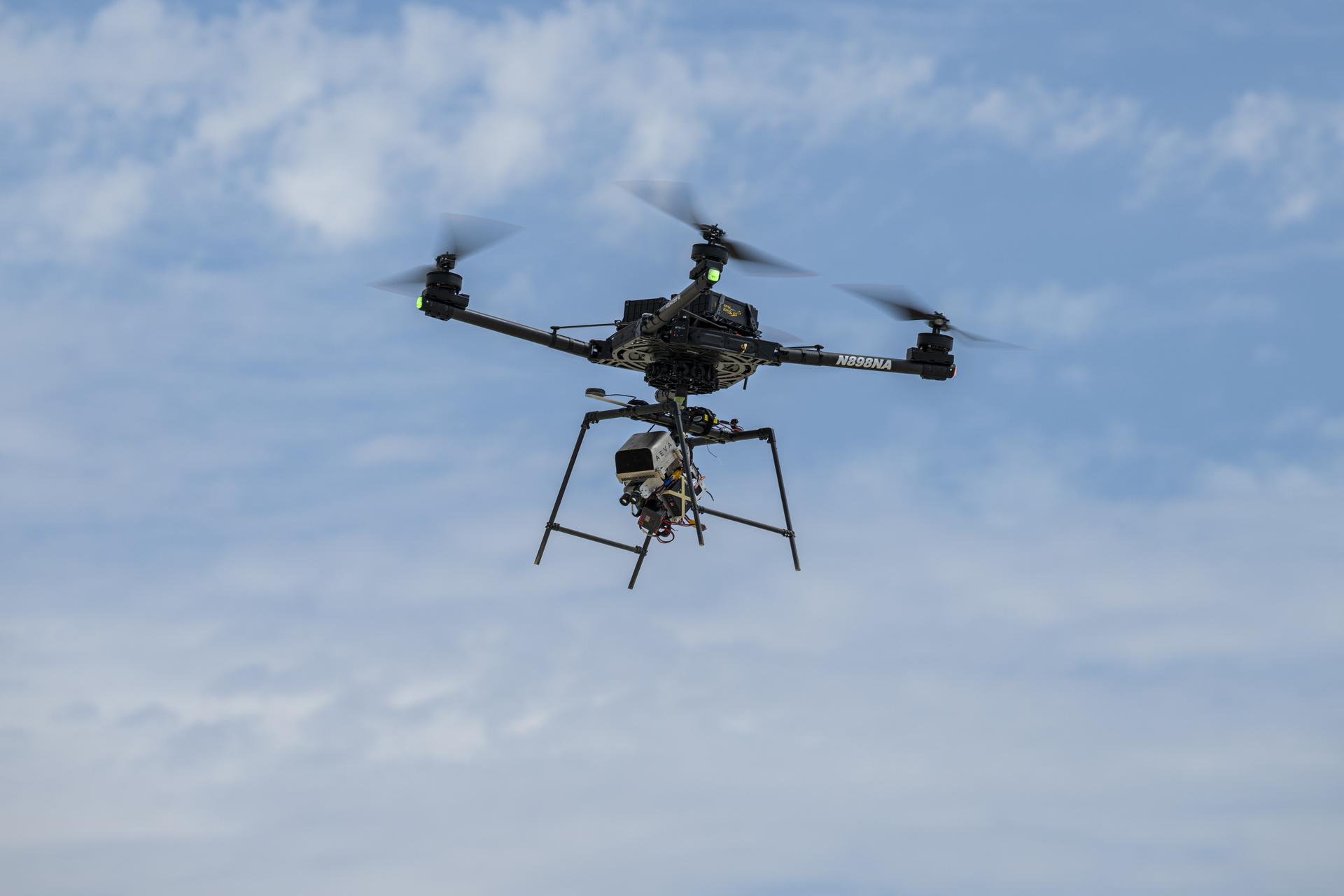
An Alta-X drone flies an advanced guidance and navigation system known as the Safe and Precise Landing – Integrated Capabilities Evolution (SPLICE) experiment near NASA’s Armstrong Flight Research Center in Edwards, California, on Thursday, Aug. 27, 2026. Researchers at NASA’s Johnson Space Center in Houston developed SPLICE, which successfully completed simulated lunar descent and landing maneuvers during recent testing. SPLICE will help spacecraft land precisely and detect and avoid potential hazards, which is critical for NASA missions to the Moon and to Mars.

NASA Associate Administrator Amit Kshatriya participates in a news conference on Friday, Feb. 27, 2026, to discuss the rollback of the Artemis II SLS (Space Launch System) rocket from the launch pad to the Vehicle Assembly Building and next steps for the Artemis campaign at NASA’s Kennedy Space Center in Florida. Participants discussed the work ahead for the Artemis II test flight and a broader update on the Artemis campaign.
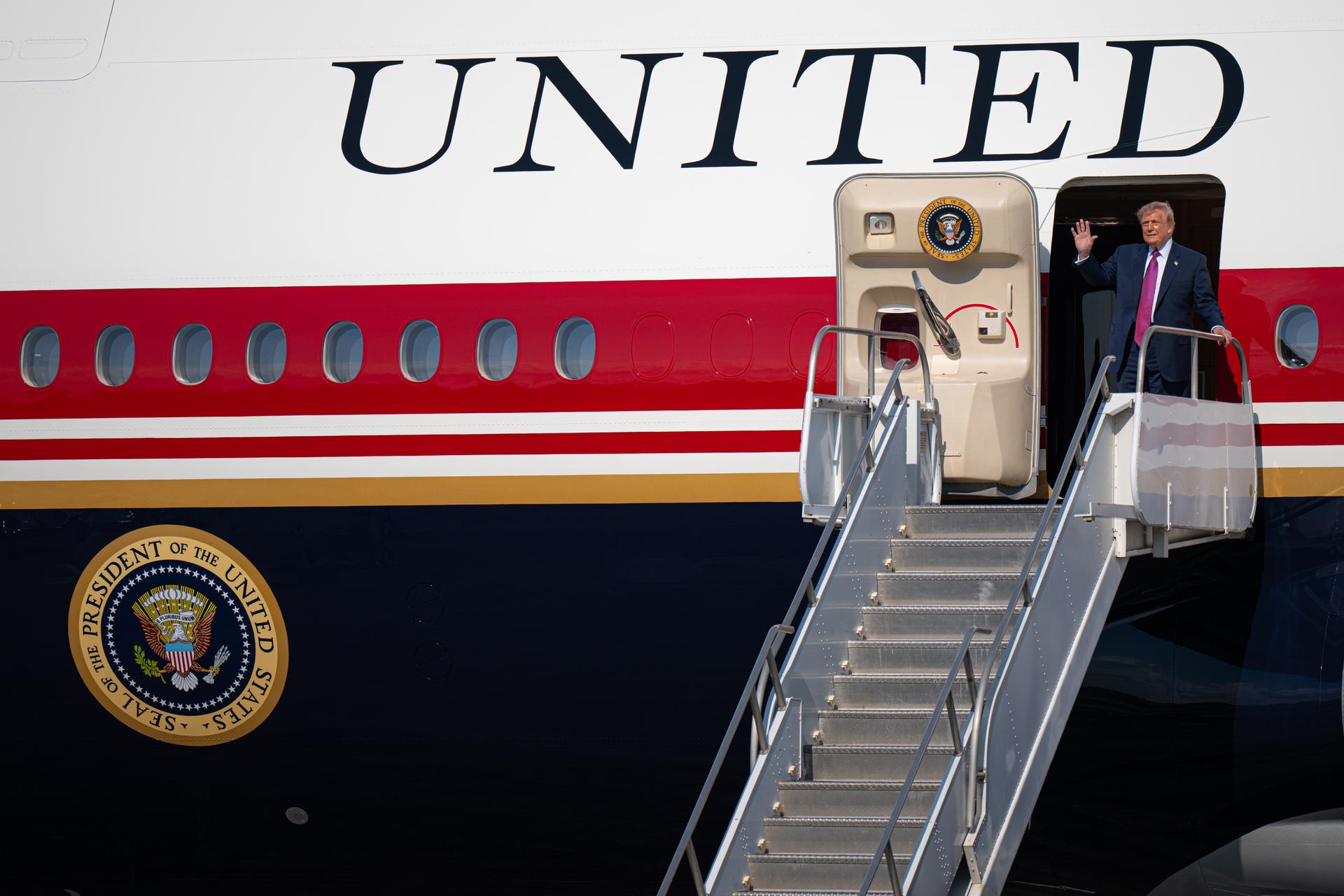
President Donald Trump is seen disembarking Air Force One, Thursday, Aug. 27, 2026, at Ellington Field Joint Reserve Base in Houston, Texas. President Trump is visiting NASA’s Johnson Space Center to award the Congressional Space Medal of Honor to the Artemis II crew on Friday, Aug. 28. Photo Credit: (NASA/John Kraus)
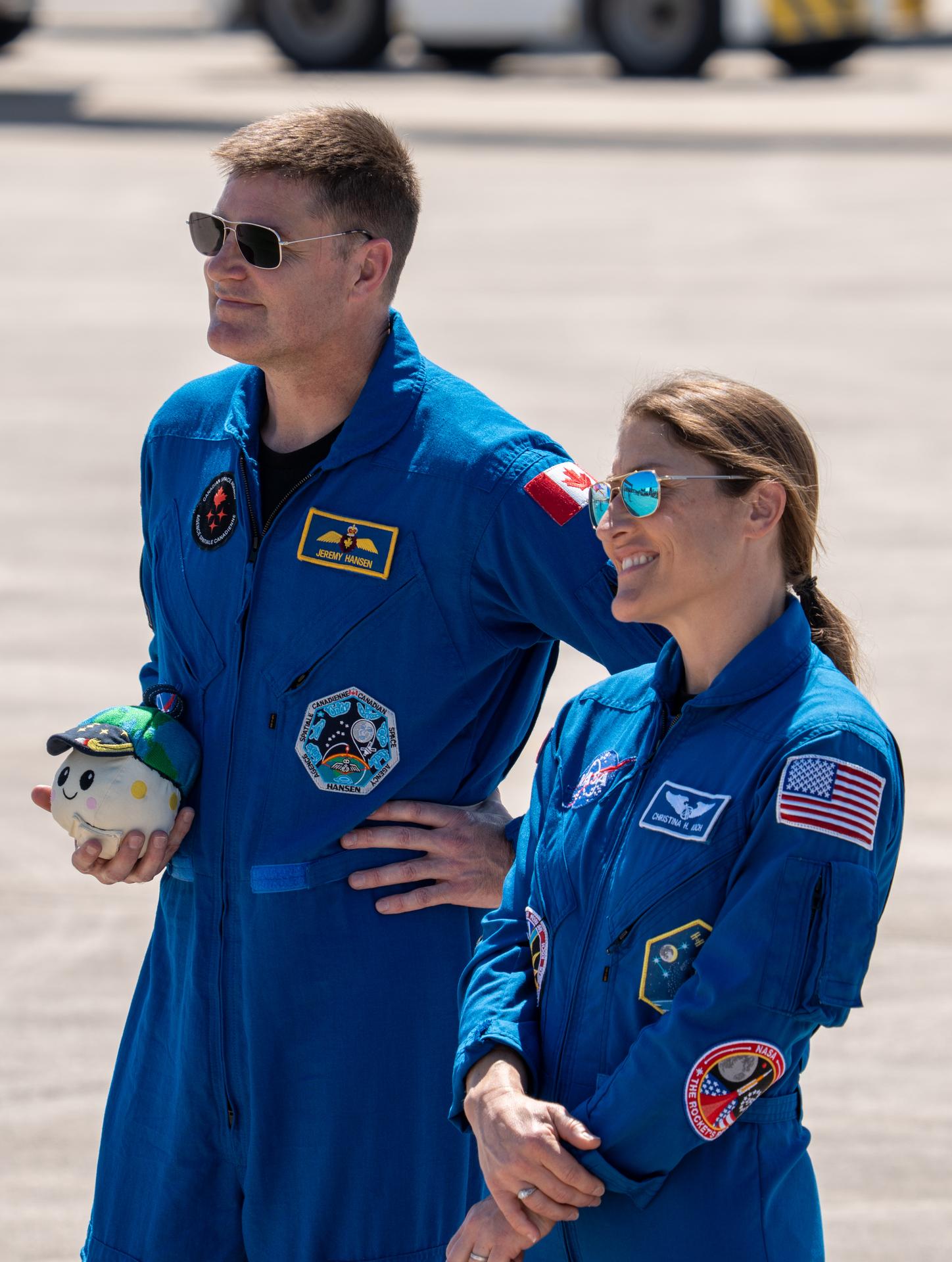
These images show the moments shortly after the arrival of the Artemis II crew to NASA’s Kennedy Space Center on March 27, 2026 ahead of the launch. The four astronauts, Victor Glover, Reid Wiseman, Christina Koch, and Jeremy Hansen, arrived on a T38, which can be seen behind them. They took turns speaking to the crowd as they also announced the zero-gravity indicator they would be taking with them on their journey.
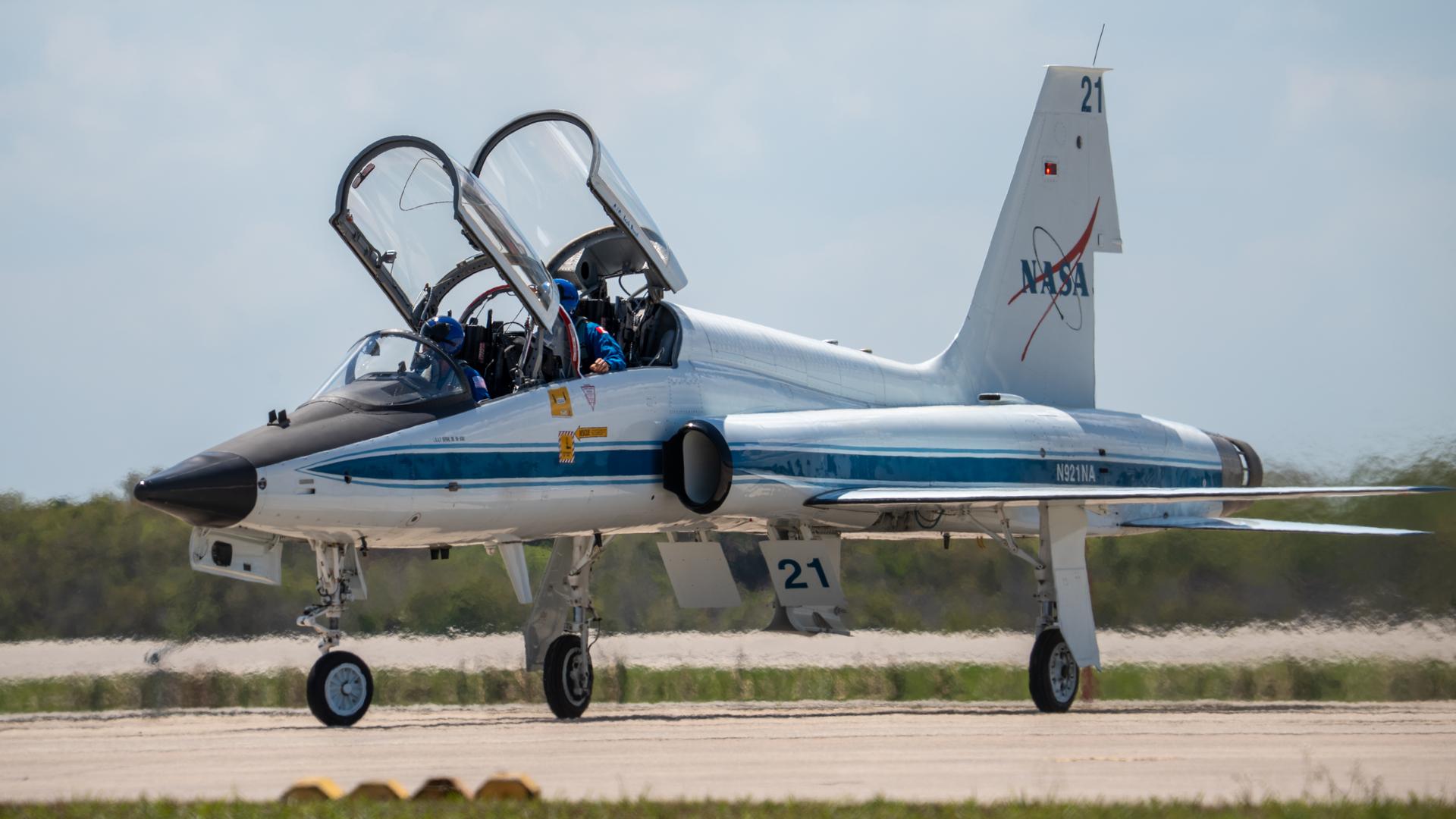
These images show the moments shortly after the arrival of the Artemis II crew to NASA’s Kennedy Space Center on March 27, 2026 ahead of the launch. The four astronauts, Victor Glover, Reid Wiseman, Christina Koch, and Jeremy Hansen, arrived on a T38, which can be seen behind them. They took turns speaking to the crowd as they also announced the zero-gravity indicator they would be taking with them on their journey.
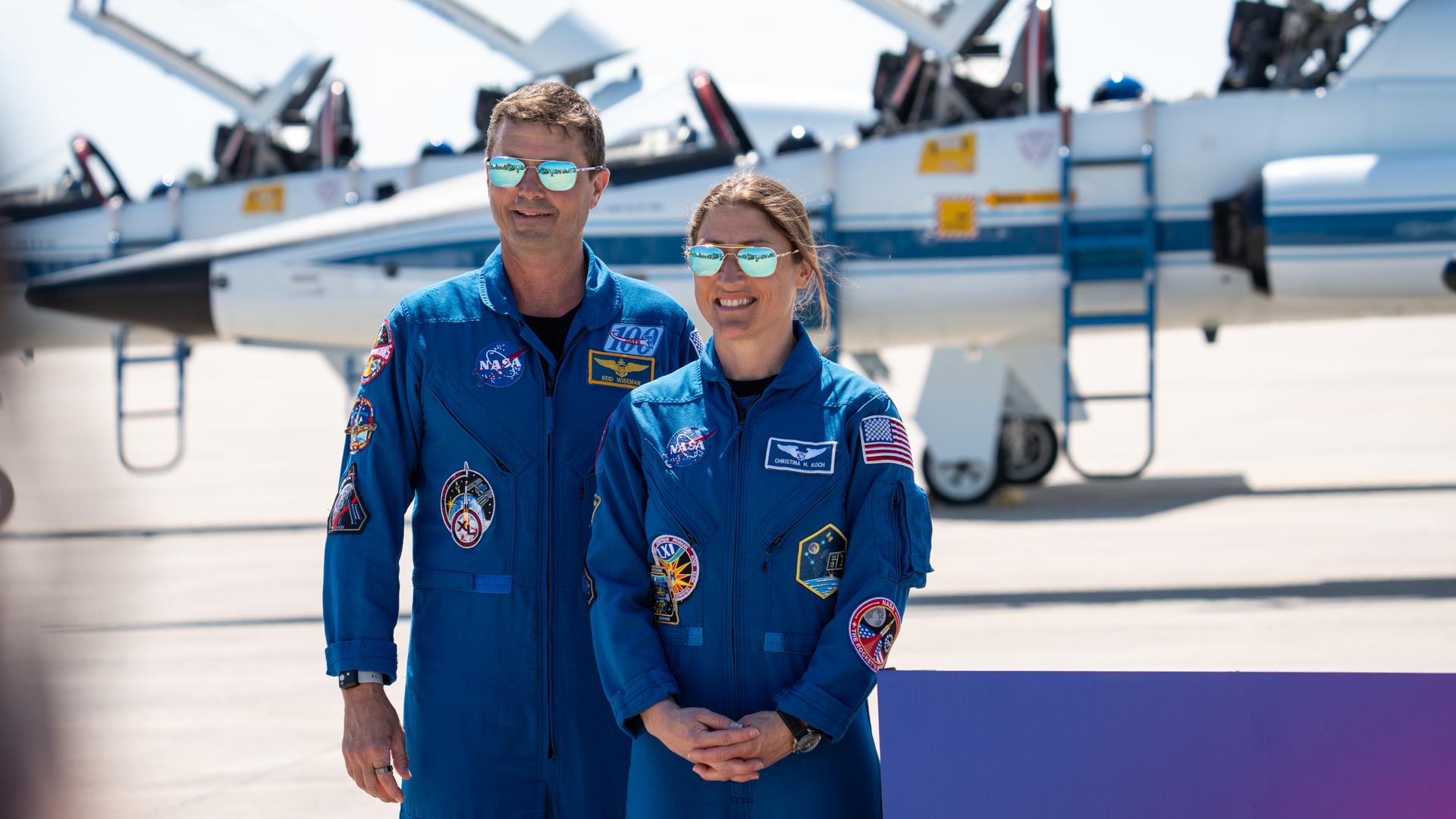
These images show the moments shortly after the arrival of the Artemis II crew to NASA’s Kennedy Space Center on March 27, 2026 ahead of the launch. The four astronauts, Victor Glover, Reid Wiseman, Christina Koch, and Jeremy Hansen, arrived on a T38, which can be seen behind them. They took turns speaking to the crowd as they also announced the zero-gravity indicator they would be taking with them on their journey.