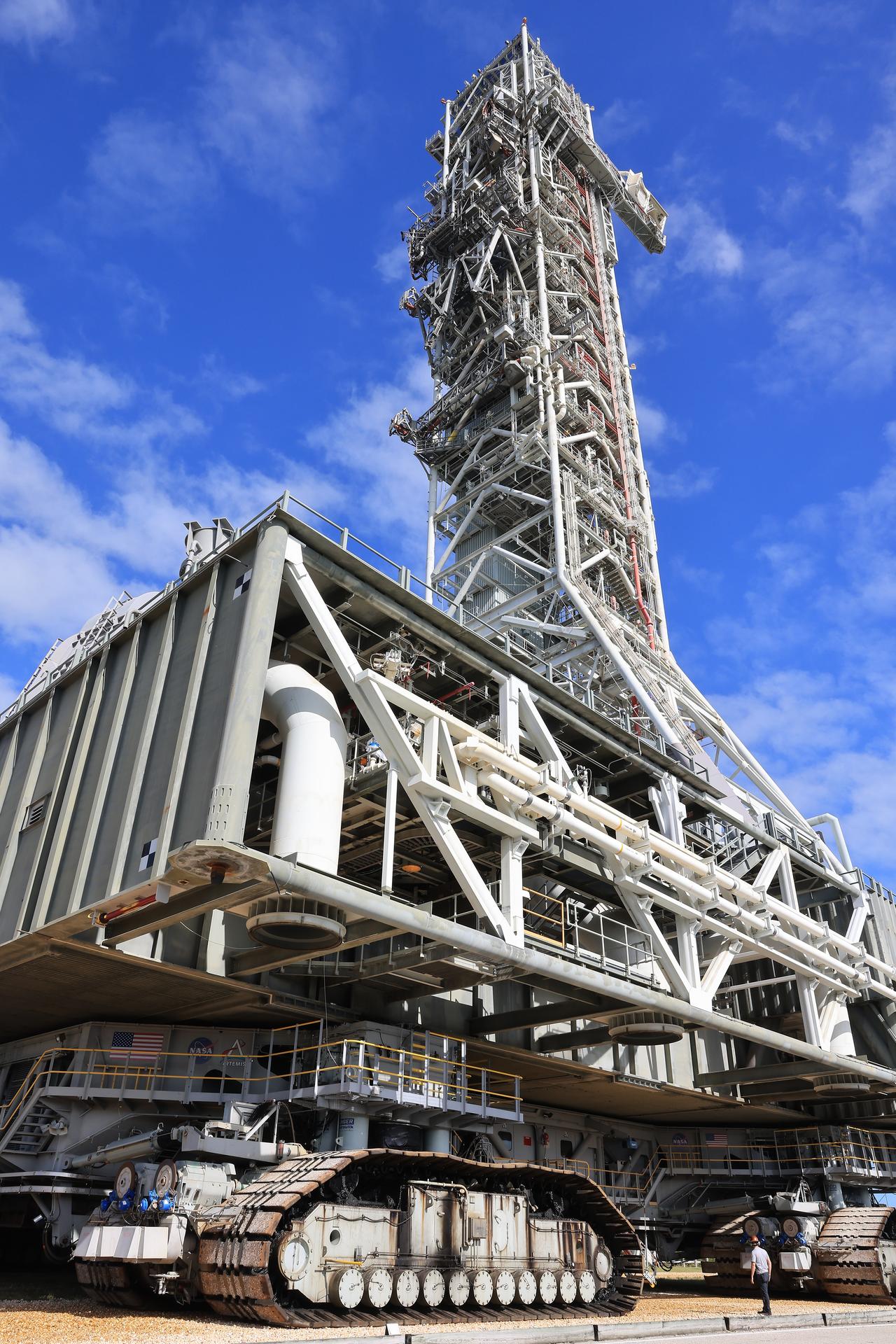
NASA’s mobile launcher 1 begins its approximately 4-mile trek from Launch Complex 39B to the Vehicle Assembly Building at the agency’s Kennedy Space Center in Florida on Thursday, April 16, 2026, in preparation for Artemis III stacking operations. Teams will perform checkouts, inspections, and data analysis, and make repairs to the tower that saw damage during liftoff of the Artemis II test flight.
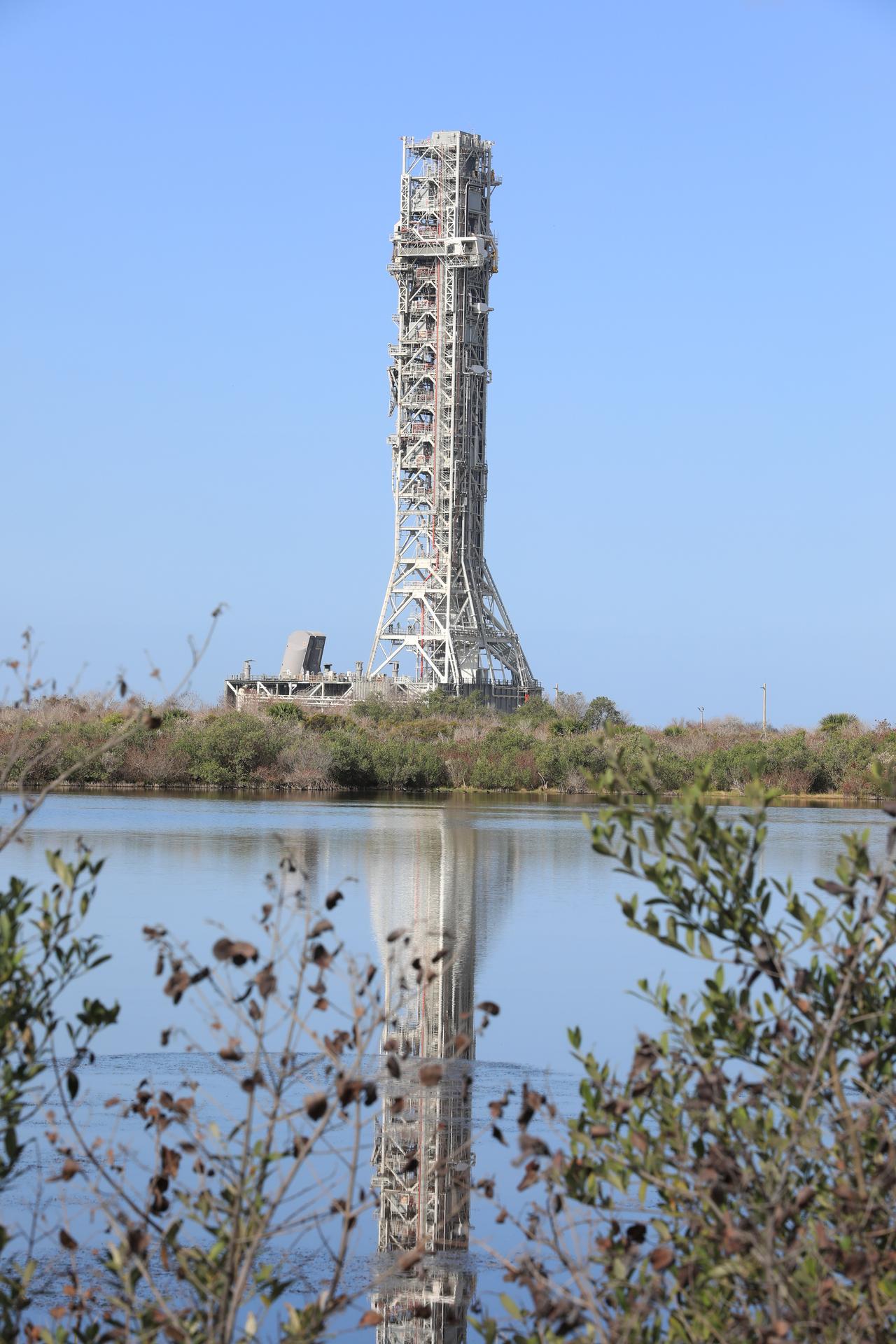
NASA’s mobile launcher 1 begins its approximately 4-mile trek from Launch Complex 39B to the Vehicle Assembly Building at the agency’s Kennedy Space Center in Florida on Thursday, April 16, 2026, in preparation for Artemis III stacking operations. Teams will perform checkouts, inspections, and data analysis, and make repairs to the tower that saw damage during liftoff of the Artemis II test flight.
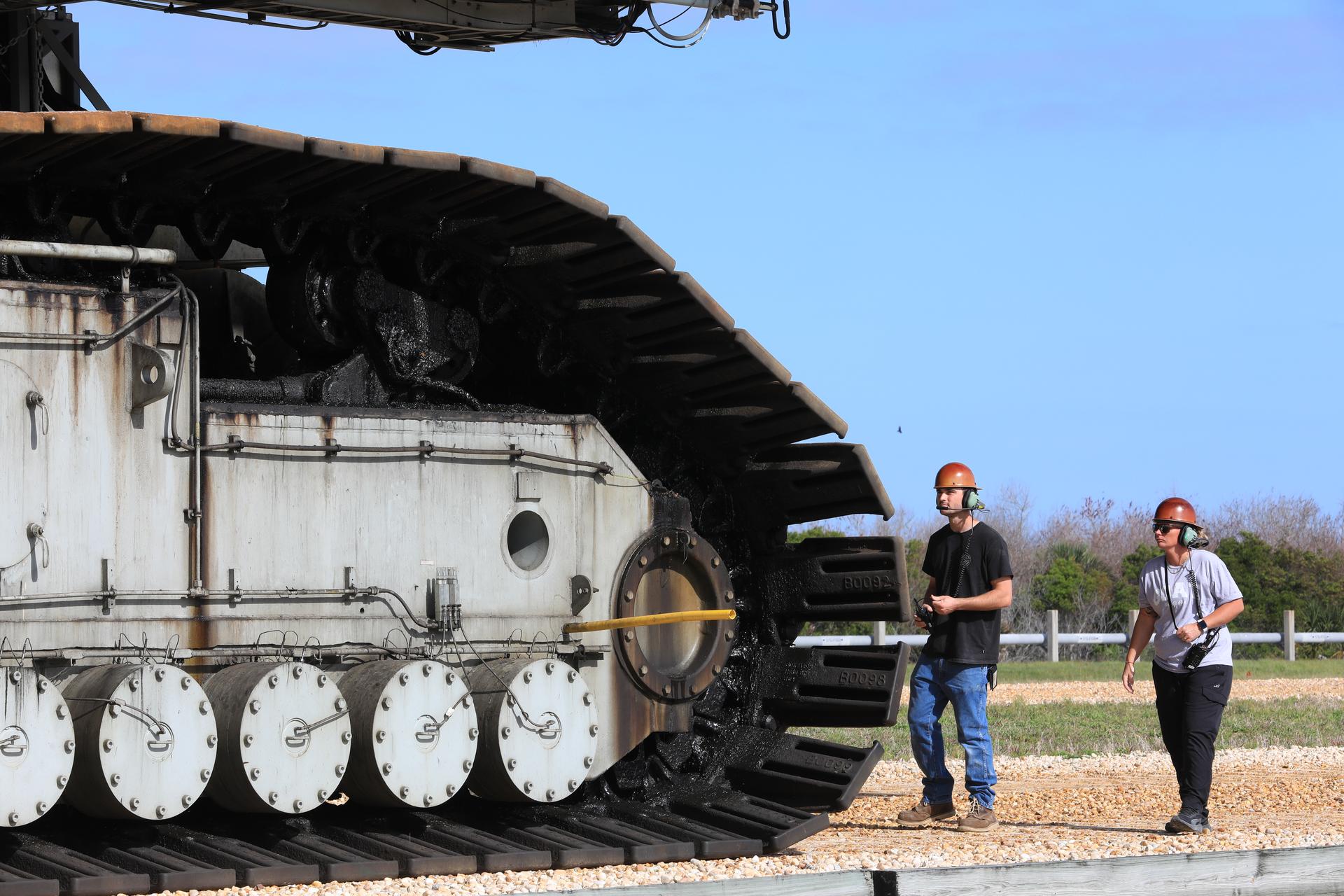
Technicians with NASA’s Exploration Gound Systems Program monitor crawler-transporter 2 as it transports the agency’s mobile launcher 1 slowly from Launch Complex 39B to the Vehicle Assembly Building at NASA’s Kennedy Space Center in Florida on Thursday, April 16, 2026, in preparation for Artemis III stacking operations. Teams will perform checkouts, inspections, and data analysis, and make repairs to the tower that saw damage during liftoff of the Artemis II test flight.
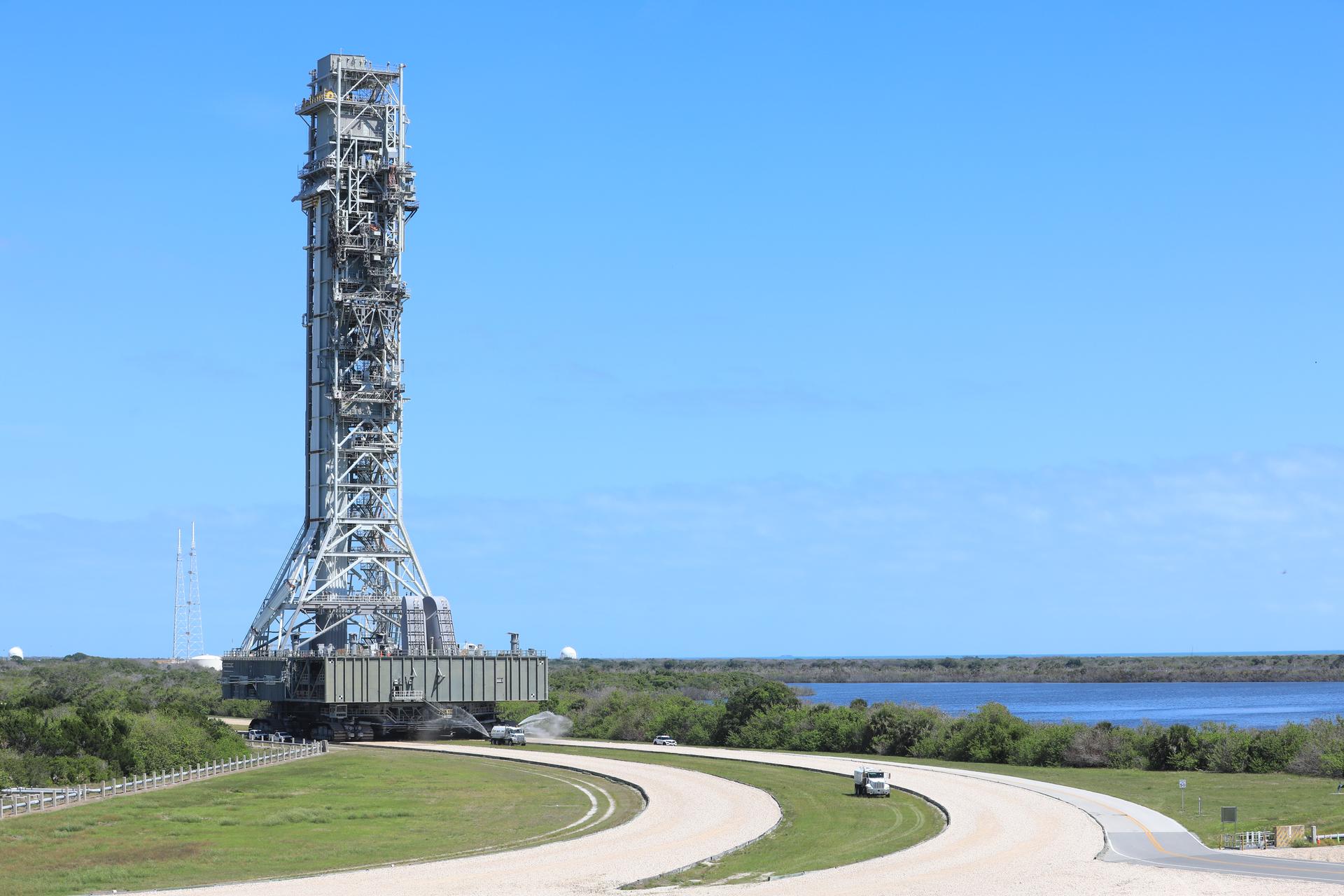
NASA’s mobile launcher 1 begins its approximately 4-mile trek from Launch Complex 39B to the Vehicle Assembly Building at the agency’s Kennedy Space Center in Florida on Thursday, April 16, 2026, in preparation for Artemis III stacking operations. Teams will perform checkouts, inspections, and data analysis, and make repairs to the tower that saw damage during liftoff of the Artemis II test flight.
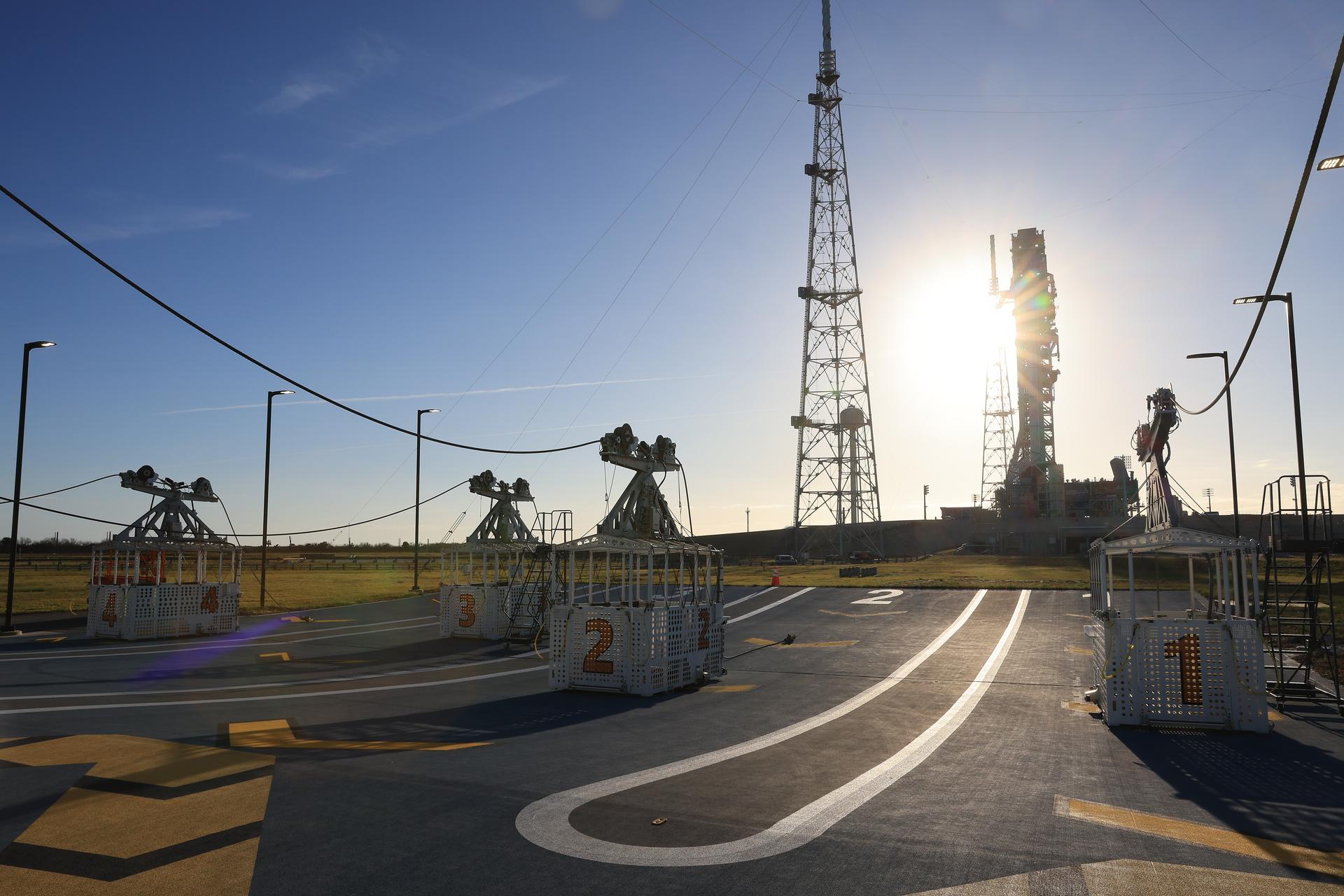
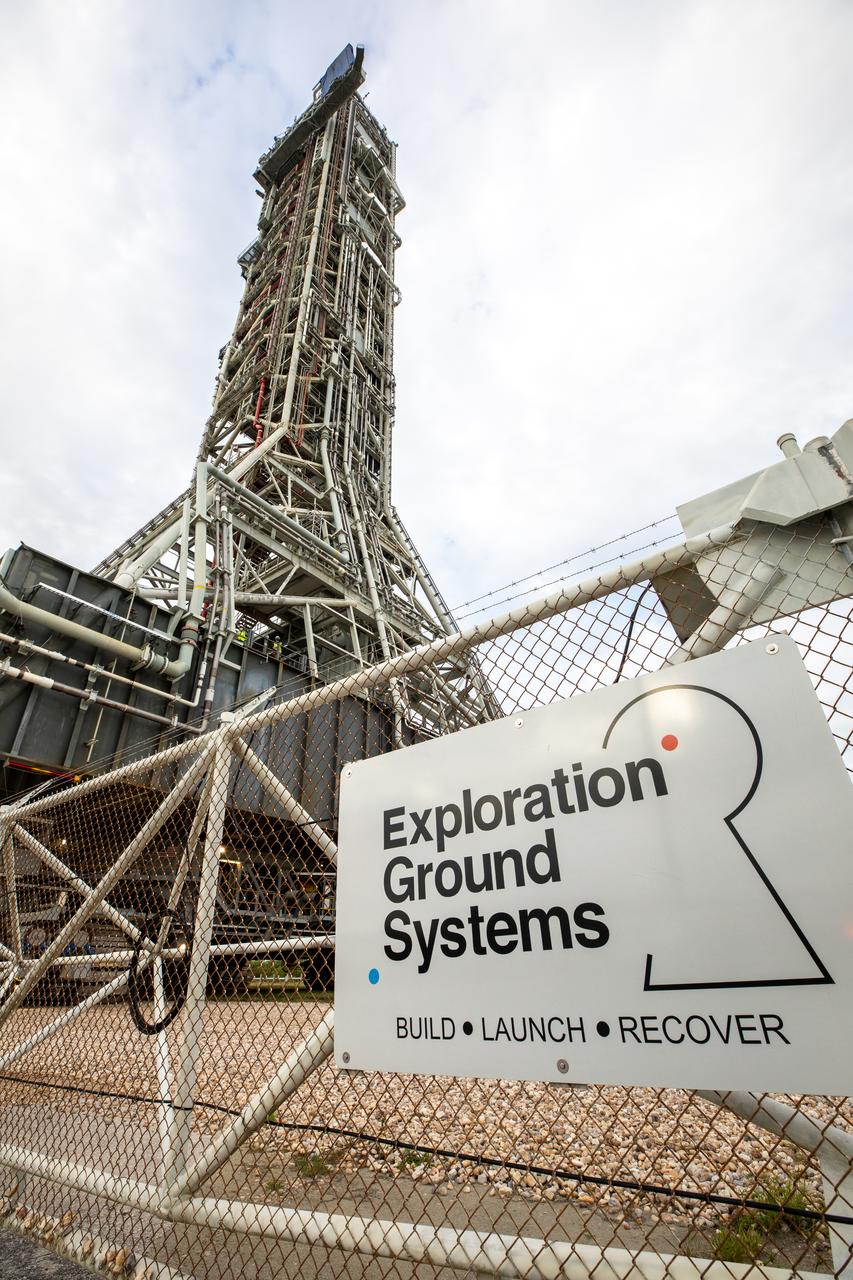
NASA’s mobile launcher 1 begins its approximately 4-mile trek from Launch Complex 39B to the Vehicle Assembly Building (VAB) at the agency’s Kennedy Space Center in Florida on Thursday, April 16, 2026, in preparation for Artemis III stacking operations. Nearby is the emergency egress system, an abort system for personnel to climb into four baskets at the top of the mobile launcher and rush to the base of the pad in the unlikely event of an emergency during launch. Once at the VAB, teams will perform checkouts, inspections, and data analysis, and make repairs to the tower that saw damage during liftoff of the Artemis II test flight.
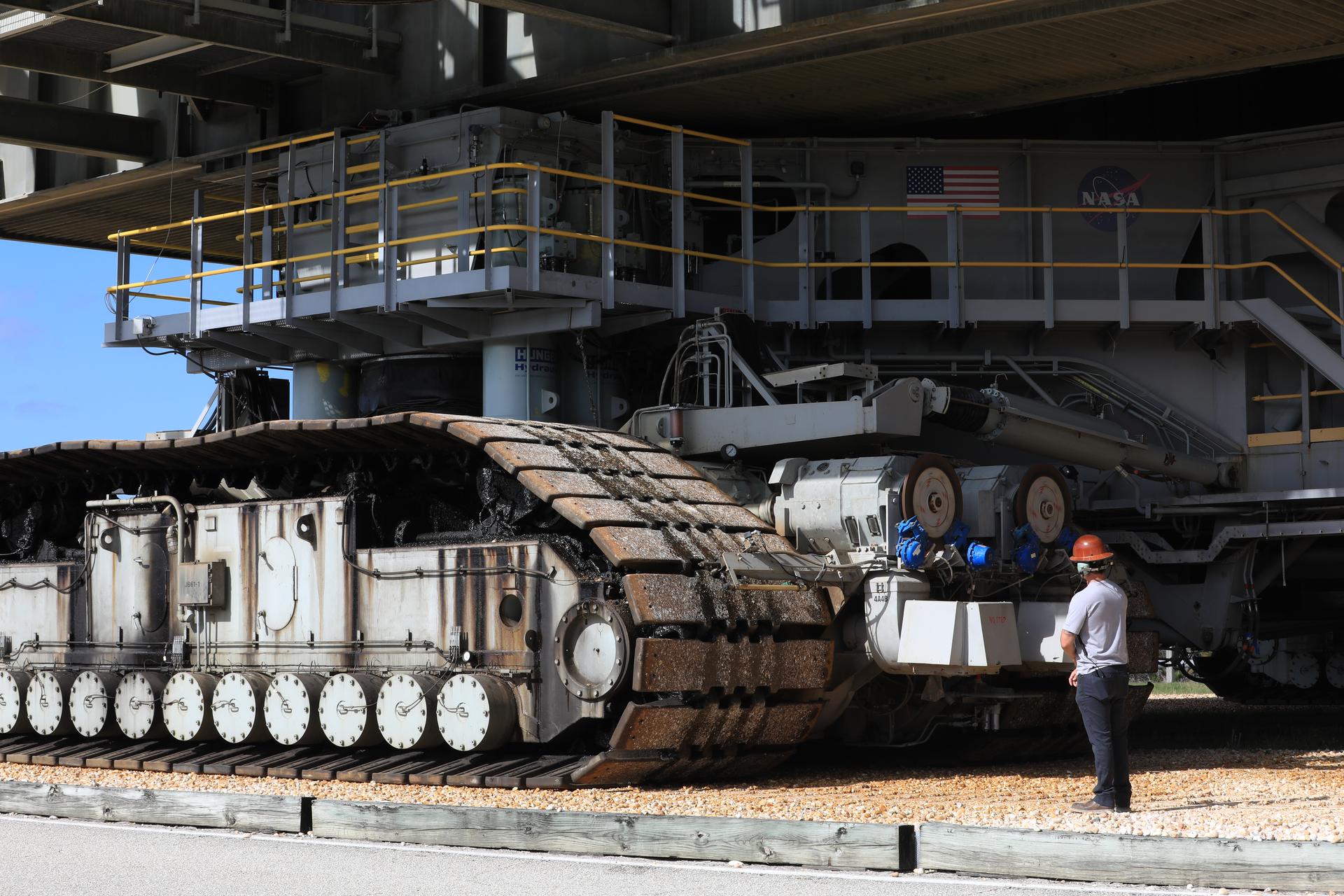
Technicians with NASA’s Exploration Gound Systems Program monitor crawler-transporter 2 as it transports the agency’s mobile launcher 1 slowly from Launch Complex 39B to the Vehicle Assembly Building at NASA’s Kennedy Space Center in Florida on Thursday, April 16, 2026, in preparation for Artemis III stacking operations. Teams will perform checkouts, inspections, and data analysis, and make repairs to the tower that saw damage during liftoff of the Artemis II test flight.
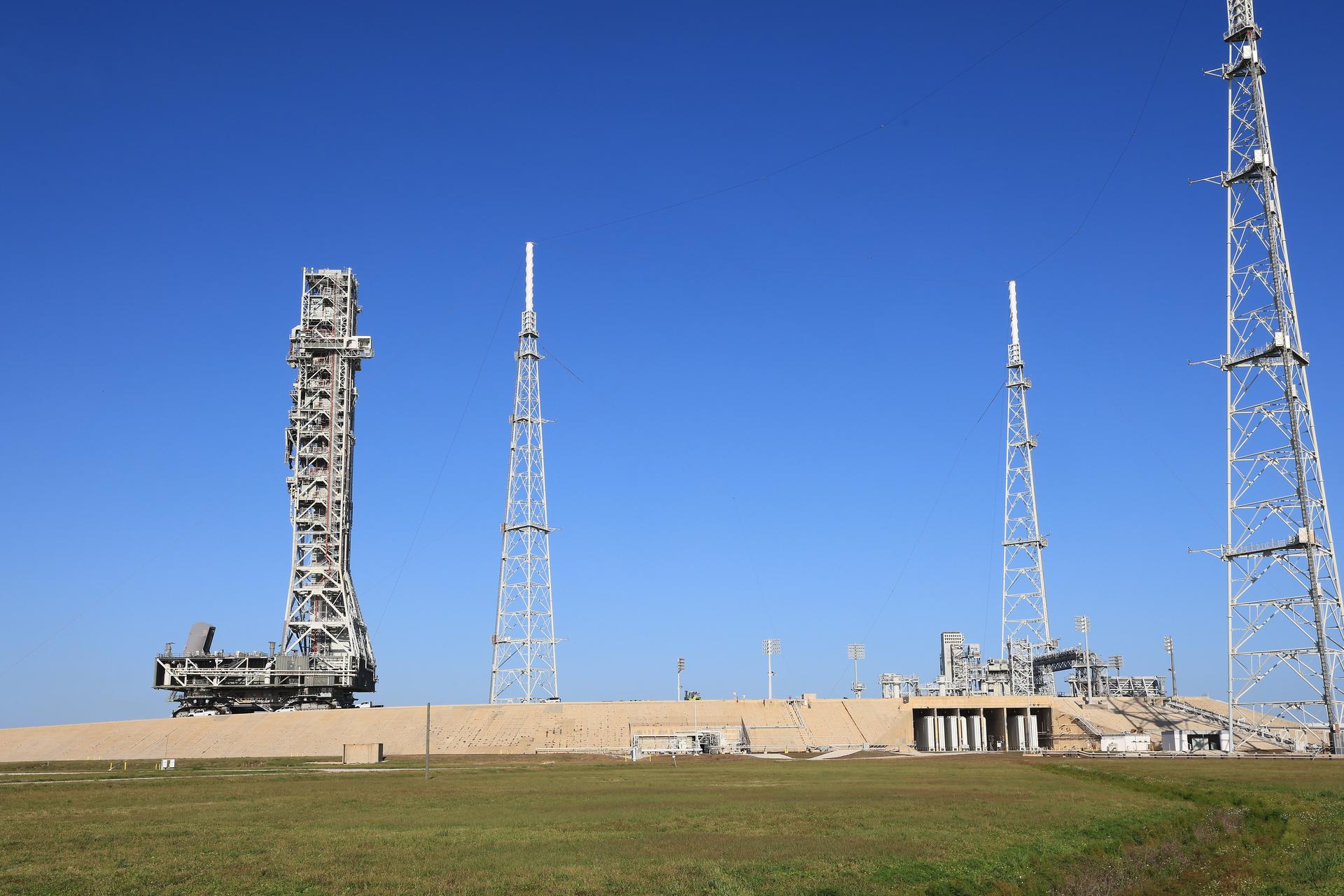
NASA’s mobile launcher 1 begins its approximately 4-mile trek from Launch Complex 39B to the Vehicle Assembly Building at the agency’s Kennedy Space Center in Florida on Thursday, April 16, 2026, in preparation for Artemis III stacking operations. Teams will perform checkouts, inspections, and data analysis, and make repairs to the tower that saw damage during liftoff of the Artemis II test flight.
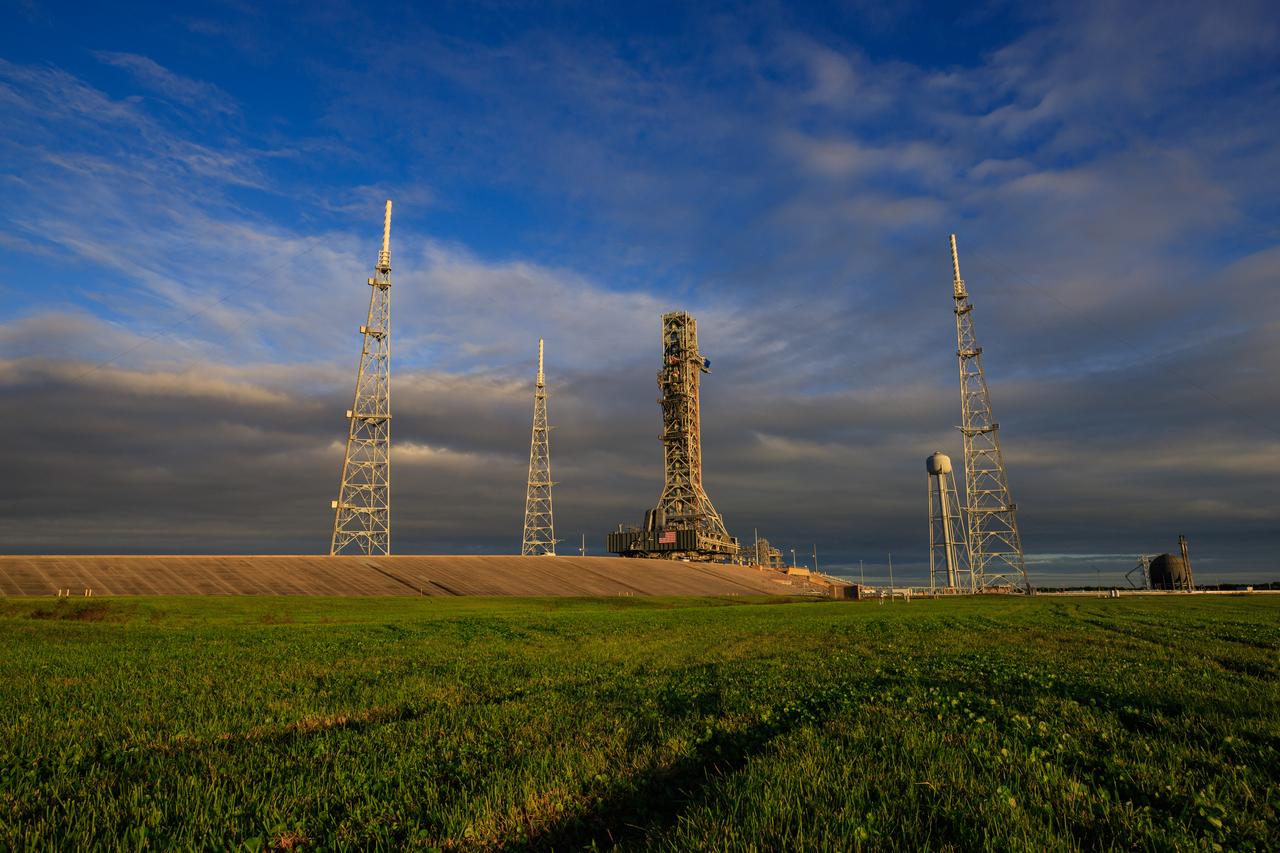
During sunrise on Oct. 30, 2020, the mobile launcher for the Artemis I mission, atop crawler-transporter 2, begins to depart Launch Pad 39B and return to the Vehicle Assembly Building at NASA’s Kennedy Space Center in Florida. The nearly 400-foot-tall mobile launcher was at the pad for 10 days, while engineers with Exploration Ground Systems and Jacobs performed several tasks, including a timing test to validate the launch team’s countdown timeline, and a thorough, top-to-bottom wash down of the mobile launcher to remove any debris remaining from construction and installation of the umbilical arms. Artemis I will test the Orion spacecraft and Space Launch System as an integrated system ahead of crewed flights to the Moon. Under the Artemis program, NASA will land the first woman and the next man on the Moon in 2024.
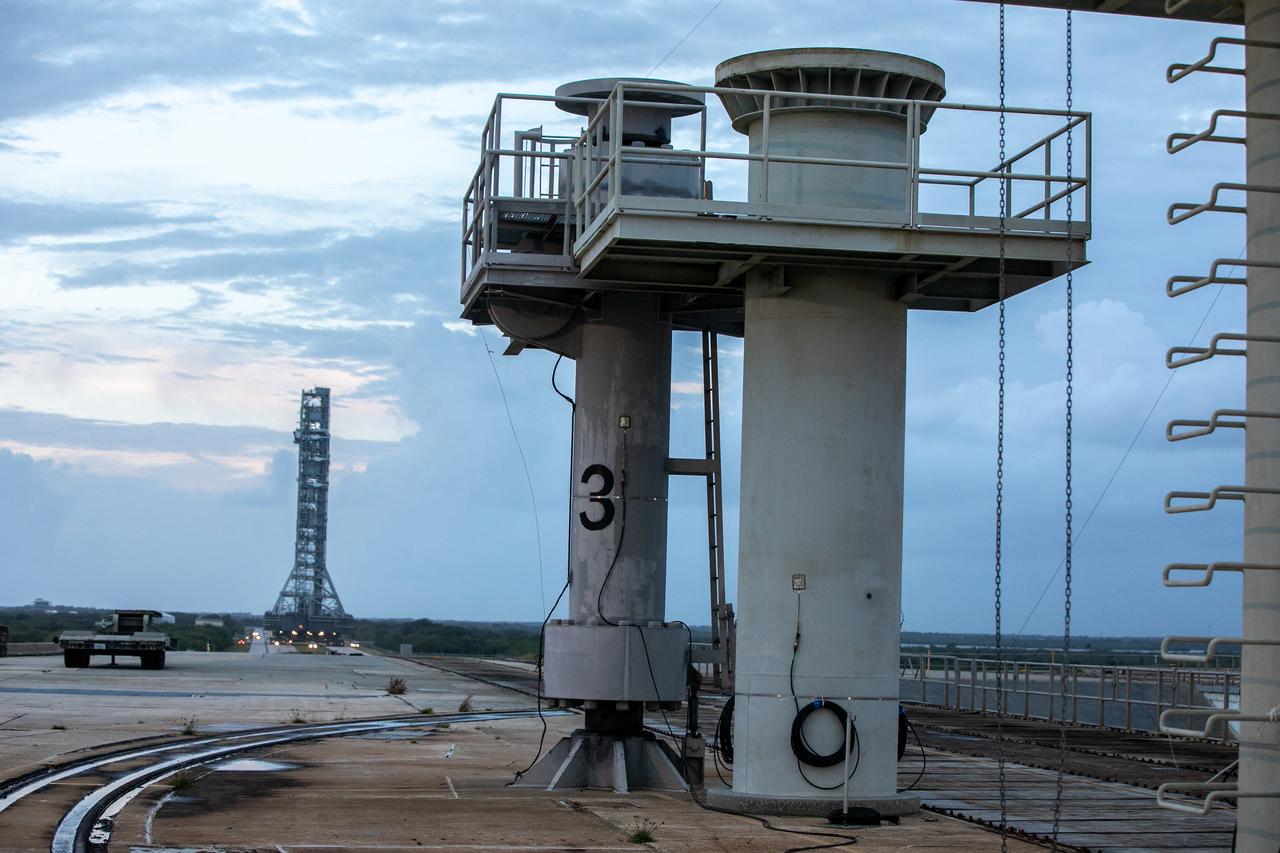
During sunrise on Oct. 20, 2020, the mobile launcher for the Artemis I mission, atop crawler-transporter 2, nears the top of Launch Pad 39B at NASA’s Kennedy Space Center in Florida. The nearly 400-foot-tall mobile launcher will remain at the pad, while engineers with Exploration Ground Systems and Jacobs will perform several tasks, including a timing test to validate the launch team’s countdown timeline, and a thorough, top-to-bottom wash down of the mobile launcher to remove any debris remaining from construction and installation of the umbilical arms. Artemis I will test the Orion spacecraft and Space Launch System as an integrated system ahead of crewed flights to the Moon. Under the Artemis program, NASA will land the first woman and the next man on the Moon in 2024.
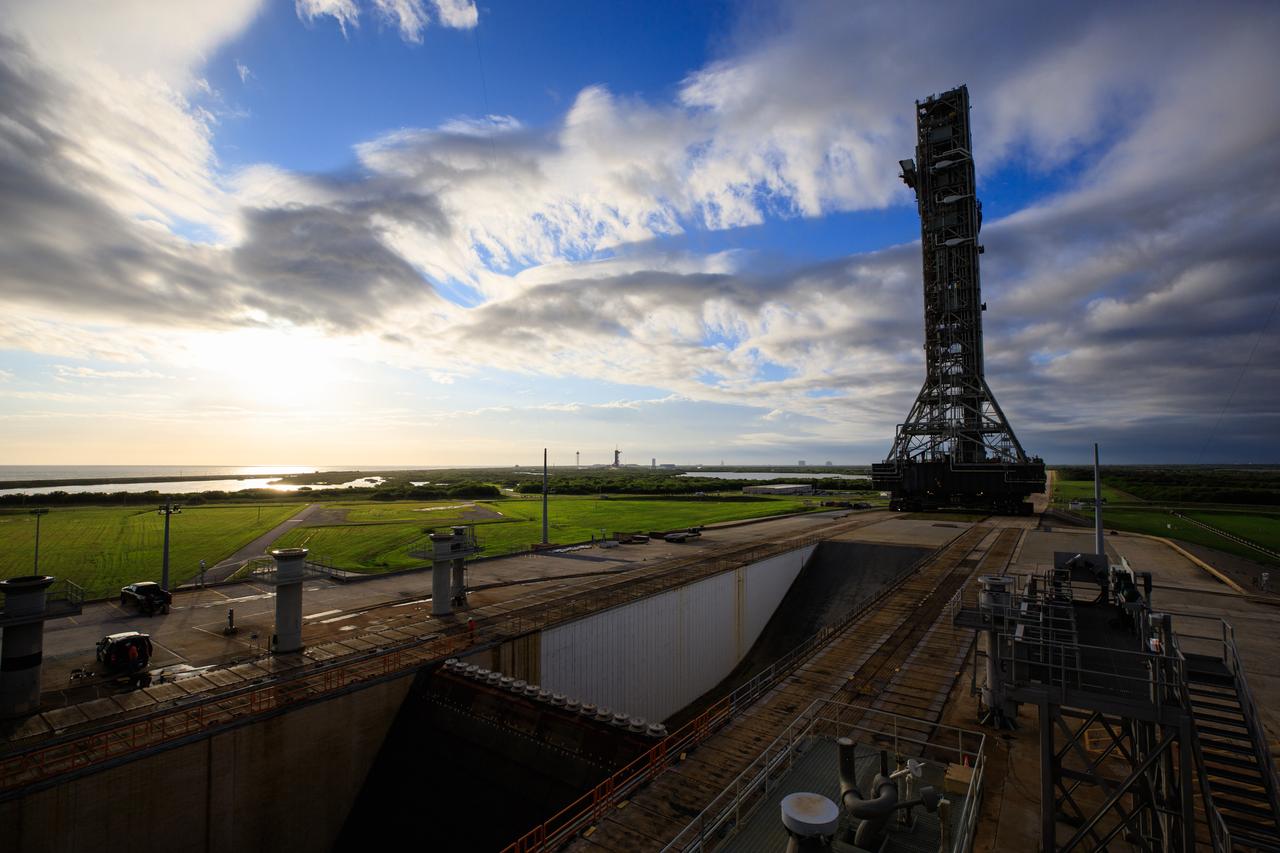
During sunrise on Oct. 30, 2020, the mobile launcher for the Artemis I mission, atop crawler-transporter 2, departs Launch Pad 39B and moves slowly down the ramp on the crawlerway to return to the Vehicle Assembly Building at NASA’s Kennedy Space Center in Florida. In view is the flame trench at the top of the pad. The nearly 400-foot-tall mobile launcher was at the pad for 10 days, while engineers with Exploration Ground Systems and Jacobs performed several tasks, including a timing test to validate the launch team’s countdown timeline, and a thorough, top-to-bottom wash down of the mobile launcher to remove any debris remaining from construction and installation of the umbilical arms. Artemis I will test the Orion spacecraft and Space Launch System as an integrated system ahead of crewed flights to the Moon. Under the Artemis program, NASA will land the first woman and the next man on the Moon in 2024.
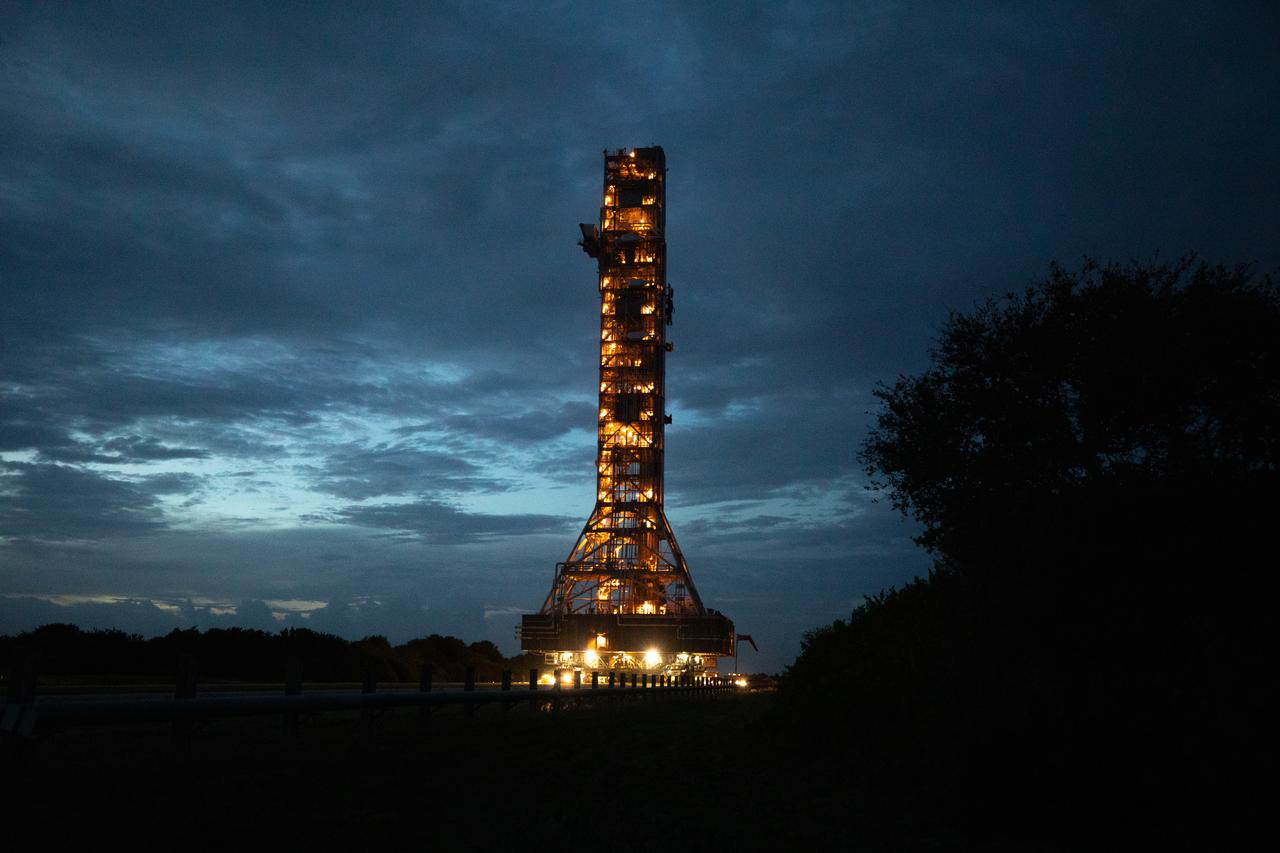
Xenon lights illuminate the mobile launcher for the Artemis I mission, as it is carried slowly along the crawlerway atop crawler-transporter 2 at NASA’s Kennedy Space Center in Florida on Oct. 20, 2020. The nearly 400-foot-tall mobile launcher is being rolled to Launch Pad 39B. During its two-week stay at the pad, engineers with Exploration Ground Systems and Jacobs will perform several tasks, including a timing test to validate the launch team’s countdown timeline, and a thorough, top-to-bottom wash down of the mobile launcher to remove any debris remaining from construction and installation of the umbilical arms. Artemis I will test the Orion spacecraft and Space Launch System as an integrated system ahead of crewed flights to the Moon. Under the Artemis program, NASA will land the first woman and the next man on the Moon in 2024.
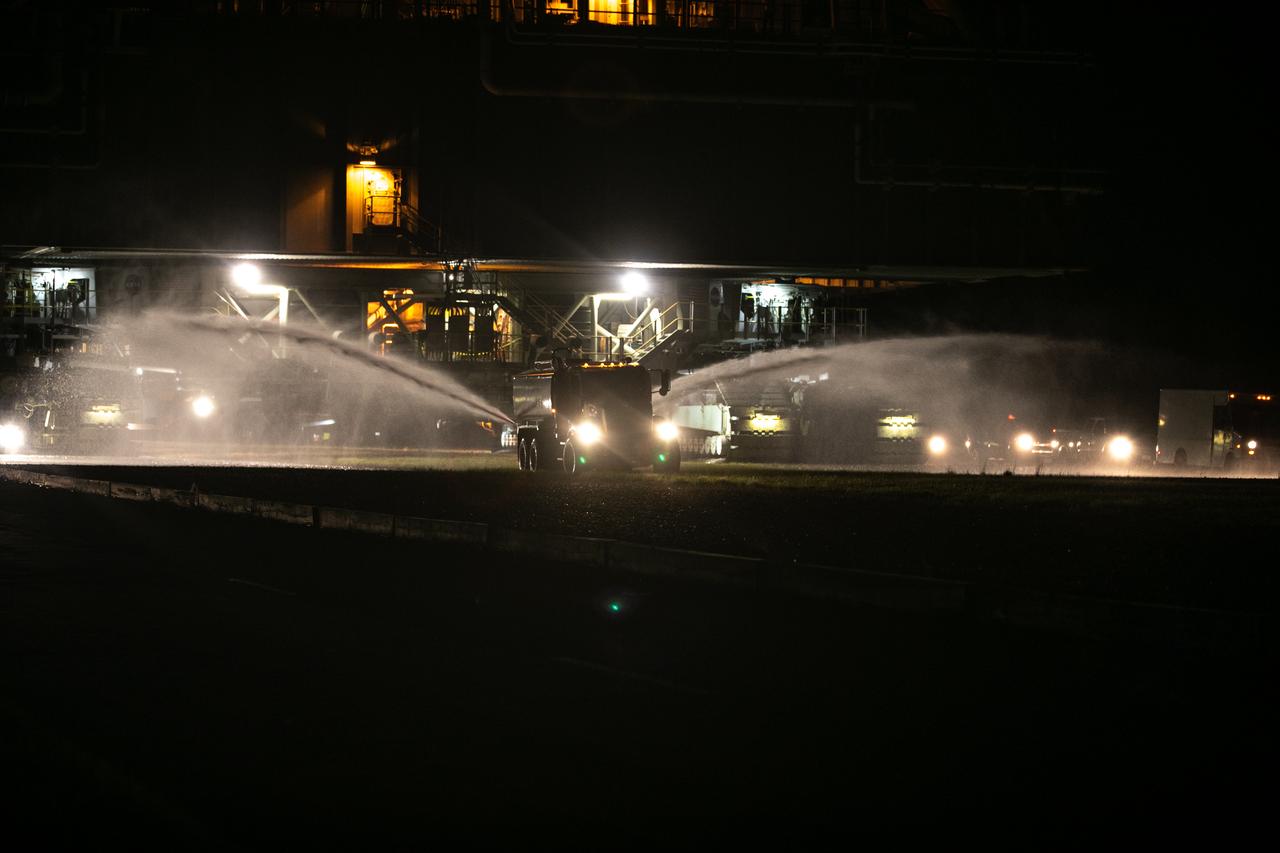
In the early morning on Oct. 20, 2020, a truck sprays water in front of crawler-transporter 2 to reduce dust and bugs, as the mobile launcher for the Artemis I mission rolls slowly along the crawlerway from the Vehicle Assembly Building at NASA’s Kennedy Space Center in Florida. The nearly 400-foot-tall mobile launcher is being rolled to Launch Pad 39B. During its two-week stay at the pad, engineers with Exploration Ground Systems and Jacobs will perform several tasks, including a timing test to validate the launch team’s countdown timeline, and a thorough, top-to-bottom wash down of the mobile launcher to remove any debris remaining from construction and installation of the umbilical arms. Artemis I will test the Orion spacecraft and Space Launch System as an integrated system ahead of crewed flights to the Moon. Under the Artemis program, NASA will land the first woman and the next man on the Moon in 2024.
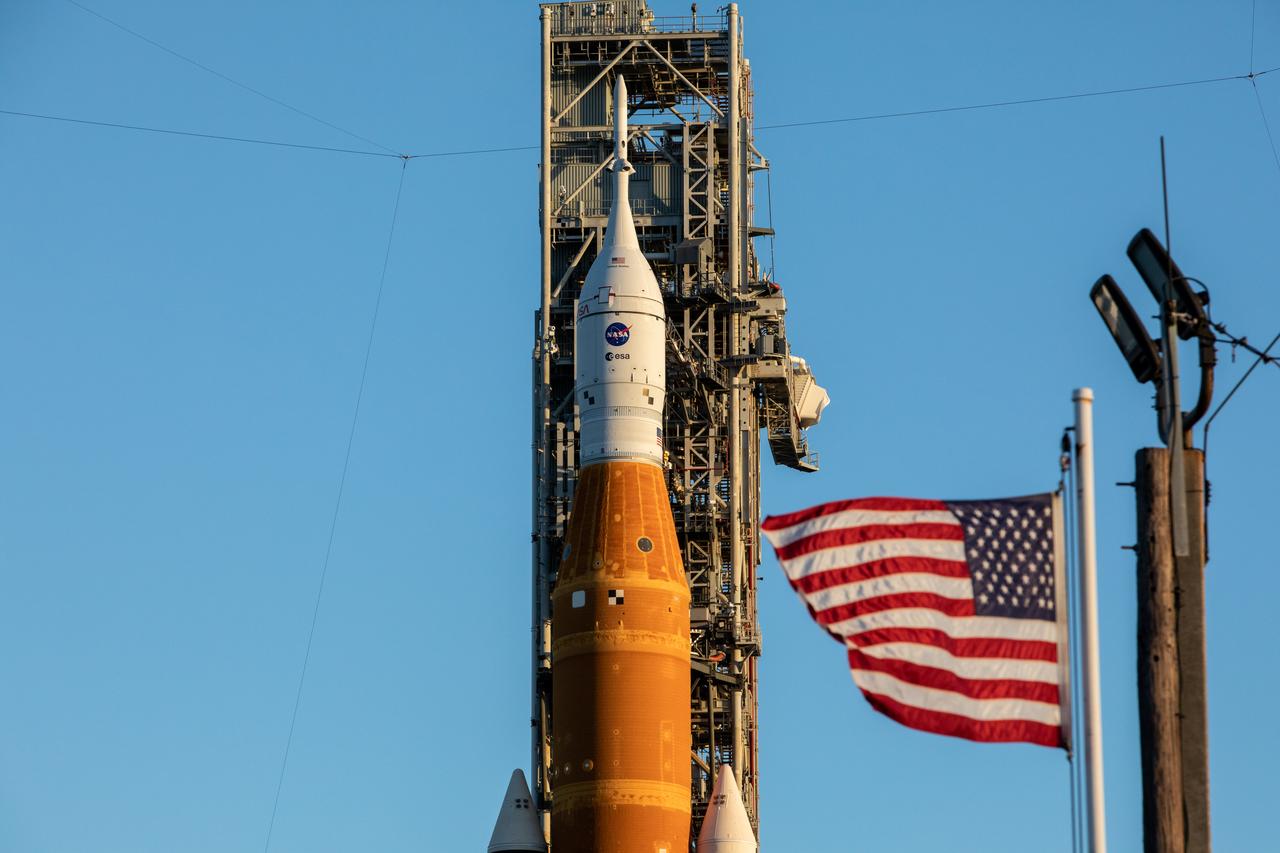
Standing atop the mobile launcher, NASA’s Space Launch System (SLS) rocket and Orion spacecraft arrive at Launch Pad 39B at the agency’s Kennedy Space Center in Florida on Nov. 4, 2022. The Artemis I stack was carried from the Vehicle Assembly Building to the pad – a 4.2-mile journey that took nearly 11 hours to complete – by NASA’s crawler-transporter 2 ahead of the uncrewed launch. Artemis I will be the first integrated test of NASA’s SLS rocket and Orion spacecraft and is scheduled to launch Monday, Nov. 14. The primary goal of Artemis I is to thoroughly test the integrated systems before crewed missions by launching Orion atop the SLS rocket, operating the spacecraft in a deep space environment, testing Orion’s heat shield, and recovering the crew module after reentry, descent, and splashdown. During the flight, Orion will launch atop the most powerful rocket in the world and fly farther than any human-rated spacecraft has ever flown, paving the way for human deep space exploration and demonstrating our commitment and capability to extend human presence to the Moon and beyond.
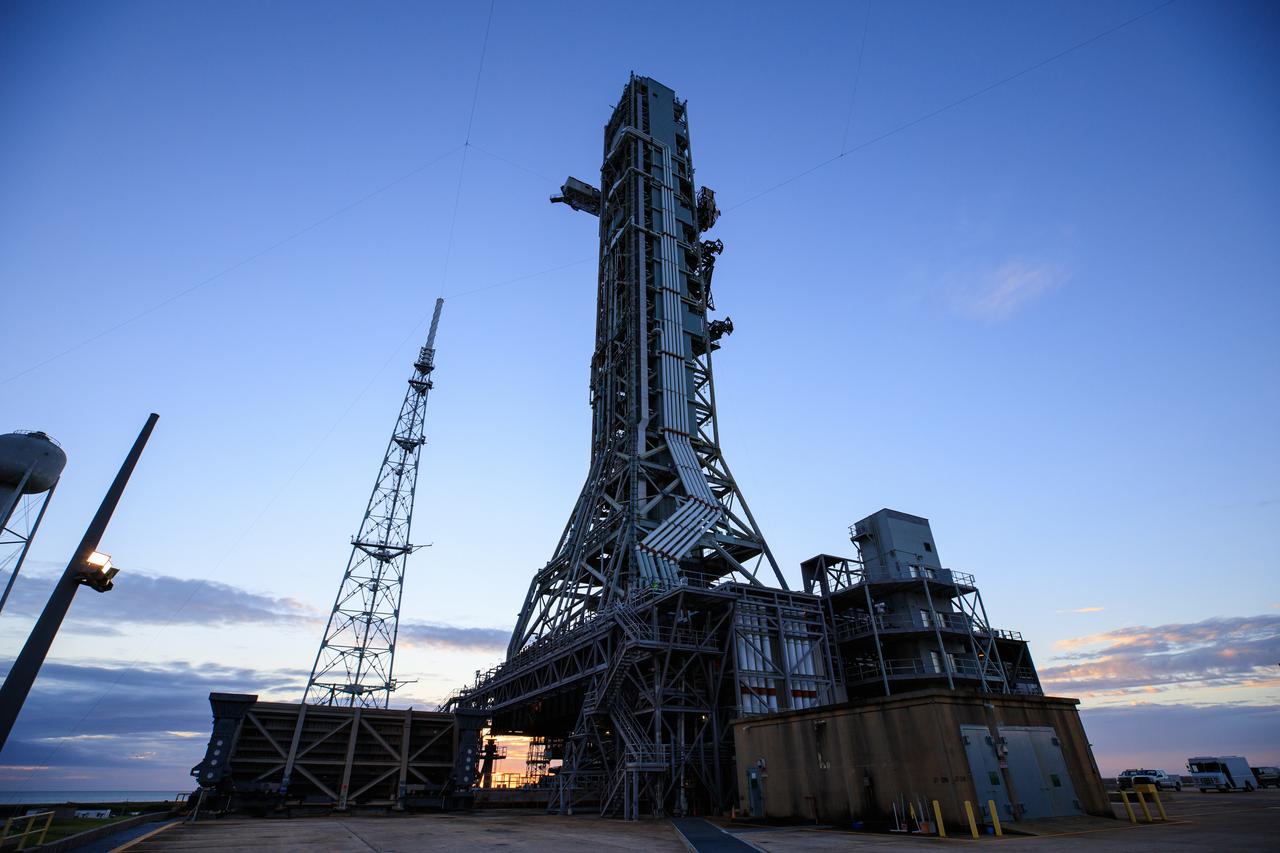
On Oct. 30, 2020, preparations are underway for the mobile launcher for the Artemis I mission, atop crawler-transporter 2, to depart Launch Pad 39B and return to the Vehicle Assembly Building at NASA’s Kennedy Space Center in Florida. The nearly 400-foot-tall mobile launcher was at the pad for 10 days, while engineers with Exploration Ground Systems and Jacobs performed several tasks, including a timing test to validate the launch team’s countdown timeline, and a thorough, top-to-bottom wash down of the mobile launcher to remove any debris remaining from construction and installation of the umbilical arms. Artemis I will test the Orion spacecraft and Space Launch System as an integrated system ahead of crewed flights to the Moon. Under the Artemis program, NASA will land the first woman and the next man on the Moon in 2024.
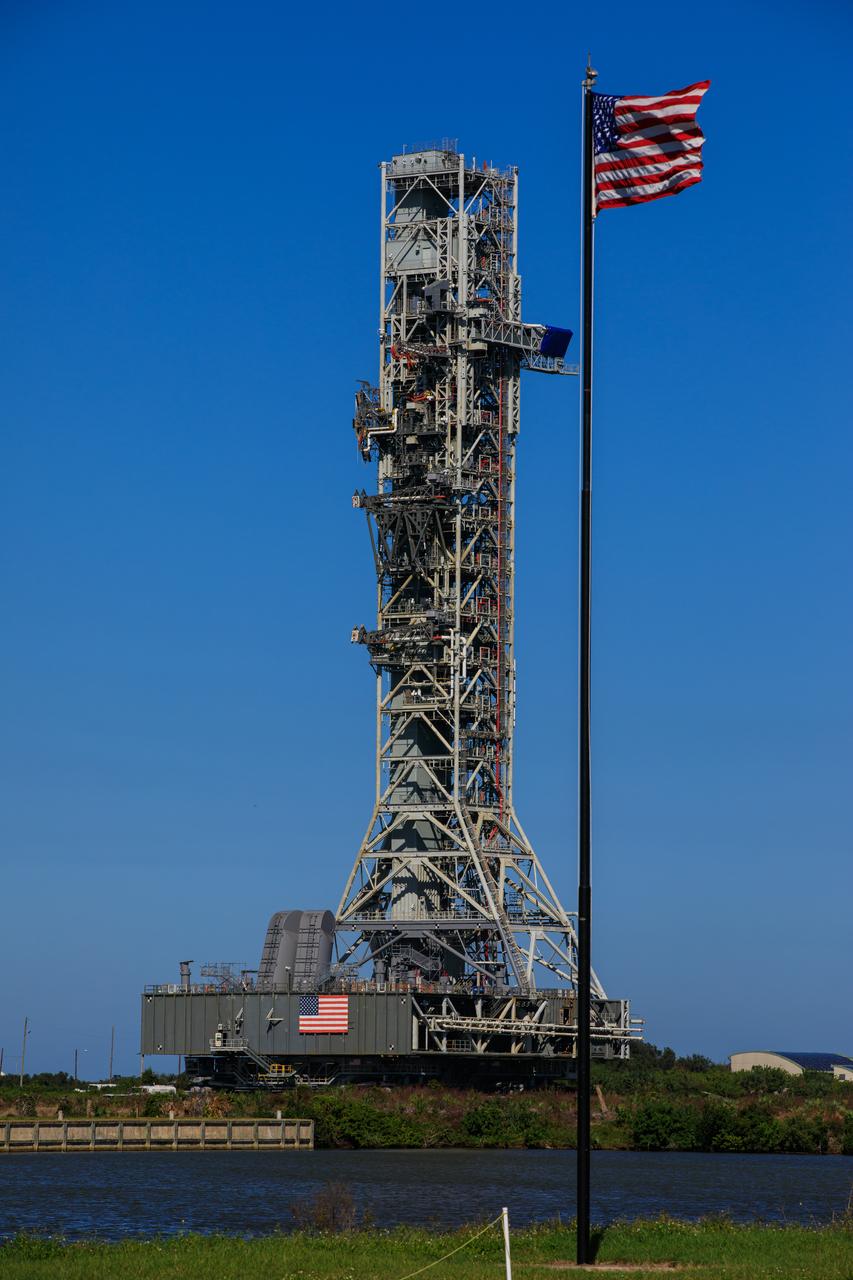
During the morning on Oct. 30, 2020, the mobile launcher for the Artemis I mission, atop crawler-transporter 2, moves slowly along the crawlerway after departing Launch Pad 39B at NASA’s Kennedy Space Center in Florida. In view is the American Flag. The nearly 400-foot-tall mobile launcher is returning to the Vehicle Assembly Building after being at the pad for 10 days, while engineers with Exploration Ground Systems and Jacobs performed several tasks, including a timing test to validate the launch team’s countdown timeline, and a thorough, top-to-bottom wash down of the mobile launcher to remove any debris remaining from construction and installation of the umbilical arms. Artemis I will test the Orion spacecraft and Space Launch System as an integrated system ahead of crewed flights to the Moon. Under the Artemis program, NASA will land the first woman and the next man on the Moon in 2024.
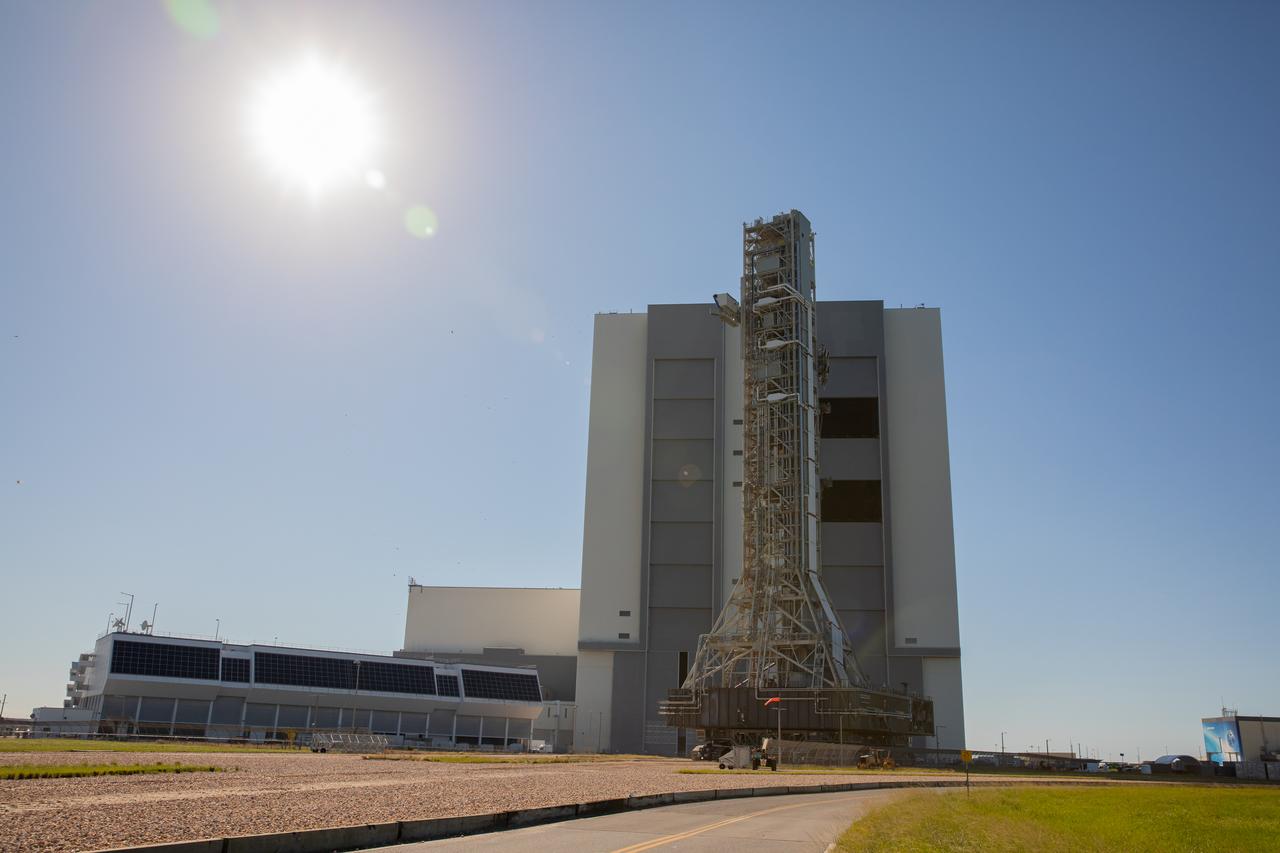
The mobile launcher for the Artemis I mission, atop crawler-transporter 2, arrives at the Vehicle Assembly Building at NASA’s Kennedy Space Center in Florida on Oct. 30, 2020. The nearly 400-foot-tall mobile launcher was at Launch Pad 39B for 10 days, while engineers with Exploration Ground Systems and Jacobs performed several tasks, including a timing test to validate the launch team’s countdown timeline, and a thorough, top-to-bottom wash down of the mobile launcher to remove any debris remaining from construction and installation of the umbilical arms. Artemis I will test the Orion spacecraft and Space Launch System as an integrated system ahead of crewed flights to the Moon. Under the Artemis program, NASA will land the first woman and the next man on the Moon in 2024.

During sunrise on Oct. 20, 2020, the mobile launcher for the Artemis I mission, atop crawler-transporter 2, travels up the ramp leading to the top of Launch Pad 39B at NASA’s Kennedy Space Center in Florida. The nearly 400-foot-tall mobile launcher will remain at the pad for two weeks, while engineers with Exploration Ground Systems and Jacobs will perform several tasks, including a timing test to validate the launch team’s countdown timeline, and a thorough, top-to-bottom wash down of the mobile launcher to remove any debris remaining from construction and installation of the umbilical arms. Artemis I will test the Orion spacecraft and Space Launch System as an integrated system ahead of crewed flights to the Moon. Under the Artemis program, NASA will land the first woman and the next man on the Moon in 2024.
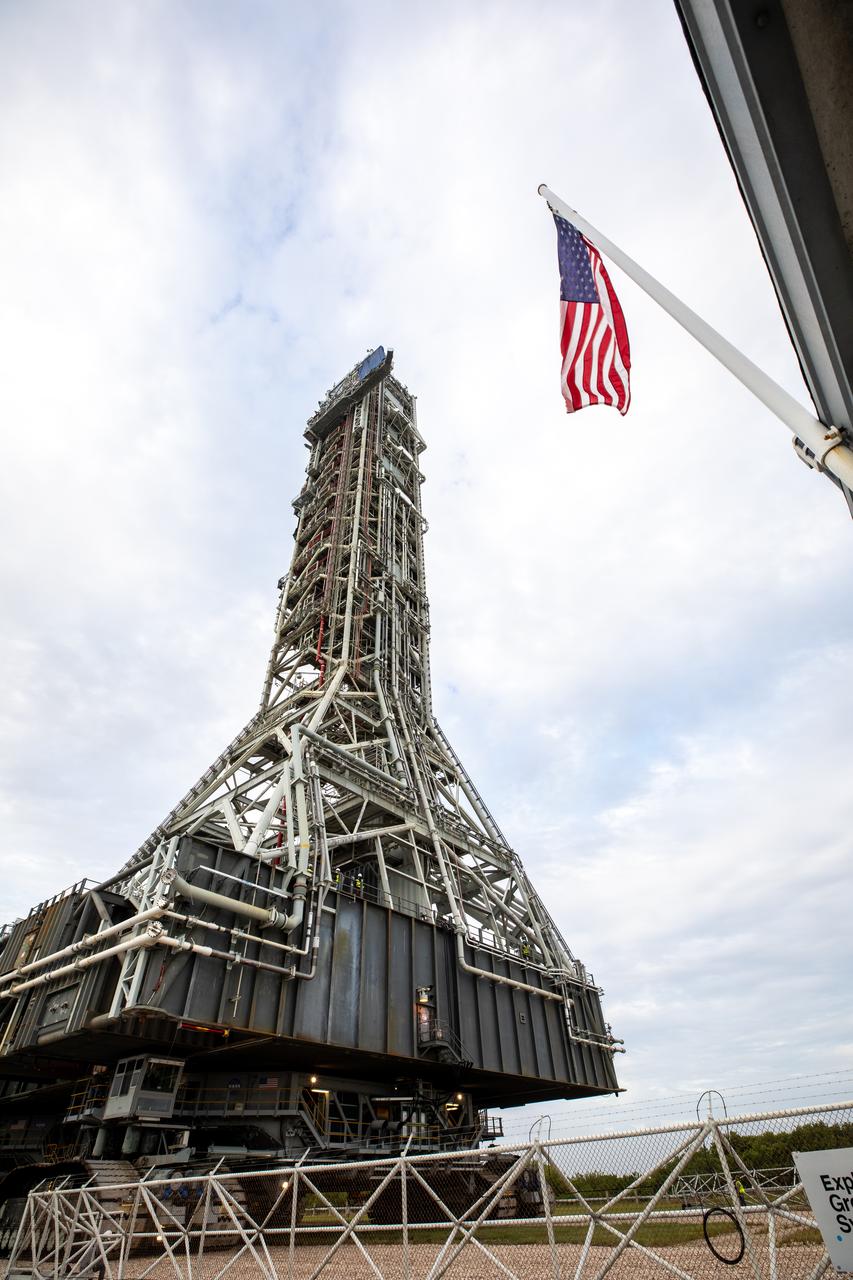
During sunrise on Oct. 20, 2020, the mobile launcher for the Artemis I mission, atop crawler-transporter 2, arrives at the perimeter of Launch Pad 39B at NASA’s Kennedy Space Center in Florida. The nearly 400-foot-tall mobile launcher will remain at the pad for two weeks, while engineers with Exploration Ground Systems and Jacobs will perform several tasks, including a timing test to validate the launch team’s countdown timeline, and a thorough, top-to-bottom wash down of the mobile launcher to remove any debris remaining from construction and installation of the umbilical arms. Artemis I will test the Orion spacecraft and Space Launch System as an integrated system ahead of crewed flights to the Moon. Under the Artemis program, NASA will land the first woman and the next man on the Moon in 2024.
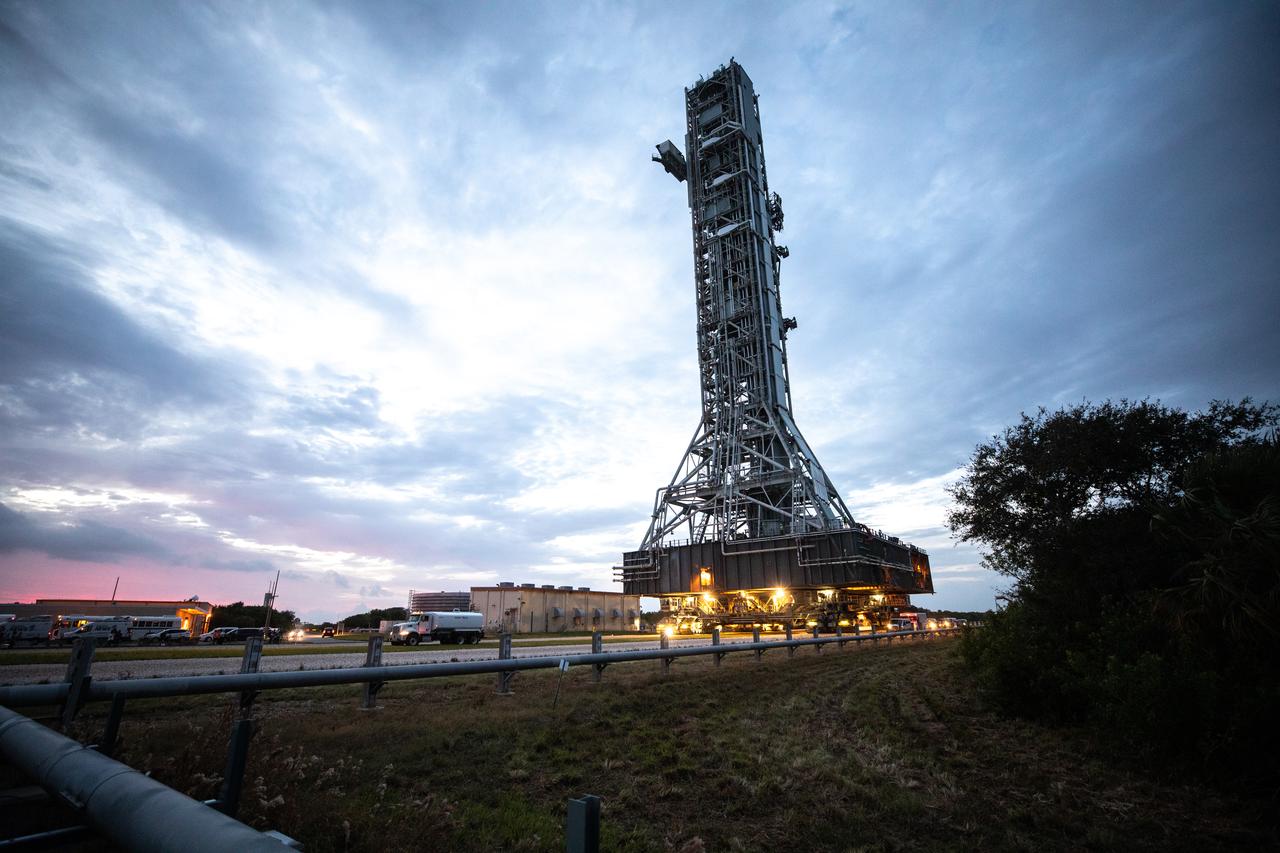
During sunrise on Oct. 20, 2020, the mobile launcher for the Artemis I mission, atop crawler-transporter 2, arrives at the ramp leading up to Launch Pad 39B at NASA’s Kennedy Space Center in Florida. The nearly 400-foot-tall mobile launcher will remain at the pad for two weeks, while engineers with Exploration Ground Systems and Jacobs will perform several tasks, including a timing test to validate the launch team’s countdown timeline, and a thorough, top-to-bottom wash down of the mobile launcher to remove any debris remaining from construction and installation of the umbilical arms. Artemis I will test the Orion spacecraft and Space Launch System as an integrated system ahead of crewed flights to the Moon. Under the Artemis program, NASA will land the first woman and the next man on the Moon in 2024.

Artemis I Launch Director Charlie Blackwell-Thompson stands at her console in Firing Room 1 inside the Rocco A. Petrone Launch Control Center at NASA’s Kennedy Space Center in Florida on Nov. 4, 2022, as NASA’s Space Launch System (SLS) rocket and Orion spacecraft for the Artemis I mission roll out to Launch Pad 39B. The primary goal of Artemis I is to thoroughly test the integrated systems before crewed missions by launching Orion atop the SLS rocket, operating the spacecraft in a deep space environment, testing Orion’s heat shield, and recovering the crew module after reentry, descent, and splashdown. During the flight, Orion will launch atop the most powerful rocket in the world and fly farther than any human-rated spacecraft has ever flown, paving the way for human deep space exploration and demonstrating our commitment and capability to extend human presence to the Moon and beyond.
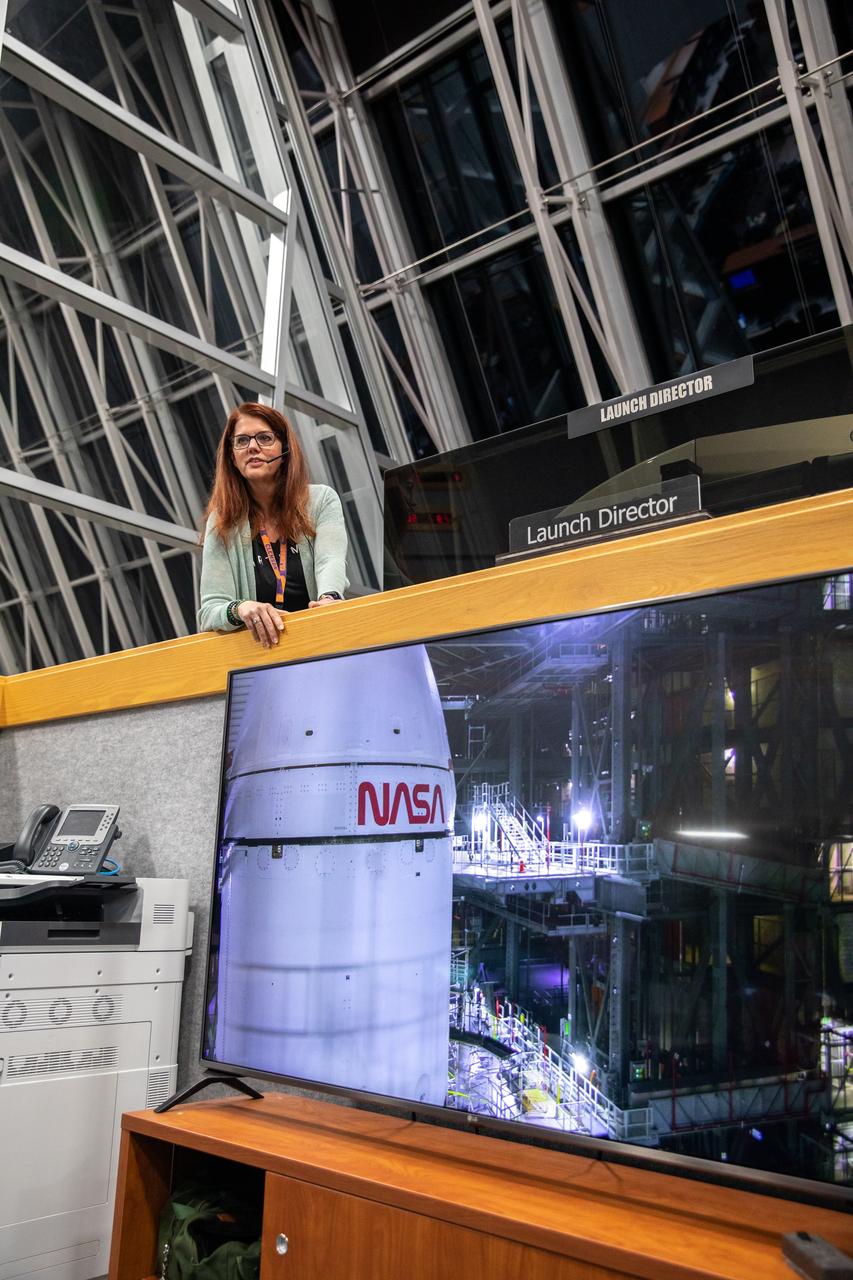
Artemis I Launch Director Charlie Blackwell-Thompson stands at her console in Firing Room 1 inside the Rocco A. Petrone Launch Control Center at NASA’s Kennedy Space Center in Florida on Nov. 4, 2022, as NASA’s Space Launch System (SLS) rocket and Orion spacecraft for the Artemis I mission roll out to Launch Pad 39B. The primary goal of Artemis I is to thoroughly test the integrated systems before crewed missions by launching Orion atop the SLS rocket, operating the spacecraft in a deep space environment, testing Orion’s heat shield, and recovering the crew module after reentry, descent, and splashdown. During the flight, Orion will launch atop the most powerful rocket in the world and fly farther than any human-rated spacecraft has ever flown, paving the way for human deep space exploration and demonstrating our commitment and capability to extend human presence to the Moon and beyond.

Xenon lights illuminate the mobile launcher for the Artemis I mission, as it is carried slowly along the crawlerway atop crawler-transporter 2 at NASA’s Kennedy Space Center in Florida on Oct. 20, 2020. The nearly 400-foot-tall mobile launcher is being rolled to Launch Pad 39B. During its two-week stay at the pad, engineers with Exploration Ground Systems and Jacobs will perform several tasks, including a timing test to validate the launch team’s countdown timeline, and a thorough, top-to-bottom wash down of the mobile launcher to remove any debris remaining from construction and installation of the umbilical arms. Artemis I will test the Orion spacecraft and Space Launch System as an integrated system ahead of crewed flights to the Moon. Under the Artemis program, NASA will land the first woman and the next man on the Moon in 2024.
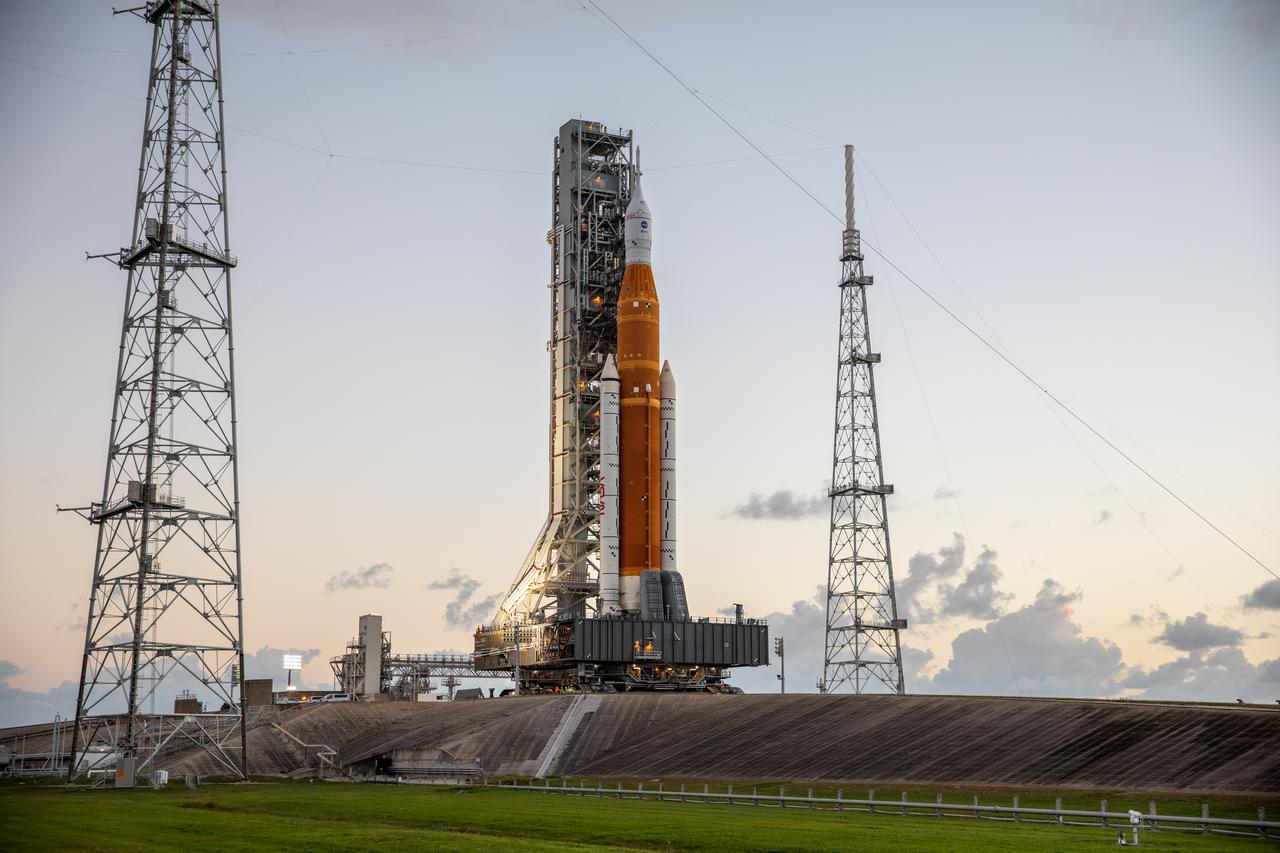
NASA’s Space Launch System (SLS) rocket and Orion spacecraft, standing atop the mobile launcher, arrive at Launch Pad 39B at the agency’s Kennedy Space Center in Florida on Nov. 4, 2022, ahead of the uncrewed Artemis I launch. Artemis I will be the first integrated test of NASA’s SLS rocket and Orion spacecraft and is scheduled to launch Monday, Nov. 14. The primary goal of Artemis I is to thoroughly test the integrated systems before crewed missions by launching Orion atop the SLS rocket, operating the spacecraft in a deep space environment, testing Orion’s heat shield, and recovering the crew module after reentry, descent, and splashdown. During the flight, Orion will launch atop the most powerful rocket in the world and fly farther than any human-rated spacecraft has ever flown, paving the way for human deep space exploration and demonstrating our commitment and capability to extend human presence to the Moon and beyond.
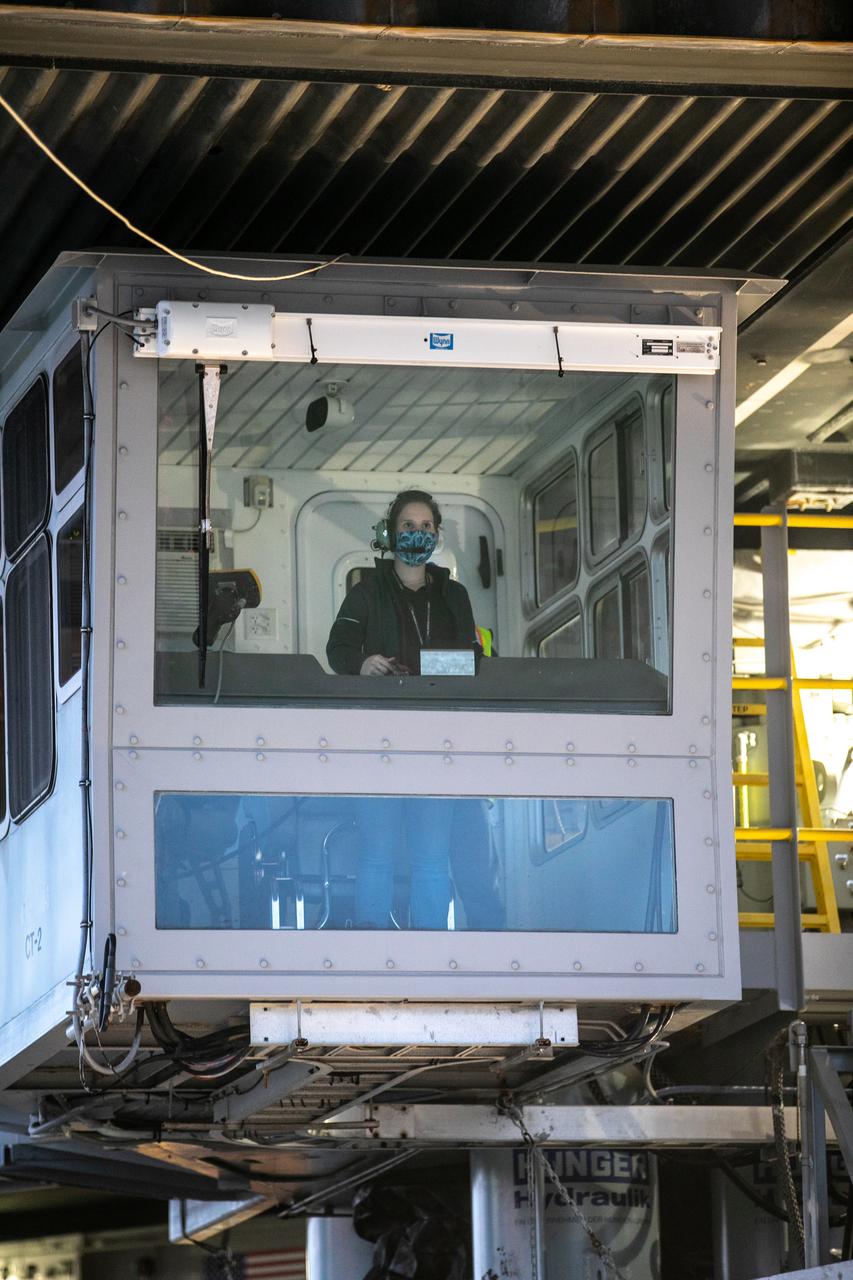
During sunrise on Oct. 20, 2020, the mobile launcher for the Artemis I mission, atop crawler-transporter 2 (CT-2), arrives at Launch Pad 39B at NASA’s Kennedy Space Center in Florida. In view inside the CT cab is Breanne Rohloff, crawler-transporter driver and mechanical engineer with Jacobs. The nearly 400-foot-tall mobile launcher will remain at the pad for two weeks, while engineers with Exploration Ground Systems and Jacobs will perform several tasks, including a timing test to validate the launch team’s countdown timeline, and a thorough, top-to-bottom wash down of the mobile launcher to remove any debris remaining from construction and installation of the umbilical arms. Artemis I will test the Orion spacecraft and Space Launch System as an integrated system ahead of crewed flights to the Moon. Under the Artemis program, NASA will land the first woman and the next man on the Moon in 2024.
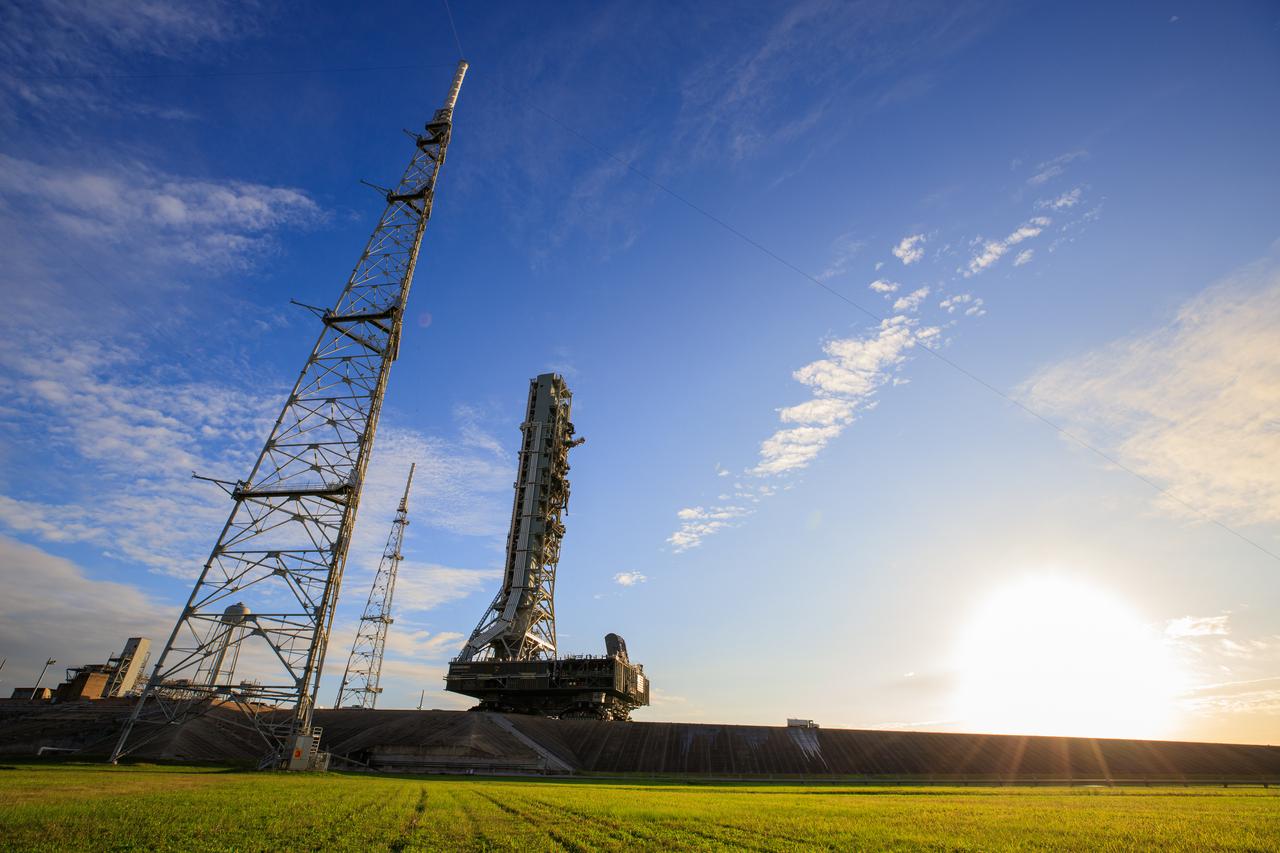
During sunrise on Oct. 30, 2020, the mobile launcher for the Artemis I mission, atop crawler-transporter 2, departs Launch Pad 39B and moves slowly along the crawlerway to return to the Vehicle Assembly Building at NASA’s Kennedy Space Center in Florida. The nearly 400-foot-tall mobile launcher was at the pad for 10 days, while engineers with Exploration Ground Systems and Jacobs performed several tasks, including a timing test to validate the launch team’s countdown timeline, and a thorough, top-to-bottom wash down of the mobile launcher to remove any debris remaining from construction and installation of the umbilical arms. Artemis I will test the Orion spacecraft and Space Launch System as an integrated system ahead of crewed flights to the Moon. Under the Artemis program, NASA will land the first woman and the next man on the Moon in 2024.
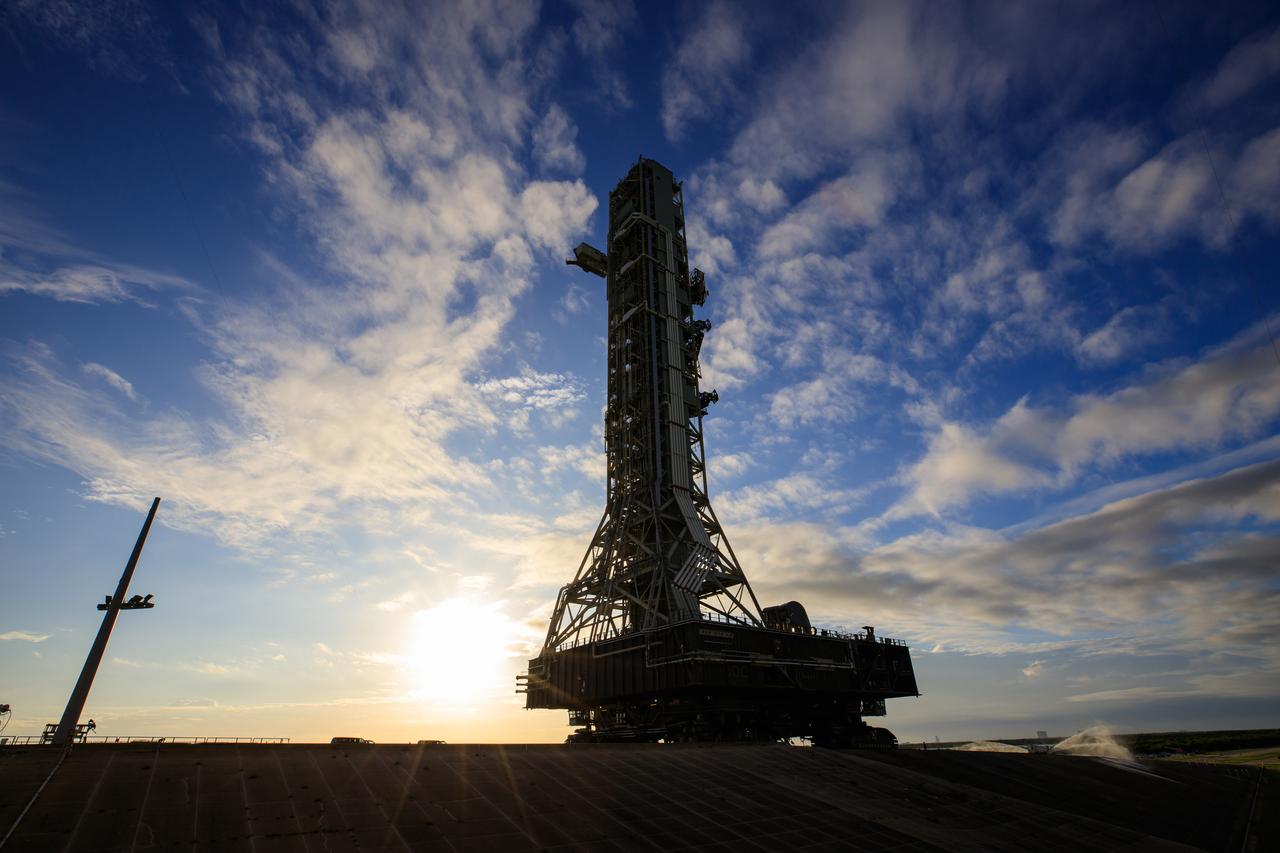
During sunrise on Oct. 20, 2020, the mobile launcher for the Artemis I mission, atop crawler-transporter 2, arrives at the perimeter of Launch Pad 39B at NASA’s Kennedy Space Center in Florida. The nearly 400-foot-tall mobile launcher will remain at the pad for two weeks, while engineers with Exploration Ground Systems and Jacobs will perform several tasks, including a timing test to validate the launch team’s countdown timeline, and a thorough, top-to-bottom wash down of the mobile launcher to remove any debris remaining from construction and installation of the umbilical arms. Artemis I will test the Orion spacecraft and Space Launch System as an integrated system ahead of crewed flights to the Moon. Under the Artemis program, NASA will land the first woman and the next man on the Moon in 2024.
During sunrise on Oct. 30, 2020, the mobile launcher for the Artemis I mission, atop crawler-transporter 2, departs Launch Pad 39B and moves slowly along the crawlerway to return to the Vehicle Assembly Building at NASA’s Kennedy Space Center in Florida. The nearly 400-foot-tall mobile launcher was at the pad for 10 days, while engineers with Exploration Ground Systems and Jacobs performed several tasks, including a timing test to validate the launch team’s countdown timeline, and a thorough, top-to-bottom wash down of the mobile launcher to remove any debris remaining from construction and installation of the umbilical arms. Artemis I will test the Orion spacecraft and Space Launch System as an integrated system ahead of crewed flights to the Moon. Under the Artemis program, NASA will land the first woman and the next man on the Moon in 2024.
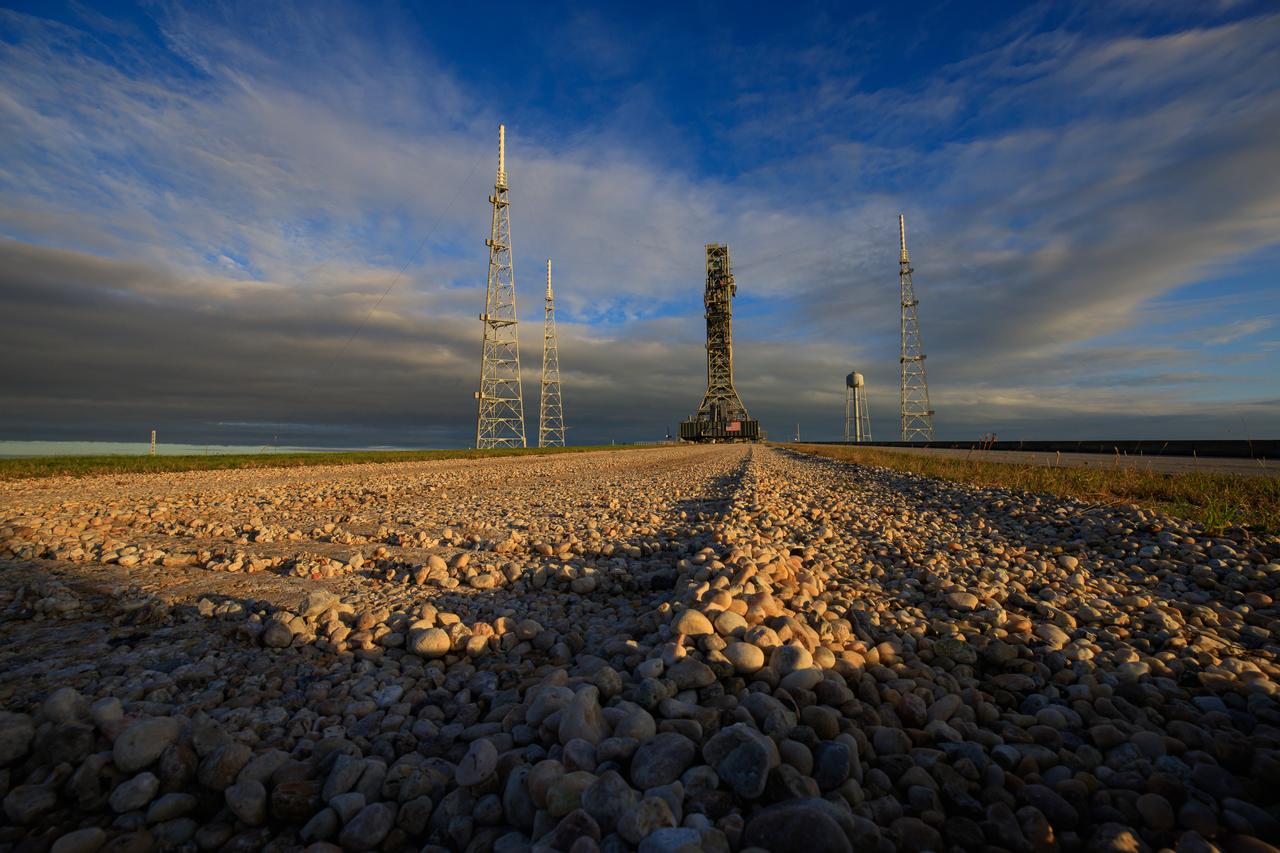
During sunrise on Oct. 30, 2020, the mobile launcher for the Artemis I mission, atop crawler-transporter 2, departs Launch Pad 39B and moves slowly along the crawlerway to return to the Vehicle Assembly Building at NASA’s Kennedy Space Center in Florida. The nearly 400-foot-tall mobile launcher was at the pad for 10 days, while engineers with Exploration Ground Systems and Jacobs performed several tasks, including a timing test to validate the launch team’s countdown timeline, and a thorough, top-to-bottom wash down of the mobile launcher to remove any debris remaining from construction and installation of the umbilical arms. Artemis I will test the Orion spacecraft and Space Launch System as an integrated system ahead of crewed flights to the Moon. Under the Artemis program, NASA will land the first woman and the next man on the Moon in 2024.
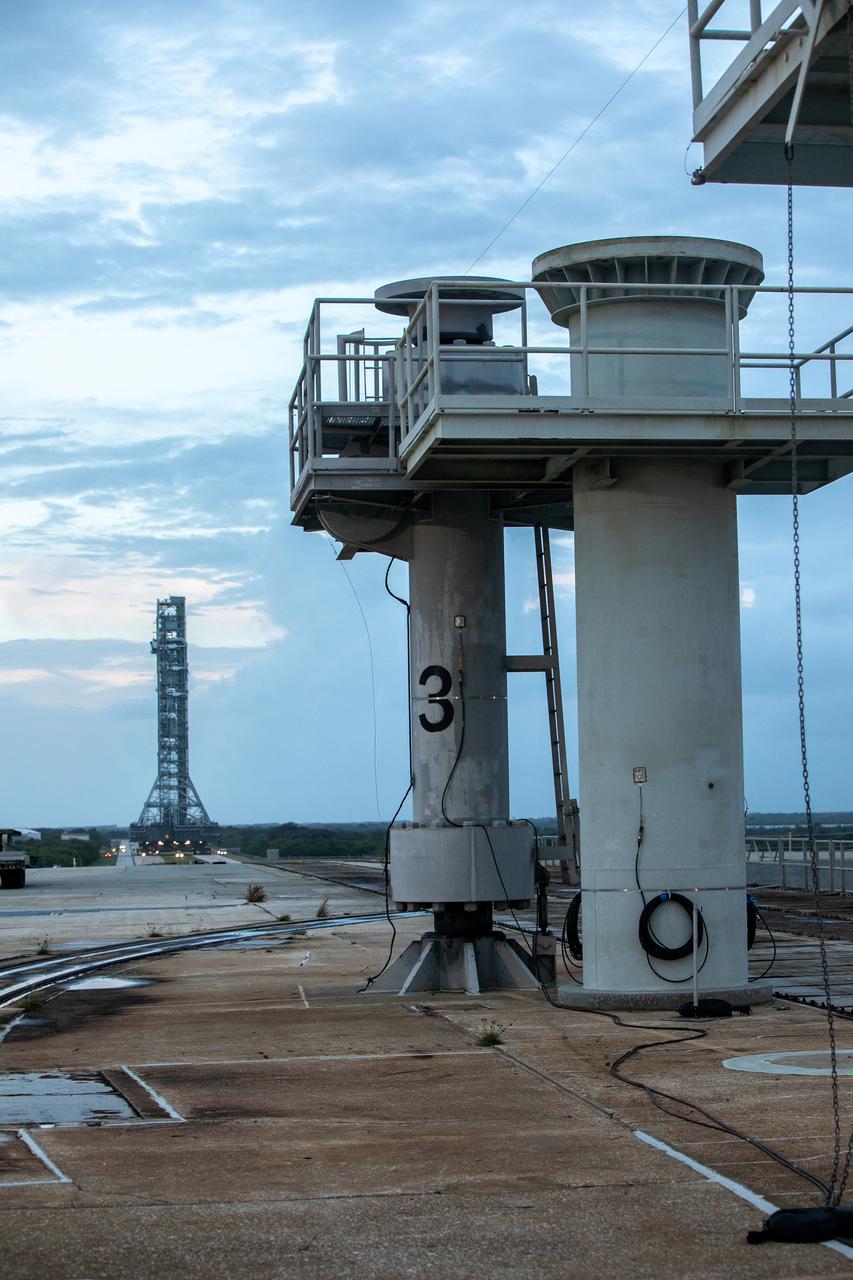
During sunrise on Oct. 20, 2020, the mobile launcher for the Artemis I mission, atop crawler-transporter 2, nears the top of Launch Pad 39B at NASA’s Kennedy Space Center in Florida. The nearly 400-foot-tall mobile launcher will remain at the pad, while engineers with Exploration Ground Systems and Jacobs will perform several tasks, including a timing test to validate the launch team’s countdown timeline, and a thorough, top-to-bottom wash down of the mobile launcher to remove any debris remaining from construction and installation of the umbilical arms. Artemis I will test the Orion spacecraft and Space Launch System as an integrated system ahead of crewed flights to the Moon. Under the Artemis program, NASA will land the first woman and the next man on the Moon in 2024.
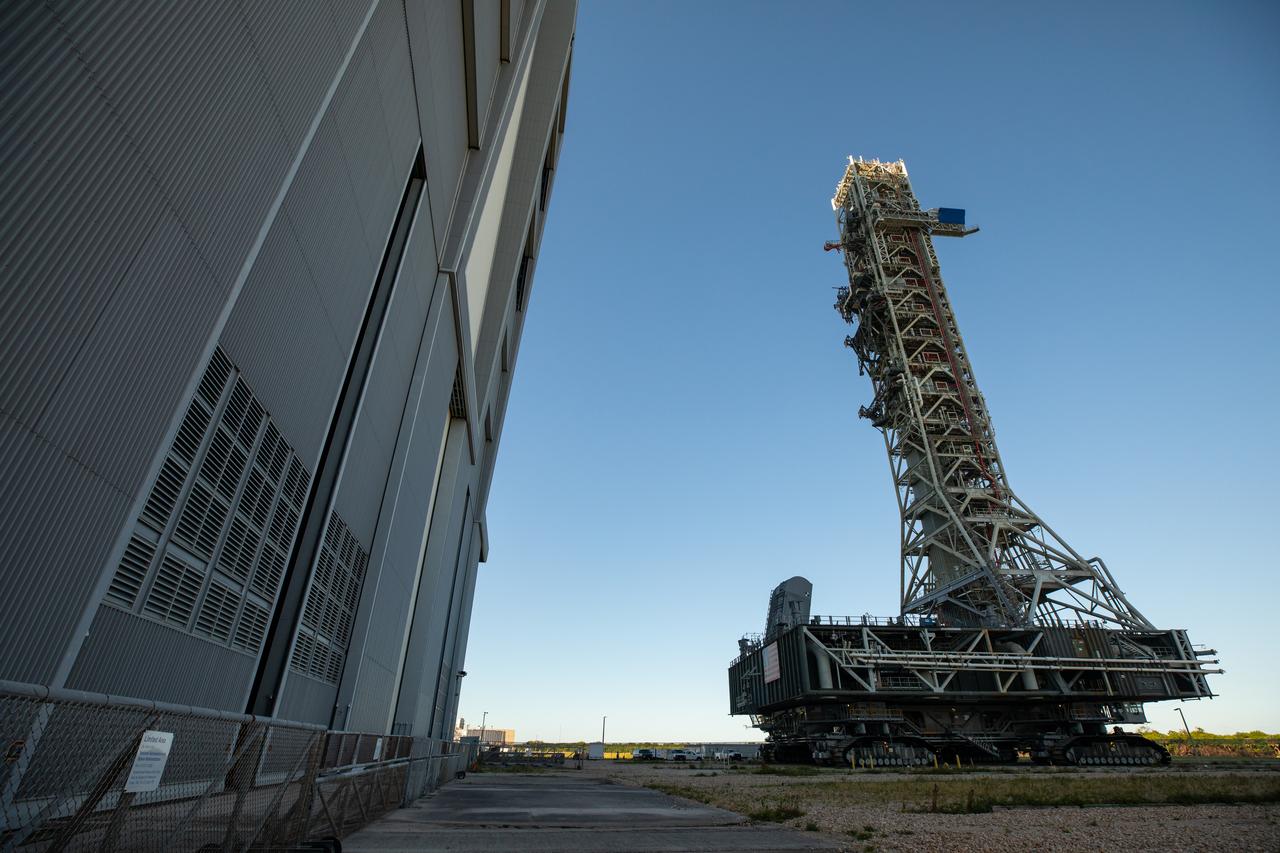
The mobile launcher for the Artemis I mission, atop crawler-transporter 2, arrives at the Vehicle Assembly Building at NASA’s Kennedy Space Center in Florida on Oct. 30, 2020. The nearly 400-foot-tall mobile launcher was at Launch Pad 39B for 10 days, while engineers with Exploration Ground Systems and Jacobs performed several tasks, including a timing test to validate the launch team’s countdown timeline, and a thorough, top-to-bottom wash down of the mobile launcher to remove any debris remaining from construction and installation of the umbilical arms. Artemis I will test the Orion spacecraft and Space Launch System as an integrated system ahead of crewed flights to the Moon. Under the Artemis program, NASA will land the first woman and the next man on the Moon in 2024.

On Oct. 30, 2020, preparations are underway for the mobile launcher for the Artemis I mission, atop crawler-transporter 2, to depart Launch Pad 39B and return to the Vehicle Assembly Building at NASA’s Kennedy Space Center in Florida. The nearly 400-foot-tall mobile launcher was at the pad for 10 days, while engineers with Exploration Ground Systems and Jacobs performed several tasks, including a timing test to validate the launch team’s countdown timeline, and a thorough, top-to-bottom wash down of the mobile launcher to remove any debris remaining from construction and installation of the umbilical arms. Artemis I will test the Orion spacecraft and Space Launch System as an integrated system ahead of crewed flights to the Moon. Under the Artemis program, NASA will land the first woman and the next man on the Moon in 2024.
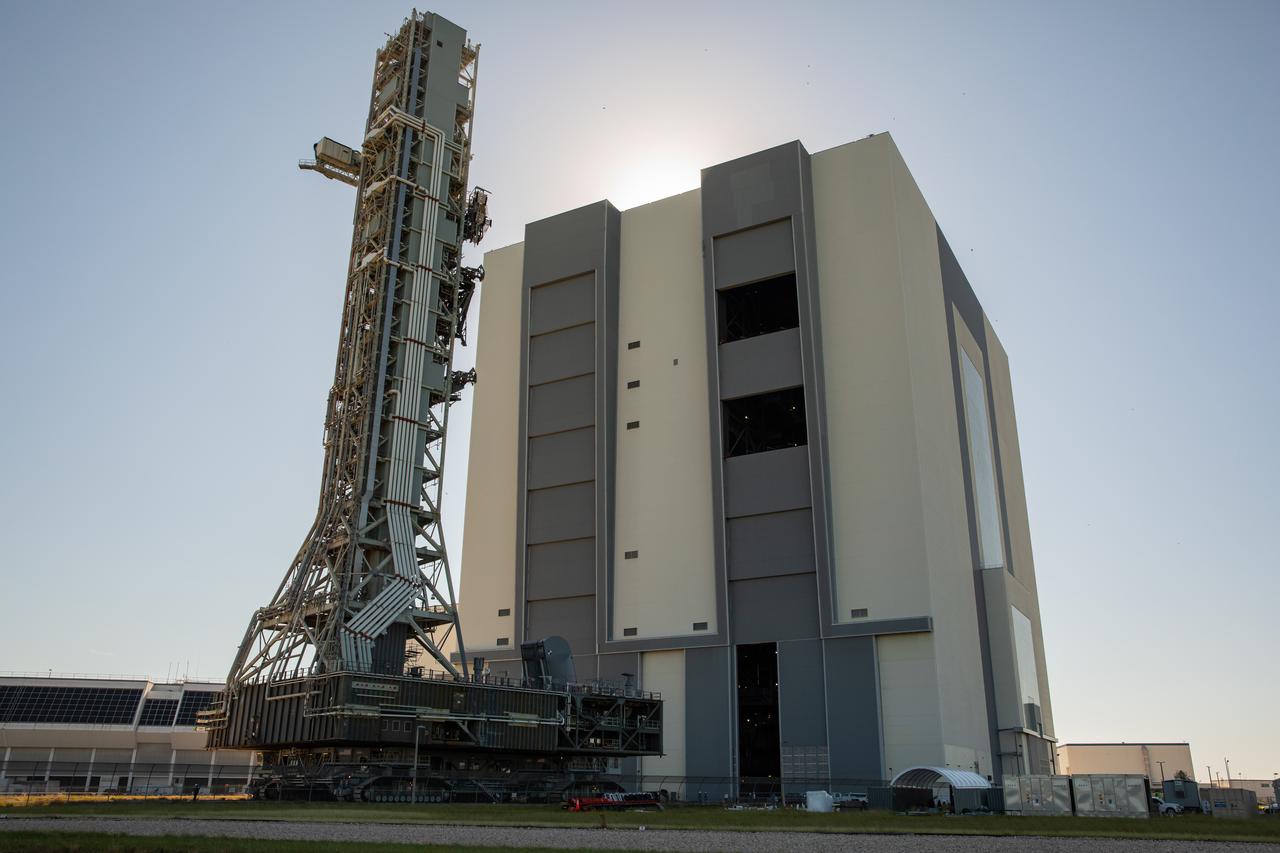
The mobile launcher for the Artemis I mission, atop crawler-transporter 2, arrives at the Vehicle Assembly Building at NASA’s Kennedy Space Center in Florida on Oct. 30, 2020. The nearly 400-foot-tall mobile launcher was at Launch Pad 39B for 10 days, while engineers with Exploration Ground Systems and Jacobs performed several tasks, including a timing test to validate the launch team’s countdown timeline, and a thorough, top-to-bottom wash down of the mobile launcher to remove any debris remaining from construction and installation of the umbilical arms. Artemis I will test the Orion spacecraft and Space Launch System as an integrated system ahead of crewed flights to the Moon. Under the Artemis program, NASA will land the first woman and the next man on the Moon in 2024.
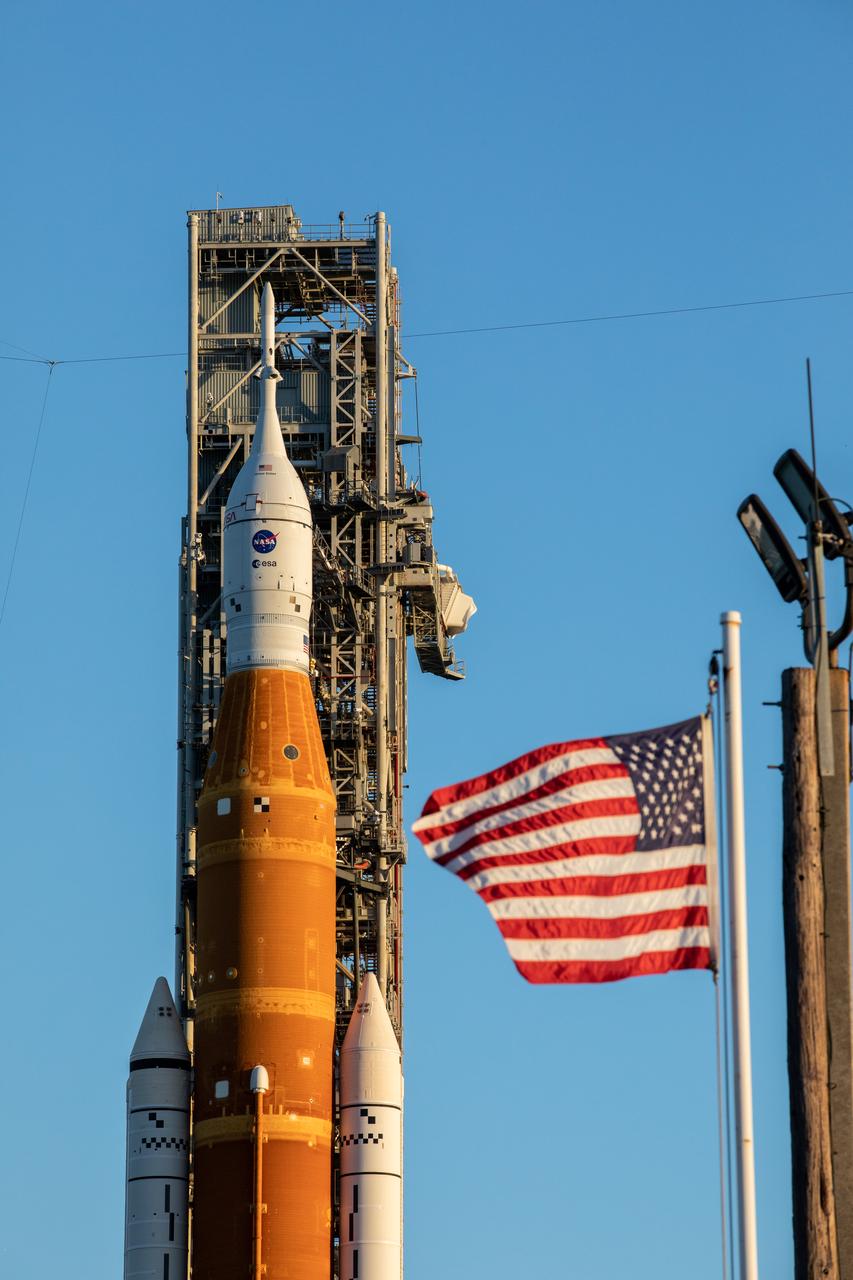
Standing atop the mobile launcher, NASA’s Space Launch System (SLS) rocket and Orion spacecraft arrive at Launch Pad 39B at the agency’s Kennedy Space Center in Florida on Nov. 4, 2022. The Artemis I stack was carried from the Vehicle Assembly Building to the pad – a 4.2-mile journey that took nearly 11 hours to complete – by NASA’s crawler-transporter 2 ahead of the uncrewed launch. Artemis I will be the first integrated test of NASA’s SLS rocket and Orion spacecraft and is scheduled to launch Monday, Nov. 14. The primary goal of Artemis I is to thoroughly test the integrated systems before crewed missions by launching Orion atop the SLS rocket, operating the spacecraft in a deep space environment, testing Orion’s heat shield, and recovering the crew module after reentry, descent, and splashdown. During the flight, Orion will launch atop the most powerful rocket in the world and fly farther than any human-rated spacecraft has ever flown, paving the way for human deep space exploration and demonstrating our commitment and capability to extend human presence to the Moon and beyond.
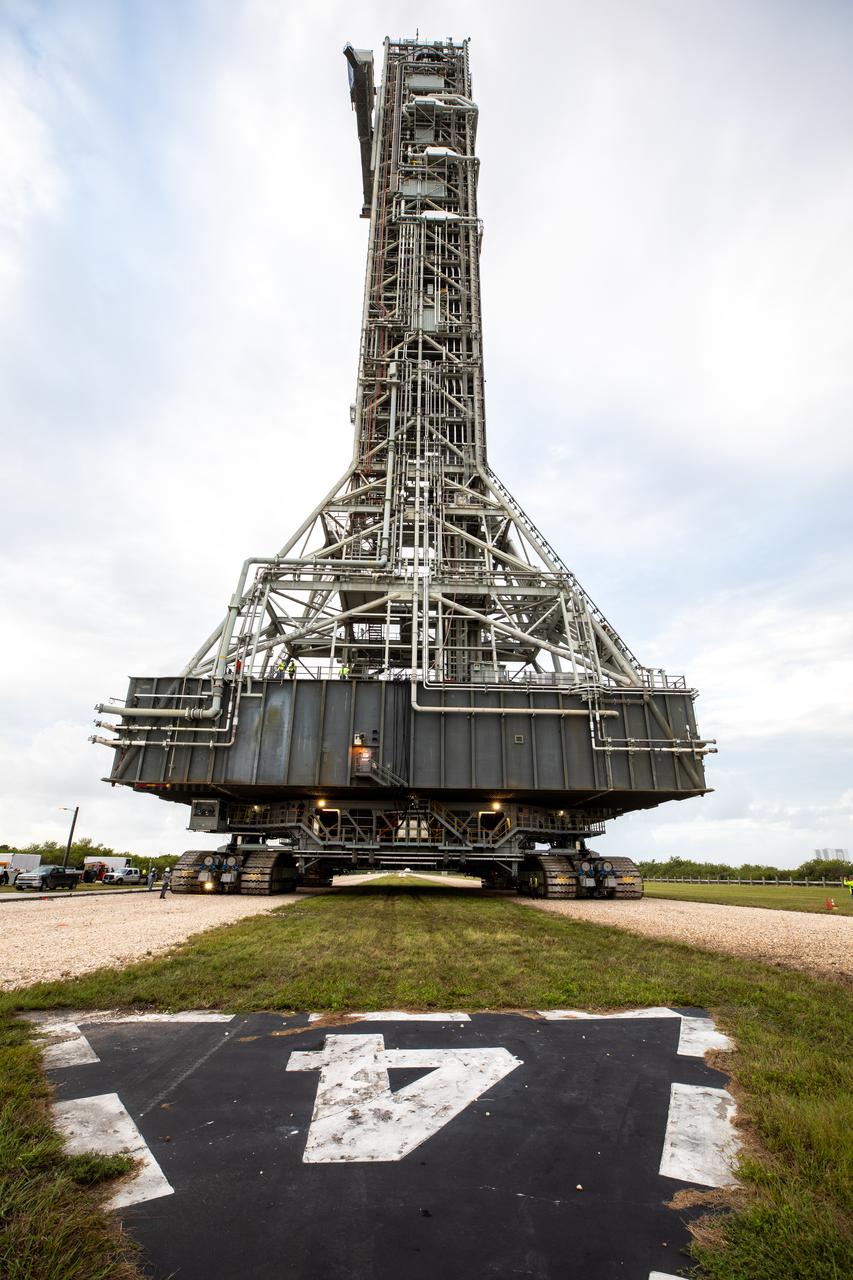
During sunrise on Oct. 20, 2020, the mobile launcher for the Artemis I mission, atop crawler-transporter 2, nears the top of Launch Pad 39B at NASA’s Kennedy Space Center in Florida. The nearly 400-foot-tall mobile launcher will remain at the pad for two weeks, while engineers with Exploration Ground Systems and Jacobs will perform several tasks, including a timing test to validate the launch team’s countdown timeline, and a thorough, top-to-bottom wash down of the mobile launcher to remove any debris remaining from construction and installation of the umbilical arms. Artemis I will test the Orion spacecraft and Space Launch System as an integrated system ahead of crewed flights to the Moon. Under the Artemis program, NASA will land the first woman and the next man on the Moon in 2024.
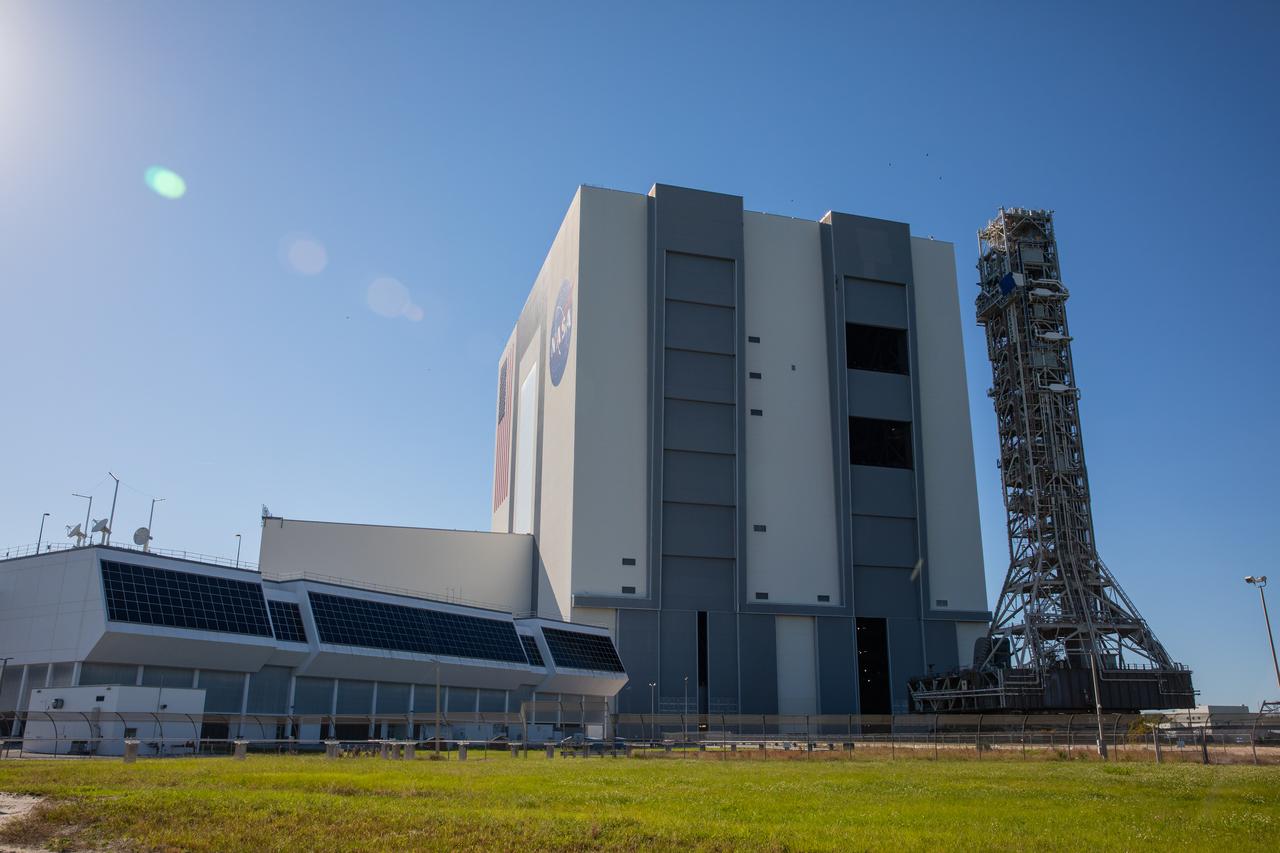
The mobile launcher for the Artemis I mission, atop crawler-transporter 2, arrives at the Vehicle Assembly Building at NASA’s Kennedy Space Center in Florida on Oct. 30, 2020. In view at left is the Launch Control Center. The nearly 400-foot-tall mobile launcher was at Launch Pad 39B for 10 days, while engineers with Exploration Ground Systems and Jacobs performed several tasks, including a timing test to validate the launch team’s countdown timeline, and a thorough, top-to-bottom wash down of the mobile launcher to remove any debris remaining from construction and installation of the umbilical arms. Artemis I will test the Orion spacecraft and Space Launch System as an integrated system ahead of crewed flights to the Moon. Under the Artemis program, NASA will land the first woman and the next man on the Moon in 2024.
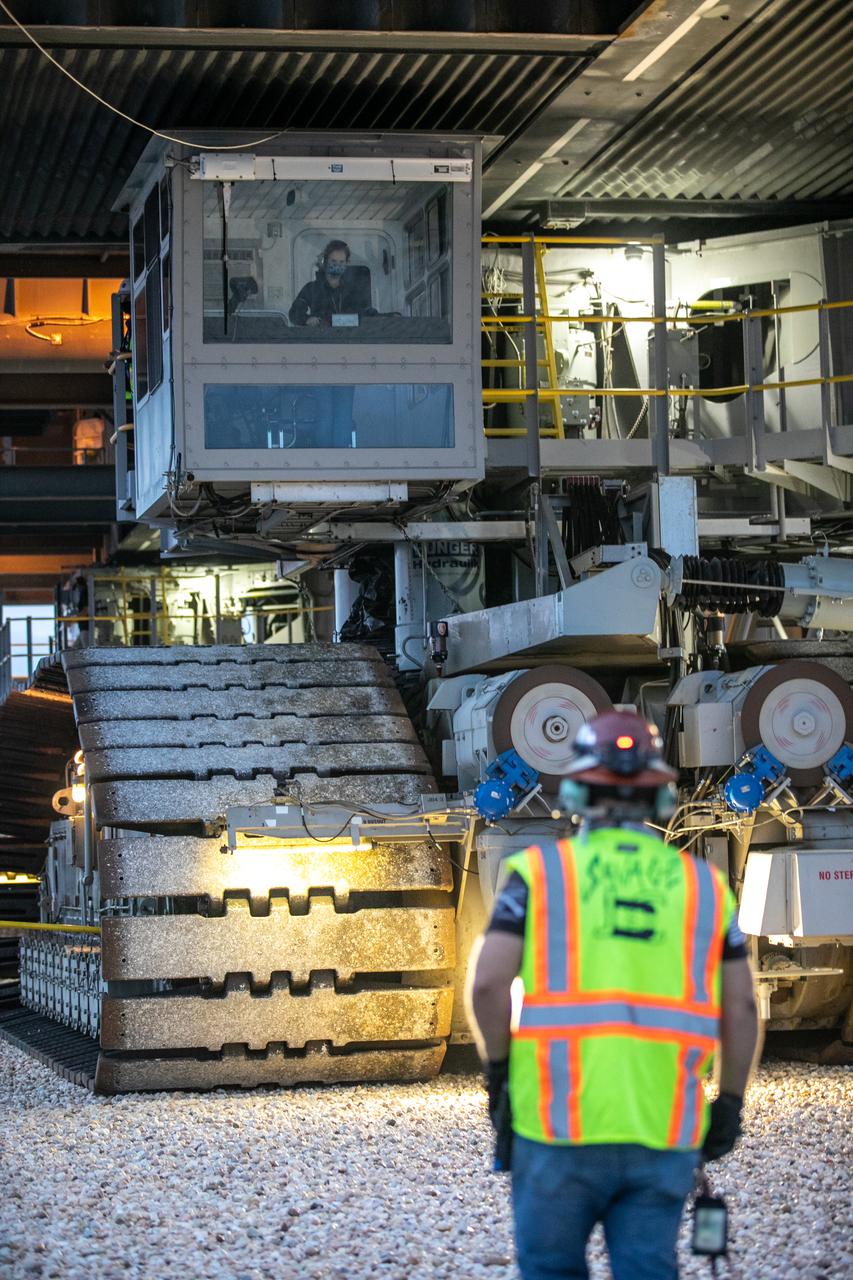
During sunrise on Oct. 20, 2020, the mobile launcher for the Artemis I mission, atop crawler-transporter 2 (CT-2), arrives at Launch Pad 39B at NASA’s Kennedy Space Center in Florida. In view inside the CT cab is Breanne Rohloff, crawler-transporter driver and mechanical engineer with Jacobs. The nearly 400-foot-tall mobile launcher will remain at the pad for two weeks, while engineers with Exploration Ground Systems and Jacobs will perform several tasks, including a timing test to validate the launch team’s countdown timeline, and a thorough, top-to-bottom wash down of the mobile launcher to remove any debris remaining from construction and installation of the umbilical arms. Artemis I will test the Orion spacecraft and Space Launch System as an integrated system ahead of crewed flights to the Moon. Under the Artemis program, NASA will land the first woman and the next man on the Moon in 2024.

During sunrise on Oct. 30, 2020, preparations are underway for the mobile launcher for the Artemis I mission, atop crawler-transporter 2, to depart Launch Pad 39B and return to the Vehicle Assembly Building at NASA’s Kennedy Space Center in Florida. The nearly 400-foot-tall mobile launcher was at the pad for 10 days, while engineers with Exploration Ground Systems and Jacobs performed several tasks, including a timing test to validate the launch team’s countdown timeline, and a thorough, top-to-bottom wash down of the mobile launcher to remove any debris remaining from construction and installation of the umbilical arms. Artemis I will test the Orion spacecraft and Space Launch System as an integrated system ahead of crewed flights to the Moon. Under the Artemis program, NASA will land the first woman and the next man on the Moon in 2024.

Artemis I Launch Director Charlie Blackwell-Thompson stands at her console in Firing Room 1 inside the Rocco A. Petrone Launch Control Center at NASA’s Kennedy Space Center in Florida on Nov. 4, 2022, as NASA’s Space Launch System (SLS) rocket and Orion spacecraft for the Artemis I mission roll out to Launch Pad 39B. The primary goal of Artemis I is to thoroughly test the integrated systems before crewed missions by launching Orion atop the SLS rocket, operating the spacecraft in a deep space environment, testing Orion’s heat shield, and recovering the crew module after reentry, descent, and splashdown. During the flight, Orion will launch atop the most powerful rocket in the world and fly farther than any human-rated spacecraft has ever flown, paving the way for human deep space exploration and demonstrating our commitment and capability to extend human presence to the Moon and beyond.
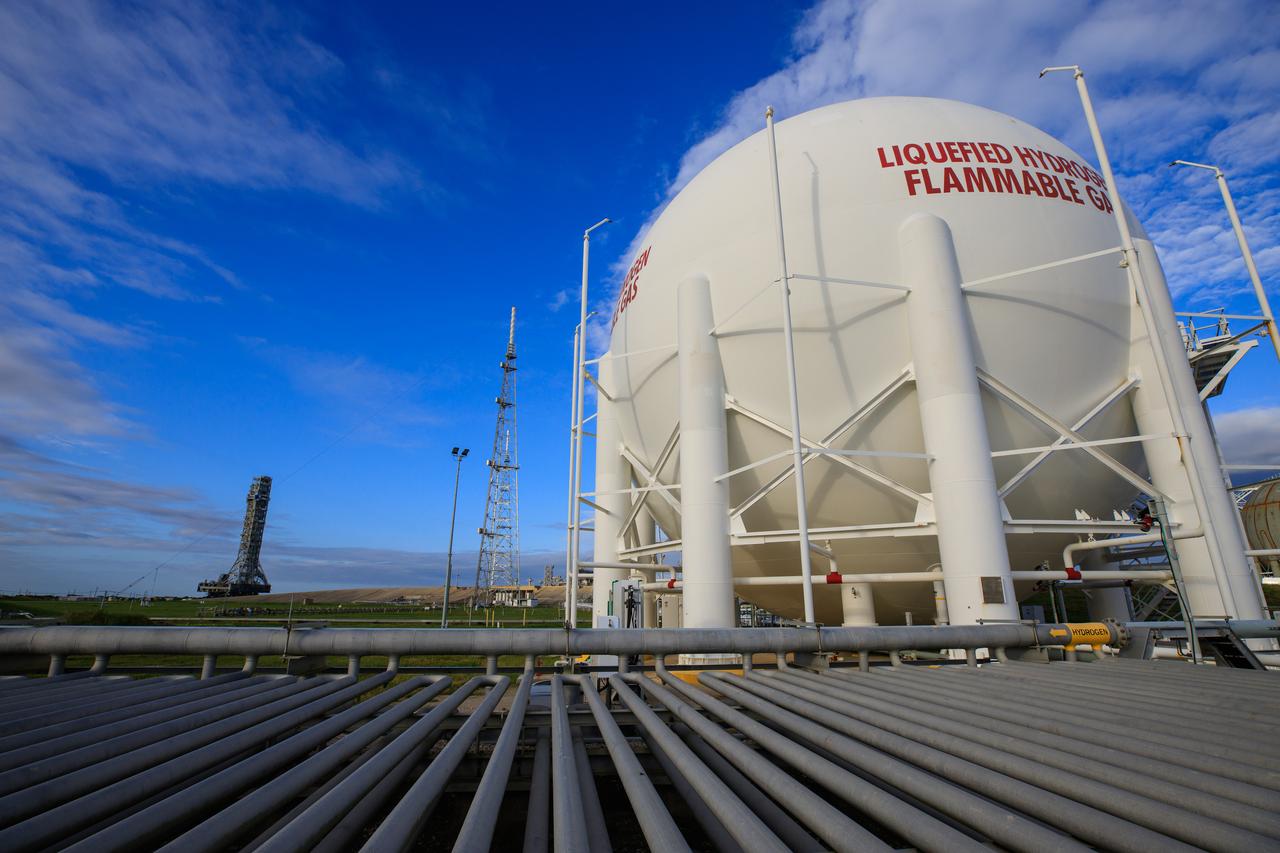
At sunrise on Oct. 30, 2020, the mobile launcher for the Artemis I mission, atop crawler-transporter 2, moves slowly down the ramp at Launch Pad 39B to return to the Vehicle Assembly Building at NASA’s Kennedy Space Center in Florida. In view in the foreground is the liquid hydrogen storage tank. The nearly 400-foot-tall mobile launcher was at the pad for 10 days, while engineers with Exploration Ground Systems and Jacobs performed several tasks, including a timing test to validate the launch team’s countdown timeline, and a thorough, top-to-bottom wash down of the mobile launcher to remove any debris remaining from construction and installation of the umbilical arms. Artemis I will test the Orion spacecraft and Space Launch System as an integrated system ahead of crewed flights to the Moon. Under the Artemis program, NASA will land the first woman and the next man on the Moon in 2024.

During sunrise on Oct. 20, 2020, the mobile launcher for the Artemis I mission, atop crawler-transporter 2 (CT-2), arrives at Launch Pad 39B at NASA’s Kennedy Space Center in Florida. In view inside the CT cab is Breanne Rohloff, crawler-transporter driver and mechanical engineer with Jacobs. The nearly 400-foot-tall mobile launcher will remain at the pad for two weeks, while engineers with Exploration Ground Systems and Jacobs will perform several tasks, including a timing test to validate the launch team’s countdown timeline, and a thorough, top-to-bottom wash down of the mobile launcher to remove any debris remaining from construction and installation of the umbilical arms. Artemis I will test the Orion spacecraft and Space Launch System as an integrated system ahead of crewed flights to the Moon.
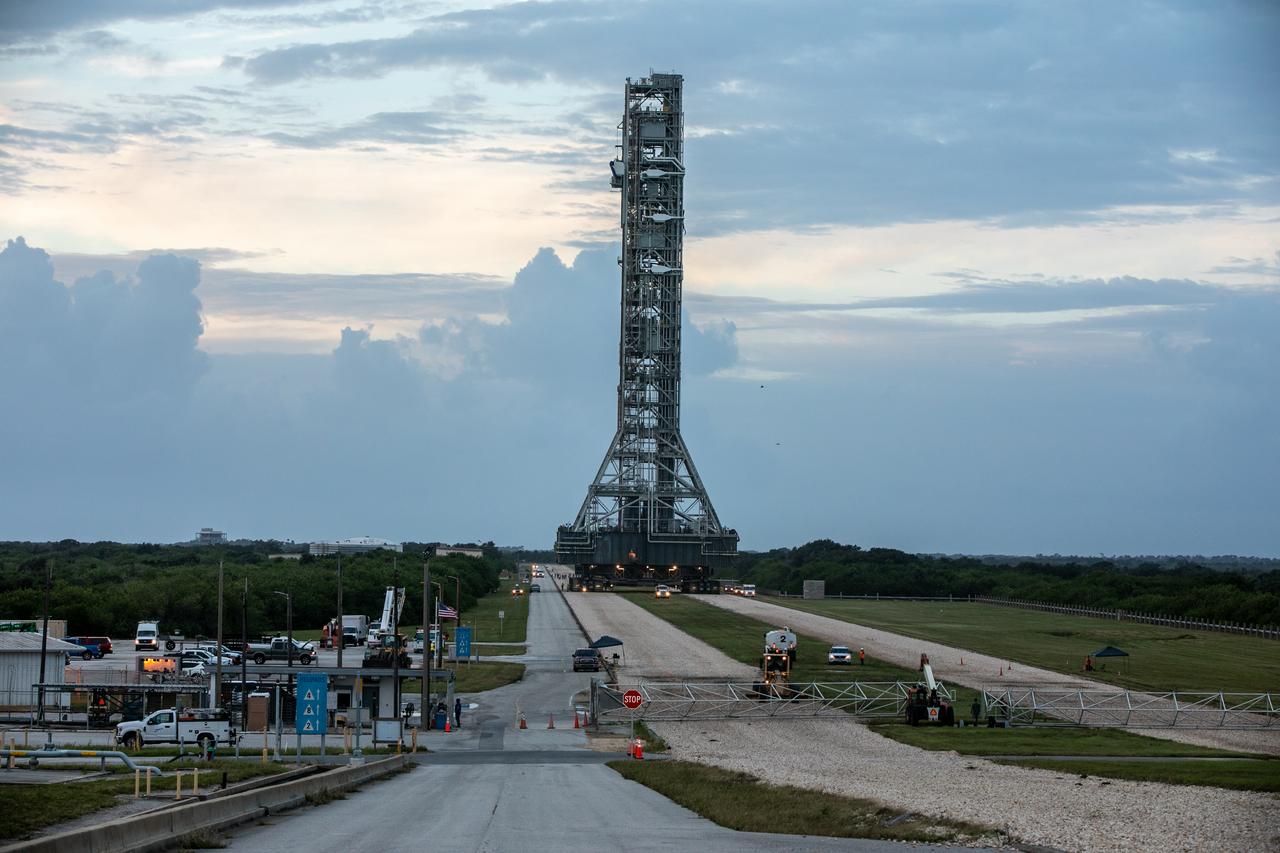
During sunrise on Oct. 20, 2020, the mobile launcher for the Artemis I mission, atop crawler-transporter 2, nears the top of Launch Pad 39B at NASA’s Kennedy Space Center in Florida. The nearly 400-foot-tall mobile launcher will remain at the pad for two weeks, while engineers with Exploration Ground Systems and Jacobs will perform several tasks, including a timing test to validate the launch team’s countdown timeline, and a thorough, top-to-bottom wash down of the mobile launcher to remove any debris remaining from construction and installation of the umbilical arms. Artemis I will test the Orion spacecraft and Space Launch System as an integrated system ahead of crewed flights to the Moon. Under the Artemis program, NASA will land the first woman and the next man on the Moon in 2024.
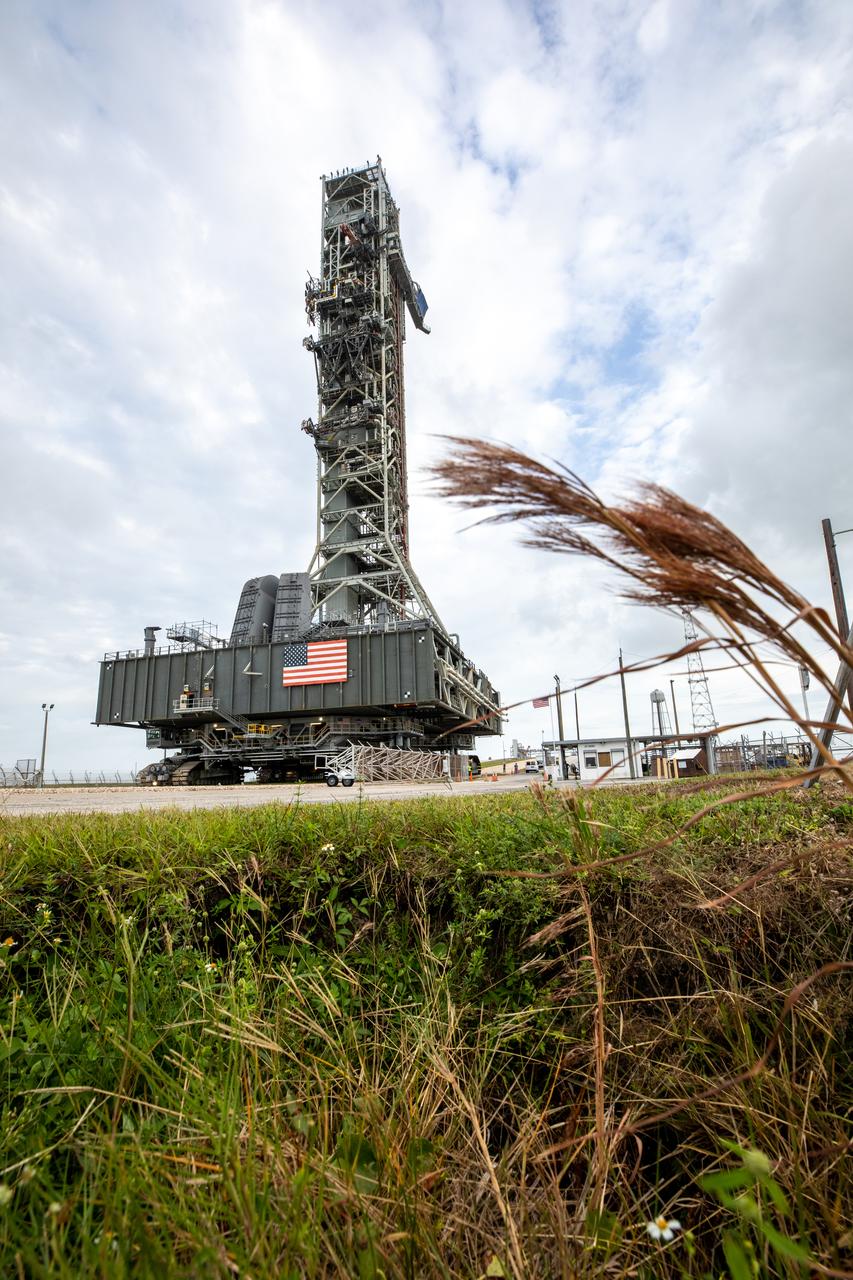
During sunrise on Oct. 20, 2020, the mobile launcher for the Artemis I mission, atop crawler-transporter 2, travels up the ramp leading to the top of Launch Pad 39B at NASA’s Kennedy Space Center in Florida. The nearly 400-foot-tall mobile launcher will remain at the pad for two weeks, while engineers with Exploration Ground Systems and Jacobs will perform several tasks, including a timing test to validate the launch team’s countdown timeline, and a thorough, top-to-bottom wash down of the mobile launcher to remove any debris remaining from construction and installation of the umbilical arms. Artemis I will test the Orion spacecraft and Space Launch System as an integrated system ahead of crewed flights to the Moon. Under the Artemis program, NASA will land the first woman and the next man on the Moon in 2024.

In the early morning on Oct. 20, 2020, the mobile launcher for the Artemis I mission, atop crawler-transporter 2, moves slowly along the crawlerway to Launch Pad 39B at NASA’s Kennedy Space Center in Florida. The nearly 400-foot-tall mobile launcher will remain at the pad for two weeks, while engineers with Exploration Ground Systems and Jacobs will perform several tasks, including a timing test to validate the launch team’s countdown timeline, and a thorough, top-to-bottom wash down of the mobile launcher to remove any debris remaining from construction and installation of the umbilical arms. Artemis I will test the Orion spacecraft and Space Launch System as an integrated system ahead of crewed flights to the Moon. Under the Artemis program, NASA will land the first woman and the next man on the Moon in 2024.
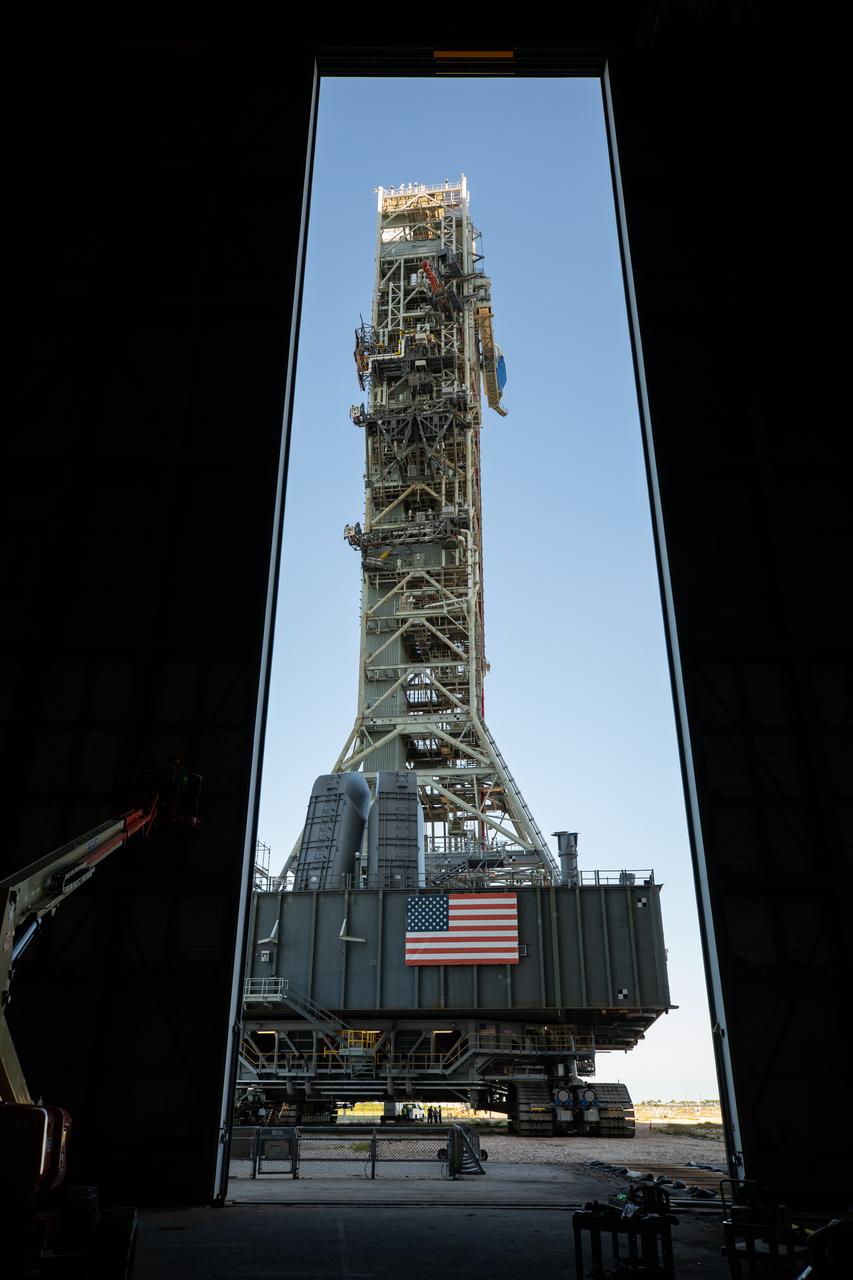
The mobile launcher for the Artemis I mission, atop crawler-transporter 2, arrives at the Vehicle Assembly Building at NASA’s Kennedy Space Center in Florida on Oct. 30, 2020. The nearly 400-foot-tall mobile launcher was at Launch Pad 39B for 10 days, while engineers with Exploration Ground Systems and Jacobs performed several tasks, including a timing test to validate the launch team’s countdown timeline, and a thorough, top-to-bottom wash down of the mobile launcher to remove any debris remaining from construction and installation of the umbilical arms. Artemis I will test the Orion spacecraft and Space Launch System as an integrated system ahead of crewed flights to the Moon. Under the Artemis program, NASA will land the first woman and the next man on the Moon in 2024.
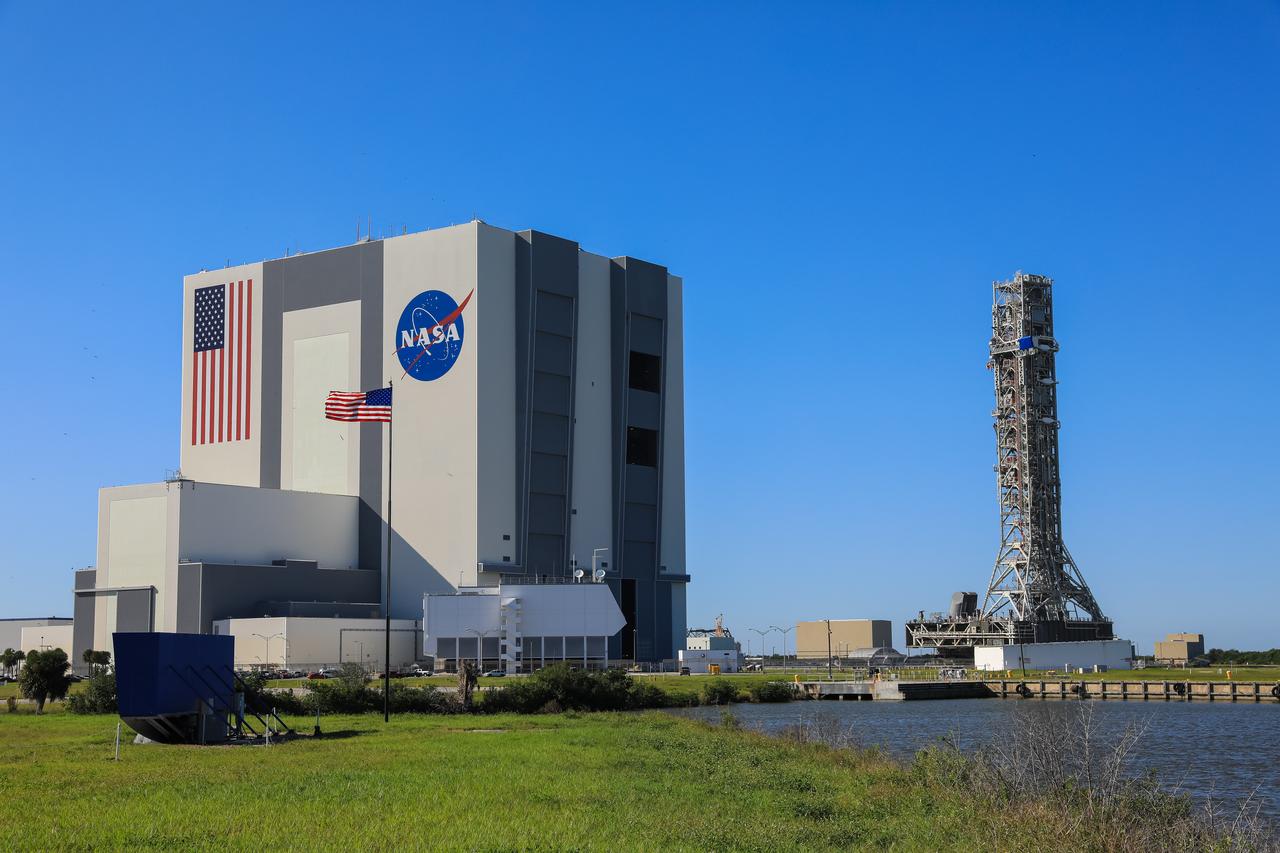
The mobile launcher for the Artemis I mission, atop crawler-transporter 2, arrives at the Vehicle Assembly Building at NASA’s Kennedy Space Center in Florida on Oct. 30, 2020. The nearly 400-foot-tall mobile launcher was at Launch Pad 39B for 10 days, while engineers with Exploration Ground Systems and Jacobs performed several tasks, including a timing test to validate the launch team’s countdown timeline, and a thorough, top-to-bottom wash down of the mobile launcher to remove any debris remaining from construction and installation of the umbilical arms. Artemis I will test the Orion spacecraft and Space Launch System as an integrated system ahead of crewed flights to the Moon. Under the Artemis program, NASA will land the first woman and the next man on the Moon in 2024.
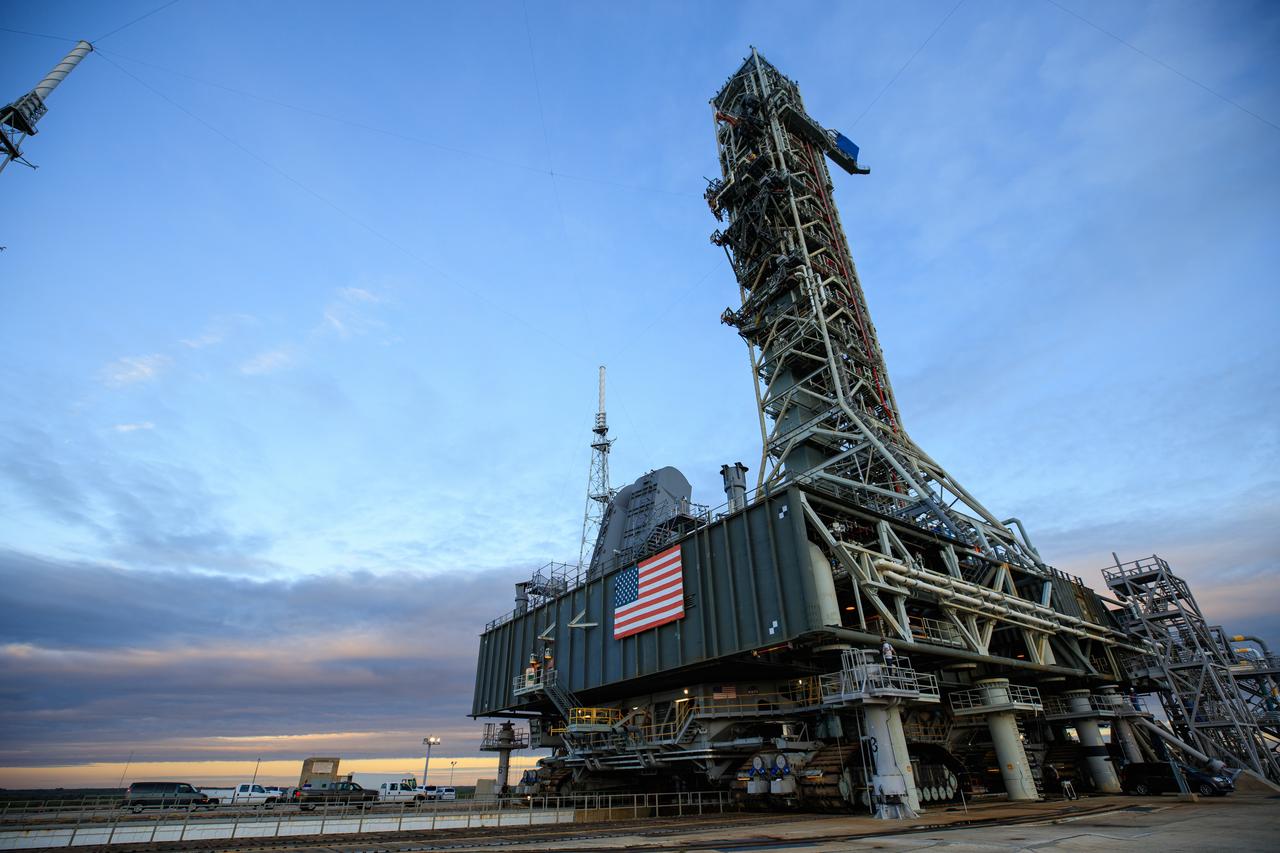
On Oct. 30, 2020, preparations are underway for the mobile launcher for the Artemis I mission, atop crawler-transporter 2, to depart Launch Pad 39B and return to the Vehicle Assembly Building at NASA’s Kennedy Space Center in Florida. The nearly 400-foot-tall mobile launcher was at the pad for 10 days, while engineers with Exploration Ground Systems and Jacobs performed several tasks, including a timing test to validate the launch team’s countdown timeline, and a thorough, top-to-bottom wash down of the mobile launcher to remove any debris remaining from construction and installation of the umbilical arms. Artemis I will test the Orion spacecraft and Space Launch System as an integrated system ahead of crewed flights to the Moon. Under the Artemis program, NASA will land the first woman and the next man on the Moon in 2024.
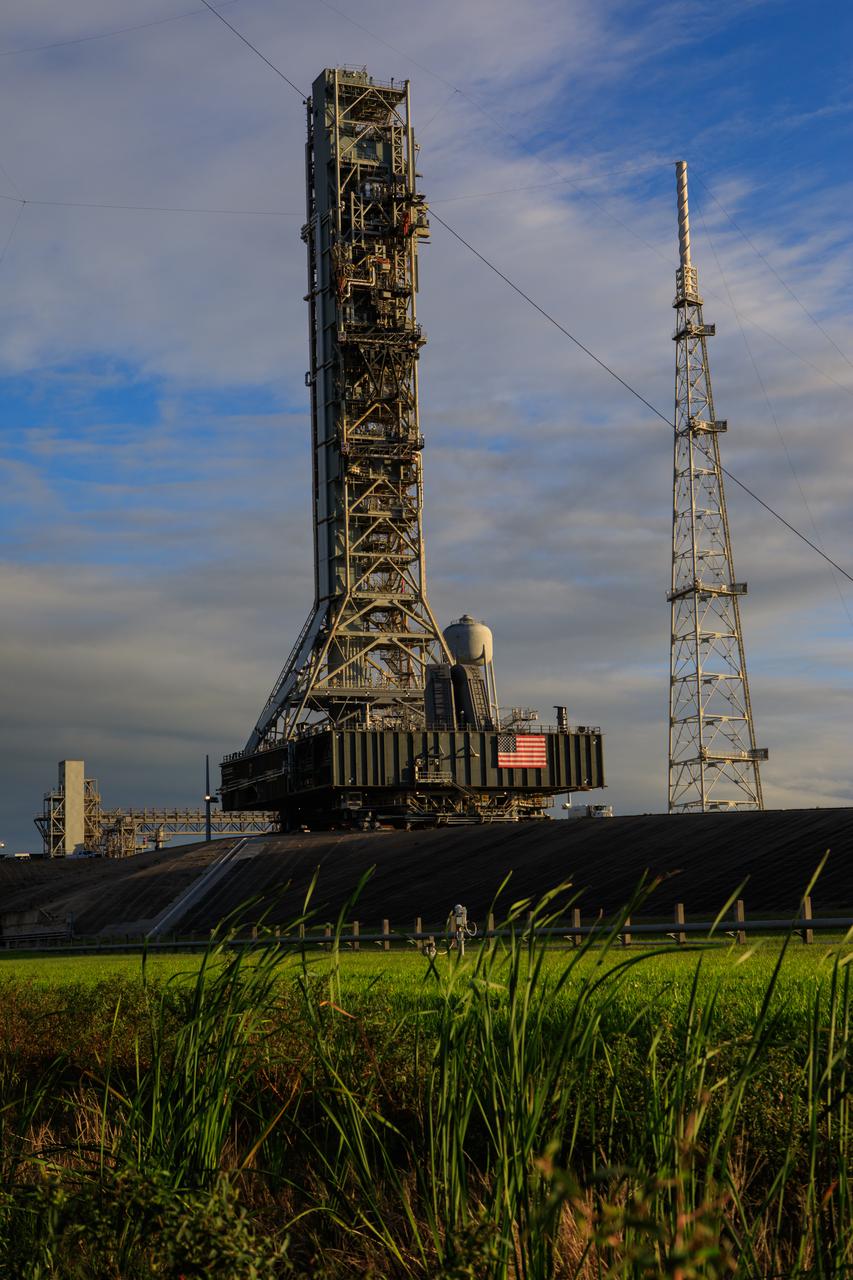
During the morning on Oct. 30, 2020, the mobile launcher for the Artemis I mission, atop crawler-transporter 2, moves slowly along the crawlerway after departing Launch Pad 39B at NASA’s Kennedy Space Center in Florida. The nearly 400-foot-tall mobile launcher is returning to the Vehicle Assembly Building after being at the pad for 10 days, while engineers with Exploration Ground Systems and Jacobs performed several tasks, including a timing test to validate the launch team’s countdown timeline, and a thorough, top-to-bottom wash down of the mobile launcher to remove any debris remaining from construction and installation of the umbilical arms. Artemis I will test the Orion spacecraft and Space Launch System as an integrated system ahead of crewed flights to the Moon. Under the Artemis program, NASA will land the first woman and the next man on the Moon in 2024.
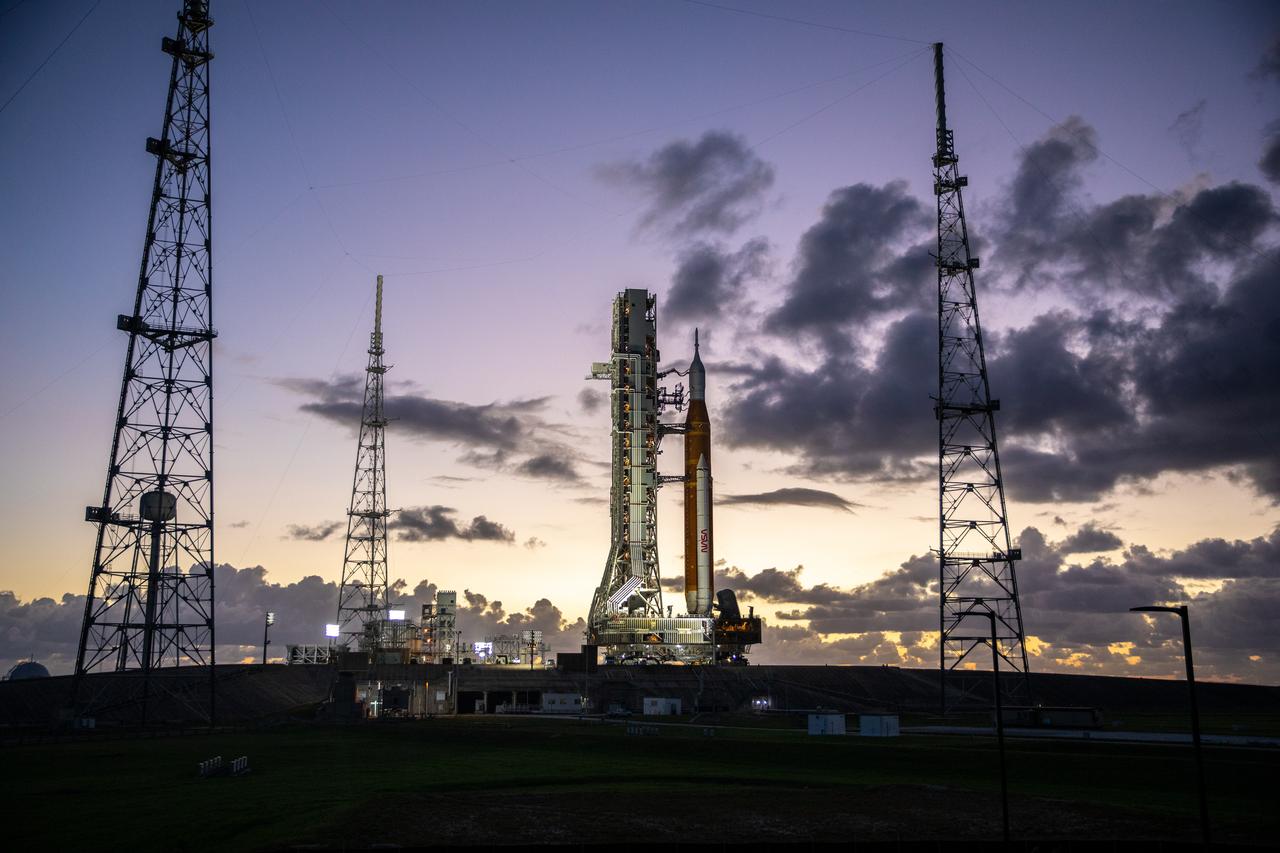
NASA’s Space Launch System (SLS) rocket and Orion spacecraft, standing atop the mobile launcher, arrive at Launch Pad 39B at the agency’s Kennedy Space Center in Florida on Nov. 4, 2022, ahead of the uncrewed Artemis I launch. Artemis I will be the first integrated test of NASA’s SLS rocket and Orion spacecraft and is scheduled to launch Monday, Nov. 14. The primary goal of Artemis I is to thoroughly test the integrated systems before crewed missions by launching Orion atop the SLS rocket, operating the spacecraft in a deep space environment, testing Orion’s heat shield, and recovering the crew module after reentry, descent, and splashdown. During the flight, Orion will launch atop the most powerful rocket in the world and fly farther than any human-rated spacecraft has ever flown, paving the way for human deep space exploration and demonstrating our commitment and capability to extend human presence to the Moon and beyond.