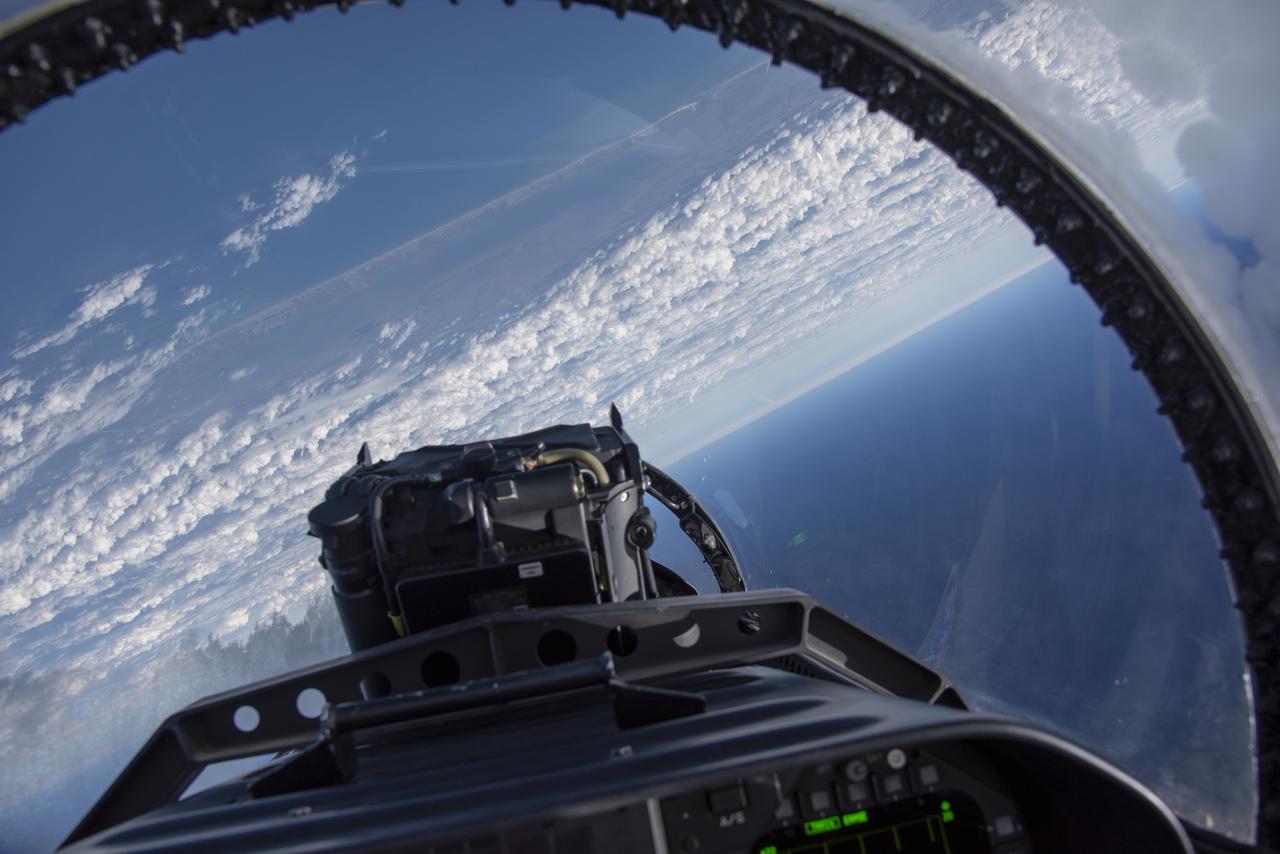
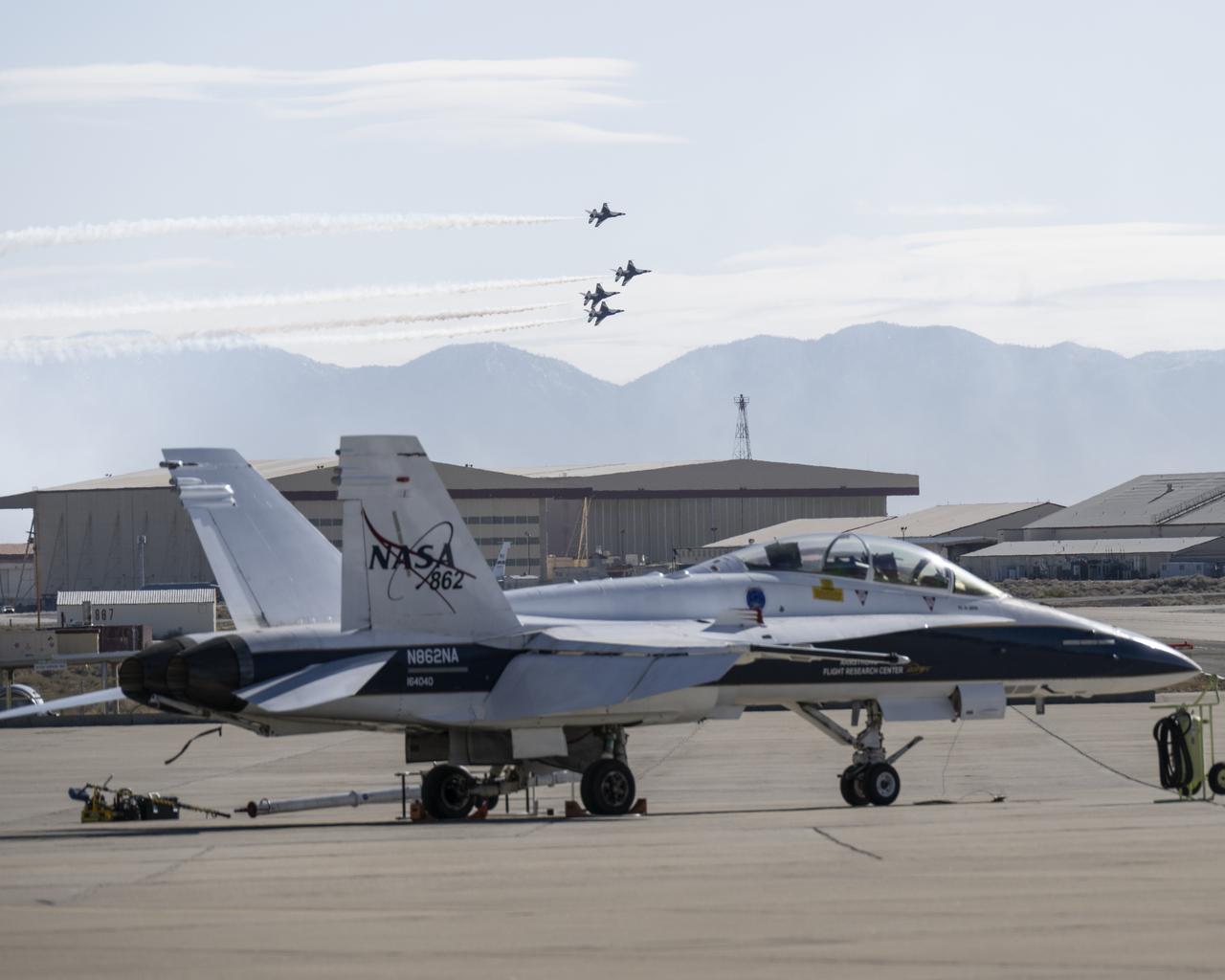
The U.S. Air Force Thunderbirds fly over NASA’s Armstrong Flight Research Center in Edwards, California, during the second phase of its winter training in February 2025 to prepare for the upcoming air show season. The Thunderbirds perform all over the world in F-16 Fighting Falcons, a multi-role fighter jet.

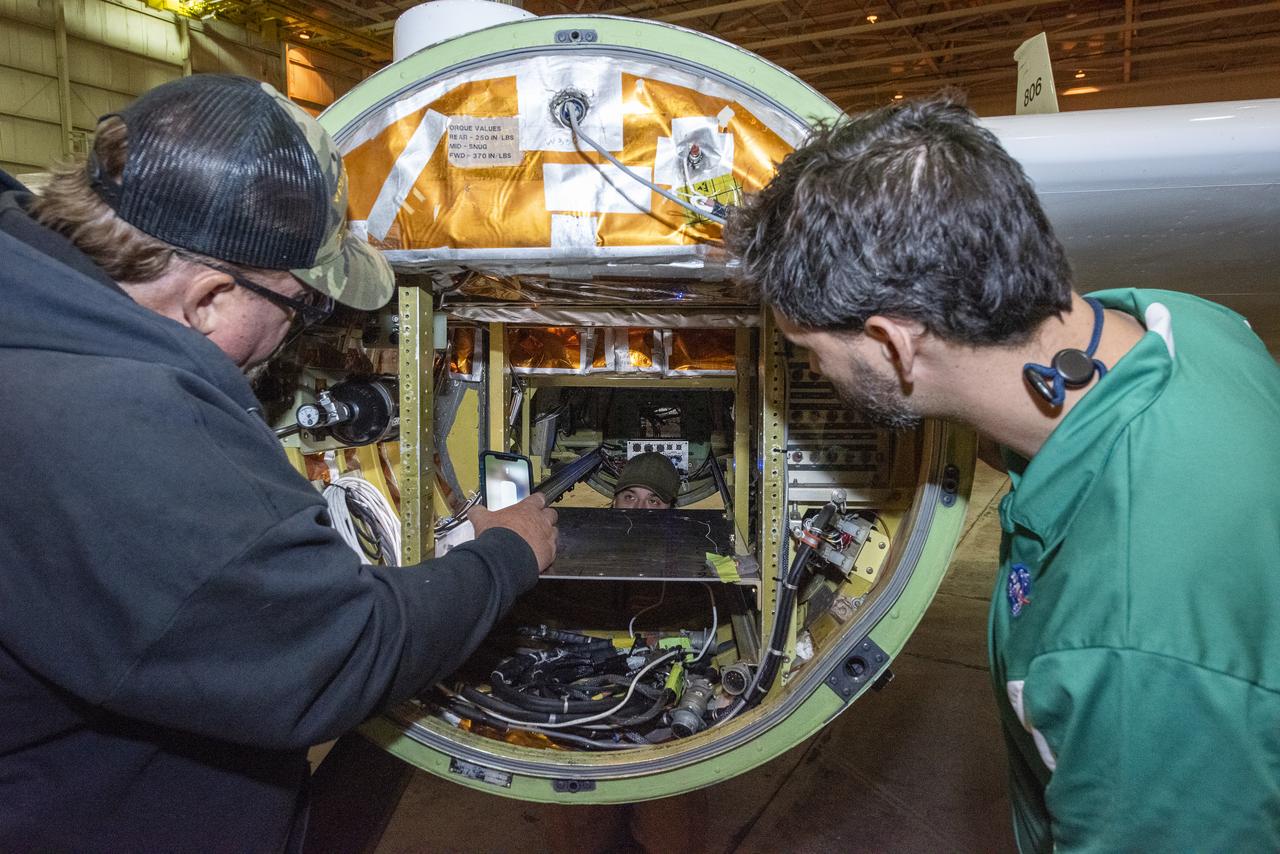
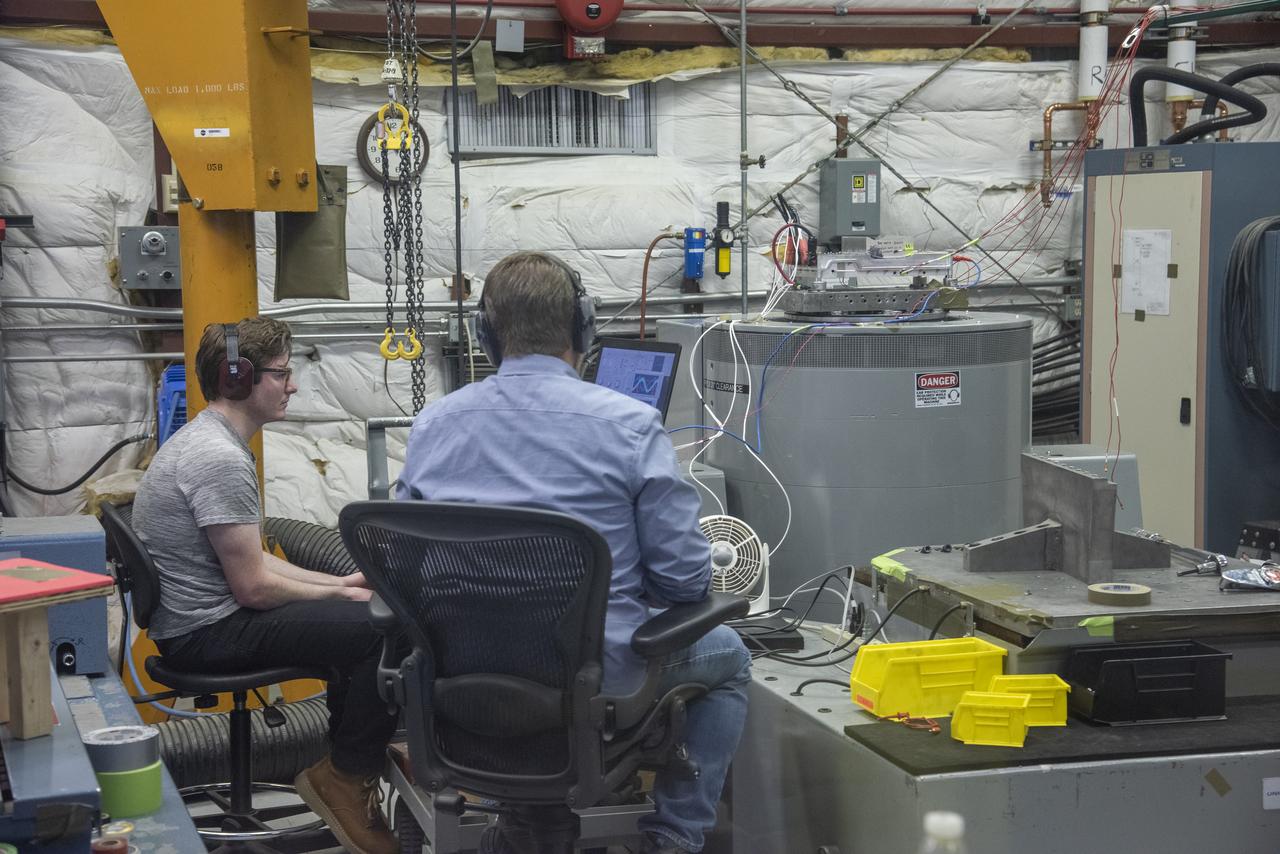
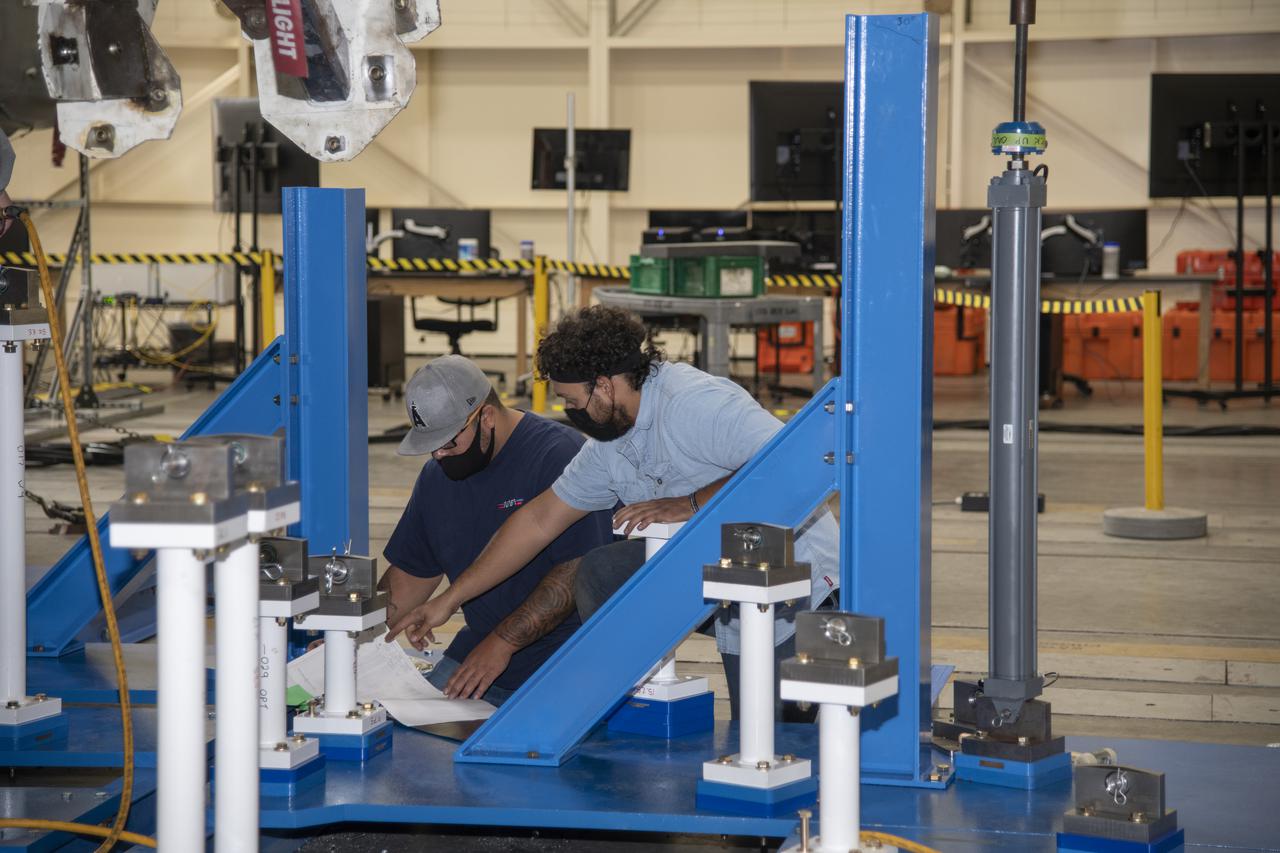
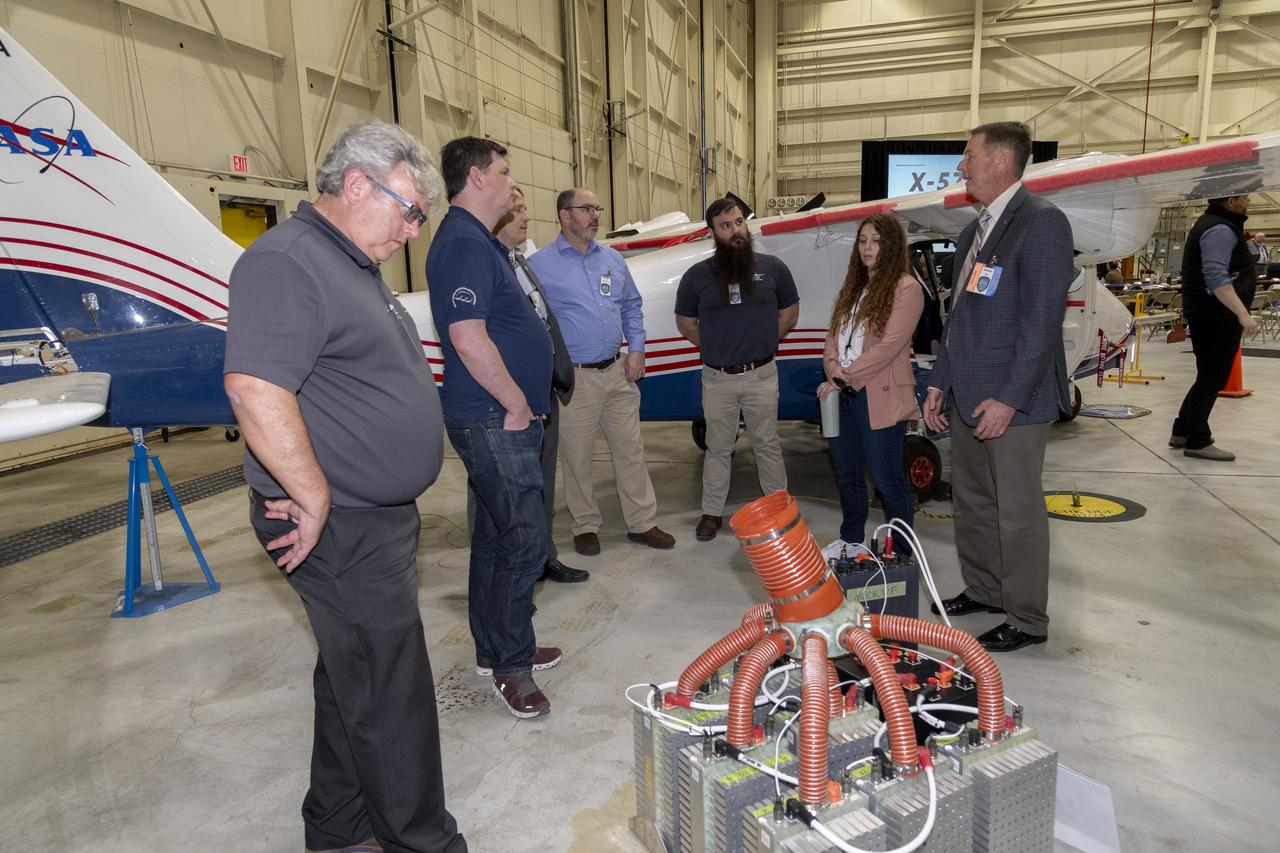
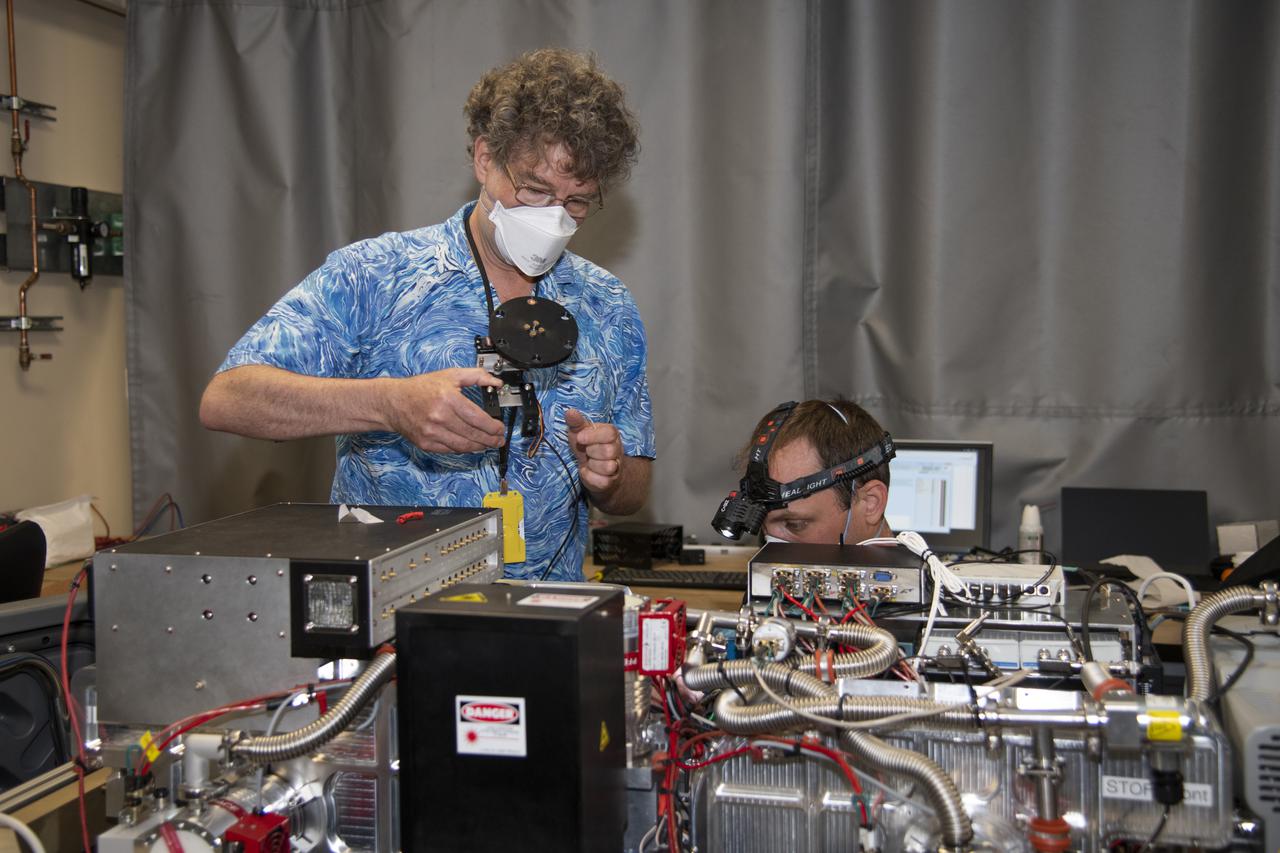
Engineers from NASA's Armstrong Flight Research Center and Empirical Systems Aerospace prepare a cruise motor controller, planned to be used on NASA's all-electric X-57 Maxwell, for vibration testing at Armstrong's environmental lab. Testing the cruise motor controller at various vibration levels, based on baseline flight testing in the project's first phase, helps ensure that the hardware will withstand similar vibration in flight conditions. X-57, NASAs first all-electric experimental aircraft, or X-plane, will fly in its first all-electric configuration in 2020.

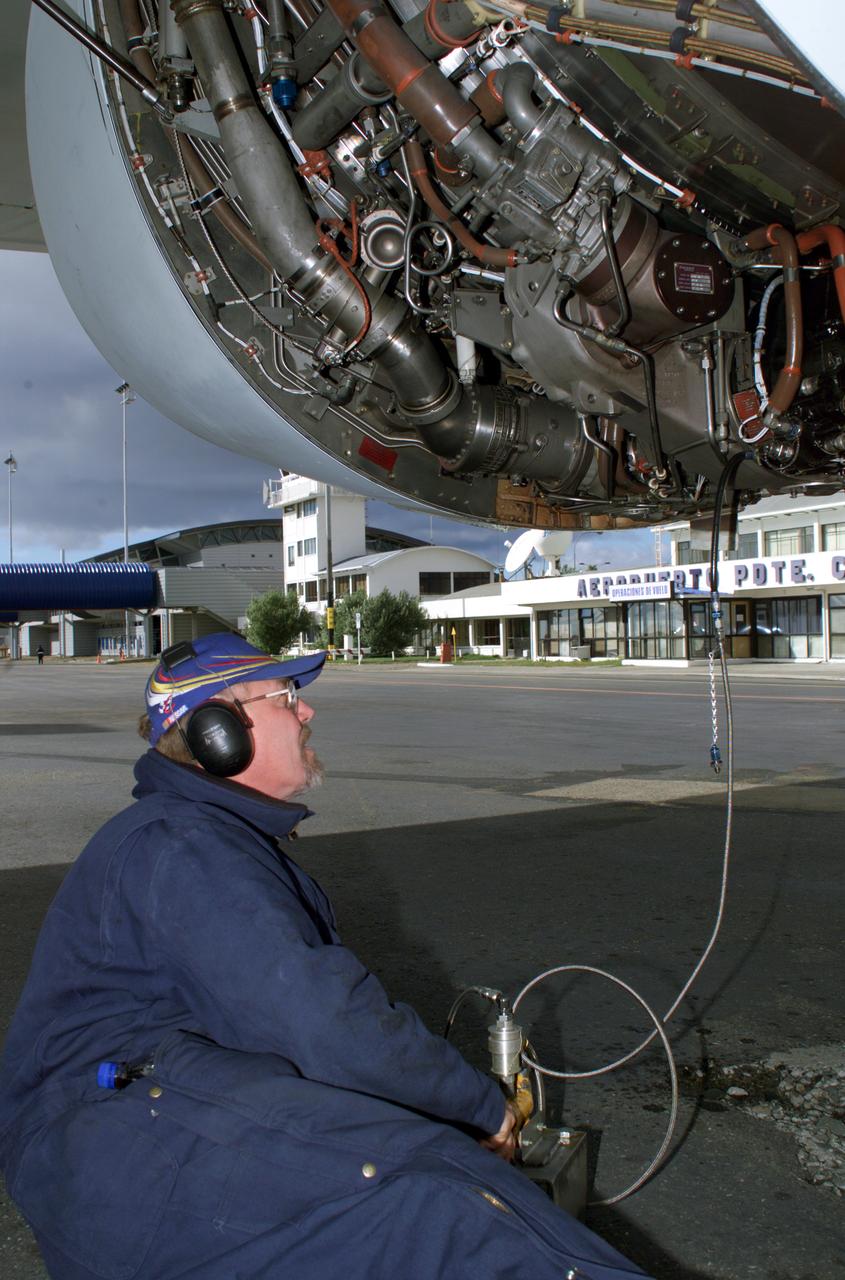
NASA DC-8 Ground Support Technicians Mark Corlew and Mike Lakowski perform routine maintenance on the aircraft at Carlos Ibanez del Campo International Airport in Punta Arenas, Chile. AirSAR 2004 is a three-week expedition by an international team of scientists that is using an all-weather imaging tool, called the Airborne Synthetic Aperture Radar (AirSAR) which is located onboard NASA's DC-8 airborne laboratory. Scientists from many parts of the world including NASA's Jet Propulsion Laboratory are combining ground research done in several areas in Central and South America with NASA's AirSAR technology to improve and expand on the quality of research they are able to conduct. In South America and Antarctica, AirSAR will collect imagery and data to help determine the contribution of Southern Hemisphere glaciers to sea level rise due to climate change. In Patagonia, researchers found this contribution had more than doubled from 1995 to 2000, compared to the previous 25 years. AirSAR data will make it possible to determine whether that trend is decreasing, continuing or accelerating. AirSAR will also provide reliable information on ice shelf thickness to measure the contribution of the glaciers to sea level.

DC-8 Quality Inspector Scott Silver signs documents while Acting Crew Chief Mike Bereda looks on prior to a DC-8 AirSAR flight in Costa Rica. AirSAR 2004 Mesoamerica is a three-week expedition by an international team of scientists that uses an all-weather imaging tool, called the Airborne Synthetic Aperture Radar (AirSAR) which is located onboard NASA's DC-8 airborne laboratory. Scientists from many parts of the world including NASA's Jet Propulsion Laboratory are combining ground research done in several areas in Central America with NASA's AirSAR technology to improve and expand on the quality of research they are able to conduct. The radar, developed by NASA's Jet Propulsion Laboratory, can penetrate clouds and also collect data at night. Its high-resolution sensors operate at multiple wavelengths and modes, allowing AirSAR to see beneath treetops, through thin sand, and dry snow pack. AirSAR's 2004 campaign is a collaboration of many U.S. and Central American institutions and scientists, including NASA; the National Science Foundation; the Smithsonian Institution; National Geographic; Conservation International; the Organization of Tropical Studies; the Central American Commission for Environment and Development; and the Inter-American Development Bank.

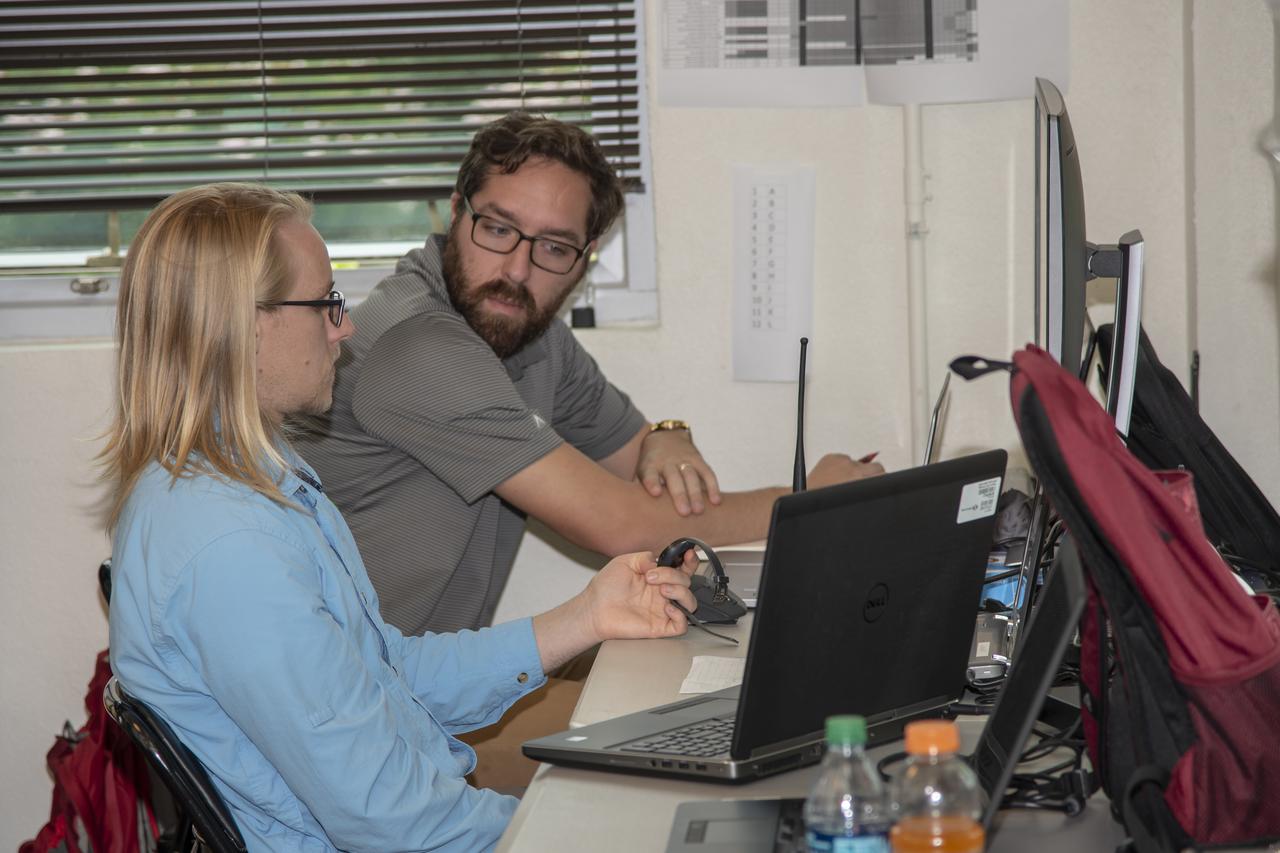
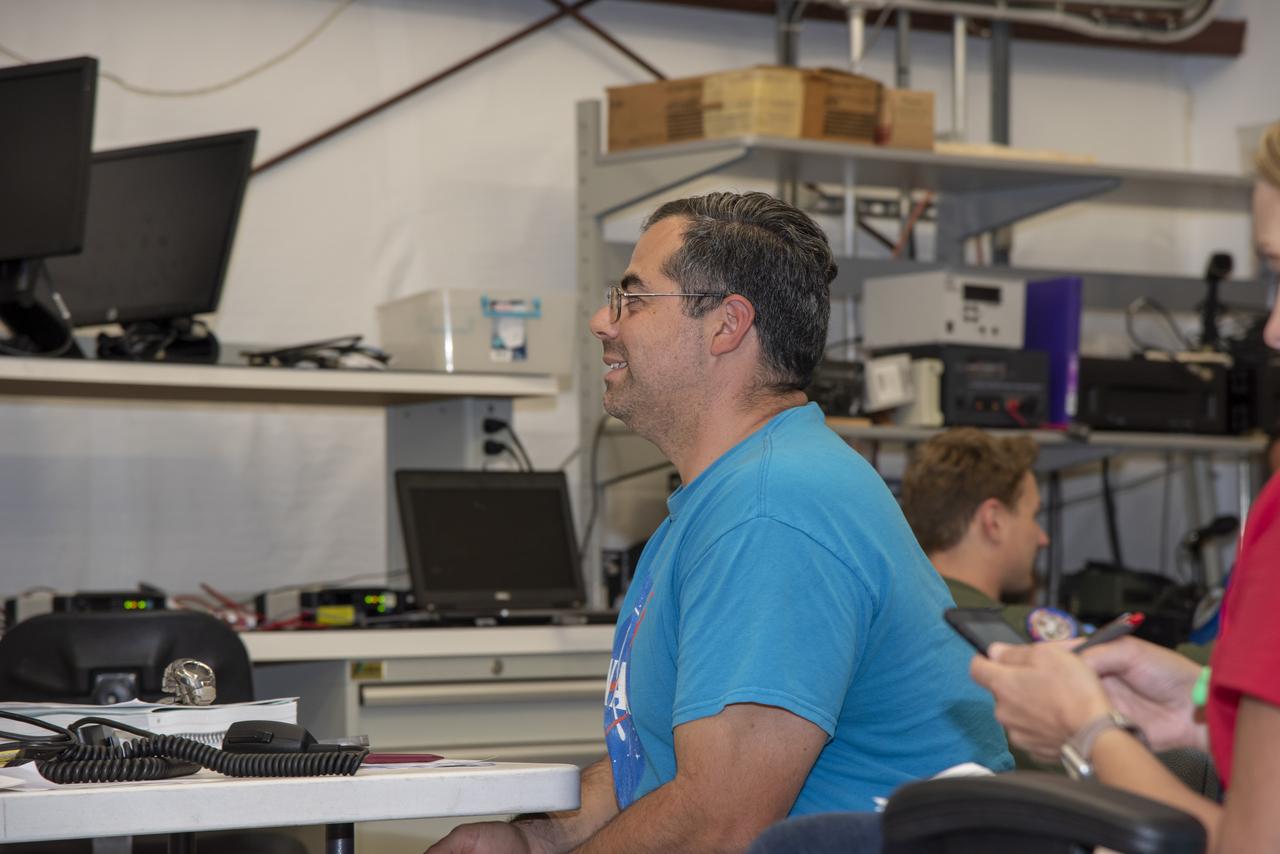
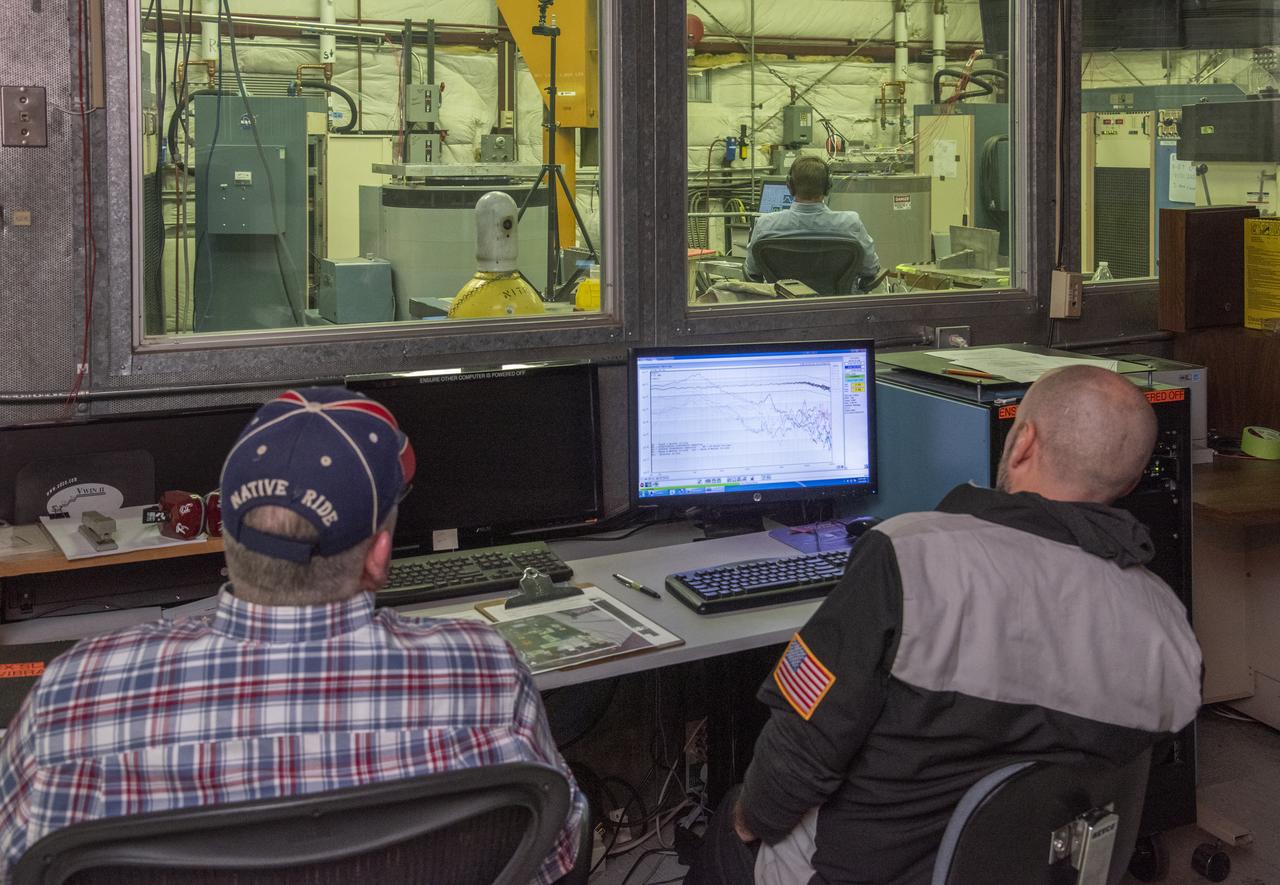
Telemetry testing begins on the X-57 Maxwell, NASA’s first all-electric X-plane, as the operations crew at NASA’s Armstrong Flight Research Center records the results. Telemetry testing is a critical phase in X-57’s functional test series. In addition to confirming the ability of the X-57 aircraft to transmit speed, altitude, direction, and location to teams on the ground, telemetry testing also confirms the ability to transmit mission-critical-data, such as voltage, power consumption, and structural integrity. X-57’s goal is to help set certification standards for emerging electric aircraft markets.

CID (Controlled Imact Demonstrator) Aircraft lakebed skid.

Boeing's X-48B Blended Wing Body technology demonstrator shows off its unique lines at sunset on Rogers Dry Lake adjacent to NASA's Dryden Flight Research Center. (Boeing photo # SMF06_F_KOEH_X48B-0900a)

Isac Mata, engineering technician at NASA’s Armstrong Flight Research Center, attends to the interior of the DC-8 aircraft at Building 703 in Palmdale, CA. The DC-8 aircraft is prepared for its last mission, ASIA-AQ (Airborne and Satellite Investigation of Asian Air Quality), that will collect detailed air quality data over several locations in Asia to improve the understanding of local air quality in collaboration with local scientists, air quality agencies, and government partners

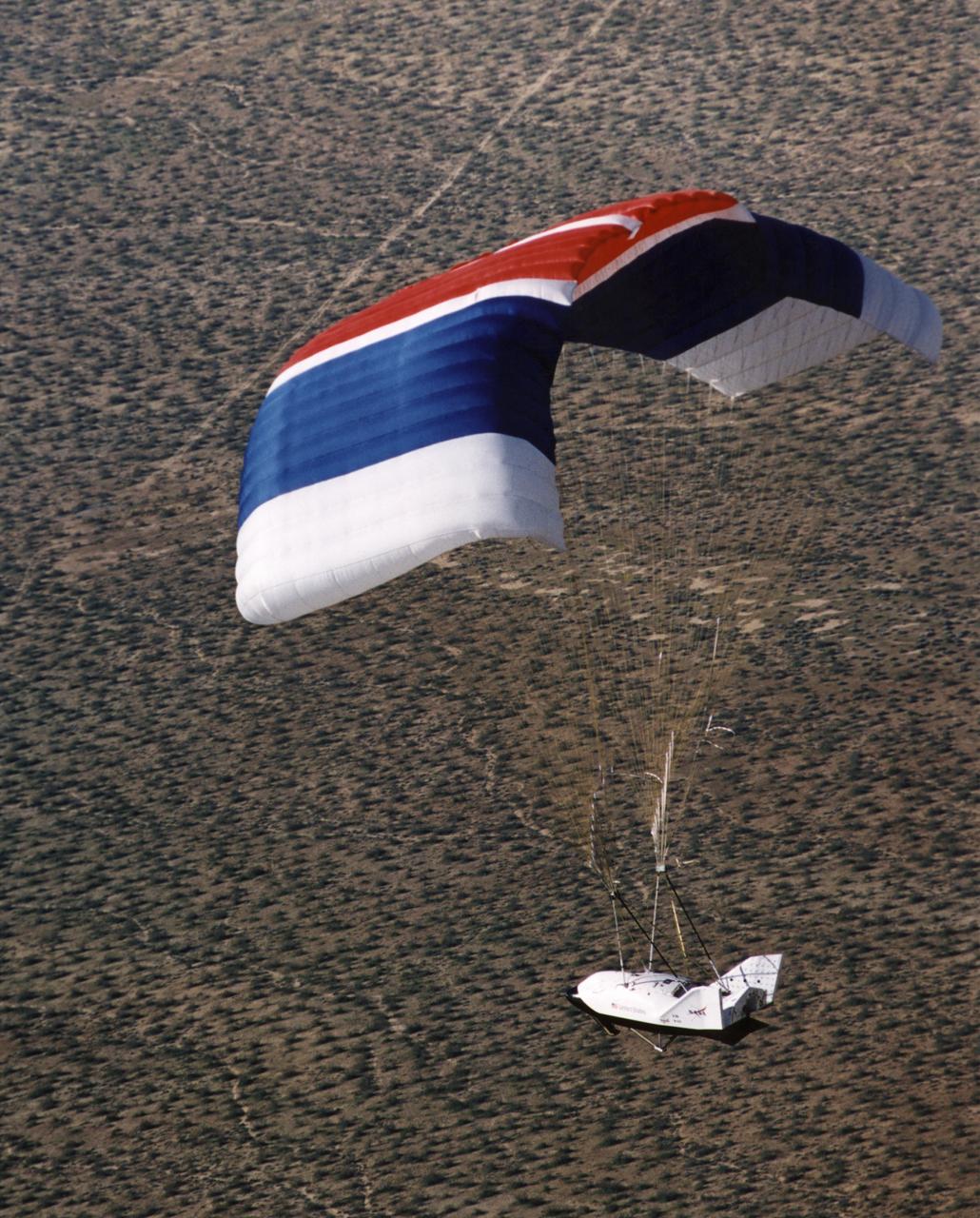
X-40A Free Flight #5. The unpowered X-40A, an 85 percent scale risk reduction version of the proposed X-37, proved the capability of an autonomous flight control and landing system in a series of glide flights at NASA's Dryden Flight Research Center in California. NASA's Marshall Space Flight Center in Huntsville, Alabama, manages the X-37 project. At Dryden, the X-40A underwent a series of ground and air tests to reduce possible risks to the larger X-37, including drop tests from a helicopter to check guidance and navigation systems planned for use in the X-37. The X-37 is designed to demonstrate technologies in the orbital and reentry environments for next-generation reusable launch vehicles that will increase both safety and reliability, while reducing launch costs from $10,000 per pound to $1,000 per pound.

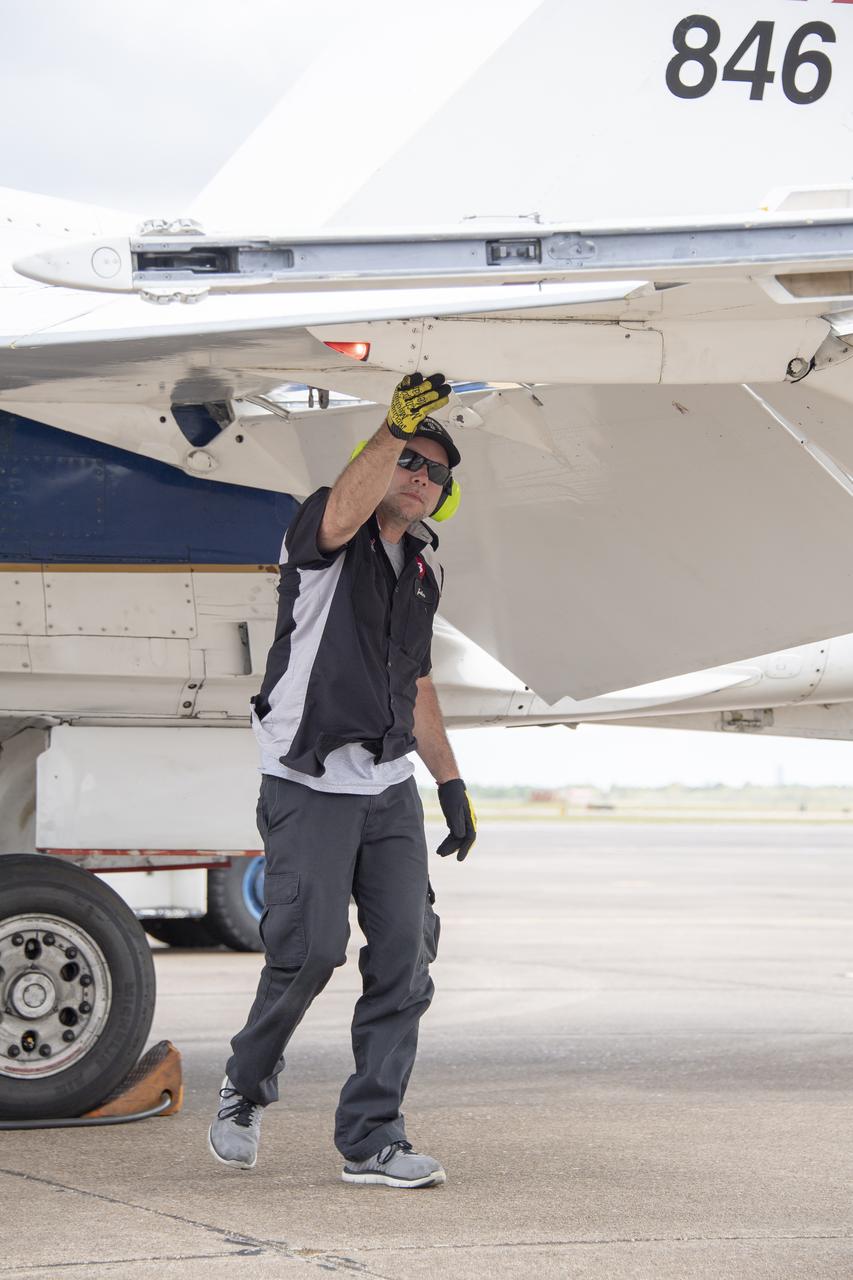
X-45A in flight with F-18 #846 chase aircraft, during first GPS-guided weapon demonstration flight.

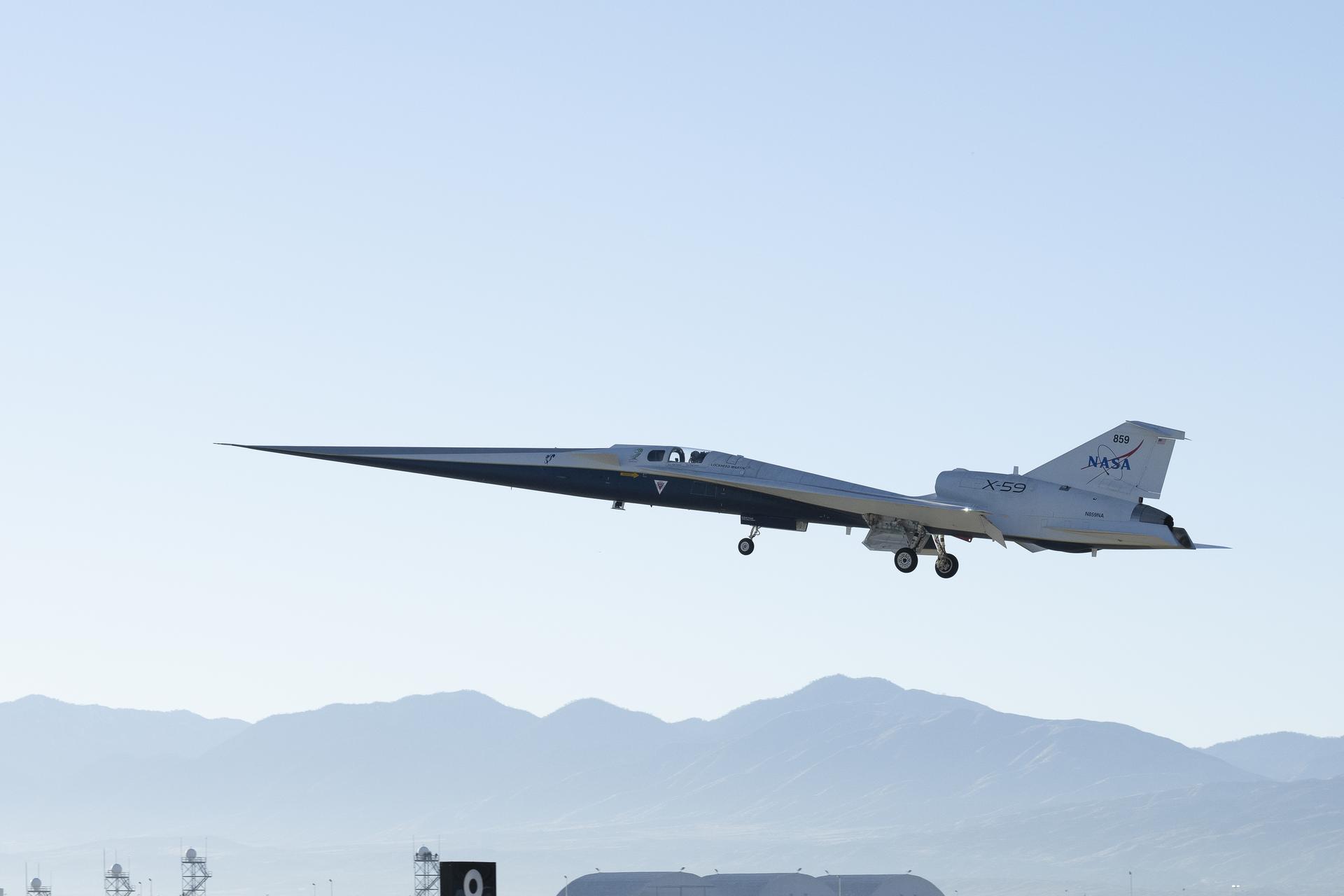
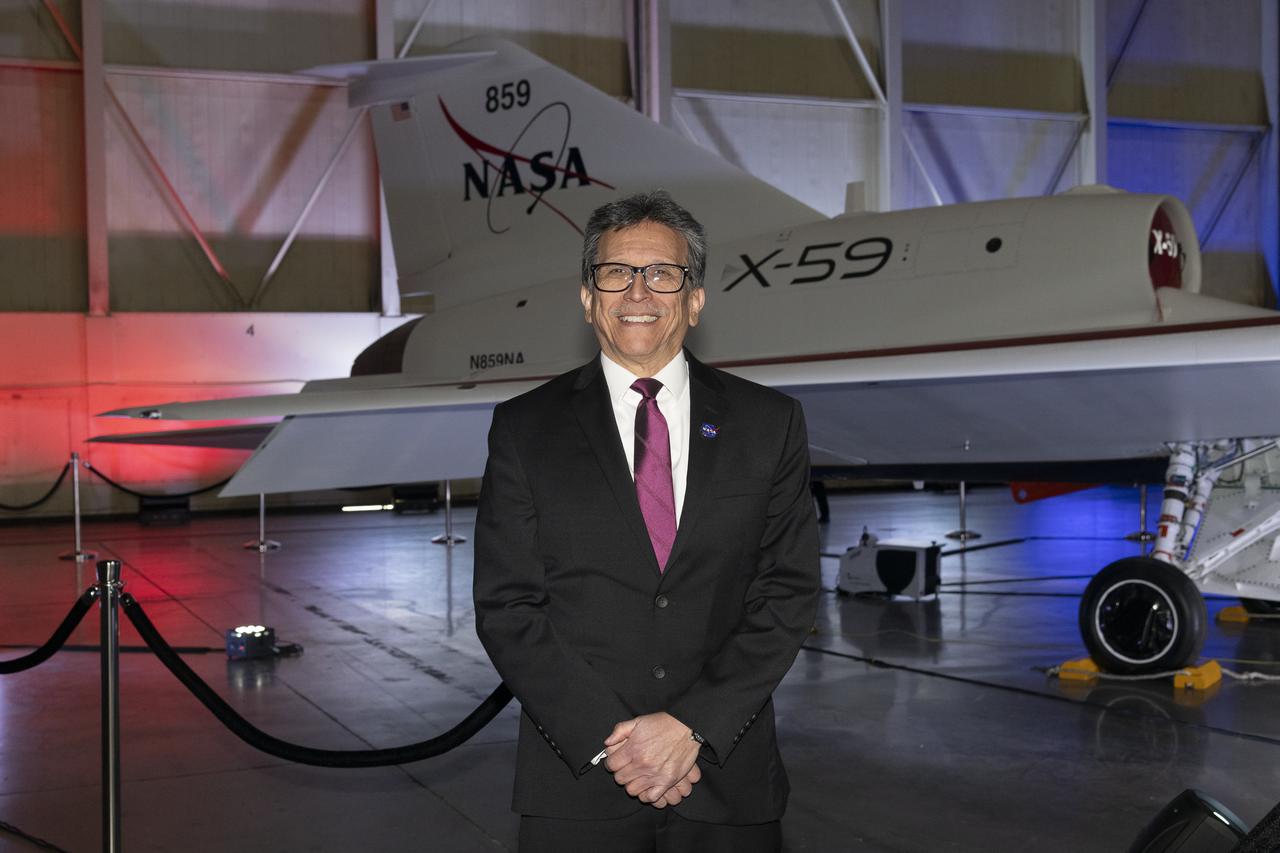
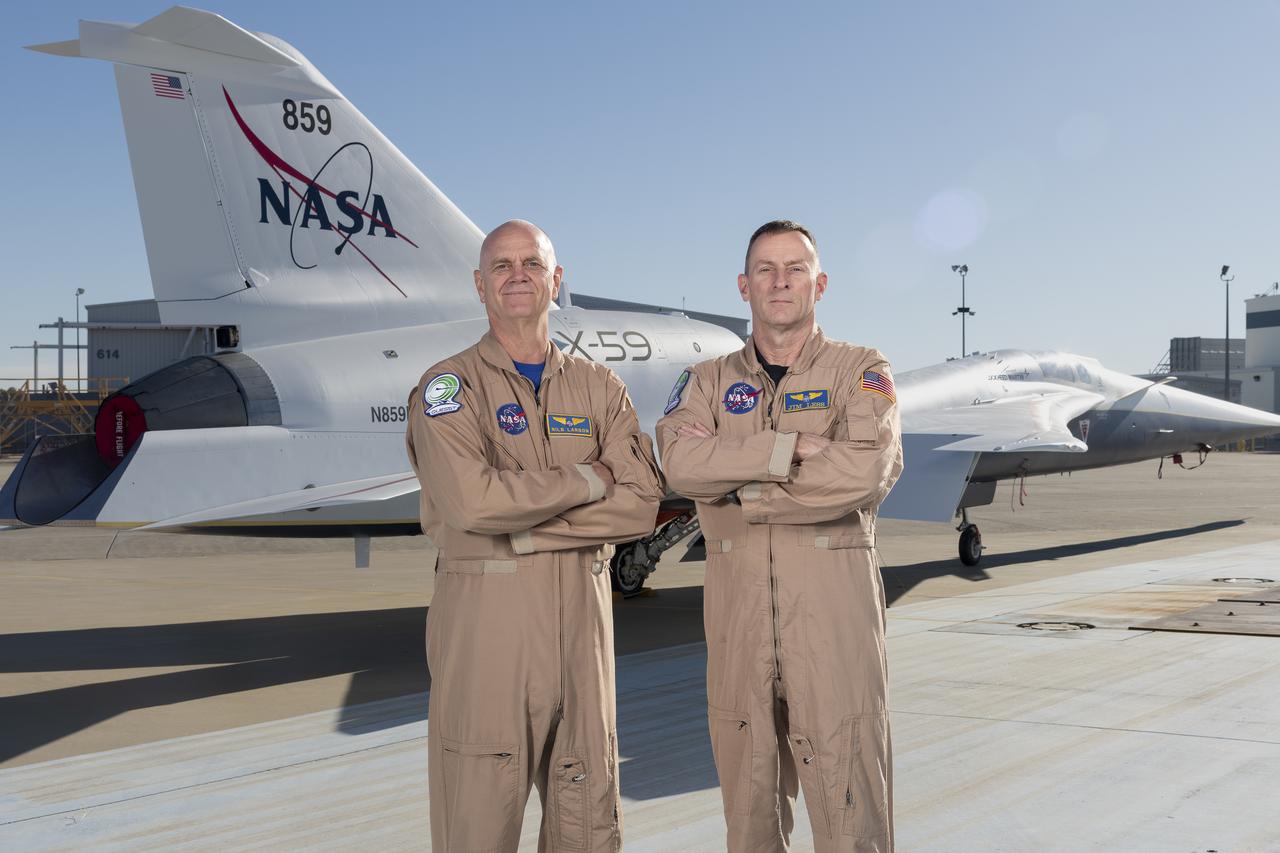
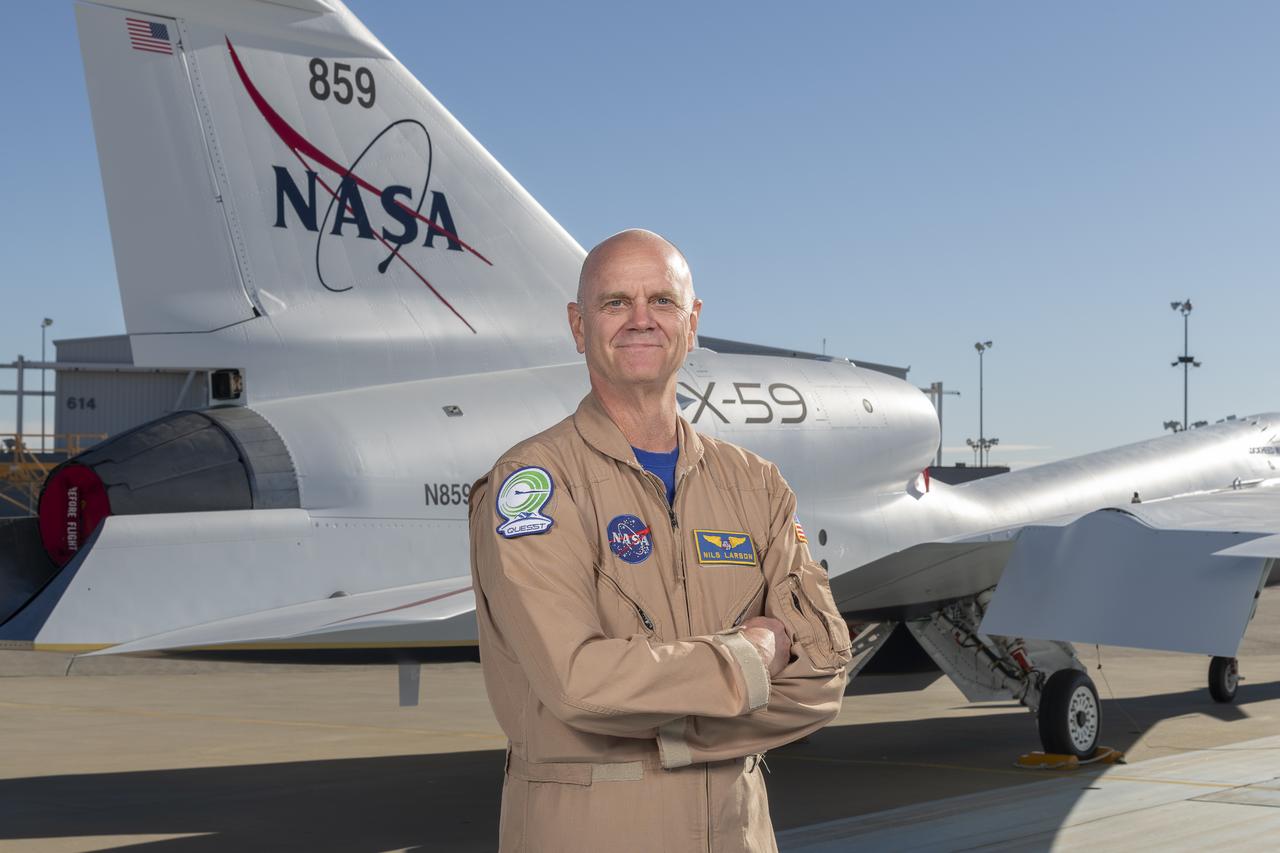
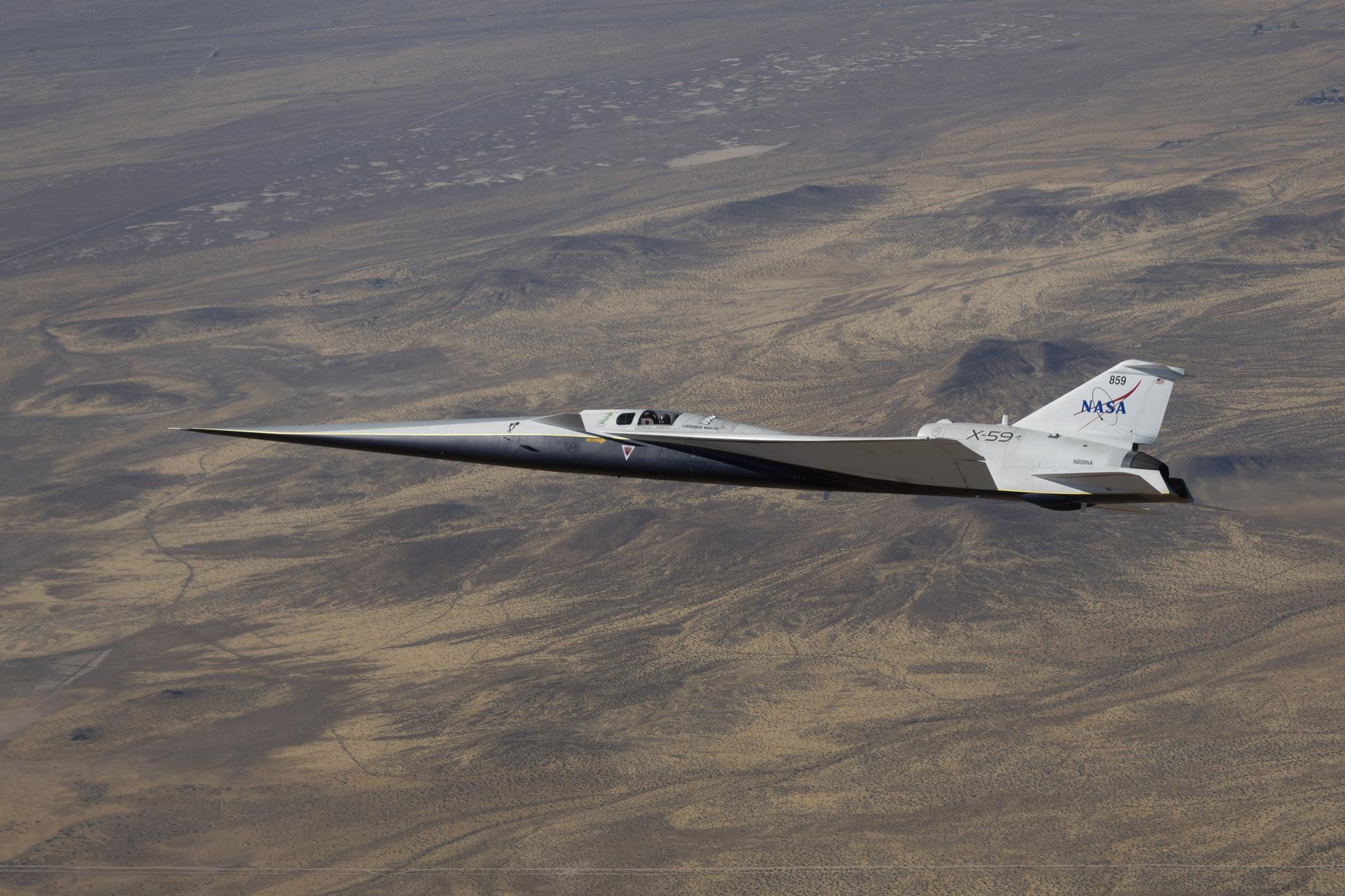
NASA’s F-15D research aircraft is positioned behind the X-59 during electromagnetic compatibility testing at U.S. Air Force Plant 42 in Palmdale, California. During this test, the F-15D’s radar and avionics were turned on one at a time while engineers evaluated each signal’s interaction with the X-59 for possible interference. NASA’s Quesst mission will demonstrate quiet supersonic technology that will provide data to help determine an acceptable sound limit in the sky.

Part of the mission criteria that led to the decision to fly off the coast of Galveston for QSF18 was the convenience of having NASA Johnson Space Center's facilities at Ellington Field.

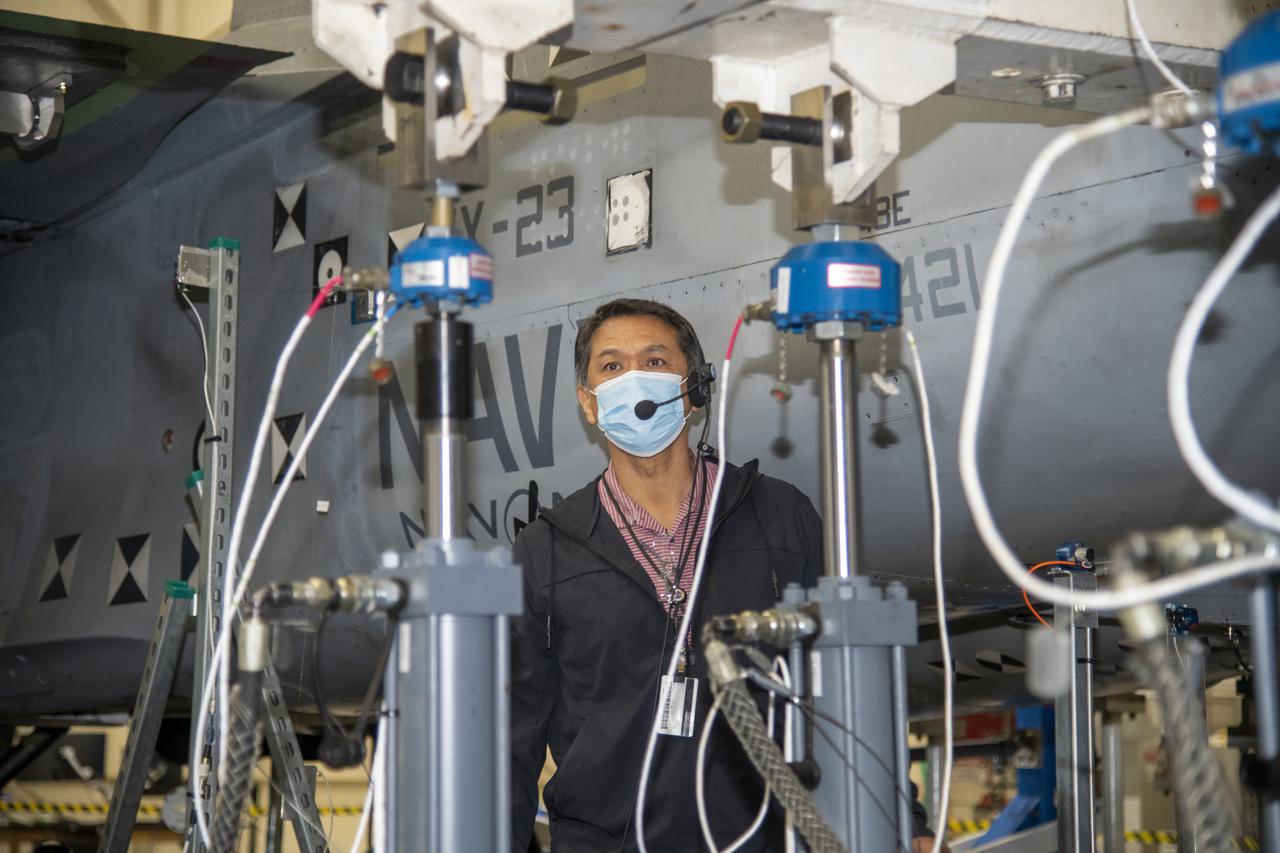
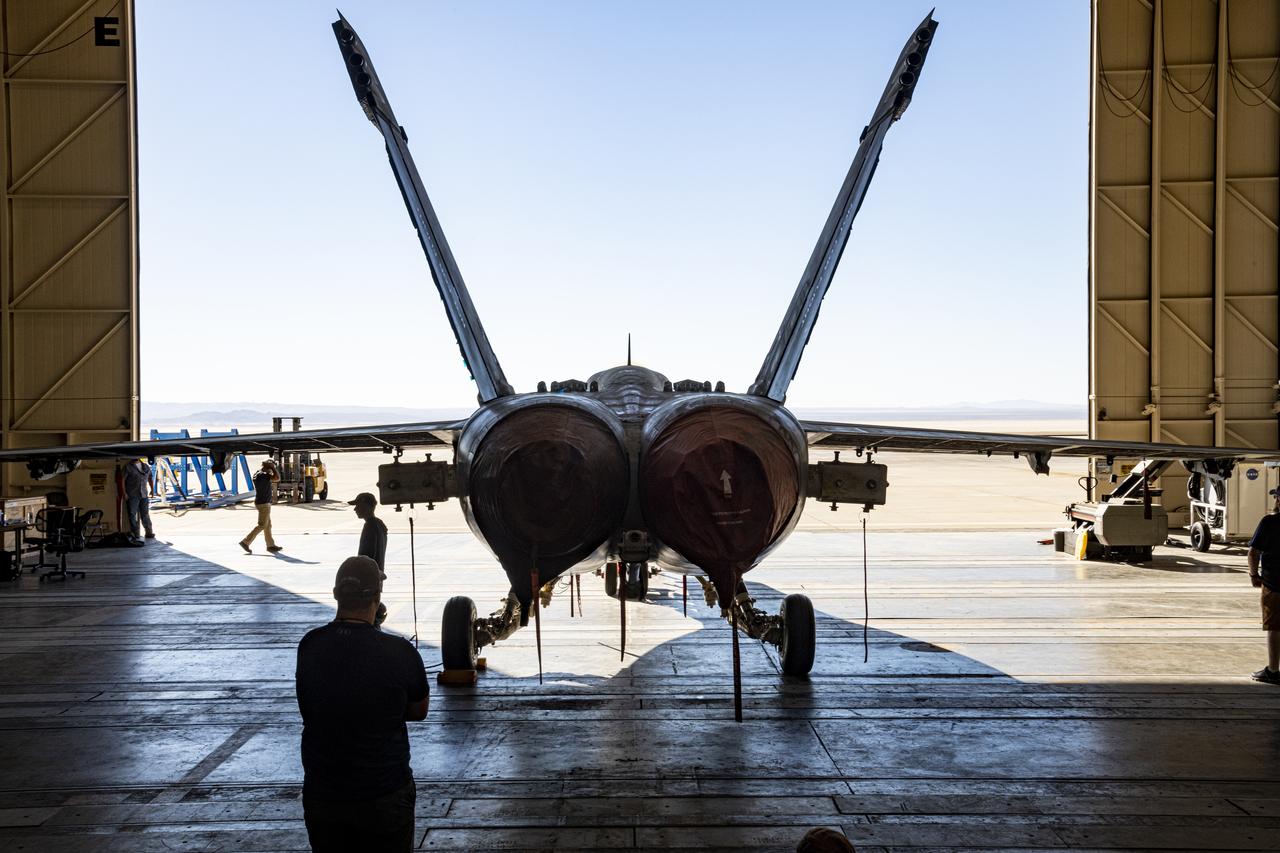
This view shows the left wing loading test configuration and testing area of an F/A-18E from the Naval Air Systems Command (NAVAIR) in Patuxent River, Maryland. The aircraft is in NASA's Armstrong Flight Research Center Flight Loads Laboratory in Edwards, California, for the center's biggest load calibrations tests. This testing is needed before the aircraft can serve as a test vehicle for determining if it can safely manage maneuvers and proposed upgrades.

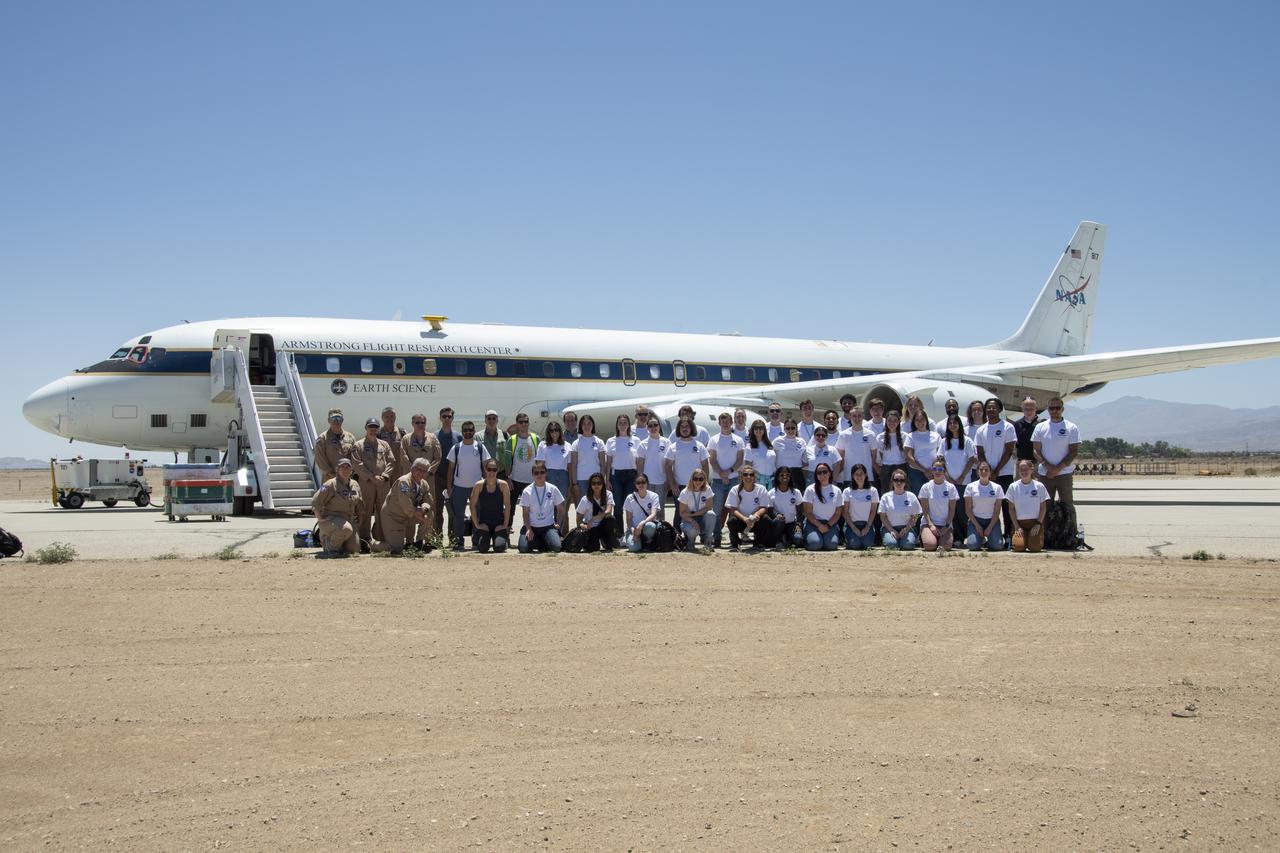
NASA Armstrong’s Student Airborne Research Program celebrates 15 years of success in 2023. An eight-week summer internship program, SARP offers upper-level undergraduate students the opportunity to acquire hands-on research experience as part of a scientific campaign using NASA Airborne Science Program flying science laboratories—aircraft outfitted specifically for research projects. Students onboard NASA’s DC-8 aircraft, the largest flying science laboratory in the world, help scientists from NOAA, the National Oceanic and Atmospheric Administration with a science project investigating air quality and non-vehicular pollution sources called AEROMMA, which measures Atmospheric Emissions and Reactions Observed from Megacities to Marine Areas. In 2023, NASA also introduced a sister program, SARP East to complement the West Coast program.

NASA Armstrong’s ER-2 aircraft deploys for its ALOFT mission. The ER-2 will fly at high altitudes above the Floridian coastline to collect data about the energetic characteristics and behavior of lightning and thunderclouds. A NASA pilot will operate the aircraft while scientists from the University of Bergen, Norway will interpret the data from the ground.

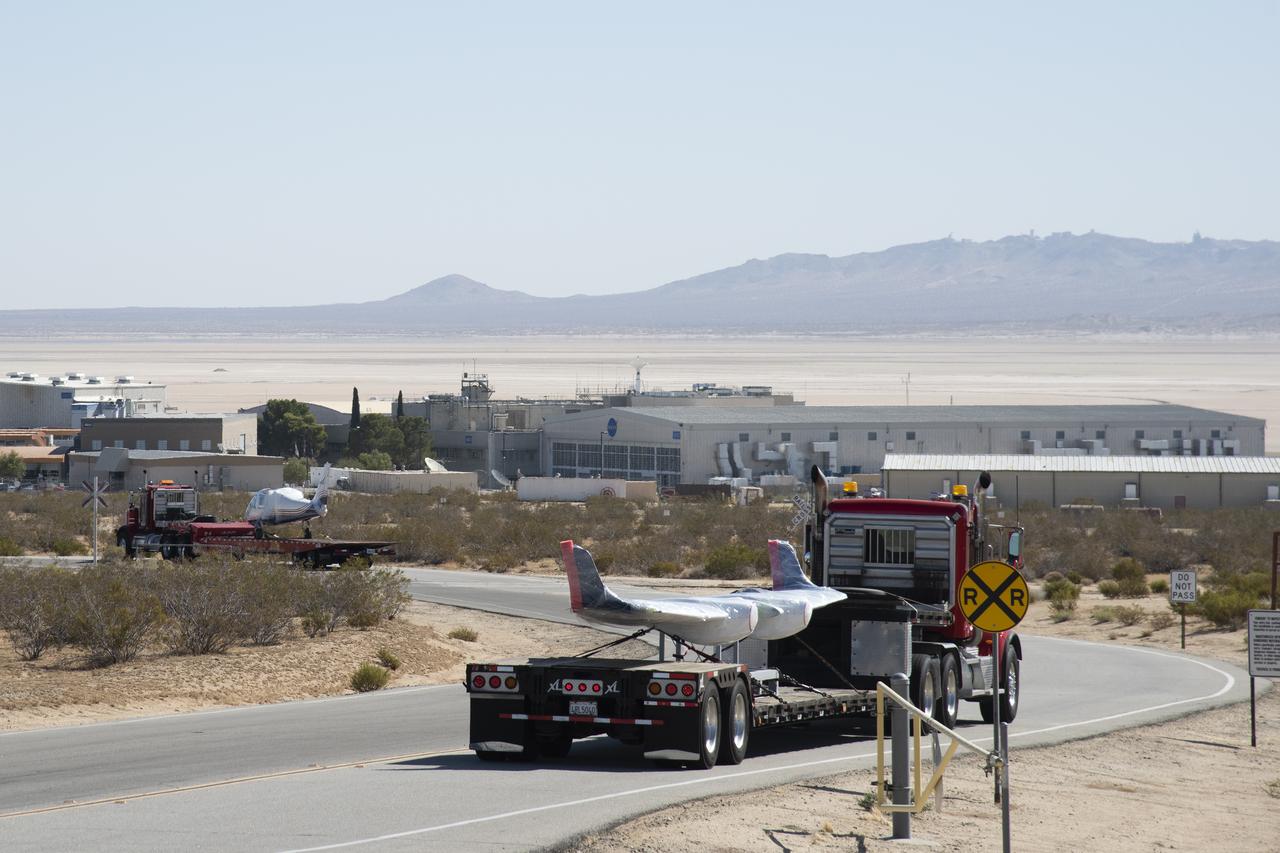
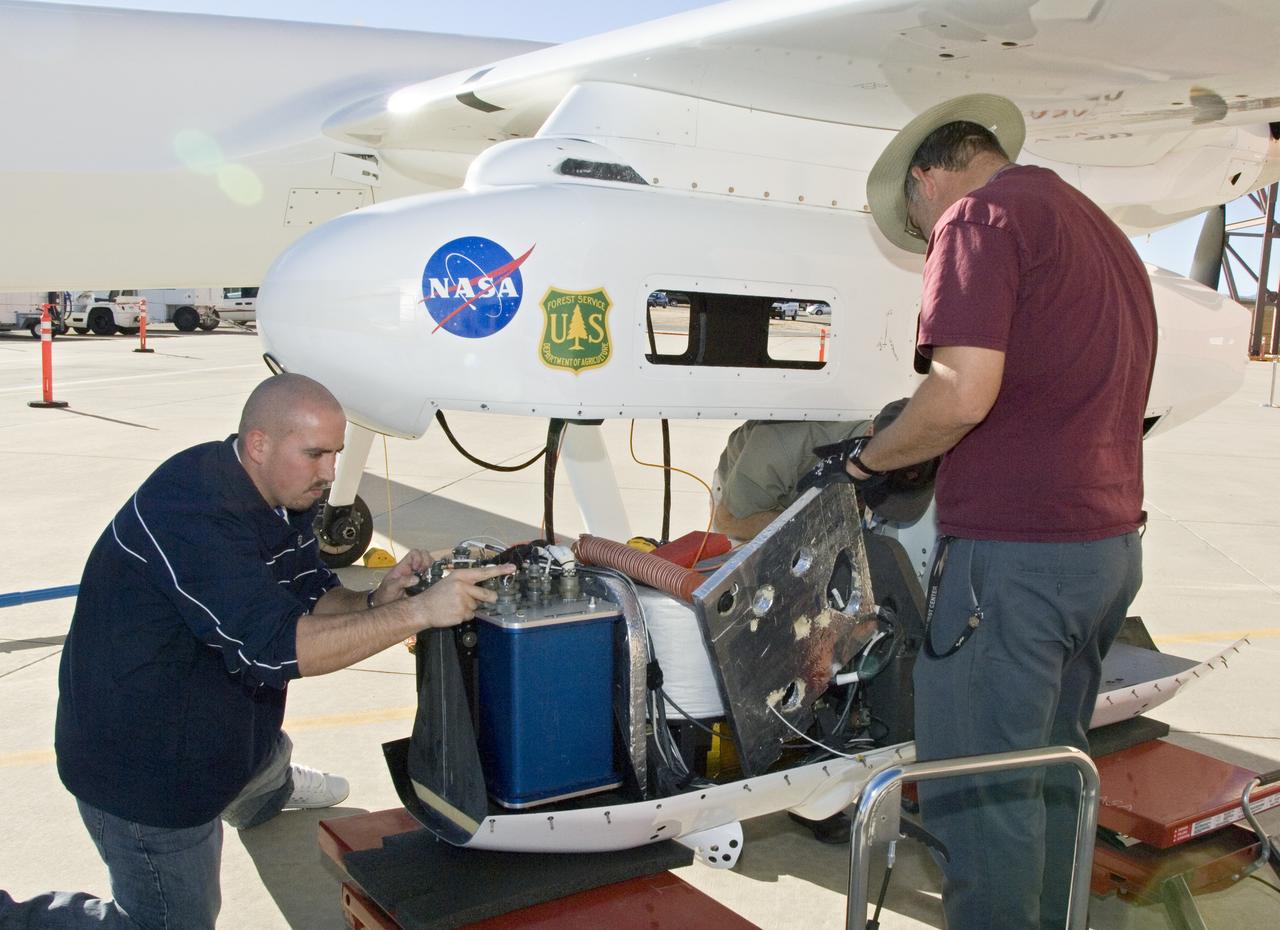
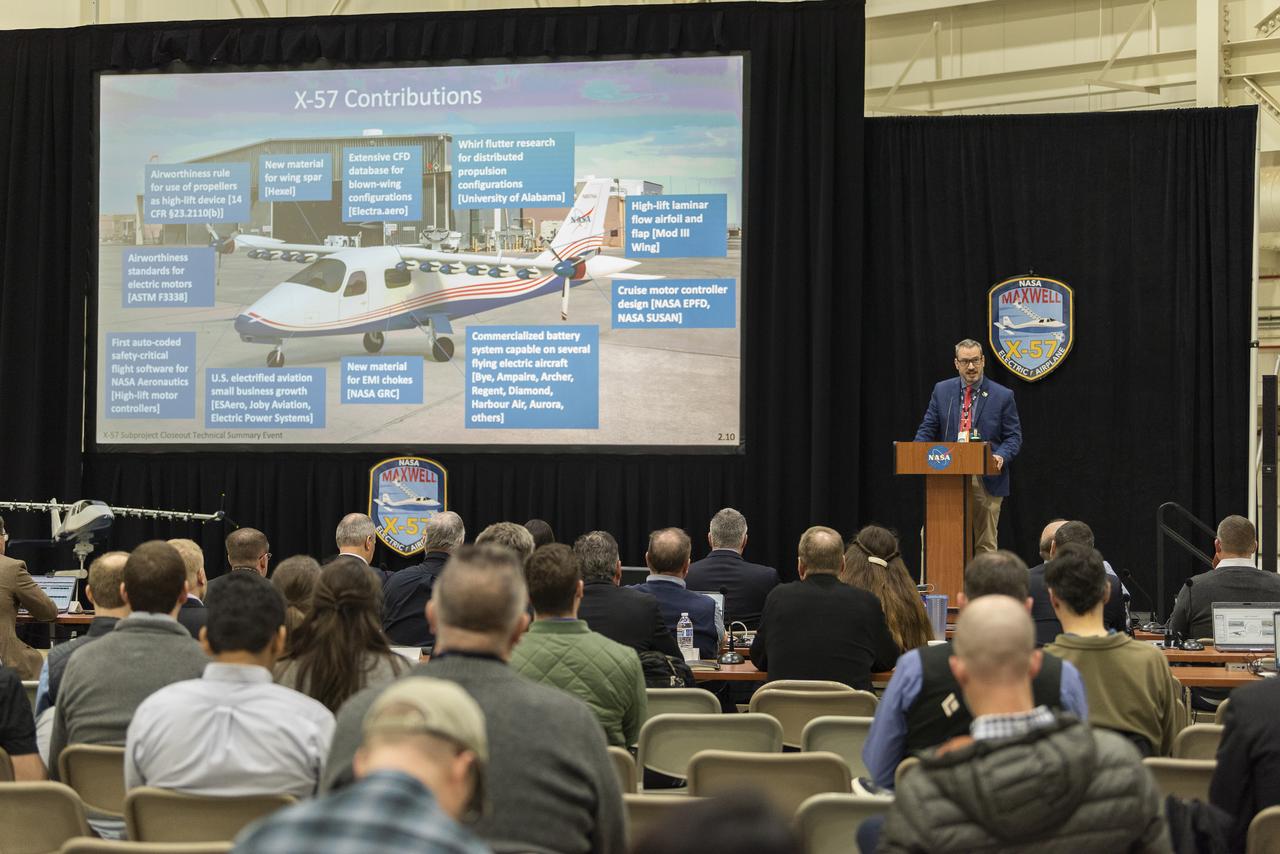
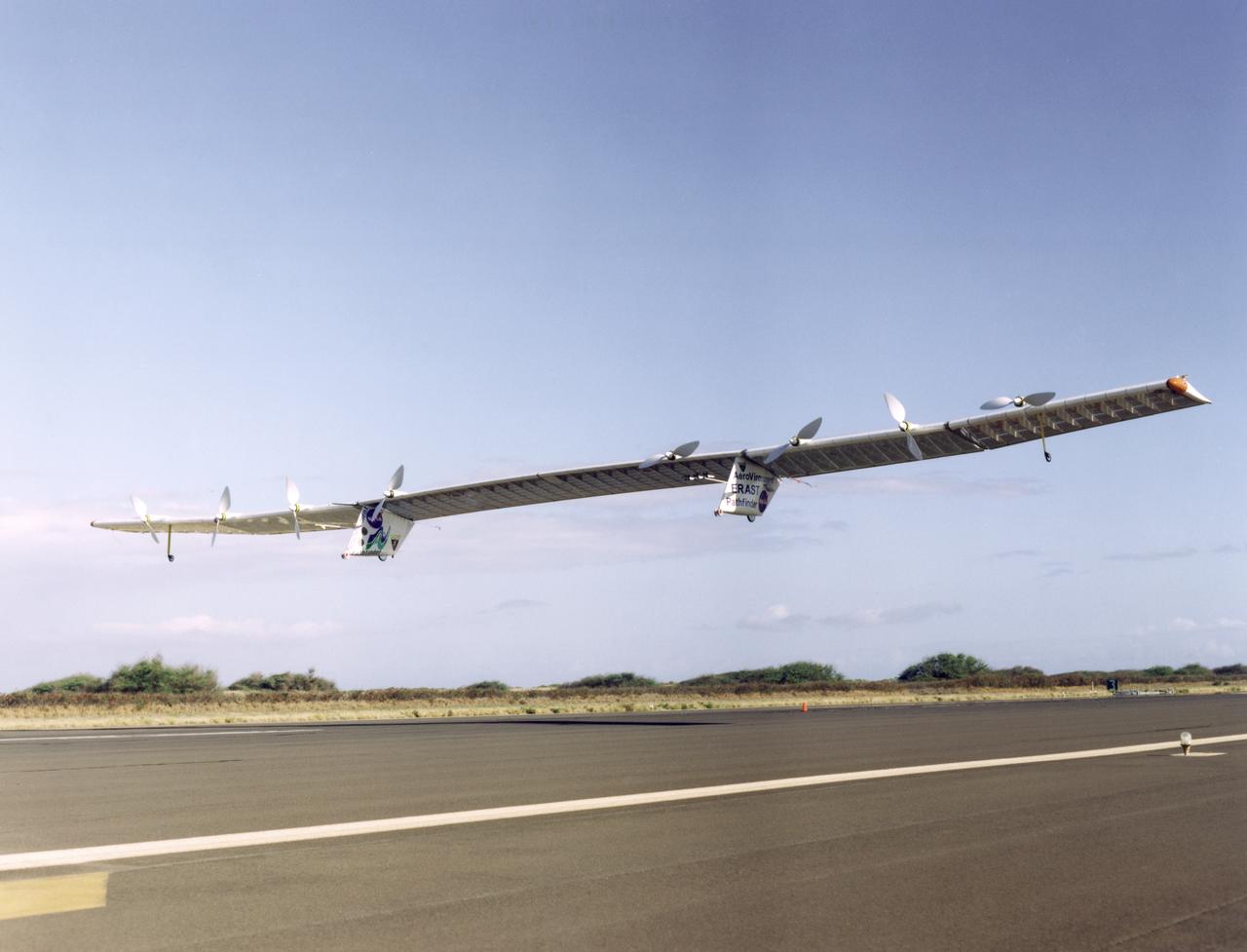
NASA's X-57 Maxwell, the agency's first all-electric X-plane and first crewed X-planed in two decades, is delivered to NASA's Armstrong Flight Research Center in Edwards, California in its Mod II configuration. The first of three primary modifications for the project, Mod II involves testing of the aircraft's cruise electric propulsion system. Delivery to NASA from prime contractor Empirical Systems Aerospace of San Luis Obispo, California, marks a major milestone for the project, at which point the vehicle is reintegrated for ground tests, to be followed by taxi tests, and eventually, flight tests. X-57's goal is to further advance the design and airworthiness process for distributed electric propulsion technology for general aviation aircraft, which can provide multiple benefits to efficiency, emissions, and noise.

The NASA ER-2 high-altitude aircraft was prepared to support the Investigation of Microphysics and Precipitation for Atlantic Coast-Threatening Storms (IMPACTS) mission. For this mission, the IMPACTS team tracked storms across the Eastern United States to help understand how winter storms form and develop. The aircraft, which is based at NASA’s Armstrong Flight Research Center Building 703 in Palmdale, California, was temporarily based at Dobbins Air Reserve Base in Marietta, Georgia. The three-year IMPACTS campaign concluded on Feb. 28, 2023.

An F-16XL refuels in-flight. Only two XLs were built, and NASA eventually operated both for experimental purposes, including an active supersonic laminar flow experiment.

An ocean color senor, a passive microwave vertical sounder and an electro-optical sensor were mounted on the Altair UAV for the NOAA-NASA flight demonstration.

The crew of Space Shuttle mission STS-114 gathered for a press brief following landing at Edwards Air Force Base, California, 5:11 am, August 9, 2005. Left to right: Mission Specialists Charles Camarda, Wendy Lawrence and Stephen Robinson, Commander Eileen Collins at microphone, Mission Specialists Andrew Thomas and Soichi Noguchi, and Pilot James Kelly. Space Shuttle Discovery landed safely at NASA's Dryden Flight Research Center at Edwards Air Force Base in California at 5:11:22 a.m. PDT this morning, following the very successful 14-day STS-114 return to flight mission. During their two weeks in space, Commander Eileen Collins and her six crewmates tested out new safety procedures and delivered supplies and equipment the International Space Station. Discovery spent two weeks in space, where the crew demonstrated new methods to inspect and repair the Shuttle in orbit. The crew also delivered supplies, outfitted and performed maintenance on the International Space Station. A number of these tasks were conducted during three spacewalks. In an unprecedented event, spacewalkers were called upon to remove protruding gap fillers from the heat shield on Discovery's underbelly. In other spacewalk activities, astronauts installed an external platform onto the Station's Quest Airlock and replaced one of the orbital outpost's Control Moment Gyroscopes. Inside the Station, the STS-114 crew conducted joint operations with the Expedition 11 crew. They unloaded fresh supplies from the Shuttle and the Raffaello Multi-Purpose Logistics Module. Before Discovery undocked, the crews filled Raffeallo with unneeded items and returned to Shuttle payload bay. Discovery launched on July 26 and spent almost 14 days on orbit.

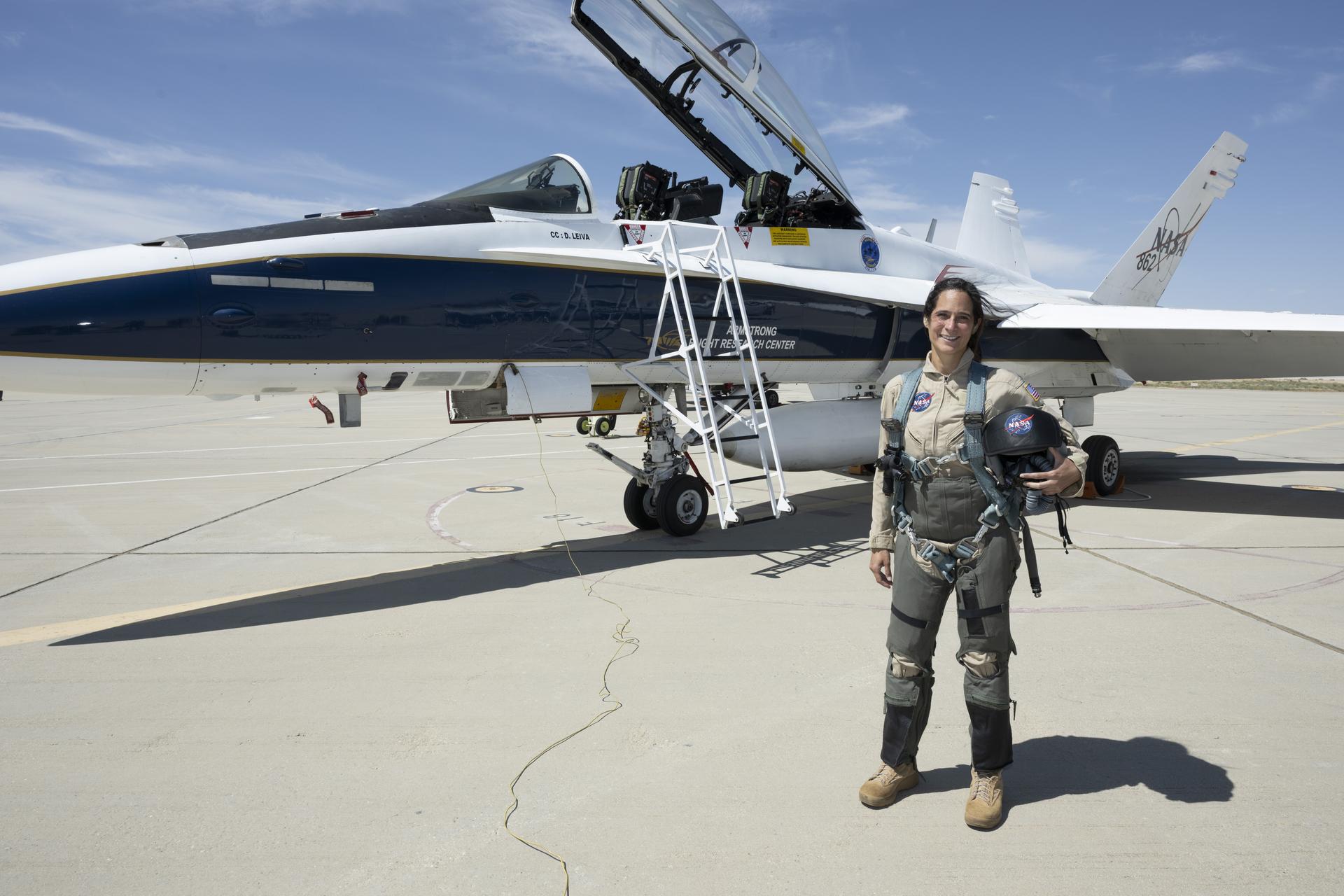
NASA 862, which is an F/A-18D based at NASA’s Armstrong Flight Research Center in Edwards, California, has paint applied at the U.S. Air Force Corrosion Control Facility. The facility is located on Edwards Air Force Base and is also known as the Paint Barn.

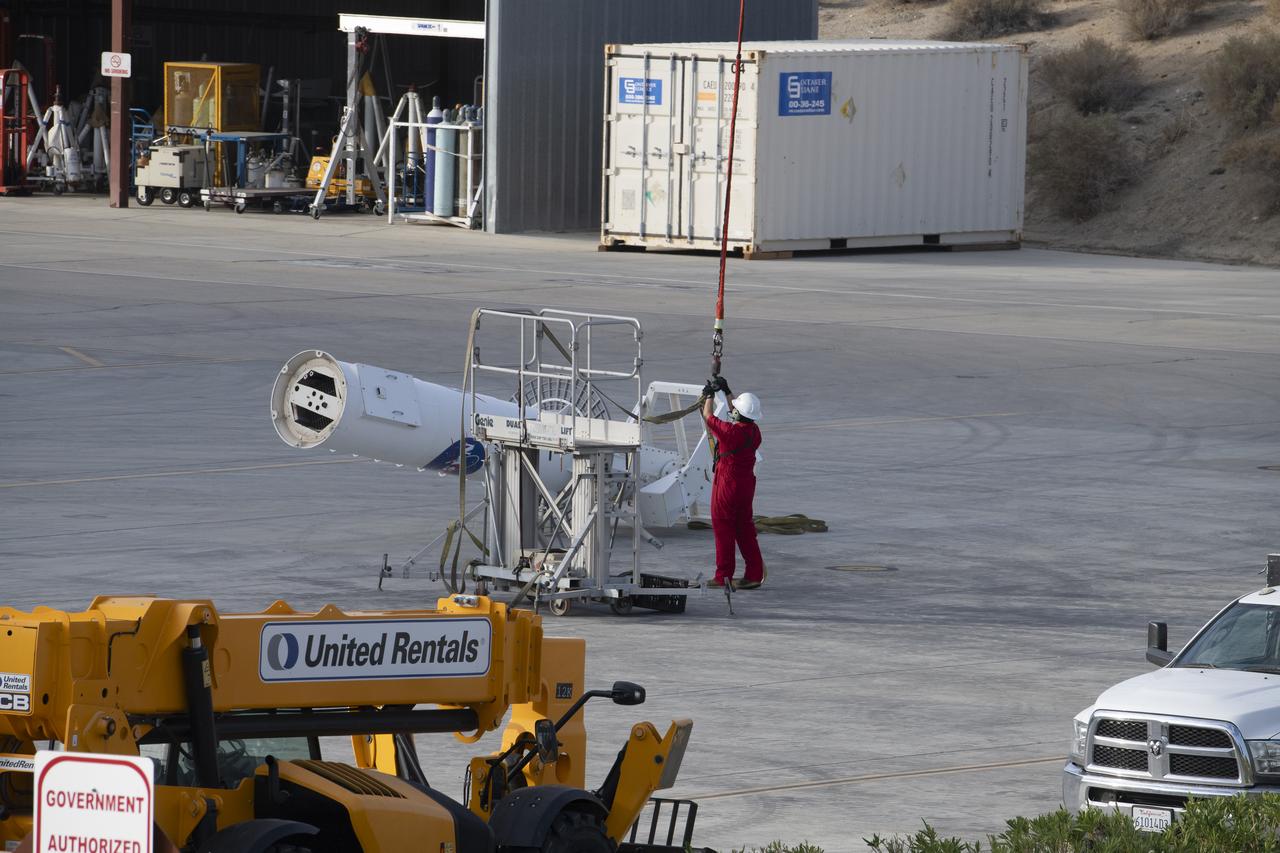
NASA's Flight Opportunities funds flight of space technology on UP Aerospace's rocket poised to launch at Spaceport America in New Mexico.

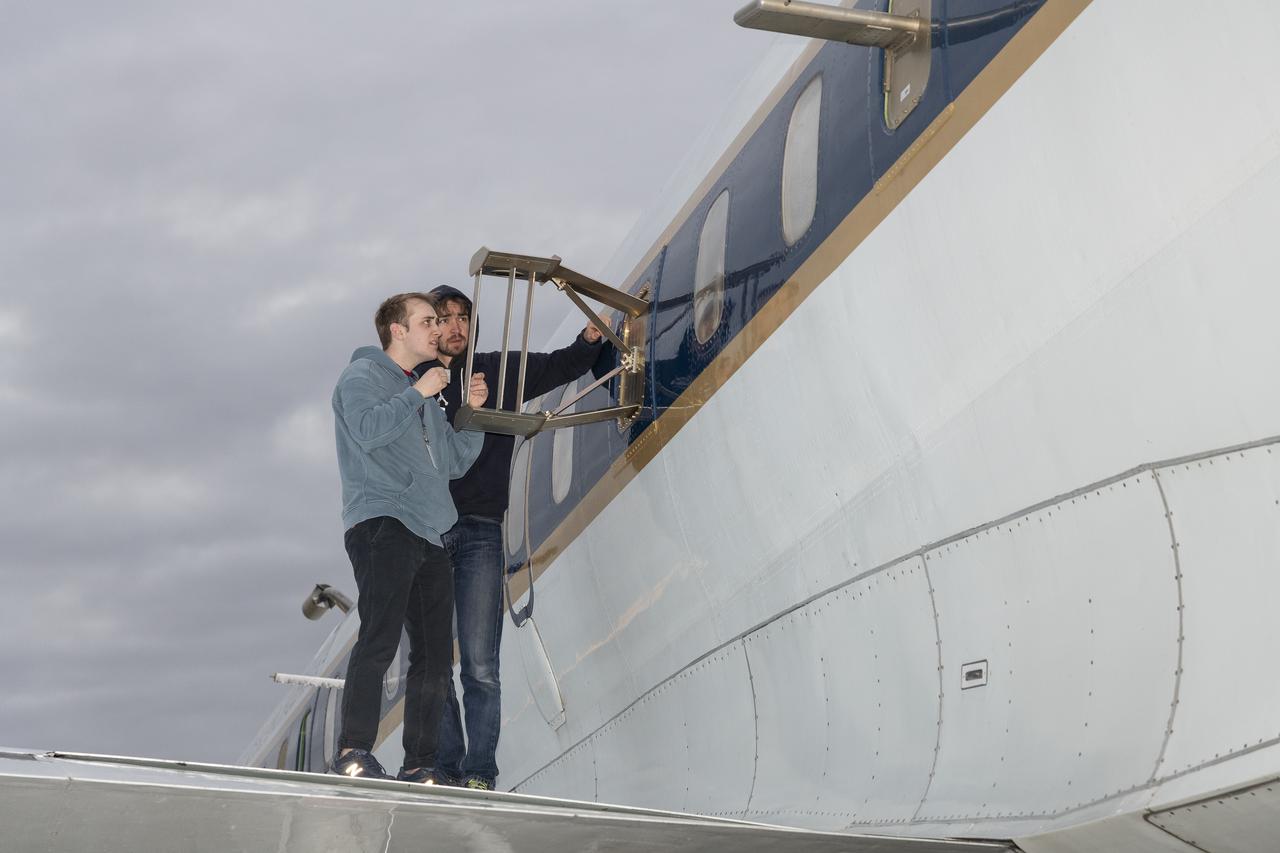
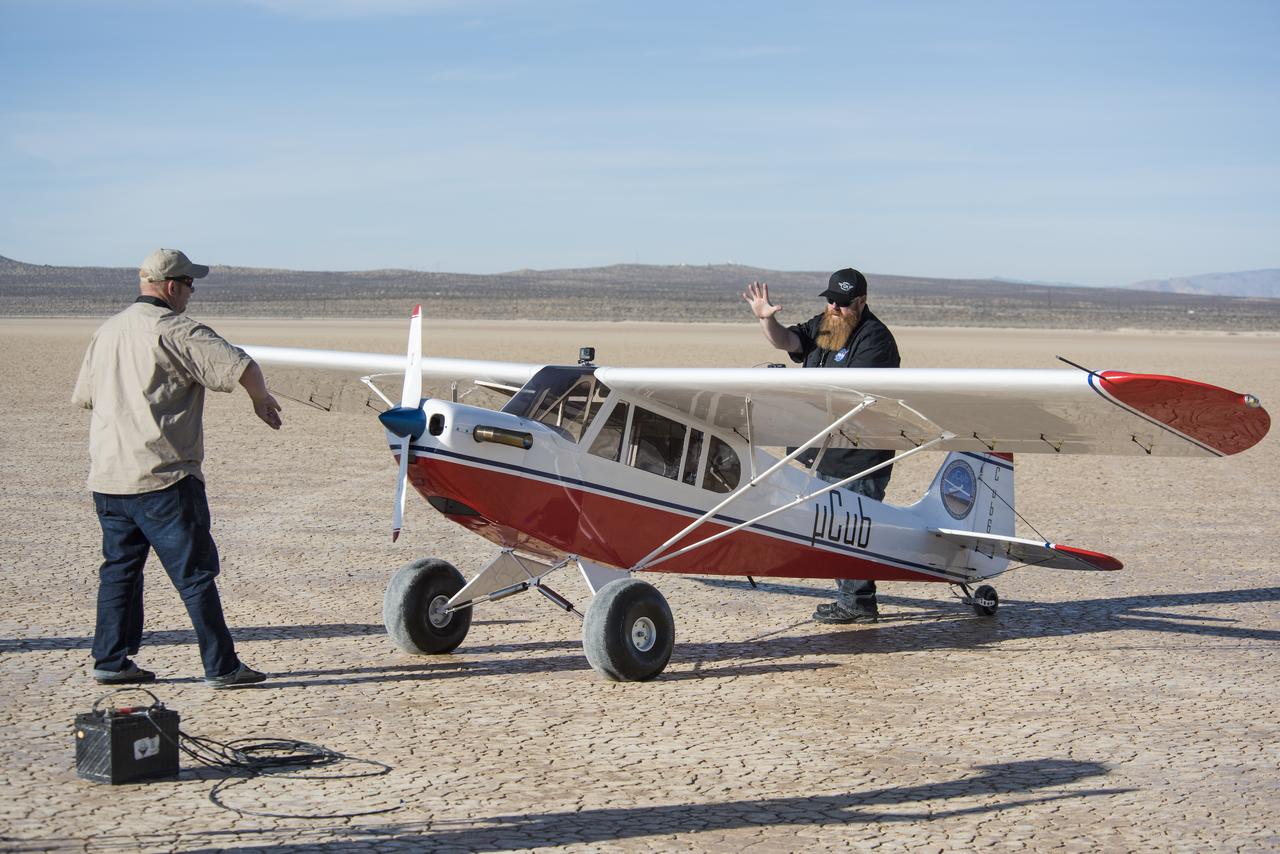
Researchers test a 10-foot Mock Truss-Braced Wing at NASA’s Armstrong Flight Research Center in Edwards, California. The test team makes observations between tests. The aircraft concept involves a wing braced on an aircraft using diagonal struts that also add lift and could result in significantly improved aerodynamics.

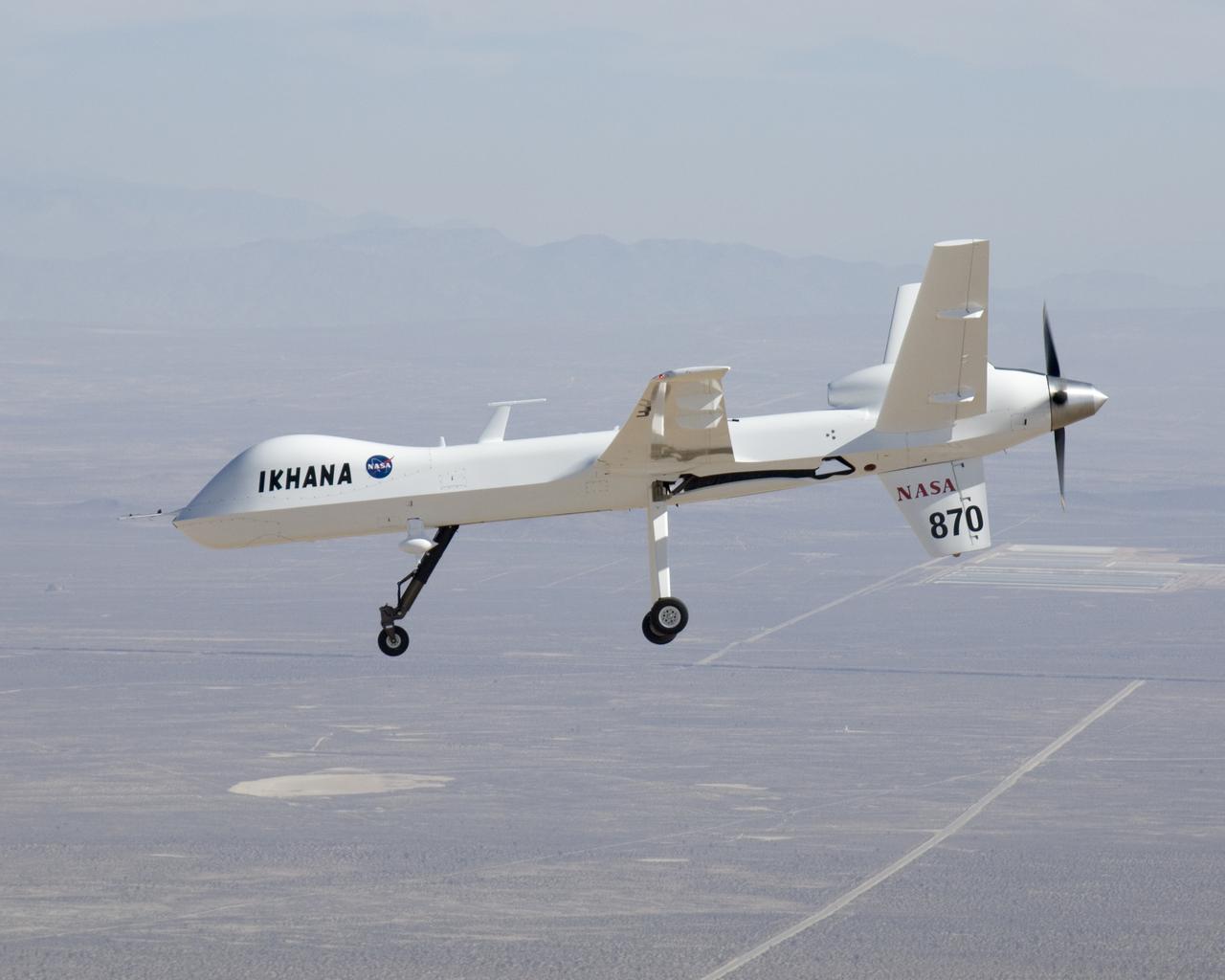
Distinguished by its large nose payload bay, NASA's Ikhana unmanned aircraft does an engine run prior to takeoff from General Atomics' Grey Butte airfield.

L to R; NASA Dryden Mission Manager Walter Klein (in tan flight suit), JPL AirSAR Scientist Tim Miller, and Mission Manager David Bushman briefing press in Santiago, Chile, for NASA's AirSAR 2004 mission. AirSAR 2004 is a three-week expedition by an international team of scientists that uses an all-weather imaging tool, called the Airborne Synthetic Aperture Radar (AirSAR) which is located onboard NASA's DC-8 airborne laboratory. Scientists from many parts of the world including NASA's Jet Propulsion Laboratory are combining ground research done in several areas in Central and South America with NASA's AirSAR technology to improve and expand on the quality of research they are able to conduct. In South America and Antarctica, AirSAR collected imagery and data to help determine the contribution of Southern Hemisphere glaciers to sea level rise due to climate change. In Patagonia, researchers found this contribution had more than doubled from 1995 to 2000, compared to the previous 25 years. AirSAR data will make it possible to determine whether that trend is continuing or accelerating. AirSAR will also provide reliable information on ice shelf thickness to measure the contribution of the glaciers to sea level.

The Advanced Air Mobility National Campaign project conducted connectivity and infrastructure flight tests with a NASA TG-14 glider aircraft at NASA's Armstrong Flight Research Center Sept. 30-Oct. 1, 2020. The flights were preparation for the NC Integrated Dry Run Test in December and allowed pilots to view the routes they will fly during the helicopter test.

Bob Mccall and NASA Dryden Director Kevin Petersen stand by "Celebrating One Hundred Years of Powered Flight, 1903-2003", in the artist's studio in Paradise Valley, Arizona. The mural was created to celebrate the achievements of Wilbur and Orville Wright and to commemorate a century of powered flight. Many of the epic flights represented in the painting took place in the skies over NASA Dryden Flight Research Center. An equally important goal of this celebration will be to encourage the values that have characterized 100 years of aviation history: ingenuity, inventiveness, persistence, creativity and courage. These values hold true not just for pioneers of flight, but also for all pioneers of invention and innovation, and they will remain an important part of America's future. "Celebrating One Hundred Years of Powered Flight, 1903-2003", documents many significant achievements in aeronautics and space flight from the dawn of powered flight to the present. Historic aircraft and spacecraft serve as the backdrop, highlighting six figures representing the human element that made these milestones possible. These figures stand, symbolically supported by the words of Wilbur Wright, "It is my belief that flight is possible…" The quote was taken from a letter written to his father on September 3rd, 1900, announcing Wilbur's intention to make "some experiments with a flying machine" at Kitty Hawk, North Carolina. "This year, Bob is helping us commemorate the Centennial of Flight with a beautiful mural slated for placement in our Dryden Flight Research Center that documents the history of flight from the Wright Flyer to the International Space Station. We should all take note, I think, that in the grand scheme of things, one hundred years is a very short period of time. In that blink of an eye we've gone from Kitty Hawk to Tranquility Base and now look forward to our rovers traversing the surface of Mars. Despite the challenges we face, the future we envision, like the fu
NASA's Thomas Zurbuchen, AA for science mission directorate explains to Lesa Roe, acting deputy administrator, how the spectrograph showing different colors correlate to different elements, such as helium, in the Sun's atmosphere. Photo Credit: (NASA/Carla Thomas)

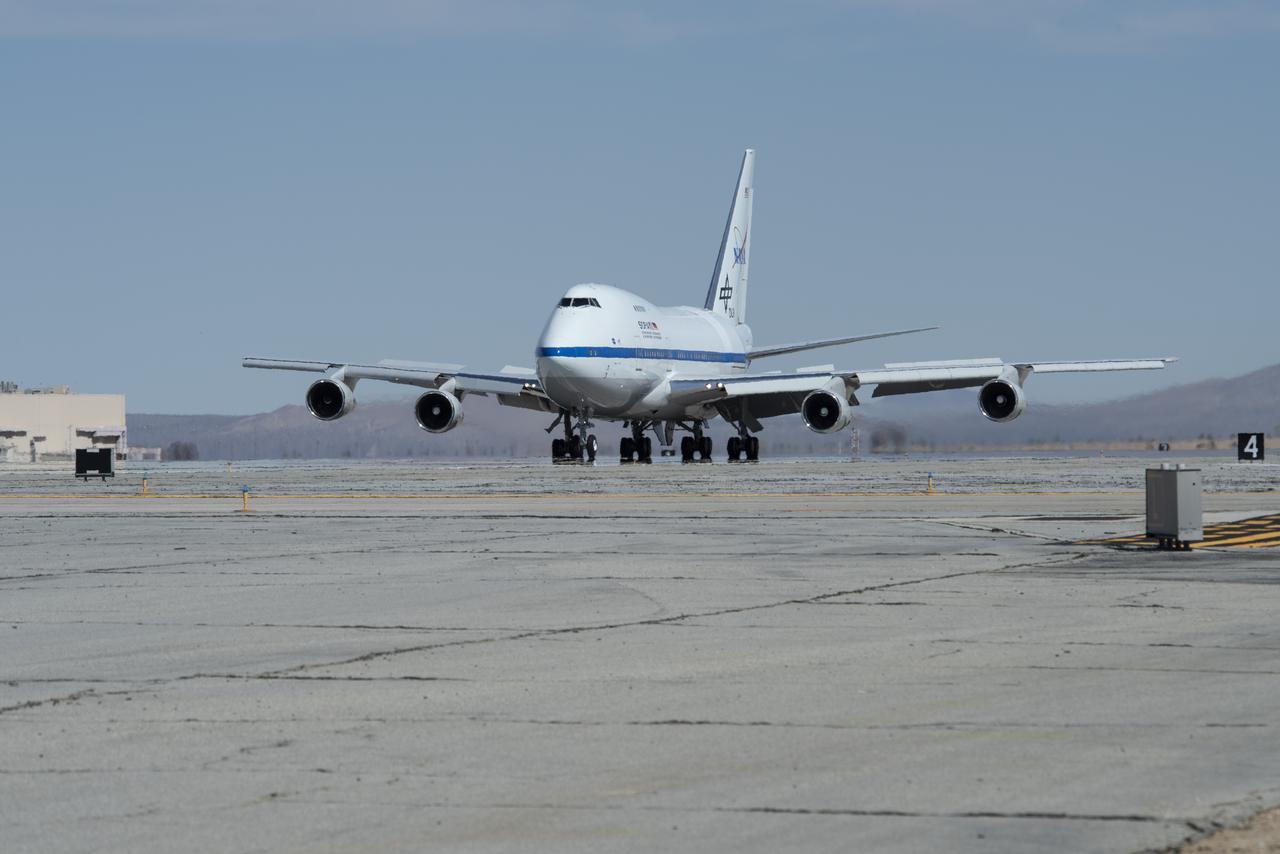
The German-built 100-inch telescope that is the heart of NASA's Stratospheric Observatory for Infrared Astronomy is nestled in the SOFIA 747's rear fuselage.

The ALOFT mission, Airborne Lightning Observatory for Fly’s eye simulator and Terrestrial gamma ray flashes, is a collaboration between NASA and the University of Bergen, Norway. NASA Armstrong Flight Research Center’s ER-2 aircraft flies just above the height of thunderclouds over the Floridian and Caribbean coastlines to collect data about lightning glows and terrestrial gamma ray flashes. Scientists expect to collect more accurate data than ever before that can advance the study of high-energy radiation emissions from thunderstorms.
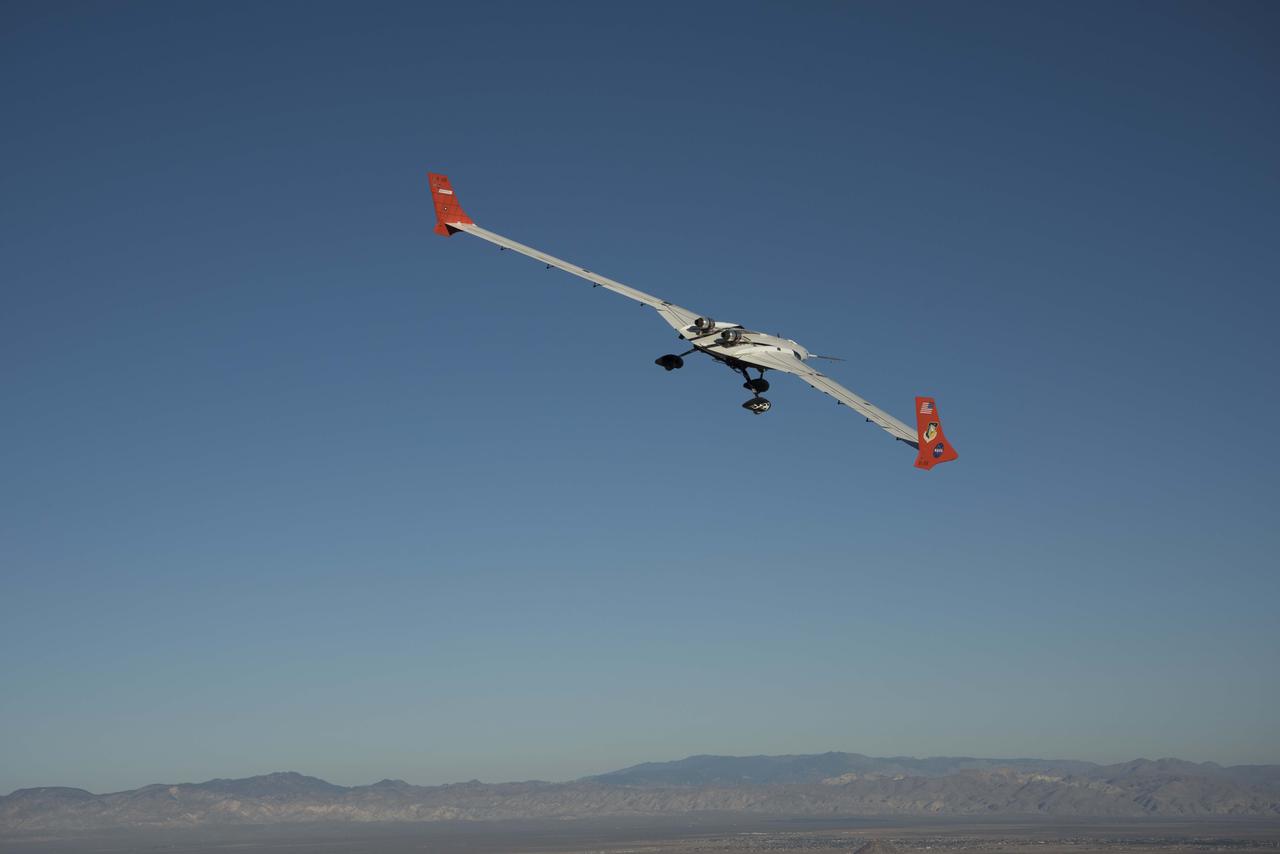
The X-56B remotely piloted aircraft lands following the first of a new flight series. The flight was April 19 at NASA's Armstrong Flight Research Center in Edwards, California, with partner Northrop Grumman.
In order to make sure weather conditions are acceptable at multiple altitudes, NASA meteorologists on the ground conduct constant monitoring operations, and launch weather balloons to get accurate data for aircraft and pilot.

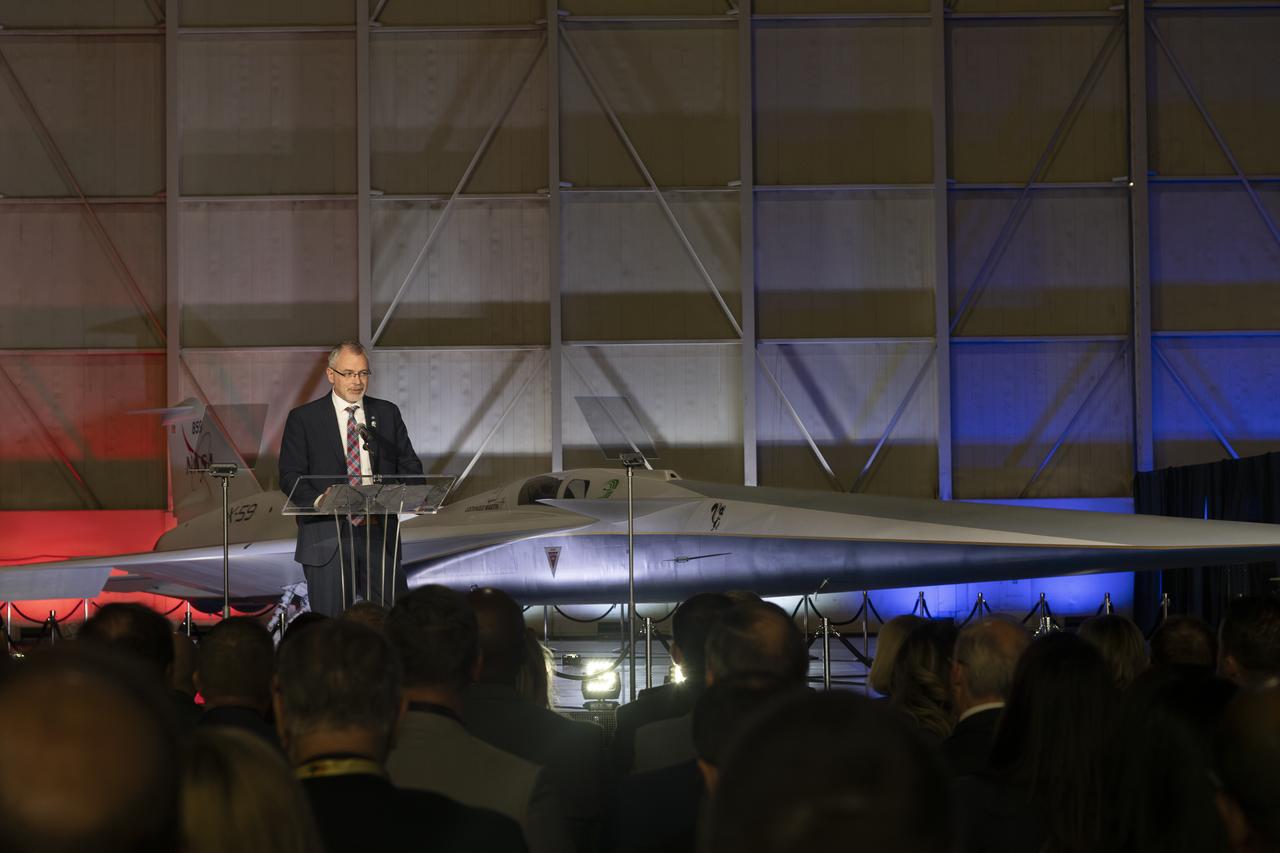
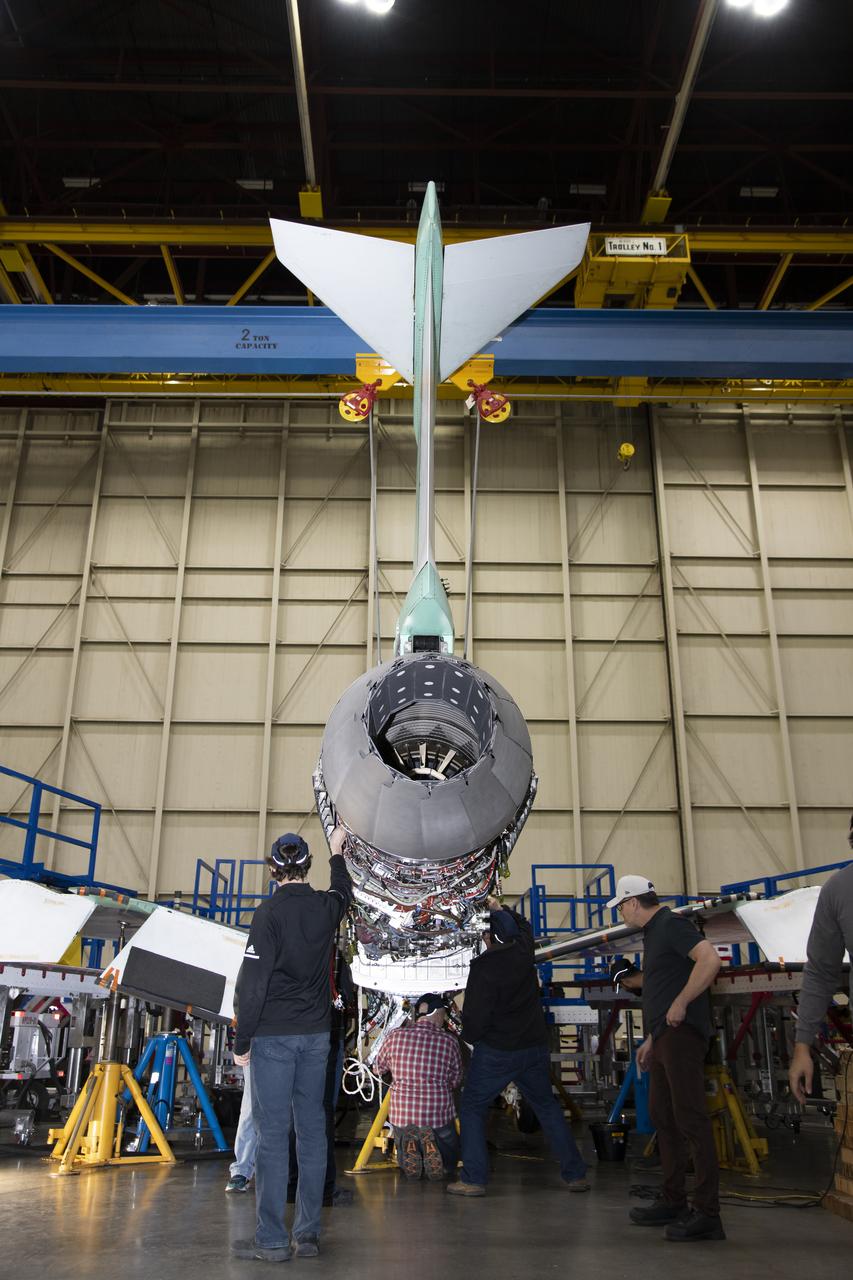
The engine that will power NASA’s quiet supersonic X-59 in flight is installed, marking a major milestone in the experimental aircraft’s journey toward first flight. The installation of the F414-GE-100 engine at Lockheed Martin’s Skunk Works facility brings the vehicle close to the completion of its assembly.

With smoke from the Lake Arrowhead area fires streaming in the background, NASA's Ikhana unmanned aircraft heads out on a Southern California wildfires imaging mission.

NASA's Super Guppy Turbine cargo aircraft in the hangar at NASA's Armstrong Flight Research Center on August 24, 2021. This unique whale-like aircraft arrived at the center's Building 703 in Palmdale, CA to support crews in the performance of routine maintenance. The Super Guppy aircraft, operated by NASA's Johnson Space Center, aids in the transportation of oversized aerospace cargo in a practical and economical way.

Nicole Schultheiss, a fourth-grader at Ulrich Elementary School in California City, "flew" an F/A-18 simulator with NASA engineer Byron Simpson's coaching during Take Your Children to Work Day June 22 at NASA Dryden Flight Research Center.

Claudia Sales, NASA’s acting X-59 deputy chief engineer and airworthiness certification lead for the quiet supersonic research aircraft, supports ground testing for Acoustic Research Measurements (ARM) flights. The test campaign to evaluate technologies that reduce aircraft noise was conducted at NASA’s Armstrong Flight Research Center in Edwards, California, in 2018.

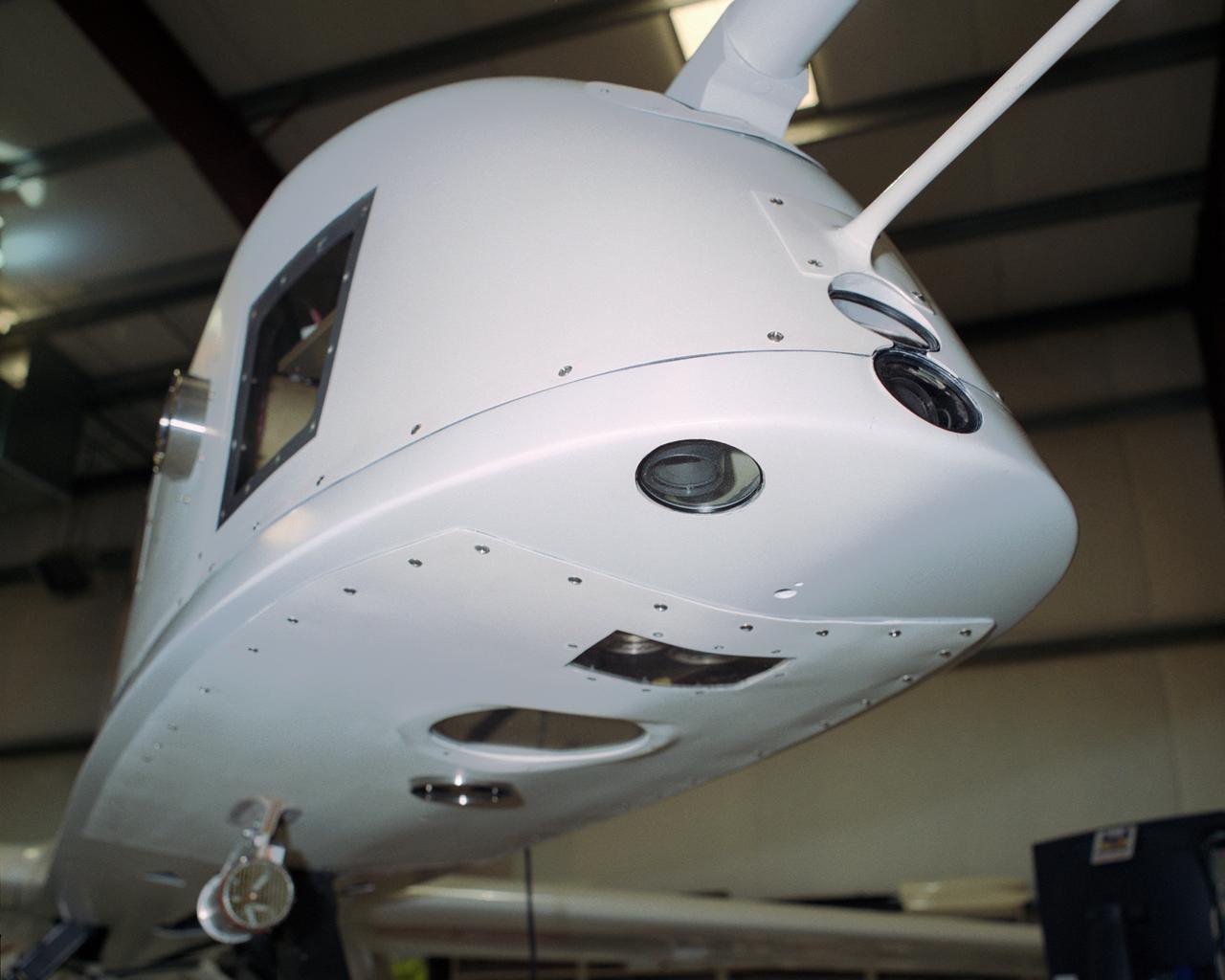
The synthetic aperture radar pod developed by JPL is slung beneath NASA's Gulfstream-III research testbed during flight tests.

A tree frog photographed in the La Selva region of the Costa Rican rain forest as part of NASA's AirSAR 2004 Mesoamerica campaign. AirSAR 2004 Mesoamerica is a three-week expedition by an international team of scientists that will use an all-weather imaging tool, called the Airborne Synthetic Aperture Radar (AirSAR) which is located onboard NASA's DC-8 airborne laboratory. Scientists from many parts of the world including NASA's Jet Propulsion Laboratory are combining ground research done in several areas in Central America with NASA's AirSAR technology to improve and expand on the quality of research they are able to do. NASA's AIRSAR technolgy provides two essential elements to the ground-based scientists. First, it tests and provides accurate measurements of the forest structure. Secondly, AirSAR can study a larger area of the forest versus the smaller area that can be tested and plotted by the ground scientists. It also provides a unique one-of-a-kind system of measurement that obtains important information for the scientists, such as where forests are located and what exactly is in them.

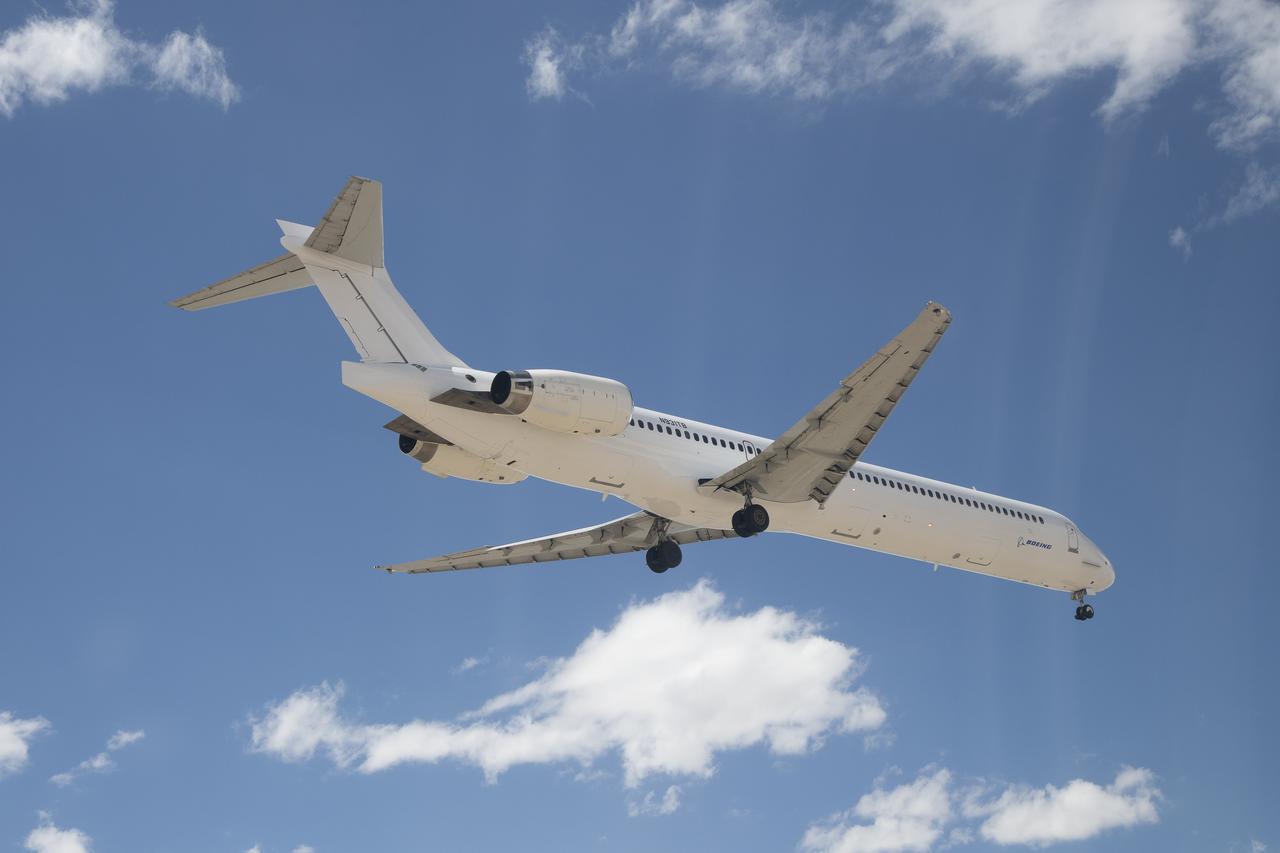
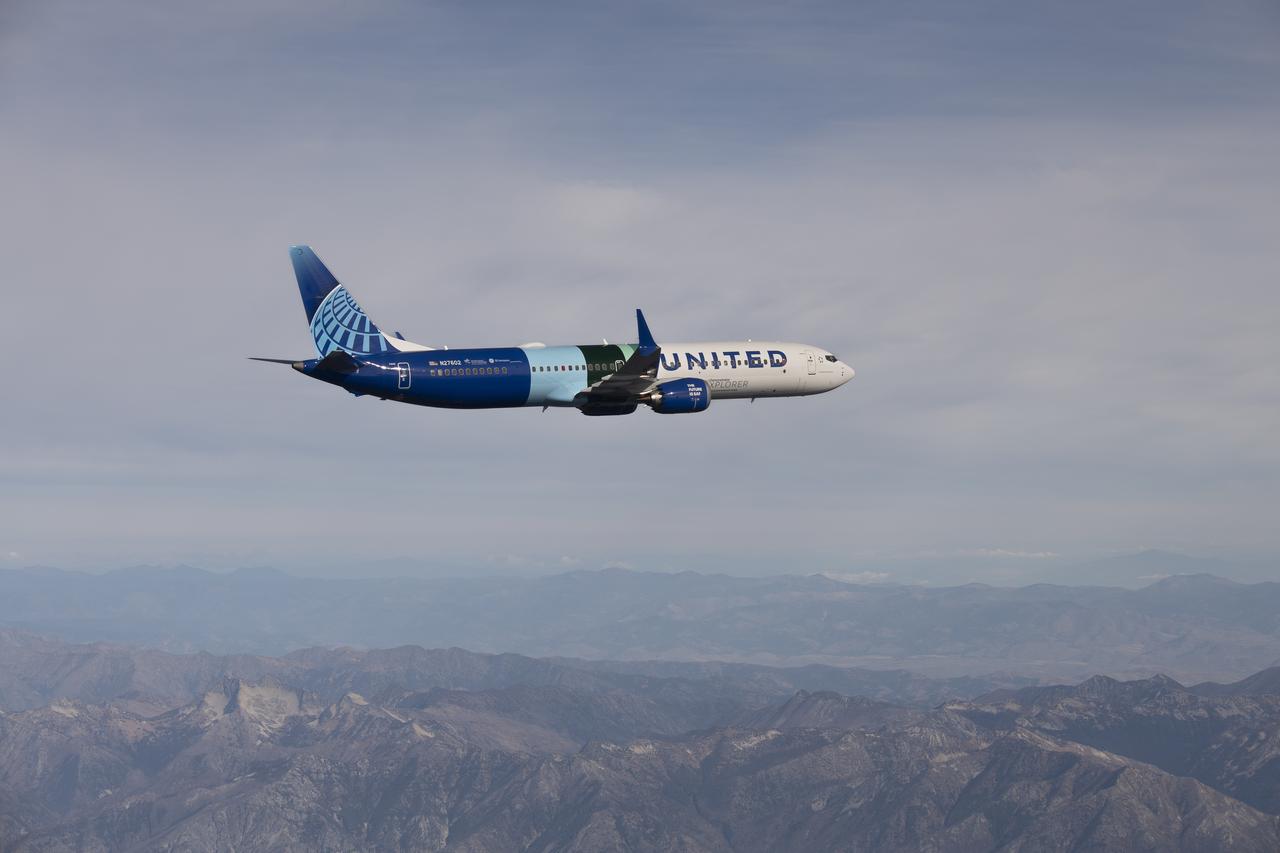
NASA’s DC-8 aircraft from Armstrong Flight Research Center in Edwards, California flies to Everett, Washington to conduct science research about reducing engine particle emissions. Partners include Boeing, United, General Electric Aerospace, German Aerospace Center (DLR), the FAA, and World Energy. Boeing’s new passenger aircraft uses revolutionary Sustainable Aviation Fuel, SAF, and NASA’s DC-8 flies behind the Boeing plane to measure its impact throughout flight. The results of this study will be released publicly to facilitate the improvement of aviation technology worldwide.

NASA’s DC-8 aircraft from Armstrong Flight Research Center in Edwards, California flies to Everett, Washington to conduct science research about reducing engine particle emissions. Partners include Boeing, United, General Electric Aerospace, German Aerospace Center (DLR), the FAA, and World Energy. Boeing’s new passenger aircraft uses revolutionary Sustainable Aviation Fuel, SAF, and NASA’s DC-8 flies behind the Boeing plane to measure its impact throughout flight. The results of this study will be released publicly to facilitate the improvement of aviation technology worldwide.

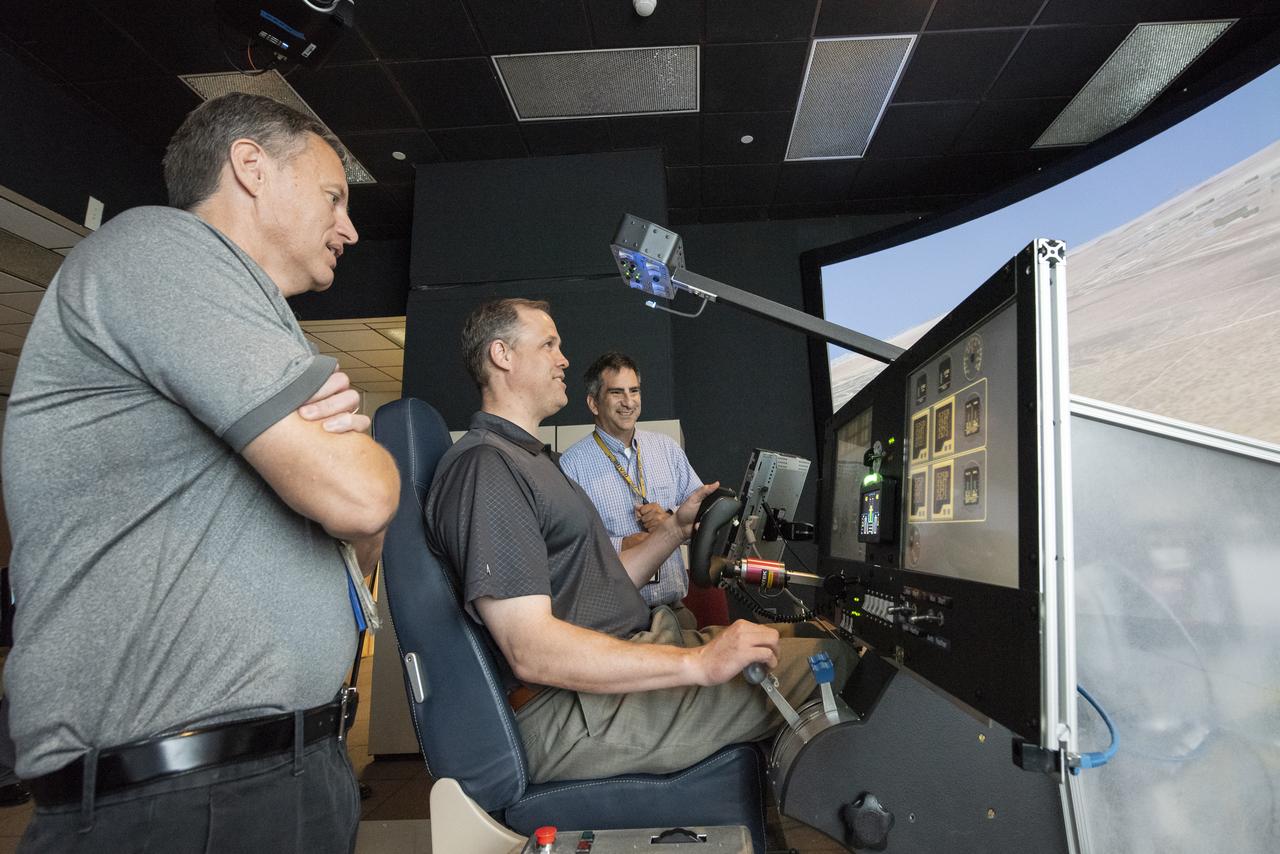
Pilot Mark Stucky in Eclipse Simulator

X-40A Free Flight #5. The unpowered X-40A, an 85 percent scale risk reduction version of the proposed X-37, proved the capability of an autonomous flight control and landing system in a series of glide flights at NASA's Dryden Flight Research Center in California. NASA's Marshall Space Flight Center in Huntsville, Alabama, manages the X-37 project. At Dryden, the X-40A underwent a series of ground and air tests to reduce possible risks to the larger X-37, including drop tests from a helicopter to check guidance and navigation systems planned for use in the X-37. The X-37 is designed to demonstrate technologies in the orbital and reentry environments for next-generation reusable launch vehicles that will increase both safety and reliability, while reducing launch costs from $10,000 per pound to $1,000 per pound.

NASA Armstrong’s ER-2 aircraft is uploaded with instruments for its ALOFT mission. The ER-2 will fly at high altitudes above the Floridian coastline to collect data about the energetic characteristics and behavior of lightning and thunderclouds. Scientists from the University of Bergen, Norway will interpret that data from the ground and collaborate with NASA pilots to safely collect the most accurate data for this project about the power of lightning.

Patrick Chan, electronics engineer, and NASA Armstrong Flight Research Center’s FOSS portfolio project manager, shows a fiber used in a temperature sensing system. Armstrong’s Fiber Optic Sensing System was used to measure temperatures during tests aimed at turning oxygen into liquid oxygen. Testing was conducted at NASA’s Glenn Research Center in Cleveland, Ohio.

NASA's two Boeing 747 Shuttle Carrier Aircraft form the backdrop as pilot Dick Ewers banks NASA F/A-18 #845 low over Rogers Dry Lake to end a research flight.

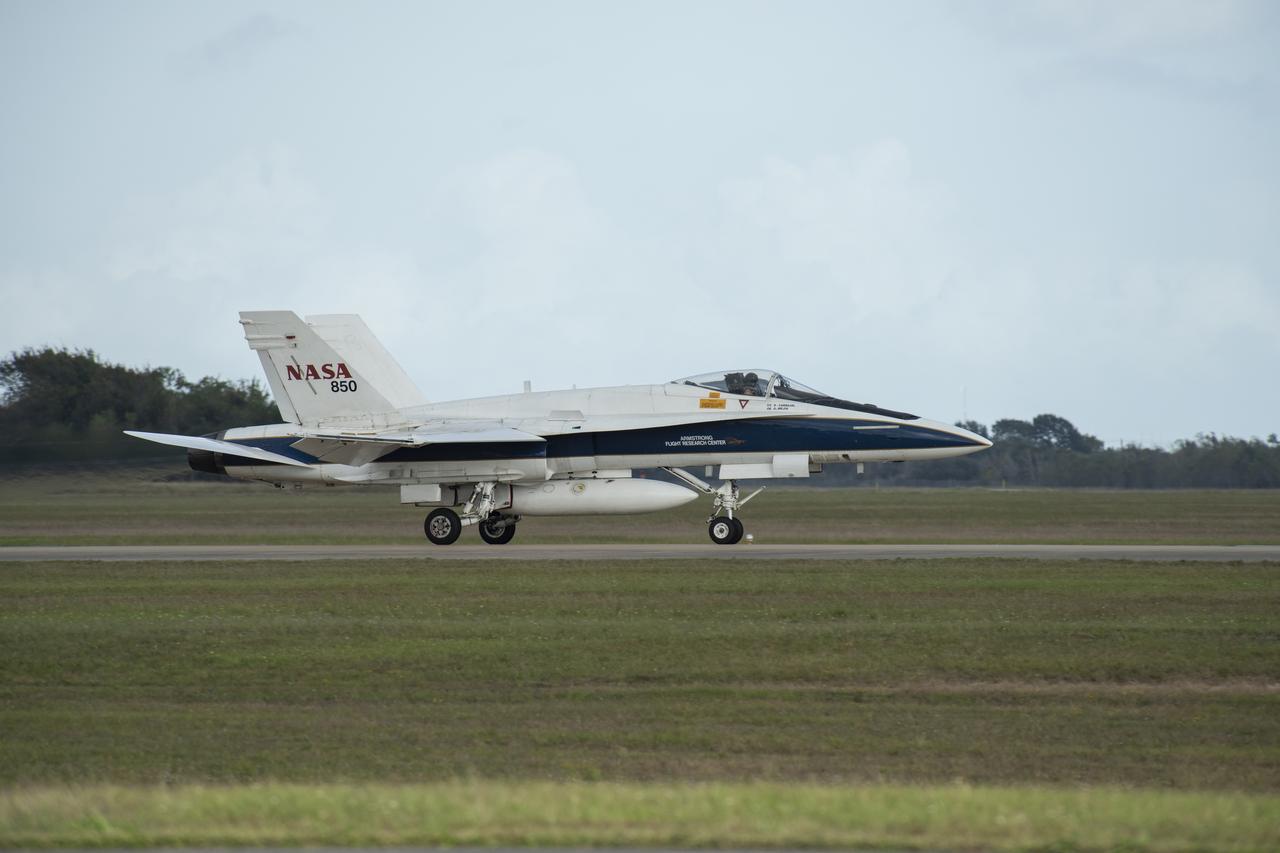
NASA's F/A-18 research aircraft stands ready prior to a QSF18 supersonic research flight off the coast of Galveston, Texas.

NASA mission controllers, engineers, pilots and communications specialists in the mission control room monitor the supersonic research flight off the coast of Galveston, as part of the QSF18 flight series. The flight operations crew tracks the status of the flights, maintains communications with the aircraft, communicates with U.S. Coast Guard, and coordinates community feedback data.

Dr. Tom Mace, NASA DFRC Director of Airborne Sciences, greets NASA Administrator Sean O'Keefe as he enters the DC-8 aircraft during a stop-off on the AirSAR 2004 Mesoamerica campaign. AirSAR 2004 Mesoamerica is a three-week expedition by an international team of scientists that will use an all-weather imaging tool, called the Airborne Synthetic Aperture Radar (AirSAR), in a mission ranging from the tropical rain forests of Central America to frigid Antarctica.

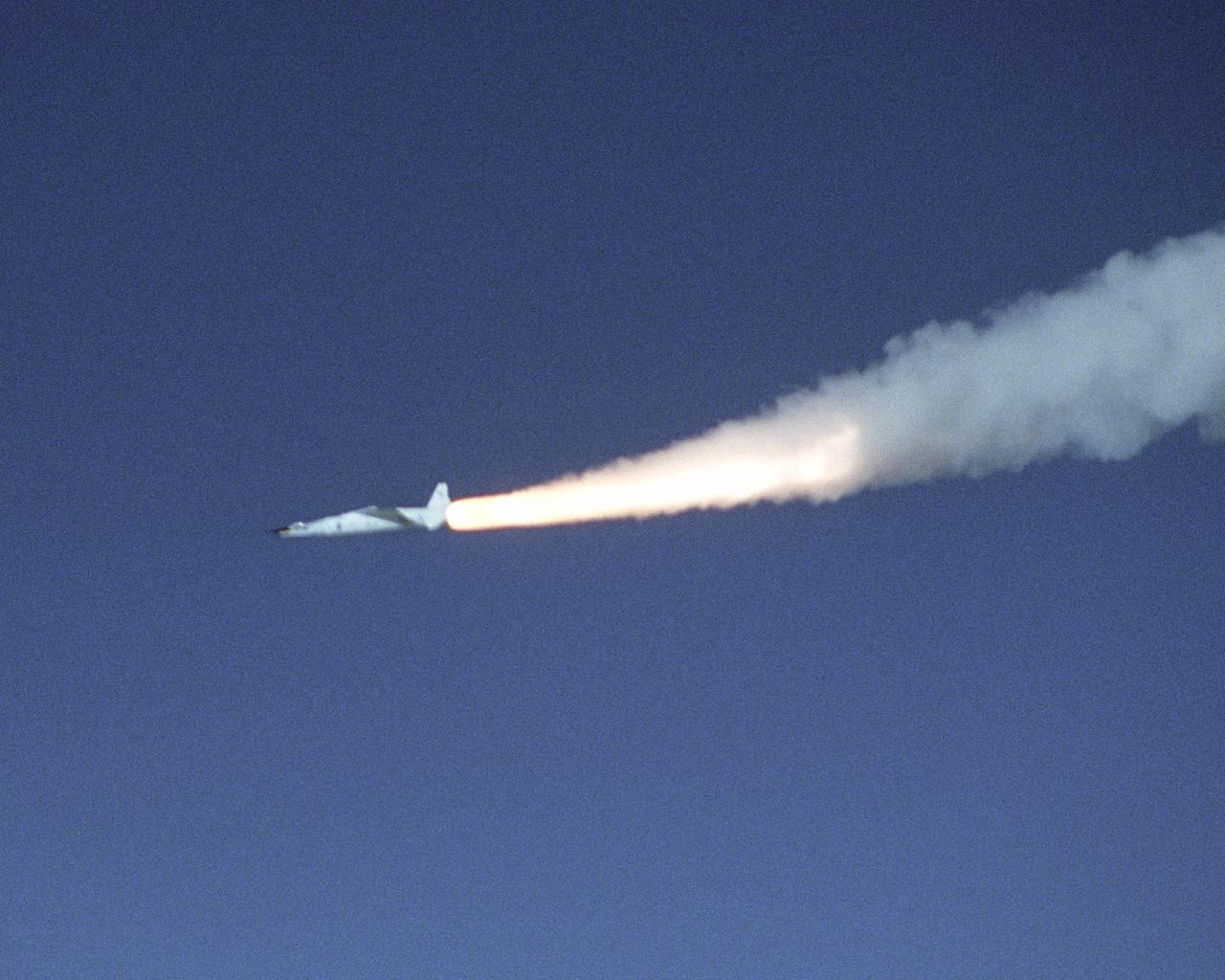
The Pegasus rocket that powered NASA's X-43A scramjet to almost Mach 10 test conditions leaves a bright arc in the Pacific sky during the boost phase.

NASA’s Armstrong Flight Research Center Director Brad Flick smiles as members of the DC-8 team gather and exchange congratulations after the aircraft and crew return to NASA Armstrong’s Building 703 in Palmdale, California, on April 1, 2024, following the aircraft’s final mission in support of the Airborne and Satellite Investigation of Asian Air Quality (ASIA-AQ).

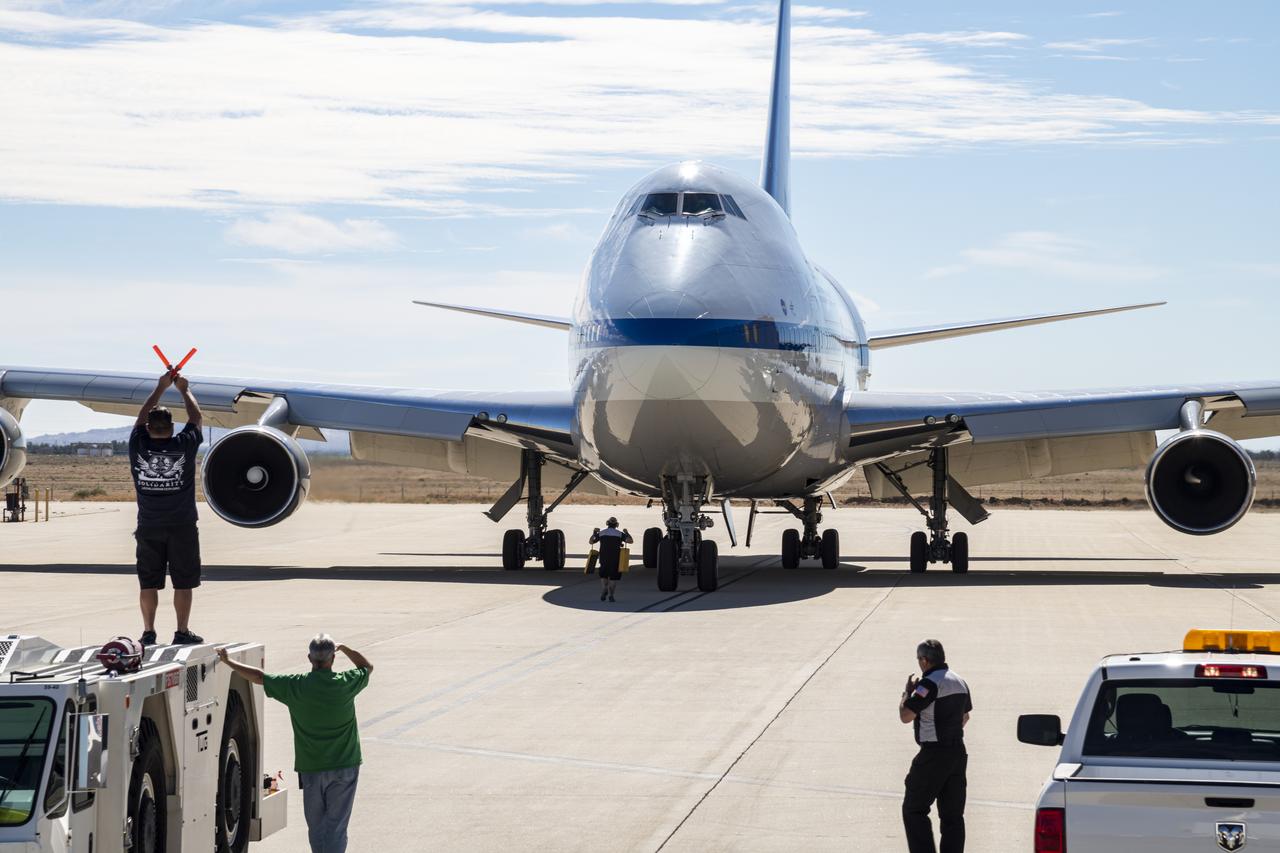
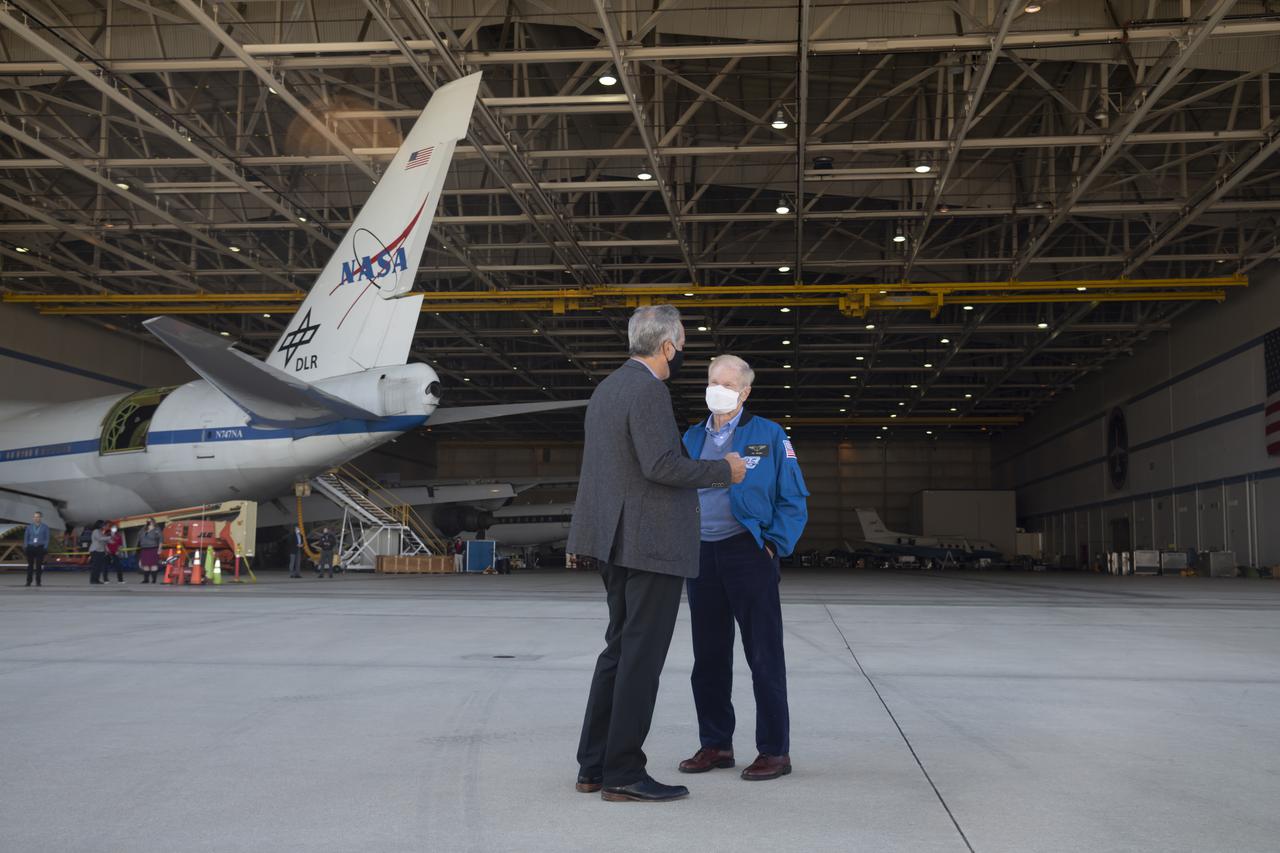
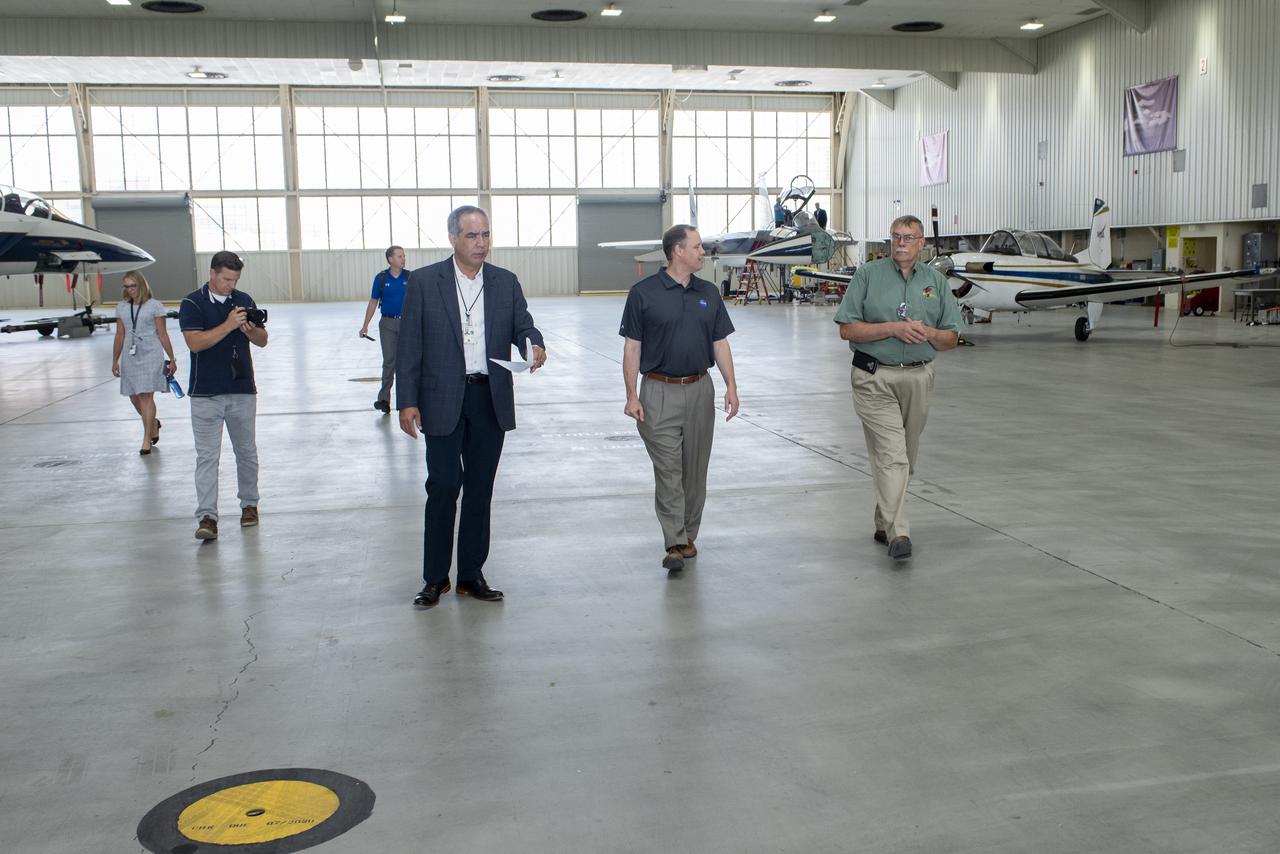
NASA Administrator Bill Nelson, right, and David McBride, center director at NASA’s Armstrong Flight Research Center in Edwards, California, talk by the Stratospheric Observatory for Infrared Science during the administrator’s visit to NASA Armstrong’s Building 703 in Palmdale, California, on Oct. 12.

NASA ground and maintenance crews prepare the F/A-18 research aircraft for a supersonic research flight off the coast of Galveston, Texas in support of the QSF18 flight campaign. These crews are vital to making sure the aircraft is ready to operate safely and efficiently for NASA’s research.

The Navmar Applied Sciences Corporation’s TigerShark prepares for its final takeoff at Edwards Air Force Base for the Unmanned Aircraft Systems integration in the National Airspace Systems, Flight Test Series Six (FT6) project. FT6 flight tests took place at NASA’s Armstrong Flight Research Center in California and focused on low size weight and power sensors for Detect and Avoid (DAA) operations in controlled airspace to inform the FAA through the RTCA Special Committee DAA Working Group on the phase 2 minimum operational performance standards for DAA and air-to-air radar.

Two large science aircraft, a DC-8 flying laboratory and the SOFIA 747SP, are based at NASA's Dryden Aircraft Operations Facility in Palmdale, Calif.

Students from Tropico Middle School in Rosamond, California, build their own paper planes as part of a project during NASA Aero Fair on April 9, 2025.

NASA's Advanced Air Mobility National Campaign conducts testing to study controllability characteristics when operating near buildings during heavy wind conditions at NASA's Armstrong Flight Research Center in Edwards, California, Dec. 6 and 8-10. The Bell OH-58 Kiowa helicopter provided by Flight Research Inc. was used to study urban air mobility vehicle performance and flying qualities requirements.

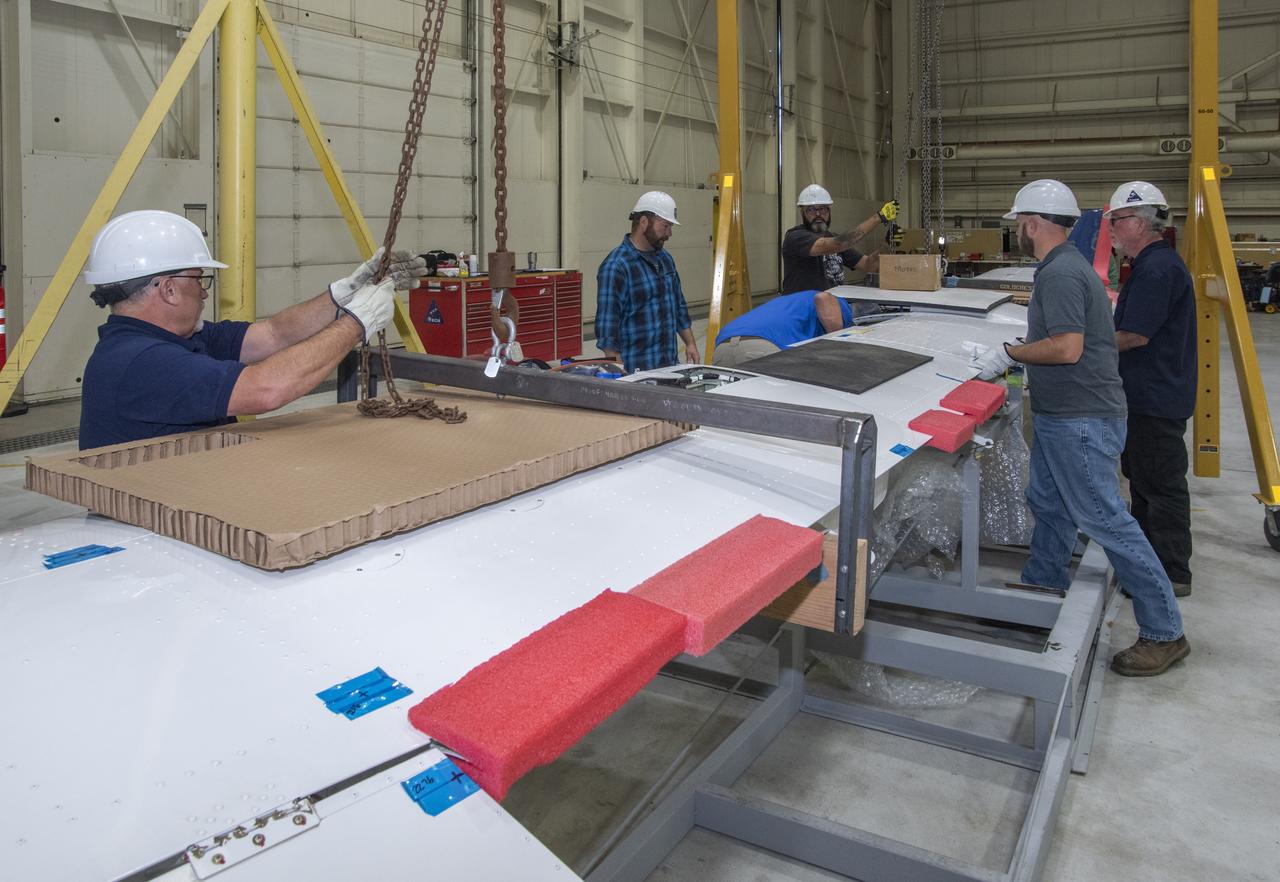
NASA’s all-electric X-57 Maxwell, in its Mod II configuration, arrives at NASA’s Armstrong Flight Research Center in Edwards, California. The X-plane was delivered by prime contractor Empirical Systems Aerospace of San Luis Obispo, California, in two parts, with the wing separated from the fuselage, to aid in a more timely delivery. X-57 is NASA’s first crewed X-plane in two decades, and seeks to further advance the design and airworthiness process for distributed electric propulsion technology for general aviation aircraft.

2004 NASA Dryden DC-8 flight crew. Left to Right: Edwin W. Lewis, Jr., Martin J. Trout, Richard G. Ewers, Craig R. Bomben, C. Gordon Fullerton (Chief Pilot), Mark Pestana, Douglas H. Baker, William Frederick Brockett, and Frank Batteas.

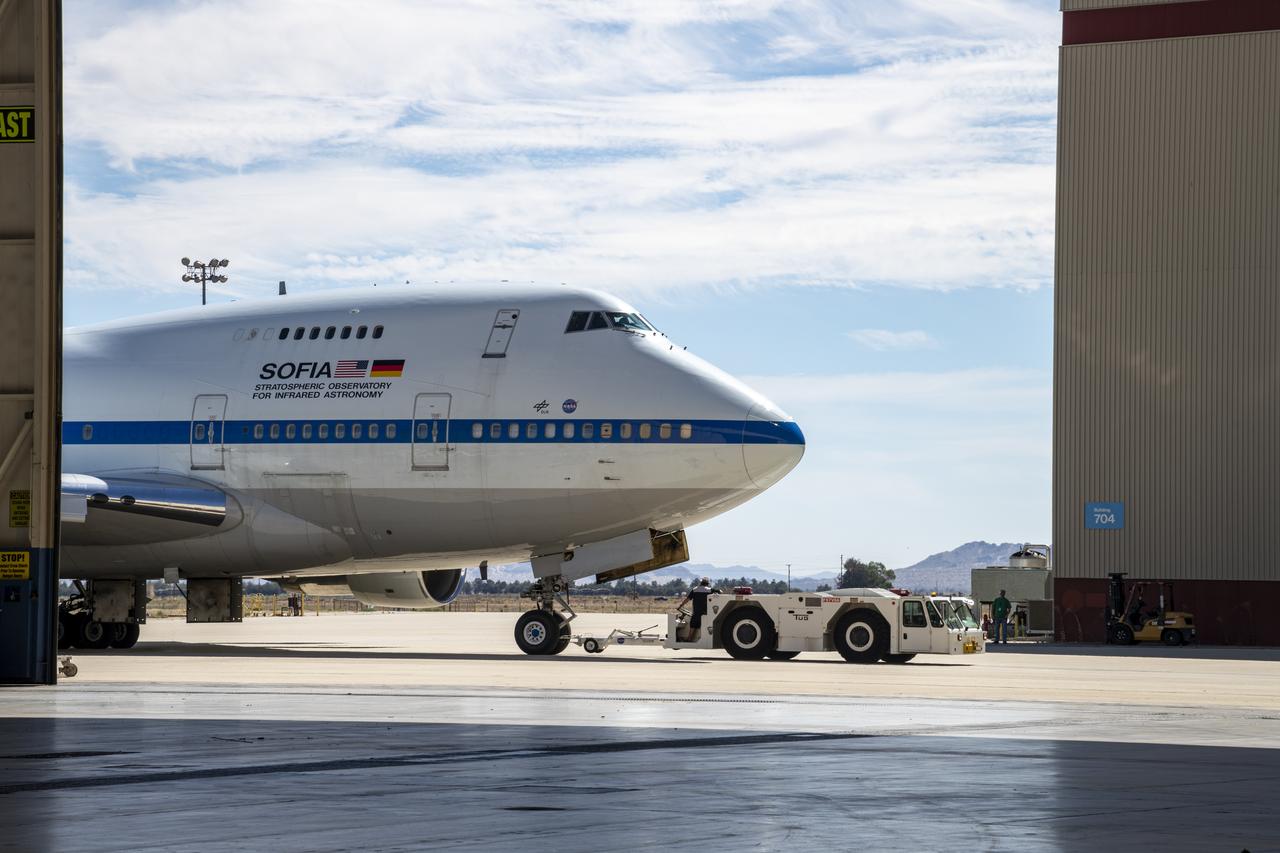
SOFIA Returns to NASA's Armstrong Flight Research Center Building 703 Caption: SOFIA returns to NASA's Armstrong Flight Research Center building 703 in Palmdale, California on March 16, 2021 after spending six months in Germany conducting science observations.

Peter Zorba Portrait, Director of Santa Susana Field Laboratory

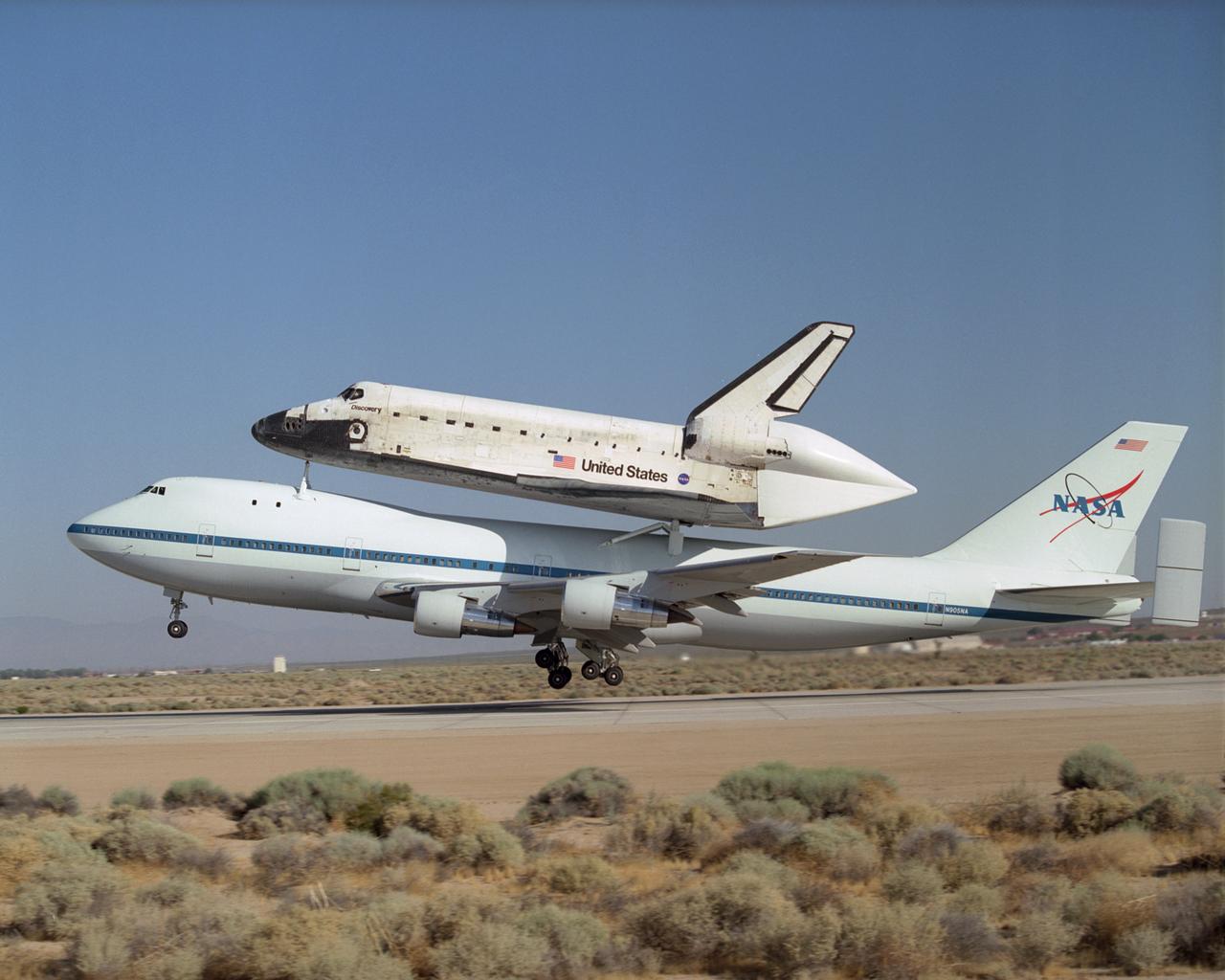
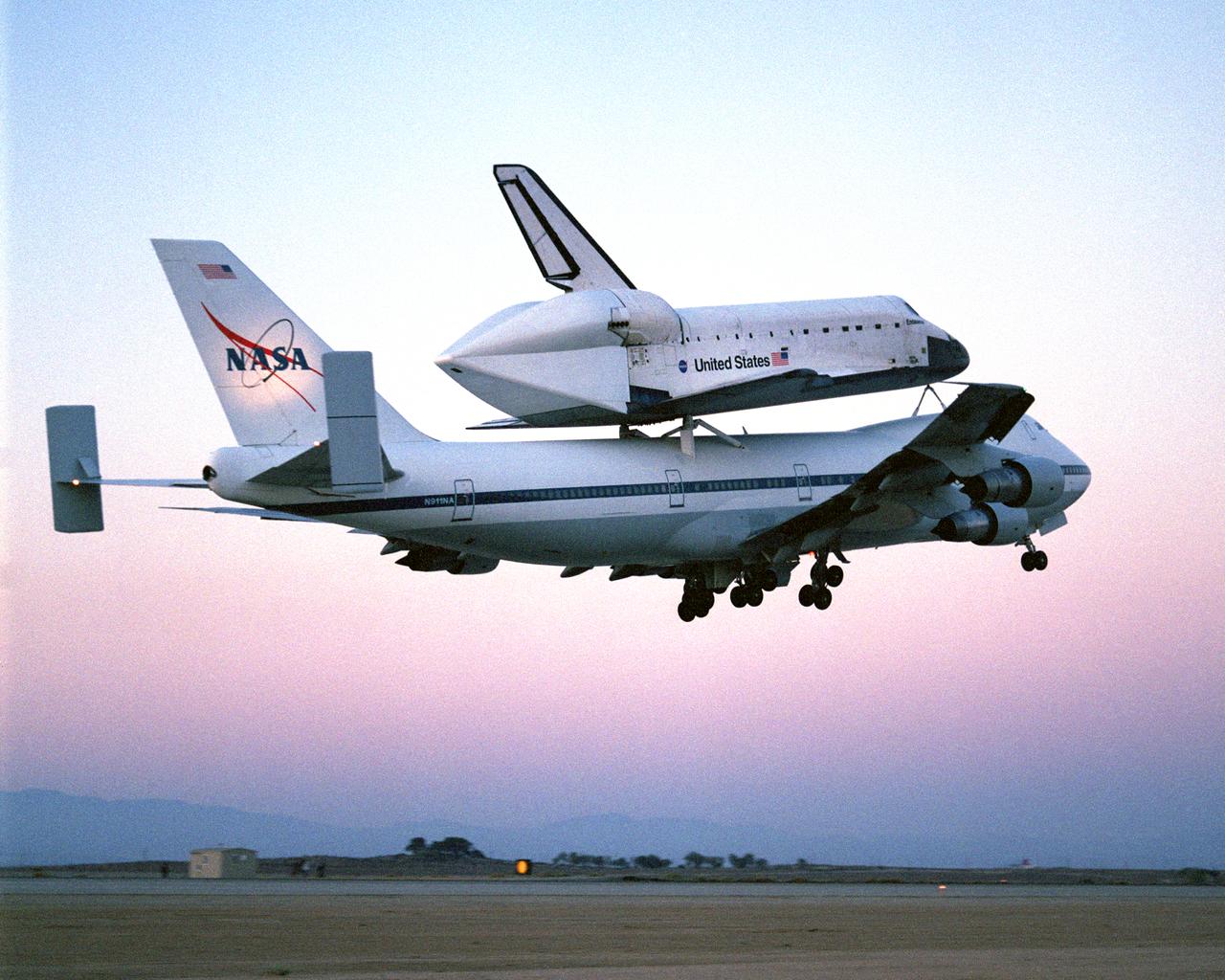
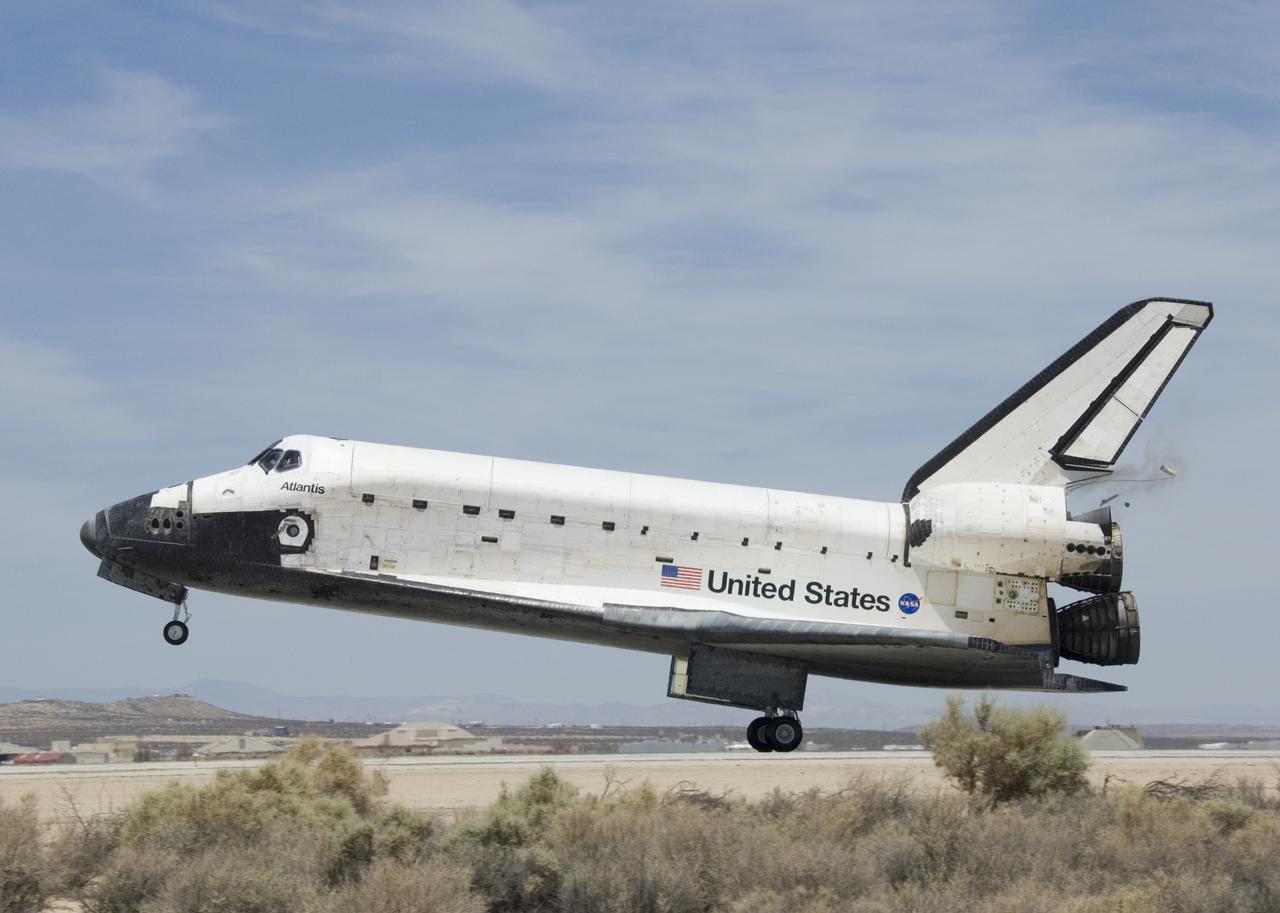
The Space Shuttle Endeavour, mounted securely atop one of NASA's modified Boeing 747 Shuttle Carrier Aircraft, left NASA's Dryden Flight Research Center at Edwards Air Force Base in Southern California at sunrise on Friday, June 28, nine days after concluding mission STS-111 to the International Space Station with a landing at Edwards.

NASA Armstrong’s ER-2 aircraft is uploaded with instruments for its ALOFT mission. The ER-2 will fly at high altitudes above the Floridian coastline to collect data about the energetic characteristics and behavior of lightning and thunderclouds. Scientists from the University of Bergen, Norway will interpret that data from the ground and collaborate with NASA pilots to safely collect the most accurate data for this project about the power of lightning.

Telemetry testing begins on the X-57 Maxwell, NASA's first all-electric X-plane, as the operations crew at NASA's Armstrong Flight Research Center records the results. Telemetry testing is a critical phase in X-57's functional test series. In addition to confirming the ability of the X-57 aircraft to transmit speed, altitude, direction, and location to teams on the ground, telemetry testing also confirms the ability to transmit mission-critical-data, such as voltage, power consumption, and structural integrity. X-57's goal is to help set certification standards for emerging electric aircraft markets.

NASA’s Student Airborne Research Program invites Dr. Ann Marie Carlton, Professor of Chemistry at the University of California, Irvine and White House Office of Science and Technology Policy fellow, to fly aboard the DC-8 to measure air quality on June 23, 2022.

NASA Dryden's Automated Aerial Refueling (AAR) project evaluated the capability of an F/A-18A aircraft as an in-flight refueling tanker with the objective of developing analytical models for an automated aerial refueling system for unmanned air vehicles. The F/A-18 "tanker" aircraft (No. 847) underwent flight test envelope expansion with an aerodynamic pod containing air-refueling equipment carried beneath the fuselage. The second aircraft (No. 843) flew as the receiver aircraft during the study to assess the free-stream hose and drogue dynamics on the F/A-18A.

Rocky Garcia and Wesley James prepare a weather balloon to collect wind data for the Advanced Exploration of Reliable Operation at Low Altitudes: Meteorology, Simulation and Technology campaign. The weather study was at NASA’s Armstrong Flight Research Center in Edwards, California. The focus was to study wind from the ground to 2,000 feet to provide data to assist future drones to safely land on rooftop hubs called vertiports and to potentially improve weather prediction.

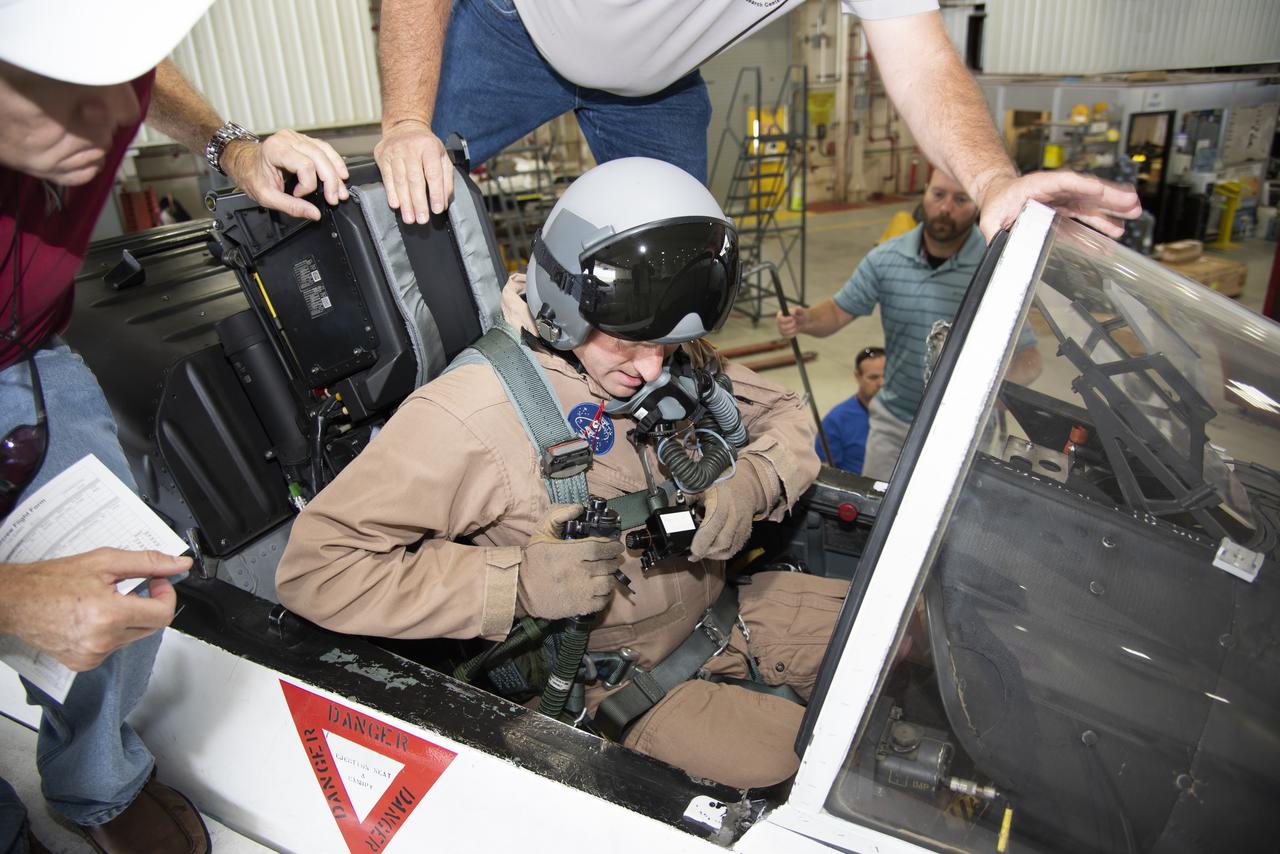
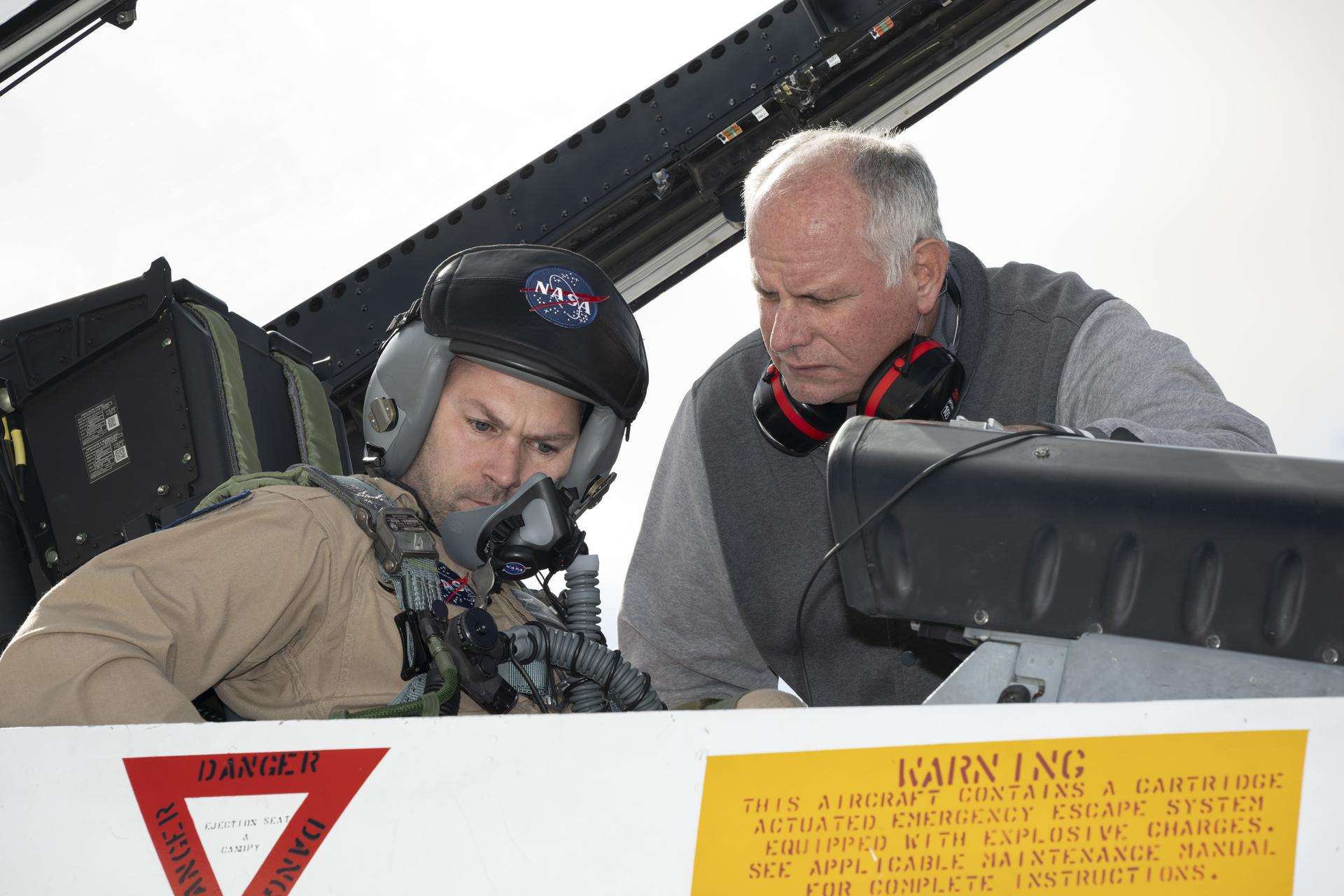
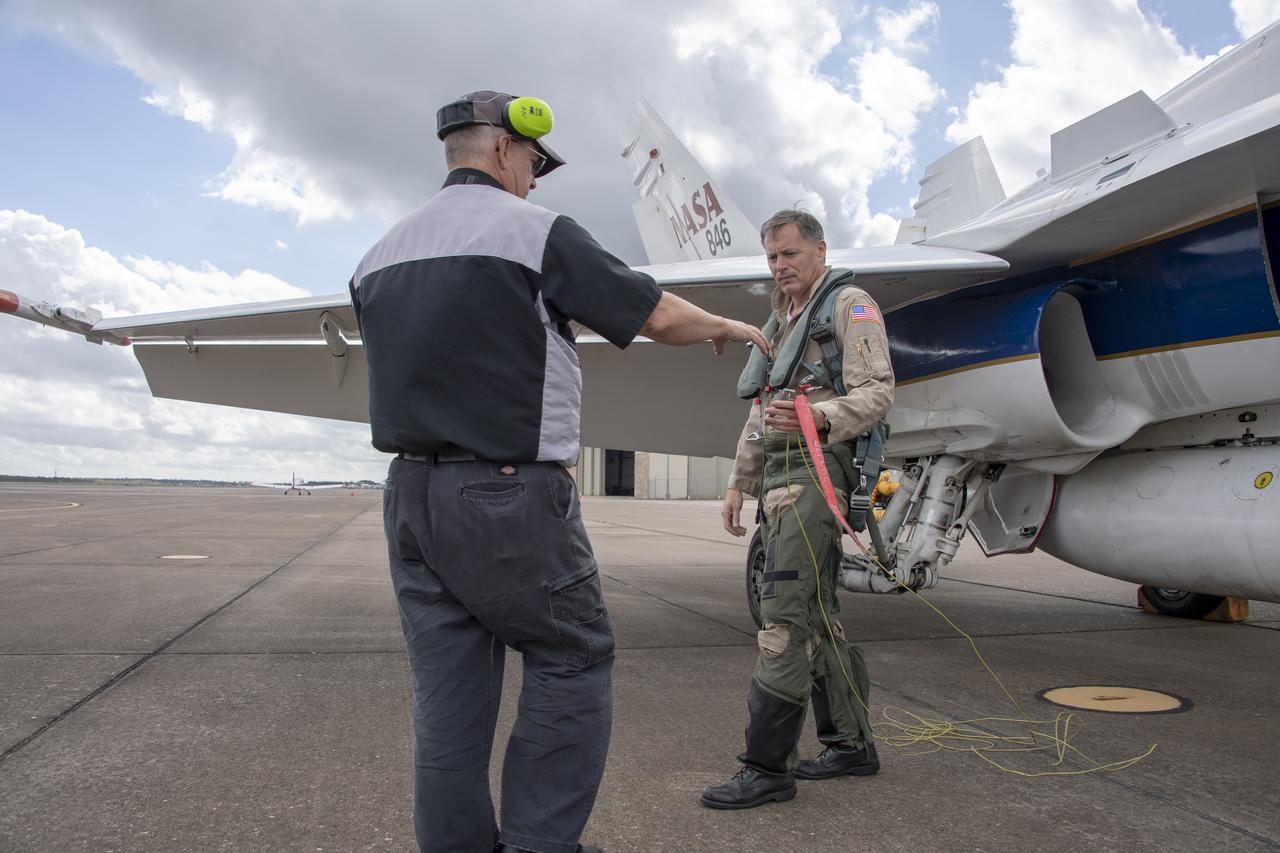
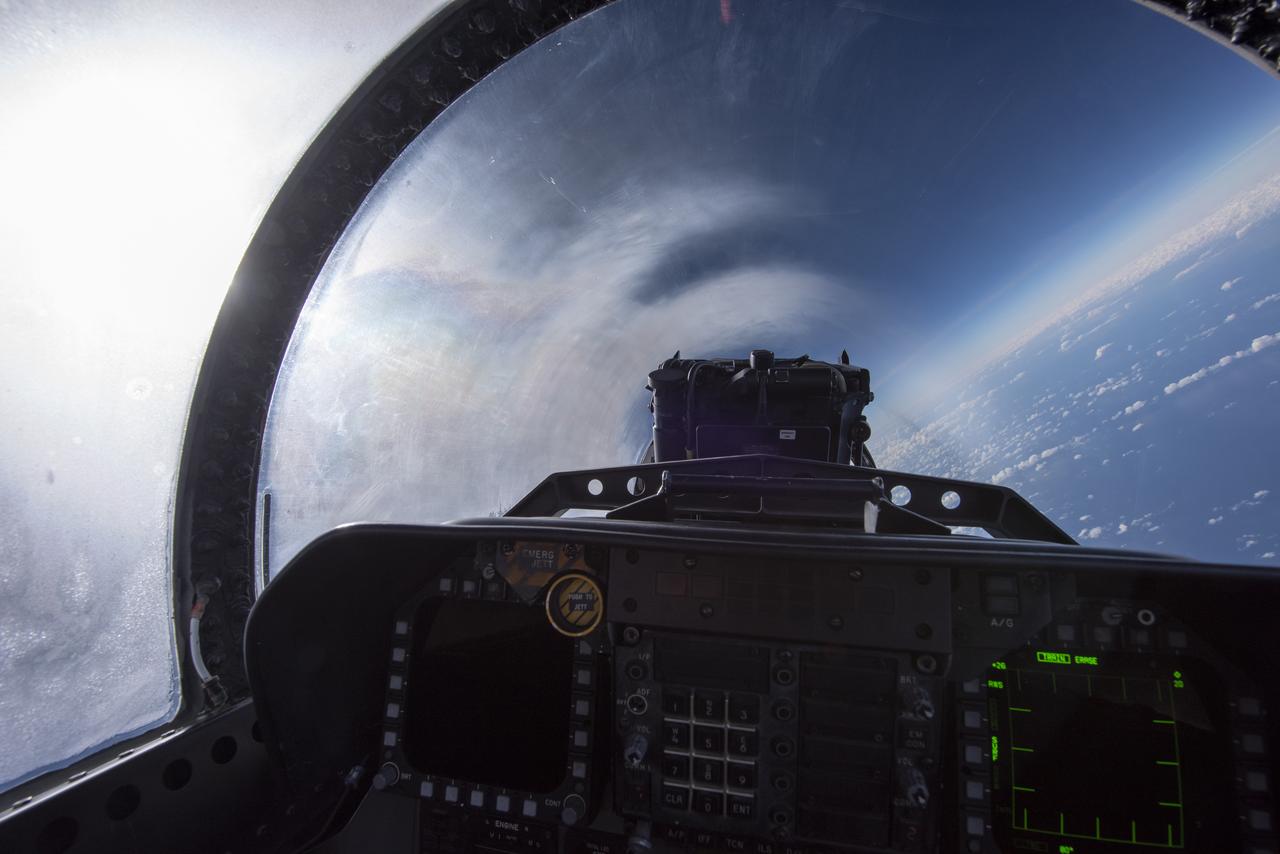
NASA Administrator Bridenstine, former navy pilot, sits comfortably back in F-18 jet cockpit at Armstrong Flight Research Center.

The ALOFT mission, Airborne Lightning Observatory for Fly’s eye simulator and Terrestrial gamma ray flashes, is a collaboration between NASA and the University of Bergen, Norway. NASA Armstrong Flight Research Center’s ER-2 aircraft flies just above the height of thunderclouds over the Floridian and Caribbean coastlines to collect data about lightning glows and terrestrial gamma ray flashes. Scientists expect to collect more accurate data than ever before that can advance the study of high-energy radiation emissions from thunderstorms.

NASA's Boeing 747SP SOFIA airborne observatory soars over a bed of puffy clouds during its second checkout flight over the Texas countryside on May 10, 2007.

NASA’s DC-8 aircraft from Armstrong Flight Research Center in Edwards, California flies to Everett, Washington to conduct science research about reducing engine particle emissions. Partners include Boeing, United, General Electric Aerospace, German Aerospace Center (DLR), the FAA, and World Energy. Boeing’s new passenger aircraft uses revolutionary Sustainable Aviation Fuel, SAF, and NASA’s DC-8 flies behind the Boeing plane to measure its impact throughout flight. The results of this study will be released publicly to facilitate the improvement of aviation technology worldwide.

More than 250 VIPs, news media and guests joined NASA, DLR, USRA and other SOFIA staff for the debut of the airborne observatory at NASA DFRC on June 27, 2007.

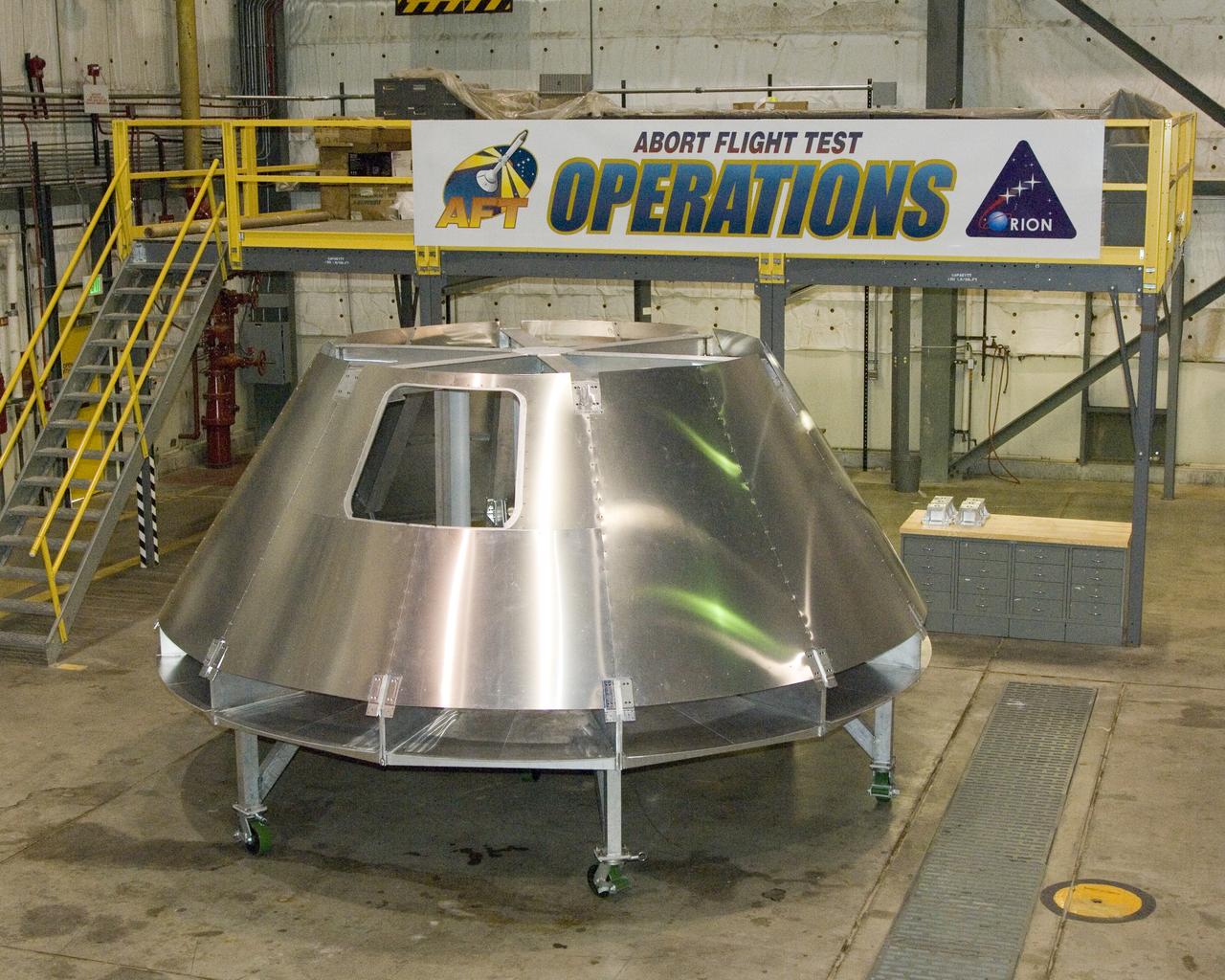
April Torres and Kyle Dauk set up for a thermal test of components in the Environmental Laboratory at NASA’s Armstrong Flight Research Center in California. The components are part of the center’s work on the Orion AA-2 vehicle that is scheduled for a flight test in 2019.

A United States Air Force Test Pilot School Blanik L-23 glider carrying a microphone and a pressure transducer flies near a BADS (Boom Amplitudes Direction System) sensor following flight at an altitude of 10 thousand feet under the path of the F-5E SSBE aircraft. The SSBE (Shaped Sonic Boom Experiment) was formerly known as the Shaped Sonic Boom Demonstration, or SSBD, and is part of DARPA's Quiet Supersonic Platform (QSP) program. On August 27, 2003, the F-5E SSBD aircraft demonstrated a method to reduce the intensity of sonic booms.

NASA's ER-2 aircraft is prepared for a check flight by Eric Hintsa, scientist of the Unmanned Aircraft Systems (UAS) Chromatograph for Atmospheric Trace Species (UCATS) instrument, on May 13, 2022.

NASA’s DC-8 aircraft from Armstrong Flight Research Center in Edwards, California flies to Everett, Washington to conduct science research about reducing engine particle emissions. Partners include Boeing, United, General Electric Aerospace, German Aerospace Center (DLR), the FAA, and World Energy. Boeing’s new passenger aircraft uses revolutionary Sustainable Aviation Fuel, SAF, and NASA’s DC-8 flies behind the Boeing plane to measure its impact throughout flight. The results of this study will be released publicly to facilitate the improvement of aviation technology worldwide.

Dryden-built surgical suture instrument

Alan Hills fills liquid nitrogen in the Trace Organic Gas Analyzer (TOGA) instrument onboard the DC-8 aircraft at Building 703 in Palmdale, CA. This instrument measures volatile organic compounds (VOCs) in the atmosphere. The DC-8 aircraft is prepared for its last mission, ASIA-AQ (Airborne and Satellite Investigation of Asian Air Quality), that will collect detailed air quality data over several locations in Asia to improve the understanding of local air quality in collaboration with local scientists, air quality agencies, and government partners

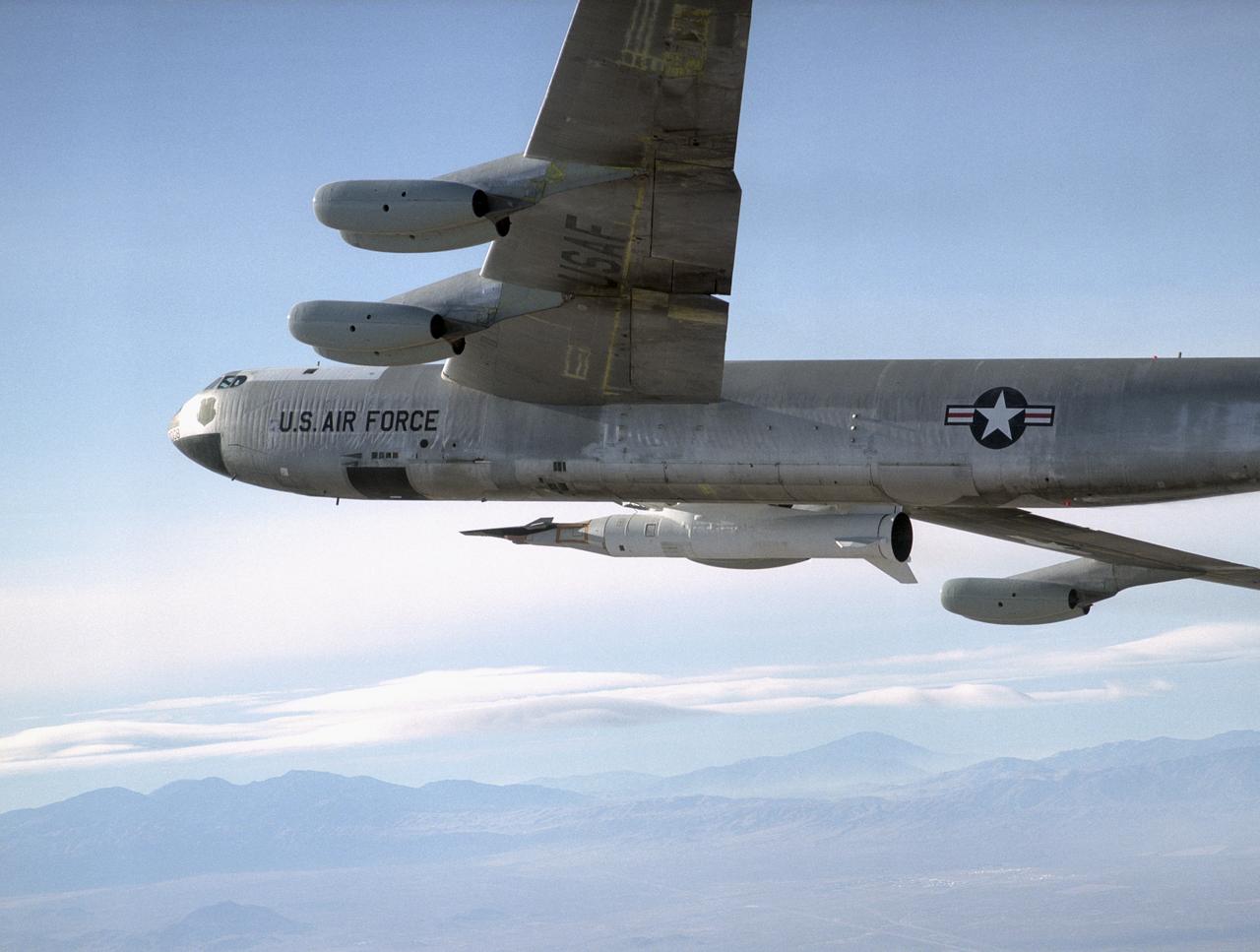
B-52 Launch Aircraft in Flight

The Larsen Ice Shelf in Antarctica viewed from NASA's DC-8 aircraft during the AirSAR 2004 campaign. AirSAR 2004 is a three-week expedition in Central and South America by an international team of scientists that is using an all-weather imaging tool, called the Airborne Synthetic Aperture Radar (AirSAR), located onboard NASA's DC-8 airborne laboratory. Scientists from many parts of the world are combining ground research with NASA's AirSAR technology to improve and expand on the quality of research they are able to conduct. These photos are from the DC-8 aircraft while flying an AirSAR mission over Antarctica. The Antarctic Peninsula is more similar to Alaska and Patagonia than to the rest of the Antarctic continent. It is drained by fast glaciers, receives abundant precipitation, and melts significantly in the summer months. In recent decades, the Peninsula has experienced significant atmospheric warming (about 2 degrees C since 1950), which has triggered a vast and spectacular retreat of its floating ice shelves, glacier reduction, a decrease in permanent snow cover and a lengthening of the melt season. As a result, the contribution to sea level from this region could be rapid and substantial. With an area of 120,000 km, or ten times the Patagonia ice fields, the Peninsula could contribute as much as 0.4mm/yr sea level rise, which would be the largest single contribution to sea level from anywhere in the world. This region is being studied by NASA using a DC-8 equipped with the Airborne Synthetic Aperture Radar developed by scientists from NASA’s Jet Propulsion Laboratory. AirSAR will provide a baseline model and unprecedented mapping of the region. This data will make it possible to determine whether the warming trend is slowing, continuing or accelerating. AirSAR will also provide reliable information on ice shelf thickness to measure the contribution of the glaciers to sea level.

The Navmar Applied Sciences Corporation’s TigerShark prepares for its final takeoff at Edwards Air Force Base for the Unmanned Aircraft Systems integration in the National Airspace Systems, Flight Test Series Six (FT6) project. FT6 flight tests took place at NASA’s Armstrong Flight Research Center in California and focused on low size weight and power sensors for Detect and Avoid (DAA) operations in controlled airspace to inform the FAA through the RTCA Special Committee DAA Working Group on the phase 2 minimum operational performance standards for DAA and air-to-air radar.

NASA test pilots perform the quiet supersonic dive maneuver off the coast of Galveston, Texas to create a quieter version of the sonic boom, in order to obtain recruited community survey feedback data. The test pilot climbs to around 50,000 feet, followed by a supersonic, inverted dive. This creates sonic boom shockwaves in a way that they are quieter in a specific area. Meanwhile, NASA researchers match community feedback to the sound levels of the flights, using an electronic survey and microphone monitor stations on the ground. This is preparing NASA for community response models for the future X-59 QueSST.

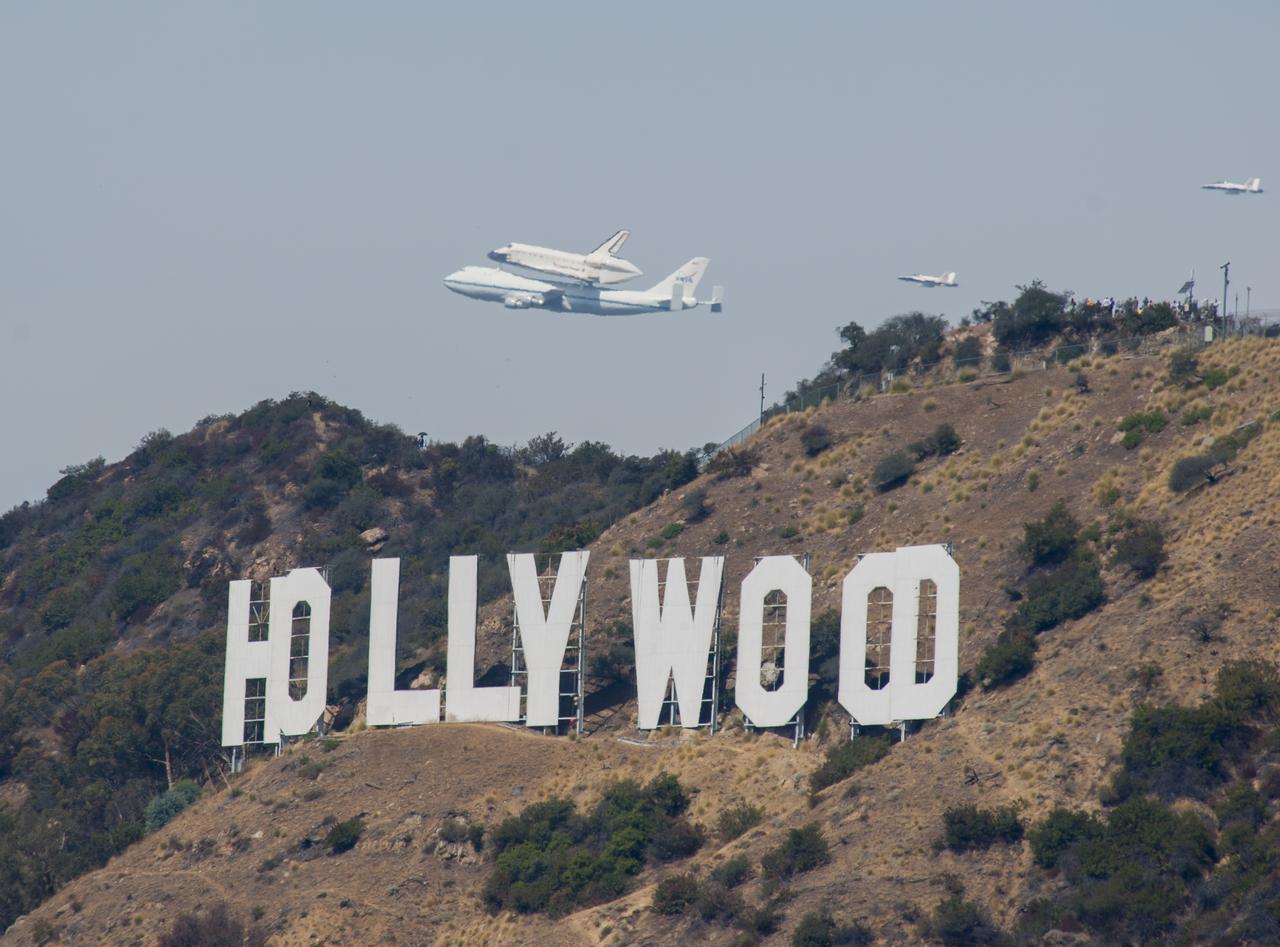
Space shuttle Endeavour and its host NASA 747 Shuttle Carrier Aircraft fly over Disneyland in 2012 on its way to the Los Angeles International Airport, and an overland journey to the California Science Center. Californians gazed at the morning sky Sept. 21 looking to see Endeavour over their community. The final leg of Endeavour’s flight from NASA’s Kennedy Space Center, Florida, offered many people an opportunity to witness the historic flight.

A Bell OH-58C Kiowa helicopter provided by Flight Research Inc. in Mojave, California, sits on a helipad at NASA’s Armstrong Flight Research Center in California the first week of December 2020. The Advanced Air Mobility National Campaign project used the helicopter as a surrogate urban air mobility vehicle to develop and implement infrastructure, including the markings seen in the image, to support safe operations of these vehicles. Â

Arrived at NASA FRC January 9, 1963 Departed September 10, 1973 to Redding, California This aircraft, one of four T-33A jet trainers which NASA Dryden used from 1958 to 1973, was used in a monocular vision landing study. The T-33 was the first U.S. Air Force jet trainer, and was originally developed as a two-seat version of the F-80. The T-33 was used by not only the U.S. military, but also by foreign air forces as a trainer, fighter, and reconnaissance aircraft.

While NASA's F/A-18 goes supersonic off the coast, a team of researchers monitor the flight and operate multiple sound monitor stations around Galveston and its surrounding area. This allows NASA to obtain accurate sound level data, which gets matched to community response data.

The Moon is seen passing in front of the Sun during a total solar eclipse on Monday, August 21, 2017 from onboard a NASA Gulfstream III aircraft flying 25,000 feet above the Oregon coast. A total solar eclipse swept across a narrow portion of the contiguous United States from Lincoln Beach, Oregon to Charleston, South Carolina. A partial solar eclipse was visible across the entire North American continent along with parts of South America, Africa, and Europe. Photo Credit: (NASA/Carla Thomas)

NASA Armstrong’s Student Airborne Research Program celebrates 15 years of success in 2023. An eight-week summer internship program, SARP offers upper-level undergraduate students the opportunity to acquire hands-on research experience as part of a scientific campaign using NASA Airborne Science Program flying science laboratories—aircraft outfitted specifically for research projects. Students onboard NASA’s DC-8 aircraft, the largest flying science laboratory in the world, help scientists from NOAA, the National Oceanic and Atmospheric Administration with a science project investigating air quality and non-vehicular pollution sources called AEROMMA, which measures Atmospheric Emissions and Reactions Observed from Megacities to Marine Areas. In 2023, NASA also introduced a sister program, SARP East to complement the West Coast program.

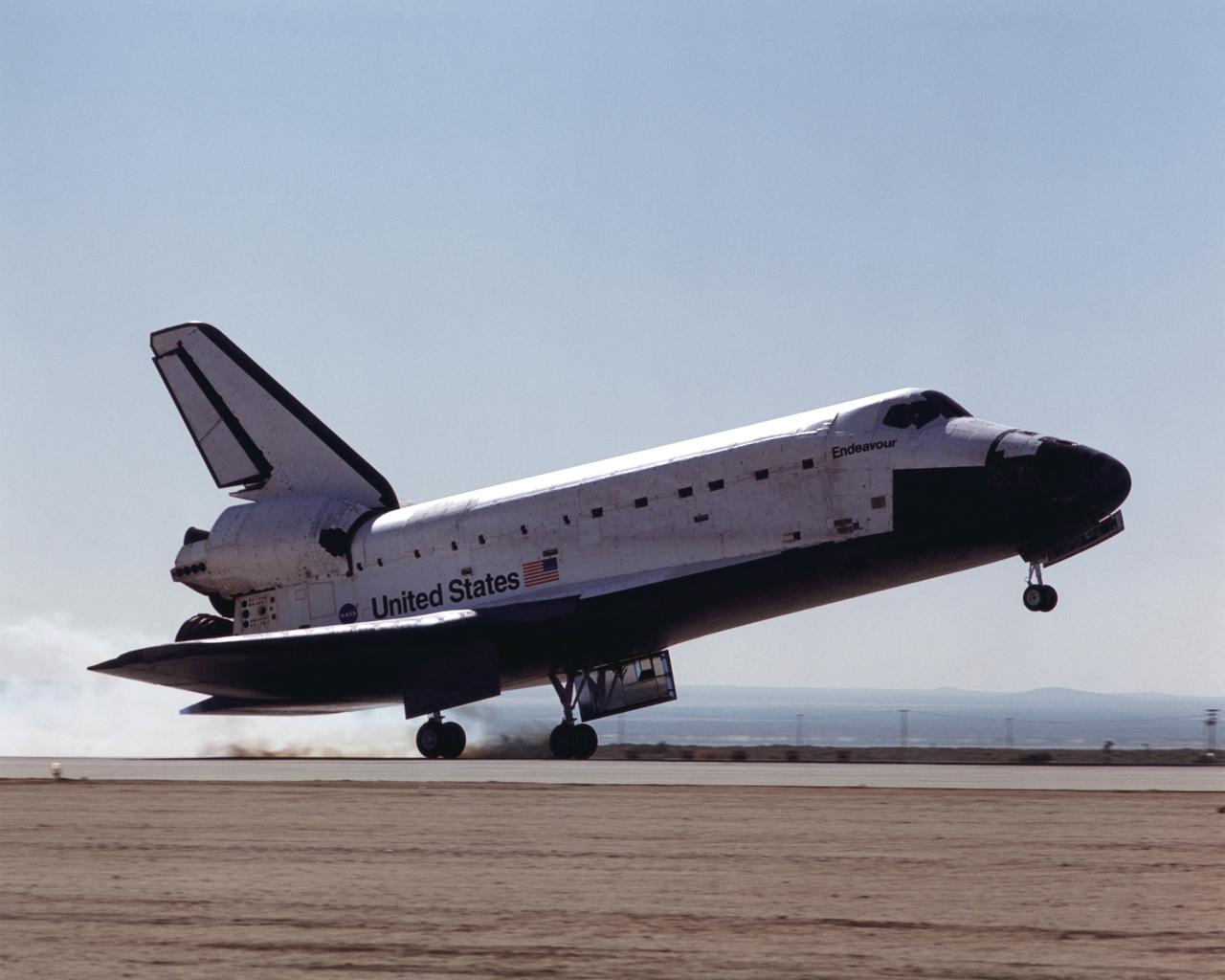
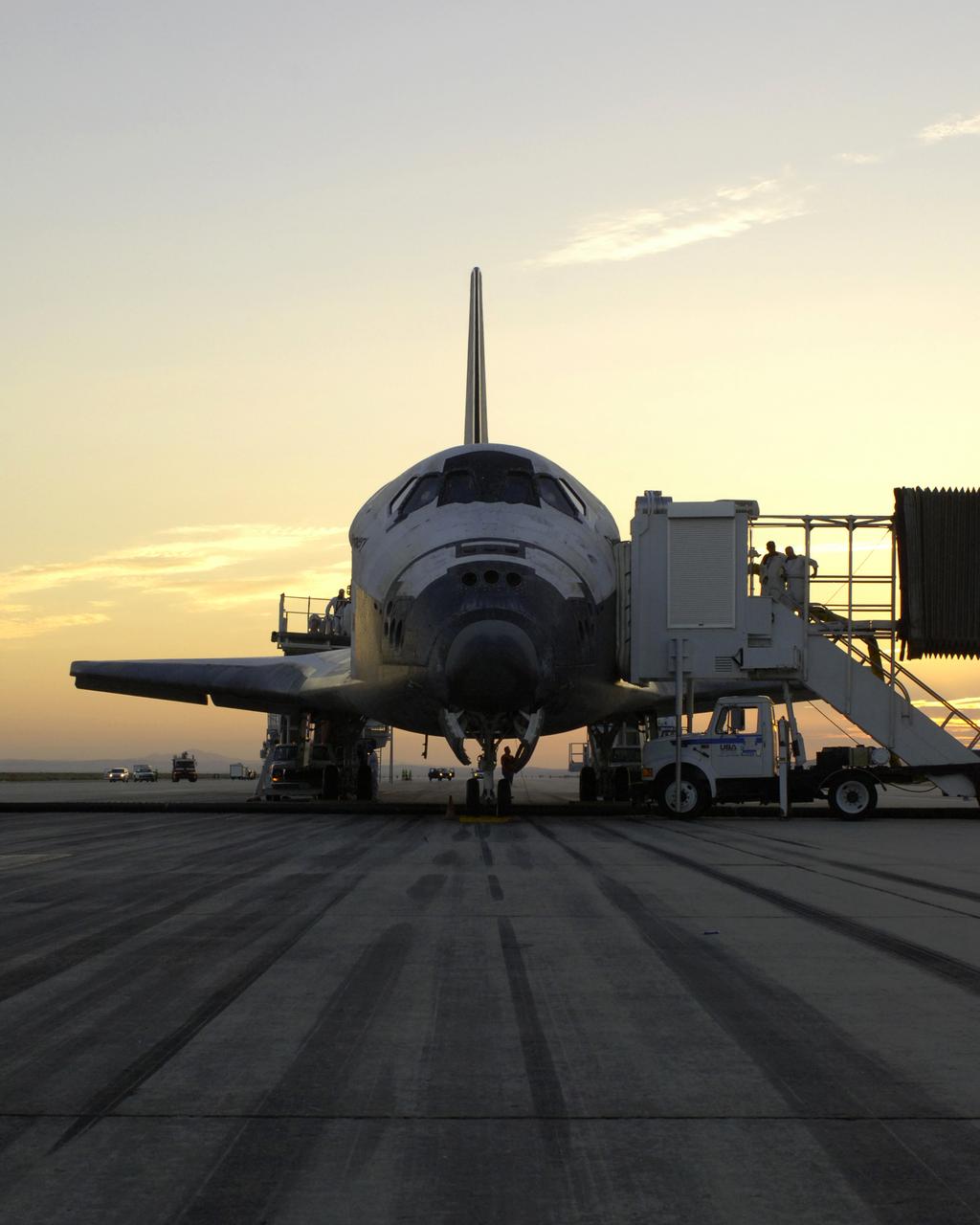
As dusk settles over Edwards Air Force Base, NASA technicians hook up various ground-support systems before shuttle Endeavour is towed off the landing runway.

NASA's F-15B testbed aircraft undergoes pre-flight checks before performing the first flight of the Quiet Spike project. The first flight was performed for evaluation purposes, and the spike was not extended. The Quiet Spike was developed as a means of controlling and reducing the sonic boom caused by an aircraft 'breaking' the sound barrier.

NASA’s DC-8 aircraft from Armstrong Flight Research Center in Edwards, California flies to Everett, Washington to conduct science research about reducing engine particle emissions. Partners include Boeing, United, General Electric Aerospace, German Aerospace Center (DLR), the FAA, and World Energy. Boeing’s new passenger aircraft uses revolutionary Sustainable Aviation Fuel, SAF, and NASA’s DC-8 flies behind the Boeing plane to measure its impact throughout flight. The results of this study will be released publicly to facilitate the improvement of aviation technology worldwide.

Housed at NASA Armstrong Flight Research Center in Edwards, California, the Advanced Air Mobility project's National Campaign upgraded the Mobile Operations Facility, pictured here on July 20, 2022. This command center on wheels is a key piece of NASA's AAM testing.

NASA Dryden Mission Manager Walter Klein poses with school children that visited the airport during AirSAR 2004. In spanish, he explained to them the mission of the DC-8 AirSAR 2004 Mesoamerican campaign in Costa Rica. AirSAR 2004 Mesoamerica is a three-week expedition by an international team of scientists that uses an all-weather imaging tool, called the Airborne Synthetic Aperture Radar (AirSAR) which is located onboard NASA's DC-8 airborne laboratory. Scientists from many parts of the world including NASA's Jet Propulsion Laboratory are combining ground research done in several areas in Central America with NASA's AirSAR technology to improve and expand on the quality of research they are able to conduct. The radar, developed by NASA's Jet Propulsion Laboratory, can penetrate clouds and also collect data at night. Its high-resolution sensors operate at multiple wavelengths and modes, allowing AirSAR to see beneath treetops, through thin sand, and dry snow pack. AirSAR's 2004 campaign is a collaboration of many U.S. and Central American institutions and scientists, including NASA; the National Science Foundation; the Smithsonian Institution; National Geographic; Conservation International; the Organization of Tropical Studies; the Central American Commission for Environment and Development; and the Inter-American Development Bank.

Telemetry testing begins on the X-57 Maxwell, NASA’s first all-electric X-plane, as the operations crew at NASA’s Armstrong Flight Research Center records the results. Telemetry testing is a critical phase in X-57’s functional test series. In addition to confirming the ability of the X-57 aircraft to transmit speed, altitude, direction, and location to teams on the ground, telemetry testing also confirms the ability to transmit mission-critical-data, such as voltage, power consumption, and structural integrity. X-57’s goal is to help set certification standards for emerging electric aircraft markets.

NASA Armstrong’s ER-2 aircraft is uploaded with instruments for its ALOFT mission. The ER-2 will fly at high altitudes above the Floridian coastline to collect data about the energetic characteristics and behavior of lightning and thunderclouds. Scientists from the University of Bergen, Norway will interpret that data from the ground and collaborate with NASA pilots to safely collect the most accurate data for this project about the power of lightning.

The X-56B remotely piloted aircraft ground crew prepares the aircraft to begin a new flight series. The flight was April 19 at NASA's Armstrong Flight Research Center in Edwards, California, with partner Northrop Grumman.

B-52 Launch Aircraft in Flight

The flight operations crew for NASA’s QSF18 flight series debriefs following a flight with the F/A-18 research aircraft. The flight included a quiet supersonic dive maneuver at high altitudes off the coast to produce a sonic boom out over the ocean, with the intention of producing quieter “thumps” on land.

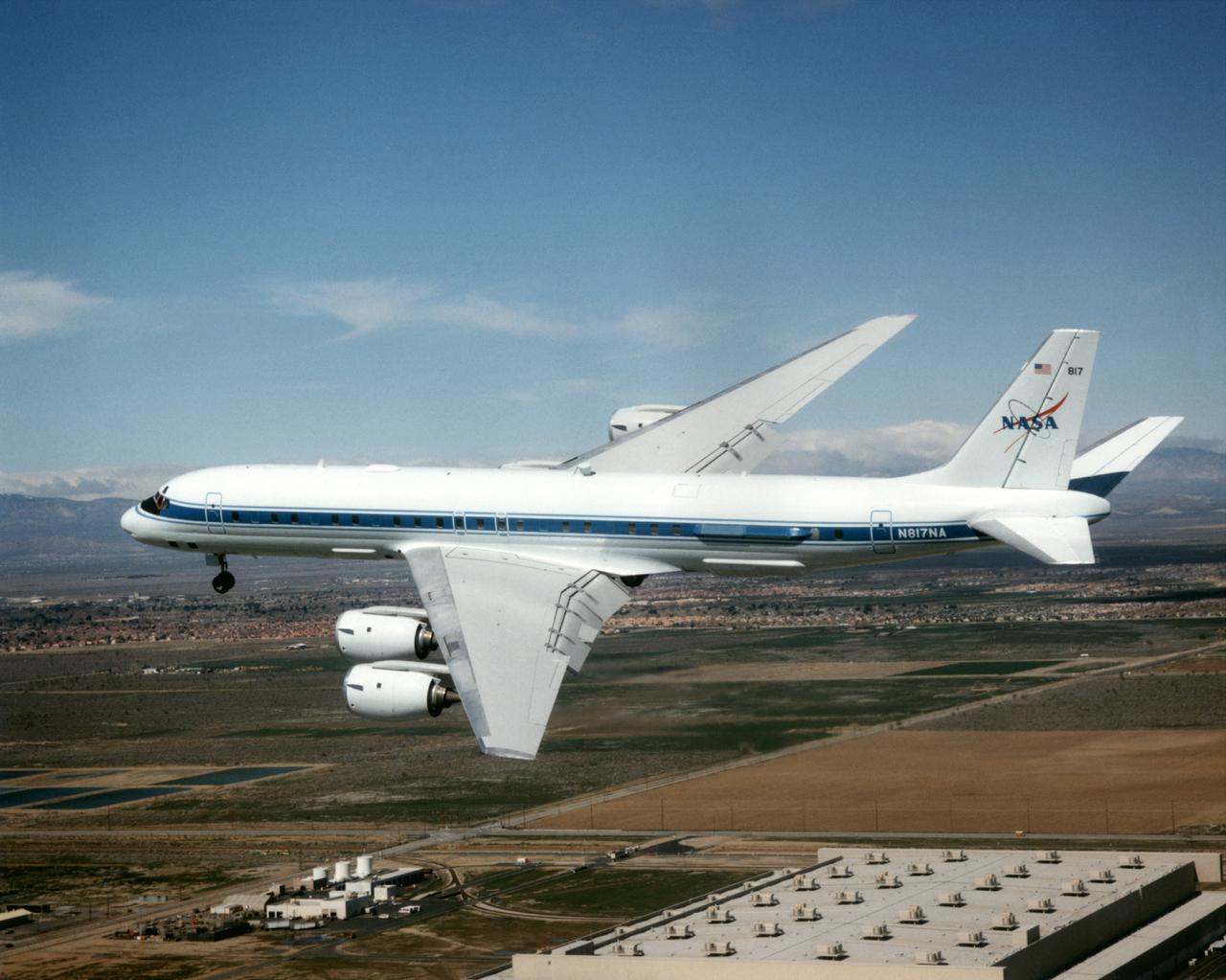
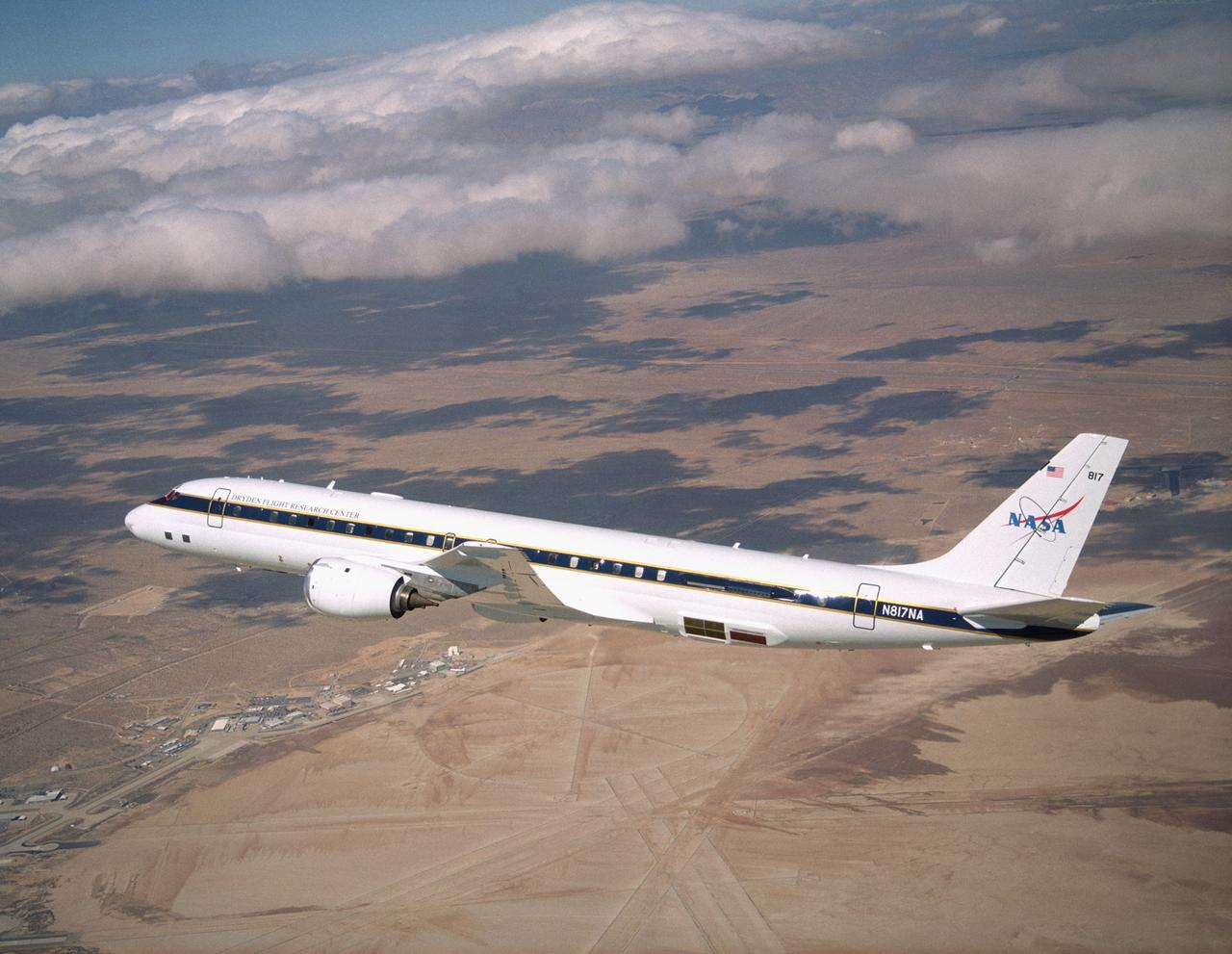
DC-8 Airborne Laboratory in flight

Robotics teams gather on the main floor of the 2025 Aerospace Valley FIRST Robotics Competition at Eastside High School in Lancaster, California, adjusting and testing the functions of their robots, on April 3, 2025