SCI2016_0001: SOFIA/GREAT [O I] spectrum at 4.7 THz (63 μm) superimposed on a picture of Mars. Absorption line depth is approximately 10% of the continuum. The abundance of atomic oxygen computed from the data is less than expected from the Forget et al. 1999 global circulation & photochemical model. Credit: SOFIA/GREAT spectrum: NASA/DLR/USRA/DSI/MPIfR/GREAT Consortium/MPIfS/Rezac et al. 2015; Mars image: NASA
SOFIA Science Imagery
SCI2012_0003: SOFIA mid-infrared image of the planetary nebula Minkowski 2-9 (M2-9), also known as the Butterfly Nebula, compared with a visual-wavelength Hubble Space Telescope image at the same scale and orientation. The nebula is composed of two lobes of gas & dust expelled from a dying star with about the mass of our Sun that is seen at the center of the lobes. The HST image shows mostly ionized gas in the lobes whereas the SOFIA image shows mostly solid grains condensing in the gas. The SOFIA data were obtained during SOFIA's Early Science program in 2011 by a Guest Investigator team led by Michael Werner of Caltech/JPL using the FORCAST camera (P.I.Terry Herter, Cornell University). Credit: SOFIA image, RGB = 37, 24, 20 microns; NASA/DLR/USRA/DSI/FORCAST team/M. Werner et al./A. Helton,  J. Rho; HST image: NASA/ESA/NSF/AURA/Hubble Heritage Team/STScI/B. Balick, V. Icke, G. Mellema
SOFIA Science Imagery
SCI2017_0004: Artist's illustration of the Epsilon Eridani system showing Epsilon Eridani b, right foreground, a Jupiter-mass planet orbiting its parent star at the outside edge of an asteroid belt. In the background can be seen another narrow asteroid or comet belt plus an outermost belt similar in size to our solar system's Kuiper Belt. The similarity of the structure of the Epsilon Eridani system to our solar system is remarkable, although Epsilon Eridani is much younger than our sun. SOFIA observations confirmed the existence of the asteroid belt adjacent to the orbit of the Jovian planet. Credit: NASA/SOFIA/Lynette Cook
Epsilon Eridani Inner Asteroid Belt
SCI2016_0006: Map of Cepheus E emphasizing the jets of material flowing to the upper left and lower right from the protostar. The protostar itself is the central yellow-red 'blob" in the colored background map of hydrogen emission made at a wavelength of 4.5 microns by the Spitzer infrared space telescope. The contour curves show the strength of emission from cool carbon monoxide gas measured by the Plateau de Bure radio telescope located in the French Alps. Lefloch et al. used GREAT on SOFIA to measure the amount and velocity of hot carbon monoxide gas at multiple positions along both "wings" of the outflow jet. Credit: Lefloch et al. 2015 Figure 1
SOFIA Science Imagery
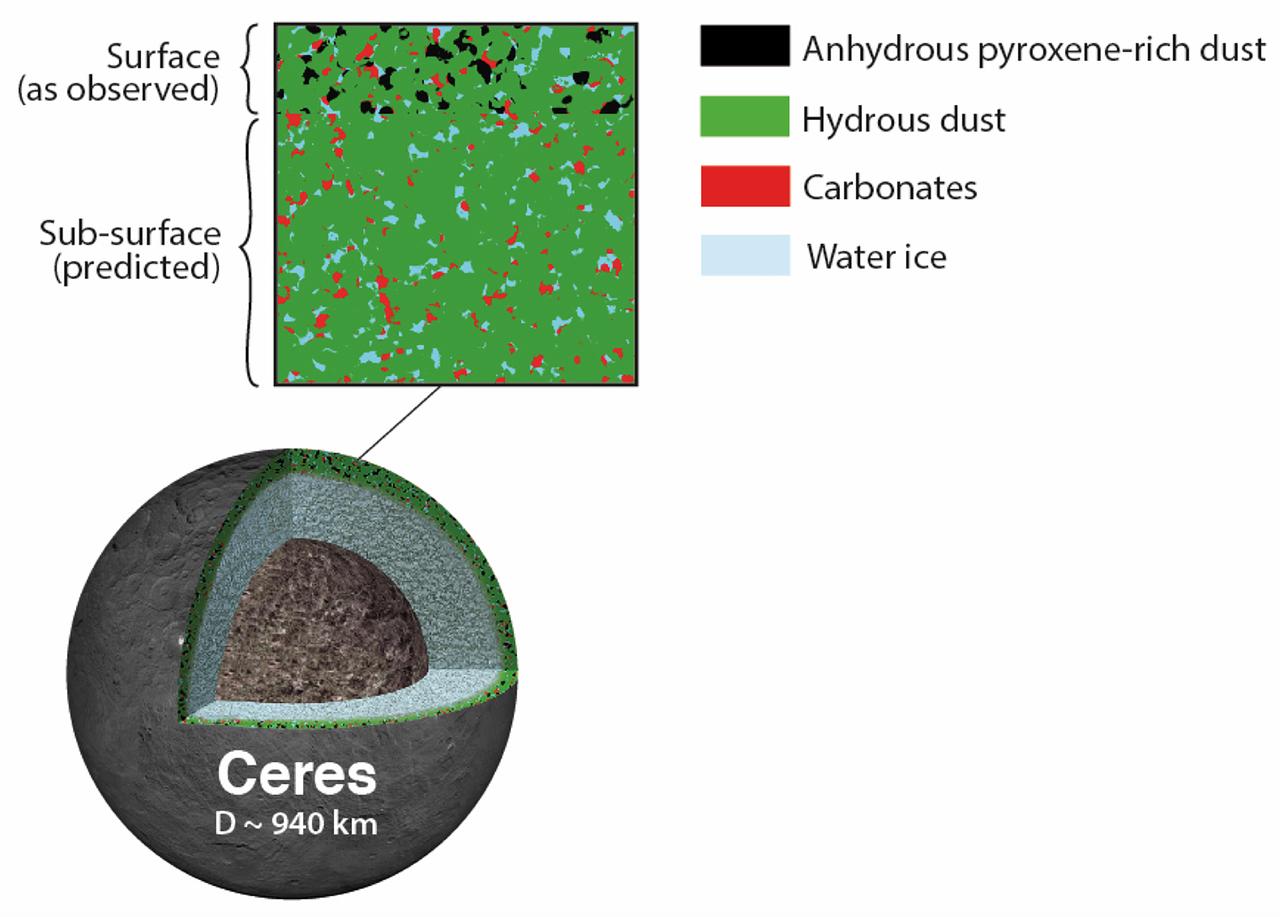
SCI2017_0003: The column of material at and just below the surface of dwarf planet Ceres (box) – the top layer contains anhydrous (dry) pyroxene dust accumulated from space mixed in with native hydrous (wet) dust, carbonates, and water ice. (Bottom) Cross section of Ceres showing the surface layers that are the subject of this study plus a watery mantle and a rocky-metallic core. Credit: Pierre Vernazza, LAM–CNRS/AMU
SOFIA Science Imagery
SCI2017_0007: Artist illustration of the thick ring of dust that can obscure the energetic processes that occur near the supermassive black hole of an active galactic nuclei. The SOFIA studies suggest that the dust distribution is about 30 percent smaller than previously thought. Credit: NASA/SOFIA/Lynette Cook
Active Galactic Nucleus
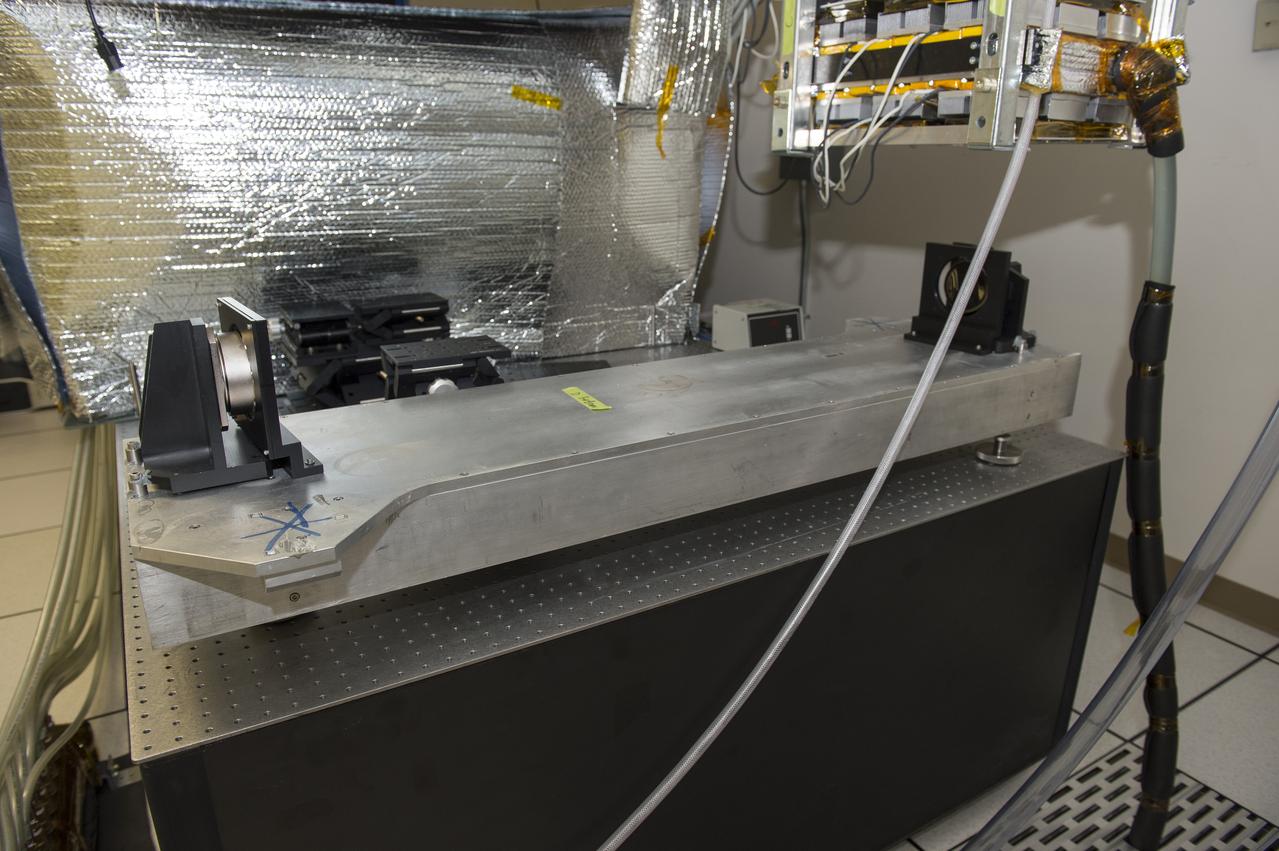
Next Generation PIAA mirrors were made by Tinsley and are inside the enclosure. Shows dummy set-up uning early PIAA mirors made by Axsys on loan to Ames from JPL.
New Space Telescope Optics to Find a New Earth
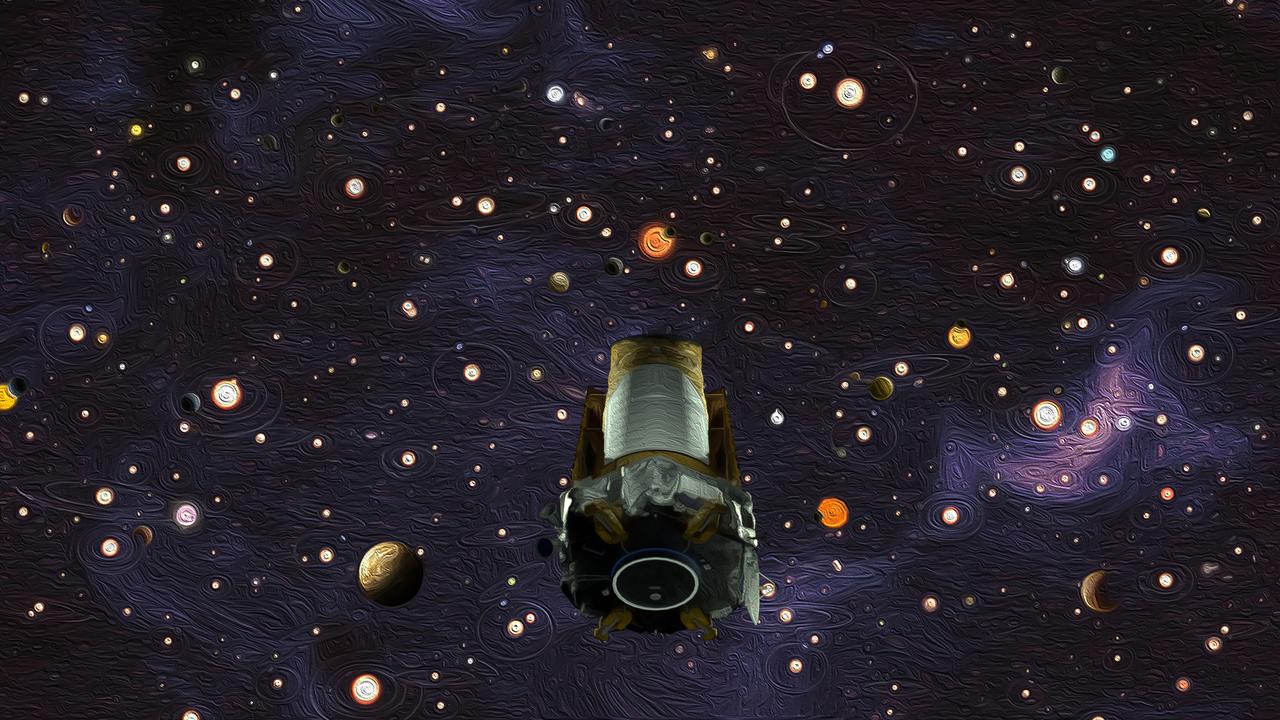
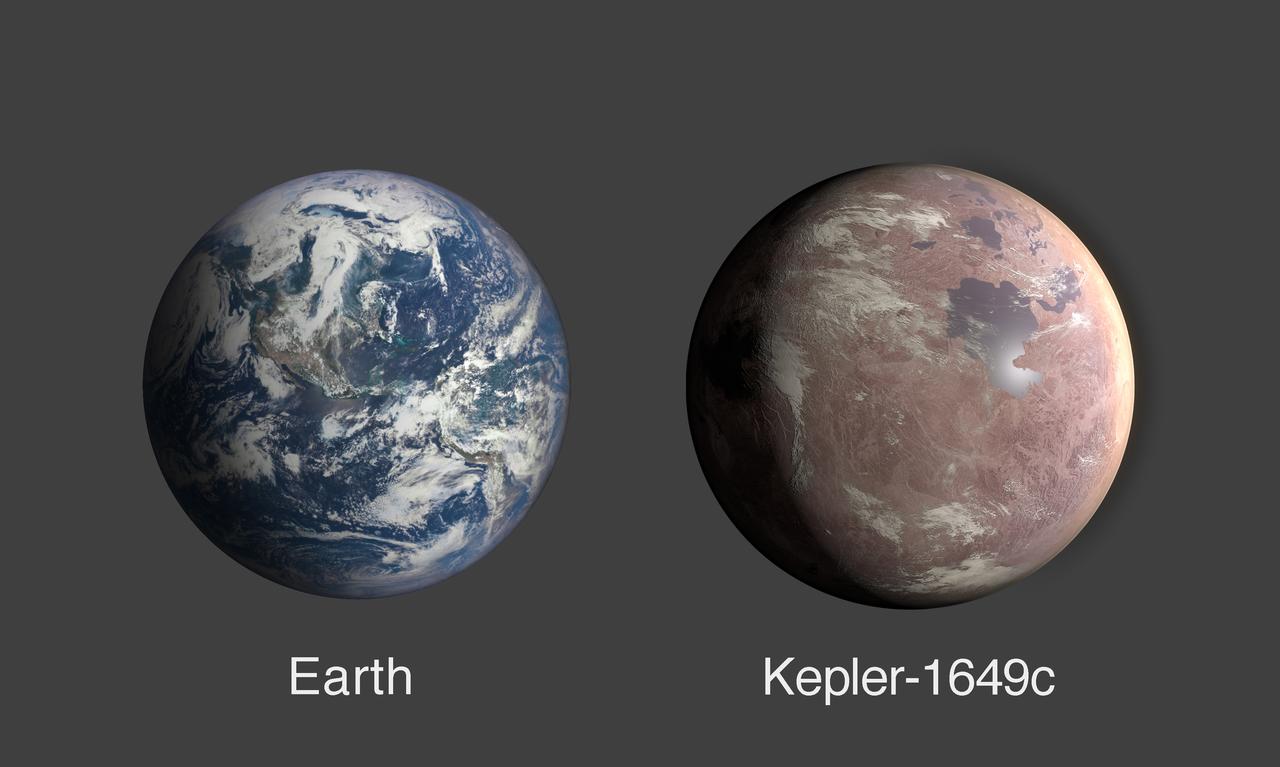
After nine years in deep space collecting data that revealed our night sky to be filled with billions of hidden planets, more planets even than stars, NASA’s Kepler space telescope has run out of fuel needed for further science operations. Illustration depicting the Kepler spacecraft in a sky filled with exoplanets and planetary systems.
A New View of Our Starry Night
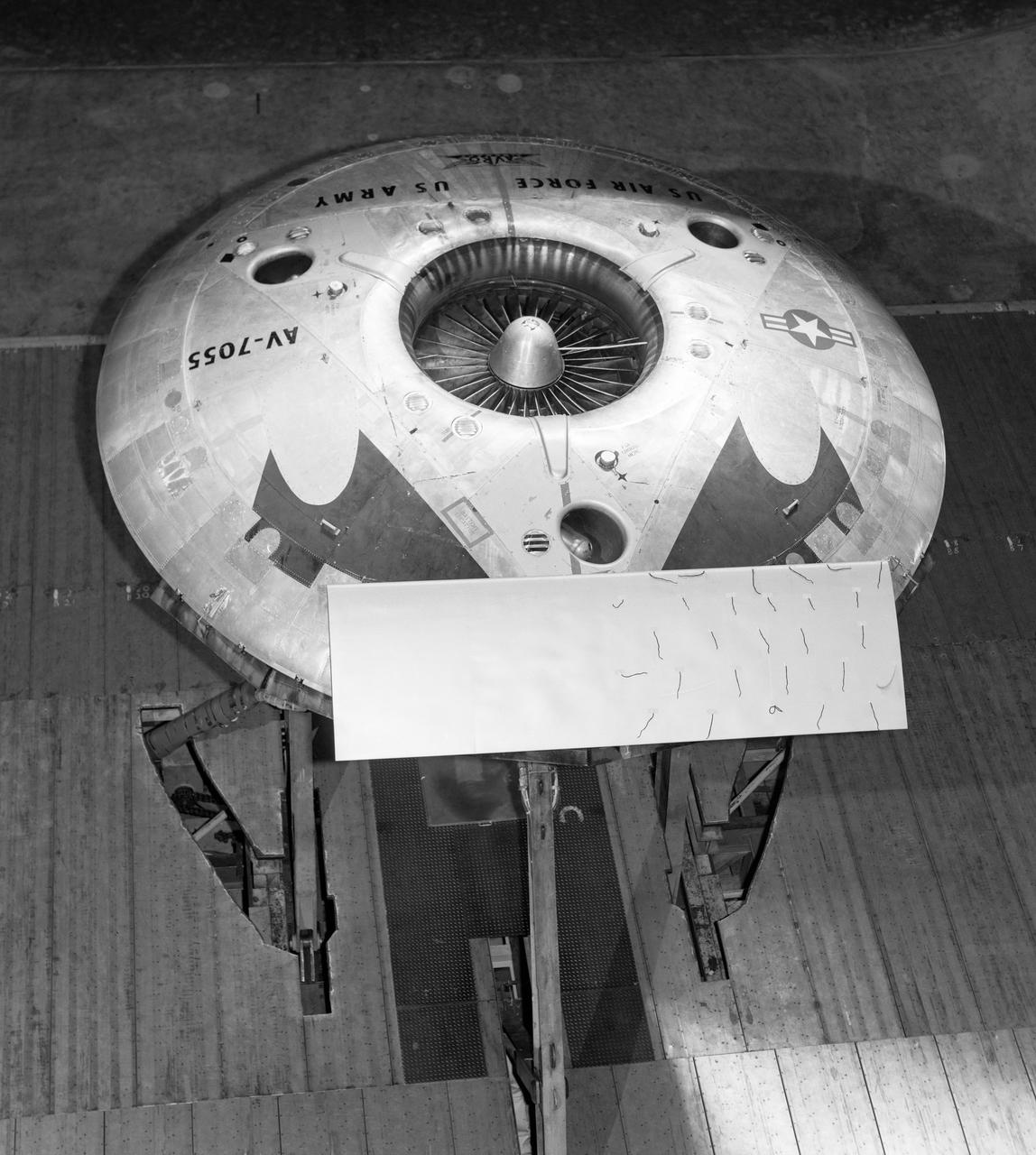
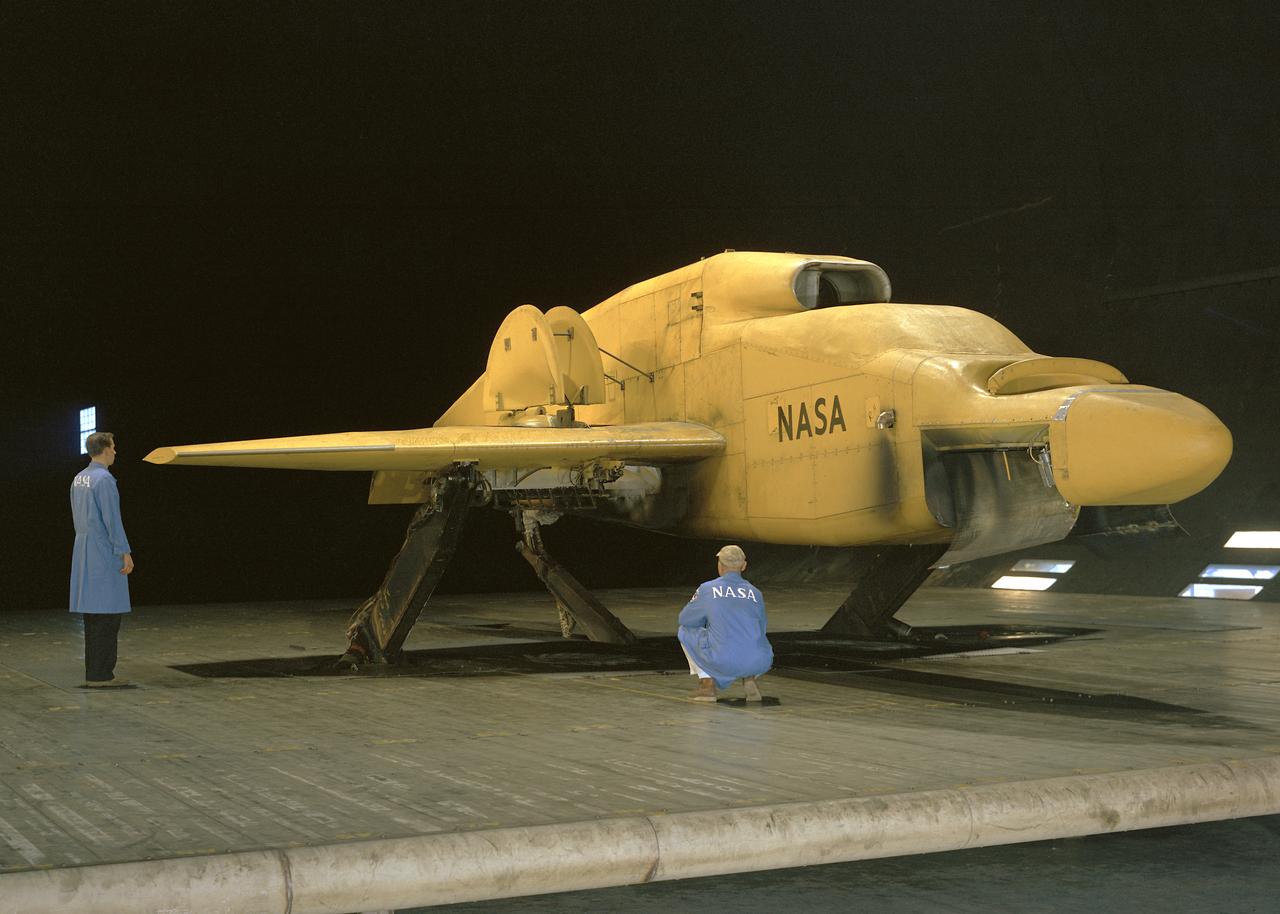
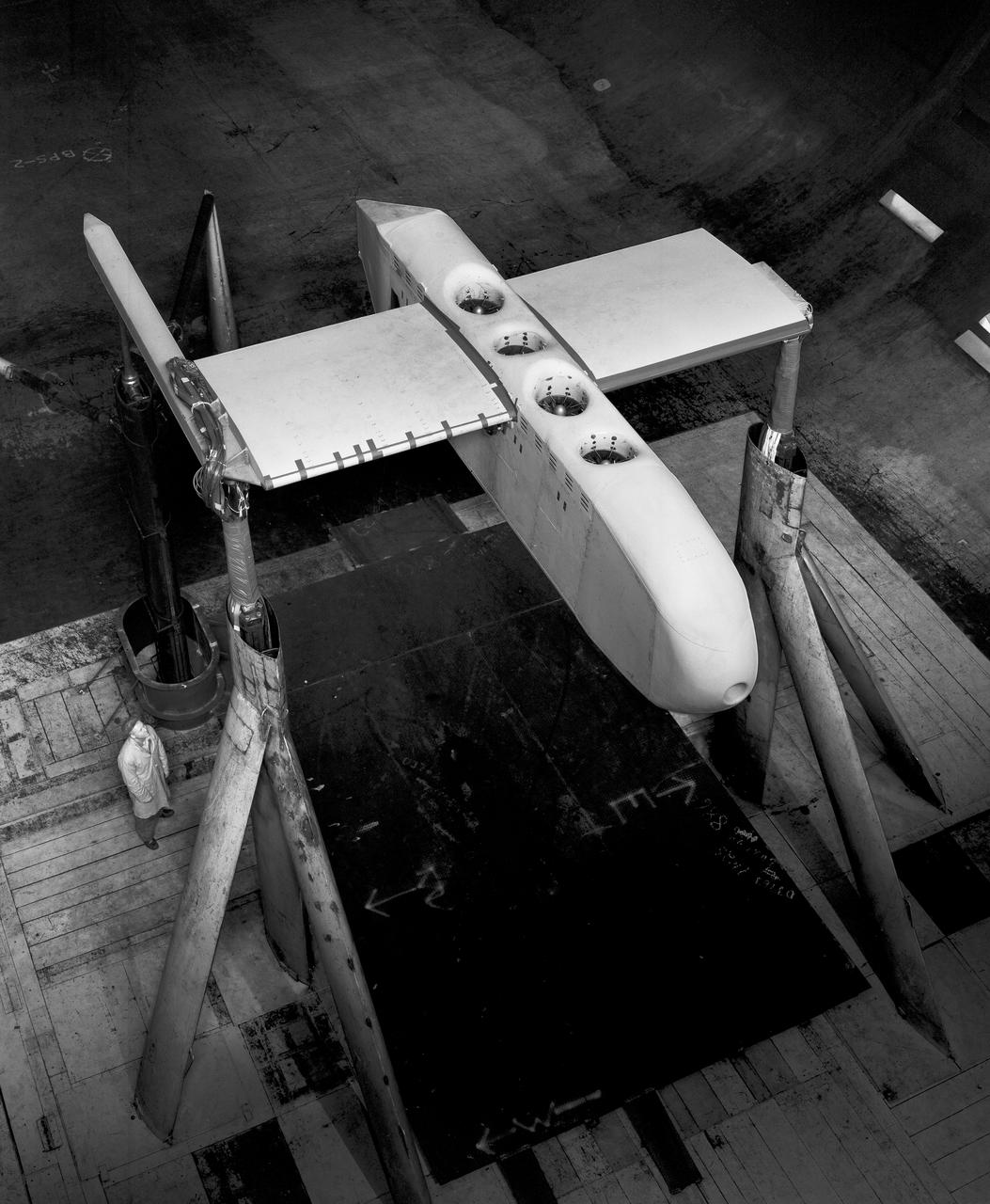
Top rear view of the avrocar with tail.  Tufts  (pieces of yarn) attached to top of horizontal tail.  Avrocar mounted on variable height struts.
Top Rear View of Avrocar in 40x80 foot wind Tunnel.
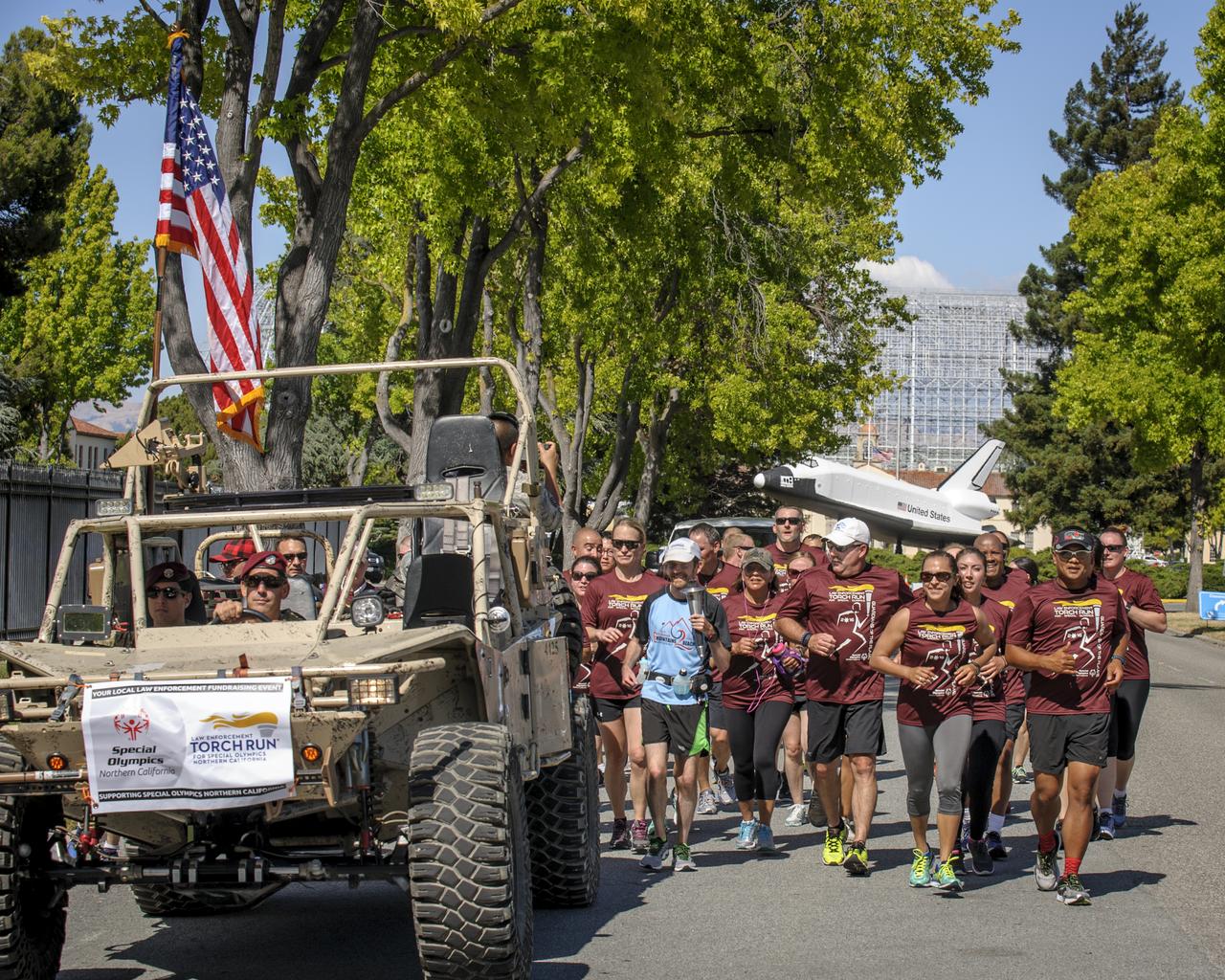
The Special Olympics Torch makes it’s way through NASA Ames Research Park on it’s way to a hand-off in Mountain View, CA.
ACD16-0097-003
The Special Olympics torch make it's way through the NASA Ames Research Park on it's way to a hand-off in Mountain View, CA
ACD16-0097-002
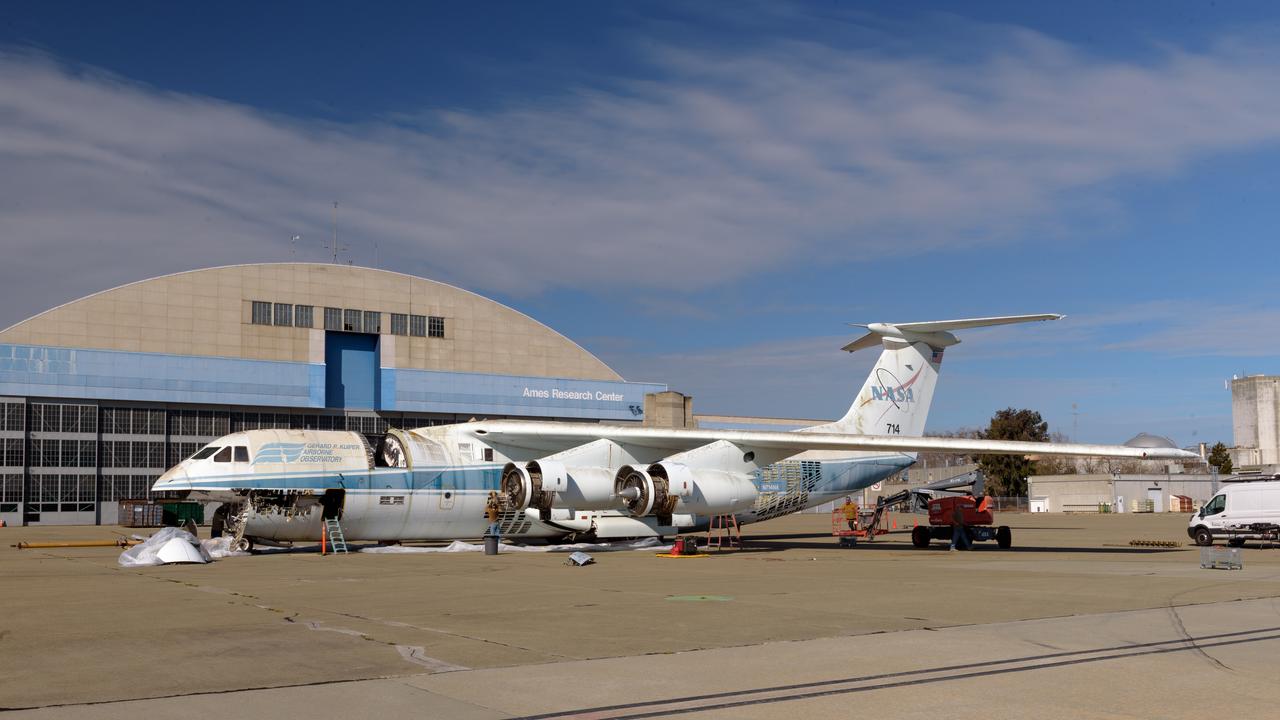
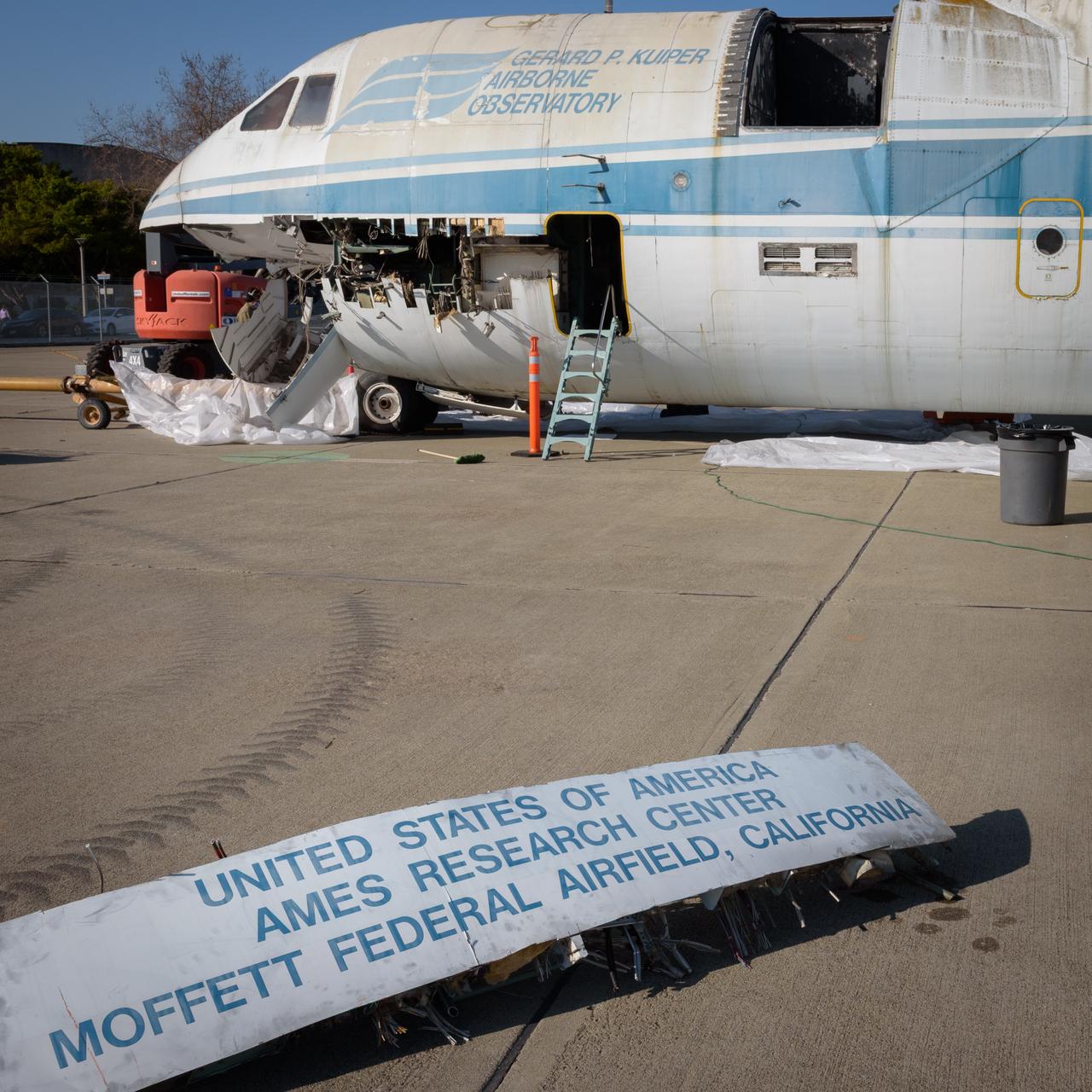
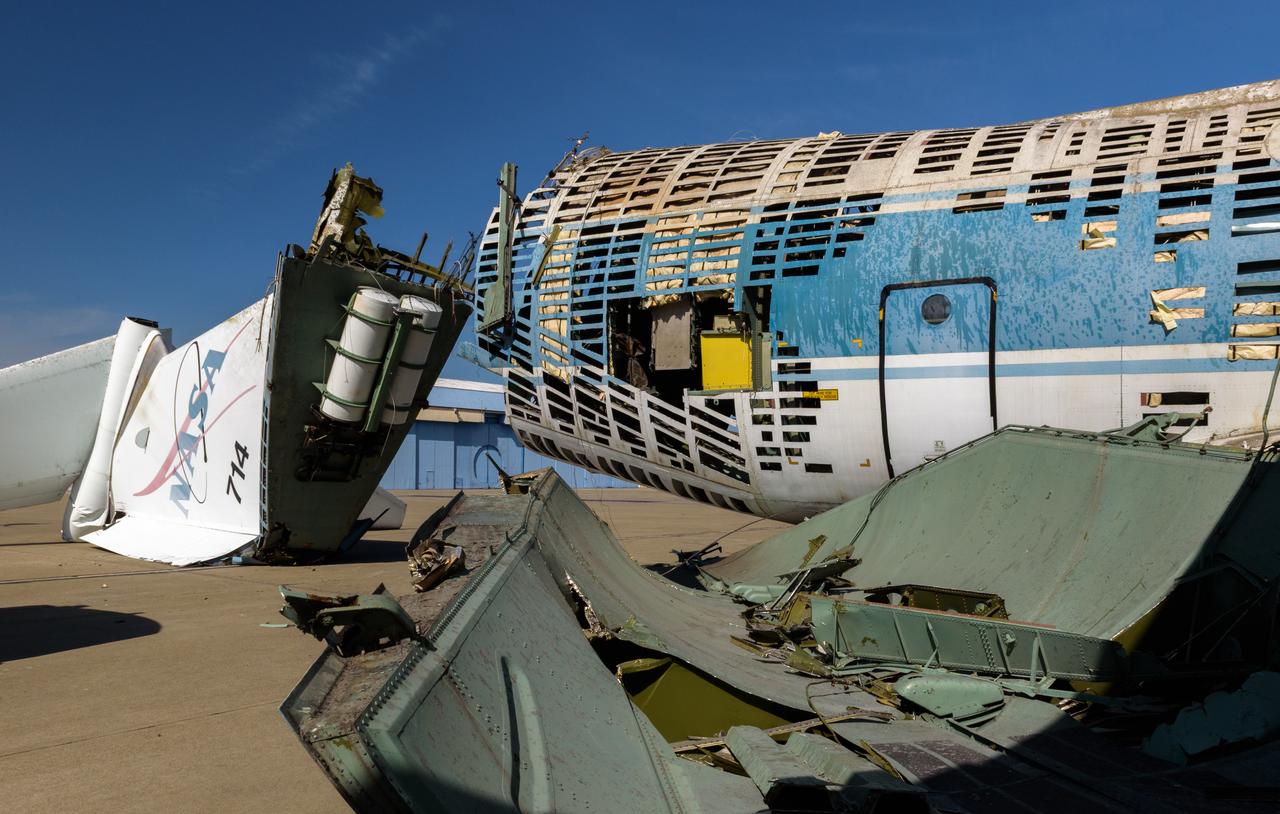
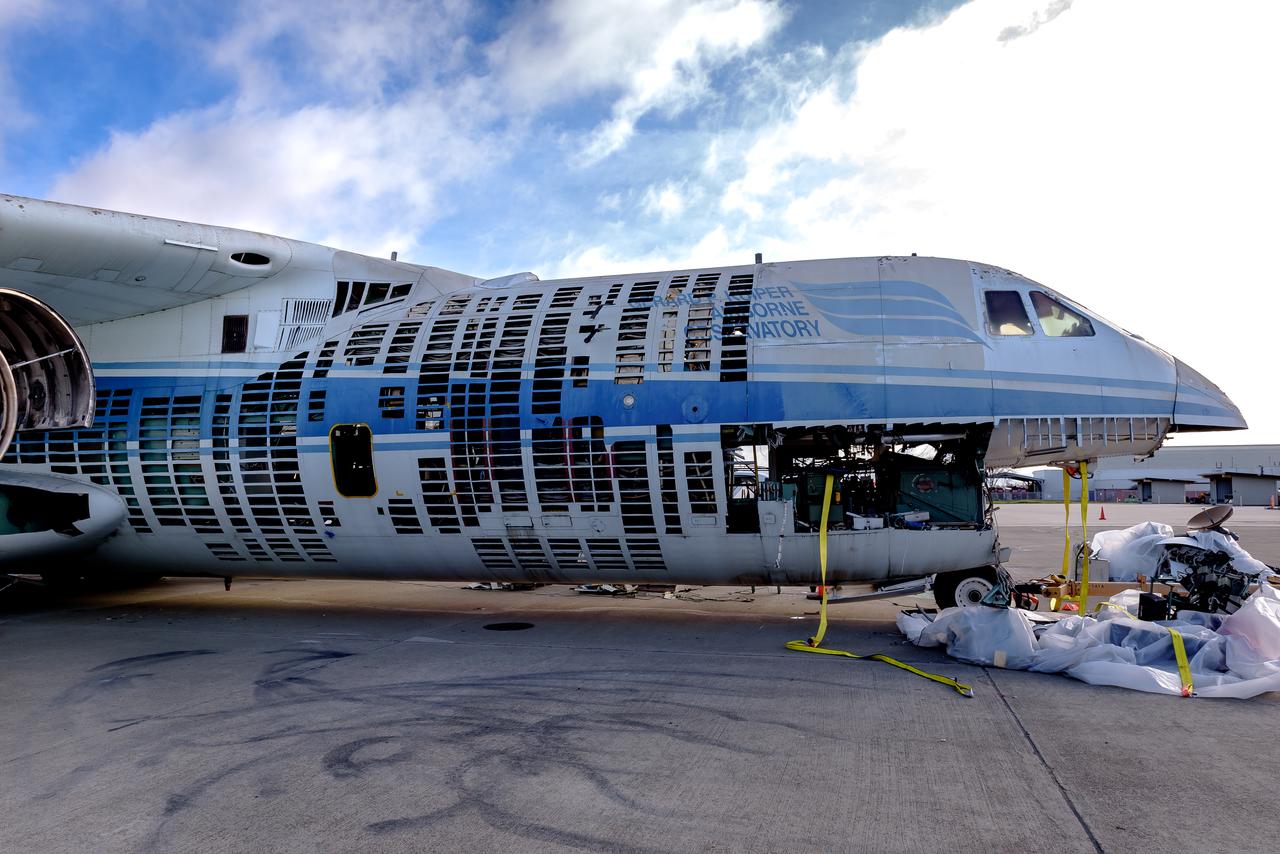
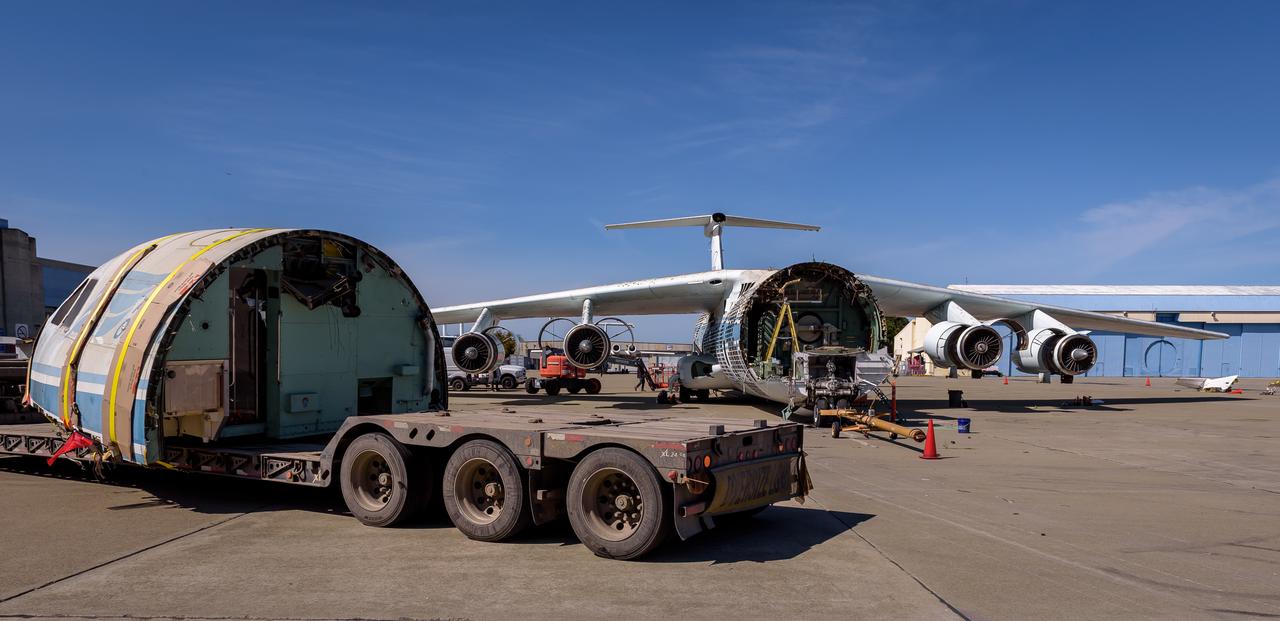
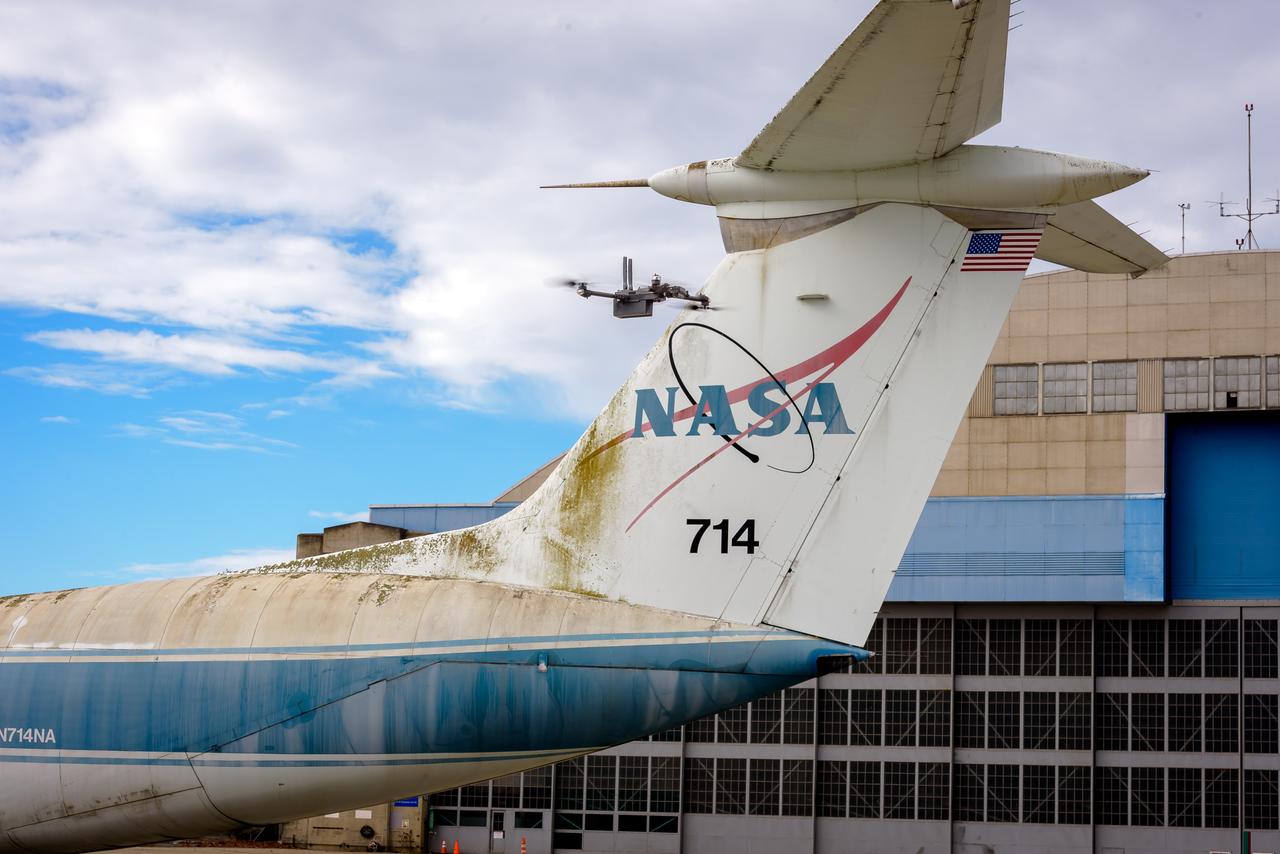
Close-up view of the tail section of the modified C-141 Kuiper Airborne Observatory, (KAO) (NASA-714), during its demolition on the N211 apron at Moffett Field, California.
Kuiper Airborne Observatory (KAO) Demolition
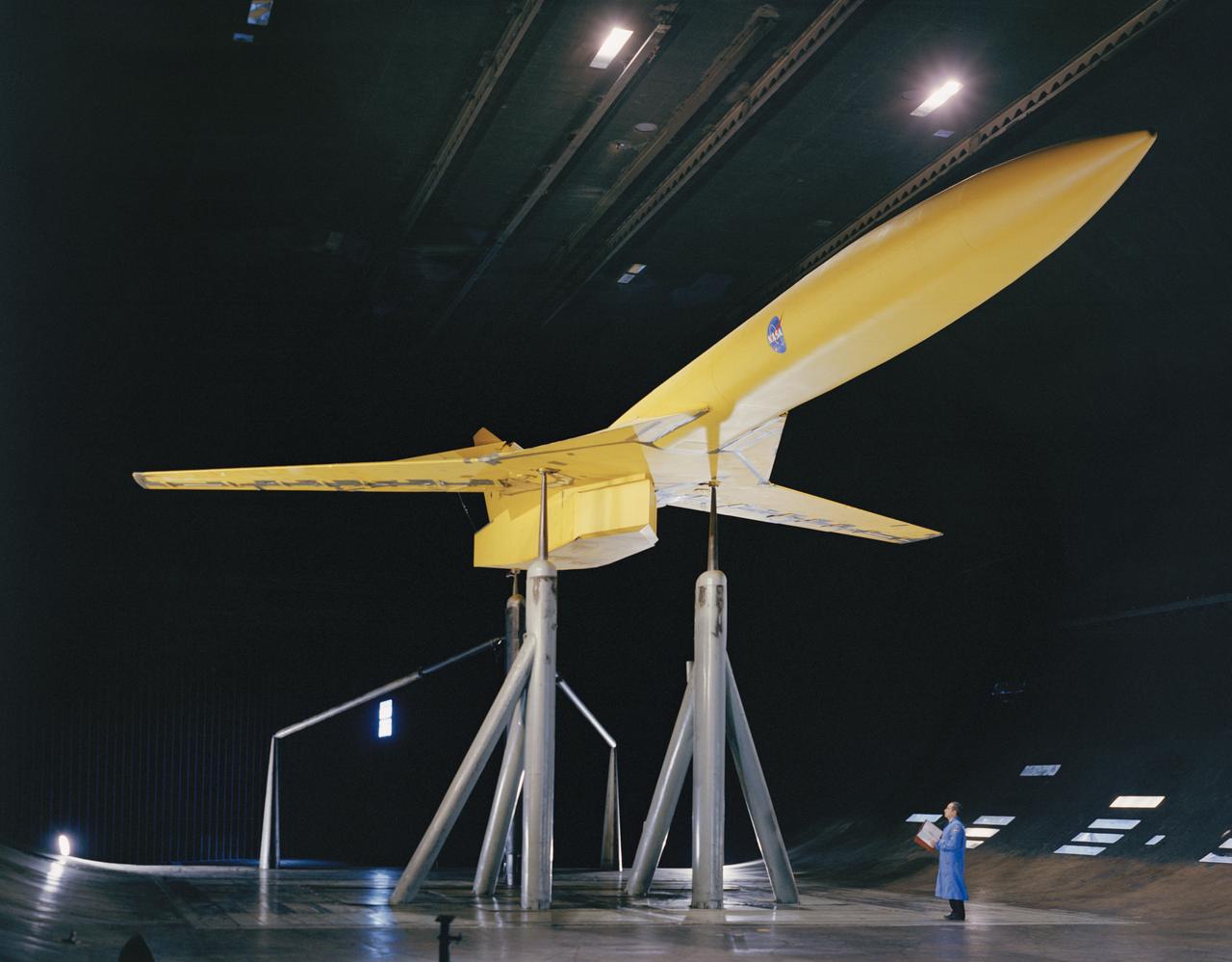
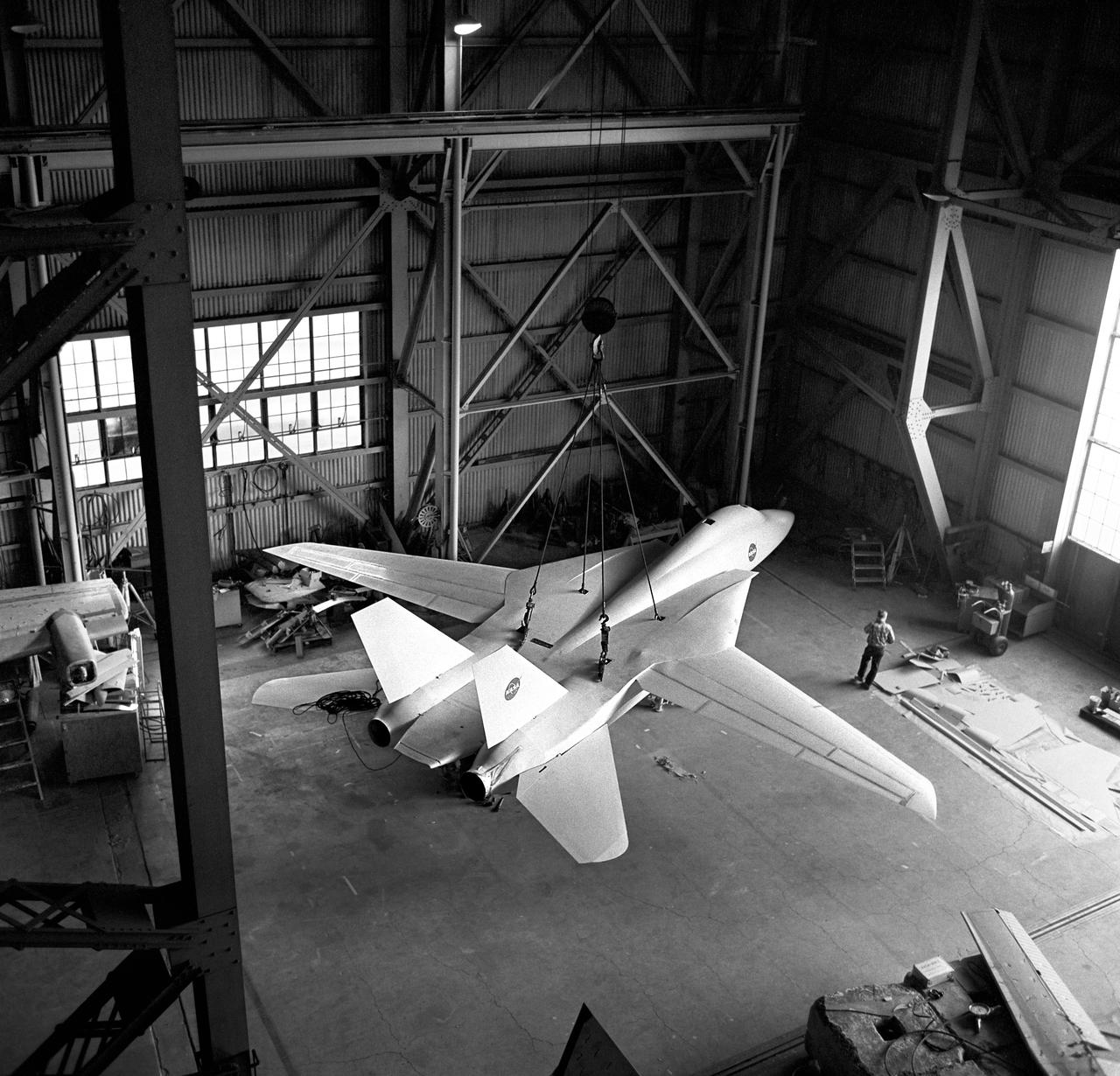
3/4 rear view of SCAT-17 supersonic transport with thrust reverser installed and trailing edge flaps deflected at 30 deg.
SCAT-17 Supersonic Transport in the 40x80 foot wind tunnel at NASA Ames.
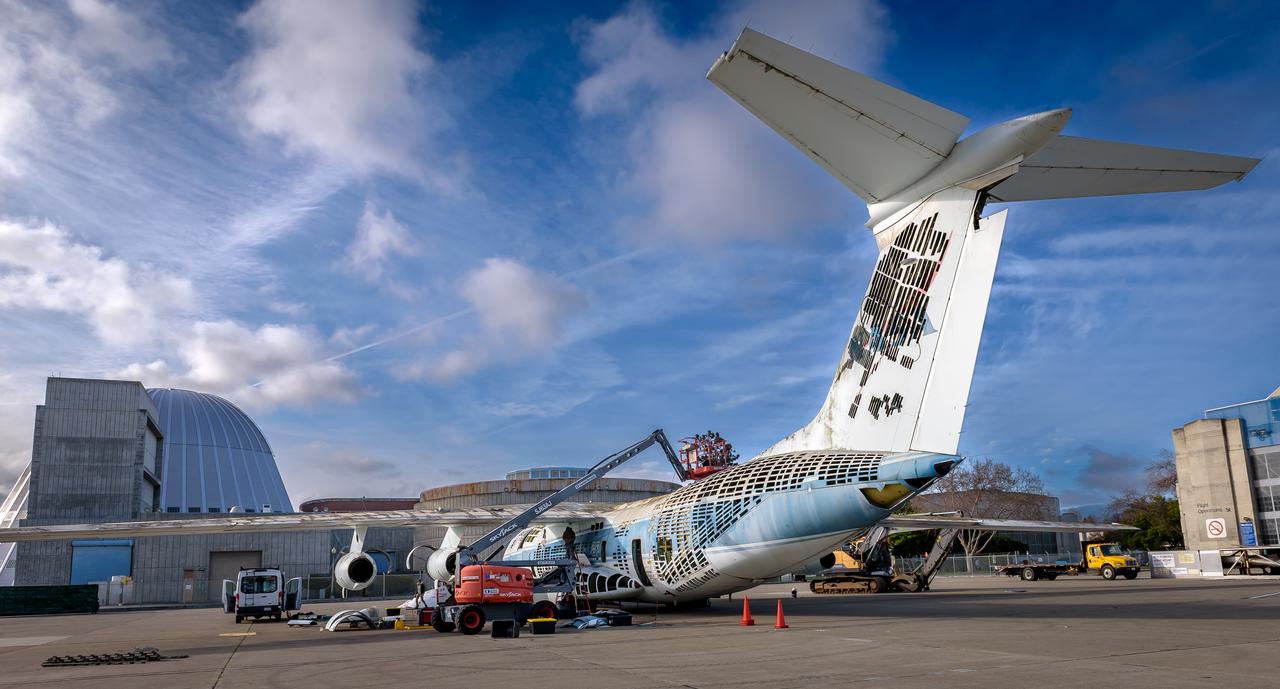
Removing the skin from the airframe of the modified C-141 Kuiper Airborne Observatory, (KAO) (NASA-714), on the N211 apron at Moffett Field, California.
Kuiper Airborne Observatory (KAO) Demolition
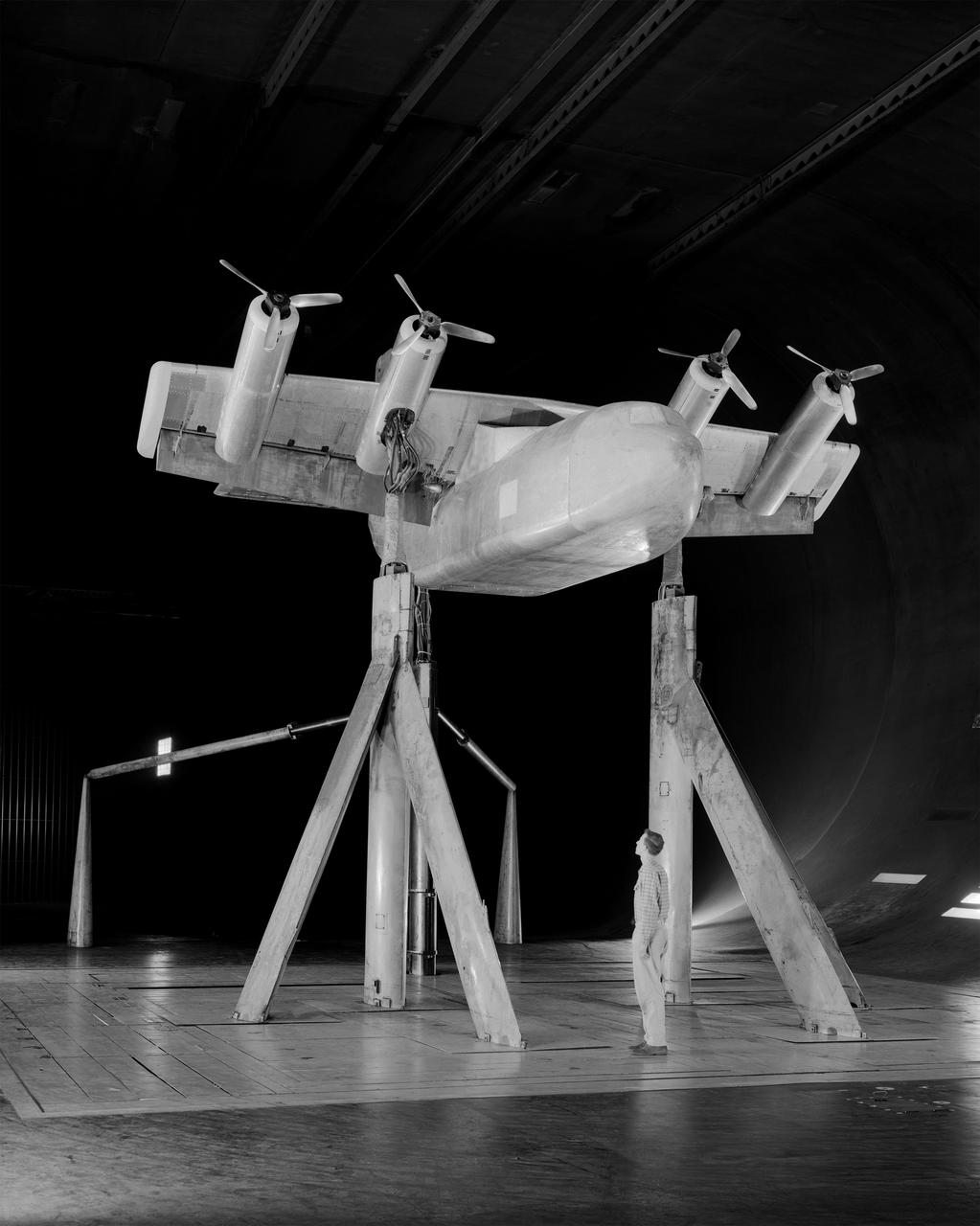
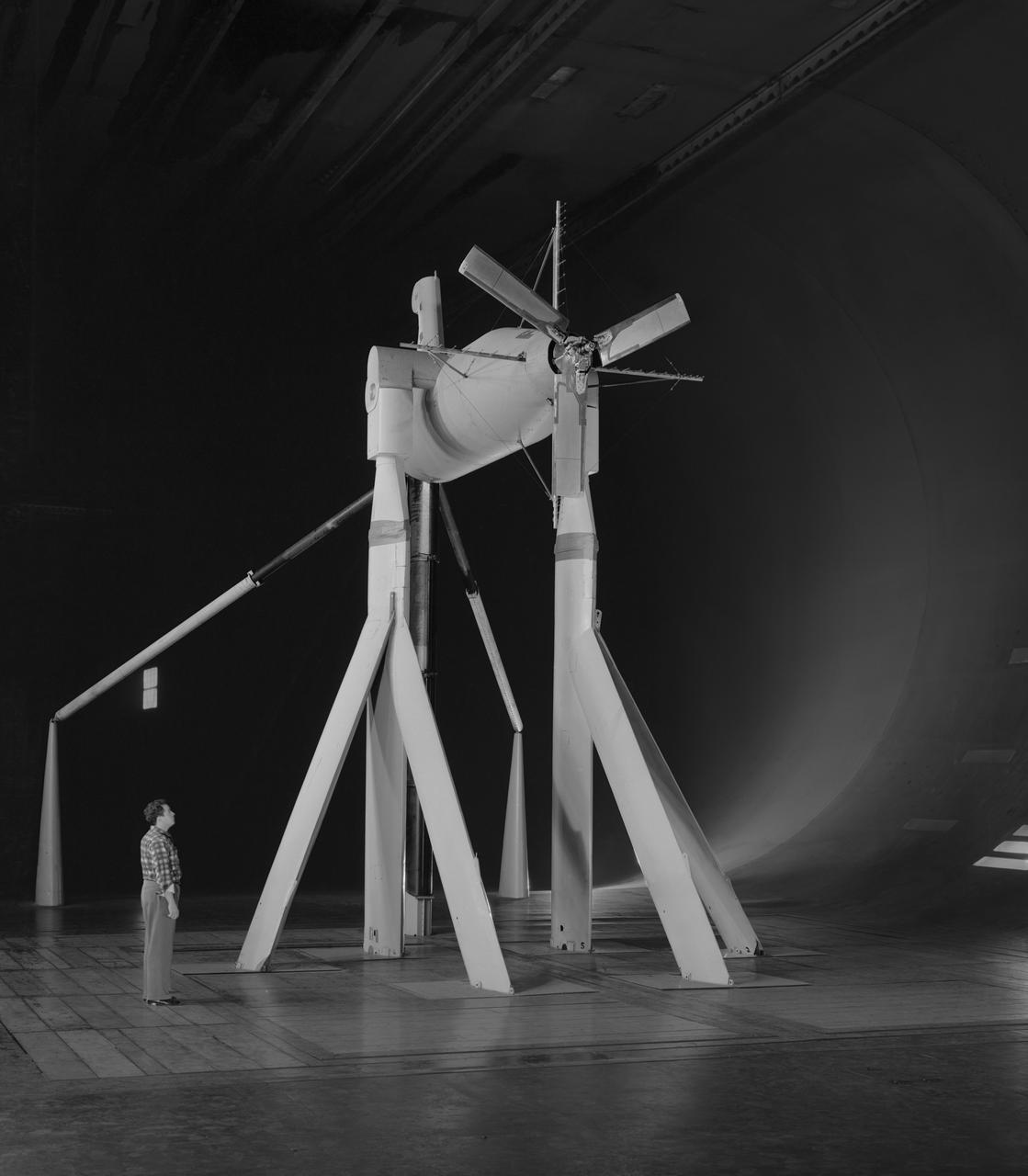
Tilt wing propeller model. 3/4 front view. 4 prop tilt wing nose down variable struts on ground board.  Leo Holl, NASA Ames Engineer.
Tilt Wing Propeller Model Tested in the Ames 40x80 Foot Wind Tunnel.
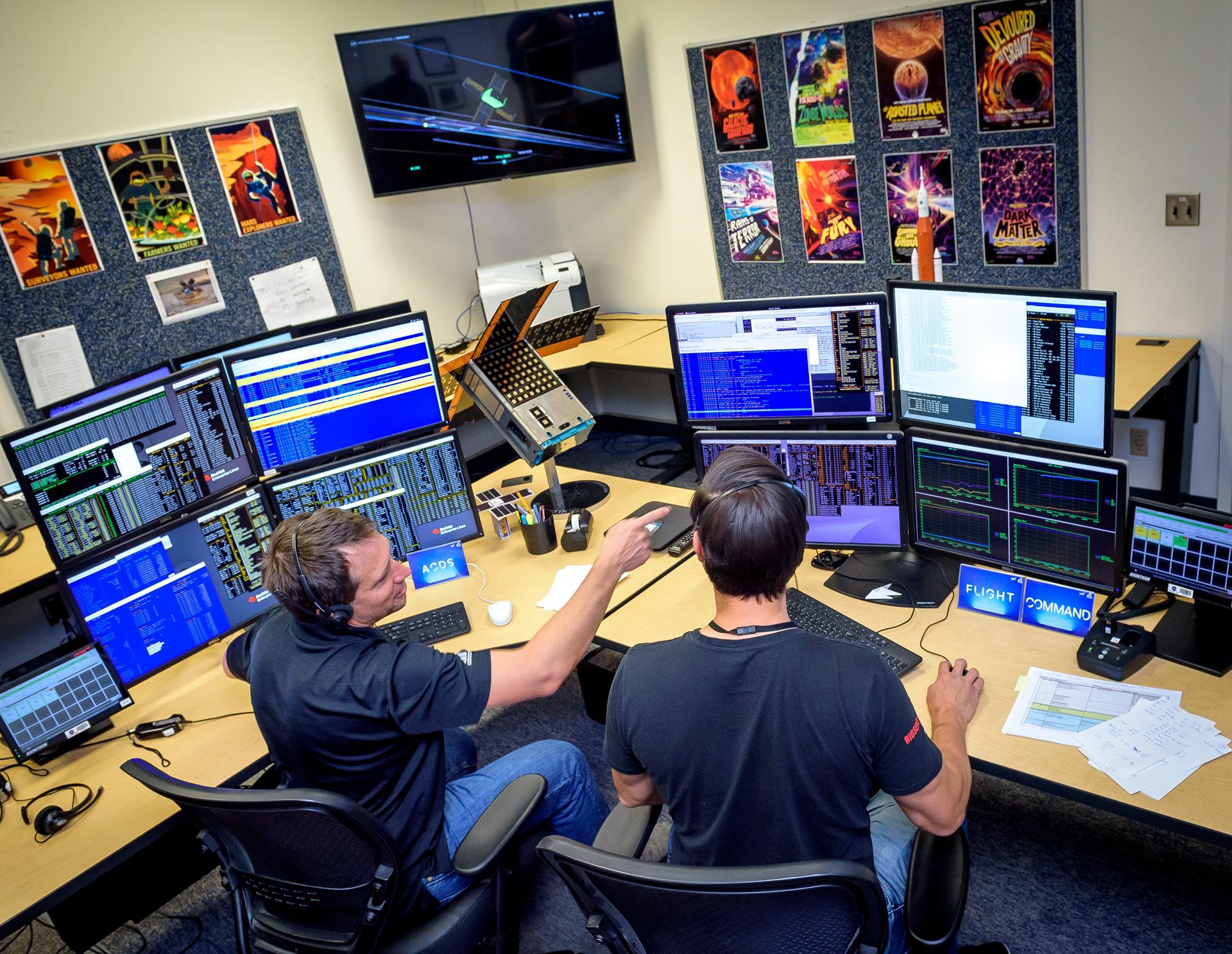
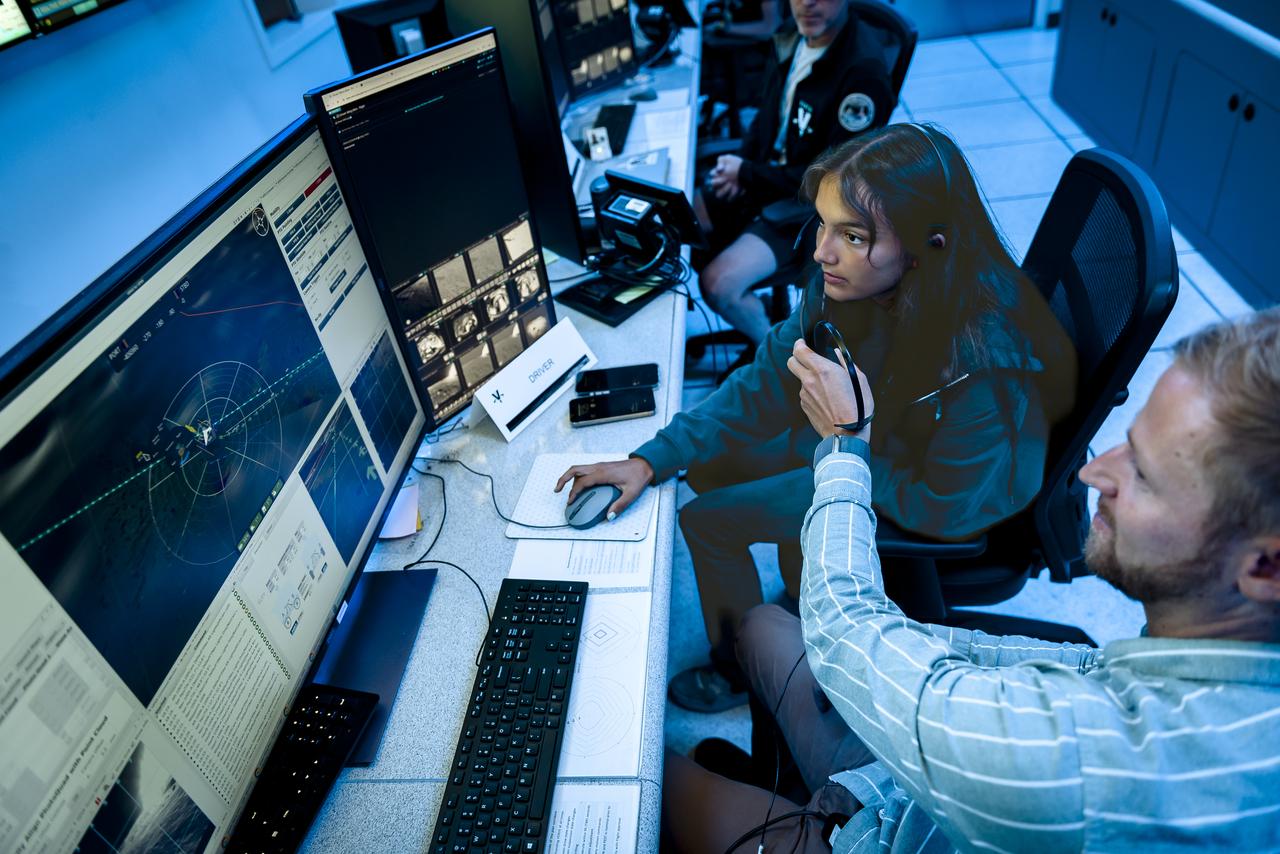
Rusty Hunt during the Volatiles Investigating Polar Exploration Rover (VIPER) vehicle operational readiness test in the Multi-Mission Operations Center (MMOC), N240A.
VIPER Vehicle Operational Readiness Test
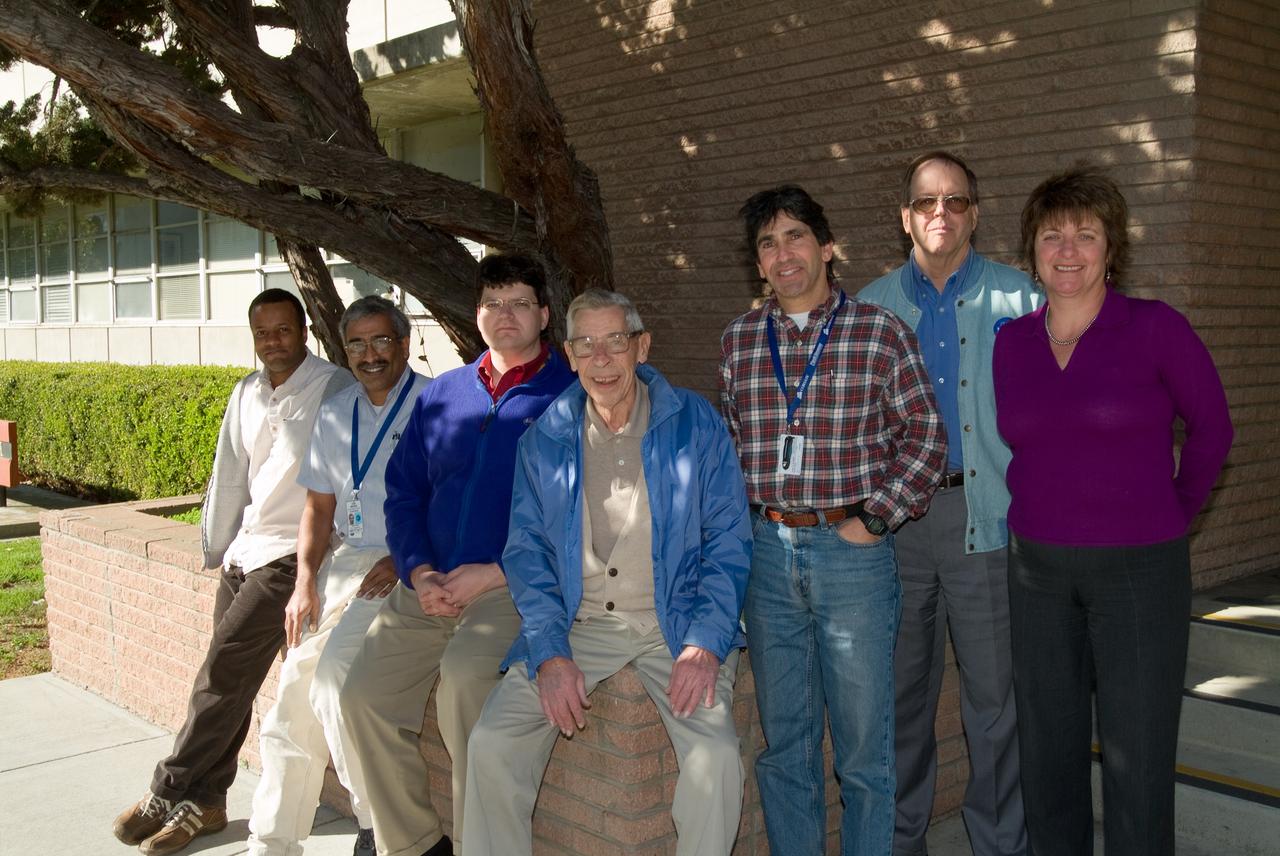
Dr. Alfred Eggers returns for a visit to Ames and the arc jet with (left to right); Ryan Mcdaniel, Dinesh Rabhu, Joe Olejnizak, Alfred Eggers, Jeff Brown, Joe Hartman, Sylvia Johnson.
Dr. Alfred Eggers Visits the Arc Jet at Ames
Front view of the Avrocar on variable height struts in 40x 80 wind tunnel with overhead doors open.
AVROCAR tested in the NASA Ames 40x80ft Wind Tunnel
Collins Aerodyne vertical take-off and landing (VTOL) aircraft investigations. Ground plane support system.  3/4 front view. Dave Koening (from Collins Aerodyne) in photo.  Mounted on variable height struts, ground board system, zero degree angle of attack.  01/11/1960
Collins Aerodyne VTOL aircraft investigations
3/4 front view with cascade exit vane in Ames 40x80 foot wind tunnel, with Tom Seymore, mechanic for Ames.
Ducted Fan Model with A 0 deg Exit Cascade.
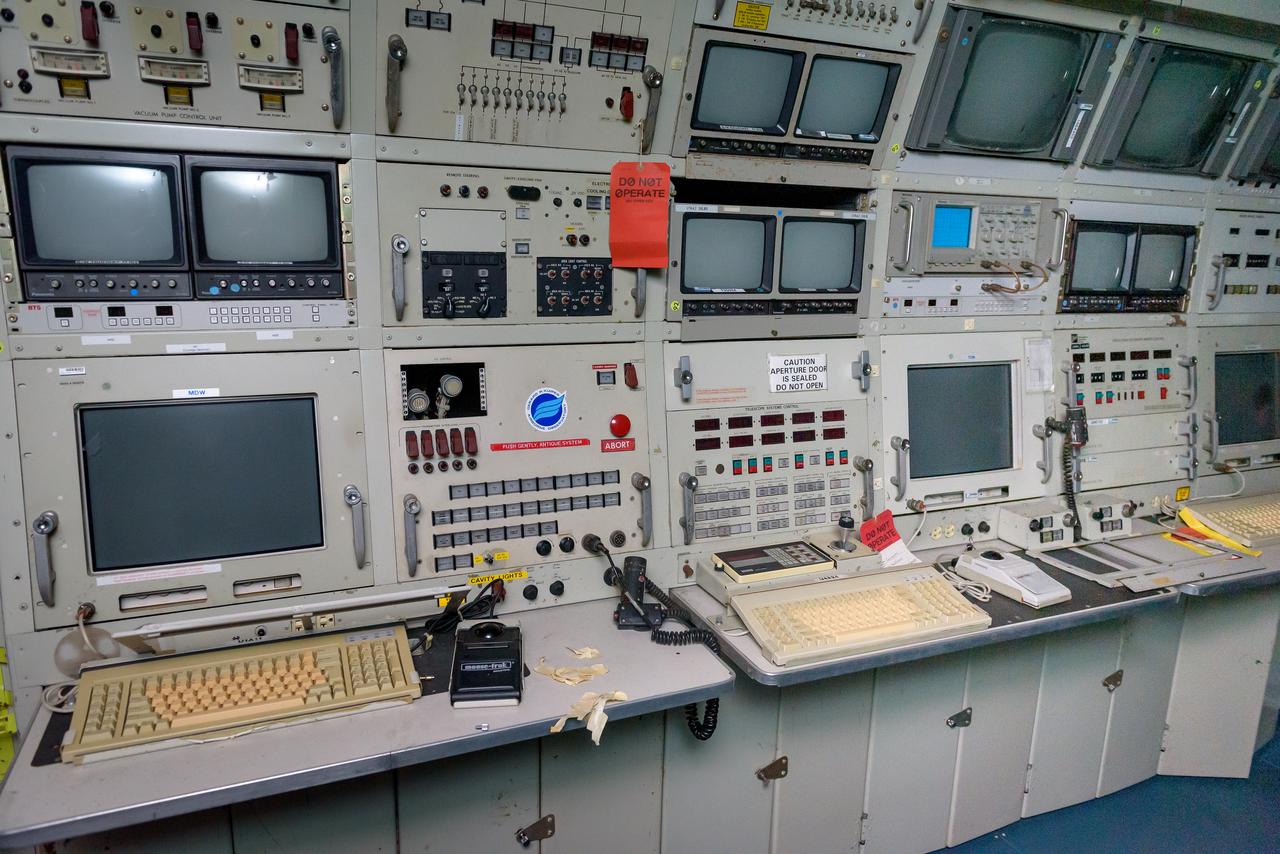
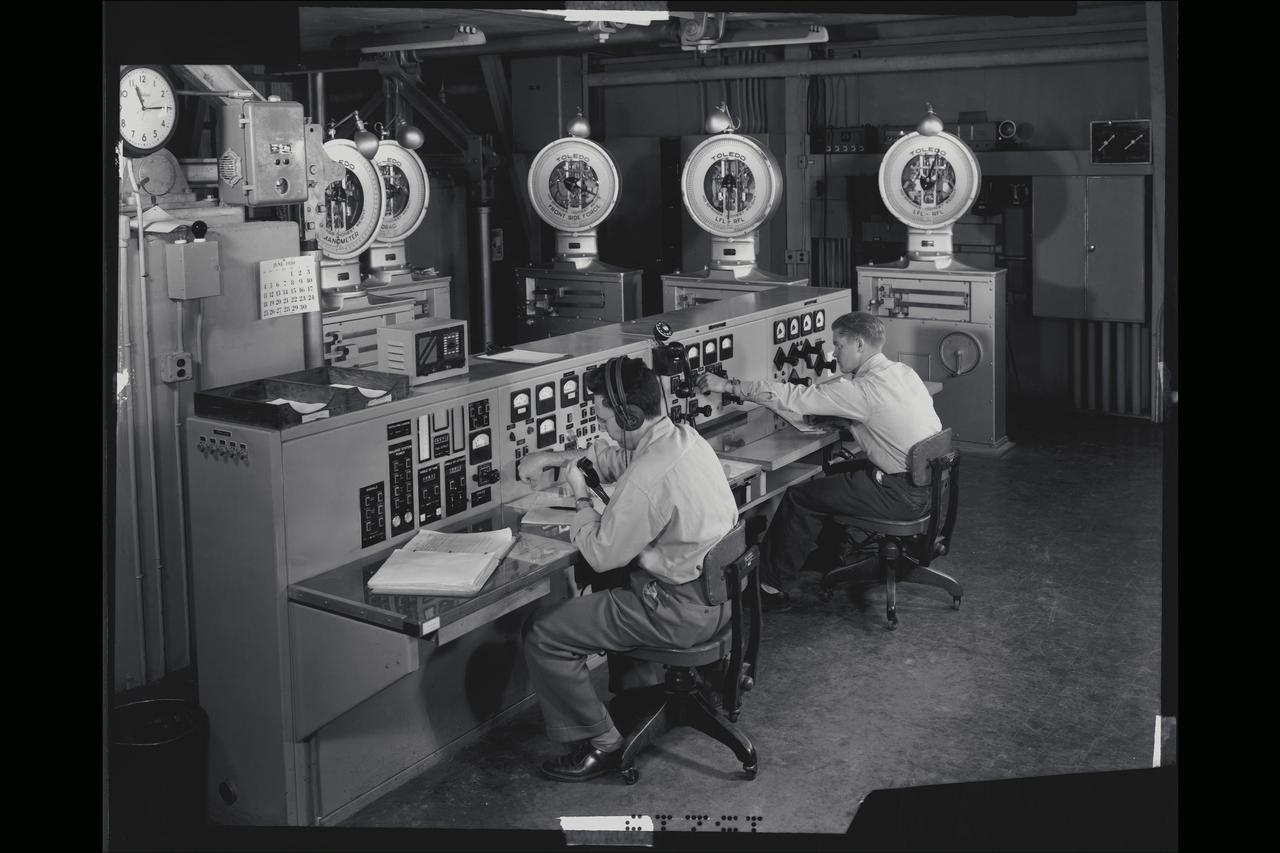
40x80 wind tunnel manometers control room at NACA's Ames Research Center.  Control panel (called the bench board) showing five of the seven scale heads which measured the forces on the model (ie. Lift, drag, side force etc.)
A-15219. Balance House for the 40x80-foot Wind Tunnel Control Room.
Helicopter view showing west area, south San Francisco Bay in background
Aerial view of Ames 40x80 foot wind subsonic wind tunnel complex.
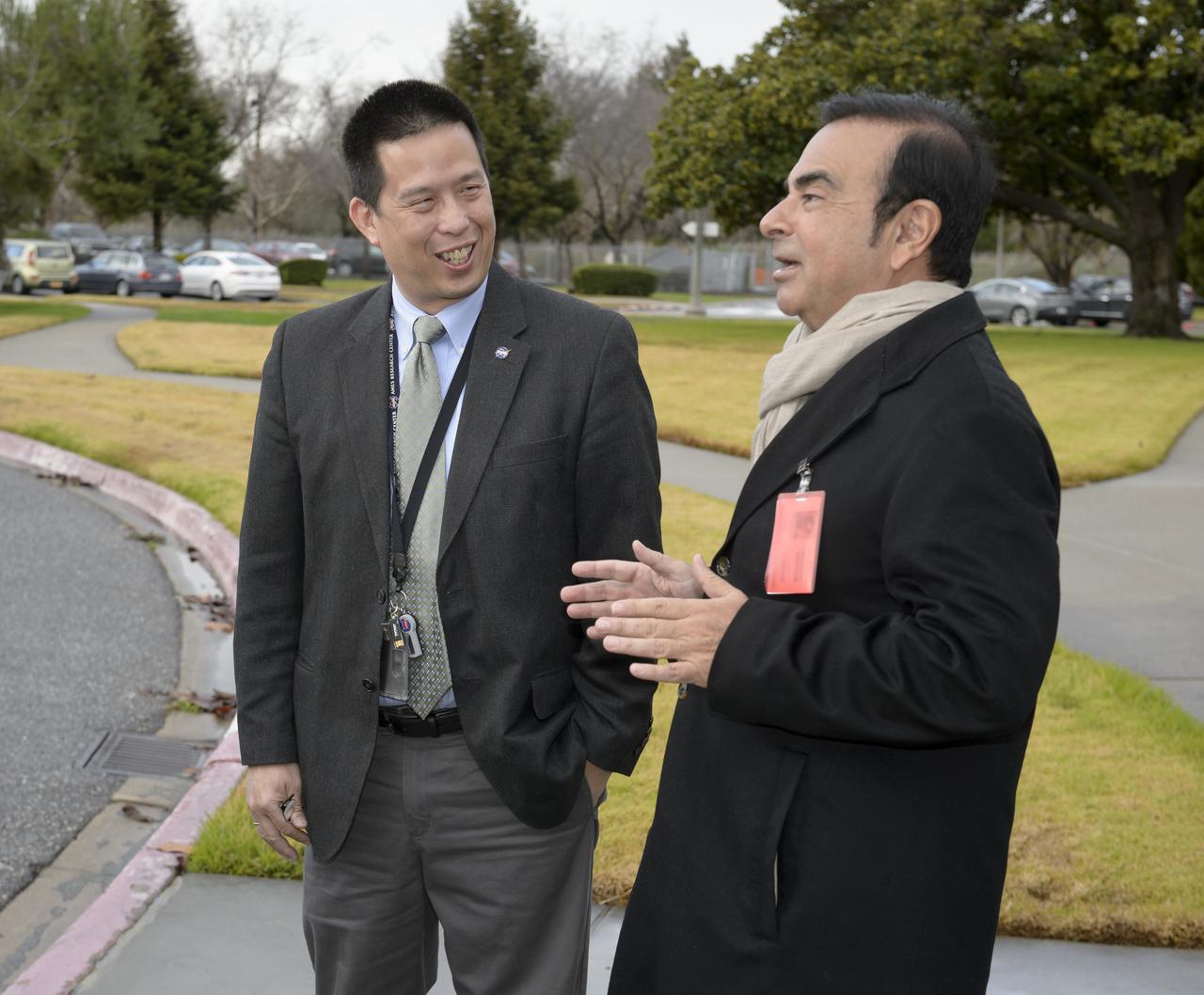
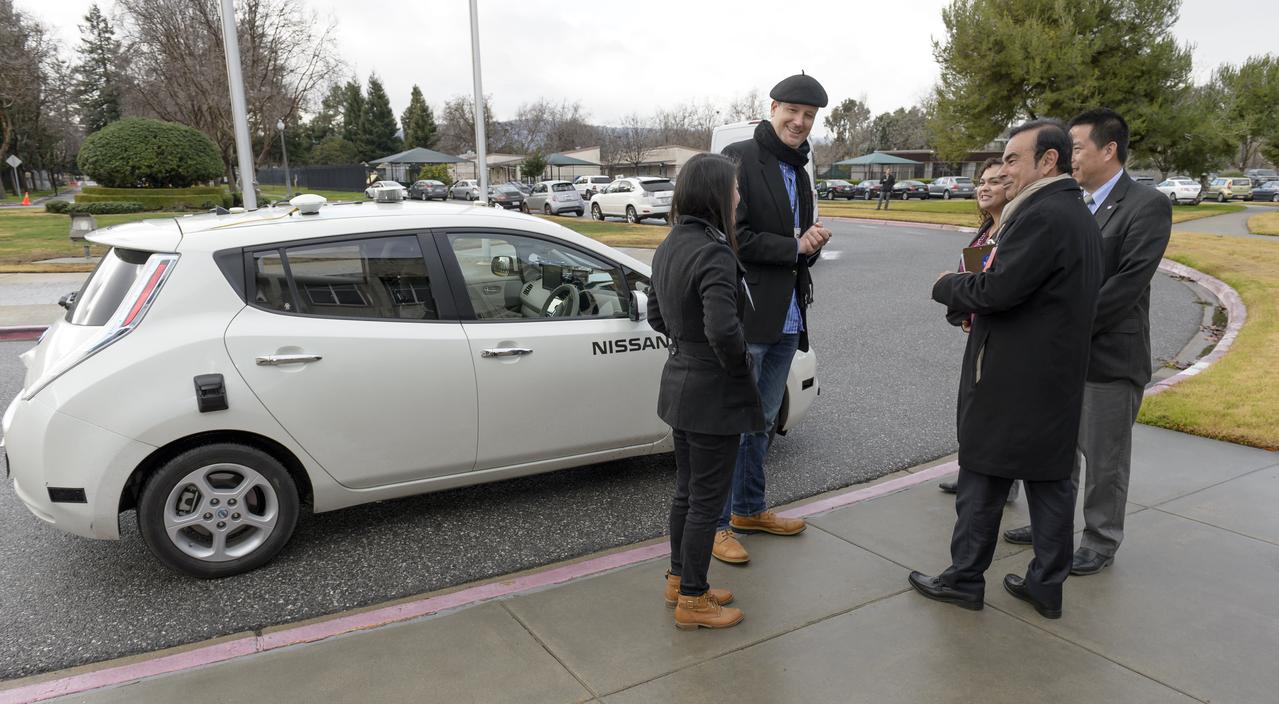
Senior executives from the Renault-Nissan Alliance visited Ames meet with Ames management. Here they are gathered for a Autonomous Drive demo presentation by Terry Fong, Ames Research Center.
ACD16-0001-033
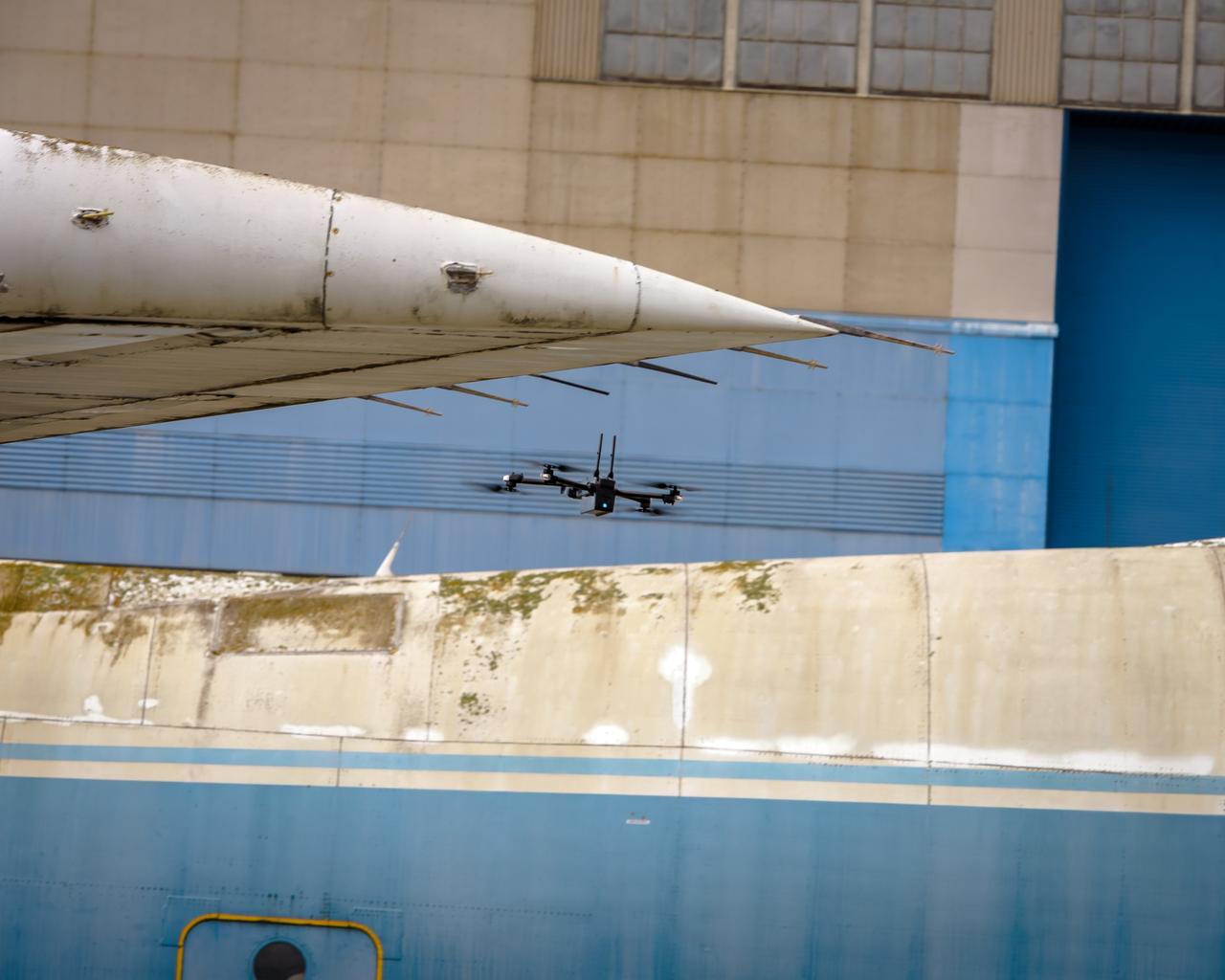
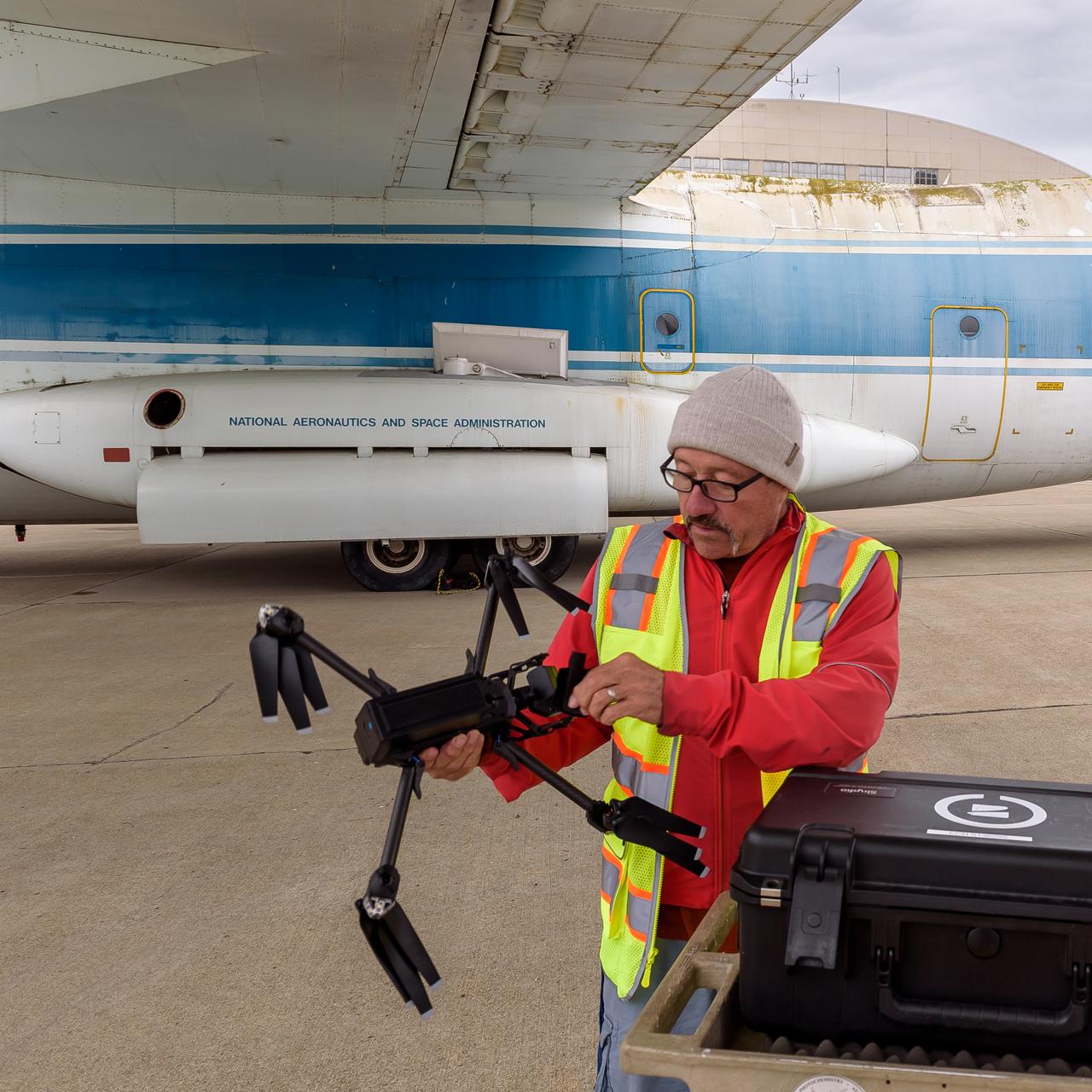
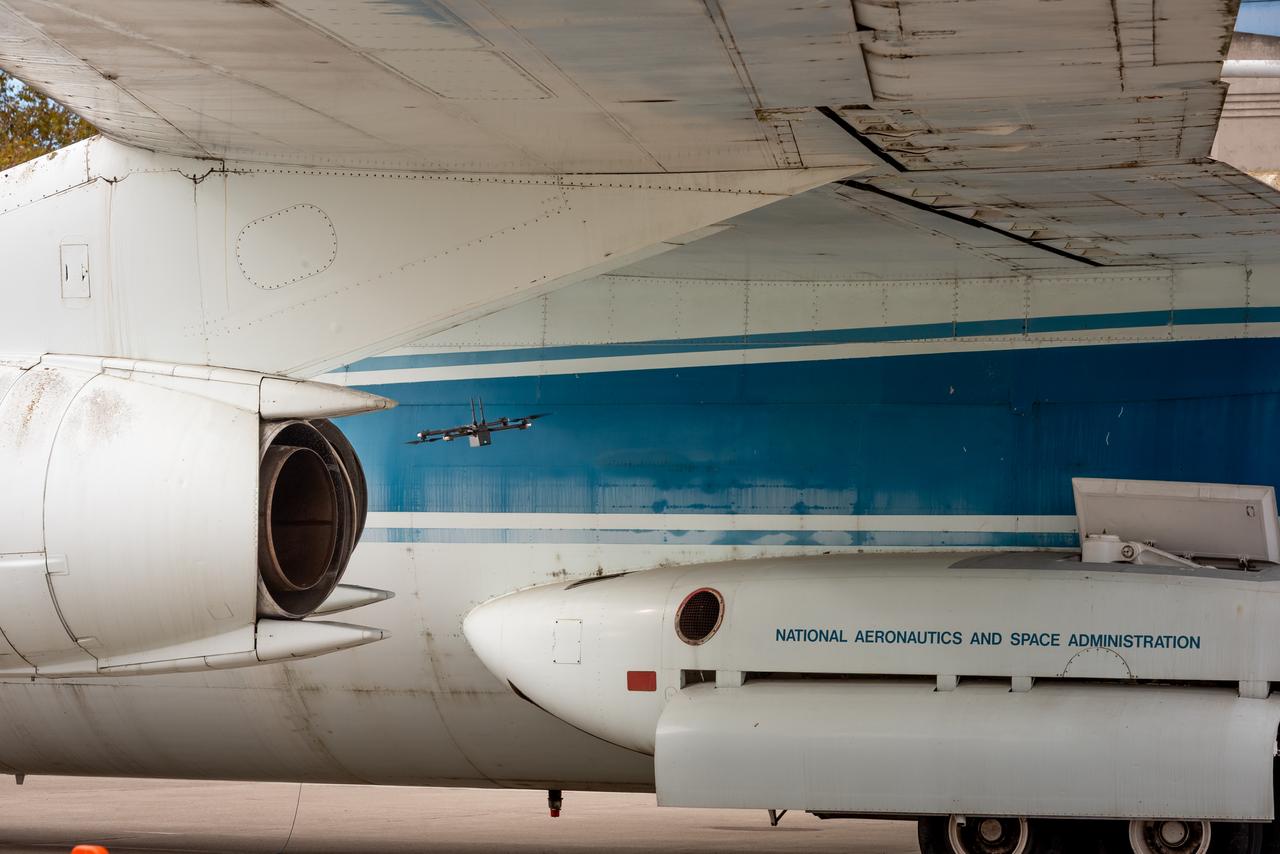
Richard Kolyer unfolds the drone and prepares it for flight around the modified C-141 Kuiper Airborne Observatory, (KAO) (NASA-714).
Kuiper Airborne Observatory (KAO) Demolition
Gliding parachute test in 40x80 foot Wind Tunnel, mounted on main strut flying horizontally.
Steerable Parachute for Apollo Vehicle in Ames 40x80 foot Wind Tunnel.
Vanguard 2C vertical take-off and landing (VTOL) airplane, wind tunnel test. Front view from below, model 14 1/2 feet high disk off. Nasa Ames engineer Ralph Maki in photo.  Variable height struts and ground plane, low pressure ratio, fan in wing.  02/01/1960.
Vanguard 2C VTOL Airplane Tested in the Ames 40x80 Foot Wind Tunnel.
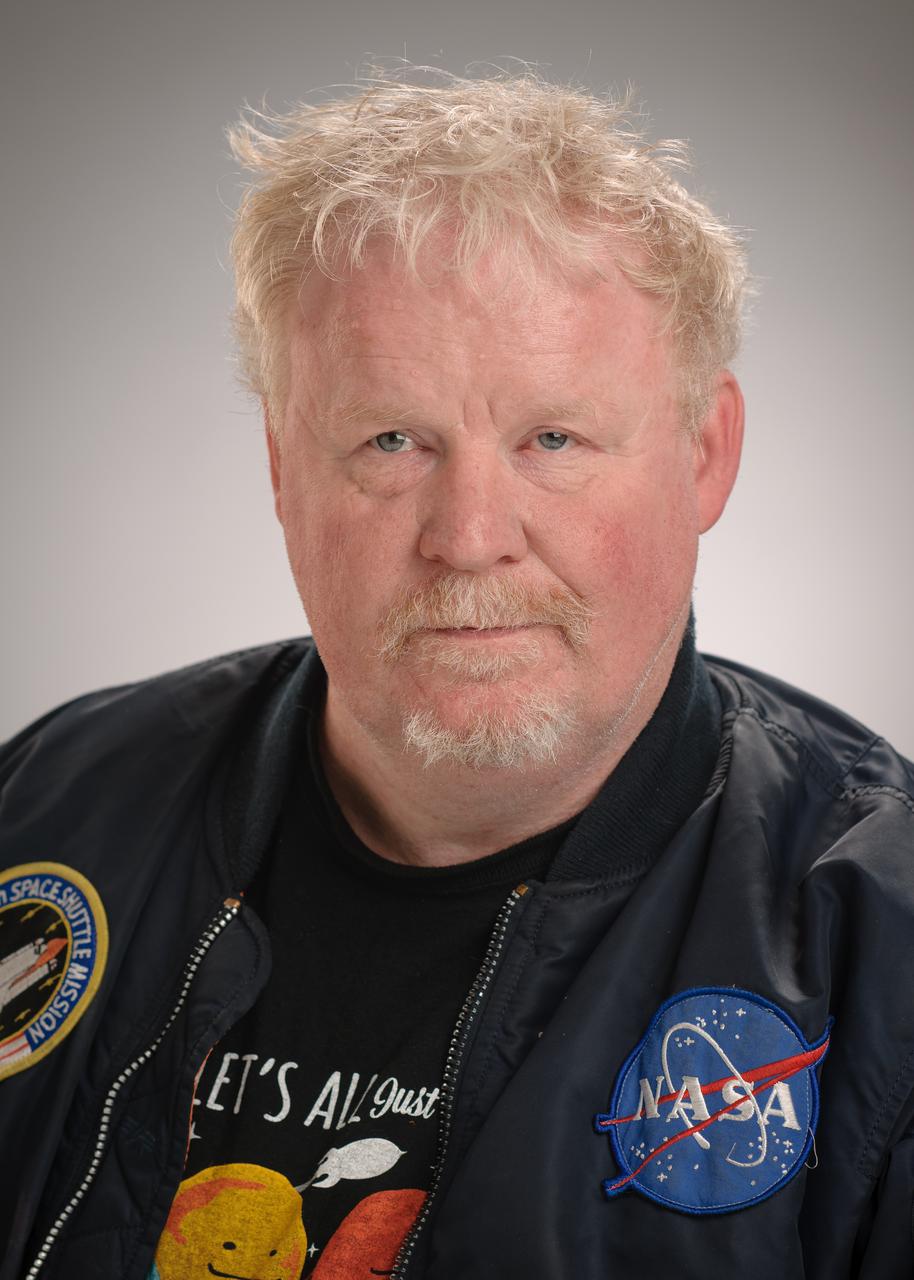
Christopher Hull Kepler/K2 Team, Official NASA Photo
Christopher Hull, Official NASA Photo
Avrocar Annular Jet VTOL Airplane in Ames 40x80 foot Wind Tunnel.
Overhead View of Avrocar Annular Jet VTOL Airplane in Ames 40x80 foot Wind Tunnel.
(11/12/1971) 3/4 Scale swept augmentor wing Quest model being installed into the test section of the ames 40 x 80 foot wind tunnel, overhead doors open.
A71-8290. Swept Augmentor Wing Model Being Installed Into The Test Section Of The Ames 40 X 80 Foot Wind Tunnel.
Composite image of Background Oriented Schlieren (BOS) data (contour) with a cut-out images of the T-38’s during a Mach Number 1.01 pass. This data is the first time shockwave interactions between two full scale aircraft traveling faster than the speed of sound have been imaged and shown with schlieren visualization. Original recording of the pass taken in the Black Mountain Supersonic Corridor at near Edwards AFB in December of 2018. Image acquired by JT Heineck, schlieren data processed by Neal Smith
AirBOS4
Test of Lockheed YC-130 Turbo-Propeller Installation in Ames 40x80 Foot Wind Tunnel. 3/4 front view from below.
Tests of Lockheed YC-130 Turbo-Propeller Installation in Ames 40x80 Foot Wind Tunnel.
North American F-100-F airplane, equipped with thrust reversers, full scale wind tunnel test. 3/4 front view of F-100-F airplane with North American Aviation thrust reverser. On standard 40x80 struts landing gear down. Mark Kelly, branch chief in photo.
North American Aviation F-100 in the Ames 40x80 Foot Wind Tunnel.
3/4 front view of Ducted fan model with 40 deg. exit vane cascade, semi span model.
Ducted fan model with 40 deg Exit Cascade.
3/4 front view of Lockheed Stopped Rotor.
Lockheed Stopped Rotor.
Computers' at work in 16ft wind tunnel - calculating test data
Computers calculating data from teh Ames 16 Foot Wind Tunnel.
The drone follows an autonomously defined path around the modified C-141 Kuiper Airborne Observatory, (KAO) (NASA-714), on the N211 apron.  The drone photographs the aircraft with a visible and infrared camera which are processed using a photogrammetry software package called Pix4D that converts them into a 3D model.  Scanning the aircraft is the first phase of documenting the aircraft demolition as well as an opportunity to train pilots to operate the Pix4D software.
Kuiper Airborne Observatory (KAO) Demolition
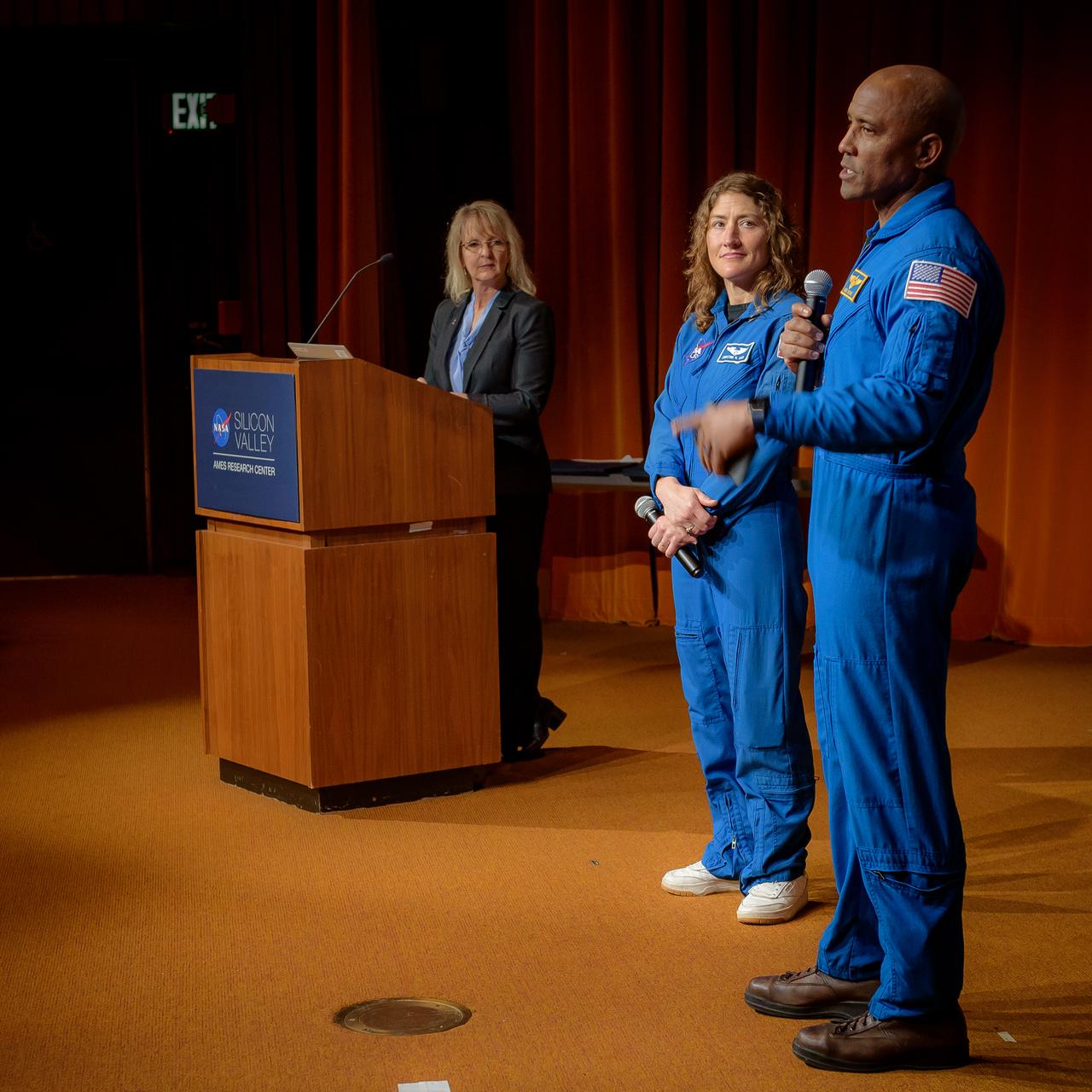
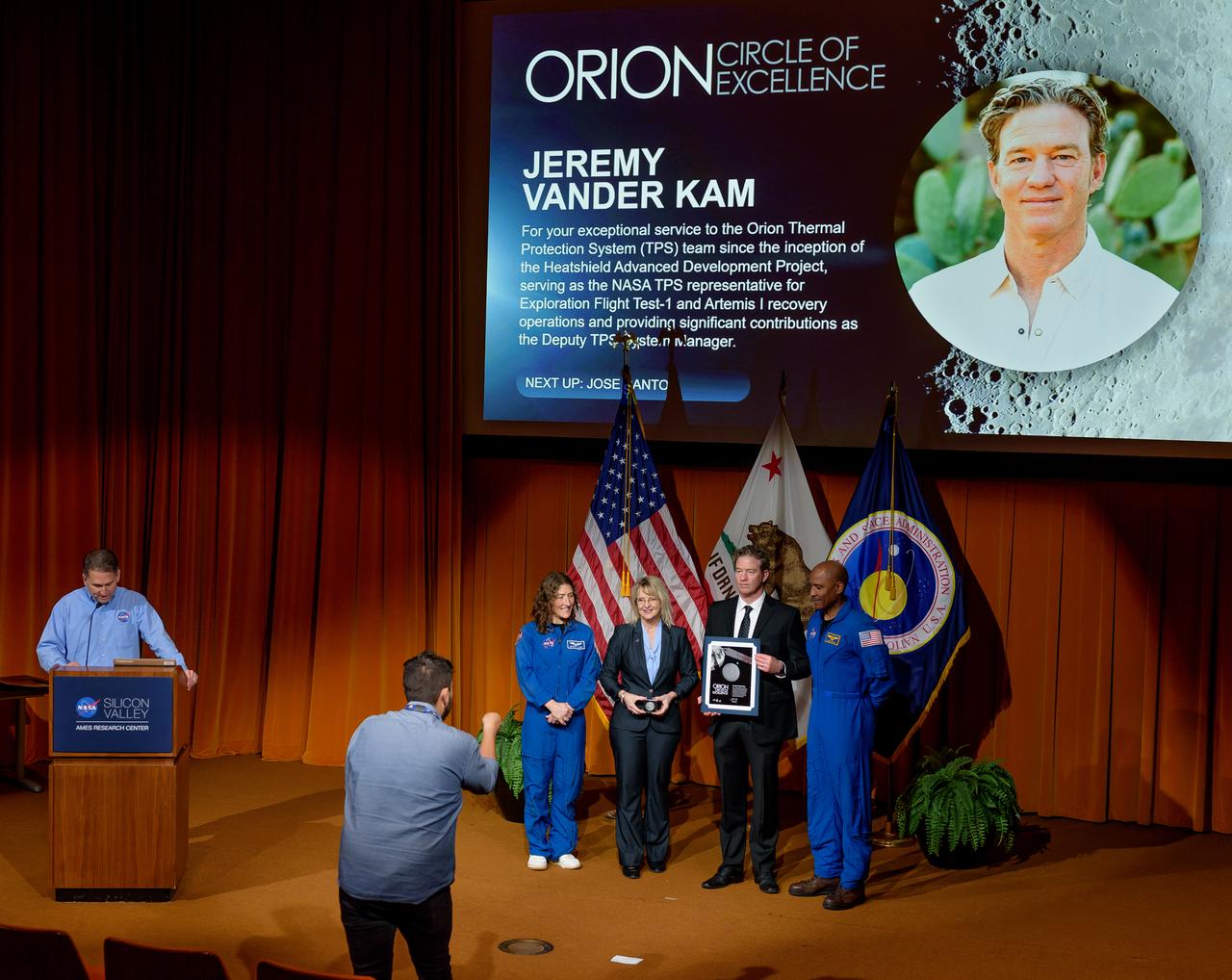
NASA Ames staff photographer Brandon Torres Navarette, front, photographs Orion Circle of Excellence Award being presented to Jeremy Vander Kam (ACD25-0023-001), center, by Orion Deputy Program Manager Debbie Korth, left, NASA astronauts Victor J. Glover, right, and Christina Koch, left.  Luis Saucedo is the master of the ceremonies at the podium on the far left, in the Syvertson Auditorium, N201.
Orion Astronauts Visit Ames Entry Systems and Technology Divisio
Location portrait of Jay Trimble in the Multi-Mission Operations Center (MMOC), N240, for the Volatiles Investigating Polar Exploration Rover (VIPER) mission.
VIPER Family Day
Right to left: Jay Trimble, Rachel Hoover, and Kelsey Herrmann in the Multi-Mission Operations Center (MMOC), N240, during Volatiles Investigating Polar Exploration Rover (VIPER) for VIPER Family Day.
VIPER Family Day
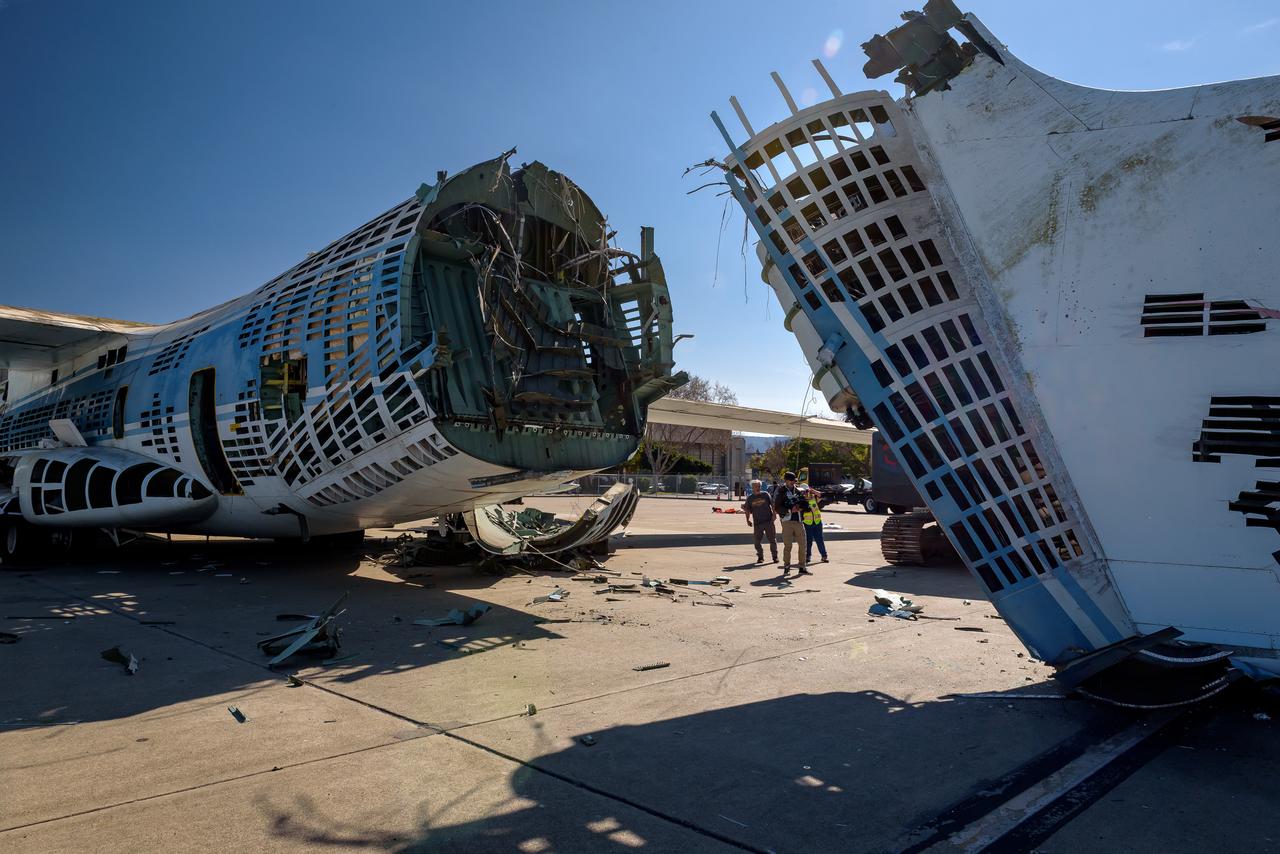
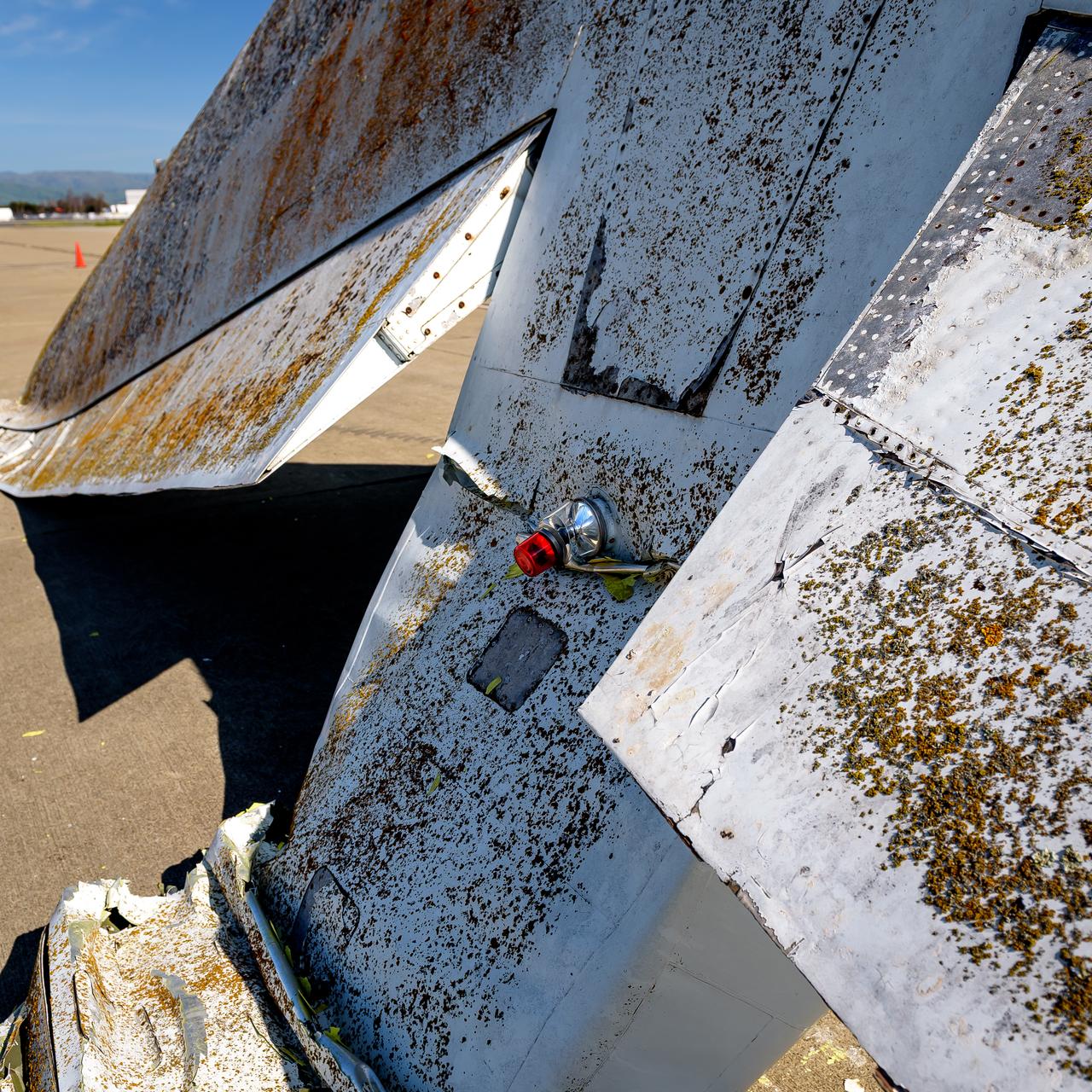
The tail section of the modified C-141 Kuiper Airborne Observatory, (KAO) (NASA-714), severed from the fuselage on the N211 apron of Moffett Field, California.
Kuiper Airborne Observatory (KAO) Demolition
40x80x120 Foot Wind Tunnel at NASA's Ames Research Center Laser Velocimeter (LV) Long Range System. Requesting Organization: Low Speed Aircraft Photographed on May 18, 1983
Laser Velocimeter (LV) Long Range System
3/4 front view of Avrocar without tail, showing ground board and variable height struts.  The ground board minimizes the boundary layer on the floor under the model.   black and white negative: KODAK T-MAX 100 Professional. SBA settings neutral SBA on, color SBA on
40X80 foot Wind Tunnel Tests Of Avrocar Annular Jet VTOL Airplane.
Arno Rogg explains the Volatiles Investigating Polar Exploration Rover (VIPER) mission to visitors in the Multi-Mission Operations Center (MMOC), N240, during VIPER Family Day.
VIPER Family Day
The tail section of the modified C-141 Kuiper Airborne Observatory, (KAO) (NASA-714), severed from the fuselage on the N211 apron of Moffett Field, California.
Kuiper Airborne Observatory (KAO) Demolition
Drag studies for Full Scale wind tunnel test of Grumman YAO-1 airplane, 3/4 front view with propellers on
Grumman YAO-1 airplane mounted in the 40x80 foot wind tunnel at Ames.
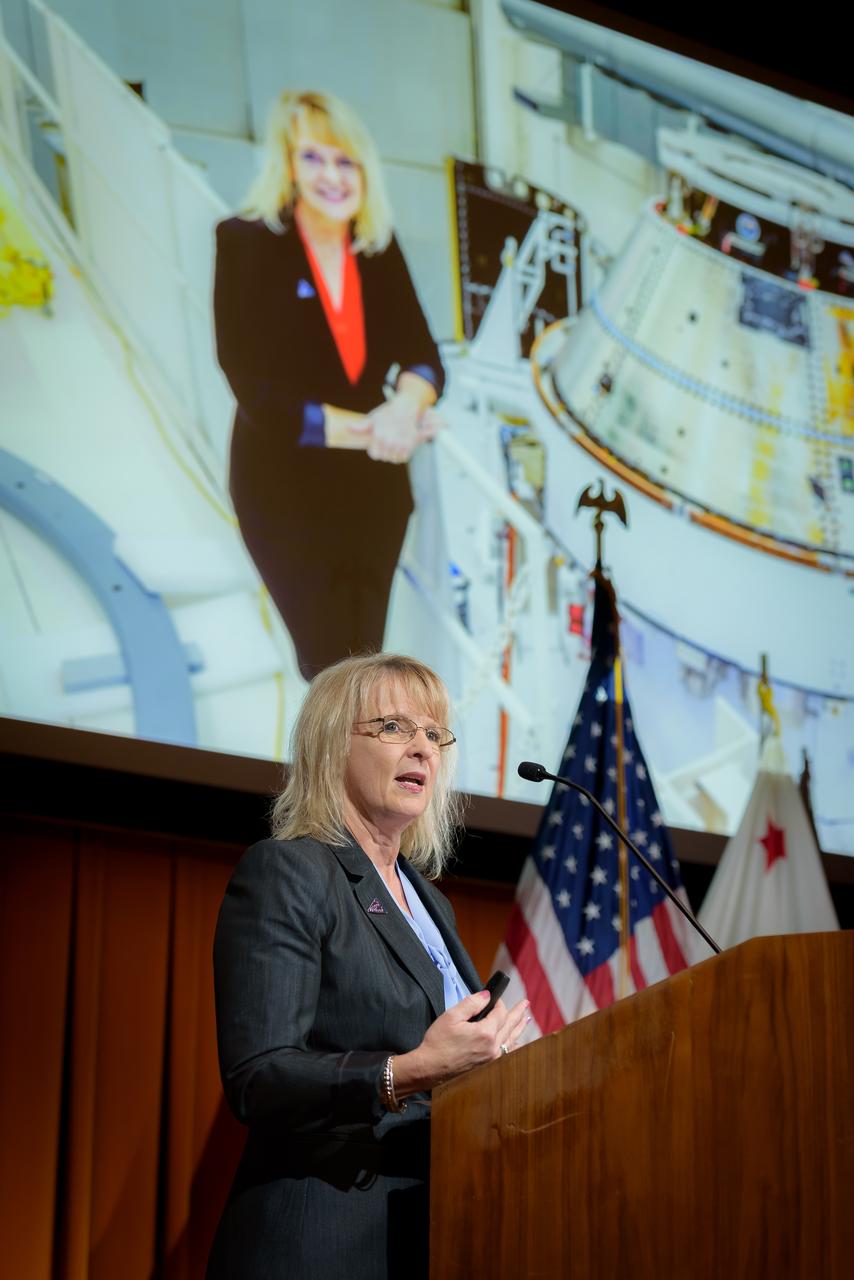
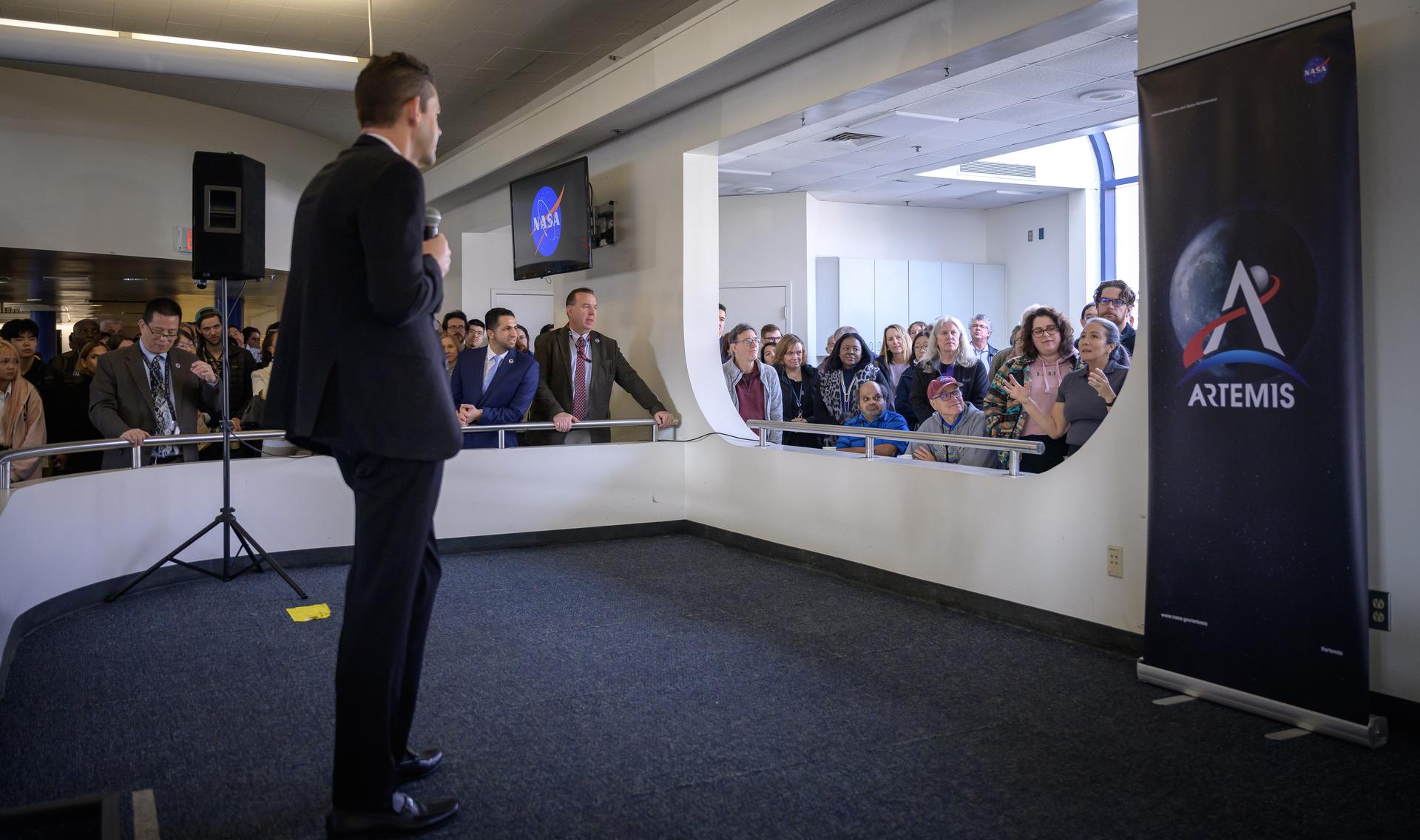
Orion Deputy Program Manager Debbie Korth welcomes Ames employees to the Orion Circle of Excellence Award Ceremony in the Syvertson Auditorium, N201.
Orion Astronauts Visit Ames Entry Systems and Technology Divisio
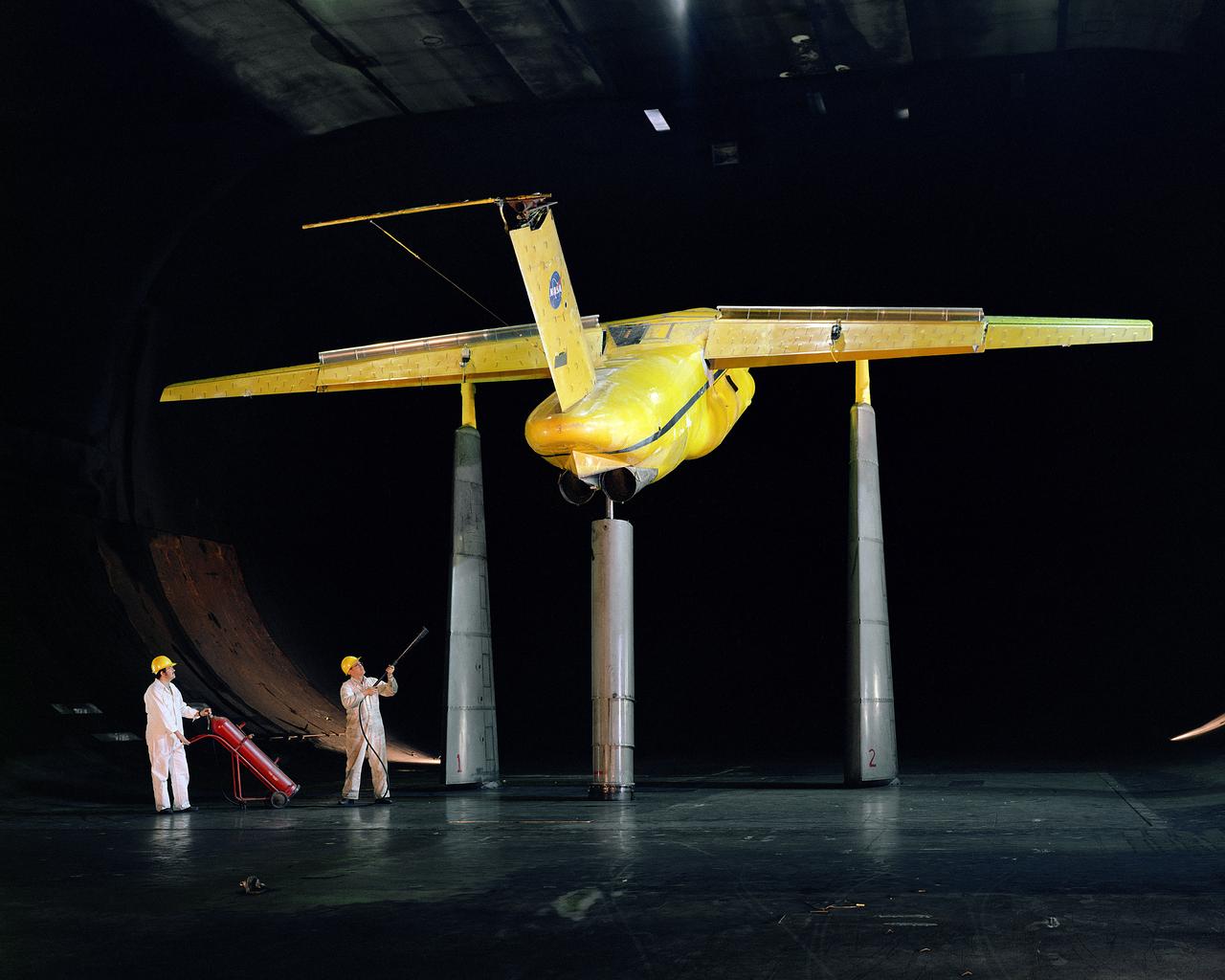
3/4 front view VZ-11 ground test - variable height struts. Engines of the VZ-11 are a pair of General Electric J85-5 turbojets, mounted in high in the centre fuselage, well away from fan disturbance. Designed in the Ames 40x80 foot wind tunnel.
GE Fan in Wing VZ-11 VTOL airplane in Ames 40x80 Foot Wind Tunnel.
The telescope mount in the modified C-141 Kuiper Airborne Observatory, (KAO) (NASA-714), during its demolition on the N211 apron at Moffett Field, California.
Kuiper Airborne Observatory (KAO) Demolition
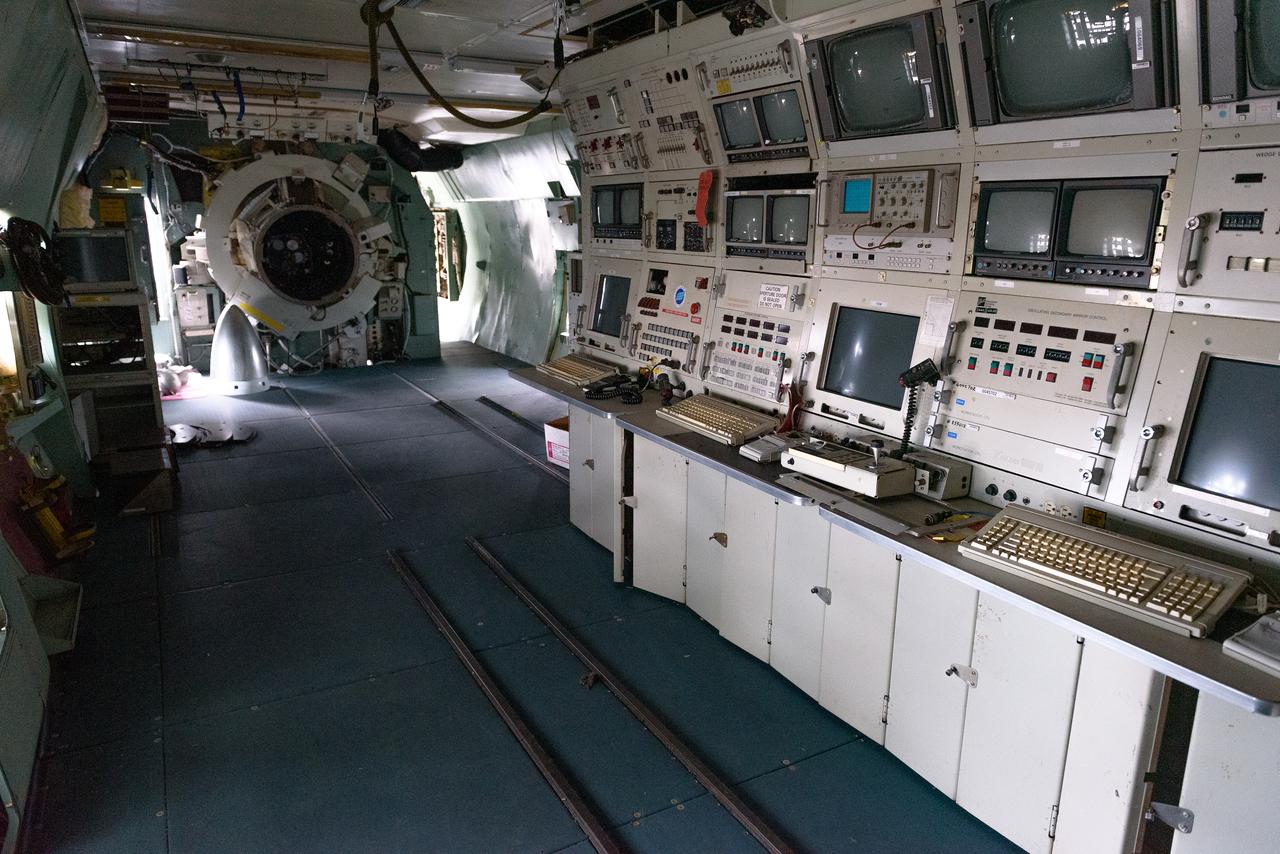
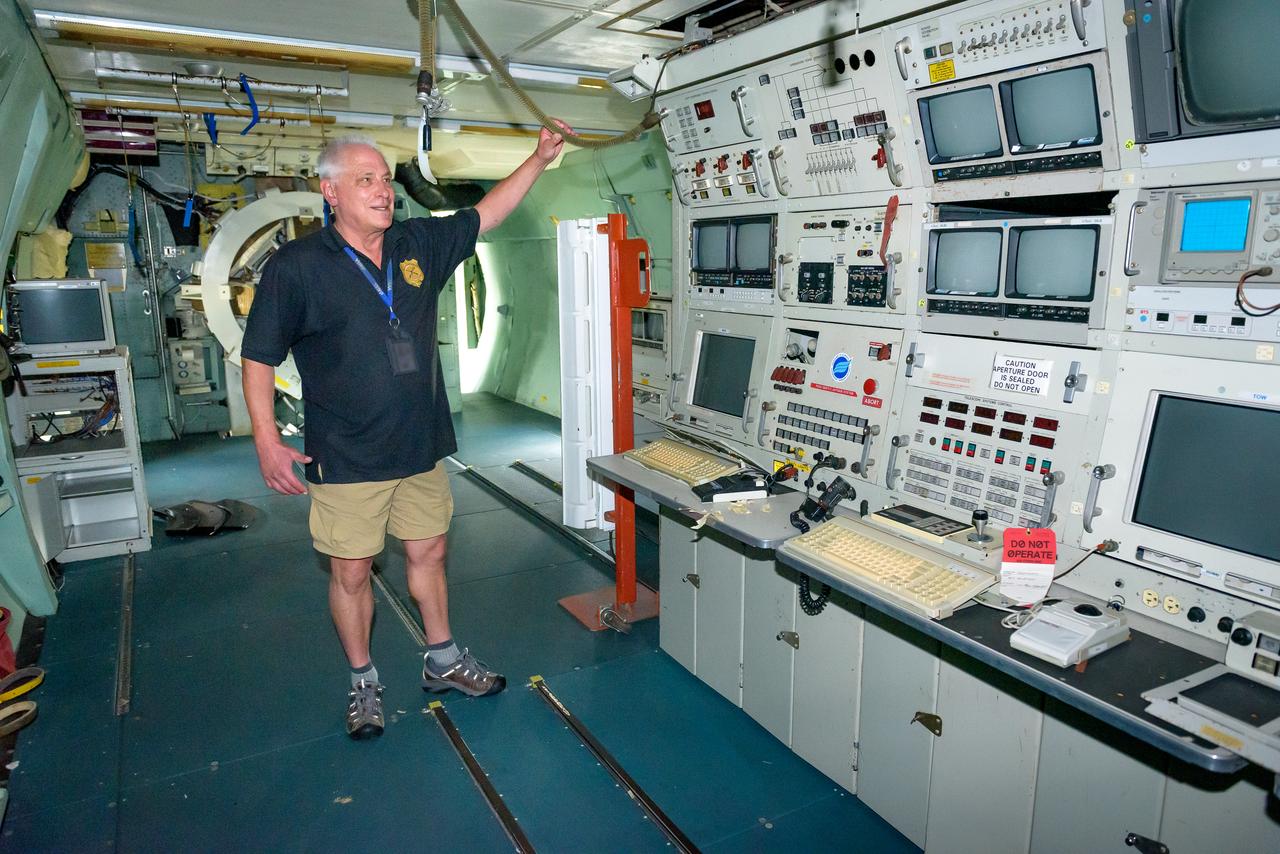
Mission Director Stephen Patterson at his workstation at the console of the modified C-141 Kuiper Airborne Observatory, (KAO) (NASA-714).
Kuiper Airborne Observatory (KAO) Demolition
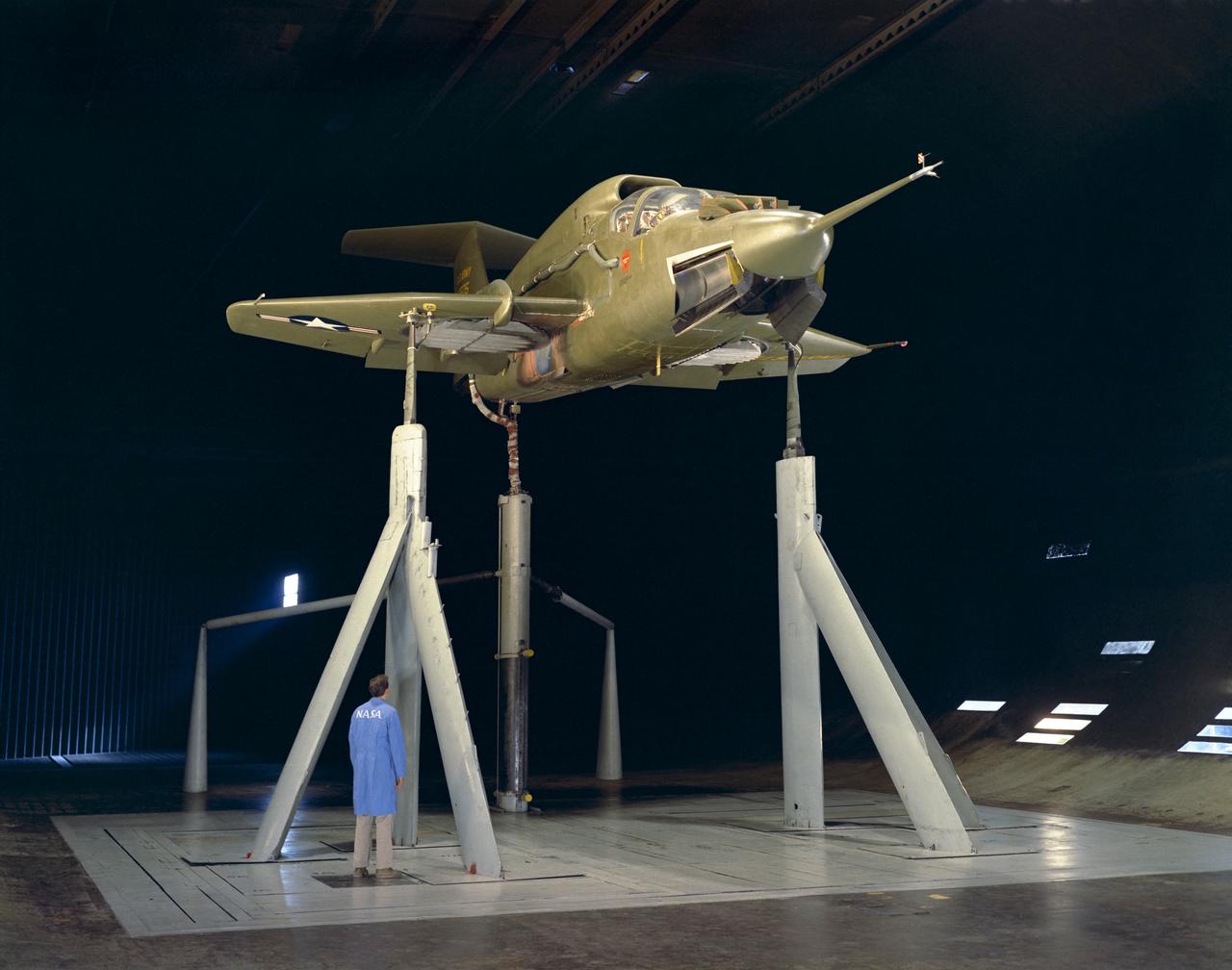
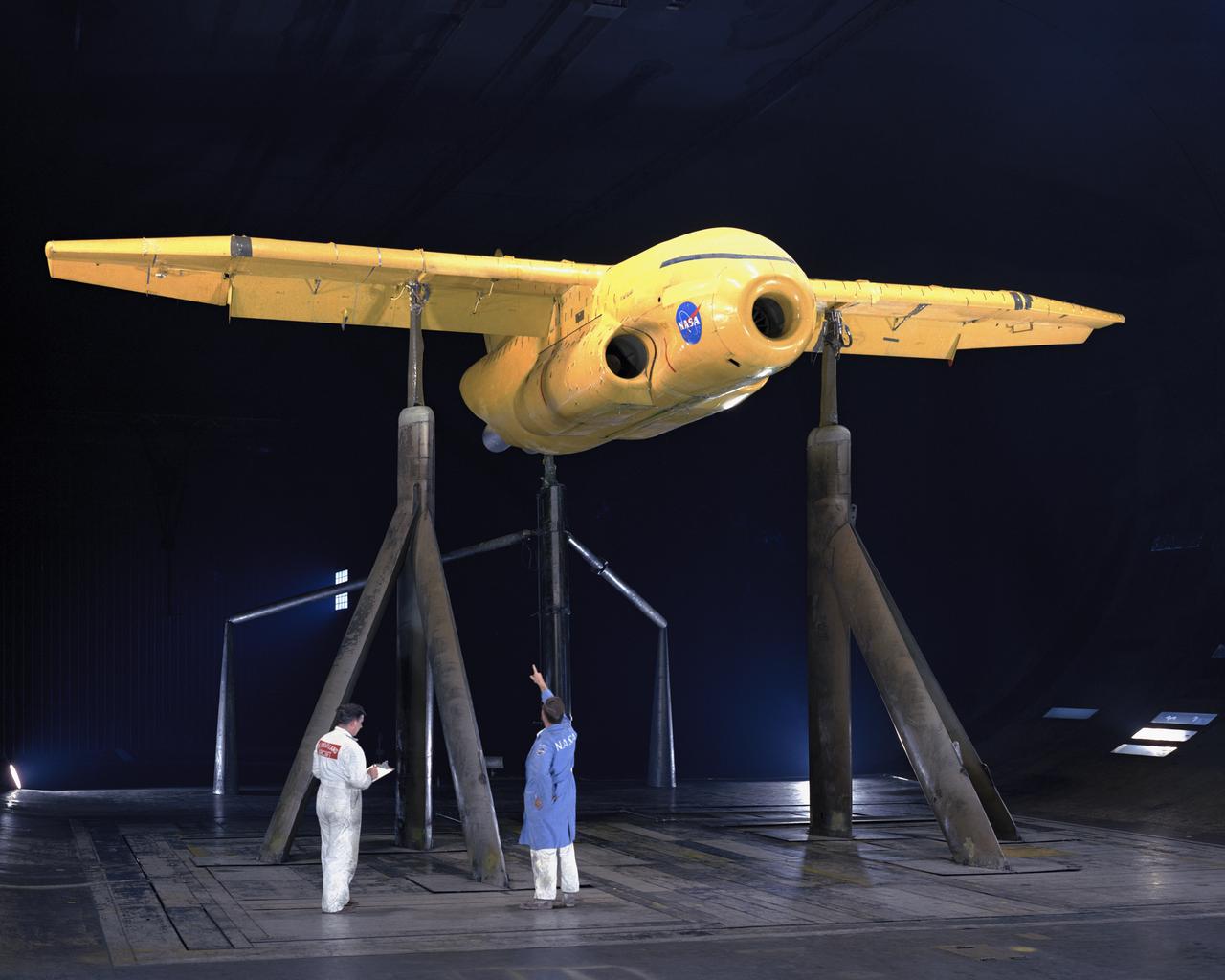
3/4 Low front view of fuselage and fan. Showing jet engine hanging below. Lift fan powered by jet exhaust. General Aerodynamic Characteristics of a Research Model with High Disk Loading Direct Lifting Fan Mounted in Fuselage
General Aerodynamic Characteristics of a Research Model with High Disk Loading Direct Lifting Fan Mounted in Fuselage
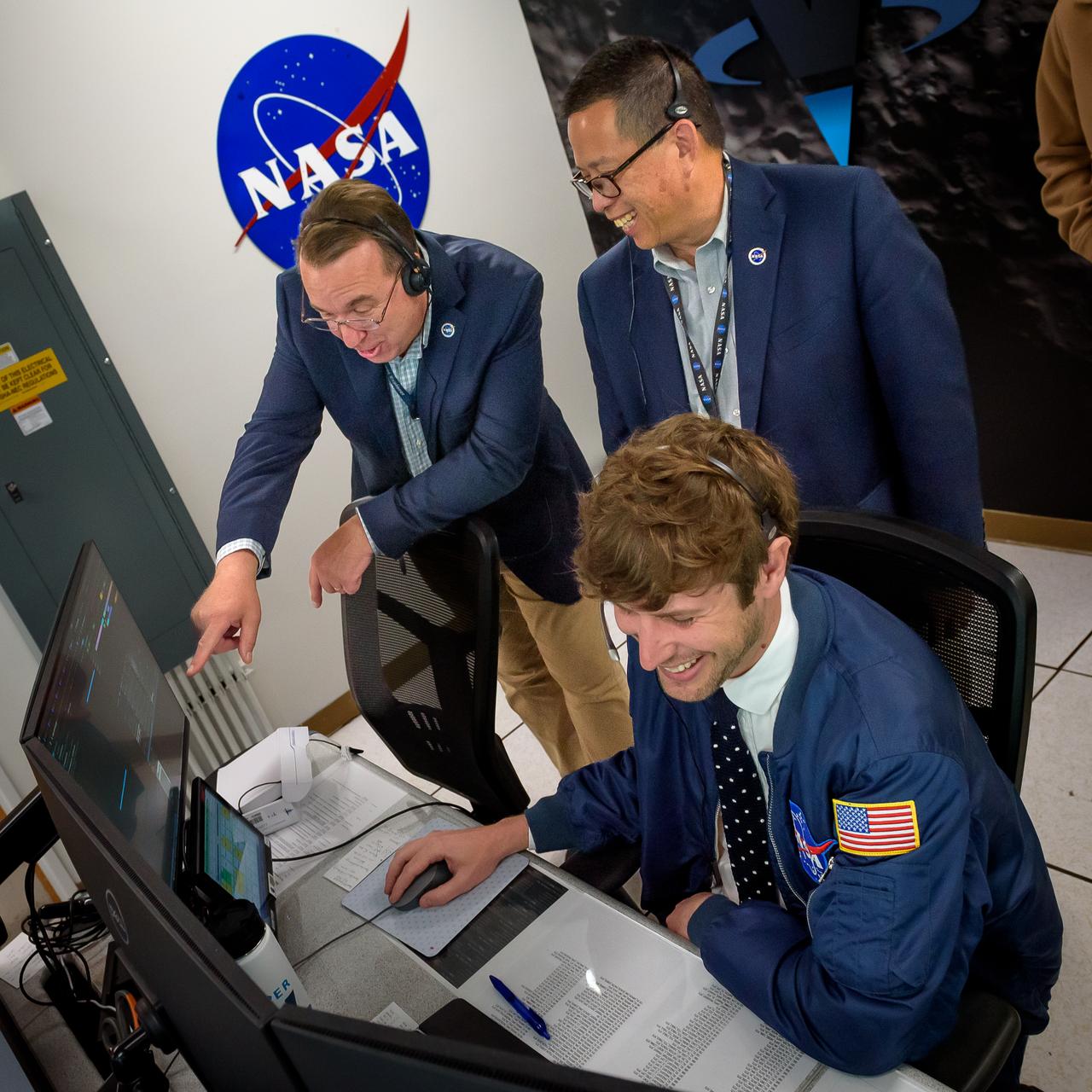
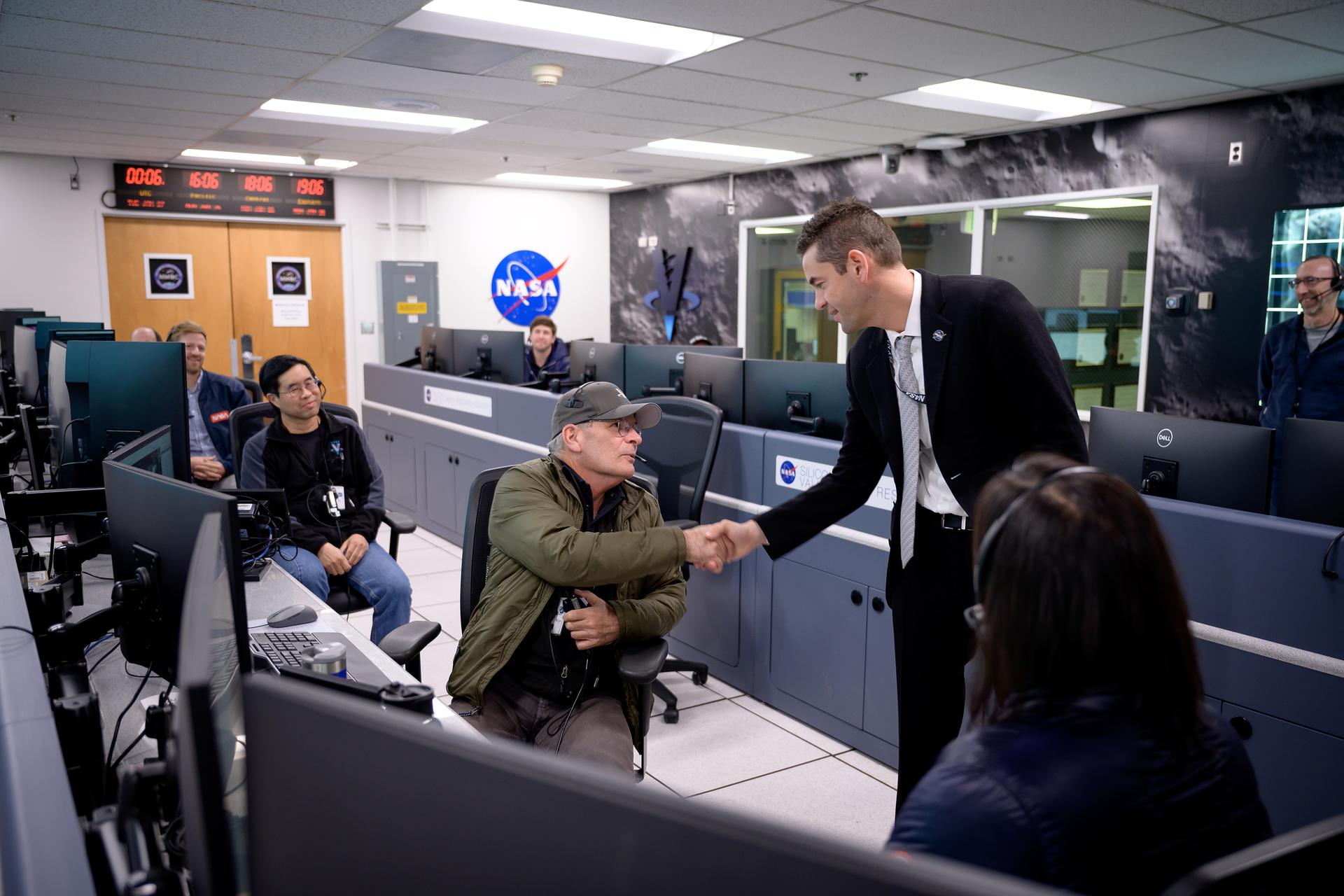
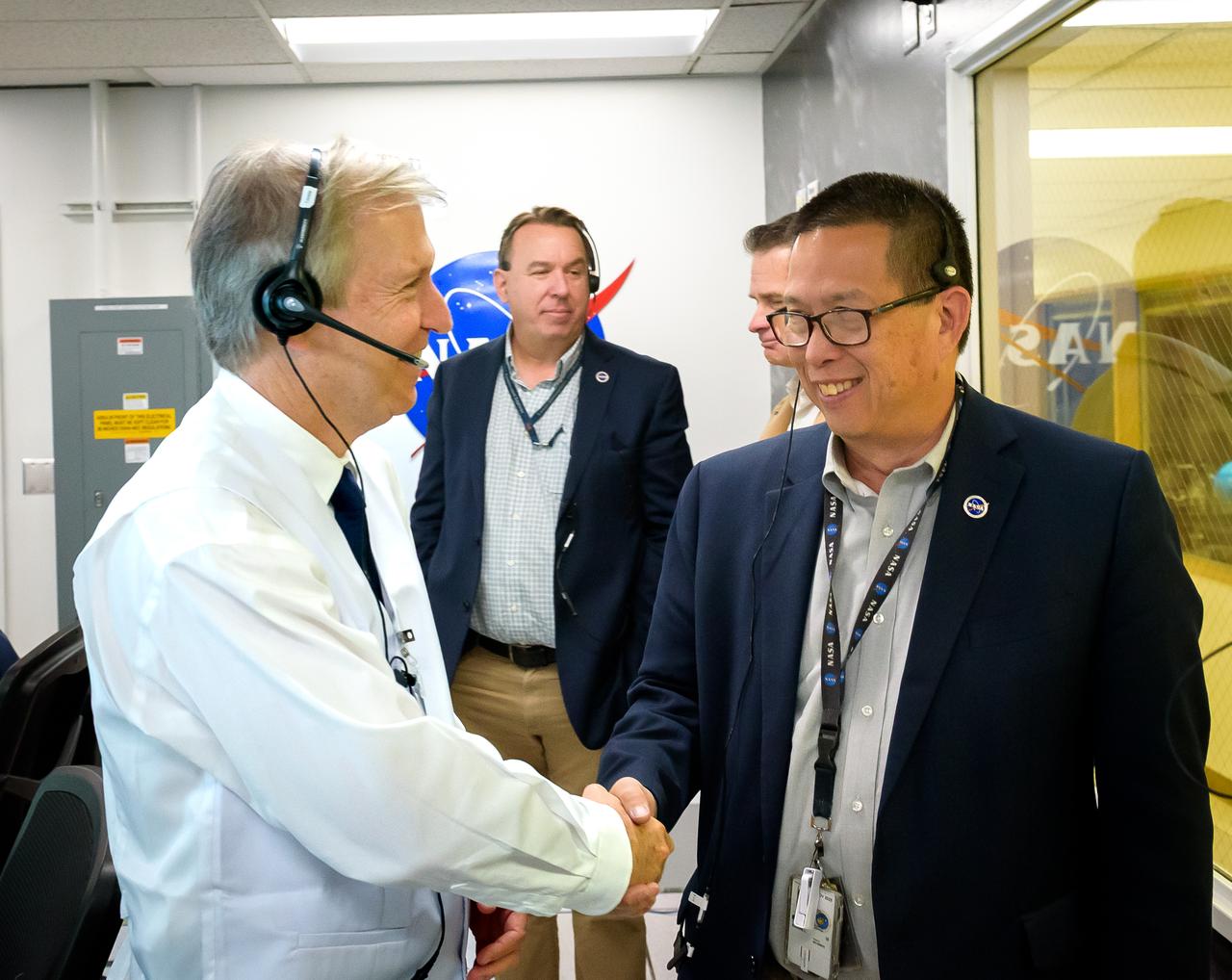
Volatiles Investigating Polar Exploration Rover (VIPER) mission systems manager Jay Trimble, left, with Center Director Eugene Tu during the vehicle operational readiness test in the Multi-Mission Operations Center (MMOC), N240A.  Deputy Center Director David Korsmeyer, behind.
VIPER Vehicle Operational Readiness Test
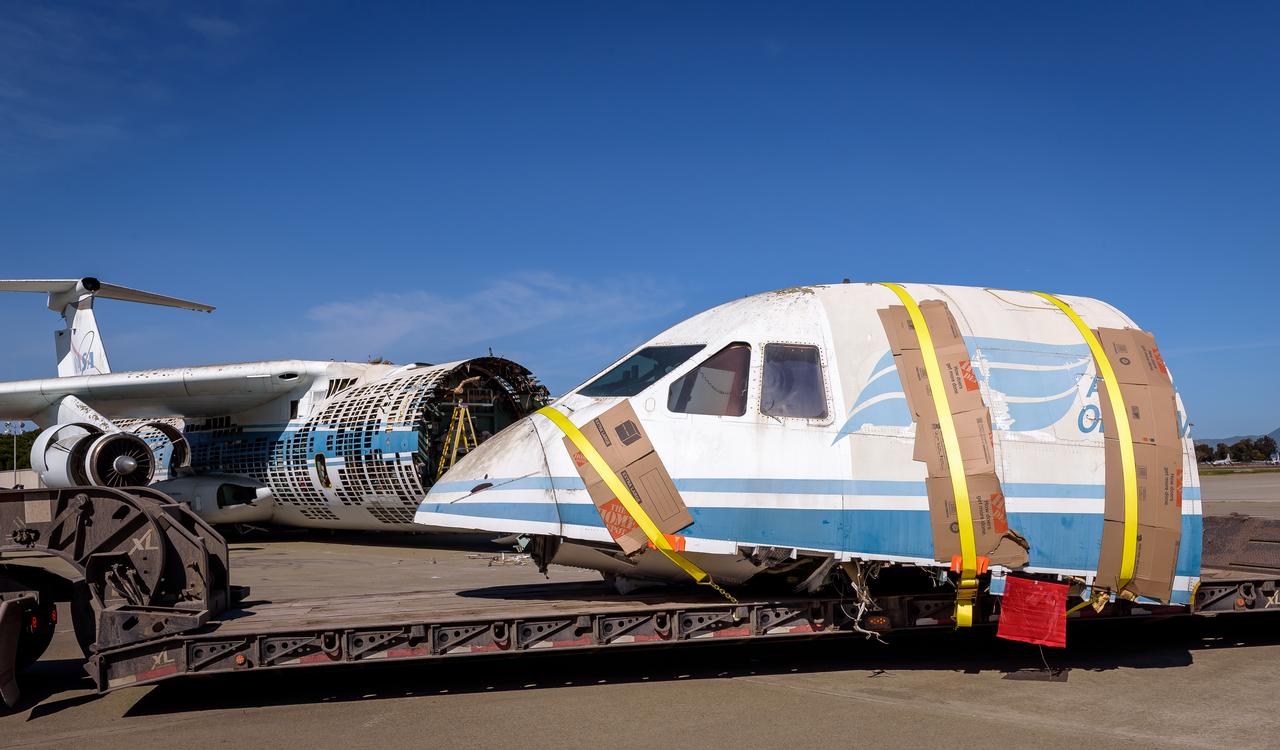
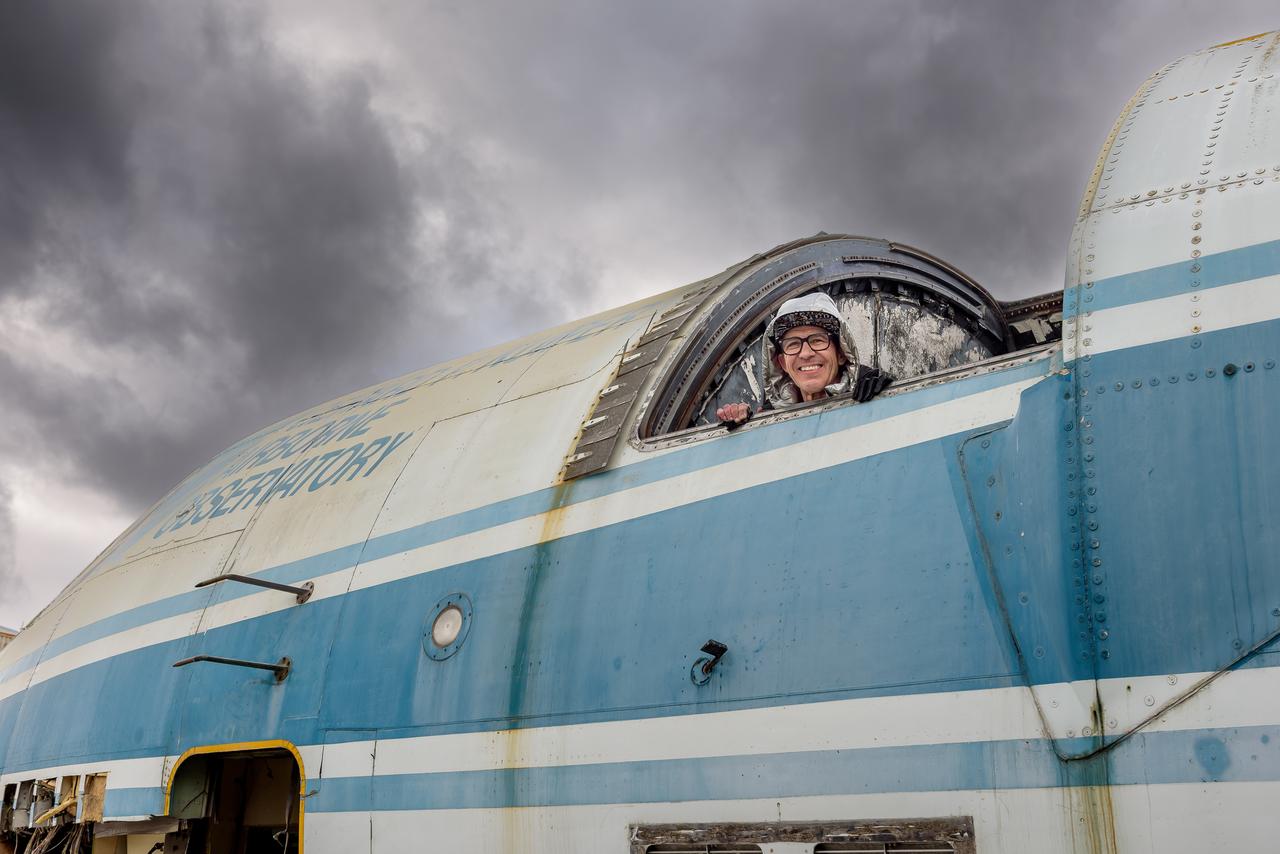
The cockpit of the modified C-141 Kuiper Airborne Observatory, (KAO) (NASA-714), is separated from the airframe on the N211 apron at Moffett Field, California.
Kuiper Airborne Observatory (KAO) Demolition
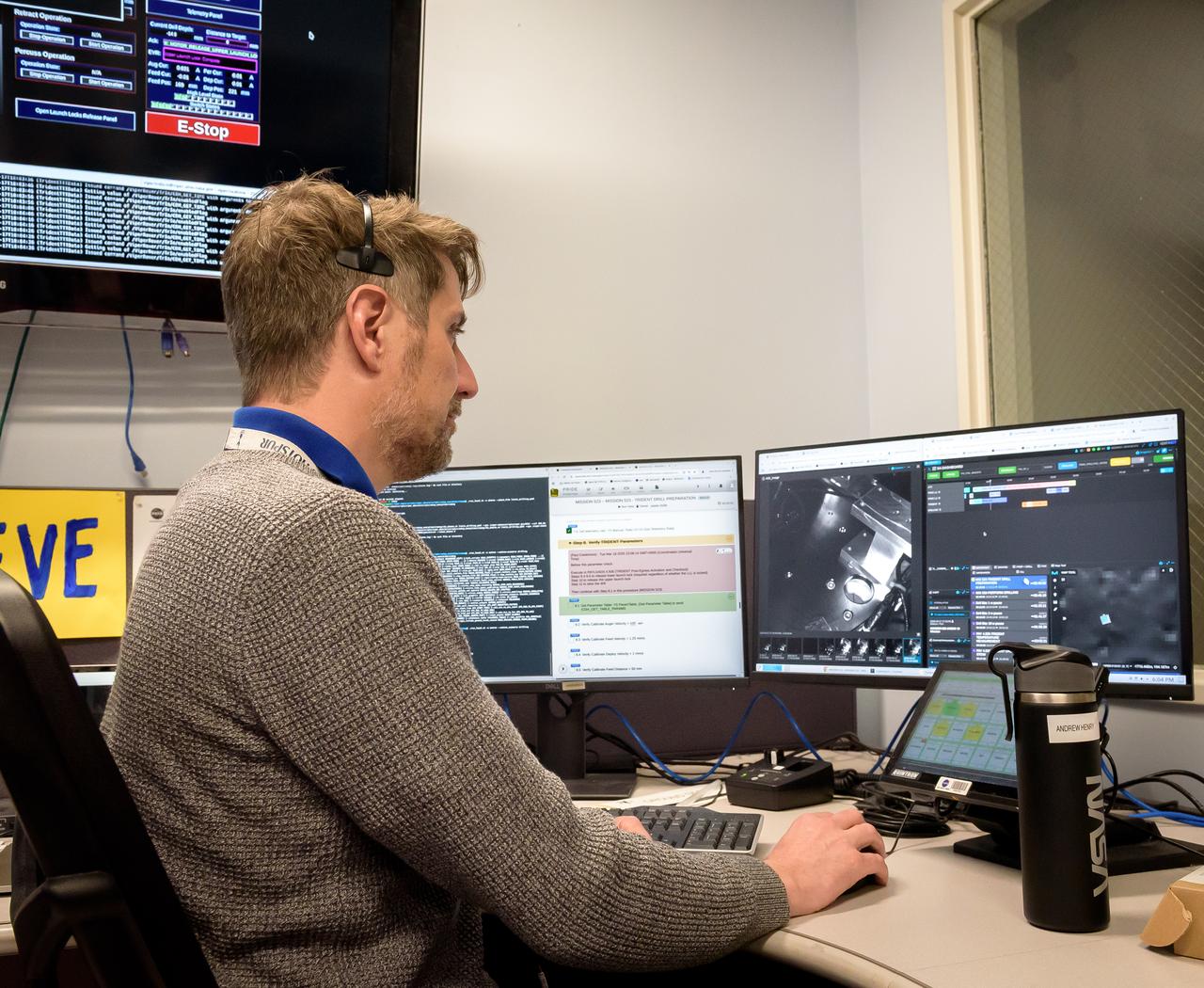
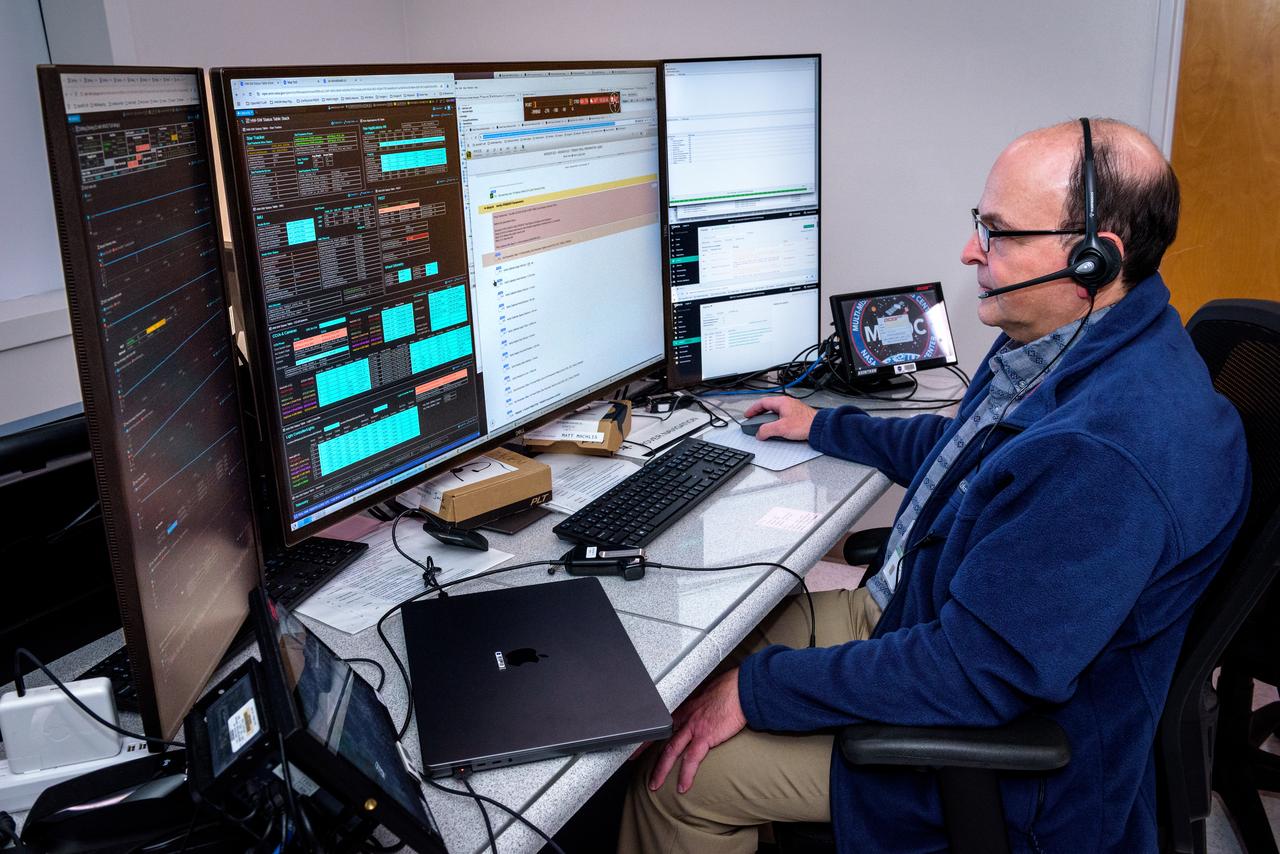
Matt Machlis during the Volatiles Investigating Polar Exploration Rover (VIPER) vehicle operational readiness test in the Multi-Mission Operations Center (MMOC), N240A.
VIPER Vehicle Operational Readiness Test
Volatiles Investigating Polar Exploration Rover (VIPER) mission systems manager Jay Trimble, right, with Multi-Mission Operations Center (MMOC) Director Justin Pane, during the vehicle operational readiness test in the MMOC, N240A.
VIPER Vehicle Operational Readiness Test
3/4 front view of XV-4A Hummingbird VTOL Research Vehicle in Ames 40x80 wind tunnel with Tom Wills in Photo.
XV-4A Hummingbird VTOL Research Vehicle in Ames 40x80 Wind Tunnel.
Vinh To during the Volatiles Investigating Polar Exploration Rover (VIPER) vehicle operational readiness test in the Multi-Mission Operations Center (MMOC), N240A.
VIPER Vehicle Operational Readiness Test
3/4 front view Ryan XV-5A lift-fan VSTOL airplane.  Pictured with Tom Wills.
XV-5A Lift-Fan VSTOL Airplane installed in Ames 40x80 foot Wind Tunnel.
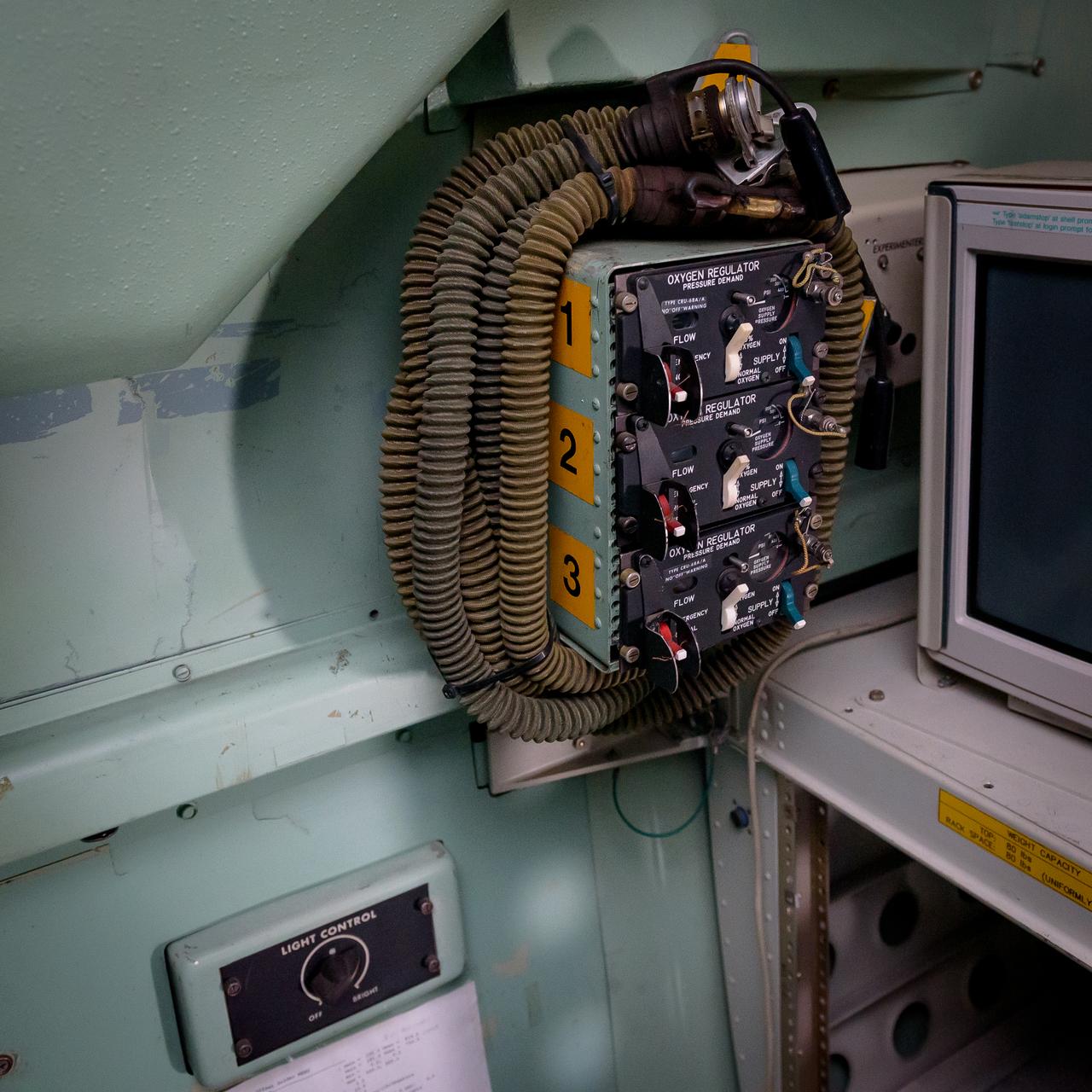
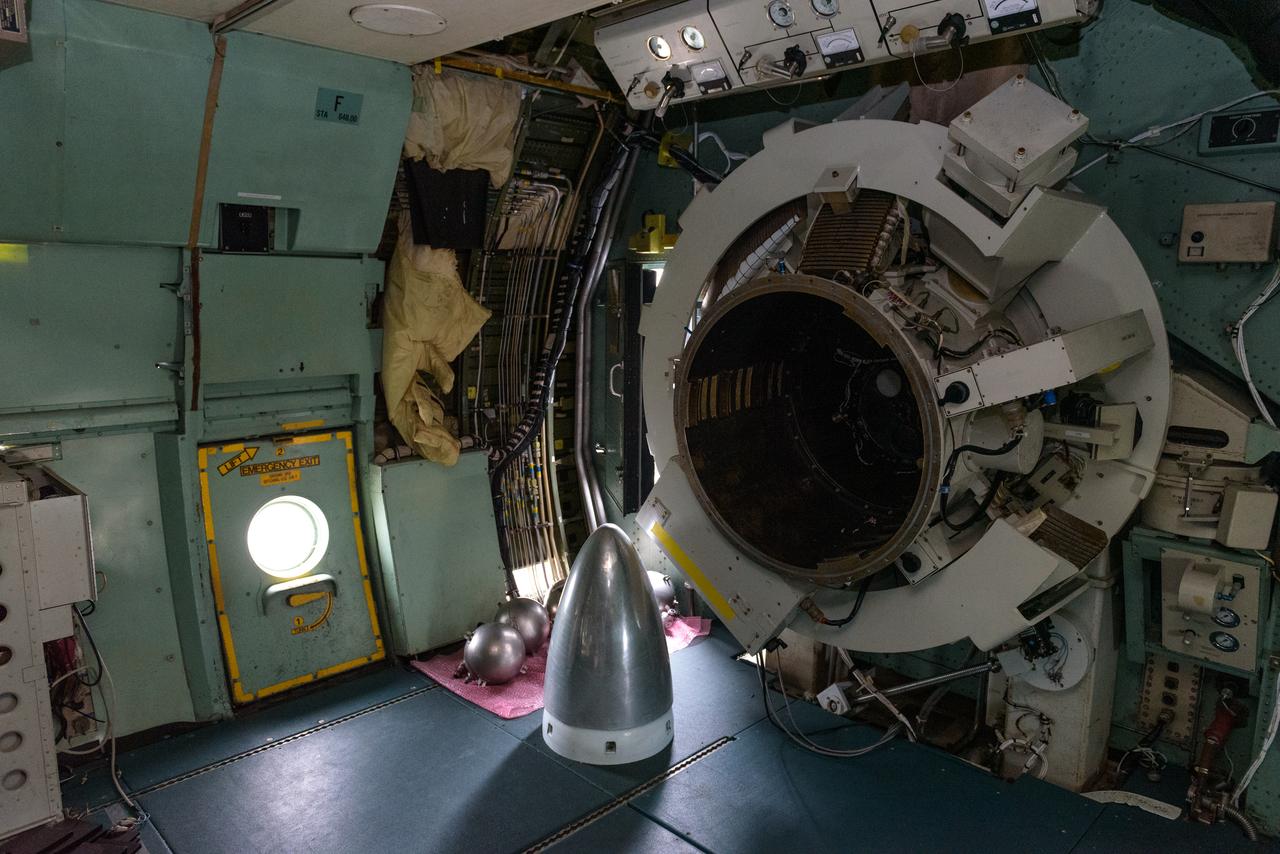
The science instrument mount/telescope flange leading to the telescope cavity.  The port work area is where science instruments were connected to the telescope. Astronomers and the science team sat immediately to the left in the port work area on the modified C-141 Kuiper Airborne Observatory, (KAO) (NASA-714), (seats have been removed).
Kuiper Airborne Observatory (KAO) Demolition
3/4 front view in Ames 40x80 foot Wind Tunnel investigation of the Lockheed T-33 modified for area-suction leading-edge and trailing edge flaps.
Northrop N-69 Missile in the Ames 40x80 foot Wind Tunnel.
David Tsay during the Volatiles Investigating Polar Exploration Rover (VIPER) vehicle operational readiness test in the Multi-Mission Operations Center (MMOC), N240A.
VIPER Vehicle Operational Readiness Test
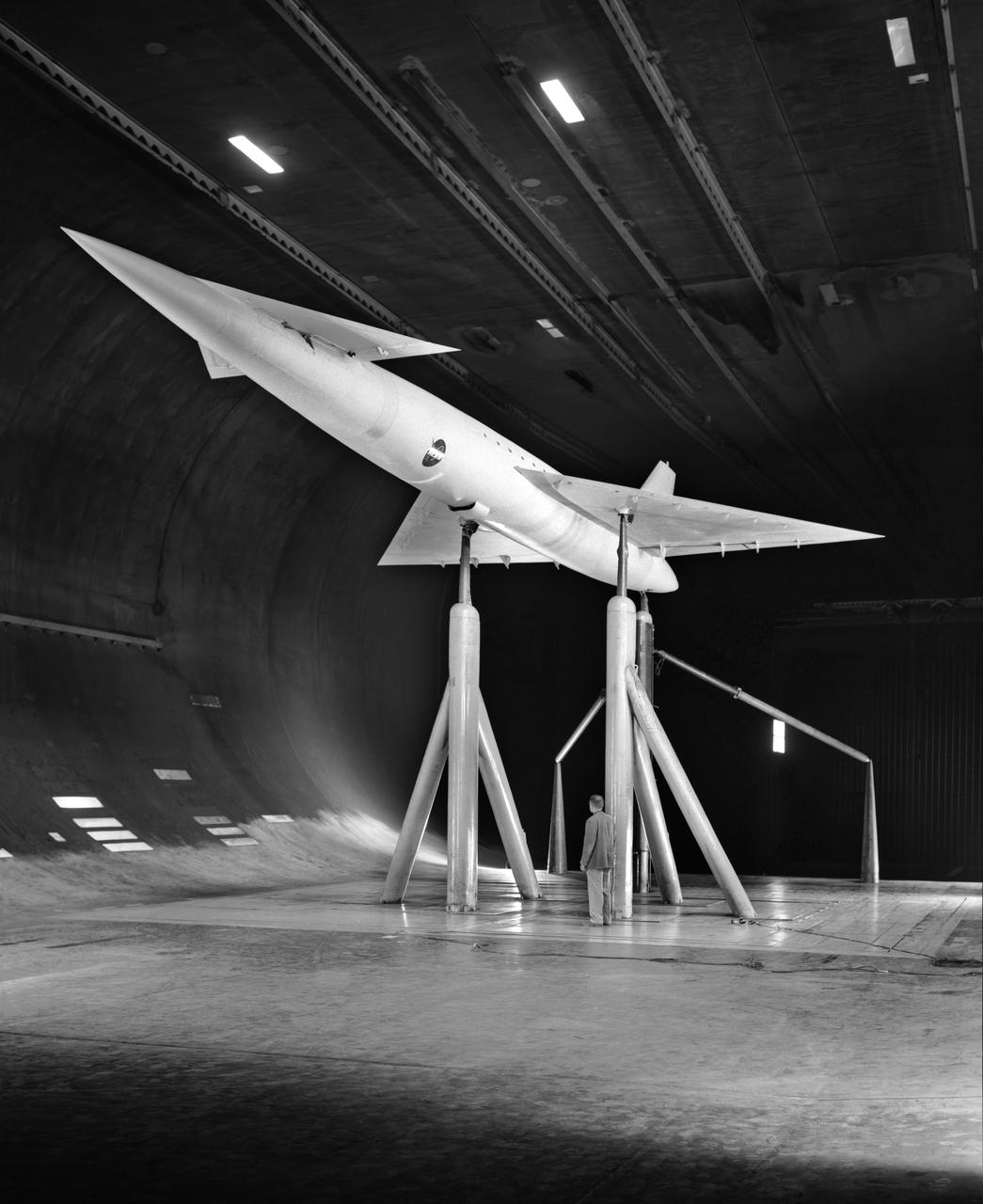
High 3/4 top front view of model in Ames 40x80 foot wind tunnel. Bob Bishop in lower right. Delta Wing with Conard.
Hypersonic Transport Model
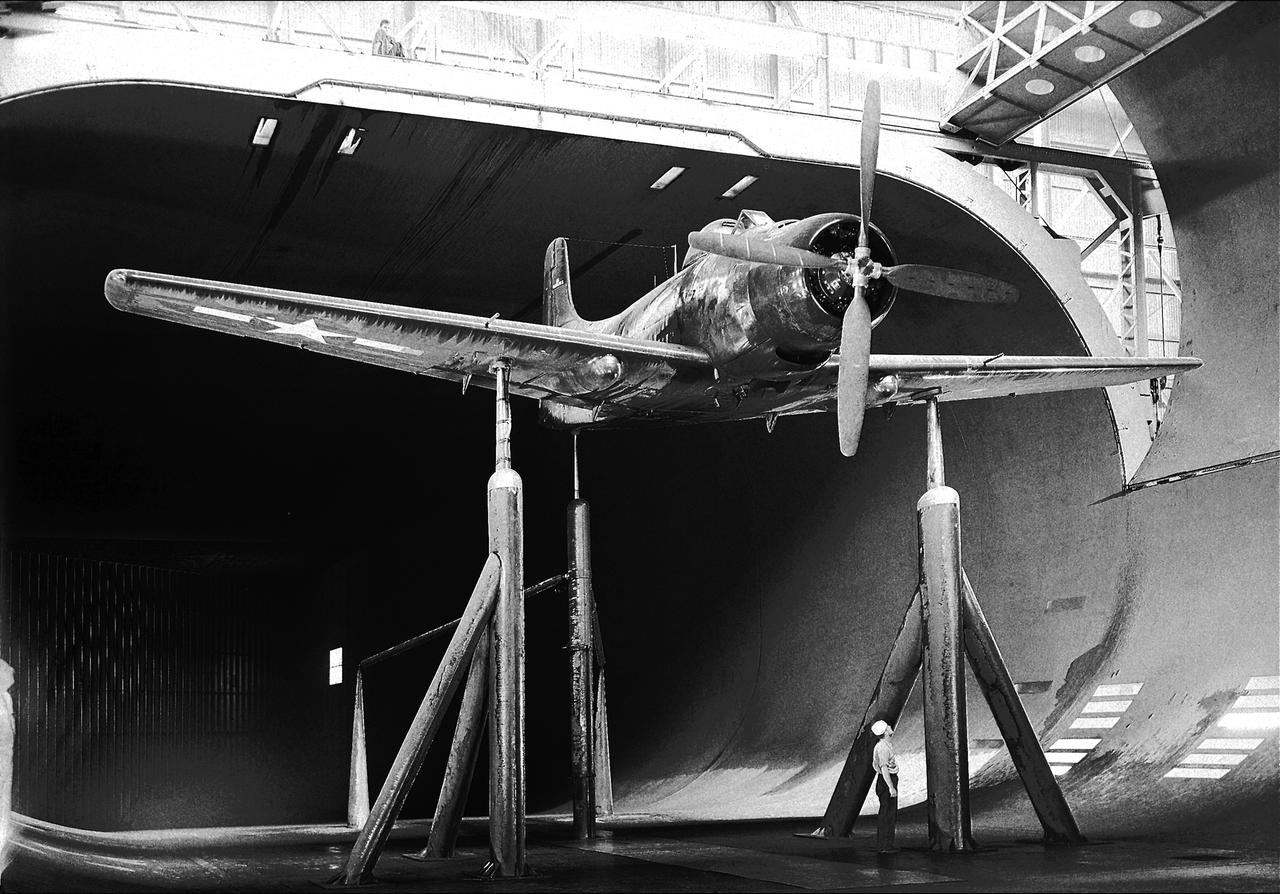
3/4 front view from below of the Ryan FR-1 airplane mounted in the NACA Ames 40x80 foot wind tunnel. Production configuration.
Ryan FR-1 in NACA Ames 40x80 foot Wind Tunnel.
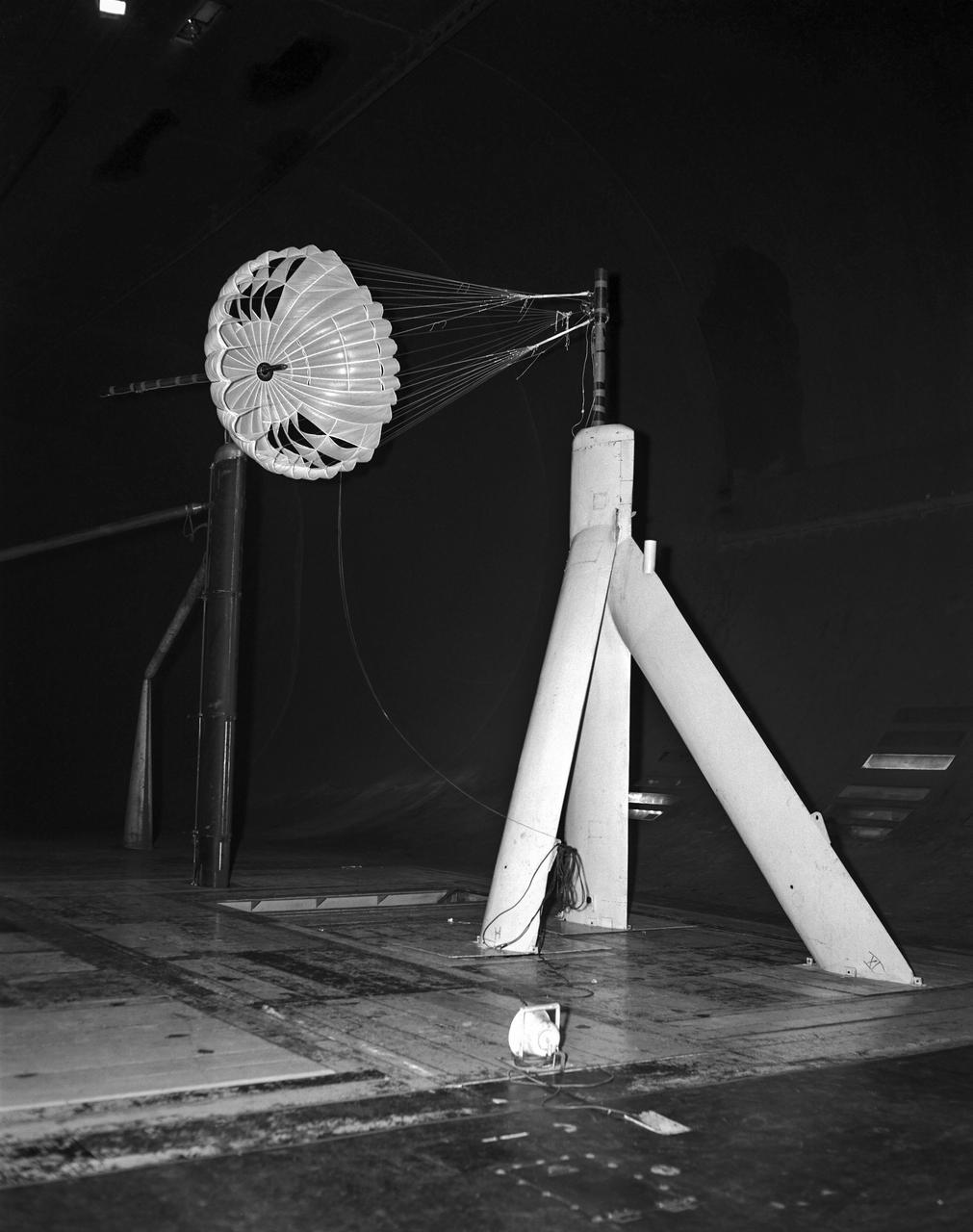
(02/18/1964) Apollo 3 Parachute cluster, flown vertically in 40x80 wind tunnel.  Parachutes mounted on a control head with reels to vary the line lengths.
Steerable Parachute for Apollo Vehicle tested in Ames 40x80 foot Wind Tunnel..
Equipment: Data Processing and Data Reduction at the NASA Ames Research Center, EMC. IBM 7090 Data Processing System.
Data Processing System at Ames Research Center.
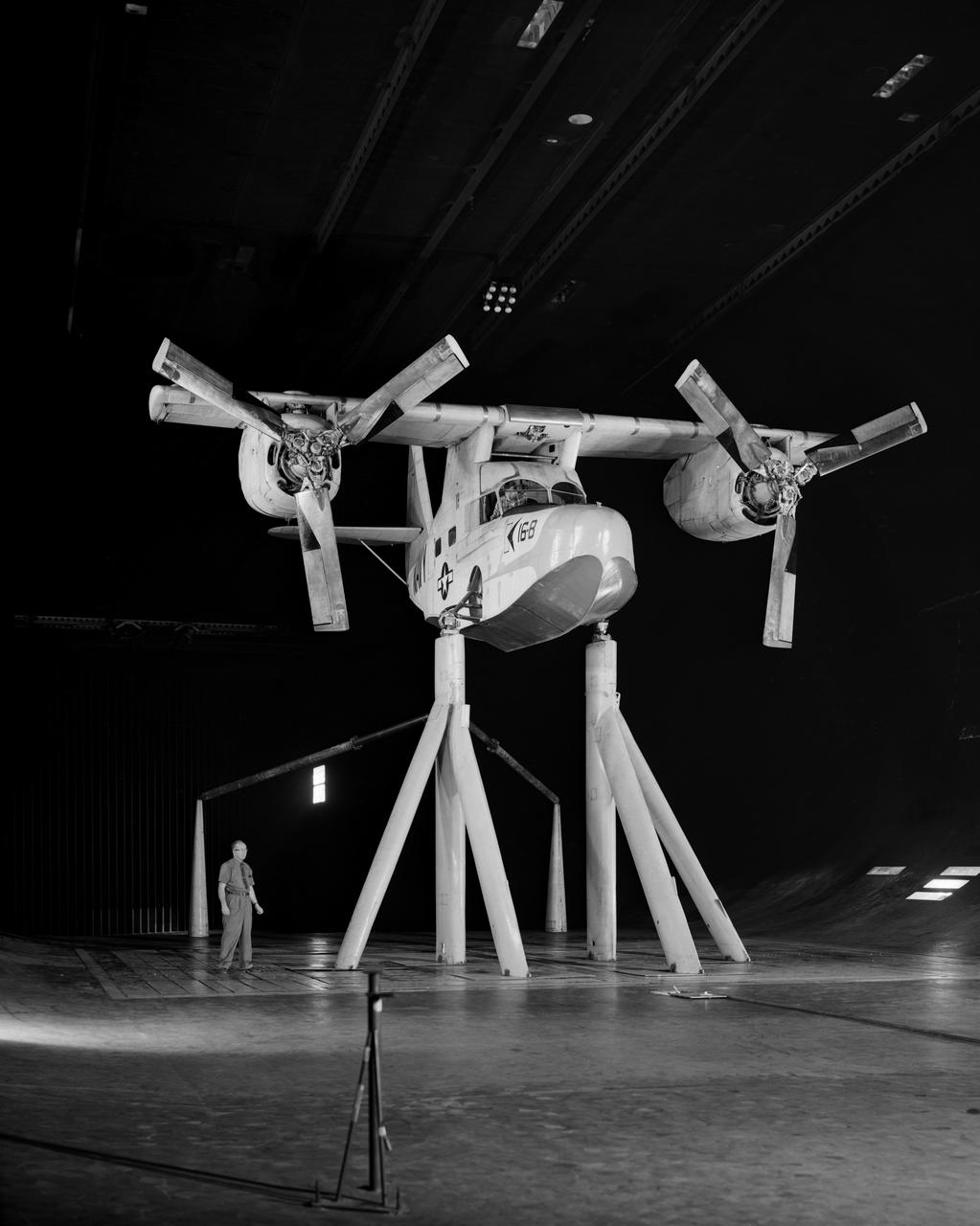
KAMAN K-16-B aircraft
Kaman K-16-B tilt wing aircraft.
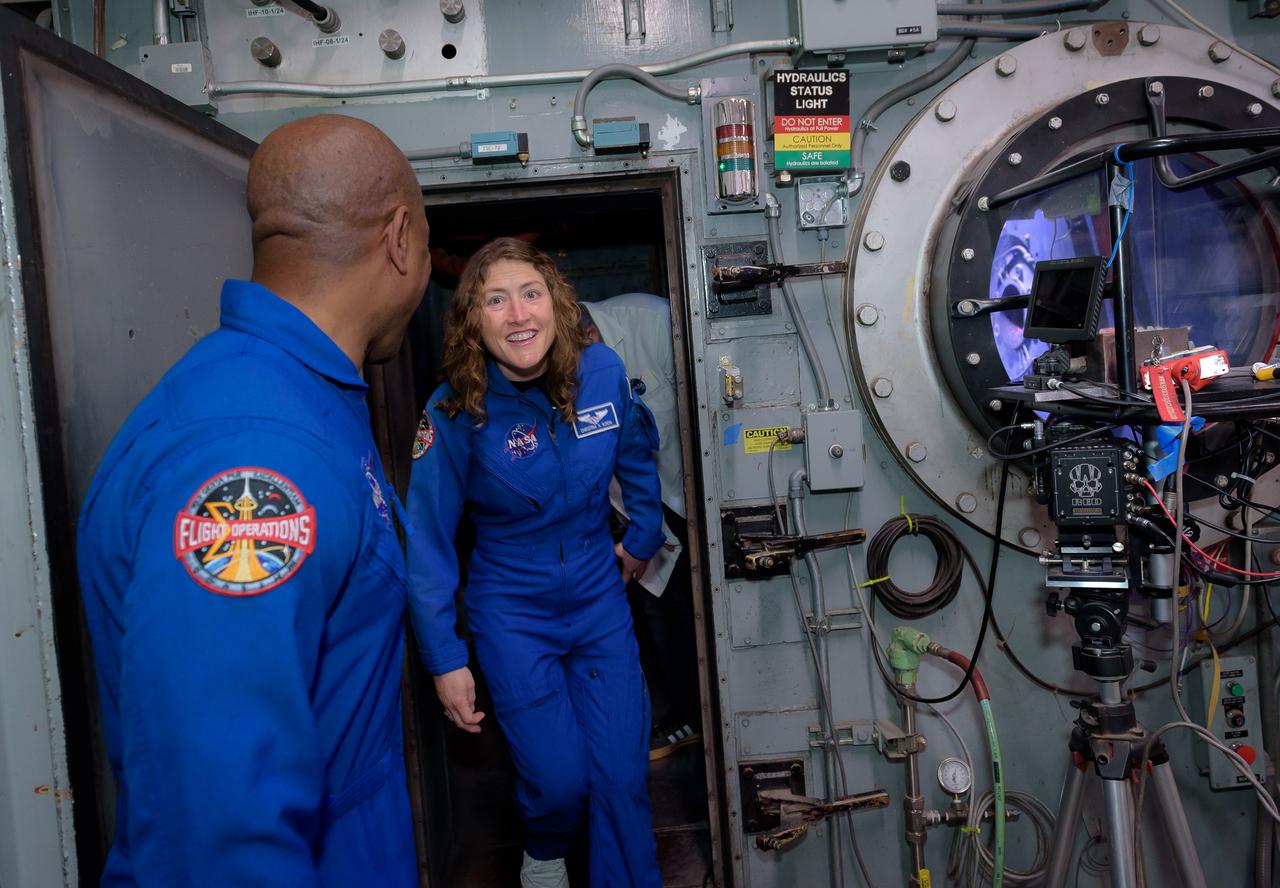
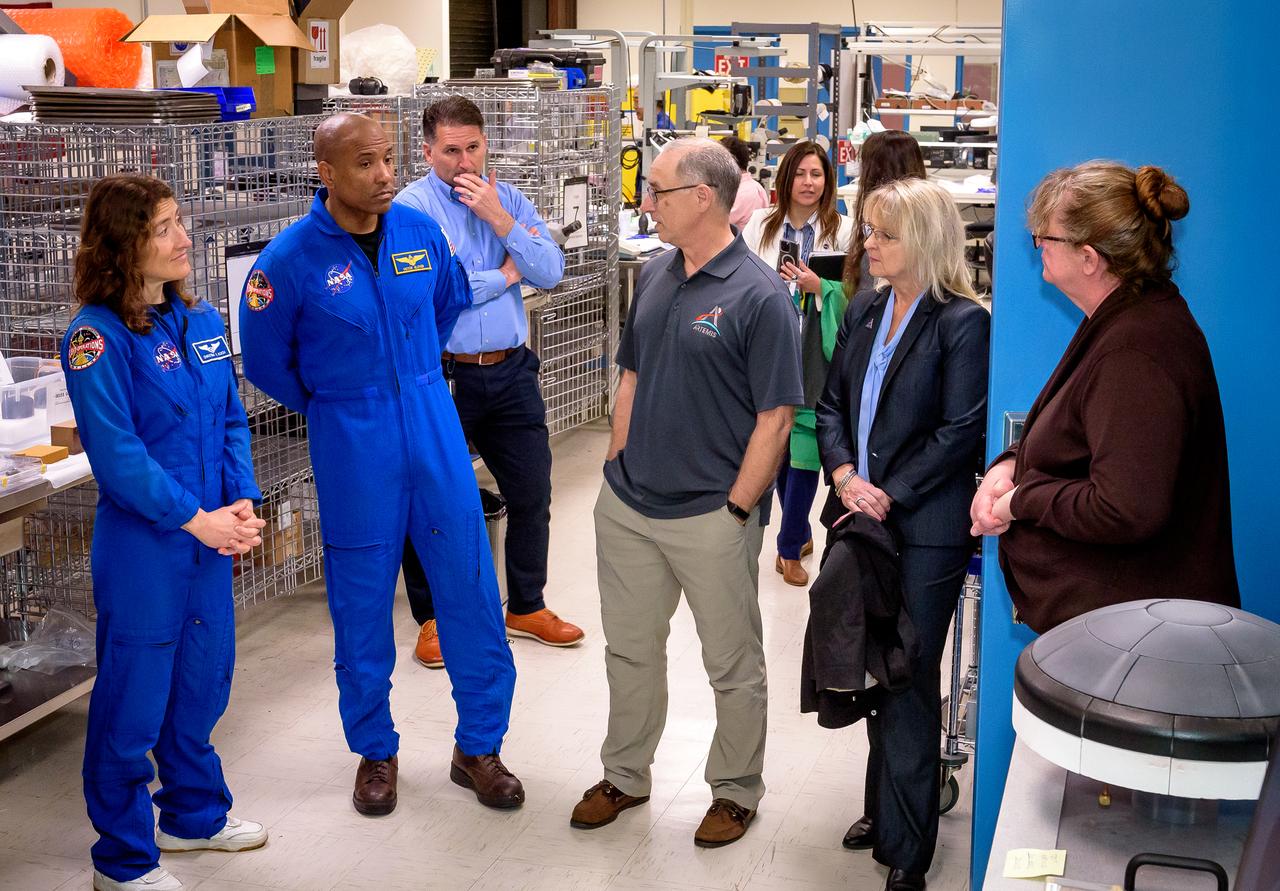
NASA astronauts Victor J. Glover and Christina Koch tour the Ames Arc Jet Complex, N238.
Orion Astronauts Visit Ames Entry Systems and Technology Divisio
Rick Elphic during the Volatiles Investigating Polar Exploration Rover (VIPER) vehicle operational readiness test in the Multi-Mission Operations Center (MMOC), N240A.
VIPER Vehicle Operational Readiness Test
Zachary Burkland, left, and Jay Trimble, during the Volatiles Investigating Polar Exploration Rover (VIPER) vehicle operational readiness test in the Multi-Mission Operations Center (MMOC), N240A.
VIPER Vehicle Operational Readiness Test
Rick Elphic, front, and Terry Fong, during the Volatiles Investigating Polar Exploration Rover (VIPER) vehicle operational readiness test in the Multi-Mission Operations Center (MMOC), N240A.
VIPER Vehicle Operational Readiness Test
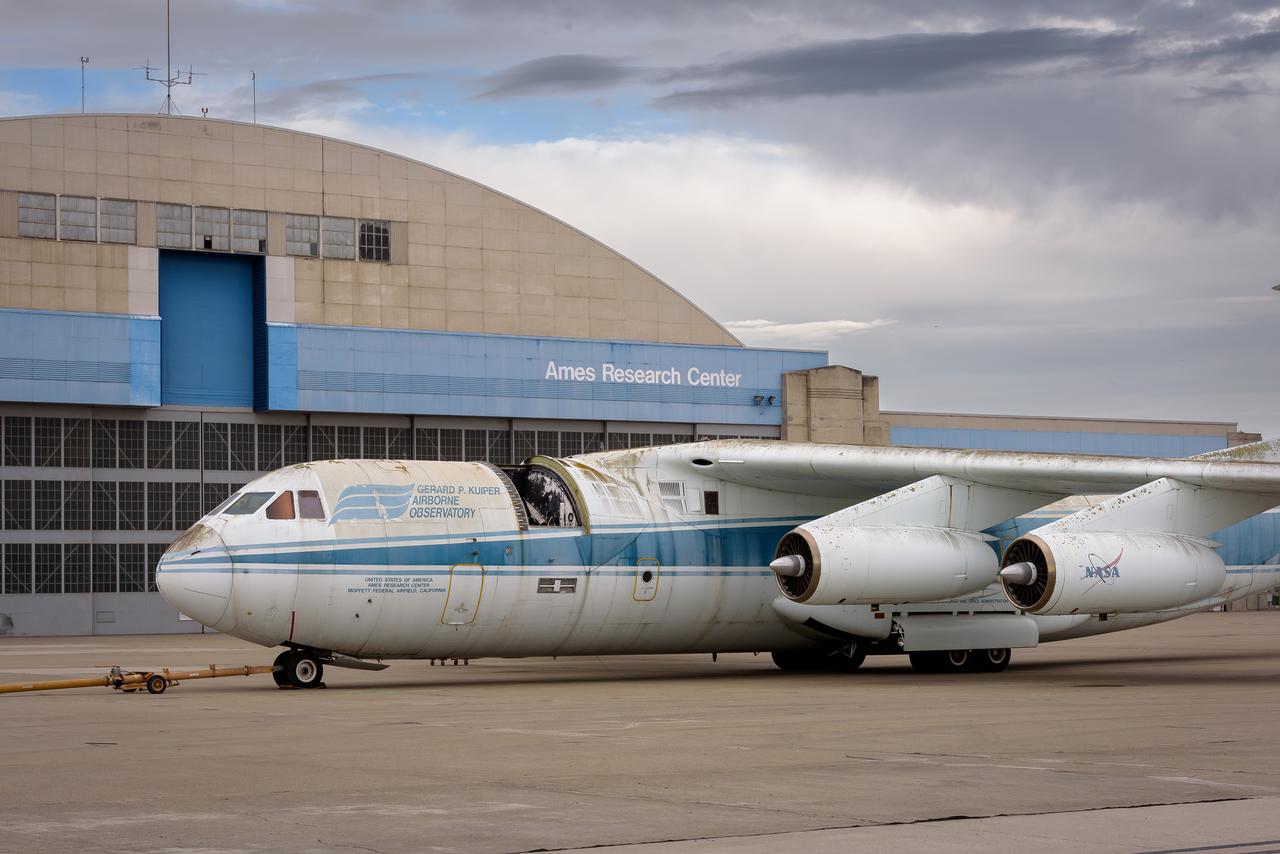
Close-up front view of the modified C-141 Kuiper Airborne Observatory, (KAO) (NASA-714), on the N211 apron at Moffett Field, California.
Kuiper Airborne Observatory (KAO) Demolition
The drone follows an autonomously defined path around the modified C-141 Kuiper Airborne Observatory, (KAO) (NASA-714), on the N211 apron.  The drone photographs the aircraft with a visible and infrared camera which are processed using a photogrammetry software package called Pix4D that converts them into a 3D model.  Scanning the aircraft is the first phase of documenting the aircraft demolition as well as an opportunity to train pilots to operate the Pix4D software.
Kuiper Airborne Observatory (KAO) Demolition
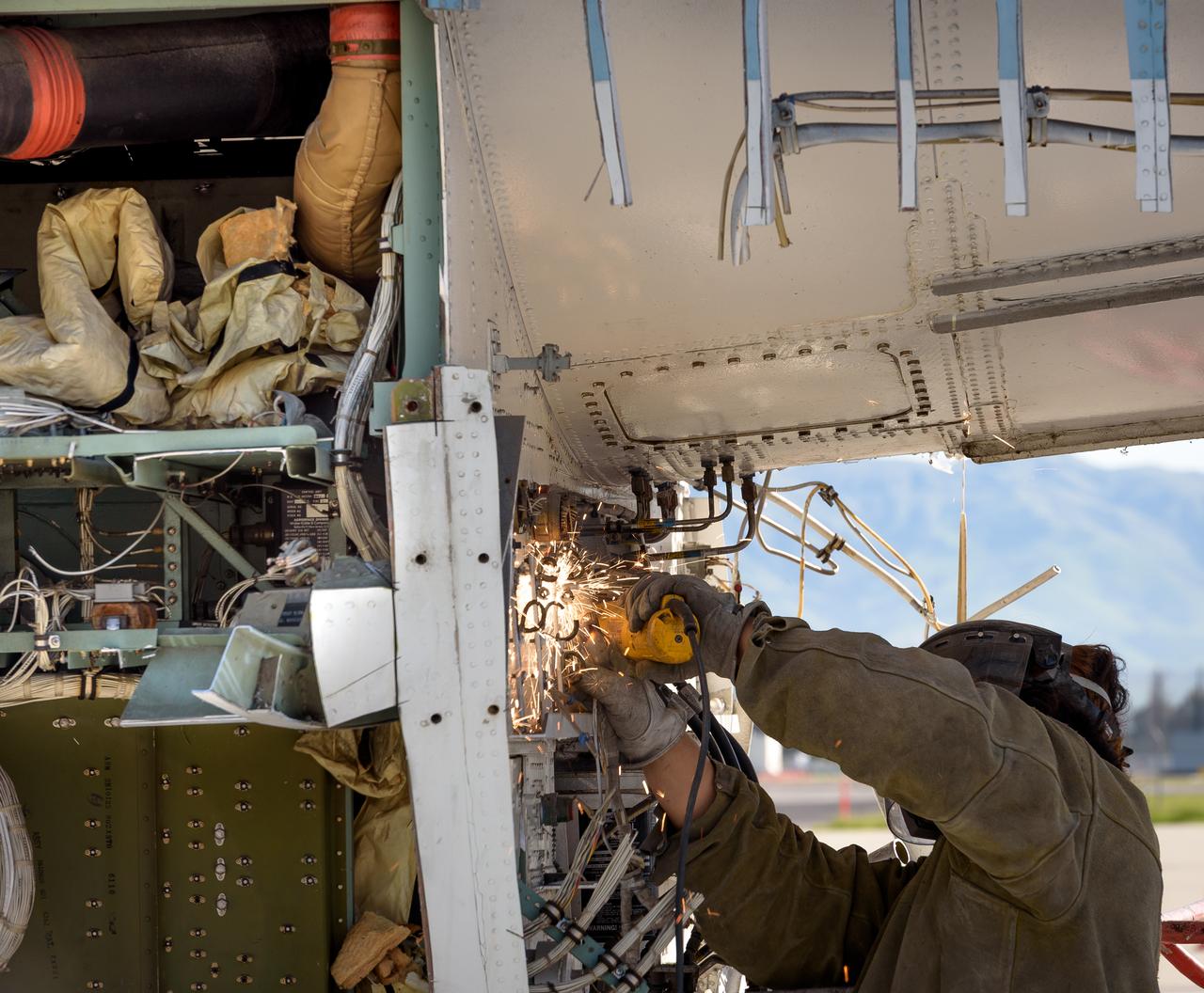
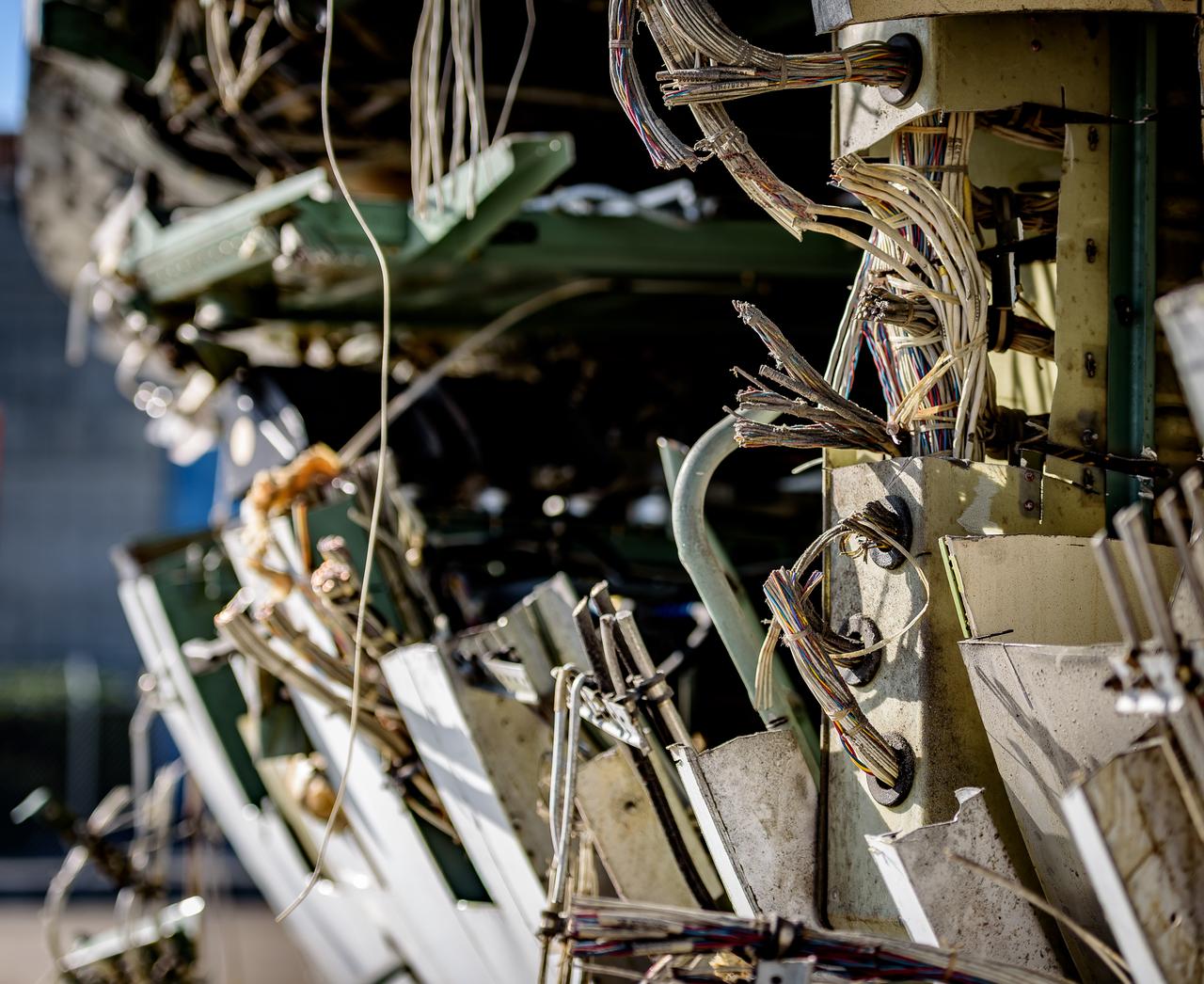
Cables in the modified C-141 Kuiper Airborne Observatory, (KAO) (NASA-714), severed prior to removing the cockpit on the N211 apron at Moffett Field, California.
Kuiper Airborne Observatory (KAO) Demolition
The cockpit of the modified C-141 Kuiper Airborne Observatory, (KAO) (NASA-714), is separated from the airframe on the N211 apron at Moffett Field, California.
Kuiper Airborne Observatory (KAO) Demolition
Yellow straps are threaded through the airframe of the modified C-141 Kuiper Airborne Observatory, (KAO) (NASA-714), before removing the cockpit on the N211 apron at Moffett Field, California.
Kuiper Airborne Observatory (KAO) Demolition
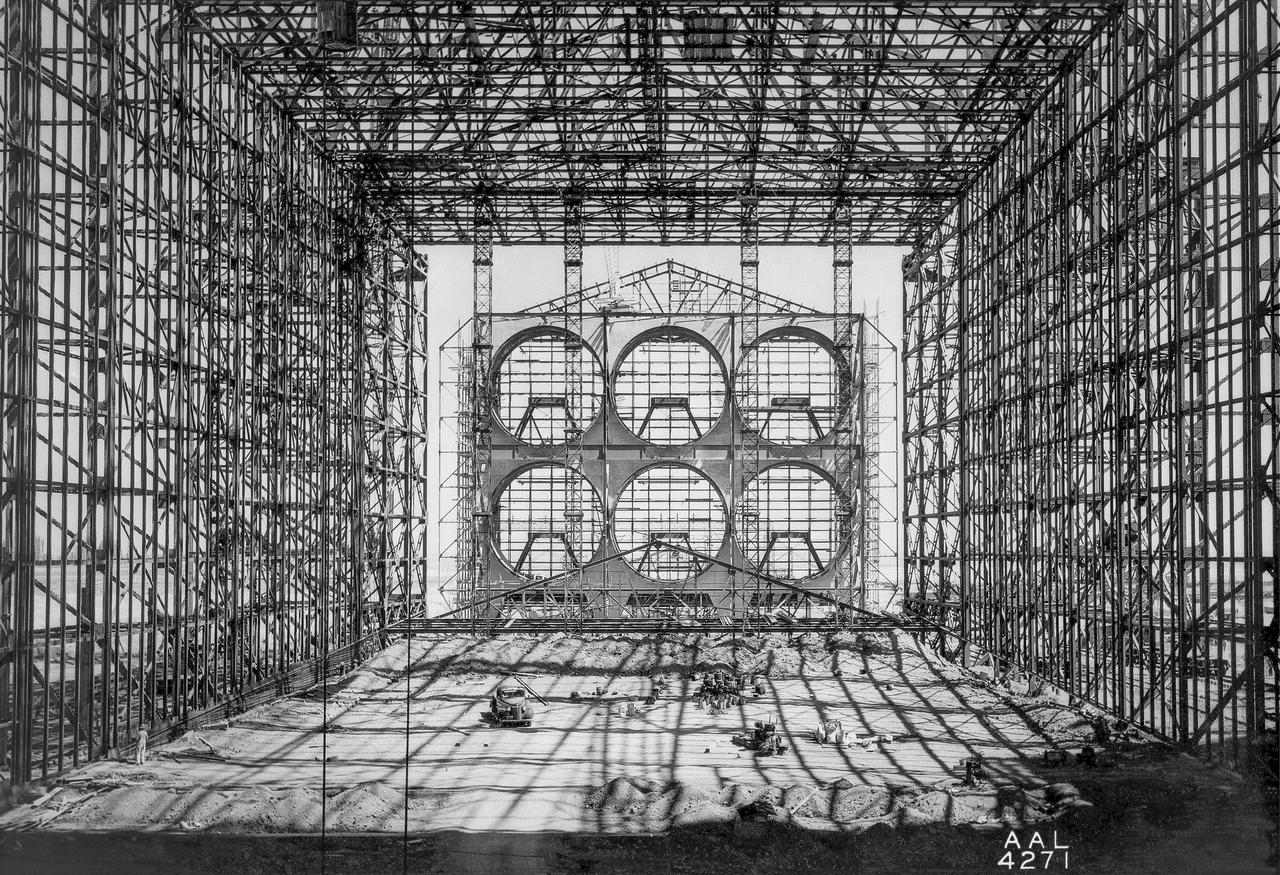
(07/07/1943) Construction view from inside the contraction framing of the 40x80 foot wind tunnel with a blimp flying in the background.
Full Scale Tunnel Motors Under Construction.
The Intersex Progress Pride flag flies for the first time at any NASA center below the American flag, in front of the Ames Administration Building, N200, to commemorate Pride Month.
Intersex Progress Pride Flag at Ames
Group photo in STAR Labs in N242 with NASA astronauts Christina Koch and Victor J. Glover.
Orion Astronauts Visit Ames Entry Systems and Technology Divisio
Cables in the modified C-141 Kuiper Airborne Observatory, (KAO) (NASA-714), severed prior to removing the cockpit on the N211 apron at Moffett Field, California.
Kuiper Airborne Observatory (KAO) Demolition
Lift engine VSTOL fighter model, 3/4 lower front view showing jet engines exit vanes.  Yarn tufts attached to horizontal tail.
VSTOL Lift-Engine Fighter Model in Ames 40x80 foot Wind Tunnel.
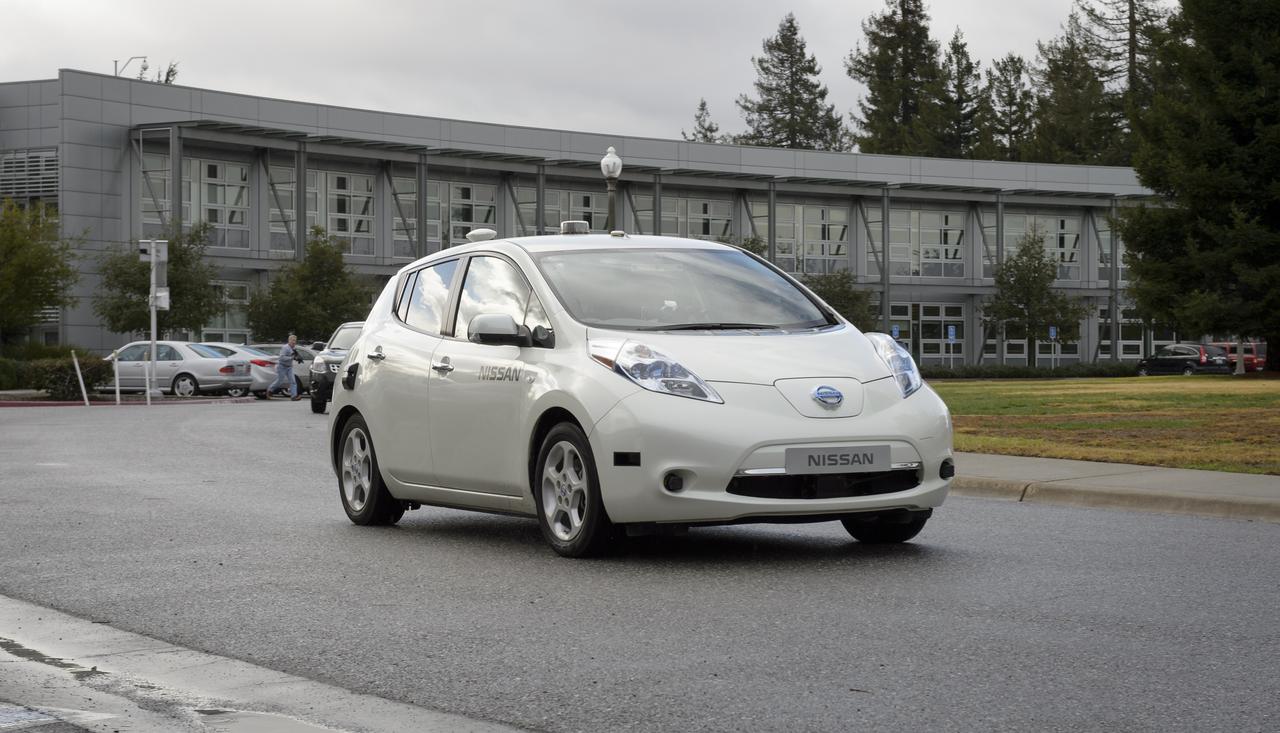
Senior executives from the Renault-Nissan Alliance, including Carlos Ghosn, chairman and CEO of Nissan, and Jose Munoz, chairman of Nissan North America, visited Ames for meetings and a showcase of the technical partnership between NASA and Nissan North America. The partnership allows researchers to develop and test autonomy algorithms, concepts, and integrated prototypes for a variety of vehicular transport applications – from rovers to self-driving cars.  After briefings, a group take a ride in the autonomous vehicle to  observed testing of Nissan’s all-electric LEAF as it performed safe autonomous drives across the center.
ACD16-0001-023
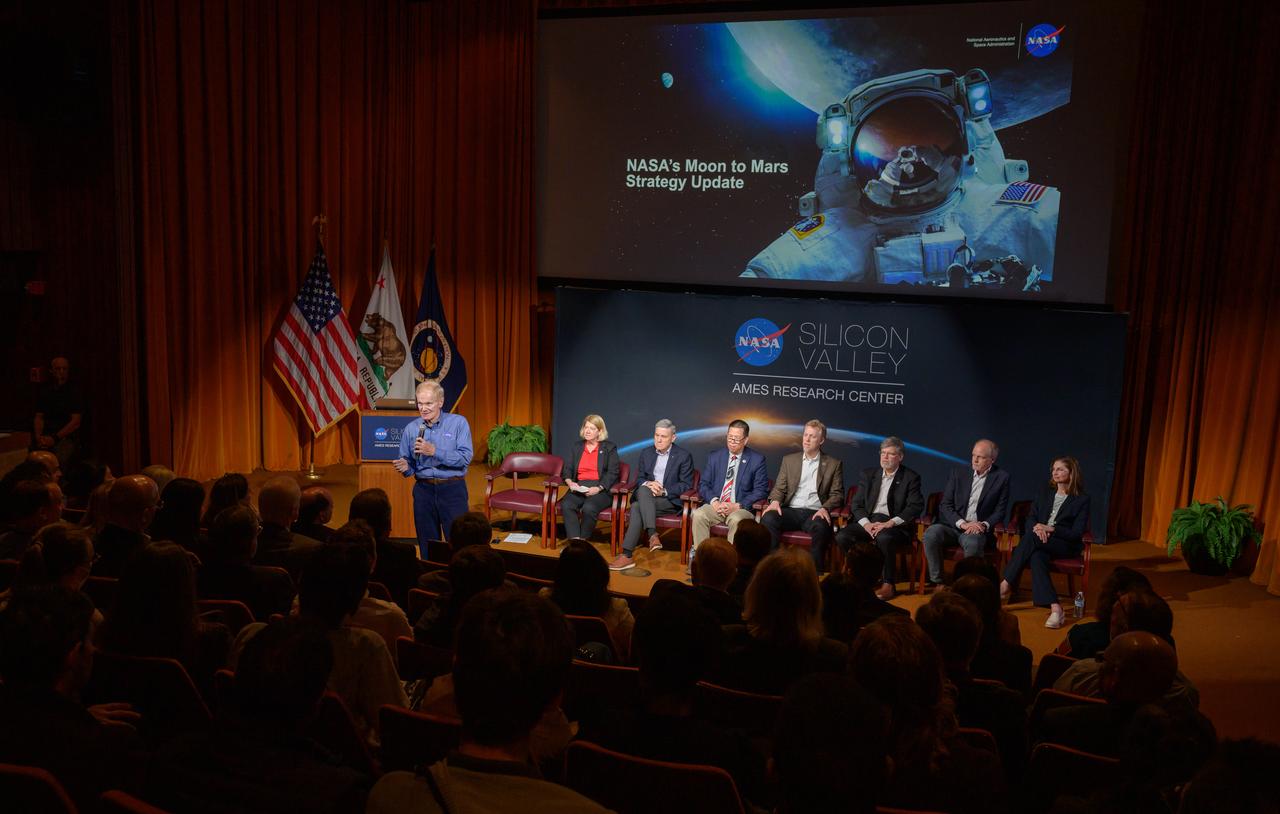
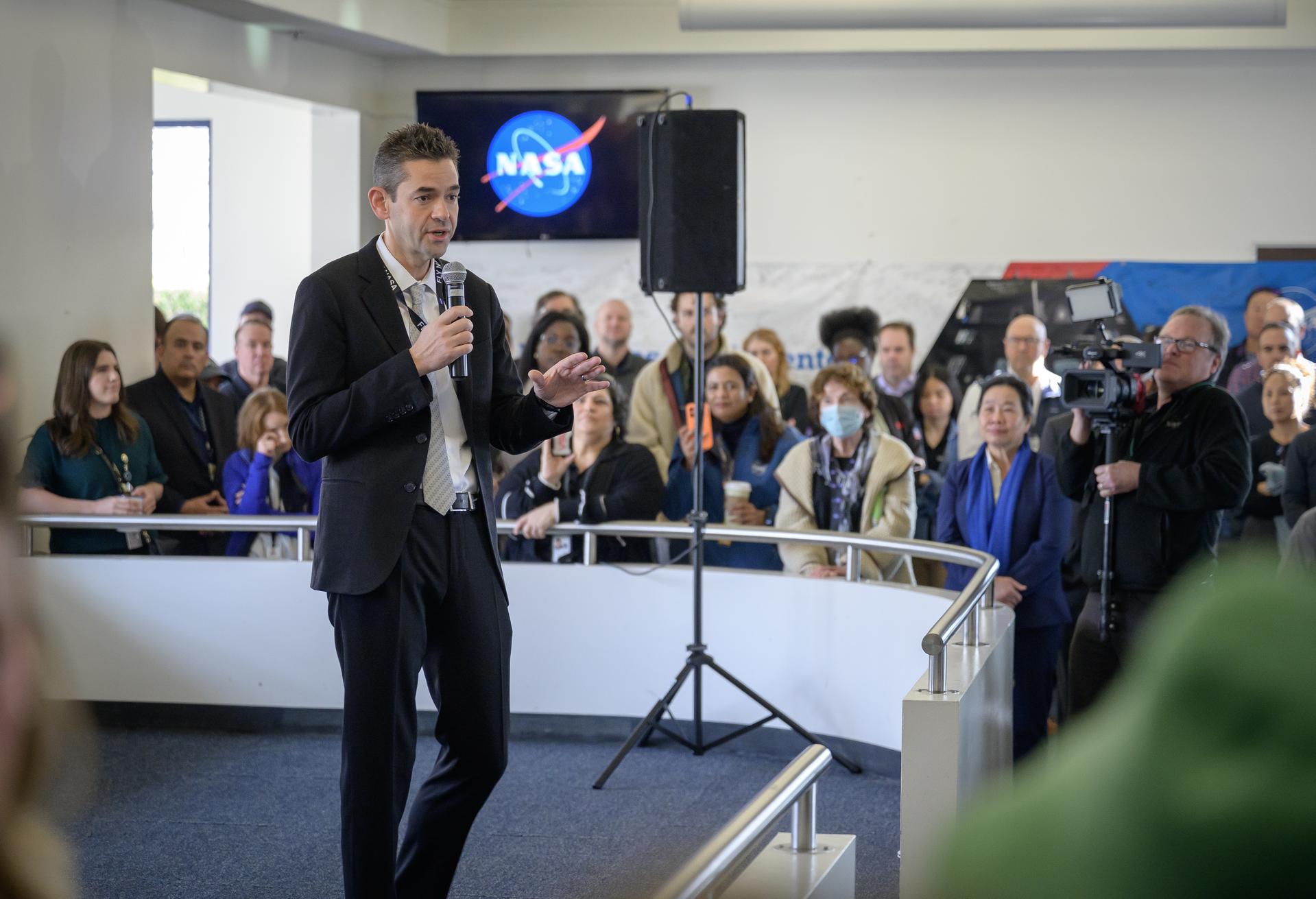
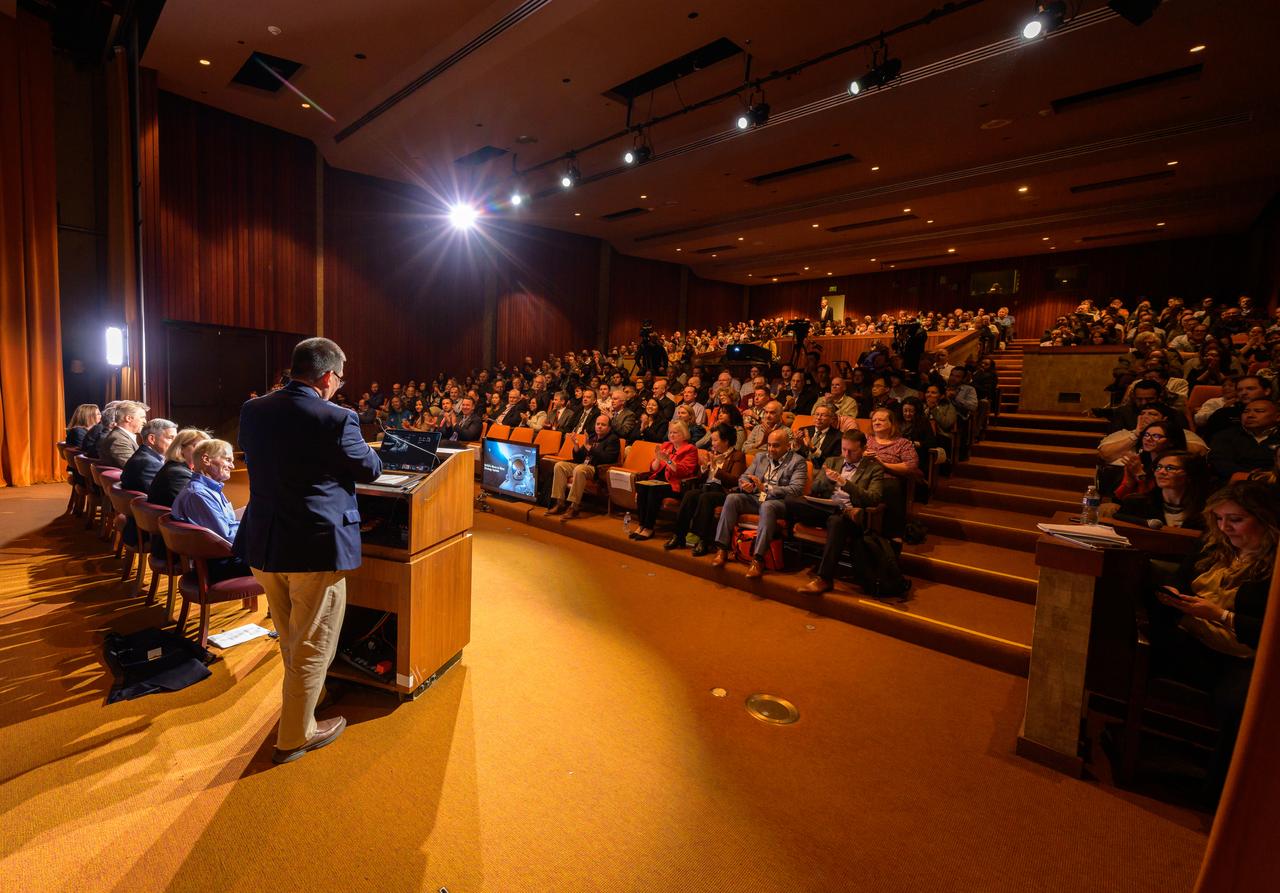
Eugene Tu, center director at NASA’s Ames Research Center in California’s Silicon Valley, offers his opening remarks to the   Ames workforce during the “Moon to Mars” town hall in the N201 Syvertson Auditorium. Town hall panel, seated right to left, are  NASA Administrator Bill Nelson, Deputy Administrator Pam Melroy, Associate Administrator Bob Cabana, Director of Space Architectures Kurt “Spuds” Vogel, Deputy Associate Administrator for Exploration in the Science Mission Directorate Joel Kearns, Deputy Associate Administrator for Programs in the Space Technology Mission Directorate Walt Engelund, and Deputy Associate Administrator for Exploration Systems Development Cathy Koerner.
NASA Administrator Bill Nelson, Deputy Administrator Pam Melroy,
Computers' at work in 16ft wind tunnel - calculating test data - reading manometer board
Computers reading from the Manometer Board of the 16 Foot Wind Tunnel.
Forward overhead view of 4 jet model with external flow of jet augmented triple slotted flap. John Bouldt
Jet Augmented Flap, Triple-Slotted.
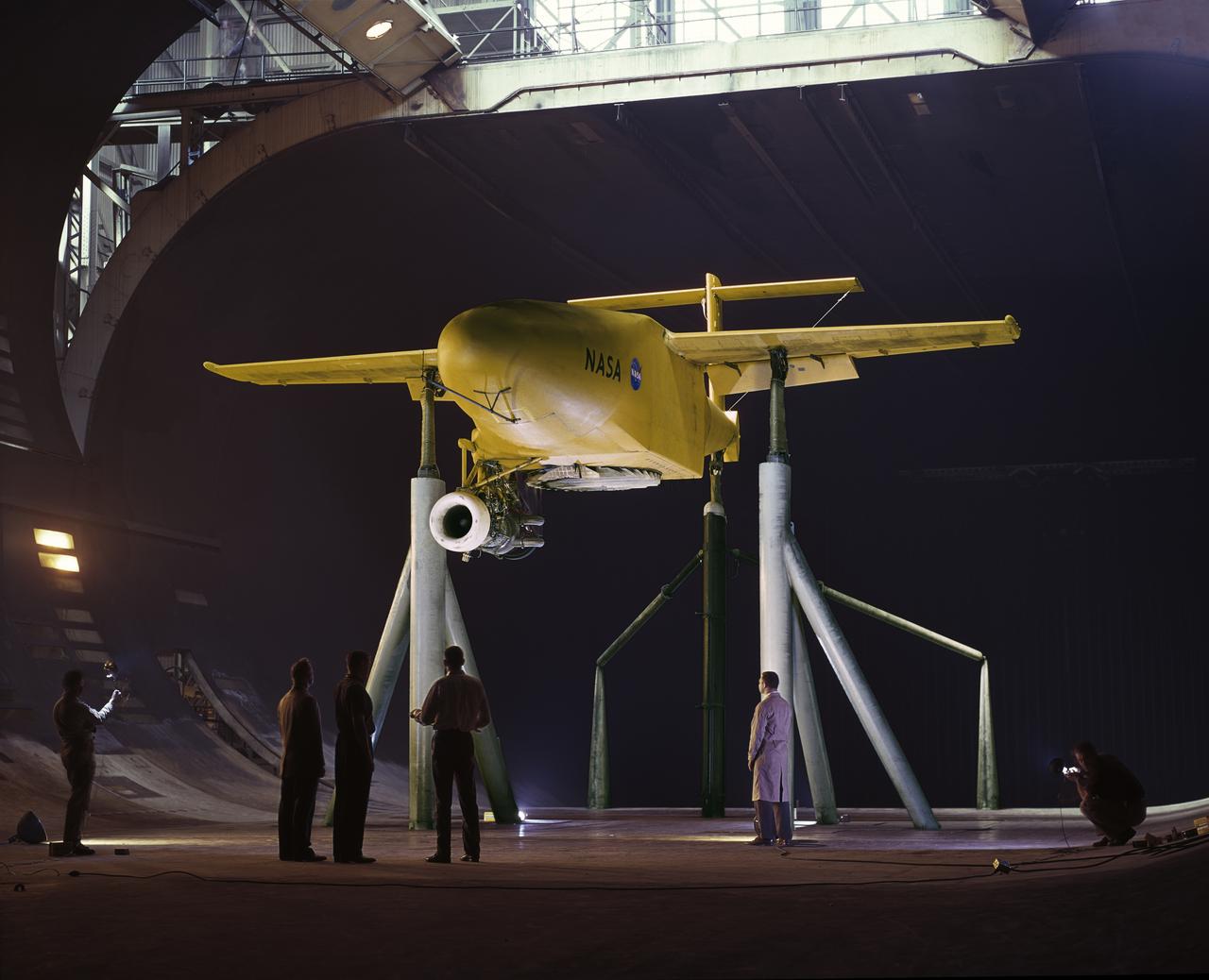
Rear view of the Avrocar with tail, mounted on variable height struts.  Overhead doors of the wind tunnel test section open. The first Avrocar, S/N 58-7055 (marked AV-7055), after tethered testing, became the "wind tunnel" test model at NASA Ames, where it remained in storage from 1961 until 1966, when it was donated to the National Air and Space Museum, in Suitland, Maryland.
Avrocar Test in Ames 40x80 Foot Wind Tunnel.
Composite image of Background Oriented Schlieren (BOS) data (contour) with a cut-out images of the T-38’s during a Mach Number 1.01 pass. This data is the first time shockwave interactions between two full scale aircraft traveling faster than the speed of sound have been imaged and shown with schlieren visualization. Original recording of the pass taken in the Black Mountain Supersonic Corridor at near Edwards AFB in December of 2018. Image acquired by JT Heineck, schlieren data processed by Neal Smith
AirBOS4
Right to left: Jay Trimble, Rachel Hoover, and Kelsey Herrmann in the Multi-Mission Operations Center (MMOC), N240, during Volatiles Investigating Polar Exploration Rover (VIPER) for VIPER Family Day.
VIPER Family Day
Loretta Falcone during the Volatiles Investigating Polar Exploration Rover (VIPER) vehicle operational readiness test in the Multi-Mission Operations Center (MMOC), N240A.
VIPER Vehicle Operational Readiness Test
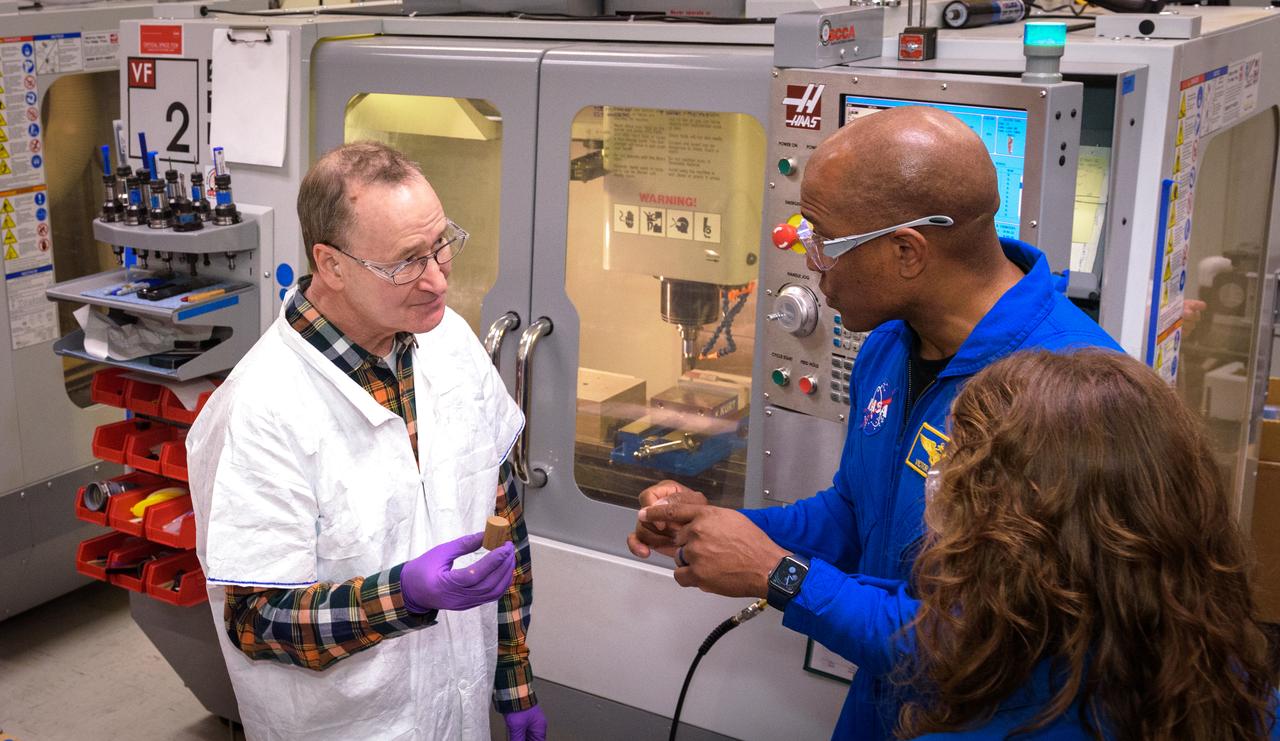
NASA Astronaut Christina Koch, left, holds a test sample for Victor J. Glover to photograph.  The sample is a half-inch steel plate with a hole that was drilled by a 12-second burst from a 30kW laser in the Laser Enhanced Arc Jet Facility (LEAF) laboratory, N238.
Orion Astronauts Visit Ames Entry Systems and Technology Divisio
Avrocar with ground board and variable height struts and no tail. Can see focusing ring that controlled the peripheral jet.
A-27772
Jasper Wolfe, left, explains the Volatiles Investigating Polar Exploration Rover (VIPER) mission to visitors in the Multi-Mission Operations Center (MMOC), N240, for VIPER Family Day.
VIPER Family Day
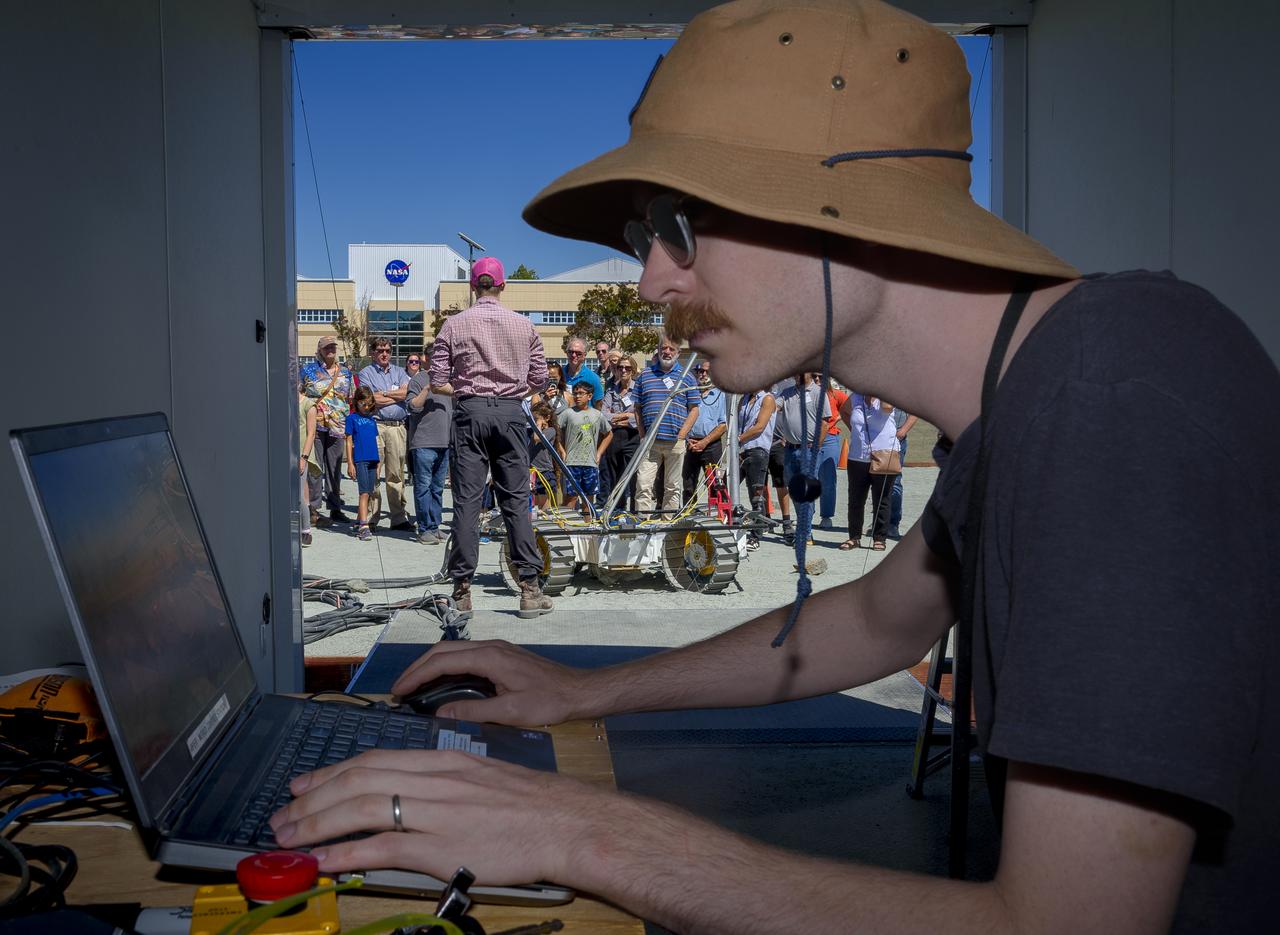
Ethan Massey, in the control booth, sends commands that control the movement of the Moon Gravity Representative Unit (MGRU3) at the Roverscape during Family Day for team members of the Volatiles Investigating Polar Exploration Rover (VIPER).  MGRU3 is a weight equivalent mobility and navigation test platform for VIPER. It is used to test, develop and validate the different mobility and navigation techniques and capabilities of the VIPER rover, to safely and efficiently map water at the Moon’s South Pole.
VIPER Family Day
3/4 front view of model in Ames 40x80 foot wind tunnel.
Wind Tunnel Test of Stoppable Rotors in Ames 40x80ft Wind Tunnel.
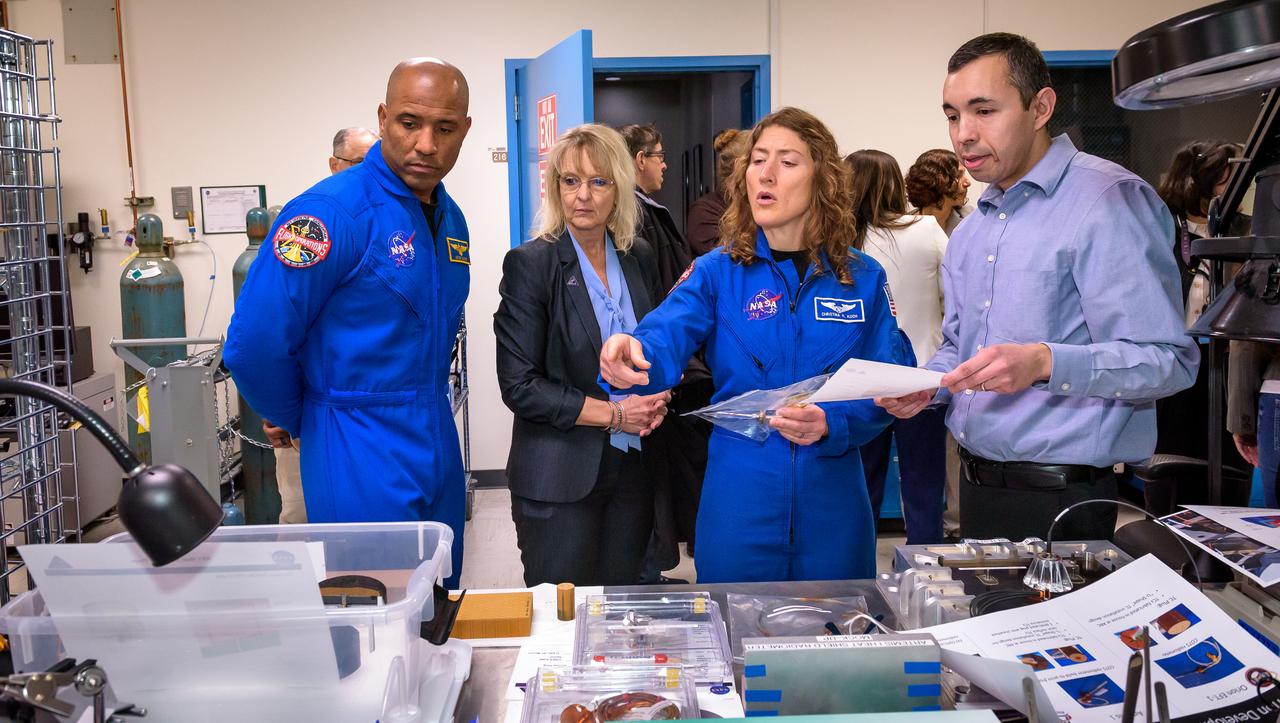
NASA astronauts Christina Koch and Victor J. Glover examine a sample of AVCOAT Thermal Protection System (TPS) that protects the Orion spacecraft as it enters Earth’s atmosphere.
Orion Astronauts Visit Ames Entry Systems and Technology Divisio
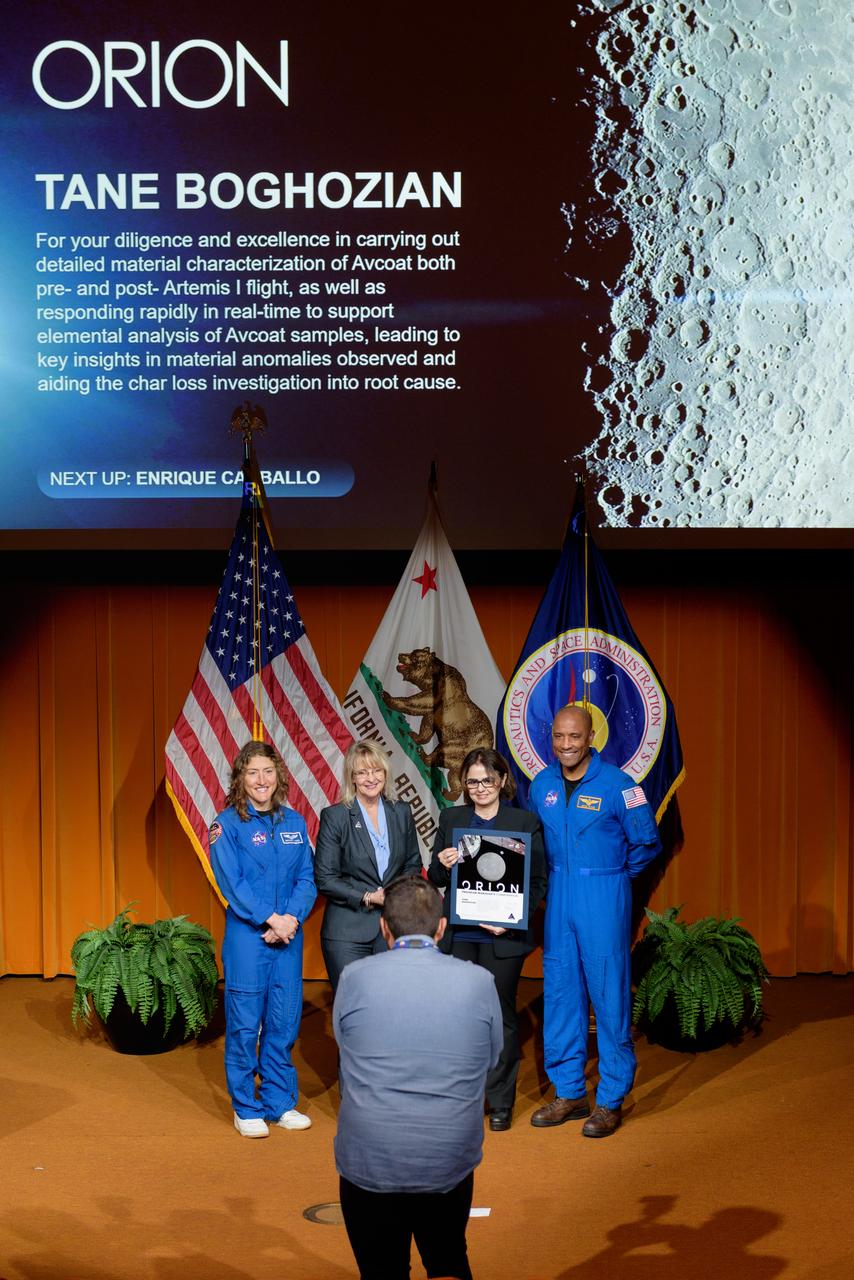
NASA Ames staff photographer Brandon Torres Navarette, front, photographs Orion program manager’s commendation award presented to Tane Boghozian (ACD25-0023-005), center, by Orion Deputy Program Manager Debbie Korth, left, NASA astronauts Victor J. Glover, right, and Christina Koch, left, in the Syvertson Auditorium, N201.
Orion Astronauts Visit Ames Entry Systems and Technology Divisio
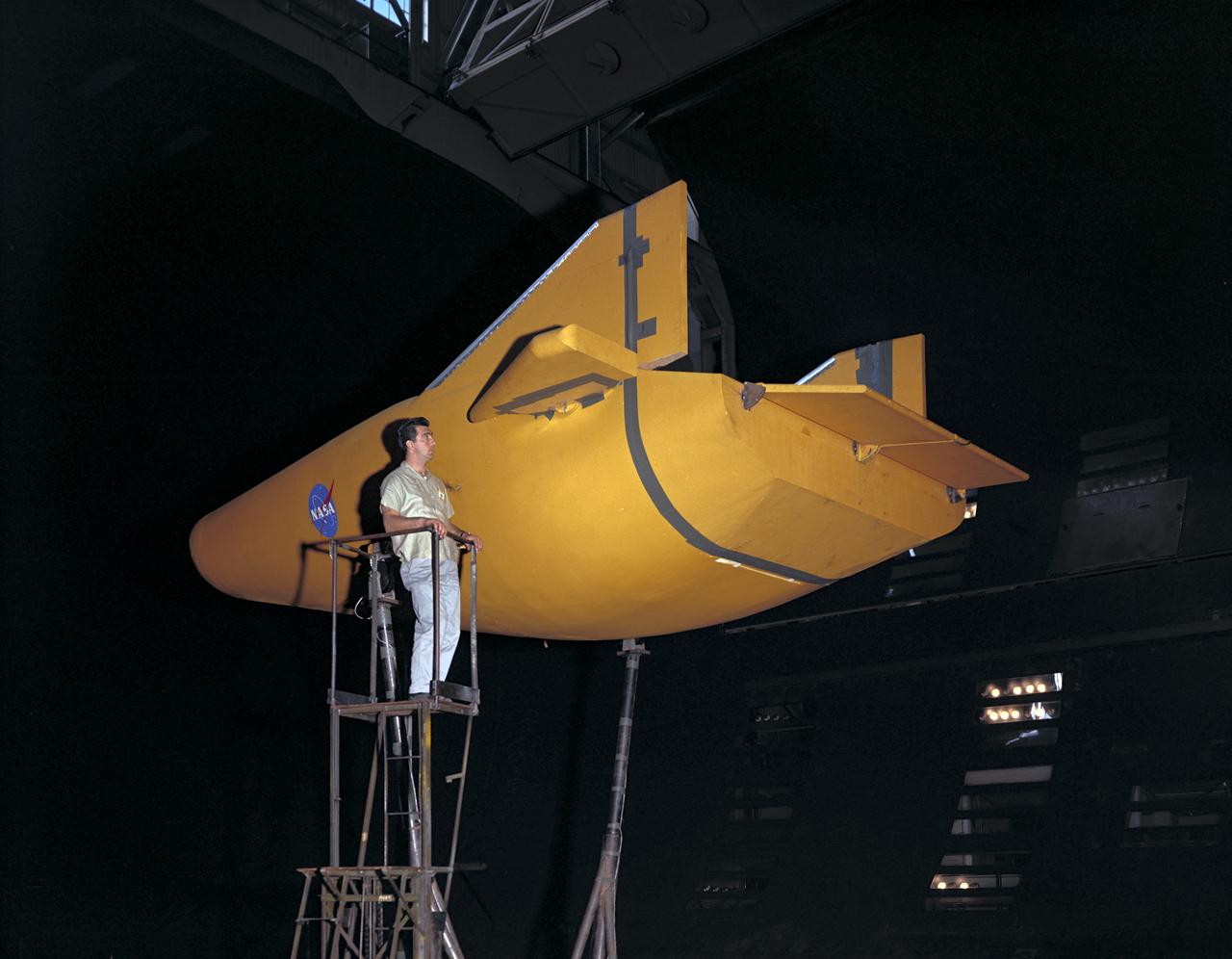
3/4 front view of Martin X-24A lifting body, mounted on B-52 mount.
X-24 (SV-5) Lifting Body In 40x80 foot Wind Tunnel.
Investigation of High Lift and Stall Control on 45 deg. 3/4 front view Sweptback Cambered and Twisted Wing, in Ames 40x80 foot Wind Tunnel.
A-15209. High Lift and Stall Control in Ames 40x80 Foot Wind Tunnel.
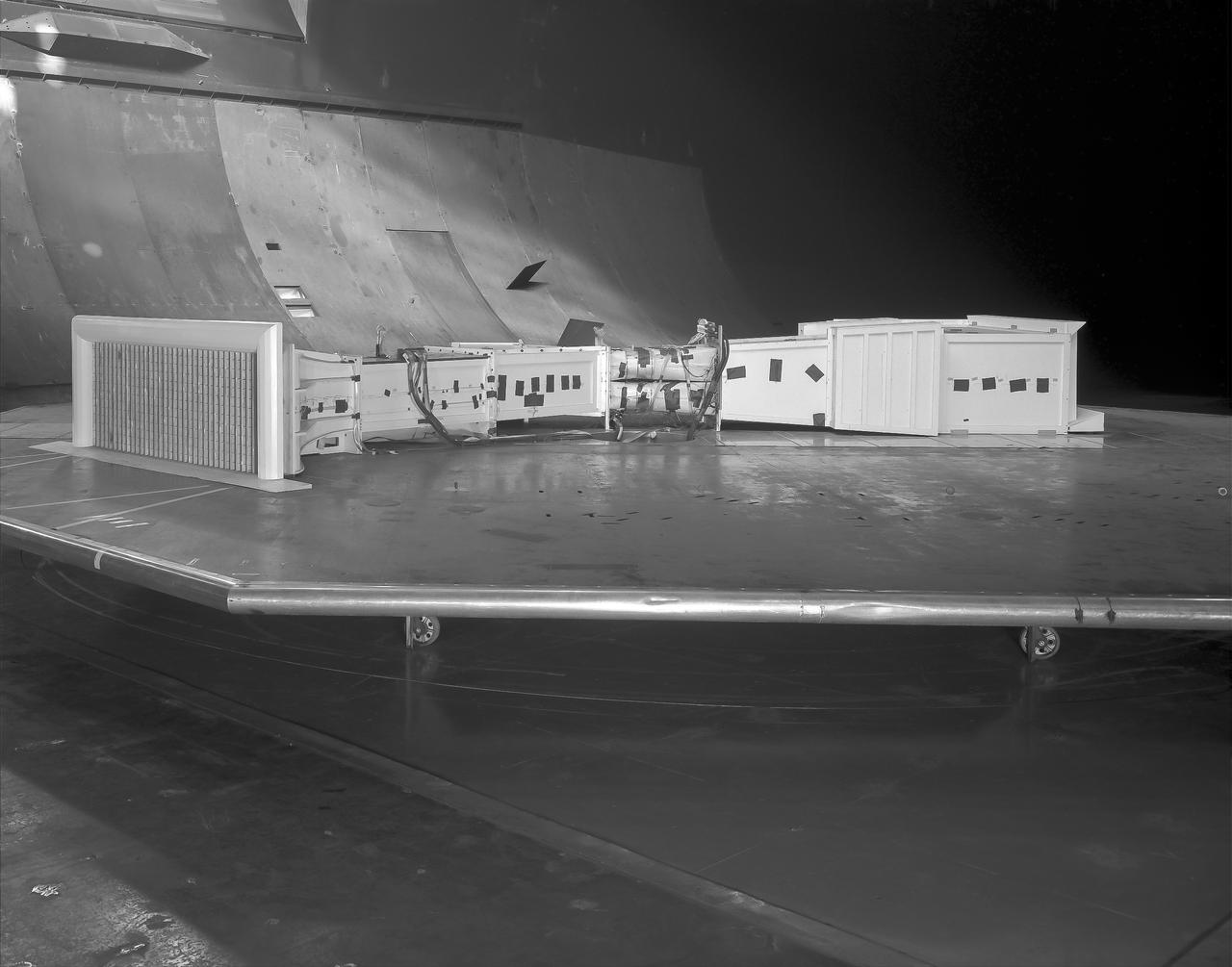
(03/12/1976) 1/50 scale model of the 80x120 foot wind tunnel model (NFAC) in the test section of the 40x80 wind tunnel.  Model viewed from the west, mounted on a rotating ground board designed for this test. Ramp leading to ground board includes a generic building placed in front of the 80x120 inlet.
1/50 Scale Model Of The 80x120 Foot Wind Tunnel Model (NFAC) In The Test Section Of The 40x80 Wind Tunnel.
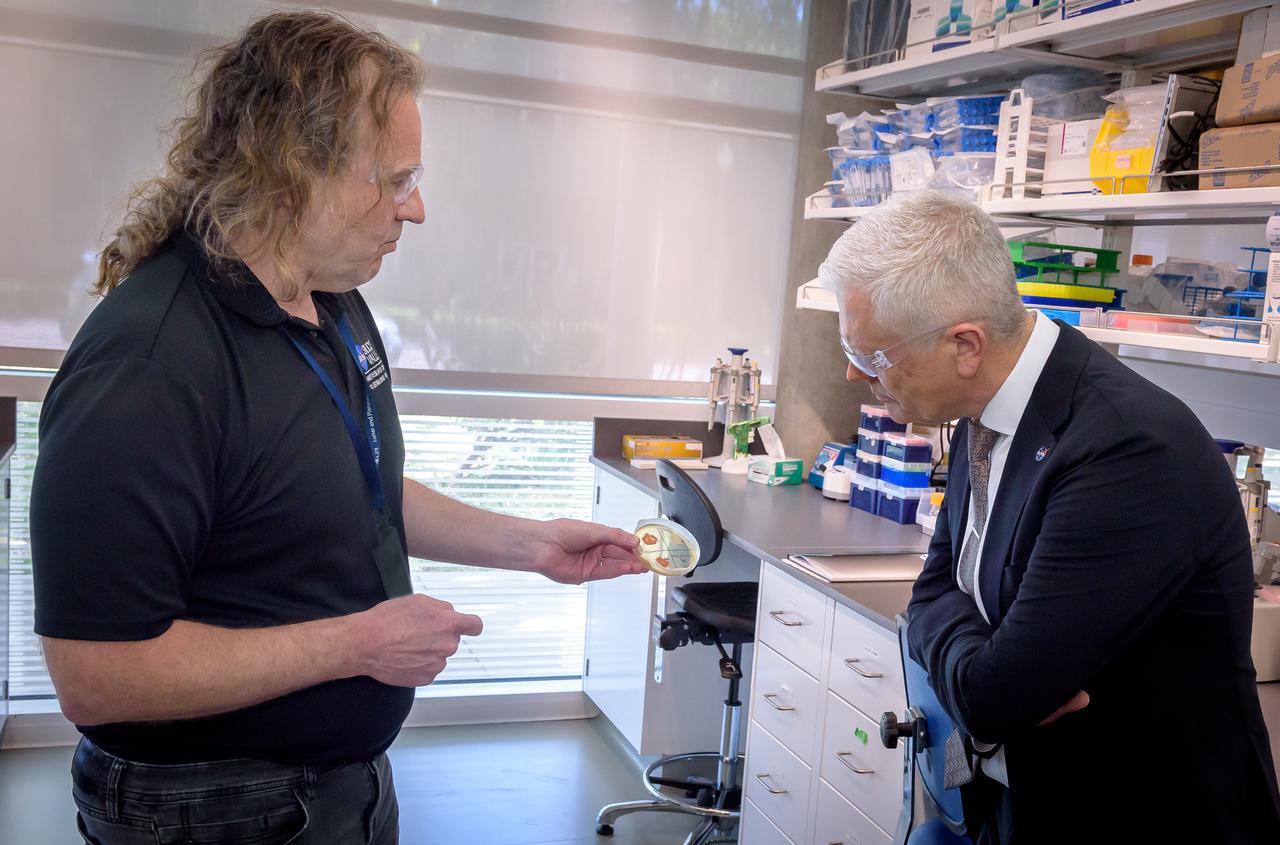
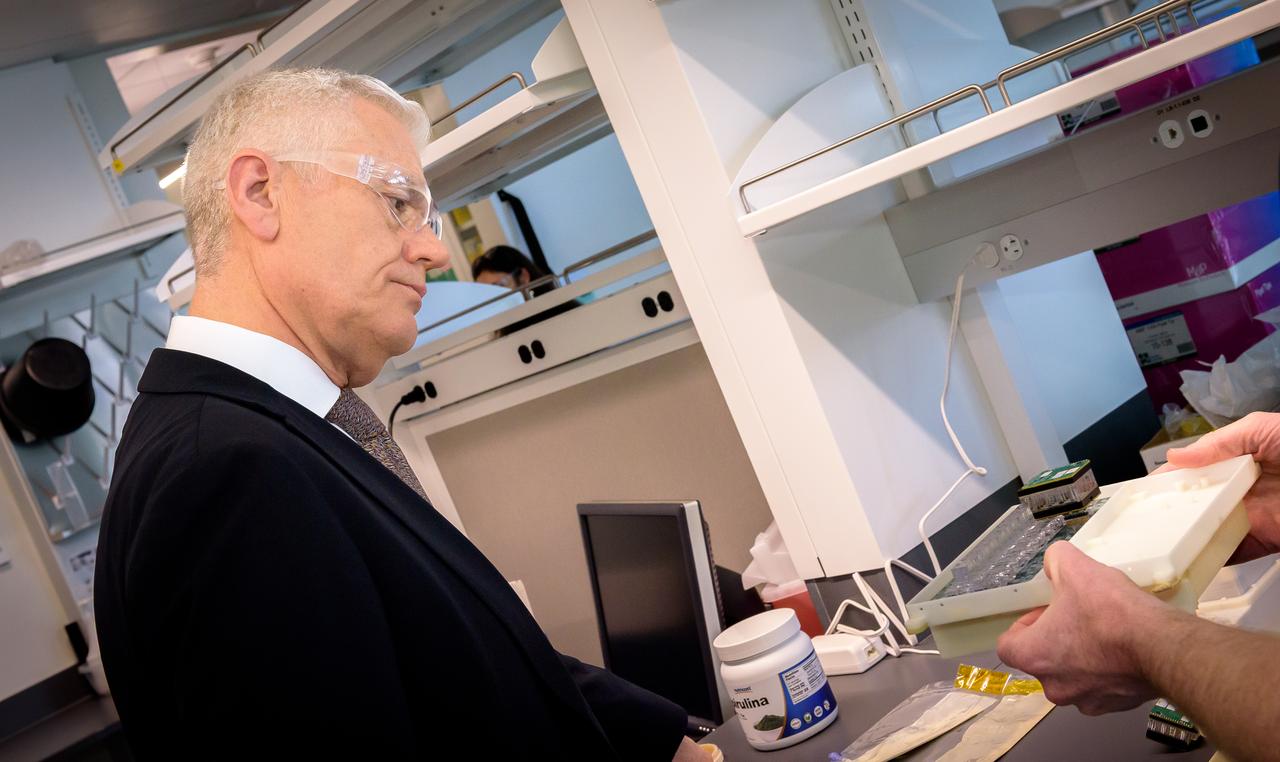
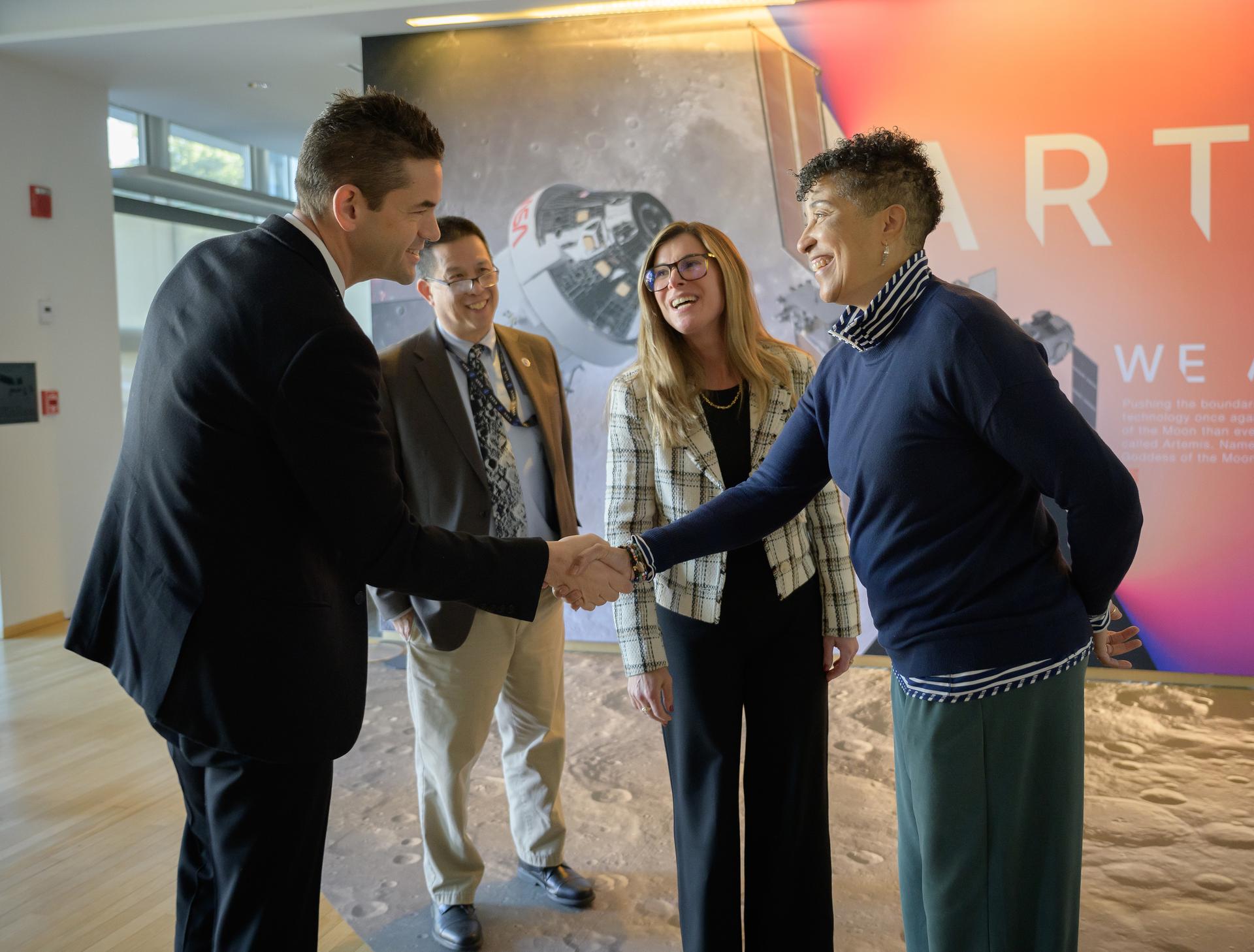
Director of Science Michael Hesse, left, presents an overview of Lunar Explorer Instrument for space biology Applications (LEIA) to Acting Deputy Associate Administrator (DAA) for the Science Mission Directorate (SMD) Mark Clampin in the Bioscience Collaborative Laboratory, N288.
Mark Clampin Tours the Bioscience Collaborative Laboratory
3/4 front view of model without nacelles on regular struts. Generalized Subsonic Jet Transport model with leading edge and trailing edge blowing BLC in the 40x80 foot wind tunnel at NASA Ames.
Generalized Subsonic Jet Transport in 40x80 Foot Wind Tunnel at NASA Ames.
Director of Science Michael Hesse, left, presents an overview of Lunar Explorer Instrument for space biology Applications (LEIA) to Acting Deputy Associate Administrator (DAA) for the Science Mission Directorate (SMD) Mark Clampin in the Bioscience Collaborative Laboratory, N288.
Mark Clampin Tours the Bioscience Collaborative Laboratory