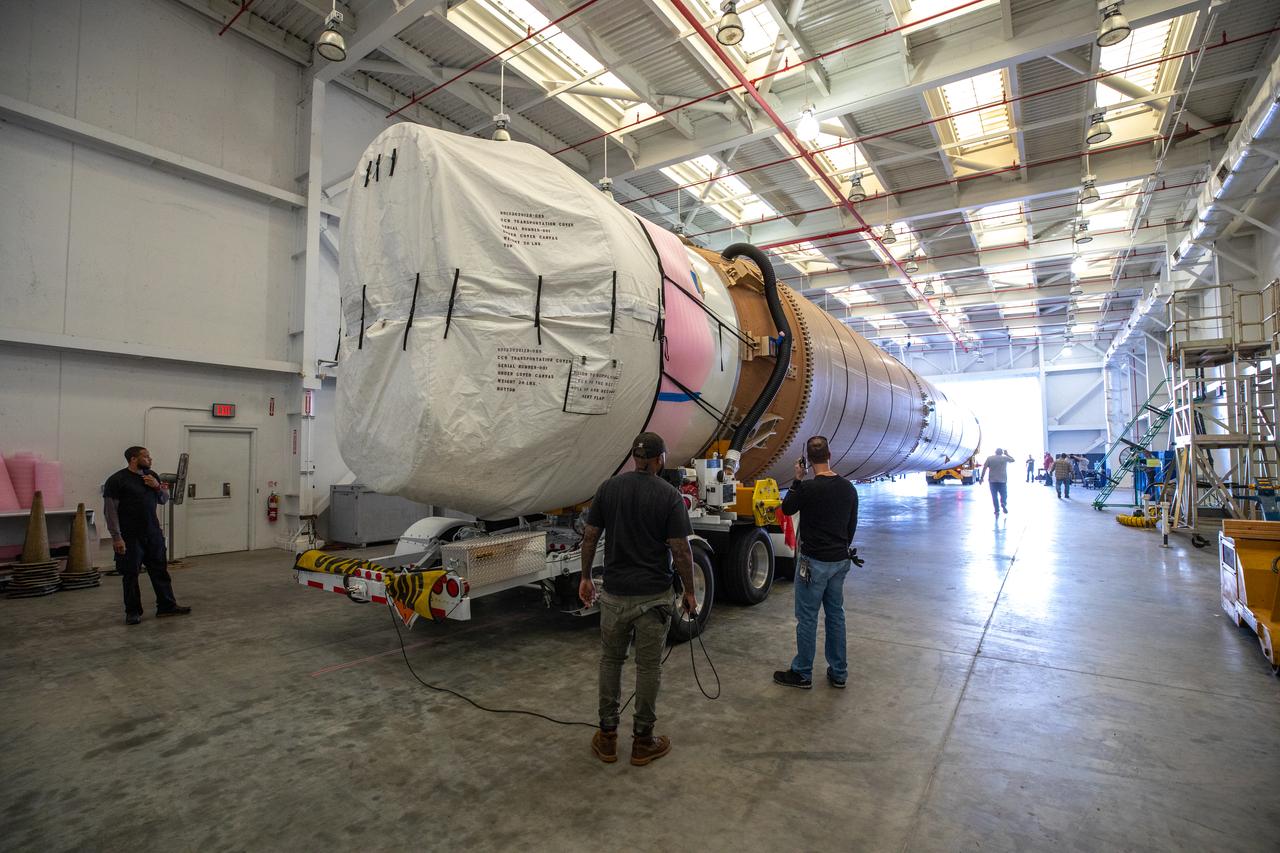
The United Launch Alliance Atlas V booster that will launch the Solar Orbiter spacecraft is delivered by truck to the Atlas Spaceflight Operations Center at Florida’s Cape Canaveral Air Force Station on Nov. 21, 2019. The company’s Rocketship vessel carried the booster from its manufacturing facility in Decatur, Alabama, to Port Canaveral. Solar Orbiter is a European Space Agency mission with strong NASA participation. The mission aims to study the Sun, its outer atmosphere and solar winds. The spacecraft will provide the first images of the Sun’s poles. NASA’s Launch Services Program based at Kennedy is managing the launch. Liftoff is scheduled for Feb. 5, 2020, from Launch Complex 41 at Cape Canaveral Air Force Station aboard the ULA Atlas V rocket.
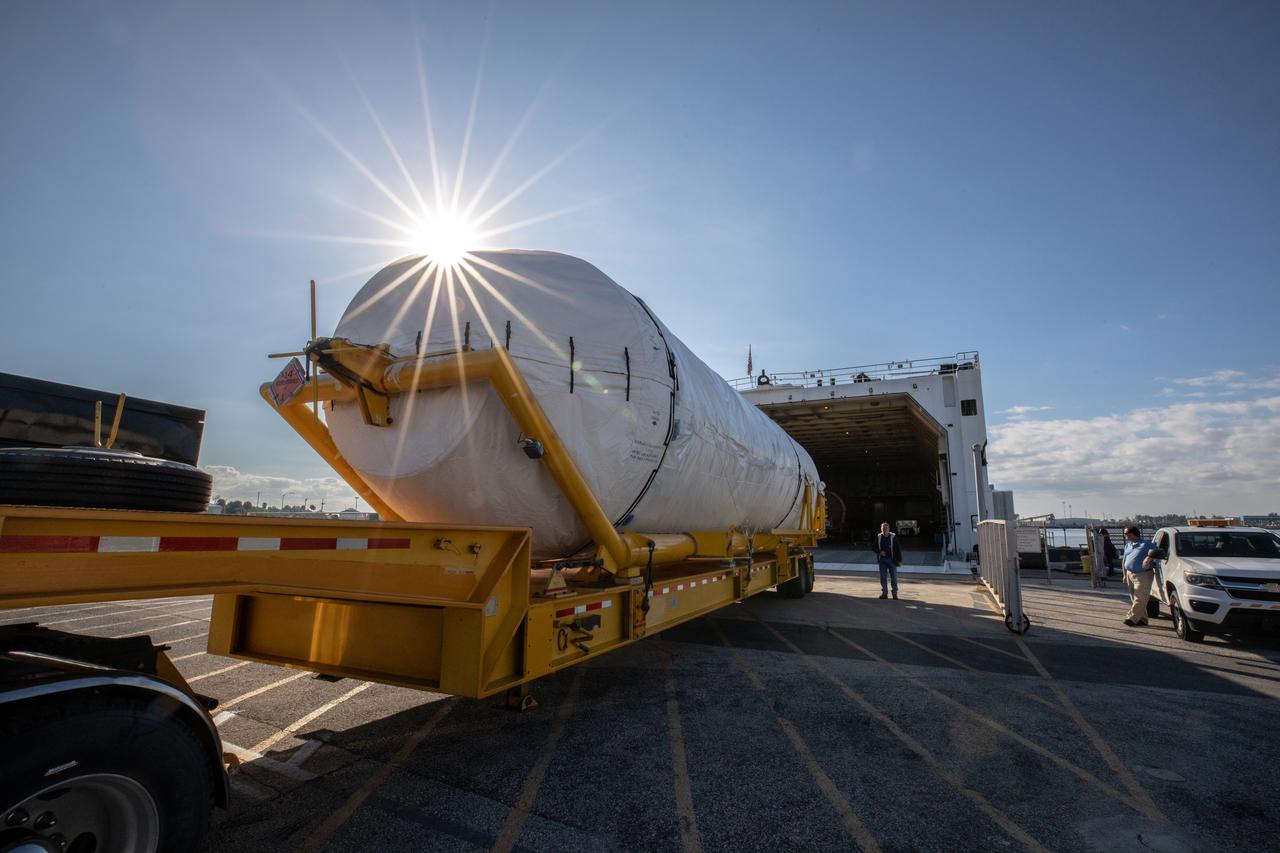
The United Launch Alliance Centaur upper stage that will help launch the Solar Orbiter spacecraft is removed from the company’s Rocketship vessel upon its arrival at Florida’s Port Canaveral on Nov. 21, 2019. Also onboard is the Atlas V rocket’s first-stage booster. Once offloaded, the booster was transported to the Atlas Spaceflight Operations Center and the Centaur was transported to a separate facility, both at nearby Cape Canaveral Air Force Station. Solar Orbiter is a European Space Agency mission with strong NASA participation. The mission aims to study the Sun, its outer atmosphere and solar winds. The spacecraft will provide the first images of the Sun’s poles. NASA’s Launch Services Program based at Kennedy is managing the launch. Liftoff is scheduled for Feb. 5, 2020, from Launch Complex 41 at Cape Canaveral Air Force Station aboard the ULA Atlas V rocket.
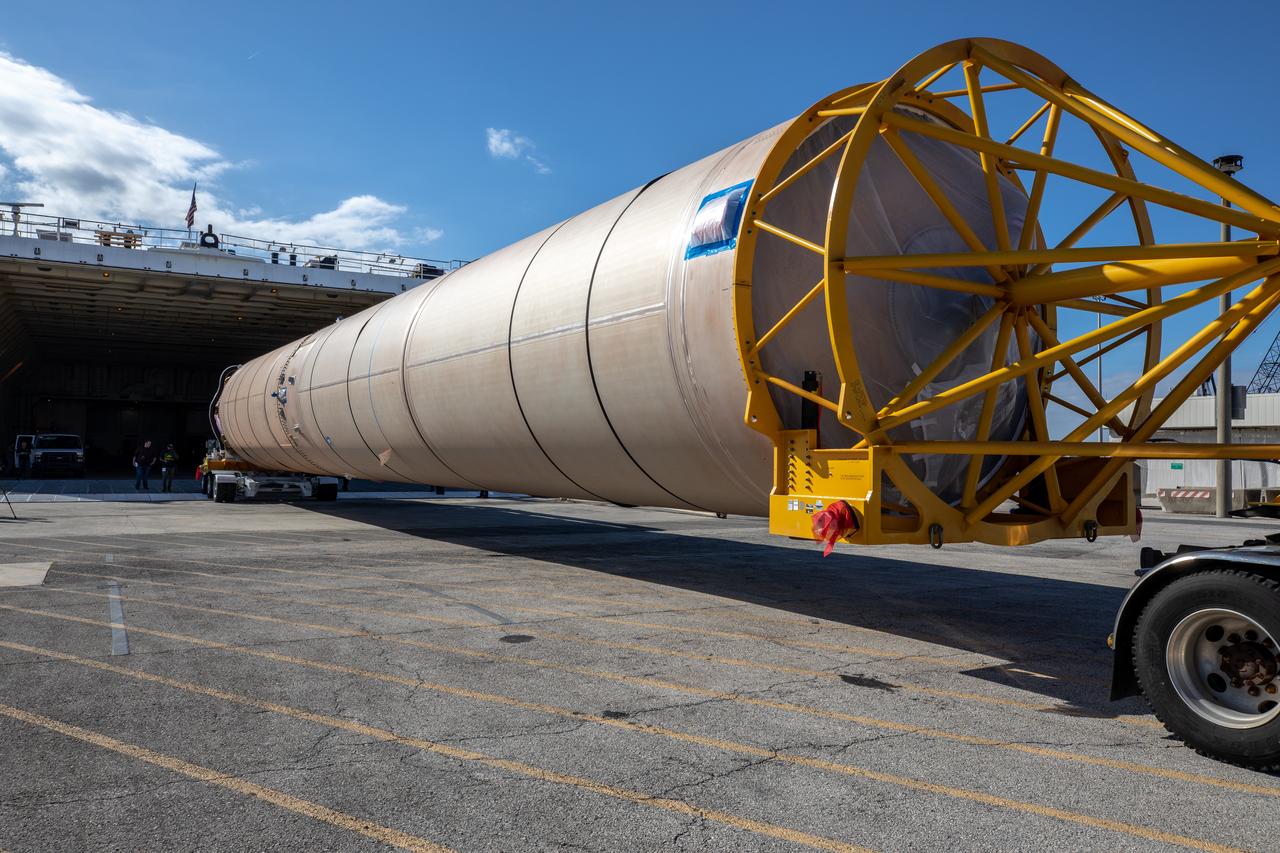
The United Launch Alliance Atlas V booster that will launch the Solar Orbiter spacecraft is removed from the company’s Rocketship vessel upon its arrival at Florida’s Port Canaveral on Nov. 21, 2019. Once offloaded, the booster was transported to the Atlas Spaceflight Operations Center at nearby Cape Canaveral Air Force Station. Solar Orbiter is a European Space Agency mission with strong NASA participation. The mission aims to study the Sun, its outer atmosphere and solar winds. The spacecraft will provide the first images of the Sun’s poles. NASA’s Launch Services Program based at Kennedy is managing the launch. Liftoff is scheduled for Feb. 5, 2020, from Launch Complex 41 at Cape Canaveral Air Force Station aboard the ULA Atlas V rocket.
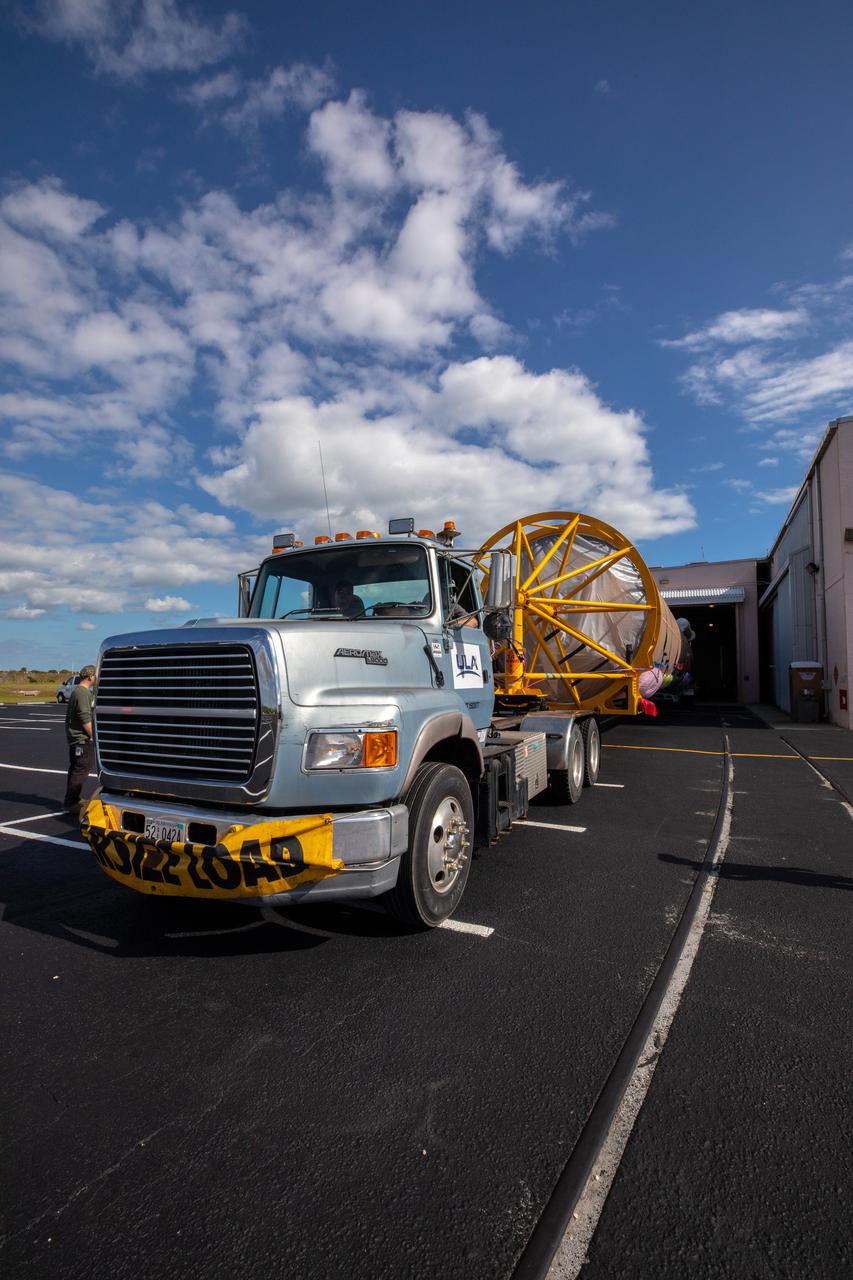
The United Launch Alliance Atlas V booster that will launch the Solar Orbiter spacecraft is delivered by truck to the Atlas Spaceflight Operations Center at Florida’s Cape Canaveral Air Force Station on Nov. 21, 2019. The company’s Rocketship vessel carried the booster from its manufacturing facility in Decatur, Alabama, to Port Canaveral. Solar Orbiter is a European Space Agency mission with strong NASA participation. The mission aims to study the Sun, its outer atmosphere and solar winds. The spacecraft will provide the first images of the Sun’s poles. NASA’s Launch Services Program based at Kennedy is managing the launch. Liftoff is scheduled for Feb. 5, 2020, from Launch Complex 41 at Cape Canaveral Air Force Station aboard the ULA Atlas V rocket.
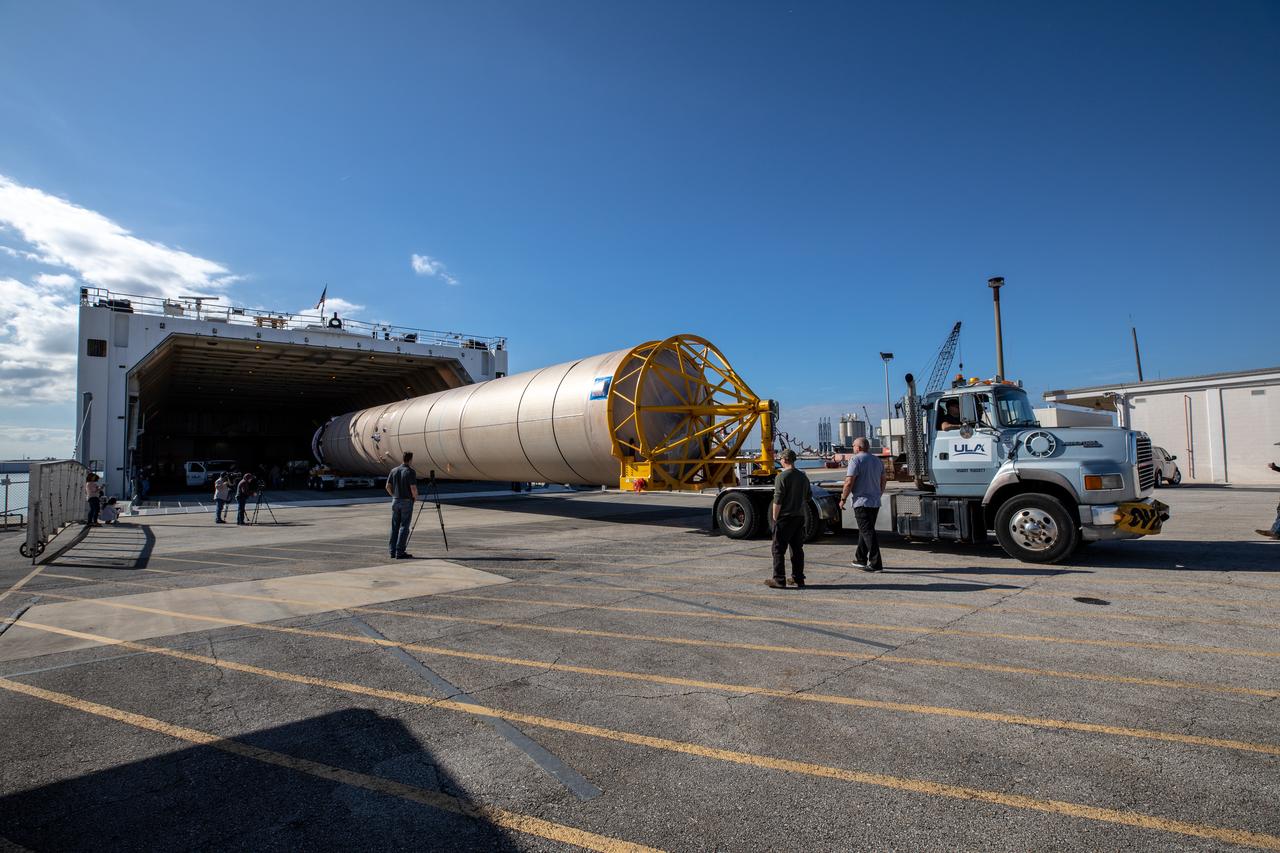
The United Launch Alliance Atlas V booster that will launch the Solar Orbiter spacecraft is removed from the company’s Rocketship vessel upon its arrival at Florida’s Port Canaveral on Nov. 21, 2019. Once offloaded, the booster was transported to the Atlas Spaceflight Operations Center at nearby Cape Canaveral Air Force Station. Solar Orbiter is a European Space Agency mission with strong NASA participation. The mission aims to study the Sun, its outer atmosphere and solar winds. The spacecraft will provide the first images of the Sun’s poles. NASA’s Launch Services Program based at Kennedy is managing the launch. Liftoff is scheduled for Feb. 5, 2020, from Launch Complex 41 at Cape Canaveral Air Force Station aboard the ULA Atlas V rocket.
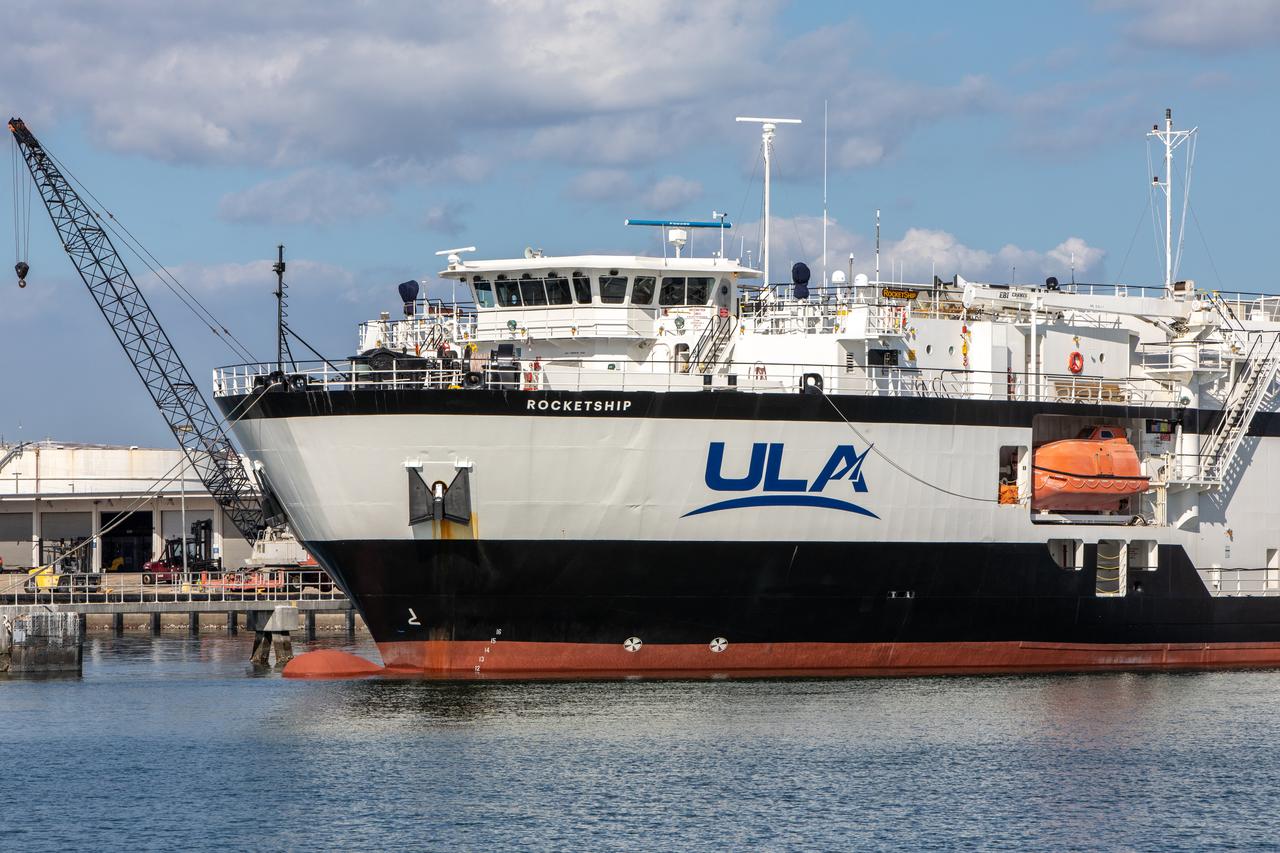
The United Launch Alliance cargo vessel, Rocketship, is docked at Florida’s Port Canaveral on Nov. 21, 2019, after arriving with the Atlas V booster and Centaur upper stage that will launch the Solar Orbiter spacecraft. Once offloaded, the booster was transported to the Atlas Spaceflight Operations Center and the Centaur was transported to a separate facility, both at nearby Cape Canaveral Air Force Station. Solar Orbiter is a European Space Agency mission with strong NASA participation. The mission aims to study the Sun, its outer atmosphere and solar winds. The spacecraft will provide the first images of the Sun’s poles. NASA’s Launch Services Program based at Kennedy is managing the launch. Liftoff is scheduled for Feb. 5, 2020, from Cape Canaveral Air Force Station aboard the ULA Atlas V rocket.
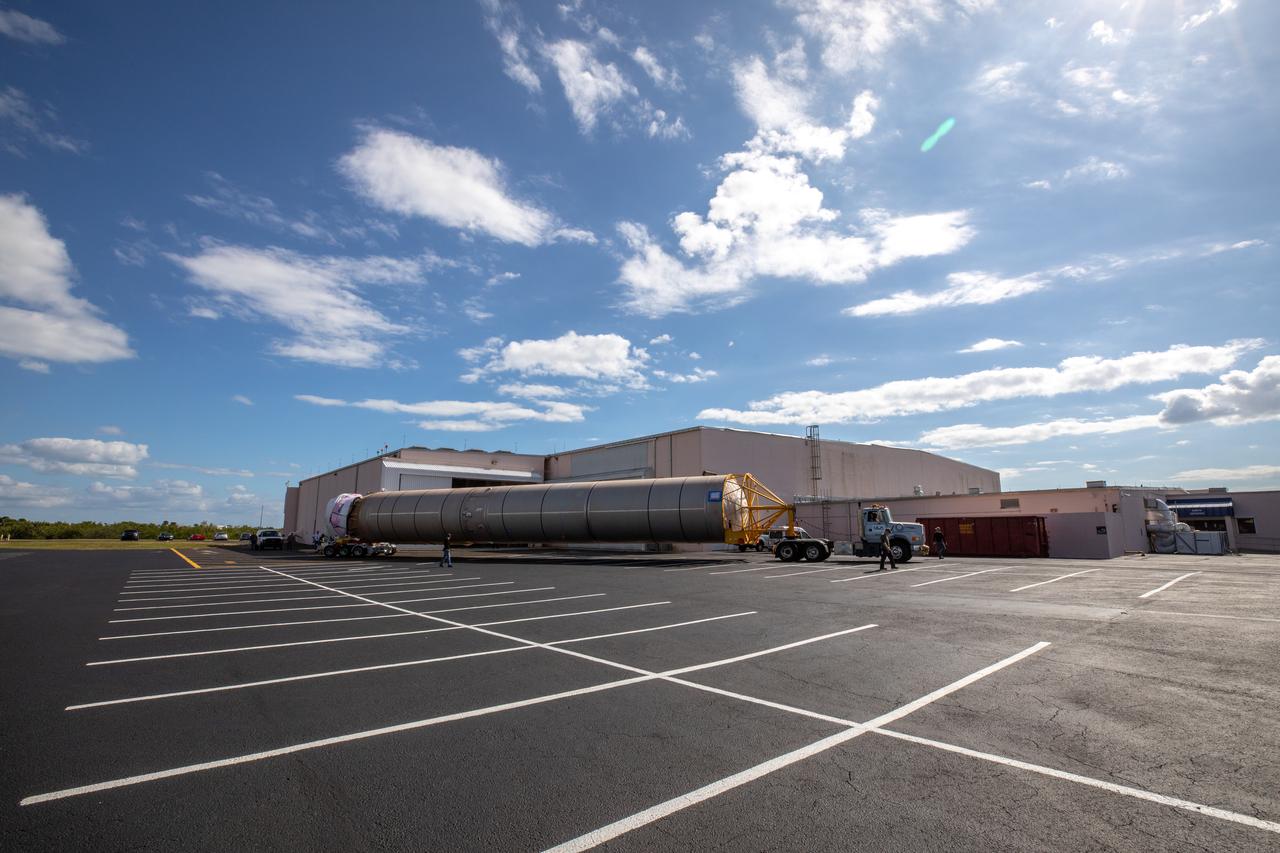
The United Launch Alliance Atlas V booster that will launch the Solar Orbiter spacecraft is delivered by truck to the Atlas Spaceflight Operations Center at Florida’s Cape Canaveral Air Force Station on Nov. 21, 2019. The company’s Rocketship vessel carried the booster from its manufacturing facility in Decatur, Alabama, to Port Canaveral. Solar Orbiter is a European Space Agency mission with strong NASA participation. The mission aims to study the Sun, its outer atmosphere and solar winds. The spacecraft will provide the first images of the Sun’s poles. NASA’s Launch Services Program based at Kennedy is managing the launch. Liftoff is scheduled for Feb. 5, 2020, from Launch Complex 41 at Cape Canaveral Air Force Station aboard the ULA Atlas V rocket.
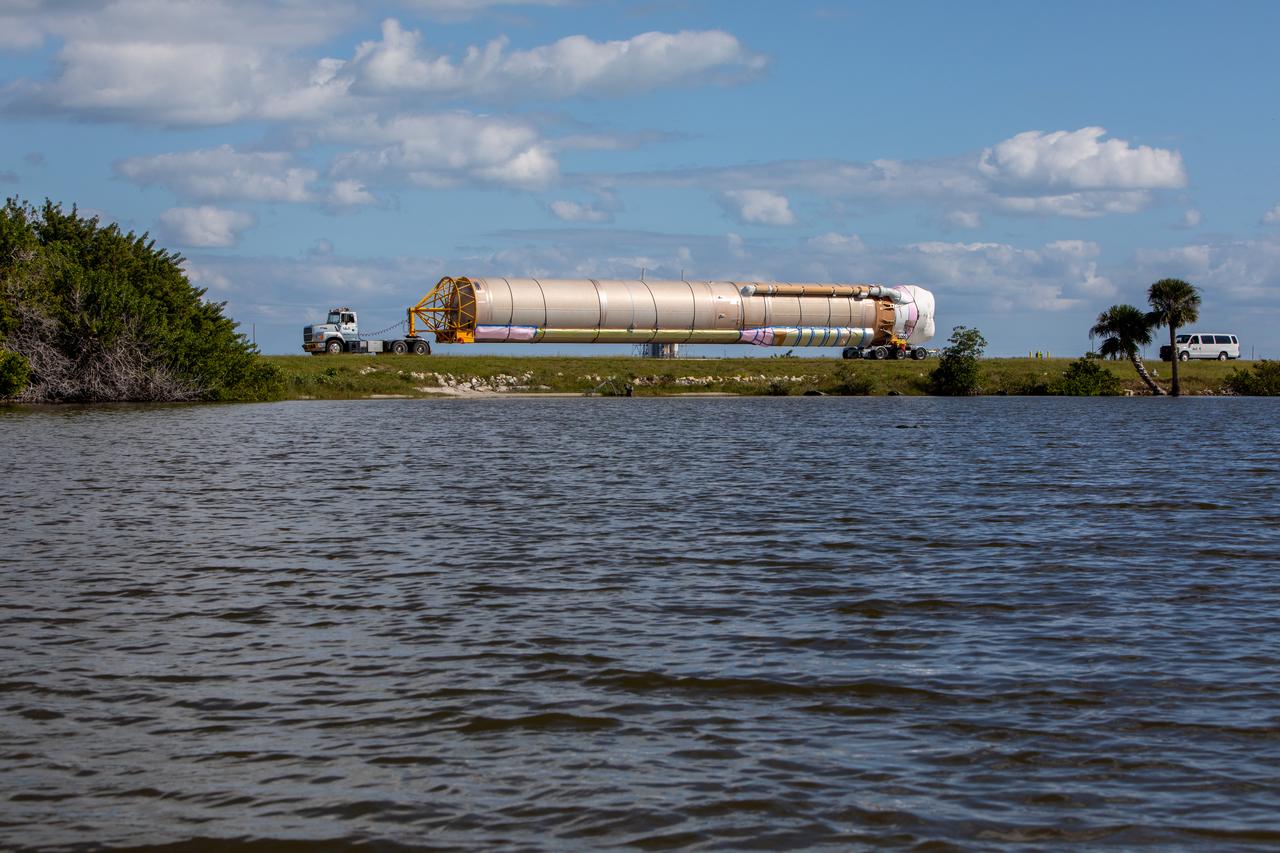
The United Launch Alliance Atlas V booster that will launch the Solar Orbiter spacecraft is transported by truck from Port Canaveral to the Atlas Spaceflight Operations Center at Florida’s Cape Canaveral Air Force Station on Nov. 21, 2019. The company’s Rocketship vessel carried the booster from its manufacturing facility in Decatur, Alabama, to the port. Solar Orbiter is a European Space Agency mission with strong NASA participation. The mission aims to study the Sun, its outer atmosphere and solar winds. The spacecraft will provide the first images of the Sun’s poles. NASA’s Launch Services Program based at Kennedy is managing the launch. Liftoff is scheduled for Feb. 5, 2020, from Launch Complex 41 at Cape Canaveral Air Force Station aboard the ULA Atlas V rocket.
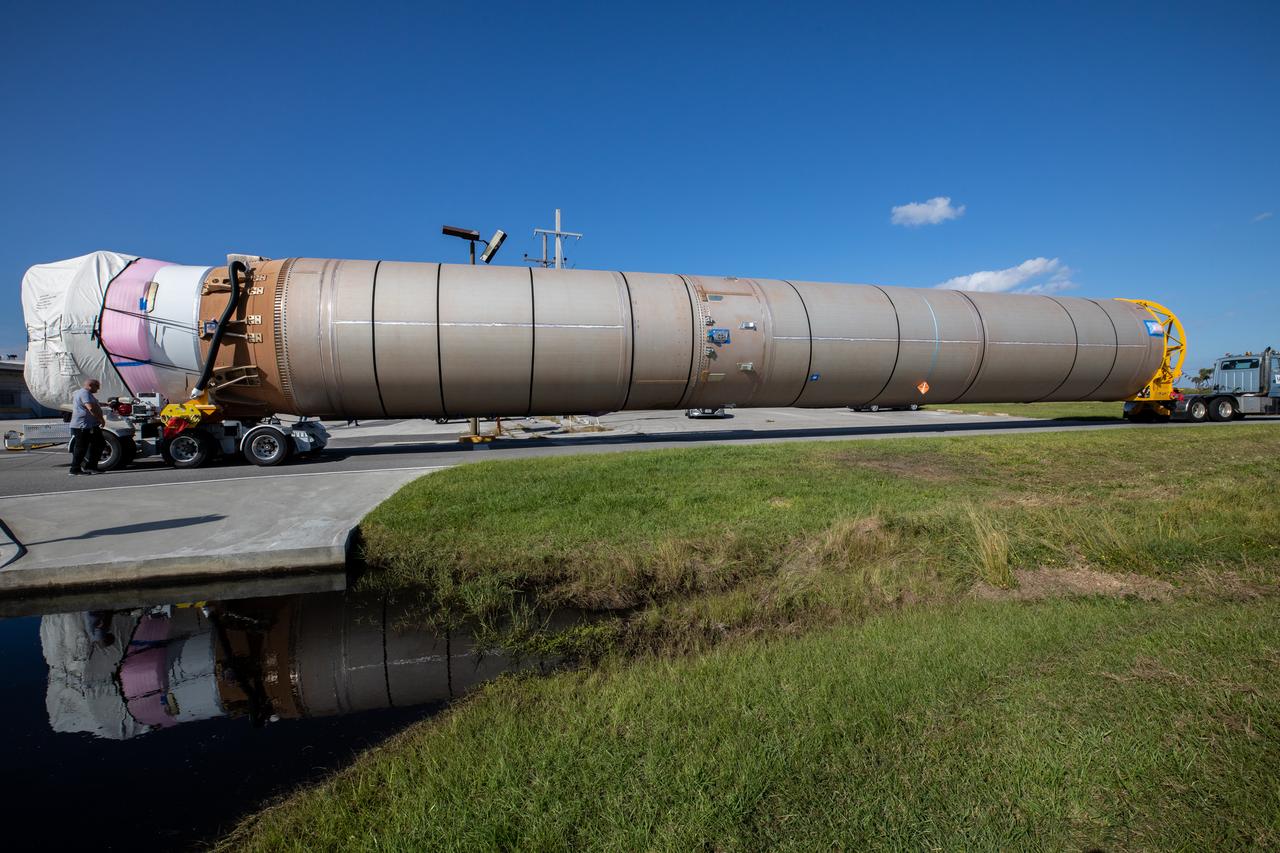
The United Launch Alliance Atlas V booster that will launch the Solar Orbiter spacecraft is transported by truck from Port Canaveral to the Atlas Spaceflight Operations Center at Florida’s Cape Canaveral Air Force Station on Nov. 21, 2019. The company’s Rocketship vessel carried the booster from its manufacturing facility in Decatur, Alabama, to the port. Solar Orbiter is a European Space Agency mission with strong NASA participation. The mission aims to study the Sun, its outer atmosphere and solar winds. The spacecraft will provide the first images of the Sun’s poles. NASA’s Launch Services Program based at Kennedy is managing the launch. Liftoff is scheduled for Feb. 5, 2020, from Launch Complex 41 at Cape Canaveral Air Force Station aboard the ULA Atlas V rocket.
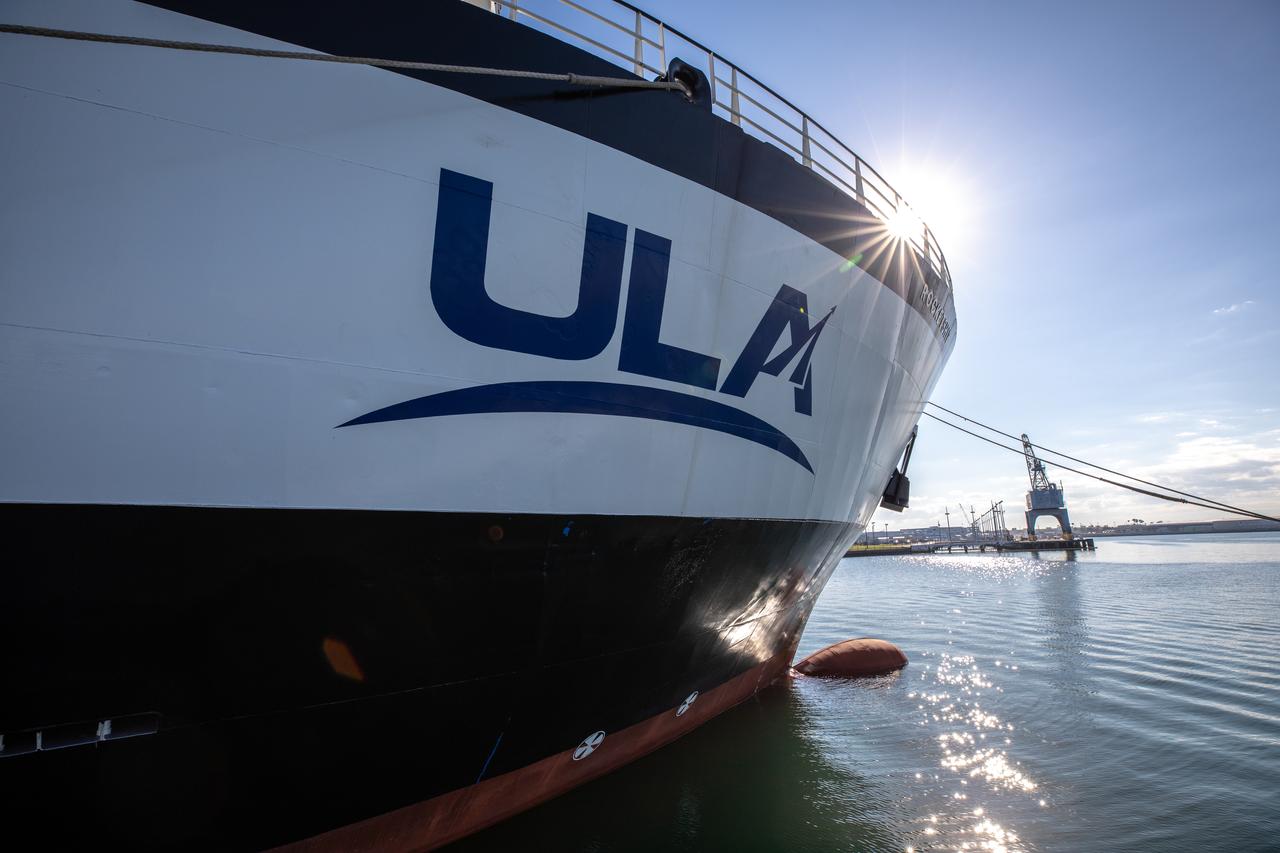
The United Launch Alliance cargo vessel, Rocketship, is docked at Florida’s Port Canaveral on Nov. 21, 2019, after arriving with the Atlas V booster and Centaur upper stage that will launch the Solar Orbiter spacecraft. Once offloaded, the booster was transported to the Atlas Spaceflight Operations Center and the Centaur was transported to a separate facility, both at nearby Cape Canaveral Air Force Station. Solar Orbiter is a European Space Agency mission with strong NASA participation. The mission aims to study the Sun, its outer atmosphere and solar winds. The spacecraft will provide the first images of the Sun’s poles. NASA’s Launch Services Program based at Kennedy is managing the launch. Liftoff is scheduled for Feb. 5, 2020, from Cape Canaveral Air Force Station aboard the ULA Atlas V rocket.
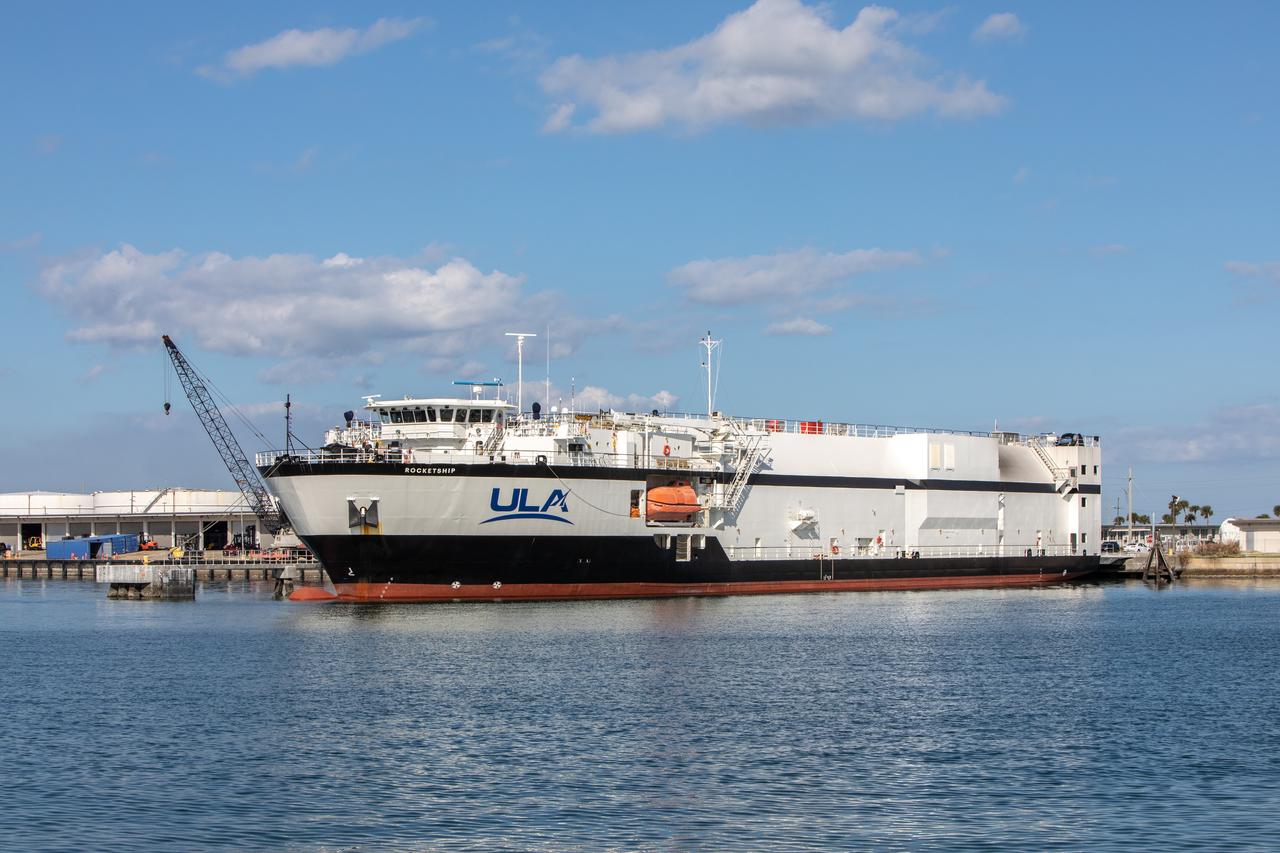
The United Launch Alliance cargo vessel, Rocketship, is docked at Florida’s Port Canaveral on Nov. 21, 2019, after arriving with the Atlas V booster and Centaur upper stage that will launch the Solar Orbiter spacecraft. Once offloaded, the booster was transported to the Atlas Spaceflight Operations Center and the Centaur was transported to a separate facility, both at nearby Cape Canaveral Air Force Station. Solar Orbiter is a European Space Agency mission with strong NASA participation. The mission aims to study the Sun, its outer atmosphere and solar winds. The spacecraft will provide the first images of the Sun’s poles. NASA’s Launch Services Program based at Kennedy is managing the launch. Liftoff is scheduled for Feb. 5, 2020, from Cape Canaveral Air Force Station aboard the ULA Atlas V rocket.
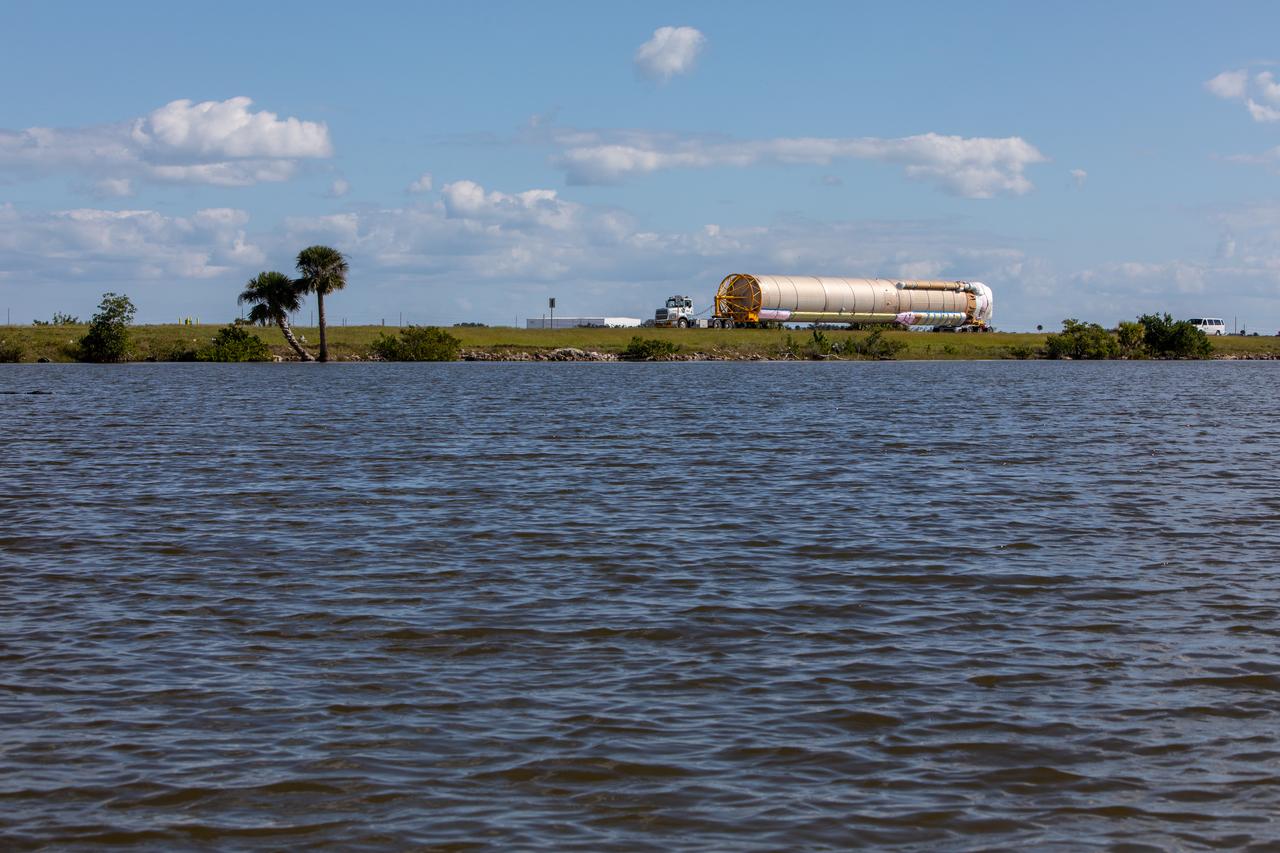
The United Launch Alliance Atlas V booster that will launch the Solar Orbiter spacecraft is transported by truck from Port Canaveral to the Atlas Spaceflight Operations Center at Florida’s Cape Canaveral Air Force Station on Nov. 21, 2019. The company’s Rocketship vessel carried the booster from its manufacturing facility in Decatur, Alabama, to the port. Solar Orbiter is a European Space Agency mission with strong NASA participation. The mission aims to study the Sun, its outer atmosphere and solar winds. The spacecraft will provide the first images of the Sun’s poles. NASA’s Launch Services Program based at Kennedy is managing the launch. Liftoff is scheduled for Feb. 5, 2020, from Launch Complex 41 at Cape Canaveral Air Force Station aboard the ULA Atlas V rocket.
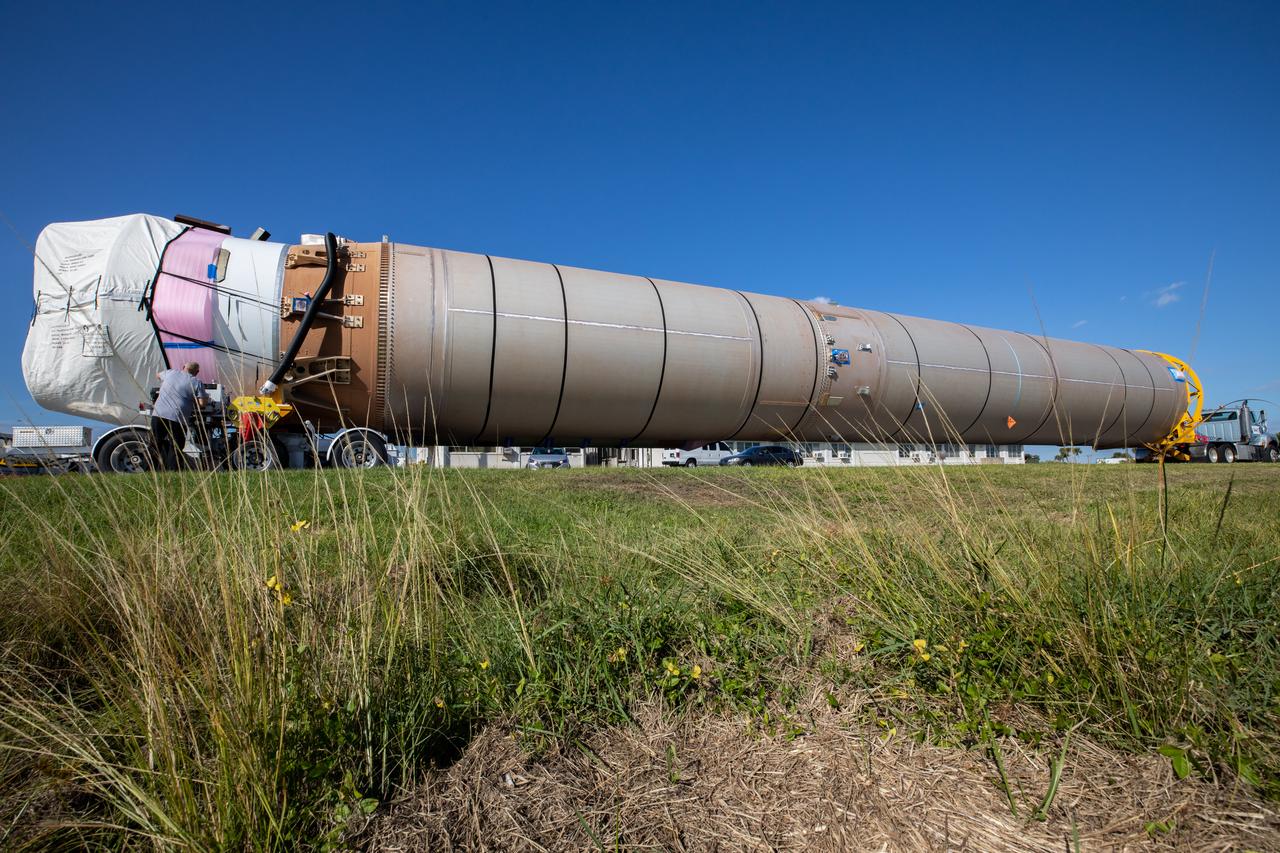
The United Launch Alliance Atlas V booster that will launch the Solar Orbiter spacecraft is transported by truck from Port Canaveral to the Atlas Spaceflight Operations Center at Florida’s Cape Canaveral Air Force Station on Nov. 21, 2019. The company’s Rocketship vessel carried the booster from its manufacturing facility in Decatur, Alabama, to the port. Solar Orbiter is a European Space Agency mission with strong NASA participation. The mission aims to study the Sun, its outer atmosphere and solar winds. The spacecraft will provide the first images of the Sun’s poles. NASA’s Launch Services Program based at Kennedy is managing the launch. Liftoff is scheduled for Feb. 5, 2020, from Launch Complex 41 at Cape Canaveral Air Force Station aboard the ULA Atlas V rocket.
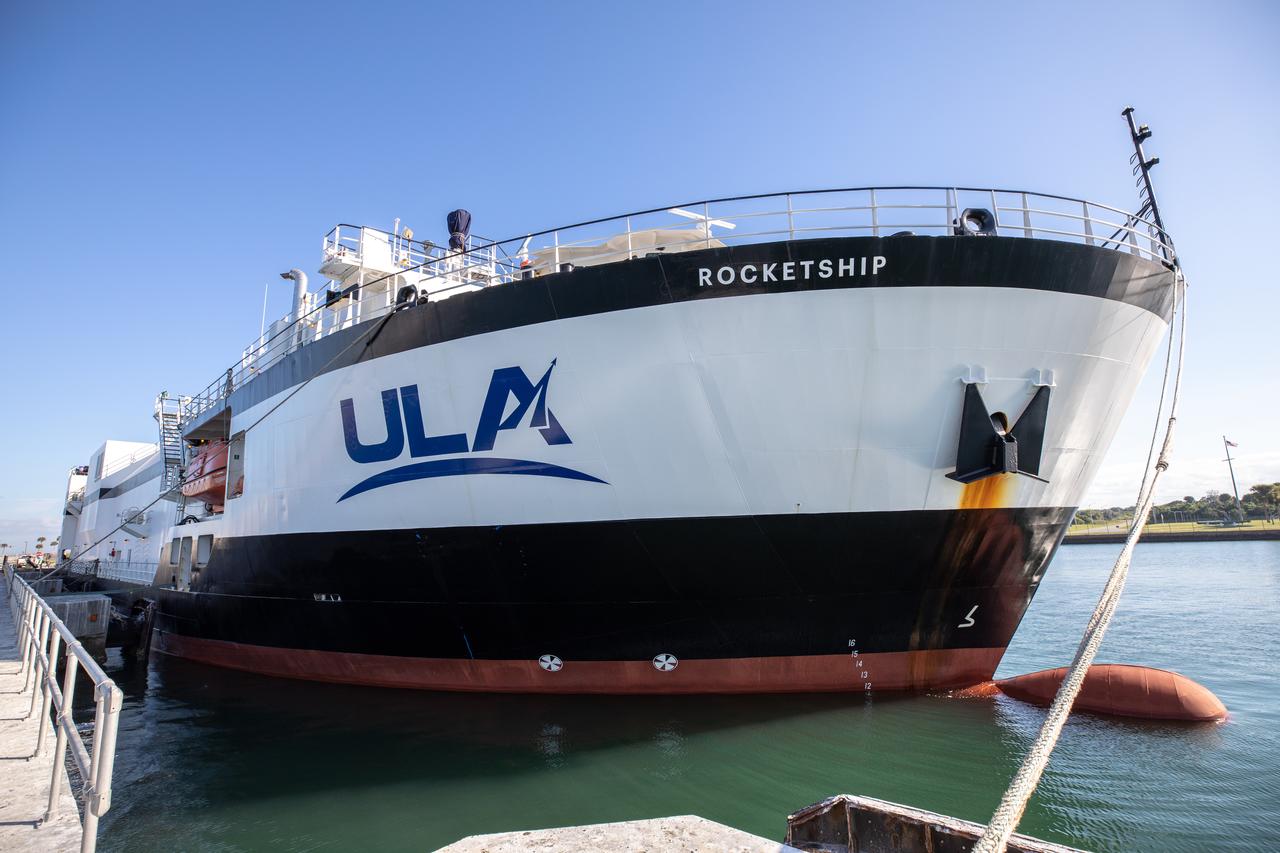
The United Launch Alliance cargo vessel, Rocketship, is docked at Florida’s Port Canaveral on Nov. 21, 2019, after arriving with the Atlas V booster and Centaur upper stage that will launch the Solar Orbiter spacecraft. Once offloaded, the booster was transported to the Atlas Spaceflight Operations Center and the Centaur was transported to a separate facility, both at nearby Cape Canaveral Air Force Station. Solar Orbiter is a European Space Agency mission with strong NASA participation. The mission aims to study the Sun, its outer atmosphere and solar winds. The spacecraft will provide the first images of the Sun’s poles. NASA’s Launch Services Program based at Kennedy is managing the launch. Liftoff is scheduled for Feb. 5, 2020, from Cape Canaveral Air Force Station aboard the ULA Atlas V rocket.
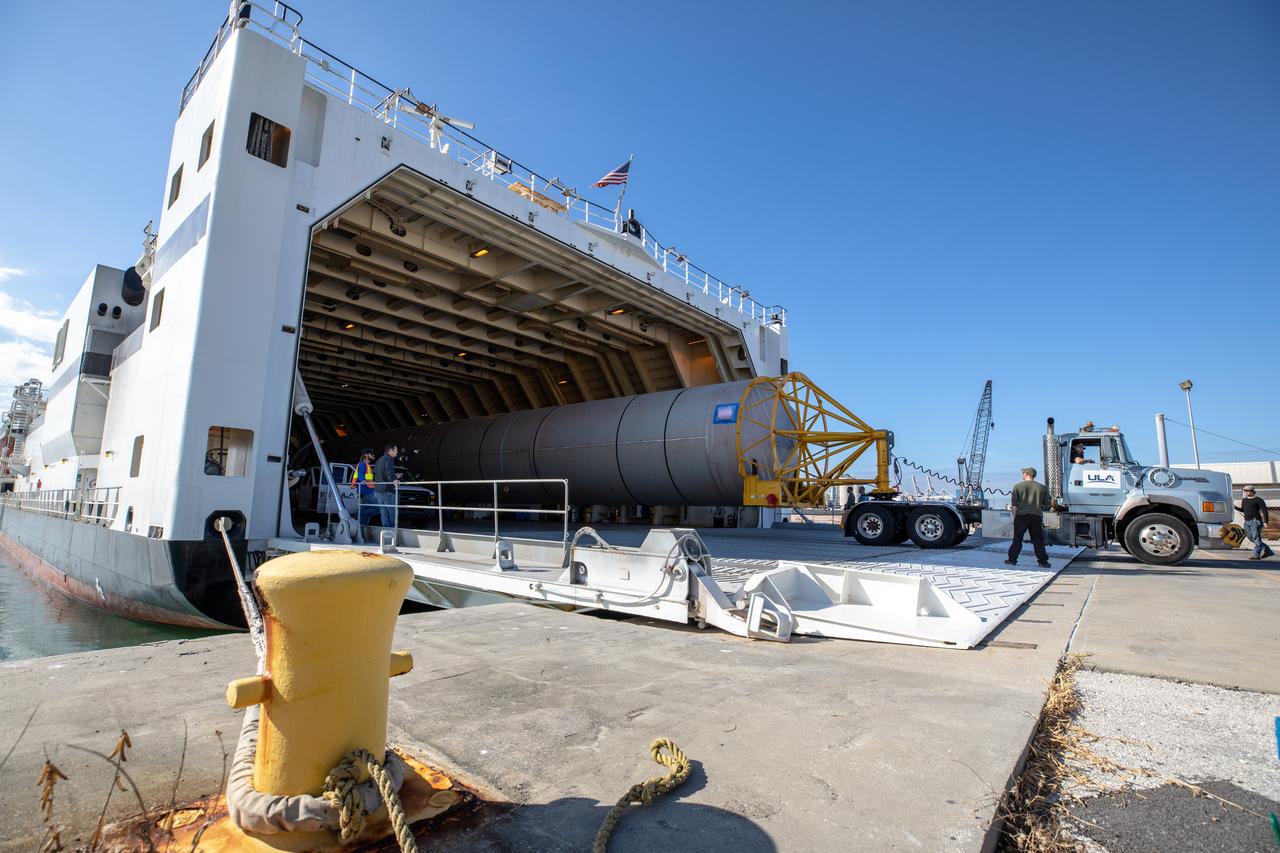
The United Launch Alliance Atlas V booster that will launch the Solar Orbiter spacecraft is removed from the company’s Rocketship vessel upon its arrival at Florida’s Port Canaveral on Nov. 21, 2019. Once offloaded, the booster was transported to the Atlas Spaceflight Operations Center at nearby Cape Canaveral Air Force Station. Solar Orbiter is a European Space Agency mission with strong NASA participation. The mission aims to study the Sun, its outer atmosphere and solar winds. The spacecraft will provide the first images of the Sun’s poles. NASA’s Launch Services Program based at Kennedy is managing the launch. Liftoff is scheduled for Feb. 5, 2020, from Launch Complex 41 at Cape Canaveral Air Force Station aboard the ULA Atlas V rocket.
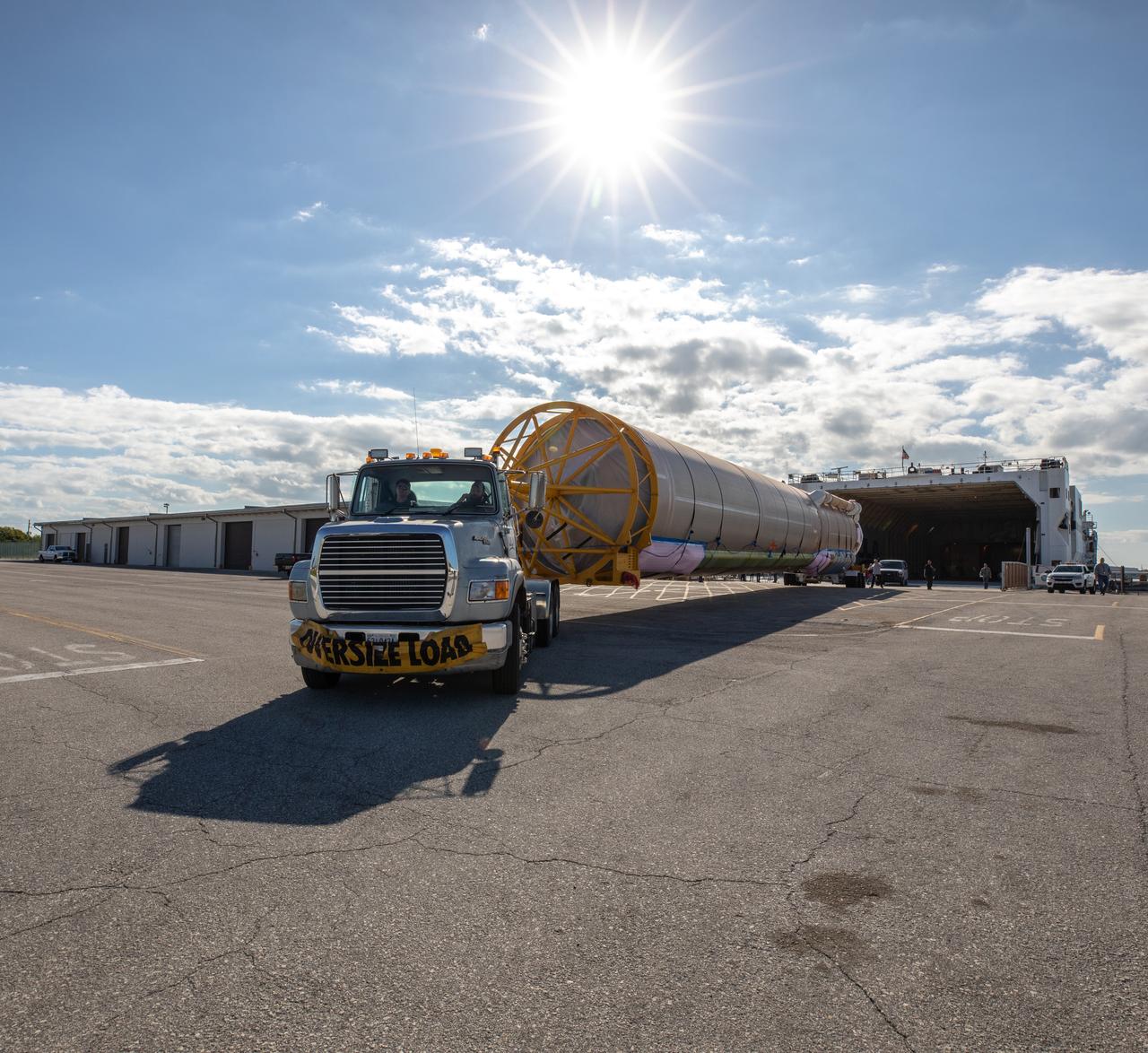
The United Launch Alliance Atlas V booster that will launch the Solar Orbiter spacecraft is removed from the company’s Rocketship vessel upon its arrival at Florida’s Port Canaveral on Nov. 21, 2019. Once offloaded, the booster was transported to the Atlas Spaceflight Operations Center at nearby Cape Canaveral Air Force Station. Solar Orbiter is a European Space Agency mission with strong NASA participation. The mission aims to study the Sun, its outer atmosphere and solar winds. The spacecraft will provide the first images of the Sun’s poles. NASA’s Launch Services Program based at Kennedy is managing the launch. Liftoff is scheduled for Feb. 5, 2020, from Launch Complex 41 at Cape Canaveral Air Force Station aboard the ULA Atlas V rocket.
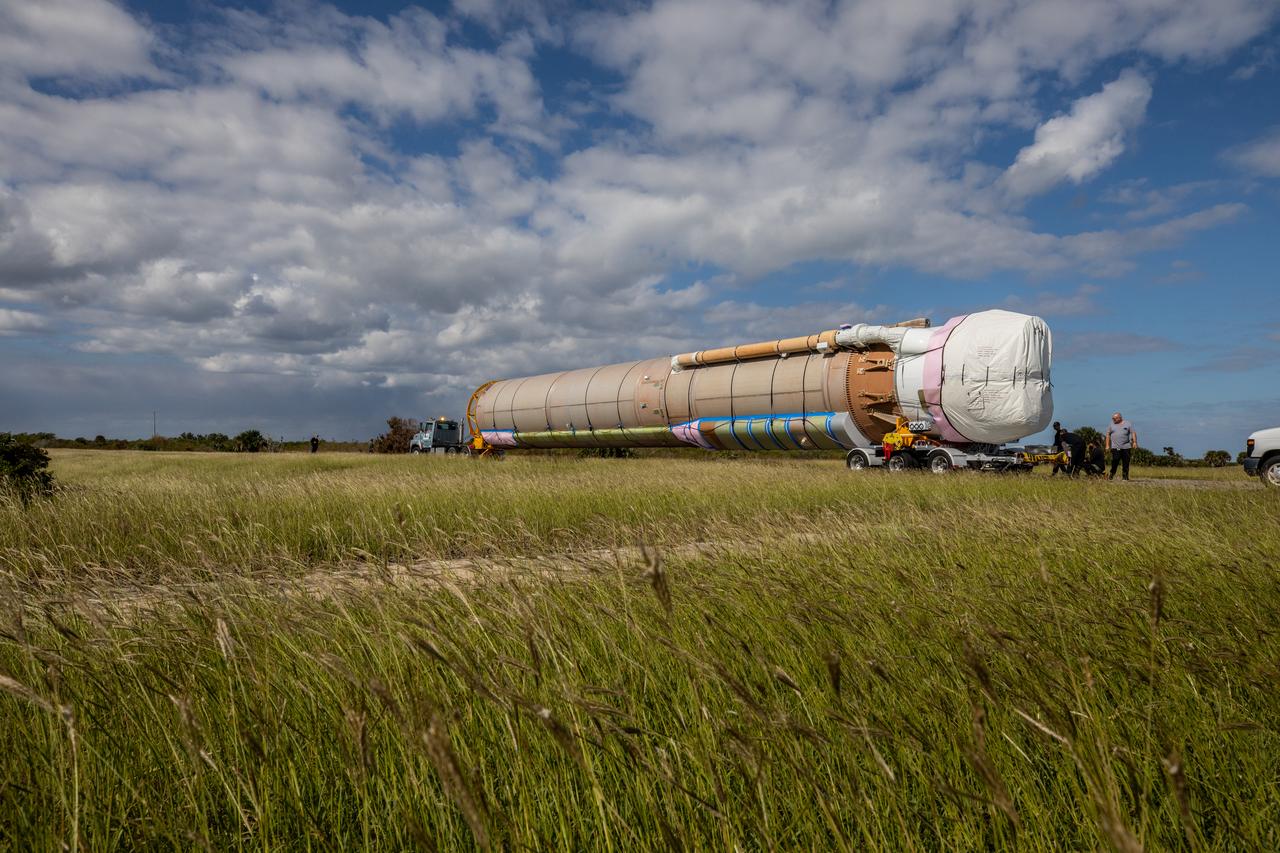
The United Launch Alliance Atlas V booster that will launch the Solar Orbiter spacecraft is transported by truck from Port Canaveral to the Atlas Spaceflight Operations Center at Florida’s Cape Canaveral Air Force Station on Nov. 21, 2019. The company’s Rocketship vessel carried the booster from its manufacturing facility in Decatur, Alabama, to the port. Solar Orbiter is a European Space Agency mission with strong NASA participation. The mission aims to study the Sun, its outer atmosphere and solar winds. The spacecraft will provide the first images of the Sun’s poles. NASA’s Launch Services Program based at Kennedy is managing the launch. Liftoff is scheduled for Feb. 5, 2020, from Launch Complex 41 at Cape Canaveral Air Force Station aboard the ULA Atlas V rocket.
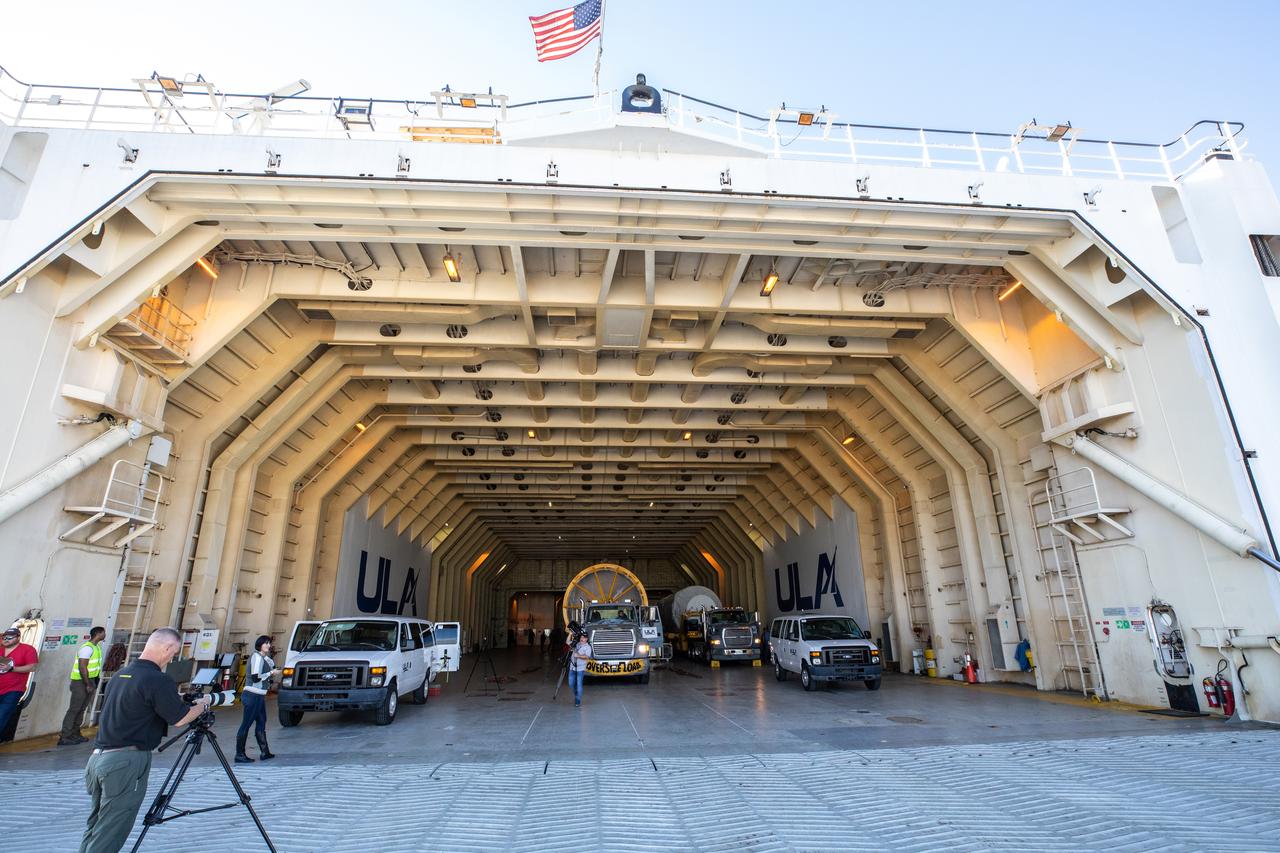
The United Launch Alliance cargo vessel, Rocketship, is opened at Florida’s Port Canaveral on Nov. 21, 2019, carrying the Atlas V booster and Centaur upper stage that will launch the Solar Orbiter spacecraft. Once offloaded, the booster was transported to the Atlas Spaceflight Operations Center and the Centaur was transported to a separate facility, both at nearby Cape Canaveral Air Force Station. Solar Orbiter is a European Space Agency mission with strong NASA participation. The mission aims to study the Sun, its outer atmosphere and solar winds. The spacecraft will provide the first images of the Sun’s poles. NASA’s Launch Services Program based at Kennedy is managing the launch. Liftoff is scheduled for Feb. 5, 2020, from Cape Canaveral Air Force Station aboard the ULA Atlas V rocket.
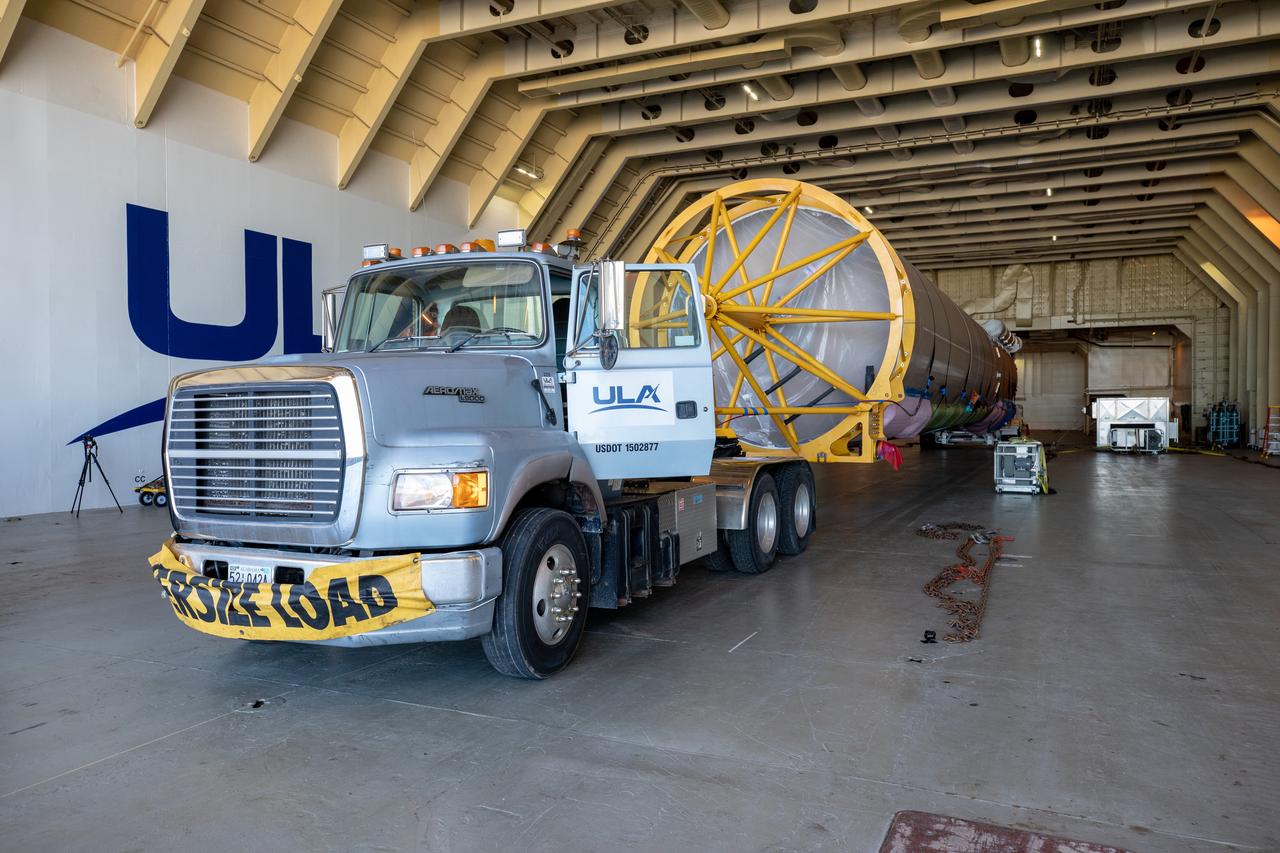
The United Launch Alliance Atlas V booster that will launch the Solar Orbiter spacecraft is removed from the company’s Rocketship vessel upon its arrival at Florida’s Port Canaveral on Nov. 21, 2019. Once offloaded, the booster was transported to the Atlas Spaceflight Operations Center at nearby Cape Canaveral Air Force Station. Solar Orbiter is a European Space Agency mission with strong NASA participation. The mission aims to study the Sun, its outer atmosphere and solar winds. The spacecraft will provide the first images of the Sun’s poles. NASA’s Launch Services Program based at Kennedy is managing the launch. Liftoff is scheduled for Feb. 5, 2020, from Launch Complex 41 at Cape Canaveral Air Force Station aboard the ULA Atlas V rocket.
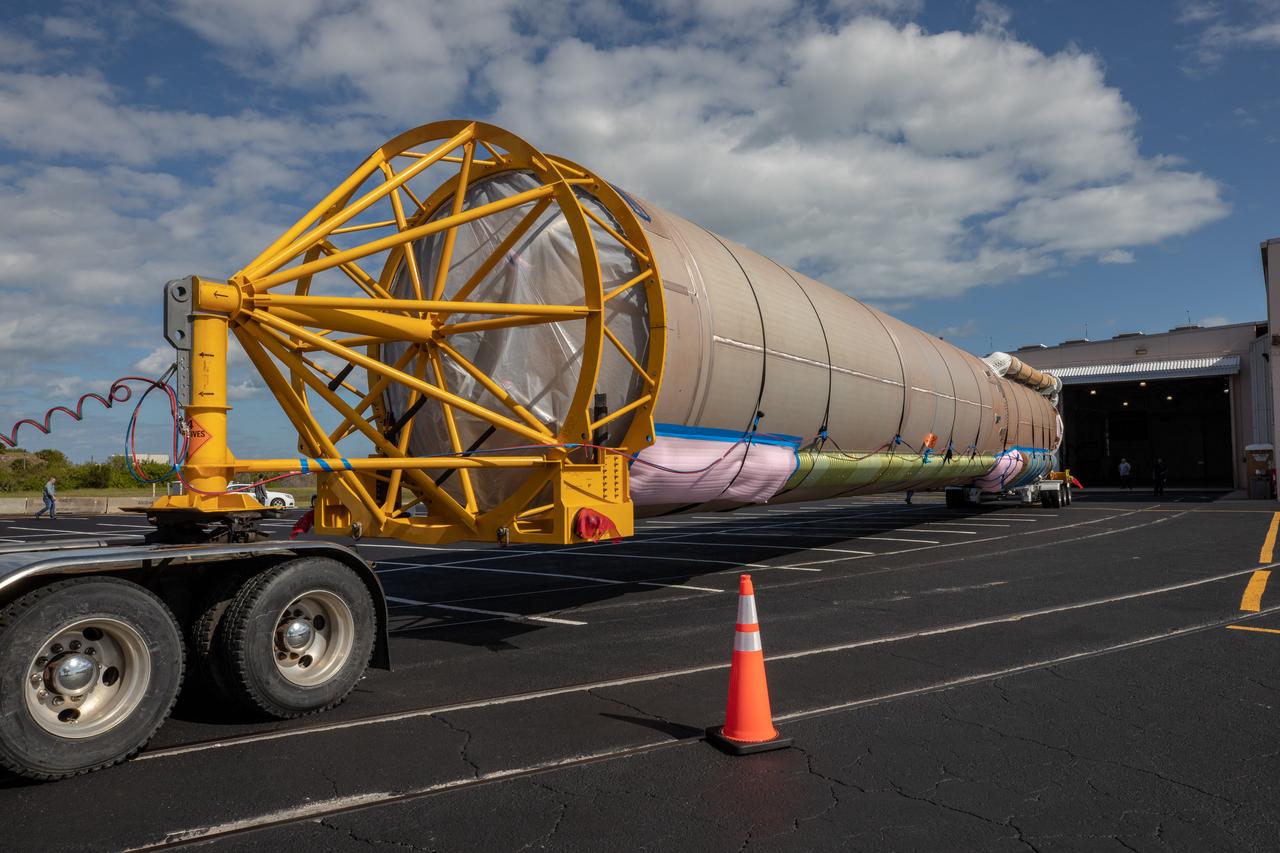
The United Launch Alliance Atlas V booster that will launch the Solar Orbiter spacecraft is delivered by truck to the Atlas Spaceflight Operations Center at Florida’s Cape Canaveral Air Force Station on Nov. 21, 2019. The company’s Rocketship vessel carried the booster from its manufacturing facility in Decatur, Alabama, to Port Canaveral. Solar Orbiter is a European Space Agency mission with strong NASA participation. The mission aims to study the Sun, its outer atmosphere and solar winds. The spacecraft will provide the first images of the Sun’s poles. NASA’s Launch Services Program based at Kennedy is managing the launch. Liftoff is scheduled for Feb. 5, 2020, from Launch Complex 41 at Cape Canaveral Air Force Station aboard the ULA Atlas V rocket.
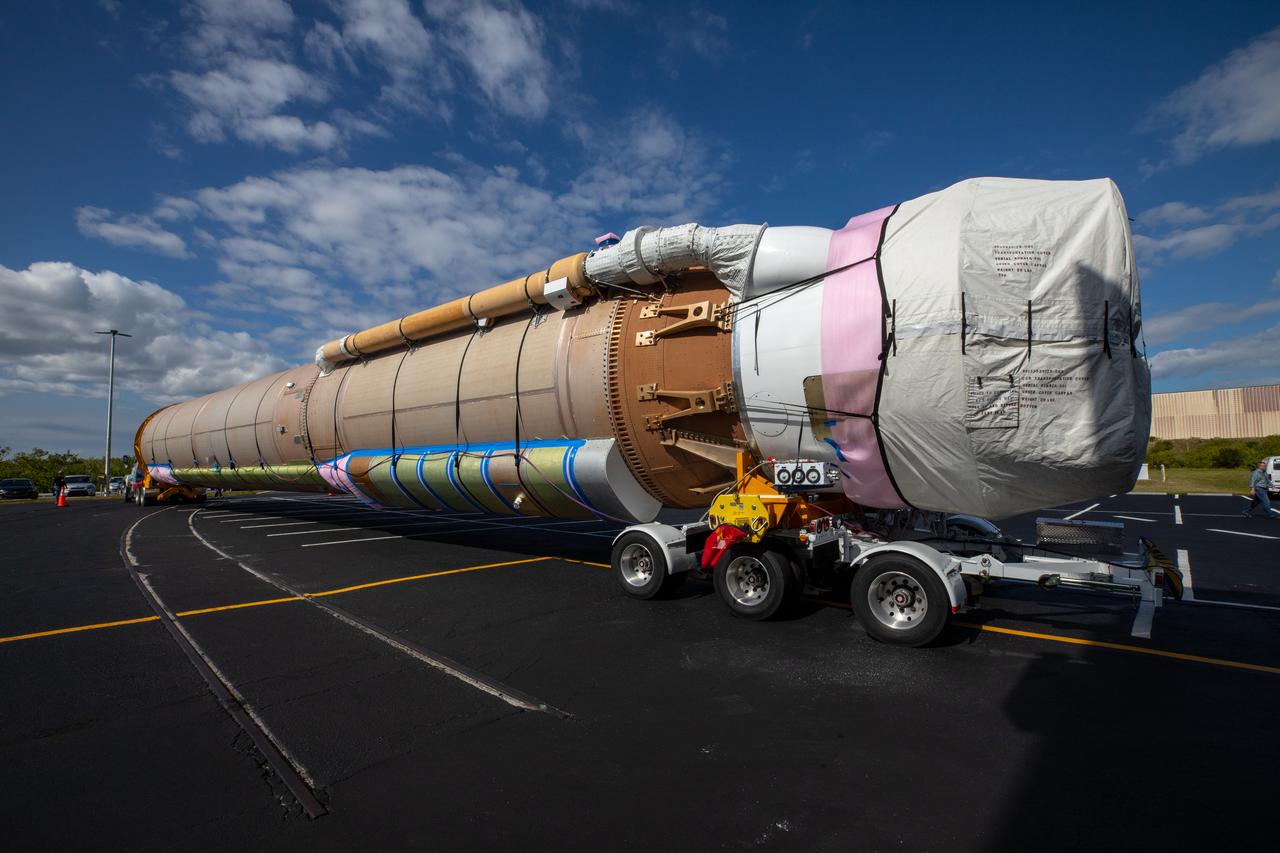
The United Launch Alliance Atlas V booster that will launch the Solar Orbiter spacecraft is delivered by truck to the Atlas Spaceflight Operations Center at Florida’s Cape Canaveral Air Force Station on Nov. 21, 2019. The company’s Rocketship vessel carried the booster from its manufacturing facility in Decatur, Alabama, to Port Canaveral. Solar Orbiter is a European Space Agency mission with strong NASA participation. The mission aims to study the Sun, its outer atmosphere and solar winds. The spacecraft will provide the first images of the Sun’s poles. NASA’s Launch Services Program based at Kennedy is managing the launch. Liftoff is scheduled for Feb. 5, 2020, from Launch Complex 41 at Cape Canaveral Air Force Station aboard the ULA Atlas V rocket.
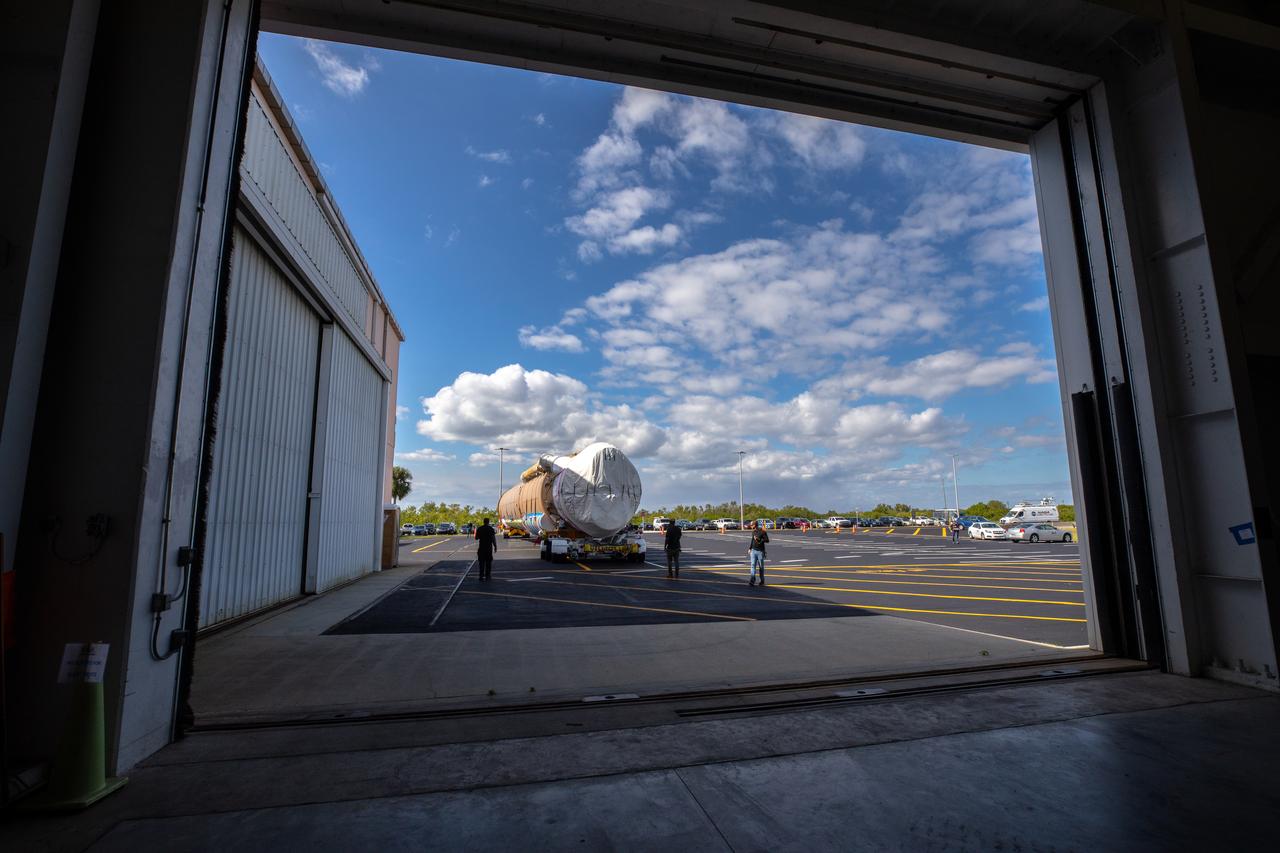
The United Launch Alliance Atlas V booster that will launch the Solar Orbiter spacecraft is delivered by truck to the Atlas Spaceflight Operations Center at Florida’s Cape Canaveral Air Force Station on Nov. 21, 2019. The company’s Rocketship vessel carried the booster from its manufacturing facility in Decatur, Alabama, to Port Canaveral. Solar Orbiter is a European Space Agency mission with strong NASA participation. The mission aims to study the Sun, its outer atmosphere and solar winds. The spacecraft will provide the first images of the Sun’s poles. NASA’s Launch Services Program based at Kennedy is managing the launch. Liftoff is scheduled for Feb. 5, 2020, from Launch Complex 41 at Cape Canaveral Air Force Station aboard the ULA Atlas V rocket.
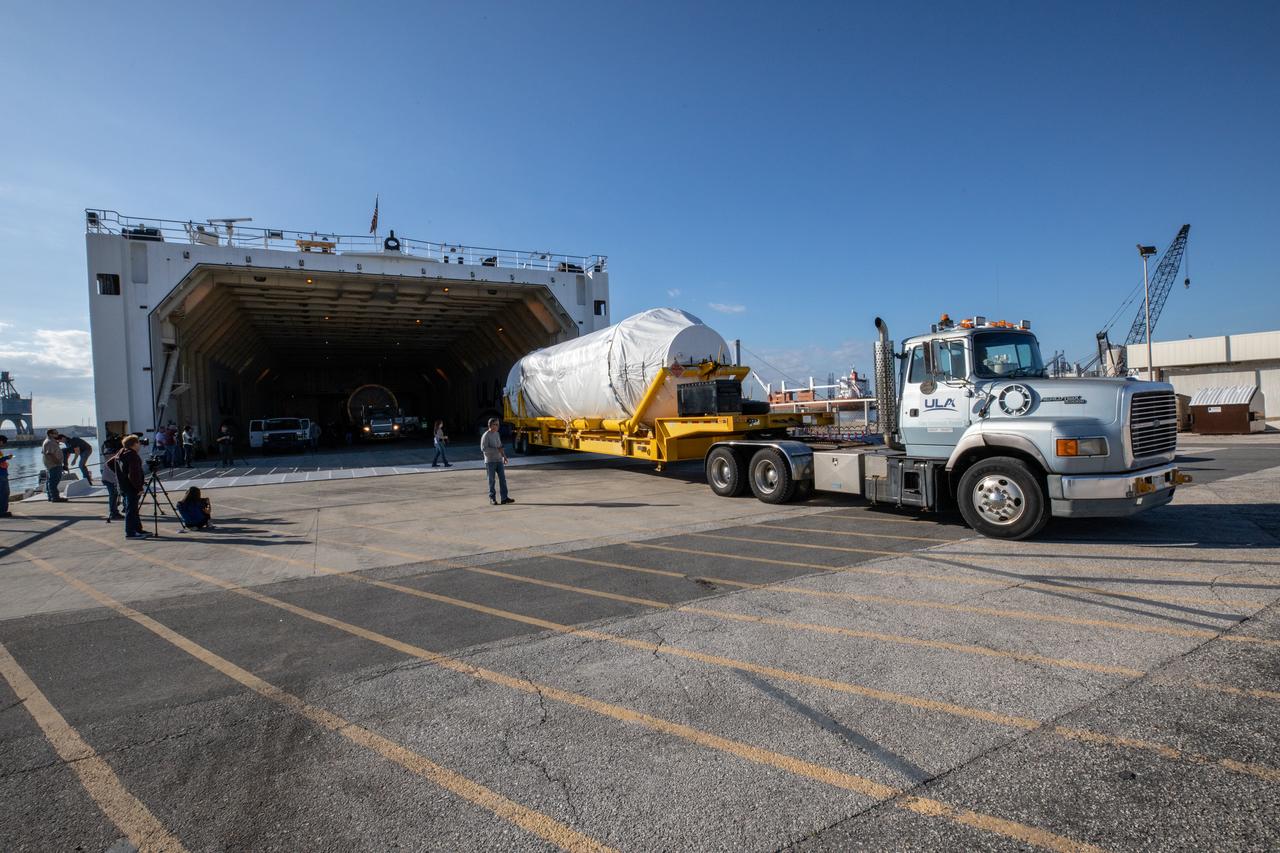
The United Launch Alliance Centaur upper stage that will help launch the Solar Orbiter spacecraft is removed from the company’s Rocketship vessel upon its arrival at Florida’s Port Canaveral on Nov. 21, 2019. Also onboard is the Atlas V rocket’s first-stage booster. Once offloaded, the booster was transported to the Atlas Spaceflight Operations Center and the Centaur was transported to a separate facility, both at nearby Cape Canaveral Air Force Station. Solar Orbiter is a European Space Agency mission with strong NASA participation. The mission aims to study the Sun, its outer atmosphere and solar winds. The spacecraft will provide the first images of the Sun’s poles. NASA’s Launch Services Program based at Kennedy is managing the launch. Liftoff is scheduled for Feb. 5, 2020, from Launch Complex 41 at Cape Canaveral Air Force Station aboard the ULA Atlas V rocket.