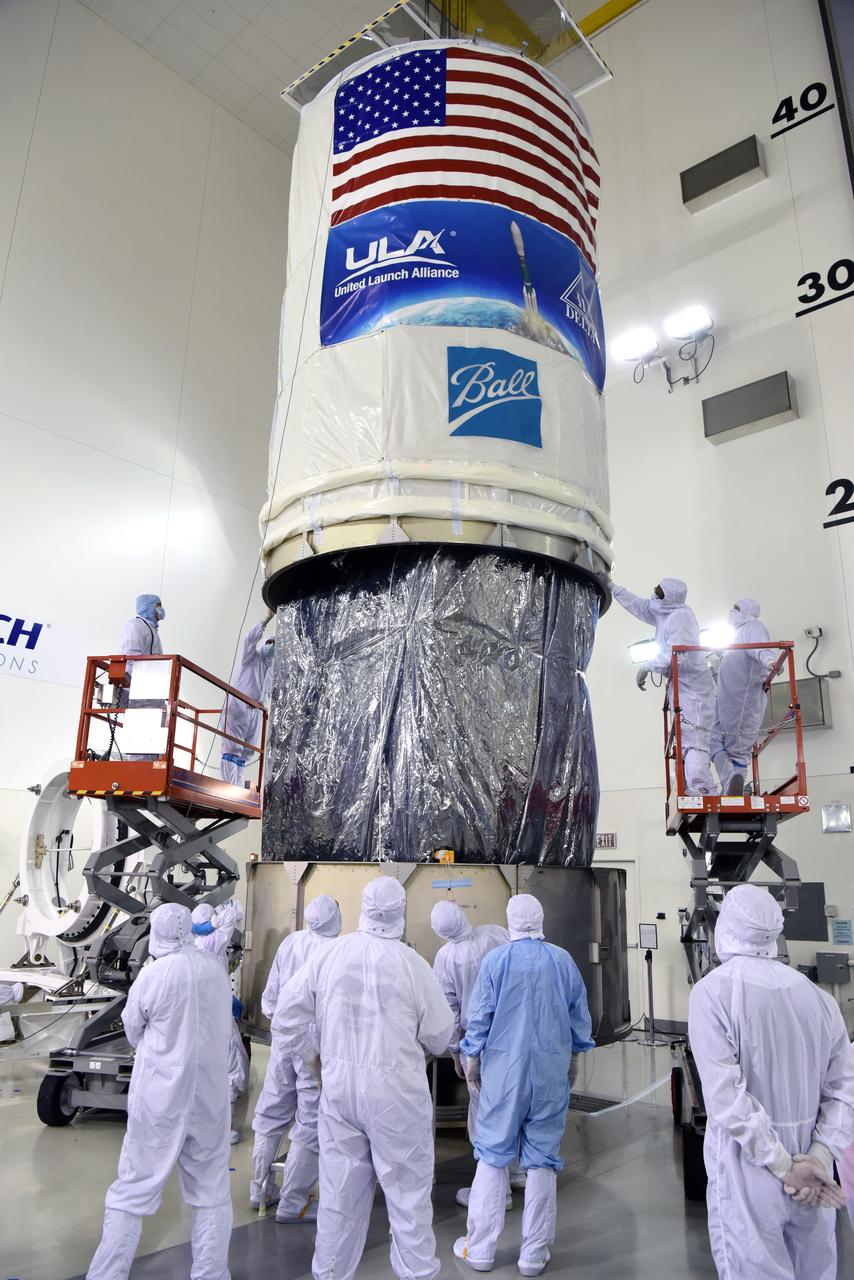
In the Astrotech Processing Facility at Vandenberg Air Force Base in California, technicians and engineers place the Joint Polar Satellite System-1, or JPSS-1, spacecraft in a protective container. It then will be mounted on a transport trailer for its move to Space Launch Complex 2. At the pad, JPSS-1 will be lifted for mating atop a United Launch Alliance Delta II rocket. Built by Ball Aerospace and Technologies Corp. of Boulder, Colorado, JPSS is the first in a series four next-generation environmental satellites in a collaborative program between the NOAA and NASA. Liftoff is scheduled to take place from Vandenberg's Space Launch Complex 2.
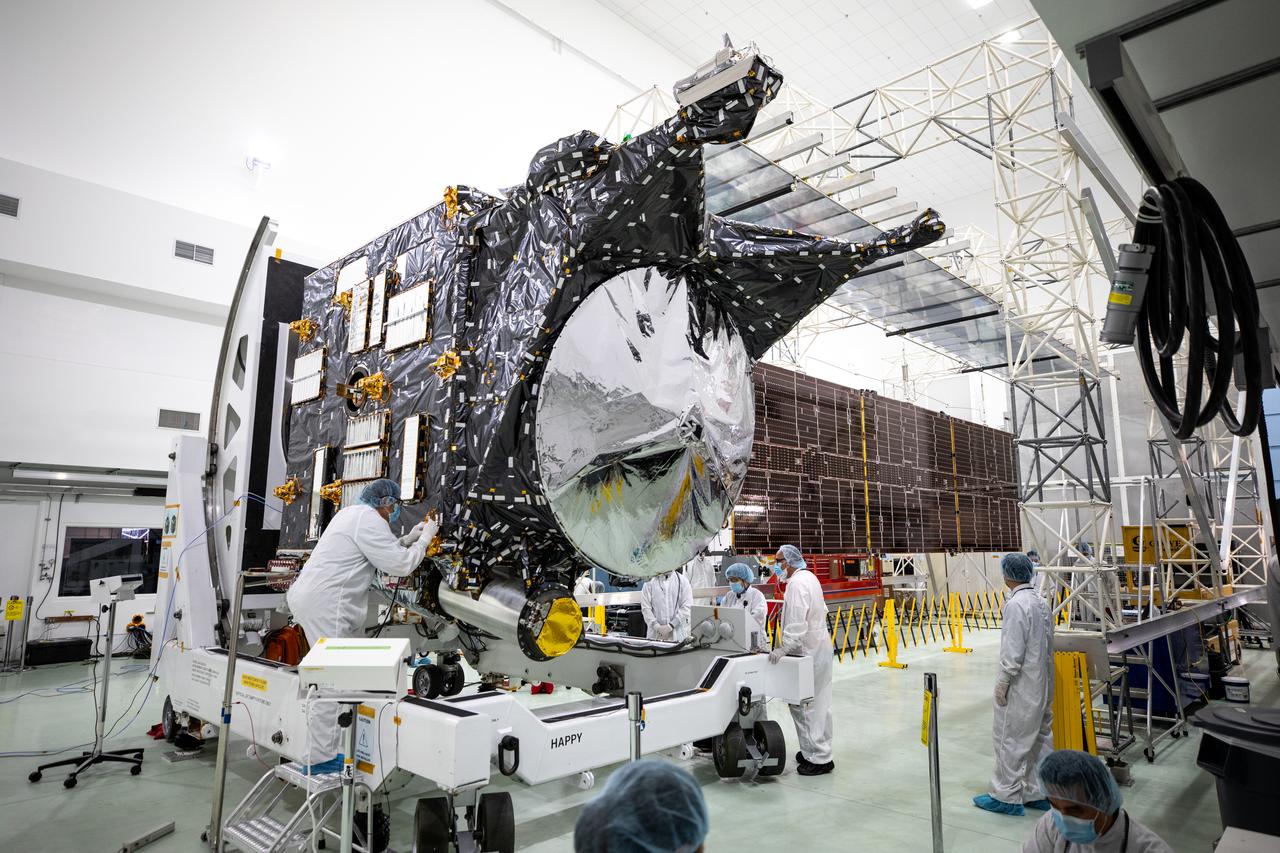
The first of two solar arrays for NASA’s Psyche spacecraft has been extended inside the Astrotech Space Operations Facility near the agency’s Kennedy Space Center in Florida on July 20, 2023. Technicians are preparing to integrate the solar arrays to the Psyche spacecraft. The solar arrays were shipped from Maxar Technologies, in San Jose, California. They are part of the solar electric propulsion system, provided by Maxar, that will power the spacecraft on its journey to explore a metal-rich asteroid. Psyche will launch atop a SpaceX Falcon Heavy rocket from Launch Complex 39A at Kennedy. Launch is targeted for Oct. 5, 2023. Riding with Psyche is a pioneering technology demonstration, NASA’s Deep Space Optical Communications (DSOC) experiment.

Ahead of launch as part of NASA’s Commercial Lunar Payload Services (CLPS) initiative, Astrobotic’s Peregrine lunar lander is preparing to be encapsulated in the payload fairing, or nose cone, of United Launch Alliance’s Vulcan rocket on Nov. 21, 2023, at Astrotech Space Operations Facility near the agency’s Kennedy Space Center in Florida. Launch of Astrobotic’s Peregrine Mission One will carry NASA and commercial payloads to the Moon in early 2024 to study the lunar exosphere, thermal properties, and hydrogen abundance of the lunar regolith, magnetic fields, and the radiation environment of the lunar surface.
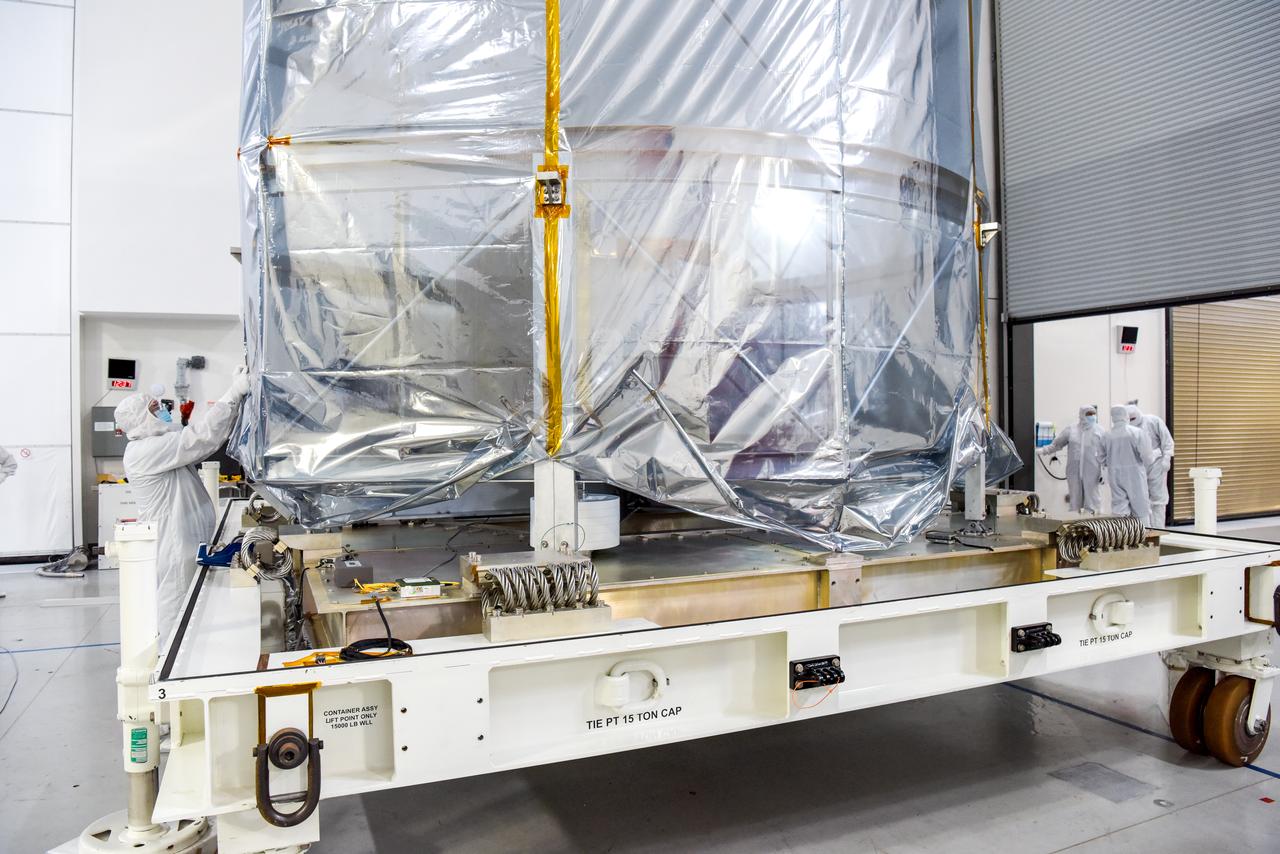
NASA’s SPHEREx (Spectro-Photometer for the History of the Universe, Epoch of Reionization and Ices Explorer) is uncrated for prelaunch processing at Vandenberg Space Force Base in California on Wednesday, Jan. 15, 2025. SPHEREx will enter a polar orbit around Earth and create a 3D map of the entire sky, gathering information about millions of galaxies for scientists to study what happened after the big bang, the history of galaxy evolution, and the origins of water in planetary systems in our galaxy. SPHEREx will launch aboard a SpaceX Falcon 9 rocket in late February 2025.
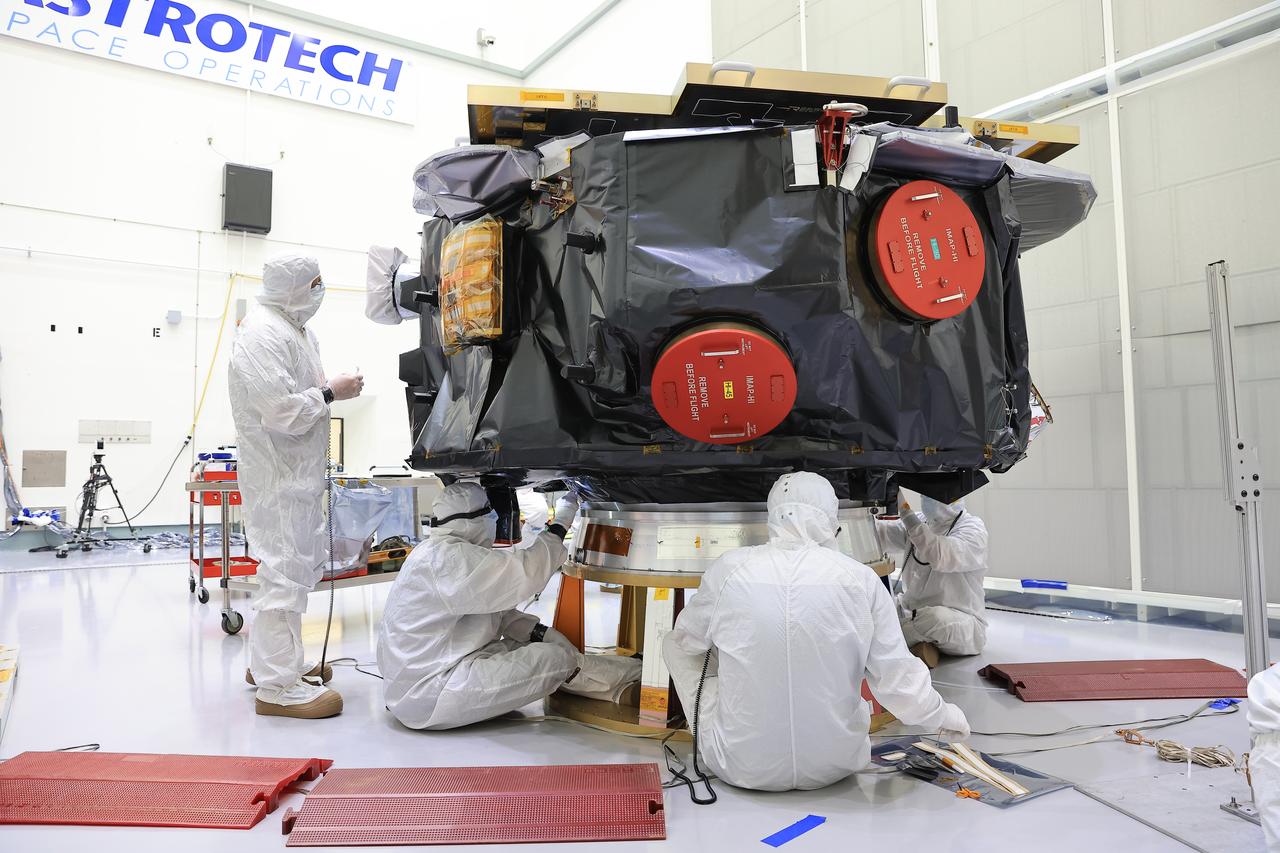
Technicians conduct blanket closeout work on NASA’s IMAP (Interstellar Mapping and Acceleration Probe) observatory at the Astrotech Space Operations Facility near NASA’s Kennedy Space Center in Florida on Friday, Aug. 15, 2025. IMAP will explore and map the boundaries of the heliosphere — a huge bubble created by the Sun’s wind that encapsulates our entire solar system — and study how the heliosphere interacts with the local galactic neighborhood beyond.
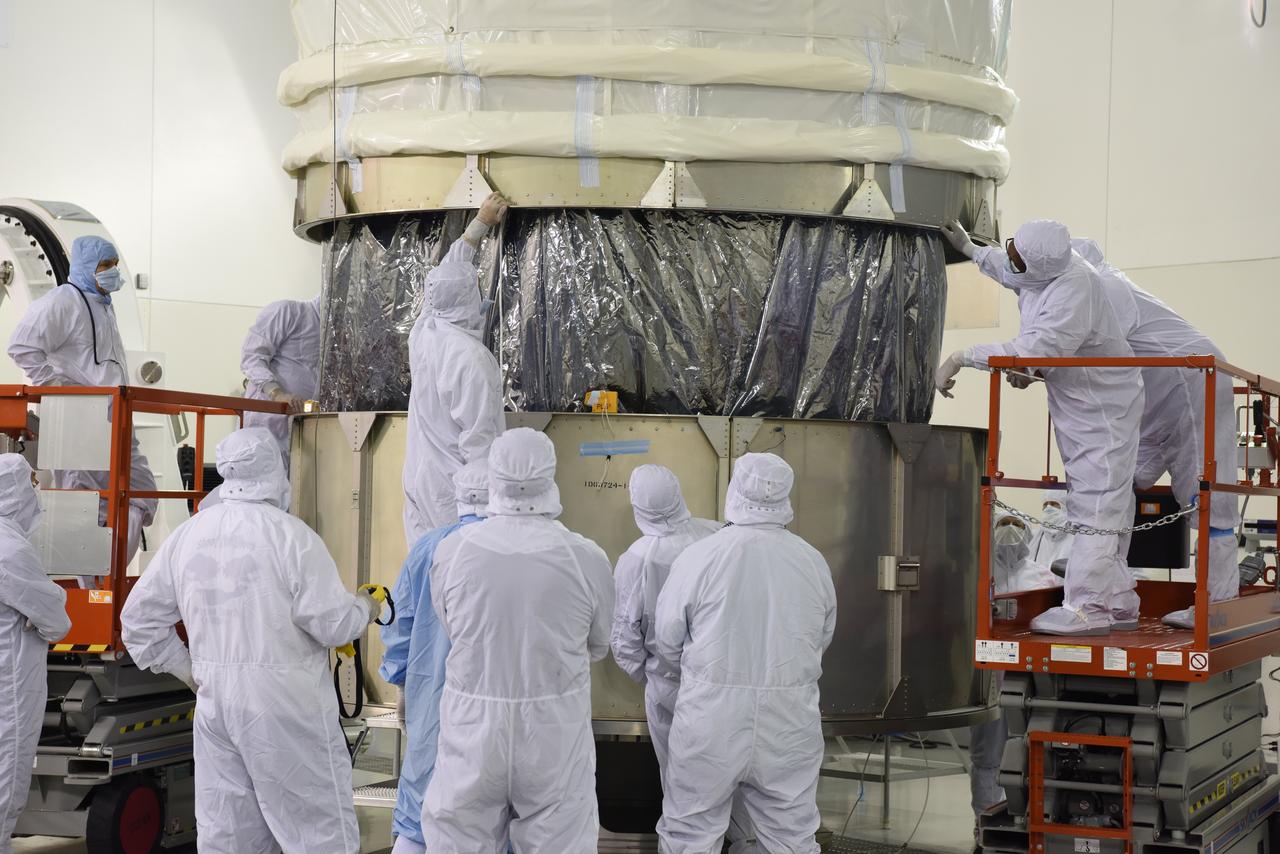
In the Astrotech Processing Facility at Vandenberg Air Force Base in California, technicians and engineers place the Joint Polar Satellite System-1, or JPSS-1, spacecraft in a protective container. It then will be mounted on a transport trailer for its move to Space Launch Complex 2. At the pad, JPSS-1 will be lifted for mating atop a United Launch Alliance Delta II rocket. Built by Ball Aerospace and Technologies Corp. of Boulder, Colorado, JPSS is the first in a series four next-generation environmental satellites in a collaborative program between the NOAA and NASA. Liftoff is scheduled to take place from Vandenberg's Space Launch Complex 2.
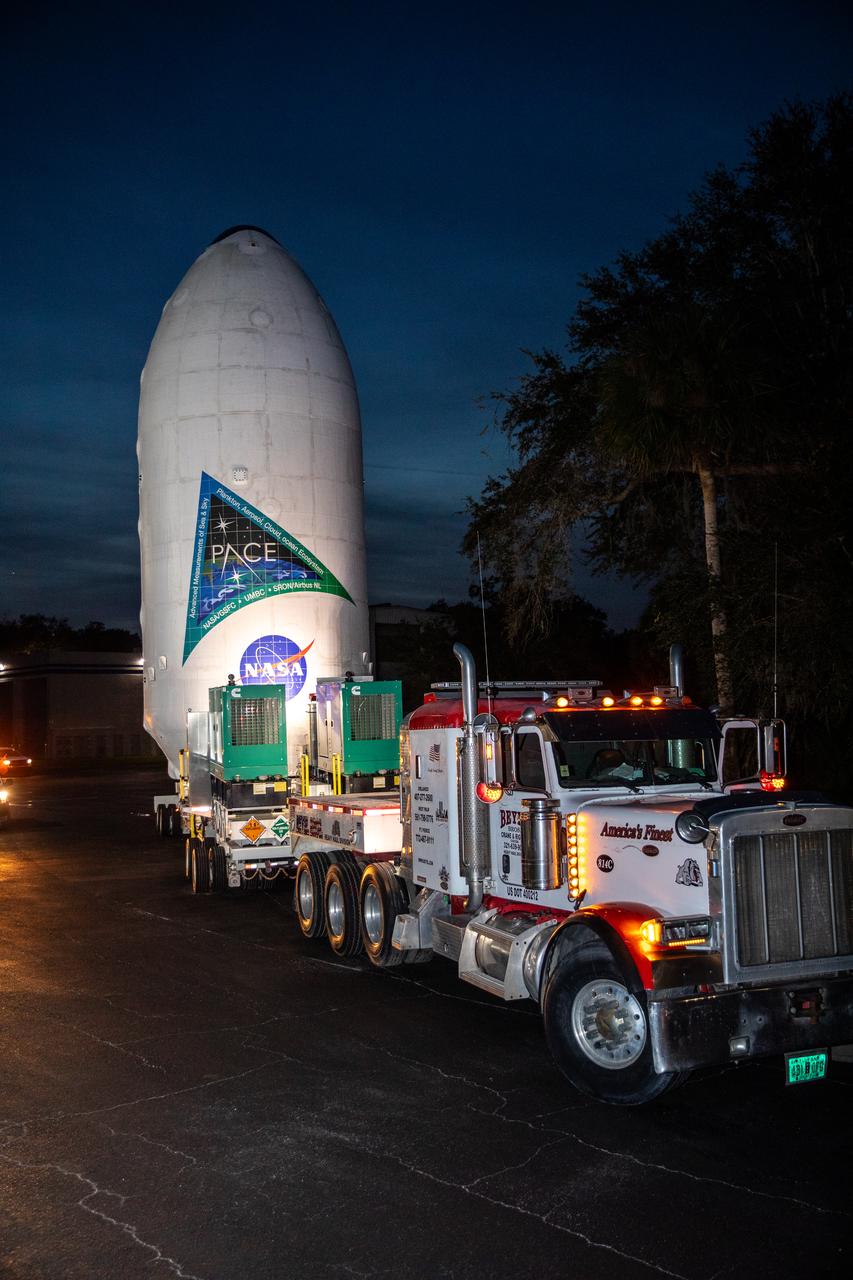
NASA’s PACE (Plankton, Aerosol, Cloud, ocean Ecosystem) spacecraft encapsulated inside SpaceX’s Falcon 9 payload fairings is transported from the Astrotech Space Operations Facility near the agency’s Kennedy Space Center in Florida to Space Launch Complex 40 at Cape Canaveral Space Force Station on Thursday, Feb. 1, 2024, to be mated with a SpaceX Falcon 9 in preparation for liftoff set for no earlier than 1:33 a.m. EST on Tuesday, Feb. 6, 2024. PACE is NASA’s newest earth-observing satellite that will help increase our understanding of Earth’s oceans, atmosphere, and climate by delivering hyperspectral observations of microscopic marine organisms called phytoplankton as well new data on clouds and aerosols.

Workers inside the Astrotech Space Operations Facility in Titusville, Florida, move the first half of the United Launch Alliance (ULA) payload fairing toward NASA’s Lucy spacecraft on Sept. 30, 2021. The payload fairing will encapsulate and protect the spacecraft during launch and ascent. Lucy is scheduled to launch no earlier than Saturday, Oct. 16, on a ULA Atlas V 401 rocket from Space Launch Complex 41 at Cape Canaveral Space Force Station. NASA’s Launch Services Program based at Kennedy Space Center is managing the launch. Over its 12-year primary mission, Lucy will explore a record-breaking number of asteroids, flying by one asteroid in the solar system’s main belt and seven Trojan asteroids. Additionally, Lucy’s path will circle back to Earth three times for gravity assists, making it the first spacecraft ever to return to the vicinity of Earth from the outer solar system.
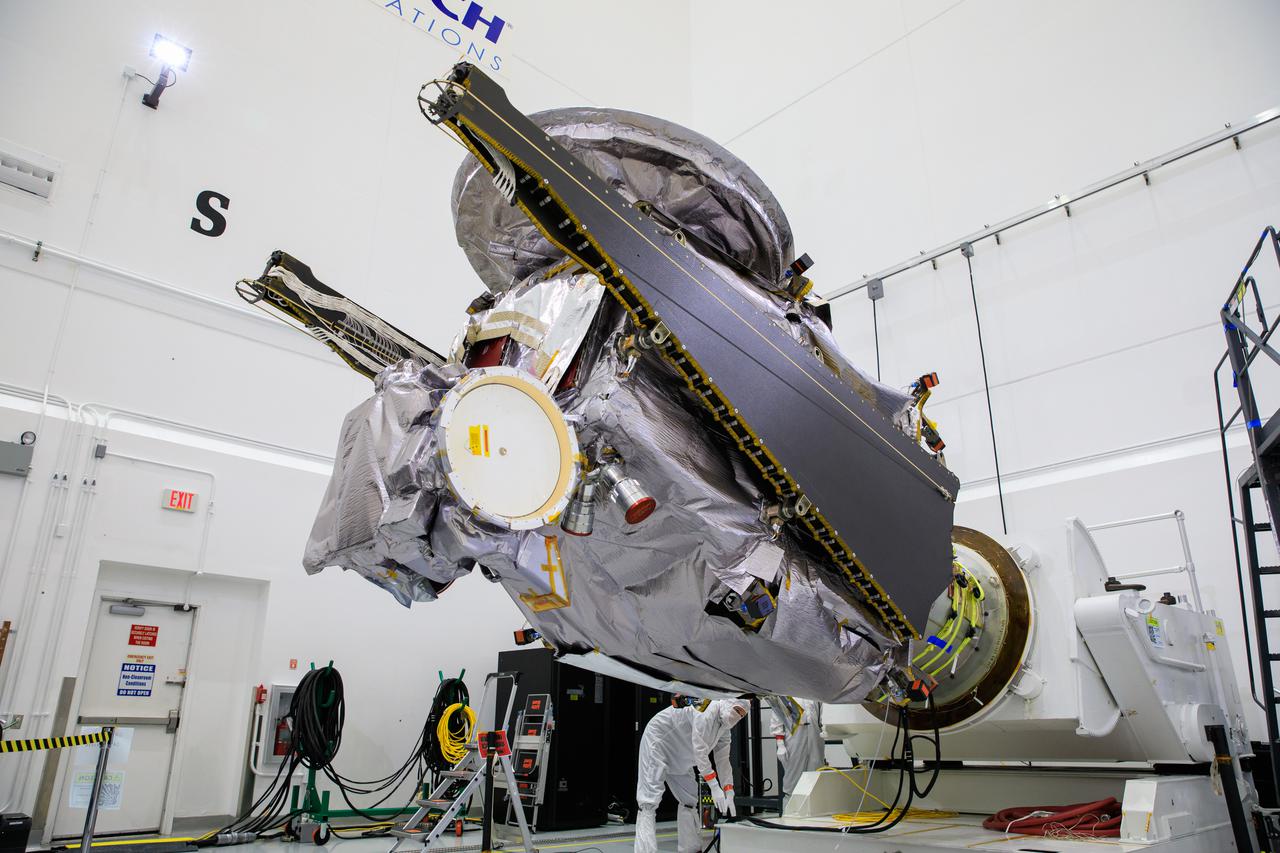
NASA’s Lucy spacecraft is moved to the horizontal position on a rotation stand inside the Astrotech Space Operations Facility in Titusville, Florida, on Sept. 1, 2021. In view, the high gain antenna and solar arrays have been installed on the Lucy spacecraft. Lucy is scheduled to launch no earlier than Saturday, Oct. 16, on a United Launch Alliance Atlas V 401 rocket from Launch Pad 41 at Cape Canaveral Space Force Station. NASA’s Launch Services Program based at Kennedy Space Center is managing the launch. Over its 12-year primary mission, Lucy will explore a record-breaking number of asteroids, flying by one asteroid in the solar system’s main belt and seven Trojan asteroids. Additionally, Lucy’s path will circle back to Earth three times for gravity assists, making it the first spacecraft ever to return to the vicinity of Earth from the outer solar system.
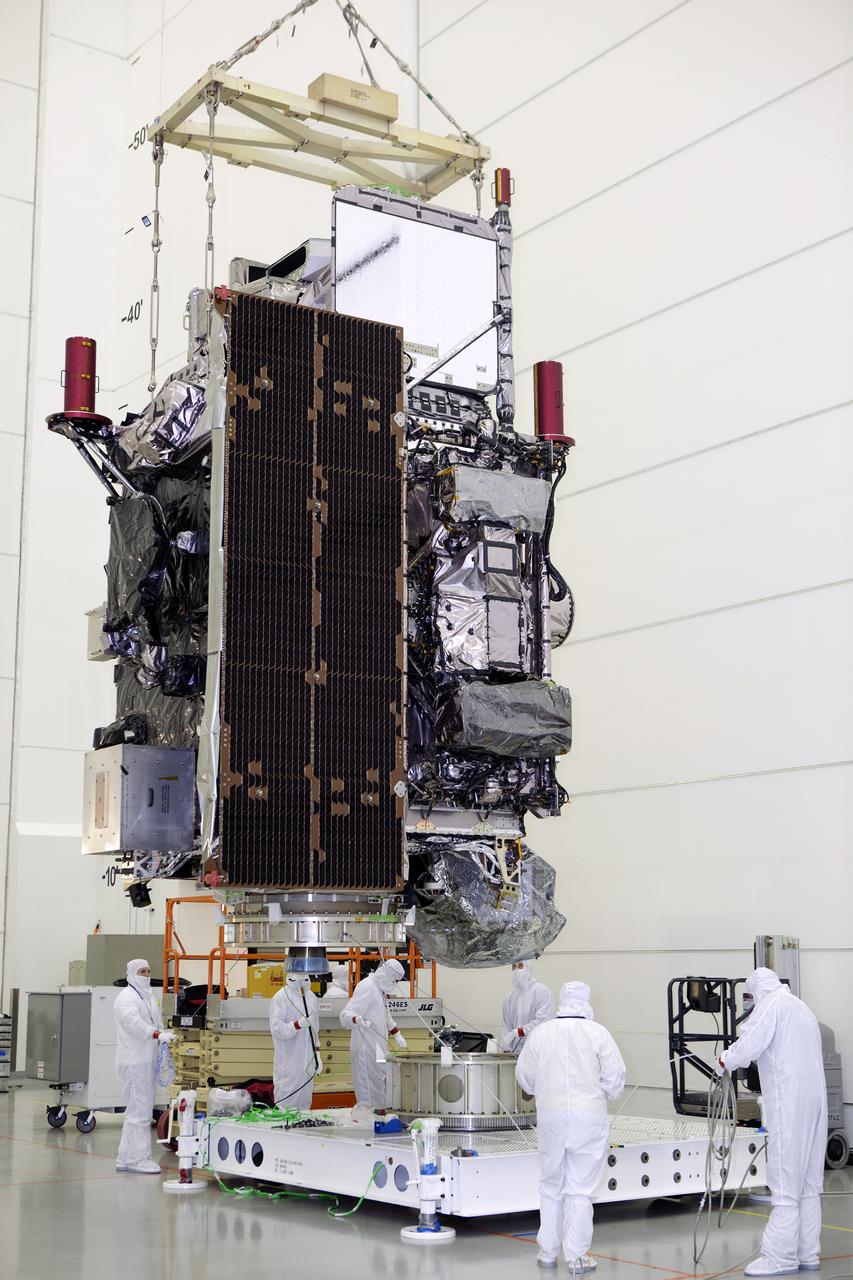
Team members monitor progress as an overhead crane lowers the GOES-R spacecraft toward its work stand inside the Astrotech payload processing facility in Titusville, Florida near NASA’s Kennedy Space Center. GOES-R will be the first satellite in a series of next-generation NOAA Geostationary Operational Environmental Satellites. The spacecraft is to launch aboard a United Launch Alliance Atlas V rocket in November.
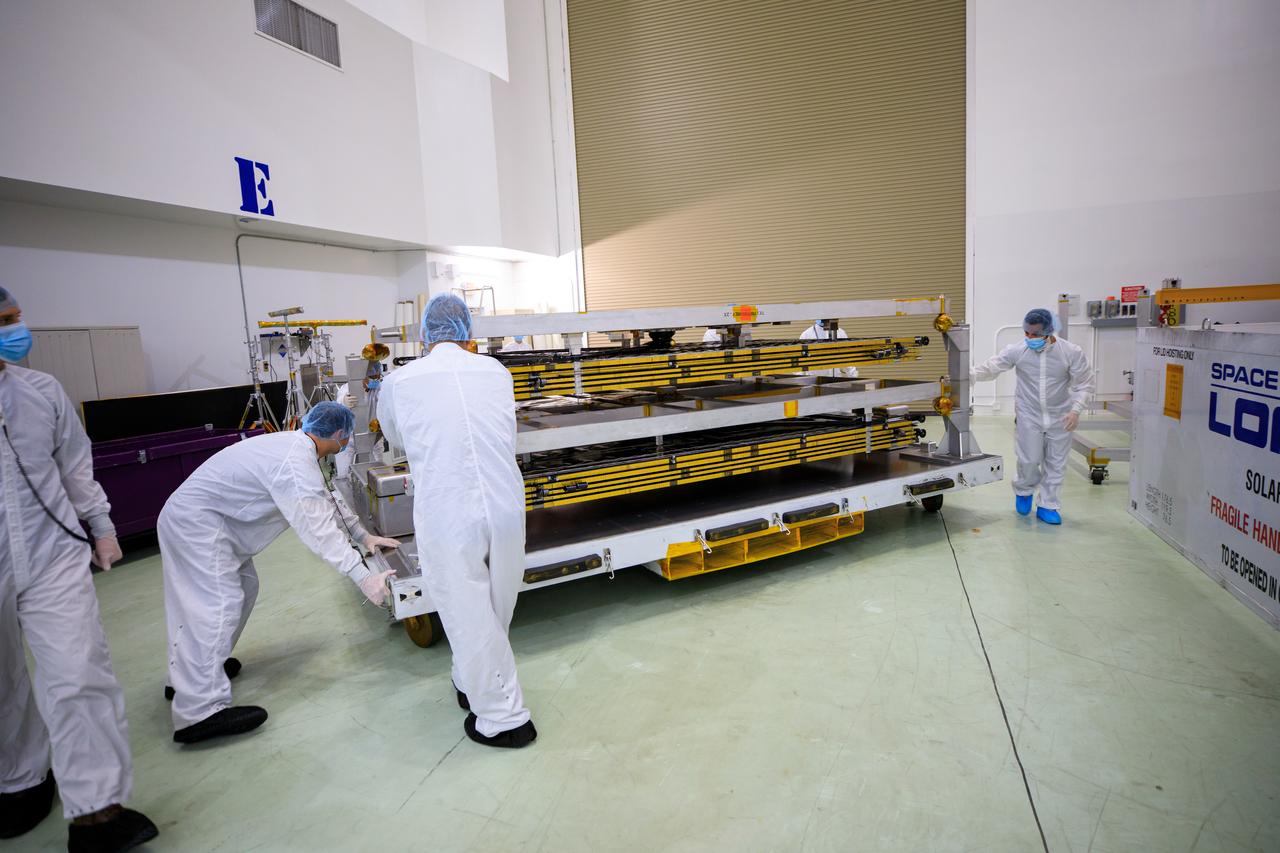
A NASA team uncrates the twin solar arrays for NASA’s Psyche spacecraft at the Astrotech Space Operations Facility near the agency’s Kennedy Space Center in Florida on July 18, 2023. The solar arrays were shipped from Maxar Technologies, in California. They are part of the solar electric propulsion system, provided by Maxar, that will power the spacecraft on its journey to explore a metal-rich asteroid. Psyche will launch atop a SpaceX Falcon Heavy rocket from Launch Complex 39A at Kennedy. Launch is targeted for Oct. 5, 2023. Riding with Psyche is a pioneering technology demonstration, NASA’s Deep Space Optical Communications (DSOC) experiment.
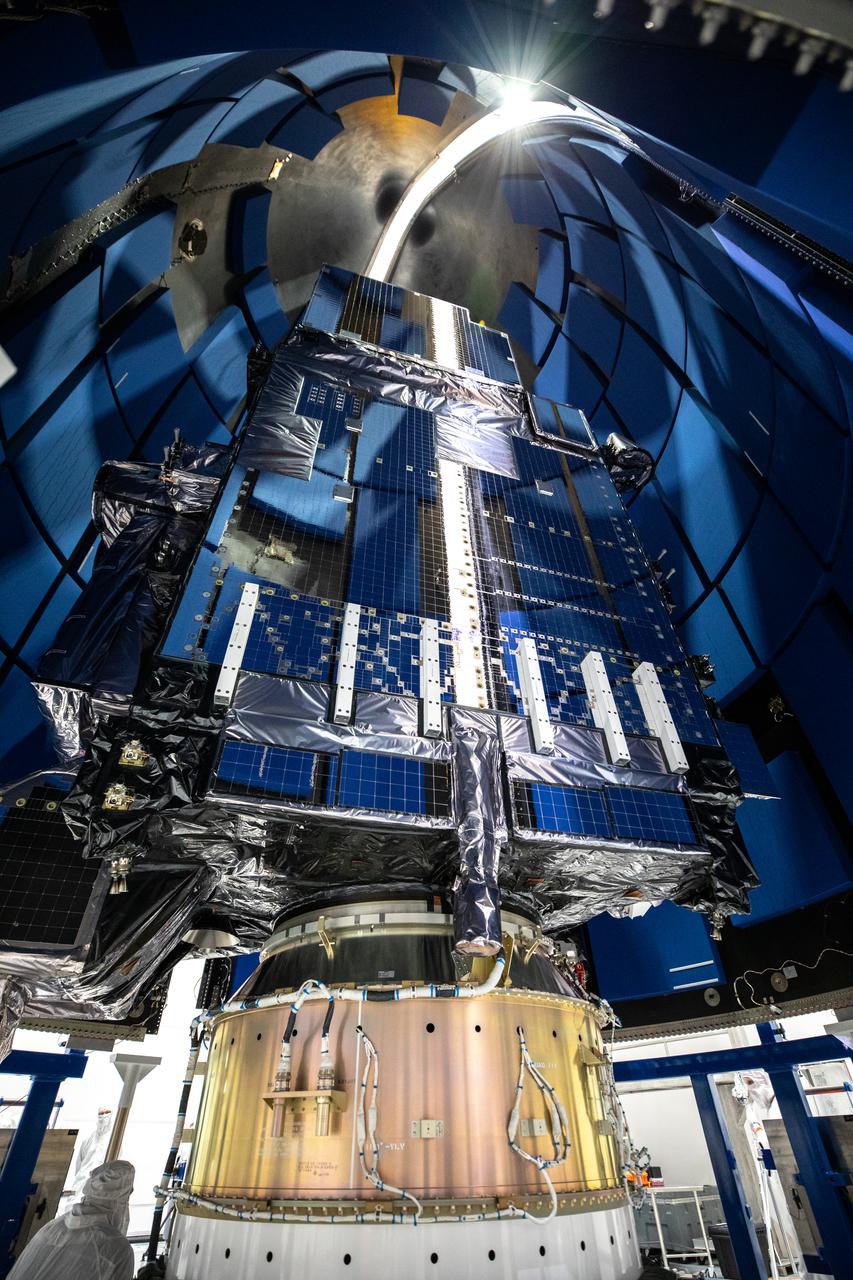
A technician performs an inspection of the United Launch Alliance Atlas V payload fairings as they are secured around NOAA’s Geostationary Operational Environmental Satellite-T (GOES-T) inside the Astrotech Space Operations facility in Titusville, Florida, on Feb. 7, 2022. The payload fairings will secure and protect the satellite during launch. GOES-T is scheduled to launch on March 1, 2022, atop the Atlas V 541 rocket from Space Launch Complex 41 at Cape Canaveral Space Force Station. GOES-T is the third satellite in the GOES-R series that will continue to help meteorologists observe and predict local weather events that affect public safety. The launch is being managed by NASA’s Launch Services Program based at Kennedy Space Center in Florida, America’s multi-user spaceport
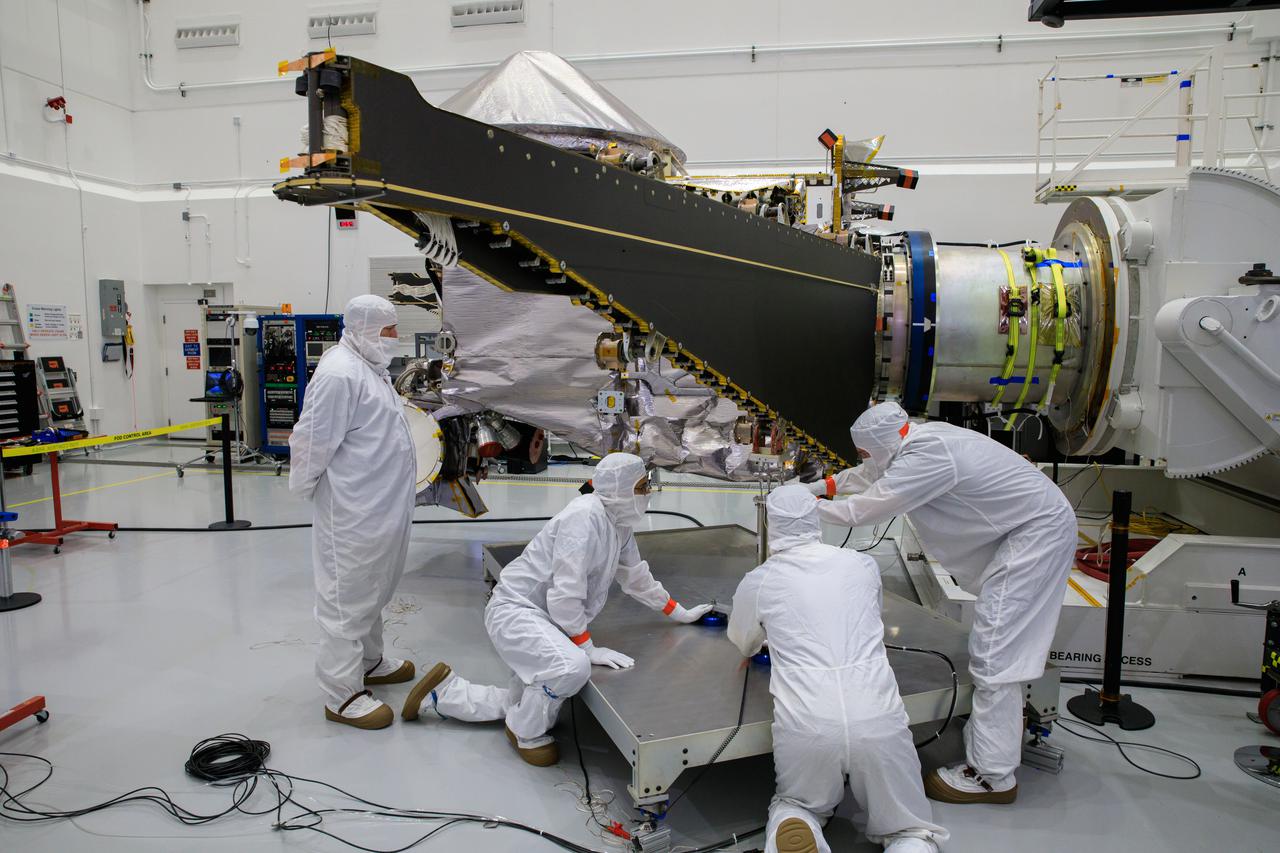
Workers inside the Astrotech Space Operations Facility in Titusville, Florida, work to open and extend one of the solar arrays on NASA’s Lucy spacecraft on Aug. 19, 2021. Both solar arrays will be opened to make sure they operate correctly. In view installed on top of the spacecraft is the high gain antenna. Lucy is scheduled to launch no earlier than Saturday, Oct. 16, on a United Launch Alliance Atlas V 401 rocket from Space Launch Complex 41 at Cape Canaveral Space Force Station. NASA’s Launch Services Program based at Kennedy Space Center is managing the launch. Over its 12-year primary mission, Lucy will explore a record-breaking number of asteroids, flying by one asteroid in the solar system’s main belt and seven Trojan asteroids. Additionally, Lucy’s path will circle back to Earth three times for gravity assists, making it the first spacecraft ever to return to the vicinity of Earth from the outer solar system.
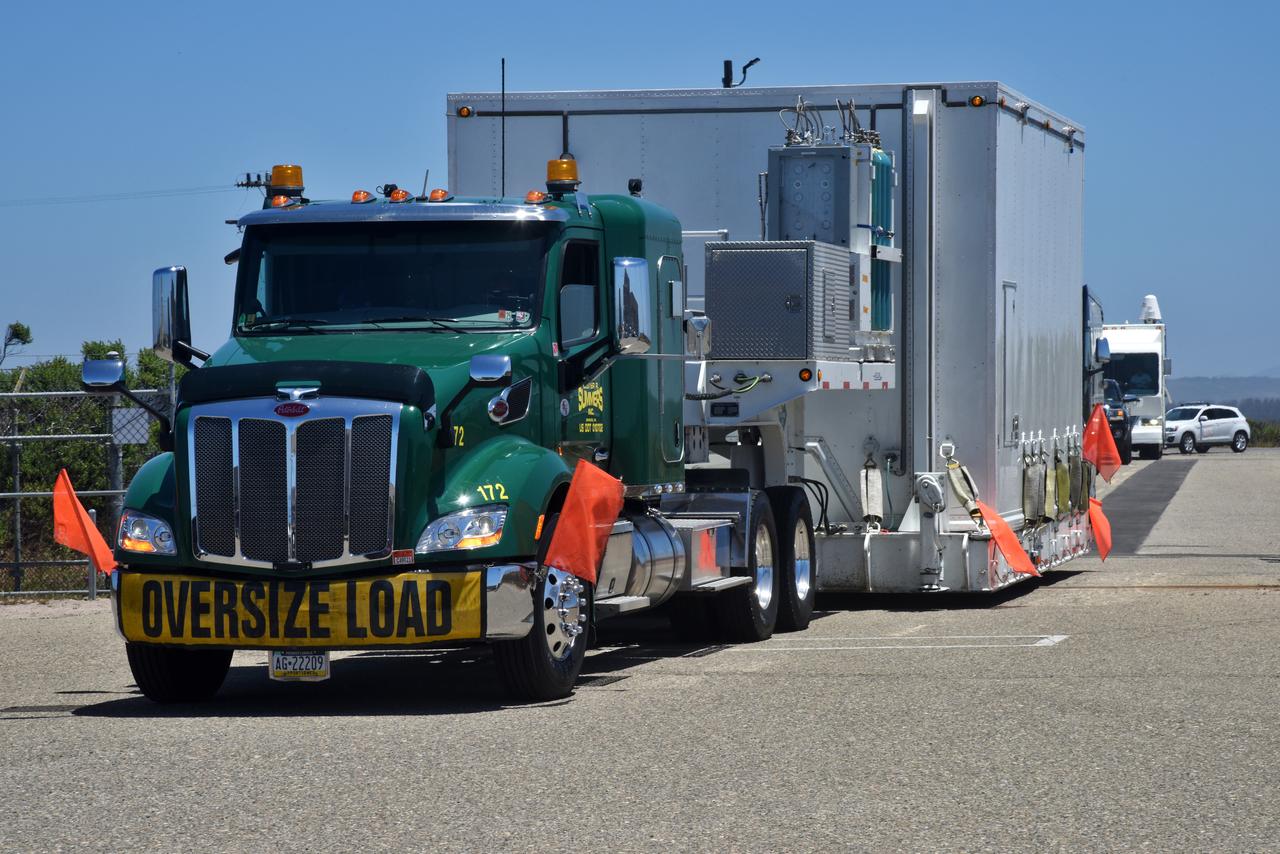
NASA's Ice, Cloud and land Elevation Satellite-2 (ICESat-2) arrives in its shipping container aboard a heavy transport truck on June 12, 2018, at Vandenberg Air Force Base in California. ICESat-2 was shipped from the Northrop Grumman facility in Gilbert, Arizona, where it was built and tested. The satellite is scheduled to launch Sept. 12, 2018, on the final United Launch Alliance Delta II rocket from Space Launch Complex-2 at Vandenberg. ICESat-2 will measure the height of a changing Earth, one laser pulse at a time, 10,000 laser pulses a second. The satellite will carry the Advanced Topographic Laser Altimeter System. ICESat-2 will help scientists investigate why, and how much our planet's frozen and icy areas, called the cryosphere, is changing in a warming climate.
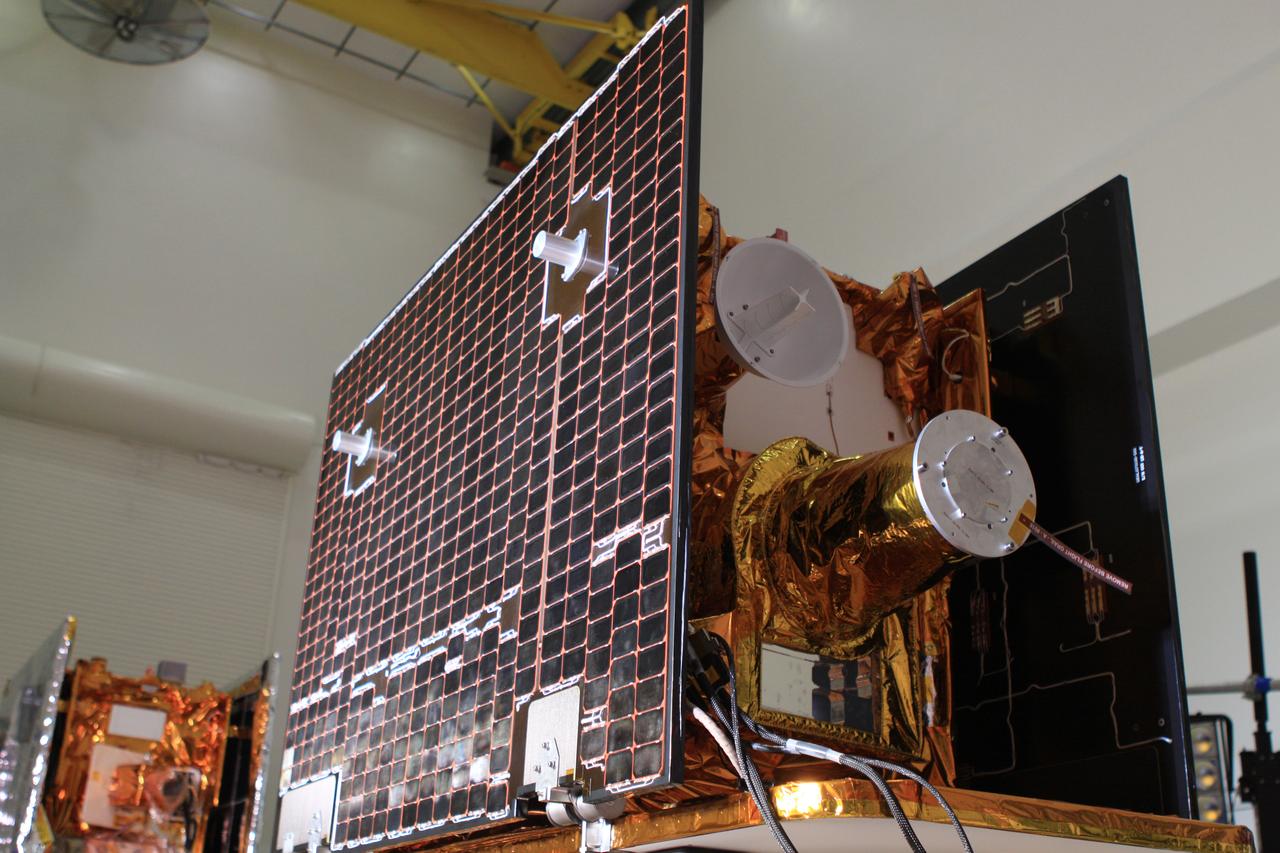
GRAIL Solar Array Test
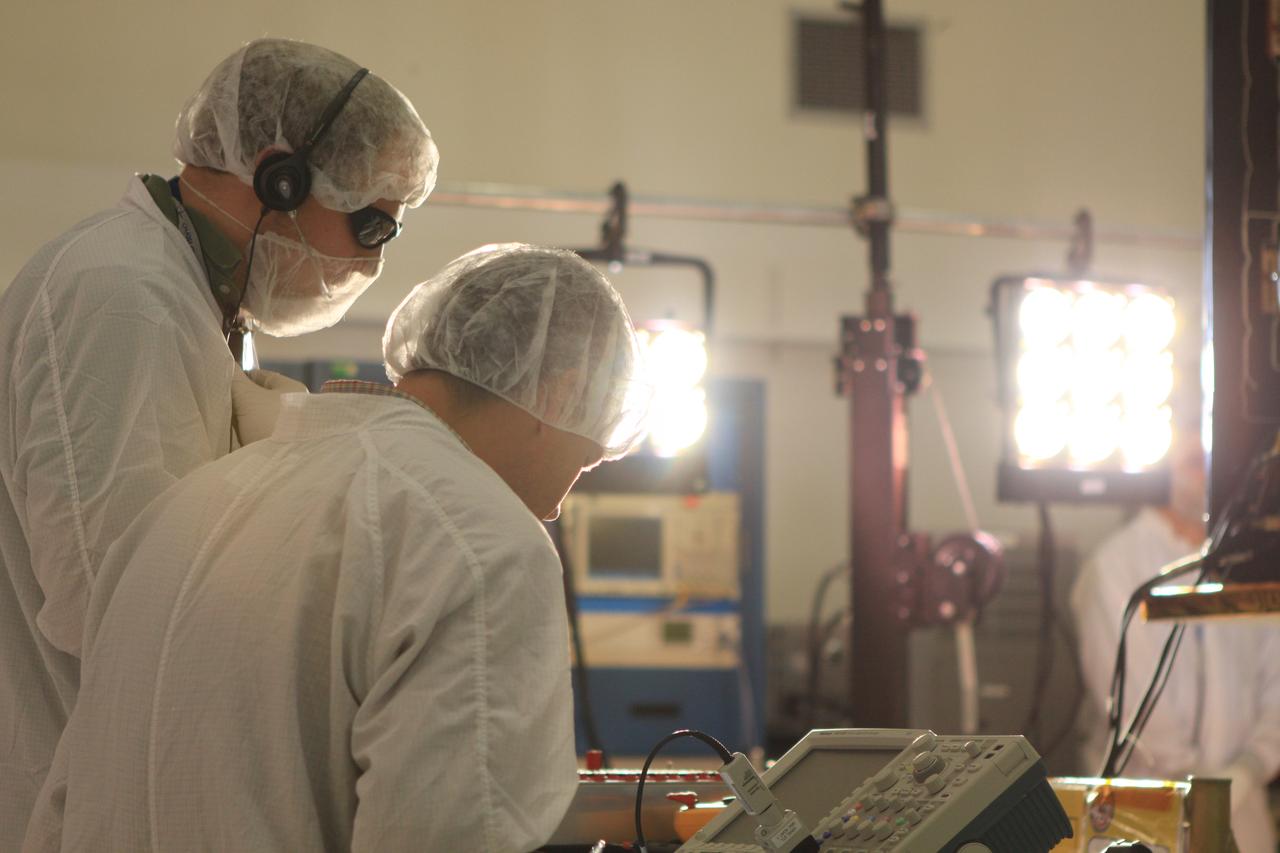
GRAIL Solar Array Test
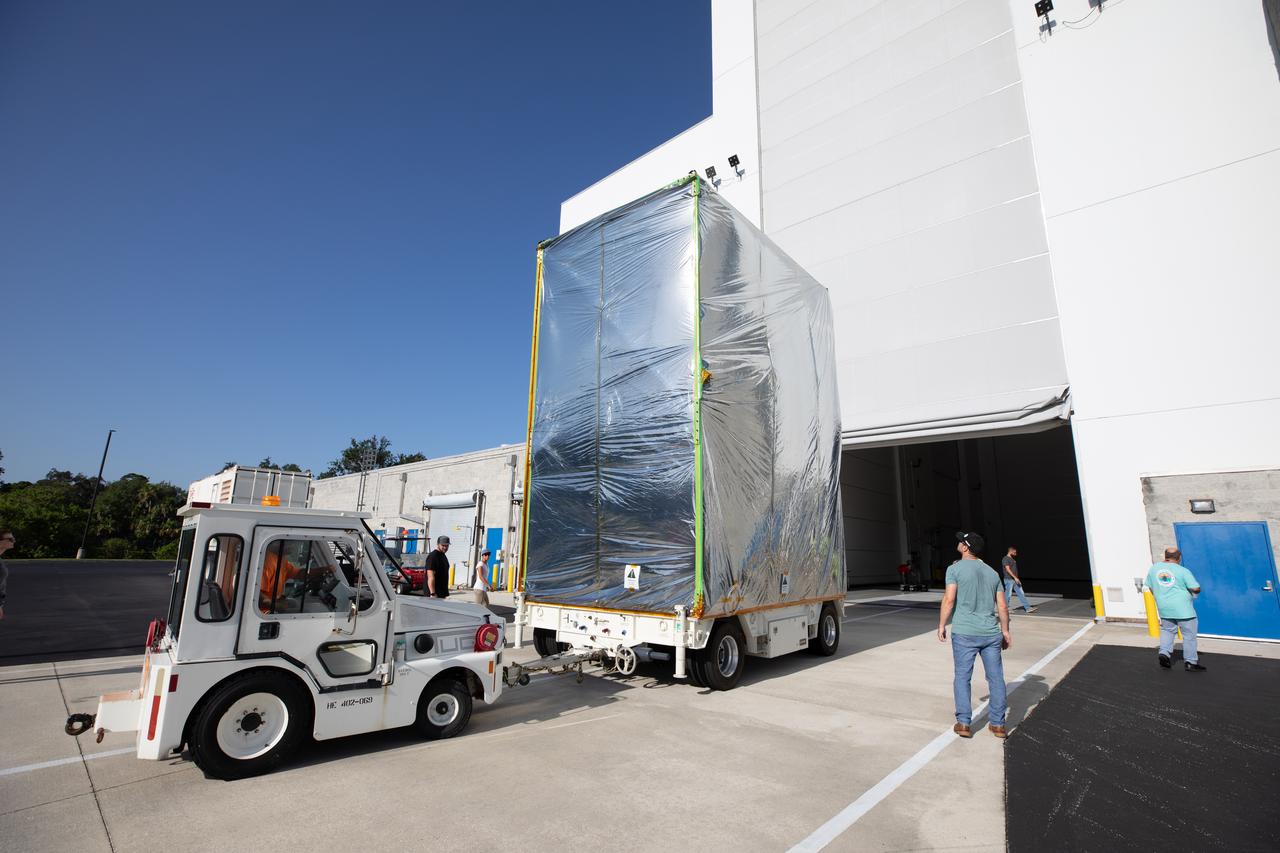
Technicians open the high bay door to Building 9 at the Astrotech Space Operations Facility near NASA’s Kennedy Space Center in Florida to allow entrance for the agency’s Psyche spacecraft, secured for transport, on Aug. 14, 2023. Psyche will explore its namesake, a metal-rich asteroid orbiting the Sun between Mars and Jupiter. Psyche has NASA’s Deep Space Optical Communications (DSOC) technology demonstration onboard the spacecraft. DSOC will be the agency's first demonstration of optical communication beyond the Moon. Psyche will launch atop a SpaceX Falcon Heavy rocket from Launch Complex 39A at Kennedy. Launch is targeted for Oct. 5, 2023.
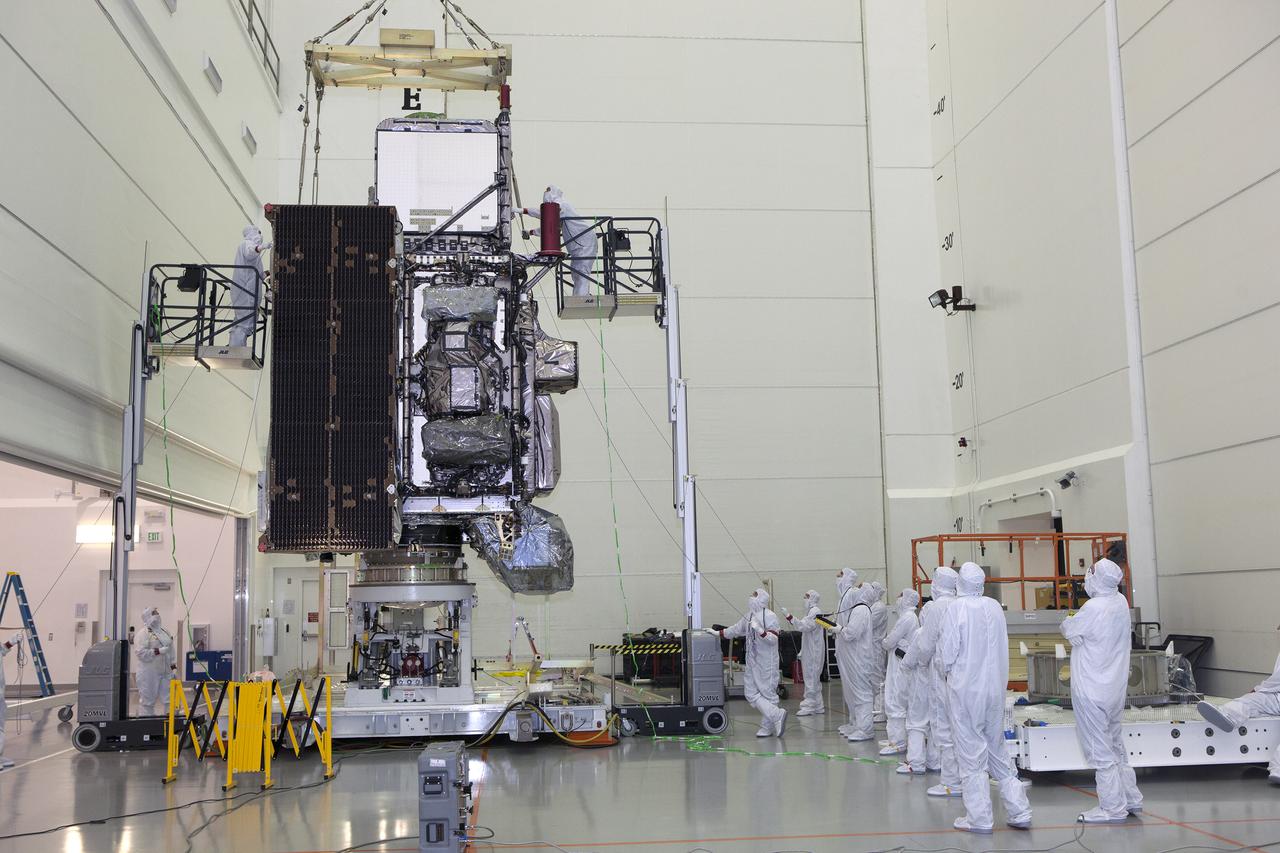
An overhead crane lifts the GOES-R spacecraft to move it into its work stand inside the Astrotech payload processing facility in Titusville, Florida near NASA’s Kennedy Space Center. GOES-R will be the first satellite in a series of next-generation NOAA Geostationary Operational Environmental Satellites. The spacecraft is to launch aboard a United Launch Alliance Atlas V rocket in November.
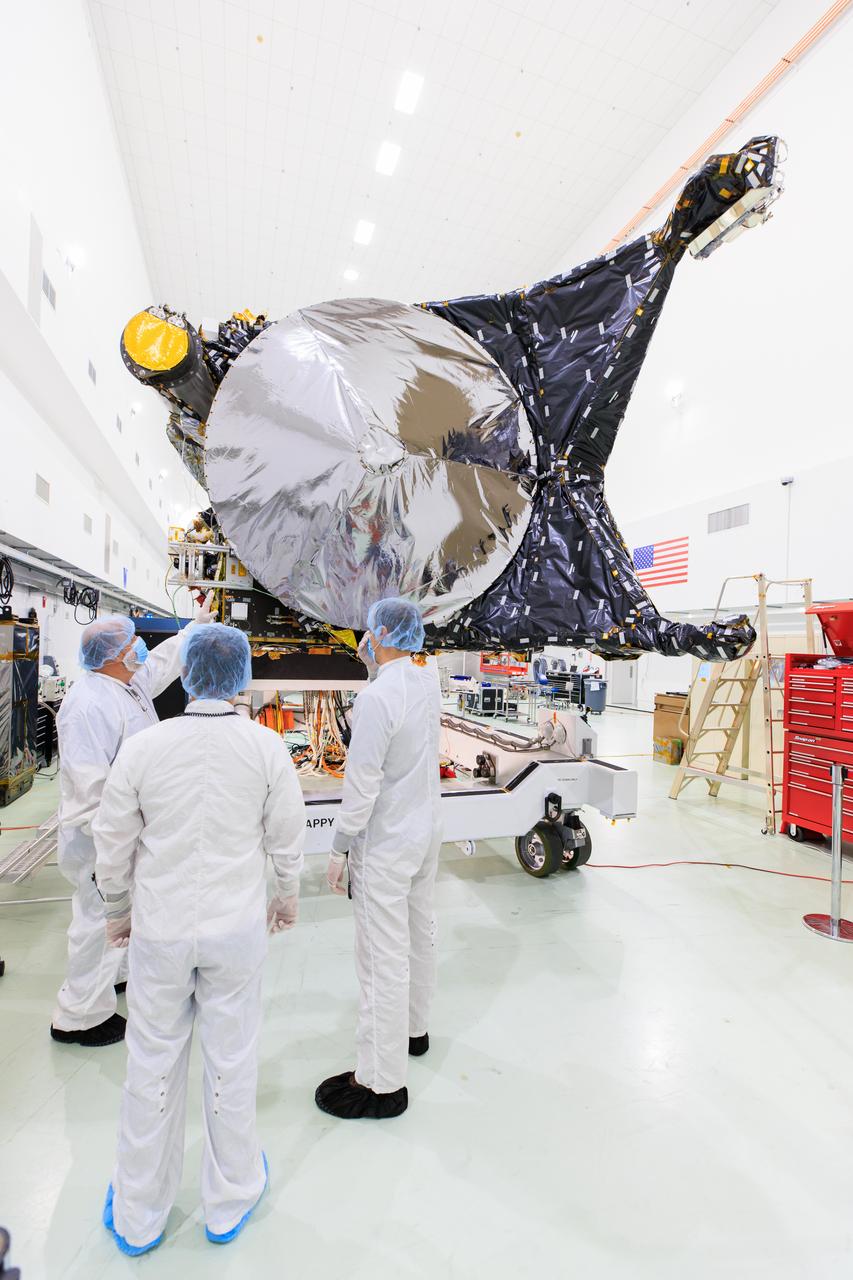
NASA's Psyche spacecraft is shown in a clean room on June 26, 2023, at Astrotech Space Operations Facility near the agency’s Kennedy Space Center in Florida. Engineers and technicians from NASA’s Jet Propulsion Laboratory in Southern California have begun final assembly, test, and launch operations on Psyche, with assembly of the spacecraft all but complete except for the installation of the solar arrays and the imagers. NASA’s Deep Space Optical Communications (DSOC) technology demonstration, testing high-data-rate laser communications, remains integrated into the spacecraft. A final suite of tests will be run on the vehicle, after which it will be fueled and then mated onto a SpaceX Falcon Heavy rocket just prior to launch, targeted for October 2023.
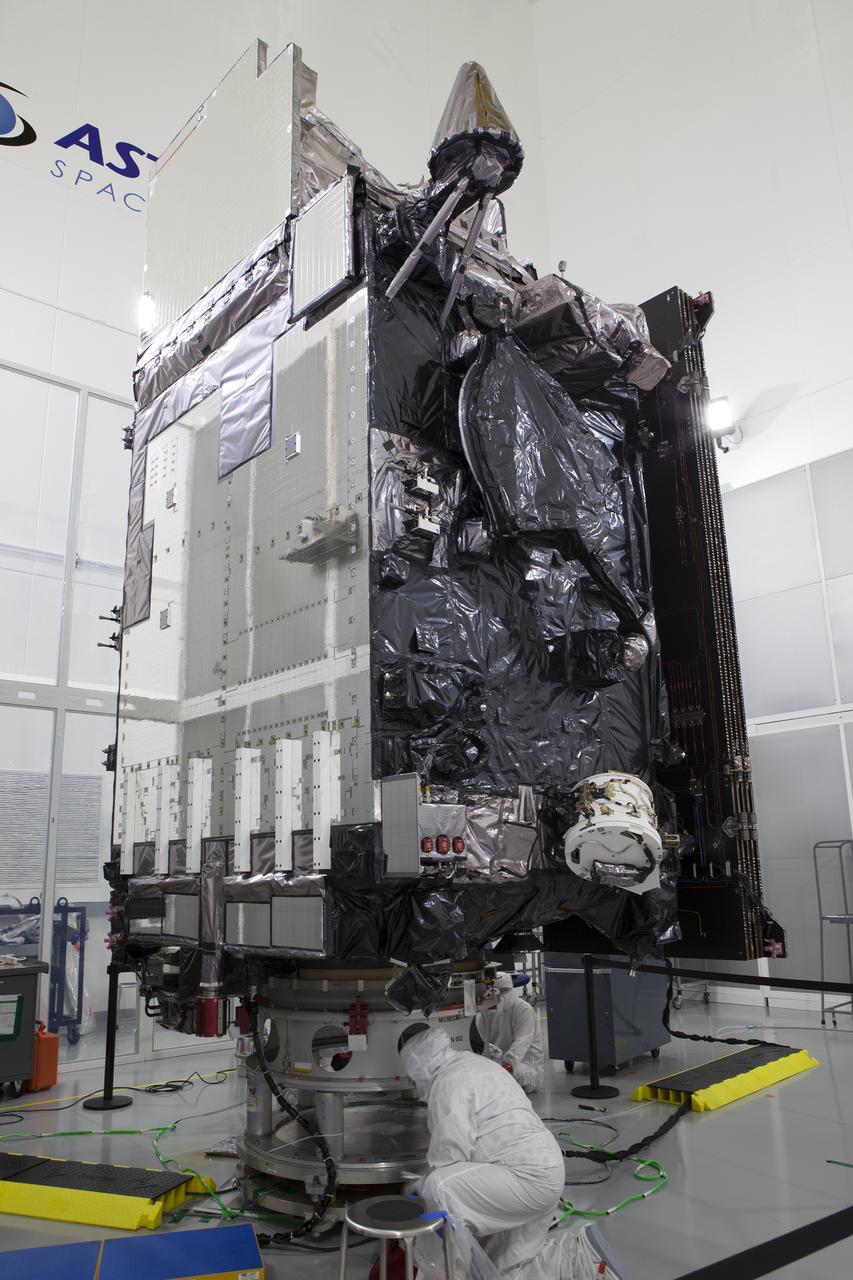
The Geostationary Operational Environmental Satellite (GOES-R) is undergoing final launch preparations prior to fueling inside the Astrotech payload processing facility in Titusville, Florida near NASA’s Kennedy Space Center. GOES-R will be the first satellite in a series of next-generation NOAA GOES Satellites. The spacecraft is to launch aboard a United Launch Alliance Atlas V rocket in November.
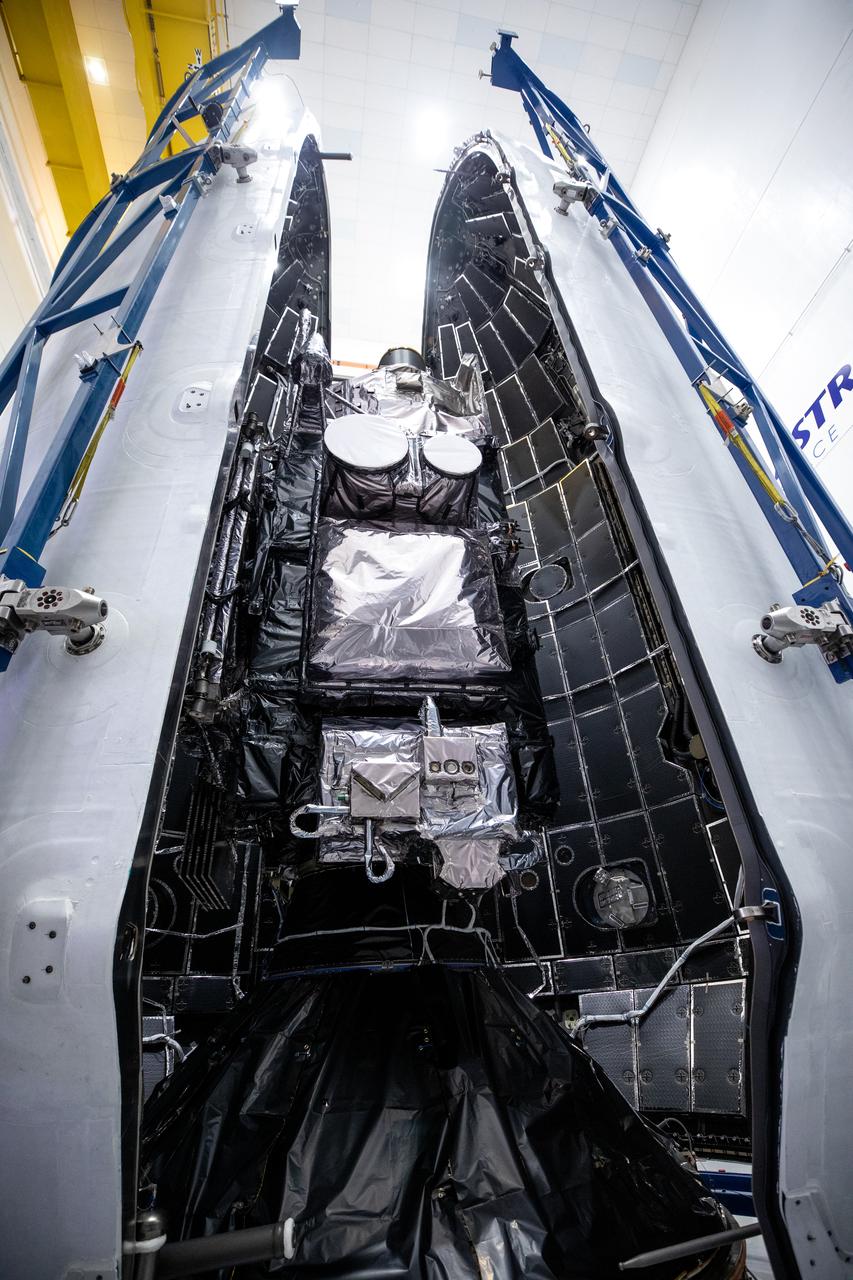
Technicians prepare NOAA’s (National Oceanic and Atmospheric Administration) Geostationary Operational Environmental Satellite (GOES-U) for encapsulation inside payload fairing halves on Thursday, June 13, 2024, at the Astrotech Space Operations facility in Titusville near NASA’s Kennedy Space Center in Florida. The fourth and final weather-observing and environmental monitoring satellite in NOAA’s GOES-R Series will assist meteorologists in providing advanced weather forecasting and warning capabilities. The two-hour window for liftoff opens 5:16 p.m. EDT Tuesday, June 25, aboard a SpaceX Falcon Heavy rocket from Launch Complex 39A at NASA’s Kennedy Space Center in Florida.
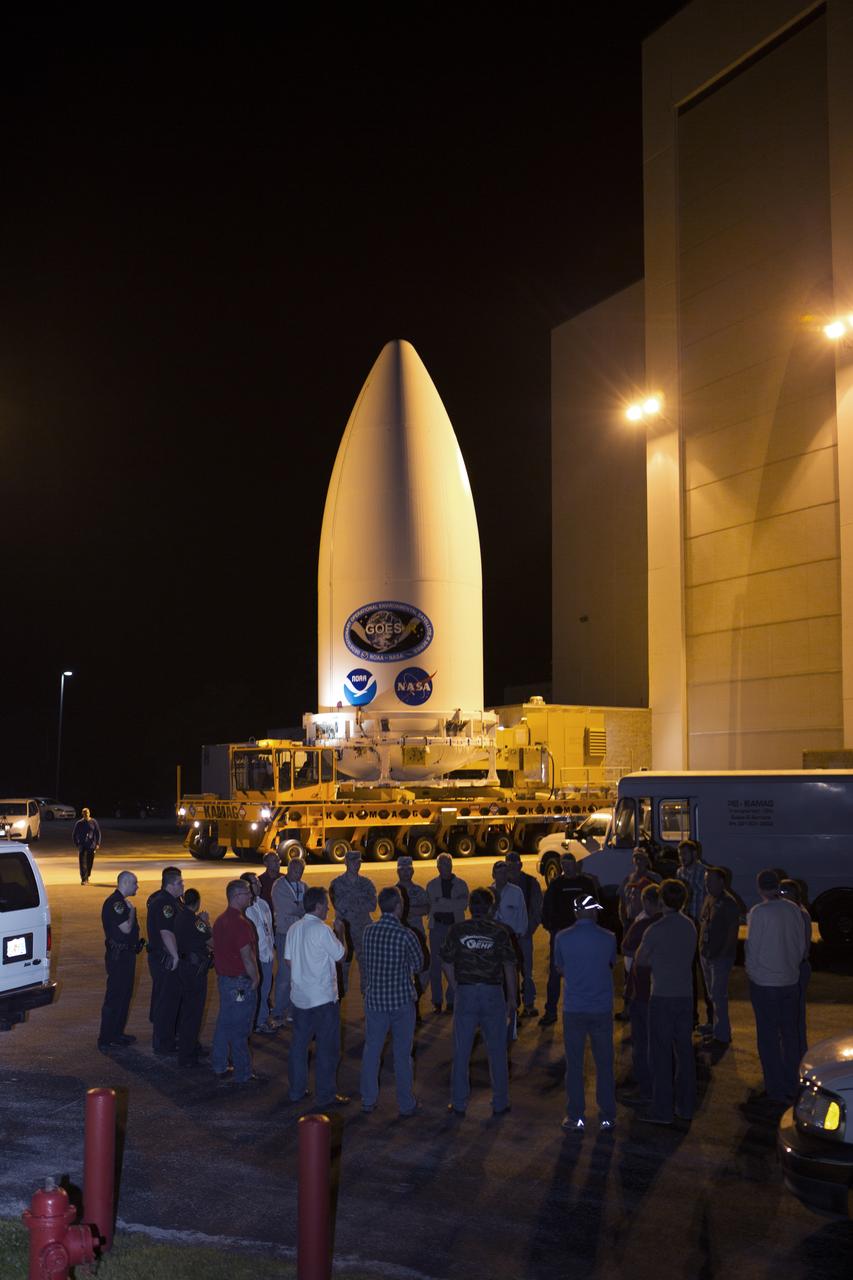
Enclosed in its payload fairing, NOAA's Geostationary Operational Environmental Satellite (GOES-R) departs from the Astrotech payload processing facility in Titusville, Florida, near NASA's Kennedy Space Center. GOES-R will be transported to the Vertical Integration Facility at Space Launch Complex 41 at Cape Canaveral Air Force Station. The satellite will launch aboard a United Launch Alliance Atlas V rocket in November. GOES-R is the first satellite in a series of next-generation NOAA GOES Satellites.
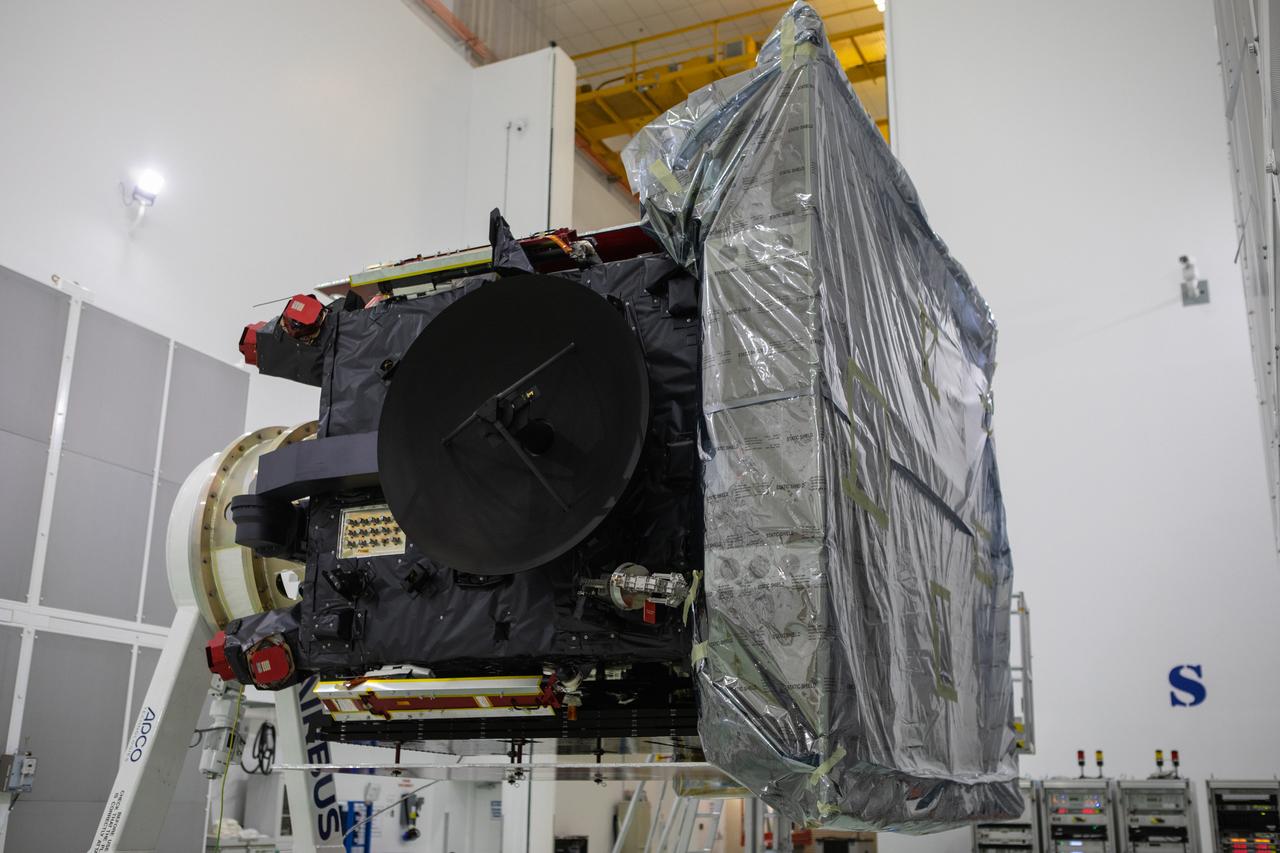
The Solar Orbiter spacecraft has been removed from its shipping container inside the Astrotech Space Operations facility in Titusville, Florida, on Nov. 18, 2019. The spacecraft was flown aboard an Antonov cargo aircraft from Munich, Germany, arriving at NASA’s Kennedy Space Center on Nov. 1, 2019. Solar Orbiter is a European Space Agency mission with strong NASA participation. The mission aims to study the Sun, its outer atmosphere and solar winds. The spacecraft will provide the first images of the Sun’s poles. NASA’s Launch Services Program based at Kennedy is managing the launch. Liftoff is scheduled for Feb. 5, 2020, from Cape Canaveral Air Force Station aboard a United Launch Alliance Atlas V rocket.
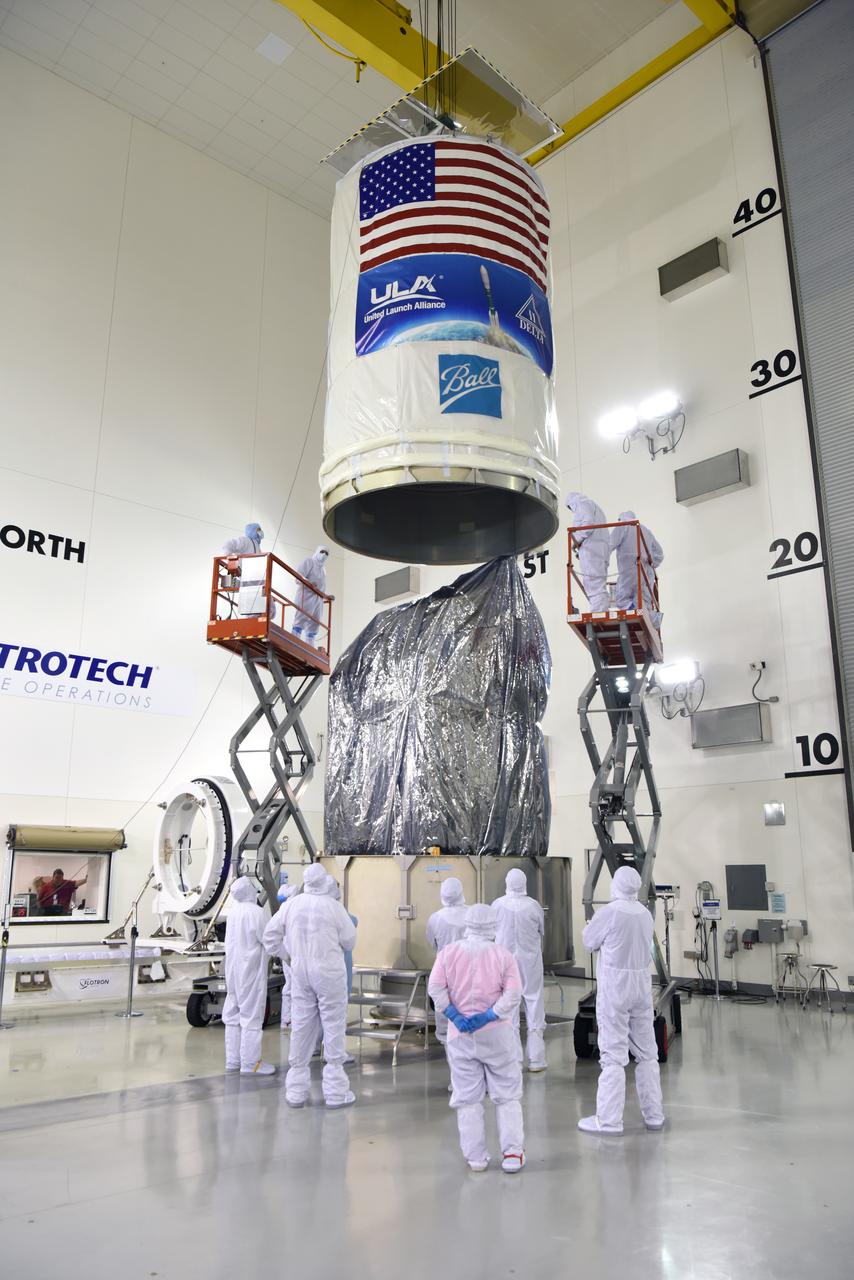
In the Astrotech Processing Facility at Vandenberg Air Force Base in California, technicians and engineers place the Joint Polar Satellite System-1, or JPSS-1, spacecraft in a protective container. It then will be mounted on a transport trailer for its move to Space Launch Complex 2. At the pad, JPSS-1 will be lifted for mating atop a United Launch Alliance Delta II rocket. Built by Ball Aerospace and Technologies Corp. of Boulder, Colorado, JPSS is the first in a series four next-generation environmental satellites in a collaborative program between the NOAA and NASA. Liftoff is scheduled to take place from Vandenberg's Space Launch Complex 2.
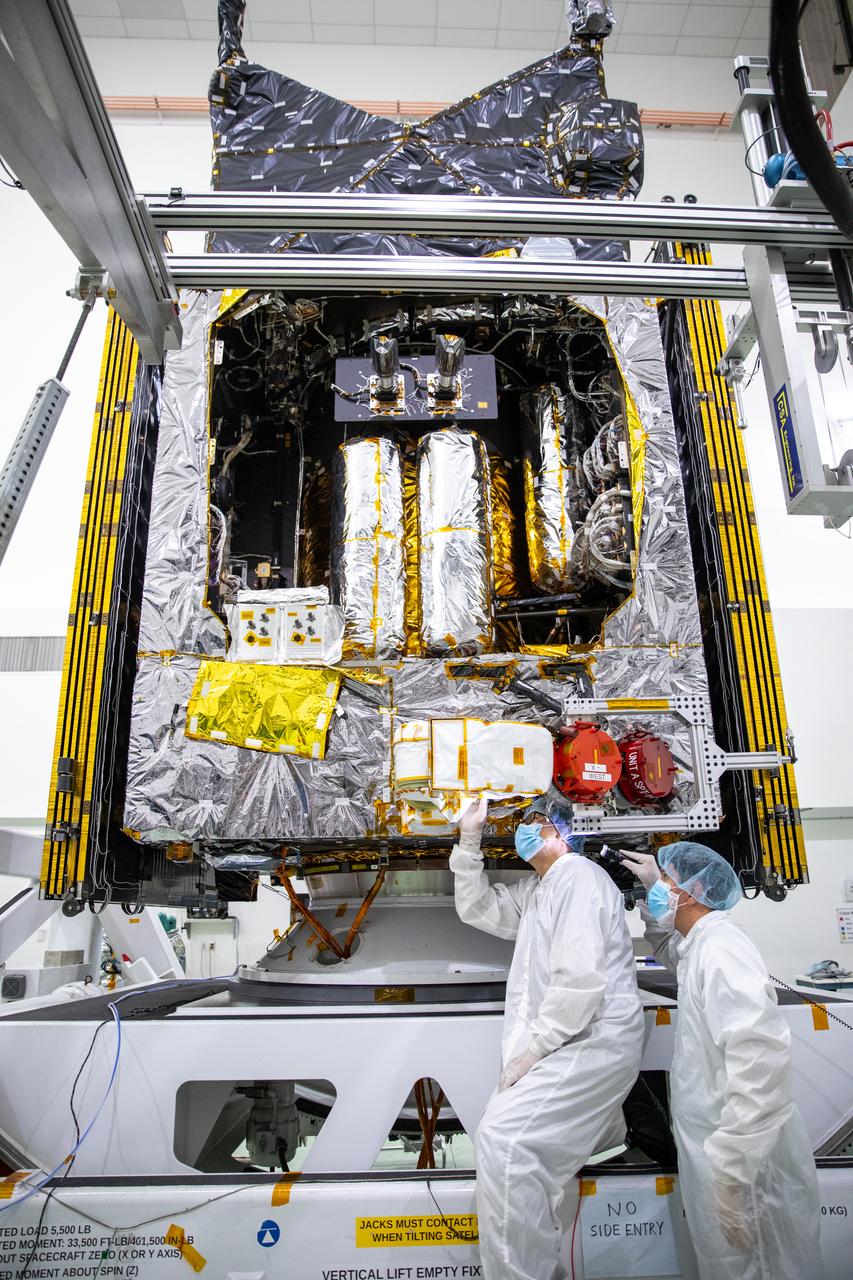
A team of engineers and technicians work on deploying and stowing stationary plasma thrusters (SPT) on NASA's Psyche spacecraft inside the Astrotech Space Operations Facility near the agency’s Kennedy Space Center in Florida on Aug. 4, 2023. This is part of the assembly, test, and launch operations preparations. The SPT are on a dual axis positioning mechanism (DAPM), and together they make a DSM, or DAPM-actuated SPT module. Psyche will launch atop a SpaceX Falcon Heavy rocket from Launch Complex 39A at Kennedy. Launch is targeted for Oct. 5, 2023. Riding with Psyche is a pioneering technology demonstration, NASA’s Deep Space Optical Communications (DSOC) experiment.
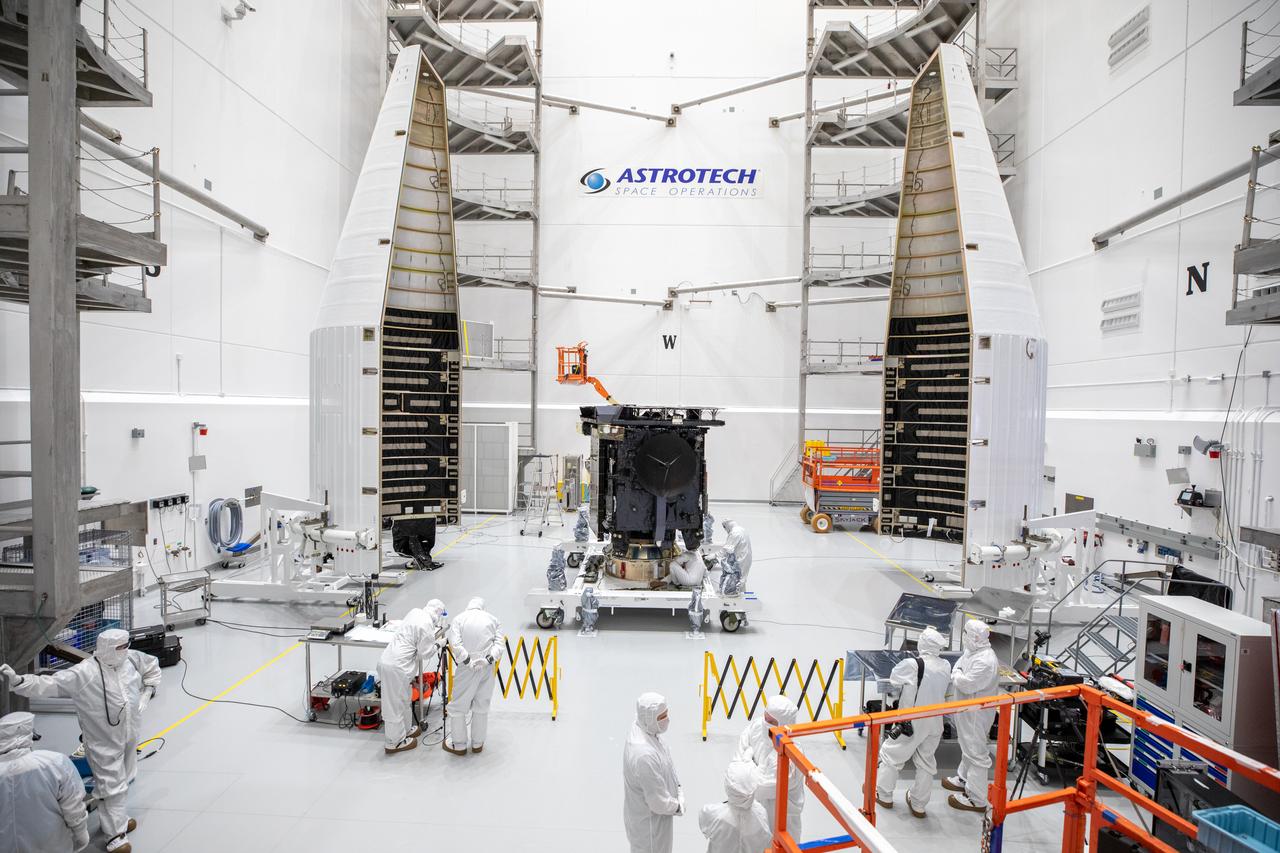
Both halves of a United Launch Alliance Atlas V payload fairing are positioned for installation around the Solar Orbiter spacecraft inside the Astrotech Space Operations facility in Titusville, Florida, on Jan. 20, 2020. The fairing provides a protective, aerodynamic covering to the payload inside during the early minutes of ascent. Solar Orbiter is an international cooperative mission between ESA (European Space Agency) and NASA. The mission aims to study the Sun, its outer atmosphere and solar wind. The spacecraft will provide the first images of the Sun’s poles. NASA’s Launch Services Program based at Kennedy Space Center in Florida is managing the launch. The spacecraft has been developed by Airbus Defence and Space. Solar Orbiter will launch aboard an Atlas V rocket from Space Launch Complex 41 at Cape Canaveral Air Force Station in Florida. Liftoff is scheduled for Feb. 5, 2020.
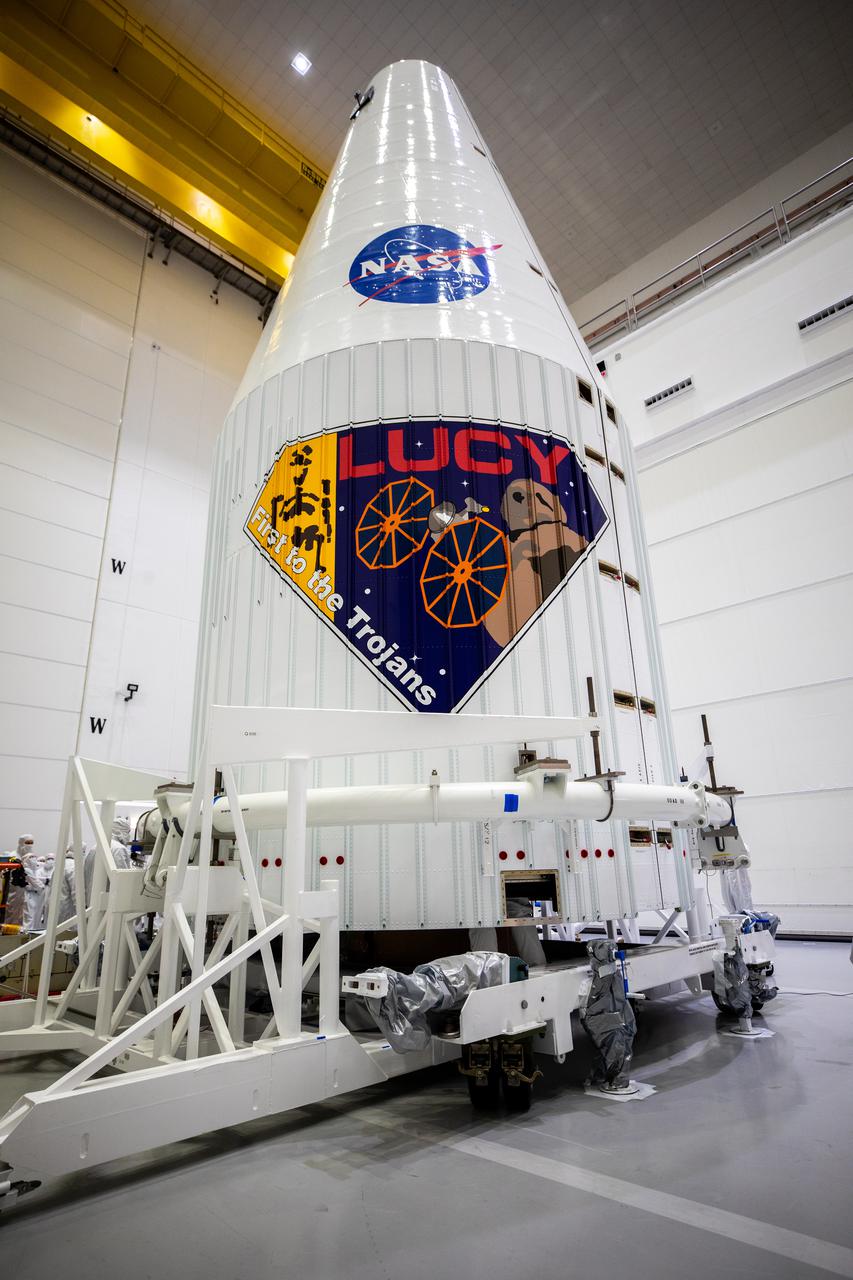
Inside the Astrotech Space Operations Facility in Titusville, Florida, the United Launch Alliance (ULA) payload fairing has been secured around NASA’s Lucy spacecraft on Sept. 30, 2021. The payload fairing will encapsulate and protect the spacecraft during launch and ascent. Lucy is scheduled to launch no earlier than Saturday, Oct. 16, on a ULA Atlas V 401 rocket from Space Launch Complex 41 at Cape Canaveral Space Force Station. NASA’s Launch Services Program based at Kennedy Space Center is managing the launch. Over its 12-year primary mission, Lucy will explore a record-breaking number of asteroids, flying by one asteroid in the solar system’s main belt and seven Trojan asteroids. Additionally, Lucy’s path will circle back to Earth three times for gravity assists, making it the first spacecraft ever to return to the vicinity of Earth from the outer solar system.
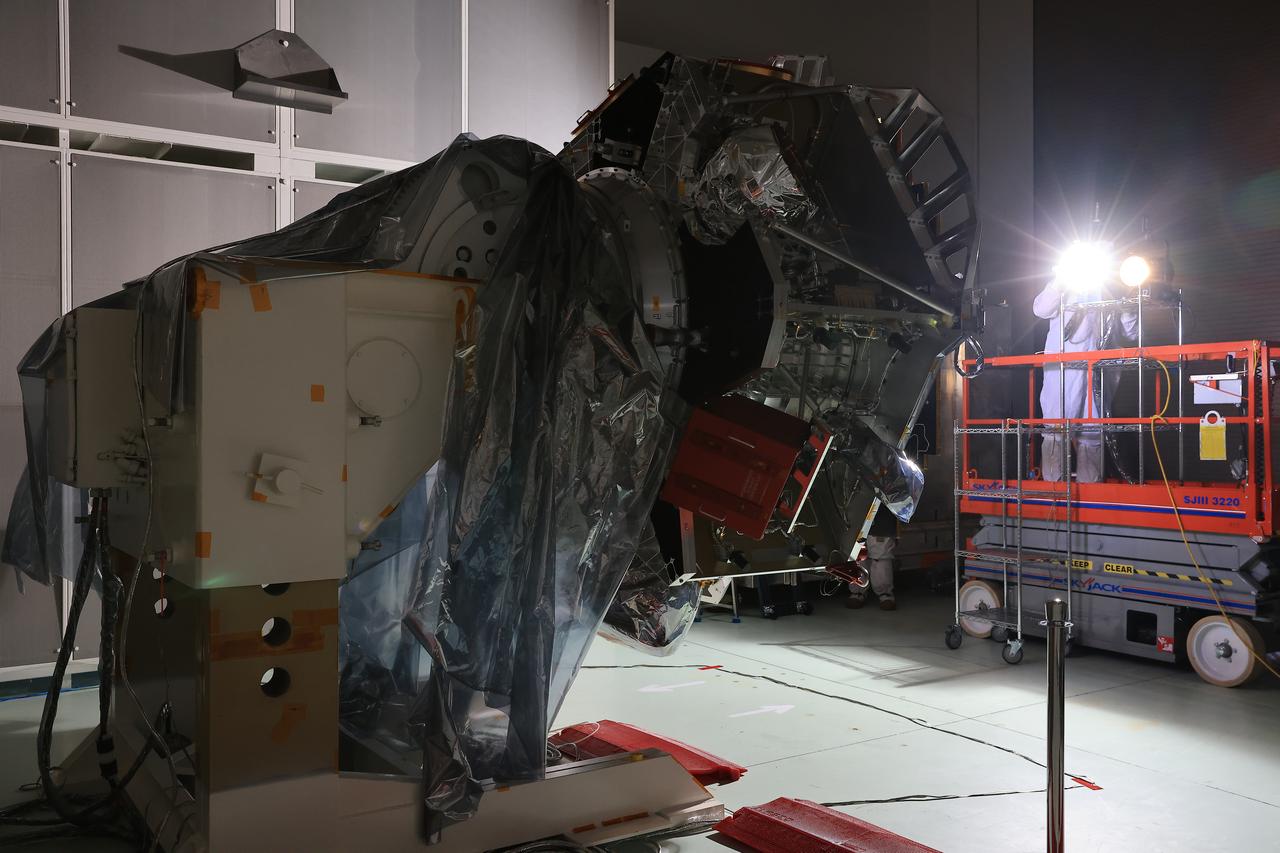
Technicians at the Astrotech Space Operations Facility near NASA’s Kennedy Space Center in Florida conduct illumination testing on Friday, July 18, 2025, by flashing a bright light that simulates the Sun into the two-panel solar array that will help power the agency’s IMAP (Interstellar Mapping and Acceleration Probe) observatory on its upcoming journey to a destination about one million miles away from Earth Lagrange Point 1. Each panel of the solar array, located on the top of IMAP, consists of 16 strings of solar cells, with 36 cells per string, and combined will convert sunlight into 500 watts of power, more than enough for the observatory, which as a system uses less power than five 100-watt incandescent light bulbs.
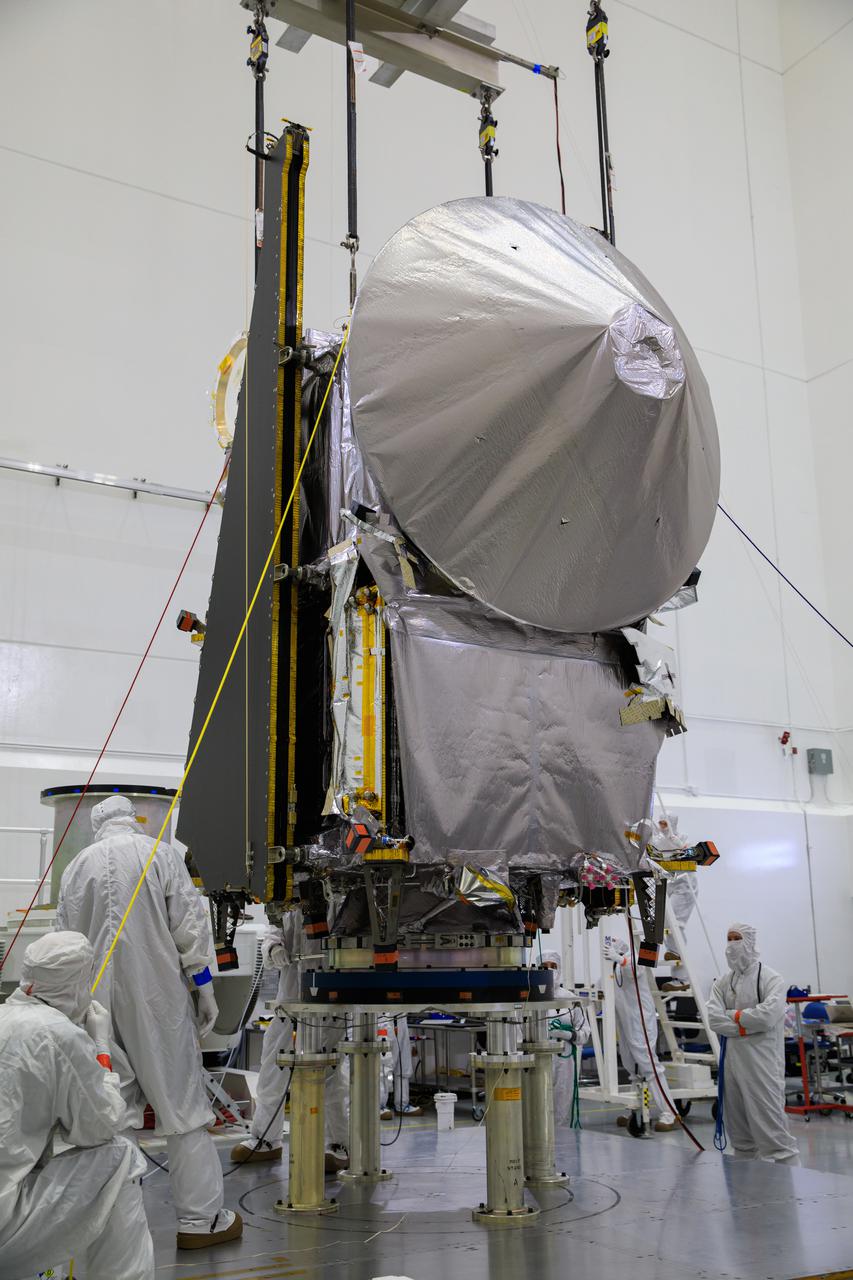
NASA’s Lucy spacecraft, with its high gain antenna attached, is secured on a stationary work stand inside the Astrotech Space Operations Facility in Titusville, Florida on Sept. 8, 2021. Lucy is scheduled to launch no earlier than Saturday, Oct. 16, on a United Launch Alliance Atlas V 401 rocket from Launch Pad 41 at Cape Canaveral Space Force Station. NASA’s Launch Services Program based at Kennedy Space Center is managing the launch. Over its 12-year primary mission, Lucy will explore a record-breaking number of asteroids, flying by one asteroid in the solar system’s main belt and seven Trojan asteroids. Additionally, Lucy’s path will circle back to Earth three times for gravity assists, making it the first spacecraft ever to return to the vicinity of Earth from the outer solar system.
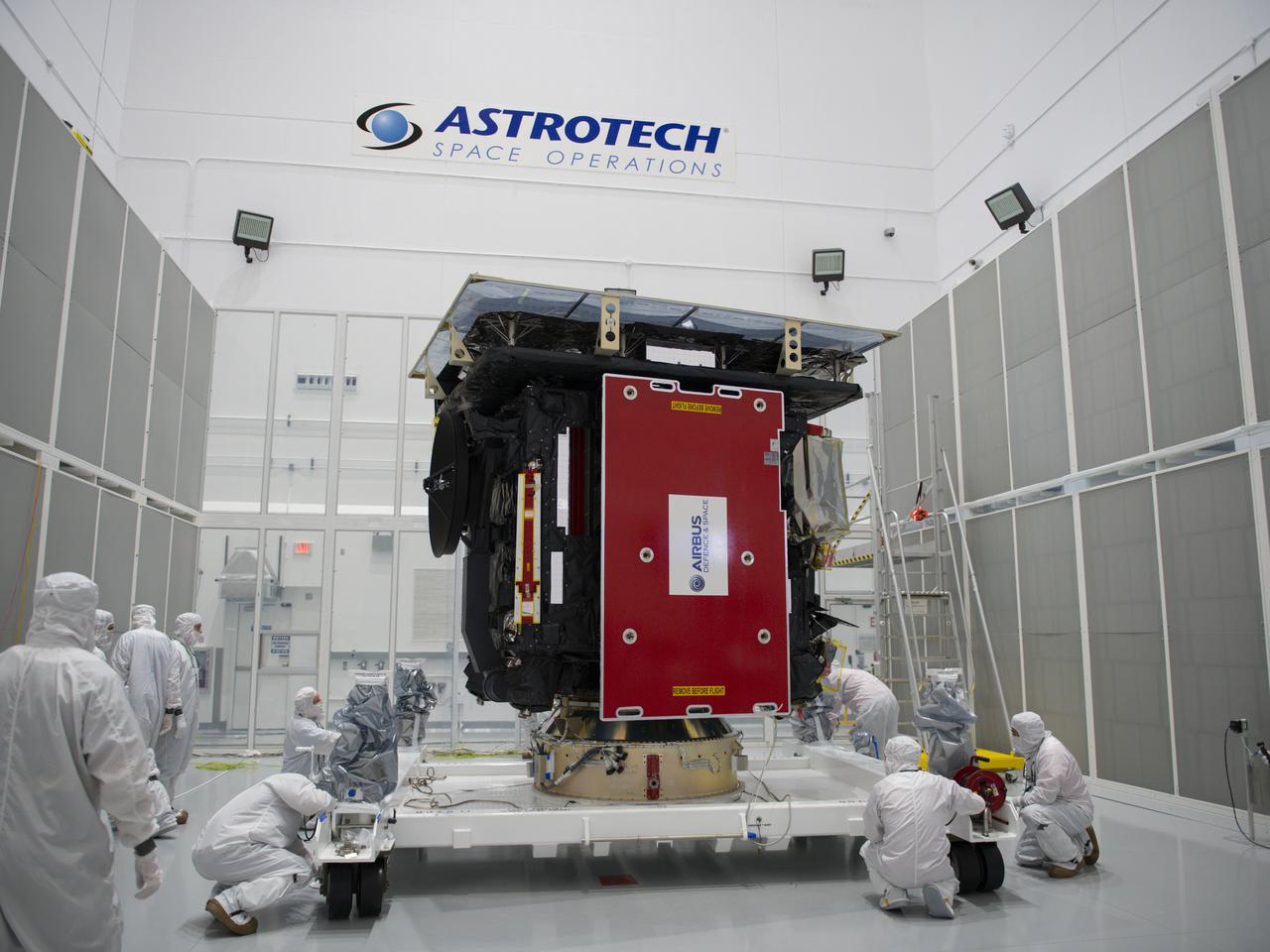
The Solar Orbiter spacecraft is mated to the payload adapter and secured onto the ground transport vehicle inside Astrotech Space Operations in Titusville, Florida on Jan. 16, 2020. Solar Orbiter is an international cooperative mission between ESA (European Space Agency) and NASA. The mission aims to study the Sun, its outer atmosphere and solar wind. The spacecraft will provide the first images of the Sun’s poles. NASA’s Launch Services Program based at Kennedy is managing the launch. The spacecraft has been developed by Airbus Defence and Space. Solar Orbiter will launch in February 2020 aboard a United Launch Alliance Atlas V rocket from Space Launch Complex 41 at Cape Canaveral Air Force Station in Florida.
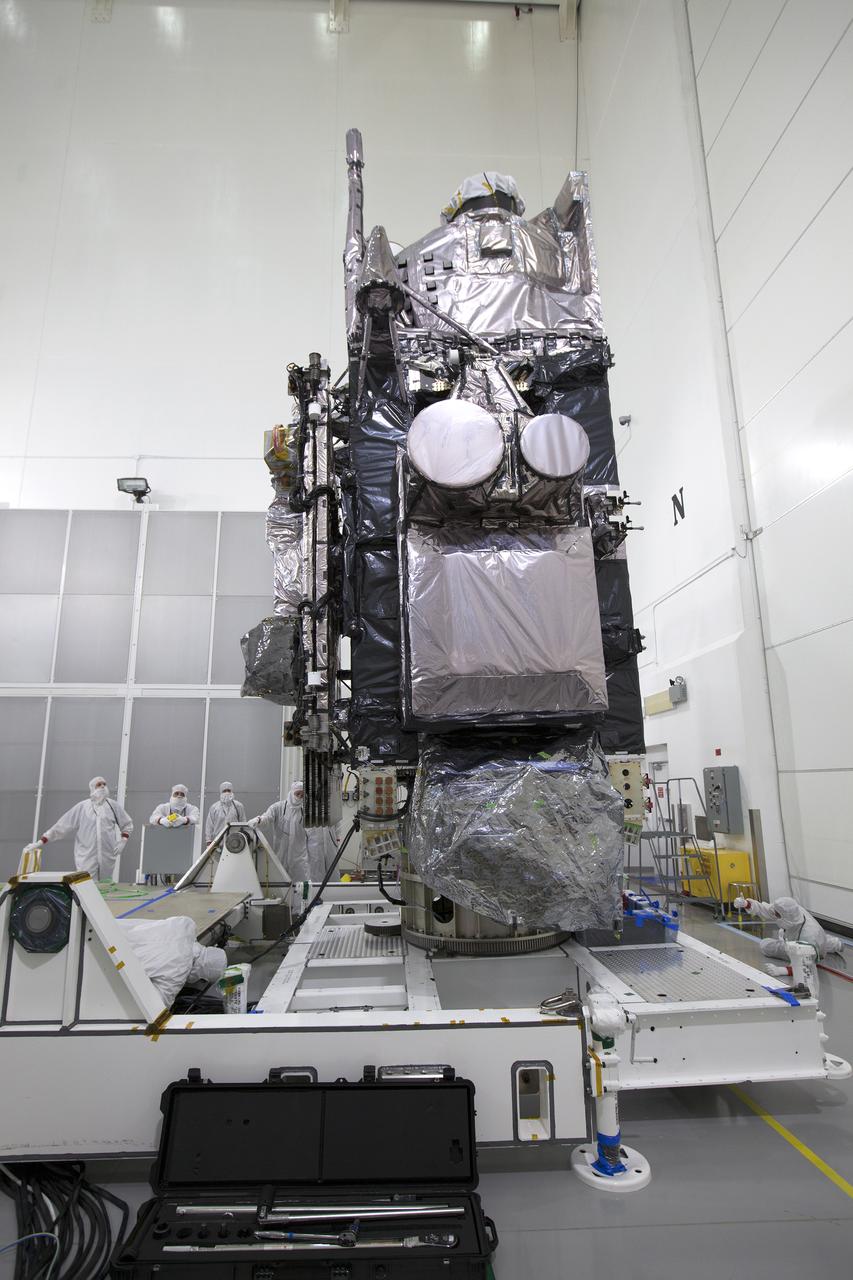
The Geostationary Operational Environmental Satellite (GOES-R) is lifted to the vertical position on an “up-ender” inside the Astrotech payload processing facility in Titusville, Florida near NASA’s Kennedy Space Center. GOES-R will be the first satellite in a series of next-generation NOAA GOES Satellites. The spacecraft is to launch aboard a United Launch Alliance Atlas V rocket in November.
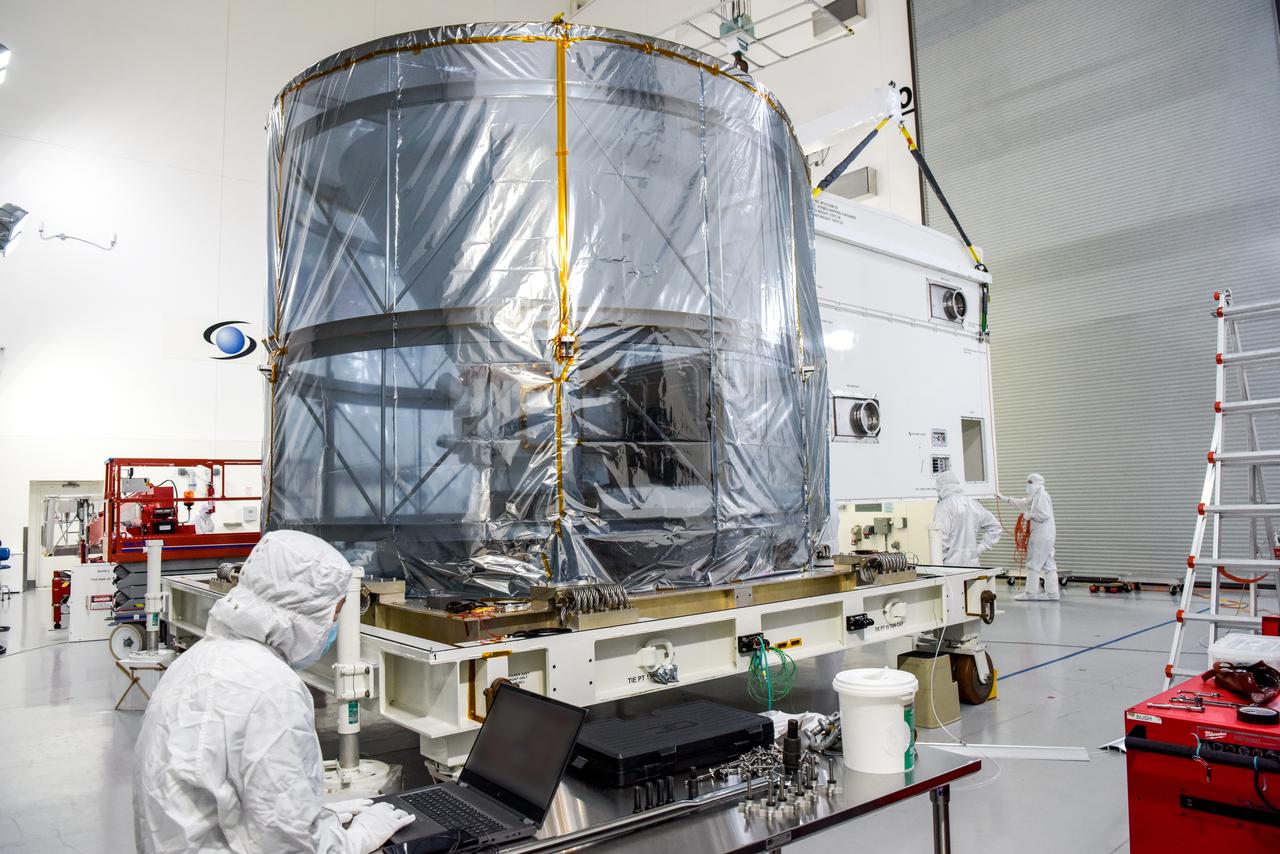
NASA’s SPHEREx (Spectro-Photometer for the History of the Universe, Epoch of Reionization and Ices Explorer) is uncrated for prelaunch processing at Vandenberg Space Force Base in California on Wednesday, Jan. 15, 2025. SPHEREx will enter a polar orbit around Earth and create a 3D map of the entire sky, gathering information about millions of galaxies for scientists to study what happened after the big bang, the history of galaxy evolution, and the origins of water in planetary systems in our galaxy. SPHEREx will launch aboard a SpaceX Falcon 9 rocket in late February 2025.
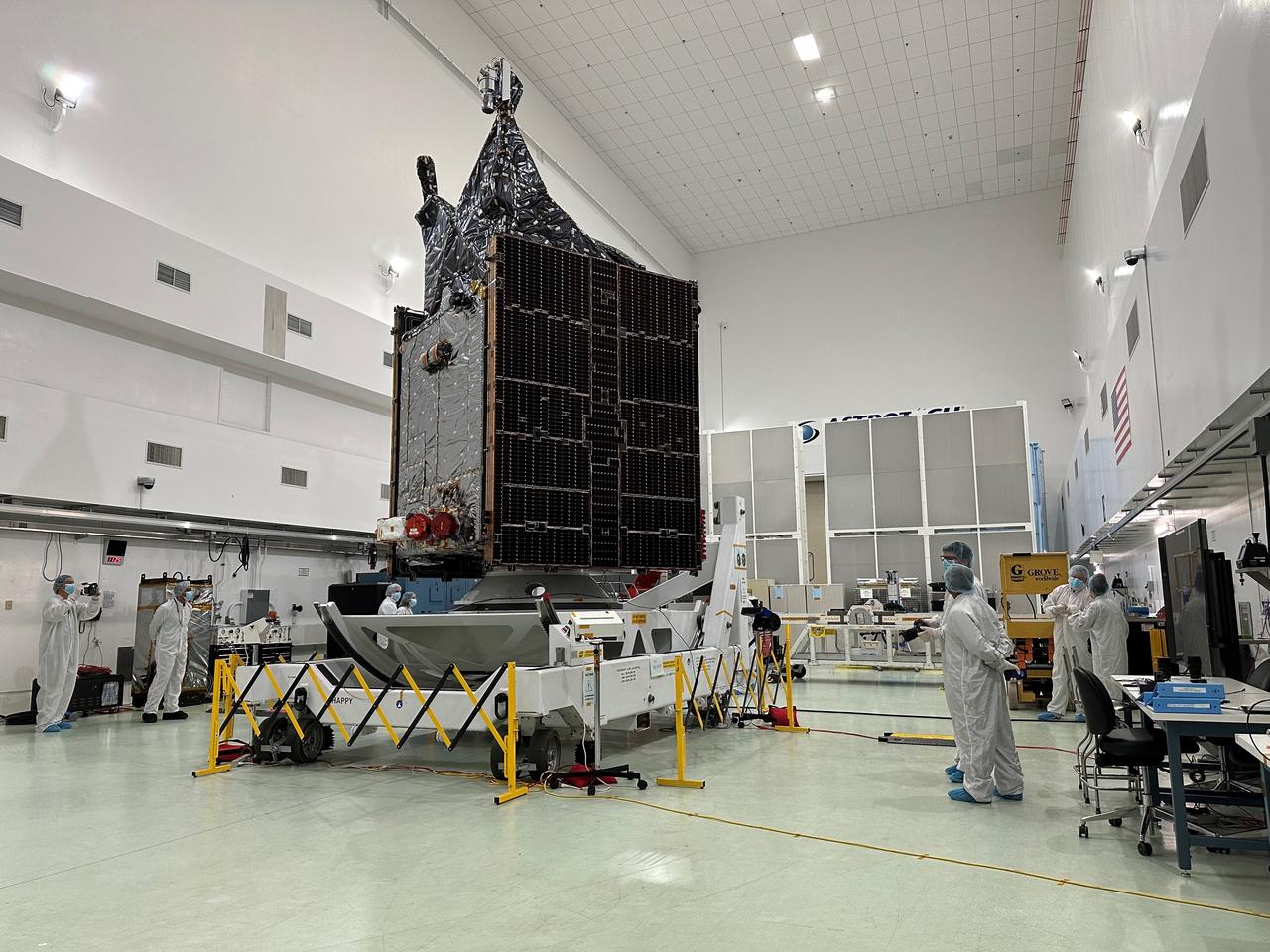
NASA’s Psyche spacecraft is made available to media for viewing inside a cleanroom at the Astrotech Space Operations Facility near Kennedy Space Center in Florida on Aug. 11, 2023. Psyche will launch atop a SpaceX Falcon Heavy rocket from Launch Complex 39A at Kennedy to explore a metal-rich asteroid. Launch is targeted for Oct. 5, 2023. Riding with Psyche is a pioneering technology demonstration, NASA’s Deep Space Optical Communications (DSOC) experiment.
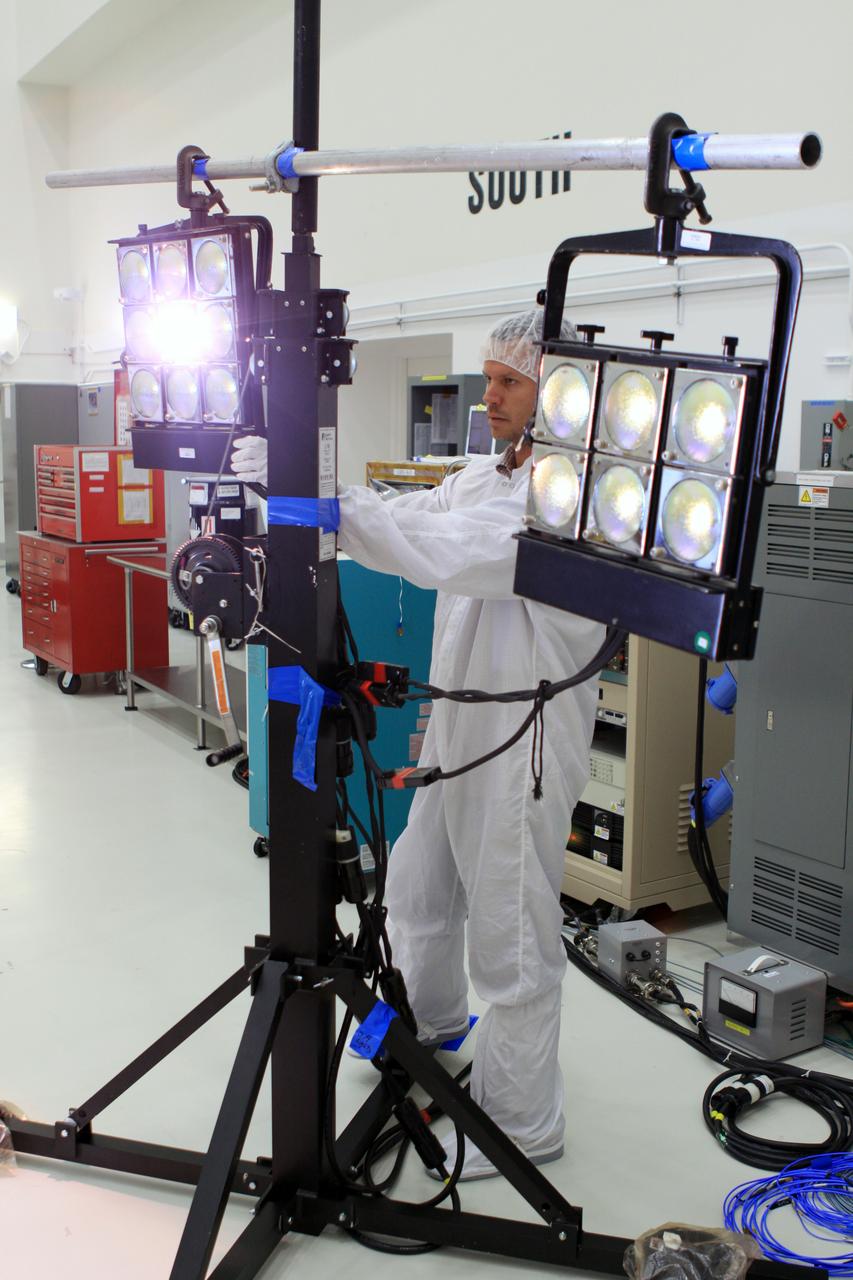
GRAIL Solar Array Test
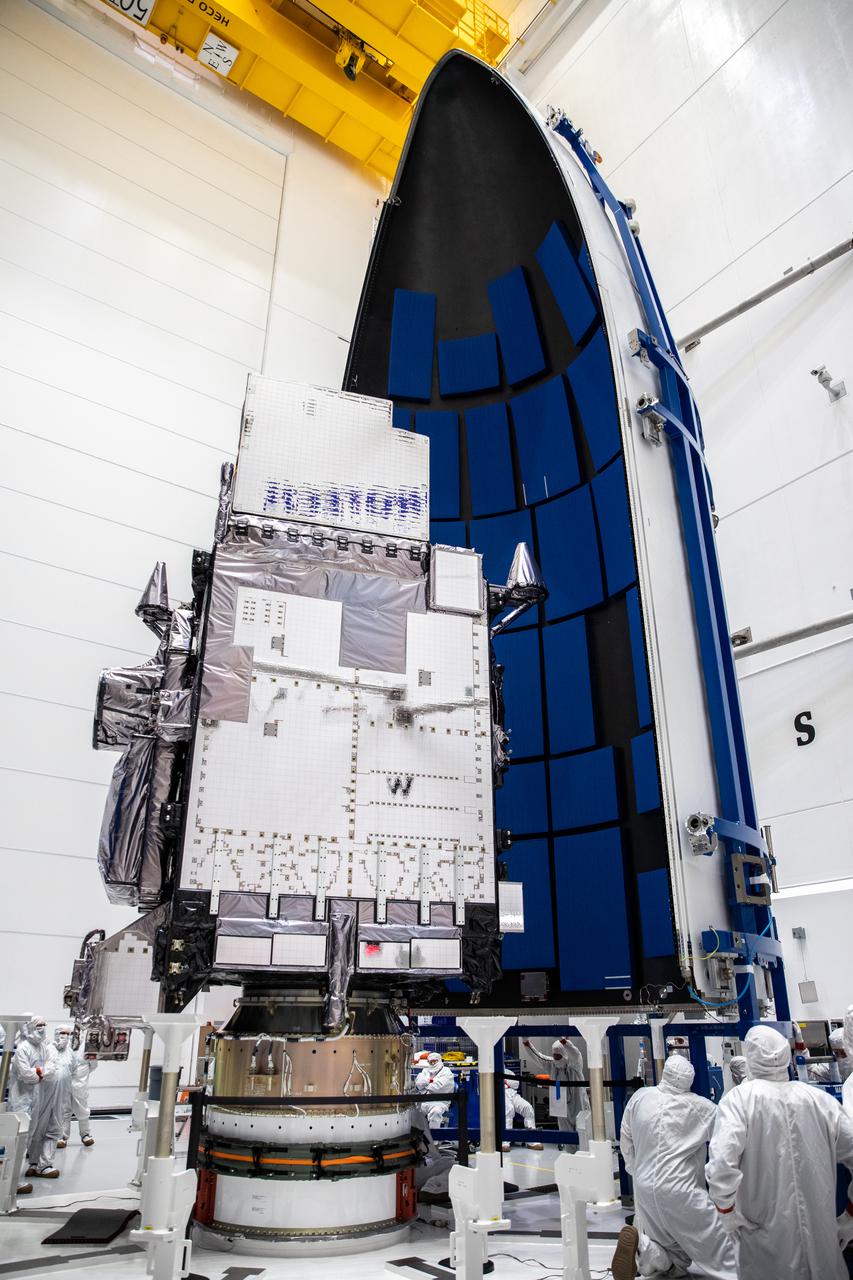
The first half of the United Launch Alliance Atlas V payload fairing is moved toward NOAA’s Geostationary Operational Environmental Satellite-T (GOES-T) inside the Astrotech Space Operations facility in Titusville, Florida, on Feb. 7, 2022. The satellite will be encapsulated inside the payload fairings, which will protect it during launch. GOES-T is scheduled to launch on March 1, 2022, atop Atlas V 541 rocket from Space Launch Complex 41 at Cape Canaveral Space Force Station. GOES-T is the third satellite in the GOES-R series that will continue to help meteorologists observe and predict local weather events that affect public safety. The launch is being managed by NASA’s Launch Services Program based at Kennedy Space Center in Florida, America’s multi-user spaceport.
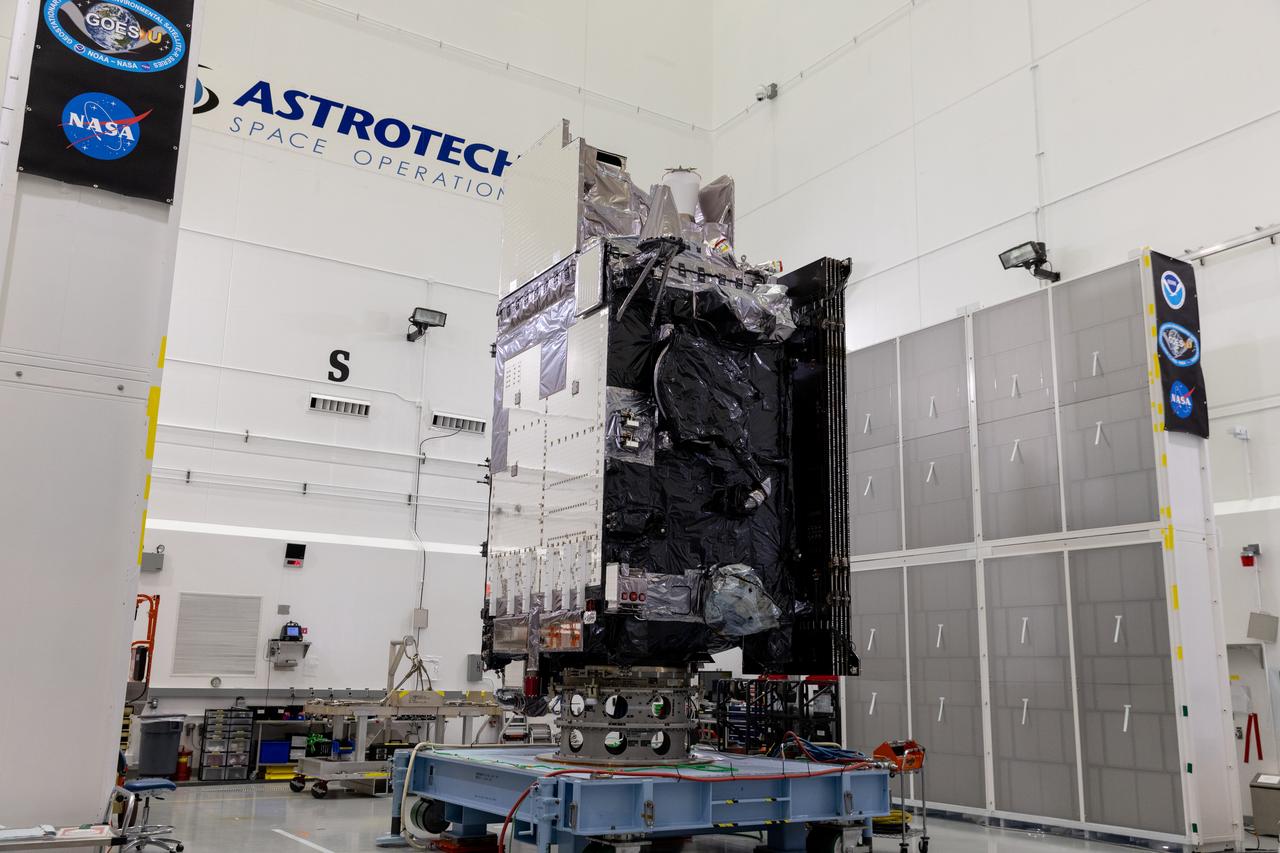
The National Oceanic and Atmospheric Administration (NOAA) Geostationary Operational Environmental Satellite-U (GOES-U) stands vertical on a spacecraft dolly in a high bay at the Astrotech Space Operations Facility near the agency’s Kennedy Space Center in Florida during a NASA-hosted media day on Thursday, June 6, 2024. Part of a collaborative NOAA and NASA program, GOES-U is the last in a series of advanced geostationary weather satellites. Data from the GOES-R satellite series enables forecasters to predict, observe, and track local weather events that affect public safety like thunderstorms, hurricanes, and wildfires.

NASA’s Psyche spacecraft is made available to media for viewing inside a cleanroom at the Astrotech Space Operations Facility near Kennedy Space Center in Florida on Aug. 11, 2023. Psyche will launch atop a SpaceX Falcon Heavy rocket from Launch Complex 39A at Kennedy to explore a metal-rich asteroid. Launch is targeted for Oct. 5, 2023. Riding with Psyche is a pioneering technology demonstration, NASA’s Deep Space Optical Communications (DSOC) experiment.
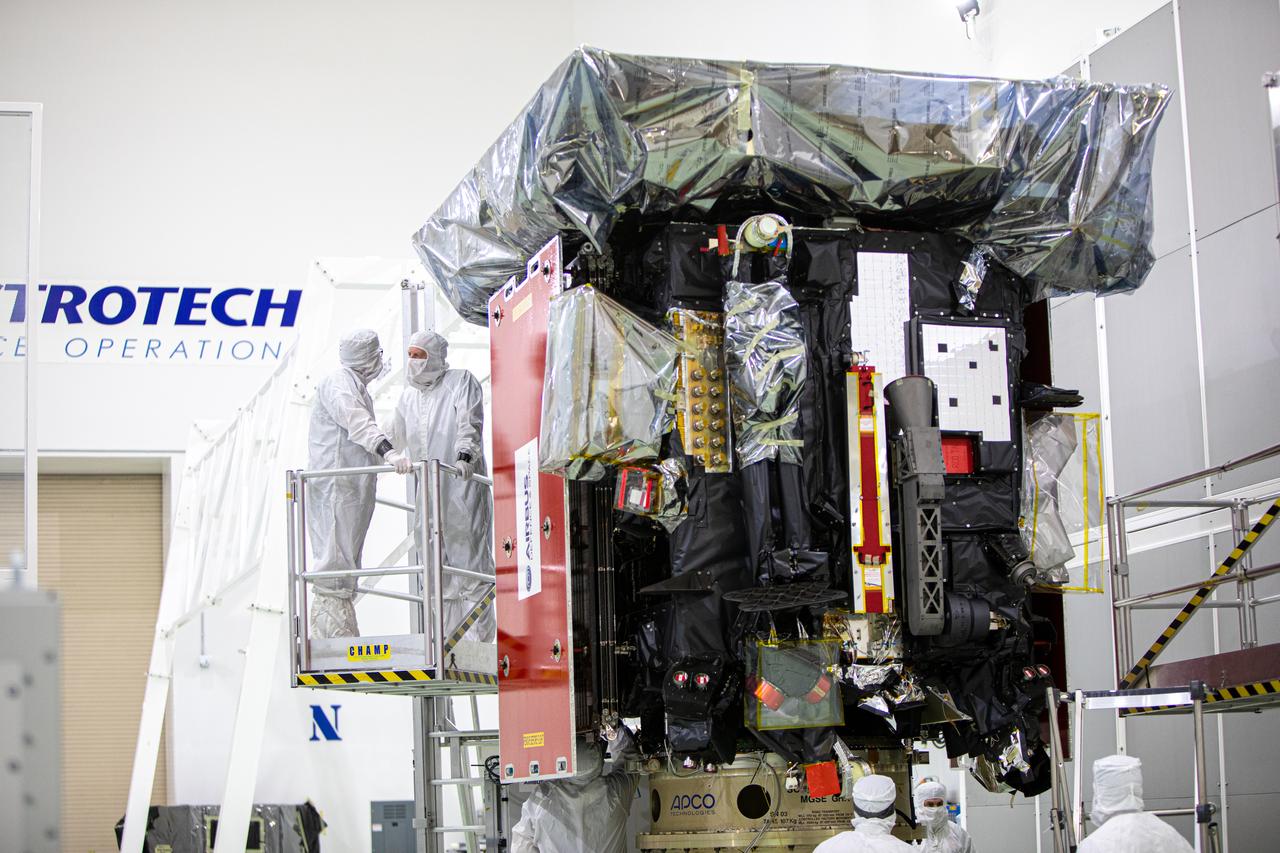
Members of the European Space Agency (ESA)/Airbus Defence and Space Solar Orbiter team inspect the Solar Orbiter spacecraft inside the Astrotech Space Operations payload processing facility in Titusville, Florida, on Dec. 16, 2019. On this day, media personnel were given the opportunity to view and photograph the spacecraft up close. Representatives from NASA’s Launch Services Program (LSP), ESA, United Launch Alliance (ULA), Airbus, and NASA’s Goddard Space Flight Center provided an overview of the mission, spacecraft and launch vehicle. Solar Orbiter is a space mission of international collaboration between ESA and NASA, and the spacecraft has been developed by Airbus. The mission will study the Sun and how it can affect the space environment throughout the solar system, and it also will provide the first images of the Sun’s poles.
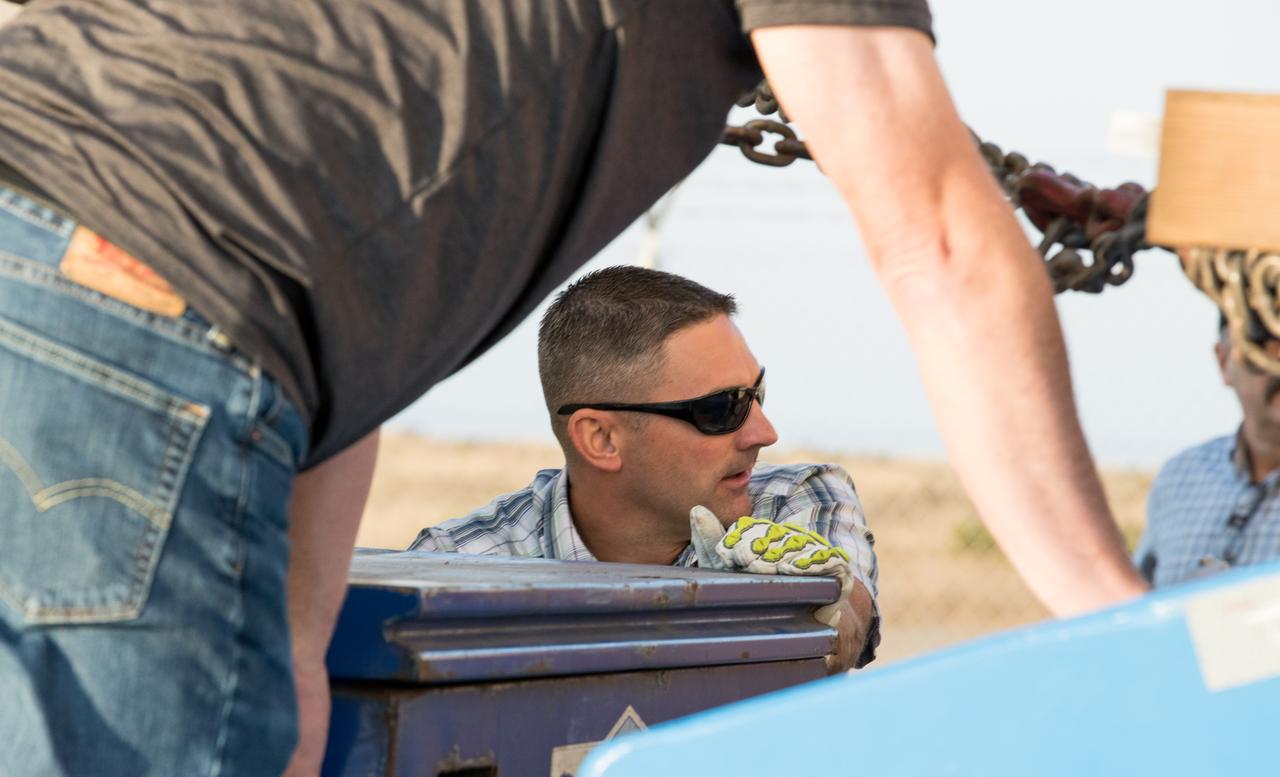
Technicians at Vandenberg Air Force Base in California inspect the shipping container for the Joint Polar Satellite System-1, or JPSS-1, as it arrives at the Astrotech Processing Facility. JPSS is the first in a series four next-generation environmental satellites in a collaborative program between the National Oceanic and Atmospheric Administration (NOAA) and NASA. The satellite is scheduled to liftoff Nov. 10, 2017 atop a United Launch Alliance Delta II rocket.
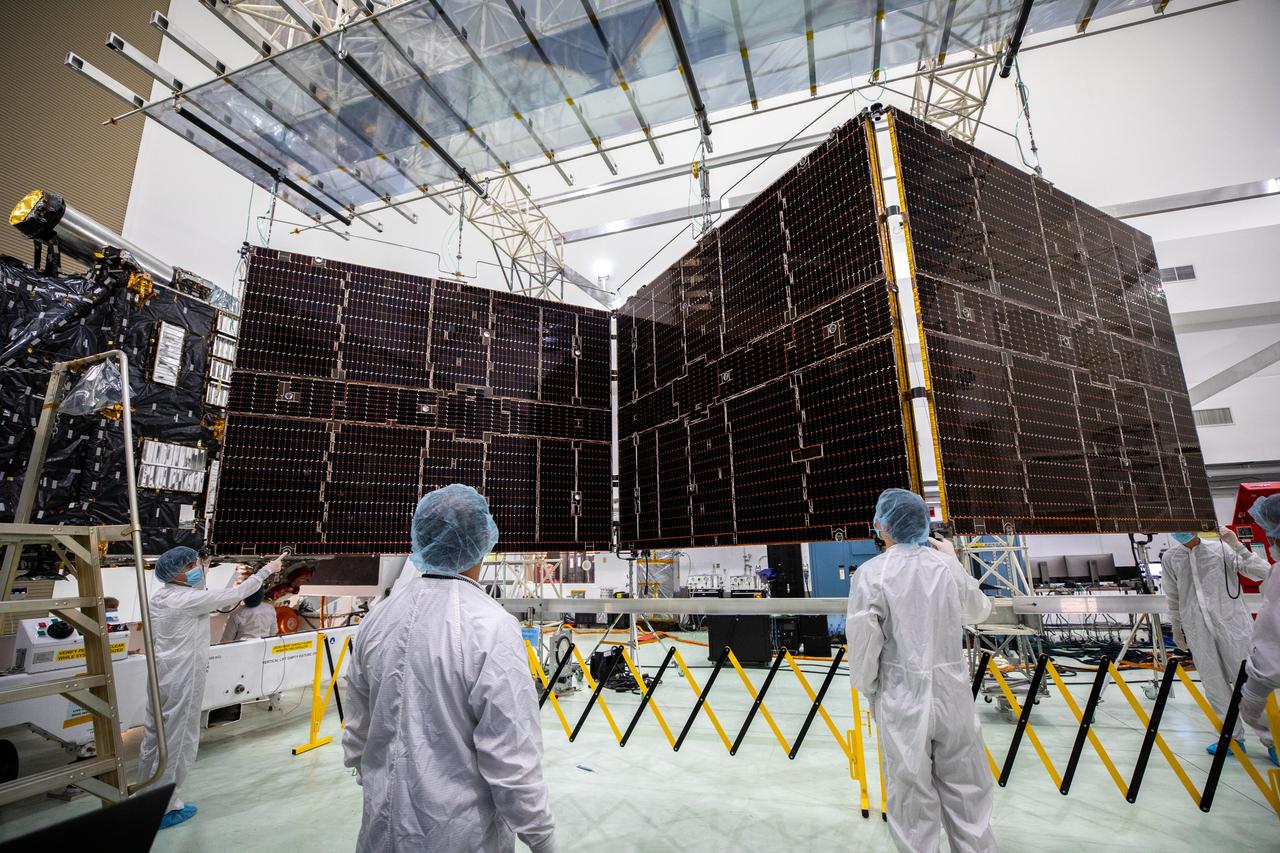
Technicians begin to retract one of the two solar arrays attached to NASA’s Psyche spacecraft inside the Astrotech Space Operations Facility near the agency’s Kennedy Space Center in Florida on July 25, 2023. The solar arrays, which were shipped from Maxar Technologies, in San Jose, California, are being stowed for launch. They are part of the solar electric propulsion system, provided by Maxar, that will power the spacecraft on its journey to explore a metal-rich asteroid. Psyche will launch atop a SpaceX Falcon Heavy rocket from Launch Complex 39A at Kennedy. Launch is targeted for Oct. 5, 2023. Riding with Psyche is a pioneering technology demonstration, NASA’s Deep Space Optical Communications (DSOC) experiment.
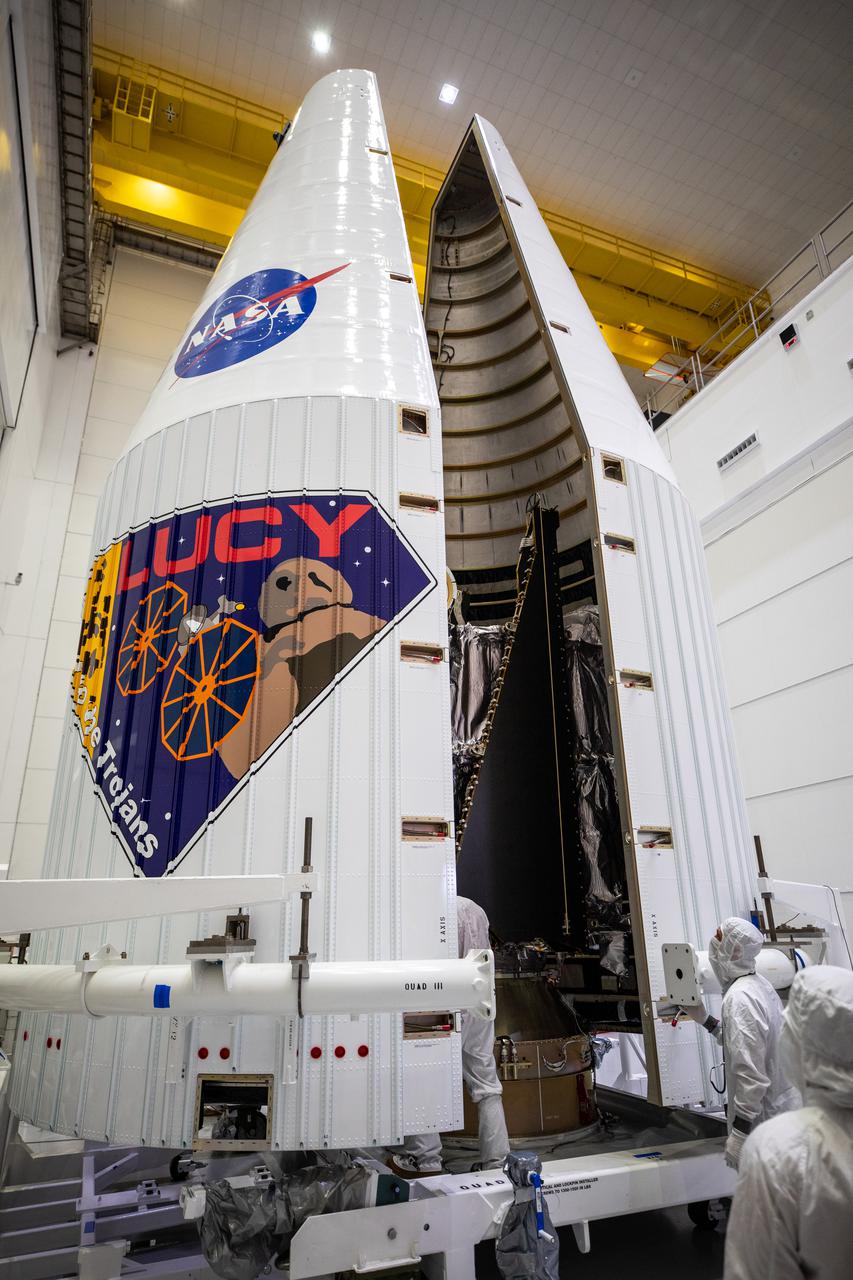
Workers inside the Astrotech Space Operations Facility in Titusville, Florida, move both halves of the United Launch Alliance (ULA) payload fairing around NASA’s Lucy spacecraft on Sept. 30, 2021. The payload fairing will encapsulate and protect the spacecraft during launch and ascent. Lucy is scheduled to launch no earlier than Saturday, Oct. 16, on a ULA Atlas V 401 rocket from Space Launch Complex 41 at Cape Canaveral Space Force Station. NASA’s Launch Services Program based at Kennedy Space Center is managing the launch. Over its 12-year primary mission, Lucy will explore a record-breaking number of asteroids, flying by one asteroid in the solar system’s main belt and seven Trojan asteroids. Additionally, Lucy’s path will circle back to Earth three times for gravity assists, making it the first spacecraft ever to return to the vicinity of Earth from the outer solar system.
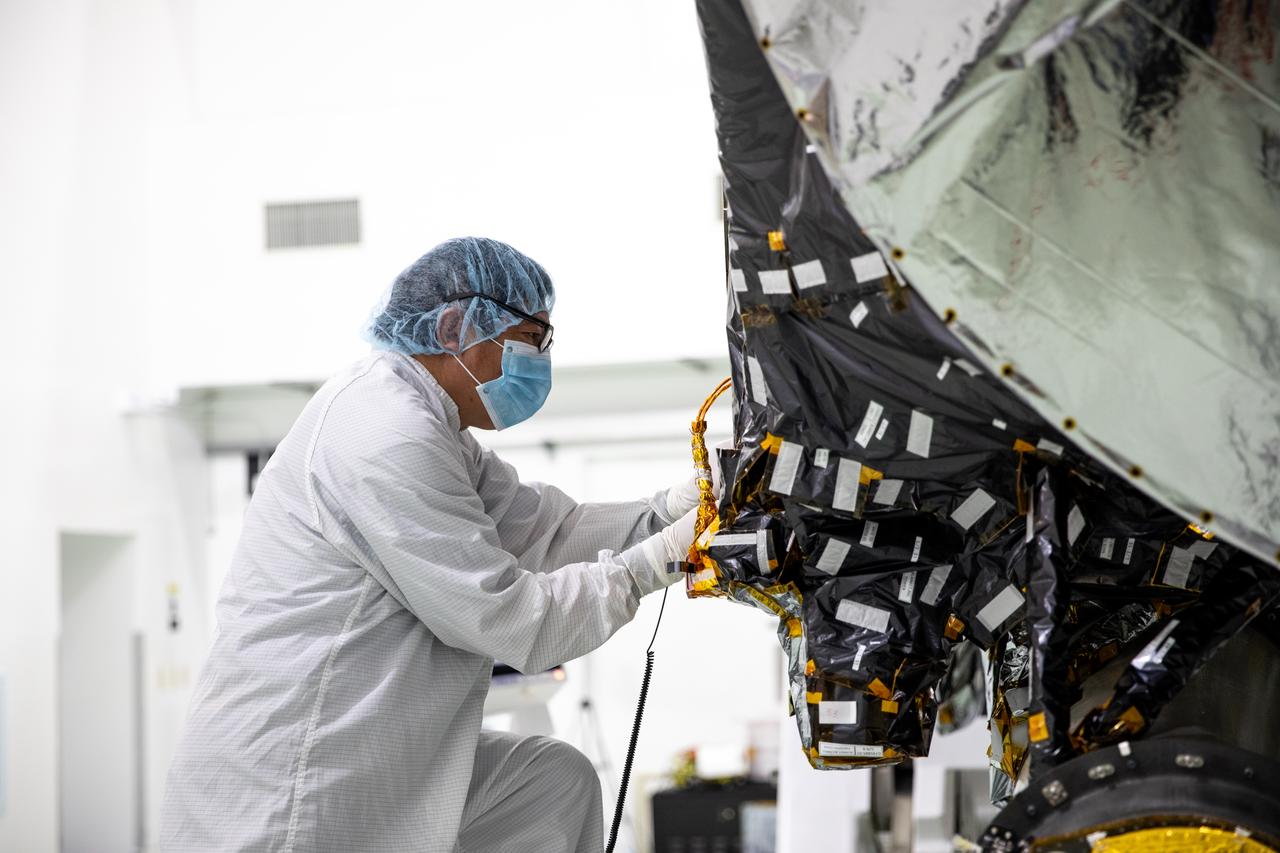
A NASA team member prepares the agency’s Psyche spacecraft for integration with its twin solar arrays inside the Astrotech Space Operations Facility near the agency’s Kennedy Space Center in Florida on July 20, 2023. The solar arrays were shipped from Maxar Technologies, in San Jose, California. They are part of the solar electric propulsion system, provided by Maxar, that will power the spacecraft on its journey to explore a metal-rich asteroid. Psyche will launch atop a SpaceX Falcon Heavy rocket from Launch Complex 39A at Kennedy. Launch is targeted for Oct. 5, 2023. Riding with Psyche is a pioneering technology demonstration, NASA’s Deep Space Optical Communications (DSOC) experiment.
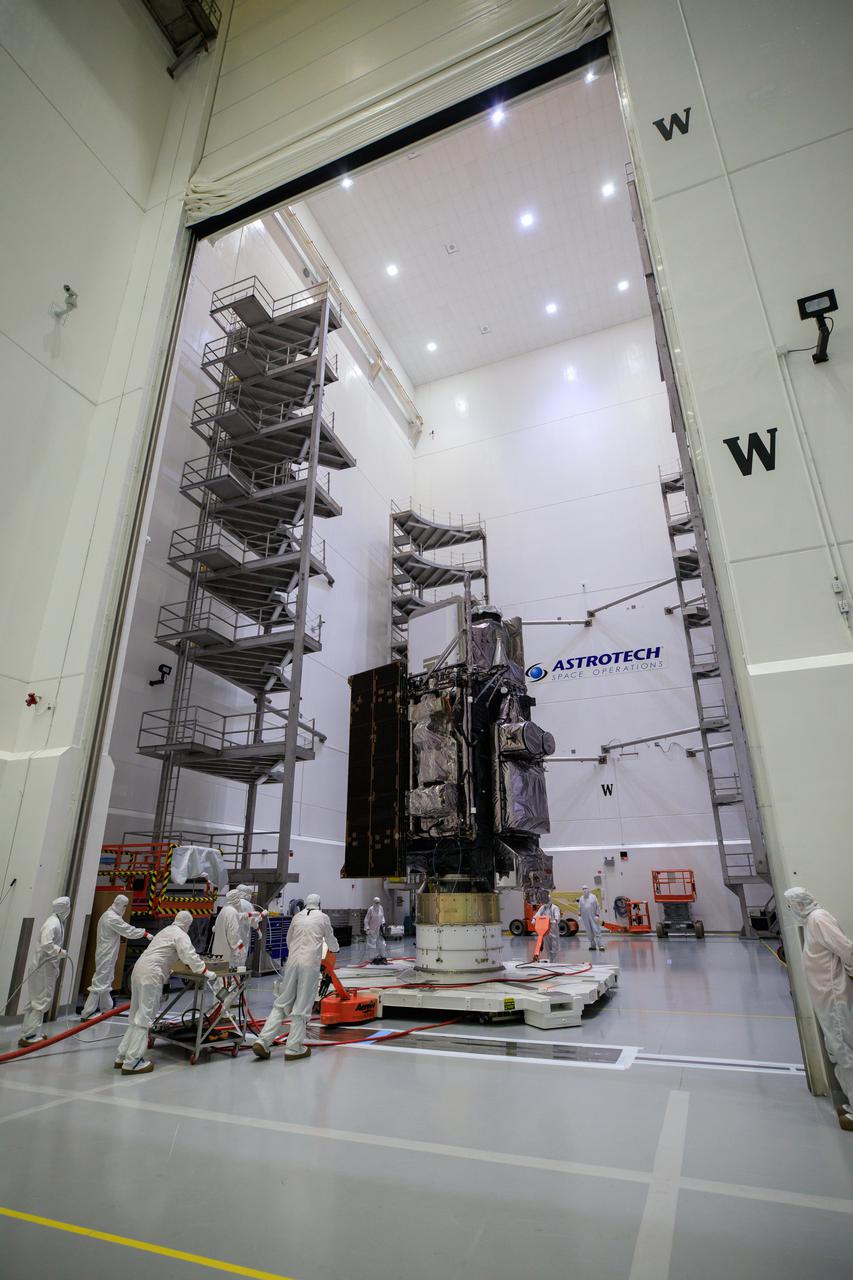
Technicians move NOAA’s Geostationary Operational Environmental Satellite-T (GOES-T) inside the Astrotech Space Operations facility in Titusville, Florida, on Jan. 28, 2022. The spacecraft is being prepared for encapsulation inside its protective payload fairings. GOES-T is scheduled to launch on March 1, 2022, atop a United Launch Alliance (ULA) Atlas V 541 rocket from Space Launch Complex 41 at Cape Canaveral Space Force Station. GOES-T is the third satellite in the GOES-R series that will continue to help meteorologists observe and predict local weather events that affect public safety. The launch is being managed by NASA’s Launch Services Program based at Kennedy Space Center in Florida, America’s multi-user spaceport.
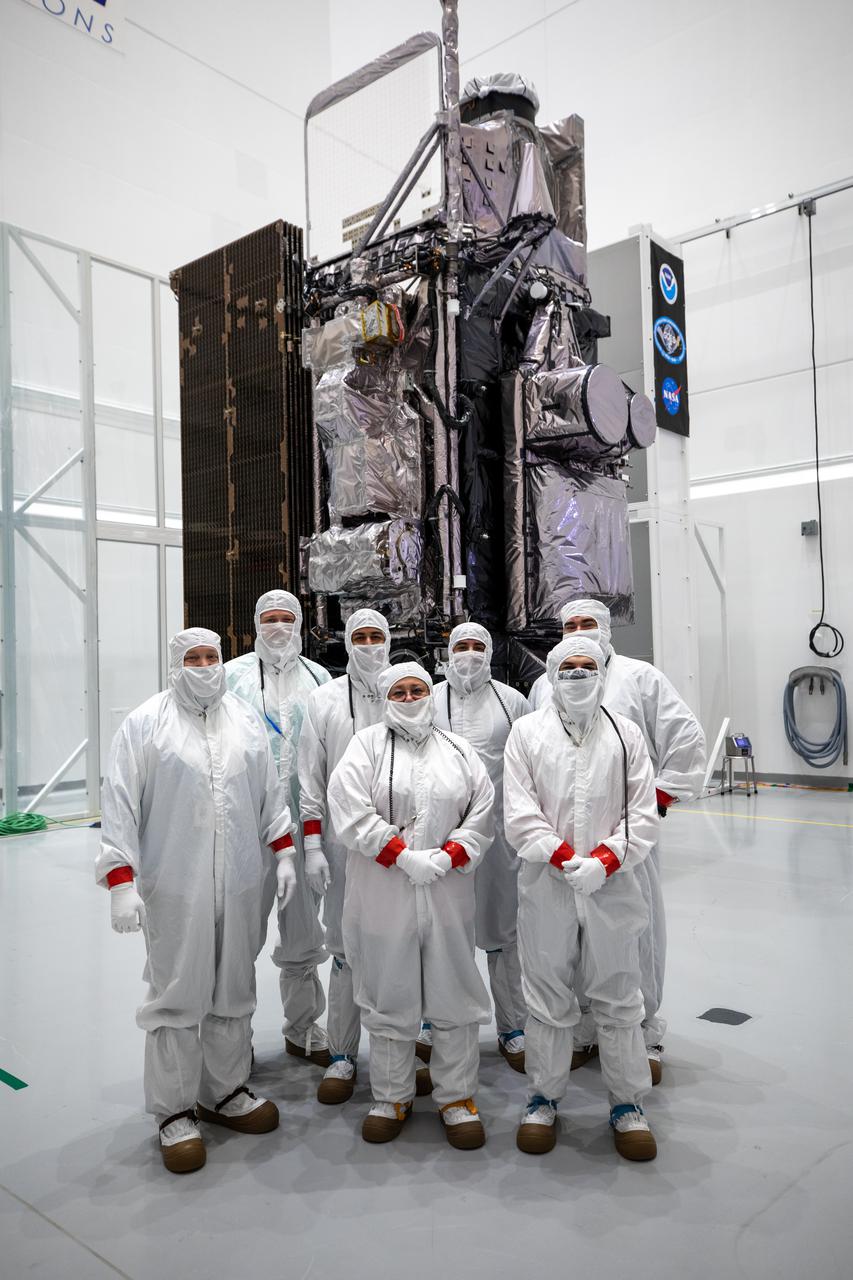
Dressed in clean-room suits, processing team members stand in front of NOAA’s Geostationary Operational Environmental Satellite-T (GOES-T) inside the Astrotech Space Operations facility in Titusville, Florida, on Jan. 20, 2022. GOES-T is scheduled to launch on March 1, 2022, atop a United Launch Alliance (ULA) Atlas V 541 rocket from Space Launch Complex 41 at Cape Canaveral Space Force Station. GOES-T is the third satellite in the GOES-R series that will continue to help meteorologists observe and predict local weather events that affect public safety. The launch is being managed by NASA’s Launch Services Program based at Kennedy Space Center in Florida, America’s multi-user spaceport.
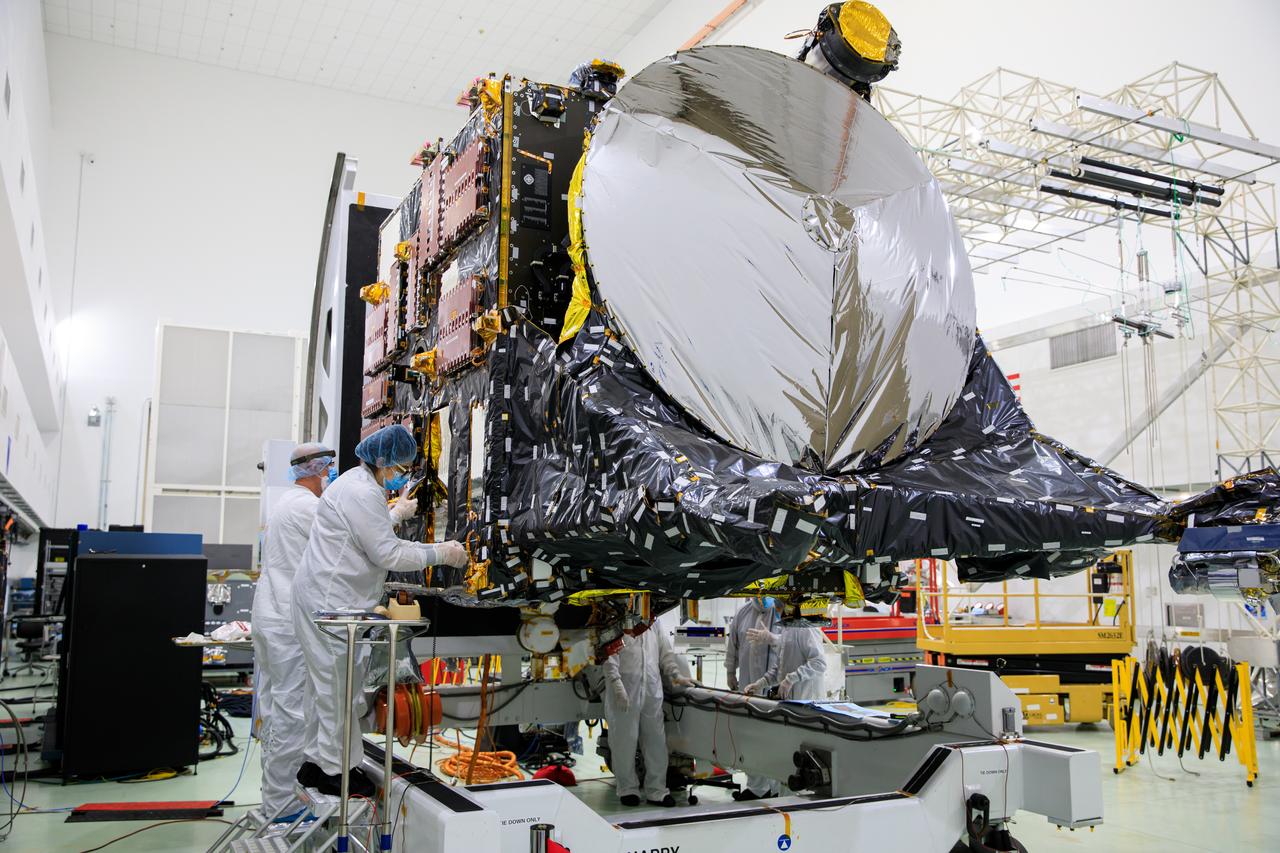
A NASA team prepares the agency’s Psyche spacecraft for launch inside the Astrotech Space Operations Facility near Kennedy Space Center in Florida on July 15, 2023. Psyche will launch atop a SpaceX Falcon Heavy rocket from Launch Complex 39A at Kennedy to explore a metal-rich asteroid. Launch is targeted for Oct. 5, 2023. Riding with Psyche is a pioneering technology demonstration, NASA’s Deep Space Optical Communications (DSOC) experiment.
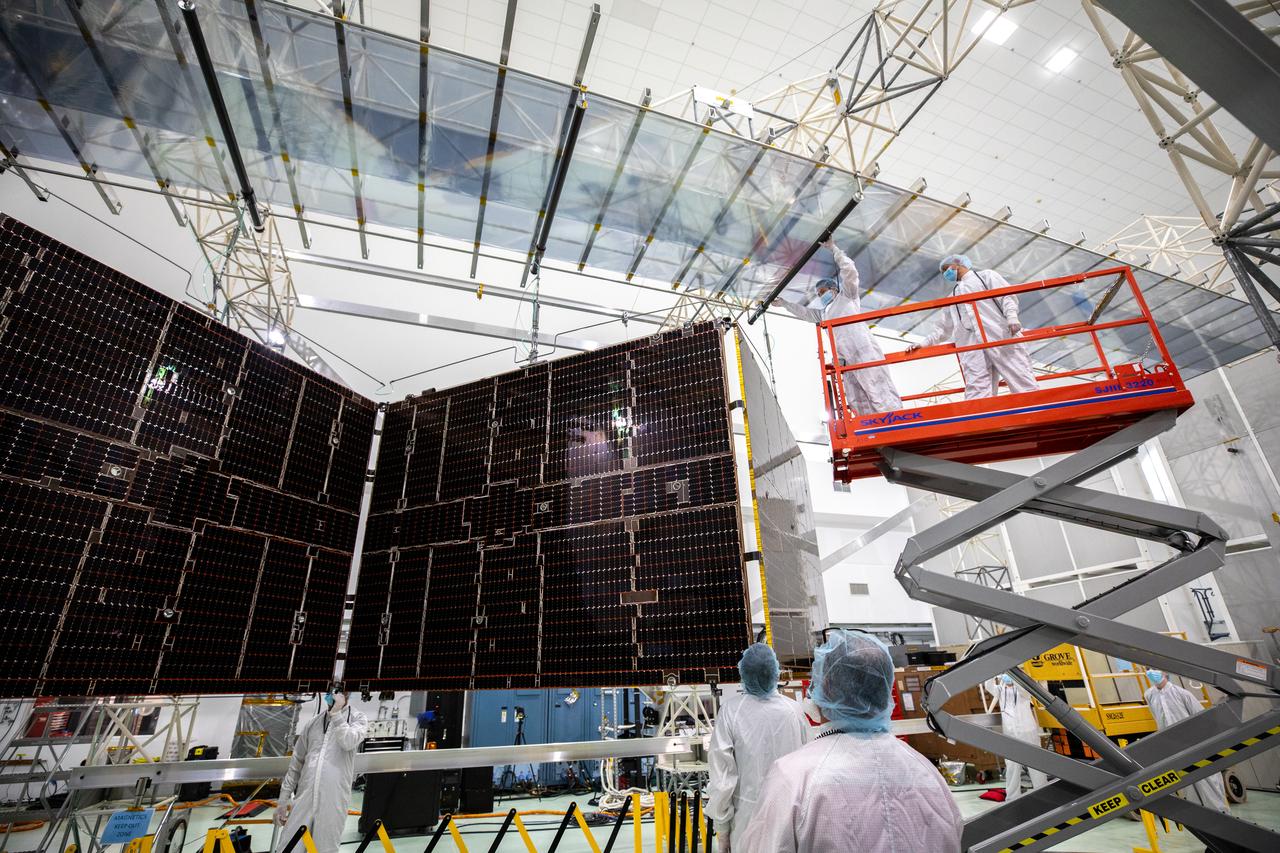
Technicians begin to retract one of the two solar arrays attached to NASA’s Psyche spacecraft inside the Astrotech Space Operations Facility near the agency’s Kennedy Space Center in Florida on July 25, 2023. The solar arrays, which were shipped from Maxar Technologies, in San Jose, California, are being stowed for launch. They are part of the solar electric propulsion system, provided by Maxar, that will power the spacecraft on its journey to explore a metal-rich asteroid. Psyche will launch atop a SpaceX Falcon Heavy rocket from Launch Complex 39A at Kennedy. Launch is targeted for Oct. 5, 2023. Riding with Psyche is a pioneering technology demonstration, NASA’s Deep Space Optical Communications (DSOC) experiment.
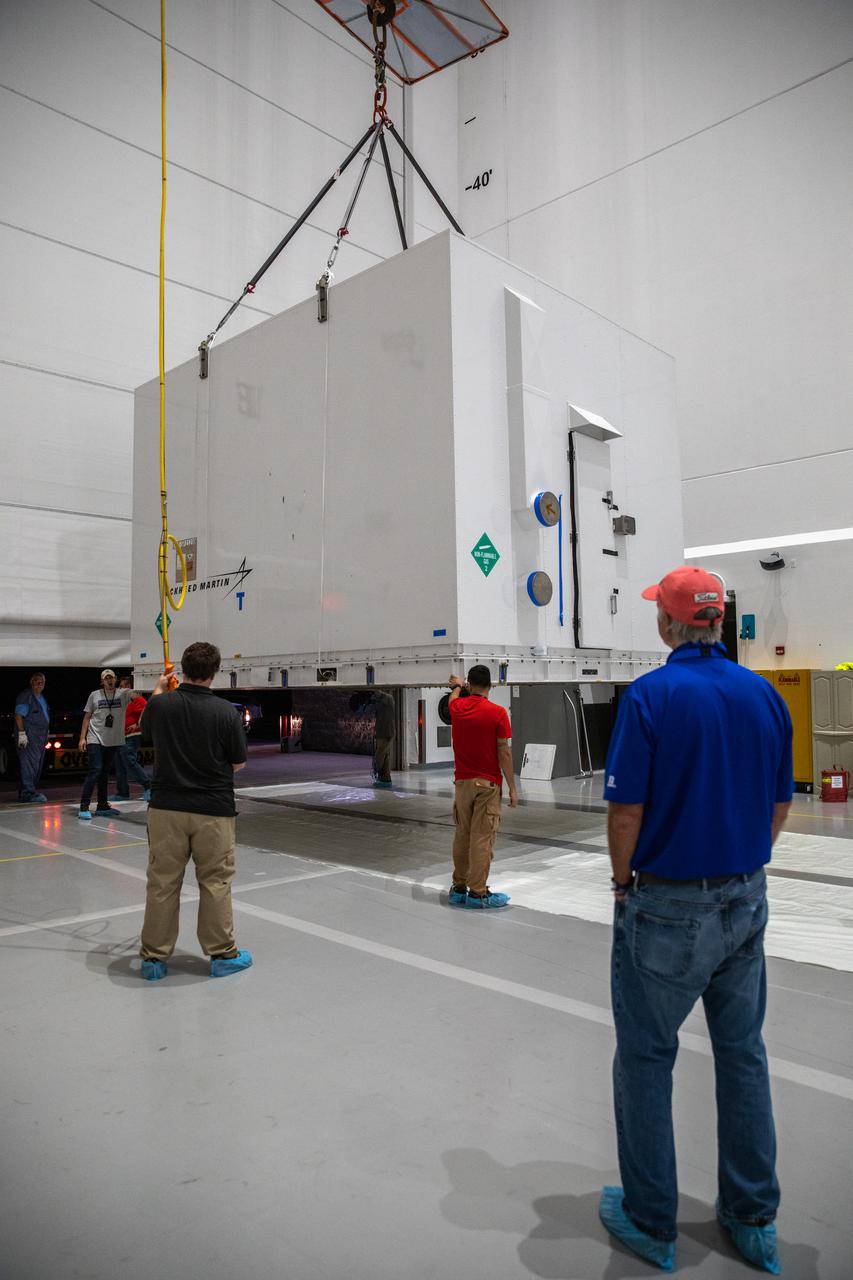
The shipping container holding NASA's Lucy spacecraft arrives at Astrotech Space Operations payload processing facility in Titusville, Florida on July 30, 2021. The facility, located near NASA's Kennedy Space Center, is where the Lucy spacecraft will undergo processing before its scheduled launch on a United Launch Alliance (ULA) Atlas V rocket from Cape Canaveral Space Force Station on October 16, 2021. The Lucy mission will be the first space mission to explore a diverse population of small bodies known as the Jupiter Trojan asteroids. The launch is being managed by NASA's Launch Services Program based at Kennedy, America's premier multi-user spaceport.
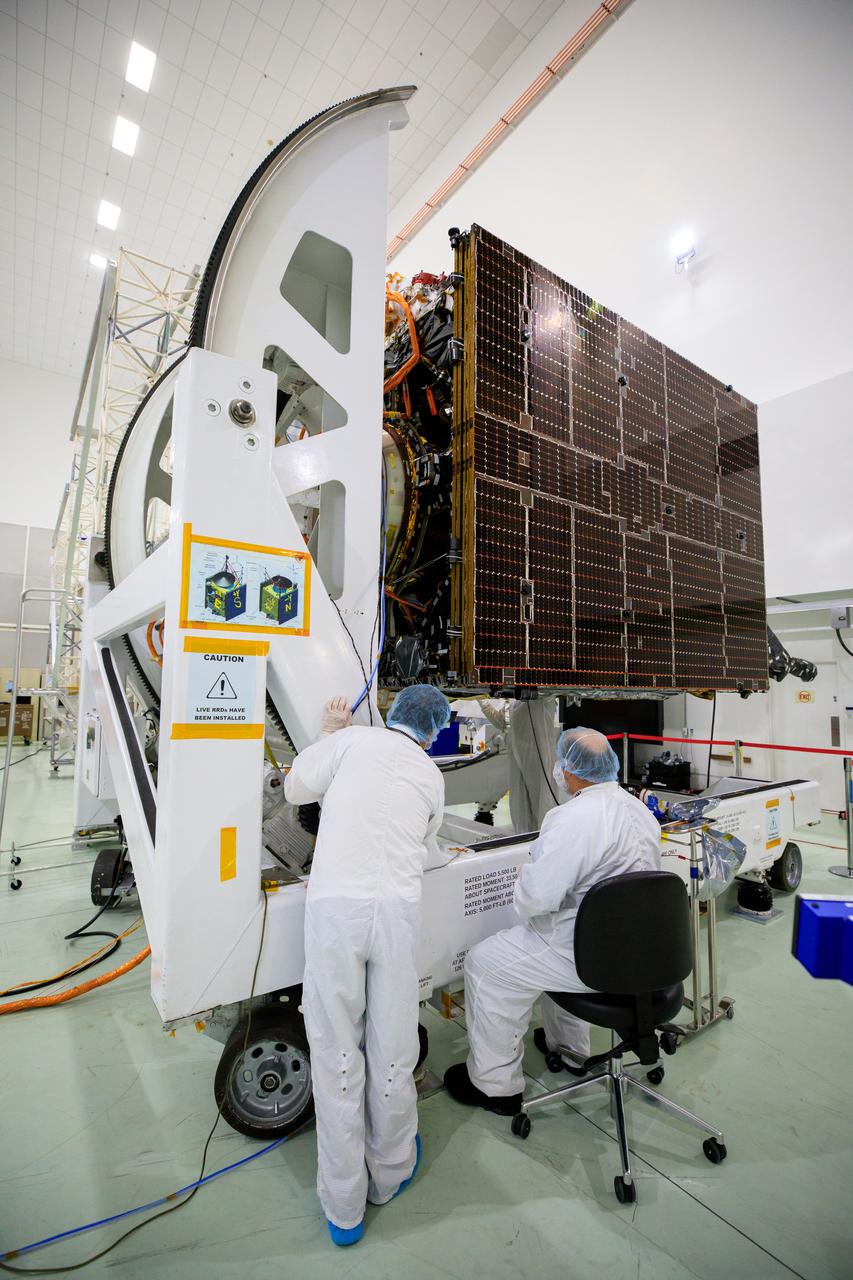
Team members prepare to integrate one of two solar arrays with NASA’s Psyche spacecraft inside the Astrotech Space Operations Facility near the agency’s Kennedy Space Center in Florida on July 24, 2023. The solar arrays were shipped from Maxar Technologies, in San Jose, California. They are part of the solar electric propulsion system, provided by Maxar, that will power the spacecraft on its journey to explore a metal-rich asteroid. Psyche will launch atop a SpaceX Falcon Heavy rocket from Launch Complex 39A at Kennedy. Launch is targeted for Oct. 5, 2023. Riding with Psyche is a pioneering technology demonstration, NASA’s Deep Space Optical Communications (DSOC) experiment.
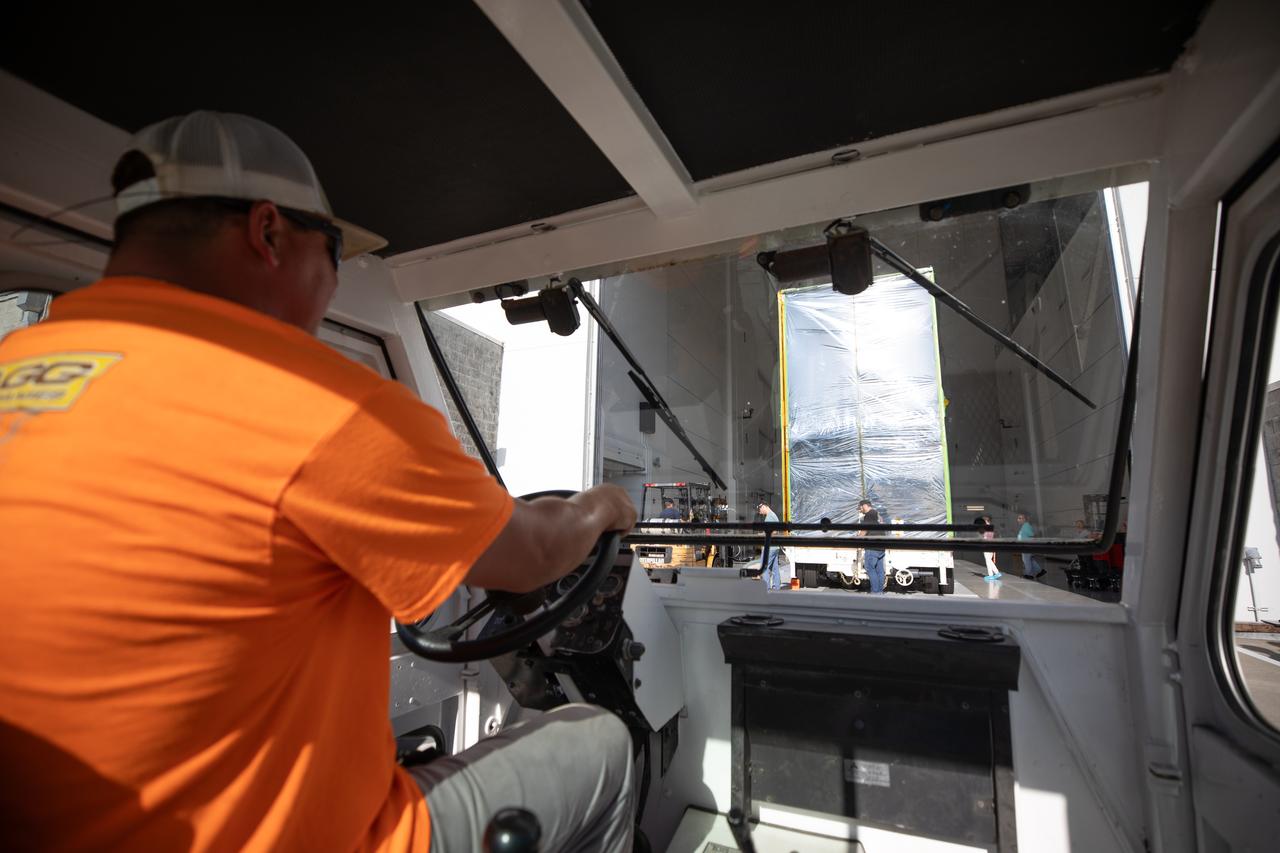
A driver uses a transport vehicle to move NASA’s Psyche spacecraft, secured for transport, into the entrance of Building 9 at the Astrotech Space Operations Facility near the agency’s Kennedy Space Center in Florida on Aug. 14, 2023. Psyche will explore its namesake, a metal-rich asteroid orbiting the Sun between Mars and Jupiter. Psyche has NASA’s Deep Space Optical Communications (DSOC) technology demonstration onboard the spacecraft. DSOC will be the agency's first demonstration of optical communication beyond the Moon. Psyche will launch atop a SpaceX Falcon Heavy rocket from Launch Complex 39A at Kennedy. Launch is targeted for Oct. 5, 2023.
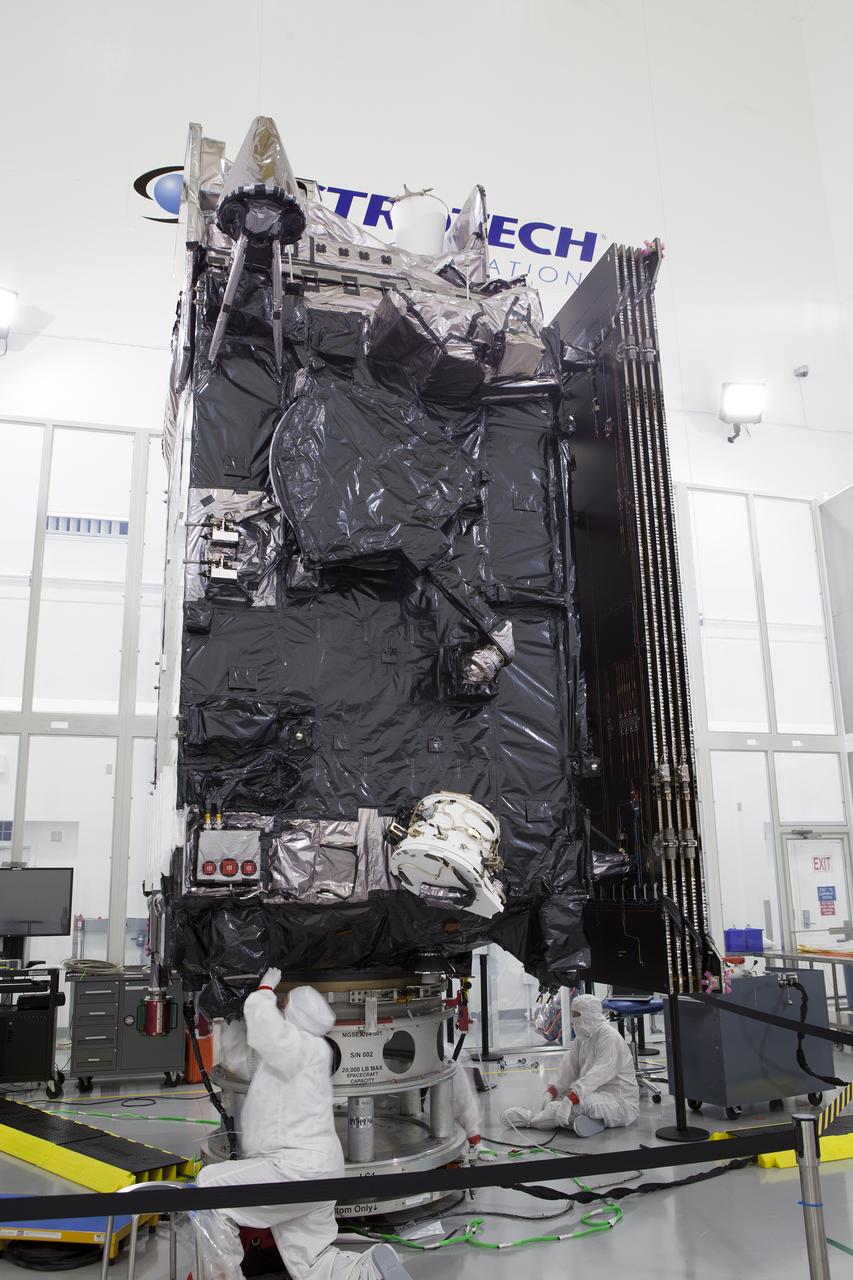
The Geostationary Operational Environmental Satellite (GOES-R) is undergoing final launch preparations prior to fueling inside the Astrotech payload processing facility in Titusville, Florida near NASA’s Kennedy Space Center. GOES-R will be the first satellite in a series of next-generation NOAA GOES Satellites. The spacecraft is to launch aboard a United Launch Alliance Atlas V rocket in November.
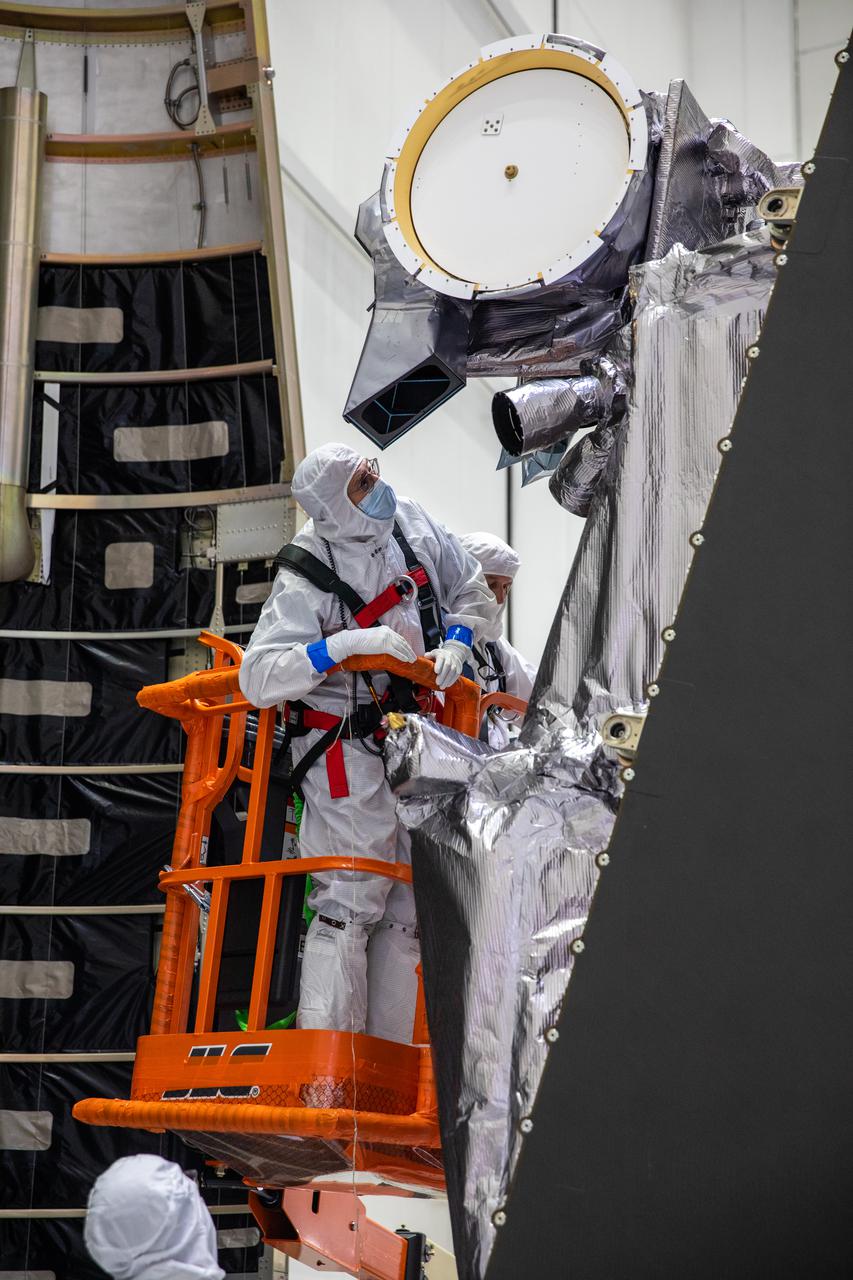
Workers inside the Astrotech Space Operations Facility in Titusville, Florida, move the first half of the United Launch Alliance (ULA) payload fairing toward NASA’s Lucy spacecraft on Sept. 30, 2021. The payload fairing will encapsulate and protect the spacecraft during launch and ascent. Lucy is scheduled to launch no earlier than Saturday, Oct. 16, on a ULA Atlas V 401 rocket from Space Launch Complex 41 at Cape Canaveral Space Force Station. NASA’s Launch Services Program based at Kennedy Space Center is managing the launch. Over its 12-year primary mission, Lucy will explore a record-breaking number of asteroids, flying by one asteroid in the solar system’s main belt and seven Trojan asteroids. Additionally, Lucy’s path will circle back to Earth three times for gravity assists, making it the first spacecraft ever to return to the vicinity of Earth from the outer solar system.
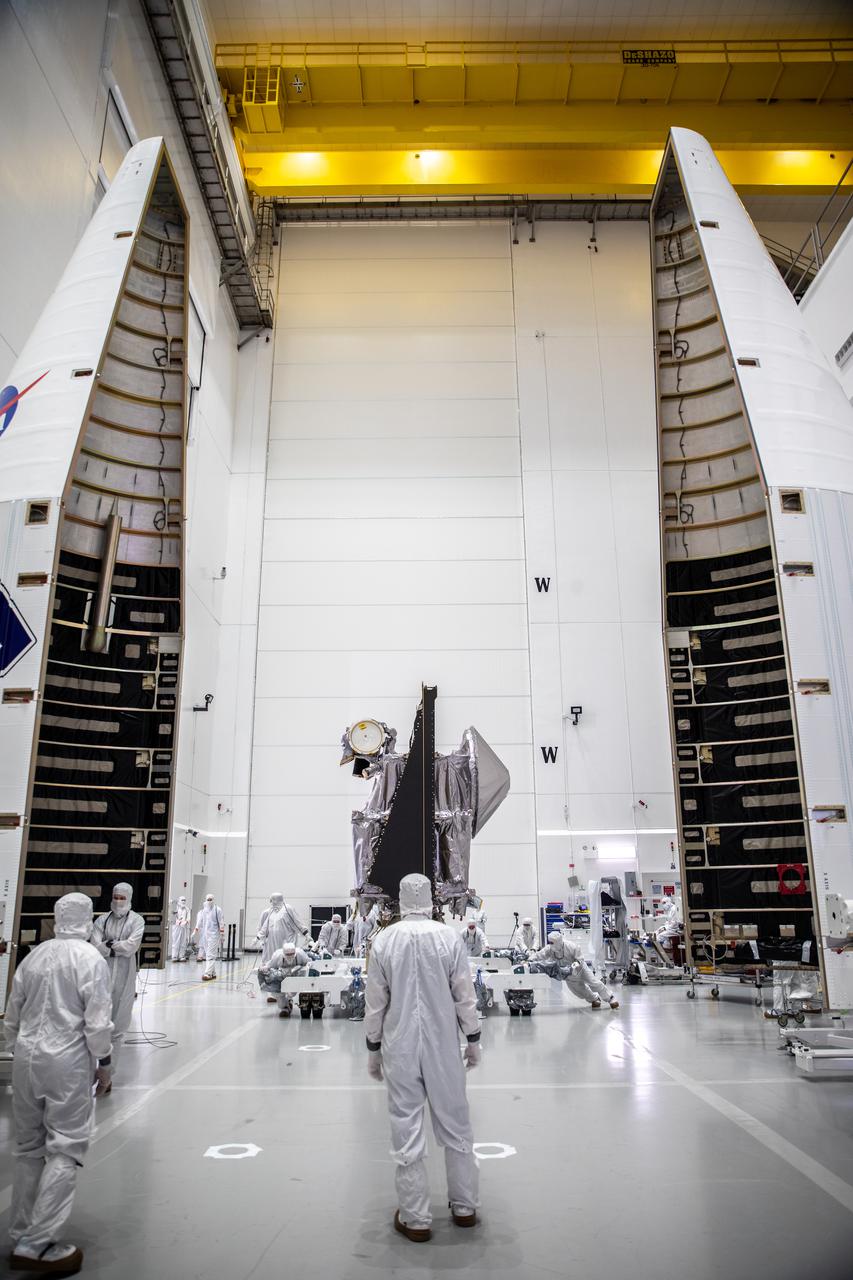
NASA’s Lucy spacecraft is moved from the Work Processing Cell to the Airlock inside the Astrotech Space Operations Facility in Titusville, Florida, on Sept. 29, 2021. A United Launch Alliance V 401 rocket roared off the pad at Cape Canaveral Space Force Station’s Space Launch Complex 41 on Oct. 16, 2021, at 5:34 a.m. EDT, carrying Lucy into space. During its 12-year primary mission, Lucy will explore a record-breaking number of asteroids, flying by one asteroid in the solar system’s main belt and seven Trojan asteroids. Lucy is the first space mission to study the Trojan asteroids, which hold vital clues to the formation of our solar system.
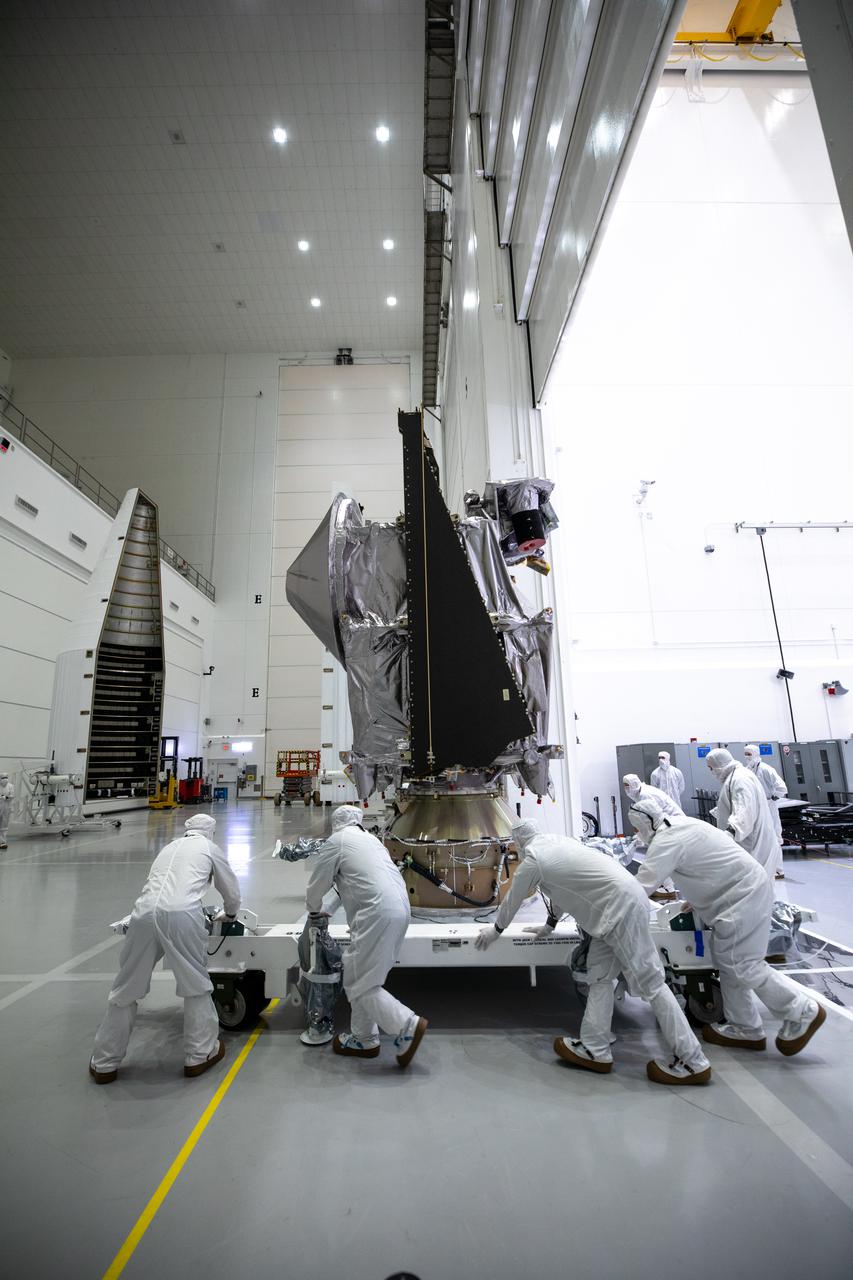
NASA’s Lucy spacecraft is moved from the Work Processing Cell to the Airlock inside the Astrotech Space Operations Facility in Titusville, Florida, on Sept. 29, 2021. A United Launch Alliance V 401 rocket roared off the pad at Cape Canaveral Space Force Station’s Space Launch Complex 41 on Oct. 16, 2021, at 5:34 a.m. EDT, carrying Lucy into space. During its 12-year primary mission, Lucy will explore a record-breaking number of asteroids, flying by one asteroid in the solar system’s main belt and seven Trojan asteroids. Lucy is the first space mission to study the Trojan asteroids, which hold vital clues to the formation of our solar system.
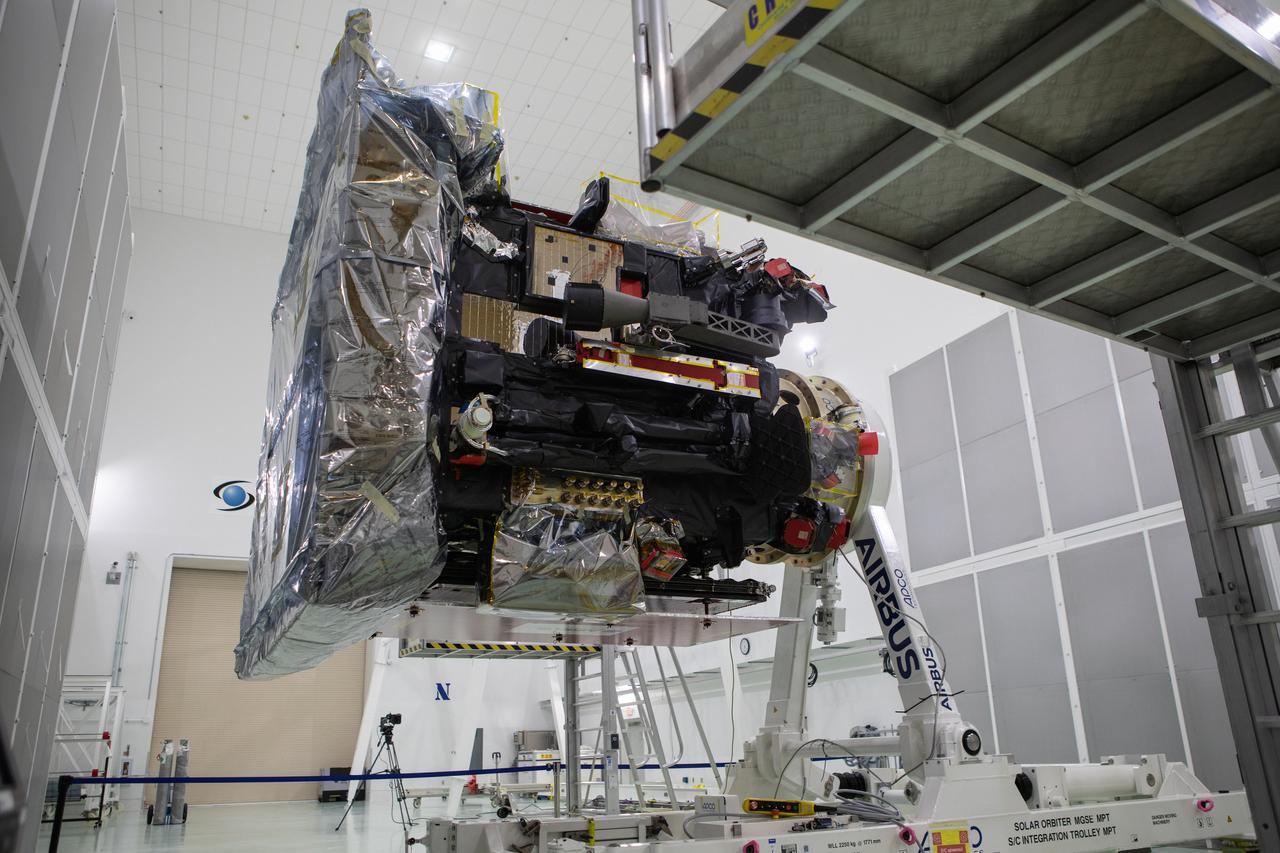
The Solar Orbiter spacecraft has been removed from its shipping container inside the Astrotech Space Operations facility in Titusville, Florida, on Nov. 18, 2019. The spacecraft was flown aboard an Antonov cargo aircraft from Munich, Germany, arriving at NASA’s Kennedy Space Center on Nov. 1, 2019. Solar Orbiter is a European Space Agency mission with strong NASA participation. The mission aims to study the Sun, its outer atmosphere and solar winds. The spacecraft will provide the first images of the Sun’s poles. NASA’s Launch Services Program based at Kennedy is managing the launch. Liftoff is scheduled for Feb. 5, 2020, from Cape Canaveral Air Force Station aboard a United Launch Alliance Atlas V rocket.
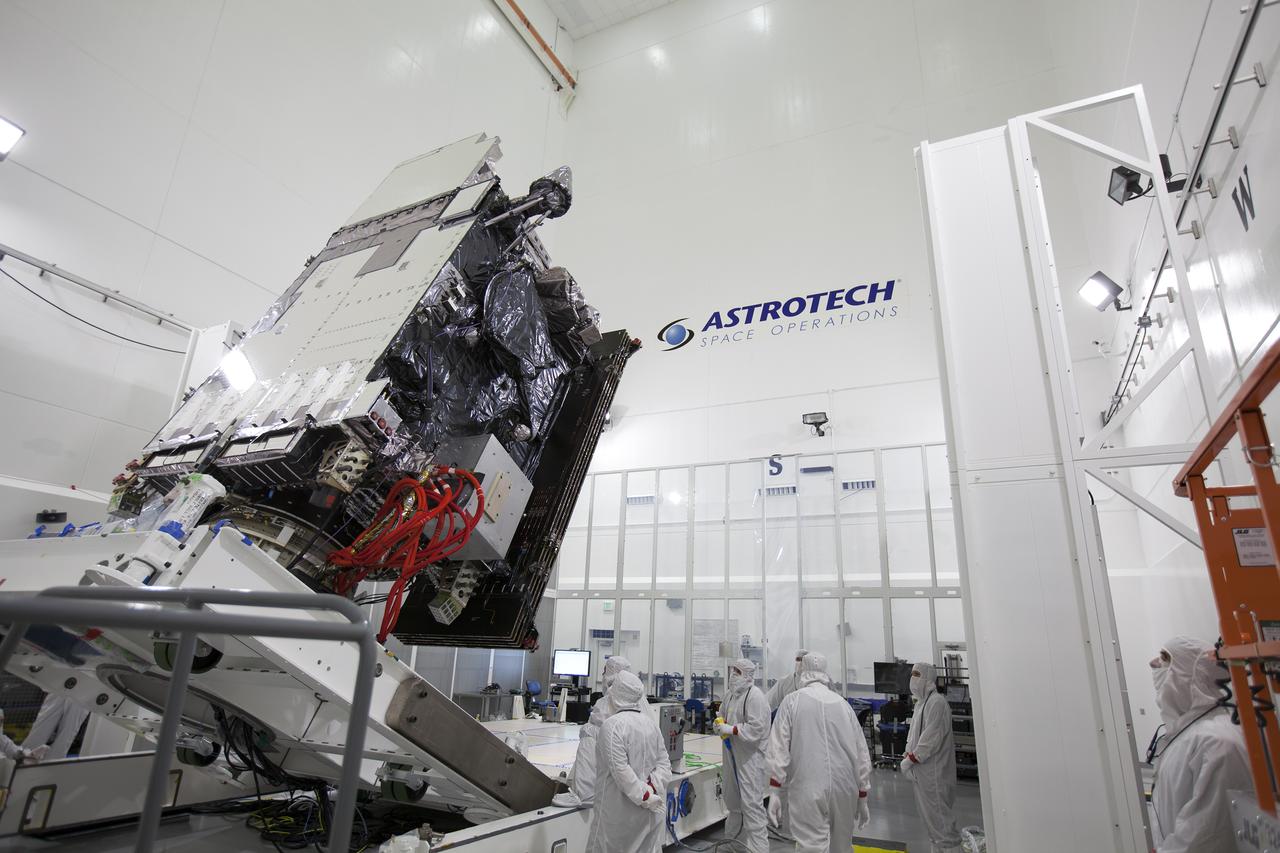
Team members monitor the progress as the Geostationary Operational Environmental Satellite (GOES-R) is lifted to the vertical position on an “up-ender” inside the Astrotech payload processing facility in Titusville, Florida near NASA’s Kennedy Space Center. GOES-R will be the first satellite in a series of next-generation NOAA GOES Satellites. The spacecraft is to launch aboard a United Launch Alliance Atlas V rocket in November.
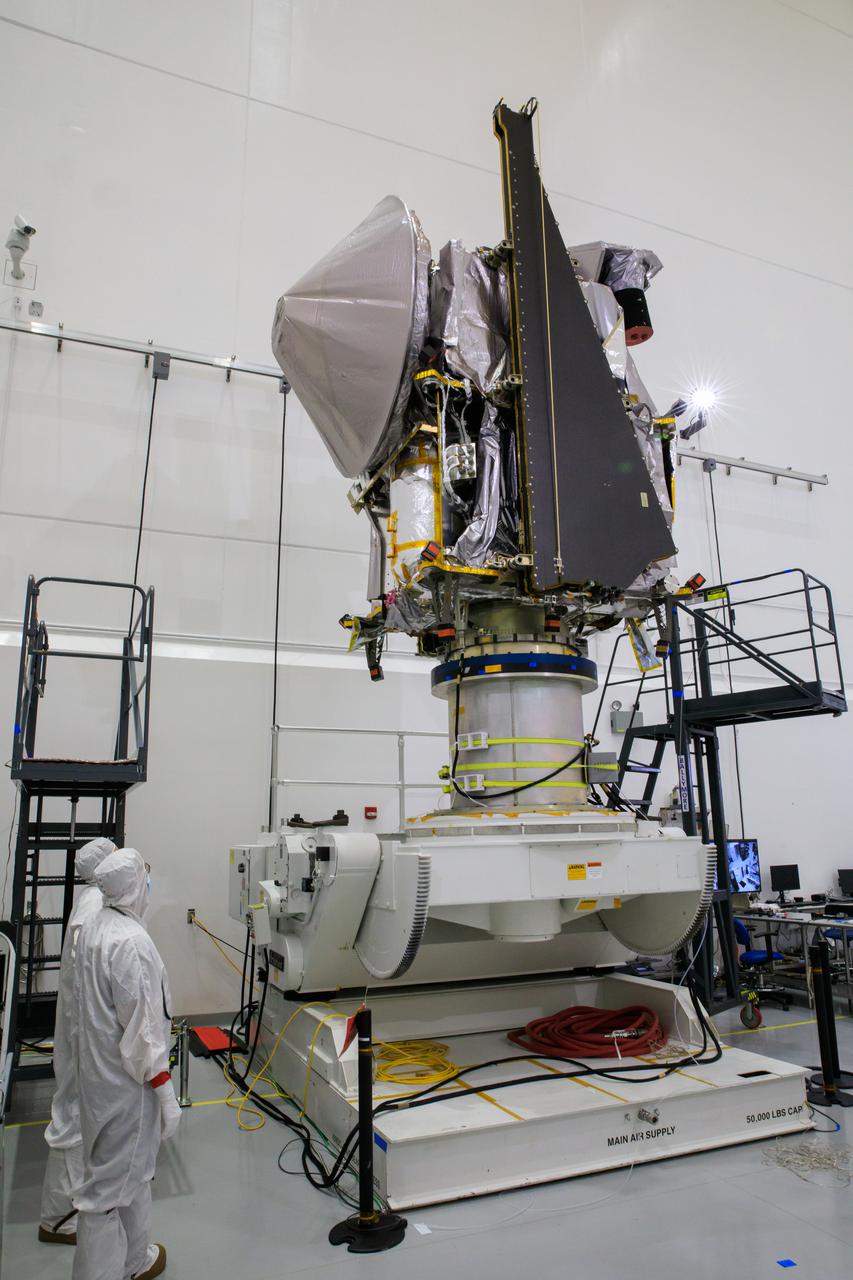
NASA’s Lucy spacecraft is moved to the vertical position on a rotation stand inside the Astrotech Space Operations Facility in Titusville, Florida, on Sept. 1, 2021. In view, the high gain antenna and solar arrays have been installed on the Lucy spacecraft. Lucy is scheduled to launch no earlier than Saturday, Oct. 16, on a United Launch Alliance Atlas V 401 rocket from Launch Pad 41 at Cape Canaveral Space Force Station. NASA’s Launch Services Program based at Kennedy Space Center is managing the launch. Over its 12-year primary mission, Lucy will explore a record-breaking number of asteroids, flying by one asteroid in the solar system’s main belt and seven Trojan asteroids. Additionally, Lucy’s path will circle back to Earth three times for gravity assists, making it the first spacecraft ever to return to the vicinity of Earth from the outer solar system.
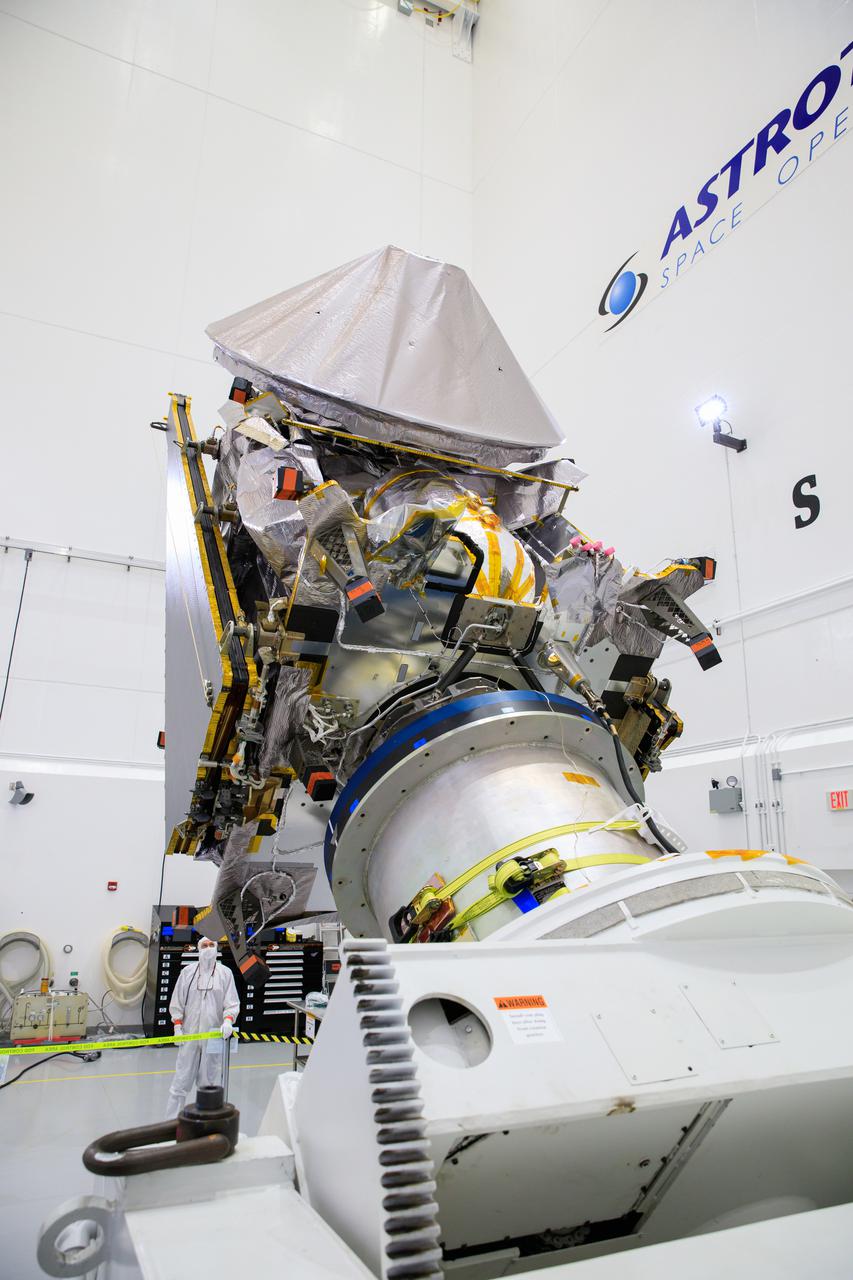
NASA’s Lucy spacecraft is moved to the horizontal position on a rotation stand inside the Astrotech Space Operations Facility in Titusville, Florida, on Sept. 1, 2021. In view, the high gain antenna and solar arrays have been installed on the Lucy spacecraft. Lucy is scheduled to launch no earlier than Saturday, Oct. 16, on a United Launch Alliance Atlas V 401 rocket from Launch Pad 41 at Cape Canaveral Space Force Station. NASA’s Launch Services Program based at Kennedy Space Center is managing the launch. Over its 12-year primary mission, Lucy will explore a record-breaking number of asteroids, flying by one asteroid in the solar system’s main belt and seven Trojan asteroids. Additionally, Lucy’s path will circle back to Earth three times for gravity assists, making it the first spacecraft ever to return to the vicinity of Earth from the outer solar system.
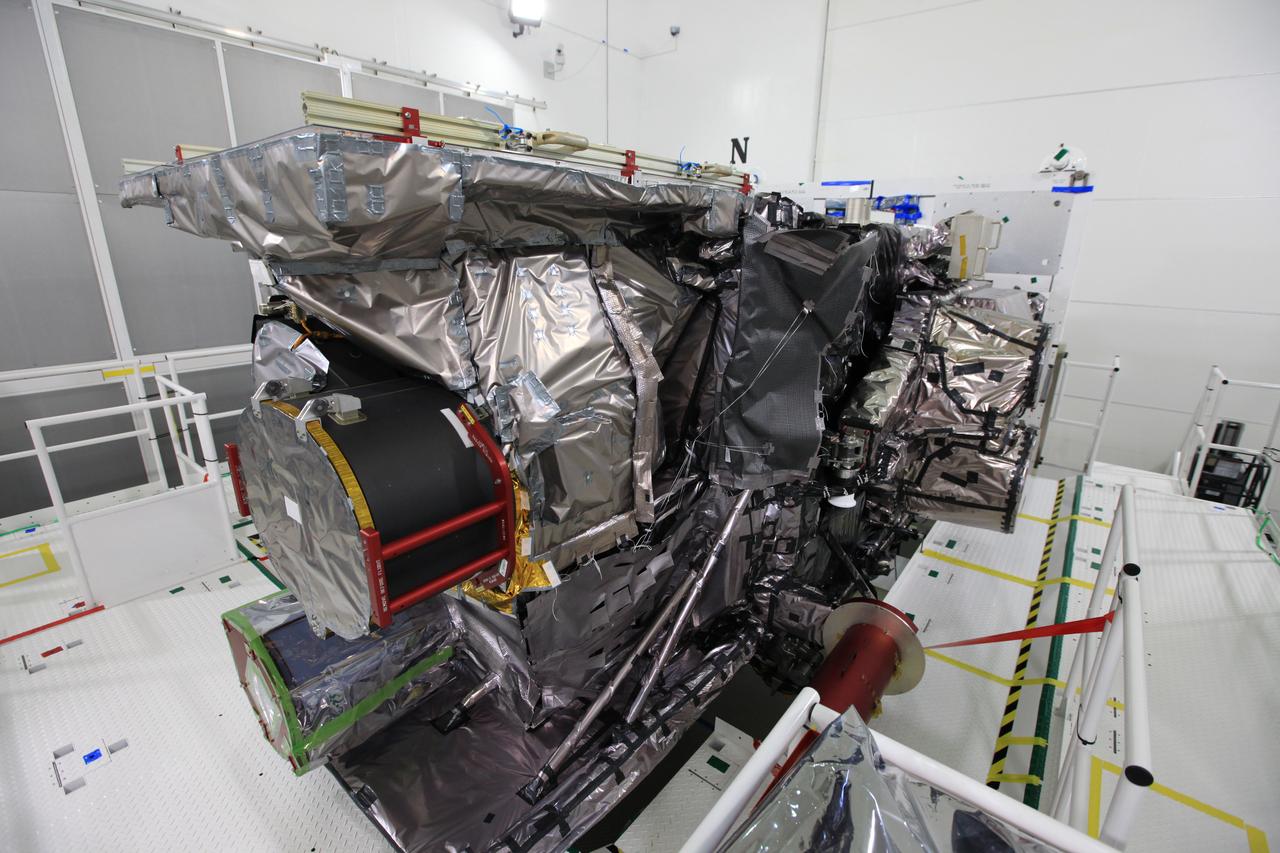
The Advanced Base Line Imager, the primary optical instrument, has been installed on the Geostationary Operational Environmental Satellite (GOES-R) inside the Astrotech payload processing facility in Titusville, Florida near NASA’s Kennedy Space Center. GOES-R will be the first satellite in a series of next-generation NOAA GOES Satellites. The spacecraft is to launch aboard a United Launch Alliance Atlas V rocket in November.
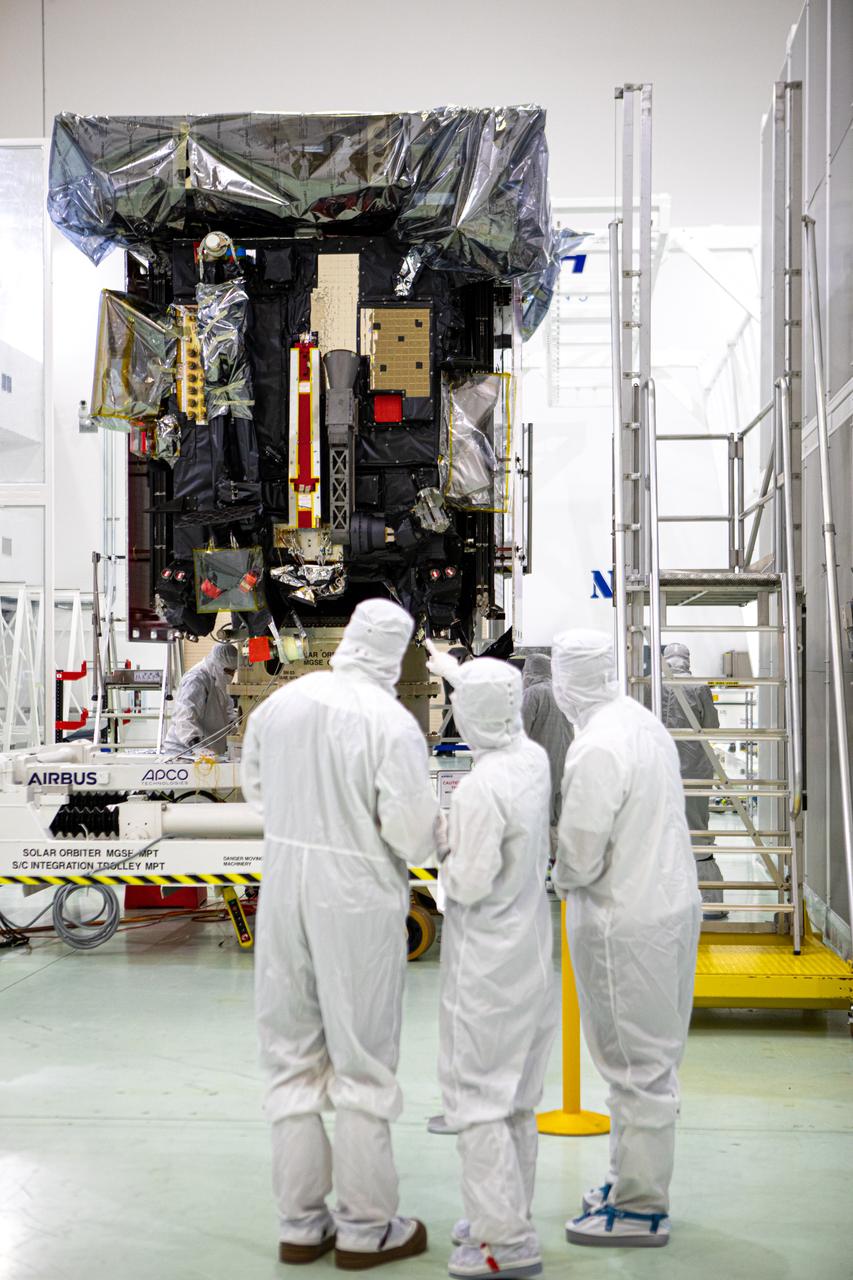
Members of the media were given the opportunity to view and photograph the Solar Orbiter spacecraft up close inside the Astrotech Space Operations payload processing facility in Titusville, Florida, on Dec. 16, 2019. Representatives from NASA’s Launch Services Program (LSP), the European Space Agency (ESA), United Launch Alliance (ULA), Airbus Defence and Space, and NASA’s Goddard Space Flight Center provided an overview of the mission, spacecraft and launch vehicle. Solar Orbiter is a space mission of international collaboration between ESA and NASA, and the spacecraft has been developed by Airbus. The mission will study the Sun and how it can affect the space environment throughout the solar system, and it also will provide the first images of the Sun’s poles. Solar Orbiter is scheduled to launch from Cape Canaveral Air Force Station’s Space Launch Complex 41 aboard a ULA Atlas V rocket at 11:27 p.m. EST on Feb. 5, 2020. LSP will manage the launch.
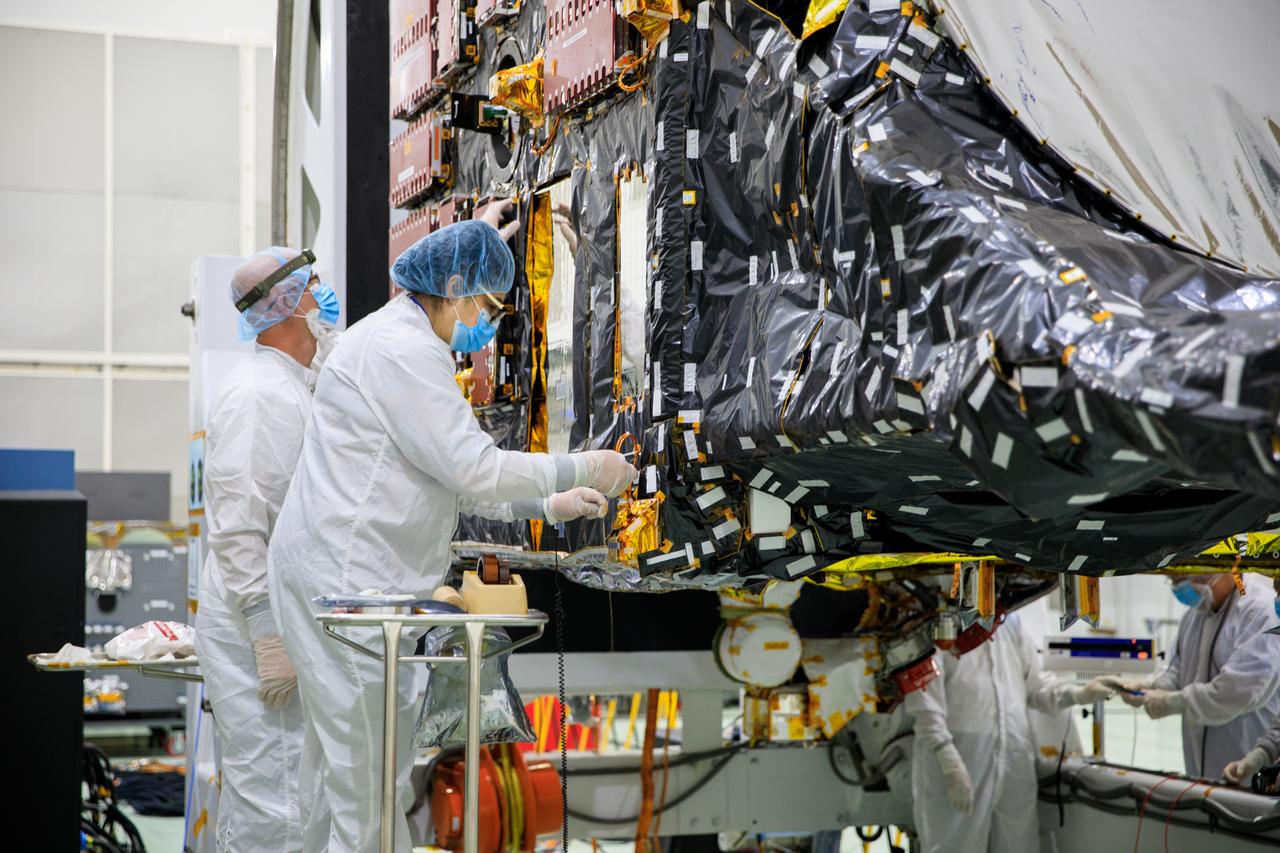
A NASA team prepares the agency’s Psyche spacecraft for launch inside the Astrotech Space Operations Facility near Kennedy Space Center in Florida on July 15, 2023. Psyche will launch atop a SpaceX Falcon Heavy rocket from Launch Complex 39A at Kennedy to explore a metal-rich asteroid. Launch is targeted for Oct. 5, 2023. Riding with Psyche is a pioneering technology demonstration, NASA’s Deep Space Optical Communications (DSOC) experiment.
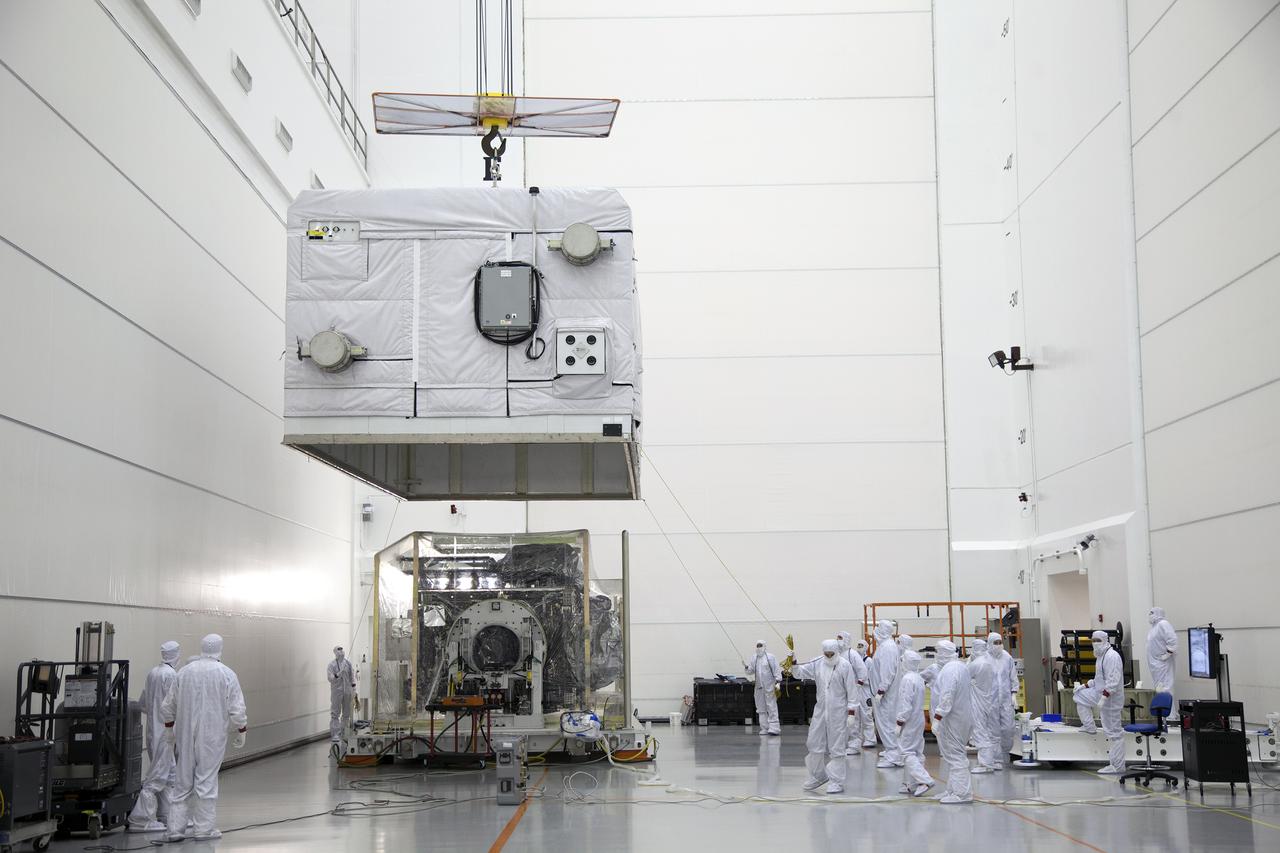
The shipping container is lifted off the GOES-R spacecraft inside the Astrotech payload processing facility in Titusville, Florida near NASA’s Kennedy Space Center. GOES-R will be the first satellite in a series of next-generation NOAA Geostationary Operational Environmental Satellites. The spacecraft is to launch aboard a United Launch Alliance Atlas V rocket in November.
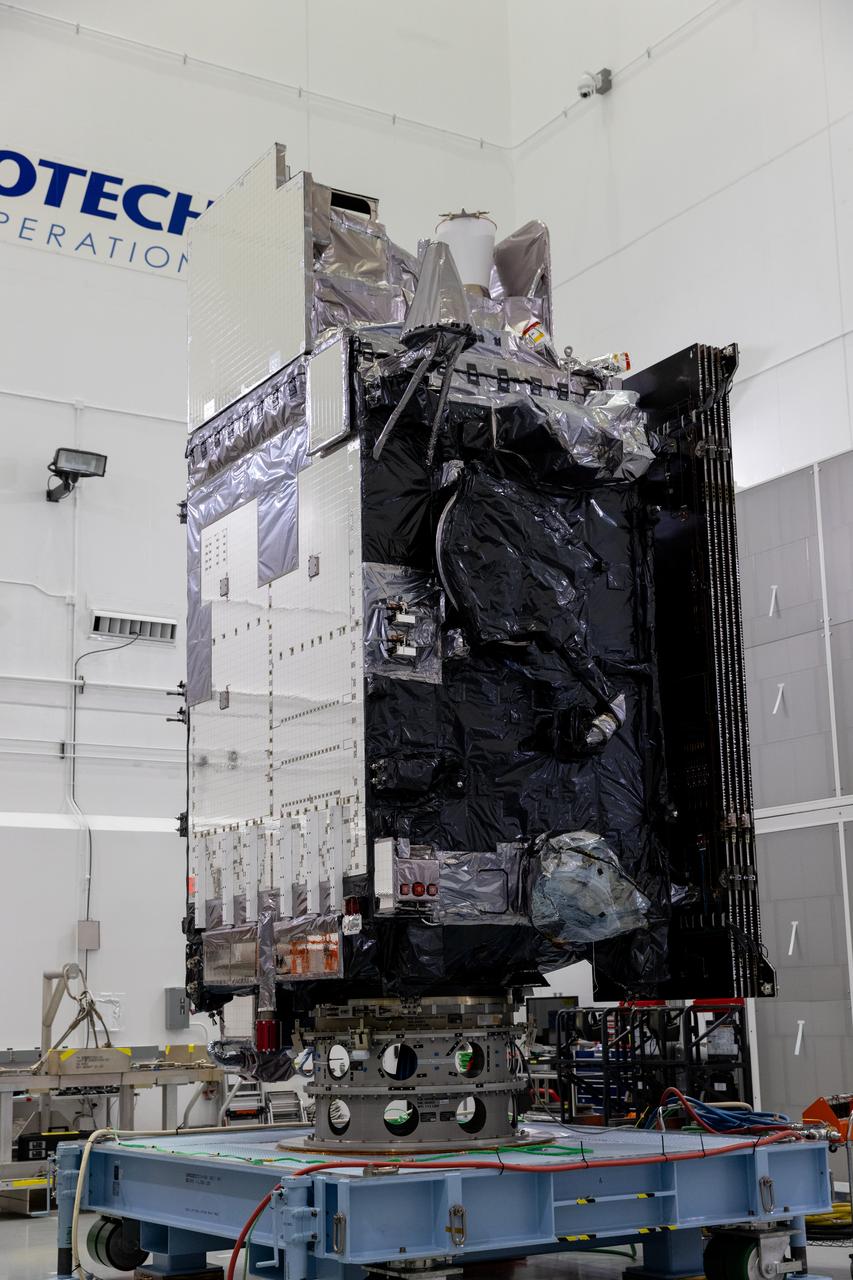
The National Oceanic and Atmospheric Administration (NOAA) Geostationary Operational Environmental Satellite-U (GOES-U) stands vertical on a spacecraft dolly in a high bay at the Astrotech Space Operations Facility near the agency’s Kennedy Space Center in Florida during a NASA-hosted media day on Thursday, June 6, 2024. Part of a collaborative NOAA and NASA program, GOES-U is the last in a series of advanced geostationary weather satellites. Data from the GOES-R satellite series enables forecasters to predict, observe, and track local weather events that affect public safety like thunderstorms, hurricanes, and wildfires.
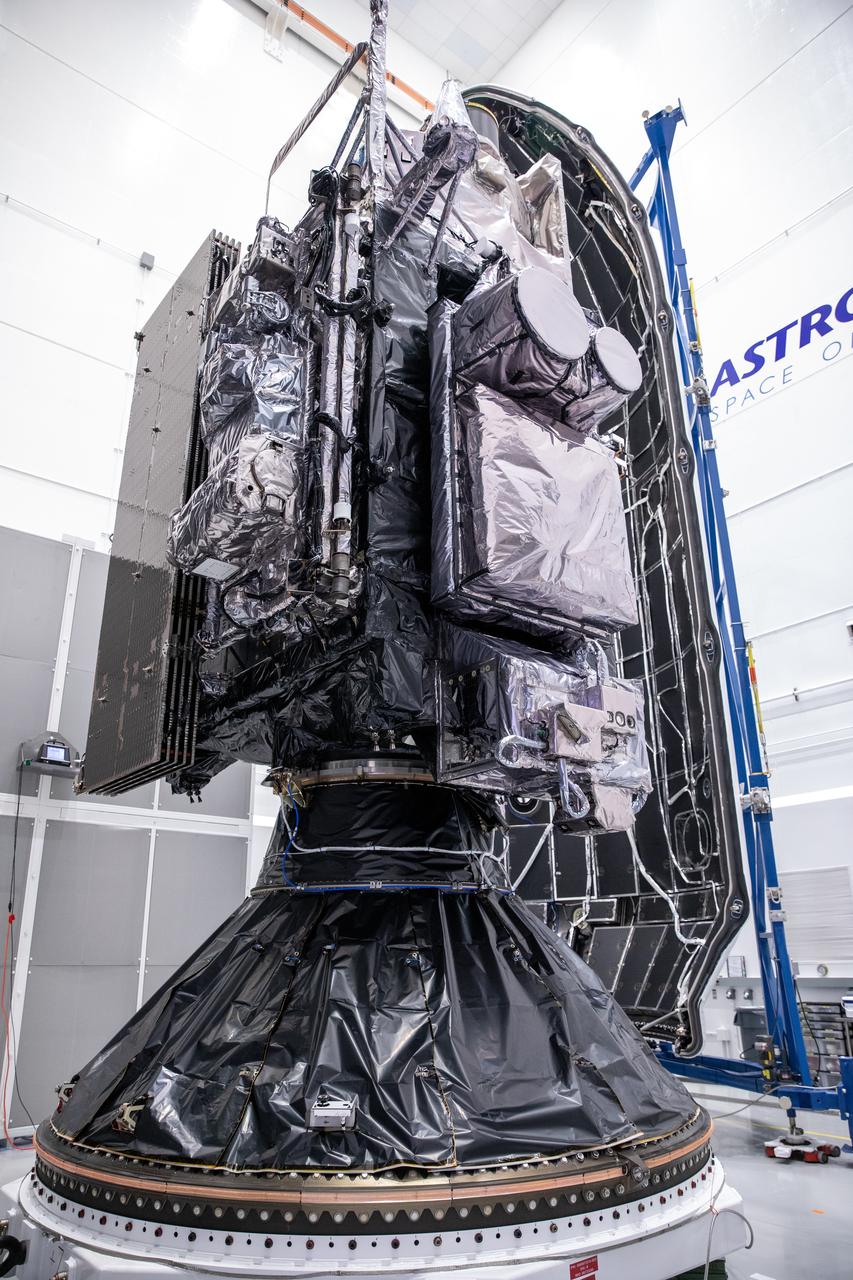
Technicians at the Astrotech Space Operations facility near NASA’s Kennedy Space Center in Florida connect NOAA’s (National Oceanic and Atmospheric Administration) Geostationary Operational Environmental Satellite (GOES-U) to the payload adapter on Thursday, June 13, 2024, in preparation for its upcoming launch. The fourth and final weather-observing and environmental monitoring satellite in NOAA’s GOES-R Series will assist meteorologists in providing advanced weather forecasting and warning capabilities. The two-hour window for liftoff opens 5:16 p.m. EDT Tuesday, June 25, aboard a SpaceX Falcon Heavy rocket from Launch Complex 39A at NASA’s Kennedy Space Center in Florida.
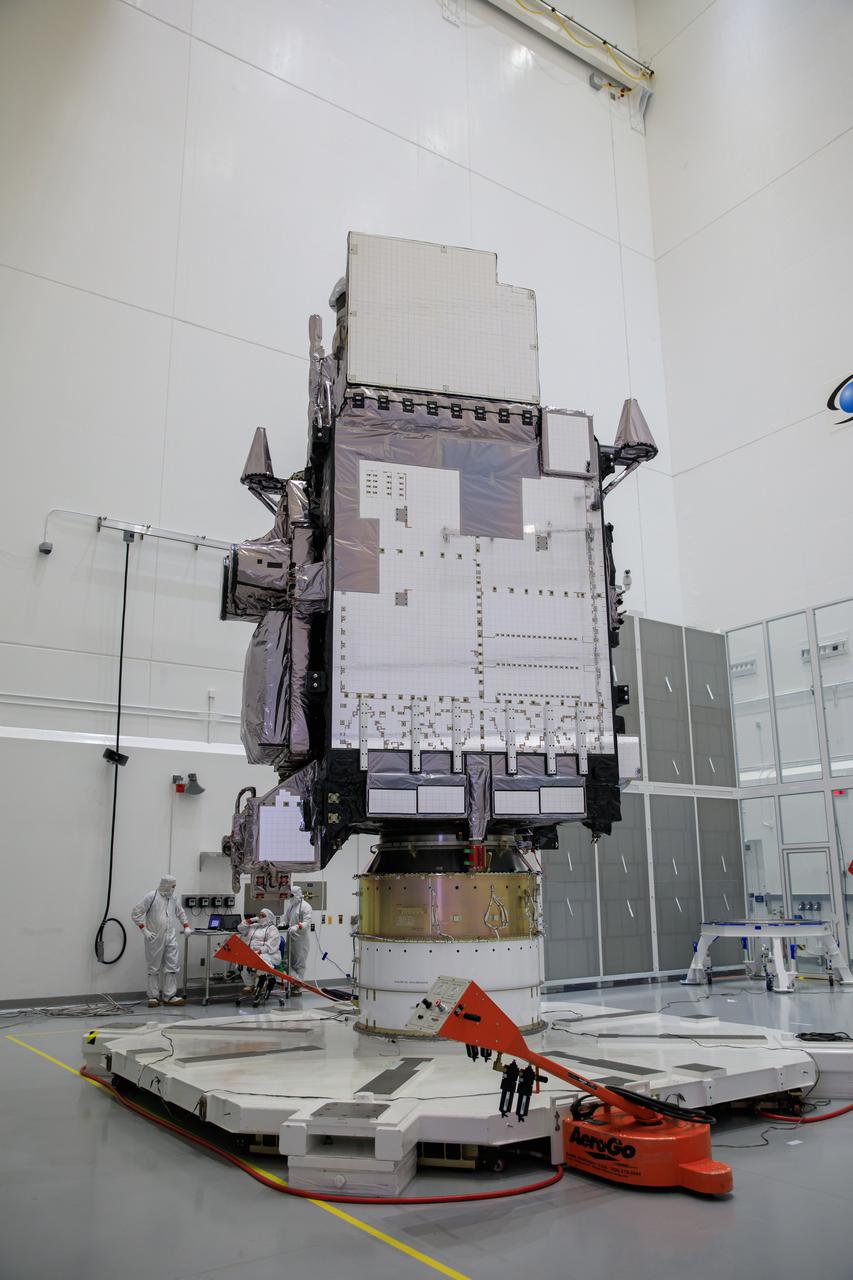
NOAA’s Geostationary Operational Environmental Satellite-T (GOES-T) is in view inside the Astrotech Space Operations facility in Titusville, Florida, on Jan. 28, 2022, as it is being prepared for encapsulation. GOES-T is scheduled to launch on March 1, 2022, atop a United Launch Alliance (ULA) Atlas V 541 rocket from Space Launch Complex 41 at Cape Canaveral Space Force Station. GOES-T is the third satellite in the GOES-R series that will continue to help meteorologists observe and predict local weather events that affect public safety. The launch is being managed by NASA’s Launch Services Program based at Kennedy Space Center in Florida, America’s multi-user spaceport.
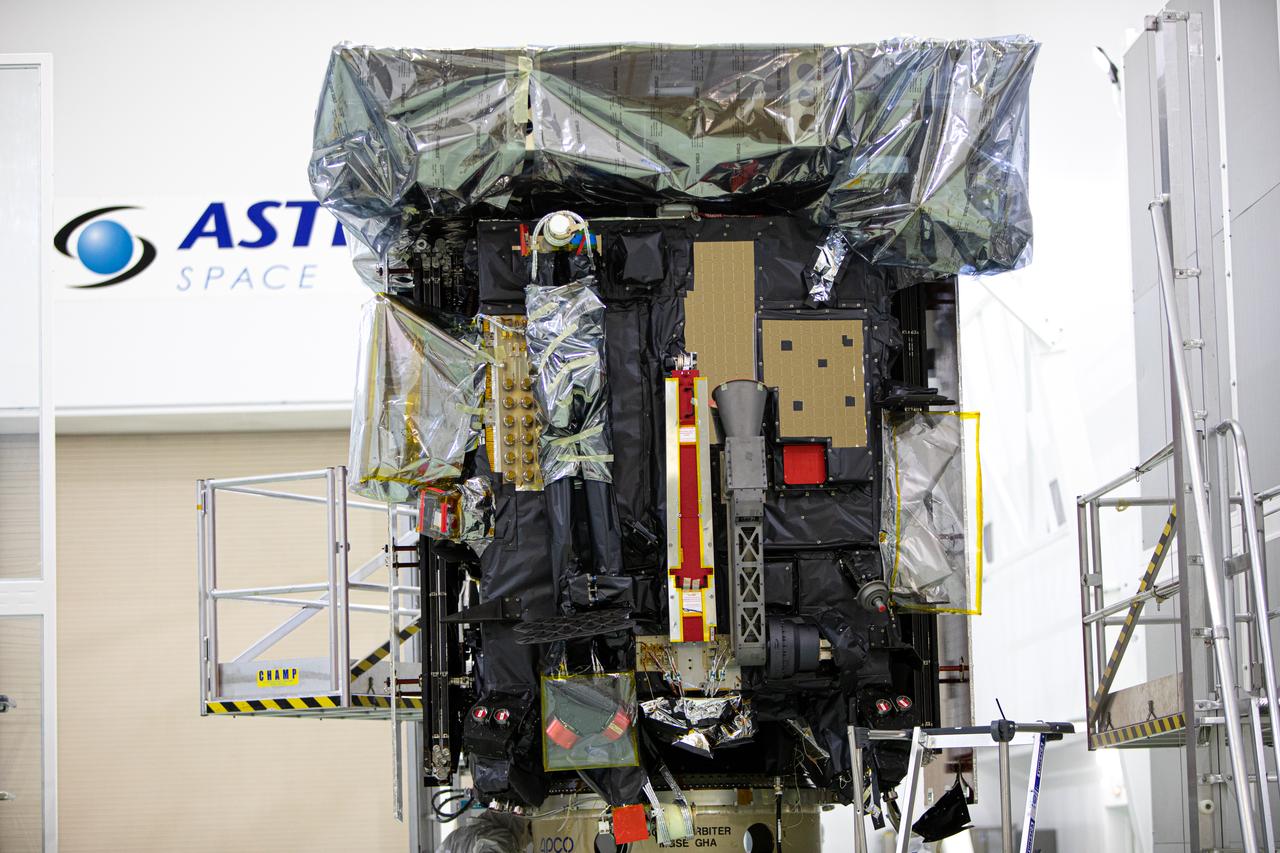
Members of the media were given the opportunity to view and photograph the Solar Orbiter spacecraft up close inside the Astrotech Space Operations payload processing facility in Titusville, Florida, on Dec. 16, 2019. Representatives from NASA’s Launch Services Program (LSP), the European Space Agency (ESA), United Launch Alliance (ULA), Airbus Defence and Space, and NASA’s Goddard Space Flight Center provided an overview of the mission, spacecraft and launch vehicle. Solar Orbiter is a space mission of international collaboration between ESA and NASA, and the spacecraft has been developed by Airbus. The mission will study the Sun and how it can affect the space environment throughout the solar system, and it also will provide the first images of the Sun’s poles. Solar Orbiter is scheduled to launch from Cape Canaveral Air Force Station’s Space Launch Complex 41 aboard a ULA Atlas V rocket at 11:27 p.m. EST on Feb. 5, 2020. LSP will manage the launch.
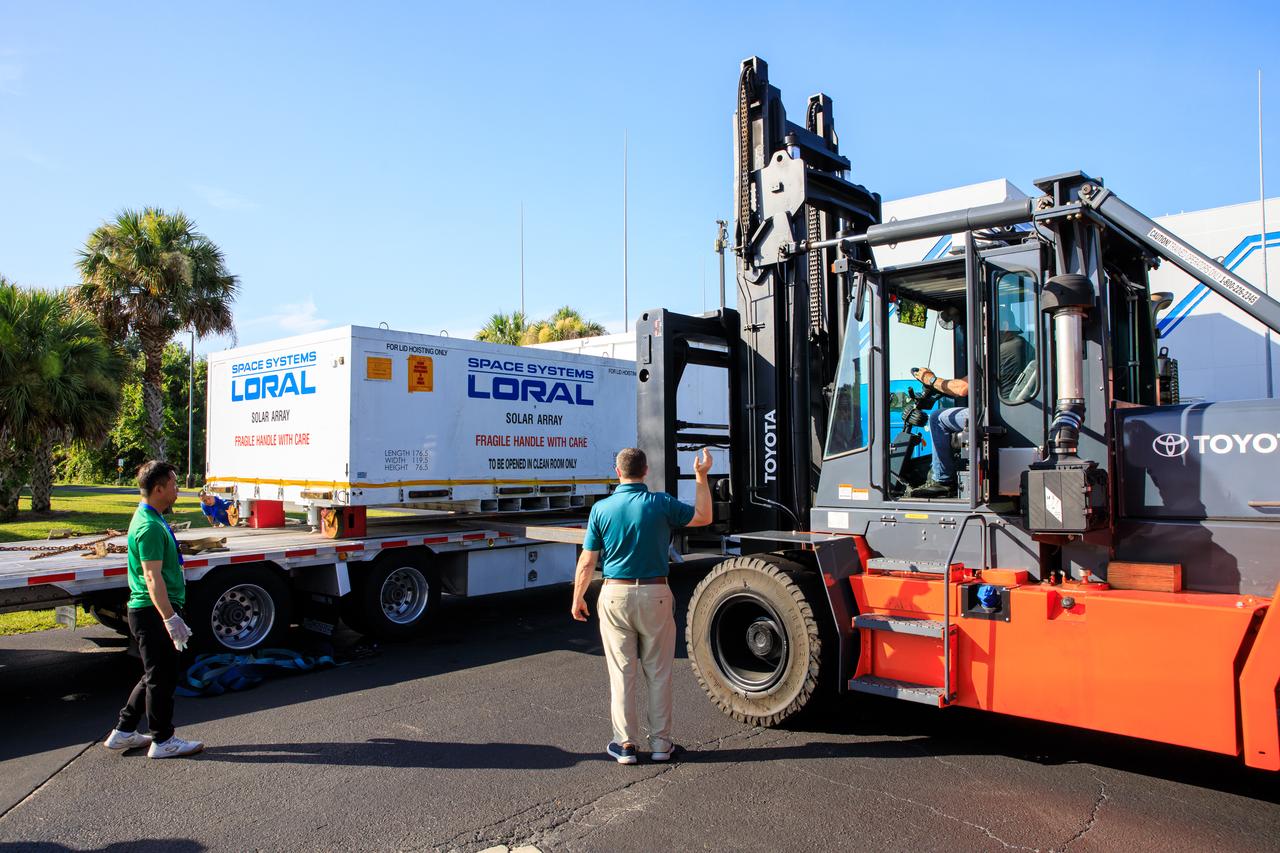
The transport carrier containing the twin solar arrays for NASA’s Psyche spacecraft is offloaded at the Astrotech Space Operations Facility near the agency’s Kennedy Space Center in Florida on July 15, 2023. The solar arrays were shipped from Maxar Technologies, in California. They are part of the solar electric propulsion system, provided by Maxar, that will power the spacecraft on its journey to explore a metal-rich asteroid. Psyche will launch atop a SpaceX Falcon Heavy rocket from Launch Complex 39A at Kennedy. Launch is targeted for Oct. 5, 2023. Riding with Psyche is a pioneering technology demonstration, NASA’s Deep Space Optical Communications (DSOC) experiment.
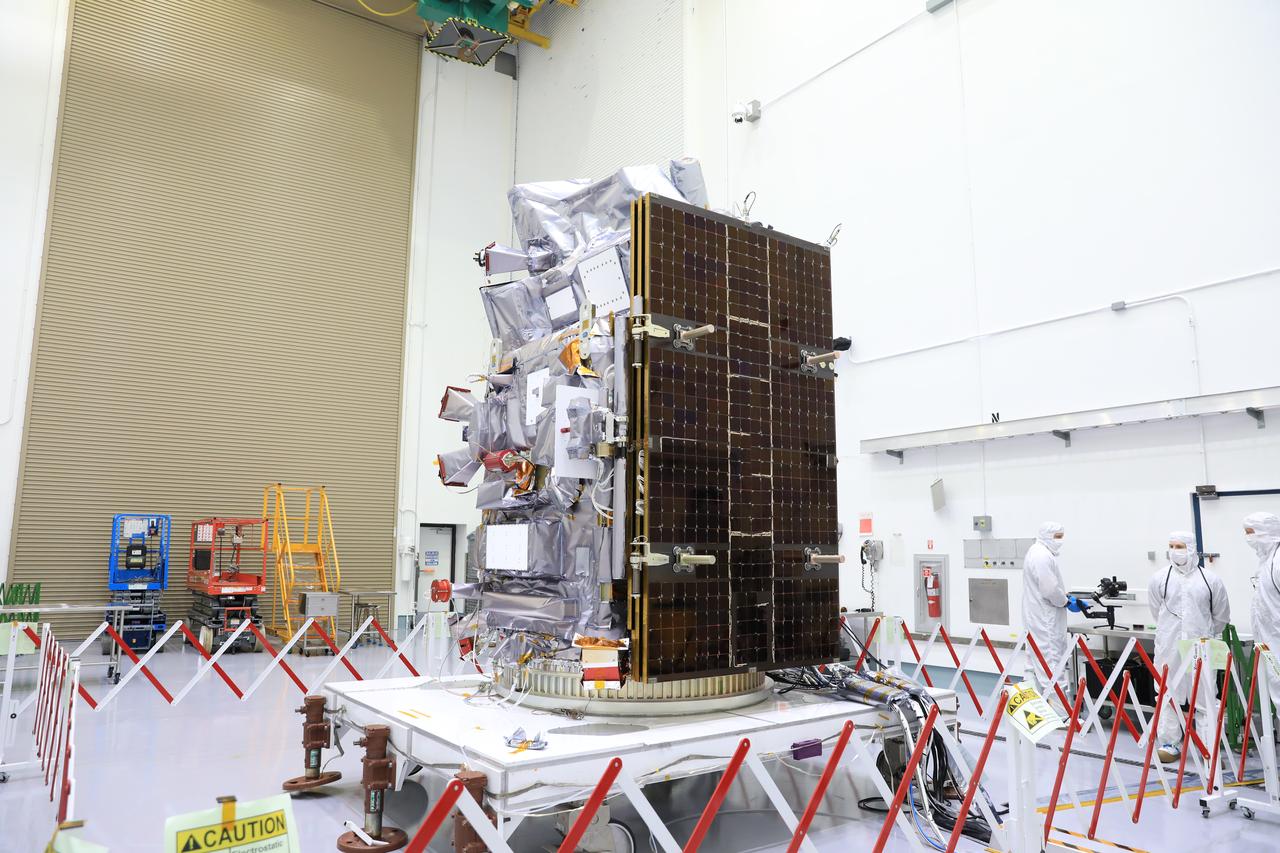
Technicians work to process the NASA’s Plankton, Aerosol, Cloud, ocean Ecosystem (PACE) observatory on a spacecraft dolly in a high bay at the Astrotech Space Operations Facility near the agency’s Kennedy Space Center in Florida on Monday, Dec. 4, 2023. PACE will extend and improve upon NASA’s 20-plus years of global satellite observations of our living ocean, atmospheric aerosols, and clouds. It will also continue key measurements related to air quality and initiate an advanced set of climate-relevant data records. PACE will be encapsulated for launch aboard a SpaceX Falcon 9 rocket in early 2024 from Space Launch Complex 40 at Cape Canaveral Space Force Station in Florida.
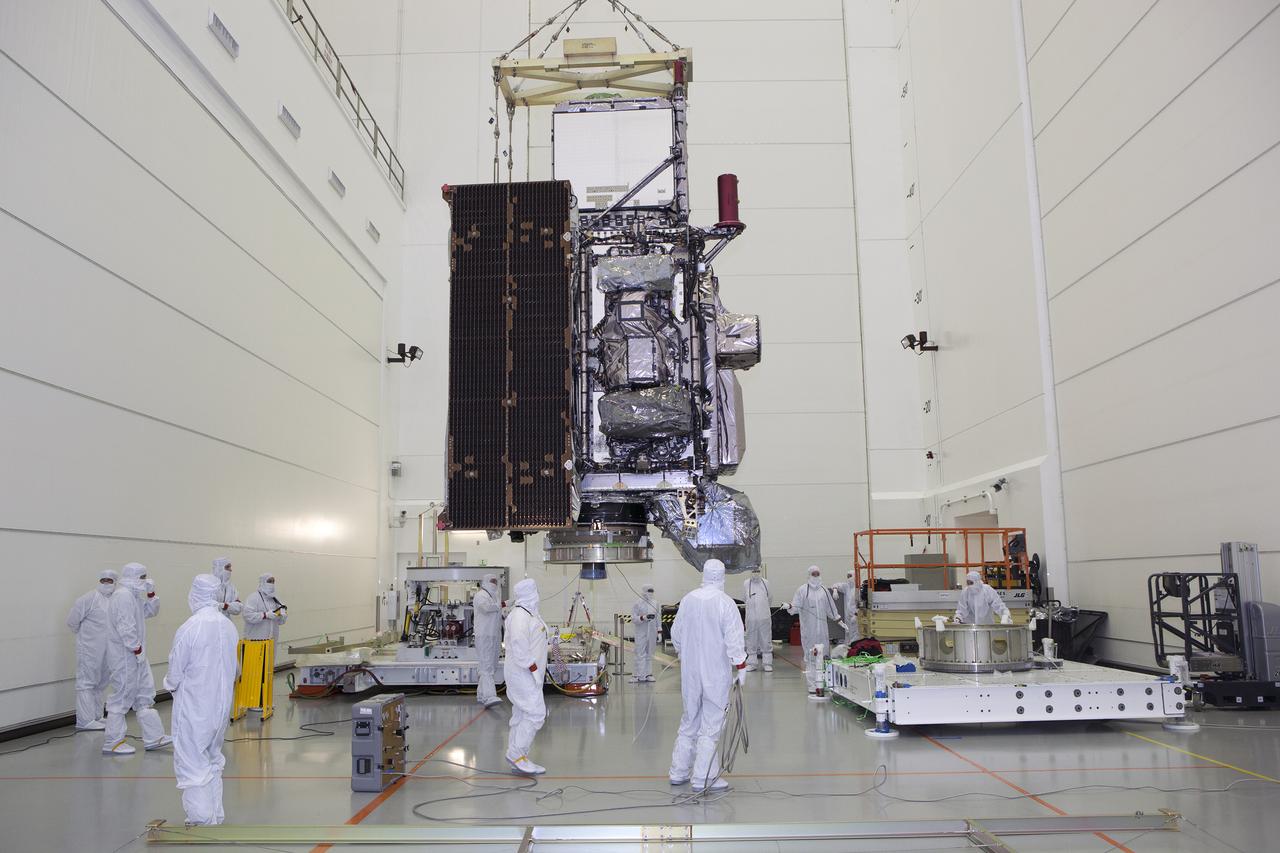
An overhead crane moves the GOES-R spacecraft toward its work stand inside the Astrotech payload processing facility in Titusville, Florida near NASA’s Kennedy Space Center. GOES-R will be the first satellite in a series of next-generation NOAA Geostationary Operational Environmental Satellites. The spacecraft is to launch aboard a United Launch Alliance Atlas V rocket in November.
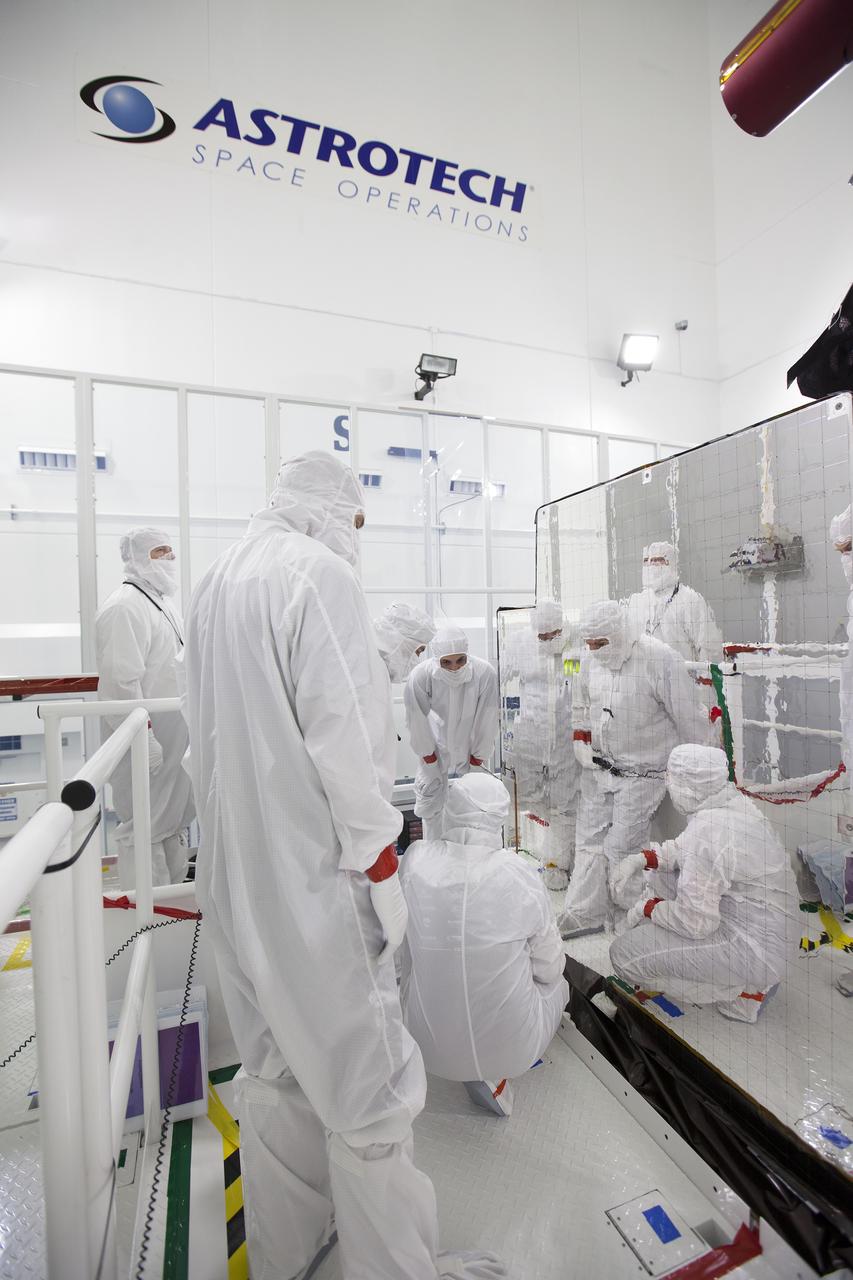
Team members prepare for an optics test on the Advanced Baseline Imager, the primary optical instrument, on the Geostationary Operational Environmental Satellite (GOES-R) inside the Astrotech payload processing facility in Titusville, Florida near NASA’s Kennedy Space Center. Carbon dioxide will be sprayed on the imager to clean it and test its sensitivity. GOES-R will be the first satellite in a series of next-generation NOAA GOES Satellites. The spacecraft is to launch aboard a United Launch Alliance Atlas V rocket in November.

Teams with Astrobotic install the NASA meatball decal on Astrobotic’s Peregrine lunar lander on Tuesday, Nov. 14, 2023, at the Astrotech Space Operations Facility near the agency’s Kennedy Space Center in Florida. Peregrine will launch onboard a United Launch Alliance Vulcan rocket targeted for no earlier than Dec. 24, 2023, from Launch Complex 41 at Cape Canaveral Space Force Station in Florida. The lander will carry a suite of NASA payloads to the Moon as part of the agency’s CLPS (Commercial Lunar Payload Services) initiative and Artemis program.
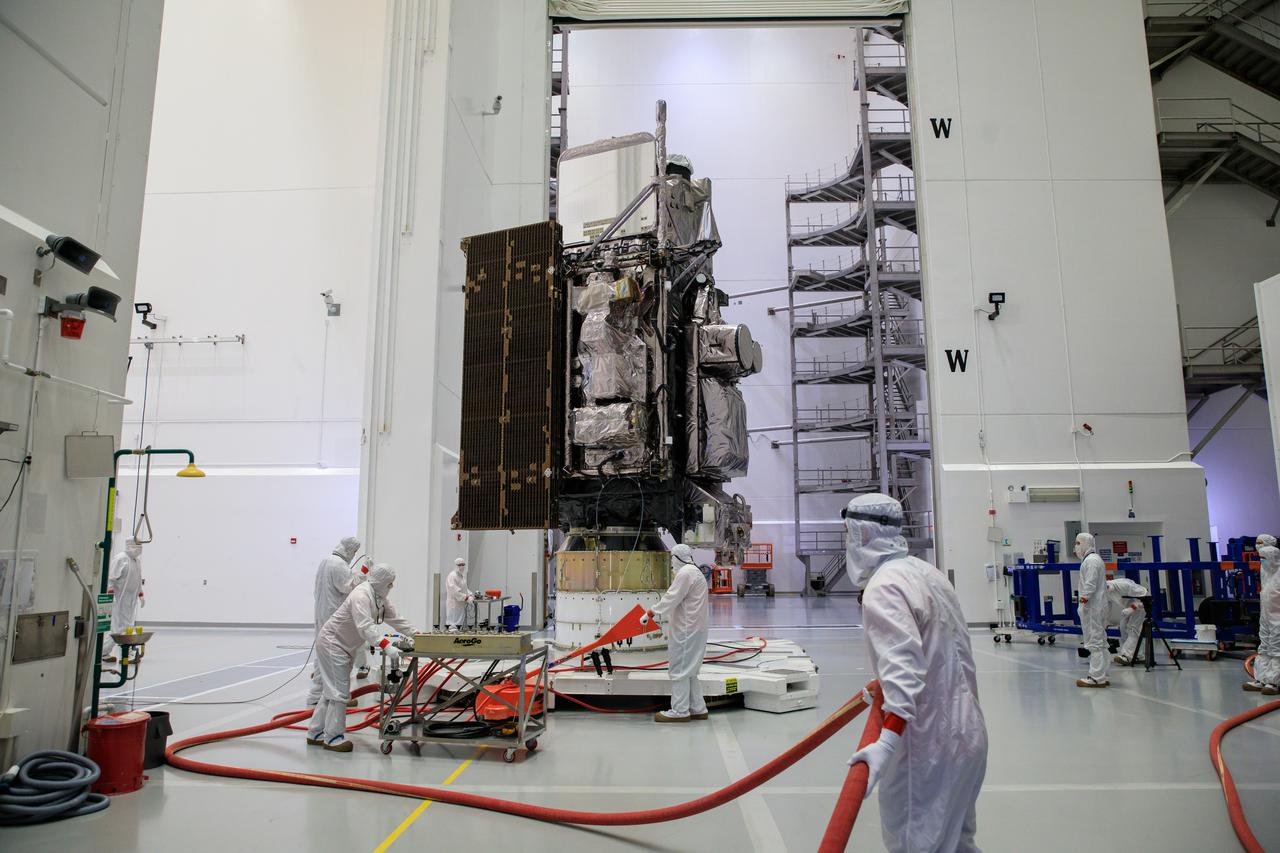
Technicians prepare NOAA’s Geostationary Operational Environmental Satellite-T (GOES-T) for encapsulation in its protective payload fairings inside the Astrotech Space Operations facility in Titusville, Florida, on Jan. 28, 2022. GOES-T is scheduled to launch on March 1, 2022, atop a United Launch Alliance (ULA) Atlas V 541 rocket from Space Launch Complex 41 at Cape Canaveral Space Force Station. GOES-T is the third satellite in the GOES-R series that will continue to help meteorologists observe and predict local weather events that affect public safety. The launch is being managed by NASA’s Launch Services Program based at Kennedy Space Center in Florida, America’s multi-user spaceport.
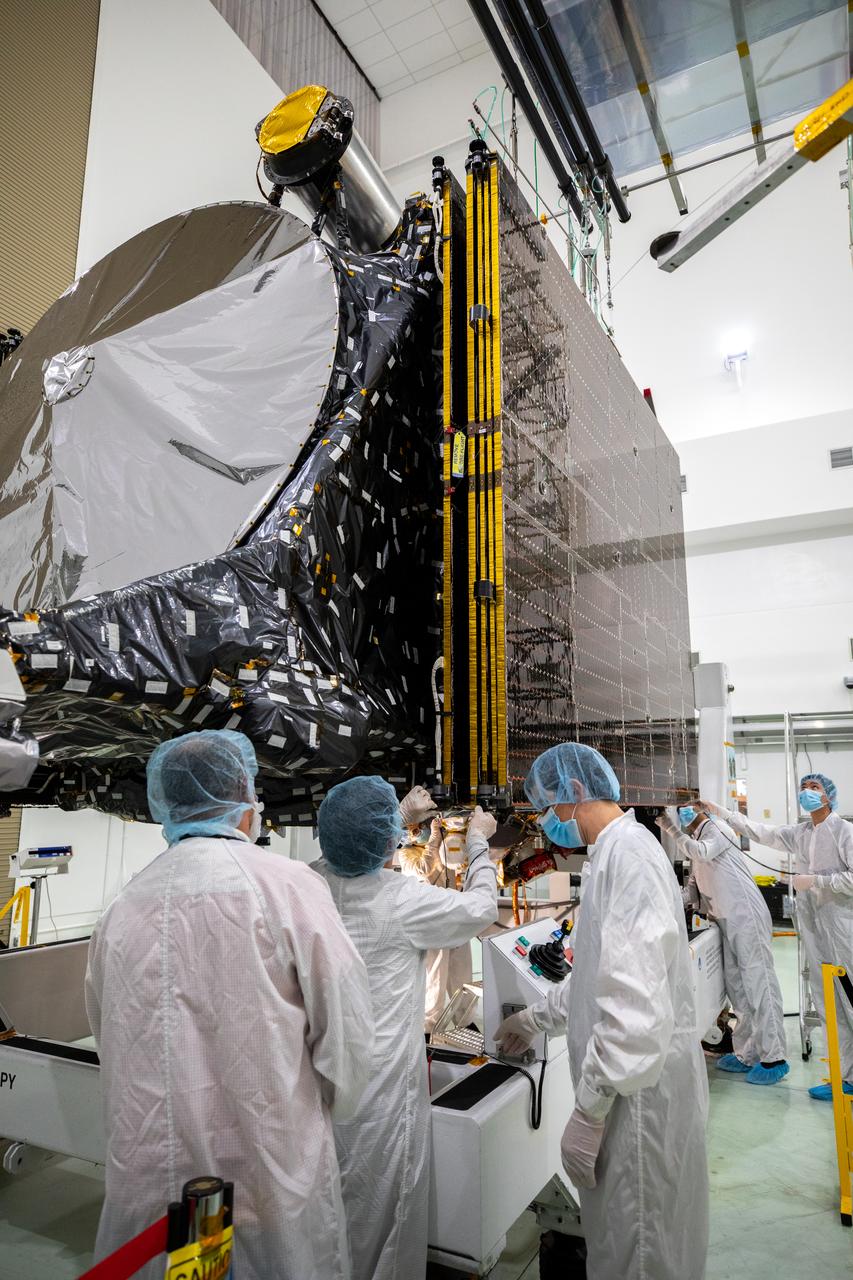
Team members retract the two solar arrays attached to NASA’s Psyche spacecraft inside the Astrotech Space Operations Facility near the agency’s Kennedy Space Center in Florida on July 25, 2023. The solar arrays, which were shipped from Maxar Technologies, in San Jose, California, are being stowed for launch. They are part of the solar electric propulsion system, provided by Maxar, that will power the spacecraft on its journey to explore a metal-rich asteroid. Psyche will launch atop a SpaceX Falcon Heavy rocket from Launch Complex 39A at Kennedy. Launch is targeted for Oct. 5, 2023. Riding with Psyche is a pioneering technology demonstration, NASA’s Deep Space Optical Communications (DSOC) experiment.
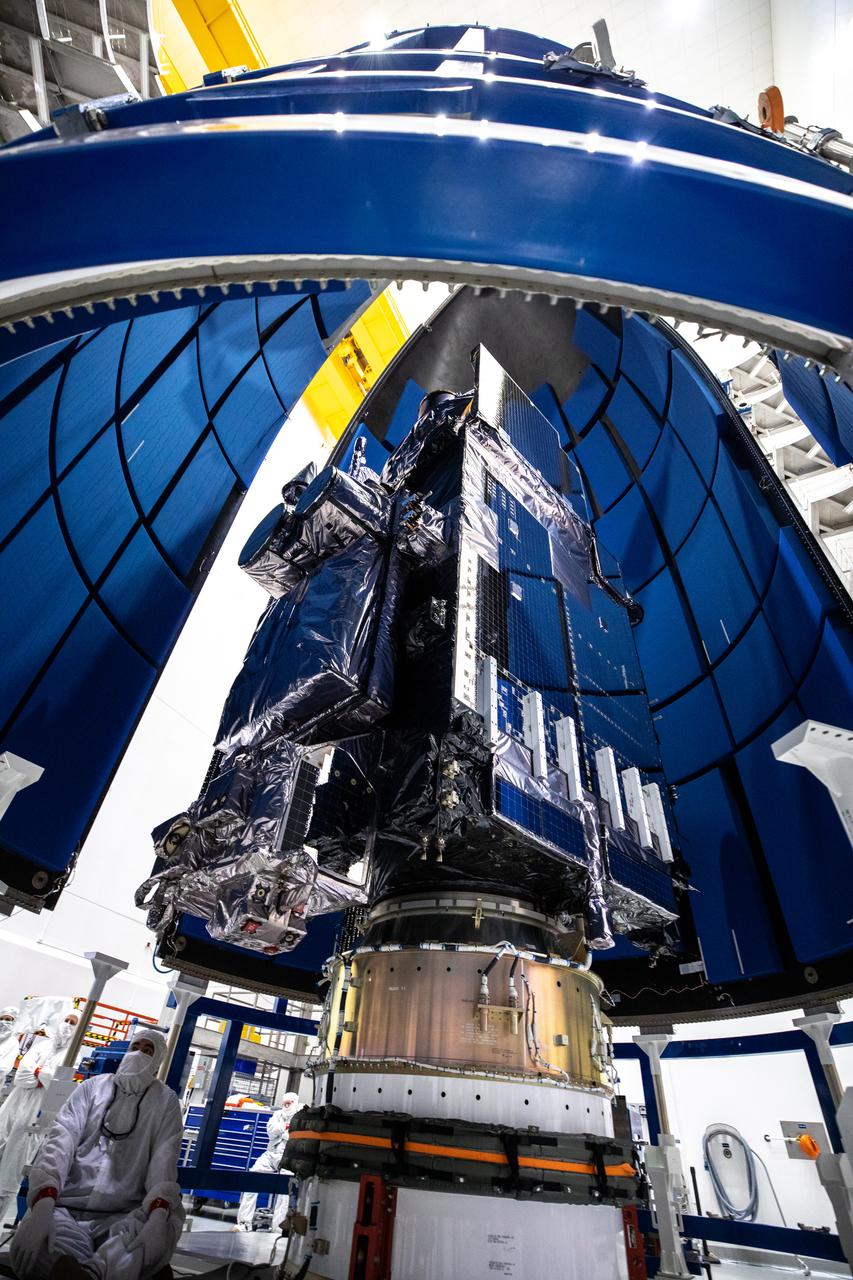
In this view looking up, the United Launch Alliance Atlas V payload fairings are being secured around NOAA’s Geostationary Operational Environmental Satellite-T (GOES-T) inside the Astrotech Space Operations facility in Titusville, Florida, on Feb. 7, 2022. The payload fairings will secure and protect the satellite during launch. GOES-T is scheduled to launch on March 1, 2022, atop the Atlas V 541 rocket from Space Launch Complex 41 at Cape Canaveral Space Force Station. GOES-T is the third satellite in the GOES-R series that will continue to help meteorologists observe and predict local weather events that affect public safety. The launch is being managed by NASA’s Launch Services Program based at Kennedy Space Center in Florida, America’s multi-user spaceport.
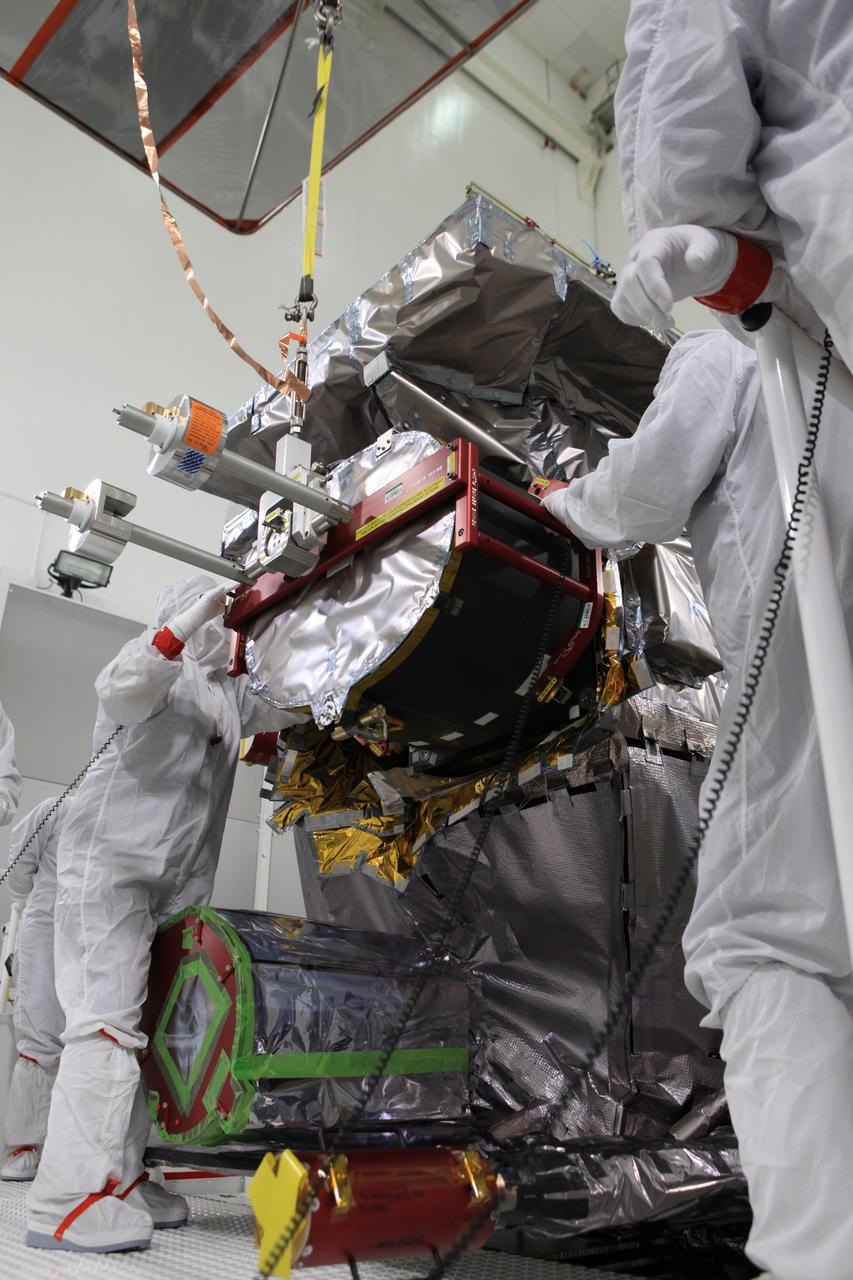
Team members install the Advanced Base Line Imager, the primary optical instrument, on the Geostationary Operational Environmental Satellite (GOES-R) inside the Astrotech payload processing facility in Titusville, Florida near NASA’s Kennedy Space Center. GOES-R will be the first satellite in a series of next-generation NOAA GOES Satellites. The spacecraft is to launch aboard a United Launch Alliance Atlas V rocket in November.
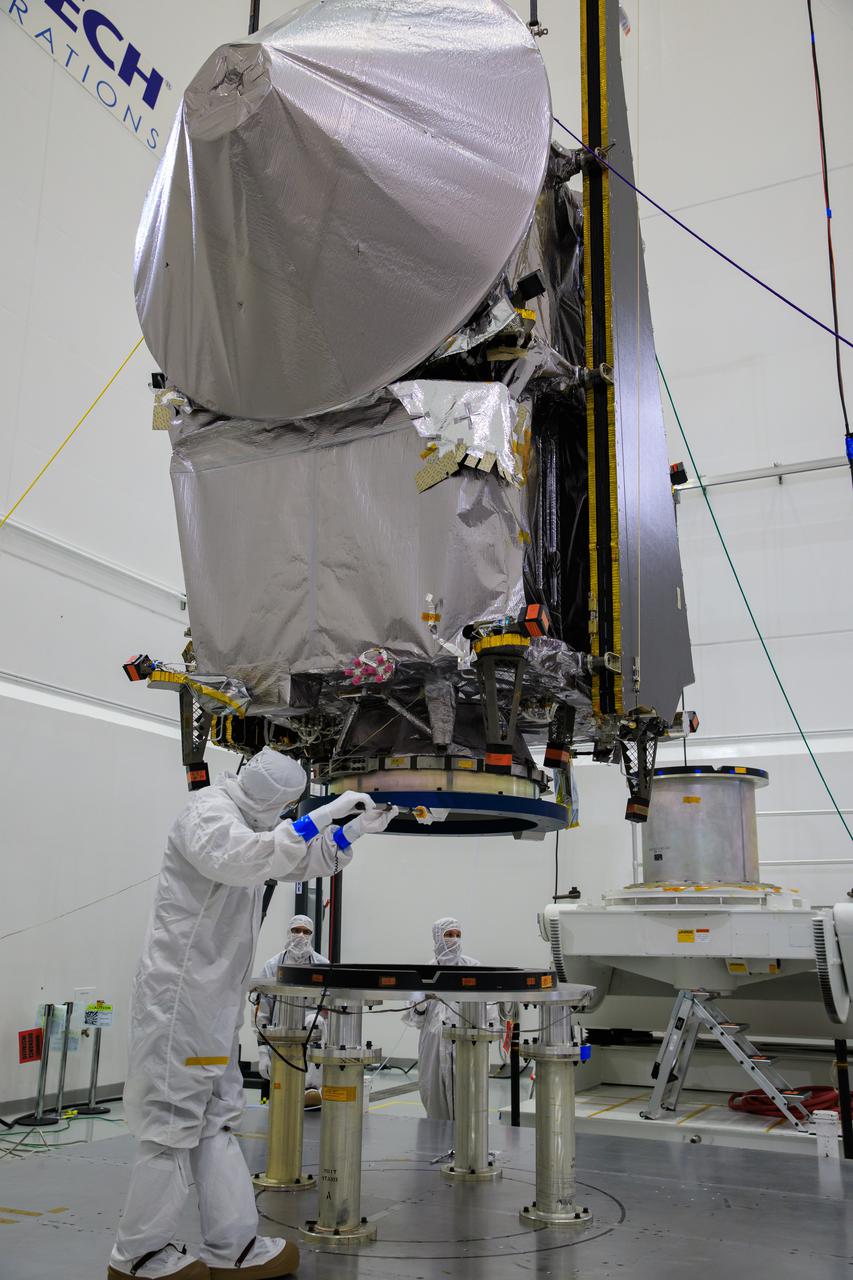
NASA’s Lucy spacecraft, with its high gain antenna attached, is lowered onto a stationary work stand inside the Astrotech Space Operations Facility in Titusville, Florida on Sept. 8, 2021. Lucy is scheduled to launch no earlier than Saturday, Oct. 16, on a United Launch Alliance Atlas V 401 rocket from Launch Pad 41 at Cape Canaveral Space Force Station. NASA’s Launch Services Program based at Kennedy Space Center is managing the launch. Over its 12-year primary mission, Lucy will explore a record-breaking number of asteroids, flying by one asteroid in the solar system’s main belt and seven Trojan asteroids. Additionally, Lucy’s path will circle back to Earth three times for gravity assists, making it the first spacecraft ever to return to the vicinity of Earth from the outer solar system.
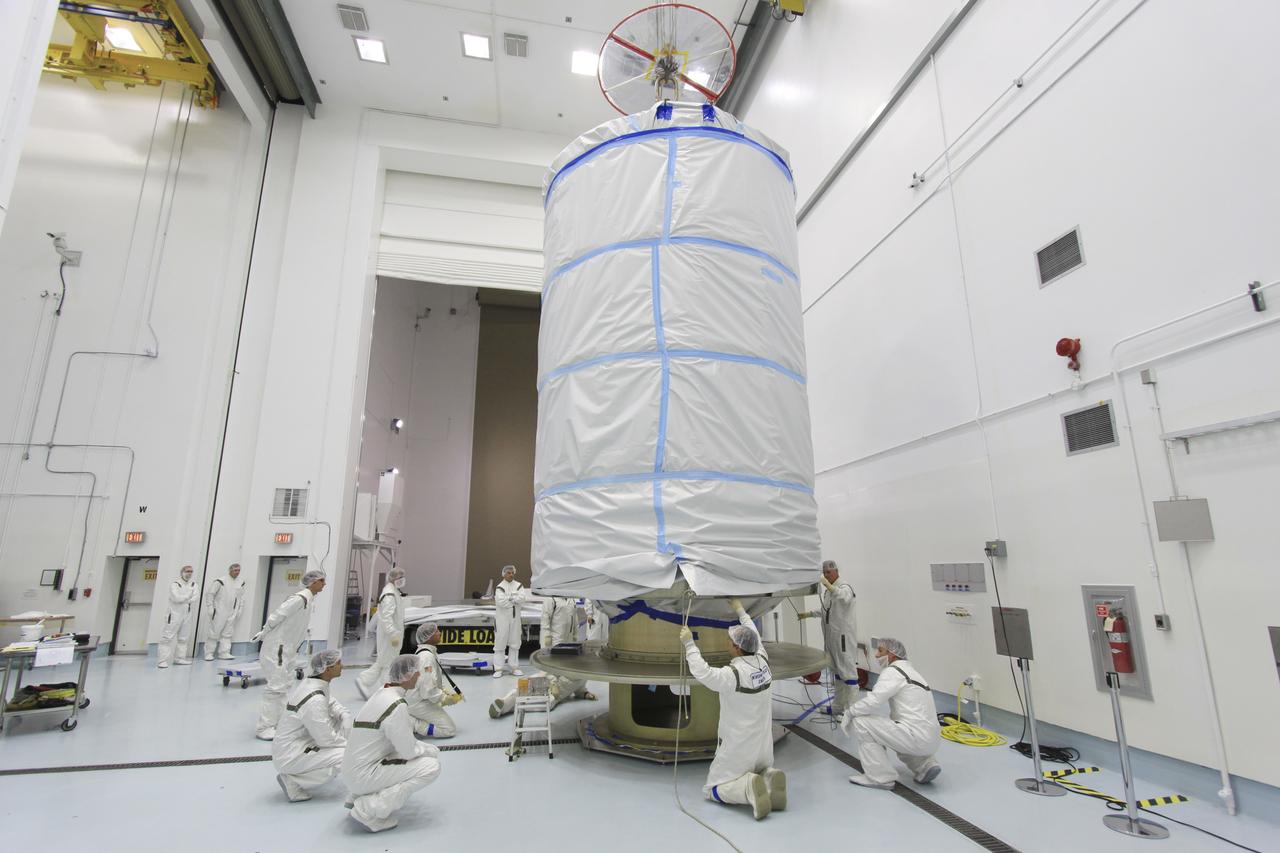
GRAIL put into Canister and Canister lifted onto Transporter
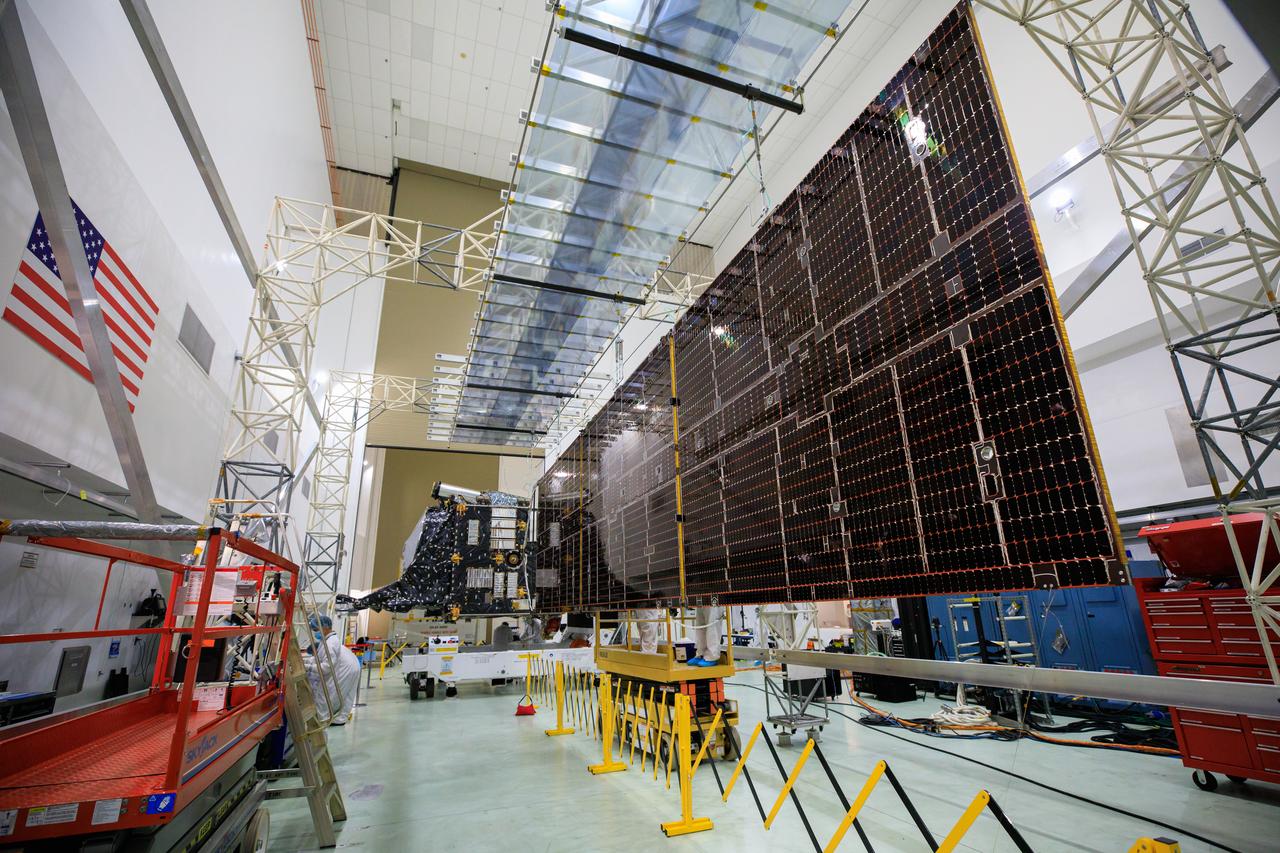
Technicians are preparing to integrate one of two solar arrays to NASA’s Psyche spacecraft inside the Astrotech Space Operations Facility near the agency’s Kennedy Space Center in Florida on July 24, 2023. The solar arrays were shipped from Maxar Technologies, in San Jose, California. They are part of the solar electric propulsion system, provided by Maxar, that will power the spacecraft on its journey to explore a metal-rich asteroid. Psyche will launch atop a SpaceX Falcon Heavy rocket from Launch Complex 39A at Kennedy. Launch is targeted for Oct. 5, 2023. Riding with Psyche is a pioneering technology demonstration, NASA’s Deep Space Optical Communications (DSOC) experiment.
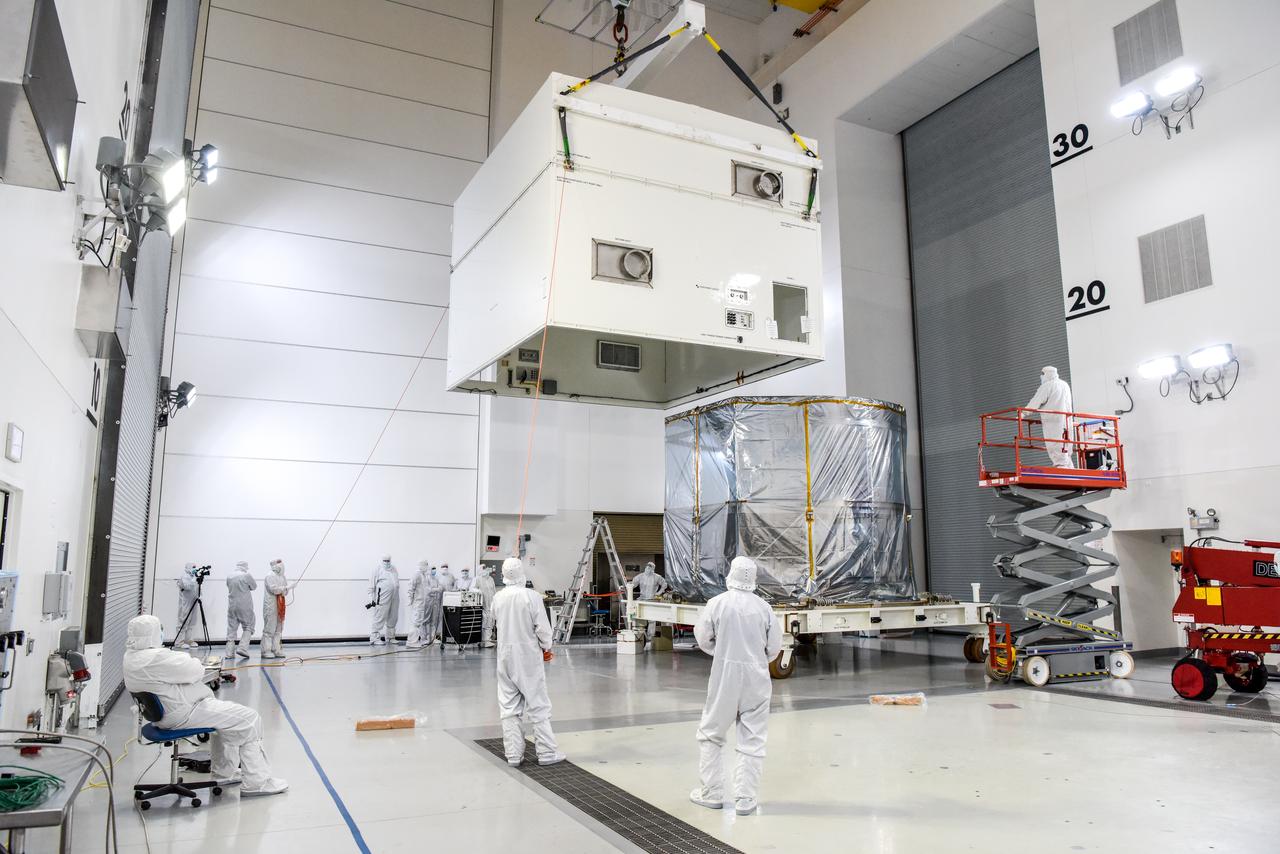
NASA’s SPHEREx (Spectro-Photometer for the History of the Universe, Epoch of Reionization and Ices Explorer) is uncrated for prelaunch processing at Vandenberg Space Force Base in California on Wednesday, Jan. 15, 2025. SPHEREx will enter a polar orbit around Earth and create a 3D map of the entire sky, gathering information about millions of galaxies for scientists to study what happened after the big bang, the history of galaxy evolution, and the origins of water in planetary systems in our galaxy. SPHEREx will launch aboard a SpaceX Falcon 9 rocket in late February 2025.
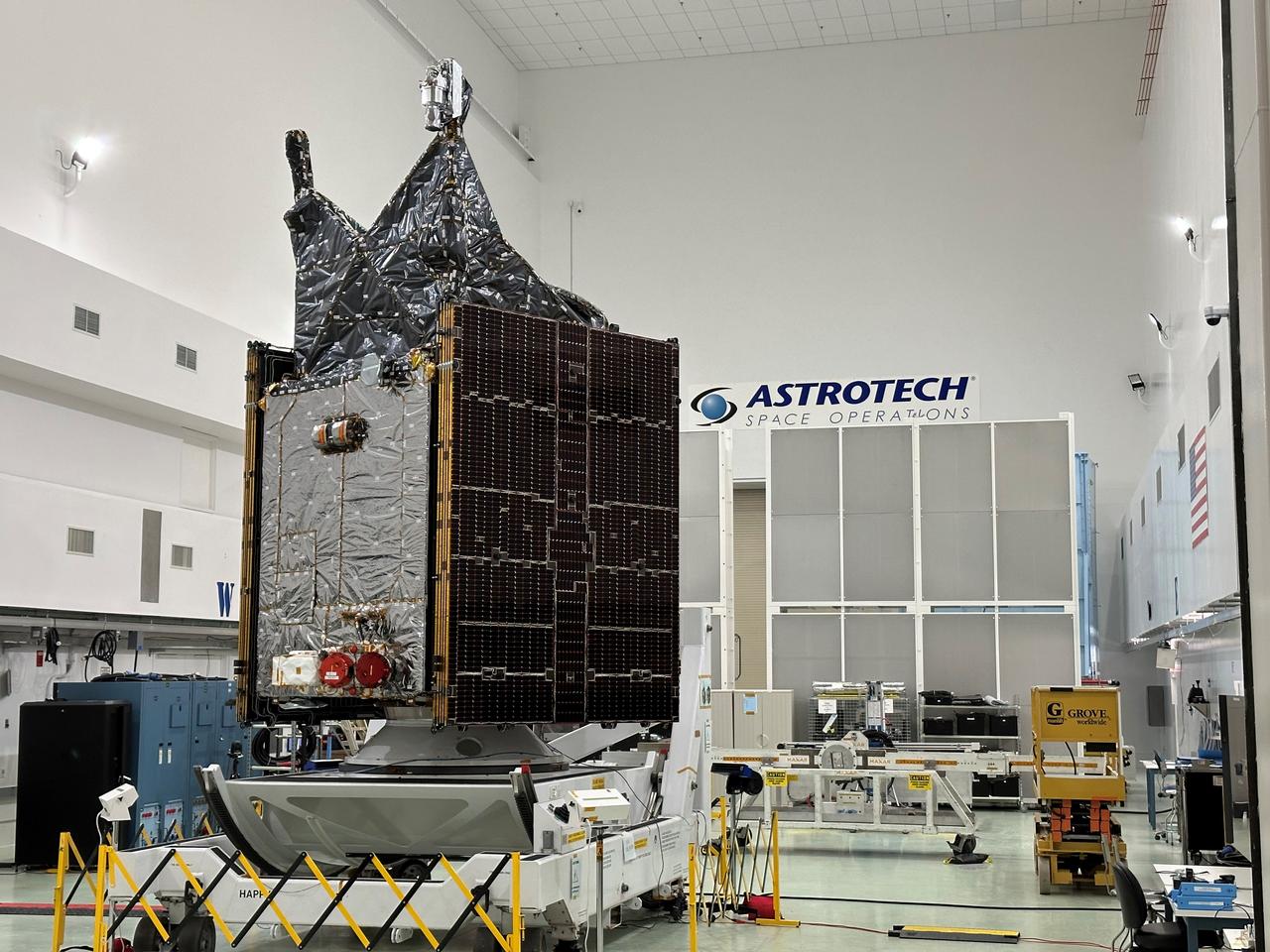
NASA’s Psyche spacecraft is made available to media for viewing inside a cleanroom at the Astrotech Space Operations Facility near Kennedy Space Center in Florida on Aug. 11, 2023. Psyche will launch atop a SpaceX Falcon Heavy rocket from Launch Complex 39A at Kennedy to explore a metal-rich asteroid. Launch is targeted for Oct. 5, 2023. Riding with Psyche is a pioneering technology demonstration, NASA’s Deep Space Optical Communications (DSOC) experiment.
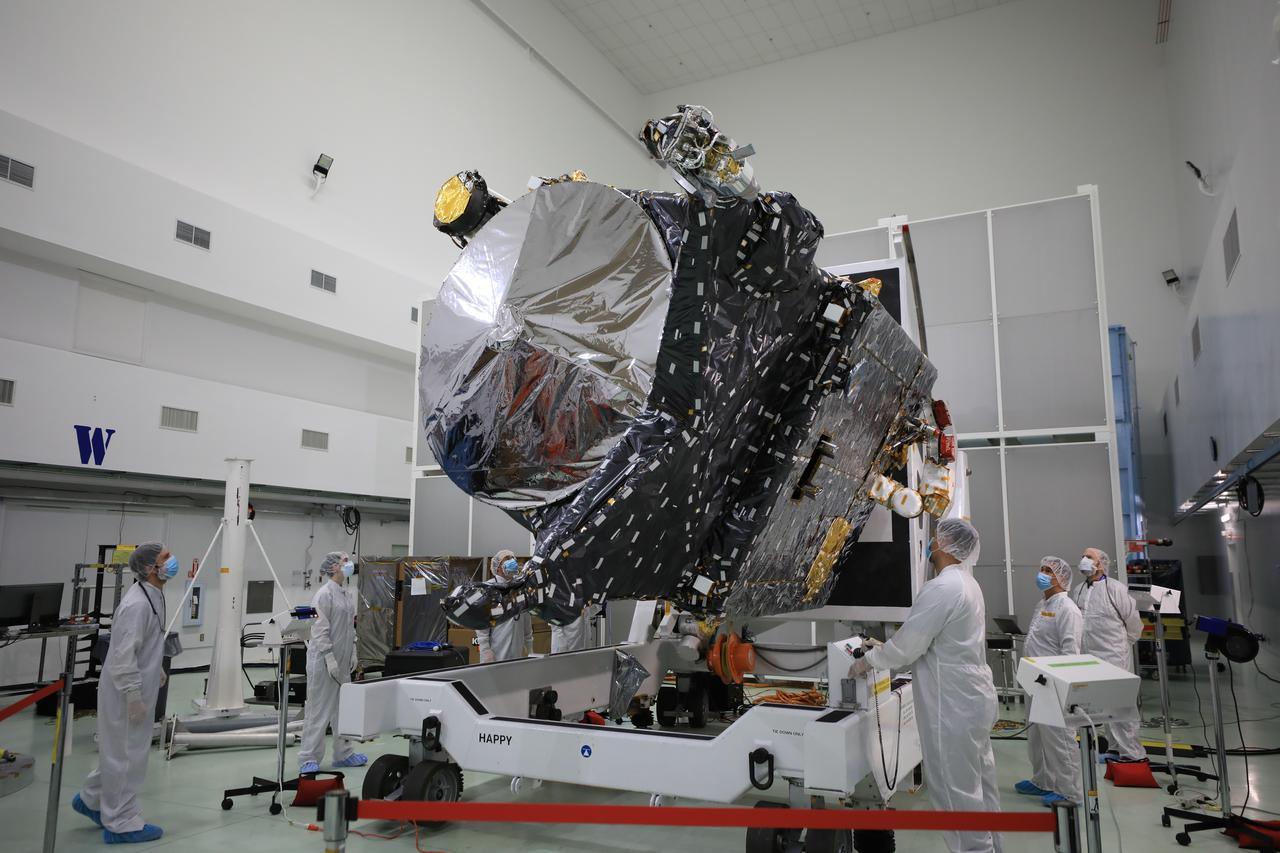
Technicians rotate NASA’s Psyche spacecraft during prelaunch processing inside the Astrotech Space Operations Facility near the agency’s Kennedy Space Center in Florida on Dec. 8, 2022. Psyche will launch atop a SpaceX Falcon Heavy rocket from Launch Complex 39A at Kennedy. Launch is targeted for no earlier than Oct. 10, 2023. The spacecraft will use solar-electric propulsion to travel approximately 1.5 billion miles to rendezvous with its namesake asteroid in 2026. The Psyche mission is led by Arizona State University. NASA’s Jet Propulsion Laboratory, which is managed for the agency by Caltech in Pasadena, California, is responsible for the mission’s overall management, system engineering, integration and testing, and mission operations. Maxar Technologies in Palo Alto, California, provided the high-power solar electric propulsion spacecraft chassis. NASA’s Launch Services Program (LSP), based at Kennedy, is managing the launch.
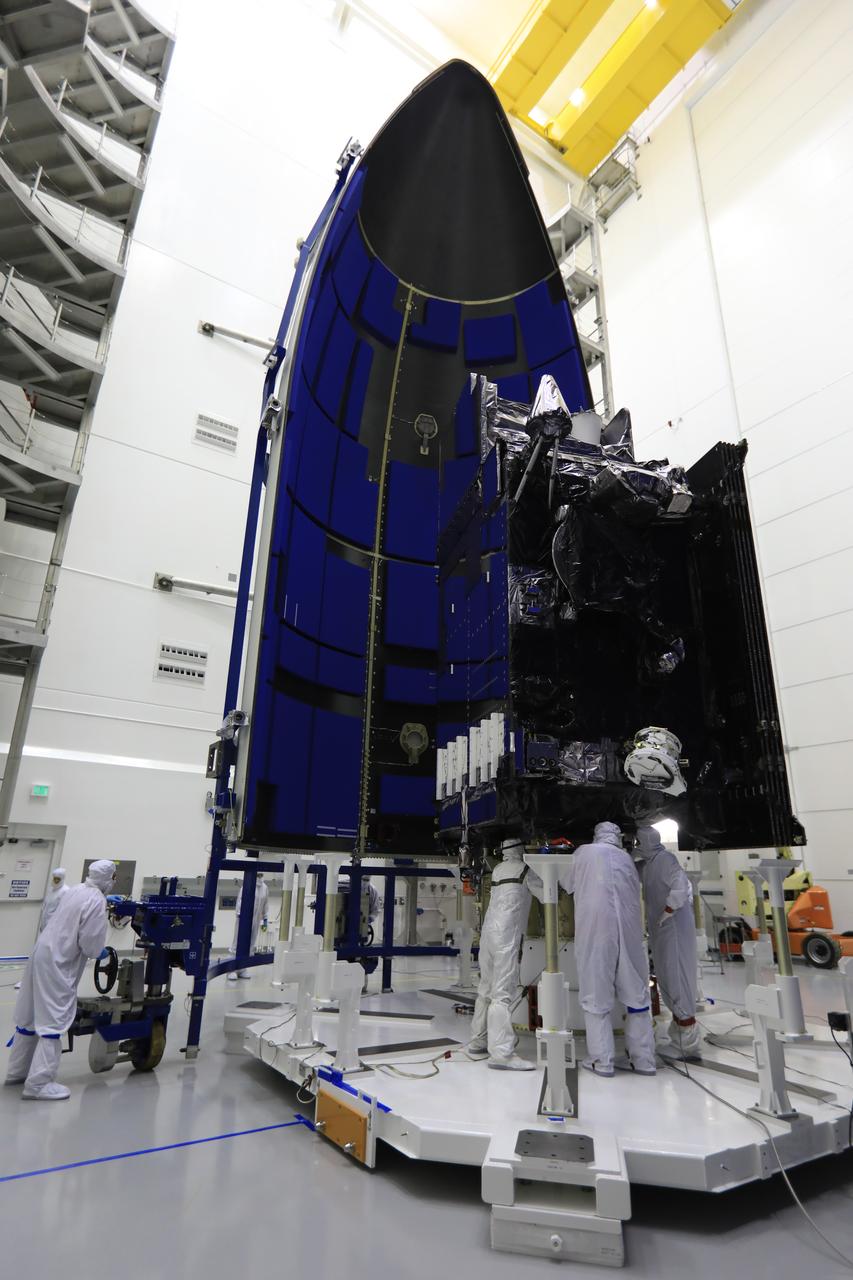
Team members with United Launch Alliance (ULA) prepare the Geostationary Operational Environmental Satellite (GOES-R) for encapsulation in the payload fairing inside the Astrotech payload processing facility in Titusville, Florida near NASA’s Kennedy Space Center. GOES-R will be the first satellite in a series of next-generation NOAA GOES Satellites. The spacecraft is to launch aboard a ULA Atlas V rocket in November.
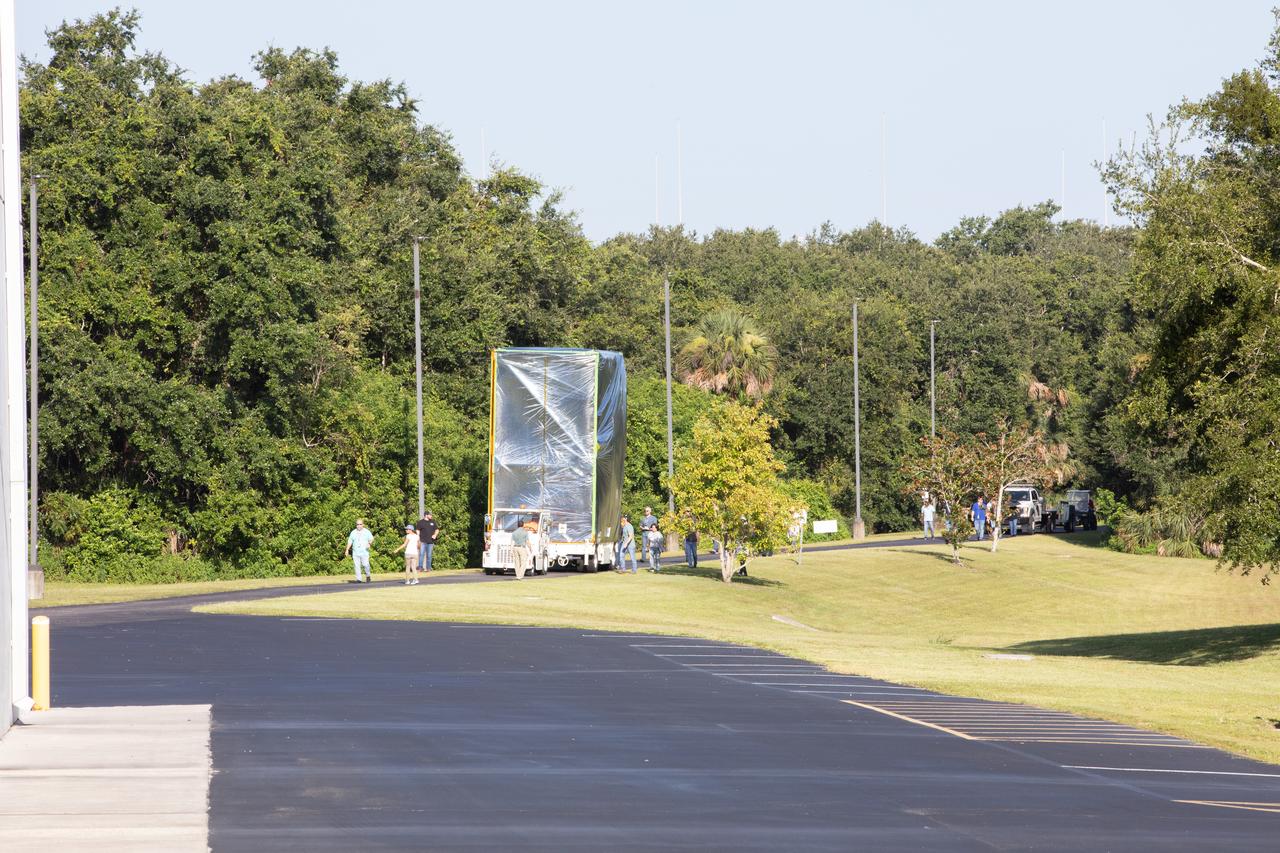
Technicians and engineers moved NASA’s Psyche spacecraft along the road to Building 9 at the Astrotech Space Operations Facility near the agency’s Kennedy Space Center in Florida on Aug. 14, 2023. Psyche will explore its namesake, a metal-rich asteroid orbiting the Sun between Mars and Jupiter. Psyche has NASA’s Deep Space Optical Communications (DSOC) technology demonstration onboard the spacecraft. DSOC will be the agency's first demonstration of optical communication beyond the Moon. Psyche will launch atop a SpaceX Falcon Heavy rocket from Launch Complex 39A at Kennedy. Launch is targeted for Oct. 5, 2023.
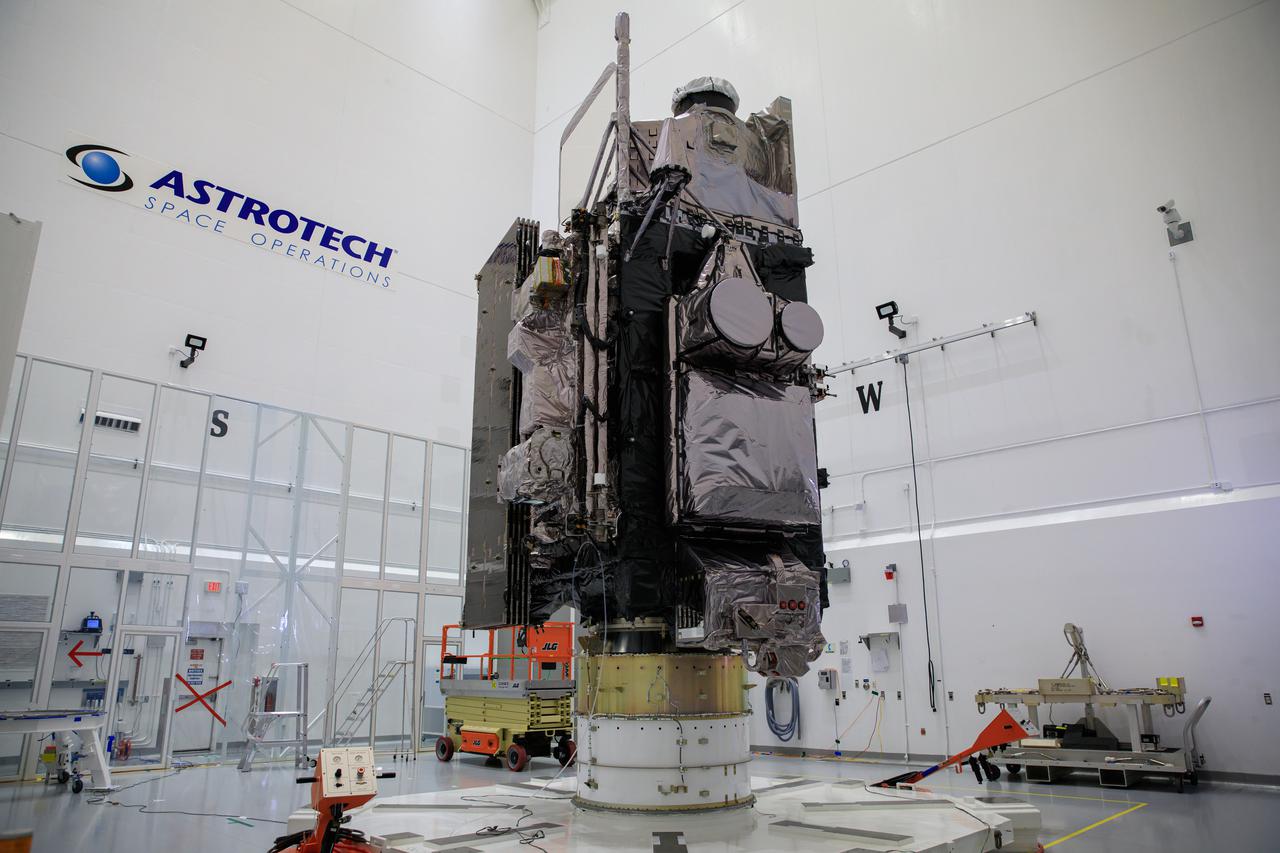
NOAA’s Geostationary Operational Environmental Satellite-T (GOES-T) is secured on a work stand inside the Astrotech Space Operations facility in Titusville, Florida, on Jan. 28, 2022, as it is being prepared for encapsulation. GOES-T is scheduled to launch on March 1, 2022, atop a United Launch Alliance (ULA) Atlas V 541 rocket from Space Launch Complex 41 at Cape Canaveral Space Force Station. GOES-T is the third satellite in the GOES-R series that will continue to help meteorologists observe and predict local weather events that affect public safety. The launch is being managed by NASA’s Launch Services Program based at Kennedy Space Center in Florida, America’s multi-user spaceport.
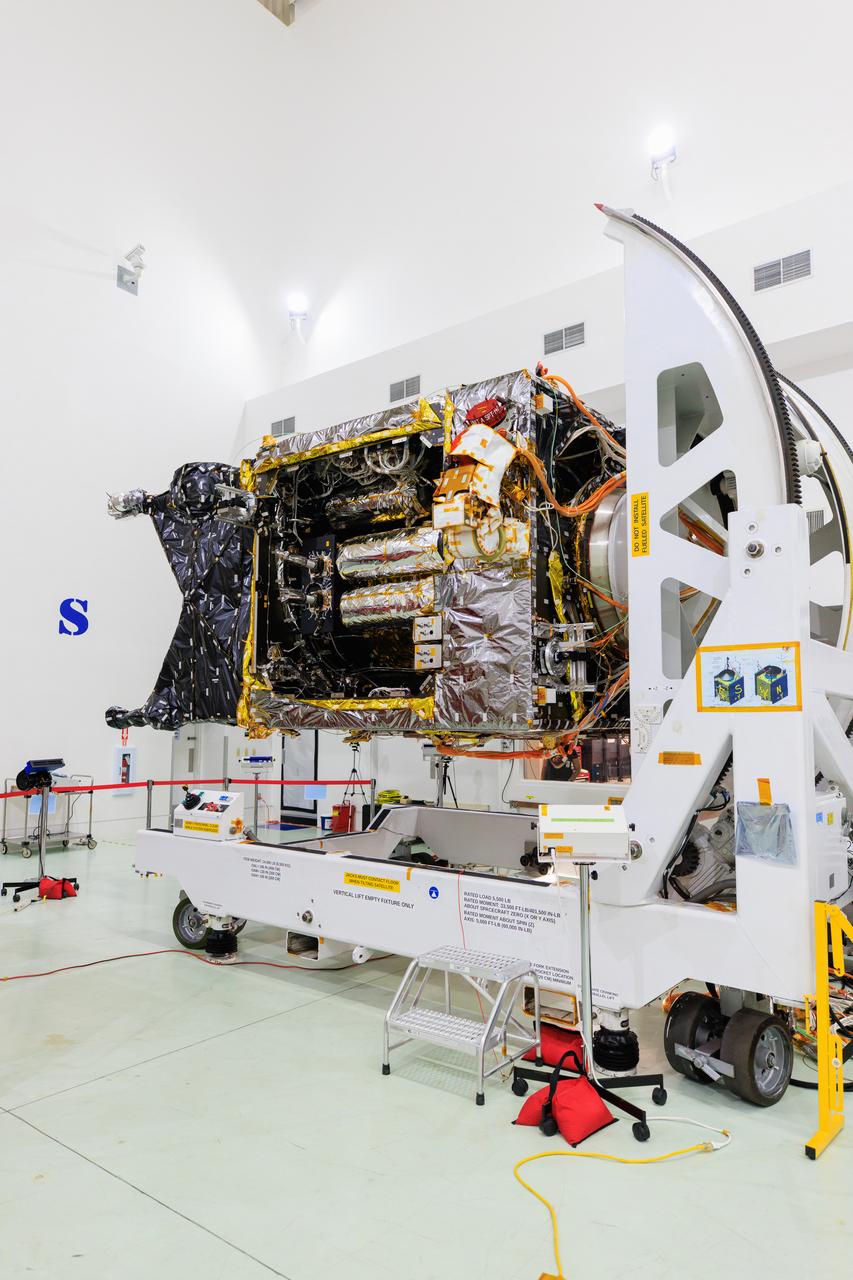
NASA's Psyche spacecraft is shown in a clean room on June 26, 2023, at Astrotech Space Operations Facility near the agency’s Kennedy Space Center in Florida. Engineers and technicians from NASA’s Jet Propulsion Laboratory in Southern California have begun final assembly, test, and launch operations on Psyche, with assembly of the spacecraft all but complete except for the installation of the solar arrays and the imagers. NASA’s Deep Space Optical Communications (DSOC) technology demonstration, testing high-data-rate laser communications, remains integrated into the spacecraft. A final suite of tests will be run on the vehicle, after which it will be fueled and then mated onto a SpaceX Falcon Heavy rocket just prior to launch, targeted for October 2023.

NASA's Psyche spacecraft is shown in a clean room on June 26, 2023, at Astrotech Space Operations Facility near the agency’s Kennedy Space Center in Florida. Engineers and technicians from NASA’s Jet Propulsion Laboratory in Southern California have begun final assembly, test, and launch operations on Psyche, with assembly of the spacecraft all but complete except for the installation of the solar arrays and the imagers. NASA’s Deep Space Optical Communications (DSOC) technology demonstration, testing high-data-rate laser communications, remains integrated into the spacecraft. A final suite of tests will be run on the vehicle, after which it will be fueled and then mated onto a SpaceX Falcon Heavy rocket just prior to launch, targeted for October 2023.
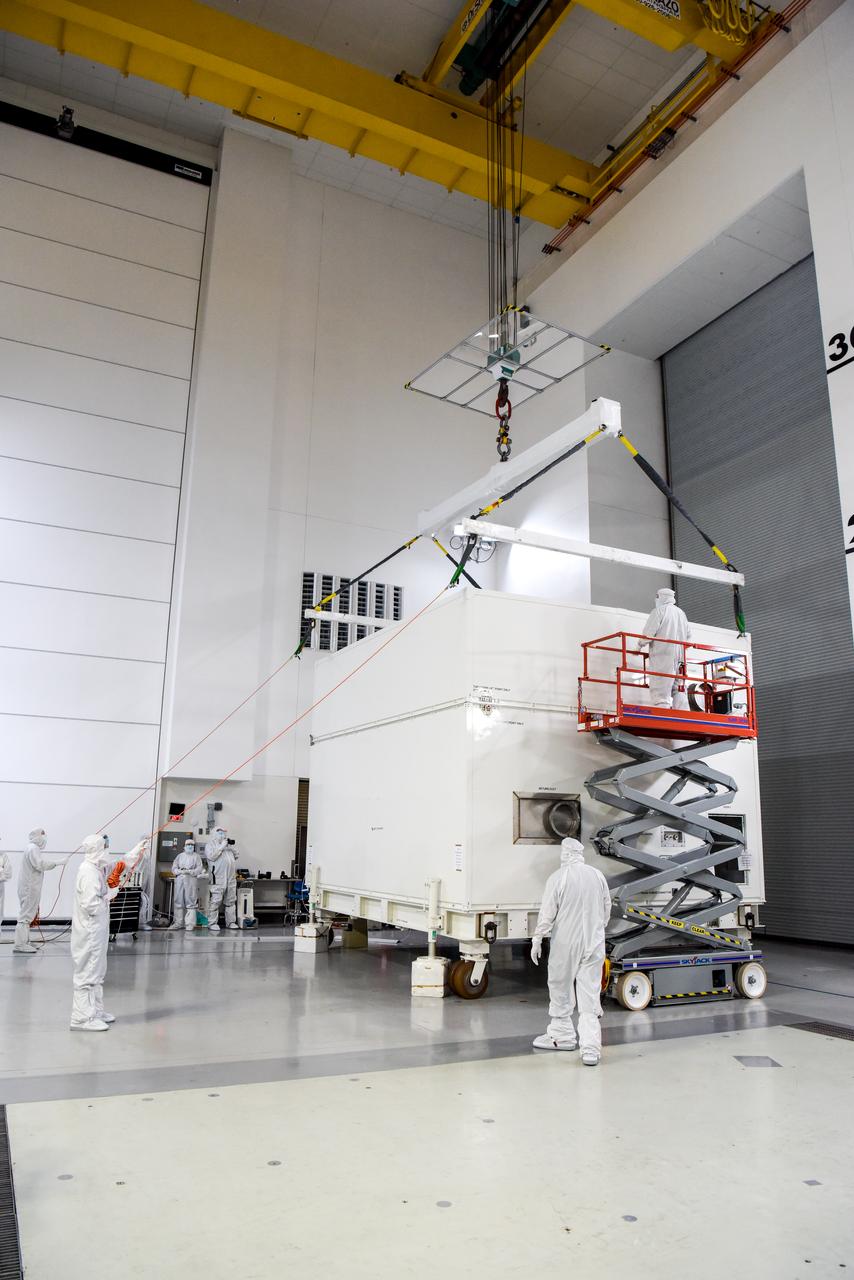
NASA’s SPHEREx (Spectro-Photometer for the History of the Universe, Epoch of Reionization and Ices Explorer) is uncrated for prelaunch processing at Vandenberg Space Force Base in California on Wednesday, Jan. 15, 2025. SPHEREx will enter a polar orbit around Earth and create a 3D map of the entire sky, gathering information about millions of galaxies for scientists to study what happened after the big bang, the history of galaxy evolution, and the origins of water in planetary systems in our galaxy. SPHEREx will launch aboard a SpaceX Falcon 9 rocket in late February 2025.
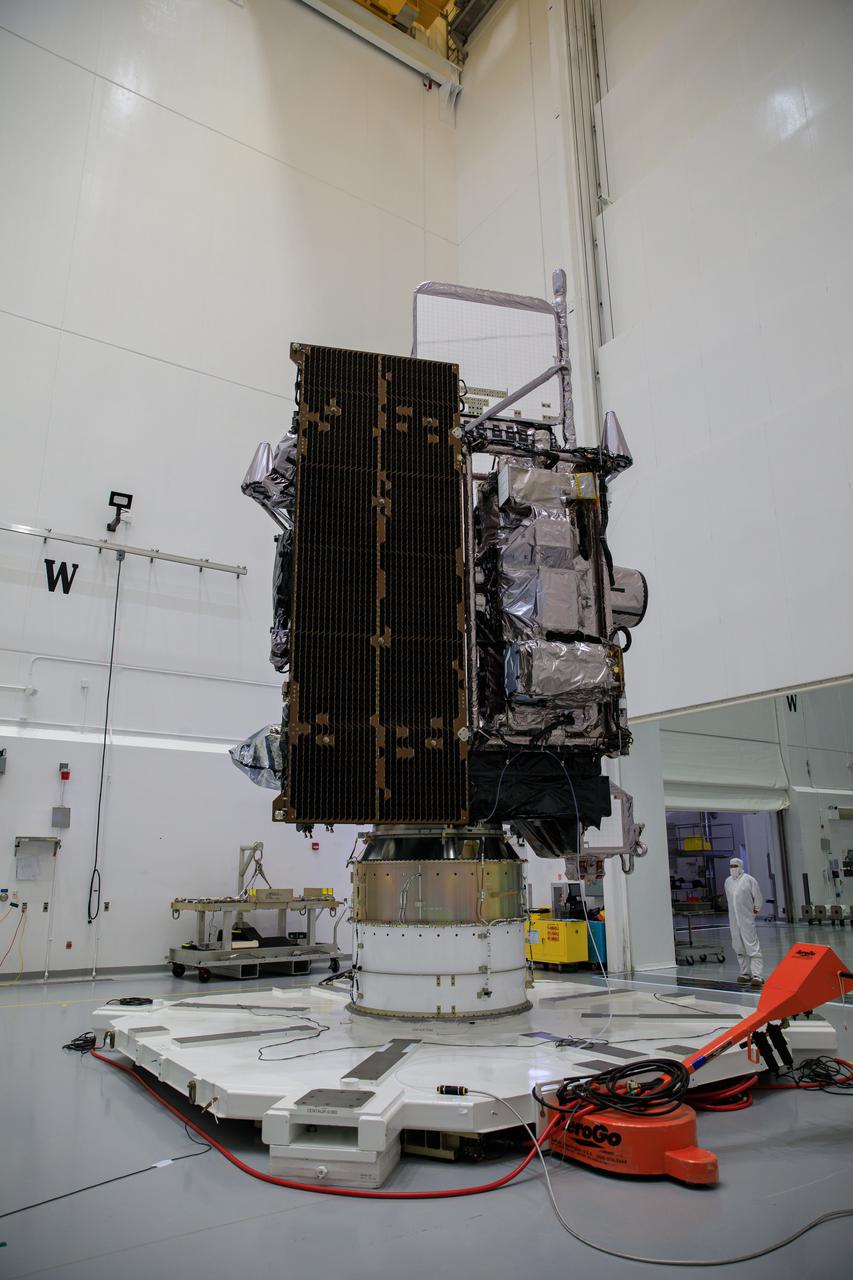
NOAA’s Geostationary Operational Environmental Satellite-T (GOES-T) is in view inside the Astrotech Space Operations facility in Titusville, Florida, on Jan. 28, 2022, as it is being prepared for encapsulation. GOES-T is scheduled to launch on March 1, 2022, atop a United Launch Alliance (ULA) Atlas V 541 rocket from Space Launch Complex 41 at Cape Canaveral Space Force Station. GOES-T is the third satellite in the GOES-R series that will continue to help meteorologists observe and predict local weather events that affect public safety. The launch is being managed by NASA’s Launch Services Program based at Kennedy Space Center in Florida, America’s multi-user spaceport.
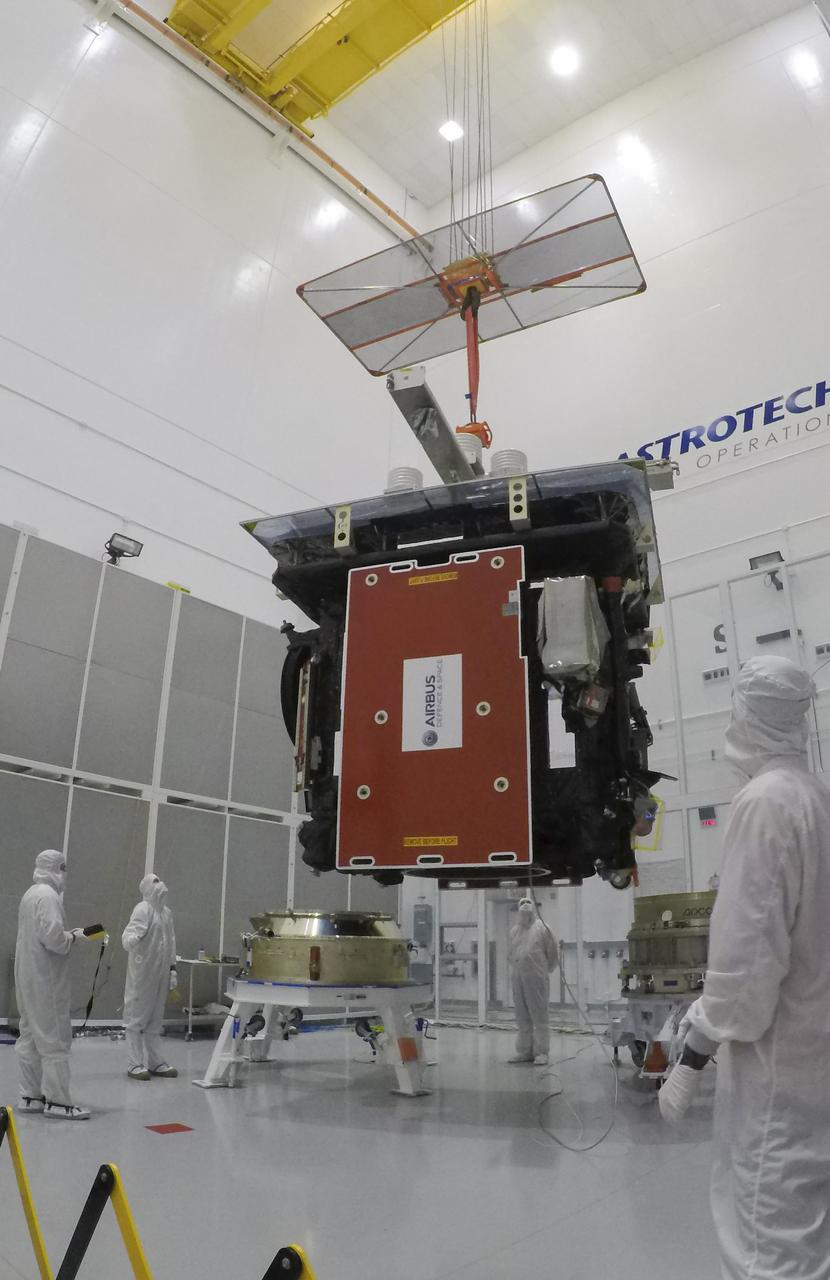
The Solar Orbiter spacecraft is lifted and moved by crane from a work stand for mating to the payload adapter inside Astrotech Space Operations in Titusville, Florida on Jan. 16, 2020. Solar Orbiter is an international cooperative mission between ESA (European Space Agency) and NASA. The mission aims to study the Sun, its outer atmosphere and solar wind. The spacecraft will provide the first images of the Sun’s poles. NASA’s Launch Services Program based at Kennedy is managing the launch. The spacecraft has been developed by Airbus Defence and Space. Solar Orbiter will launch in February 2020 aboard a United Launch Alliance Atlas V rocket from Space Launch Complex 41 at Cape Canaveral Air Force Station in Florida.
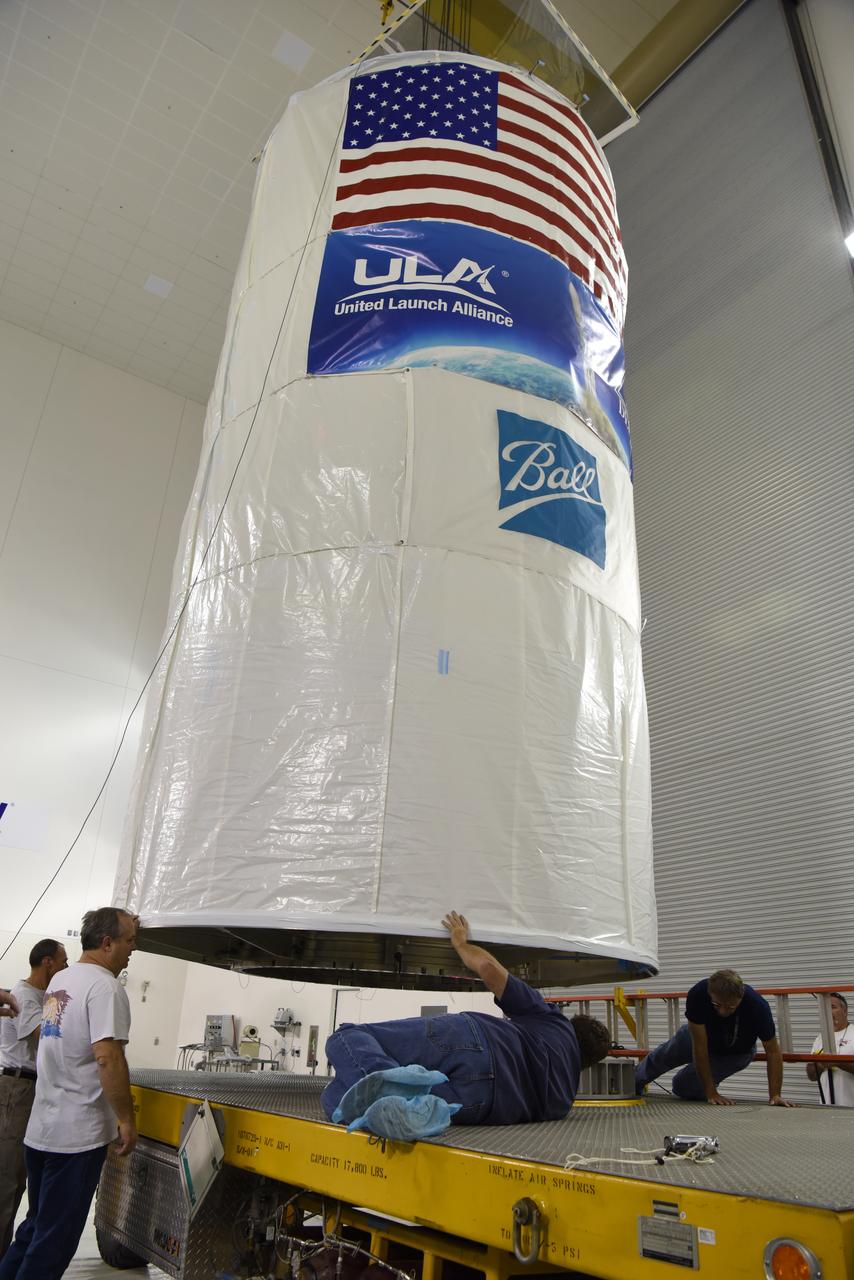
In the Astrotech Processing Facility at Vandenberg Air Force Base in California, the Joint Polar Satellite System-1, or JPSS-1, spacecraft in a protective container is placed on a transport trailer for the trip to Space Launch Complex 2. At the pad, JPSS-1 will be lifted for mating atop a United Launch Alliance Delta II rocket. Built by Ball Aerospace and Technologies Corp. of Boulder, Colorado, JPSS is the first in a series four next-generation environmental satellites in a collaborative program between the NOAA and NASA. Liftoff is scheduled to take place from Vandenberg's Space Launch Complex 2.
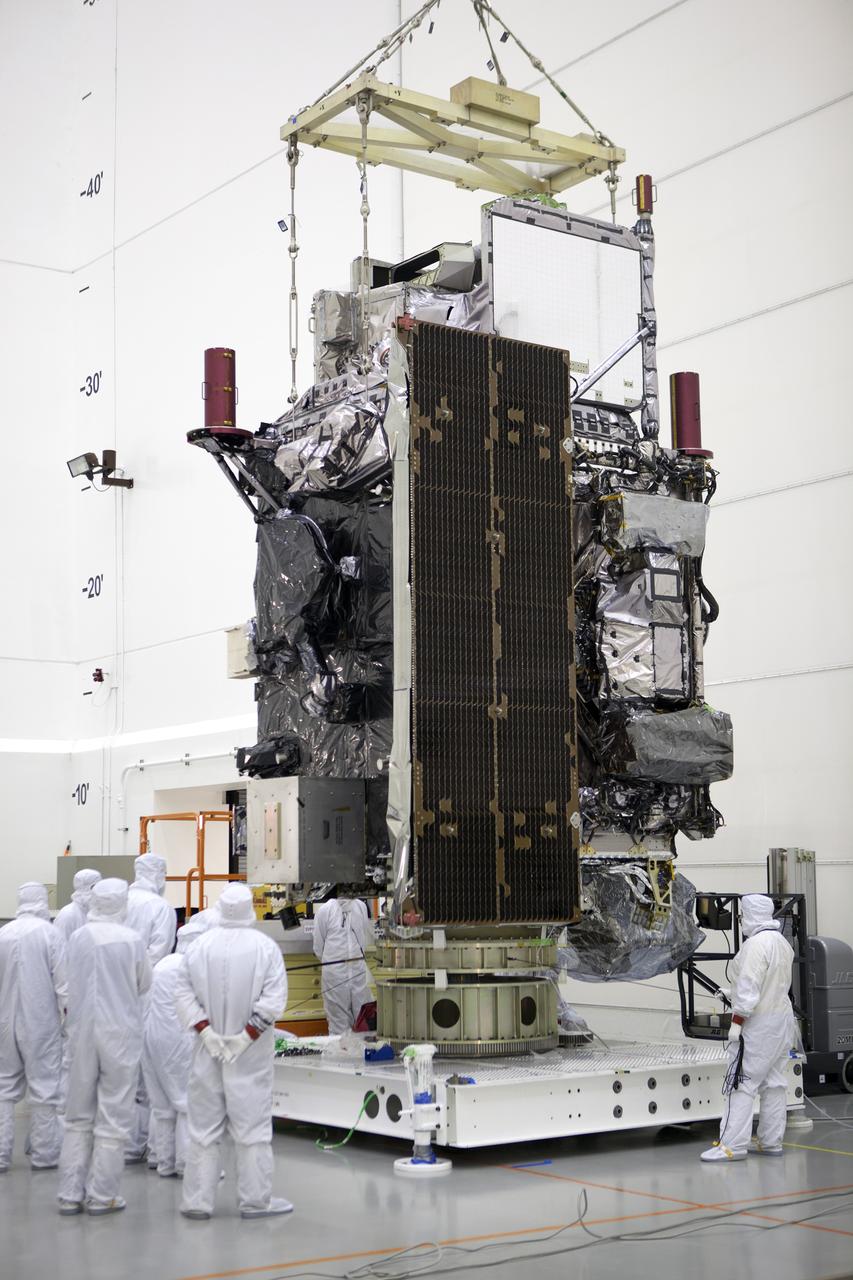
Team members monitor progress as an overhead crane lowers the GOES-R spacecraft into its work stand inside the Astrotech payload processing facility in Titusville, Florida near NASA’s Kennedy Space Center. GOES-R will be the first satellite in a series of next-generation NOAA Geostationary Operational Environmental Satellites. The spacecraft is to launch aboard a United Launch Alliance Atlas V rocket in November.
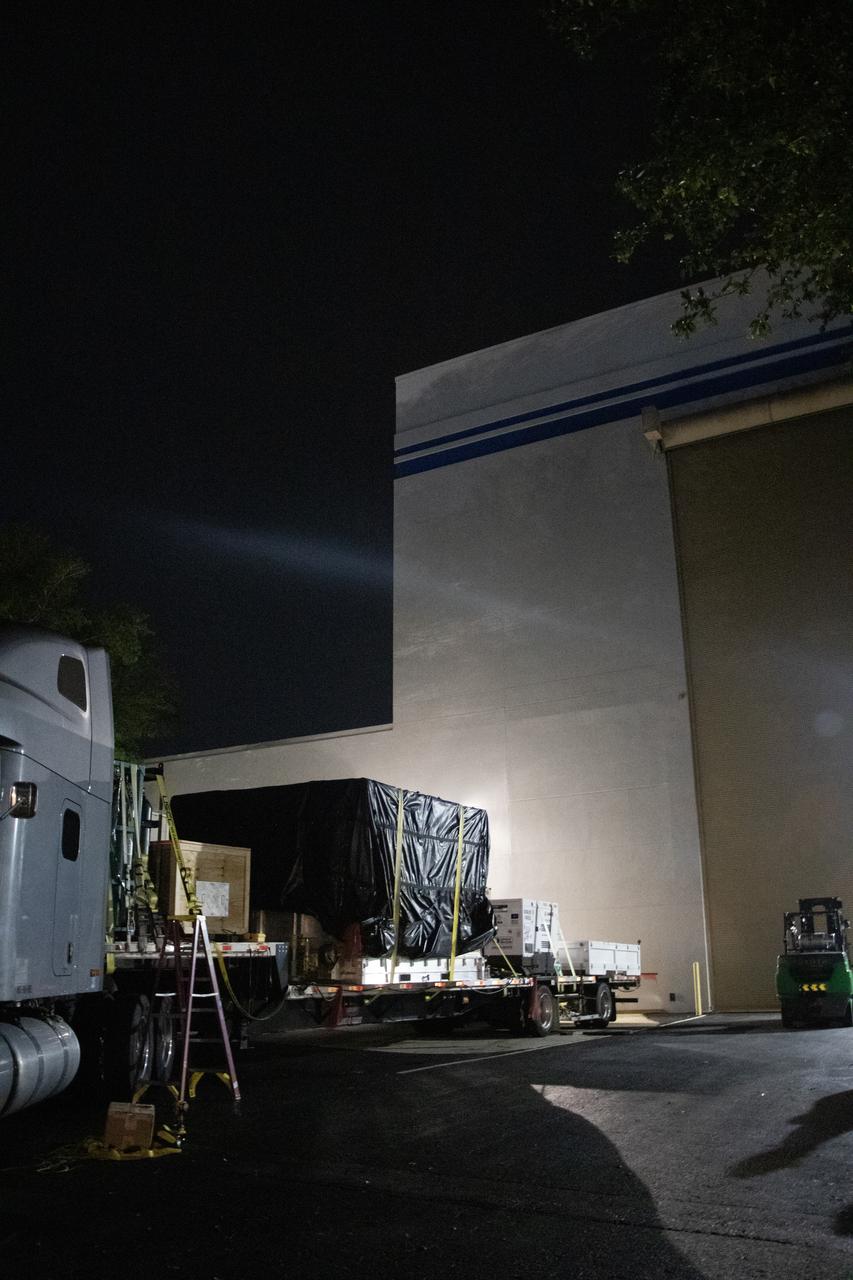
The transport carrier containing NASA’s IMAP (Interstellar Mapping and Acceleration Probe) arrives Saturday, May 10, 2025 at the Astrotech Space Operations Facility near the agency’s Kennedy Space Center in Florida where it will undergo checkout operations, fueling, and encapsulation. IMAP will study how the Sun shapes the boundaries of the heliosphere, the bubble protecting around our solar system. IMAP is targeting launch this fall aboard a SpaceX Falcon 9 rocket from Launch Complex 39A at NASA Kennedy.
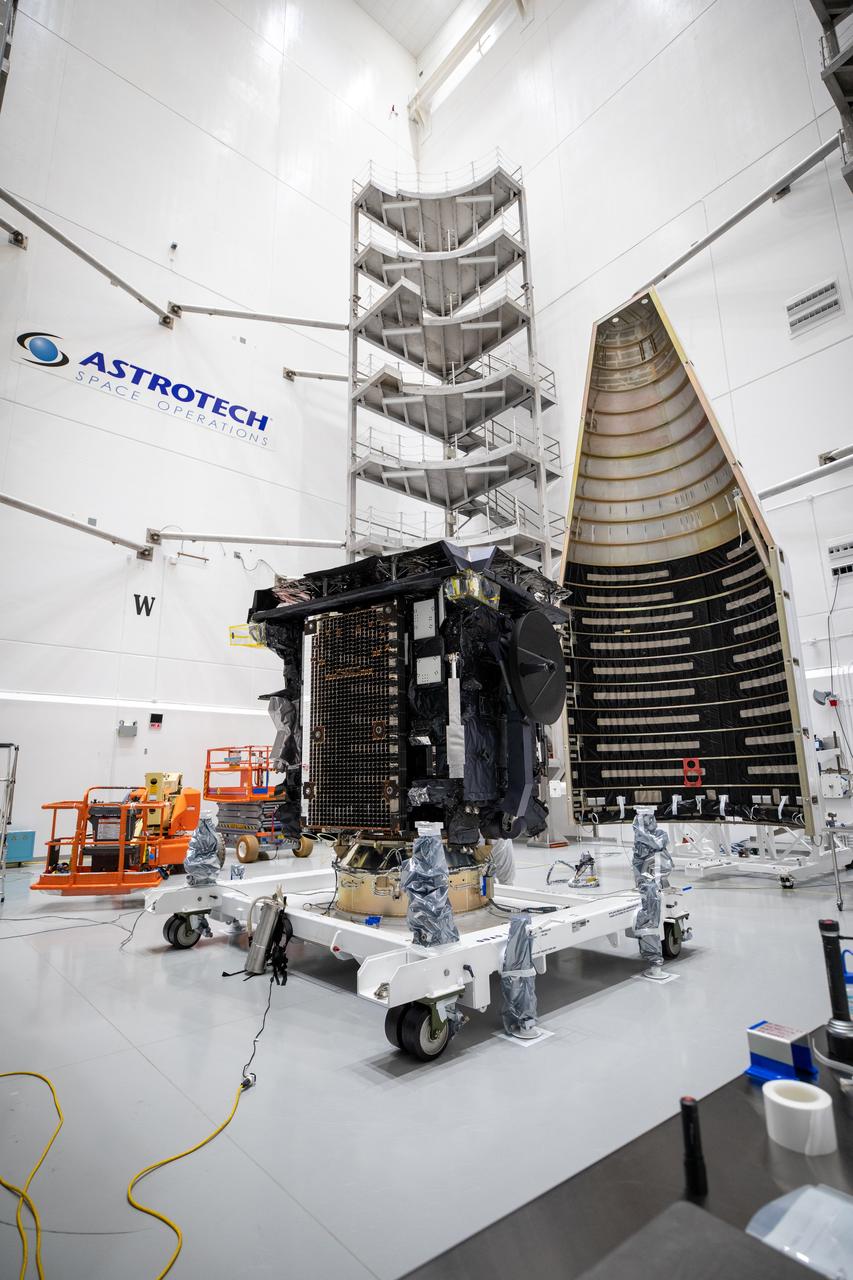
One half of a United Launch Alliance Atlas V payload fairing is positioned for installation around the Solar Orbiter spacecraft inside the Astrotech Space Operations facility in Titusville, Florida, on Jan. 20, 2020. The fairing provides a protective, aerodynamic covering to the payload inside during the early minutes of ascent. Solar Orbiter is an international cooperative mission between ESA (European Space Agency) and NASA. The mission aims to study the Sun, its outer atmosphere and solar wind. The spacecraft will provide the first images of the Sun’s poles. NASA’s Launch Services Program based at Kennedy Space Center in Florida is managing the launch. The spacecraft has been developed by Airbus Defence and Space. Solar Orbiter will launch aboard an Atlas V rocket from Space Launch Complex 41 at Cape Canaveral Air Force Station in Florida. Liftoff is scheduled for Feb. 5, 2020.
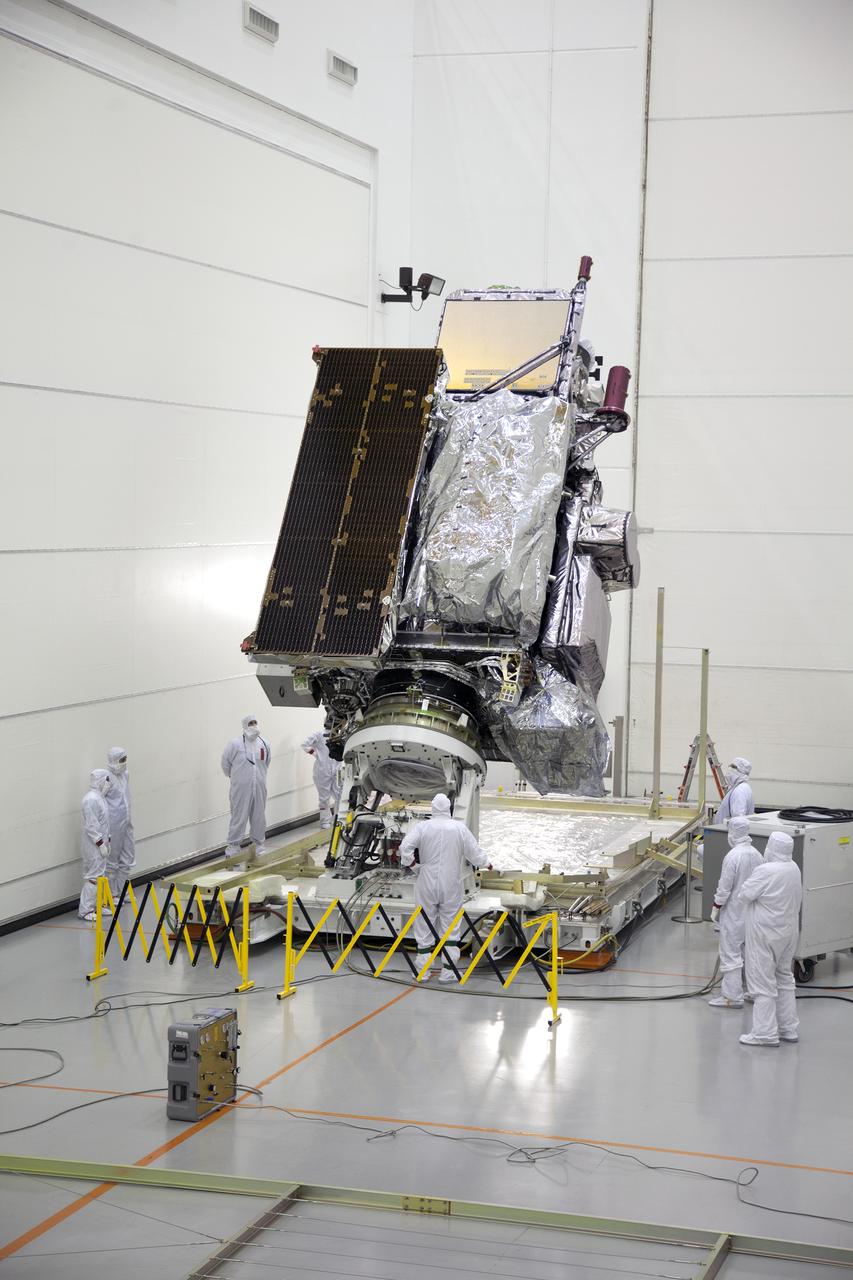
Team members monitor progress as the GOES-R spacecraft is raised to vertical inside the Astrotech payload processing facility in Titusville, Florida near NASA’s Kennedy Space Center. GOES-R will be the first satellite in a series of next-generation NOAA Geostationary Operational Environmental Satellites. The spacecraft is to launch aboard a United Launch Alliance Atlas V rocket in November.
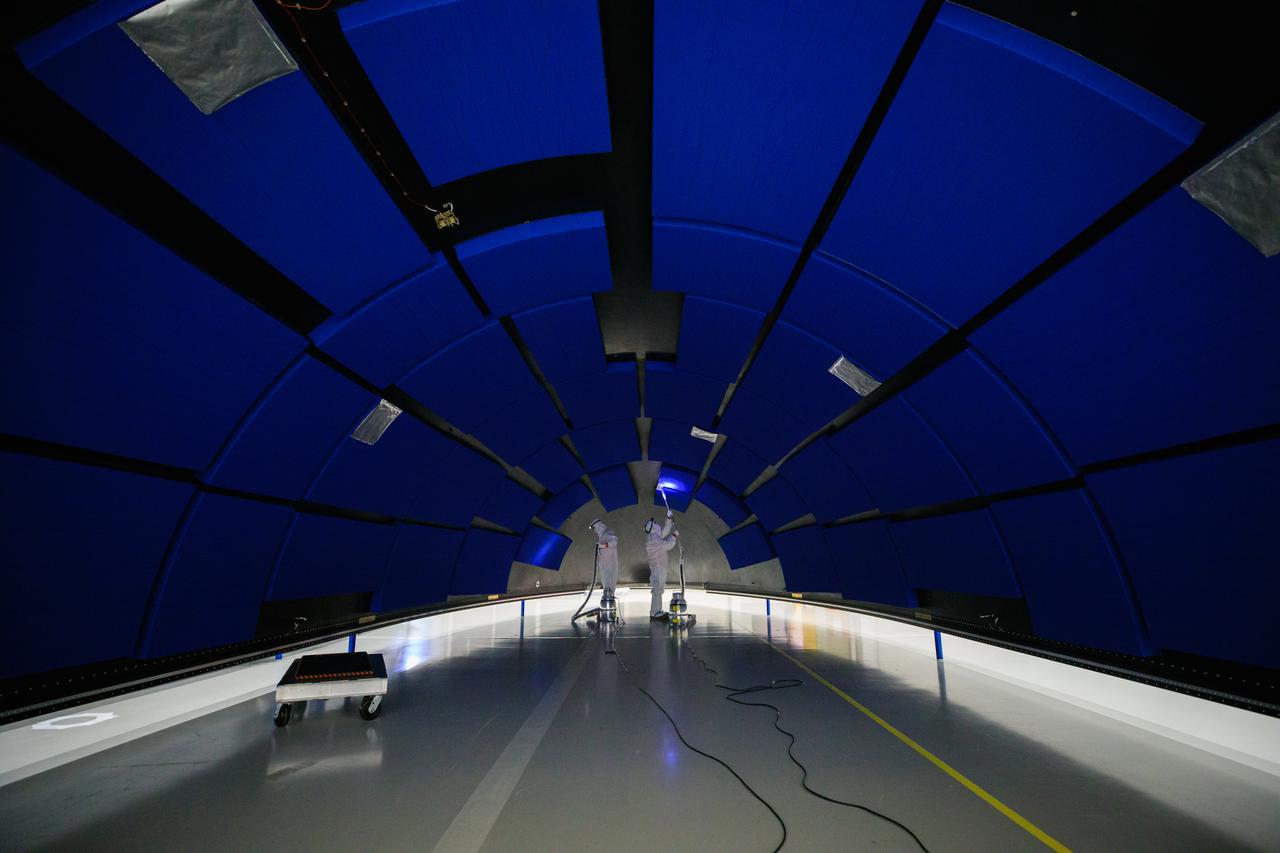
In preparation for NOAA’s Geostationary Operational Environmental Satellite-T (GOES-T) to be encapsulated, members of the GOES-T team prepare the area within the Astrotech Space Operations facility in Titusville, Florida on Jan. 28, 2022. GOES-T is scheduled to launch on March 1, 2022, atop a United Launch Alliance (ULA) Atlas V 541 rocket from Space Launch Complex 41 at Cape Canaveral Space Force Station. GOES-T is the third satellite in the GOES-R series that will continue to help meteorologists observe and predict local weather events that affect public safety. The launch is being managed by NASA’s Launch Services Program based at Kennedy Space Center in Florida, America’s multi-user spaceport.
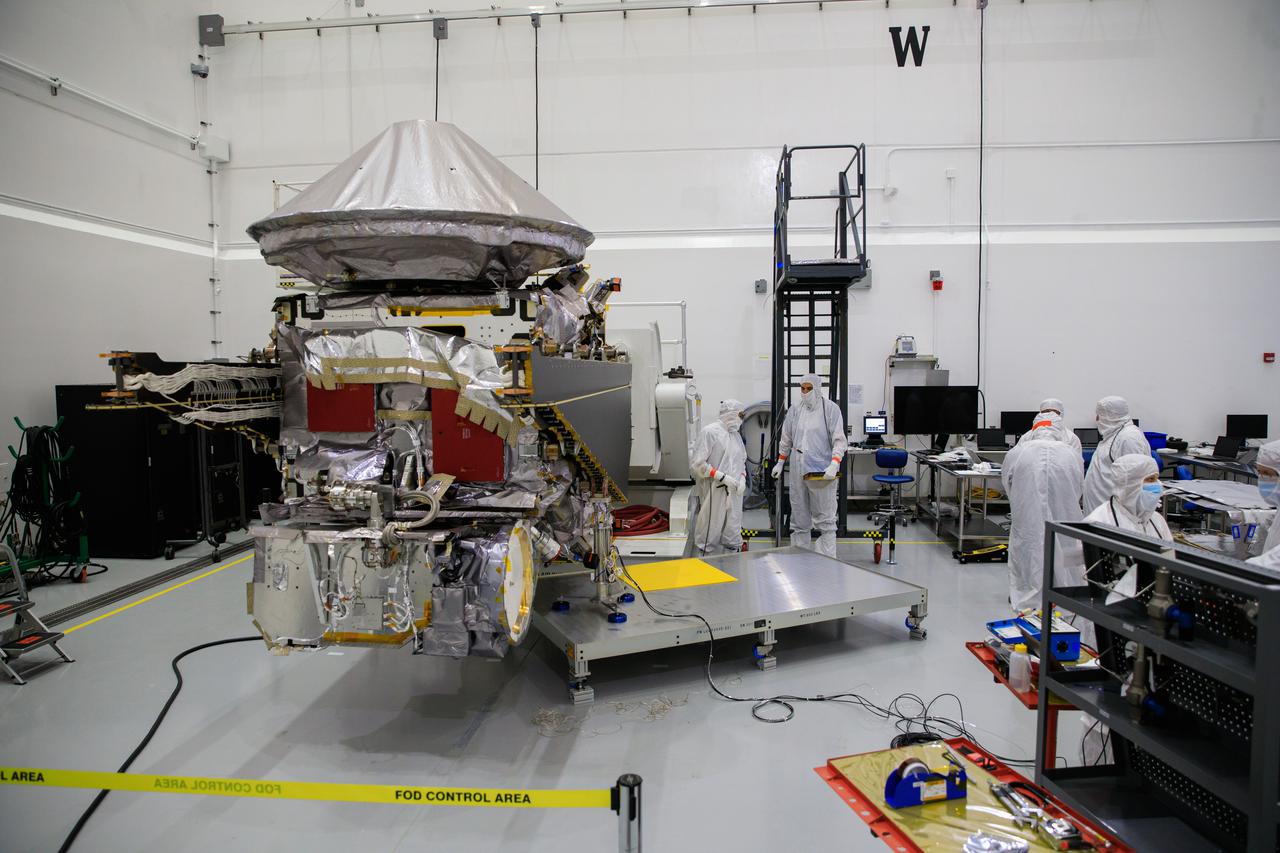
Workers inside the Astrotech Space Operations Facility in Titusville, Florida, begin to extend one of the solar arrays on NASA’s Lucy spacecraft on Aug. 19, 2021. Both solar arrays will be opened to make sure they operate correctly. In view installed on top of the spacecraft is the high gain antenna. Lucy is scheduled to launch no earlier than Saturday, Oct. 16, on a United Launch Alliance Atlas V 401 rocket from Space Launch Complex 41 at Cape Canaveral Space Force Station. NASA’s Launch Services Program based at Kennedy Space Center is managing the launch. Over its 12-year primary mission, Lucy will explore a record-breaking number of asteroids, flying by one asteroid in the solar system’s main belt and seven Trojan asteroids. Additionally, Lucy’s path will circle back to Earth three times for gravity assists, making it the first spacecraft ever to return to the vicinity of Earth from the outer solar system.
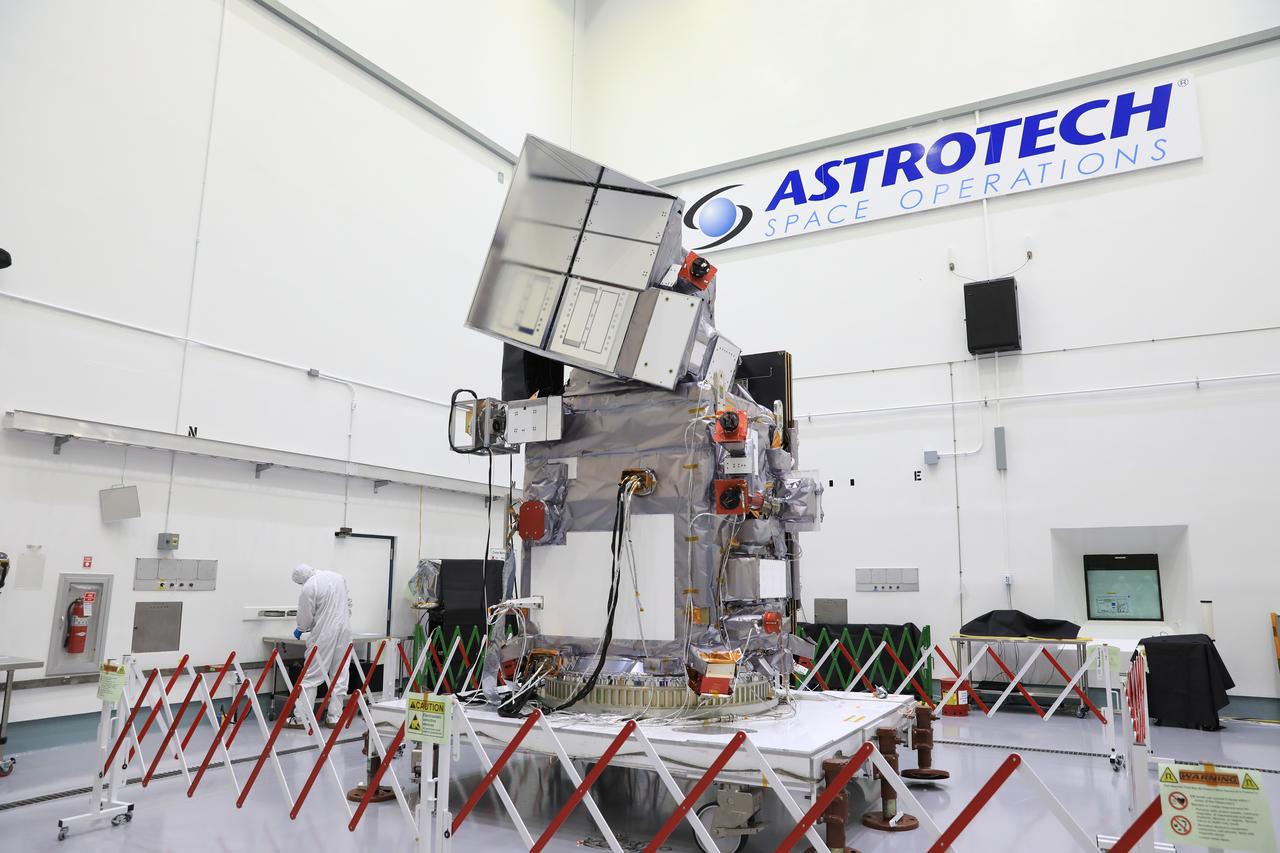
Technicians work to process the NASA’s Plankton, Aerosol, Cloud, ocean Ecosystem (PACE) observatory on a spacecraft dolly in a high bay at the Astrotech Space Operations Facility near the agency’s Kennedy Space Center in Florida on Monday, Dec. 4, 2023. PACE will extend and improve upon NASA’s 20-plus years of global satellite observations of our living ocean, atmospheric aerosols, and clouds. It will also continue key measurements related to air quality and initiate an advanced set of climate-relevant data records. PACE will be encapsulated for launch aboard a SpaceX Falcon 9 rocket in early 2024 from Space Launch Complex 40 at Cape Canaveral Space Force Station in Florida.
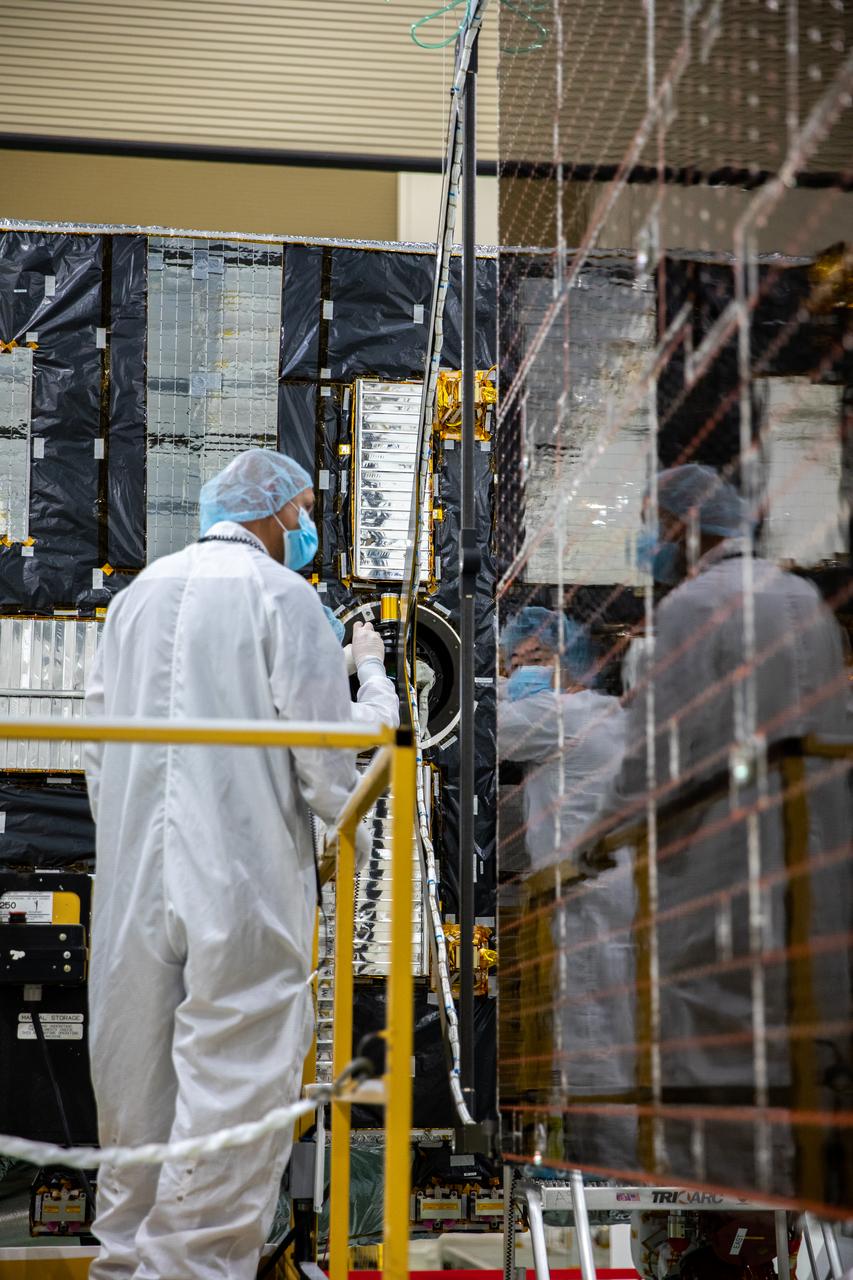
NASA team members prepare the twin solar arrays for integration with the agency’s Psyche spacecraft inside the Astrotech Space Operations Facility near the agency’s Kennedy Space Center in Florida on July 20, 2023. The solar arrays were shipped from Maxar Technologies, in San Jose, California. They are part of the solar electric propulsion system, provided by Maxar, that will power the spacecraft on its journey to explore a metal-rich asteroid. Psyche will launch atop a SpaceX Falcon Heavy rocket from Launch Complex 39A at Kennedy. Launch is targeted for Oct. 5, 2023. Riding with Psyche is a pioneering technology demonstration, NASA’s Deep Space Optical Communications (DSOC) experiment.
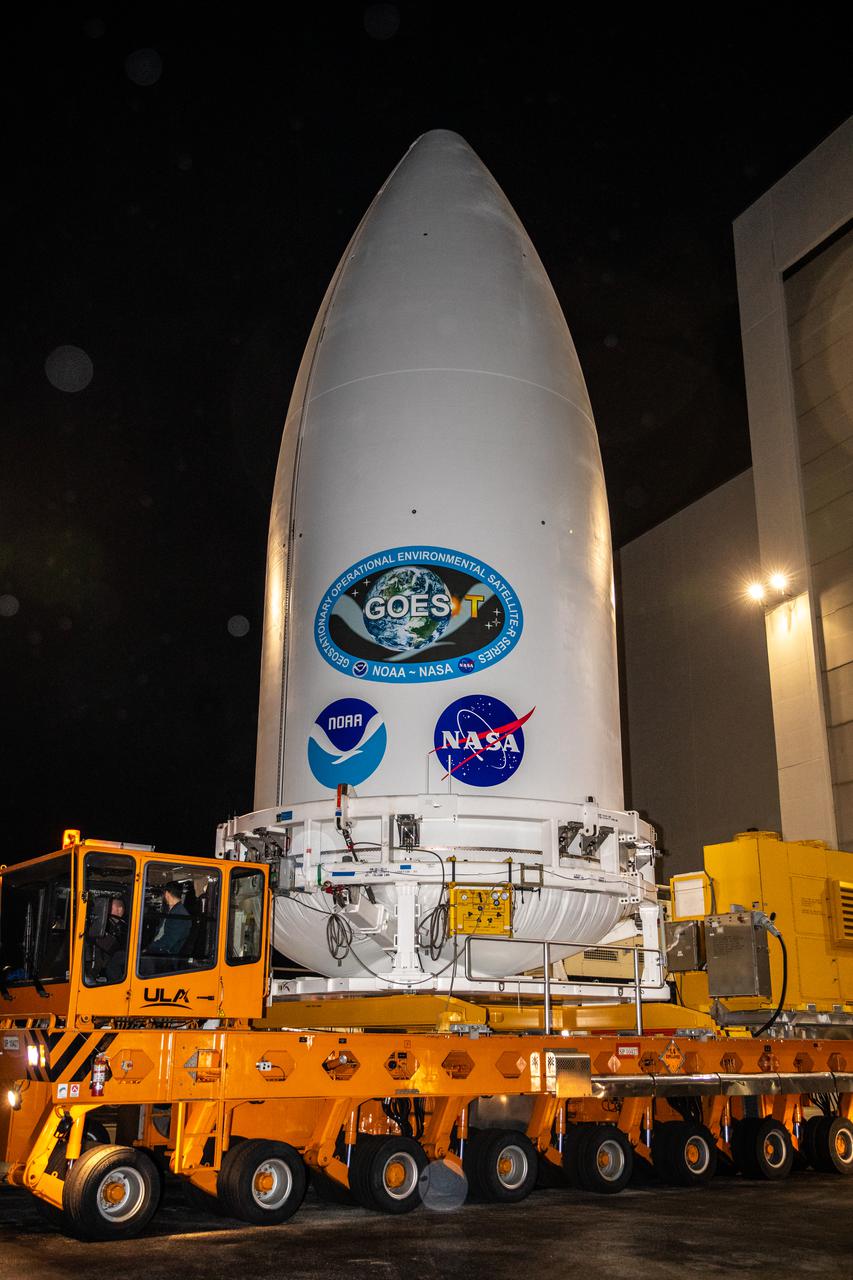
The National Oceanic and Atmospheric Administration’s (NOAA) Geostationary Operational Environmental Satellite-T (GOES-T), enclosed in its payload fairing, exits the Astrotech Space Operations facility in Titusville, Florida, for its trip to the Vertical Integration Facility at Space Launch Complex 41 at Cape Canaveral Space Force Station in Florida on Feb. 17, 2022. The satellite will be lifted up inside the integration facility and secured to the United Launch Alliance Atlas V 541 rocket. GOES-T is scheduled to launch atop the Atlas V rocket from SLC-41 on March 1, 2022, at 4:38 p.m. GOES-T is the third satellite in the GOES-R series that will continue to help meteorologists observe and predict local weather events that affect public safety. The launch is being managed by NASA’s Launch Services Program based at Kennedy Space Center in Florida, America’s multi-user spaceport.
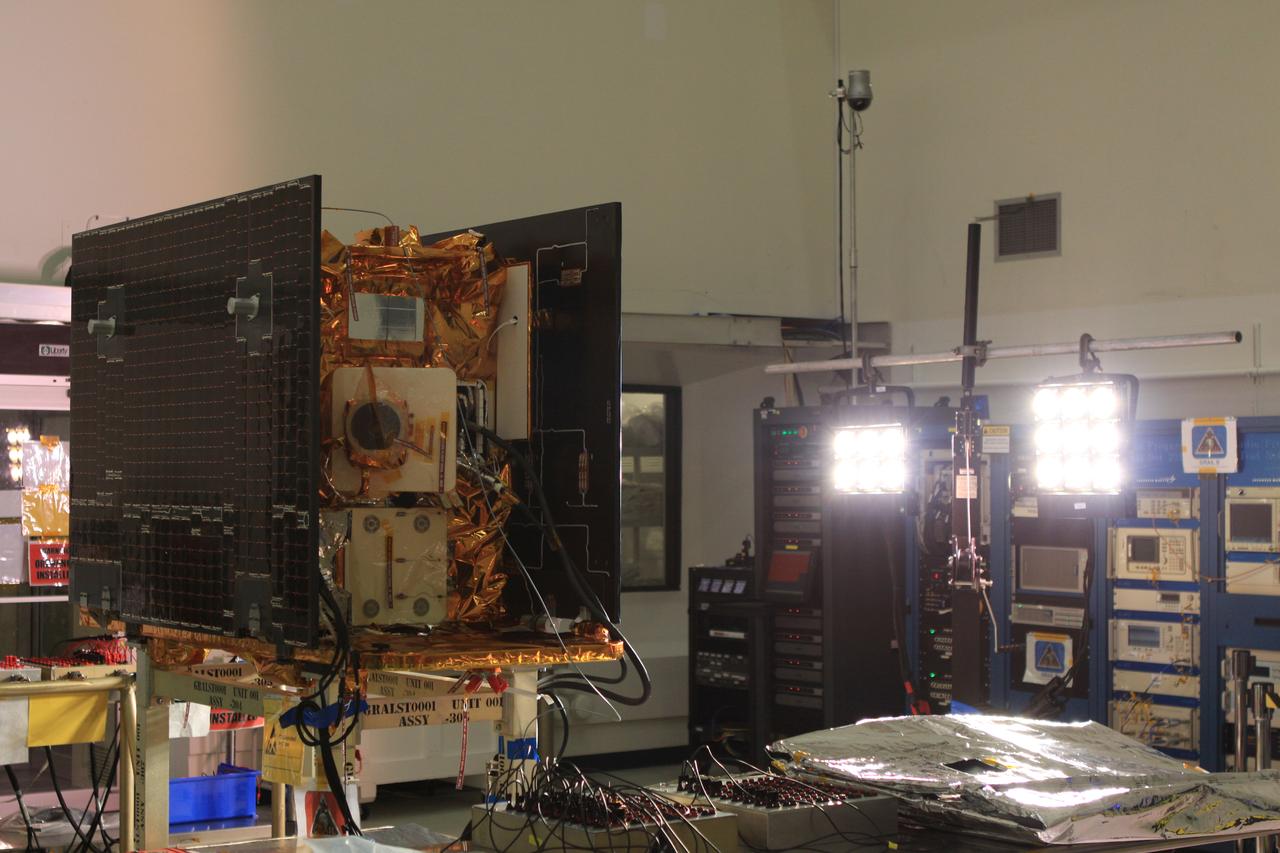
GRAIL Solar Array Test
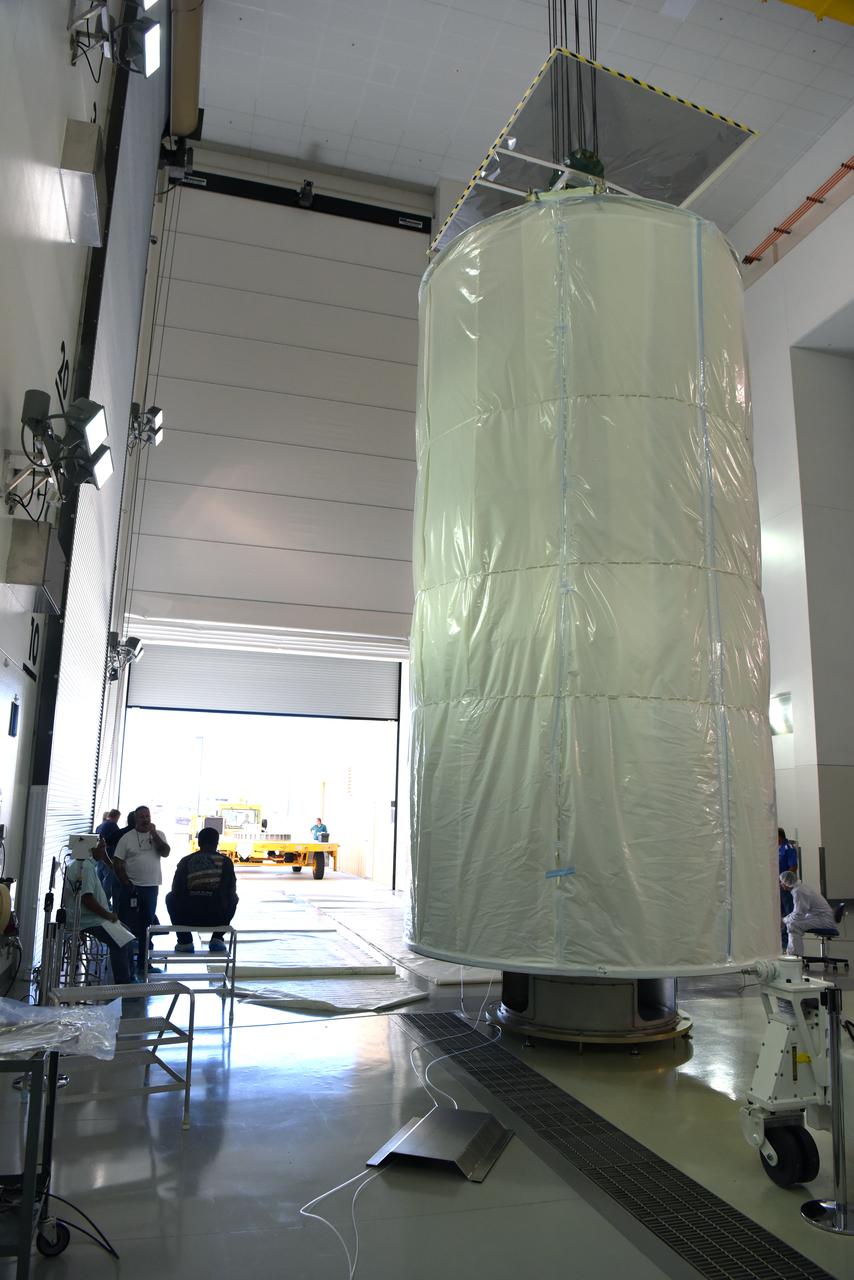
In the Astrotech Processing Facility at Vandenberg Air Force Base in California, the Joint Polar Satellite System-1, or JPSS-1, spacecraft is prepared for departure in a protective container to Space Launch Complex 2. At the pad, JPSS-1 will be lifted for mating atop a United Launch Alliance Delta II rocket. Built by Ball Aerospace and Technologies Corp. of Boulder, Colorado, JPSS is the first in a series four next-generation environmental satellites in a collaborative program between the NOAA and NASA. Liftoff is scheduled to take place from Vandenberg's Space Launch Complex 2.