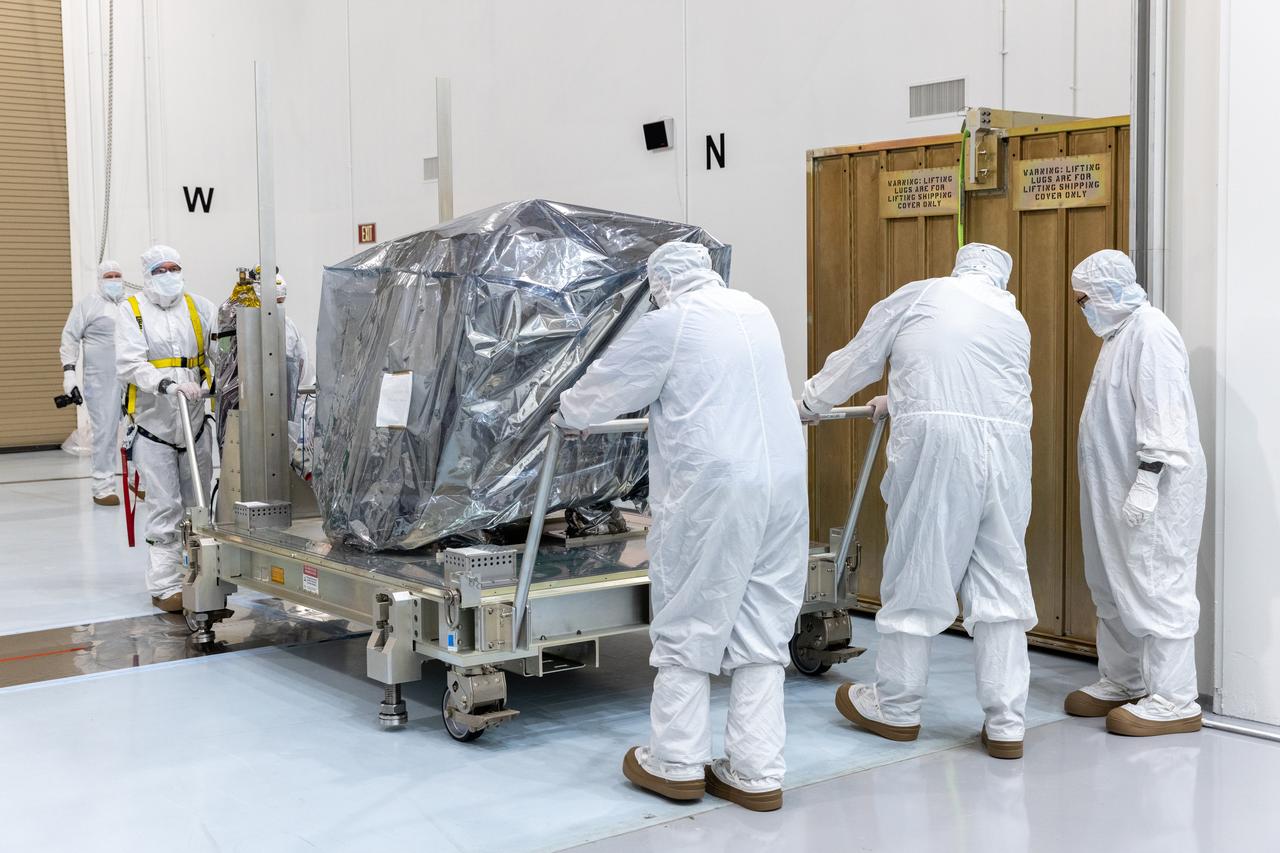
Technicians remove the protective casing covering NASA’s Carruthers Geocorona Observatory on Monday, July 21, 2025, at the Astrotech Space Operations Facility near the agency’s Kennedy Space Center in Florida. The Carruthers Geocorona Observatory is a small satellite set to operate at Lagrange Point 1 (L1), an orbit point between the Earth and Sun about one million miles away. Carruthers will use its ultraviolet cameras to monitor how space weather from the Sun impacts the exosphere, the outermost part of Earth’s atmosphere. The observatory will launch as a rideshare with NASA’s (Interstellar Mapping and Acceleration Probe) no earlier than September 2025.
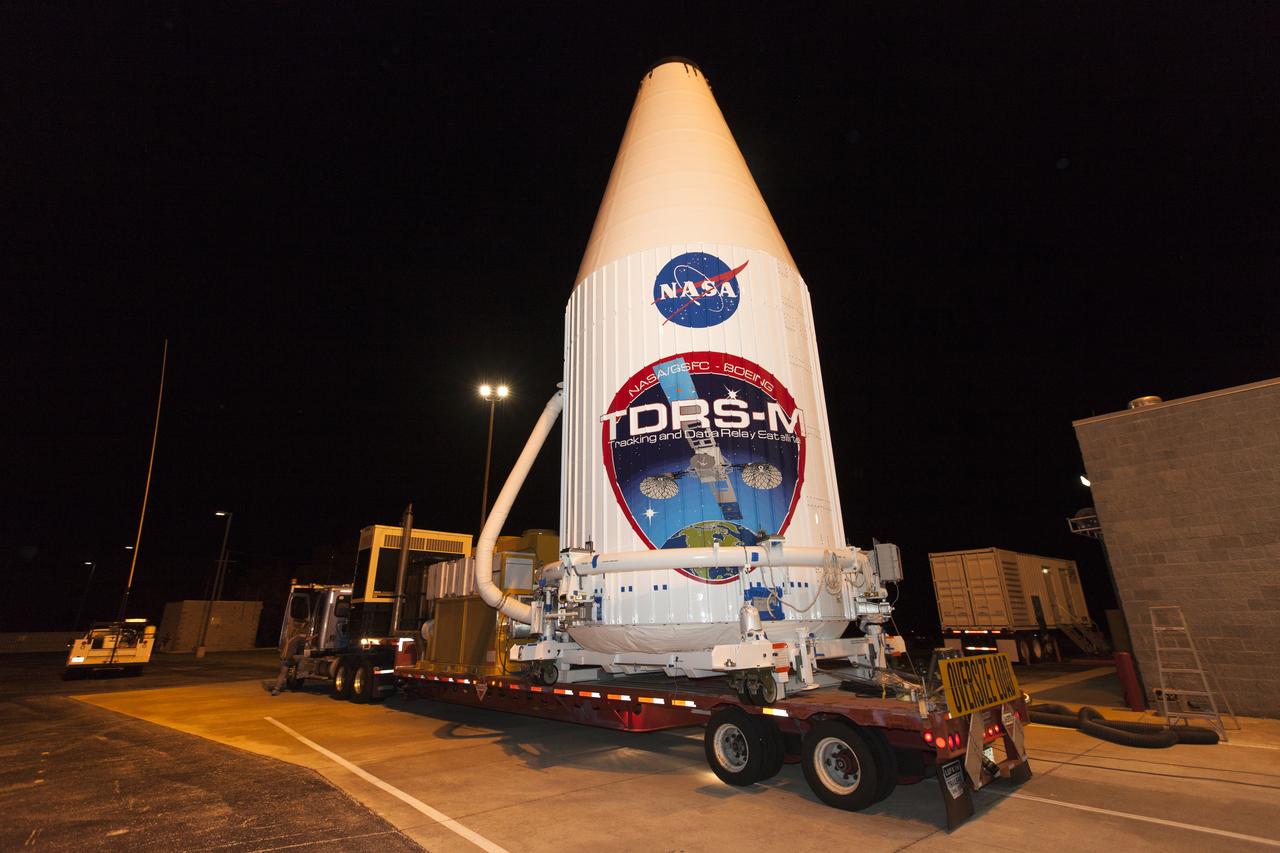
Inside the Astrotech facility in Titusville, Florida, the payload fairing for NASA's Tracking and Data Relay Satellite, TDRS-M, is moved into position to encapsulate the spacecraft. TDRS-M is the latest spacecraft destined for the agency's constellation of communications satellites that allows nearly continuous contact with orbiting spacecraft ranging from the International Space Station and Hubble Space Telescope to the array of scientific observatories. Liftoff atop a United Launch Alliance Atlas V rocket is scheduled to take place from Space Launch Complex 41 at Cape Canaveral Air Force Station at 8:03 a.m. EDT Aug. 18, 2017.
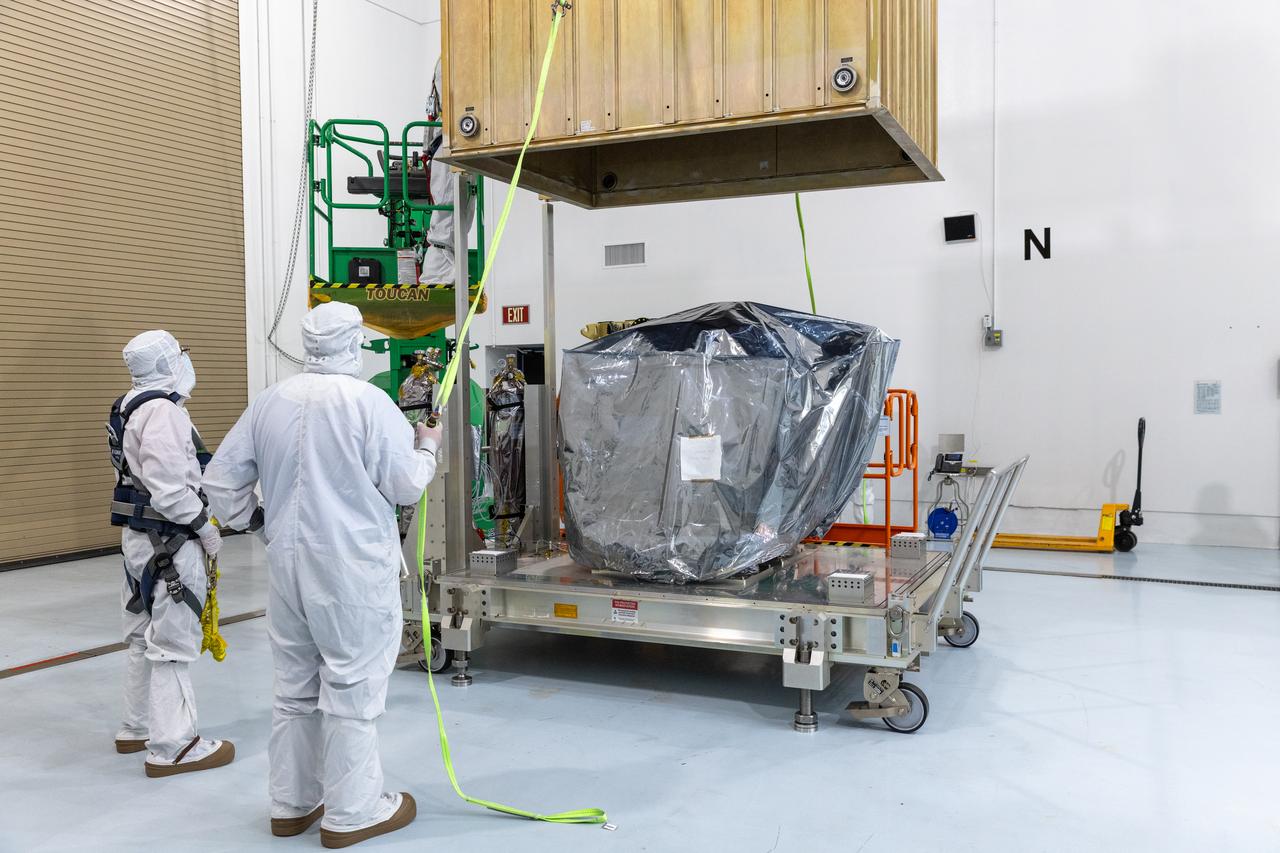
Technicians remove the protective casing covering NASA’s Carruthers Geocorona Observatory on Monday, July 21, 2025, at the Astrotech Space Operations Facility near the agency’s Kennedy Space Center in Florida. The Carruthers Geocorona Observatory is a small satellite set to operate at Lagrange Point 1 (L1), an orbit point between the Earth and Sun about one million miles away. Carruthers will use its ultraviolet cameras to monitor how space weather from the Sun impacts the exosphere, the outermost part of Earth’s atmosphere. The observatory will launch as a rideshare with NASA’s (Interstellar Mapping and Acceleration Probe) no earlier than September 2025.
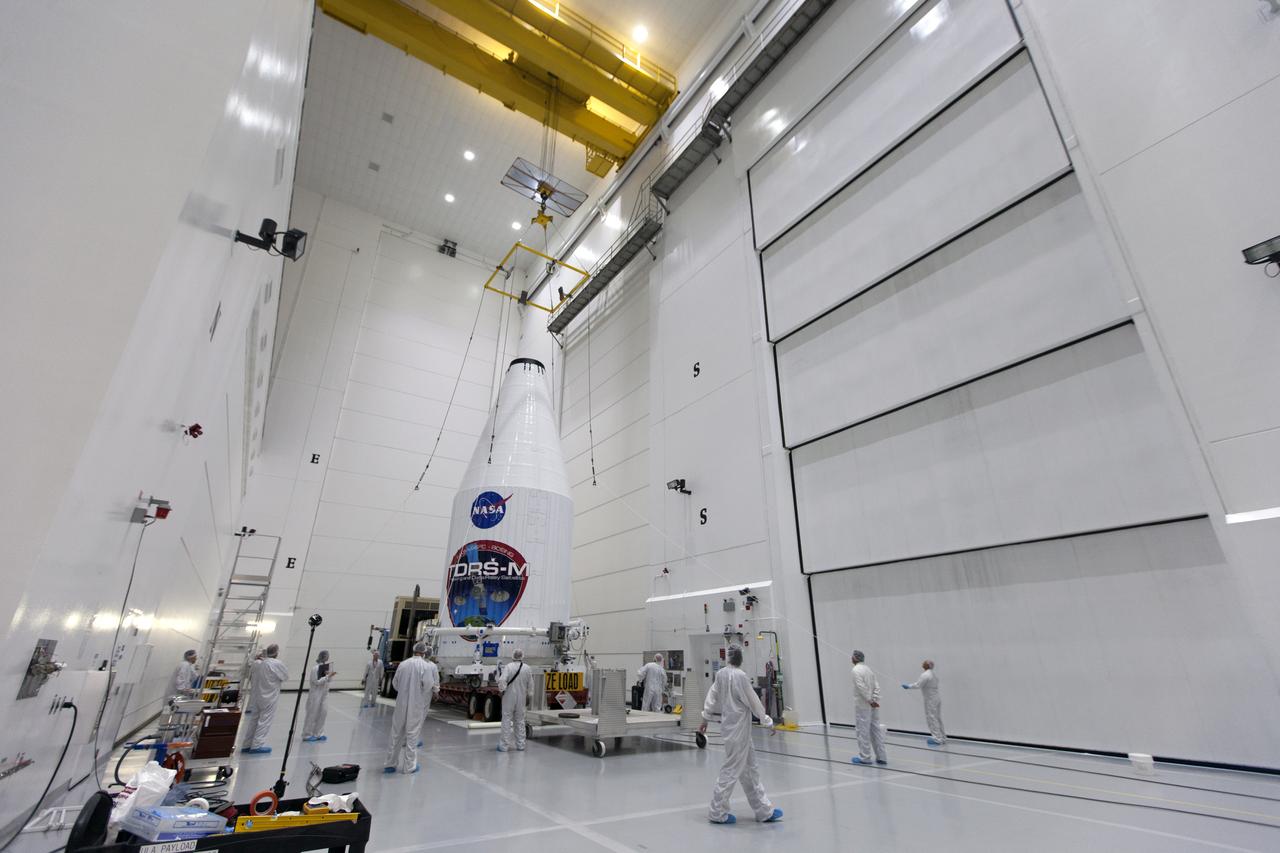
Technicians monitor the progress as NASA's TDRS-M satellite, enclosed in its payload fairing, is lowered onto a transport vehicle inside the Astrotech facility near NASA's Kennedy Space Center in Florida. The TDRS-M is the latest spacecraft destined for the agency's constellation of communications satellites that allows nearly continuous contact with orbiting spacecraft ranging from the International Space Station and Hubble Space Telescope to the array of scientific observatories. Liftoff atop a United Launch Alliance Atlas V rocket is scheduled to take place from Space Launch Complex 41 at Cape Canaveral Air Force Station on Aug. 18 at 8:03 a.m. EDT.
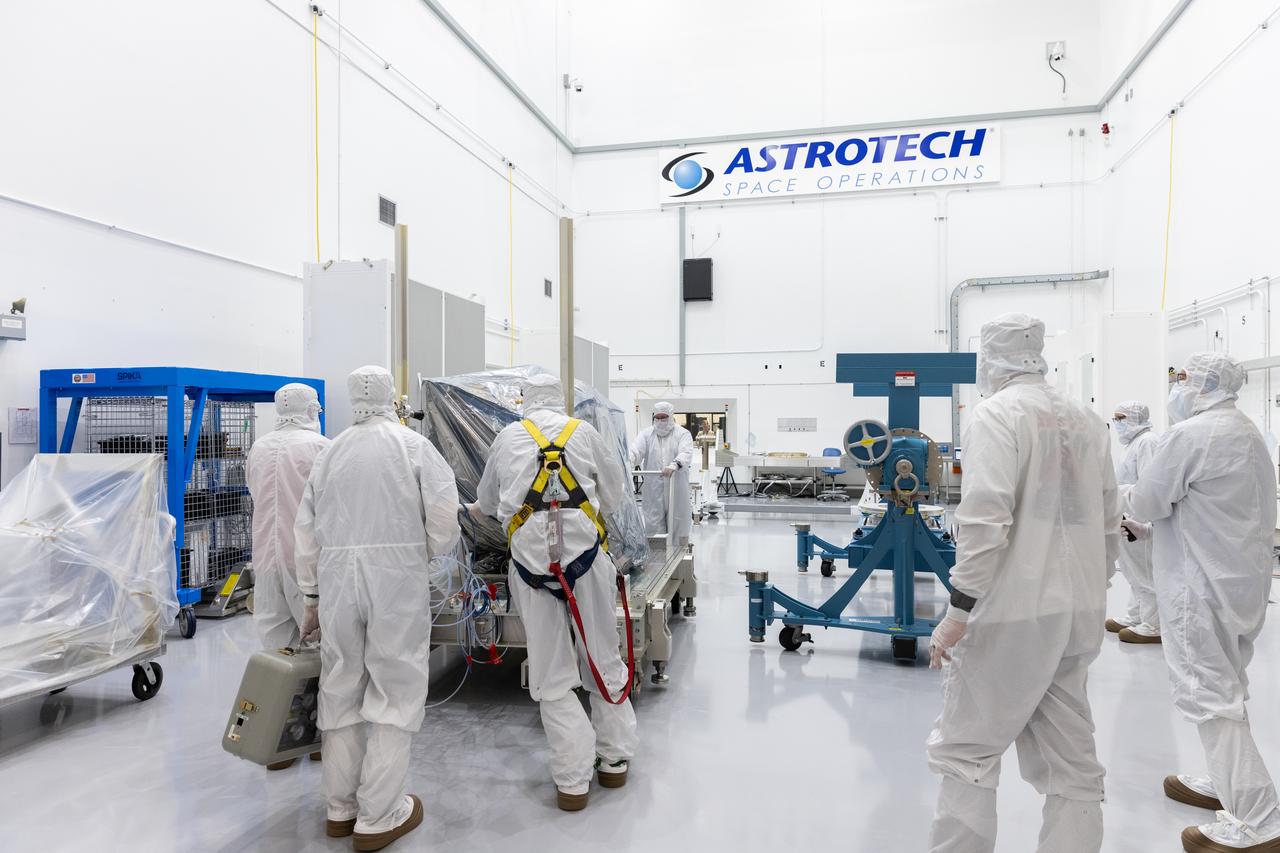
Technicians remove the protective casing covering NASA’s Carruthers Geocorona Observatory on Monday, July 21, 2025, at the Astrotech Space Operations Facility near the agency’s Kennedy Space Center in Florida. The Carruthers Geocorona Observatory is a small satellite set to operate at Lagrange Point 1 (L1), an orbit point between the Earth and Sun about one million miles away. Carruthers will use its ultraviolet cameras to monitor how space weather from the Sun impacts the exosphere, the outermost part of Earth’s atmosphere. The observatory will launch as a rideshare with NASA’s (Interstellar Mapping and Acceleration Probe) no earlier than September 2025.
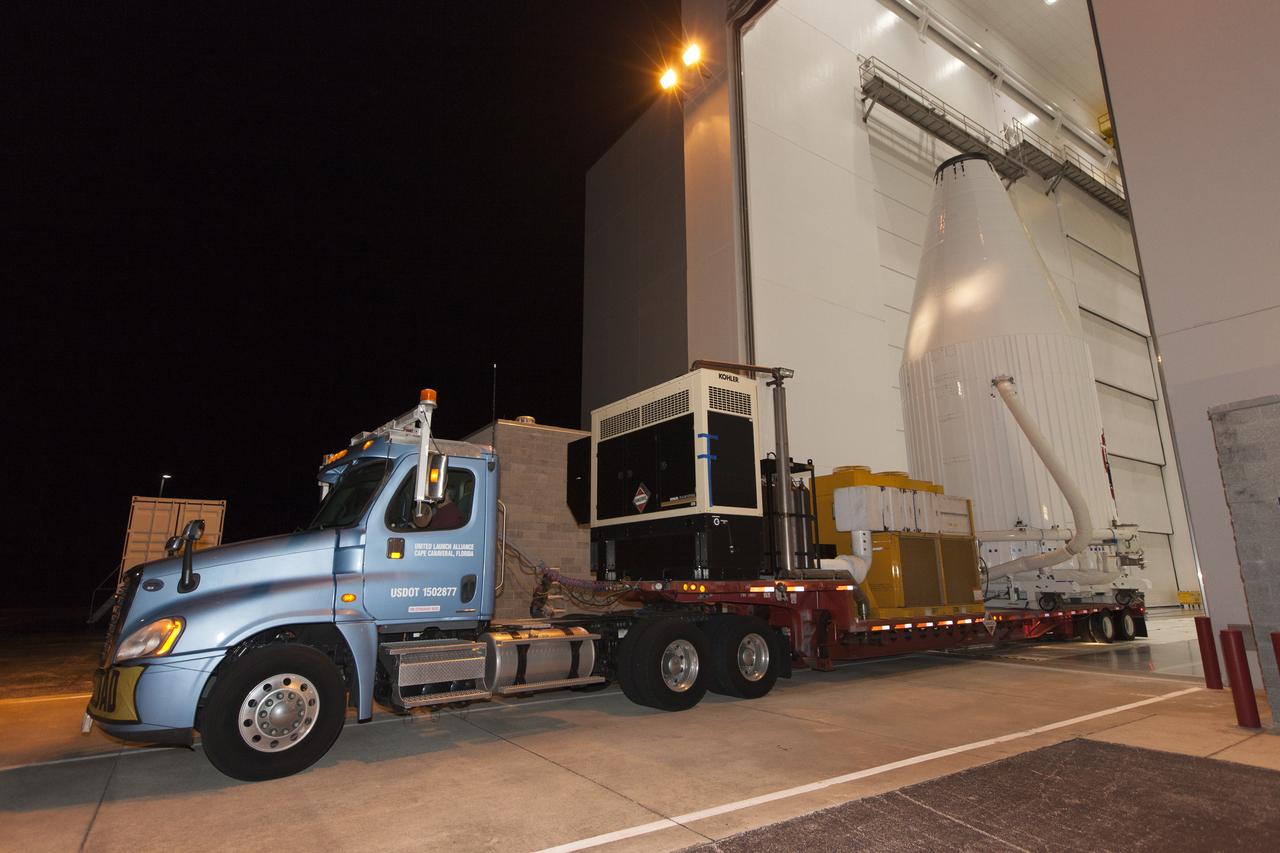
Inside the Astrotech facility near NASA's Kennedy Space Center in Florida, the agency's TDRS-M satellite, enclosed in its payload fairing, is being prepared for lifting to a transport vehicle. The TDRS-M is the latest spacecraft destined for the agency's constellation of communications satellites that allows nearly continuous contact with orbiting spacecraft ranging from the International Space Station and Hubble Space Telescope to the array of scientific observatories. Liftoff atop a United Launch Alliance Atlas V rocket is scheduled to take place from Space Launch Complex 41 at Cape Canaveral Air Force Station on Aug. 18 at 8:03 a.m. EDT.
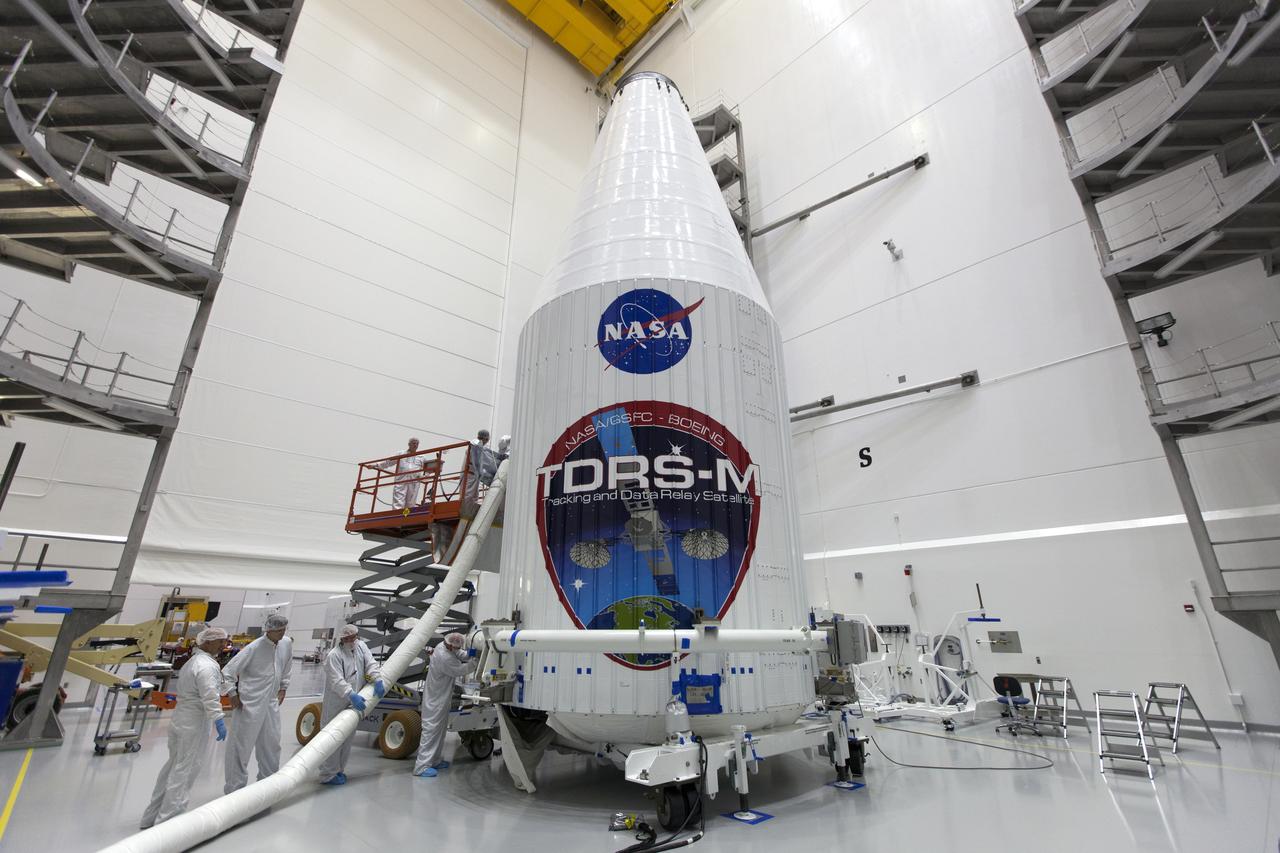
Inside the Astrotech facility in Titusville, Florida, the payload fairing for NASA's Tracking and Data Relay Satellite, TDRS-M, is moved into position to encapsulate the spacecraft. TDRS-M is the latest spacecraft destined for the agency's constellation of communications satellites that allows nearly continuous contact with orbiting spacecraft ranging from the International Space Station and Hubble Space Telescope to the array of scientific observatories. Liftoff atop a United Launch Alliance Atlas V rocket is scheduled to take place from Space Launch Complex 41 at Cape Canaveral Air Force Station at 8:03 a.m. EDT Aug. 18, 2017.
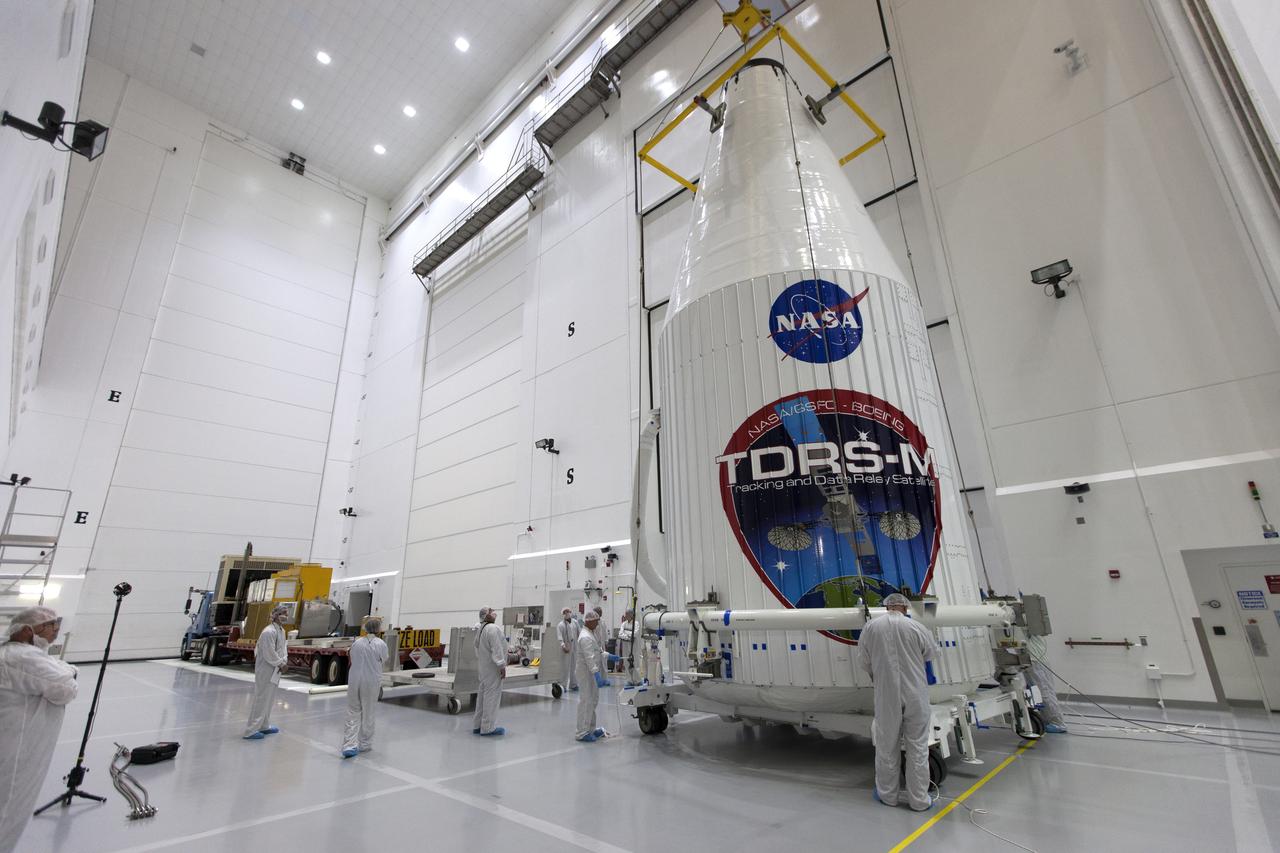
Inside the Astrotech facility near NASA's Kennedy Space Center in Florida, the agency's TDRS-M satellite, enclosed in its payload fairing, will be lifted by crane and lowered onto a transport vehicle. The TDRS-M is the latest spacecraft destined for the agency's constellation of communications satellites that allows nearly continuous contact with orbiting spacecraft ranging from the International Space Station and Hubble Space Telescope to the array of scientific observatories. Liftoff atop a United Launch Alliance Atlas V rocket is scheduled to take place from Space Launch Complex 41 at Cape Canaveral Air Force Station on Aug. 18 at 8:03 a.m. EDT.
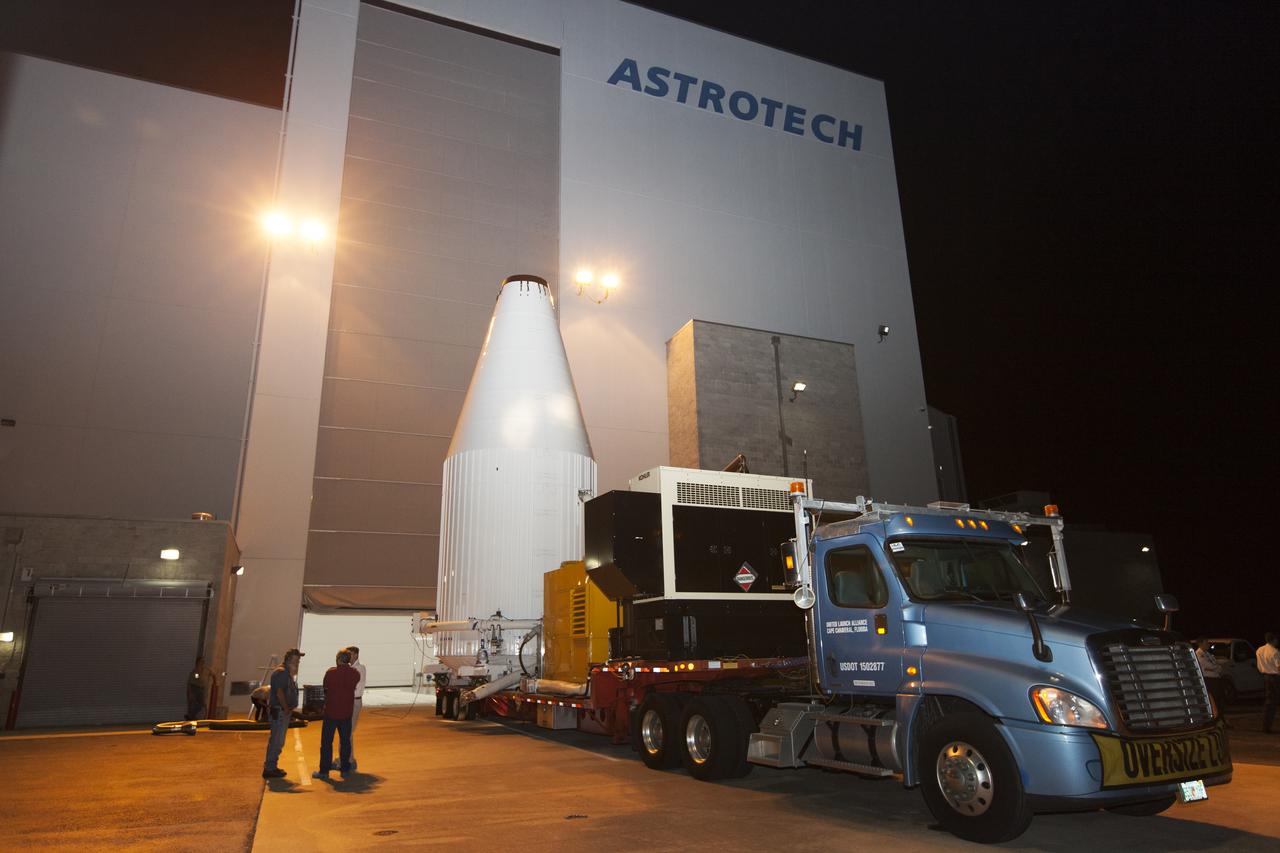
Inside the Astrotech facility in Titusville, Florida, the payload fairing for NASA's Tracking and Data Relay Satellite, TDRS-M, is moved into position to encapsulate the spacecraft. TDRS-M is the latest spacecraft destined for the agency's constellation of communications satellites that allows nearly continuous contact with orbiting spacecraft ranging from the International Space Station and Hubble Space Telescope to the array of scientific observatories. Liftoff atop a United Launch Alliance Atlas V rocket is scheduled to take place from Space Launch Complex 41 at Cape Canaveral Air Force Station at 8:03 a.m. EDT Aug. 18, 2017.
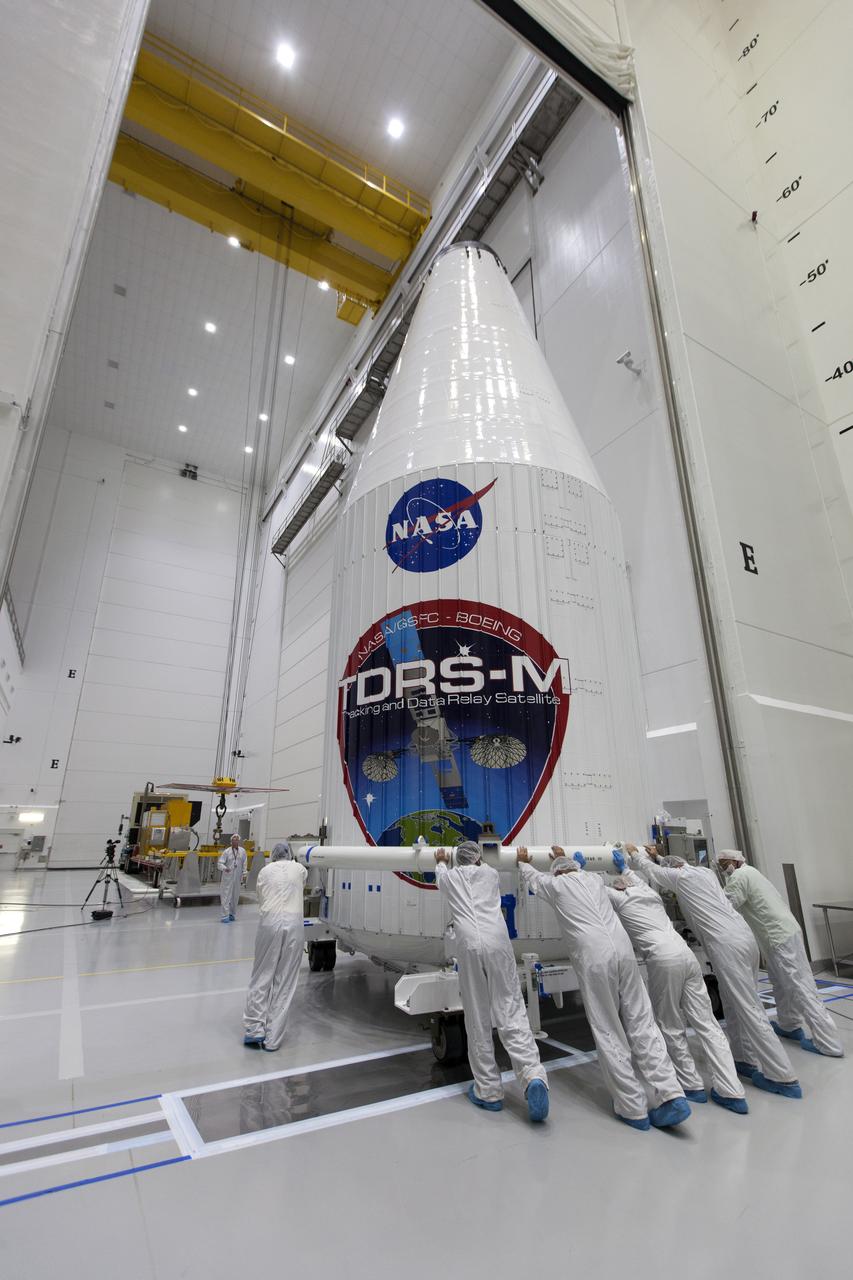
Inside the Astrotech facility near NASA's Kennedy Space Center in Florida, technicians move the agency's TDRS-M satellite, enclosed in its payload fairing, toward a crane for lifting to a transport vehicle. The TDRS-M is the latest spacecraft destined for the agency's constellation of communications satellites that allows nearly continuous contact with orbiting spacecraft ranging from the International Space Station and Hubble Space Telescope to the array of scientific observatories. Liftoff atop a United Launch Alliance Atlas V rocket is scheduled to take place from Space Launch Complex 41 at Cape Canaveral Air Force Station on Aug. 18 at 8:03 a.m. EDT.
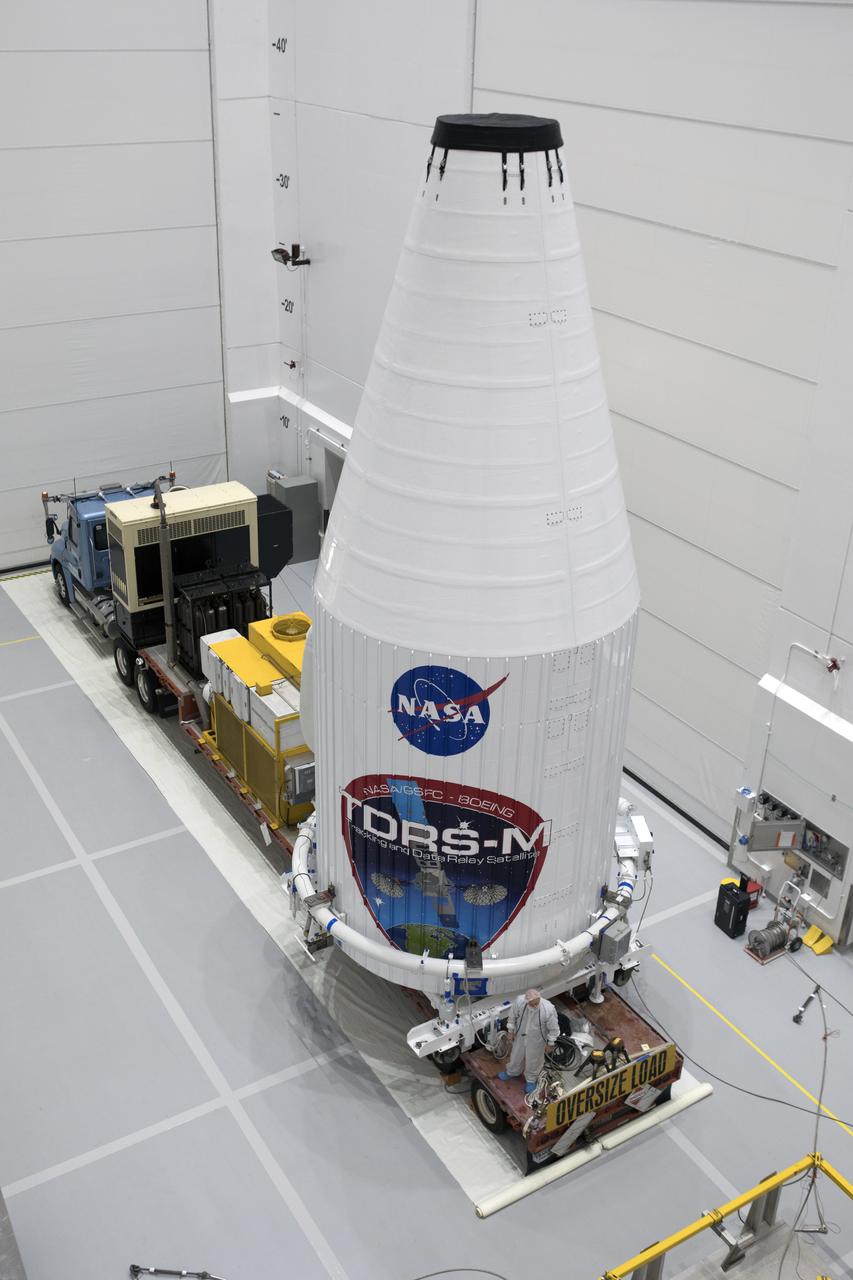
Inside the Astrotech facility near NASA's Kennedy Space Center in Florida, the agency's TDRS-M satellite, enclosed in its payload fairing, is secured on a transport vehicle. The TDRS-M is the latest spacecraft destined for the agency's constellation of communications satellites that allows nearly continuous contact with orbiting spacecraft ranging from the International Space Station and Hubble Space Telescope to the array of scientific observatories. Liftoff atop a United Launch Alliance Atlas V rocket is scheduled to take place from Space Launch Complex 41 at Cape Canaveral Air Force Station on Aug. 18 at 8:03 a.m. EDT.
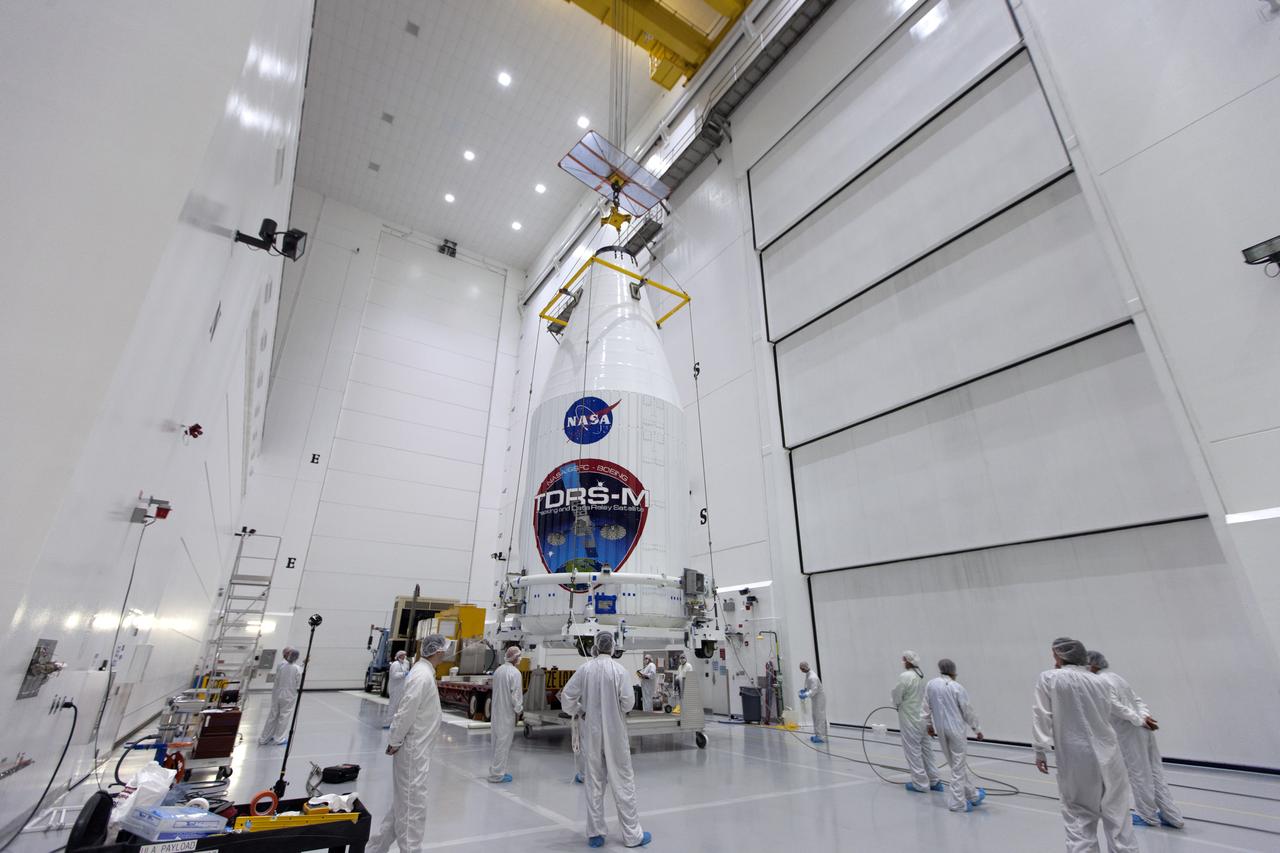
Technicians monitor the progress as NASA's TDRS-M satellite, enclosed in its payload fairing, is lowered onto a transport vehicle inside the Astrotech facility near NASA's Kennedy Space Center in Florida. The TDRS-M is the latest spacecraft destined for the agency's constellation of communications satellites that allows nearly continuous contact with orbiting spacecraft ranging from the International Space Station and Hubble Space Telescope to the array of scientific observatories. Liftoff atop a United Launch Alliance Atlas V rocket is scheduled to take place from Space Launch Complex 41 at Cape Canaveral Air Force Station on Aug. 18 at 8:03 a.m. EDT.
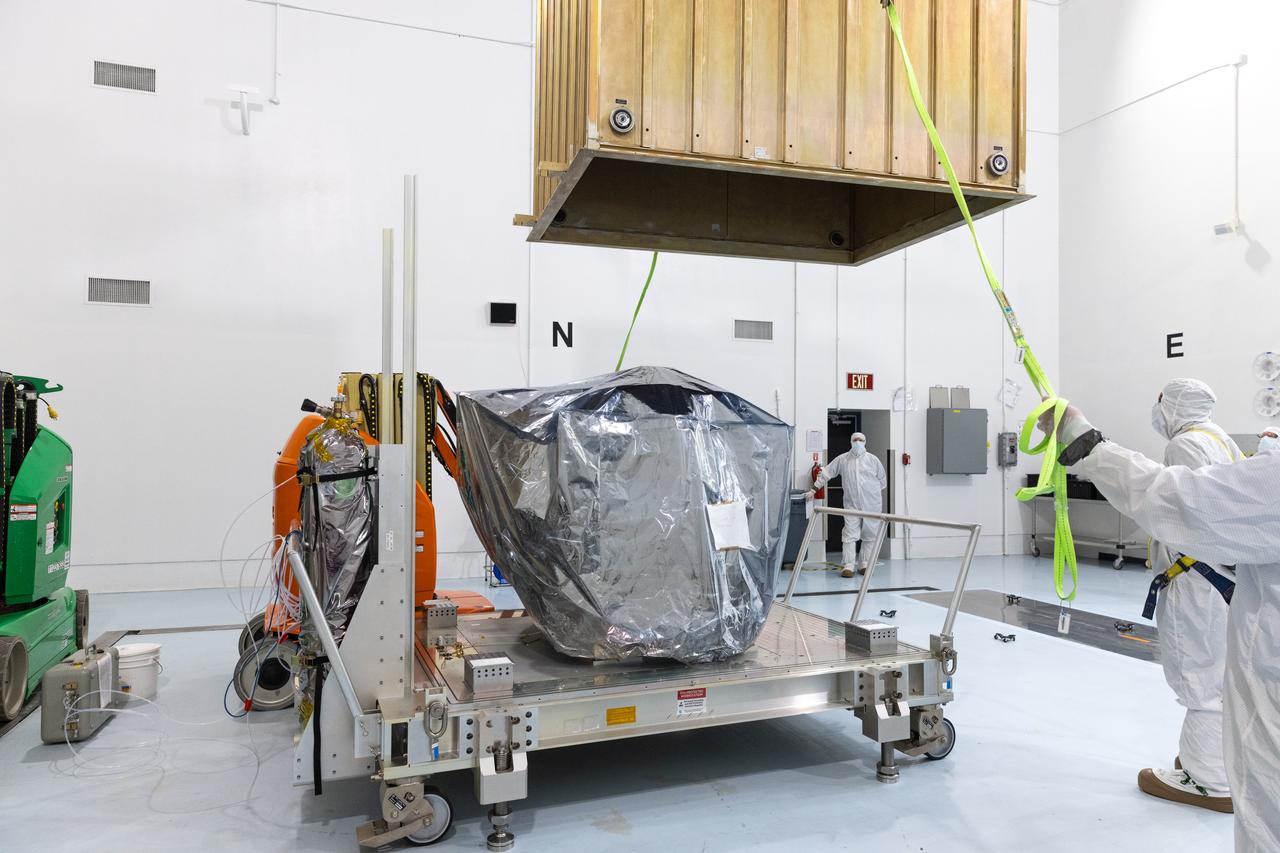
Technicians remove the protective casing covering NASA’s Carruthers Geocorona Observatory on Monday, July 21, 2025, at the Astrotech Space Operations Facility near the agency’s Kennedy Space Center in Florida. The Carruthers Geocorona Observatory is a small satellite set to operate at Lagrange Point 1 (L1), an orbit point between the Earth and Sun about one million miles away. Carruthers will use its ultraviolet cameras to monitor how space weather from the Sun impacts the exosphere, the outermost part of Earth’s atmosphere. The observatory will launch as a rideshare with NASA’s (Interstellar Mapping and Acceleration Probe) no earlier than September 2025.
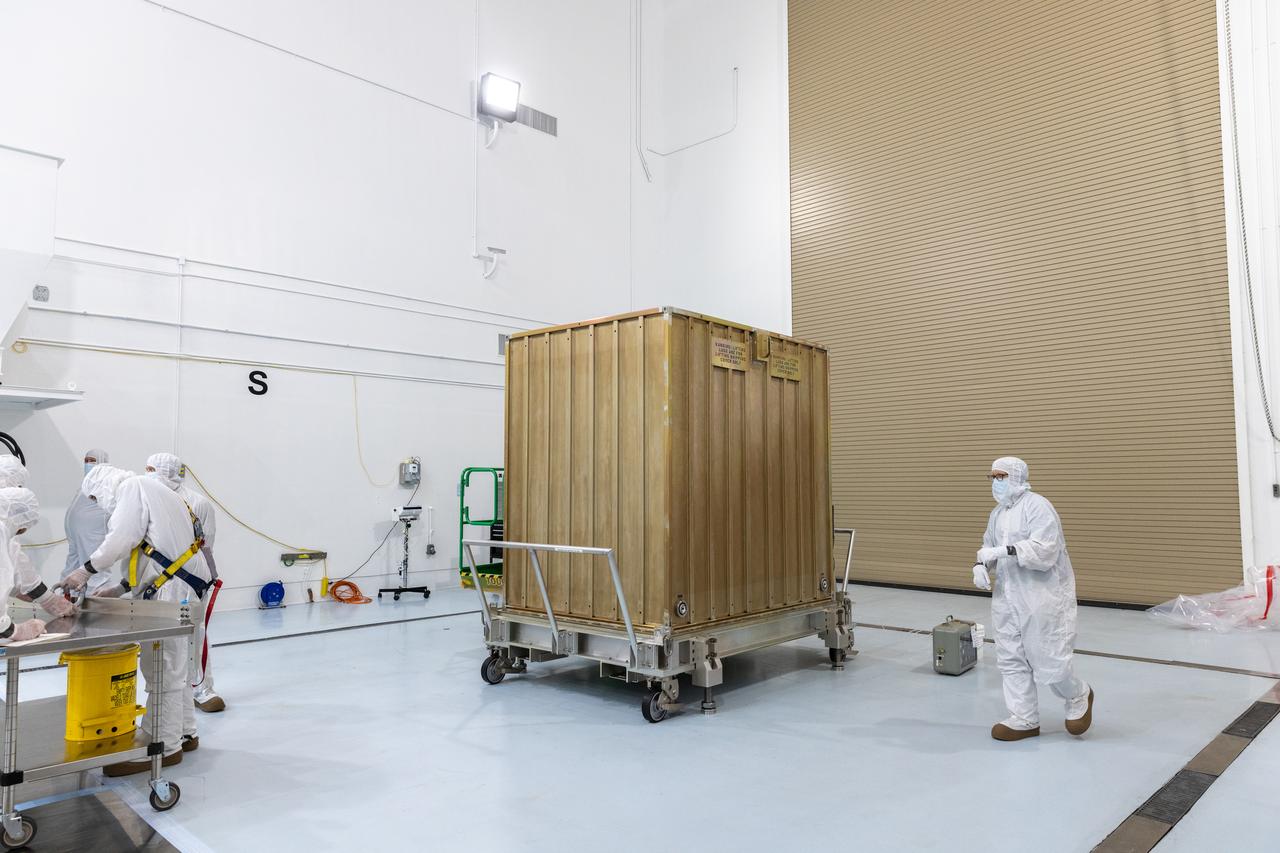
Technicians prepare to remove the protective casing covering NASA’s Carruthers Geocorona Observatory on Monday, July 21, 2025, at the Astrotech Space Operations Facility near the agency’s Kennedy Space Center in Florida. The Carruthers Geocorona Observatory is a small satellite set to operate at Lagrange Point 1 (L1), an orbit point between the Earth and Sun about one million miles away. Carruthers will use its ultraviolet cameras to monitor how space weather from the Sun impacts the exosphere, the outermost part of Earth’s atmosphere. The observatory will launch as a rideshare with NASA’s (Interstellar Mapping and Acceleration Probe) no earlier than September 2025.
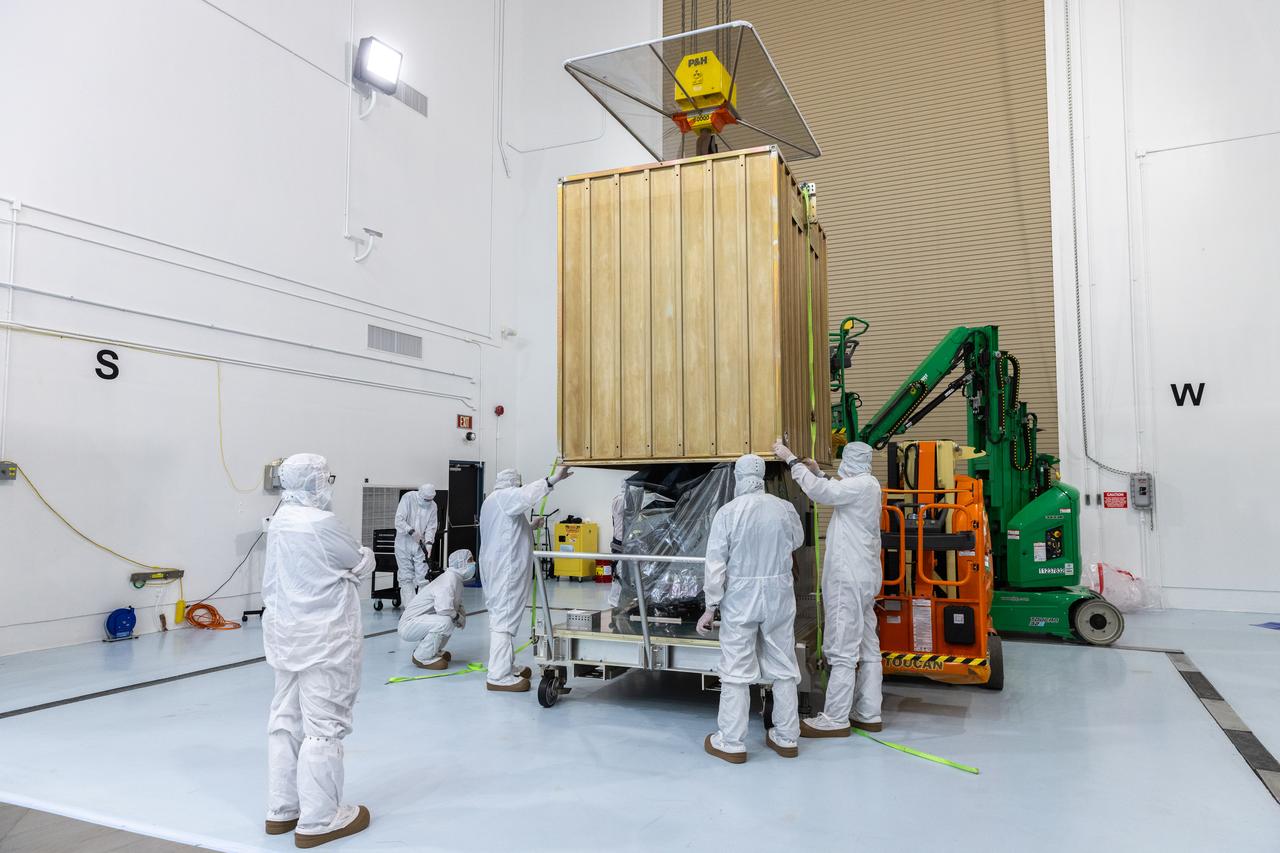
Technicians prepare to remove the protective casing covering NASA’s Carruthers Geocorona Observatory on Monday, July 21, 2025, at the Astrotech Space Operations Facility near the agency’s Kennedy Space Center in Florida. The Carruthers Geocorona Observatory is a small satellite set to operate at Lagrange Point 1 (L1), an orbit point between the Earth and Sun about one million miles away. Carruthers will use its ultraviolet cameras to monitor how space weather from the Sun impacts the exosphere, the outermost part of Earth’s atmosphere. The observatory will launch as a rideshare with NASA’s (Interstellar Mapping and Acceleration Probe) no earlier than September 2025.
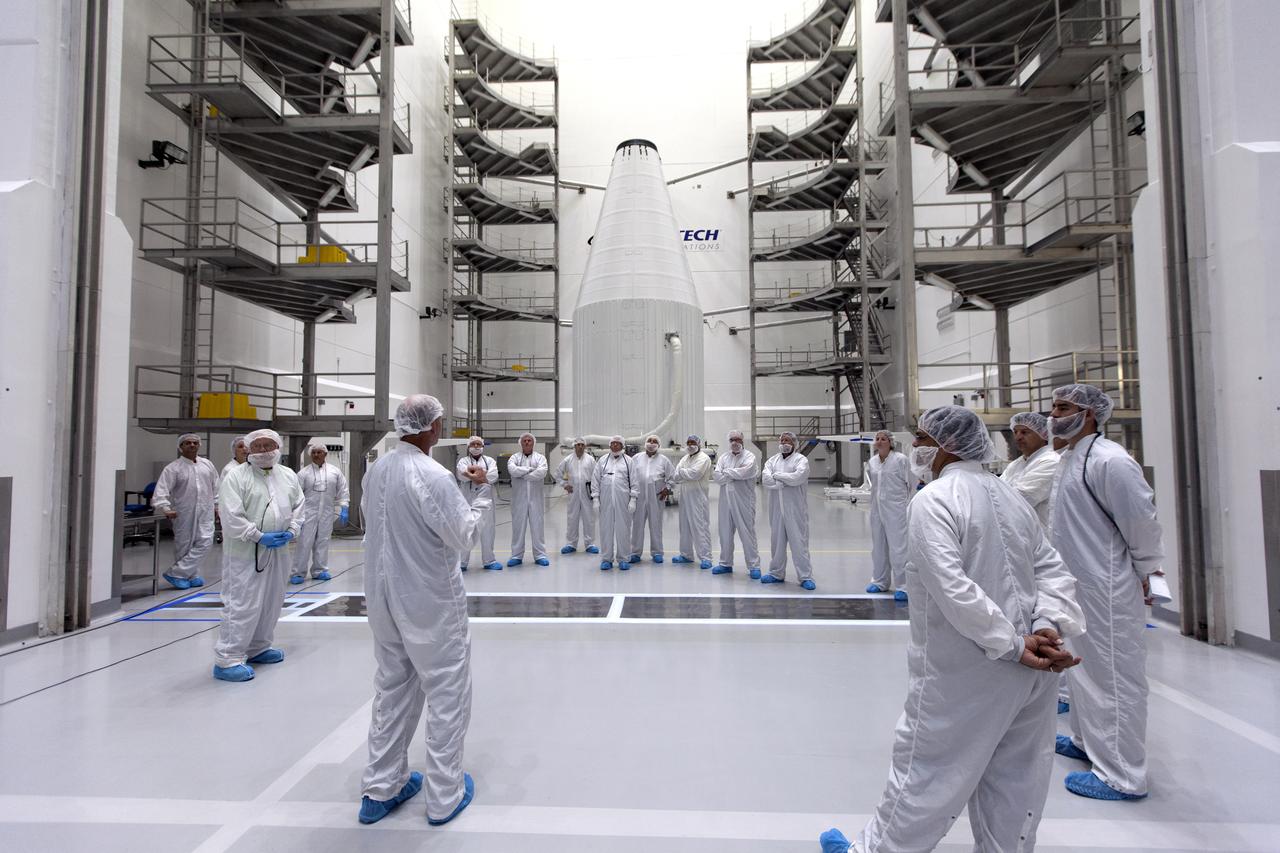
Inside the Astrotech facility near NASA's Kennedy Space Center in Florida, the agency's TDRS-M satellite, enclosed in its payload fairing, is being prepared for lifting to a transport vehicle. Engineers and technicians in clean room attire review procedures before the lifting process begins. The TDRS-M is the latest spacecraft destined for the agency's constellation of communications satellites that allows nearly continuous contact with orbiting spacecraft ranging from the International Space Station and Hubble Space Telescope to the array of scientific observatories. Liftoff atop a United Launch Alliance Atlas V rocket is scheduled to take place from Space Launch Complex 41 at Cape Canaveral Air Force Station on Aug. 18 at 8:03 a.m. EDT.
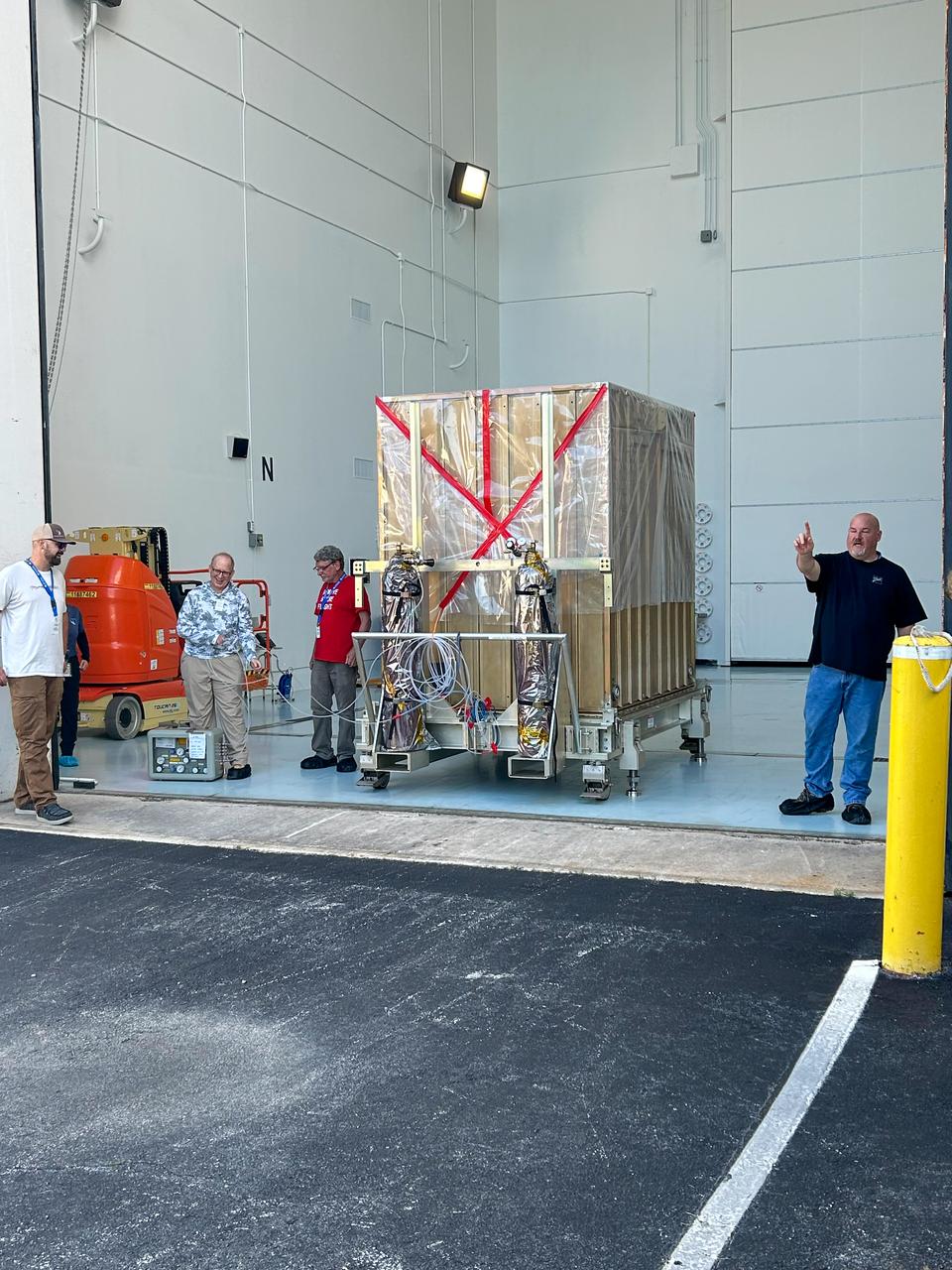
Technicians offloaded NASA’s Carruthers Geocorona Observatory following the spacecraft’s arrival on Monday, July 201, 2025, at the Astrotech Space Operations Facility near the agency’s Kennedy Space Center in Florida. The Carruthers Geocorona Observatory is a small satellite set to operate at Lagrange Point 1 (L1), an orbit point between the Earth and Sun about one million miles away, to study the Earth’s exosphere, the outermost part of the atmosphere. Carruthers will use its ultraviolet cameras to monitor how space weather from the Sun impacts the exosphere.
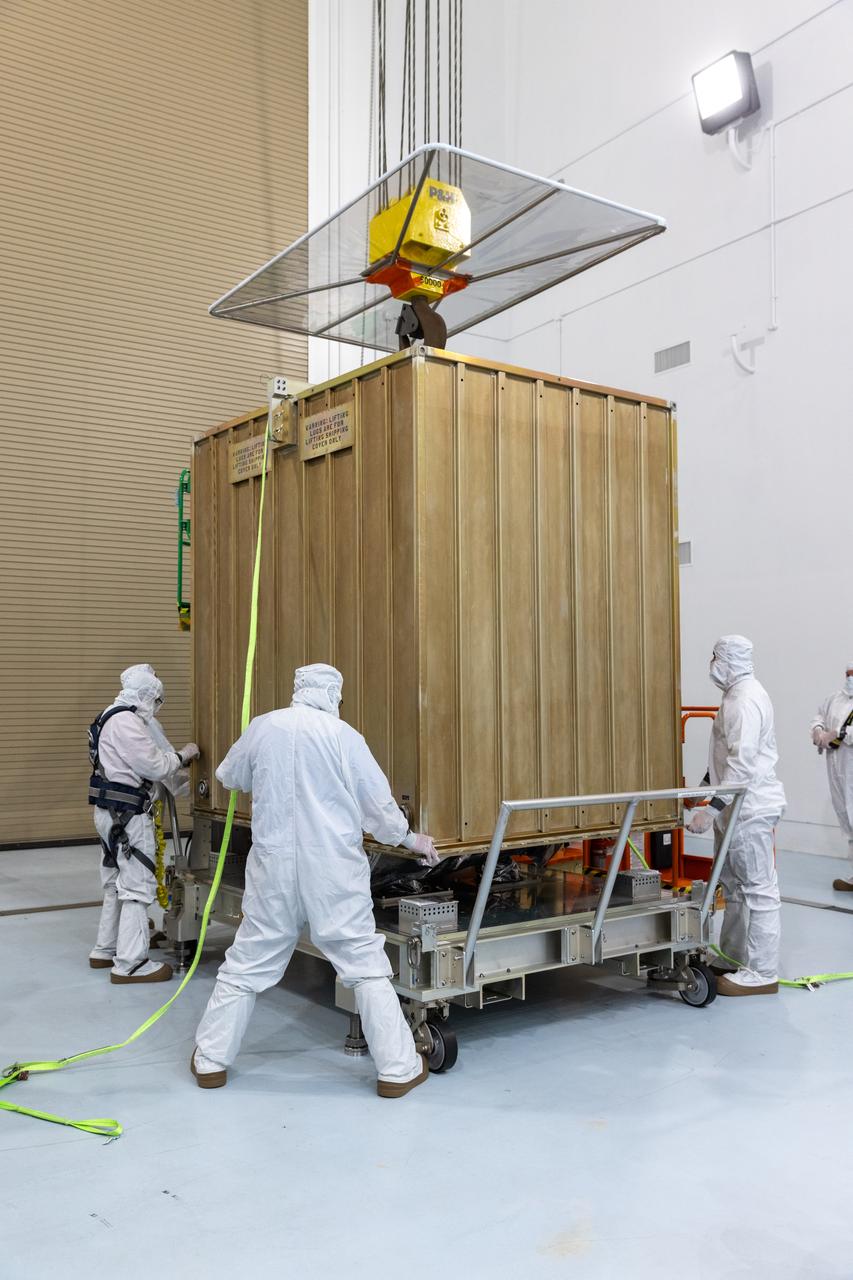
Technicians prepare to remove the protective casing covering NASA’s Carruthers Geocorona Observatory on Monday, July 21, 2025, at the Astrotech Space Operations Facility near the agency’s Kennedy Space Center in Florida. The Carruthers Geocorona Observatory is a small satellite set to operate at Lagrange Point 1 (L1), an orbit point between the Earth and Sun about one million miles away. Carruthers will use its ultraviolet cameras to monitor how space weather from the Sun impacts the exosphere, the outermost part of Earth’s atmosphere. The observatory will launch as a rideshare with NASA’s (Interstellar Mapping and Acceleration Probe) no earlier than September 2025.
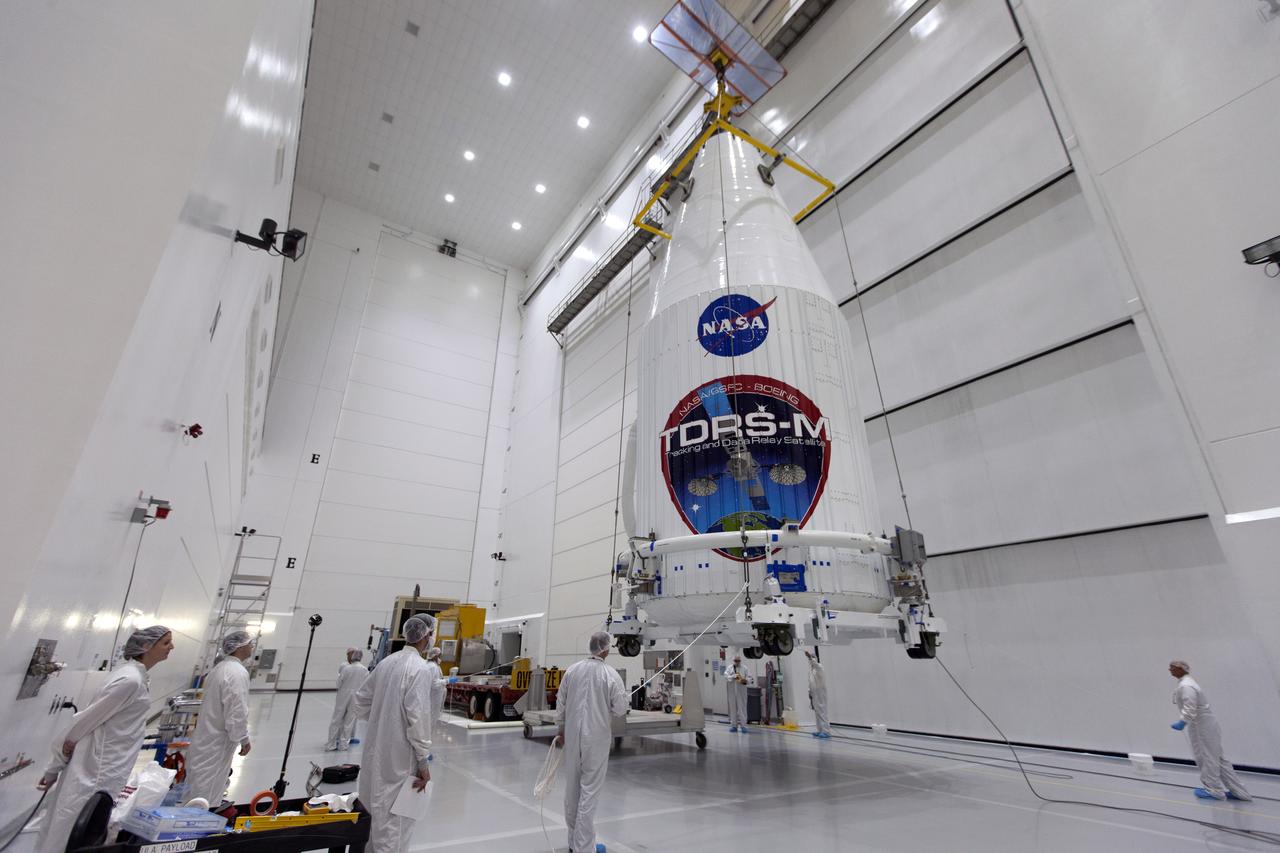
Inside the Astrotech facility near NASA's Kennedy Space Center in Florida, the agency's TDRS-M satellite, enclosed in its payload fairing, is lifted by crane and moved to a transport vehicle. The TDRS-M is the latest spacecraft destined for the agency's constellation of communications satellites that allows nearly continuous contact with orbiting spacecraft ranging from the International Space Station and Hubble Space Telescope to the array of scientific observatories. Liftoff atop a United Launch Alliance Atlas V rocket is scheduled to take place from Space Launch Complex 41 at Cape Canaveral Air Force Station on Aug. 18 at 8:03 a.m. EDT.