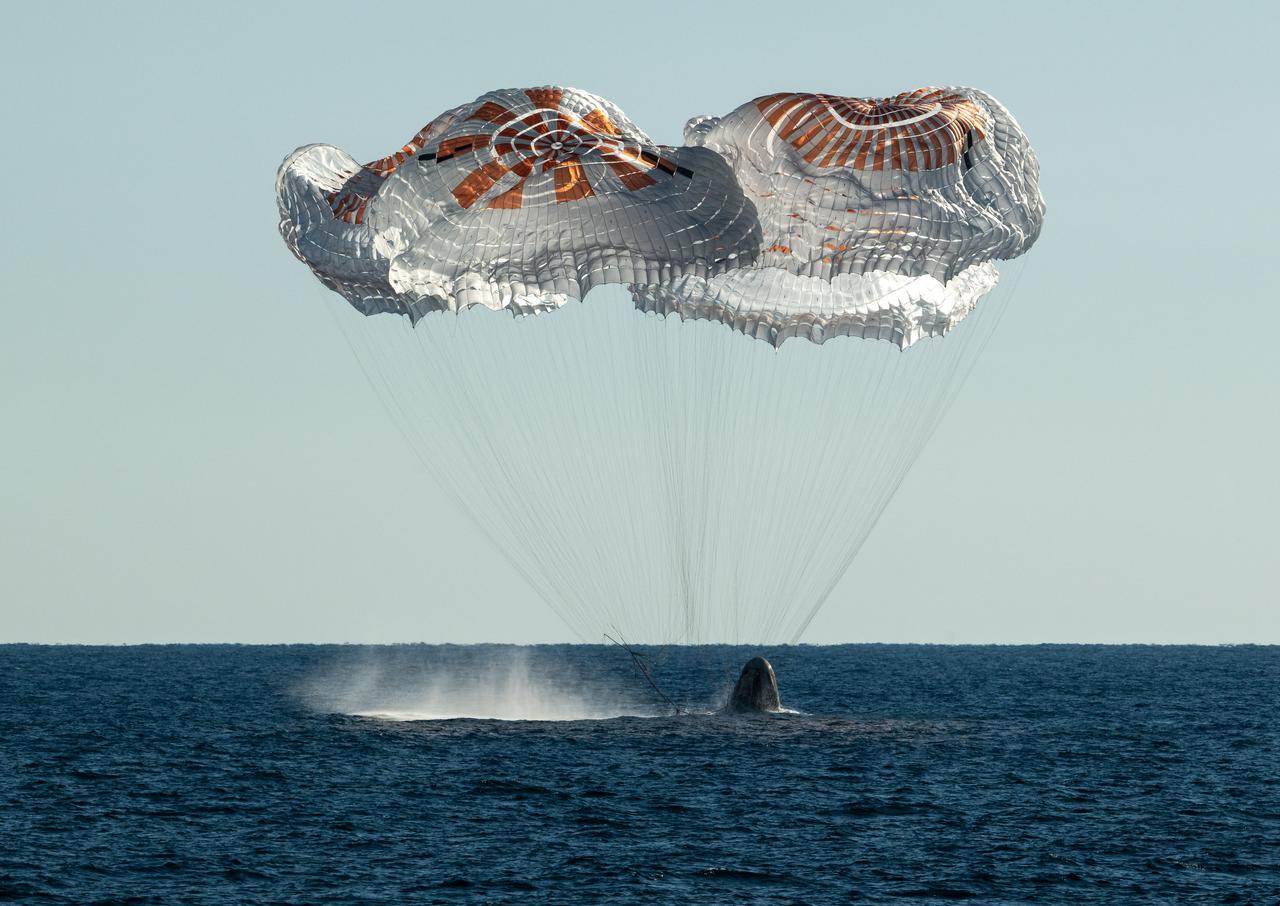
The SpaceX Crew Dragon Freedom spacecraft is seen as it lands with NASA astronauts Kjell Lindgren, Robert Hines, Jessica Watkins, and ESA (European Space Agency) astronaut Samantha Cristoforetti aboard in the Atlantic Ocean off the coast of Jacksonville, Florida, Friday, Oct. 14, 2022. Lindgren, Hines, Watkins, and Cristoforetti are returning after 170 days in space as part of Expeditions 67 and 68 aboard the International Space Station. Photo Credit: (NASA/Bill Ingalls)
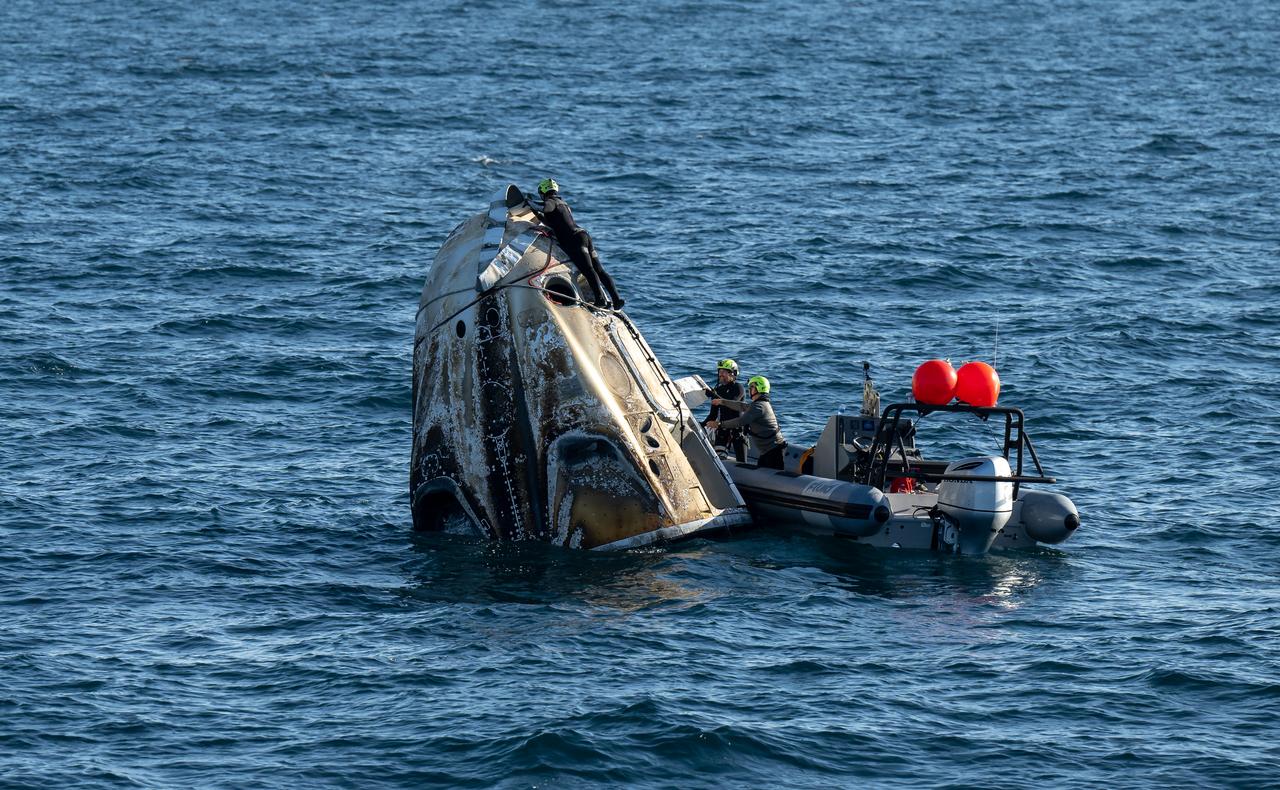
Support teams work around the SpaceX Crew Dragon Freedom spacecraft shortly after it landed with NASA astronauts Kjell Lindgren, Robert Hines, Jessica Watkins, and ESA (European Space Agency) astronaut Samantha Cristoforetti aboard in the Atlantic Ocean off the coast of Jacksonville, Florida, Friday, Oct. 14, 2022. Lindgren, Hines, Watkins, and Cristoforetti are returning after 170 days in space as part of Expeditions 67 and 68 aboard the International Space Station. Photo Credit: (NASA/Bill Ingalls)
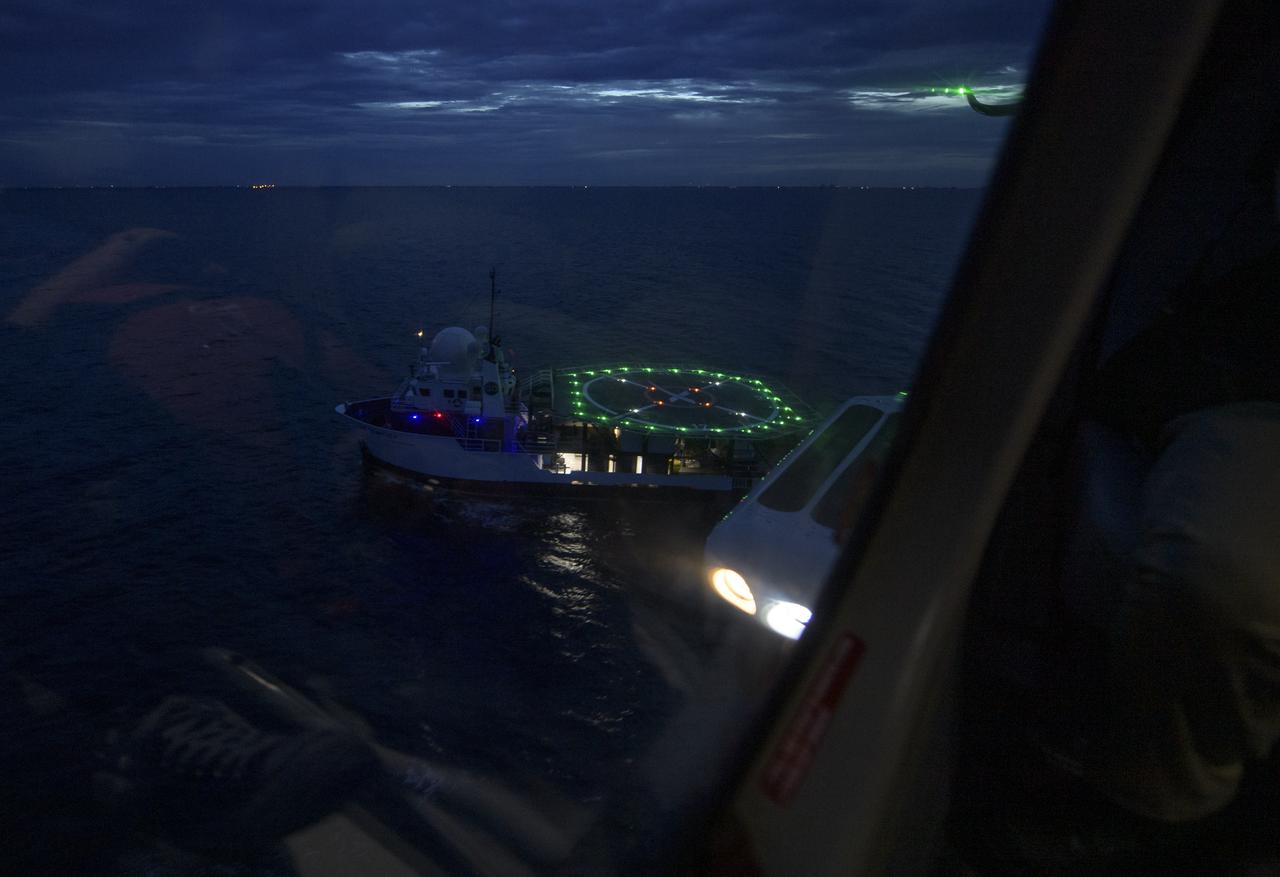
The GO Searcher ship is seen from a helicopter during practice for a medical emergency evacuation, Friday, August 15, 2019 in the Atlantic Ocean off the coast of Cape Canaveral, Florida. Teams from NASA and SpaceX gathered to refine procedures for emergency situations. SpaceX will use the GO Searcher ship during the Demo-2 mission to recover NASA astronauts returning from the International Space Station in their Crew Dragon spacecraft. Photo Credit: (NASA/Bill Ingalls)
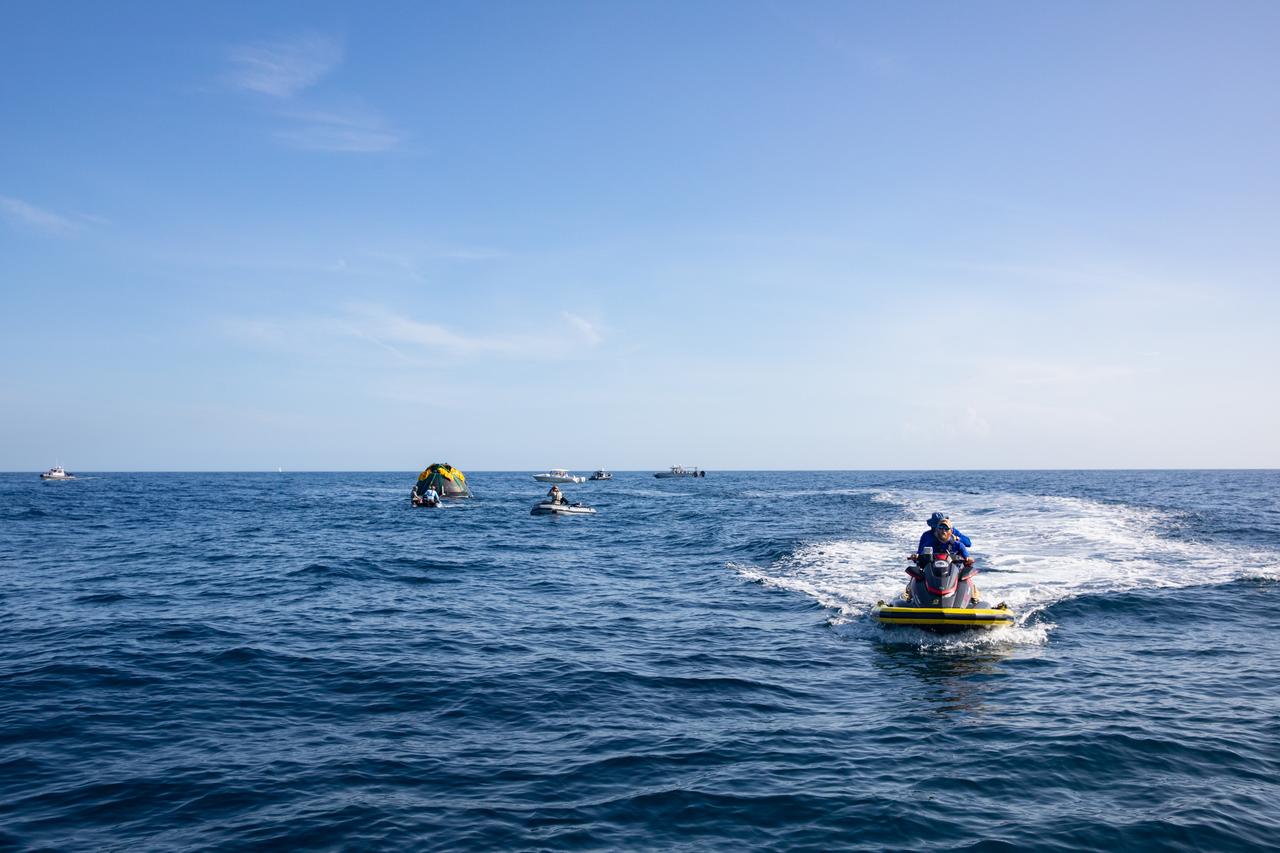
Teams with NASA and the Department of Defense (DoD) rehearse recovery procedures for an ascent abort scenario off the coast of Florida near the agency’s Kennedy Space Center on Thursday, June 12, 2025. Utilizing mannequin crew members inside the Crew Module Test Article (CMTA) – a full-scale mockup of the Orion spacecraft – the simulations practiced abort timelines and joint NASA and DoD recovery procedures supported by Artemis II launch and flight control teams, as NASA prepares to send four astronauts around the Moon and back next year as part of the agency’s first crewed Artemis mission.
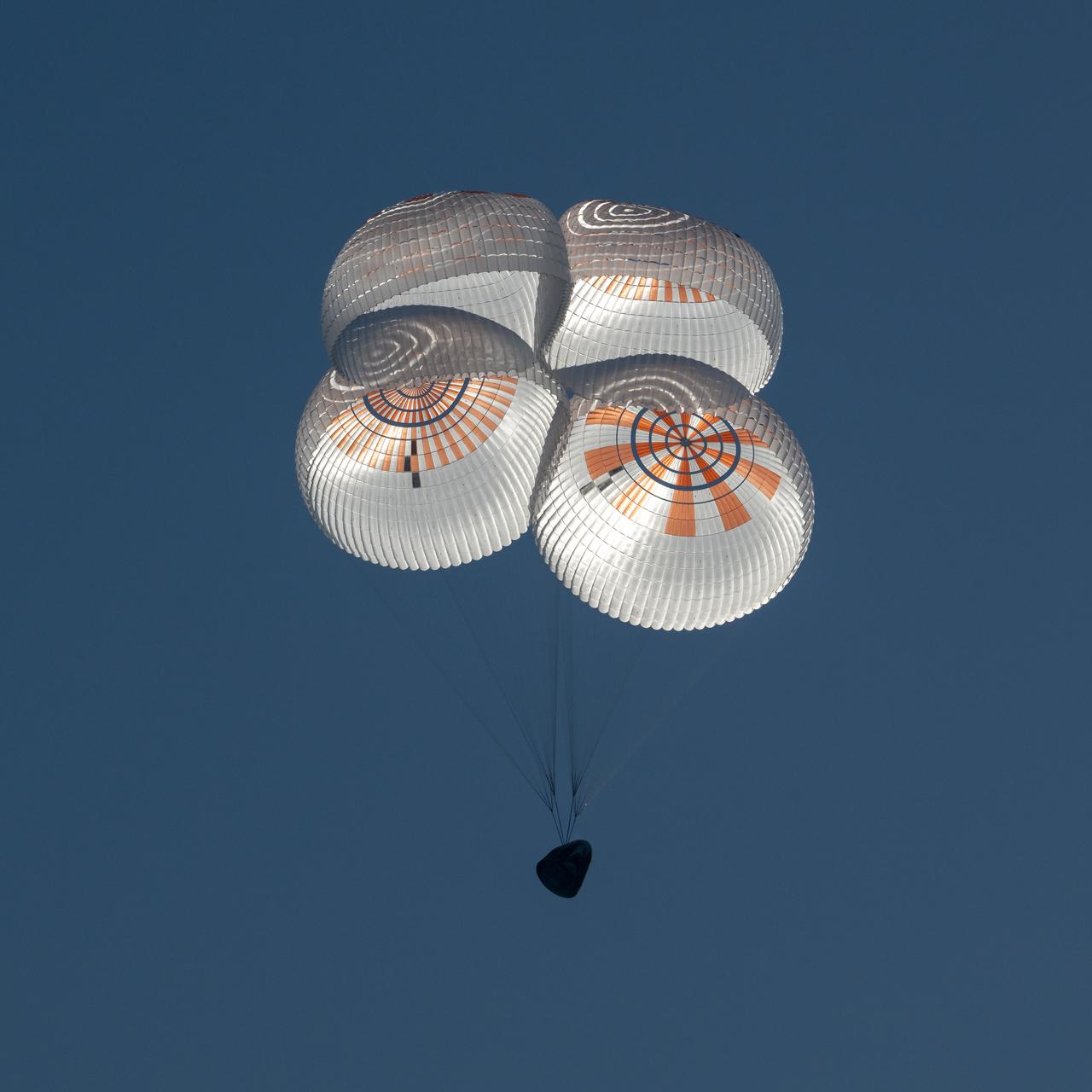
The SpaceX Crew Dragon Freedom spacecraft is seen as it lands with NASA astronauts Kjell Lindgren, Robert Hines, Jessica Watkins, and ESA (European Space Agency) astronaut Samantha Cristoforetti aboard in the Atlantic Ocean off the coast of Jacksonville, Florida, Friday, Oct. 14, 2022. Lindgren, Hines, Watkins, and Cristoforetti are returning after 170 days in space as part of Expeditions 67 and 68 aboard the International Space Station. Photo Credit: (NASA/Bill Ingalls)
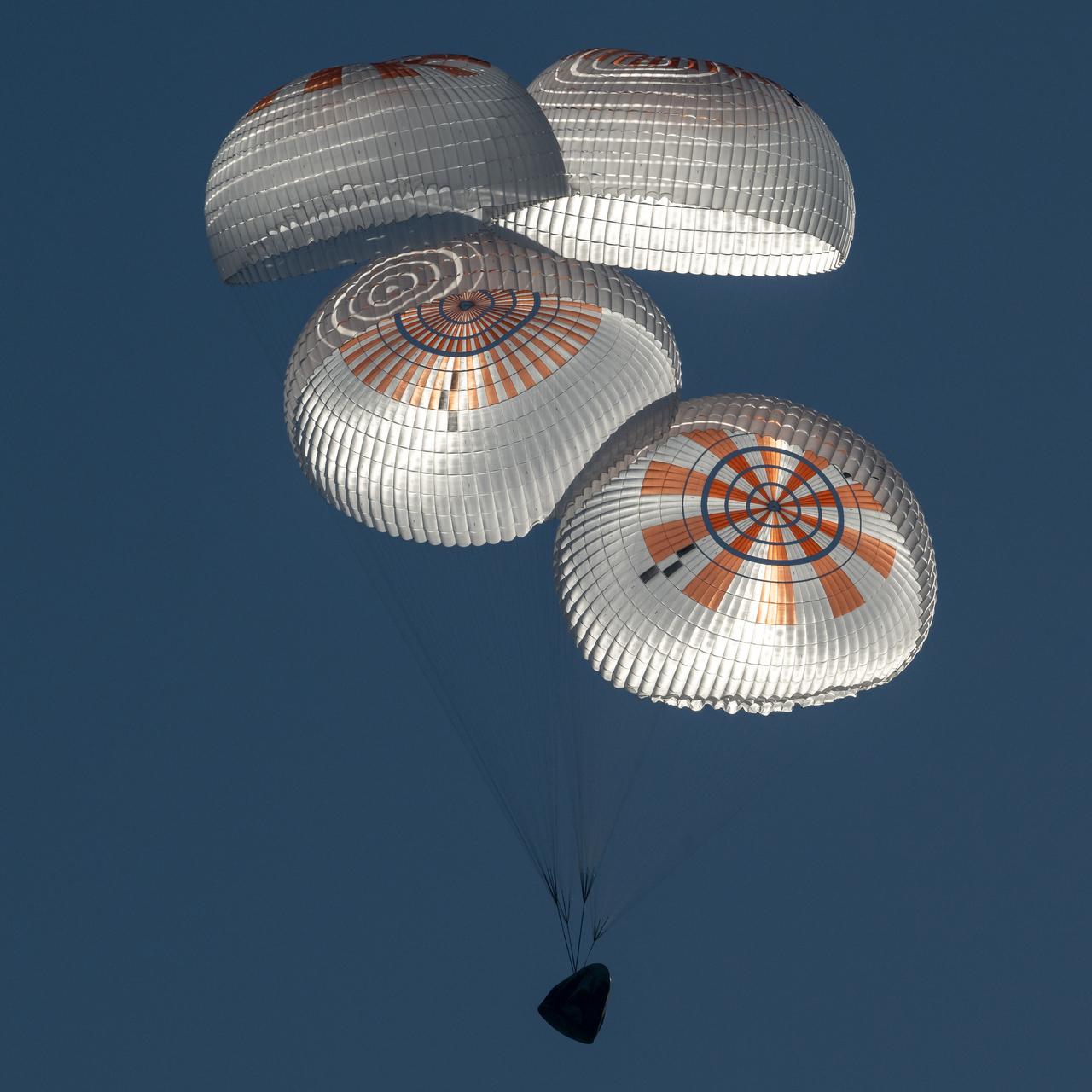
The SpaceX Crew Dragon Freedom spacecraft is seen as it lands with NASA astronauts Kjell Lindgren, Robert Hines, Jessica Watkins, and ESA (European Space Agency) astronaut Samantha Cristoforetti aboard in the Atlantic Ocean off the coast of Jacksonville, Florida, Friday, Oct. 14, 2022. Lindgren, Hines, Watkins, and Cristoforetti are returning after 170 days in space as part of Expeditions 67 and 68 aboard the International Space Station. Photo Credit: (NASA/Bill Ingalls)
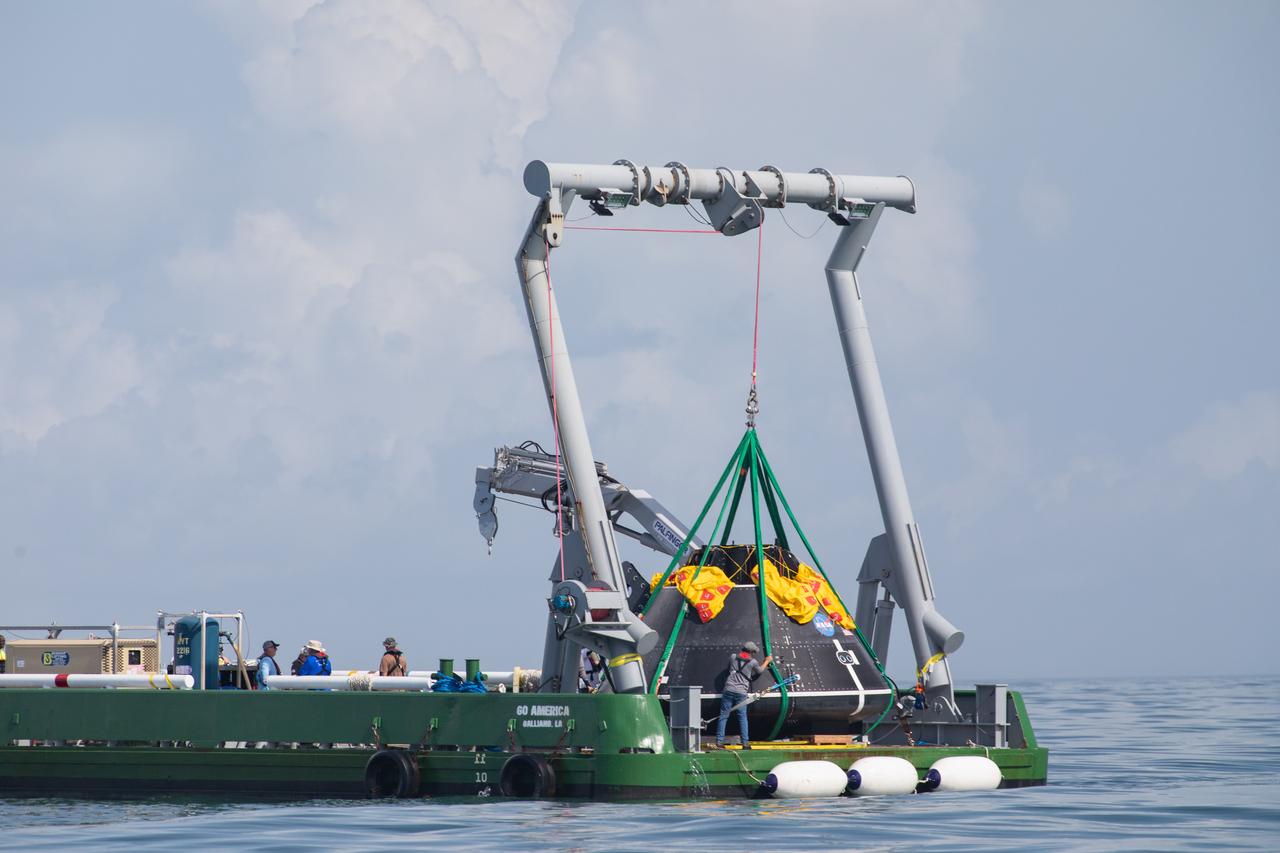
Teams with NASA and the Department of Defense (DoD) rehearse recovery procedures for a launch pad abort scenario off the coast of Florida near the agency’s Kennedy Space Center on Wednesday, June 11, 2025. Utilizing mannequin crew members inside the Crew Module Test Article (CMTA) – a full-scale mockup of the Orion spacecraft – the simulations practiced abort timelines and joint NASA and DoD recovery procedures supported by Artemis II launch and flight control teams, as NASA prepares to send four astronauts around the Moon and back next year as part of the agency’s first crewed Artemis mission.
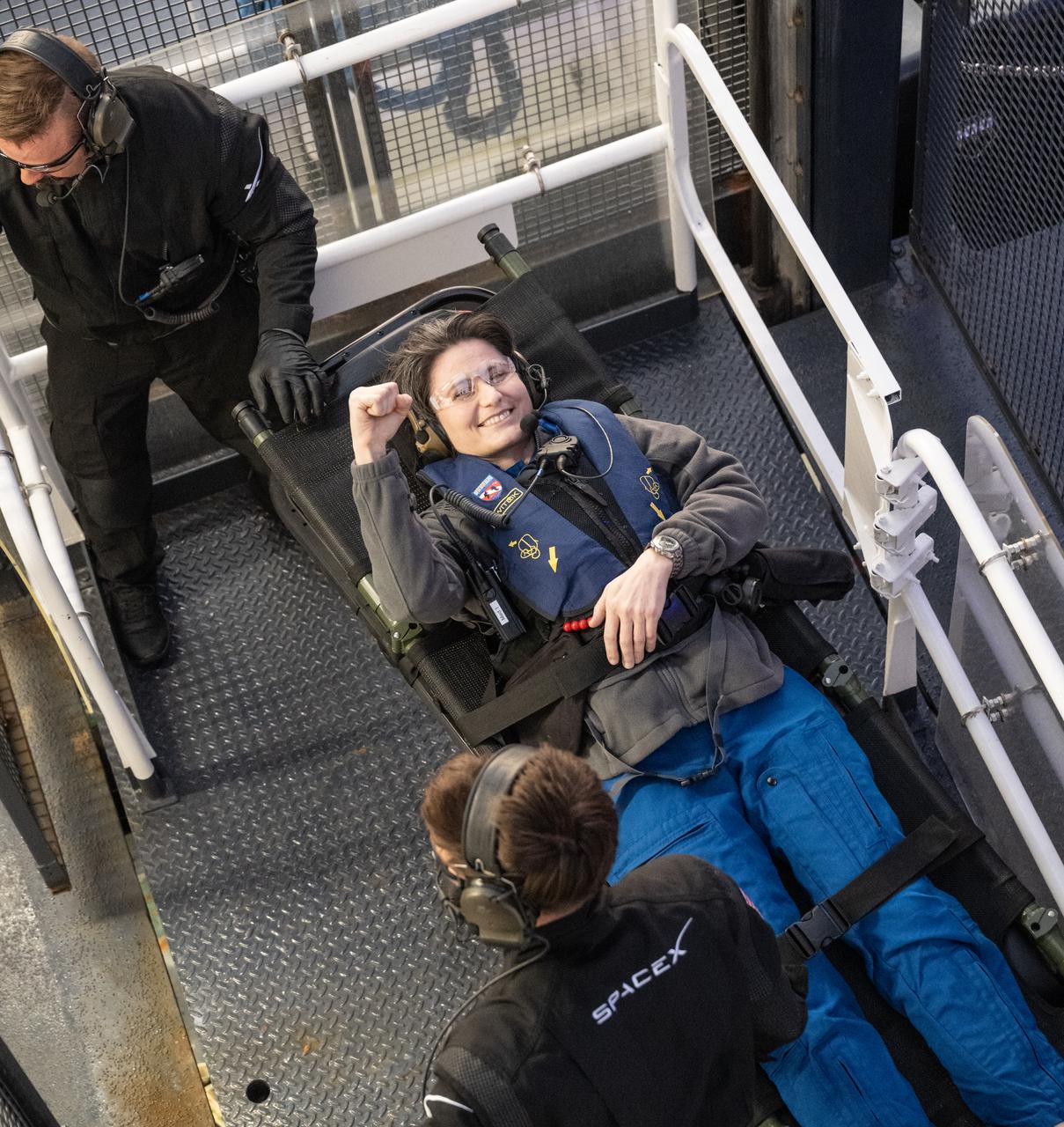
ESA (European Space Agency) astronaut Samantha Cristoforetti is seen inside an elevator on the SpaceX recovery ship Megan that will take her up to a waiting helicopter to fly to Jacksonville, Florida with NASA astronauts Kjell Lindgren, Robert Hines and Jessica Watkins, just a couple of hours after the four landed in their SpaceX Crew Dragon Freedom spacecraft in the Atlantic Ocean, Friday, Oct. 14, 2022. Lindgren, Hines, Watkins, and Cristoforetti are returning after 170 days in space as part of Expeditions 67 and 68 aboard the International Space Station. Photo Credit: (NASA/Bill Ingalls)
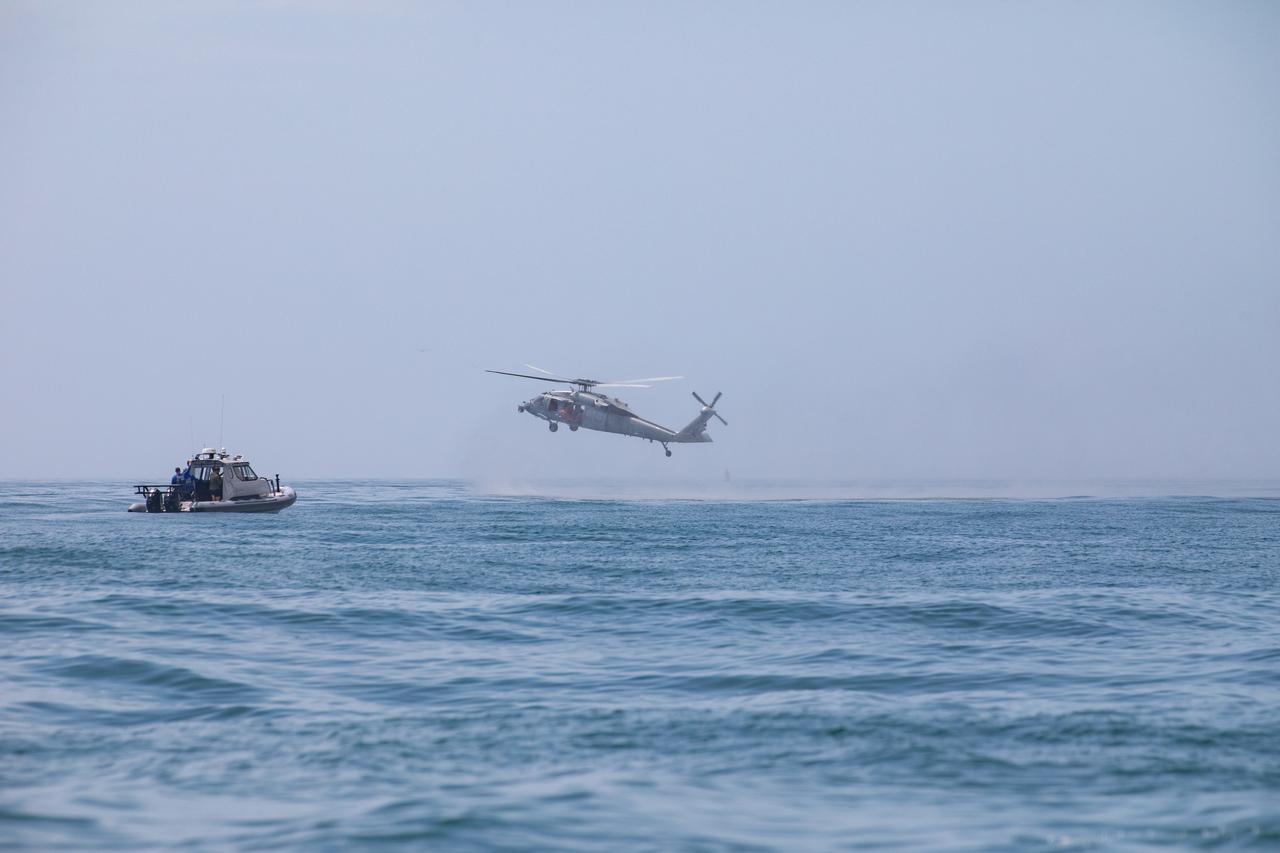
Teams with NASA and the Department of Defense (DoD) rehearse recovery procedures for a launch pad abort scenario off the coast of Florida near the agency’s Kennedy Space Center on Wednesday, June 11, 2025. Utilizing mannequin crew members inside the Crew Module Test Article (CMTA) – a full-scale mockup of the Orion spacecraft – the simulations practiced abort timelines and joint NASA and DoD recovery procedures supported by Artemis II launch and flight control teams, as NASA prepares to send four astronauts around the Moon and back next year as part of the agency’s first crewed Artemis mission.
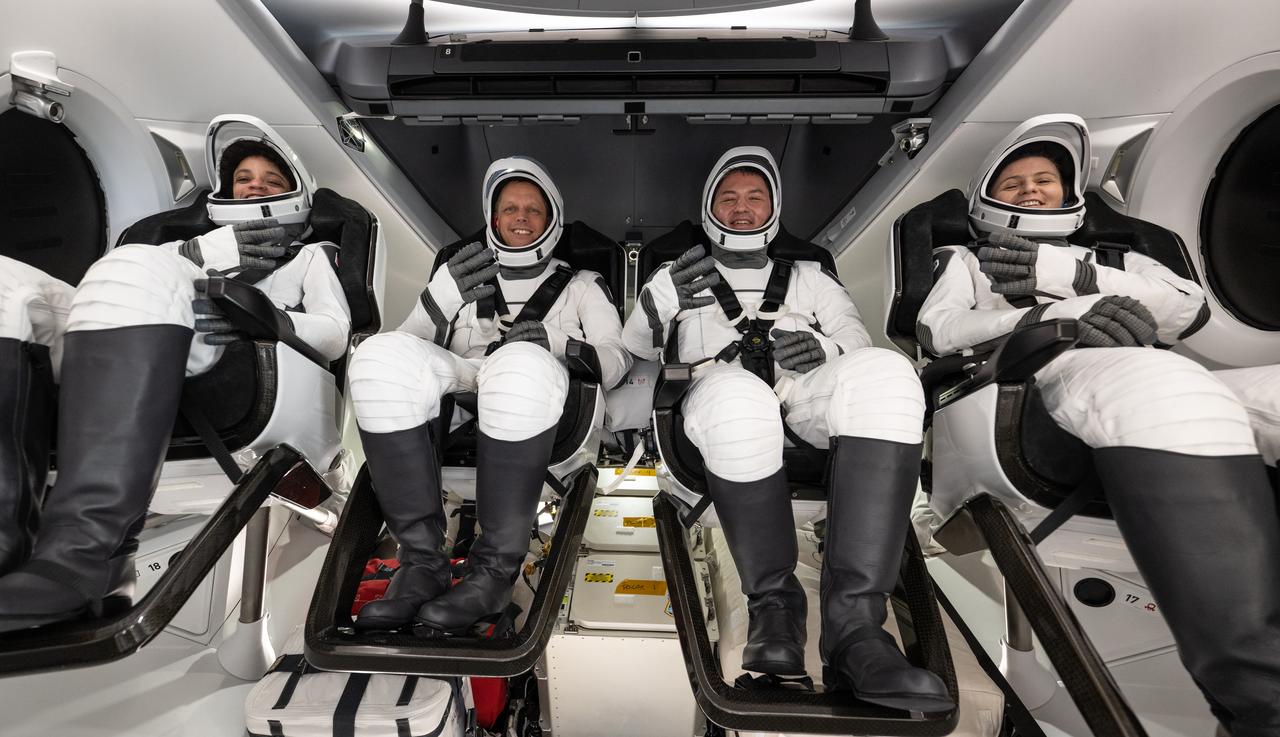
NASA astronauts Jessica Watkins, left, Robert Hines, Kjell Lindgren, and ESA (European Space Agency) astronaut Samantha Cristoforetti, right, are seen inside the SpaceX Crew Dragon Freedom spacecraft onboard the SpaceX recovery ship Megan shortly after having landed in the Atlantic Ocean off the coast of Jacksonville, Florida, Friday, Oct. 14, 2022. Lindgren, Hines, Watkins, and Cristoforetti are returning after 170 days in space as part of Expeditions 67 and 68 aboard the International Space Station. Photo Credit: (NASA/Bill Ingalls)
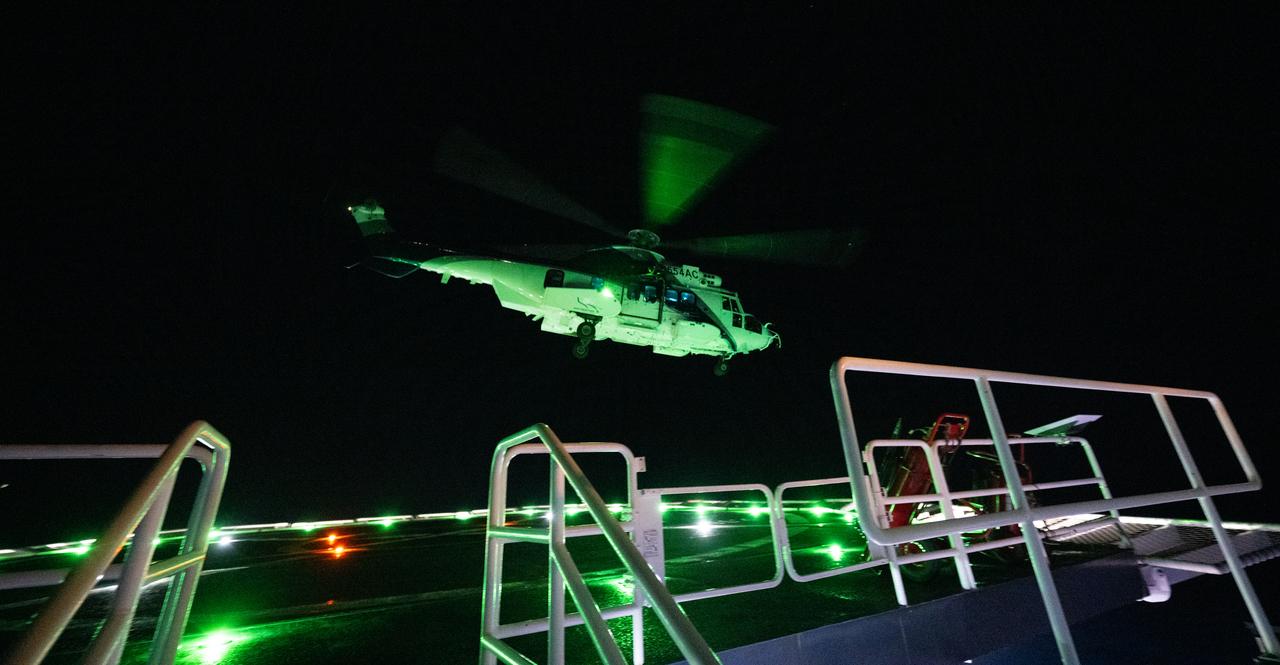
The helicopter with NASA astronauts Stephen Bowen and Warren "Woody" Hoburg, UAE (United Arab Emirates) astronaut Sultan Alneyadi, and Roscosmos cosmonaut Andrey Fedyaev is seen as it departs the SpaceX recovery ship MEGAN, Monday, Sept. 4, 2023, in the Atlantic Ocean off the coast of Jacksonville, Florida. Bowen, Hoburg, Alneyadi, and Fedyaev are landing in the Atlantic Ocean after nearly six-months in space as part of Expedition 69 aboard the International Space Station. Photo Credit: (NASA/Joel Kowsky)
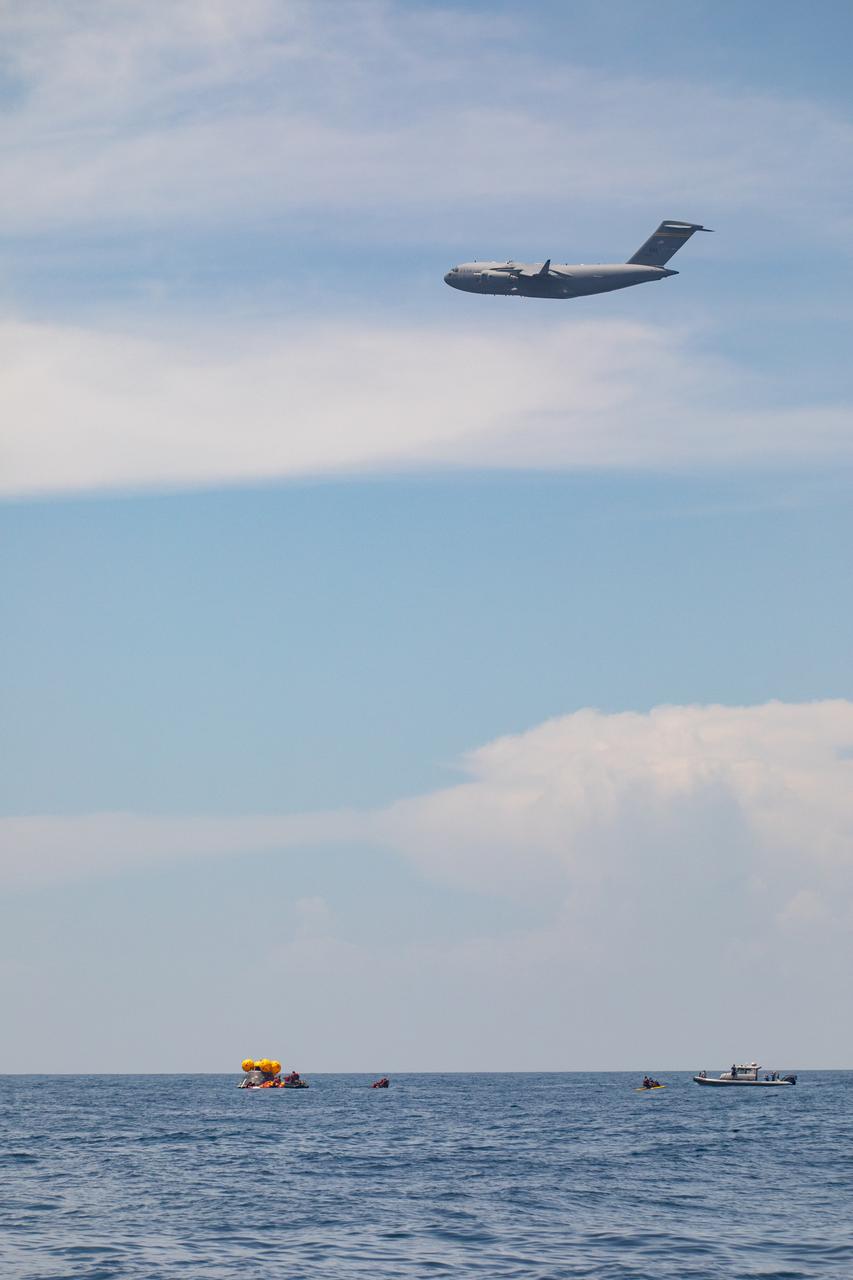
Teams with NASA and the Department of Defense (DoD) rehearse recovery procedures for an ascent abort scenario off the coast of Florida near the agency’s Kennedy Space Center on Thursday, June 12, 2025. Utilizing mannequin crew members inside the Crew Module Test Article (CMTA) – a full-scale mockup of the Orion spacecraft – the simulations practiced abort timelines and joint NASA and DoD recovery procedures supported by Artemis II launch and flight control teams, as NASA prepares to send four astronauts around the Moon and back next year as part of the agency’s first crewed Artemis mission.
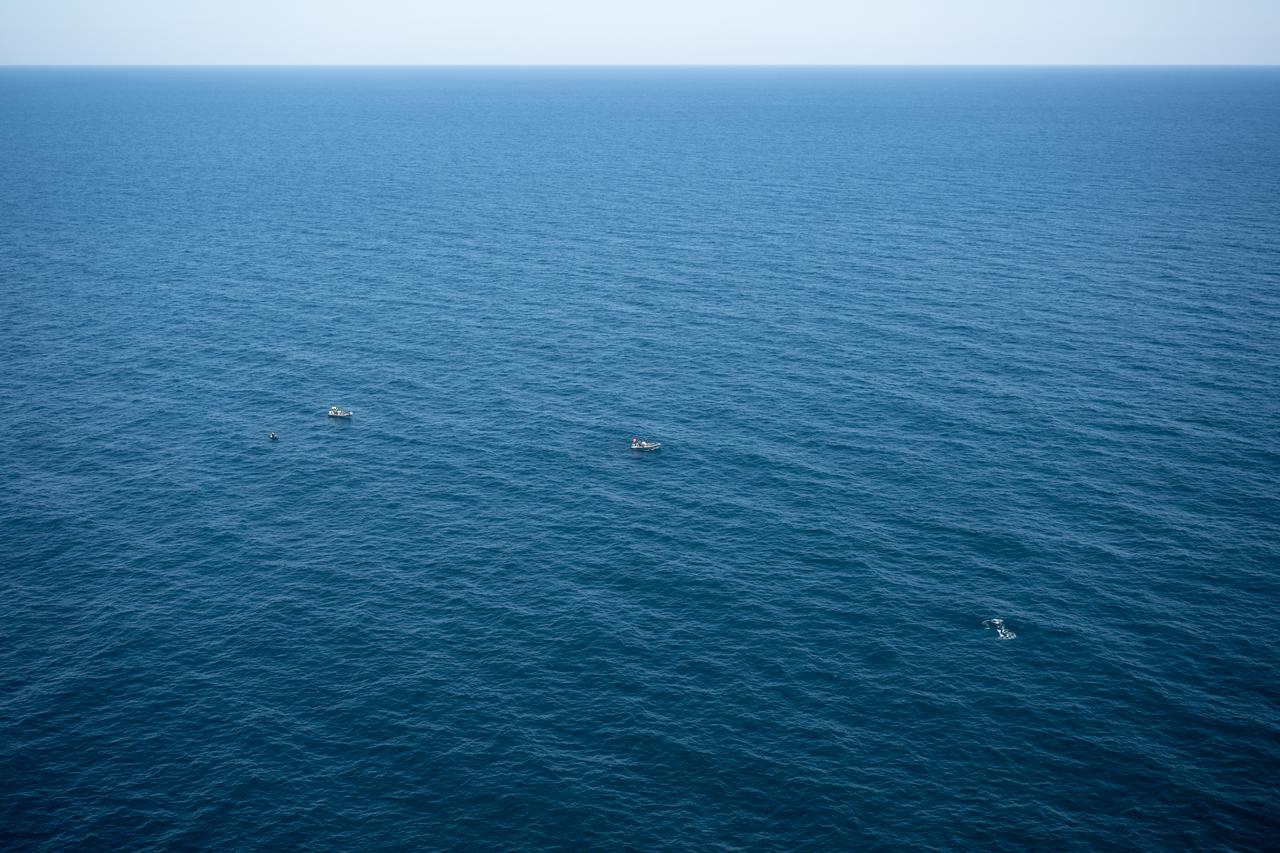
SpaceX fast boat teams are seen in the Atlantic Ocean as NASA, ESA (European Space Agency), and SpaceX teams prepare for the landing of the SpaceX Crew Dragon Freedom spacecraft with NASA astronauts Kjell Lindgren, Robert Hines, Jessica Watkins, and ESA (European Space Agency) astronaut Samantha Cristoforetti aboard, Friday, Oct. 14, 2022, off the coast of Jacksonville, Florida. Lindgren, Hines, Watkins, and Cristoforetti are returning after 170 days in space as part of Expeditions 67 and 68 aboard the International Space Station. Photo Credit: (NASA/Bill Ingalls)

Support teams onboard the recovery ship Megan work around the SpaceX Crew Dragon Freedom spacecraft shortly after it landed with NASA astronauts Kjell Lindgren, Robert Hines, Jessica Watkins, and ESA (European Space Agency) astronaut Samantha Cristoforetti aboard in the Atlantic Ocean off the coast of Jacksonville, Florida, Friday, Oct. 14, 2022. Lindgren, Hines, Watkins, and Cristoforetti are returning after 170 days in space as part of Expeditions 67 and 68 aboard the International Space Station. Photo Credit: (NASA/Bill Ingalls)
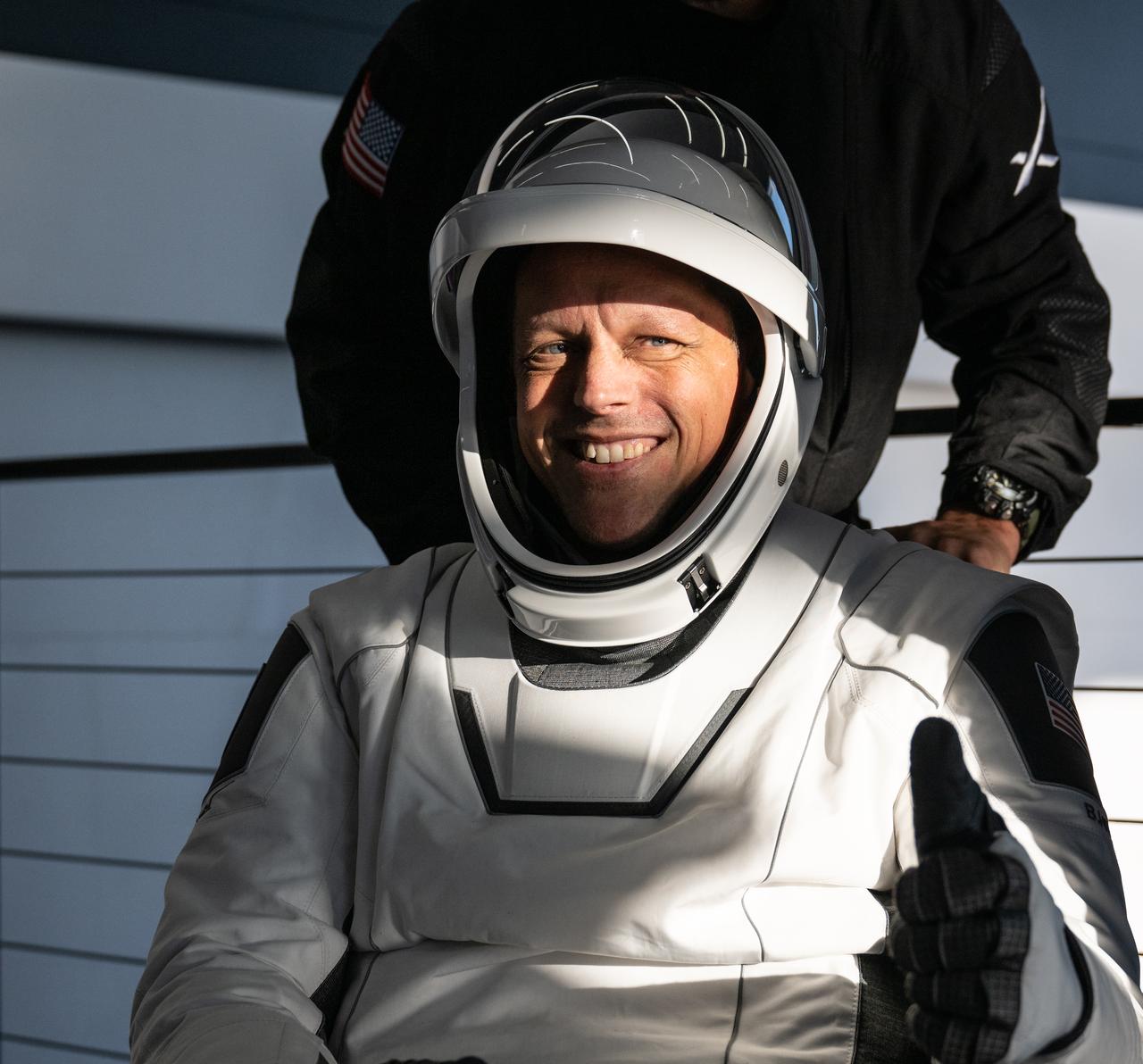
NASA astronaut Robert Hines is helped out of the SpaceX Crew Dragon Freedom spacecraft onboard the SpaceX recovery ship Megan after he, NASA astronaut Kjell Lindgren, NASA astronaut Jessica Watkins and ESA (European Space Agency) astronaut Samantha Cristoforetti, landed in the Atlantic Ocean off the coast of Jacksonville, Florida, Friday, Oct. 14, 2022. Lindgren, Hines, Watkins, and Cristoforetti are returning after 170 days in space as part of Expeditions 67 and 68 aboard the International Space Station. Photo Credit: (NASA/Bill Ingalls)
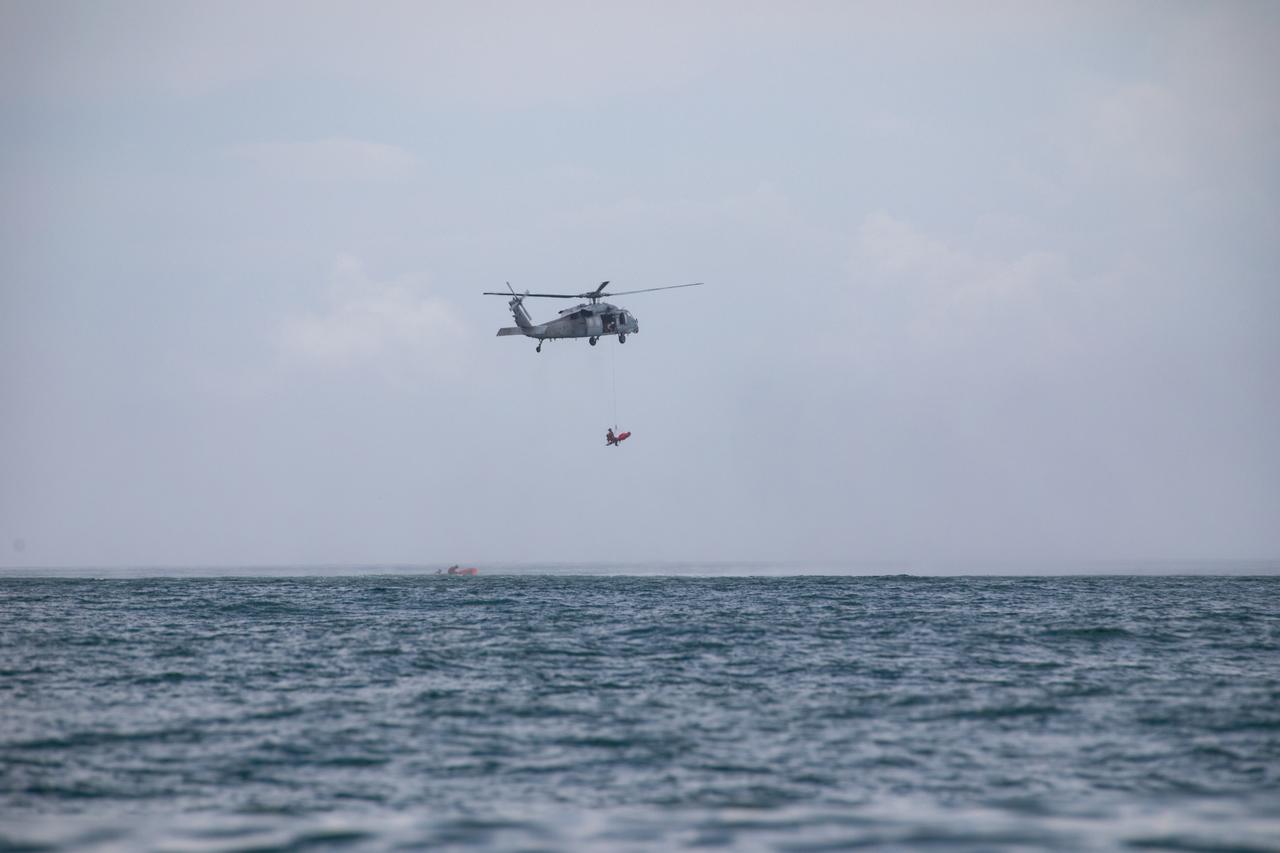
Teams with NASA and the Department of Defense (DoD) rehearse recovery procedures for a launch pad abort scenario off the coast of Florida near the agency’s Kennedy Space Center on Wednesday, June 11, 2025. Utilizing mannequin crew members inside the Crew Module Test Article (CMTA) – a full-scale mockup of the Orion spacecraft – the simulations practiced abort timelines and joint NASA and DoD recovery procedures supported by Artemis II launch and flight control teams, as NASA prepares to send four astronauts around the Moon and back next year as part of the agency’s first crewed Artemis mission.
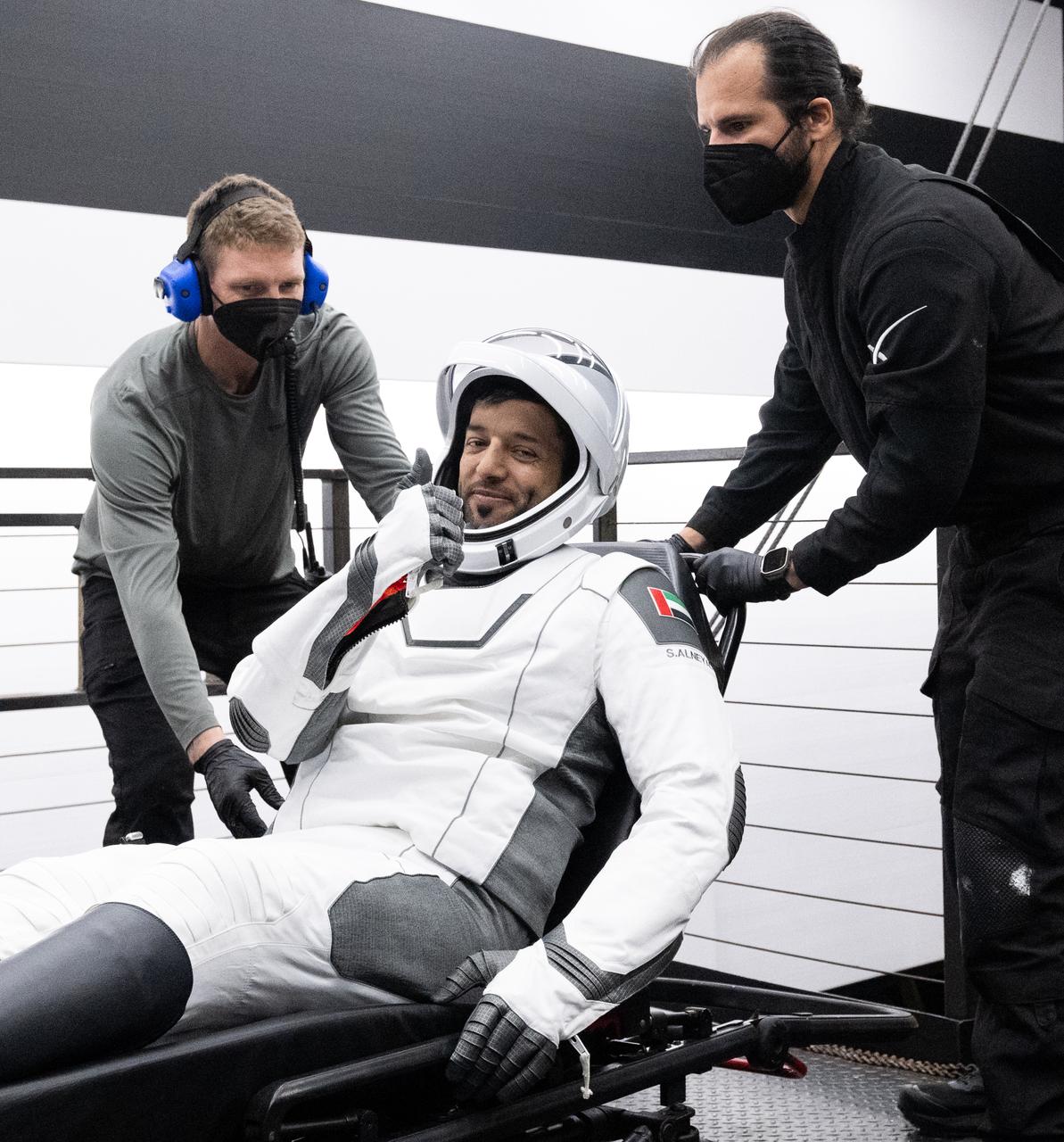
UAE (United Arab Emirates) astronaut Sultan Alneyadi is helped out of the SpaceX Dragon Endeavour spacecraft onboard the SpaceX recovery ship MEGAN after he, NASA astronauts Warren "Woody" Hoburg, Stephen Bowen, and Roscosmos cosmonaut Andrey Fedyaev landed in the Atlantic Ocean off the coast of Jacksonville, Florida, Monday, Sept. 4, 2023. Bowen, Hoburg, Alneyadi, and Fedyaev are returning after nearly six-months in space as part of Expedition 69 aboard the International Space Station. Photo Credit: (NASA/Joel Kowsky)
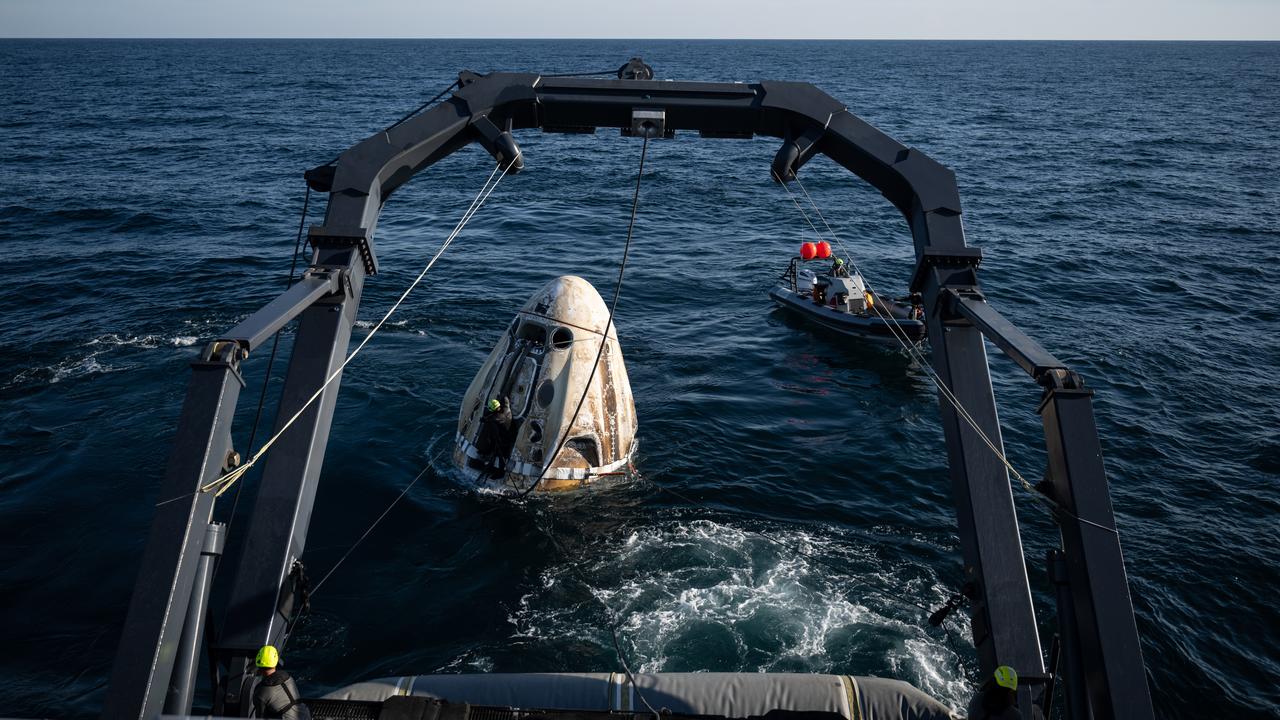
Support teams work around the SpaceX Crew Dragon Freedom spacecraft shortly after it landed with NASA astronauts Kjell Lindgren, Robert Hines, Jessica Watkins, and ESA (European Space Agency) astronaut Samantha Cristoforetti aboard in the Atlantic Ocean off the coast of Jacksonville, Florida, Friday, Oct. 14, 2022. Lindgren, Hines, Watkins, and Cristoforetti are returning after 170 days in space as part of Expeditions 67 and 68 aboard the International Space Station. Photo Credit: (NASA/Bill Ingalls)
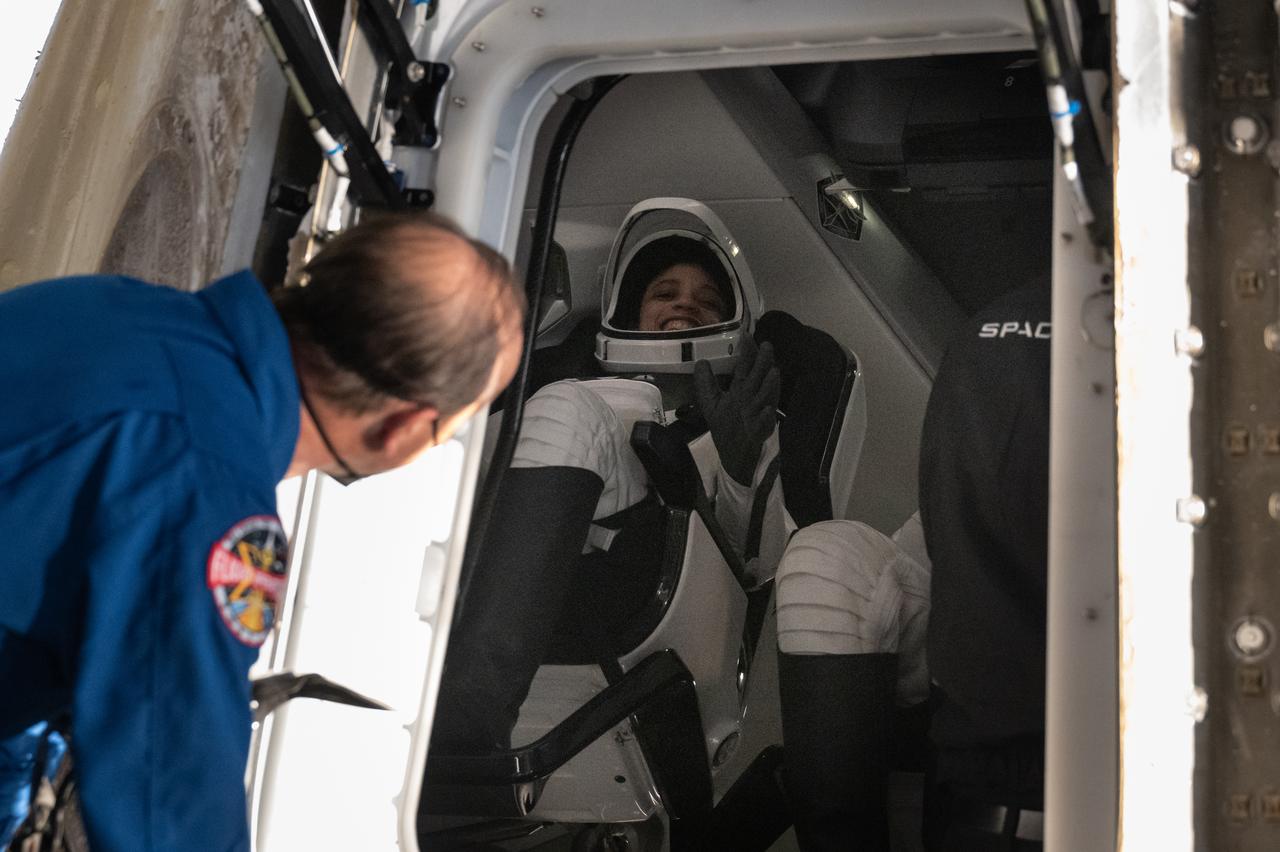
NASA astronaut Jessica Watkins is seen inside the SpaceX Crew Dragon Freedom spacecraft onboard the SpaceX recovery ship Megan after she and NASA astronauts Kjell Lindgren and Robert Hines, along with ESA (European Space Agency) astronaut Samantha Cristoforetti, landed in the Atlantic Ocean off the coast of Jacksonville, Florida, Friday, Oct. 14, 2022. Lindgren, Hines, Watkins, and Cristoforetti are returning after 170 days in space as part of Expeditions 67 and 68 aboard the International Space Station. Photo Credit: (NASA/Bill Ingalls)
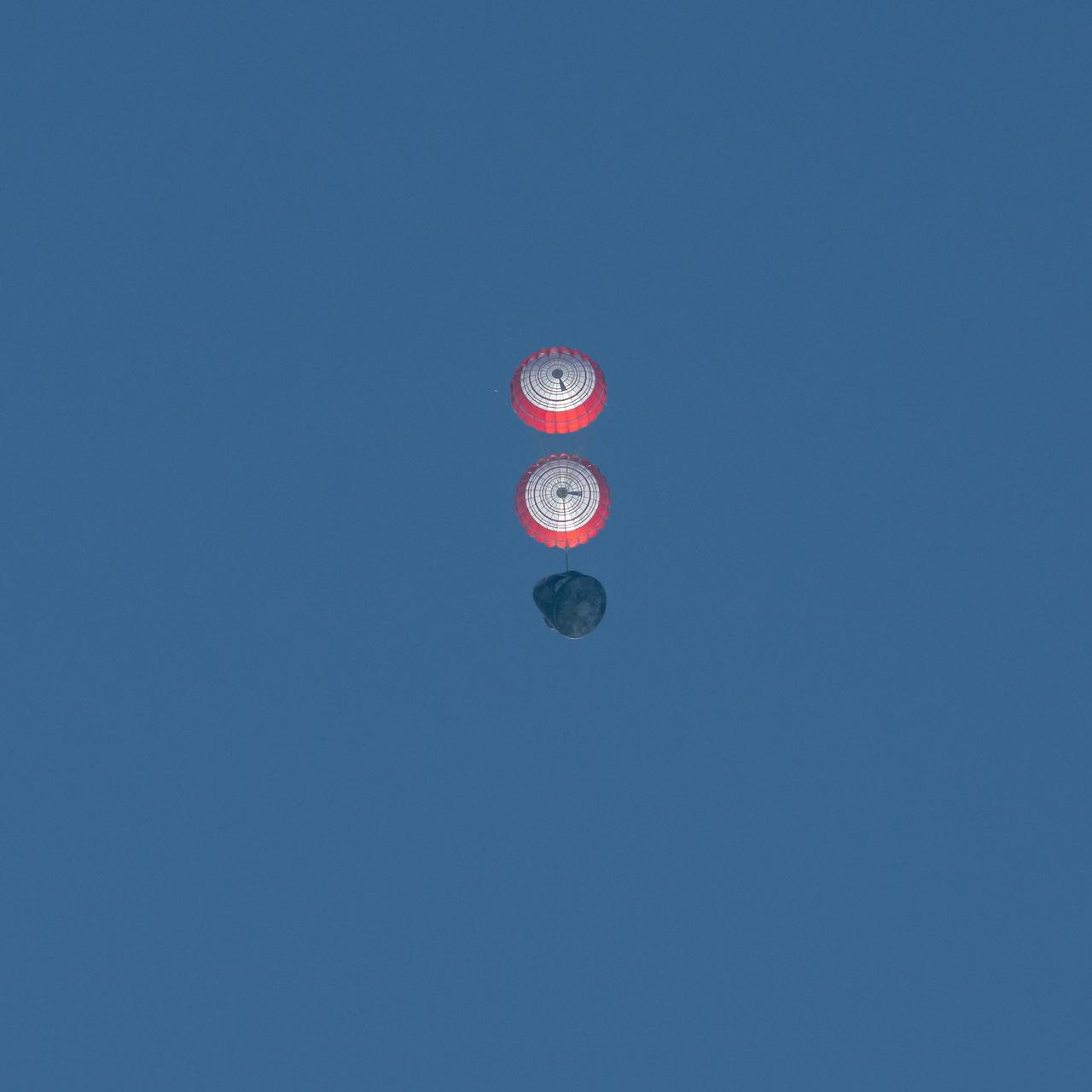
The SpaceX Crew Dragon Freedom spacecraft is seen as it lands with NASA astronauts Kjell Lindgren, Robert Hines, Jessica Watkins, and ESA (European Space Agency) astronaut Samantha Cristoforetti aboard in the Atlantic Ocean off the coast of Jacksonville, Florida, Friday, Oct. 14, 2022. Lindgren, Hines, Watkins, and Cristoforetti are returning after 170 days in space as part of Expeditions 67 and 68 aboard the International Space Station. Photo Credit: (NASA/Bill Ingalls)
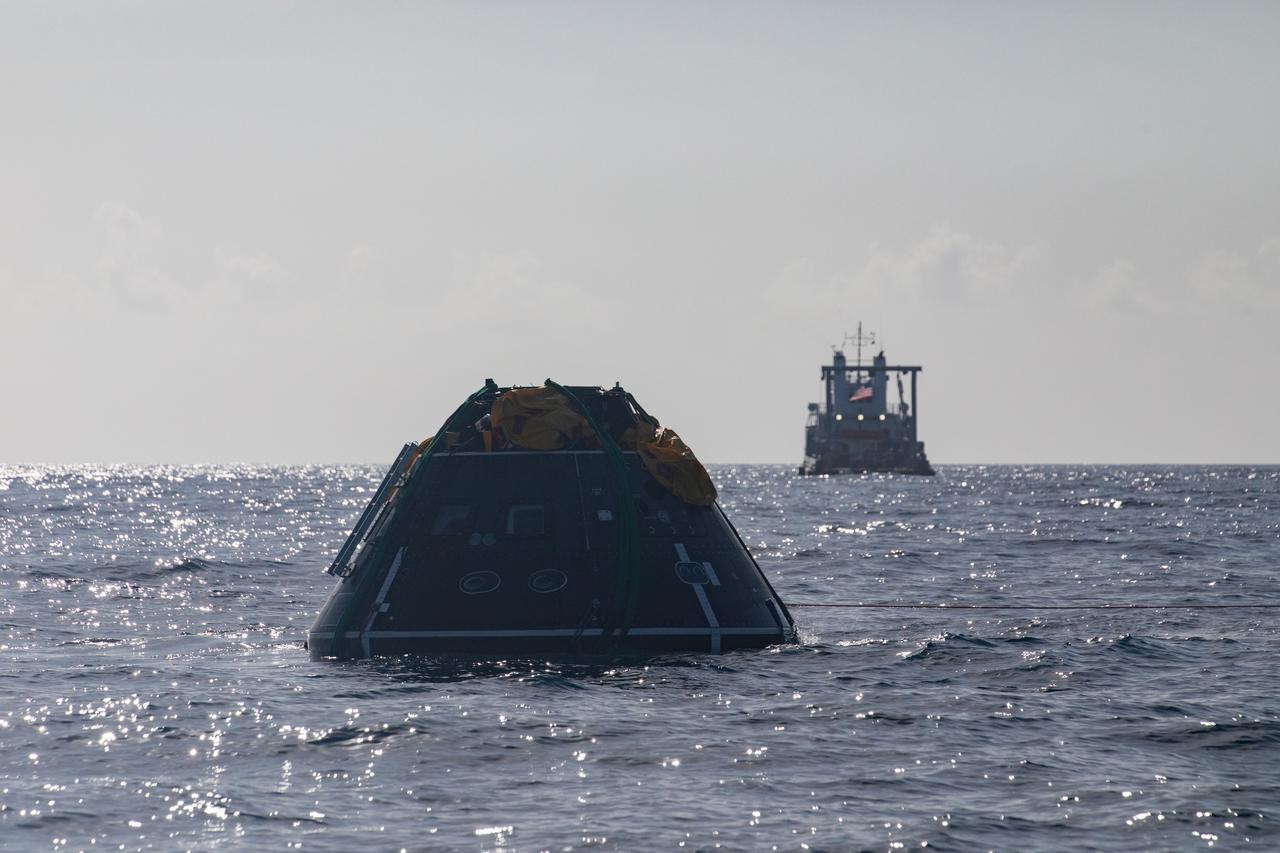
Teams with NASA and the Department of Defense (DoD) rehearse recovery procedures for an ascent abort scenario off the coast of Florida near the agency’s Kennedy Space Center on Thursday, June 12, 2025. Utilizing mannequin crew members inside the Crew Module Test Article (CMTA) – a full-scale mockup of the Orion spacecraft – the simulations practiced abort timelines and joint NASA and DoD recovery procedures supported by Artemis II launch and flight control teams, as NASA prepares to send four astronauts around the Moon and back next year as part of the agency’s first crewed Artemis mission.
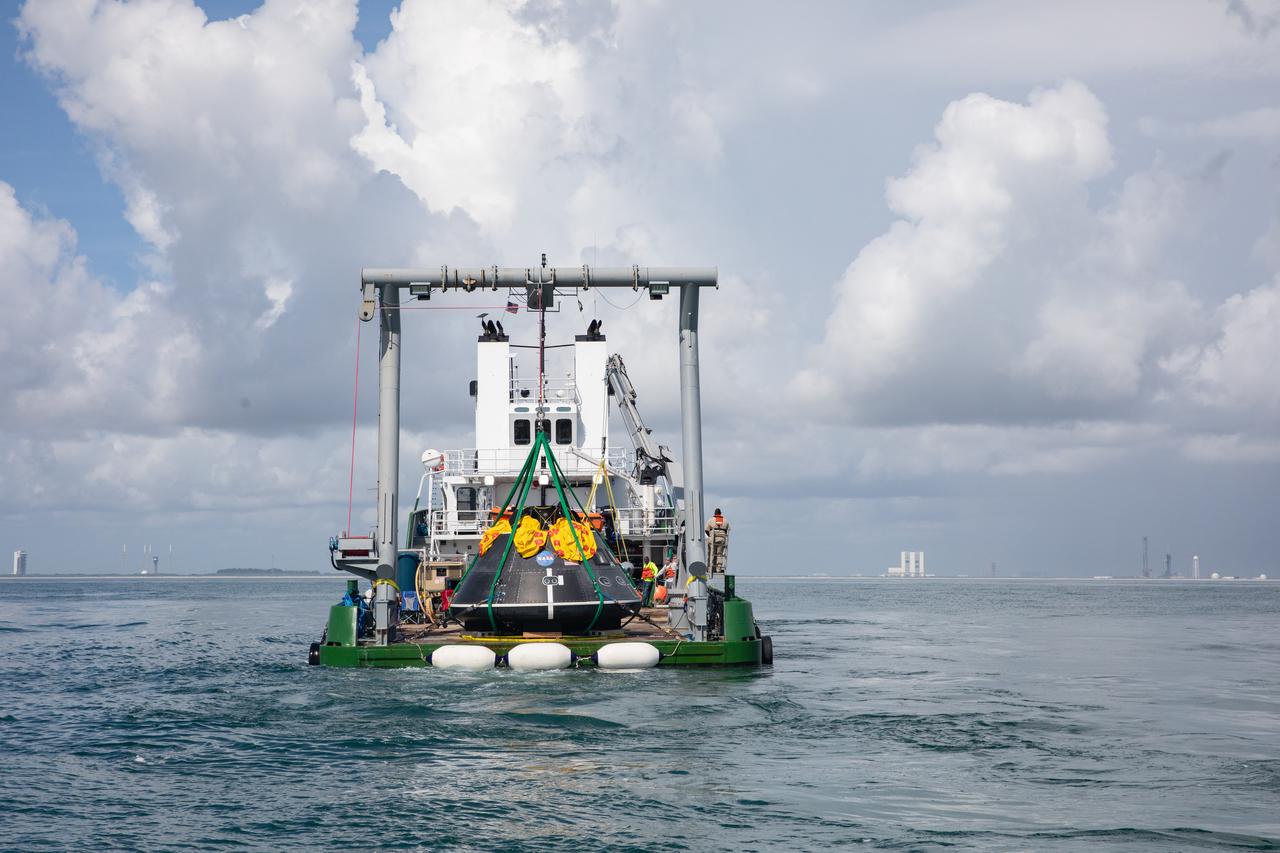
Teams with NASA and the Department of Defense (DoD) rehearse recovery procedures for a launch pad abort scenario off the coast of Florida near the agency’s Kennedy Space Center on Wednesday, June 11, 2025. Utilizing mannequin crew members inside the Crew Module Test Article (CMTA) – a full-scale mockup of the Orion spacecraft – the simulations practiced abort timelines and joint NASA and DoD recovery procedures supported by Artemis II launch and flight control teams, as NASA prepares to send four astronauts around the Moon and back next year as part of the agency’s first crewed Artemis mission.
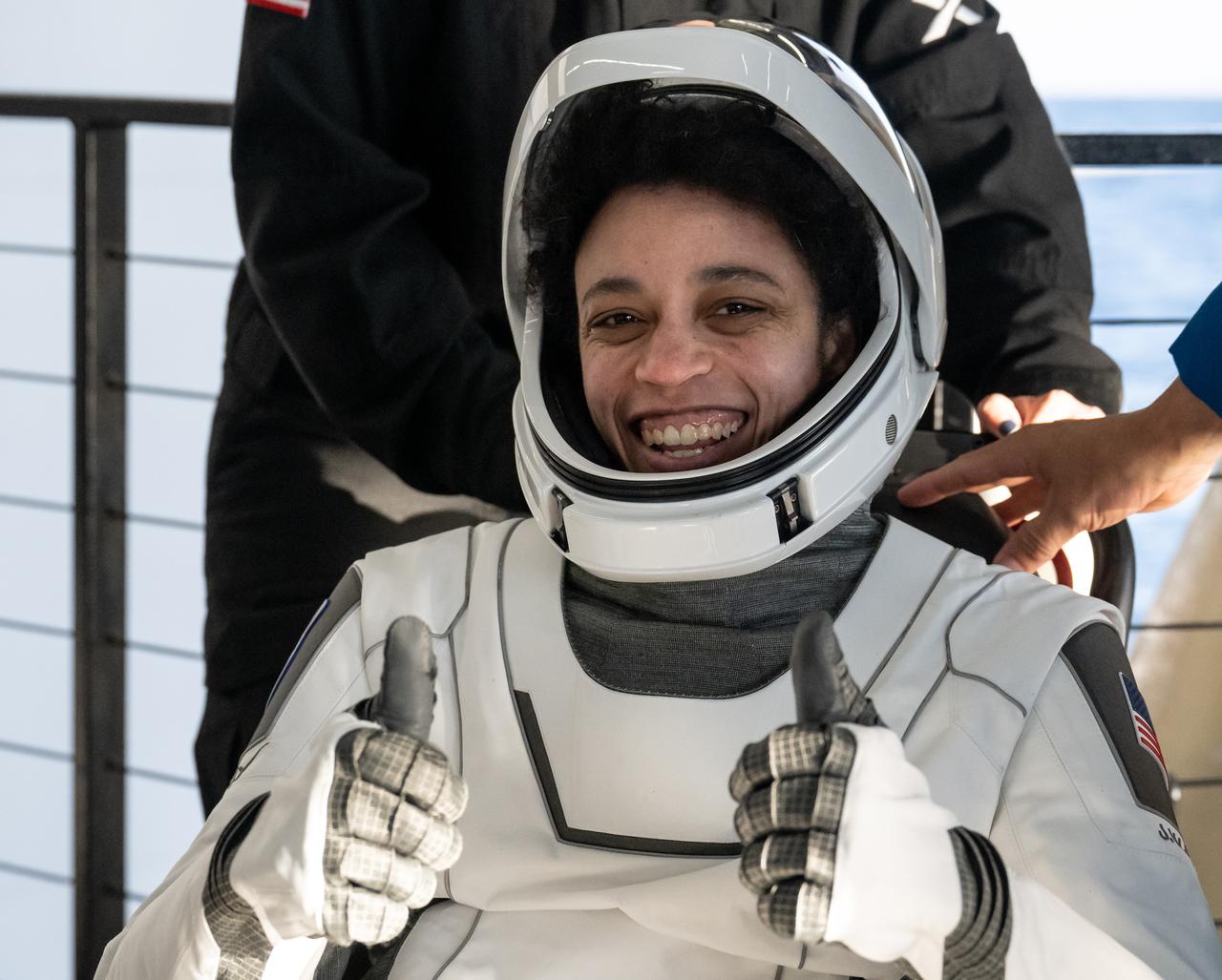
NASA astronaut Jessica Watkins is helped out of the SpaceX Crew Dragon Freedom spacecraft onboard the SpaceX recovery ship Megan after she, NASA astronaut Kjell Lindgren, NASA astronaut Robert Hines, and ESA (European Space Agency) astronaut Samantha Cristoforetti, landed in the Atlantic Ocean off the coast of Jacksonville, Florida, Friday, Oct. 14, 2022. Lindgren, Hines, Watkins, and Cristoforetti are returning after 170 days in space as part of Expeditions 67 and 68 aboard the International Space Station. Photo Credit: (NASA/Bill Ingalls)
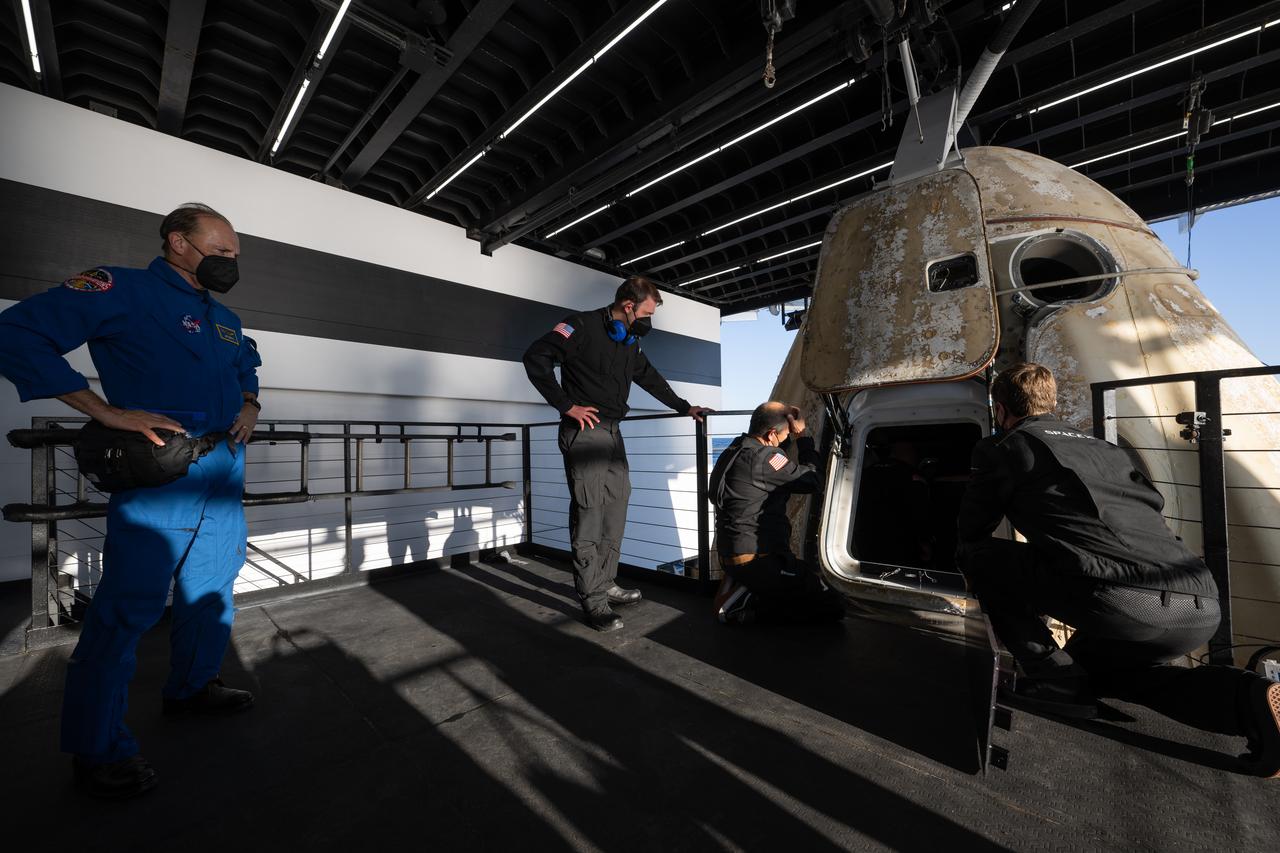
NASA Flight Surgeon Joe Dervay, left, watches as SpaceX teams help members of Crew-4 out of the SpaceX Crew Dragon Freedom spacecraft onboard the SpaceX recovery ship Megan in the Atlantic Ocean off the coast of Jacksonville, Florida, Friday, Oct. 14, 2022. NASA astronauts Kjell Lindgren, Robert Hines, Jessica Watkins, and ESA (European Space Agency) astronaut Samantha Cristoforetti are returning after 170 days in space as part of Expeditions 67 and 68 aboard the International Space Station. Photo Credit: (NASA/Bill Ingalls)
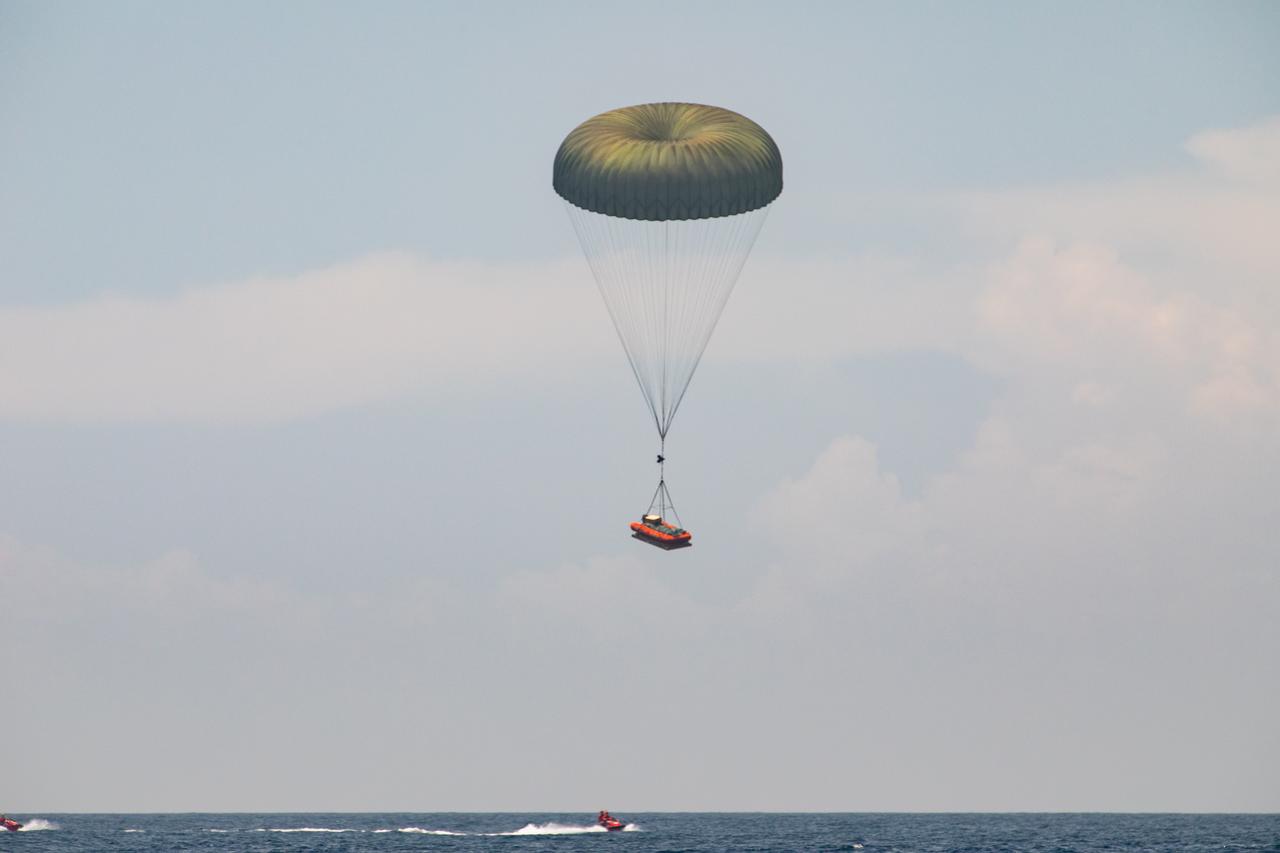
Teams with NASA and the Department of Defense (DoD) rehearse recovery procedures for an ascent abort scenario off the coast of Florida near the agency’s Kennedy Space Center on Thursday, June 12, 2025. Utilizing mannequin crew members inside the Crew Module Test Article (CMTA) – a full-scale mockup of the Orion spacecraft – the simulations practiced abort timelines and joint NASA and DoD recovery procedures supported by Artemis II launch and flight control teams, as NASA prepares to send four astronauts around the Moon and back next year as part of the agency’s first crewed Artemis mission.
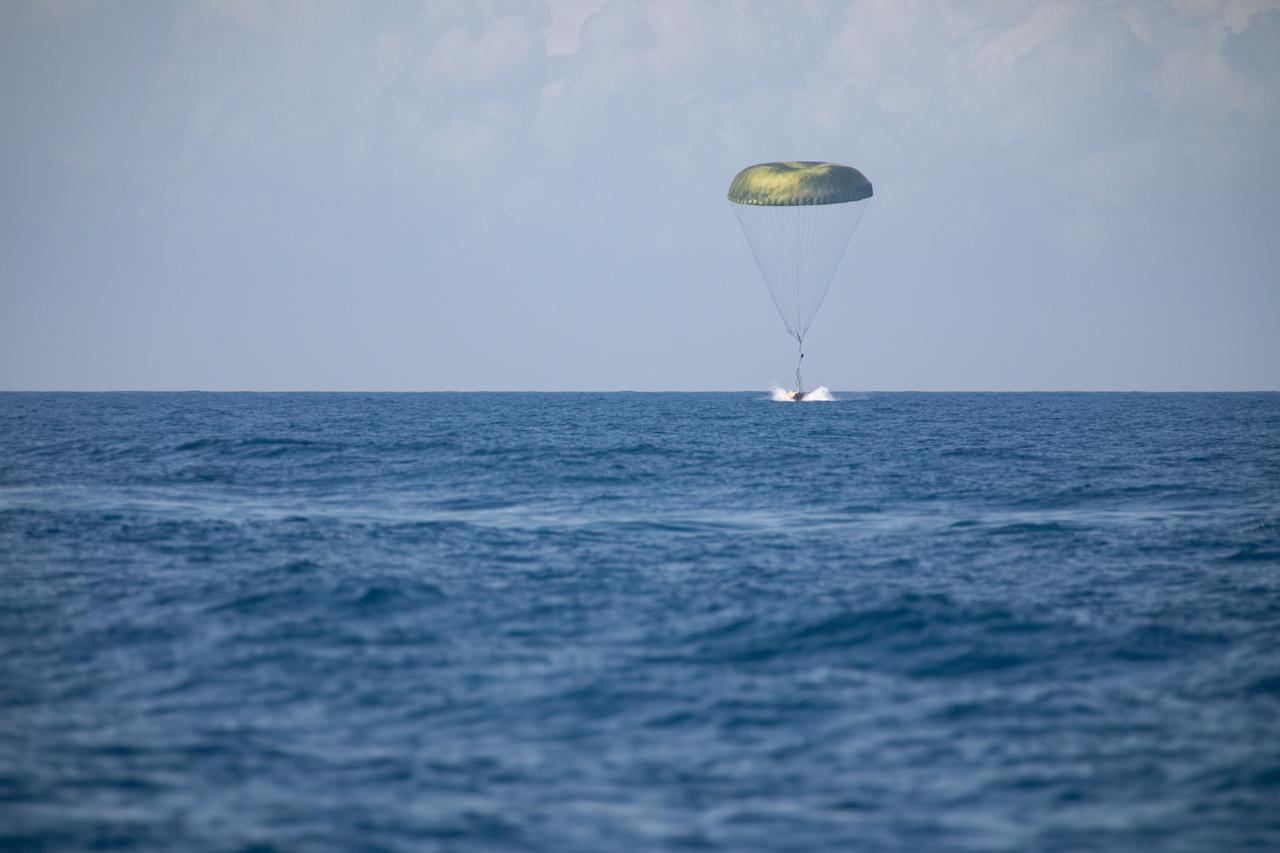
Teams with NASA and the Department of Defense (DoD) rehearse recovery procedures for an ascent abort scenario off the coast of Florida near the agency’s Kennedy Space Center on Thursday, June 12, 2025. Utilizing mannequin crew members inside the Crew Module Test Article (CMTA) – a full-scale mockup of the Orion spacecraft – the simulations practiced abort timelines and joint NASA and DoD recovery procedures supported by Artemis II launch and flight control teams, as NASA prepares to send four astronauts around the Moon and back next year as part of the agency’s first crewed Artemis mission.
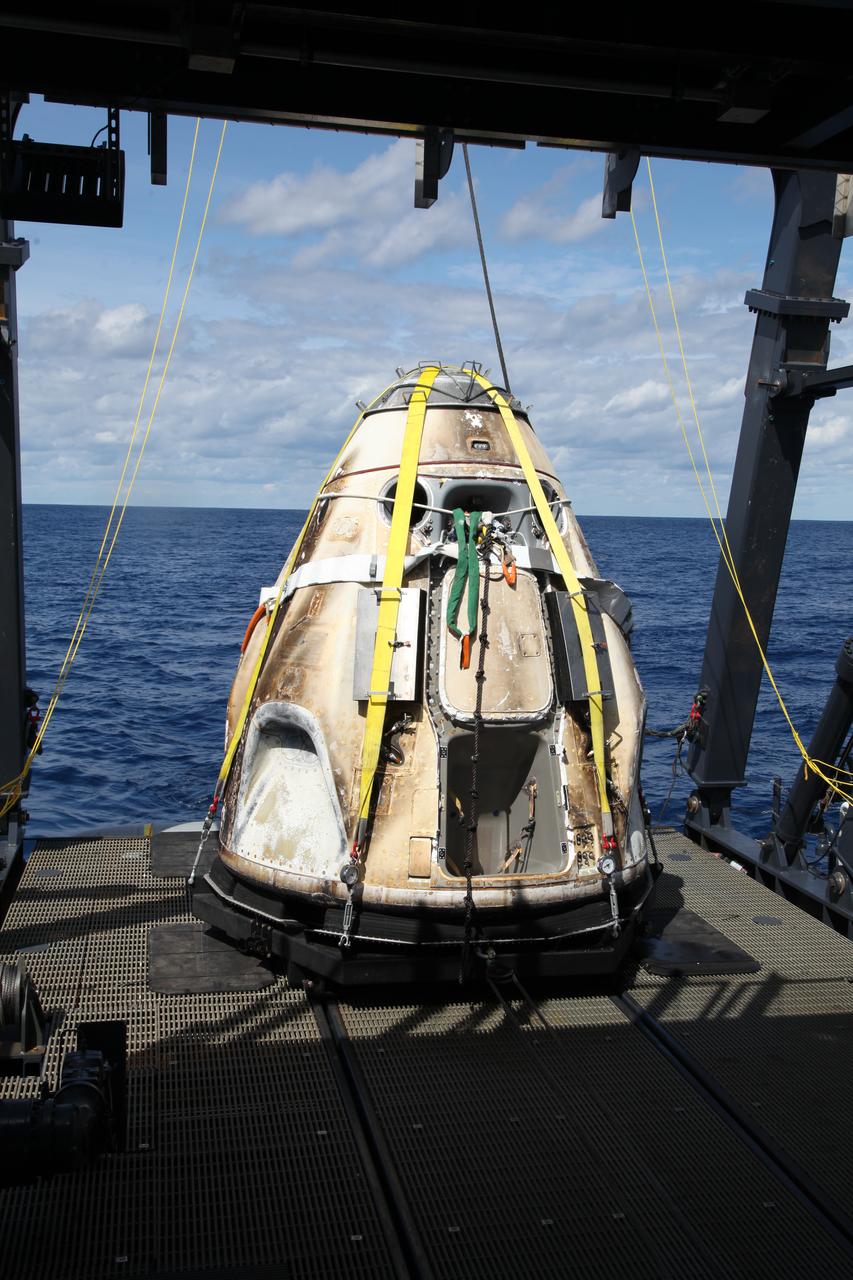
SpaceX’s Crew Dragon is loaded onto the company’s recovery ship, Go Searcher, in the Atlantic Ocean, about 200 miles off Florida’s east coast, on March 8, after returning from the International Space Station on the Demo-1 mission. The uncrewed spacecraft docked to the orbiting laboratory on March 3, following a 2:49 a.m. EST liftoff aboard a SpaceX Falcon 9 rocket from Launch Complex 39A at NASA’s Kennedy Space Center in Florida on March 2. The spacecraft undocked at 2:32 a.m., March 8, splashing down in the Atlantic Ocean, at 8:45 a.m. SpaceX’s inaugural flight with NASA’s Commercial Crew Program is the first flight test of a space system designed for humans built and operated by a commercial company through a public-private partnership. NASA and SpaceX will use data from Demo-1 to further prepare for Demo-2, the crewed flight test that will carry NASA astronauts Bob Behnken and Doug Hurley to the International Space Station later this year.
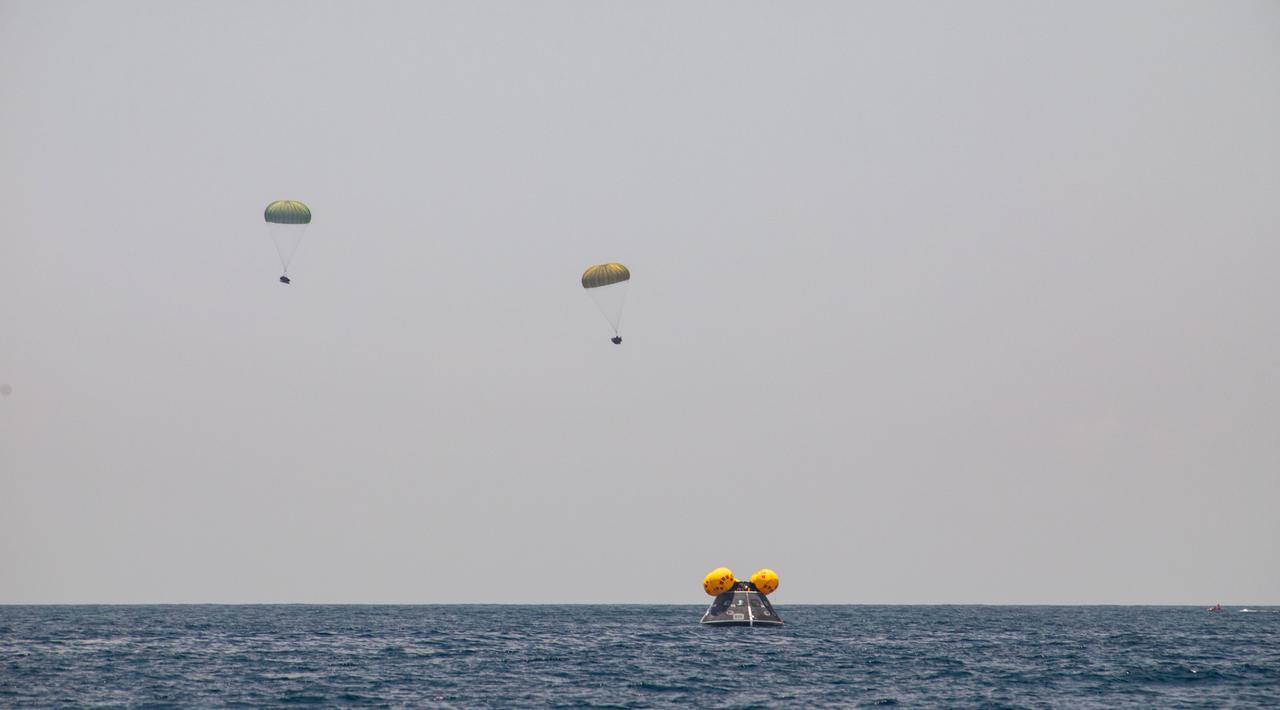
Teams with NASA and the Department of Defense (DoD) rehearse recovery procedures for an ascent abort scenario off the coast of Florida near the agency’s Kennedy Space Center on Thursday, June 12, 2025. Utilizing mannequin crew members inside the Crew Module Test Article (CMTA) – a full-scale mockup of the Orion spacecraft – the simulations practiced abort timelines and joint NASA and DoD recovery procedures supported by Artemis II launch and flight control teams, as NASA prepares to send four astronauts around the Moon and back next year as part of the agency’s first crewed Artemis mission.
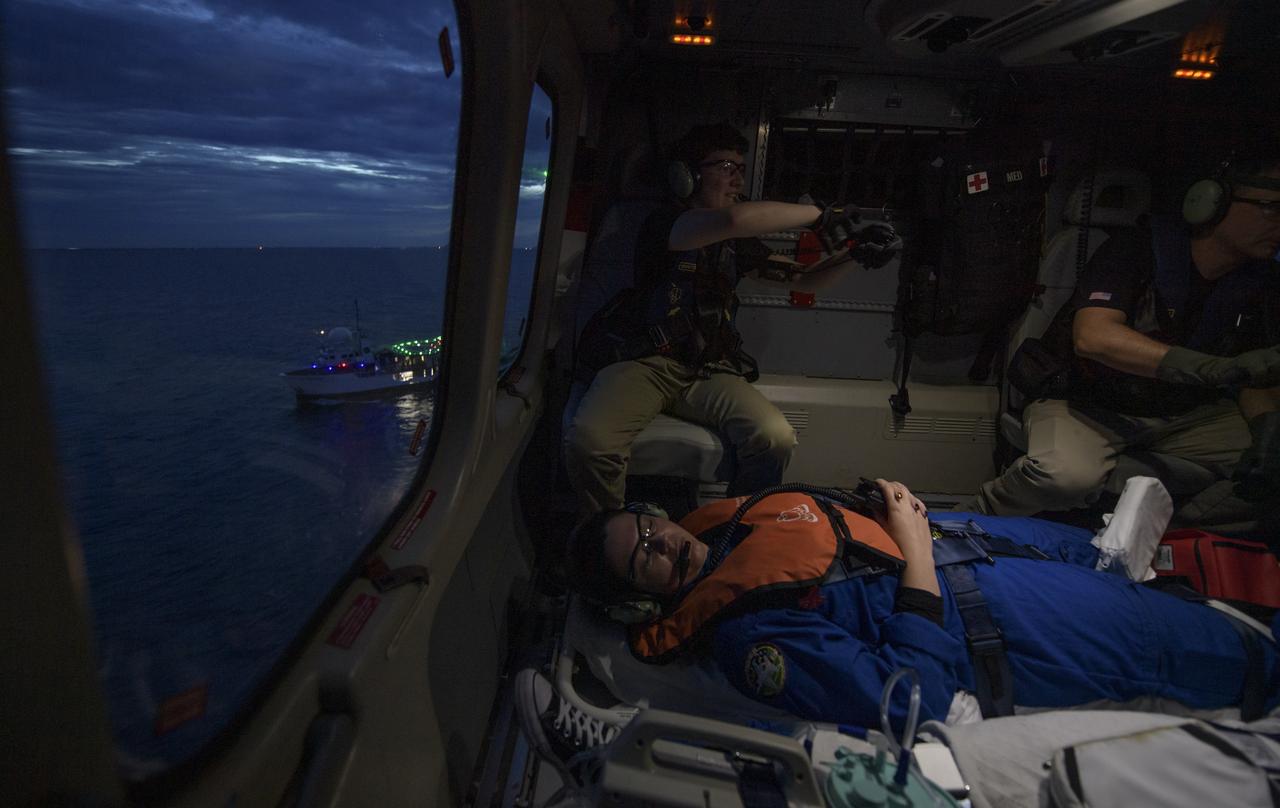
Teams from NASA and SpaceX practice medical emergency evacuations from the GO Searcher ship via helicopter, Friday, August 15, 2019 in the Atlantic Ocean off the coast of Cape Canaveral, Florida. The teams gathered to refine procedures for emergency situations. SpaceX will use the GO Searcher ship during the Demo-2 mission to recover NASA astronauts returning from the International Space Station in their Crew Dragon spacecraft. Photo Credit: (NASA/Bill Ingalls)
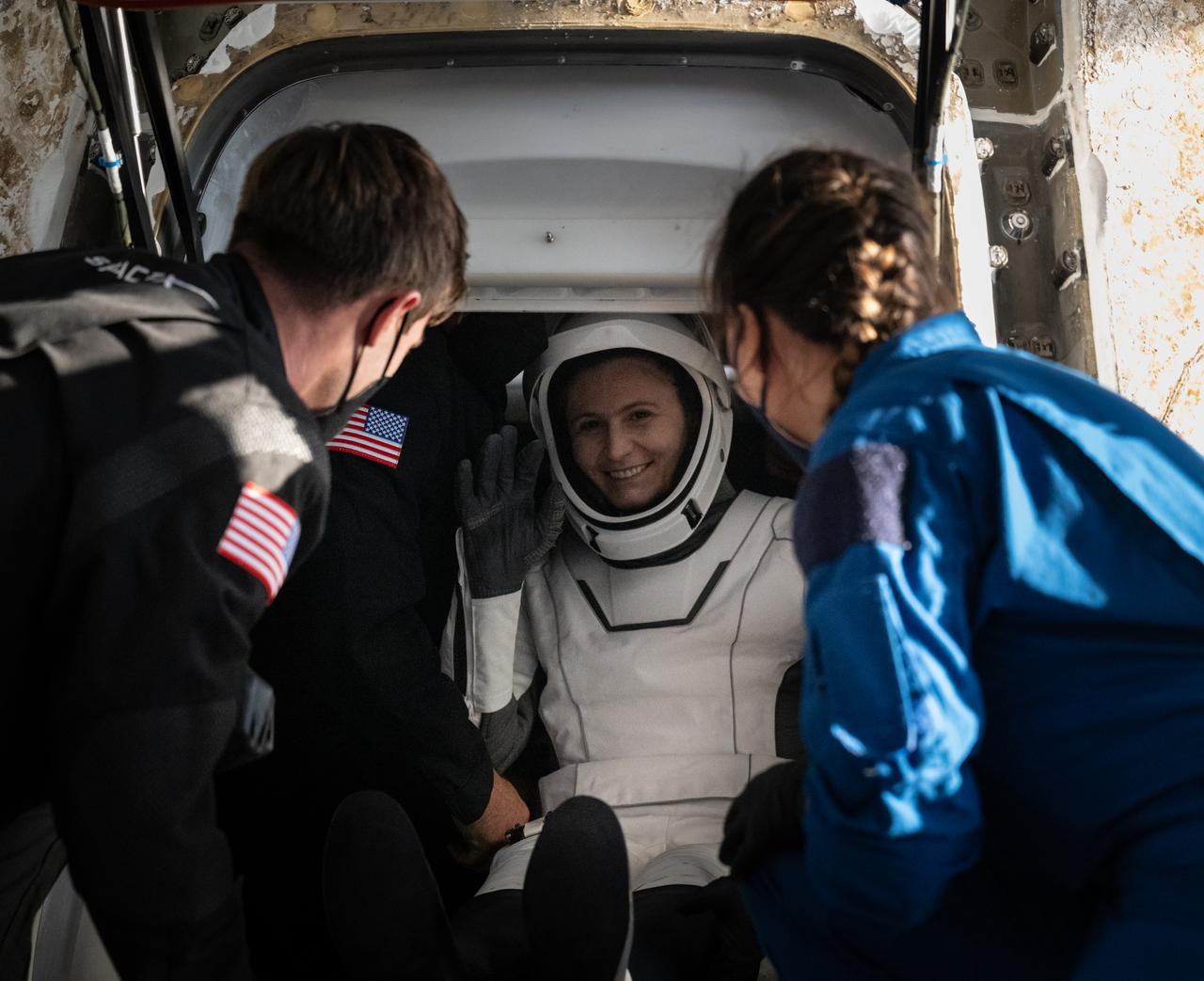
ESA (European Space Agency) astronaut Samantha Cristoforetti is helped out of the SpaceX Crew Dragon Freedom spacecraft onboard the SpaceX recovery Megan ship after she and NASA astronauts Kjell Lindgren, Jessica Watkins, and Robert Hines, landed in the Atlantic Ocean off the coast of Jacksonville, Florida, Friday, Oct. 14, 2022. Lindgren, Hines, Watkins, and Cristoforetti are returning after 170 days in space as part of Expeditions 67 and 68 aboard the International Space Station. Photo Credit: (NASA/Bill Ingalls)
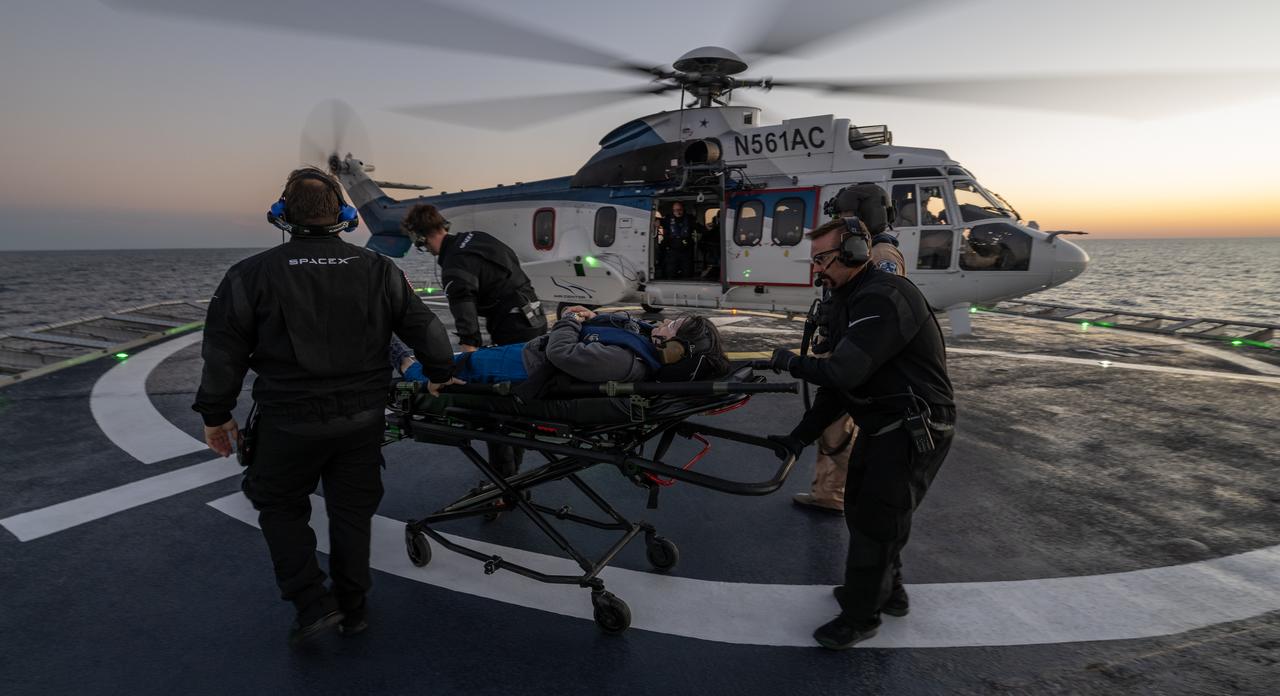
ESA (European Space Agency) astronaut Samantha Cristoforetti is helped aboard a helicopter on the SpaceX recovery ship Megan to fly to Jacksonville, Florida with NASA astronauts Kjell Lindgren, Robert Hines and Jessica Watkins, after the four landed in their SpaceX Crew Dragon Freedom spacecraft in the Atlantic Ocean off the coast of Jacksonville, Friday, Oct. 14, 2022. Lindgren, Hines, Watkins, and Cristoforetti are returning after 170 days in space as part of Expeditions 67 and 68 aboard the International Space Station. Photo Credit: (NASA/Bill Ingalls)
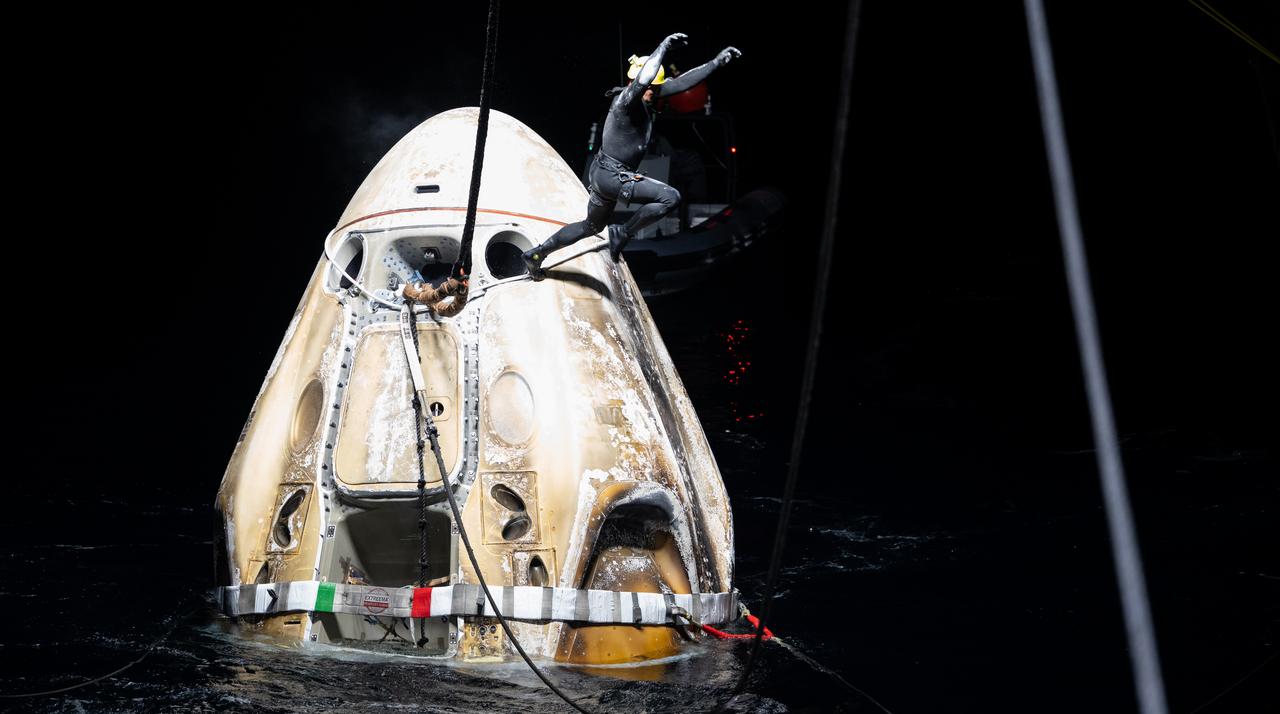
Support teams work around the SpaceX Dragon Endeavour spacecraft shortly after it landed with NASA astronauts Stephen Bowen and Warren "Woody" Hoburg, UAE (United Arab Emirates) astronaut Sultan Alneyadi, and Roscosmos cosmonaut Andrey Fedyaev aboard in the Atlantic Ocean off the coast of Jacksonville, Florida, Monday, Sept. 4,2023. Bowen, Hoburg, Alneyadi, and Fedyaev are returning after nearly six-months in space as part of Expedition 69 aboard the International Space Station. Photo Credit: (NASA/Joel Kowsky)
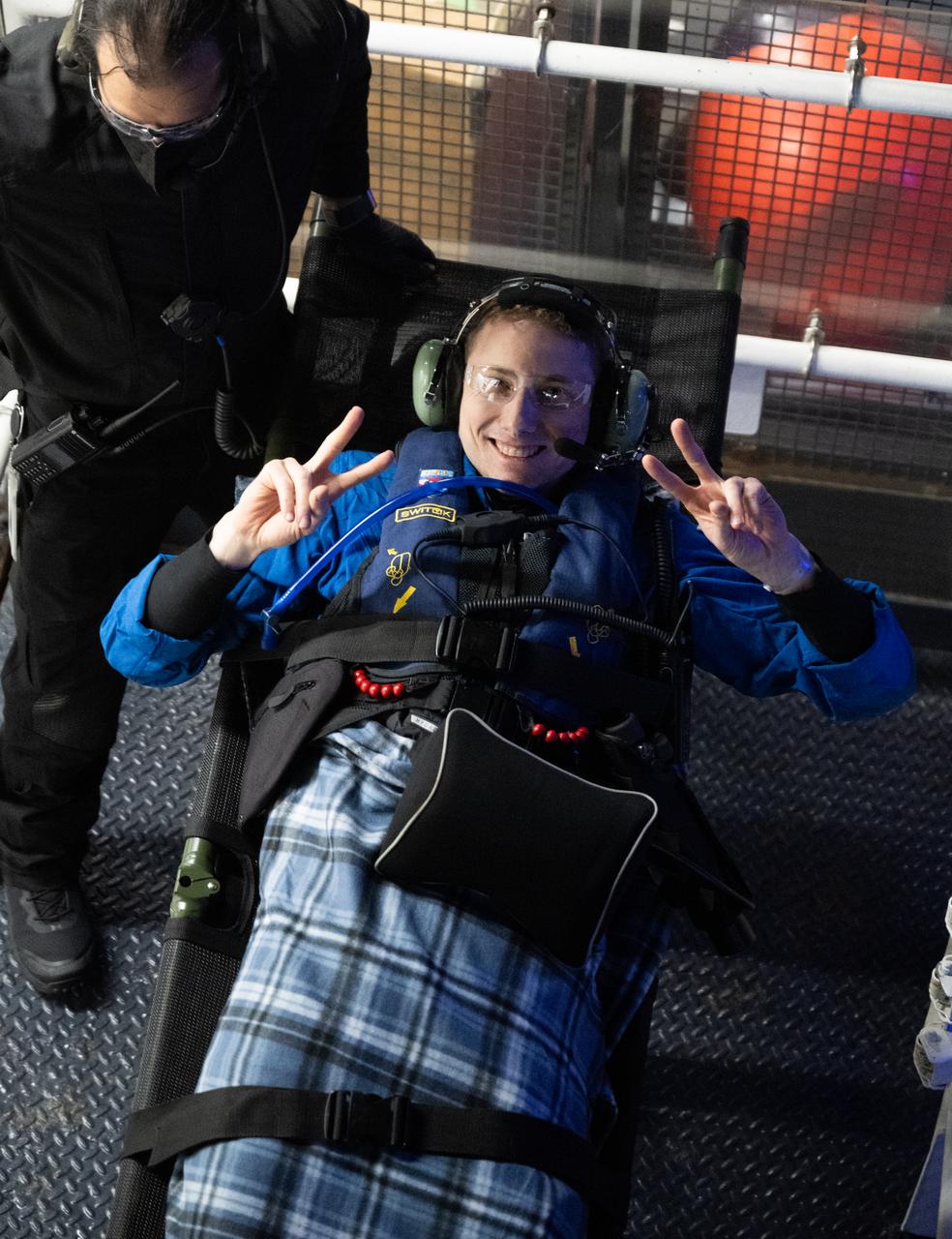
NASA astronaut Warren "Woody" Hoburg is seen inside an elevator on the SpaceX recovery ship MEGAN that will take him up to a waiting helicopter to fly to Jacksonville, Florida along with NASA astronaut Stephen Bowen, UAE (United Arab Emirates) astronaut Sultan Alneyadi, and Roscosmos cosmonaut Andrey Fedyaev a few hours after they landed in their SpaceX Dragon Endeavour spacecraft in the Atlantic Ocean, Monday, Sept. 4, 2023. Bowen, Hoburg, Alneyadi, and Fedyaev are returning after nearly six-months in space as part of Expedition 69 aboard the International Space Station. Photo Credit: (NASA/Joel Kowsky)
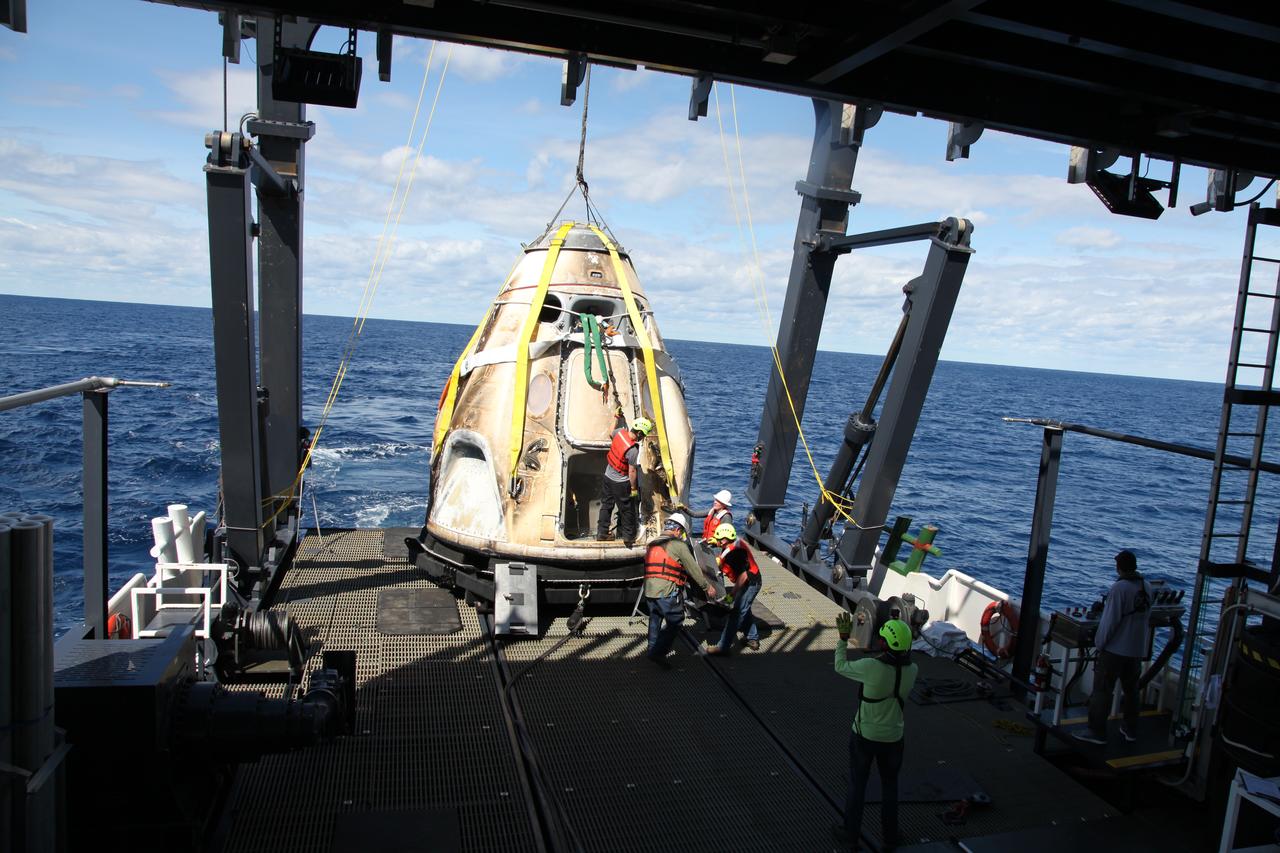
SpaceX’s Crew Dragon is loaded onto the company’s recovery ship, Go Searcher, in the Atlantic Ocean, about 200 miles off Florida’s east coast, on March 8, after returning from the International Space Station on the Demo-1 mission. The uncrewed spacecraft docked to the orbiting laboratory on March 3, following a 2:49 a.m. EST liftoff aboard a SpaceX Falcon 9 rocket from Launch Complex 39A at NASA’s Kennedy Space Center in Florida on March 2. The spacecraft undocked at 2:32 a.m., March 8, splashing down in the Atlantic Ocean, at 8:45 a.m. SpaceX’s inaugural flight with NASA’s Commercial Crew Program is the first flight test of a space system designed for humans built and operated by a commercial company through a public-private partnership. NASA and SpaceX will use data from Demo-1 to further prepare for Demo-2, the crewed flight test that will carry NASA astronauts Bob Behnken and Doug Hurley to the International Space Station later this year.
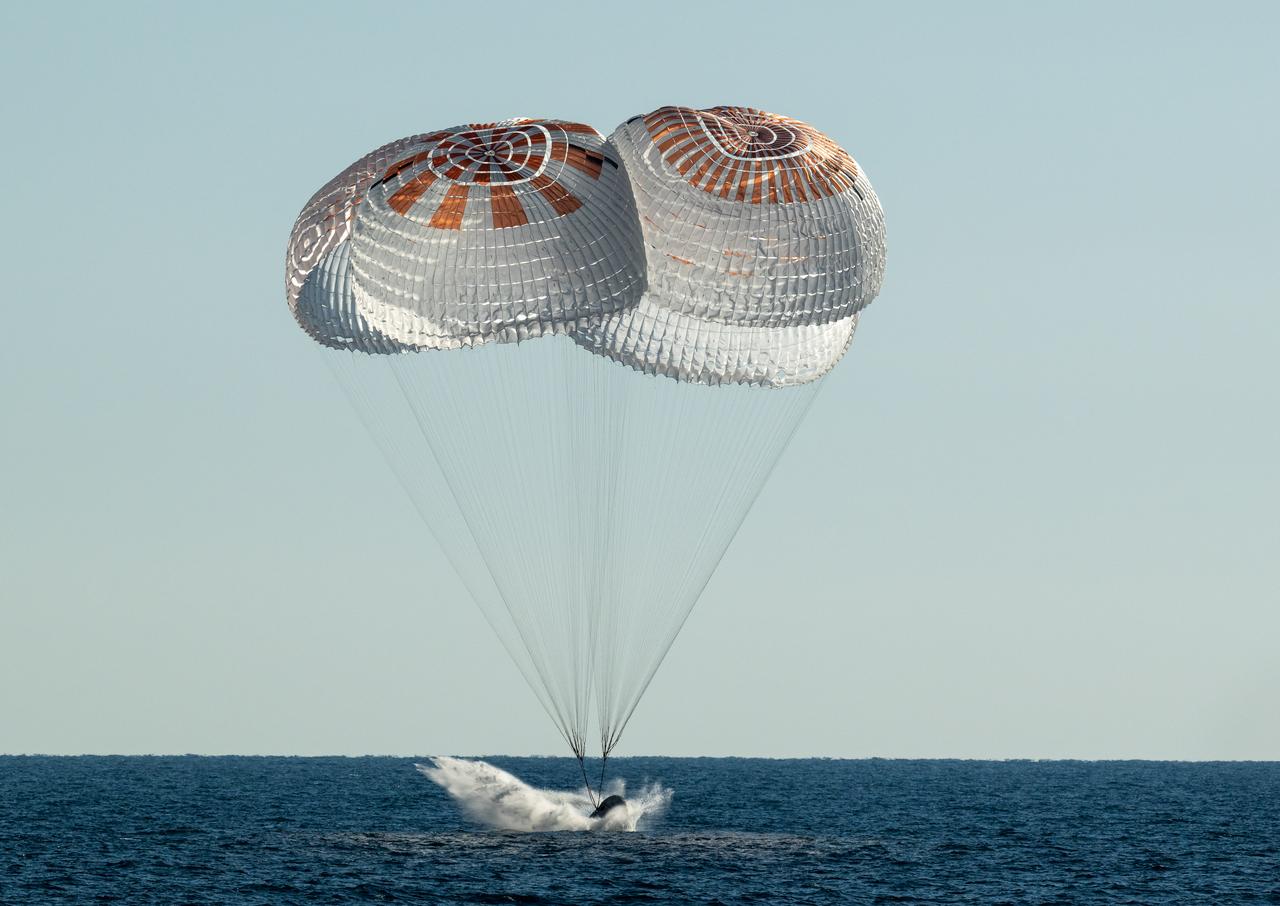
The SpaceX Crew Dragon Freedom spacecraft is seen as it lands with NASA astronauts Kjell Lindgren, Robert Hines, Jessica Watkins, and ESA (European Space Agency) astronaut Samantha Cristoforetti aboard in the Atlantic Ocean off the coast of Jacksonville, Florida, Friday, Oct. 14, 2022. Lindgren, Hines, Watkins, and Cristoforetti are returning after 170 days in space as part of Expeditions 67 and 68 aboard the International Space Station. Photo Credit: (NASA/Bill Ingalls)
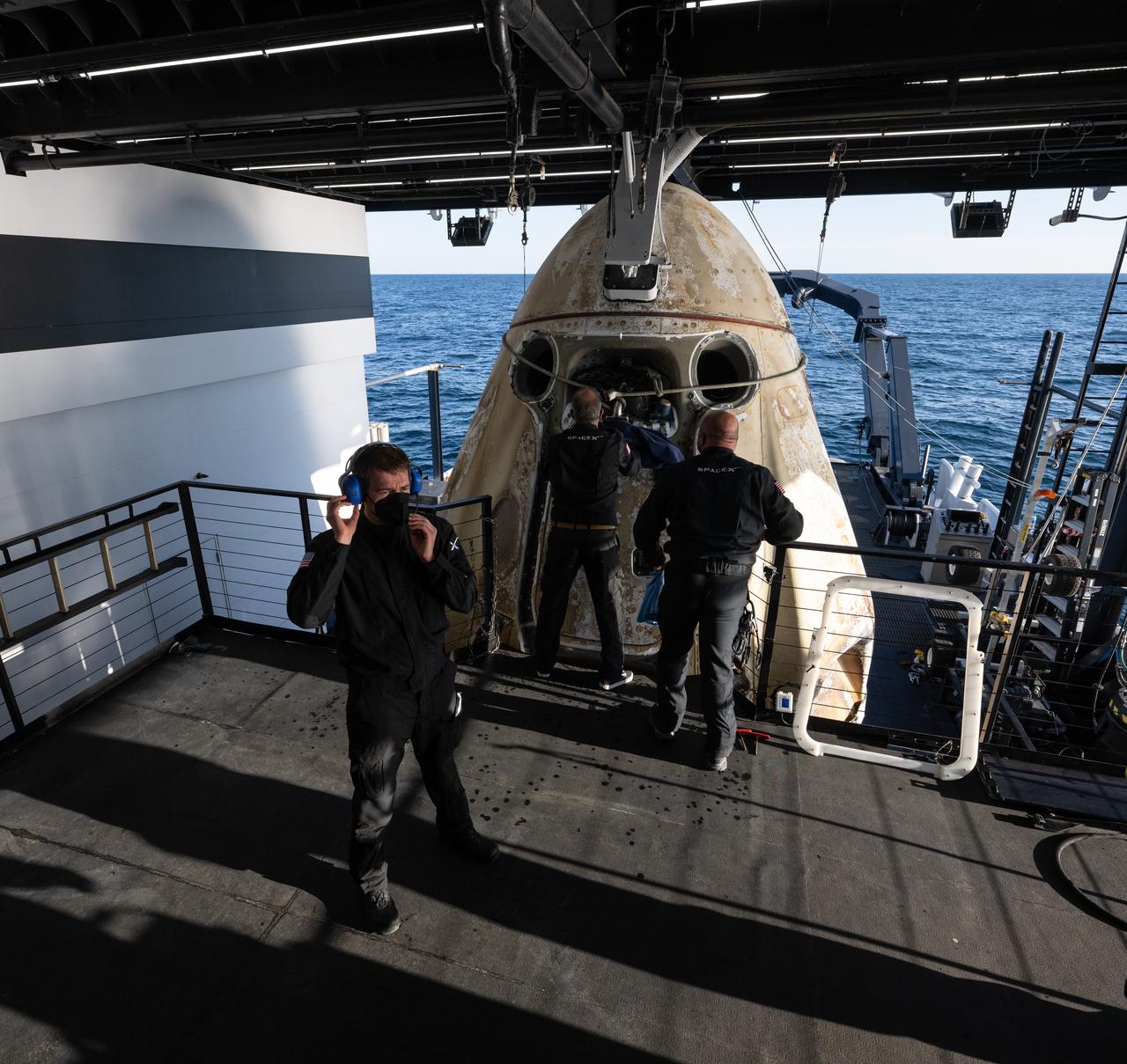
Support teams onboard the recovery ship Megan work around the SpaceX Crew Dragon Freedom spacecraft shortly after it landed with NASA astronauts Kjell Lindgren, Robert Hines, Jessica Watkins, and ESA (European Space Agency) astronaut Samantha Cristoforetti aboard in the Atlantic Ocean off the coast of Jacksonville, Florida, Friday, Oct. 14, 2022. Lindgren, Hines, Watkins, and Cristoforetti are returning after 170 days in space as part of Expeditions 67 and 68 aboard the International Space Station. Photo Credit: (NASA/Bill Ingalls)
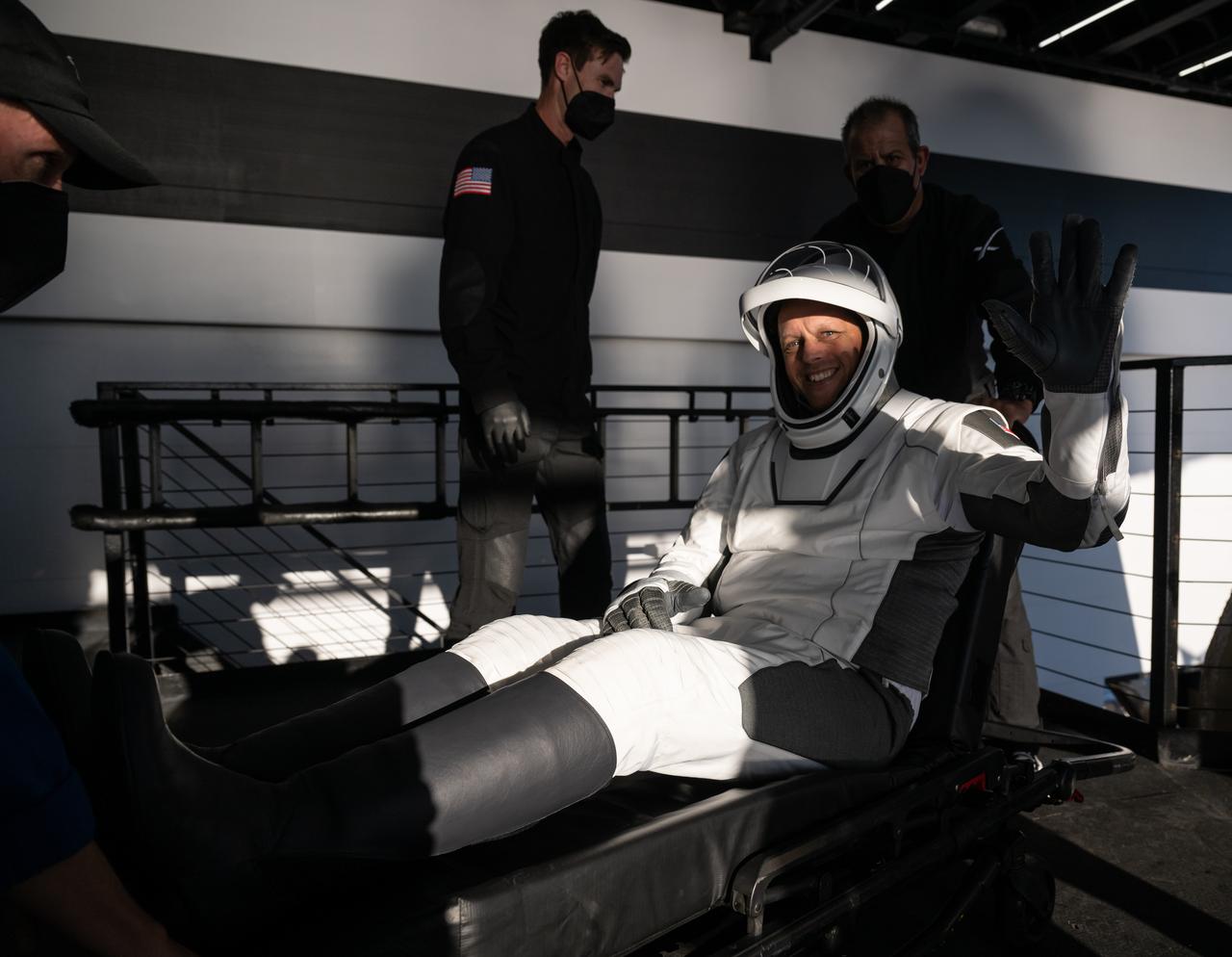
NASA astronaut Robert Hines waves after egress of the SpaceX Crew Dragon Freedom spacecraft onboard the SpaceX recovery ship Megan after he, NASA astronaut Kjell Lindgren, NASA astronaut Jessica Watkins and ESA (European Space Agency) astronaut Samantha Cristoforetti, landed in the Atlantic Ocean off the coast of Jacksonville, Florida, Friday, Oct. 14, 2022. Lindgren, Hines, Watkins, and Cristoforetti are returning after 170 days in space as part of Expeditions 67 and 68 aboard the International Space Station. Photo Credit: (NASA/Bill Ingalls)
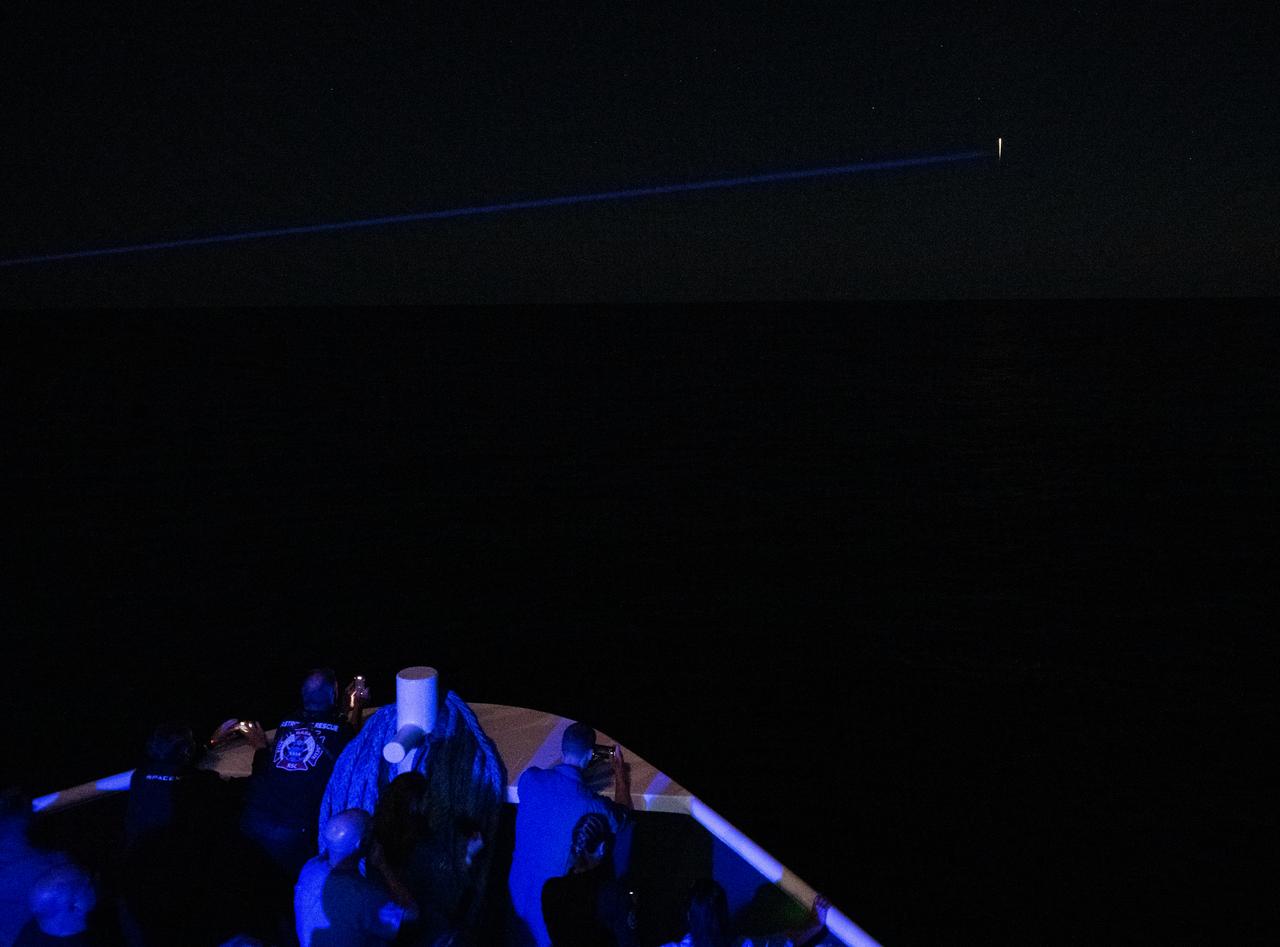
The SpaceX Crew Dragon Endeavour spacecraft is seen as it lands with NASA astronauts Stephen Bowen and Warren "Woody" Hoburg, UAE (United Arab Emirates) astronaut Sultan Alneyadi, and Roscosmos cosmonaut Andrey Fedyaev aboard in the Atlantic Ocean off the coast of Jacksonville, Florida, Monday, Sept. 4, 2023. Bowen, Hoburg, Alneyadi, and Fedyaev are returning after nearly six-months in space as part of Expedition 69 aboard the International Space Station. Photo Credit: (NASA/Joel Kowsky)
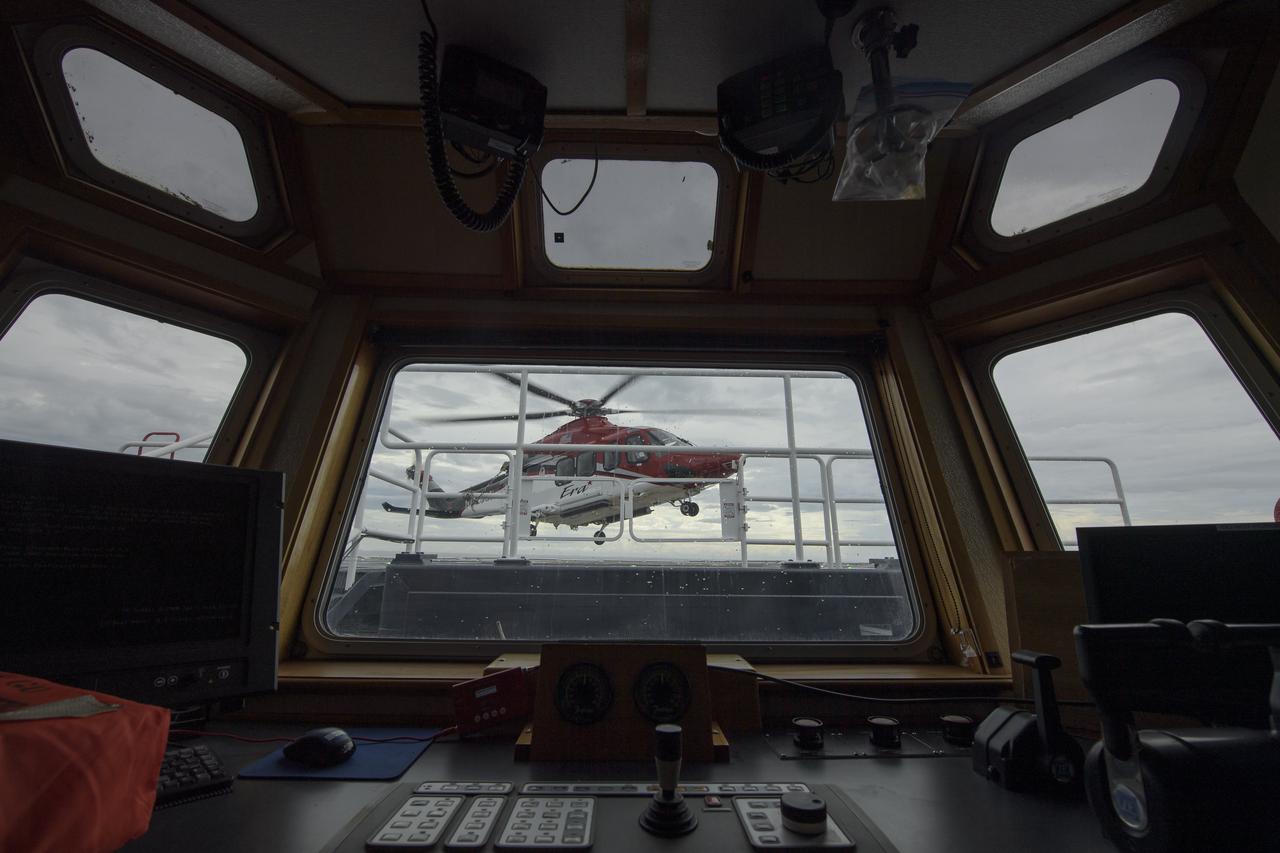
A helicopter equipped for air medical operations lands on the GO Searcher ship as teams from NASA and SpaceX practice procedures for medical emergency evacuation, Friday, August 15, 2019 in the Atlantic Ocean off the coast of Cape Canaveral, Florida. SpaceX will use the GO Searcher ship during the Demo-2 mission to recover NASA astronauts returning from the International Space Station in their Crew Dragon spacecraft. Photo Credit: (NASA/Bill Ingalls)
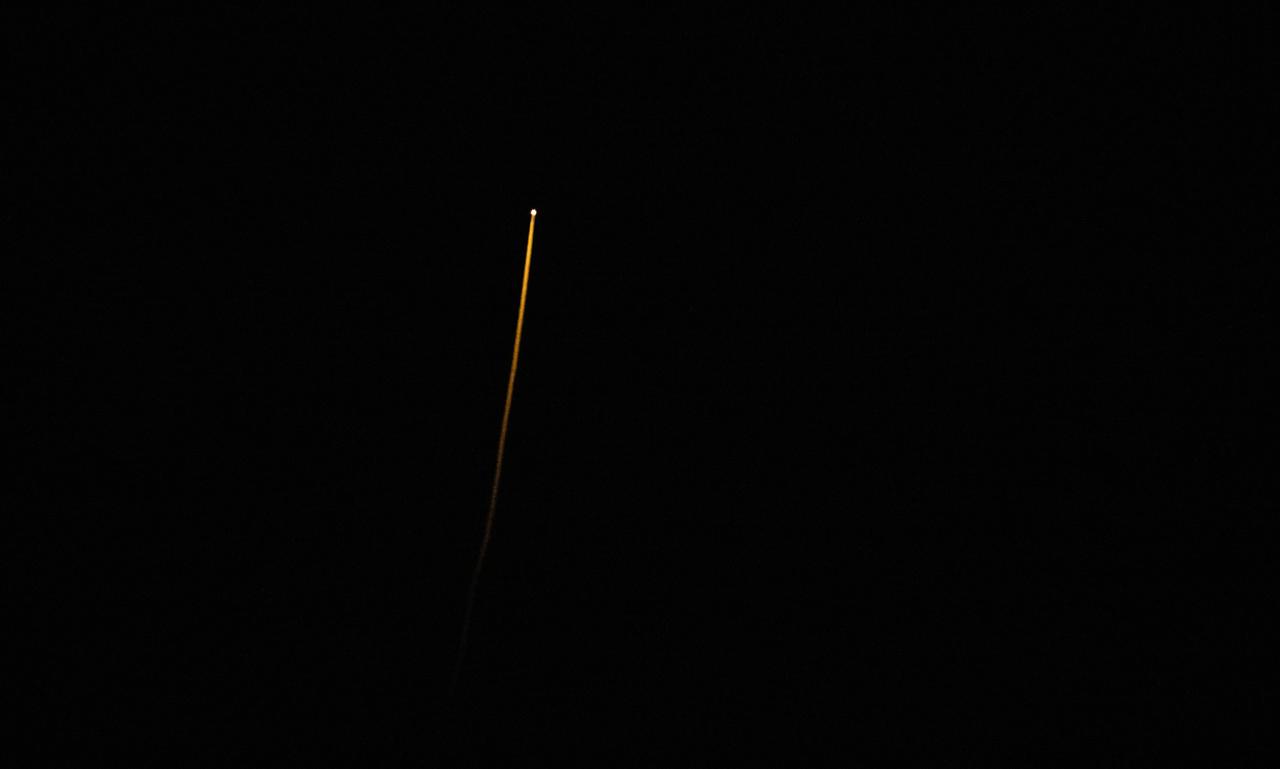
The SpaceX Crew Dragon Endeavour spacecraft is seen as it lands with NASA astronauts Stephen Bowen and Warren "Woody" Hoburg, UAE (United Arab Emirates) astronaut Sultan Alneyadi, and Roscosmos cosmonaut Andrey Fedyaev aboard in the Atlantic Ocean off the coast of Jacksonville, Florida, Monday, Sept. 4, 2023. Bowen, Hoburg, Alneyadi, and Fedyaev are returning after nearly six-months in space as part of Expedition 69 aboard the International Space Station. Photo Credit: (NASA/Joel Kowsky)
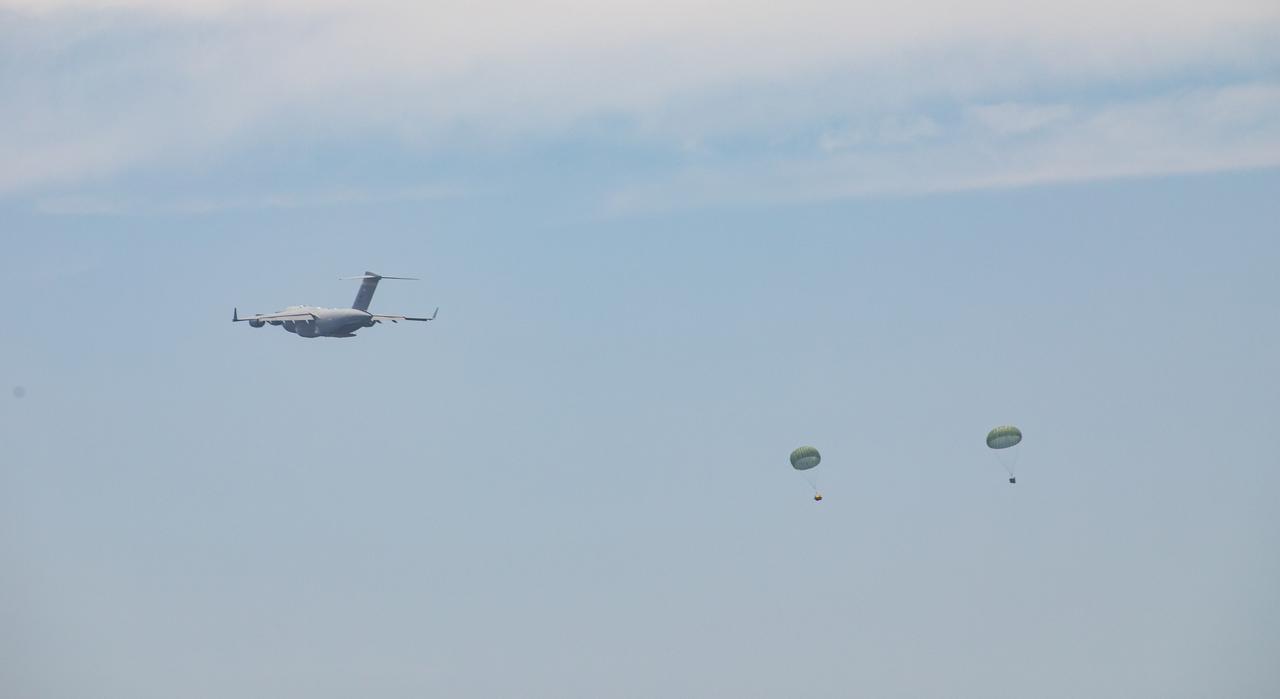
Teams with NASA and the Department of Defense (DoD) rehearse recovery procedures for an ascent abort scenario off the coast of Florida near the agency’s Kennedy Space Center on Thursday, June 12, 2025. Utilizing mannequin crew members inside the Crew Module Test Article (CMTA) – a full-scale mockup of the Orion spacecraft – the simulations practiced abort timelines and joint NASA and DoD recovery procedures supported by Artemis II launch and flight control teams, as NASA prepares to send four astronauts around the Moon and back next year as part of the agency’s first crewed Artemis mission.
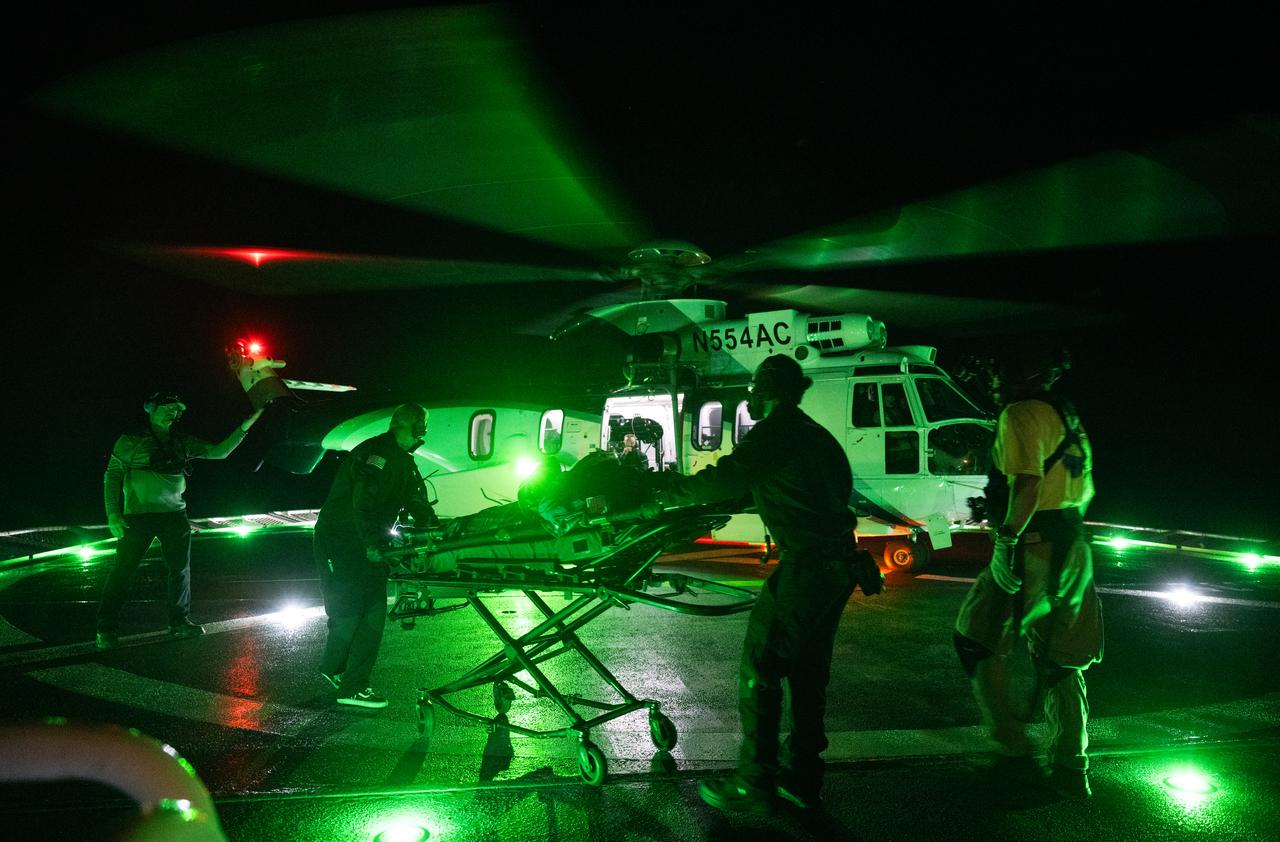
NASA astronaut Stephen Bowen is helped aboard a helicopter on the SpaceX recovery ship MEGAN to fly to Jacksonville, Florida with NASA astronaut Warren "Woody" Hoburg, UAE (United Arab Emirates) astronaut Sultan Alneyadi, and Roscosmos cosmonaut Andrey Fedyaev a few hours after they landed in their SpaceX Dragon Endeavour in the Atlantic Ocean, Monday, Sept. 4, 2023. Bowen, Hoburg, Alneyadi, and Fedyaev are returning after nearly six-months in space as part of Expedition 69 aboard the International Space Station. Photo Credit: (NASA/Joel Kowsky)
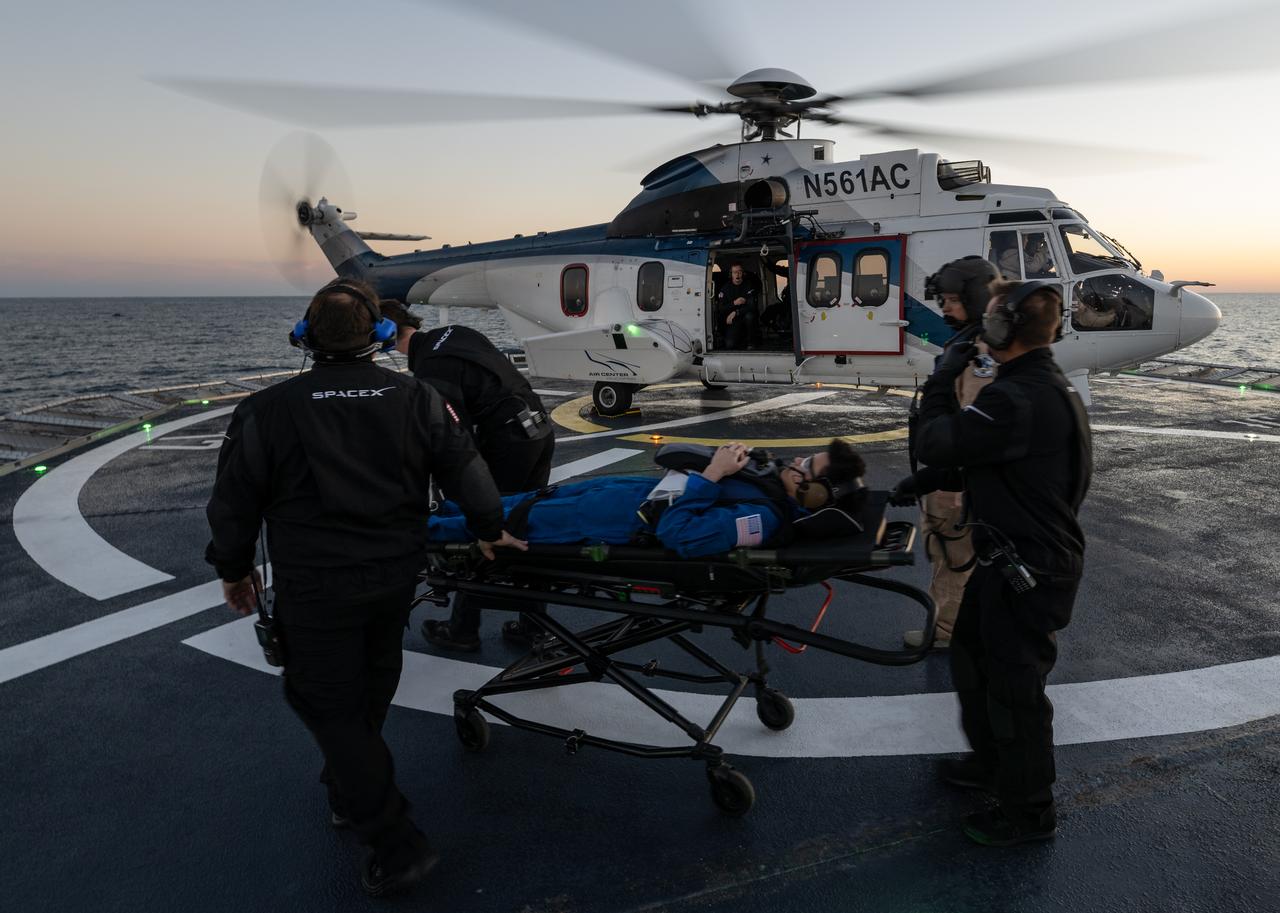
NASA astronaut Jessica Watkins is helped aboard a helicopter on the SpaceX recovery ship Megan to fly to Jacksonville, Florida with NASA astronauts Robert Hines and Kjell Lindgren, along with ESA (European Space Agency) astronaut Samantha Cristoforetti, after the four landed in their SpaceX Crew Dragon Freedom spacecraft in the Atlantic Ocean off the coast of Jacksonville, Friday, Oct. 14, 2022. Lindgren, Hines, Watkins, and Cristoforetti are returning after 170 days in space as part of Expeditions 67 and 68 aboard the International Space Station. Photo Credit: (NASA/Bill Ingalls)
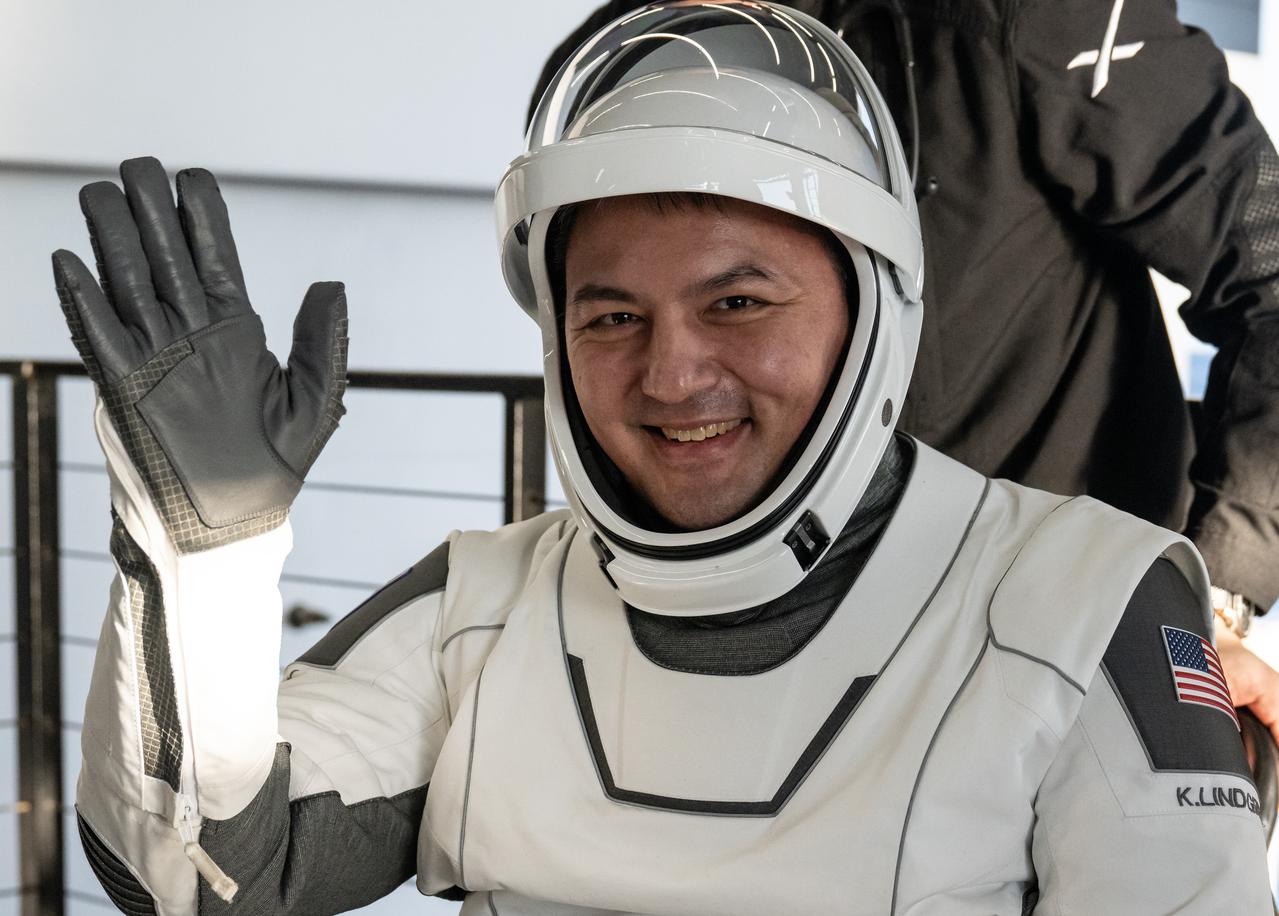
NASA astronaut Kjell Lindgren is helped out of the SpaceX Crew Dragon Freedom spacecraft onboard the SpaceX recovery ship Megan after he, NASA astronaut Robert Hines, NASA astronaut Jessica Watkins and ESA (European Space Agency) astronaut Samantha Cristoforetti, landed in the Atlantic Ocean off the coast of Jacksonville, Florida, Friday, Oct. 14, 2022. Lindgren, Hines, Watkins, and Cristoforetti are returning after 170 days in space as part of Expeditions 67 and 68 aboard the International Space Station. Photo Credit: (NASA/Bill Ingalls)
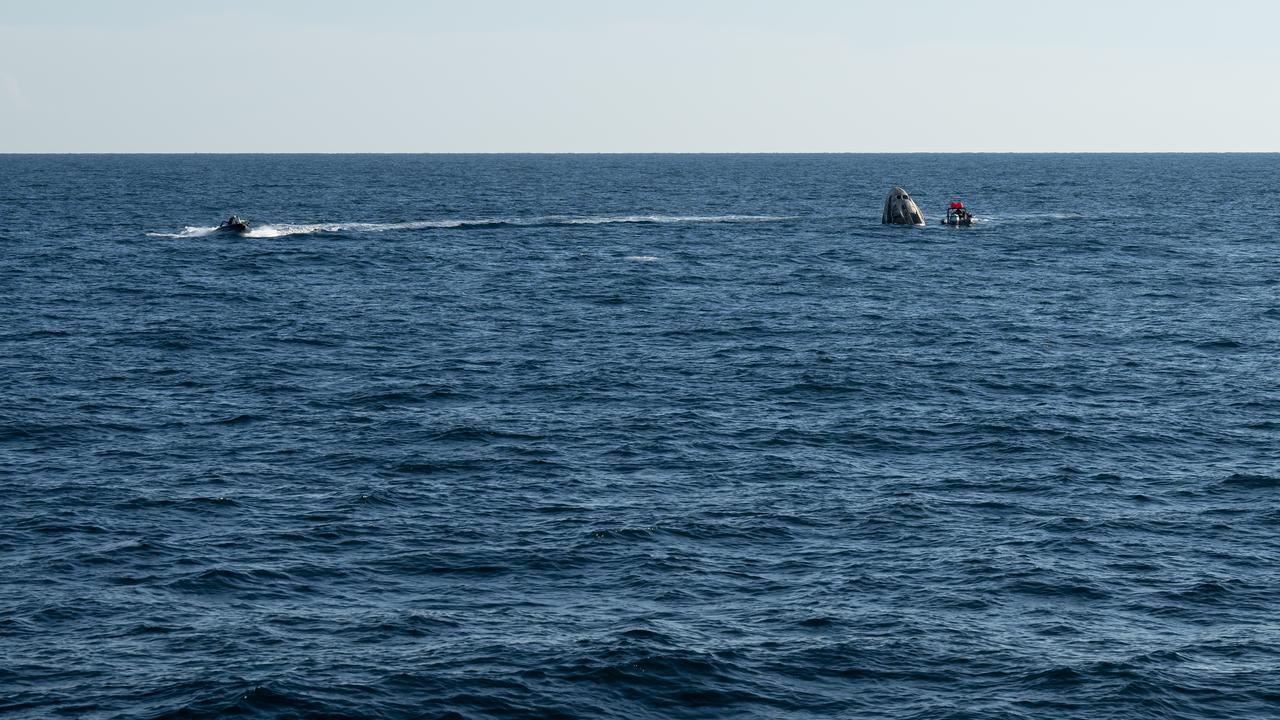
Support teams work around the SpaceX Crew Dragon Freedom spacecraft shortly after it landed with NASA astronauts Kjell Lindgren, Robert Hines, Jessica Watkins, and ESA (European Space Agency) astronaut Samantha Cristoforetti aboard in the Atlantic Ocean off the coast of Jacksonville, Florida, Friday, Oct. 14, 2022. Lindgren, Hines, Watkins, and Cristoforetti are returning after 170 days in space as part of Expeditions 67 and 68 aboard the International Space Station. Photo Credit: (NASA/Bill Ingalls)
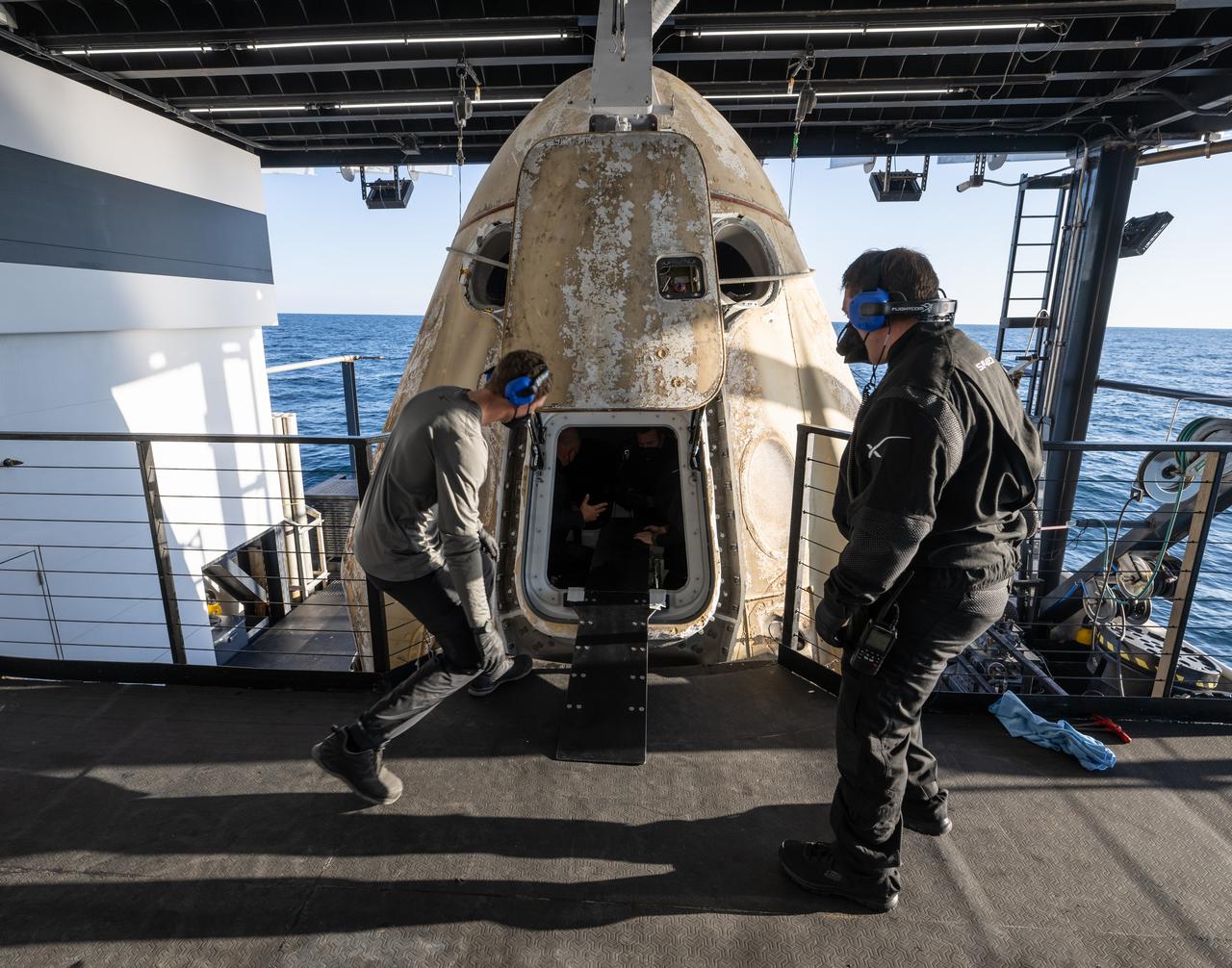
Support teams work around the SpaceX Crew Dragon Freedom spacecraft onboard the recovery ship Megan, after the capsule landed with NASA astronauts Kjell Lindgren, Robert Hines, Jessica Watkins, and ESA (European Space Agency) astronaut Samantha Cristoforetti aboard in the Atlantic Ocean off the coast of Jacksonville, Florida, Friday, Oct. 14, 2022. Lindgren, Hines, Watkins, and Cristoforetti are returning after 170 days in space as part of Expeditions 67 and 68 aboard the International Space Station. Photo Credit: (NASA/Bill Ingalls)
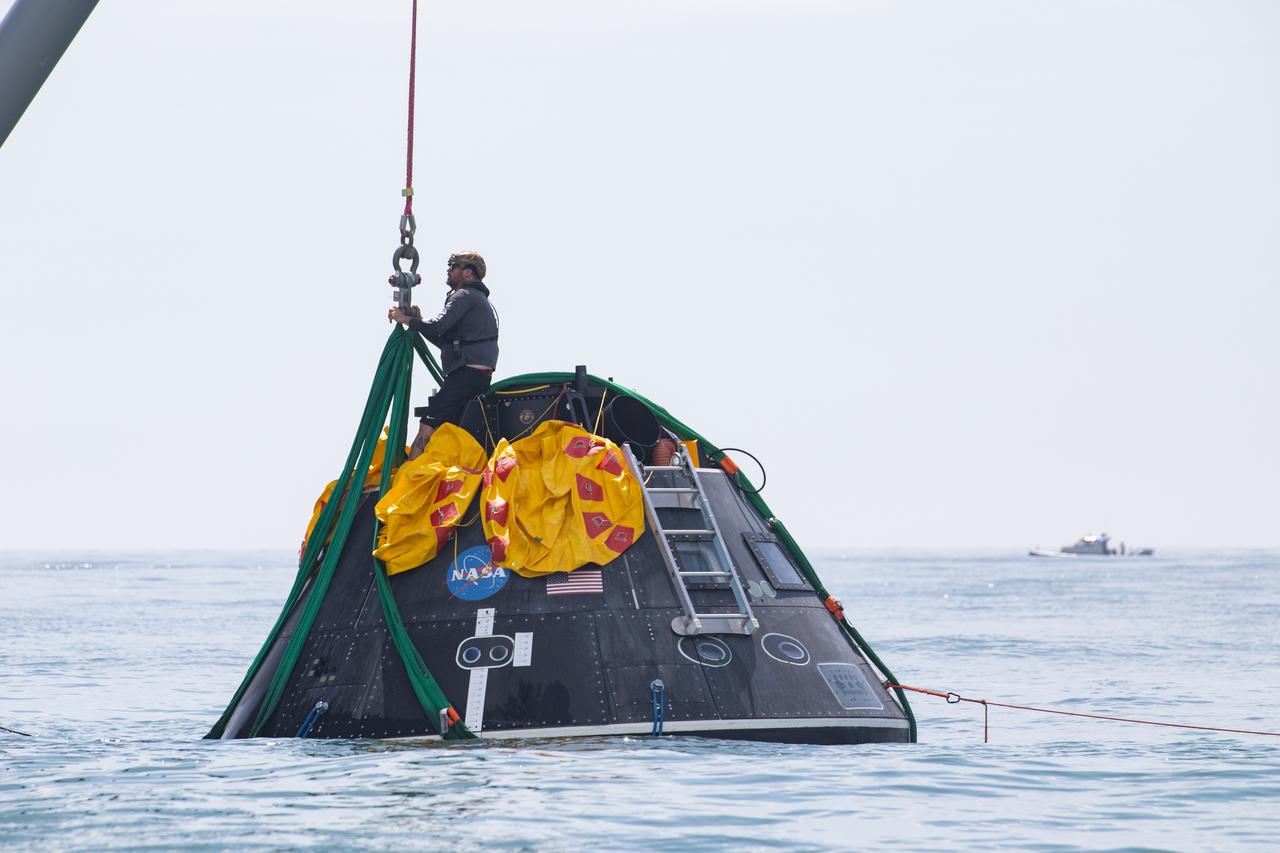
Teams with NASA and the Department of Defense (DoD) rehearse recovery procedures for a launch pad abort scenario off the coast of Florida near the agency’s Kennedy Space Center on Wednesday, June 11, 2025. Utilizing mannequin crew members inside the Crew Module Test Article (CMTA) – a full-scale mockup of the Orion spacecraft – the simulations practiced abort timelines and joint NASA and DoD recovery procedures supported by Artemis II launch and flight control teams, as NASA prepares to send four astronauts around the Moon and back next year as part of the agency’s first crewed Artemis mission.
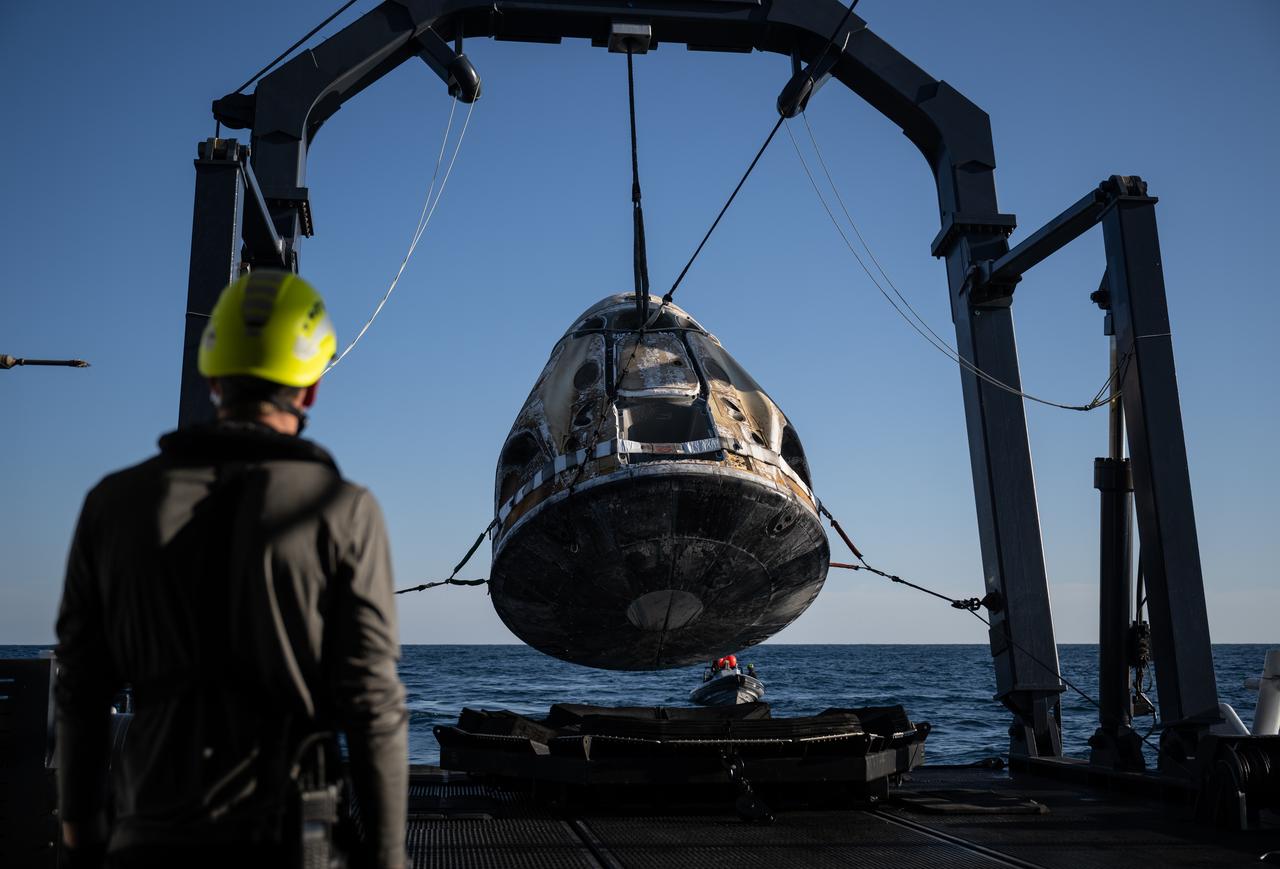
Support teams raise the SpaceX Crew Dragon Freedom spacecraft aboard the recovery ship Megan shortly after it landed with NASA astronauts Kjell Lindgren, Robert Hines, Jessica Watkins, and ESA (European Space Agency) astronaut Samantha Cristoforetti aboard in the Atlantic Ocean off the coast of Jacksonville, Florida, Friday, Oct. 14, 2022. Lindgren, Hines, Watkins, and Cristoforetti are returning after 170 days in space as part of Expeditions 67 and 68 aboard the International Space Station. Photo Credit: (NASA/Bill Ingalls)
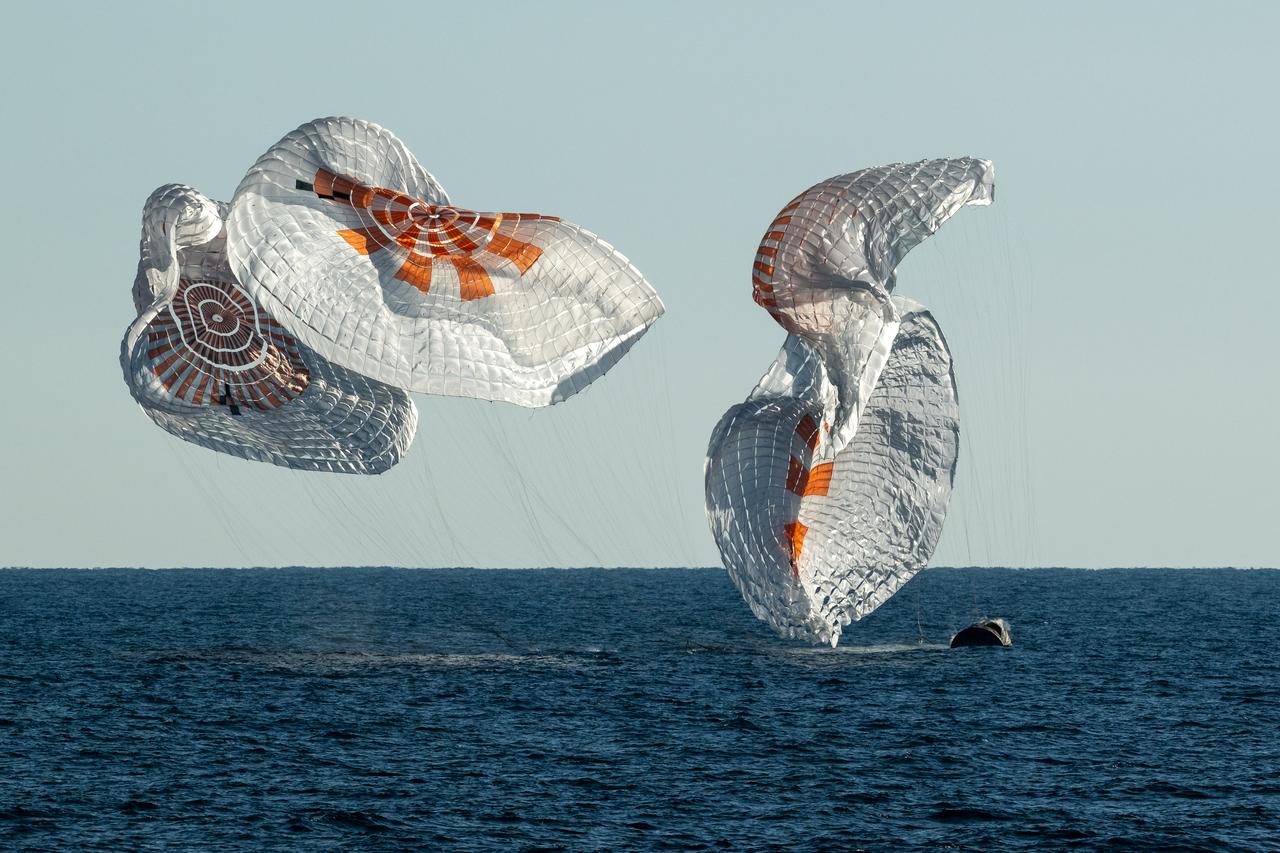
The SpaceX Crew Dragon Freedom spacecraft is seen as it lands with NASA astronauts Kjell Lindgren, Robert Hines, Jessica Watkins, and ESA (European Space Agency) astronaut Samantha Cristoforetti aboard in the Atlantic Ocean off the coast of Jacksonville, Florida, Friday, Oct. 14, 2022. Lindgren, Hines, Watkins, and Cristoforetti are returning after 170 days in space as part of Expeditions 67 and 68 aboard the International Space Station. Photo Credit: (NASA/Bill Ingalls)
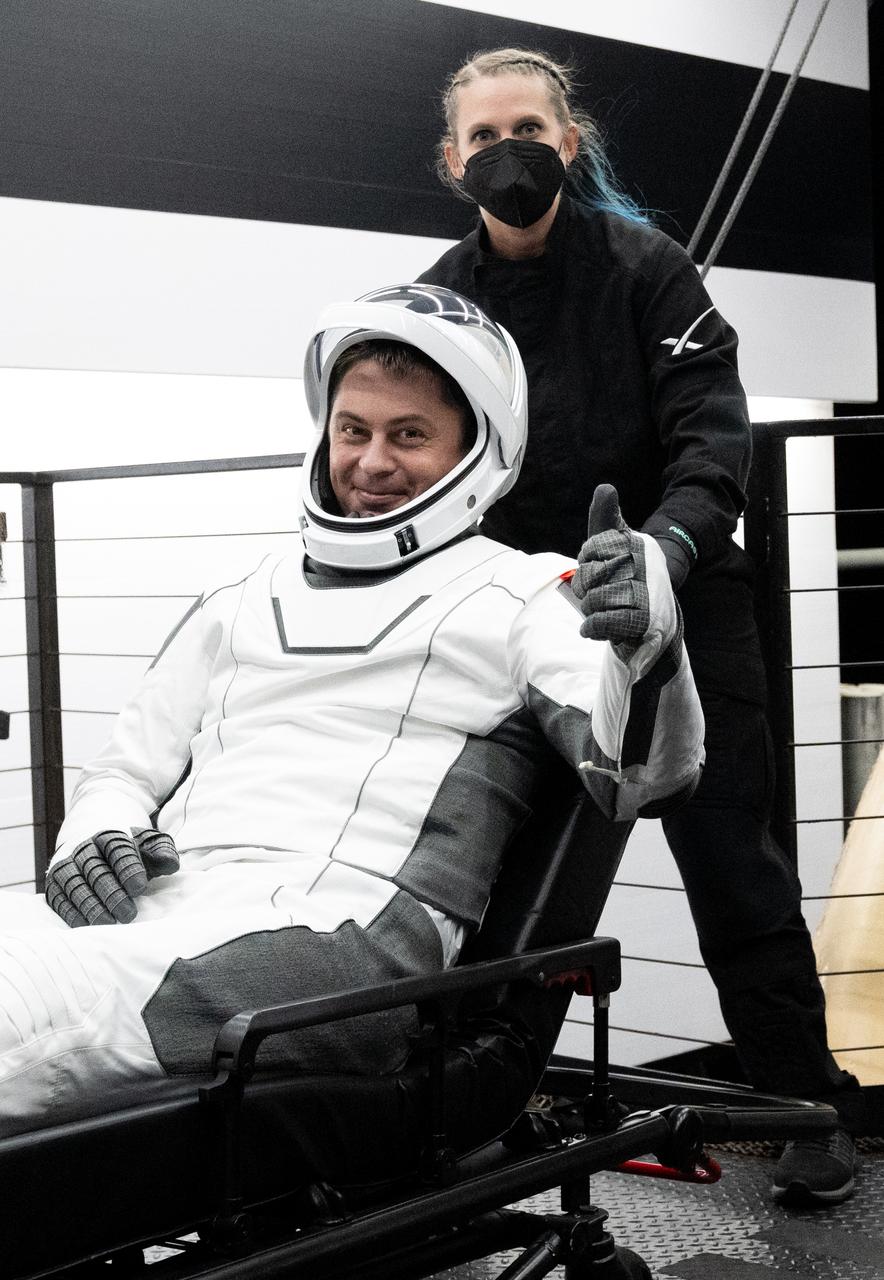
Roscosmos cosmonaut Andrey Fedyaev is helped out of the SpaceX Dragon Endeavour spacecraft onboard the SpaceX recovery ship MEGAN after he, NASA astronauts Warren "Woody" Hoburg, Stephen Bowen, and UAE (United Arab Emirates) astronaut Sultan Alneyadi landed in the Atlantic Ocean off the coast of Jacksonville, Florida, Monday, Sept. 4, 2023. Bowen, Hoburg, Alneyadi, and Fedyaev are returning after nearly six-months in space as part of Expedition 69 aboard the International Space Station. Photo Credit: (NASA/Joel Kowsky)
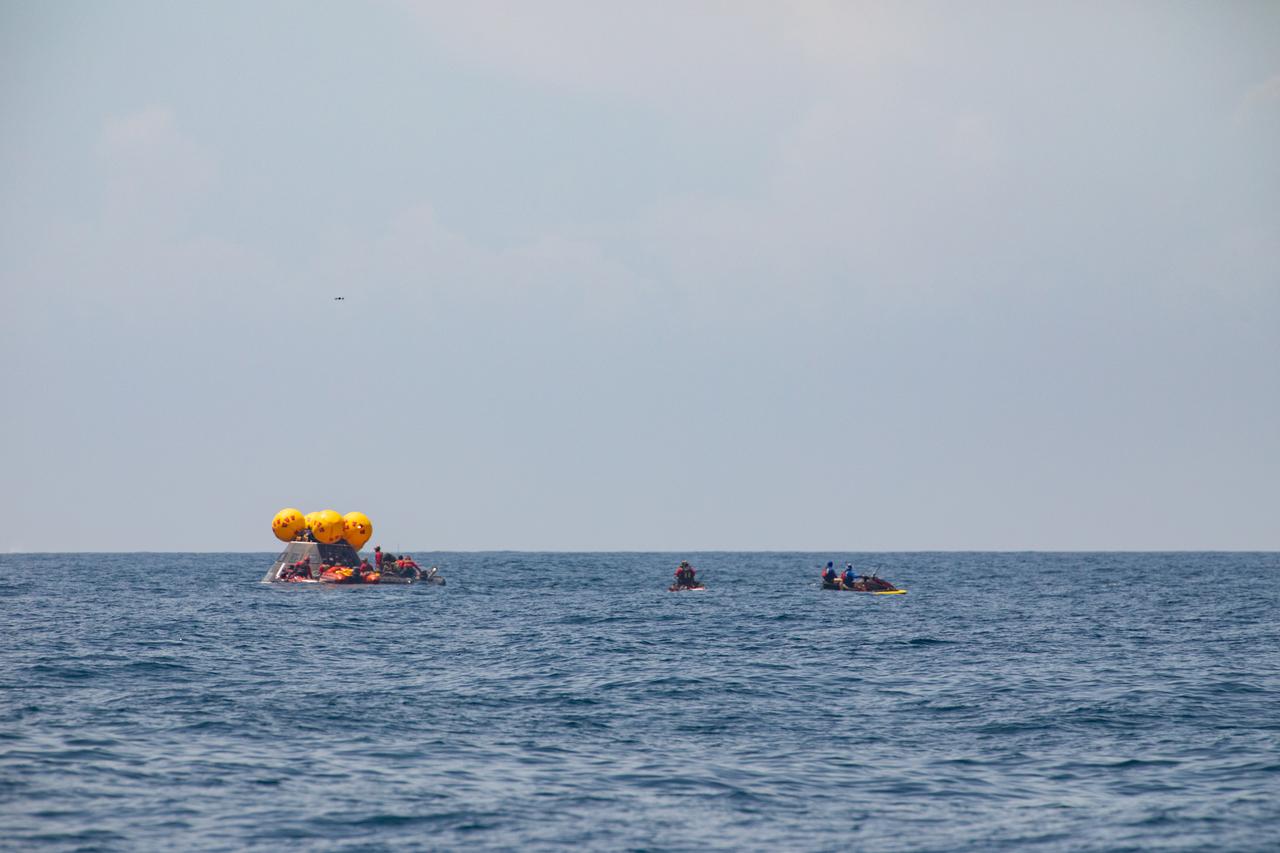
Teams with NASA and the Department of Defense (DoD) rehearse recovery procedures for an ascent abort scenario off the coast of Florida near the agency’s Kennedy Space Center on Thursday, June 12, 2025. Utilizing mannequin crew members inside the Crew Module Test Article (CMTA) – a full-scale mockup of the Orion spacecraft – the simulations practiced abort timelines and joint NASA and DoD recovery procedures supported by Artemis II launch and flight control teams, as NASA prepares to send four astronauts around the Moon and back next year as part of the agency’s first crewed Artemis mission.
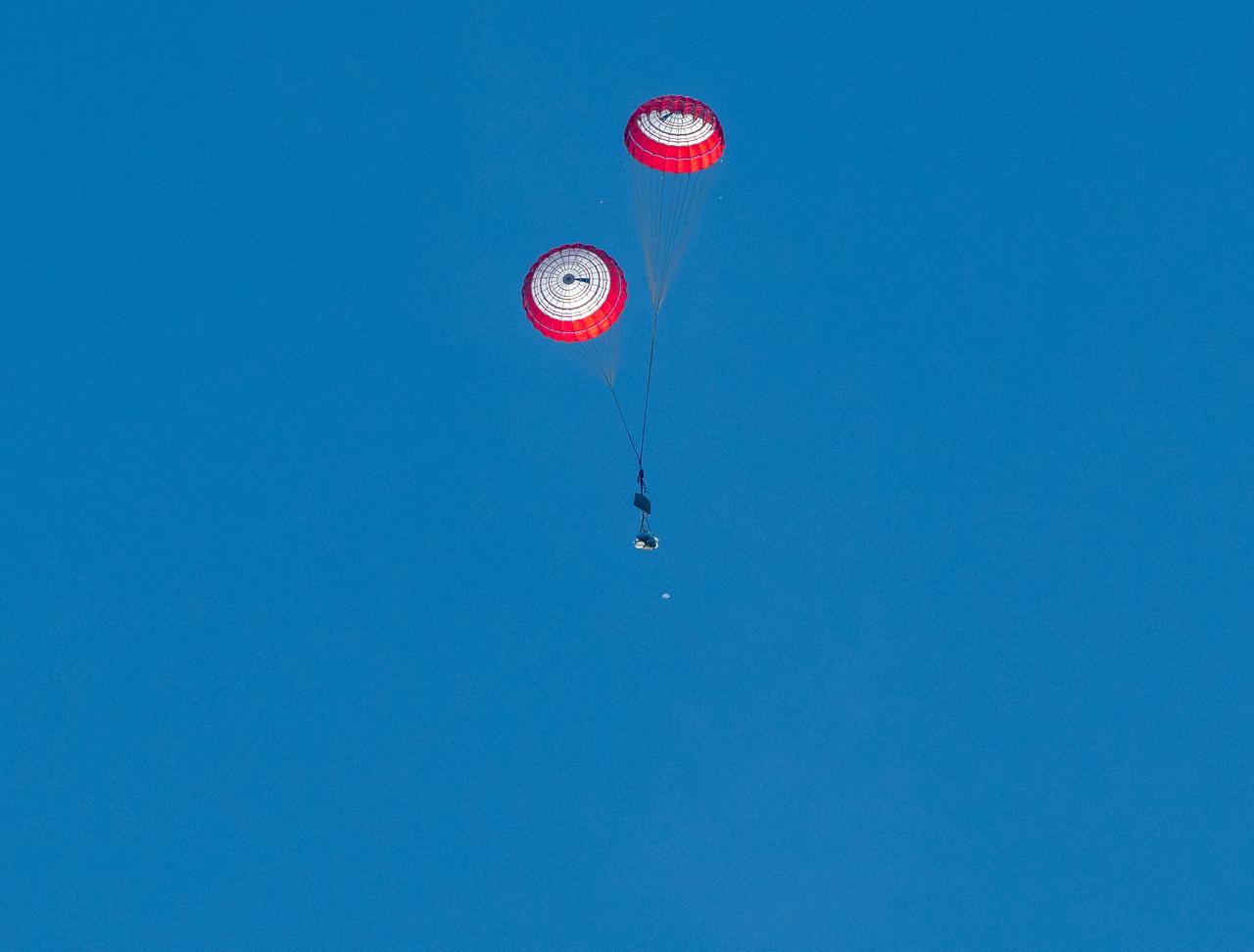
The drogue parachutes of the SpaceX Crew Dragon Freedom spacecraft are seen after being released during the landing of NASA astronauts Kjell Lindgren, Robert Hines, Jessica Watkins, and ESA (European Space Agency) astronaut Samantha Cristoforetti aboard in the Atlantic Ocean off the coast of Jacksonville, Florida, Friday, Oct. 14, 2022. Lindgren, Hines, Watkins, and Cristoforetti are returning after 170 days in space as part of Expeditions 67 and 68 aboard the International Space Station. Photo Credit: (NASA/Bill Ingalls)
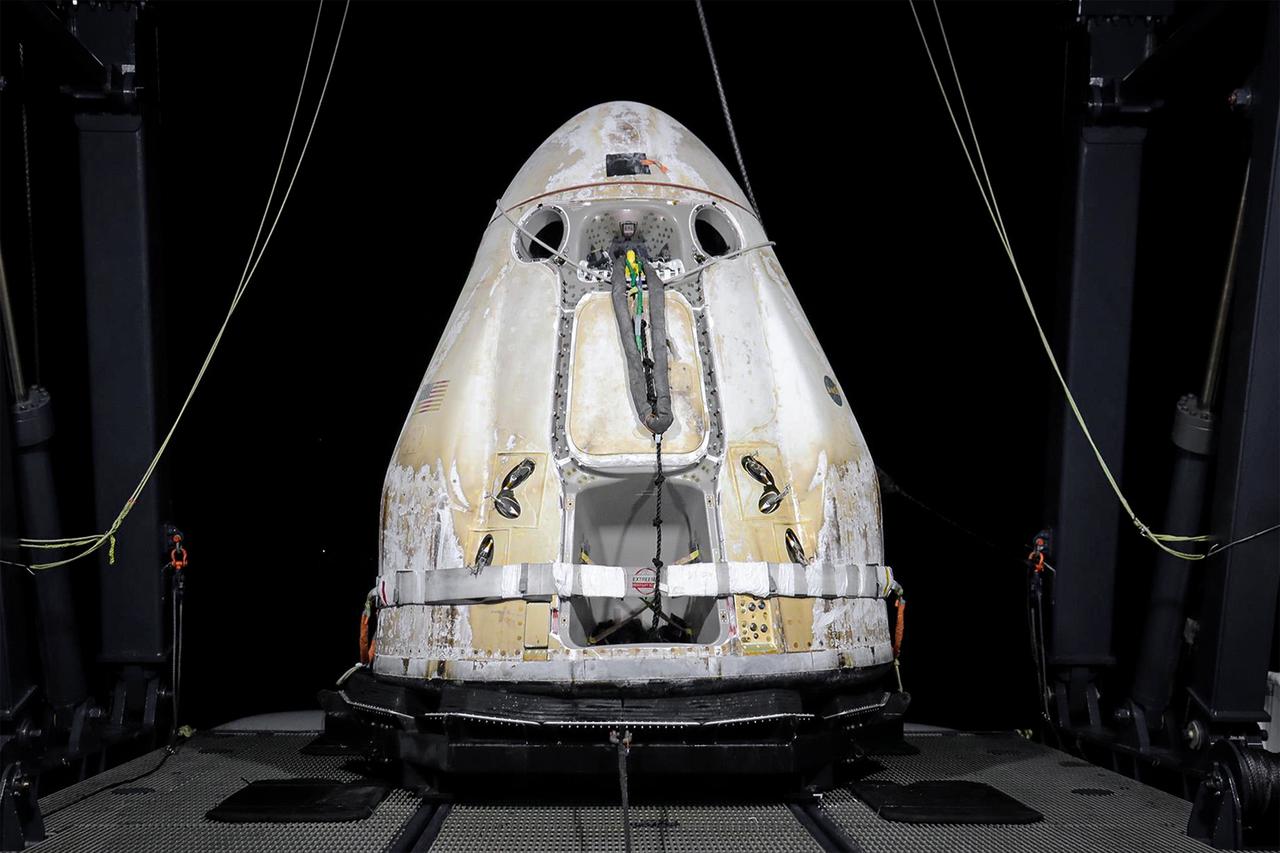
Shown here is the SpaceX Cargo Dragon spacecraft on board the company's Go Navigator recovery ship after making its successful parachute-assisted splashdown west of Tampa off the Florida coast on Jan. 13, 2020, at 8:26 p.m. EST. Just after loading Dragon onto Go Navigator, SpaceX packed an Airbus H225 helicopter with the time-sensitive research cargo for delivery to NASA’s Kennedy Space Center. Dragon returned more than 4,400 pounds of scientific experiments and other cargo from the International Space Station. The upgraded cargo Dragon capsule boasts double the powered locker capacity to preserve science samples, allowing for a significant increase in the research that can be carried back to Earth. Photo credit: SpaceX
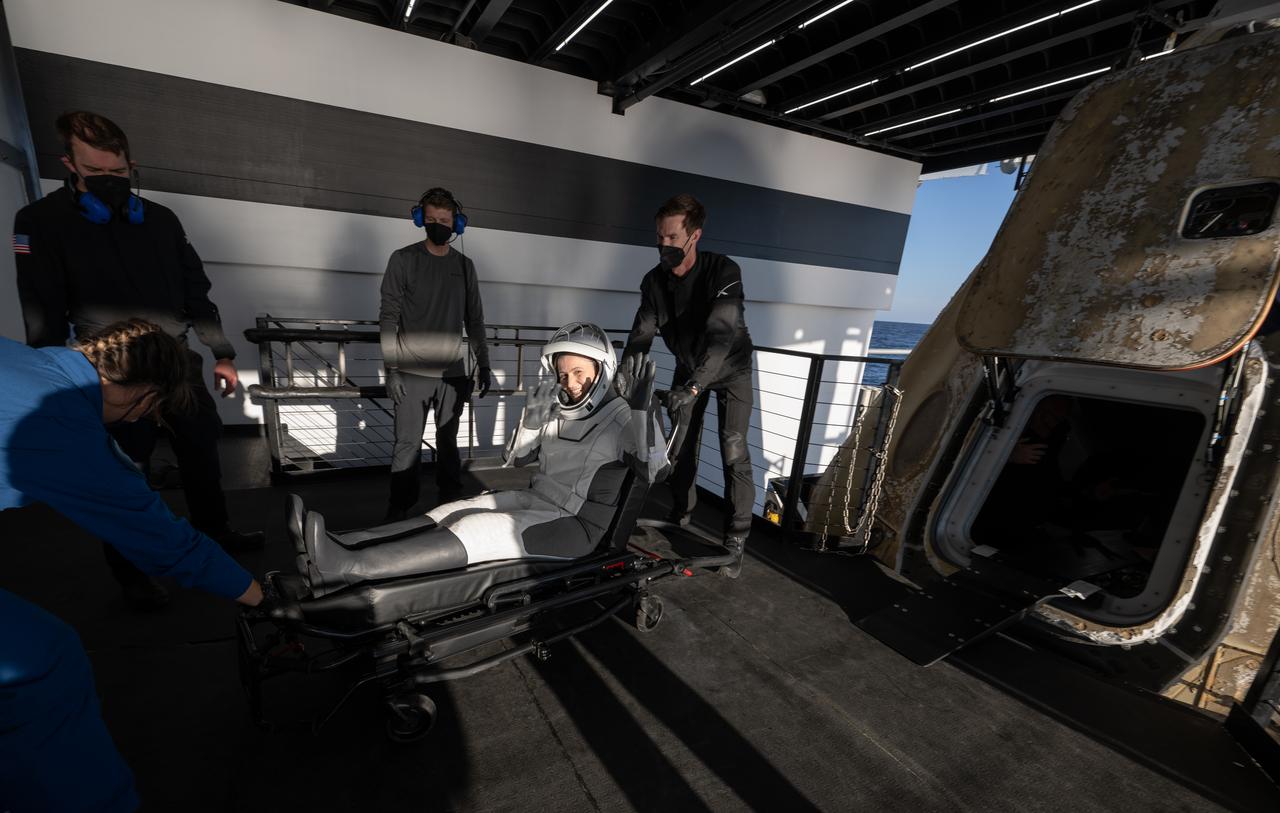
ESA (European Space Agency) astronaut Samantha Cristoforetti waves after being helped out of the SpaceX Crew Dragon Freedom spacecraft onboard the SpaceX recovery Megan ship after she and NASA astronauts Kjell Lindgren, Jessica Watkins, and Robert Hines, landed in the Atlantic Ocean off the coast of Jacksonville, Florida, Friday, Oct. 14, 2022. Lindgren, Hines, Watkins, and Cristoforetti are returning after 170 days in space as part of Expeditions 67 and 68 aboard the International Space Station. Photo Credit: (NASA/Bill Ingalls)
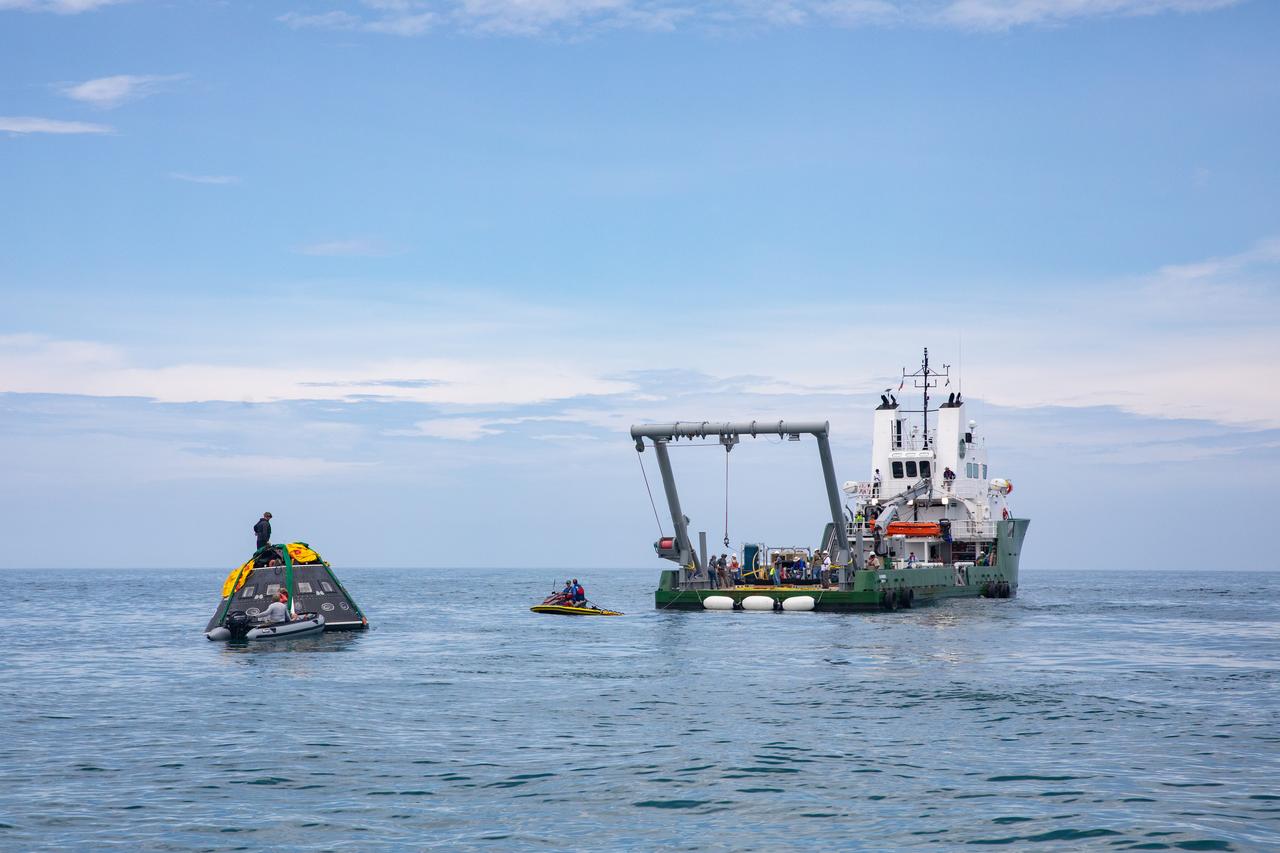
Teams with NASA and the Department of Defense (DoD) rehearse recovery procedures for a launch pad abort scenario off the coast of Florida near the agency’s Kennedy Space Center on Wednesday, June 11, 2025. Utilizing mannequin crew members inside the Crew Module Test Article (CMTA) – a full-scale mockup of the Orion spacecraft – the simulations practiced abort timelines and joint NASA and DoD recovery procedures supported by Artemis II launch and flight control teams, as NASA prepares to send four astronauts around the Moon and back next year as part of the agency’s first crewed Artemis mission.
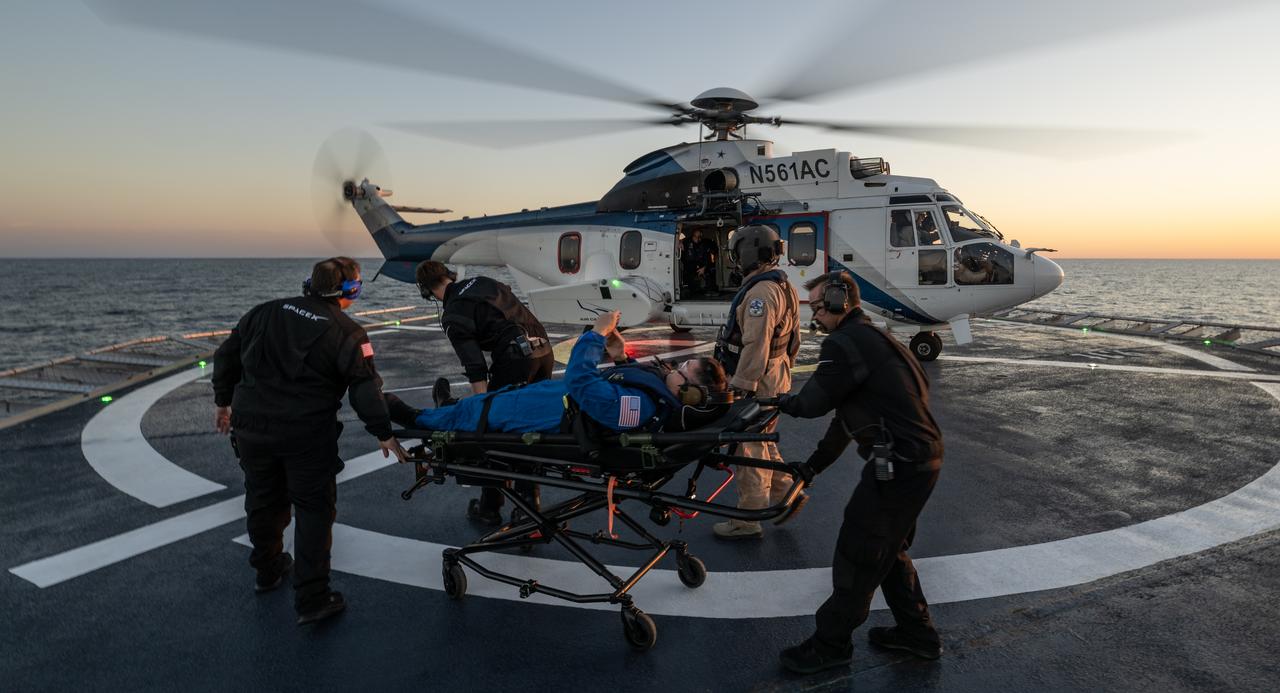
NASA astronaut Kjell Lindgren is helped aboard a helicopter on the SpaceX recovery ship Megan to fly to Jacksonville, Florida with NASA astronauts Robert Hines and Jessica Watkins, along with ESA (European Space Agency) astronaut Samantha Cristoforetti, after the four landed in their SpaceX Crew Dragon Freedom spacecraft in the Atlantic Ocean off the coast of Jacksonville, Friday, Oct. 14, 2022. Lindgren, Hines, Watkins, and Cristoforetti are returning after 170 days in space as part of Expeditions 67 and 68 aboard the International Space Station. Photo Credit: (NASA/Bill Ingalls)
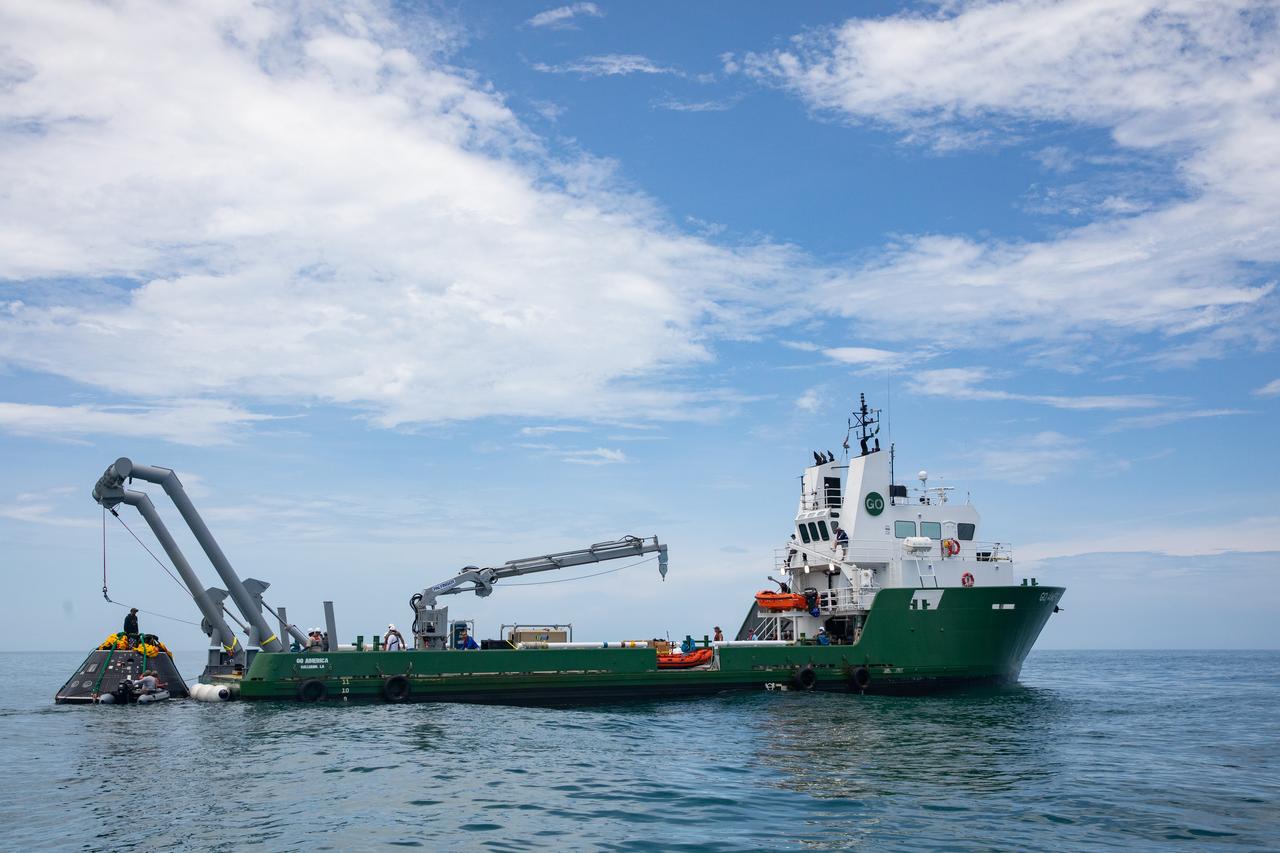
Teams with NASA and the Department of Defense (DoD) rehearse recovery procedures for a launch pad abort scenario off the coast of Florida near the agency’s Kennedy Space Center on Wednesday, June 11, 2025. Utilizing mannequin crew members inside the Crew Module Test Article (CMTA) – a full-scale mockup of the Orion spacecraft – the simulations practiced abort timelines and joint NASA and DoD recovery procedures supported by Artemis II launch and flight control teams, as NASA prepares to send four astronauts around the Moon and back next year as part of the agency’s first crewed Artemis mission.
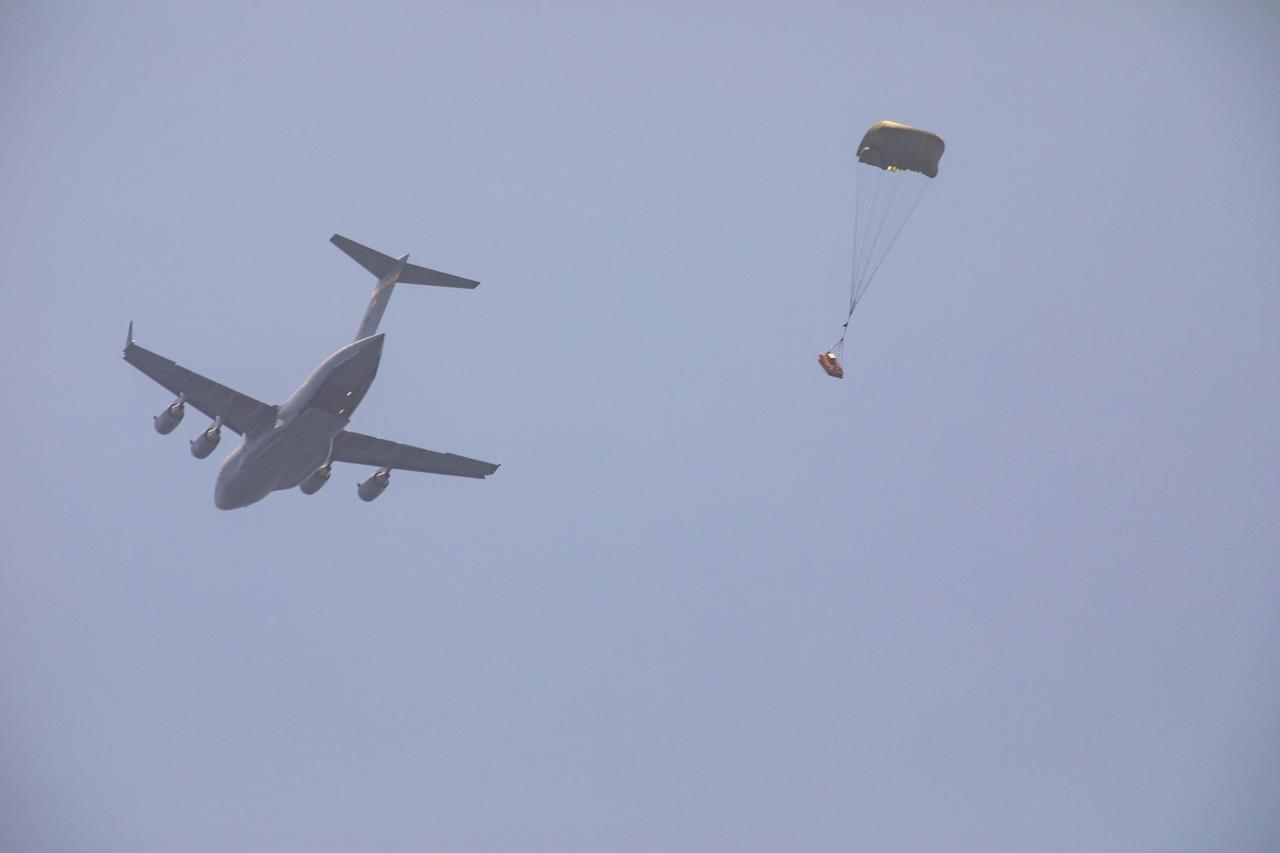
Teams with NASA and the Department of Defense (DoD) rehearse recovery procedures for an ascent abort scenario off the coast of Florida near the agency’s Kennedy Space Center on Thursday, June 12, 2025. Utilizing mannequin crew members inside the Crew Module Test Article (CMTA) – a full-scale mockup of the Orion spacecraft – the simulations practiced abort timelines and joint NASA and DoD recovery procedures supported by Artemis II launch and flight control teams, as NASA prepares to send four astronauts around the Moon and back next year as part of the agency’s first crewed Artemis mission.
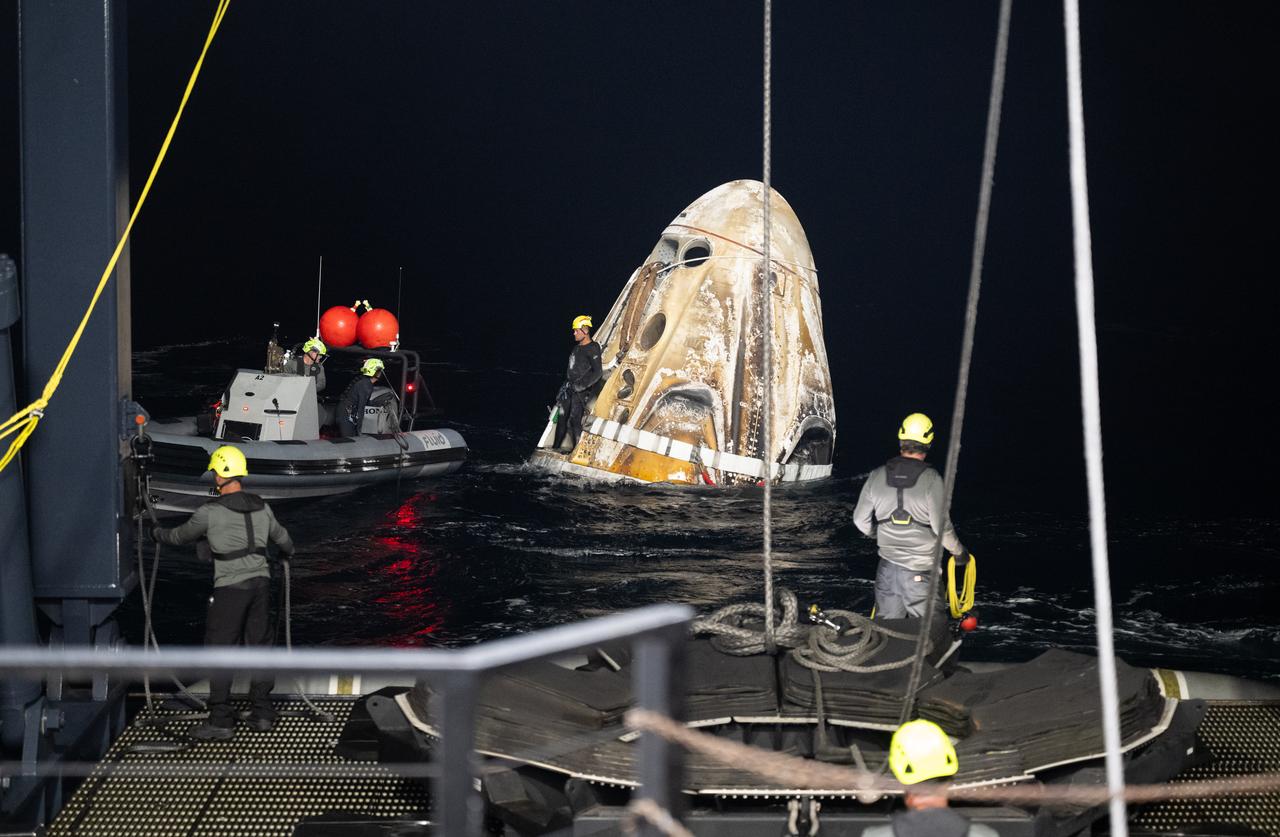
Support teams work around the SpaceX Dragon Endeavour spacecraft shortly after it landed with NASA astronauts Stephen Bowen and Warren "Woody" Hoburg, UAE (United Arab Emirates) astronaut Sultan Alneyadi, and Roscosmos cosmonaut Andrey Fedyaev aboard in the Atlantic Ocean off the coast of Jacksonville, Florida, Monday, Sept. 4,2023. Bowen, Hoburg, Alneyadi, and Fedyaev are returning after nearly six-months in space as part of Expedition 69 aboard the International Space Station. Photo Credit: (NASA/Joel Kowsky)
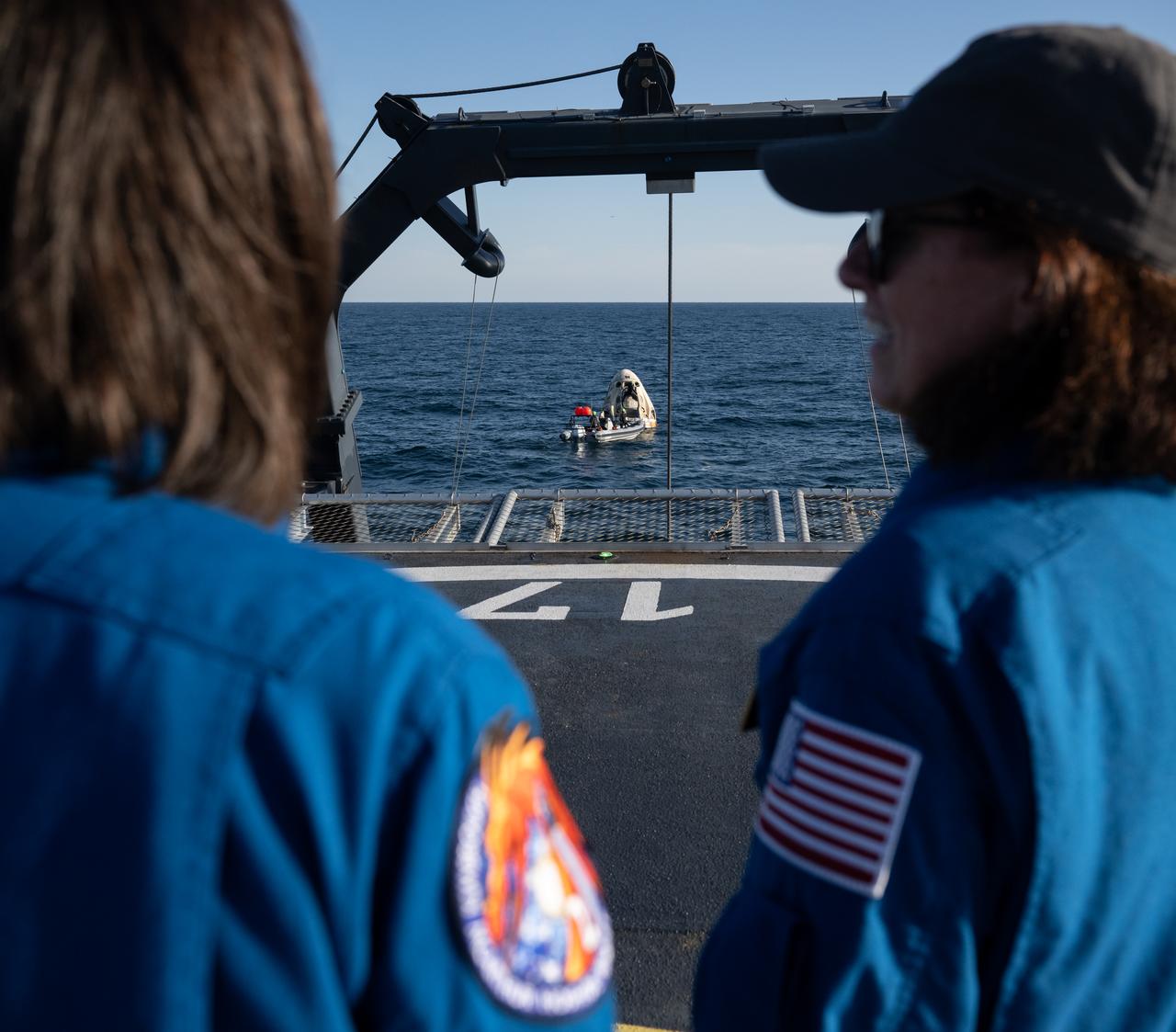
NASA astronaut representative Megan Behnken, left, and NASA astronaut and Crew Recovery Chief Shannon Walker watch as support teams work around the SpaceX Crew Dragon Freedom spacecraft shortly after it landed with NASA astronauts Kjell Lindgren, Robert Hines, Jessica Watkins, and ESA (European Space Agency) astronaut Samantha Cristoforetti aboard in the Atlantic Ocean off the coast of Jacksonville, Florida, Friday, Oct. 14, 2022. Lindgren, Hines, Watkins, and Cristoforetti are returning after 170 days in space as part of Expeditions 67 and 68 aboard the International Space Station. Photo Credit: (NASA/Bill Ingalls)
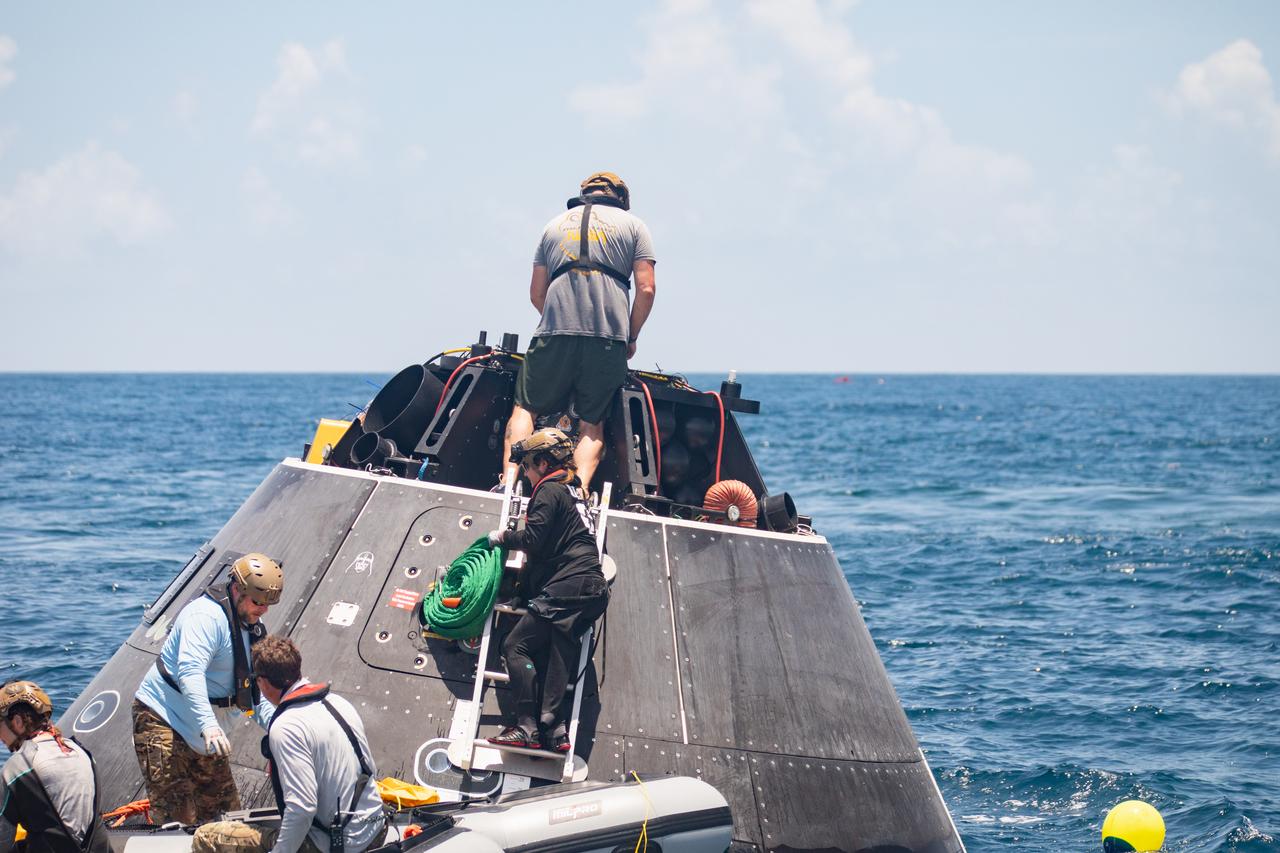
Teams with NASA and the Department of Defense (DoD) rehearse recovery procedures for an ascent abort scenario off the coast of Florida near the agency’s Kennedy Space Center on Thursday, June 12, 2025. Utilizing mannequin crew members inside the Crew Module Test Article (CMTA) – a full-scale mockup of the Orion spacecraft – the simulations practiced abort timelines and joint NASA and DoD recovery procedures supported by Artemis II launch and flight control teams, as NASA prepares to send four astronauts around the Moon and back next year as part of the agency’s first crewed Artemis mission.
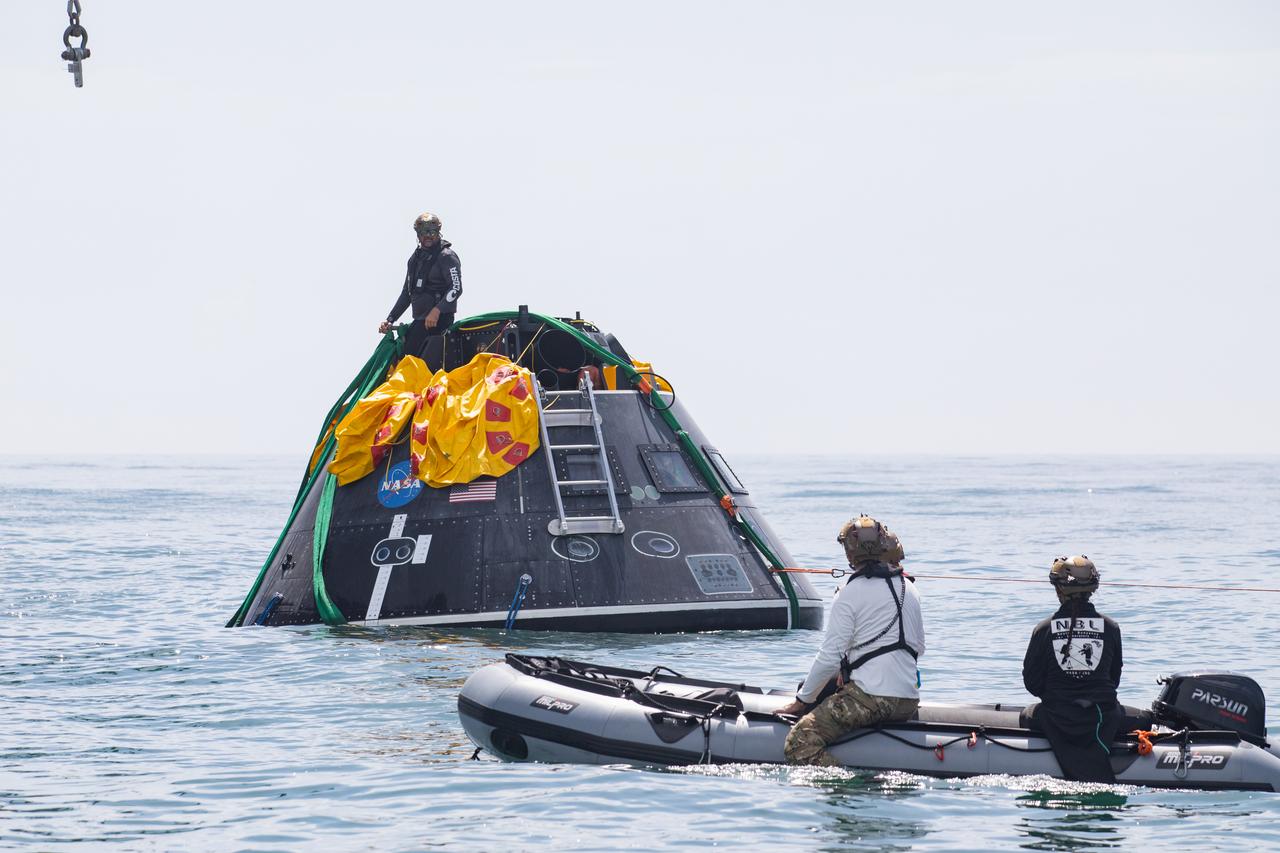
Teams with NASA and the Department of Defense (DoD) rehearse recovery procedures for a launch pad abort scenario off the coast of Florida near the agency’s Kennedy Space Center on Wednesday, June 11, 2025. Utilizing mannequin crew members inside the Crew Module Test Article (CMTA) – a full-scale mockup of the Orion spacecraft – the simulations practiced abort timelines and joint NASA and DoD recovery procedures supported by Artemis II launch and flight control teams, as NASA prepares to send four astronauts around the Moon and back next year as part of the agency’s first crewed Artemis mission.

ESA (European Space Agency) astronaut Samantha Cristoforetti gives a thumbs up after being helped out of the SpaceX Crew Dragon Freedom spacecraft onboard the SpaceX recovery Megan ship after she and NASA astronauts Kjell Lindgren, Jessica Watkins, and Robert Hines, landed in the Atlantic Ocean off the coast of Jacksonville, Florida, Friday, Oct. 14, 2022. Lindgren, Hines, Watkins, and Cristoforetti are returning after 170 days in space as part of Expeditions 67 and 68 aboard the International Space Station. Photo Credit: (NASA/Bill Ingalls)
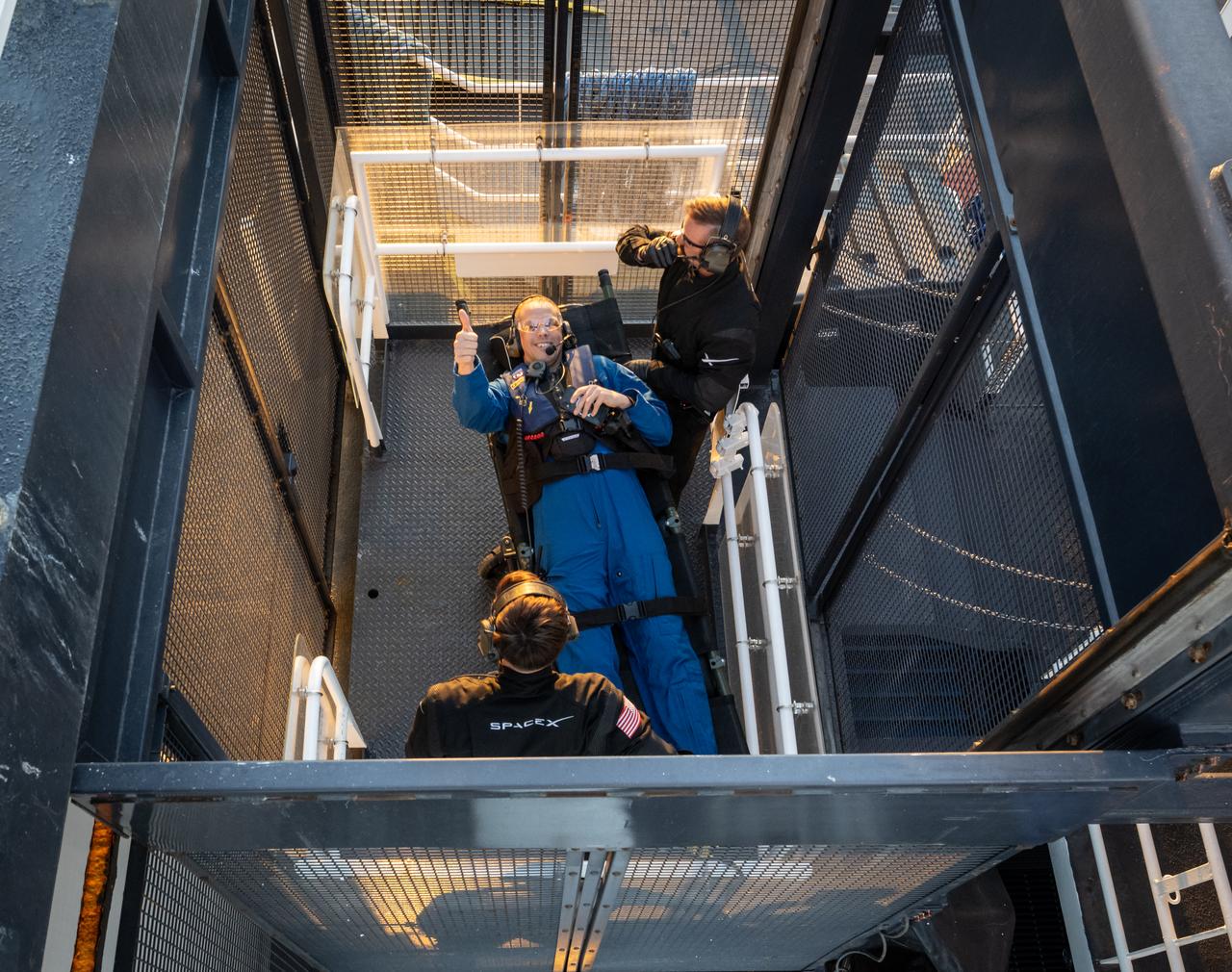
NASA astronaut Robert Hines is seen inside an elevator on the SpaceX recovery ship Megan that will take him up to a waiting helicopter to fly to Jacksonville, Florida with NASA astronauts Kjell Lindgren, and Jessica Watkins, along with ESA (European Space Agency) astronaut Samantha Cristoforetti, just a couple of hours after the four landed in their SpaceX Crew Dragon Freedom spacecraft in the Atlantic Ocean, Friday, Oct. 14, 2022. Lindgren, Hines, Watkins, and Cristoforetti are returning after 170 days in space as part of Expeditions 67 and 68 aboard the International Space Station. Photo Credit: (NASA/Bill Ingalls)

Shown here is the SpaceX Cargo Dragon spacecraft on board the company's Go Navigator recovery ship after making its successful parachute-assisted splashdown west of Tampa off the Florida coast on Jan. 13, 2020, at 8:26 p.m. EST. Just after loading Dragon onto Go Navigator, SpaceX packed an Airbus H225 helicopter with the time-sensitive research cargo for delivery to NASA’s Kennedy Space Center. Dragon returned more than 4,400 pounds of scientific experiments and other cargo from the International Space Station. The upgraded cargo Dragon capsule boasts double the powered locker capacity to preserve science samples, allowing for a significant increase in the research that can be carried back to Earth. Photo credit: SpaceX
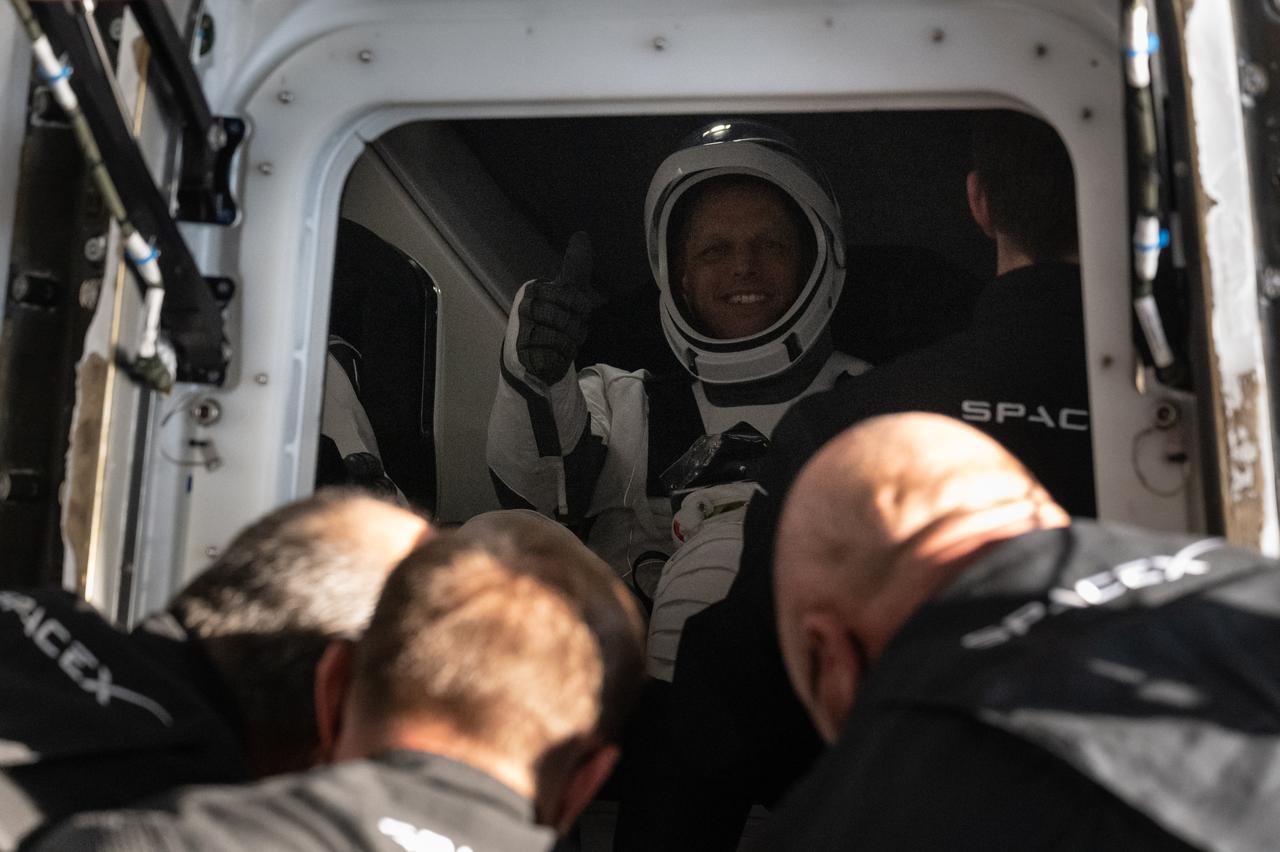
NASA astronaut Robert Hines is seen inside the SpaceX Crew Dragon Freedom spacecraft onboard the SpaceX recovery Megan ship after he, along with NASA astronauts Kjell Lindgren, Jessica Watkins, and ESA (European Space Agency) astronaut Samantha Cristoforetti, landed in the Atlantic Ocean off the coast of Jacksonville, Florida, Friday, Oct. 14, 2022. Lindgren, Hines, Watkins, and Cristoforetti are returning after 170 days in space as part of Expeditions 67 and 68 aboard the International Space Station. Photo Credit: (NASA/Bill Ingalls)
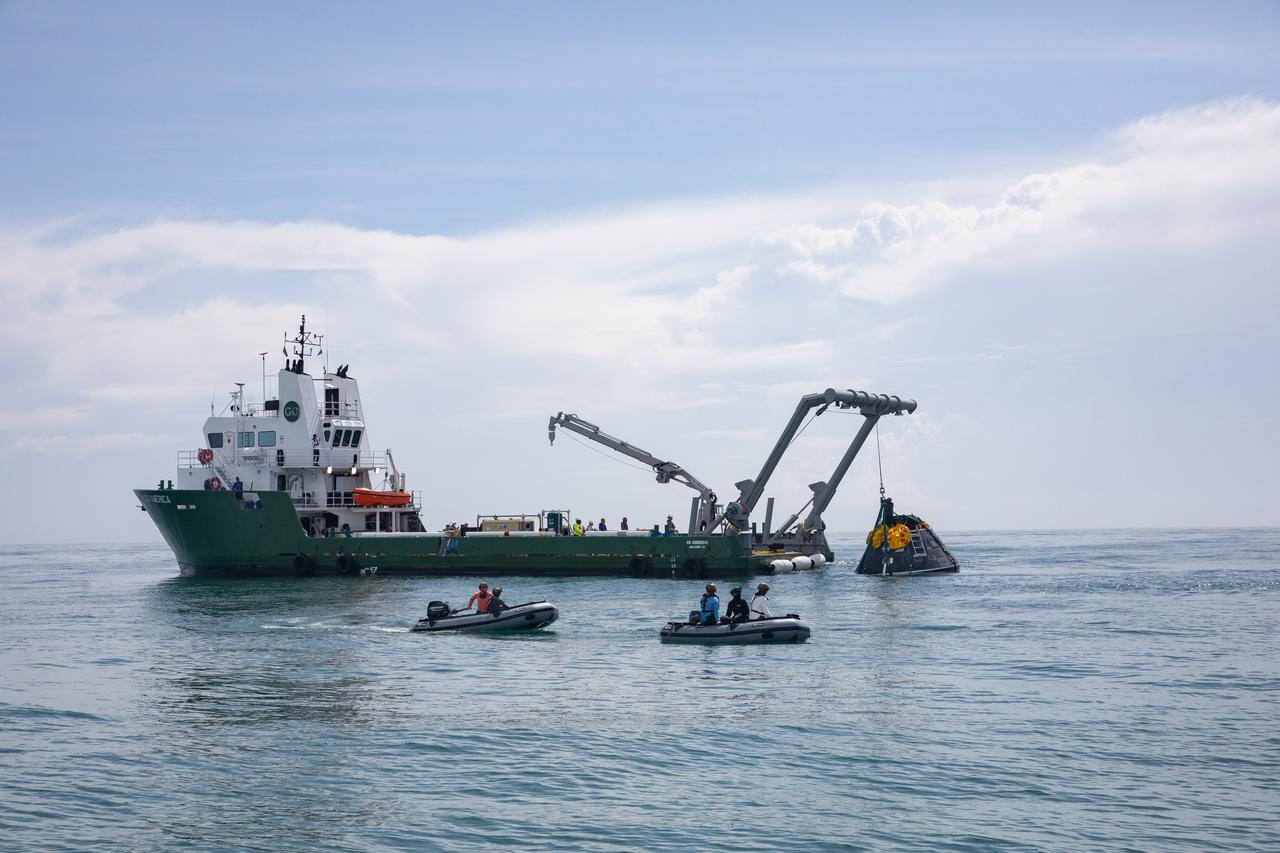
Teams with NASA and the Department of Defense (DoD) rehearse recovery procedures for a launch pad abort scenario off the coast of Florida near the agency’s Kennedy Space Center on Wednesday, June 11, 2025. Utilizing mannequin crew members inside the Crew Module Test Article (CMTA) – a full-scale mockup of the Orion spacecraft – the simulations practiced abort timelines and joint NASA and DoD recovery procedures supported by Artemis II launch and flight control teams, as NASA prepares to send four astronauts around the Moon and back next year as part of the agency’s first crewed Artemis mission.
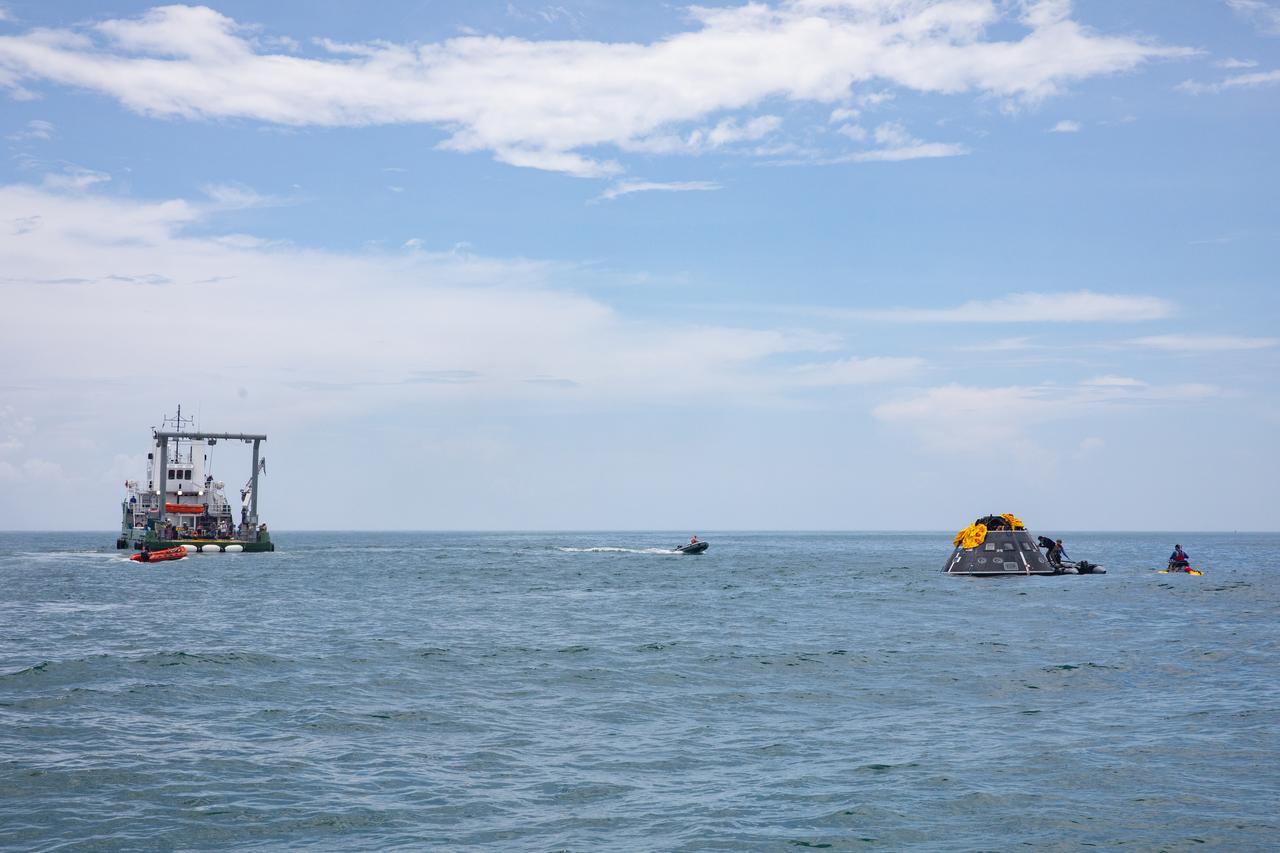
Teams with NASA and the Department of Defense (DoD) rehearse recovery procedures for a launch pad abort scenario off the coast of Florida near the agency’s Kennedy Space Center on Wednesday, June 11, 2025. Utilizing mannequin crew members inside the Crew Module Test Article (CMTA) – a full-scale mockup of the Orion spacecraft – the simulations practiced abort timelines and joint NASA and DoD recovery procedures supported by Artemis II launch and flight control teams, as NASA prepares to send four astronauts around the Moon and back next year as part of the agency’s first crewed Artemis mission.
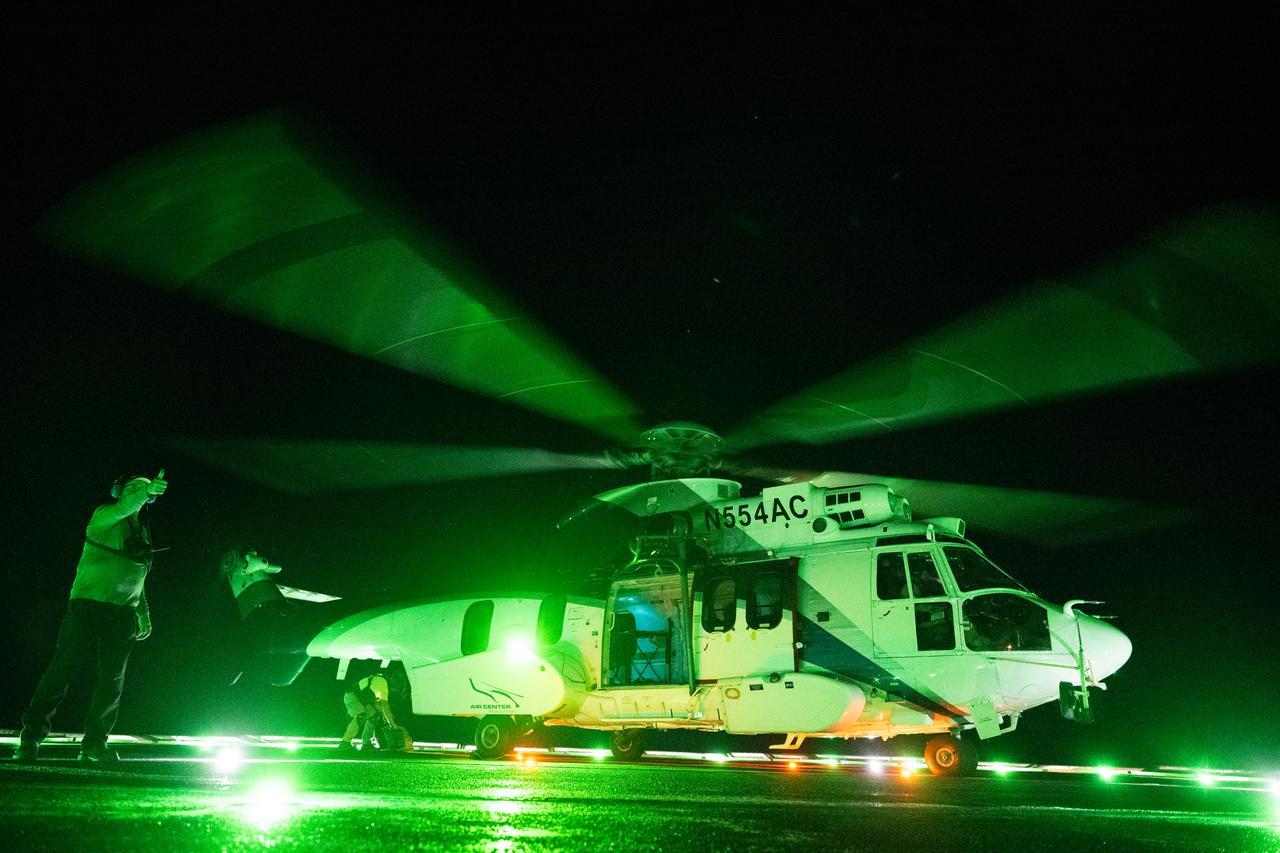
Teams prepare to load NASA astronauts Stephen Bowen and Warren "Woody" Hoburg, UAE (United Arab Emirates) astronaut Sultan Alneyadi, and Roscosmos cosmonaut Andrey Fedyaev onto the helicopter that will return them to Jacksonville, Florida from the SpaceX recovery ship MEGAN, Monday, Sept. 4, 2023, a few hours after landing in the SpaceX Dragon Endeavour spacecraft in the Atlantic Ocean. Bowen, Hoburg, Alneyadi, and Fedyaev are landing in the Atlantic Ocean after nearly six-months in space as part of Expedition 69 aboard the International Space Station. Photo Credit: (NASA/Joel Kowsky)
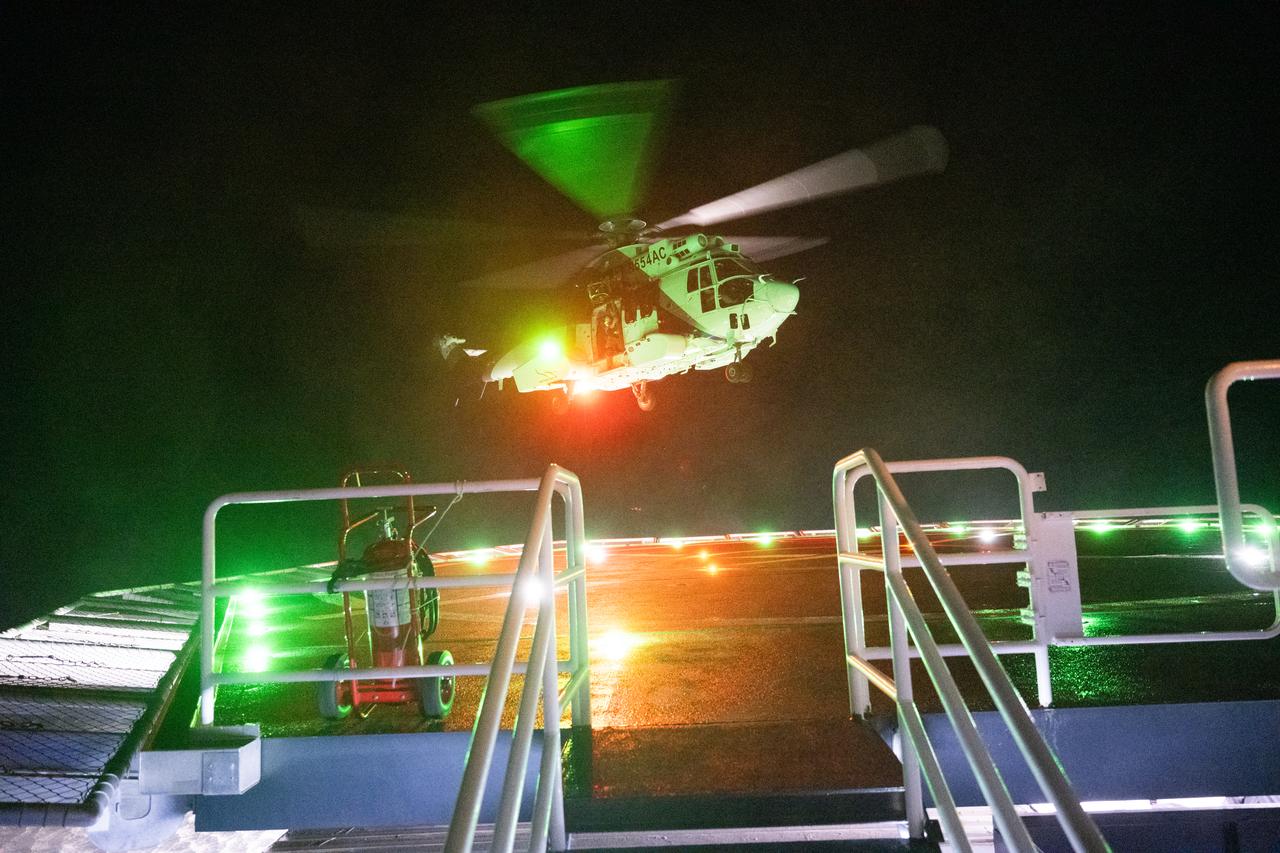
The helicopter that will carry NASA astronauts Stephen Bowen and Warren "Woody" Hoburg, UAE (United Arab Emirates) astronaut Sultan Alneyadi, and Roscosmos cosmonaut Andrey Fedyaev is seen as it lands on the SpaceX recovery ship MEGAN, Monday, Sept. 4, 2023, in the Atlantic Ocean off the coast of Jacksonville, Florida. Bowen, Hoburg, Alneyadi, and Fedyaev are landing in the Atlantic Ocean after nearly six-months in space as part of Expedition 69 aboard the International Space Station. Photo Credit: (NASA/Joel Kowsky)
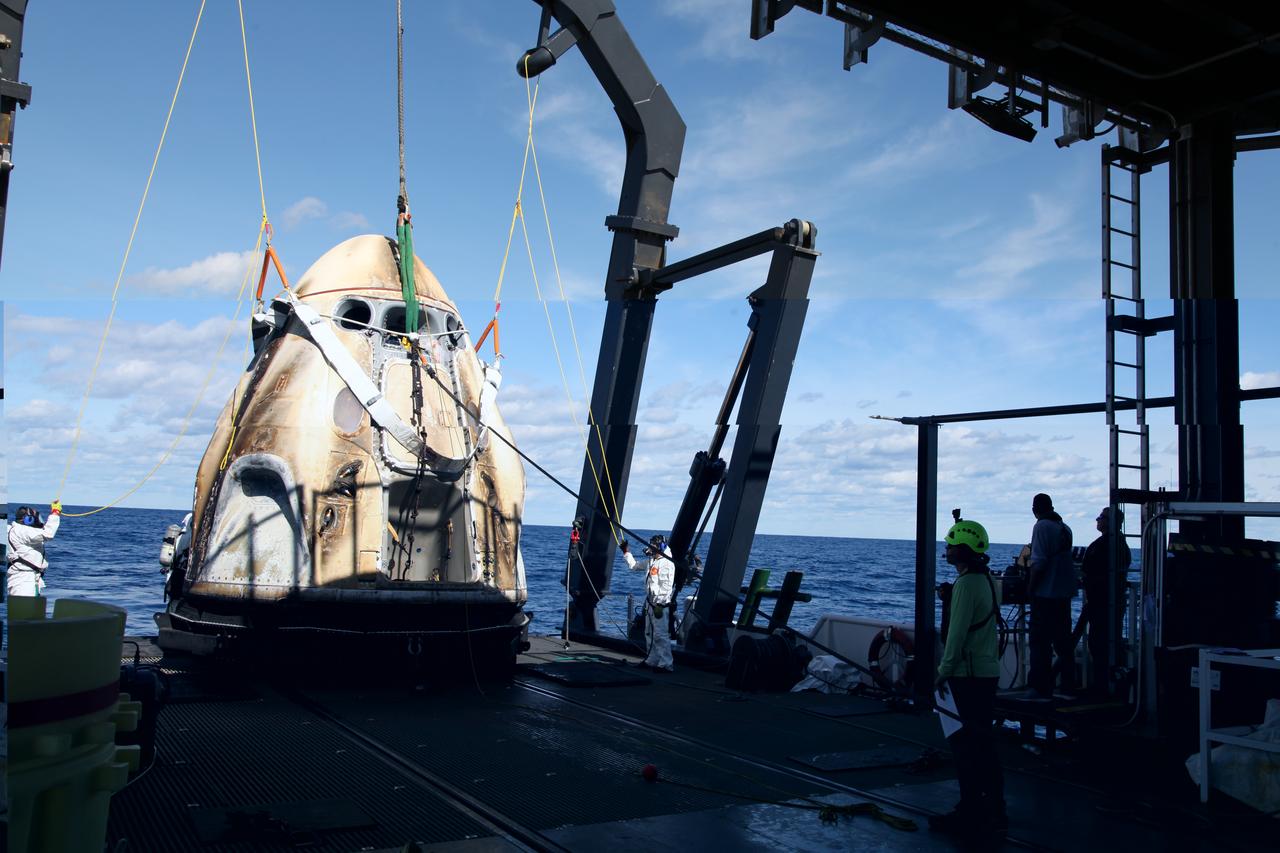
SpaceX’s Crew Dragon is loaded onto the company’s recovery ship, Go Searcher, in the Atlantic Ocean, about 200 miles off Florida’s east coast, on March 8, after returning from the International Space Station on the Demo-1 mission. The uncrewed spacecraft docked to the orbiting laboratory on March 3, following a 2:49 a.m. EST liftoff aboard a SpaceX Falcon 9 rocket from Launch Complex 39A at NASA’s Kennedy Space Center in Florida on March 2. The spacecraft undocked at 2:32 a.m., March 8, splashing down in the Atlantic Ocean, at 8:45 a.m. SpaceX’s inaugural flight with NASA’s Commercial Crew Program is the first flight test of a space system designed for humans built and operated by a commercial company through a public-private partnership. NASA and SpaceX will use data from Demo-1 to further prepare for Demo-2, the crewed flight test that will carry NASA astronauts Bob Behnken and Doug Hurley to the International Space Station later this year.
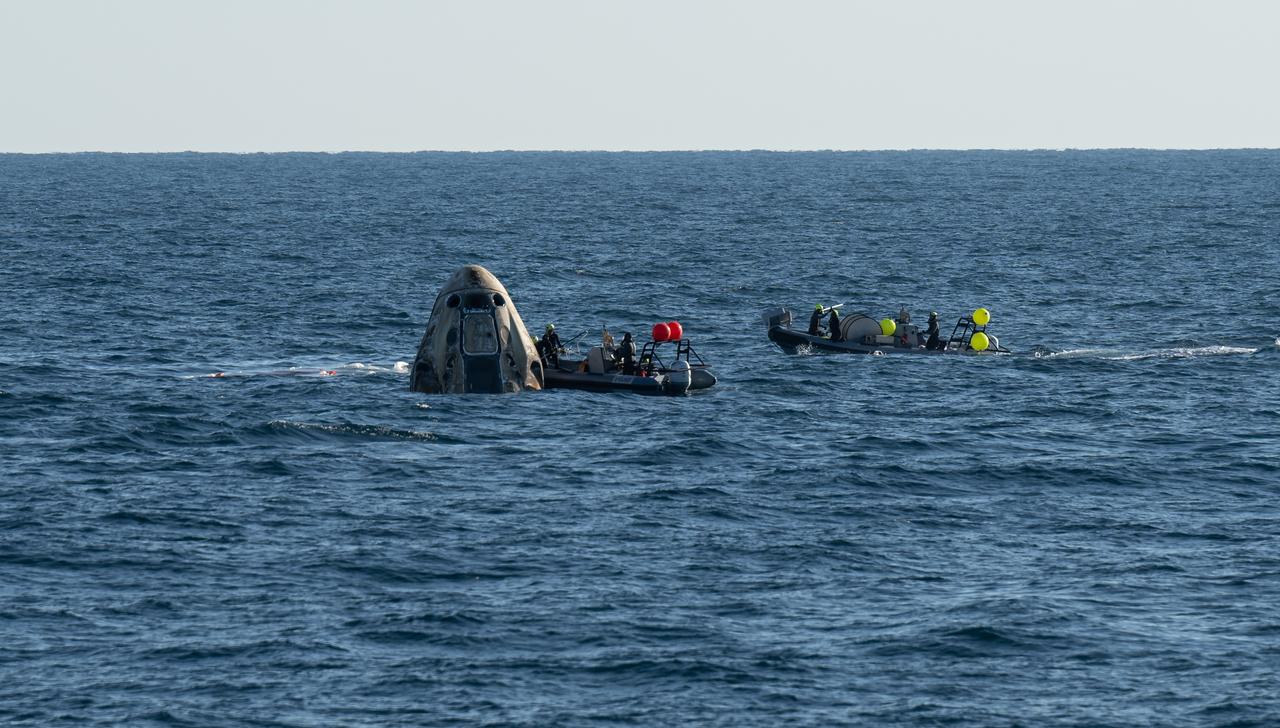
Support teams work around the SpaceX Crew Dragon Freedom spacecraft shortly after it landed with NASA astronauts Kjell Lindgren, Robert Hines, Jessica Watkins, and ESA (European Space Agency) astronaut Samantha Cristoforetti aboard in the Atlantic Ocean off the coast of Jacksonville, Florida, Friday, Oct. 14, 2022. Lindgren, Hines, Watkins, and Cristoforetti are returning after 170 days in space as part of Expeditions 67 and 68 aboard the International Space Station. Photo Credit: (NASA/Bill Ingalls)
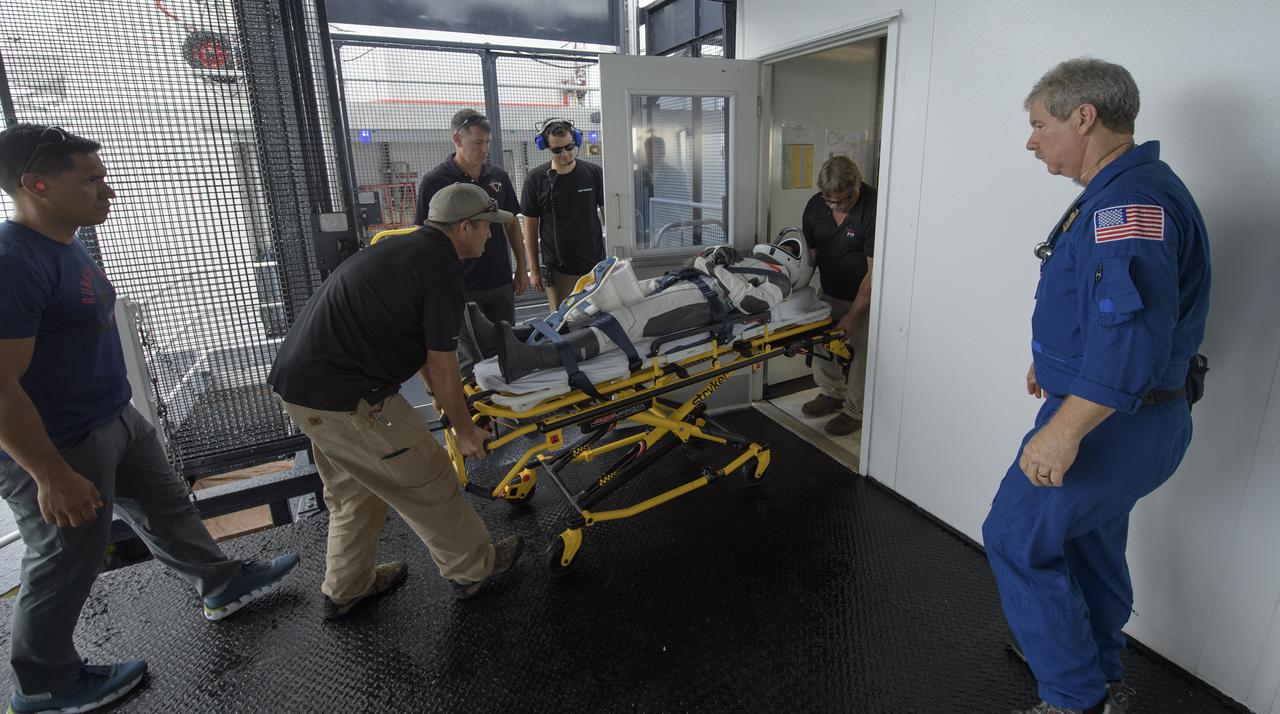
Teams from NASA and SpaceX practice procedures for medical emergency evacuation onboard the GO Searcher ship, Friday, August 15, 2019 in the Atlantic Ocean off the coast of Cape Canaveral, Florida. SpaceX will use the GO Searcher ship during the Demo-2 mission to recover NASA astronauts returning from the International Space Station in their Crew Dragon spacecraft. Photo Credit: (NASA/Bill Ingalls)
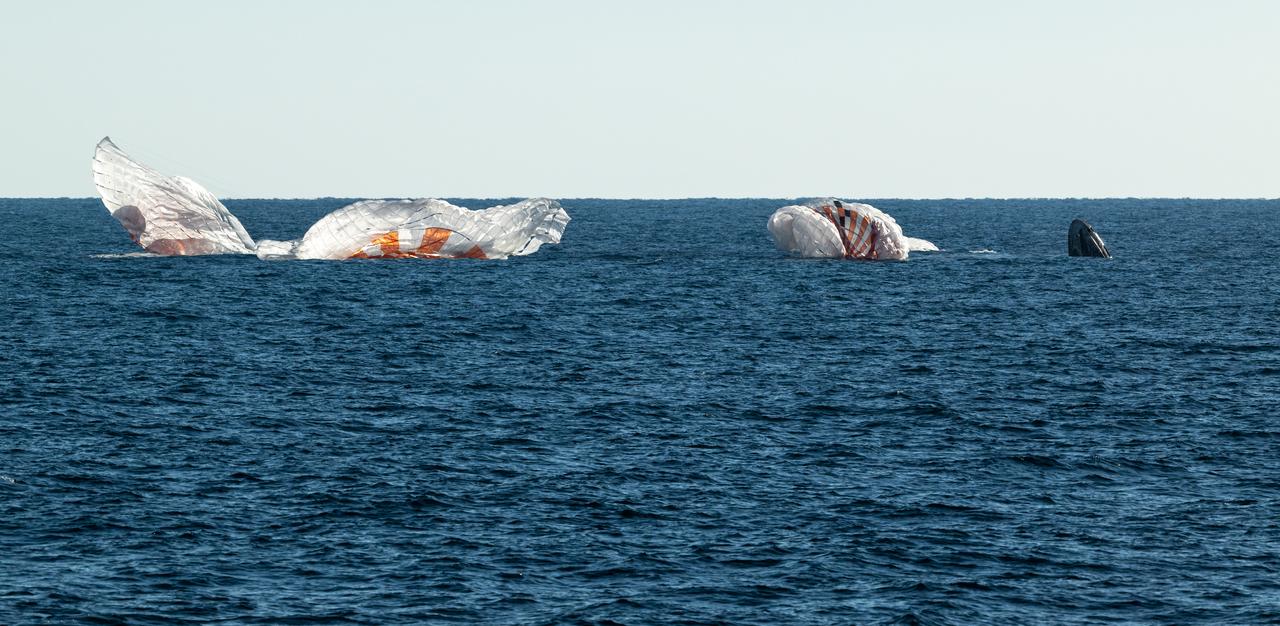
The SpaceX Crew Dragon Freedom spacecraft is seen as it lands with NASA astronauts Kjell Lindgren, Robert Hines, Jessica Watkins, and ESA (European Space Agency) astronaut Samantha Cristoforetti aboard in the Atlantic Ocean off the coast of Jacksonville, Florida, Friday, Oct. 14, 2022. Lindgren, Hines, Watkins, and Cristoforetti are returning after 170 days in space as part of Expeditions 67 and 68 aboard the International Space Station. Photo Credit: (NASA/Bill Ingalls)
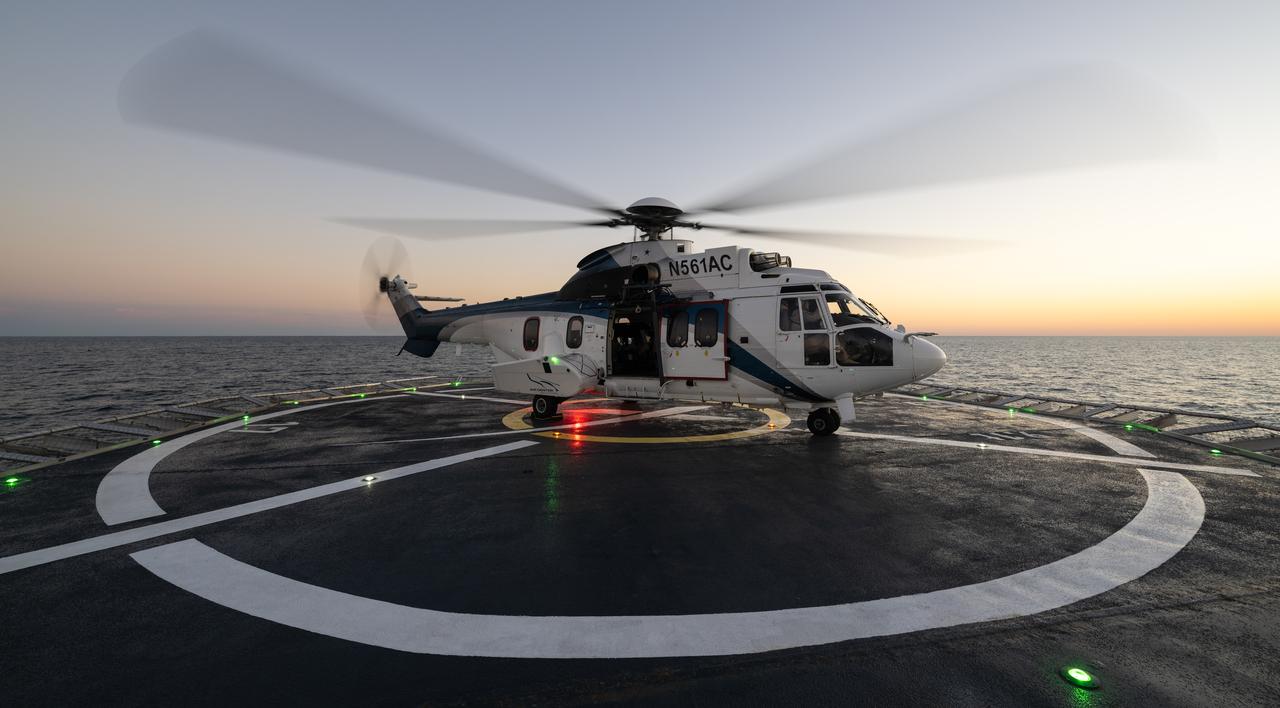
The helicopter that will transport NASA astronauts Kjell Lindgren, Robert Hines, Jessica Watkins, and ESA (European Space Agency) astronaut Samantha Cristoforetti to Jacksonville, Florida is seen on the deck of the SpaceX recovery ship Megan in the Atlantic Ocean, Friday, Oct. 14, 2022. Lindgren, Hines, Watkins, and Cristoforetti returned after 170 days in space as part of Expeditions 67 and 68 aboard the International Space Station. Photo Credit: (NASA/Bill Ingalls)
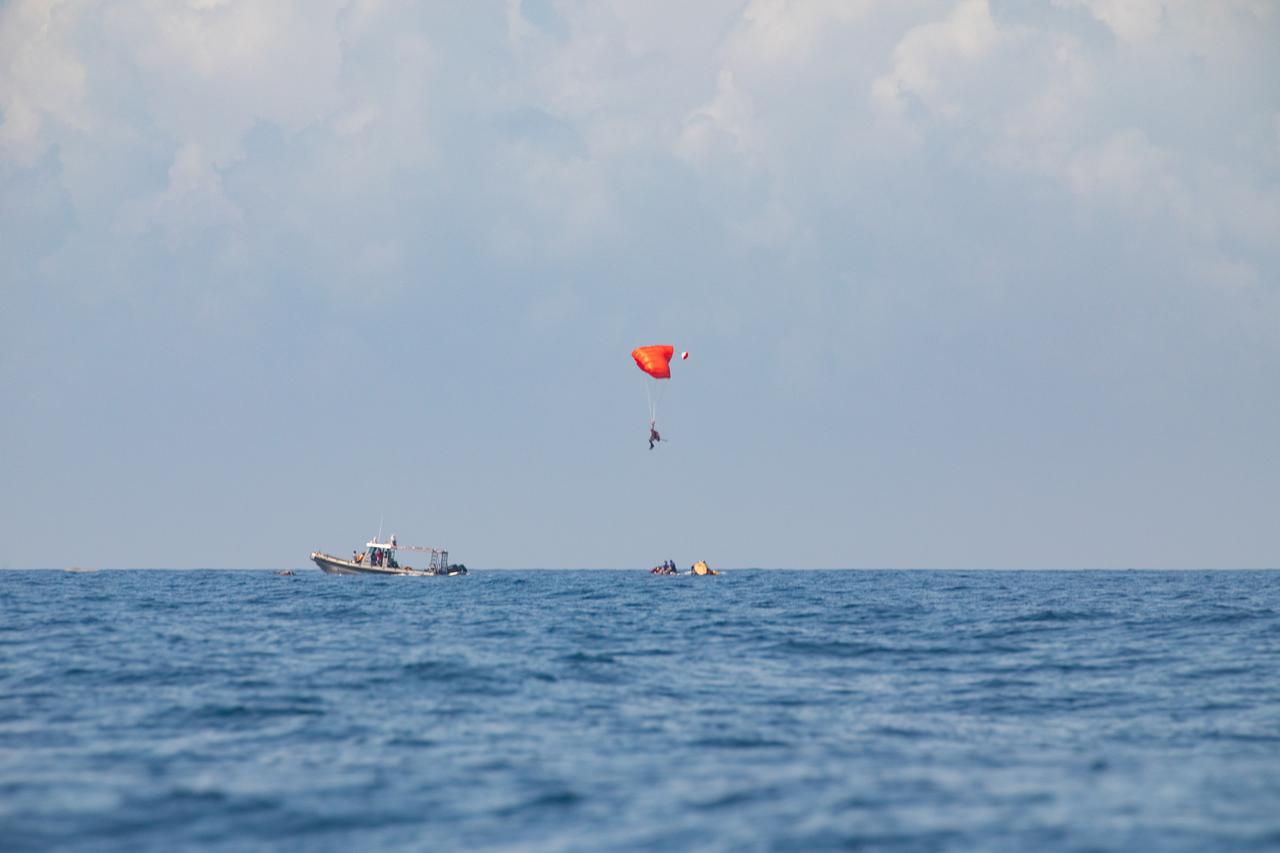
Teams with NASA and the Department of Defense (DoD) rehearse recovery procedures for an ascent abort scenario off the coast of Florida near the agency’s Kennedy Space Center on Thursday, June 12, 2025. Utilizing mannequin crew members inside the Crew Module Test Article (CMTA) – a full-scale mockup of the Orion spacecraft – the simulations practiced abort timelines and joint NASA and DoD recovery procedures supported by Artemis II launch and flight control teams, as NASA prepares to send four astronauts around the Moon and back next year as part of the agency’s first crewed Artemis mission.
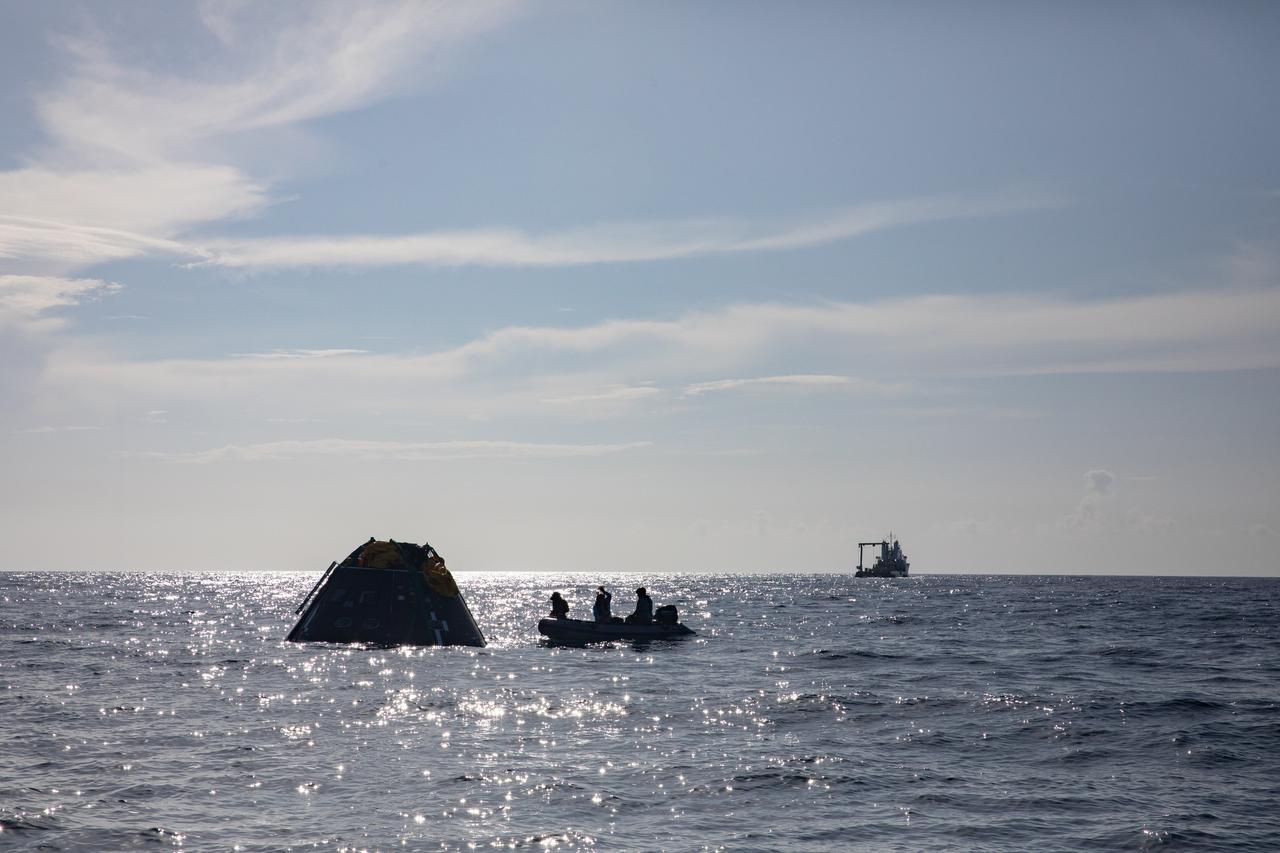
Teams with NASA and the Department of Defense (DoD) rehearse recovery procedures for an ascent abort scenario off the coast of Florida near the agency’s Kennedy Space Center on Thursday, June 12, 2025. Utilizing mannequin crew members inside the Crew Module Test Article (CMTA) – a full-scale mockup of the Orion spacecraft – the simulations practiced abort timelines and joint NASA and DoD recovery procedures supported by Artemis II launch and flight control teams, as NASA prepares to send four astronauts around the Moon and back next year as part of the agency’s first crewed Artemis mission.
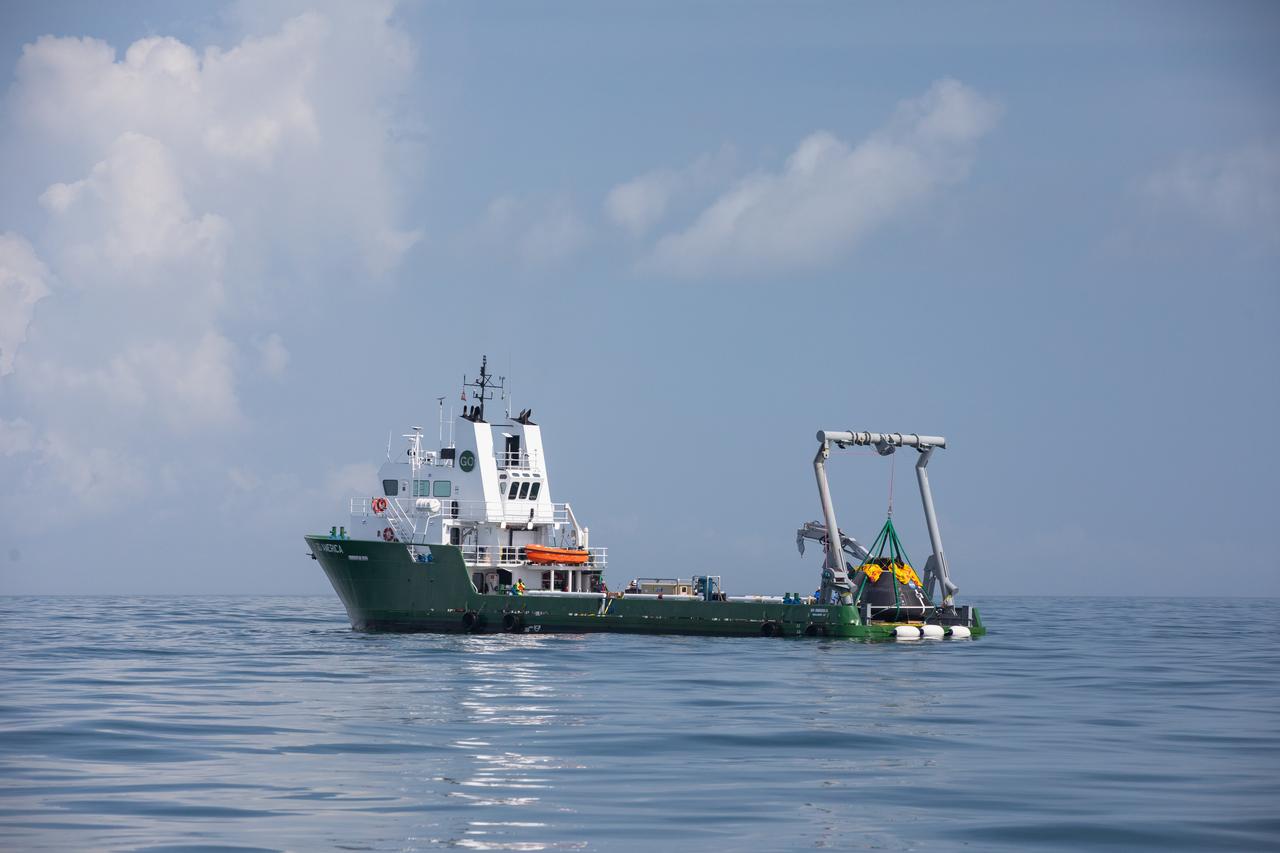
Teams with NASA and the Department of Defense (DoD) rehearse recovery procedures for a launch pad abort scenario off the coast of Florida near the agency’s Kennedy Space Center on Wednesday, June 11, 2025. Utilizing mannequin crew members inside the Crew Module Test Article (CMTA) – a full-scale mockup of the Orion spacecraft – the simulations practiced abort timelines and joint NASA and DoD recovery procedures supported by Artemis II launch and flight control teams, as NASA prepares to send four astronauts around the Moon and back next year as part of the agency’s first crewed Artemis mission.
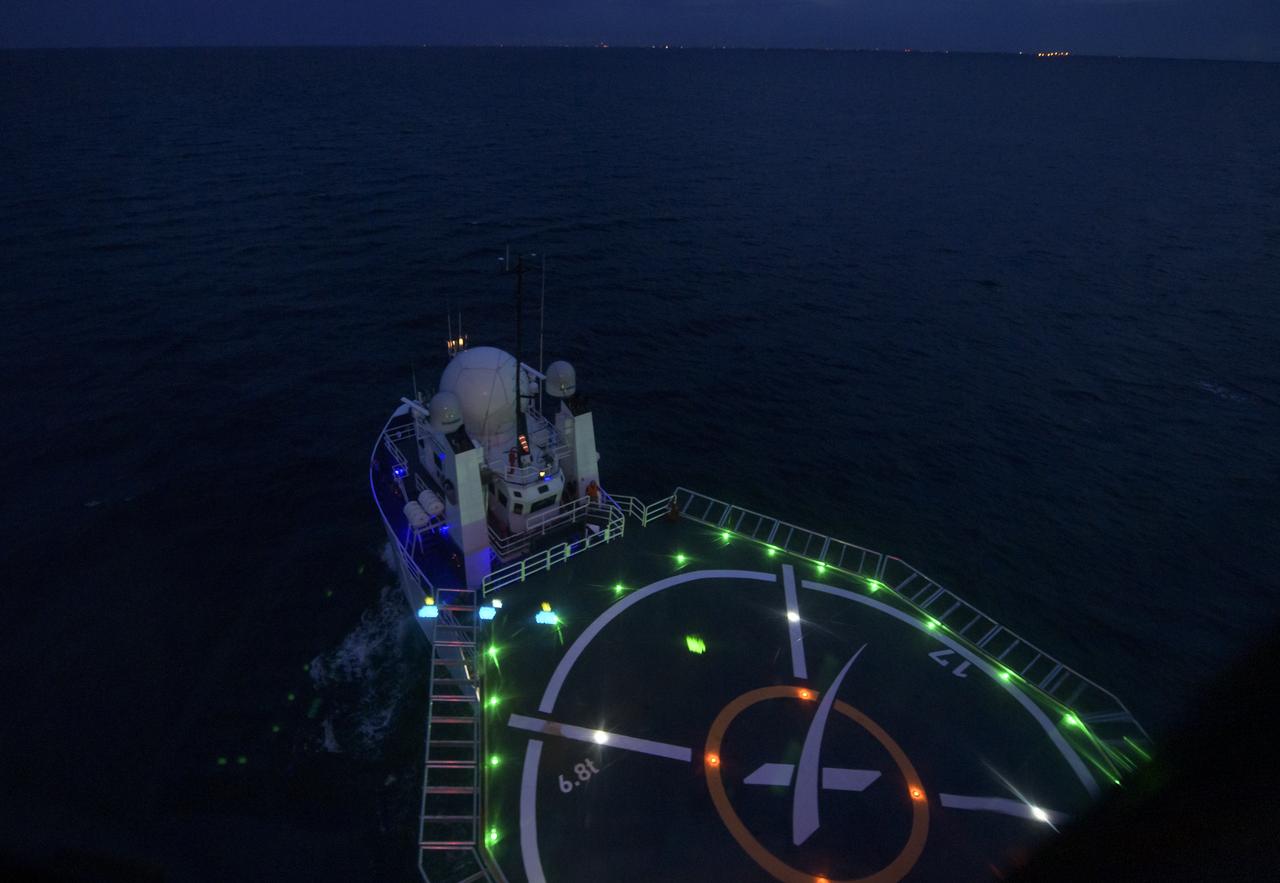
The GO Searcher ship is seen from a helicopter during practice for a medical emergency evacuation, Friday, August 15, 2019 in the Atlantic Ocean off the coast of Cape Canaveral, Florida. Teams from NASA and SpaceX gathered to refine procedures for emergency situations. SpaceX will use the GO Searcher ship during the Demo-2 mission to recover NASA astronauts returning from the International Space Station in their Crew Dragon spacecraft. Photo Credit: (NASA/Bill Ingalls)
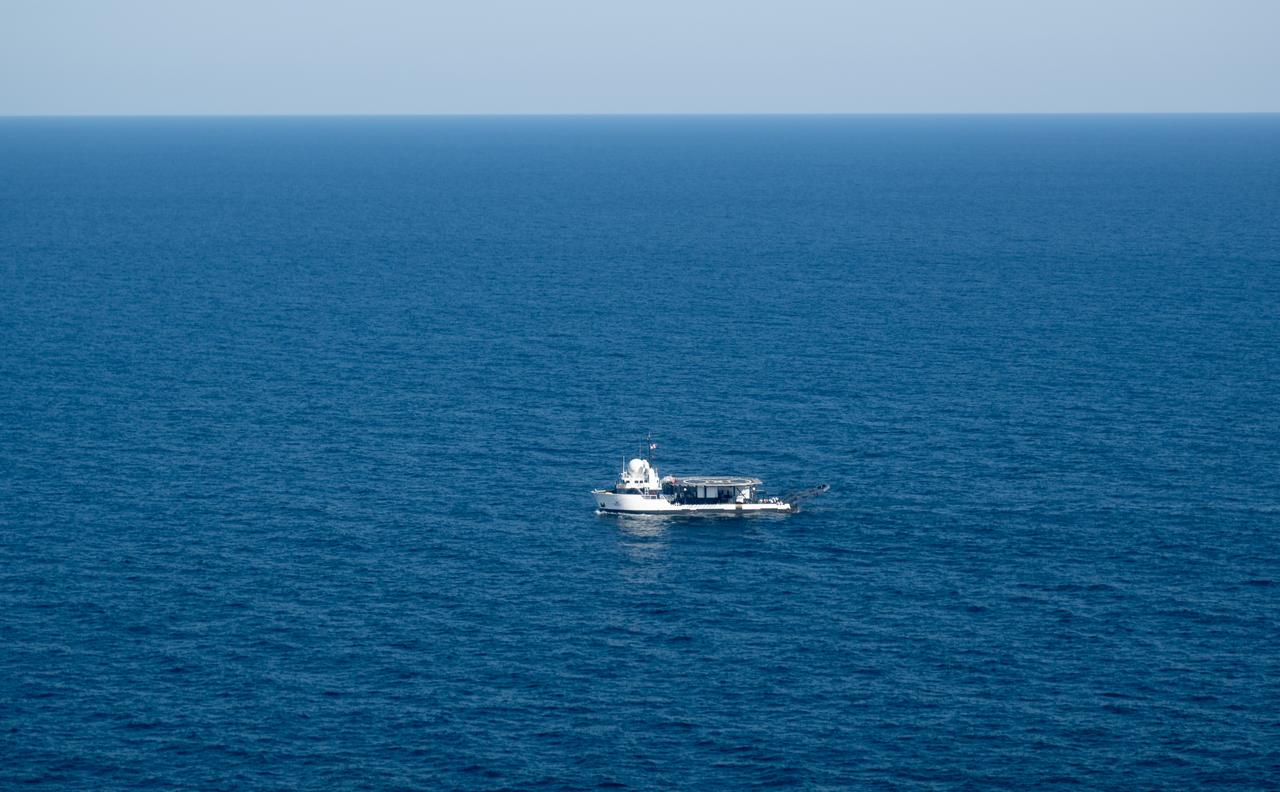
The SpaceX recovery ship Megan is seen in the Atlantic Ocean as NASA, ESA (European Space Agency), and SpaceX teams prepare for the landing of the SpaceX Crew Dragon Freedom spacecraft with NASA astronauts Kjell Lindgren, Robert Hines, Jessica Watkins, and ESA (European Space Agency) astronaut Samantha Cristoforetti aboard, Friday, Oct. 14, 2022, off the coast of Jacksonville, Florida. Lindgren, Hines, Watkins, and Cristoforetti are returning after 170 days in space as part of Expeditions 67 and 68 aboard the International Space Station. Photo Credit: (NASA/Bill Ingalls)
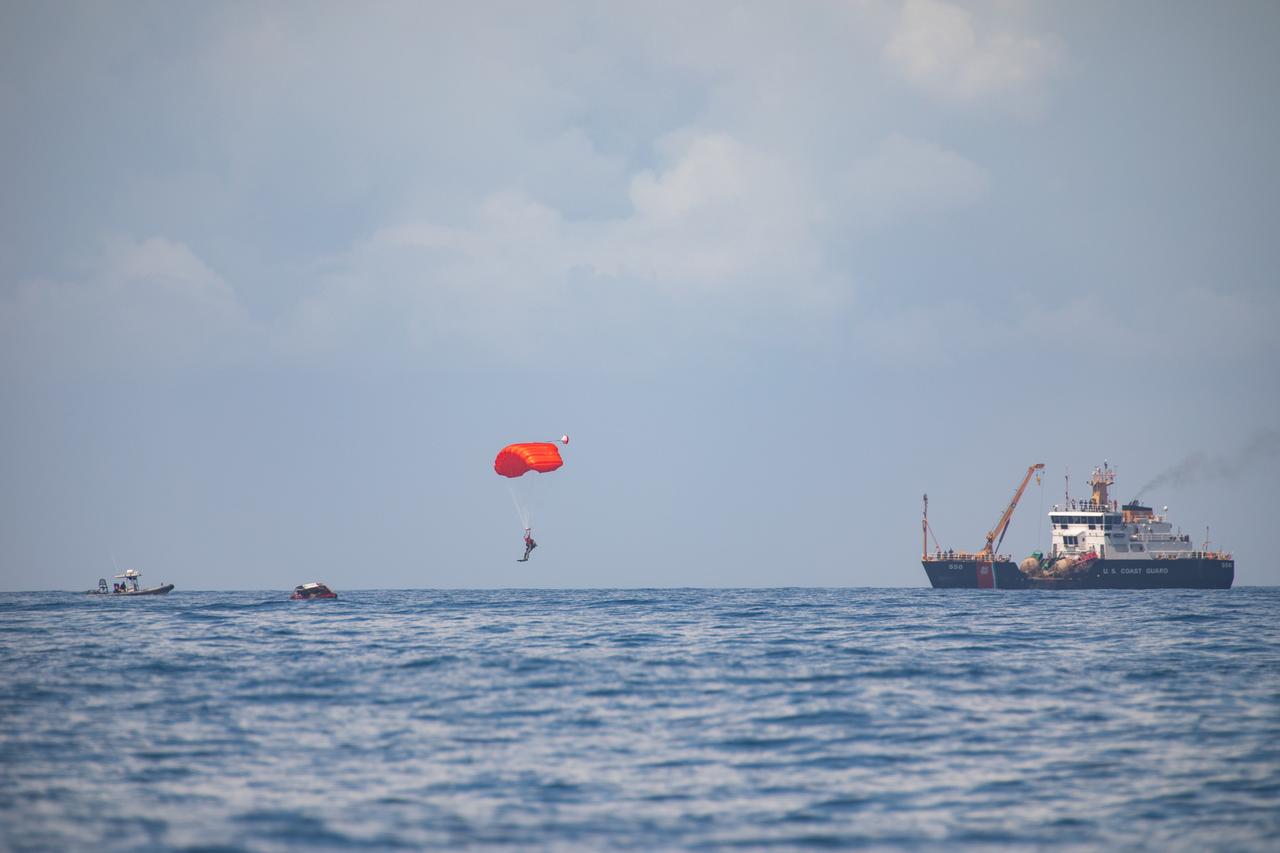
Teams with NASA and the Department of Defense (DoD) rehearse recovery procedures for an ascent abort scenario off the coast of Florida near the agency’s Kennedy Space Center on Thursday, June 12, 2025. Utilizing mannequin crew members inside the Crew Module Test Article (CMTA) – a full-scale mockup of the Orion spacecraft – the simulations practiced abort timelines and joint NASA and DoD recovery procedures supported by Artemis II launch and flight control teams, as NASA prepares to send four astronauts around the Moon and back next year as part of the agency’s first crewed Artemis mission.
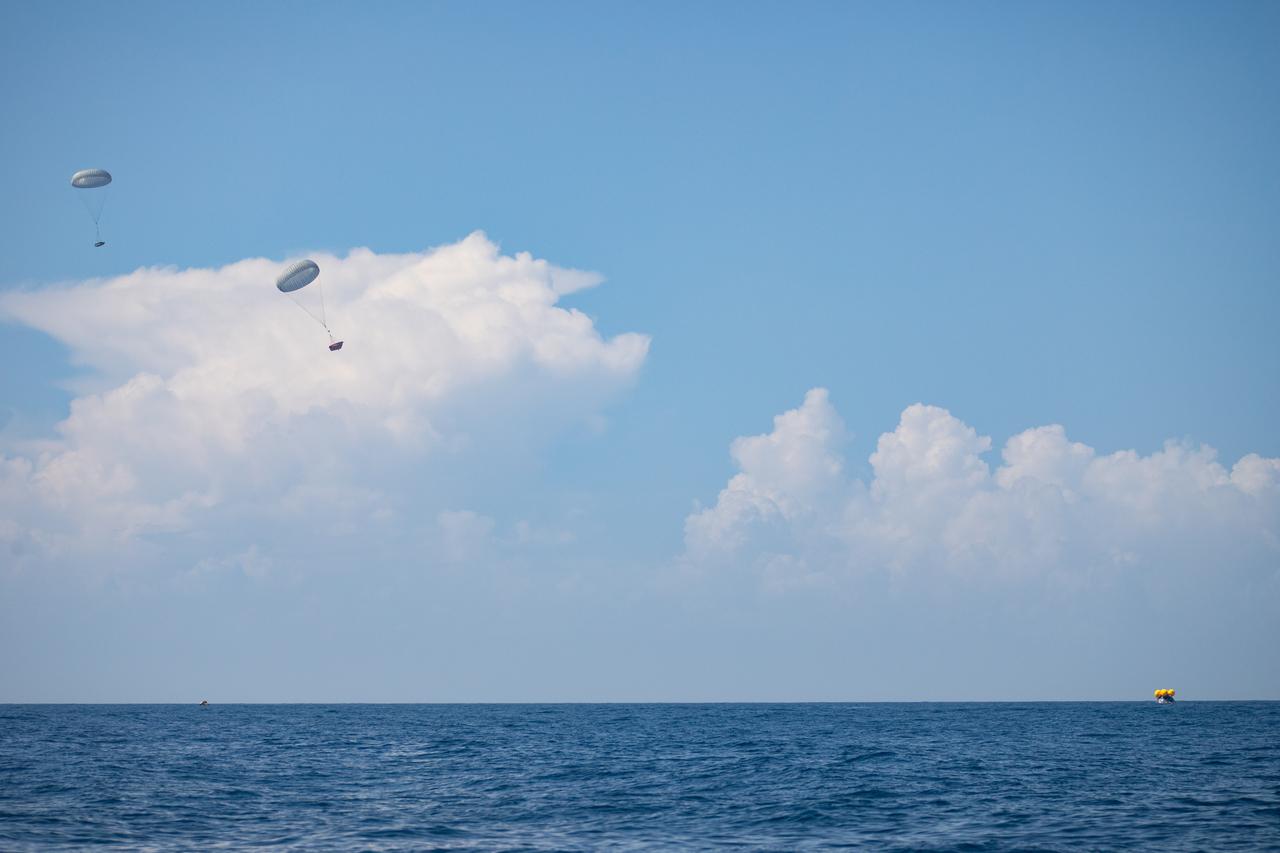
Teams with NASA and the Department of Defense (DoD) rehearse recovery procedures for an ascent abort scenario off the coast of Florida near the agency’s Kennedy Space Center on Thursday, June 12, 2025. Utilizing mannequin crew members inside the Crew Module Test Article (CMTA) – a full-scale mockup of the Orion spacecraft – the simulations practiced abort timelines and joint NASA and DoD recovery procedures supported by Artemis II launch and flight control teams, as NASA prepares to send four astronauts around the Moon and back next year as part of the agency’s first crewed Artemis mission.
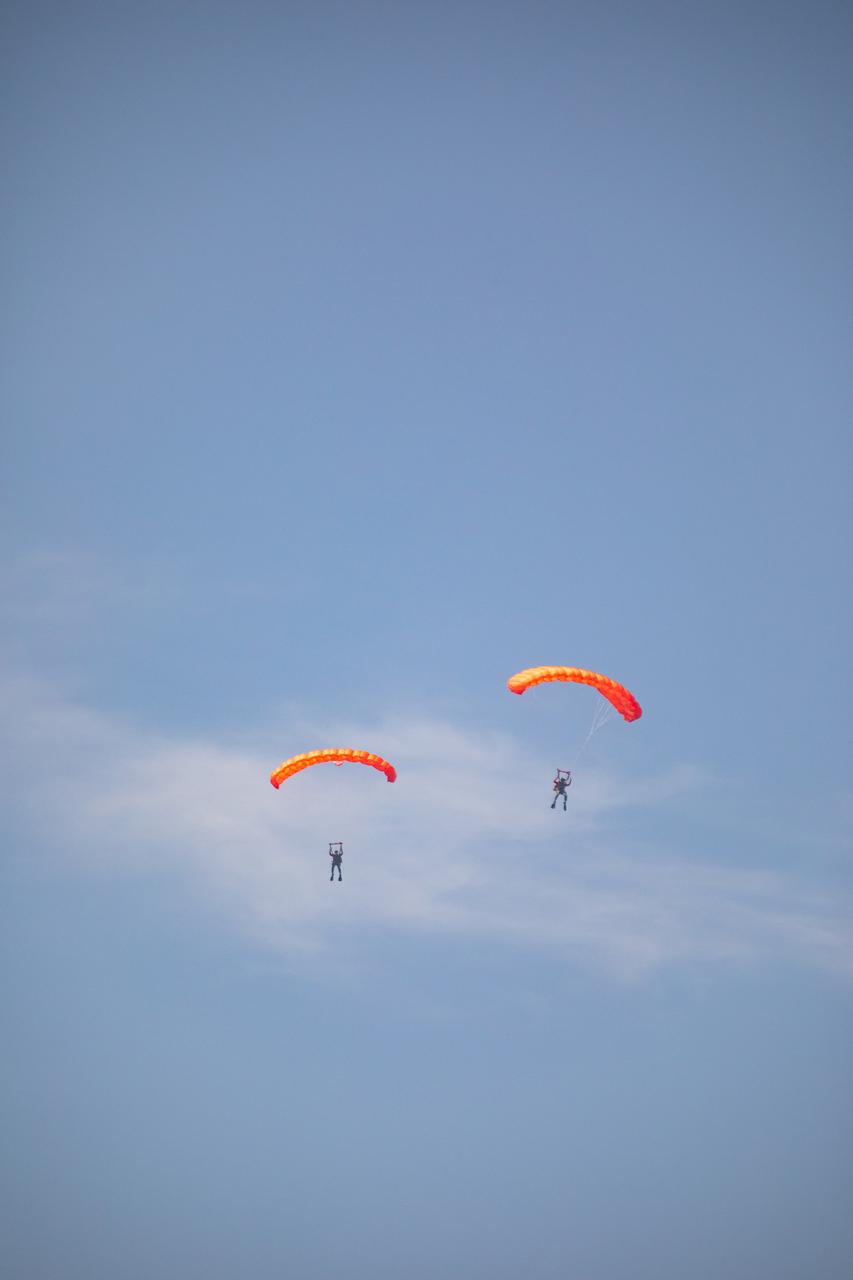
Teams with NASA and the Department of Defense (DoD) rehearse recovery procedures for an ascent abort scenario off the coast of Florida near the agency’s Kennedy Space Center on Thursday, June 12, 2025. Utilizing mannequin crew members inside the Crew Module Test Article (CMTA) – a full-scale mockup of the Orion spacecraft – the simulations practiced abort timelines and joint NASA and DoD recovery procedures supported by Artemis II launch and flight control teams, as NASA prepares to send four astronauts around the Moon and back next year as part of the agency’s first crewed Artemis mission.
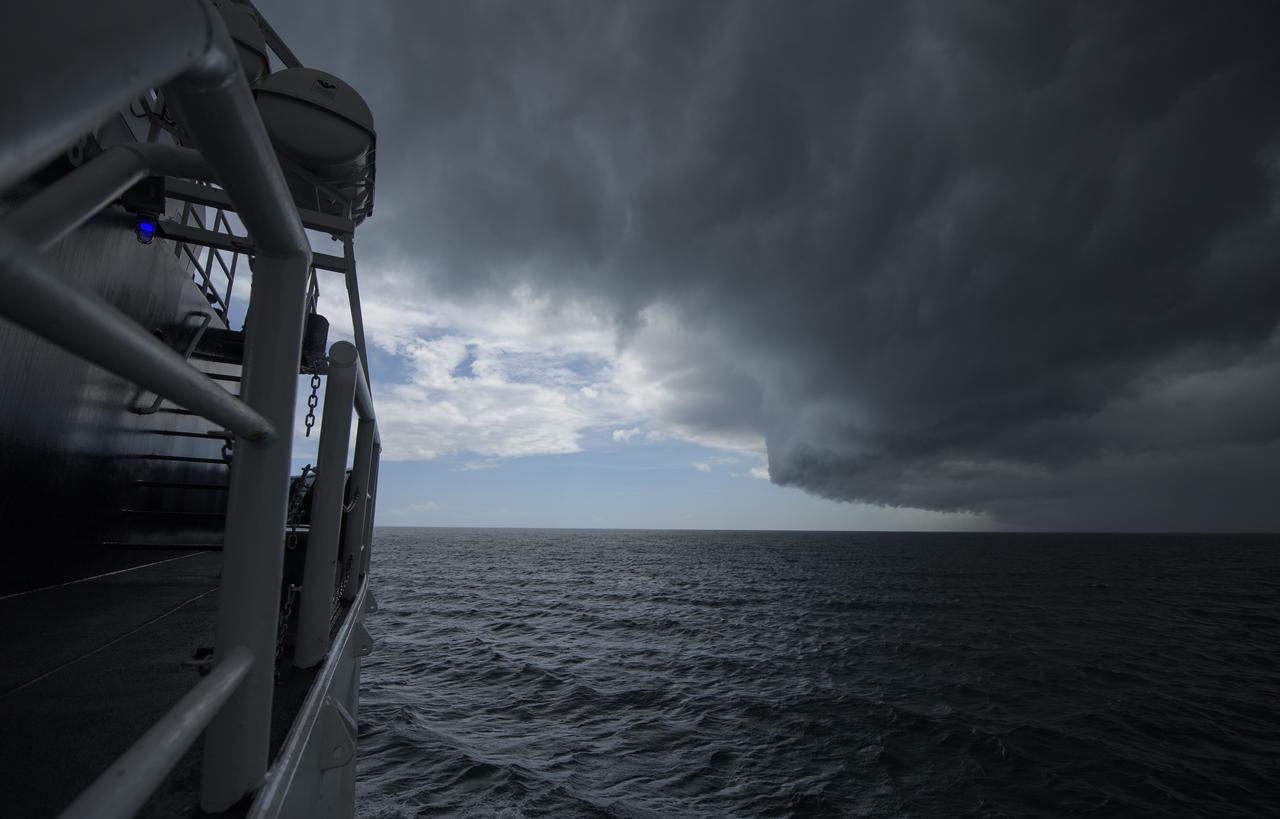
A quick moving storm passes as teams from NASA and SpaceX practice procedures for medical emergency evacuation onboard the GO Searcher ship, Friday, August 15, 2019 in the Atlantic Ocean off the coast of Cape Canaveral, Florida. SpaceX will use the GO Searcher ship during the Demo-2 mission to recover NASA astronauts returning from the International Space Station in their Crew Dragon spacecraft. Photo Credit: (NASA/Bill Ingalls)
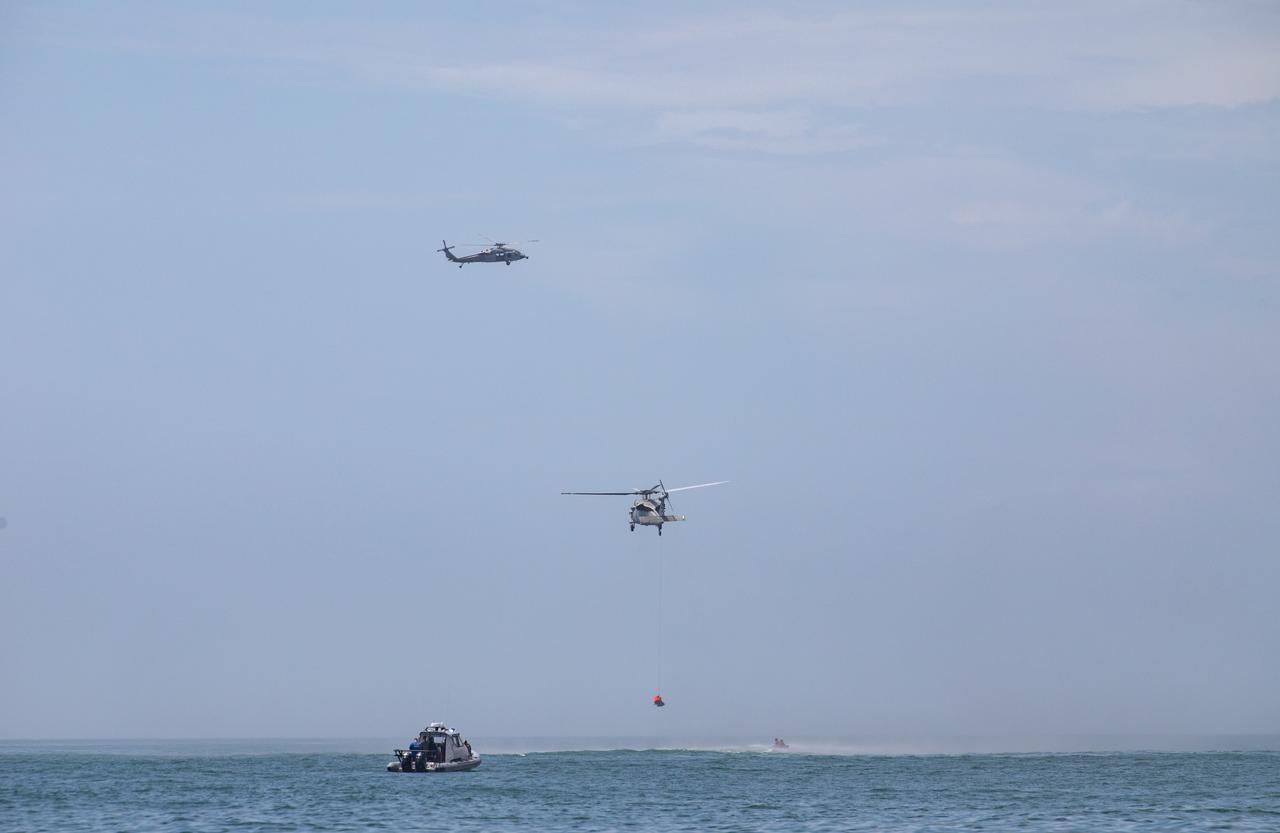
Teams with NASA and the Department of Defense (DoD) rehearse recovery procedures for a launch pad abort scenario off the coast of Florida near the agency’s Kennedy Space Center on Wednesday, June 11, 2025. Utilizing mannequin crew members inside the Crew Module Test Article (CMTA) – a full-scale mockup of the Orion spacecraft – the simulations practiced abort timelines and joint NASA and DoD recovery procedures supported by Artemis II launch and flight control teams, as NASA prepares to send four astronauts around the Moon and back next year as part of the agency’s first crewed Artemis mission.
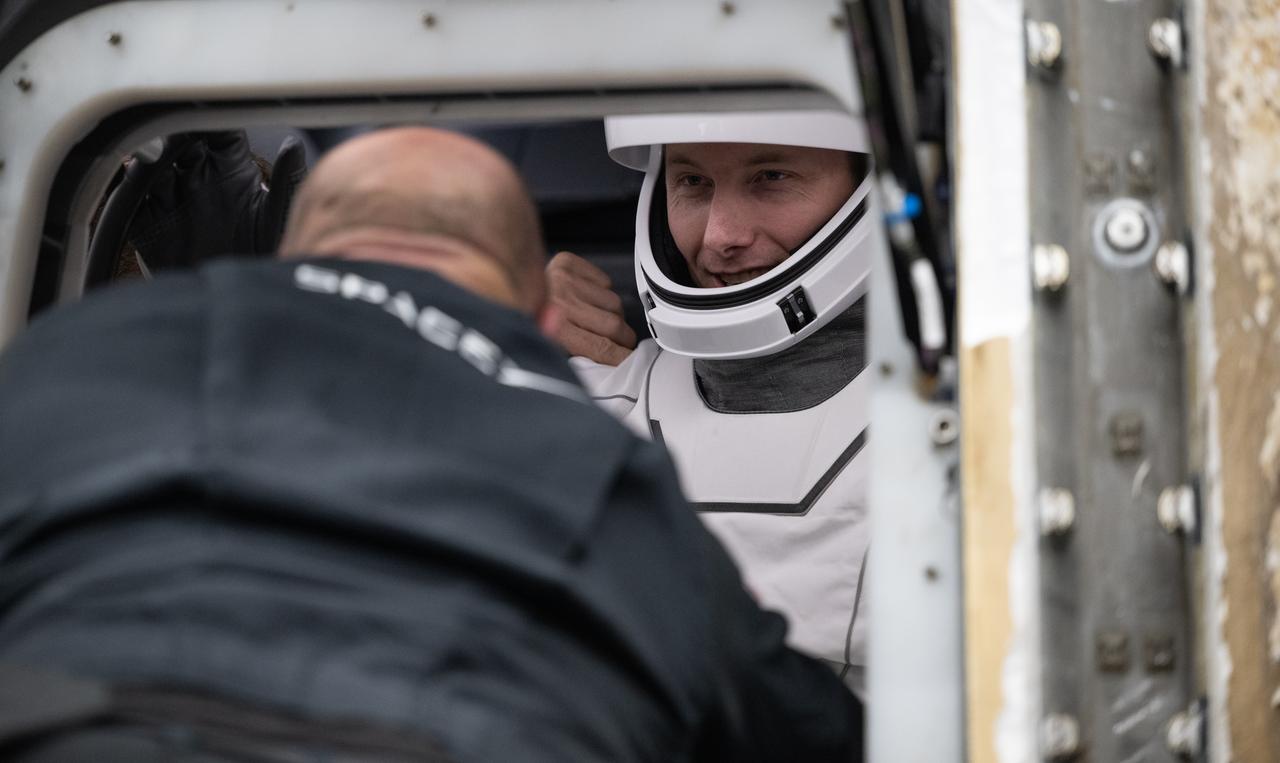
NASA astronaut Warren "Woody" Hoburg helped out of the SpaceX Dragon Endeavour spacecraft onboard the SpaceX recovery ship MEGAN after he, NASA astronaut Stephen Bowen, UAE (United Arab Emirates) astronaut Sultan Alneyadi, and Roscosmos cosmonaut Andrey Fedyaev landed in the Atlantic Ocean off the coast of Jacksonville, Florida, Monday, Sept. 4, 2023. Bowen, Hoburg, Alneyadi, and Fedyaev are returning after nearly six-months in space as part of Expedition 69 aboard the International Space Station. Photo Credit: (NASA/Joel Kowsky)
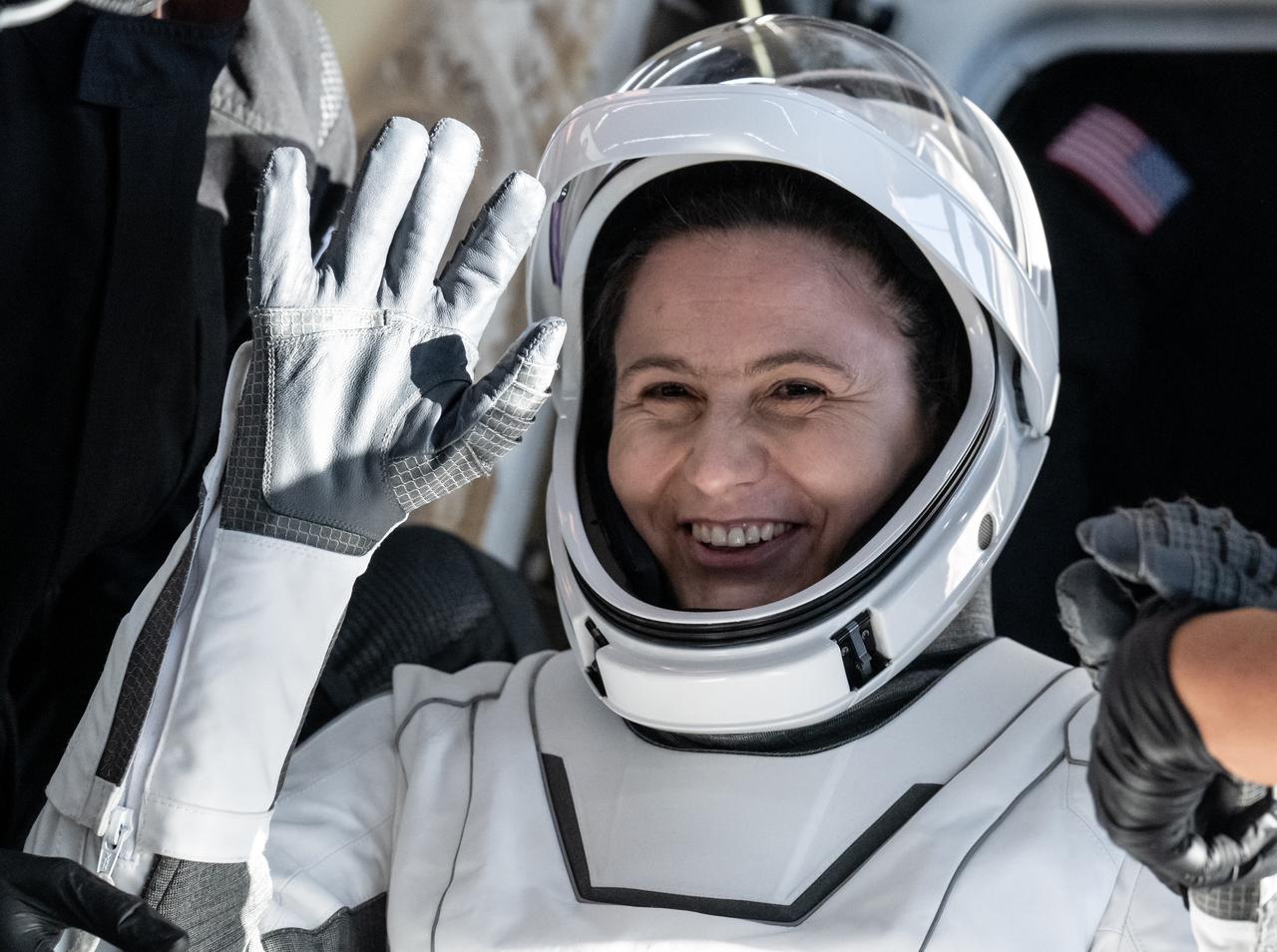
ESA (European Space Agency) astronaut Samantha Cristoforetti is helped out of the SpaceX Crew Dragon Freedom spacecraft onboard the SpaceX recovery ship Megan after she, and NASA astronauts Kjell Lindgren, Robert Hines, and Jessica Watkins, landed in the Atlantic Ocean off the coast of Jacksonville, Florida, Friday, Oct. 14, 2022. Lindgren, Hines, Watkins, and Cristoforetti are returning after 170 days in space as part of Expeditions 67 and 68 aboard the International Space Station. Photo Credit: (NASA/Bill Ingalls)
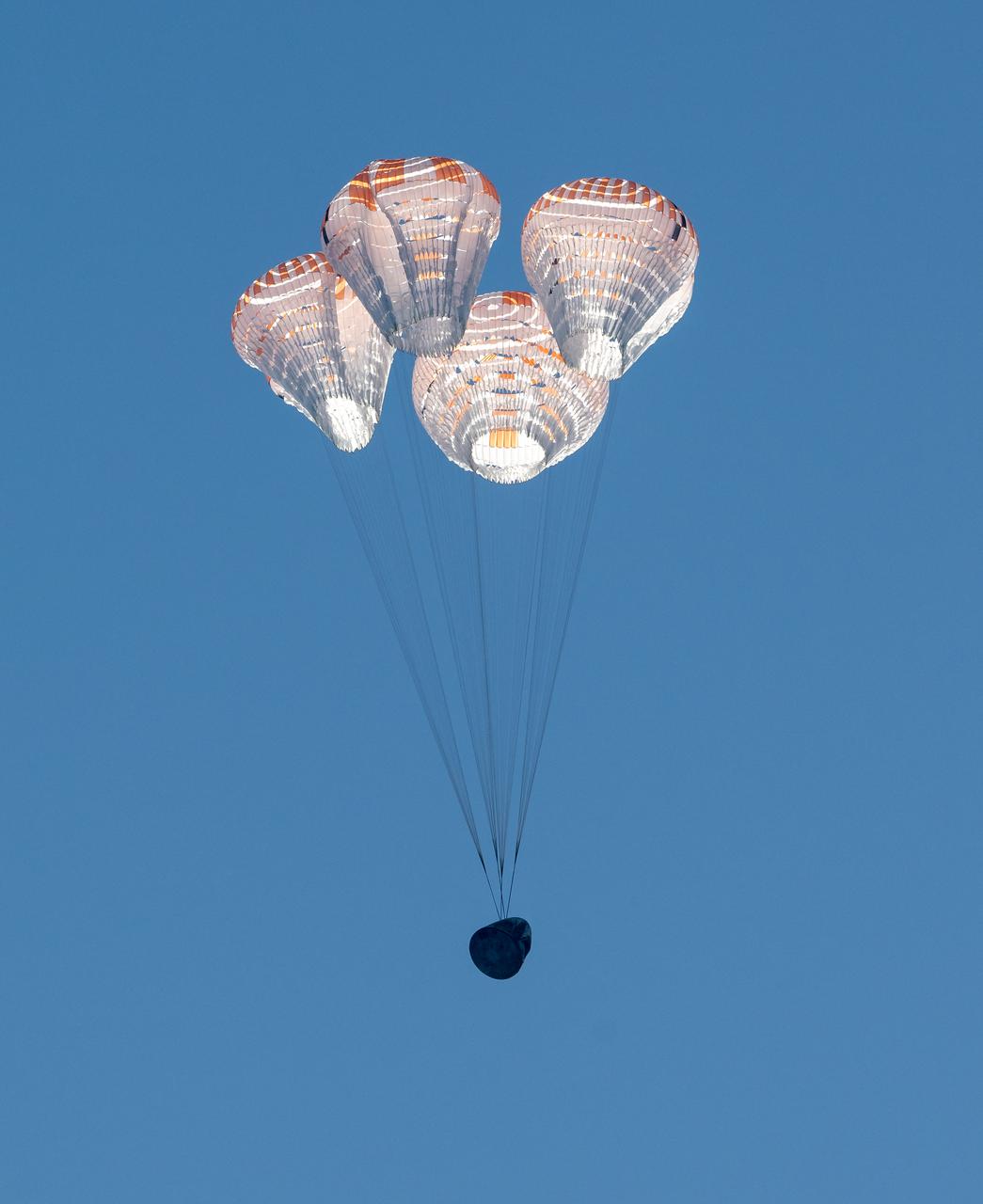
The SpaceX Crew Dragon Freedom spacecraft is seen as it lands with NASA astronauts Kjell Lindgren, Robert Hines, Jessica Watkins, and ESA (European Space Agency) astronaut Samantha Cristoforetti aboard in the Atlantic Ocean off the coast of Jacksonville, Florida, Friday, Oct. 14, 2022. Lindgren, Hines, Watkins, and Cristoforetti are returning after 170 days in space as part of Expeditions 67 and 68 aboard the International Space Station. Photo Credit: (NASA/Bill Ingalls)
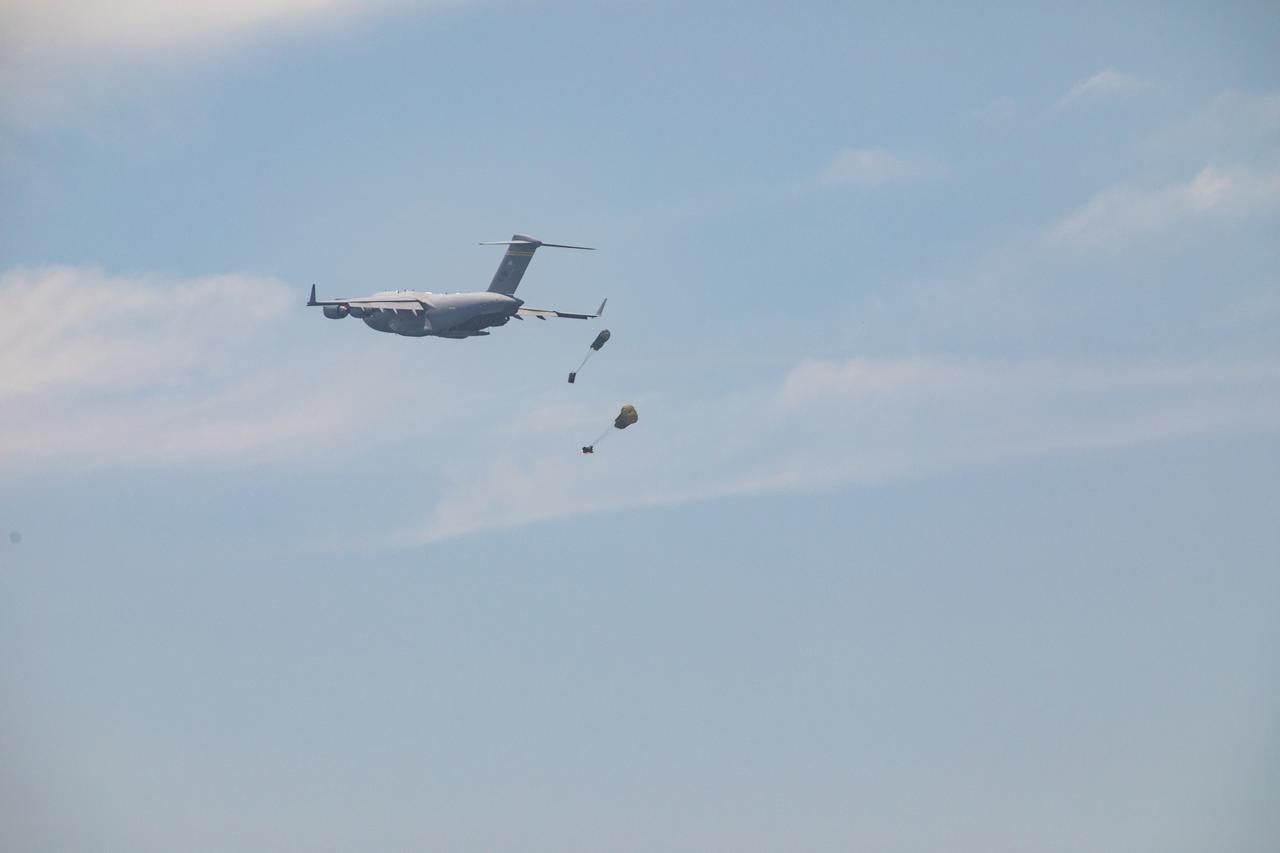
Teams with NASA and the Department of Defense (DoD) rehearse recovery procedures for an ascent abort scenario off the coast of Florida near the agency’s Kennedy Space Center on Thursday, June 12, 2025. Utilizing mannequin crew members inside the Crew Module Test Article (CMTA) – a full-scale mockup of the Orion spacecraft – the simulations practiced abort timelines and joint NASA and DoD recovery procedures supported by Artemis II launch and flight control teams, as NASA prepares to send four astronauts around the Moon and back next year as part of the agency’s first crewed Artemis mission.
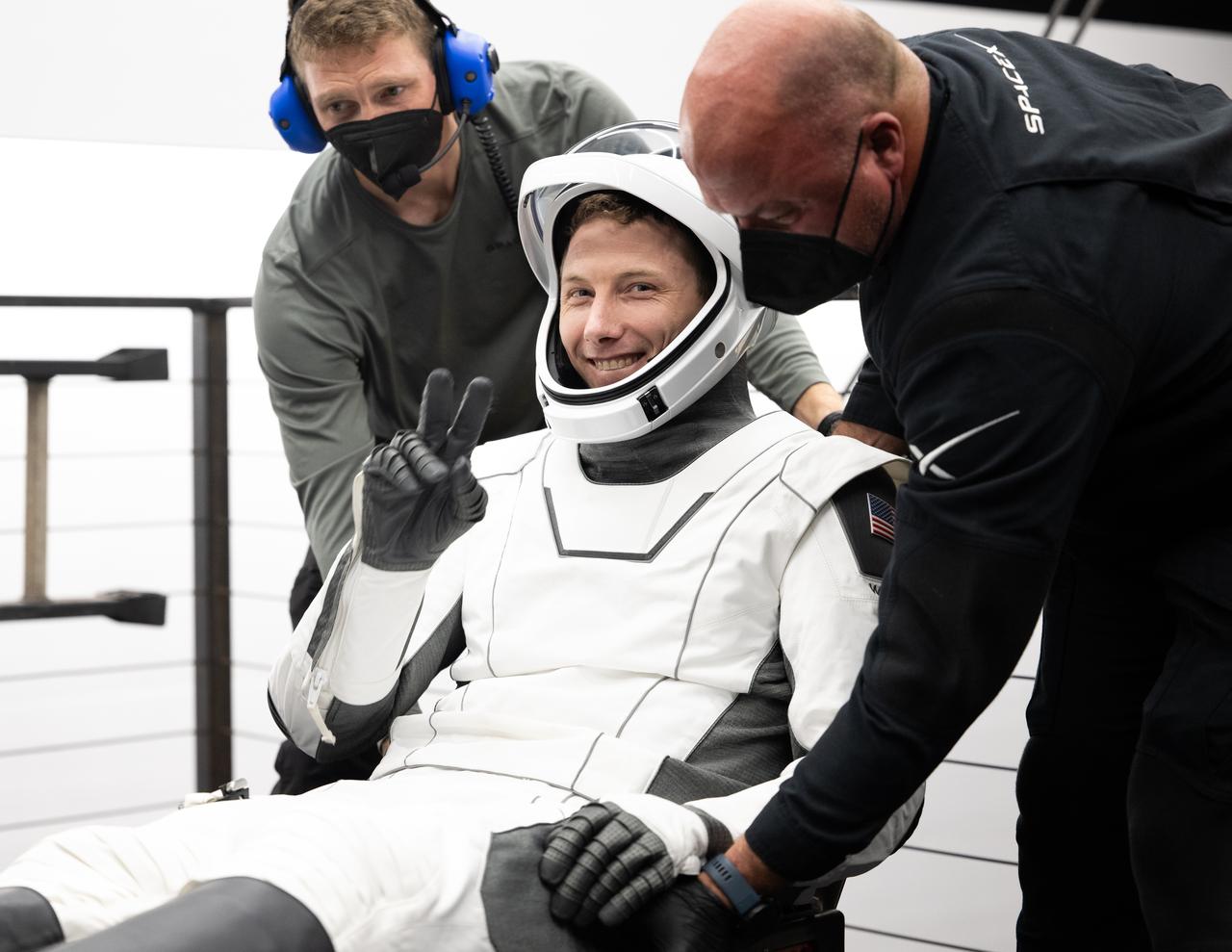
NASA astronaut Warren "Woody" Hoburg helped out of the SpaceX Dragon Endeavour spacecraft onboard the SpaceX recovery ship MEGAN after he, NASA astronaut Stephen Bowen, UAE (United Arab Emirates) astronaut Sultan Alneyadi, and Roscosmos cosmonaut Andrey Fedyaev landed in the Atlantic Ocean off the coast of Jacksonville, Florida, Monday, Sept. 4, 2023. Bowen, Hoburg, Alneyadi, and Fedyaev are returning after nearly six-months in space as part of Expedition 69 aboard the International Space Station. Photo Credit: (NASA/Joel Kowsky)
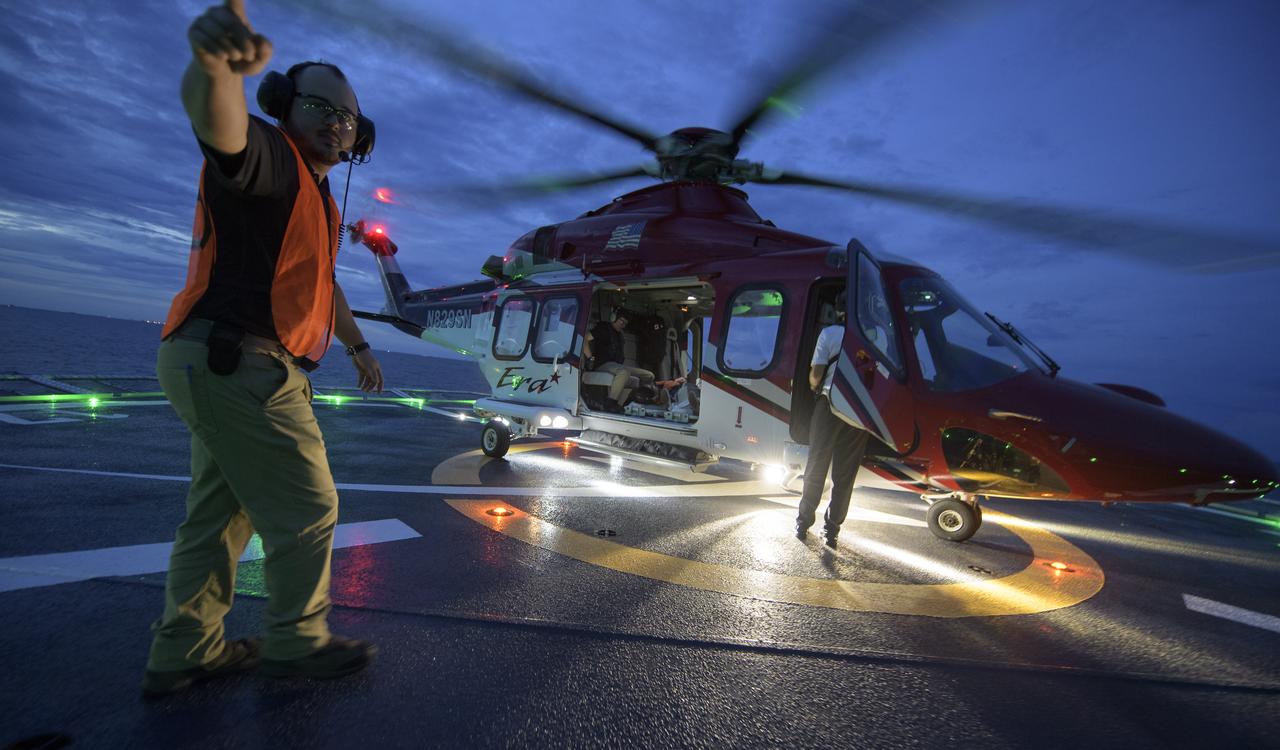
Teams from NASA and SpaceX practice procedures for medical emergency evacuation onboard the GO Searcher ship, Friday, August 15, 2019 in the Atlantic Ocean off the coast of Cape Canaveral, Florida. SpaceX will use the GO Searcher ship during the Demo-2 mission to recover NASA astronauts returning from the International Space Station in their Crew Dragon spacecraft. Photo Credit: (NASA/Bill Ingalls)
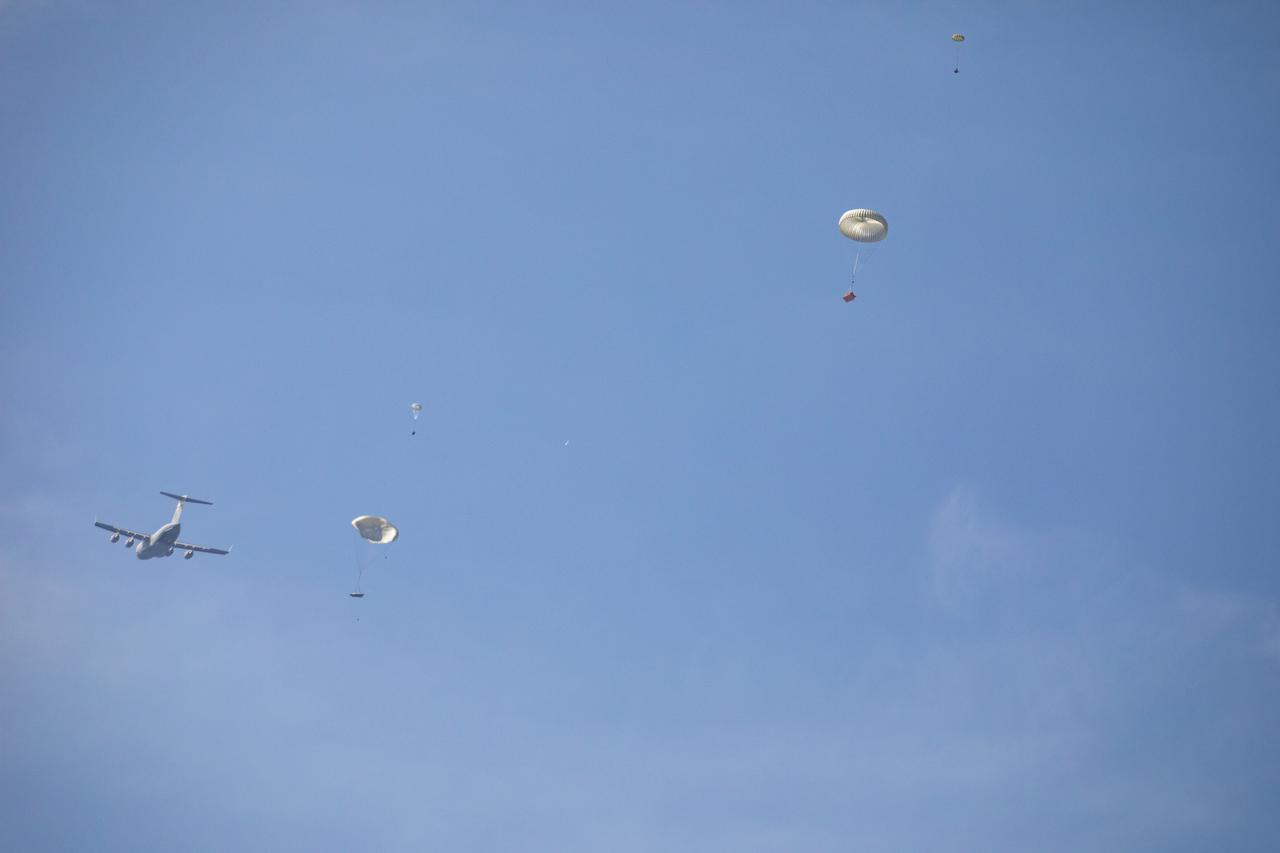
Teams with NASA and the Department of Defense (DoD) rehearse recovery procedures for an ascent abort scenario off the coast of Florida near the agency’s Kennedy Space Center on Thursday, June 12, 2025. Utilizing mannequin crew members inside the Crew Module Test Article (CMTA) – a full-scale mockup of the Orion spacecraft – the simulations practiced abort timelines and joint NASA and DoD recovery procedures supported by Artemis II launch and flight control teams, as NASA prepares to send four astronauts around the Moon and back next year as part of the agency’s first crewed Artemis mission.
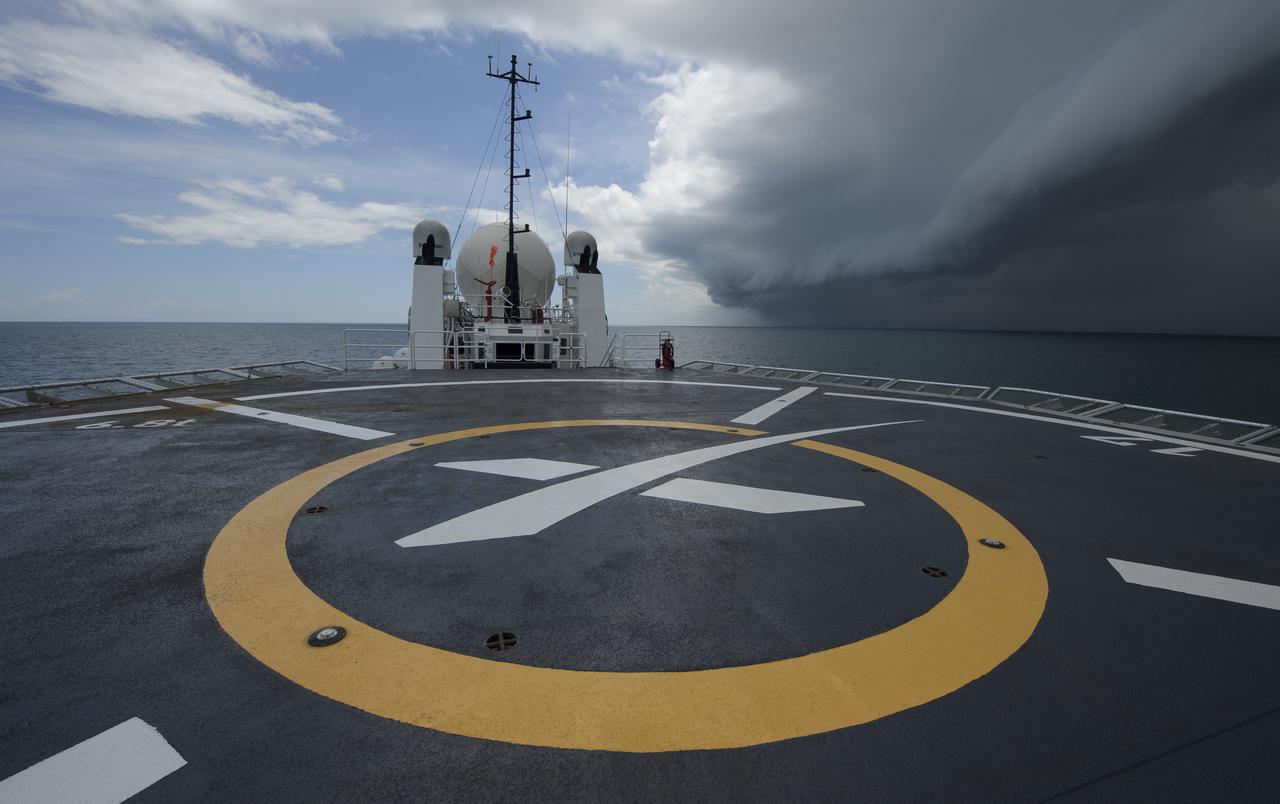
A quick moving storm passes as teams from NASA and SpaceX practice procedures for medical emergency evacuation onboard the GO Searcher ship, Friday, August 15, 2019 in the Atlantic Ocean off the coast of Cape Canaveral, Florida. SpaceX will use the GO Searcher ship during the Demo-2 mission to recover NASA astronauts returning from the International Space Station in their Crew Dragon spacecraft. Photo Credit: (NASA/Bill Ingalls)
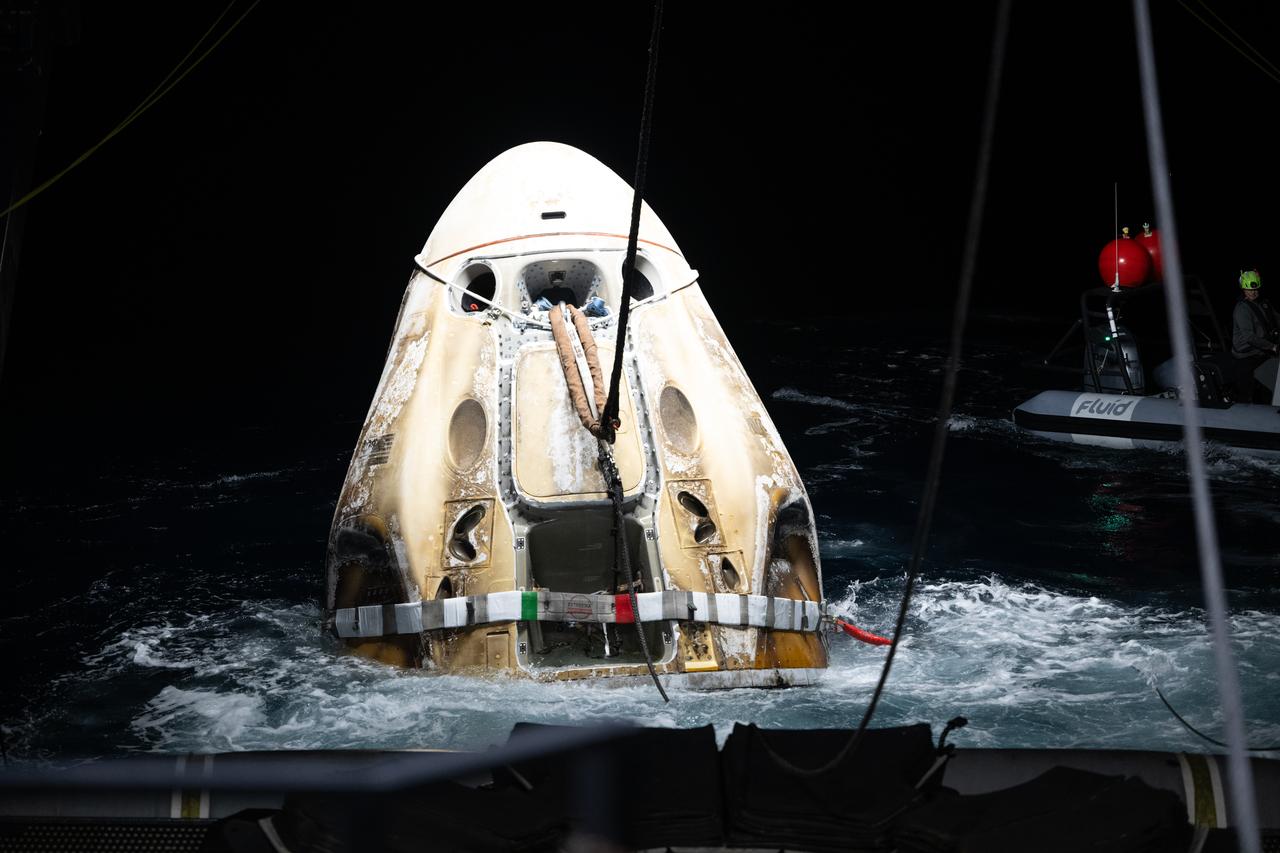
Support teams work around the SpaceX Dragon Endeavour spacecraft shortly after it landed with NASA astronauts Stephen Bowen and Warren "Woody" Hoburg, UAE (United Arab Emirates) astronaut Sultan Alneyadi, and Roscosmos cosmonaut Andrey Fedyaev aboard in the Atlantic Ocean off the coast of Jacksonville, Florida, Monday, Sept. 4,2023. Bowen, Hoburg, Alneyadi, and Fedyaev are returning after nearly six-months in space as part of Expedition 69 aboard the International Space Station. Photo Credit: (NASA/Joel Kowsky)
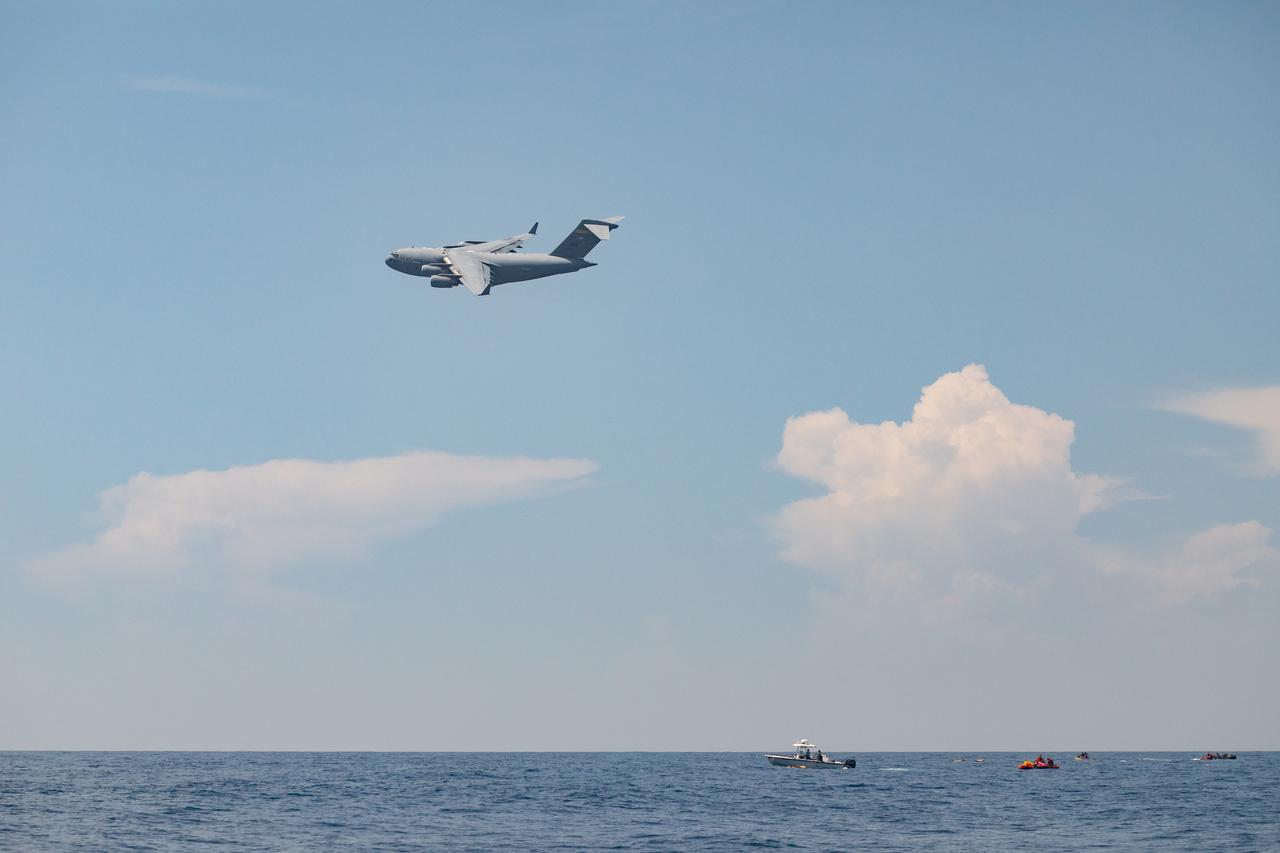
Teams with NASA and the Department of Defense (DoD) rehearse recovery procedures for an ascent abort scenario off the coast of Florida near the agency’s Kennedy Space Center on Thursday, June 12, 2025. Utilizing mannequin crew members inside the Crew Module Test Article (CMTA) – a full-scale mockup of the Orion spacecraft – the simulations practiced abort timelines and joint NASA and DoD recovery procedures supported by Artemis II launch and flight control teams, as NASA prepares to send four astronauts around the Moon and back next year as part of the agency’s first crewed Artemis mission.
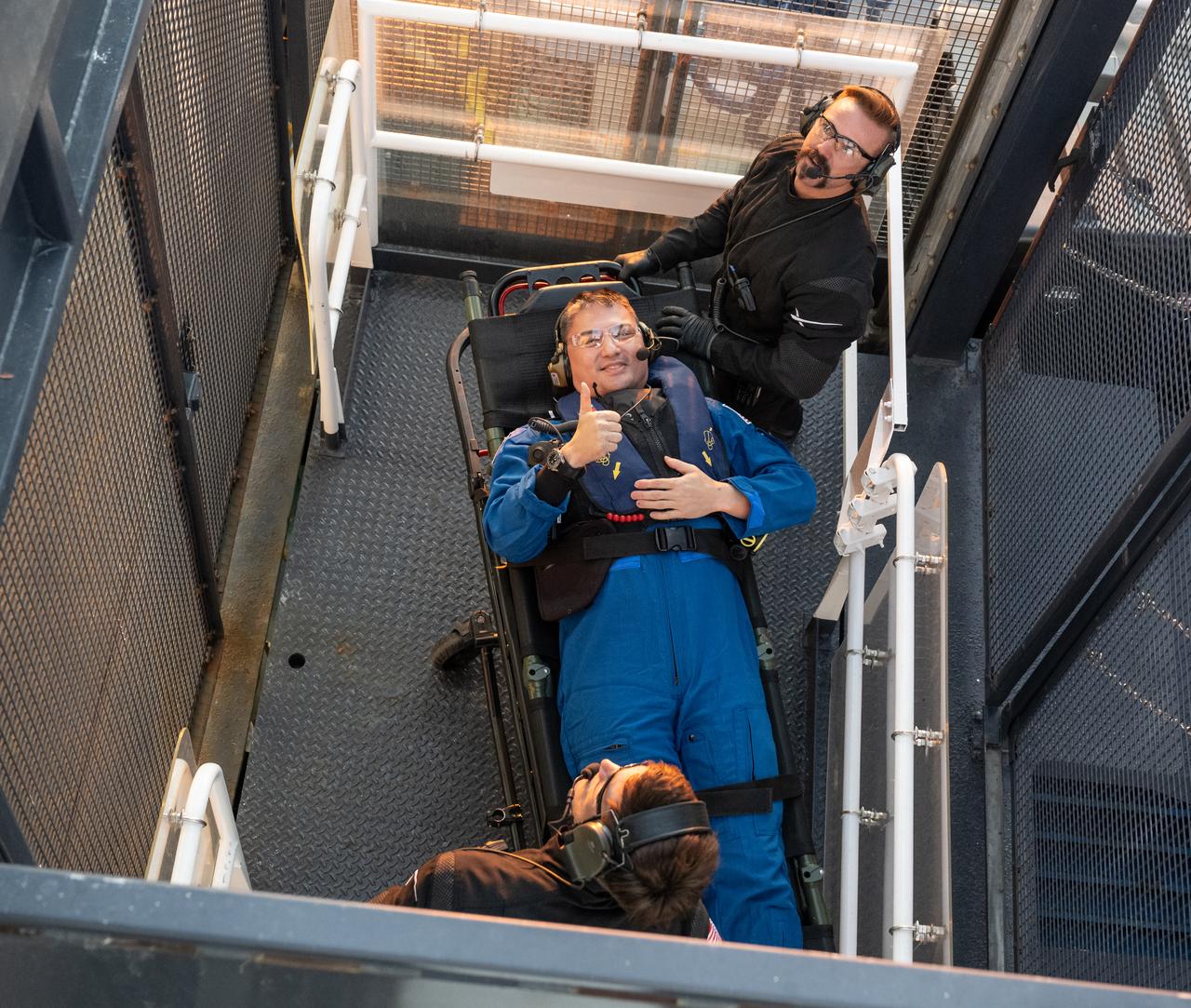
NASA astronaut Kjell Lindgren is seen inside an elevator on the SpaceX recovery ship Megan that will take him up to a waiting helicopter to fly to Jacksonville, Florida with NASA astronauts Robert Hines, and Jessica Watkins, along with ESA (European Space Agency) astronaut Samantha Cristoforetti, just a couple of hours after the four landed in their SpaceX Crew Dragon Freedom spacecraft in the Atlantic Ocean, Friday, Oct. 14, 2022. Lindgren, Hines, Watkins, and Cristoforetti are returning after 170 days in space as part of Expeditions 67 and 68 aboard the International Space Station. Photo Credit: (NASA/Bill Ingalls)
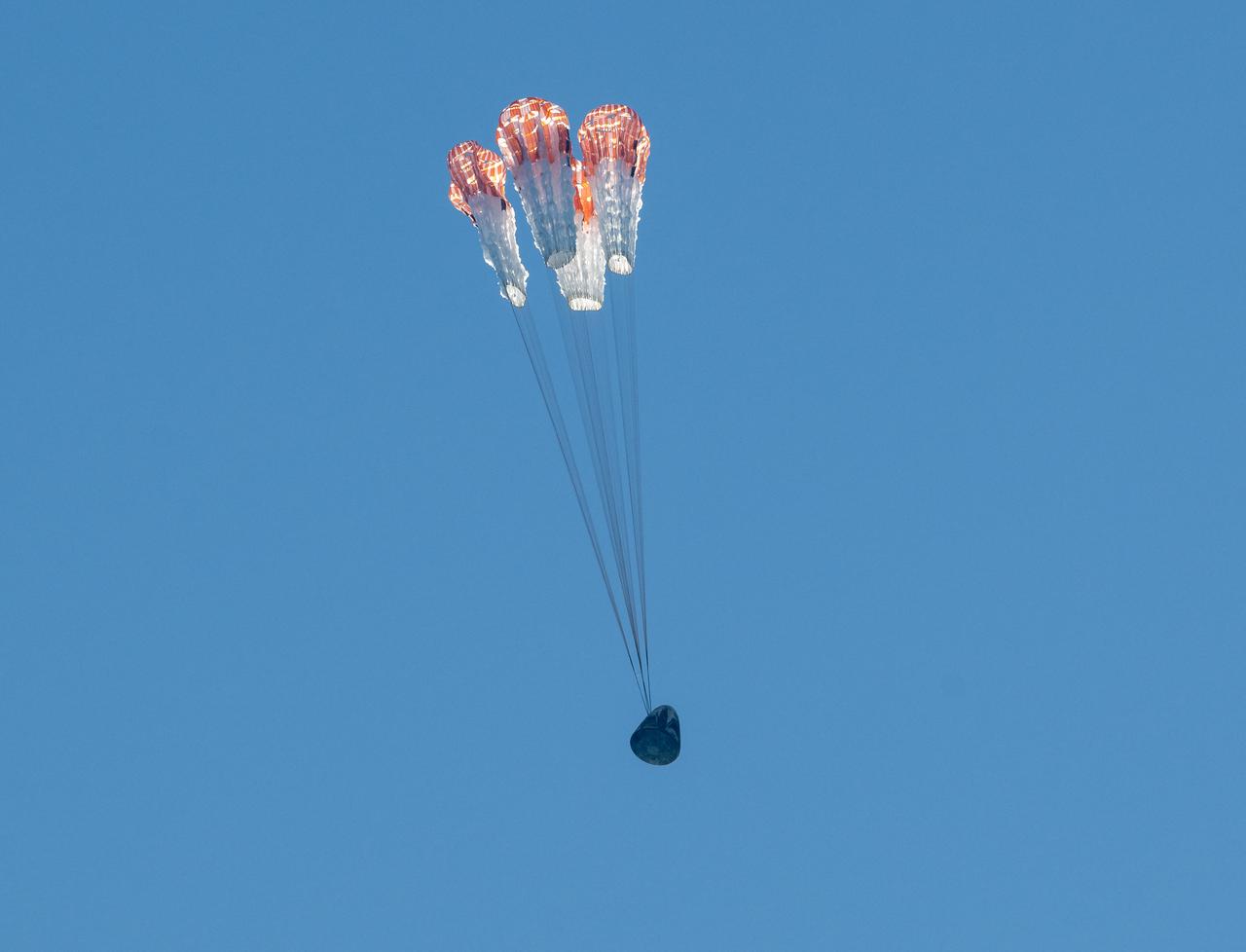
The SpaceX Crew Dragon Freedom spacecraft is seen as it lands with NASA astronauts Kjell Lindgren, Robert Hines, Jessica Watkins, and ESA (European Space Agency) astronaut Samantha Cristoforetti aboard in the Atlantic Ocean off the coast of Jacksonville, Florida, Friday, Oct. 14, 2022. Lindgren, Hines, Watkins, and Cristoforetti are returning after 170 days in space as part of Expeditions 67 and 68 aboard the International Space Station. Photo Credit: (NASA/Bill Ingalls)
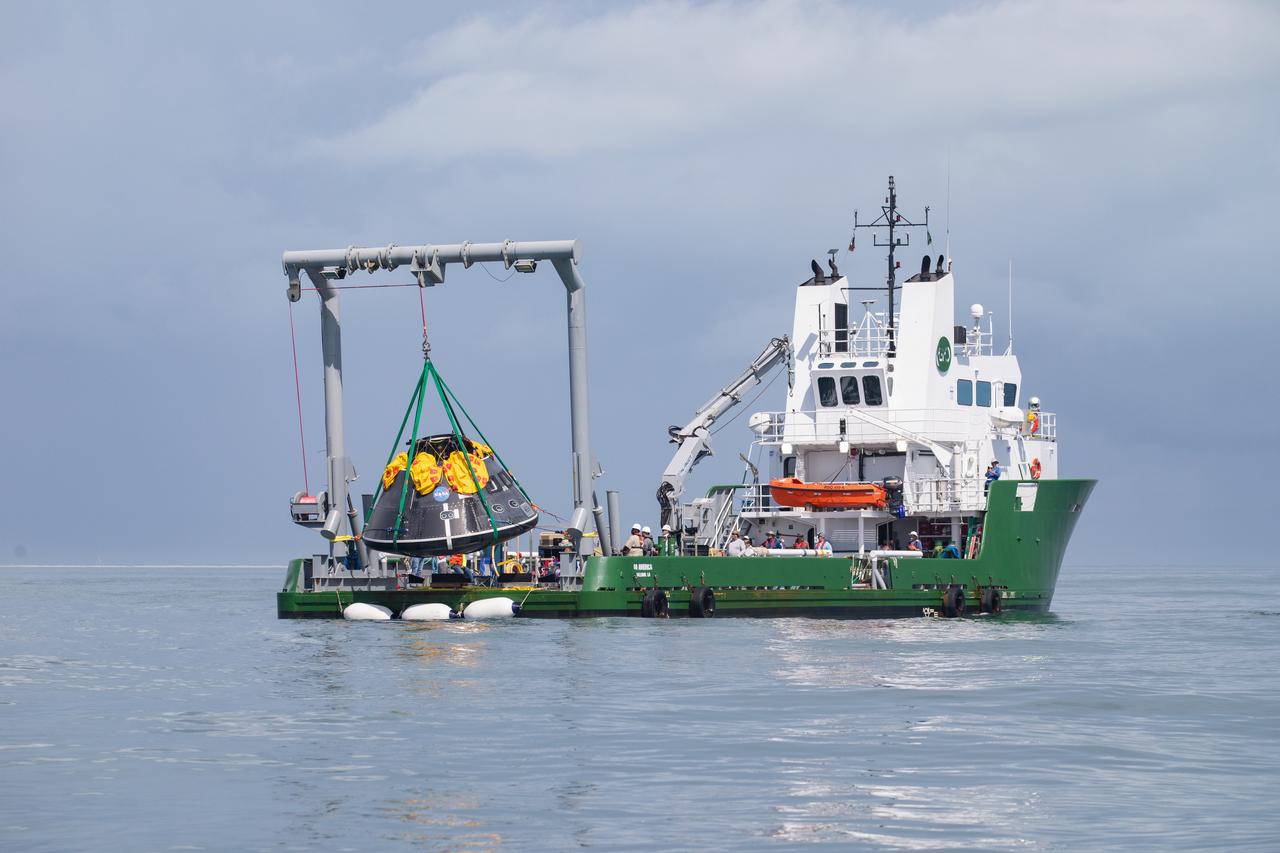
Teams with NASA and the Department of Defense (DoD) rehearse recovery procedures for a launch pad abort scenario off the coast of Florida near the agency’s Kennedy Space Center on Wednesday, June 11, 2025. Utilizing mannequin crew members inside the Crew Module Test Article (CMTA) – a full-scale mockup of the Orion spacecraft – the simulations practiced abort timelines and joint NASA and DoD recovery procedures supported by Artemis II launch and flight control teams, as NASA prepares to send four astronauts around the Moon and back next year as part of the agency’s first crewed Artemis mission.
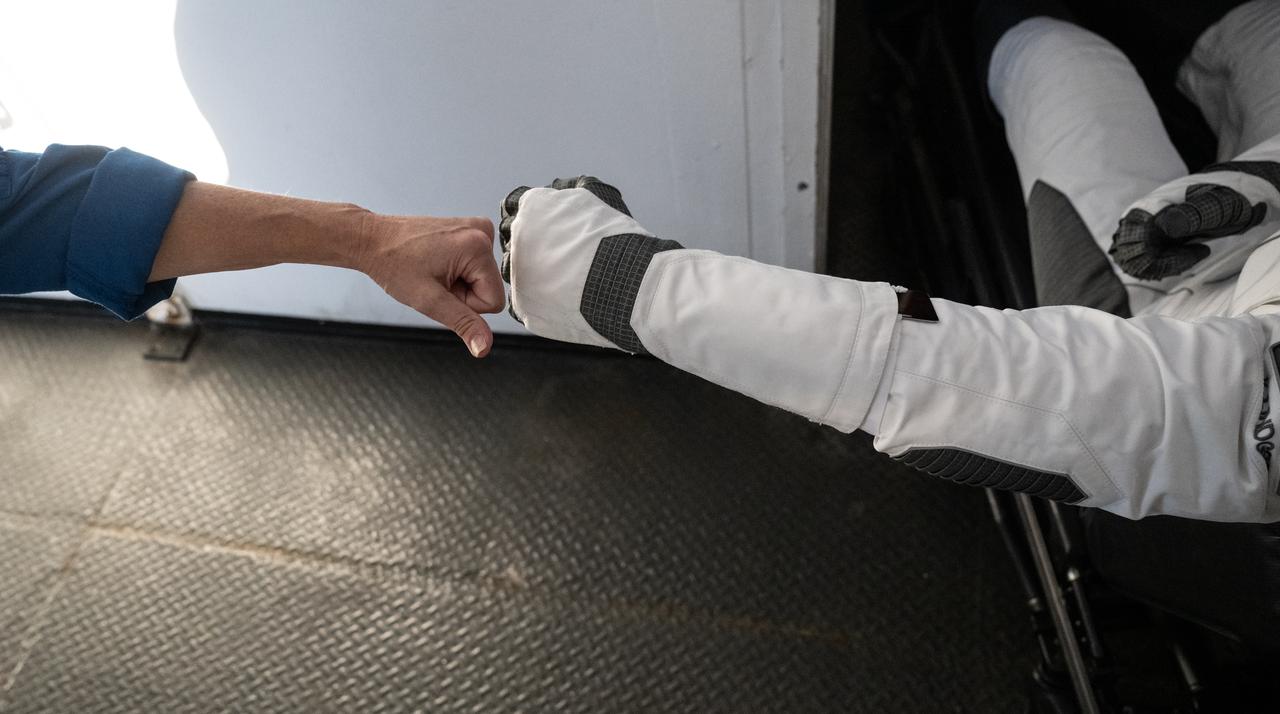
NASA astronaut representative Megan Behnken, left, fist pumps NASA astronaut Kjell Lindgren after having splashed down in the Atlantic Ocean off the coast of Jacksonville, Florida aboard the SpaceX Crew Dragon Freedom spacecraft with NASA astronauts Jessica Watkins and Robert Hines, along with ESA (European Space Agency) astronaut Samantha Cristoforetti, Friday, Oct. 14, 2022. Lindgren, along with NASA astronauts Robert Hines, Jessica Watkins, and ESA (European Space Agency) astronaut Samantha Cristoforetti returned after 170 days in space as part of Expeditions 67 and 68 aboard the International Space Station. Photo Credit: (NASA/Bill Ingalls)
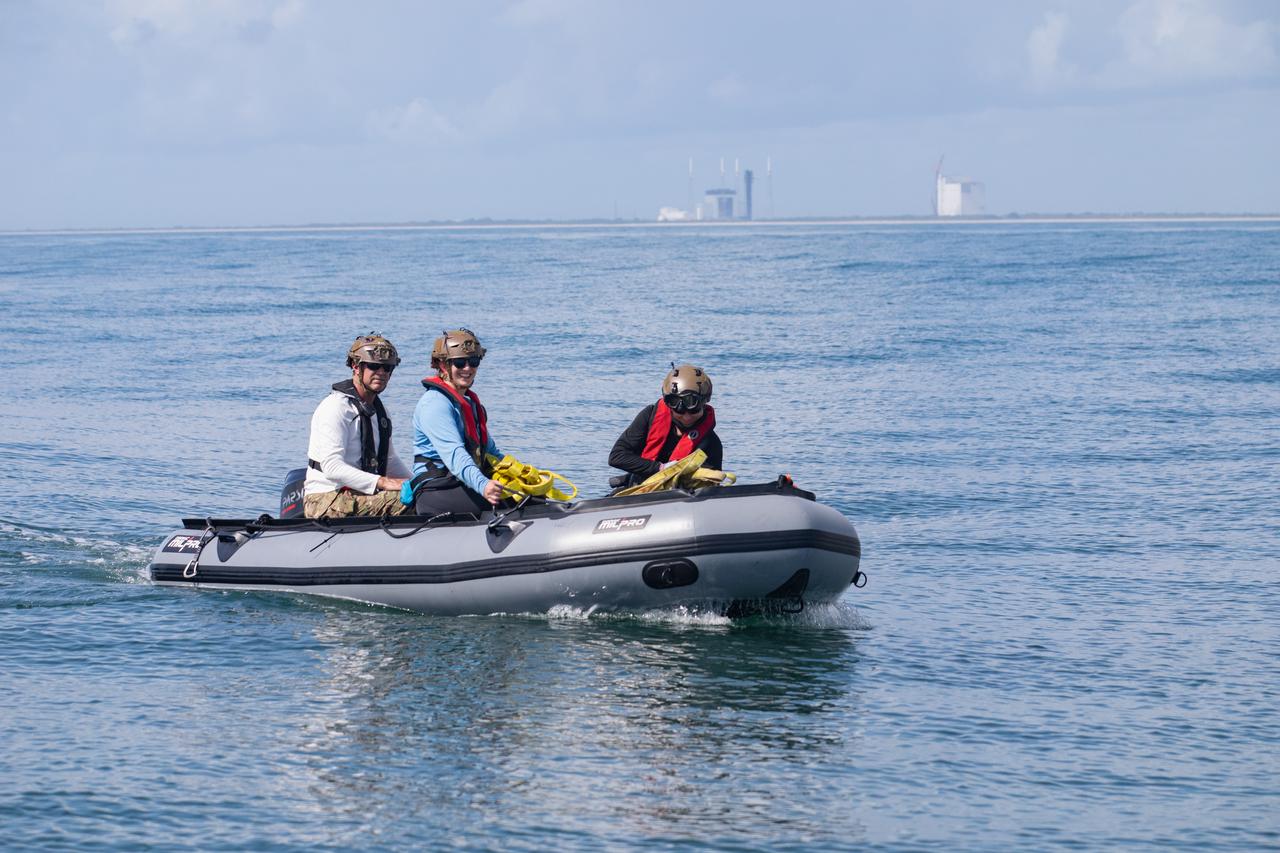
Teams with NASA and the Department of Defense (DoD) rehearse recovery procedures for a launch pad abort scenario off the coast of Florida near the agency’s Kennedy Space Center on Wednesday, June 11, 2025. Utilizing mannequin crew members inside the Crew Module Test Article (CMTA) – a full-scale mockup of the Orion spacecraft – the simulations practiced abort timelines and joint NASA and DoD recovery procedures supported by Artemis II launch and flight control teams, as NASA prepares to send four astronauts around the Moon and back next year as part of the agency’s first crewed Artemis mission.