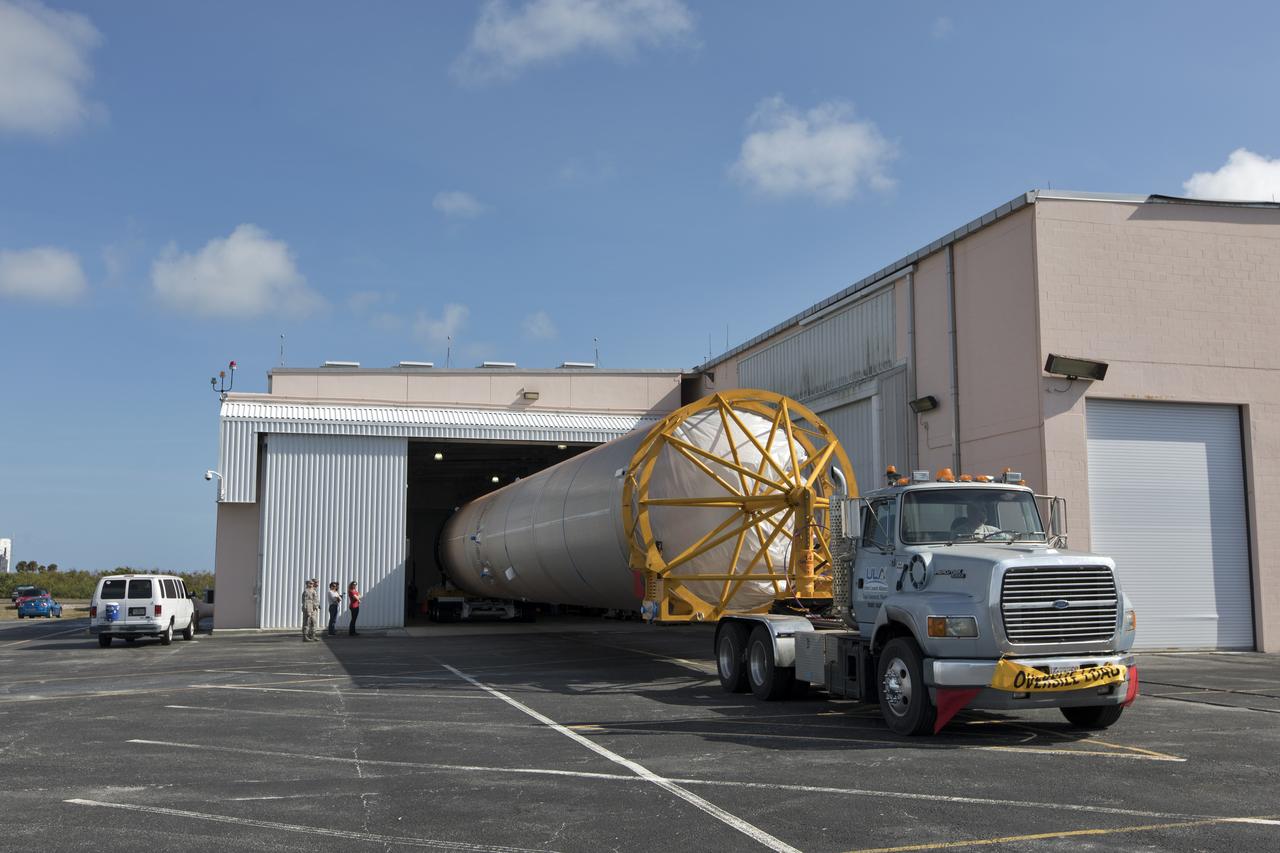
The United Launch Alliance Atlas V booster for NOAA's Geostationary Operational Environmental Satellite-S (GOES-S) arrives at the Atlas Spaceflight Operations Center near Space Launch Complex 41 at Cape Canaveral Air Force Station in Florida. GOES-S is the second in a series of four advanced geostationary weather satellites. The satellite is slated to launch aboard the Atlas V rocket March 1.
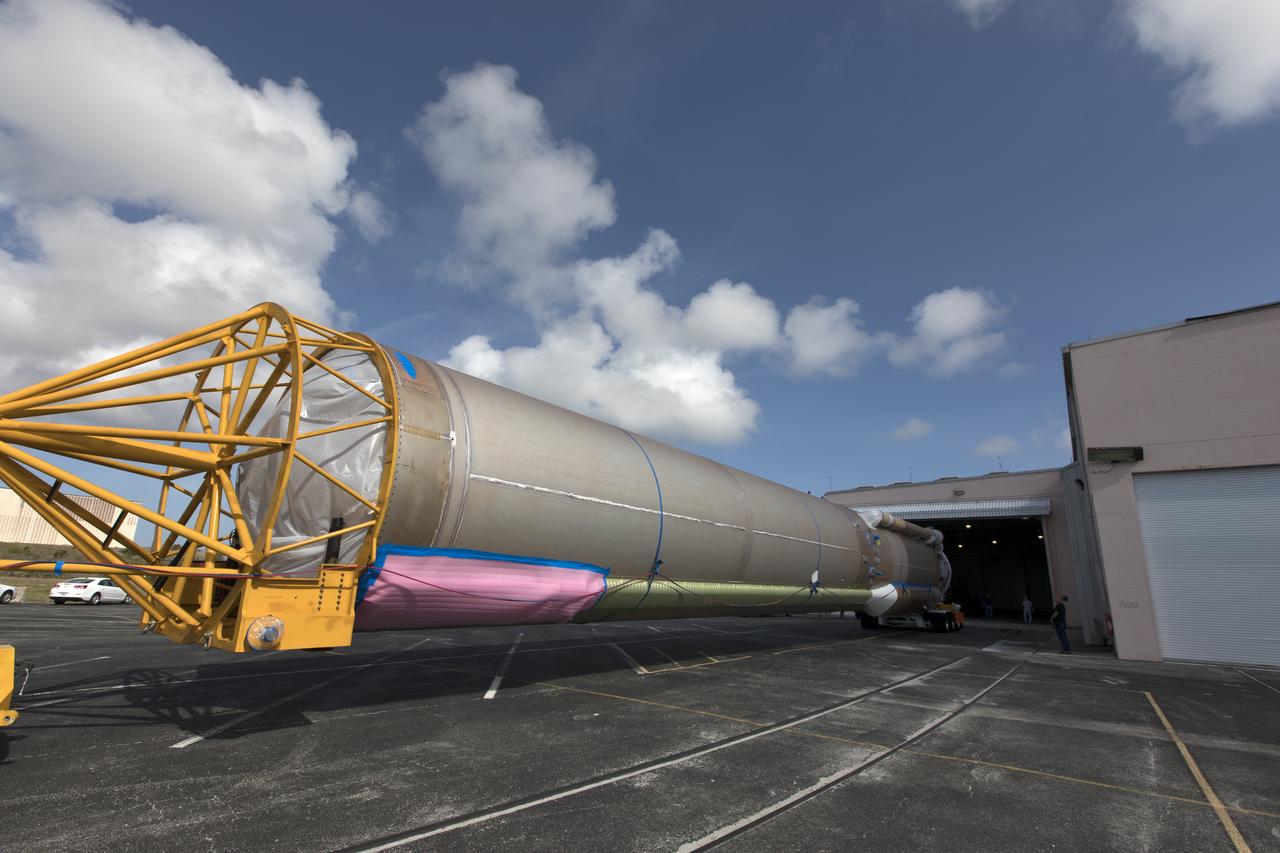
The United Launch Alliance Atlas V booster for NOAA's Geostationary Operational Environmental Satellite-S (GOES-S) arrives at the Atlas Spaceflight Operations Center near Space Launch Complex 41 at Cape Canaveral Air Force Station in Florida. GOES-S is the second in a series of four advanced geostationary weather satellites. The satellite is slated to launch aboard the Atlas V rocket March 1.

After being offloaded from the Mariner transport ship at the Army Wharf at Cape Canaveral Air Force Station in Florida, the United Launch Alliance Atlas V booster for NOAA's Geostationary Operational Environmental Satellite-S (GOES-S) arrives in the area of the Atlas Spaceflight Operations Center near Space Launch Complex 41 at CCAFS. GOES-S is the second in a series of four advanced geostationary weather satellites. The satellite is slated to launch aboard the Atlas V rocket March 1.

The United Launch Alliance Atlas V booster for NOAA's Geostationary Operational Environmental Satellite-S (GOES-S) is moved inside the Atlas Spaceflight Operations Center near Space Launch Complex 41 at Cape Canaveral Air Force Station in Florida. GOES-S is the second in a series of four advanced geostationary weather satellites. The satellite is slated to launch aboard the Atlas V rocket March 1.
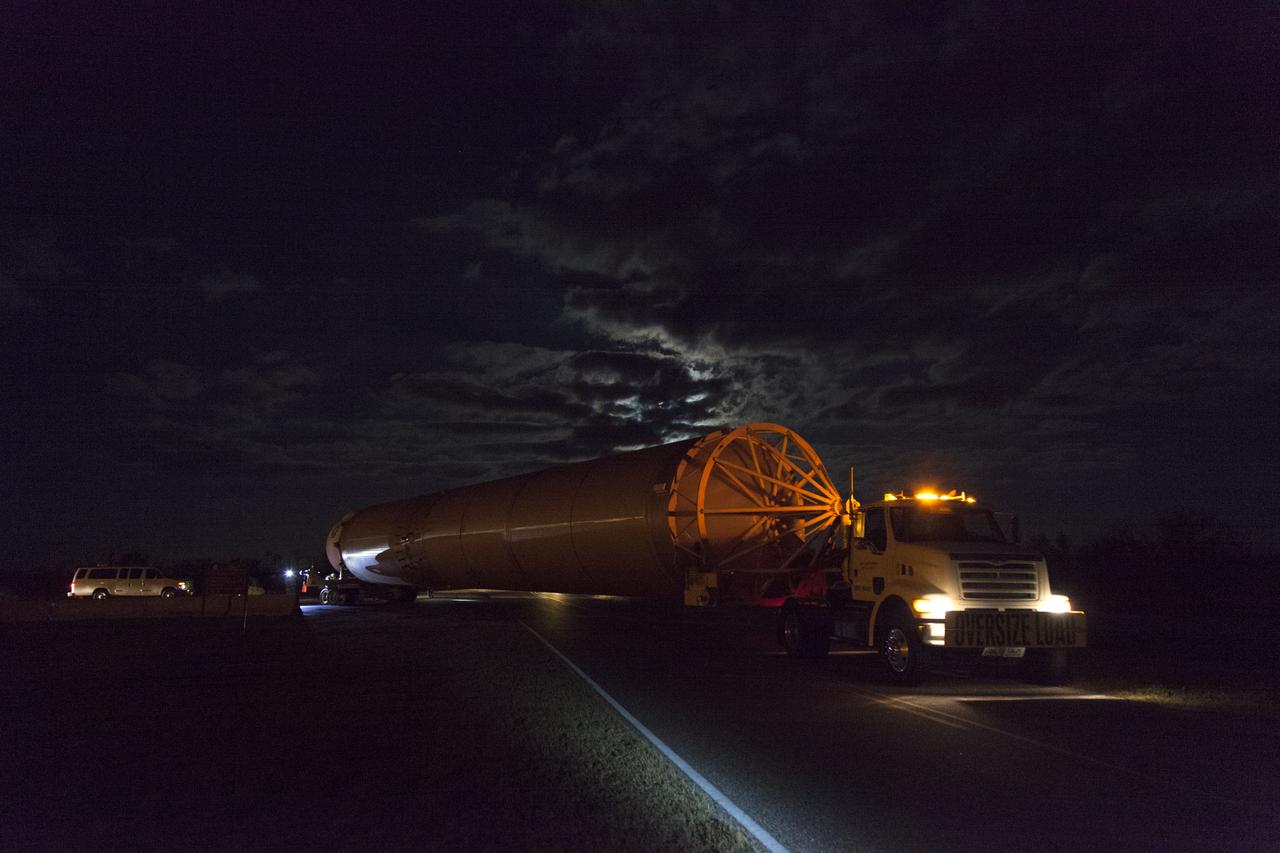
A United Launch Alliance Atlas V first stage leaves the Atlas Spaceflight Operations Center aboard a transport trailer for delivery to the Vertical Integration Facility at Space Launch Complex 41 at Cape Canaveral Air Force Station in Florida. The rocket is being prepared to launch the Geostationary Operational Environmental Satellite, or GOES-S. It will be the second in a series of four advanced geostationary weather satellites and will significantly improve the detection and observation of environmental phenomena that directly affect public safety. GOES-S is slated to launch March 1, 2018.
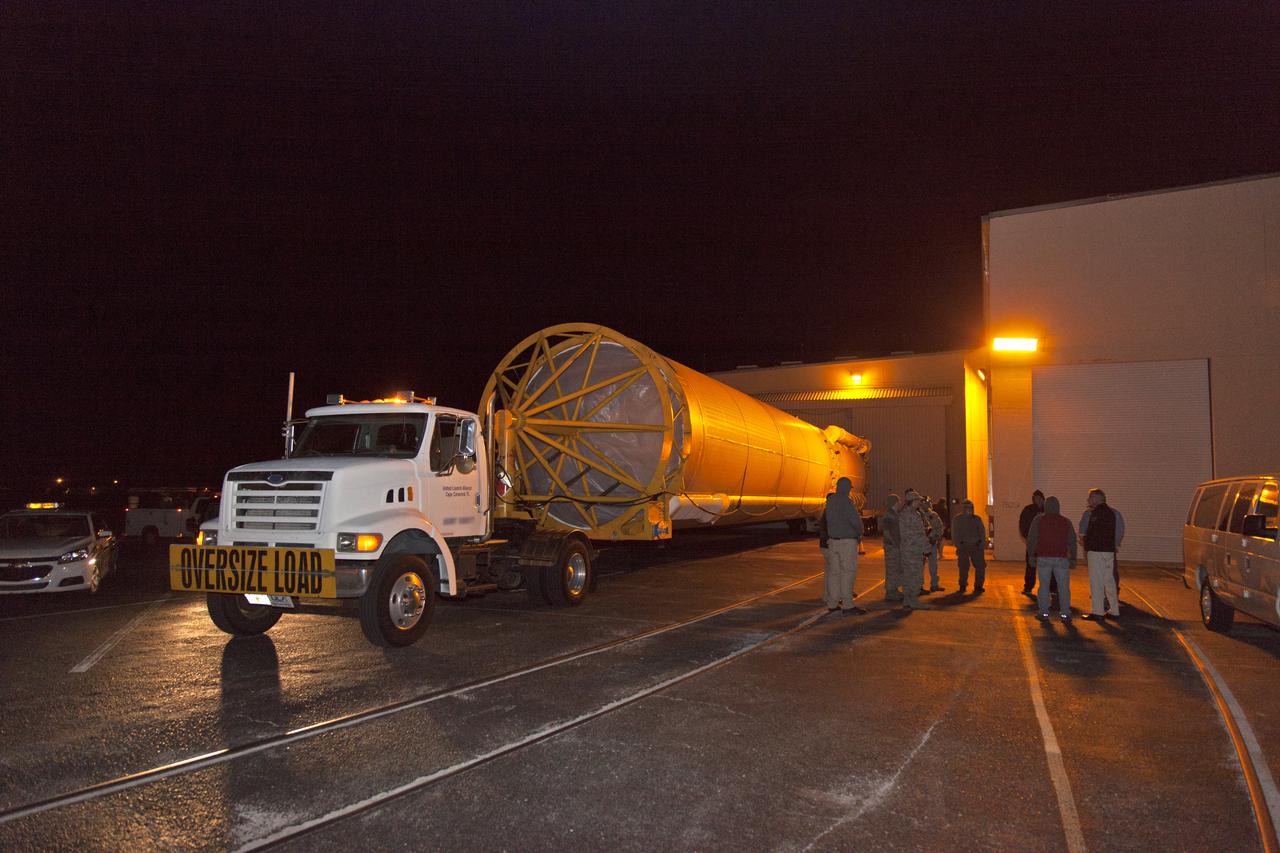
A United Launch Alliance Atlas V first stage leaves the Atlas Spaceflight Operations Center aboard a transport trailer for delivery to the Vertical Integration Facility at Space Launch Complex 41 at Cape Canaveral Air Force Station in Florida. The rocket is being prepared to launch the Geostationary Operational Environmental Satellite, or GOES-S. It will be the second in a series of four advanced geostationary weather satellites and will significantly improve the detection and observation of environmental phenomena that directly affect public safety. GOES-S is slated to launch March 1, 2018.