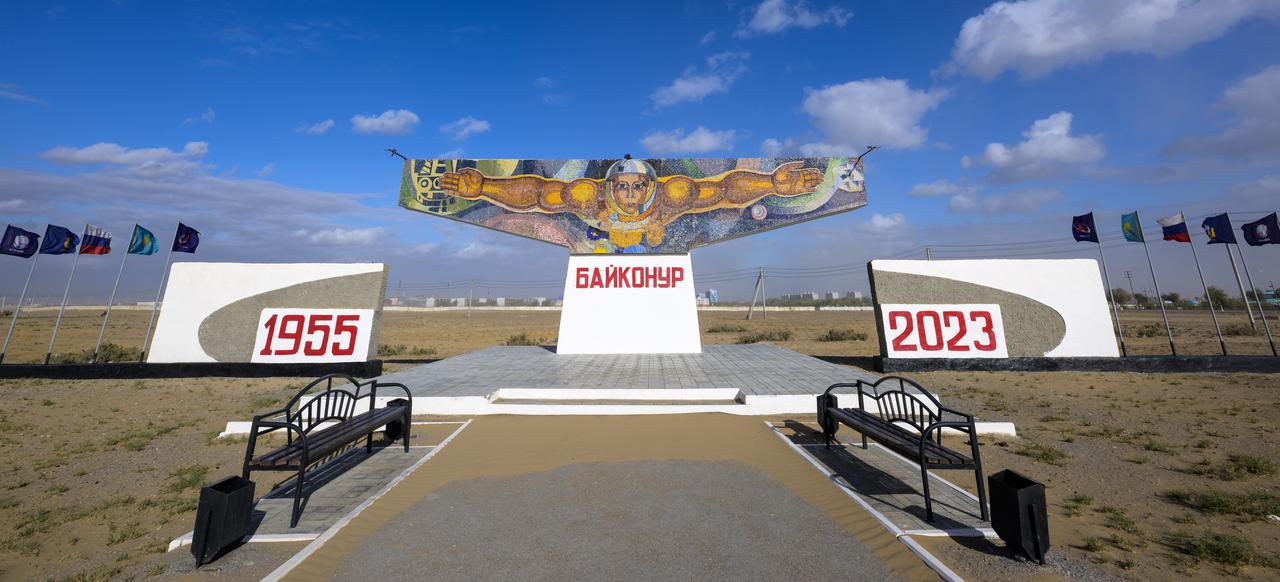
A mosaic sign welcomes visitors outside the town of Baikonur, Kazakhstan, Monday, Sept. 11, 2023. NASA team members arrived in Baikonur, Kazakhstan in advance of the Sept. 15, MS-24 spacecraft launch with Expedition 70 NASA astronaut Loral O'Hara, and Roscosmos cosmonauts Oleg Kononenko, and Nikolai Chub. Photo Credit: (NASA/Bill Ingalls)
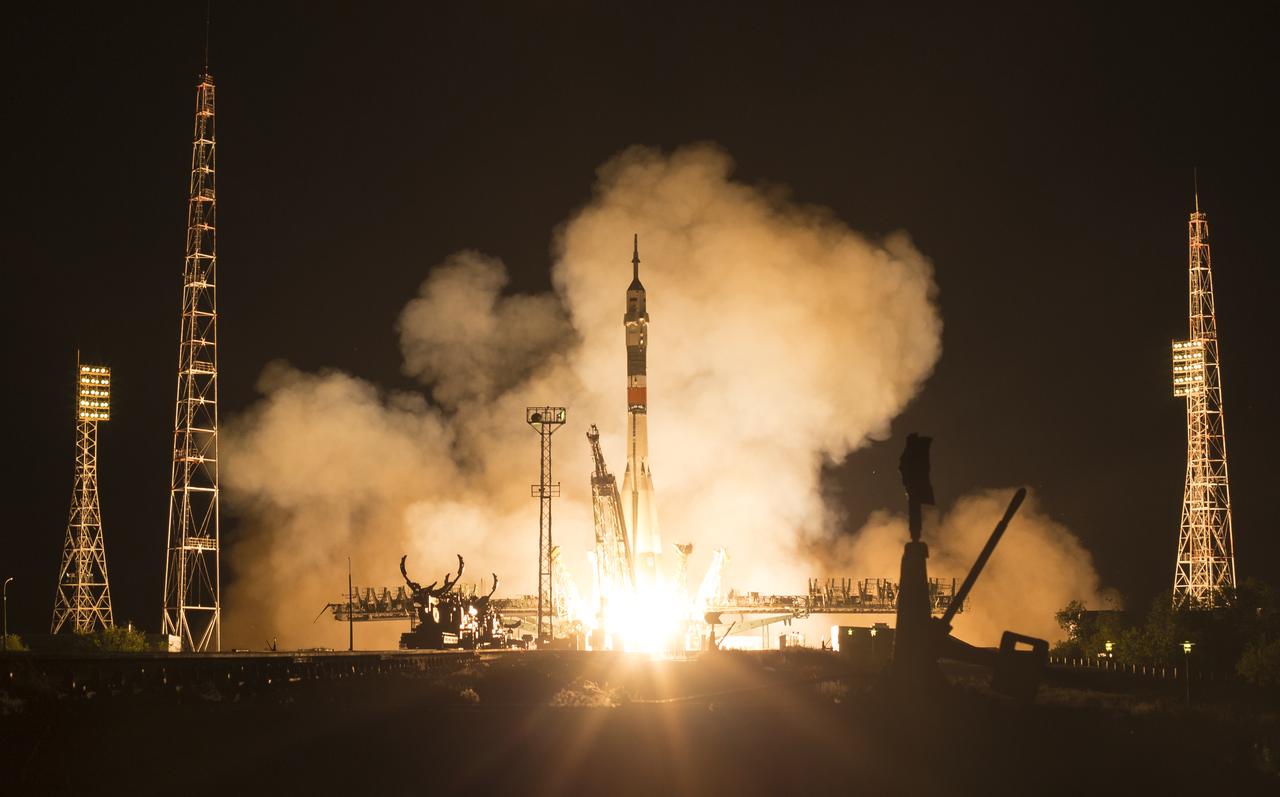
The Soyuz MS-13 rocket is launched with Expedition 60 Soyuz Commander Alexander Skvortsov of Roscosmos, flight engineer Andrew Morgan of NASA, and flight engineer Luca Parmitano of ESA (European Space Agency), Saturday, July 20, 2019 at the Baikonur Cosmodrome in Kazakhstan. Skvortsov, Morgan, and Parmitano launched at 12:28 p.m. Eastern time (9:28 p.m. Baikonur time) to begin their mission to the International Space Station. Photo Credit: (NASA/Joel Kowsky)
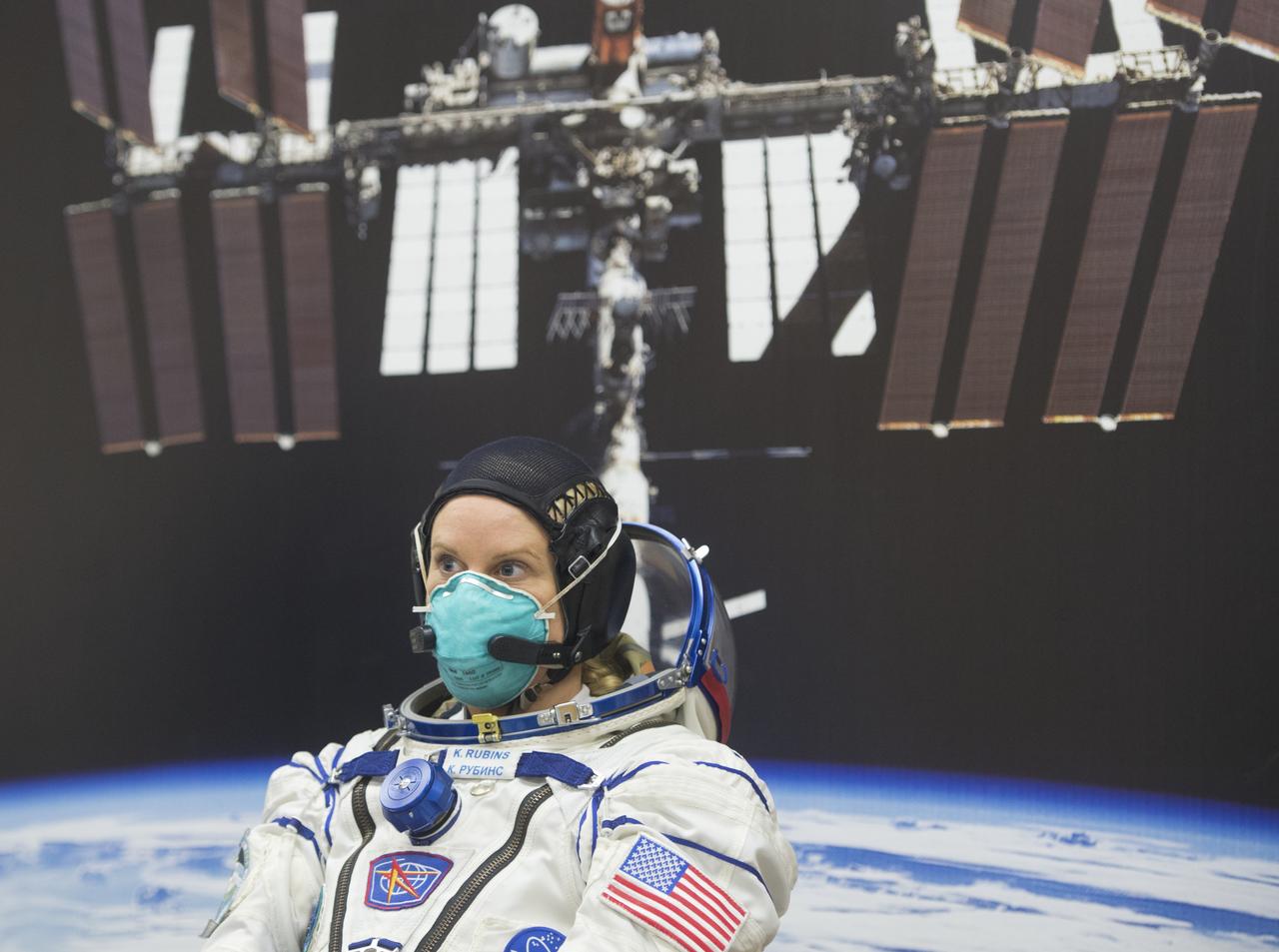
Expedition 64 NASA astronaut Kate Rubins is seen as she waits to have her Russian Sokol suit pressure checked as she and fellow crewmates Sergey Kud-Sverchkov and Sergey Ryzhikov of Roscosmos prepare for their Soyuz launch to the International Space Station Wednesday, Oct. 14, 2020, at the Baikonur Cosmodrome in Kazakhstan. The trio launched at 1:45 a.m. EDT to begin a six-month mission aboard the International Space Station. Photo Credit: (NASA/GCTC/Andrey Shelepin)
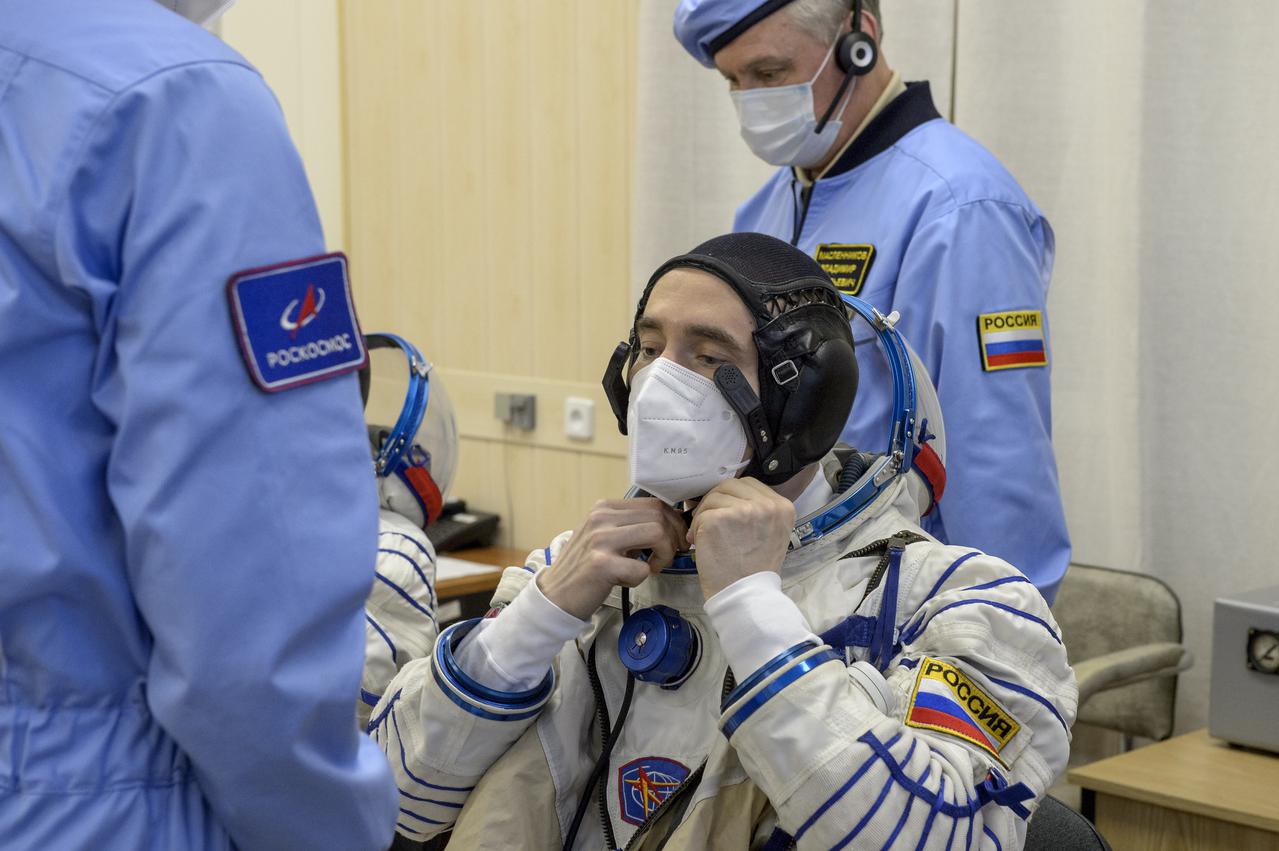
Expedition 65 Russian cosmonaut Pyotr Dubrov is helped into his Russian Sokol suit as he and fellow crewmates Russian cosmonaut Oleg Novitskiy and NASA astronaut Mark Vande Hei, prepare for their Soyuz launch to the International Space Station Friday, April 9, 2021 in Baikonur, Kazakhstan. Launch of the Soyuz rocket sent the trio on a mission to the International Space Station. Photo Credit: (NASA/GCTC/Irina Spector)
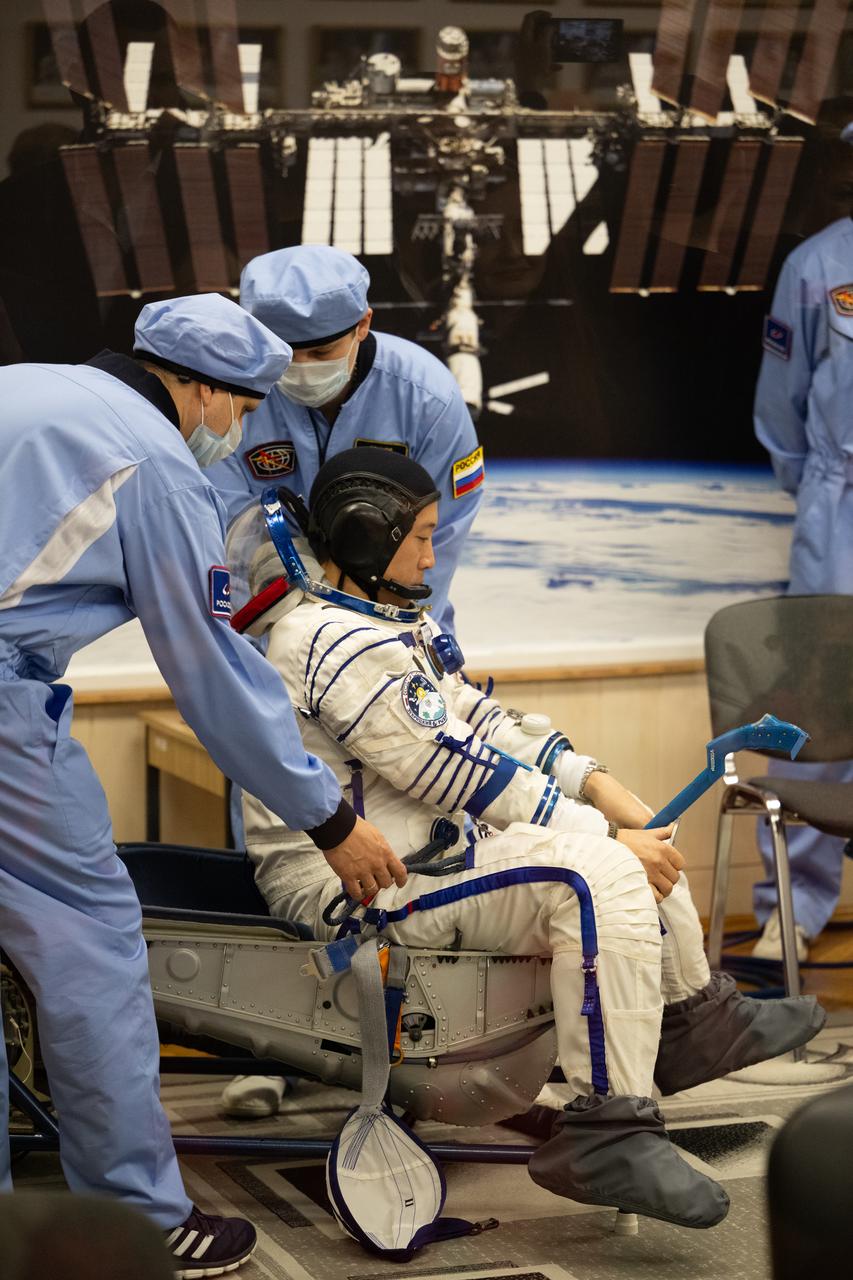
NASA astronaut Jonny Kim prepares to have his Russian Sokol suit pressure checked as he and fellow crewmates, Roscosmos cosmonauts Sergey Ryzhikov and Alexey Zubritskiy prepare for their Soyuz launch to the International Space Station Tuesday, April 8, 2025 (April 7 Eastern Time), in Baikonur, Kazakhstan. The launch will send Kim, Ryzhikov, Zubritskiy on a mission to the International Space Station. Photo Credit: (NASA/Joel Kowsky)
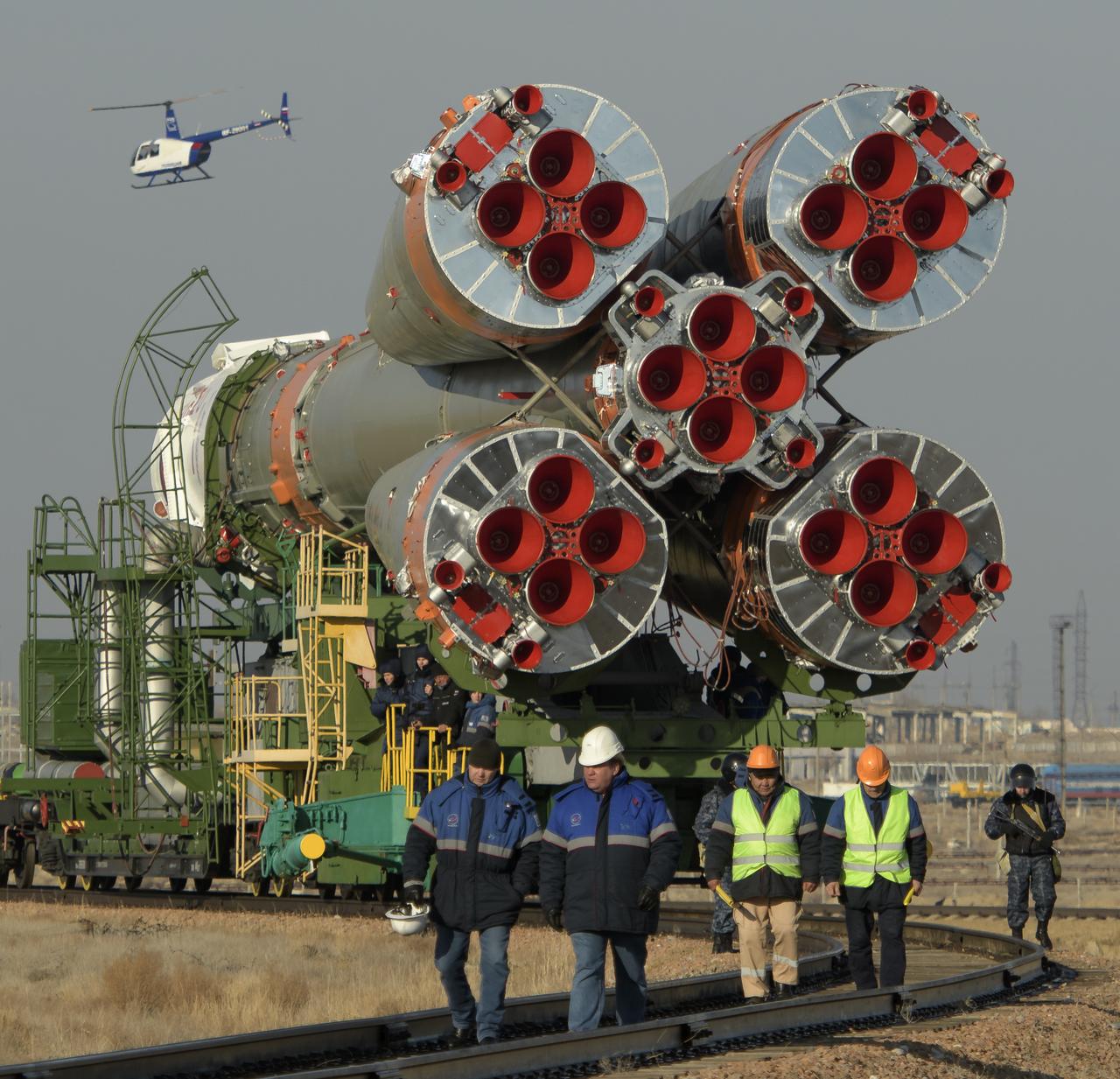
The Soyuz rocket is transported by train to the launch pad, Tuesday, March 12, 2019 at the Baikonur Cosmodrome in Kazakhstan. Expedition 59 crewmembers Nick Hague and Christina Koch of NASA, along with Alexey Ovchinin of Roscosmos, will launch March 14, U.S. time, on the Soyuz MS-12 spacecraft from the Baikonur Cosmodrome for a six-and-a-half month mission on the International Space Station. Photo Credit: (NASA/Bill Ingalls)
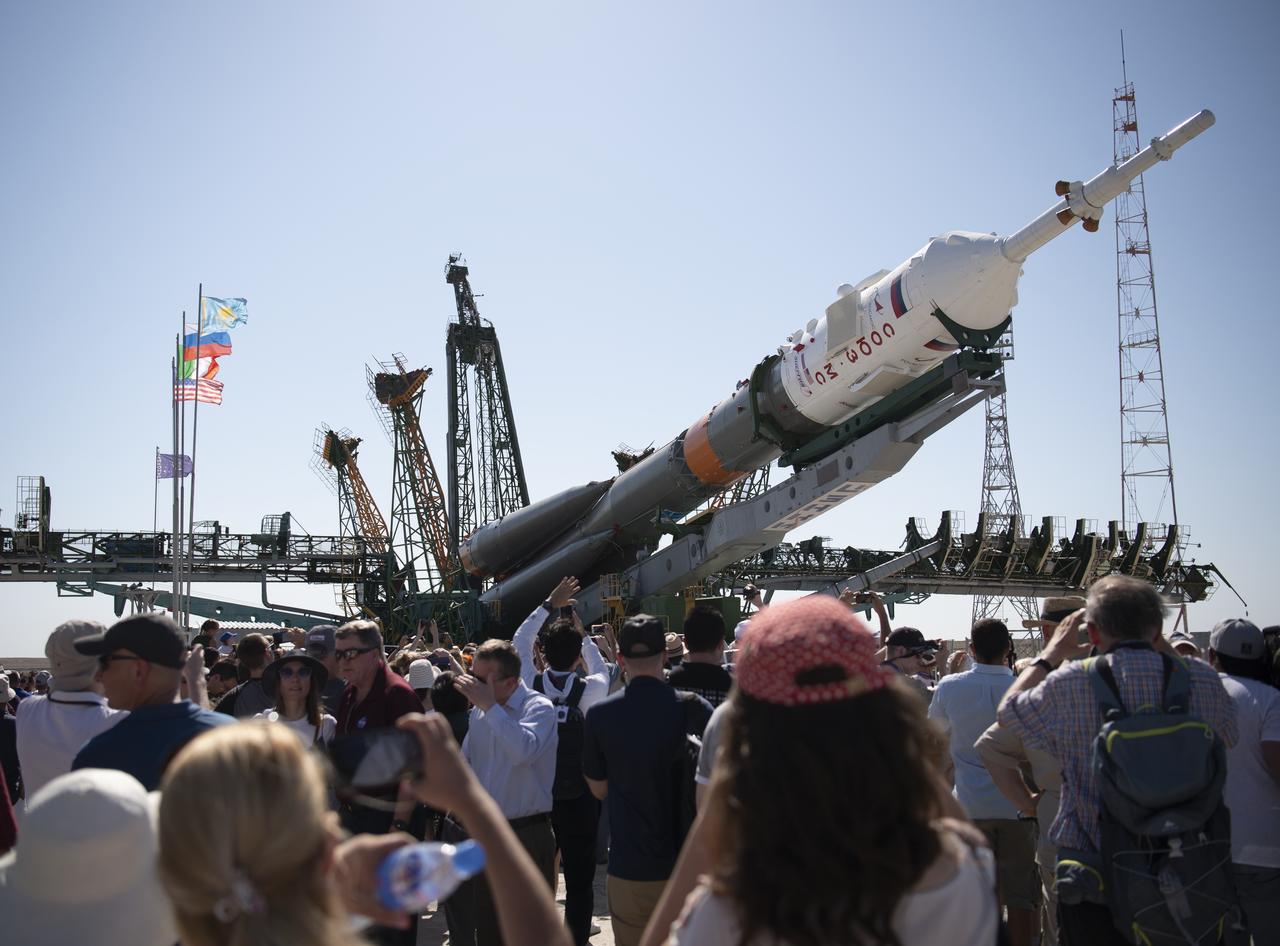
The Soyuz rocket is seen as it is raised into a vertical position on the launch pad, Thursday, July 18, 2019 at the Baikonur Cosmodrome in Kazakhstan. Expedition 60 Soyuz Commander Alexander Skvortsov of Roscosmos, flight engineer Andrew Morgan of NASA, and flight engineer Luca Parmitano of ESA (European Space Agency) are scheduled to launch aboard their Soyuz MS-13 spacecraft at 12:28 p.m. Eastern time (9:28 p.m. Baikonur time) , on Saturday, July 20. Photo Credit: (NASA/Joel Kowsky)
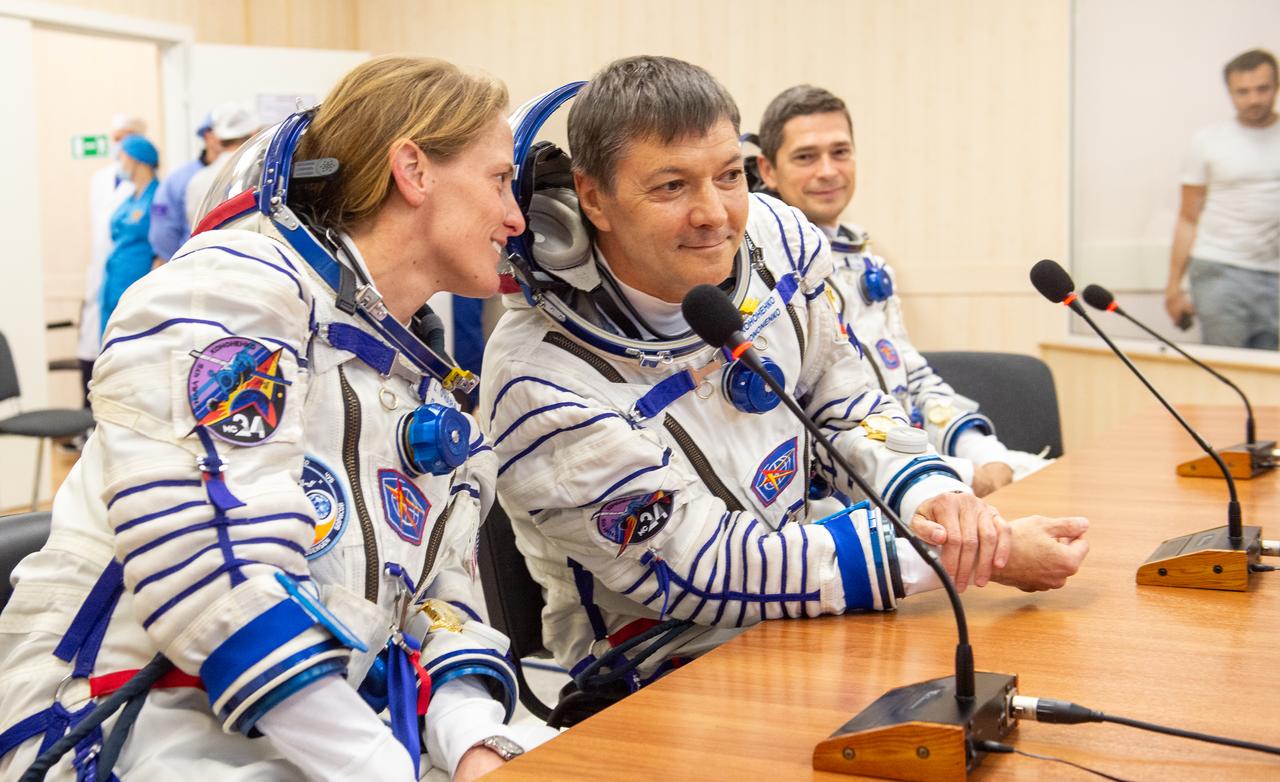
Expedition 70 Roscosmos cosmonauts Nikolai Chub, right, and Oleg Kononenko, center, along with NASA astronaut Loral O'Hara, visit with families shortly before departing for their Soyuz launch to the International Space Station, Friday, Sept. 15, 2023 in Baikonur, Kazakhstan. The launch will send Expedition 70 NASA astronaut Loral O'Hara and Roscosmos cosmonauts Oleg Kononenko and Nikolai Chub on a mission to the International Space Station. Photo Credit: (NASA/GCTC/Andrey Shelepin)
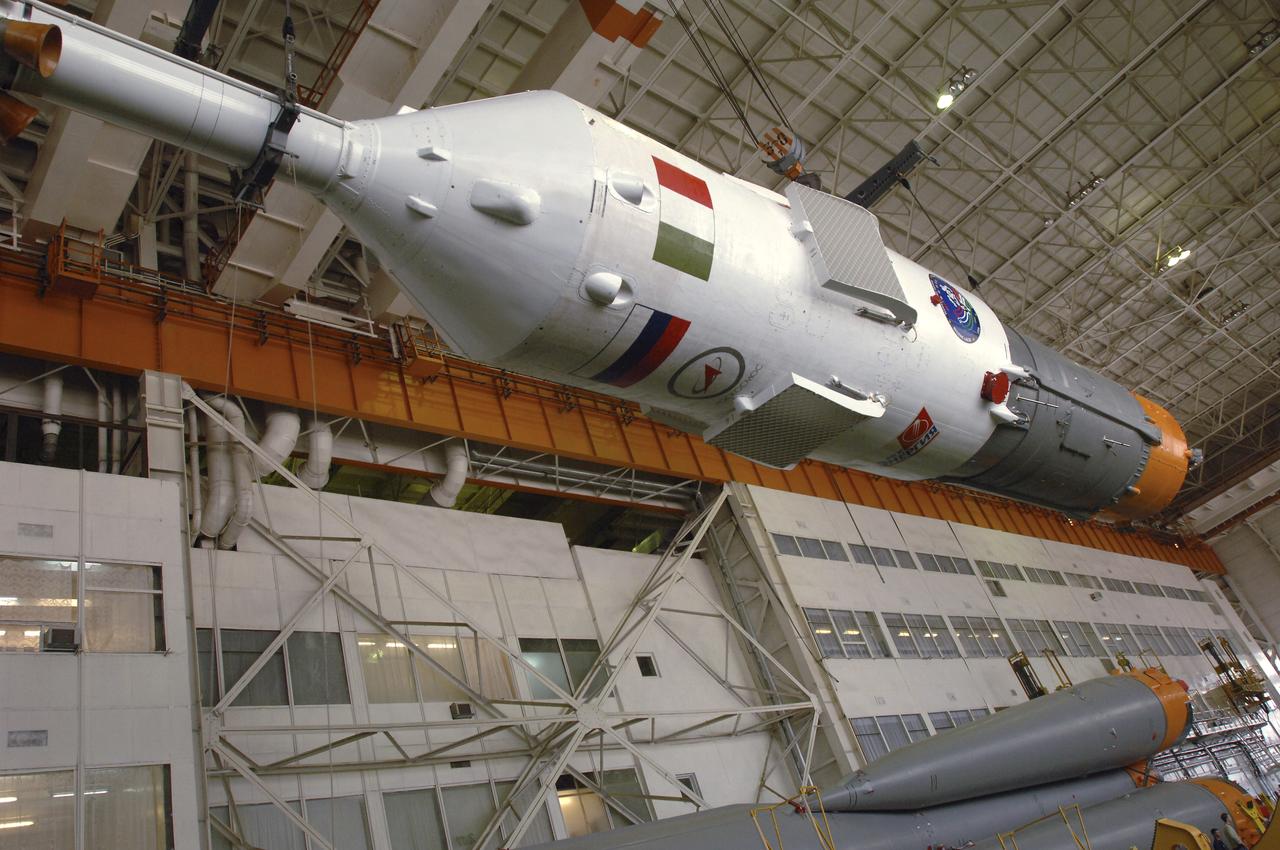
Russian technicians work, Tuesday, April 12, 2005, on mating the Soyuz TMA-6 spacecraft to the booster rocket inside the integration facility at the Baikonur Cosmodrome in Kazakhstan as preparations continued for the April 15 launch of Expedition 11 with Commander Sergei Krikalev, Flight Engineer John Phillips and European Space Agency Astronaut Roberto Vittori, of Italy, to the International Space Station. The rocket mating operation occurred on the 44th anniversary of the launch of Yuri Gagarin from the same complex to become the first human in space. Photo Credit: (NASA/Bill Ingalls)
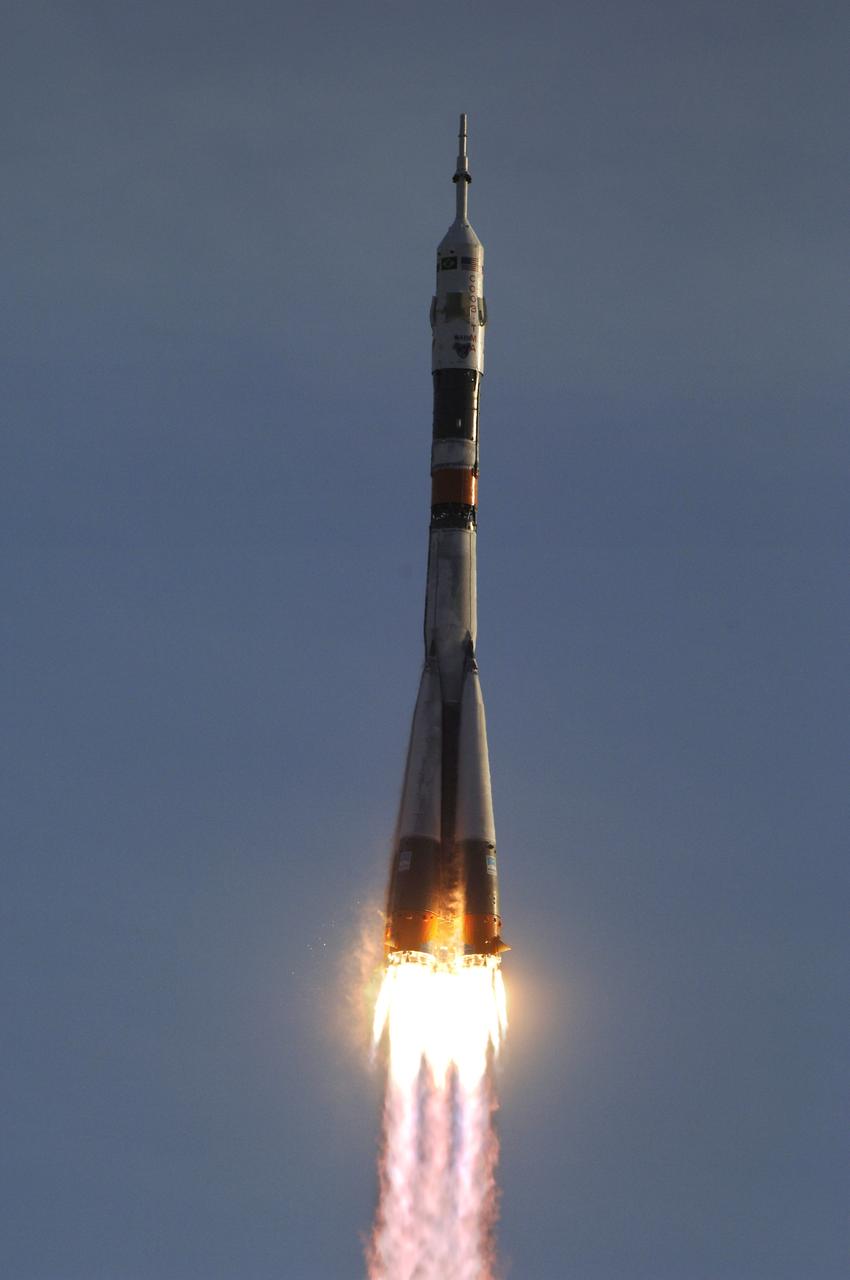
The Soyuz TMA-8 rocket launched from the Baikonur Cosmodrome in Baikonur, Kazakhstan on Wednesday, March 29, 2006 at 9:30 p.m. EST, (Thursday, March 30, 2006, 8:30 a.m. Kazakhstan time). Aboard the spacecraft are Expedition 13 Commander Pavel V. Vinogradov, Science Officer and Flight Engineer Jeffrey N. Williams, and Brazilian Space Agency Soyuz crew member Marcos Pontes. Photo Credit: (NASA/Bill Ingalls)
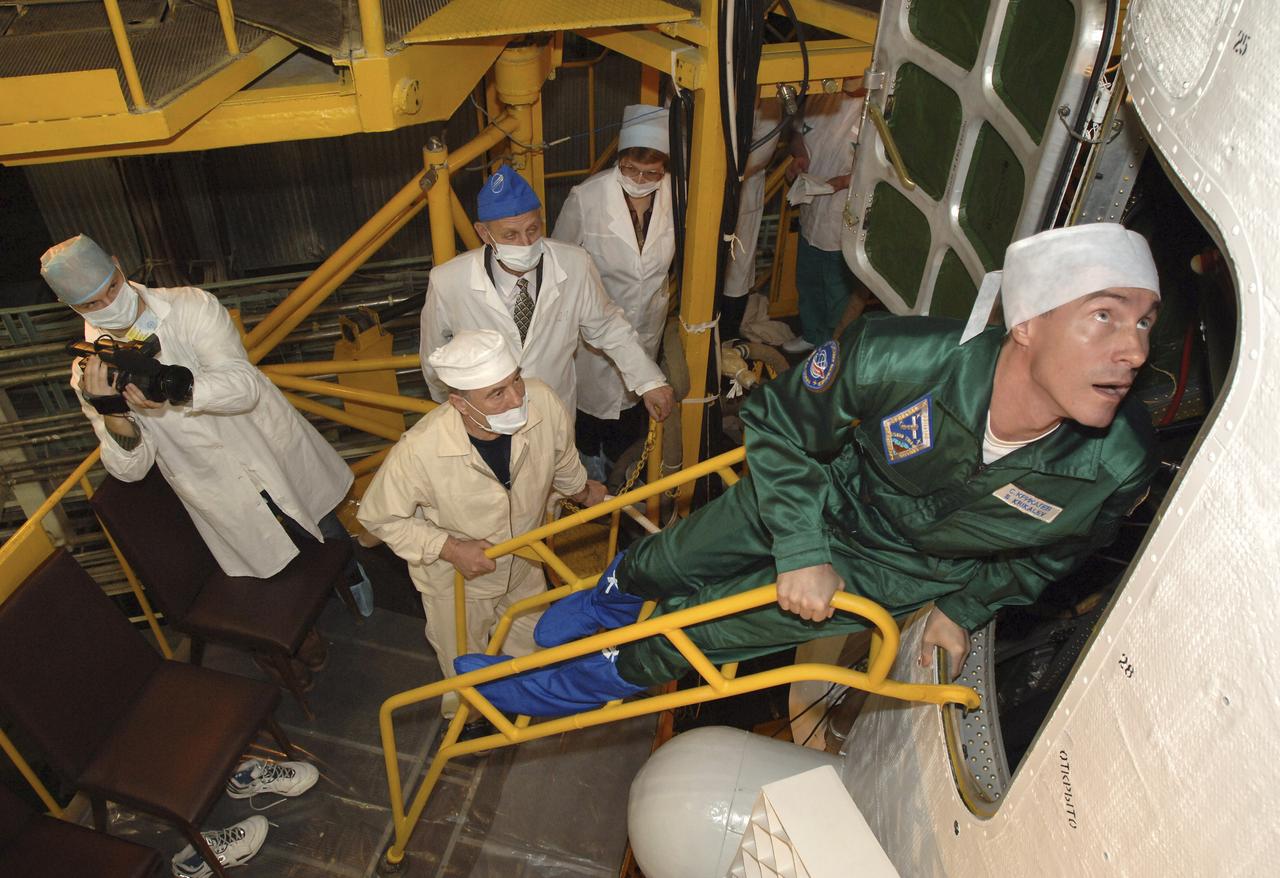
Expedition 11 Commander Sergei Krikalev enters the Soyuz TMA-6 spacecraft at the Baikonur Cosmodrome in Baikonur, Kazakhstan, Sunday, April 10, 2005, during preparations for launch to the International Space Station. Krikalev, along with Flight Engineer John Phillips and European Space Agency astronaut Roberto Vittori will launch April 15 on the Soyuz TMA-6 spacecraft to the International Space Station. Krikalev and Phillips will spend six months in space and greet the first Shuttle crew to fly in more than two years when it arrives at the station, while Vittori spends eight days on the station under a commercial contract between ESA and the Russian Federal Space Agency. Photo Credit: (NASA/Bill Ingalls)
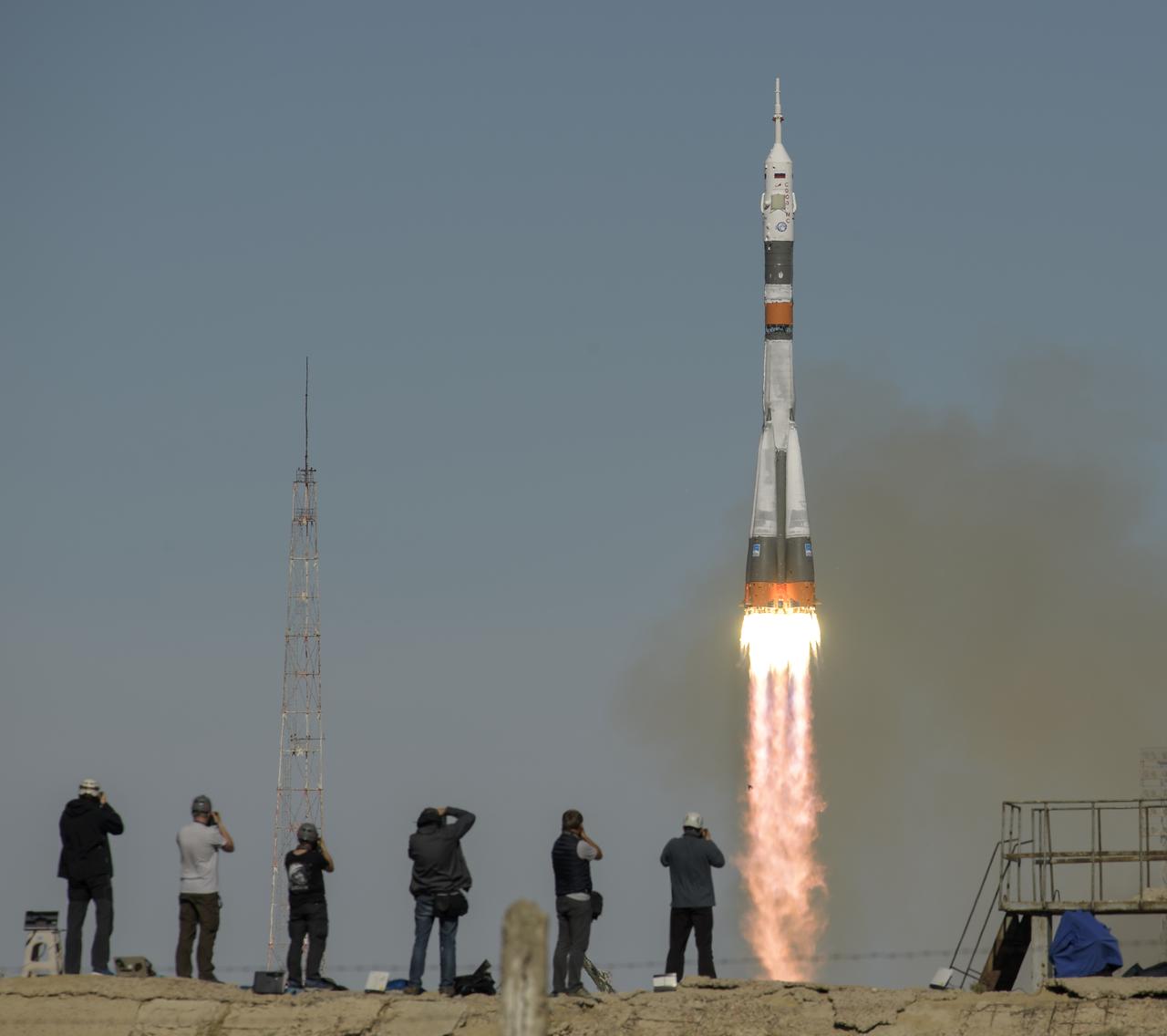
The Soyuz MS-10 spacecraft is launched with Expedition 57 Flight Engineer Nick Hague of NASA and Flight Engineer Alexey Ovchinin of Roscosmos, Thursday, Oct. 11, 2018 at the Baikonur Cosmodrome in Kazakhstan. During the Soyuz spacecraft's climb to orbit, an anomaly occurred, resulting in an abort downrange. The crew was quickly recovered and is in good condition. Photo Credit: (NASA/Bill Ingalls)
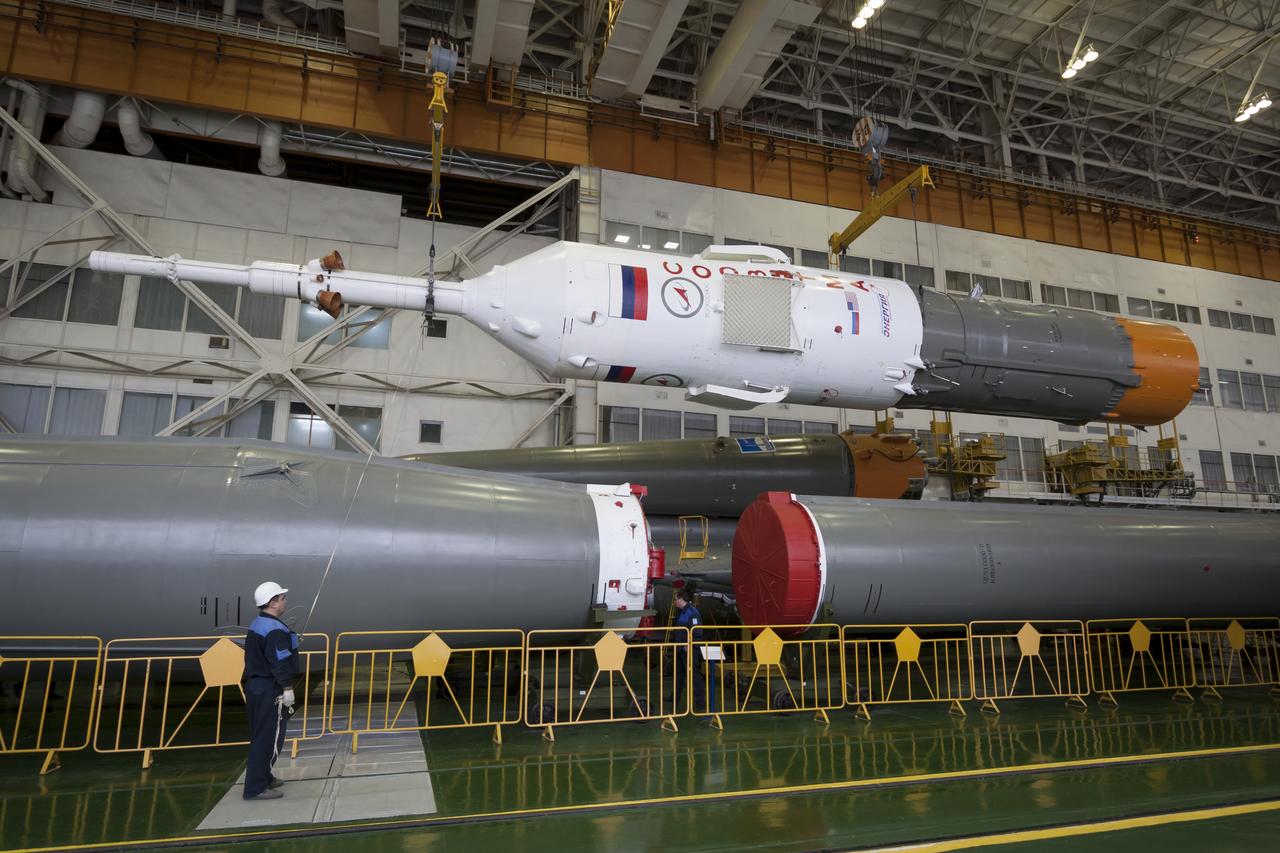
The Soyuz rocket and Soyuz TMA-12M spacecraft are assembled at Building 112 on the Baikonur Cosmodrome on Saturday, March 22, 2014 in Baikonur, Kazakhstan. Launch of the Soyuz is scheduled for March 26 and will send Expedition 39 Soyuz Commander Alexander Skvortsov of the Russian Federal Space Agency, Roscosmos, Flight Engineer Steven Swanson of NASA, and Flight Engineer Oleg Artemyev of Roscosmos on a six month mission to the International Space Station. Photo Credit: (NASA/Victor Zelentsov)
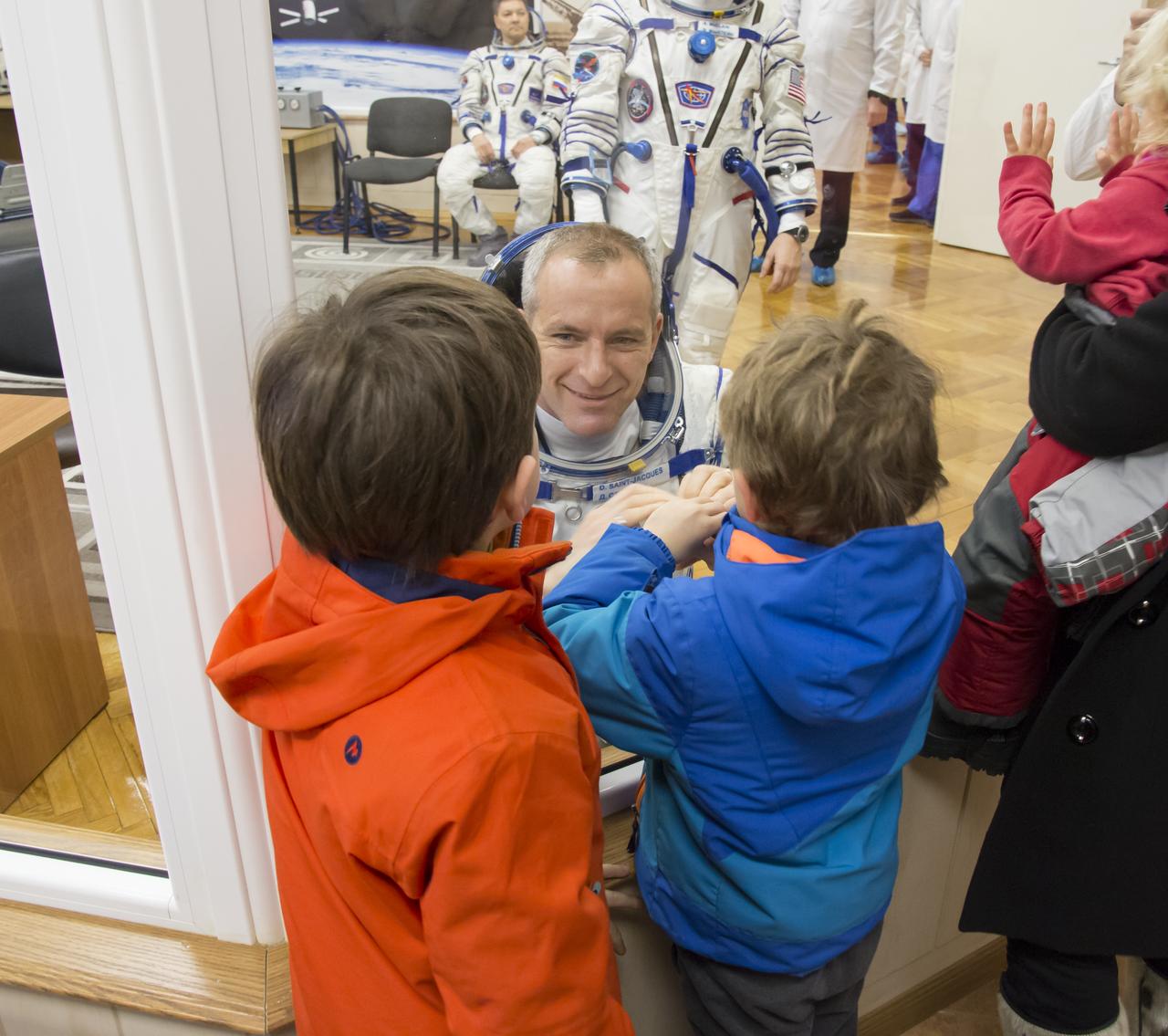
Expedition 58 Flight Engineer David Saint-Jacques of the Canadian Space Agency (CSA) puts his hands up to the glass, to meet his sons while in quarantine, after having his Russian Sokol suit pressure checked in preparation for his launch aboard the Soyuz MS-11 spacecraft on Monday, Dec. 3, 2018, at the Baikonur Cosmodrome in Kazakhstan. Launch of the Soyuz rocket is scheduled for the same day and will carry Saint-Jacques, Soyuz Commander Oleg Kononenko of Roscosmos, and Flight Engineer Anne McClain of NASA, and into orbit to begin their six and a half month mission on the International Space Station. Photo Credit: (NASA/Victor Zelentsov)
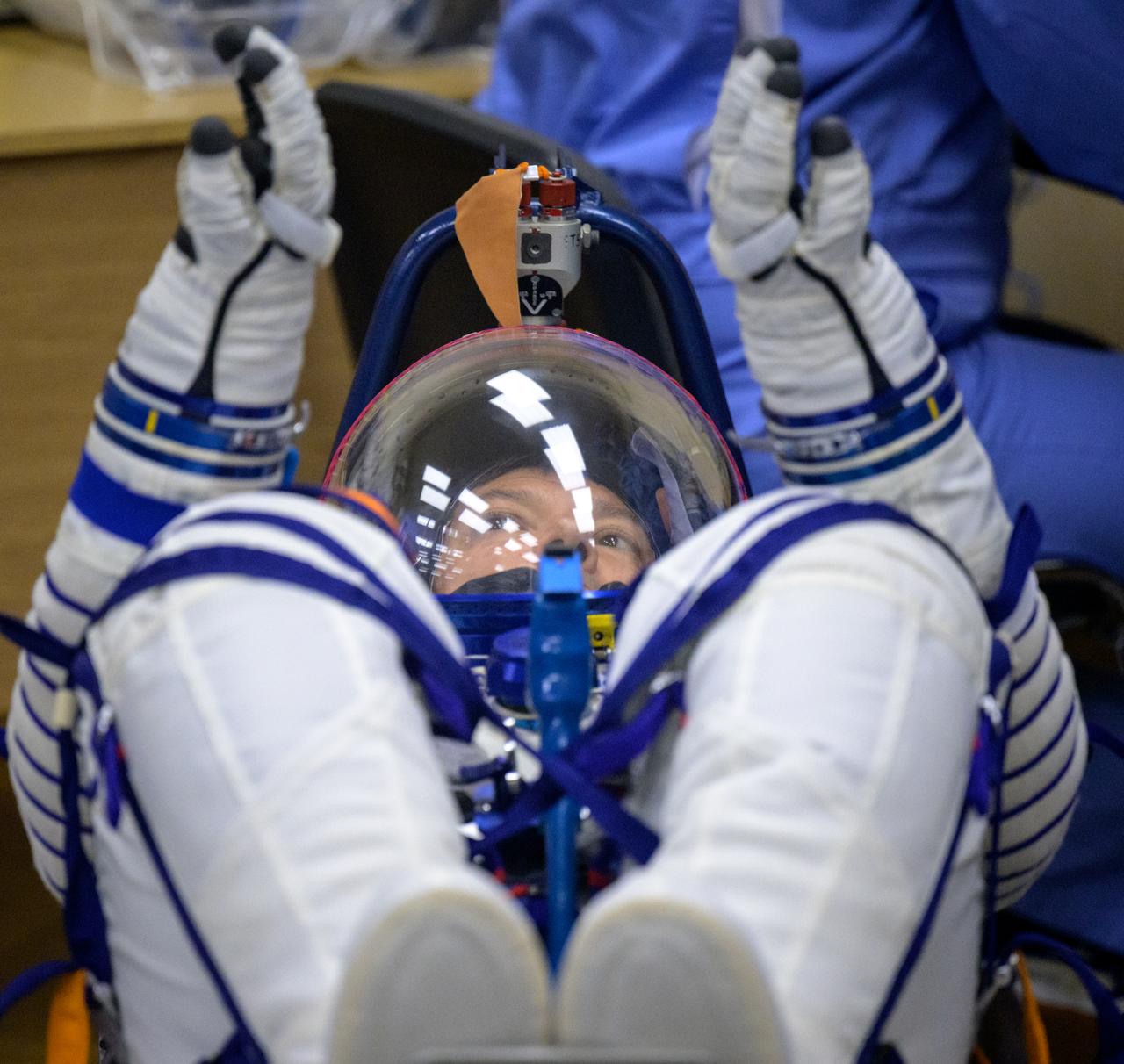
Expedition 70 Roscosmos cosmonaut Oleg Kononenko has his Russian Sokol Suit pressure checked ahead launching to the International Space Station with fellow crewmates, Roscosmos cosmonaut Nikolai Chub and NASA astronaut Loral O'Hara, Friday, Sept. 15, 2023 in Baikonur, Kazakhstan. The launch will send Expedition 70 NASA astronaut Loral O'Hara and Roscosmos cosmonauts Oleg Kononenko and Nikolai Chub on a mission to the International Space Station. Photo Credit: (NASA/Bill Ingalls)
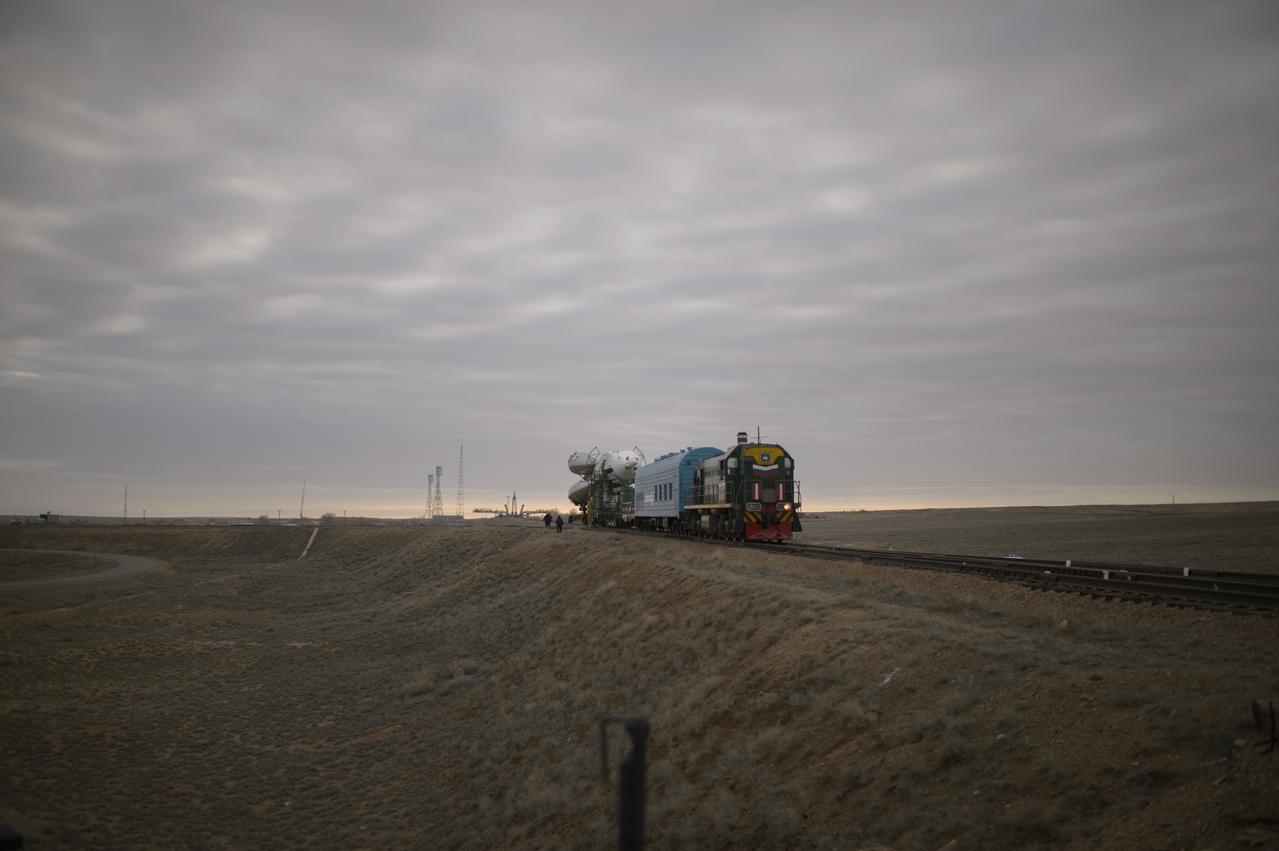
The Soyuz TMA-12M spacecraft is rolled out to the launch pad by train on Sunday, March 23, 2014, at the Baikonur Cosmodrome in Kazakhstan. Launch of the Soyuz rocket is scheduled for March 26 and will send Expedition 39 Soyuz Commander Alexander Skvortsov of the Russian Federal Space Agency, Roscosmos, Flight Engineer Steven Swanson of NASA, and Flight Engineer Oleg Artemyev of Roscosmos on a six-month mission aboard the International Space Station. Photo Credit: (NASA/Joel Kowsky)

The Soyuz rocket is seen, Thursday, Sept. 14, 2023 at pad 31 of the Baikonur Cosmodrome in Kazakhstan. Expedition 70 NASA astronaut Loral O'Hara, Roscosmos cosmonauts Oleg Kononenko, and Nikolai Chub are scheduled to launch aboard their Soyuz MS-24 spacecraft on Sept. 15. Photo Credit: (NASA/Bill Ingalls)
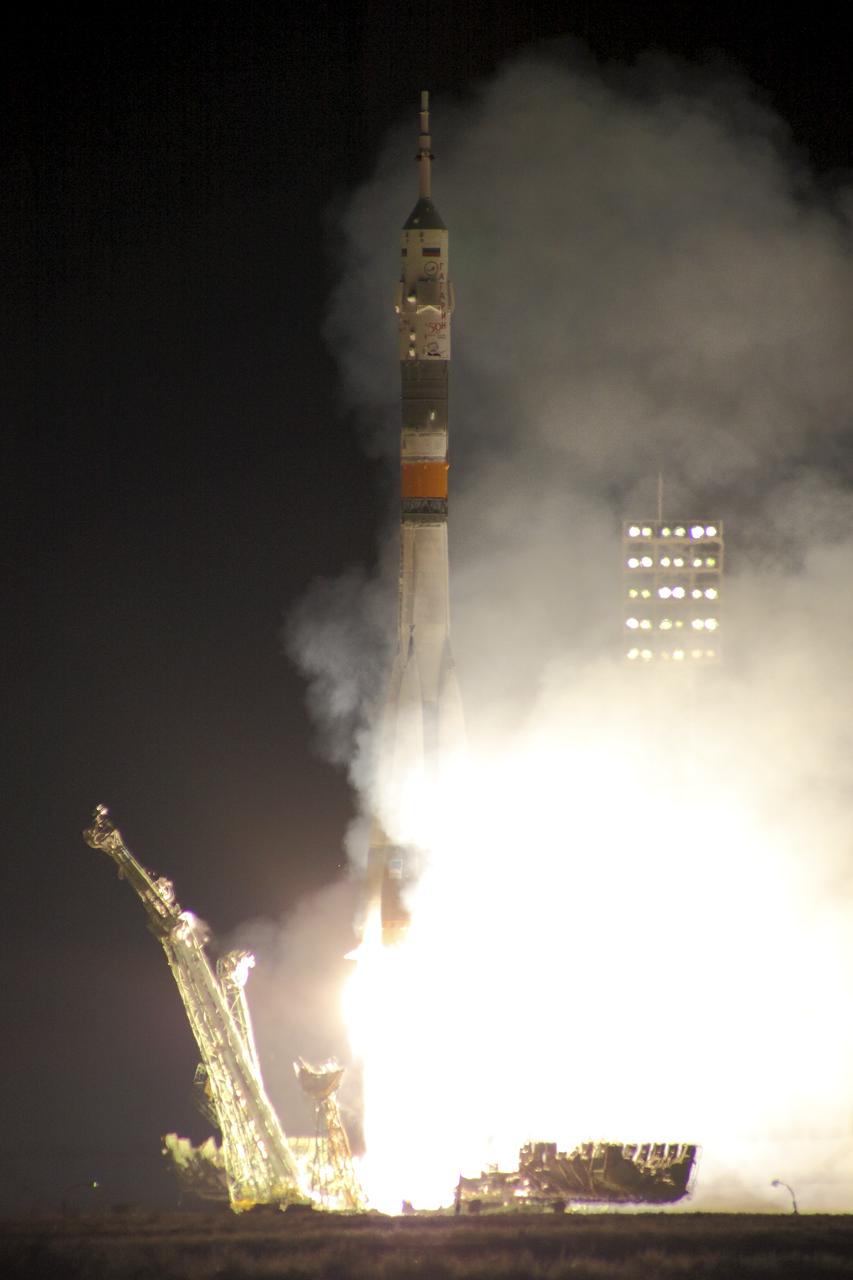
The Soyuz TMA-21 launches from the Baikonur Cosmodrome in Kazakhstan on Tuesday, April 5, 2011 carrying Expedition 27 Soyuz Commander Alexander Samokutyaev, NASA Flight Engineer Ron Garan and Russian Flight Engineer Andrey Borisenko to the International Space Station. The Soyuz, which has been dubbed "Gagarin", is launching one week shy of the 50th anniversary of the launch of Yuri Gagarin from the same launch pad in Baikonur on April 12, 1961 to become the first human to fly in space. Photo Credit: (NASA/Victor Zelentsov)
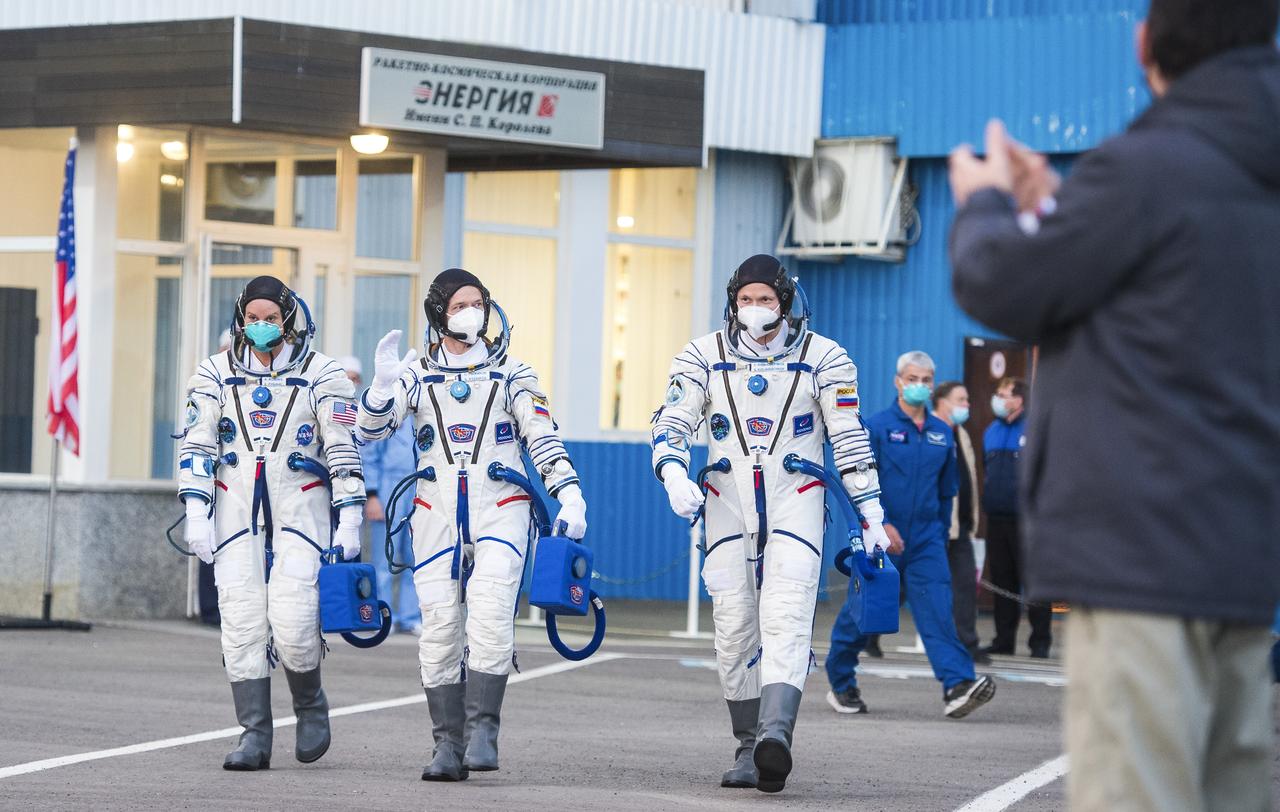
Expedition 64 NASA astronaut Kate Rubins, left, and Russian cosmonauts Sergey Ryzhikov, center, and Sergey Kud-Sverchkov, right, of Roscosmos are seen as they depart Building 254 to head to their launch onboard the Soyuz MS-17 spacecraft, Wednesday, Oct. 14, 2020, at the Baikonur Cosmodrome in Kazakhstan. The trio launched at 1:45 a.m. EDT to begin a six-month mission aboard the International Space Station. Photo Credit: (NASA/GCTC/Andrey Shelepin)
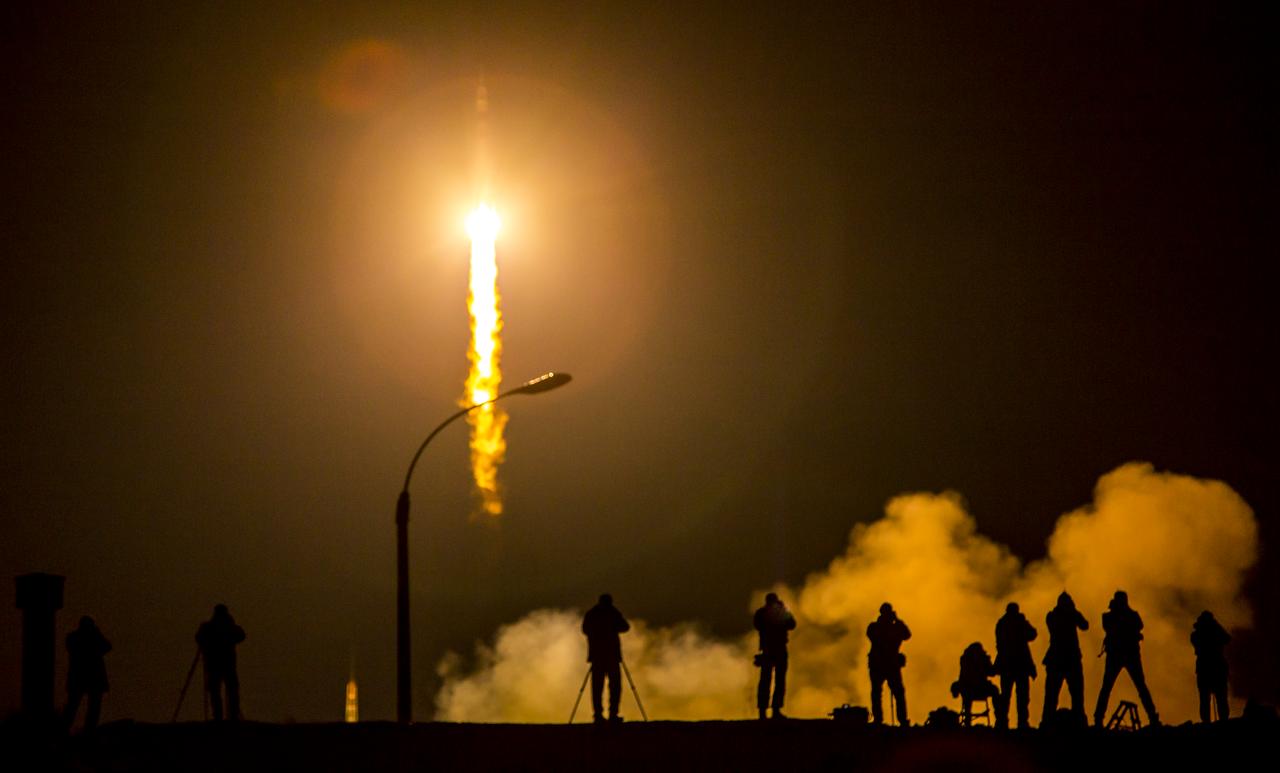
Media photograph the Soyuz TMA-16M spacecraft as it launches to the International Space Station with Expedition 43 NASA Astronaut Scott Kelly, Russian Cosmonauts Mikhail Kornienko, and Gennady Padalka of the Russian Federal Space Agency (Roscosmos) onboard Saturday, March 28, 2015, Kazakh time (March 27 Eastern time) from the Baikonur Cosmodrome in Kazakhstan. As the one-year crew, Kelly and Kornienko will return to Earth on Soyuz TMA-18M in March 2016. Photo Credit (NASA/Bill Ingalls)
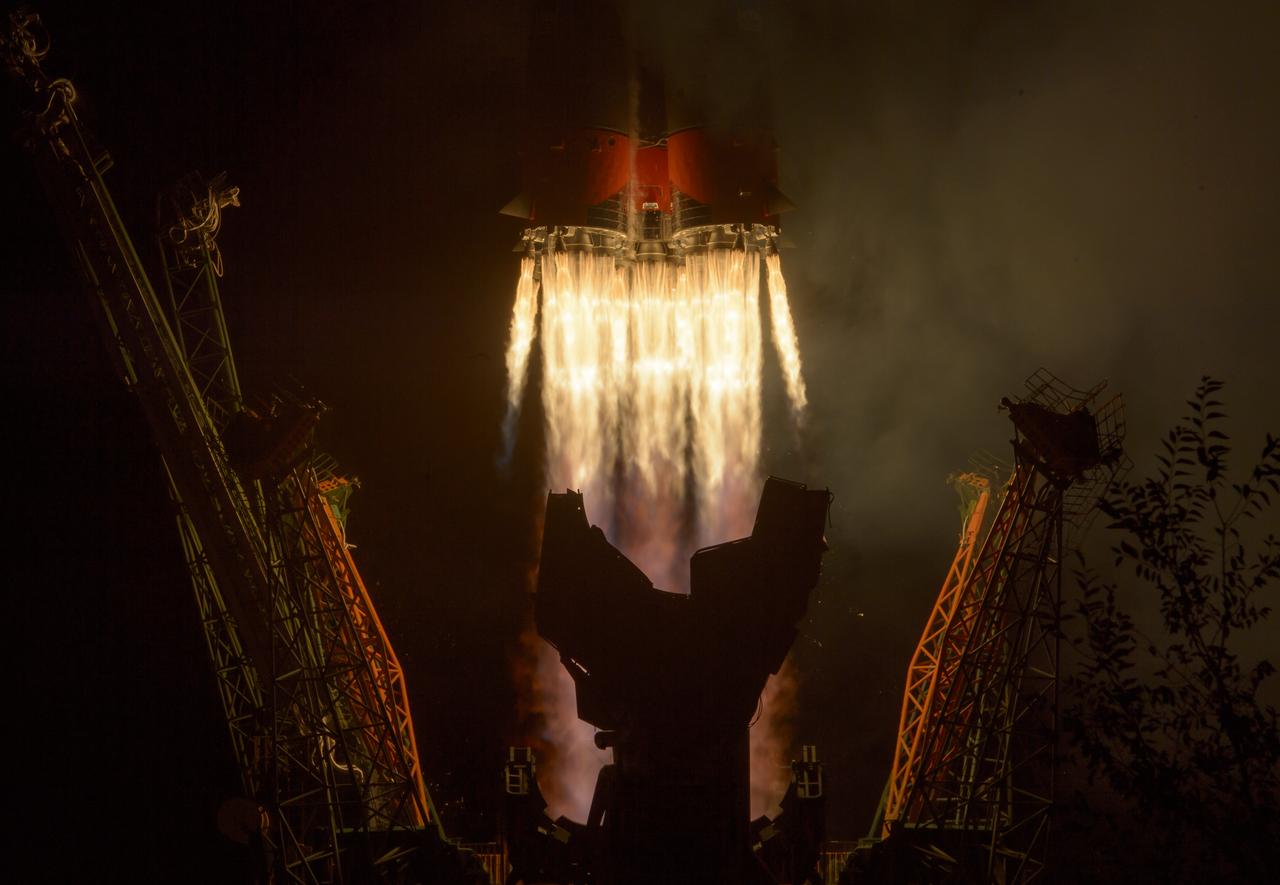
The Soyuz MS-15 spacecraft is launched with Expedition 61 crewmembers Jessica Meir of NASA and Oleg Skripochka of Roscosmos, and spaceflight participant Hazzaa Ali Almansoori of the United Arab Emirates Wednesday, Sept. 25, 2019 from the Baikonur Cosmodrome in Kazakhstan. Photo Credit: (NASA/Bill Ingalls)
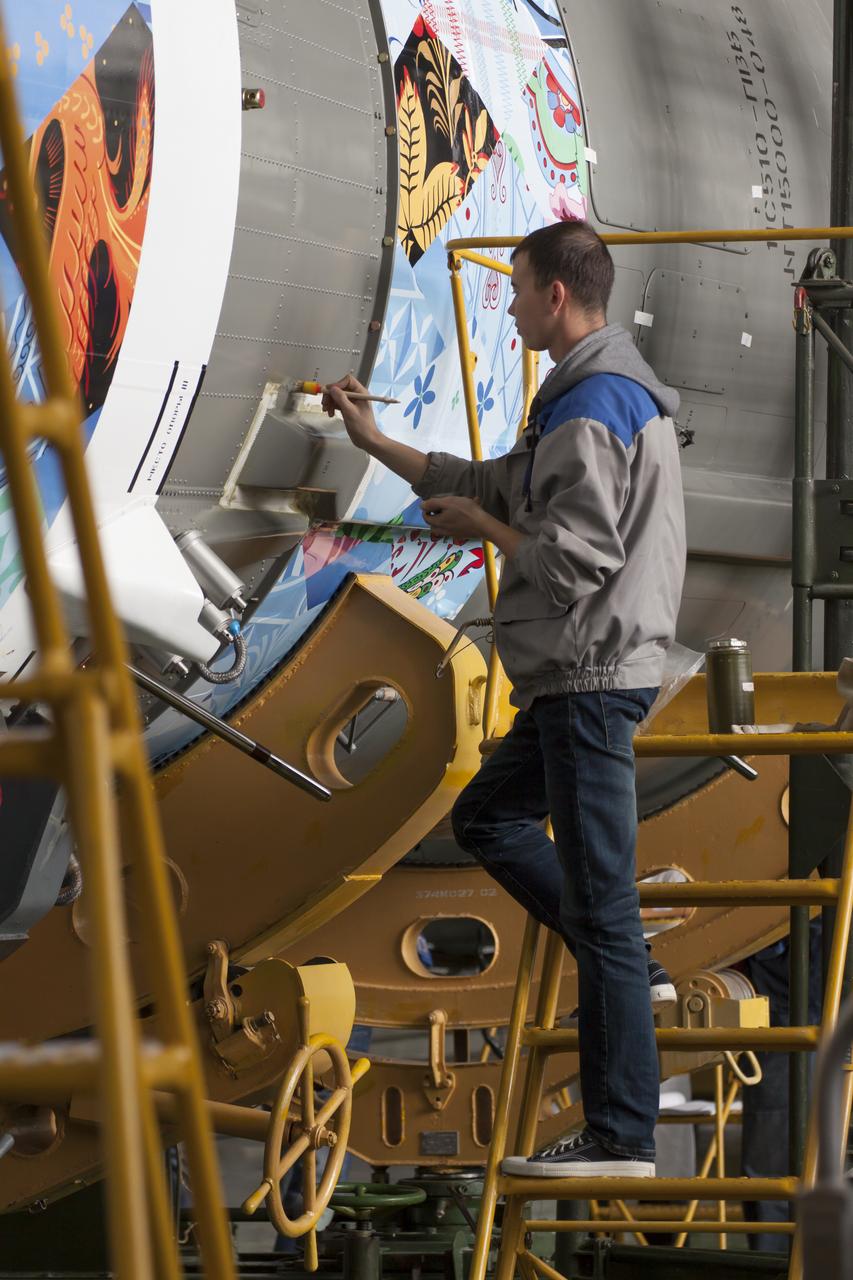
Workers make final preperations to a Soyuz TMA-11M spacecraft on Monday, Nov. 4, 2013, at the Baikonur Cosmodome in Baikonur, Kazakhstan. The rocket is adorned with the logo of the Sochi Olympic Organizing Committee and other related artwork to commemorate the launch of the Olympic torch with the crew for a four-day visit to the station. The torch will return to Earth with another trio of station residents on Nov. 11 and will be part of the torch relay that ends with the lighting of the flame at the Fisht Stadium in Sochi, Russia Feb. 7 to mark the opening of the 2014 Winter Olympics. Photo Credit: (NASA/Victor Zelentsov)
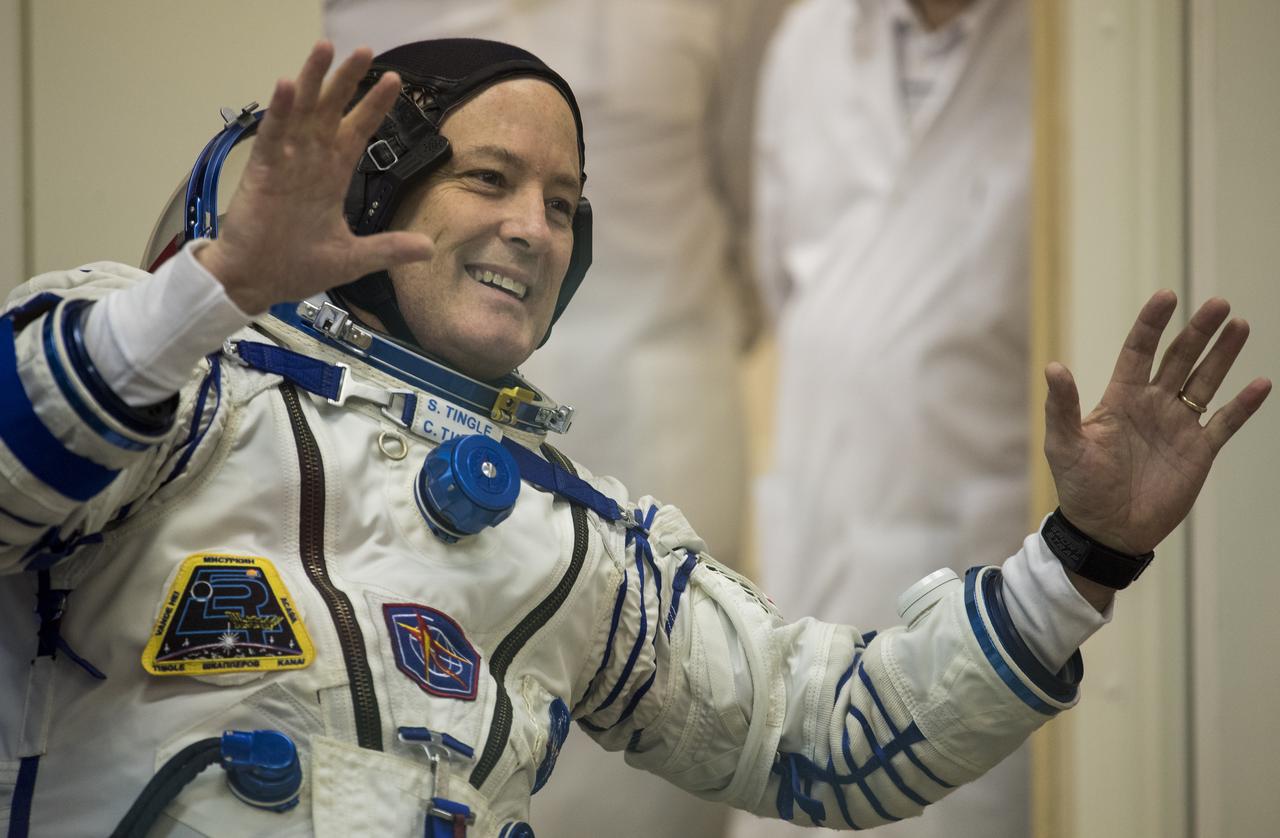
Expedition 54 flight engineer Scott Tingle of NASA is seen as he waits to have his Russian Sokol suit pressure checked in preparation for launch aboard the Soyuz MS-07 spacecraft, Sunday, Dec. 17, 2017 at the Baikonur Cosmodrome Kazakhstan. Launch of the Soyuz rocket will send Tingle and fellow crewmates Soyuz Commander Anton Shkaplerov of Roscosmos and flight engineer Norishige Kanai of the Japan Aerospace Exploration Agency (JAXA) on a five month mission aboard the International Space Station. Photo Credit: (NASA/Joel Kowsky)

The Soyuz rocket is rolled out by train to the launch pad, Monday, March 19, 2018 at the Baikonur Cosmodrome in Kazakhstan. Expedition 55 crewmembers Ricky Arnold and Drew Feustel of NASA and Oleg Artemyev of Roscosmos are scheduled to launch at 1:44 p.m. Eastern time (11:44 p.m. Baikonur time) on March 21 and will spend the next five months living and working aboard the International Space Station. Photo Credit: (NASA/Joel Kowsky)
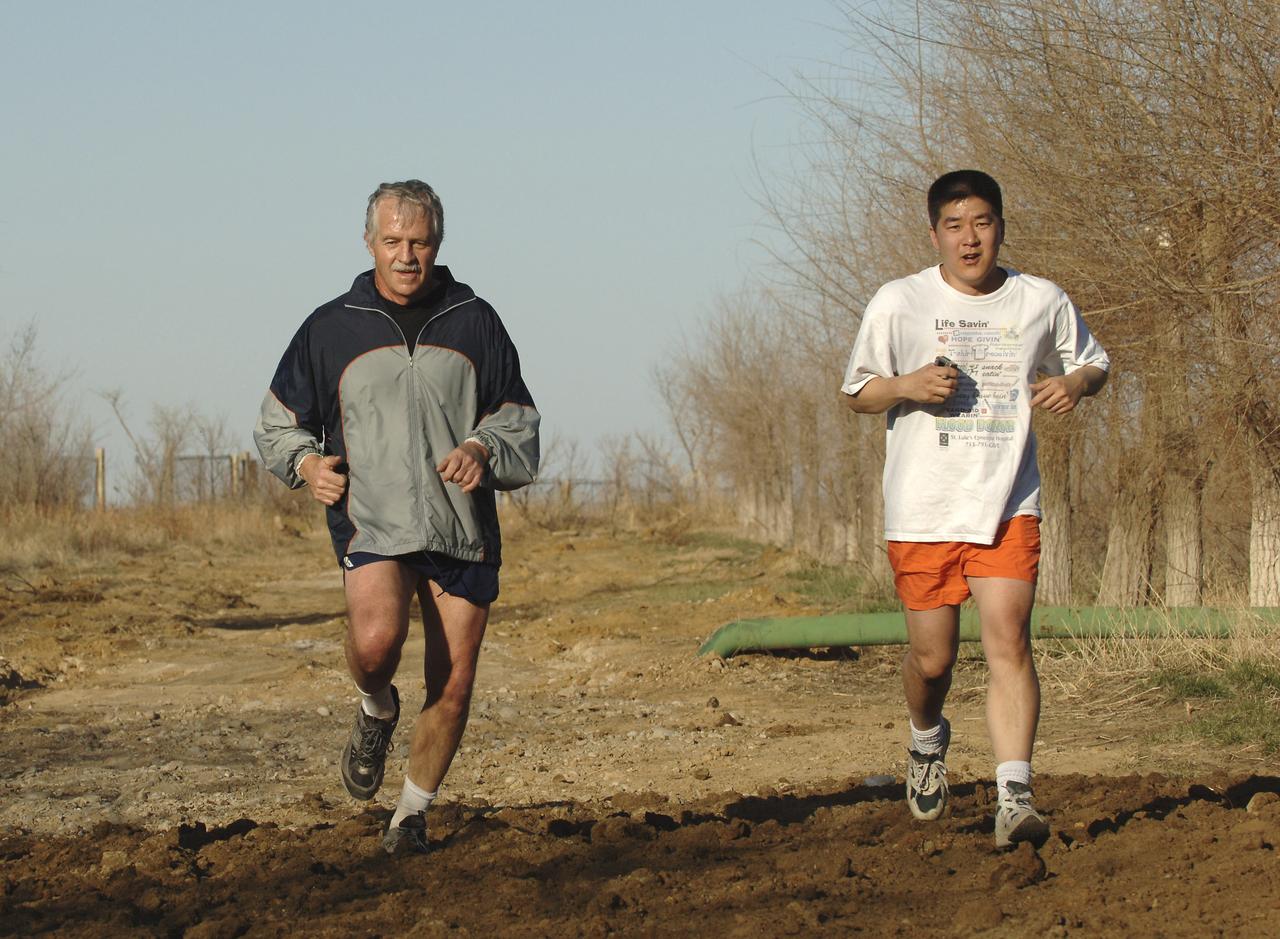
Expedition 11 Flight Engineer John Phillips, left, and backup American Dan Tani stay limber during an exercise session, Monday, April 11, 2005, in Baikonur, Kazakhstan as Philips prepares for the April 15 launch to the International Space Station with Expedition 11 Commander Sergei Krikalev and European Space Agency Astronaut Roberto Vittori, of Italy. Krikalev and Phillips will spend six months in space and greet the first Shuttle crew to fly in more than two years when arrive at the station, while Vittori spends eight days on the station under a commercial contract between ESA and the Russian Federal Space Agency. Photo Credit: (NASA/Bill Ingalls)
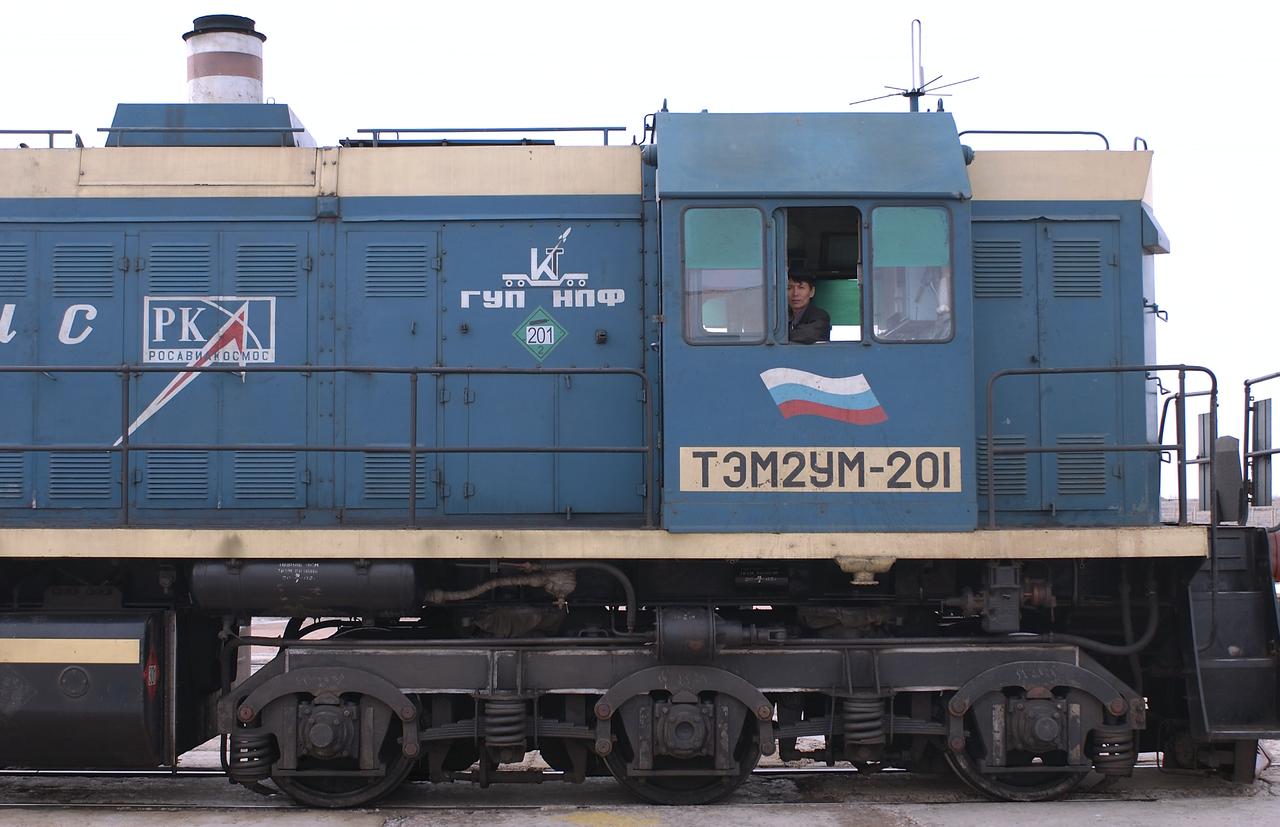
The rollout locomotive prepares to back away from the launch pad leaving the Soyuz TMA-4 capsule and its booster rocket at the Baikonur Cosmodrome on Saturday, April 17, 2004, in Baikonur, Kazakhstan in preparation for the launch of the Expedition 9 crew and a European researcher to the International Space Station on April 19. The Soyuz vehicle is transported to the launch pad horizontally on a railcar from its processing hangar in a process that takes about 2.5 hours to complete. Photo Credit: (NASA/Bill Ingalls)
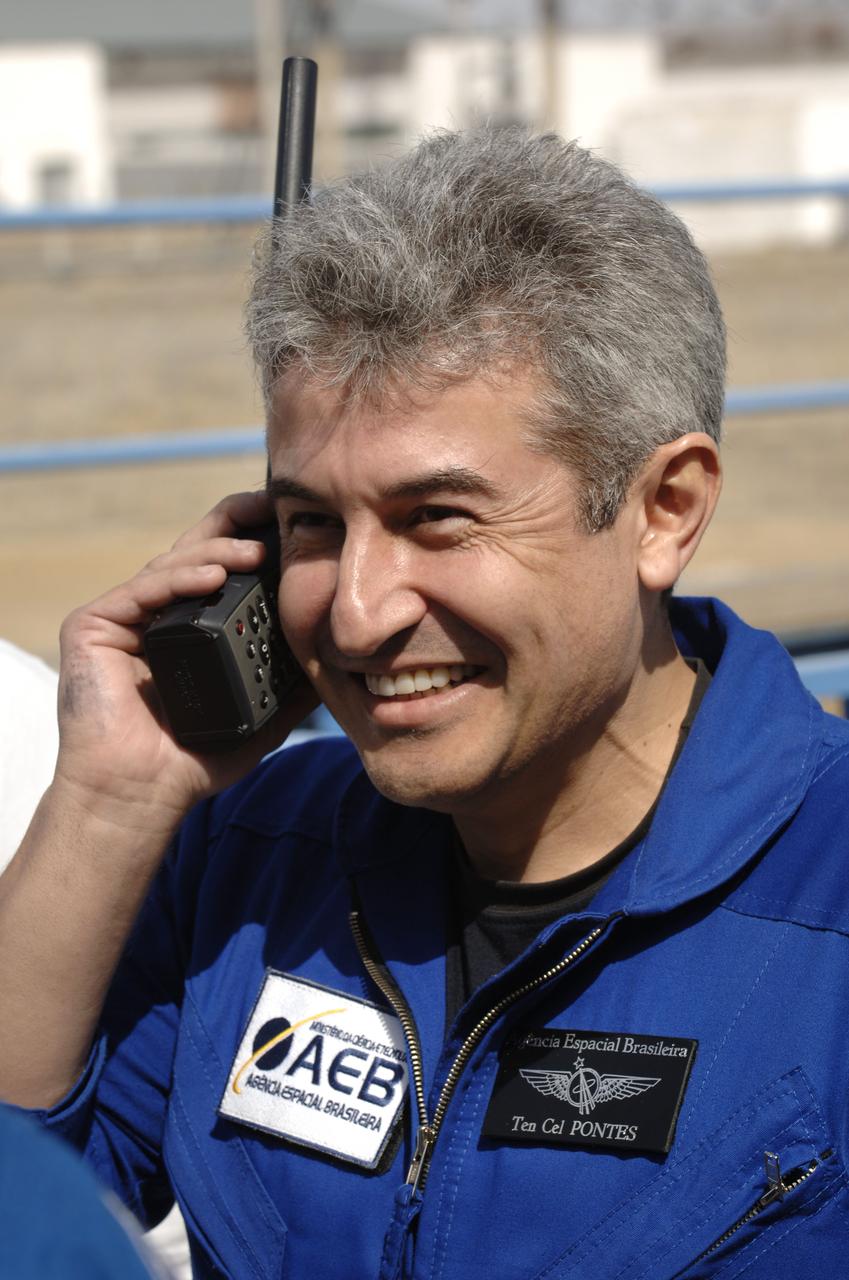
Marcos Pontes, Brazilian Space Agency Soyuz crew member who will spend 10 days aboard the International Space Station under an agreement with the Russian Federal Space Agency, uses a satellite phone after crew members' final check of the Soyuz at building 254 of the Baikonur Cosmodrome in Baikonur, Kazakhstan. Sunday, March 26, 2006. Photo Credit: (NASA/Bill Ingalls)

Roscosmos cosmonaut Sergey Ryzhikov has his Russian Sokol suit pressure checked as he and fellow crewmates, NASA astronaut Jonny Kim and Roscosmos cosmonaut Alexey Zubritskiy prepare for their Soyuz launch to the International Space Station Tuesday, April 8, 2025 (April 7 Eastern Time), in Baikonur, Kazakhstan. The launch will send Kim, Ryzhikov, Zubritskiy on a mission to the International Space Station. Photo Credit: (NASA/Joel Kowsky)
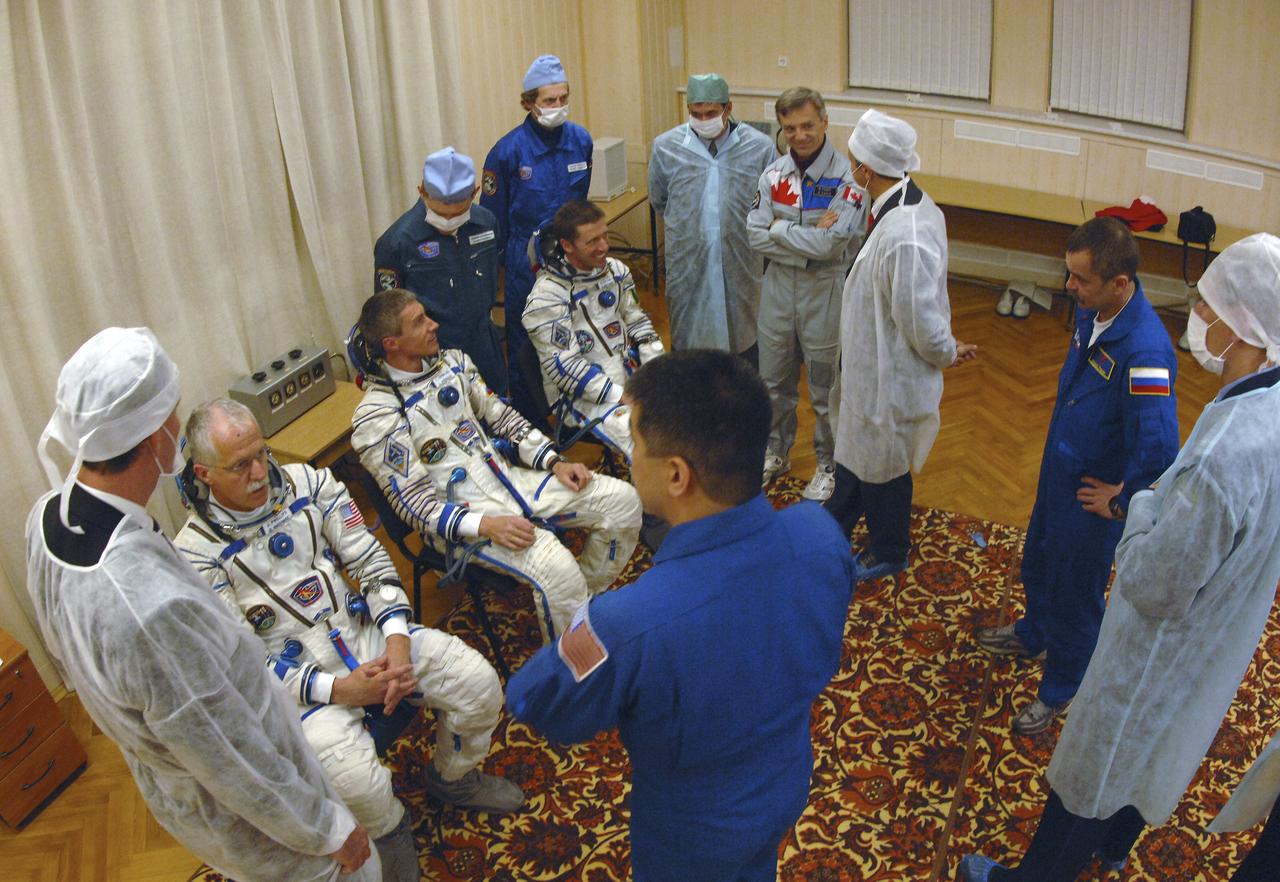
Expedition 11 Commander Sergei Krikalev, seated center, Flight Engineer and NASA Science Officer John Phillips, seated left and European Space Agency Astronaut Roberto Vittori, of Italy, seated right, relax prior to launch aboard the Soyuz TMA-6 spacecraft from the Baikonur Cosmodrome in Kazakhstan, Friday, April 15, 2005 for a two-day trip to the International Space Station. Photo Credit: (NASA/Bill Ingalls)
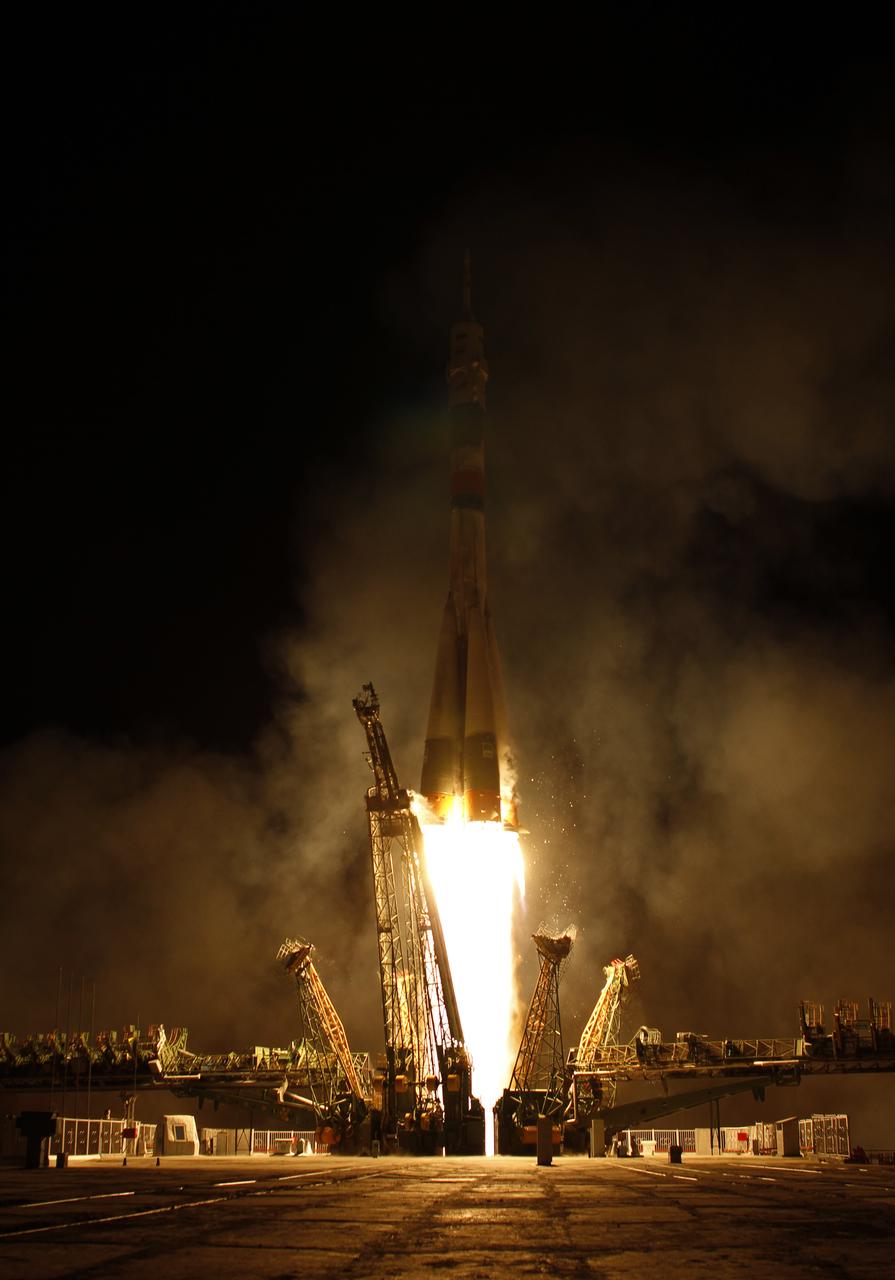
The Soyuz TMA-01M rocket launches from the Baikonur Cosmodrome in Kazakhstan on Friday, October 8, 2010 carrying Expedition 25 Soyuz Commander Alexander Kaleri of Russia, NASA Flight Engineer Scott J. Kelly and Russian Flight Engineer Oleg Skripochka to the International Space Station. Their Soyuz TMA-01M rocket launched at 5:10 a.m Kazakhstan time. (Photo Credit: NASA/Carla Cioffi)
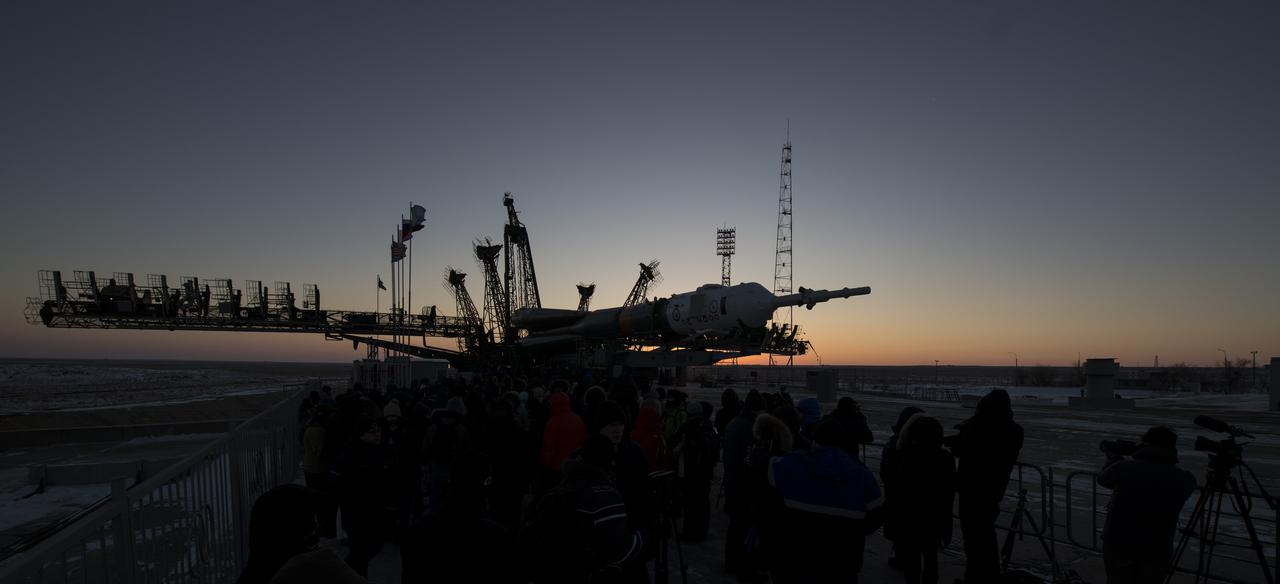
The Soyuz rocket is seen on the launch pad shortly after being rolled out by train, Friday, Dec. 15, 2017 at the Baikonur Cosmodrome in Kazakhstan. Expedition 54 Soyuz Commander Anton Shkaplerov of Roscosmos, flight engineer Scott Tingle of NASA, and flight engineer Norishige Kanai of the Japan Aerospace Exploration Agency (JAXA) are scheduled to launch at 2:21 a.m. Eastern Time (1:21 p.m. Baikonur time) on Dec. 17 and will spend the next five months living and working aboard the International Space Station. Photo Credit: (NASA/Joel Kowsky)
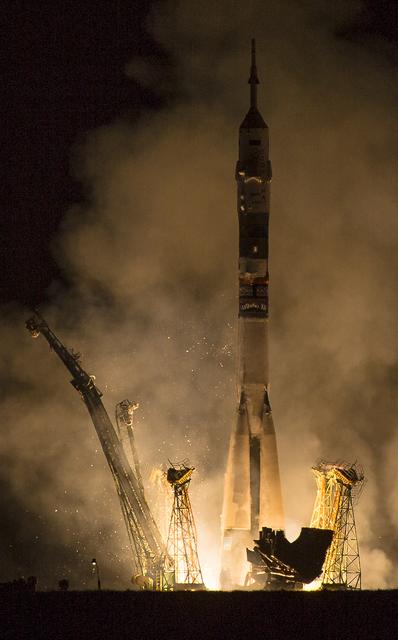
The Soyuz TMA-14M rocket is launched with Expedition 41 Soyuz Commander Alexander Samokutyaev of the Russian Federal Space Agency (Roscosmos) Flight Engineer Elena Serova of Roscosmos, and Flight Engineer Barry Wilmore of NASA, Friday, September 26, 2014 at the Baikonur Cosmodrome in Kazakhstan. Samokutyaev, Serova, and Wilmore will spend the next five and a half months aboard the International Space Station. Serova will become the fourth Russian woman to fly in space and the first Russian woman to live and work on the station. Photo Credit: (NASA/Joel Kowsky)
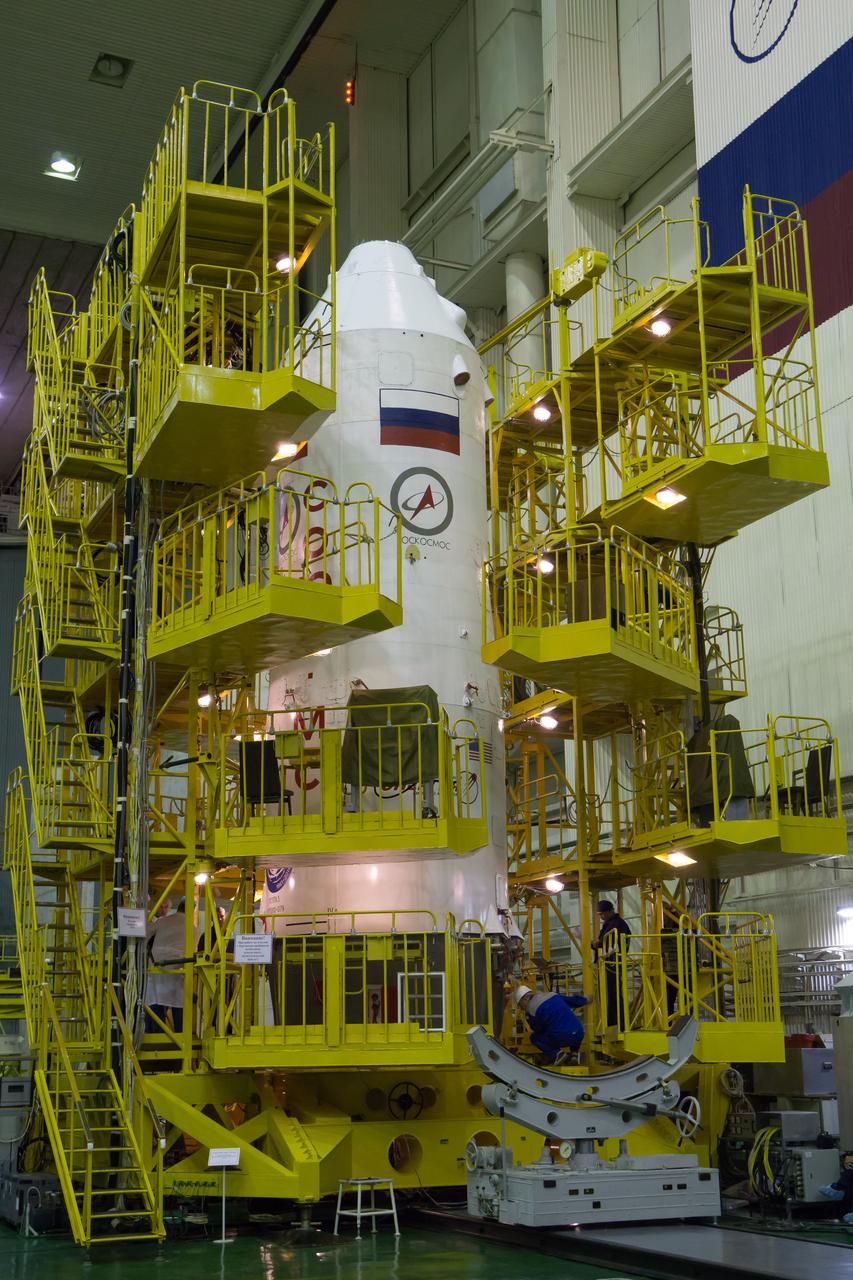
The Soyuz MS-02 spacecraft is seen after being encapsualted in its fairing on Thursday, Sept. 15, 2016 at the Baikonur Cosmodrome in Kazakhstan. Expedition 49 flight engineer Shane Kimbrough of NASA, flight engineer Andrey Borisenko of Roscosmos, and Soyuz commander Sergey Ryzhikov of Roscosmos are scheduled to launch to the International Space Station aboard the Soyuz MS-02 spacecraft from the Baikonur Cosmodrome on September 24 Kazakh time. Photo Credit: (NASA/Victor Zelentsov)
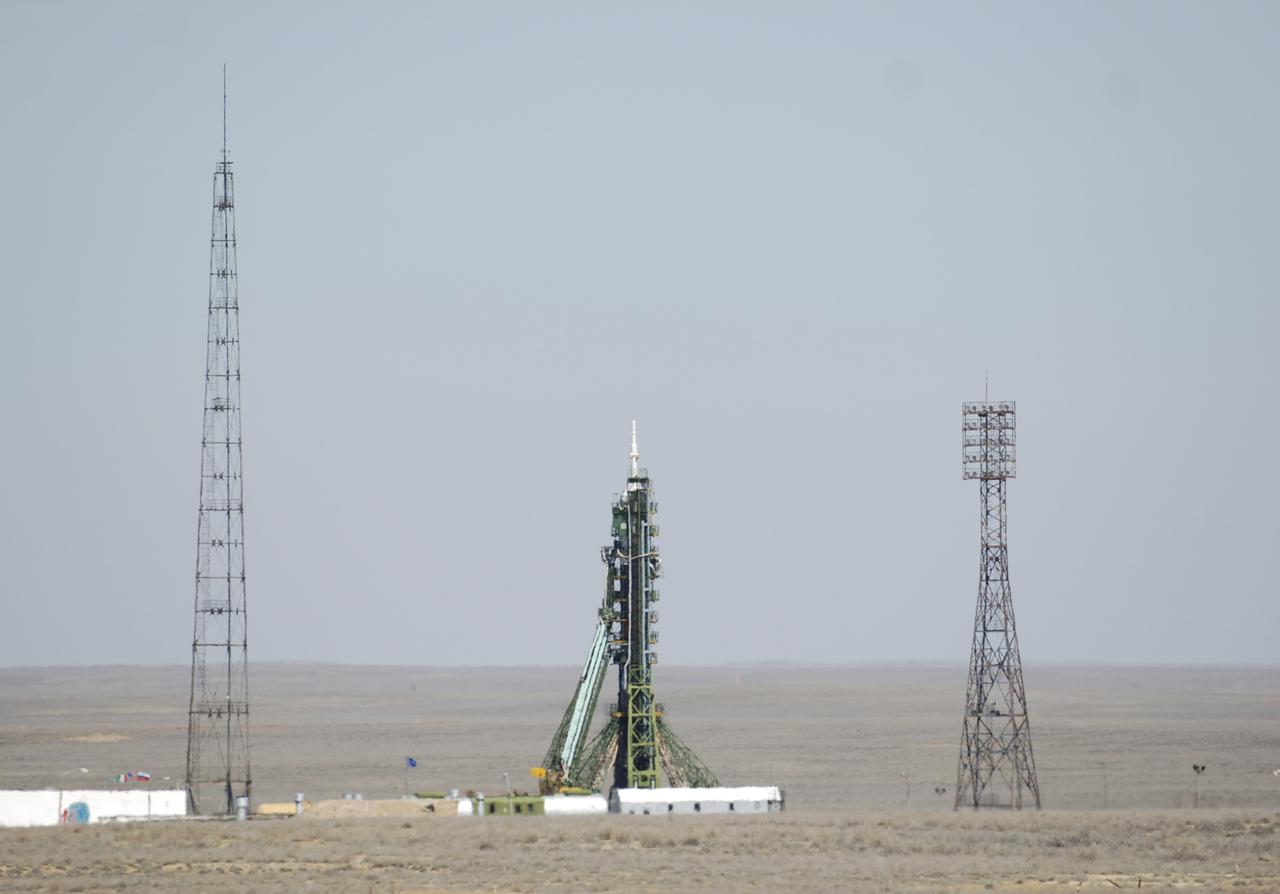
The Soyuz TMA-6 sits on the pad ready for launch, Thursday, April 14, 2005, at the Baikonur Cosmodrome in Kazakhstan. Expedition 11 crew Commander Sergei Krikalev along with Flight Engineer and NASA Science Officer John Phillips and European Space Agency Astronaut Roberto Vittori, of Italy, will launch April 15, 2005. Krikalev and Phillips will spend six months on the station, replacing Expedition 10 Commander Leroy Chiao and Flight Engineer Salizhan Sharipov, while Vittori will spend eight days on the Station under a commerical contract between ESA and the Russian Federal Space Agency, returning to Earth with Chiao and Sharipov on April 25. Photo Credit: (NASA/Bill Ingalls)
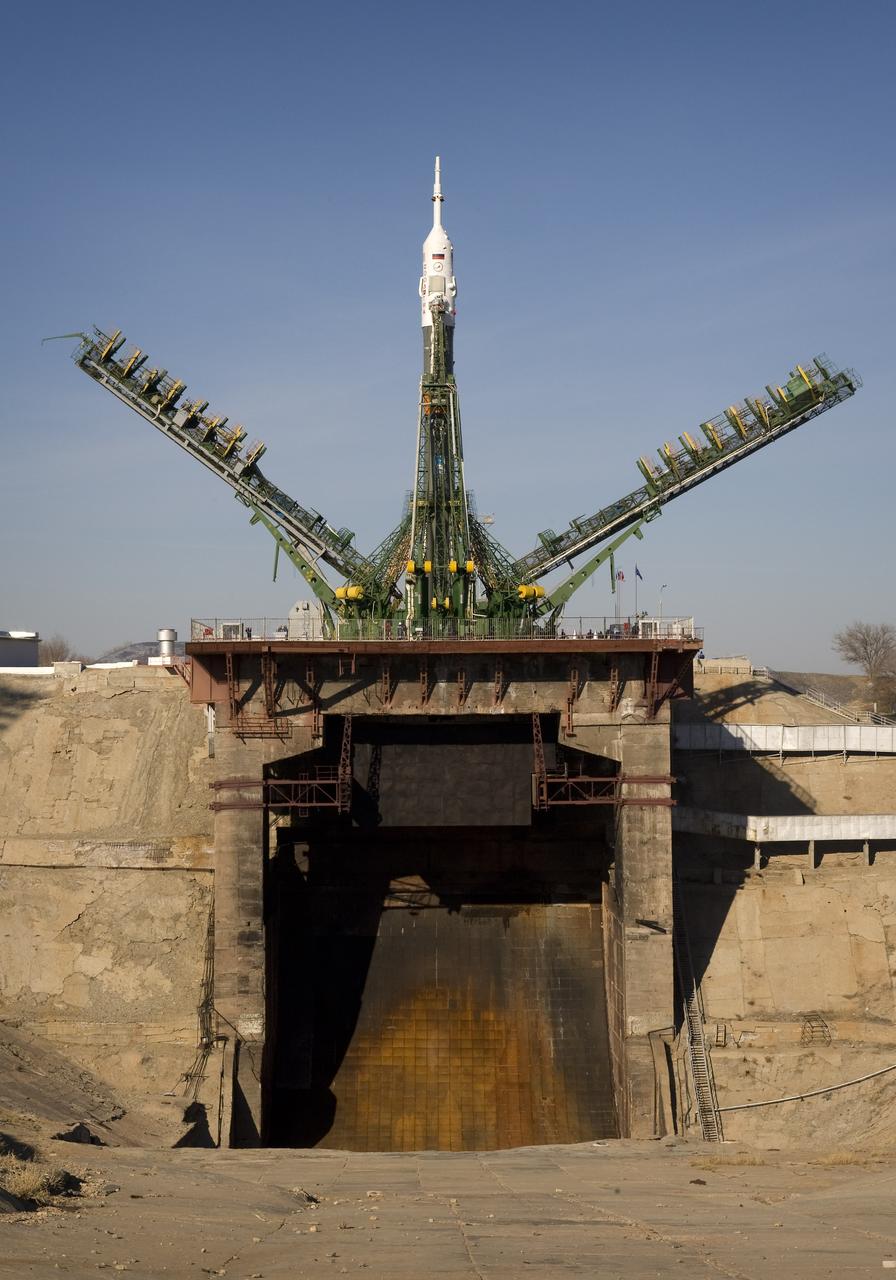
The Soyuz rocket is erected into position at the launch pad Tuesday, March 24, 2009 at the Baikonur Cosmodrome in Kazakhstan. The Soyuz is scheduled to launch the crew of Expedition 19 and a spaceflight participant on March 26, 2009. Photo Credit: (NASA/Bill Ingalls)

The Soyuz rocket is rolled out by train to the launch pad, Monday, Nov. 24, 2025, at Site 31 of the Baikonur Cosmodrome in Kazakhstan. Expedition 74 crewmembers: NASA astronaut Chris Williams, Roscosmos cosmonauts Sergey Kud-Sverchkov and Sergey Mikaev are scheduled to launch aboard their Soyuz MS-28 spacecraft on November 27. Photo Credit: (NASA/Bill Ingalls)
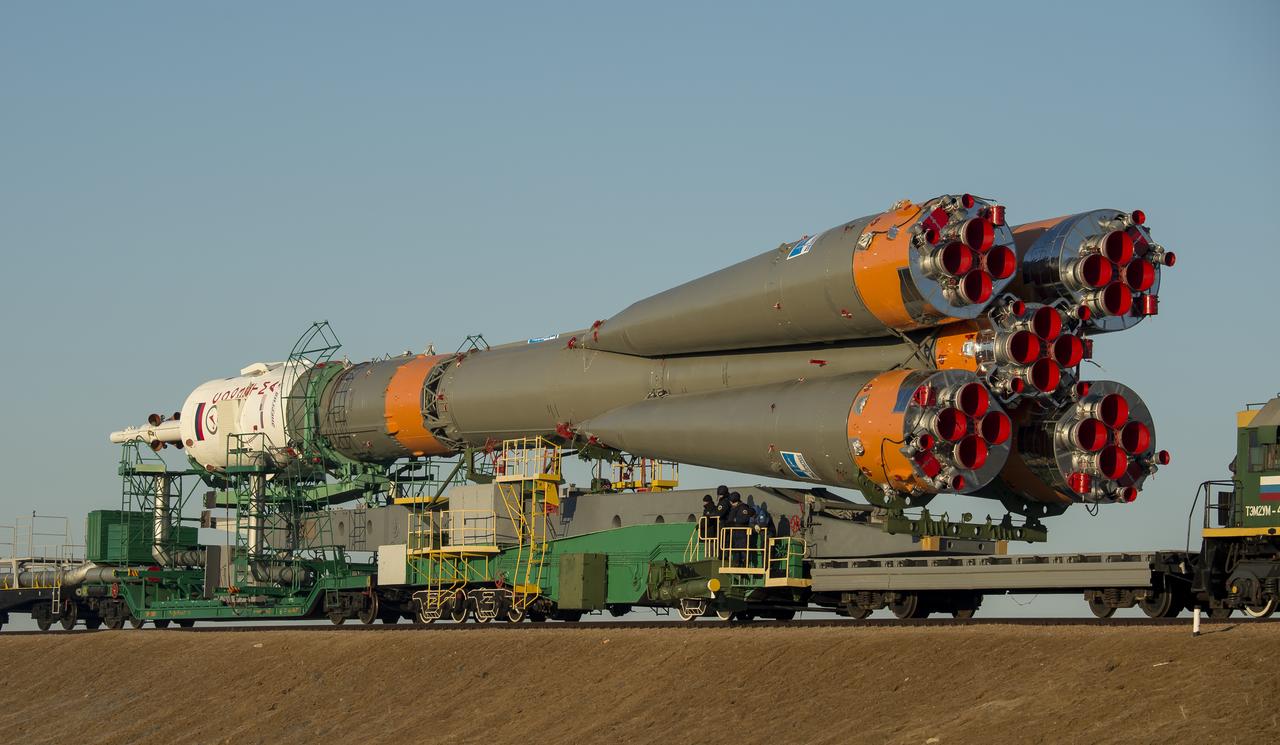
The Soyuz TMA-16M spacecraft is rolled out by train to the launch pad at the Baikonur Cosmodrome, Kazakhstan, Wednesday, March 25, 2015. NASA Astronaut Scott Kelly, and Russian Cosmonauts Mikhail Kornienko, and Gennady Padalka of the Russian Federal Space Agency (Roscosmos) are scheduled to launch to the International Space Station in the Soyuz TMA-16M spacecraft from the Baikonur Cosmodrome in Kazakhstan March 28, Kazakh time (March 27 Eastern time.) As the one-year crew, Kelly and Kornienko will return to Earth on Soyuz TMA-18M in March 2016. Photo Credit (NASA/Bill Ingalls)
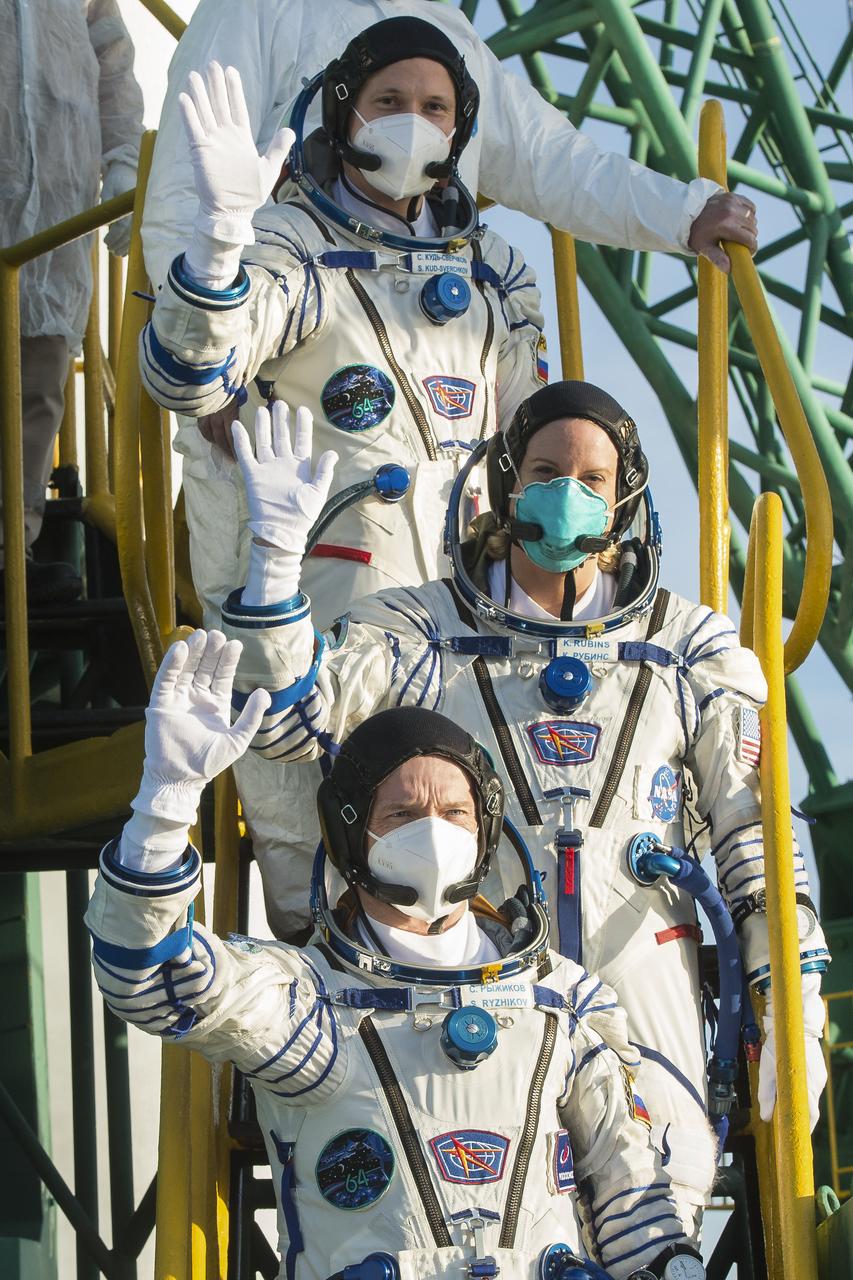
Expedition 64 Russian cosmonaut Sergey Kud-Sverchkov of Roscosmos, top, NASA astronaut Kate Rubins, middle, and Russian cosmonaut Sergey Ryzhikov, bottom, wave farewell prior to boarding the Soyuz MS-17 spacecraft for launch, Wednesday, Oct. 14, 2020, at the Baikonur Cosmodrome in Kazakhstan. The trio launched at 1:45 a.m. EDT to begin a two-orbit, three-hour flight to reach the International Space Station. Photo Credit: (NASA/GCTC/Andrey Shelepin)
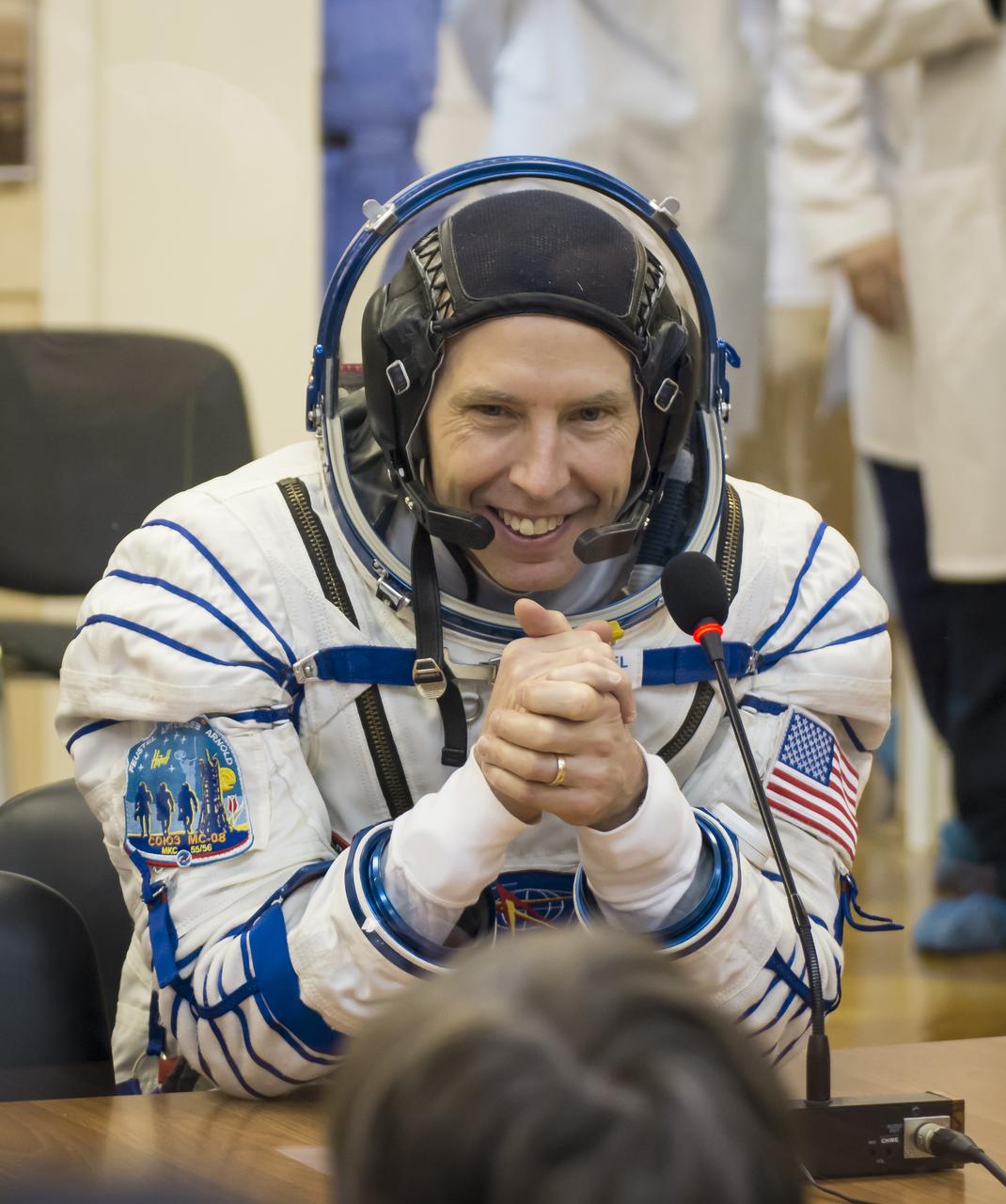
Expedition 55 flight engineer Drew Feustel of NASA speaks with family and friends after having his Russian Sokol suit pressure checked in preparation for launch aboard the Soyuz MS-08 spacecraft, Wednesday, March 21, 2018 at the Baikonur Cosmodrome Kazakhstan. Feustel, Soyuz Commander Oleg Artemyev of Roscosmos and flight engineer Ricky Arnold of NASA launched aboard the Soyuz MS-08 spacecraft at 1:44 p.m. Eastern time (11:44 p.m. Baikonur time) on March 21 to begin their journey to the International Space Station. Photo Credit: (NASA/Victor Zelentsov)
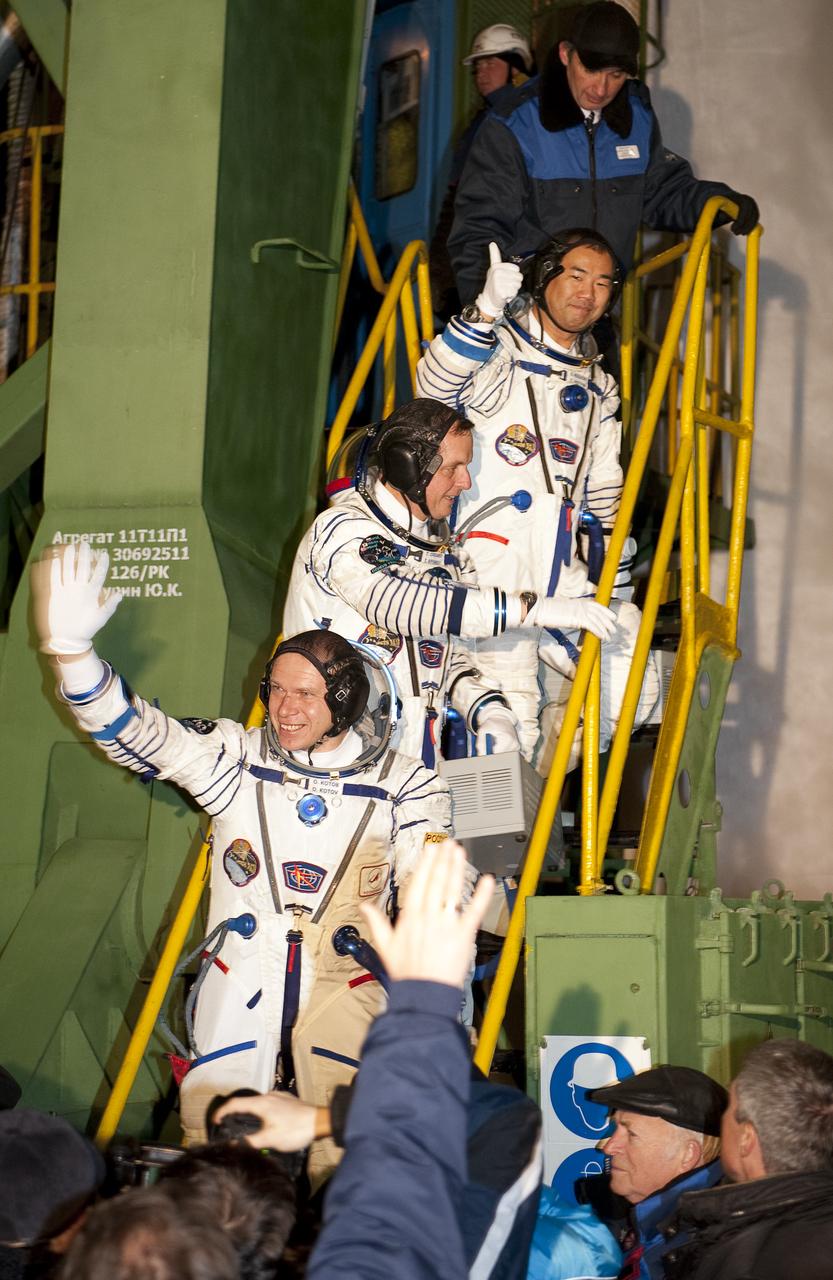
Expedition 22 Soyuz Commander Oleg Kotov of Russia, bottom, NASA Flight Engineer Timothy J. Creamer of the U.S., center, and Flight Engineer Soichi Noguchi of Japan wave farewell from the bottom of the soyuz rocket at the Baikonur Cosmodrome in Baikonur, Kazakhstan, Monday, Dec. 21, 2009. Kotov, Creamer and Noguchi launched in their Soyuz TMA-17 rocket from the Baikonur Cosmodrome in Kazakhstan on Monday, Dec. 21, 2009. (Photo Credit: NASA/Bill Ingalls)
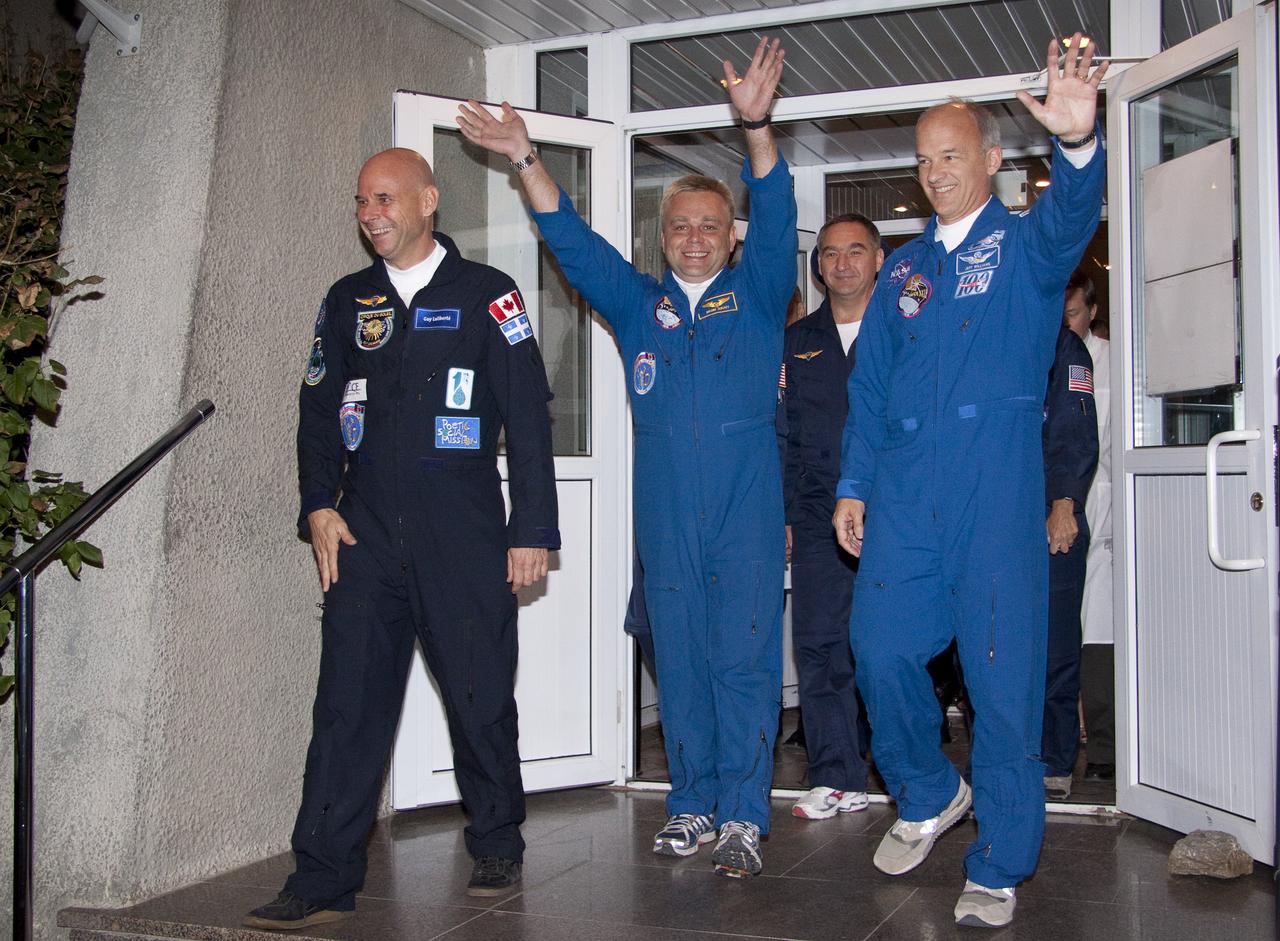
Spaceflight Participant Guy Laliberté, left, Expedition 21 Flight Engineer Maxim Suraev, center, and Expedition 21 Flight Engineer Jeffrey N. Williams depart the Cosmonaut Hotel on the morning of their Soyuz launch to the International Space Station on Wednesday, Sept. 30, 2009 in Baikonur, Kazakhstan. Photo Credit: (NASA/Victor Zelentsov)
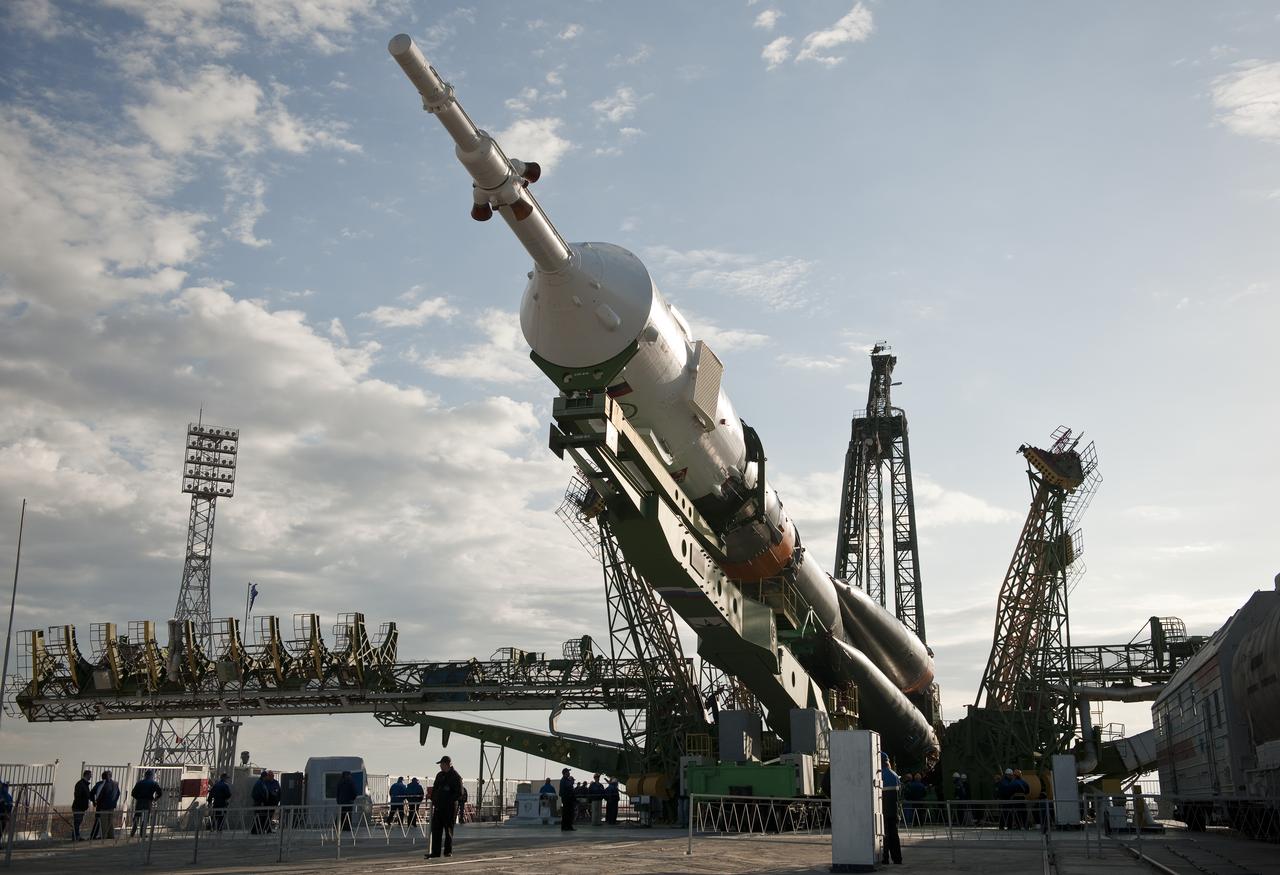
The Soyuz TMA-01M spacecraft is raised into vertical position at the launch pad of the Baikonur Cosmodrome, Kazakhstan, Tuesday, Oct. 5, 2010. The TMA-01M is a new modified Soyuz vehicle that features upgraded avionics and a digital cockpit display. The crew of Expedition 25 Soyuz Commander Alexander Kaleri, NASA Flight Engineer Scott Kelly and Russian Flight Engineer Oleg Skripochka is scheduled for Friday, Oct. 8, 2010 at 5:10 a.m. Kazakhstan time. Photo Credit: (NASA/Carla Cioffi)
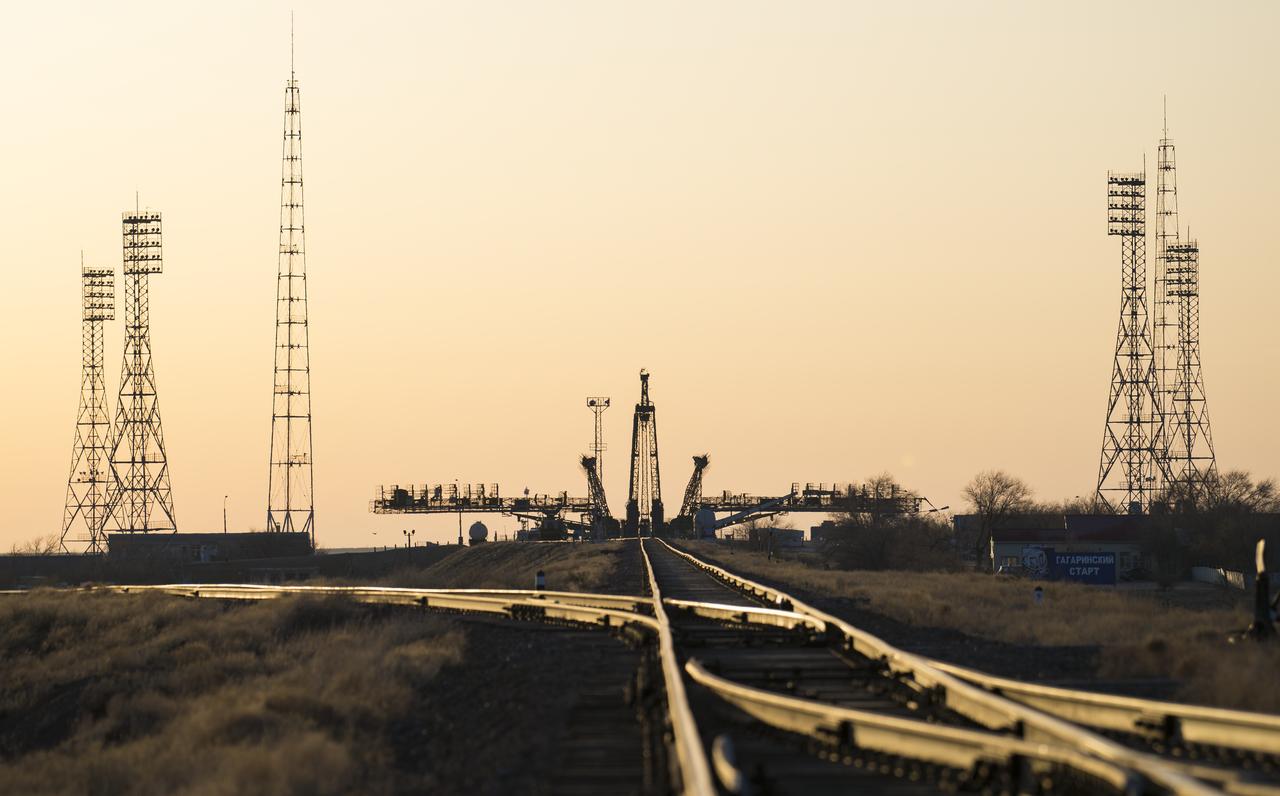
Launch Pad 1 is seen as the Soyuz MS-04 spacecraft is rolled out to the launch pad by train on Monday, April 17, 2017 at the Baikonur Cosmodrome in Kazakhstan. Launch of the Soyuz rocket is scheduled for April 20 and will carry Expedition 51 Soyuz Commander Fyodor Yurchikhin of Roscosmos and Flight Engineer Jack Fischer of NASA into orbit to begin their four and a half month mission on the International Space Station.Photo Credit: (NASA/Aubrey Gemignani)
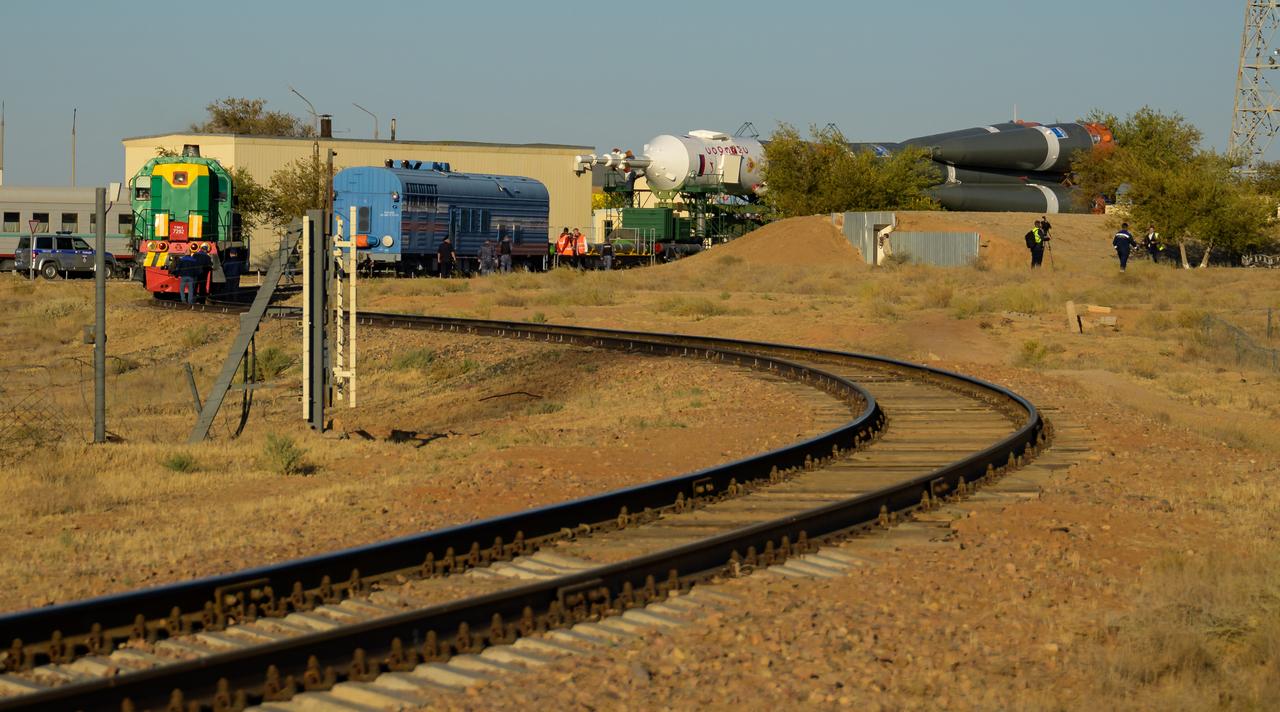
The Soyuz rocket is rolled out by train to the site 31 launch pad, Sunday, Sept. 18, 2022, at the Baikonur Cosmodrome in Kazakhstan. Expedition 68 astronaut Frank Rubio of NASA, and cosmonauts Sergey Prokopyev and Dmitri Petelin of Roscosmos are scheduled to launch aboard their Soyuz MS-22 spacecraft on Sept. 21. Photo Credit: (NASA/Bill Ingalls)
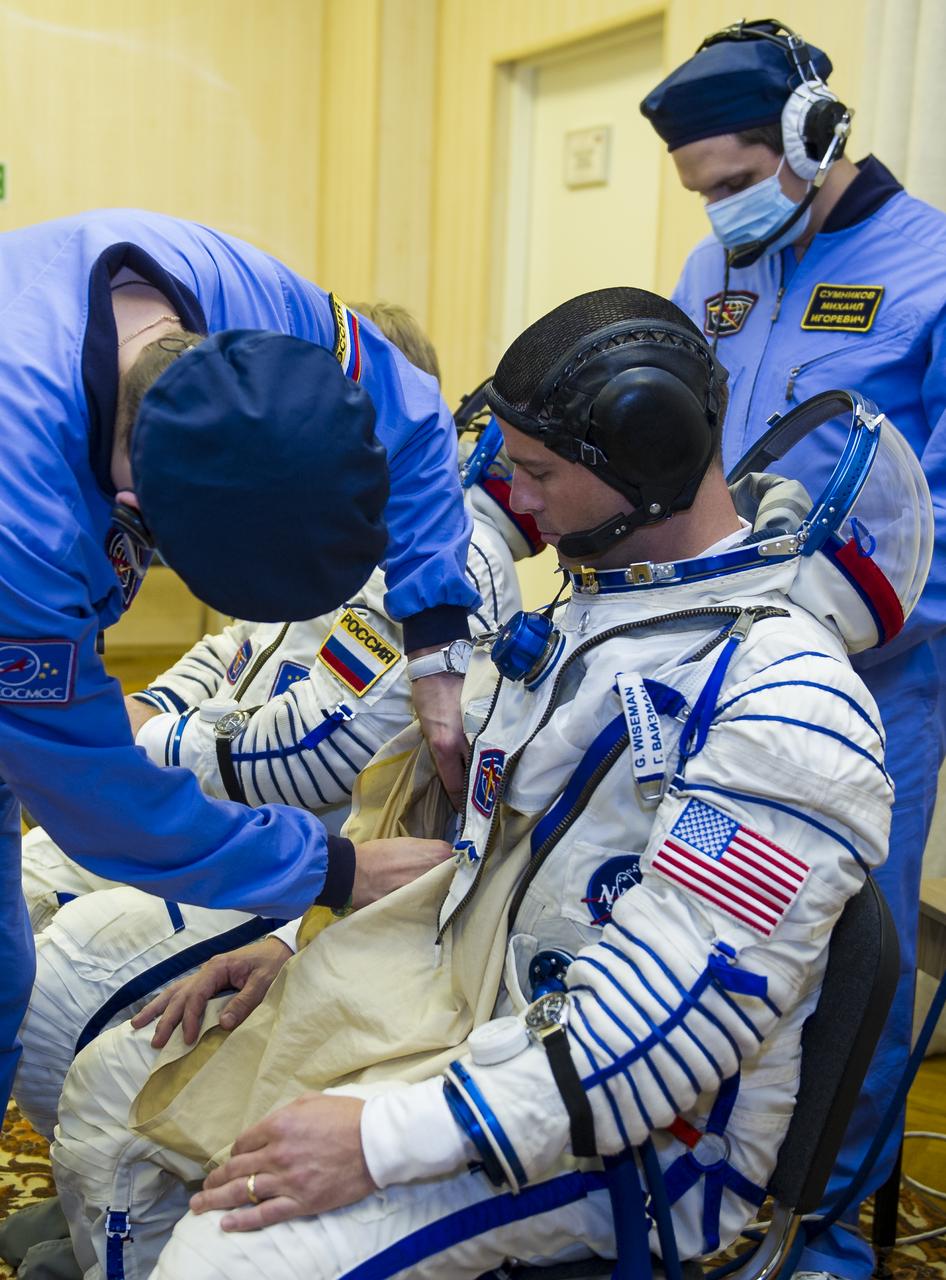
Expedition 40 Flight Engineer Reid Wiseman of NASA is helped into his Russian Sokol suit as he and fellow cremates, Soyuz Commander Maxim Suraev of the Russian Federal Space Agency, Roscosmos, and Flight Engineer Alexander Gerst of the European Space Agency, ESA, prepare for their Soyuz launch to the International Space Station, on Wednesday, May 28, 2014, in Baikonur, Kazakhstan. Launch of the Soyuz rocket will send Wiseman, Suraev, and Gerst on a five and a half month mission aboard the International Space Station. Photo Credit: (NASA/GCTC/Irina Peshkova)
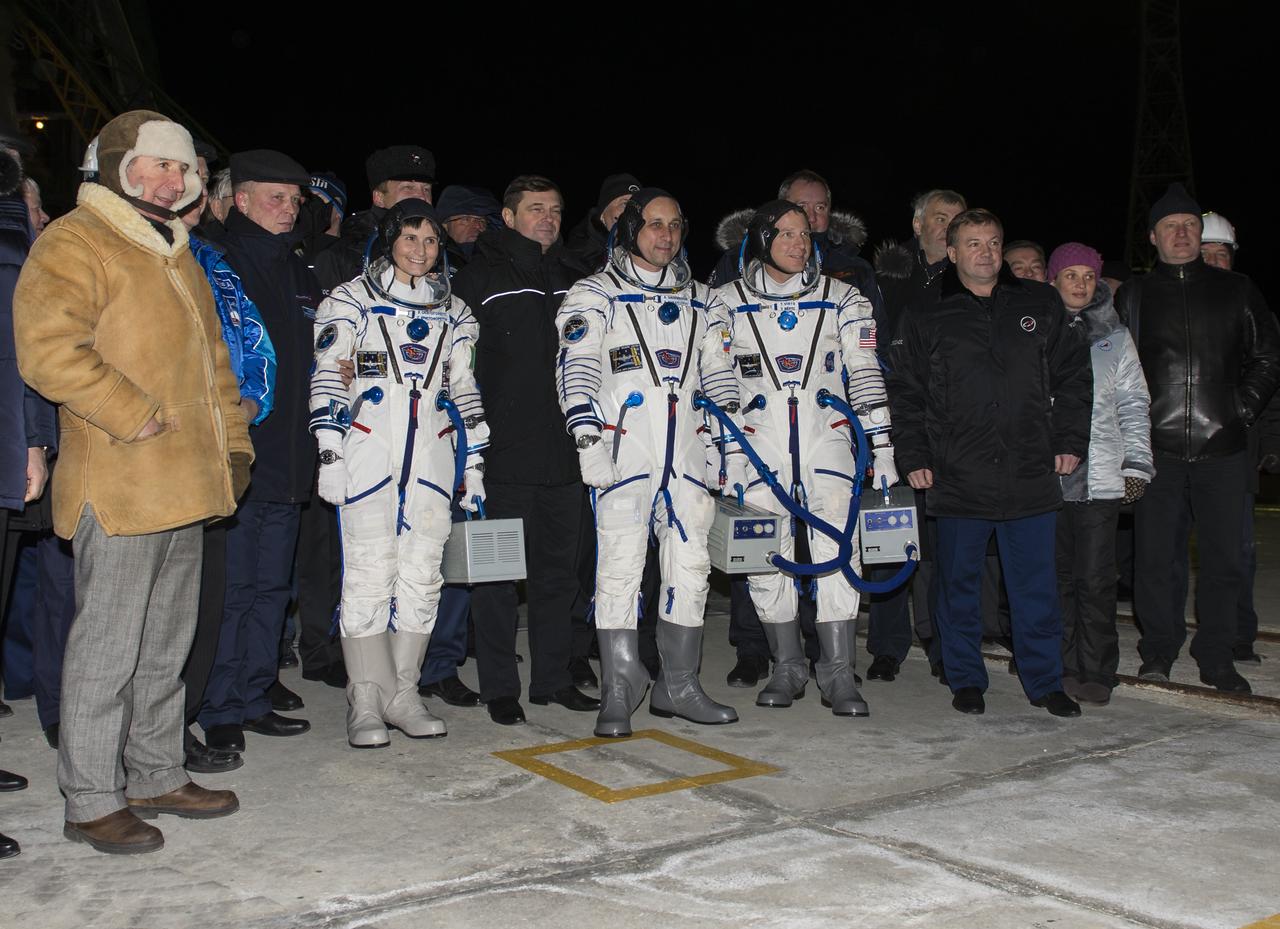
Expedition 42 Flight Engineer Samantha Cristoforetti, of the European Space Agency (ESA), left, Soyuz Commander Anton Shkaplerov of the Russian Federal Space Agency (Roscosmos), center, and Flight Engineer Terry Virts of NASA, right, pose for a photo with senior officials of Roscosmos, NASA, and ESA prior to boarding the Soyuz TMA-15M spacecraft for launch, Monday, Nov. 24, 2014 at the Baikonur Cosmodrome in Kazakhstan. Cristoforetti, Virts, and Shkaplerov will spend the next five and a half months aboard the International Space Station. Photo Credit: (NASA/Aubrey Gemignani)
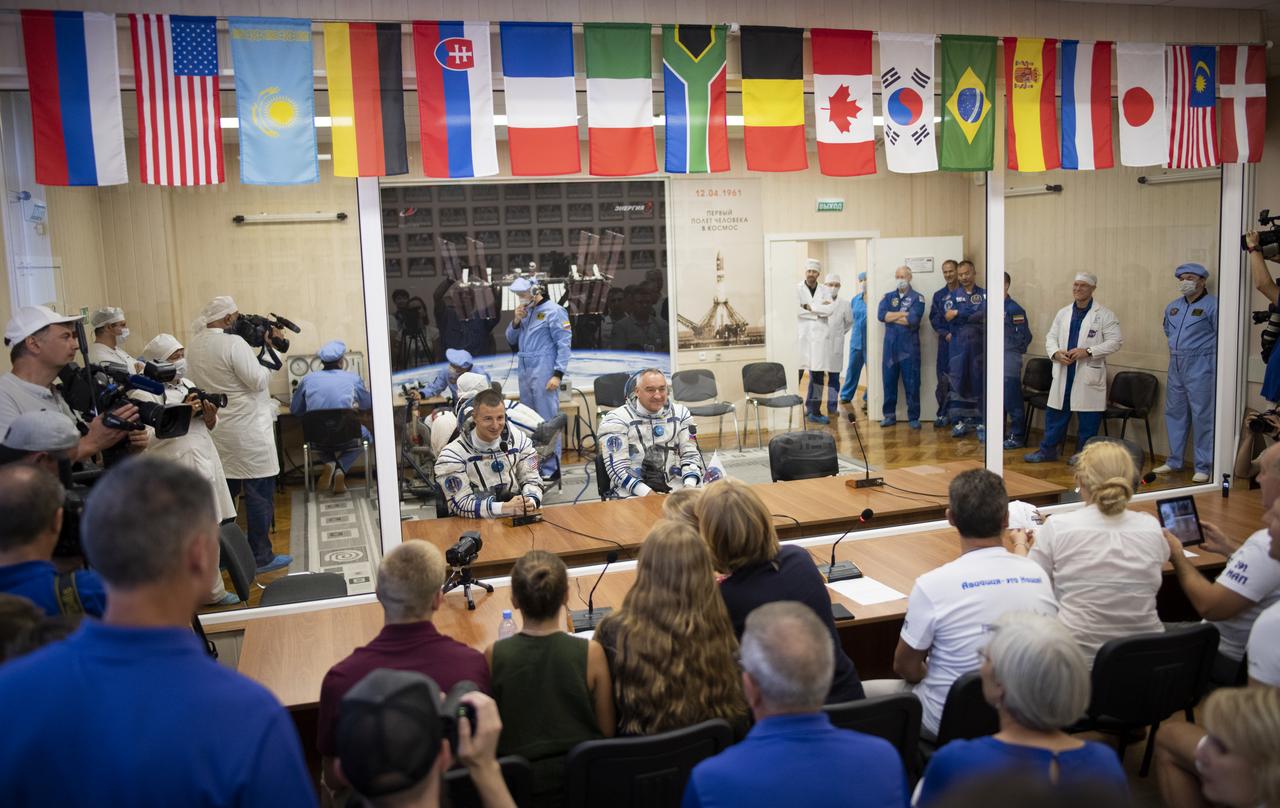
Expedition 60 flight engineer Andrew Morgan of NASA, left, and Soyuz Commander Alexander Skvortsov of Roscosmos, right, speaks with family as flight engineer Luca Parmitano of ESA (European Space Agency) has his Russian Sokol suit pressure checked in preparation for launch aboard the Soyuz MS-13 spacecraft, Saturday, July 20, 2019 at the Baikonur Cosmodrome in Kazakhstan. Morgan, Skvortsov, and Parmitano launched aboard the Soyuz MS-13 spacecraft at 12:28 p.m. Eastern time (9:28 p.m. Baikonur time) on July 20 to begin their journey to the International Space Station. Photo Credit: (NASA/Joel Kowsky)
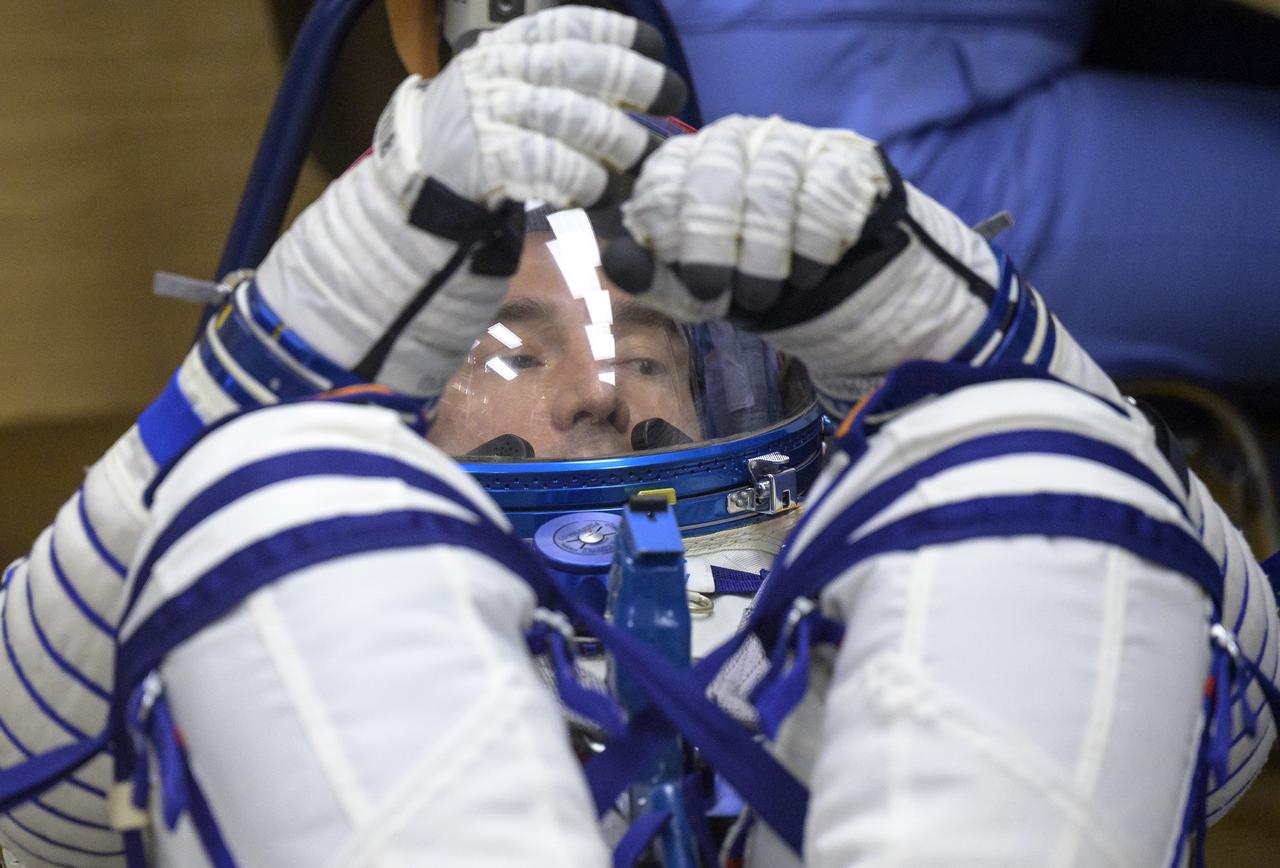
Expedition 65 Russian cosmonaut Pyotr Dubrov has his Russian Sokol suit pressure checked as he and fellow crewmates Russian cosmonaut Oleg Novitskiy and NASA astronaut Mark Vande Hei, prepare for their Soyuz launch to the International Space Station Friday, April 9, 2021 in Baikonur, Kazakhstan. Launch of the Soyuz rocket sent the trio on a mission to the International Space Station. Photo Credit: (NASA/Bill Ingalls)
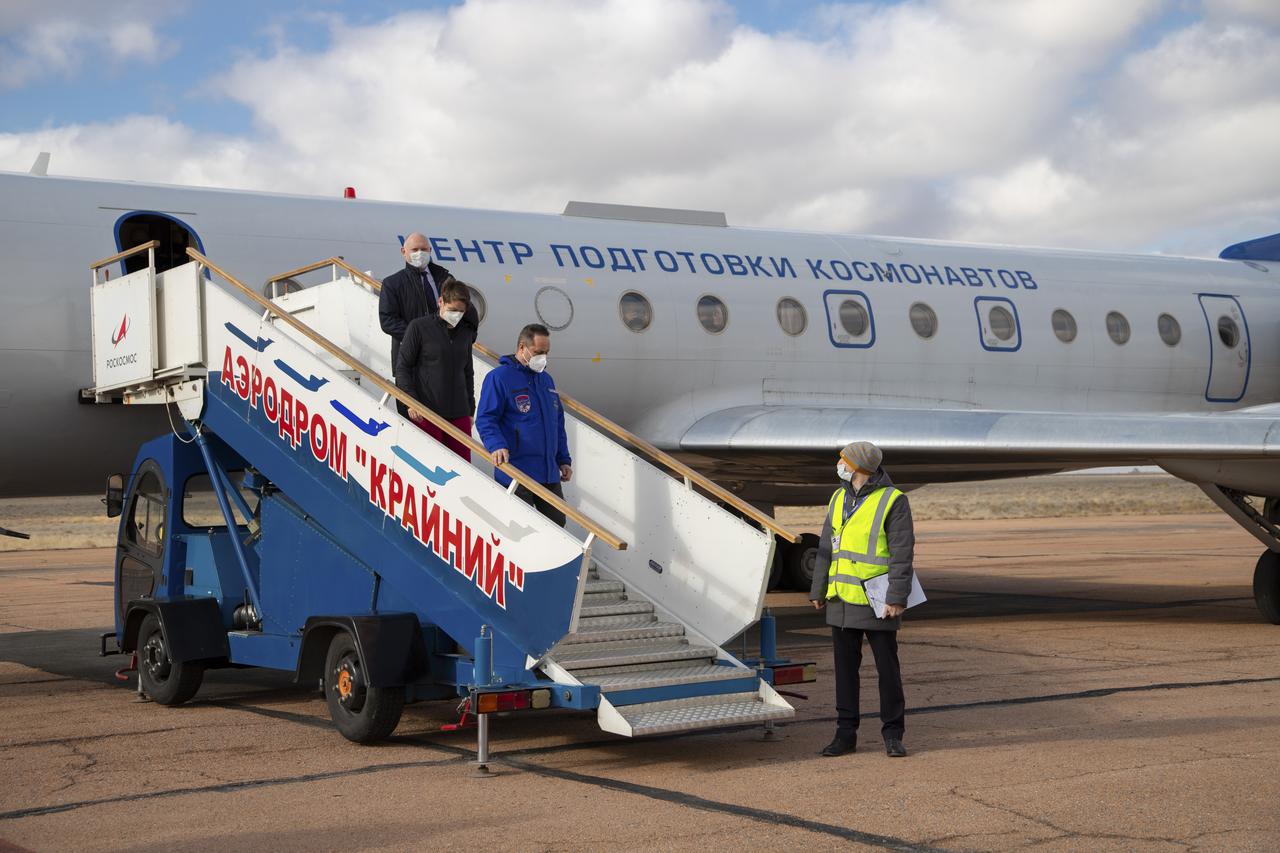
Expedition 65 backup crew members Russian cosmonaut Anton Shkaplerov of Roscosmos, first, NASA astronaut Anne McClain, second, and Oleg Artemyev of Roscosmos, arrive in Baikonur, Kazakhstan from the Gagarin Cosmonaut Training Center (GCTC), Friday, March 26, 2021. The prime crew is scheduled to launch from the Baikonur Cosmodrome on a Soyuz rocket April 9. Photo Credit: (NASA/GCTC/Irina Spector)
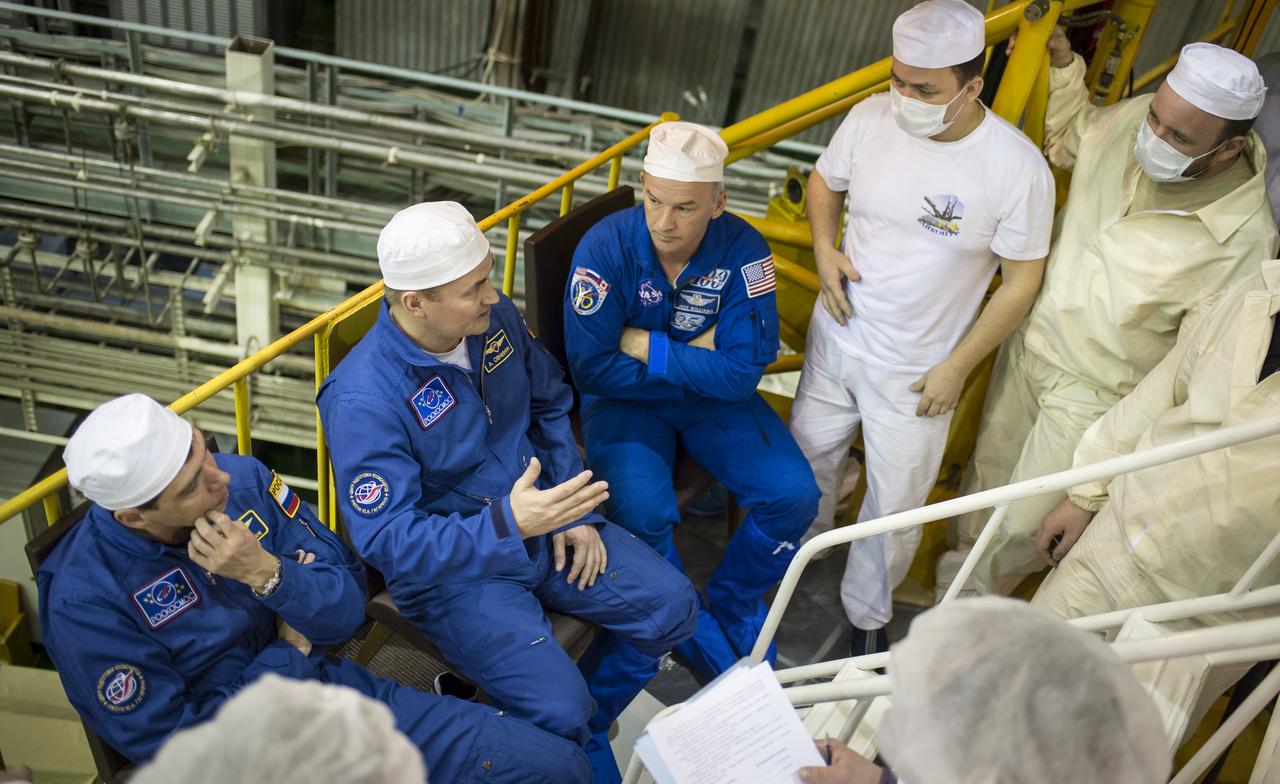
Expedition 43 backup crew members: Russian Cosmonauts Sergei Volkov, left, and Alexey Ovchinin of the Russian Federal Space Agency (Roscosmos), and NASA Astronaut Jeff Williams, right, talk during their final check of the Soyuz TMA-16M spacecraft, Monday, March 23, 2015 at the Baikonur Cosmodrome in Kazakhstan. NASA Astronaut Scott Kelly, and Russian Cosmonauts Mikhail Kornienko, and Gennady Padalka of the Russian Federal Space Agency (Roscosmos) are scheduled to launch to the International Space Station in the Soyuz TMA-16M spacecraft from the Baikonur Cosmodrome in Kazakhstan March 28, Kazakh time (March 27 Eastern time.) As the one-year crew, Kelly and Kornienko will return to Earth on Soyuz TMA-18M in March 2016. Photo Credit: (NASA/Bill Ingalls)
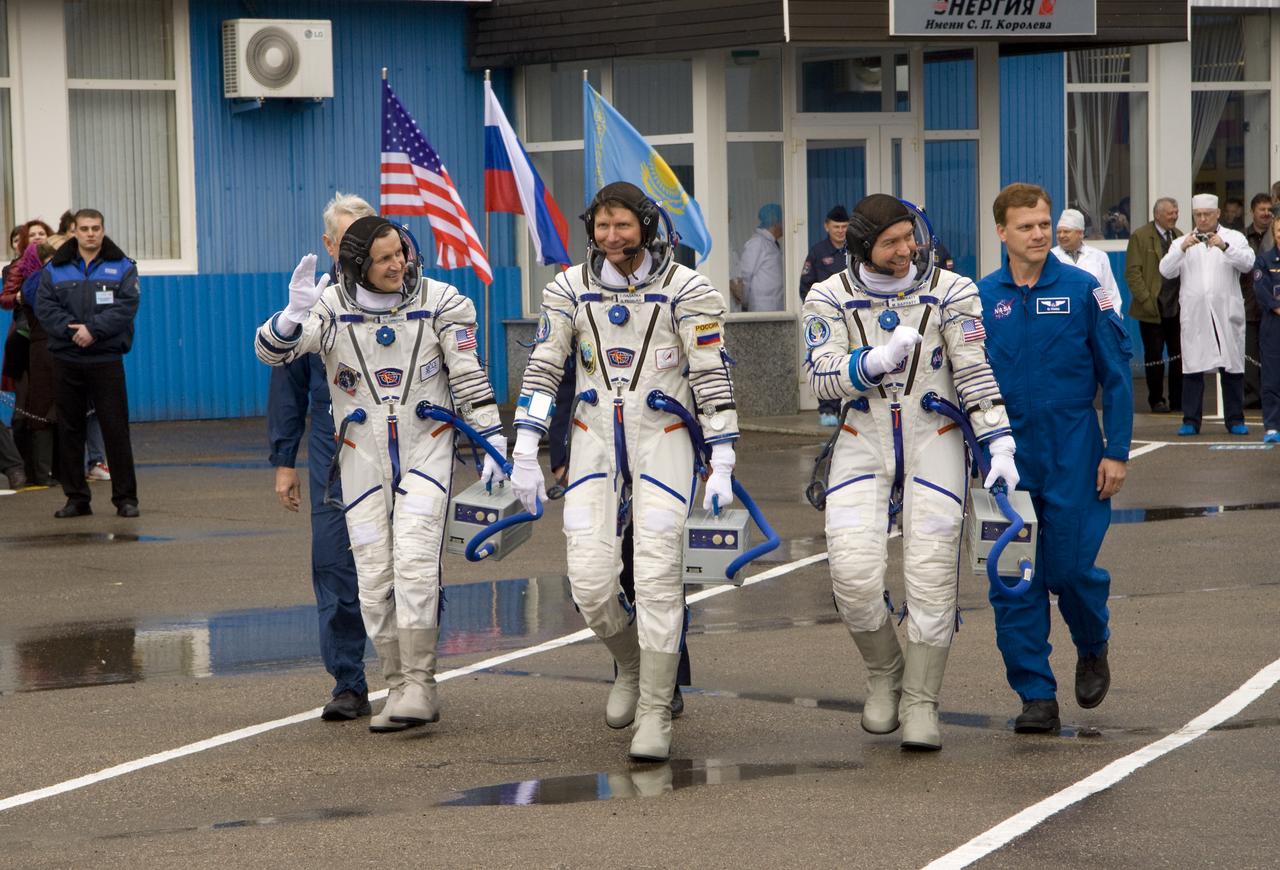
Spaceflight Participant Charles Simonyi, left, Expedition 19 Commander Gennady I. Padalka, center, and Flight Engineer Michael R. Barratt walk out of building 254 to salute officials prior to boarding the bus that will take them to the Soyuz launch pad on Thursday, March 26, 2009 in Baikonur, Kazakhstan. Photo Credit: NASA/Victor Zelentsov)
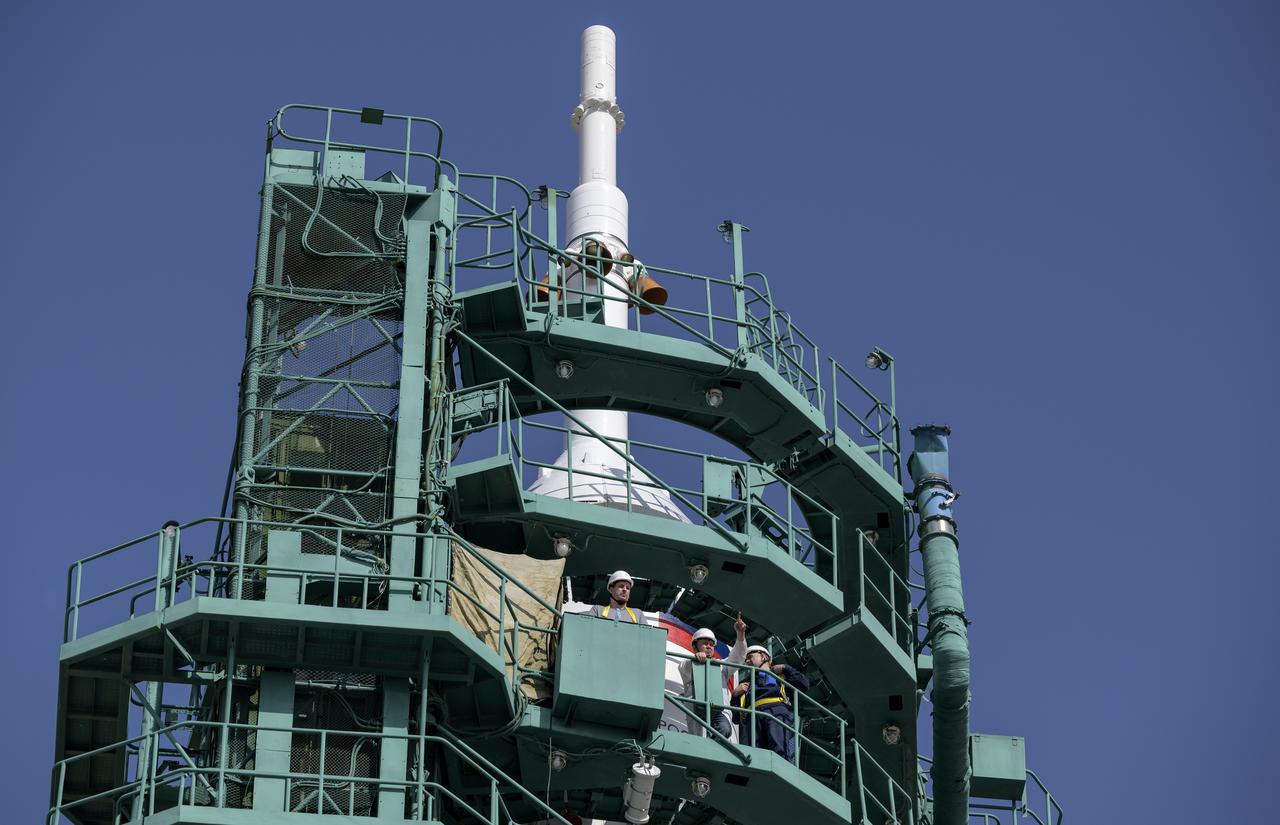
Engineers wait at the top of the Soyuz Rocket for boarding of Expedition 65 NASA astronaut Mark Vande Hei, Russian cosmonauts Oleg Novitskiy and Pyotr Dubrov, Friday, April 9, 2021 at the Baikonur Cosmodrome in Kazakhstan. Launch of the Soyuz rocket sent the trio on a mission to the International Space Station. Photo Credit: (NASA/Bill Ingalls)
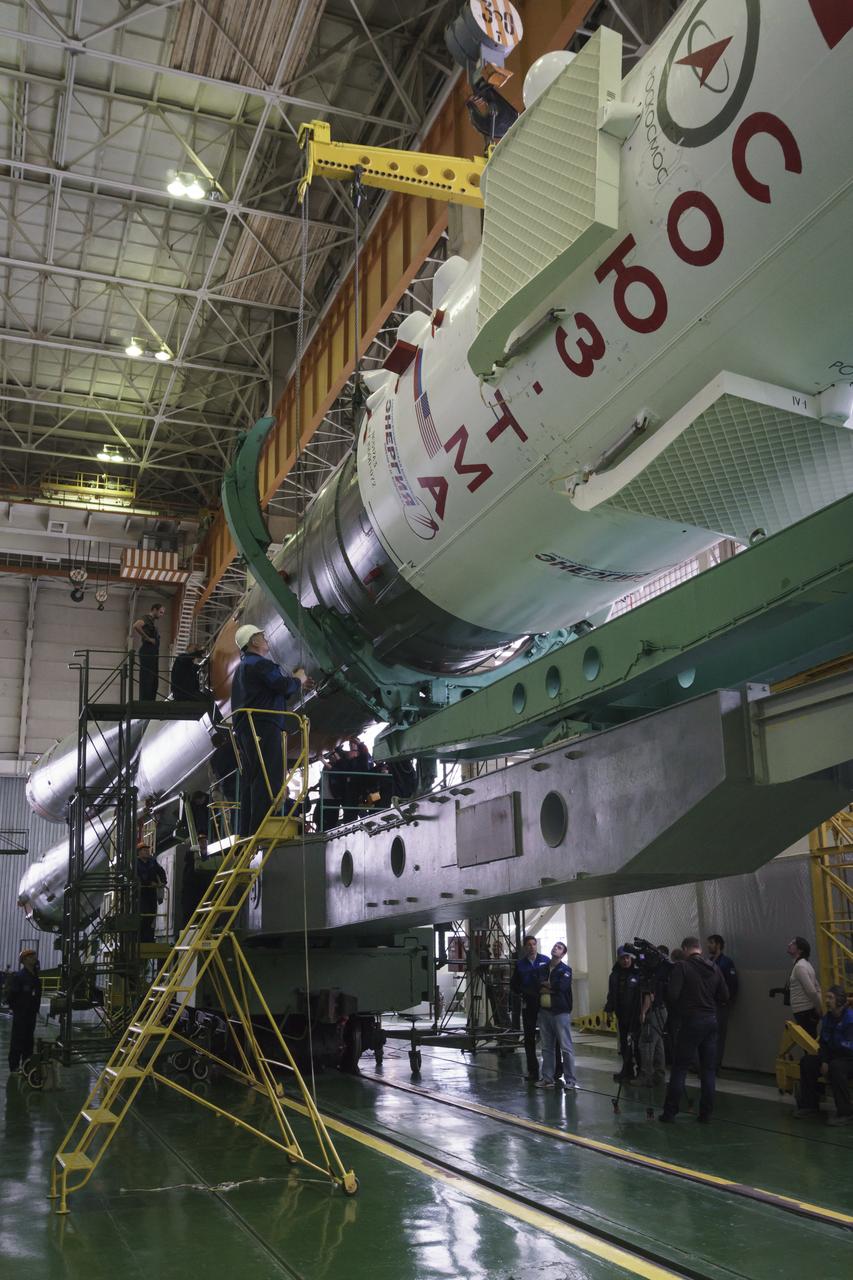
The Soyuz rocket and Soyuz TMA-16M spacecraft are assembled at Building 112 on the Baikonur Cosmodrome on Tuesday, March 24, 2015 in Baikonur, Kazakhstan. NASA Astronaut Scott Kelly, and Russian Cosmonauts Mikhail Kornienko, and Gennady Padalka of the Russian Federal Space Agency (Roscosmos) are scheduled to launch to the International Space Station in the Soyuz TMA-16M spacecraft from the Baikonur Cosmodrome in Kazakhstan March 28, Kazakh time (March 27 Eastern time.) As the one-year crew, Kelly and Kornienko will return to Earth on Soyuz TMA-18M in March 2016. Photo Credit: (NASA/Victor Zelentsov)
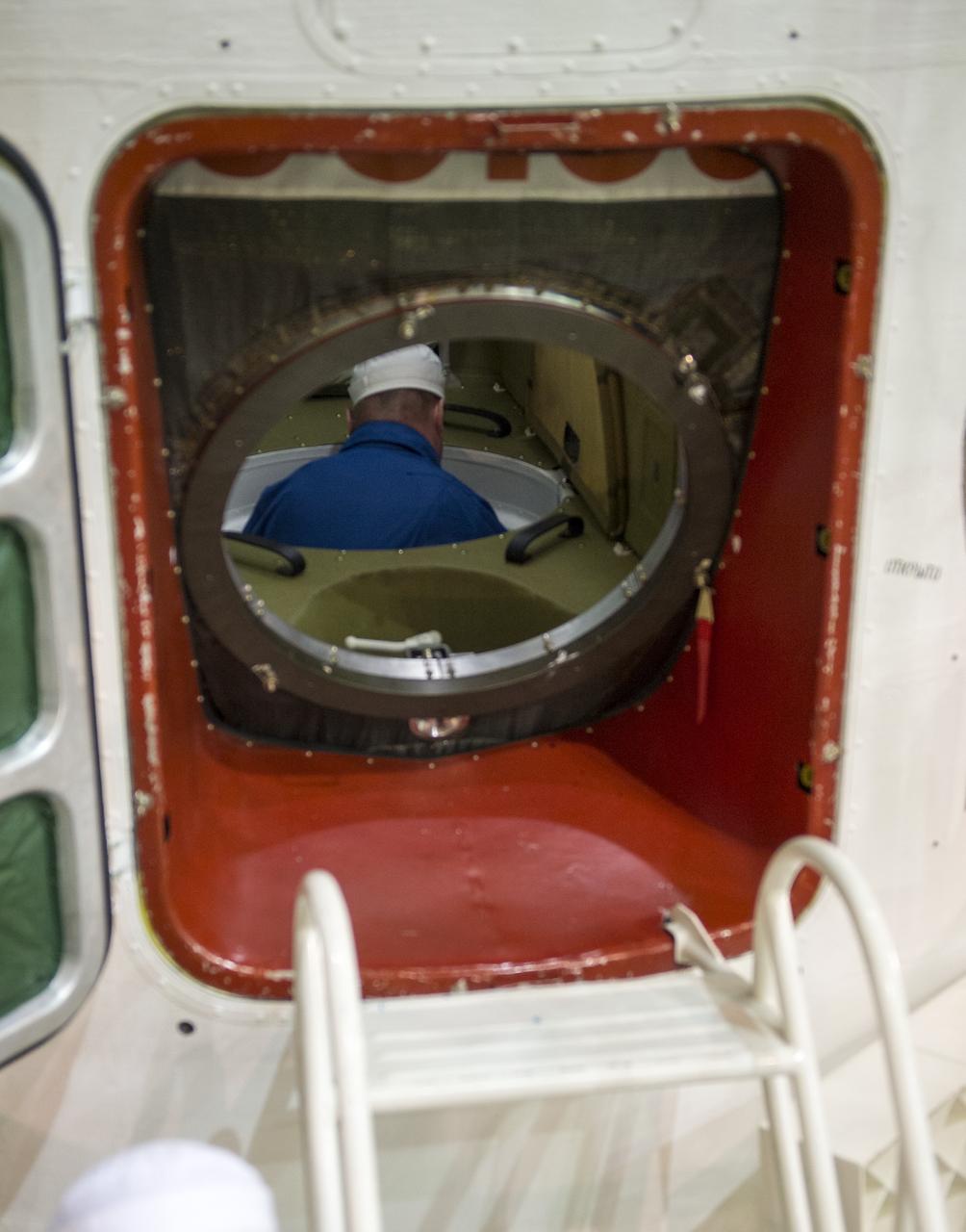
Expedition 43 backup crew member Alexey Ovchinin of the Russian Federal Space Agency (Roscosmos) is seen inside the Soyuz TMA-16M spacecraft during a final check, Monday, March 23, 2015 at the Baikonur Cosmodrome in Kazakhstan. NASA Astronaut Scott Kelly, and Russian Cosmonauts Mikhail Kornienko, and Gennady Padalka of the Russian Federal Space Agency (Roscosmos) are scheduled to launch to the International Space Station in the Soyuz TMA-16M spacecraft from the Baikonur Cosmodrome in Kazakhstan March 28, Kazakh time (March 27 Eastern time.) As the one-year crew, Kelly and Kornienko will return to Earth on Soyuz TMA-18M in March 2016. Photo Credit: (NASA/Bill Ingalls)
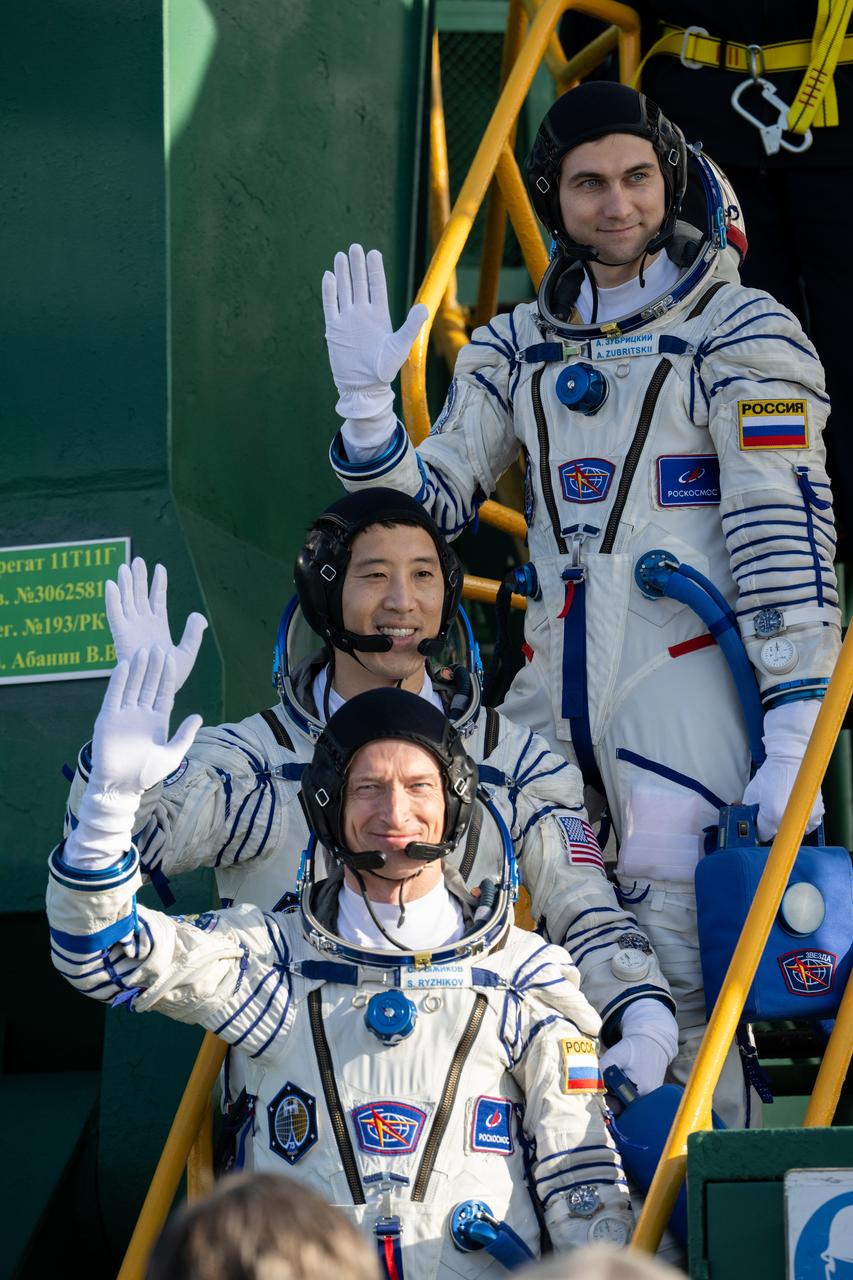
Roscosmos cosmonaut Sergey Ryzhikov, bottom, NASA astronaut Jonny Kim, middle, and Roscosmos cosmonaut Alexey Zubritskiy, top, wave farewell prior to boarding the Soyuz MS-27 spacecraft for launch, Tuesday, April 8, 2025 at the Baikonur Cosmodrome in Kazakhstan. Launch of the Soyuz rocket will send the trio on a mission to the International Space Station. Photo Credit: (NASA/Joel Kowsky)

Expedition 16 Commander Peggy Whitson dons her flight suit prior to launch, Wednesday, Oct. 10, 2007, in Baikonur, Kazakhstan. Expedition 16 Flight Engineer and Soyuz Commander Yuri Malenchenko, Whitson, and Malaysian spaceflight participant Sheikh Muszaphar Shukor launched from the Baikonur Cosmodrome in Kazakhstan at sunset n their Soyuz TMA-11 spacecraft bound for a docking to the International Space Station on Oct. 12. Whitson and Malenchenko will spend six months on the station, while Shukor will return to Earth Oct. 21 with two of the Expedition 15 crewmembers currently on the complex. Photo Credit: (NASA/Bill Ingalls)
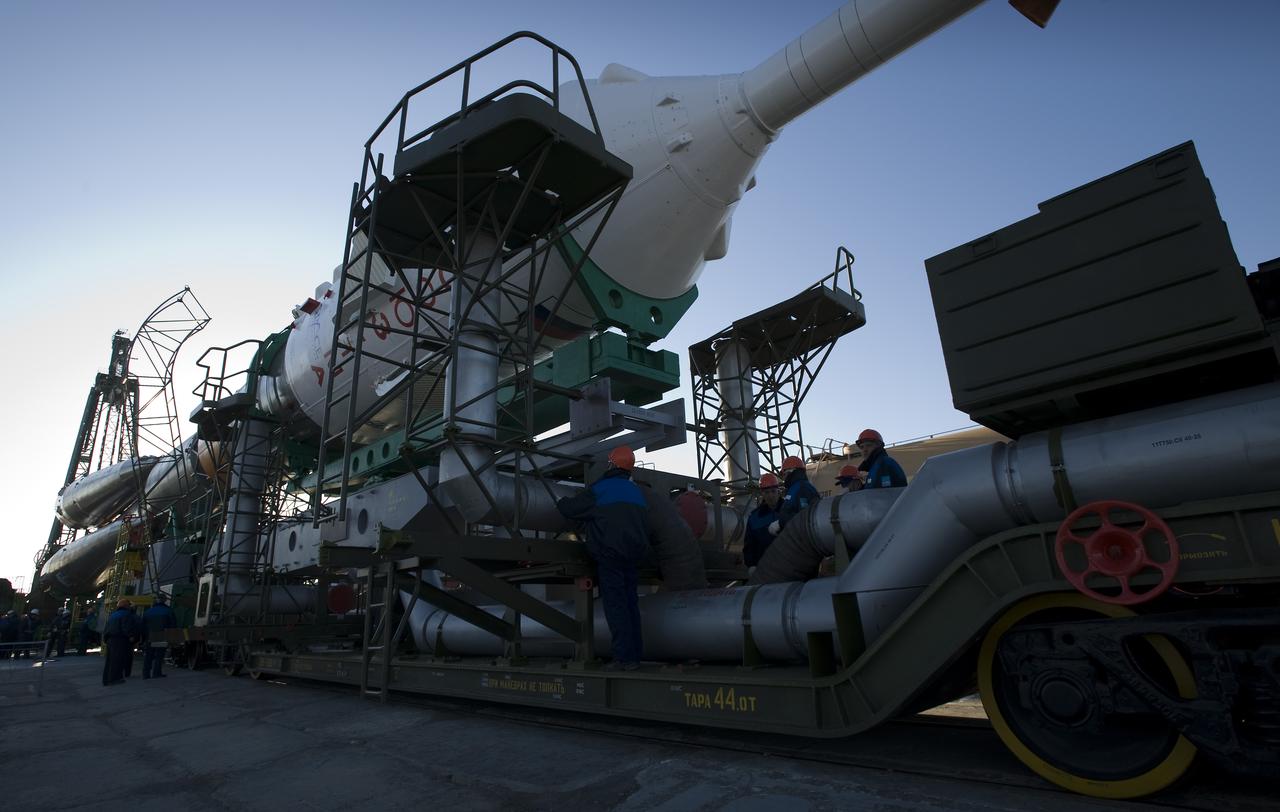
The Soyuz rocket is rolled out to the launch pad Tuesday, March 24, 2009 at the Baikonur Cosmodrome in Kazakhstan. The Soyuz is scheduled to launch the crew of Expedition 19 and a spaceflight participant on March 26, 2009. Photo Credit: (NASA/Bill Ingalls)
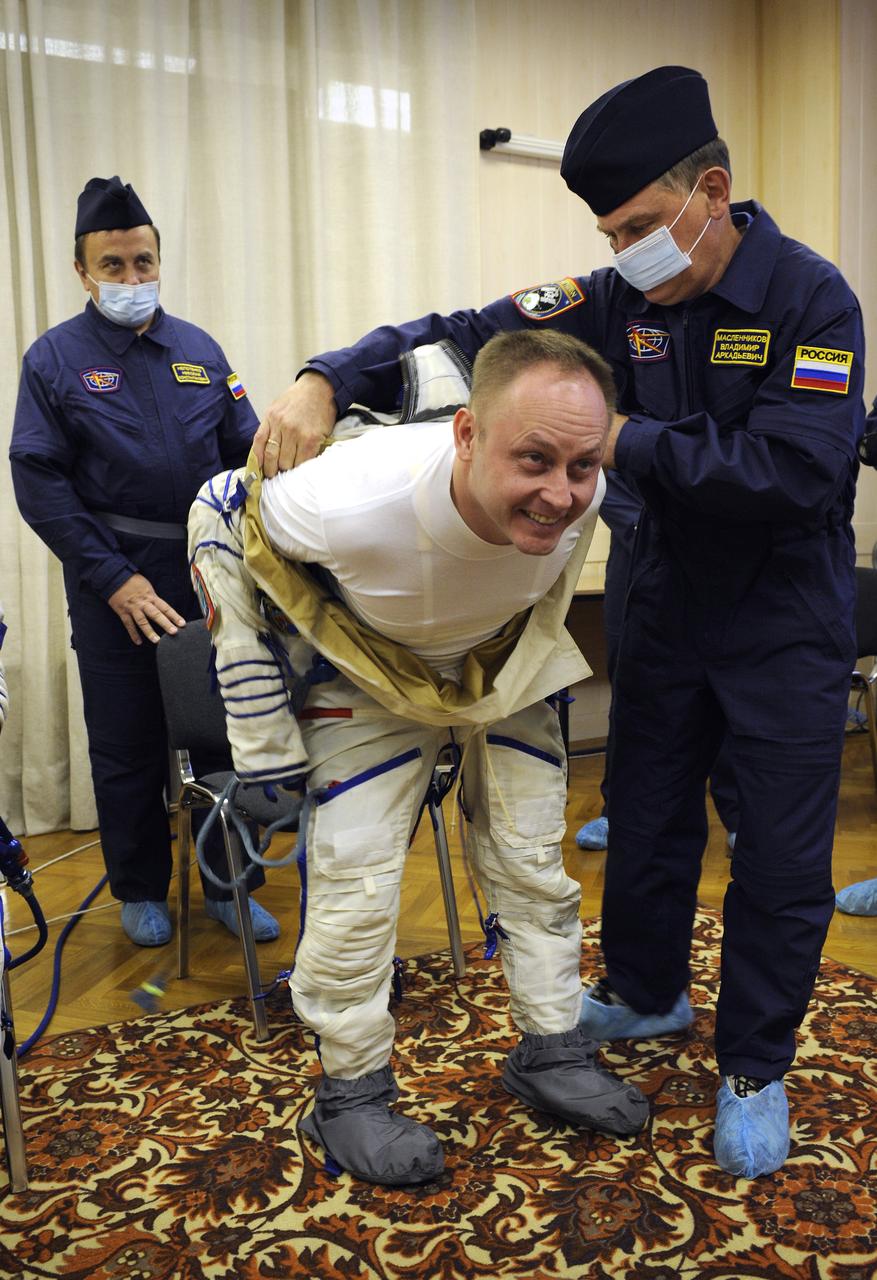
Expedition 18 Commander Michael Fincke dons his Russian Sokol suit hours before he and Expedition 18 Flight Engineer Yuri V. Lonchakov and American spaceflight participant Richard Garriott launch in the Soyuz TMA-13 spacecraft, Sunday, Oct. 12, 2008 from the Baikonur Cosmodrome in Kazakhstan. The three crew members are scheduled to dock with the International Space Station on Oct. 14. Fincke and Lonchakov will spend six months on the station, while Garriott will return to Earth Oct. 24 with two of the Expedition 17 crew members currently on the International Space Station. Photo Credit: (NASA/Bill Ingalls)
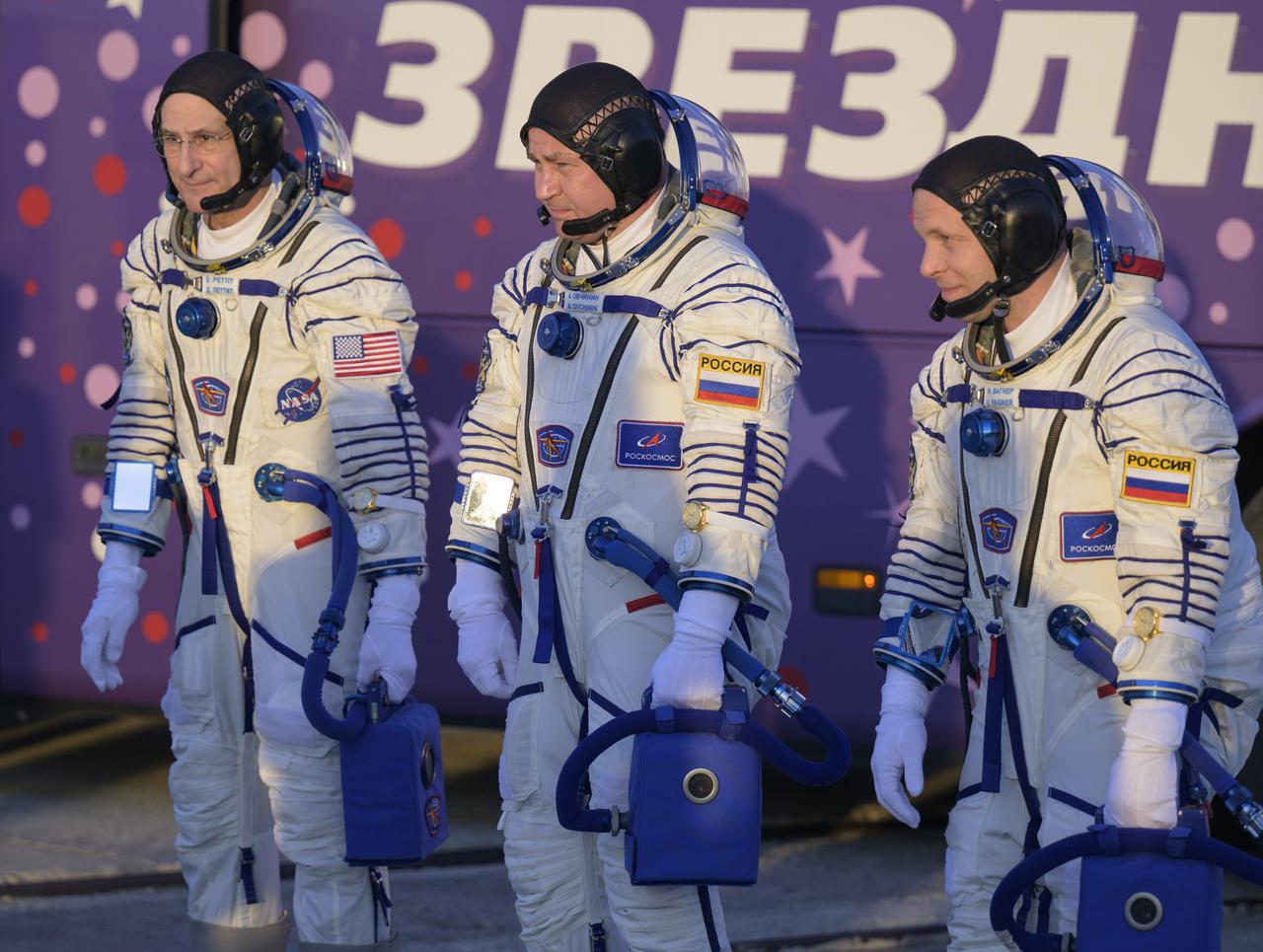
Expedition 72 crew members: NASA astronaut Don Pettit, left, and Roscosmos cosmonauts Alexey Ovchinin, and Ivan Vagner, right, meet with NASA and Roscosmos managers prior to boarding the Soyuz MS-26 spacecraft for launch, Wednesday, Sept. 11, 2024 at the Baikonur Cosmodrome in Kazakhstan. Launch of the Soyuz rocket will send the trio on a mission to the International Space Station. Photo Credit: (NASA/Bill Ingalls)
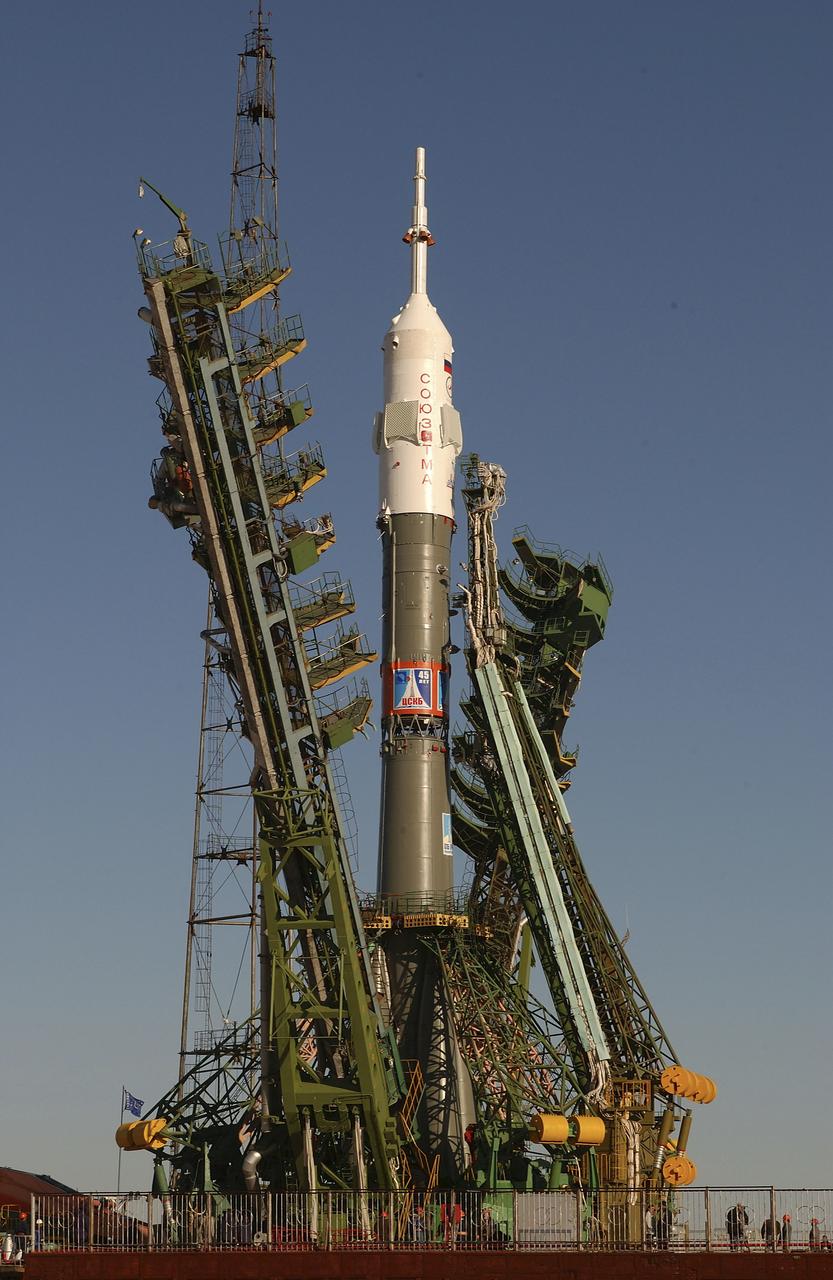
The Soyuz TMA-5 vehicle rolled to its launch pad at the Baikonur Cosmodrome in Kazakhstan, Tuesday, October 12, 2004, in preparation for its launch October 14 to send Expedition 10 Commander and NASA Science Officer Leroy Chiao, Flight Engineer and Soyuz Commander Salizhan Sharipov and Russian Space Forces cosmonaut Yuri Shargin to the International Space Station. Chiao and Sharipov will replace the Expedition 9 crew of Gennady Padalka and Mike Fincke, while Shargin will conduct eight days of scientific experiments. He will return to earth with the Expedition 9 crew October 24. Photo Credit: (NASA/Bill Ingalls)

Expedition 56 flight engineer Alexander Gerst of ESA (European Space Agency) is seen as he waits to have his Russian Sokol suit pressure checked as he and fellow crewmates, Sergey Prokopyev of Roscosmos and Serena Auñón-Chancellor of NASA prepare for their Soyuz launch to the International Space Station, Wednesday, June 6, 2018 at the Baikonur Cosmodrome in Kazakhstan. Launch of the Soyuz rocket will send Auñón-Chancellor, Prokopyev, and Gerst on a six month mission aboard the International Space Station. Photo Credit: (NASA/GCTC/Andrey Shelepin)
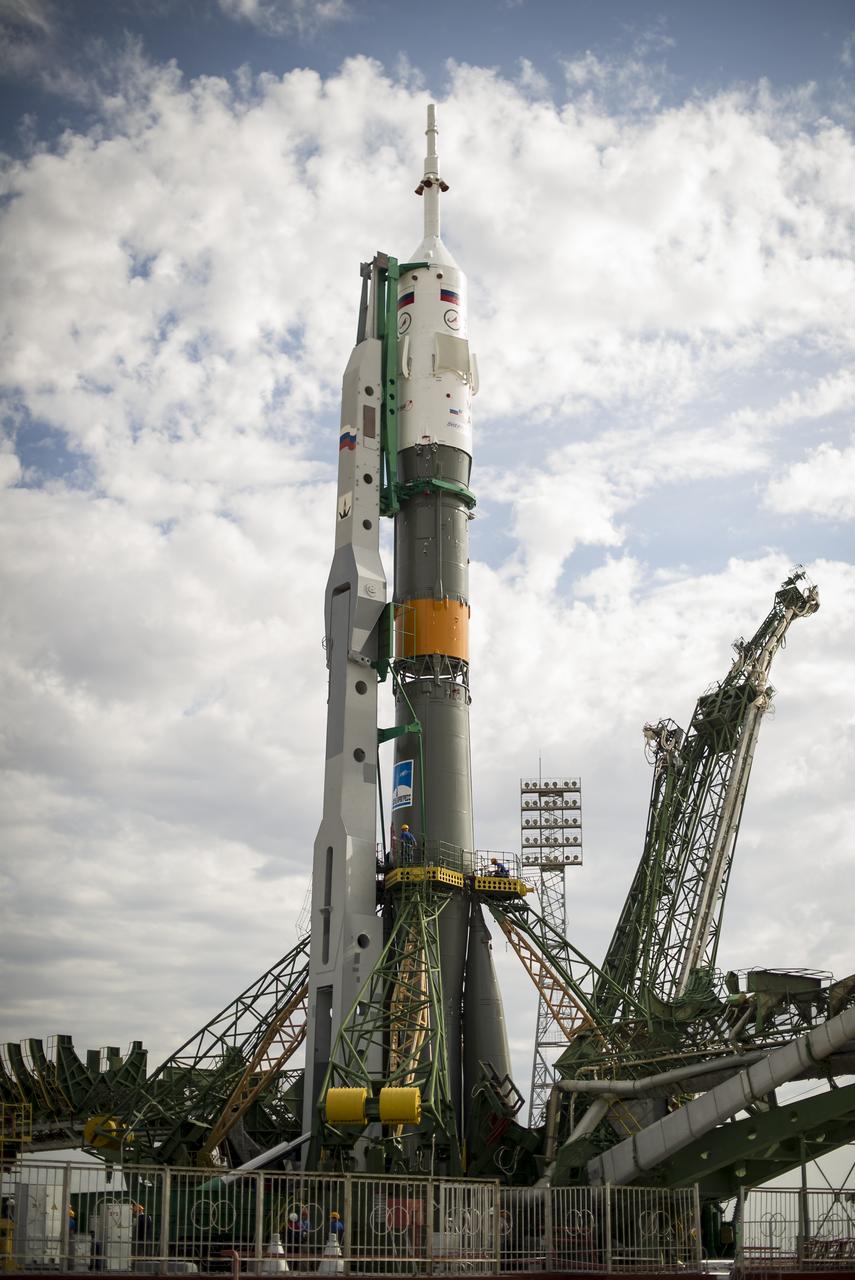
The Soyuz TMA-04M spacecraft is seen after being rolled out by train to the launch pad at the Baikonur Cosmodrome in Kazakhstan, Sunday, May 13, 2012. The launch of the Soyuz spacecraft with Expedition 31 Soyuz Commander Gennady Padalka and Flight Engineer Sergei Revin of Russia, and prime NASA Flight Engineer Joe Acaba is scheduled for 9:01 a.m. local time on Tuesday, May 15. Photo Credit (NASA/Bill Ingalls)
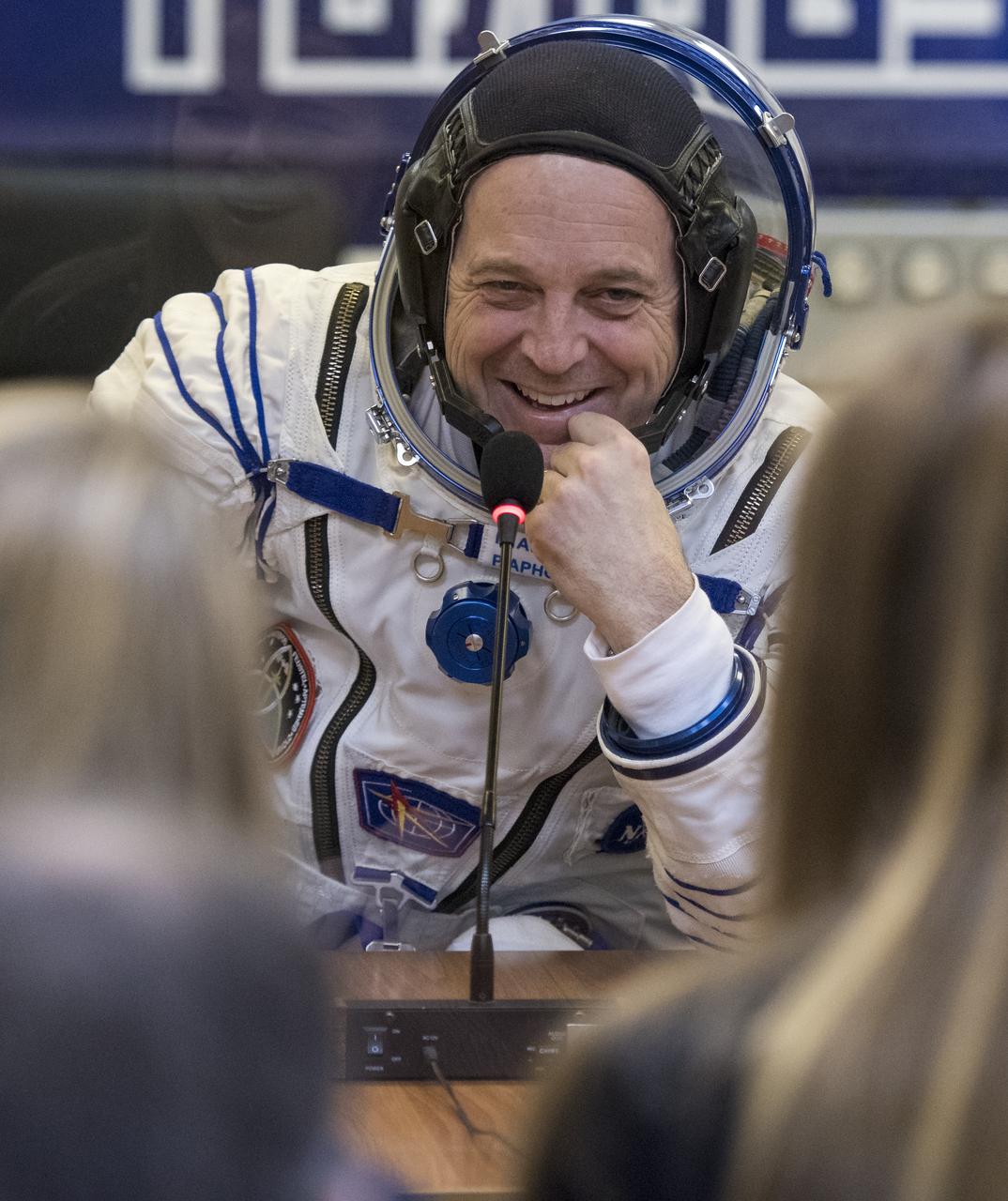
Expedition 55 flight engineer Ricky Arnold of NASA speaks with family and friends after having his Russian Sokol suit pressure checked in preparation for launch aboard the Soyuz MS-08 spacecraft, Wednesday, March 21, 2018 at the Baikonur Cosmodrome in Kazakhstan. Arnold, Soyuz Commander Oleg Artemyev of Roscosmos, and flight engineer Drew Feustel of NASA launched aboard the Soyuz MS-08 spacecraft at 1:44 p.m. Eastern time (11:44 p.m. Baikonur time) on March 21 to begin their journey to the International Space Station. Photo Credit: (NASA/Joel Kowsky)
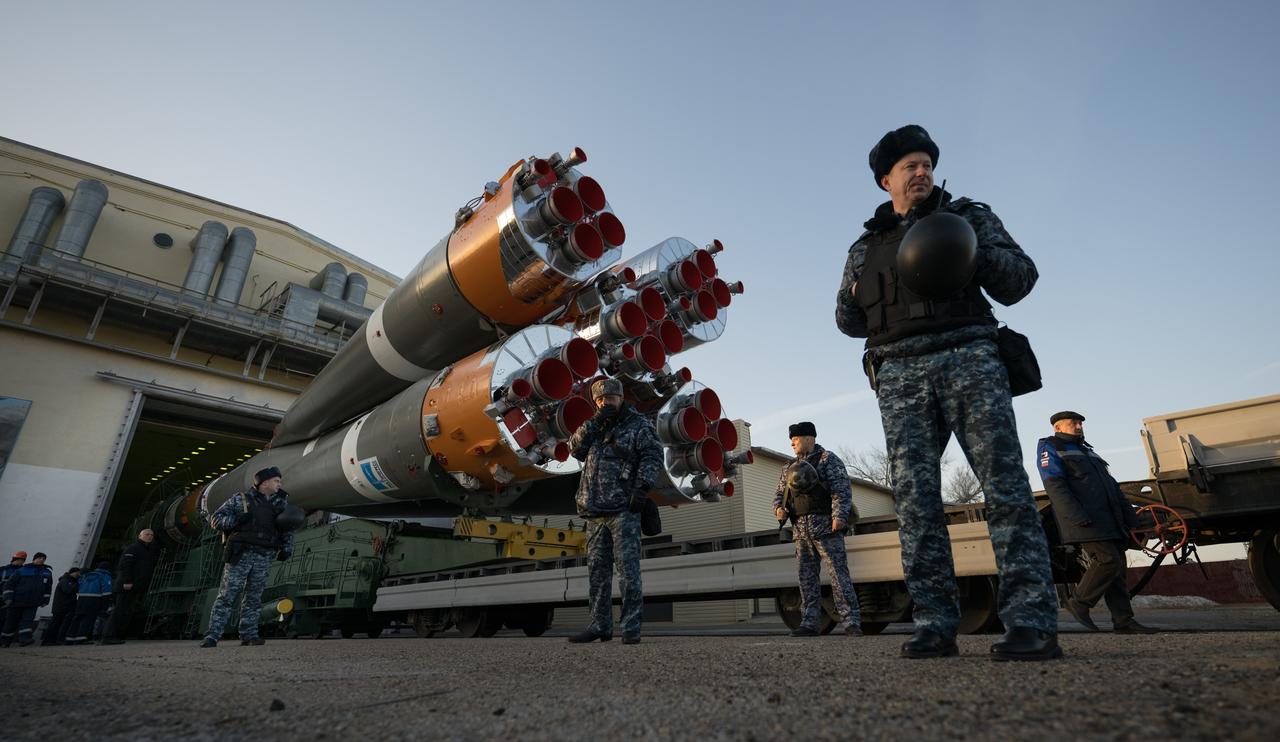
The Soyuz rocket is rolled out by train to the launch pad at Site 31, Monday, March 18, 2024, at the Baikonur Cosmodrome in Kazakhstan. Expedition 71 NASA astronaut Tracy Dyson, Roscosmos cosmonaut Oleg Novitskiy, and Belarus spaceflight participant Marina Vasilevskaya are scheduled to launch aboard their Soyuz MS-25 spacecraft on March 21. Photo Credit: (NASA/Bill Ingalls)
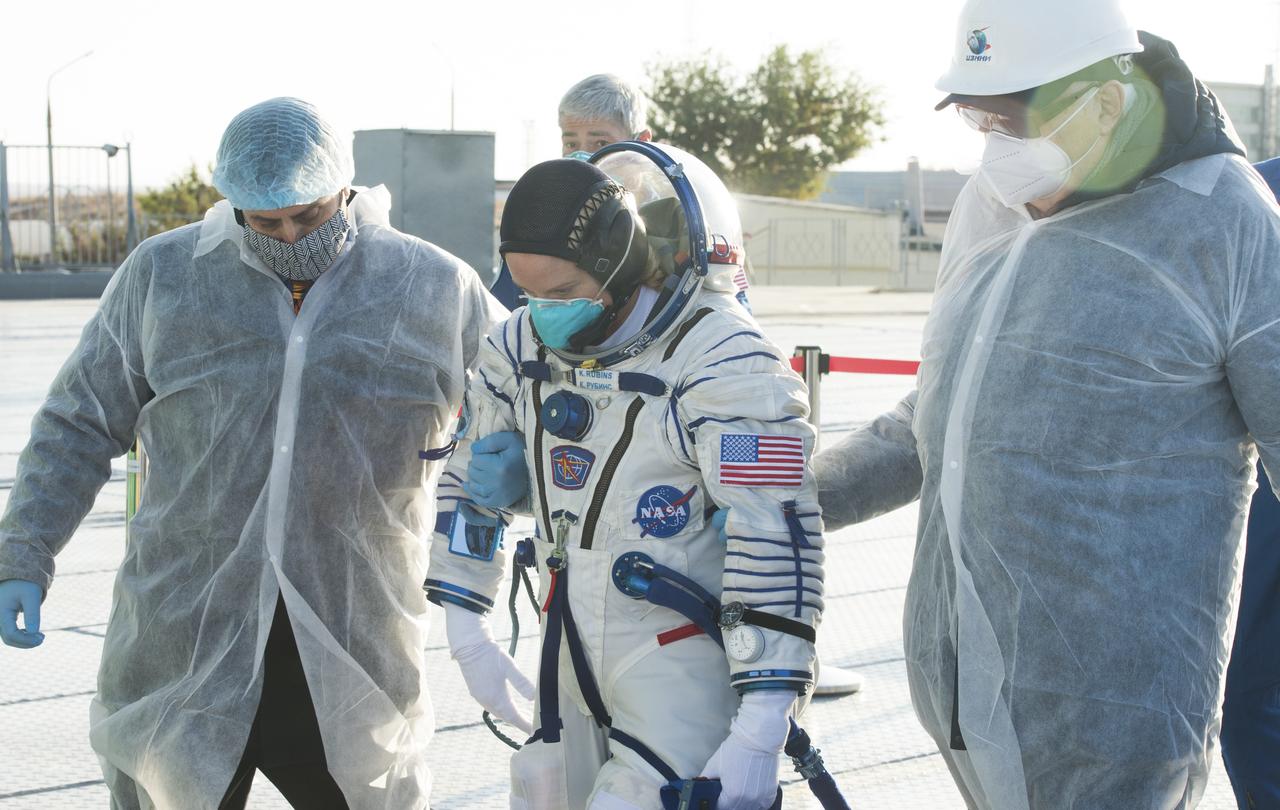
Expedition 64 NASA astronaut walks to board the Soyuz MS-17 spacecraft with NASA International Space Station Program Joel Montalbano, left, prior to launch with Sergey Ryzhikov and Sergey Kud-Sverchkov of Roscosmos, Wednesday, Oct. 14, 2020, at the Baikonur Cosmodrome in Kazakhstan. The trio launched at 1:45 a.m. EDT to begin a six-month mission aboard the International Space Station. Photo Credit: (NASA/GCTC/Andrey Shelepin)
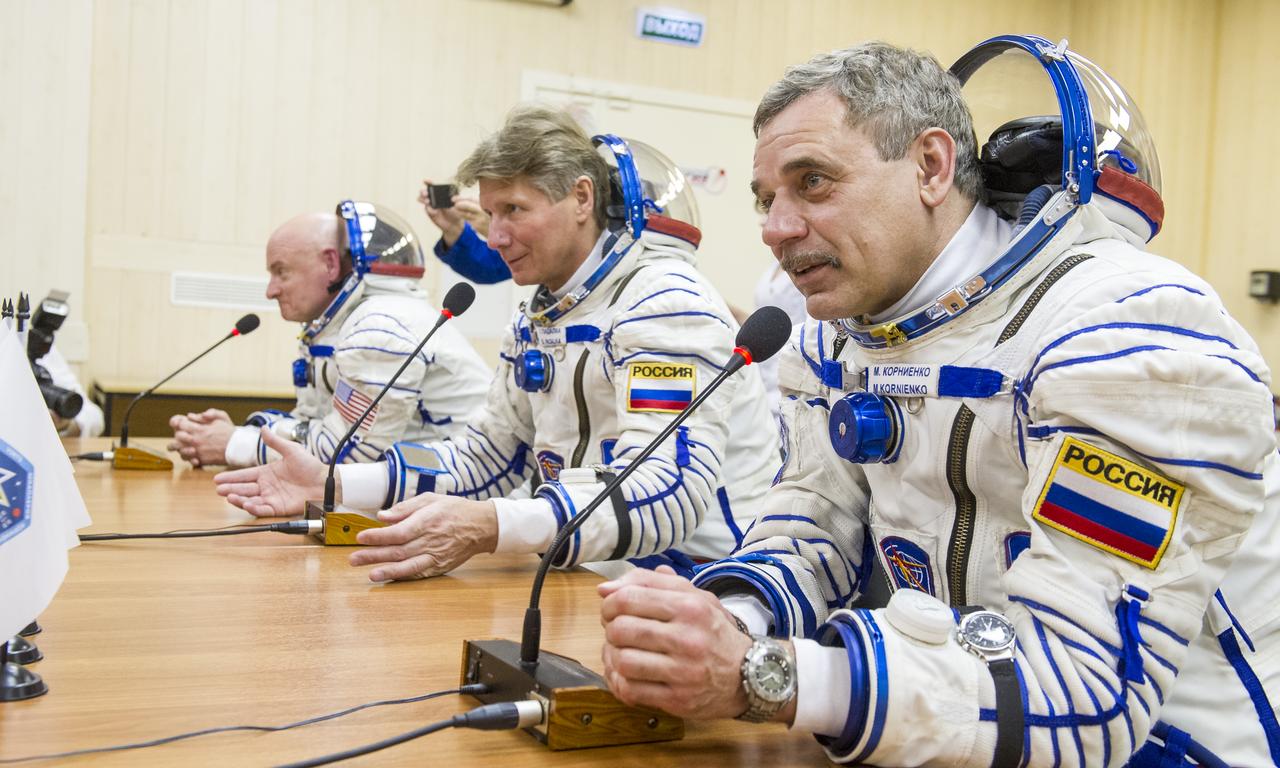
Expedition 43 NASA Astronaut Scott Kelly, left, and Russian Cosmonauts Gennady Padalka, and Mikhail Kornienko of the Russian Federal Space Agency (Roscosmos) talk to family, friends, and officials from behind glass before departing for their launch onboard the Soyuz TMA-16M spacecraft to the International Space Station Friday, March 27, 2015 in Baikonor, Kazakhstan. Kelly, Padalka, and Kornienko launched to the ISS from the Baikonur Cosmodrome in Kazakhstan March 28, Kazakh time (March 27 Eastern time.) As the one-year crew, Kelly and Kornienko will return to Earth on Soyuz TMA-18M in March 2016. Photo Credit: (NASA/GCTC/Andrey Shelepin)
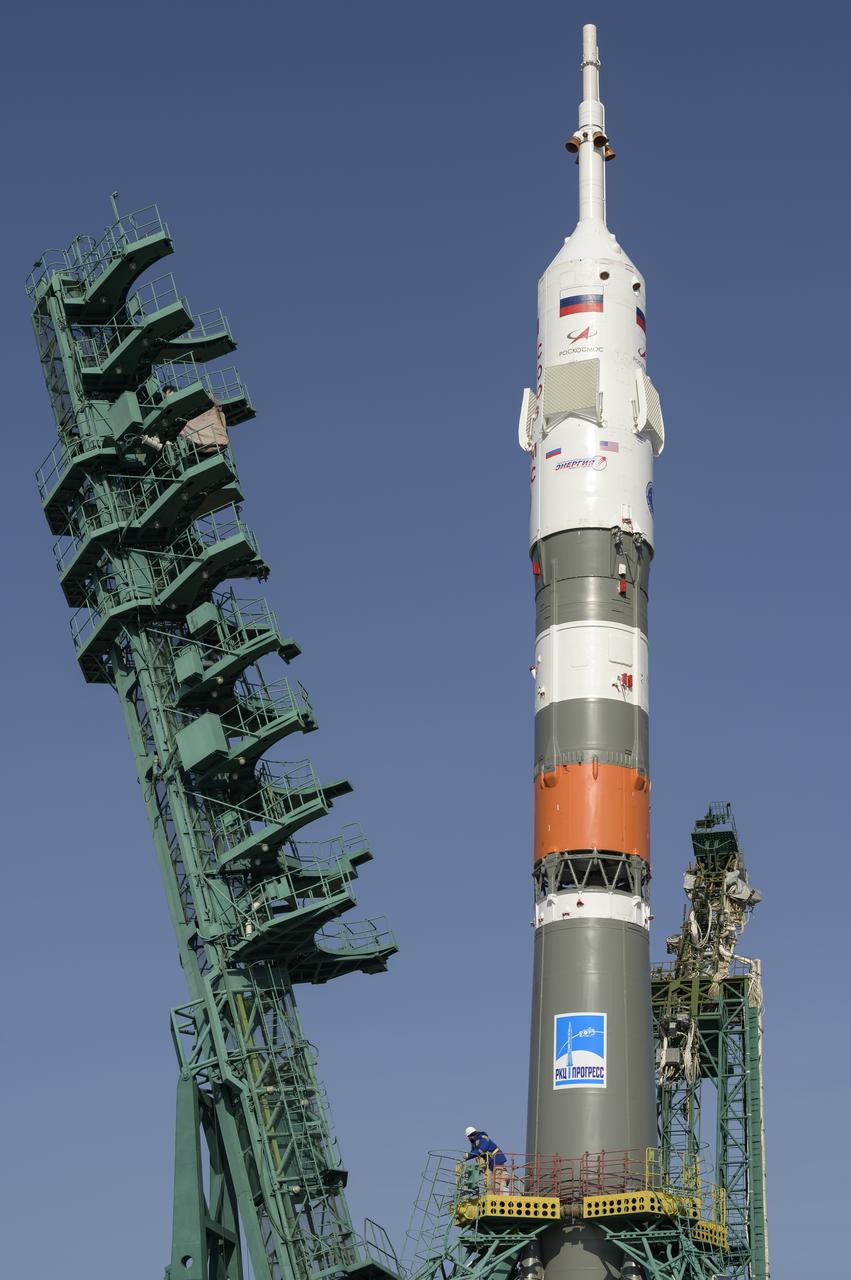
The service structure is lifted into position around the Soyuz rocket, Tuesday, April 6, 2021, at site 31 of the Baikonur Cosmodrome in Kazakhstan. Expedition 65 NASA astronaut Mark Vande Hei, Roscosmos cosmonauts Pyotr Dubrov and Oleg Novitskiy are scheduled to launch aboard their Soyuz MS-18 spacecraft on April 9. Photo Credit: (NASA/Bill Ingalls)
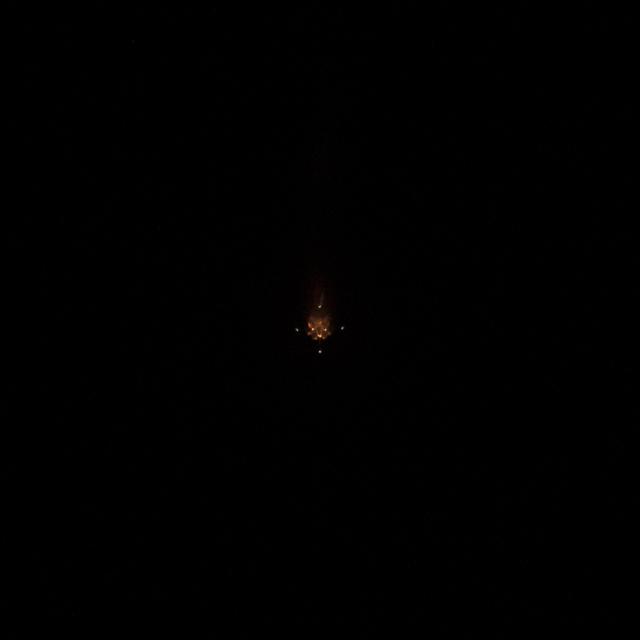
The Soyuz MS-08 rocket boosters are seen being jettisoned during launch from the Baikonur Cosmodrome, Wednesday, March 21, 2018 in Kazakhstan. Expedition 55 Soyuz Commander Oleg Artemyev of Roscosmosand flight engineers Ricky Arnold and Drew Feustel of NASA will spend the next five months living and working aboard the International Space Station. Photo Credit: (NASA/Joel Kowsky)
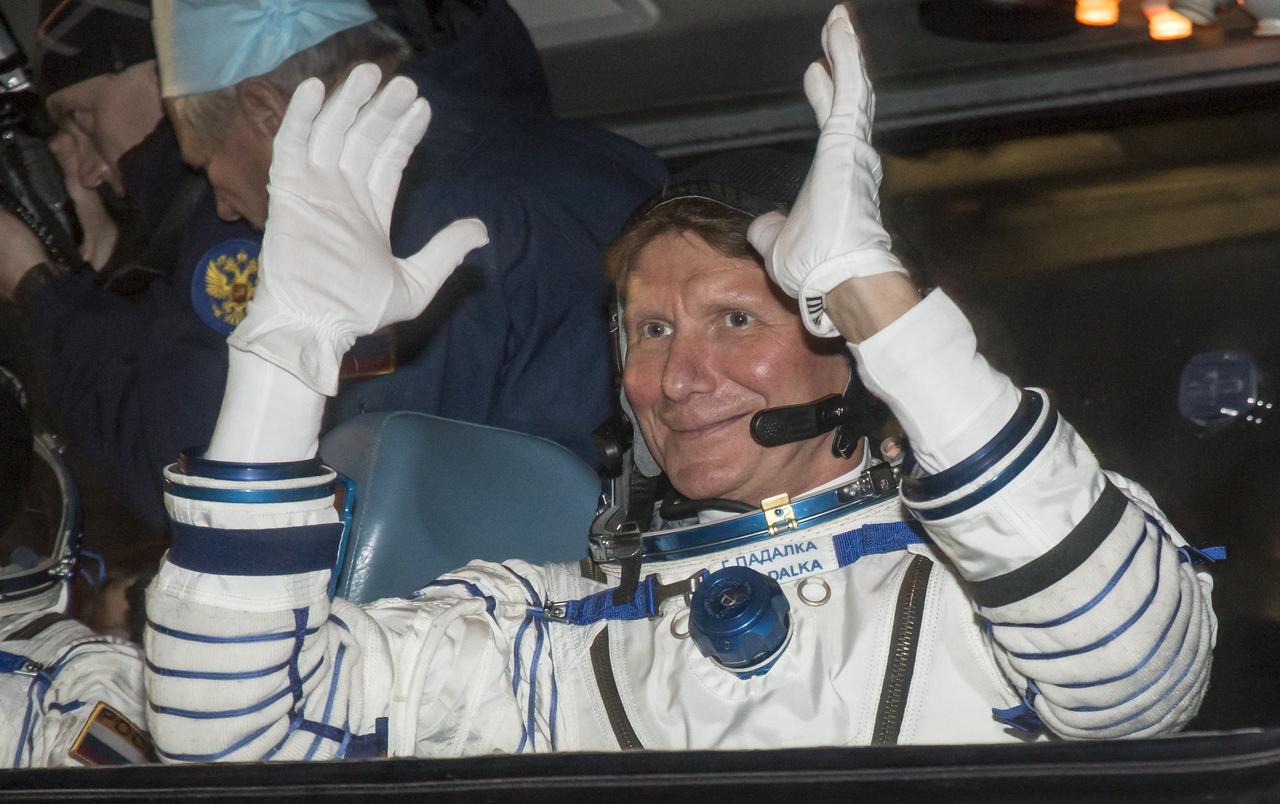
Expedition 43 Russian Cosmonaut Gennady Padalka of the Russian Federal Space Agency (Roscosmos) waves farewell to family and friends as he and fellow crew members NASA Astronaut Scott Kelly, and Russian Cosmonaut Mikhail Kornienko depart building 254 for their launch onboard the Soyuz TMA-16M spacecraft to the International Space Station Friday, March 27, 2015 in Baikonor, Kazakhstan. Kelly, Padalka, and Kornienko launched to the ISS from the Baikonur Cosmodrome in Kazakhstan March 28, Kazakh time (March 27 Eastern time.) As the one-year crew, Kelly and Kornienko will return to Earth on Soyuz TMA-18M in March 2016. Photo Credit: (NASA/Victor Zelentsov)
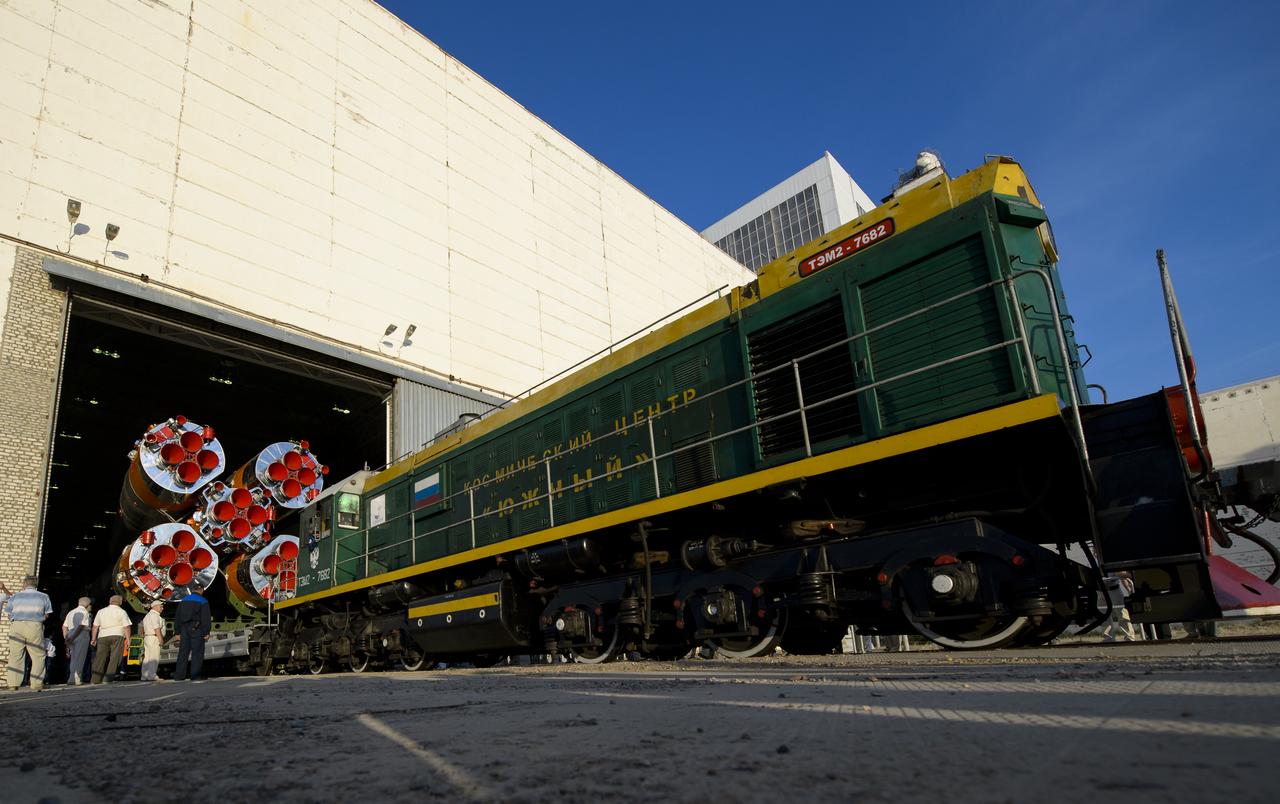
The Soyuz TMA-13M spacecraft is rolled out to the launch pad by train on Monday, May 26, 2014, at the Baikonur Cosmodrome in Kazakhstan. Launch of the Soyuz rocket is scheduled for May 29 and will send Expedition 40 Soyuz Commander Maxim Suraev, of the Russian Federal Space Agency, Roscosmos, Flight Engineer Alexander Gerst, of the European Space Agency, ESA, and Flight Engineer Reid Wiseman of NASA on a five and a half month mission aboard the International Space Station. Photo Credit: (NASA/Joel Kowsky)
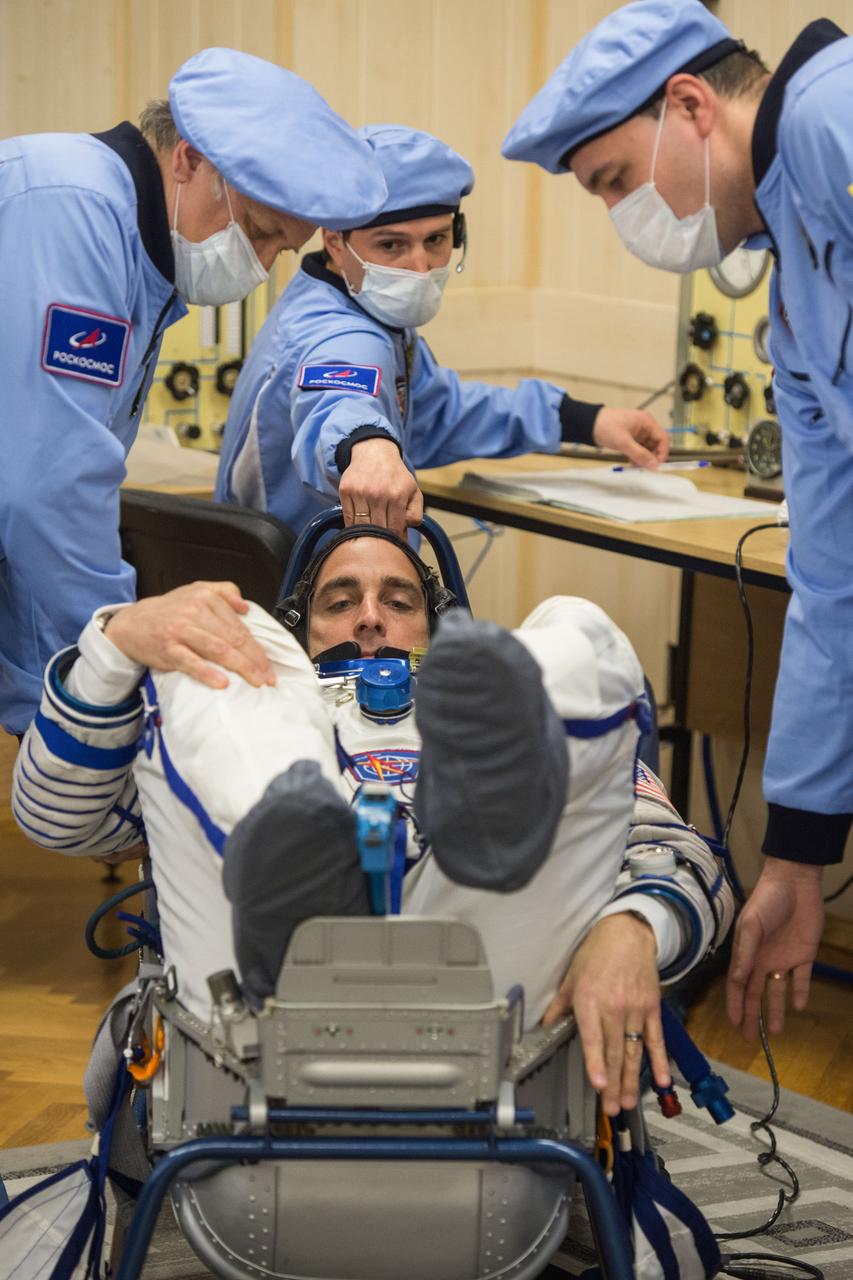
jsc2020e017092 - Expedition 63 Preflight - Expedition 63 crewmember Chris Cassidy of NASA has his Sokol suit pressure checked ahead of his launch on a Soyuz rocket with Anatoly Ivanishin and Ivan Vagner of Roscosmos, Thursday, April 9, 2020 at the Baikonur Cosmodrome in Kazakhstan. A few hours later, Vagner, Anatoly Ivanishin of Roscosmos, and Chris Cassidy of NASA lifted off for a six-and-a-half month mission on the International Space Station. Photo Credit: (NASA/GCTC/Andrey Shelepin)
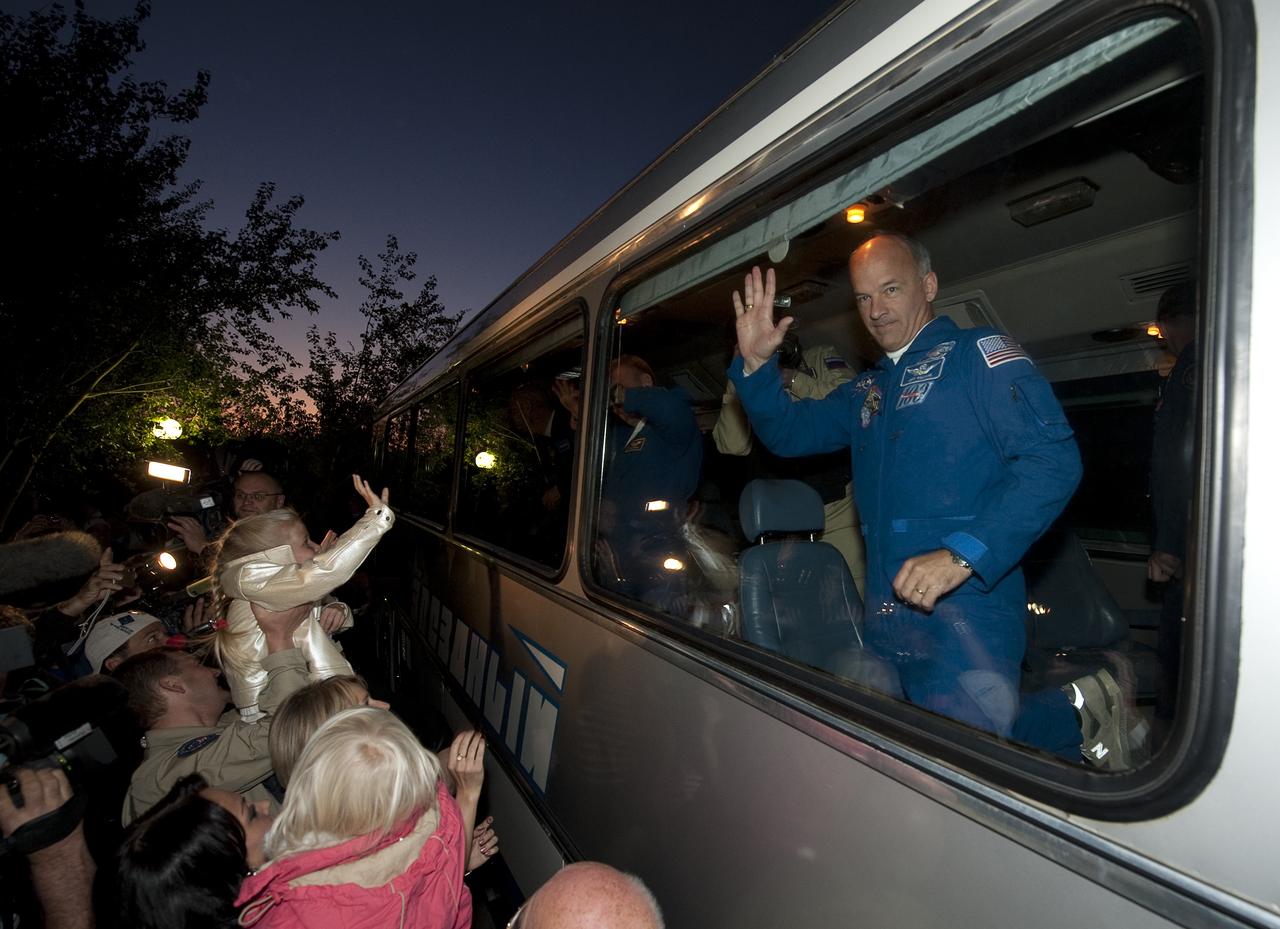
Expedition 21 Flight Engineer Jeffrey N. Williams, right, waves farewell to well wishers as he and Expedition 21 Flight Engineer Maxim Suraev and Spaceflight Participant Guy Laliberté depart the Cosmonaut Hotel on the morning of their Soyuz launch to the International Space Station on Wednesday, Sept. 30, 2009 in Baikonur, Kazakhstan. Photo Credit: (NASA/Bill Ingalls)
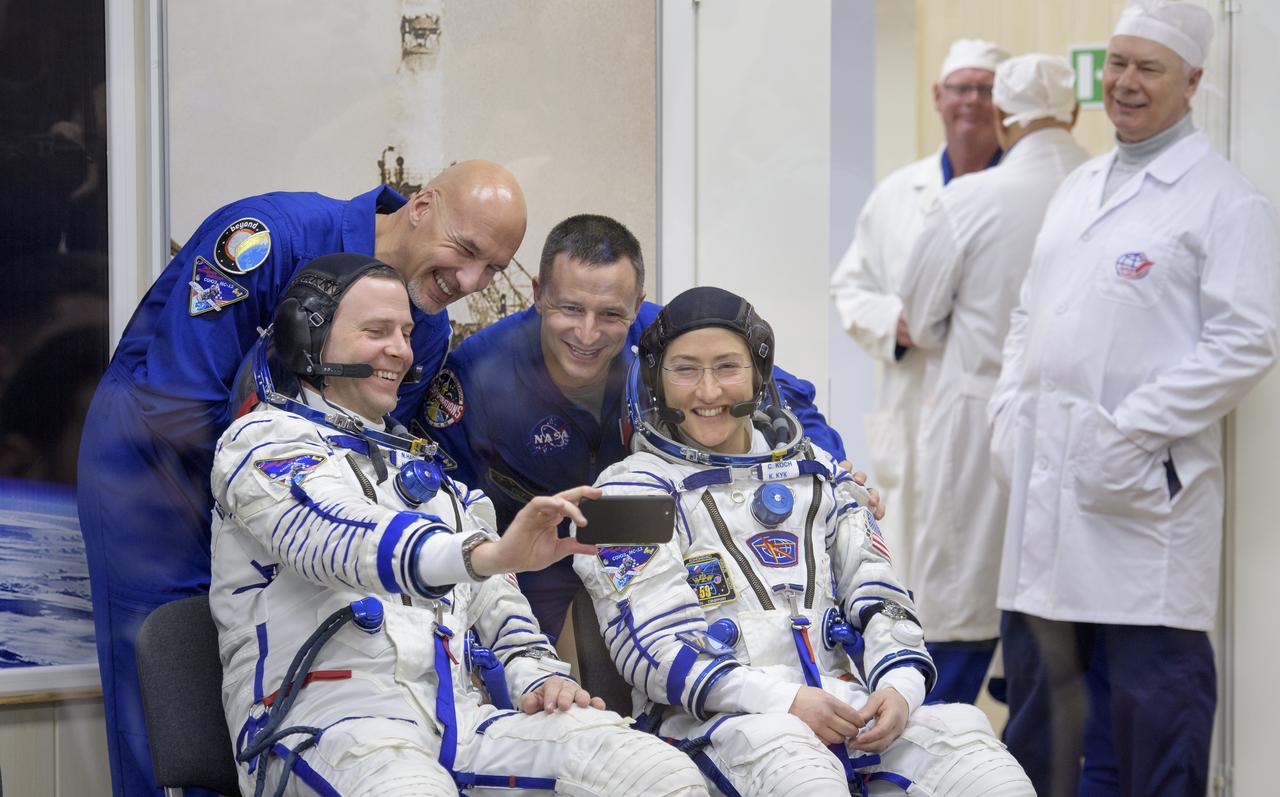
Expedition 59 astronaut Nick Hague and Christina Koch of NASA, seated, make photograph with Expedition 59 backup crewmembers Luca Parmitano of the European Space Agency, left, and Drew Morgan of NASA during Sokol suit pressure checks prior to launch on a Soyuz rocket with Alexey Ovchinin of Roscosmos, Thursday, March 14, 2019 at the Baikonur Cosmodrome in Kazakhstan. Hague, Koch, and Ovchinin launched March 14, U.S. time, on the Soyuz MS-12 spacecraft from the Baikonur Cosmodrome for a six-and-a-half month mission on the International Space Station. Photo Credit: (NASA/Bill Ingalls)
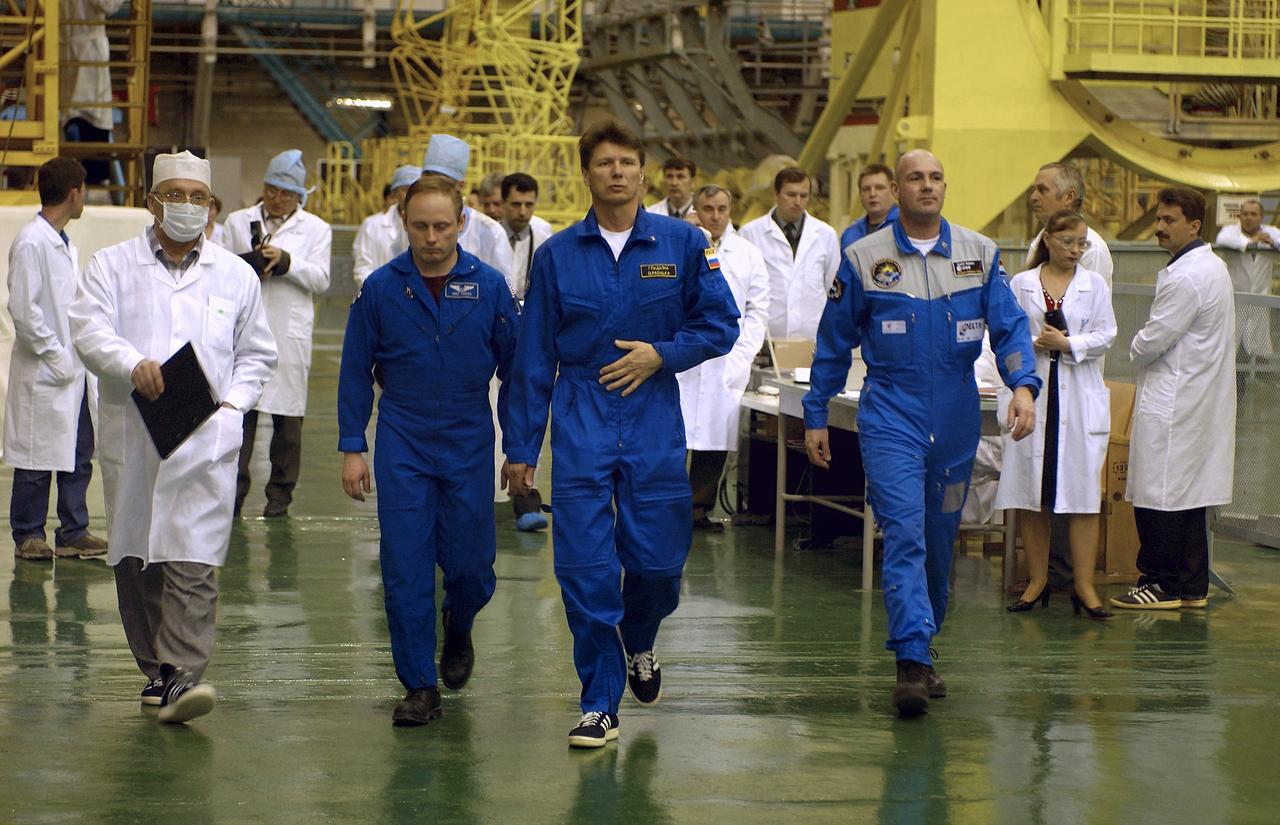
NASA Science Officer Mike Fincke, left, Expedition 9 Commander Gennady Padalka, center and Flight Engineer and European Space Agency astronaut Andre Kuipers of the Netherlands walk from the Soyuz capsule at building 254 at the Baikonur Cosmodrome after their final fit check in the Soyuz, Wednesday, April 14, 2004, in Baikonur, Kazakhstan. Photo Credit: (NASA/Bill Ingalls)
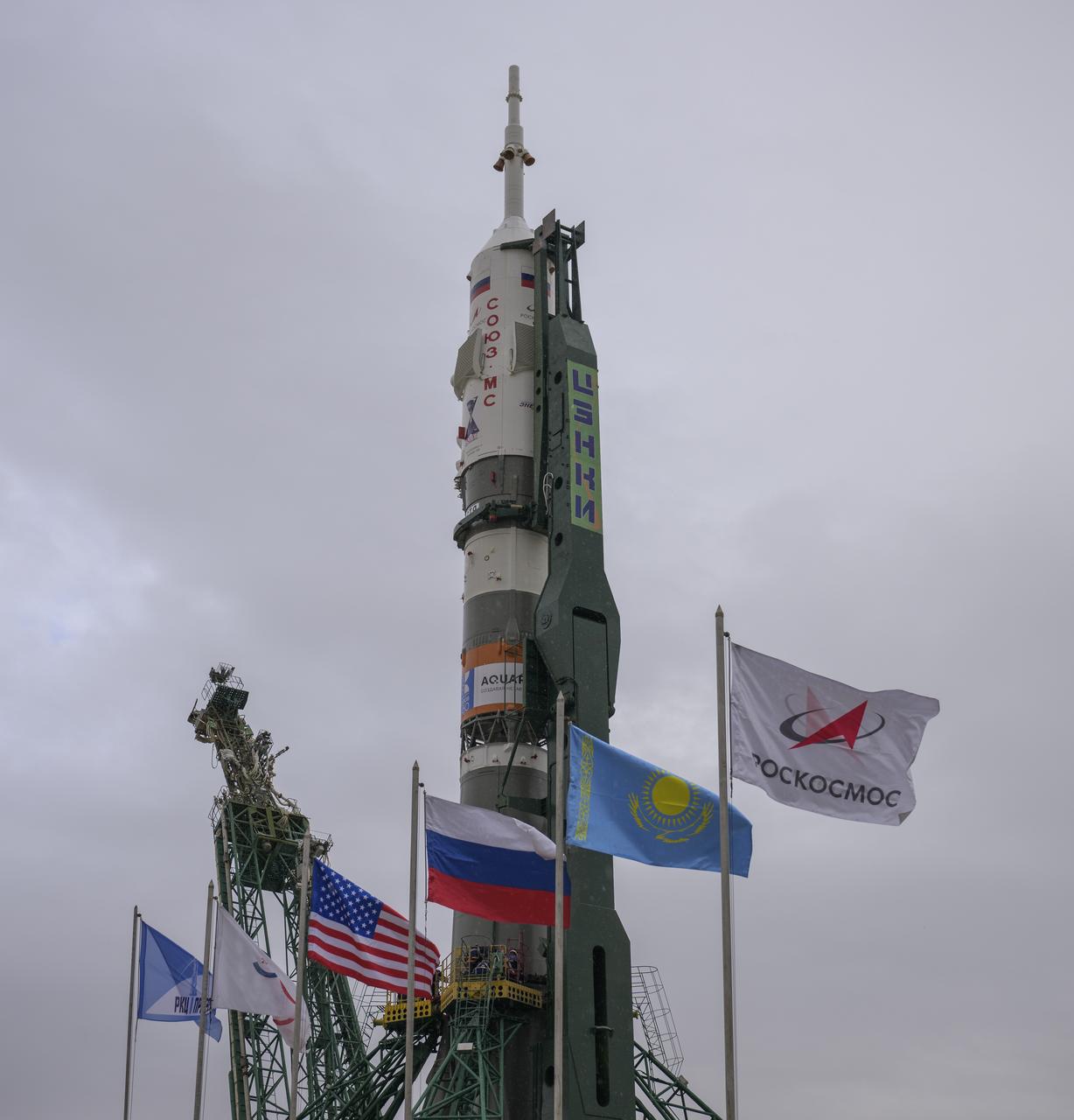
The Soyuz rocket is seen after being rolled out by train to the launch pad at Site 31, Sunday, Sept. 8, 2024, at the Baikonur Cosmodrome in Kazakhstan. Expedition 72 crew members: NASA astronaut Don Pettit, Roscosmos cosmonauts Alexey Ovchinin, and Ivan Vagner, are scheduled to launch aboard their Soyuz MS-26 spacecraft on September 11. Photo Credit: (NASA/Bill Ingalls)
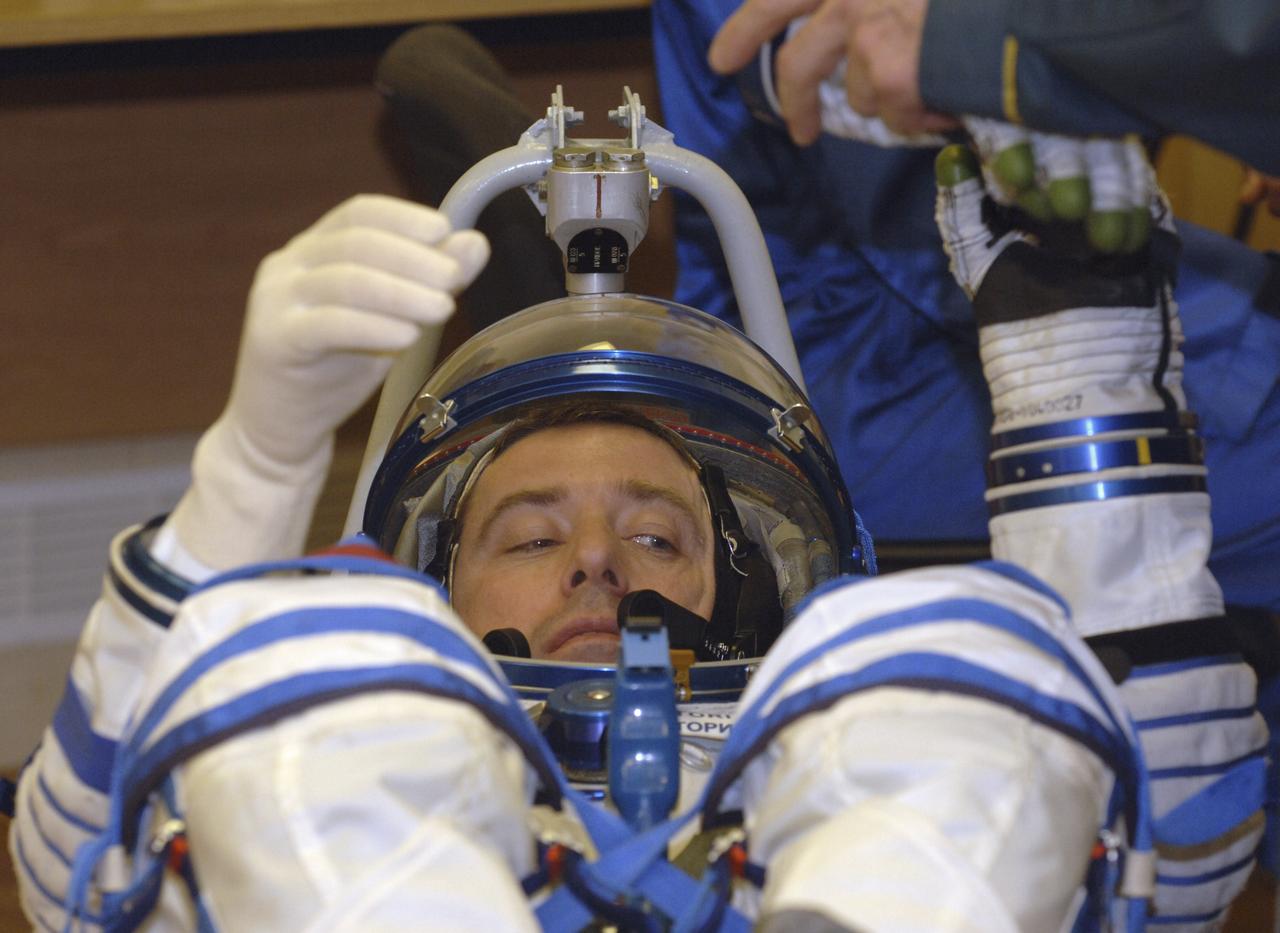
Technicians work on the Russian Sokol suit of European Space Agency astronaut Roberto Vittori, of Italy, prior to launch aboard the Soyuz TMA-6 spacecraft at the Baikonur Cosmodrome in Baikonur, Kazakhstan, Friday, April 15, 2005 for a two-day trip to the International Space Station. Photo Credit: (NASA/Bill Ingalls)
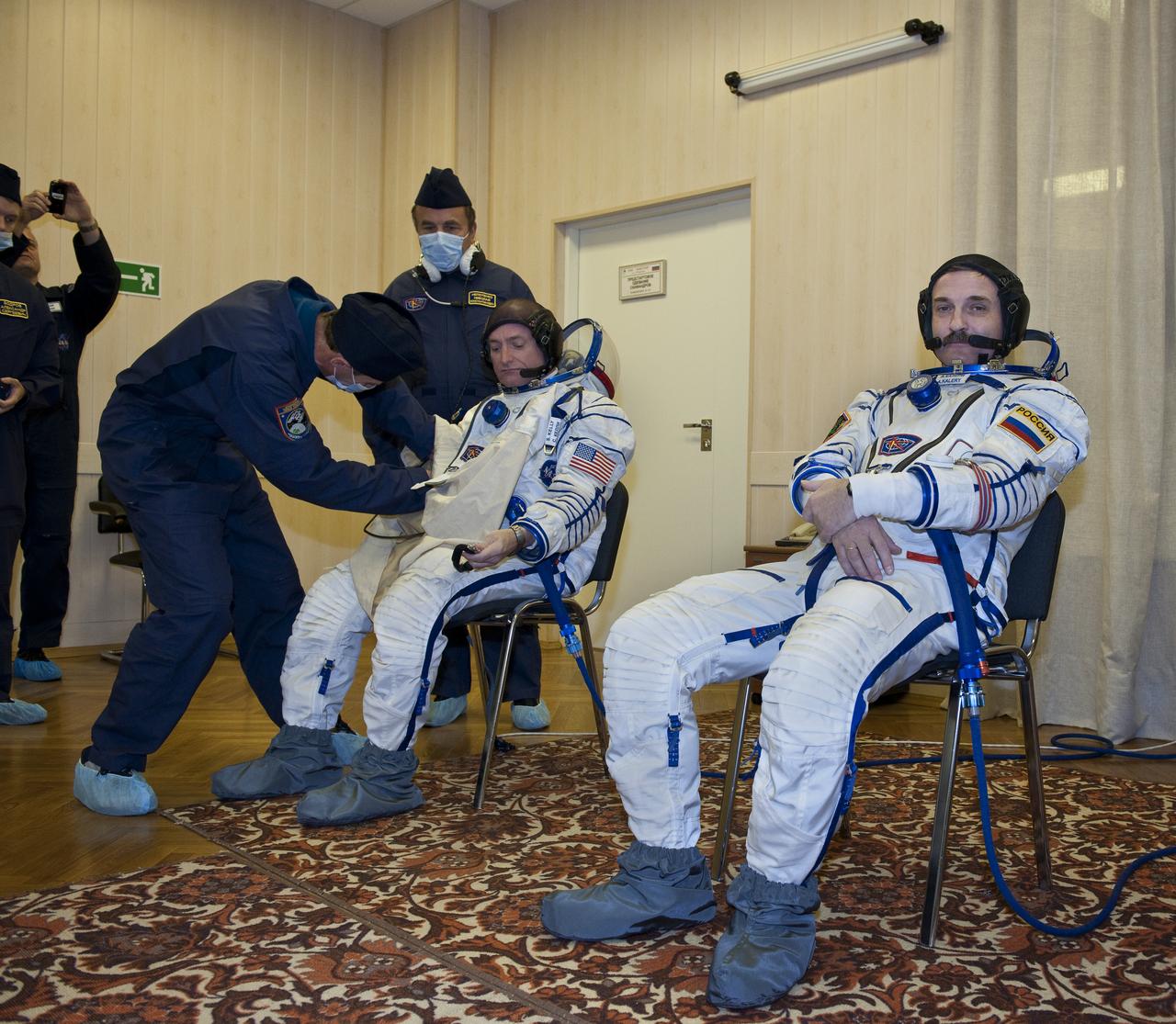
Expedition 25 NASA Flight Engineer Scott Kelly of the U.S., left, and Soyuz Commander Alexander Kaleri have their Russian Sokol suits prepared for launch by technicians at the Baikonur Cosmodrome in Kazakhstan, Friday, Oct. 8, 2010. (Photo Credit: NASA/Carla Cioffi)
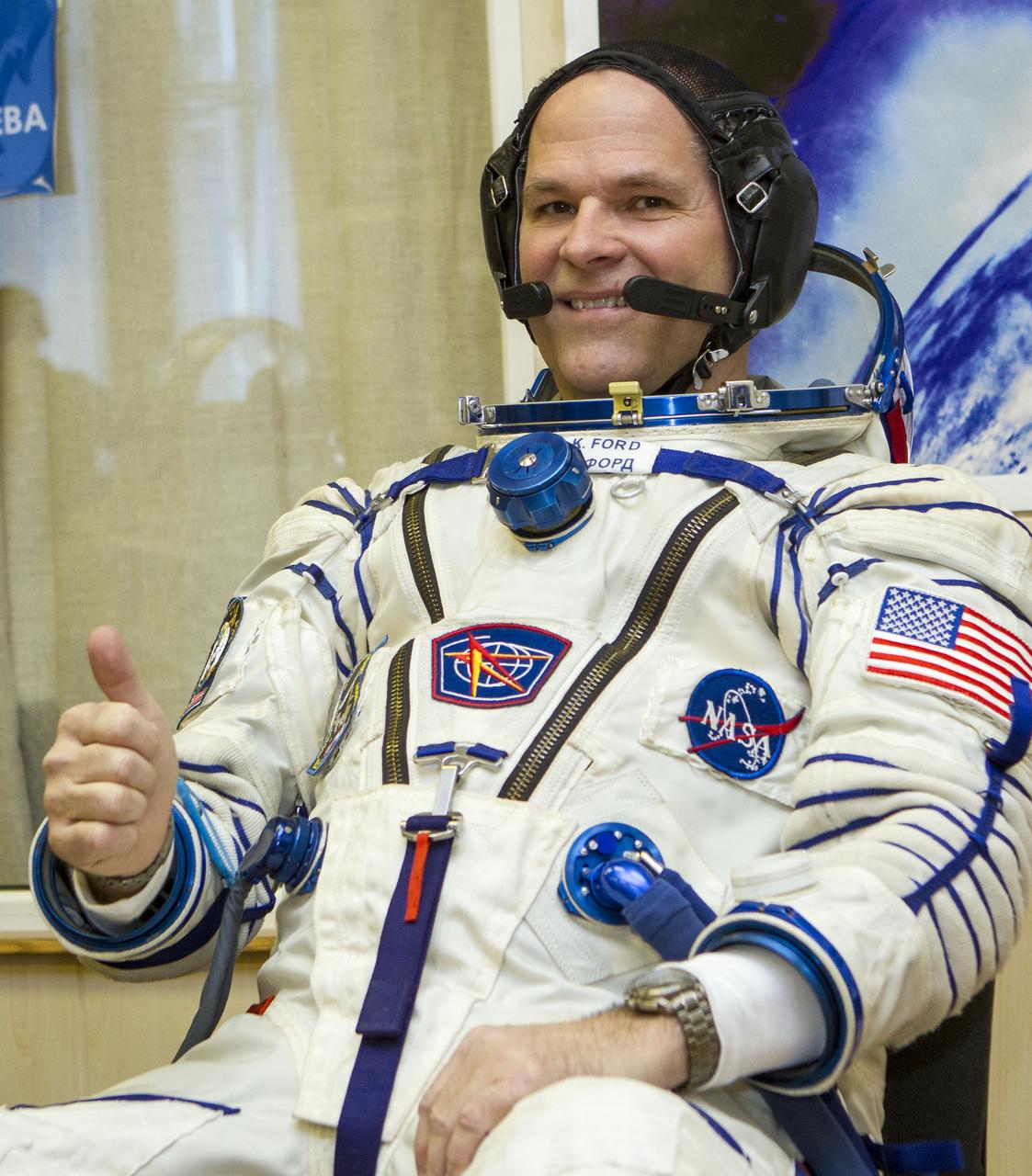
Expedition 33/34 Flight Engineer Kevin Ford gives a thumbs up as he waits to have his Russian Sokol suit pressure checked ahead of his launch to the International Space Station with fellow cremates, Soyuz Commander Oleg Novitskiy, and Flight Engineer Evgeny Tarelkin , on Tuesday, October 23, 2012, in Baikonur, Kazakhstan. Launch of the Soyuz rocket will send Ford, Novitskiy and Tarelkin on a five-month mission aboard the International Space Station. Photo Credit: (NASA/GCTC/Andrey Shelepin)
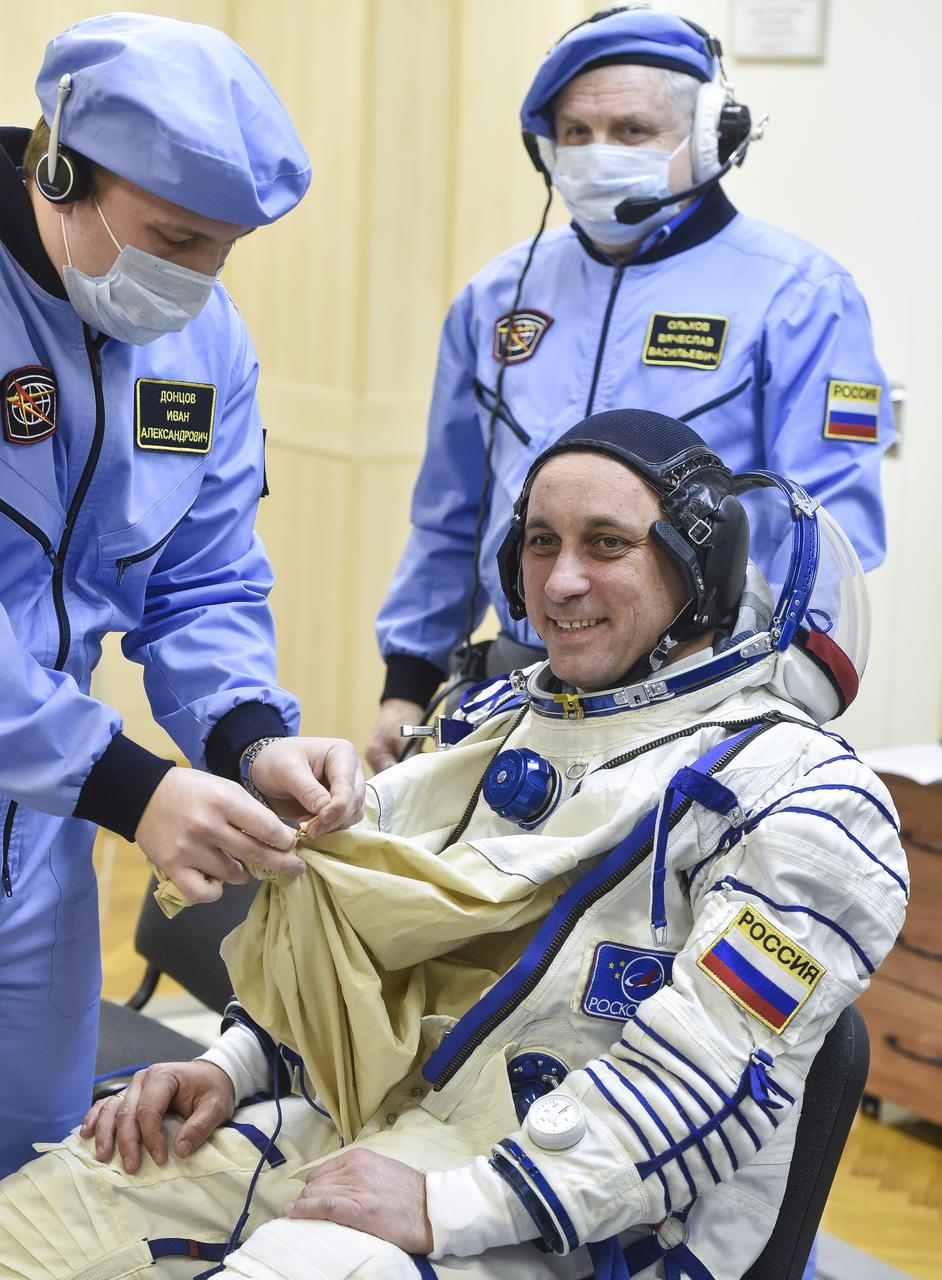
Expedition 54 Soyuz Commander Anton Shkaplerov of Roscosmos is helped into his Russian Sokol suit as he and fellow cremates, flight engineer Norishige Kanai of the Japan Aerospace Exploration Agency (JAXA) and flight engineer Scott Tingle of NASA prepare for their Soyuz launch to the International Space Station Sunday, Dec. 17, 2017 in Baikonur, Kazakhstan. Launch of the Soyuz rocket will send Tingle, Kanai, and Shkaplerov on a five month mission aboard the International Space Station. Photo Credit: (NASA/GCTC/Andrey Shelepin)
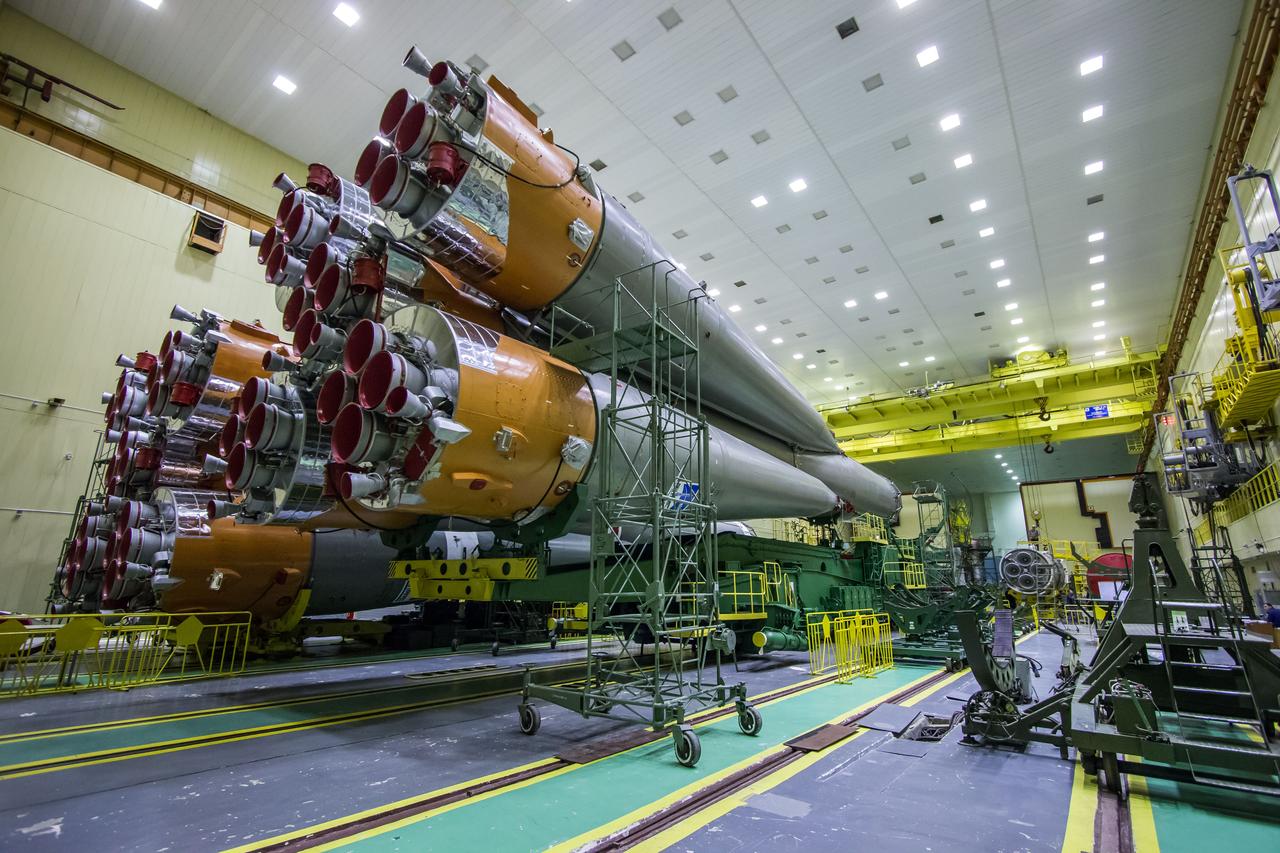
The Soyuz rocket and Soyuz MS-02 spacecraft are assembled on Friday, Oct. 14, 2016 at the Baikonur Cosmodrome in Kazakhstan. Expedition 49 flight engineer Shane Kimbrough of NASA, Soyuz commander Sergey Ryzhikov of Roscosmos, and flight engineer Andrey Borisenko of Roscosmos are scheduled to launch from the Baikonur Cosmodrome in Kazakhstan on Oct. 19. Photo Credit: (NASA/Victor Zelentsov)
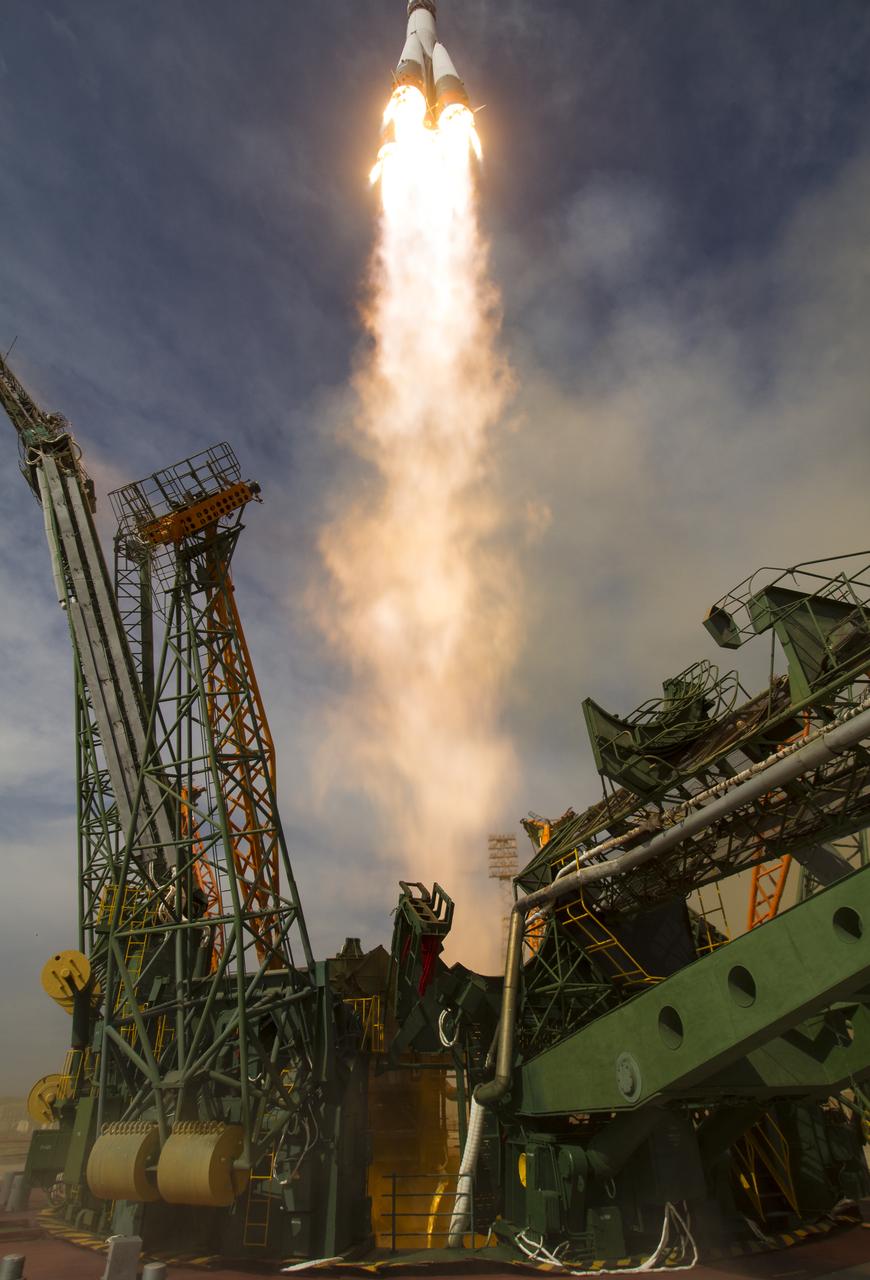
The Soyuz MS-09 rocket is launched with Expedition 56 Soyuz Commander Sergey Prokopyev of Roscosmos, flight engineer Serena Auñón-Chancellor of NASA, and flight engineer Alexander Gerst of ESA (European Space Agency), Wednesday, June 6, 2018 at the Baikonur Cosmodrome in Kazakhstan. Prokopyev, Auñón-Chancellor, and Gerst will spend the next six months living and working aboard the International Space Station. Photo Credit: (NASA/Joel Kowsky)
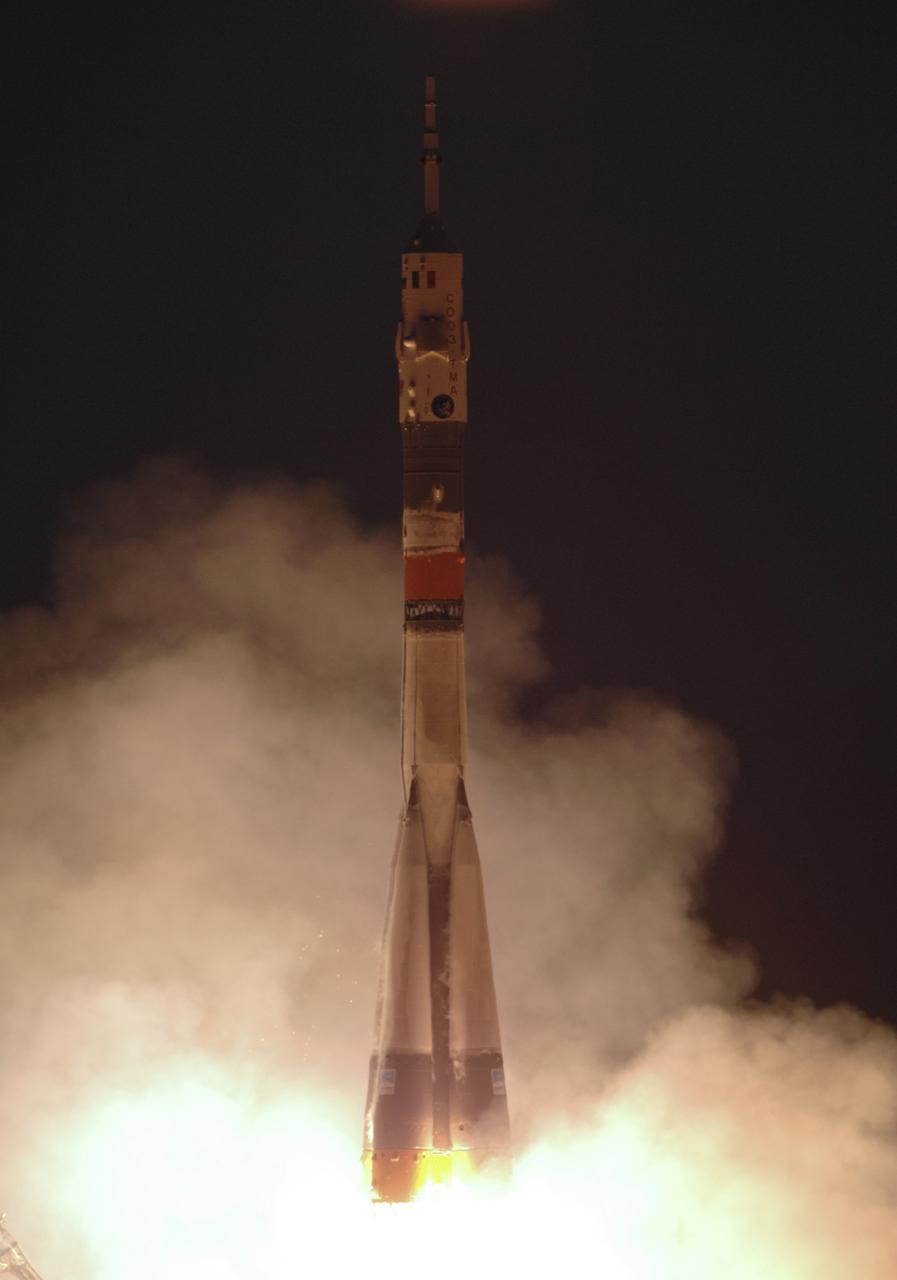
Expedition 11 Commander Sergei Krikalev, Flight Engineer and NASA Science Officer John Phillips and European Space Agency astronaut Roberto Vittori, of Italy, blast off aboard the Soyuz TMA-6 spacecraft from the Baikonur Cosmodrome in Kazakhstan, Friday, April 15, 2005 for a two-day trip to the International Space Station. Photo Credit: (NASA/Bill Ingalls)
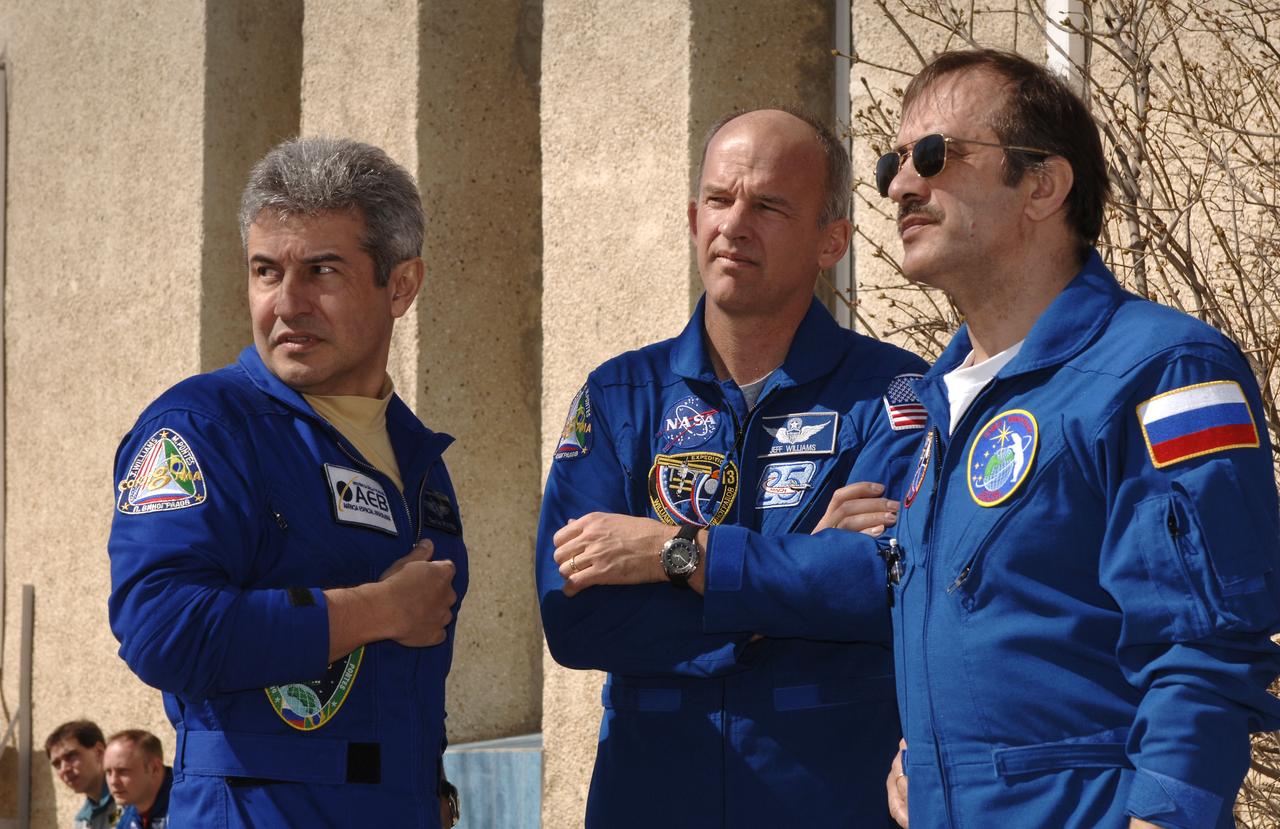
Marcos Pontes, left, Brazilian Space Agency’s Soyuz crew member, Jeffrey N. Williams, Expedition 13 NASA International Space Station Science Officer and Flight Engineer, and Pavel V. Vinogradov, right, Expedition 13 commander, take a break from their training at the Cosmonaut Hotel in Baikonur, Kazakhstan, Saturday, March 25, 2006, days before their launch on a Soyuz spacecraft. Photo Credit: (NASA/Bill Ingalls)

The Soyuz MS-08 rocket is launched with Expedition 55 Soyuz Commander Oleg Artemyev of Roscosmos and flight engineers Ricky Arnold and Drew Feustel of NASA, Wednesday, March 21, 2018 at the Baikonur Cosmodrome in Kazakhstan. Artemyev, Arnold, and Feustel will spend the next five months living and working aboard the International Space Station. Photo Credit: (NASA/Joel Kowsky)
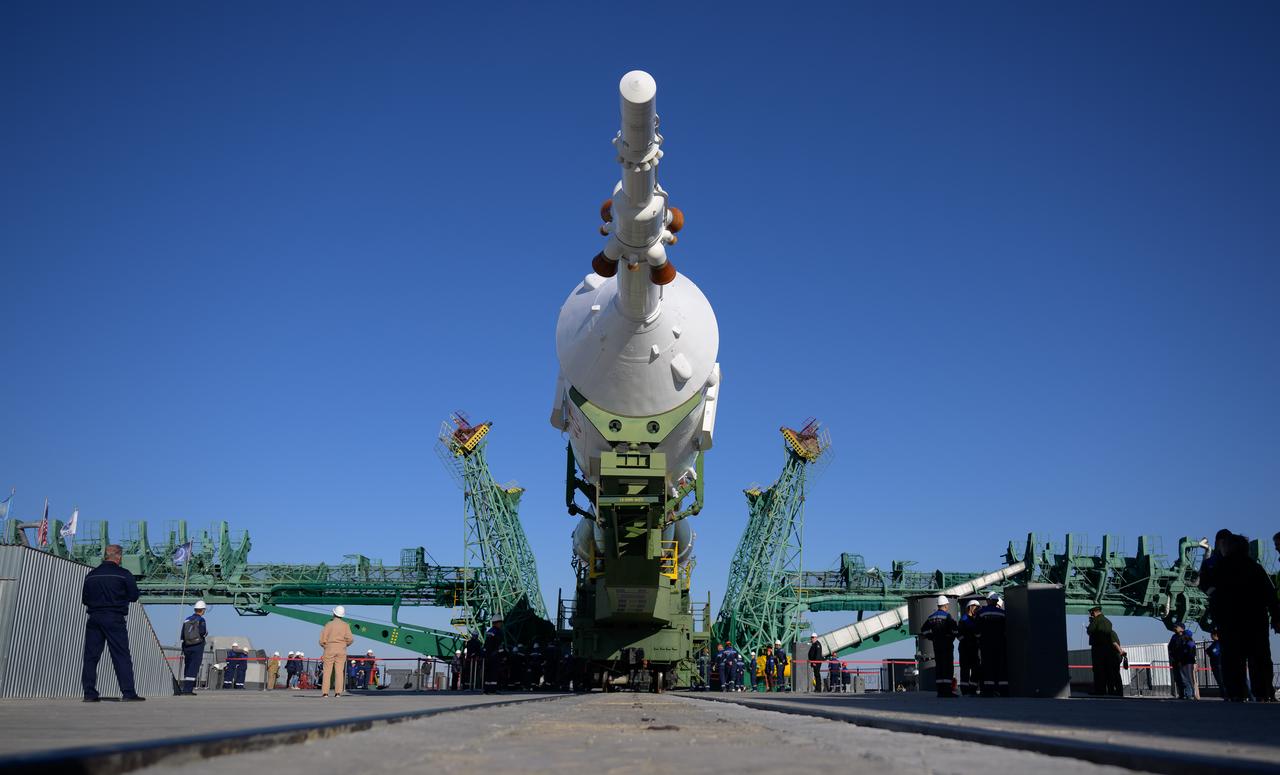
The Soyuz rocket is prepared to be raised vertical after having rolled out by train to the launch pad, Sunday, Sept. 18, 2022, at site 31 of the Baikonur Cosmodrome in Kazakhstan. Expedition 68 astronaut Frank Rubio of NASA, and cosmonauts Sergey Prokopyev and Dmitri Petelin of Roscosmos are scheduled to launch aboard their Soyuz MS-22 spacecraft on Sept. 21. Photo Credit: (NASA/Bill Ingalls)
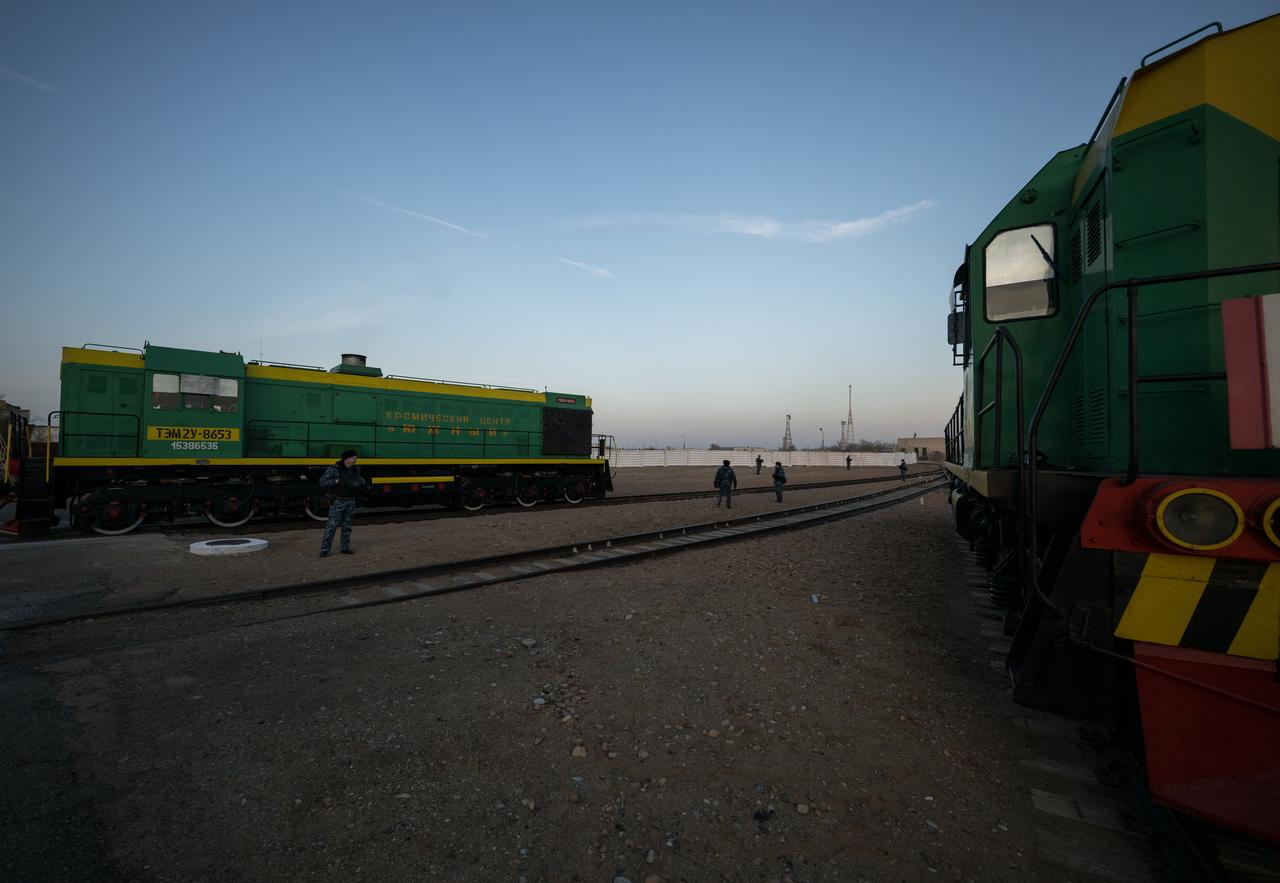
Russian security teams prepare for the Soyuz rocket to be rolled out by train to the launch pad at Site 31, Monday, March 18, 2024, at the Baikonur Cosmodrome in Kazakhstan. Expedition 71 NASA astronaut Tracy Dyson, Roscosmos cosmonaut Oleg Novitskiy, and Belarus spaceflight participant Marina Vasilevskaya are scheduled to launch aboard their Soyuz MS-25 spacecraft on March 21. Photo Credit: (NASA/Bill Ingalls)
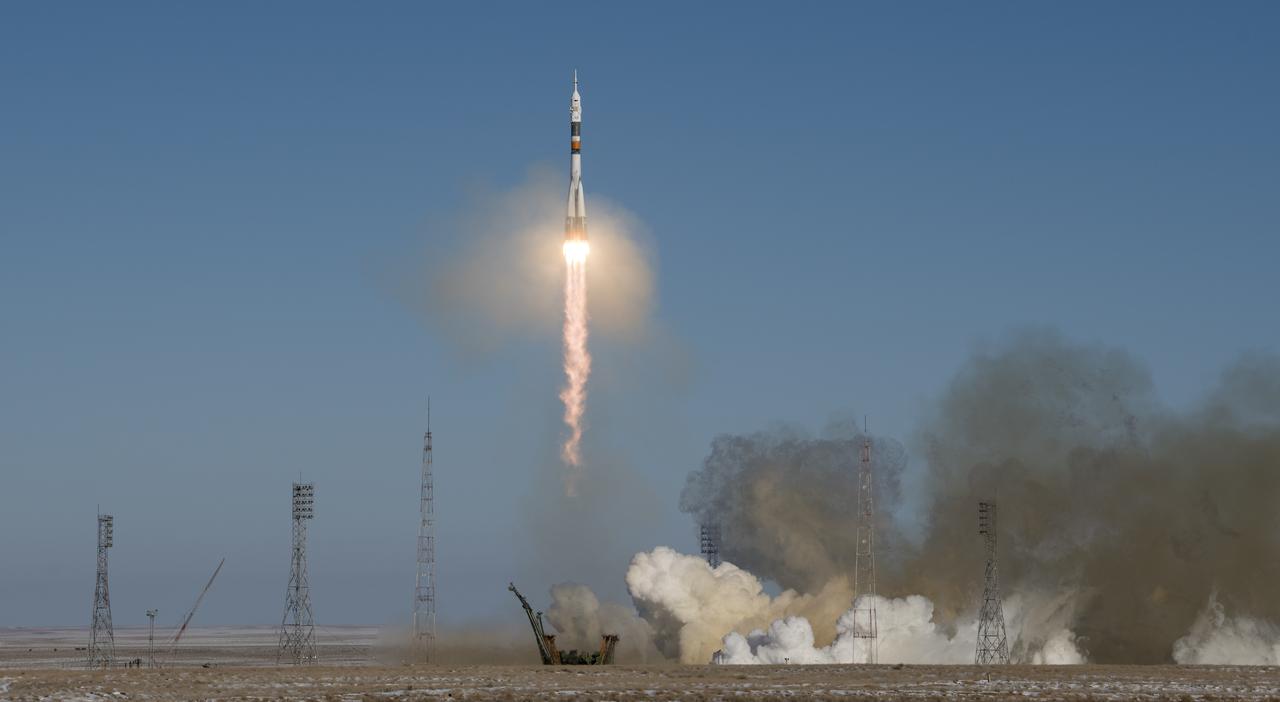
The Soyuz MS-07 rocket is launched with Expedition 54 Soyuz Commander Anton Shkaplerov of Roscosmos, flight engineer Scott Tingle of NASA, and flight engineer Norishige Kanai of Japan Aerospace Exploration Agency (JAXA), Sunday, Dec. 17, 2017 at the Baikonur Cosmodrome in Kazakhstan. Shkaplerov, Tingle, and Kanai will spend the next five months living and working aboard the International Space Station. Photo Credit: (NASA/Joel Kowsky)
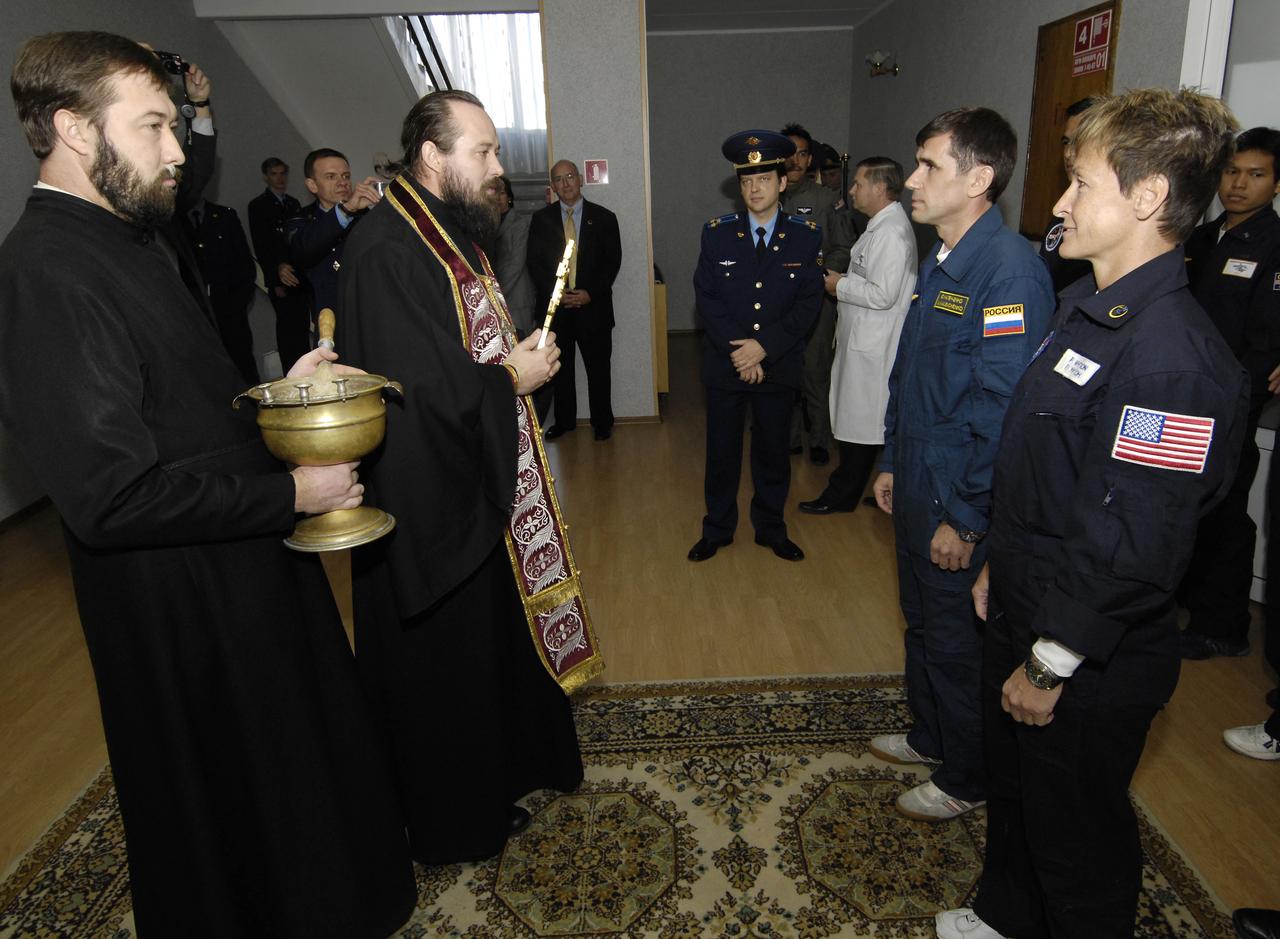
Expedition 16 Commander Peggy Whitson, right, Flight Engineer and Soyuz Commander Yuri Malenchenko participate in the traditional blessing prior to joining Malaysian spaceflight participant Sheikh Muszaphar Shukor for the bus ride to building 254 at the Baikonur Cosmodrome where the crew don their spacesuits, Wednesday, Oct. 10, 2007, in Baikonur. The crew is set to launch at sunset in their Soyuz TMA-11 spacecraft bound for a docking to the International Space Station on October 12. Whitson and Malenchenko will spend six months on the station, while Shukor will return to Earth October 21 with two of the Expedition 15 crewmembers currently on the complex. Photo Credit: (NASA/Bill Ingalls)
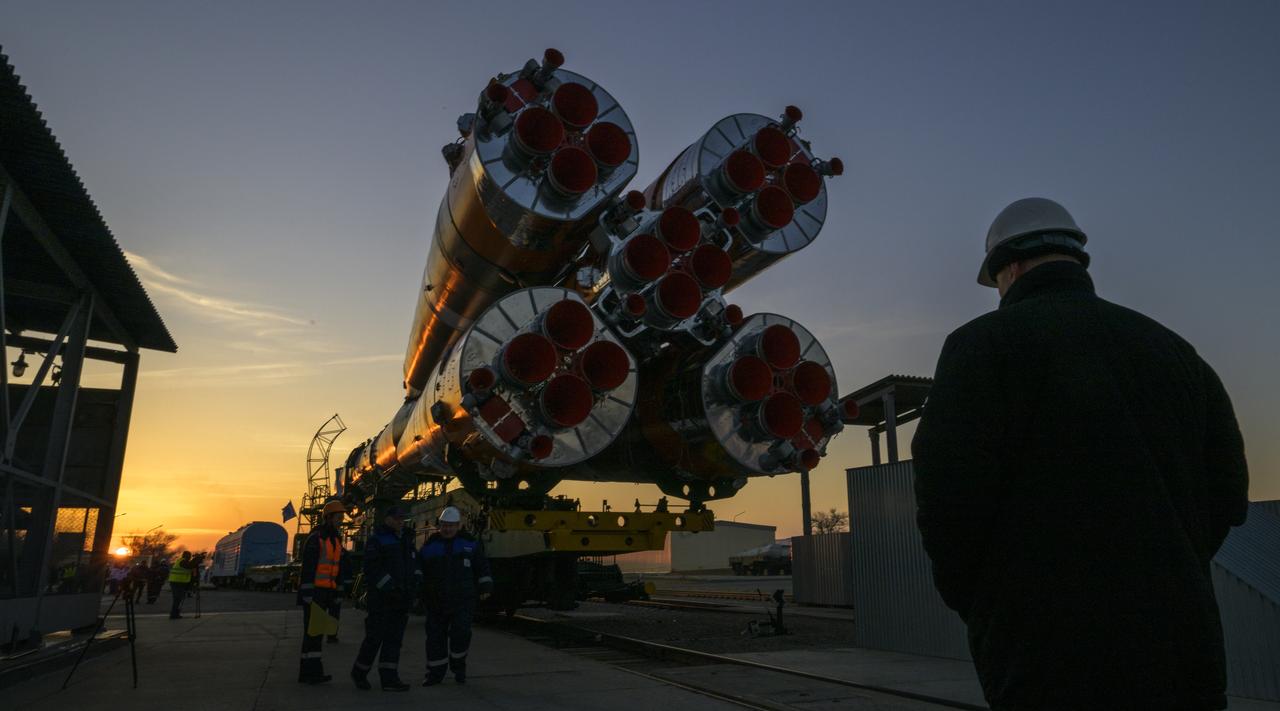
The Soyuz rocket is rolled out by train to the launch pad, Monday, Nov. 24, 2025, at Site 31 of the Baikonur Cosmodrome in Kazakhstan. Expedition 74 crewmembers: NASA astronaut Chris Williams, Roscosmos cosmonauts Sergey Kud-Sverchkov and Sergey Mikaev are scheduled to launch aboard their Soyuz MS-28 spacecraft on November 27. Photo Credit: (NASA/Bill Ingalls)

The Soyuz rocket is rolled out by train to the launch pad at Site 31, Monday, March 18, 2024, at the Baikonur Cosmodrome in Kazakhstan. Expedition 71 NASA astronaut Tracy Dyson, Roscosmos cosmonaut Oleg Novitskiy, and Belarus spaceflight participant Marina Vasilevskaya are scheduled to launch aboard their Soyuz MS-25 spacecraft on March 21. Photo Credit: (NASA/Bill Ingalls)
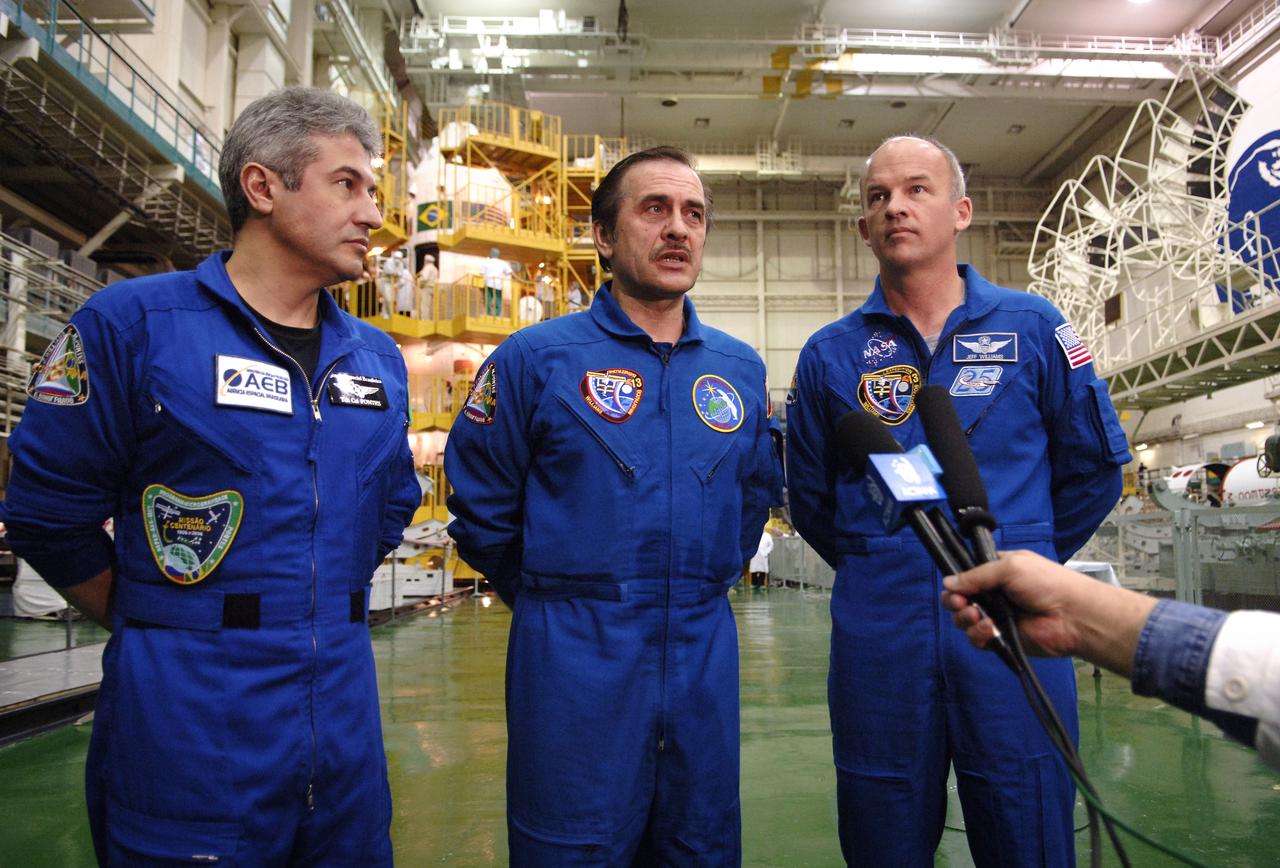
Marcos Pontes, left, Brazilian Space Agency Soyuz crew member; Pavel V. Vinogradov, Russia’s Federal Space Agency Expedition 13 International Space Station Commander; and Jeffrey N. Williams, right, Expedition 13 Science Officer and Flight Engineer, talk with the media after the crew's final check of the Soyuz at building 254 of the Baikonur Cosmodrome in Baikonur, Kazakhstan. Sunday, March 26, 2006. Photo Credit: (NASA/Bill Ingalls)
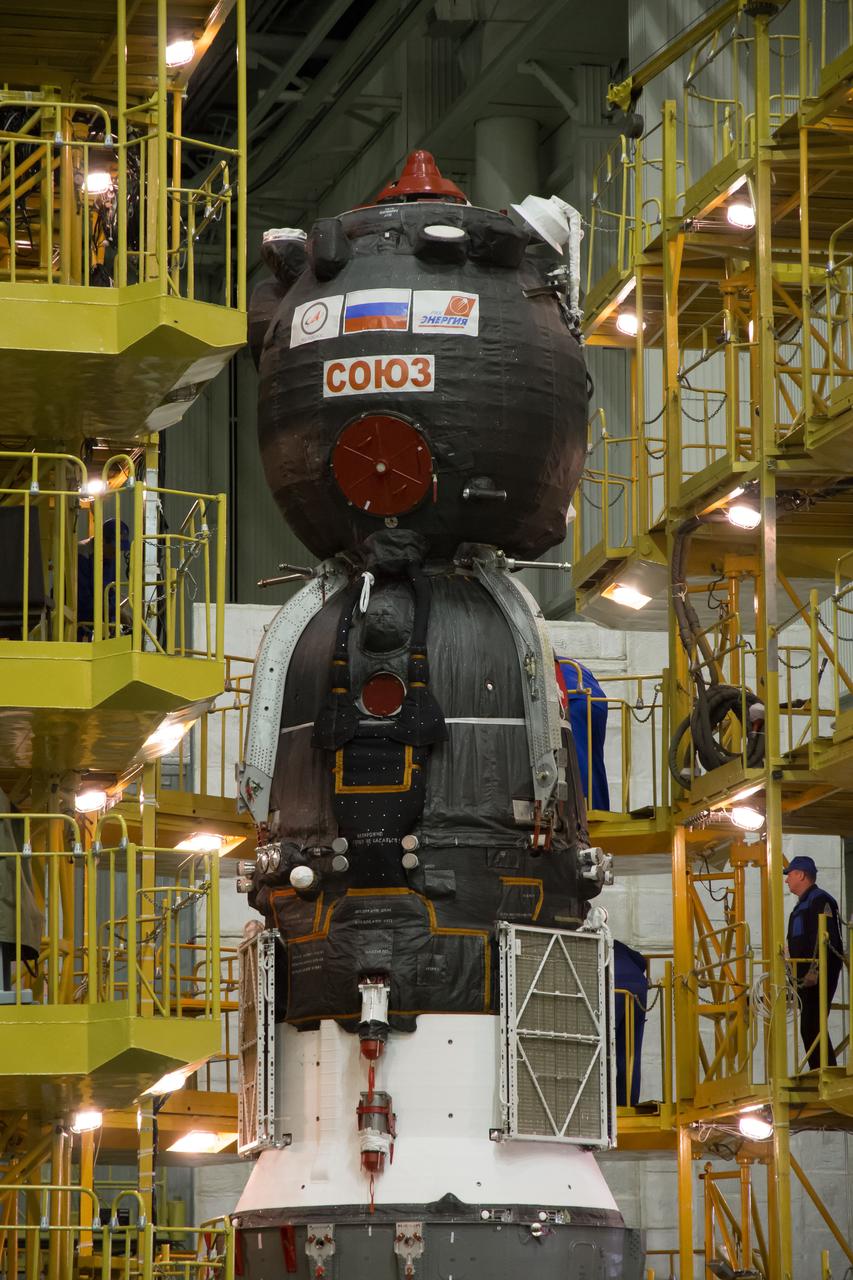
The Soyuz MS-02 spacecraft is seen as the work platforms around it are retracted in preparation for being encapsulated in its fairing on Thursday, Tuesday, Oct. 11, 2016 at the Baikonur Cosmodrome in Kazakhstan. Expedition 49 flight engineer Shane Kimbrough of NASA, flight engineer Andrey Borisenko of Roscosmos, and Soyuz commander Sergey Ryzhikov of Roscosmos are scheduled to launch from the Baikonur Cosmodrome in Kazakhstan on Oct. 19. Photo Credit: (NASA/Victor Zelentsov)
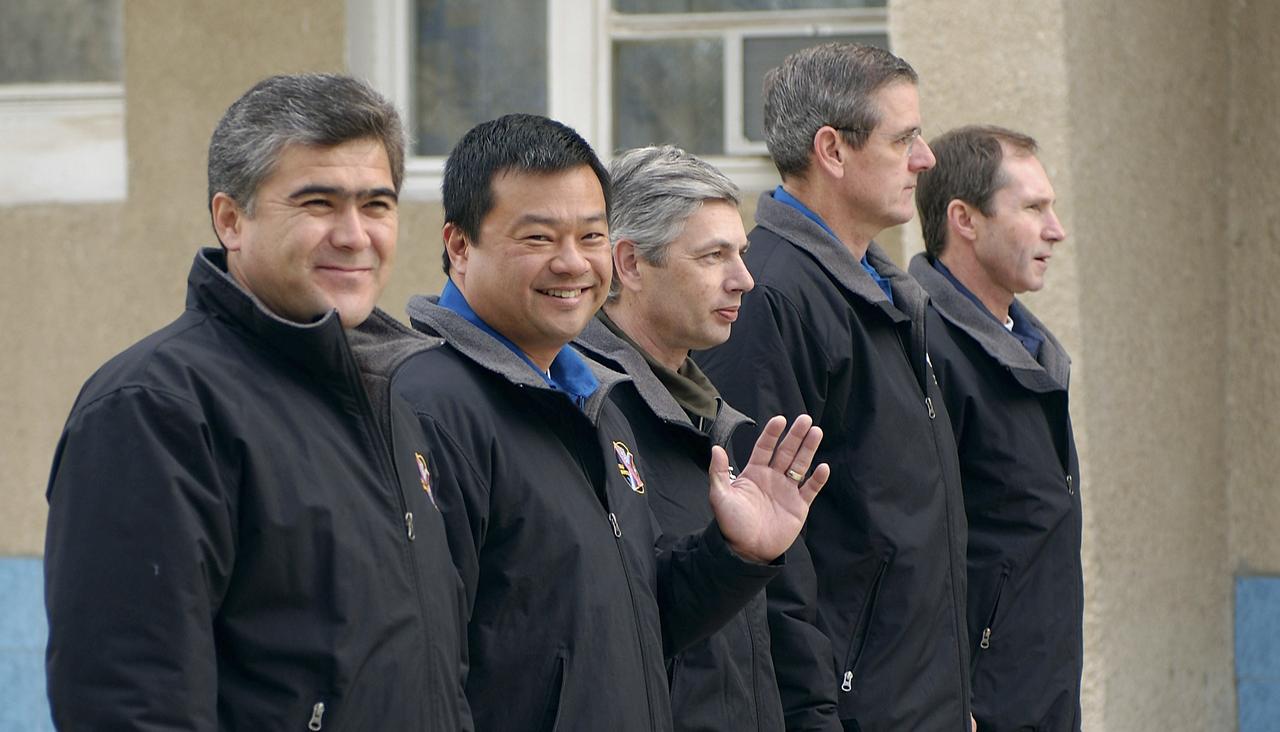
From left to right, Expedition 10 Flight Engineer and Soyuz Commander Salizhan Sharipov, Commander and NASA Science Officer Leroy Chiao, Russian Space Forces cosmonaut Yuri Shargin, backup Soyuz Commander Valery Tokarev and backup Expedition Commander Bill McArthur patricipate in the ceremonial flag raising at the Cosmonaut Hotel, Baikonur, Kazakhstan, Wednesday, Oct. 6, 2004. Chiao, Sharipov and Shargin are scheduled to launch October 14 on their Soyuz TMA-5 spacecraft to the International Space Station. Photo Credit: (NASA/Bill Ingalls)
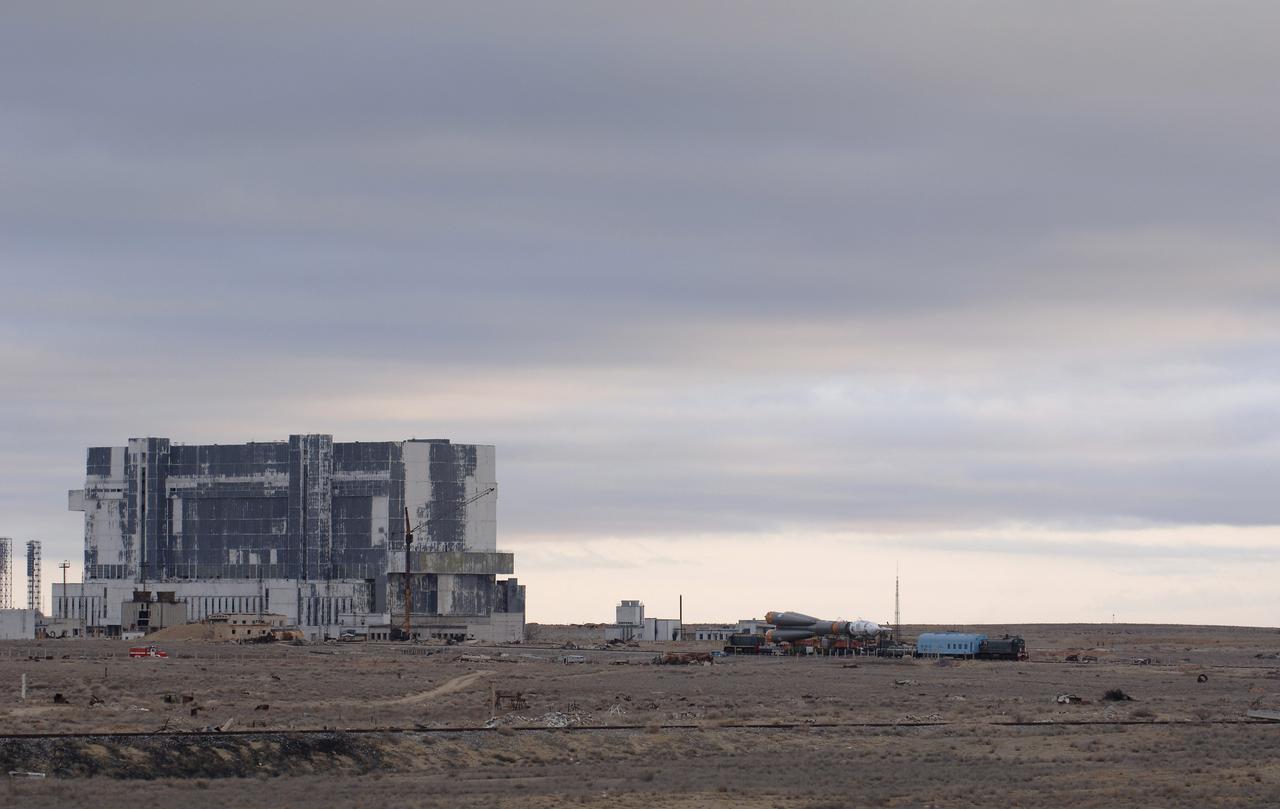
The Soyuz TMA-8 spacecraft and its booster rolled out to the launch pad on Tuesday, March 28, 2006 at the Baikonur Cosmodrome in Baikonur, Kazakhstan for final pre-launch preparations. The Soyuz will blast off on March 30, 2006 to carry Expedition 13 Commander Pavel V. Vinogradov and Science Officer and Flight Engineer Jeffrey N. Williams to the International Space Station for a six-month mission. The spacecraft will also be carrying Brazilian Space Agency Soyuz crew member Marcos Pontes, who will spend 10 days aboard the International Space Station under an agreement with the Russian Federal Space Agency. Photo Credit: (NASA/Bill Ingalls)
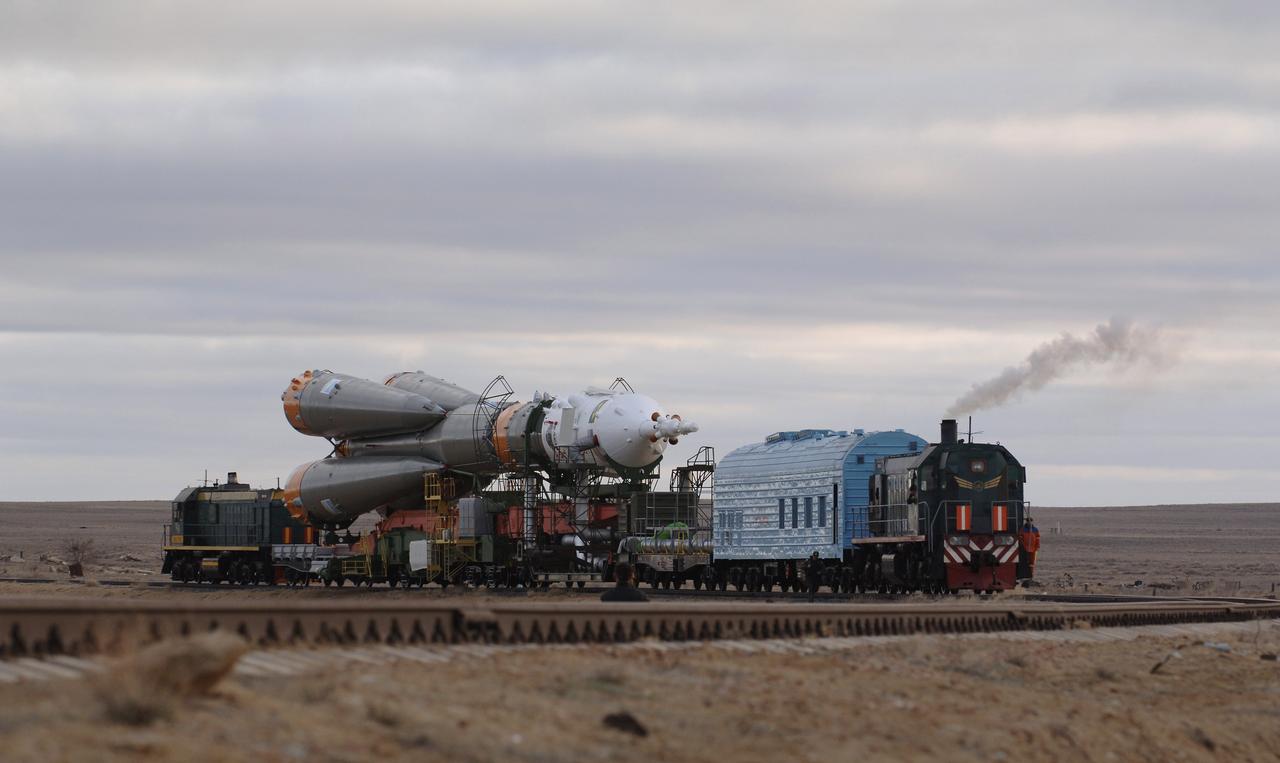
The Soyuz TMA-8 spacecraft and its booster rolled out to the launch pad on Tuesday, March 28, 2006 at the Baikonur Cosmodrome in Baikonur, Kazakhstan for final pre-launch preparations. The Soyuz will blast off on March 30, 2006 to carry Expedition 13 Commander Pavel V. Vinogradov and Science Officer and Flight Engineer Jeffrey N. Williams to the International Space Station for a six-month mission. The spacecraft will also be carrying Brazilian Space Agency Soyuz crew member Marcos Pontes, who will spend 10 days aboard the International Space Station under an agreement with the Russian Federal Space Agency. Photo Credit: (NASA/Bill Ingalls)
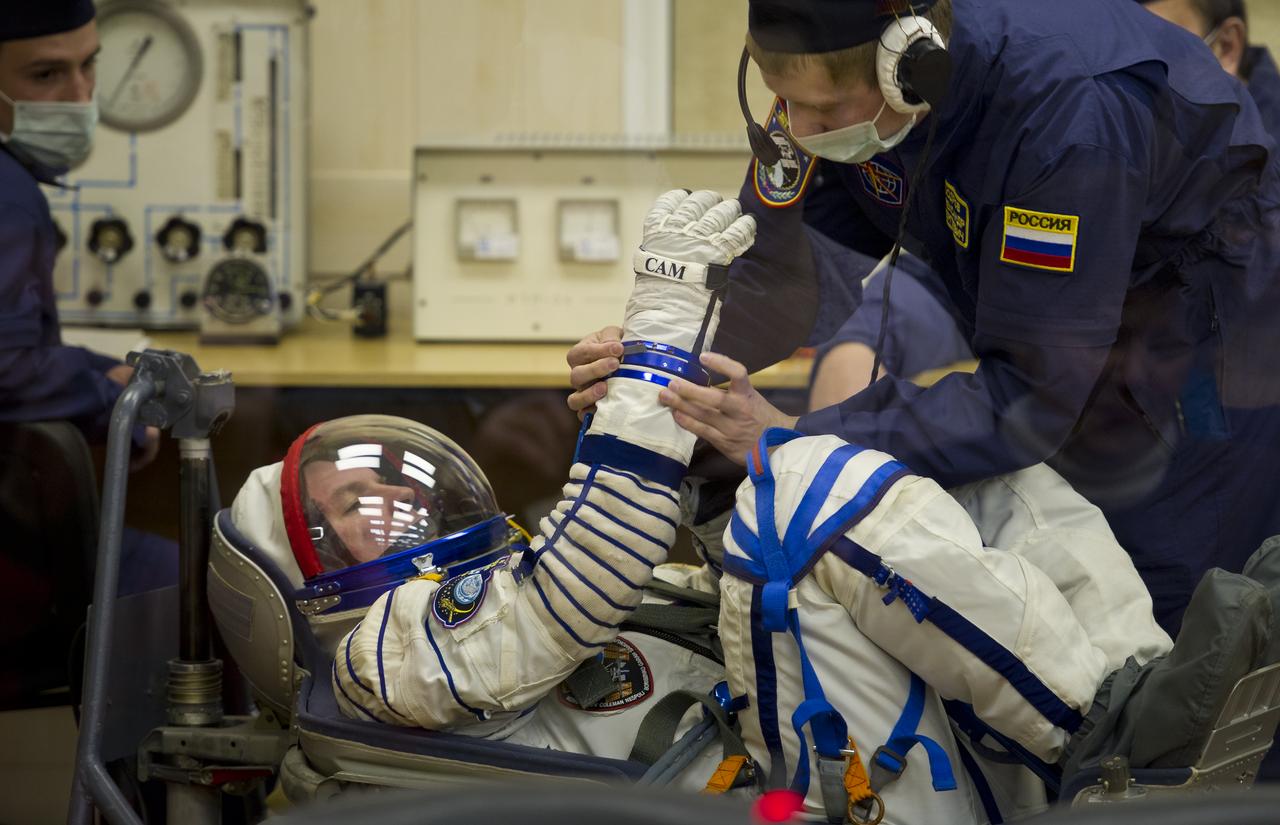
Expedition 27 Soyuz Commander Alexander Samokutyaev has his Russian Sokol suit prepared for launch by a technician at the Baikonur Cosmodrome in Baikonur, Kazakhstan, Tuesday, April 5, 2011. Samokutyaev, NASA Flight Engineer Ron Garan and Russian Flight Engineer Andrey Borisenko launched in their Soyuz TMA-21 rocket from the Baikonur Cosmodrome in Kazakhstan at 4:18 a.m. local time. (Photo Credit: NASA/Carla Cioffi)

A Soyuz rocket launches to the International Space Station with Expedition 73 crew members: NASA astronaut Jonny Kim, and Roscosmos cosmonauts Sergey Ryzhikov and Alexey Zubritskiy, onboard, Tuesday, April 8, 2025, at the Baikonur Cosmodrome in Kazakhstan. Photo Credit: (NASA/Joel Kowsky)
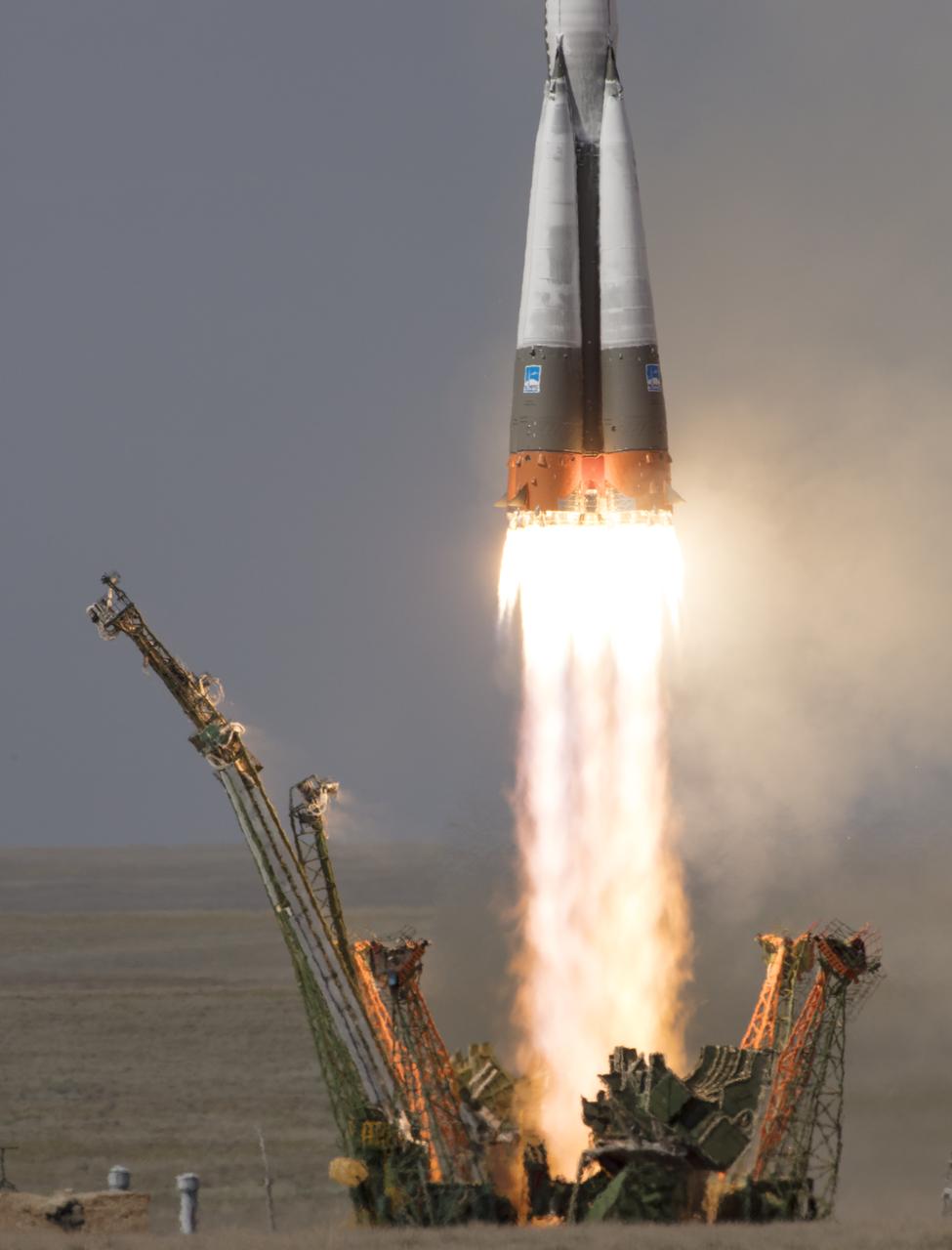
The Soyuz MS-09 rocket is launched with Expedition 56 Soyuz Commander Sergey Prokopyev of Roscosmos, flight engineer Serena Auñón-Chancellor of NASA, and flight engineer Alexander Gerst of ESA (European Space Agency), Wednesday, June 6, 2018 at the Baikonur Cosmodrome in Kazakhstan. Prokopyev, Auñón-Chancellor, and Gerst will spend the next six months living and working aboard the International Space Station. Photo Credit: (NASA/Joel Kowsky)
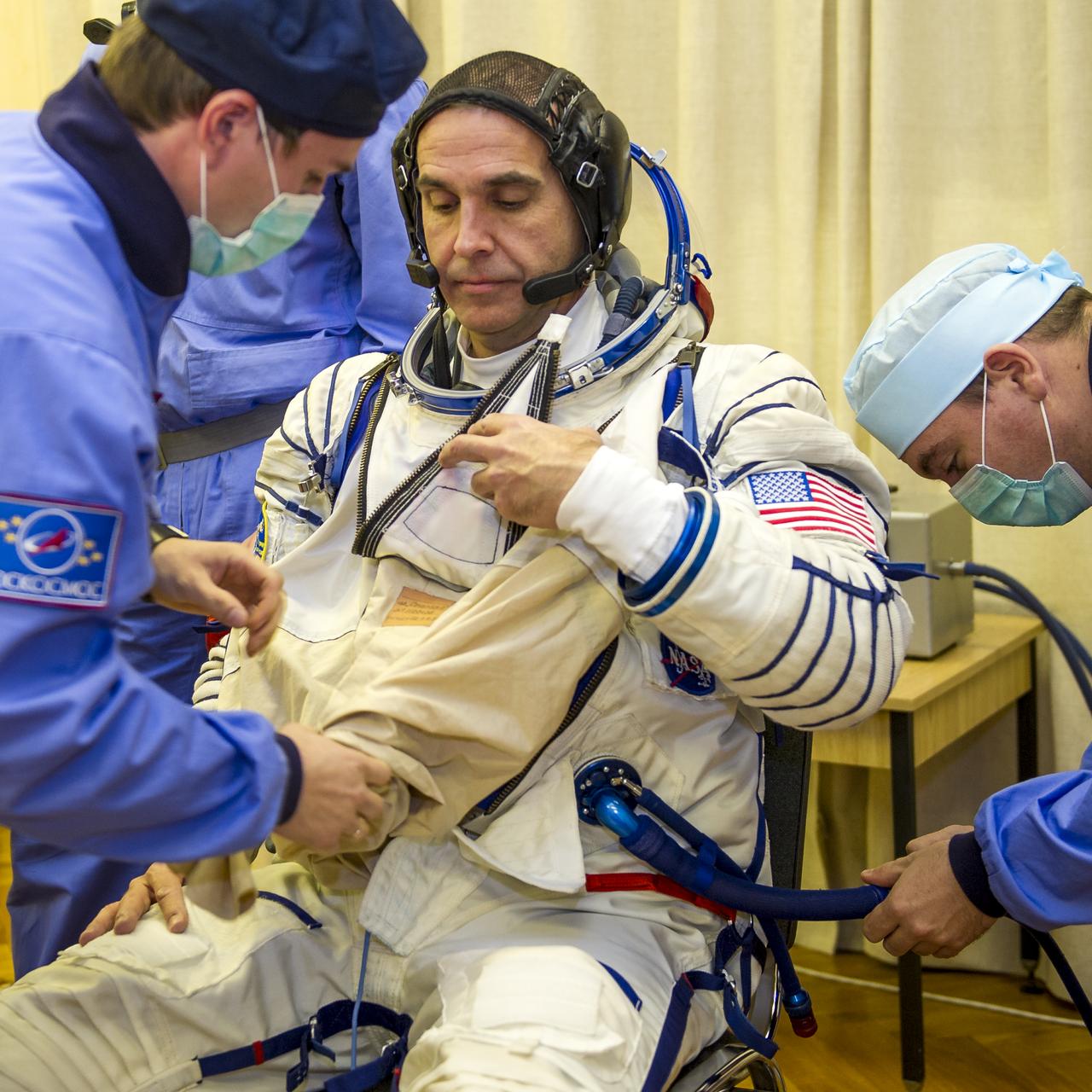
Expedition 38 Flight Engineer Rick Mastracchio of NASA dons his Russian sokol suit a few hours ahead of his launch on a soyuz rocket with fellow crew mates, Soyuz Commander Mikhail Tyurin of Roscosmos, and, Flight Engineer Koichi Wakata of the Japan Aerospace Exploration Agency, Thursday, Nov. 7, 2013, in Baikonur, Kazakhstan. Tyurin, Wakata, and, Mastracchio will launch in their Soyuz TMA-11M spacecraft to the International Space Station to begin a six-month mission. Photo Credit: (NASA/GCTC/Irina Peshkova)
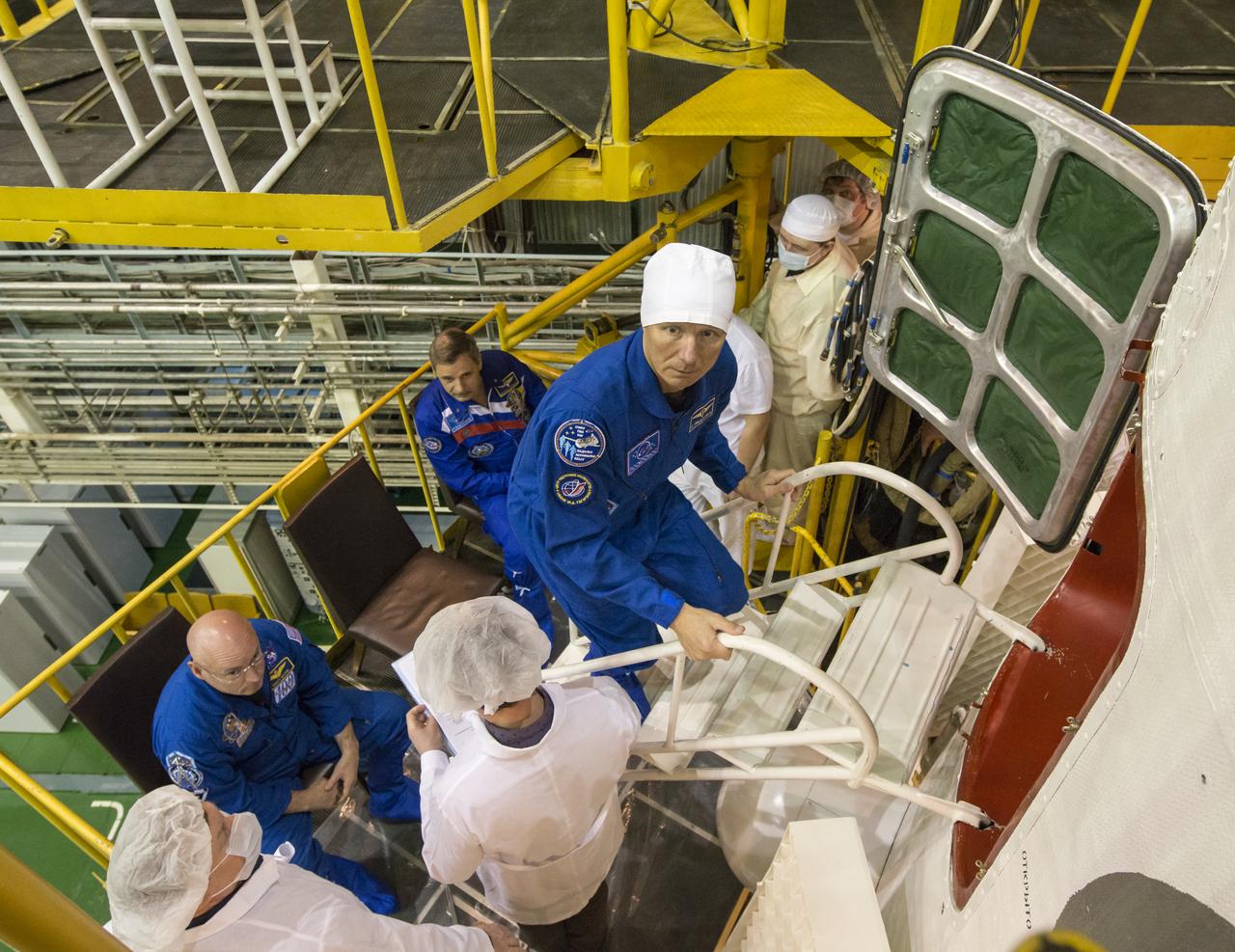
Expedition 43 Russian Cosmonaut Gennady Padalka of the Russian Federal Space Agency (Roscosmos) climbs the stairs to enter the Soyuz TMA-16M spacecraft during the final check of the spacecraft with NASA Astronaut Scott Kelly, seated left, and Russian Cosmonaut Mikhail Kornienko, Monday, March 23, 2015 at the Baikonur Cosmodrome in Kazakhstan. Kelly, Kornienko, and Padalka are scheduled to launch to the International Space Station in the Soyuz TMA-16M spacecraft from the Baikonur Cosmodrome in Kazakhstan March 28, Kazakh time (March 27 Eastern time.) As the one-year crew, Kelly and Kornienko will return to Earth on Soyuz TMA-18M in March 2016. Photo Credit: (NASA/Bill Ingalls)