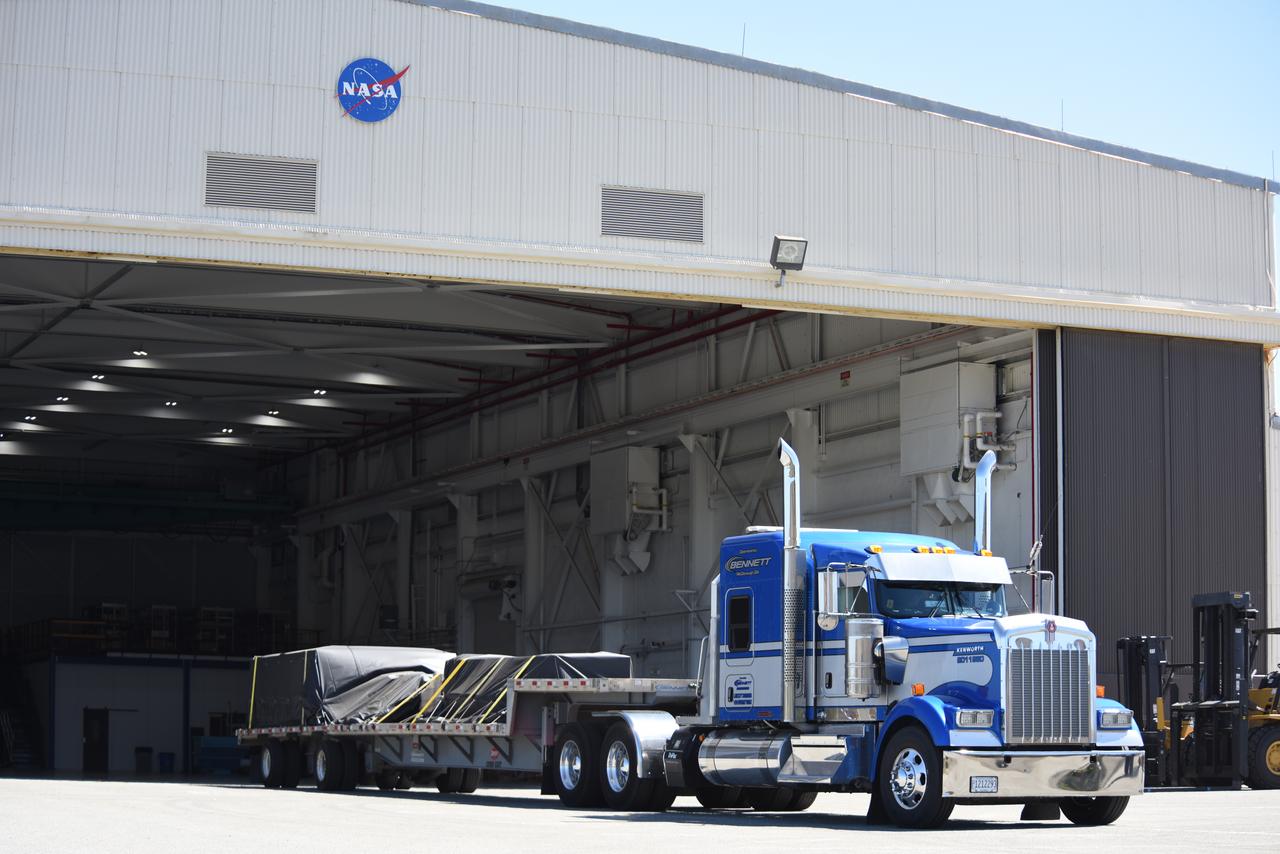
Wrapped in protective coverings, ground support equipment for the Sentinel-6B spacecraft, a collaboration between NASA, ESA (European Space Agency), EUMETSAT (European Organisation for the Exploitation of Meteorological Satellites), and the National Oceanic and Atmospheric Administration (NOAA), arrives by truck to NASA’s Building 836 at Vandenberg Space Force Base in California on Monday, Aug. 18, 2025. The second of two spacecraft that constitutes the Sentinel-6/Jason-CS (Continuity of Service) mission, Sentinel-6B will measure sea surface height and provide crucial information to help improve coastal planning, enabling local and state governments to make informed decisions about protecting coastal infrastructure, real estate, and energy sites. Launch is targeted for no earlier than November on a SpaceX Falcon 9 from Vandenberg.
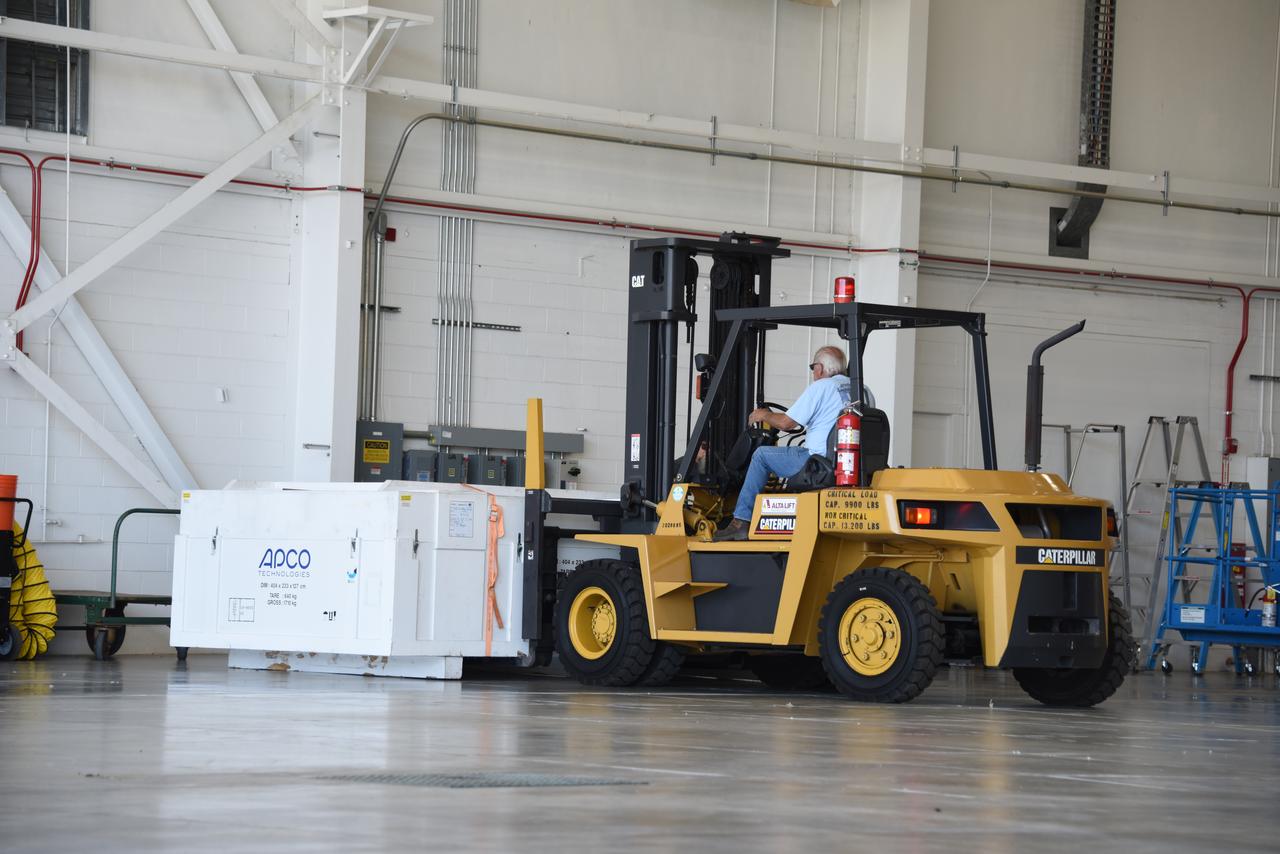
Ground support equipment for the Sentinel-6B spacecraft, a collaboration between NASA, ESA (European Space Agency), EUMETSAT (European Organisation for the Exploitation of Meteorological Satellites), and the National Oceanic and Atmospheric Administration (NOAA), is offloaded inside NASA’s Building 836 at Vandenberg Space Force Base in California on Monday, Aug. 18, 2025. The second of two spacecraft that constitutes the Sentinel-6/Jason-CS (Continuity of Service) mission, Sentinel-6B will measure sea surface height and provide crucial information to help improve coastal planning, enabling local and state governments to make informed decisions about protecting coastal infrastructure, real estate, and energy sites. Launch is targeted for no earlier than November on a SpaceX Falcon 9 from Vandenberg.
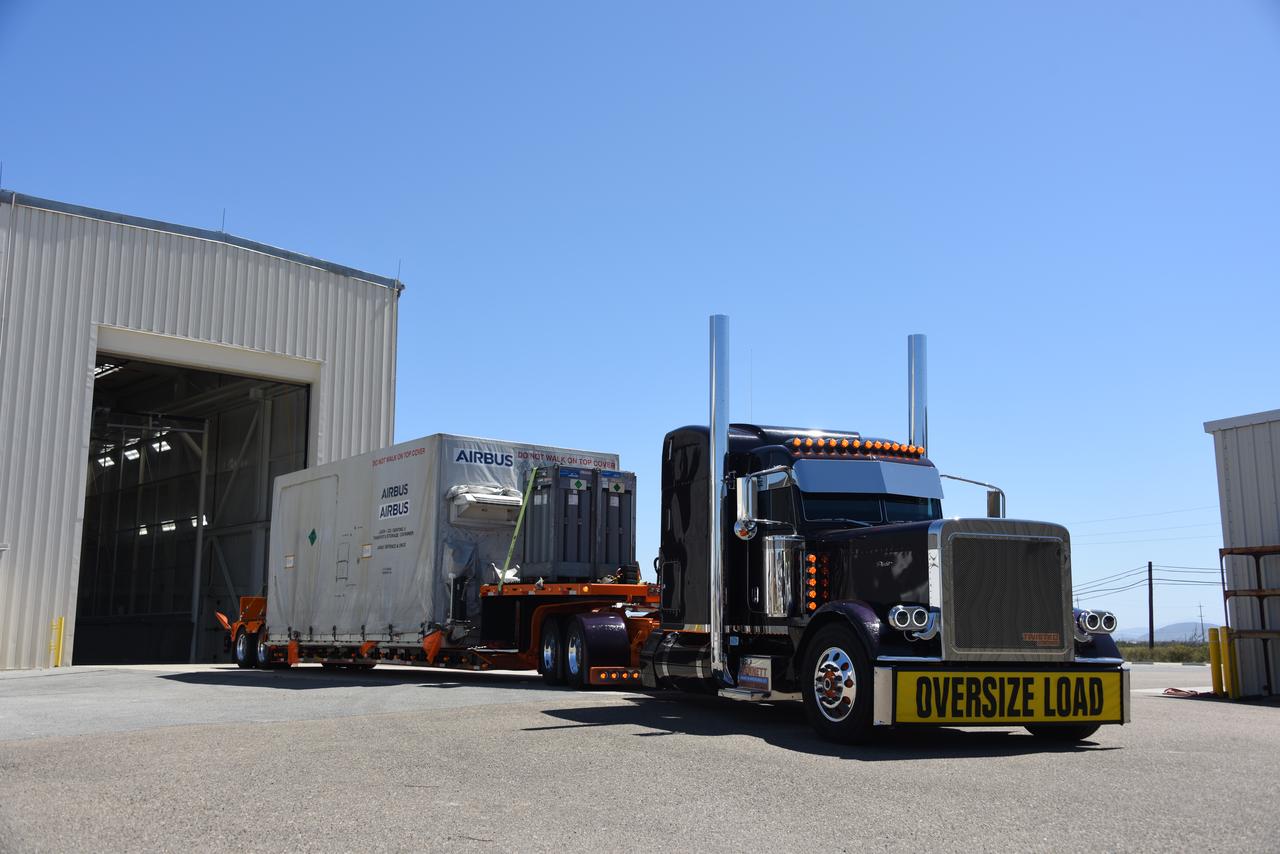
Packed in its shipping container, the Sentinel-6B spacecraft, a collaboration between NASA, ESA (European Space Agency), EUMETSAT (European Organisation for the Exploitation of Meteorological Satellites), and the National Oceanic and Atmospheric Administration (NOAA), arrives by truck at the entrance NASA’s Building 836 at Vandenberg Space Force Base in California on Monday, Aug. 18, 2025. The second of two spacecraft that constitutes the Sentinel-6/Jason-CS (Continuity of Service) mission, Sentinel-6B will measure sea surface height and provide crucial information to help improve coastal planning, enabling local and state governments to make informed decisions about protecting coastal infrastructure, real estate, and energy sites. Launch is targeted for no earlier than November on a SpaceX Falcon 9 from Vandenberg.

Packed in its shipping container, the Sentinel-6B spacecraft, a collaboration between NASA, ESA (European Space Agency), EUMETSAT (European Organisation for the Exploitation of Meteorological Satellites), and the National Oceanic and Atmospheric Administration (NOAA), arrives by truck at the entrance NASA’s Building 836 at Vandenberg Space Force Base in California on Monday, Aug. 18, 2025. The second of two spacecraft that constitutes the Sentinel-6/Jason-CS (Continuity of Service) mission, Sentinel-6B will measure sea surface height and provide crucial information to help improve coastal planning, enabling local and state governments to make informed decisions about protecting coastal infrastructure, real estate, and energy sites. Launch is targeted for no earlier than November on a SpaceX Falcon 9 from Vandenberg.
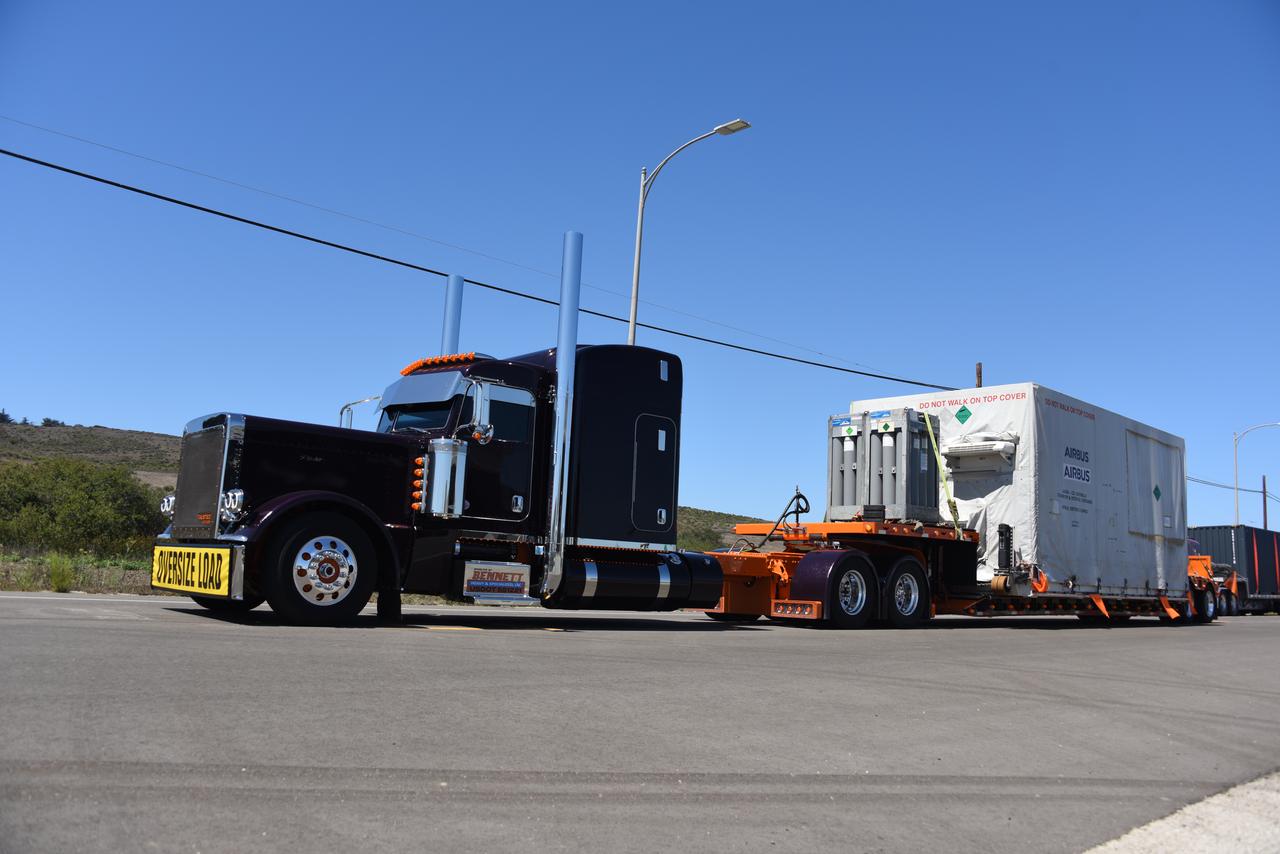
Packed in its shipping container, the Sentinel-6B spacecraft, a collaboration between NASA, ESA (European Space Agency), EUMETSAT (European Organisation for the Exploitation of Meteorological Satellites), and the National Oceanic and Atmospheric Administration (NOAA), arrives by truck at the entrance NASA’s Building 836 at Vandenberg Space Force Base in California on Monday, Aug. 18, 2025. The second of two spacecraft that constitutes the Sentinel-6/Jason-CS (Continuity of Service) mission, Sentinel-6B will measure sea surface height and provide crucial information to help improve coastal planning, enabling local and state governments to make informed decisions about protecting coastal infrastructure, real estate, and energy sites. Launch is targeted for no earlier than November on a SpaceX Falcon 9 from Vandenberg.
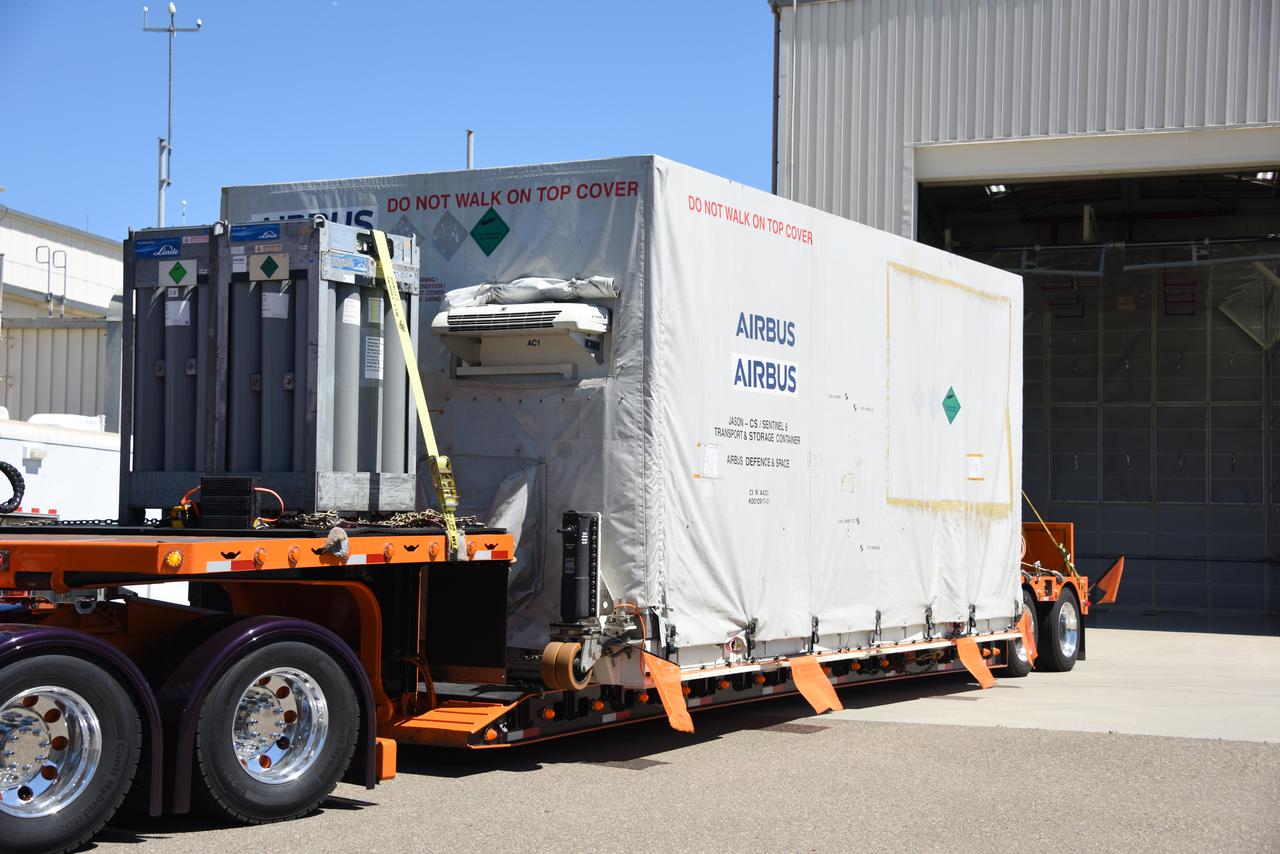
Packed in its shipping container, the Sentinel-6B spacecraft, a collaboration between NASA, ESA (European Space Agency), EUMETSAT (European Organisation for the Exploitation of Meteorological Satellites), and the National Oceanic and Atmospheric Administration (NOAA), arrives by truck at the entrance NASA’s Building 836 at Vandenberg Space Force Base in California on Monday, Aug. 18, 2025. The second of two spacecraft that constitutes the Sentinel-6/Jason-CS (Continuity of Service) mission, Sentinel-6B will measure sea surface height and provide crucial information to help improve coastal planning, enabling local and state governments to make informed decisions about protecting coastal infrastructure, real estate, and energy sites. Launch is targeted for no earlier than November on a SpaceX Falcon 9 from Vandenberg.
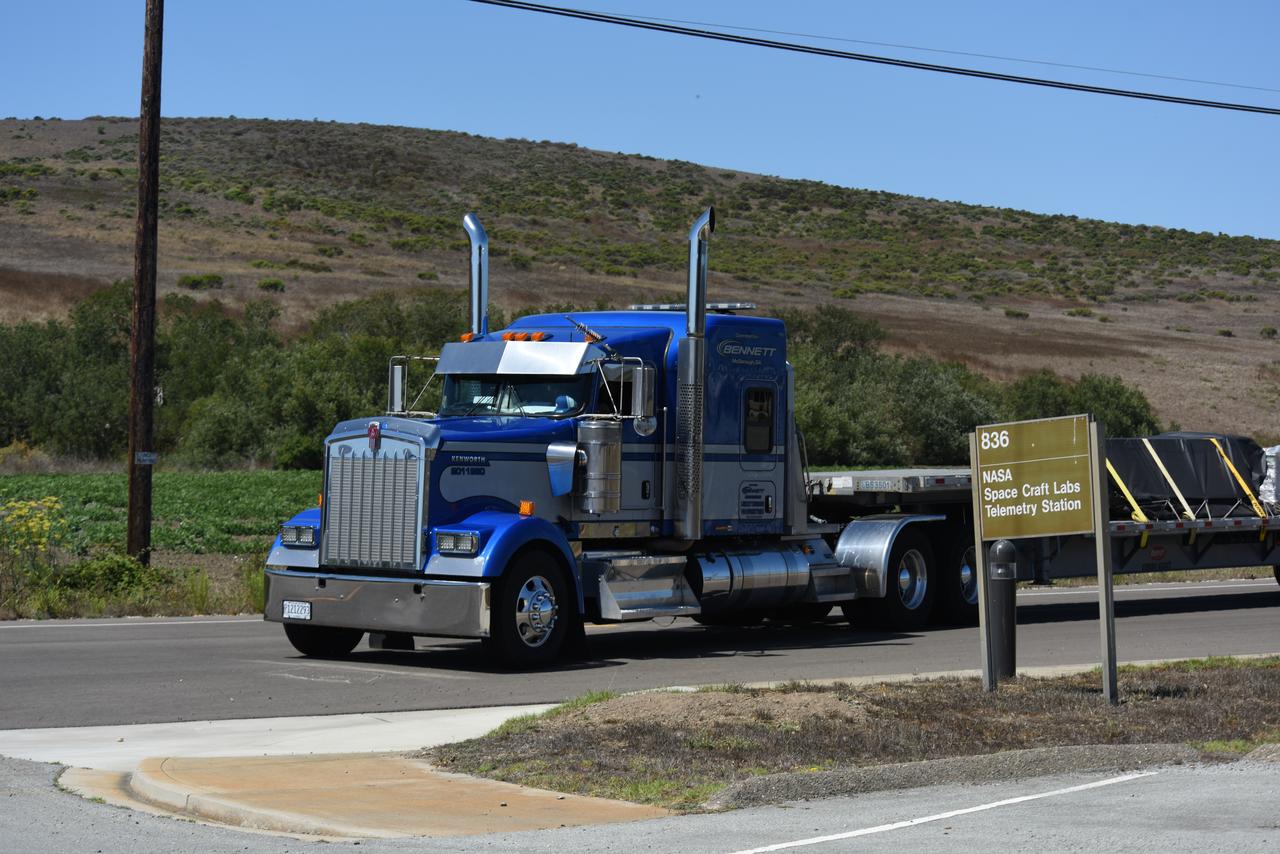
Wrapped in protective coverings, ground support equipment for the Sentinel-6B spacecraft, a collaboration between NASA, ESA (European Space Agency), EUMETSAT (European Organisation for the Exploitation of Meteorological Satellites), and the National Oceanic and Atmospheric Administration (NOAA), arrives by truck to NASA’s Building 836 at Vandenberg Space Force Base in California on Monday, Aug. 18, 2025. The second of two spacecraft that constitutes the Sentinel-6/Jason-CS (Continuity of Service) mission, Sentinel-6B will measure sea surface height and provide crucial information to help improve coastal planning, enabling local and state governments to make informed decisions about protecting coastal infrastructure, real estate, and energy sites. Launch is targeted for no earlier than November on a SpaceX Falcon 9 from Vandenberg.