
NASA’s Imaging X-Ray Polarimetry Explorer (IXPE) spacecraft – the agency’s first mission dedicated to measuring X-ray polarization – arrives at the Cape Canaveral Space Force Station in Florida on Nov. 5, 2021. IXPE is scheduled to launch aboard a SpaceX Falcon 9 vehicle from Kennedy’s Launch Complex 39A on Dec. 9, 2021. The launch is managed by NASA’s Launch Services Program, based at Kennedy. IXPE will study the polarization of X-rays coming to us from some of the universe’s most extreme sources, including black holes and dead stars known as pulsars.

NASA’s Imaging X-Ray Polarimetry Explorer (IXPE) spacecraft – the agency’s first mission dedicated to measuring X-ray polarization – arrives at the Cape Canaveral Space Force Station in Florida on Nov. 5, 2021. IXPE is scheduled to launch aboard a SpaceX Falcon 9 vehicle from Kennedy’s Launch Complex 39A on Dec. 9, 2021. The launch is managed by NASA’s Launch Services Program, based at Kennedy. IXPE will study the polarization of X-rays coming to us from some of the universe’s most extreme sources, including black holes and dead stars known as pulsars.

NASA’s Imaging X-Ray Polarimetry Explorer (IXPE) spacecraft – the agency’s first mission dedicated to measuring X-ray polarization – arrives at the Cape Canaveral Space Force Station in Florida on Nov. 5, 2021. IXPE is scheduled to launch aboard a SpaceX Falcon 9 vehicle from Kennedy’s Launch Complex 39A on Dec. 9, 2021. The launch is managed by NASA’s Launch Services Program, based at Kennedy. IXPE will study the polarization of X-rays coming to us from some of the universe’s most extreme sources, including black holes and dead stars known as pulsars.

NASA’s Imaging X-Ray Polarimetry Explorer (IXPE) spacecraft – the agency’s first mission dedicated to measuring X-ray polarization – arrives at the Cape Canaveral Space Force Station in Florida on Nov. 5, 2021. IXPE is scheduled to launch aboard a SpaceX Falcon 9 vehicle from Kennedy’s Launch Complex 39A on Dec. 9, 2021. The launch is managed by NASA’s Launch Services Program, based at Kennedy. IXPE will study the polarization of X-rays coming to us from some of the universe’s most extreme sources, including black holes and dead stars known as pulsars.

NASA’s Imaging X-Ray Polarimetry Explorer (IXPE) spacecraft – the agency’s first mission dedicated to measuring X-ray polarization – arrives at the Cape Canaveral Space Force Station in Florida on Nov. 5, 2021. IXPE is scheduled to launch aboard a SpaceX Falcon 9 vehicle from Kennedy’s Launch Complex 39A on Dec. 9, 2021. The launch is managed by NASA’s Launch Services Program, based at Kennedy. IXPE will study the polarization of X-rays coming to us from some of the universe’s most extreme sources, including black holes and dead stars known as pulsars.

NASA’s Imaging X-Ray Polarimetry Explorer (IXPE) spacecraft – the agency’s first mission dedicated to measuring X-ray polarization – arrives at the Cape Canaveral Space Force Station in Florida on Nov. 5, 2021. IXPE is scheduled to launch aboard a SpaceX Falcon 9 vehicle from Kennedy’s Launch Complex 39A on Dec. 9, 2021. The launch is managed by NASA’s Launch Services Program, based at Kennedy. IXPE will study the polarization of X-rays coming to us from some of the universe’s most extreme sources, including black holes and dead stars known as pulsars.

NASA’s Imaging X-Ray Polarimetry Explorer (IXPE) spacecraft – the agency’s first mission dedicated to measuring X-ray polarization – arrives at the Cape Canaveral Space Force Station in Florida on Nov. 5, 2021. IXPE is scheduled to launch aboard a SpaceX Falcon 9 vehicle from Kennedy’s Launch Complex 39A on Dec. 9, 2021. The launch is managed by NASA’s Launch Services Program, based at Kennedy. IXPE will study the polarization of X-rays coming to us from some of the universe’s most extreme sources, including black holes and dead stars known as pulsars.
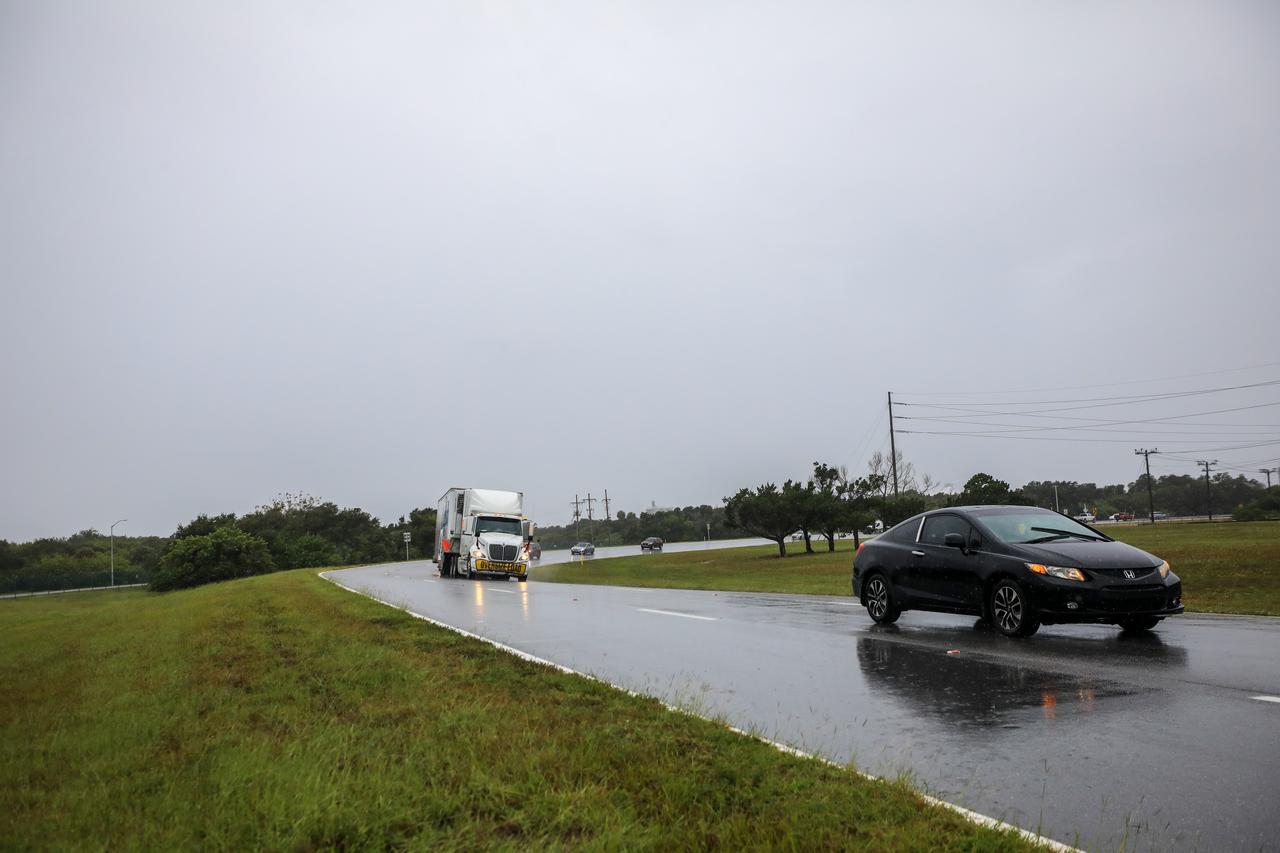
NASA’s Imaging X-Ray Polarimetry Explorer (IXPE) spacecraft – the agency’s first mission dedicated to measuring X-ray polarization – arrives at the Cape Canaveral Space Force Station in Florida on Nov. 5, 2021. IXPE is scheduled to launch aboard a SpaceX Falcon 9 vehicle from Kennedy’s Launch Complex 39A on Dec. 9, 2021. The launch is managed by NASA’s Launch Services Program, based at Kennedy. IXPE will study the polarization of X-rays coming to us from some of the universe’s most extreme sources, including black holes and dead stars known as pulsars.

NASA’s Imaging X-Ray Polarimetry Explorer (IXPE) spacecraft – the agency’s first mission dedicated to measuring X-ray polarization – arrives at the Cape Canaveral Space Force Station in Florida on Nov. 5, 2021. IXPE is scheduled to launch aboard a SpaceX Falcon 9 vehicle from Kennedy’s Launch Complex 39A on Dec. 9, 2021. The launch is managed by NASA’s Launch Services Program, based at Kennedy. IXPE will study the polarization of X-rays coming to us from some of the universe’s most extreme sources, including black holes and dead stars known as pulsars.
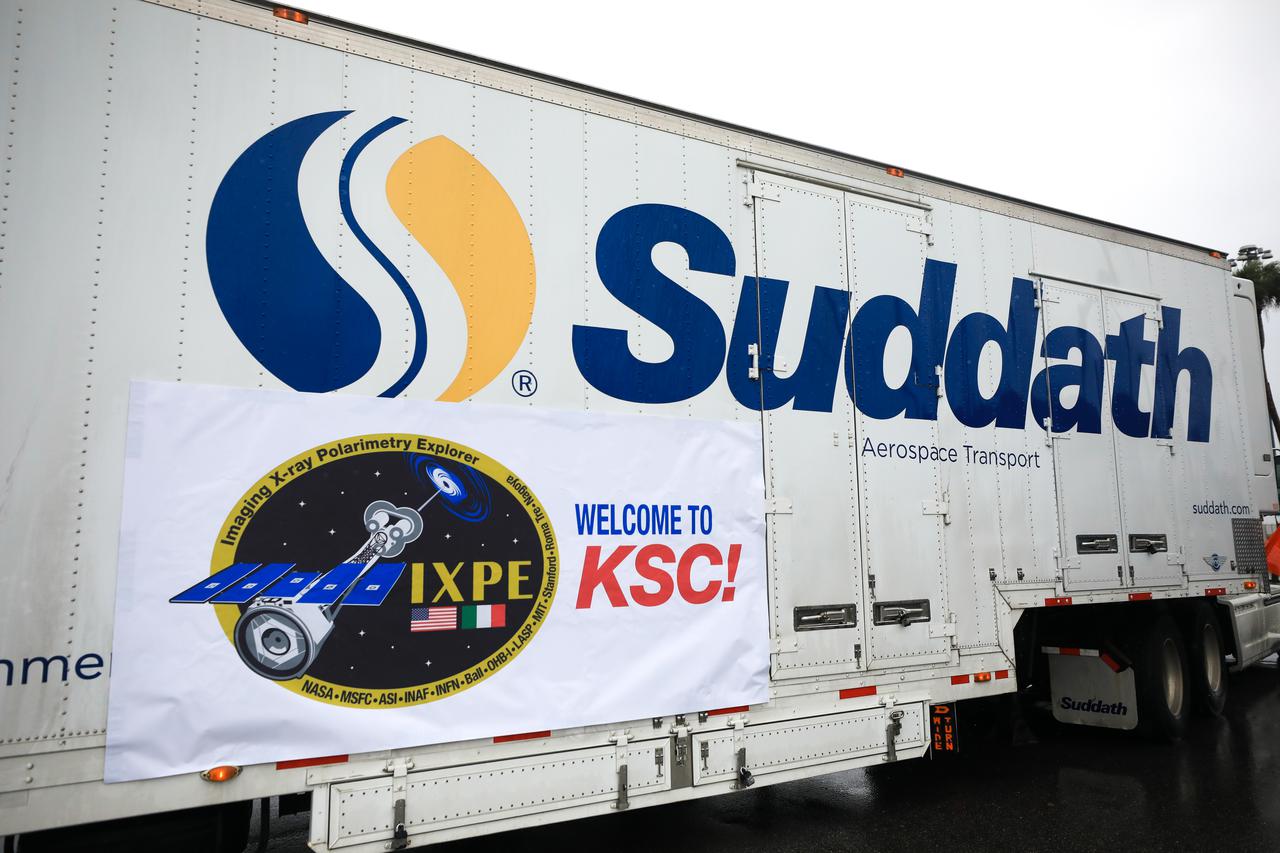
NASA’s Imaging X-Ray Polarimetry Explorer (IXPE) spacecraft – the agency’s first mission dedicated to measuring X-ray polarization – arrives at the Cape Canaveral Space Force Station in Florida on Nov. 5, 2021. IXPE is scheduled to launch aboard a SpaceX Falcon 9 vehicle from Kennedy’s Launch Complex 39A on Dec. 9, 2021. The launch is managed by NASA’s Launch Services Program, based at Kennedy. IXPE will study the polarization of X-rays coming to us from some of the universe’s most extreme sources, including black holes and dead stars known as pulsars.

NASA’s Imaging X-Ray Polarimetry Explorer (IXPE) spacecraft – the agency’s first mission dedicated to measuring X-ray polarization – arrives at the Cape Canaveral Space Force Station in Florida on Nov. 5, 2021. IXPE is scheduled to launch aboard a SpaceX Falcon 9 vehicle from Kennedy’s Launch Complex 39A on Dec. 9, 2021. The launch is managed by NASA’s Launch Services Program, based at Kennedy. IXPE will study the polarization of X-rays coming to us from some of the universe’s most extreme sources, including black holes and dead stars known as pulsars.

NASA’s Imaging X-Ray Polarimetry Explorer (IXPE) spacecraft – the agency’s first mission dedicated to measuring X-ray polarization – arrives at the Cape Canaveral Space Force Station in Florida on Nov. 5, 2021. IXPE is scheduled to launch aboard a SpaceX Falcon 9 vehicle from Kennedy’s Launch Complex 39A on Dec. 9, 2021. The launch is managed by NASA’s Launch Services Program, based at Kennedy. IXPE will study the polarization of X-rays coming to us from some of the universe’s most extreme sources, including black holes and dead stars known as pulsars.