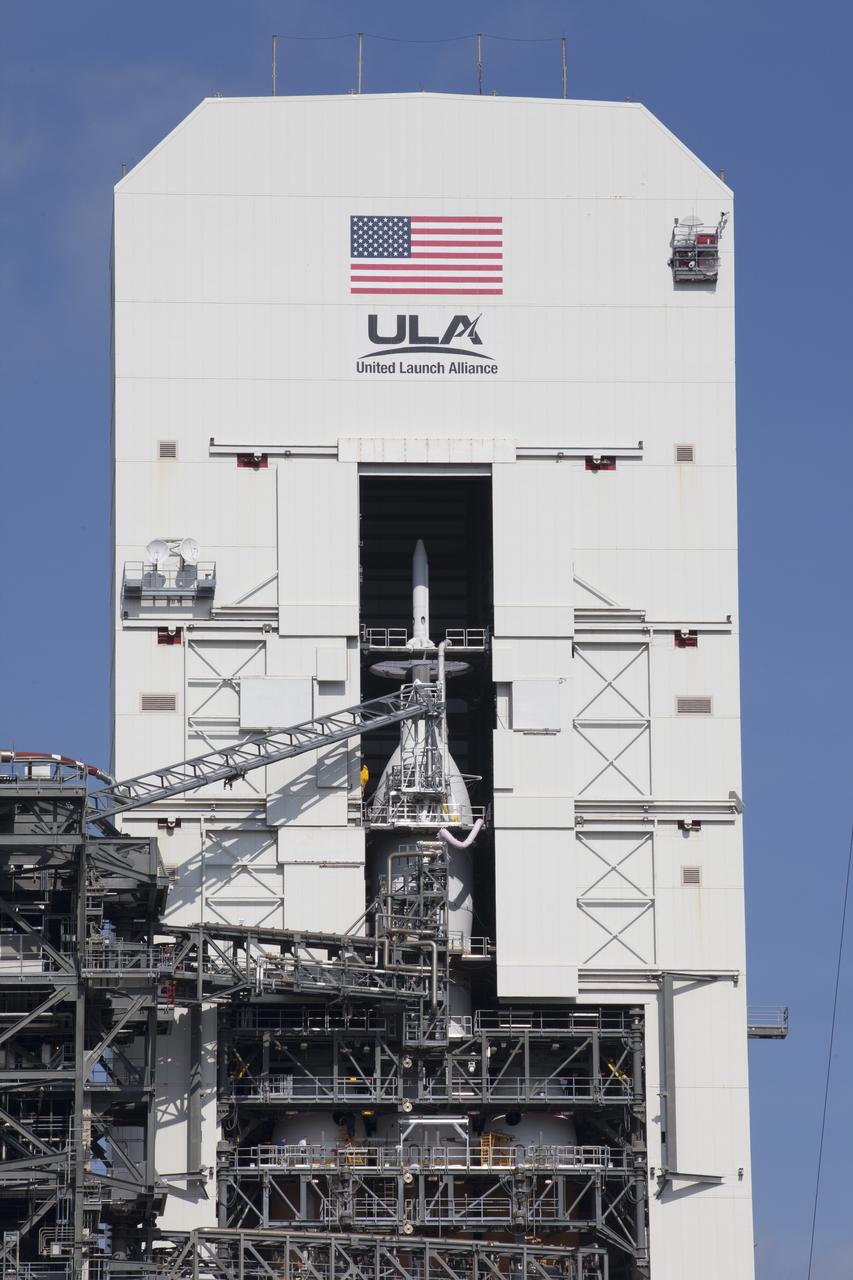
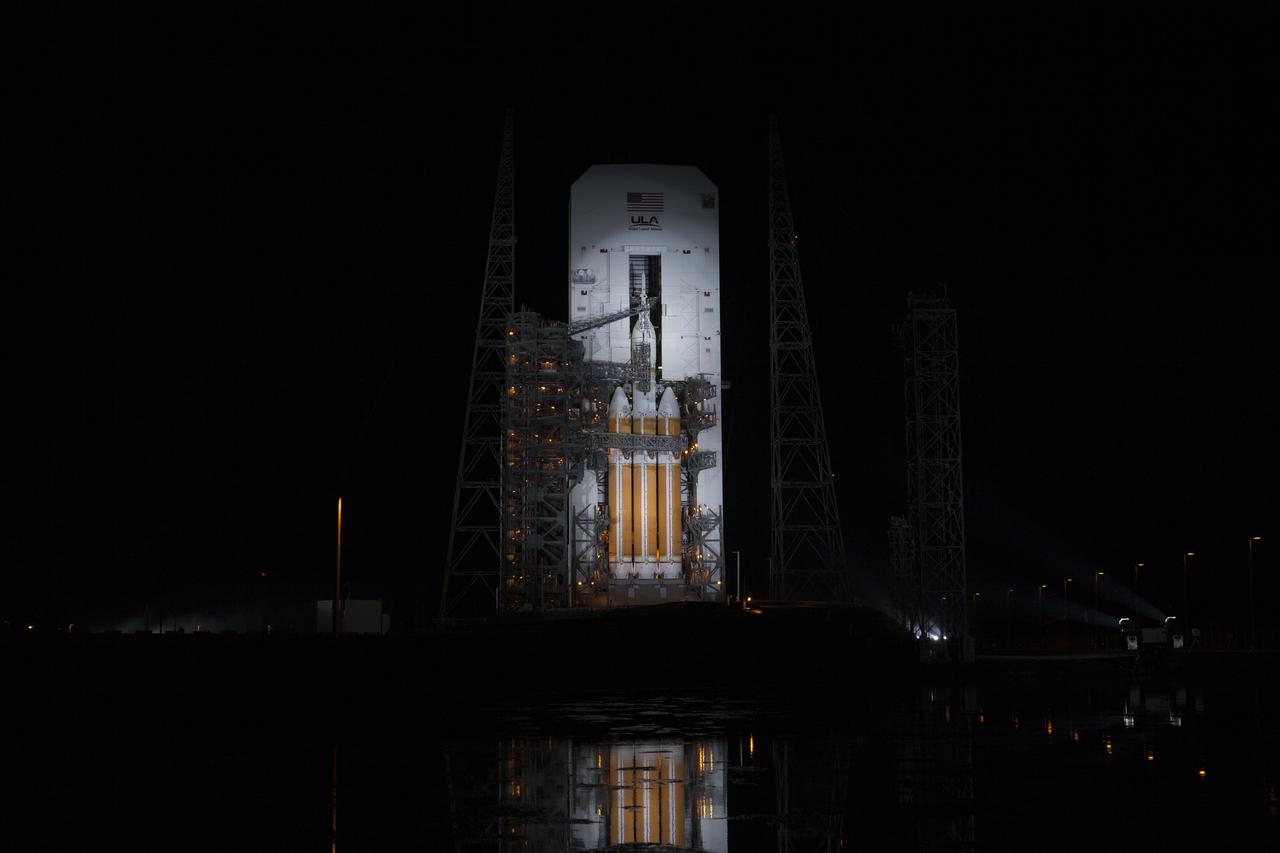
With access doors at Space Launch Complex 37 opened, the Orion and Delta IV Heavy stack is visible in its entirety inside the Mobile Service Tower where the vehicle is undergoing launch preparations. Orion will make its first flight test on Dec. 4 with a morning launch atop the United Launch Alliance Delta IV Heavy. The spacecraft will orbit the Earth twice, including one loop that will reach 3,600 miles above Earth. No one will be aboard Orion for this flight test, but the spacecraft is being designed and built to carry astronauts to deep space destinations such as an asteroid.
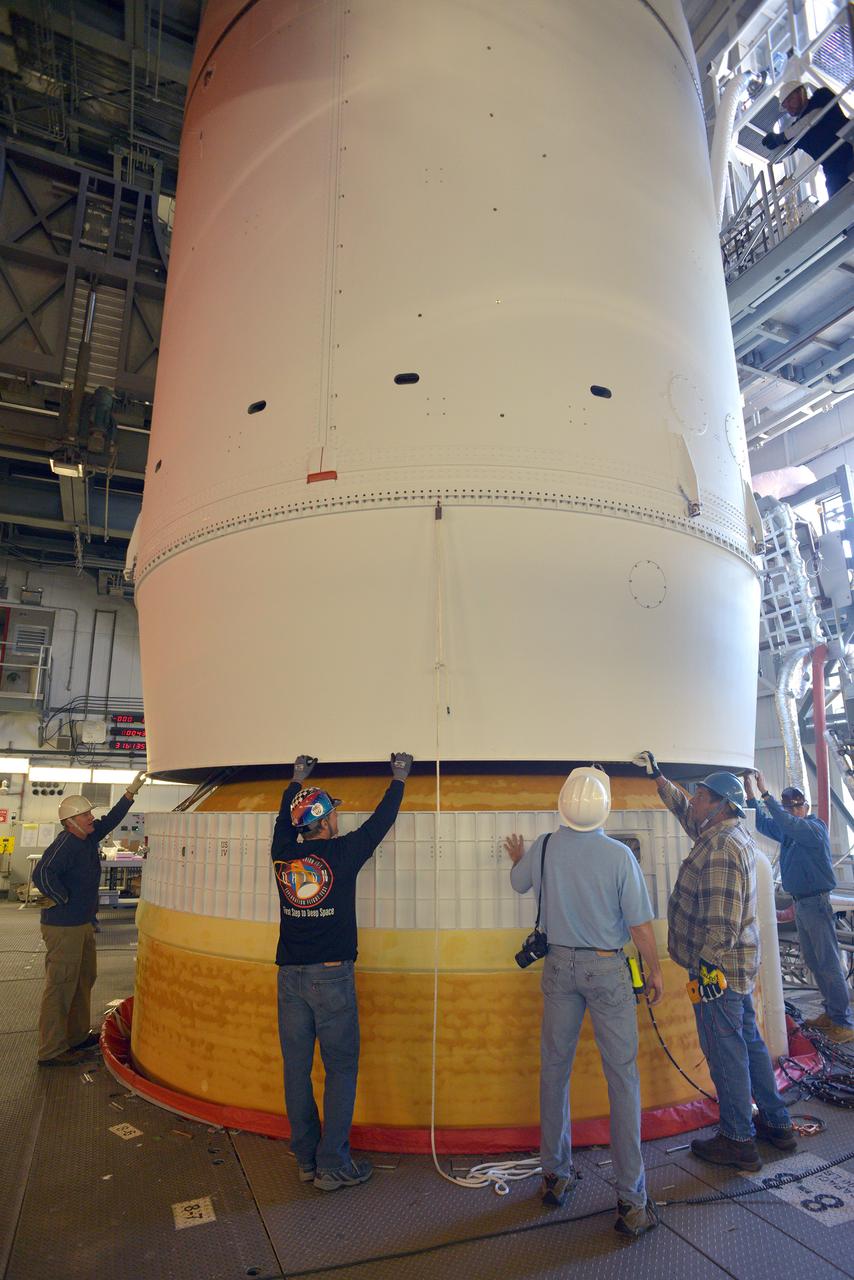
At Cape Canaveral Air Force Station's Launch Complex 37, United Launch Alliance engineers and technicians mate the agency's Orion spacecraft to its Delta IV Heavy rocket. Orion is the exploration spacecraft designed to carry astronauts to destinations not yet explored by humans, including an asteroid and Mars. It will have emergency abort capability, sustain the crew during space travel and provide safe re-entry from deep space return velocities. The first unpiloted flight test of Orion is scheduled to launch Dec. 4, 2014 atop a United Launch Alliance Delta IV Heavy rocket, and in 2018 on NASA’s Space Launch System rocket.
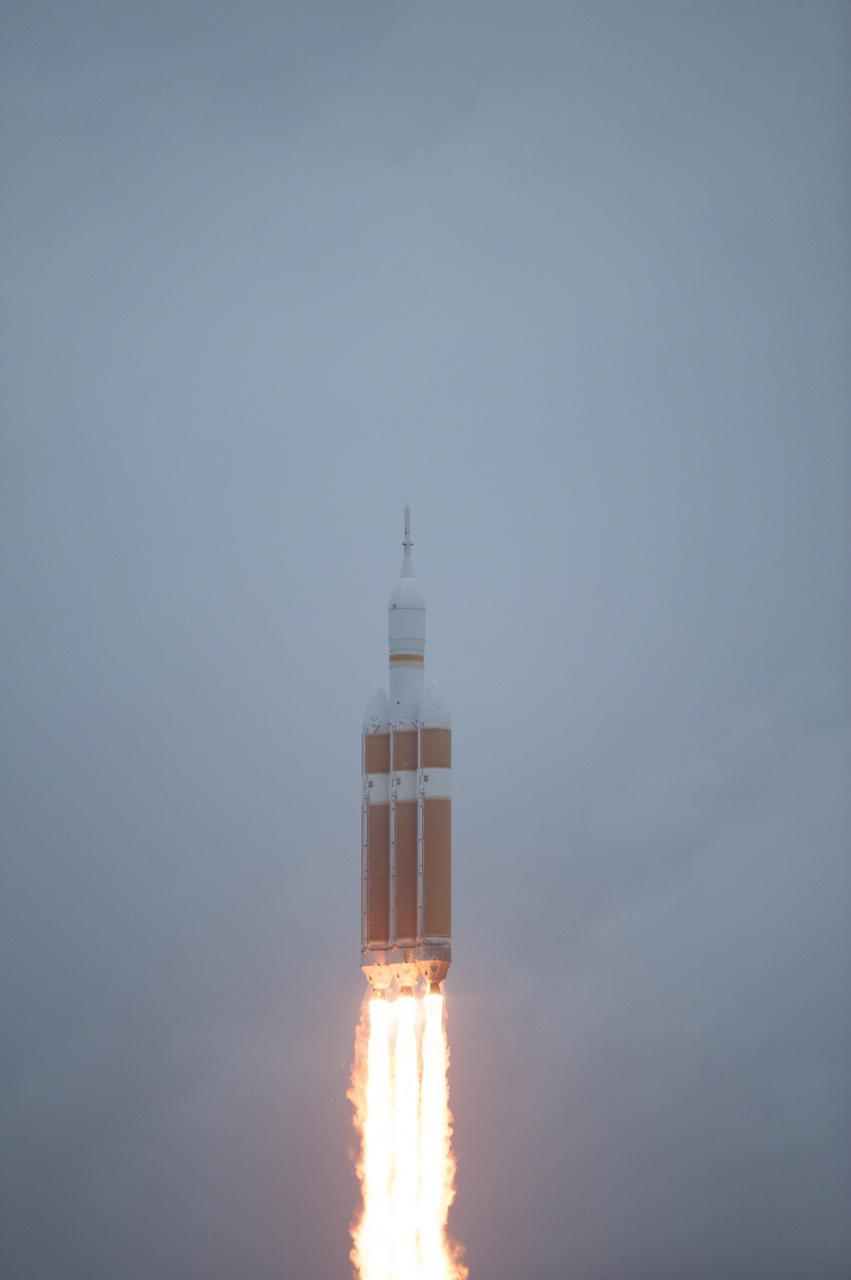
A Delta IV Heavy rocket lifts off from Space Launch Complex 37 at Cape Canaveral Air Force Station in Florida carrying NASA's Orion spacecraft on an unpiloted flight test to Earth orbit. Liftoff was at 7:05 a.m. EST. During the two-orbit, four-and-a-half hour mission, engineers will evaluate the systems critical to crew safety, the launch abort system, the heat shield and the parachute system.
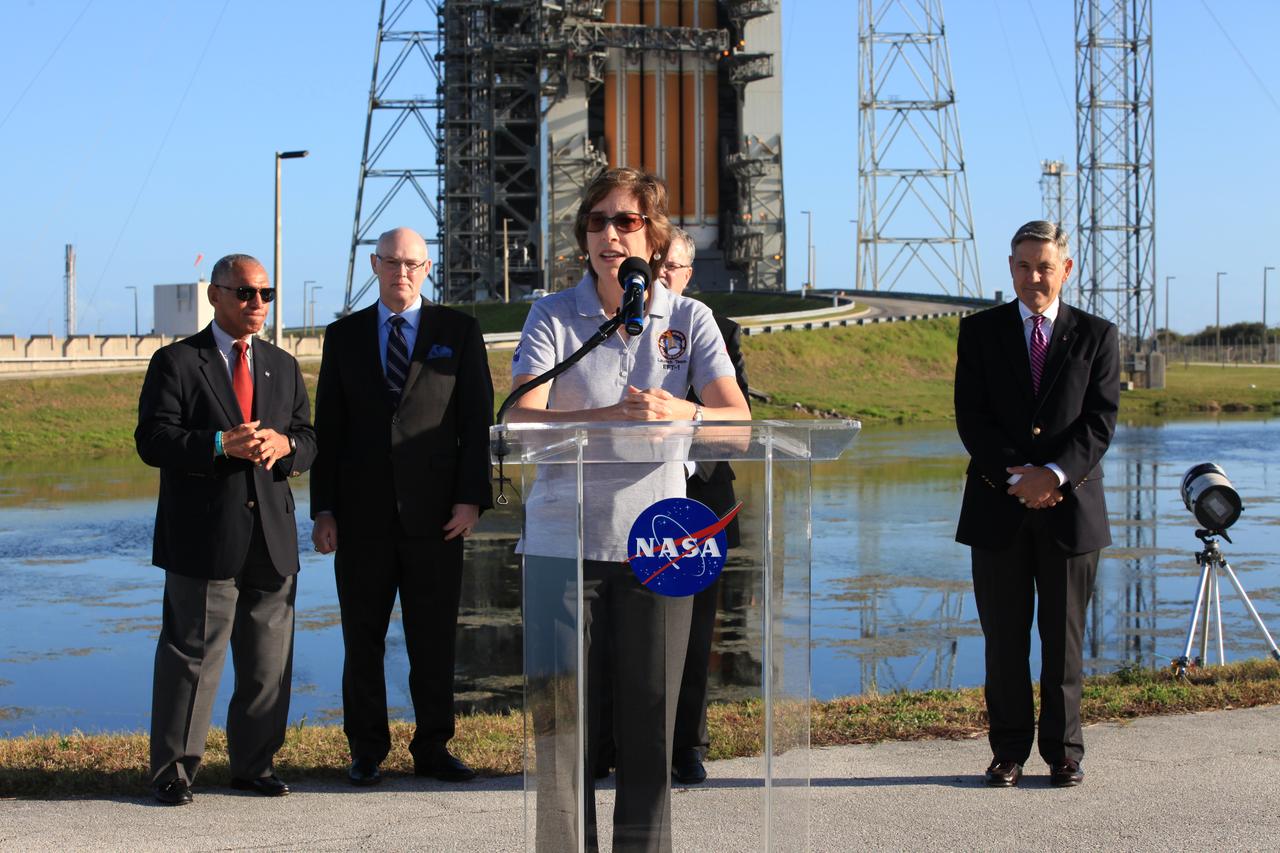
At Cape Canaveral Air Force Station's Launch Complex 37, Johnson Space Center Director Ellen Ochoa speaks to members of the news media as the Orion spacecraft and its United Launch Alliance Delta IV Heavy rocket were being prepared for launch. Behind Ochoa, from the left, are NASA Administrator Charlie Bolden, United Launch Alliance CEO Tory Bruno, Lockheed Martin Orion Program Manager Mike Hawes and Kennedy Space Center Director Bob Cabana.
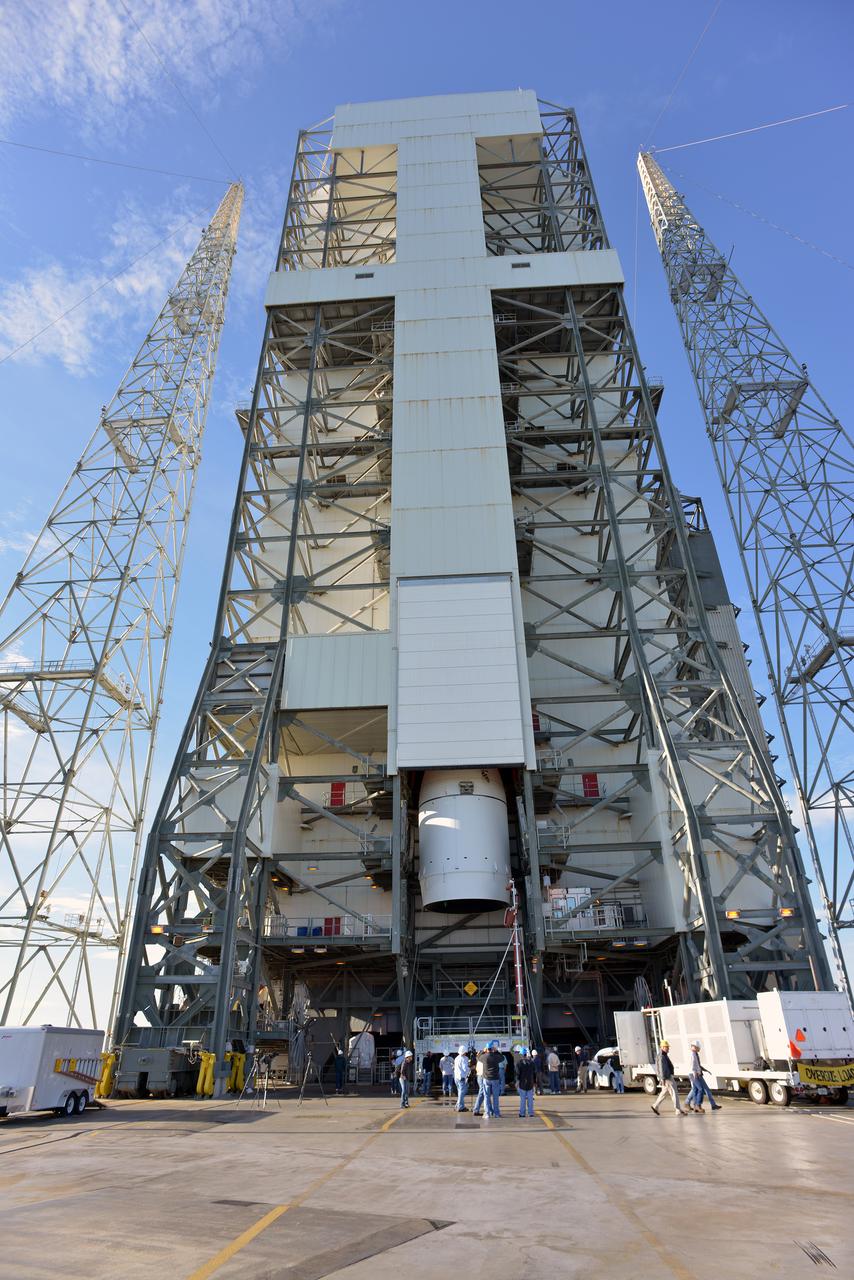
At Cape Canaveral Air Force Station's Launch Complex 37, United Launch Alliance engineers and technicians begin lifting the agency's Orion spacecraft for mounting atop its Delta IV Heavy rocket. Orion is the exploration spacecraft designed to carry astronauts to destinations not yet explored by humans, including an asteroid and Mars. It will have emergency abort capability, sustain the crew during space travel and provide safe re-entry from deep space return velocities. The first unpiloted flight test of Orion is scheduled to launch Dec. 4, 2014 atop a United Launch Alliance Delta IV Heavy rocket, and in 2018 on NASA’s Space Launch System rocket.
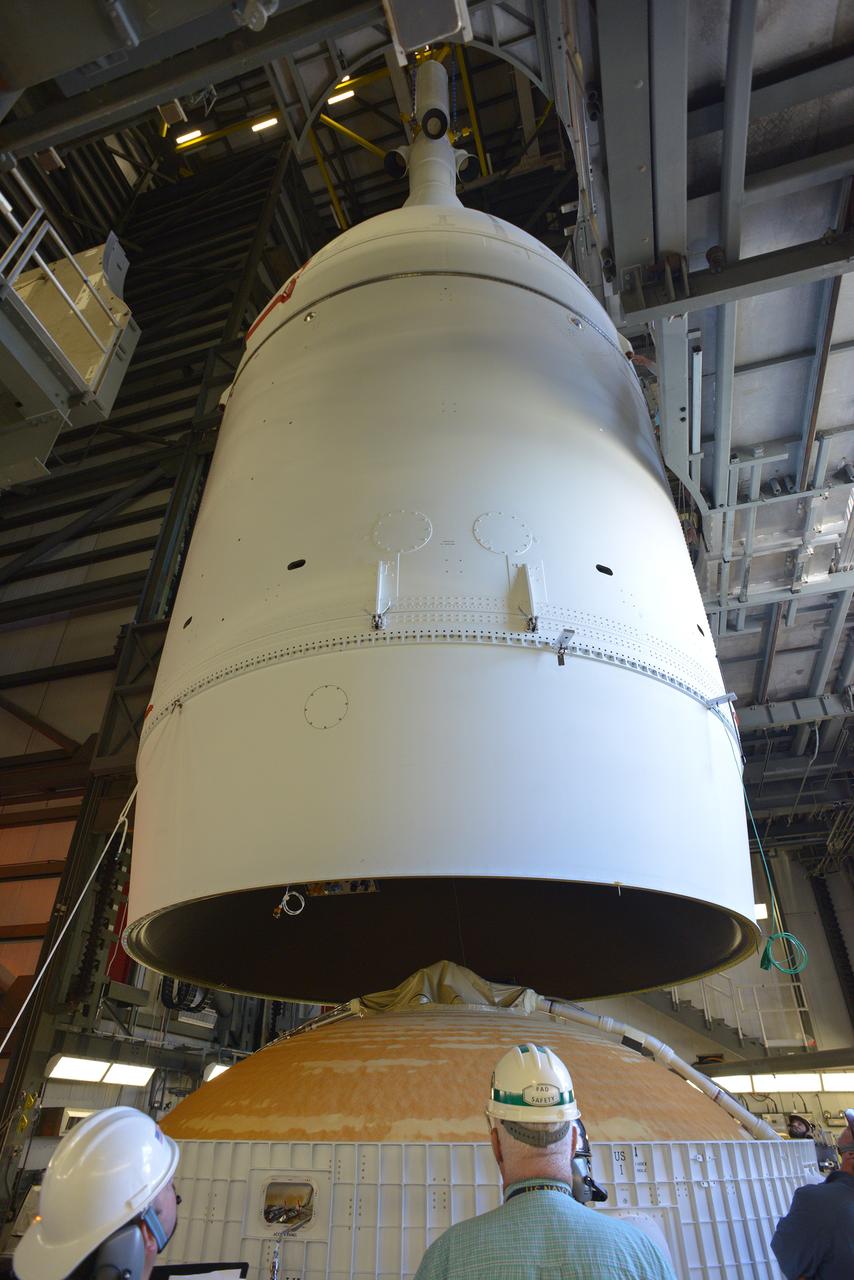
At Cape Canaveral Air Force Station's Launch Complex 37, United Launch Alliance engineers and technicians mate the agency's Orion spacecraft to its Delta IV Heavy rocket. Orion is the exploration spacecraft designed to carry astronauts to destinations not yet explored by humans, including an asteroid and Mars. It will have emergency abort capability, sustain the crew during space travel and provide safe re-entry from deep space return velocities. The first unpiloted flight test of Orion is scheduled to launch Dec. 4, 2014 atop a United Launch Alliance Delta IV Heavy rocket, and in 2018 on NASA’s Space Launch System rocket.
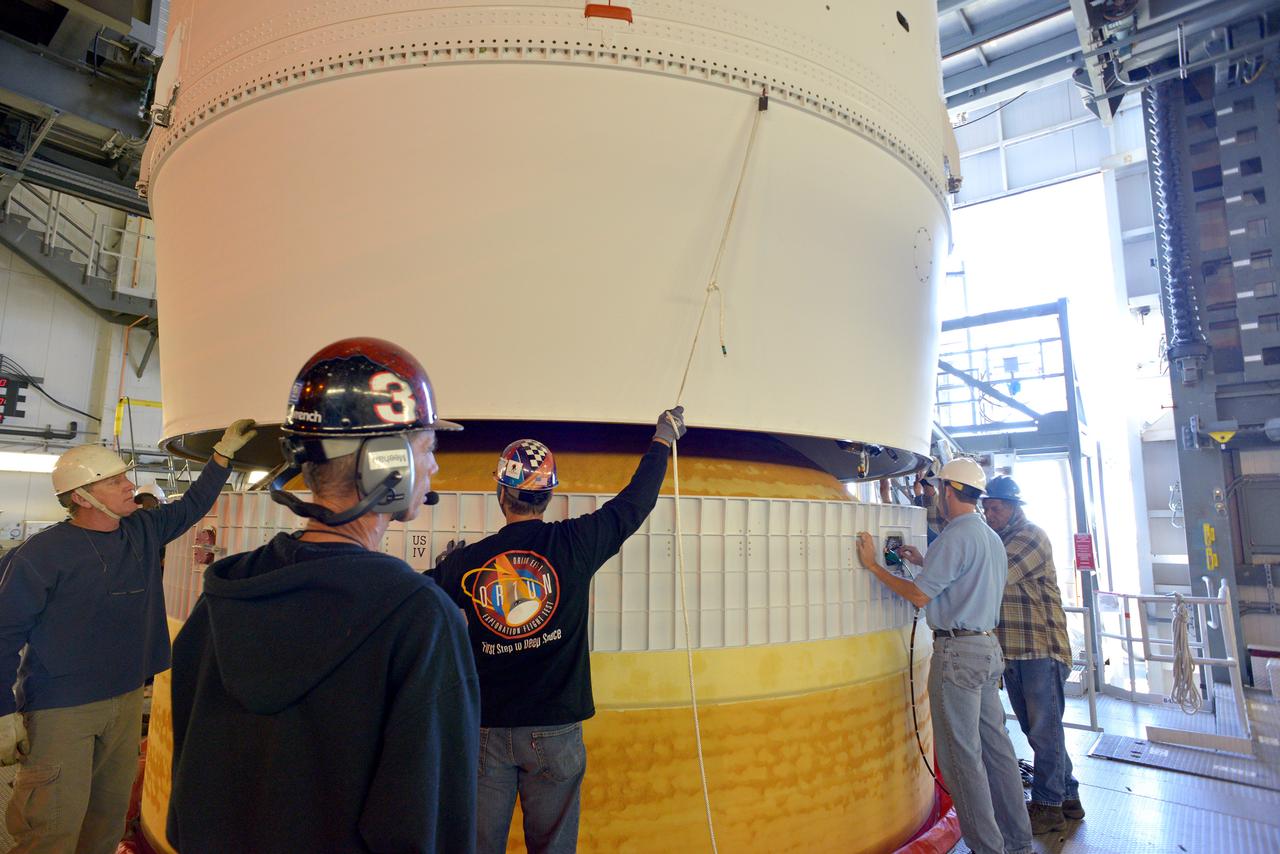
At Cape Canaveral Air Force Station's Launch Complex 37, United Launch Alliance engineers and technicians mate the agency's Orion spacecraft to its Delta IV Heavy rocket. Orion is the exploration spacecraft designed to carry astronauts to destinations not yet explored by humans, including an asteroid and Mars. It will have emergency abort capability, sustain the crew during space travel and provide safe re-entry from deep space return velocities. The first unpiloted flight test of Orion is scheduled to launch Dec. 4, 2014 atop a United Launch Alliance Delta IV Heavy rocket, and in 2018 on NASA’s Space Launch System rocket.
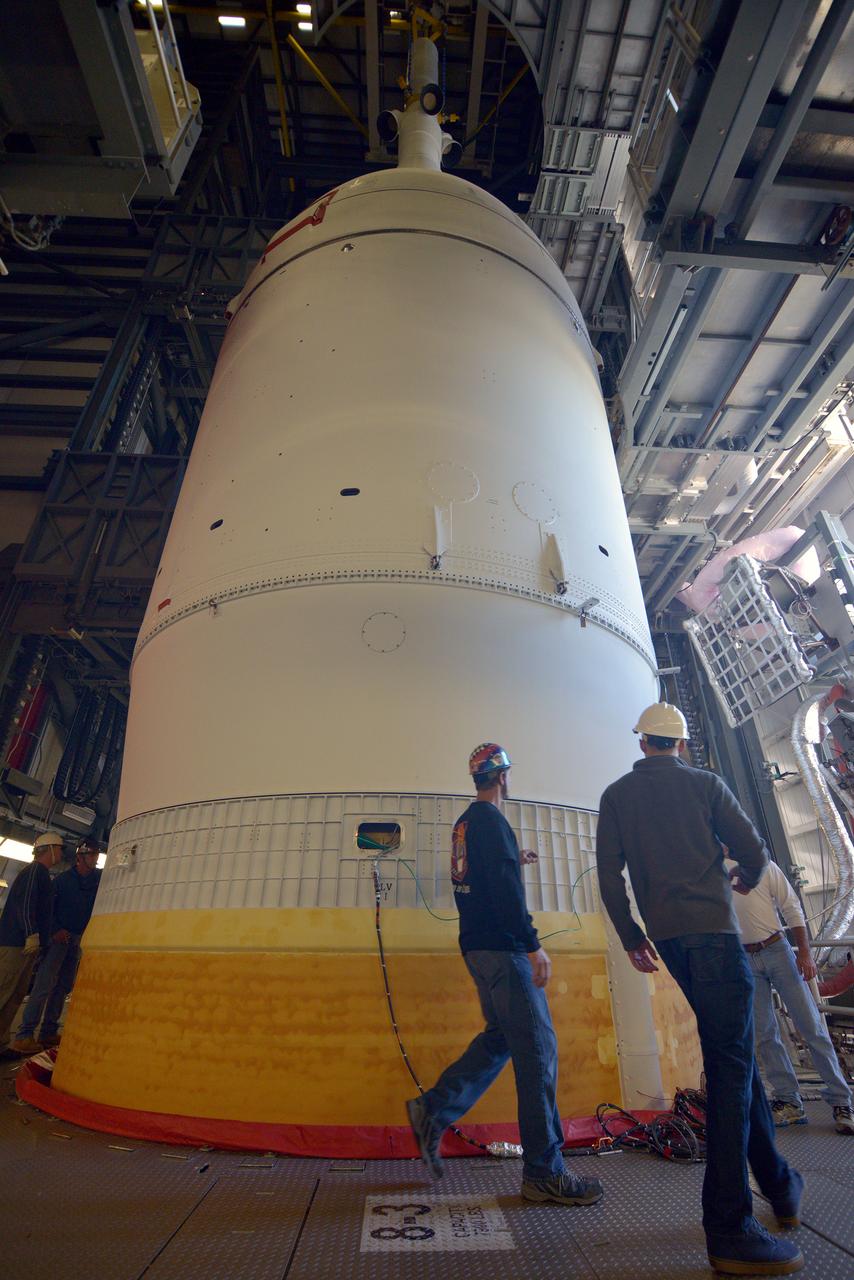
At Cape Canaveral Air Force Station's Launch Complex 37, United Launch Alliance engineers and technicians mate the agency's Orion spacecraft to its Delta IV Heavy rocket. Orion is the exploration spacecraft designed to carry astronauts to destinations not yet explored by humans, including an asteroid and Mars. It will have emergency abort capability, sustain the crew during space travel and provide safe re-entry from deep space return velocities. The first unpiloted flight test of Orion is scheduled to launch Dec. 4, 2014 atop a United Launch Alliance Delta IV Heavy rocket, and in 2018 on NASA’s Space Launch System rocket.
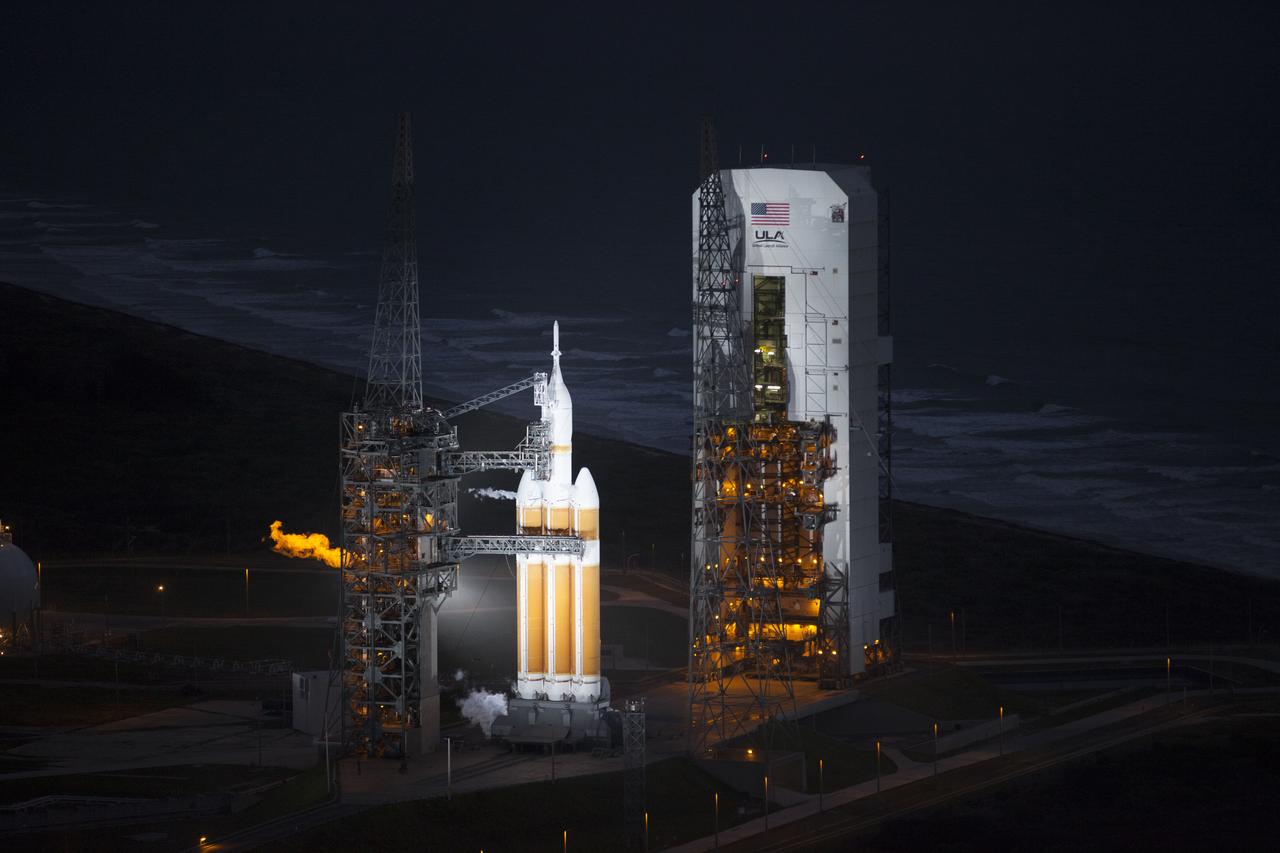
This helicopter view of Space Launch Complex 37 at Cape Canaveral Air Force Station in Florida shows the United Launch Alliance Delta IV Heavy rocket as it stands ready to boost NASA's Orion spacecraft on a 4.5-hour mission.
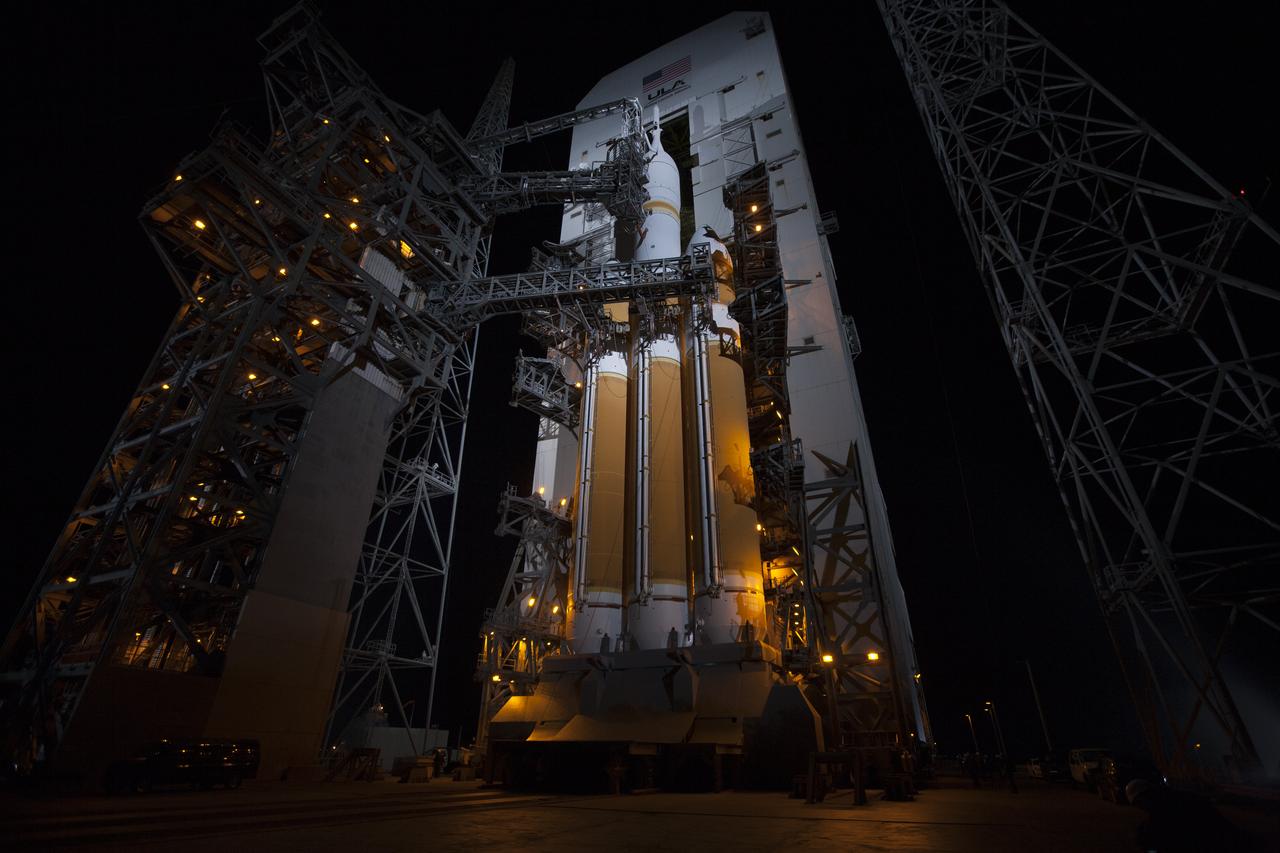
The launch gantry is rolled back to reveal NASA's Orion spacecraft mounted atop a United Launch Alliance Delta IV Heavy rocket at Cape Canaveral Air Force Station's Space Launch Complex 37. Orion is NASA’s new spacecraft built to carry humans, designed to allow us to journey to destinations never before visited by humans, including an asteroid and Mars.
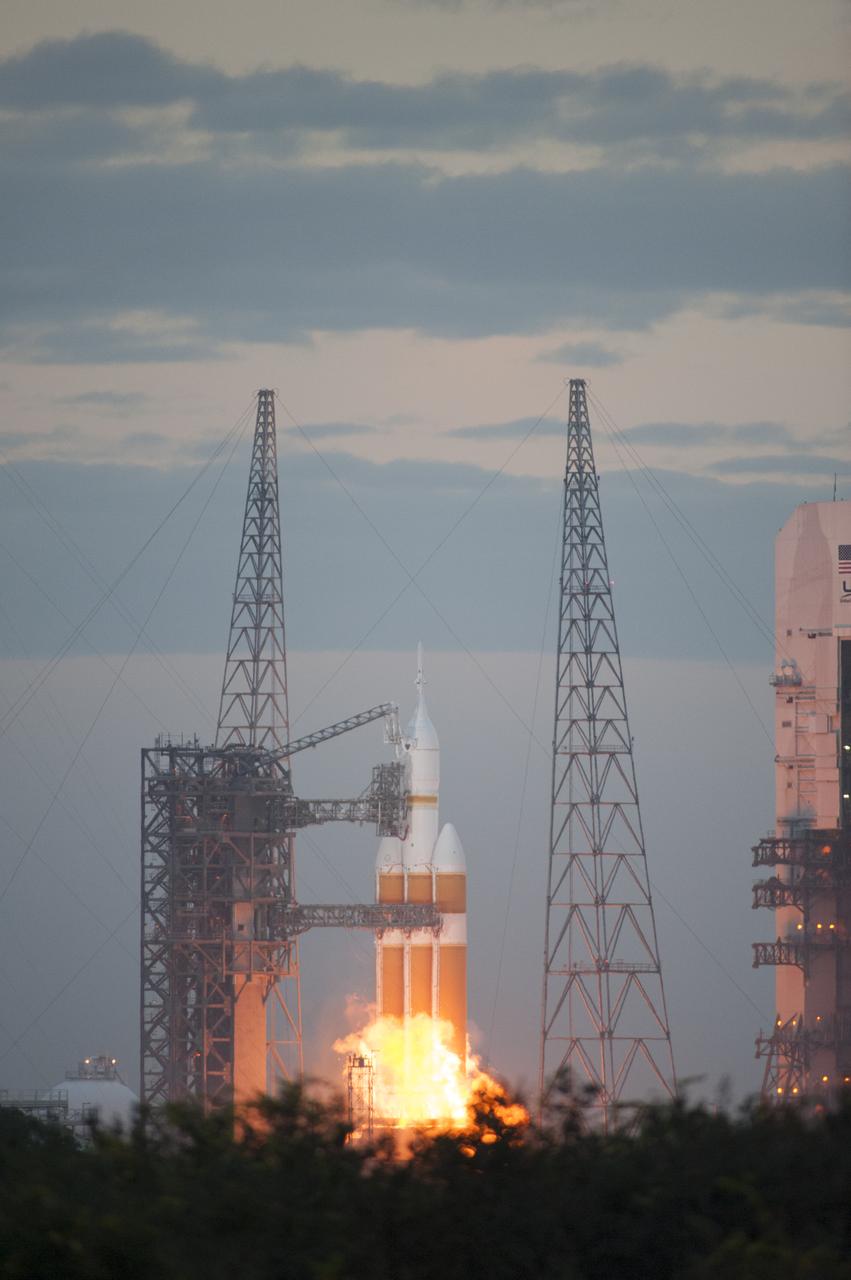
A Delta IV Heavy rocket lifts off from Space Launch Complex 37 at Cape Canaveral Air Force Station in Florida carrying NASA's Orion spacecraft on an unpiloted flight test to Earth orbit. Liftoff was at 7:05 a.m. EST. During the two-orbit, four-and-a-half hour mission, engineers will evaluate the systems critical to crew safety, the launch abort system, the heat shield and the parachute system.
The United Launch Alliance Delta IV Heavy rocket for Exploration Flight Test-1 is being lifted to the vertical position at the pad at Space Launch Complex 37 at Cape Canaveral Air Force Station in Florida. The Delta IV Heavy is being readied to launch Orion on its first flight test. During its first flight test, Orion will travel farther into space than any human spacecraft has gone in more than 40 years. The data gathered during the flight will influence design decisions, validate existing computer models and innovative new approaches to space systems development, as well as reduce overall mission risks and costs for later Orion flights. Liftoff of Orion on the first flight test is planned for December 2014.
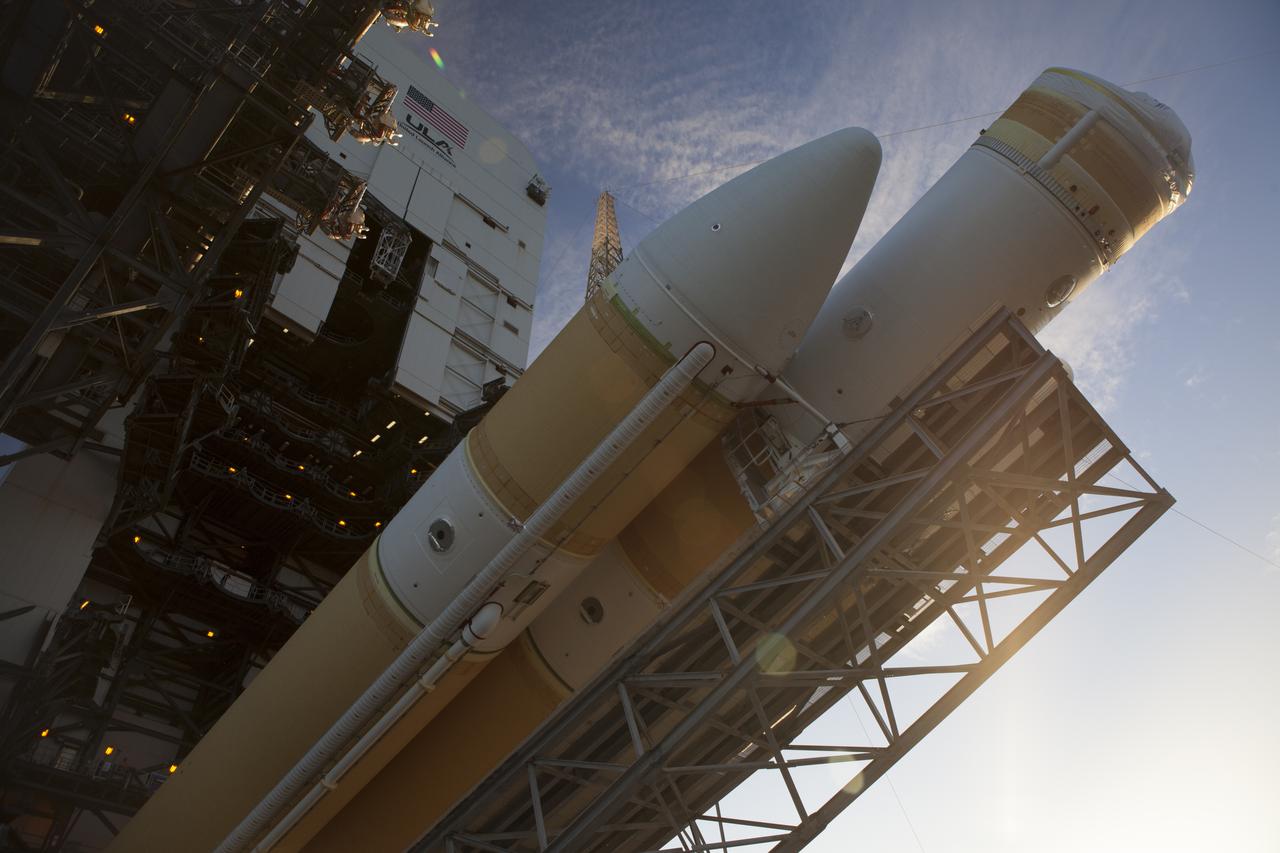
This close-up view shows the United Launch Alliance Delta IV Heavy rocket for Exploration Flight Test-1 being raised into the vertical position at the pad at Space Launch Complex 37 at Cape Canaveral Air Force Station in Florida. The Delta IV Heavy is being readied to launch Orion on its first flight test. During its first flight test, Orion will travel farther into space than any human spacecraft has gone in more than 40 years. The data gathered during the flight will influence design decisions, validate existing computer models and innovative new approaches to space systems development, as well as reduce overall mission risks and costs for later Orion flights. Liftoff of Orion on the first flight test is planned for December 2014.
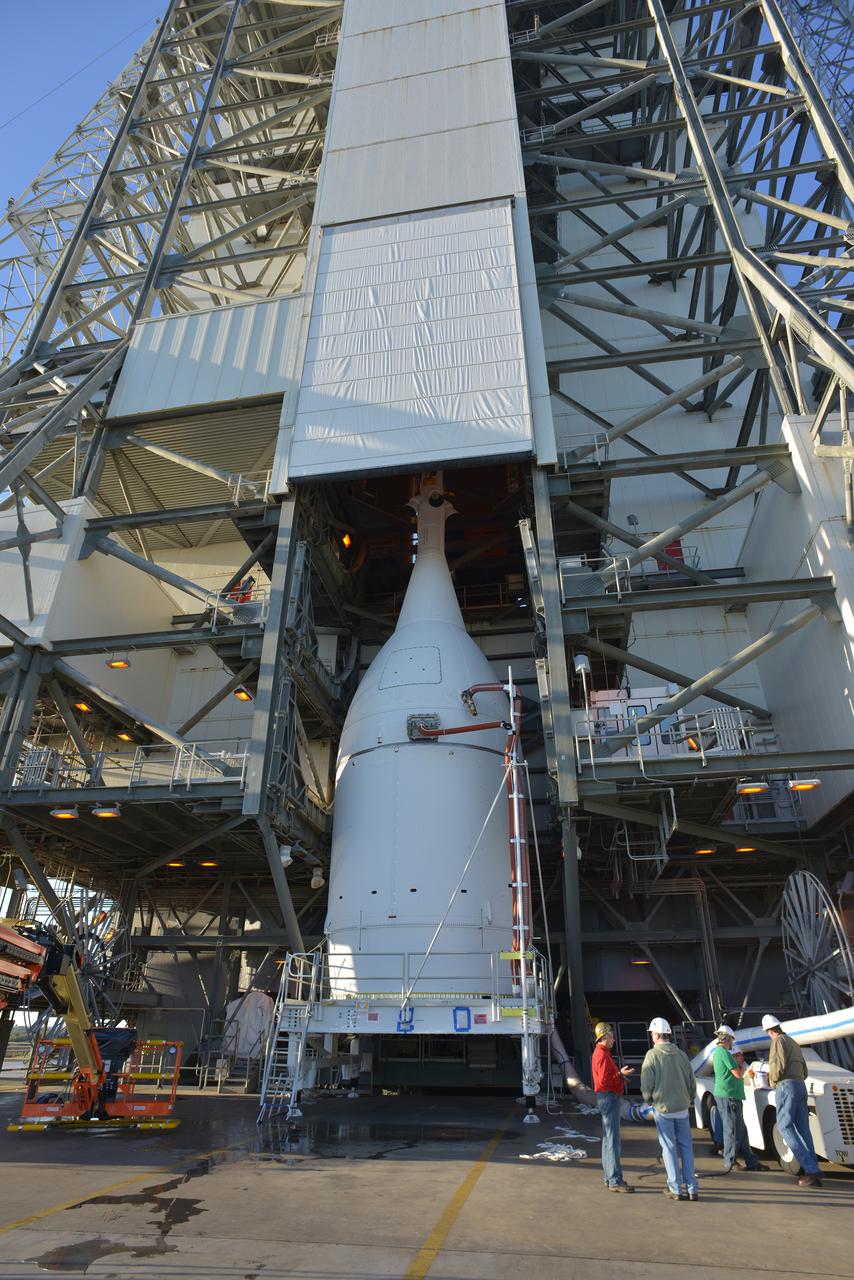
At Cape Canaveral Air Force Station's Launch Complex 37, United Launch Alliance engineers and technicians prepare to lift the agency's Orion spacecraft for mounting atop its Delta IV Heavy rocket. Orion is the exploration spacecraft designed to carry astronauts to destinations not yet explored by humans, including an asteroid and Mars. It will have emergency abort capability, sustain the crew during space travel and provide safe re-entry from deep space return velocities. The first unpiloted flight test of Orion is scheduled to launch Dec. 4, 2014 atop a United Launch Alliance Delta IV Heavy rocket, and in 2018 on NASA’s Space Launch System rocket.
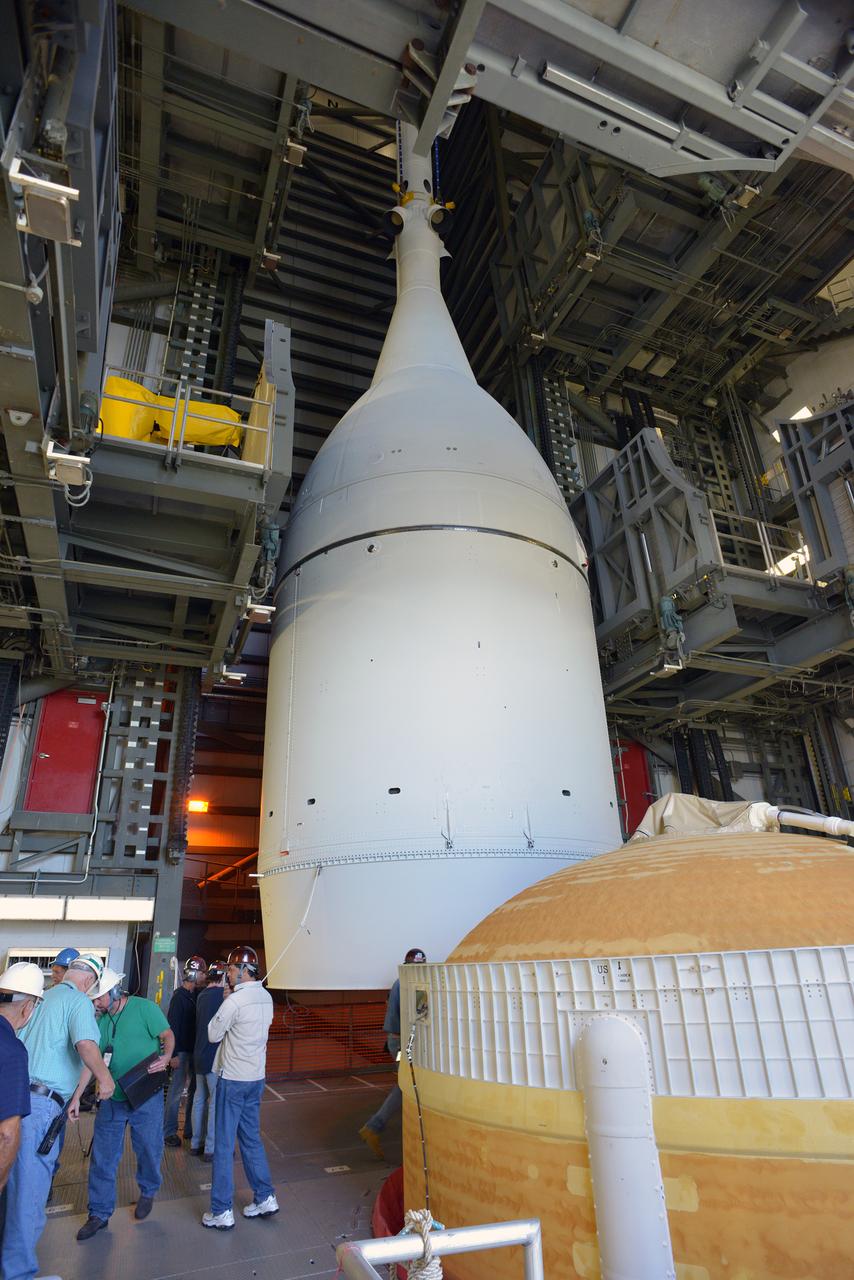
At Cape Canaveral Air Force Station's Launch Complex 37, United Launch Alliance engineers and technicians prepare to mate the agency's Orion spacecraft to its Delta IV Heavy rocket. Orion is the exploration spacecraft designed to carry astronauts to destinations not yet explored by humans, including an asteroid and Mars. It will have emergency abort capability, sustain the crew during space travel and provide safe re-entry from deep space return velocities. The first unpiloted flight test of Orion is scheduled to launch Dec. 4, 2014 atop a United Launch Alliance Delta IV Heavy rocket, and in 2018 on NASA’s Space Launch System rocket.
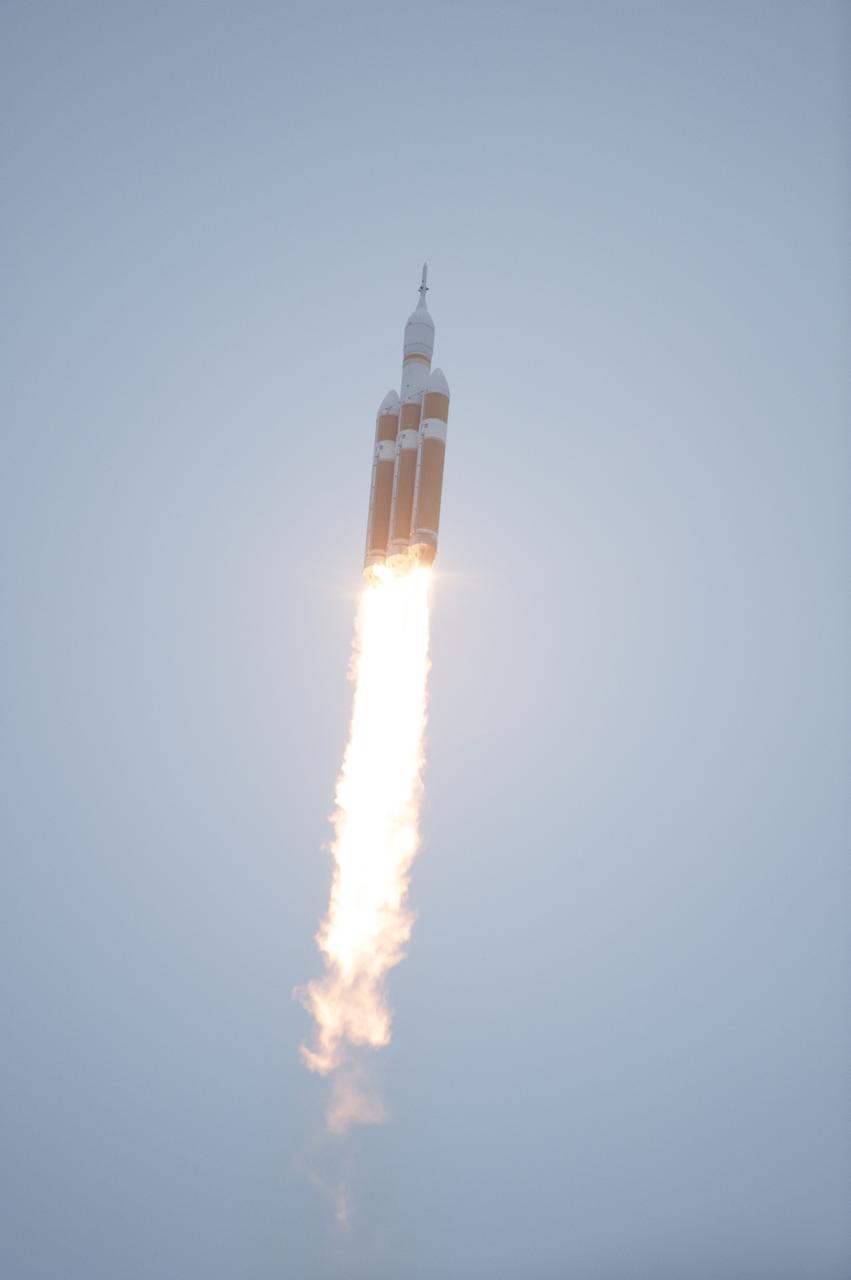
A Delta IV Heavy rocket lifts off from Space Launch Complex 37 at Cape Canaveral Air Force Station in Florida carrying NASA's Orion spacecraft on an unpiloted flight test to Earth orbit. Liftoff was at 7:05 a.m. EST. During the two-orbit, four-and-a-half hour mission, engineers will evaluate the systems critical to crew safety, the launch abort system, the heat shield and the parachute system.
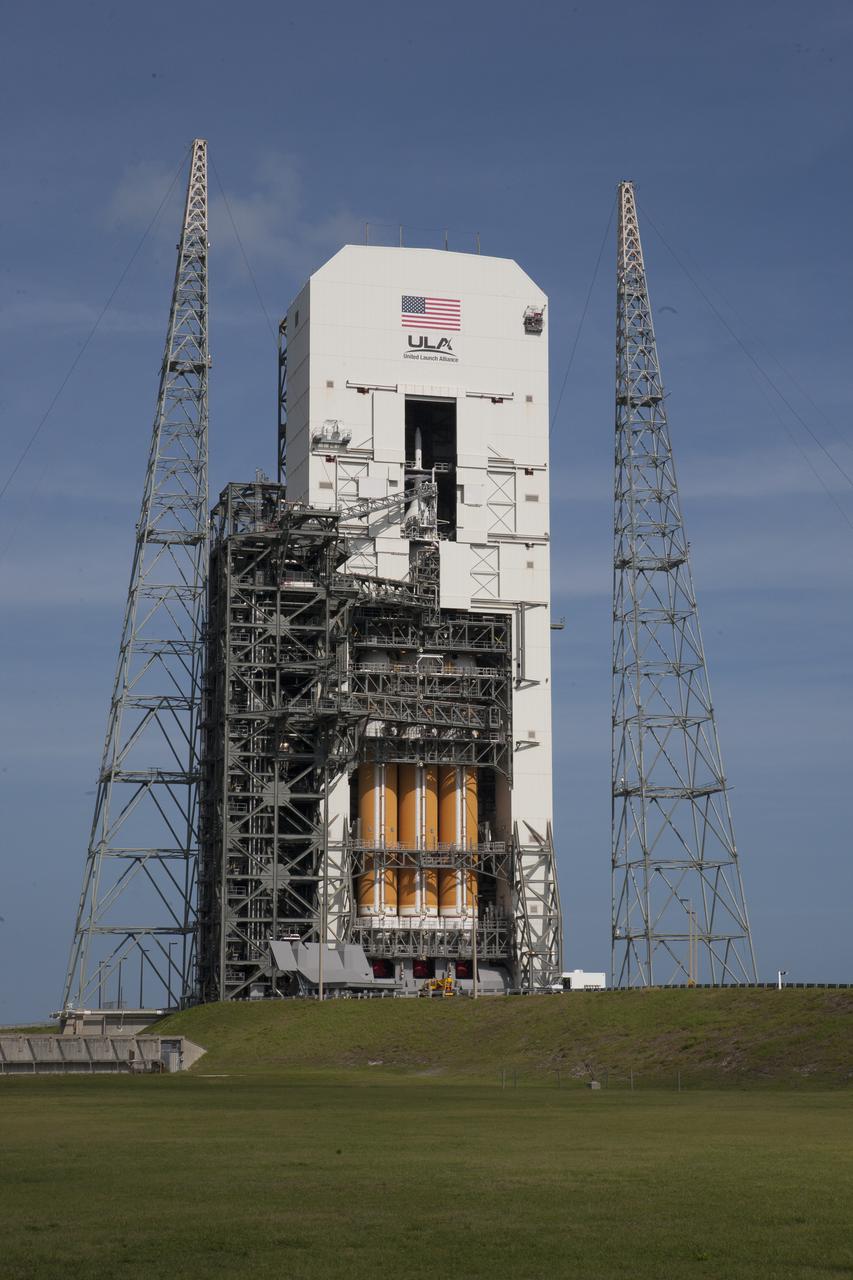
The launch gantry is rolled back to reveal NASA's Orion spacecraft mounted atop a United Launch Alliance Delta IV Heavy rocket at Cape Canaveral Air Force Station's Space Launch Complex 37. Orion is NASA’s new spacecraft built to carry humans, designed to allow us to journey to destinations never before visited by humans, including an asteroid and Mars.
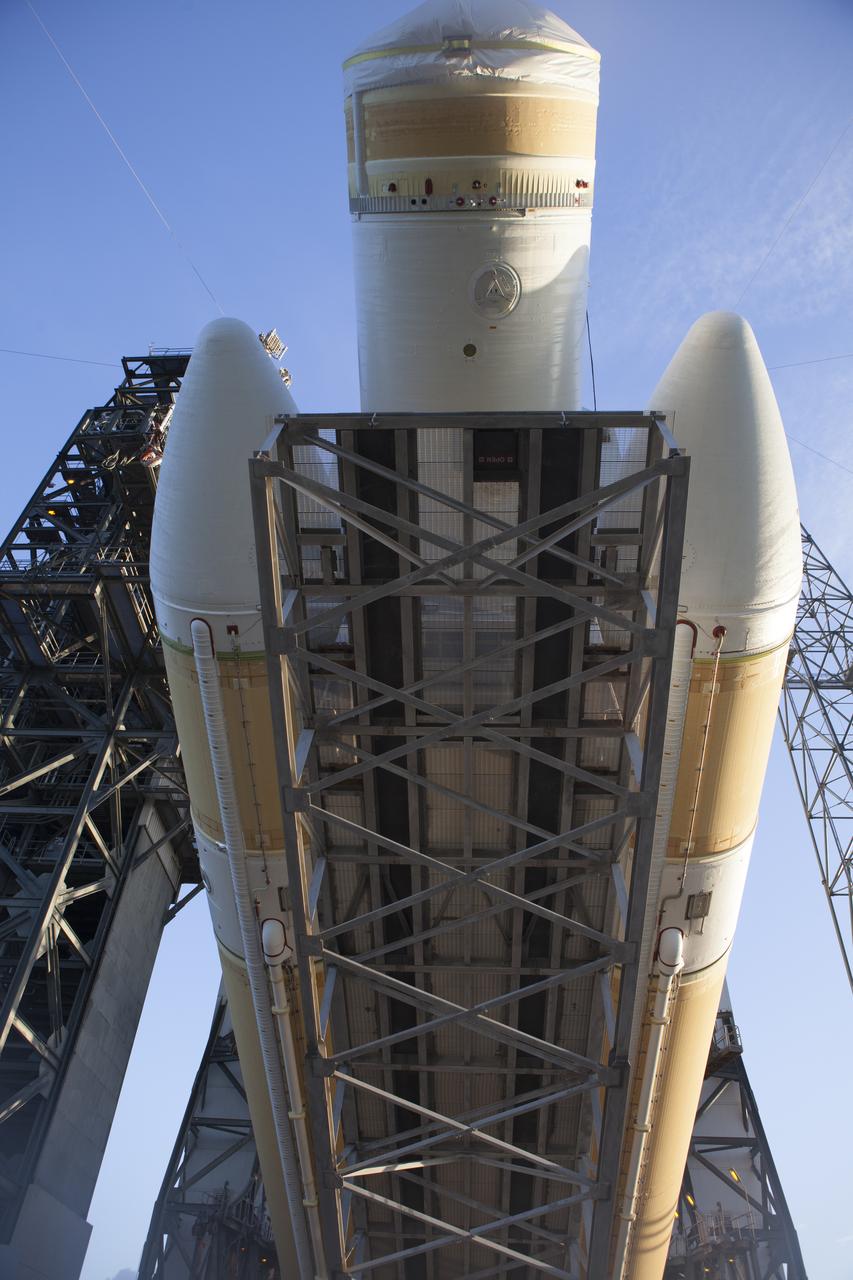
This close-up view shows the United Launch Alliance Delta IV Heavy rocket for Exploration Flight Test-1 being raised into the vertical position at the pad at Space Launch Complex 37 at Cape Canaveral Air Force Station in Florida. The Delta IV Heavy is being readied to launch Orion on its first flight test. During its first flight test, Orion will travel farther into space than any human spacecraft has gone in more than 40 years. The data gathered during the flight will influence design decisions, validate existing computer models and innovative new approaches to space systems development, as well as reduce overall mission risks and costs for later Orion flights. Liftoff of Orion on the first flight test is planned for December 2014.
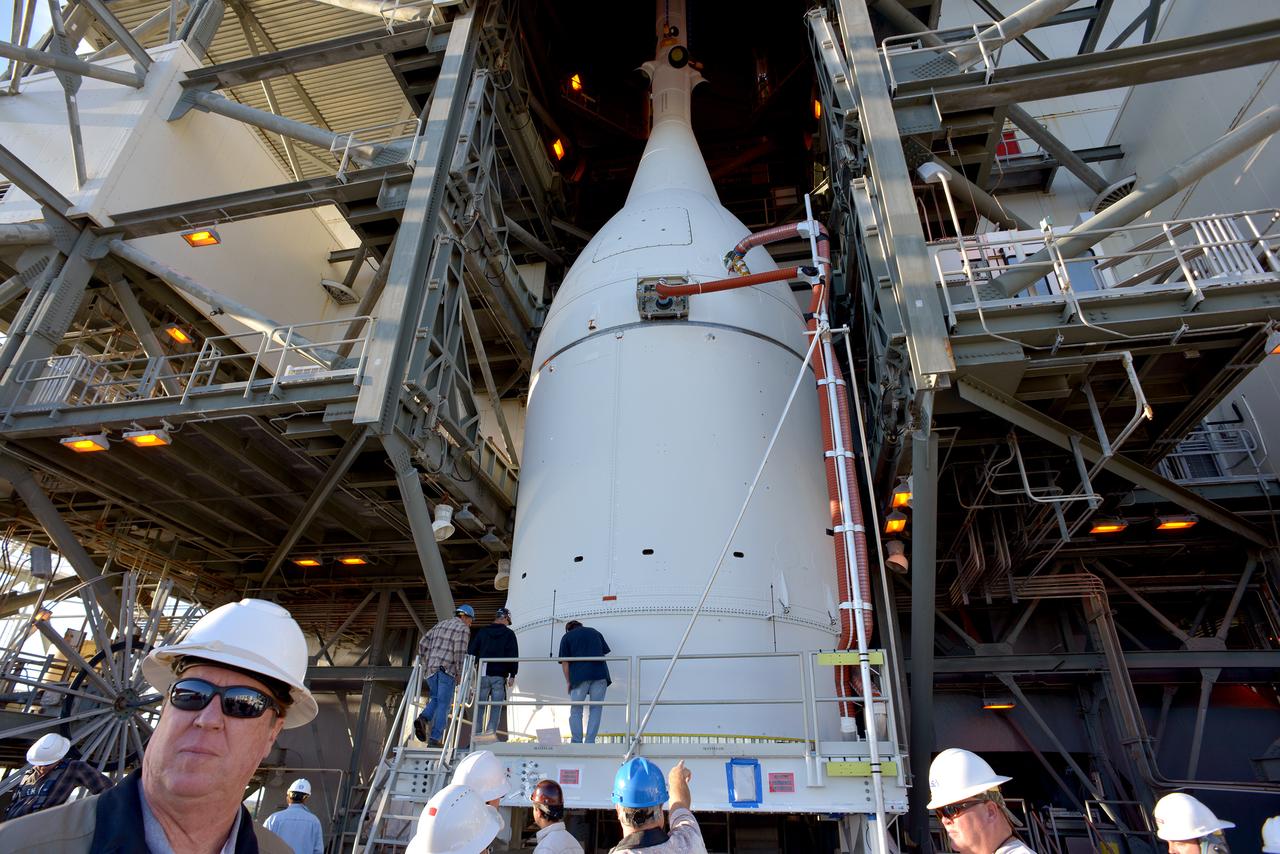
At Cape Canaveral Air Force Station's Launch Complex 37, United Launch Alliance engineers and technicians prepare to lift the agency's Orion spacecraft for mounting atop its Delta IV Heavy rocket. Orion is the exploration spacecraft designed to carry astronauts to destinations not yet explored by humans, including an asteroid and Mars. It will have emergency abort capability, sustain the crew during space travel and provide safe re-entry from deep space return velocities. The first unpiloted flight test of Orion is scheduled to launch Dec. 4, 2014 atop a United Launch Alliance Delta IV Heavy rocket, and in 2018 on NASA’s Space Launch System rocket.
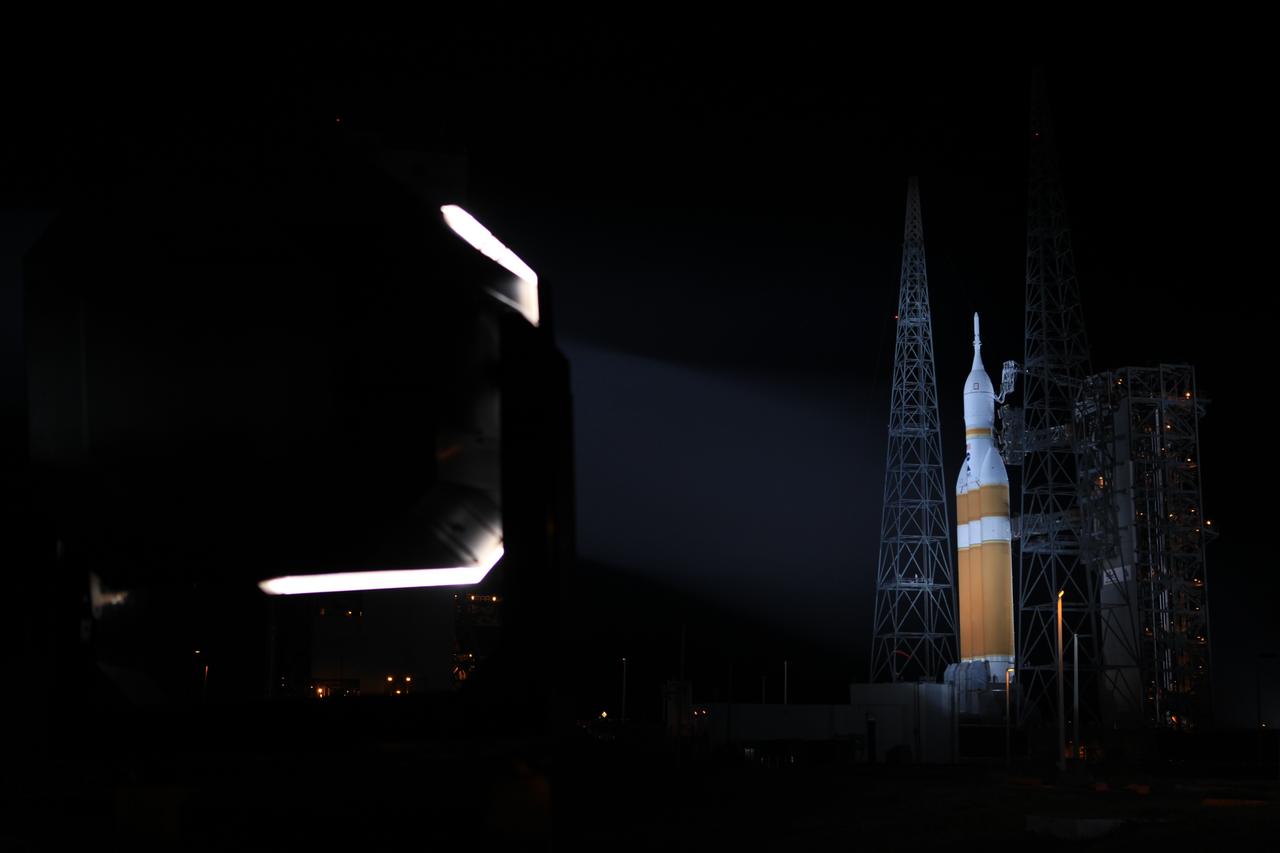
With access doors at Space Launch Complex 37 opened, the Orion and Delta IV Heavy stack is visible in its entirety inside the Mobile Service Tower where the vehicle is undergoing launch preparations. Orion will make its first flight test on Dec. 4 with a morning launch atop the United Launch Alliance Delta IV Heavy. The spacecraft will orbit the Earth twice, including one loop that will reach 3,600 miles above Earth. No one will be aboard Orion for this flight test, but the spacecraft is being designed and built to carry astronauts to deep space destinations such as an asteroid.
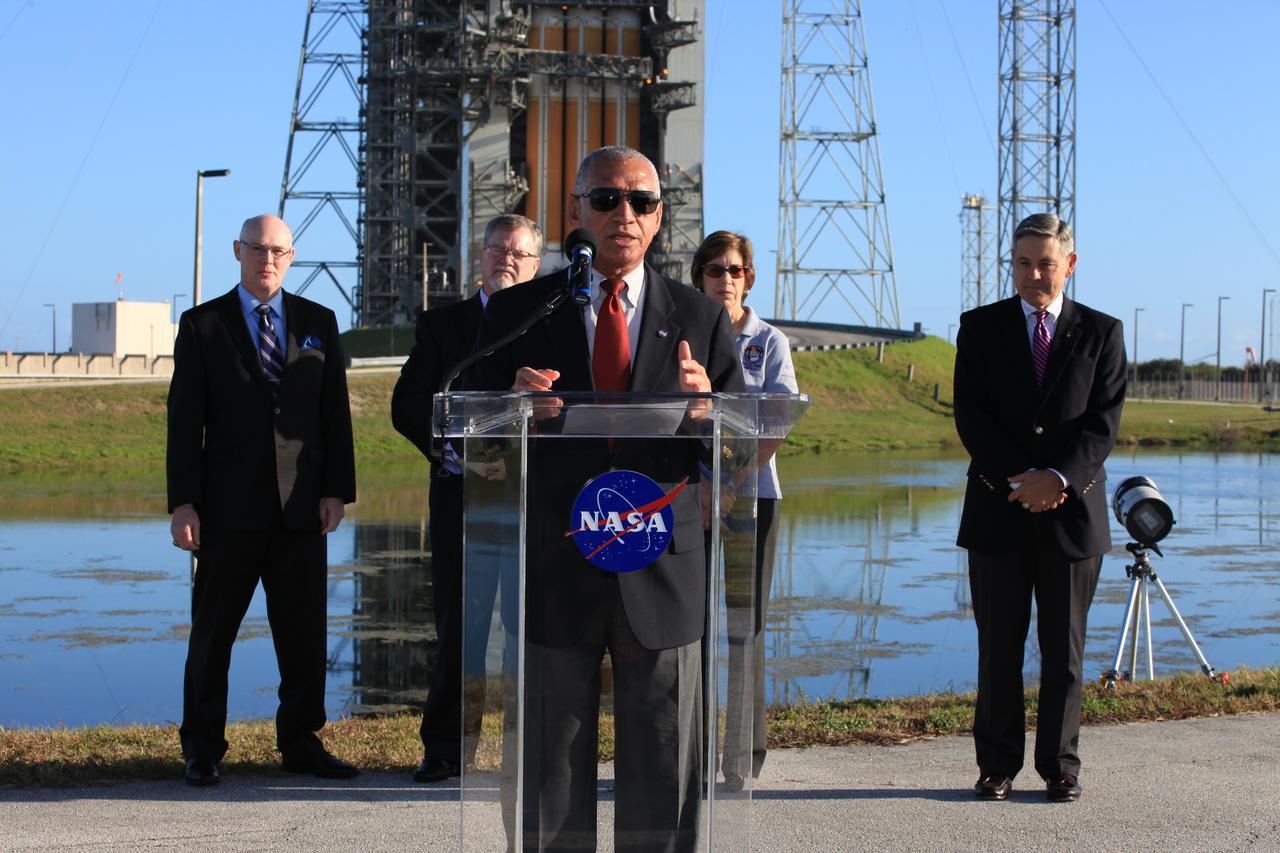
At Cape Canaveral Air Force Station's Launch Complex 37, NASA Administrator Charlie Bolden speaks to members of the news media as the Orion spacecraft and its United Launch Alliance Delta IV Heavy rocket were being prepared for launch. Behind Bolden, from the left, are United Launch Alliance CEO Tory Bruno, Lockheed Martin Orion Program Manager Mike Hawes, Johnson Space Center Director Ellen Ochoa and Kennedy Space Center Director Bob Cabana.
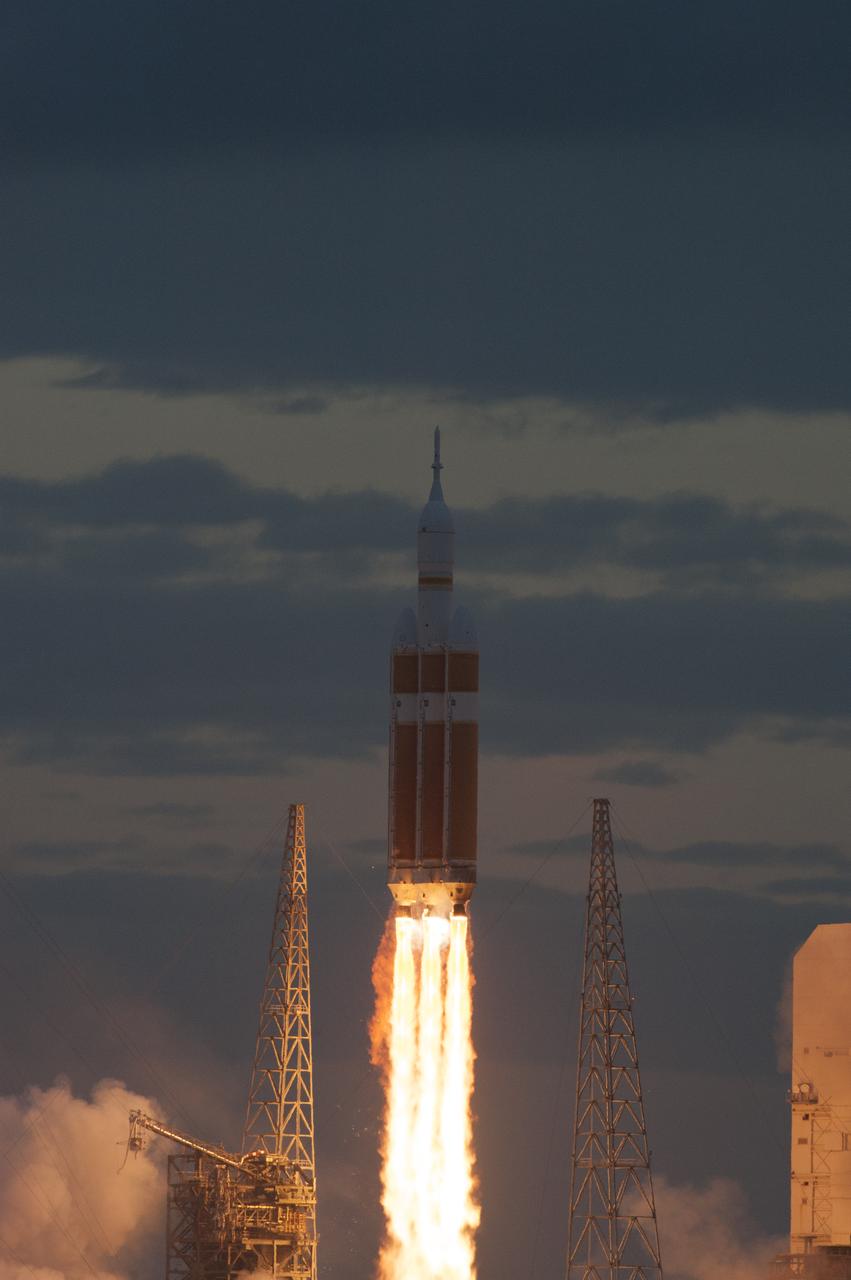
A Delta IV Heavy rocket lifts off from Space Launch Complex 37 at Cape Canaveral Air Force Station in Florida carrying NASA's Orion spacecraft on an unpiloted flight test to Earth orbit. Liftoff was at 7:05 a.m. EST. During the two-orbit, four-and-a-half hour mission, engineers will evaluate the systems critical to crew safety, the launch abort system, the heat shield and the parachute system.
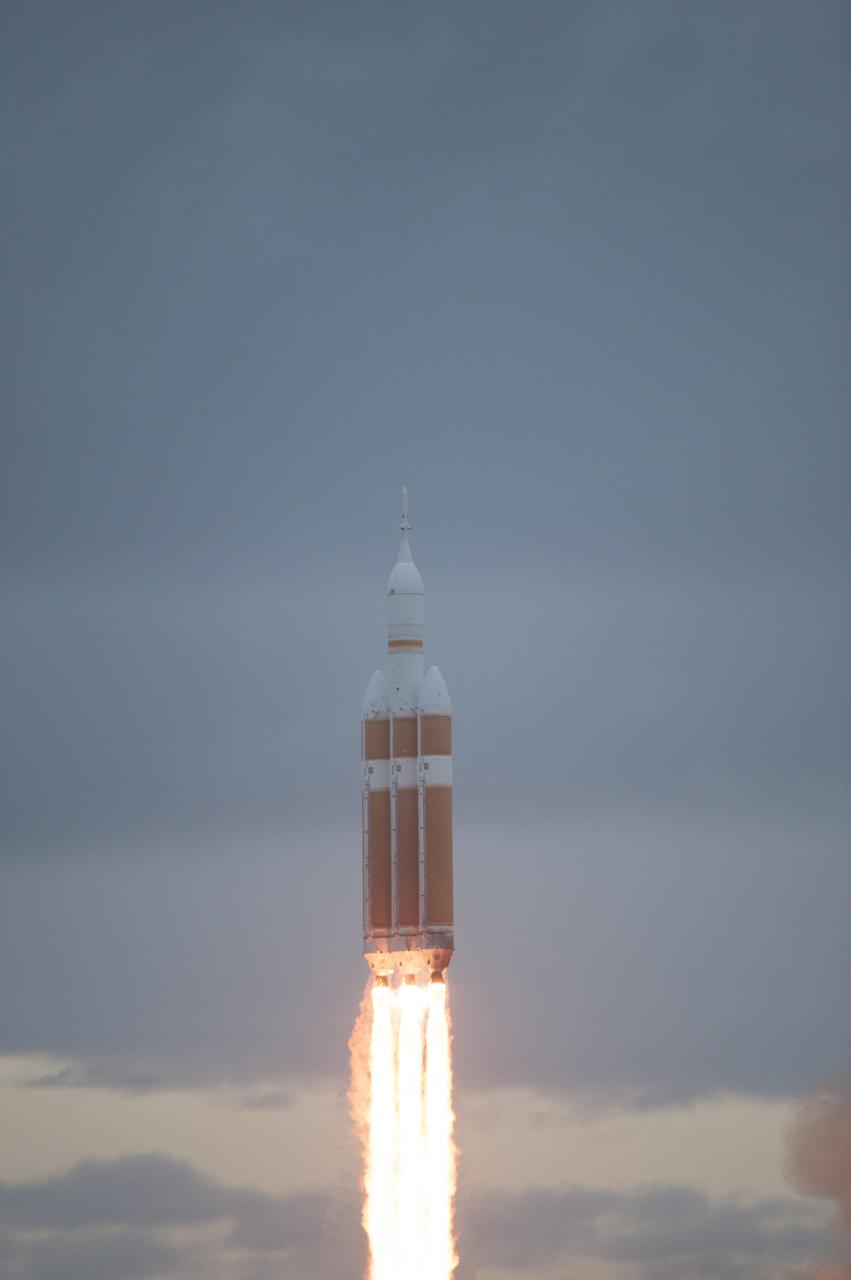
A Delta IV Heavy rocket lifts off from Space Launch Complex 37 at Cape Canaveral Air Force Station in Florida carrying NASA's Orion spacecraft on an unpiloted flight test to Earth orbit. Liftoff was at 7:05 a.m. EST. During the two-orbit, four-and-a-half hour mission, engineers will evaluate the systems critical to crew safety, the launch abort system, the heat shield and the parachute system.
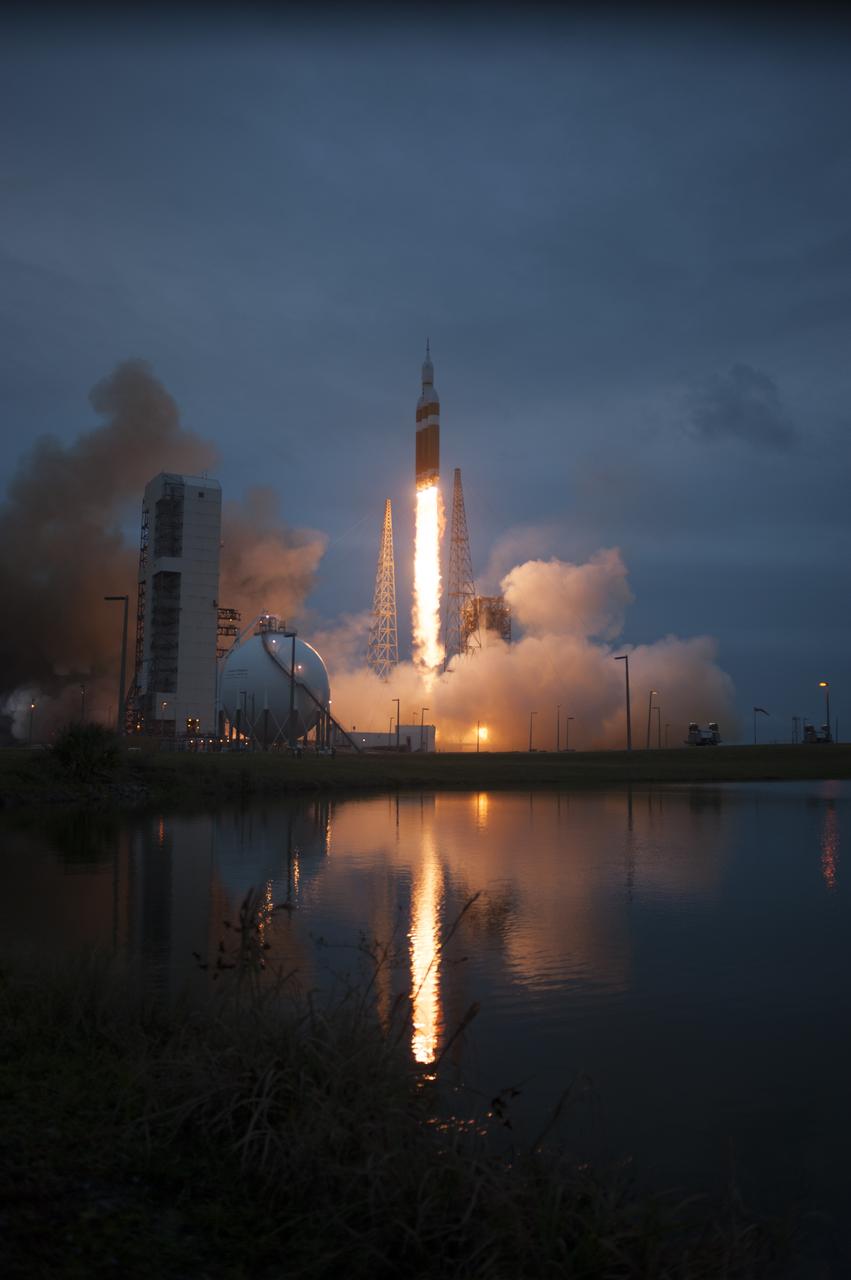
A Delta IV Heavy rocket lifts off from Space Launch Complex 37 at Cape Canaveral Air Force Station in Florida carrying NASA's Orion spacecraft on an unpiloted flight test to Earth orbit. Liftoff was at 7:05 a.m. EST. During the two-orbit, four-and-a-half hour mission, engineers will evaluate the systems critical to crew safety, the launch abort system, the heat shield and the parachute system.
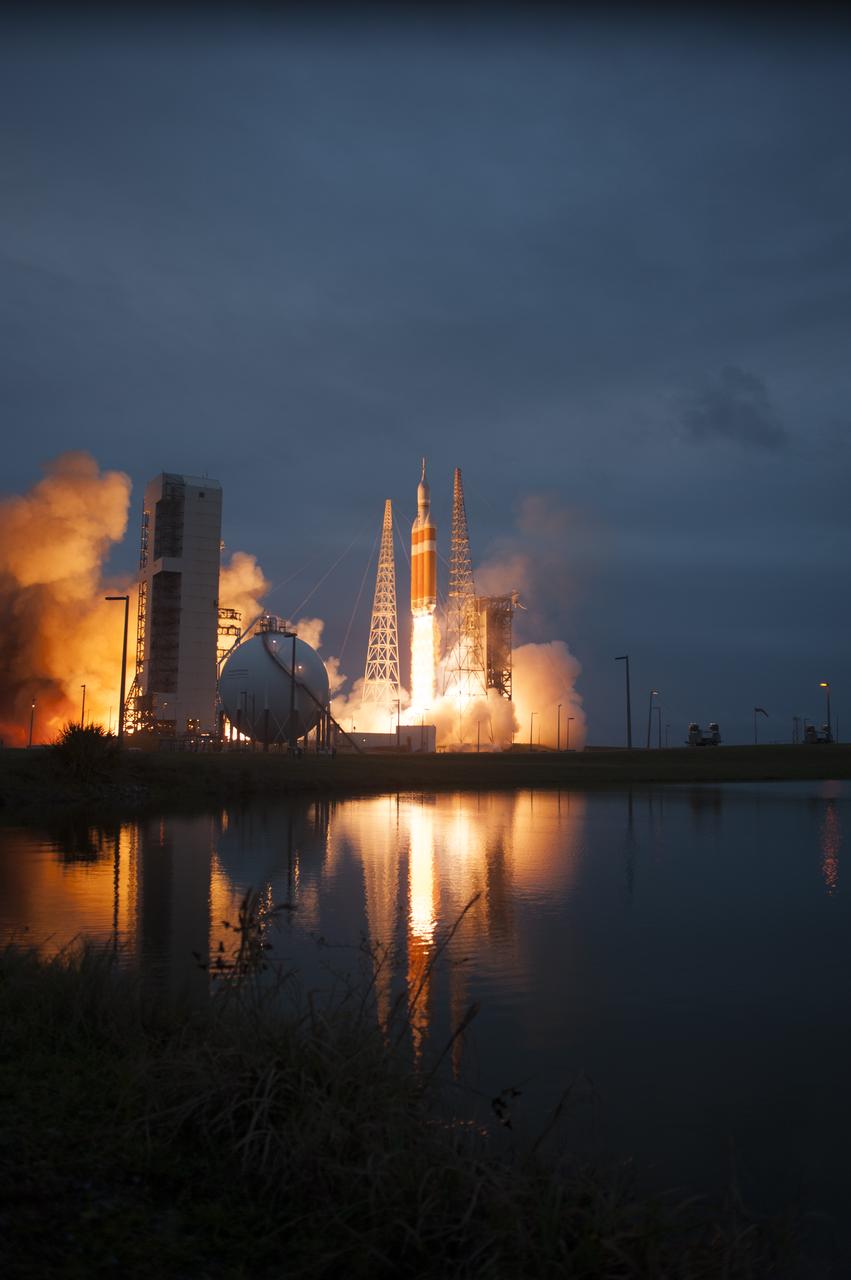
A Delta IV Heavy rocket lifts off from Space Launch Complex 37 at Cape Canaveral Air Force Station in Florida carrying NASA's Orion spacecraft on an unpiloted flight test to Earth orbit. Liftoff was at 7:05 a.m. EST. During the two-orbit, four-and-a-half hour mission, engineers will evaluate the systems critical to crew safety, the launch abort system, the heat shield and the parachute system.
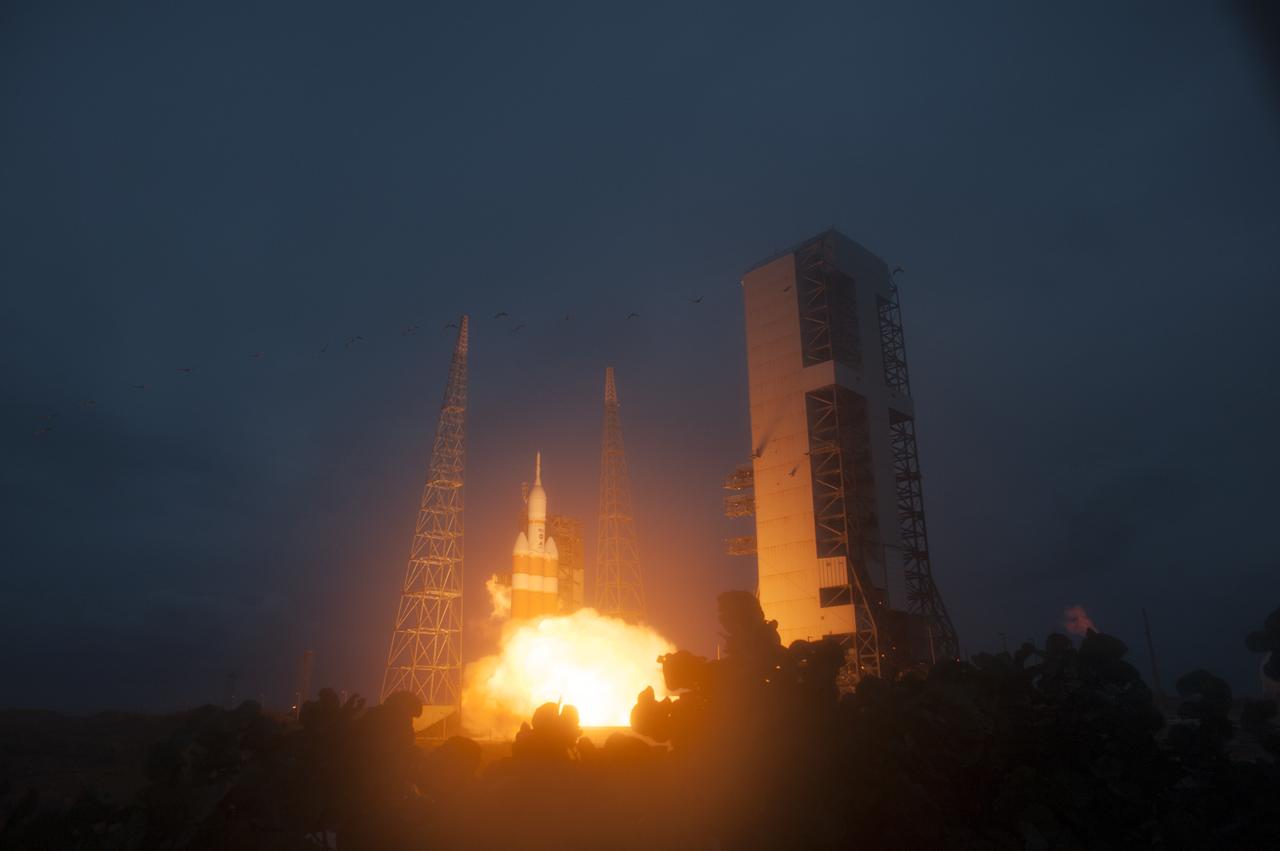
A Delta IV Heavy rocket lifts off from Space Launch Complex 37 at Cape Canaveral Air Force Station in Florida carrying NASA's Orion spacecraft on an unpiloted flight test to Earth orbit. Liftoff was at 7:05 a.m. EST. During the two-orbit, four-and-a-half hour mission, engineers will evaluate the systems critical to crew safety, the launch abort system, the heat shield and the parachute system.
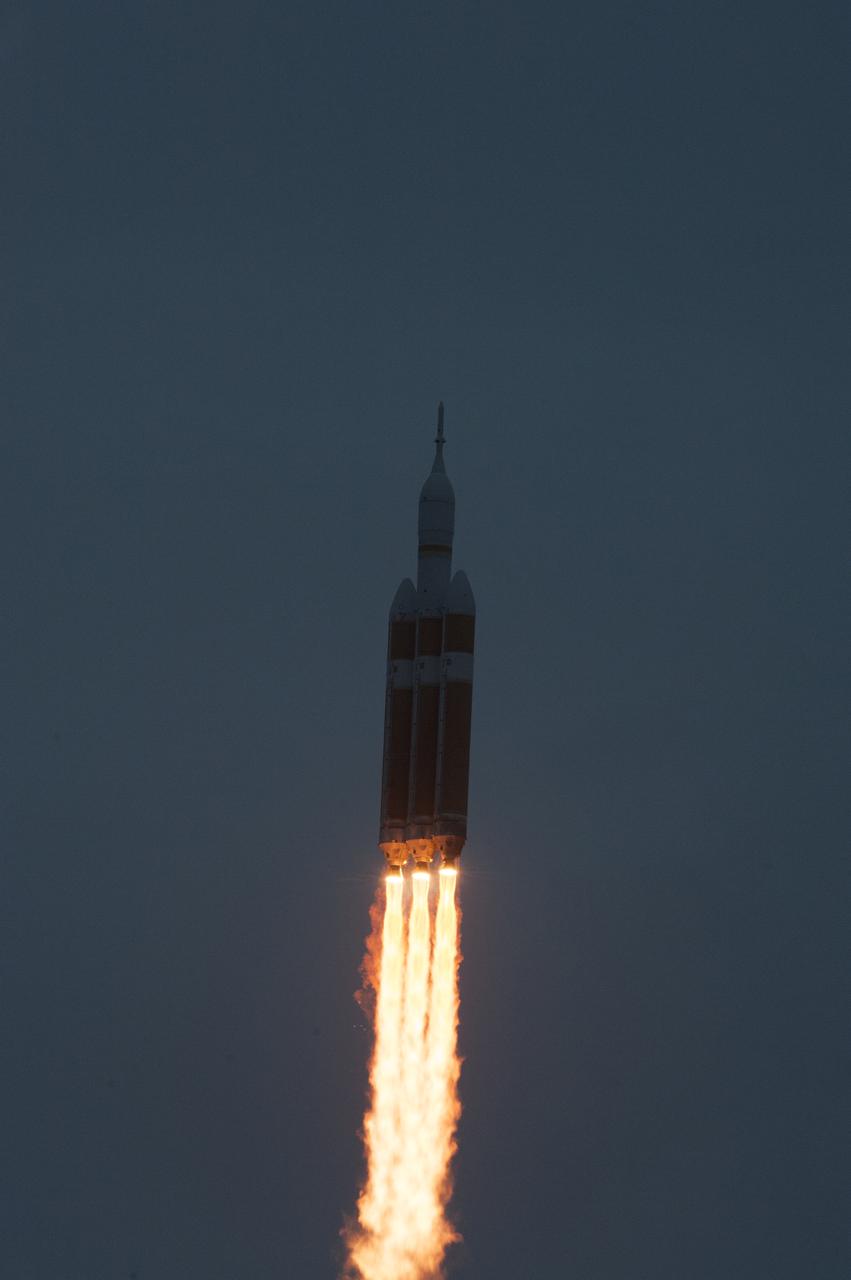
A Delta IV Heavy rocket lifts off from Space Launch Complex 37 at Cape Canaveral Air Force Station in Florida carrying NASA's Orion spacecraft on an unpiloted flight test to Earth orbit. Liftoff was at 7:05 a.m. EST. During the two-orbit, four-and-a-half hour mission, engineers will evaluate the systems critical to crew safety, the launch abort system, the heat shield and the parachute system.
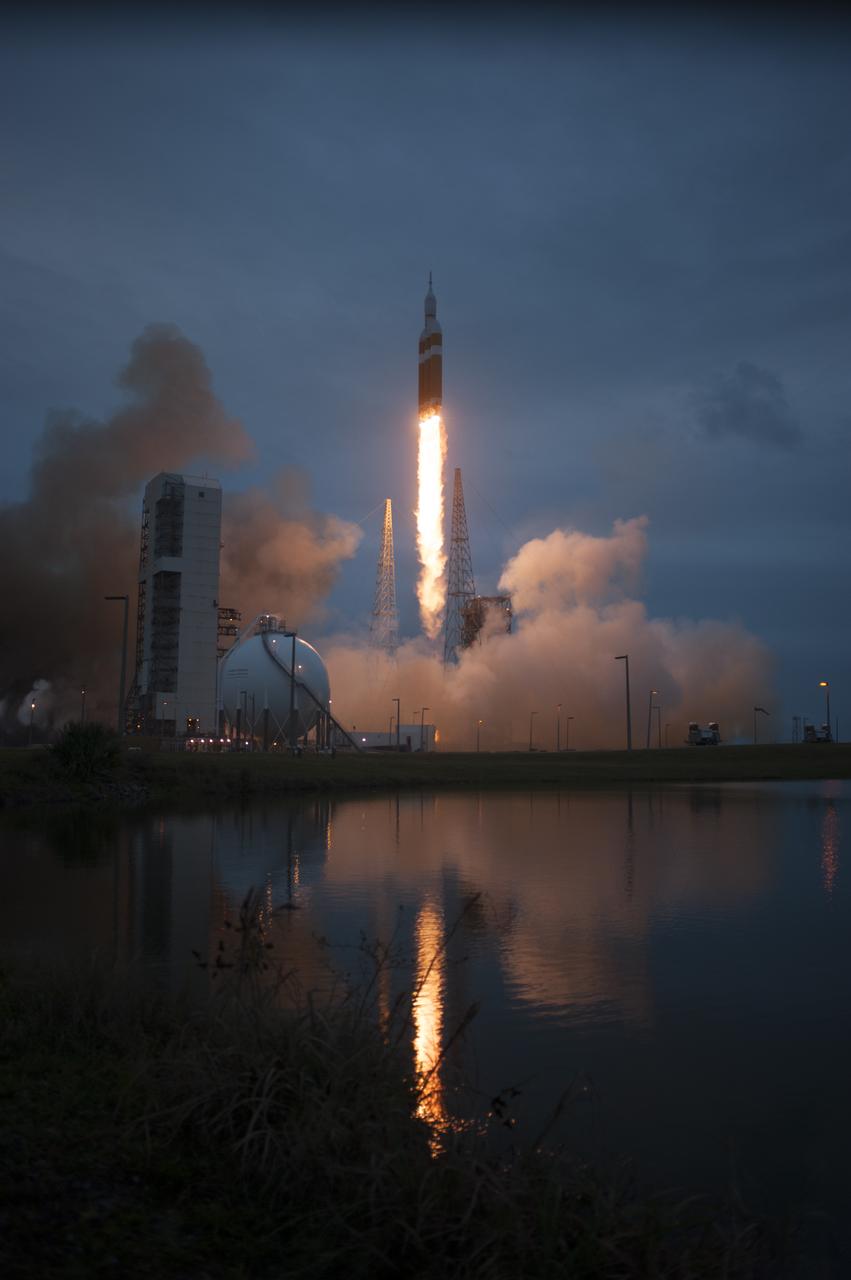
A Delta IV Heavy rocket lifts off from Space Launch Complex 37 at Cape Canaveral Air Force Station in Florida carrying NASA's Orion spacecraft on an unpiloted flight test to Earth orbit. Liftoff was at 7:05 a.m. EST. During the two-orbit, four-and-a-half hour mission, engineers will evaluate the systems critical to crew safety, the launch abort system, the heat shield and the parachute system.
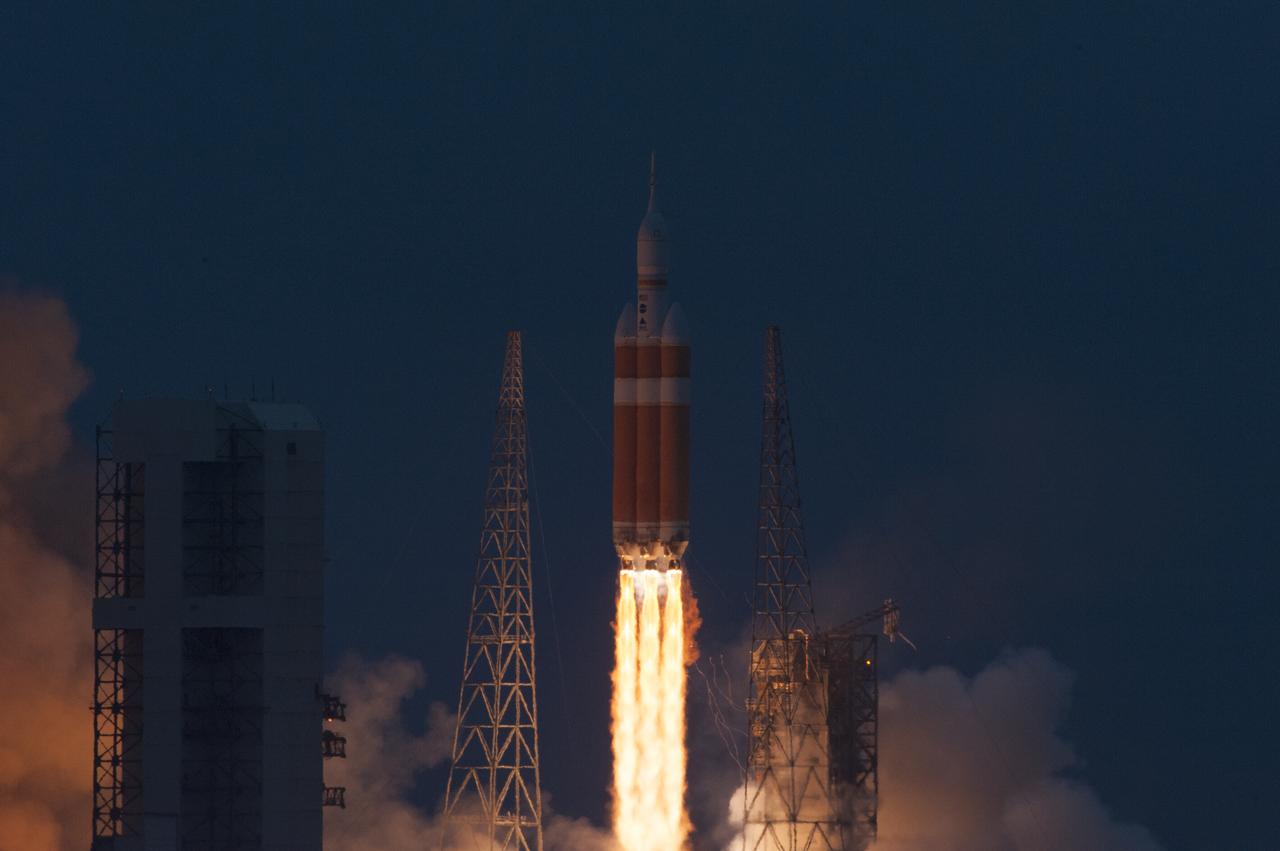
A Delta IV Heavy rocket lifts off from Space Launch Complex 37 at Cape Canaveral Air Force Station in Florida carrying NASA's Orion spacecraft on an unpiloted flight test to Earth orbit. Liftoff was at 7:05 a.m. EST. During the two-orbit, four-and-a-half hour mission, engineers will evaluate the systems critical to crew safety, the launch abort system, the heat shield and the parachute system.
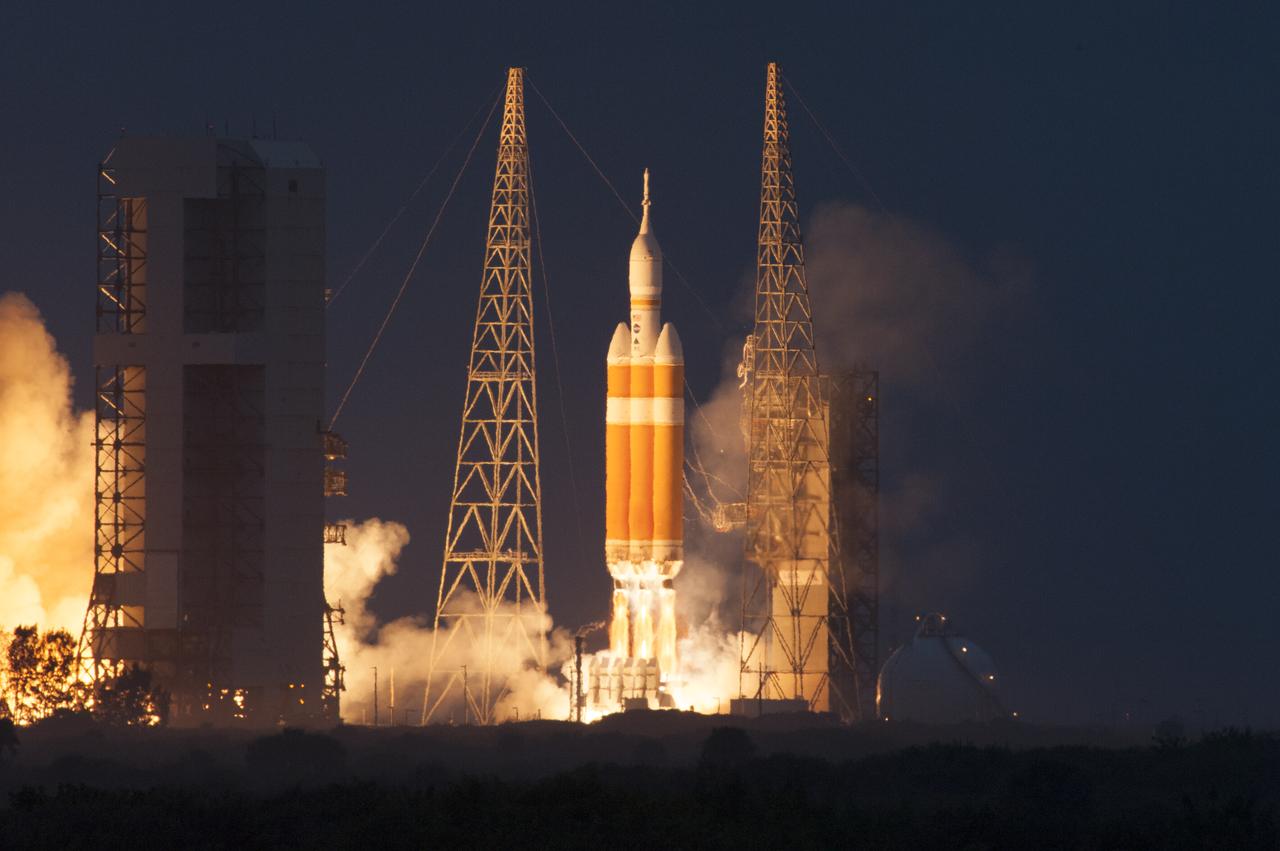
A Delta IV Heavy rocket lifts off from Space Launch Complex 37 at Cape Canaveral Air Force Station in Florida carrying NASA's Orion spacecraft on an unpiloted flight test to Earth orbit. Liftoff was at 7:05 a.m. EST. During the two-orbit, four-and-a-half hour mission, engineers will evaluate the systems critical to crew safety, the launch abort system, the heat shield and the parachute system.
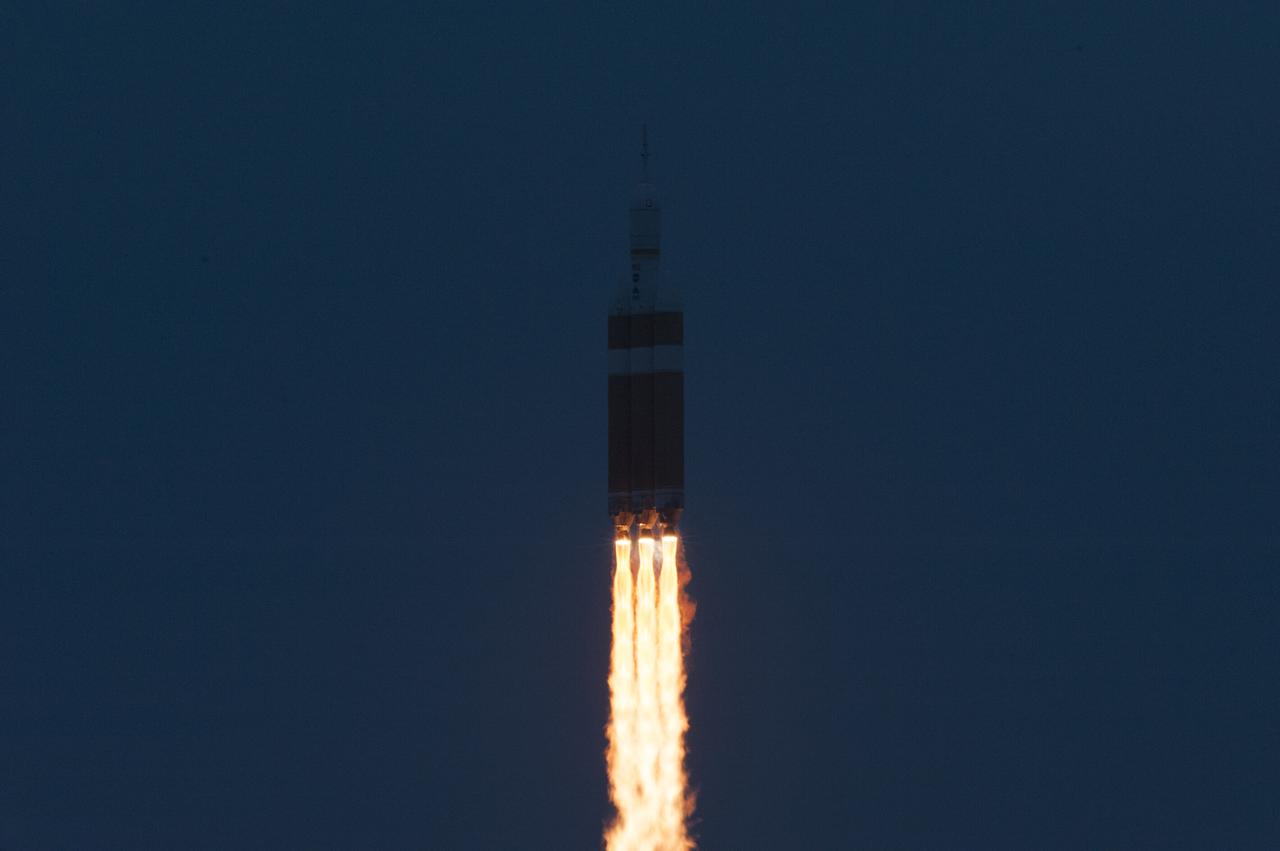
A Delta IV Heavy rocket soars after liftoff from Space Launch Complex 37 at Cape Canaveral Air Force Station in Florida carrying NASA's Orion spacecraft on an unpiloted flight test to Earth orbit. Liftoff was at 7:05 a.m. EST. During the two-orbit, four-and-a-half hour mission, engineers will evaluate the systems critical to crew safety, the launch abort system, the heat shield and the parachute system.
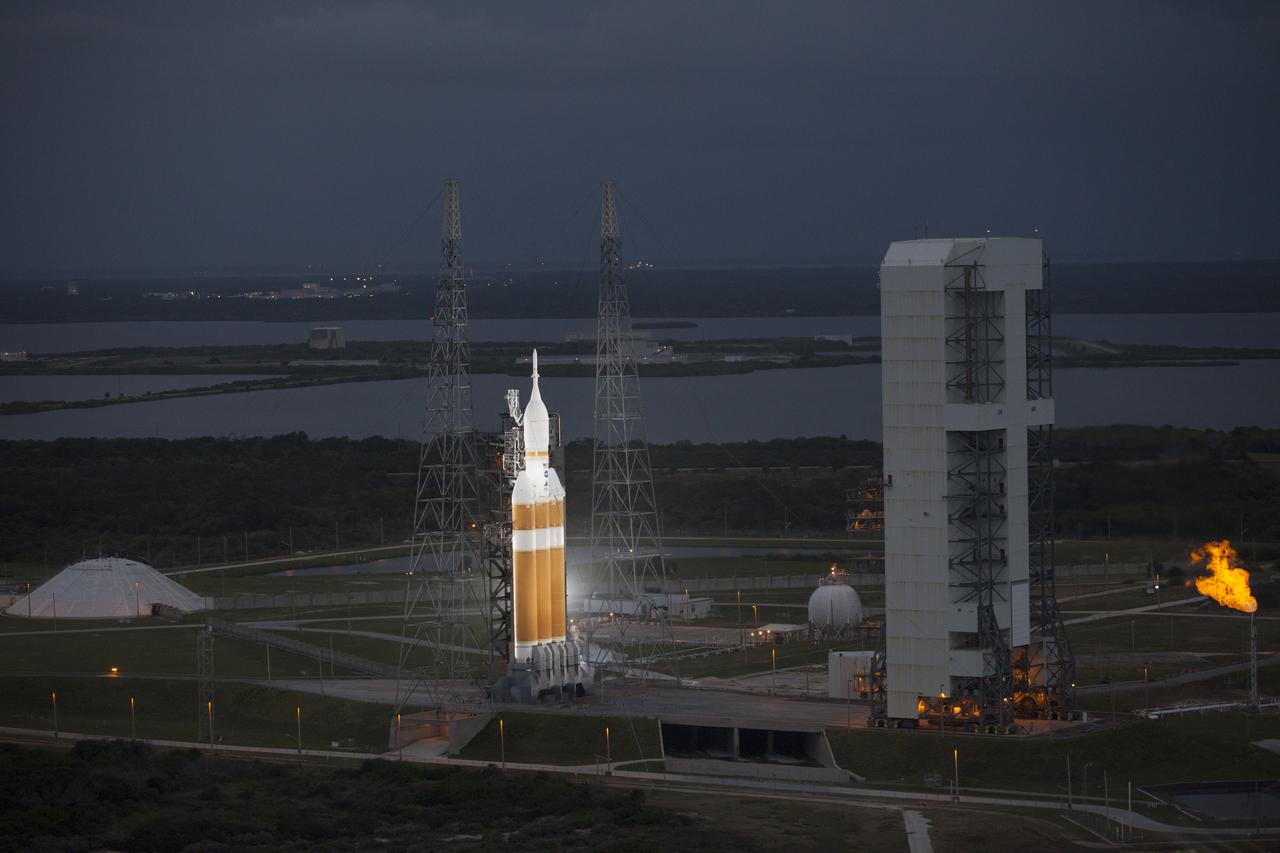
This helicopter view of Space Launch Complex 37 at Cape Canaveral Air Force Station in Florida shows the United Launch Alliance Delta IV Heavy rocket as it stands ready to boost NASA's Orion spacecraft on a 4.5-hour mission.
The launch gantry is rolled back to reveal NASA's Orion spacecraft mounted atop a United Launch Alliance Delta IV Heavy rocket at Cape Canaveral Air Force Station's Space Launch Complex 37. Orion is NASA’s new spacecraft built to carry humans, designed to allow us to journey to destinations never before visited by humans, including an asteroid and Mars.
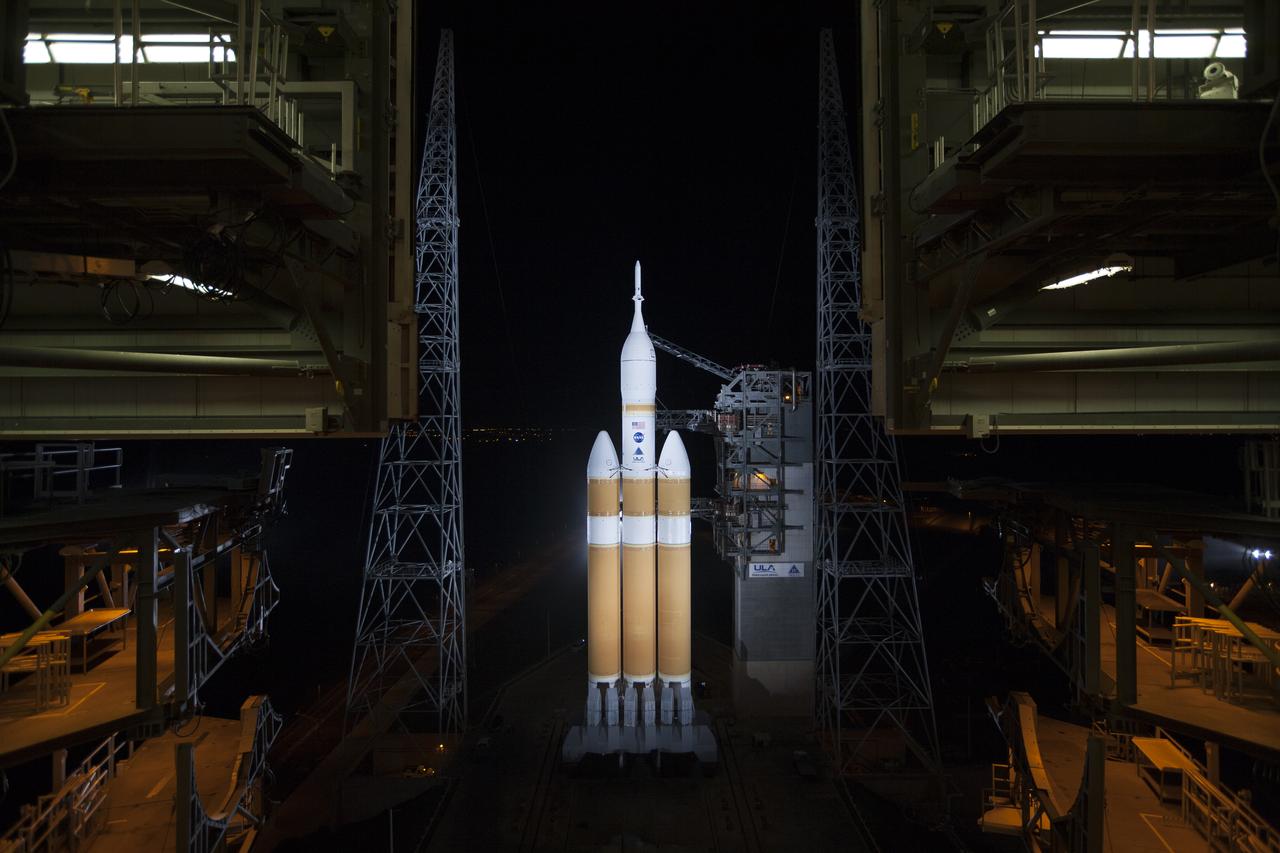
The launch gantry is rolled back to reveal NASA's Orion spacecraft mounted atop a United Launch Alliance Delta IV Heavy rocket at Cape Canaveral Air Force Station's Space Launch Complex 37. Orion is NASA’s new spacecraft built to carry humans, designed to allow us to journey to destinations never before visited by humans, including an asteroid and Mars.
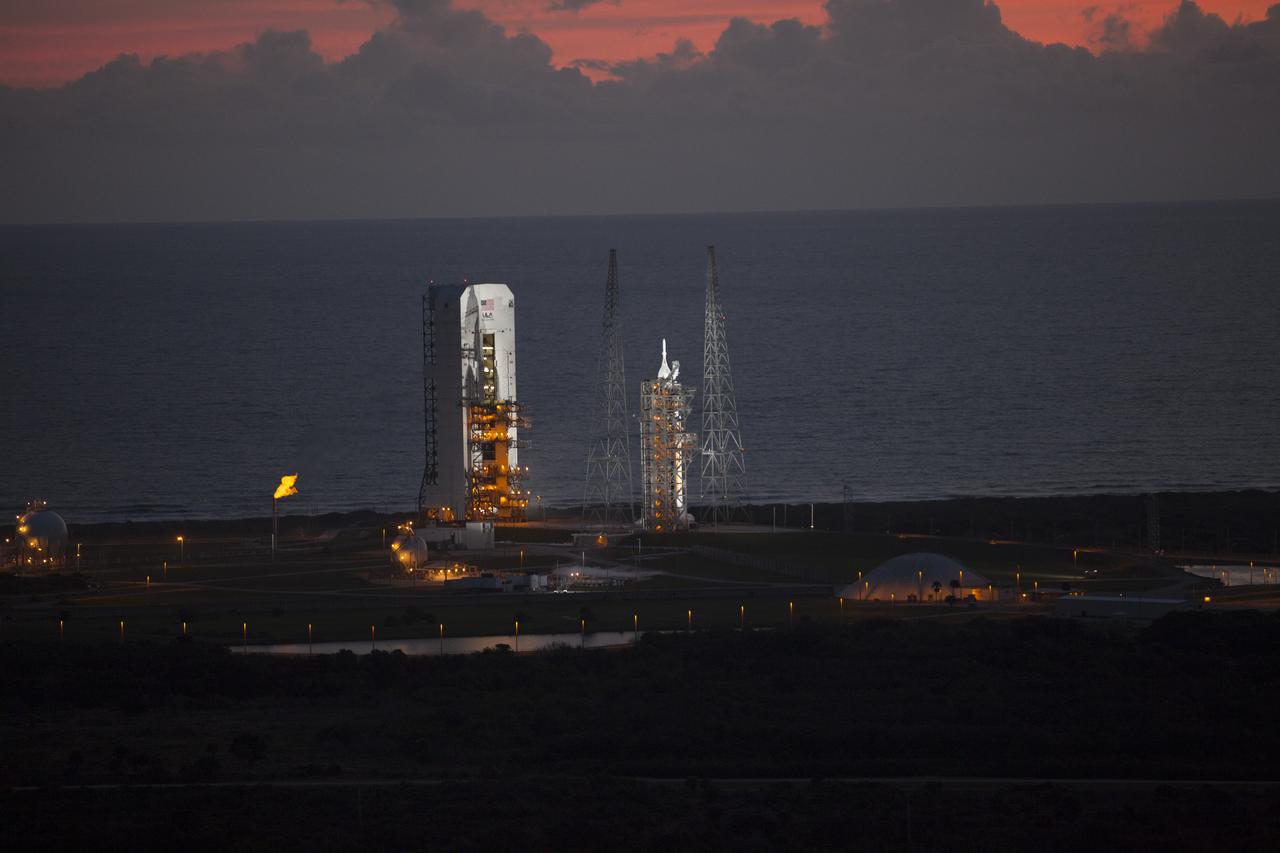
This helicopter view of Space Launch Complex 37 at Cape Canaveral Air Force Station in Florida shows the United Launch Alliance Delta IV Heavy rocket as it stands ready to boost NASA's Orion spacecraft on a 4.5-hour mission. The liftoff was postponed because of an issue related to fill and drain valves on the Delta IV Heavy rocket that teams could not troubleshoot by the time the launch window expired.
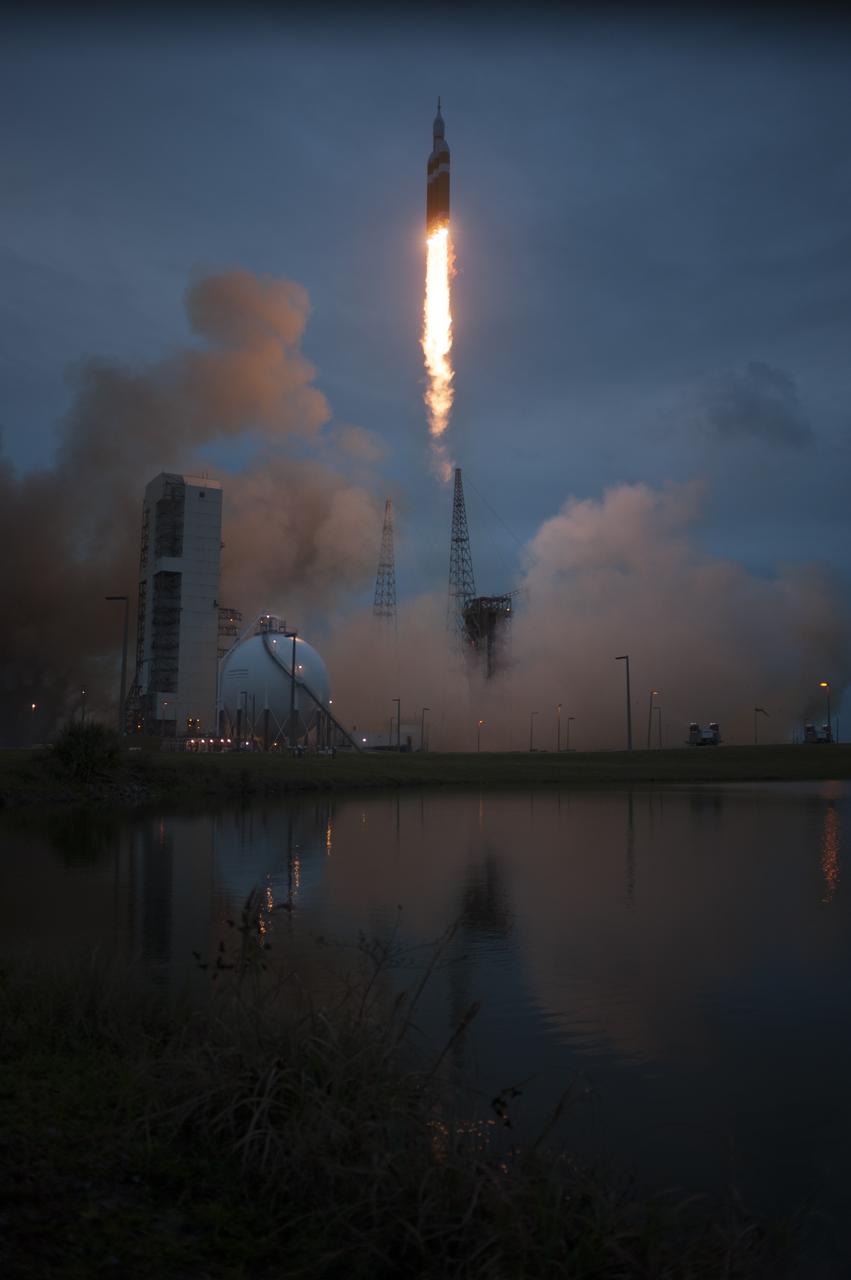
A Delta IV Heavy rocket lifts off from Space Launch Complex 37 at Cape Canaveral Air Force Station in Florida carrying NASA's Orion spacecraft on an unpiloted flight test to Earth orbit. Liftoff was at 7:05 a.m. EST. During the two-orbit, four-and-a-half hour mission, engineers will evaluate the systems critical to crew safety, the launch abort system, the heat shield and the parachute system.
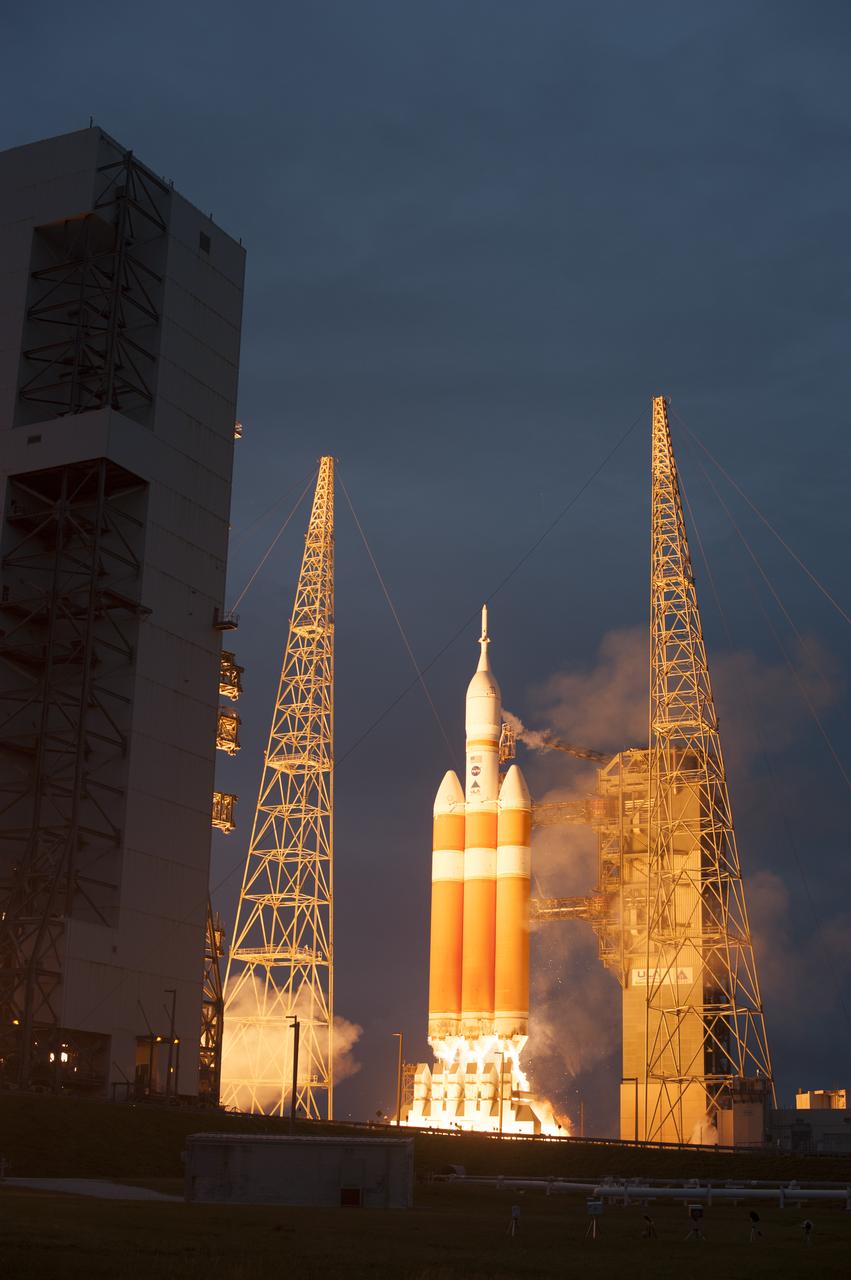
A Delta IV Heavy rocket lifts off from Space Launch Complex 37 at Cape Canaveral Air Force Station in Florida carrying NASA's Orion spacecraft on an unpiloted flight test to Earth orbit. Liftoff was at 7:05 a.m. EST. During the two-orbit, four-and-a-half hour mission, engineers will evaluate the systems critical to crew safety, the launch abort system, the heat shield and the parachute system.
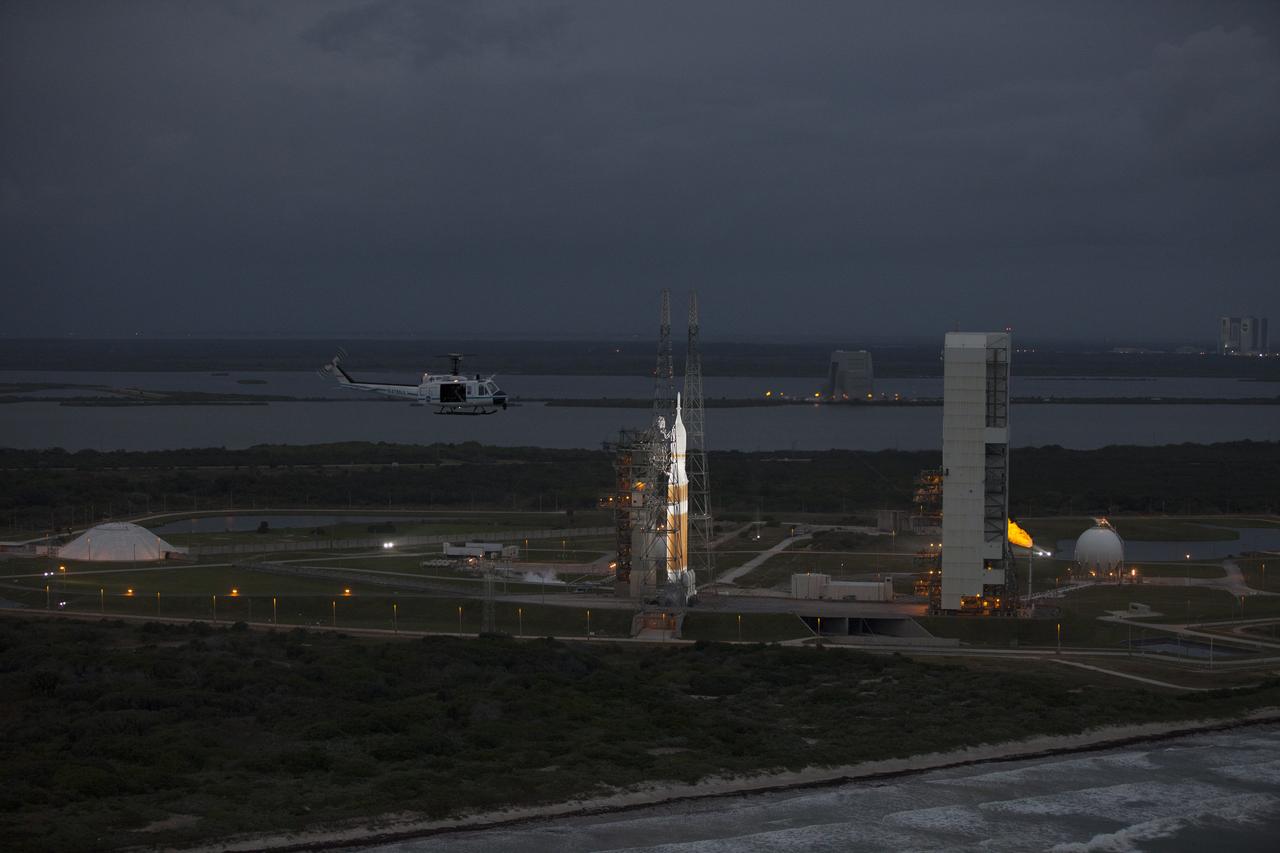
This helicopter view of Space Launch Complex 37 at Cape Canaveral Air Force Station in Florida shows the United Launch Alliance Delta IV Heavy rocket as it stands ready to boost NASA's Orion spacecraft on a 4.5-hour mission.
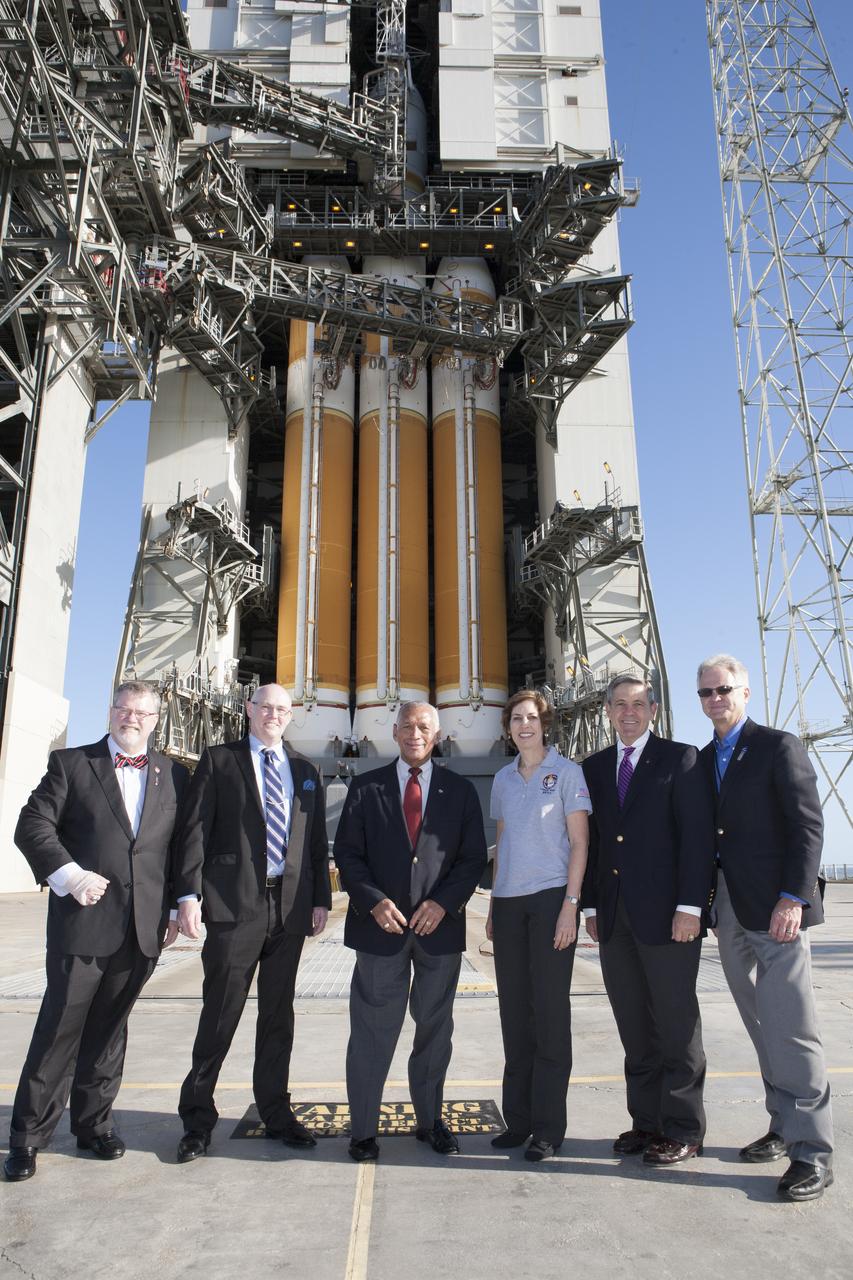
At Cape Canaveral Air Force Station's Launch Complex 37, NASA and industry leaders pose in front of the United Launch Alliance Delta IV heavy rocket poised to launch the Orion spacecraft on its first flight test.

United Launch Alliance, or ULA, workers monitor the progress as the ULA Delta IV Heavy rocket for Exploration Flight Test-1 is lifted to the vertical position in the mobile service tower on the pad at Space Launch Complex 37 at Cape Canaveral Air Force Station in Florida. The Delta IV Heavy is being readied to launch Orion on its first flight test. During its first flight test, Orion will travel farther into space than any human spacecraft has gone in more than 40 years. The data gathered during the flight will influence design decisions, validate existing computer models and innovative new approaches to space systems development, as well as reduce overall mission risks and costs for later Orion flights. Liftoff of Orion on the first flight test is planned for December 2014.
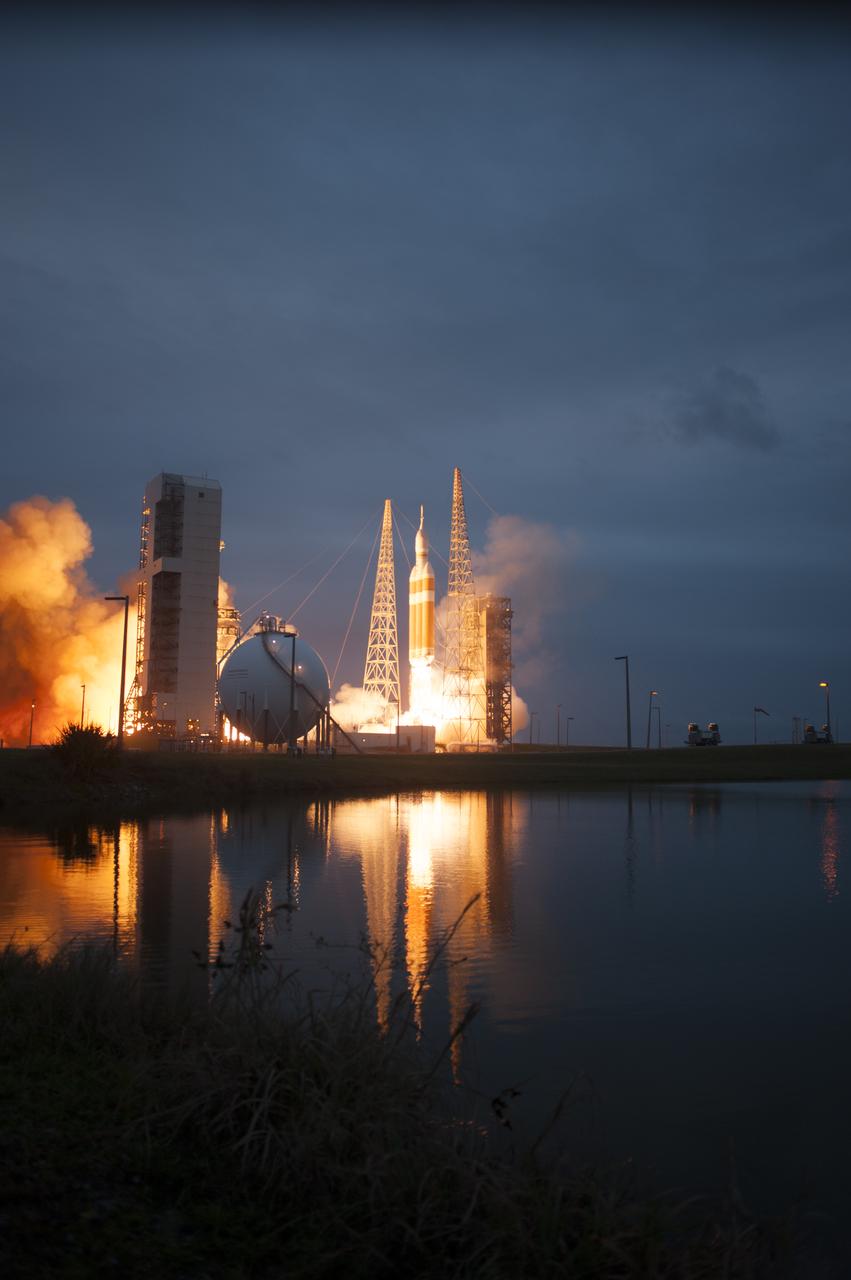
A Delta IV Heavy rocket lifts off from Space Launch Complex 37 at Cape Canaveral Air Force Station in Florida carrying NASA's Orion spacecraft on an unpiloted flight test to Earth orbit. Liftoff was at 7:05 a.m. EST. During the two-orbit, four-and-a-half hour mission, engineers will evaluate the systems critical to crew safety, the launch abort system, the heat shield and the parachute system.
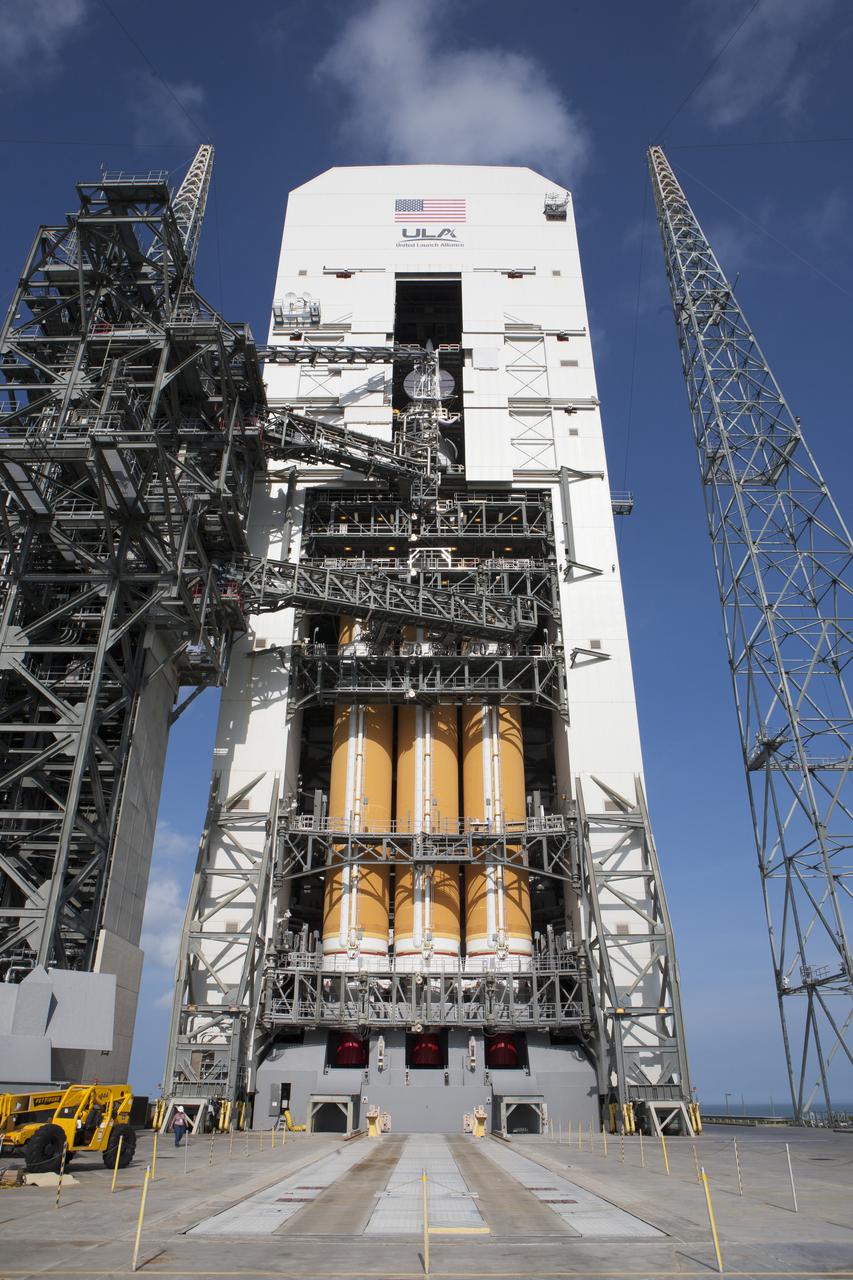
With access doors at Space Launch Complex 37 opened, the Orion and Delta IV Heavy stack is visible in its entirety inside the Mobile Service Tower where the vehicle is undergoing launch preparations. Orion will make its first flight test on Dec. 4 with a morning launch atop the United Launch Alliance Delta IV Heavy. The spacecraft will orbit the Earth twice, including one loop that will reach 3,600 miles above Earth. No one will be aboard Orion for this flight test, but the spacecraft is being designed and built to carry astronauts to deep space destinations such as an asteroid.
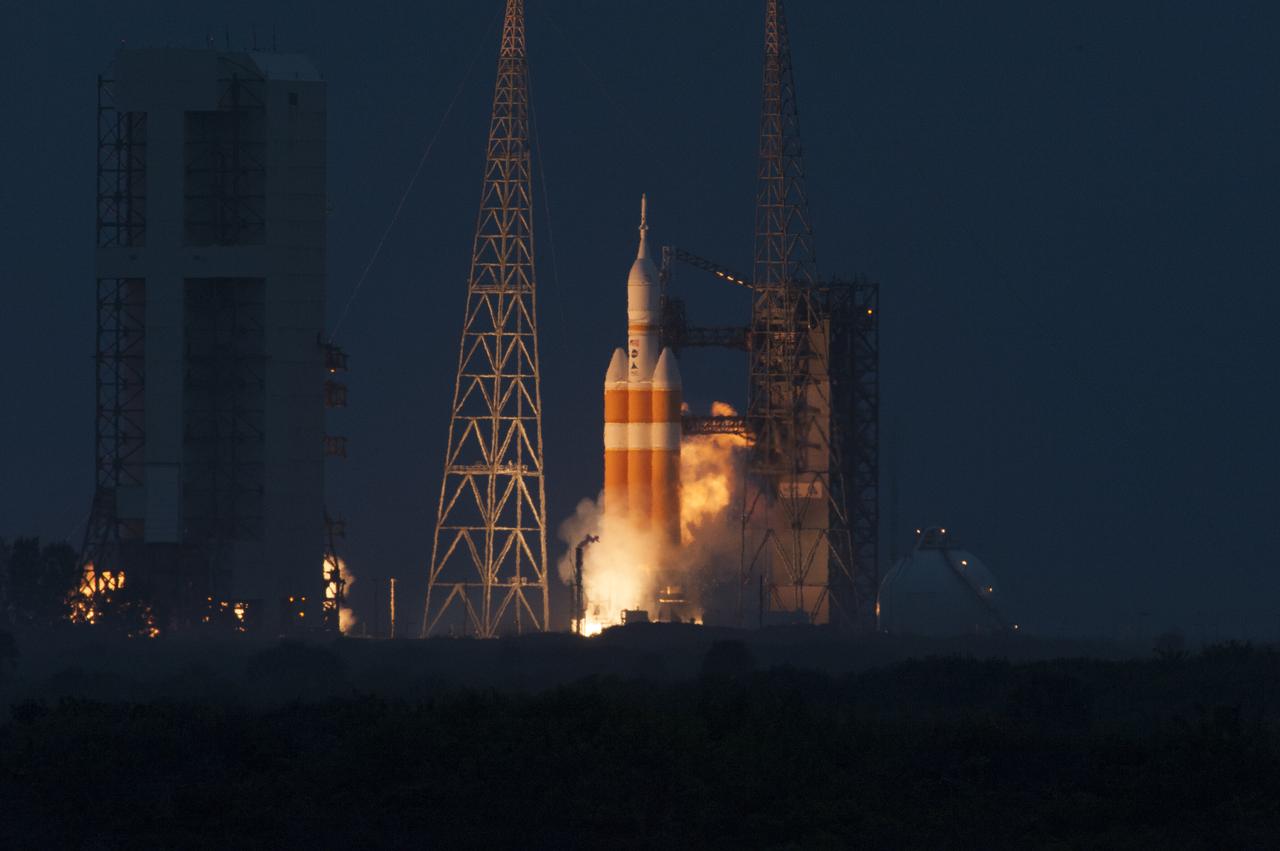
A Delta IV Heavy rocket roars to life at Space Launch Complex 37 at Cape Canaveral Air Force Station in Florida. The launch vehicle is carrying NASA's Orion spacecraft on an unpiloted flight test to Earth orbit. Liftoff was at 7:05 a.m. EST. The flight will send Orion 3,600 miles in altitude beyond the Earth's surface on a four-and-a-half hour mission.
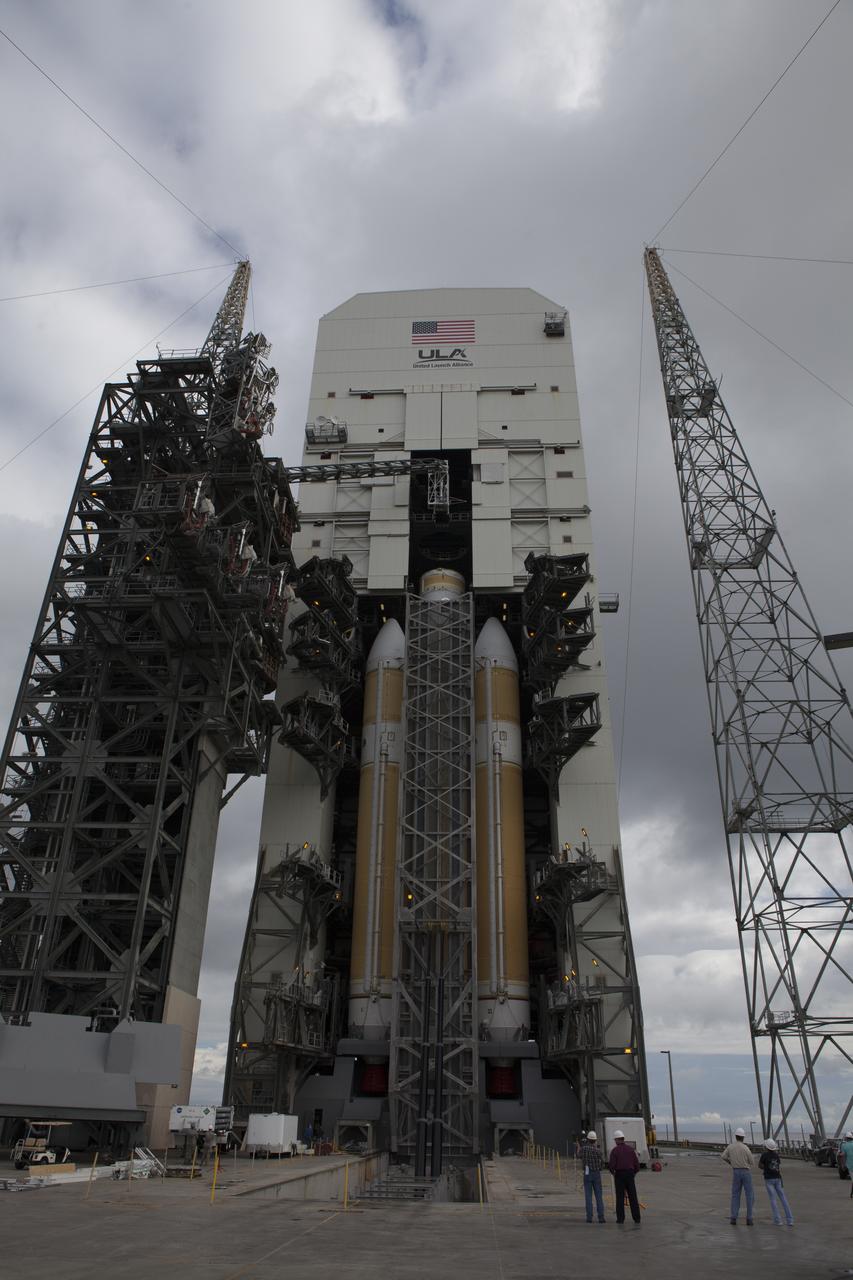
The United Launch Alliance Delta IV Heavy rocket for Exploration Flight Test-1 is lifted to the vertical position in the mobile service tower on the pad at Space Launch Complex 37 at Cape Canaveral Air Force Station in Florida. The Delta IV Heavy is being readied to launch Orion on its first flight test. During its first flight test, Orion will travel farther into space than any human spacecraft has gone in more than 40 years. The data gathered during the flight will influence design decisions, validate existing computer models and innovative new approaches to space systems development, as well as reduce overall mission risks and costs for later Orion flights. Liftoff of Orion on the first flight test is planned for December 2014.
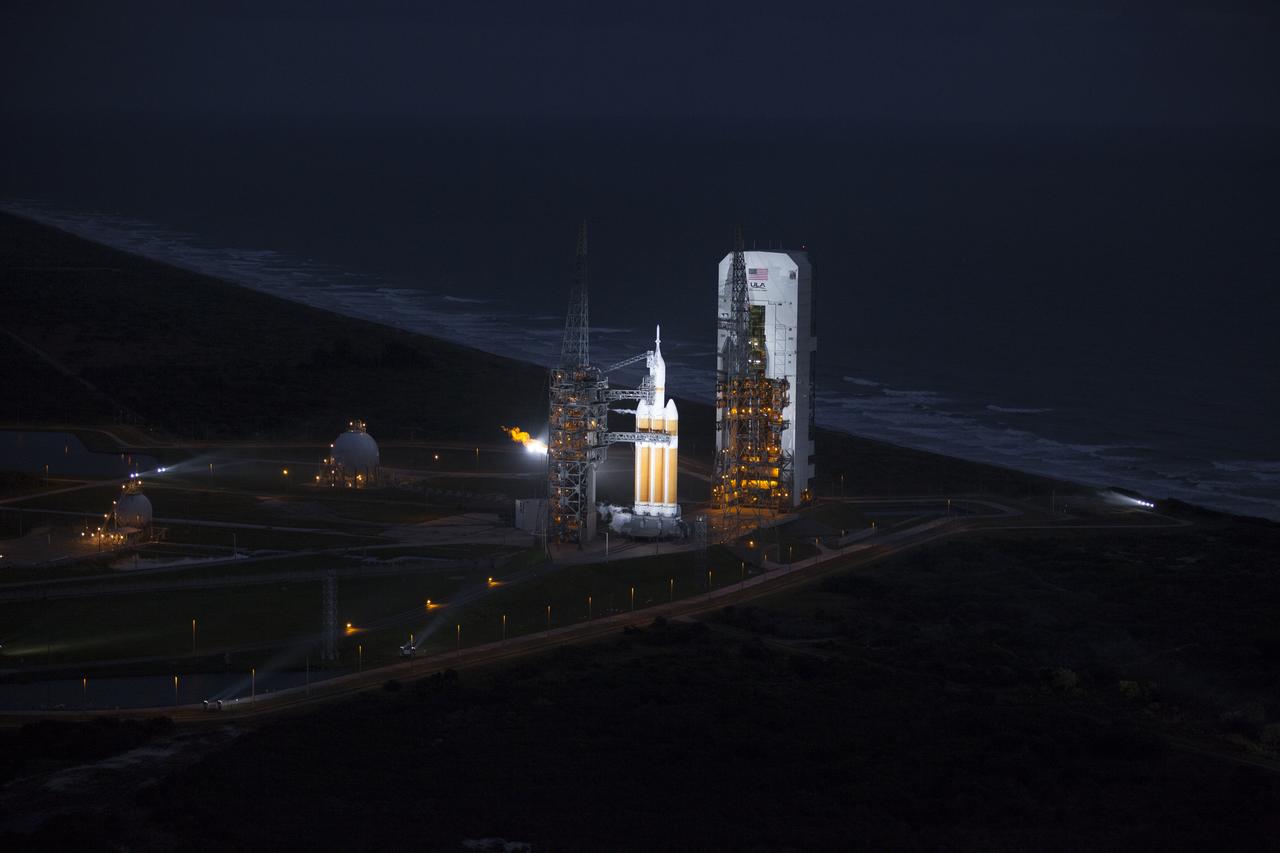
This helicopter view of Space Launch Complex 37 at Cape Canaveral Air Force Station in Florida shows the United Launch Alliance Delta IV Heavy rocket as it stands ready to boost NASA's Orion spacecraft on a 4.5-hour mission.
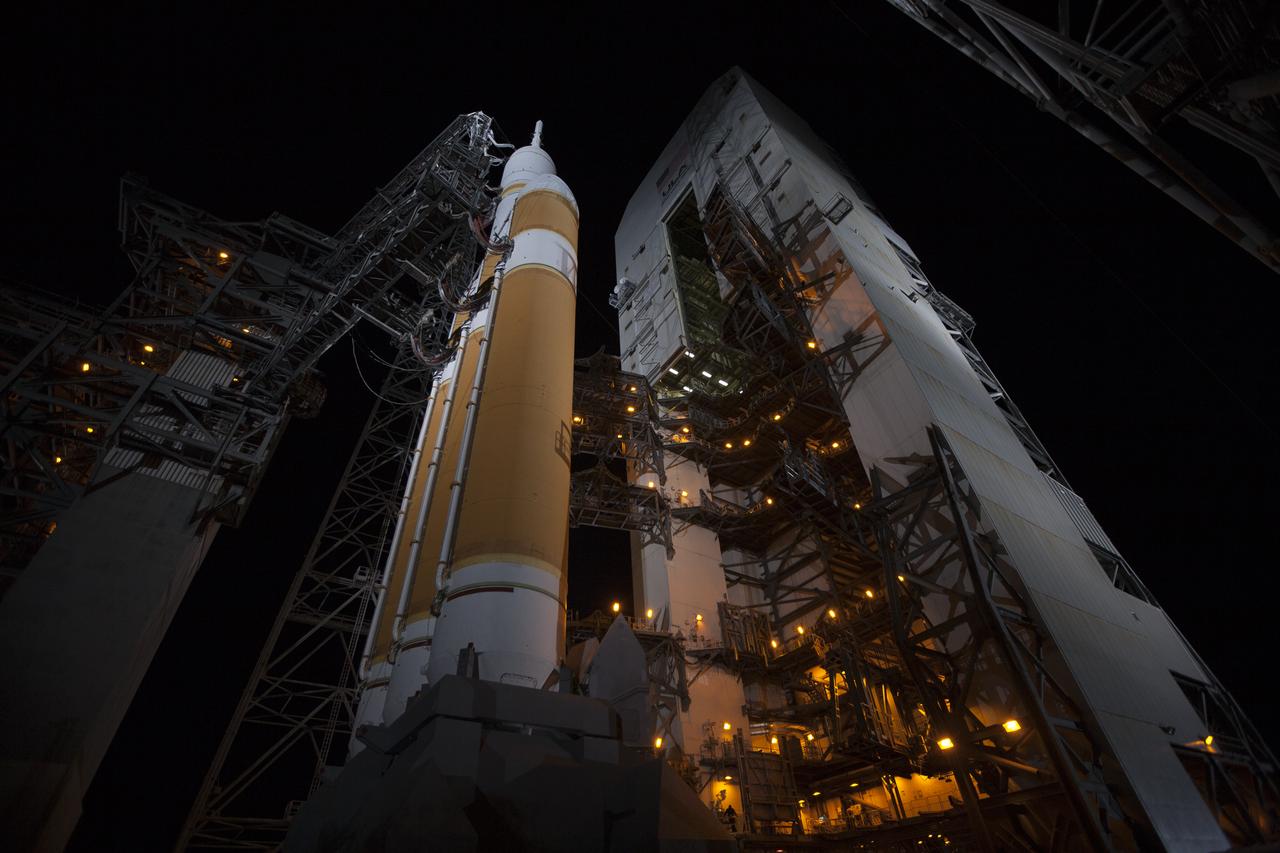
The launch gantry is rolled back to reveal NASA's Orion spacecraft mounted atop a United Launch Alliance Delta IV Heavy rocket at Cape Canaveral Air Force Station's Space Launch Complex 37. Orion is NASA’s new spacecraft built to carry humans, designed to allow us to journey to destinations never before visited by humans, including an asteroid and Mars.
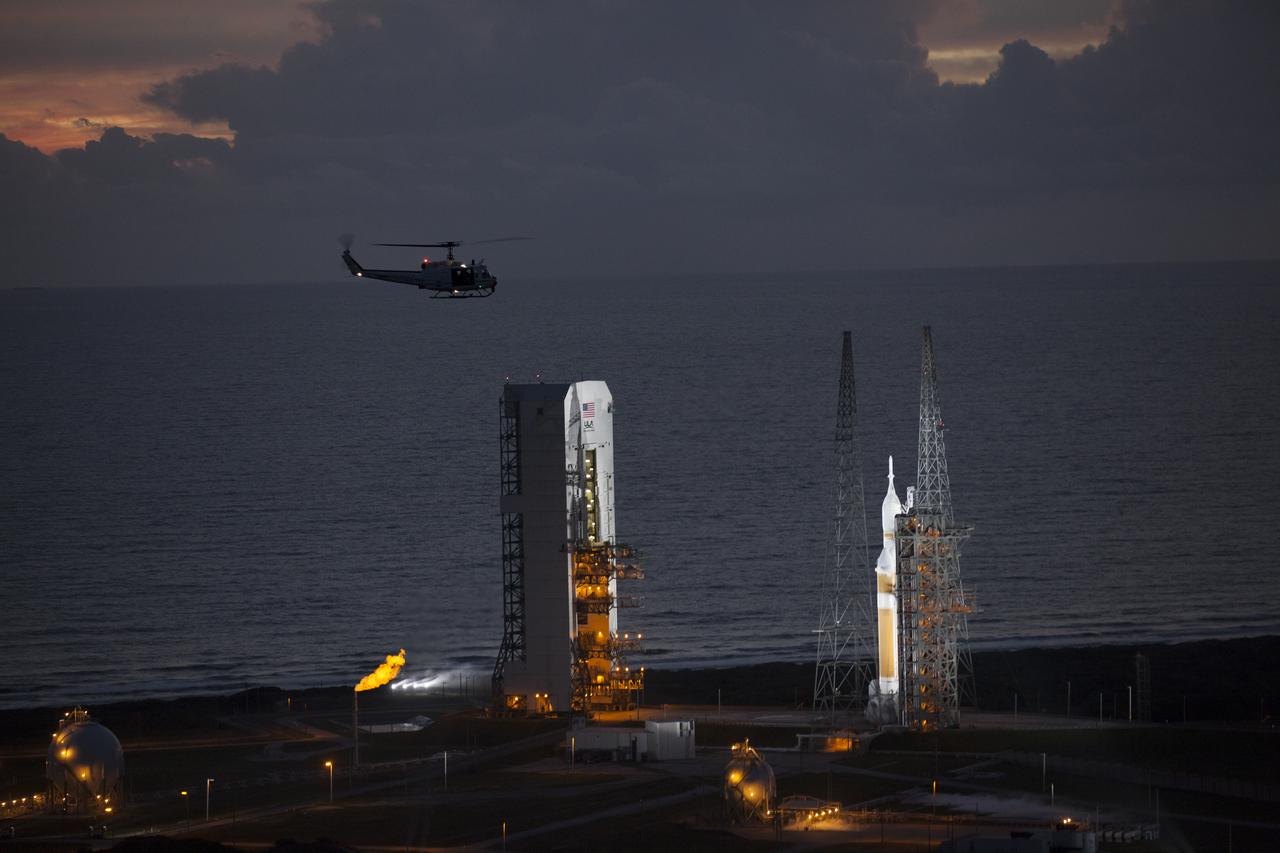
This helicopter view of Space Launch Complex 37 at Cape Canaveral Air Force Station in Florida shows the United Launch Alliance Delta IV Heavy rocket as it stands ready to boost NASA's Orion spacecraft on a 4.5-hour mission. The liftoff was postponed because of an issue related to fill and drain valves on the Delta IV Heavy rocket that teams could not troubleshoot by the time the launch window expired.
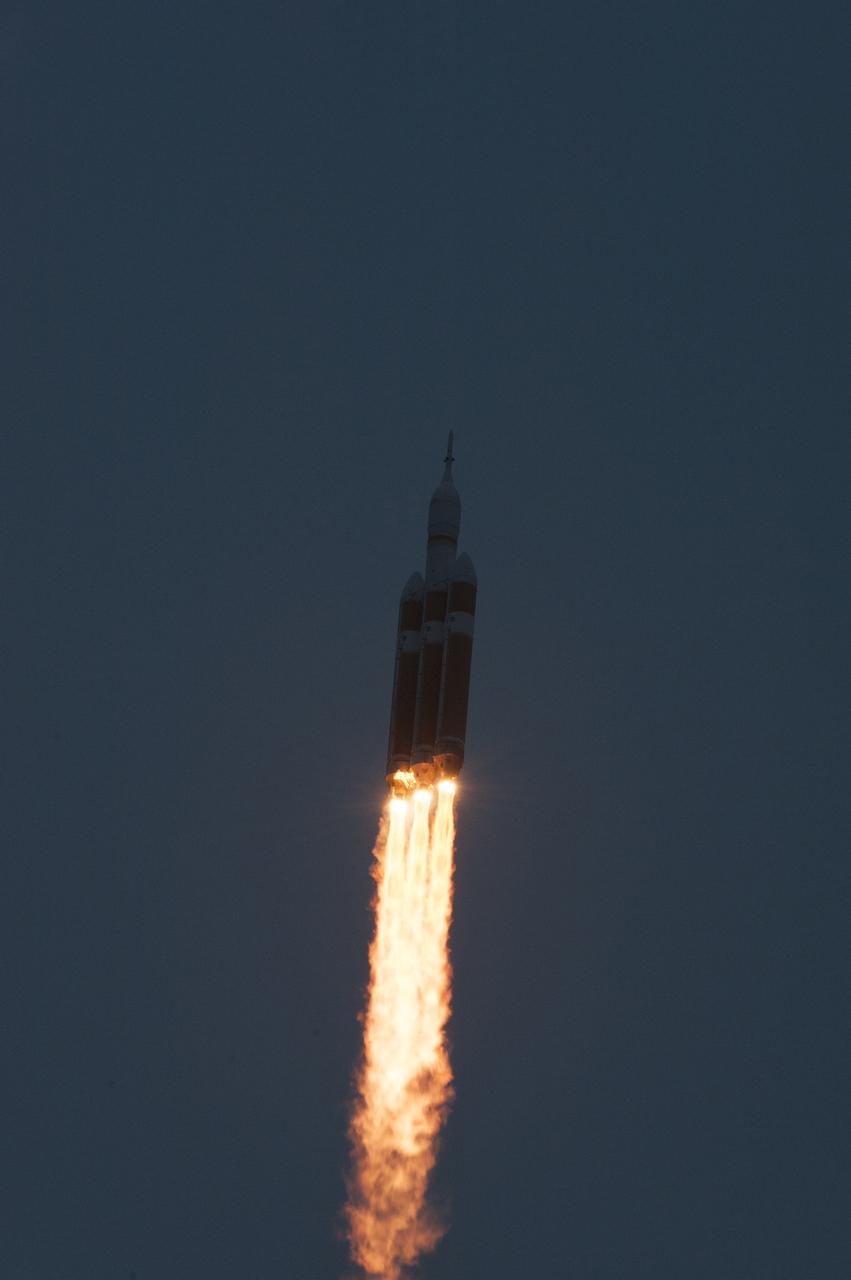
A Delta IV Heavy rocket lifts off from Space Launch Complex 37 at Cape Canaveral Air Force Station in Florida carrying NASA's Orion spacecraft on an unpiloted flight test to Earth orbit. Liftoff was at 7:05 a.m. EST. During the two-orbit, four-and-a-half hour mission, engineers will evaluate the systems critical to crew safety, the launch abort system, the heat shield and the parachute system.
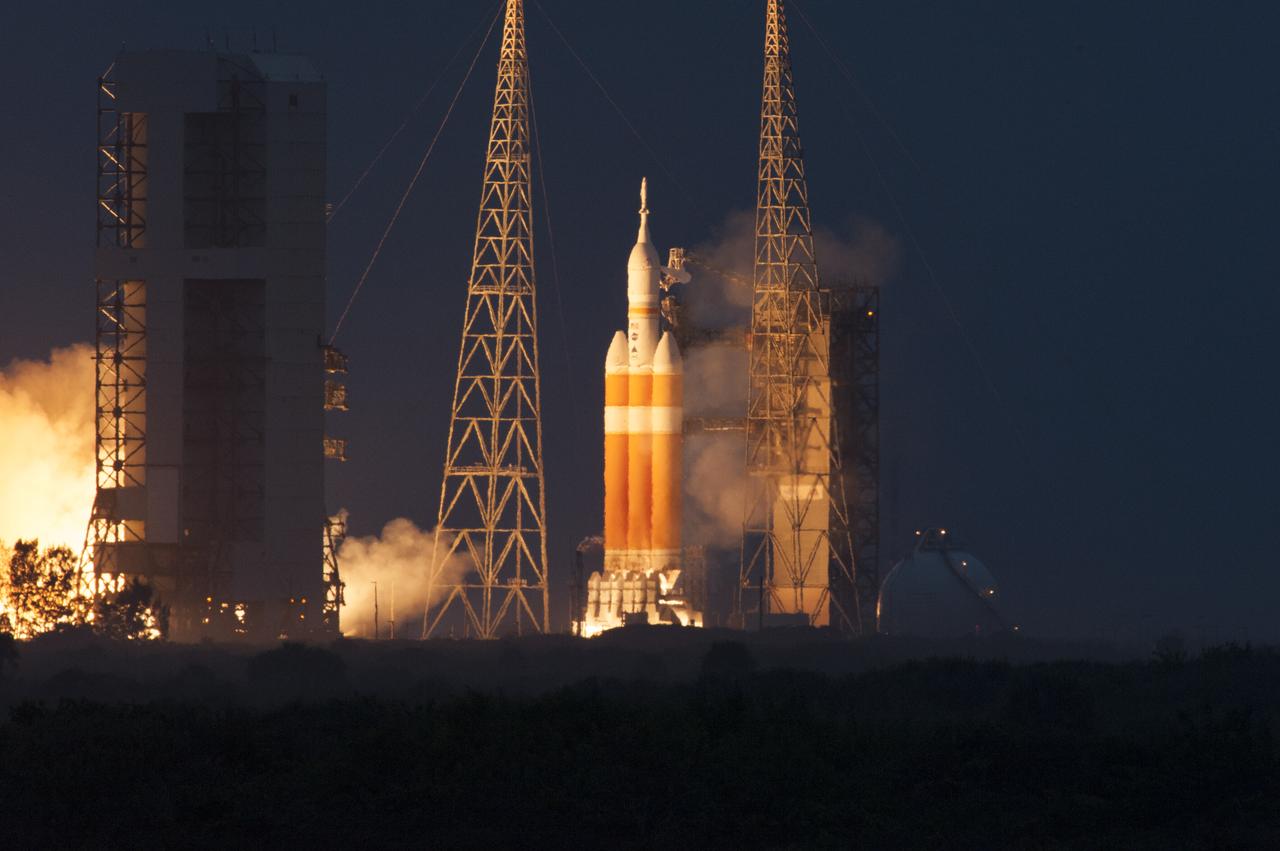
A Delta IV Heavy rocket roars to life at Space Launch Complex 37 at Cape Canaveral Air Force Station in Florida. The launch vehicle is carrying NASA's Orion spacecraft on an unpiloted flight test to Earth orbit. Liftoff was at 7:05 a.m. EST. The flight will send Orion 3,600 miles in altitude beyond the Earth's surface on a four-and-a-half hour mission.
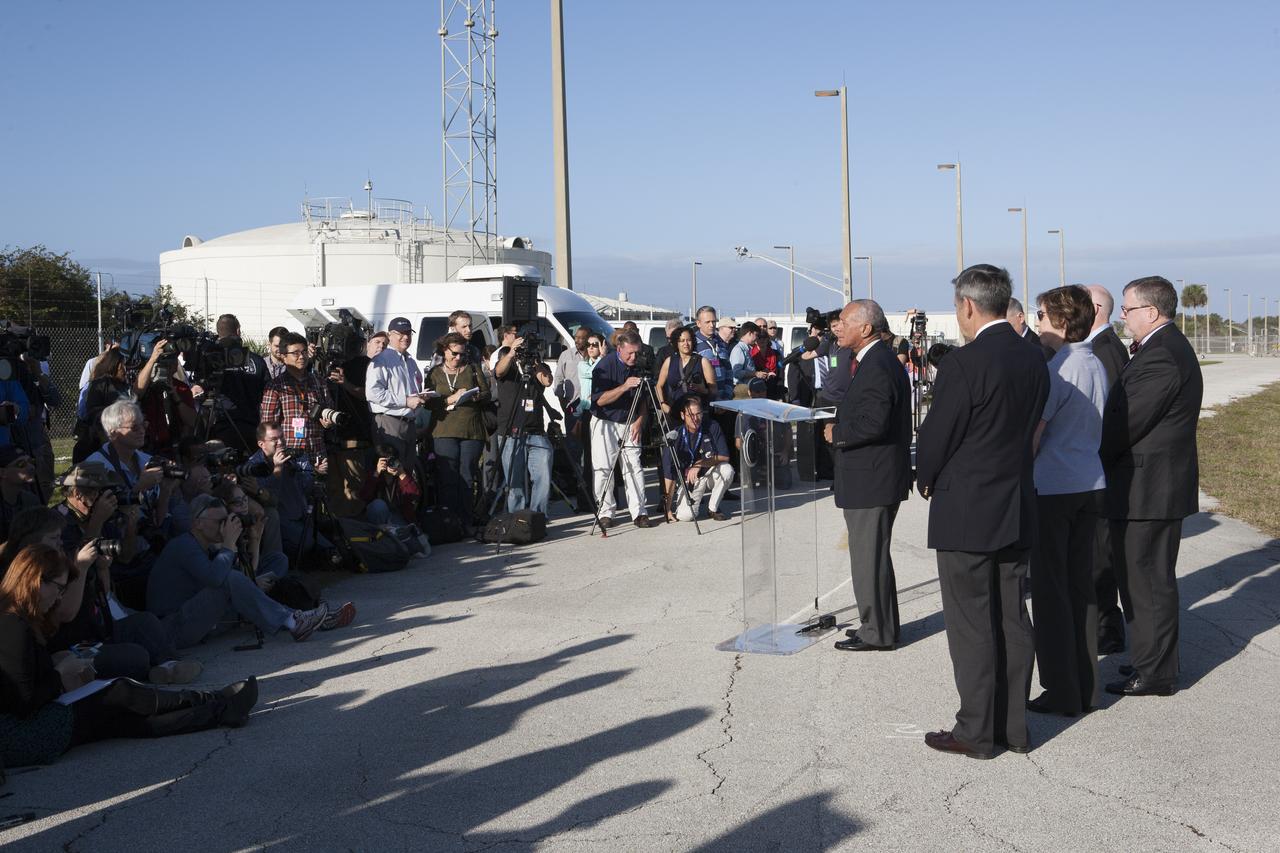
At Cape Canaveral Air Force Station's Launch Complex 37, NASA Administrator Charlie Bolden speaks to members of the news media as the Orion spacecraft and its United Launch Alliance Delta IV Heavy rocket are being prepared for launch.
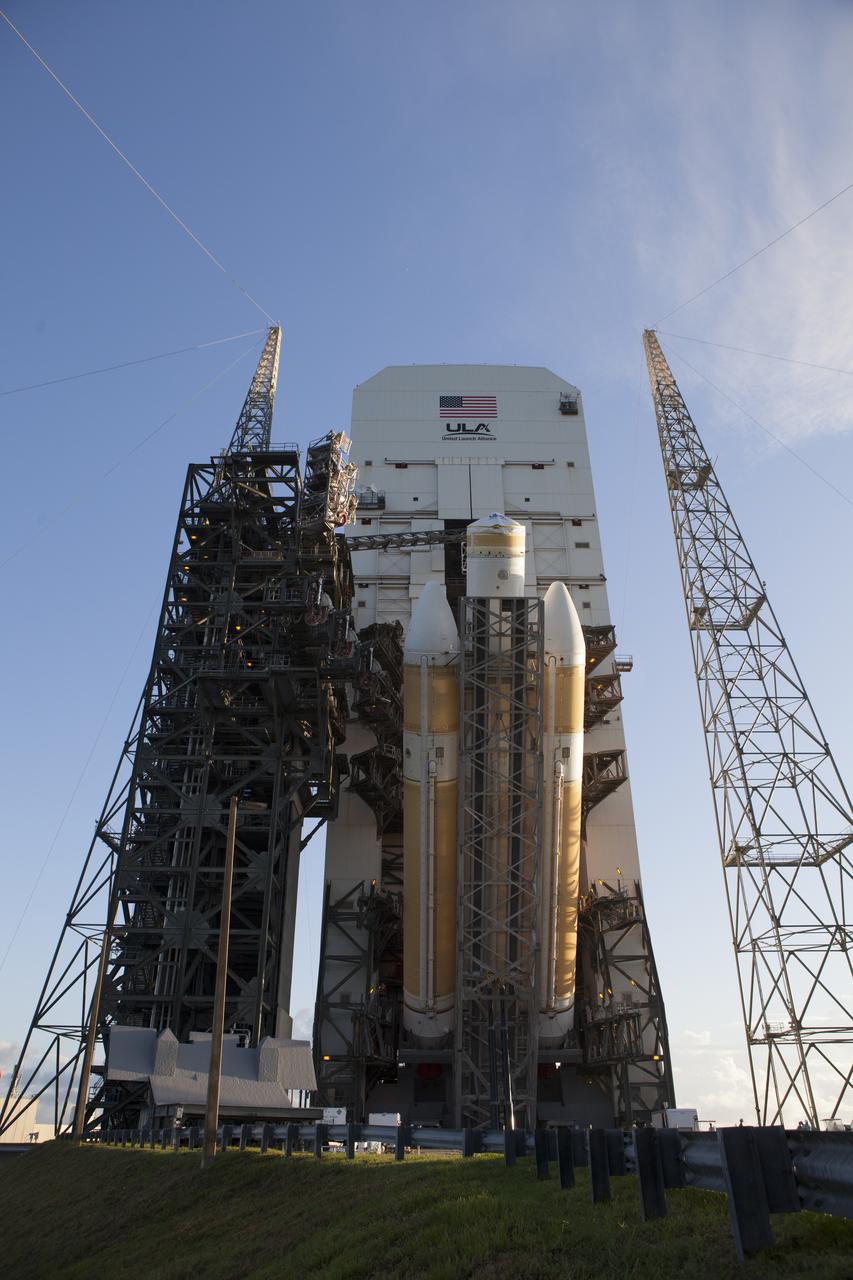
The United Launch Alliance Delta IV Heavy rocket for Exploration Flight Test-1 is being lifted to the vertical position in the mobile service tower on the pad at the pad at Space Launch Complex 37 at Cape Canaveral Air Force Station in Florida. The Delta IV Heavy is being readied to launch Orion on its first flight test. During its first flight test, Orion will travel farther into space than any human spacecraft has gone in more than 40 years. The data gathered during the flight will influence design decisions, validate existing computer models and innovative new approaches to space systems development, as well as reduce overall mission risks and costs for later Orion flights. Liftoff of Orion on the first flight test is planned for December 2014.
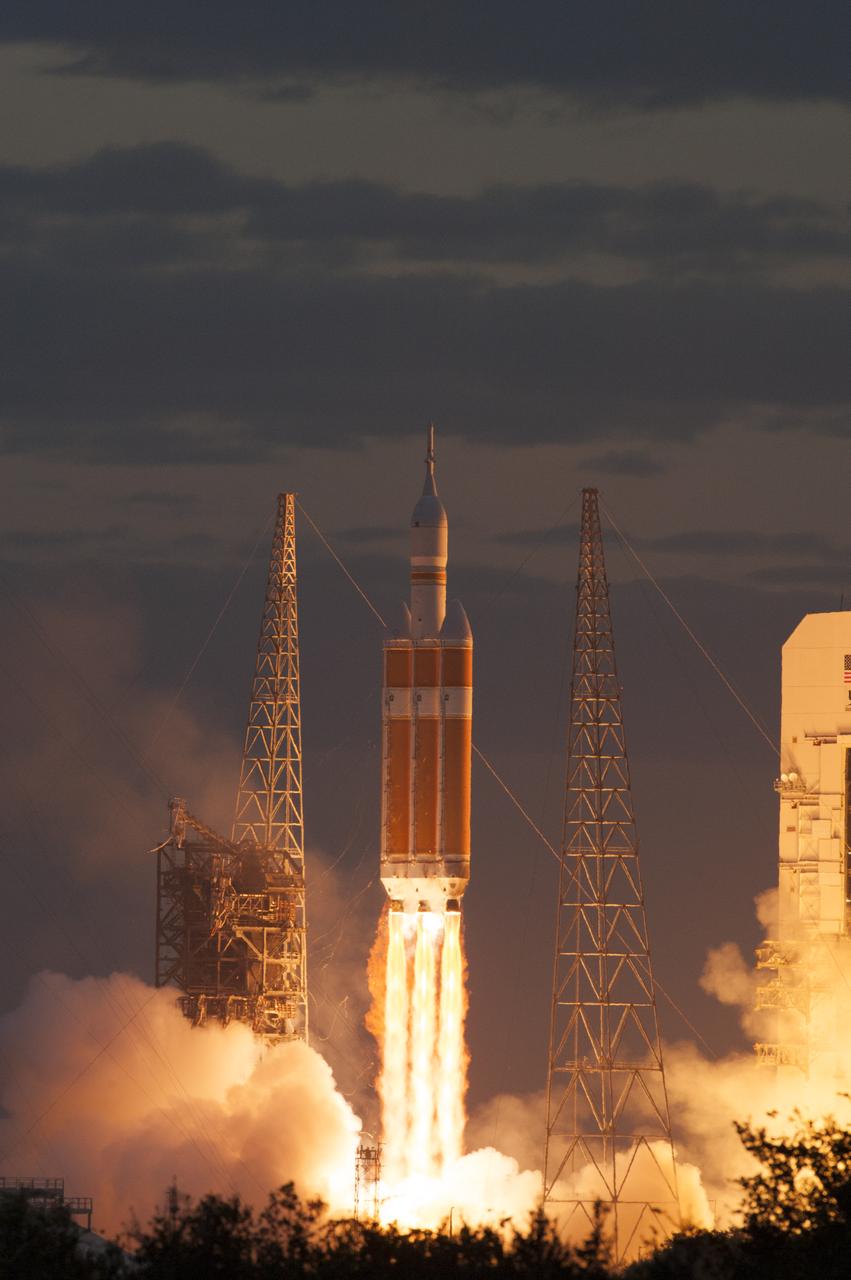
A Delta IV Heavy rocket lifts off from Space Launch Complex 37 at Cape Canaveral Air Force Station in Florida carrying NASA's Orion spacecraft on an unpiloted flight test to Earth orbit. Liftoff was at 7:05 a.m. EST. During the two-orbit, four-and-a-half hour mission, engineers will evaluate the systems critical to crew safety, the launch abort system, the heat shield and the parachute system.

A Delta IV Heavy rocket lifts off from Space Launch Complex 37 at Cape Canaveral Air Force Station in Florida carrying NASA's Orion spacecraft on an unpiloted flight test to Earth orbit. Liftoff was at 7:05 a.m. EST. During the two-orbit, four-and-a-half hour mission, engineers will evaluate the systems critical to crew safety, the launch abort system, the heat shield and the parachute system.
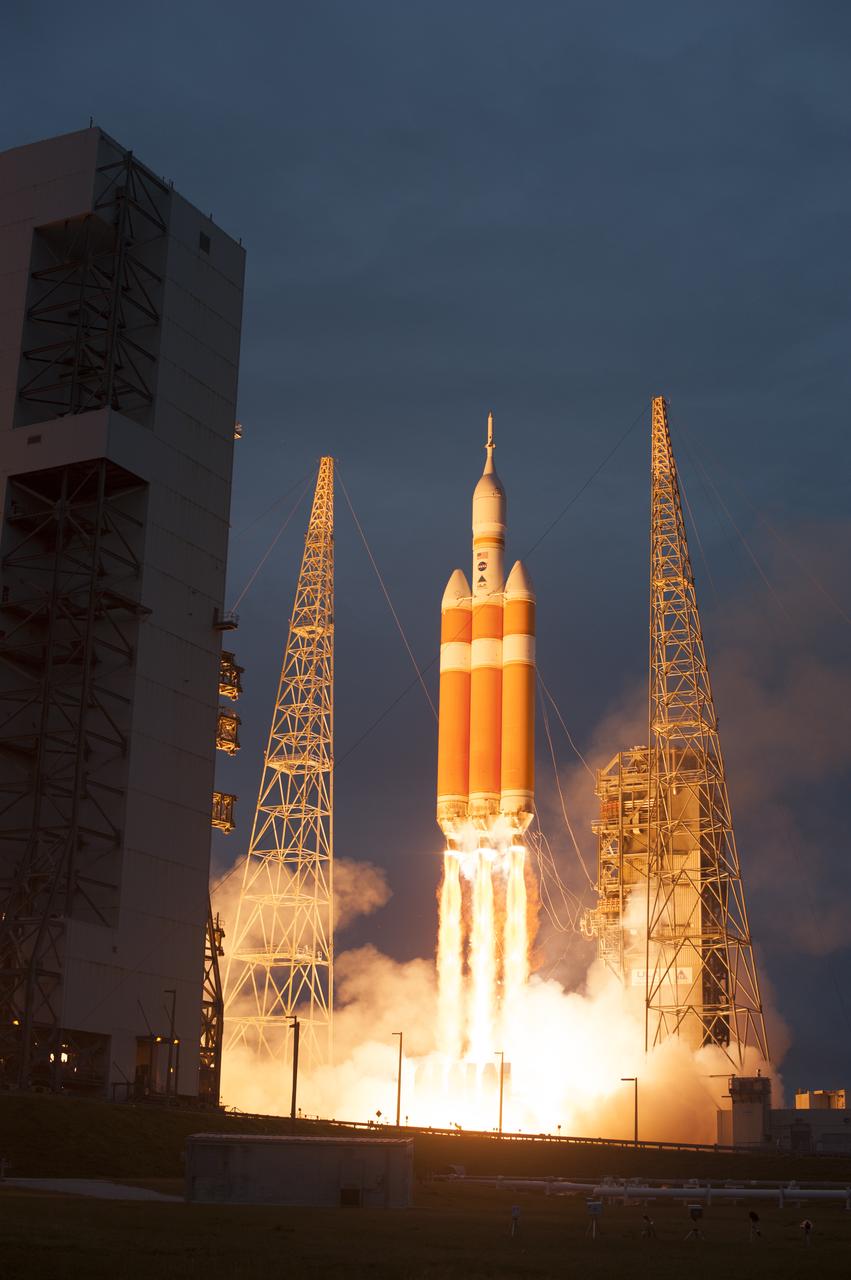
A Delta IV Heavy rocket lifts off from Space Launch Complex 37 at Cape Canaveral Air Force Station in Florida carrying NASA's Orion spacecraft on an unpiloted flight test to Earth orbit. Liftoff was at 7:05 a.m. EST. During the two-orbit, four-and-a-half hour mission, engineers will evaluate the systems critical to crew safety, the launch abort system, the heat shield and the parachute system.

This helicopter view of Space Launch Complex 37 at Cape Canaveral Air Force Station in Florida shows the United Launch Alliance Delta IV Heavy rocket as it stands ready to boost NASA's Orion spacecraft on a 4.5-hour mission.
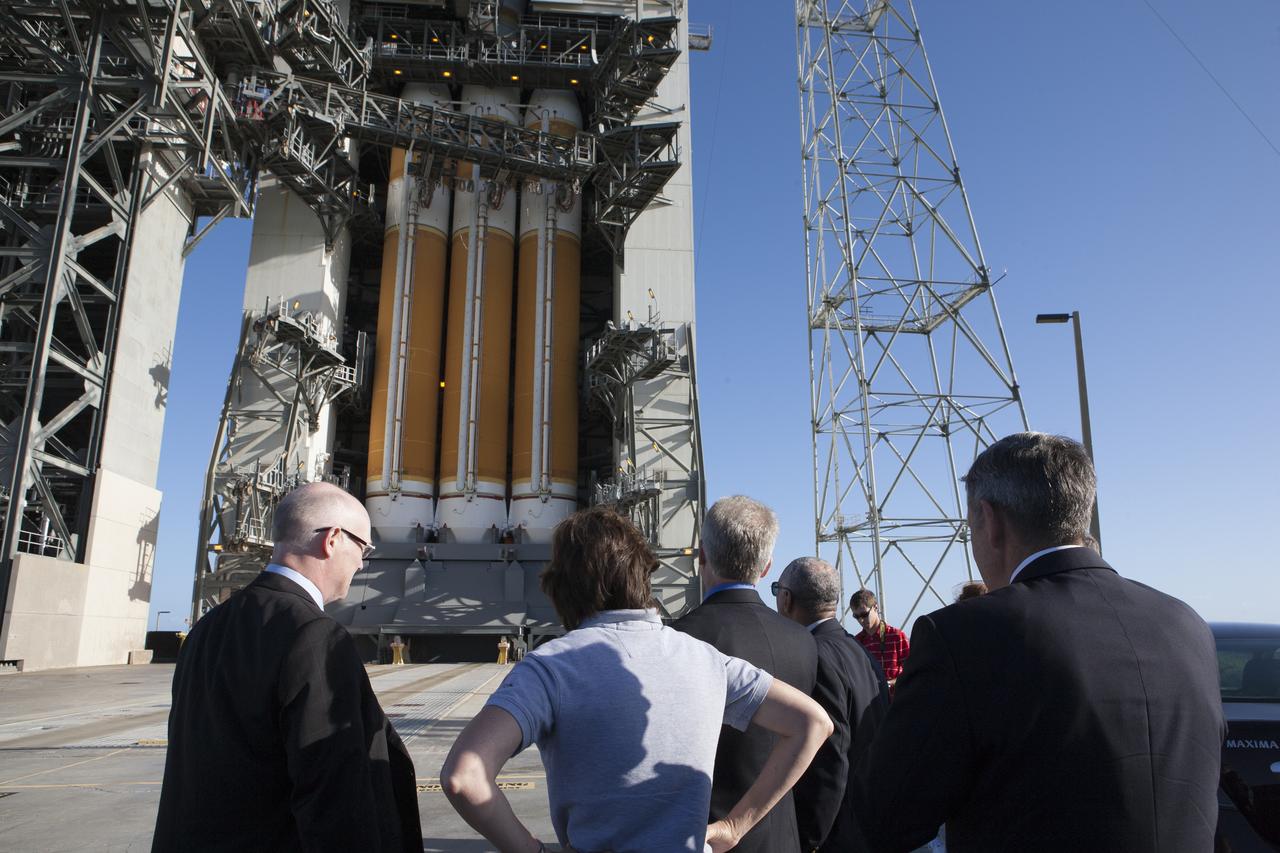
At Cape Canaveral Air Force Station's Launch Complex 37, United Launch Alliance CEO Tory Bruno, Johnson Space Center Director Ellen Ochoa and Kennedy Space Center Director Bob Cabana, foreground with backs to the camera, get a close-up view of the United Launch Alliance Delta IV Heavy rocket being prepared to launch NASA's Orion spacecraft on its first flight test.
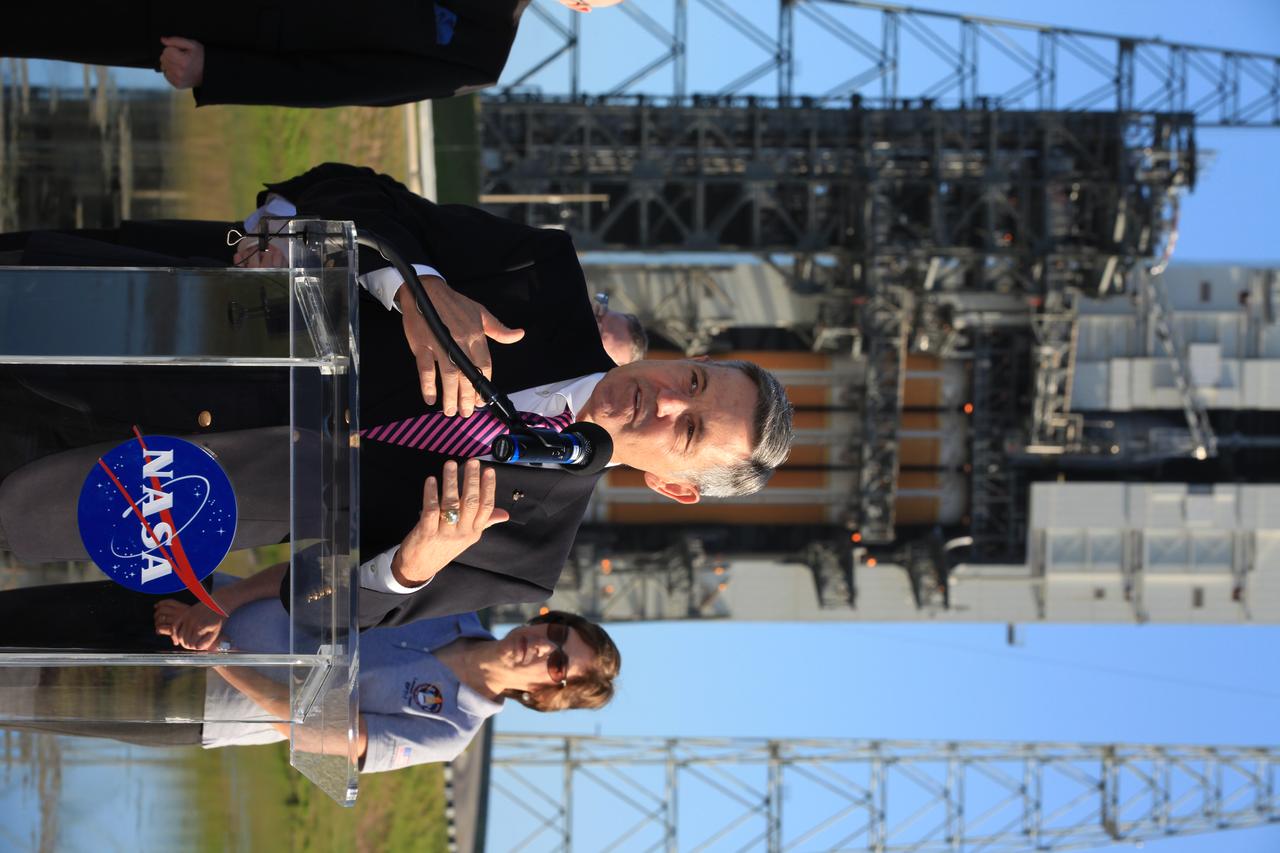
At Cape Canaveral Air Force Station's Launch Complex 37, Kennedy Space Center Director Bob Cabana speaks to members of the news media as the Orion spacecraft and its United Launch Alliance Delta IV Heavy rocket were being prepared for launch. On the right, behind Cabana is Johnson Space Center Director Ellen Ochoa.
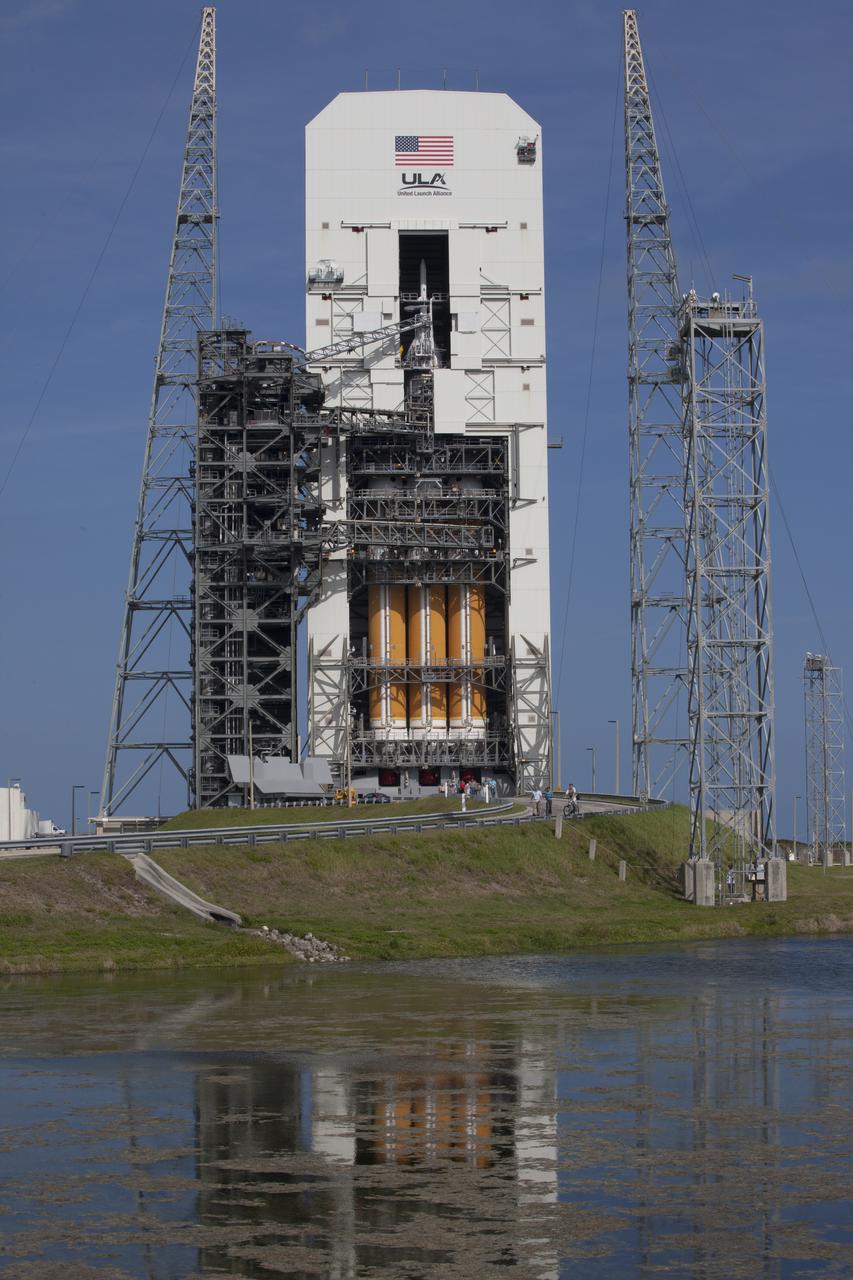
With access doors at Space Launch Complex 37 opened, the Orion and Delta IV Heavy stack is visible in its entirety inside the Mobile Service Tower where the vehicle is undergoing launch preparations. Orion will make its first flight test on Dec. 4 with a morning launch atop the United Launch Alliance Delta IV Heavy. The spacecraft will orbit the Earth twice, including one loop that will reach 3,600 miles above Earth. No one will be aboard Orion for this flight test, but the spacecraft is being designed and built to carry astronauts to deep space destinations such as an asteroid.
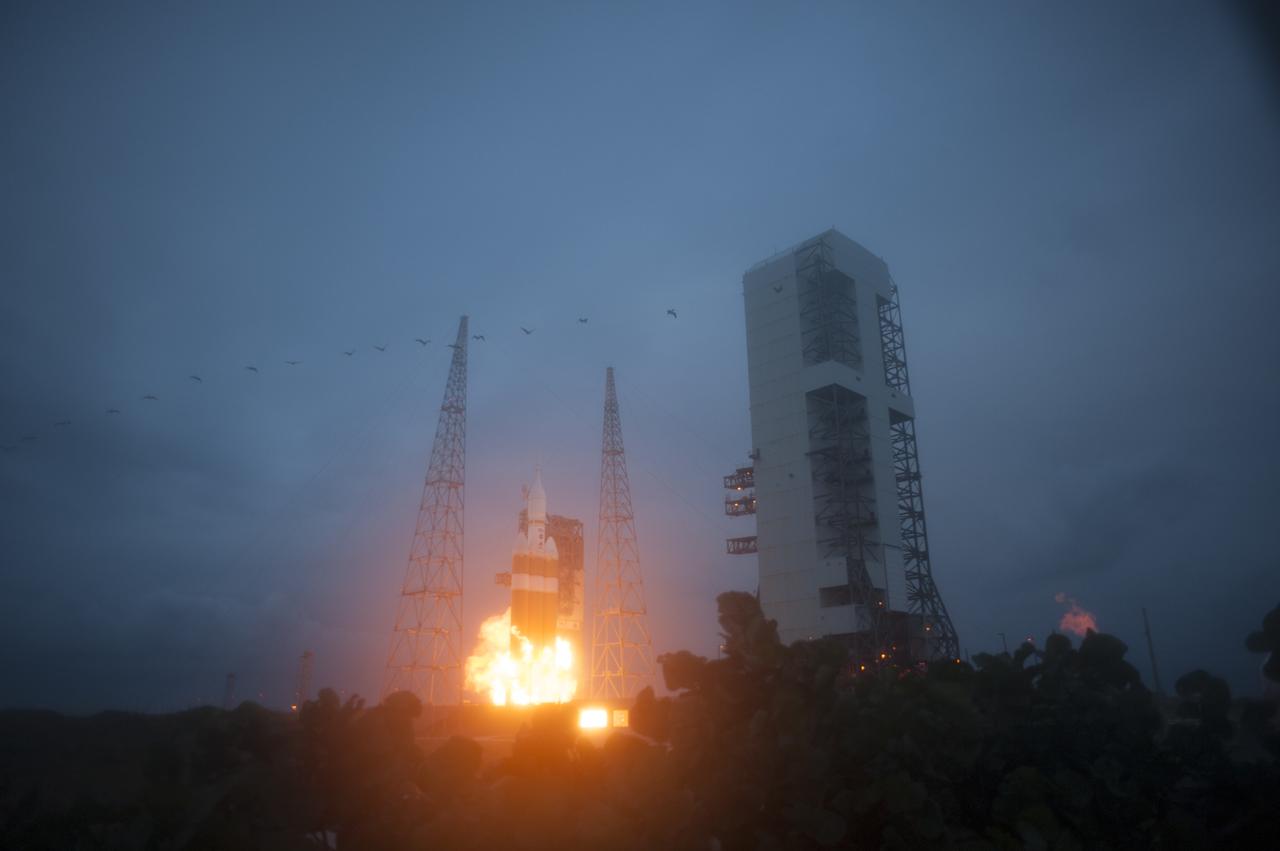
A Delta IV Heavy rocket roars to life at Space Launch Complex 37 at Cape Canaveral Air Force Station in Florida. The launch vehicle is carrying NASA's Orion spacecraft on an unpiloted flight test to Earth orbit. Liftoff was at 7:05 a.m. EST. The flight will send Orion 3,600 miles in altitude beyond the Earth's surface on a four-and-a-half hour mission.
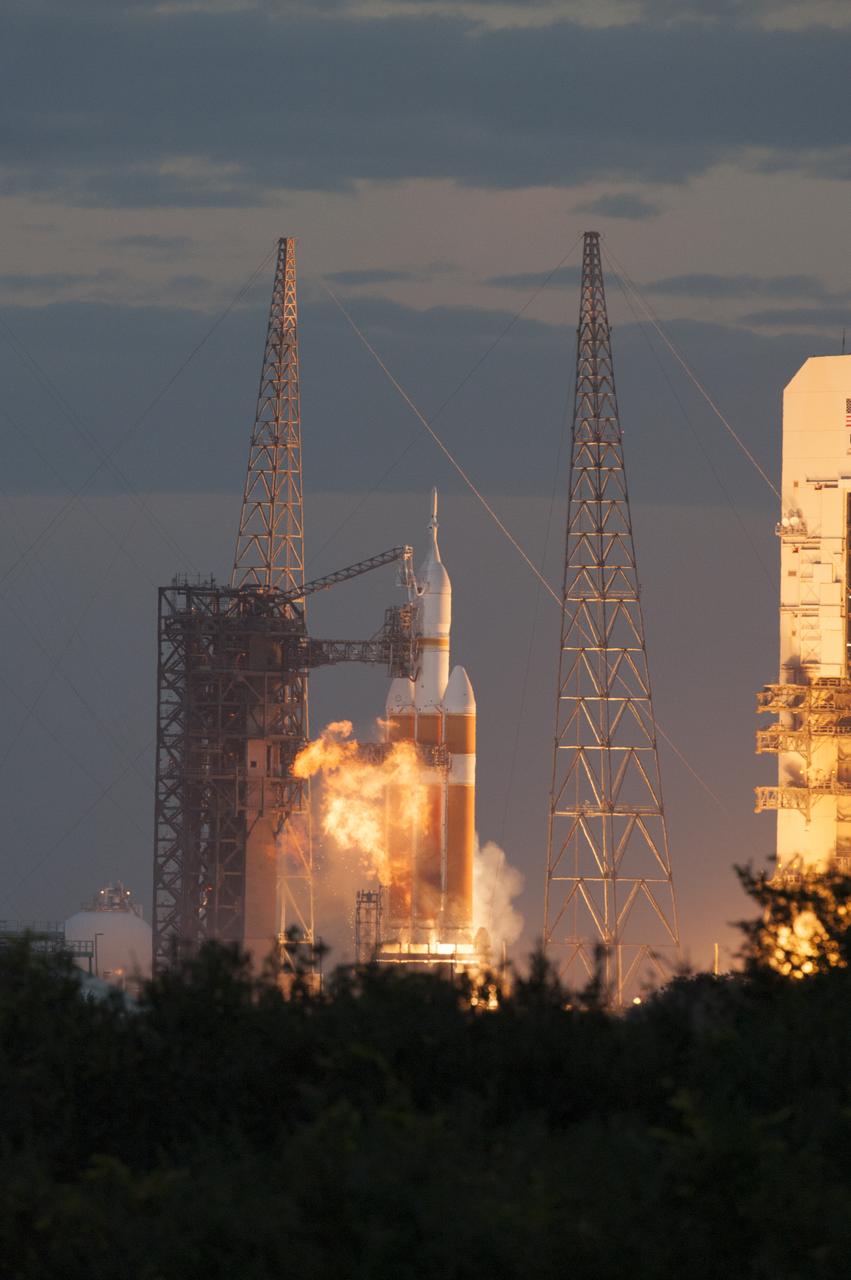
A Delta IV Heavy rocket lifts off from Space Launch Complex 37 at Cape Canaveral Air Force Station in Florida carrying NASA's Orion spacecraft on an unpiloted flight test to Earth orbit. Liftoff was at 7:05 a.m. EST. During the two-orbit, four-and-a-half hour mission, engineers will evaluate the systems critical to crew safety, the launch abort system, the heat shield and the parachute system.
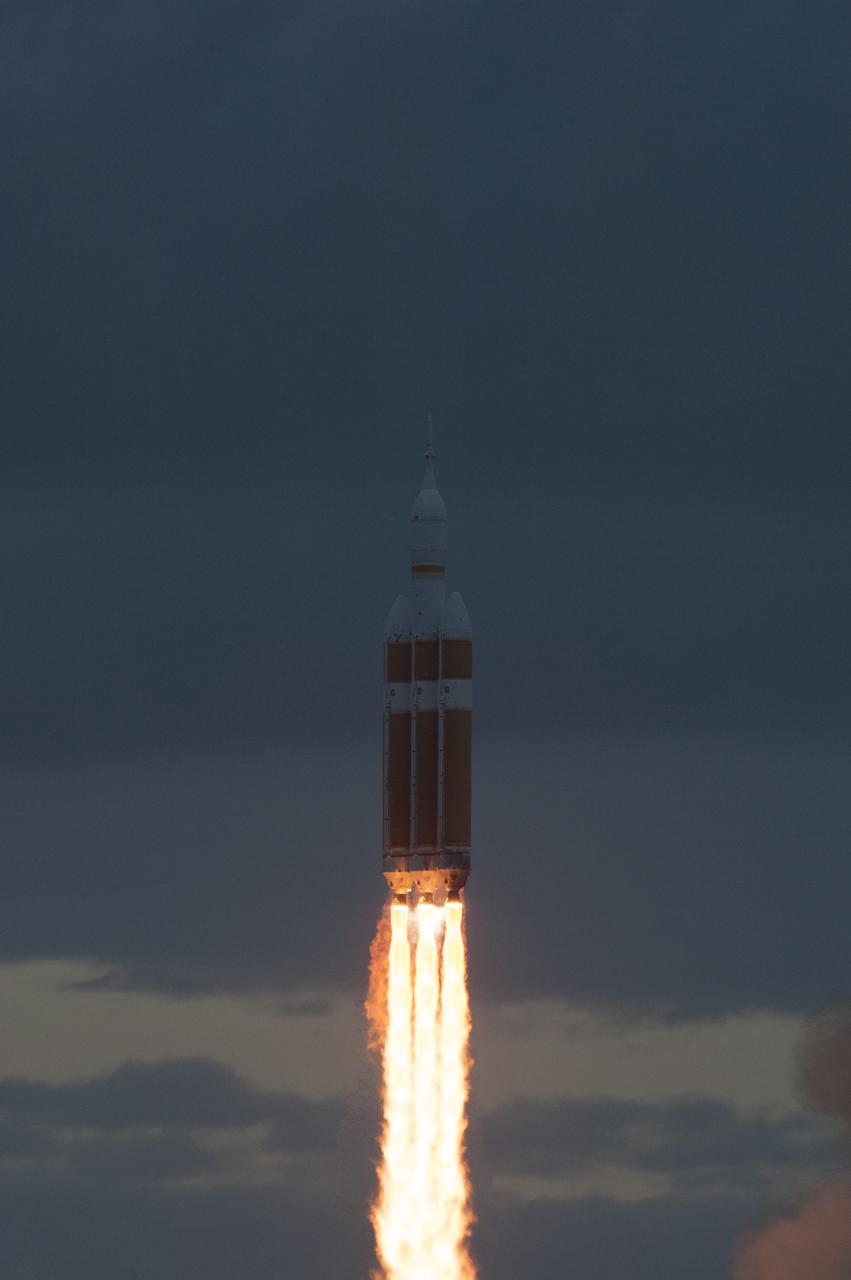
A Delta IV Heavy rocket lifts off from Space Launch Complex 37 at Cape Canaveral Air Force Station in Florida carrying NASA's Orion spacecraft on an unpiloted flight test to Earth orbit. Liftoff was at 7:05 a.m. EST. During the two-orbit, four-and-a-half hour mission, engineers will evaluate the systems critical to crew safety, the launch abort system, the heat shield and the parachute system.
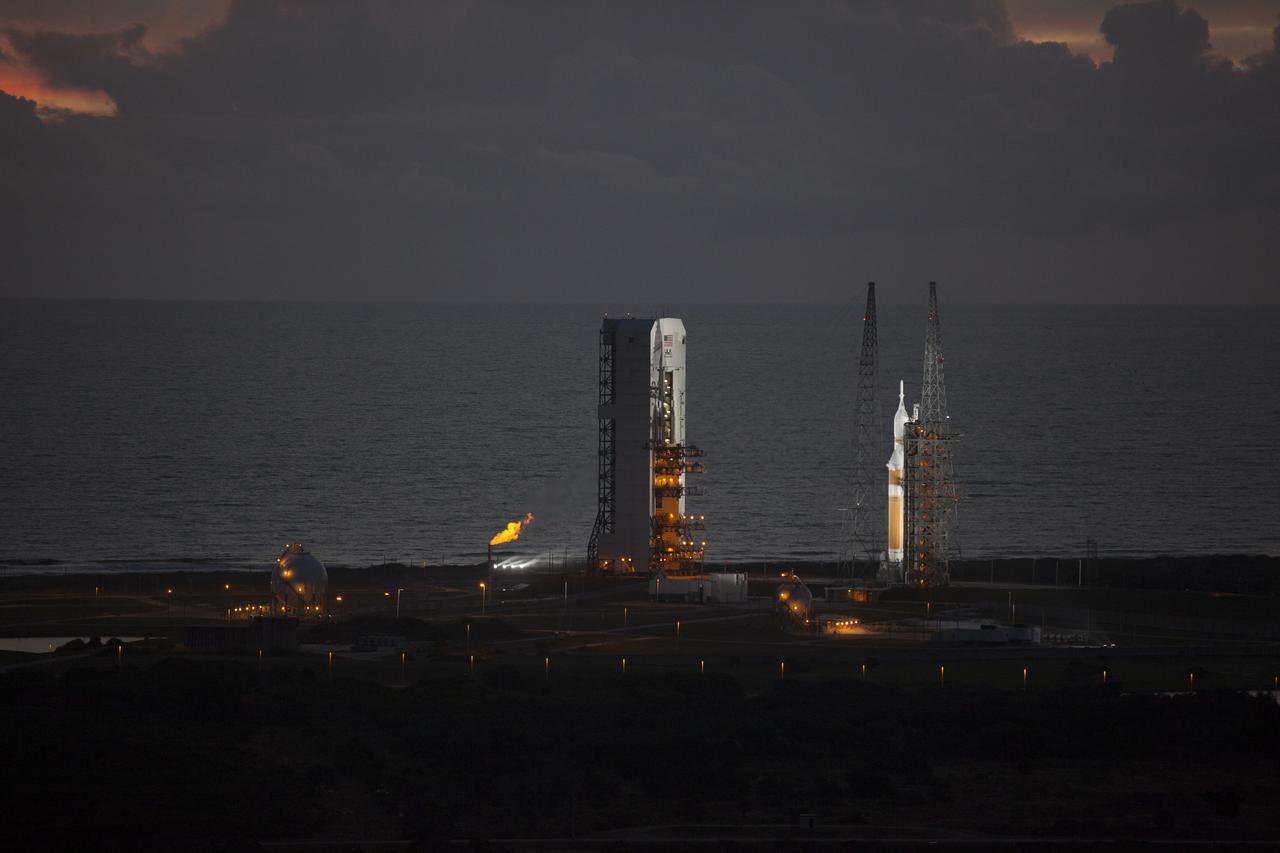
This helicopter view of Space Launch Complex 37 at Cape Canaveral Air Force Station in Florida shows the United Launch Alliance Delta IV Heavy rocket as it stands ready to boost NASA's Orion spacecraft on a 4.5-hour mission. The liftoff was postponed because of an issue related to fill and drain valves on the Delta IV Heavy rocket that teams could not troubleshoot by the time the launch window expired.
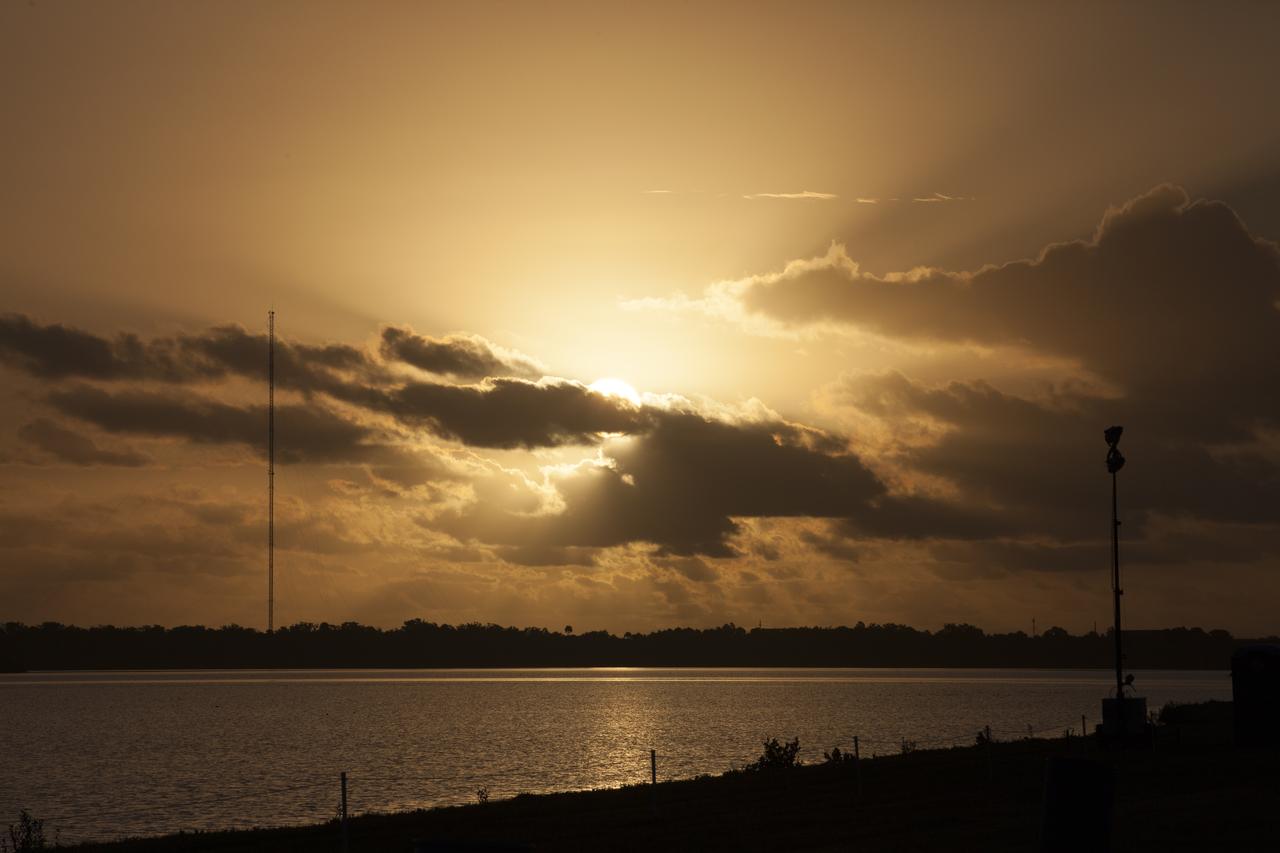
A spectacular sunrise at NASA's Kennedy Space Center in Florida heralds the arrival of a new era in exploration a day before the launch of a United Launch Alliance Delta IV Heavy topped by the agency's Orion spacecraft for its first flight test.
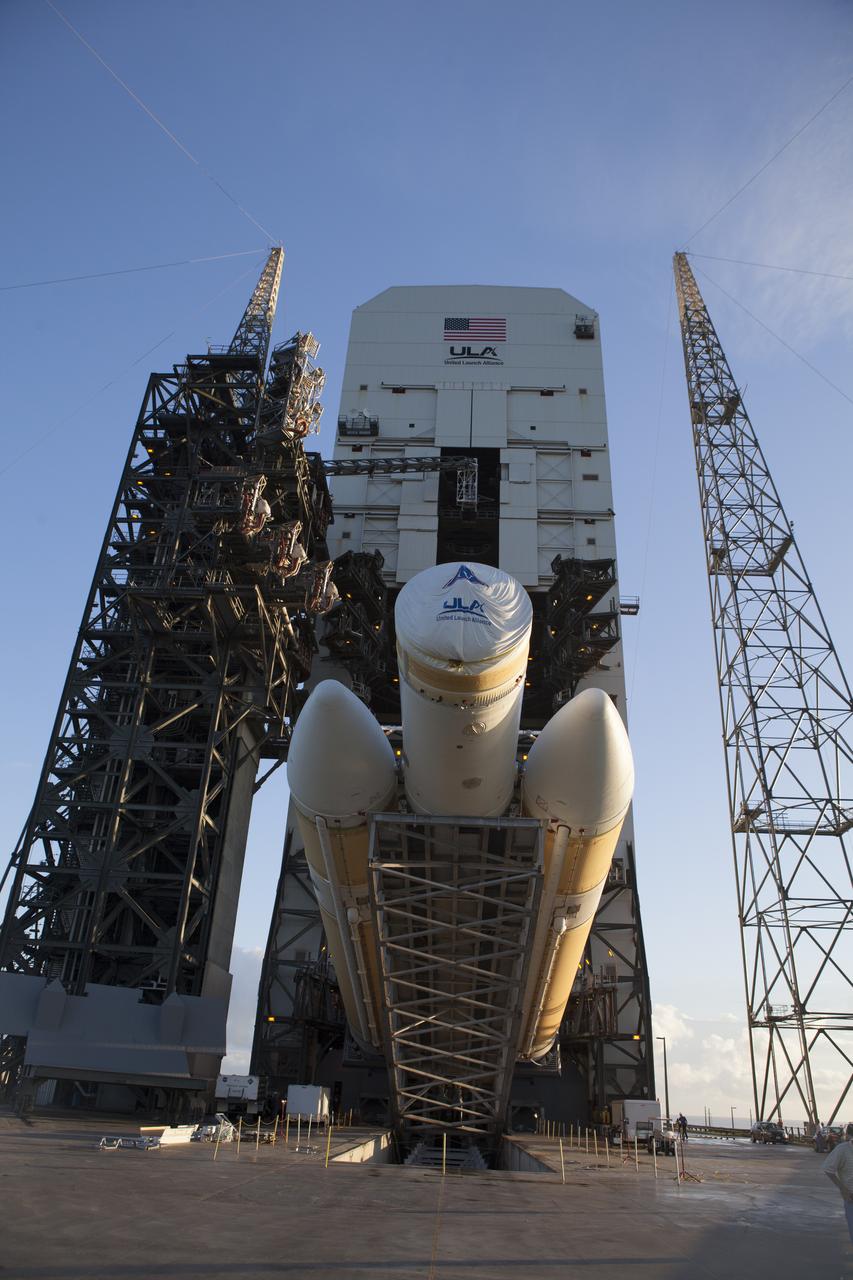
The United Launch Alliance Delta IV Heavy rocket for Exploration Flight Test-1 is being lifted to the vertical position at the pad at Space Launch Complex 37 at Cape Canaveral Air Force Station in Florida. The Delta IV Heavy is being readied to launch Orion on its first flight test. During its first flight test, Orion will travel farther into space than any human spacecraft has gone in more than 40 years. The data gathered during the flight will influence design decisions, validate existing computer models and innovative new approaches to space systems development, as well as reduce overall mission risks and costs for later Orion flights. Liftoff of Orion on the first flight test is planned for December 2014.
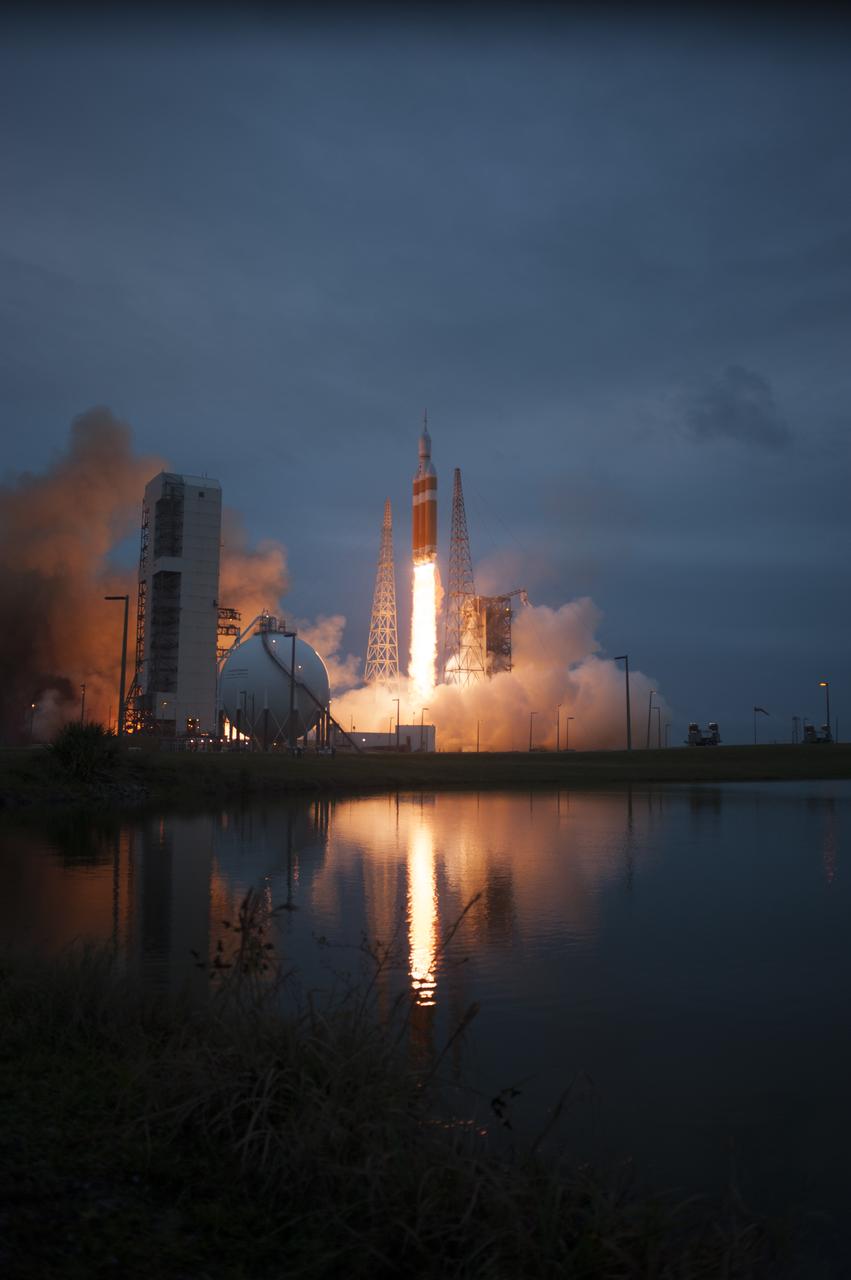
A Delta IV Heavy rocket lifts off from Space Launch Complex 37 at Cape Canaveral Air Force Station in Florida carrying NASA's Orion spacecraft on an unpiloted flight test to Earth orbit. Liftoff was at 7:05 a.m. EST. During the two-orbit, four-and-a-half hour mission, engineers will evaluate the systems critical to crew safety, the launch abort system, the heat shield and the parachute system.
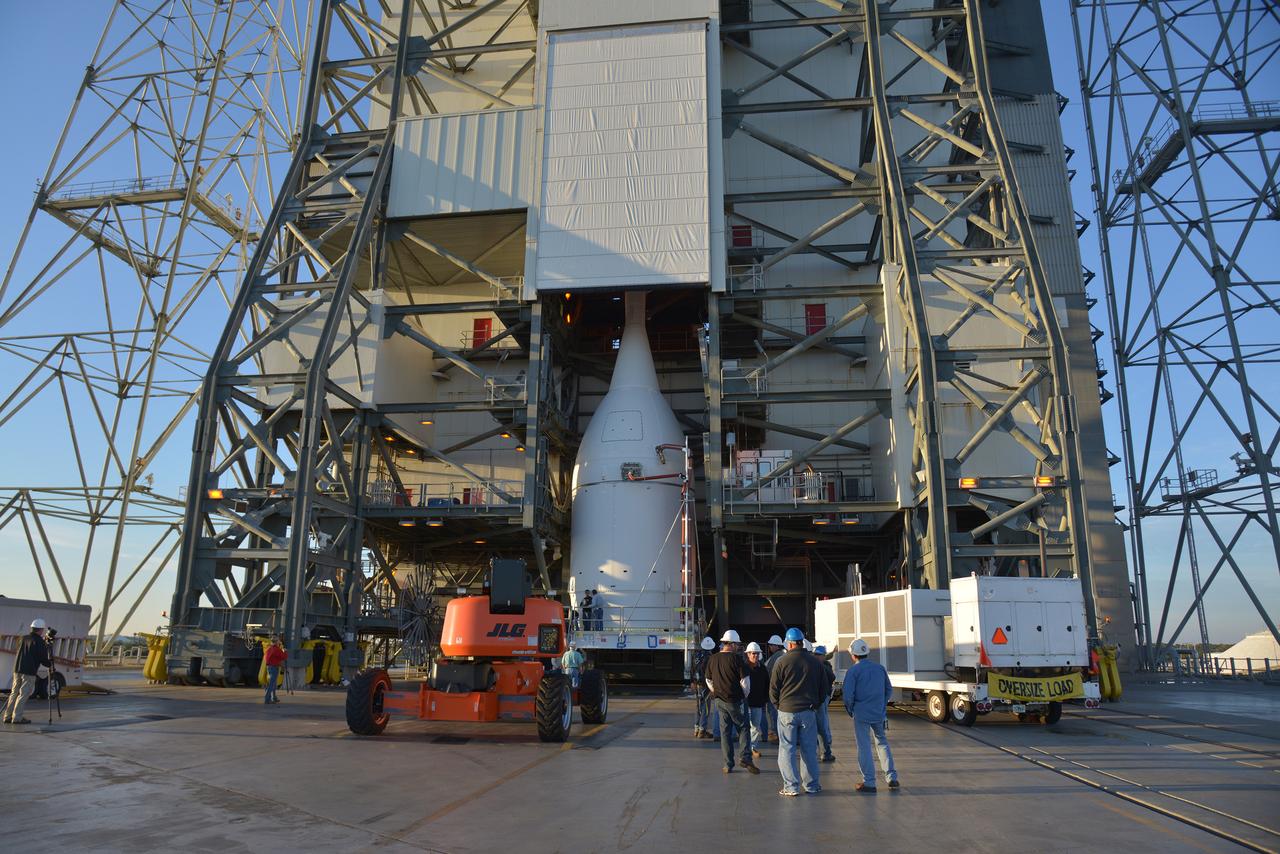
At Cape Canaveral Air Force Station's Launch Complex 37, United Launch Alliance engineers and technicians prepare to lift the agency's Orion spacecraft for mounting atop its Delta IV Heavy rocket. Orion is the exploration spacecraft designed to carry astronauts to destinations not yet explored by humans, including an asteroid and Mars. It will have emergency abort capability, sustain the crew during space travel and provide safe re-entry from deep space return velocities. The first unpiloted flight test of Orion is scheduled to launch Dec. 4, 2014 atop a United Launch Alliance Delta IV Heavy rocket, and in 2018 on NASA’s Space Launch System rocket.
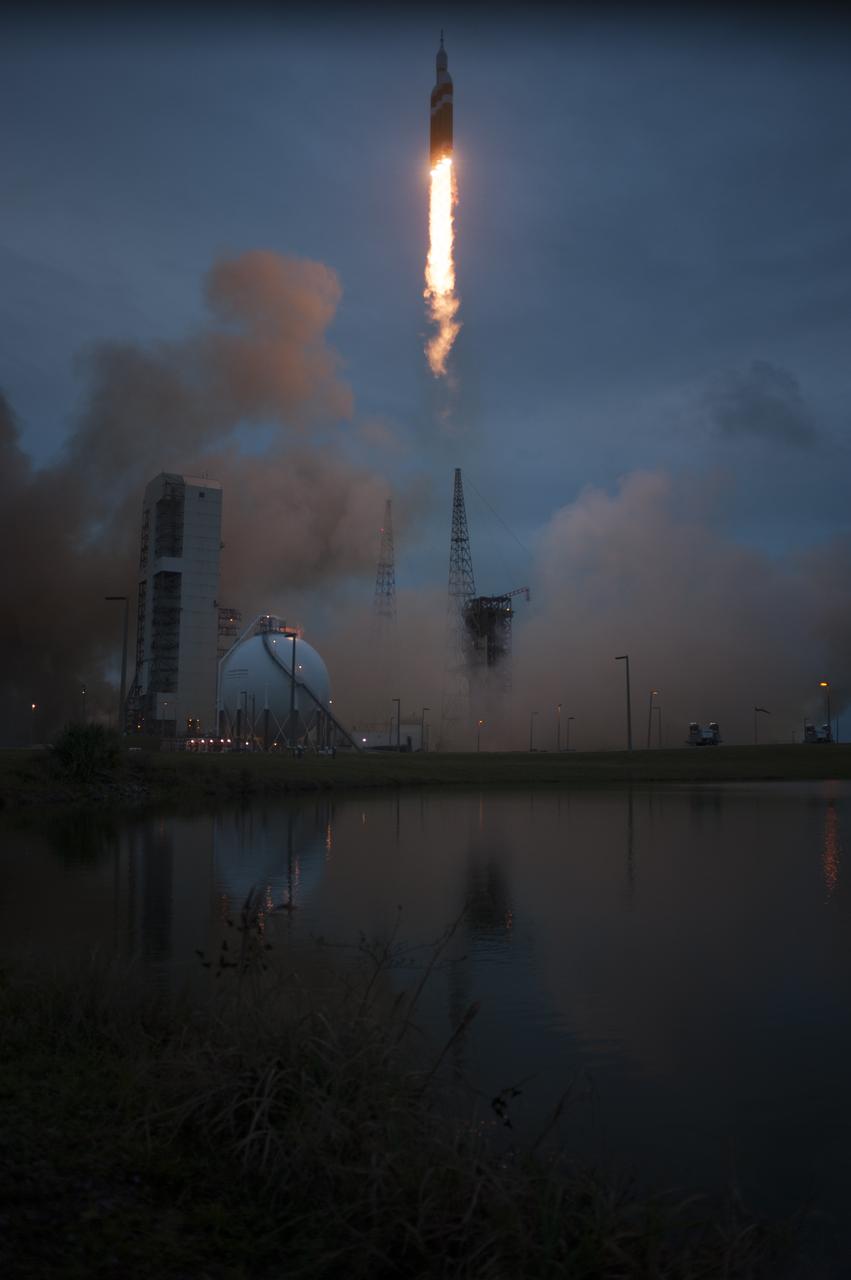
A Delta IV Heavy rocket lifts off from Space Launch Complex 37 at Cape Canaveral Air Force Station in Florida carrying NASA's Orion spacecraft on an unpiloted flight test to Earth orbit. Liftoff was at 7:05 a.m. EST. During the two-orbit, four-and-a-half hour mission, engineers will evaluate the systems critical to crew safety, the launch abort system, the heat shield and the parachute system.

This helicopter view of Space Launch Complex 37 at Cape Canaveral Air Force Station in Florida shows the United Launch Alliance Delta IV Heavy rocket as it stands ready to boost NASA's Orion spacecraft on a 4.5-hour mission.
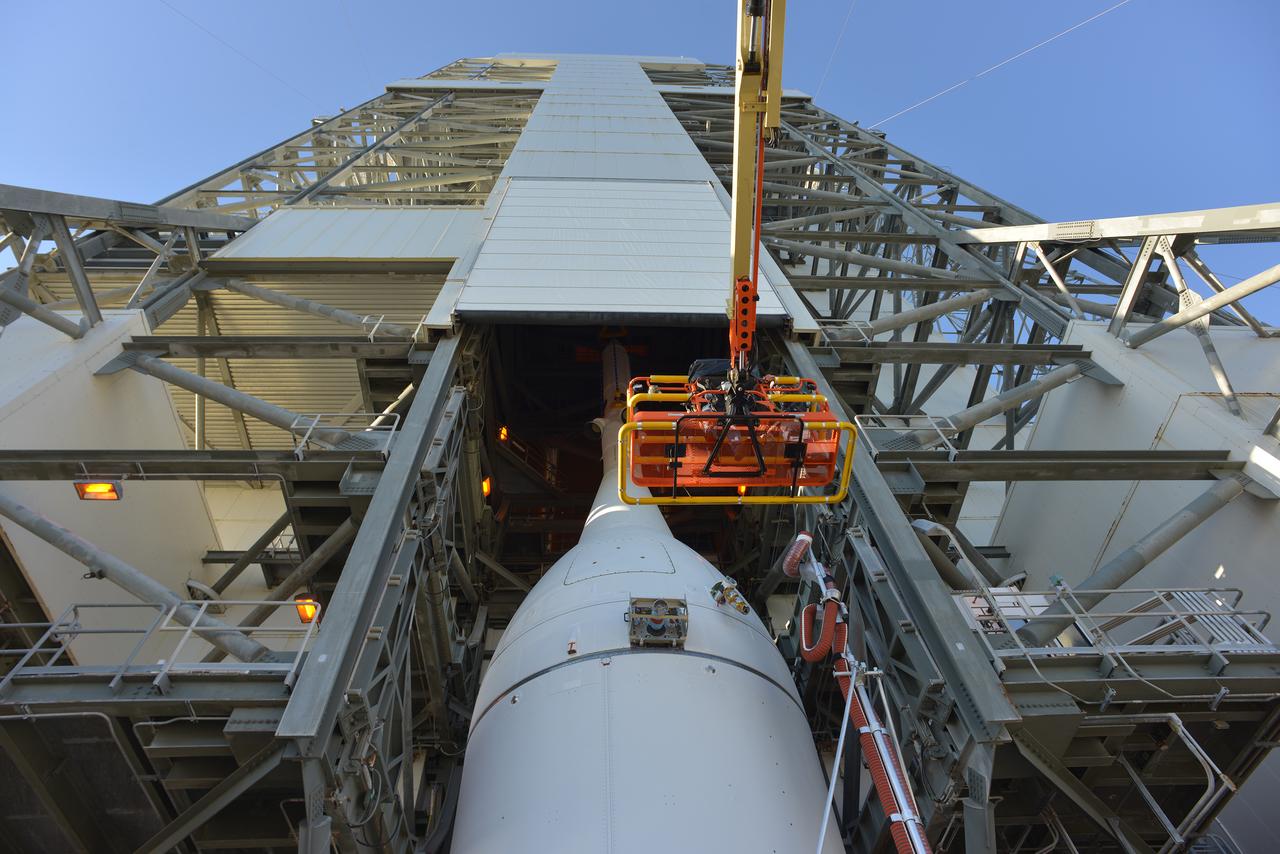
At Cape Canaveral Air Force Station's Launch Complex 37, United Launch Alliance engineers and technicians prepare to lift the agency's Orion spacecraft for mounting atop its Delta IV Heavy rocket. Orion is the exploration spacecraft designed to carry astronauts to destinations not yet explored by humans, including an asteroid and Mars. It will have emergency abort capability, sustain the crew during space travel and provide safe re-entry from deep space return velocities. The first unpiloted flight test of Orion is scheduled to launch Dec. 4, 2014 atop a United Launch Alliance Delta IV Heavy rocket, and in 2018 on NASA’s Space Launch System rocket.
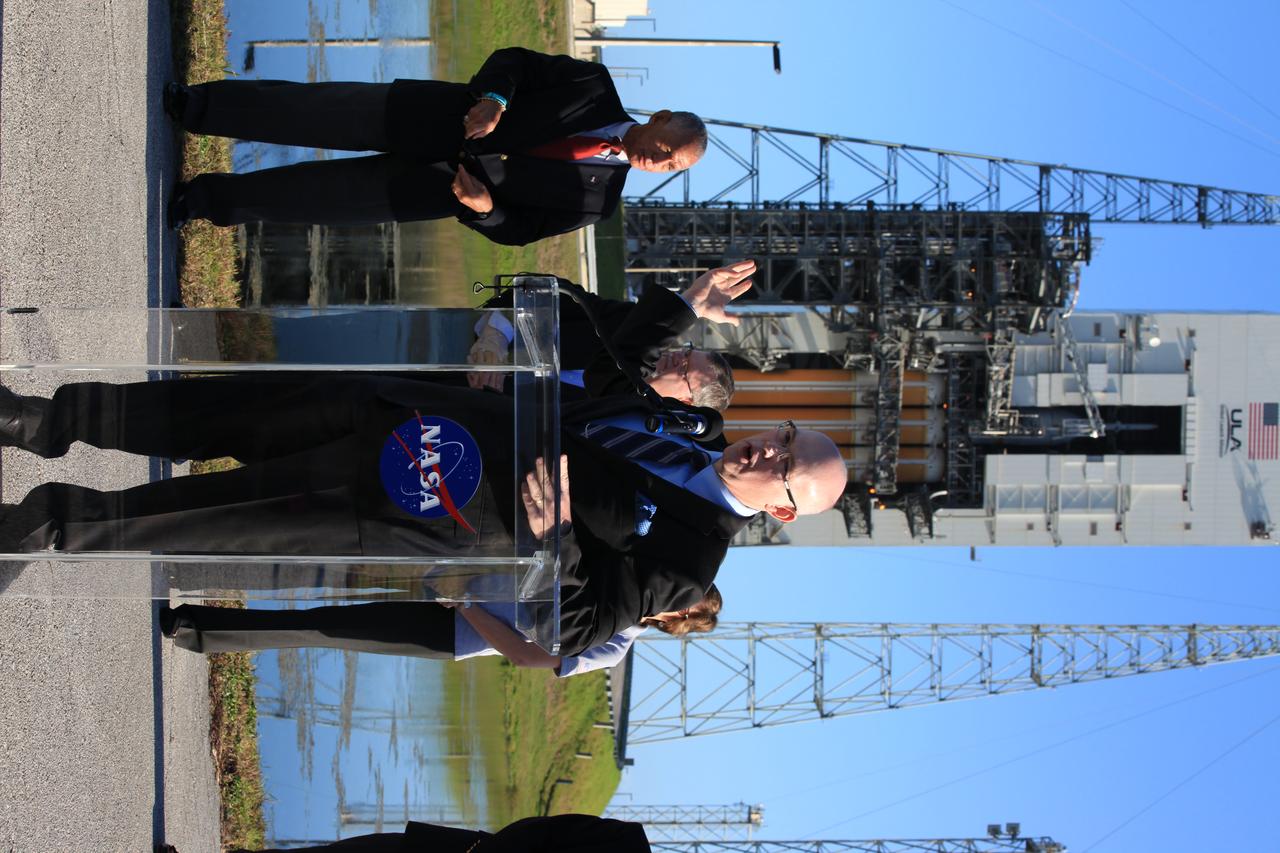
At Cape Canaveral Air Force Station's Launch Complex 37, United Launch Alliance CEO Tory Bruno speaks to members of the news media as the Orion spacecraft and its United Launch Alliance Delta IV Heavy rocket were being prepared for launch. Behind Bruno, from the left, are NASA Administrator Charlie Bolden, Lockheed Martin Orion Program Manager Mike Hawes and Johnson Space Center Director Ellen Ochoa.
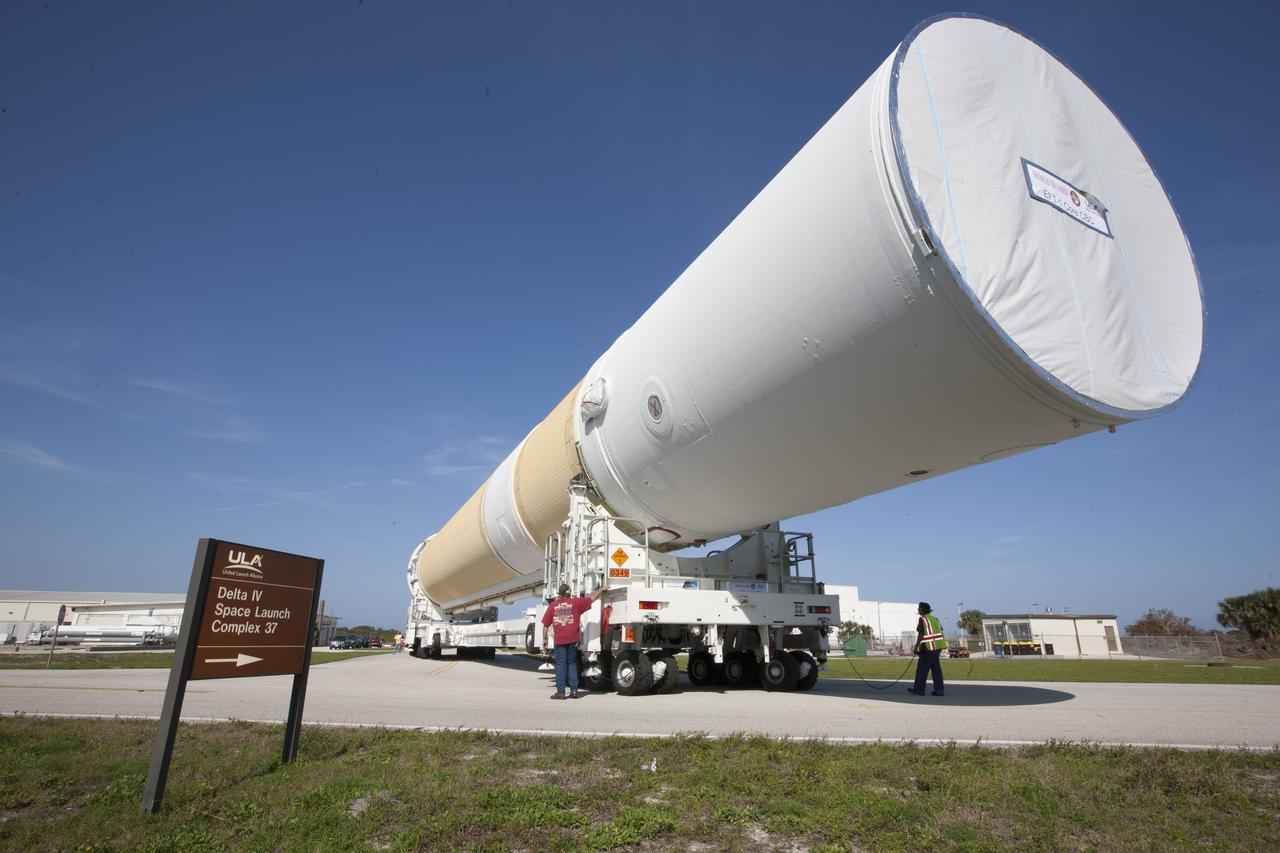
CAPE CANAVERAL, Fla. – Two of the three United Launch Alliance Delta IV heavy boosters for NASA’s upcoming Exploration Flight Test-1, or EFT-1, mission with the Orion spacecraft, arrived by barge at the U.S. Army Outpost wharf at Port Canaveral in Florida. The core booster and starboard booster were offloaded and are being transported to the Horizontal Integration Facility, or HIF, at Space Launch Complex 37 on Cape Canaveral Air Force Station. The port booster and the upper stage are planned to be shipped to Cape Canaveral in April. At the HIF, all three boosters will be processed and checked out before being moved to the nearby launch pad and hoisted into position. During the EFT-1 mission, Orion will travel farther into space than any human spacecraft has gone in more than 40 years. The data gathered during the flight will influence design decisions, validate existing computer models and innovative new approaches to space systems development, as well as reduce overall mission risks and costs for later Orion flights. Liftoff of Orion on EFT-1 is planned for fall 2014. Photo credit: NASA/Kim Shiflett
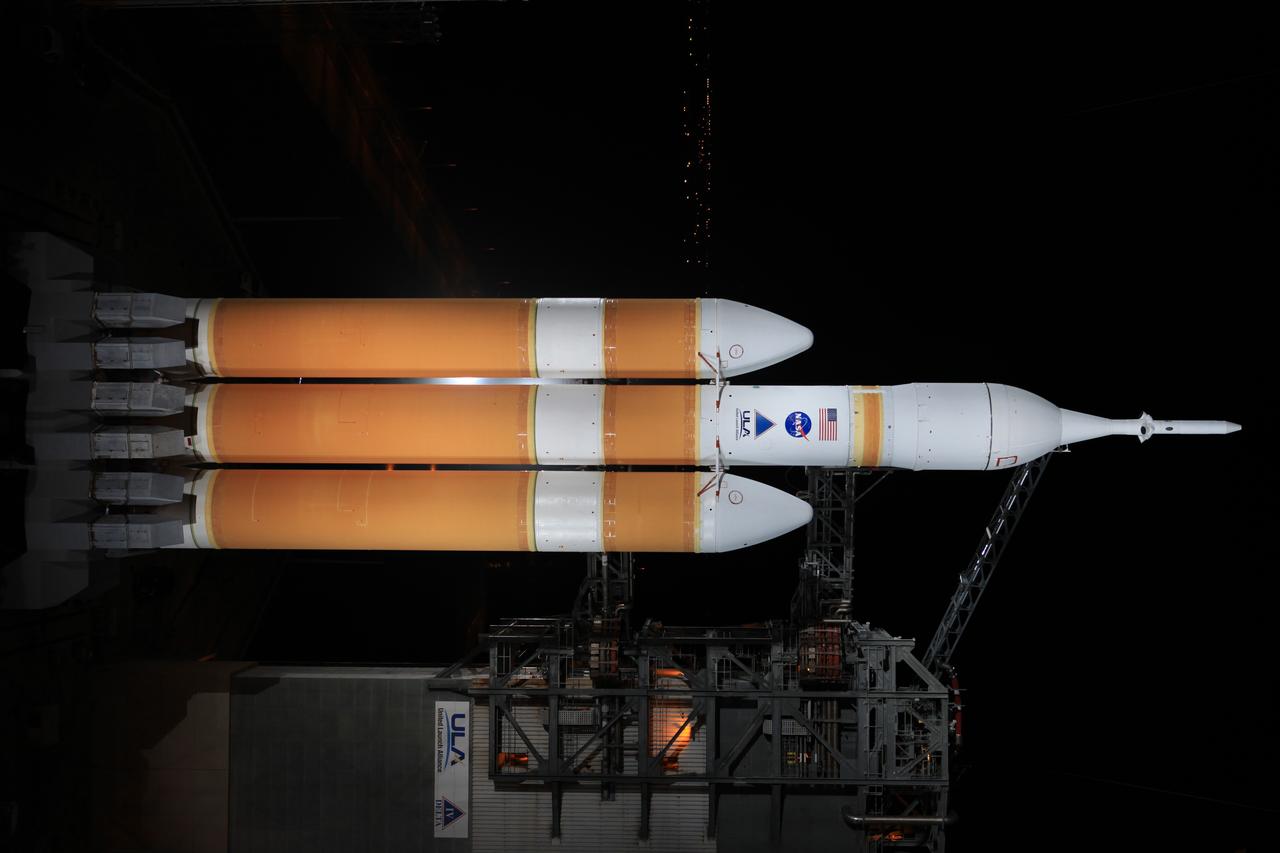
The launch gantry is rolled back to reveal NASA's Orion spacecraft mounted atop a United Launch Alliance Delta IV Heavy rocket at Cape Canaveral Air Force Station's Space Launch Complex 37. Orion is NASA’s new spacecraft built to carry humans, designed to allow us to journey to destinations never before visited by humans, including an asteroid and Mars.
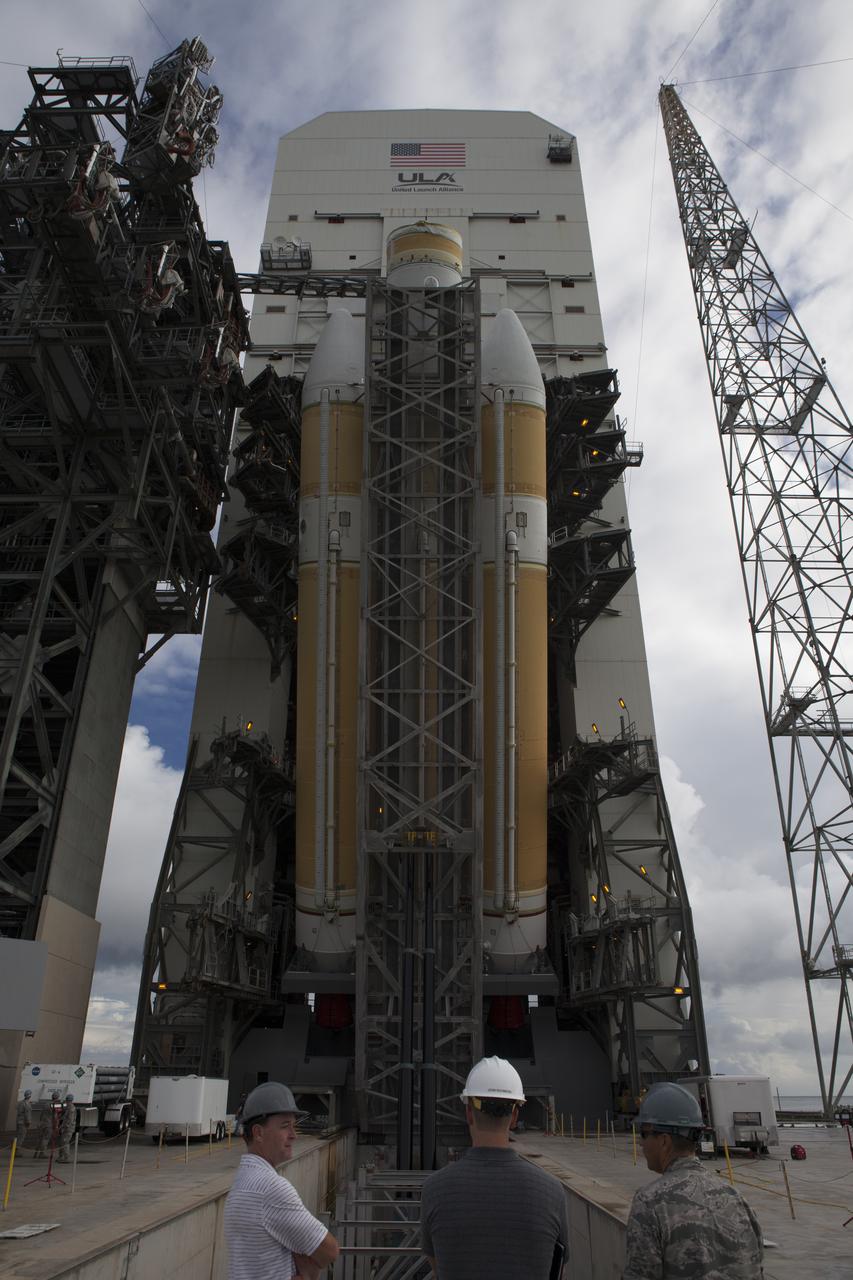
United Launch Alliance, or ULA, workers monitor the progress as the ULA Delta IV Heavy rocket for Exploration Flight Test-1 is lifted to the vertical position in the mobile service tower on the pad at Space Launch Complex 37 at Cape Canaveral Air Force Station in Florida. The Delta IV Heavy is being readied to launch Orion on its first flight test. During its first flight test, Orion will travel farther into space than any human spacecraft has gone in more than 40 years. The data gathered during the flight will influence design decisions, validate existing computer models and innovative new approaches to space systems development, as well as reduce overall mission risks and costs for later Orion flights. Liftoff of Orion on the first flight test is planned for December 2014.
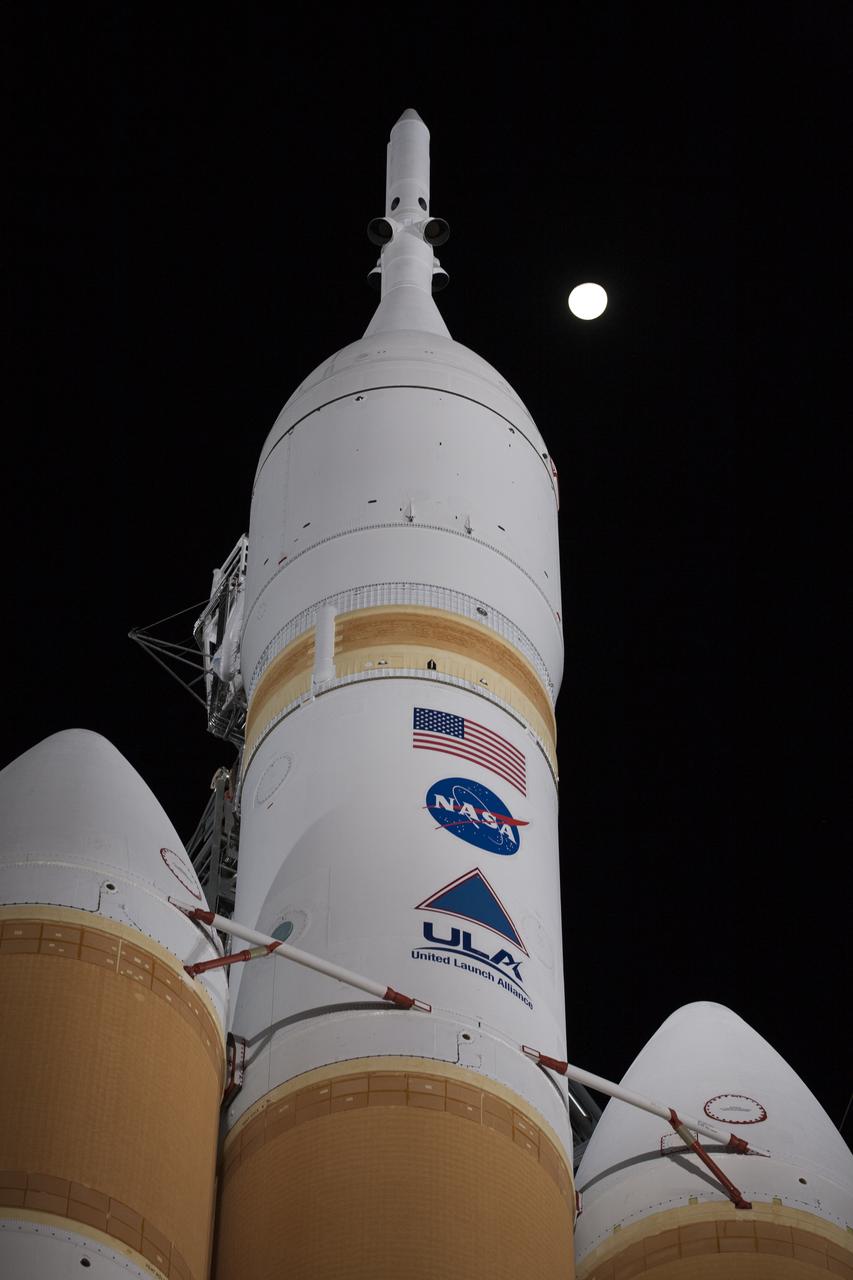
The launch gantry is rolled back to reveal NASA's Orion spacecraft mounted atop a United Launch Alliance Delta IV Heavy rocket at Cape Canaveral Air Force Station's Space Launch Complex 37. Orion is NASA’s new spacecraft built to carry humans, designed to allow us to journey to destinations never before visited by humans, including an asteroid and Mars.
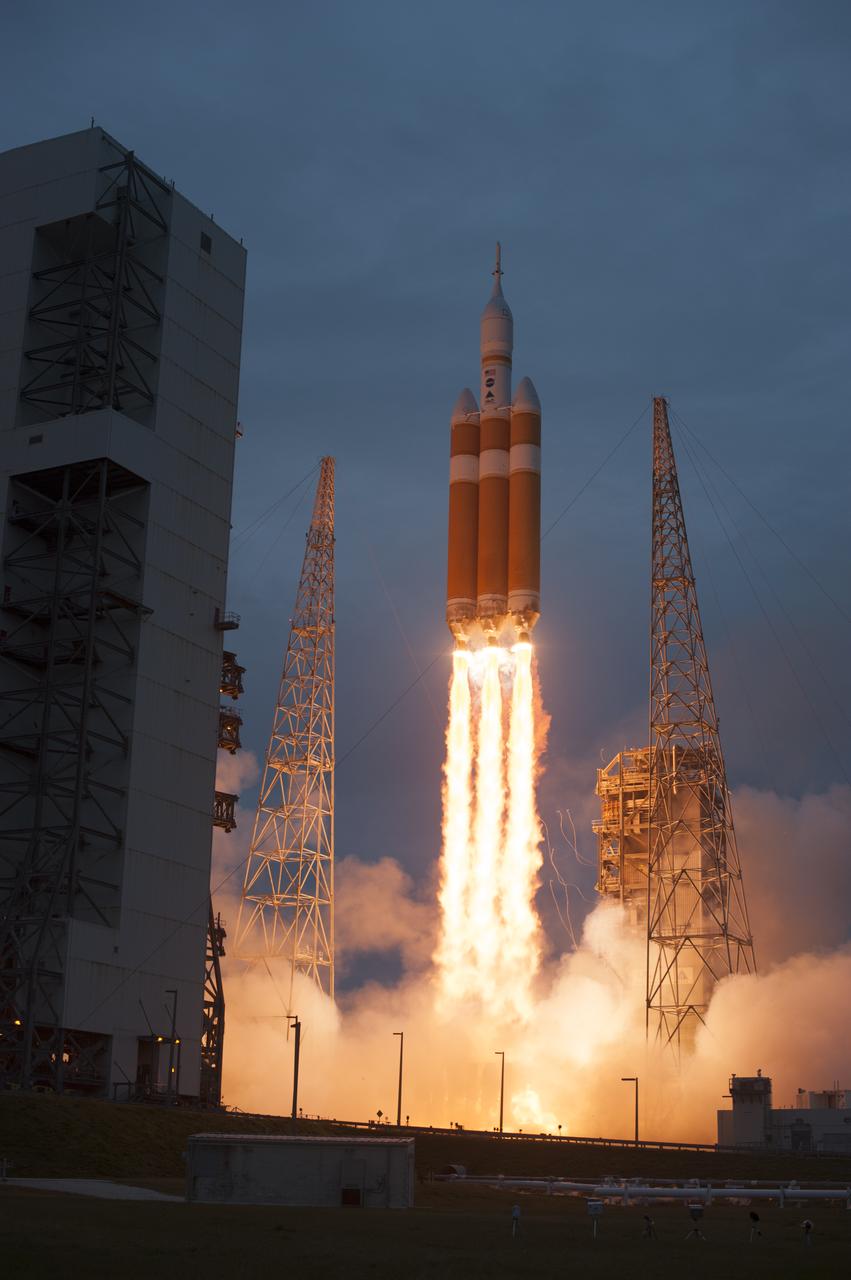
A Delta IV Heavy rocket lifts off from Space Launch Complex 37 at Cape Canaveral Air Force Station in Florida carrying NASA's Orion spacecraft on an unpiloted flight test to Earth orbit. Liftoff was at 7:05 a.m. EST. During the two-orbit, four-and-a-half hour mission, engineers will evaluate the systems critical to crew safety, the launch abort system, the heat shield and the parachute system.
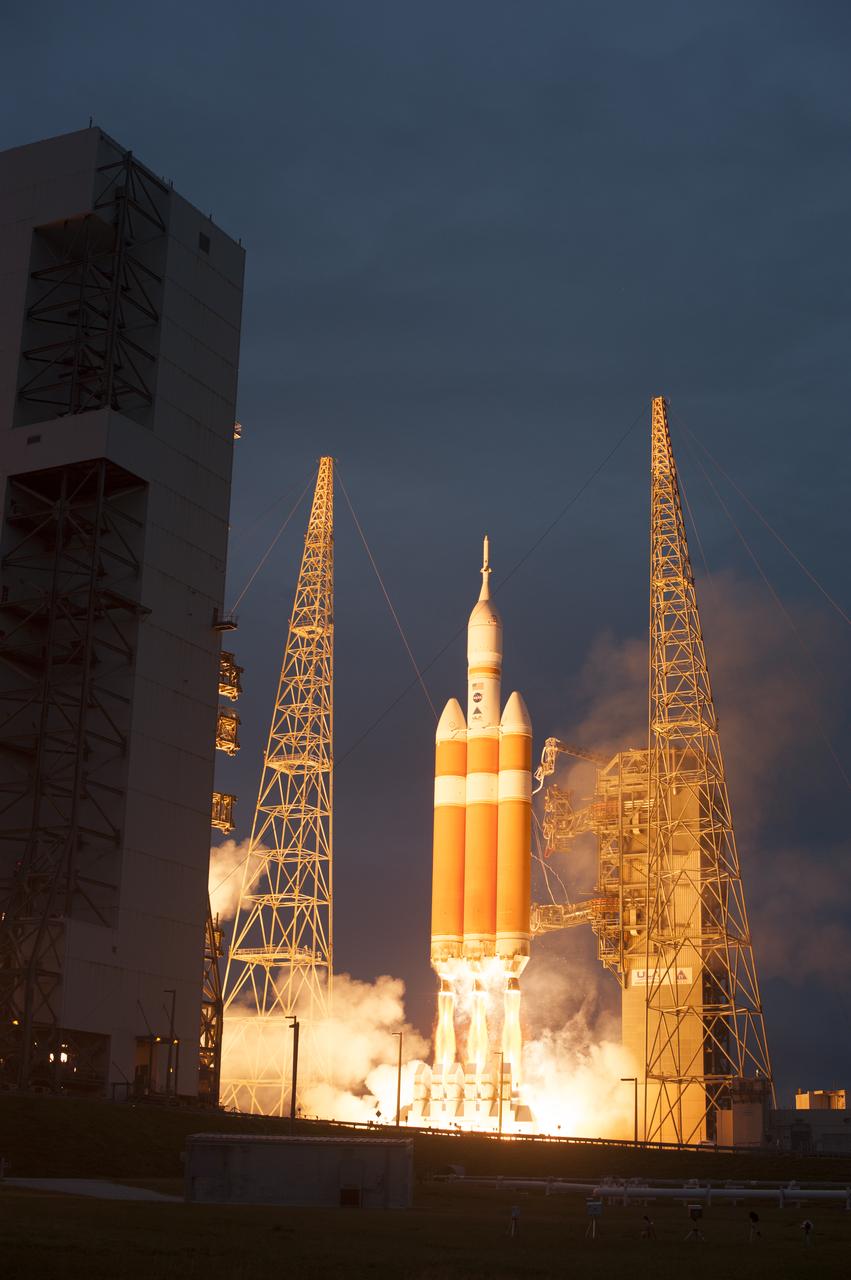
A Delta IV Heavy rocket lifts off from Space Launch Complex 37 at Cape Canaveral Air Force Station in Florida carrying NASA's Orion spacecraft on an unpiloted flight test to Earth orbit. Liftoff was at 7:05 a.m. EST. During the two-orbit, four-and-a-half hour mission, engineers will evaluate the systems critical to crew safety, the launch abort system, the heat shield and the parachute system.
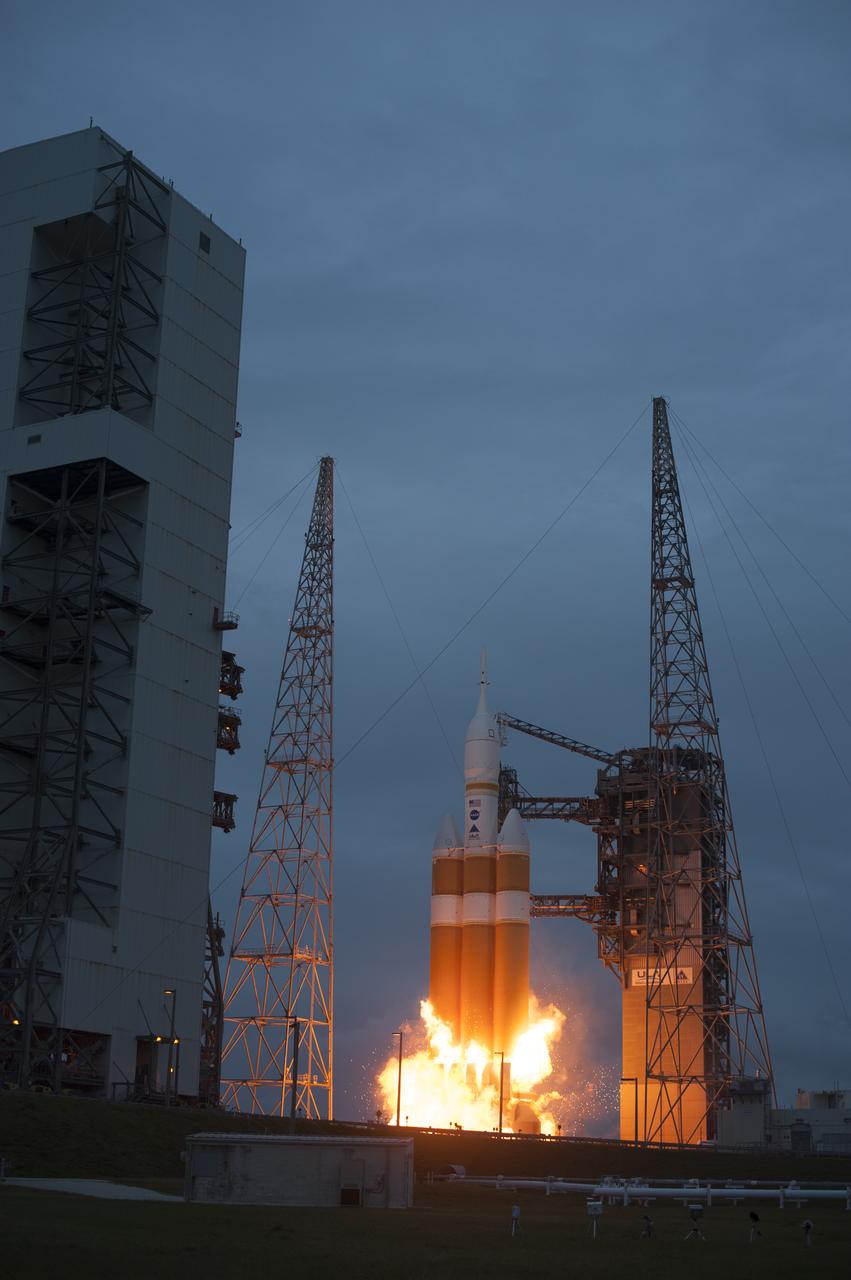
A Delta IV Heavy rocket lifts off from Space Launch Complex 37 at Cape Canaveral Air Force Station in Florida carrying NASA's Orion spacecraft on an unpiloted flight test to Earth orbit. Liftoff was at 7:05 a.m. EST. During the two-orbit, four-and-a-half hour mission, engineers will evaluate the systems critical to crew safety, the launch abort system, the heat shield and the parachute system.

At Cape Canaveral Air Force Station's Launch Complex 37, United Launch Alliance engineers and technicians prepare to lift the agency's Orion spacecraft for mounting atop its Delta IV Heavy rocket. Orion is the exploration spacecraft designed to carry astronauts to destinations not yet explored by humans, including an asteroid and Mars. It will have emergency abort capability, sustain the crew during space travel and provide safe re-entry from deep space return velocities. The first unpiloted flight test of Orion is scheduled to launch Dec. 4, 2014 atop a United Launch Alliance Delta IV Heavy rocket, and in 2018 on NASA’s Space Launch System rocket.
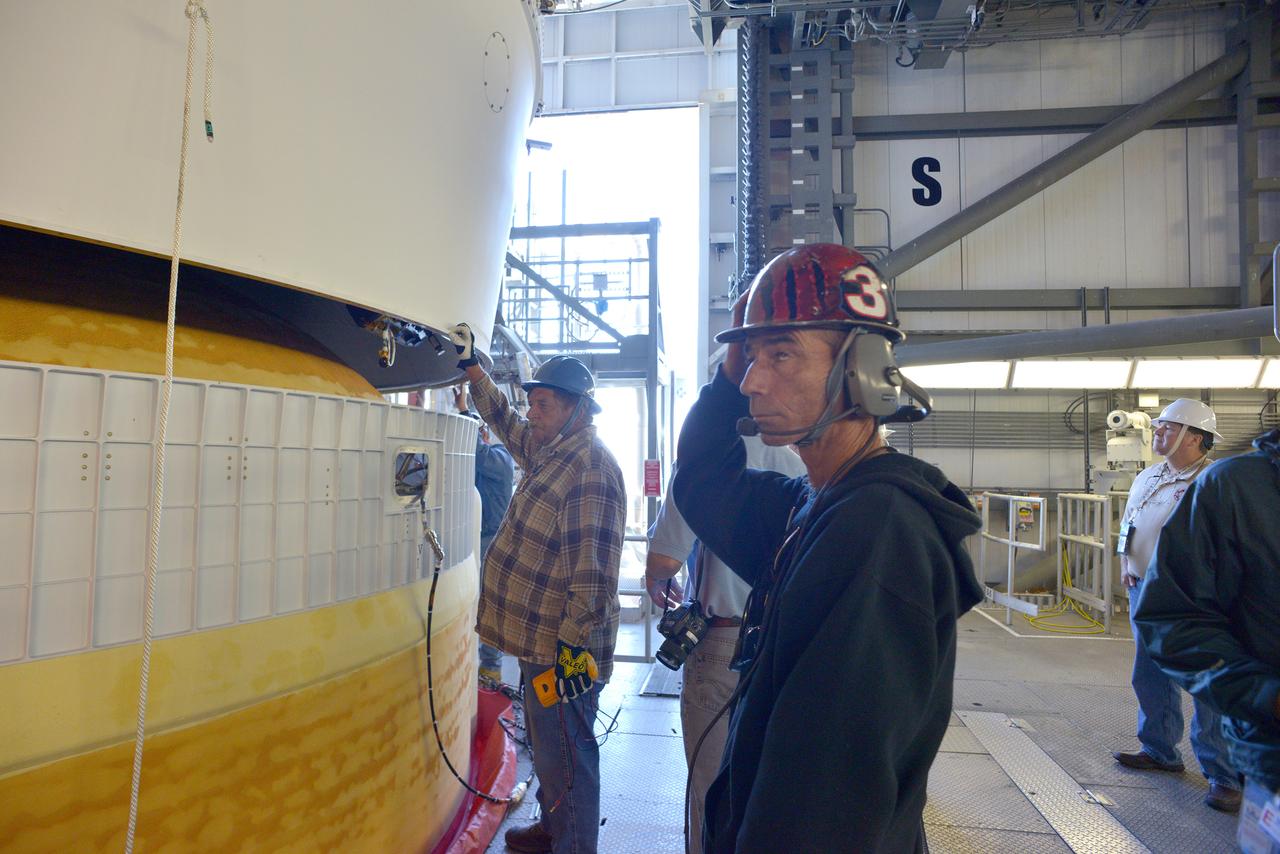
At Cape Canaveral Air Force Station's Launch Complex 37, United Launch Alliance engineers and technicians mate the agency's Orion spacecraft to its Delta IV Heavy rocket. Orion is the exploration spacecraft designed to carry astronauts to destinations not yet explored by humans, including an asteroid and Mars. It will have emergency abort capability, sustain the crew during space travel and provide safe re-entry from deep space return velocities. The first unpiloted flight test of Orion is scheduled to launch Dec. 4, 2014 atop a United Launch Alliance Delta IV Heavy rocket, and in 2018 on NASA’s Space Launch System rocket.

This helicopter view of Space Launch Complex 37 at Cape Canaveral Air Force Station in Florida shows the United Launch Alliance Delta IV Heavy rocket as it stands ready to boost NASA's Orion spacecraft on a 4.5-hour mission.
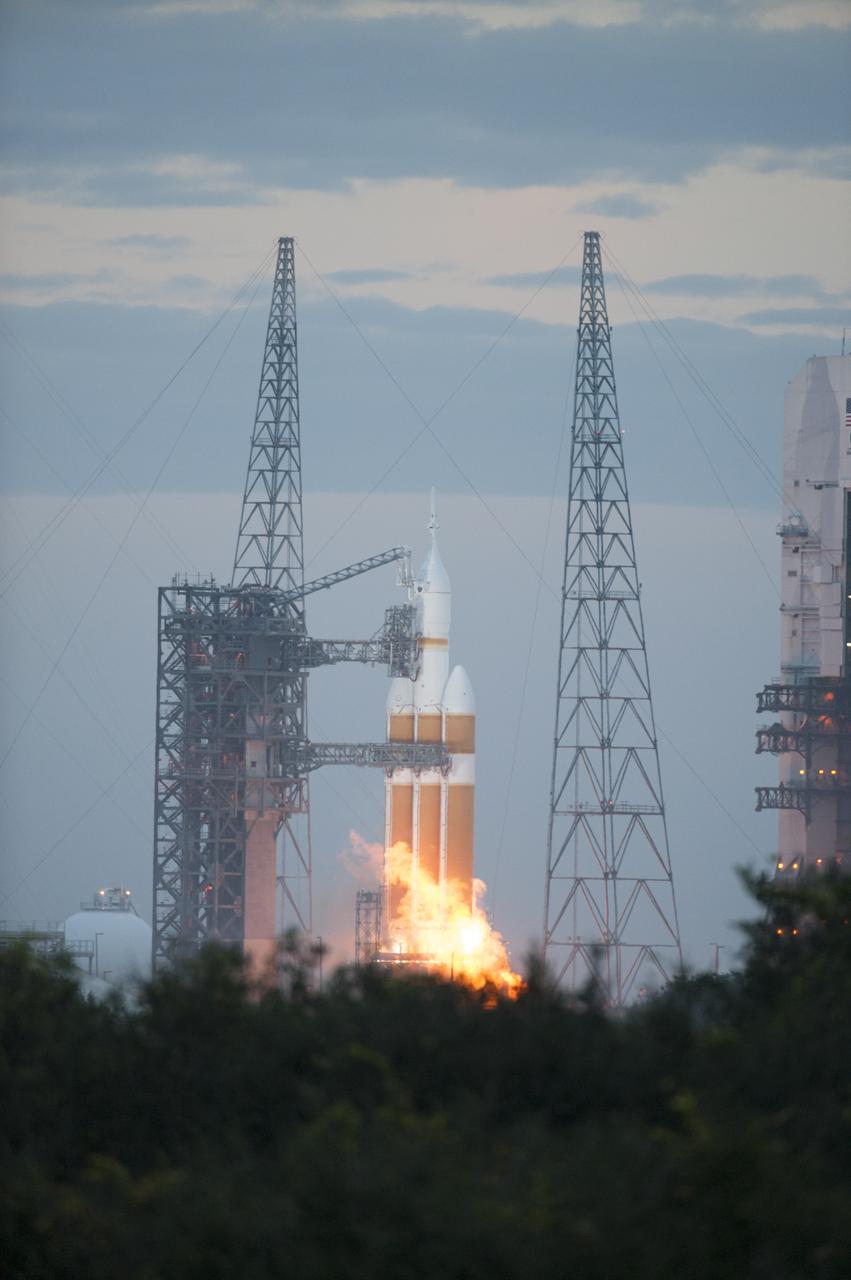
A Delta IV Heavy rocket lifts off from Space Launch Complex 37 at Cape Canaveral Air Force Station in Florida carrying NASA's Orion spacecraft on an unpiloted flight test to Earth orbit. Liftoff was at 7:05 a.m. EST. During the two-orbit, four-and-a-half hour mission, engineers will evaluate the systems critical to crew safety, the launch abort system, the heat shield and the parachute system.
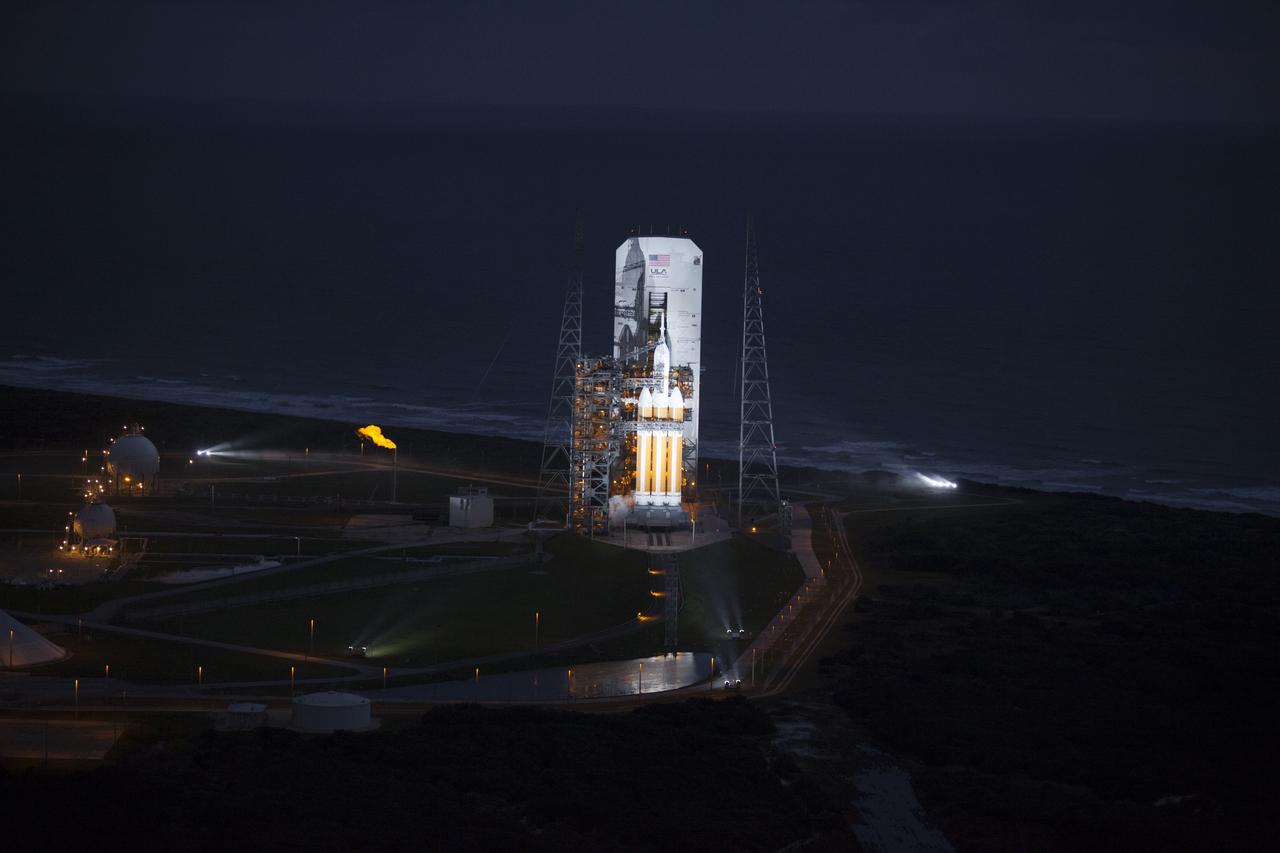
This helicopter view of Space Launch Complex 37 at Cape Canaveral Air Force Station in Florida shows the United Launch Alliance Delta IV Heavy rocket as it stands ready to boost NASA's Orion spacecraft on a 4.5-hour mission.
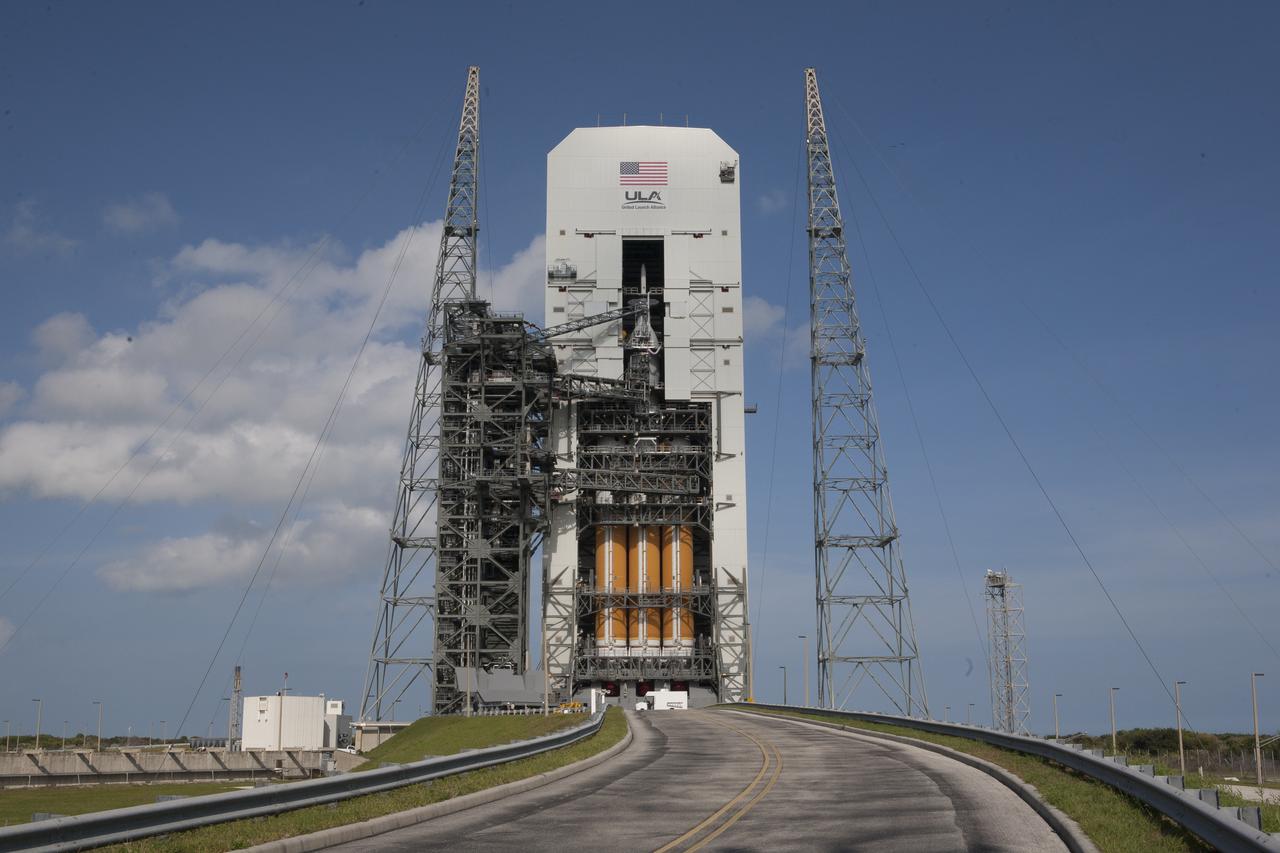
With access doors at Space Launch Complex 37 opened, the Orion and Delta IV Heavy stack is visible in its entirety inside the Mobile Service Tower where the vehicle is undergoing launch preparations. Orion will make its first flight test on Dec. 4 with a morning launch atop the United Launch Alliance Delta IV Heavy. The spacecraft will orbit the Earth twice, including one loop that will reach 3,600 miles above Earth. No one will be aboard Orion for this flight test, but the spacecraft is being designed and built to carry astronauts to deep space destinations such as an asteroid.
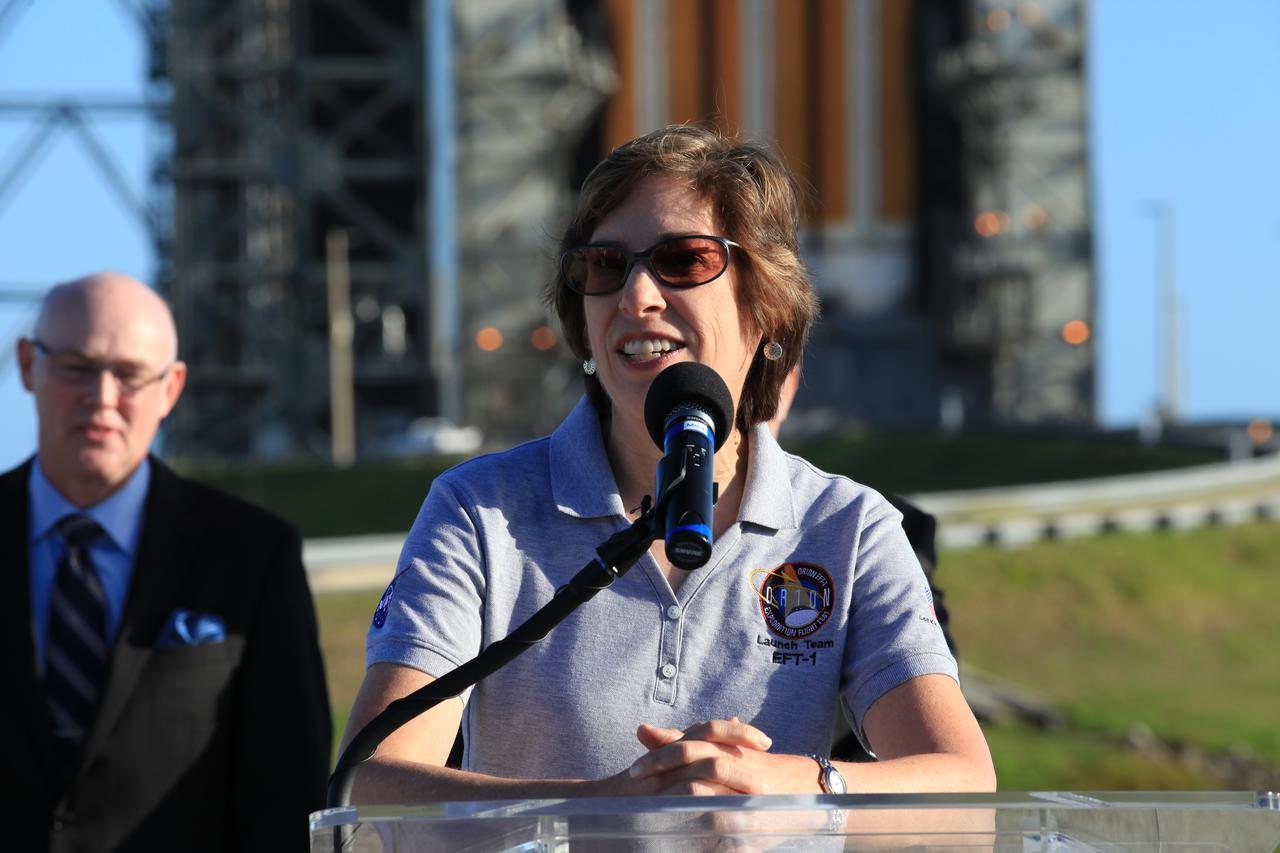
At Cape Canaveral Air Force Station's Launch Complex 37, Johnson Space Center Director Ellen Ochoa speaks to members of the news media as the Orion spacecraft and its United Launch Alliance Delta IV Heavy rocket were being prepared for launch. Behind Ochoa is United Launch Alliance CEO Tory Bruno.
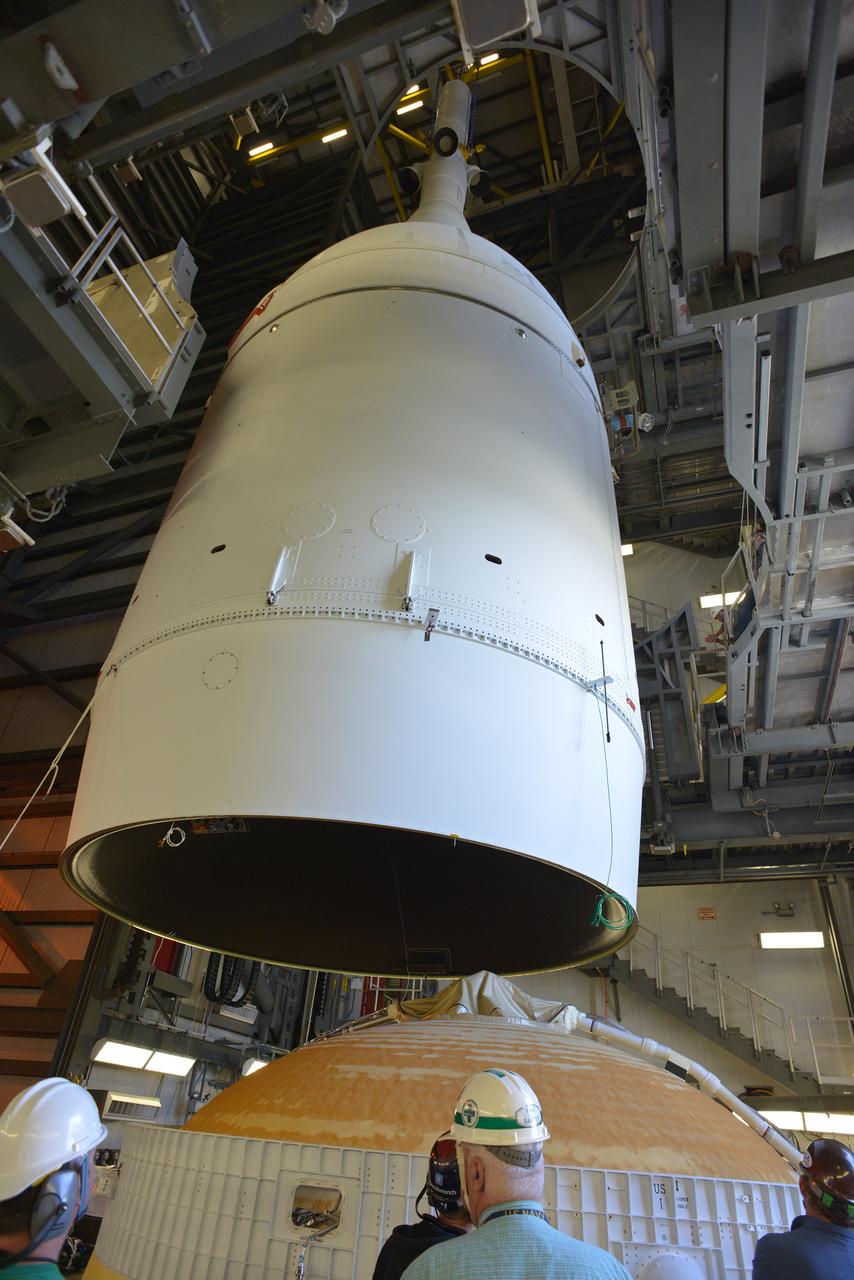
At Cape Canaveral Air Force Station's Launch Complex 37, United Launch Alliance engineers and technicians mate the agency's Orion spacecraft to its Delta IV Heavy rocket. Orion is the exploration spacecraft designed to carry astronauts to destinations not yet explored by humans, including an asteroid and Mars. It will have emergency abort capability, sustain the crew during space travel and provide safe re-entry from deep space return velocities. The first unpiloted flight test of Orion is scheduled to launch Dec. 4, 2014 atop a United Launch Alliance Delta IV Heavy rocket, and in 2018 on NASA’s Space Launch System rocket.
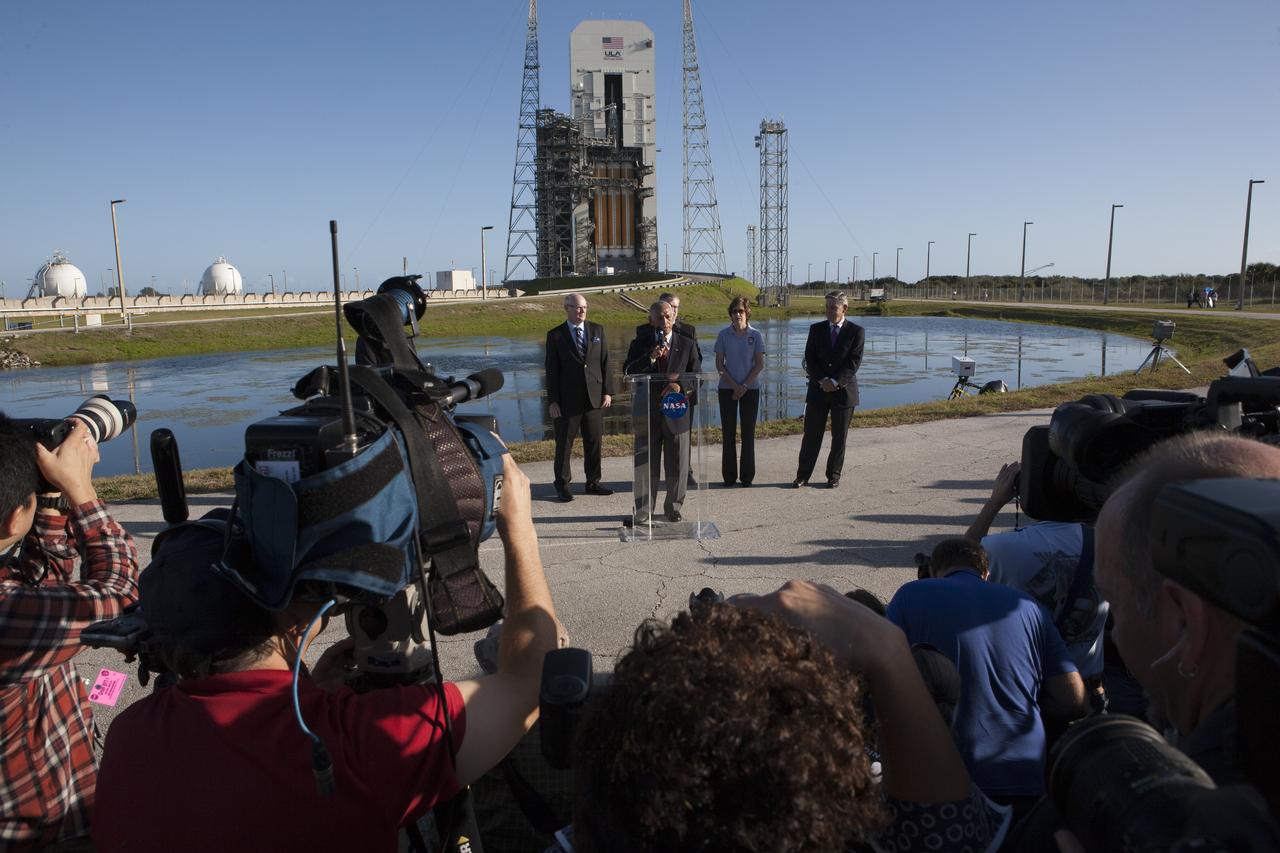
At Cape Canaveral Air Force Station's Launch Complex 37, NASA Administrator Charlie Bolden speaks to members of the news media as the Orion spacecraft and its United Launch Alliance Delta IV Heavy rocket are being prepared for launch. Behind Bolden, from the left, are United Launch Alliance CEO Tory Bruno, Lockheed Martin Orion Program Manager Mike Hawes partially hidden behind Bolden, Johnson Space Center Director Ellen Ochoa and Kennedy Space Center Director Bob Cabana.
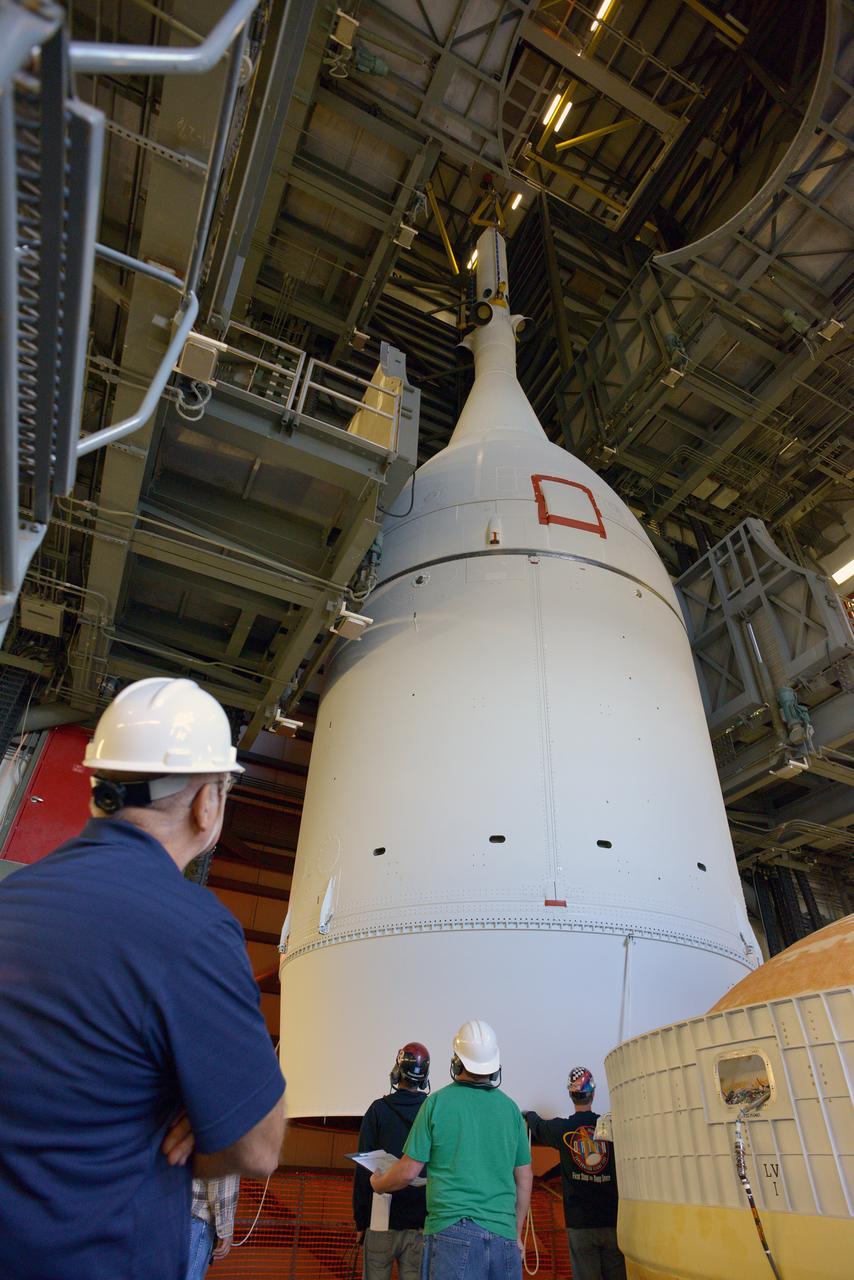
At Cape Canaveral Air Force Station's Launch Complex 37, United Launch Alliance engineers and technicians prepare to mate the agency's Orion spacecraft to its Delta IV Heavy rocket. Orion is the exploration spacecraft designed to carry astronauts to destinations not yet explored by humans, including an asteroid and Mars. It will have emergency abort capability, sustain the crew during space travel and provide safe re-entry from deep space return velocities. The first unpiloted flight test of Orion is scheduled to launch Dec. 4, 2014 atop a United Launch Alliance Delta IV Heavy rocket, and in 2018 on NASA’s Space Launch System rocket.
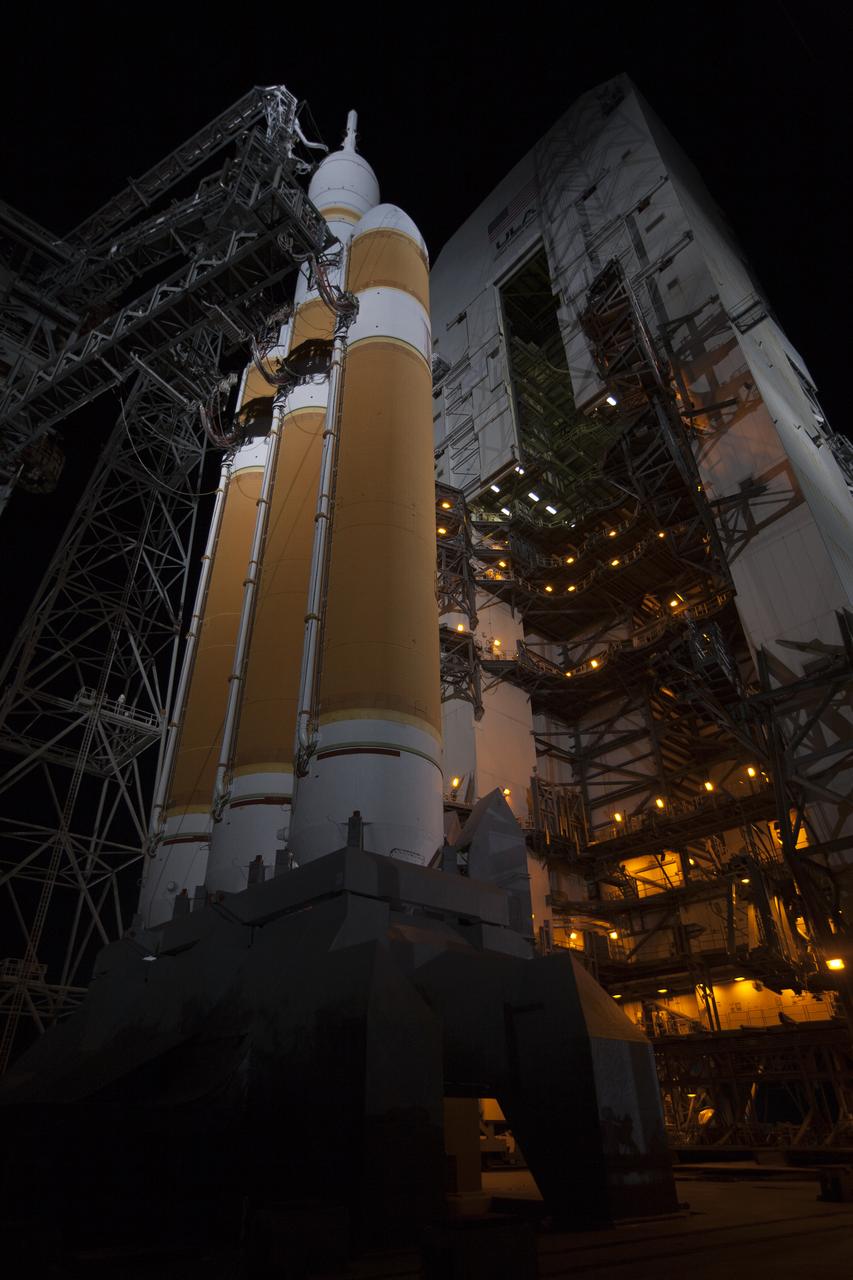
The launch gantry is rolled back to reveal NASA's Orion spacecraft mounted atop a United Launch Alliance Delta IV Heavy rocket at Cape Canaveral Air Force Station's Space Launch Complex 37. Orion is NASA’s new spacecraft built to carry humans, designed to allow us to journey to destinations never before visited by humans, including an asteroid and Mars.
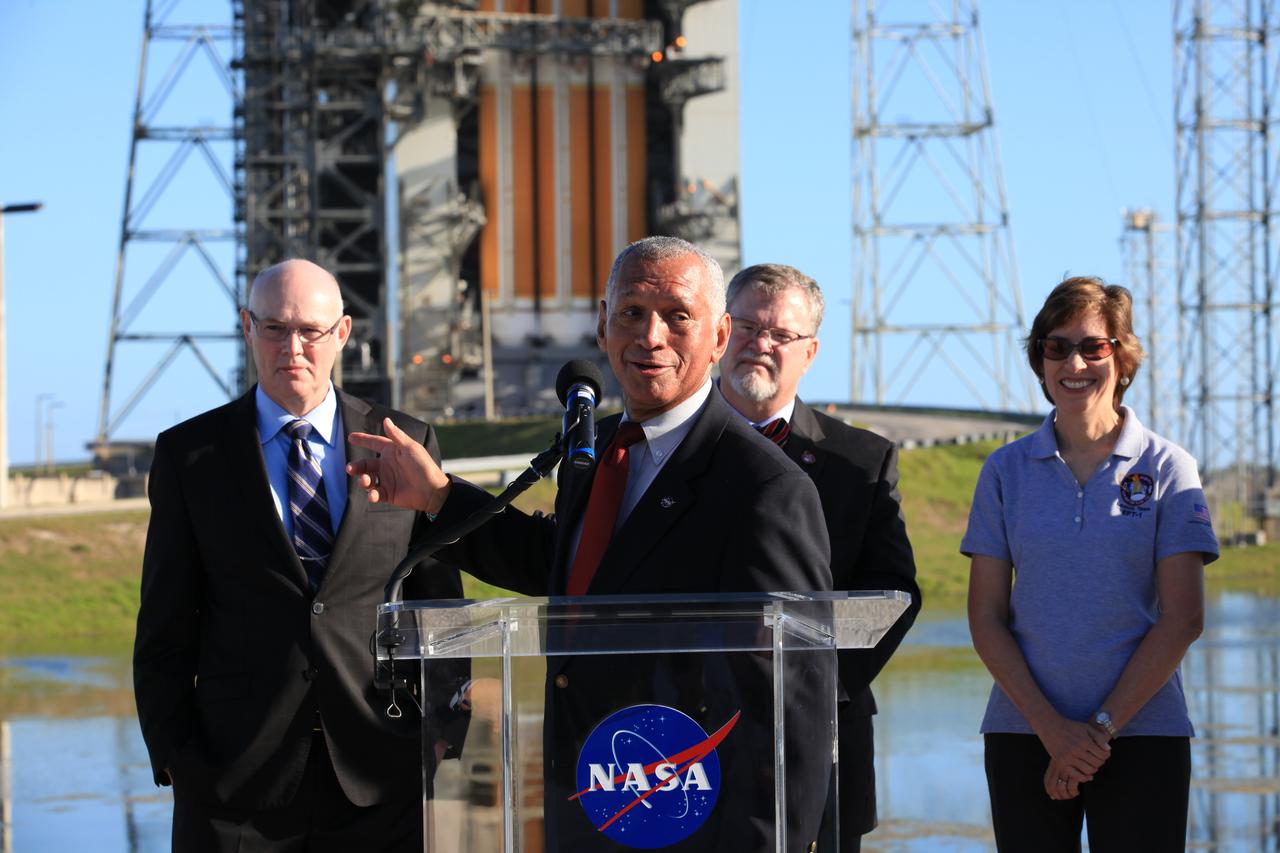
At Cape Canaveral Air Force Station's Launch Complex 37, NASA Administrator Charlie Bolden speaks to members of the news media as the Orion spacecraft and its United Launch Alliance Delta IV Heavy rocket were being prepared for launch. Behind Bolden, from the left, are United Launch Alliance CEO Tory Bruno, Lockheed Martin Orion Program manager Mike Hawes and Johnson Space Center Director Ellen Ochoa.
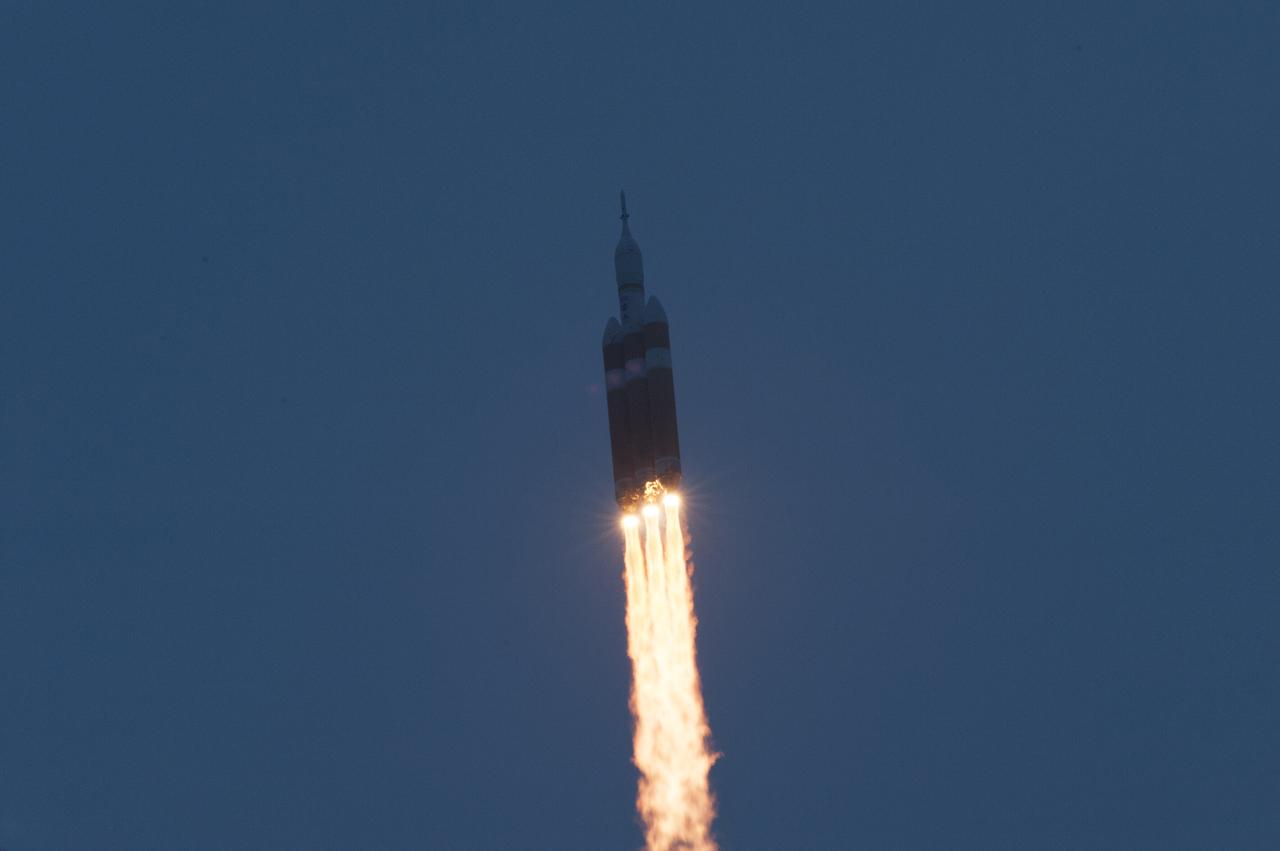
A Delta IV Heavy rocket soars after liftoff from Space Launch Complex 37 at Cape Canaveral Air Force Station in Florida carrying NASA's Orion spacecraft on an unpiloted flight test to Earth orbit. Liftoff was at 7:05 a.m. EST. During the two-orbit, four-and-a-half hour mission, engineers will evaluate the systems critical to crew safety, the launch abort system, the heat shield and the parachute system.
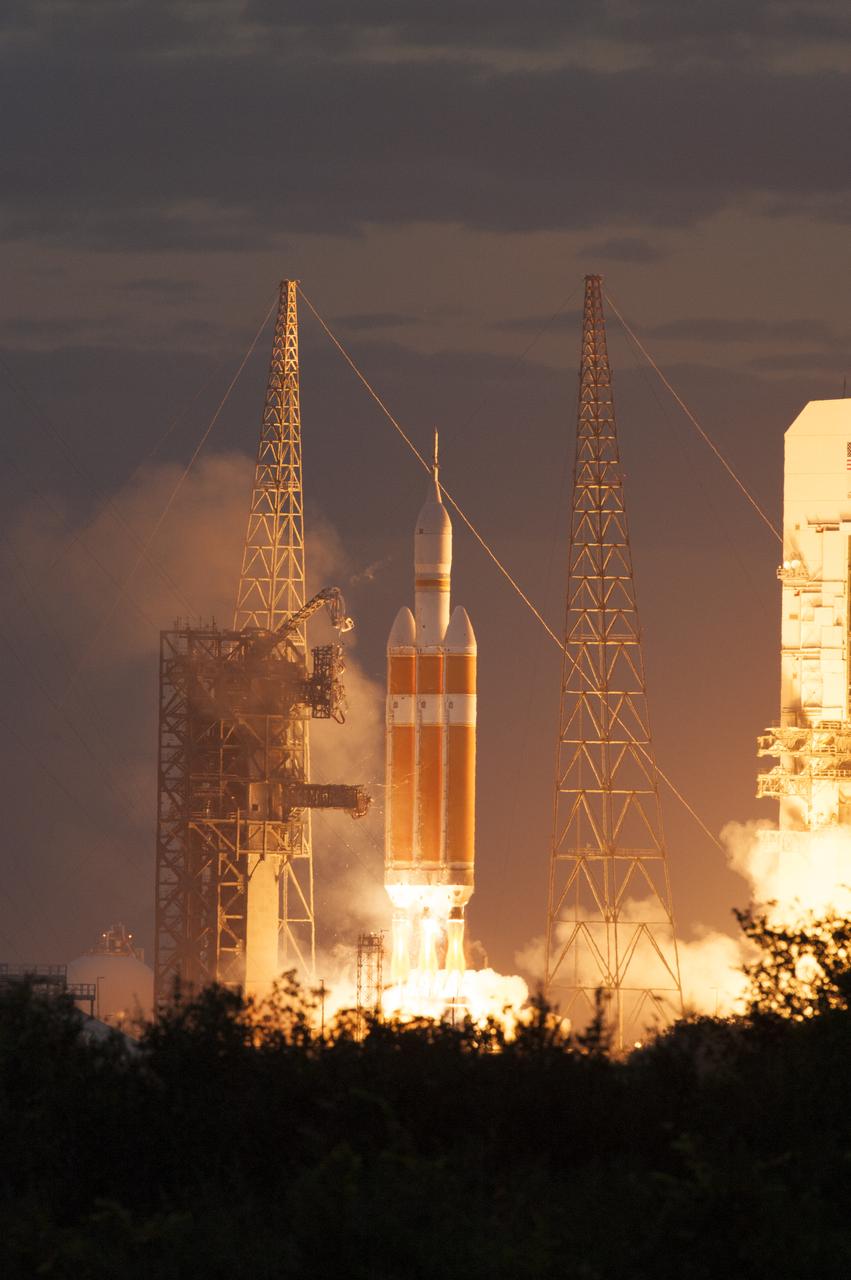
A Delta IV Heavy rocket lifts off from Space Launch Complex 37 at Cape Canaveral Air Force Station in Florida carrying NASA's Orion spacecraft on an unpiloted flight test to Earth orbit. Liftoff was at 7:05 a.m. EST. During the two-orbit, four-and-a-half hour mission, engineers will evaluate the systems critical to crew safety, the launch abort system, the heat shield and the parachute system.
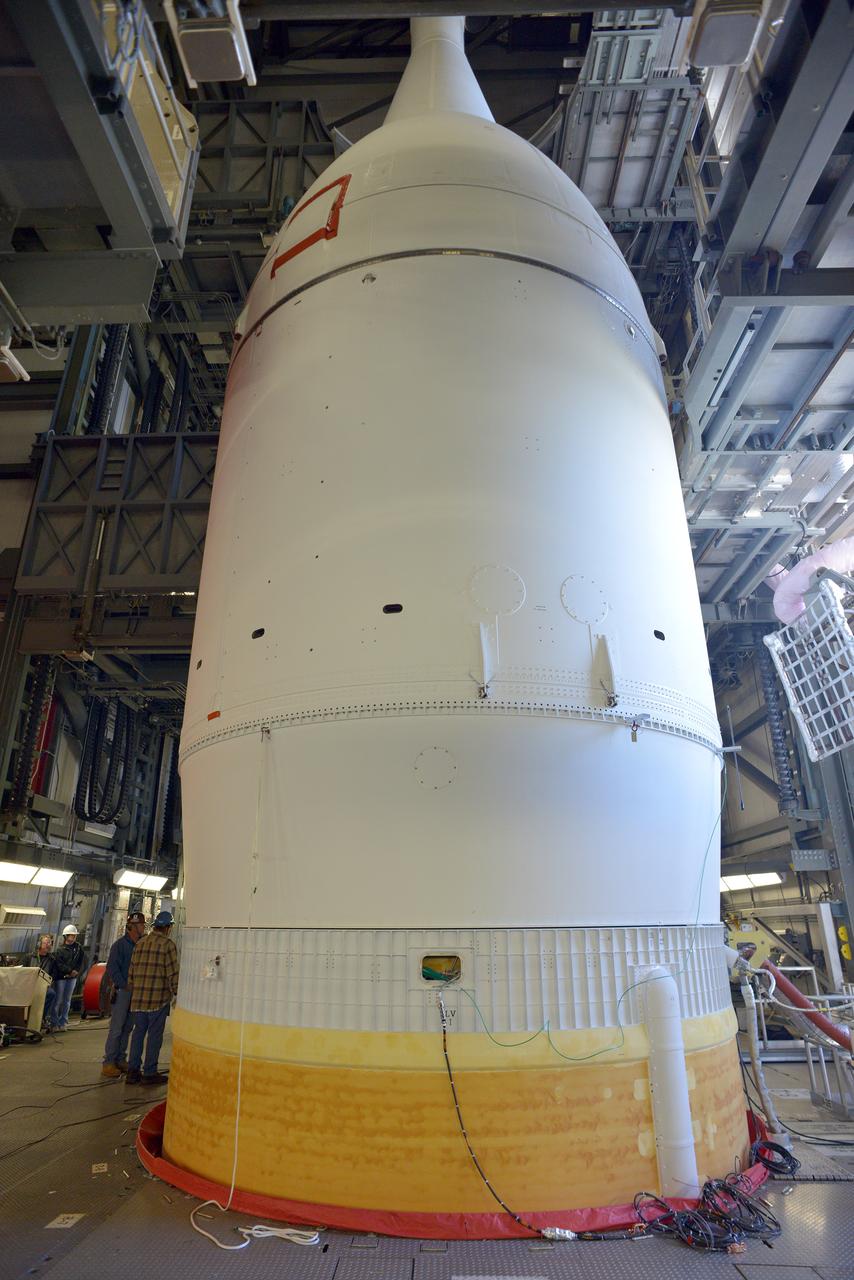
At Cape Canaveral Air Force Station's Launch Complex 37, United Launch Alliance engineers and technicians mate the agency's Orion spacecraft to its Delta IV Heavy rocket. Orion is the exploration spacecraft designed to carry astronauts to destinations not yet explored by humans, including an asteroid and Mars. It will have emergency abort capability, sustain the crew during space travel and provide safe re-entry from deep space return velocities. The first unpiloted flight test of Orion is scheduled to launch Dec. 4, 2014 atop a United Launch Alliance Delta IV Heavy rocket, and in 2018 on NASA’s Space Launch System rocket.
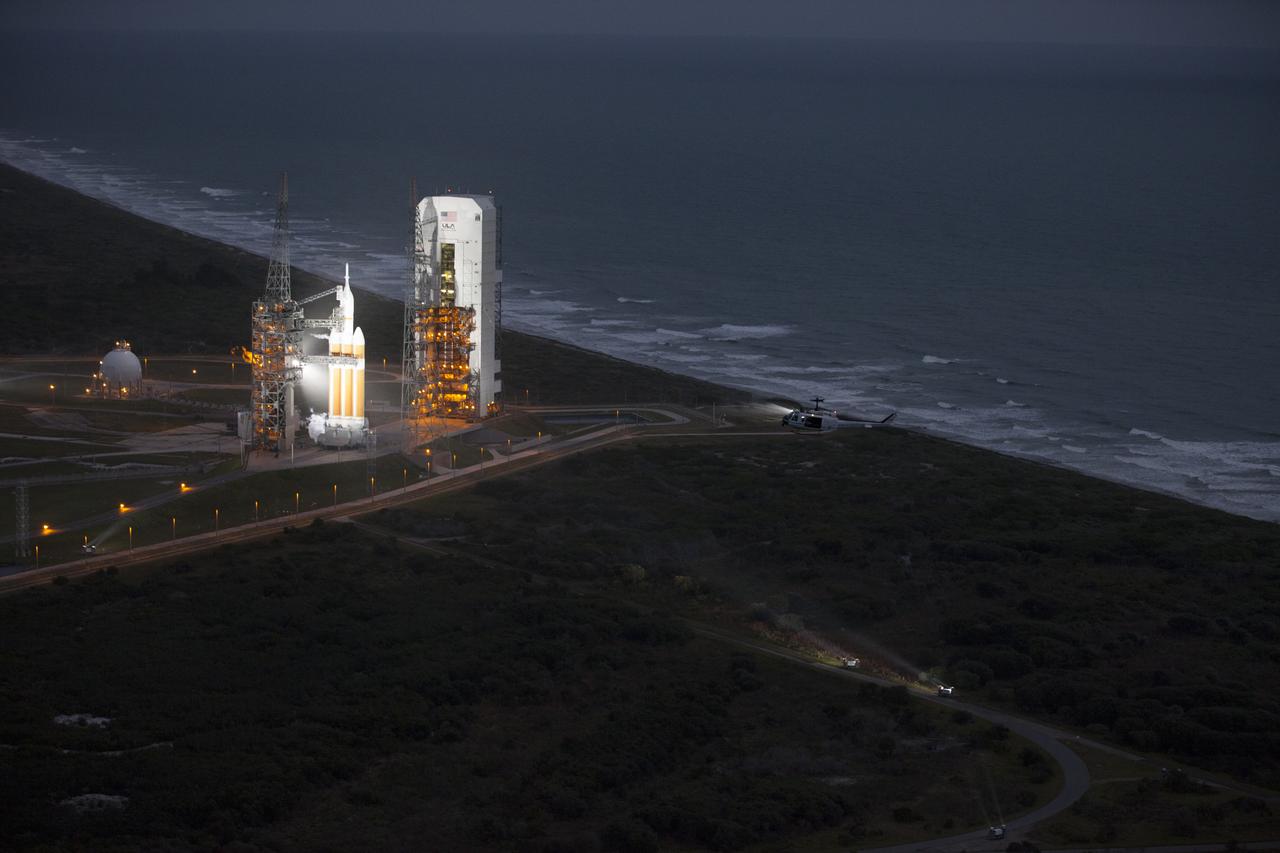
This helicopter view of Space Launch Complex 37 at Cape Canaveral Air Force Station in Florida shows the United Launch Alliance Delta IV Heavy rocket as it stands ready to boost NASA's Orion spacecraft on a 4.5-hour mission.
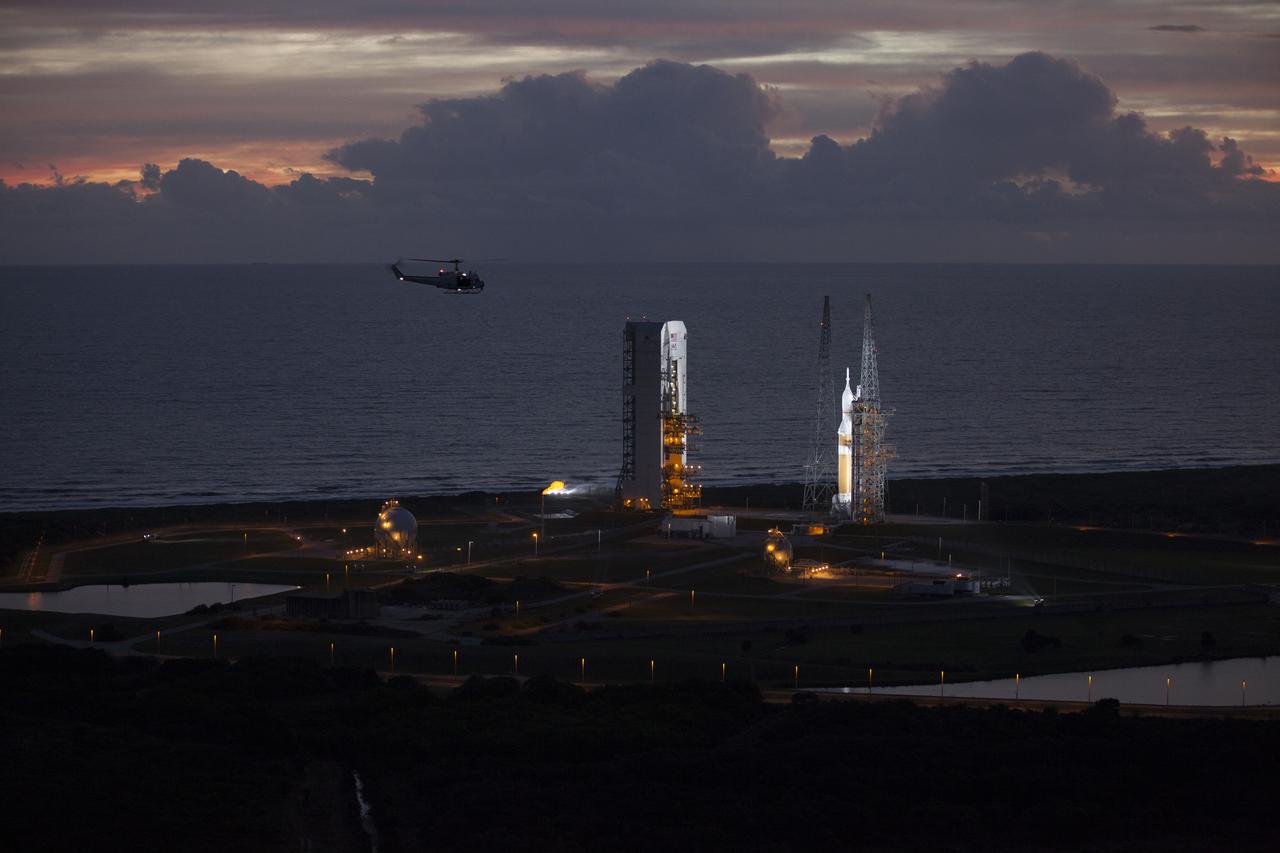
This helicopter view of Space Launch Complex 37 at Cape Canaveral Air Force Station in Florida shows the United Launch Alliance Delta IV Heavy rocket as it stands ready to boost NASA's Orion spacecraft on a 4.5-hour mission. The liftoff was postponed because of an issue related to fill and drain valves on the Delta IV Heavy rocket that teams could not troubleshoot by the time the launch window expired.
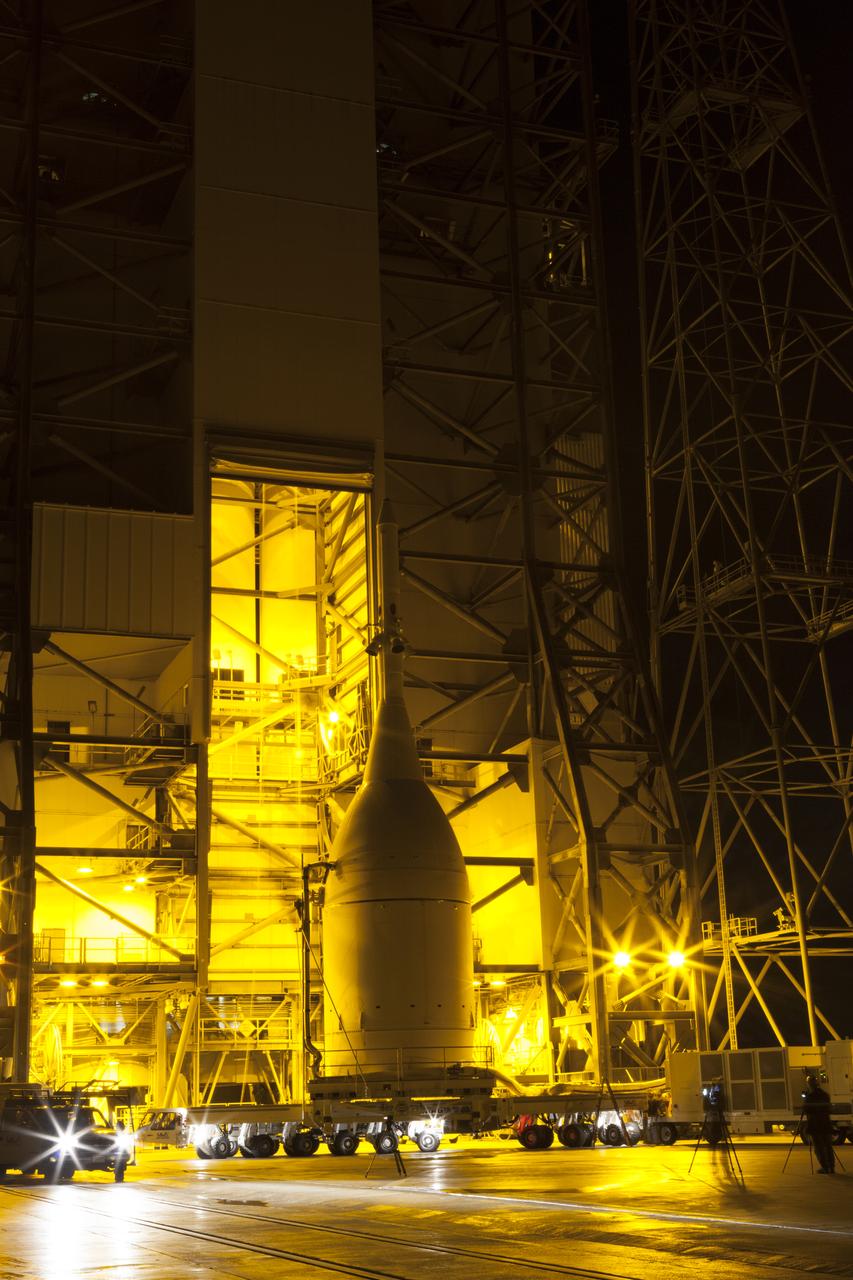
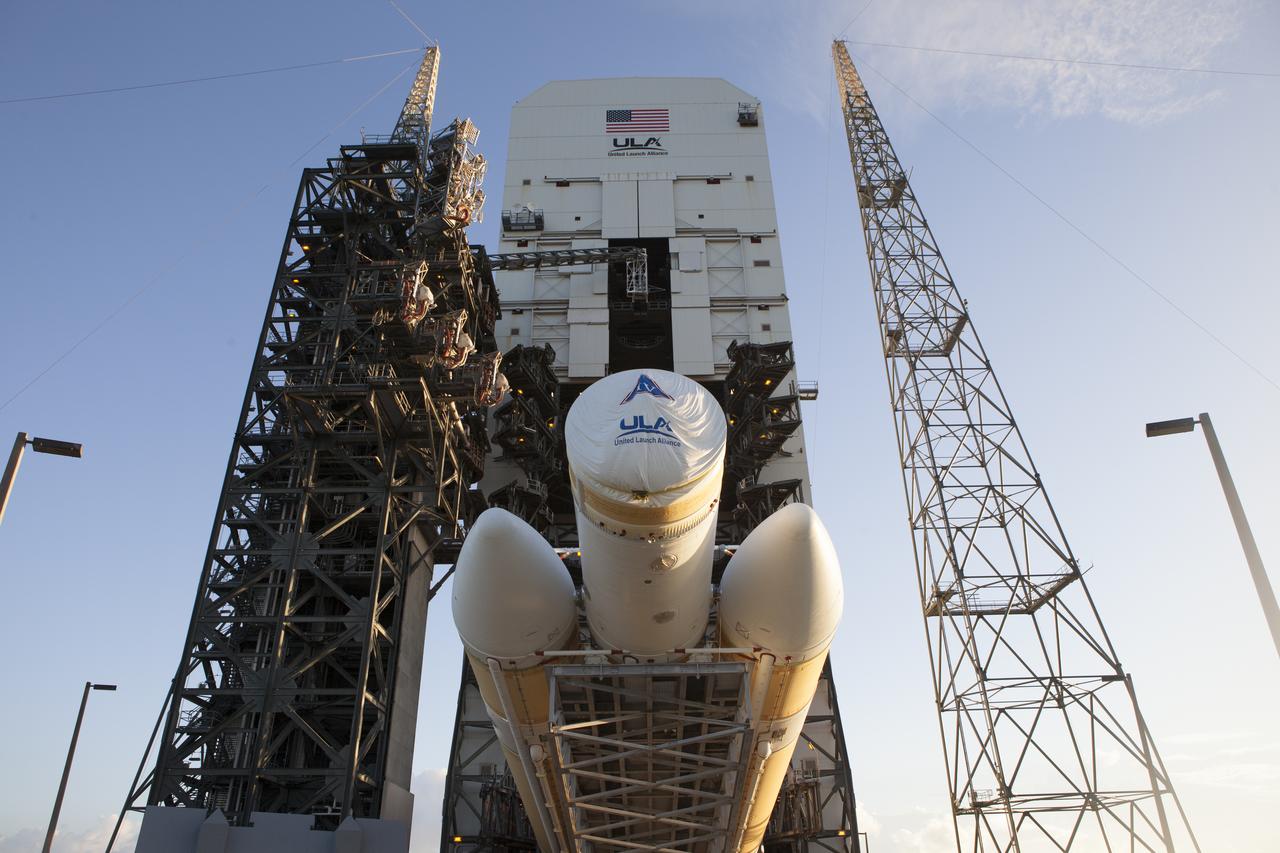
The Orion spacecraft and its transporter stand at the base of the service structure at Space Launch Complex 37. A crane inside the structure will lift Orion off its transporter to hoist it into place atop the Delta IV Heavy rocket that is already assembled at the pad. Orion is the exploration spacecraft designed to carry astronauts to destinations not yet explored by humans, including an asteroid and Mars. It will have emergency abort capability, sustain the crew during space travel and provide safe re-entry from deep space return velocities. The first unpiloted flight test of Orion is scheduled to launch Dec. 4, 2014, atop a United Launch Alliance Delta IV Heavy rocket, and in 2018 on NASA’s Space Launch System rocket.
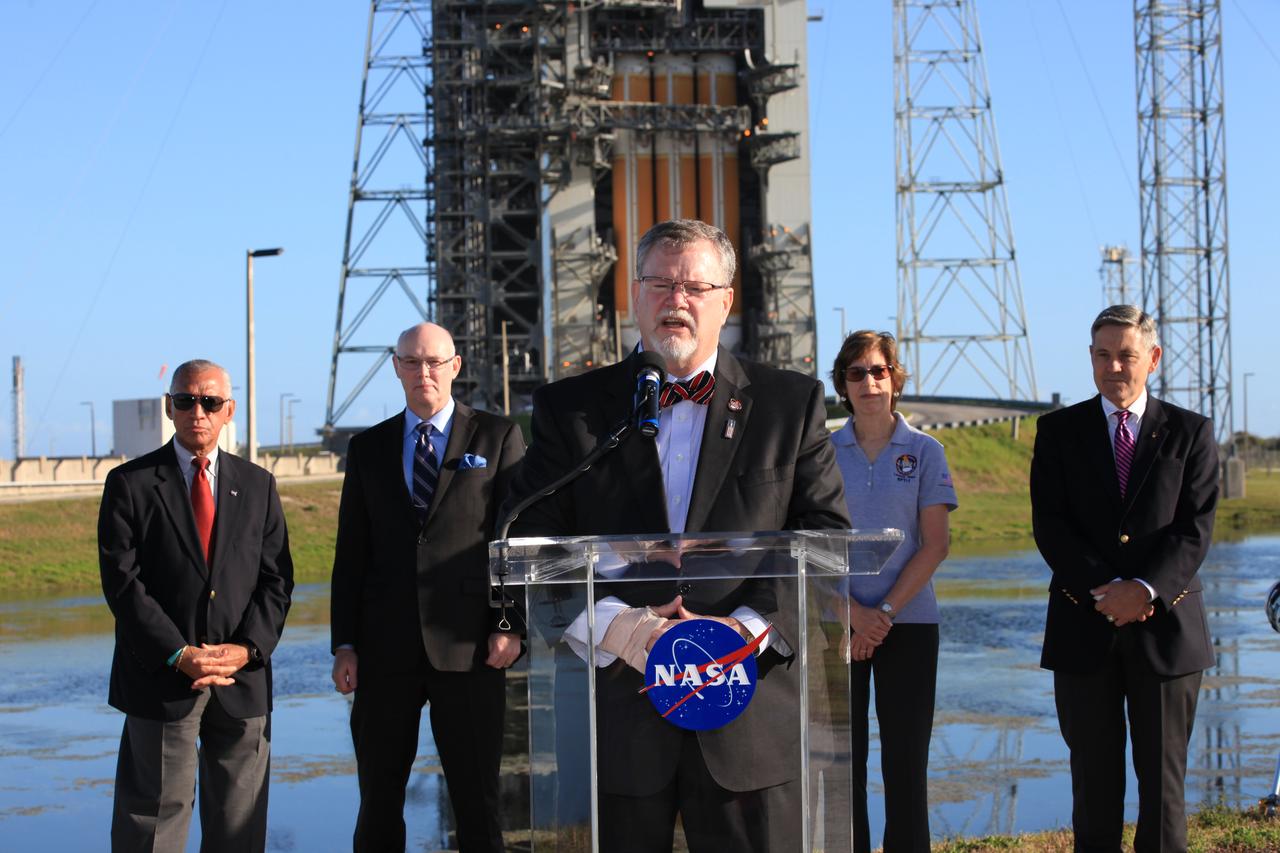
At Cape Canaveral Air Force Station's Launch Complex 37, Lockheed Martin Orion Program manager Mike Hawes speaks to members of the news media as the Orion spacecraft and its United Launch Alliance Delta IV Heavy rocket were being prepared for launch. Behind Hawes, from the left, are NASA Administrator Charlie Bolden, United Launch Alliance CEO Tory Bruno, Johnson Space Center Director Ellen Ochoa and Kennedy Space Center Director Bob Cabana.
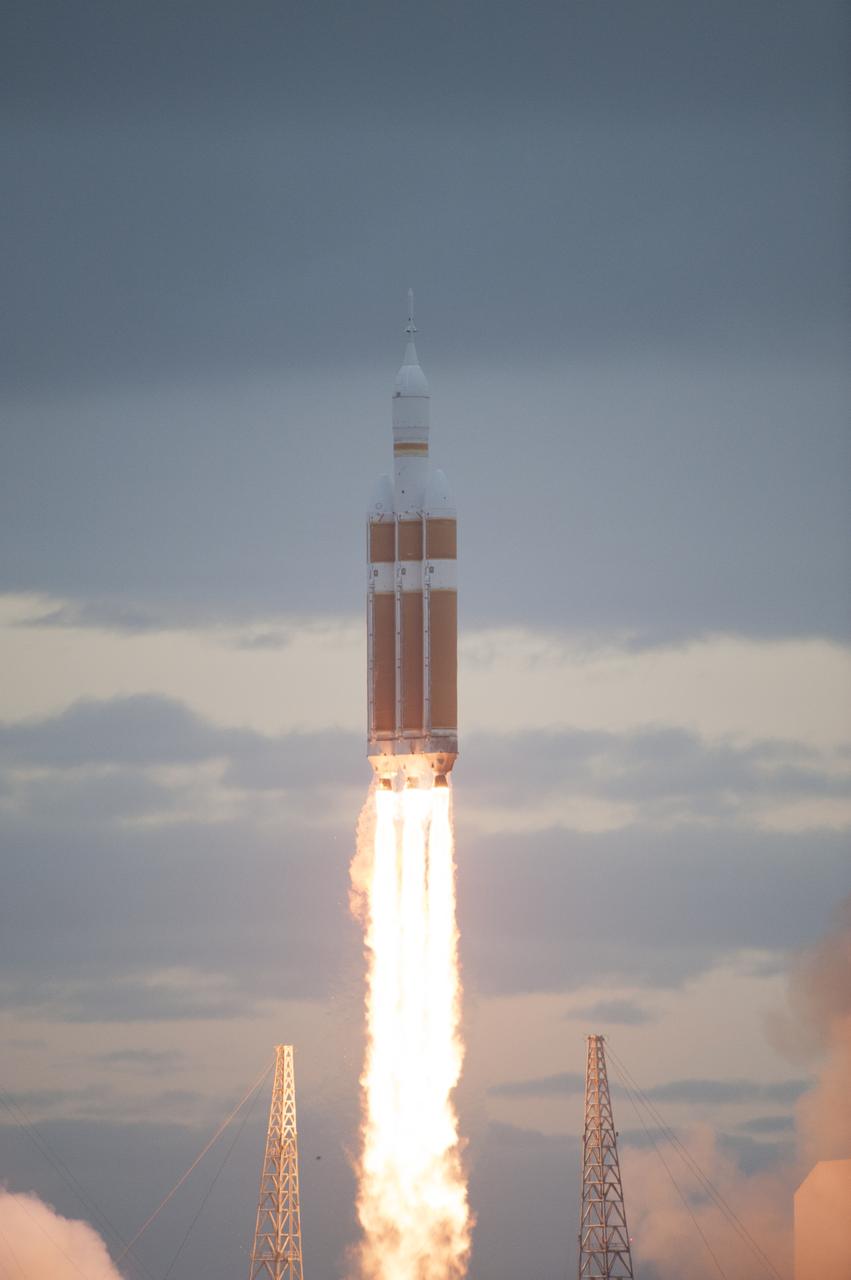
A Delta IV Heavy rocket lifts off from Space Launch Complex 37 at Cape Canaveral Air Force Station in Florida carrying NASA's Orion spacecraft on an unpiloted flight test to Earth orbit. Liftoff was at 7:05 a.m. EST. During the two-orbit, four-and-a-half hour mission, engineers will evaluate the systems critical to crew safety, the launch abort system, the heat shield and the parachute system.
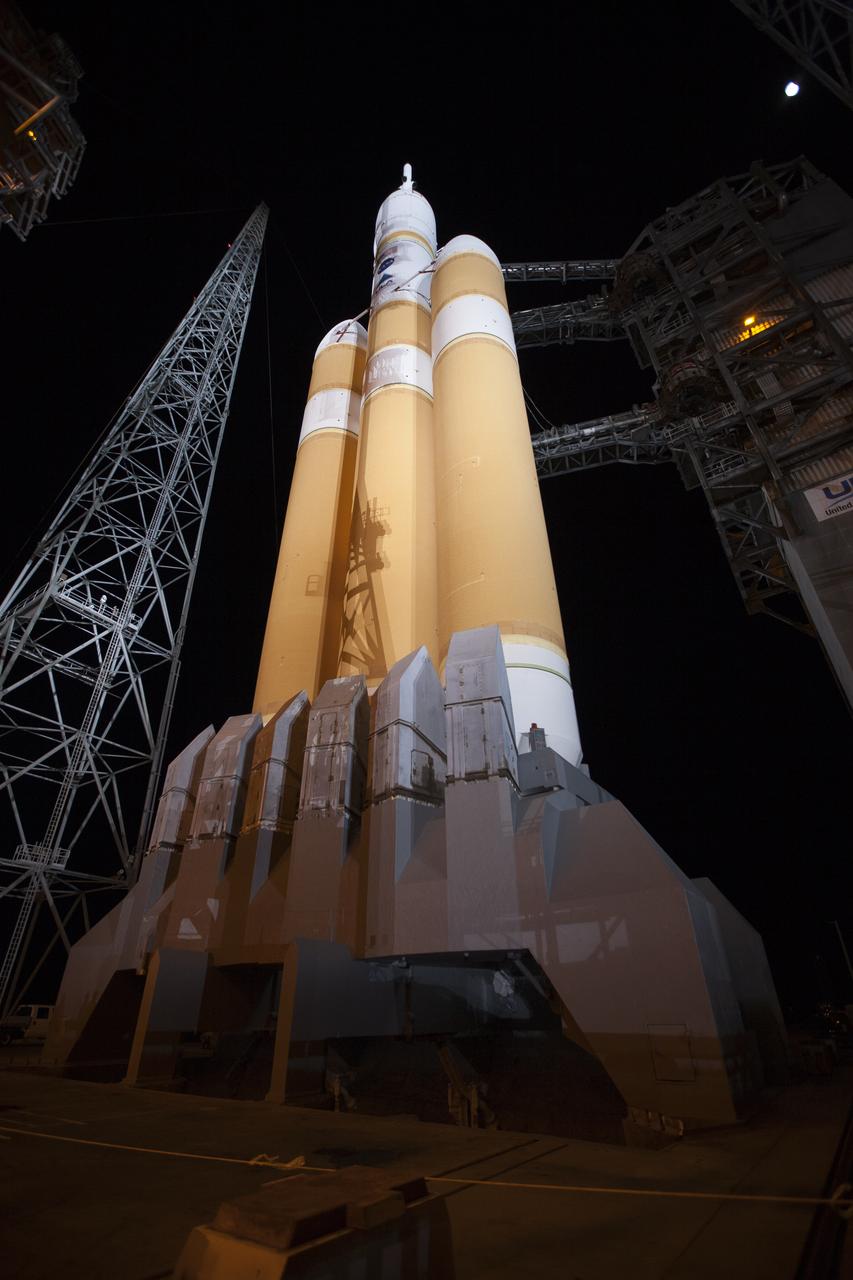
The launch gantry is rolled back to reveal NASA's Orion spacecraft mounted atop a United Launch Alliance Delta IV Heavy rocket at Cape Canaveral Air Force Station's Space Launch Complex 37. Orion is NASA’s new spacecraft built to carry humans, designed to allow us to journey to destinations never before visited by humans, including an asteroid and Mars.
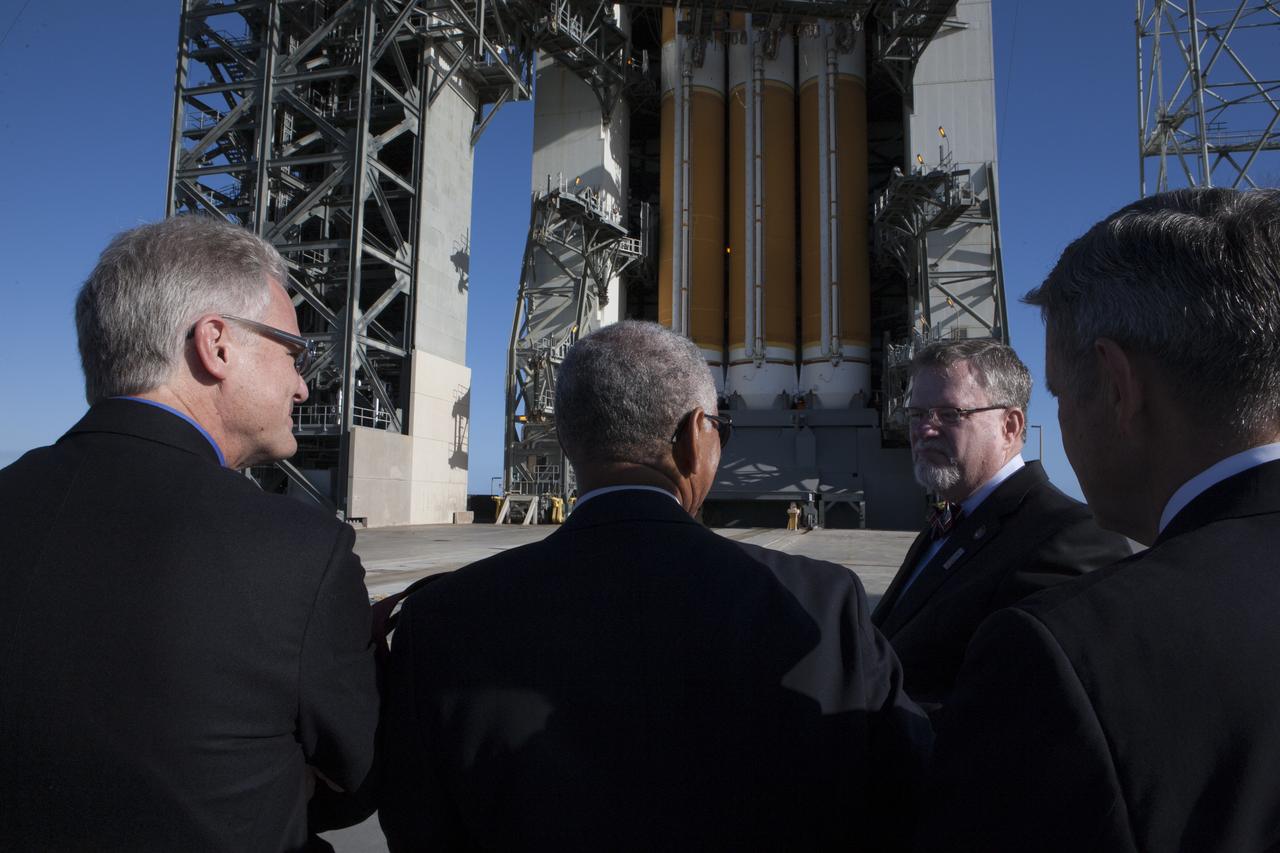
At Cape Canaveral Air Force Station's Launch Complex 37, Lockheed Martin Orion Program Manager Mike Hawes facing the camera briefs United Launch Alliance Vice President of Atlas and Delta Programs Jim Sponnick, NASA Administrator Charlie Bolden and Kennedy Space Center Director Bob Cabana backs to camera.
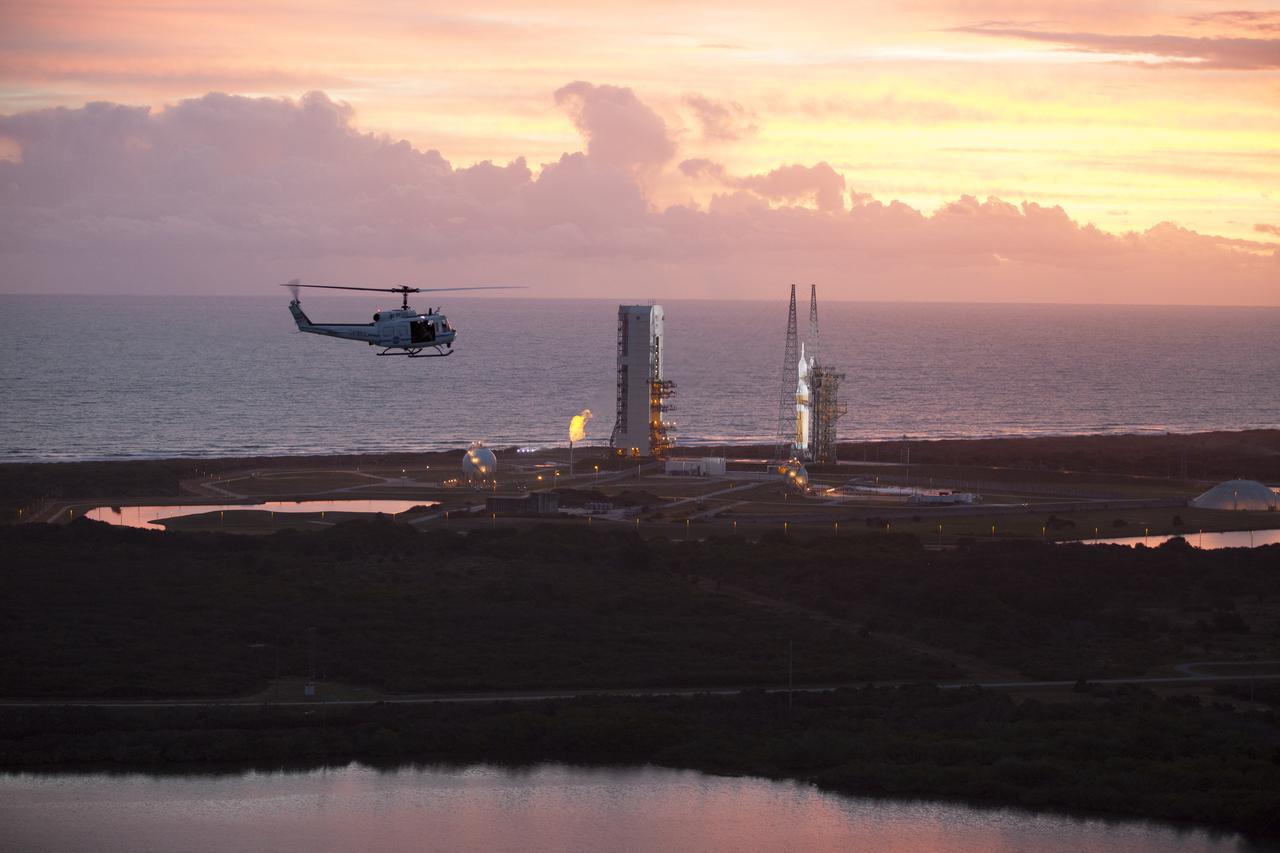
This helicopter view of Space Launch Complex 37 at Cape Canaveral Air Force Station in Florida shows the United Launch Alliance Delta IV Heavy rocket as it stands ready to boost NASA's Orion spacecraft on a 4.5-hour mission. The liftoff was postponed because of an issue related to fill and drain valves on the Delta IV Heavy rocket that teams could not troubleshoot by the time the launch window expired