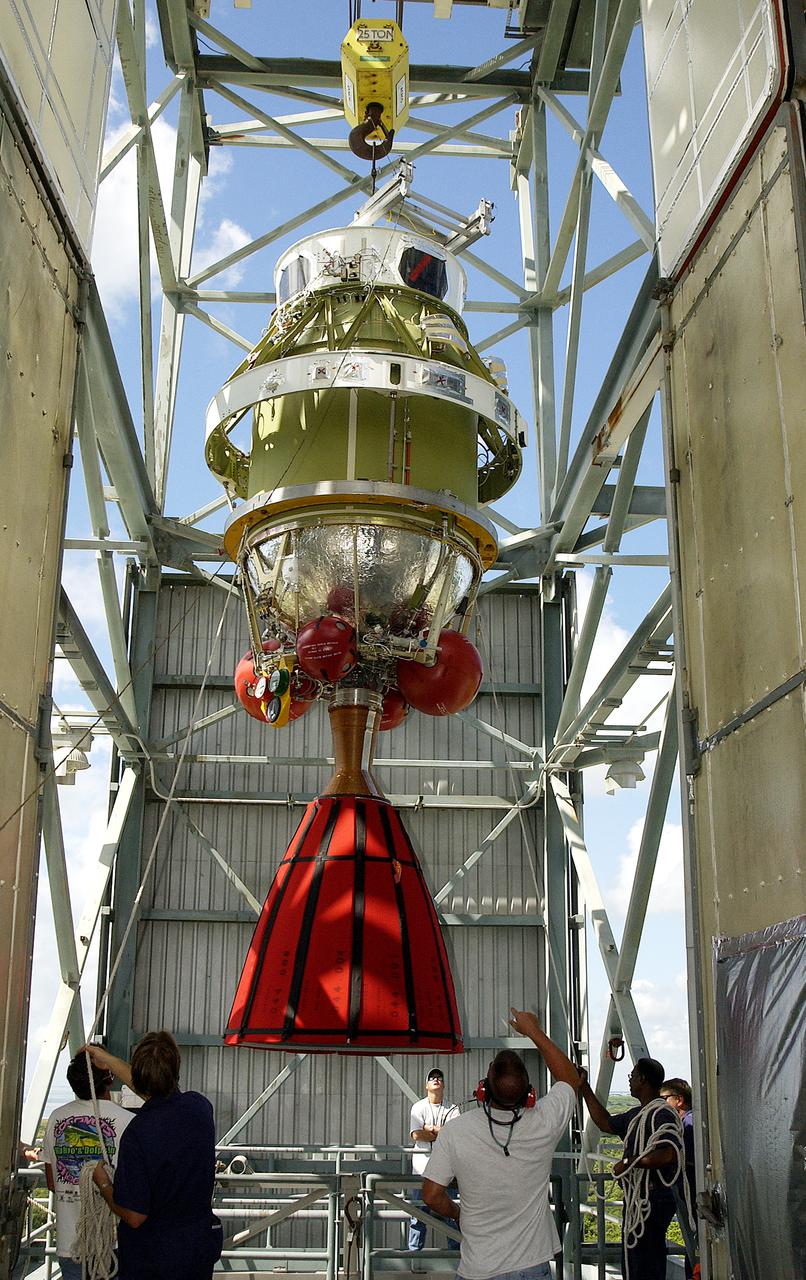
The second stage of the Delta II Heavy rocket is lifted into the mobile service tower on Launch Complex 17-B, Cape Canaveral Air Force Station, where it will be mated to the first stage. The rocket will launch the Space Infrared Telescope Facility (SIRTF), currently scheduled for mid-August. SIRTF consists of three cryogenically cooled science instruments and an 0.85-meter telescope, and is one of NASA's largest infrared telescopes to be launched. SIRTF will obtain images and spectra by detecting the infrared energy, or heat, radiated by objects in space. Most of this infrared radiation is blocked by the Earth's atmosphere and cannot be observed from the ground.
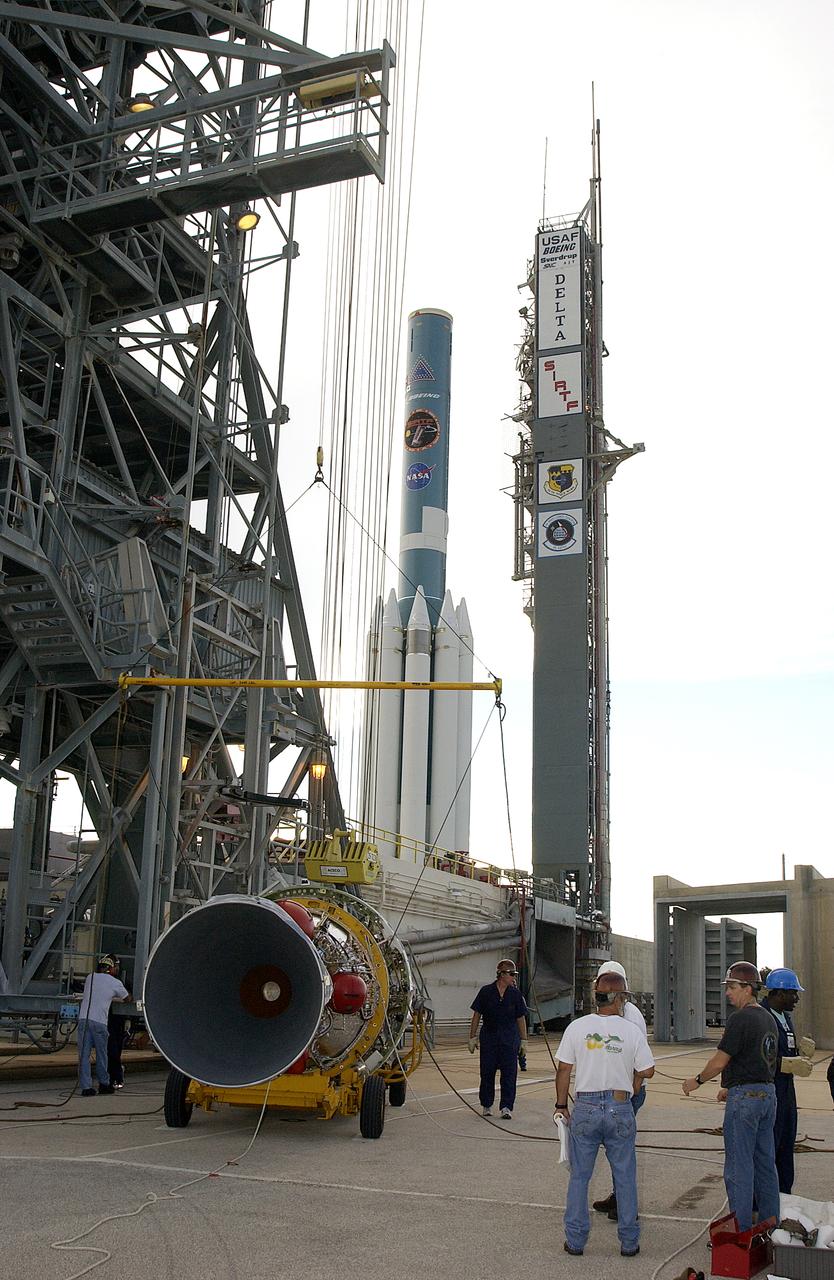
On Launch Complex 17-B, Cape Canaveral Air Force Station, the second stage of the Delta II Heavy rocket is ready to be lifted up the mobile service tower. The rocket will launch the Space Infrared Telescope Facility (SIRTF), currently scheduled for mid-August. SIRTF consists of three cryogenically cooled science instruments and an 0.85-meter telescope, and is one of NASA's largest infrared telescopes to be launched. SIRTF will obtain images and spectra by detecting the infrared energy, or heat, radiated by objects in space. Most of this infrared radiation is blocked by the Earth's atmosphere and cannot be observed from the ground.

Workers help guide the second stage of the Delta II Heavy rocket onto the first stage, below. The rocket will launch the Space Infrared Telescope Facility (SIRTF), currently scheduled for mid-August. SIRTF consists of three cryogenically cooled science instruments and an 0.85-meter telescope, and is one of NASA's largest infrared telescopes to be launched. SIRTF will obtain images and spectra by detecting the infrared energy, or heat, radiated by objects in space. Most of this infrared radiation is blocked by the Earth's atmosphere and cannot be observed from the ground.

In this close-up aerial view, the Delta II rocket with the THEMIS spacecraft atop sits ready for launch on Pad 17-B at Cape Canaveral Air Force Station. THEMIS, an acronym for Time History of Events and Macroscale Interactions during Substorms, consists of five identical probes that will track violent, colorful eruptions near the North Pole. This will be the largest number of scientific satellites NASA has ever launched into orbit aboard a single rocket. The THEMIS mission aims to unravel the mystery behind auroral substorms, an avalanche of magnetic energy powered by the solar wind that intensifies the northern and southern lights. The mission will investigate what causes auroras in the Earth’s atmosphere to dramatically change from slowly shimmering waves of light to wildly shifting streaks of bright color. Launch is scheduled for 6:05 p.m.
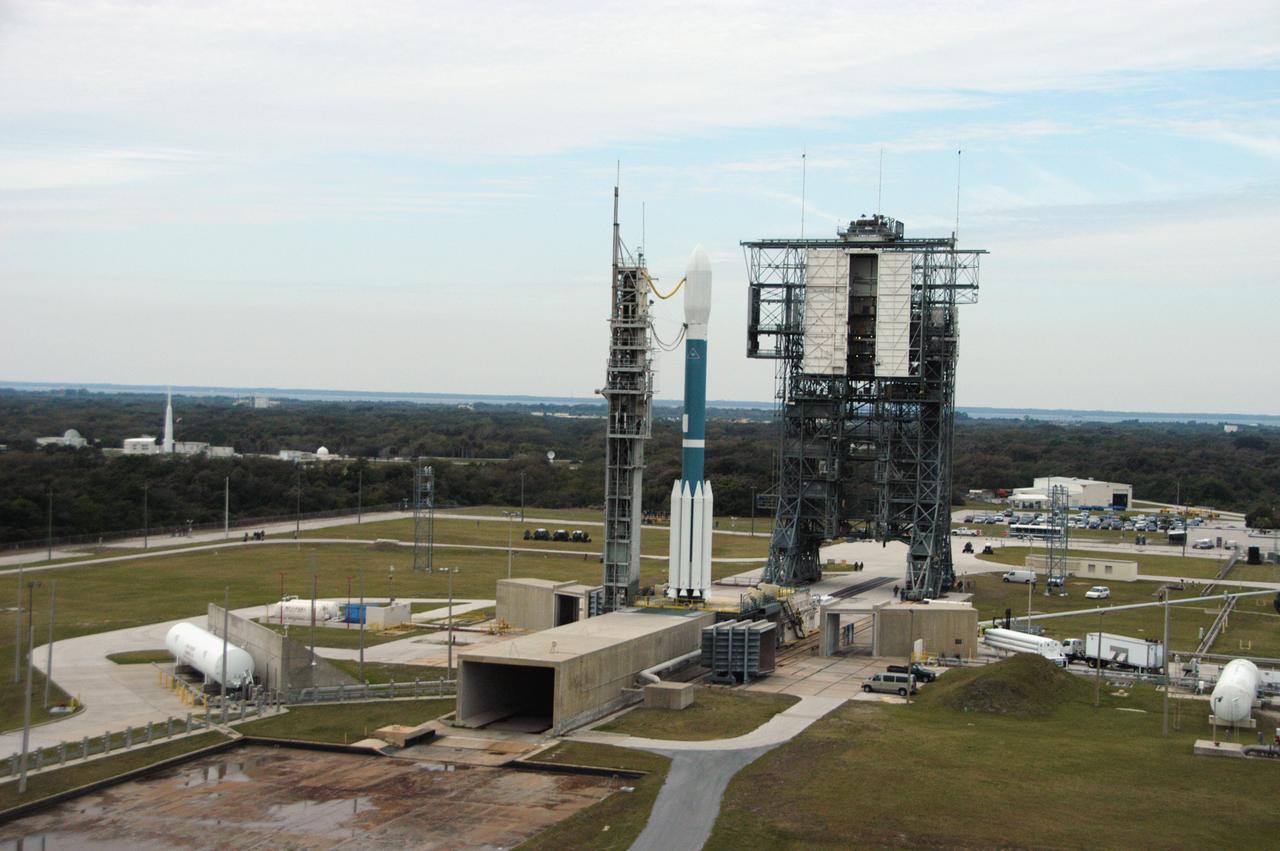
In this aerial view, the Delta II rocket with the THEMIS spacecraft sits ready for launch on Pad 17-B at Cape Canaveral Air Force Station, as the mobile service tower moves away from the pad. THEMIS, an acronym for Time History of Events and Macroscale Interactions during Substorms, consists of five identical probes that will track violent, colorful eruptions near the North Pole. This will be the largest number of scientific satellites NASA has ever launched into orbit aboard a single rocket. The THEMIS mission aims to unravel the mystery behind auroral substorms, an avalanche of magnetic energy powered by the solar wind that intensifies the northern and southern lights. The mission will investigate what causes auroras in the Earth’s atmosphere to dramatically change from slowly shimmering waves of light to wildly shifting streaks of bright color. Launch is scheduled for 6:05 p.m.
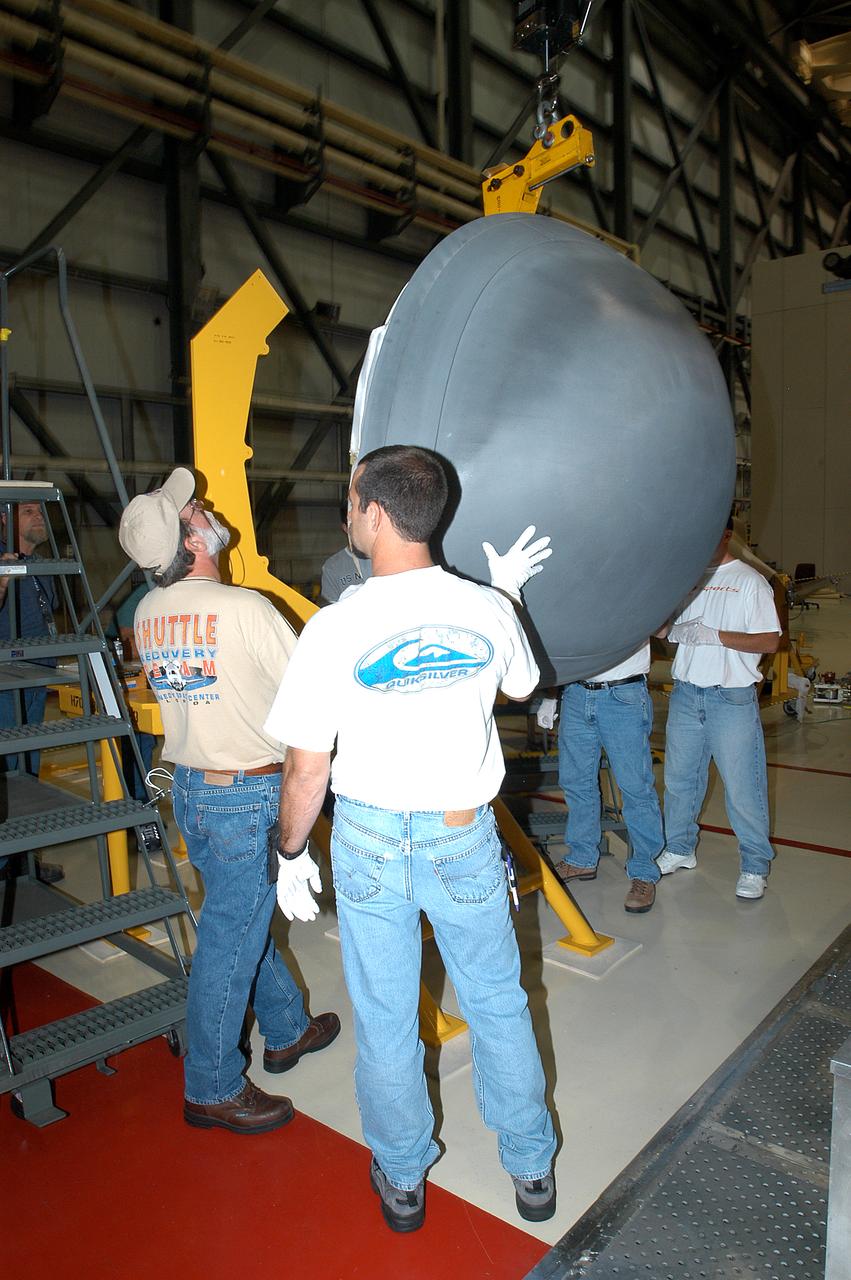
Workers watch as the nose cap of orbiter Endeavour is lowered after removal for routine inspection. The nose cap is made of reinforced carbon-carbon (RCC). The RCC has an operating range of minus 250° F to about 3,000° F.
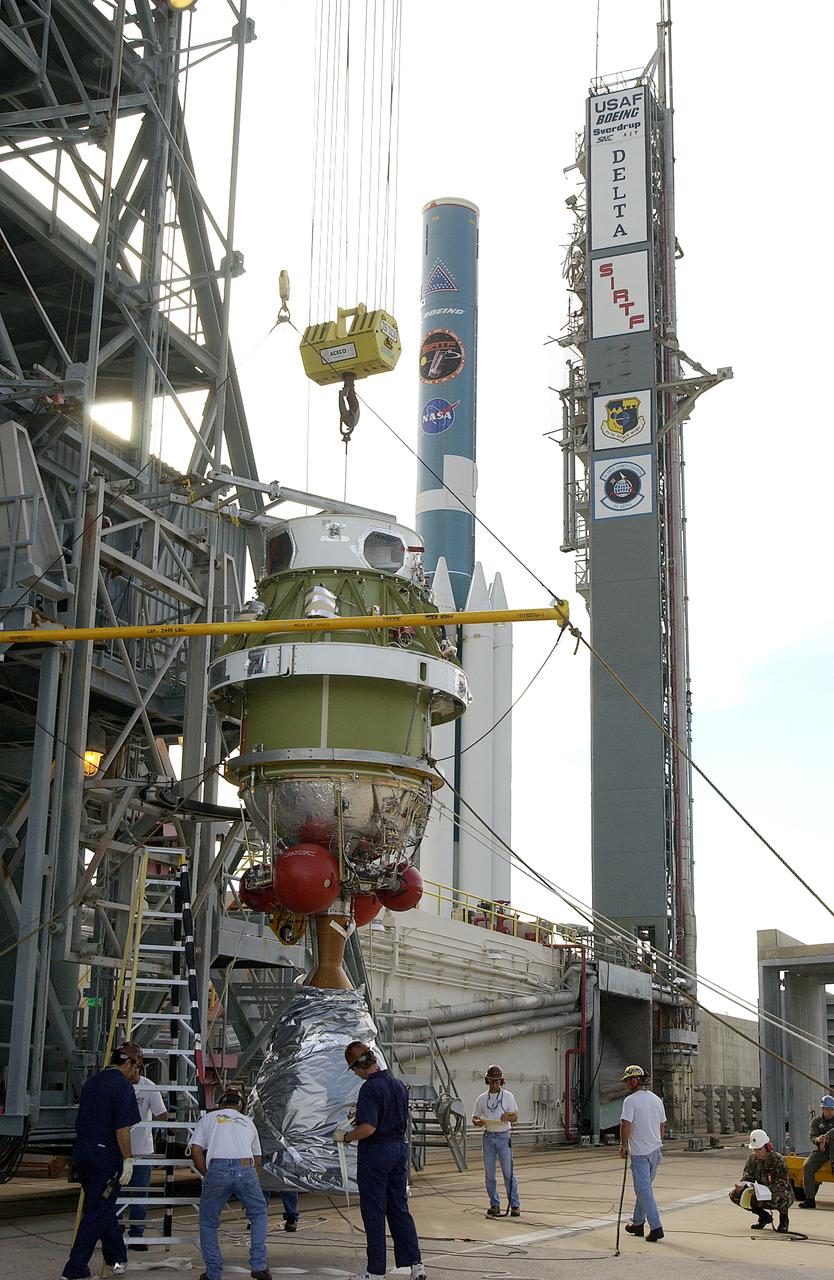
The second stage of the Delta II Heavy rocket is lifted up the mobile service tower on Launch Complex 17-B, Cape Canaveral Air Force Station for mating with the first stage (in the background) with its nine solid rocket boosters. The rocket will launch the Space Infrared Telescope Facility (SIRTF), currently scheduled for mid-August. SIRTF consists of three cryogenically cooled science instruments and an 0.85-meter telescope, and is one of NASA's largest infrared telescopes to be launched. SIRTF will obtain images and spectra by detecting the infrared energy, or heat, radiated by objects in space. Most of this infrared radiation is blocked by the Earth's atmosphere and cannot be observed from the ground.
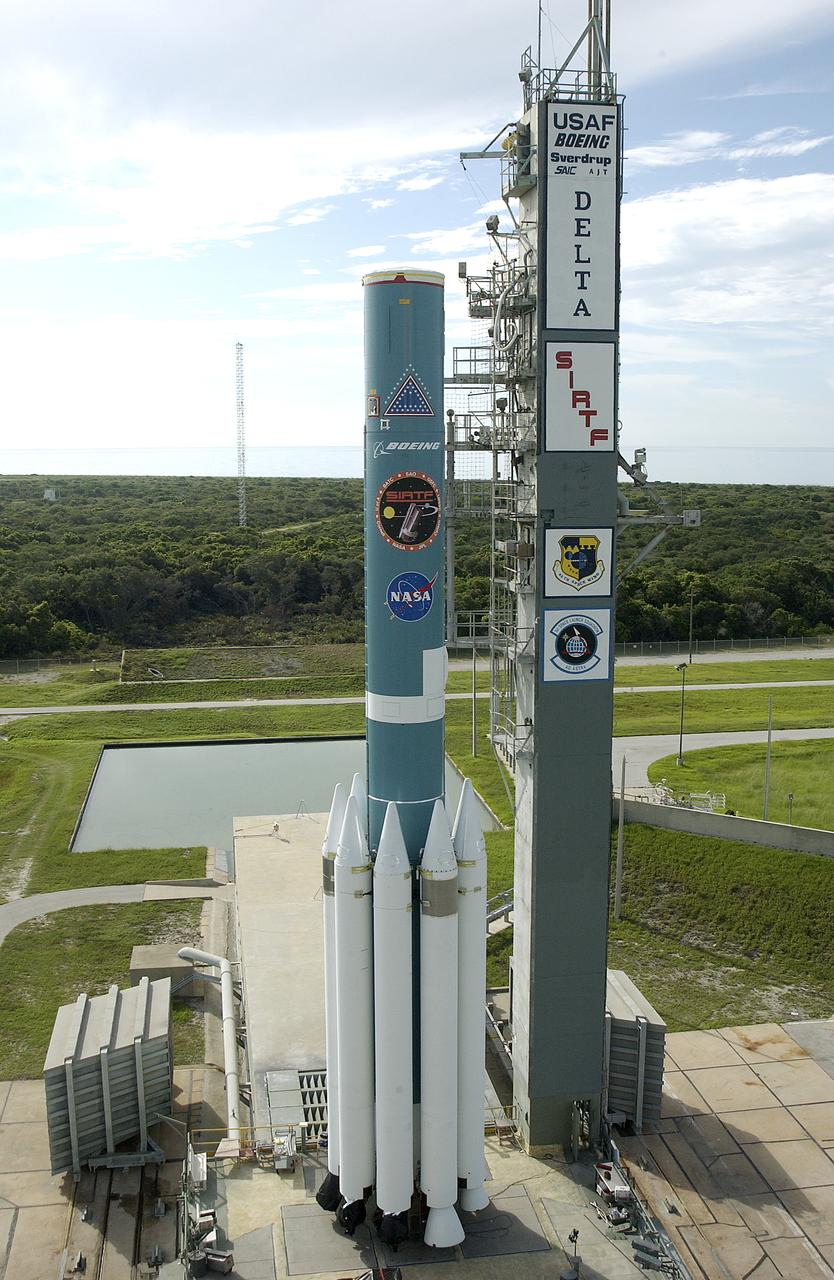
The first stage of the rocket with its nine solid rocket boosters waits on Launch Complex 17-B, Cape Canaveral Air Force Station, for mating with the second stage. The rocket will launch the Space Infrared Telescope Facility (SIRTF), currently scheduled for mid-August. SIRTF consists of three cryogenically cooled science instruments and an 0.85-meter telescope, and is one of NASA's largest infrared telescopes to be launched. SIRTF will obtain images and spectra by detecting the infrared energy, or heat, radiated by objects in space. Most of this infrared radiation is blocked by the Earth's atmosphere and cannot be observed from the ground.
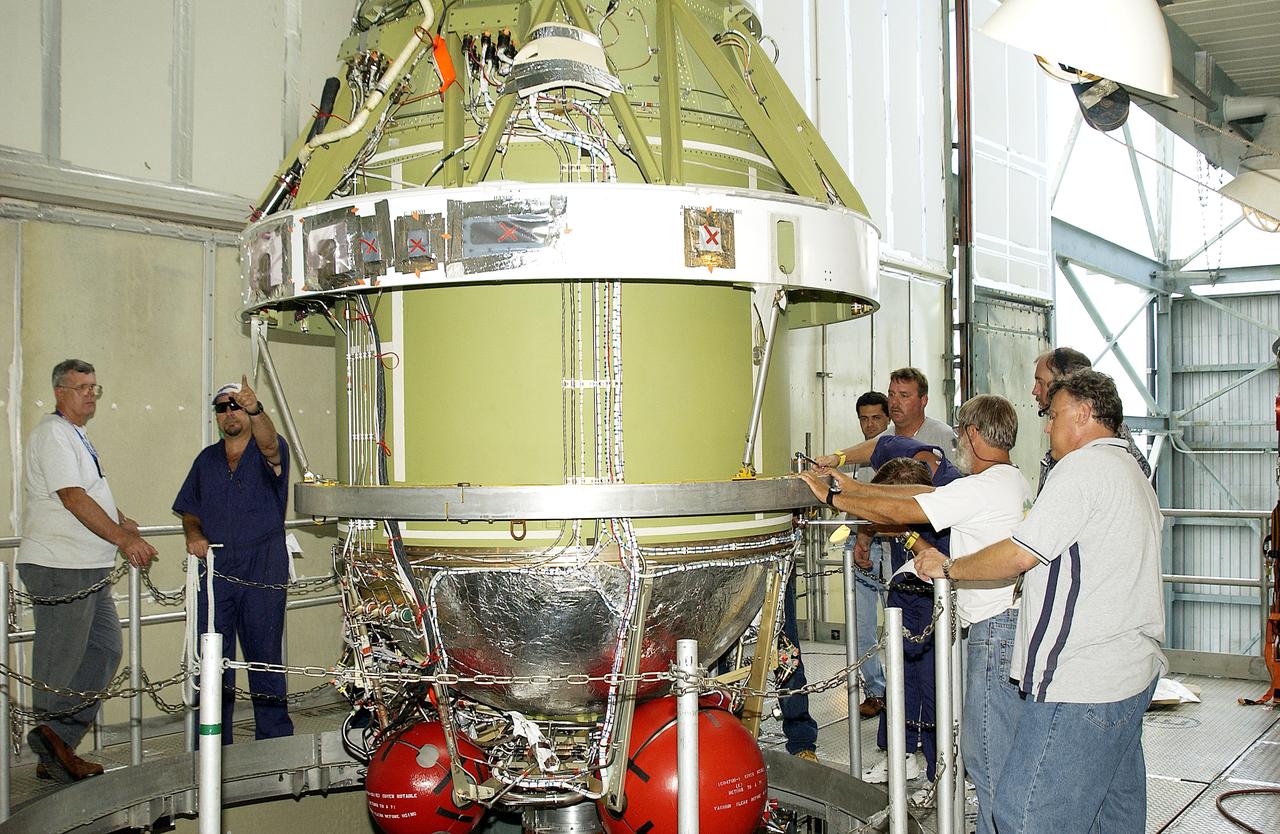
The second stage of the Delta II Heavy rocket is ready for mating onto the first stage, below. The rocket will launch the Space Infrared Telescope Facility (SIRTF), currently scheduled for mid-August. SIRTF consists of three cryogenically cooled science instruments and an 0.85-meter telescope, and is one of NASA's largest infrared telescopes to be launched. SIRTF will obtain images and spectra by detecting the infrared energy, or heat, radiated by objects in space. Most of this infrared radiation is blocked by the Earth's atmosphere and cannot be observed from the ground.
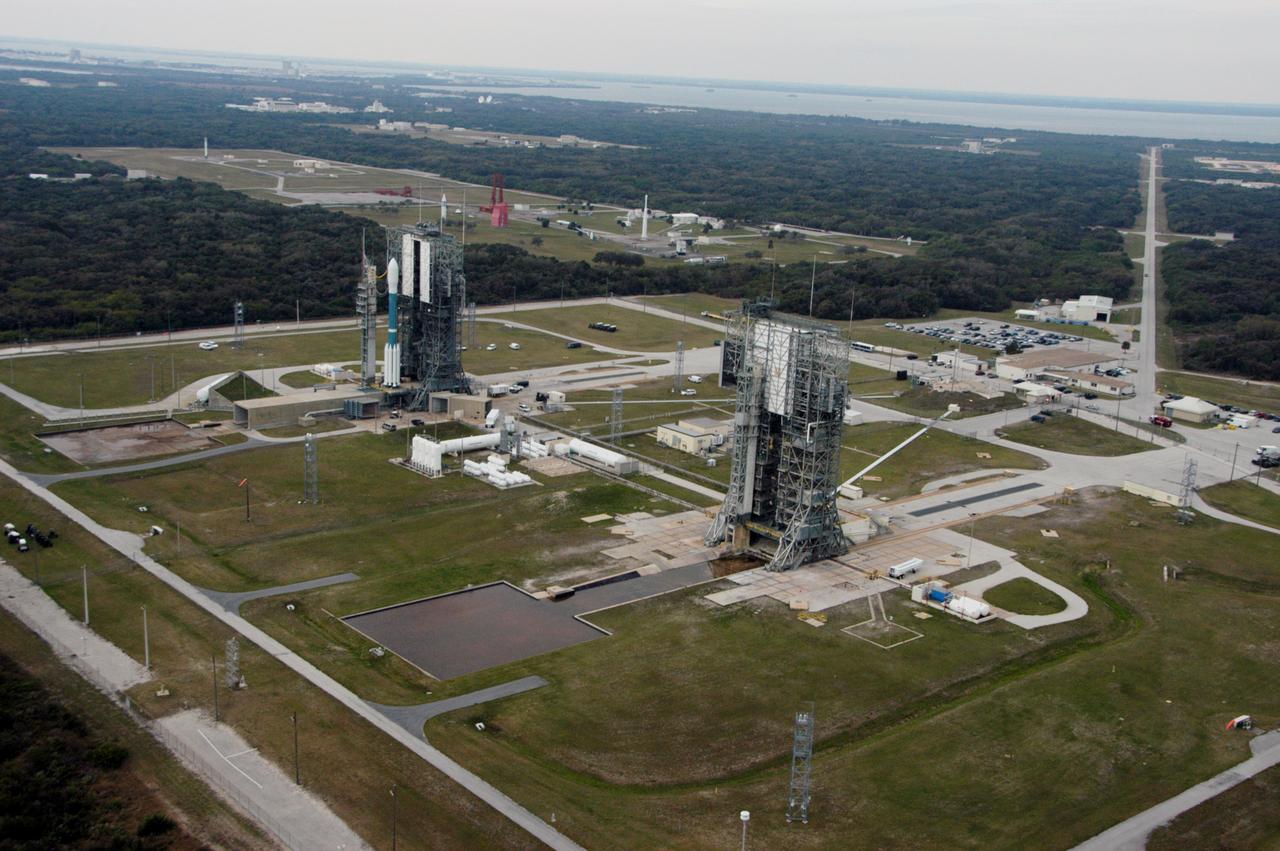
The Delta II rocket with the THEMIS spacecraft atop sits ready for launch on Pad 17-B at Cape Canaveral Air Force Station in this aerial view of the launch complex area as the mobile service tower begins to move away. THEMIS, an acronym for Time History of Events and Macroscale Interactions during Substorms, consists of five identical probes that will track violent, colorful eruptions near the North Pole. This will be the largest number of scientific satellites NASA has ever launched into orbit aboard a single rocket. The THEMIS mission aims to unravel the mystery behind auroral substorms, an avalanche of magnetic energy powered by the solar wind that intensifies the northern and southern lights. The mission will investigate what causes auroras in the Earth’s atmosphere to dramatically change from slowly shimmering waves of light to wildly shifting streaks of bright color. Launch is scheduled for 6:05 p.m.
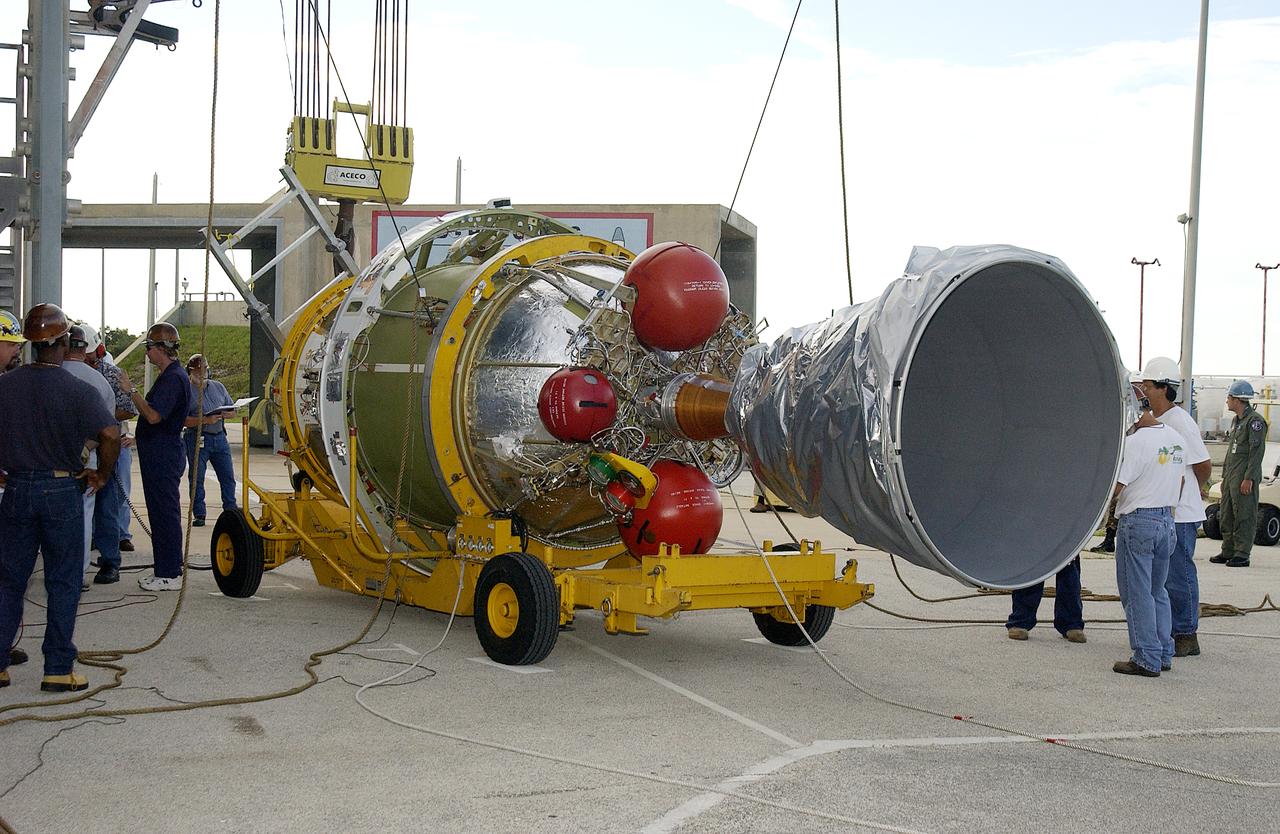
After arrival on Launch Complex 17-B, Cape Canaveral Air Force Station, the second stage of the Delta II Heavy rocket is prepared for lifting up the mobile service tower. It will be mated to the first stage of the rocket for launch of Space Infrared Telescope Facility (SIRTF), currently scheduled for mid-August. SIRTF consists of three cryogenically cooled science instruments and an 0.85-meter telescope, and is one of NASA's largest infrared telescopes to be launched. SIRTF will obtain images and spectra by detecting the infrared energy, or heat, radiated by objects in space. Most of this infrared radiation is blocked by the Earth's atmosphere and cannot be observed from the ground.
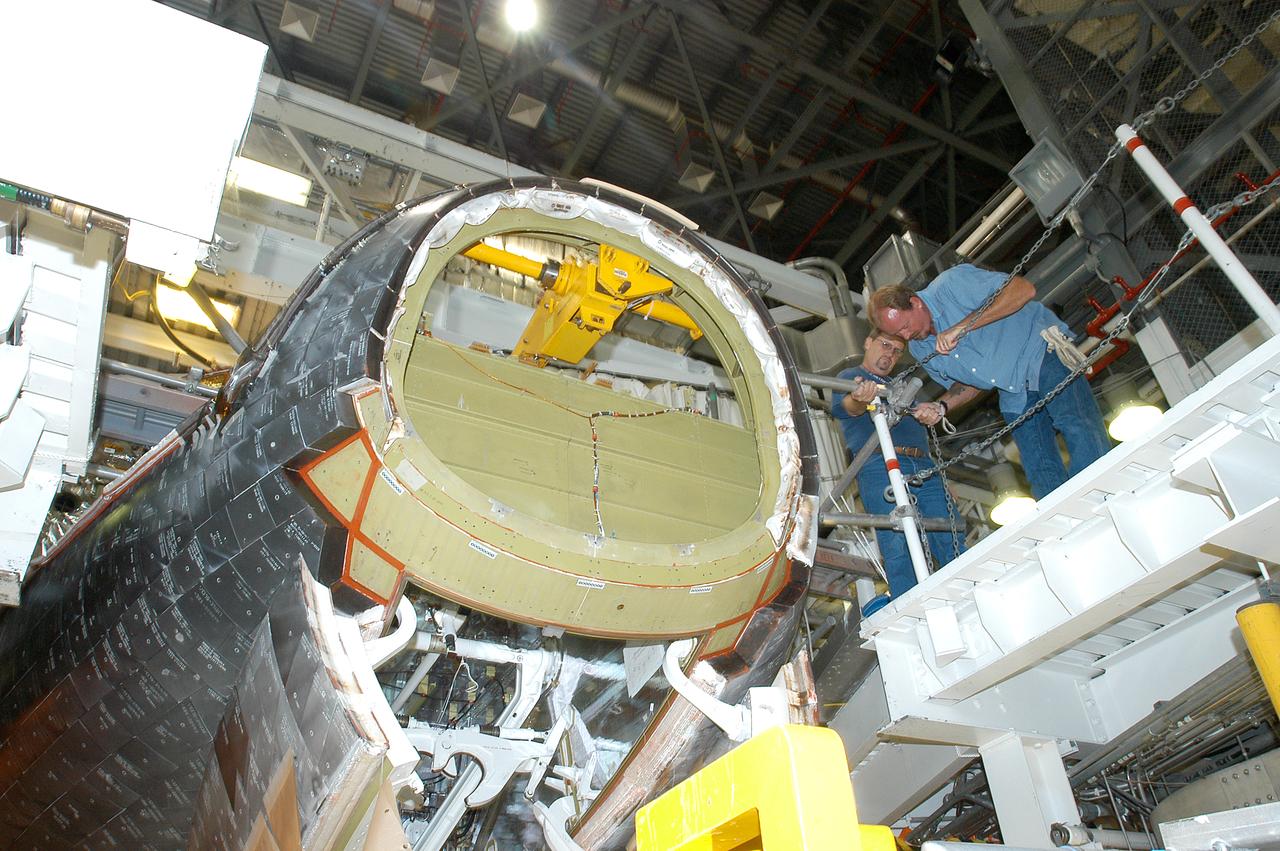
Workers look at orbiter Endeavour after the nose cap was removed for routine inspection. The nose cap is made of reinforced carbon-carbon (RCC). The RCC has an operating range of minus 250° F to about 3,000° F.
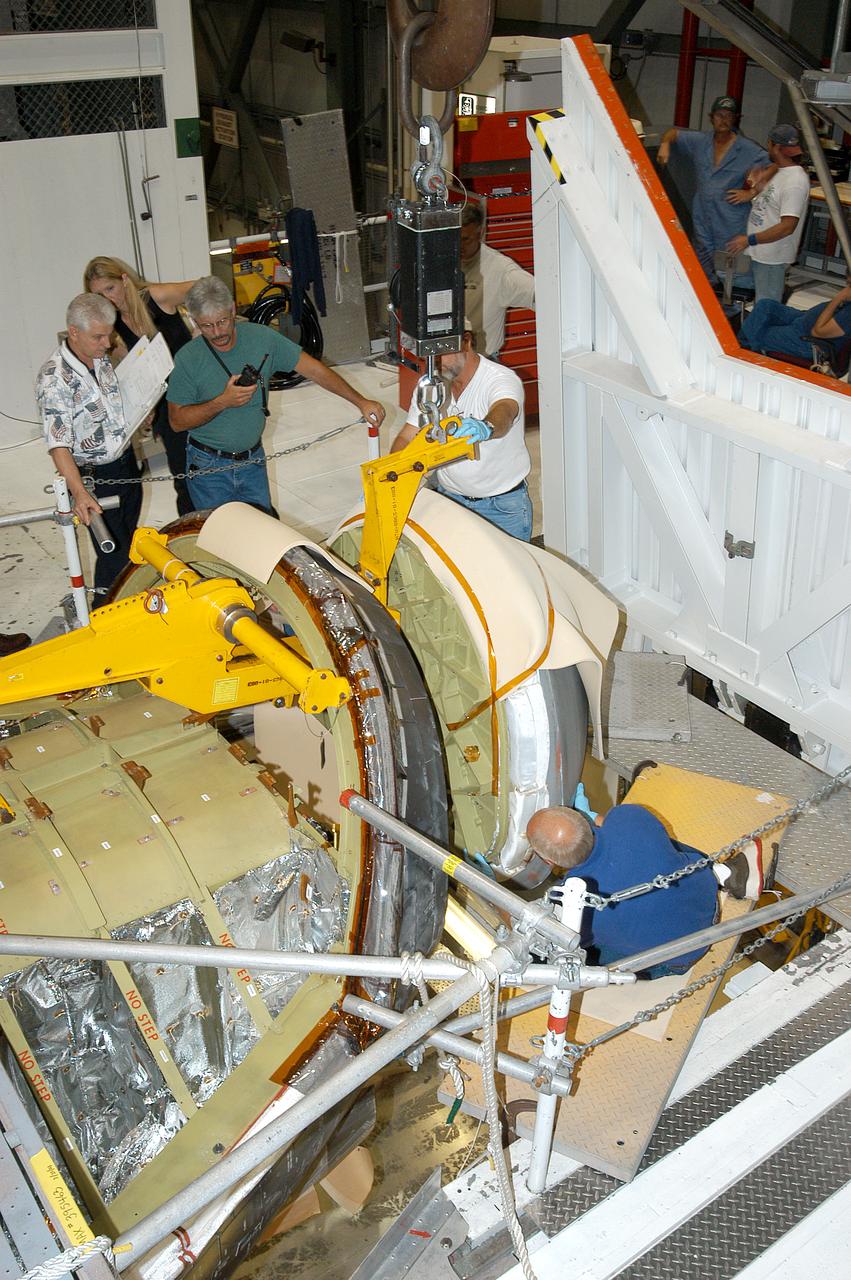
The nose cap of orbiter Endeavour is being removed for routine inspection. The nose cap is made of reinforced carbon-carbon (RCC). The RCC has an operating range of minus 250° F to about 3,000° F.
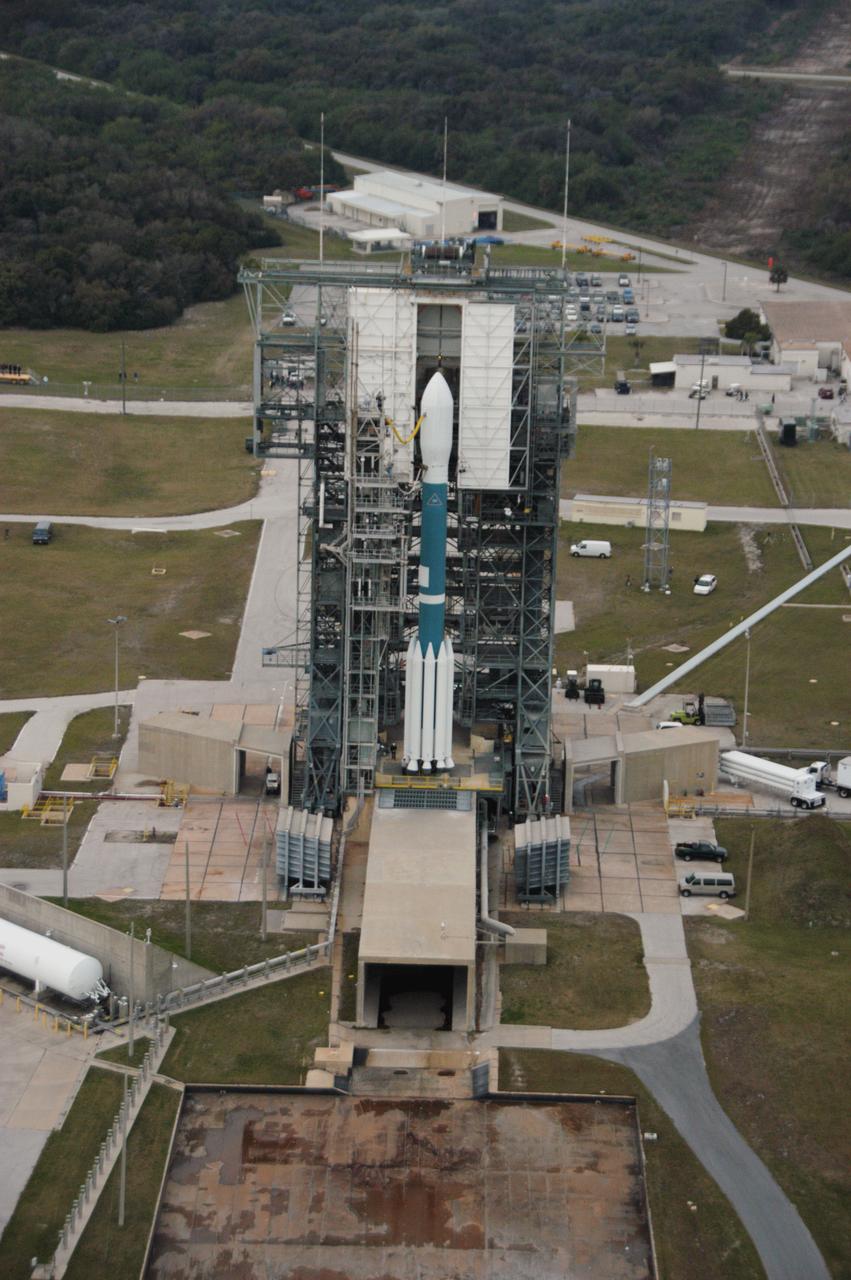
In this close-up aerial view, the Delta II rocket with the THEMIS spacecraft atop sits ready for launch on Pad 17-B at Cape Canaveral Air Force Station as the mobile service tower begins to move away. THEMIS, an acronym for Time History of Events and Macroscale Interactions during Substorms, consists of five identical probes that will track violent, colorful eruptions near the North Pole. This will be the largest number of scientific satellites NASA has ever launched into orbit aboard a single rocket. The THEMIS mission aims to unravel the mystery behind auroral substorms, an avalanche of magnetic energy powered by the solar wind that intensifies the northern and southern lights. The mission will investigate what causes auroras in the Earth’s atmosphere to dramatically change from slowly shimmering waves of light to wildly shifting streaks of bright color. Launch is scheduled for 6:05 p.m.
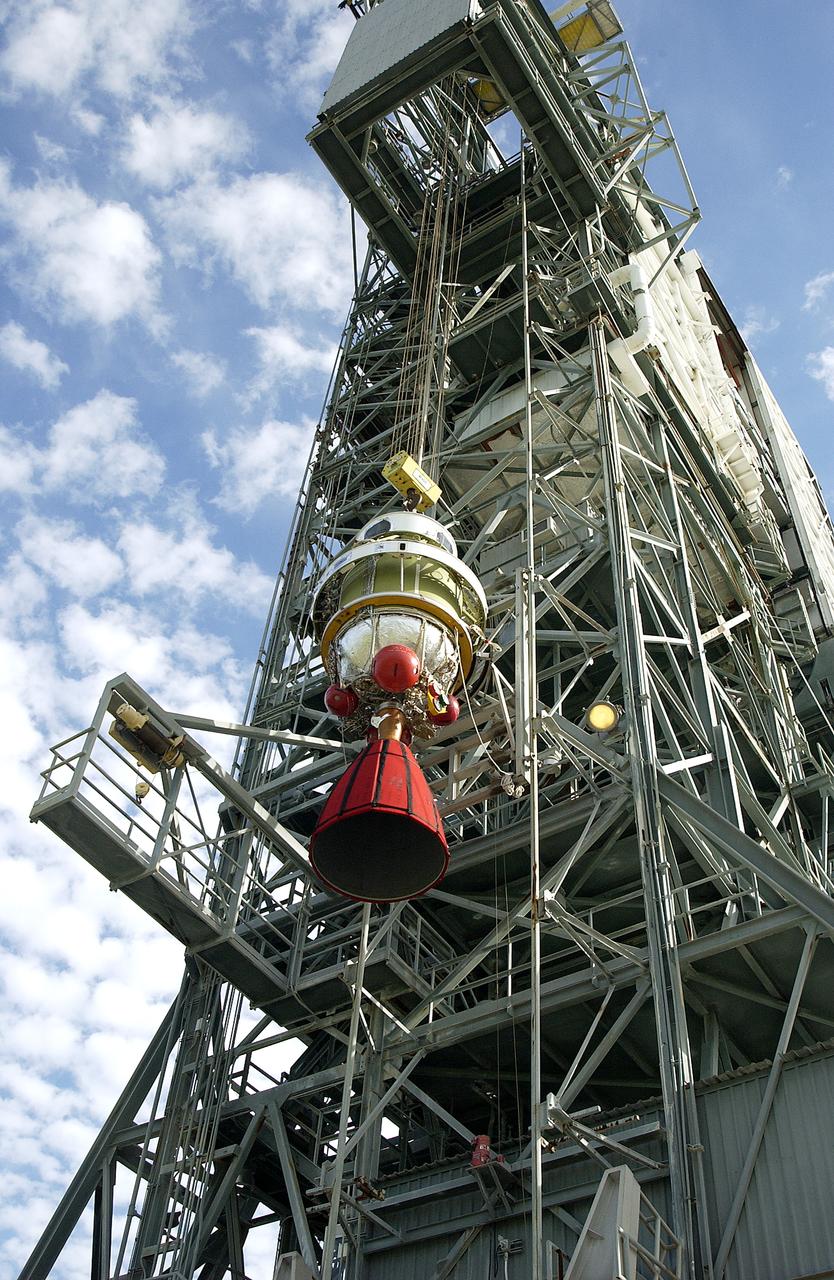
The second stage of the Delta II Heavy rocket is lifted up the mobile service tower on Launch Complex 17-B, Cape Canaveral Air Force Station for mating with the first stage. The rocket will launch the Space Infrared Telescope Facility (SIRTF), currently scheduled for mid-August. SIRTF consists of three cryogenically cooled science instruments and an 0.85-meter telescope, and is one of NASA's largest infrared telescopes to be launched. SIRTF will obtain images and spectra by detecting the infrared energy, or heat, radiated by objects in space. Most of this infrared radiation is blocked by the Earth's atmosphere and cannot be observed from the ground.
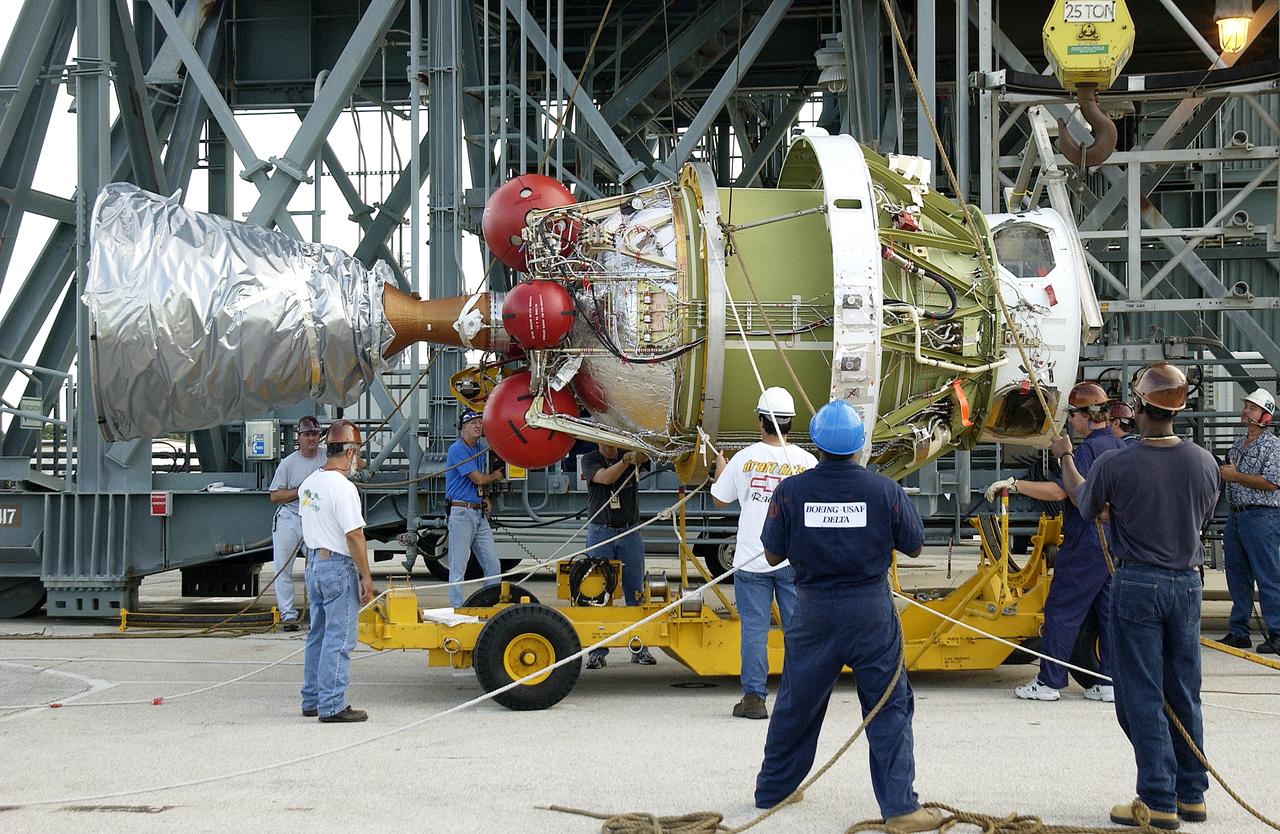
On Launch Complex 17-B, Cape Canaveral Air Force Station, the second stage of the Delta II Heavy rocket is raised off its transporter before being lifted up the mobile service tower and mated to the first stage. The rocket will launch the Space Infrared Telescope Facility (SIRTF), currently scheduled for mid-August. SIRTF consists of three cryogenically cooled science instruments and an 0.85-meter telescope, and is one of NASA's largest infrared telescopes to be launched. SIRTF will obtain images and spectra by detecting the infrared energy, or heat, radiated by objects in space. Most of this infrared radiation is blocked by the Earth's atmosphere and cannot be observed from the ground.
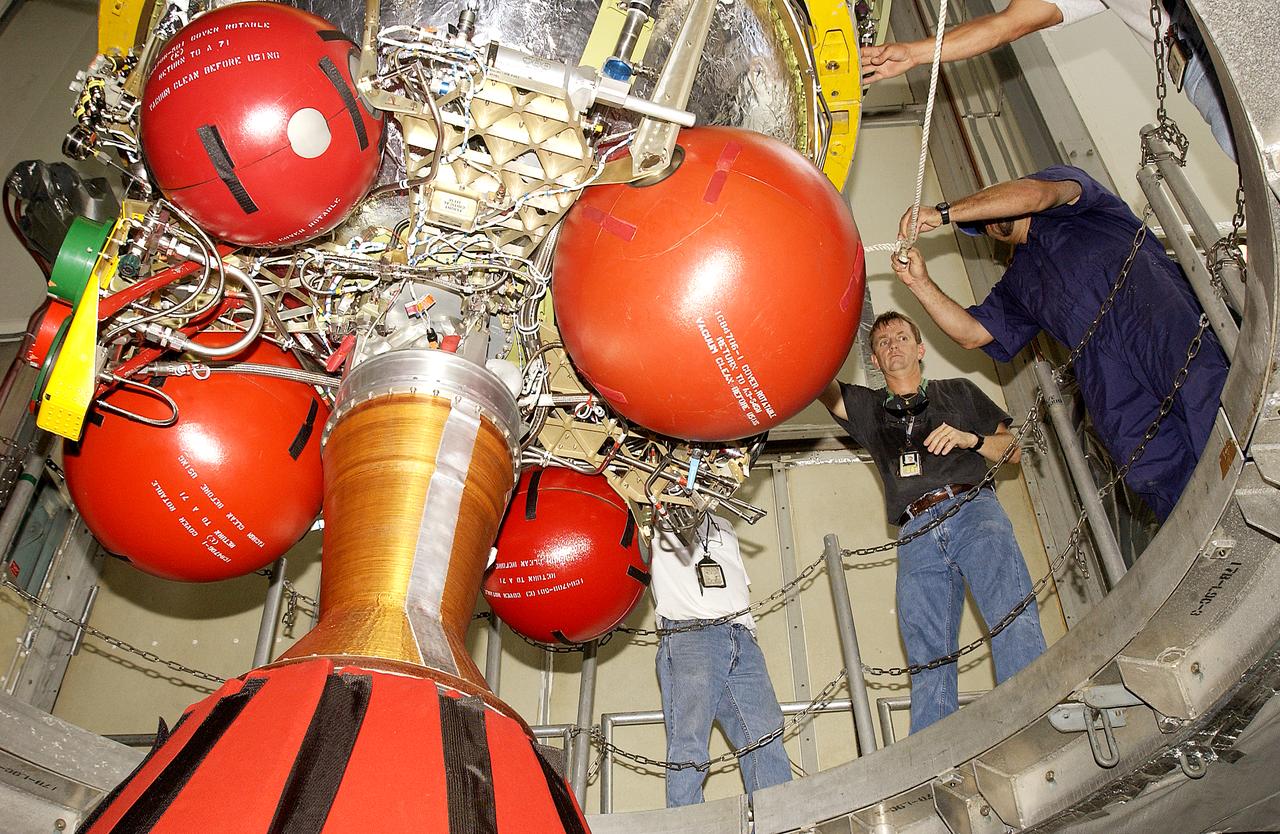
Workers on Launch Complex 17-B, Cape Canaveral Air Force Station, prepare for mating the second stage of the Delta II Heavy rocket to the first stage below. The rocket will launch the Space Infrared Telescope Facility (SIRTF), currently scheduled for mid-August. SIRTF consists of three cryogenically cooled science instruments and an 0.85-meter telescope, and is one of NASA's largest infrared telescopes to be launched. SIRTF will obtain images and spectra by detecting the infrared energy, or heat, radiated by objects in space. Most of this infrared radiation is blocked by the Earth's atmosphere and cannot be observed from the ground.
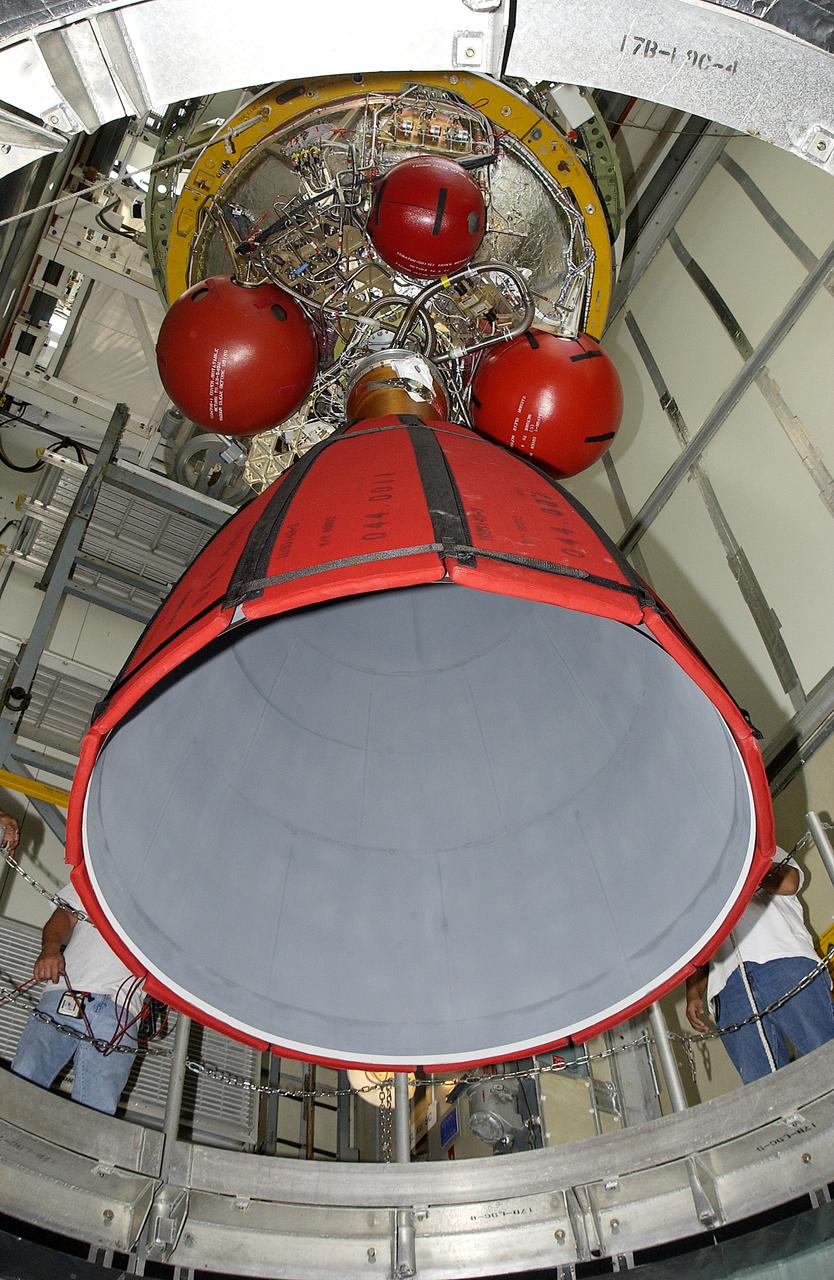
Seen from below inside the mobile service tower on Launch Complex 17-B, Cape Canaveral Air Force Station, the second stage of the Delta II Heavy rocket is being lowered toward the first stage for mating. The rocket will launch the Space Infrared Telescope Facility (SIRTF), currently scheduled for mid-August. SIRTF consists of three cryogenically cooled science instruments and an 0.85-meter telescope, and is one of NASA's largest infrared telescopes to be launched. SIRTF will obtain images and spectra by detecting the infrared energy, or heat, radiated by objects in space. Most of this infrared radiation is blocked by the Earth's atmosphere and cannot be observed from the ground.
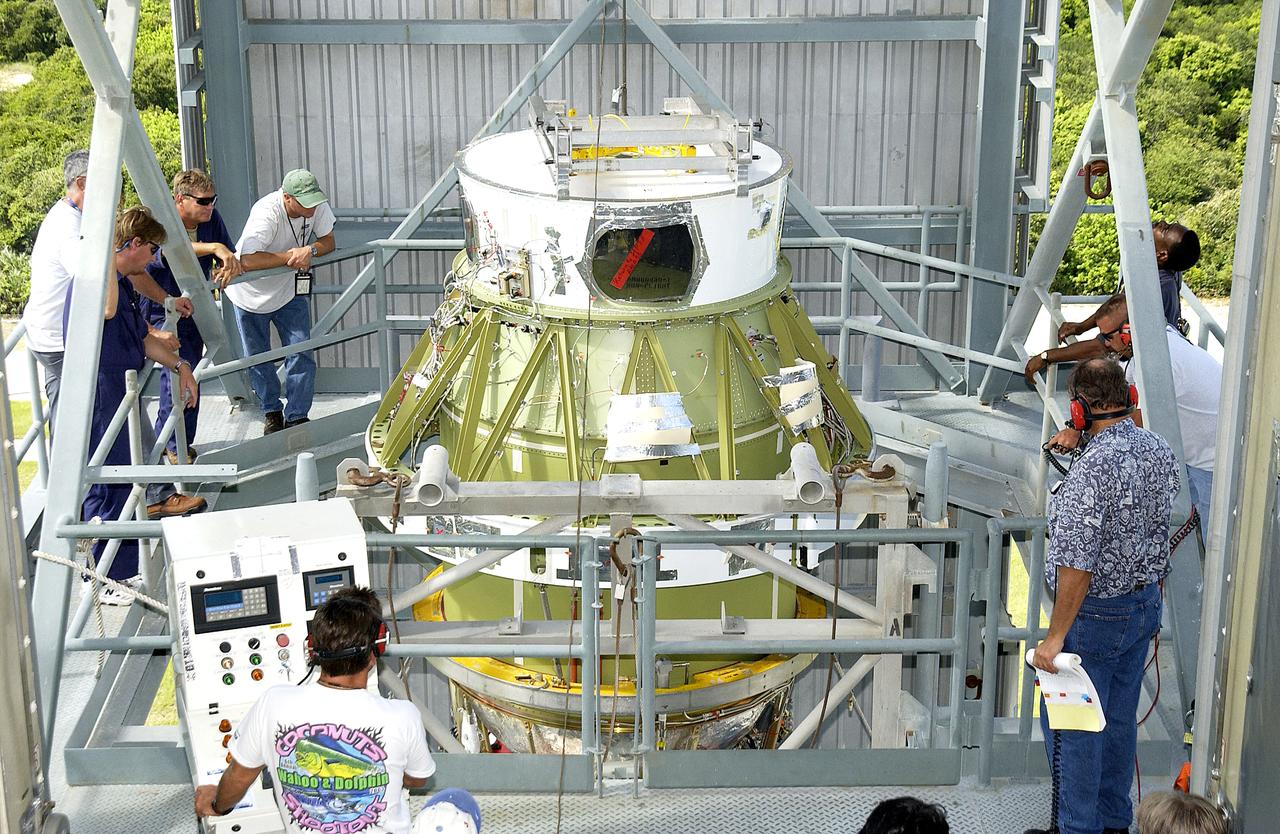
The second stage of the Delta II Heavy rocket is lifted into the mobile service tower on Launch Complex 17-B, Cape Canaveral Air Force Station, where it will be mated to the first stage. The rocket will launch the Space Infrared Telescope Facility (SIRTF), currently scheduled for mid-August. SIRTF consists of three cryogenically cooled science instruments and an 0.85-meter telescope, and is one of NASA's largest infrared telescopes to be launched. SIRTF will obtain images and spectra by detecting the infrared energy, or heat, radiated by objects in space. Most of this infrared radiation is blocked by the Earth's atmosphere and cannot be observed from the ground.

In this close-up aerial view, the Delta II rocket with the THEMIS spacecraft atop sits ready for launch on Pad 17-B at Cape Canaveral Air Force Station as the mobile service tower moves away from the pad. THEMIS, an acronym for Time History of Events and Macroscale Interactions during Substorms, consists of five identical probes that will track violent, colorful eruptions near the North Pole. This will be the largest number of scientific satellites NASA has ever launched into orbit aboard a single rocket. The THEMIS mission aims to unravel the mystery behind auroral substorms, an avalanche of magnetic energy powered by the solar wind that intensifies the northern and southern lights. The mission will investigate what causes auroras in the Earth’s atmosphere to dramatically change from slowly shimmering waves of light to wildly shifting streaks of bright color. Launch is scheduled for 6:05 p.m.
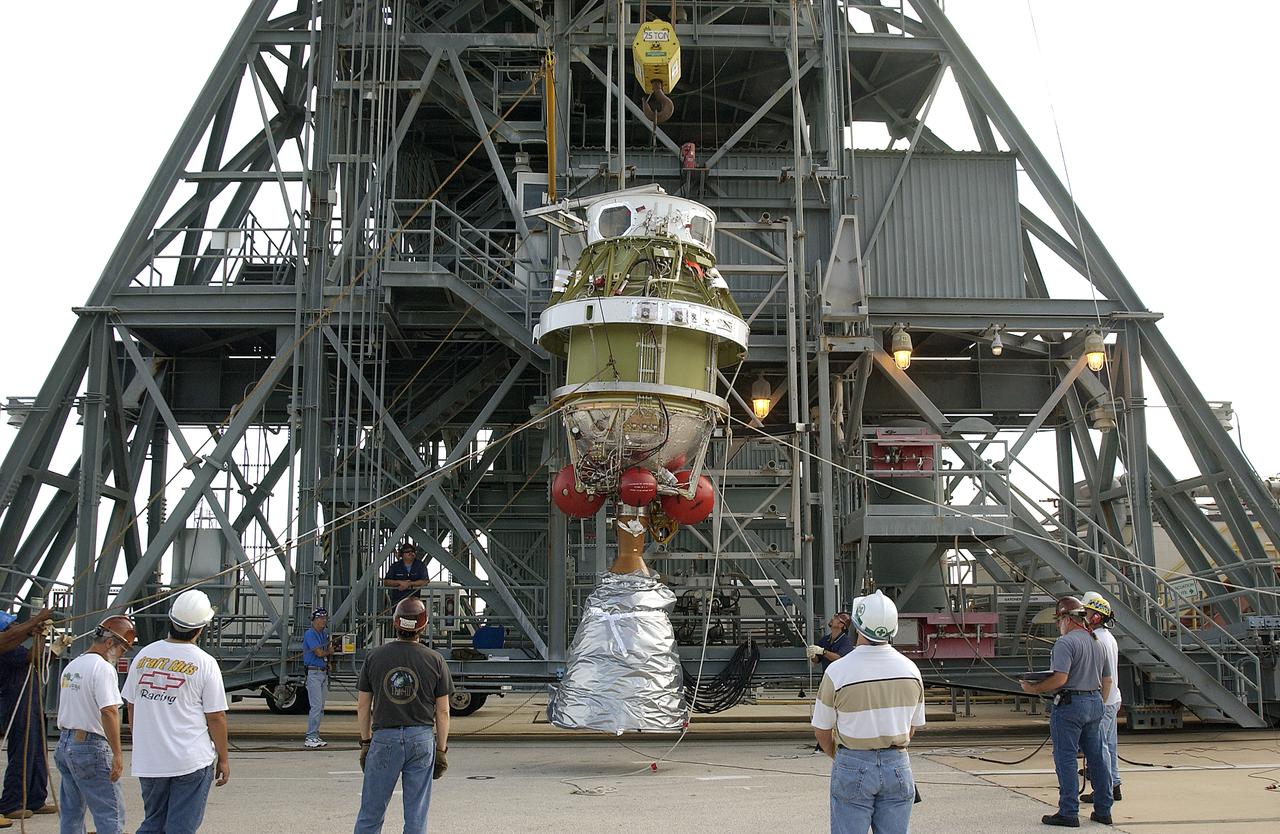
The second stage of the Delta II Heavy rocket is lifted up the mobile service tower on Launch Complex 17-B, Cape Canaveral Air Force Station, for mating with the first stage. The rocket will launch the Space Infrared Telescope Facility (SIRTF), currently scheduled for mid-August. SIRTF consists of three cryogenically cooled science instruments and an 0.85-meter telescope, and is one of NASA's largest infrared telescopes to be launched. SIRTF will obtain images and spectra by detecting the infrared energy, or heat, radiated by objects in space. Most of this infrared radiation is blocked by the Earth's atmosphere and cannot be observed from the ground.