
President John F. Kennedy receives a briefing from Rocco Petrone during a tour of Cape Canaveral facilities.
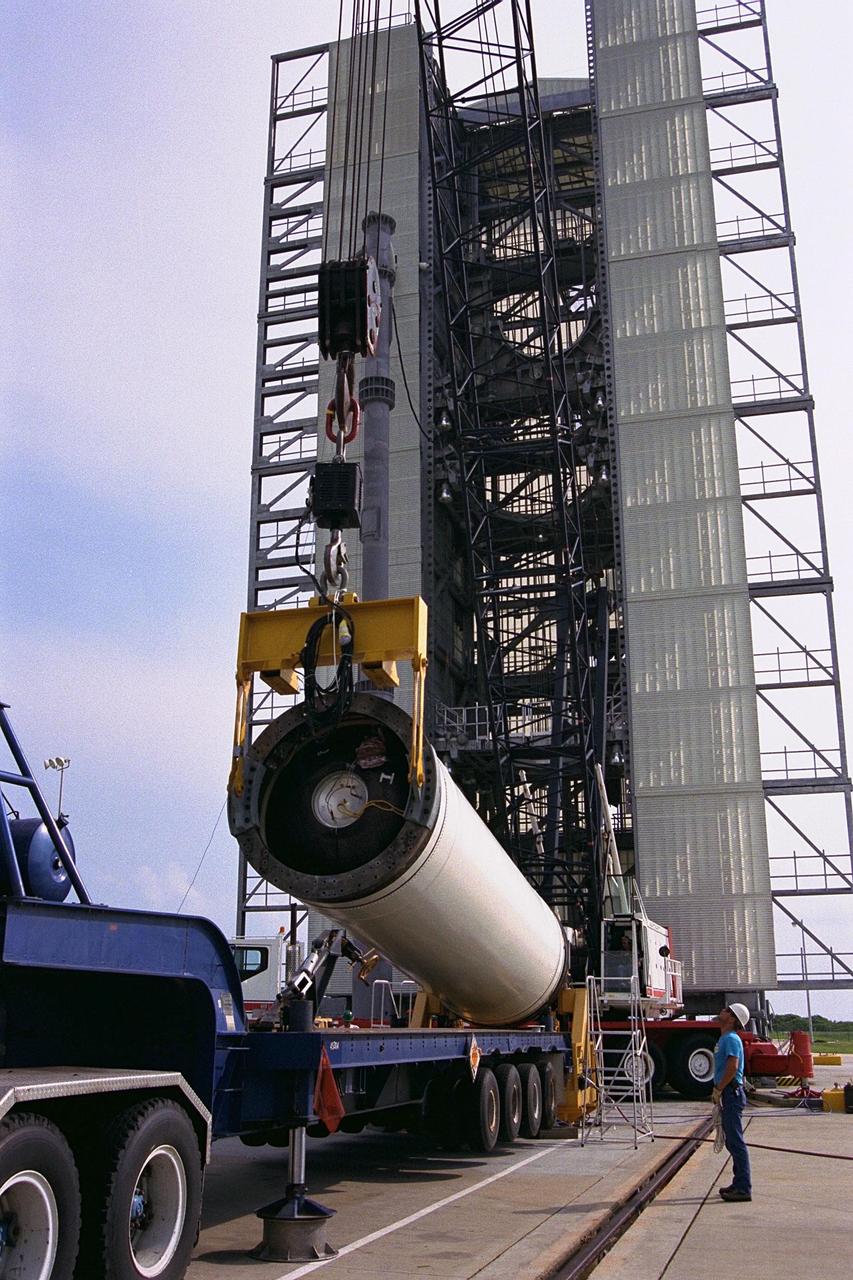
Workers hoist the first stage of a Lockheed Martin Launch Vehicle-2 (LMLV-2) for placement at Launch Complex 46 at Cape Canaveral Air Station (CCAS), Fla. The Lunar Prospector spacecraft is scheduled to launch aboard the LMLV-2 from CCAS in October for an 18-month mission that will orbit the Earth’s Moon to collect data from the lunar surface. Information gathered during the mission will allow construction of a detailed map of the surface composition of the Moon and will improve our understanding of its origin, evolution, current state, and resources
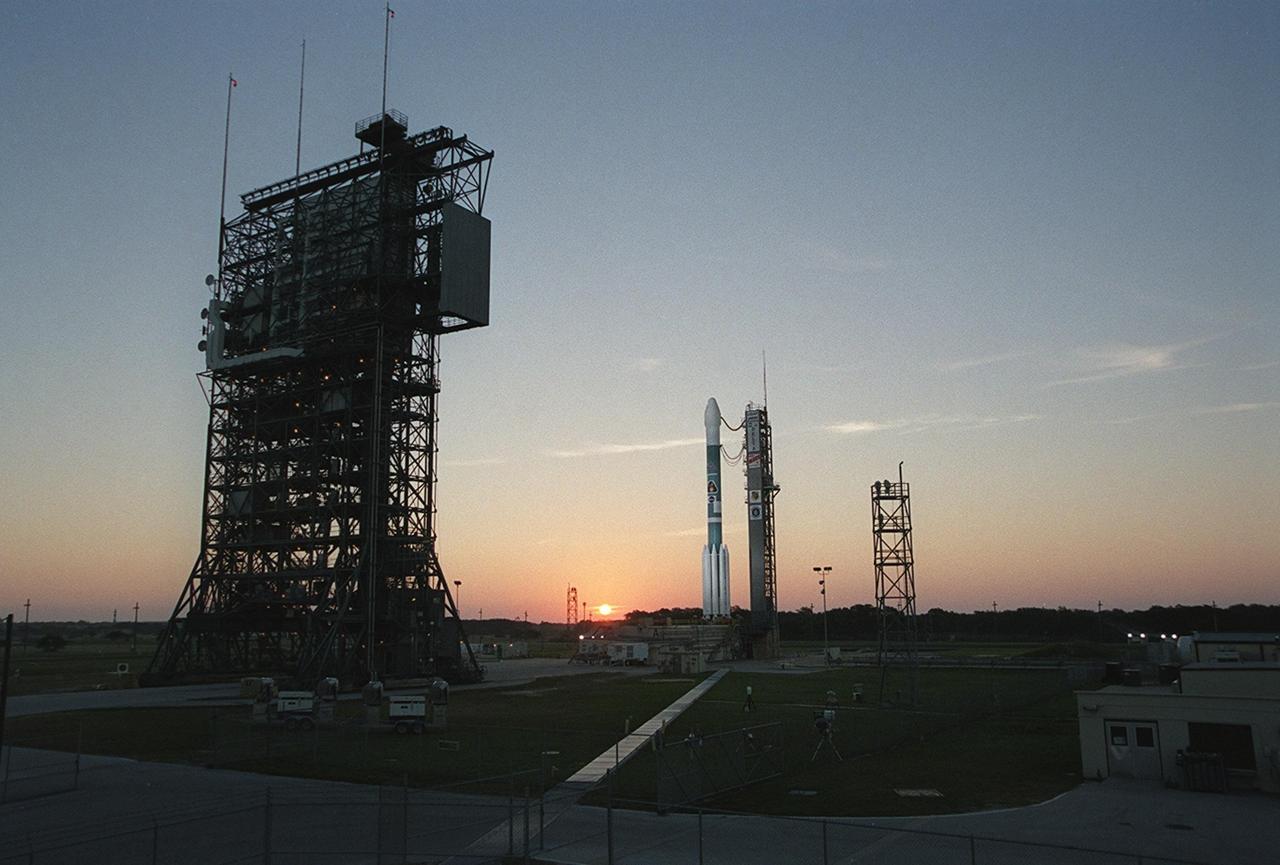
The rising sun paints the horizon pink as the Boeing Delta II rocket stands ready for launch after tower rollback. It is carrying the 2001 Mars Odyssey spacecraft that will begin a 7-month journey to Mars. Liftoff is scheduled for 11:02 a.m. EDT. The spacecraft, built by Lockheed Martin Space Systems for the Jet Propulsion Laboratory, will orbit Mars, mapping the surface looking for geological features that could indicate the presence of water, now or in the past. Science gathered by three science instruments on board will be key to future missions to Mars, including orbital reconnaissance, lander and human missions
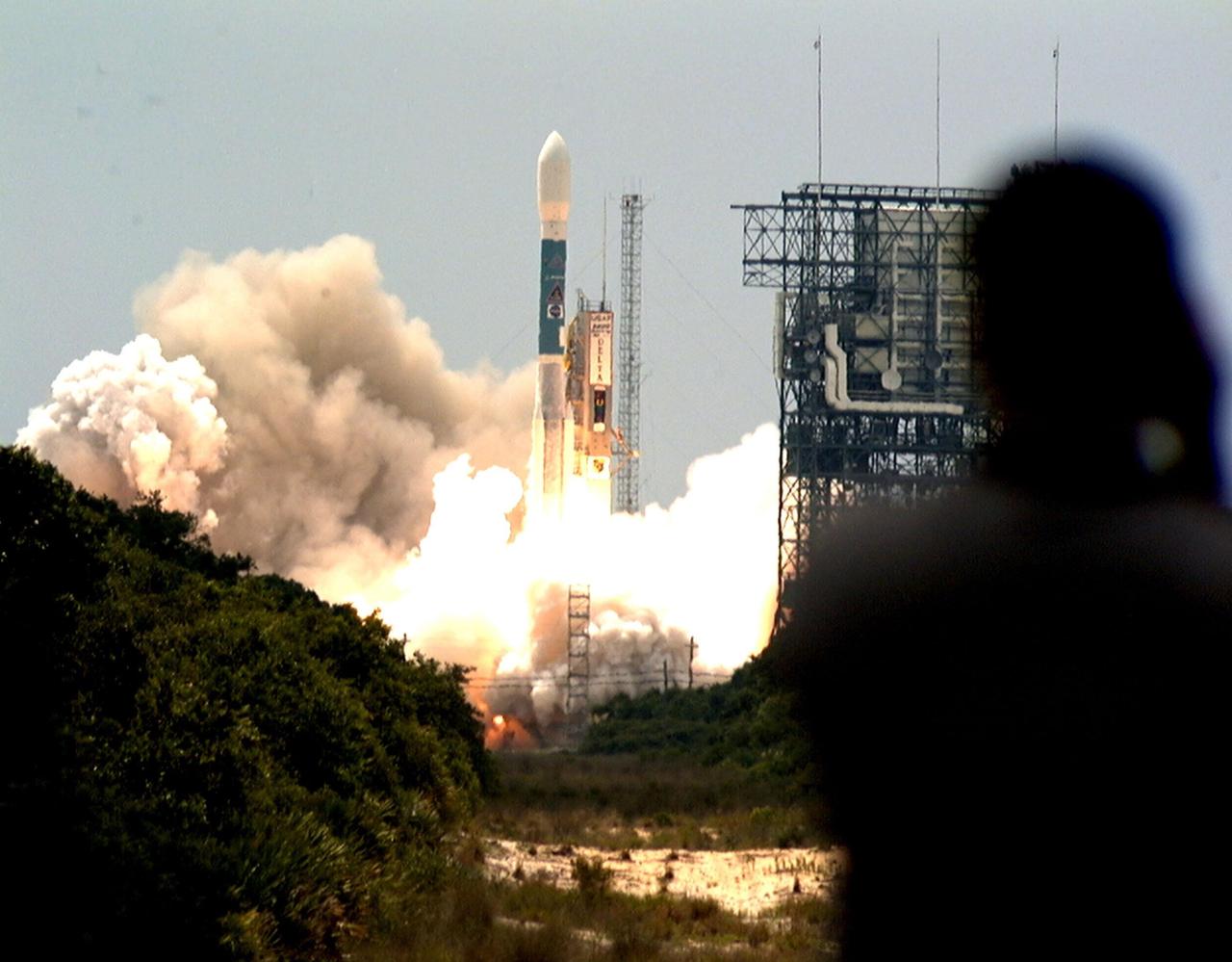
The shadow of a photographer (right) is caught watching the perfect launch of the Boeing Delta II rocket in the background after it lifted off at 11:44 a.m. EDT. The rocket carries NASA's Far Ultraviolet Spectroscopic Explorer (FUSE) satellite, which was developed to investigate the origin and evolution of the lightest elements in the universe hydrogen and deuterium. In addition, the FUSE satellite will examine the forces and process involved in the evolution of the galaxies, stars and planetary systems by investigating light in the far ultraviolet portion of the electromagnetic spectrum
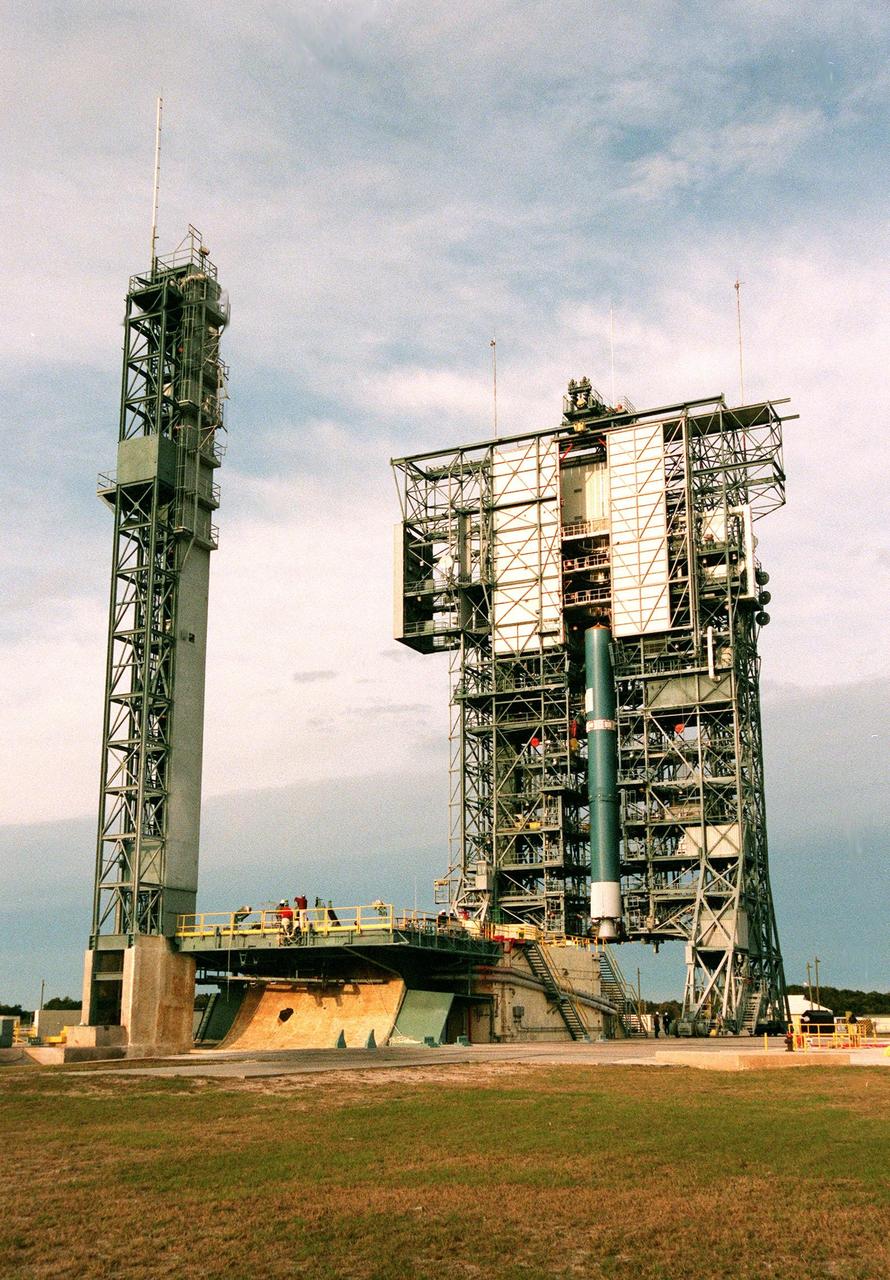
The first stage of a Boeing Delta II rocket is in position on the mobile tower (at right) at Launch Complex 17. At left is the launch tower. The rocket will carry the Stardust spacecraft into space for a close encounter with the comet Wild 2 in January 2004. Using a medium called aerogel, it will capture comet particles flying off the nucleus of the comet, plus collect interstellar dust for later analysis. The collected samples will return to Earth in a Sample Return Capsule to be jettisoned as Stardust swings by Earth in January 2006. Stardust is scheduled to be launched on Feb. 6, 1999
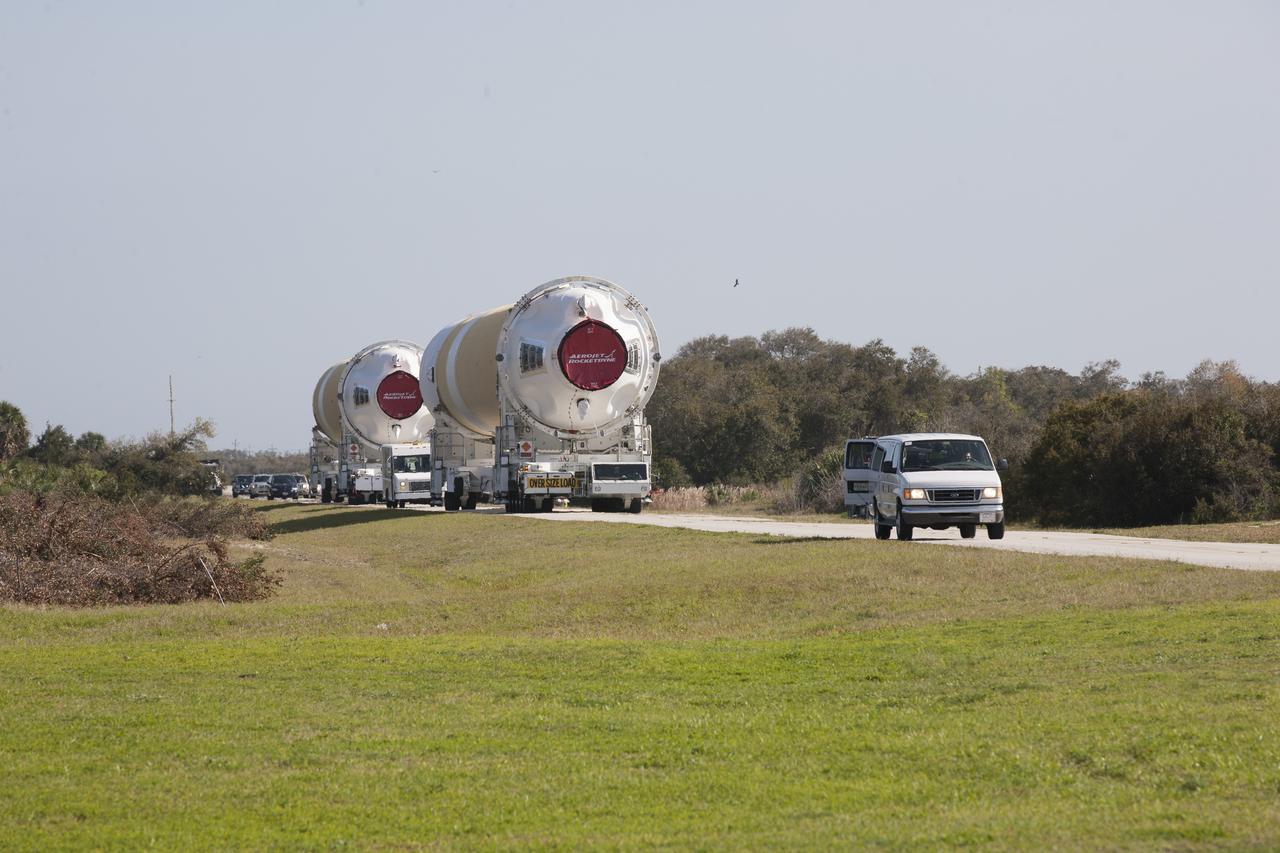
CAPE CANAVERAL, Fla. – Two of the three United Launch Alliance Delta IV heavy boosters for NASA’s upcoming Exploration Flight Test-1, or EFT-1, mission with the Orion spacecraft, arrived by barge at the U.S. Army Outpost wharf at Port Canaveral in Florida. The core booster and starboard booster were offloaded and are being transported to the Horizontal Integration Facility, or HIF, at Space Launch Complex 37 on Cape Canaveral Air Force Station. The port booster and the upper stage are planned to be shipped to Cape Canaveral in April. At the HIF, all three boosters will be processed and checked out before being moved to the nearby launch pad and hoisted into position. During the EFT-1 mission, Orion will travel farther into space than any human spacecraft has gone in more than 40 years. The data gathered during the flight will influence design decisions, validate existing computer models and innovative new approaches to space systems development, as well as reduce overall mission risks and costs for later Orion flights. Liftoff of Orion on EFT-1 is planned for fall 2014. Photo credit: NASA/Kim Shiflett
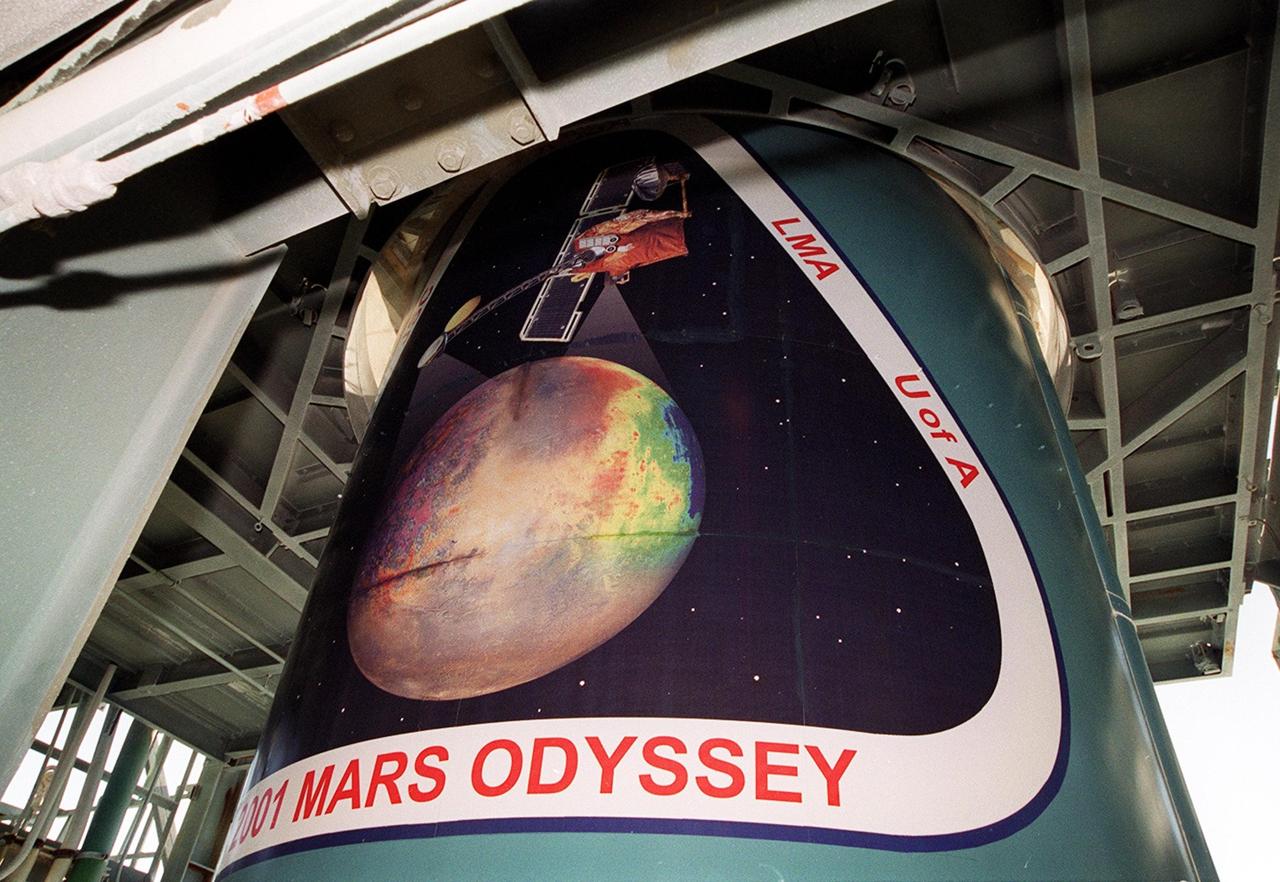
The Delta II rocket that will launch the Mars Odyssey spacecraft towards the Red Planet exhibits the mission logo (seen from the right). The Mars Odyssey is scheduled for launch April 7, 2001, at 11:02 a.m. EST. NASA’s latest explorer carries three scientific instruments to map the chemical and mineralogical makeup of Mars: a thermal-emission imaging system, a gamma ray spectrometer and a Martian radiation environment experiment. The imaging system will map the planet with high-resolution thermal images and give scientists an increased level of detail to help them understand how the mineralogy of the planet relates to the land forms. In addition, Odyssey will serve as a communications relay for U.S. and international landers arriving at Mars in 2003/2004
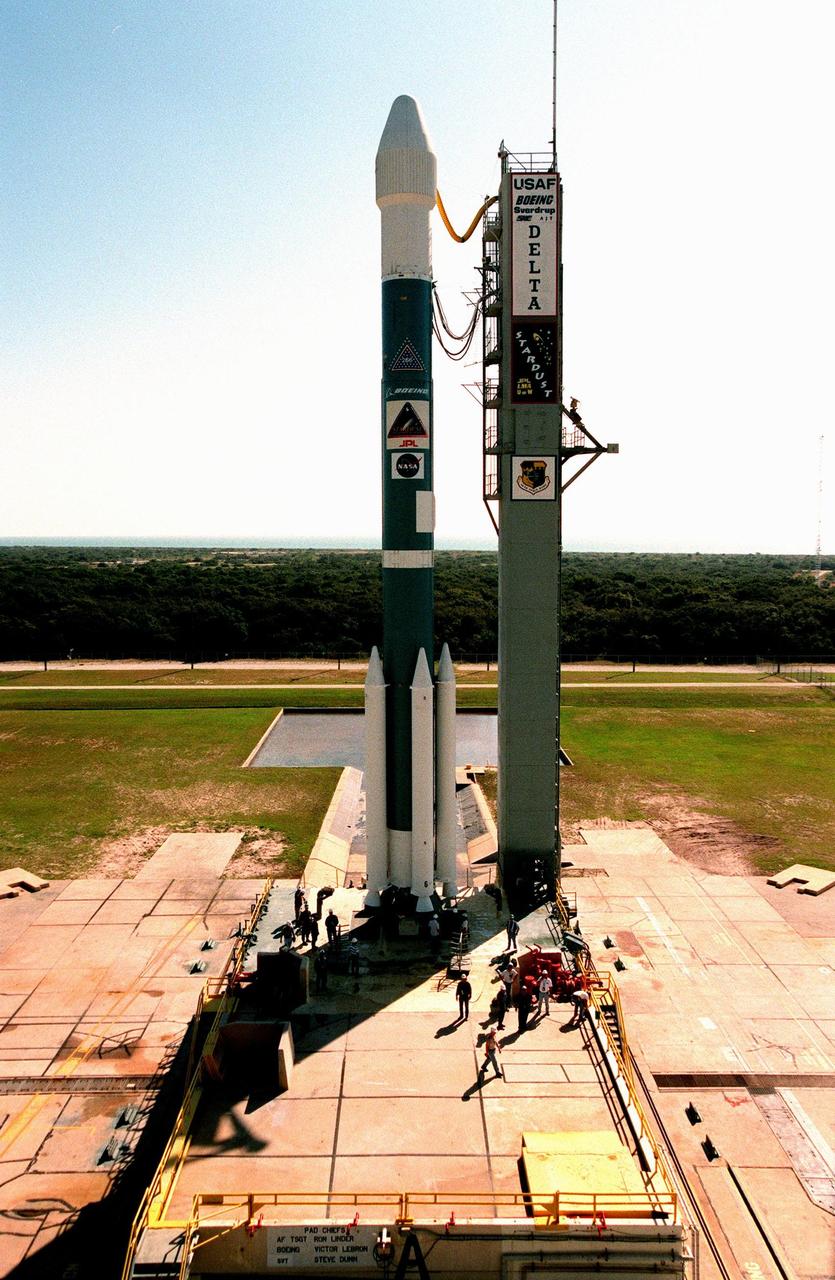
In the late morning light at Launch Pad 17-A, Cape Cananveral Air Station, the fixed utility tower (right) casts a long shadow across the base of the Boeing Delta II rocket (left) waiting to launch the Stardust spacecraft. After a 24-hour scrub, the new targeted launch time is 4:04 p.m. EST. Stardust is destined for a close encounter with the comet Wild 2 in January 2004. Using a silicon-based substance called aerogel, Stardust will capture comet particles flying off the nucleus of the comet. The spacecraft also will bring back samples of interstellar dust. These materials consist of ancient pre-solar interstellar grains and other remnants left over from the formation of the solar system. Scientists expect their analysis to provide important insights into the evolution of the sun and planets and possibly into the origin of life itself. The collected samples will return to Earth in a sample return capsule to be jettisoned as Stardust swings by Earth in January 2006
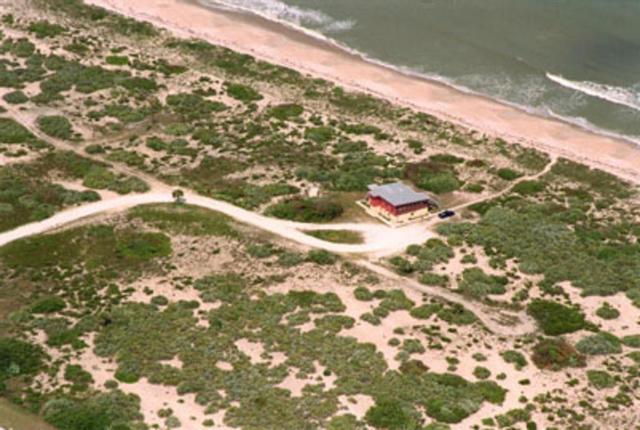
An aerial view focuses on the Beach House, a site for meetings on the Center. It sits south of Launch Complex 39 and Complex 41, near Phillips Parkway, which runs parallel to the Atlantic Ocean.
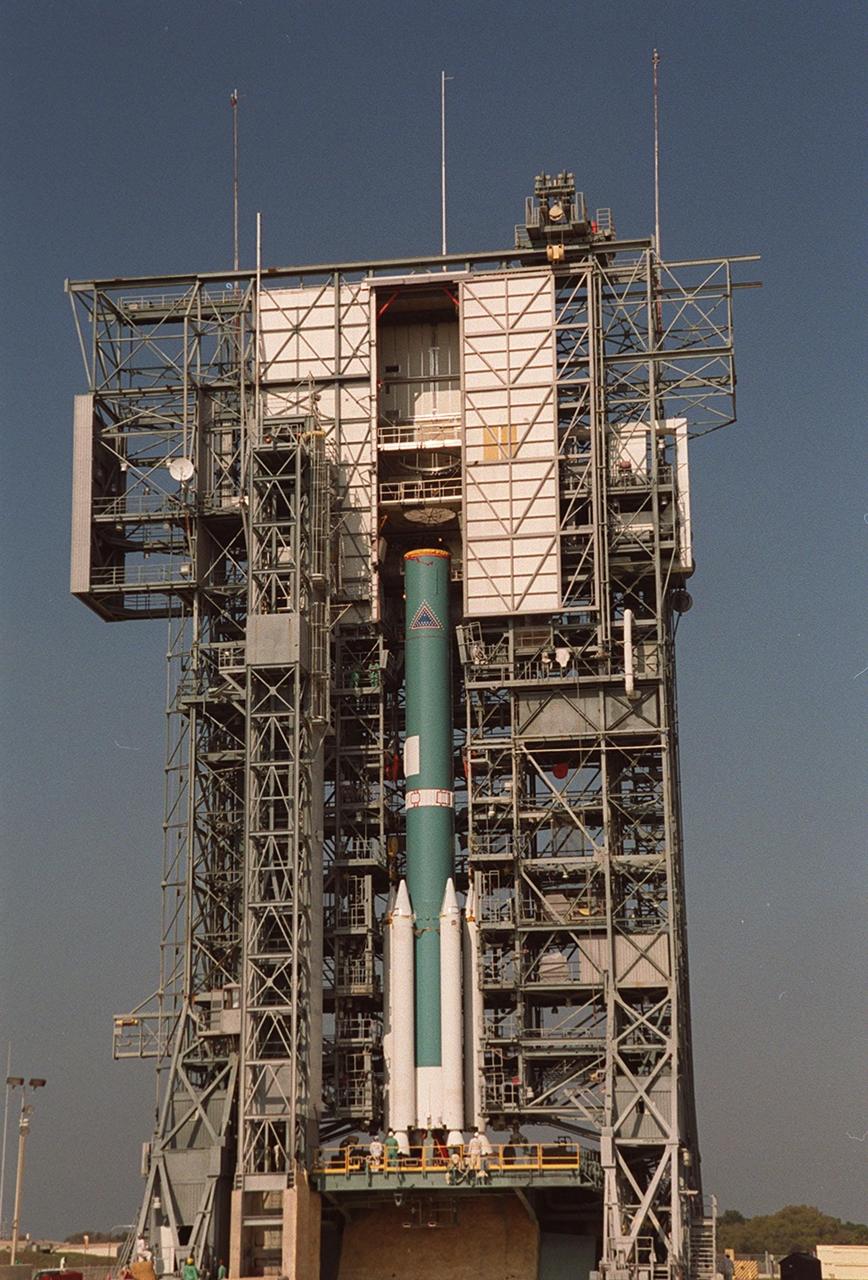
The moveable gantry closes in on a Delta 7925 rocket, bringing an additional three solid rocket boosters for mating to the rocket. Scheduled to launch April 7, 2001, the rocket will carry the 2001 Mars Odyssey Orbiter, containing three science instruments: THEMIS, the Gamma Ray Spectrometer (GRS), and the Mars Radiation Environment Experiment (MARIE). THEMIS will map the mineralogy and morphology of the Martian surface using a high-resolution camera and a thermal infrared imaging spectrometer. The GRS will achieve global mapping of the elemental composition of the surface and determine the abundance of hydrogen in the shallow subsurface. The MARIE will characterize aspects of the near-space radiation environment with regards to the radiation-related risk to human explorers
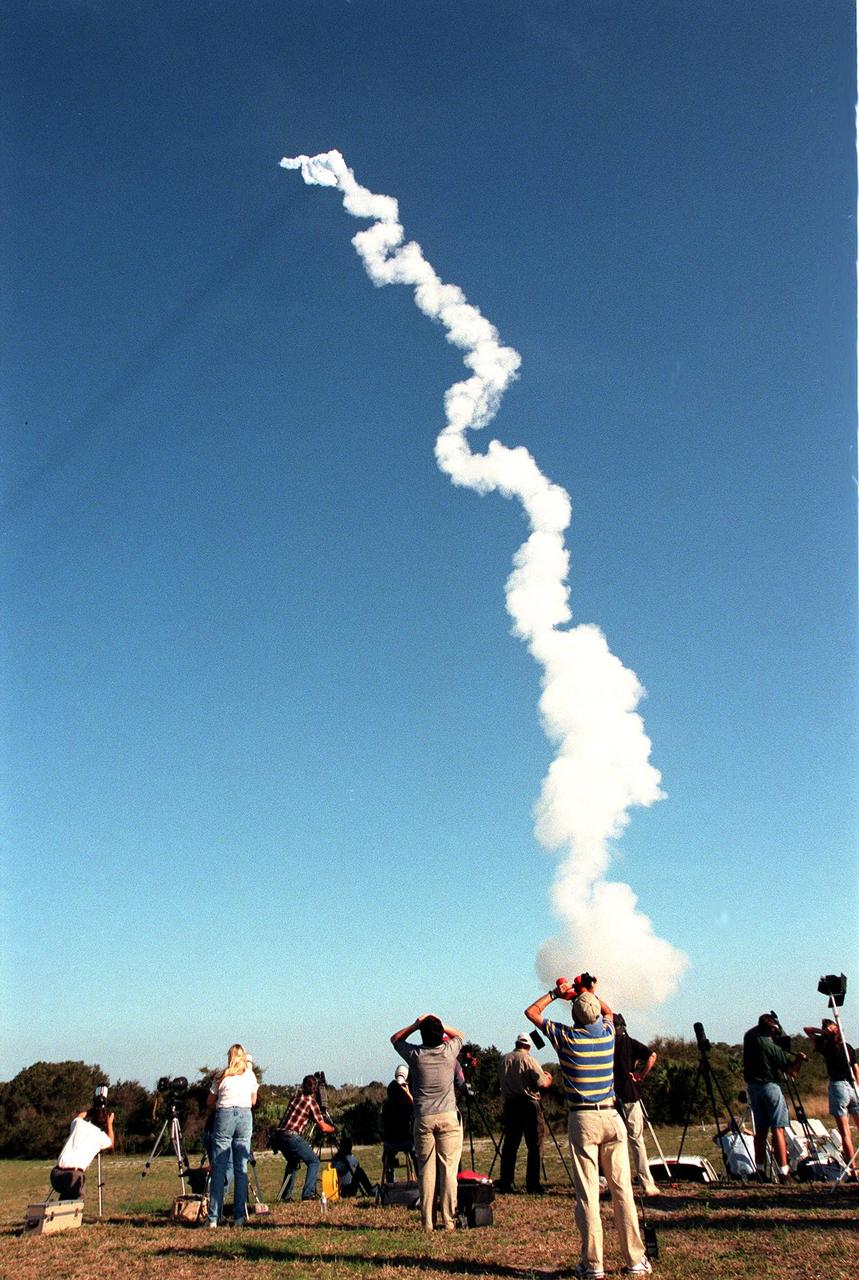
Photographers (left) and reporters (right) follow the snaking exhaust of the Boeing Delta II rocket carrying the Stardust spacecraft after its launch at 4:04:15 p.m. EST. A 24-hour scrub postponed the launch from the originally scheduled date of Feb. 6. Stardust is destined for a close encounter with the comet Wild 2 in January 2004. Using a silicon-based substance called aerogel, Stardust will capture comet particles flying off the nucleus of the comet. The spacecraft also will bring back samples of interstellar dust. These materials consist of ancient pre-solar interstellar grains and other remnants left over from the formation of the solar system. Scientists expect their analysis to provide important insights into the evolution of the sun and planets and possibly into the origin of life itself. The collected samples will return to Earth in a sample return capsule to be jettisoned as Stardust swings by Earth in January 2006
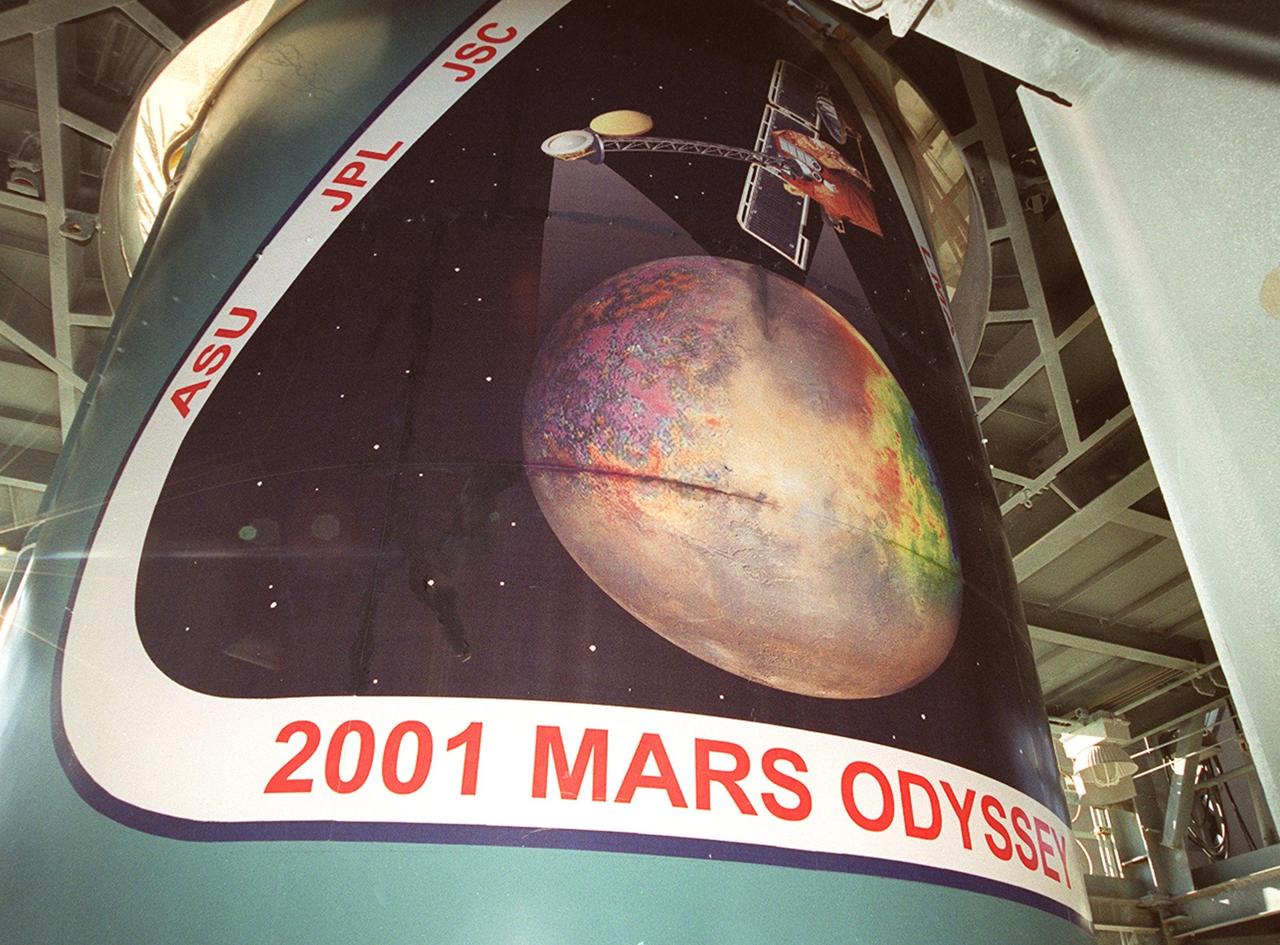
The Delta II rocket that will launch the Mars Odyssey spacecraft towards the Red Planet exhibits the mission logo (seen from the left). The Mars Odyssey is scheduled for launch April 7, 2001, at 11:02 a.m. EST. NASA’s latest explorer carries three scientific instruments to map the chemical and mineralogical makeup of Mars: a thermal-emission imaging system, a gamma ray spectrometer and a Martian radiation environment experiment. The imaging system will map the planet with high-resolution thermal images and give scientists an increased level of detail to help them understand how the mineralogy of the planet relates to the land forms. In addition, Odyssey will serve as a communications relay for U.S. and international landers arriving at Mars in 2003/2004
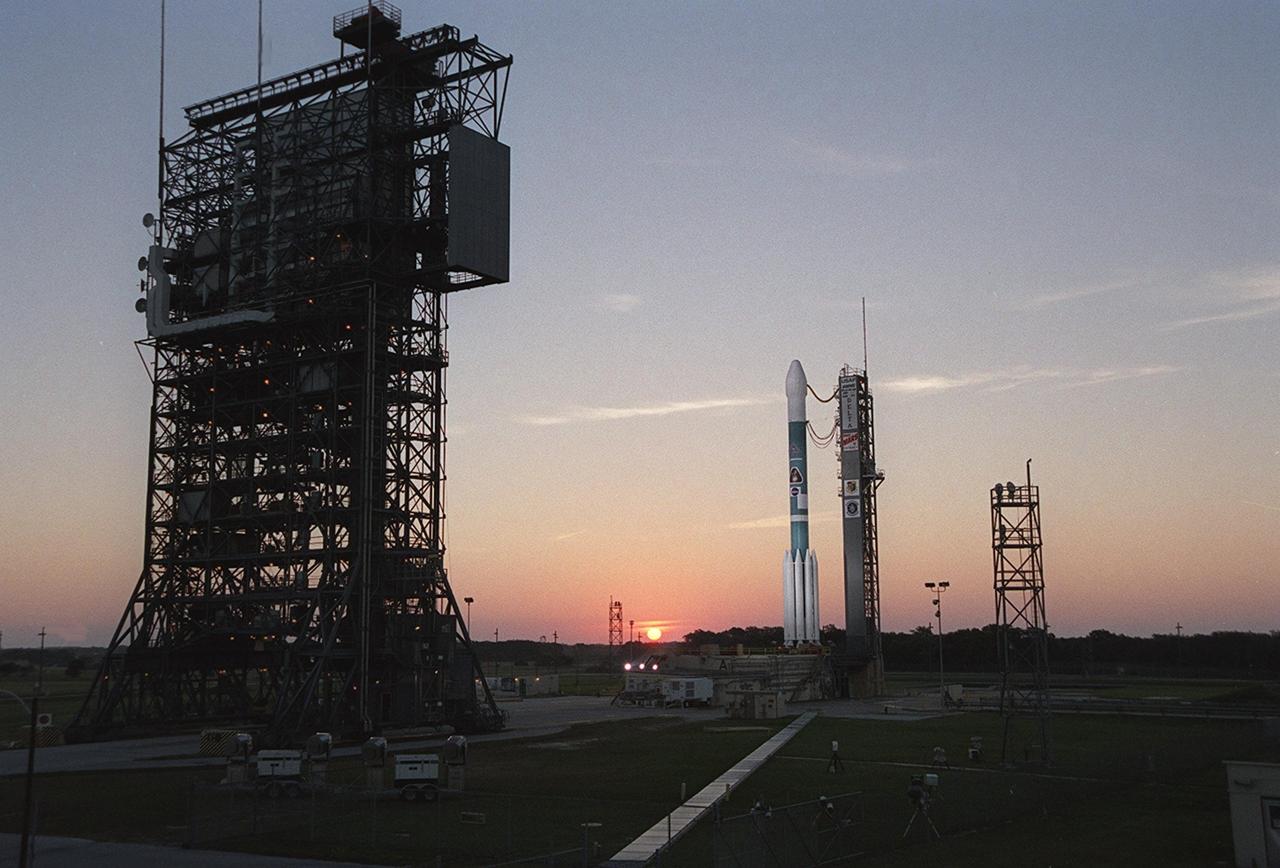
The sun creeps over the horizon as the Boeing Delta II rocket stands ready for launch after tower rollback. It is carrying the 2001 Mars Odyssey spacecraft that will begin a 7-month journey to Mars. Liftoff is scheduled for 11:02 a.m. EDT. The spacecraft, built by Lockheed Martin Space Systems for the Jet Propulsion Laboratory, will orbit Mars, mapping the surface looking for geological features that could indicate the presence of water, now or in the past. Science gathered by three science instruments on board will be key to future missions to Mars, including orbital reconnaissance, lander and human missions

Dawn casts a pink glow as the Boeing Delta II rocket stands ready for launch after tower rollback. It is carrying the 2001 Mars Odyssey spacecraft that will begin its 7-month journey to Mars. Liftoff is scheduled for 11:02 a.m. EDT. The spacecraft, built by Lockheed Martin Space Systems for the Jet Propulsion Laboratory, will orbit Mars, mapping the surface looking for geological features that could indicate the presence of water, now or in the past. Science gathered by three science instruments on board will be key to future missions to Mars, including orbital reconnaissance, lander and human missions
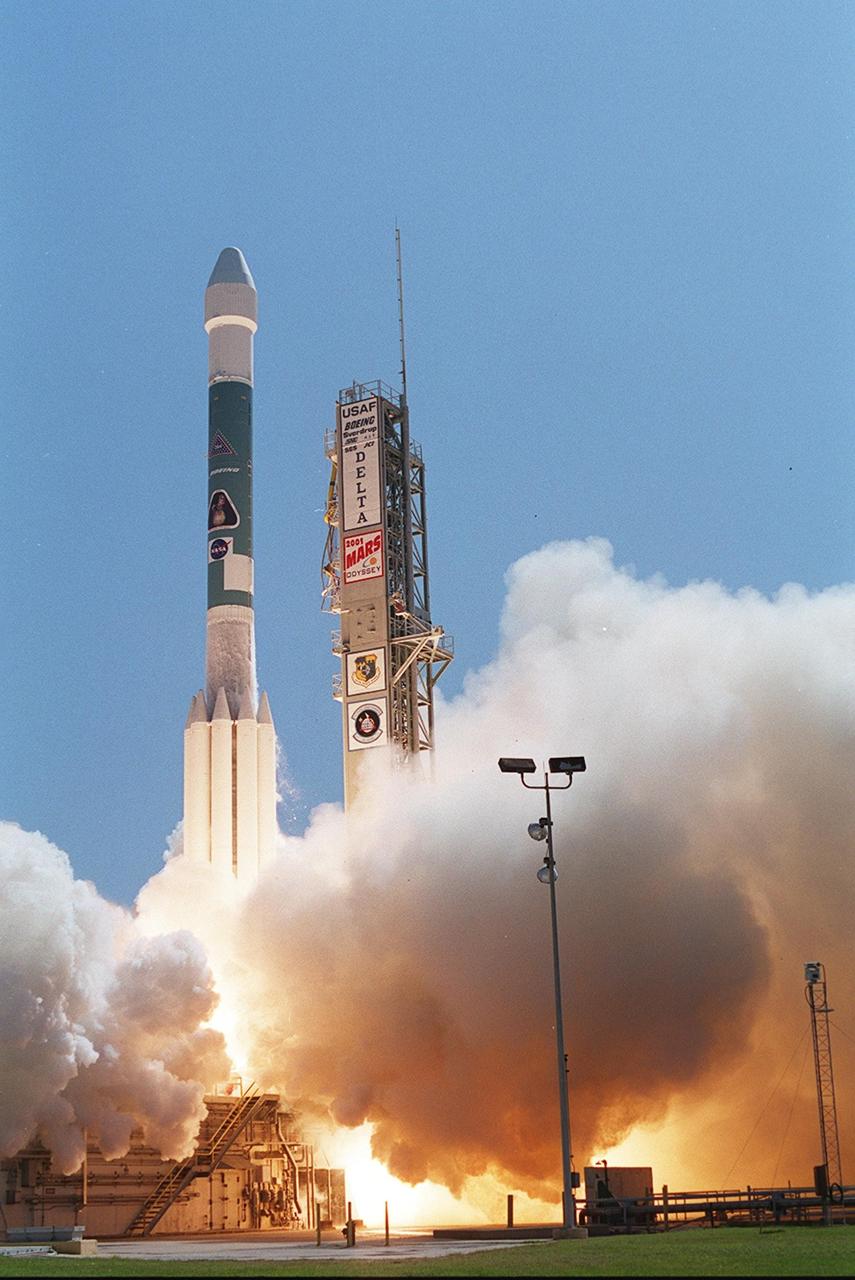
Smoke clouds pour across the ground as the Boeing Delta II rocket carrying the 2001 Mars Odyssey spacecraft leaps into the clear blue sky. Liftoff occurred at 11:02 a.m. EDT. The launch sends the Mars Odyssey on an approximate 7-month journey to orbit the planet Mars. The spacecraft, built by Lockheed Martin Space Systems for the Jet Propulsion Laboratory, will map the Martian surface looking for geological features that could indicate the presence of water, now or in the past. Science gathered by three science instruments on board will be key to future missions to Mars, including orbital reconnaissance, lander and human missions
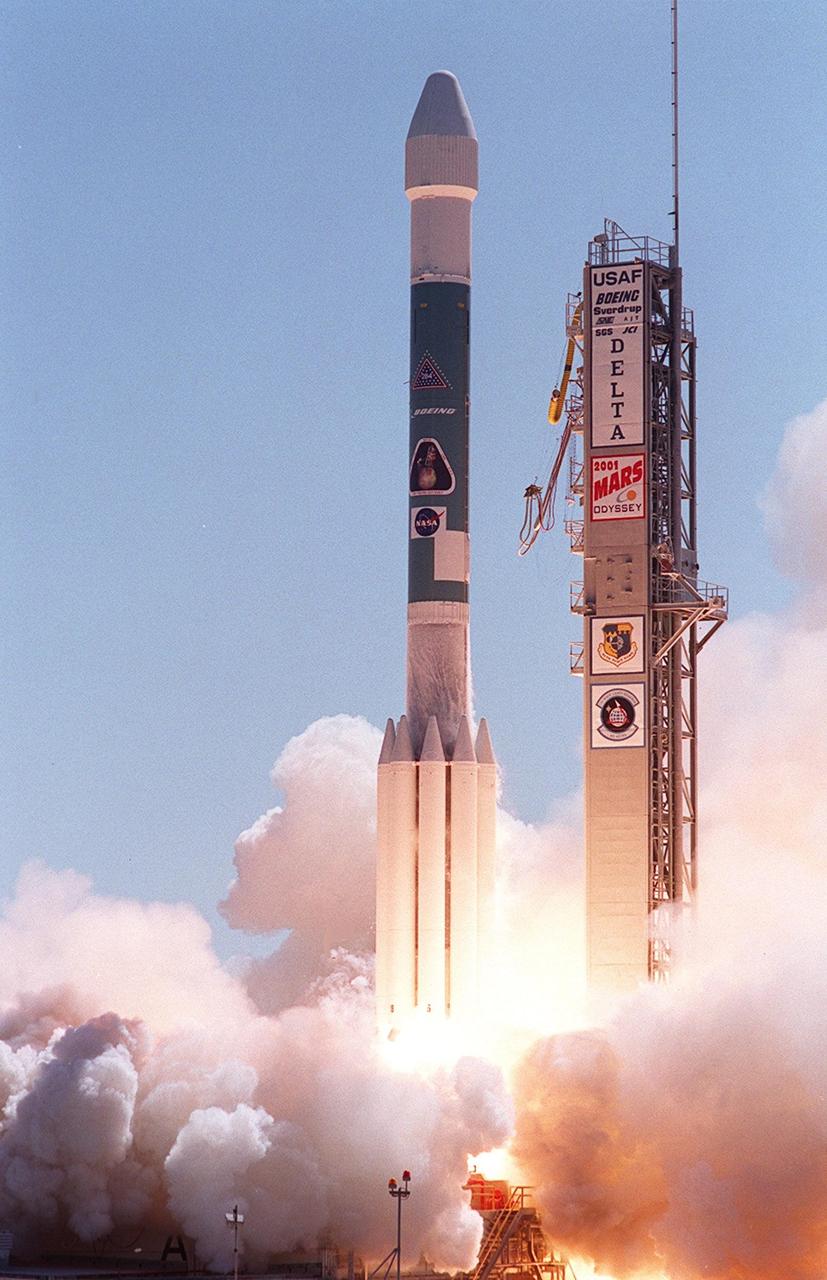
The Boeing Delta II rocket carrying the 2001 Mars Odyssey spacecraft leaps through the smoke into a clear blue sky. Liftoff occurred at 11:02 a.m. EDT. The launch sends the Mars Odyssey on an approximate 7-month journey to orbit the planet Mars. The spacecraft, built by Lockheed Martin Space Systems for the Jet Propulsion Laboratory, will map the Martian surface looking for geological features that could indicate the presence of water, now or in the past. Science gathered by three science instruments on board will be key to future missions to Mars, including orbital reconnaissance, lander and human missions
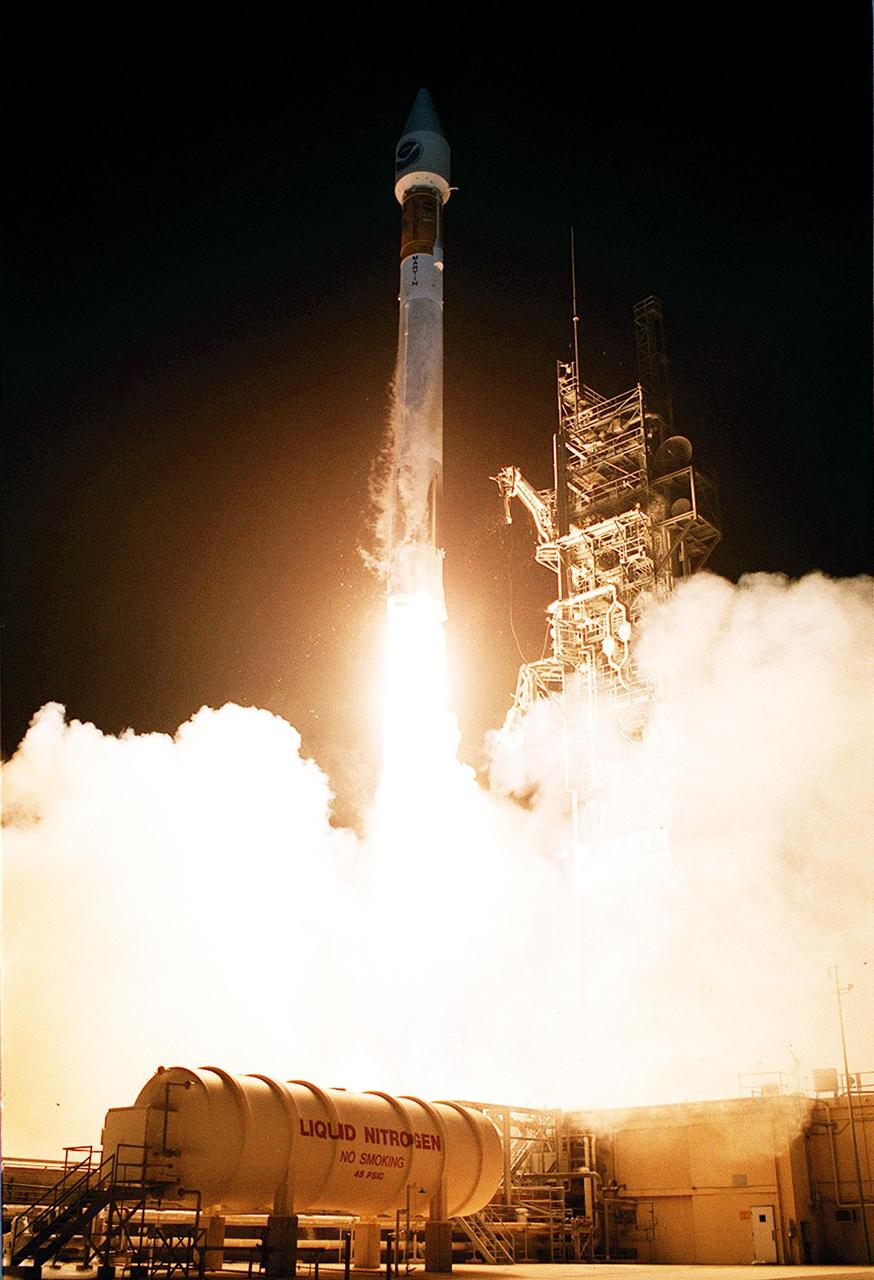
The night sky is briefly turned bright as day with the launch of the Atlas II/Centaur rocket carrying the NASA/NOAA weather satellite GOES-L. Liftoff occurred at 3:07 a.m. EDT. The primary objective of the GOES-L is to provide a full capability satellite in an on-orbit storage condition, in order to assure NOAA continuity in services from a two-satellite constellation. Launch services are being provided by the 45th Space Wing. Once in orbit, the spacecraft is to be designated GOES-11 and will complete its 90-day checkout in time for availability during the 2000 hurricane season