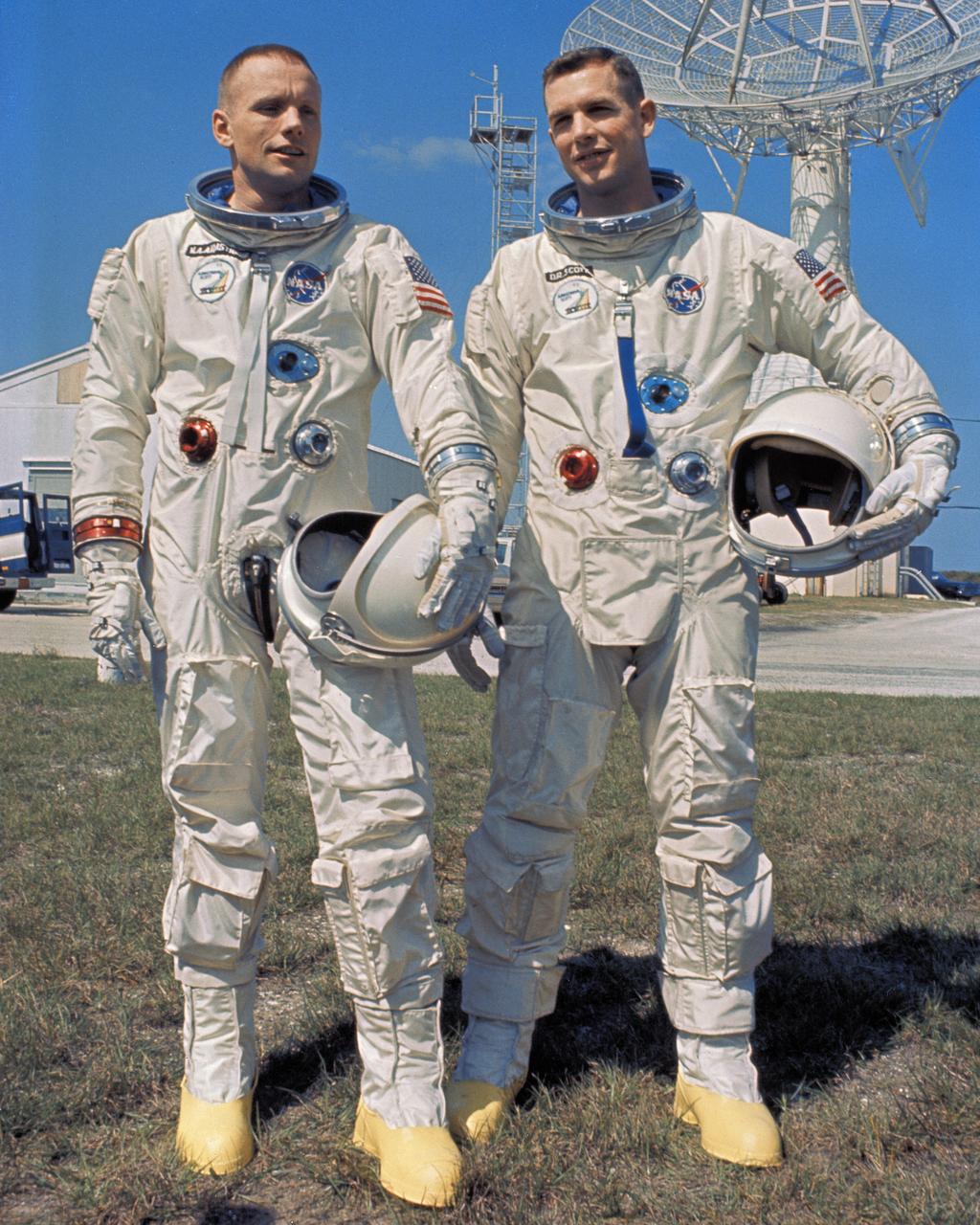
KSC-66C-1846 Gemini-8 Astronauts Neil A. Armstrong, Command Pilot, and David R. Scott, Pilot, during a Photo Session for the Press outside Mission Control Center, Cape Kennedy, FLA. (jrs)
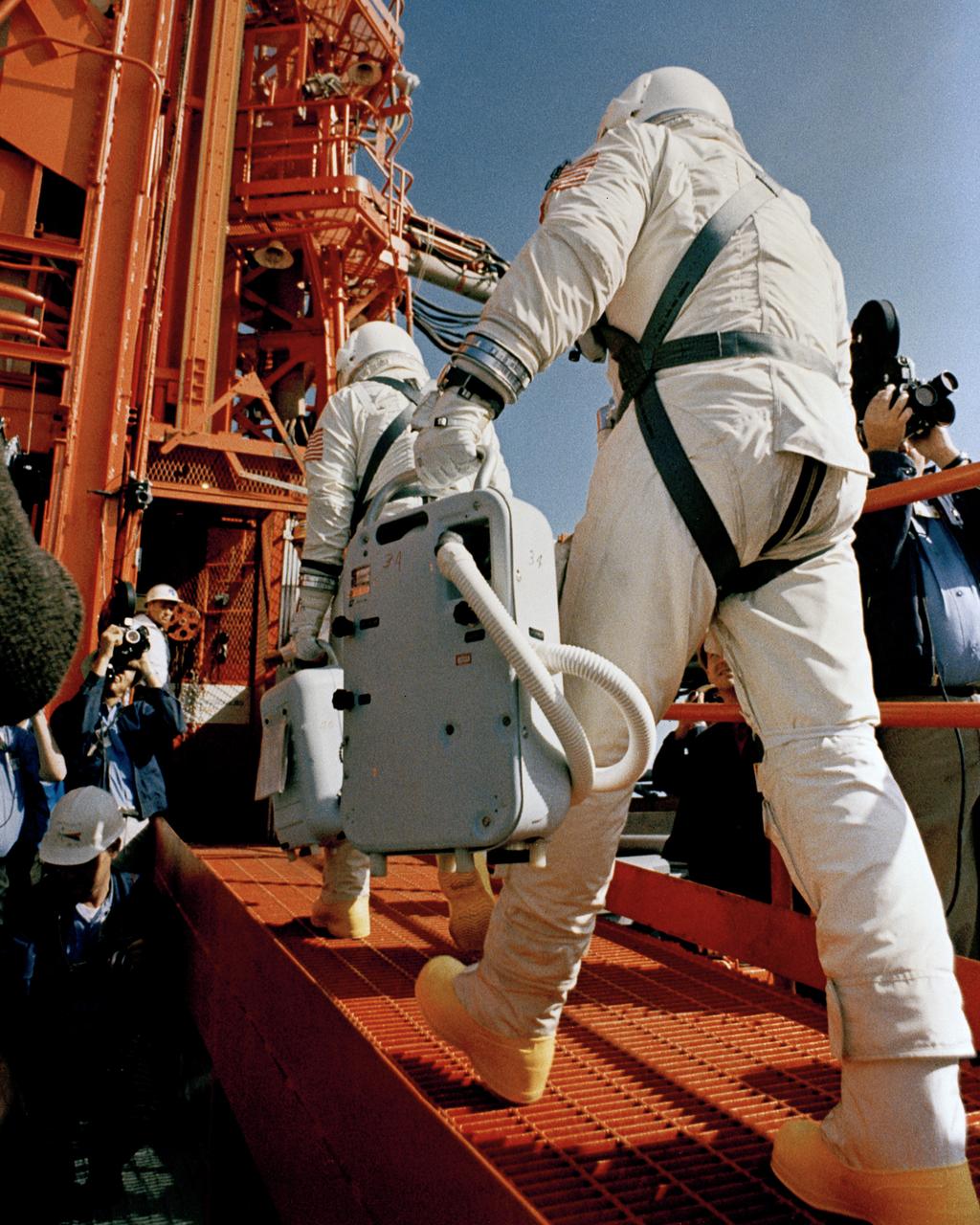
KSC-66C-1861 Gemini-8 Astronauts Neil Armstrong and David Scott are shown entering elevator at Complex 19, Cape Kennedy. (jrs)
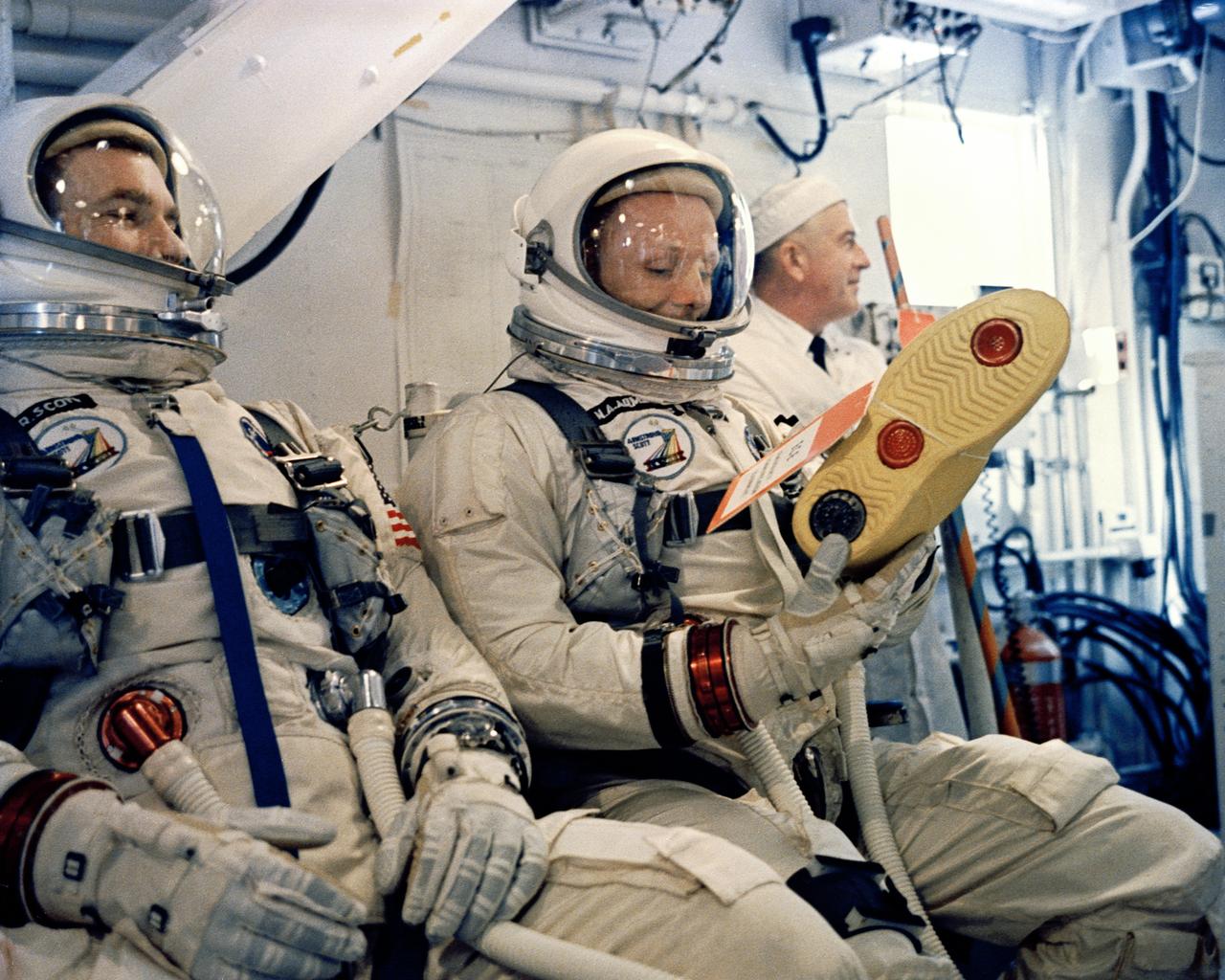
KSC-66C-1875 Astronauts David Scott and Neil Armstrong wait for the order to board their Gemini 8 Spacecraft in the White Room at Cape Kennedy, Complex 19. (jrs)
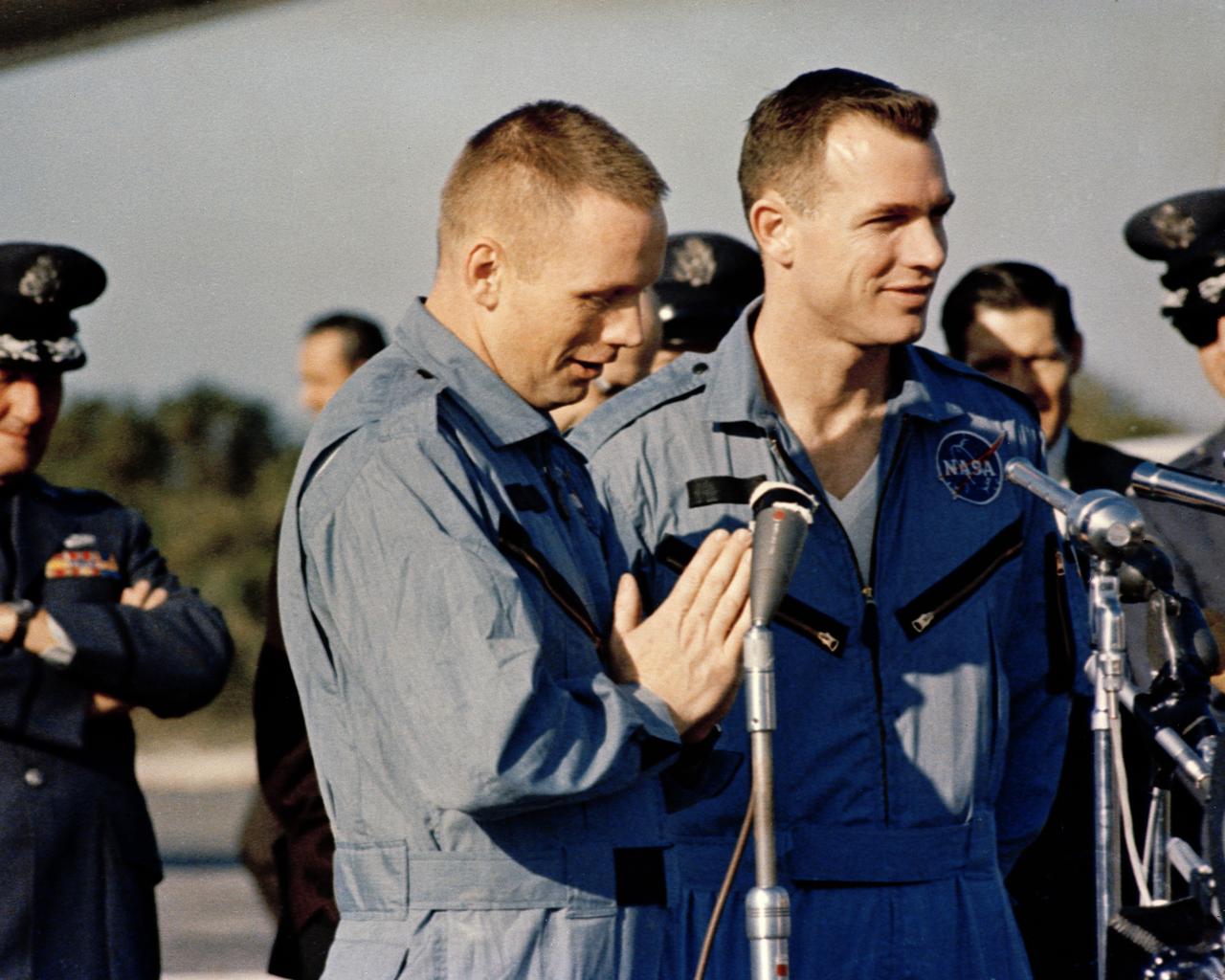
KSC-66C-1881 Astronauts Neil Armstrong and David Scott say a few words for the crowd that greeted them on their arrival at Skid Strip from Hawaii. (jrs)
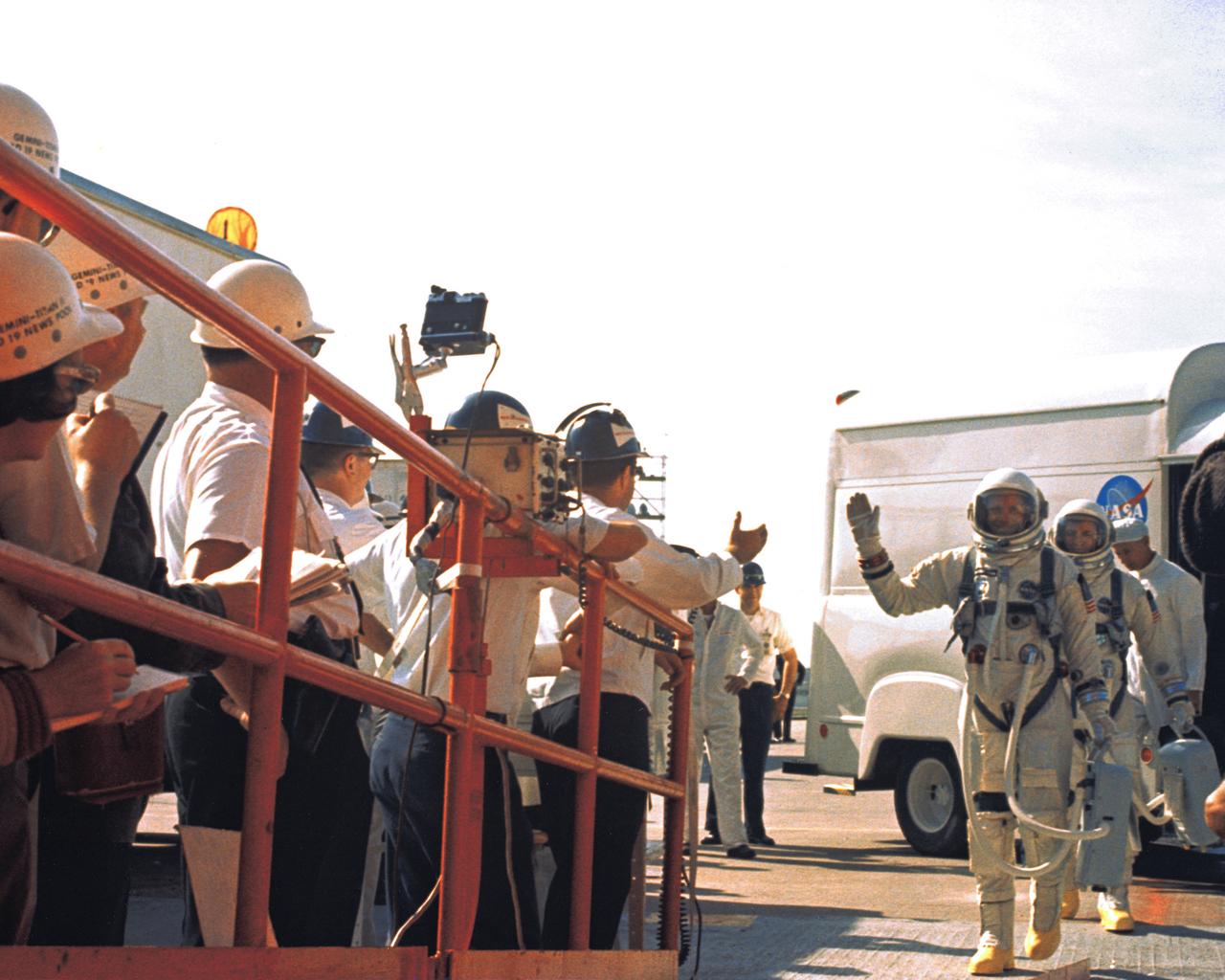
KSC-66C-1855 Gemini-8 Astronauts Neil A. Armstrong and David R. Scott leave Transfer Van at Complex 19, Cape Kennedy prior to boarding their Gemini 8 Spacecraft. (jrs)
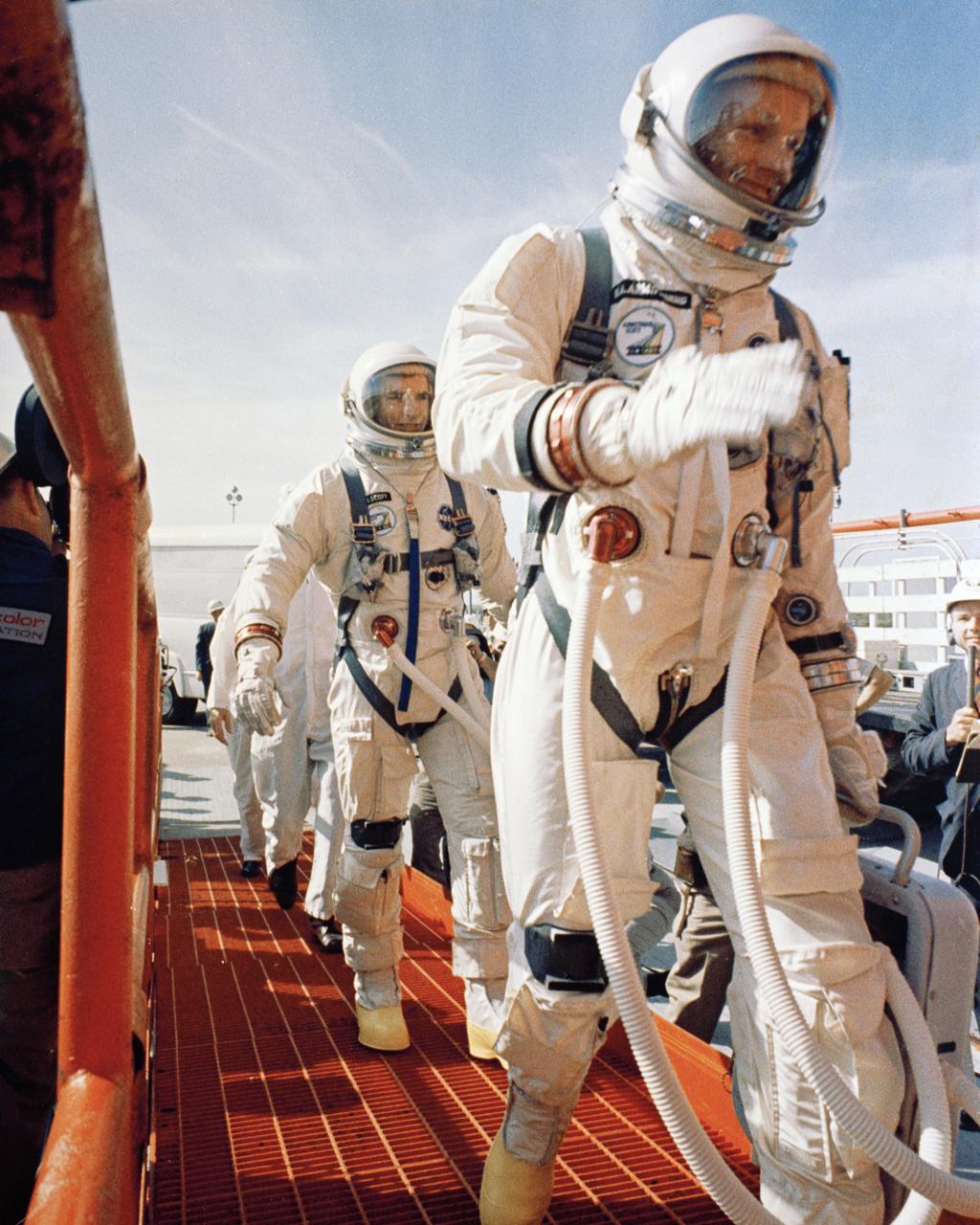
KSC-66C-1863 Gemini-8 Astronauts Neil Armstrong and David Scott prepare to enter elevator at Complex 19, Cape Kennedy. (jrs)
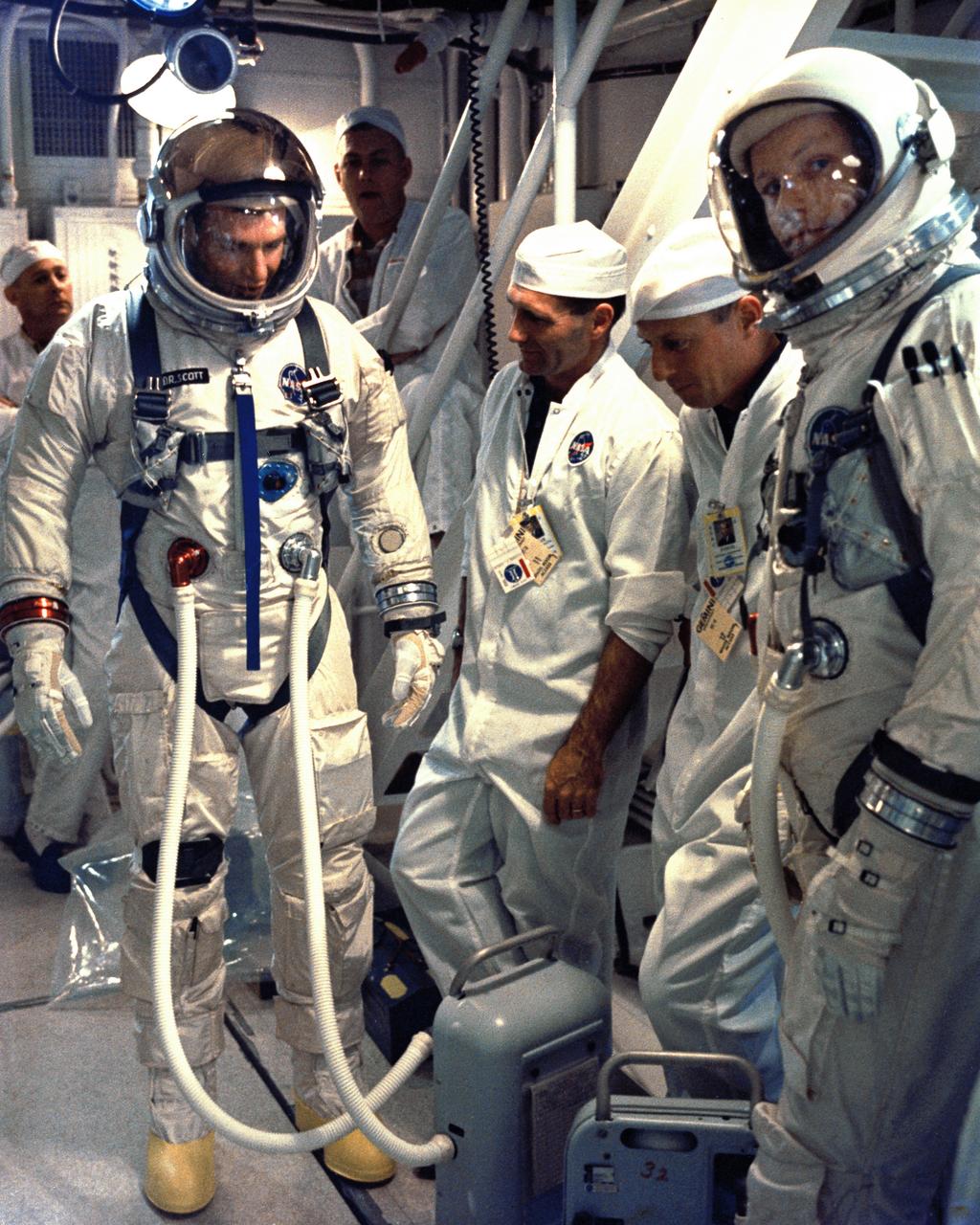
KSC-66C-1841 Gemini-8 Astronauts Neil A. Armstrong, Command Pilot, and David R. Scott, Pilot, arrive at White Room, Complex 19 to enter Spacecraft for Simulation Test. (jrs)
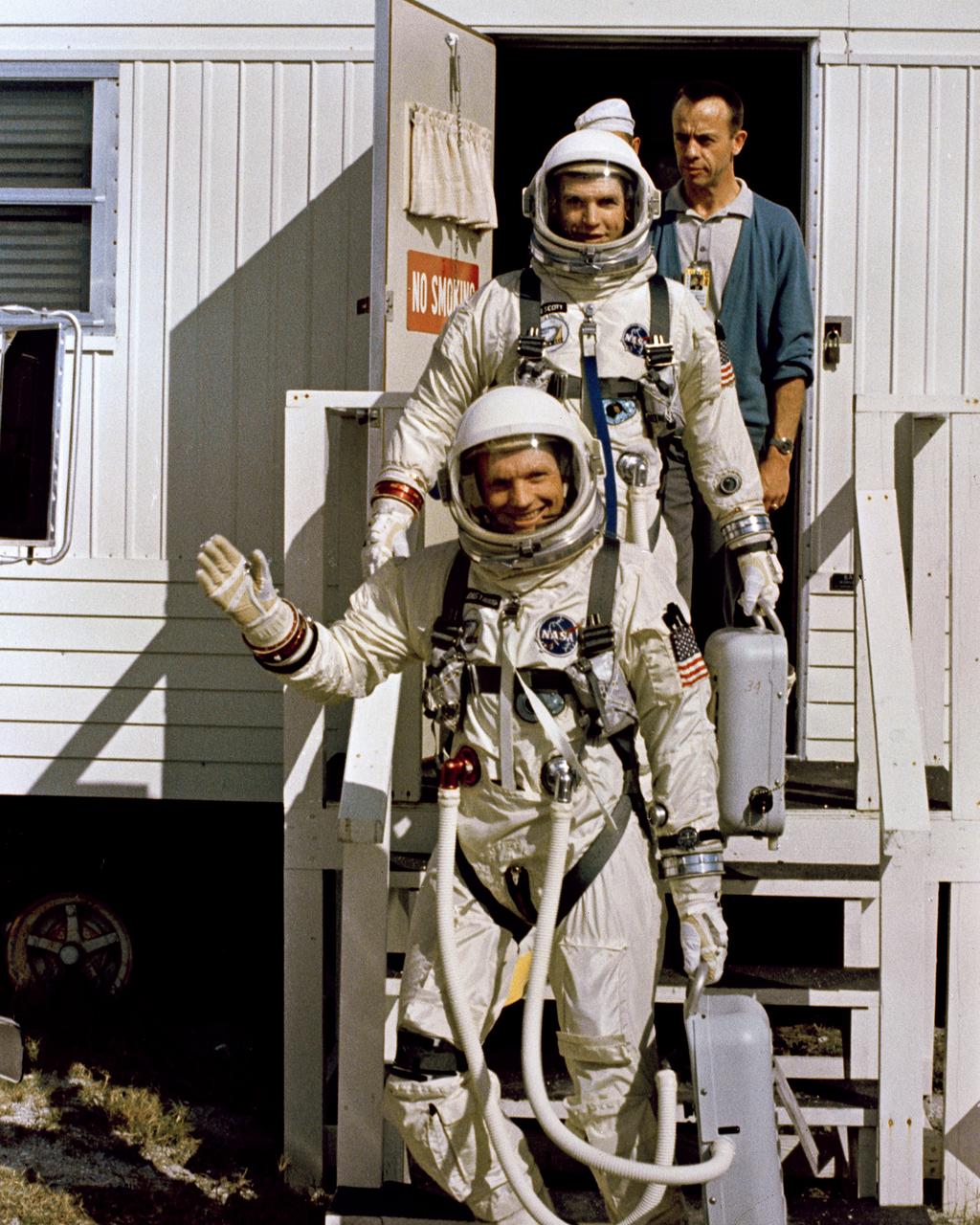
KSC-66C-1869 Astronauts Neil Armstrong and David Scott leave Suiting Trailer and enter Transfer Van at Cape Kennedy prior to boarding their Spacecraft for Gemini 8 Mission. (jrs)
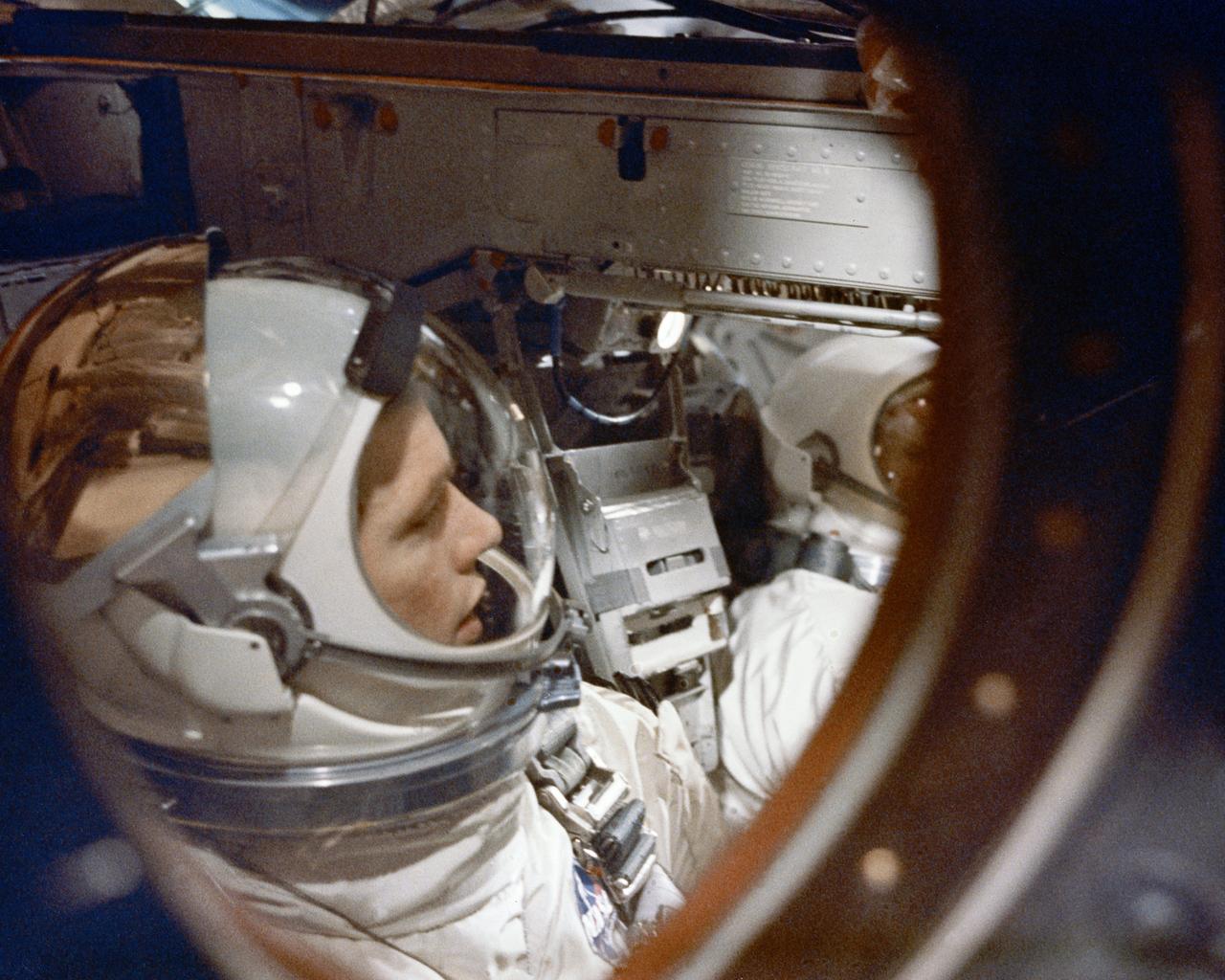
KSC-66C-1838 Gemini-8 Spacecraft is being checked out at Complex 19 during a Simulated Countdown.
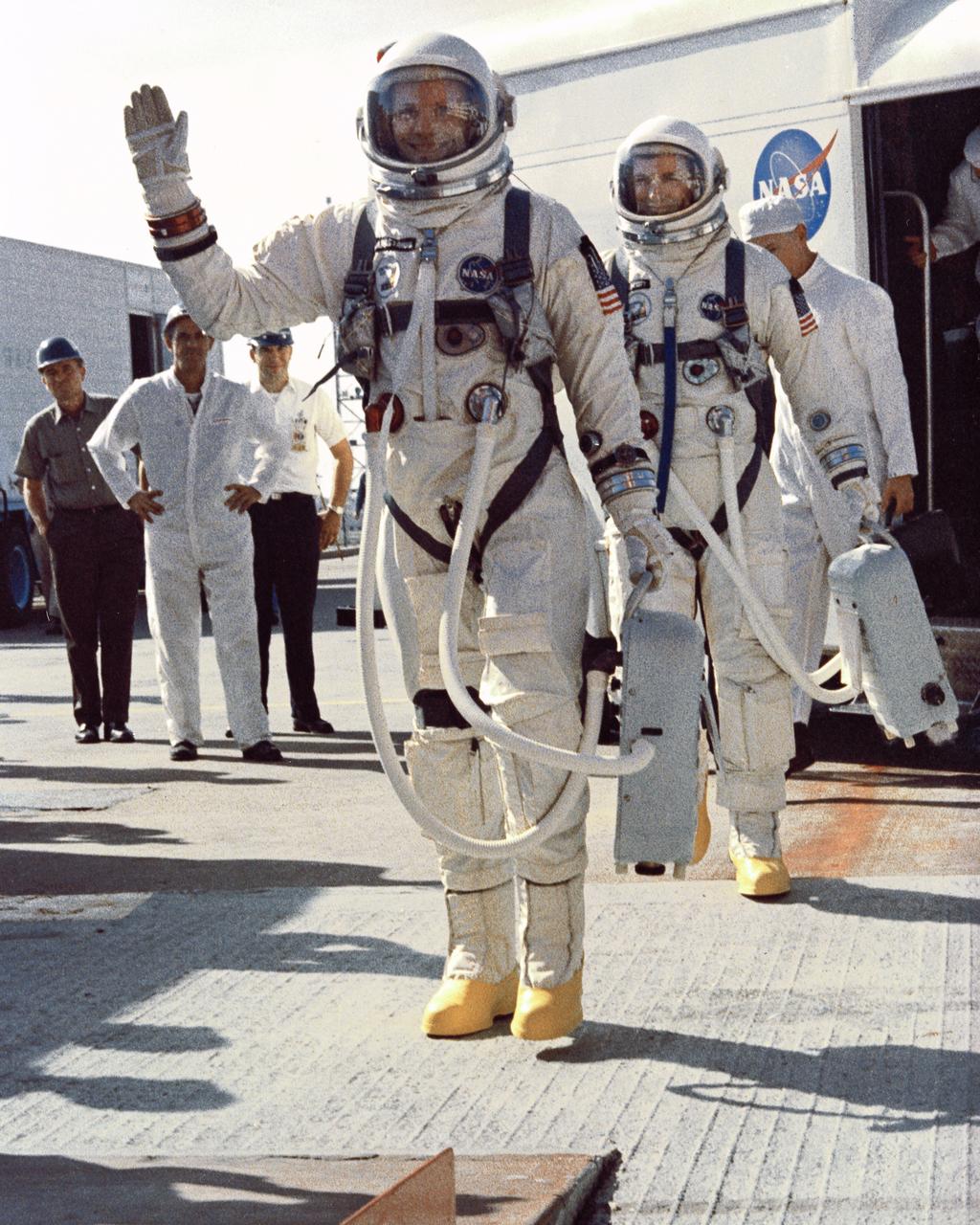
KSC-66C-1867 Gemini-8 Astronauts Neil A. Armstrong and David R. Scott leave Transfer Van at Complex 19, Cape Kennedy prior to boarding their Gemini 8 Spacecraft. (jrs)
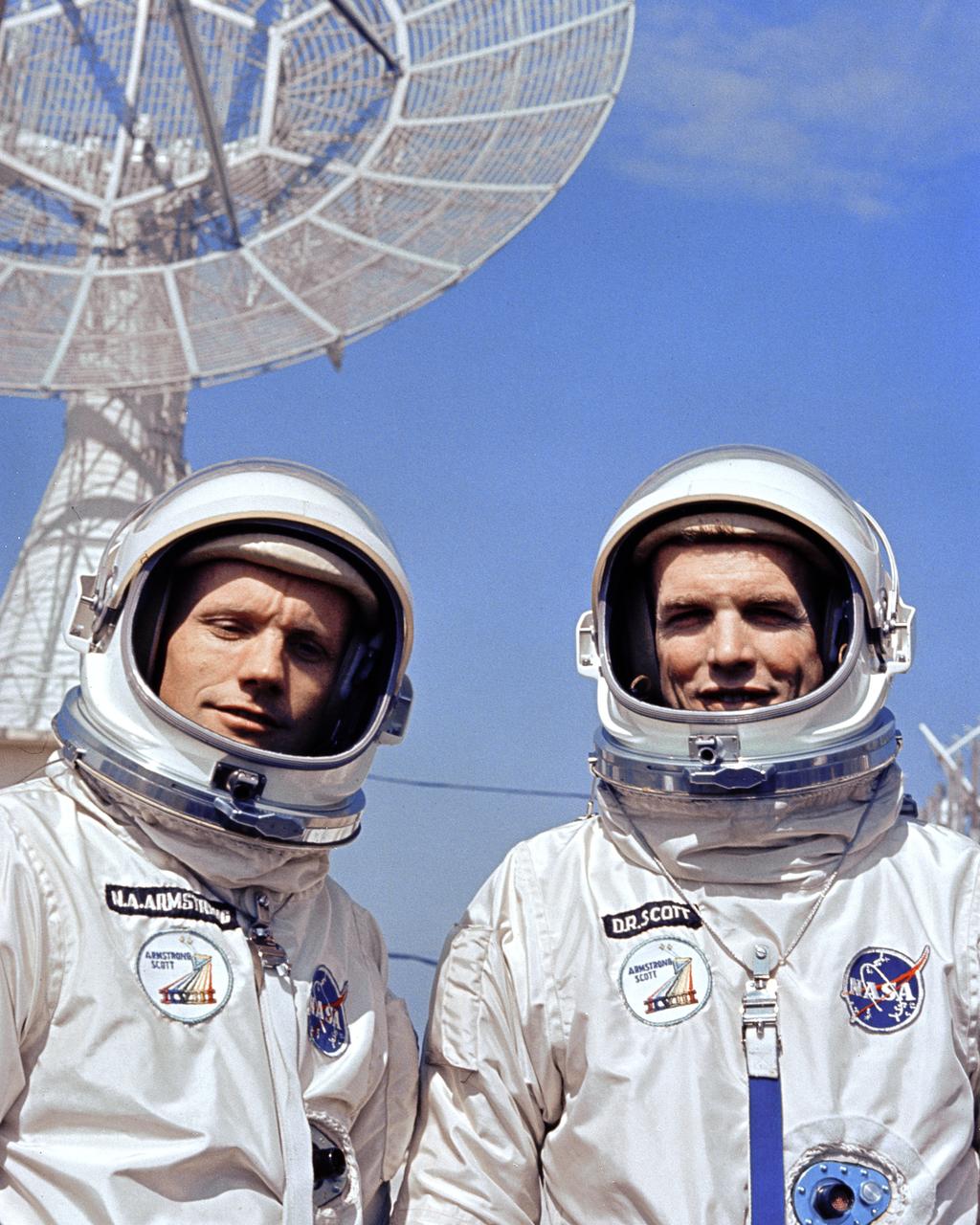
KSC-66C-1845 Gemini-8 Astronauts Neil A. Armstrong, Command Pilot, and David R. Scott, Pilot, during a Photo Session for the Press outside Mission Control Center, Cape Kennedy. (jrs)
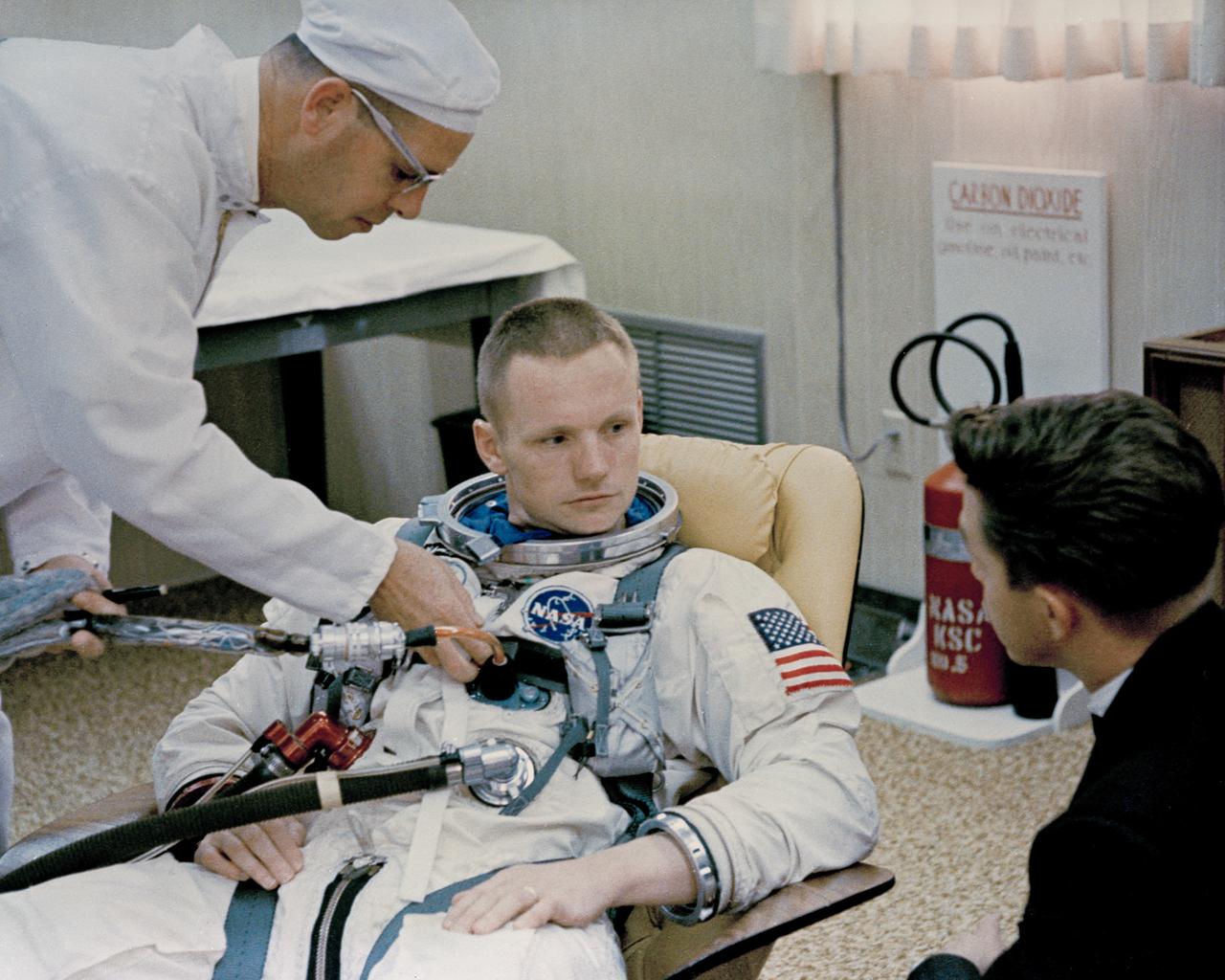
KSC-66C-1849 Gemini 8 Astronaut Neil Armstrong is aided by Suit Technician Jim Garrepy, during preparations for Gemini 8 Mission (jrs)
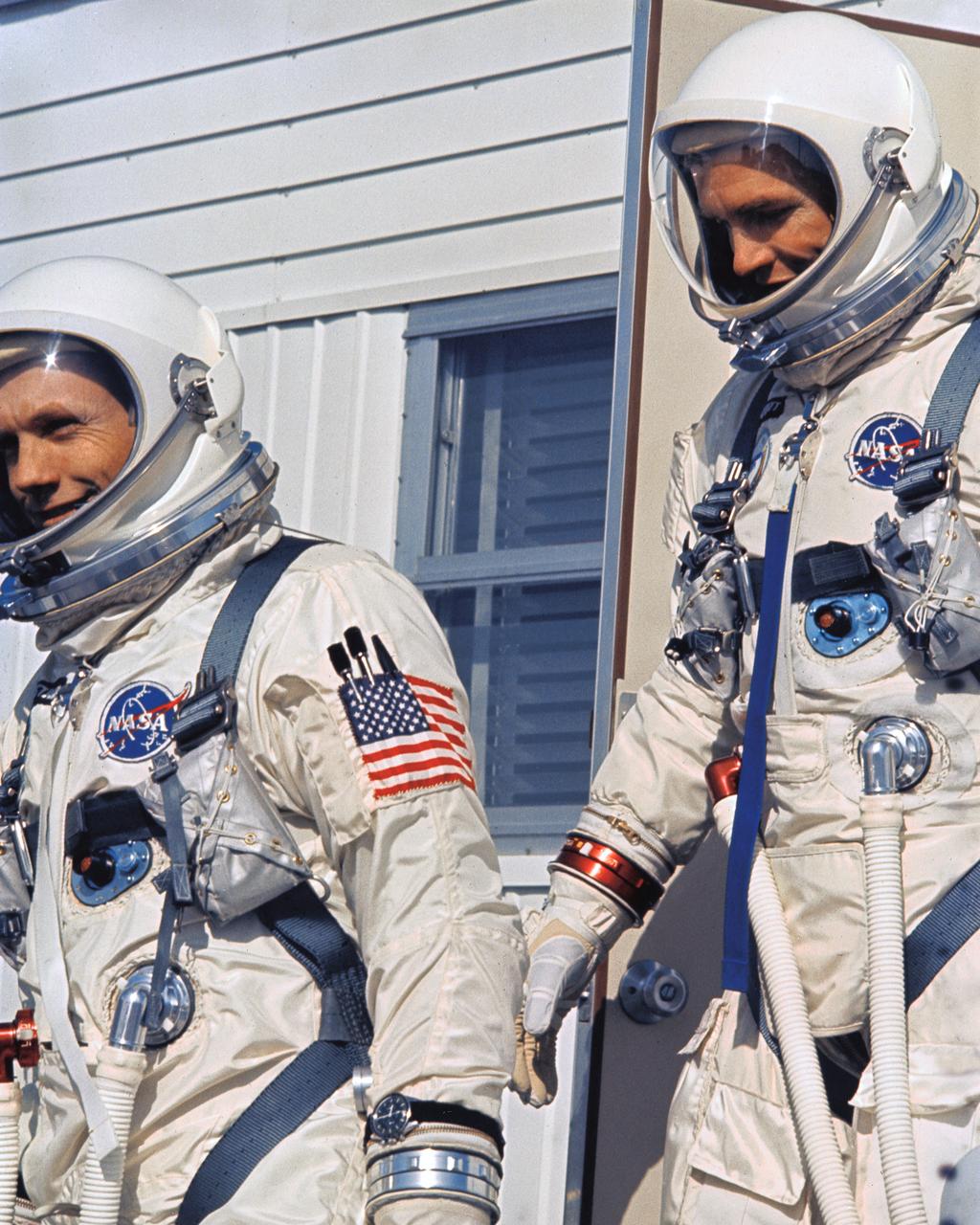
KSC-66C-1851 Astronauts Neil Armstrong and David Scott leave Suiting Trailer to enter Transfer Van, Complex 19, Cape Kennedy prior to boarding their Spacecraft for Gemini 8 Mission. (jrs)
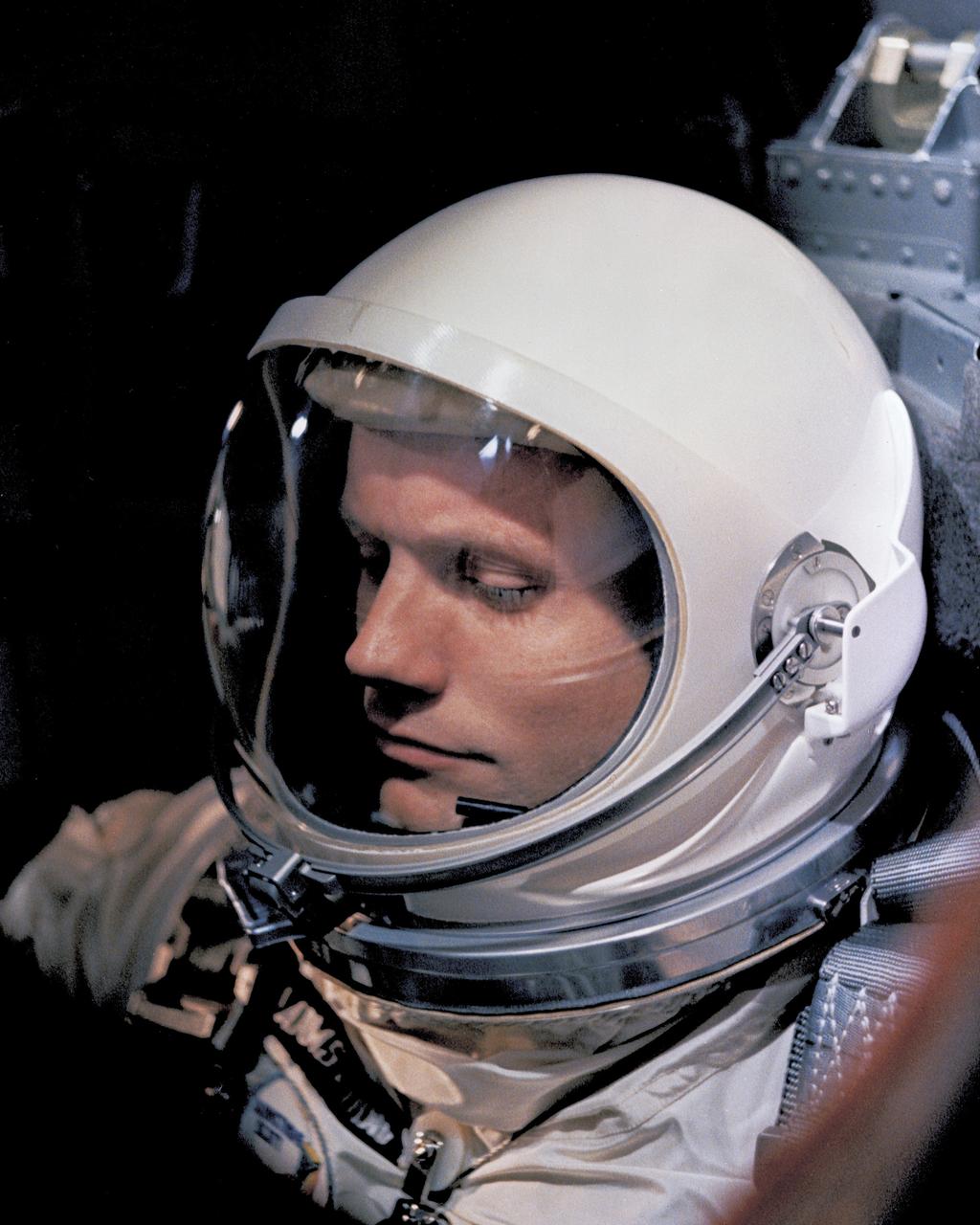
KSC-66C-1872 Gemini 8 Command Pilot Neil A. Armstrong seen through window of Gemini 8 Spacecraft just before liftoff. (jrs)
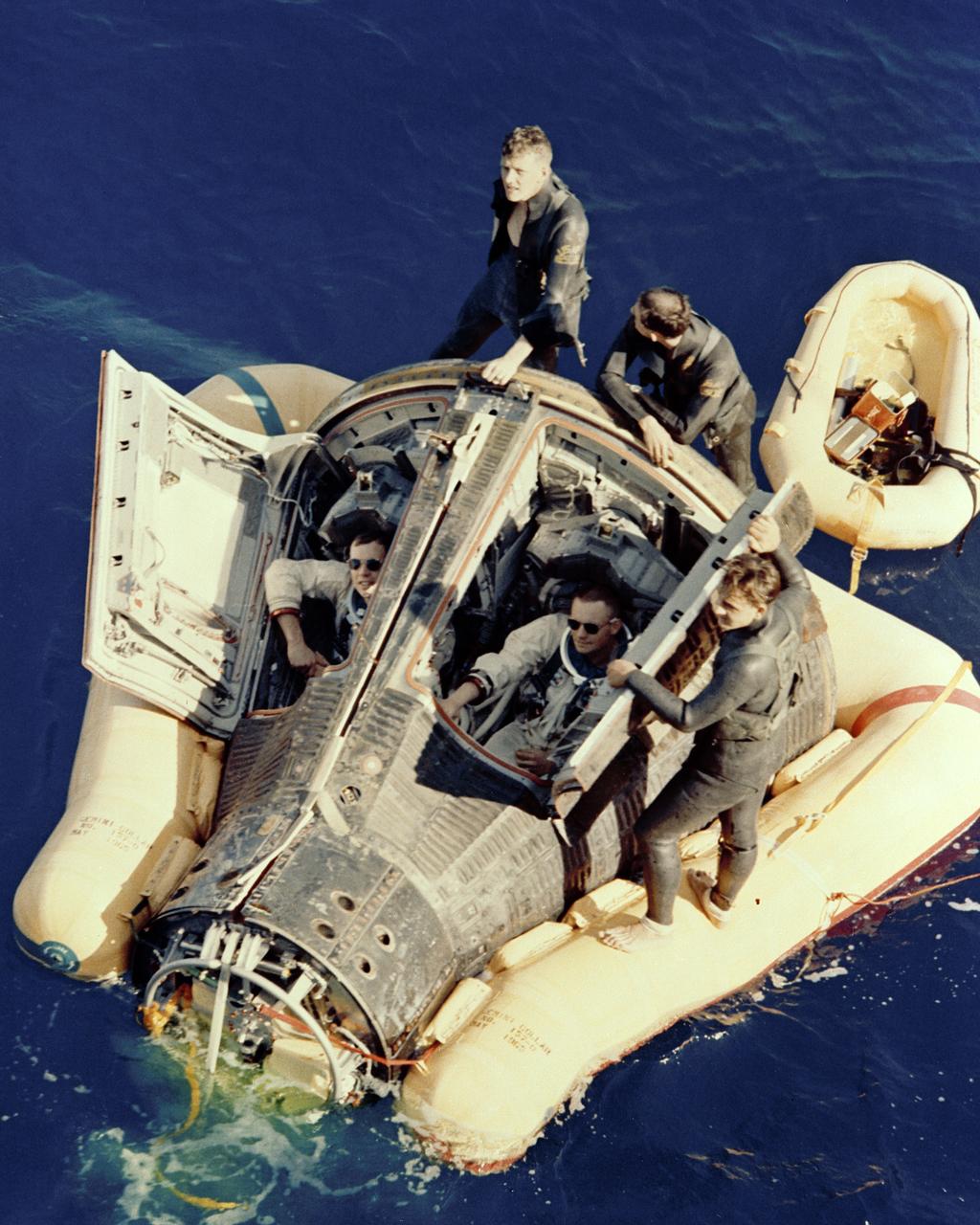
KSC-66C-1879 GT-8 recovery with Astronauts Neil A. Armstrong, Command Pilot and David R. Scott, Pilot in pacific after their GT-8 Flight.
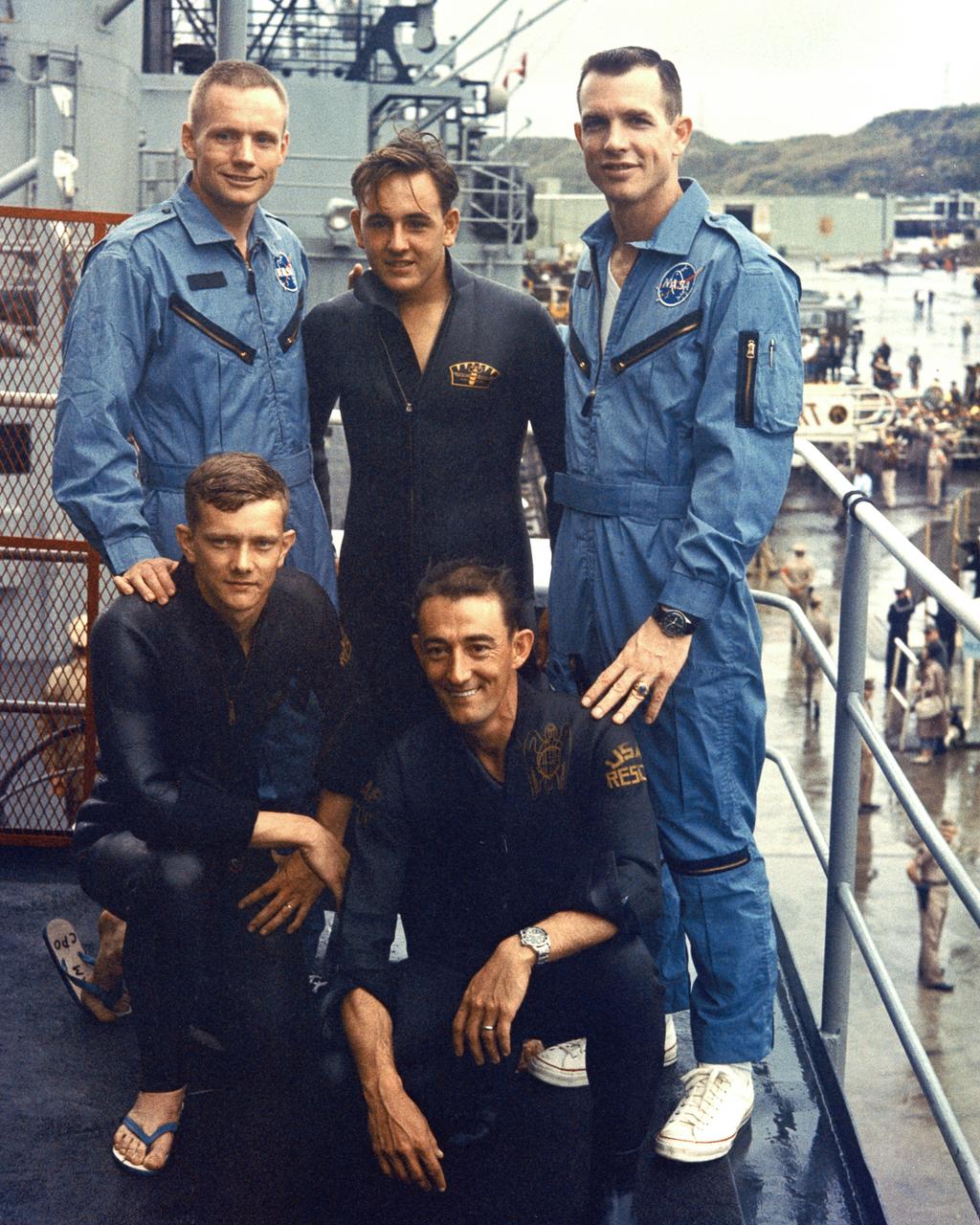
KSC-66C-1878 Gemini 8 Astronauts pose with the PARA-RESCUE team. Left-to-right, top: Neil Armstrong, E. M. Neil, David Scott; bottom row: L. D. Huyett and G. N. Moore. (jrs)

KSC-66C-1850 Gemini 8 Astronaut Neil Armstrong is aided by Suit Technician Jim Garrepy, during preparations for today’s Gemini 8 Mission (jrs)
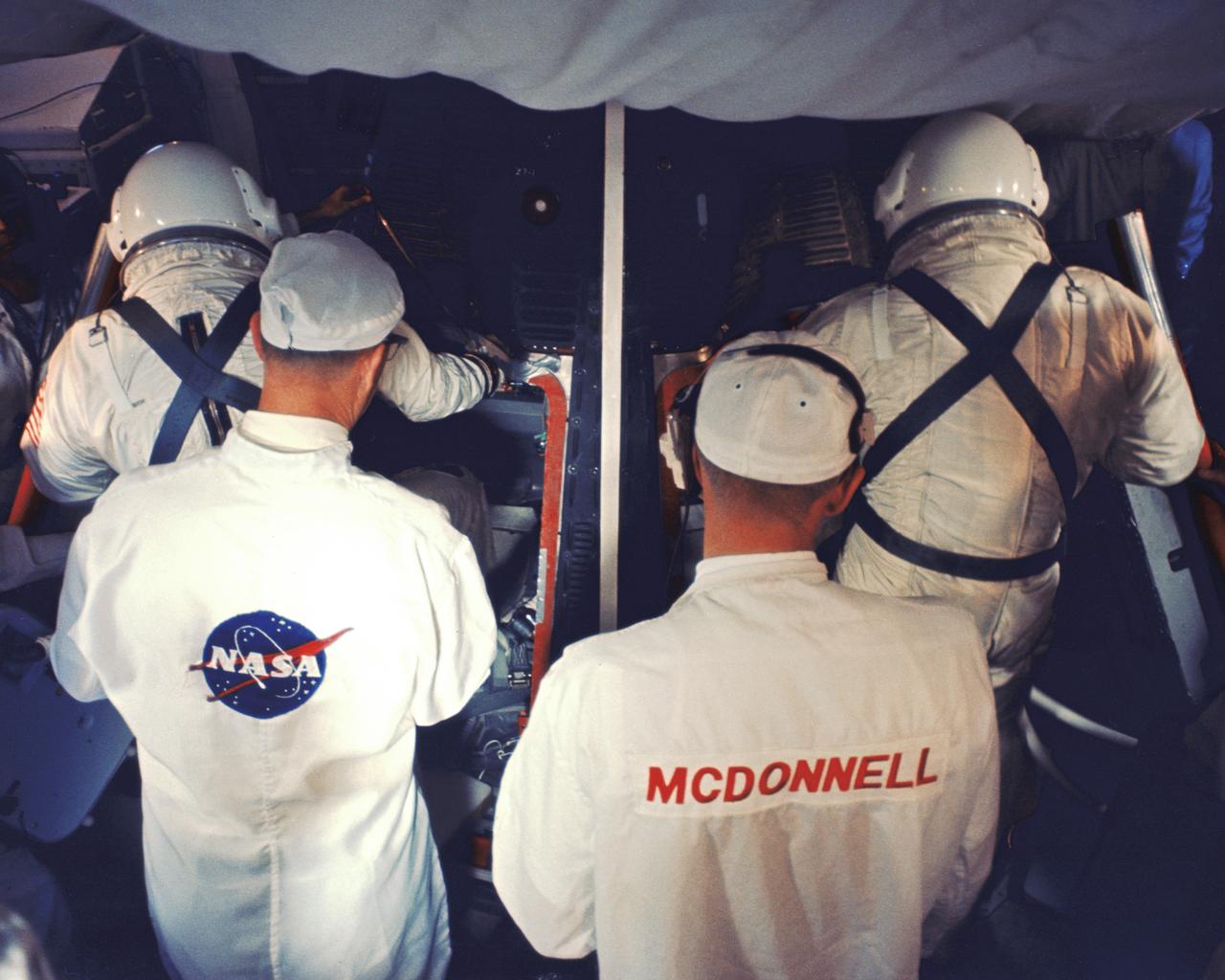
KSC-66C-1852 Gemini-8 Astronauts Neil A. Armstrong and David R. Scott are helped into their Gemini 8 Spacecraft by White Room technicians at Complex 19, Cape Kennedy, Prior to Liftoff. (jrs)
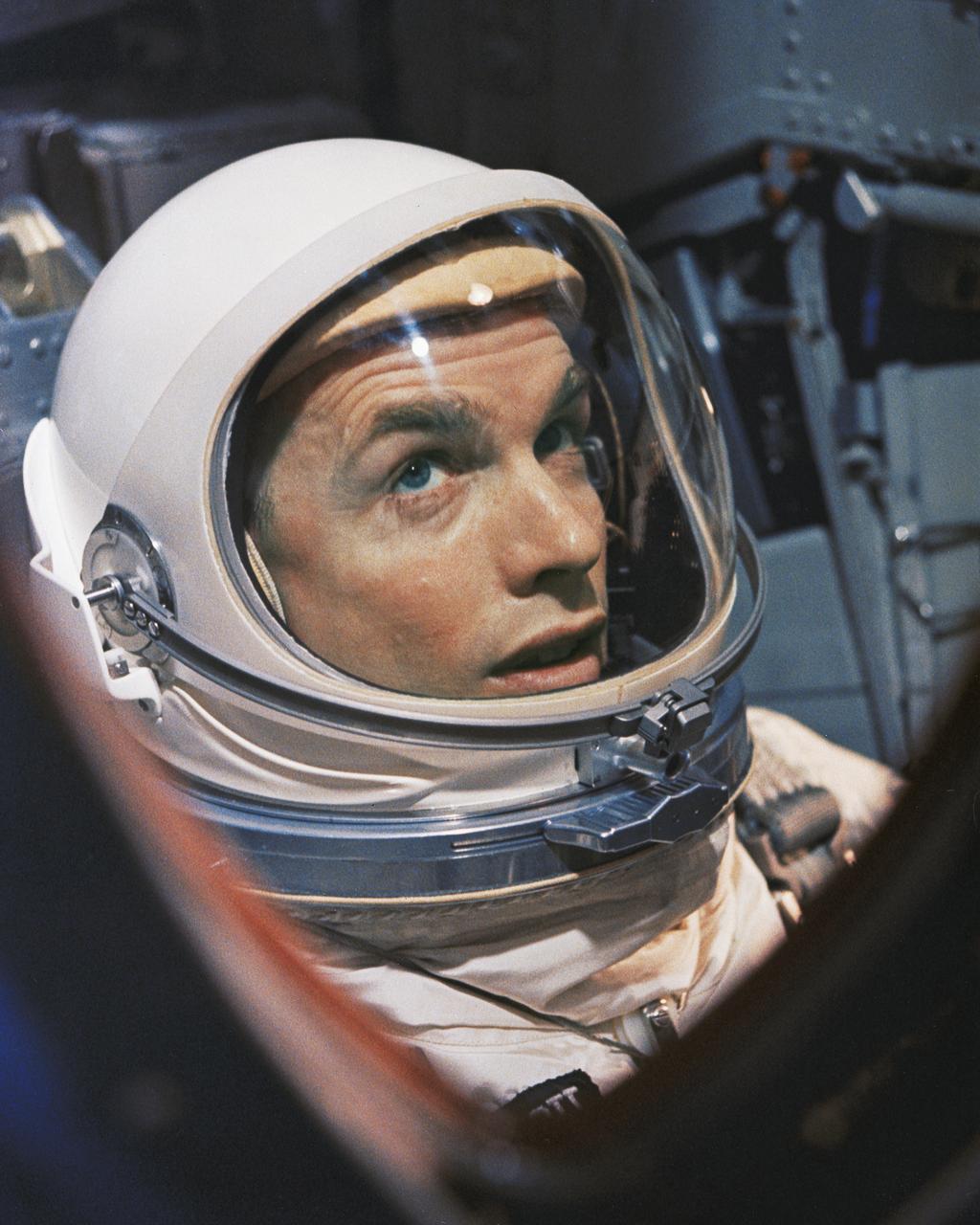
KSC-66C-1871 Gemini 8 Pilot David R. Scott seen through window of Gemini 8 Spacecraft just before liftoff. (jrs)
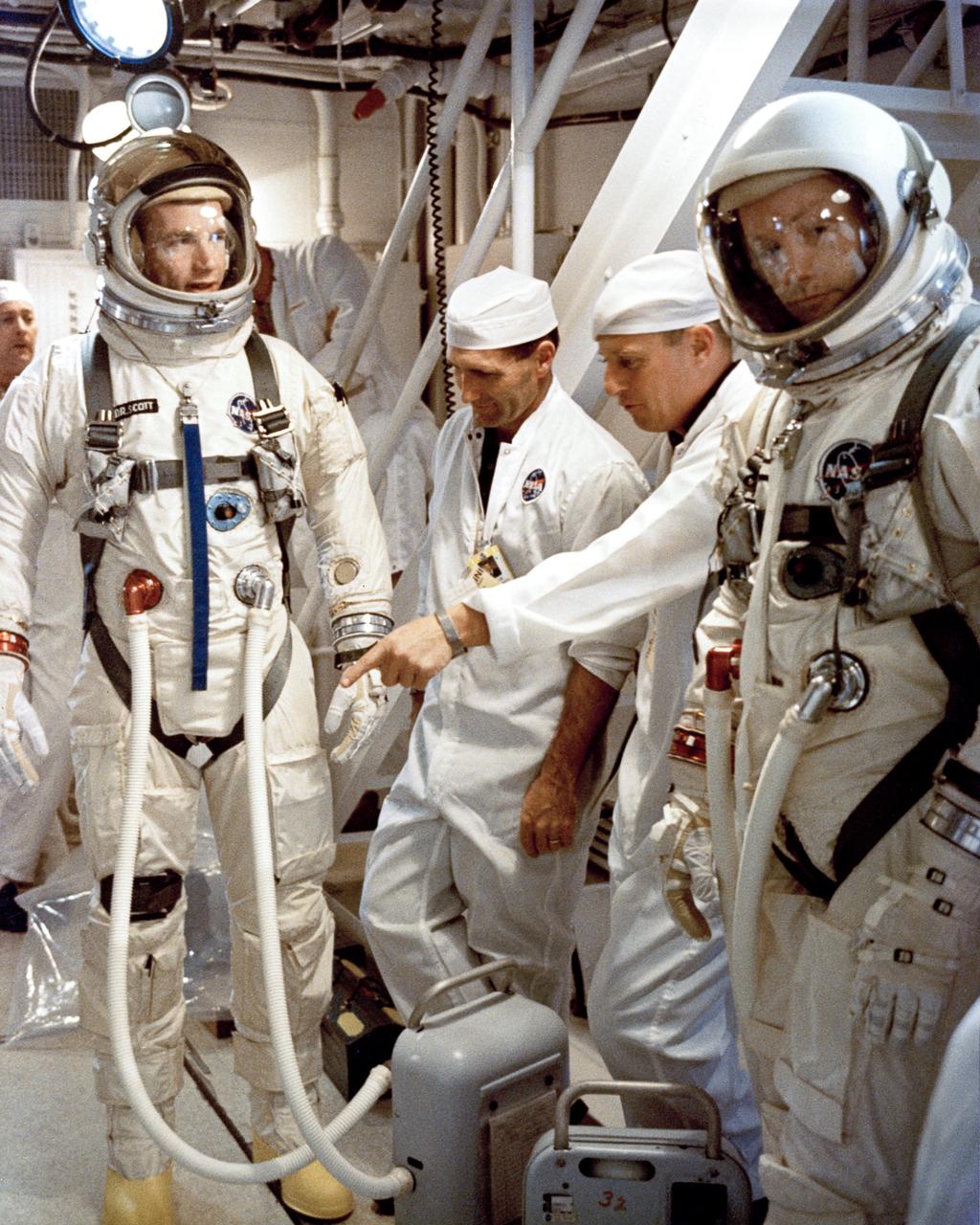
KSC-66C-1836 Gemini-8 Astronauts Neil A. Armstrong, Command Pilot, and David R. Scott, Pilot arrive at White Room, Complex 19 to enter Spacecraft for Simulation Test. (jrs)

KSC-66C-1847 Gemini-8 Astronauts Neil Armstrong and David Scott enjoy breakfast with fellow Astronauts prior to Liftoff. (jrs)
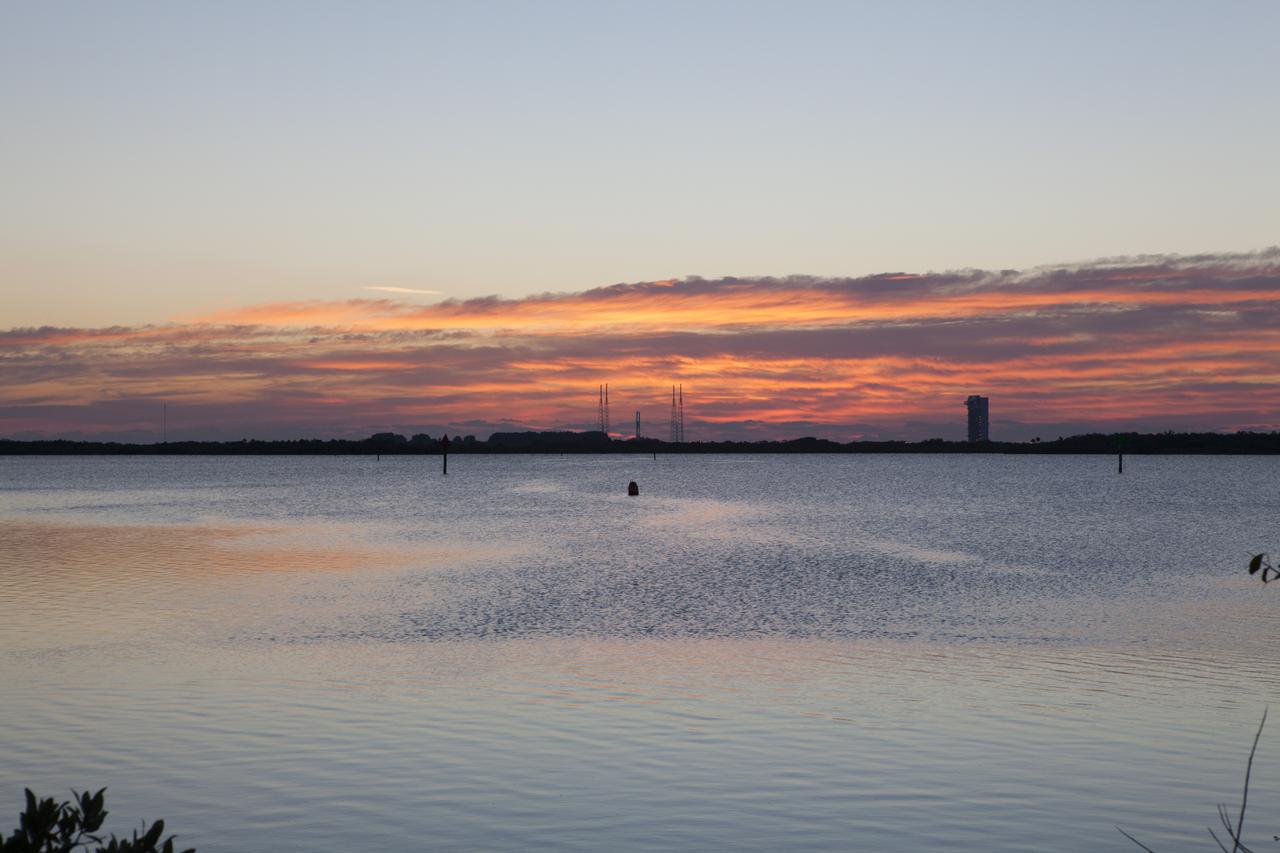
CAPE CANAVERAL, Fla. – At Cape Canaveral Air Force Station's Launch Complex 41, the United Launch Alliance Atlas V with NASA's Tracking and Data Relay Satellite, or TDRS-L, spacecraft atop, is back-dropped by the rising sun looking across the Banana River. The TDRS-L spacecraft is the second of three new satellites designed to ensure vital operational continuity for NASA by expanding the lifespan of the Tracking and Data Relay Satellite System TDRSS fleet, which consists of eight satellites in geosynchronous orbit. The spacecraft provide tracking, telemetry, command and high bandwidth data return services for numerous science and human exploration missions orbiting Earth. These include NASA's Hubble Space Telescope and the International Space Station. TDRS-L has a high-performance solar panel designed for more spacecraft power to meet the growing S-band communications requirements. TDRSS is one of NASA Space Communication and Navigation’s SCaN three networks providing space communications to NASA’s missions. For more information more about TDRS-L, visit: http://www.nasa.gov/tdrs To learn more about SCaN, visit: www.nasa.gov/scan Photo credit: NASA/Ben Smegelsky
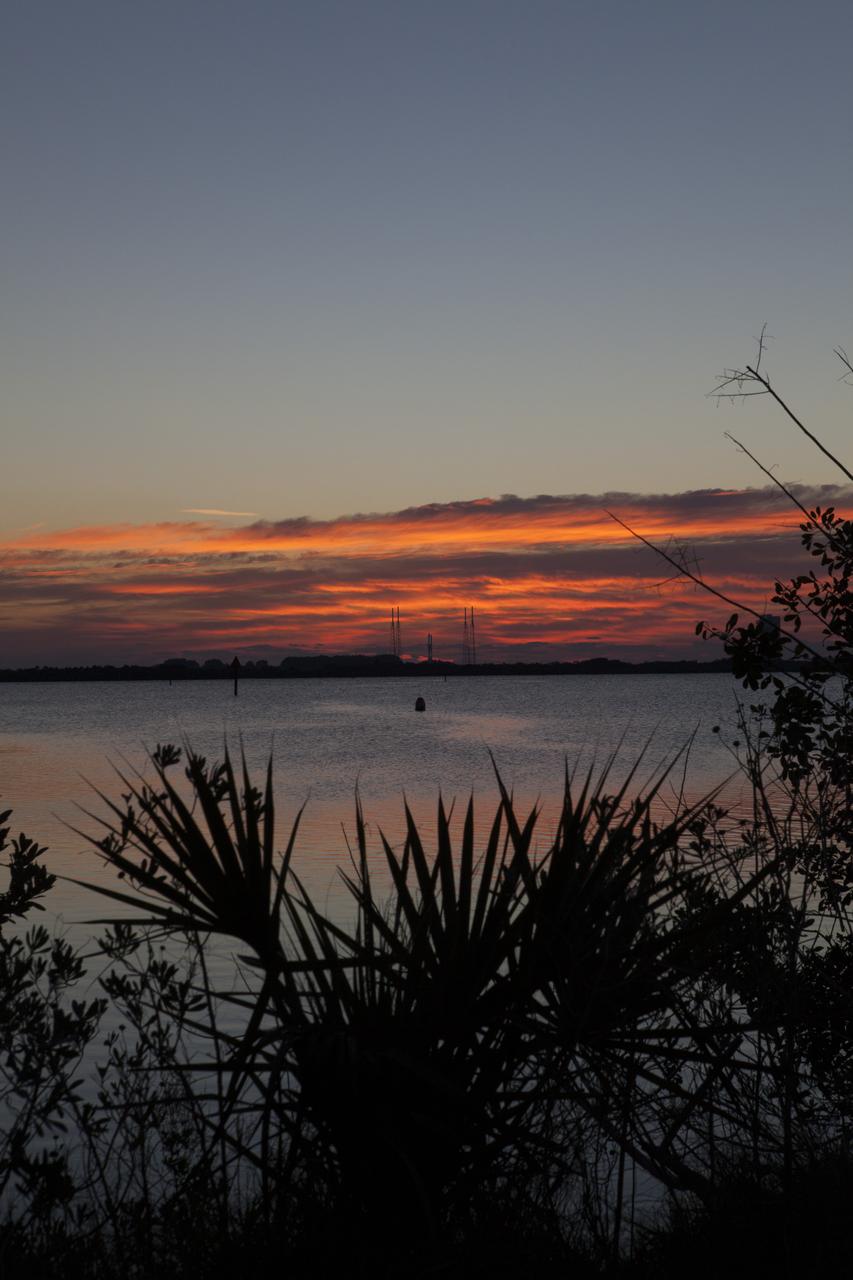
CAPE CANAVERAL, Fla. – At Cape Canaveral Air Force Station's Launch Complex 41, the United Launch Alliance Atlas V with NASA's Tracking and Data Relay Satellite, or TDRS-L, spacecraft atop, is back-dropped by the rising sun looking across the Banana River. The TDRS-L spacecraft is the second of three new satellites designed to ensure vital operational continuity for NASA by expanding the lifespan of the Tracking and Data Relay Satellite System TDRSS fleet, which consists of eight satellites in geosynchronous orbit. The spacecraft provide tracking, telemetry, command and high bandwidth data return services for numerous science and human exploration missions orbiting Earth. These include NASA's Hubble Space Telescope and the International Space Station. TDRS-L has a high-performance solar panel designed for more spacecraft power to meet the growing S-band communications requirements. TDRSS is one of NASA Space Communication and Navigation’s SCaN three networks providing space communications to NASA’s missions. For more information more about TDRS-L, visit: http://www.nasa.gov/tdrs To learn more about SCaN, visit: www.nasa.gov/scan Photo credit: NASA/Ben Smegelsky