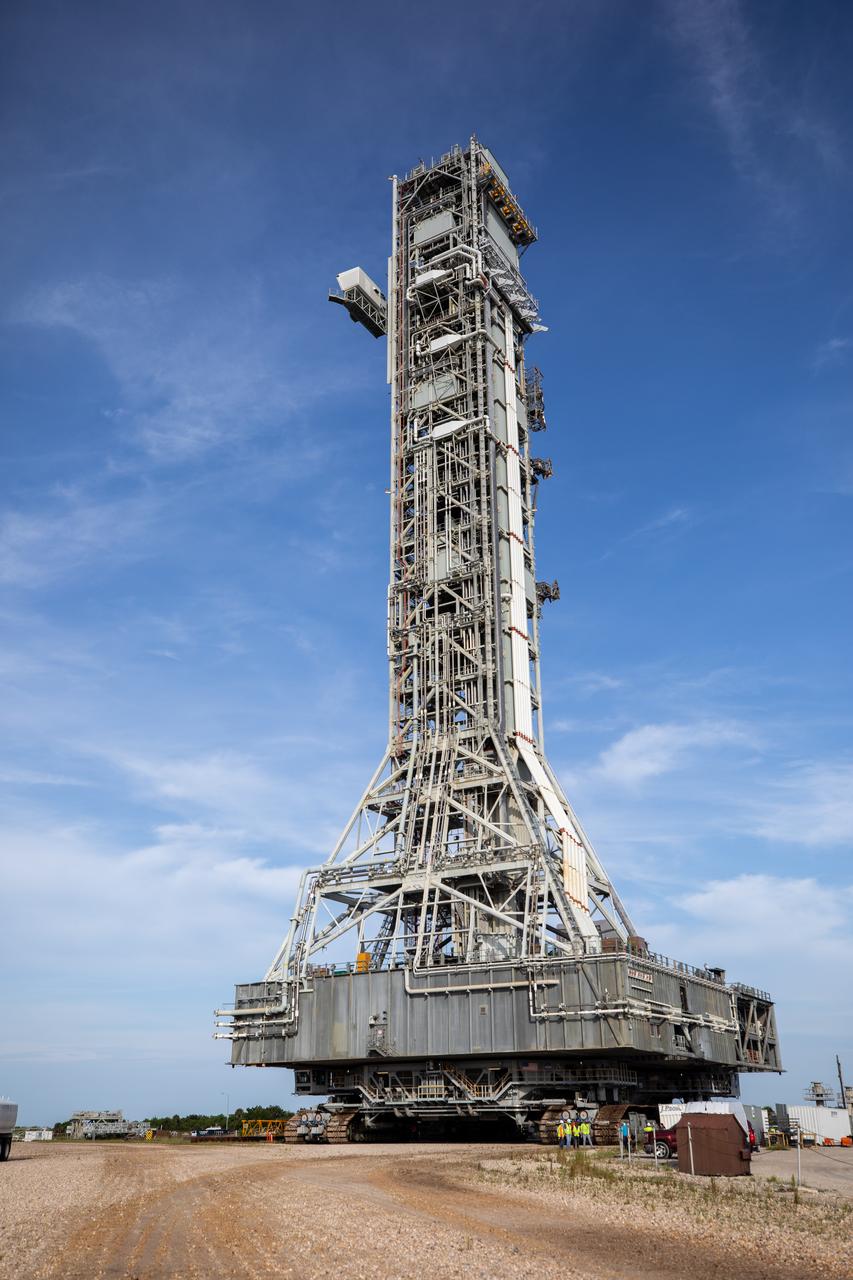
The mobile launcher, carried by the crawler-transporter 2, rolls out from its park site location to Launch Pad 39B at NASA’s Kennedy Space Center in Florida on Aug. 16, 2023. While at the pad, it will undergo testing for the agency’s Artemis II mission. Under Artemis, the mobile launcher will transport NASA’s Space Launch System rocket and Orion spacecraft to pad 39B for liftoff.

Dan Zapata is a crawler systems engineer for the Exploration Ground Systems Program at NASA’s Kennedy Space Center in Florida. One of seven certified drivers for the agency’s crawler transporters –six-million-pound platforms that carry rockets and spacecraft from Kennedy’s iconic Vehicle Assembly Building to the launch pad – Zapata is part of the team that will take NASA’s Space Launch System rocket and Orion spacecraft to Launch Complex 39B for the Artemis I launch. Artemis I is the first in an increasingly complex series of missions that will ultimately send the first woman and first person of color to the Moon, paving the way for long-term presence in lunar orbit and serving as a steppingstone for future missions to Mars.
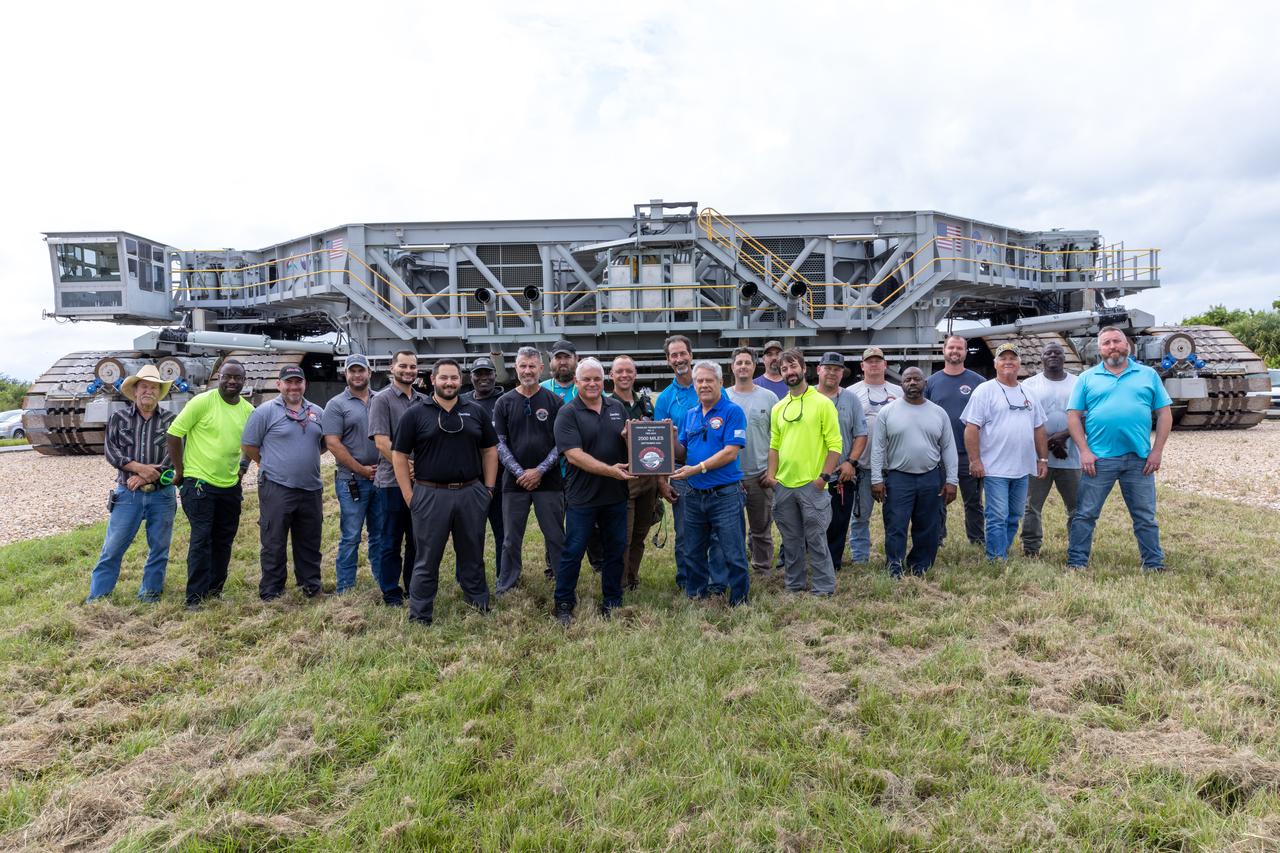
Teams with NASA’s Exploration Ground Systems at NASA’s Kennedy Space Center in Florida celebrate on Wednesday, Sept. 25, 2024, the agency’s crawler-transporter 2 reaching the milestone of 2,500 miles traveled since its construction in 1965. Crawler-transporter 2 reached the milestone while teams took it on a trip in preparation for supporting the roll of the mobile launcher from Launch Pad 39B back into the spaceport’s Vehicle Assembly Building ahead of the Artemis II launch. Built originally to transport massive Saturn V rockets during the Apollo Program, crawler-transporter 2 continued its service during the Space Shuttle Program, and currently transports the massive SLS (Space Launch System) rocket and Orion spacecraft atop the mobile launcher as part of the agency’s Artemis campaign.
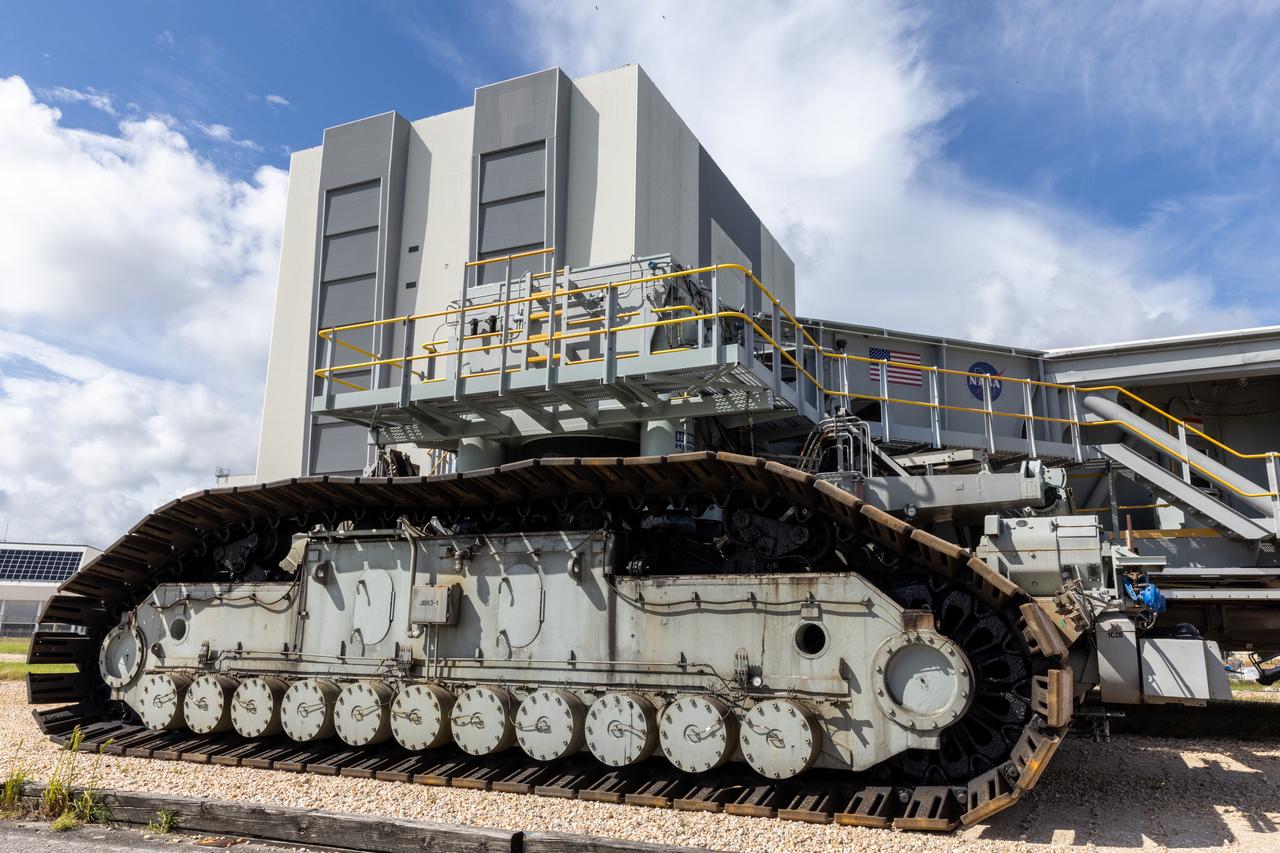
NASA’s crawler-transporter 2 moves slowly along the crawlerway towards Launch Pad 39B at the agency’s Kennedy Space Center in Florida on Wednesday, Sept. 25, 2024, after reaching the milestone of 2,500 miles traveled since its construction in 1965. Crawler-transporter 2 reached the milestone while teams with NASA’s Exploration Ground Systems took it on a trip in preparation for supporting the roll of the mobile launcher back into the spaceport’s Vehicle Assembly Building ahead of the Artemis II launch. Built originally to transport massive Saturn V rockets during the Apollo Program, crawler-transporter 2 continued its service during the Space Shuttle Program, and currently transports the massive SLS (Space Launch System) rocket and Orion spacecraft atop the mobile launcher as part of the agency’s Artemis campaign.
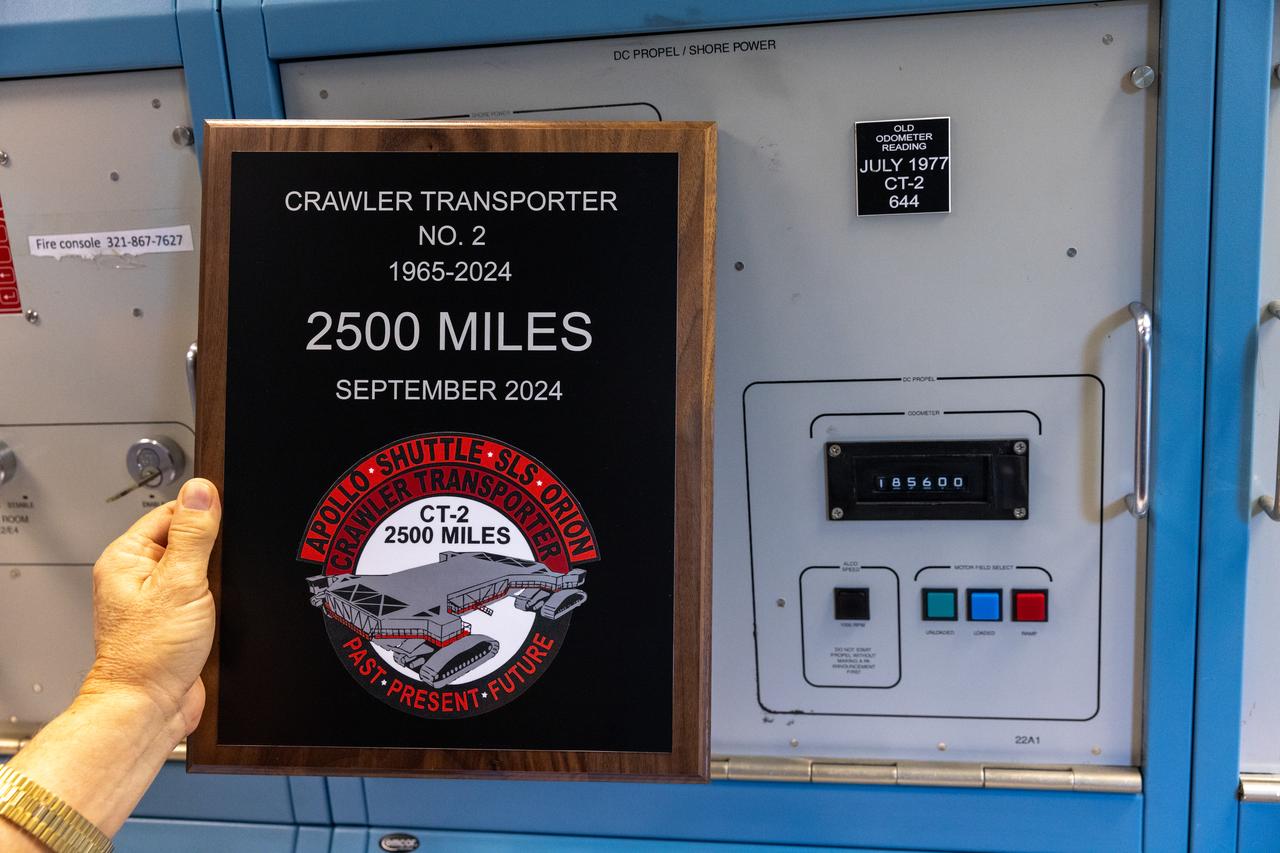
A plaque is held near the odometer of the agency’s crawler-transporter 2, on Wednesday, Sept. 25, 2024, at NASA’s Kennedy Space Center in Florida, commemorating the milestone of 2,500 miles traveled since its construction in 1965. Crawler-transporter 2 reached the milestone while teams with NASA’s Exploration Ground Systems took it on a trip in preparation for supporting the roll of the mobile launcher from Launch Pad 39B back into the spaceport’s Vehicle Assembly Building ahead of the Artemis II launch. Built originally to transport massive Saturn V rockets during the Apollo Program, crawler-transporter 2 continued its service during the Space Shuttle Program, and currently transports the massive SLS (Space Launch System) rocket and Orion spacecraft atop the mobile launcher as part of the agency’s Artemis campaign.
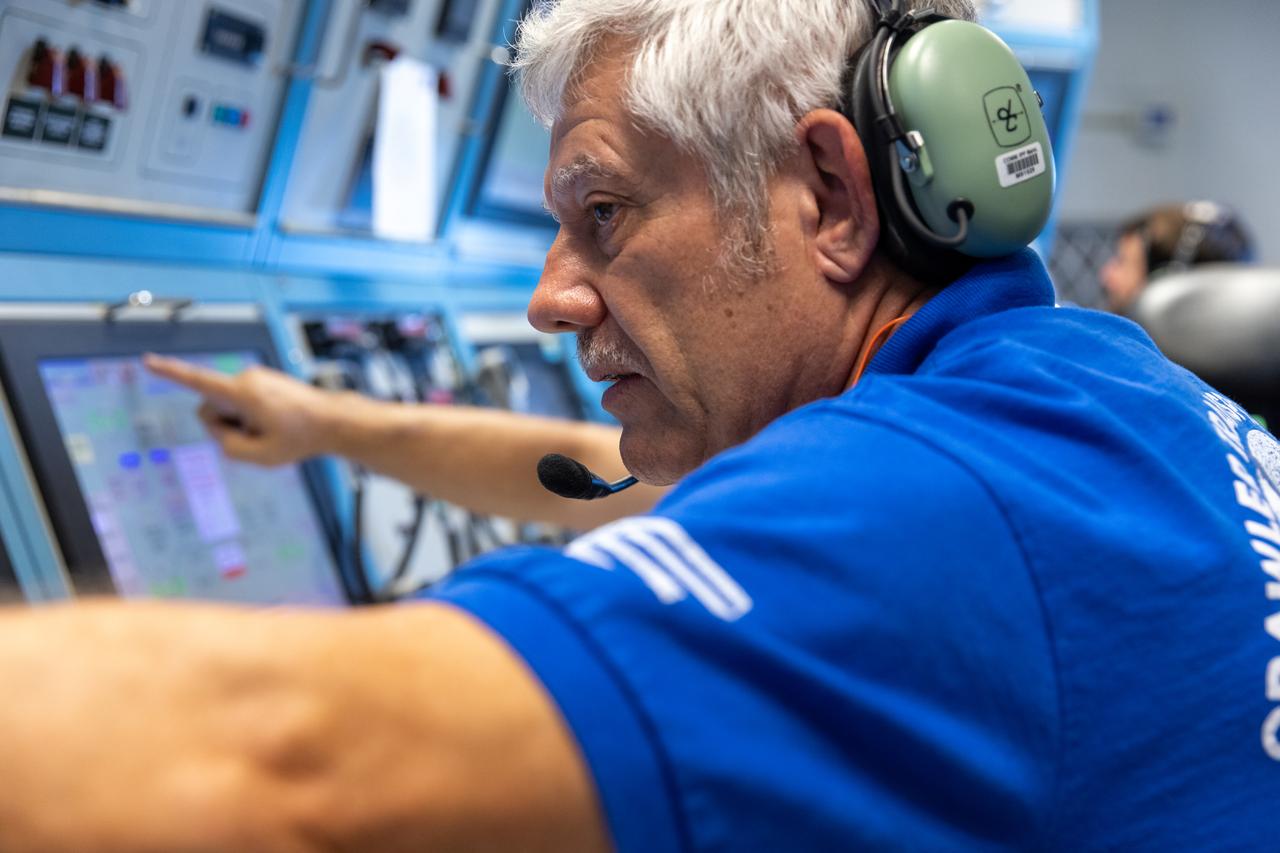
Teams with NASA’s Exploration Ground Systems at NASA’s Kennedy Space Center in Florida celebrate on Wednesday, Sept. 25, 2024, the agency’s crawler-transporter 2 reaching the milestone of 2,500 miles traveled since its construction in 1965. Crawler-transporter 2 reached the milestone while teams took it on a trip in preparation for supporting the roll of the mobile launcher from Launch Pad 39B back into the spaceport’s Vehicle Assembly Building ahead of the Artemis II launch. Built originally to transport massive Saturn V rockets during the Apollo Program, crawler-transporter 2 continued its service during the Space Shuttle Program, and currently transports the massive SLS (Space Launch System) rocket and Orion spacecraft atop the mobile launcher as part of the agency’s Artemis campaign.
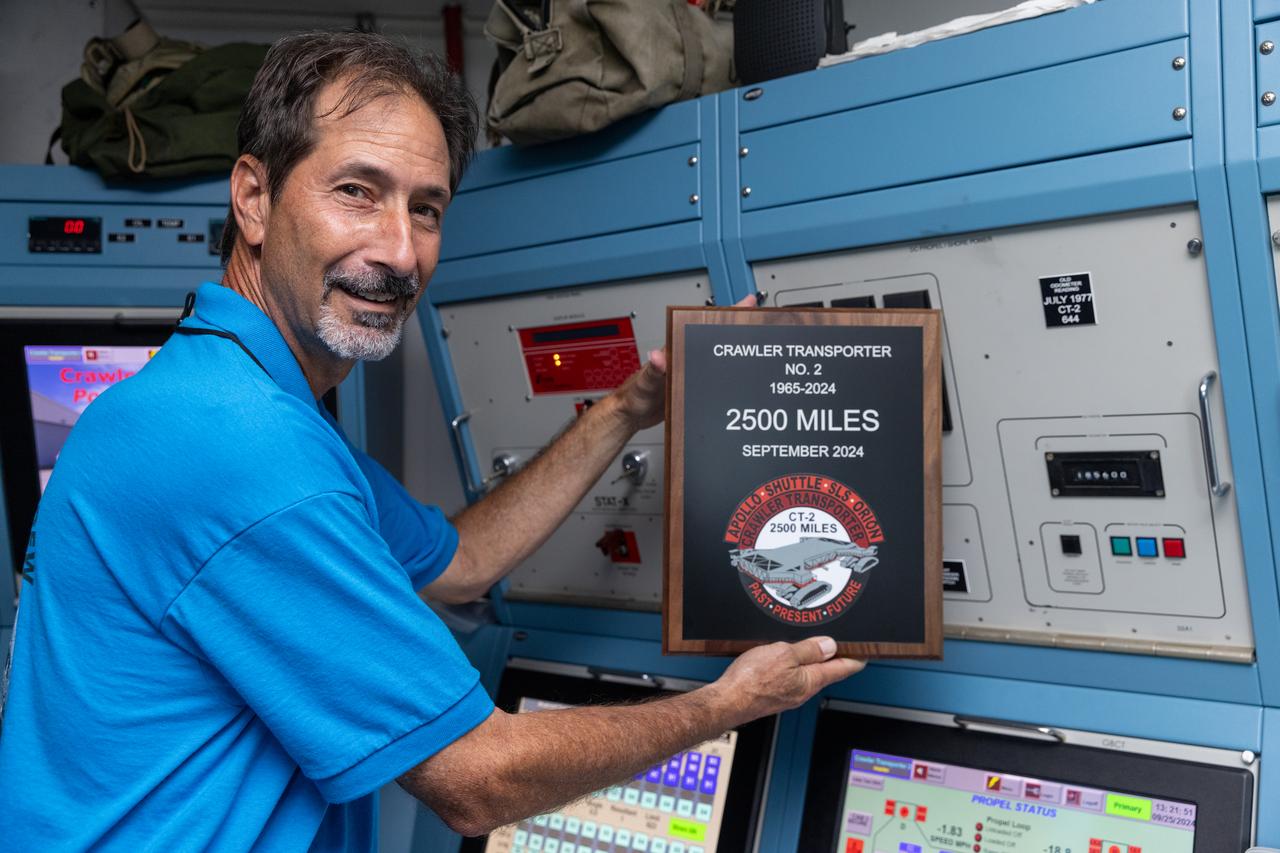
John Giles, crawler element operations manager for NASA’s Exploration Ground Systems, holds a plaque near the odometer of the agency’s crawler-transporter 2, on Wednesday, Sept. 25, 2024, at NASA’s Kennedy Space Center in Florida, commemorating the milestone of 2,500 miles traveled since its construction in 1965. Crawler-transporter 2 reached the milestone while teams took it on a trip in preparation for supporting the roll of the mobile launcher from Launch Pad 39B back into the spaceport’s Vehicle Assembly Building ahead of the Artemis II launch. Built originally to transport massive Saturn V rockets during the Apollo Program, crawler-transporter 2 continued its service during the Space Shuttle Program, and currently transports the massive SLS (Space Launch System) rocket and Orion spacecraft atop the mobile launcher as part of the agency’s Artemis campaign.
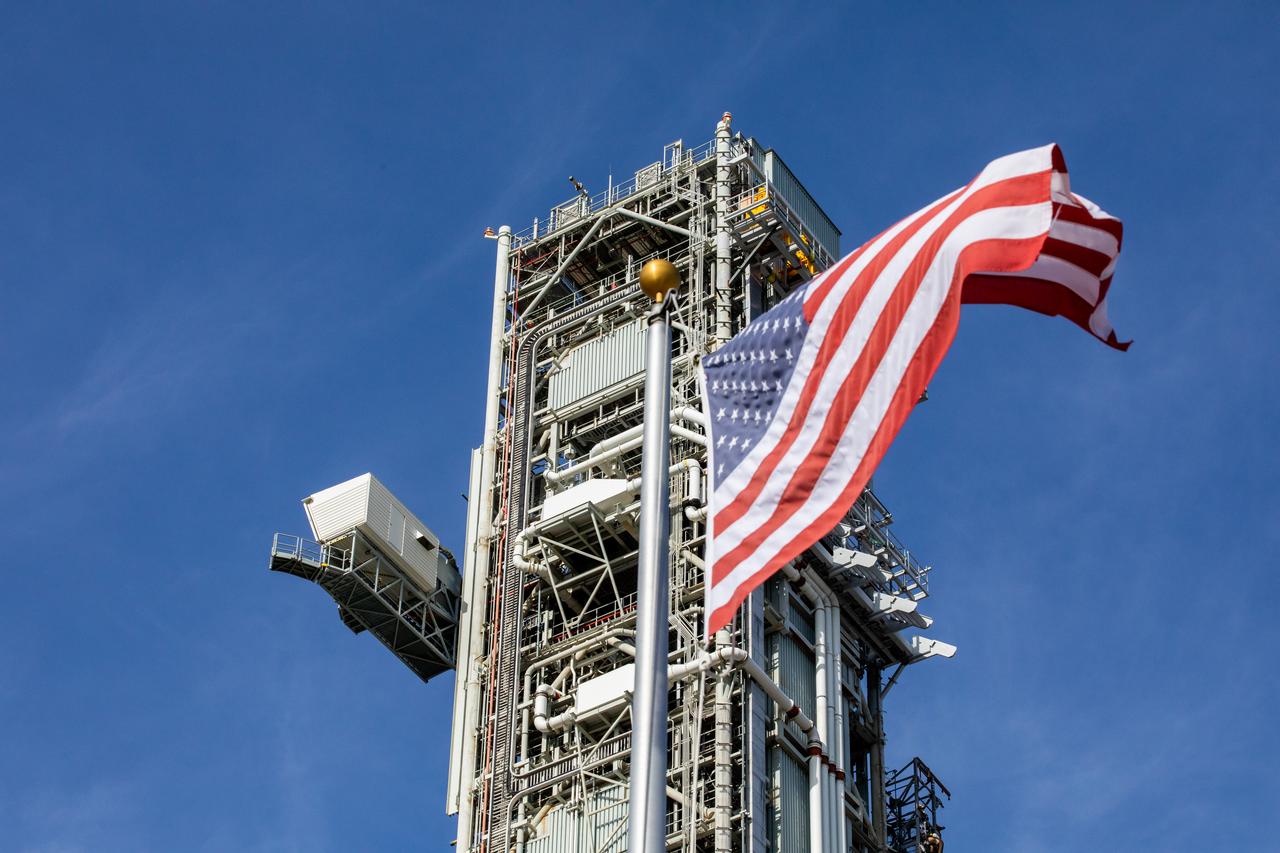
The mobile launcher, carried by the crawler-transporter 2, rolls out from its park site location to Launch Pad 39B at NASA’s Kennedy Space Center in Florida on Aug. 16, 2023. While at the pad, it will undergo testing for the agency’s Artemis II mission. Under Artemis, the mobile launcher will transport NASA’s Space Launch System rocket and Orion spacecraft to pad 39B for liftoff.
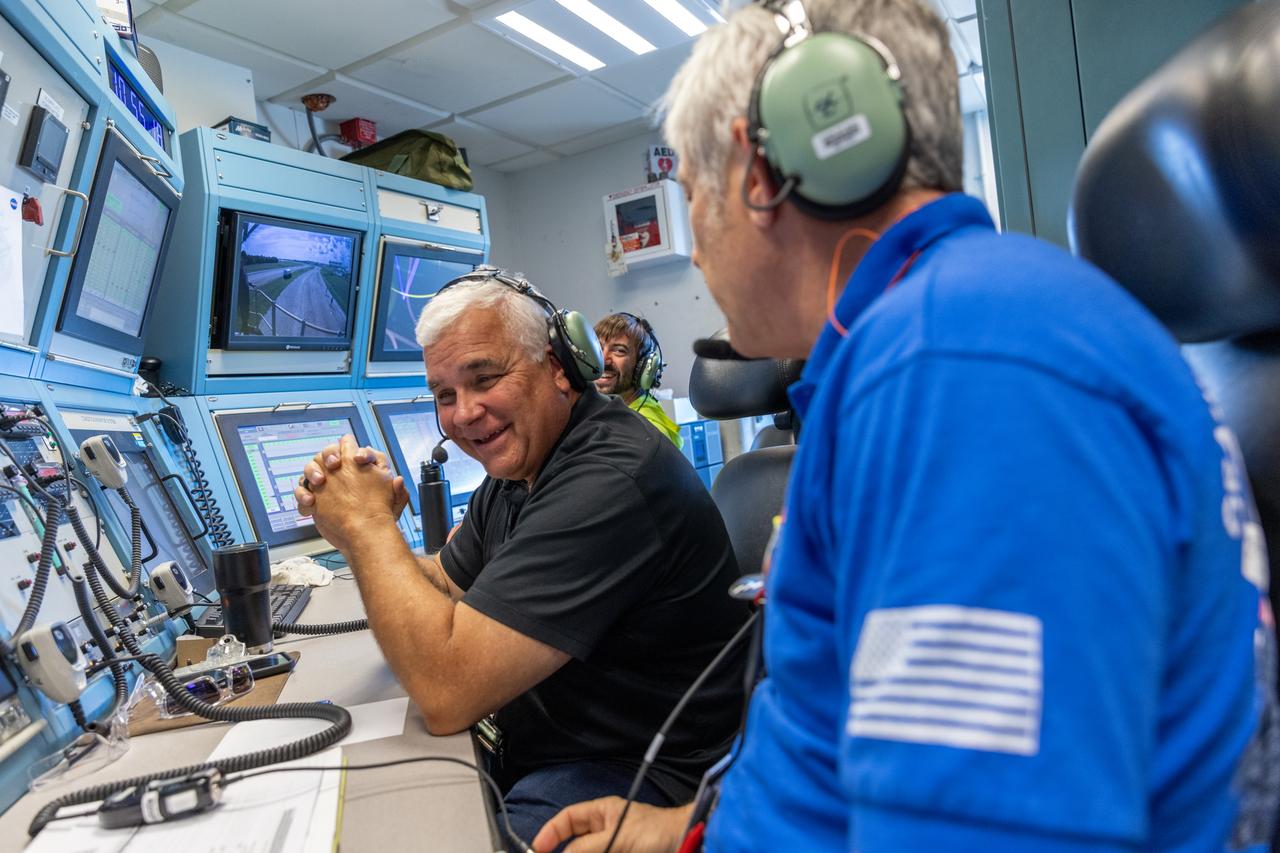
Teams with NASA’s Exploration Ground Systems at NASA’s Kennedy Space Center in Florida celebrate on Wednesday, Sept. 25, 2024, the agency’s crawler-transporter 2 reaching the milestone of 2,500 miles traveled since its construction in 1965. Crawler-transporter 2 reached the milestone while teams took it on a trip in preparation for supporting the roll of the mobile launcher from Launch Pad 39B back into the spaceport’s Vehicle Assembly Building ahead of the Artemis II launch. Built originally to transport massive Saturn V rockets during the Apollo Program, crawler-transporter 2 continued its service during the Space Shuttle Program, and currently transports the massive SLS (Space Launch System) rocket and Orion spacecraft atop the mobile launcher as part of the agency’s Artemis campaign.
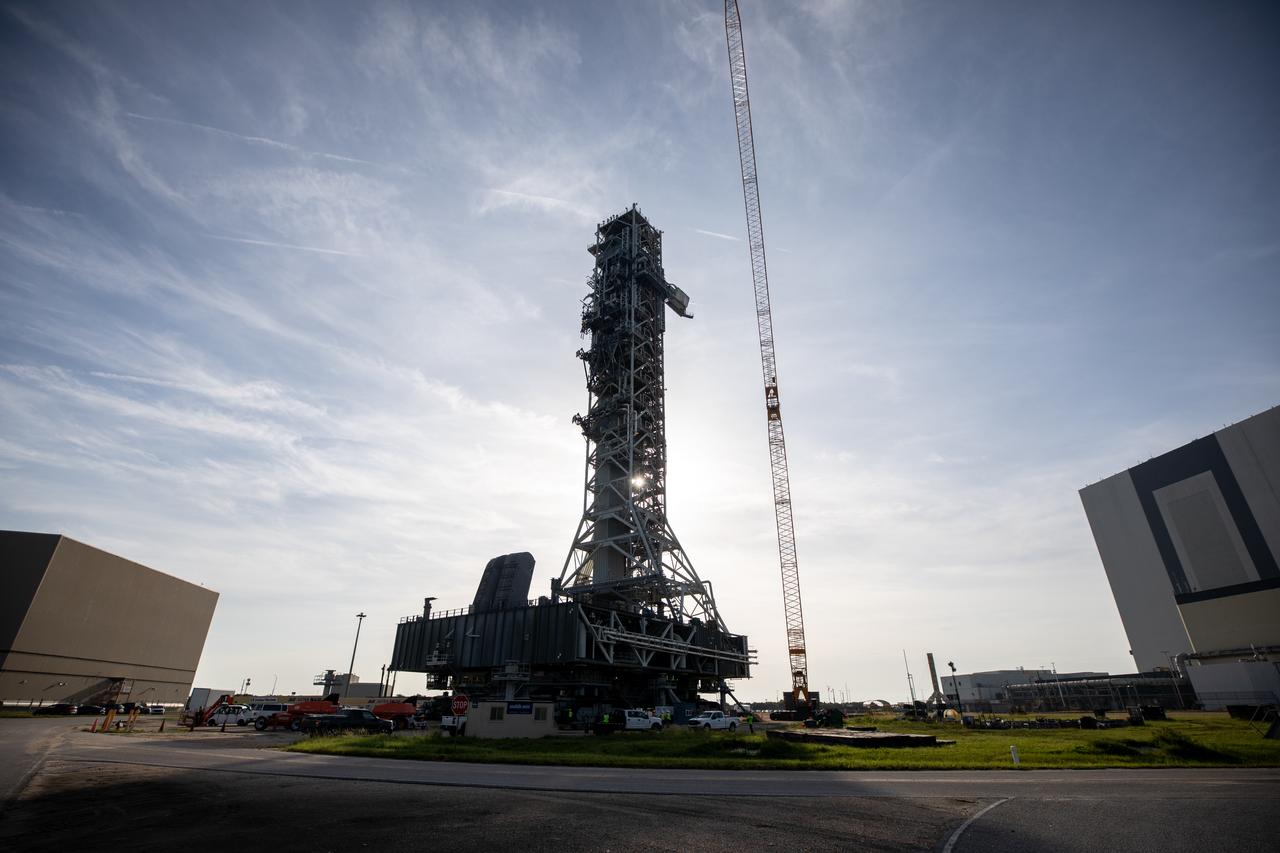
The mobile launcher, carried by the crawler-transporter 2, rolls out from its park site location to Launch Pad 39B at NASA’s Kennedy Space Center in Florida on Aug. 16, 2023. While at the pad, it will undergo testing for the agency’s Artemis II mission. Under Artemis, the mobile launcher will transport NASA’s Space Launch System rocket and Orion spacecraft to pad 39B for liftoff.
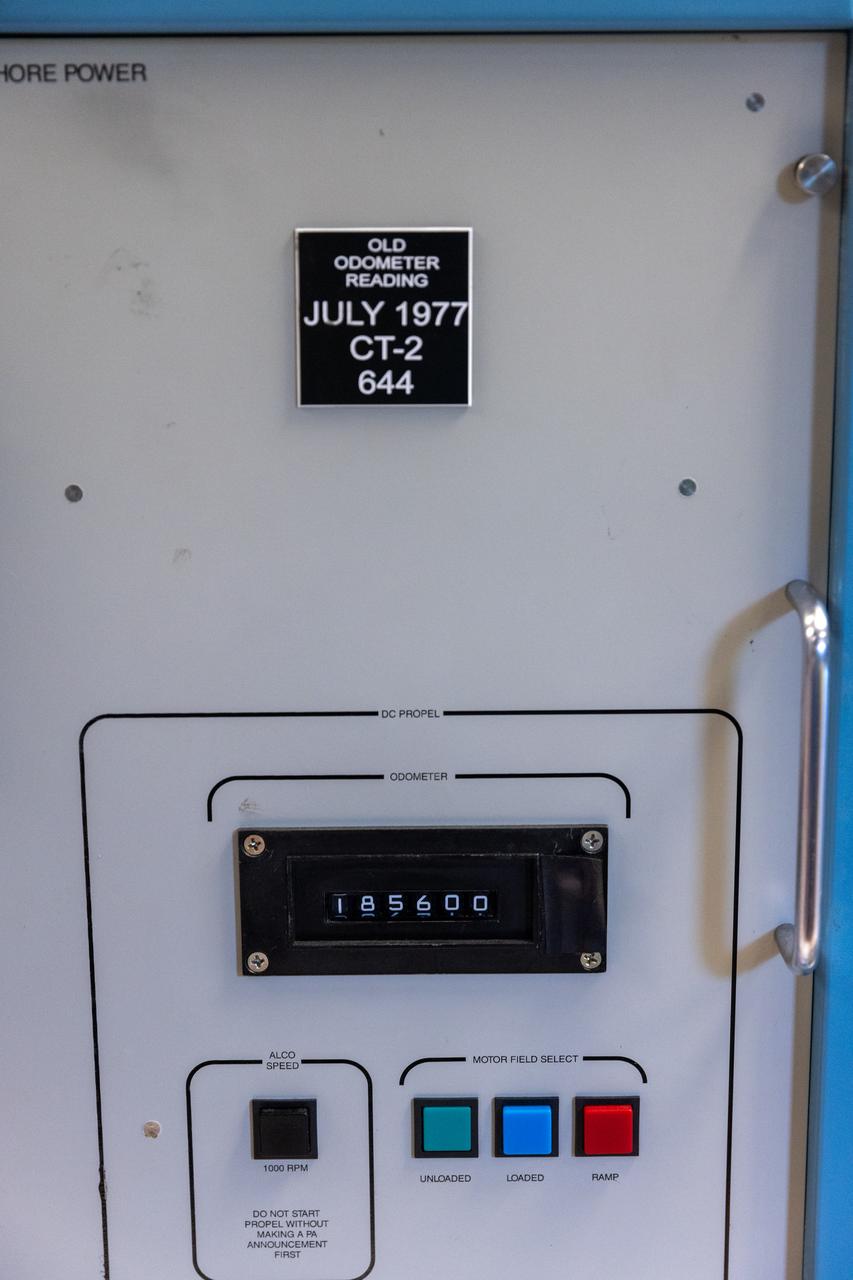
A photo of NASA’s crawler-transporter 2 odometer on Wednesday, Sept. 25, 2024, at NASA’s Kennedy Space Center in Florida, commemorates the milestone of reaching 2,500 miles traveled since its construction in 1965. Crawler-transporter 2’s original odometer ceased working in 1977 at 644 miles, so teams with NASA’s Exploration Ground Systems added the original figure to the new odometer to calculate the milestone. Built originally to transport massive Saturn V rockets during the Apollo Program, crawler-transporter 2 continued its service during the Space Shuttle Program, and currently transports the massive SLS (Space Launch System) rocket and Orion spacecraft atop the mobile launcher as part of the agency’s Artemis campaign.
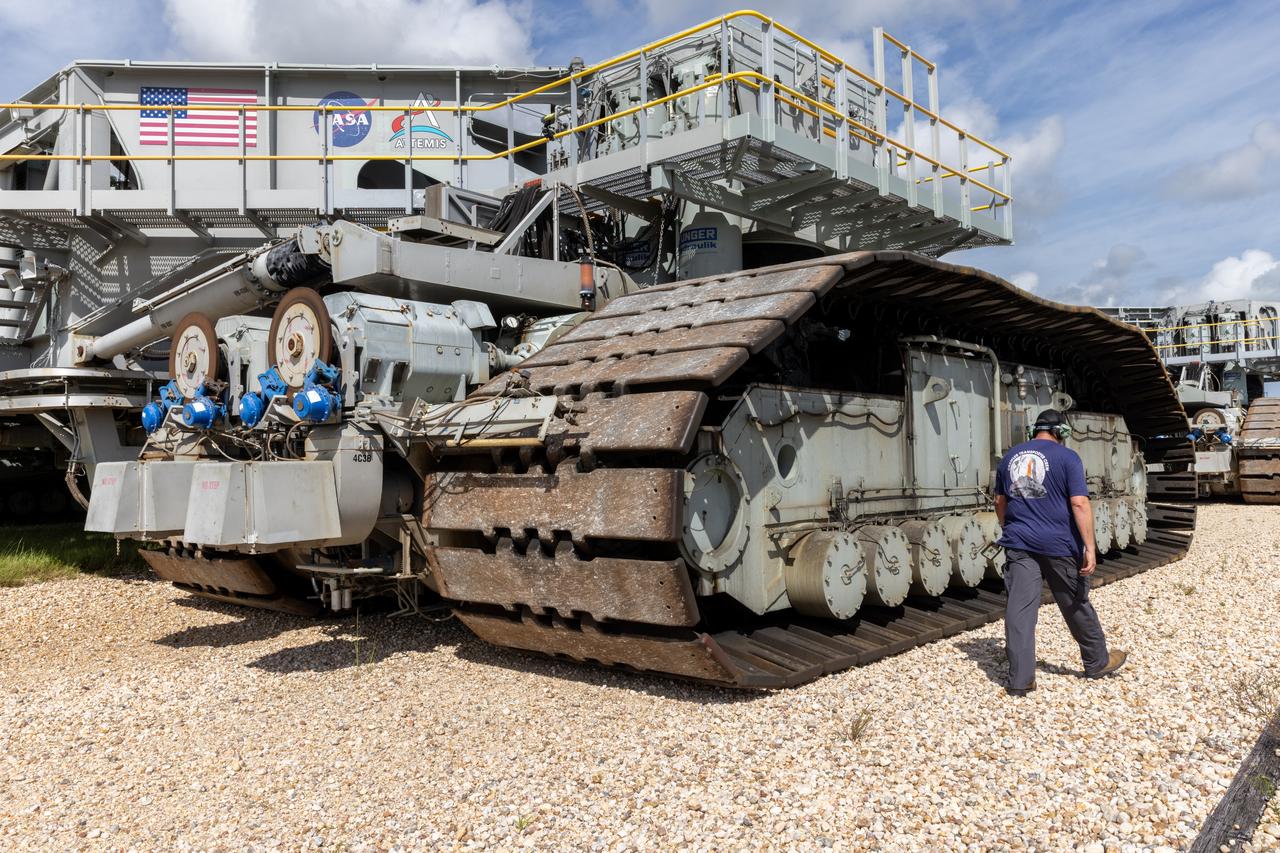
NASA’s crawler-transporter 2 moves slowly along the crawlerway towards Launch Pad 39B at the agency’s Kennedy Space Center in Florida on Wednesday, Sept. 25, 2024, after reaching the milestone of 2,500 miles traveled since its construction in 1965. Crawler-transporter 2 reached the milestone while teams with NASA’s Exploration Ground Systems took it on a trip in preparation for supporting the roll of the mobile launcher back into the spaceport’s Vehicle Assembly Building ahead of the Artemis II launch. Built originally to transport massive Saturn V rockets during the Apollo Program, crawler-transporter 2 continued its service during the Space Shuttle Program, and currently transports the massive SLS (Space Launch System) rocket and Orion spacecraft atop the mobile launcher as part of the agency’s Artemis campaign.
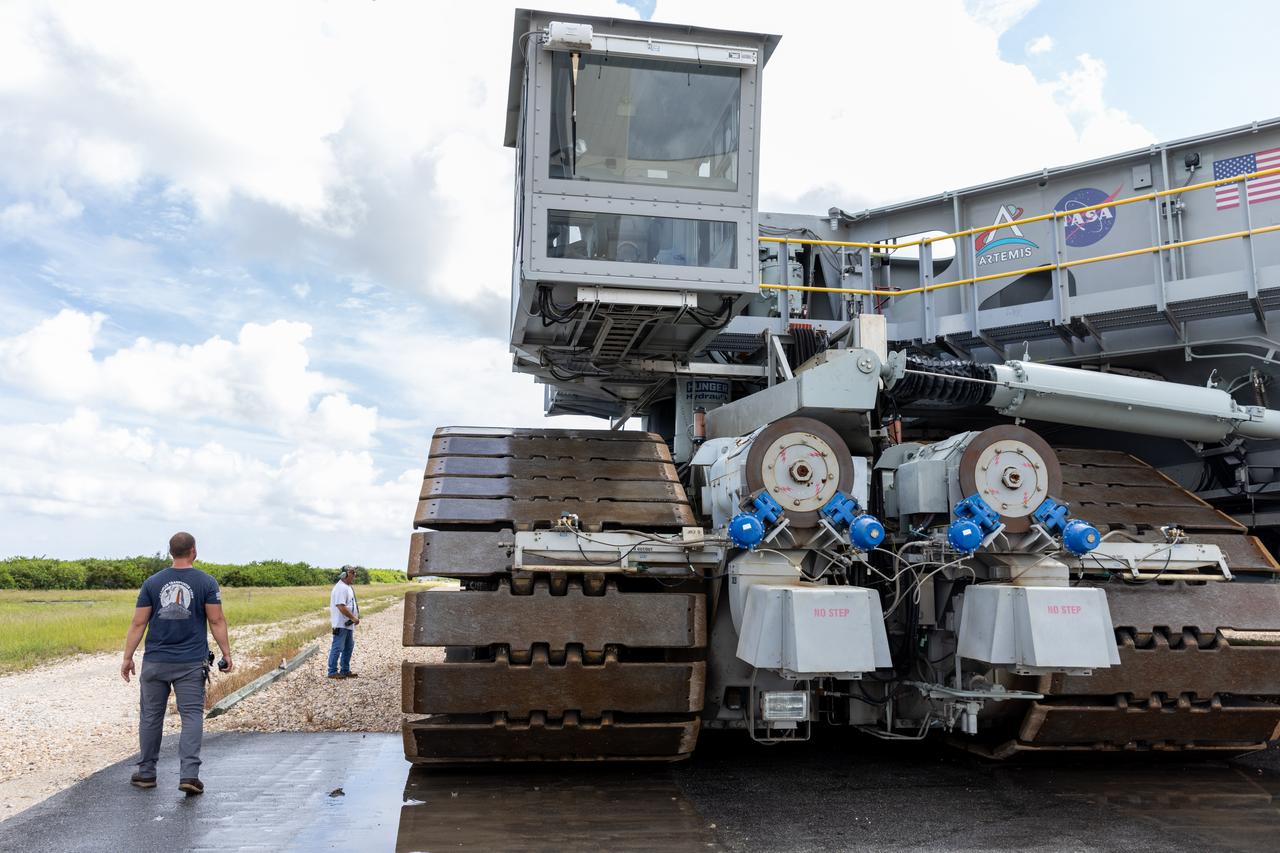
NASA’s crawler-transporter 2 moves slowly along the crawlerway towards Launch Pad 39B at the agency’s Kennedy Space Center in Florida on Wednesday, Sept. 25, 2024, after reaching the milestone of 2,500 miles traveled since its construction in 1965. Crawler-transporter 2 reached the milestone while teams with NASA’s Exploration Ground Systems took it on a trip in preparation for supporting the roll of the mobile launcher back into the spaceport’s Vehicle Assembly Building ahead of the Artemis II launch. Built originally to transport massive Saturn V rockets during the Apollo Program, crawler-transporter 2 continued its service during the Space Shuttle Program, and currently transports the massive SLS (Space Launch System) rocket and Orion spacecraft atop the mobile launcher as part of the agency’s Artemis campaign.
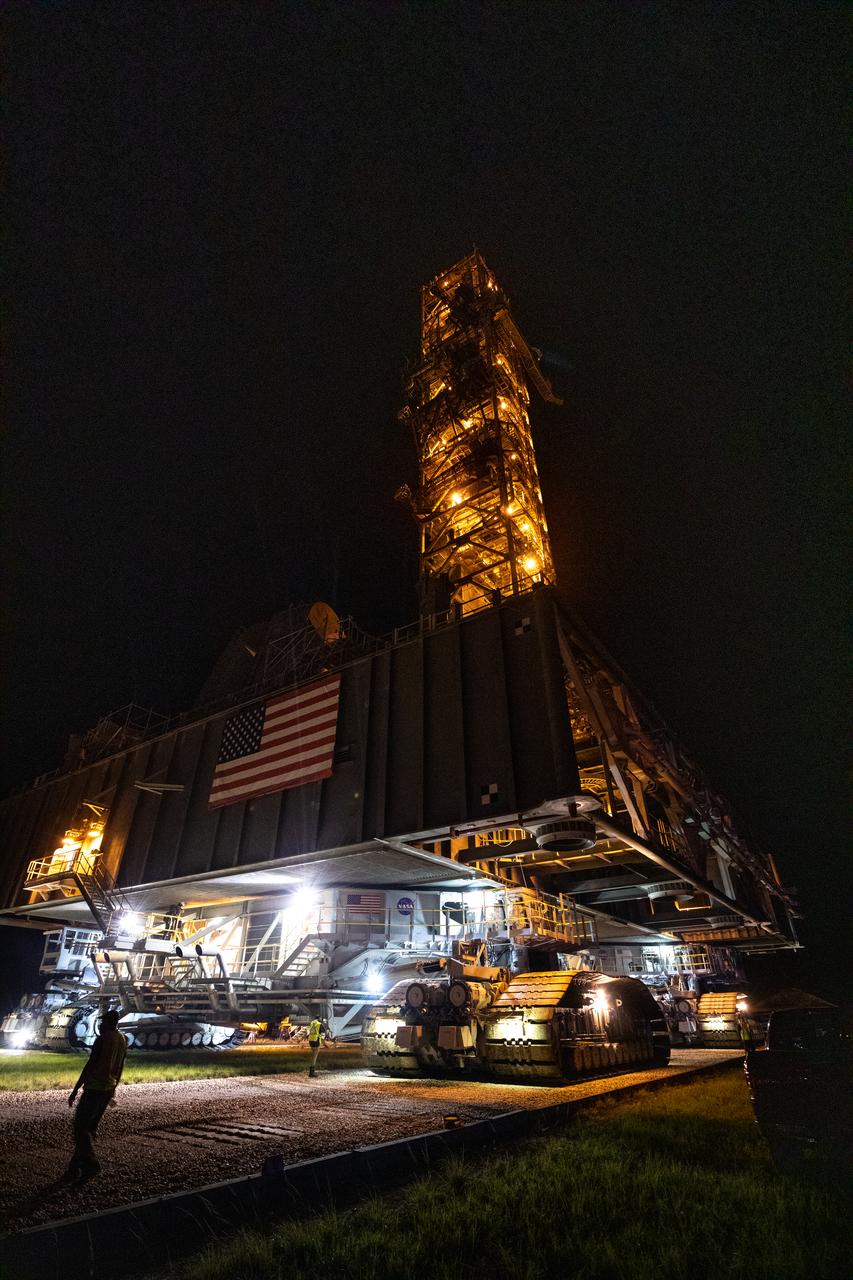
In the early morning on Oct. 20, 2020, the mobile launcher for the Artemis I mission rolls along the crawlerway atop crawler-transporter 2 after departing the Vehicle Assembly Building at NASA’s Kennedy Space Center in Florida. The nearly 400-foot-tall mobile launcher is being rolled to Launch Pad 39B. During its two-week stay at the pad, engineers with Exploration Ground Systems and Jacobs will perform several tasks, including a timing test to validate the launch team’s countdown timeline, and a thorough, top-to-bottom wash down of the mobile launcher to remove any debris remaining from construction and installation of the umbilical arms. Artemis I will test the Orion spacecraft and Space Launch System as an integrated system ahead of crewed flights to the Moon. Under the Artemis program, NASA will land the first woman and the next man on the Moon in 2024.
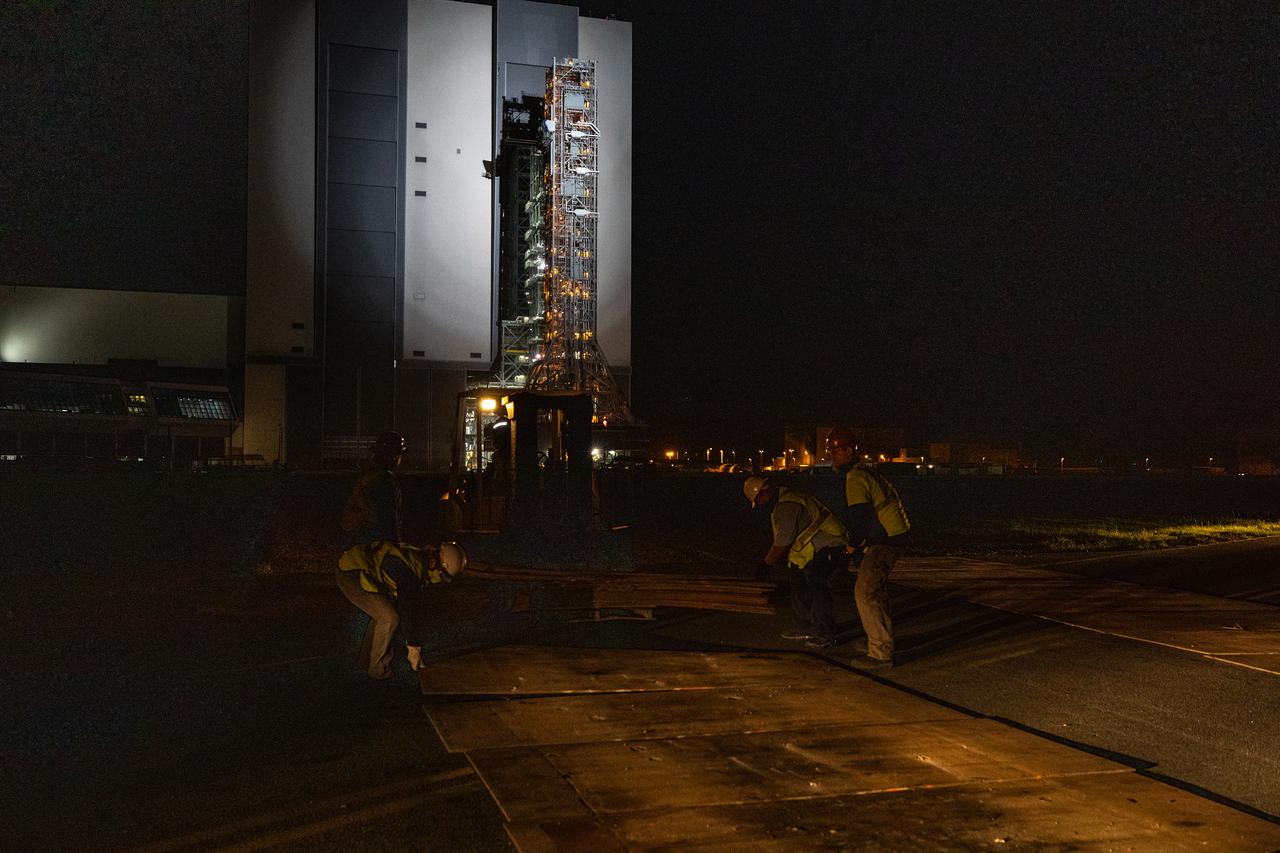
In the early morning on Oct. 20, 2020, the mobile launcher for the Artemis I mission begins its rollout atop crawler-transporter 2 from the Vehicle Assembly Building at NASA’s Kennedy Space Center in Florida. The nearly 400-foot-tall mobile launcher is being rolled to Launch Pad 39B. During its two-week stay at the pad, engineers with Exploration Ground Systems and Jacobs will perform several tasks, including a timing test to validate the launch team’s countdown timeline, and a thorough, top-to-bottom wash down of the mobile launcher to remove any debris remaining from construction and installation of the umbilical arms. Artemis I will test the Orion spacecraft and Space Launch System as an integrated system ahead of crewed flights to the Moon. Under the Artemis program, NASA will land the first woman and the next man on the Moon in 2024.
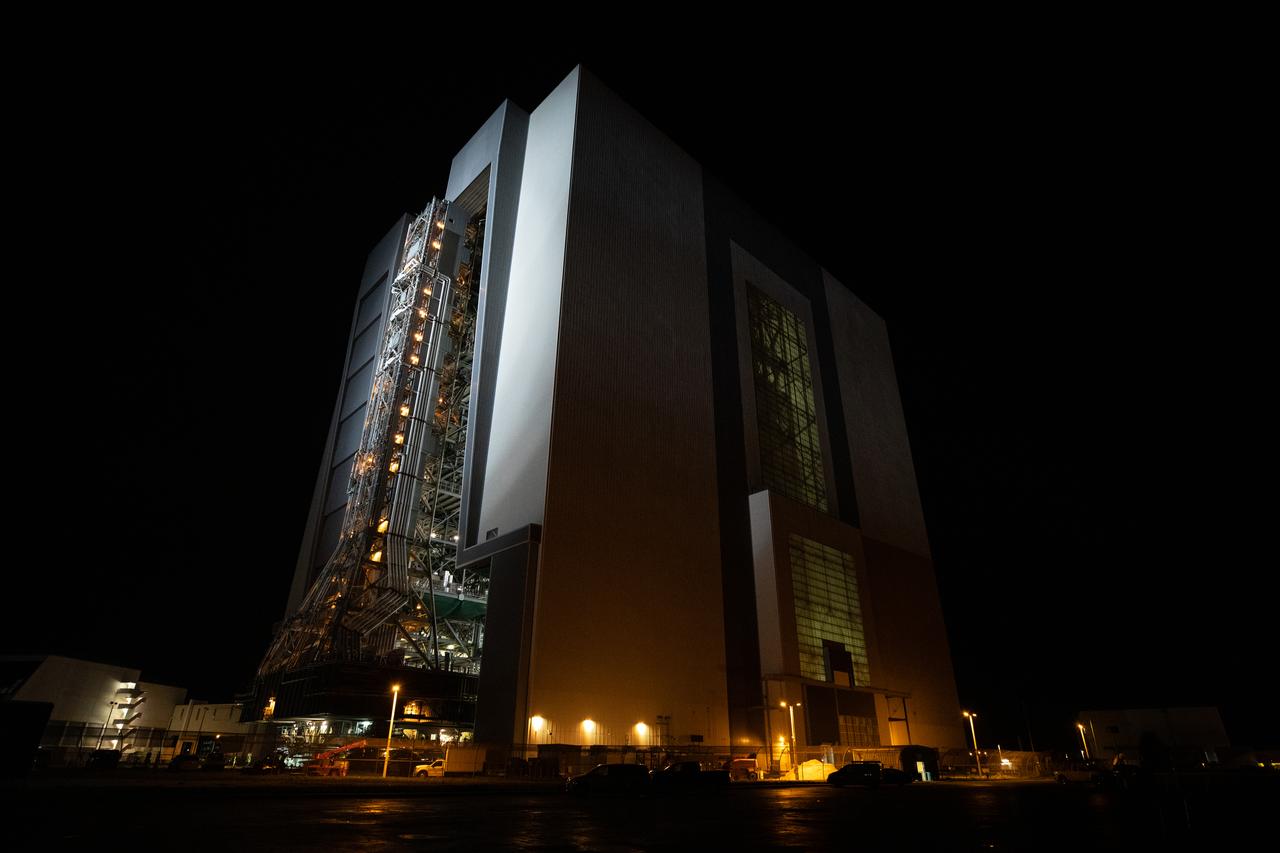
In the early morning on Oct. 20, 2020, the mobile launcher for the Artemis I mission begins its rollout atop crawler-transporter 2 from the Vehicle Assembly Building at NASA’s Kennedy Space Center in Florida. The nearly 400-foot-tall mobile launcher is being rolled to Launch Pad 39B. During its two-week stay at the pad, engineers with Exploration Ground Systems and Jacobs will perform several tasks, including a timing test to validate the launch team’s countdown timeline, and a thorough, top-to-bottom wash down of the mobile launcher to remove any debris remaining from construction and installation of the umbilical arms. Artemis I will test the Orion spacecraft and Space Launch System as an integrated system ahead of crewed flights to the Moon. Under the Artemis program, NASA will land the first woman and the next man on the Moon in 2024.
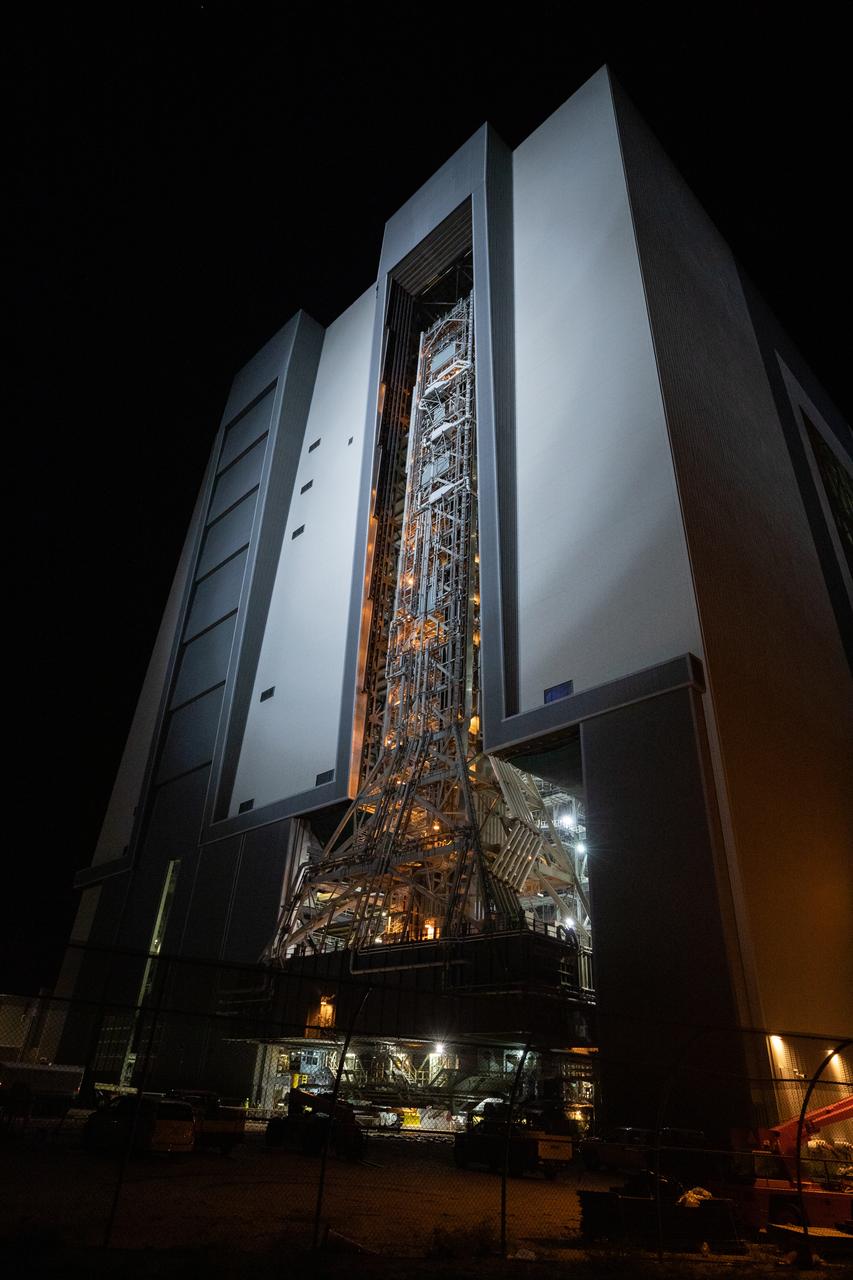
In the early morning on Oct. 20, 2020, the mobile launcher for the Artemis I mission begins its rollout atop crawler-transporter 2 from the Vehicle Assembly Building at NASA’s Kennedy Space Center in Florida. The nearly 400-foot-tall mobile launcher is being rolled to Launch Pad 39B. During its two-week stay at the pad, engineers with Exploration Ground Systems and Jacobs will perform several tasks, including a timing test to validate the launch team’s countdown timeline, and a thorough, top-to-bottom wash down of the mobile launcher to remove any debris remaining from construction and installation of the umbilical arms. Artemis I will test the Orion spacecraft and Space Launch System as an integrated system ahead of crewed flights to the Moon. Under the Artemis program, NASA will land the first woman and the next man on the Moon in 2024.
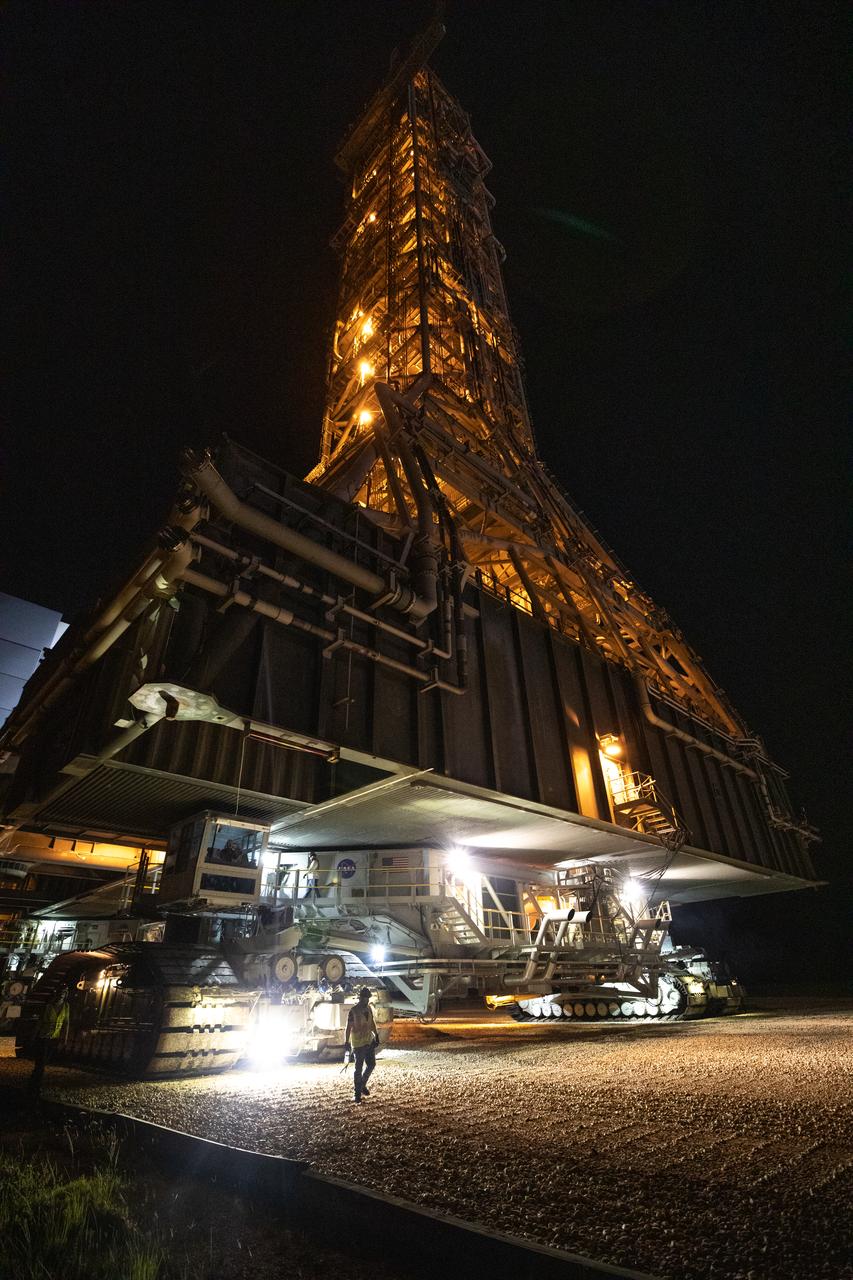
In the early morning on Oct. 20, 2020, the mobile launcher for the Artemis I mission rolls along the crawlerway atop crawler-transporter 2 after departing the Vehicle Assembly Building at NASA’s Kennedy Space Center in Florida. The nearly 400-foot-tall mobile launcher is being rolled to Launch Pad 39B. During its two-week stay at the pad, engineers with Exploration Ground Systems and Jacobs will perform several tasks, including a timing test to validate the launch team’s countdown timeline, and a thorough, top-to-bottom wash down of the mobile launcher to remove any debris remaining from construction and installation of the umbilical arms. Artemis I will test the Orion spacecraft and Space Launch System as an integrated system ahead of crewed flights to the Moon. Under the Artemis program, NASA will land the first woman and the next man on the Moon in 2024.
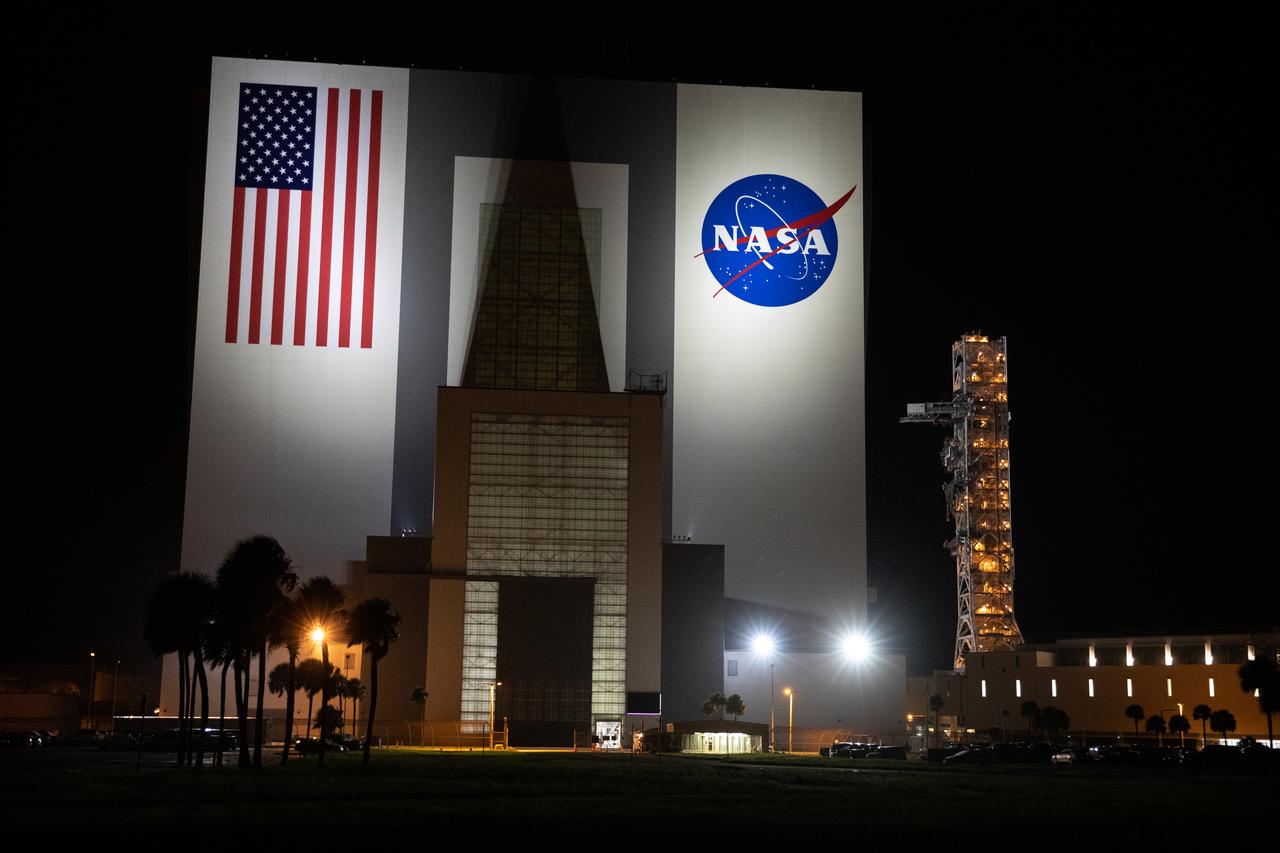
Bright lights illuminate the Vehicle Assembly Building in the early morning on Oct. 20, 2020, as the mobile launcher for the Artemis I mission begins its rollout atop crawler-transporter 2 at NASA’s Kennedy Space Center in Florida. The nearly 400-foot-tall mobile launcher is being rolled to Launch Pad 39B. During its two-week stay at the pad, engineers with Exploration Ground Systems and Jacobs will perform several tasks, including a timing test to validate the launch team’s countdown timeline, and a thorough, top-to-bottom wash down of the mobile launcher to remove any debris remaining from construction and installation of the umbilical arms. Artemis I will test the Orion spacecraft and Space Launch System as an integrated system ahead of crewed flights to the Moon. Under the Artemis program, NASA will land the first woman and the next man on the Moon in 2024.
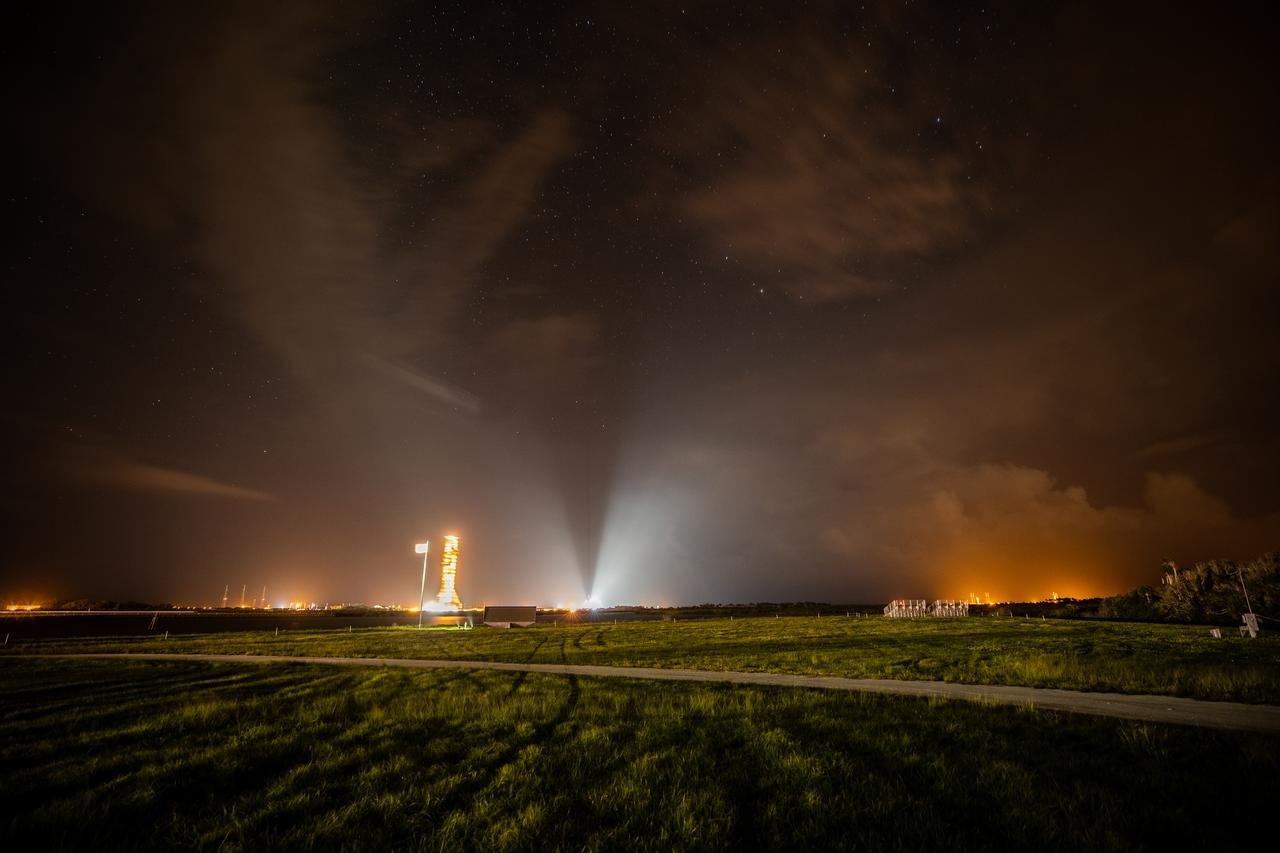
Xenon lights illuminate Launch Pad 39B as the mobile launcher for the Artemis I mission, atop crawler-transporter 2, nears the pad in the early morning on Oct. 20, 2020, at NASA’s Kennedy Space Center in Florida. The nearly 400-foot-tall mobile launcher will stay at the pad for two weeks while engineers with Exploration Ground Systems and Jacobs will perform several tasks, including a timing test to validate the launch team’s countdown timeline, and a thorough, top-to-bottom wash down of the mobile launcher to remove any debris remaining from construction and installation of the umbilical arms. Artemis I will test the Orion spacecraft and Space Launch System as an integrated system ahead of crewed flights to the Moon. Under the Artemis program, NASA will land the first woman and the next man on the Moon in 2024.
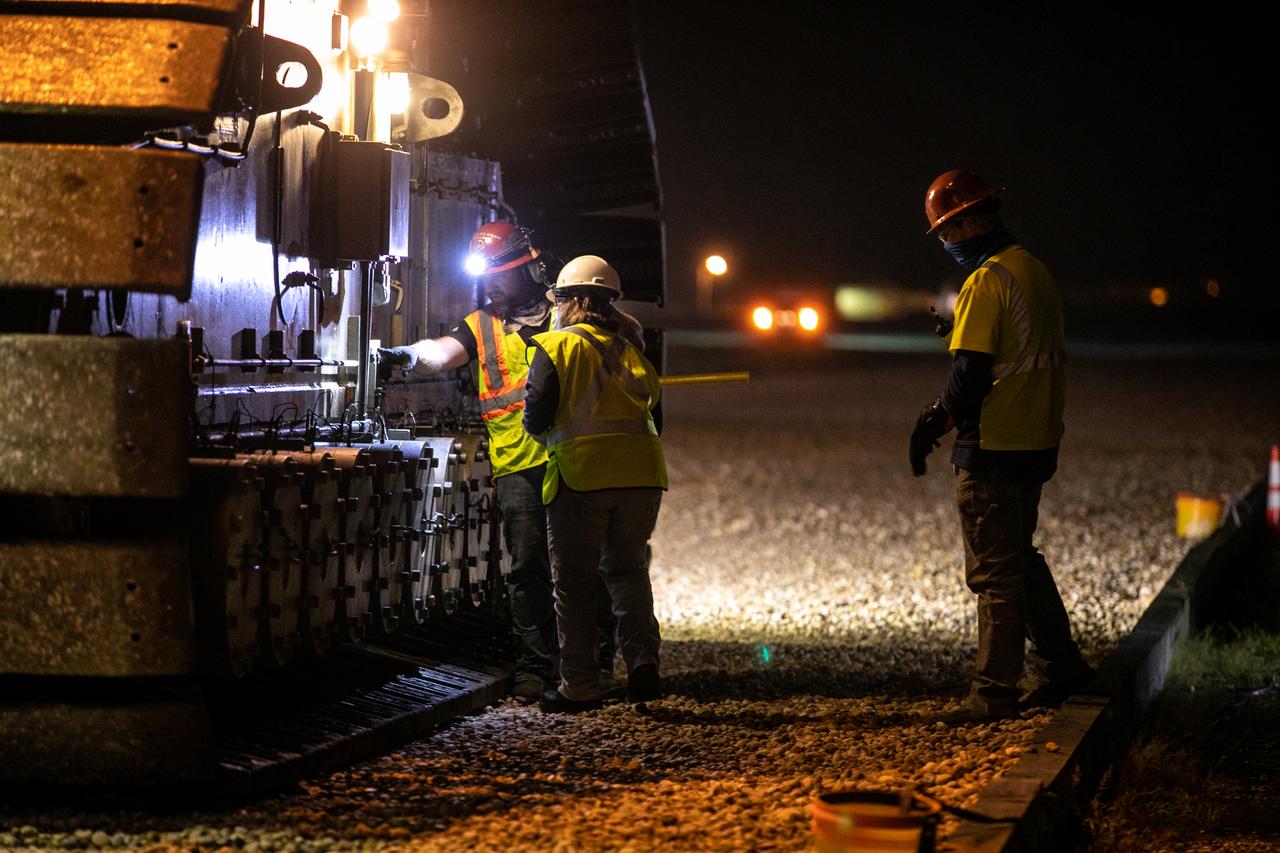
In the early morning on Oct. 20, 2020, technicians monitor the treads on crawler-transporter 2 as it carries the mobile launcher for the Artemis I mission along the crawlerway after departing the Vehicle Assembly Building at NASA’s Kennedy Space Center in Florida. The nearly 400-foot-tall mobile launcher is being rolled to Launch Pad 39B. During its two-week stay at the pad, engineers with Exploration Ground Systems and Jacobs will perform several tasks, including a timing test to validate the launch team’s countdown timeline, and a thorough, top-to-bottom wash down of the mobile launcher to remove any debris remaining from construction and installation of the umbilical arms. Artemis I will test the Orion spacecraft and Space Launch System as an integrated system ahead of crewed flights to the Moon. Under the Artemis program, NASA will land the first woman and the next man on the Moon in 2024.
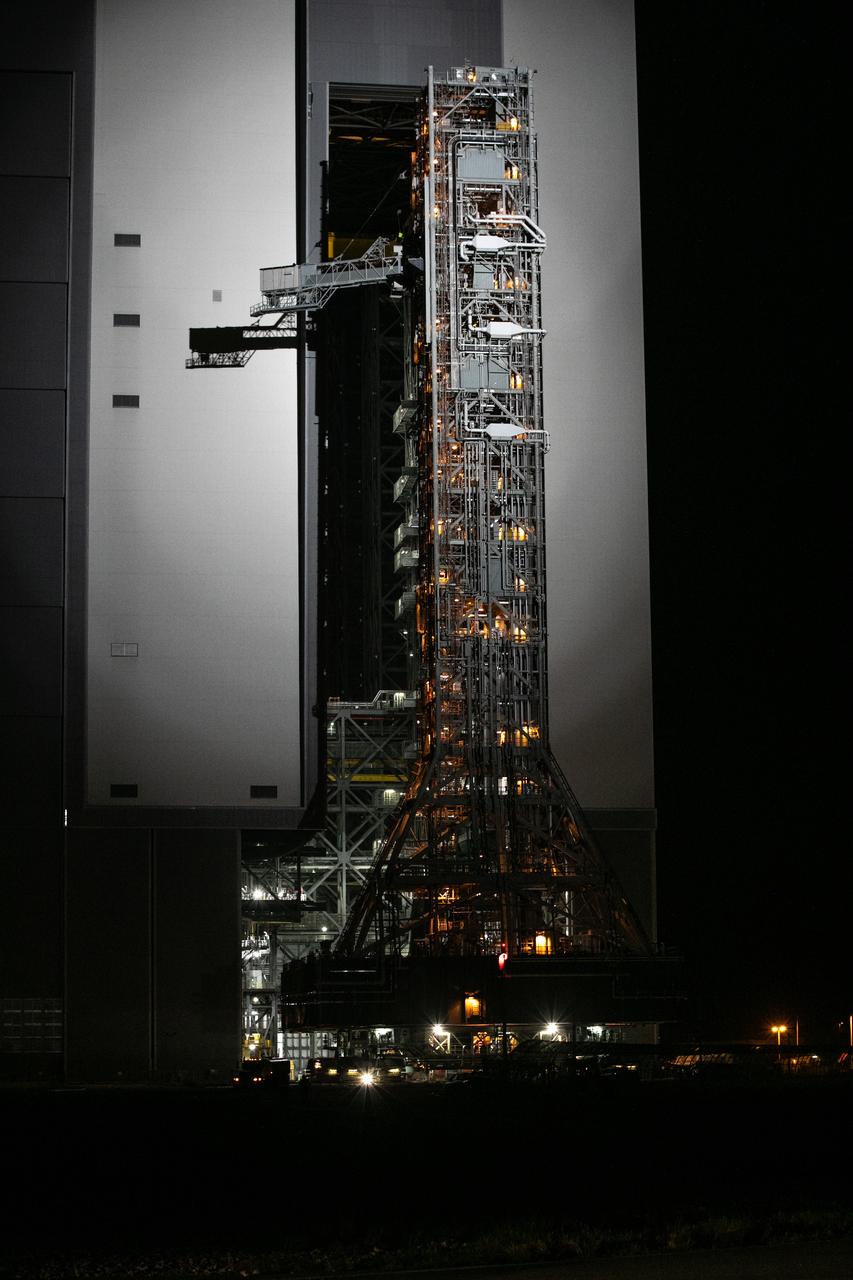
In the early morning on Oct. 20, 2020, the mobile launcher for the Artemis I mission begins its rollout atop crawler-transporter 2 from the Vehicle Assembly Building at NASA’s Kennedy Space Center in Florida. The nearly 400-foot-tall mobile launcher is being rolled to Launch Pad 39B. During its two-week stay at the pad, engineers with Exploration Ground Systems and Jacobs will perform several tasks, including a timing test to validate the launch team’s countdown timeline, and a thorough, top-to-bottom wash down of the mobile launcher to remove any debris remaining from construction and installation of the umbilical arms. Artemis I will test the Orion spacecraft and Space Launch System as an integrated system ahead of crewed flights to the Moon. Under the Artemis program, NASA will land the first woman and the next man on the Moon in 2024.
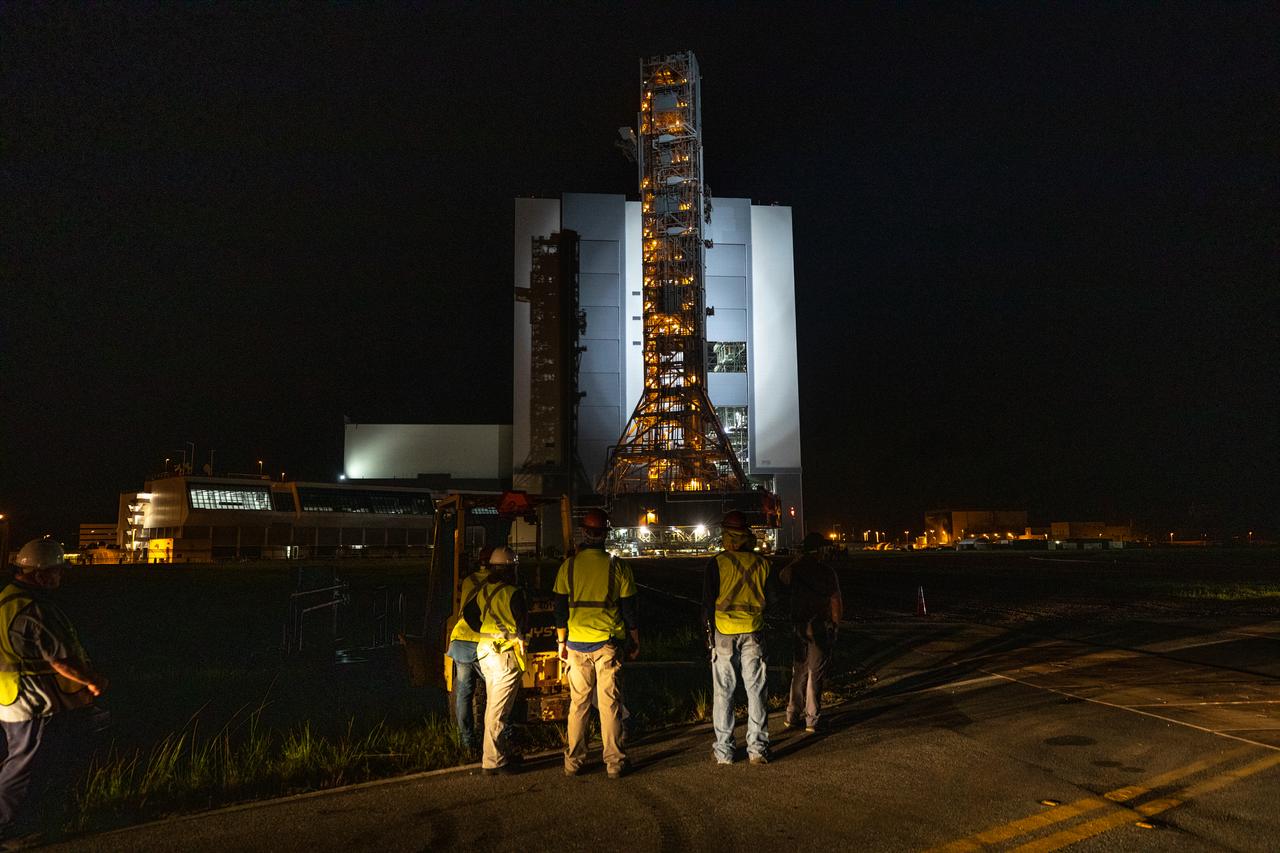
In the early morning on Oct. 20, 2020, the mobile launcher for the Artemis I mission rolls along the crawlerway atop crawler-transporter 2 after departing the Vehicle Assembly Building at NASA’s Kennedy Space Center in Florida. The nearly 400-foot-tall mobile launcher is being rolled to Launch Pad 39B. During its two-week stay at the pad, engineers with Exploration Ground Systems and Jacobs will perform several tasks, including a timing test to validate the launch team’s countdown timeline, and a thorough, top-to-bottom wash down of the mobile launcher to remove any debris remaining from construction and installation of the umbilical arms. Artemis I will test the Orion spacecraft and Space Launch System as an integrated system ahead of crewed flights to the Moon. Under the Artemis program, NASA will land the first woman and the next man on the Moon in 2024.
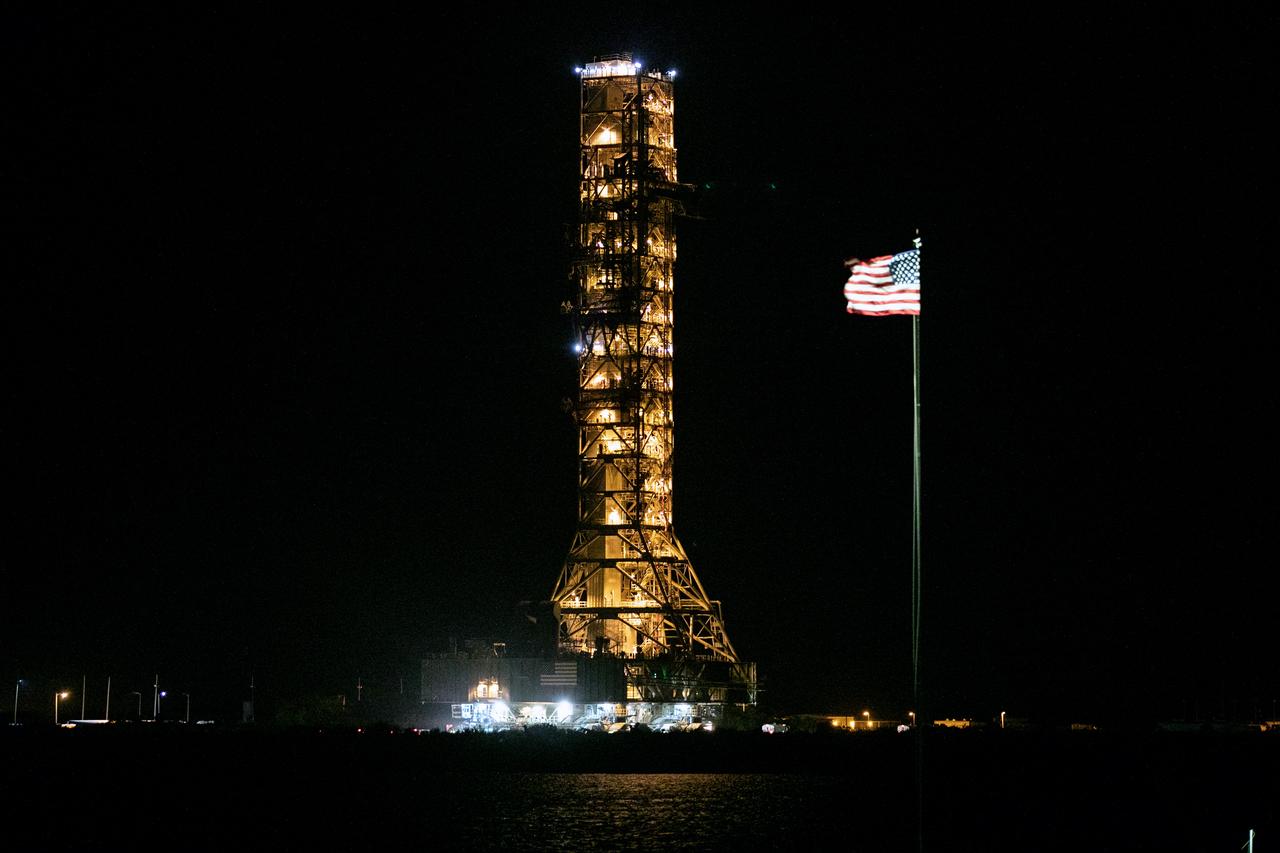
In the early morning on Oct. 20, 2020, the mobile launcher for the Artemis I mission rolls along the crawlerway atop crawler-transporter 2 after departing the Vehicle Assembly Building at NASA’s Kennedy Space Center in Florida. The nearly 400-foot-tall mobile launcher is being rolled to Launch Pad 39B. During its two-week stay at the pad, engineers with Exploration Ground Systems and Jacobs will perform several tasks, including a timing test to validate the launch team’s countdown timeline, and a thorough, top-to-bottom wash down of the mobile launcher to remove any debris remaining from construction and installation of the umbilical arms. Artemis I will test the Orion spacecraft and Space Launch System as an integrated system ahead of crewed flights to the Moon. Under the Artemis program, NASA will land the first woman and the next man on the Moon in 2024.
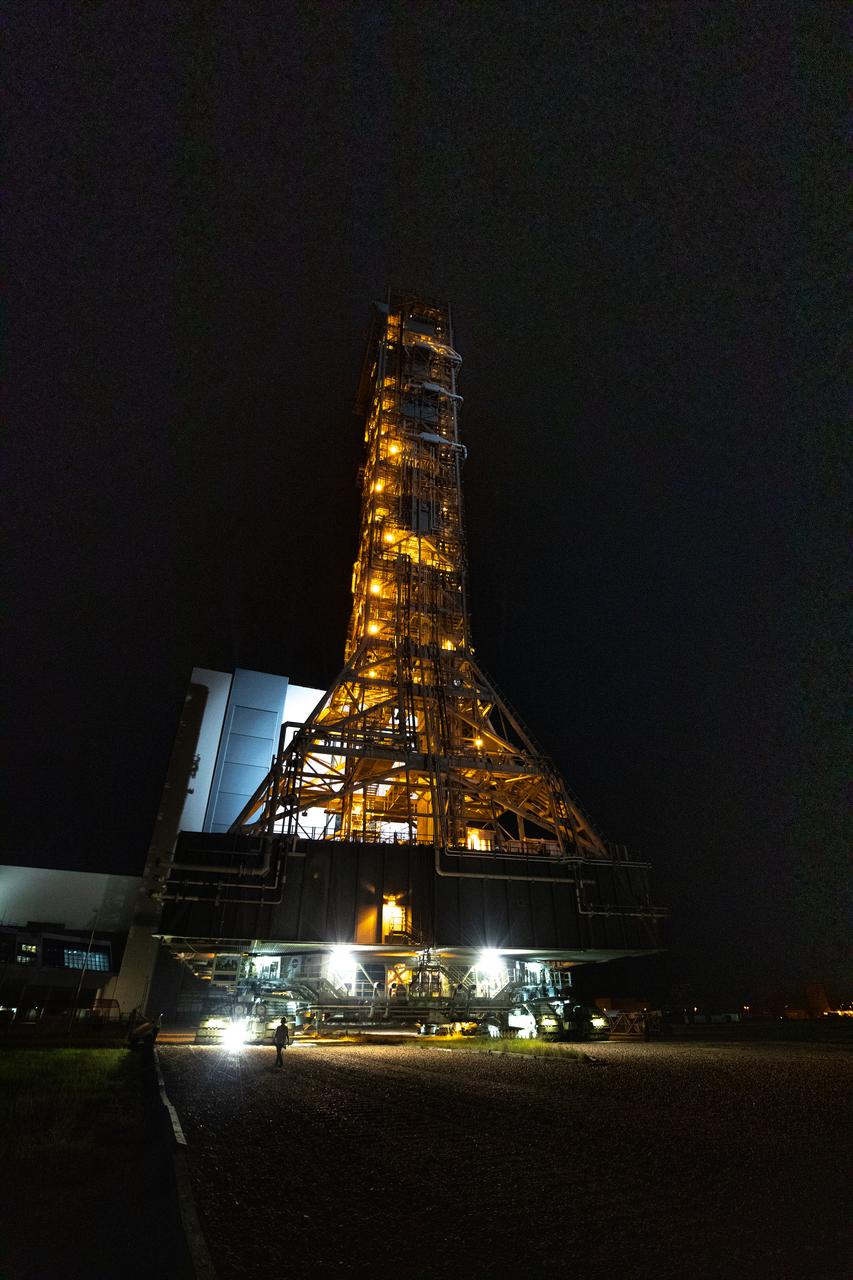
In the early morning on Oct. 20, 2020, the mobile launcher for the Artemis I mission rolls along the crawlerway atop crawler-transporter 2 after departing the Vehicle Assembly Building at NASA’s Kennedy Space Center in Florida. The nearly 400-foot-tall mobile launcher is being rolled to Launch Pad 39B. During its two-week stay at the pad, engineers with Exploration Ground Systems and Jacobs will perform several tasks, including a timing test to validate the launch team’s countdown timeline, and a thorough, top-to-bottom wash down of the mobile launcher to remove any debris remaining from construction and installation of the umbilical arms. Artemis I will test the Orion spacecraft and Space Launch System as an integrated system ahead of crewed flights to the Moon. Under the Artemis program, NASA will land the first woman and the next man on the Moon in 2024.
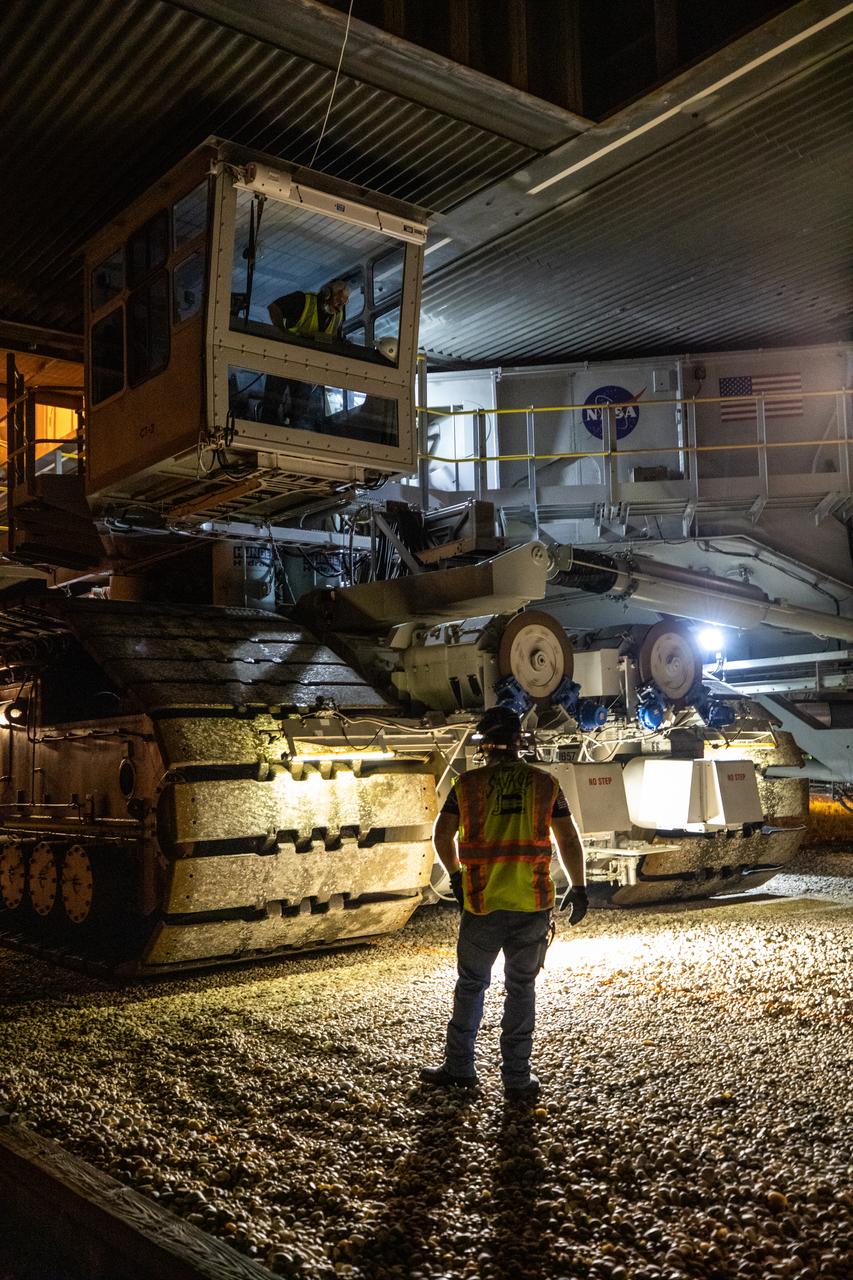
A close-up view of crawler-transporter 2 as it moves slowly along the crawlerway carrying the mobile launcher for the Artemis I mission after departing the Vehicle Assembly Building at NASA’s Kennedy Space Center in Florida in the early morning on Oct. 20, 2020. The nearly 400-foot-tall mobile launcher is being rolled to Launch Pad 39B. During its two-week stay at the pad, engineers with Exploration Ground Systems and Jacobs will perform several tasks, including a timing test to validate the launch team’s countdown timeline, and a thorough, top-to-bottom wash down of the mobile launcher to remove any debris remaining from construction and installation of the umbilical arms. Artemis I will test the Orion spacecraft and Space Launch System as an integrated system ahead of crewed flights to the Moon. Under the Artemis program, NASA will land the first woman and the next man on the Moon in 2024.
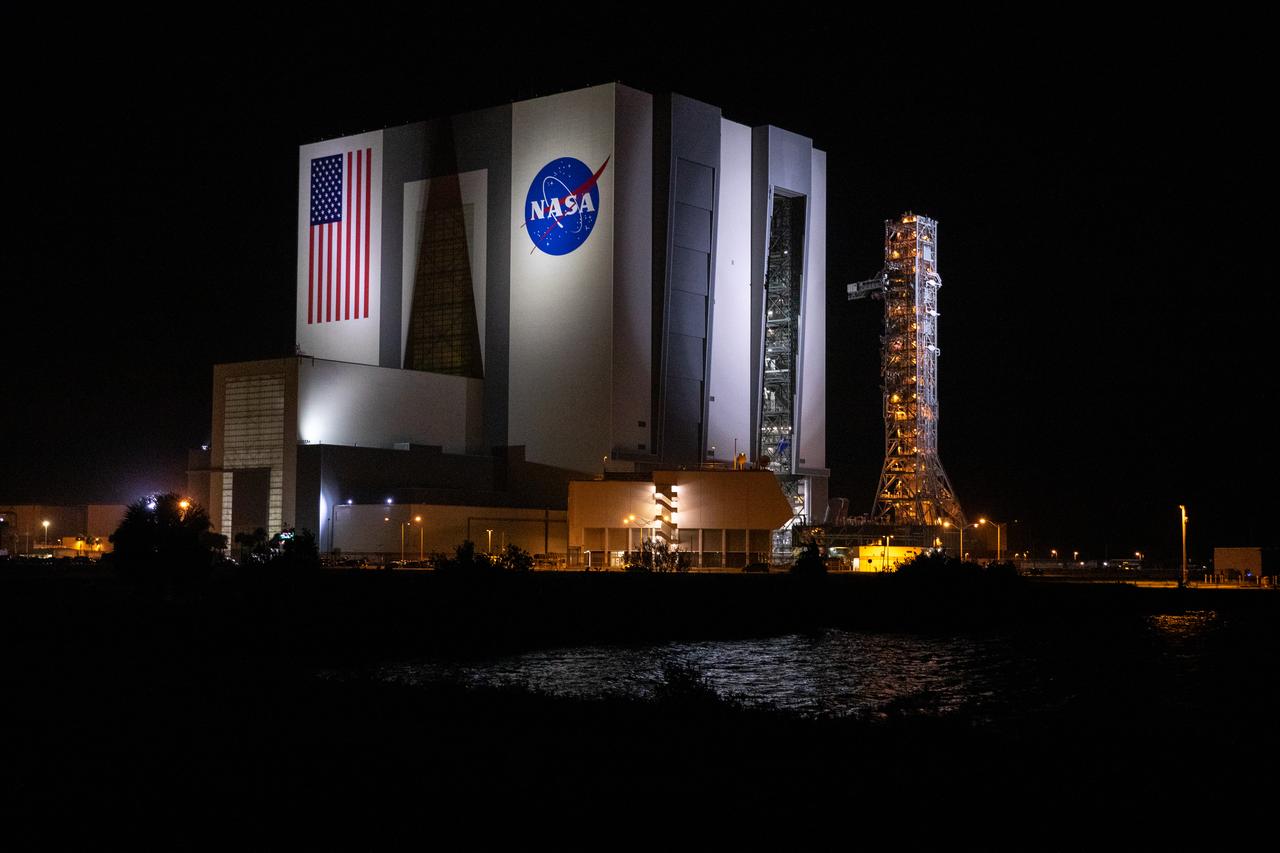
In the early morning on Oct. 20, 2020, the mobile launcher for the Artemis I mission begins its rollout atop crawler-transporter 2 from the Vehicle Assembly Building at NASA’s Kennedy Space Center in Florida. The nearly 400-foot-tall mobile launcher is being rolled to Launch Pad 39B. During its two-week stay at the pad, engineers with Exploration Ground Systems and Jacobs will perform several tasks, including a timing test to validate the launch team’s countdown timeline, and a thorough, top-to-bottom wash down of the mobile launcher to remove any debris remaining from construction and installation of the umbilical arms. Artemis I will test the Orion spacecraft and Space Launch System as an integrated system ahead of crewed flights to the Moon. Under the Artemis program, NASA will land the first woman and the next man on the Moon in 2024.
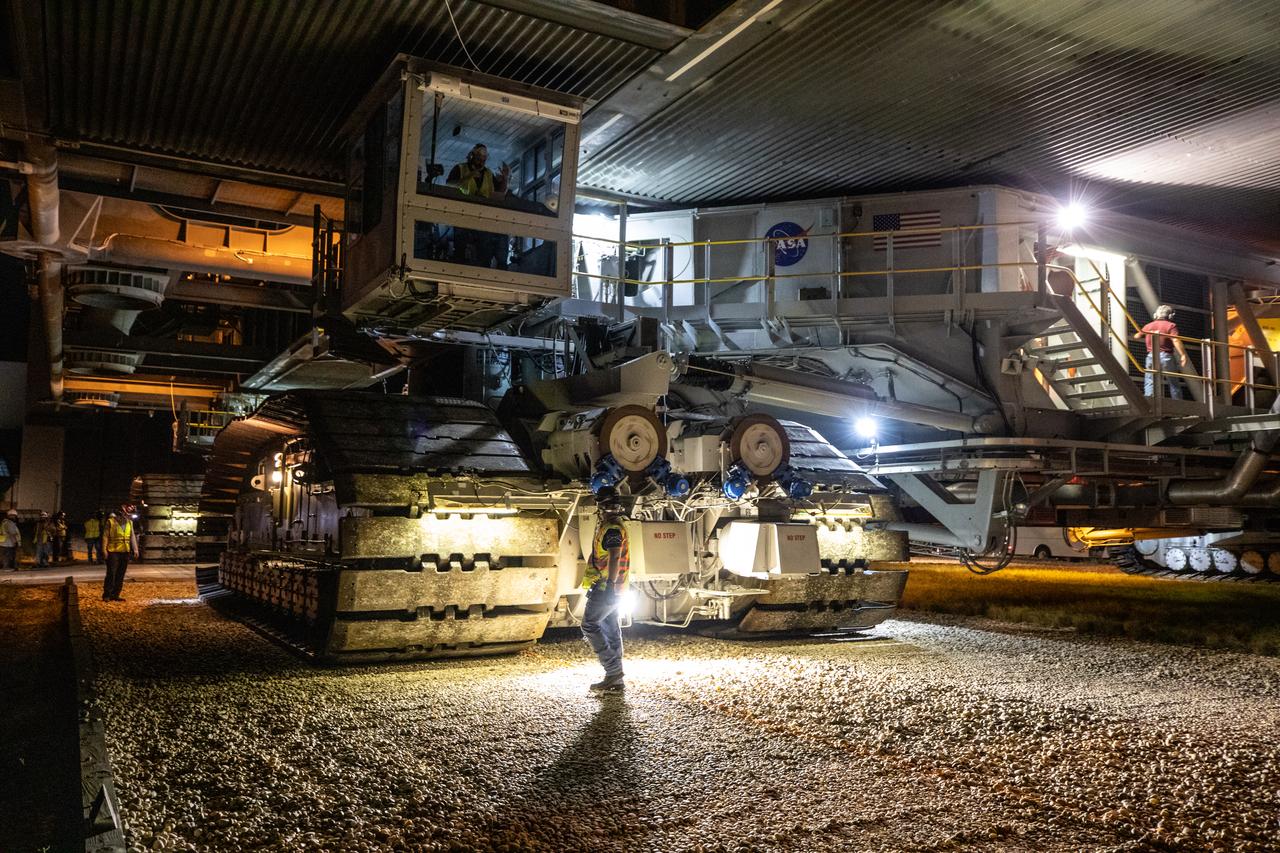
A close-up view of crawler-transporter 2 as it moves slowly along the crawlerway carrying the mobile launcher for the Artemis I mission after departing the Vehicle Assembly Building at NASA’s Kennedy Space Center in Florida in the early morning on Oct. 20, 2020. The nearly 400-foot-tall mobile launcher is being rolled to Launch Pad 39B. During its two-week stay at the pad, engineers with Exploration Ground Systems and Jacobs will perform several tasks, including a timing test to validate the launch team’s countdown timeline, and a thorough, top-to-bottom wash down of the mobile launcher to remove any debris remaining from construction and installation of the umbilical arms. Artemis I will test the Orion spacecraft and Space Launch System as an integrated system ahead of crewed flights to the Moon. Under the Artemis program, NASA will land the first woman and the next man on the Moon in 2024.