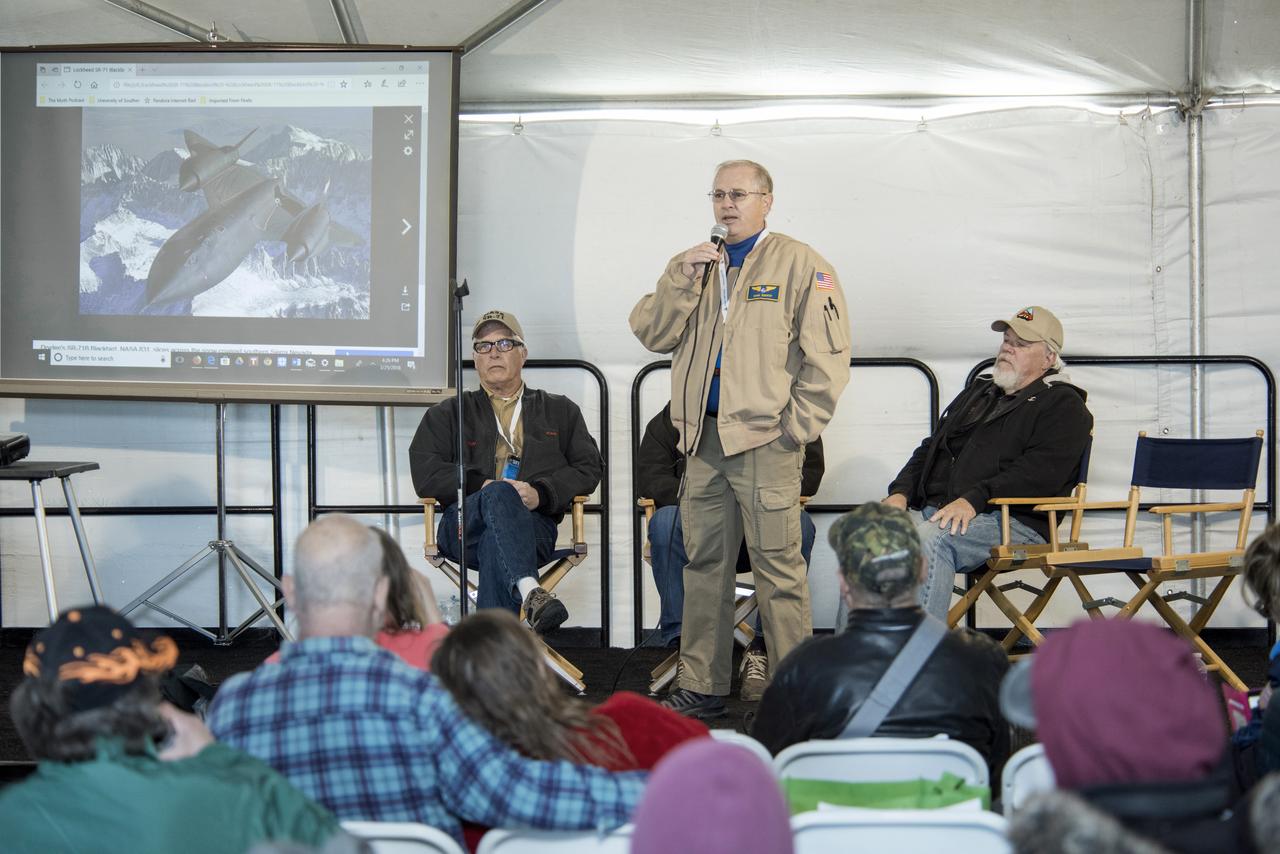
Dana Purifoy, NASA Armstrong director of Flight Operations, talking, and John McKay, former Armstrong SR-71 crew chief, participate on a panel discussion about the triple supersonic aircraft.
NASA Armstrong Supported 2018 Los Angeles County Air Show
NASA Armstrong pilots Stu Broce, Greg Nelson and Tim Williams sign autographs for people at the Los Angeles County Air Show in Lancaster, California.
NASA Armstrong Supported 2018 Los Angeles County Air Show
Amberly Guerra, left, tries on life support equipment while Ali Zendejas, Betty Mojica and Julian Guerra, her dad, watch.
NASA Armstrong Supported 2018 Los Angeles County Air Show
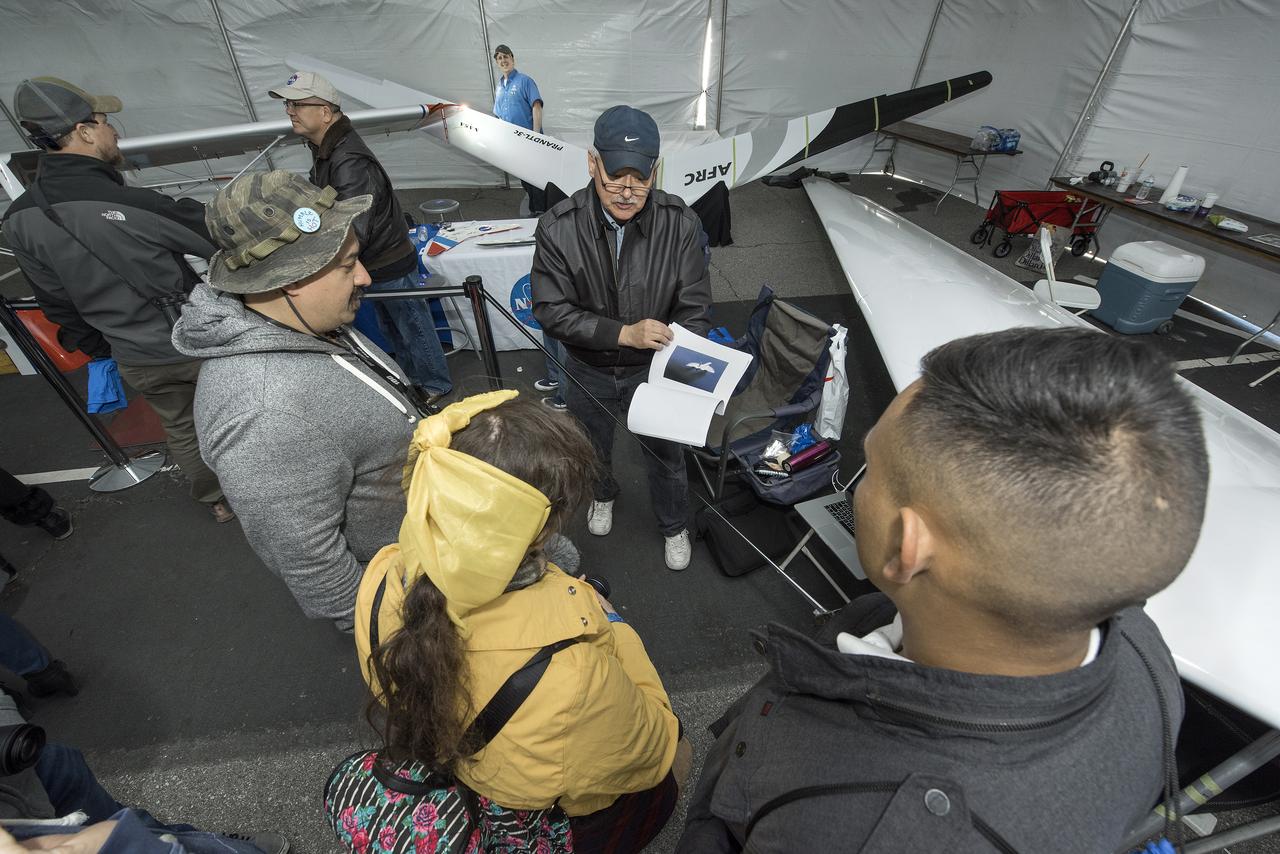
Al Bowers explains the Prandtl experimental aircraft and how its wing twist could redefine the efficiency of aircraft.
NASA Armstrong Supported 2018 Los Angeles County Air Show
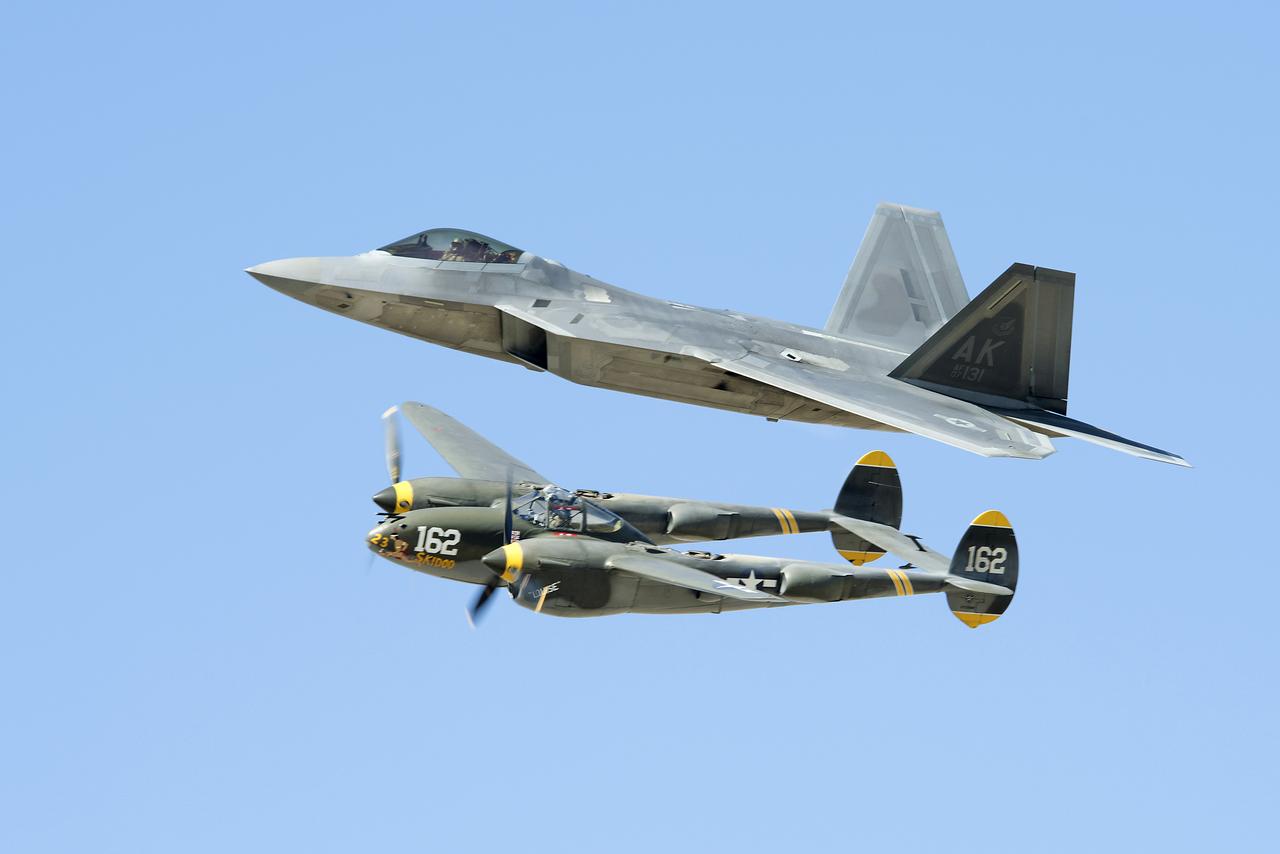
The F-22 and the classic P-38 shares the sky at the Los Angeles County Air Show in Lancaster, California.
NASA Armstrong Supported 2018 Los Angeles County Air Show
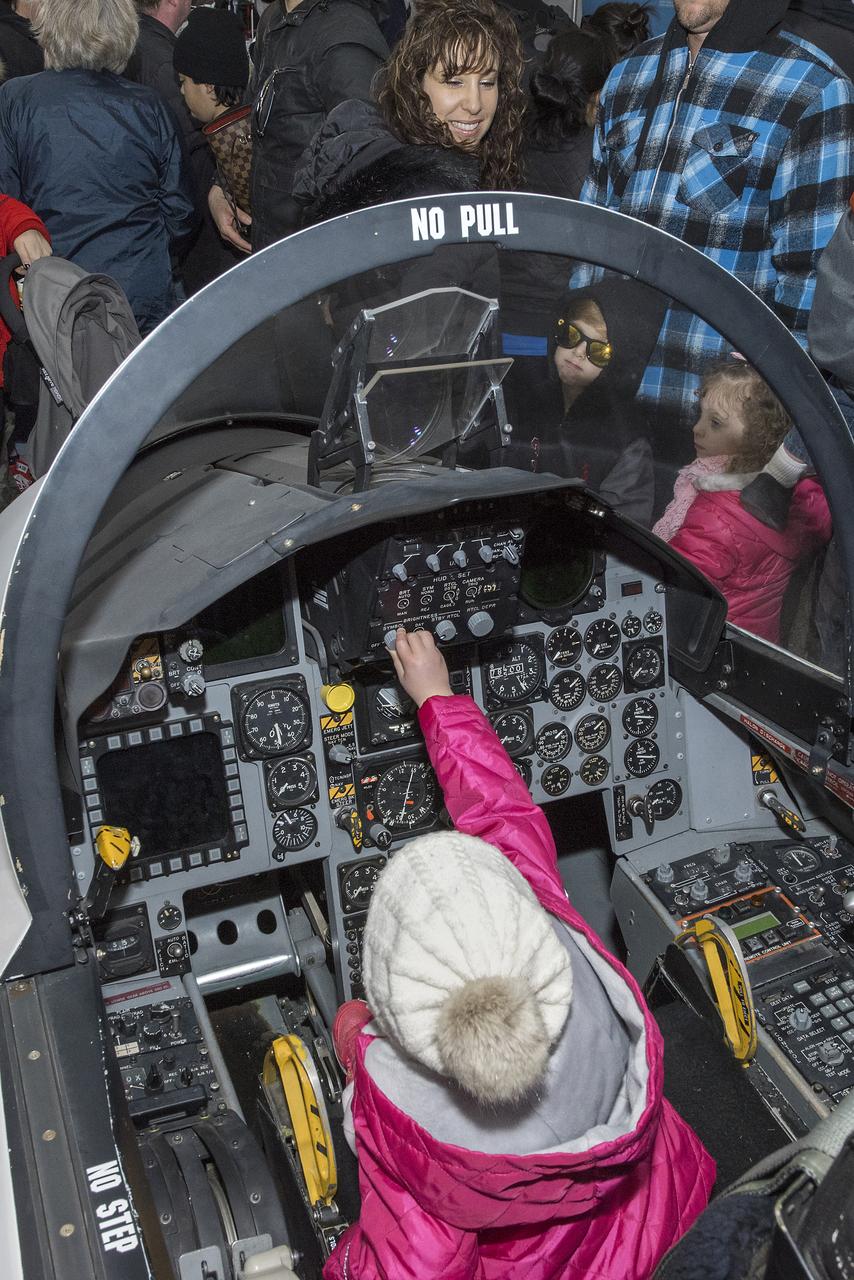
A young woman tries her hand at “piloting” a high-performance jet. The representation of a jet cockpit is a popular display at NASA Armstrong-supported air shows and festivals across the nation.
NASA Armstrong Supported 2018 Los Angeles County Air Show
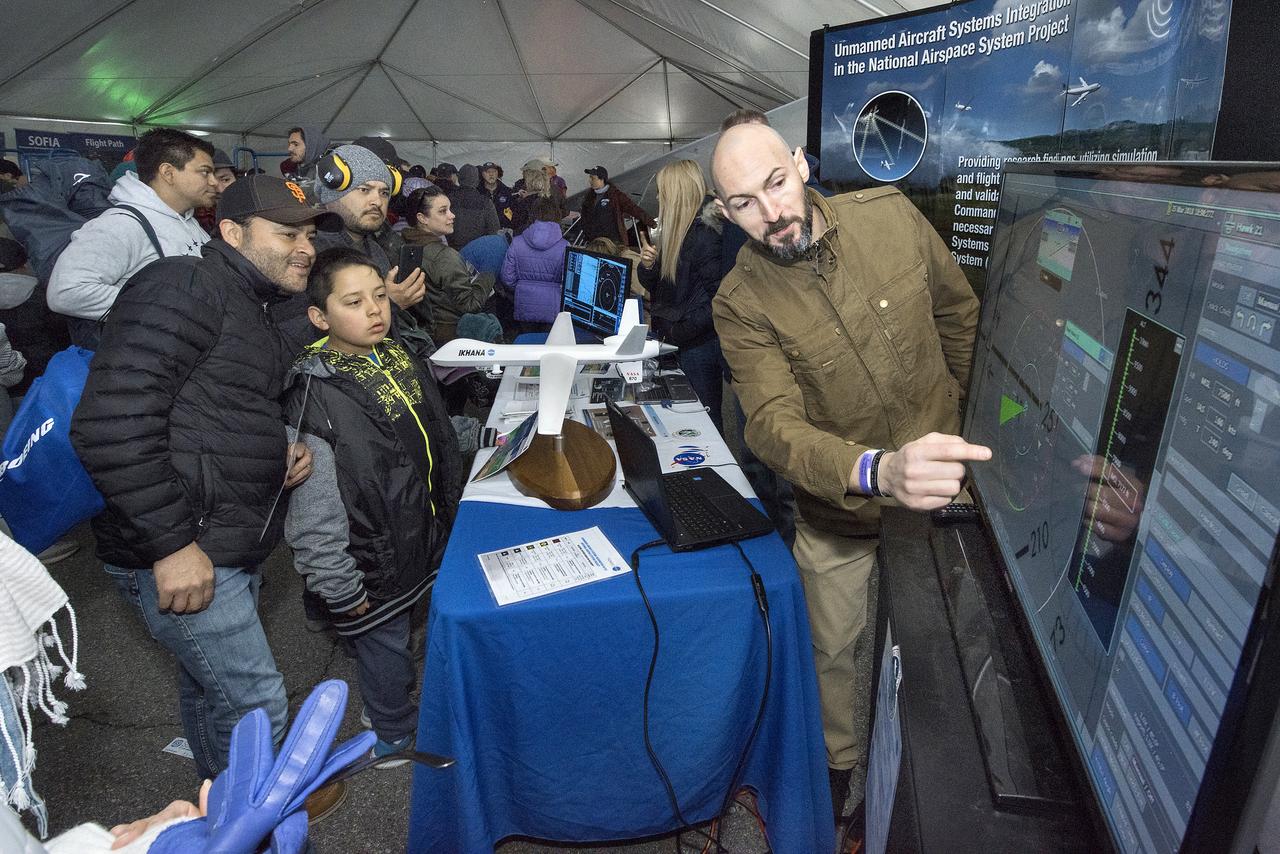
Zack Roberts from NASA’s Ames Research Center explains elements of the Unmanned Aircraft Systems Integration into the National Airspace System.
NASA Armstrong Supported 2018 Los Angeles County Air Show
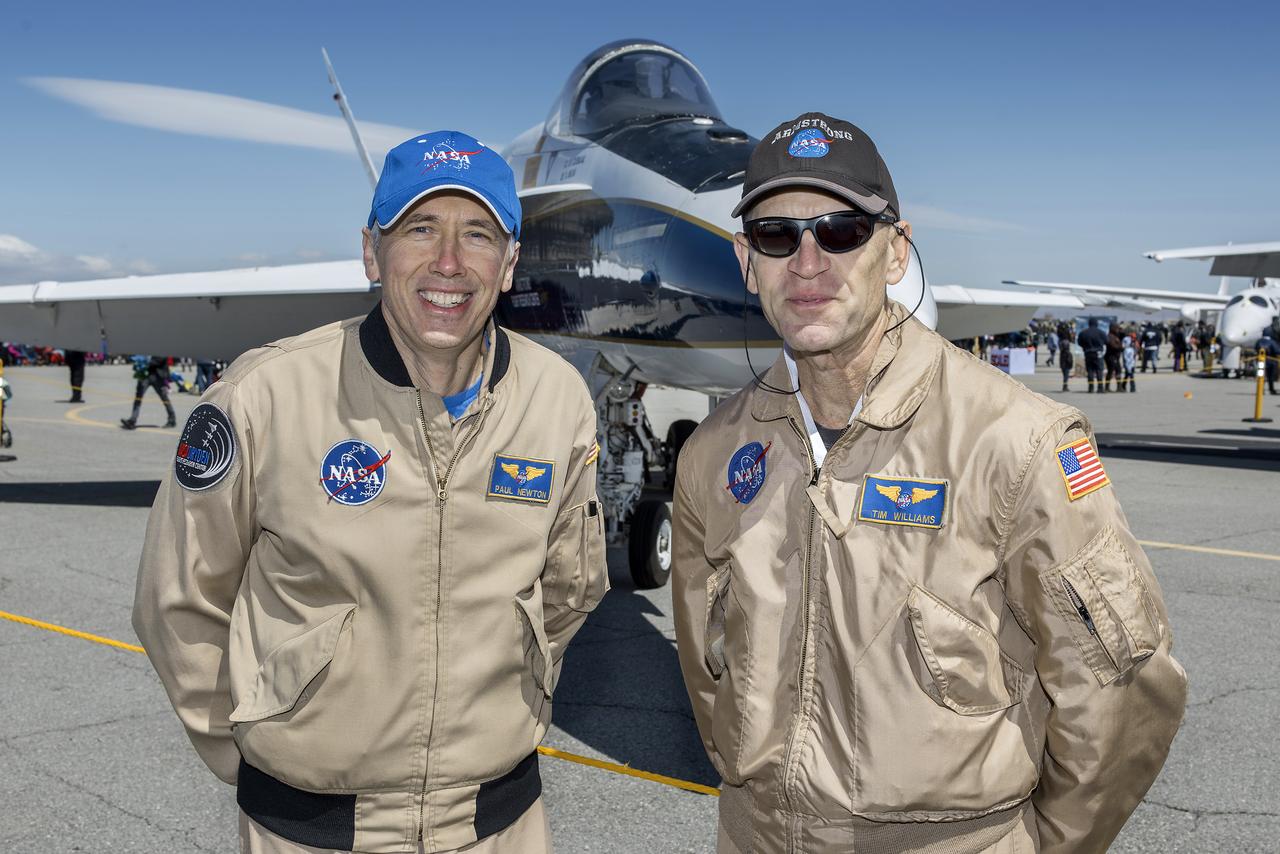
NASA Armstrong Research Center pilots Paul Newton and Tim Williams stand by the center’s F/A-18 research aircraft.
NASA Armstrong Supported 2018 Los Angeles County Air Show
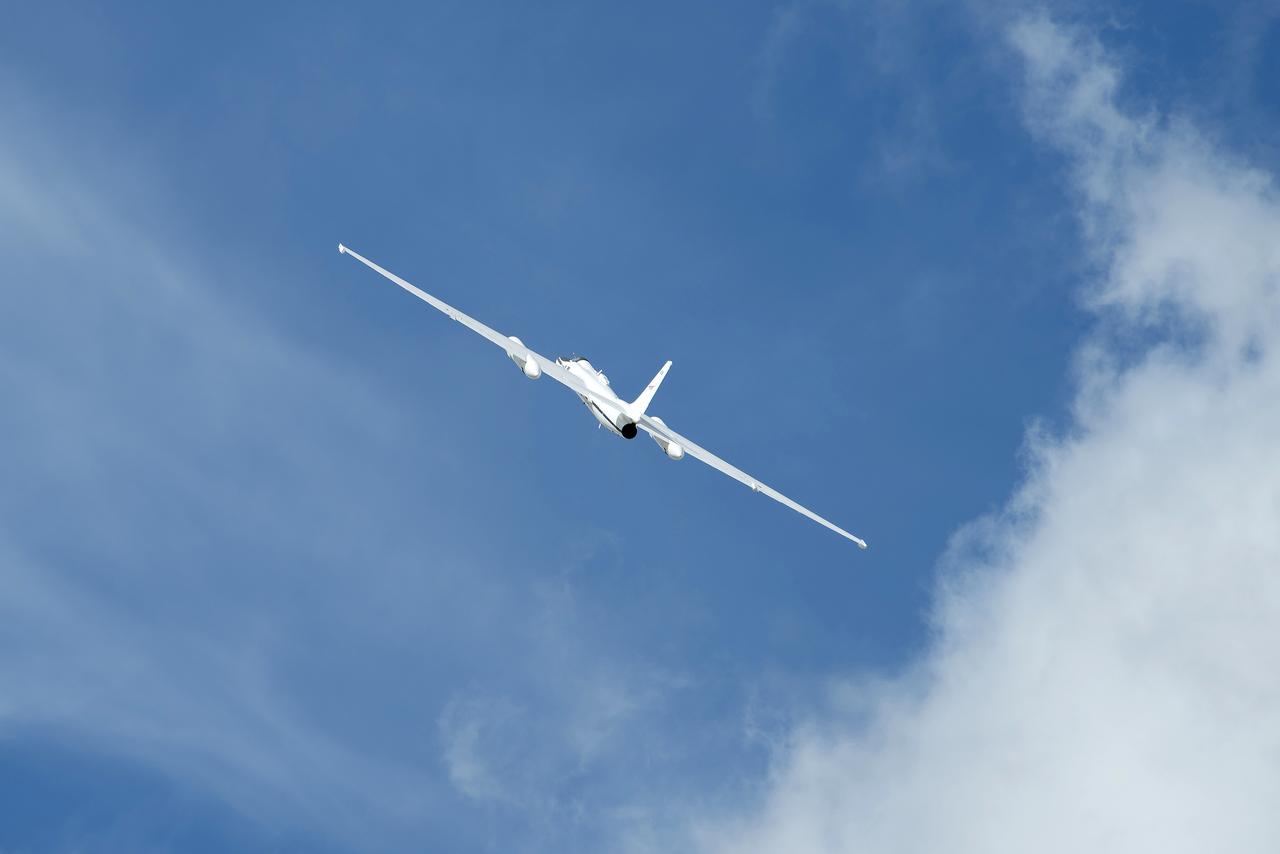
ER-2 flyover at L.A. County Airshow, March 25, 2017. NASA will be working with the National Oceanic and Atmospheric Administration’s (NOAA) on their newest weather satellite, Geostationary Operational Environmental Satellite-R-series, or GOES-R, that launched into orbit Nov. 19. Now that it has reached its final designated orbit, GOES-R will be known operationally as GOES-16.  The ER-2 will help NOAA calibrate sensors and validate data transmitted down from the satellite. The formal ER-2 science flights will take place between March and Mary of 2017 in two phases; during phase one, flights will be operated from the aircraft's normal base of operations at NASA Armstrong Flight Research Center’s Building 703. Phase two flights will be based out of Warner Robbins Air Force Base in Georgia, where thunderstorm conditions can be more easily found and observed.
AFRC2017-0068-123