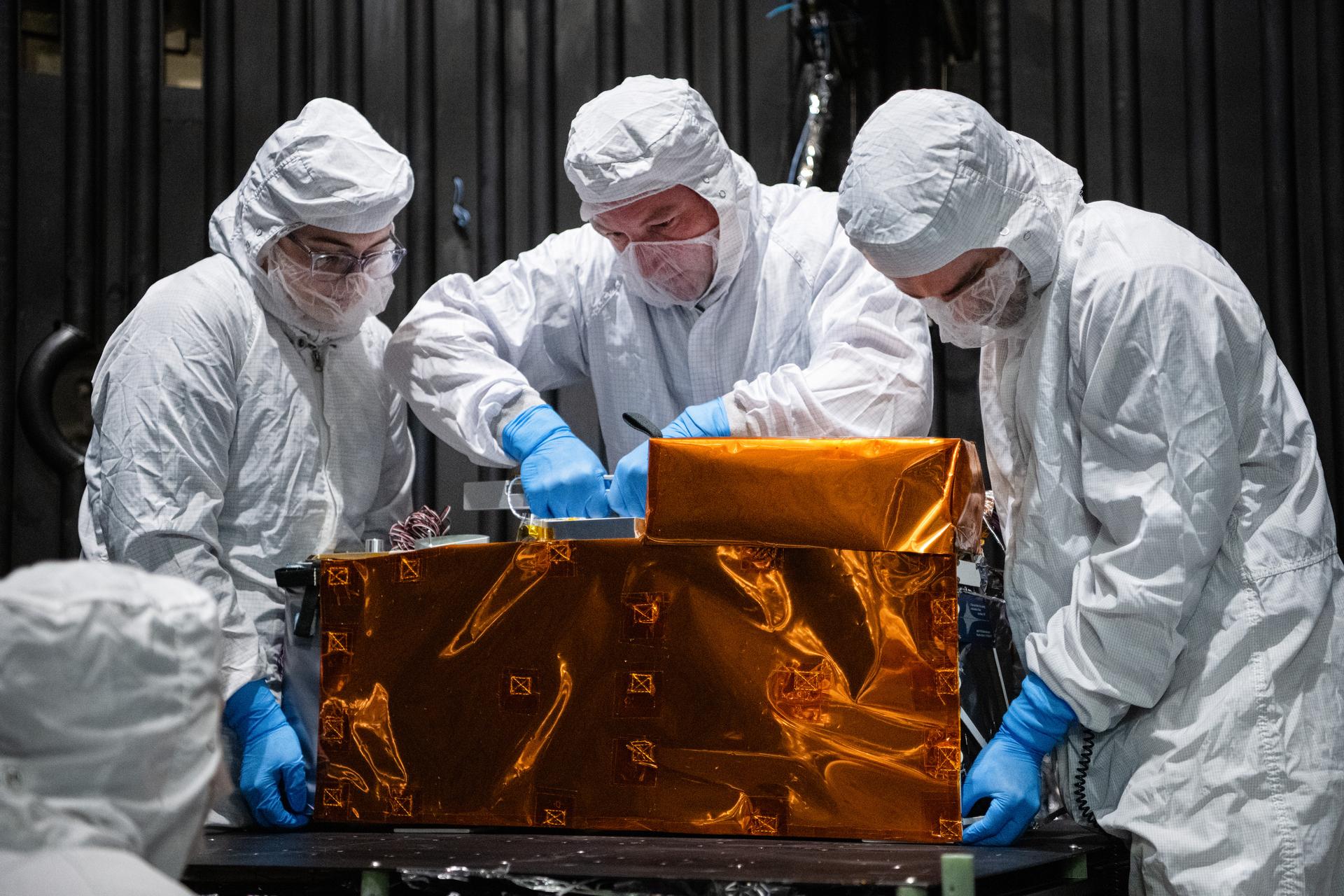
From left, mechanical engineer Gabrielle Ludwig, technician Alex Schaeffer, and mechanical engineer Mitchell Hamann install the Lunar Environment Monitoring Station (LEMS) instrument onto a test plate in a thermal vacuum chamber at Goddard Space Flight Center, Greenbelt Md., March 30, 2026. LEMS is a compact, autonomous, and self-sustaining seismometer suite designed to carry out continuous, long-term, monitoring of the lunar seismic environment at the South Polar region. Photo Credit: NASA/Denny Henry
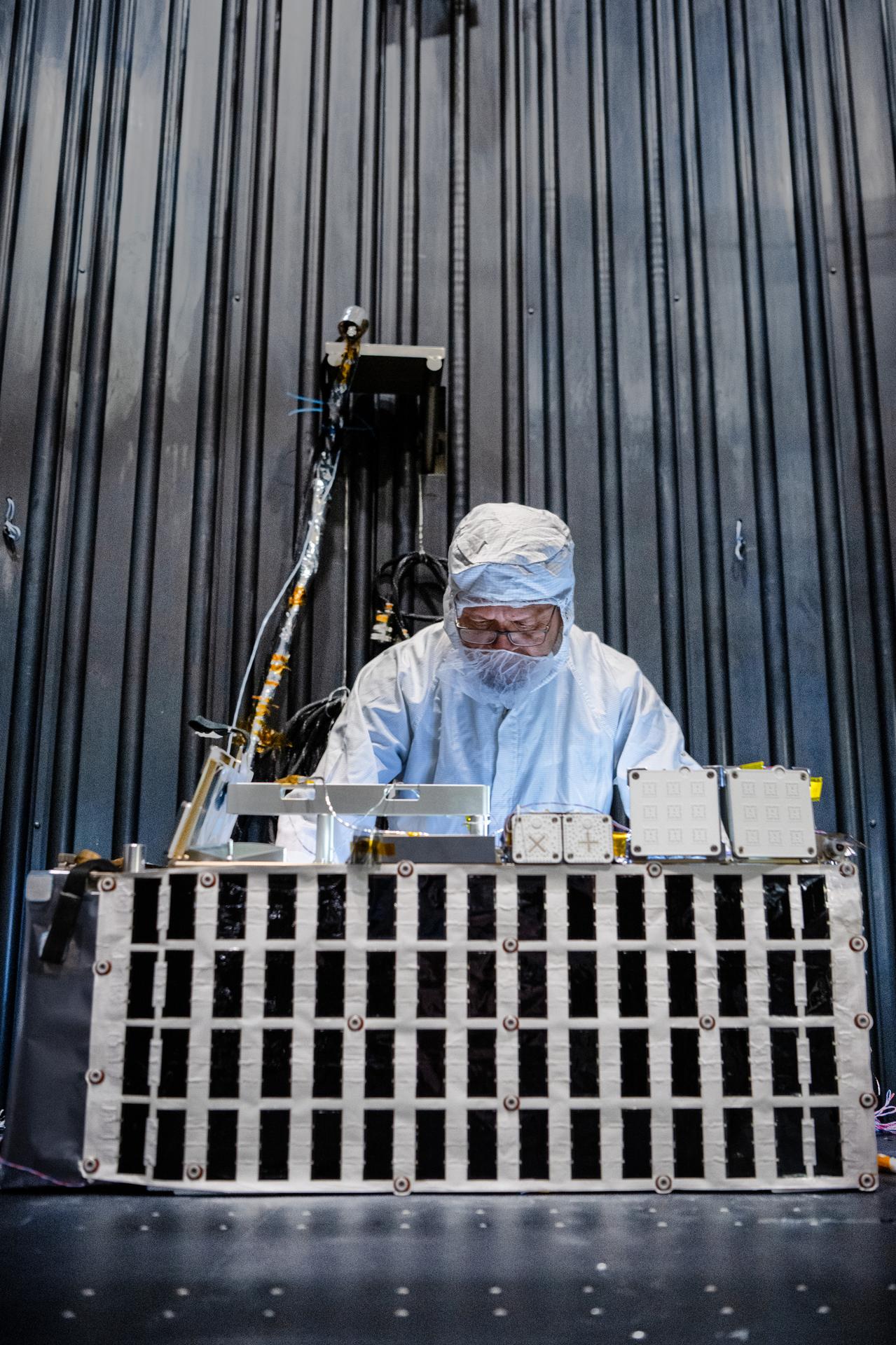
Engineering technician Jancilon Viegas installs thermocouples onto the The Lunar Environment Monitoring Station (LEMS) instrument in preparation for testing in a thermal vacuum chamber at Goddard Space Flight Center, Greenbelt Md., March 30, 2026. LEMS is a compact, autonomous, and self-sustaining seismometer suite designed to carry out continuous, long-term, monitoring of the lunar seismic environment at the South Polar region. Photo Credit: NASA/Denny Henry
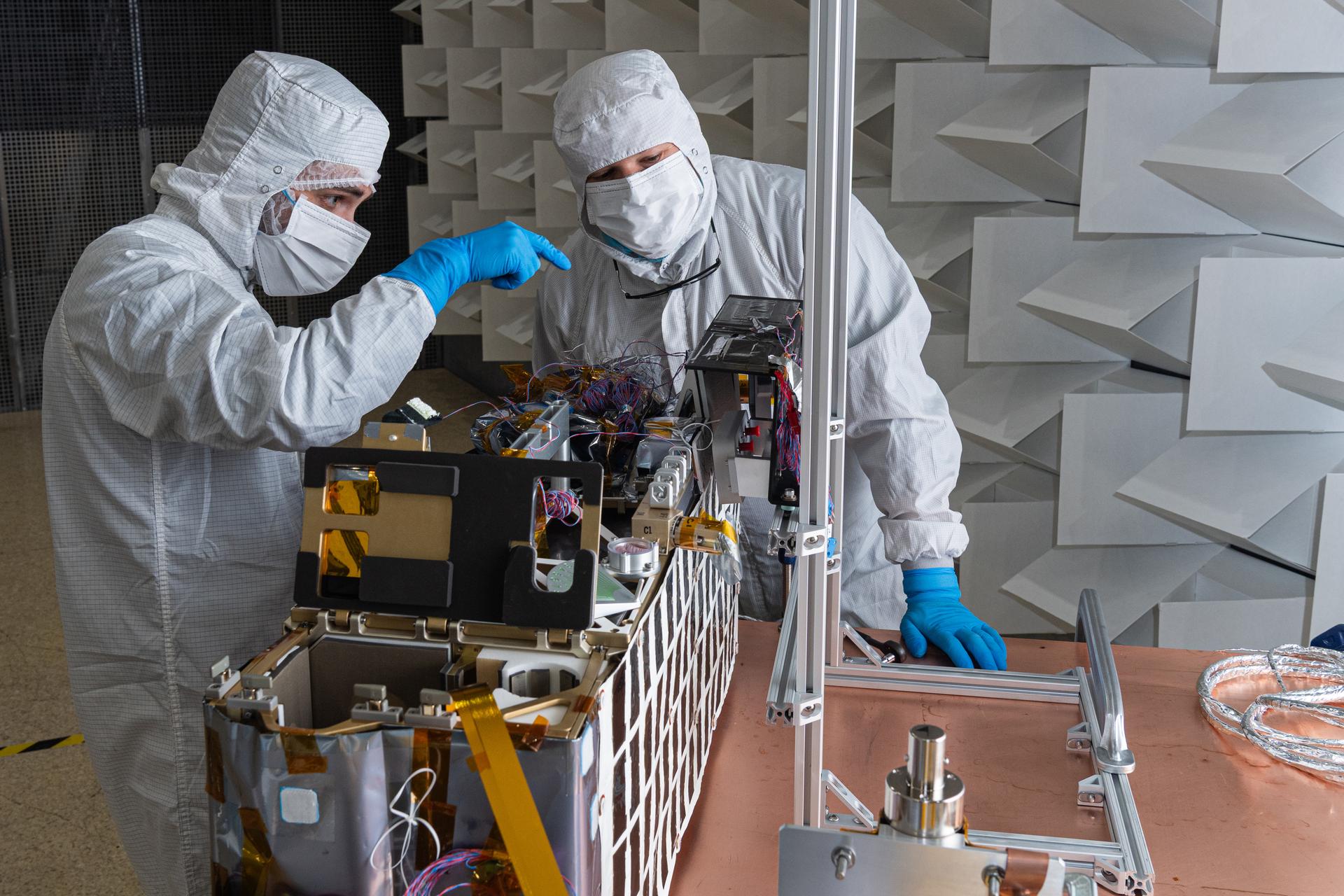
Mitchell Hamann and John Pindell configure the Lunar Environment Monitoring Station (LEMS) instrument for testing in the Electromagnetic Interference/Electromagnetic Compatibility (EMI/EMC) Chamber at Goddard Space Flight Center, Greenbelt Md., Feb 17, 2026. LEMS is a compact, autonomous, and self-sustaining seismometer suite designed to carry out continuous, long-term, monitoring of the lunar seismic environment at the South Polar region. Photo Credit: NASA/Mike Guinto
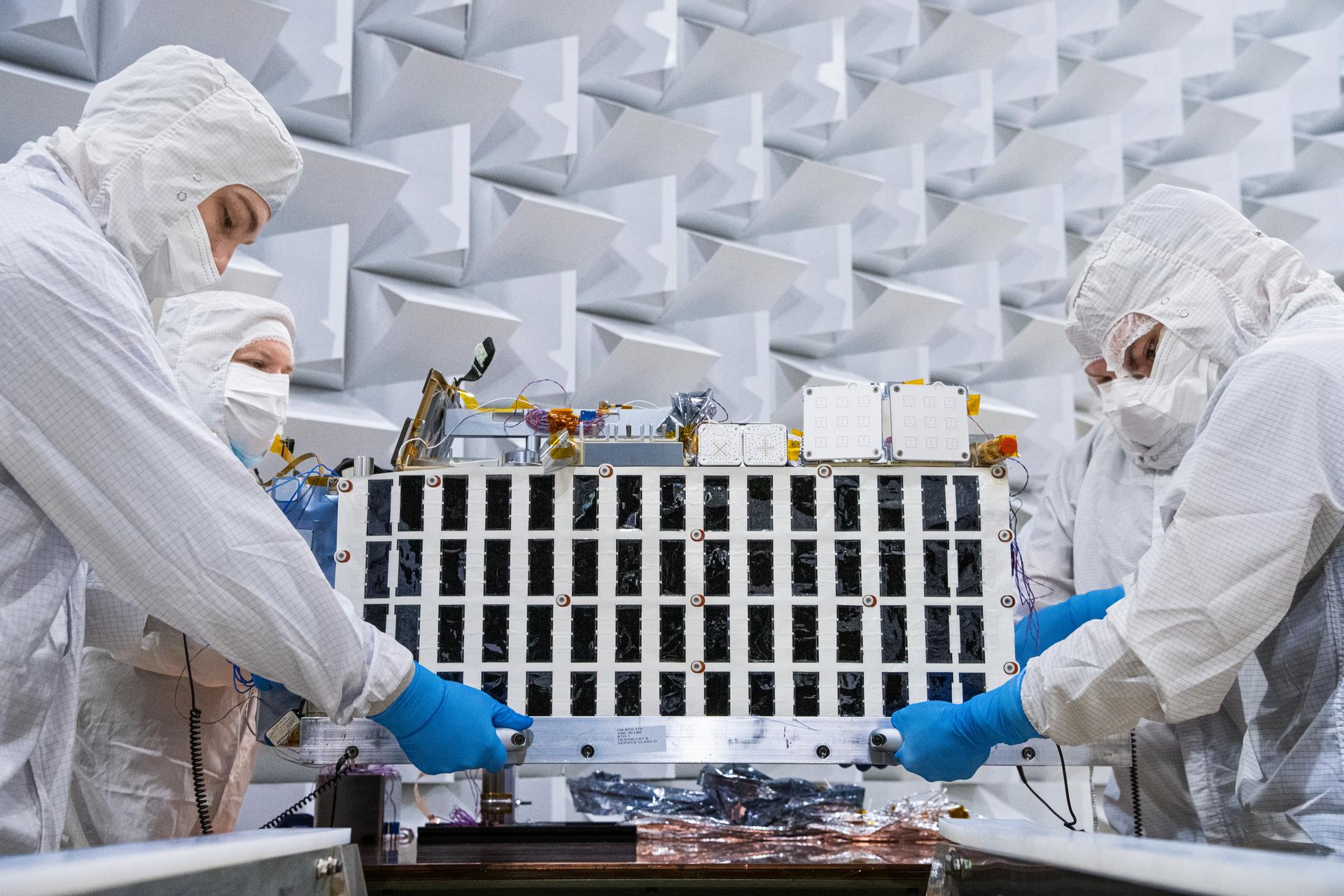
Lunar Environment Monitoring Station (LEMS) team members install the instrument for testing in the Electromagnetic Interference/Electromagnetic Compatibility (EMI/EMC) Chamber at Goddard Space Flight Center, Greenbelt Md., Feb 13, 2026. LEMS is a compact, autonomous, and self-sustaining seismometer suite designed to carry out continuous, long-term, monitoring of the lunar seismic environment at the South Polar region. Photo Credit: NASA/Denny Henry
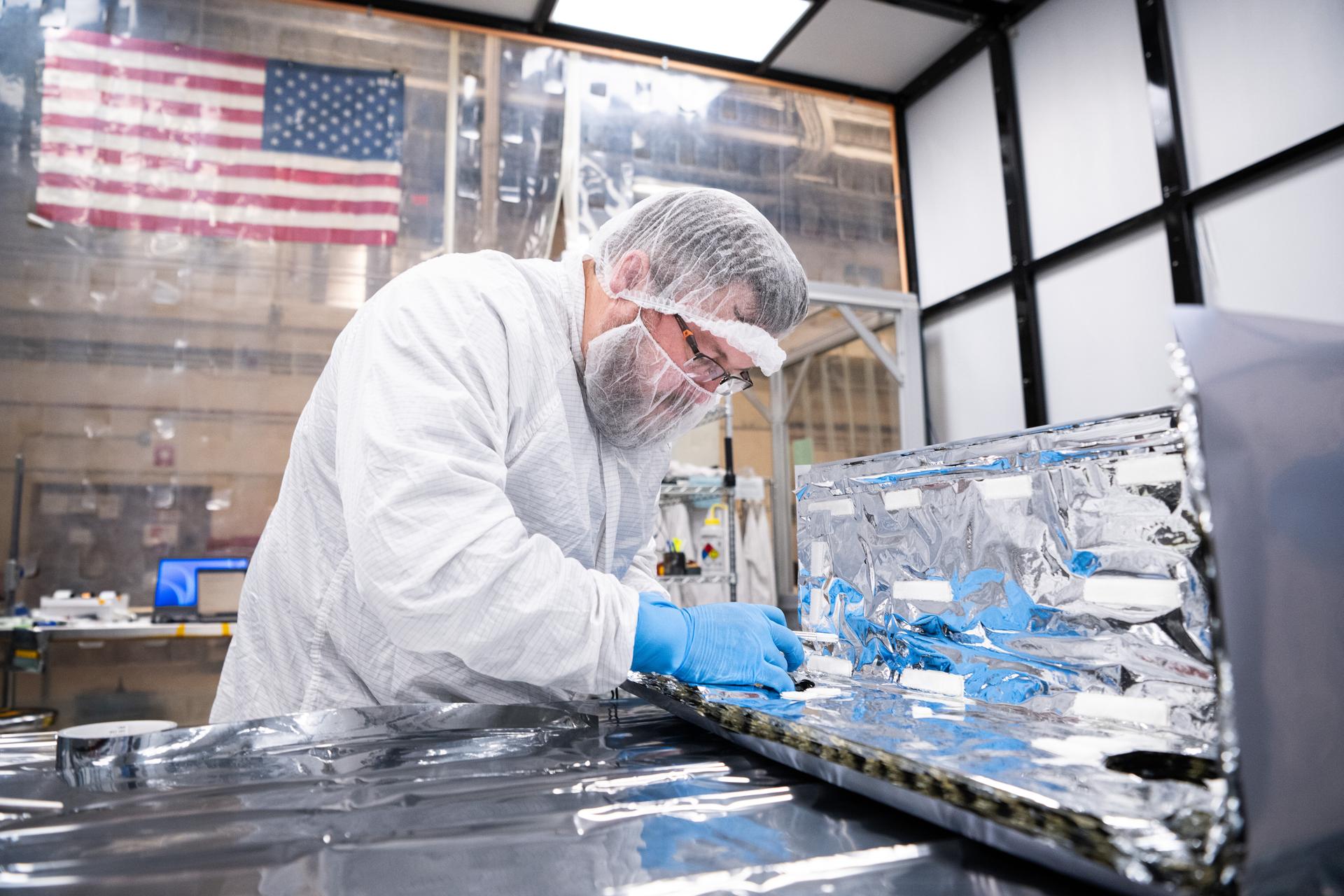
Chief Operating Officer of Quest Thermal Group Phillip Tyler installs Integrated Multilayer Insulation (IMLI) on the Lunar Environment Monitoring Station for Artemis (LEMS) bus inside a cleanroom at Goddard Space Flight Center, Greenbelt Md., Jan 13, 2026. LEMS is a compact, autonomous, and self-sustaining seismometer suite designed to carry out continuous, long-term, monitoring of the lunar seismic environment at the South Polar region. Photo Credit: NASA/Denny Henry
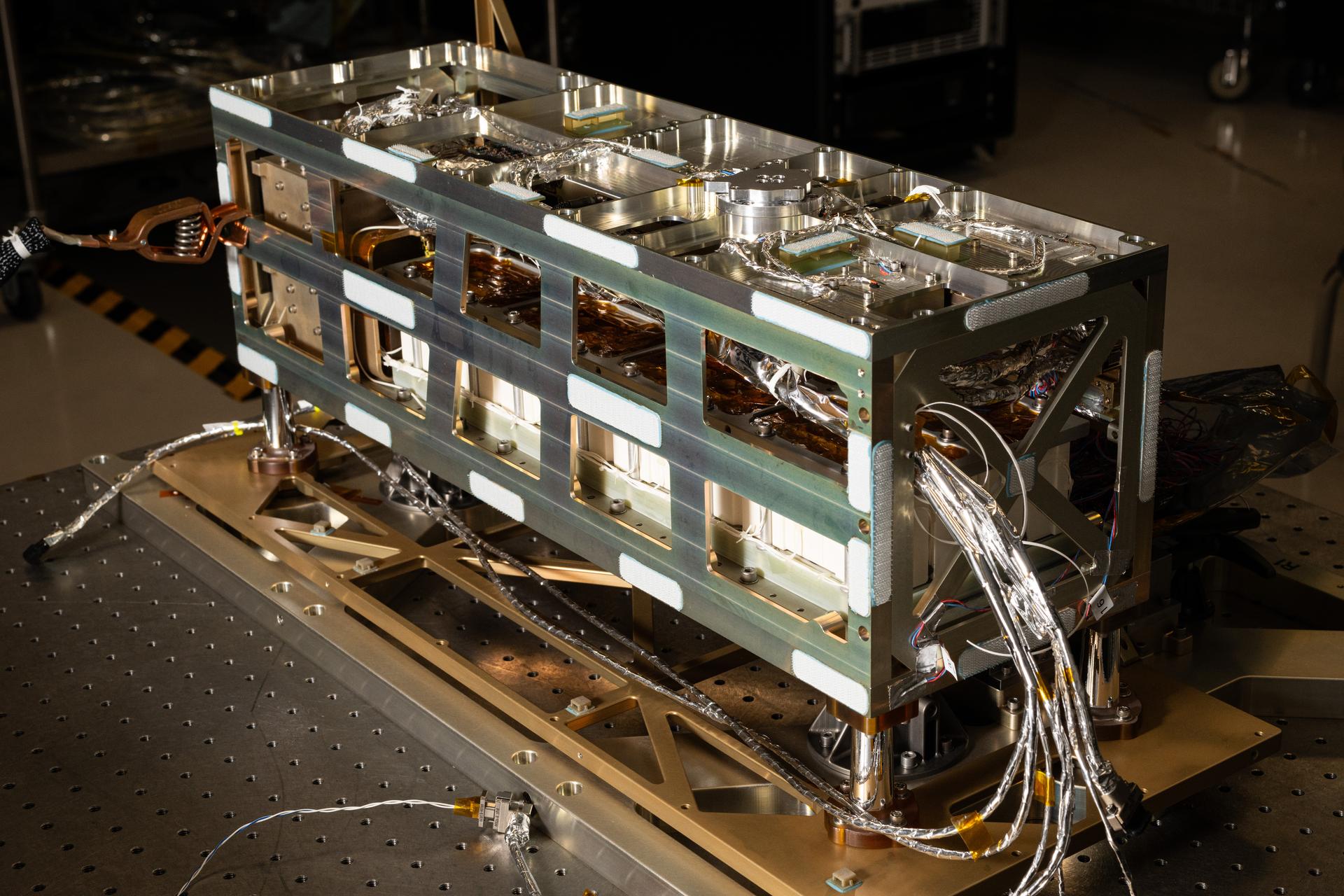
A detail view of the Lunar Environment Monitoring Station, (LEMS) bus prior to thermal blanket installation inside the cleanroom at Goddard Space Flight Center, Greenbelt Md., Jan 12, 2026. LEMS is a compact, autonomous, and self-sustaining seismometer suite designed to carry out continuous, long-term, monitoring of the lunar seismic environment at the South Polar region. Photo Credit: NASA/Denny Henry
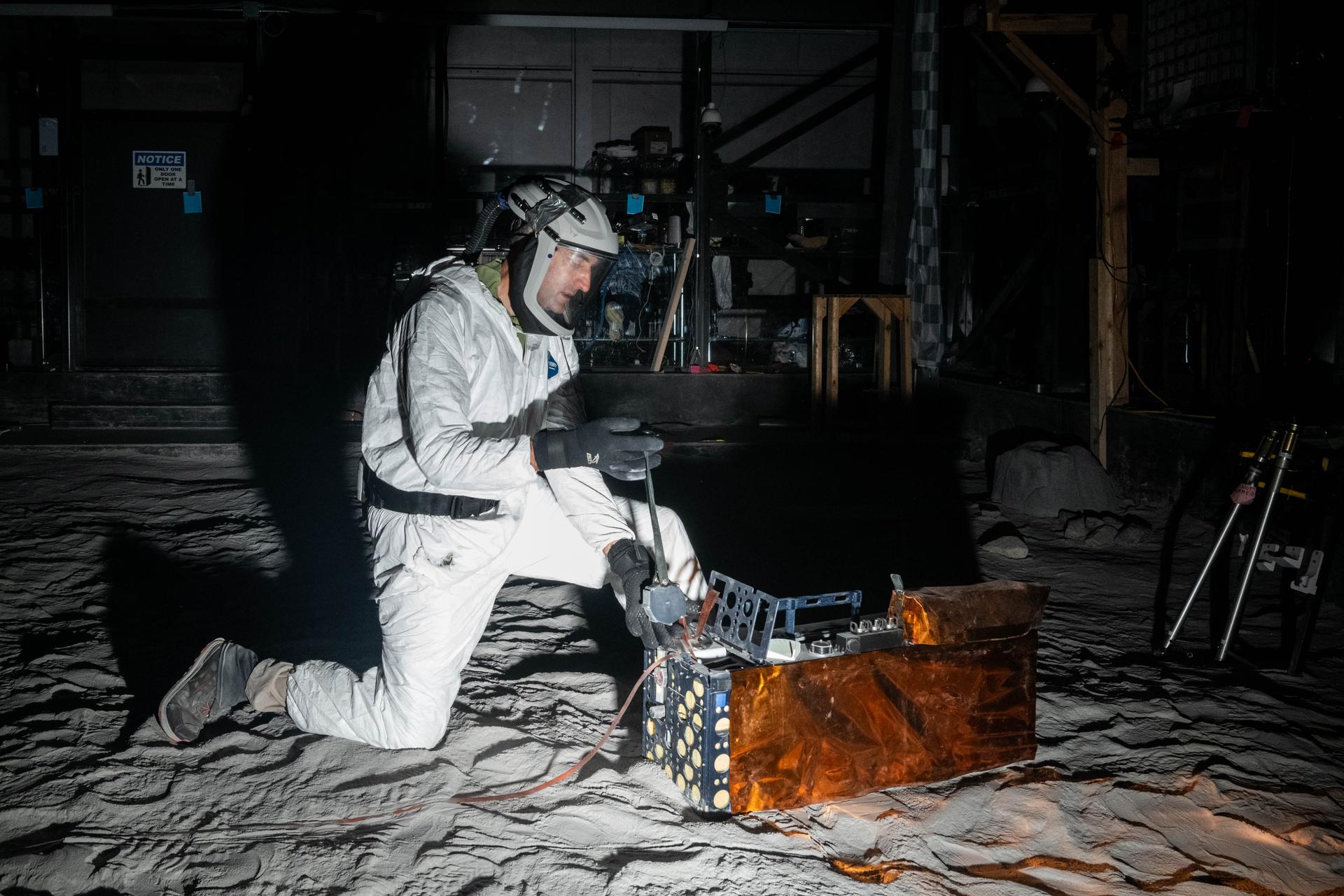
Artemis Scientist, Trevor Graff, performs instrument deployment exercises with a medium fidelity mock up of the Lunar Environment Monitoring Station (LEMS) in the lunar simulant bin at the Florida Space Institute Exolith Lab, Orlando, Fl., Aug 6, 2025. LEMS is a compact, autonomous, and self-sustaining seismometer suite designed to carry out continuous, long-term, monitoring of the lunar seismic environment at the South Polar region. Photo Credit: NASA/Katie Mellos.
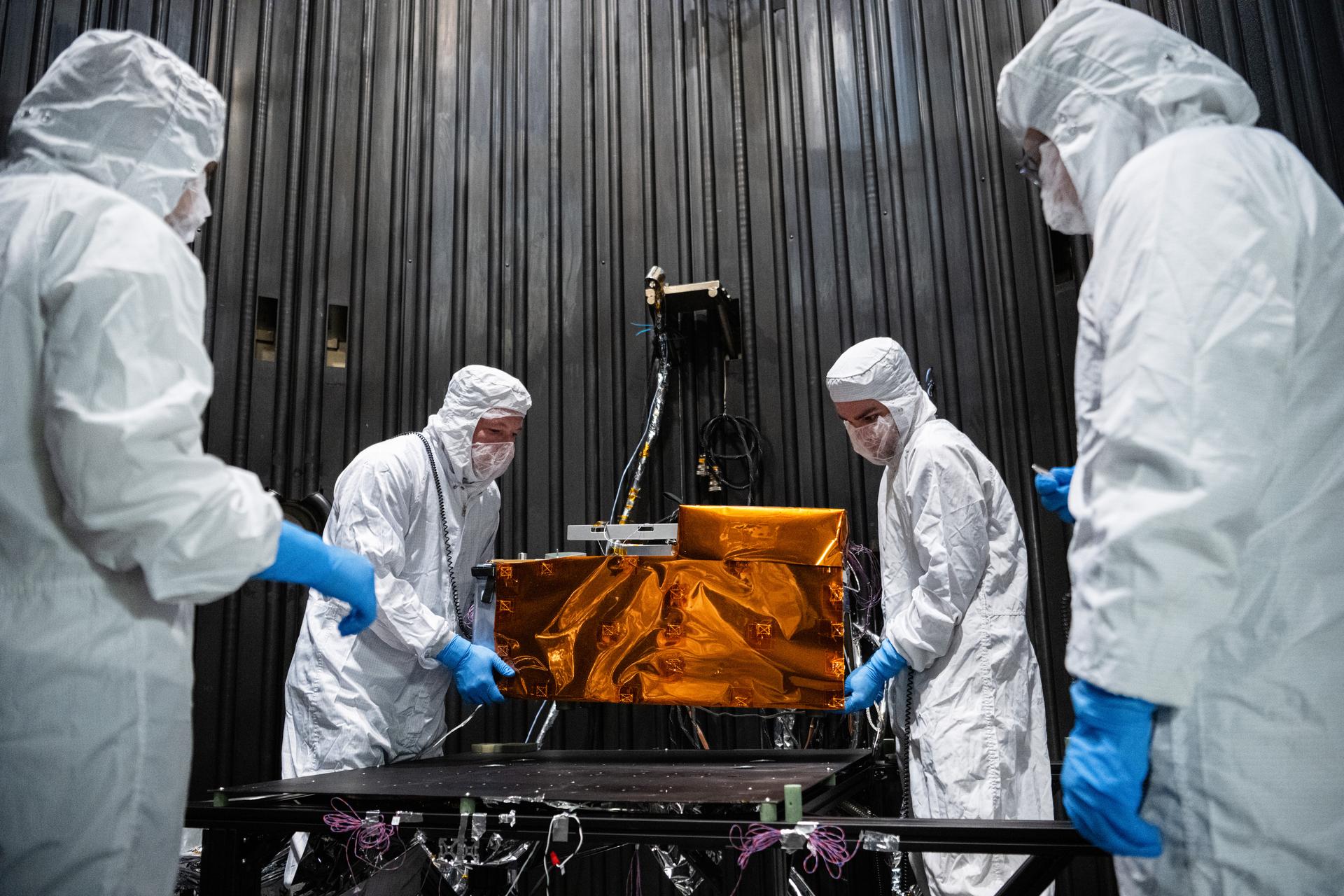
Team members install the Lunar Environment Monitoring Station (LEMS) instrument for testing in a thermal vacuum chamber at Goddard Space Flight Center, Greenbelt Md., March 30, 2026. LEMS is a compact, autonomous, and self-sustaining seismometer suite designed to carry out continuous, long-term, monitoring of the lunar seismic environment at the South Polar region. Photo Credit: NASA/Denny Henry
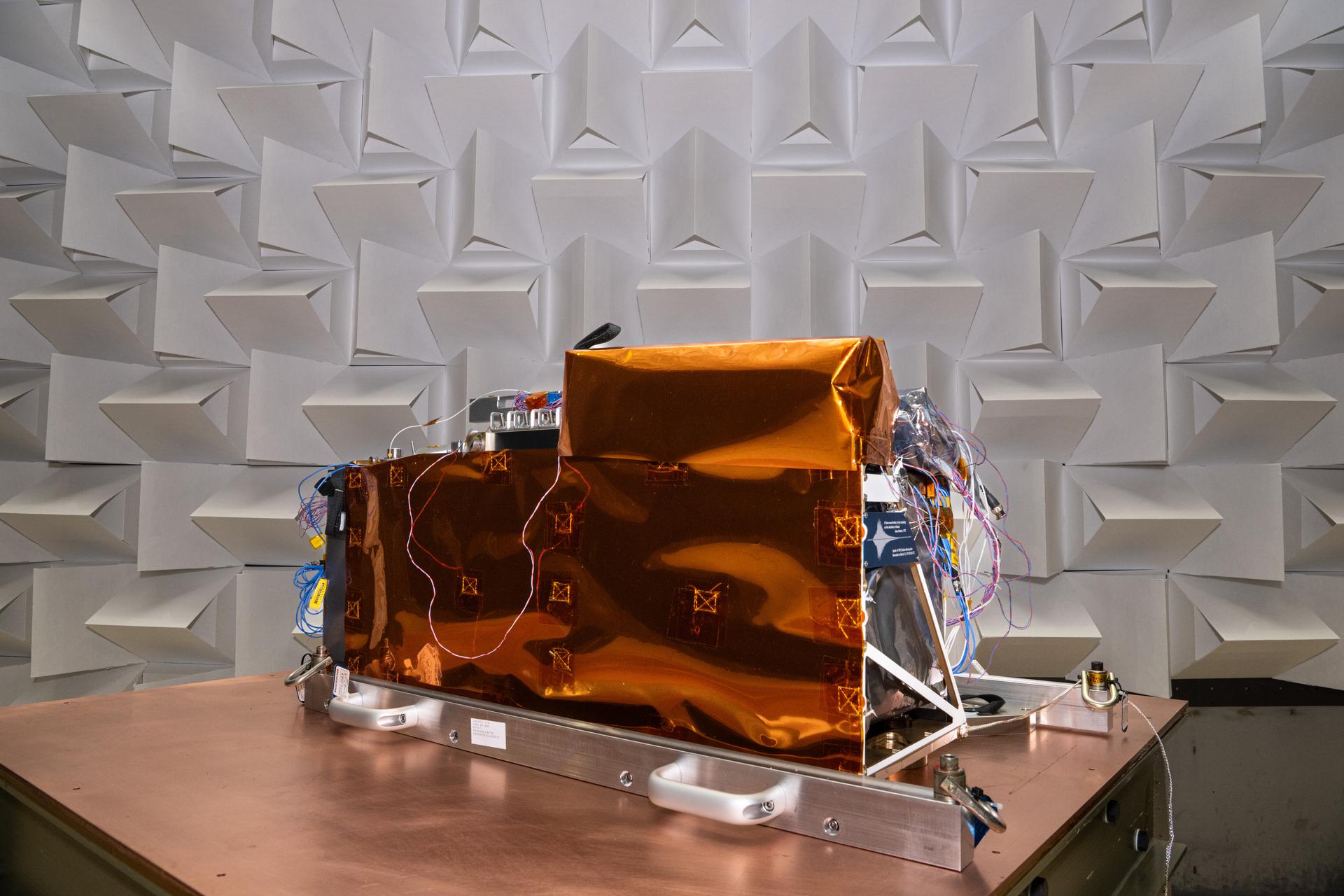
The Lunar Environment Monitoring Station (LEMS) in Electromagnetic Interference/Electromagnetic Compatibility (EMI/EMC) Chamber at Goddard Space Flight Center, Greenbelt Md., Feb 11, 2026. LEMS is a compact, autonomous, and self-sustaining seismometer suite designed to carry out continuous, long-term, monitoring of the lunar seismic environment at the South Polar region. Photo Credit: NASA/Denny Henry
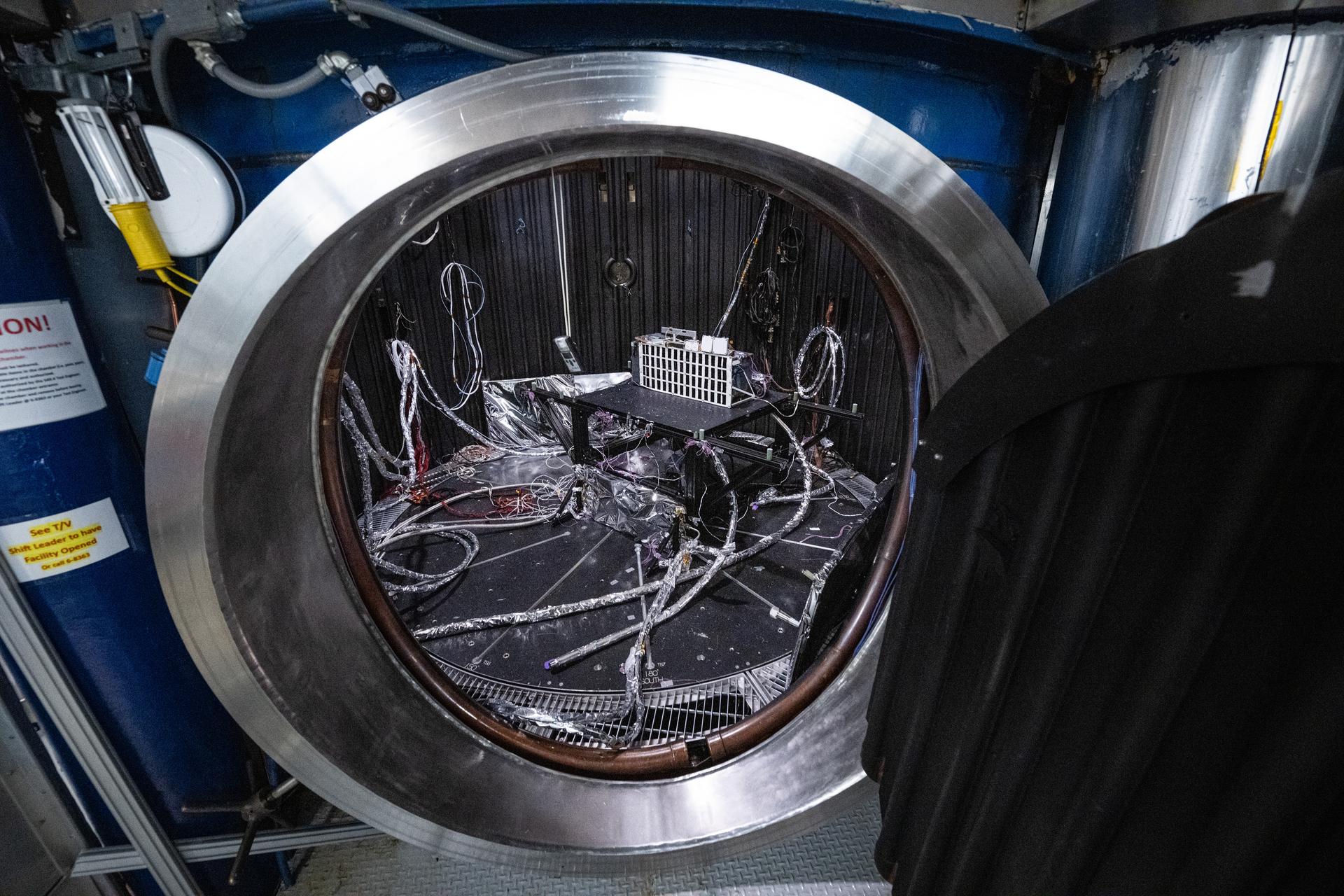
The Lunar Environment Monitoring Station (LEMS) instrument is installed for testing in a thermal vacuum chamber at Goddard Space Flight Center, Greenbelt Md., March 30, 2026. LEMS is a compact, autonomous, and self-sustaining seismometer suite designed to carry out continuous, long-term, monitoring of the lunar seismic environment at the South Polar region. Photo Credit: NASA/Denny Henry
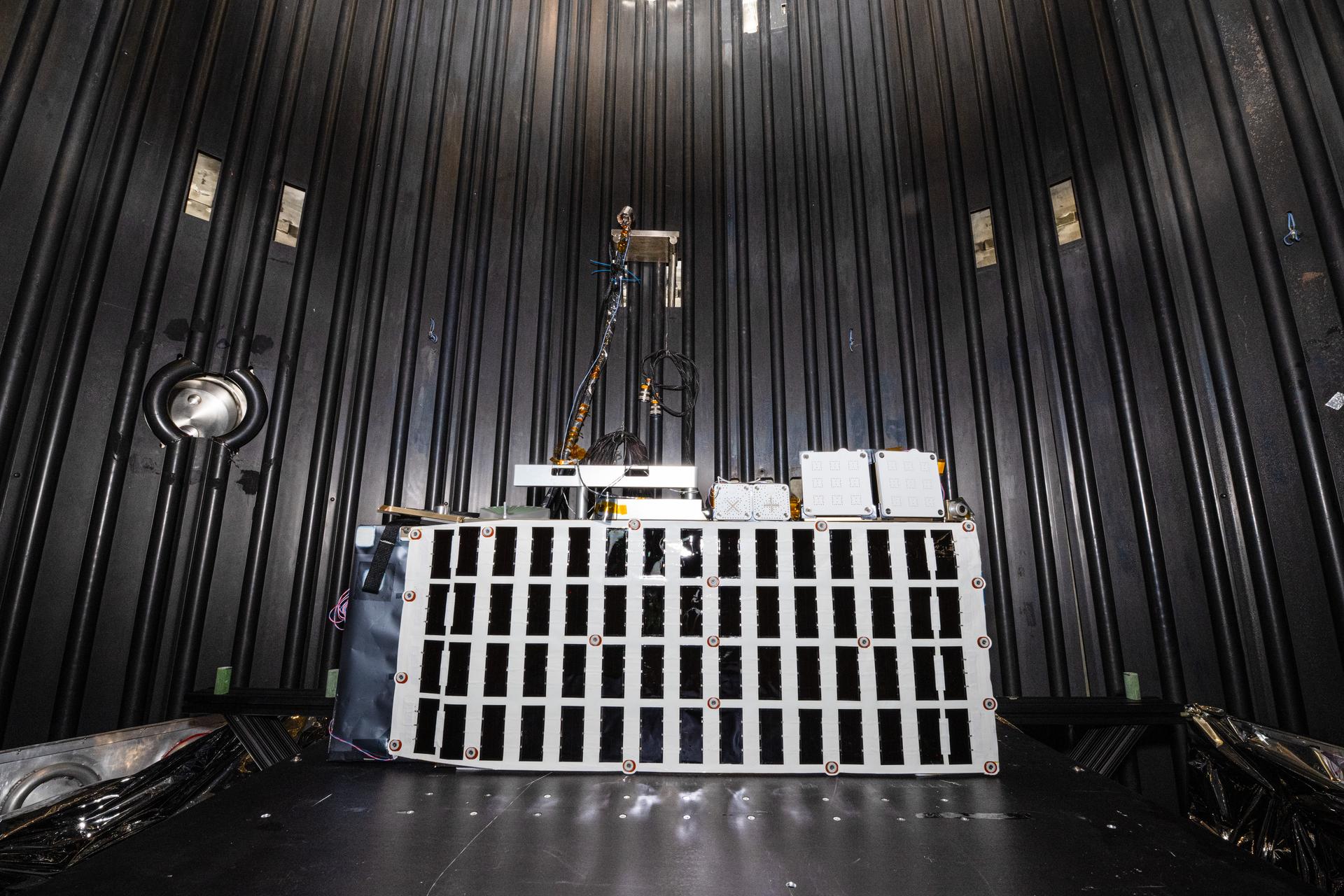
The Lunar Environment Monitoring Station (LEMS) instrument is installed for testing in a thermal vacuum chamber at Goddard Space Flight Center, Greenbelt Md., March 30, 2026. LEMS is a compact, autonomous, and self-sustaining seismometer suite designed to carry out continuous, long-term, monitoring of the lunar seismic environment at the South Polar region. Photo Credit: NASA/Denny Henry
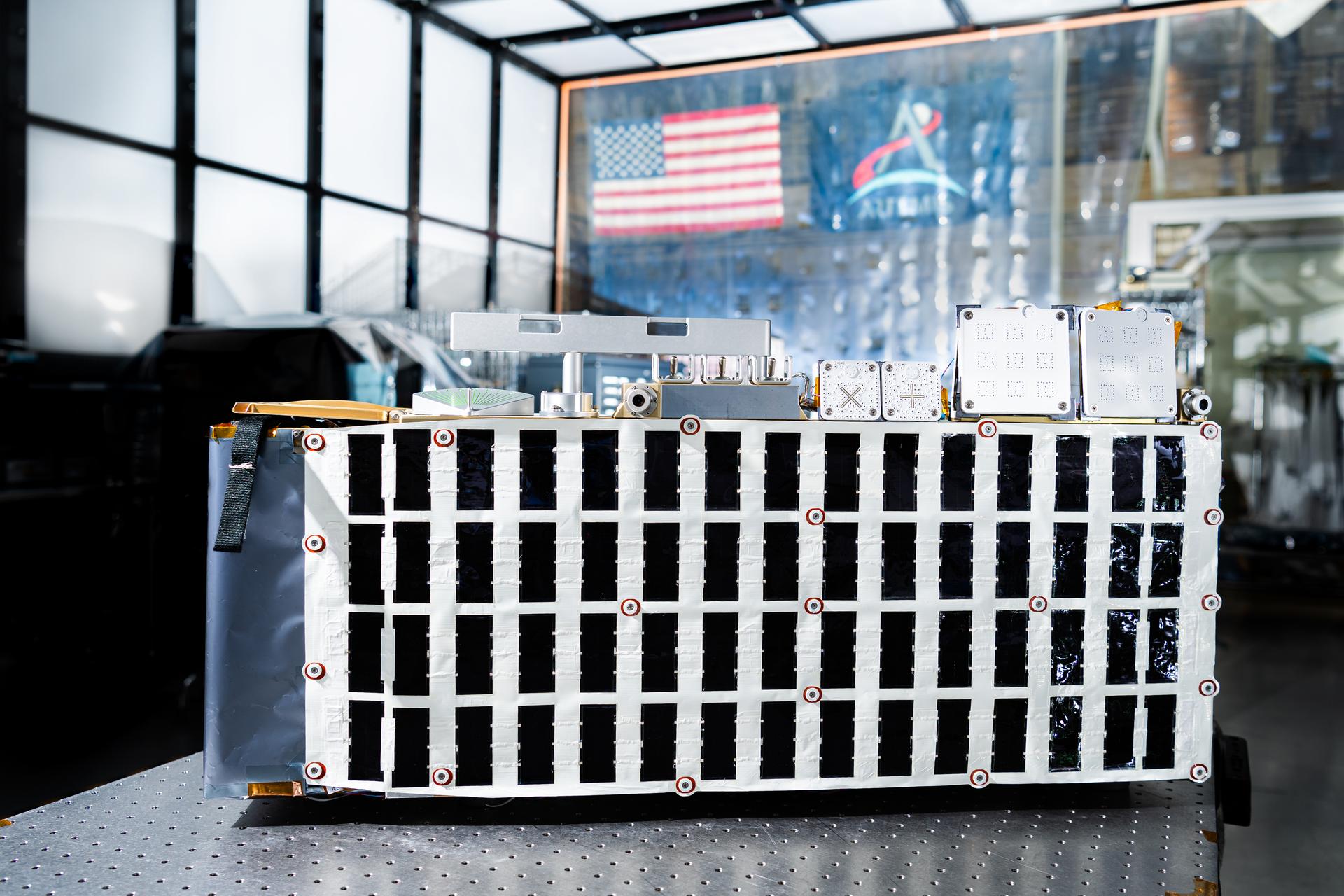
A detail view of the Lunar Environment Monitoring Station, (LEMS) inside the cleanroom at Goddard Space Flight Center, Greenbelt Md., Jan 30, 2026. The Lunar Environment Monitoring Station for Artemis (LEMS) is a compact, autonomous, and self-sustaining seismometer suite designed to carry out continuous, long-term, monitoring of the lunar seismic environment at the South Polar region. Photo Credit: NASA/Mike Guinto
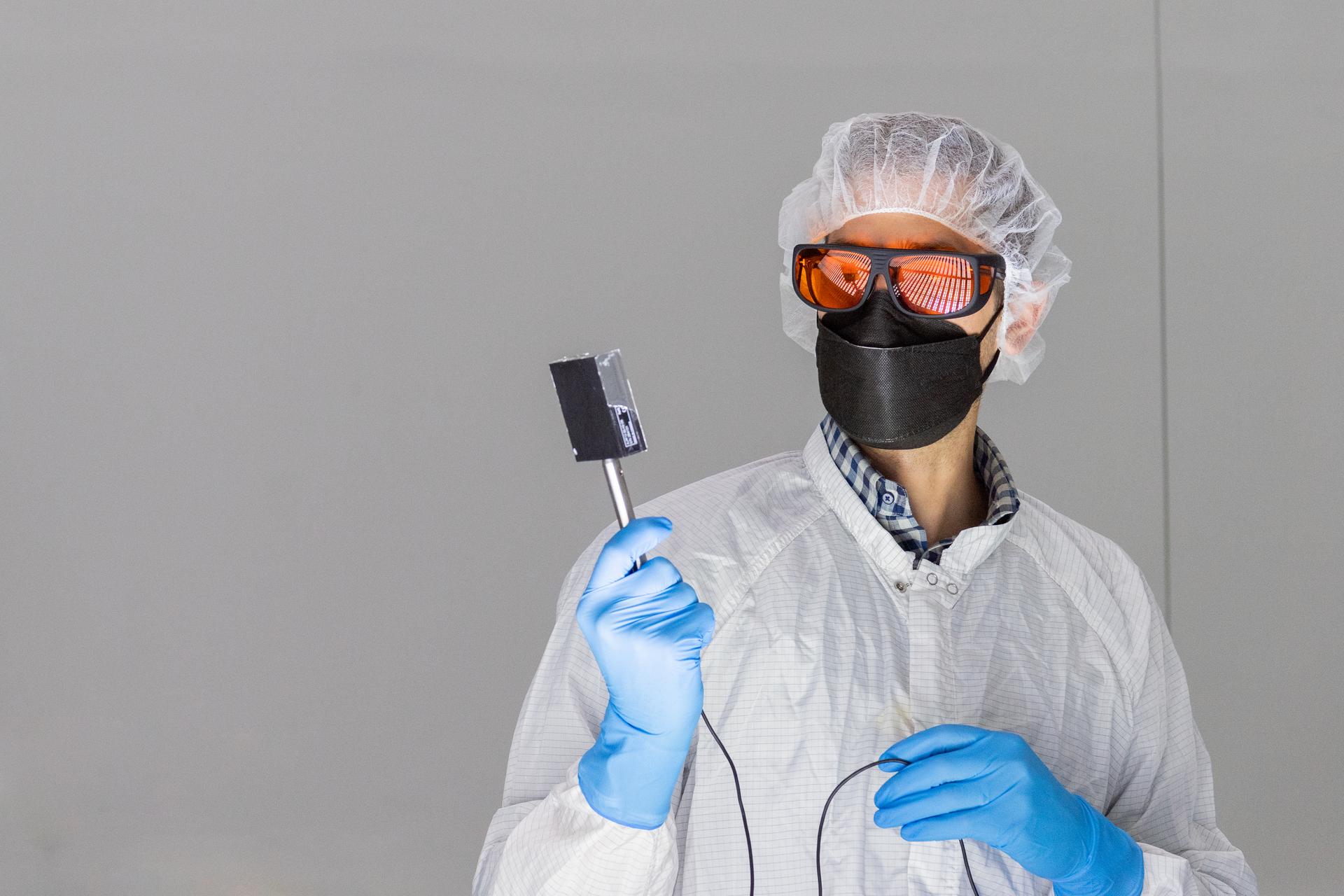
Tucker Ryan Thomas with G2V takes calibration readings from the OSAM-1 solar simulators during their commissioning tests inside a cleanroom at Goddard Space Flight Center, Greenbelt Md., Oct 3, 2022. This photo has been cleared for public release. NASA/Mike Guinto
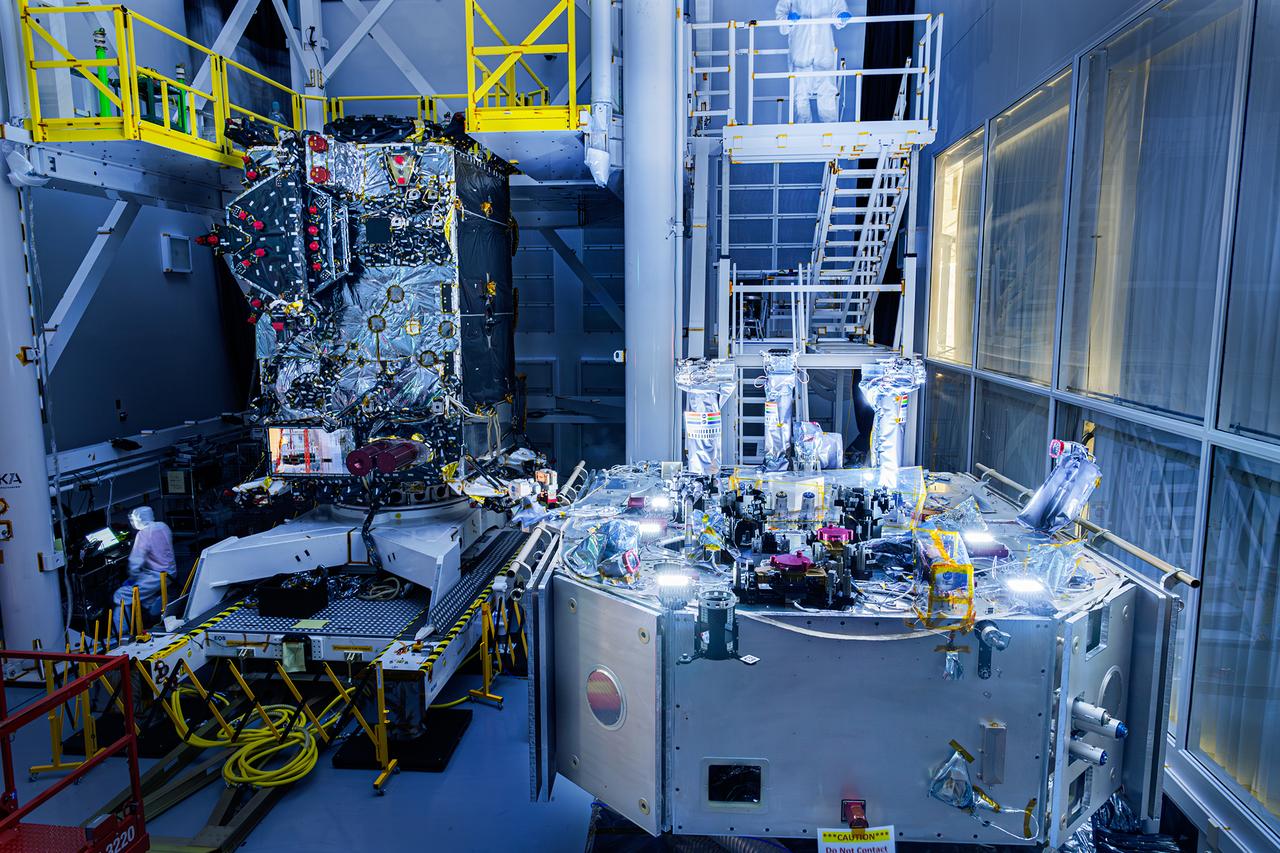
The OSAM-1 Servicing Payload Integration team tests the mounted floodlights at Goddard Space Flight Center, Greenbelt Md., Apr 17, 2024. This photo has been reviewed by Maxar, OSAM1 project management, and the Export Control Office and is released for public view. NASA/Mike Guinto
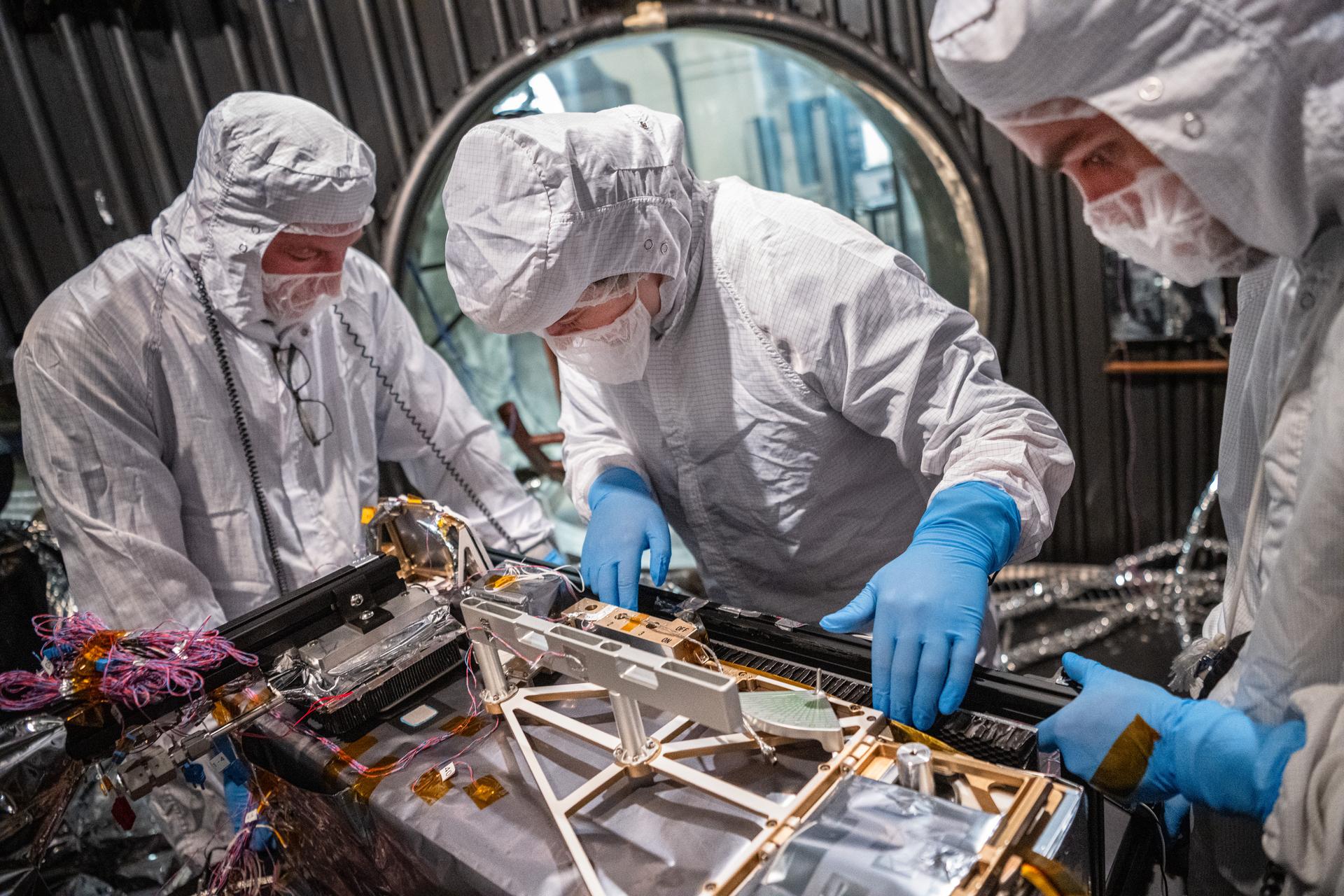
(L-R) Engineering Technician Alex Schaeffer, Mechanical Engineer Brie Ludwig , and Mechanical Engineer Mitchell Hamann inspect the Lunar Environment Monitoring Station (LEMS) instrument in preparation for testing in a thermal vacuum chamber at Goddard Space Flight Center in Greenbelt Md. on March 31, 2026. LEMS is a compact, autonomous, and self-sustaining seismometer suite designed to carry out continuous, long-term, monitoring of the lunar seismic environment at the South Polar region. Photo Credit: NASA/Denny Henry
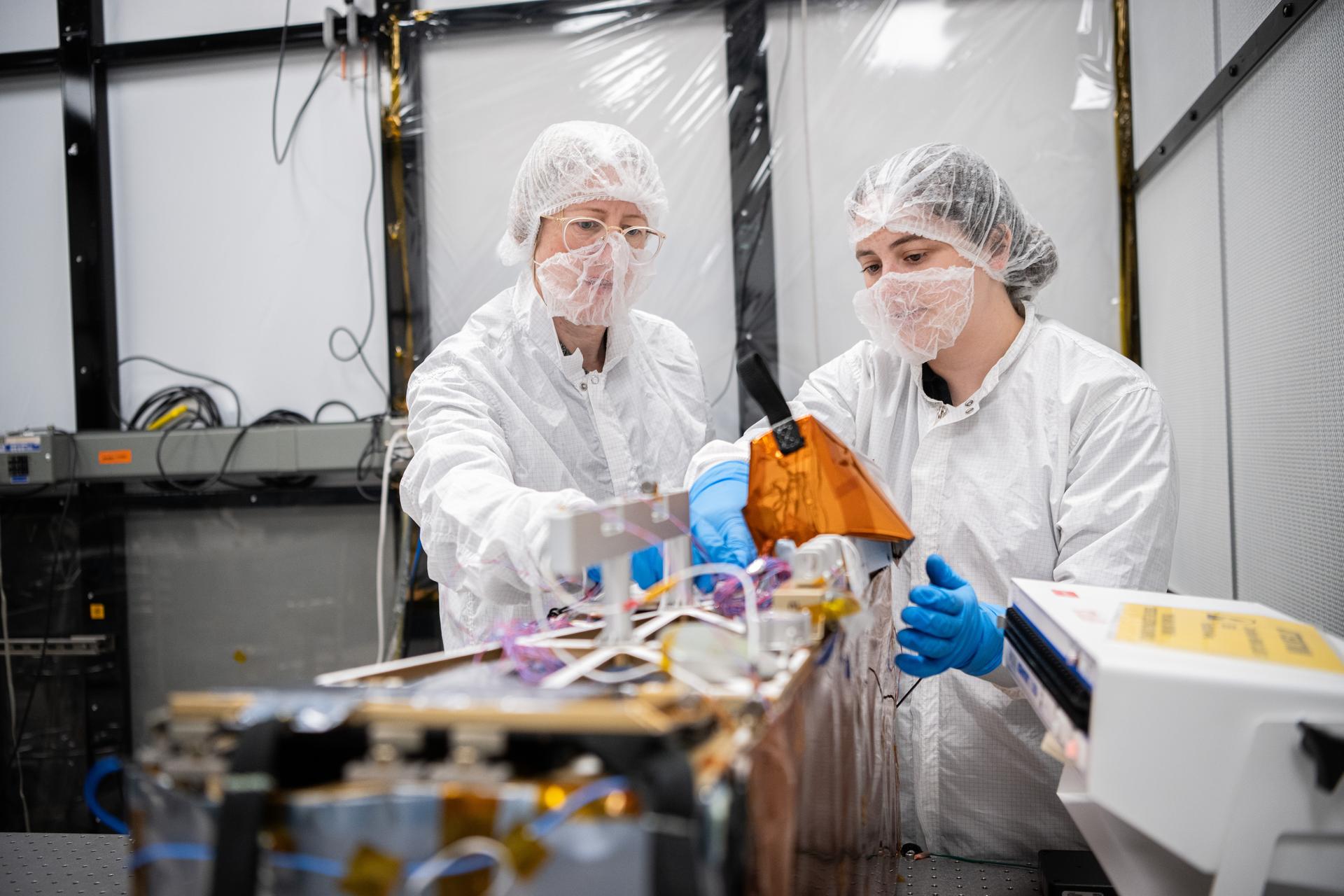
Naoma McCall (Left), Science Co-Investigator and deployment lead and Mechanical Engineer Brie Ludwig inspect the Lunar Environment Monitoring Station (LEMS) instrument in the cleanroom at Goddard Space Flight Center in Greenbelt Md. on February 5th, 2026. LEMS is a compact, autonomous, and self-sustaining seismometer suite designed to carry out continuous, long-term, monitoring of the lunar seismic environment at the South Polar region. Photo Credit: NASA/Denny Henry
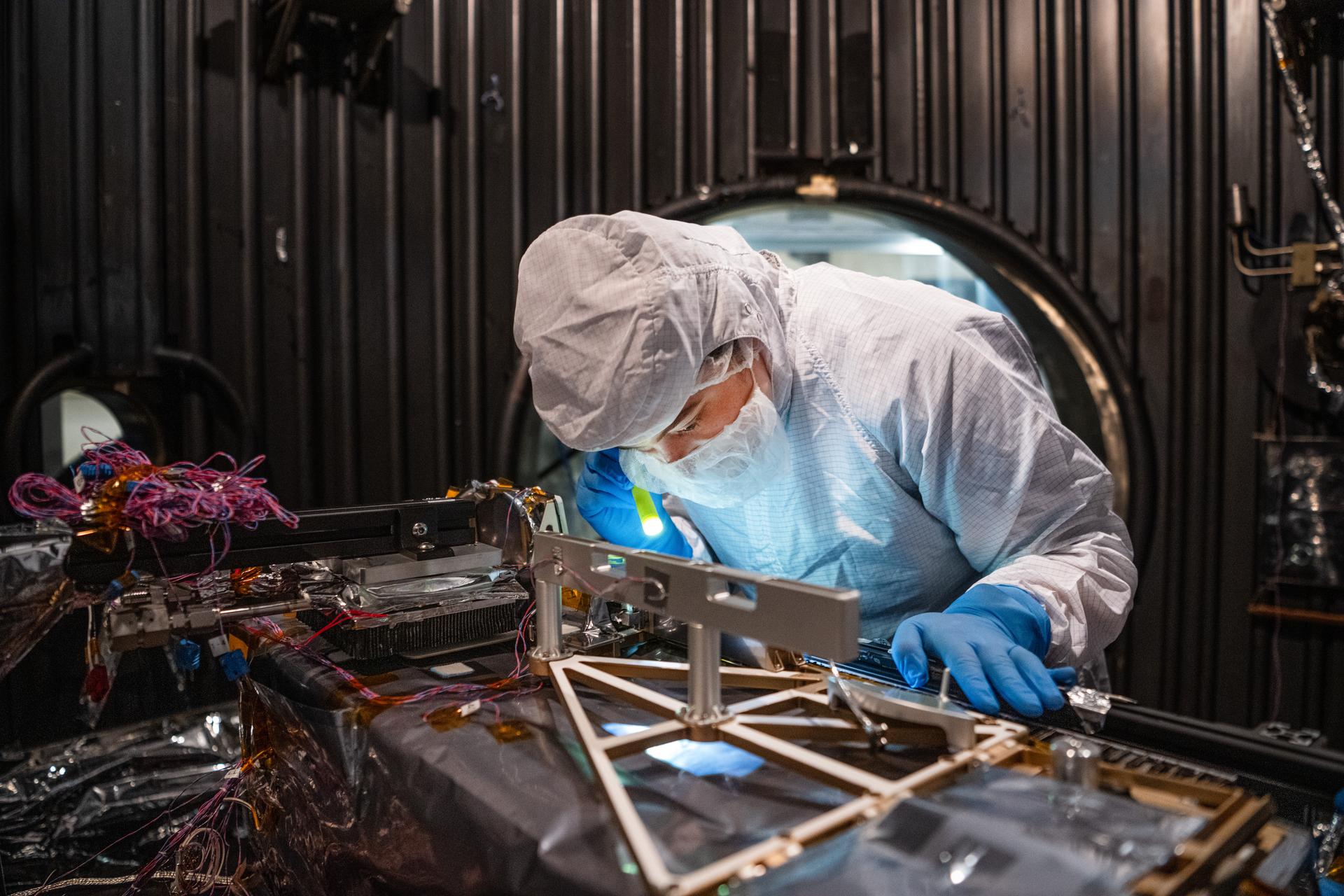
Mechanical Engineer Brie Ludwig inspects the Lunar Environment Monitoring Station (LEMS) instrument in preparation for testing in a thermal vacuum chamber at Goddard Space Flight Center in Greenbelt Md. on March 31, 2026. LEMS is a compact, autonomous, and self-sustaining seismometer suite designed to carry out continuous, long-term, monitoring of the lunar seismic environment at the South Polar region. Photo Credit: NASA/Denny Henry
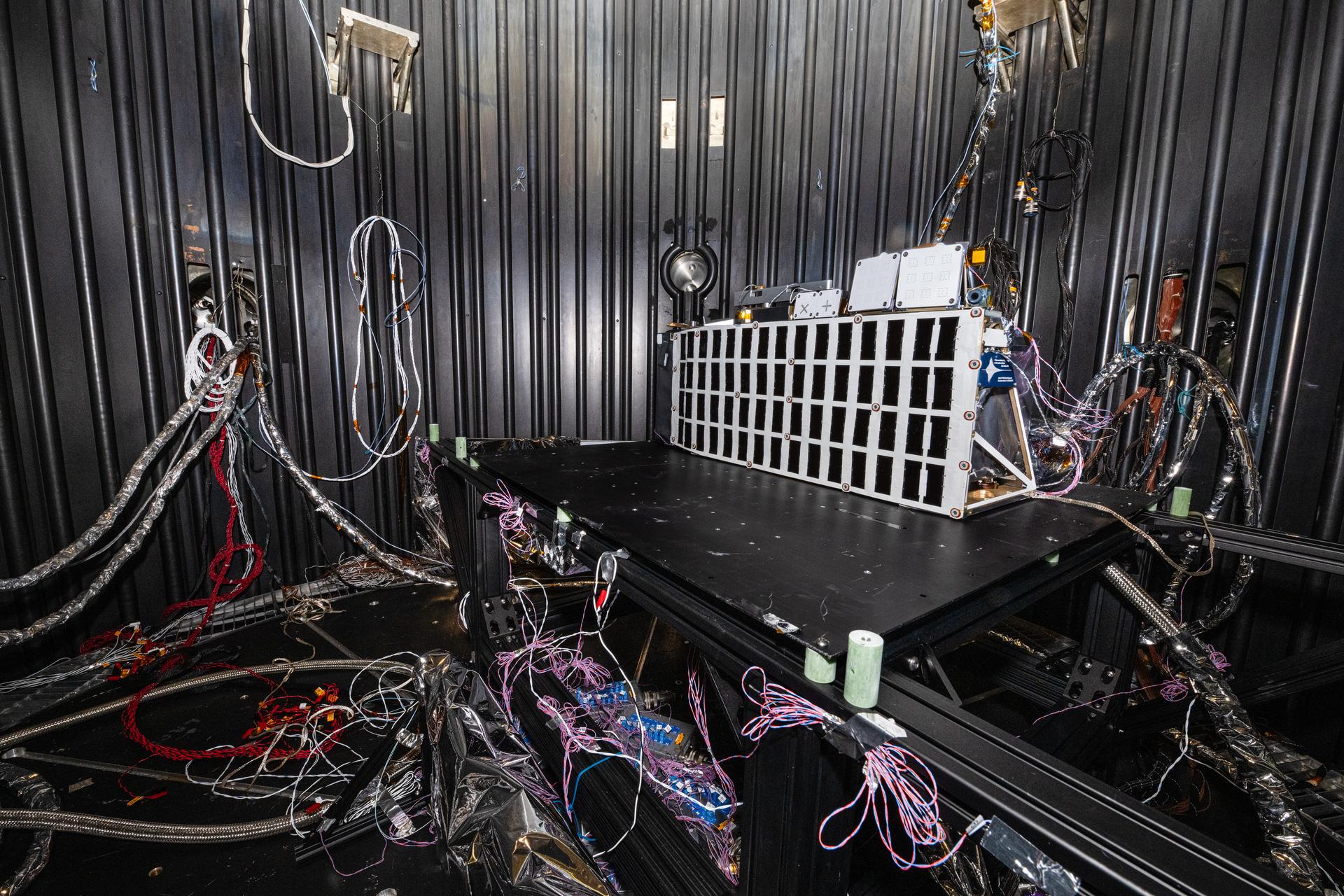
The Lunar Environment Monitoring Station (LEMS) instrument is installed for testing in a thermal vacuum chamber at Goddard Space Flight Center, Greenbelt Md., March 30, 2026. LEMS is a compact, autonomous, and self-sustaining seismometer suite designed to carry out continuous, long-term, monitoring of the lunar seismic environment at the South Polar region. Photo Credit: NASA/Denny Henry
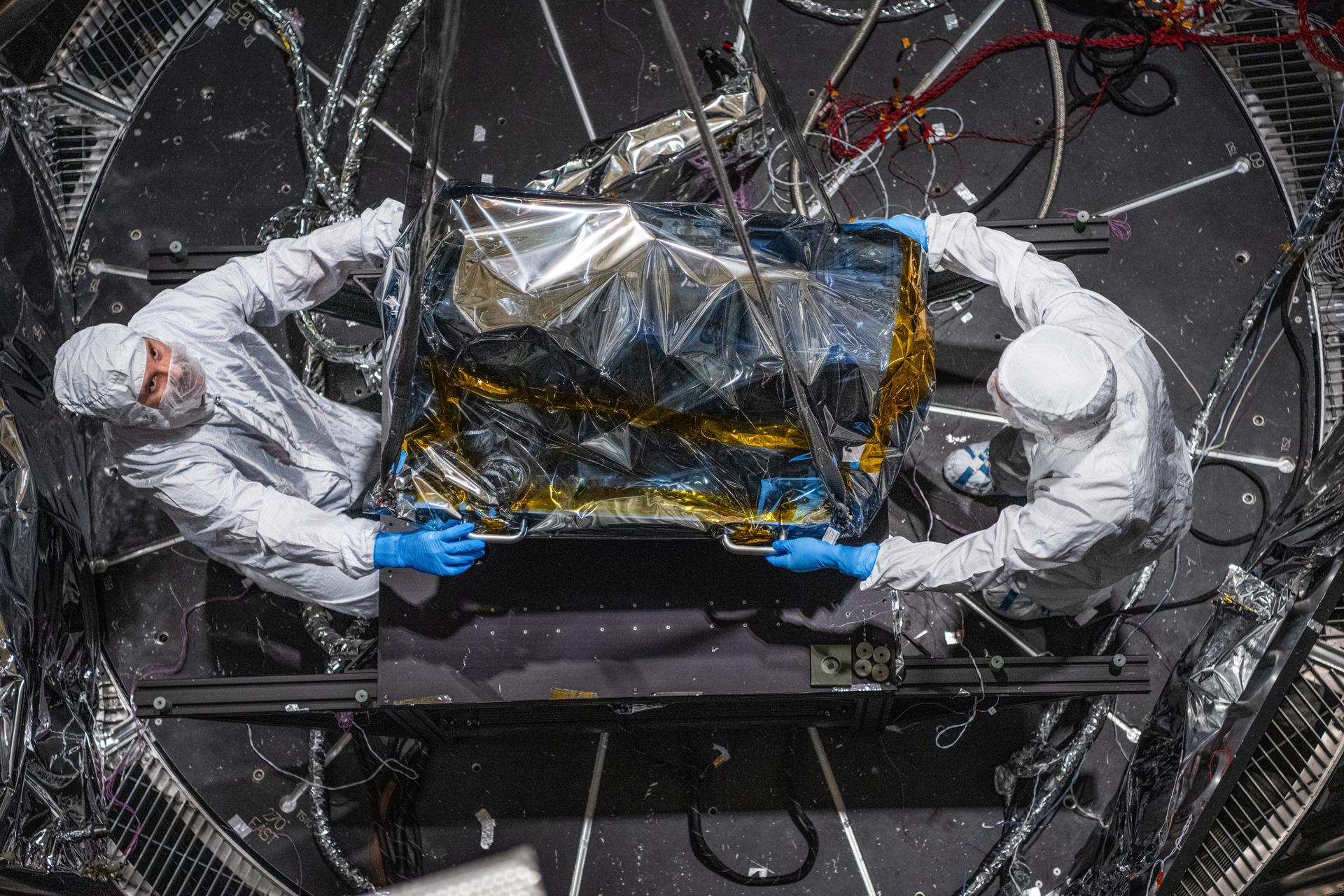
Engineering Technician Eric Norris, and Mechanical Engineer Mitchell Hamann guide the Lunar Environment Monitoring Station (LEMS) instrument in to the Thermal Vacuum Chamber preparation for testing at Goddard Space Flight Center, Greenbelt Md., March 30, 2026. LEMS is a compact, autonomous, and self-sustaining seismometer suite designed to carry out continuous, long-term, monitoring of the lunar seismic environment at the South Polar region. Photo Credit: NASA/Denny Henry
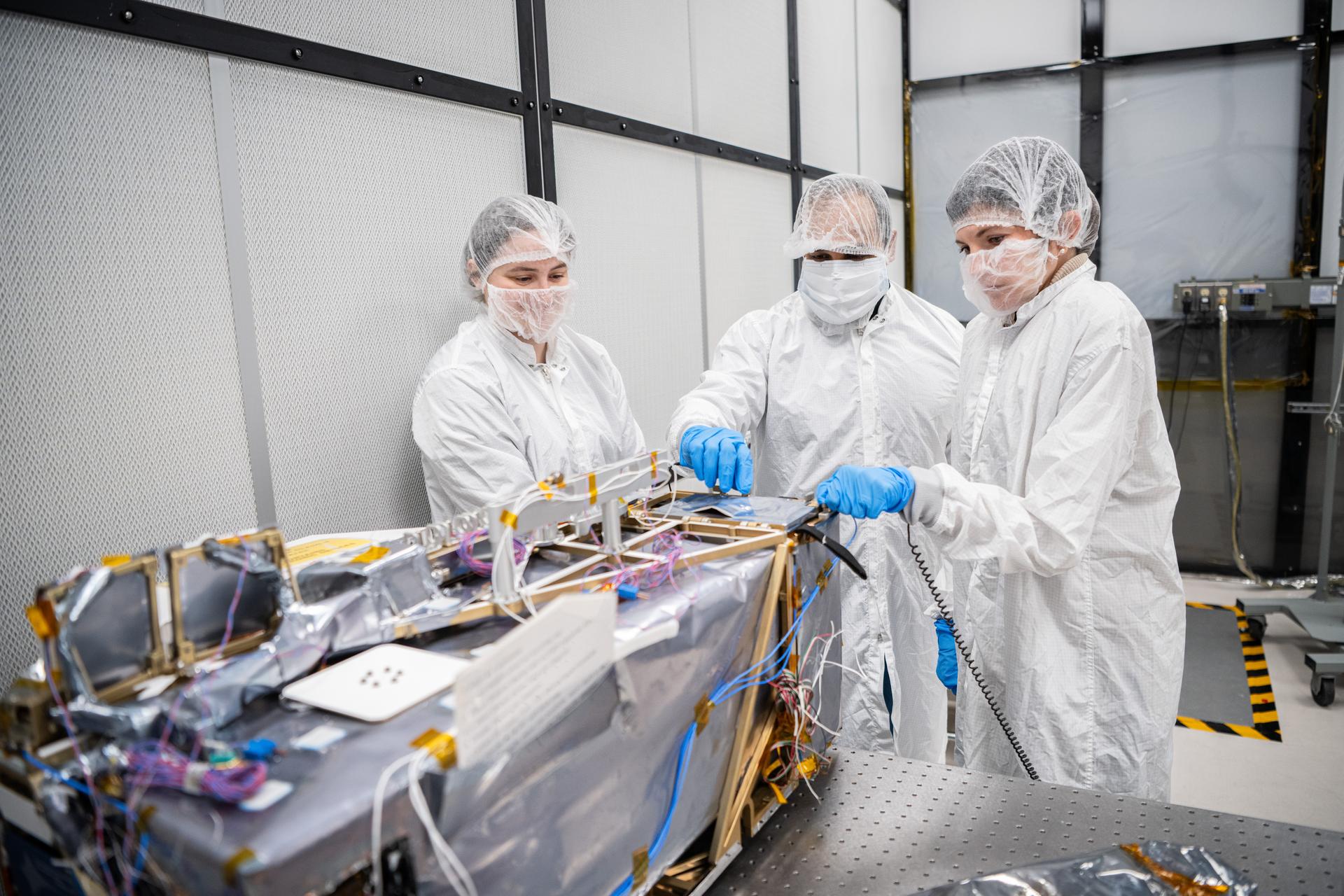
(L-R) Mechanical Engineer Brie Ludwig, Project Manager Neerav Shah and Deputy Project Manager Stephanie Vidal inspect the Lunar Environment Monitoring Station (LEMS) instrument in the cleanroom at Goddard Space Flight Center in Greenbelt Md. on February 5th, 2026. LEMS is a compact, autonomous, and self-sustaining seismometer suite designed to carry out continuous, long-term, monitoring of the lunar seismic environment at the South Polar region. Photo Credit: NASA/Denny Henry
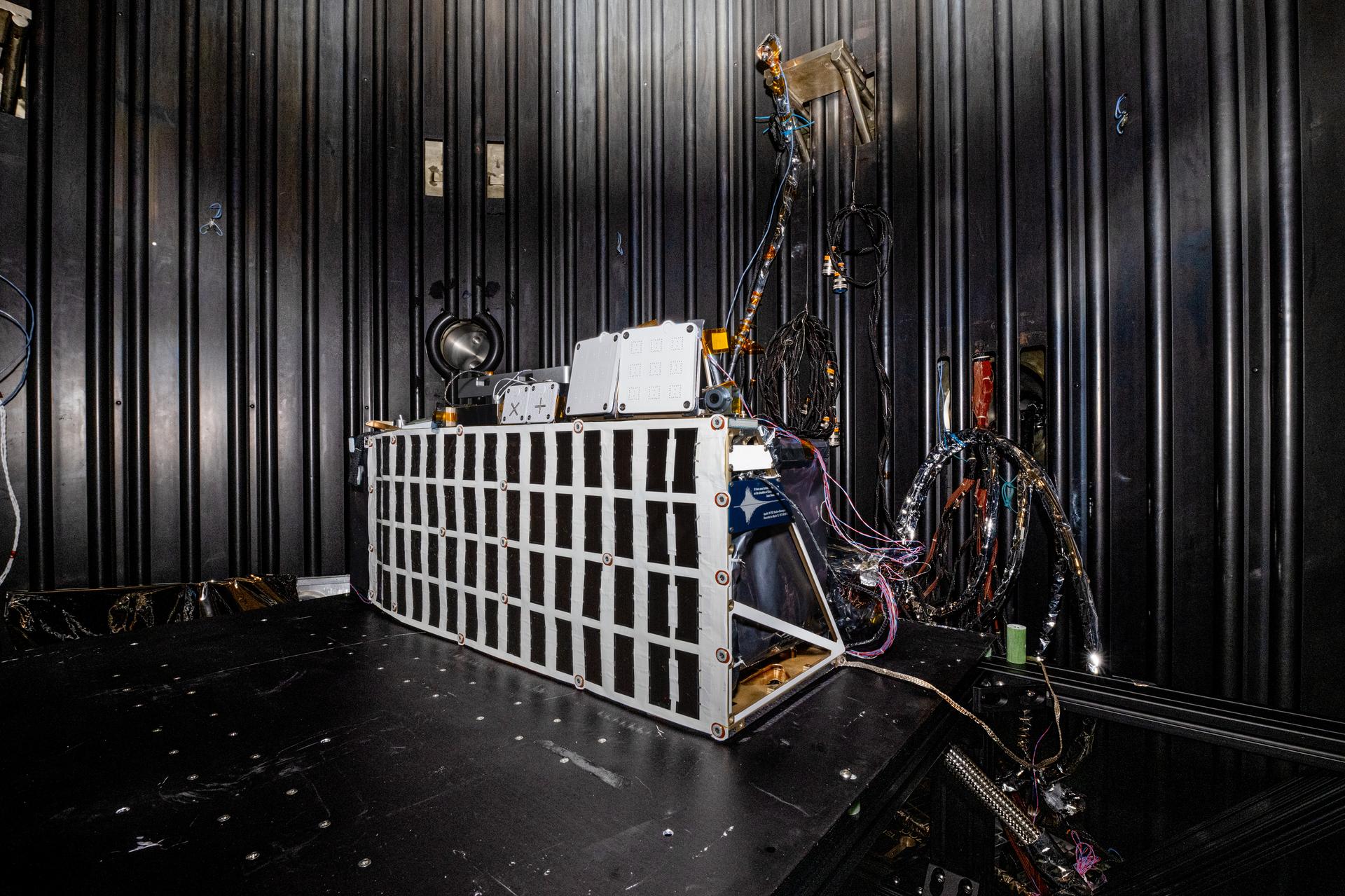
The Lunar Environment Monitoring Station (LEMS) instrument is installed for testing in a thermal vacuum chamber at Goddard Space Flight Center, Greenbelt Md., March 30, 2026. LEMS is a compact, autonomous, and self-sustaining seismometer suite designed to carry out continuous, long-term, monitoring of the lunar seismic environment at the South Polar region. Photo Credit: NASA/Denny Henry
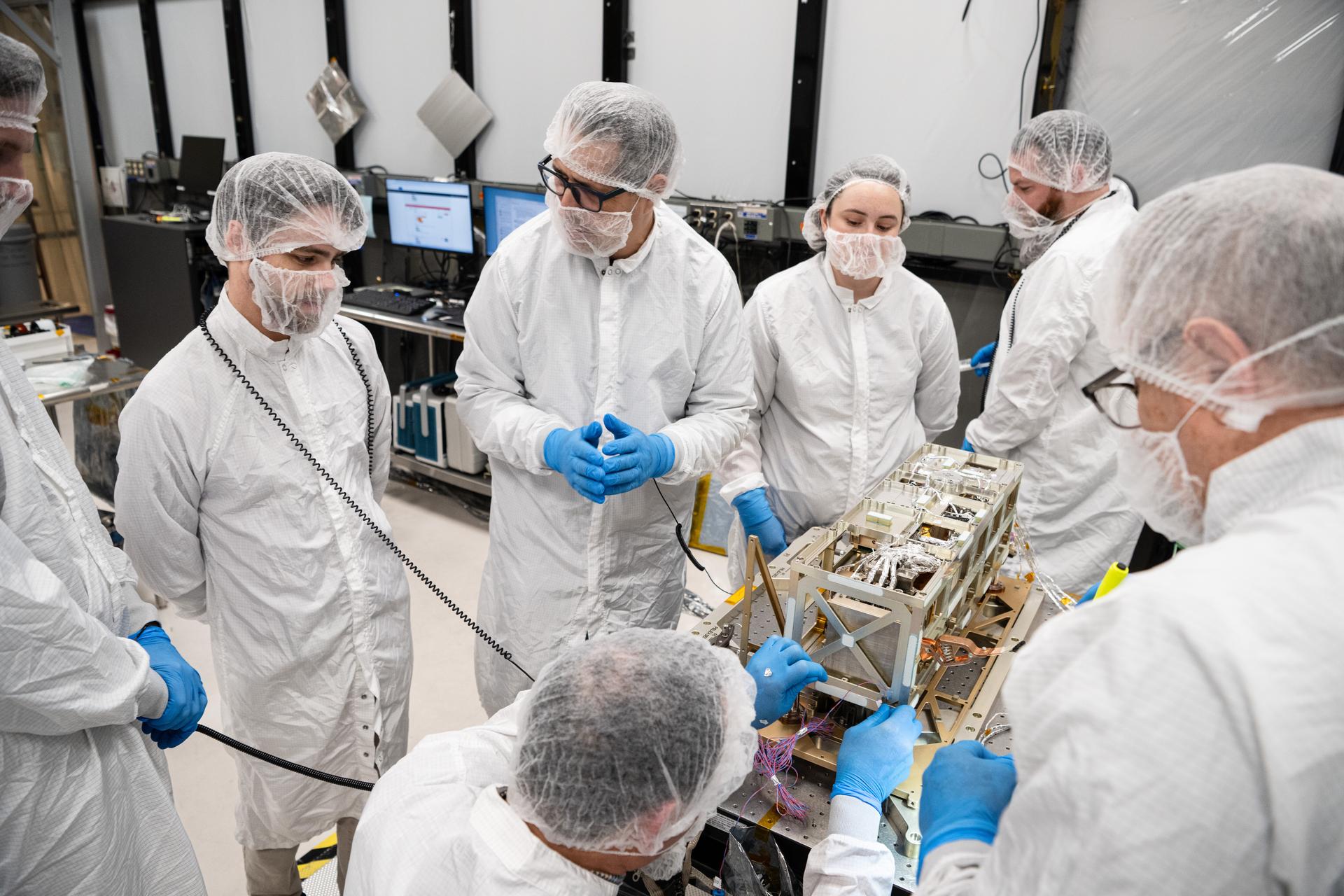
Engineers and technicians inspect the Lunar Environment Monitoring Station (LEMS) instrument in the cleanroom at Goddard Space Flight Center in Greenbelt Md. on January 9th 2026. LEMS is a compact, autonomous, and self-sustaining seismometer suite designed to carry out continuous, long-term, monitoring of the lunar seismic environment at the South Polar region. Photo Credit: NASA/Denny Henry
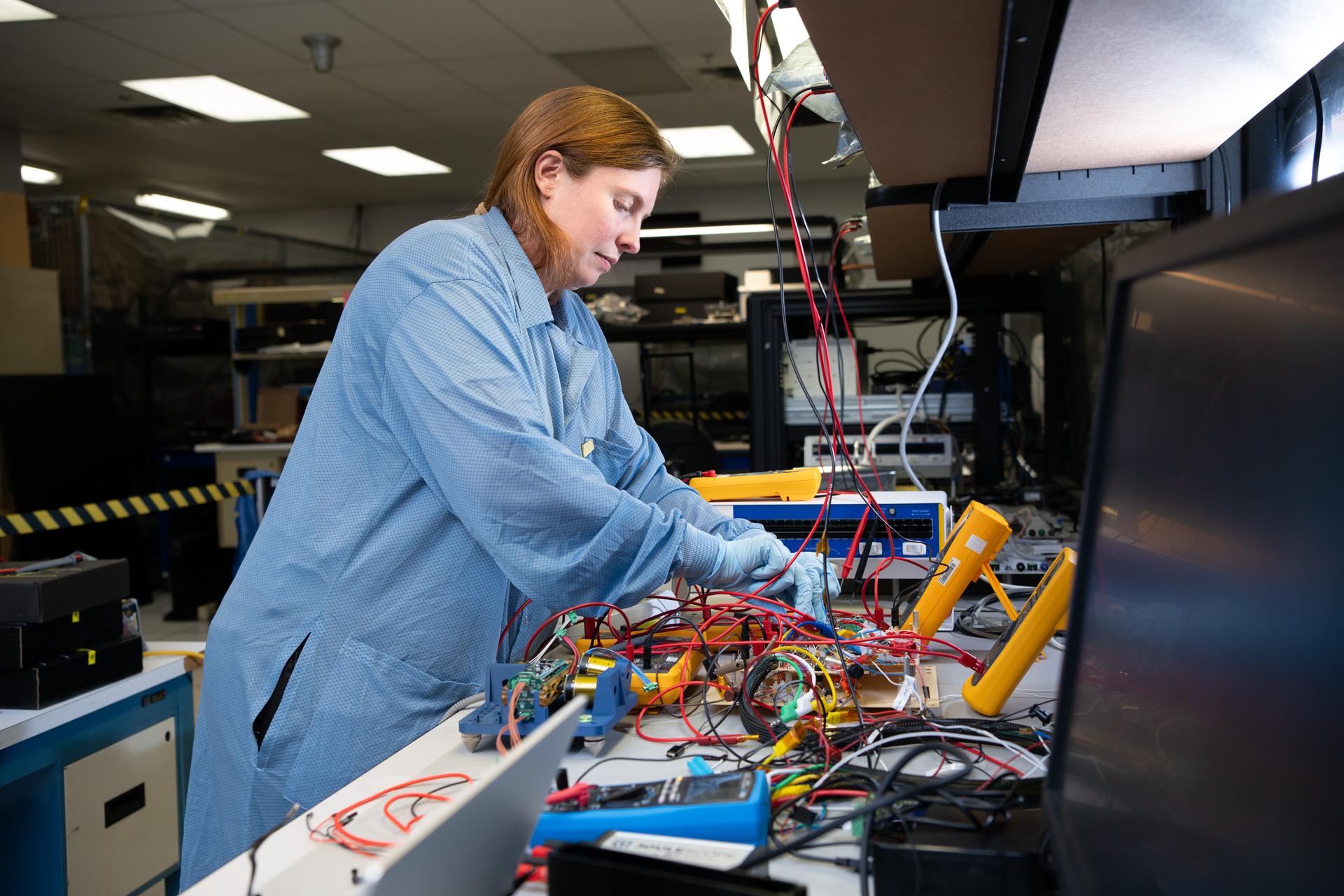
Rebekah Austin, Avionics Lead and Deputy Systems Engineer, configures a breadboard test for the Lunar Environment Monitoring Station (LEMS) Seismometer at NASA's Goddard Space Flight Center in Greenbelt, Maryland on May 14th, 2025. NASA/Denny Henry
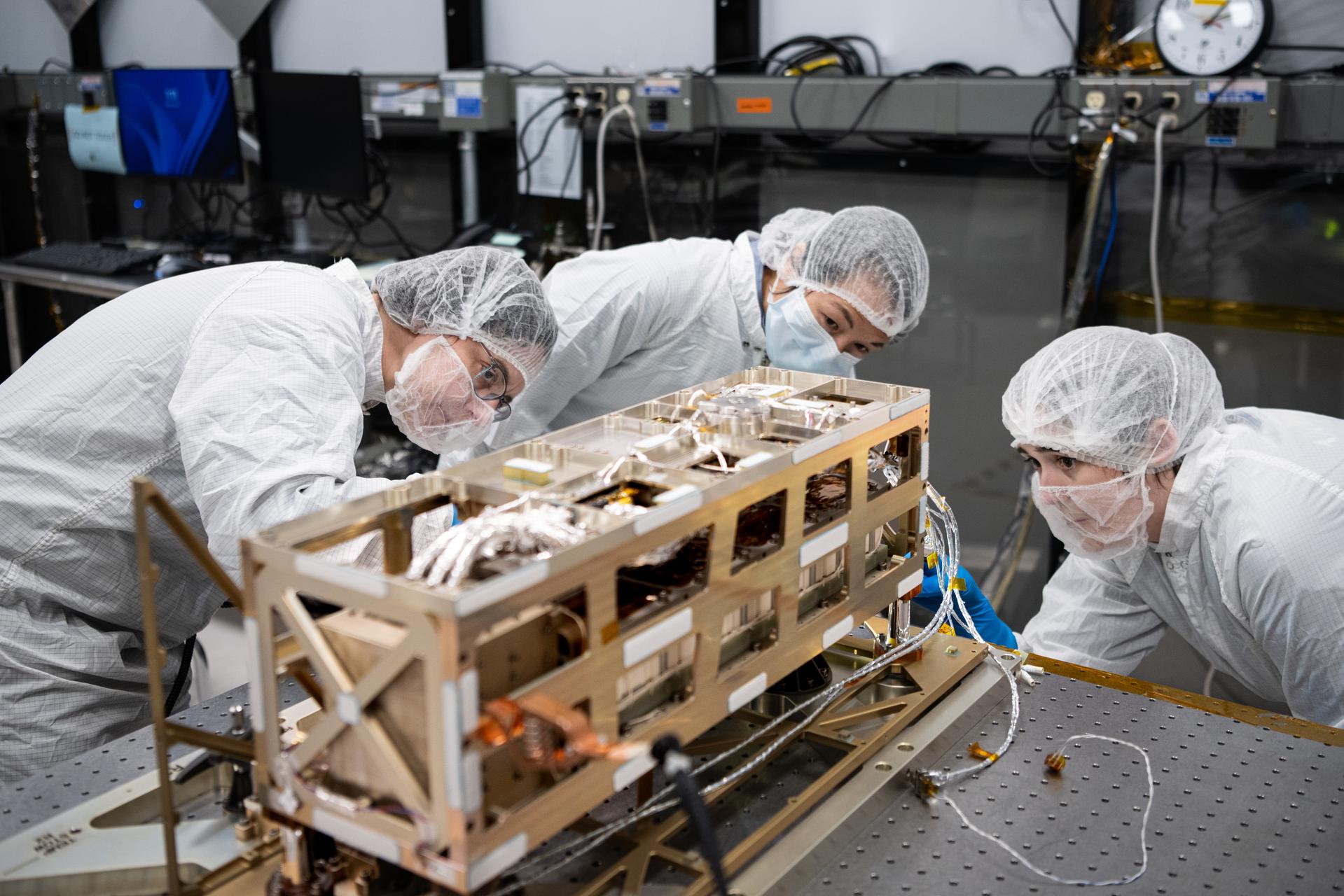
(L-R) Contamination Control Engineer Diane Briczinski, Acting Science Mission Directorate Chief Engineer Synthia Tonn, and Lead Payload Systems Engineer Sam Hicks inspect the Lunar Environment Monitoring Station (LEMS) instrument in the cleanroom at Goddard Space Flight Center in Greenbelt Md. on January 12th, 2026. LEMS is a compact, autonomous, and self-sustaining seismometer suite designed to carry out continuous, long-term, monitoring of the lunar seismic environment at the South Polar region. Photo Credit: NASA/Denny Henry
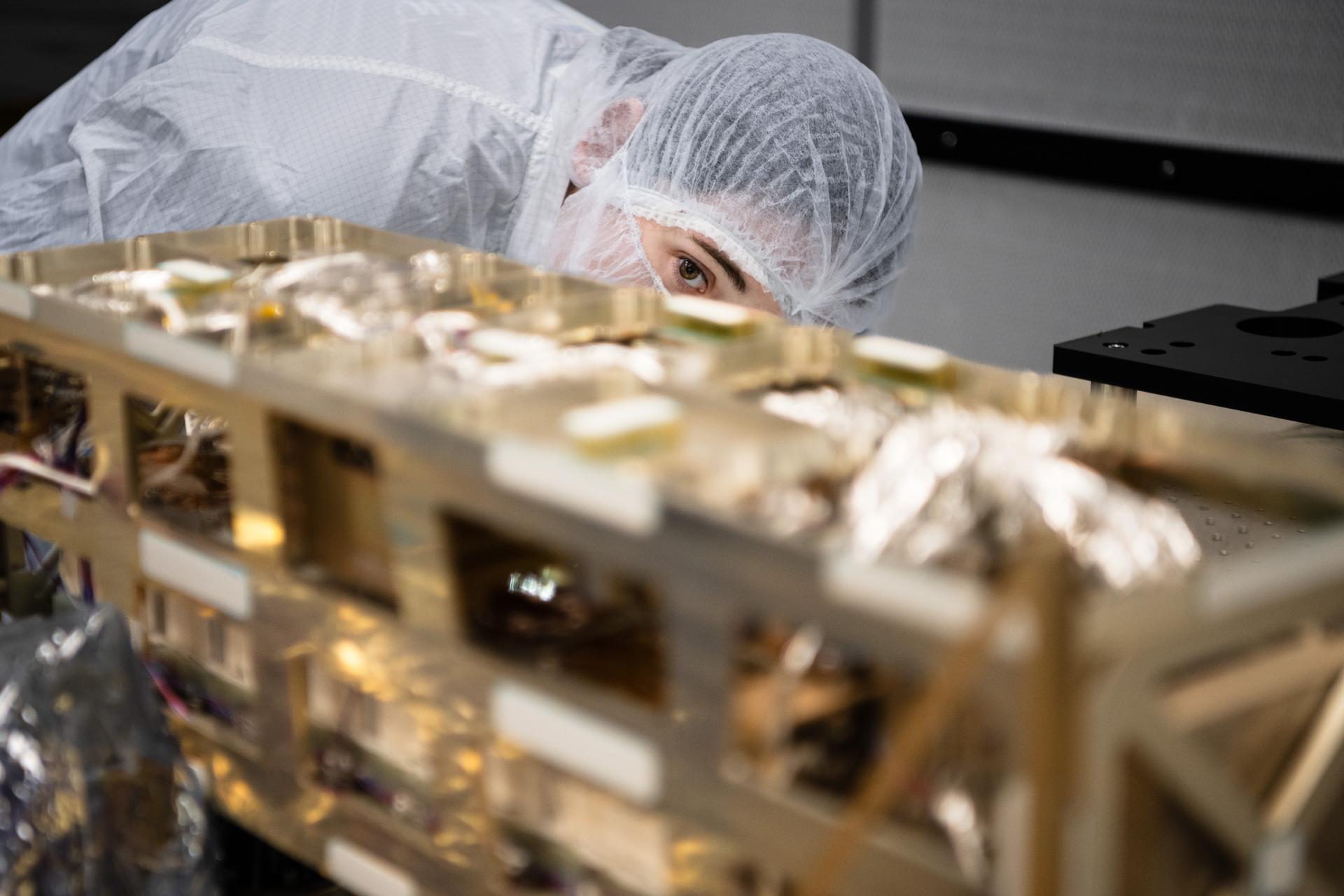
Lead Payload Systems Engineer Sam Hicks inspects the Lunar Environment Monitoring Station (LEMS) instrument in the cleanroom at Goddard Space Flight Center in Greenbelt Md. on January 12th, 2026. LEMS is a compact, autonomous, and self-sustaining seismometer suite designed to carry out continuous, long-term, monitoring of the lunar seismic environment at the South Polar region. Photo Credit: NASA/Denny Henry
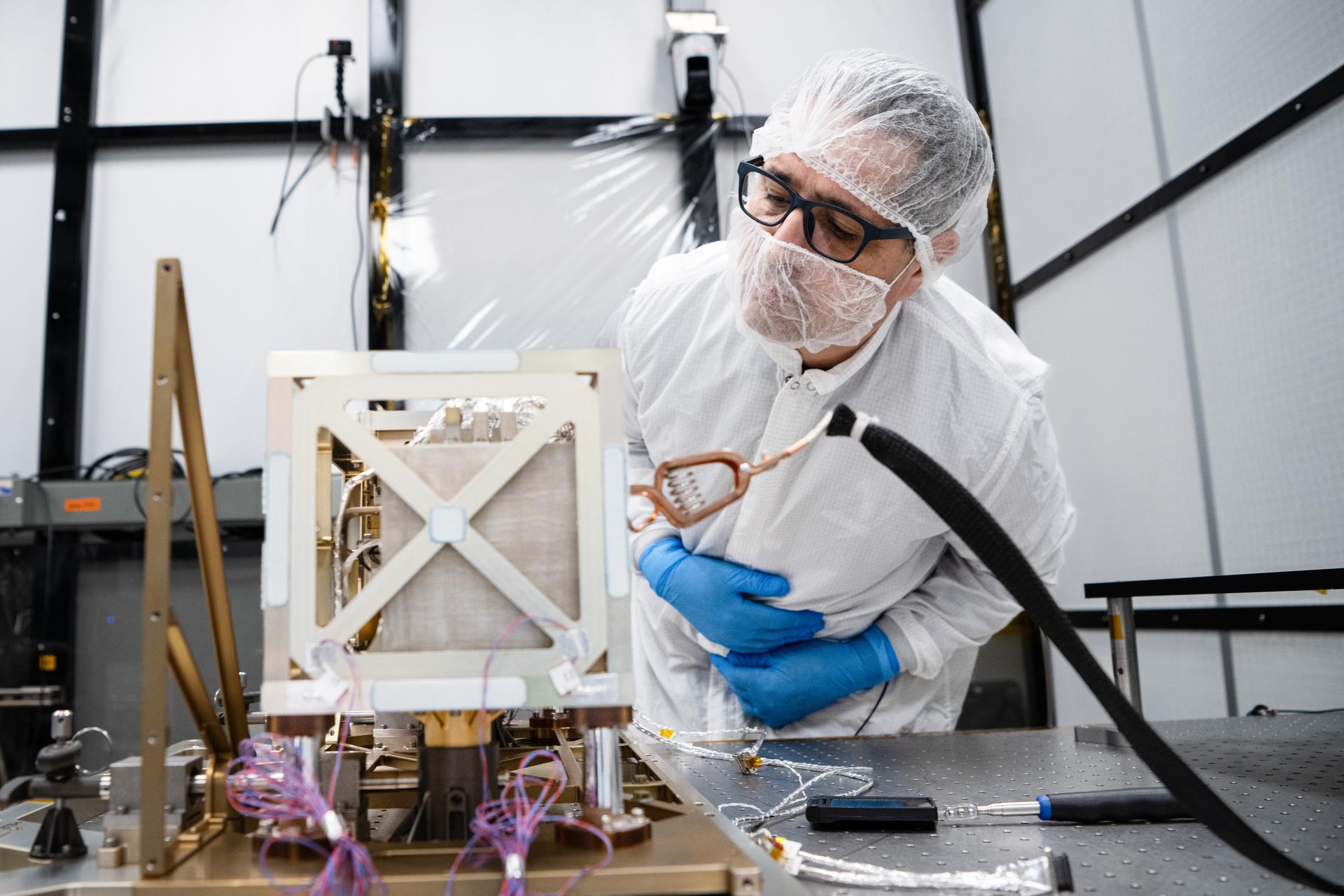
Principal Investigator Dr. Mehdi Benna inspects the Lunar Environment Monitoring Station (LEMS) instrument in the cleanroom at Goddard Space Flight Center in Greenbelt Md. on January 9th, 2026. LEMS is a compact, autonomous, and self-sustaining seismometer suite designed to carry out continuous, long-term, monitoring of the lunar seismic environment at the South Polar region. Photo Credit: NASA/Denny Henry
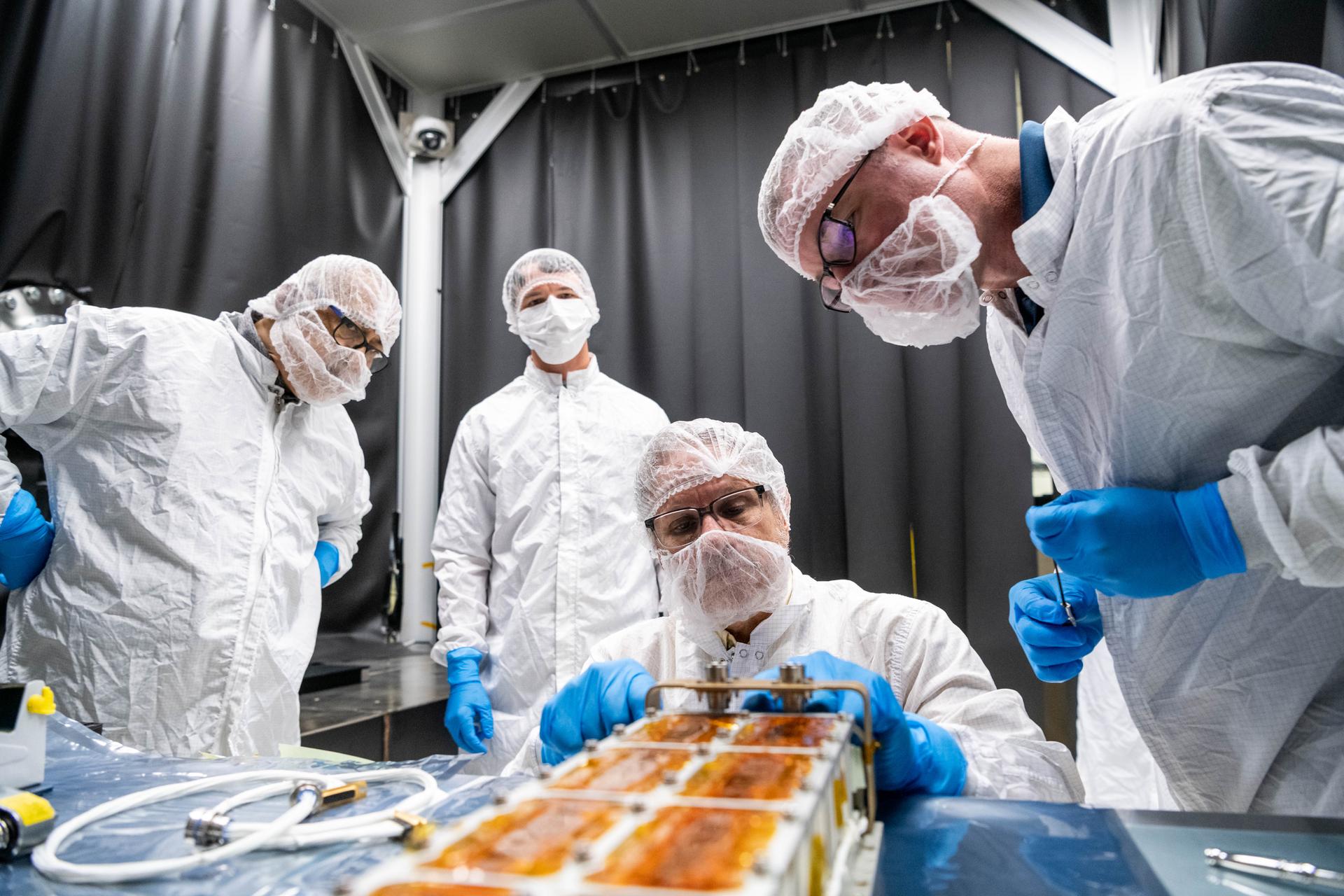
Lunar Environment Monitoring Station (LEMS) team members assemble the flight battery connectors to the connector bracket in a lab at Goddard Space Flight Center in Greenbelt, Maryland on September 9th, 2025. LEMS is a compact, autonomous, and self-sustaining seismometer suite designed to carry out continuous, long-term, monitoring of the lunar seismic environment at the South Polar region. NASA/Katie Mellos.
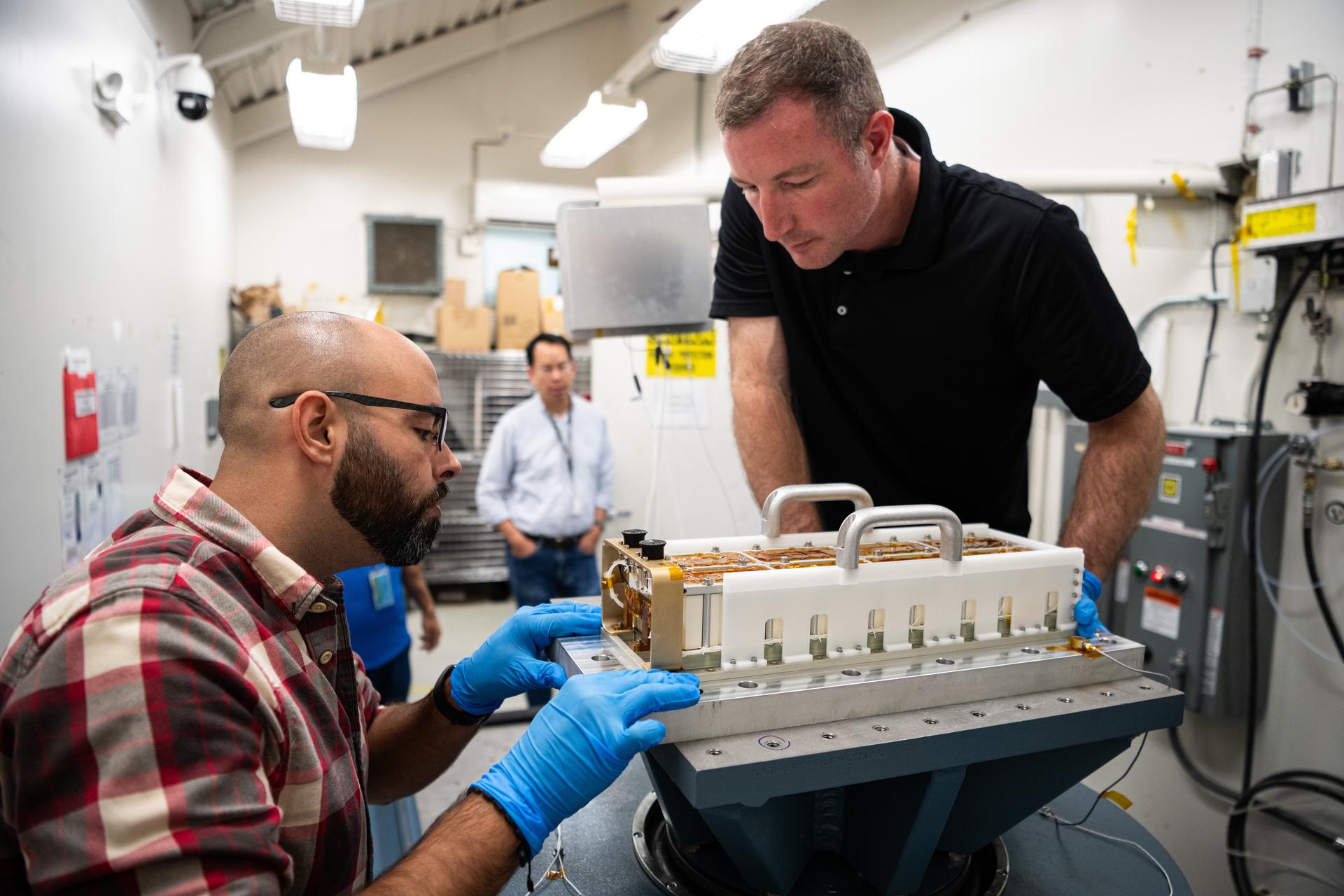
Mechanical Engineer John Seixal (left) and Engineering Technician Alex Schaeffer prepare the Lunar Environment Monitoring Station (LEMS) flight battery for vibration testing in a lab at NASA's Goddard Space Flight Center in Greenbelt, Maryland on September 29th, 2025. LEMS is a compact, autonomous, and self-sustaining seismometer suite designed to carry out continuous, long-term, monitoring of the lunar seismic environment at the South Polar region. NASA/Denny Henry.
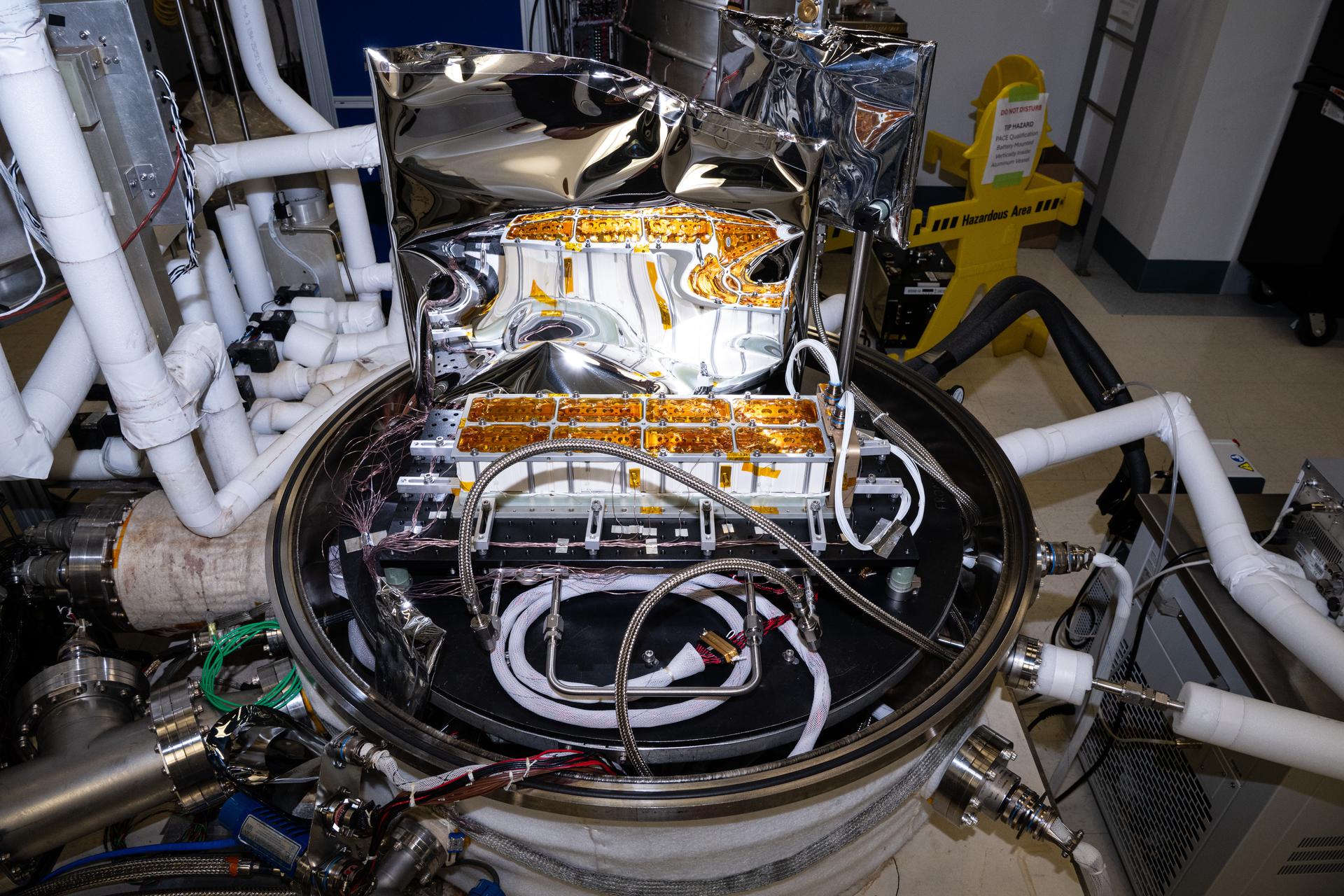
The Lunar Environment Monitoring Station (LEMS) flight battery is installed for testing in a thermal vacuum chamber at Goddard Space Flight Center, Greenbelt Md., October 8th, 2025.. LEMS is a compact, autonomous, and self-sustaining seismometer suite designed to carry out continuous, long-term, monitoring of the lunar seismic environment at the South Polar region. Photo Credit: NASA/Denny Henry
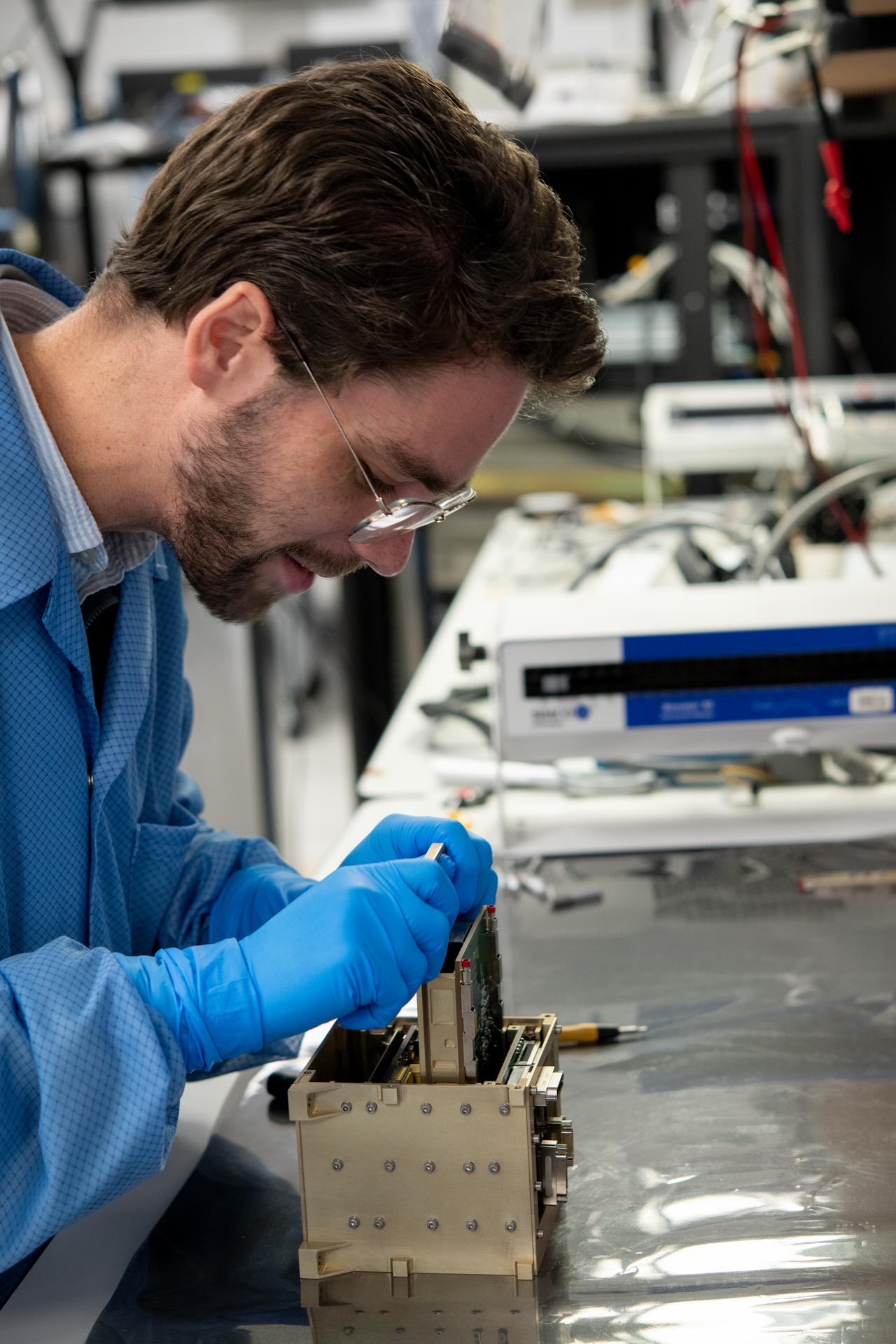
Mechanical Engineer Mitchell Hamann disassembles a Lunar Environment Monitoring Station (LEMS) flight electrical board chassis in the avoinics lab at NASA's Goddard Space Flight Center in Greenbelt, Maryland on October 22, 2025. LEMS is a compact, autonomous, and self-sustaining seismometer suite designed to carry out continuous, long-term, monitoring of the lunar seismic environment at the South Polar region. NASA/Desiree Stover.
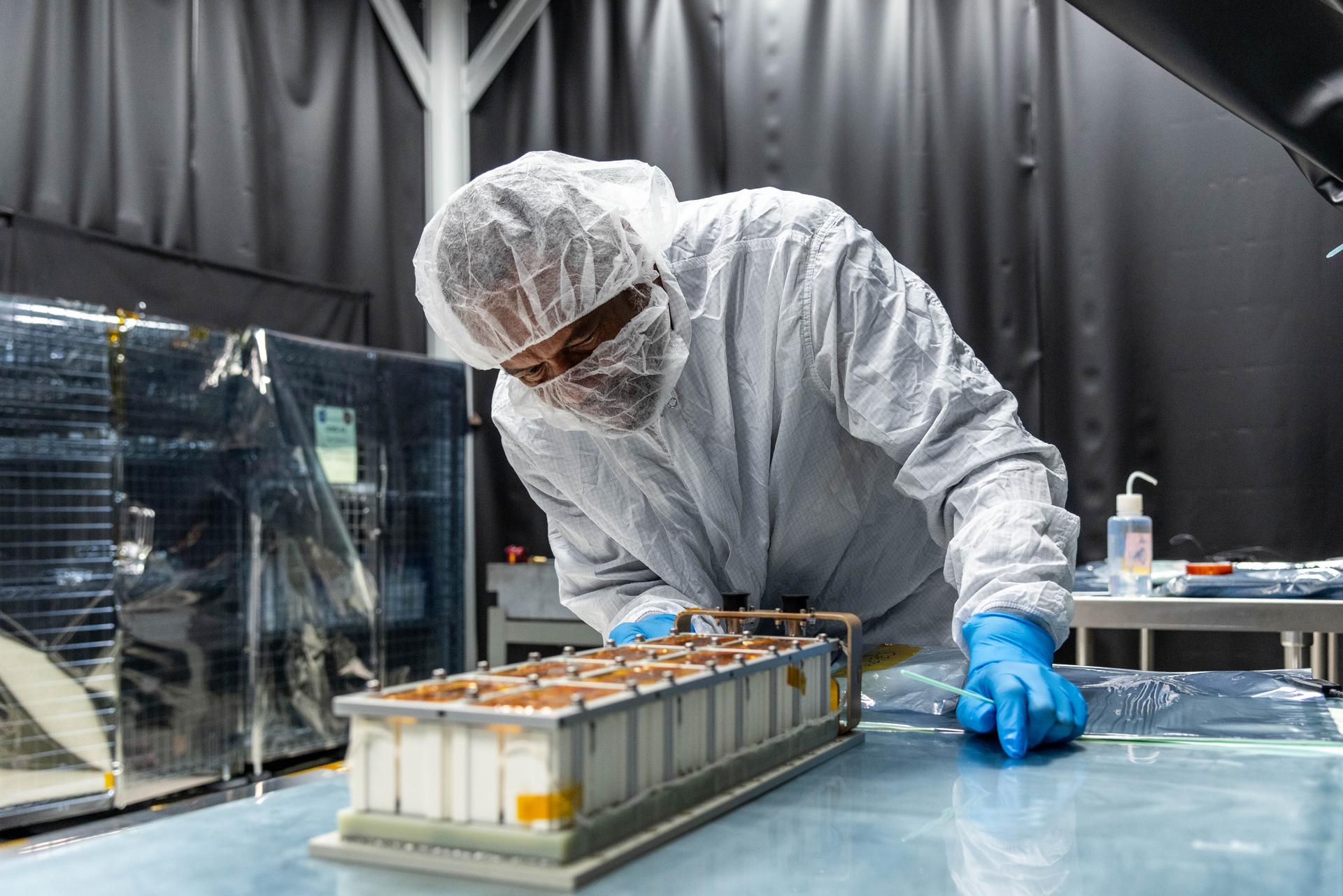
Contamination Control Technician, Rudy Foxwell, inspects the Lunar Environment Monitoring Station (LEMS) Flight Battery in a clean tent at NASA's Goddard Space Flight Center in Greenbelt, Maryland on October 14th, 2026. NASA/Katie Mellos.
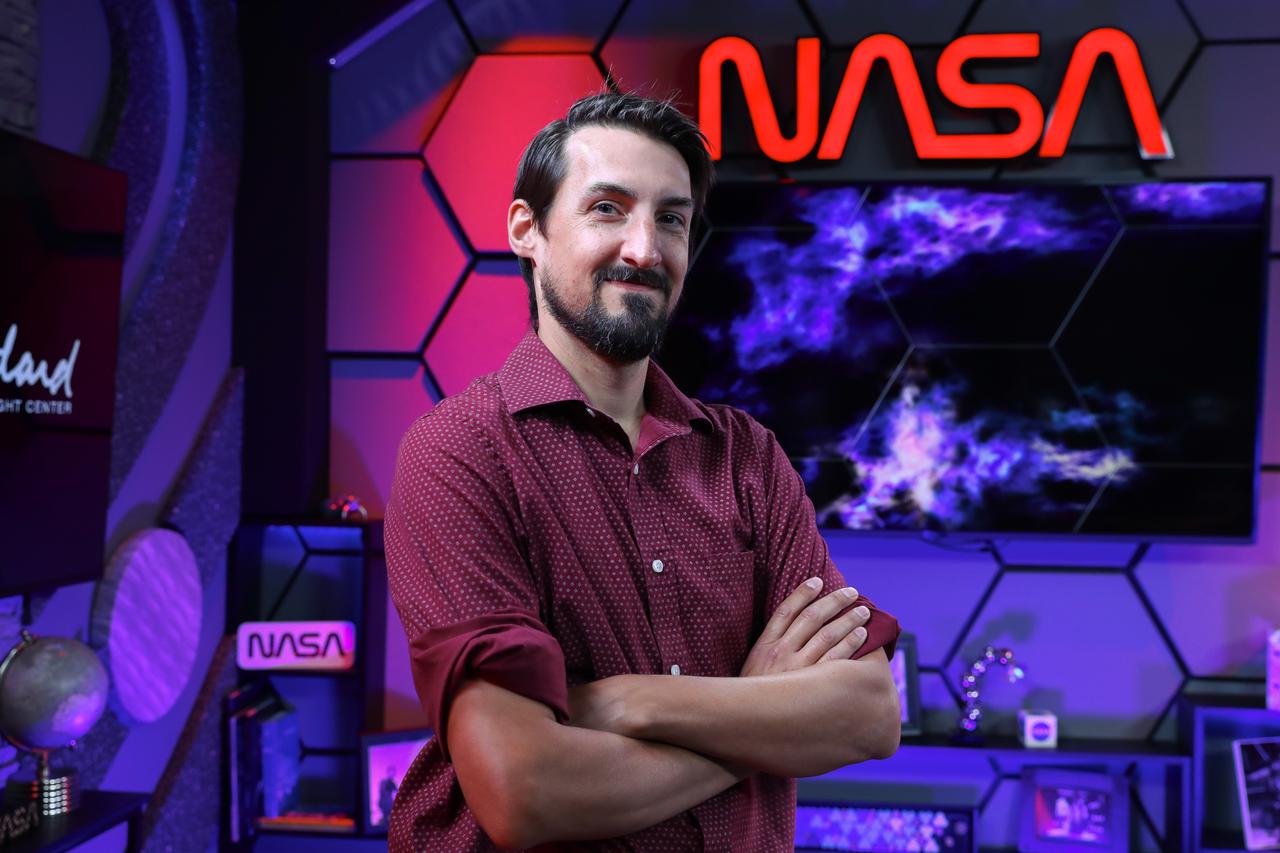
Rob Garner has worked in the Office of Communications at NASA's Goddard Space Flight Center in Greenbelt, Md., since 2007.

Dr. Christopher Scolese was the director of NASA’s Goddard Space Flight Center, located in Greenbelt, Maryland. Scolese assumed his post on March 5, 2012, and retired from NASA on July 31, 2019. Scolese previously served as NASA associate administrator at NASA Headquarters in Washington, D.C.
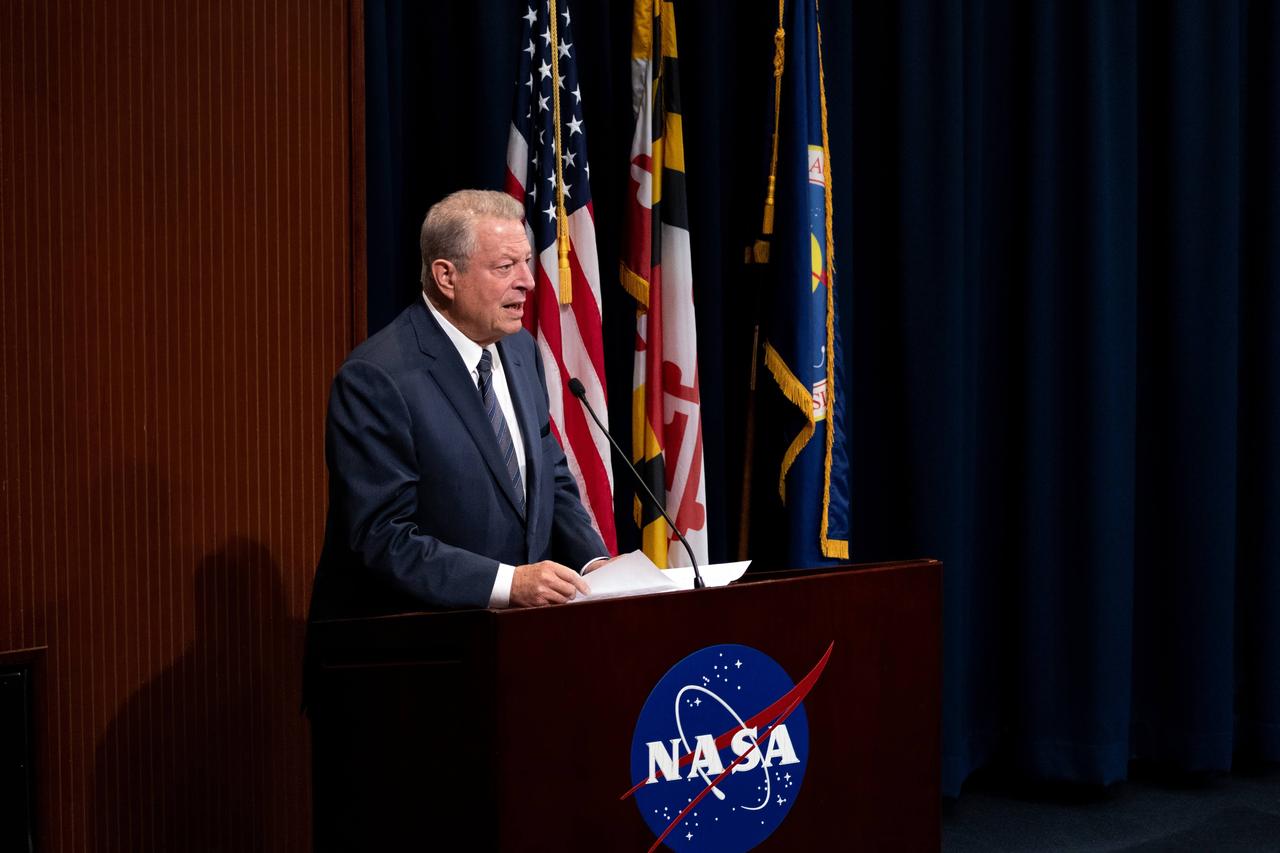
To commemorate the upcoming 10th anniversary of the DSCOVR (Deep Space Climate Observatory) mission, NASA’s Goddard Space Flight Center in Greenbelt, Md., hosted environmentalist and former Vice President Al Gore, shown here addressing a crowd in the Building 3 Harry J. Goett Auditorium, on Oct. 16, 2024. “The image of our Earth from space is the single most compelling iconic image that any of us have ever seen,” Gore said at a panel discussion for employees. “Now we have, thanks to DSCOVR, 50,000 ‘Blue Marble’ photographs … To date there are more than 100 peer-reviewed scientific publications that are based on the unique science gathered at the L1 point by DSCOVR. For all of the scientists who are here and those on the teams that are represented here, I want to say congratulations and thank you.” Following Gore’s talk on climate monitoring, Goddard scientists participated in a panel discussion, “Remote Sensing and the Future of Earth Observations,” which explored the latest advancements in technology that allow for the monitoring of the atmosphere from space and showcased how Goddard’s research drives the future of Earth science. Gore’s visit also entailed a meeting with the DSCOVR science team, a view into the clean room where Goddard is assembling the Roman Space Telescope, and a stop at the control center for PACE: NASA’s Plankton, Aerosol, Cloud, ocean Ecosystem mission. Launched Feb. 11, 2015, DSCOVR is a space weather station that monitors changes in the solar wind, providing space weather alerts and forecasts for geomagnetic storms that could disrupt power grids, satellites, telecommunications, aviation and GPS. DSCOVR is a joint mission among NASA, the National Oceanic and Atmospheric Administration (NOAA), and the U.S. Air Force. The project originally was called Triana, a mission conceived of by Gore in 1998 during his vice presidency.