
HOUSTON -- JSC-2013-E076046 -- Tony Castilleja, a mechanical engineer working on The Boeing Company's CST-100 endeavor, right, shows off a mock-up seat made from 3-D printing technology at the company's Houston Product Support Center near Johnson Space Center. Boeing showcased its work on a fully outfitted test version of the CST-100 spacecraft to NASA Administrator Charlie Bolden, not pictured, and Johnson management. Boeing's CST-100 is designed to transport a mix of crew and cargo to low-Earth-orbit destinations. Boeing is one of three aerospace industry partners working with NASA's Commercial Crew Program, or CCP, during the Commercial Crew Integrated Capability, or CCiCap, initiative, which is intended to make commercial human spaceflight services available for government and commercial customers. To learn more about CCP, visit www.nasa.gov/commercialcrew. Photo credit: NASA/James Blair
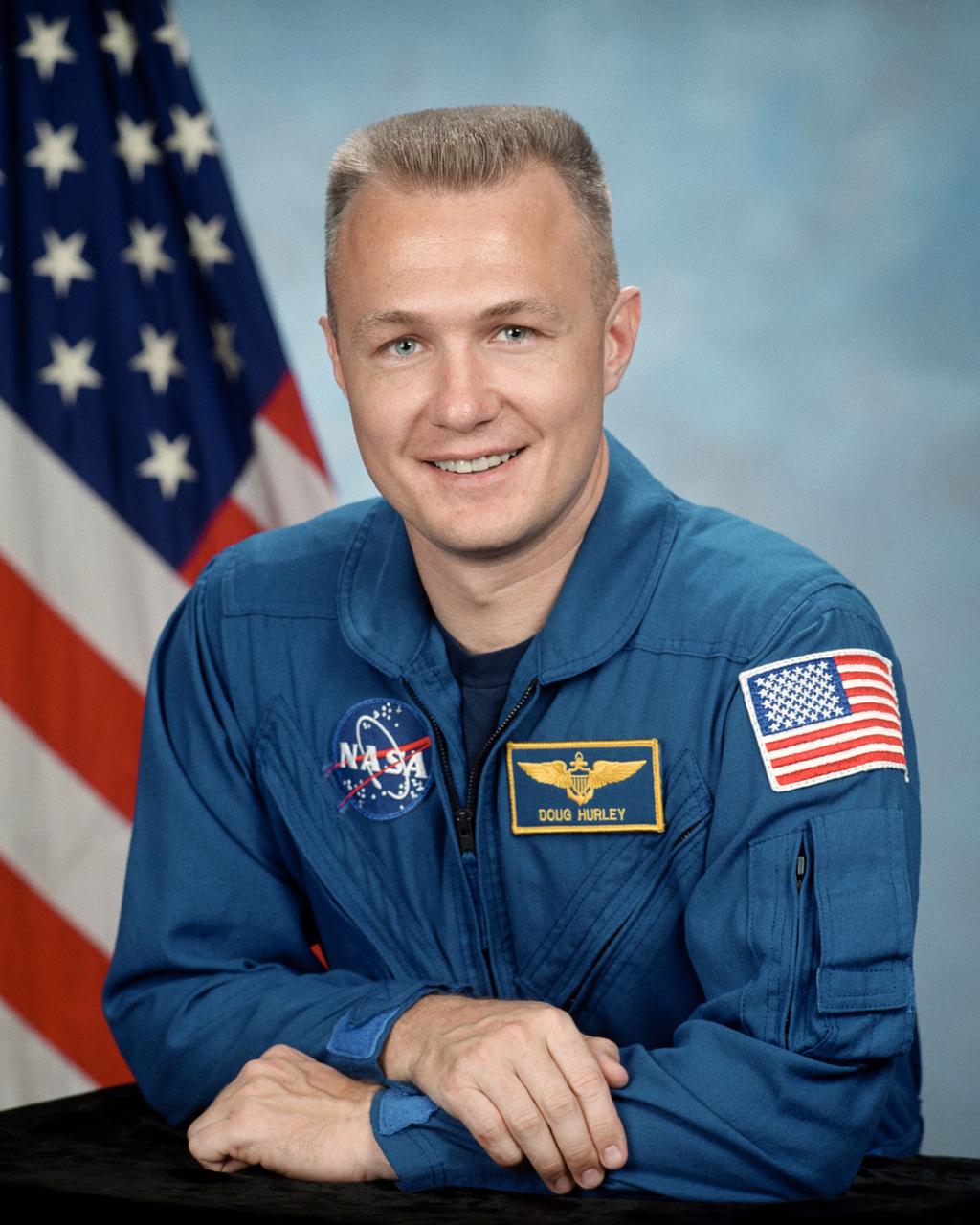
JOHNSON SPACE CENTER, Houston -- JSC2000-07599 (November 2000) --- Astronaut Douglas G. Hurley, pilot
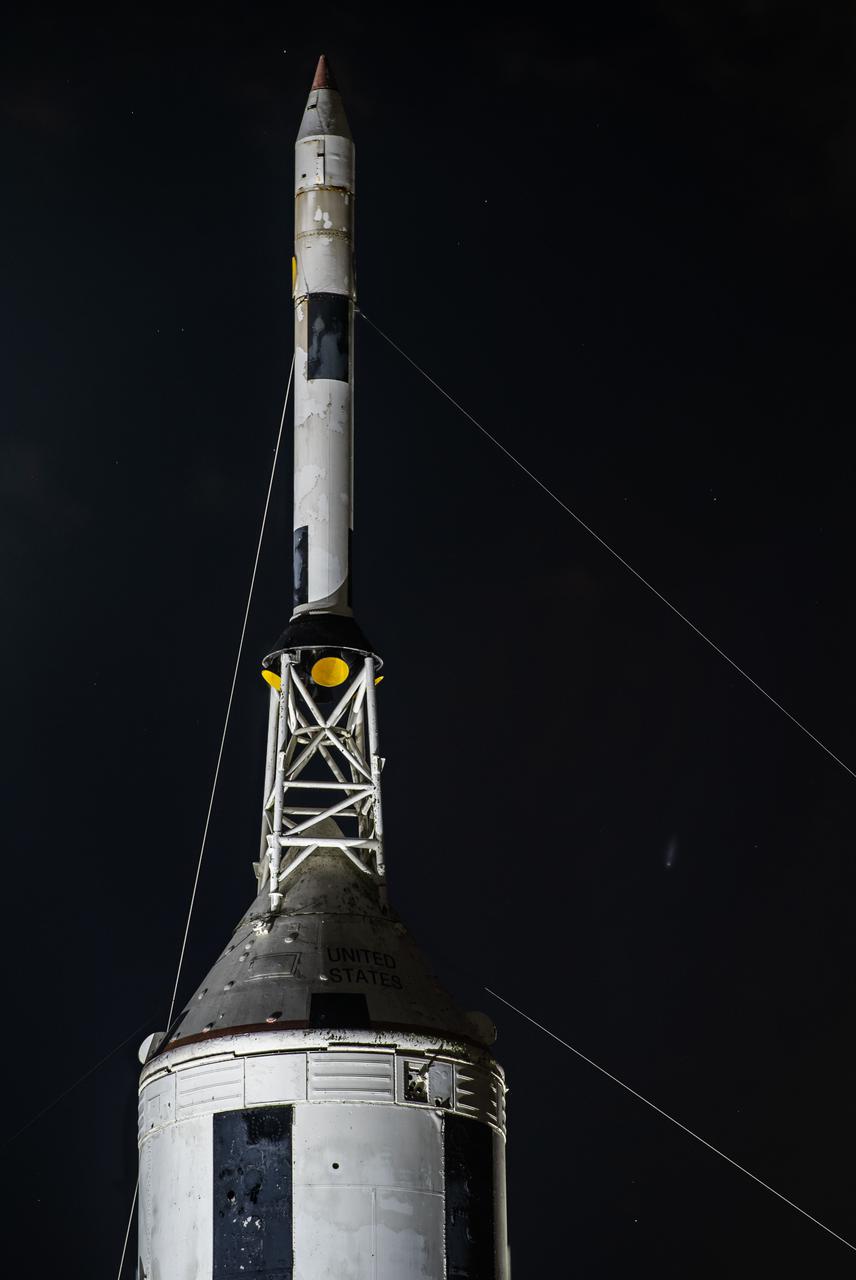
Comet NEOWISE passing over the Little Joe II rocket at NASA Johnson Space Center’s Rocket Park on July 22nd, 2020.
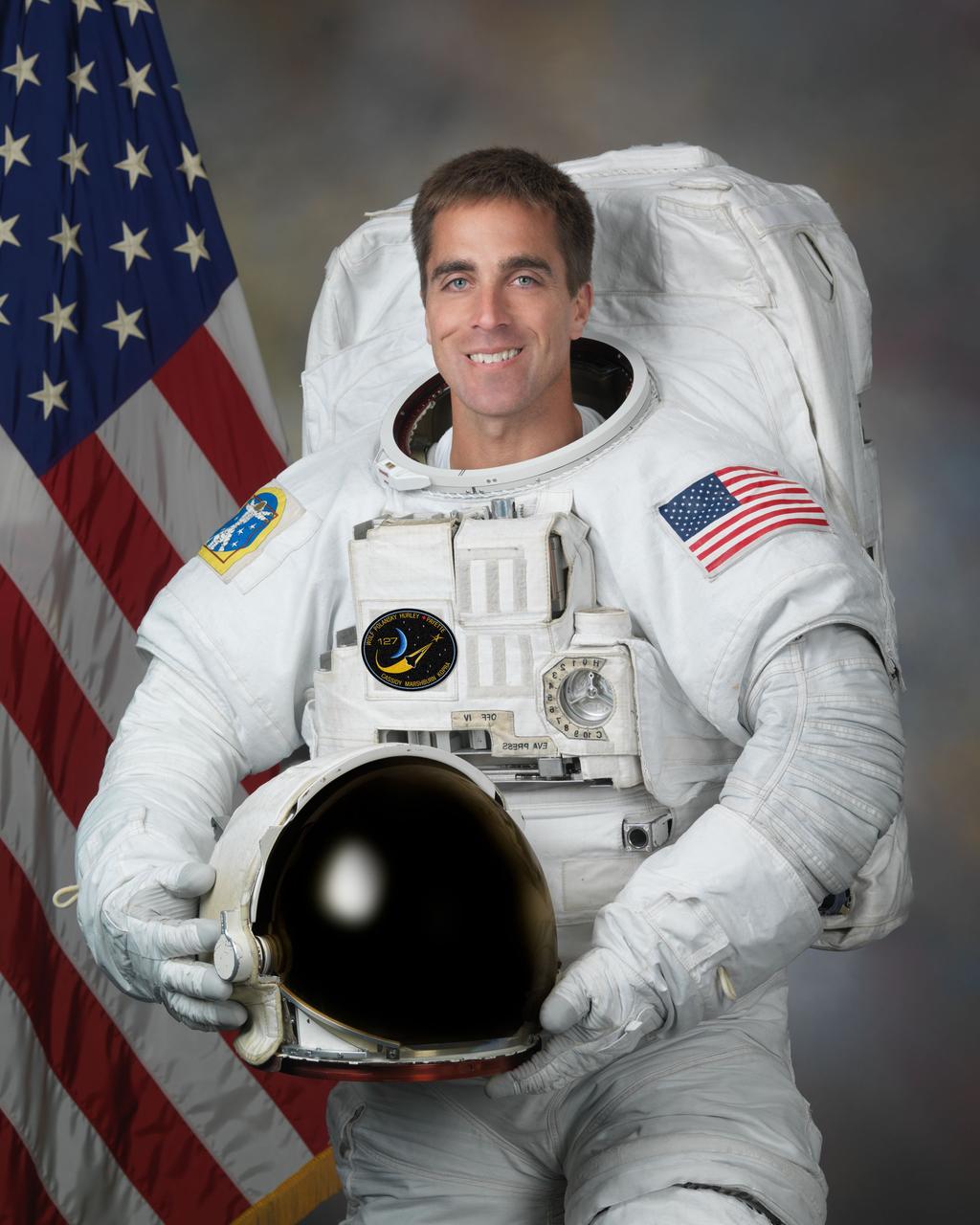
JOHNSON SPACE CENTER, Houston -- JSC2008-E-137661 (3 Oct. 2008) --- Astronaut Christopher J. Cassidy, mission specialist
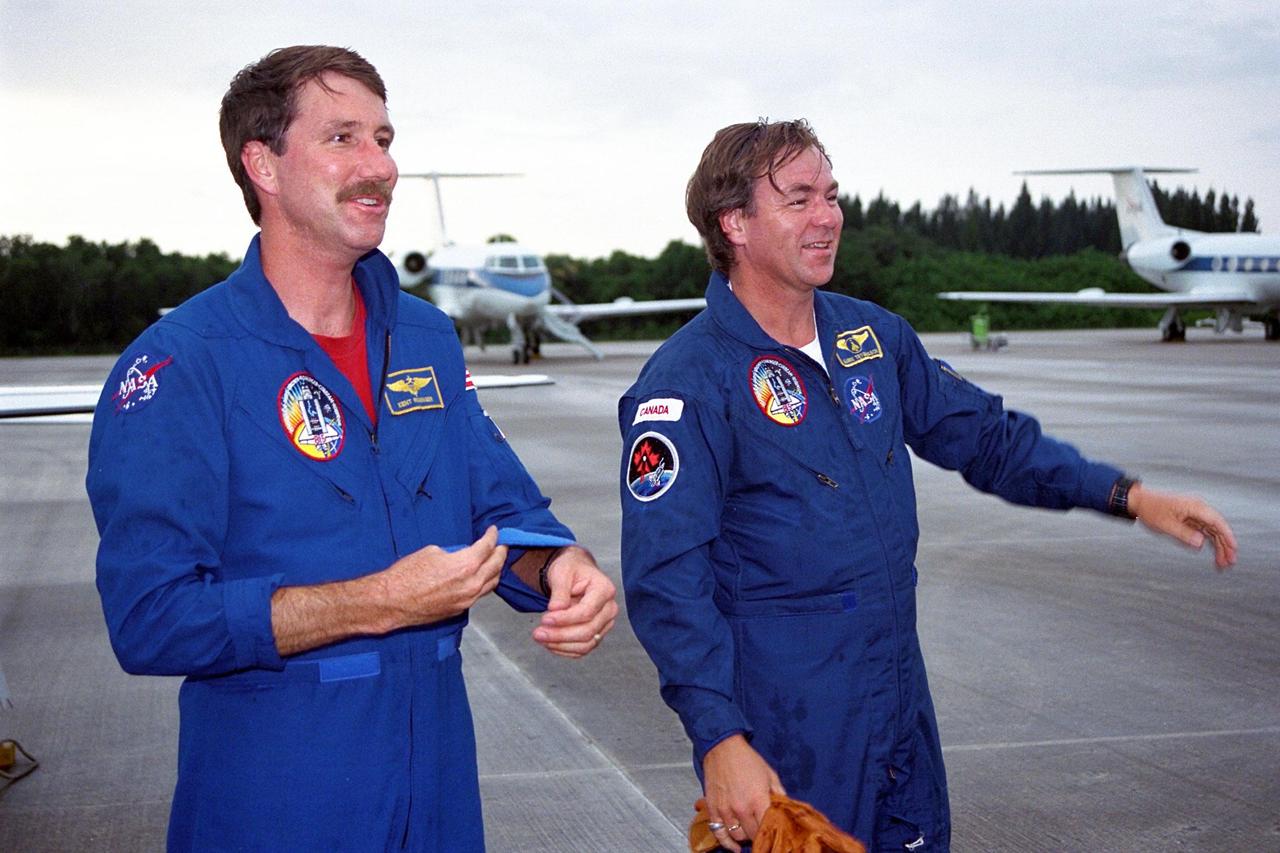
STS-85 Pilot Kent V. Rominger (left) and Payload Specialist Bjarni V. Tryggvason prepare to greet the rest of the flight crew at KSC’s Shuttle Landing Facility (SLF) after their arrival from NASA’s Johnson Space Center to begin final preparations for the STS-85 mission. The other crew members are Commander Curtis L. Brown, Jr., Payload Commander N. Jan Davis, Mission Specialist Robert L. Curbeam, Jr., and Mission Specialist Stephen K. Robinson. The primary payload aboard the Space Shuttle orbiter Discovery for the 11-day space flight is the Cryogenic Infrared Spectrometers and Telescopes for the Atmosphere-2 (CRISTA-SPAS2). Other STS-85 payloads include the Manipulator Flight Demonstration (MFD), and Technology Applications and Science-1 (TAS-1) and International Extreme Ultraviolet Hitchhiker-2 (IEH-2) experiments
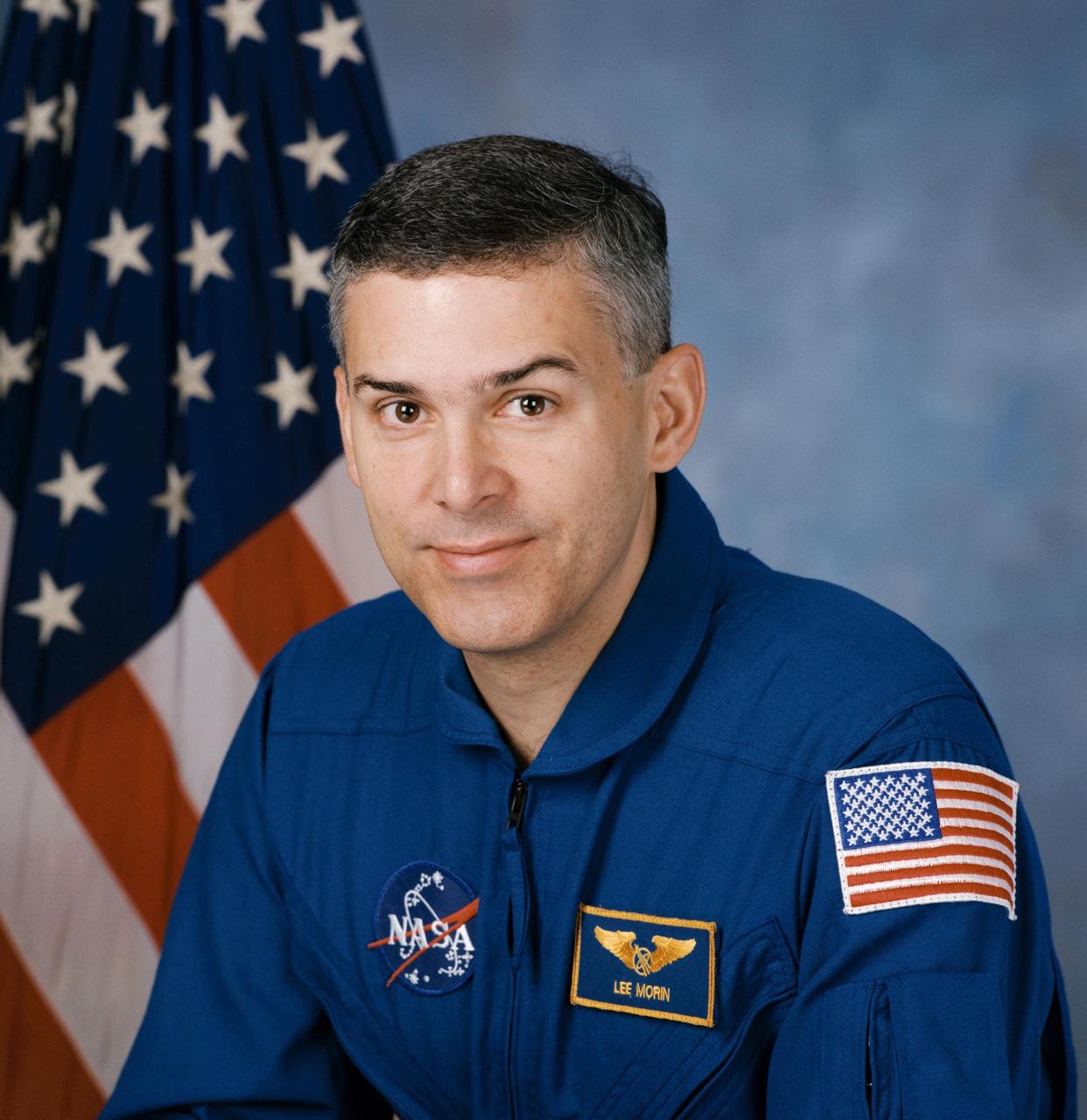
JOHNSON SPACE CENTER, HOUSTON, TEXAS. -- (JSC 596-14779) -- Official portrait of astronaut Lee M. Morin, mission specialist
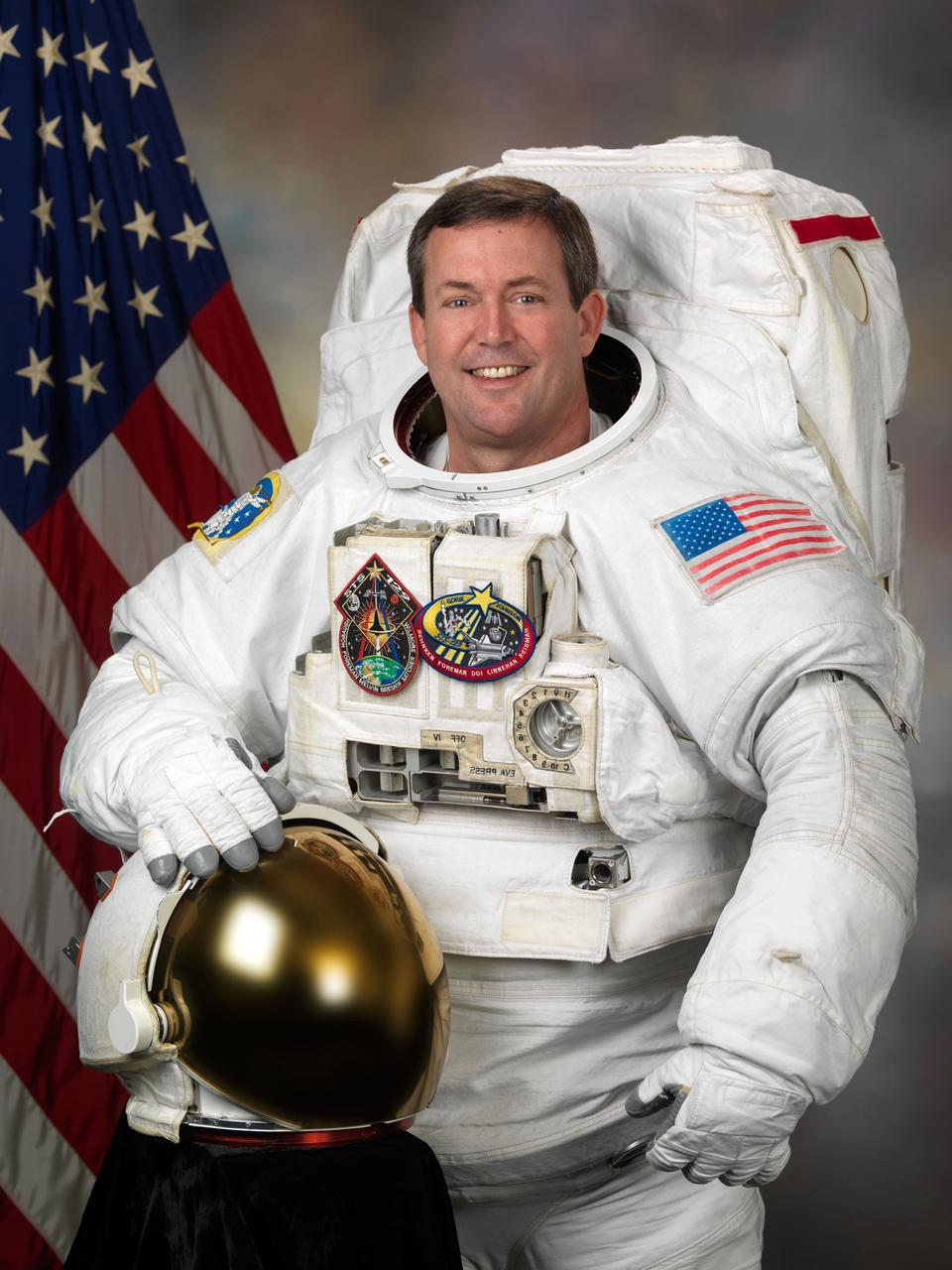
JOHNSON SPACE CENTER, Houston - JSC2009-E-218085 -- Astronaut Michael J. Foreman, mission specialist
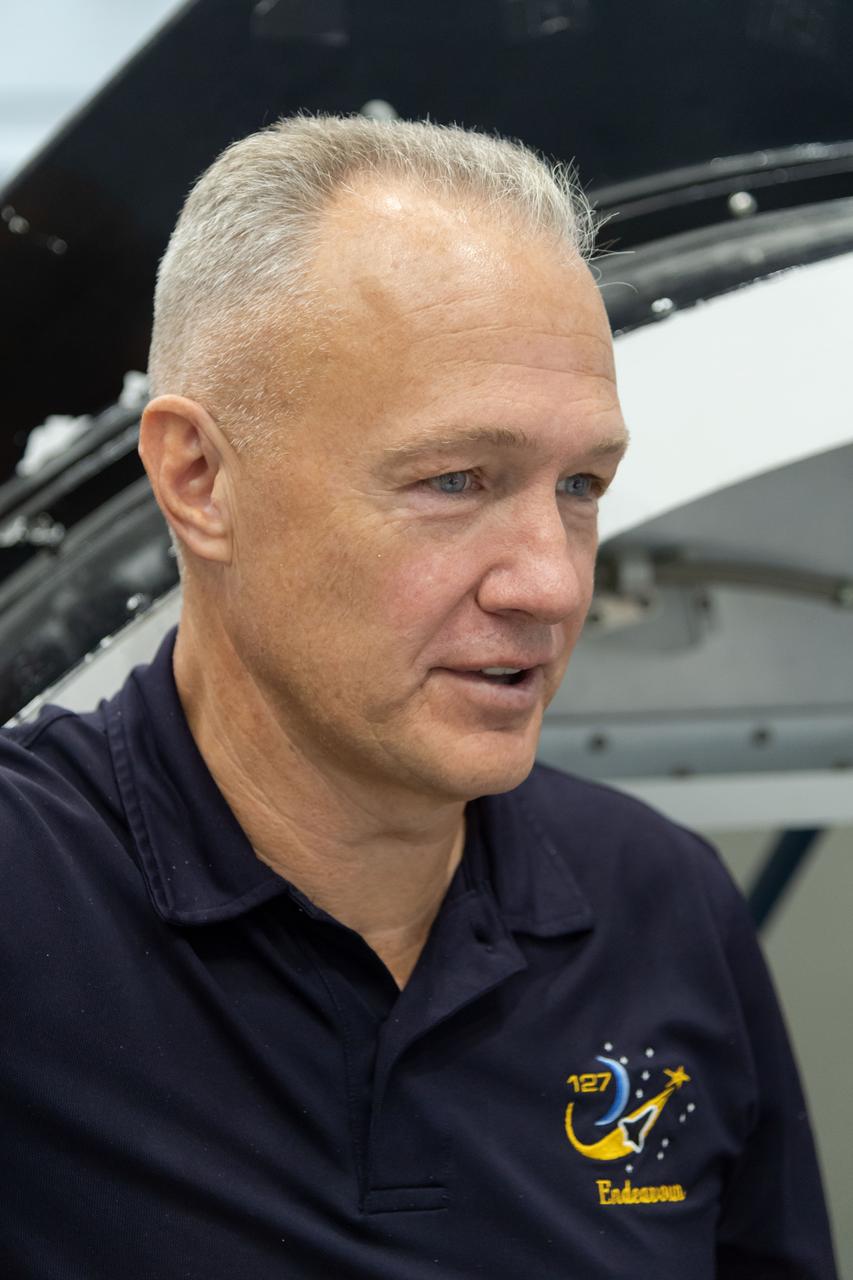
NASA commercial crew astronaut Doug Hurley attends a training class for International Space Station ingress and egress procedures in the Space Vehicle Mock-Up Facility at Johnson Space Center in Houston. Hurley is assigned to the SpaceX Crew Dragon’s first crewed flight.
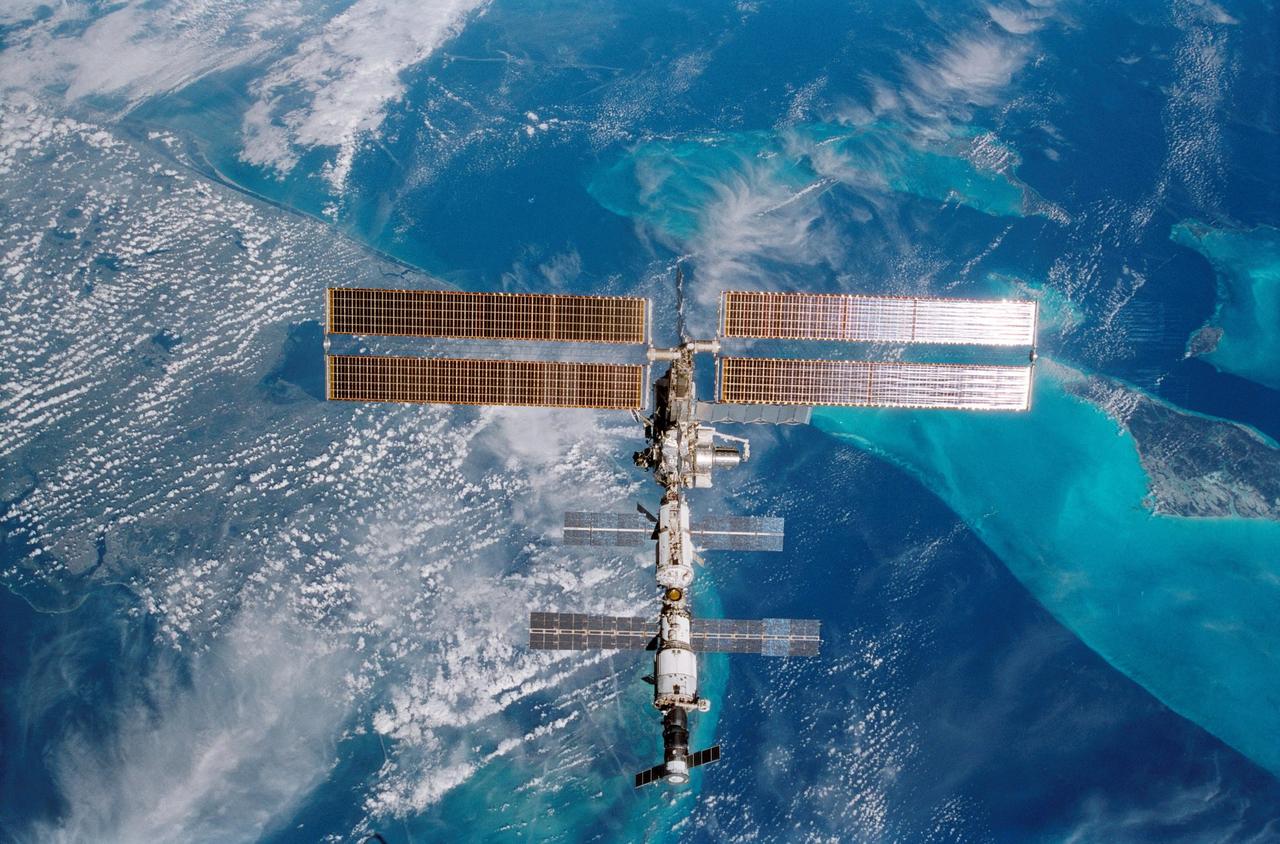
JOHNSON SPACE CENTER, TEXAS — The International Space Station is backdropped over Miami, Florida, in this 35mm frame photographed by STS-108 Commander Dominic Gorie aboard the space shuttle Endeavour.
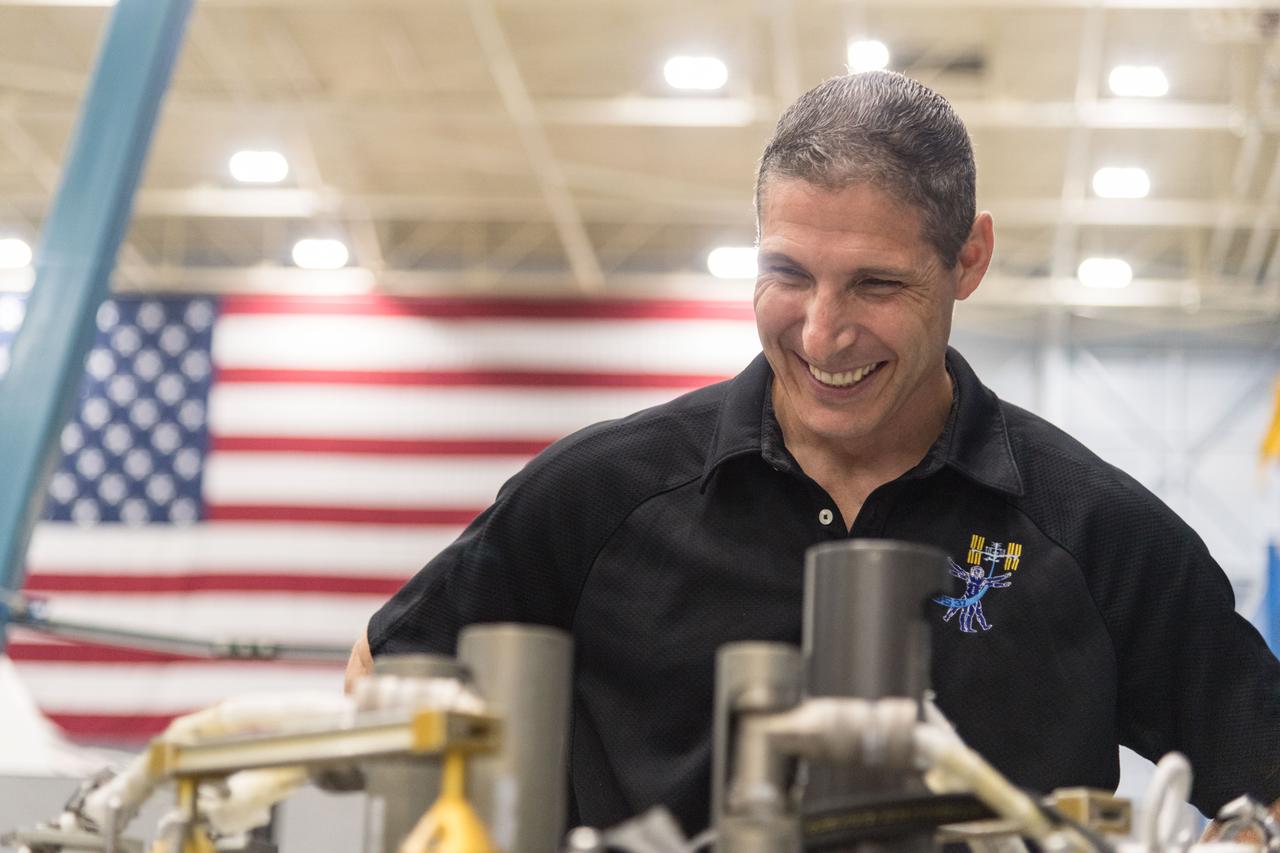
NASA commercial crew astronaut Mike Hopkins trains with Extravehicular Activity (EVA) tools and hardware in Johnson Space Center’s Space Vehicle Mockup Facility in Houston. Hopkins is assigned to the second crewed flight of SpaceX’s Crew Dragon.
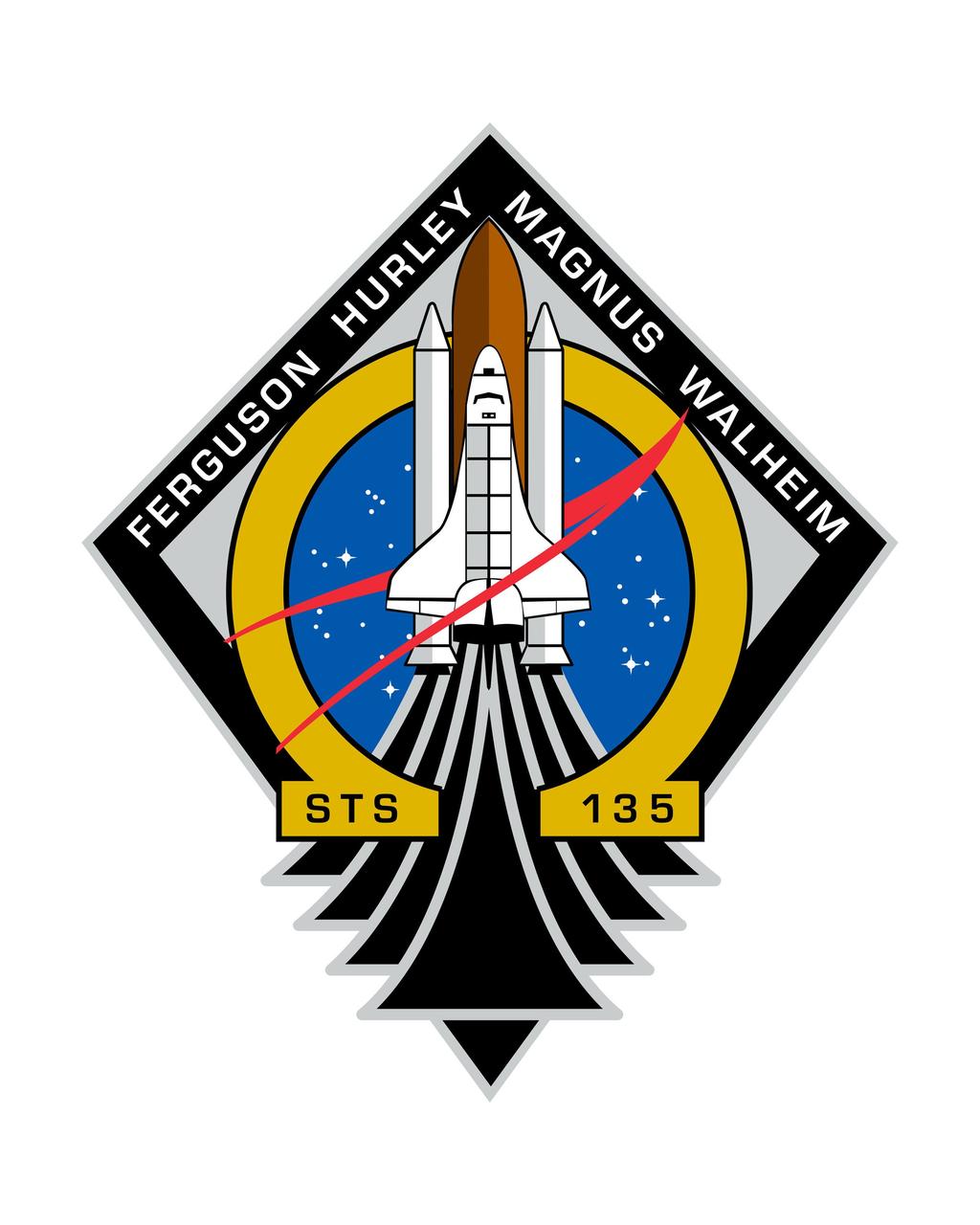
JOHNSON SPACE CENTER, Houston - STS135-S-001 ---The STS-135 patch represents the space shuttle Atlantis embarking on its mission to resupply the International Space Station. Atlantis is centered over elements of the NASA emblem depicting how the space shuttle has been at the heart of NASA for the last 30 years. It also pays tribute to the entire NASA and contractor team that made possible all the incredible accomplishments of the space shuttle. Omega, the last letter in the Greek alphabet, recognizes this mission as the last flight of the Space Shuttle Program. Public availability has been approved only in the form of illustrations by the various news media. When and if there is any change in this policy, which we do not anticipate, it will be publicly announced. Photo credit: NASA or National Aeronautics and Space Administration
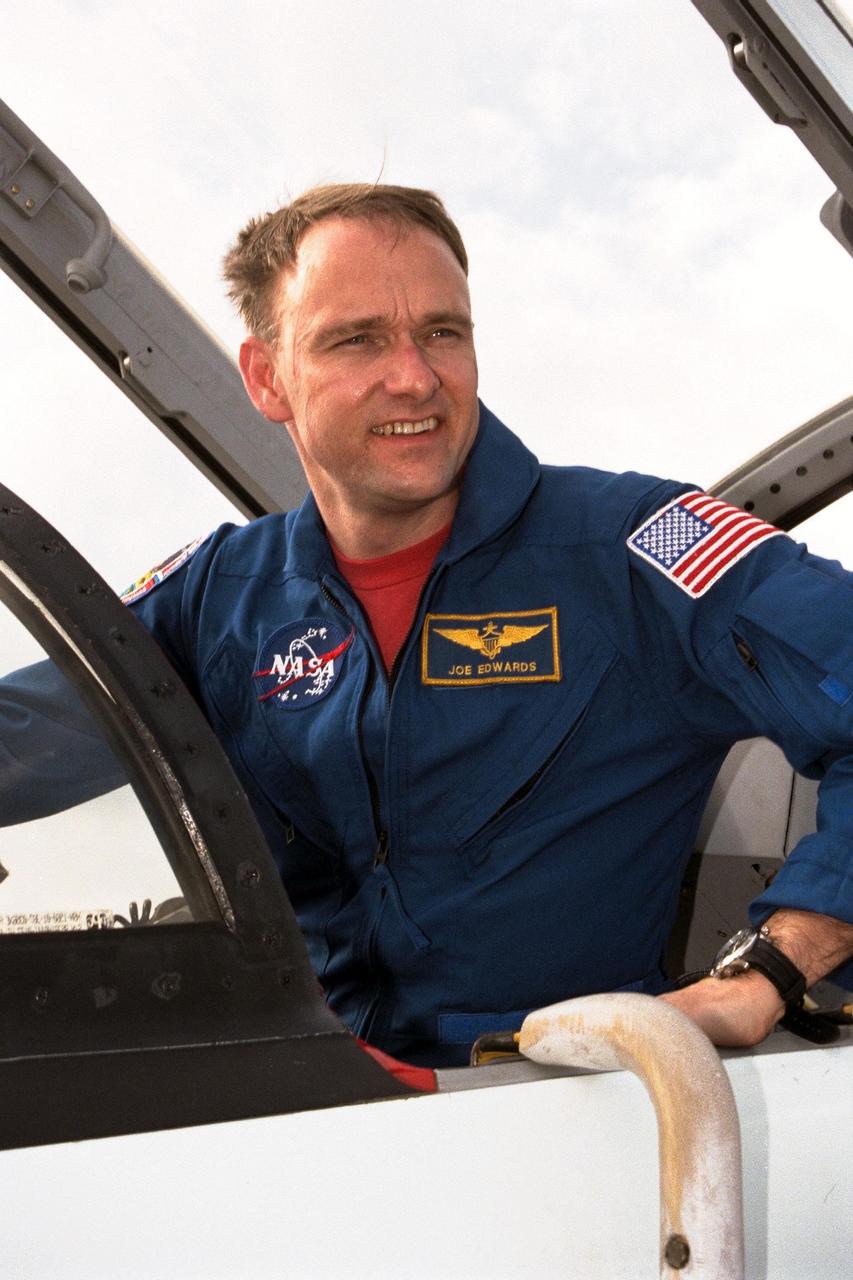
STS-89 Pilot Joe Edwards Jr. arrives at the KSC Shuttle Landing Facility in one of the T-38 aircraft traditionally flown by the astronaut corps. The eight STS-89 crew members flew into KSC from Johnson Space Center as final preparations are under way toward the scheduled liftoff on Jan. 22 of the Space Shuttle Endeavour on the eighth mission to dock with the Russian Space Station Mir. After docking, STS-89 Mission Specialist Andrew Thomas, Ph.D., will transfer to the space station, succeeding David Wolf, M.D., who will return to Earth aboard Endeavour. Dr. Thomas will live and work on Mir until June. STS-89 is scheduled for a Jan. 22 liftoff at 9:48 p.m. EST
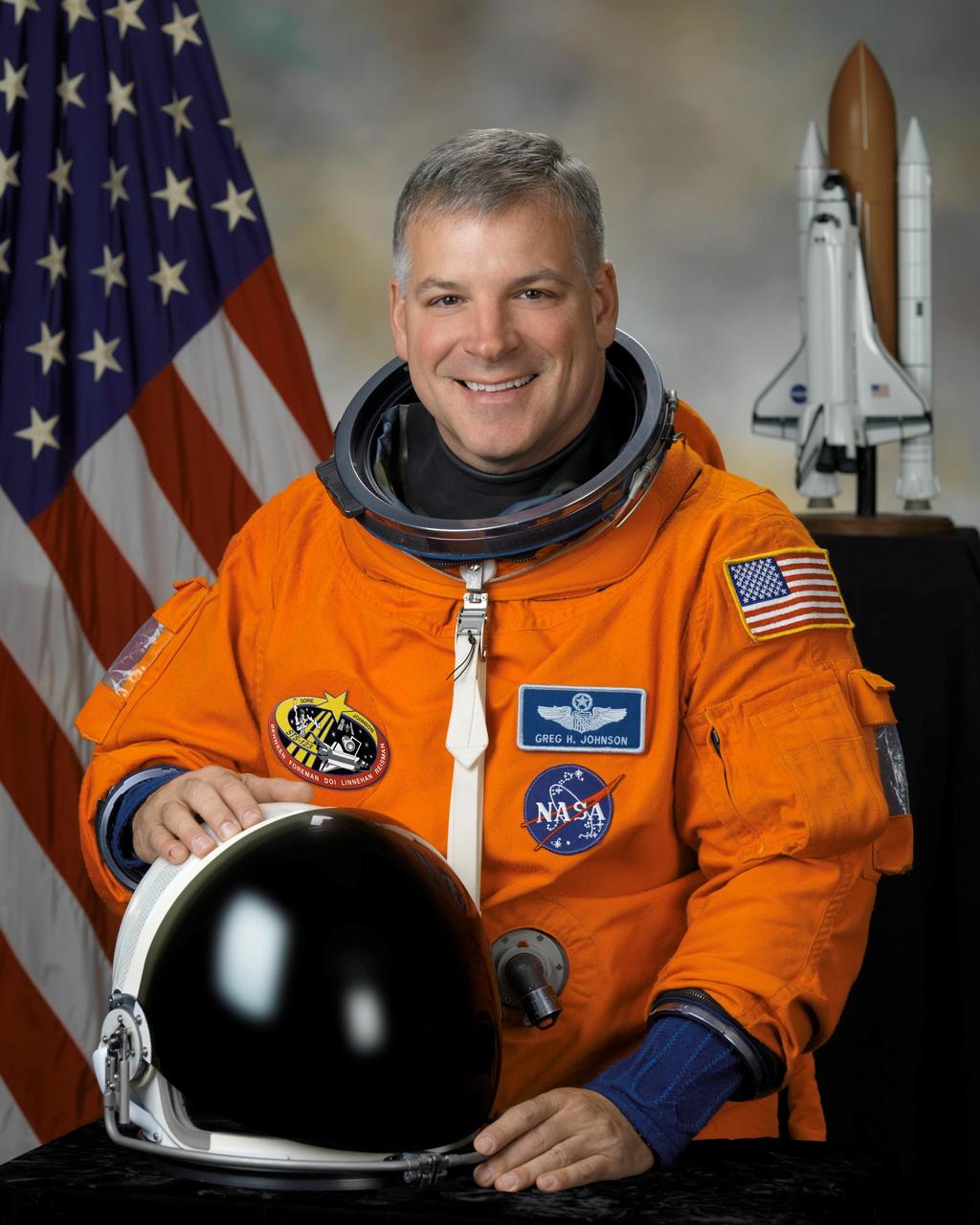
JOHNSON SPACE CENTER, HOUSTON -- JSC2008-E-000184-- Astronaut Gregory H. Johnson, pilot
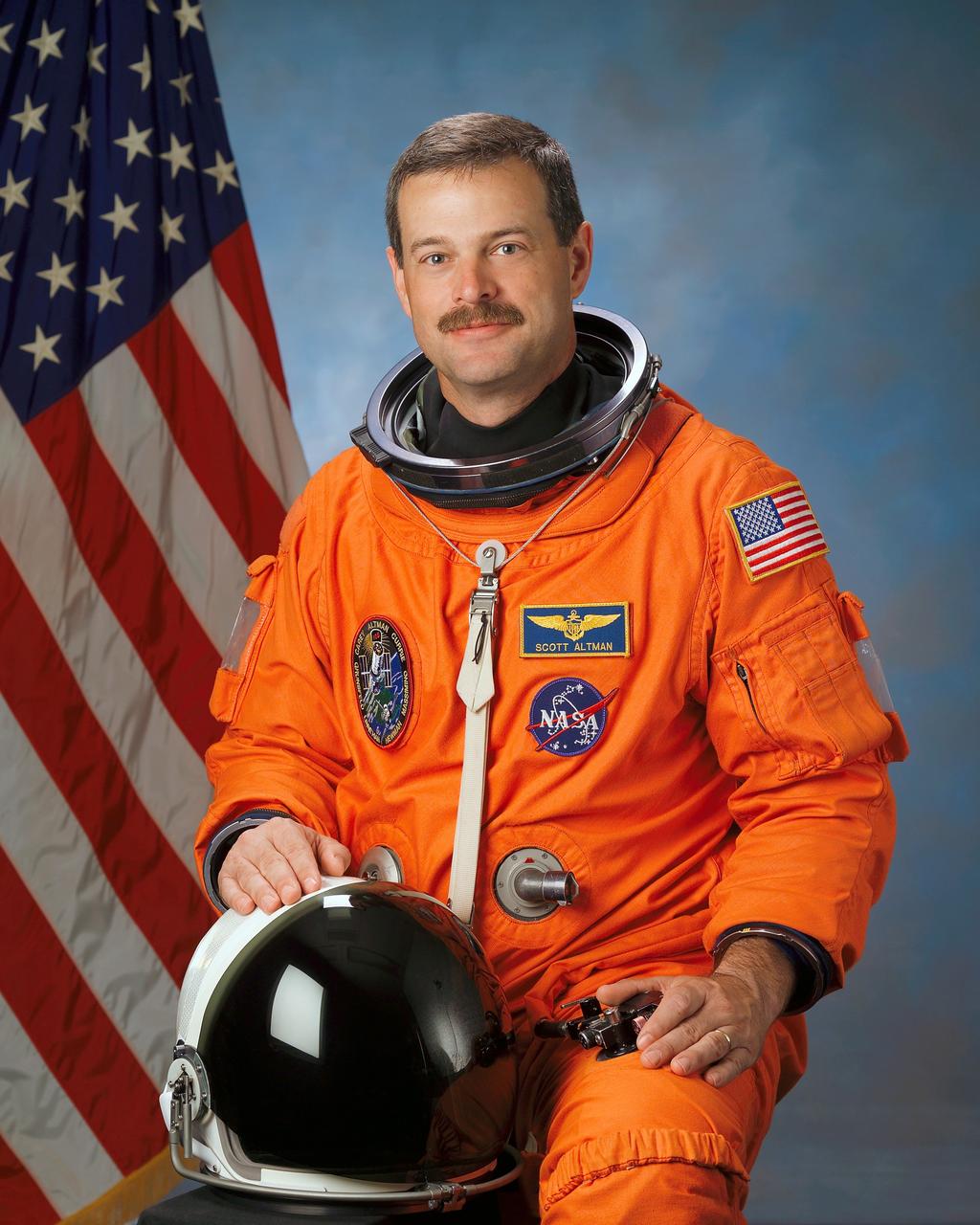
JOHNSON SPACE CENTER, Houston, Texas --- JSC2004-E-32185 -- Astronaut Scott D. Altman, commander

JOHNSON SPACE CENTER, HOUSTON, TEXAS -- (JSC2000-02899) -- Official portrait of astronaut Daniel W. Bursch, Mission Specialist
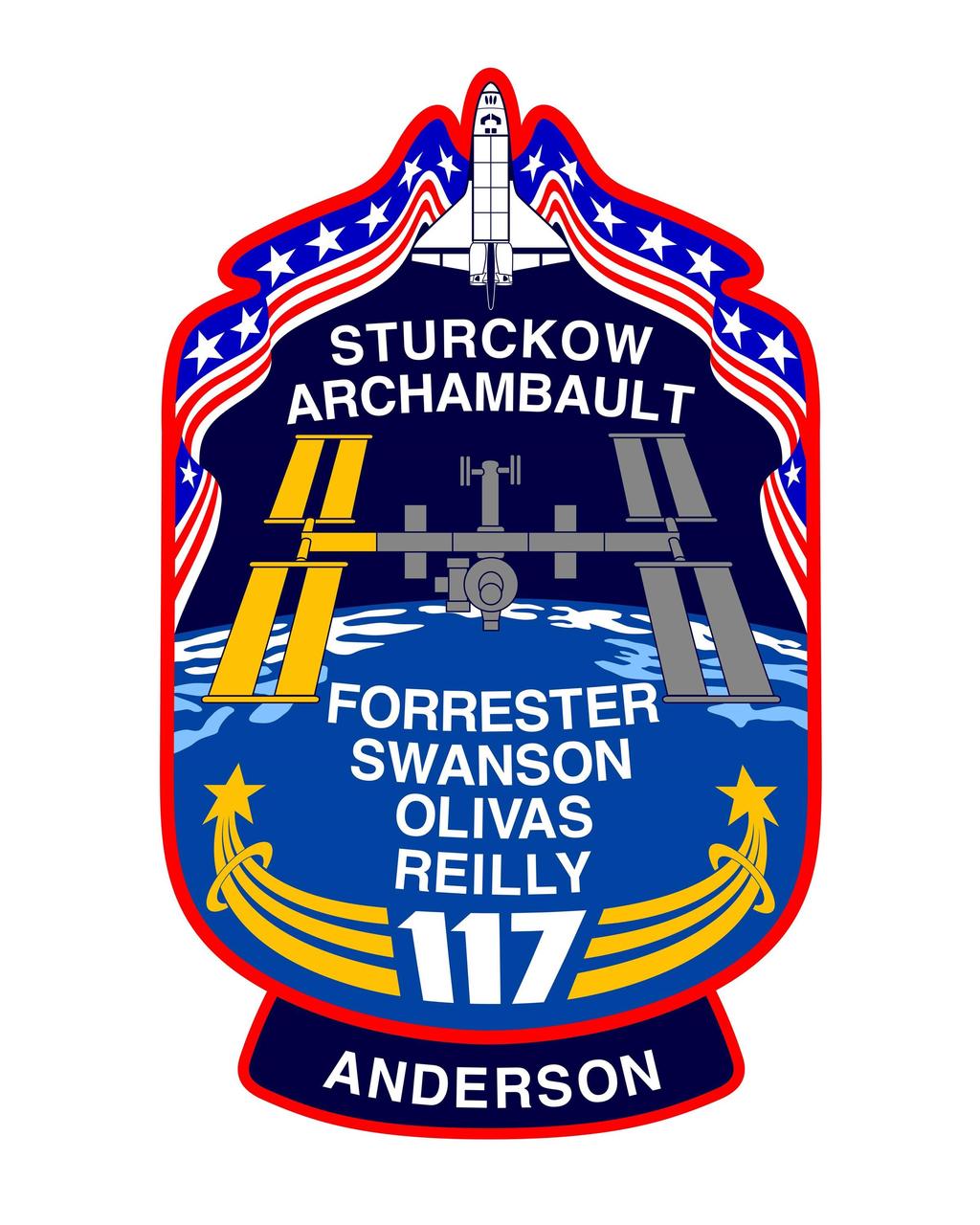
JOHNSON SPACE CENTER, Houston -- STS117-S-001 -- The STS-117 crew patch symbolizes the continued construction of the International Space Station (ISS) and our ongoing human presence in space. The ISS is shown orbiting high above the Earth. Gold is used to highlight the portion of the ISS that will be installed by the STS-117 crew. It consists of the second starboard truss section, S3/S4, and a set of solar arrays. The names of the STS-117 crew are located above and below the orbiting outpost. The two gold astronaut office symbols, emanating from the '117' at the bottom of the patch represent the concerted efforts of the shuttle and station programs toward the completion of the station. The orbiter and unfurled banner of red, white and blue represent our Nation's renewed patriotism as we continue to explore the universe. The NASA insignia design for shuttle space flights is reserved for use by the astronauts and other official use as the NASA Administrator may authorize. Public availability has been approved only in the form of illustrations by the various news media. When and if there is any change in this policy, which is not anticipated, such will be publicly announced.

NASA commercial crew astronaut Josh Cassada and Boeing astronaut Chris Ferguson prepare to practice water survival techniques at the Neutral Bouyancy Laboratory at Johnson Space Center in Houston. Cassada is assigned to the second crewed flight to the International Space Station of Boeing’s CST-100 Starliner. Ferguson is assigned to Starliner’s first crewed flight.
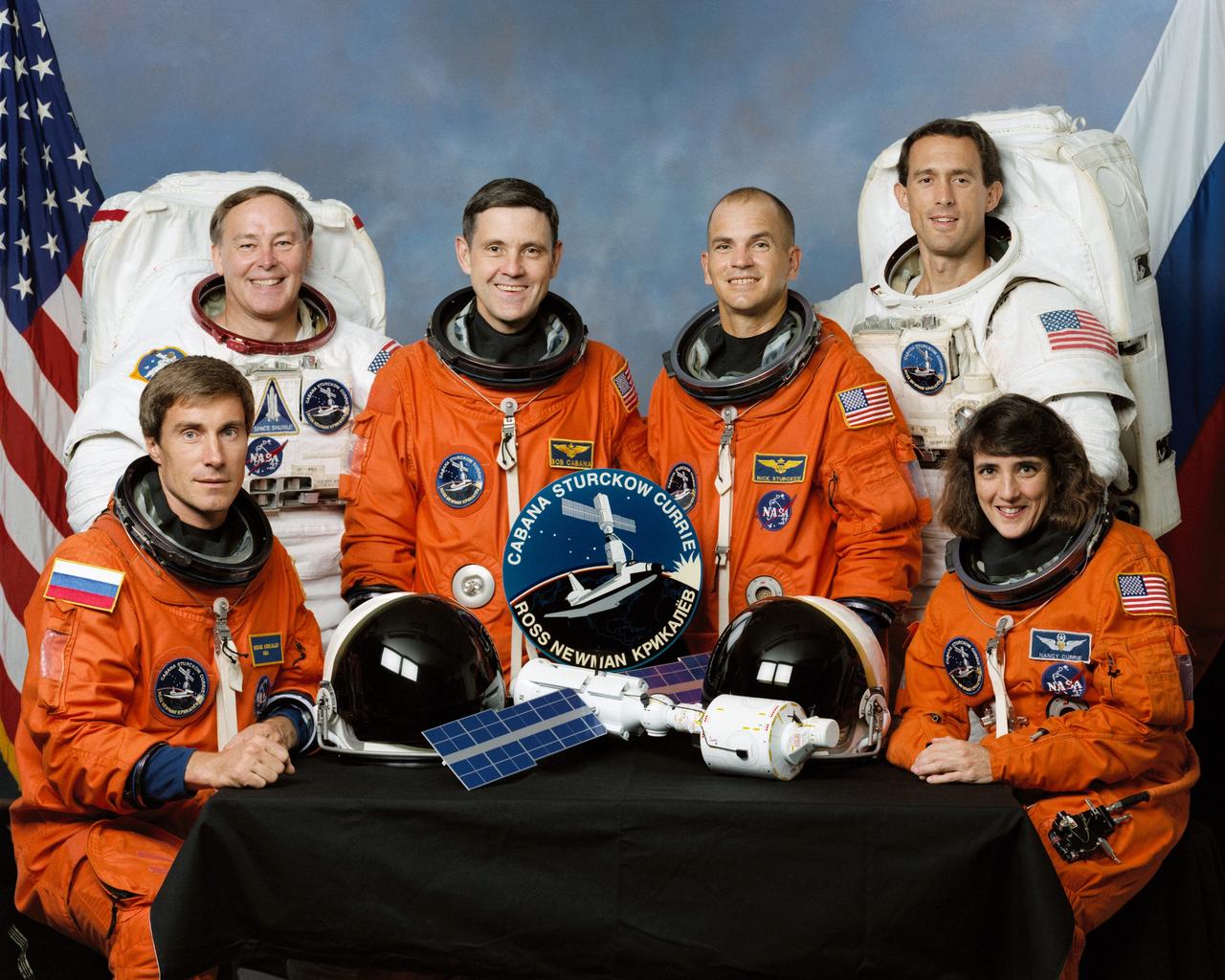
JOHNSON SPACE CENTER, Houston, Texas -- STS088(S)002 -- Five NASA astronauts and a Russian cosmonaut assigned to the STS-88 mission, scheduled for an early December launch, take time out from their busy training agenda for a crew portrait. Seated in front are Sergei K. Krikalev, a mission specialist representing the Russian Space Agency (RSA), and astronaut Nancy J. Currie, mission specialist. In the rear, from the left, are astronauts Jerry L. Ross, mission specialist; Robert D. Cabana, mission commander; Frederick W. Sturckow, pilot; and James H. Newman, mission specialist.
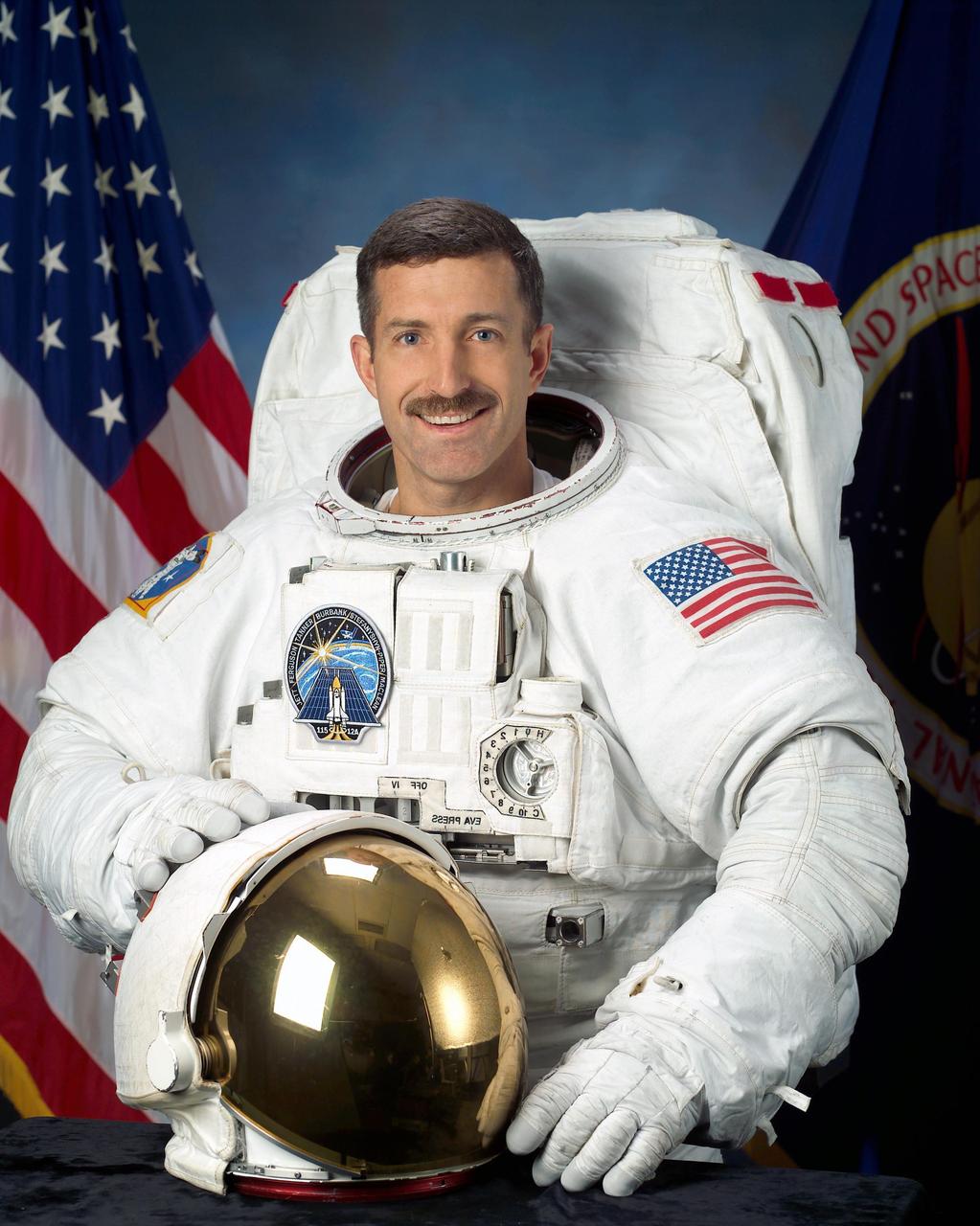
JOHNSON SPACE CENTER, TX - JSC2003-E-12208 (December 23, 2002) -- Astronaut Daniel C. Burbank, mission specialist.
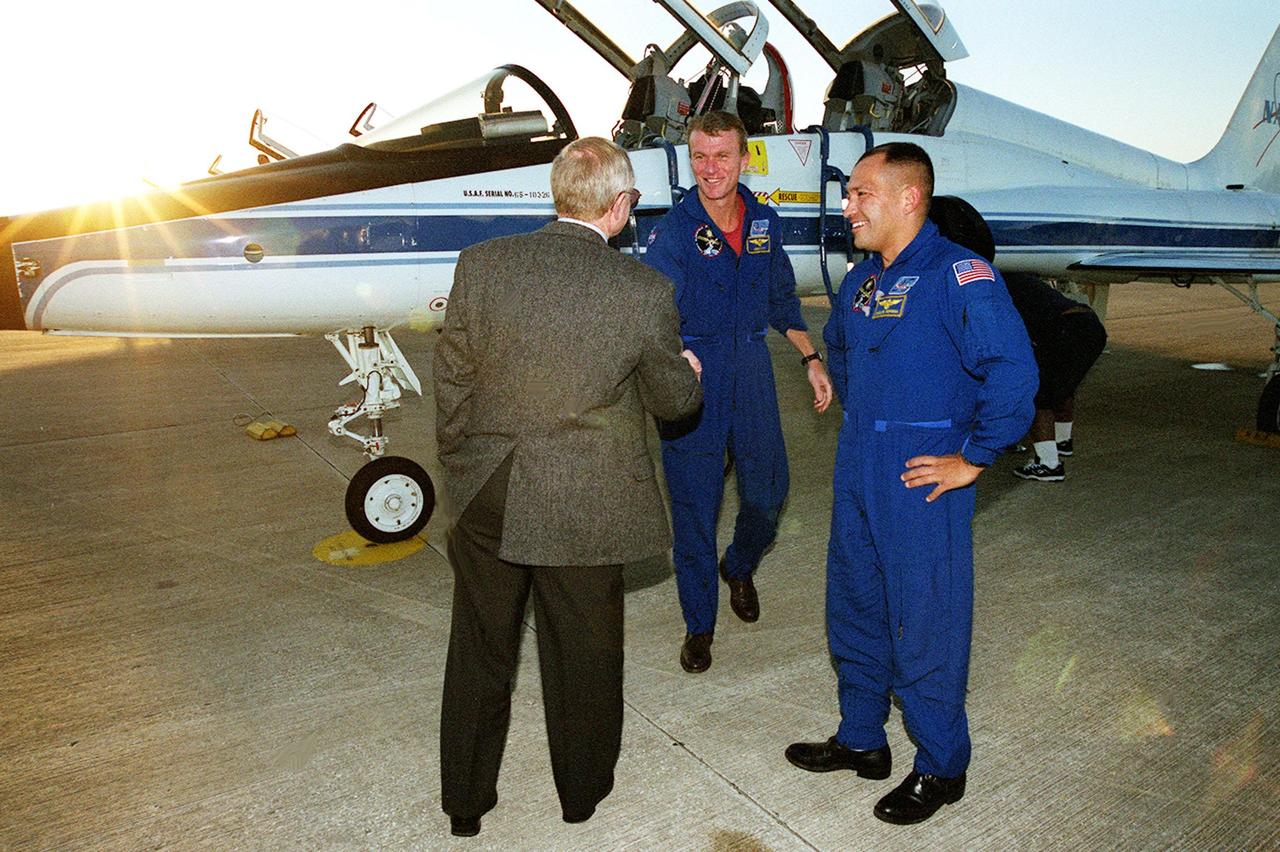
At the Shuttle Landing Facility, Center Director Roy Bridges (left) greets STS-97 Commander Brent Jett on his arrival at KSC for the mission launch. At right is Mission Specialist Carlos Noriega. Jett and Noriega traveled from Johnson Space Center, Houston, Texas, in the T-38 jet aircraft behind them. Mission STS-97is the sixth construction flight to the International Space Station. Its payload includes the P6 Integrated Truss Structure and a photovoltaic (PV) module, with giant solar arrays that will provide power to the Station. The mission includes two spacewalks to complete the solar array connections. STS-97 is scheduled to launch Nov. 30 at about 10:06 p.m. EST
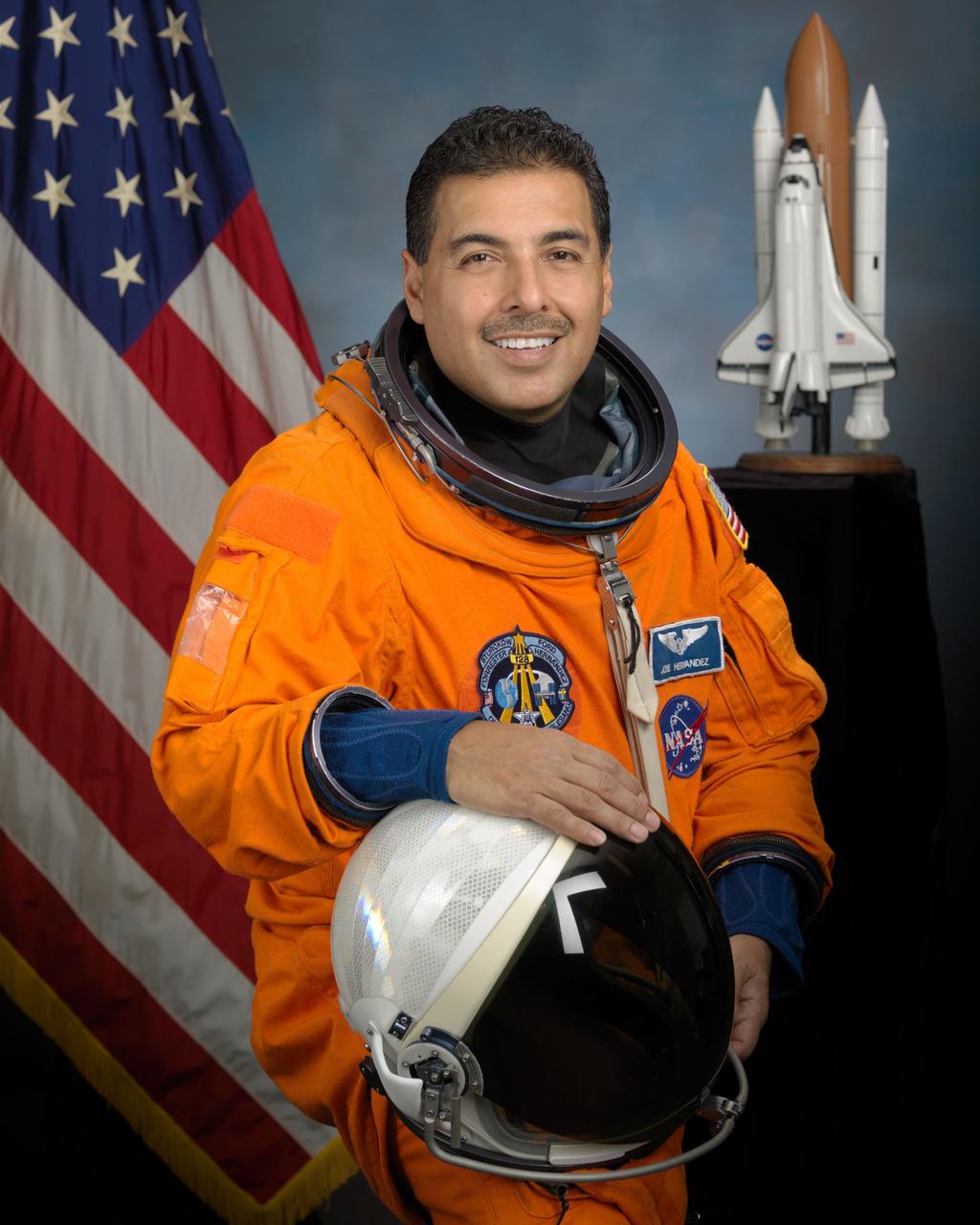
JOHNSON SPACE CENTER, Houston – JSC2009-E-082549 -- Astronaut Jose M. Hernandez, mission specialist
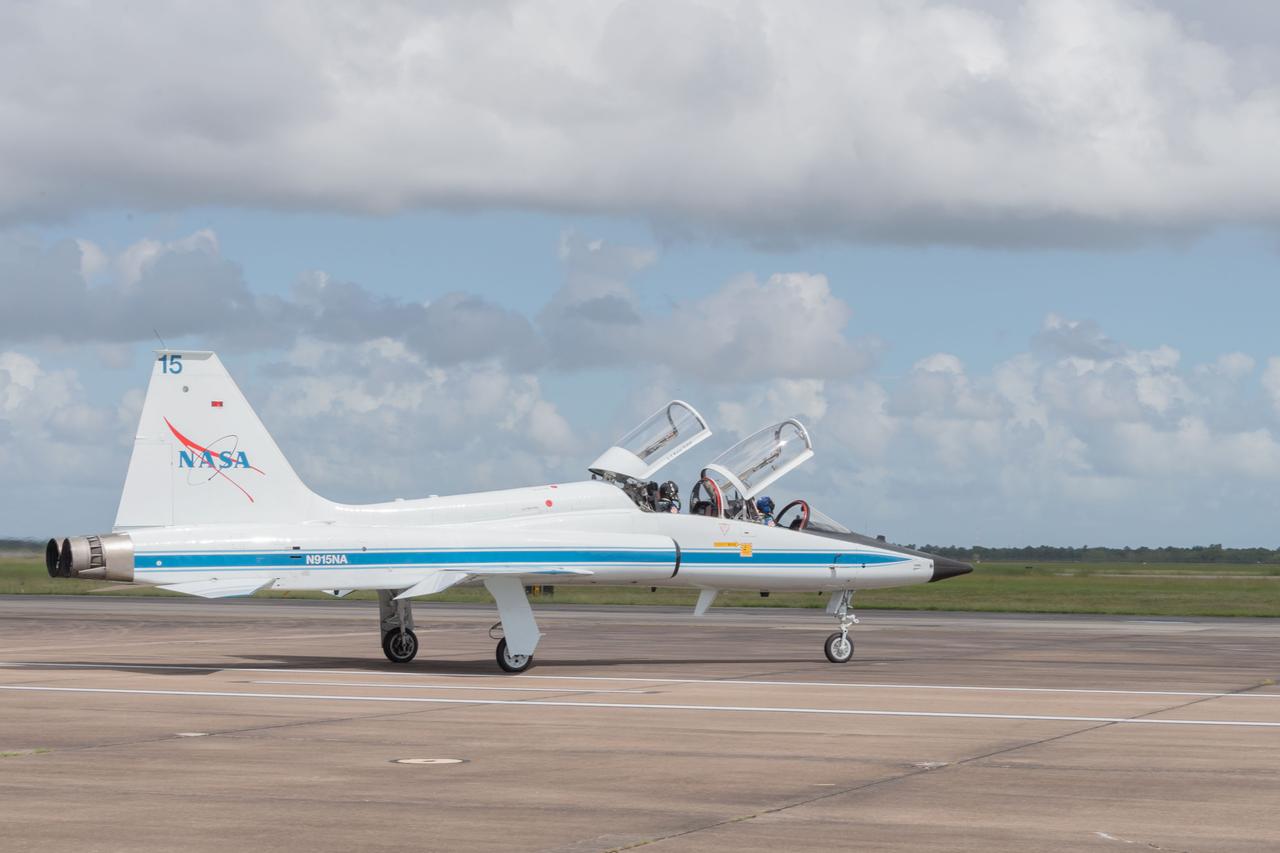
NASA commercial crew astronauts Josh Cassada and Suni Williams prepare for T-38 training flights at Ellington Field Joint Reserve Base in Houston. Cassada and Williams are assigned to the Boeing Starliner’s second crewed flight.

JOHNSON SPACE CENTER, HOUSTON -- S97-12563-- Astronaut Robert L. Behnken, mission specialist.
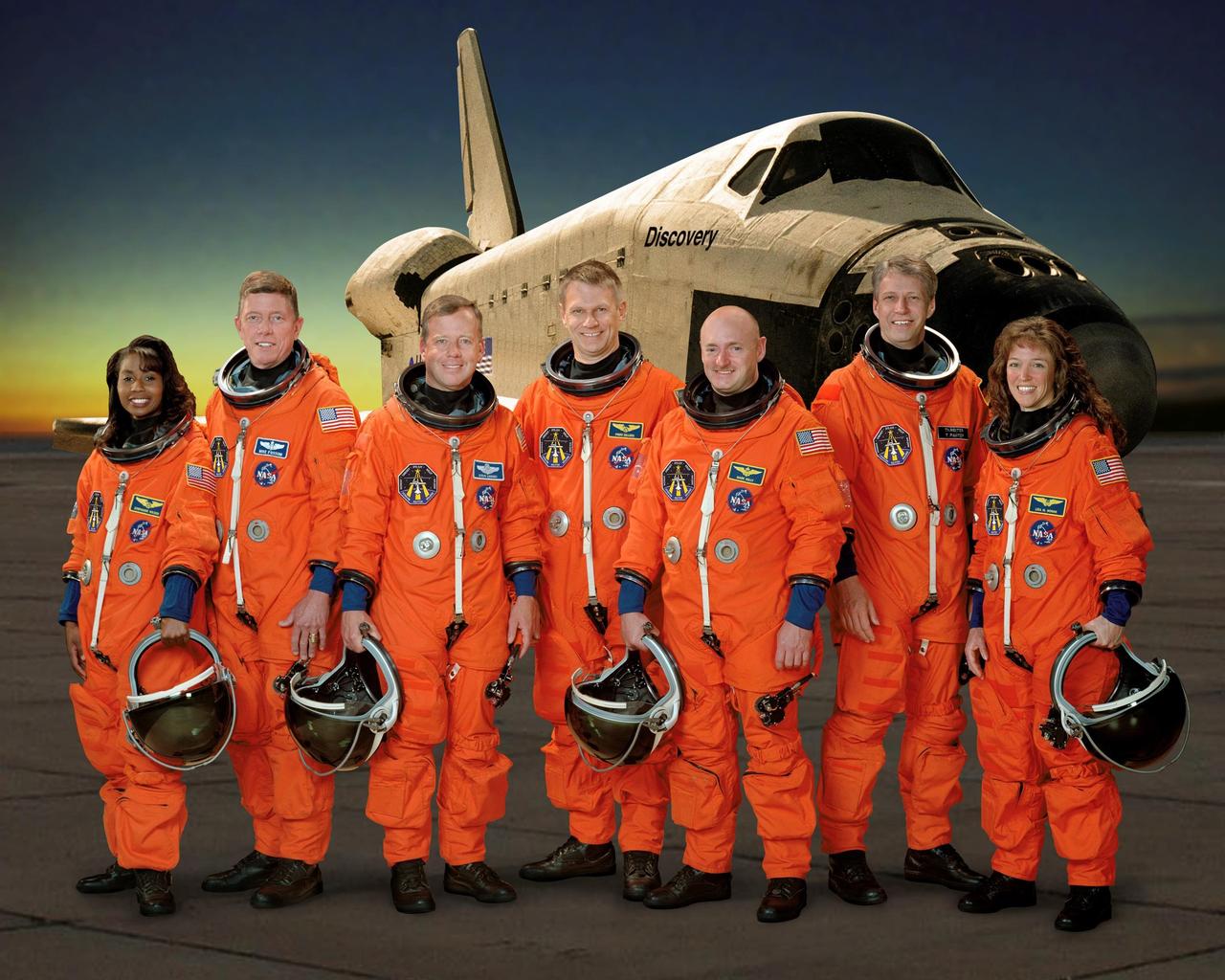
JOHNSON SPACE CENTER, TEXAS - STS121-S-002 (5 April 2006) --- These seven astronauts take a break from training to pose for the STS-121 crew portrait. From the left are astronauts Stephanie D. Wilson, Michael E. Fossum, both mission specialists; Steven W. Lindsey, commander; Piers J. Sellers, mission specialist; Mark E. Kelly, pilot; European Space Agency (ESA) astronaut Thomas Reiter of Germany; and Lisa M. Nowak, both mission specialists. The crewmembers are attired in training versions of their shuttle launch and entry suit.

JOHNSON SPACE CENTER, HOUSTON, TEXAS -- (JSC2000-E-20496) Official portrait of astronaut Christopher J. (Gus) Loria, pilot.
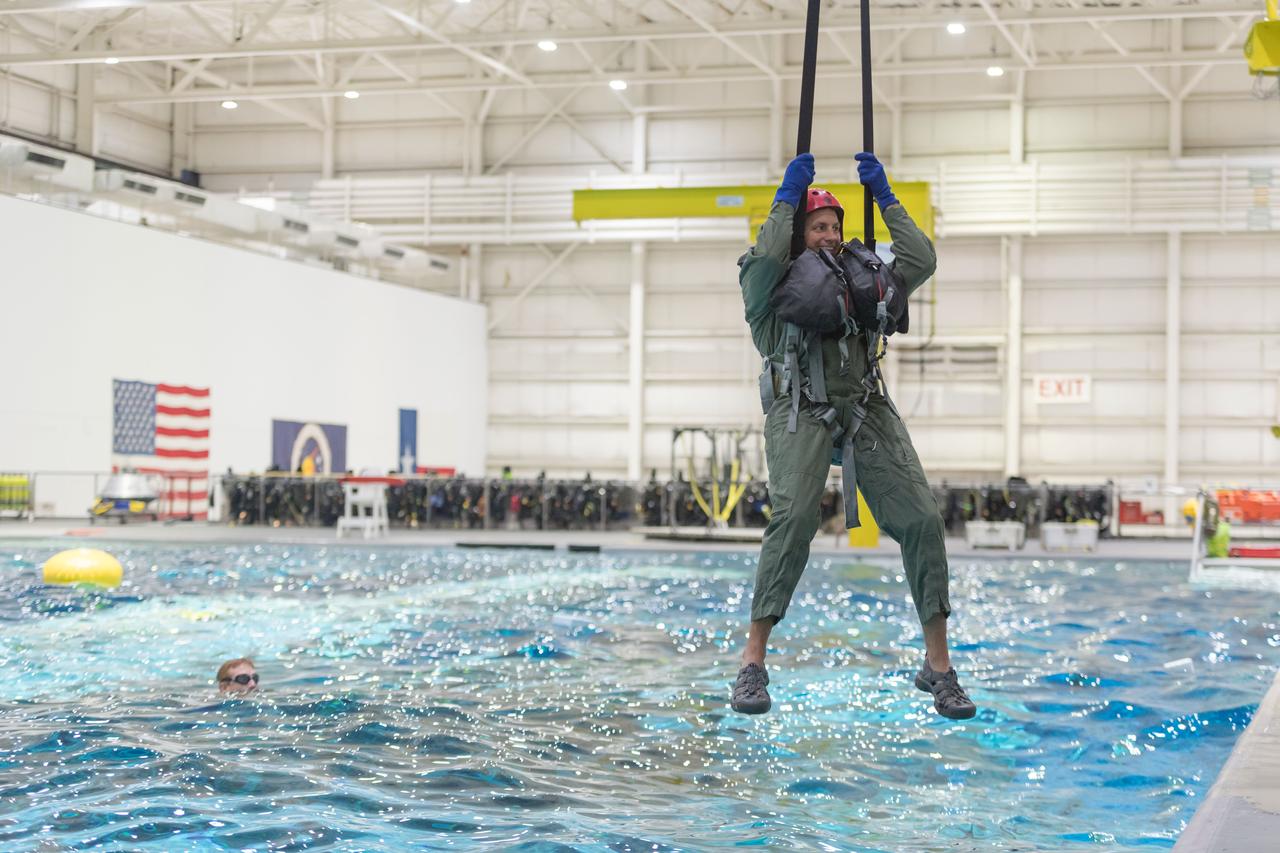
NASA commercial crew astronaut Josh Cassada practices water survival techniques at the Neutral Bouyancy Laboratory. Cassada is assigned to the second crewed flight to the International Space Station of Boeing’s CST-100 Starliner.
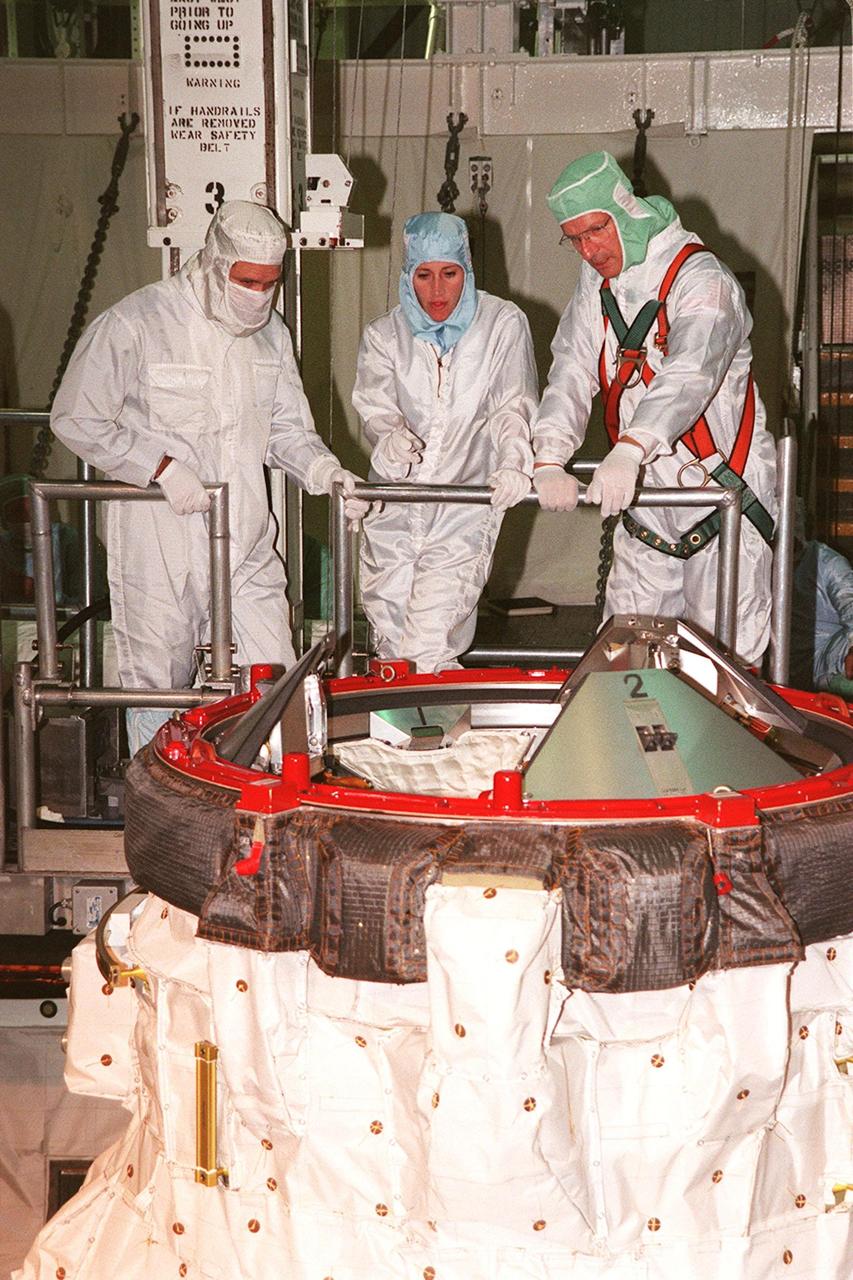
In the payload bay of the orbiter Discovery, STS-103 Mission Specialists John M. Grunsfeld (Ph.D.), left, and Claude Nicollier of Switzerland, right, are briefed on part of the equipment they will use on their mission by a worker from Johnson Space Center, center. The mission involves the repair and upgrade of the Hubble Space Telescope. The crew, who are at KSC to take part in a Crew Equipment Interface Test, also includes Commander Curtis L. Brown Jr., Pilot Scott J. Kelly, and Mission Specialists Steven L. Smith, C. Michael Foale (Ph.D.), and Jean-François Clervoy of France. Nicollier and Clervoy are with the European Space Agency. Mission STS-103 is a "call-up" due to the need to replace portions of the pointing system, the gyros, which have begun to fail on the Hubble Space Telescope. Although Hubble is operating normally and conducting its scientific observations, only three of its six gyroscopes are working properly. The gyroscopes allow the telescope to point at stars, galaxies and planets. The STS-103 crew will not only replace gyroscopes, it will also replace a Fine Guidance Sensor and an older computer with a new enhanced model, an older data tape recorder with a solid-state digital recorder, a failed spare transmitter with a new one, and degraded insulation on the telescope with new thermal insulation. The crew will also install a Battery Voltage/Temperature Improvement Kit to protect the spacecraft batteries from overcharging and overheating when the telescope goes into a safe mode. The scheduled launch date in October is under review
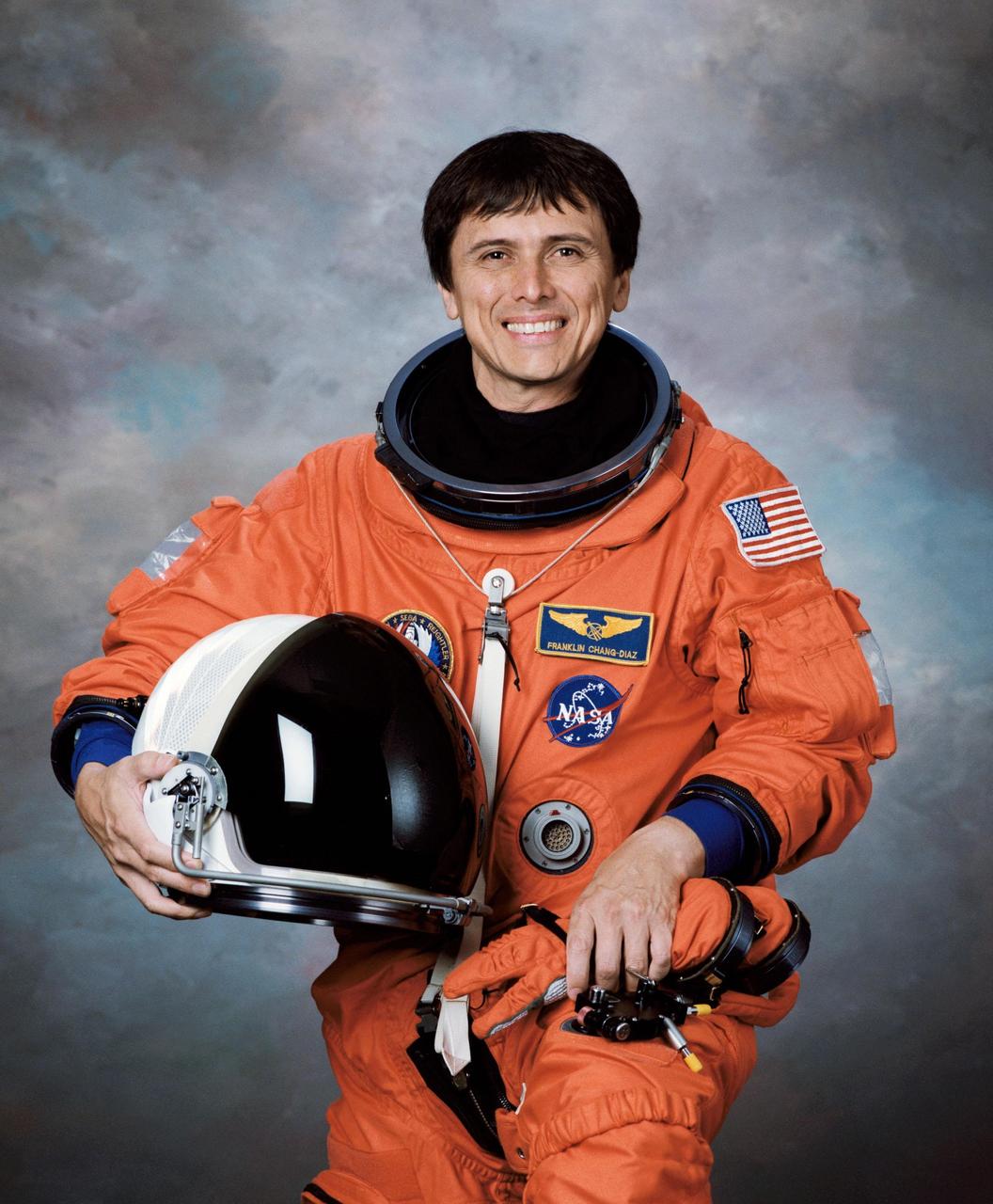
JOHNSON SPACE CENTER, HOUSTON, TX -- (JSC 597-06573) --Official Portrait of astronaut Franklin R. Chang-Diaz, STS-111 mission specialist

JOHNSON SPACE CENTER, Houston - JSC2003-E-47249 (16 April 2003) - Astronaut William A. Oefelein, pilot.
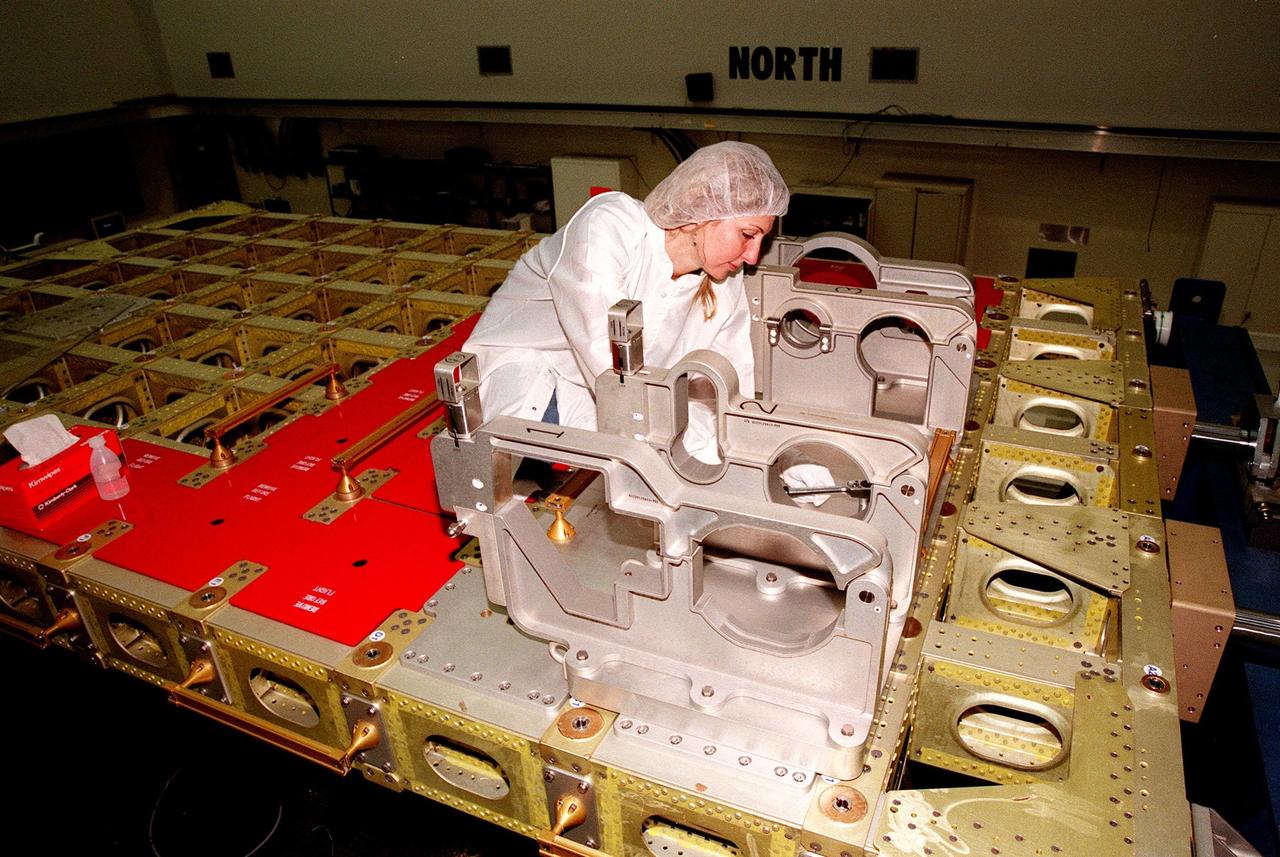
At Astrotech, Titusville, Fla., Lora Lawrence, with Johnson Space Center, makes a bonding check on the International Cargo Carrier that will be used during future International Space Station (ISS) assembly missions. The nonpressurized ICC fits inside the payload bay of the orbiter. The ICC will carry the SPACEHAB Oceaneering Space System Box (SHOSS), a logistics items carrier. SHOSS can hold a maximum of 400 pounds of equipment and will carry items to be used during STS-96 and future ISS assembly flights. Also aboard the ICC will be the ORU Transfer Device (OTD), a U.S.-built crane that will be stowed on Unity for use during future ISS assembly missions. The ICC will fly on mission STS-96, targeted for launch on May 20
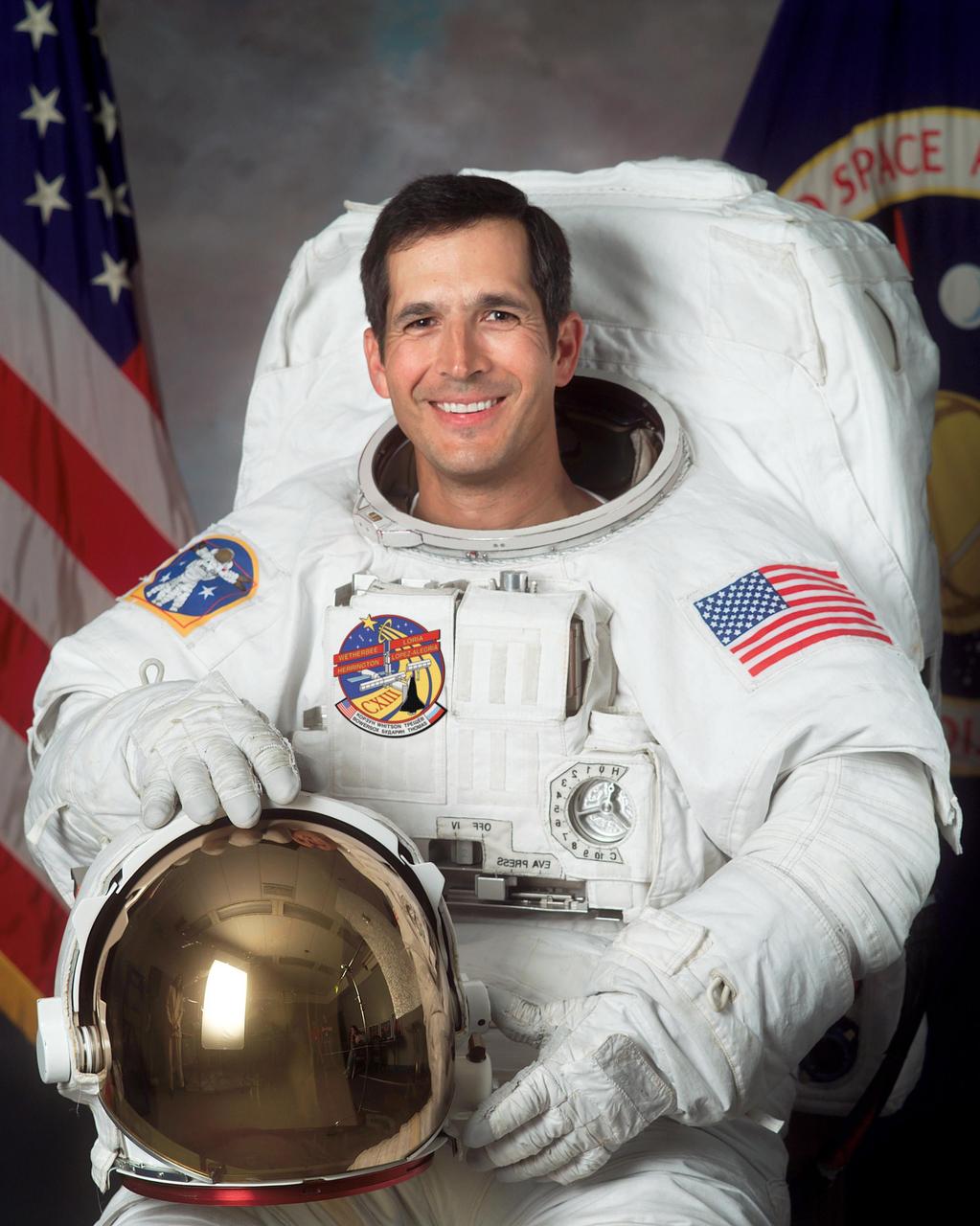
JOHNSON SPACE CENTER, HOUSTON, TEXAS -- (JSC2000-E-21740) Official portrait of astronaut John B. Herrington, mission specialist.
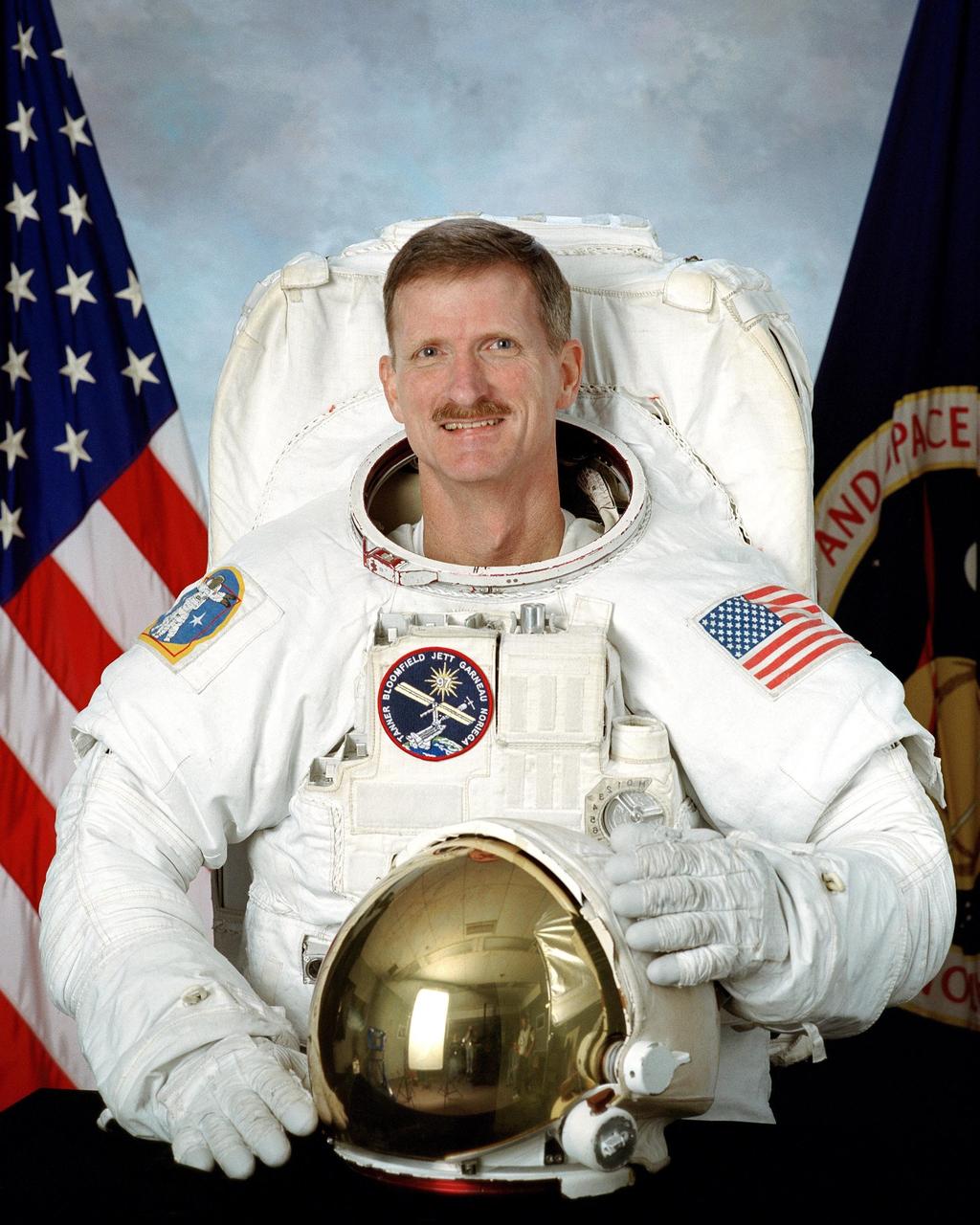
JOHNSON SPACE CENTER, HOUSTON, TEXAS -- Official portrait of astronaut Joseph R. Tanner, mission specialist.
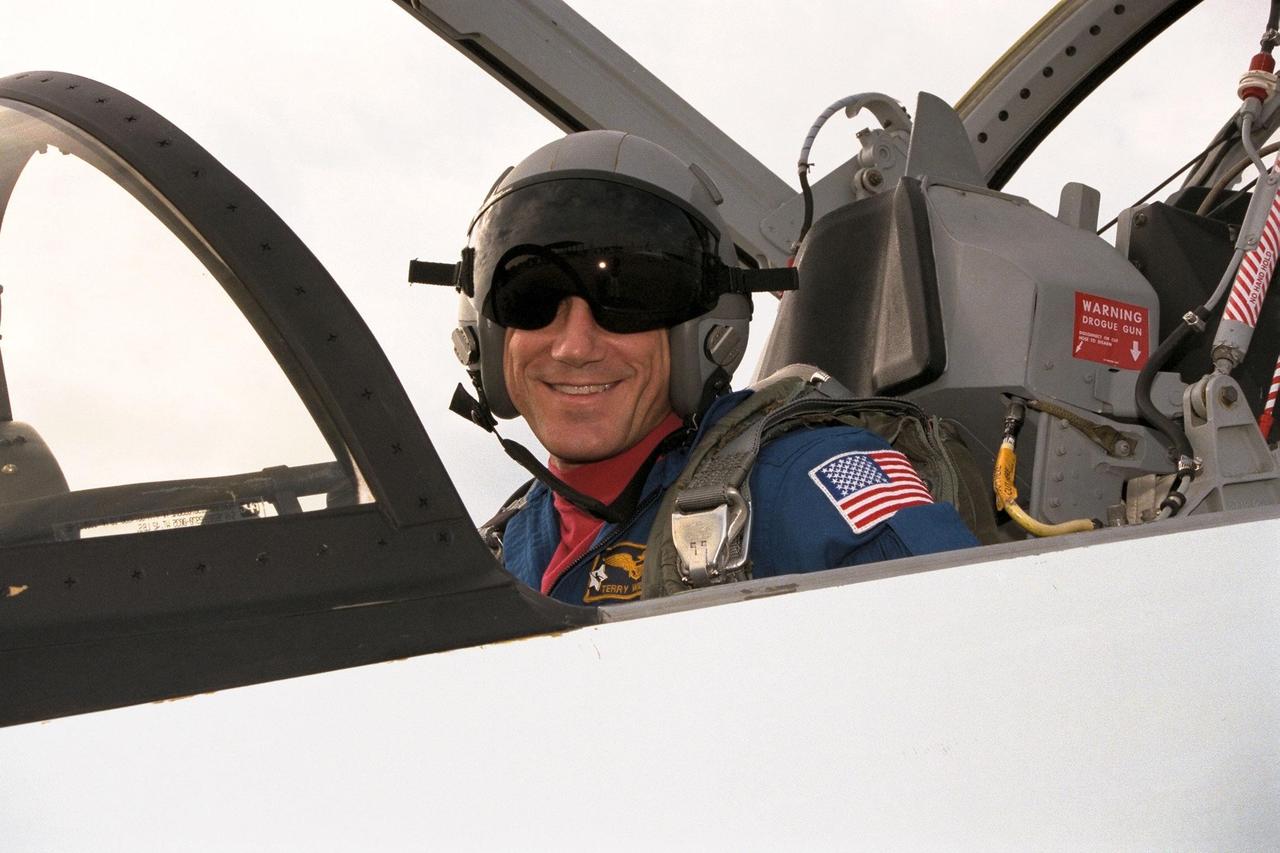
STS-89 Commander Terrence Wilcutt arrives at the KSC Shuttle Landing Facility in one of the T-38 aircraft traditionally flown by the astronaut corps. The eight STS-89 crew members flew into KSC from Johnson Space Center as final preparations are under way toward the scheduled liftoff on Jan. 22 of the Space Shuttle Endeavour on the eighth mission to dock with the Russian Space Station Mir. After docking, STS-89 Mission Specialist Andrew Thomas, Ph.D., will transfer to the space station, succeeding David Wolf, M.D., who will return to Earth aboard Endeavour. Dr. Thomas will live and work on Mir until June. STS-89 is scheduled for a Jan. 22 liftoff at 9:48 p.m. EST
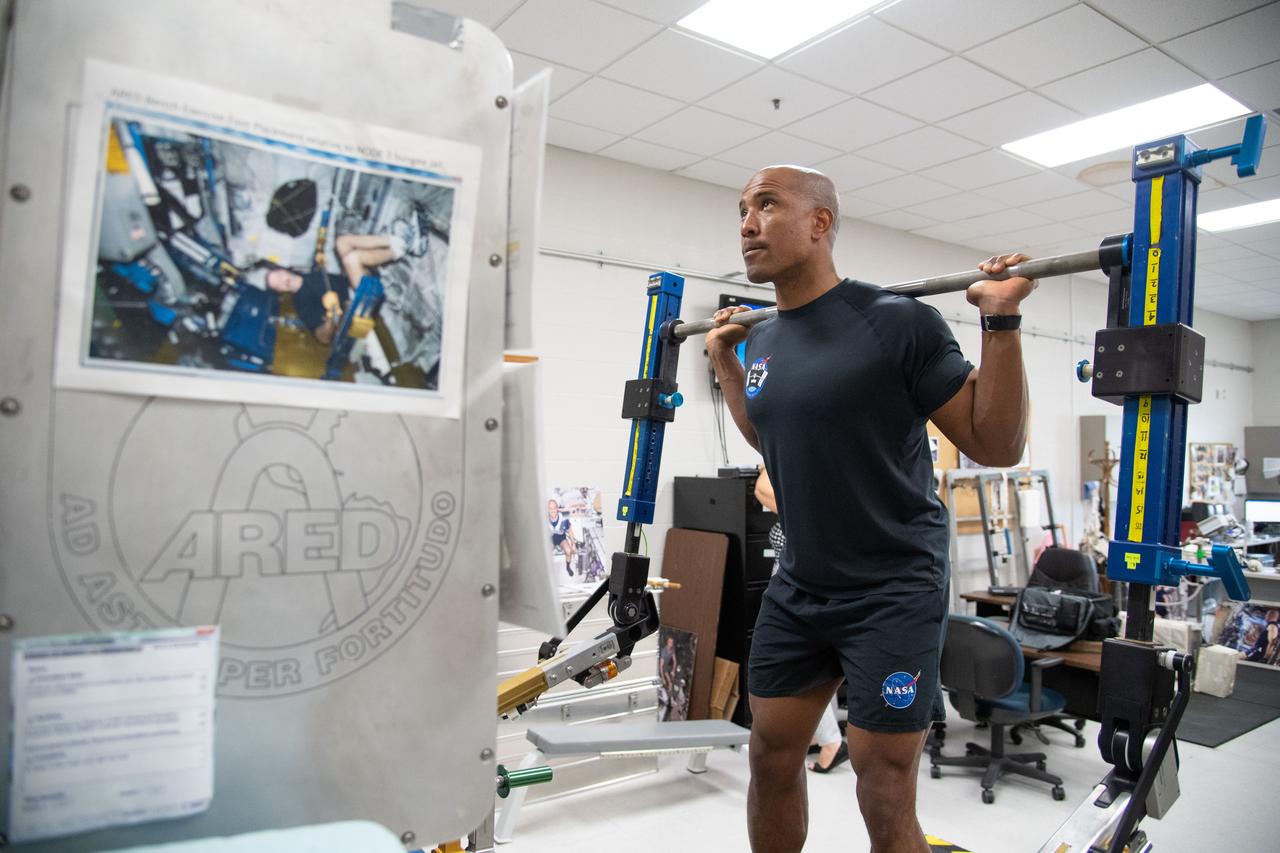
NASA commercial crew astronaut Victor Glover performs physical training on the Advanced Resistive Exercise Device (ARED) at the agency’s Johnson Space Center in Houston. Glover is assigned to the SpaceX Crew Dragon’s second crewed flight.

At the Shuttle Landing Facility, STS-97 Mission Specialist Marc Garneau, who is with the Canadian Space Agency, climbs down from a T-38 jet aircraft that brought him to KSC from Johnson Space Center. He and the rest of the crew have returned to KSC for the launch, scheduled for Nov. 30 at about 10:06 p.m. EST. Mission STS-97is the sixth construction flight to the International Space Station. Its payload includes the P6 Integrated Truss Structure and a photovoltaic (PV) module, with giant solar arrays that will provide power to the Station. The mission includes two spacewalks to complete the solar array connections. STS-97 is scheduled to launch Nov. 30 at about 10:06 p.m. EST
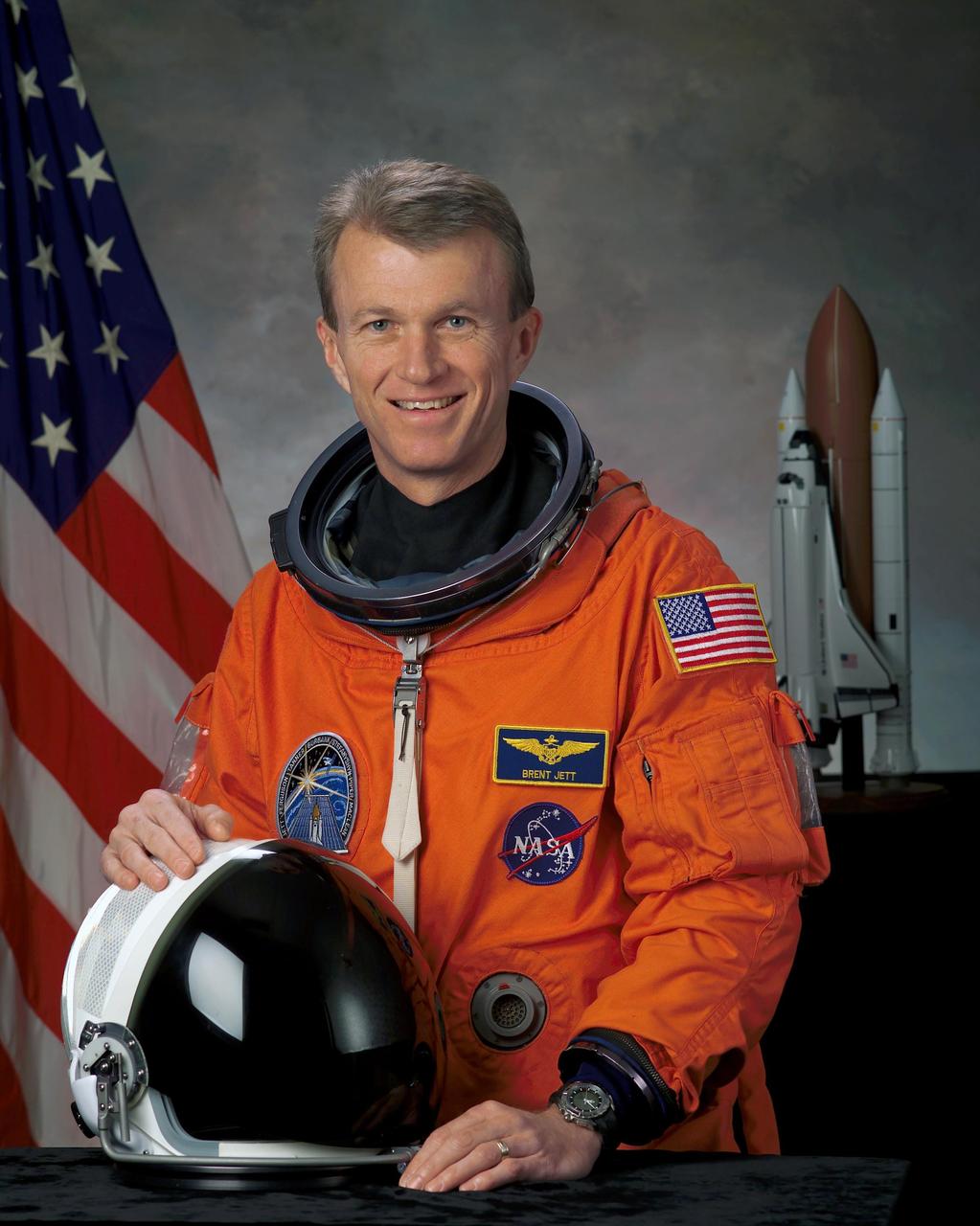
JOHNSON SPACE CENTER, TX - JSC2003-E-01649 (December 20, 2002) -- Astronaut Brent W. Jett Jr., mission commander.
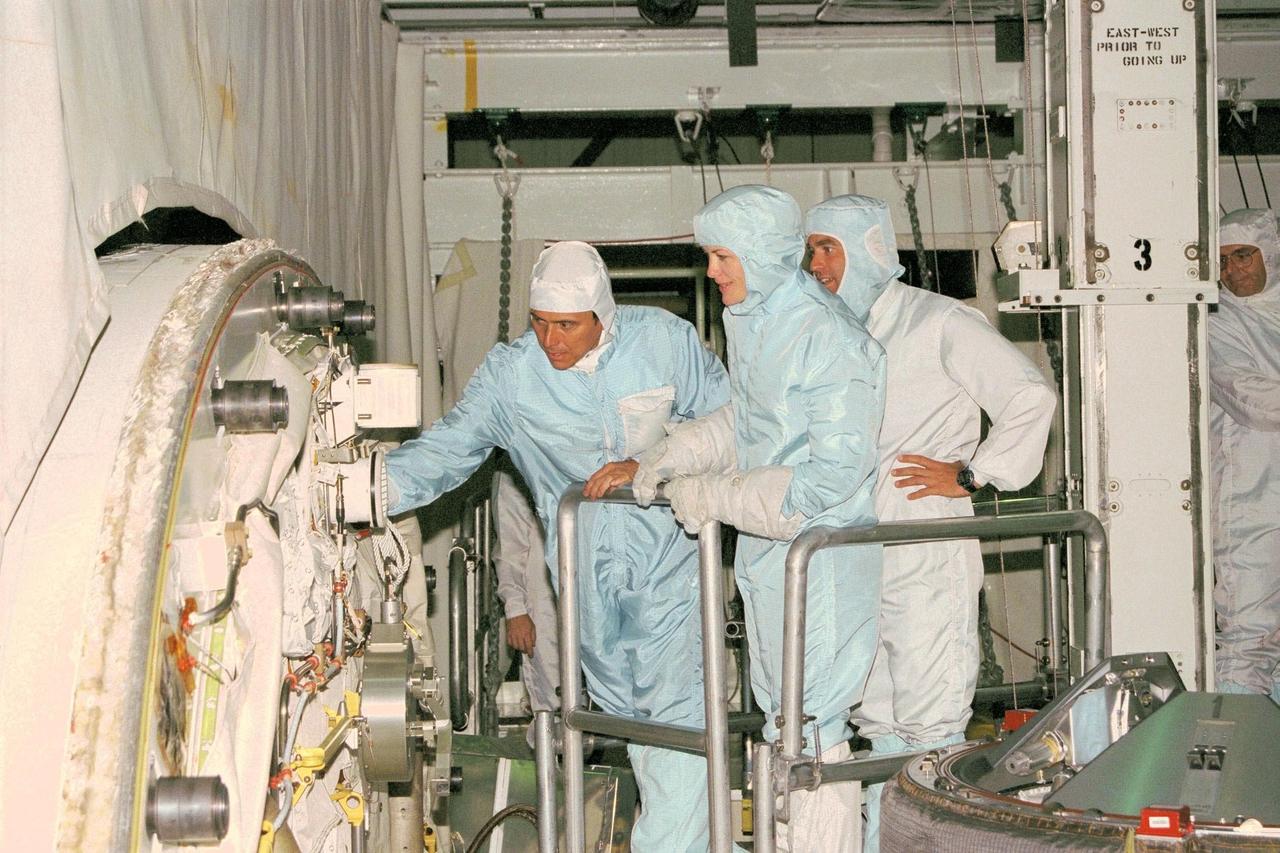
STS-91 crew members participate in the Crew Equipment Interface Test, or CEIT, in KSC's Orbiter Processing Facility Bay 2. From left to right are STS-91 Mission Specialists Franklin Chang-Diaz, Ph.D., and Janet Kavandi, Ph.D., along with Kieth Johnson, an EVA trainer/flight controller from Johnson Space Center. During CEIT, the crew have an opportunity to get a hands-on look at the payloads with which they'll be working on-orbit. The STS-91 crew are scheduled to launch aboard the Shuttle Discovery for the ninth and final docking with the Russian Space Station Mir from KSC's Launch Pad 39A on May 28 at 8:05 EDT
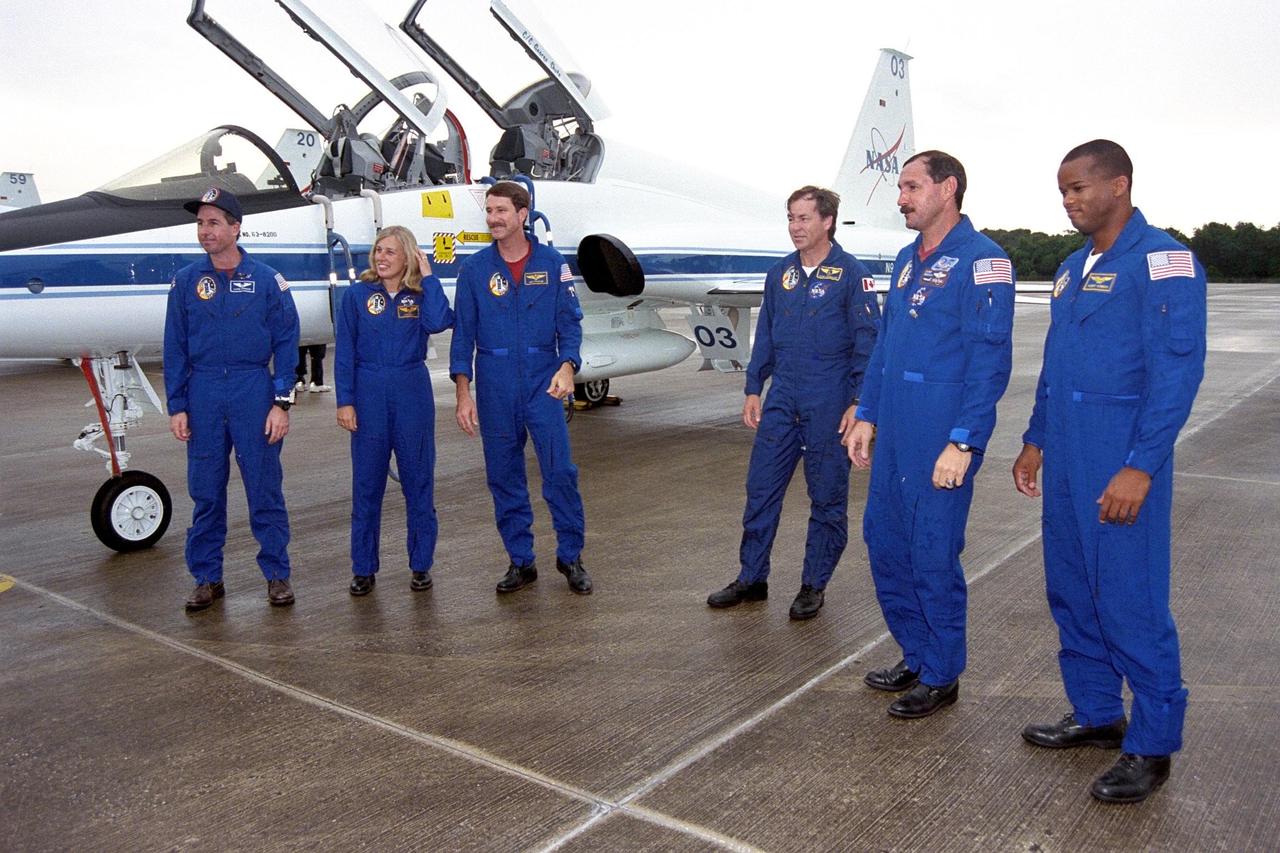
The STS-85 flight crew members pose with their T-38 jet trainer aircraft at the KSC Shuttle Landing Facility (SLF) after their arrival from NASA’s Johnson Space Center to begin final preparations for the STS-85 mission. They are (from left): Mission Specialist Stephen K. Robinson; Payload Commander N. Jan Davis; Pilot Kent V. Rominger; Payload Specialist Bjarni V. Tryggvason; Commander Curtis L. Brown, Jr.; and Mission Specialist Robert L. Curbeam, Jr. The primary payload aboard the Space Shuttle orbiter Discovery for the 11-day space flight is the Cryogenic Infrared Spectrometers and Telescopes for the Atmosphere-2 (CRISTA-SPAS-2). Other STS-85 payloads include the Manipulator Flight Demonstration (MFD), and Technology Applications and Science-1 (TAS-1) and International Extreme Ultraviolet Hitchhiker-2 (IEH-2) experiments
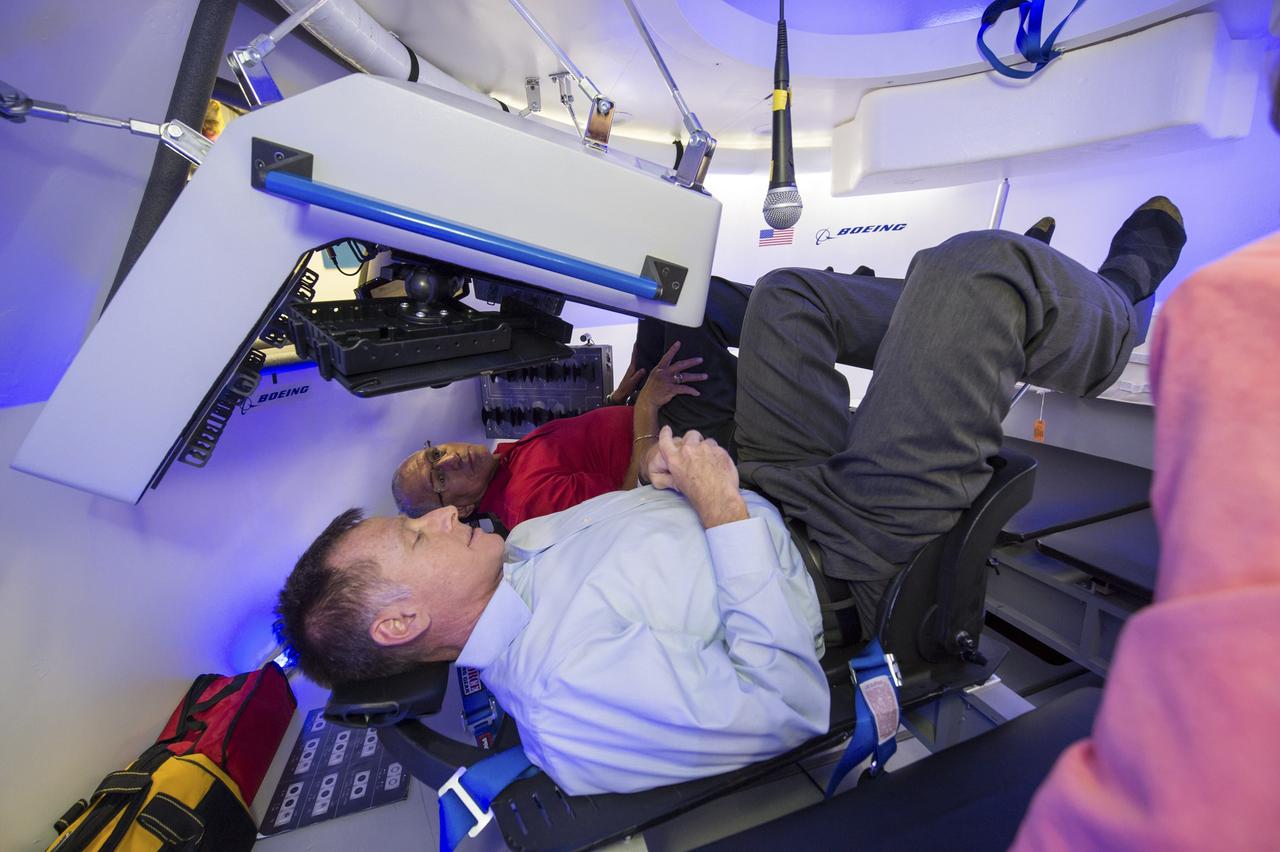
HOUSTON -- JSC-2013-E076055 -- The Boeing Company's Director of Crew and Mission Operations Chris Ferguson explains the control system of a mock-up CST-100 to NASA Administrator Charlie Bolden, back, at the company's Houston Product Support Center near Johnson Space Center. Boeing showcased its work on a fully outfitted test version of the spacecraft to Bolden and Johnson management. Boeing's CST-100 is designed to transport a mix of crew and cargo to low-Earth-orbit destinations. Boeing is one of three aerospace industry partners working with NASA's Commercial Crew Program, or CCP, during the Commercial Crew Integrated Capability, or CCiCap, initiative, which is intended to make commercial human spaceflight services available for government and commercial customers. To learn more about CCP, visit www.nasa.gov/commercialcrew. Photo credit: NASA/James Blair
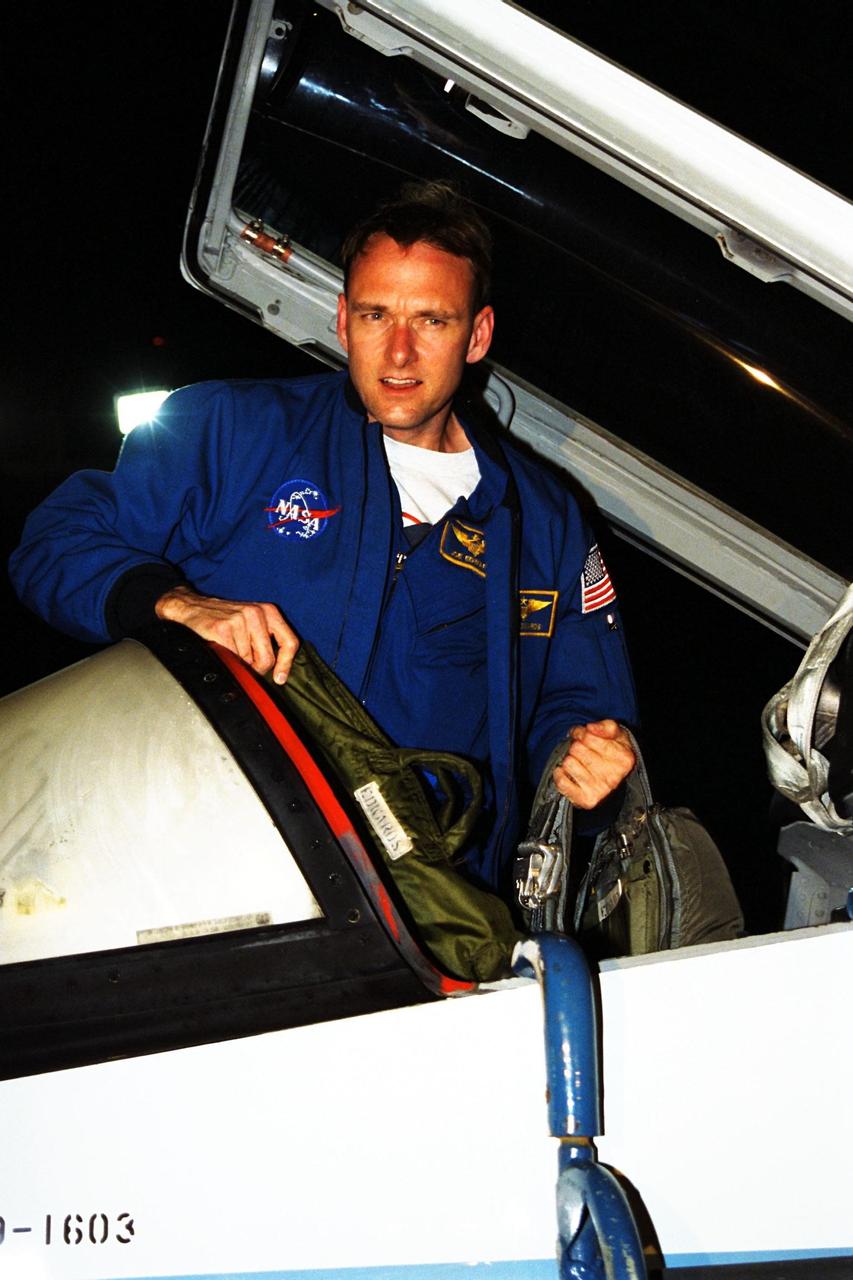
STS-89 Pilot Joe Edwards Jr., poses in his T-38 jet trainer after landing with other members of the flight crew at KSC’s Shuttle Landing Facility from NASA’s Johnson Space Center to begin Terminal Countdown Demonstration Test (TCDT) activities. The TCDT is held at KSC prior to each Space Shuttle flight to provide crews with the opportunity to participate in simulated countdown activities. Endeavour is targeted for launch of STS-89 on Jan. 22 at 9:48 p.m. EST, which will be the first mission of 1998 and the eighth to dock with Russia’s Mir Space Station. The mission is scheduled to last nine days
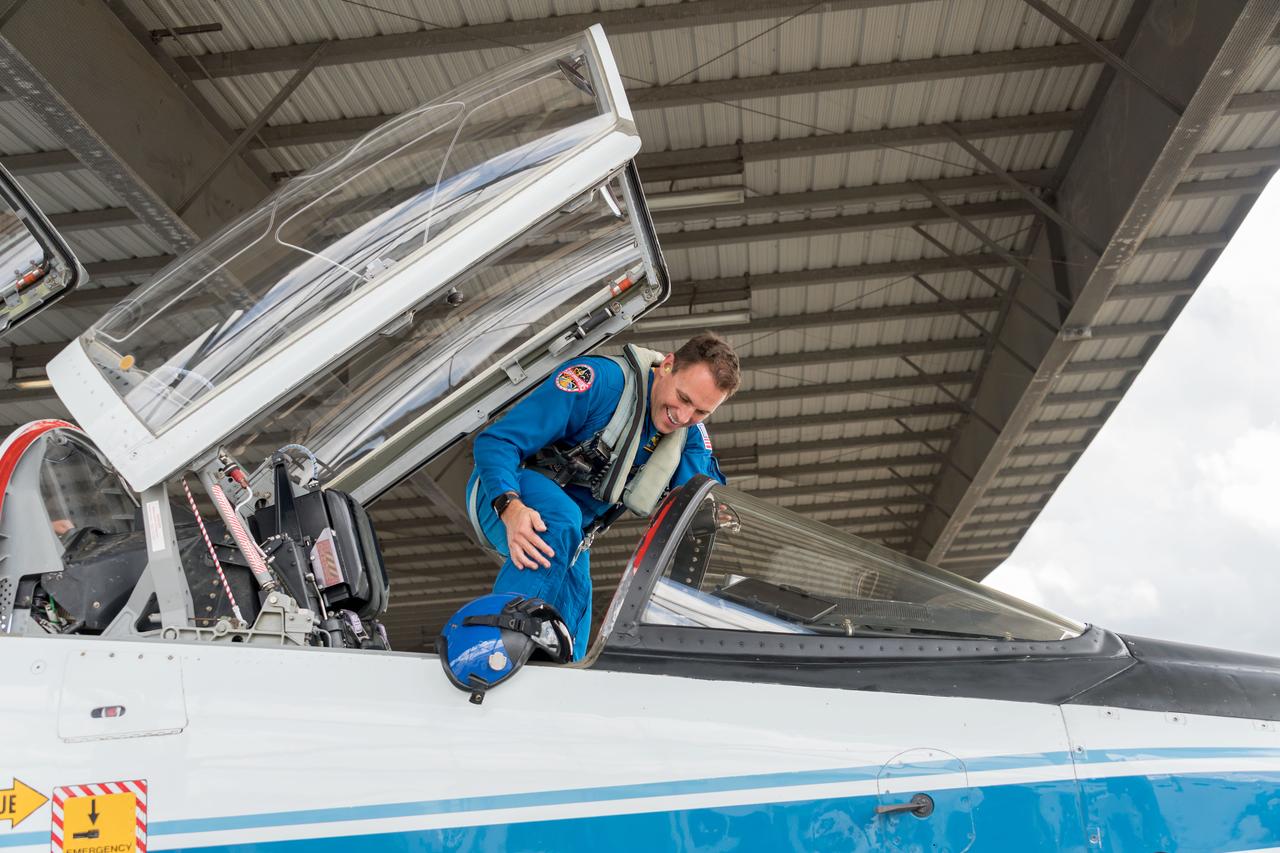
NASA commercial crew astronaut Josh Cassada prepares for T-38 training flights at Ellington Field Joint Reserve Base in Houston. Cassada is assigned to the Boeing Starliner’s second crewed flight.
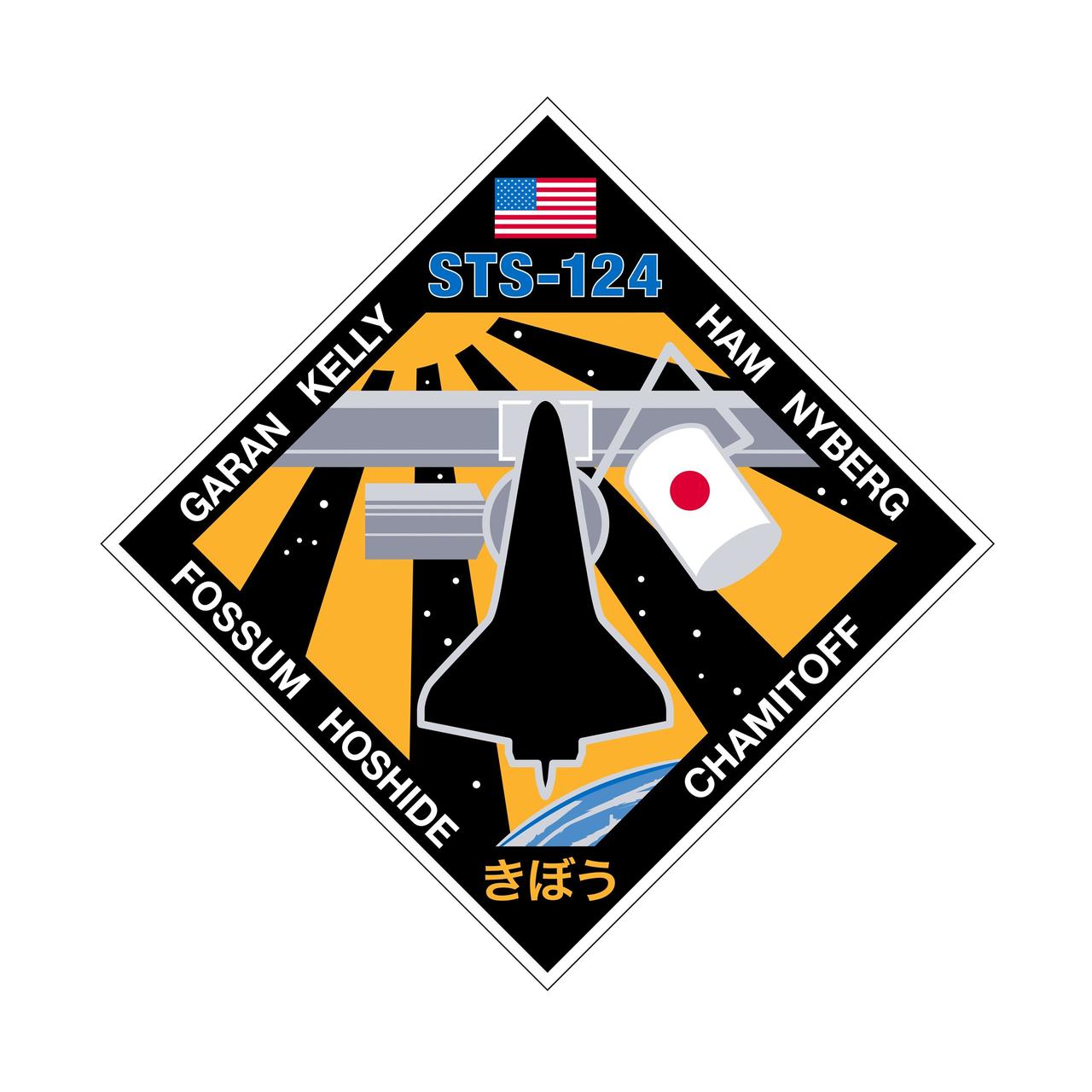
JOHNSON SPACE CENTER, Houston --- STS124-S-001 --- The STS-124/1J patch depicts the Space Shuttle Discovery docked with the International Space Station (ISS). STS-124/1J is dedicated to delivering and installing the Japanese Experiment Module (JEM) known as Kibo (Hope) to the ISS. The significance of the mission and the Japanese contribution to the ISS is recognized by the Japanese flag depicted on the JEM Pressurized Module (JPM) and the word Kibo written in Japanese at the bottom of the patch. The view of the sun shining down upon the Earth represents the increased "hope" that the entire world will benefit from the JEM's scientific discoveries. The JPM will be the largest habitable module on the ISS and is equipped with its own airlock and robotic arm for external experiments. In addition to delivering and installing the JPM, the STS-124 crew will relocate the JEM Logistics Pressurized (JLP) module to its permanent home on the zenith side of the JPM. During three planned space walks, the crew will perform external ISS maintenance and JPM outfitting, as well as extensive robotic operations by the ISS, space shuttle, and JEM robotic arms. It will be the first time that three different robotic arms will be operated during a single space flight mission. The NASA insignia design for shuttle flights is reserved for use by the astronauts and for other official use as the NASA Administrator may authorize. Public availability has been approved only in the form of illustrations by the various news media. When and if there is any change in this policy, which is not anticipated, it will be publicly announced.
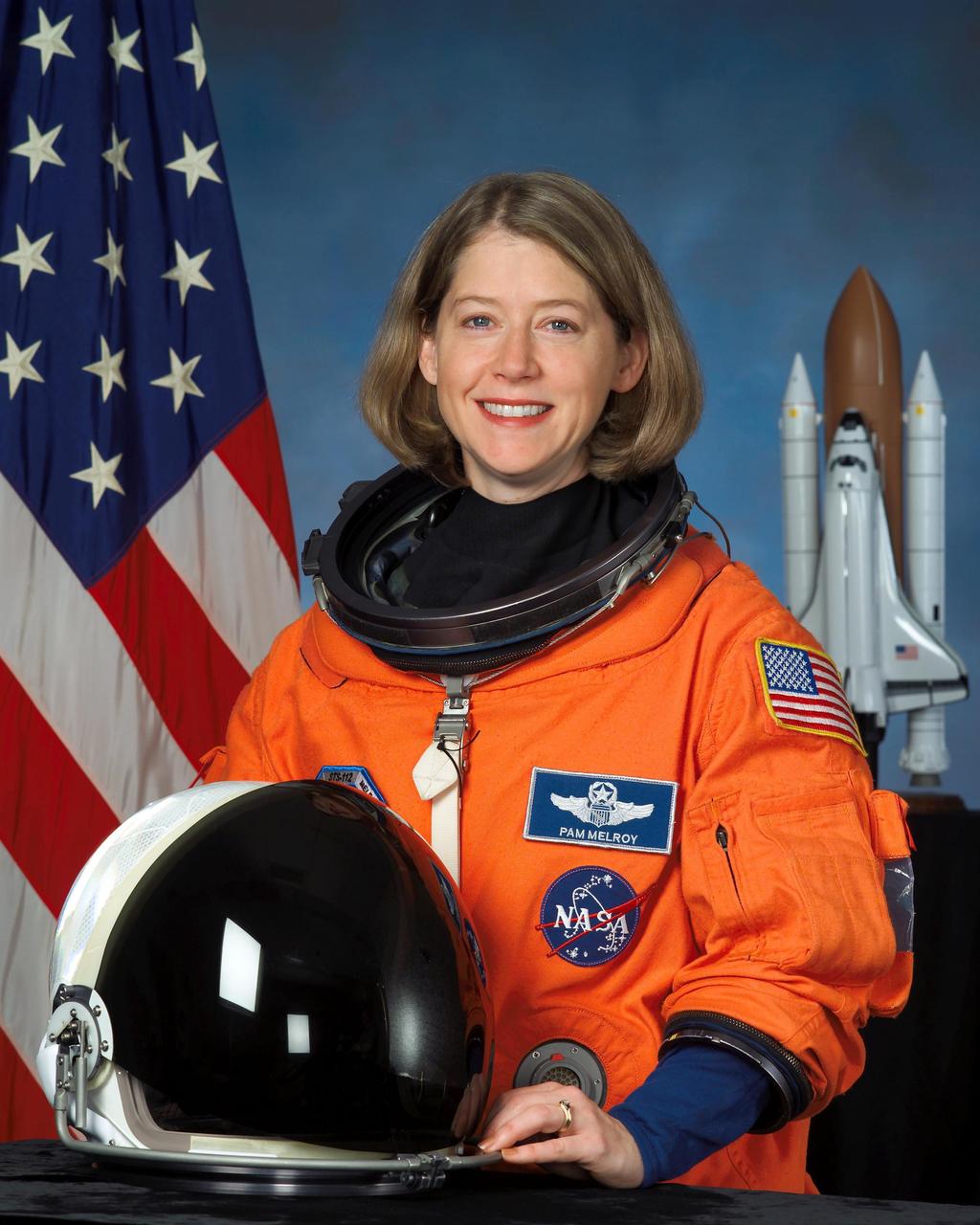
JOHNSON SPACE CENTER, Houston, Texas -- JSC2003-E-34617 -- Astronaut Pamela A. Melroy, commander
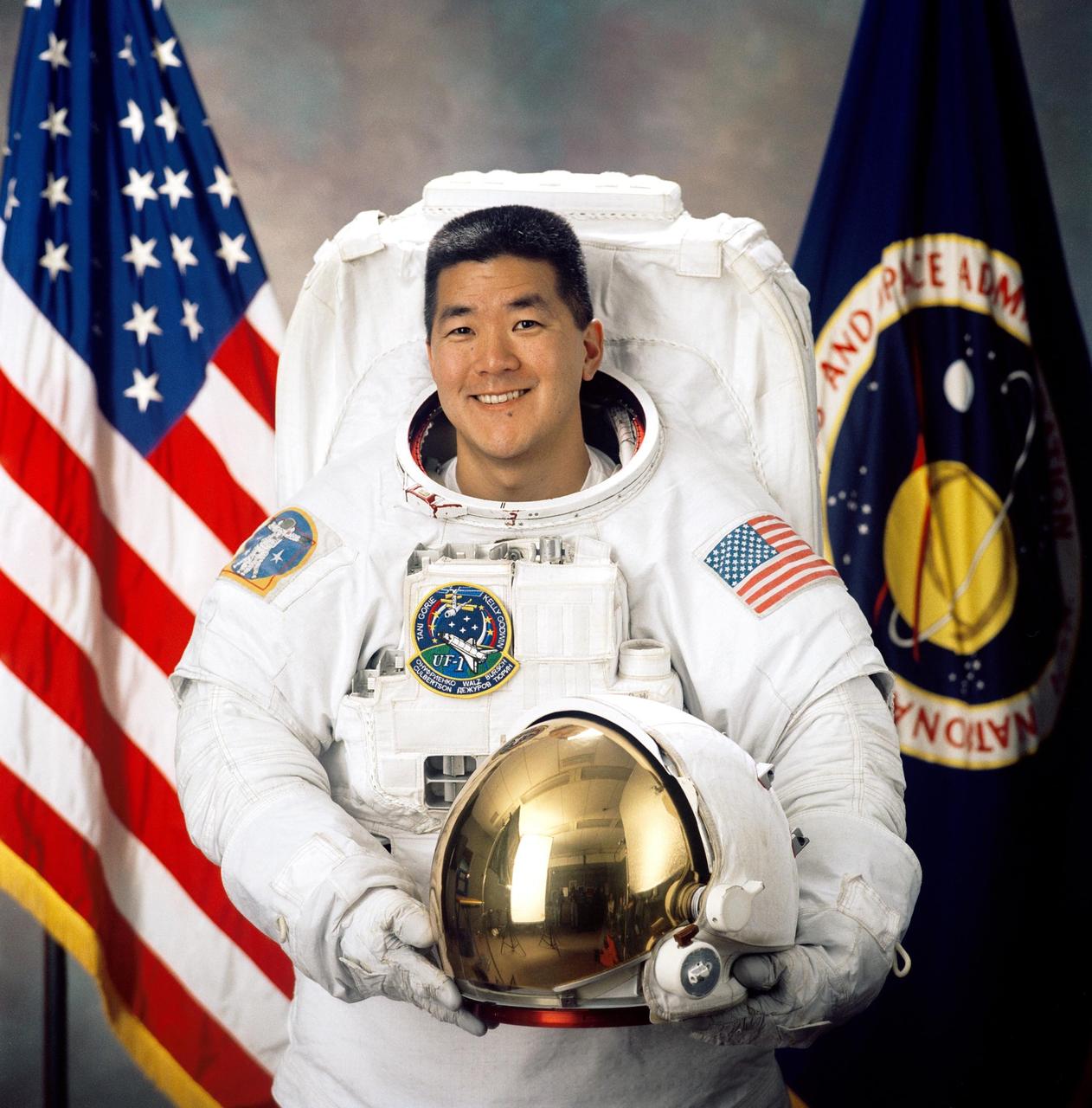
JOHNSON SPACE CENTER, Houston, Texas -- JSC2001-02581-- Astronaut Daniel M. Tani, mission specialist
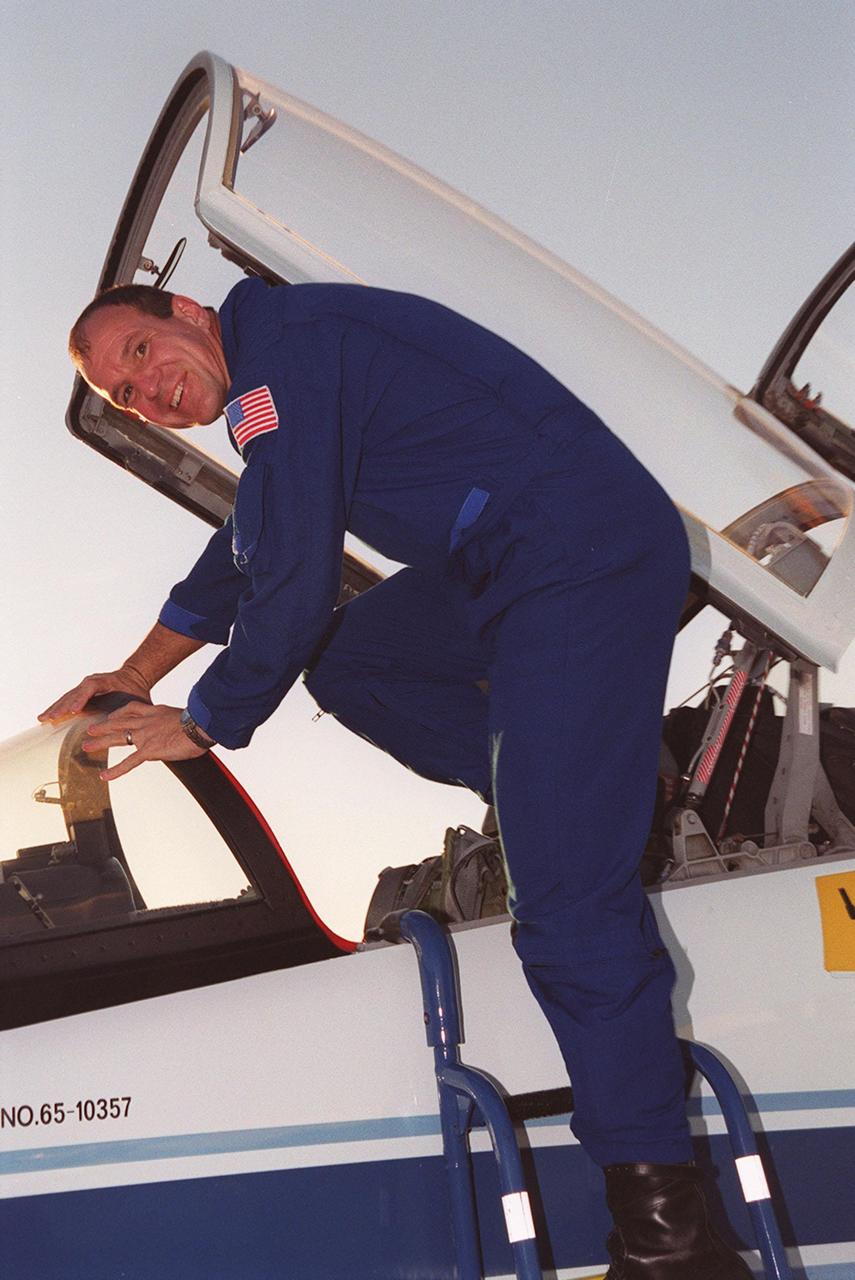
At the Shuttle Landing Facility, STS-97 Pilot Michael Bloomfield climbs out of the cockpit of a T-38 jet aircraft he flew from Johnson Space Center. He and the rest of the crew have returned to KSC for the launch, scheduled for Nov. 30 at about 10:06 p.m. EST. Mission STS-97is the sixth construction flight to the International Space Station. Its payload includes the P6 Integrated Truss Structure and a photovoltaic (PV) module, with giant solar arrays that will provide power to the Station. The mission includes two spacewalks to complete the solar array connections. STS-97 is scheduled to launch Nov. 30 at about 10:06 p.m. EST
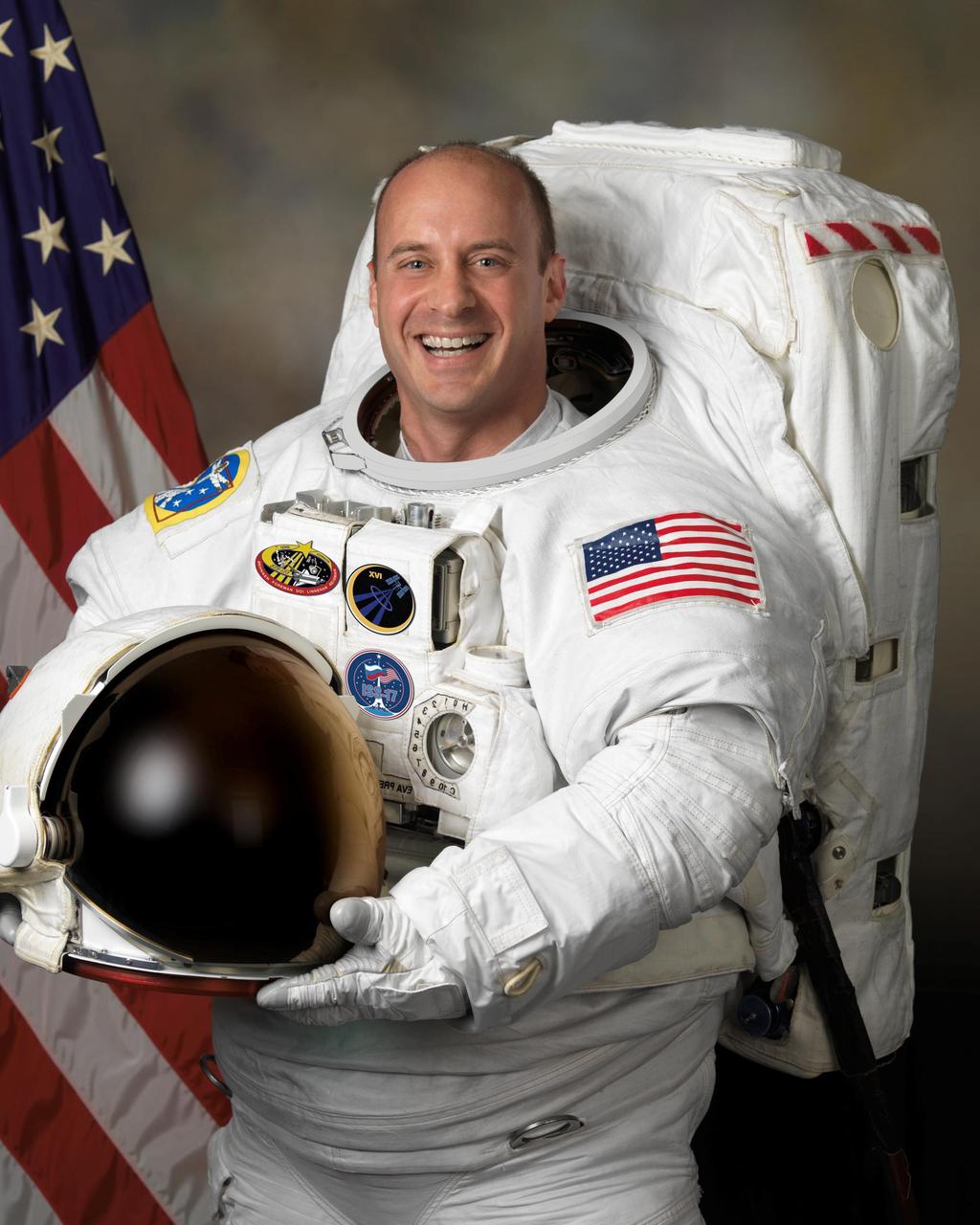
JOHNSON SPACE CENTER, HOUSTON -- JSC2008-E-005284-- Astronaut Garrett E. Reisman, mission specialist
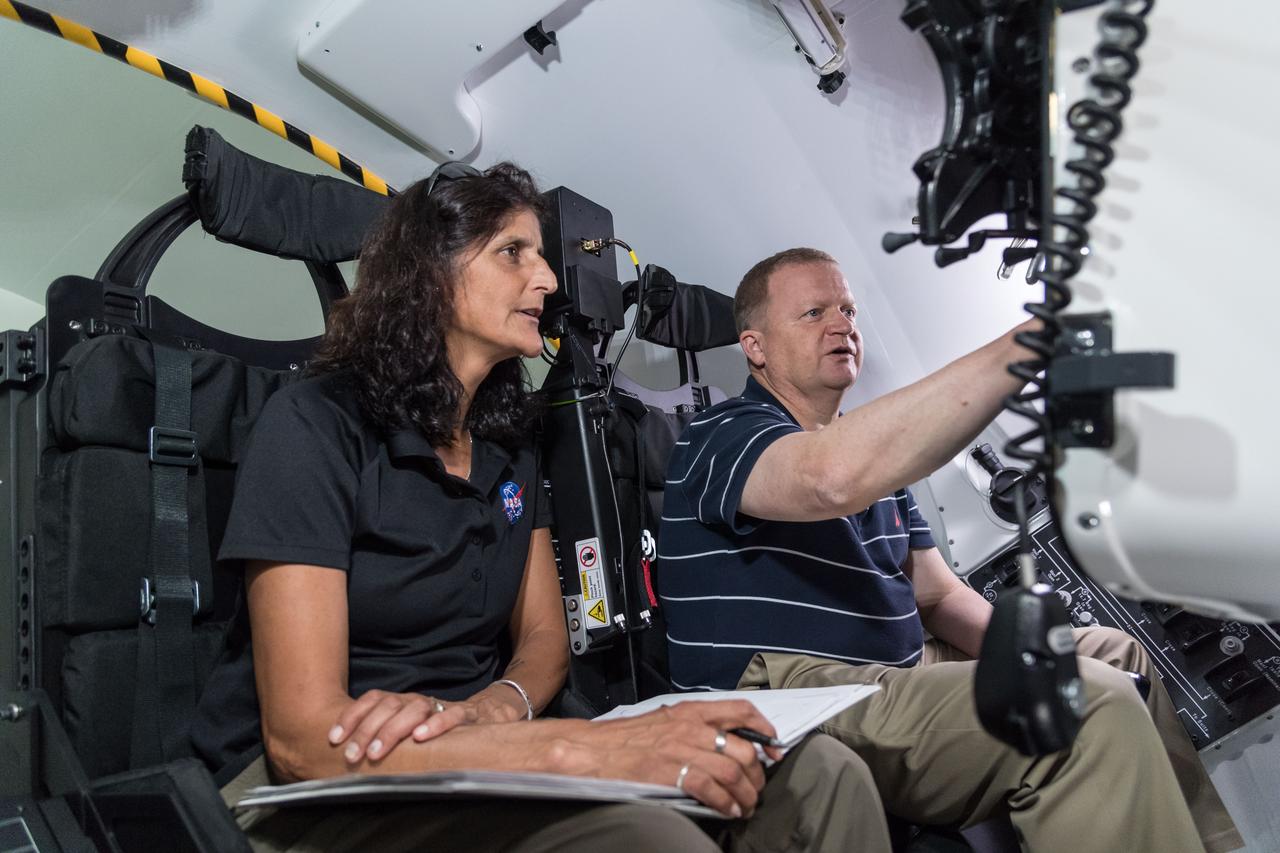
NASA commercial crew astronauts Eric Boe and Suni Williams train in a Boeing CST-100 Starliner mockup at the agency’s Johnson Space Center in Houston. Boe is assigned to launch to the International Space Station on the first crewed flight of Boeing’s CST-100 Starliner. Williams will fly to the space station on Starliner’s second crewed flight.
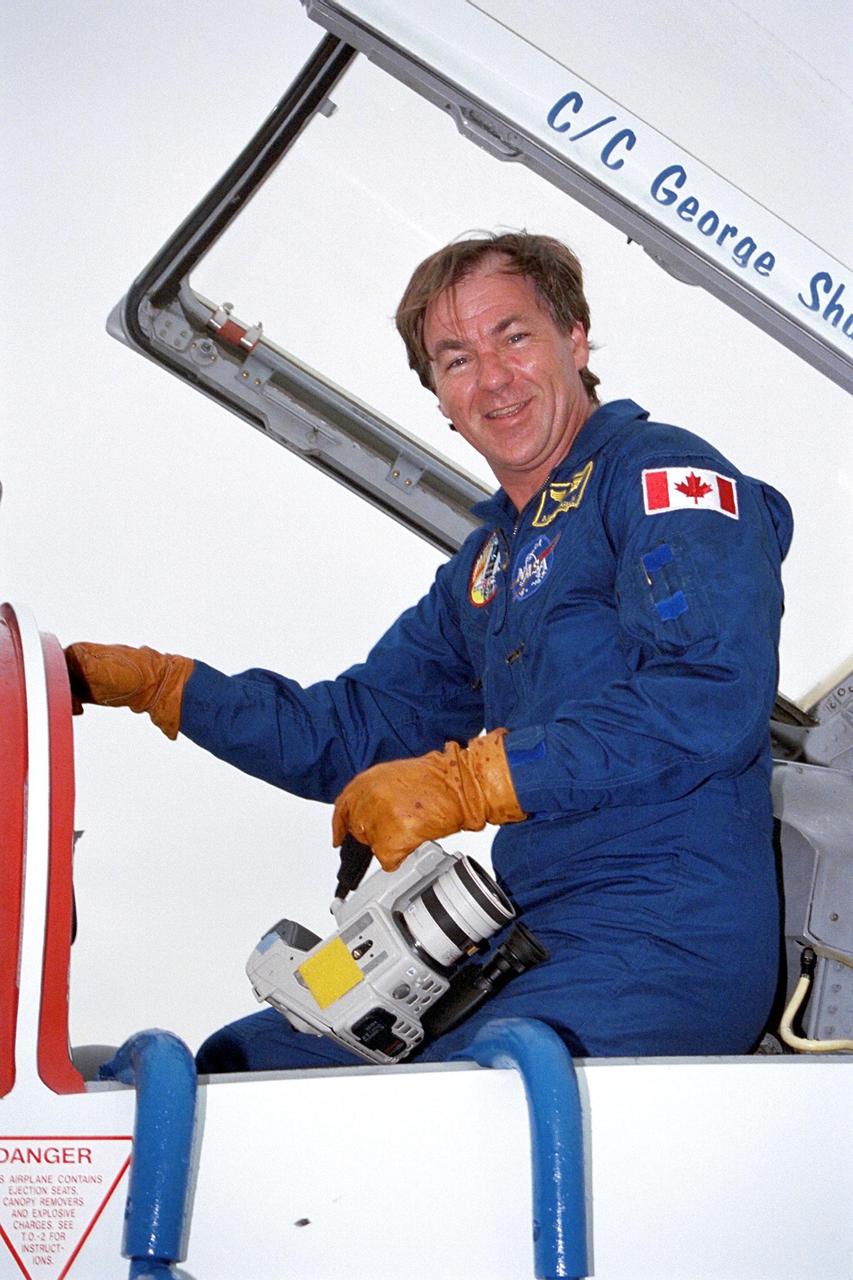
STS-85 Payload Specialist Bjarni V. Tryggvason poses in the cockpit of his T-38 jet trainer aircraft at KSC’s Shuttle Landing Facility (SLF) after his arrival with the rest of the flight crew from NASA’s Johnson Space Center to begin final preparations for the STS-85 mission. The other crew members are Commander Curtis L. Brown, Jr., Pilot Kent V. Rominger, Payload Commander N. Jan Davis, Mission Specialist Robert L. Curbeam, Jr., and Mission Specialist Stephen K. Robinson. The primary payload aboard the Space Shuttle orbiter Discovery for the 11-day space flight is the Cryogenic Infrared Spectrometers and Telescopes for the Atmosphere-2 (CRISTA-SPAS-2). Other STS-85 payloads include the Manipulator Flight Demonstration (MFD), and Technology Applications and Science-1 (TAS-1) and International Extreme Ultraviolet Hitchhiker-2 (IEH-2) experiments
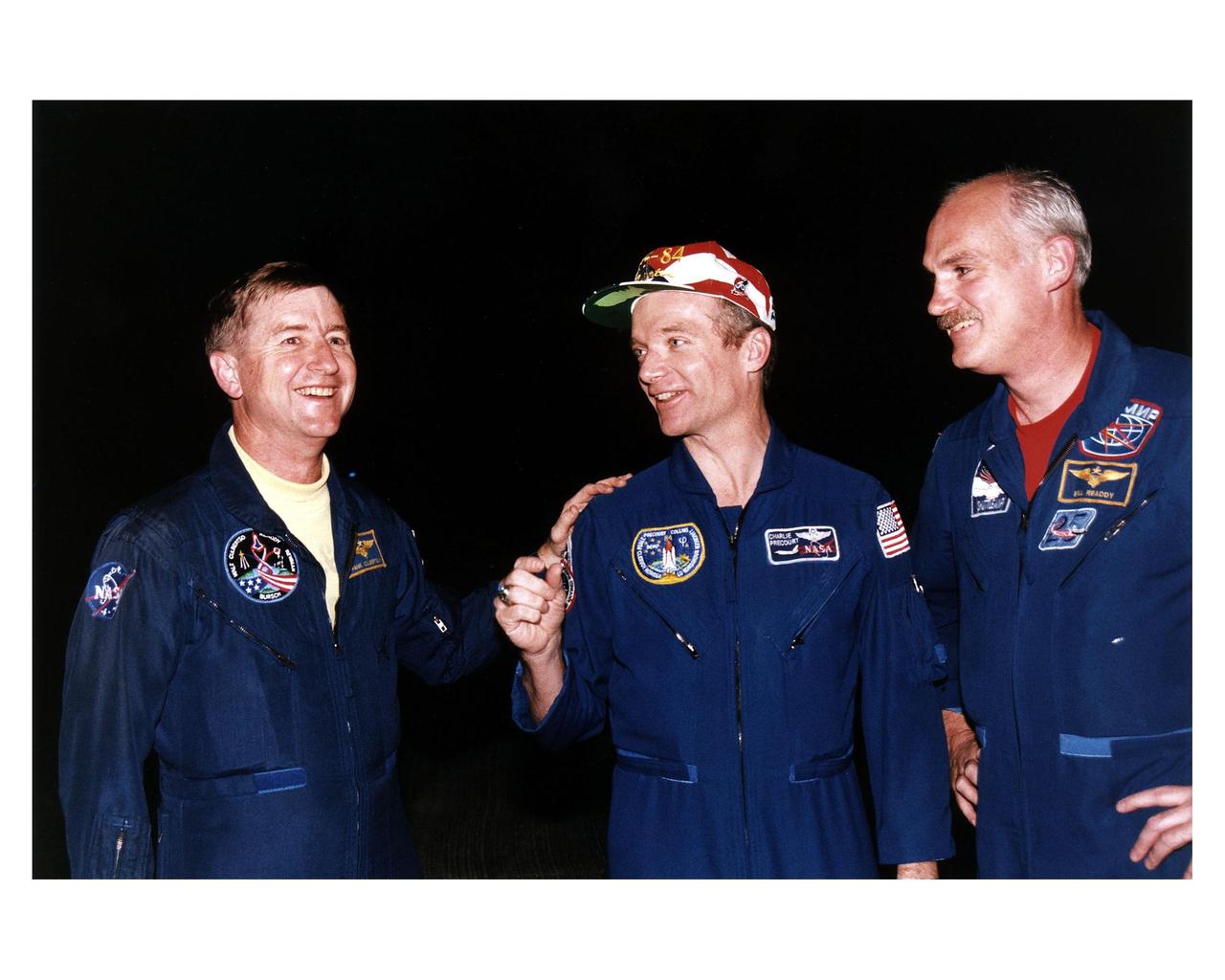
STS-84 Commander Charles J. Precourt talks with fellow astronauts Frank Culbertson, at left, and William F. Readdy after their arrival at KSC’s Shuttle Landing Facilty. Culbertson, NASA director of the Phase One Program of the International Space Station, and Readdy, manager, program development, in the Space Shuttle Program Office at Johnson Space Center, were the pilots of T-38 jets which brought STS-84 crew members to KSC for the launch. Culbertson’s passenger was STS-84 Mission Specialist Carlos I. Noriega; Readdy’s passenger was Mission Specialist C. Michael Foale. Liftoff of Space Shuttle Mission STS-84 is scheduled May 15. STS-84 will be the sixth docking of the Space Shuttle with the Russian Space Station Mir. During the docking, Foale will transfer to the Russian space station to become a member of the Mir 23 crew, replacing U.S. astronaut Jerry M. Linenger, who will return to Earth on Atlantis. Foale is scheduled to remain on Mir about four months until his replacement arrives on STS-86 in September
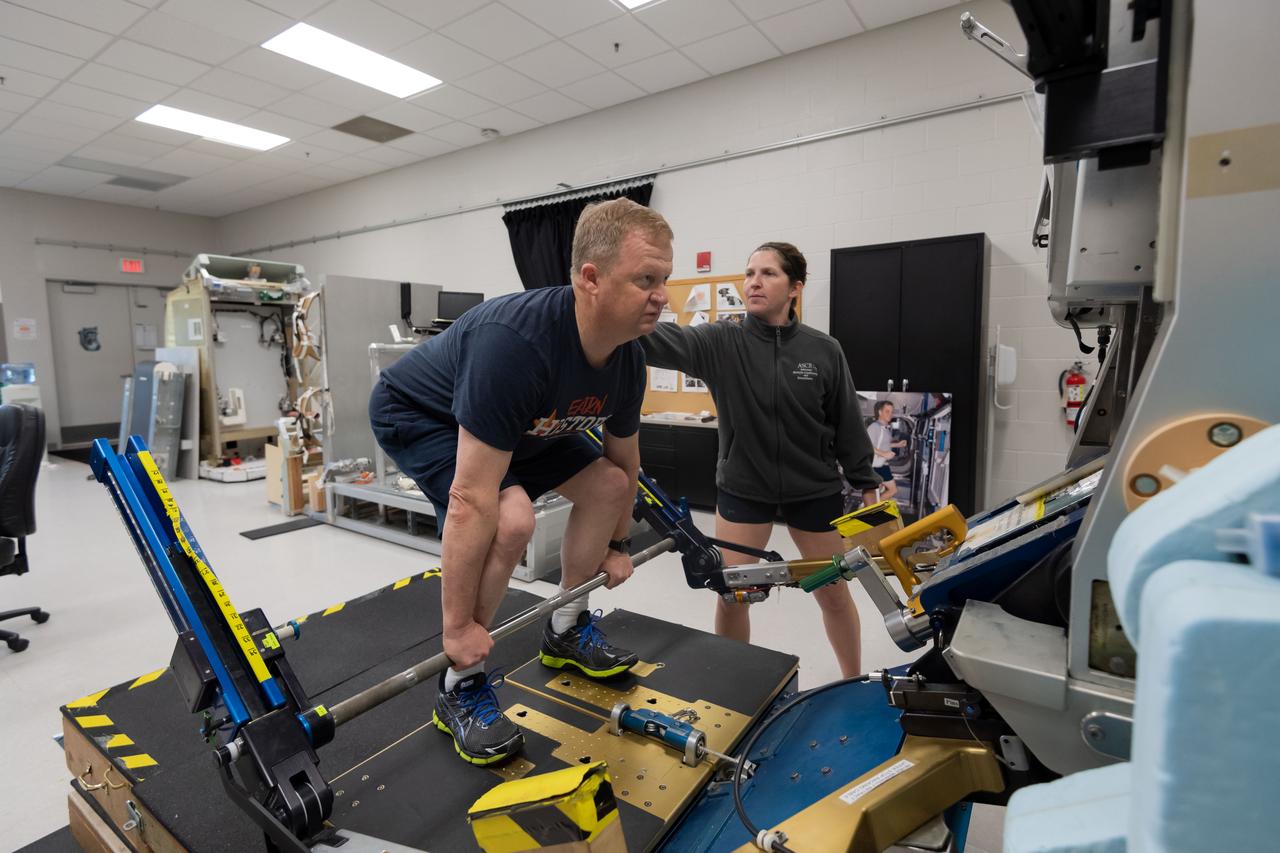
NASA commercial crew astronaut Eric Boe performs physical training on the Advanced Resistive Exercise Device (ARED) at the agency’s Johnson Space Center in Houston. Boe is assigned to the Boeing Starliner’s first crewed flight.
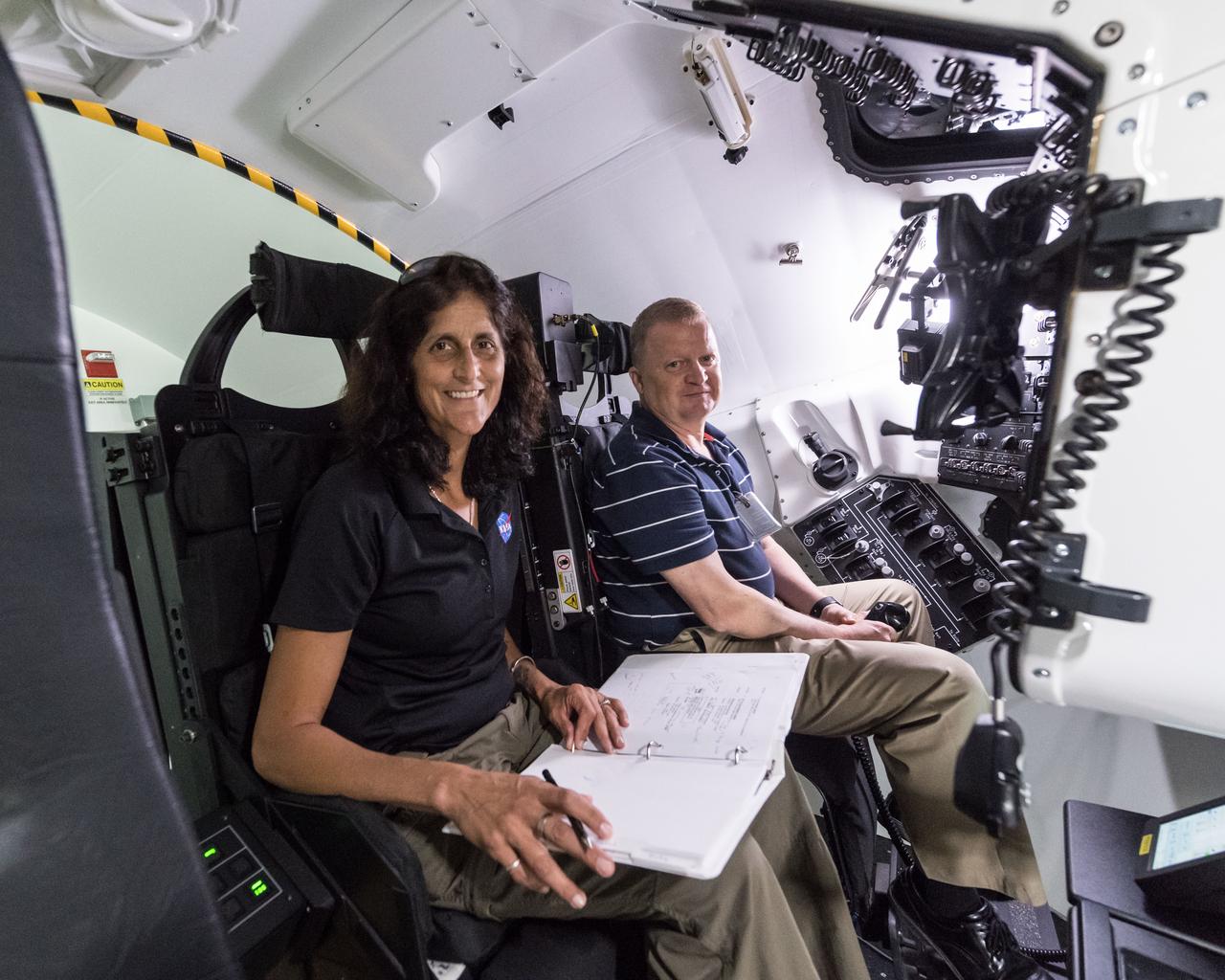
NASA commercial crew astronauts Eric Boe and Suni Williams train in a Boeing CST-100 Starliner mockup at the agency’s Johnson Space Center in Houston. Boe is assigned to launch to the International Space Station on the first crewed flight of Boeing’s CST-100 Starliner. Williams will fly to the space station on Starliner’s second crewed flight.
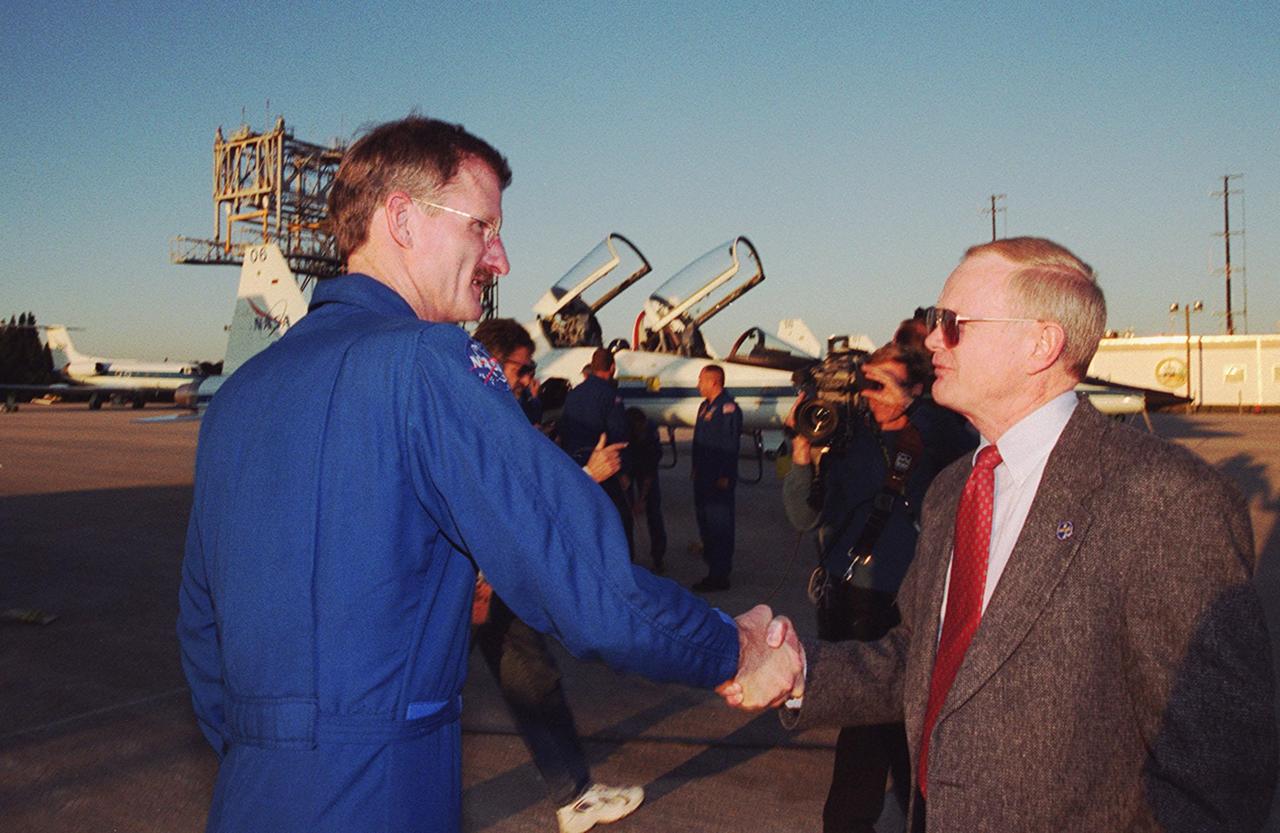
At the Shuttle Landing Facility, STS-97 Mission Specialist Joseph Tanner (left) is greeted by Center Director Roy Bridges on his arrival at KSC from Johnson Space Center. Tanner and the rest of the crew have returned to KSC for the launch, scheduled for Nov. 30 at about 10:06 p.m. EST. Mission STS-97is the sixth construction flight to the International Space Station. Its payload includes the P6 Integrated Truss Structure and a photovoltaic (PV) module, with giant solar arrays that will provide power to the Station. The mission includes two spacewalks to complete the solar array connections. STS-97 is scheduled to launch Nov. 30 at about 10:06 p.m. EST
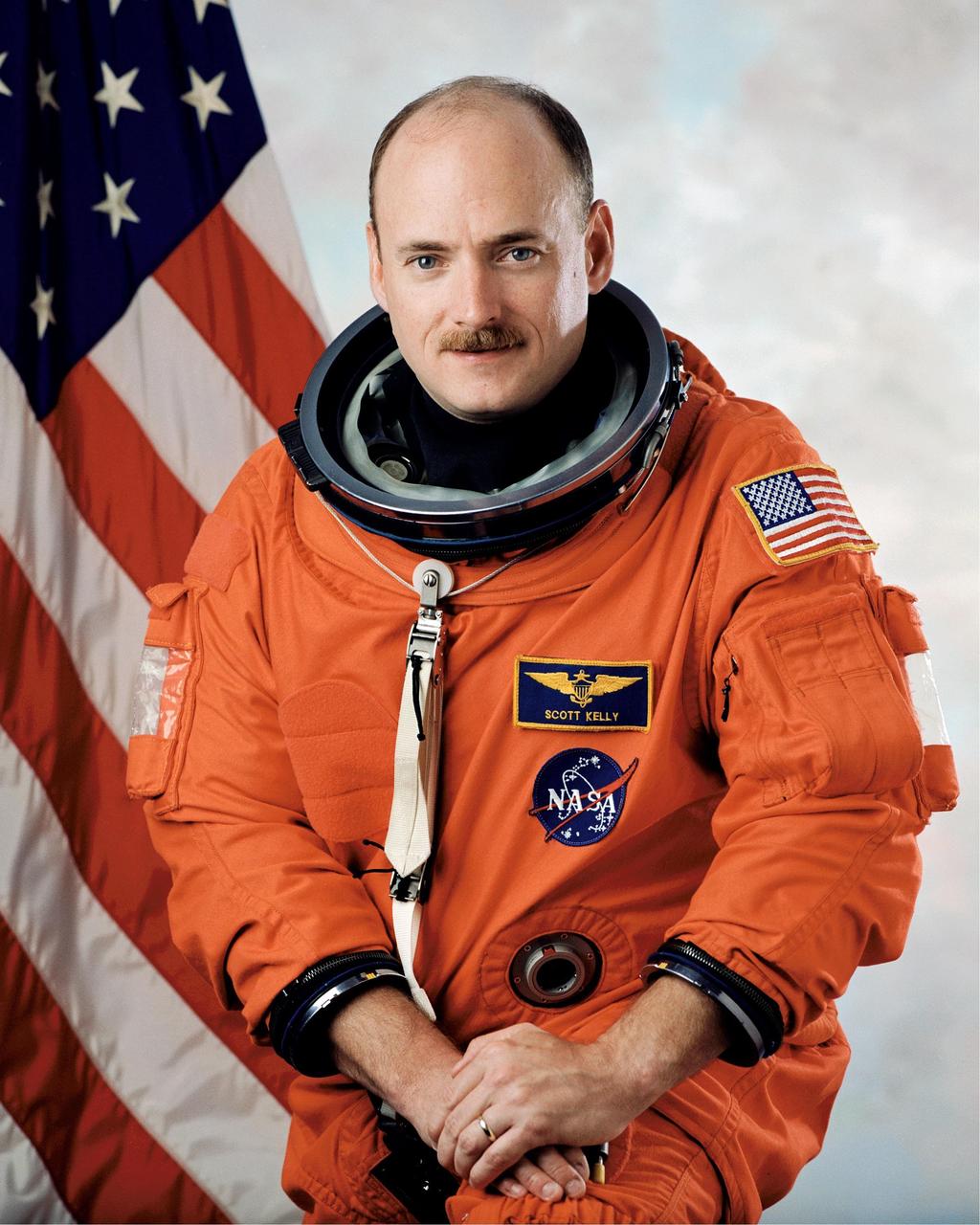
JOHNSON SPACE CENTER, Houston -- S99-05705 -- Astronaut Scott Kelly, commander
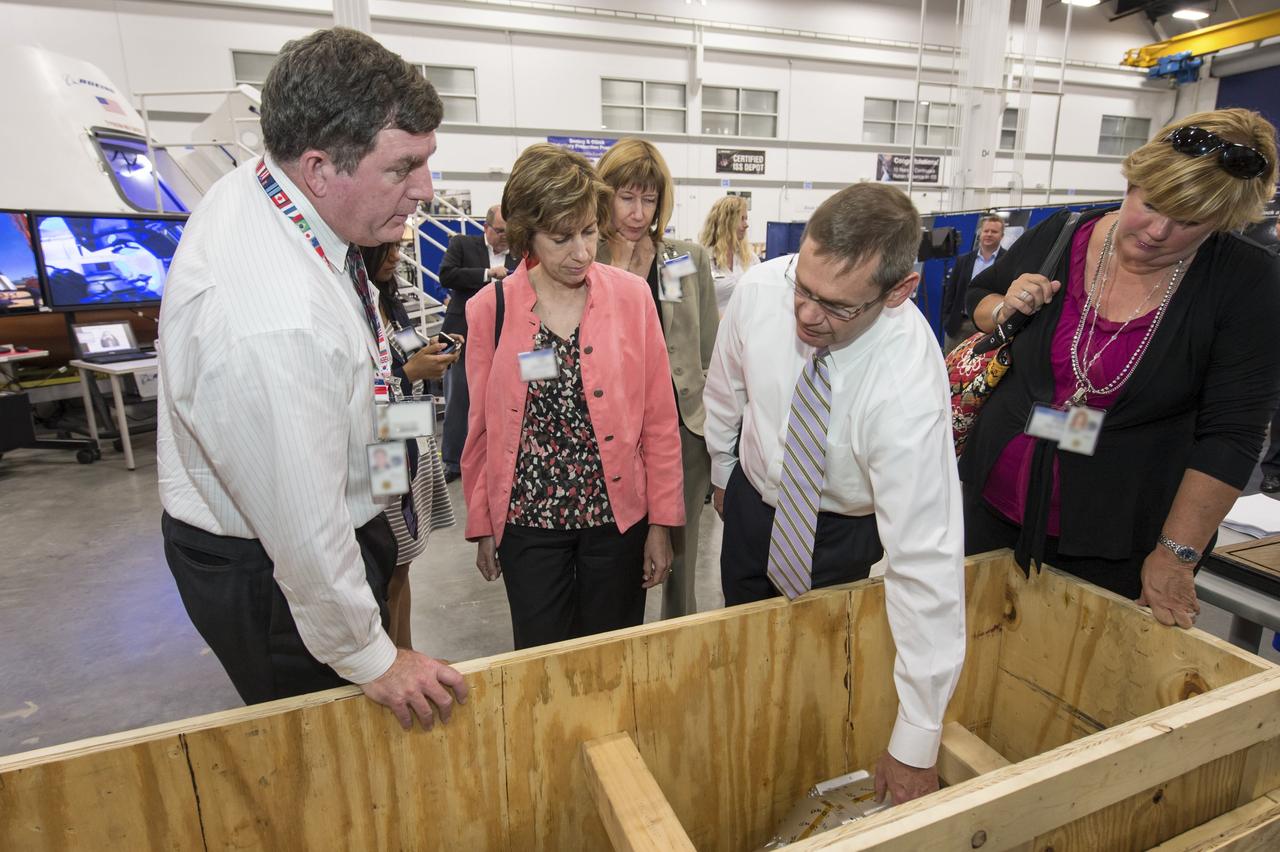
HOUSTON -- JSC-2013-E076043 -- John Elbon, The Boeing Company's vice president of Space Exploration, second right, shows off a wind tunnel model of the CST-100 spacecraft to Johnson Space Center management at the company's Houston Product Support Center. From left, are Kirk Shireman, Johnson's deputy director, Ellen Ochoa, Johnson's director, Kathy Lueders, deputy director of NASA's Commercial Crew Program, Elbon, and Melanie Saunders, Johnson's associate director. Boeing's CST-100 is designed to transport a mix of crew and cargo to low-Earth-orbit destinations. Boeing is one of three aerospace industry partners working with NASA's Commercial Crew Program, or CCP, during the Commercial Crew Integrated Capability, or CCiCap, initiative, which is intended to make commercial human spaceflight services available for government and commercial customers. To learn more about CCP, visit www.nasa.gov/commercialcrew. Photo credit: NASA/James Blair
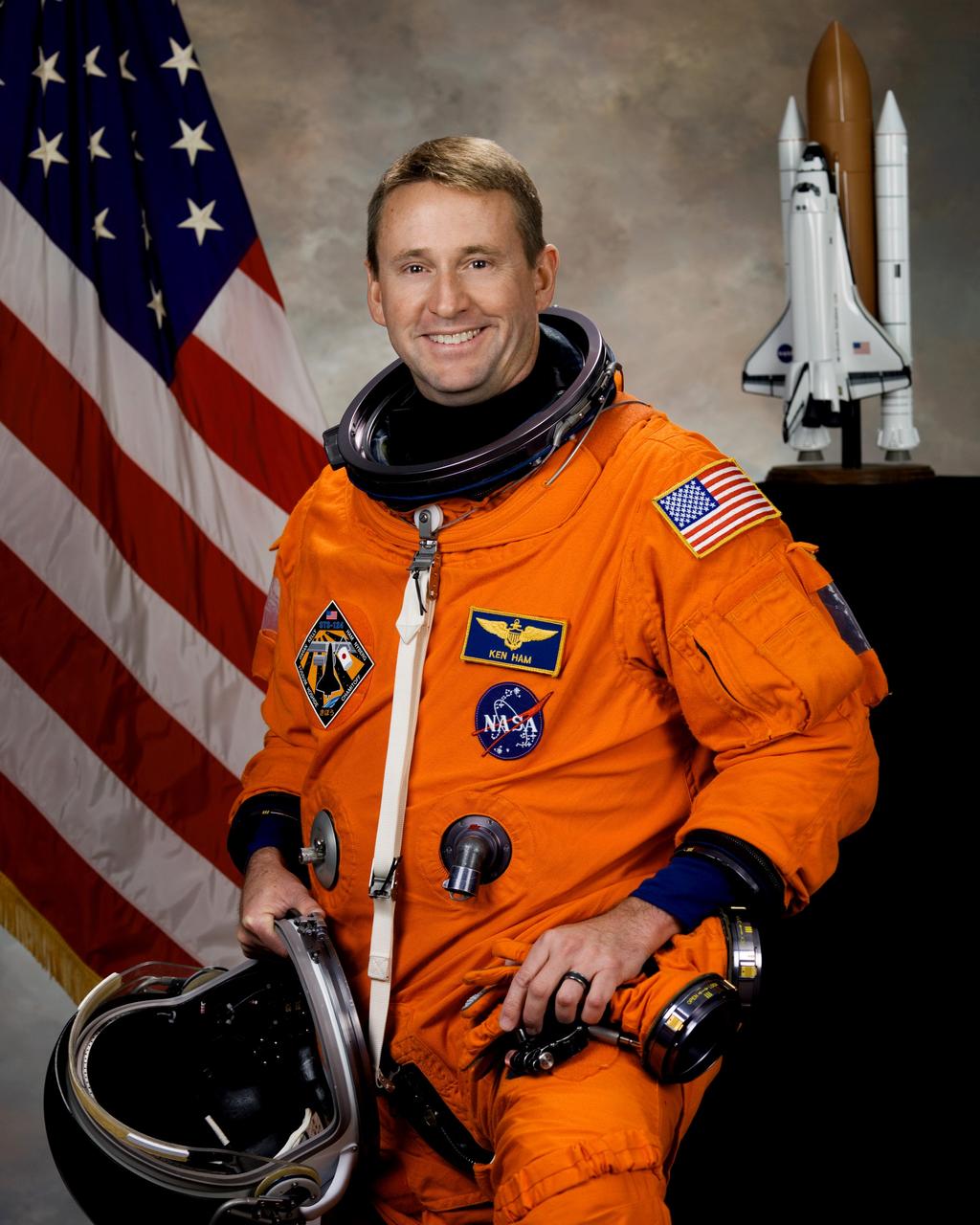
JOHNSON SPACE CENTER, Houston --- JSC2007-E-093431 --- Astronaut Kenneth T. Ham, commander

JOHNSON SPACE CENTER, HOUSTON -- JSC2006-E-05438 -- Astronaut Michael J. Foreman, mission specialist.
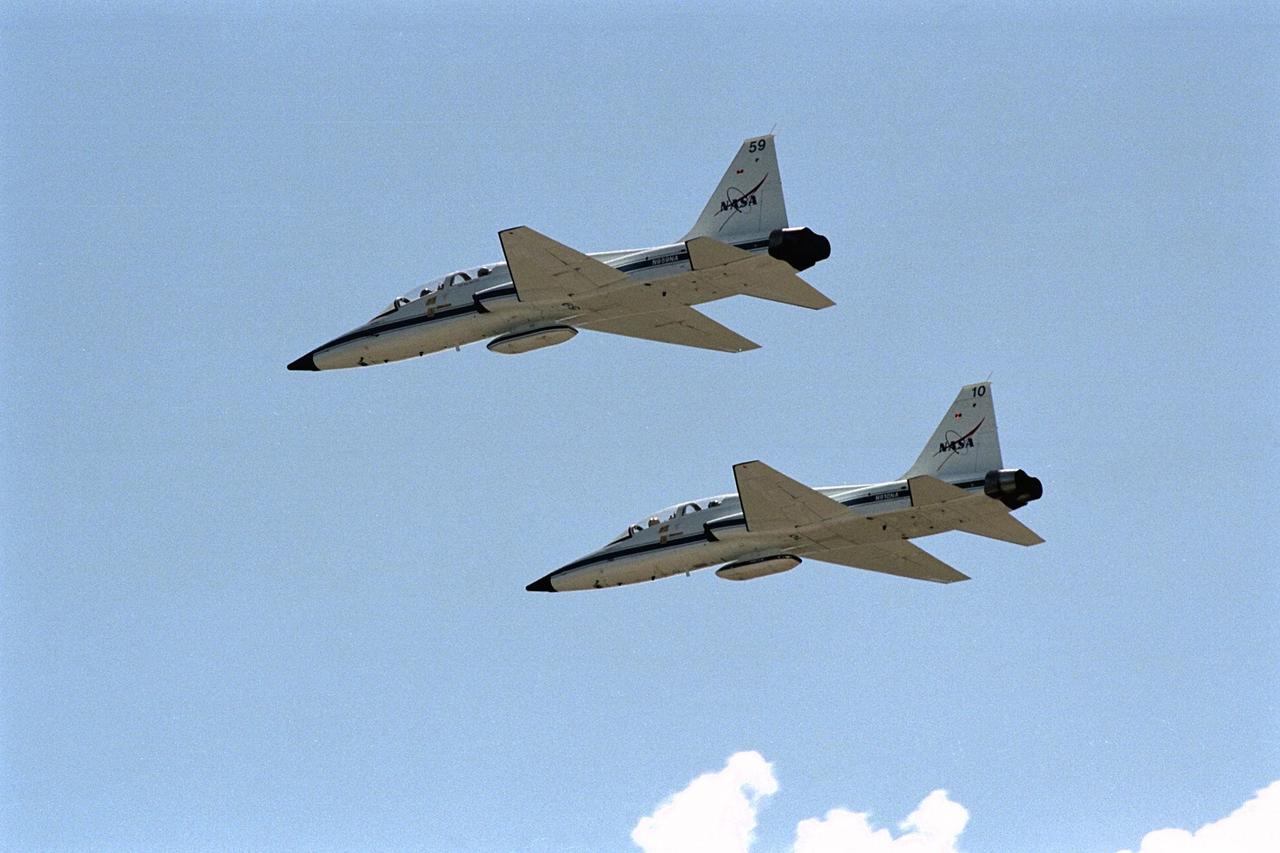
Two T-38 jets with members of the STS-86 crew fly over the space center after takeoff from KSC’s Shuttle Landing Facility. The seven crew members were at KSC to participate in the Terminal Countdown Demonstration Test (TCDT), a dress rehearsal for launch. They are returning to Johnson Space Center, Houston, Texas, for final prelaunch training. STS-86 will be the seventh docking of the Space Shuttle with the Russian Space Station Mir. Liftoff aboard Atlantis is targeted for Sept. 25 from Launch Pad 39A
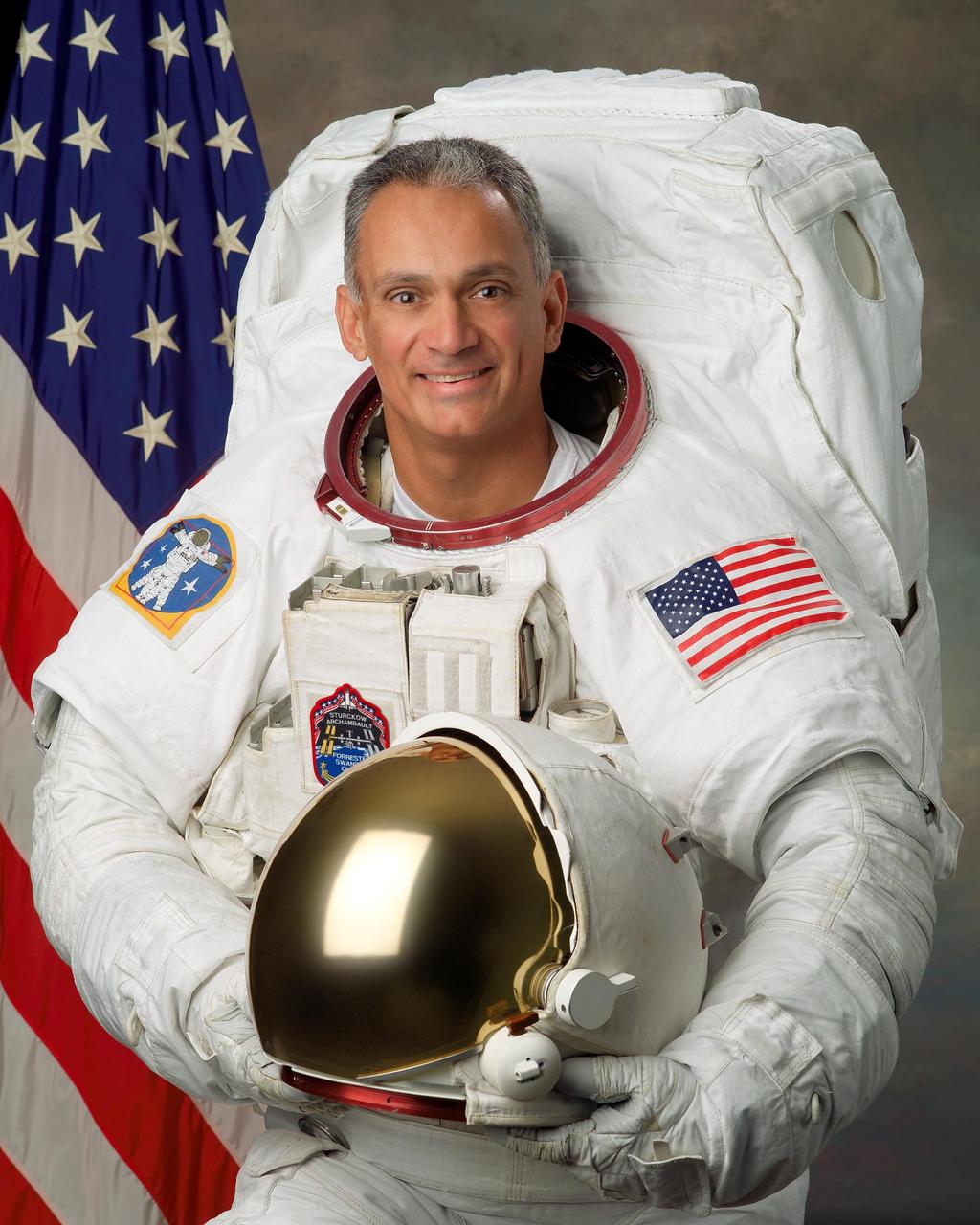
JOHNSON SPACE CENTER, Houston -- JSC2006-E-43656 -- Official portrait of John D. "Danny" Olivas, mission specialist.
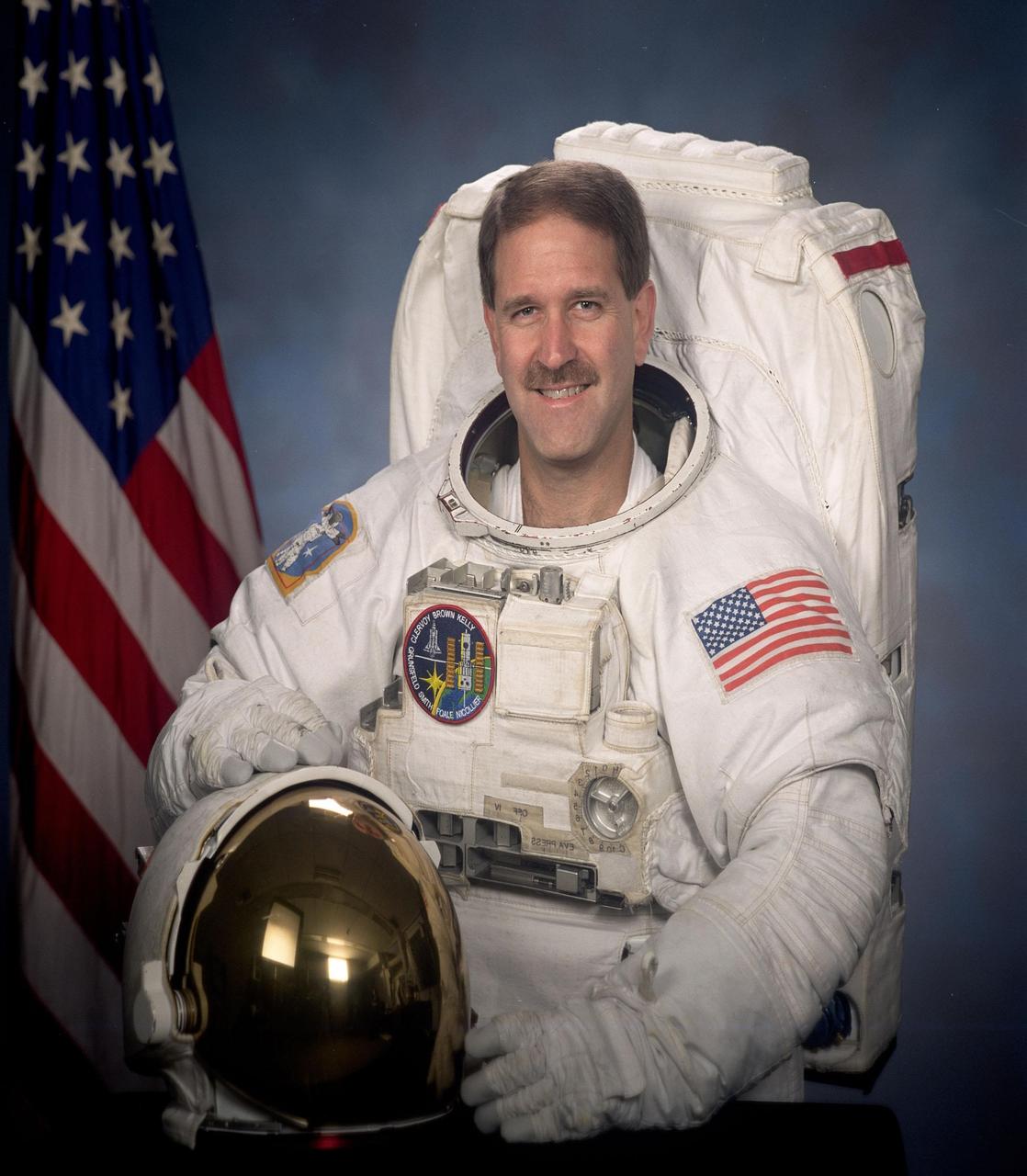
JOHNSON SPACE CENTER, HOUSTON, TEXAS -- (JSC 2000-06750) -- Official portrait of astronaut John M. Grunsfeld, Mission Specialist
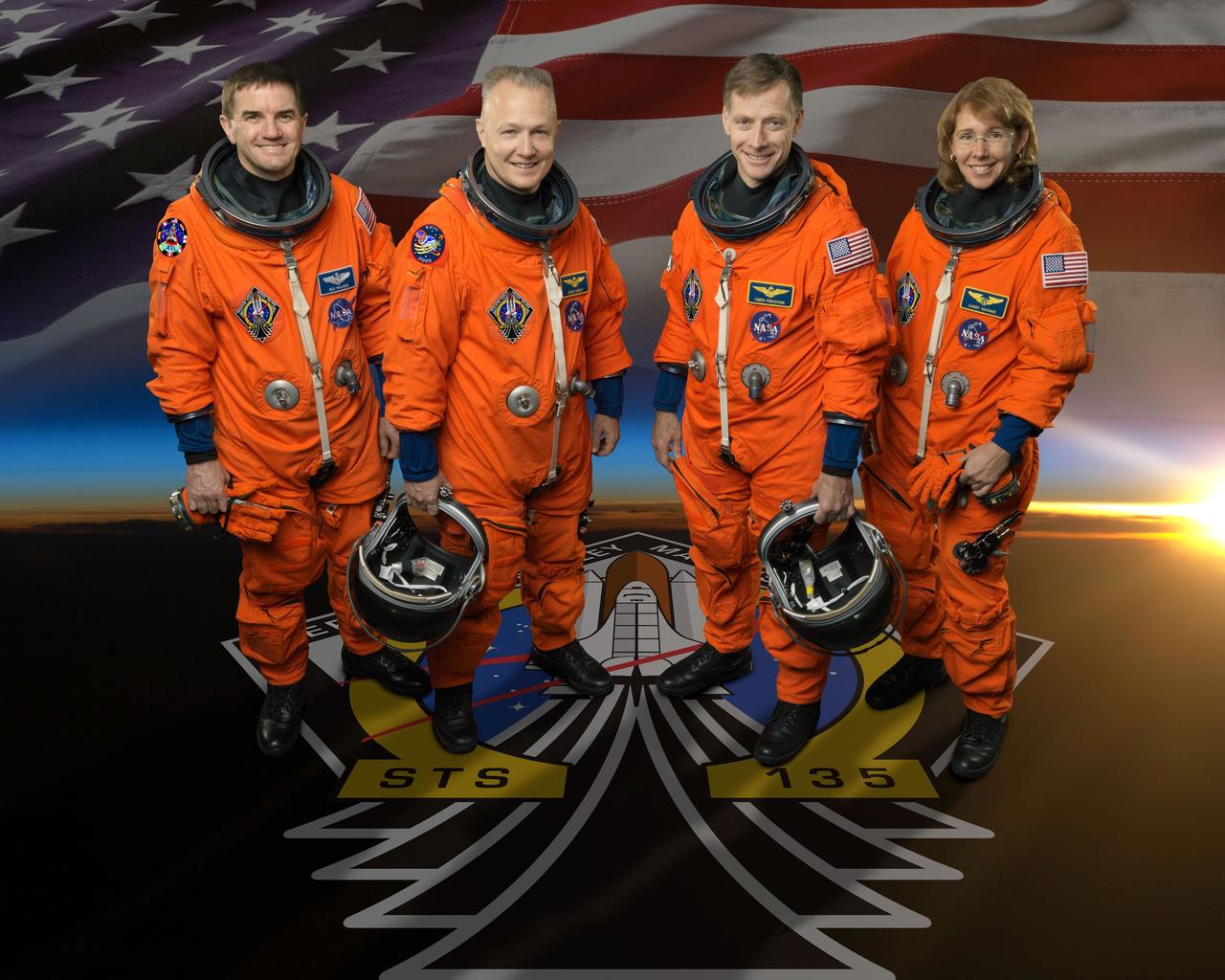
JOHNSON SPACE CENTER, Houston, Texas --- STS135-S-002 --- Attired in training versions of their shuttle launch and entry suits, these four astronauts take a break from training to pose for the STS-135 crew portrait. Pictured are NASA astronauts Chris Ferguson (center right), commander; Doug Hurley (center left), pilot; Rex Walheim and Sandy Magnus, both mission specialists. Photo credit: NASA or National Aeronautics and Space Administration
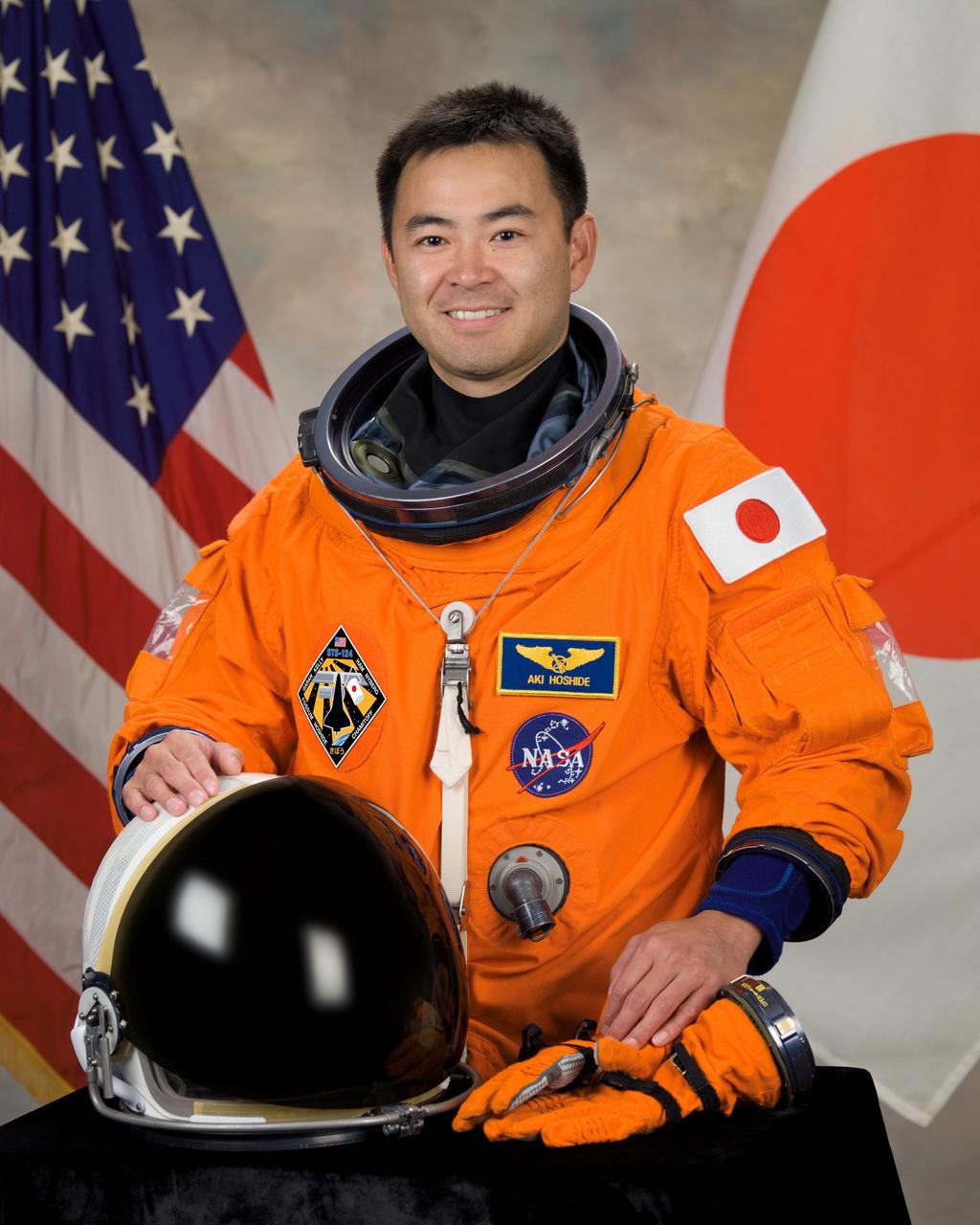
JOHNSON SPACE CENTER, Houston --- JSC2008-E-001888 --- Astronaut Akihiko Hoshide, mission specialist representing the Japan Aerospace Exploration Agency (JAXA)
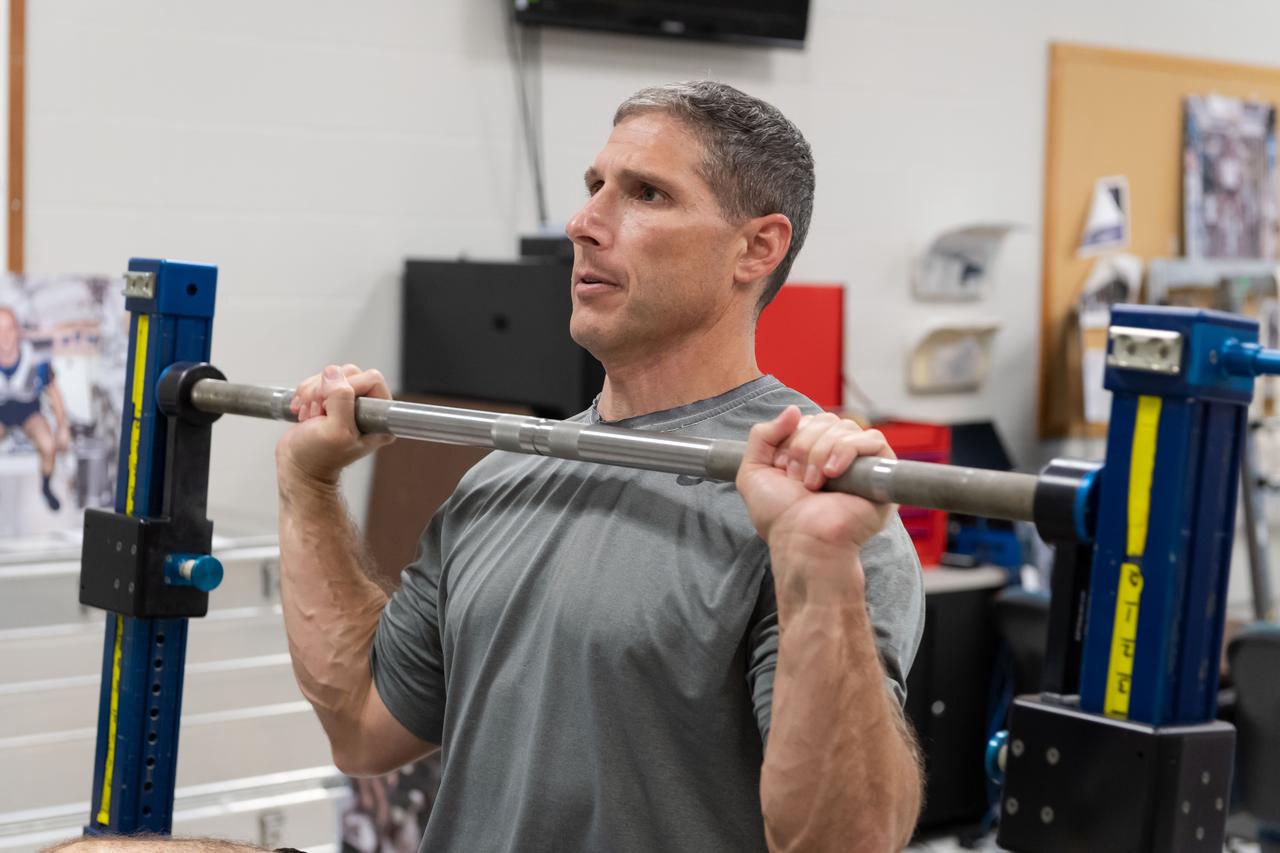
NASA commercial crew astronaut Mike Hopkins performs physical training on the Advanced Resistive Exercise Device (ARED) at the agency’s Johnson Space Center in Houston. Hopkins is assigned to the SpaceX Crew Dragon’s second crewed flight.

At the Shuttle Landing Facility, STS-97 Pilot Michael Bloomfield climbs out of the cockpit of a T-38 jet aircraft he flew from Johnson Space Center. He and the rest of the crew have returned to KSC for the launch, scheduled for Nov. 30 at about 10:06 p.m. EST. Mission STS-97is the sixth construction flight to the International Space Station. Its payload includes the P6 Integrated Truss Structure and a photovoltaic (PV) module, with giant solar arrays that will provide power to the Station. The mission includes two spacewalks to complete the solar array connections. STS-97 is scheduled to launch Nov. 30 at about 10:06 p.m. EST
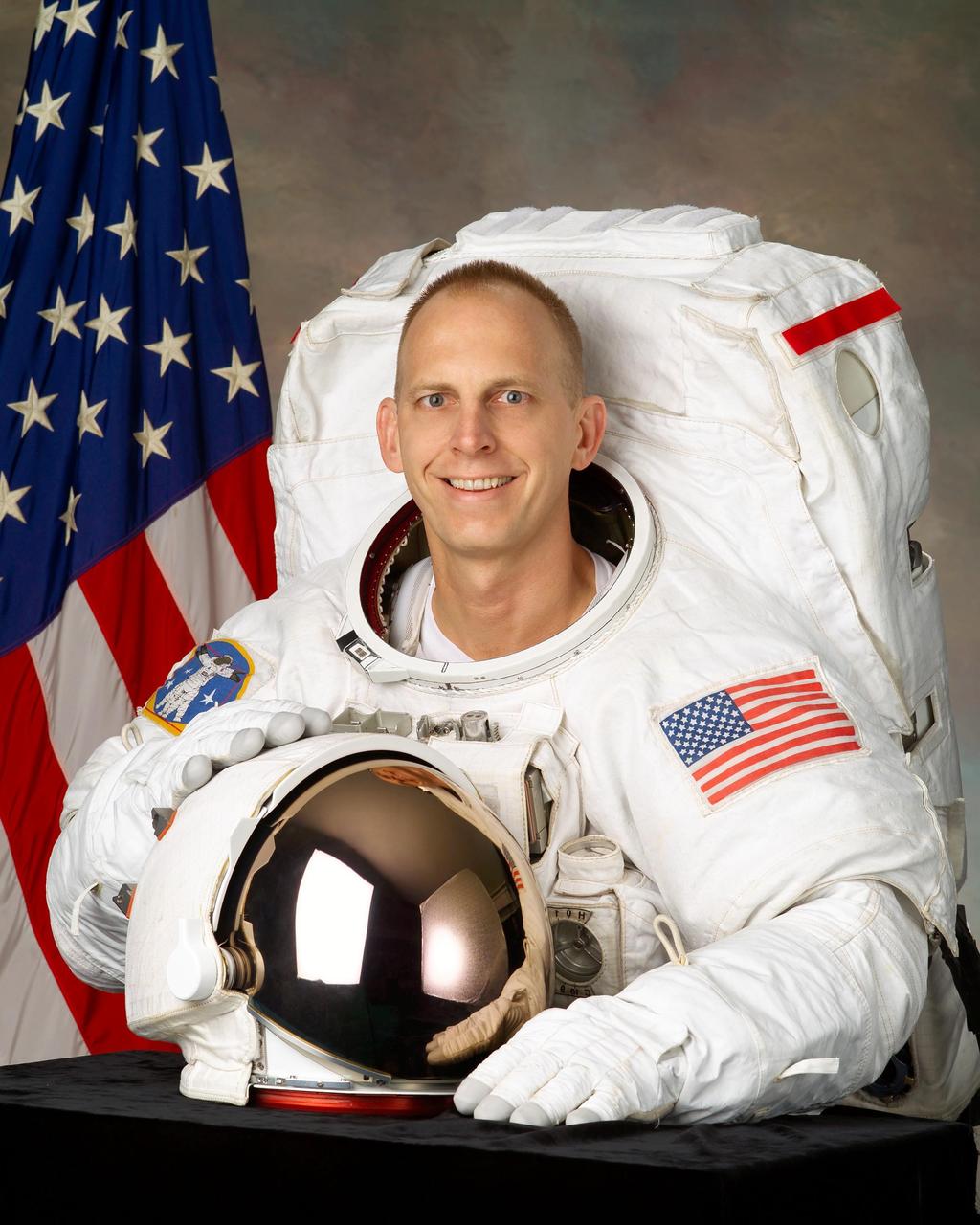
JOHNSON SPACE CENTER, Houston -- JSC2004-E-48382 -- Clayton Anderson, mission specialist on mission STS-117 to the International Space Station.
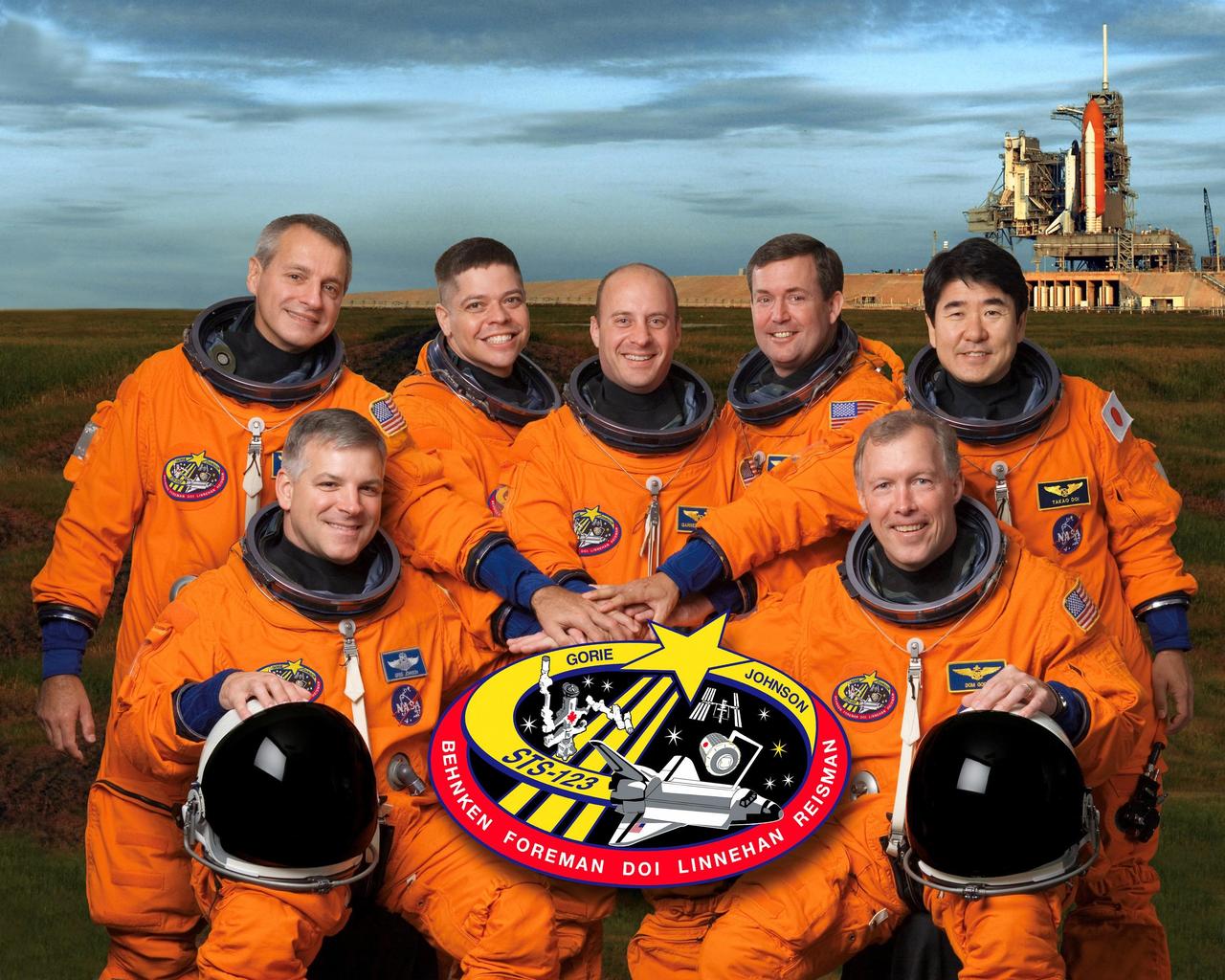
JOHNSON SPACE CENTER, HOUSTON -- STS123-S-002-- These seven astronauts take a break from training to pose for the STS-123 crew portrait. From the right (front row) are astronauts Dominic L. Gorie, commander, and Gregory H. Johnson, pilot. From the left (back row) are astronauts Richard M. Linnehan, Robert L. Benken, Garrett E. Reisman, Michael J. Foreman and Japan Aerospace Exploration Agency's (JAXA) Takao Doi, all mission specialists. Reisman is scheduled to join Expedition 16 as flight engineer after launching to the International Space Station on mission STS-123. The crewmembers are attired in training versions of their shuttle launch and entry suits.
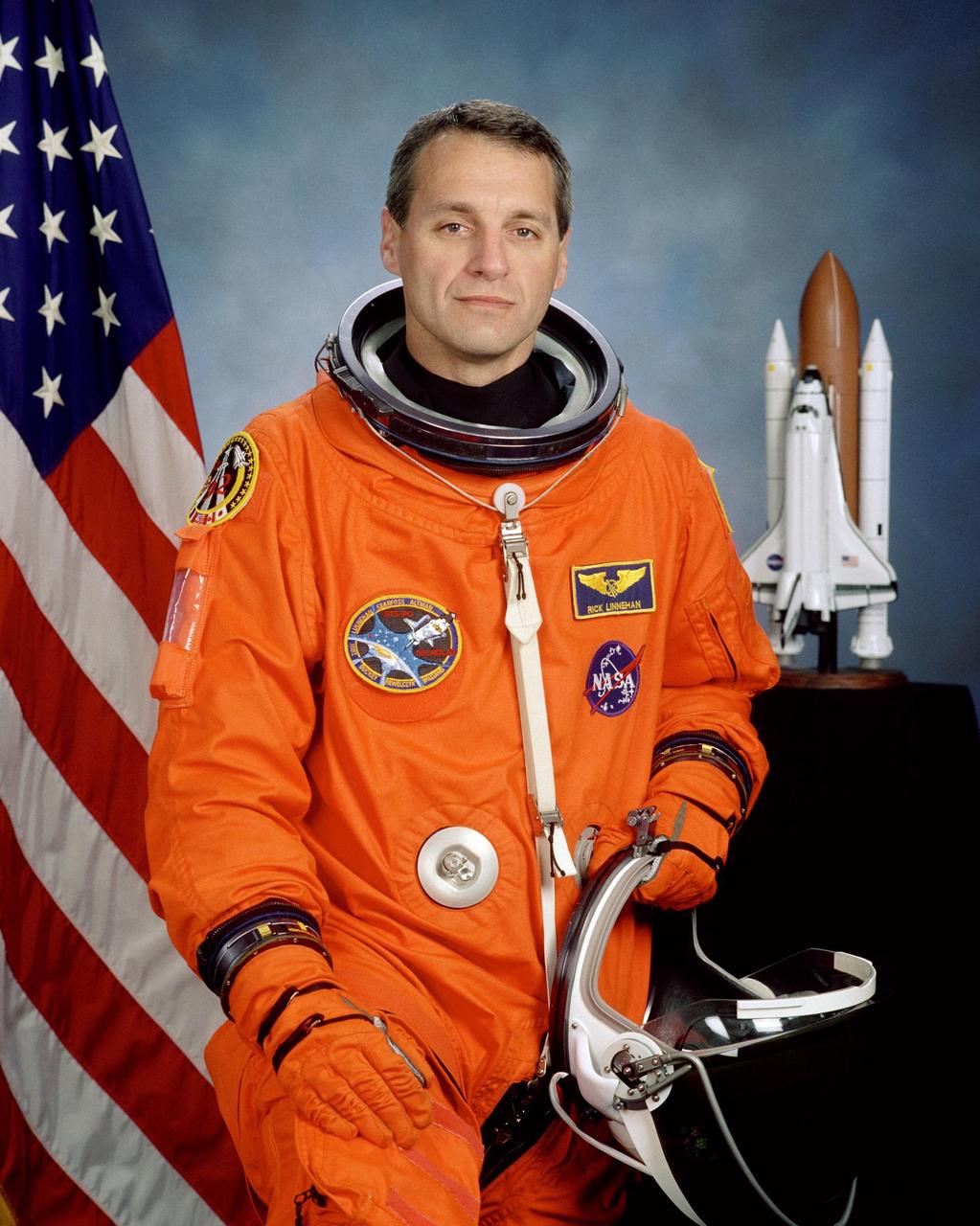
JOHNSON SPACE CENTER, HOUSTON, TEXAS -- (JSC 2000-03747) -- Official portrait of astronaut Richard M. Linnehan, Mission Specialist
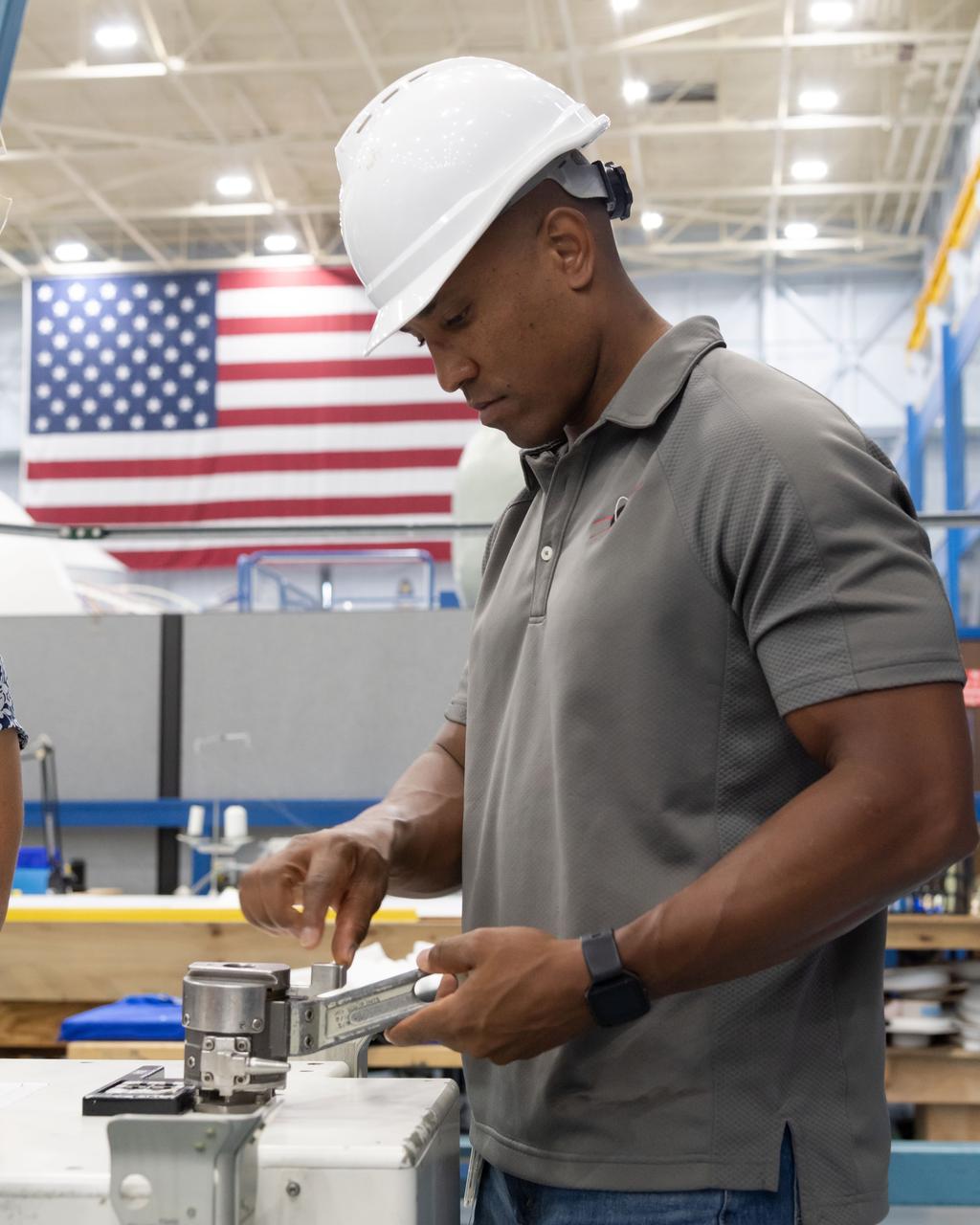
NASA commercial crew astronaut Victor Glover learns about the tools and hardware he will use in spacewalk training at NASA’s Space Vehicle Mockup Facility in Houston. Glover will fly to the International Space Station on the second flight of SpaceX’s Crew Dragon.
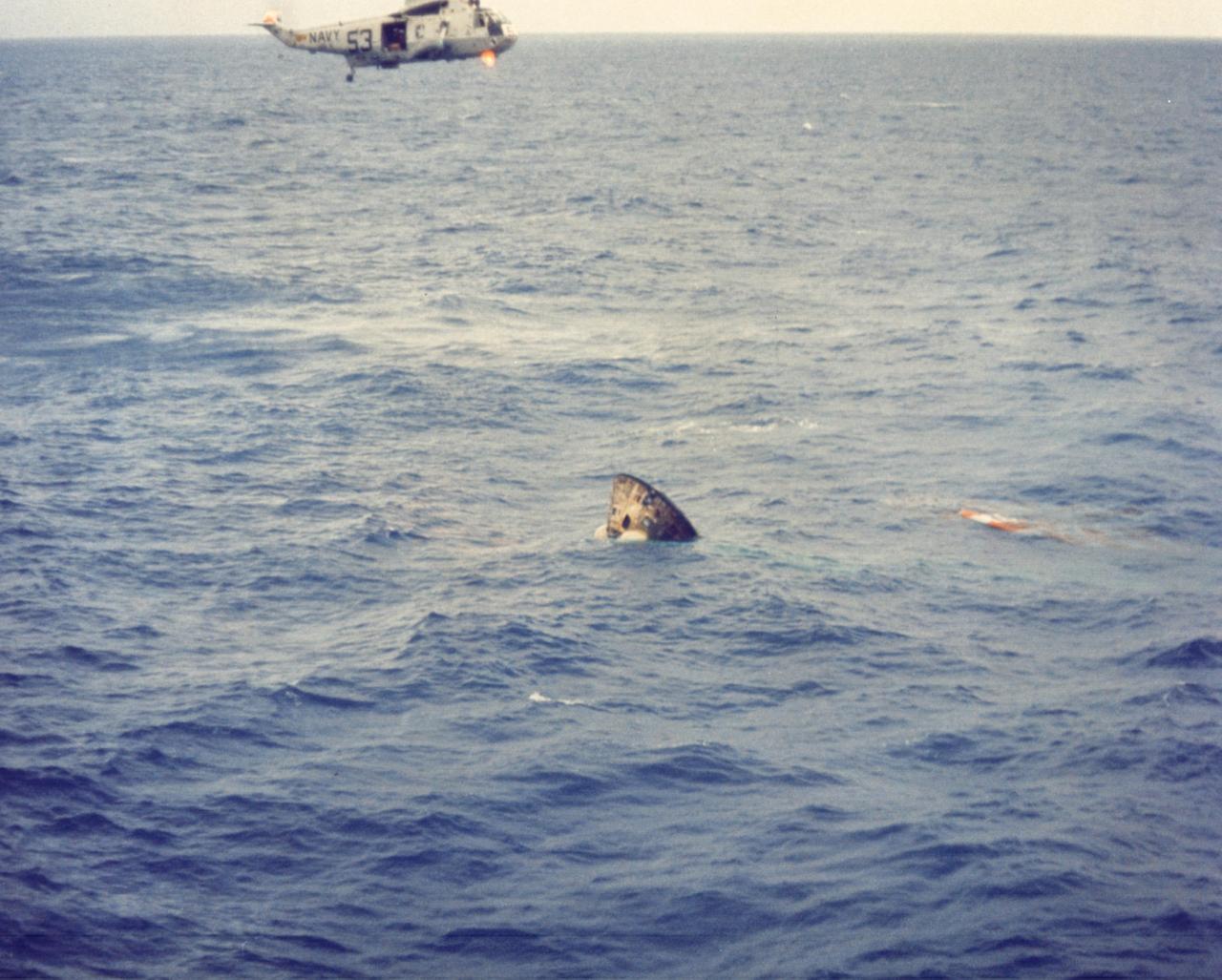
JOHNSON SPACE CENTER, HOUSTON, TEXAS - A recovery helicopter hovers above the Apollo 11 spacecraft seconds after it splashed down in the Pacific Ocean July 24, 1969, at 12:50 p.m. EDT 900 miles southwest of Hawaii. The spacecraft turned apex down after impact, as shown here, but inflatable bags repositioned it shortly after this view was taken.
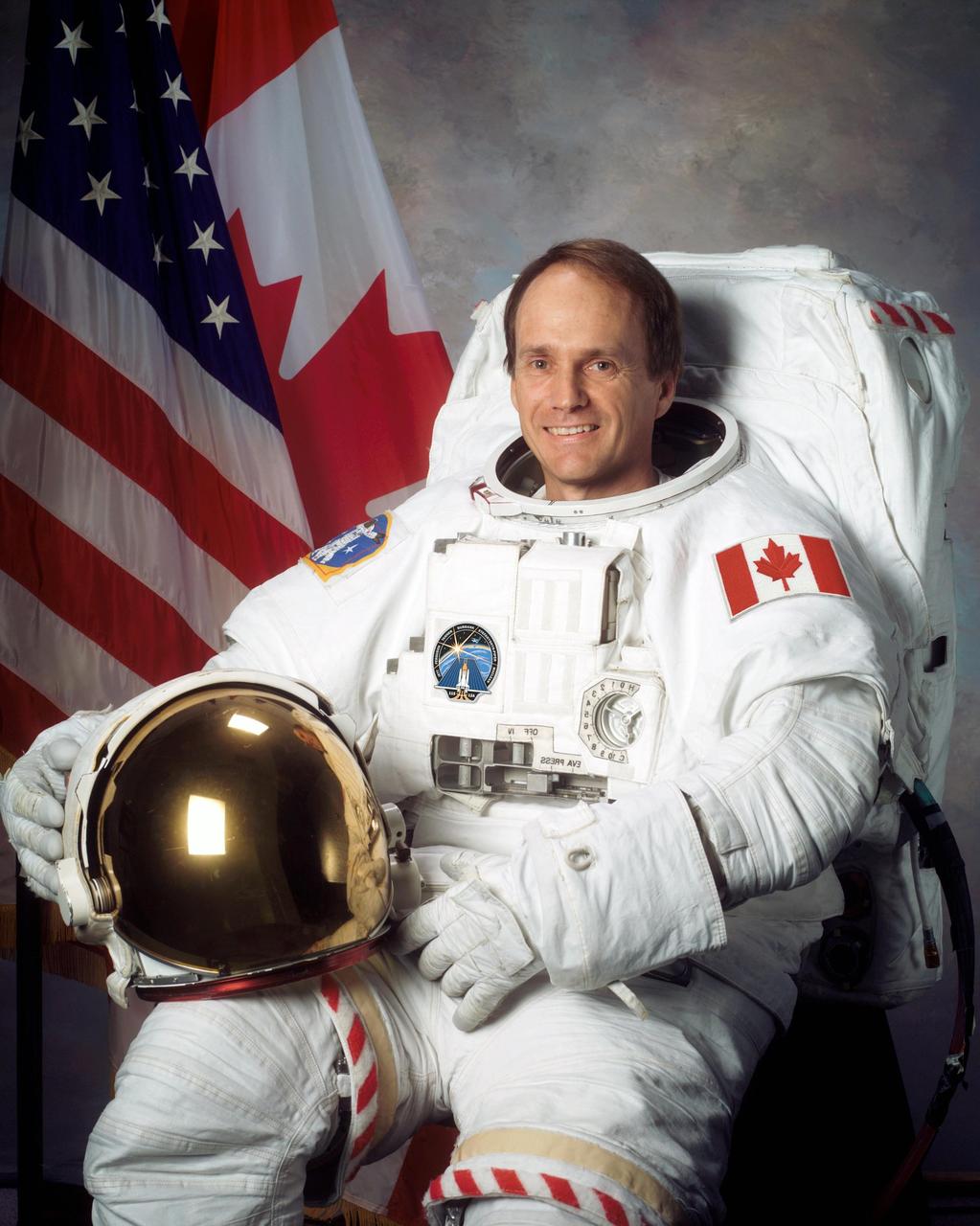
JOHNSON SPACE CENTER, TX - JSC2002-E-43795 (September 11, 2002) -- Astronaut Steven G. MacLean, mission specialist representing the Canadian Space Agency.
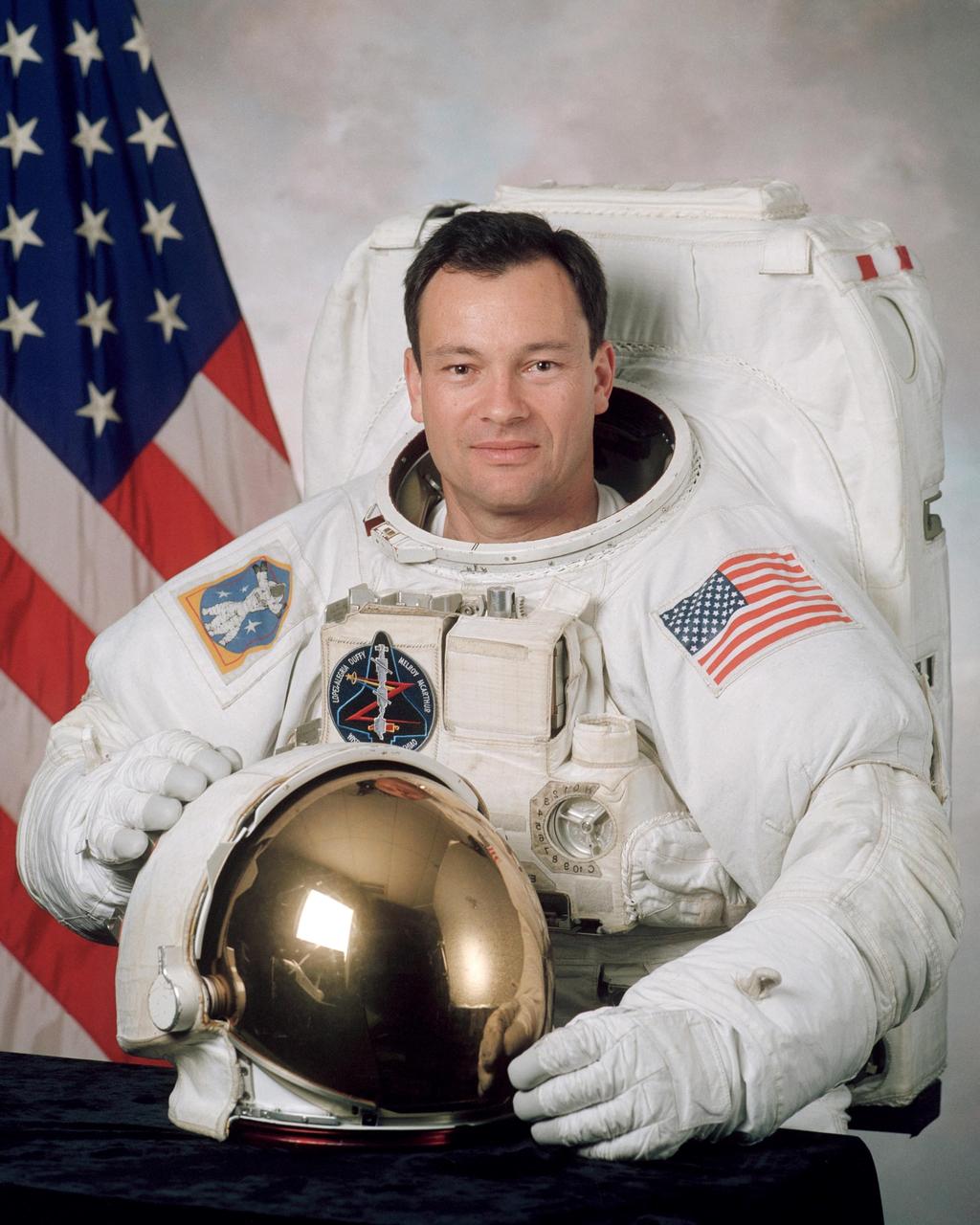
JOHNSON SPACE CENTER, HOUSTON, TEXAS -- (JSC2000-03028) Official portrait of astronaut Michael E. Lopez-Alegria, mission specialist.
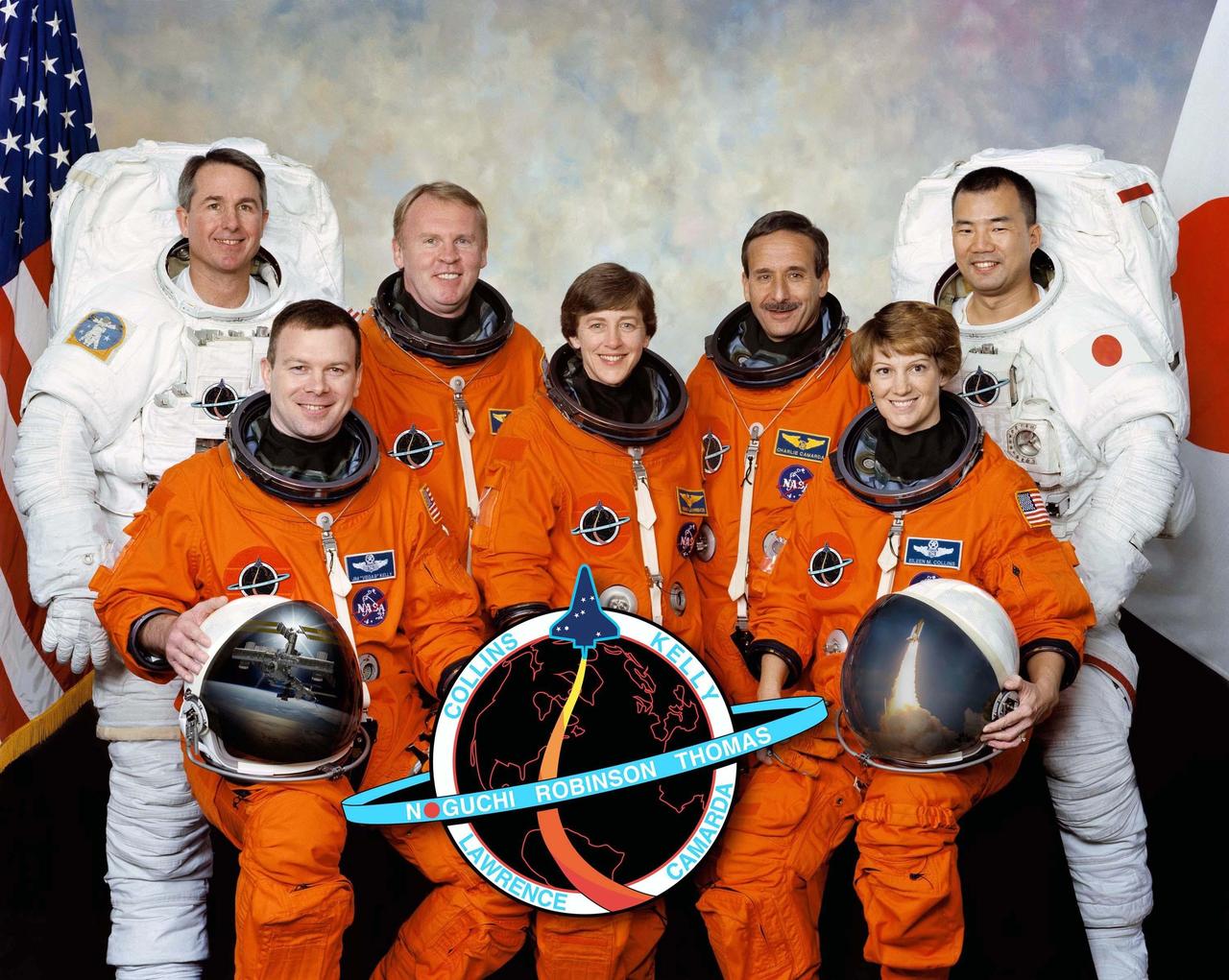
JOHNSON SPACE CENTER, HOUSTON, TEXAS - STS114-S-002-- These seven astronauts take a break from training to pose for the STS-114 crew portrait. In front are astronauts Eileen M. Collins (right), commander; Wendy B. Lawrence (center), mission specialist; and James M. Kelly (left), pilot. In back (left to right) are astronauts Stephen K. Robinson, Andrew S. W. Thomas, Charles J. Camarda and Soichi Noguchi, all mission specialists. Noguchi represents Japan Aerospace Exploration Agency (JAXA).
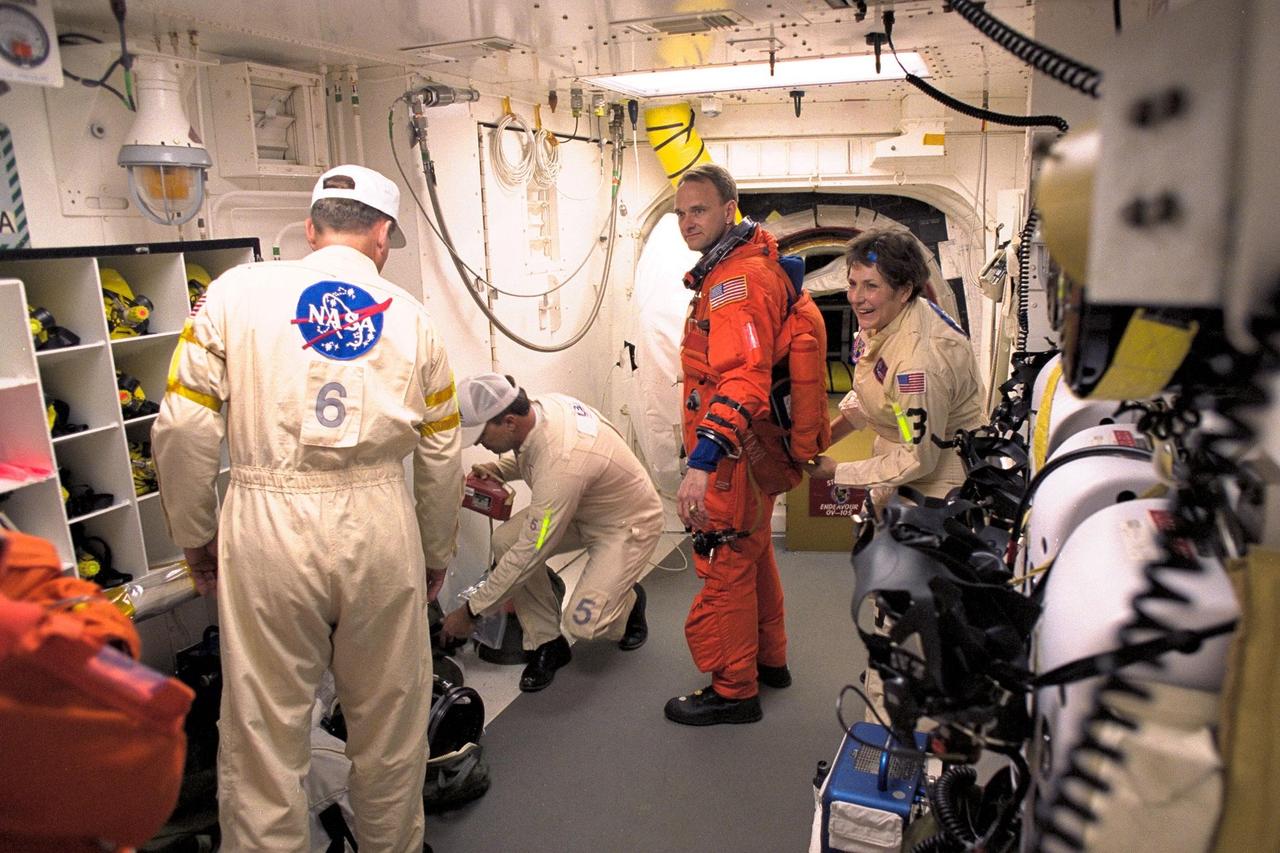
STS-89 Pilot Joe Edwards Jr. is assisted with his ascent and re-entry flight suit in the white room at Launch Pad 39A before entering Space Shuttle Endeavour for launch. Behind Edwards is NASA Suit Technician Jean Alexander from Johnson Space Center. The STS-89 mission will be the eighth docking of the Space Shuttle with the Russian Space Station Mir. After docking, Mission Specialist Andrew Thomas, Ph.D., will transfer to the space station, succeeding David Wolf, M.D., who will return to Earth aboard Endeavour. Dr. Thomas will live and work on Mir until June. STS-89 is scheduled for a Jan. 22 liftoff at 9:48 p.m
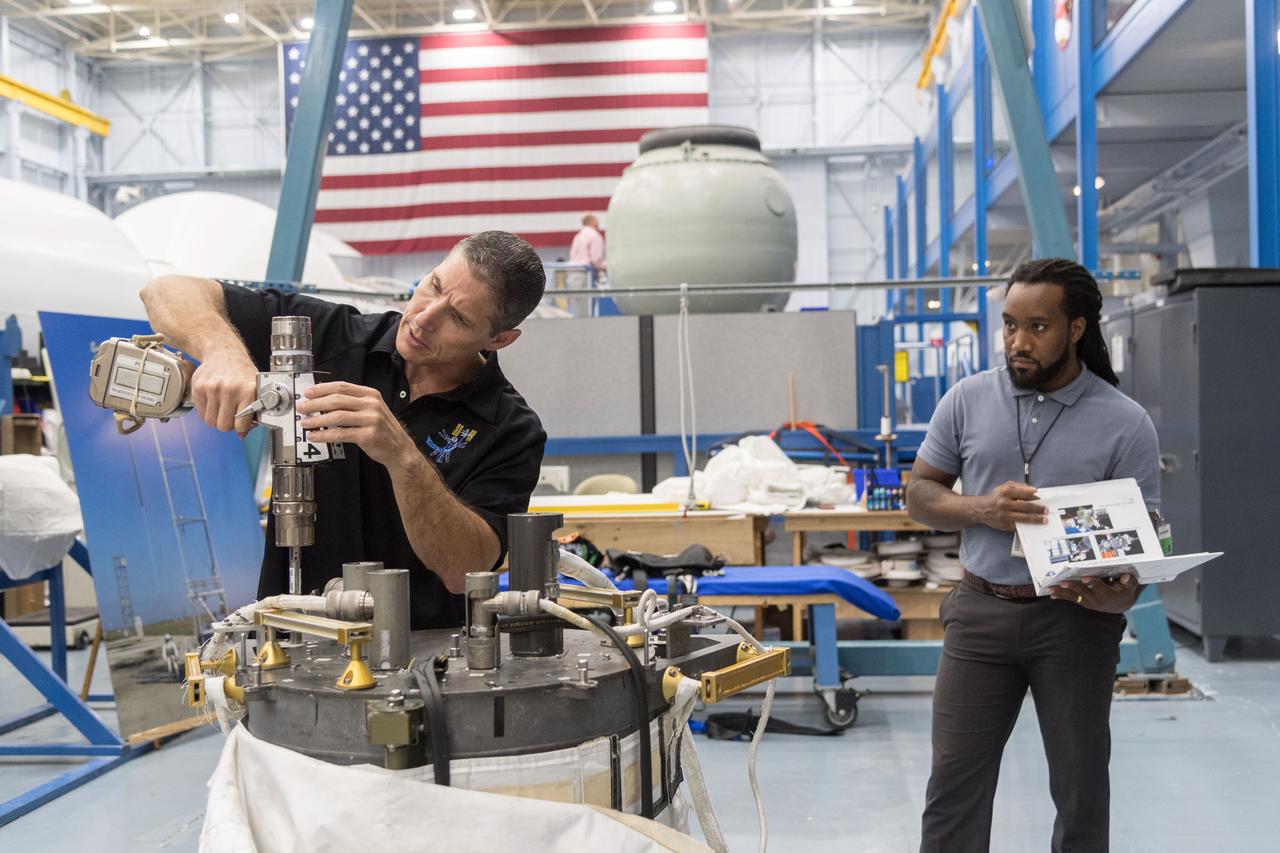
NASA commercial crew astronaut Mike Hopkins trains with Extravehicular Activity (EVA) tools and hardware in Johnson Space Center’s Space Vehicle Mockup Facility in Houston. Hopkins is assigned to the second crewed flight of SpaceX’s Crew Dragon.
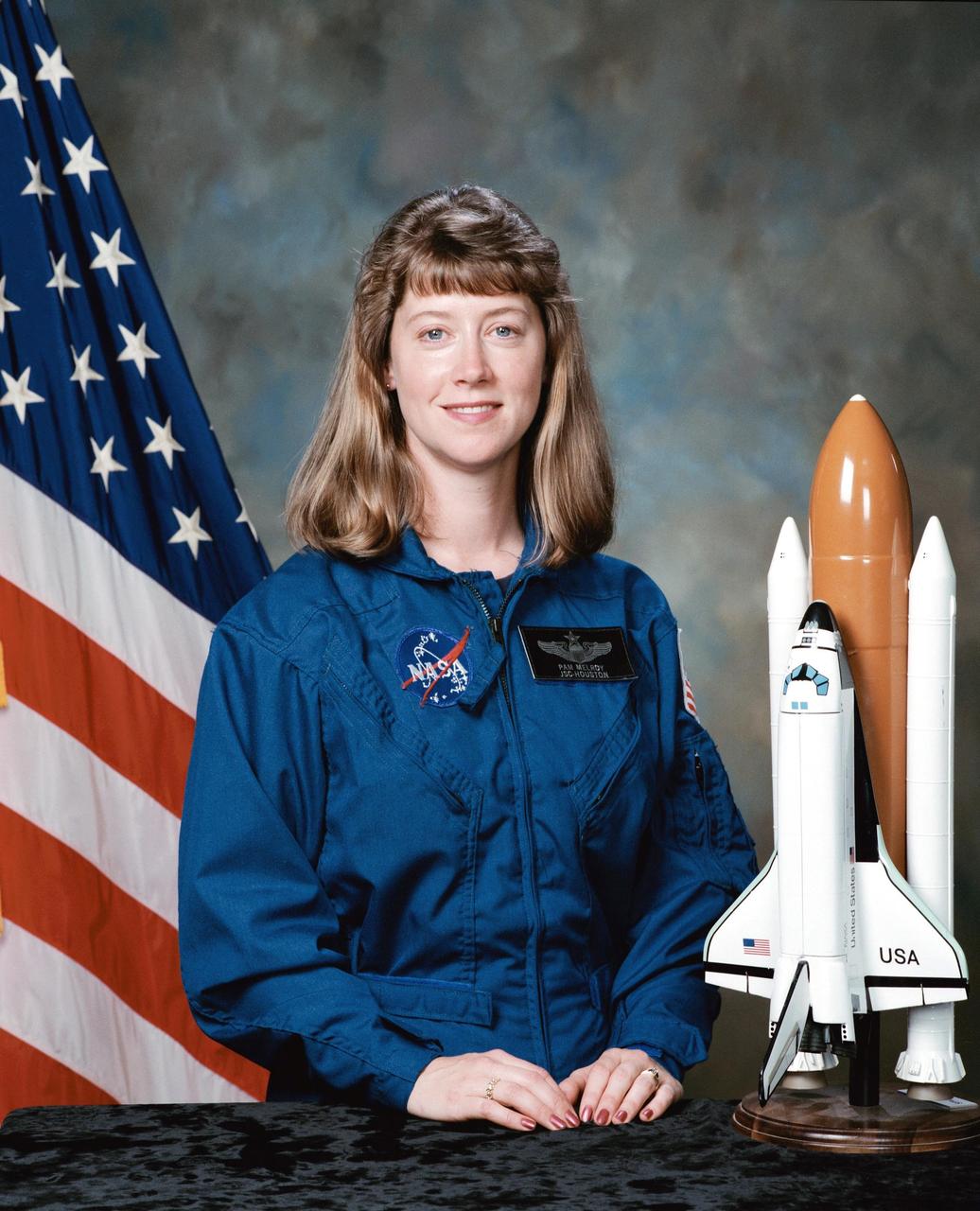
JOHNSON SPACE CENTER, HOUSTON, TEXAS -- (S95-057778) Official portrait of astronaut Pamela A. Melroy, pilot.

JOHNSON SPACE CENTER, Houston, Texas - STS134-S-002 --- Attired in training versions of their shuttle launch-and-entry suits, these six astronauts take a break from training to pose for the STS-134 crew portrait. Pictured clockwise are NASA astronauts Mark Kelly (bottom center), commander; Gregory H. Johnson, pilot; Michael Fincke, Greg Chamitoff, Andrew Feustel and European Space Agency's Roberto Vittori, all mission specialists.
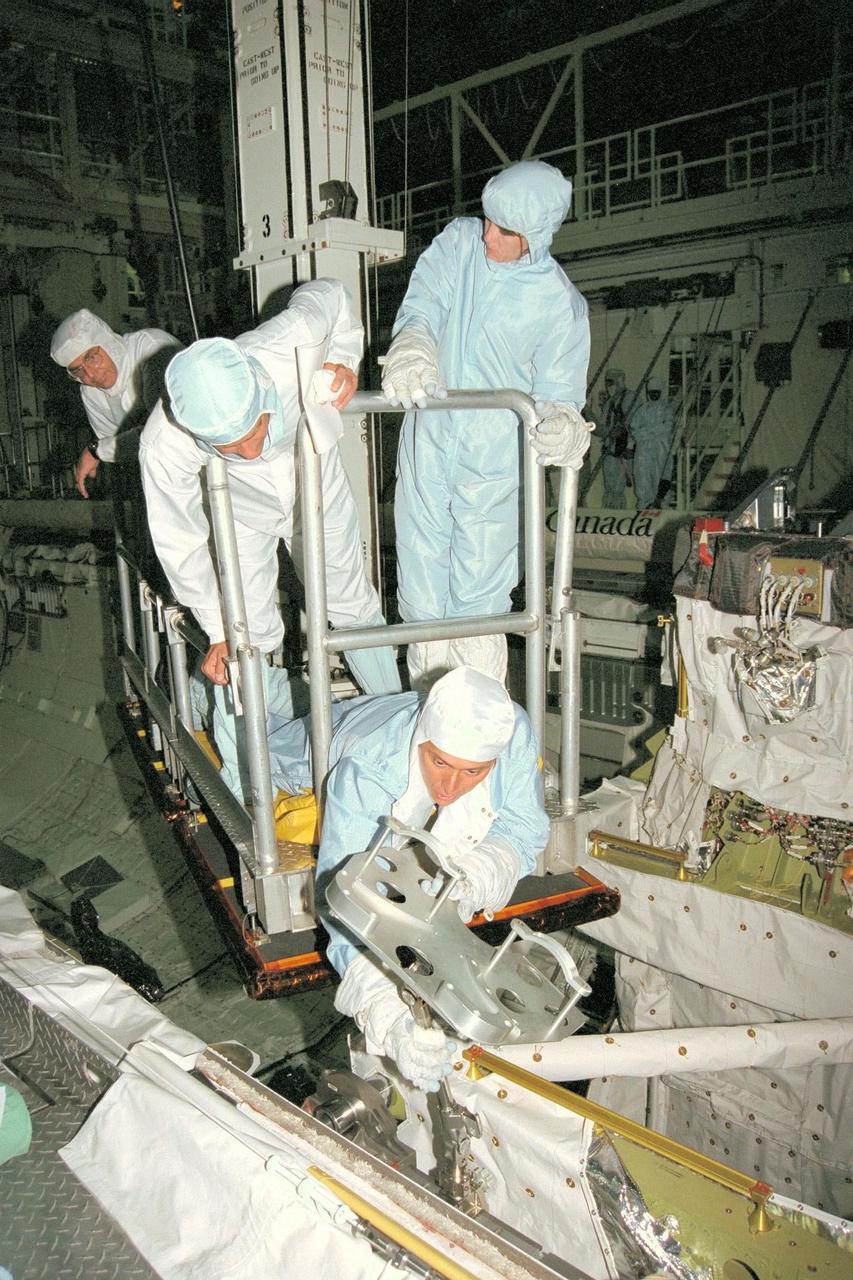
STS-91 crew members participate in the Crew Equipment Interface Test, or CEIT, in KSC's Orbiter Processing Facility Bay 2. Laying down inspecting a foot restraint for an extravehicular activity (EVA) spacewalk is STS-91 Mission Specialist Franklin Chang-Diaz, Ph.D. Looking over his shoulder is Kieth Johnson, an EVA trainer and flight controller from Johnson Space Center. STS-91 Mission Specialist Janet Kavandi, Ph.D., stands next to Johnson. During CEIT, the crew have an opportunity to get a hands-on look at the payloads with which they'll be working on-orbit. The STS-91 crew are scheduled to launch aboard the Shuttle Discovery for the ninth and final docking with the Russian Space Station Mir from KSC's Launch Pad 39A on May 28 at 8:05 EDT
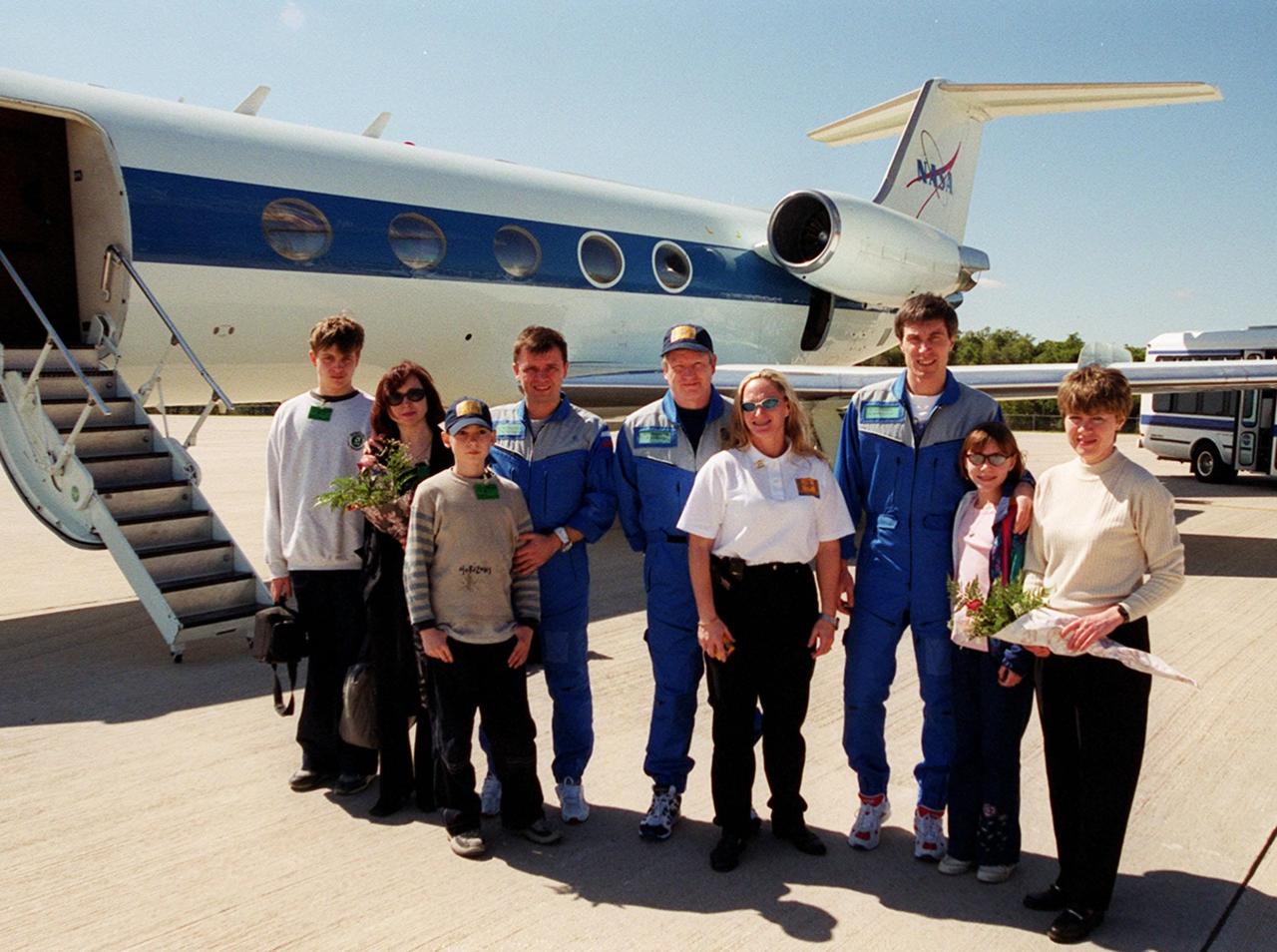
The International Space Station's Expedition One crew members and their families prepare to depart KSC from the Shuttle Landing Facility for their return to the Johnson Space Center in Houston. Wearing blue flight suits, the crew members from left to right are Yuri Pavlovich Gidzenko, William M. Shepherd and Sergei Konstantinovich Krikalev. The crew returned to Earth aboard Discovery March 21, concluding mission STS-102
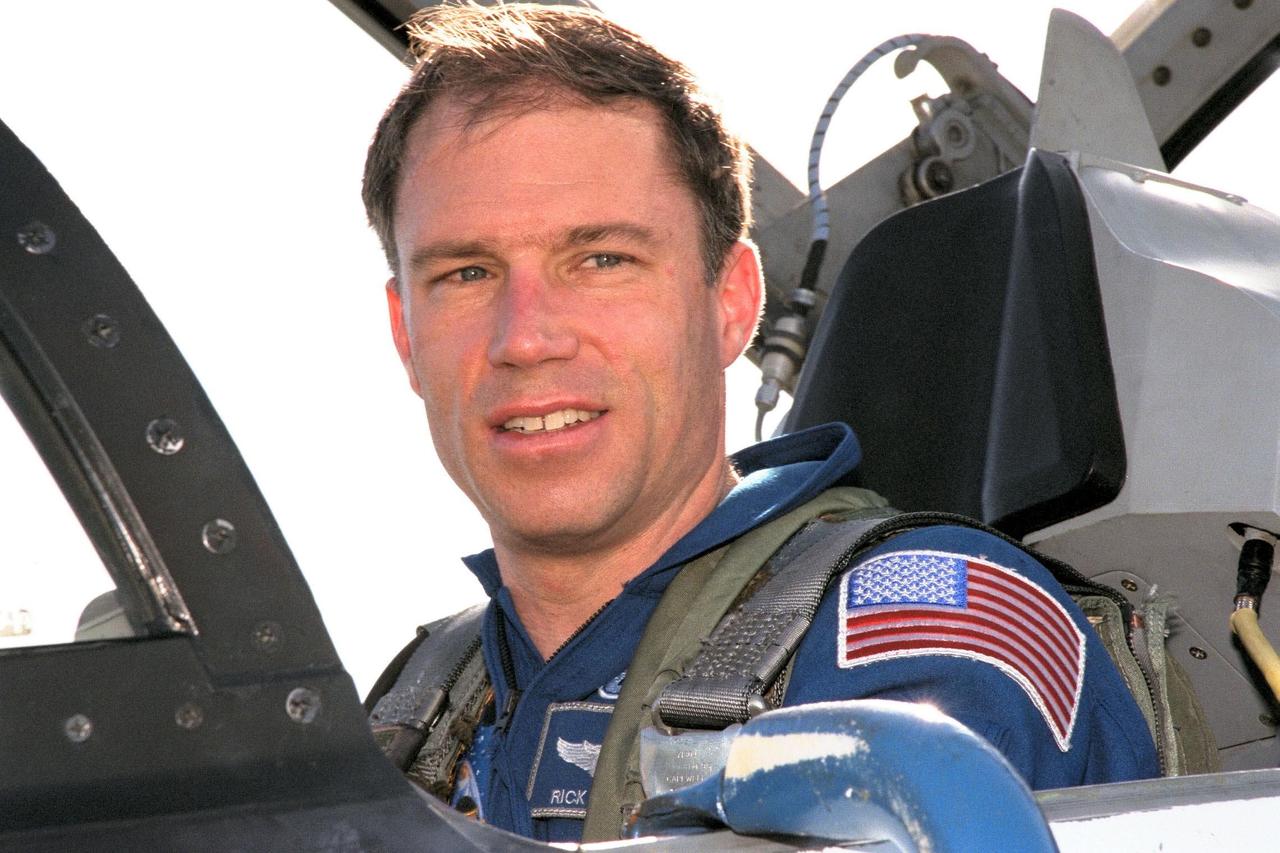
STS-90 Mission Commander Richard Searfoss poses in the cockpit of his T-38 jet trainer aircraft after arriving at the KSC Shuttle Landing Facility along with other members of the crew from NASA’s Johnson Space Center to begin Terminal Countdown Demonstration Test (TCDT) activities. The TCDT is held at KSC prior to each Space Shuttle flight to provide crews with the opportunity to participate in simulated countdown activities. Columbia is targeted for launch of STS-90 on April 16 at 2:19 p.m. EDT and will be the second mission of 1998. The mission is scheduled to last nearly 17 days
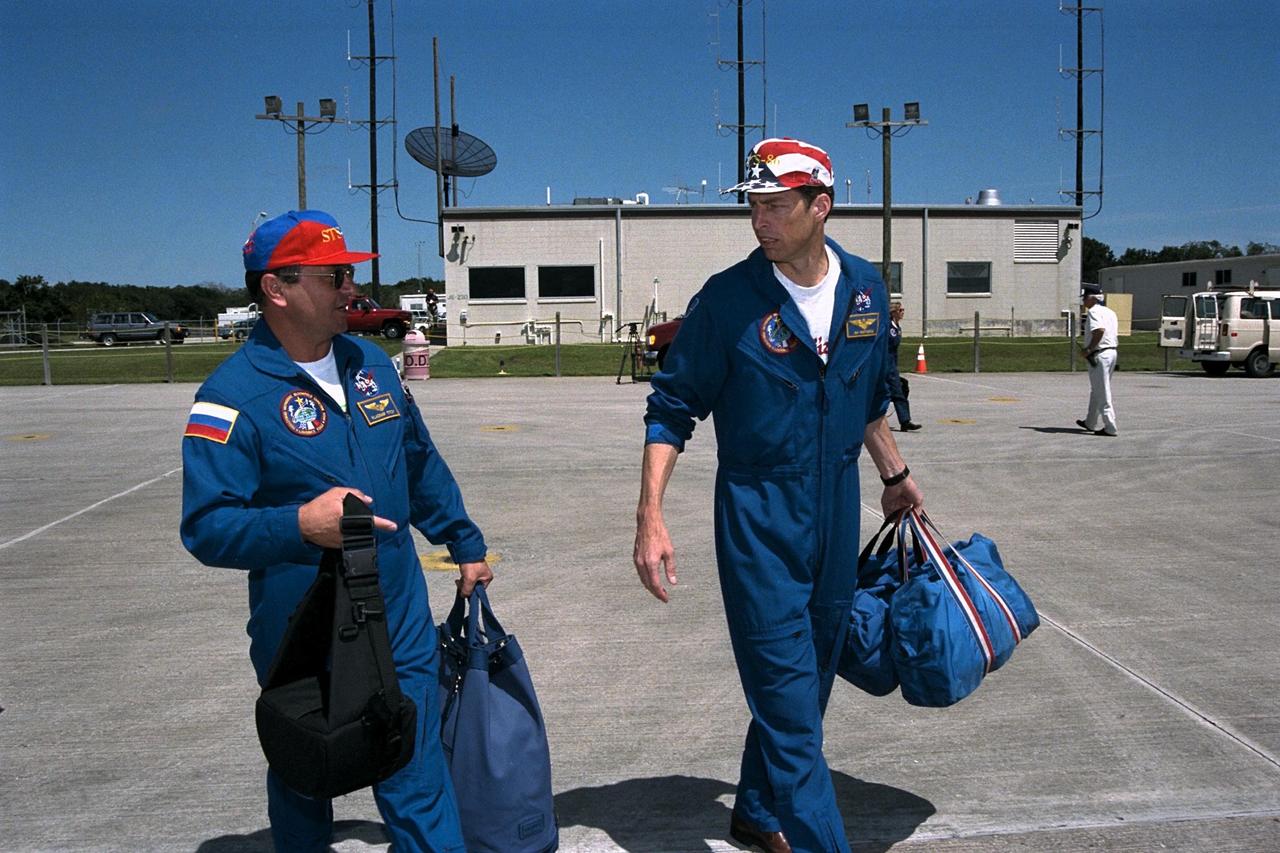
STS-86 Commander James D. Wetherbee, at right, and Mission Specialist Vladimir Georgievich Titov prepare to leave from KSC’s Shuttle Landing Facility after participating in Terminal Countdown Demonstration Test (TCDT) activities. They are returning to Johnson Space Center, Houston, Texas, for final prelaunch training. Wetherbee will make his fourth spaceflight on STS-86, and his third as commander. Titov is a cosmonaut with the Russian Space Agency. He will make his fifth spaceflight, and second on the Space Shuttle. STS-86 will be the seventh docking of the Space Shuttle with the Russian Space Station Mir. Liftoff aboard Atlantis is targeted for Sept. 25 from Launch Pad 39A
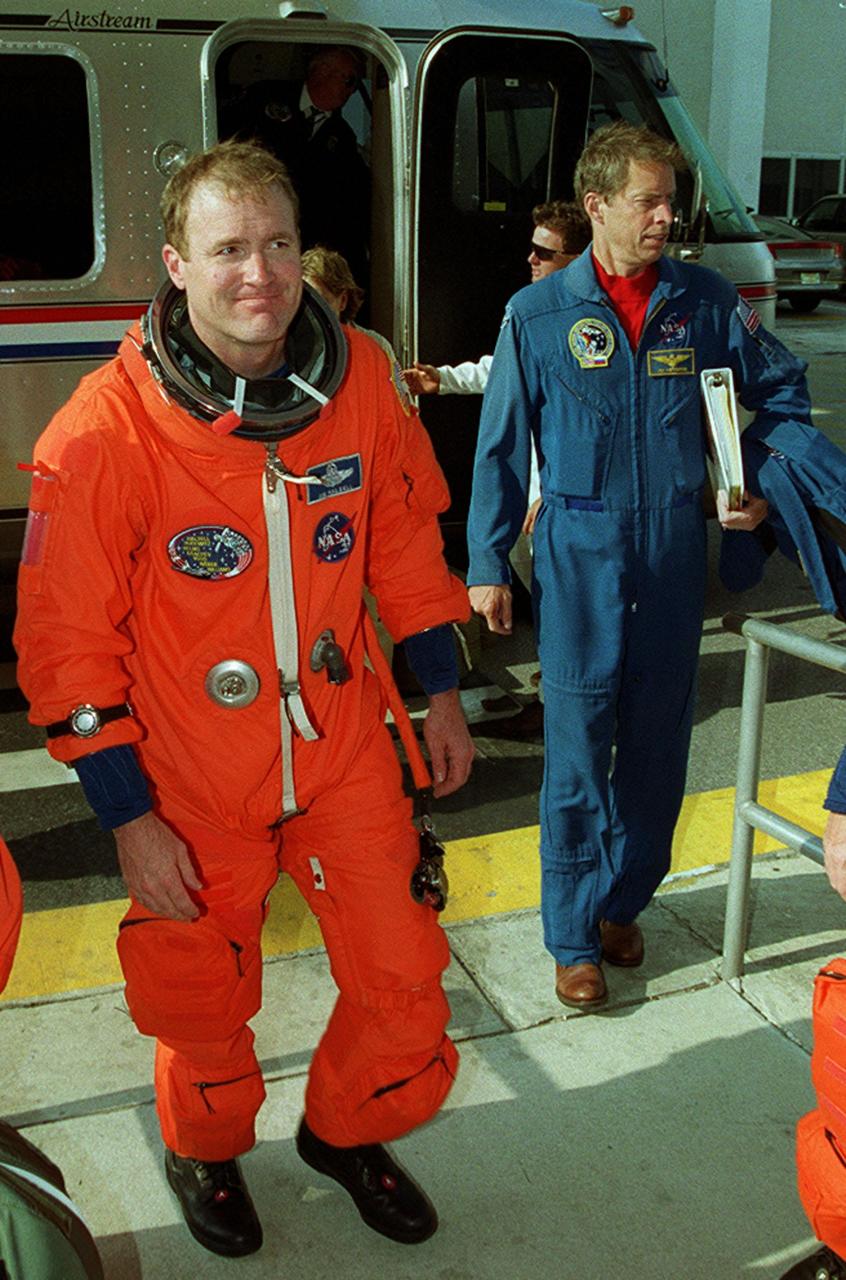
The STS-101 crew returns to the Operations and Checkout Building after the launch was scrubbed due to cross winds at the KSC Shuttle Landing Facility gusting above 20 knots. Flight rules require cross winds at the SLF to be no greater than 15 knots in case of a contingency Shuttle landing. Shown at left is Commander James D. Halsell Jr. At right is astronaut James Wetherbee, deputy director of the Johnson Space Center. Weather conditions will be reevaluated for another launch try on April 25. The mission will take the crew to the International Space Station to deliver logistics and supplies and to prepare the Station for the arrival of the Zvezda Service Module, expected to be launched by Russia in July 2000. Also, the crew will conduct one space walk. This will be the third assembly flight to the Space Station. The mission is expected to last about 10 days
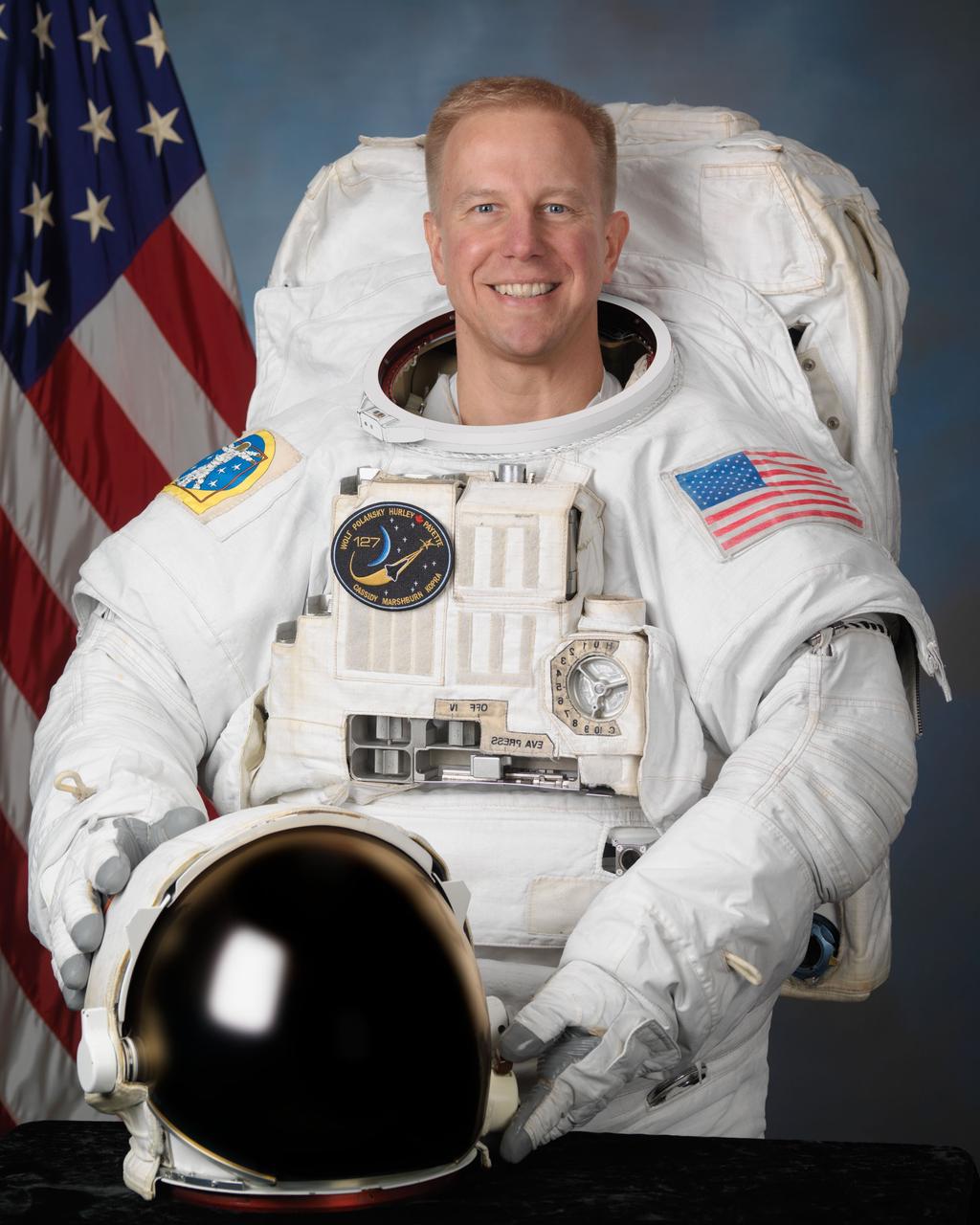
JOHNSON SPACE CENTER, Houston, Texas -- JSC2009-E-018972 (17 Dec. 2008) --- NASA astronaut Timothy L. Kopra, mission specialist.
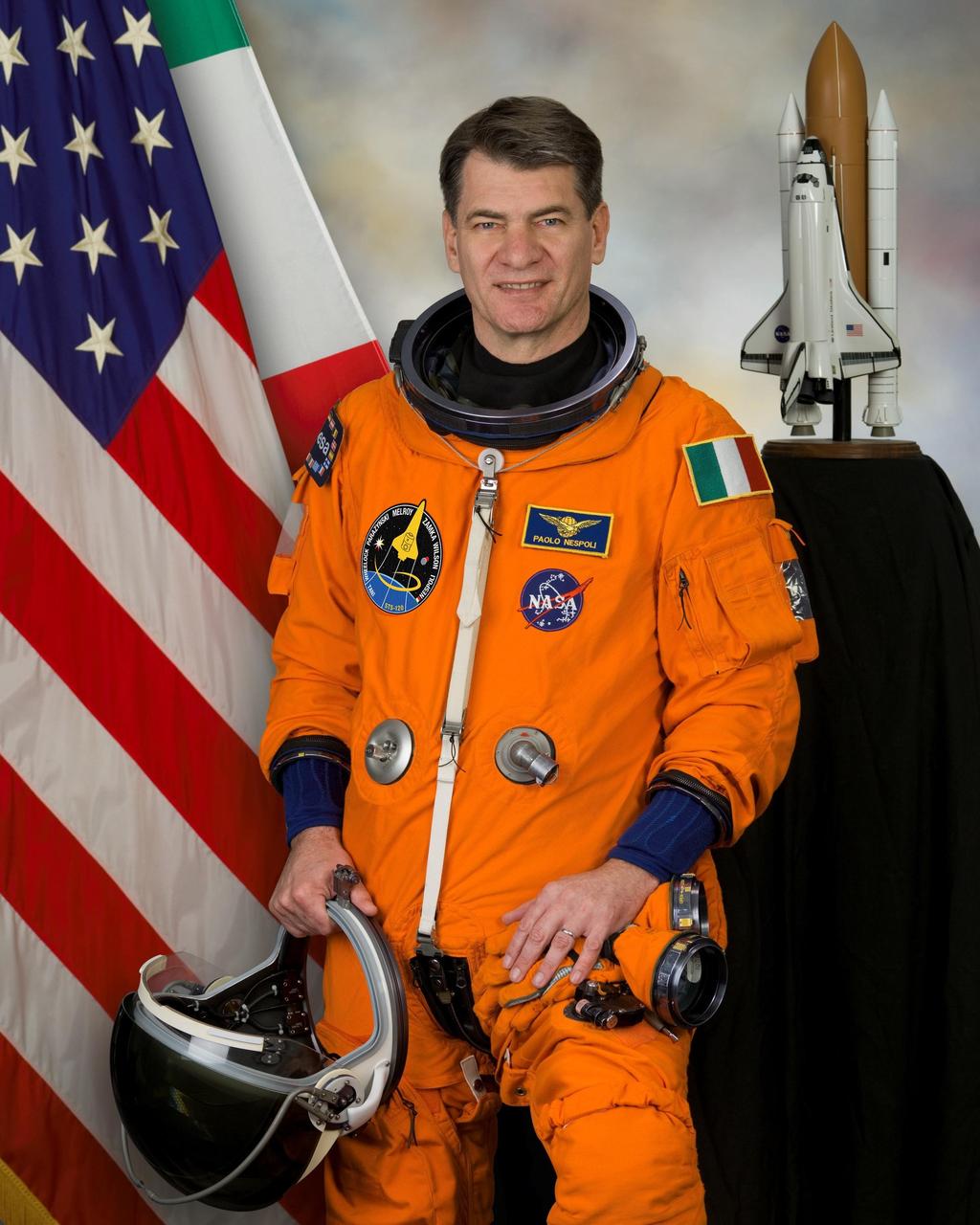
JOHNSON SPACE CENTER, Houston, Texas -- JSC2007-E-34565 -- Astronaut Paolo A. Nespoli, mission specialist representing the European Space Agency (ESA)
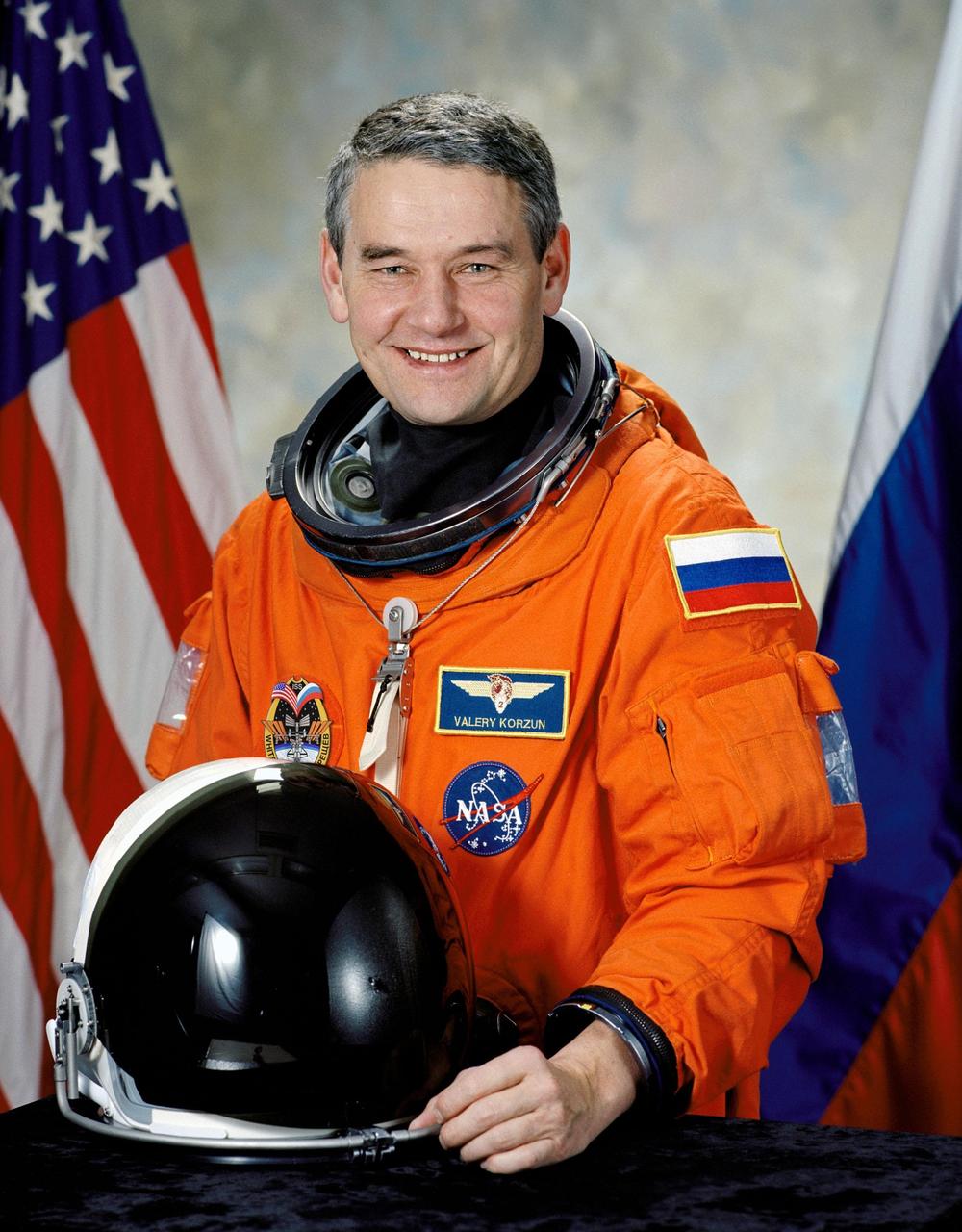
JOHNSON SPACE CENTER, HOUSTON, TX -- (JSC2001-03047) --Official Portrait of Cosmonaut Valeri G. Korzun, Expedition Five mission commander representing Rosaviakosmos.
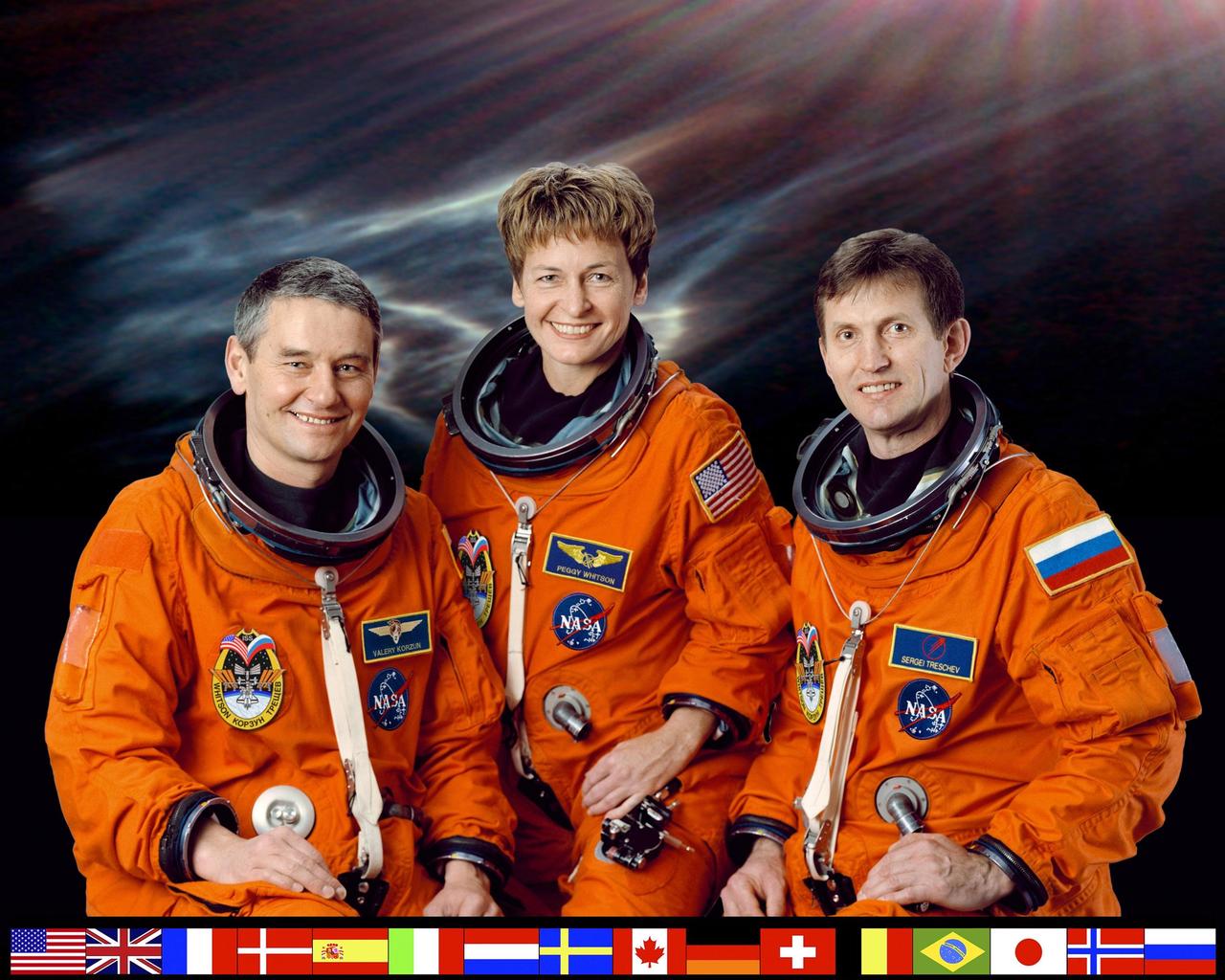
JOHNSON SPACE CENTER, HOUSTON, TEXAS -- EXPEDITION FIVE CREW PORTRAIT --- (JSC ISS05-5-002) -- Cosmonaut Valeri G. Korzun (left), Expedition Five mission commander; astronaut Peggy A. Whitson and cosmonaut Sergei Y. Treschev, both flight engineers, attired in training versions of the shuttle launch and entry suit, pause from their training schedule for a crew portrait. The three will be launched to the International Space Station (ISS) in early spring of this year aboard the Space Shuttle Atlantis. Korzun and Treschev represent the Russian Aviation and Space Agency (Rosaviakosmos)
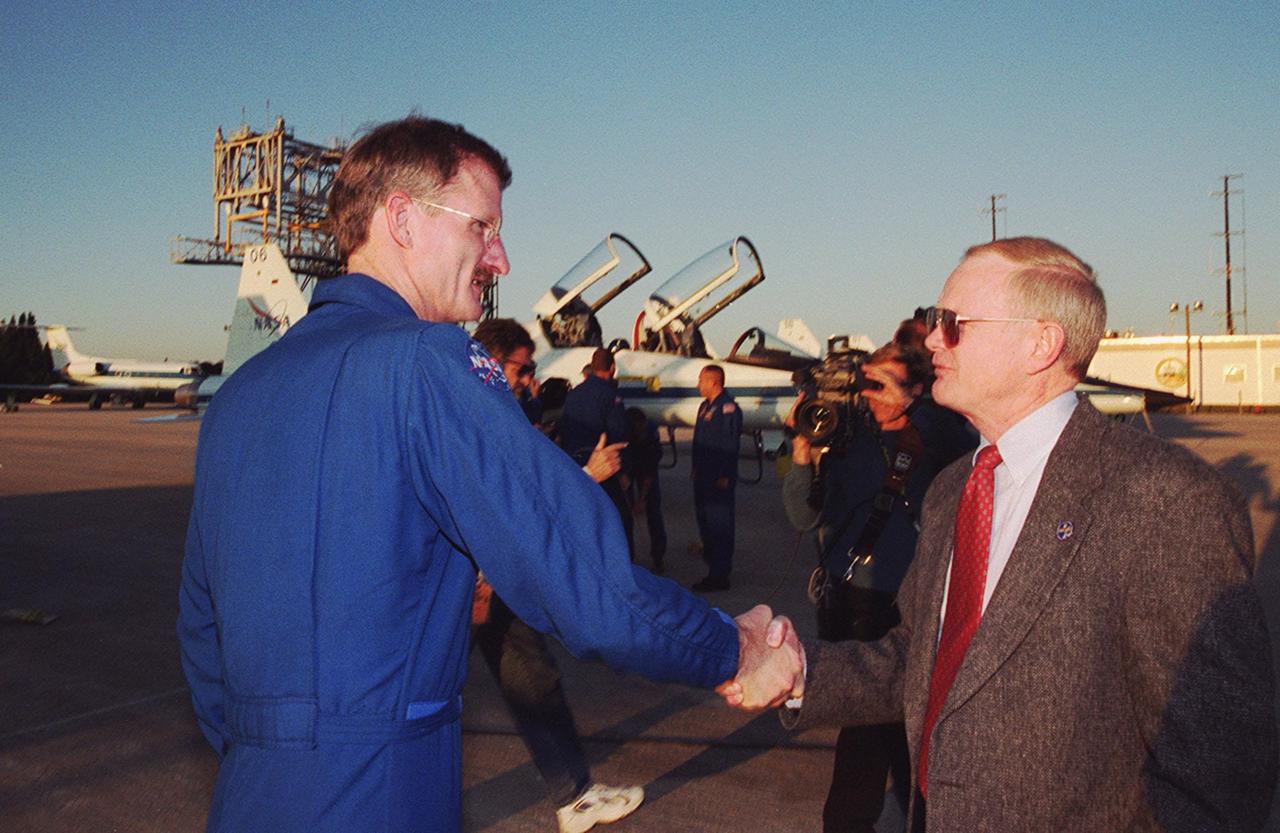
At the Shuttle Landing Facility, STS-97 Mission Specialist Joseph Tanner (left) is greeted by Center Director Roy Bridges on his arrival at KSC from Johnson Space Center. Tanner and the rest of the crew have returned to KSC for the launch, scheduled for Nov. 30 at about 10:06 p.m. EST. Mission STS-97is the sixth construction flight to the International Space Station. Its payload includes the P6 Integrated Truss Structure and a photovoltaic (PV) module, with giant solar arrays that will provide power to the Station. The mission includes two spacewalks to complete the solar array connections. STS-97 is scheduled to launch Nov. 30 at about 10:06 p.m. EST
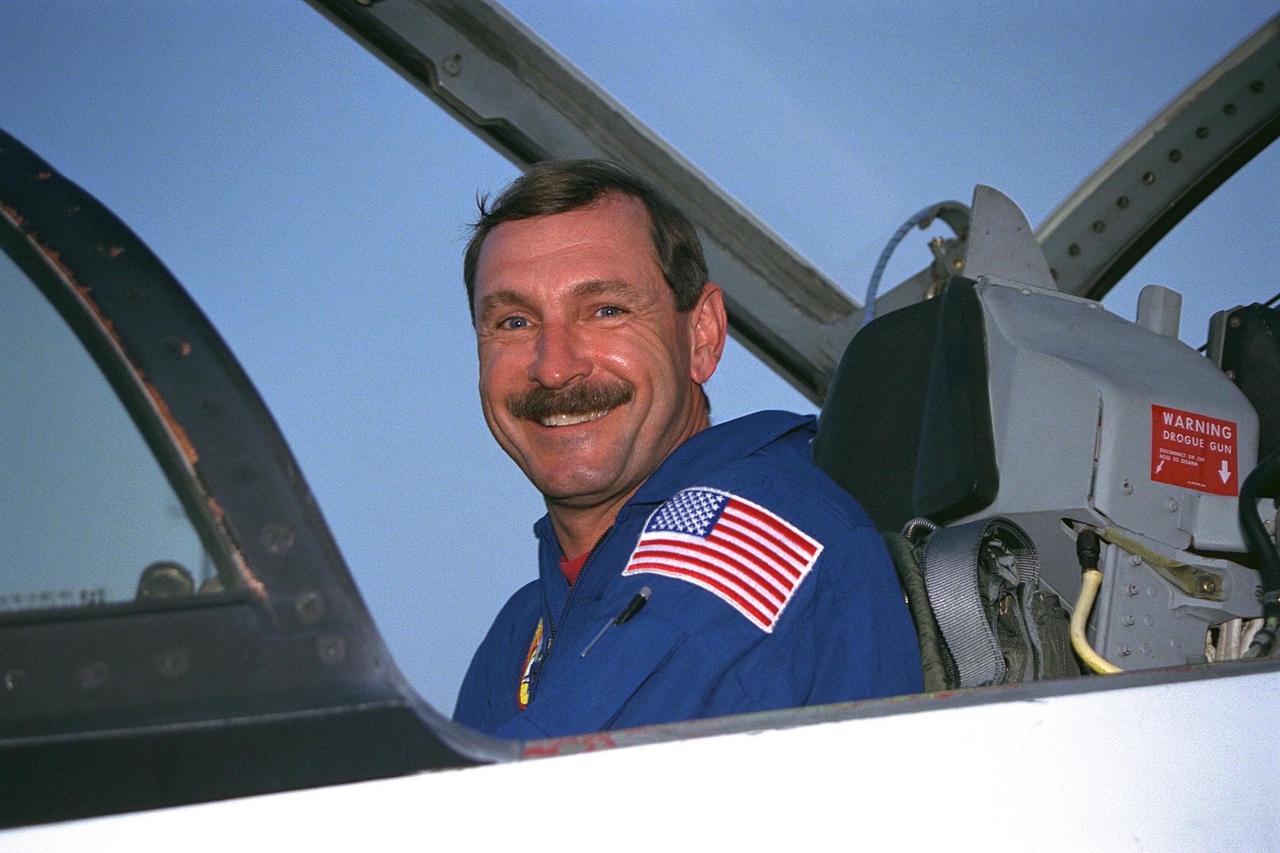
STS-85 Mission Commander Curtis L. Brown, Jr., poses in his T-38 jet trainer after landing with his crew at KSC’s Shuttle Landing Facility from NASA’s Johnson Space Center to begin Terminal Countdown Demonstration Test (TCDT) activities for that mission. The TCDT includes a dress rehearsal of the launch countdown. The STS-85 mission is now targeted for Aug. 7. The primary payload aboard the Space Shuttle orbiter Discovery is the Cryogenic Infrared Spectrometers and Telescopes for the Atmosphere-2 (CRISTA-SPAS-2). Other STS-85 payloads include the Manipulator Flight Demonstration (MFD), and Technology Applications and Science-1 (TAS-1) and International Extreme Ultraviolet Hitchhiker-2 (IEH-2) experiments
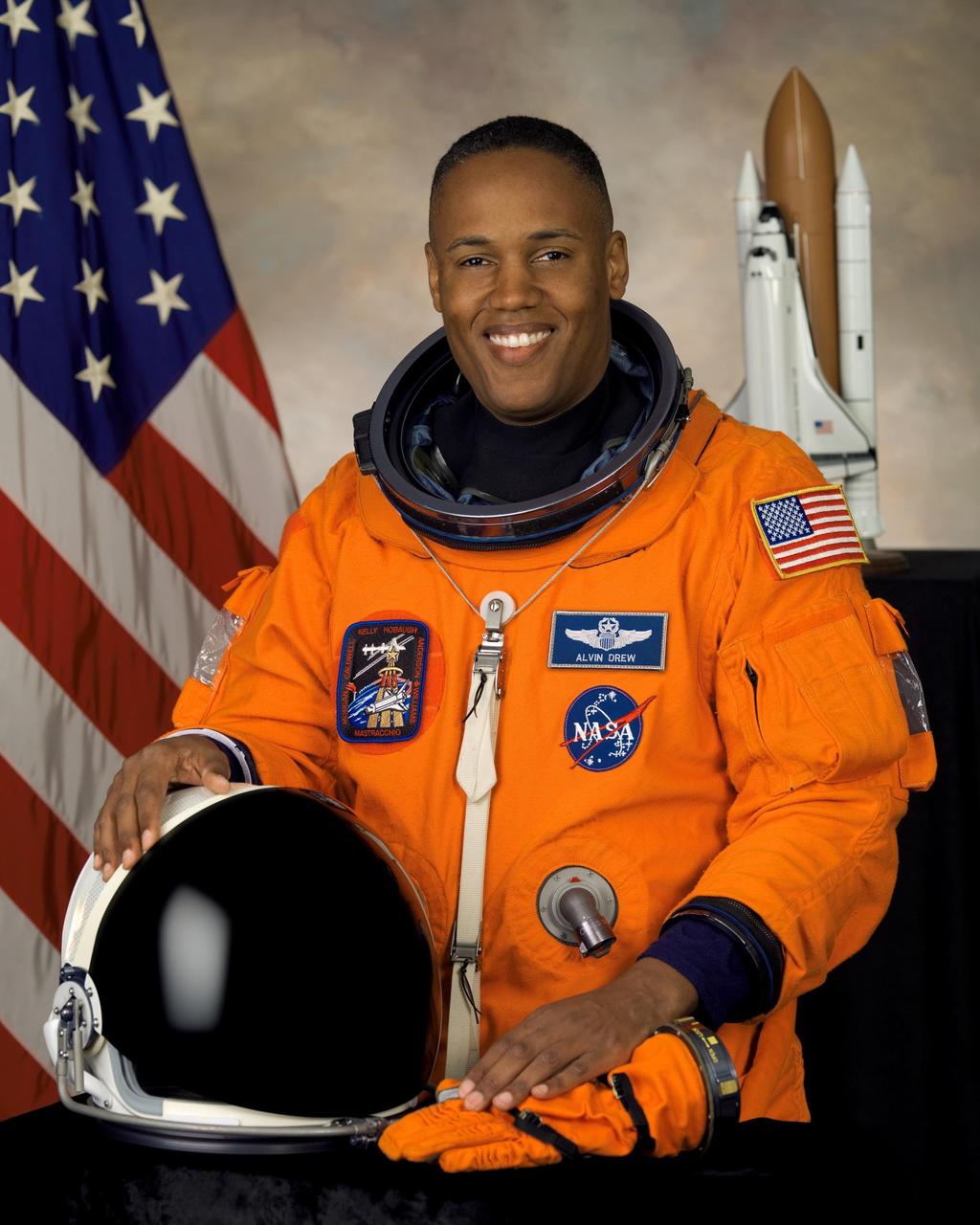
JOHNSON SPACE CENTER, Houston, Texas -- JSC2007-E-34405 -- NASA astronaut Alvin Drew Jr., mission specialist.
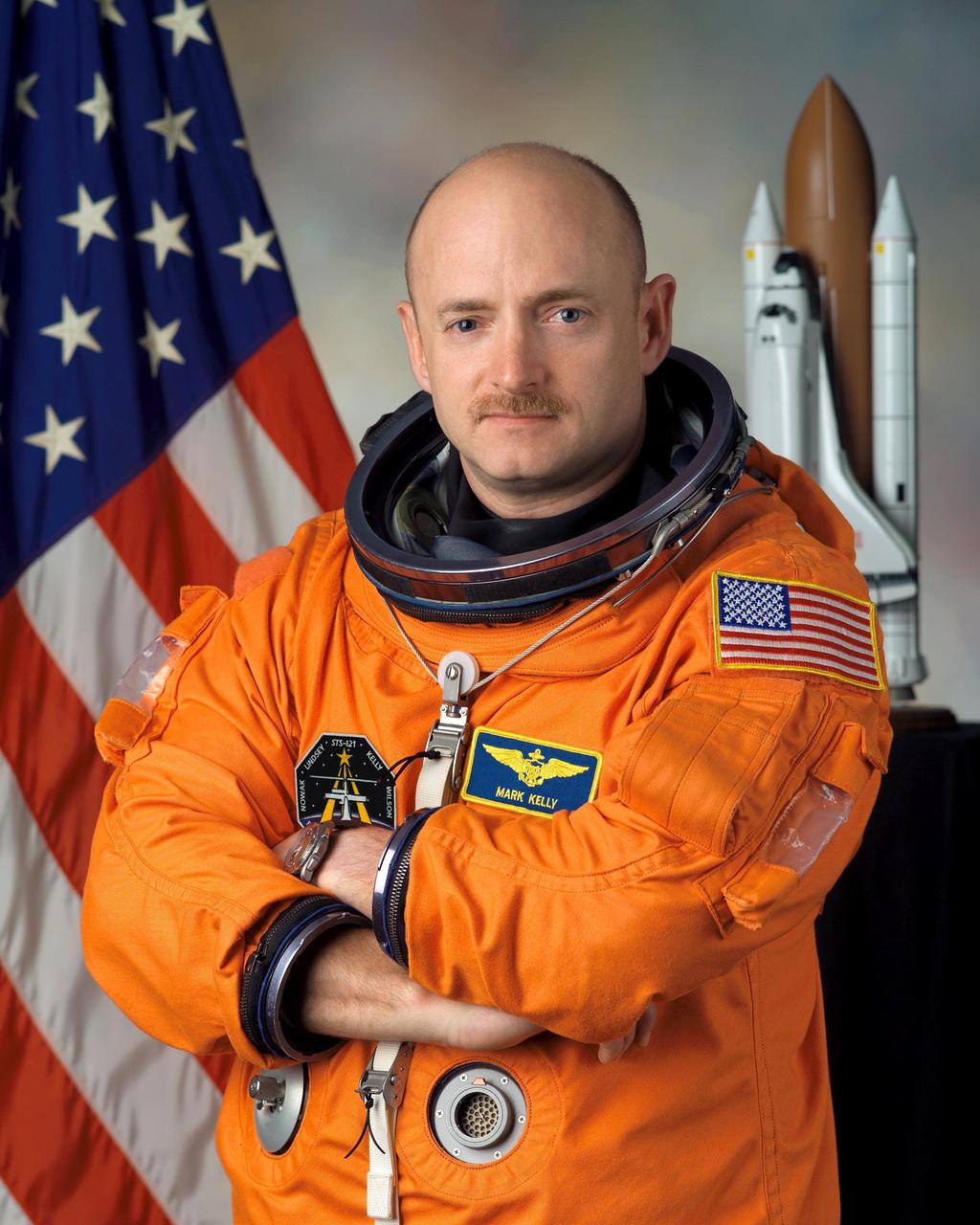
JOHNSON SPACE CENTER, TEXAS -- JSC2005-E-20603 -- Official portrait of astronaut Mark E. Kelly, commander.
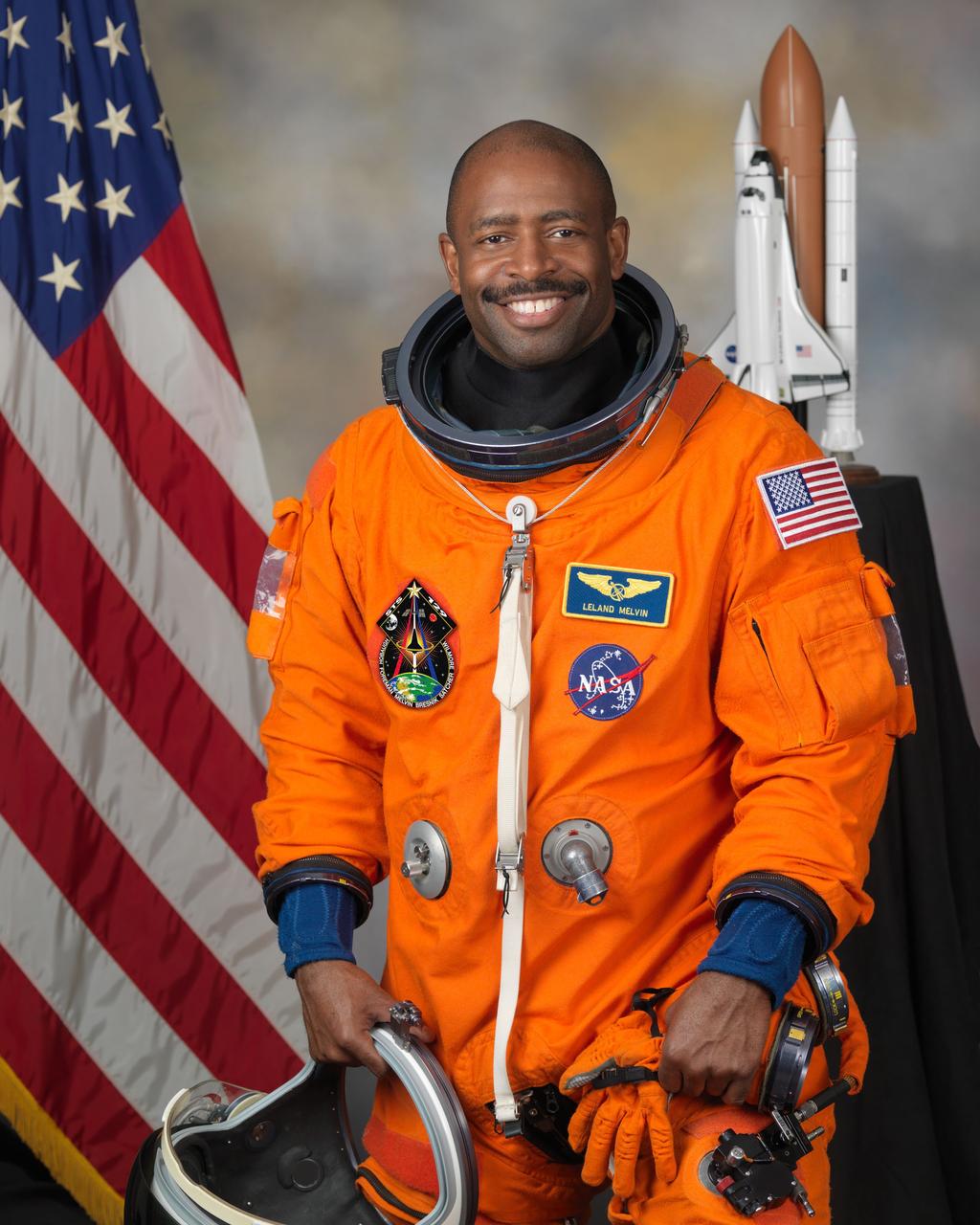
JOHNSON SPACE CENTER, Houston - JSC2009-E-208989 -- Astronaut Leland D. Melvin, mission specialist
![JOHNSON SPACE CENTER, HOUSTON -- STS123-S-001-- STS-123 continues assembly of the International Space Station (ISS). The primary mission objectives include rotating an expedition crew member and installing both the first component of the Japanese Experimental Module (the Experimental Logistics Module - Pressurized Section [ELM-PS]) and the Canadian Special Purpose Dexterous Manipulator (SPDM). In addition, STS-123 will deliver various spare ISS components and leave behind the sensor boom used for inspecting the shuttle's thermal protection system. A follow-on mission to ISS will utilize and then return home with this sensor boom. A total of four spacewalks are planned to accomplish these tasks. The mission will also require the use of both the shuttle and ISS robotic arms. STS-123 will utilize the Station-Shuttle Power Transfer System to extend the docked portion of the mission to 11 days, with a total planned duration of 15 days. The crew patch depicts the space shuttle in orbit with the crew names trailing behind. STS-123's major additions to ISS (the ELM-PS installation with the shuttle robotic arm and the fully constructed SPDM) are both illustrated. The ISS is shown in the configuration that the STS-123 crew will encounter when they arrive. The NASA insignia design for shuttle flights is reserved for use by the astronauts and for other official use as the NASA Administrator may authorize. Public availability has been approved only in the form of illustrations by the various news media. When and if there is any change in this policy, which is not anticipated, it will be publicly announced.](https://images-assets.nasa.gov/image/KSC-08pd0363/KSC-08pd0363~medium.jpg)
JOHNSON SPACE CENTER, HOUSTON -- STS123-S-001-- STS-123 continues assembly of the International Space Station (ISS). The primary mission objectives include rotating an expedition crew member and installing both the first component of the Japanese Experimental Module (the Experimental Logistics Module - Pressurized Section [ELM-PS]) and the Canadian Special Purpose Dexterous Manipulator (SPDM). In addition, STS-123 will deliver various spare ISS components and leave behind the sensor boom used for inspecting the shuttle's thermal protection system. A follow-on mission to ISS will utilize and then return home with this sensor boom. A total of four spacewalks are planned to accomplish these tasks. The mission will also require the use of both the shuttle and ISS robotic arms. STS-123 will utilize the Station-Shuttle Power Transfer System to extend the docked portion of the mission to 11 days, with a total planned duration of 15 days. The crew patch depicts the space shuttle in orbit with the crew names trailing behind. STS-123's major additions to ISS (the ELM-PS installation with the shuttle robotic arm and the fully constructed SPDM) are both illustrated. The ISS is shown in the configuration that the STS-123 crew will encounter when they arrive. The NASA insignia design for shuttle flights is reserved for use by the astronauts and for other official use as the NASA Administrator may authorize. Public availability has been approved only in the form of illustrations by the various news media. When and if there is any change in this policy, which is not anticipated, it will be publicly announced.
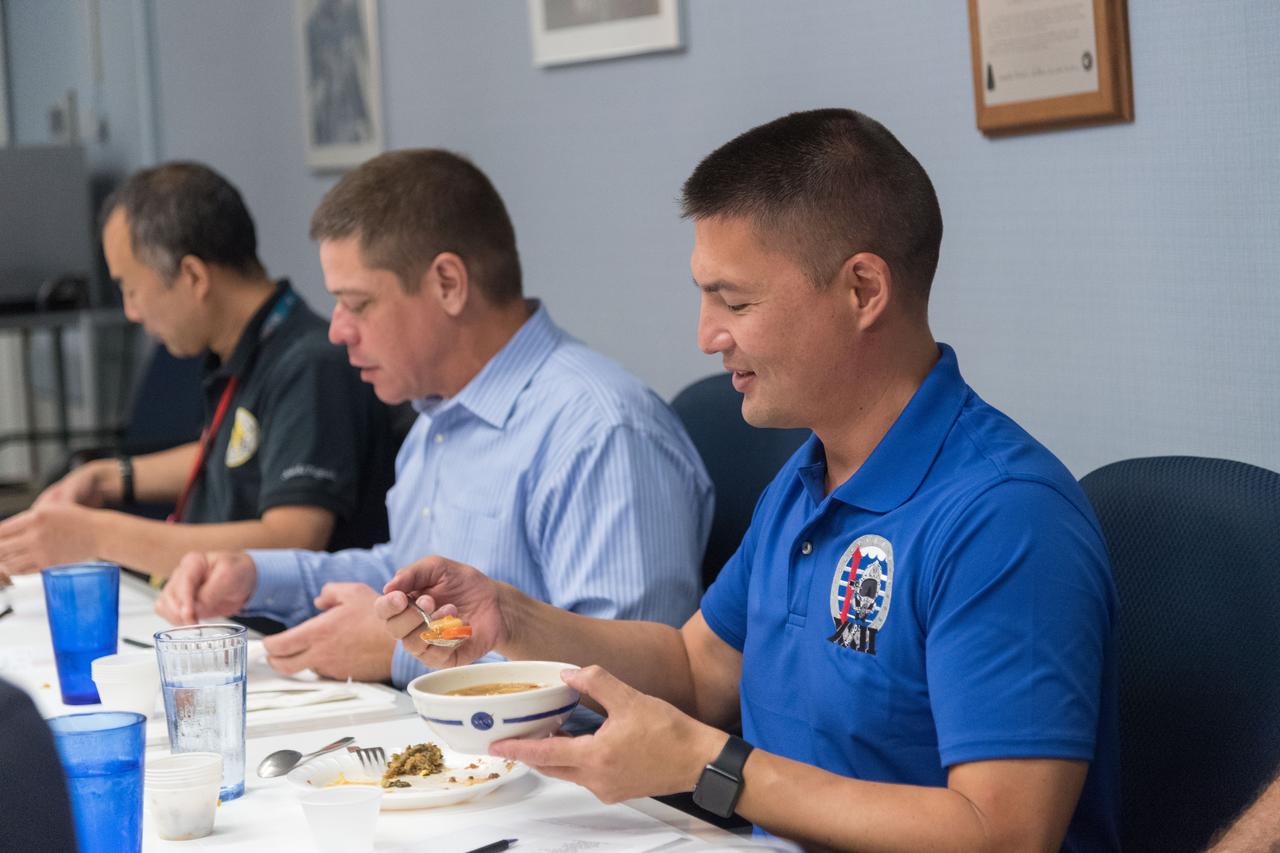
NASA commercial crew astronaut Kjell Lindgren tries out some of the food he'll enjoy onboard the International Space Station at the Space Food Systems Laboratory at Johnson Space Center. Lindgren is assigned as a backup for SpaceX Crew Dragon’s first and second crewed flights.
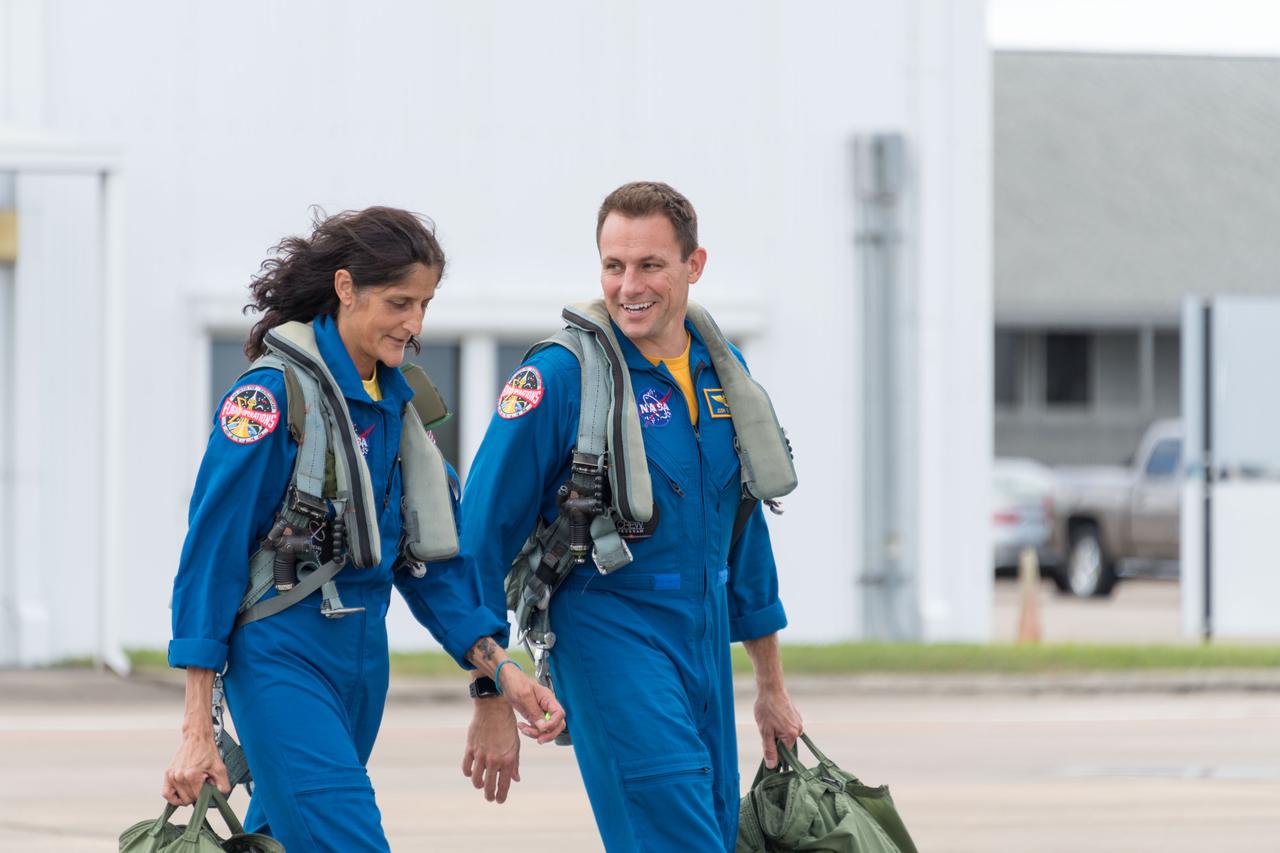
NASA commercial crew astronauts Josh Cassada and Suni Williams prepare for T-38 training flights at Ellington Field Joint Reserve Base in Houston. Cassada and Williams are assigned to the Boeing Starliner’s second crewed flight.
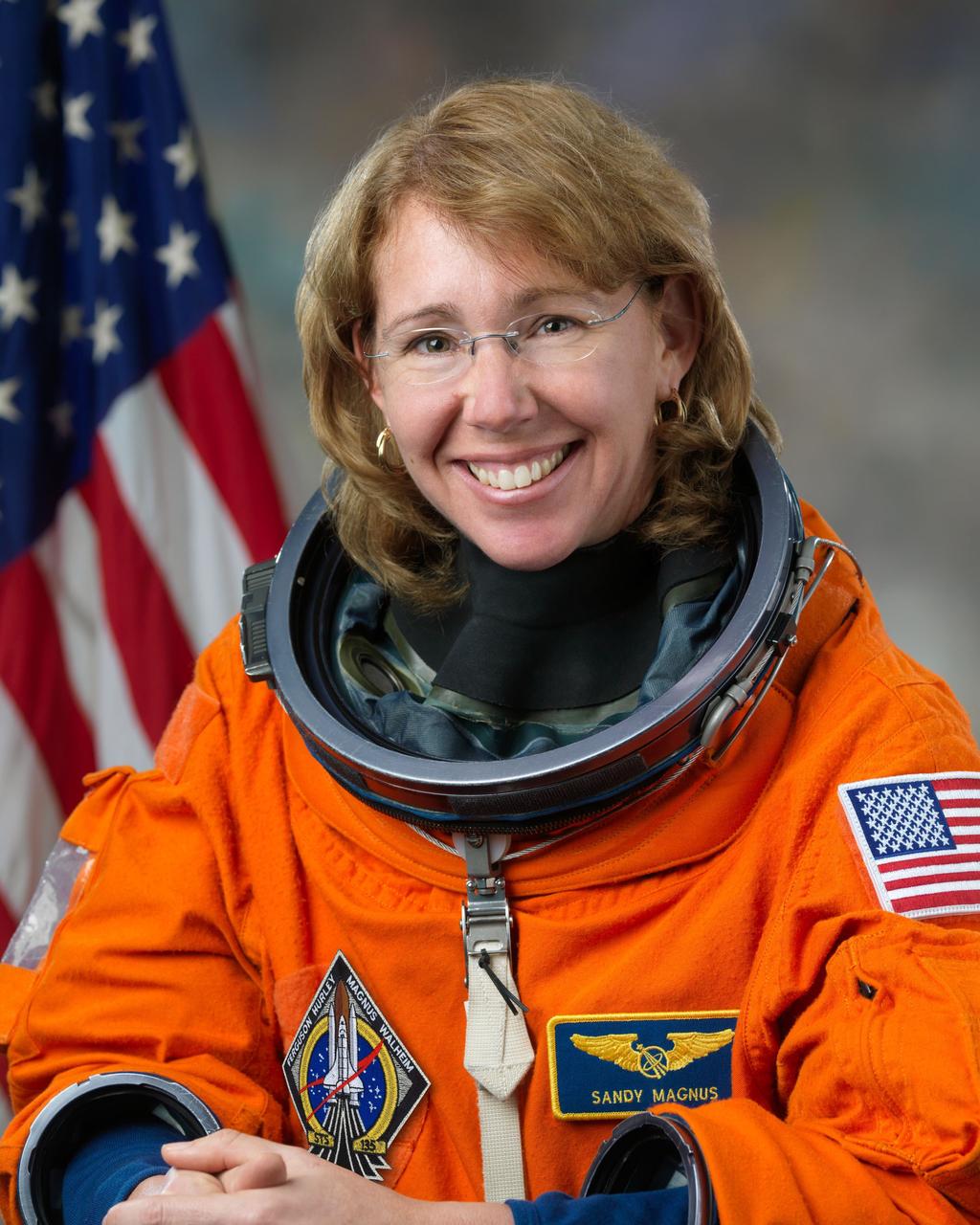
JOHNSON SPACE CENTER, Houston, Texas --- JSC2011-E-039719 --- NASA astronaut Sandy Magnus, mission specialist. Photo credit: NASA or National Aeronautics and Space Administration
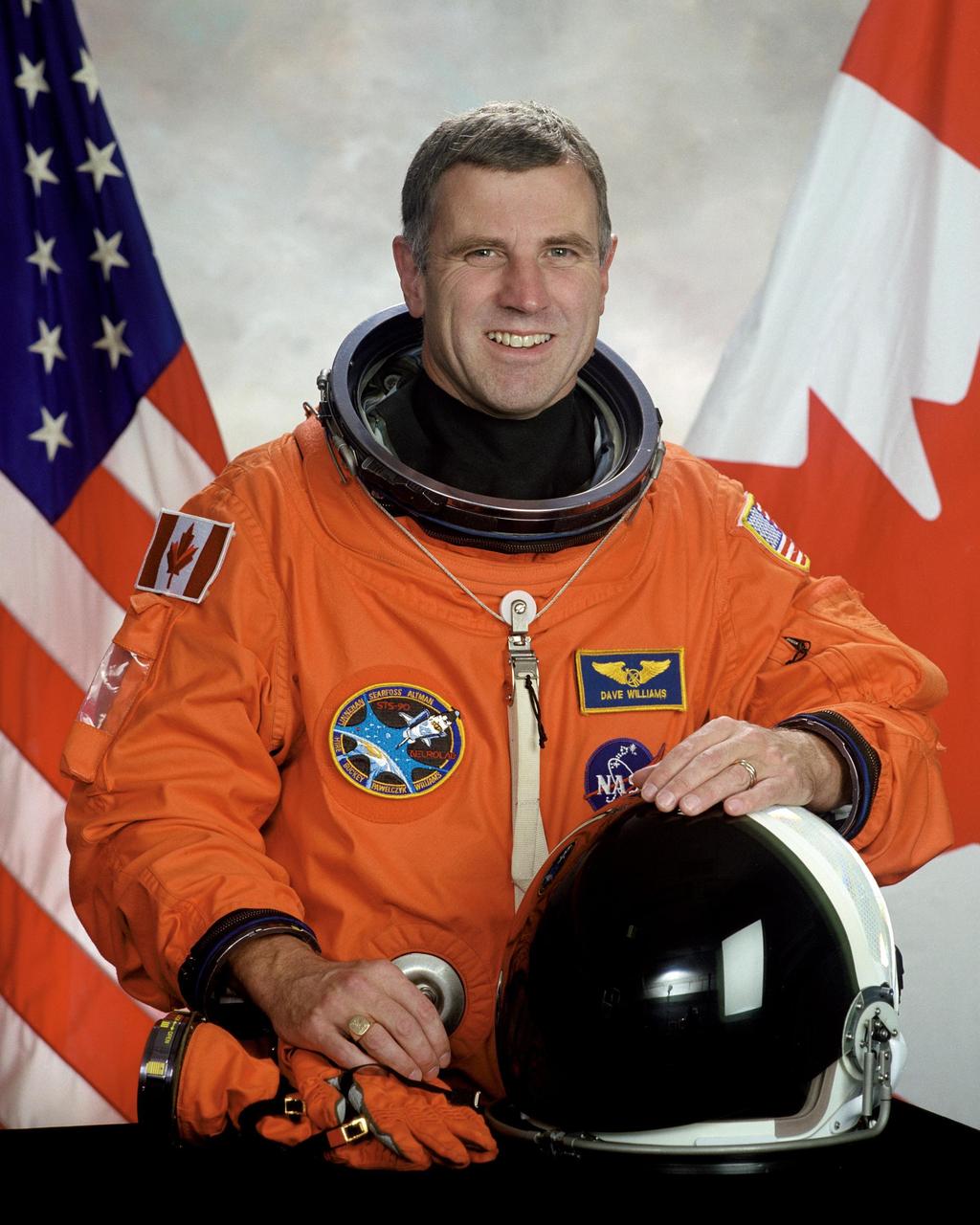
JOHNSON SPACE CENTER, Houston -- JSC2001-00190 -- Astronaut Dafydd R. (Dave) Williams, mission specialist representing the Canadian Space Agency.
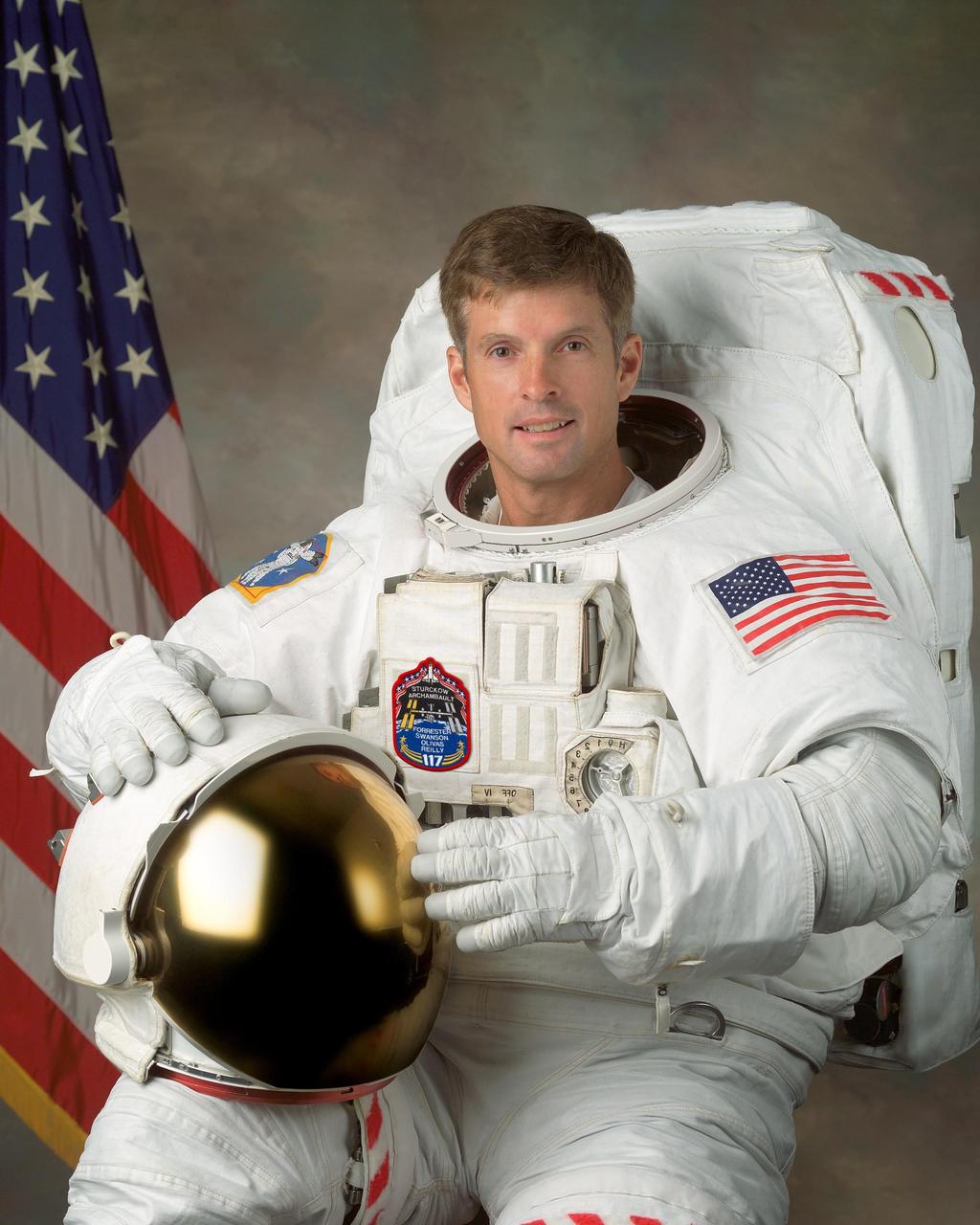
JOHNSON SPACE CENTER, Houston -- JSC2006-E-44334 -- Official portrait of Steven R. Swanson, mission specialist on STS-117 and STS-119.
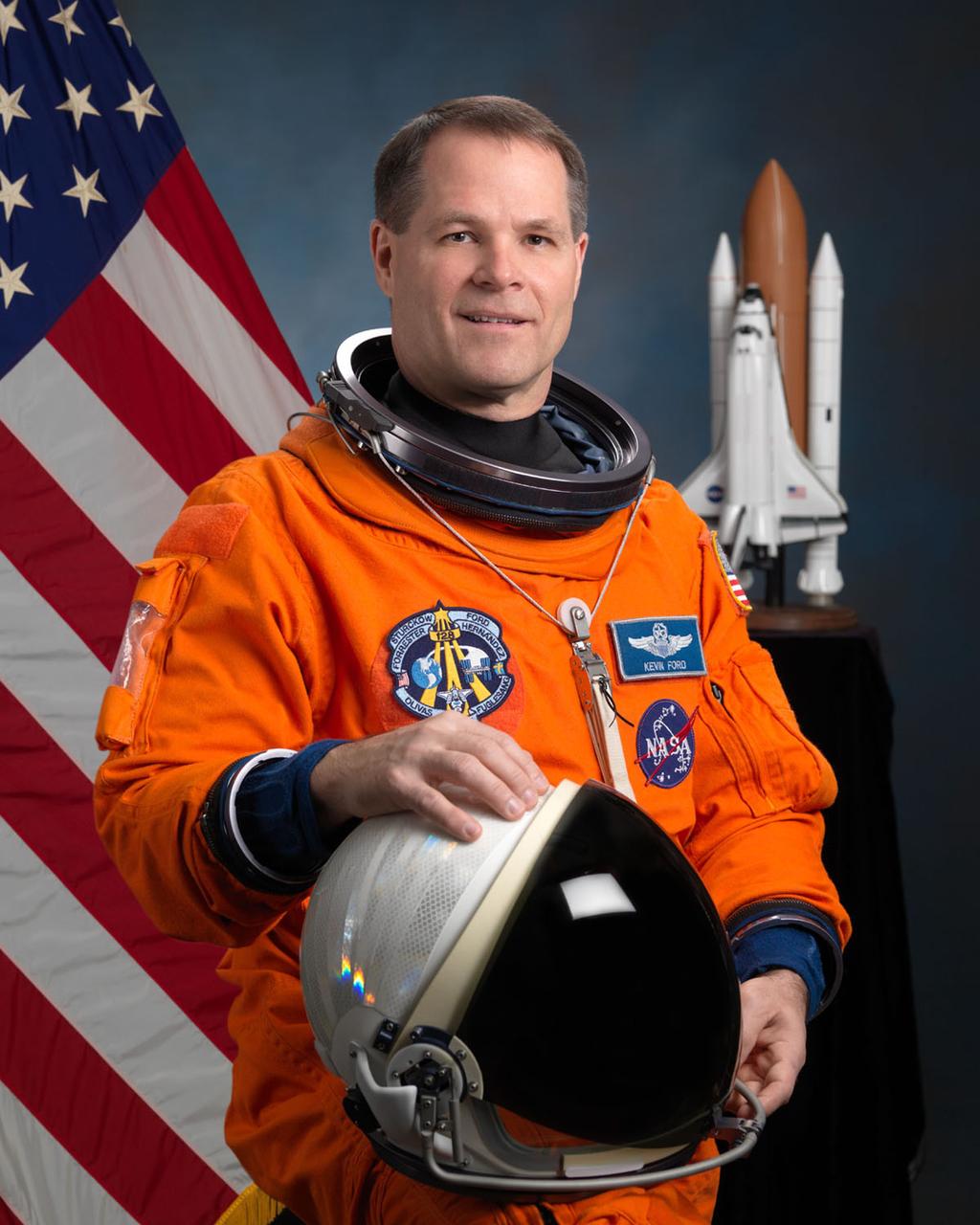
JOHNSON SPACE CENTER, Houston – JSC2009-E-061592 -- Astronaut Kevin A. Ford, pilot

JOHNSON SPACE CENTER, Houston - The STS-114 patch design signifies the return of the Space Shuttle to flight and honors the memory of the STS-107 Columbia crew. The blue Shuttle rising above Earth’s horizon includes the Columbia constellation of seven stars, echoing the STS-107 patch and commemorating the seven members of that mission. The crew of STS-114 will carry the memory of their friends on Columbia and the legacy of their mission back into Earth orbit. The dominant design element of the STS-114 patch is the planet Earth, which represents the unity and dedication of the many people whose efforts allows the Shuttle to safely return to flight. Against the background of the Earth at night, the blue orbit represents the International Space Station (ISS), with the EVA crewmembers named on the orbit. The red sun on the orbit signifies the contributions of the Japanese Space Agency to the mission and to the ISS program. The multi-colored Shuttle plume represents the broad spectrum of challenges for this mission, including Shuttle inspection and repair experiments, and International Space Station re-supply and repair. The NASA insignia design for Shuttle flights is reserved for use by the astronauts and for other official use as the NASA Administrator may authorize. Public availability has been approved only in the forms of illustrations by the various news media. When and if there is any change in this policy, which is not anticipated, the change will be publicly announced.
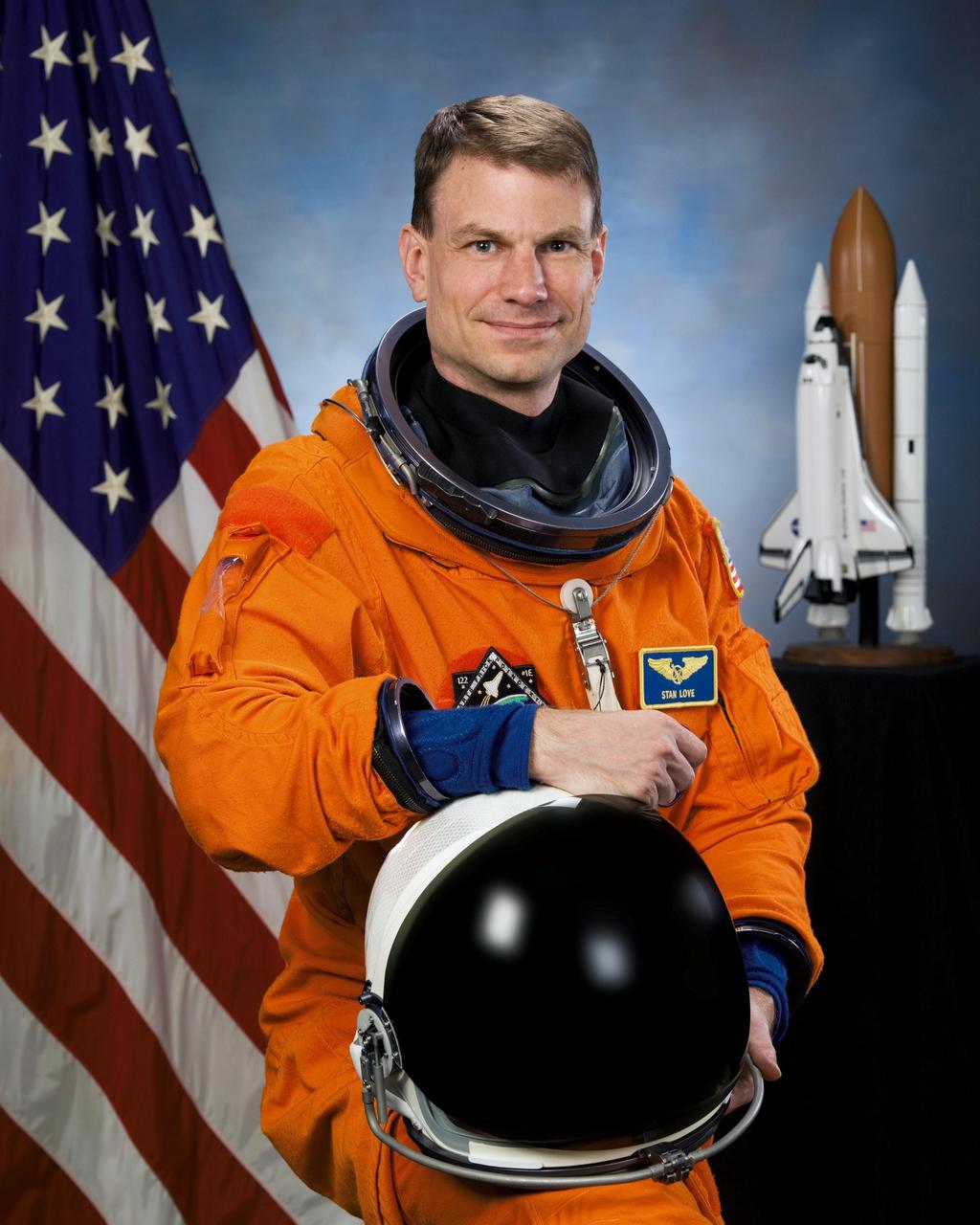
JOHNSON SPACE CENTER, Houston -- JSC2007-E-48354 -- Astronaut Stanely G. Love, mission specialist
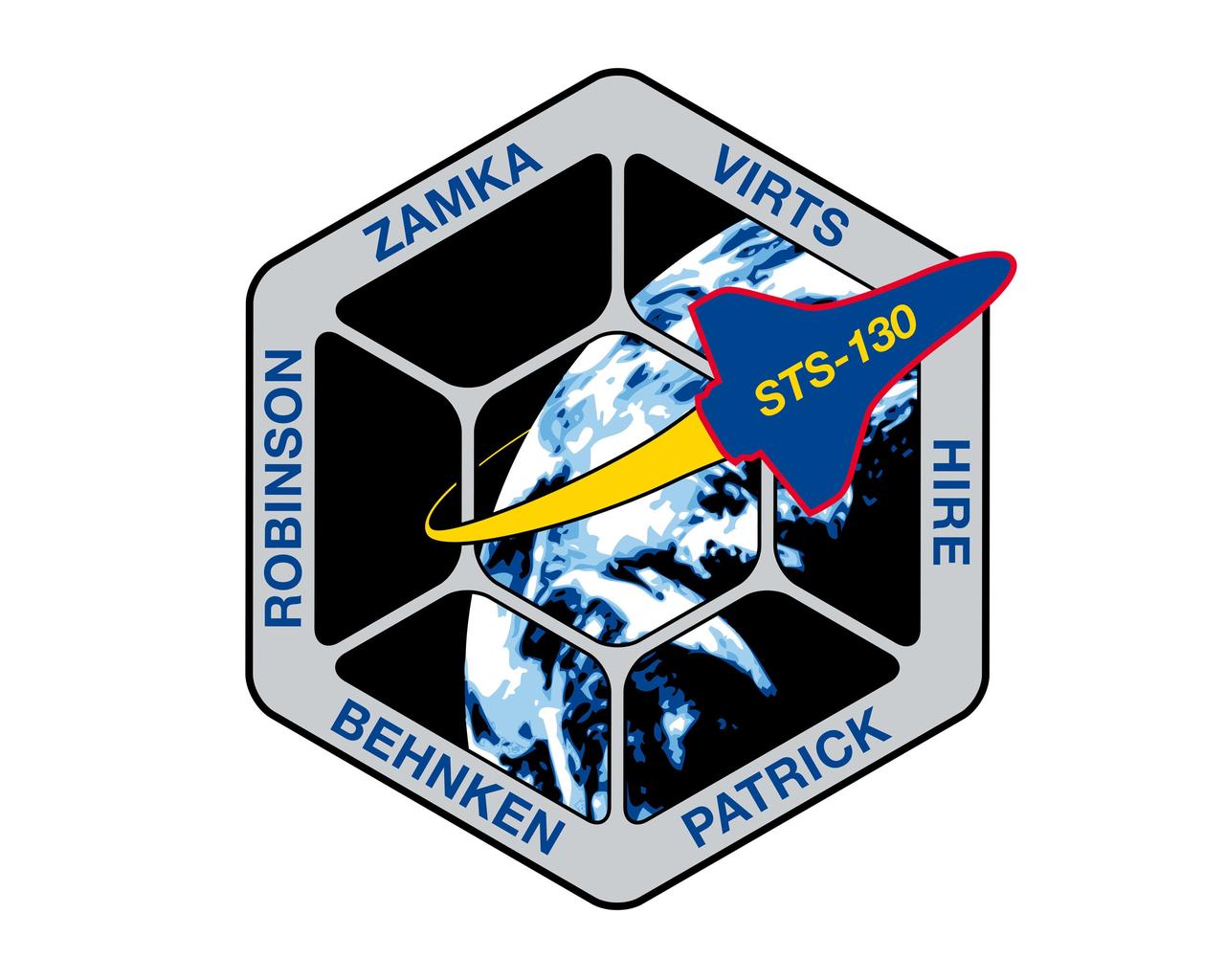
JOHNSON SPACE CENTER, Houston - STS130-S-001 - The STS-130 patch was designed by the crew to reflect both the objectives of the mission and its place in the history of human spaceflight. The main goal of the mission is to deliver Node 3 and the Cupola to the International Space Station (ISS). Node 3, named "Tranquility," will contain life support systems enabling continued human presence in orbit aboard the ISS. The shape of the patch represents the Cupola, which is the windowed robotics viewing station, from which astronauts will have the opportunity not only to monitor a variety of ISS operations, but also to study our home planet. The image of Earth depicted in the patch is the first photograph of the Earth taken from the moon by Lunar Orbiter I on August 23, 1966. As both a past and a future destination for explorers from the planet Earth, the moon is thus represented symbolically in the STS-130 patch. The Space Shuttle Endeavour is pictured approaching the ISS, symbolizing the Space Shuttle's role as the prime construction vehicle for the ISS. The NASA insignia design for shuttle flights is reserved for use by the astronauts and for other official use as the NASA Administrator may authorize. Public availability has been approved only in the form of illustrations by the various news media. When and if there is any change in this policy, which we do not anticipate, it will be publicly announced.
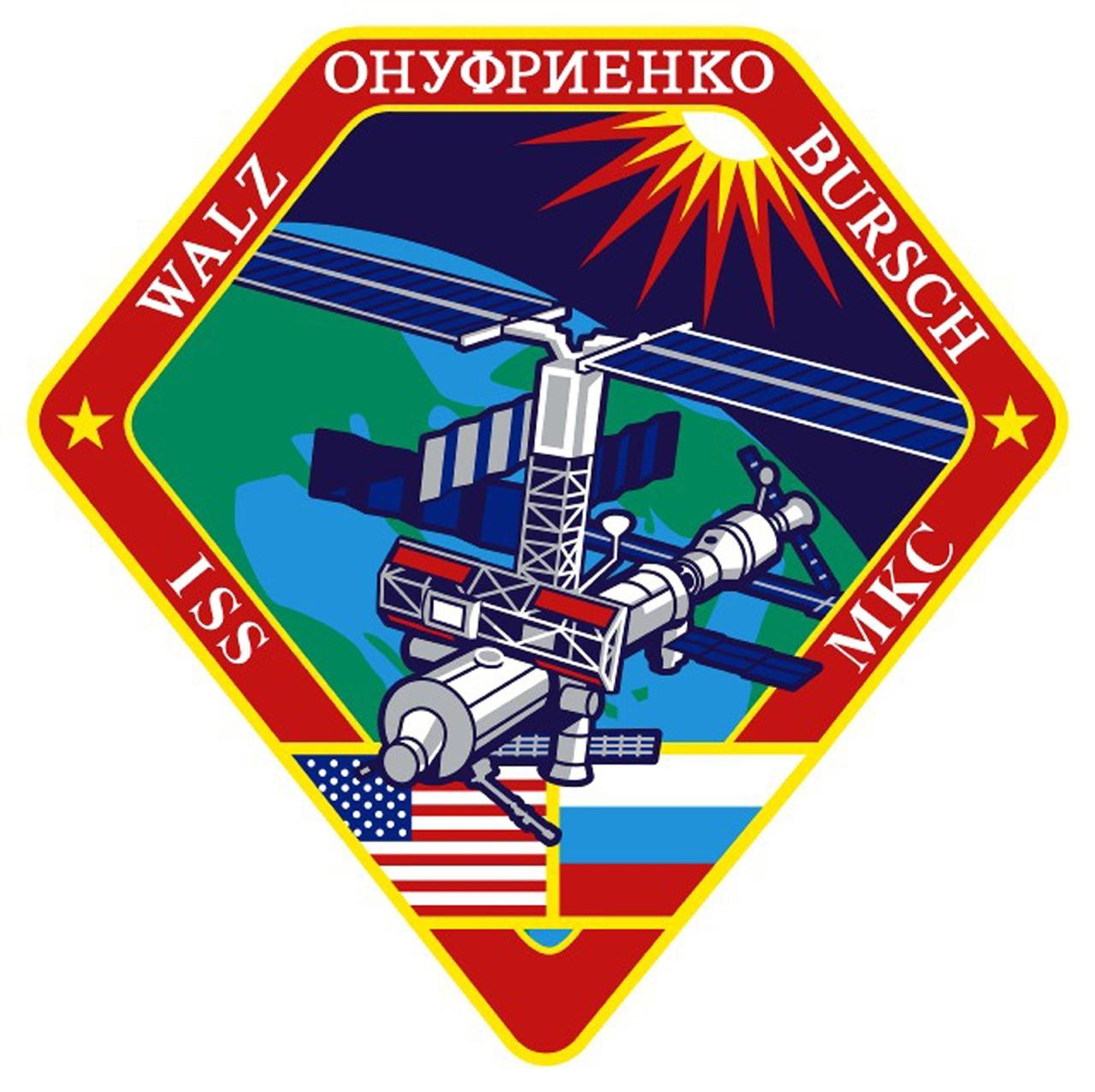
JOHNSON SPACE CENTER, HOUSTON, TEXAS -- EXPEDITION FOUR INSIGNIA -- The International Space Station (ISS) Expedition Four crew patch has an overall diamond shape, showing the "diamond in the rough" configuration of the Station during expedition four. The red hexagonal shape with stylized American and Russian flags represents the cross-sectional view of the S0 truss segment, which the crew will attach to the U.S. Lab Destiny. The persistent Sun shining on the Earth and Station represents the constant challenges that the crew and ground support team will face every day while operating the International Space Station, while shedding new light through daily research. The green portion of the Earth represents the fourth color in the visible spectrum and the black void of space represents humankind's constant quest to explore the unknown. The NASA insignia design for Shuttle flights ts is reserved for use by the astronauts and for other official use as the NASA Administrator may authorize. Public availability has been approved only in the forms of illustrations by the various news media. When and if there is any change in this policy, which we do not anticipate, it will be publicly announced