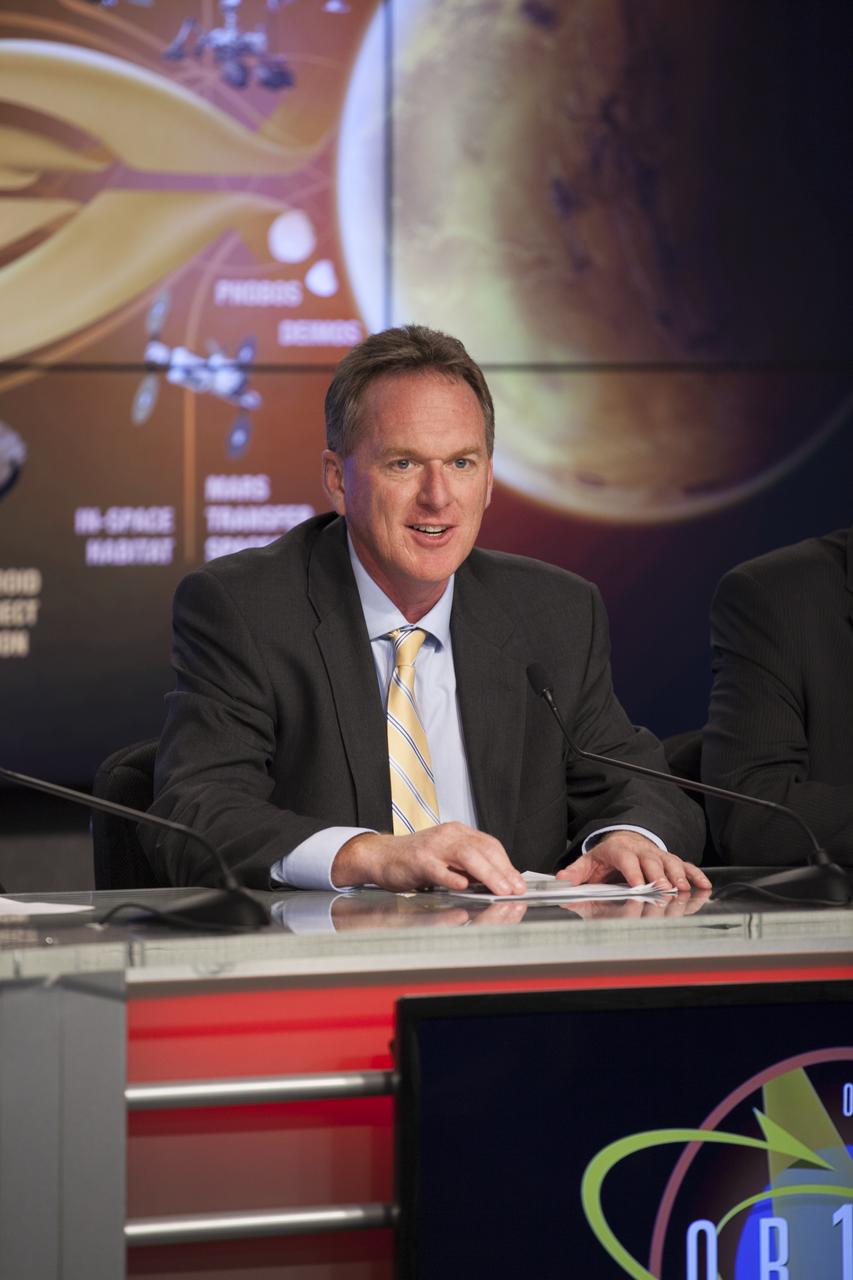
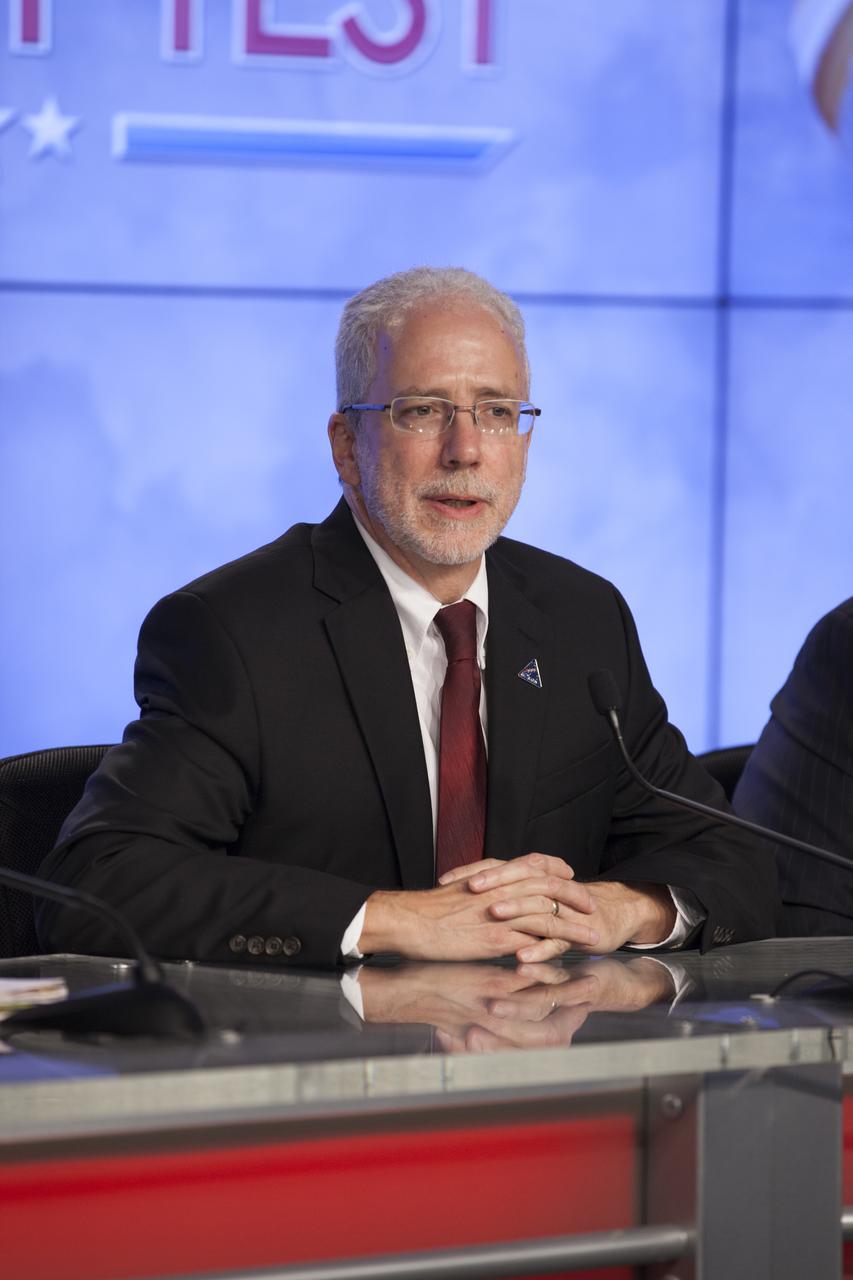
At NASA's Kennedy Space Center in Florida, Mike Bolger, program manager of Ground Systems Development and Operations Program, was one of several agency leaders who spoke to member of the news media about how the first flight of the new Orion spacecraft is a first step in the agency's plans to send humans to Mars. Orion is the exploration spacecraft designed to carry astronauts to destinations not yet explored by humans, including an asteroid and Mars. It will have emergency abort capability, sustain the crew during space travel and provide safe re-entry from deep space return velocities. The first unpiloted flight test of Orion is scheduled to launch Dec. 4, 2014 atop a United Launch Alliance Delta IV Heavy rocket, and in 2018 on NASA’s Space Launch System rocket.
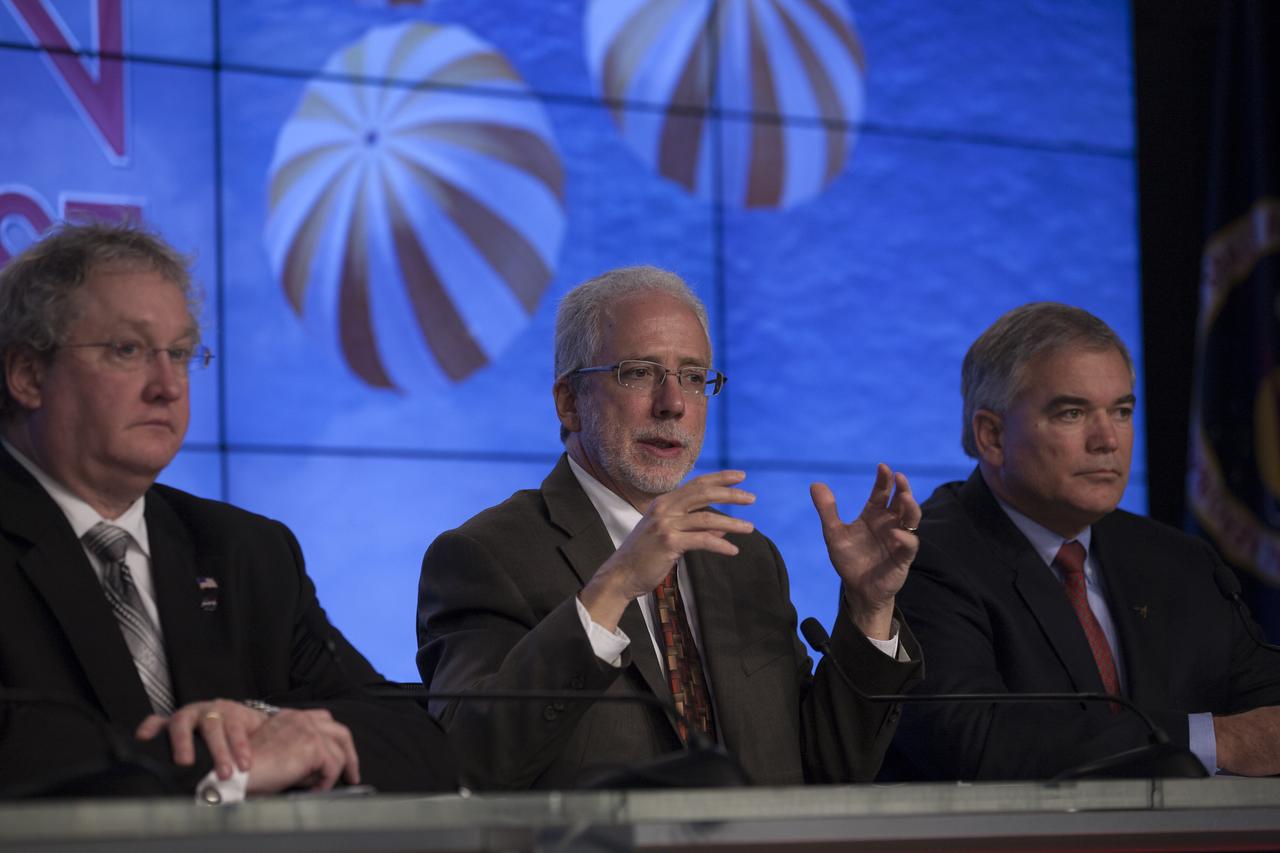
In the Kennedy Space Center’s Press Site auditorium, members of the news media are briefed on the upcoming Orion flight test by Mark Geyer, NASA Orion Program manager. Also participating in the news conference are Bill Hill, NASA deputy associate administrator for Exploration Systems Development, left, and Bryan Austin, Lockheed Martin mission manager. Orion is the exploration spacecraft designed to carry astronauts to destinations not yet explored by humans, including an asteroid and Mars. It will have emergency abort capability, sustain the crew during space travel and provide safe re-entry from deep space return velocities. The first unpiloted flight test of Orion is scheduled to launch Dec. 4, 2014 atop a United Launch Alliance Delta IV Heavy rocket, and in 2018 on NASA’s Space Launch System rocket.

In the Kennedy Space Center’s Press Site auditorium, Ron Fortson, United Launch Alliance director of mission management, was among agency and industry leaders who spoke to members of the news media as the Orion spacecraft and its Delta IV Heavy rocket were being prepared for launch. Orion is the exploration spacecraft designed to carry astronauts to destinations not yet explored by humans, including an asteroid and Mars. It will have emergency abort capability, sustain the crew during space travel and provide safe re-entry from deep space return velocities. The first unpiloted flight test of Orion is scheduled to launch Dec. 4, 2014 atop a United Launch Alliance Delta IV Heavy rocket, and in 2018 on NASA’s Space Launch System rocket.

In the Kennedy Space Center’s Press Site auditorium, center director Bob Cabana spoke to members of the news media as the completed Orion spacecraft was being prepared for its trip from the Launch Abort System Facility to Launch Complex 37 at Cape Canaveral Air Force Station. Orion is the exploration spacecraft designed to carry astronauts to destinations not yet explored by humans, including an asteroid and Mars. It will have emergency abort capability, sustain the crew during space travel and provide safe re-entry from deep space return velocities. The first unpiloted flight test of Orion is scheduled to launch Dec. 4, 2014 atop a United Launch Alliance Delta IV Heavy rocket, and in 2018 on NASA’s Space Launch System rocket.
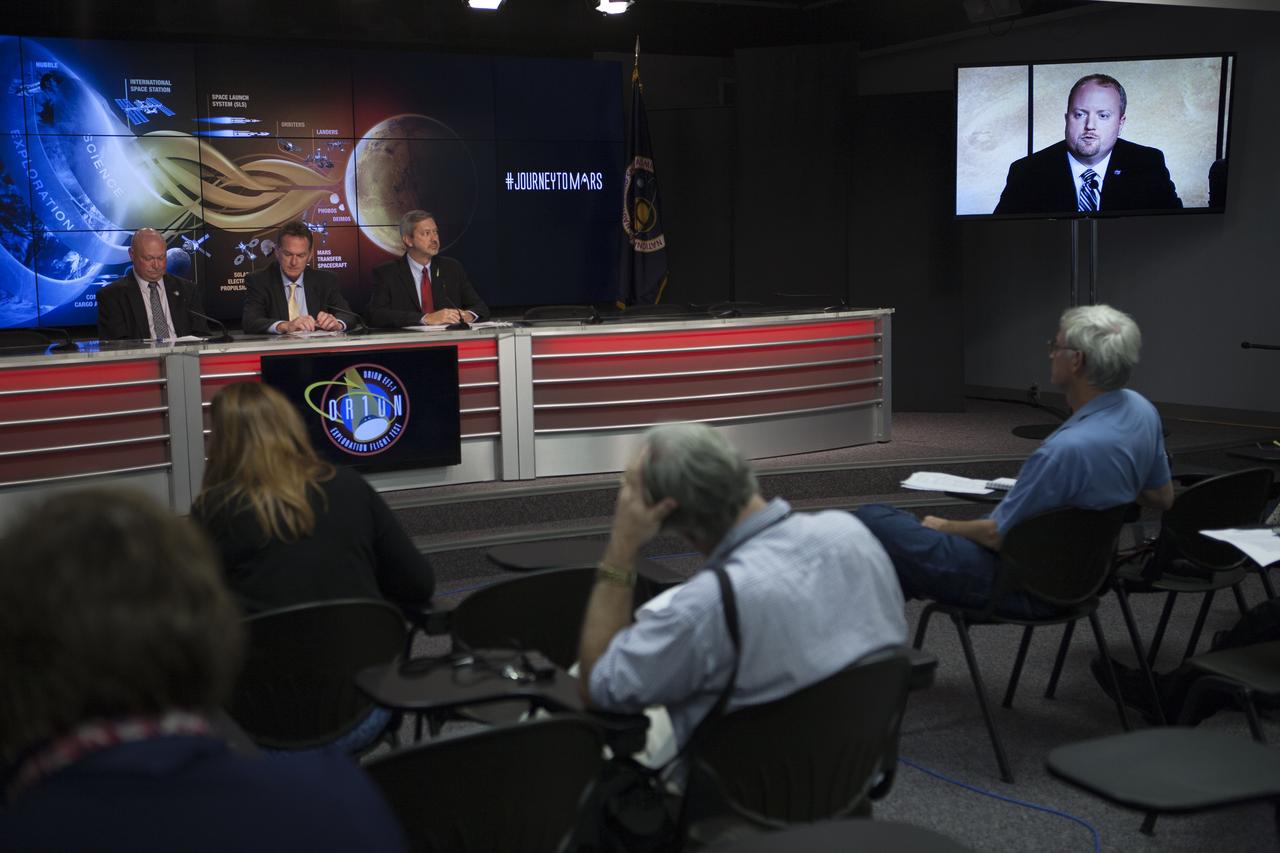
At NASA's Kennedy Space Center in Florida, NASA leaders spoke to members of the news media about how the first flight of the new Orion spacecraft is a first step in the agency's plans to send humans to Mars. At Kennedy's News Center auditorium from the left are: Mike Curie of NASA Public Affairs, Mike Bolger, program manager of Ground Systems Development and Operations Program, and Chris Crumbly, manager of Space Launch System Spacecraft/Payload Integration and Evolution. Participating via video from the agency's headquarters in Washington included Jason Crusan, director of Advanced Exploration Systems Division of Human Exploration and Operations Mission Directorate, seen on the monitor on the right. Orion is the exploration spacecraft designed to carry astronauts to destinations not yet explored by humans, including an asteroid and Mars. It will have emergency abort capability, sustain the crew during space travel and provide safe re-entry from deep space return velocities. The first unpiloted flight test of Orion is scheduled to launch Dec. 4, 2014 atop a United Launch Alliance Delta IV Heavy rocket, and in 2018 on NASA’s Space Launch System rocket.
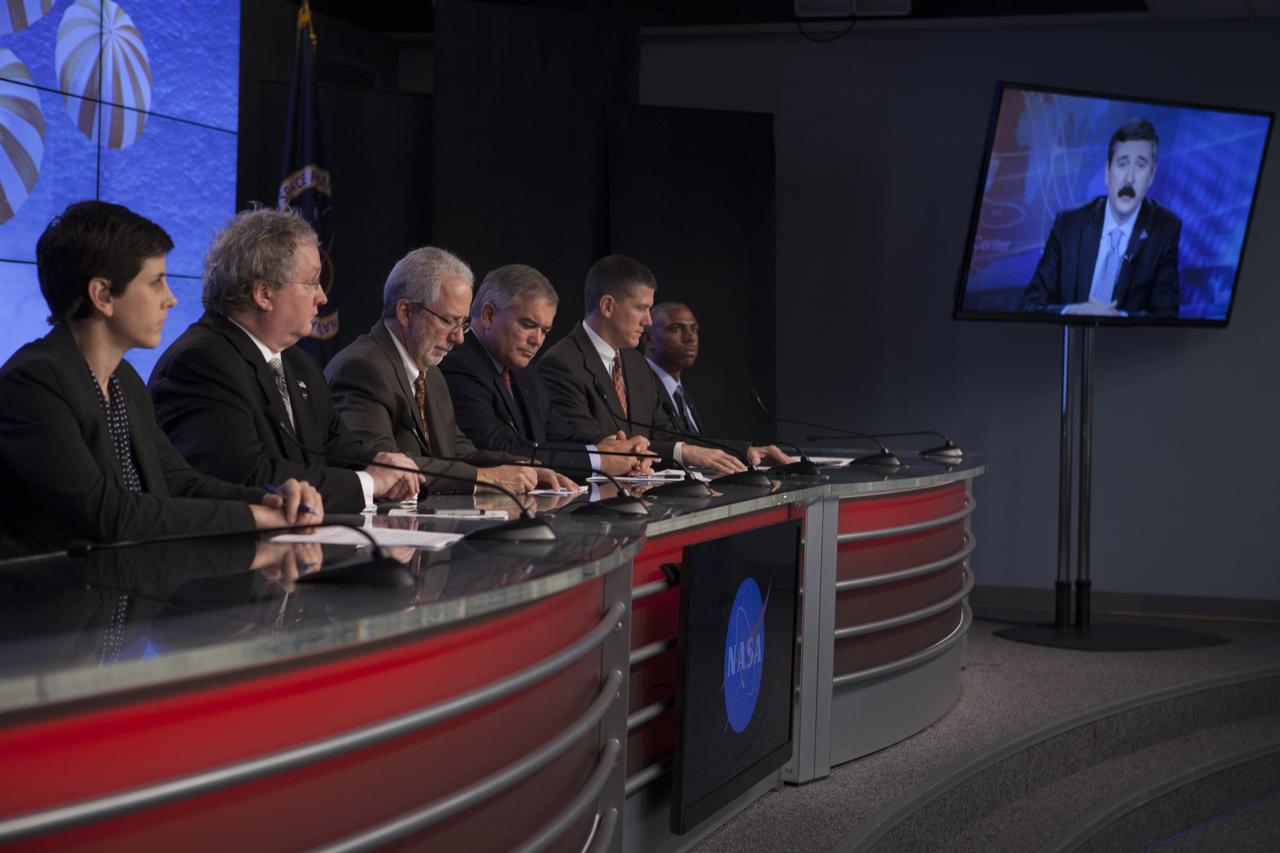
In the Kennedy Space Center’s Press Site auditorium, members of the news media are briefed on the upcoming Orion flight test. From left are: Rachel Kraft, NASA Public Affairs, Bill Hill, NASA deputy associate administrator for Exploration Systems Development, Mark Geyer, NASA Orion Program manager, Bryan Austin, Lockheed Martin mission manager, Jeremy Graeber, Operations Integration Branch of Ground Systems Development and Operations at Kennedy, and Ron Fortson, United Launch Alliance director of Mission Management. Mike Sarafin, NASA's lead flight director, participated by video from the Johnson Space Center. Orion is the exploration spacecraft designed to carry astronauts to destinations not yet explored by humans, including an asteroid and Mars. It will have emergency abort capability, sustain the crew during space travel and provide safe re-entry from deep space return velocities. The first unpiloted flight test of Orion is scheduled to launch Dec. 4, 2014 atop a United Launch Alliance Delta IV Heavy rocket, and in 2018 on NASA’s Space Launch System rocket.
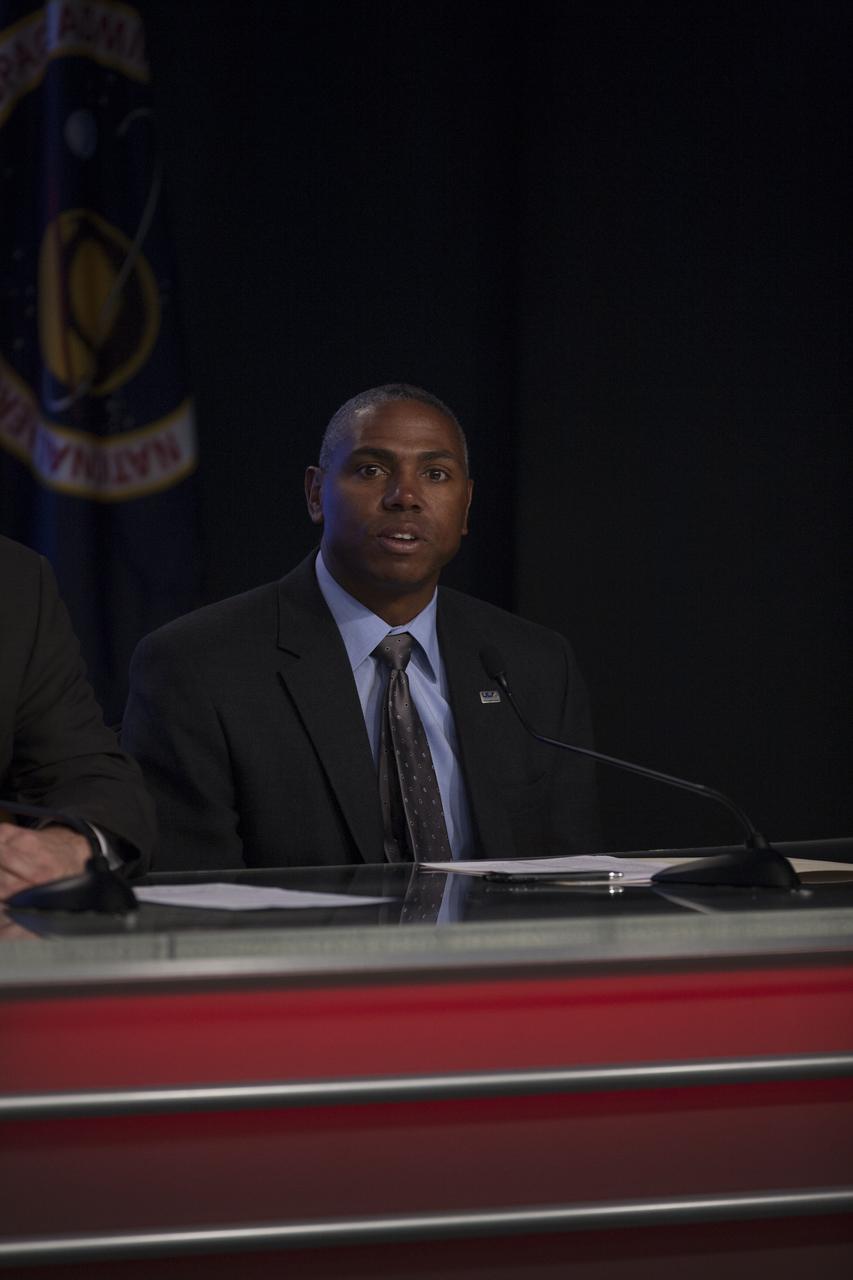
In the Kennedy Space Center’s Press Site auditorium, members of the news media are briefed on the upcoming Orion flight test by Ron Fortson, United Launch Alliance director of Mission Management. Orion is the exploration spacecraft designed to carry astronauts to destinations not yet explored by humans, including an asteroid and Mars. It will have emergency abort capability, sustain the crew during space travel and provide safe re-entry from deep space return velocities. The first unpiloted flight test of Orion is scheduled to launch Dec. 4, 2014 atop a United Launch Alliance Delta IV Heavy rocket, and in 2018 on NASA’s Space Launch System rocket.
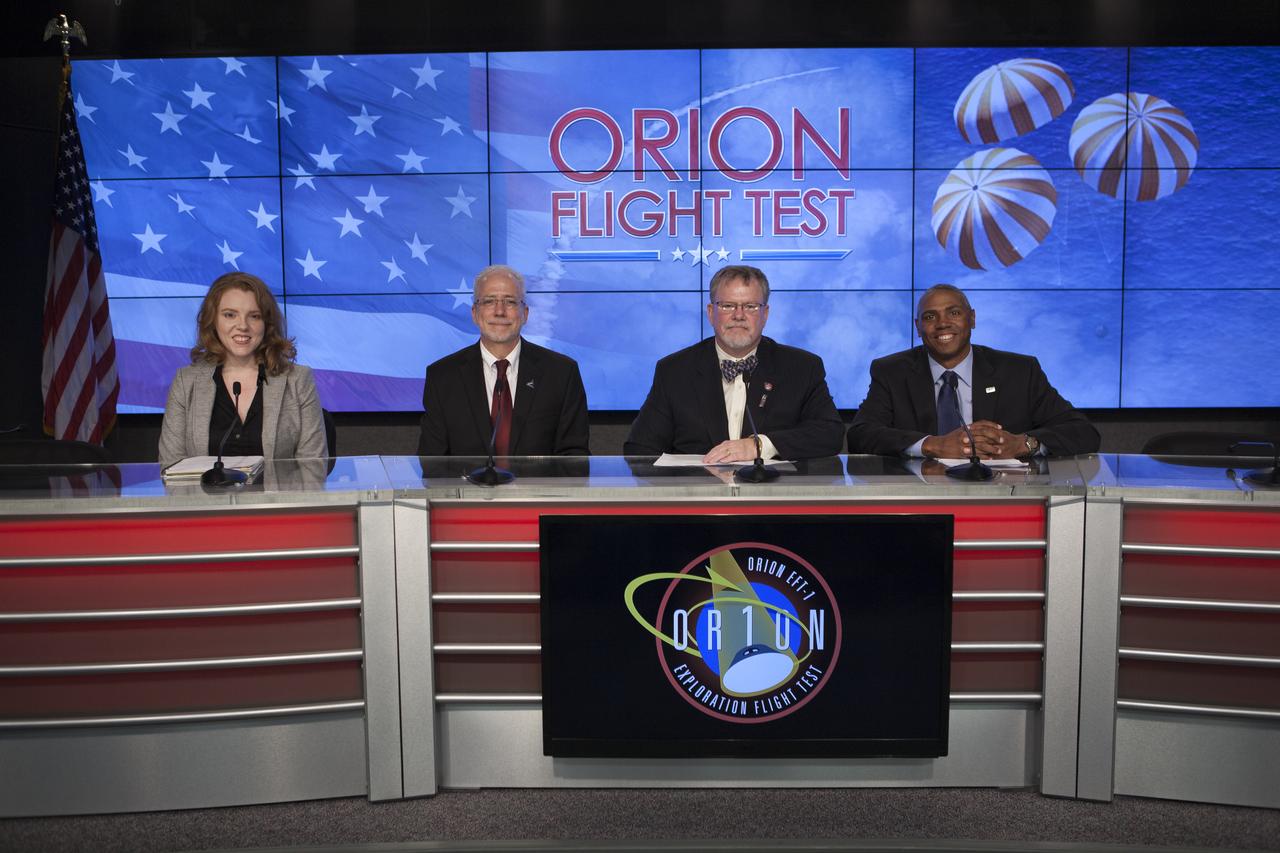
In the Kennedy Space Center’s Press Site auditorium, agency and industry leaders spoke to members of the news media as the Orion spacecraft and its Delta IV Heavy rocket were being prepared for launch. From left are: Brandi Dean of NASA Public Affairs, Mark Geyer, Orion program manager, Mike Hawes, Lockheed Martin Orion Program manager, and Ron Fortson, United Launch Alliance director of mission management. Orion is the exploration spacecraft designed to carry astronauts to destinations not yet explored by humans, including an asteroid and Mars. It will have emergency abort capability, sustain the crew during space travel and provide safe re-entry from deep space return velocities. The first unpiloted flight test of Orion is scheduled to launch Dec. 4, 2014 atop a United Launch Alliance Delta IV Heavy rocket, and in 2018 on NASA’s Space Launch System rocket.
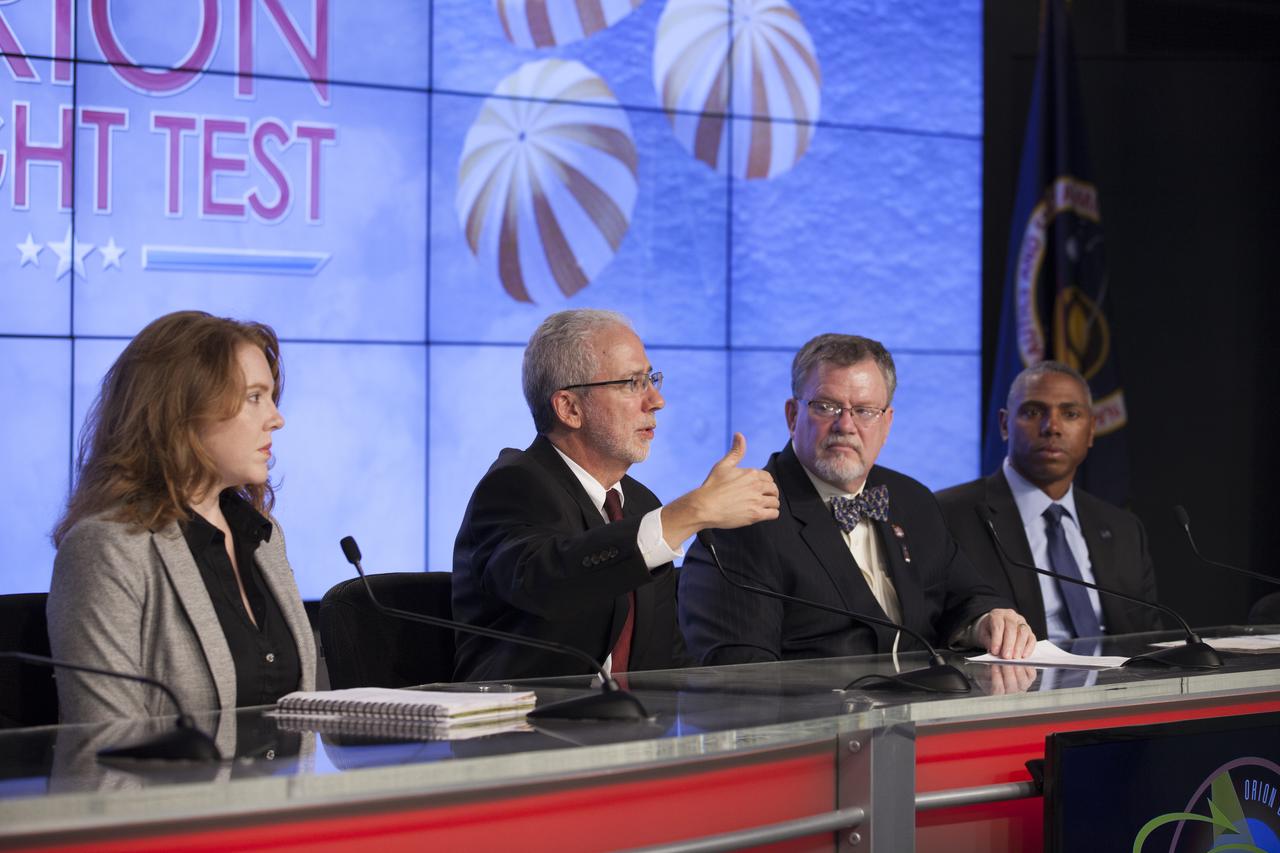
In the Kennedy Space Center’s Press Site auditorium, agency and industry leaders spoke to members of the news media as the Orion spacecraft and its Delta IV Heavy rocket were being prepared for launch. From left are: Brandi Dean of NASA Public Affairs, Mark Geyer, Orion program manager, Mike Hawes, Lockheed Martin Orion Program manager, and Ron Fortson, United Launch Alliance director of mission management. Orion is the exploration spacecraft designed to carry astronauts to destinations not yet explored by humans, including an asteroid and Mars. It will have emergency abort capability, sustain the crew during space travel and provide safe re-entry from deep space return velocities. The first unpiloted flight test of Orion is scheduled to launch Dec. 4, 2014 atop a United Launch Alliance Delta IV Heavy rocket, and in 2018 on NASA’s Space Launch System rocket.
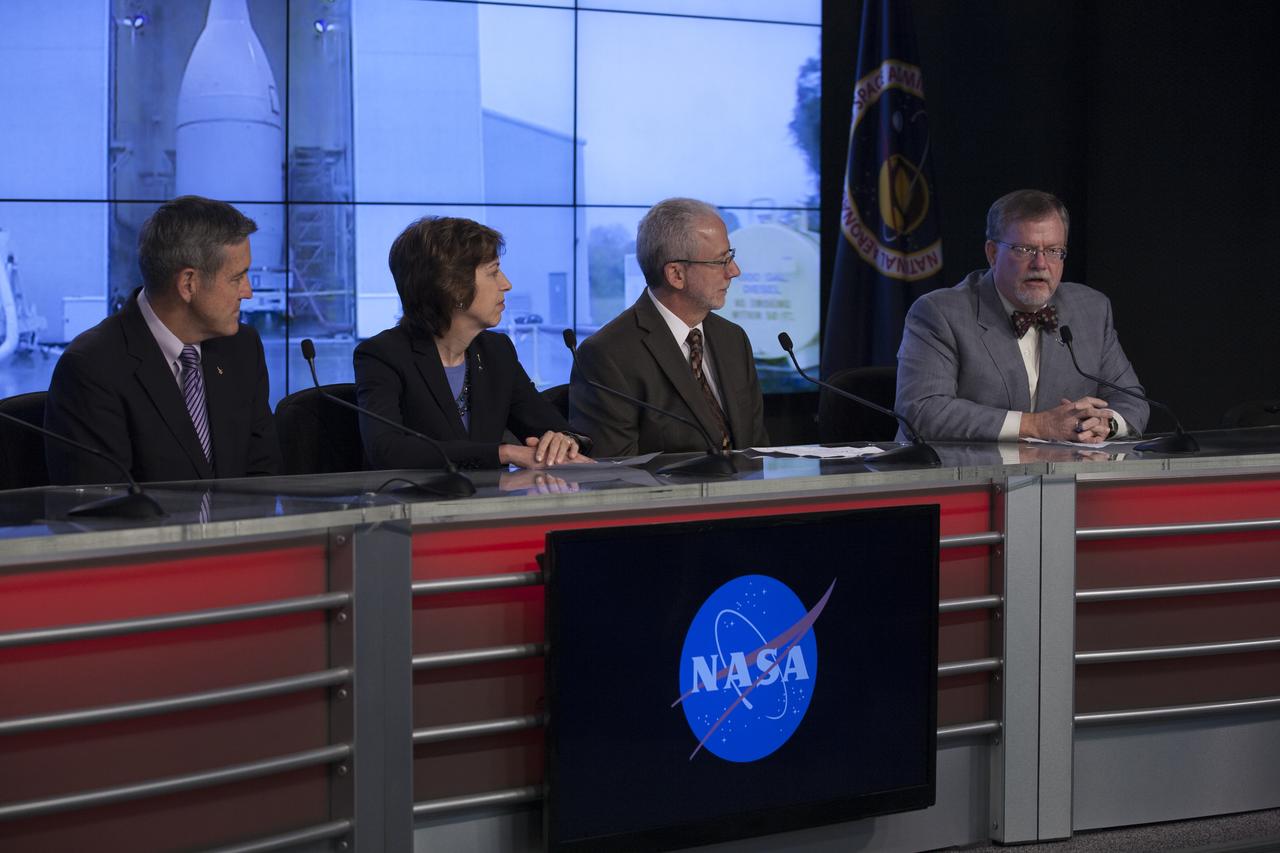
In the Kennedy Space Center’s Press Site auditorium, agency leaders spoke to members of the news media as the completed Orion spacecraft was being prepared for its trip from the Launch Abort System Facility to Launch Complex 37 at Cape Canaveral Air Force Station. From left are: Kennedy Director Bob Cabana, Johnson Space Center Director Ellen Ochoa, NASA Orion Program manager Mark Geyer, and Lockheed Martin Orion Program manager Mike Hawes. Orion is the exploration spacecraft designed to carry astronauts to destinations not yet explored by humans, including an asteroid and Mars. It will have emergency abort capability, sustain the crew during space travel and provide safe re-entry from deep space return velocities. The first unpiloted flight test of Orion is scheduled to launch Dec. 4, 2014 atop a United Launch Alliance Delta IV Heavy rocket, and in 2018 on NASA’s Space Launch System rocket.
In the Kennedy Space Center’s Press Site auditorium, Mark Geyer, Orion program manager, was among agency and industry leaders who spoke to members of the news media as the Orion spacecraft and its Delta IV Heavy rocket were being prepared for launch. Orion is the exploration spacecraft designed to carry astronauts to destinations not yet explored by humans, including an asteroid and Mars. It will have emergency abort capability, sustain the crew during space travel and provide safe re-entry from deep space return velocities. The first unpiloted flight test of Orion is scheduled to launch Dec. 4, 2014 atop a United Launch Alliance Delta IV Heavy rocket, and in 2018 on NASA’s Space Launch System rocket.

In the Kennedy Space Center’s Press Site auditorium, members of the news media listen as agency and industry leaders updated progress as the Orion spacecraft and its Delta IV Heavy rocket were being prepared for launch.
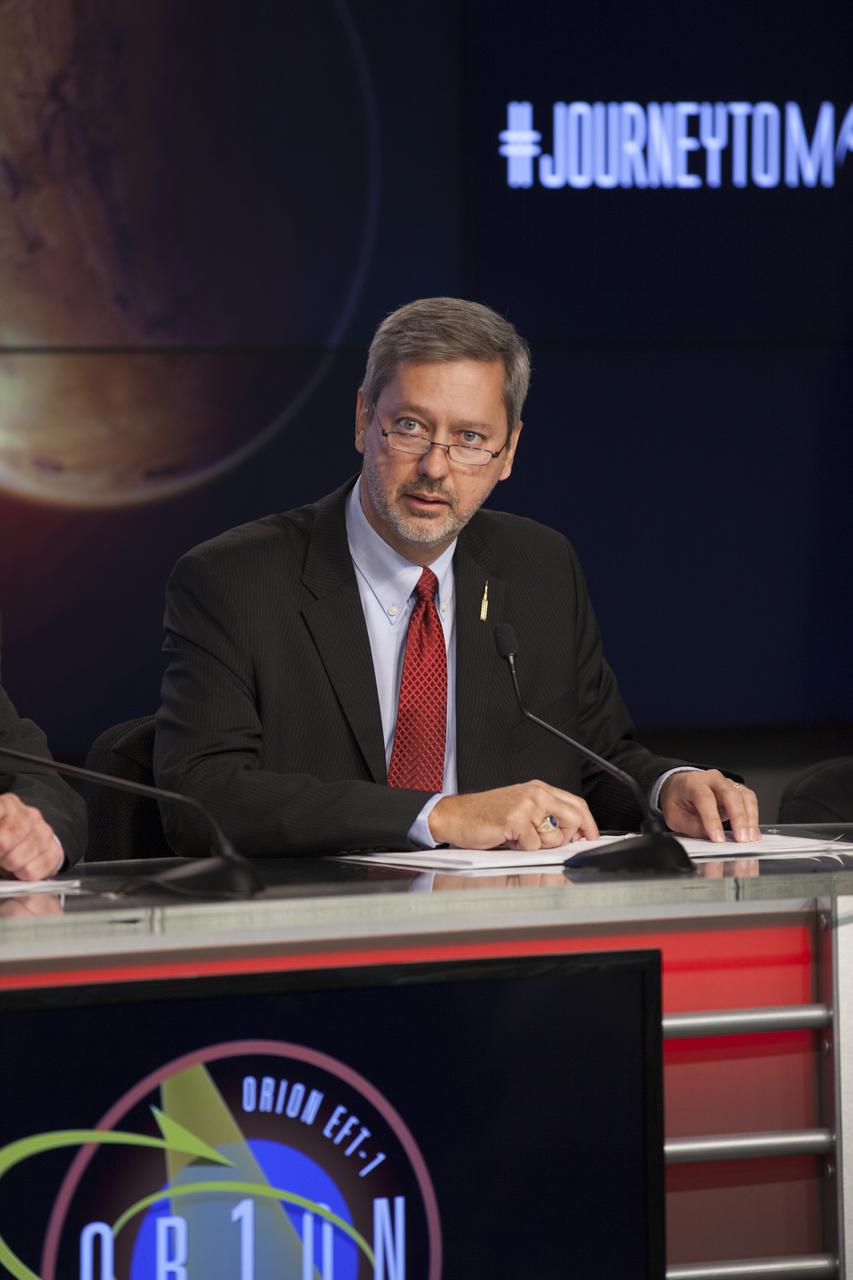
At NASA's Kennedy Space Center in Florida, Chris Crumbly, manager of Space Launch System Spacecraft/Payload Integration and Evolution, was one of several agency leaders who spoke to member of the news media about how the first flight of the new Orion spacecraft is a first step in the agency's plans to send humans to Mars. Orion is the exploration spacecraft designed to carry astronauts to destinations not yet explored by humans, including an asteroid and Mars. It will have emergency abort capability, sustain the crew during space travel and provide safe re-entry from deep space return velocities. The first unpiloted flight test of Orion is scheduled to launch Dec. 4, 2014 atop a United Launch Alliance Delta IV Heavy rocket, and in 2018 on NASA’s Space Launch System rocket.
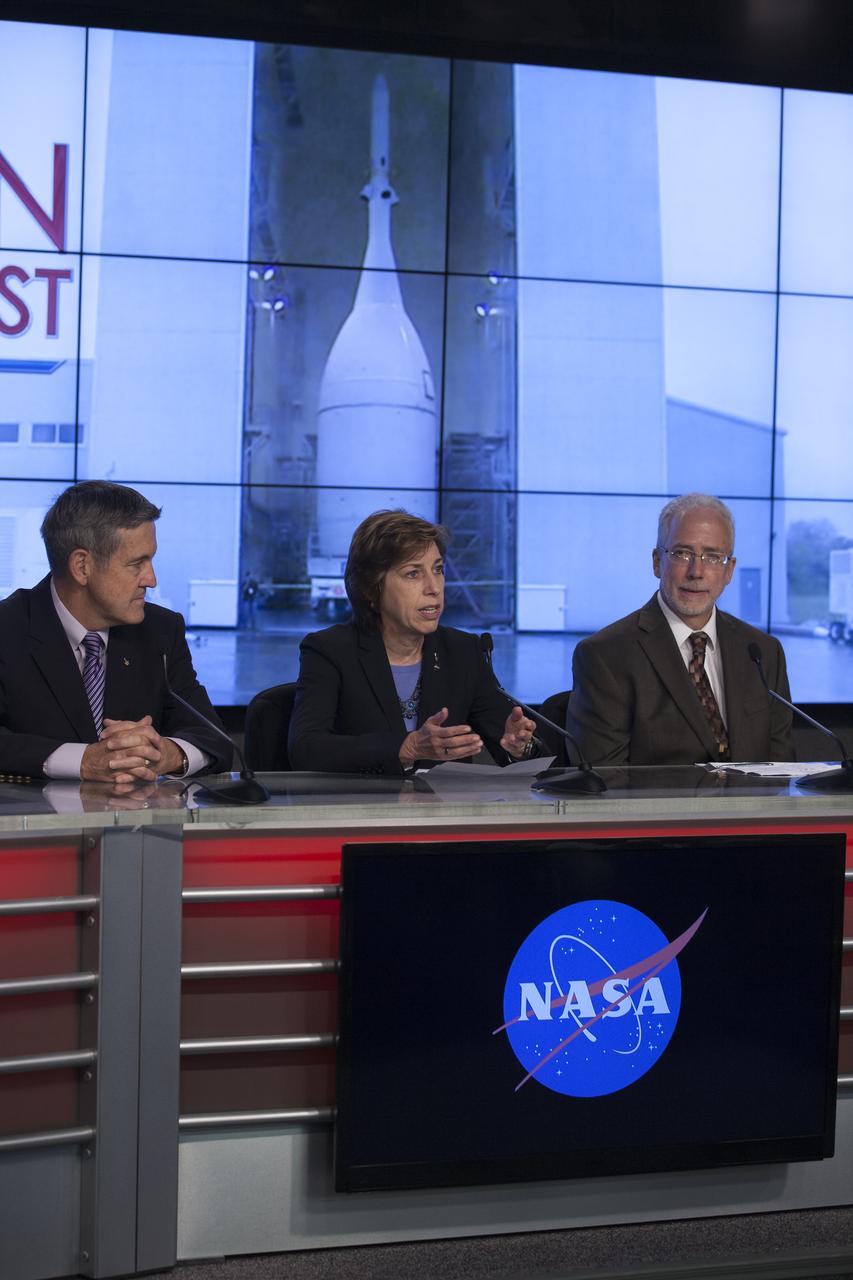
In the Kennedy Space Center’s Press Site auditorium, agency leaders spoke to members of the news media as the completed Orion spacecraft was being prepared for its trip from the Launch Abort System Facility to Launch Complex 37 at Cape Canaveral Air Force Station. From left are: Kennedy Director Bob Cabana, Johnson Space Center Director Ellen Ochoa, and NASA Orion Program manager Mark Geyer. Orion is the exploration spacecraft designed to carry astronauts to destinations not yet explored by humans, including an asteroid and Mars. It will have emergency abort capability, sustain the crew during space travel and provide safe re-entry from deep space return velocities. The first unpiloted flight test of Orion is scheduled to launch Dec. 4, 2014 atop a United Launch Alliance Delta IV Heavy rocket, and in 2018 on NASA’s Space Launch System rocket.
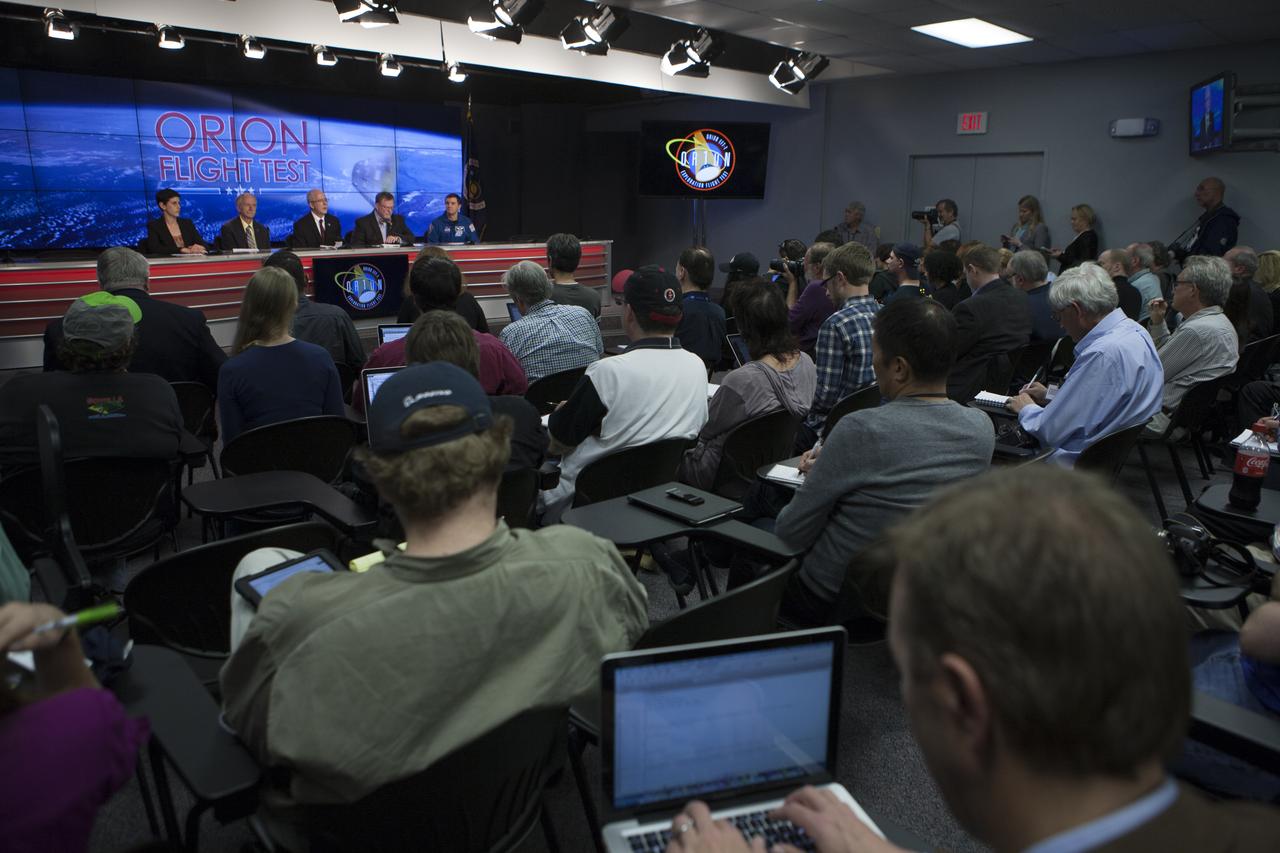
In the Kennedy Space Center’s Press Site auditorium, agency leaders spoke to members of the news media about the successful Orion Flight Test. From left are: Rachel Kraft, of NASA Public Affairs, Bill Gerstenmaier, NASA associate administrator for Human Exploration and Operations, Mark Geyer, Orion program manager, Mike Hawes, Lockheed Martin Orion Program manager, and NASA astronaut Rex Walheim.
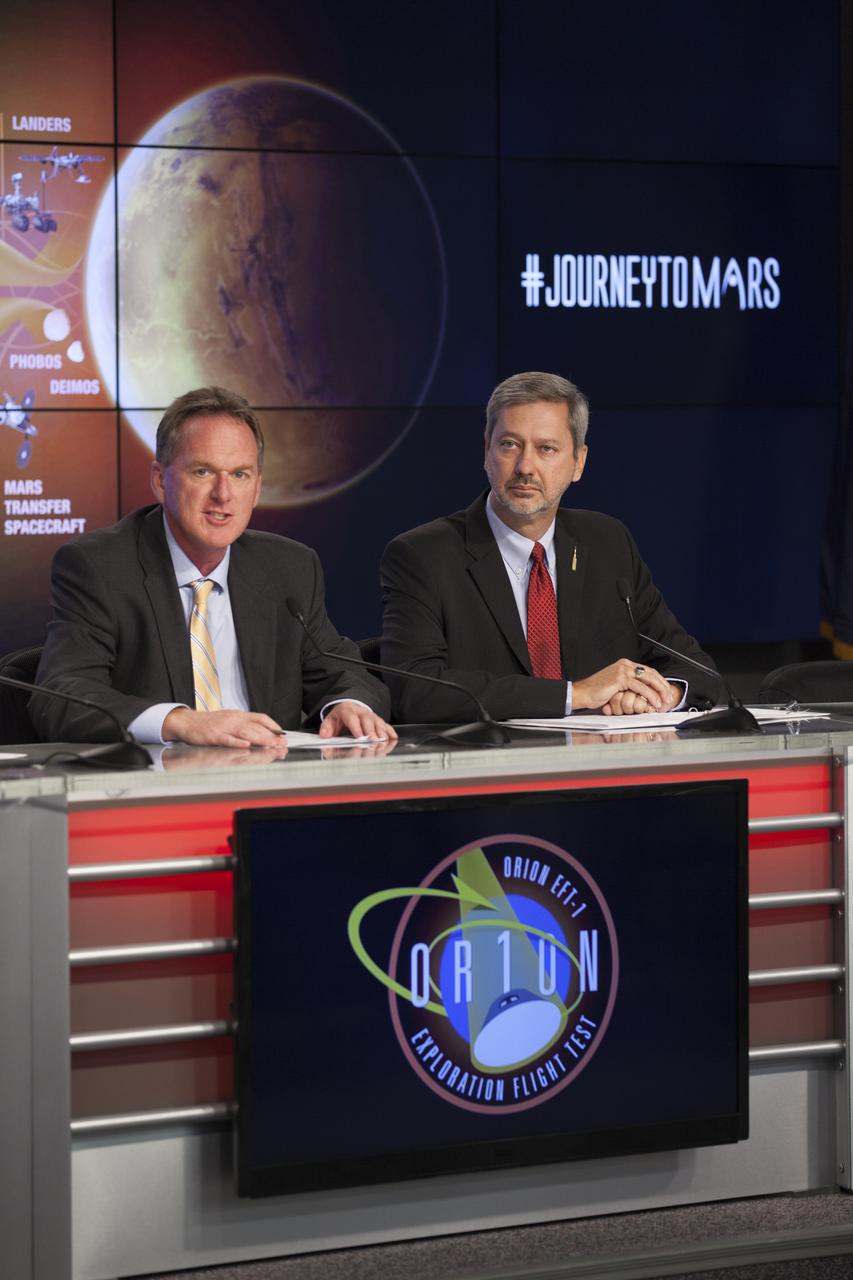
At NASA's Kennedy Space Center in Florida, Mike Bolger, program manager of Ground Systems Development and Operations Program, and Chris Crumbly, manager of Space Launch System Spacecraft/Payload Integration and Evolution, were among several agency leaders who spoke to members of the news media about how the first fight of the new Orion spacecraft is a first step in NASA's plans to send humans to Mars. Orion is the exploration spacecraft designed to carry astronauts to destinations not yet explored by humans, including an asteroid and Mars. It will have emergency abort capability, sustain the crew during space travel and provide safe re-entry from deep space return velocities. The first unpiloted flight test of Orion is scheduled to launch Dec. 4, 2014 atop a United Launch Alliance Delta IV Heavy rocket, and in 2018 on NASA’s Space Launch System rocket.
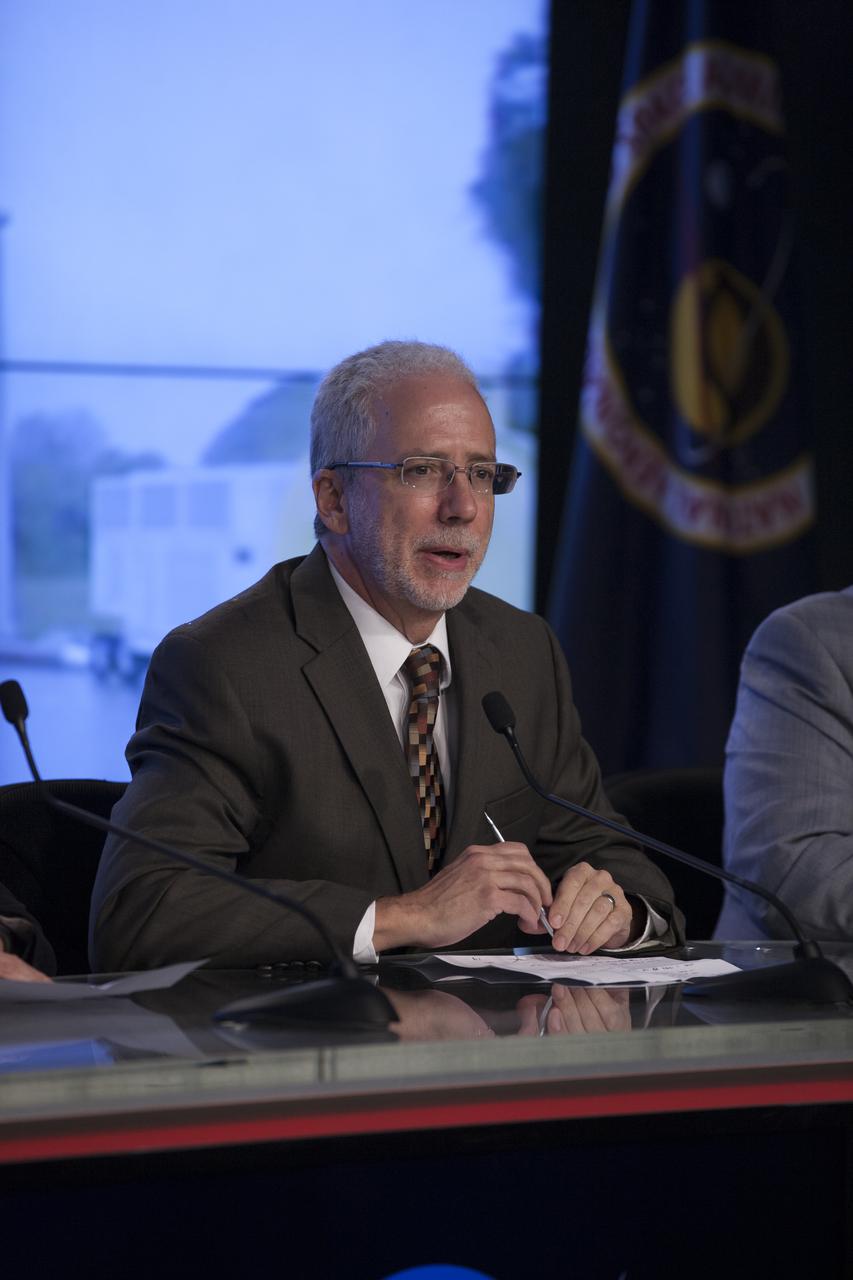
In the Kennedy Space Center’s Press Site auditorium, NASA Orion Program manager Mark Geyer spoke to members of the news media as the completed Orion spacecraft was being prepared for its trip from the Launch Abort System Facility to Launch Complex 37 at Cape Canaveral Air Force Station. Orion is the exploration spacecraft designed to carry astronauts to destinations not yet explored by humans, including an asteroid and Mars. It will have emergency abort capability, sustain the crew during space travel and provide safe re-entry from deep space return velocities. The first unpiloted flight test of Orion is scheduled to launch Dec. 4, 2014 atop a United Launch Alliance Delta IV Heavy rocket, and in 2018 on NASA’s Space Launch System rocket.
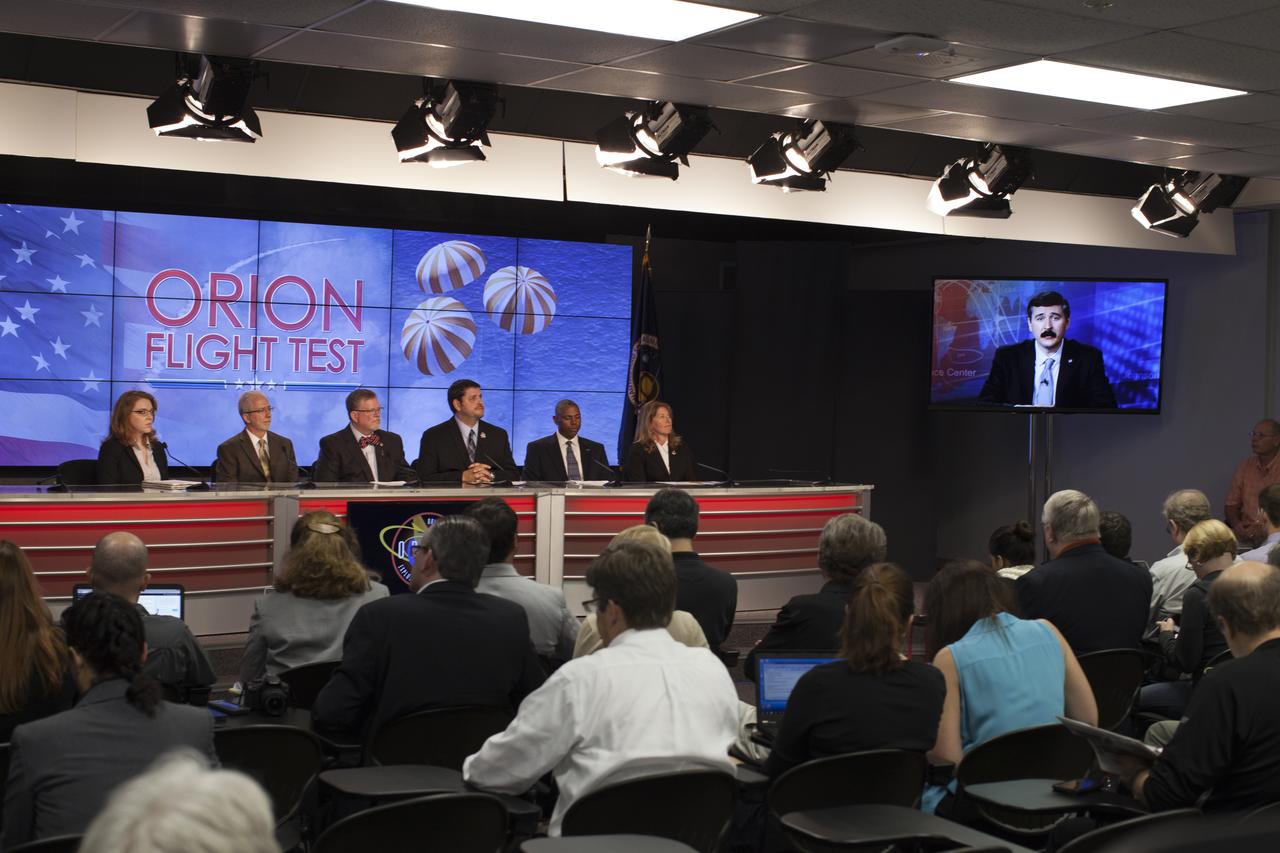
In the Kennedy Space Center’s Press Site auditorium, agency and industry leaders spoke to members of the news media as the Orion spacecraft and its Delta IV Heavy rocket were being prepared for launch. From left are: Brandi Dean of NASA Public Affairs, Mark Geyer, Orion program manager, Mike Hawes, Lockheed Martin Orion Program manager, Jeff Angermeier, Exploration Flight Test-1 Ground Systems Development and Operations mission manager, Ron Fortson, United Launch Alliance director of mission management, and Kathy Winters, U.S. Air Force 45th Space Wing Launch Weather officer. On the right, Mike Sarafin, Orion flight director, participated via video from the Johnson Space Center.
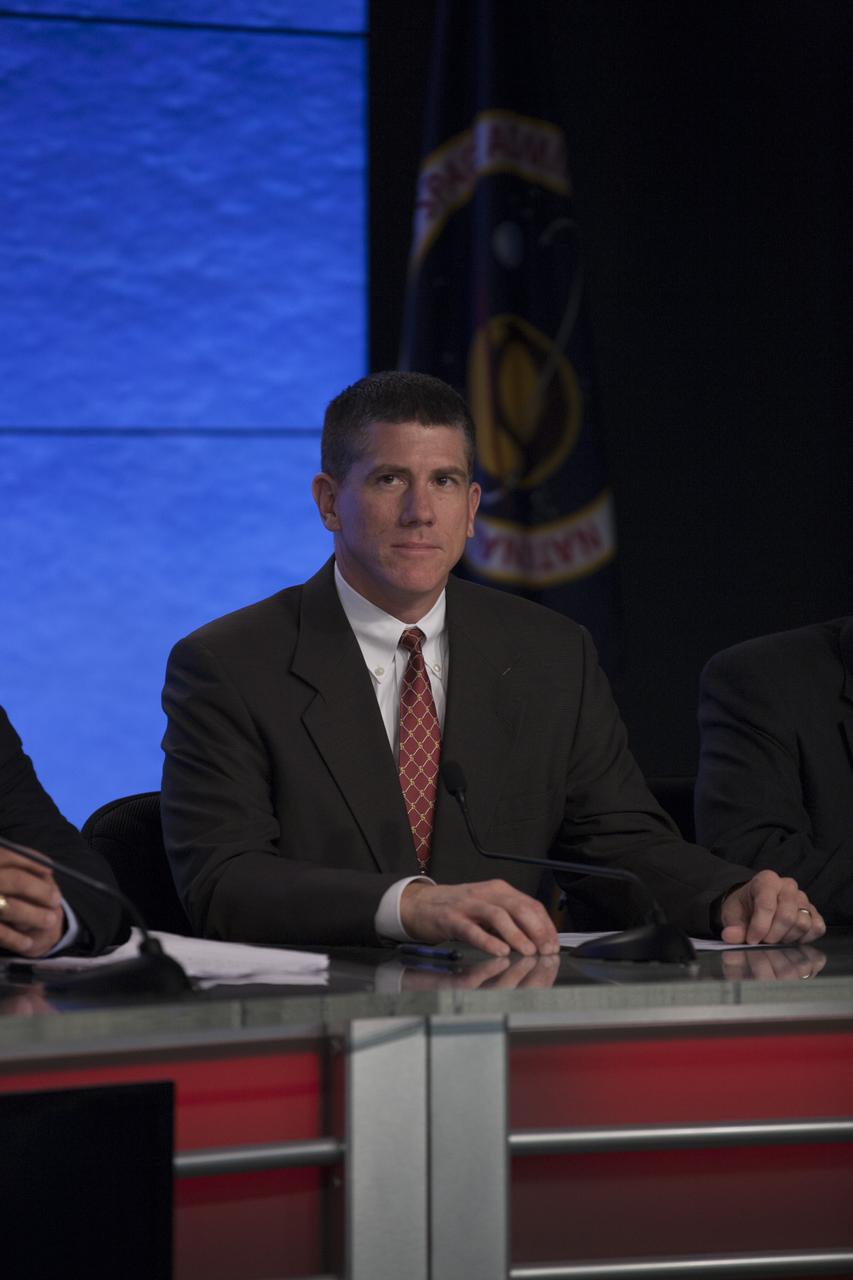
In the Kennedy Space Center’s Press Site auditorium, members of the news media are briefed on the upcoming Orion flight test by Jeremy Graeber, Orion Recovery Director in Ground Systems Development and Operations at Kennedy. Orion is the exploration spacecraft designed to carry astronauts to destinations not yet explored by humans, including an asteroid and Mars. It will have emergency abort capability, sustain the crew during space travel and provide safe re-entry from deep space return velocities. The first unpiloted flight test of Orion is scheduled to launch Dec. 4, 2014 atop a United Launch Alliance Delta IV Heavy rocket, and in 2018 on NASA’s Space Launch System rocket.
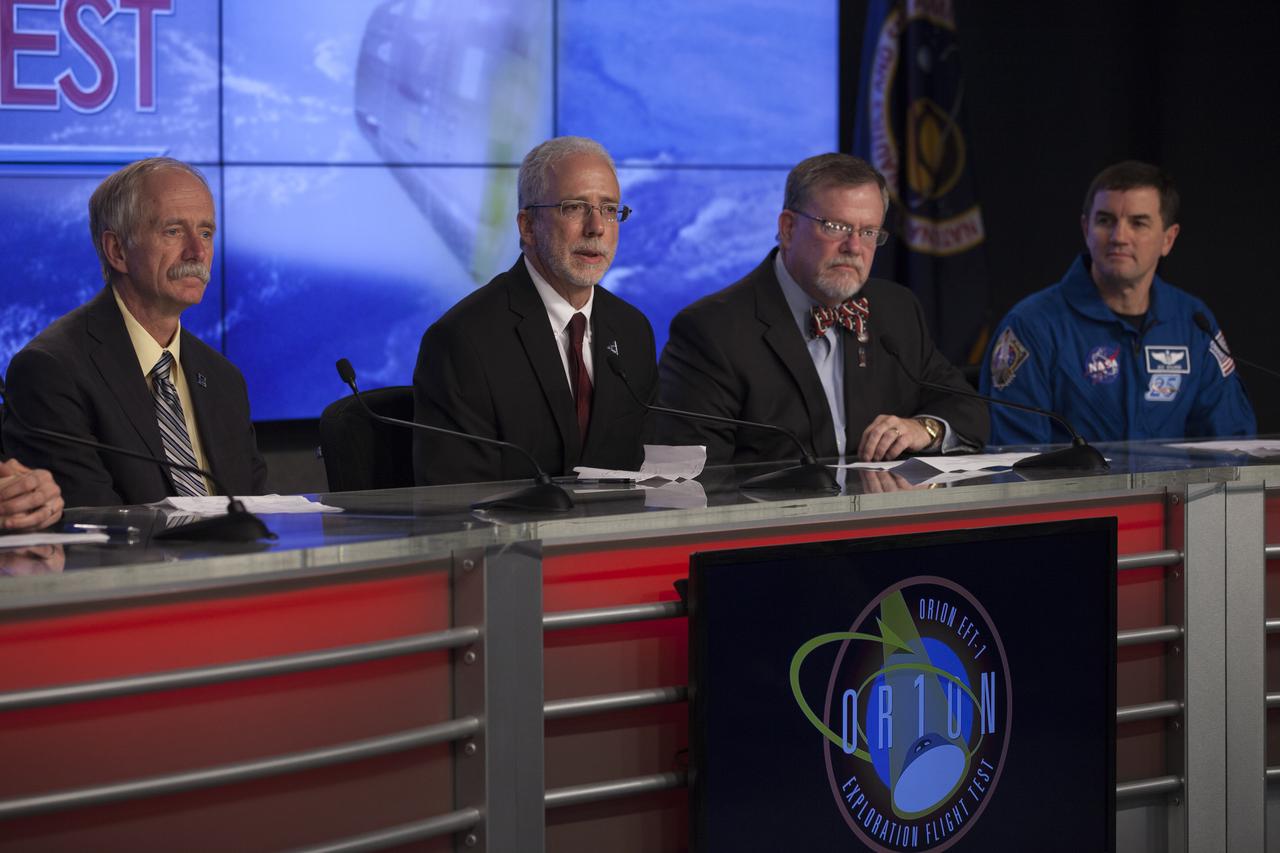
In the Kennedy Space Center’s Press Site auditorium, agency leaders spoke to members of the news media about the successful Orion Flight Test. From left are: Bill Gerstenmaier, NASA associate administrator for Human Exploration and Operations, Mark Geyer, Orion program manager, Mike Hawes, Lockheed Martin Orion Program manager, and NASA astronaut Rex Walheim.
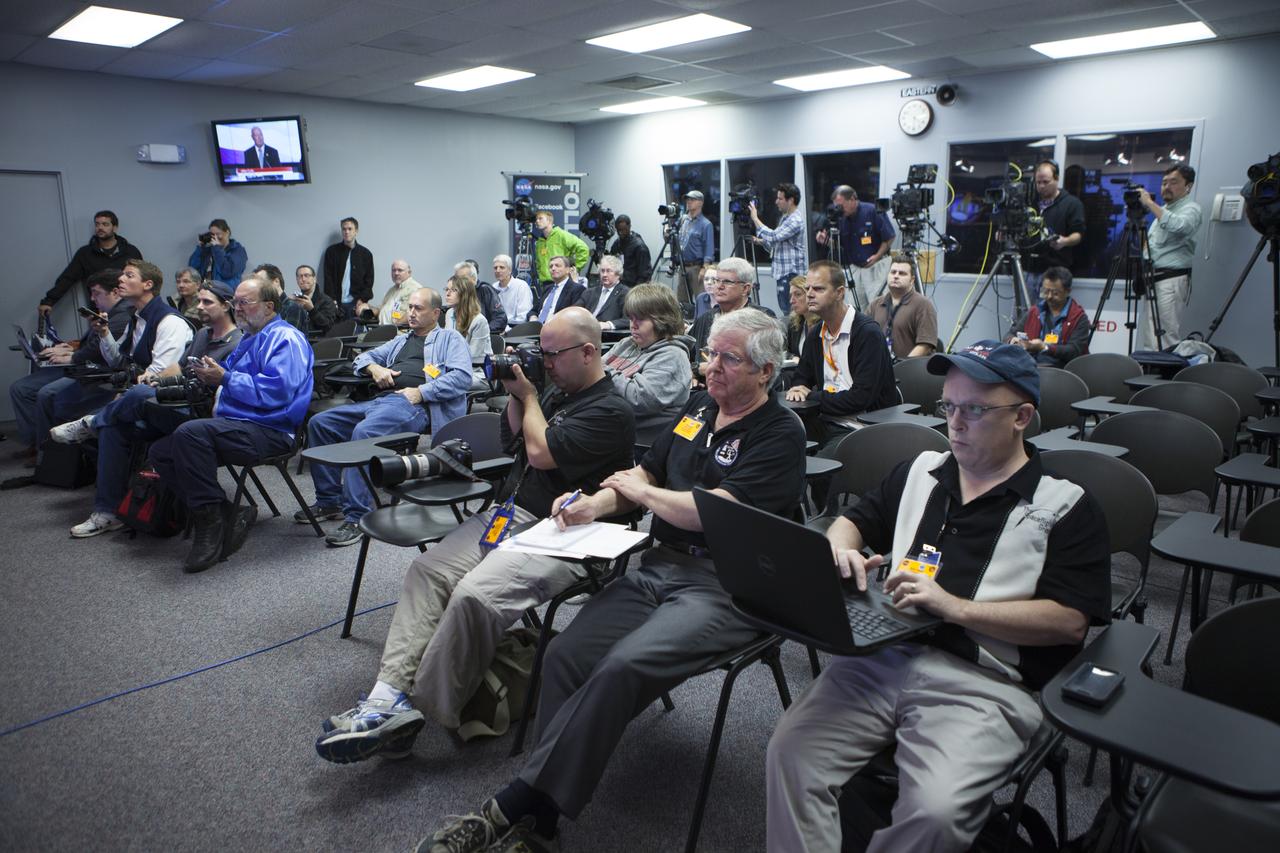
In the Kennedy Space Center’s Press Site auditorium, members of the news media listen as NASA and contractor officials discuss plans for moving the completed Orion spacecraft from the Launch Abort System Facility to Launch Complex 37 at Cape Canaveral Air Force Station. Orion is the exploration spacecraft designed to carry astronauts to destinations not yet explored by humans, including an asteroid and Mars. It will have emergency abort capability, sustain the crew during space travel and provide safe re-entry from deep space return velocities. The first unpiloted flight test of Orion is scheduled to launch Dec. 4, 2014 atop a United Launch Alliance Delta IV Heavy rocket, and in 2018 on NASA’s Space Launch System rocket.

In the Kennedy Space Center’s Press Site auditorium, members of the news media are briefed on the upcoming Orion flight test by Mark Geyer, NASA Orion Program manager. Also participating in the news conference are Bryan Austin, Lockheed Martin mission manager, center, and Jeremy Graeber, Orion Recovery Director in Ground Systems Development and Operations at Kennedy. Orion is the exploration spacecraft designed to carry astronauts to destinations not yet explored by humans, including an asteroid and Mars. It will have emergency abort capability, sustain the crew during space travel and provide safe re-entry from deep space return velocities. The first unpiloted flight test of Orion is scheduled to launch Dec. 4, 2014 atop a United Launch Alliance Delta IV Heavy rocket, and in 2018 on NASA’s Space Launch System rocket.
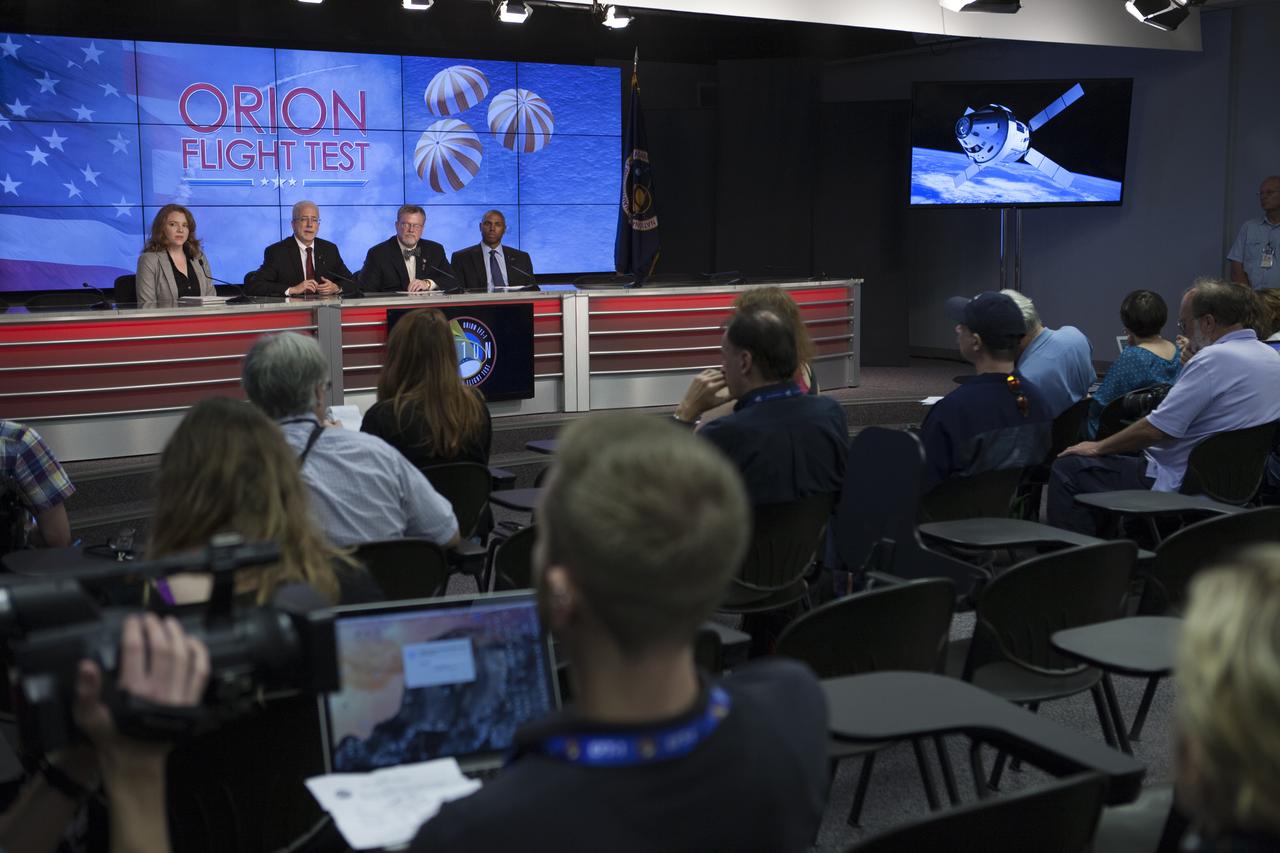
In the Kennedy Space Center’s Press Site auditorium, news media members listen as agency and industry leaders the status of preparations for launch of the Orion spacecraft atop a Delta IV Heavy rocket. From left are: Brandi Dean of NASA Public Affairs, Mark Geyer, Orion program manager, Mike Hawes, Lockheed Martin Orion Program manager, and Ron Fortson, United Launch Alliance director of mission management. Orion is the exploration spacecraft designed to carry astronauts to destinations not yet explored by humans, including an asteroid and Mars. It will have emergency abort capability, sustain the crew during space travel and provide safe re-entry from deep space return velocities. The first unpiloted flight test of Orion is scheduled to launch Dec. 4, 2014 atop a United Launch Alliance Delta IV Heavy rocket, and in 2018 on NASA’s Space Launch System rocket.
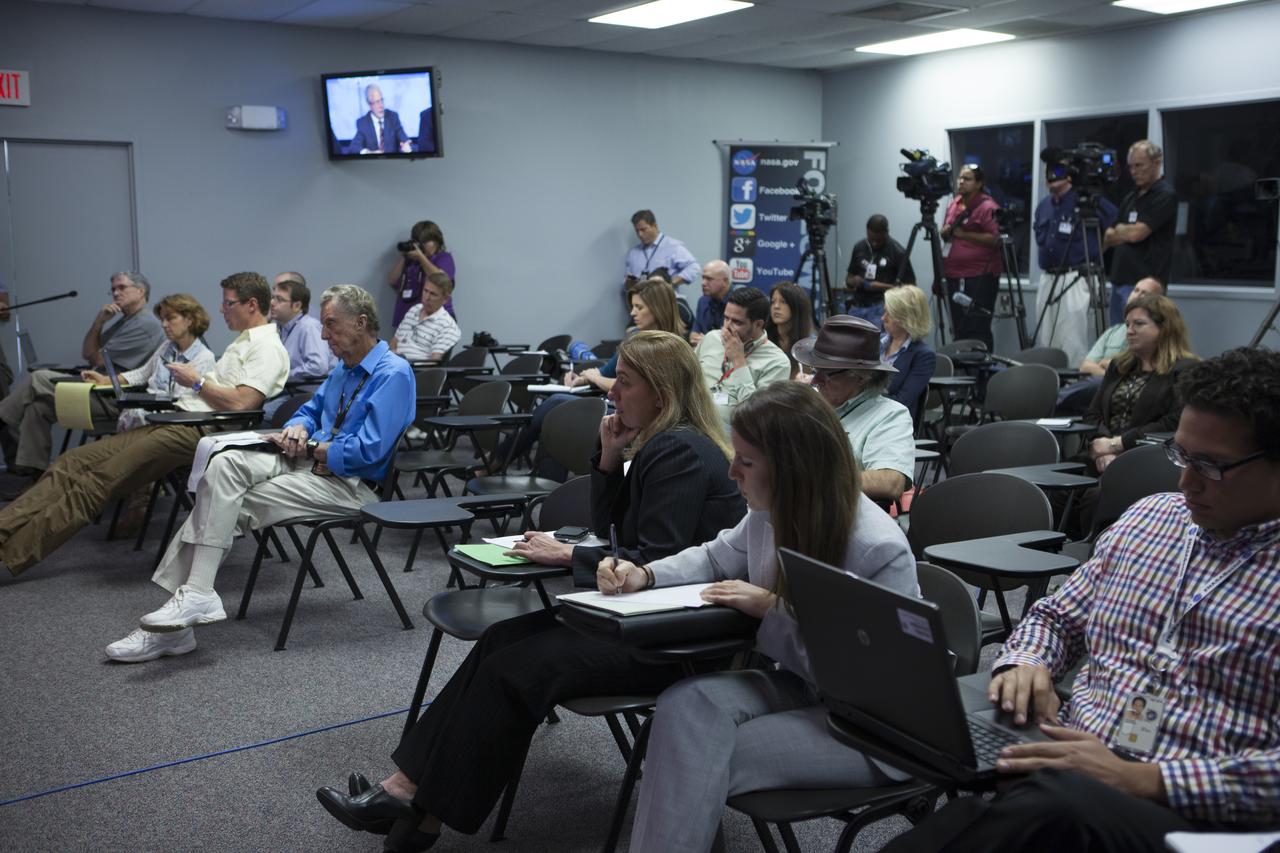
In the Kennedy Space Center’s Press Site auditorium, members of the news media listen as NASA and contractor officials plans for the upcoming Orion flight test. Orion is the exploration spacecraft designed to carry astronauts to destinations not yet explored by humans, including an asteroid and Mars. It will have emergency abort capability, sustain the crew during space travel and provide safe re-entry from deep space return velocities. The first unpiloted flight test of Orion is scheduled to launch Dec. 4, 2014 atop a United Launch Alliance Delta IV Heavy rocket, and in 2018 on NASA’s Space Launch System rocket.
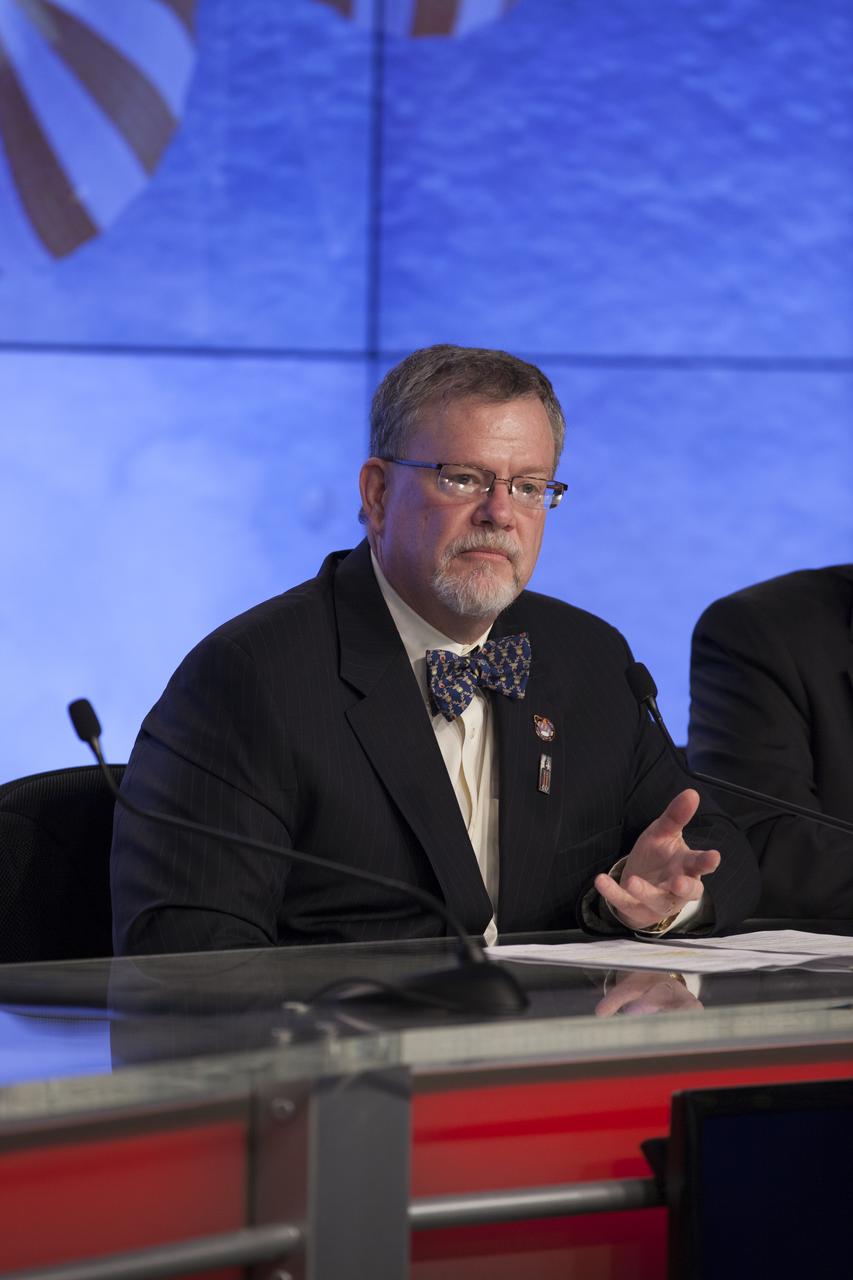
In the Kennedy Space Center’s Press Site auditorium, Mike Hawes, Lockheed Martin Orion Program manager, was among agency and industry leaders who spoke to members of the news media as the Orion spacecraft and its Delta IV Heavy rocket were being prepared for launch. Orion is the exploration spacecraft designed to carry astronauts to destinations not yet explored by humans, including an asteroid and Mars. It will have emergency abort capability, sustain the crew during space travel and provide safe re-entry from deep space return velocities. The first unpiloted flight test of Orion is scheduled to launch Dec. 4, 2014 atop a United Launch Alliance Delta IV Heavy rocket, and in 2018 on NASA’s Space Launch System rocket.
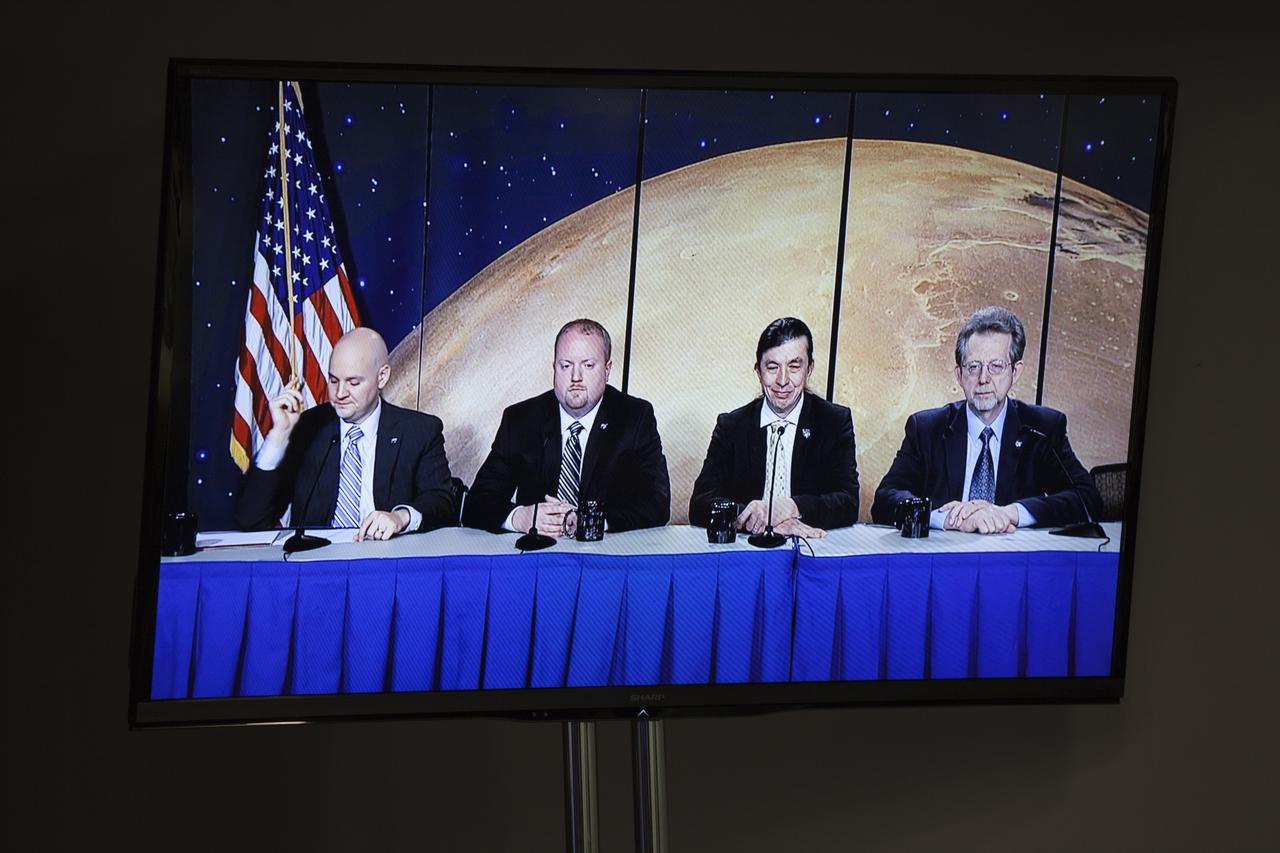
At NASA Headquarters in Washington and the Kennedy Space Center in Florida, NASA leaders spoke to members of the new media about how the first flight of the new Orion spacecraft is a first step in the agency's plans to send humans to Mars. Seen on a video monitor at Kennedy, Headquarter participants, from the left are: Trent Perrotto of NASA Public Affairs, Jason Crusan, director of Advanced Exploration Systems Division of Human Exploration and Operations Mission Directorate, Jim Reuther, deputy associate administrator for Programs, Space Technology Mission Directorate, and Jim Green, director of Planetary Division of the Science Mission Directorate. Orion is the exploration spacecraft designed to carry astronauts to destinations not yet explored by humans, including an asteroid and Mars. It will have emergency abort capability, sustain the crew during space travel and provide safe re-entry from deep space return velocities. The first unpiloted flight test of Orion is scheduled to launch Dec. 4, 2014 atop a United Launch Alliance Delta IV Heavy rocket, and in 2018 on NASA’s Space Launch System rocket.

In the Kennedy Space Center’s Press Site auditorium, members of the news media are briefed on the upcoming Orion flight test by Mark Geyer, NASA Orion Program manager. Orion is the exploration spacecraft designed to carry astronauts to destinations not yet explored by humans, including an asteroid and Mars. It will have emergency abort capability, sustain the crew during space travel and provide safe re-entry from deep space return velocities. The first unpiloted flight test of Orion is scheduled to launch Dec. 4, 2014 atop a United Launch Alliance Delta IV Heavy rocket, and in 2018 on NASA’s Space Launch System rocket.
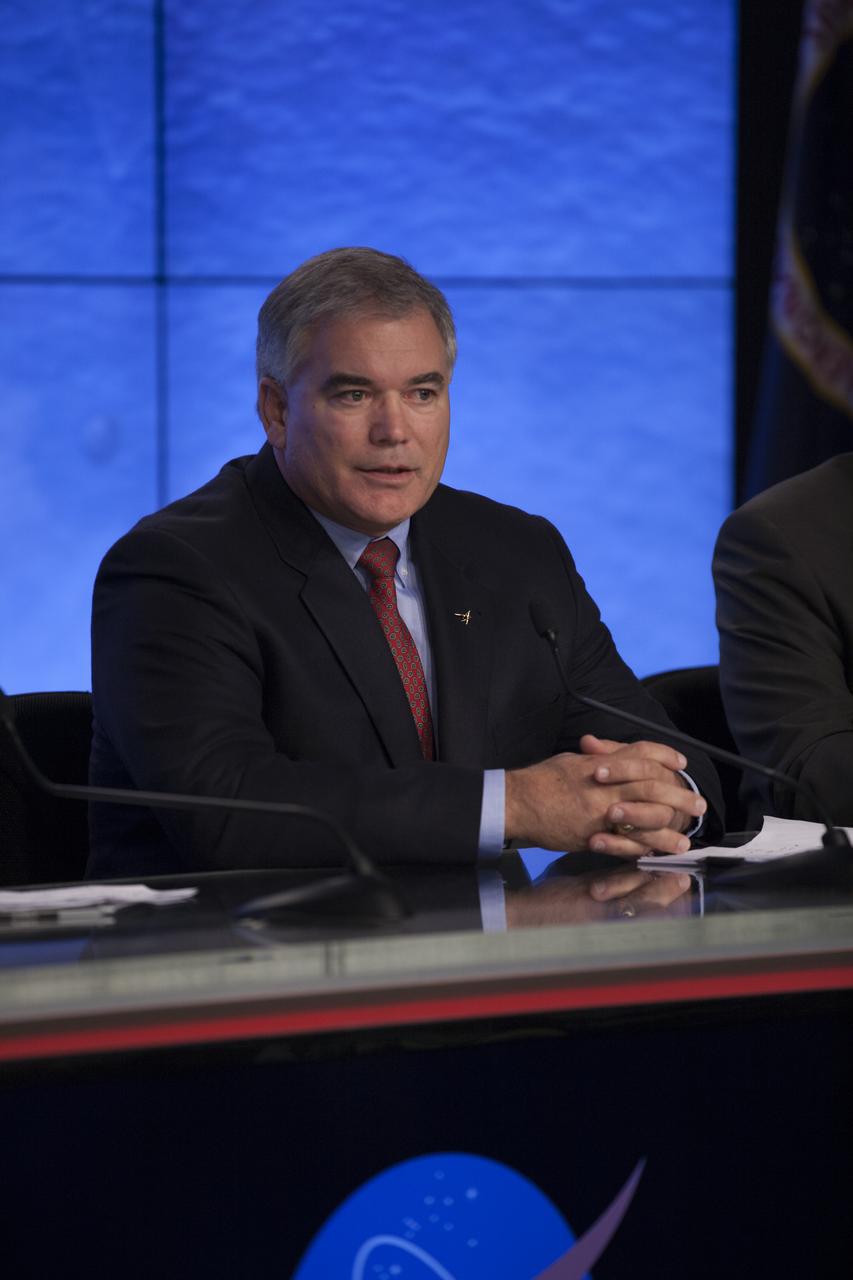
In the Kennedy Space Center’s Press Site auditorium, members of the news media are briefed on the upcoming Orion flight test by Bryan Austin, Lockheed Martin mission manager. Orion is the exploration spacecraft designed to carry astronauts to destinations not yet explored by humans, including an asteroid and Mars. It will have emergency abort capability, sustain the crew during space travel and provide safe re-entry from deep space return velocities. The first unpiloted flight test of Orion is scheduled to launch Dec. 4, 2014 atop a United Launch Alliance Delta IV Heavy rocket, and in 2018 on NASA’s Space Launch System rocket.
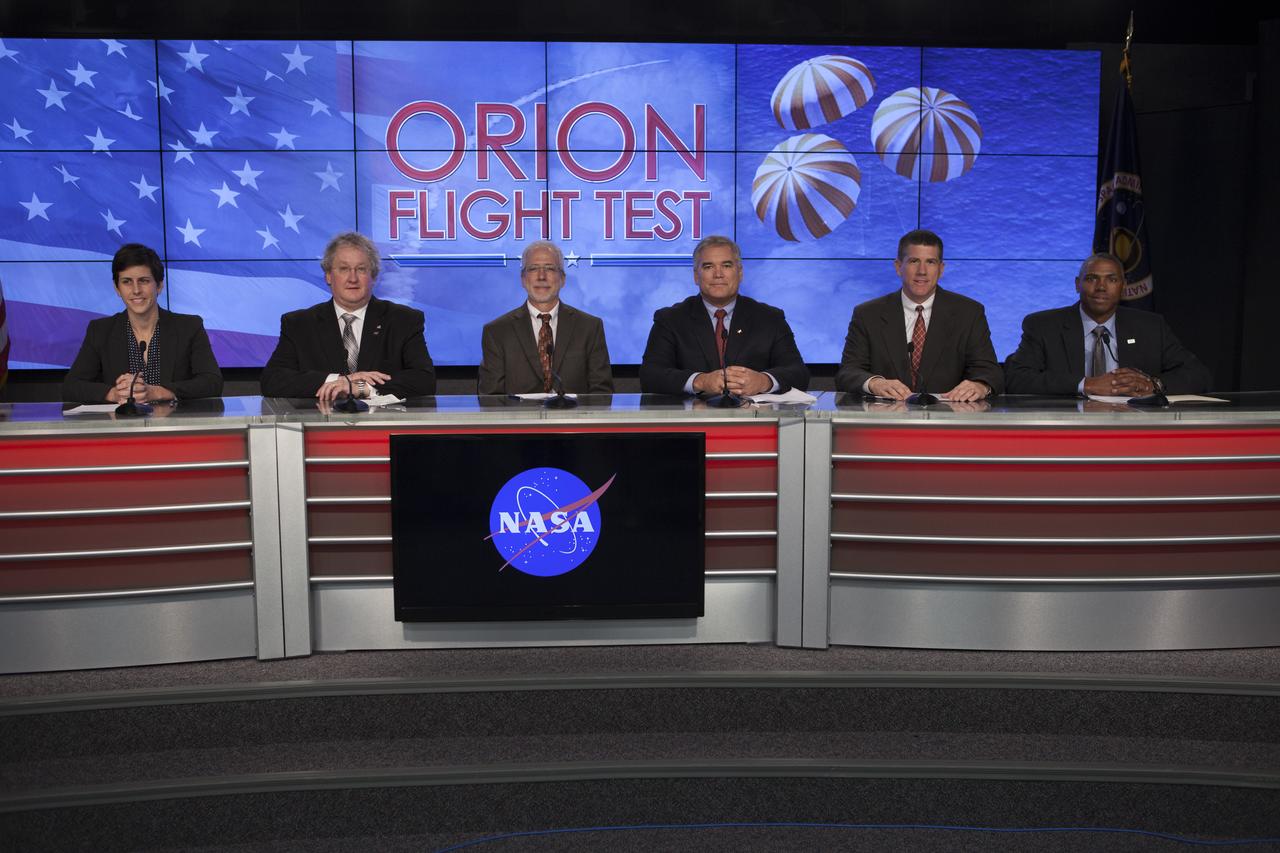
In the Kennedy Space Center’s Press Site auditorium, members of the news media are briefed on the upcoming Orion flight test. From left are: Rachel Kraft, NASA Public Affairs, Bill Hill, NASA deputy associate administrator for Exploration Systems Development, Mark Geyer, NASA Orion Program manager, Bryan Austin, Lockheed Martin mission manager, Jeremy Graeber, Operations Integration Branch of Ground Systems Development and Operations at Kennedy, and Ron Fortson, United Launch Alliance director of Mission Management. Mike Sarafin, NASA's lead flight director, participated by video from the Johnson Space Center. Orion is the exploration spacecraft designed to carry astronauts to destinations not yet explored by humans, including an asteroid and Mars. It will have emergency abort capability, sustain the crew during space travel and provide safe re-entry from deep space return velocities. The first unpiloted flight test of Orion is scheduled to launch Dec. 4, 2014 atop a United Launch Alliance Delta IV Heavy rocket, and in 2018 on NASA’s Space Launch System rocket.
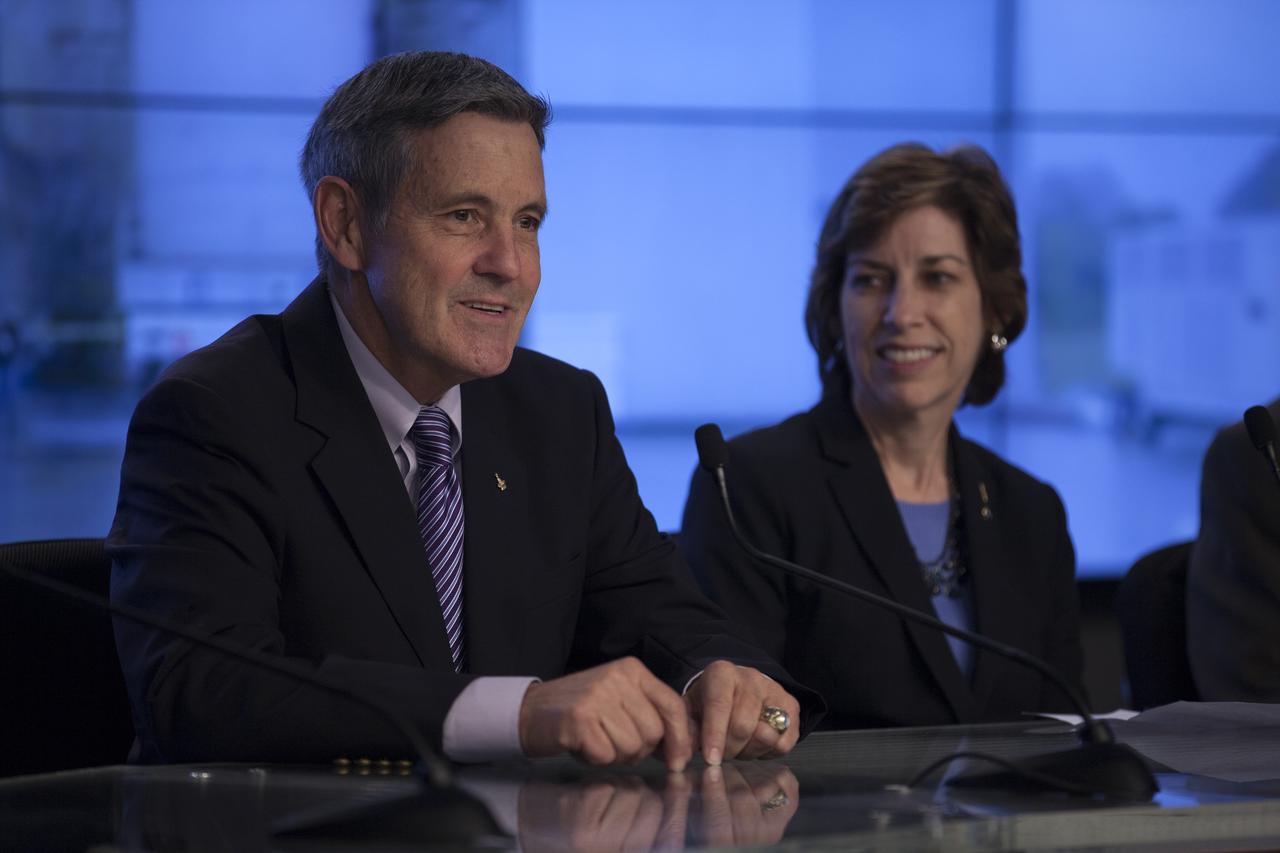
In the Kennedy Space Center’s Press Site auditorium, Kennedy's director Bob Cabana and Johnson Space Center Director Ellen Ochoa spoke to members of the news media as the completed Orion spacecraft was being prepared for its trip from the Launch Abort System Facility to Launch Complex 37 at Cape Canaveral Air Force Station. Orion is the exploration spacecraft designed to carry astronauts to destinations not yet explored by humans, including an asteroid and Mars. It will have emergency abort capability, sustain the crew during space travel and provide safe re-entry from deep space return velocities. The first unpiloted flight test of Orion is scheduled to launch Dec. 4, 2014 atop a United Launch Alliance Delta IV Heavy rocket, and in 2018 on NASA’s Space Launch System rocket.
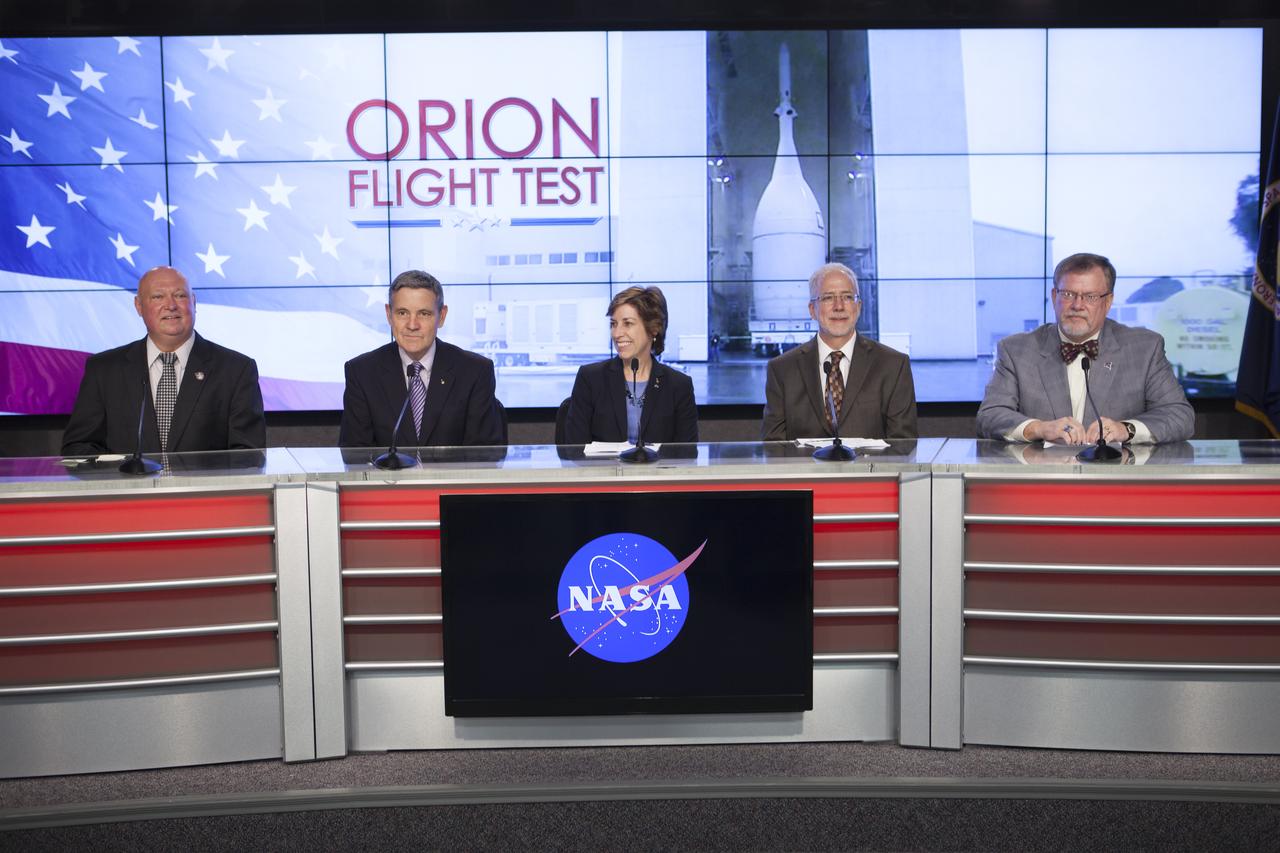
In the Kennedy Space Center’s Press Site auditorium, agency leaders spoke to members of the news media as the completed Orion spacecraft was being prepared for its trip from the Launch Abort System Facility to Launch Complex 37 at Cape Canaveral Air Force Station. From left are: Mike Curie of NASA Public Affairs, Kennedy Director Bob Cabana, Johnson Space Center Director Ellen Ochoa, NASA Orion Program manager Mark Geyer, and Lockheed Martin Orion Program manager Mike Hawes. Orion is the exploration spacecraft designed to carry astronauts to destinations not yet explored by humans, including an asteroid and Mars. It will have emergency abort capability, sustain the crew during space travel and provide safe re-entry from deep space return velocities. The first unpiloted flight test of Orion is scheduled to launch Dec. 4, 2014 atop a United Launch Alliance Delta IV Heavy rocket, and in 2018 on NASA’s Space Launch System rocket.
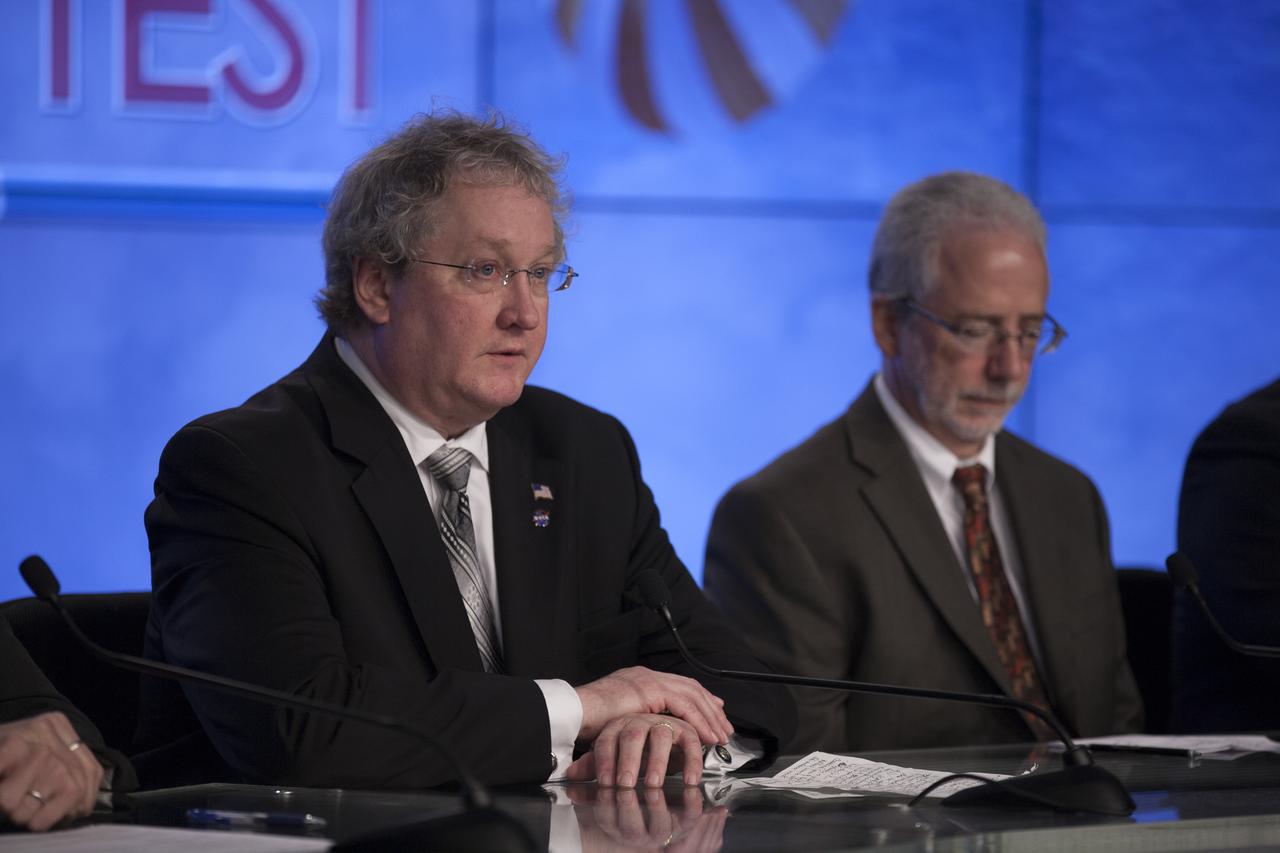
In the Kennedy Space Center’s Press Site auditorium, members of the news media are briefed on the upcoming Orion flight test by Bill Hill, NASA deputy associate administrator for Exploration Systems Development. Mark Geyer, NASA Orion Program manager, is on the right. Orion is the exploration spacecraft designed to carry astronauts to destinations not yet explored by humans, including an asteroid and Mars. It will have emergency abort capability, sustain the crew during space travel and provide safe re-entry from deep space return velocities. The first unpiloted flight test of Orion is scheduled to launch Dec. 4, 2014 atop a United Launch Alliance Delta IV Heavy rocket, and in 2018 on NASA’s Space Launch System rocket.

In the Kennedy Space Center’s Press Site auditorium, members of the news media are briefed on the upcoming Orion flight test by Jeremy Graeber, Orion Recovery Director in Ground Systems Development and Operations at Kennedy. Also participating in the news conference are Bryan Austin, Lockheed Martin mission manager, left, and Ron Fortson, United Launch Alliance director of Mission Management. Orion is the exploration spacecraft designed to carry astronauts to destinations not yet explored by humans, including an asteroid and Mars. It will have emergency abort capability, sustain the crew during space travel and provide safe re-entry from deep space return velocities. The first unpiloted flight test of Orion is scheduled to launch Dec. 4, 2014 atop a United Launch Alliance Delta IV Heavy rocket, and in 2018 on NASA’s Space Launch System rocket.
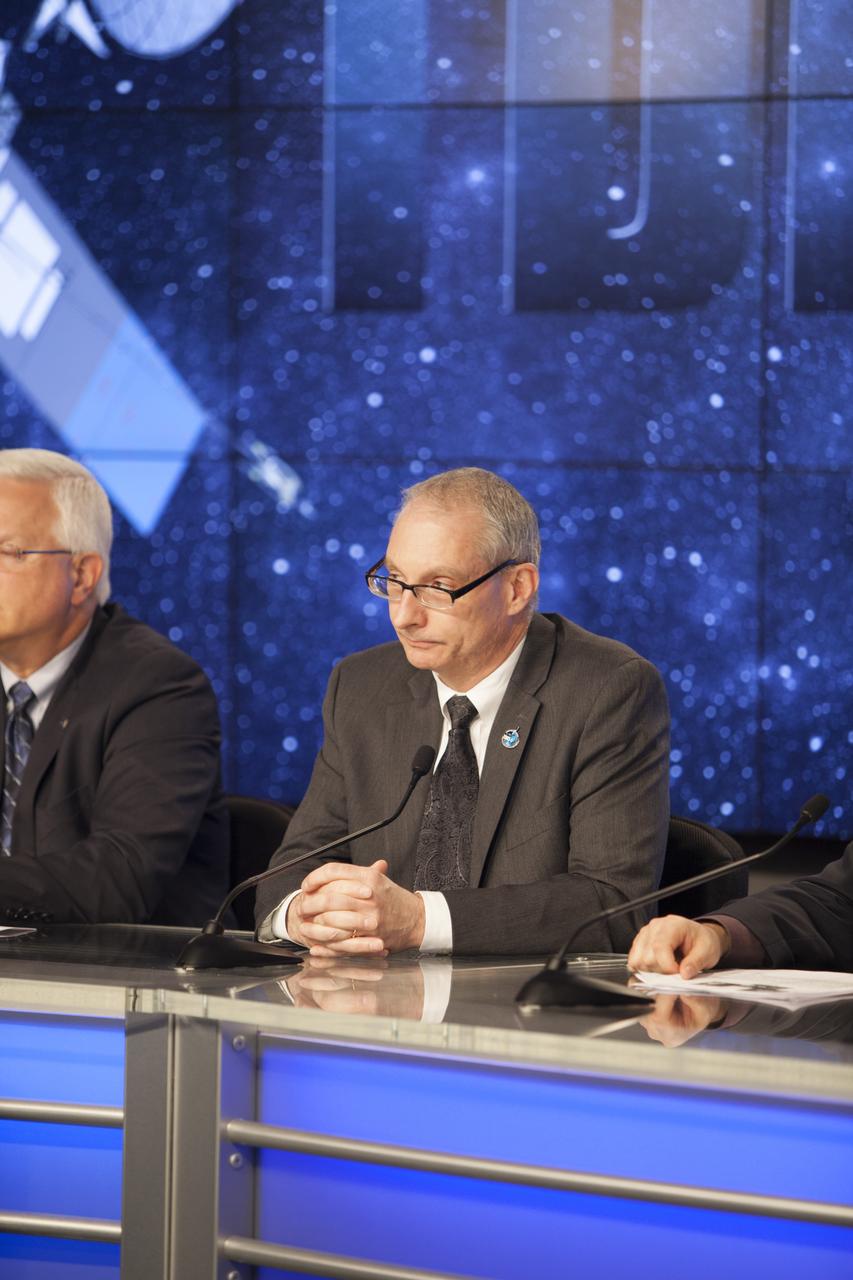
CAPE CANAVERAL, Fla. – During a news conference at NASA's Kennedy Space Center in Florida, agency and contractor officials discussed preparations for the launch of NASA's Tracking and Data Relay Satellite, or TDRS-L, spacecraft. Participants included Jeffrey Gramling, NASA's TDRS-L project manager at the Goddard Space Flight Center in Greenbelt, Md. The TDRS-L spacecraft is the second of three new satellites designed to ensure vital operational continuity for NASA by expanding the lifespan of the Tracking and Data Relay Satellite System TDRSS fleet, which consists of eight satellites in geosynchronous orbit. The spacecraft provide tracking, telemetry, command and high bandwidth data return services for numerous science and human exploration missions orbiting Earth. These include NASA's Hubble Space Telescope and the International Space Station. TDRS-L has a high-performance solar panel designed for more spacecraft power to meet the growing S-band communications requirements. TDRSS is one of NASA Space Communication and Navigation’s SCaN three networks providing space communications to NASA’s missions. For more information more about TDRS-L, visit: http://www.nasa.gov/tdrs To learn more about SCaN, visit: www.nasa.gov/scan Photo credit: NASA/Frankie Martin
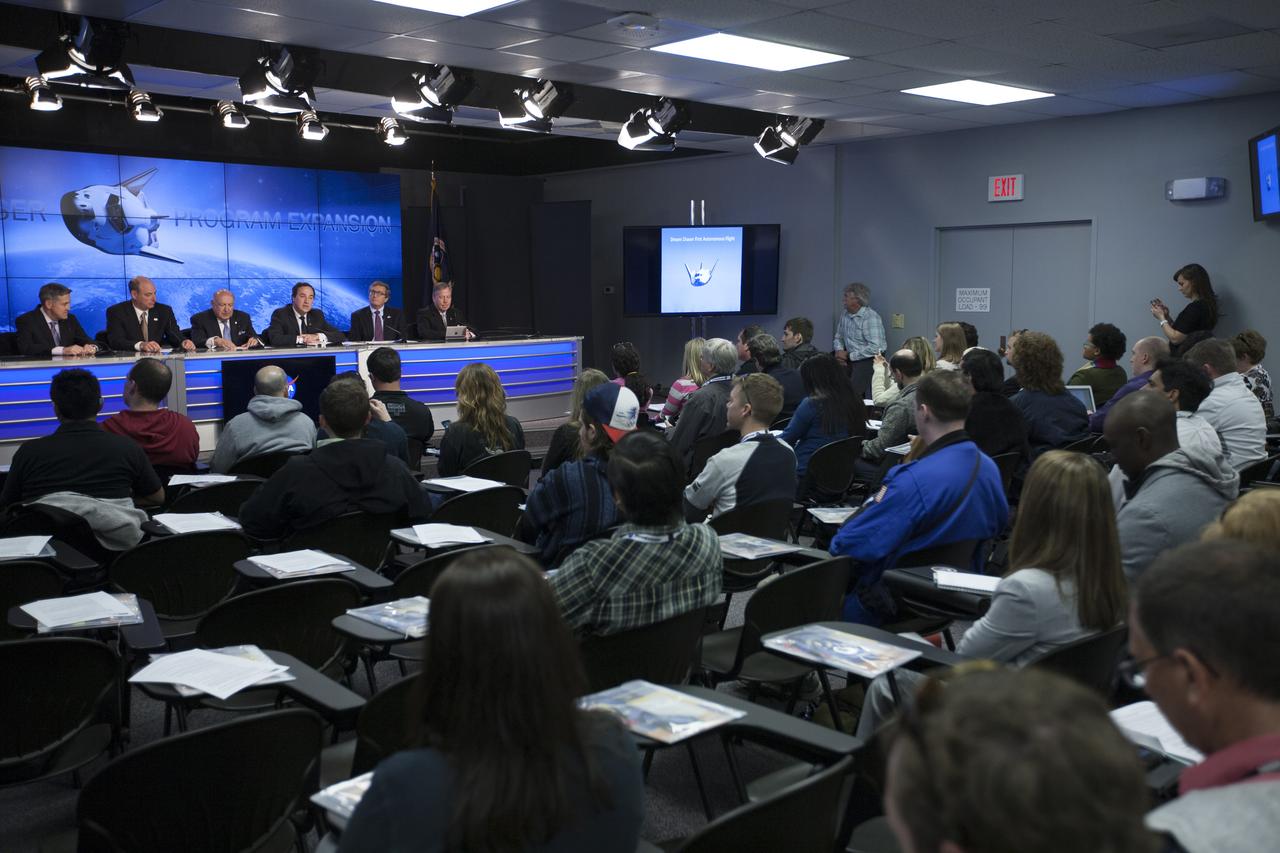
CAPE CANAVERAL, Fla. – Sierra Nevada Corporation, or SNC, Space Systems, announces the steps the company will take to prepare for a November 2016 orbital flight of its Dream Chaser spacecraft from Florida’s Space Coast during a news conference at NASA’s Kennedy Space Center in Florida. Participants, from left, are Bob Cabana, director of Kennedy Michael Gass, president and CEO of United Launch Alliance, or ULA Frank DiBello, president and CEO of Space Florida Mark Sirangelo, corporate vice president and head of SNC Space Systems Larry Price, Lockheed Martin Space Systems deputy program manager for NASA's Orion spacecraft and Steve Lindsey, Dream Chaser program manager for SNC Space Systems. The steps are considered substantial for SNC and important to plans by NASA and Space Florida for Kennedy’s transformation into a multi-user spaceport for both commercial and government customers. SNC said it plans to work with ULA to launch the Dream Chaser spacecraft into orbit atop an Atlas V rocket from Space Launch Complex 41 at Cape Canaveral Air Force Station intends to land the winged spacecraft at Kennedy’s 3.5-mile long runway at the Shuttle Landing Facility lease office space at Exploration Park, right outside Kennedy’s gates and process the spacecraft in the high bay of the Operations and Checkout Building at Kennedy, with Lockheed Martin performing the work. Photo credit: NASA/Kim Shiflett

CAPE CANAVERAL, Fla. – Frank DiBello, right, president and CEO of Space Florida, joins Sierra Nevada Corporation, or SNC, Space Systems, as the company announces the steps it will take to prepare for a November 2016 orbital flight of its Dream Chaser spacecraft from Florida’s Space Coast. The steps are considered substantial for SNC and important to plans by NASA and Space Florida for Kennedy Space Center’s transformation into a multi-user spaceport for both commercial and government customers. SNC said it plans to work with United Launch Alliance, or ULA, to launch the Dream Chaser spacecraft into orbit atop an Atlas V rocket from Space Launch Complex 41 at Cape Canaveral Air Force Station intends to land the winged spacecraft at Kennedy’s 3.5-mile long runway at the Shuttle Landing Facility lease office space at Exploration Park, right outside Kennedy’s gates and process the spacecraft in the high bay of the Operations and Checkout Building at Kennedy, with Lockheed Martin performing the work. Photo credit: NASA/Kim Shiflett
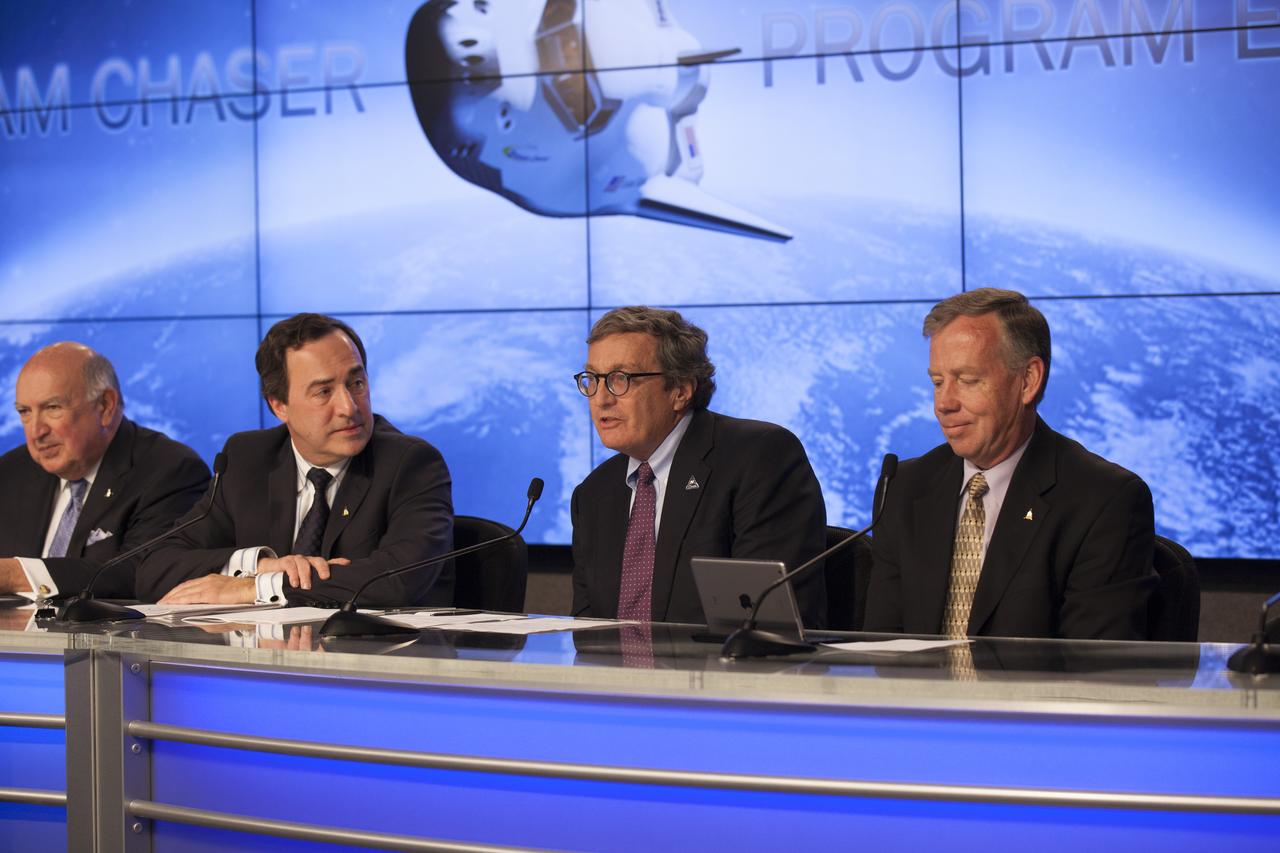
CAPE CANAVERAL, Fla. – Larry Price, Lockheed Martin Space Systems deputy program manager for NASA's Orion spacecraft, joins Sierra Nevada Corporation, or SNC, Space Systems, as the company announces the steps it will take to prepare for a November 2016 orbital flight of its Dream Chaser spacecraft from Florida’s Space Coast. The steps are considered substantial for SNC and important to plans by NASA and Space Florida for Kennedy Space Center’s transformation into a multi-user spaceport for both commercial and government customers. SNC said it plans to work with United Launch Alliance, or ULA, to launch the Dream Chaser spacecraft into orbit atop an Atlas V rocket from Space Launch Complex 41 at Cape Canaveral Air Force Station intends to land the winged spacecraft at Kennedy’s 3.5-mile long runway at the Shuttle Landing Facility lease office space at Exploration Park, right outside Kennedy’s gates and process the spacecraft in the high bay of the Operations and Checkout Building at Kennedy, with Lockheed Martin performing the work. Photo credit: NASA/Kim Shiflett
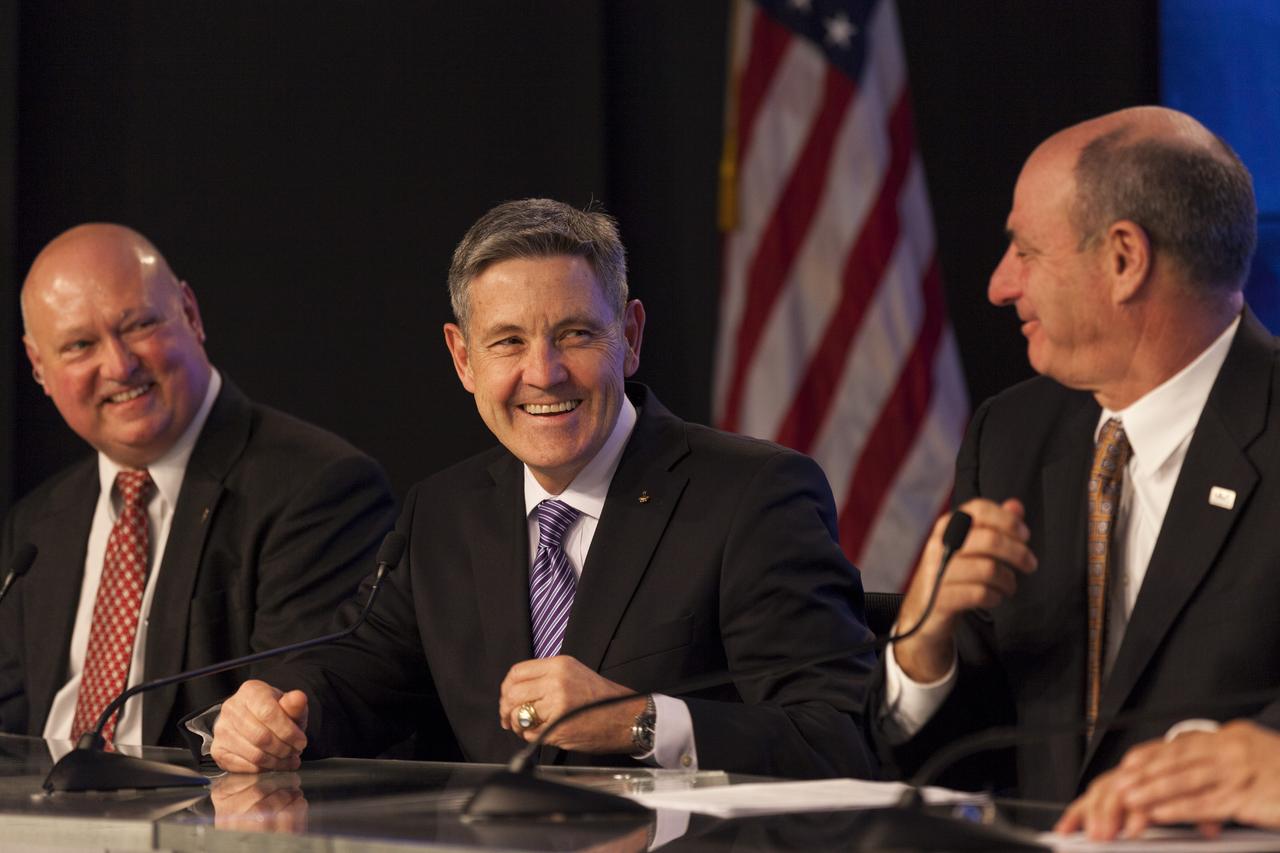
CAPE CANAVERAL, Fla. – Bob Cabana, center, director of Kennedy Space Center in Florida, joins Sierra Nevada Corporation, or SNC, Space Systems, as the company announces the steps it will take to prepare for a November 2016 orbital flight of its Dream Chaser spacecraft from Florida’s Space Coast. The steps are considered substantial for SNC and important to plans by NASA and Space Florida for Kennedy’s transformation into a multi-user spaceport for both commercial and government customers. SNC said it plans to work with United Launch Alliance, or ULA, to launch the Dream Chaser spacecraft into orbit atop an Atlas V rocket from Space Launch Complex 41 at Cape Canaveral Air Force Station intends to land the winged spacecraft at Kennedy’s 3.5-mile long runway at the Shuttle Landing Facility lease office space at Exploration Park, right outside Kennedy’s gates and process the spacecraft in the high bay of the Operations and Checkout Building at Kennedy, with Lockheed Martin performing the work. Photo credit: NASA/Kim Shiflett
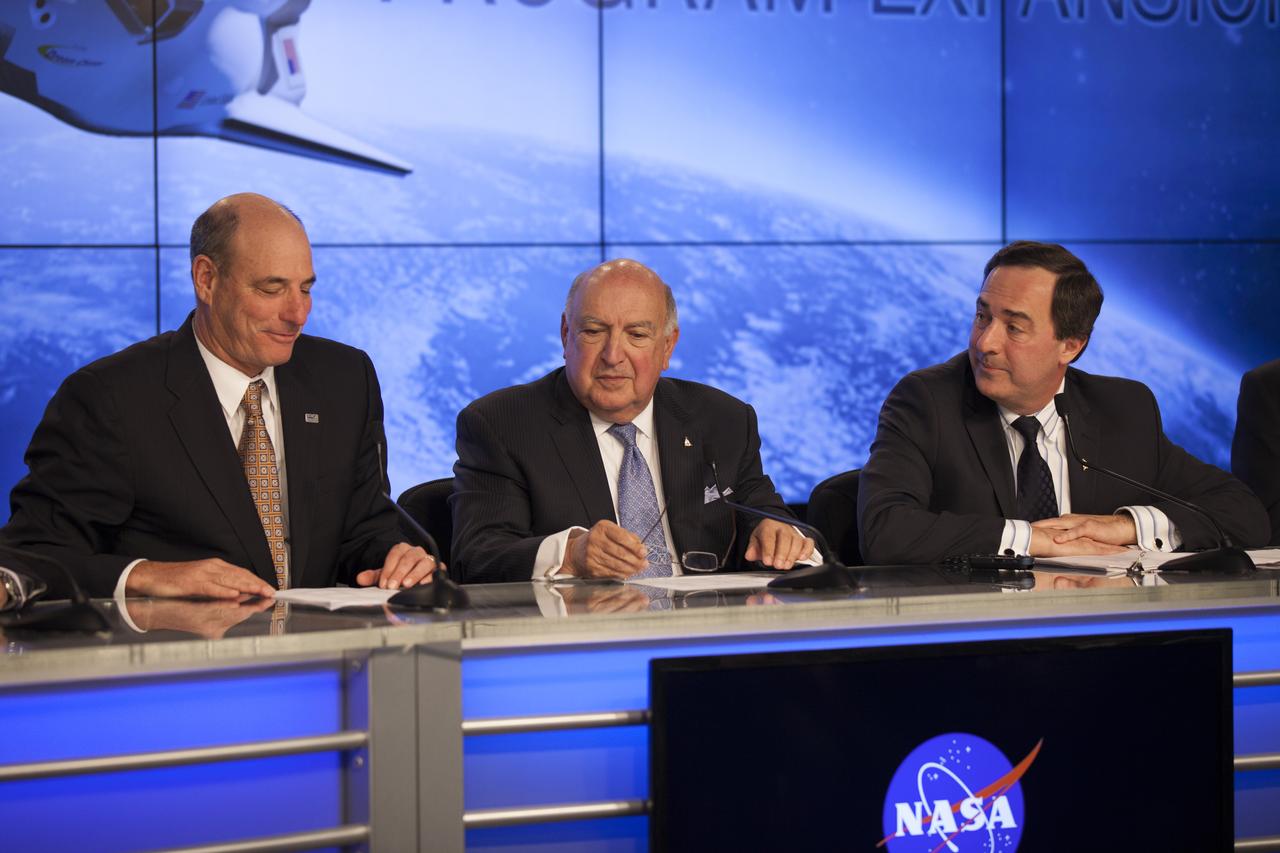
CAPE CANAVERAL, Fla. – Frank DiBello, president and CEO of Space Florida, joins Sierra Nevada Corporation, or SNC, Space Systems, as the company announces the steps it will take to prepare for a November 2016 orbital flight of its Dream Chaser spacecraft from Florida’s Space Coast. The steps are considered substantial for SNC and important to plans by NASA and Space Florida for Kennedy Space Center’s transformation into a multi-user spaceport for both commercial and government customers. SNC said it plans to work with United Launch Alliance, or ULA, to launch the Dream Chaser spacecraft into orbit atop an Atlas V rocket from Space Launch Complex 41 at Cape Canaveral Air Force Station intends to land the winged spacecraft at Kennedy’s 3.5-mile long runway at the Shuttle Landing Facility lease office space at Exploration Park, right outside Kennedy’s gates and process the spacecraft in the high bay of the Operations and Checkout Building at Kennedy, with Lockheed Martin performing the work. Photo credit: NASA/Kim Shiflett
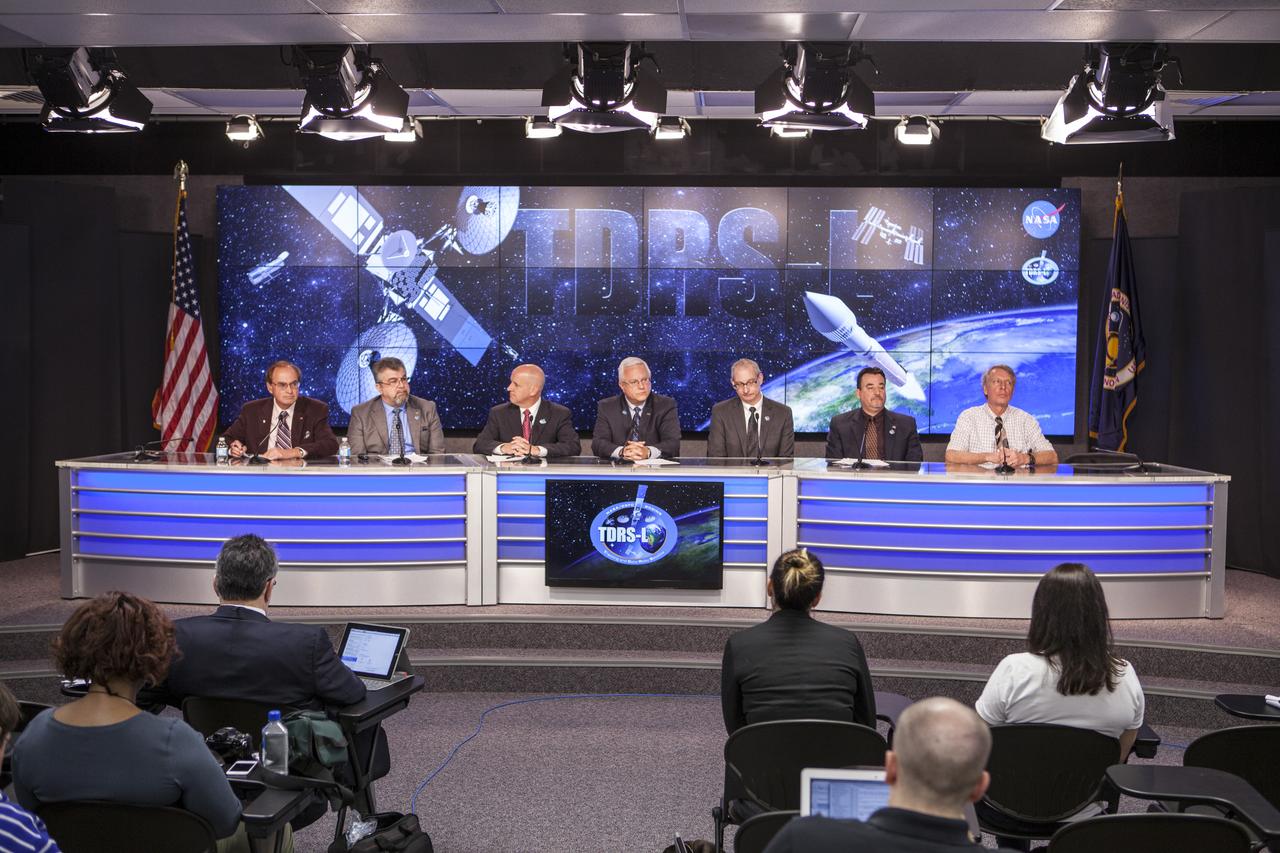
CAPE CANAVERAL, Fla. –During a news conference at NASA's Kennedy Space Center in Florida, agency and contractor officials discussed preparations for the launch of NASA's Tracking and Data Relay Satellite, or TDRS-L, spacecraft. Participating in the briefing, from the left, are George Diller of NASA Public Affairs, Badri Younes, deputy associate administrator, Space Communications and Navigation SCaN NASA Human Exploration and Operations Mission Directorate at NASA Headquarters in Washington D.C., Tim Dunn, NASA launch director at Kennedy, Vernon Thorp, program manager for NASA Missions with United Launch Alliance in Denver, Colo., Jeffrey Gramling, NASA's TDRS-L project manager at the Goddard Space Flight Center in Greenbelt, Md., Andy Kopito, Civil Space Programs director for Boeing Space & Intelligence Systems in El Segundo, Calif., and Clay Flinn, launch weather officer for the 45th Weather Squadron at Cape Canaveral Air Force Station, Fla. The TDRS-L spacecraft is the second of three new satellites designed to ensure vital operational continuity for NASA by expanding the lifespan of the Tracking and Data Relay Satellite System TDRSS fleet, which consists of eight satellites in geosynchronous orbit. The spacecraft provide tracking, telemetry, command and high bandwidth data return services for numerous science and human exploration missions orbiting Earth. These include NASA's Hubble Space Telescope and the International Space Station. TDRS-L has a high-performance solar panel designed for more spacecraft power to meet the growing S-band communications requirements. TDRSS is one of NASA Space Communication and Navigation’s SCaN three networks providing space communications to NASA’s missions. For more information more about TDRS-L, visit: http://www.nasa.gov/tdrs To learn more about SCaN, visit: www.nasa.gov/scan Photo credit: NASA/Frankie Martin
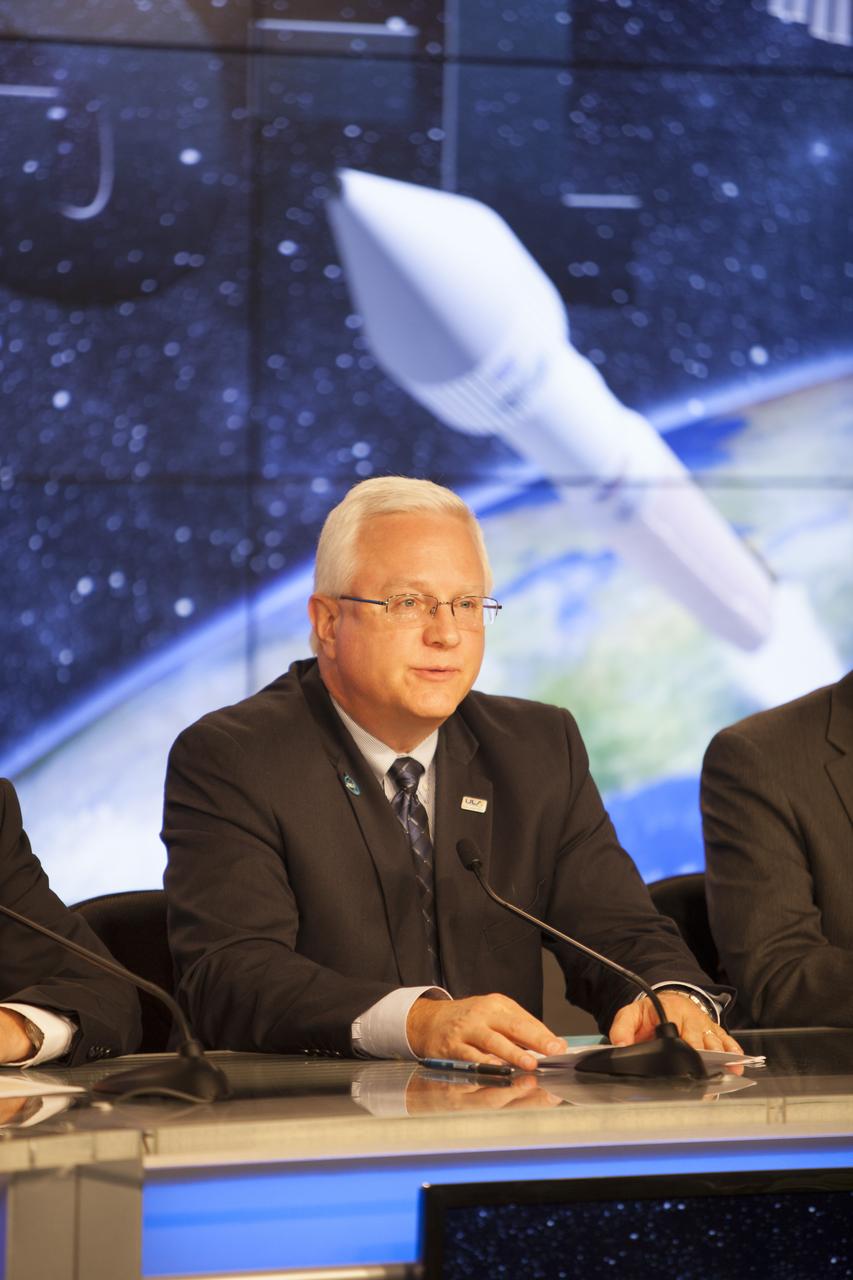
CAPE CANAVERAL, Fla. – During a news conference at NASA's Kennedy Space Center in Florida, agency and contractor officials discussed preparations for the launch of NASA's Tracking and Data Relay Satellite, or TDRS-L, spacecraft. Participants included Vernon Thorp, program manager for NASA Missions with United Launch Alliance in Denver, Colo. The TDRS-L spacecraft is the second of three new satellites designed to ensure vital operational continuity for NASA by expanding the lifespan of the Tracking and Data Relay Satellite System TDRSS fleet, which consists of eight satellites in geosynchronous orbit. The spacecraft provide tracking, telemetry, command and high bandwidth data return services for numerous science and human exploration missions orbiting Earth. These include NASA's Hubble Space Telescope and the International Space Station. TDRS-L has a high-performance solar panel designed for more spacecraft power to meet the growing S-band communications requirements. TDRSS is one of NASA Space Communication and Navigation’s SCaN three networks providing space communications to NASA’s missions. For more information more about TDRS-L, visit: http://www.nasa.gov/tdrs To learn more about SCaN, visit: www.nasa.gov/scan Photo credit: NASA/Frankie Martin
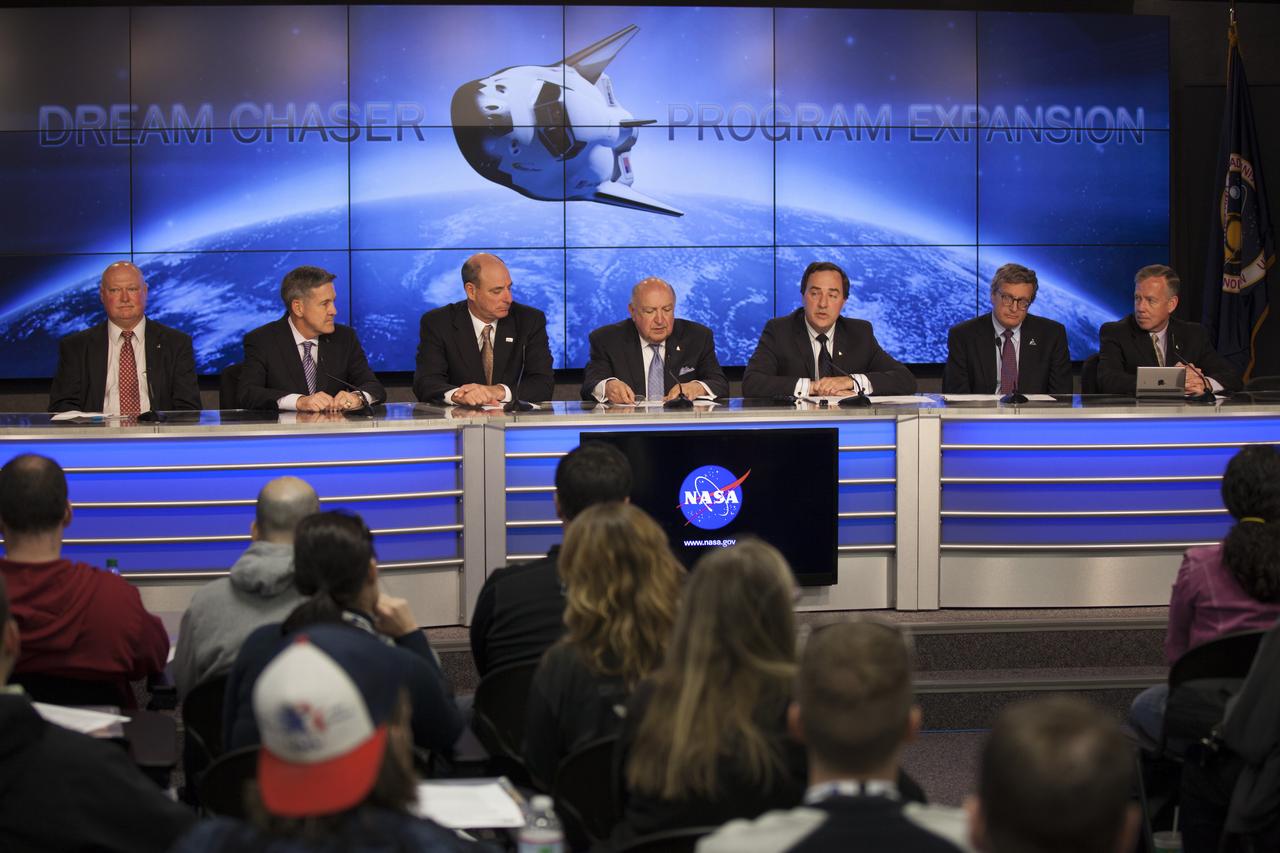
CAPE CANAVERAL, Fla. – Sierra Nevada Corporation, or SNC, Space Systems, announces the steps the company will take to prepare for a November 2016 orbital flight of its Dream Chaser spacecraft from Florida’s Space Coast during a news conference at NASA’s Kennedy Space Center in Florida. Participants are, from left, Michael Curie, NASA spokesman, Bob Cabana, director of Kennedy, Michael Gass, president and CEO of United Launch Alliance, or ULA, Frank DiBello, president and CEO of Space Florida, Mark Sirangelo, corporate vice president and head of SNC Space Systems, Larry Price, Lockheed Martin Space Systems deputy program manager for NASA's Orion spacecraft, and Steve Lindsey, Dream Chaser program manager for SNC Space Systems. The steps are considered substantial for SNC and important to plans by NASA and Space Florida for Kennedy’s transformation into a multi-user spaceport for both commercial and government customers. SNC said it plans to work with ULA to launch the Dream Chaser spacecraft into orbit atop an Atlas V rocket from Space Launch Complex 41 at Cape Canaveral Air Force Station intends to land the winged spacecraft at Kennedy’s 3.5-mile long runway at the Shuttle Landing Facility lease office space at Exploration Park, right outside Kennedy’s gates and process the spacecraft in the high bay of the Operations and Checkout Building at Kennedy, with Lockheed Martin performing the work. Photo credit: NASA/Kim Shiflett
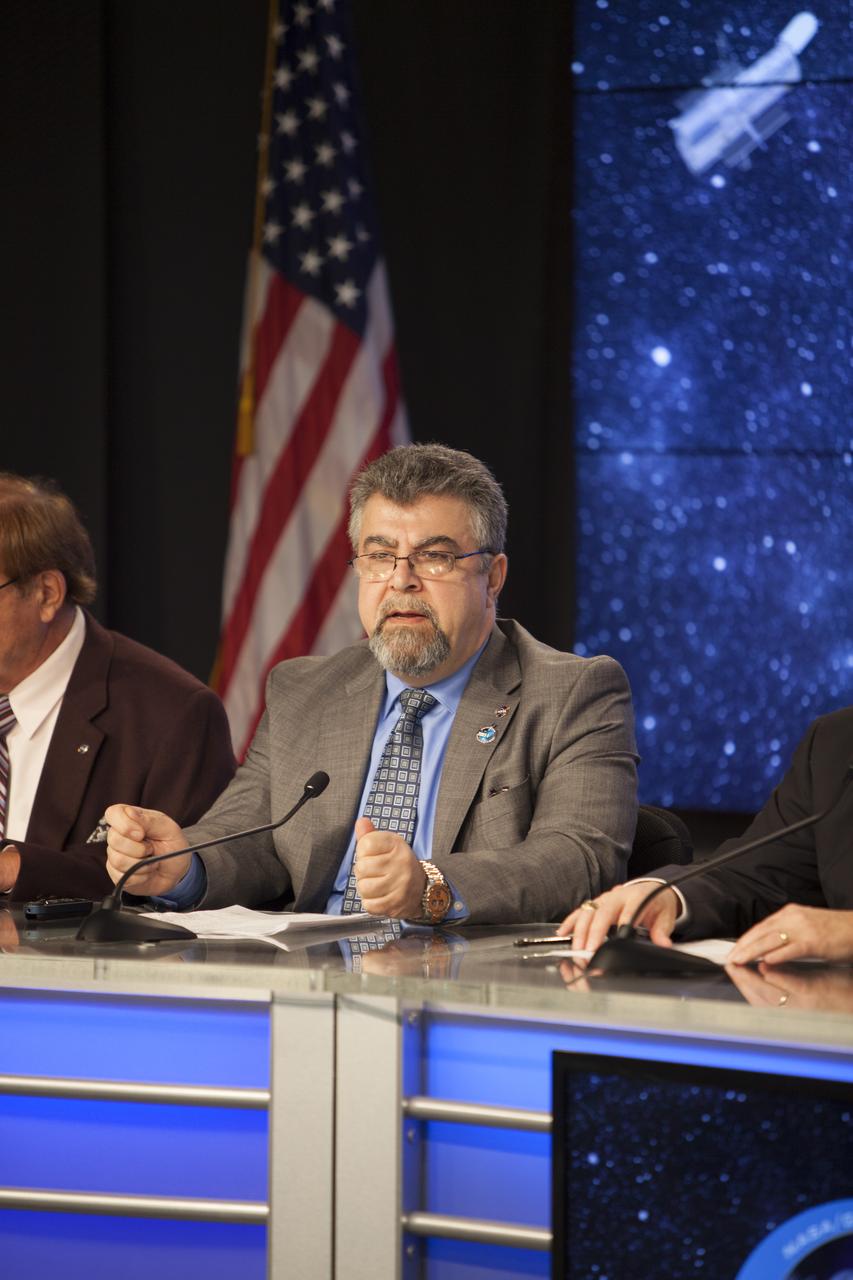
CAPE CANAVERAL, Fla. – During a news conference at NASA's Kennedy Space Center in Florida, agency and contractor officials discussed preparations for the launch of NASA's Tracking and Data Relay Satellite, or TDRS-L, spacecraft. Participants included Badri Younes, deputy associate administrator, Space Communications and Navigation SCaN NASA Human Exploration and Operations Mission Directorate at NASA Headquarters in Washington D.C. The TDRS-L spacecraft is the second of three new satellites designed to ensure vital operational continuity for NASA by expanding the lifespan of the Tracking and Data Relay Satellite System TDRSS fleet, which consists of eight satellites in geosynchronous orbit. The spacecraft provide tracking, telemetry, command and high bandwidth data return services for numerous science and human exploration missions orbiting Earth. These include NASA's Hubble Space Telescope and the International Space Station. TDRS-L has a high-performance solar panel designed for more spacecraft power to meet the growing S-band communications requirements. TDRSS is one of NASA Space Communication and Navigation’s SCaN three networks providing space communications to NASA’s missions. For more information more about TDRS-L, visit: http://www.nasa.gov/tdrs To learn more about SCaN, visit: www.nasa.gov/scan Photo credit: NASA/Frankie Martin
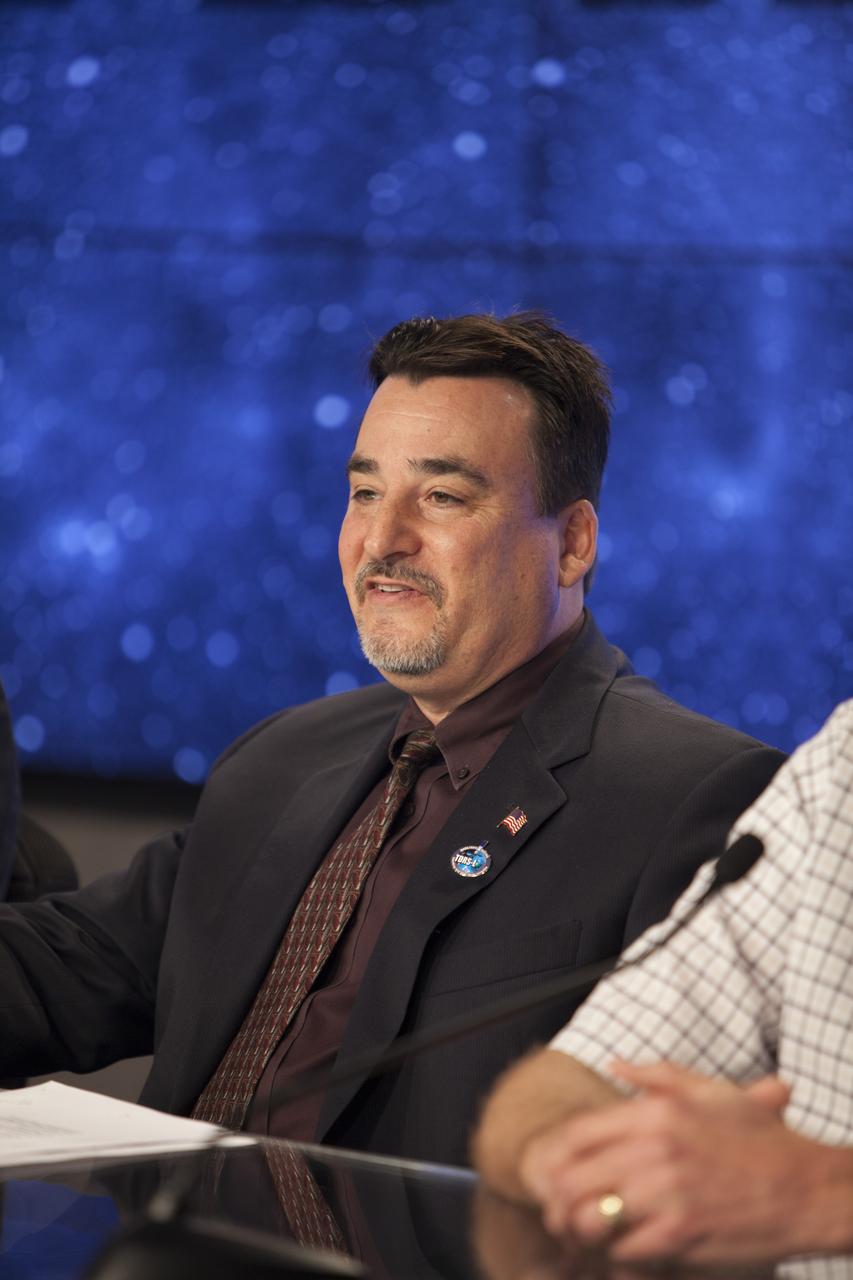
CAPE CANAVERAL, Fla. – During a news conference at NASA's Kennedy Space Center in Florida, agency and contractor officials discussed preparations for the launch of NASA's Tracking and Data Relay Satellite, or TDRS-L, spacecraft. Participants included Andy Kopito, Civil Space Programs director for Boeing Space & Intelligence Systems in El Segundo, Calif. The TDRS-L spacecraft is the second of three new satellites designed to ensure vital operational continuity for NASA by expanding the lifespan of the Tracking and Data Relay Satellite System TDRSS fleet, which consists of eight satellites in geosynchronous orbit. The spacecraft provide tracking, telemetry, command and high bandwidth data return services for numerous science and human exploration missions orbiting Earth. These include NASA's Hubble Space Telescope and the International Space Station. TDRS-L has a high-performance solar panel designed for more spacecraft power to meet the growing S-band communications requirements. TDRSS is one of NASA Space Communication and Navigation’s SCaN three networks providing space communications to NASA’s missions. For more information more about TDRS-L, visit: http://www.nasa.gov/tdrs To learn more about SCaN, visit: www.nasa.gov/scan Photo credit: NASA/Frankie Martin
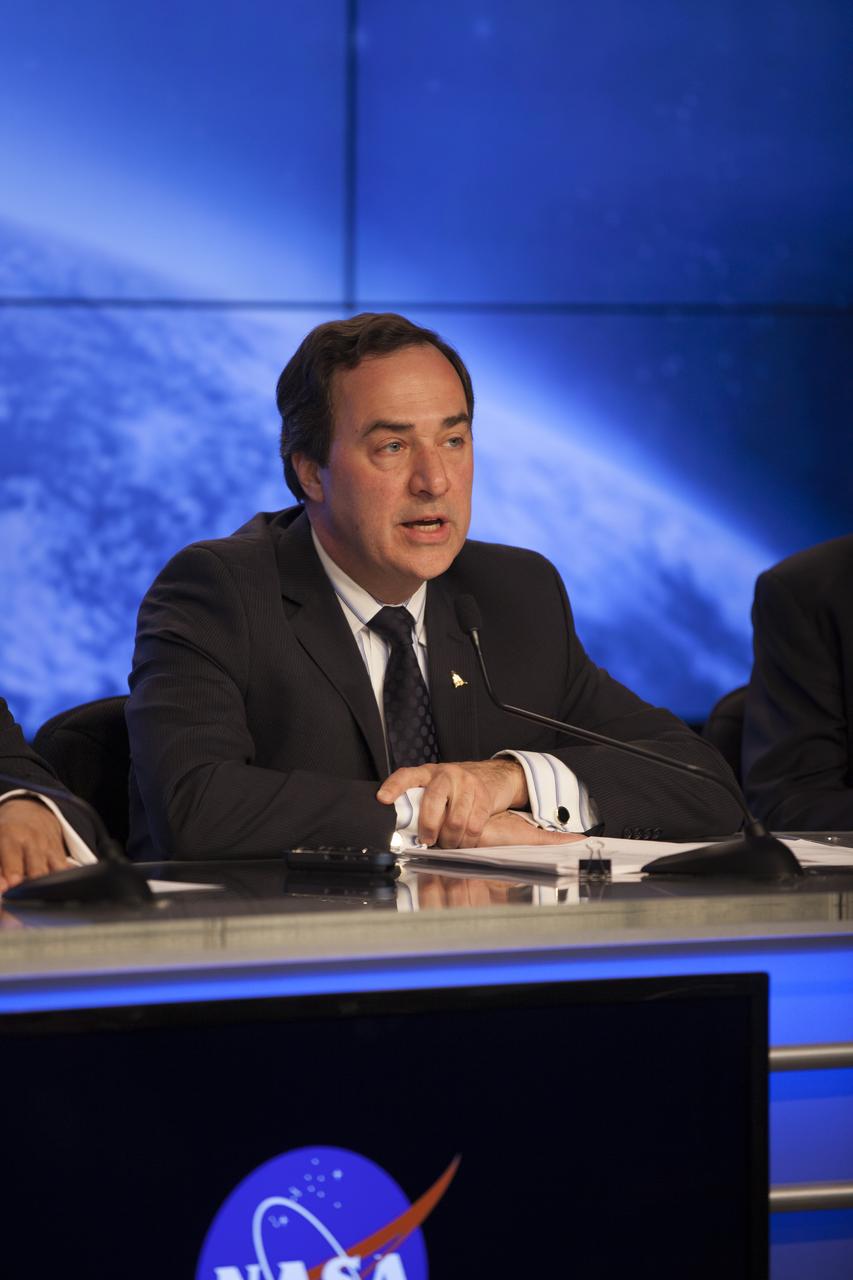
CAPE CANAVERAL, Fla. – Mark Sirangelo, corporate vice president and head of Sierra Nevada Corporation, or SNC, Space Systems, announces the steps the company will take to prepare for a November 2016 orbital flight of its Dream Chaser spacecraft from Florida’s Space Coast. The steps are considered substantial for SNC and important to plans by NASA and Space Florida for Kennedy Space Center’s transformation into a multi-user spaceport for both commercial and government customers. SNC said it plans to work with United Launch Alliance, or ULA, to launch the Dream Chaser spacecraft into orbit atop an Atlas V rocket from Space Launch Complex 41 at Cape Canaveral Air Force Station intends to land the winged spacecraft at Kennedy’s 3.5-mile long runway at the Shuttle Landing Facility lease office space at Exploration Park, right outside Kennedy’s gates and process the spacecraft in the high bay of the Operations and Checkout Building at Kennedy, with Lockheed Martin performing the work. Photo credit: NASA/Kim Shiflett
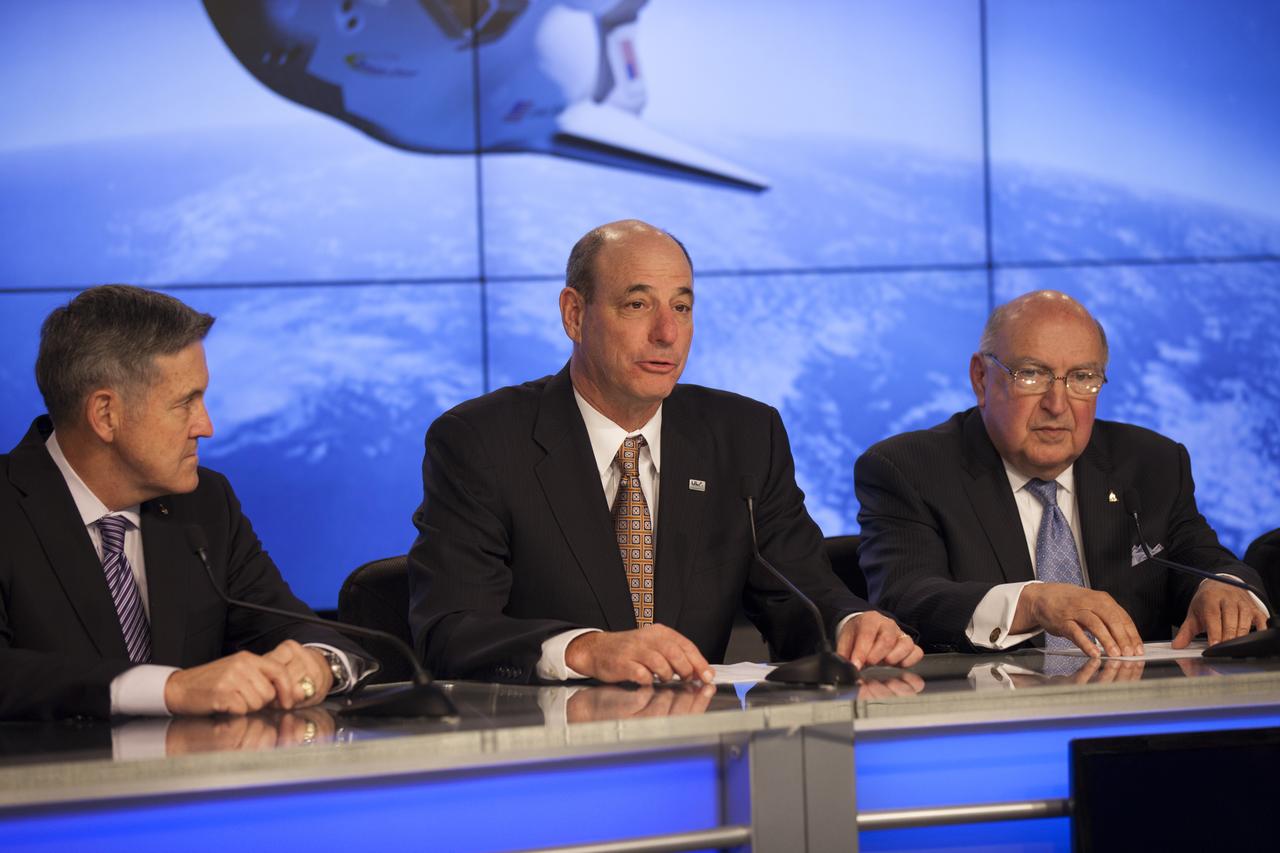
CAPE CANAVERAL, Fla. – Michael Gass, president and CEO of United Launch Alliance, or ULA, joins Sierra Nevada Corporation, or SNC, Space Systems, as the company announces the steps it will take to prepare for a November 2016 orbital flight of its Dream Chaser spacecraft from Florida’s Space Coast. The steps are considered substantial for SNC and important to plans by NASA and Space Florida for Kennedy Space Center’s transformation into a multi-user spaceport for both commercial and government customers. SNC said it plans to work with ULA to launch the Dream Chaser spacecraft into orbit atop an Atlas V rocket from Space Launch Complex 41 at Cape Canaveral Air Force Station intends to land the winged spacecraft at Kennedy’s 3.5-mile long runway at the Shuttle Landing Facility lease office space at Exploration Park, right outside Kennedy’s gates and process the spacecraft in the high bay of the Operations and Checkout Building at Kennedy, with Lockheed Martin performing the work. Photo credit: NASA/Kim Shiflett
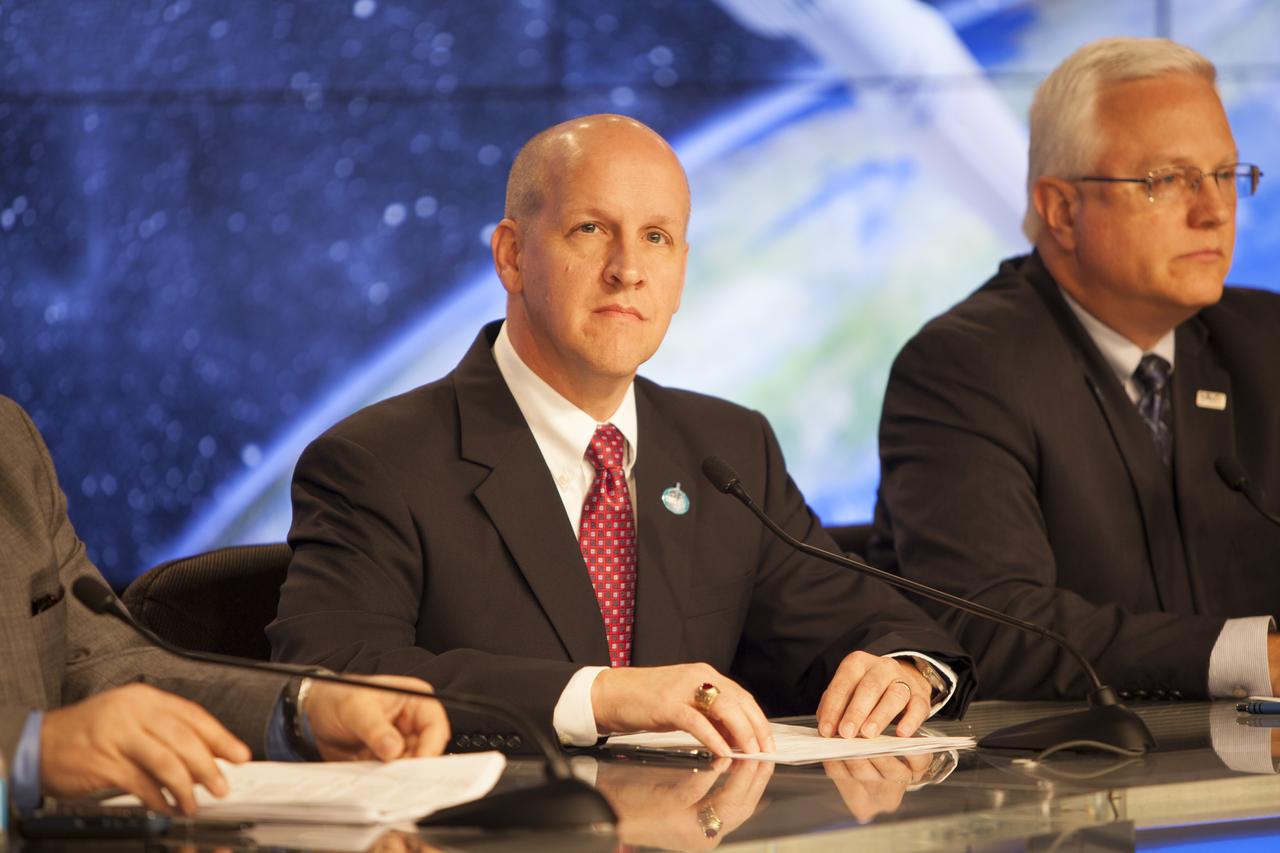
CAPE CANAVERAL, Fla. – During a news conference at NASA's Kennedy Space Center in Florida, agency and contractor officials discussed preparations for the launch of NASA's Tracking and Data Relay Satellite, or TDRS-L, spacecraft. Participants included Tim Dunn, NASA launch director at Kennedy, left, and Vernon Thorp, program manager for NASA Missions with United Launch Alliance in Denver, Colo. The TDRS-L spacecraft is the second of three new satellites designed to ensure vital operational continuity for NASA by expanding the lifespan of the Tracking and Data Relay Satellite System TDRSS fleet, which consists of eight satellites in geosynchronous orbit. The spacecraft provide tracking, telemetry, command and high bandwidth data return services for numerous science and human exploration missions orbiting Earth. These include NASA's Hubble Space Telescope and the International Space Station. TDRS-L has a high-performance solar panel designed for more spacecraft power to meet the growing S-band communications requirements. TDRSS is one of NASA Space Communication and Navigation’s SCaN three networks providing space communications to NASA’s missions. For more information more about TDRS-L, visit: http://www.nasa.gov/tdrs To learn more about SCaN, visit: www.nasa.gov/scan Photo credit: NASA/Frankie Martin
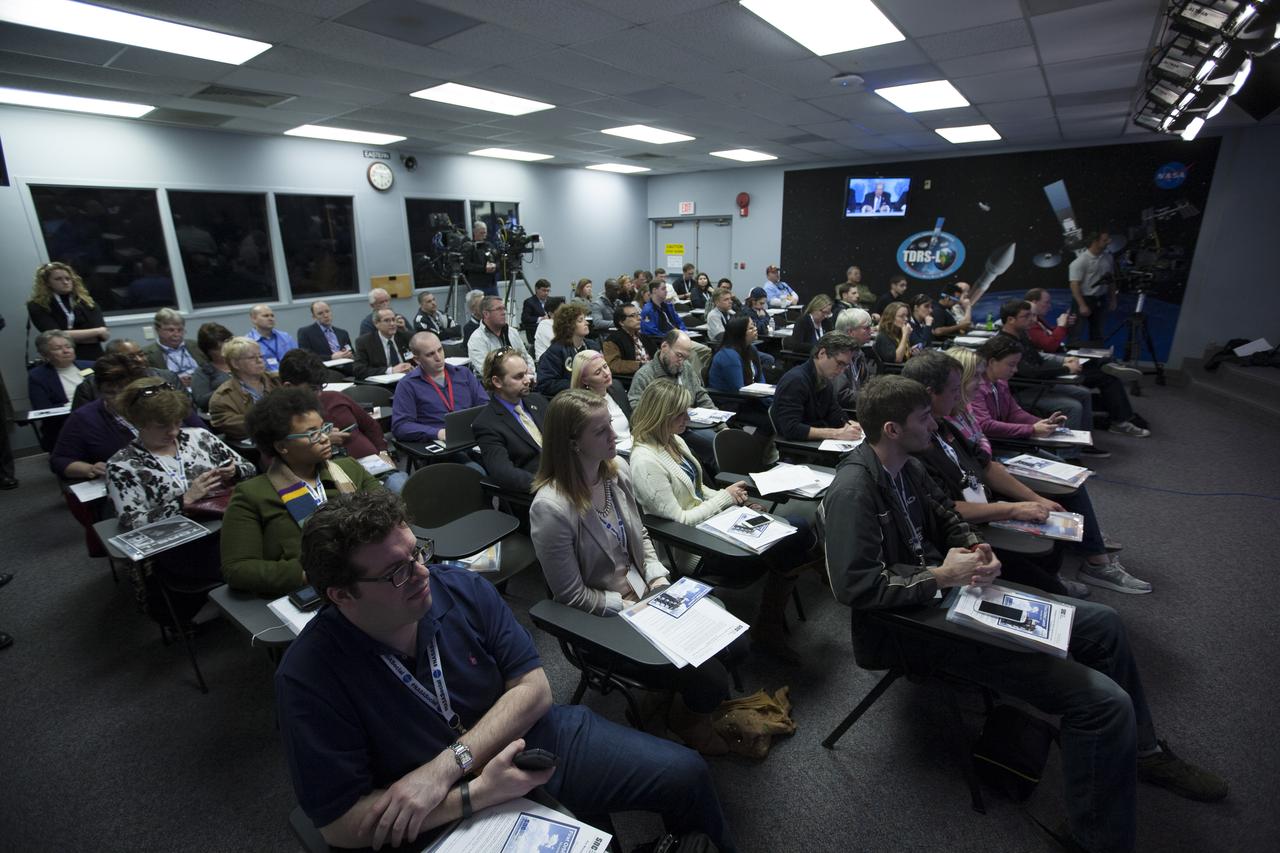
CAPE CANAVERAL, Fla. – Sierra Nevada Corporation, or SNC, Space Systems, announces the steps the company will take to prepare for a November 2016 orbital flight of its Dream Chaser spacecraft from Florida’s Space Coast during a news conference at NASA’s Kennedy Space Center in Florida. The steps are considered substantial for SNC and important to plans by NASA and Space Florida for Kennedy’s transformation into a multi-user spaceport for both commercial and government customers. SNC said it plans to work with ULA to launch the Dream Chaser spacecraft into orbit atop an Atlas V rocket from Space Launch Complex 41 at Cape Canaveral Air Force Station intends to land the winged spacecraft at Kennedy’s 3.5-mile long runway at the Shuttle Landing Facility lease office space at Exploration Park, right outside Kennedy’s gates and process the spacecraft in the high bay of the Operations and Checkout Building at Kennedy, with Lockheed Martin performing the work. Photo credit: NASA/Kim Shiflett
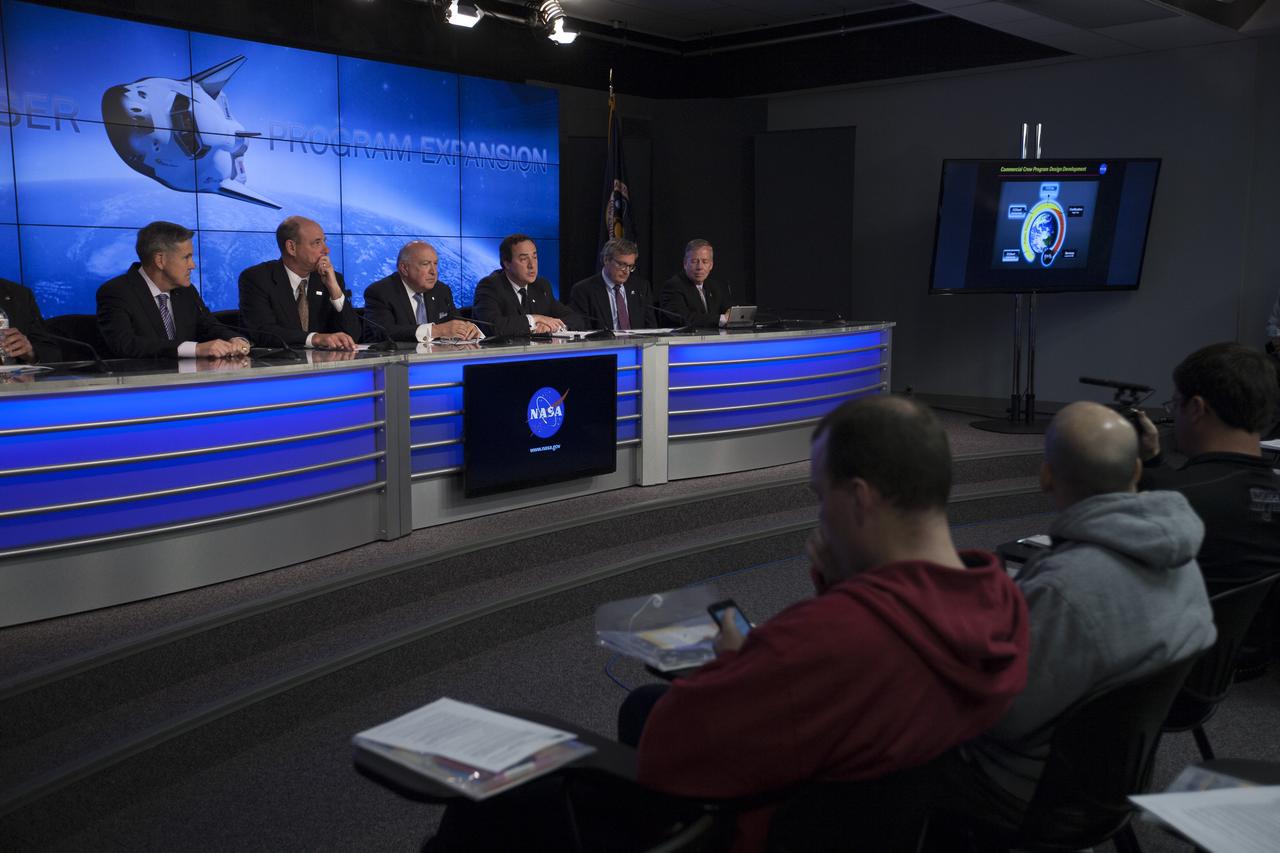
CAPE CANAVERAL, Fla. – Sierra Nevada Corporation, or SNC, Space Systems, announces the steps the company will take to prepare for a November 2016 orbital flight of its Dream Chaser spacecraft from Florida’s Space Coast during a news conference at NASA’s Kennedy Space Center in Florida. Participants, from left, are Bob Cabana, director of Kennedy Michael Gass, president and CEO of United Launch Alliance, or ULA Frank DiBello, president and CEO of Space Florida Mark Sirangelo, corporate vice president and head of SNC Space Systems Larry Price, Lockheed Martin Space Systems deputy program manager for NASA's Orion spacecraft and Steve Lindsey, Dream Chaser program manager for SNC Space Systems. The steps are considered substantial for SNC and important to plans by NASA and Space Florida for Kennedy’s transformation into a multi-user spaceport for both commercial and government customers. SNC said it plans to work with ULA to launch the Dream Chaser spacecraft into orbit atop an Atlas V rocket from Space Launch Complex 41 at Cape Canaveral Air Force Station intends to land the winged spacecraft at Kennedy’s 3.5-mile long runway at the Shuttle Landing Facility lease office space at Exploration Park, right outside Kennedy’s gates and process the spacecraft in the high bay of the Operations and Checkout Building at Kennedy, with Lockheed Martin performing the work. Photo credit: NASA/Kim Shiflett
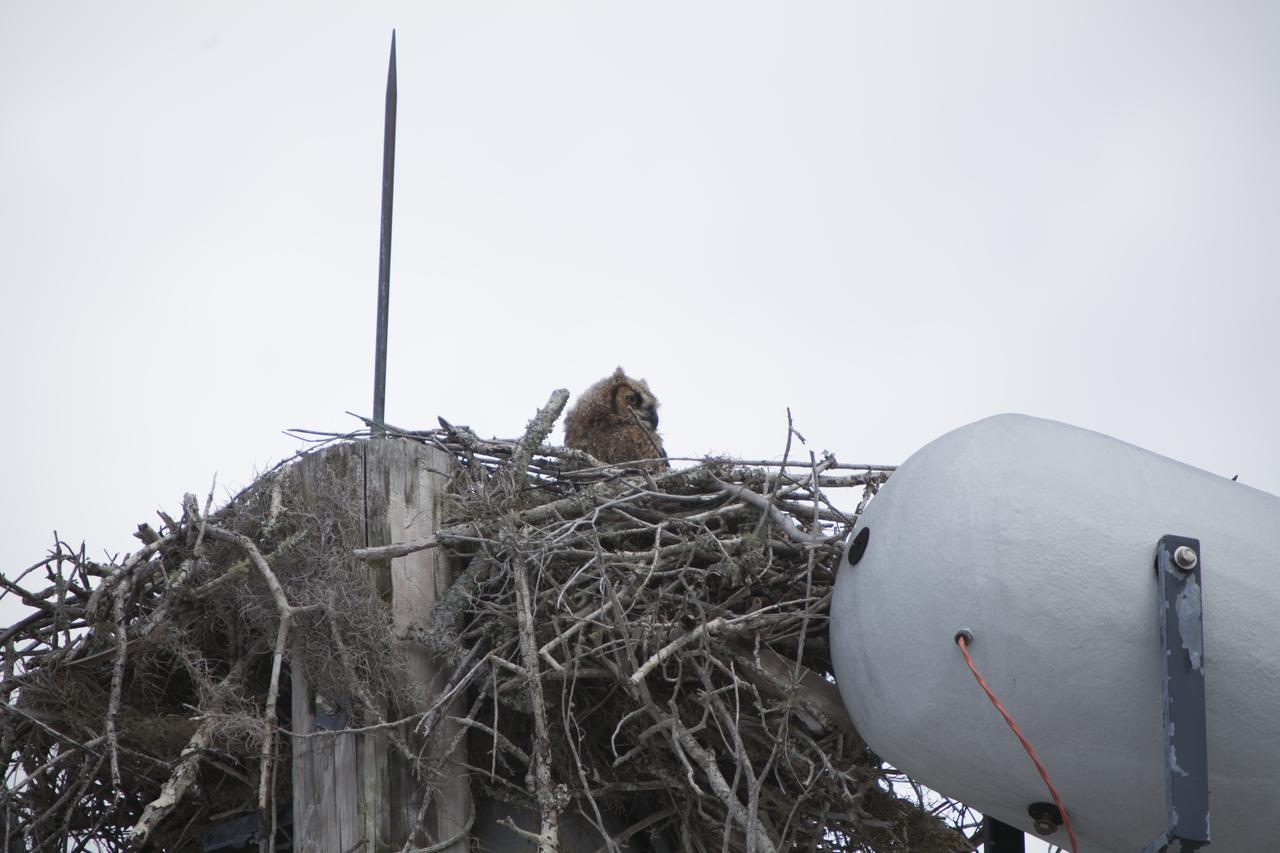
CAPE CANAVERAL, Fla. – At NASA's Kennedy Space Center in Florida, an Owl occupies a nest originally build by an Osprey atop a loudspeaker utility pole. Kennedy Space Center shares a boundary with the Merritt Island National Wildlife Refuge. The Refuge encompasses 140,000 acres that are a habitat for more than 331 species of birds, 31 mammals, 117 fishes, and 65 amphibians and reptiles. The marshes and open water of the refuge provide wintering areas for 23 species of migratory waterfowl, as well as a year-round home for great blue herons, great egrets, wood storks, cormorants, brown pelicans and other species of marsh and shore birds, as well as a variety of insects. For more information, visit: http://www.nasa.gov/centers/kennedy/shuttleoperations/alligators/kscovr.html Photo credit: NASA/Dimitri Gerondidakis
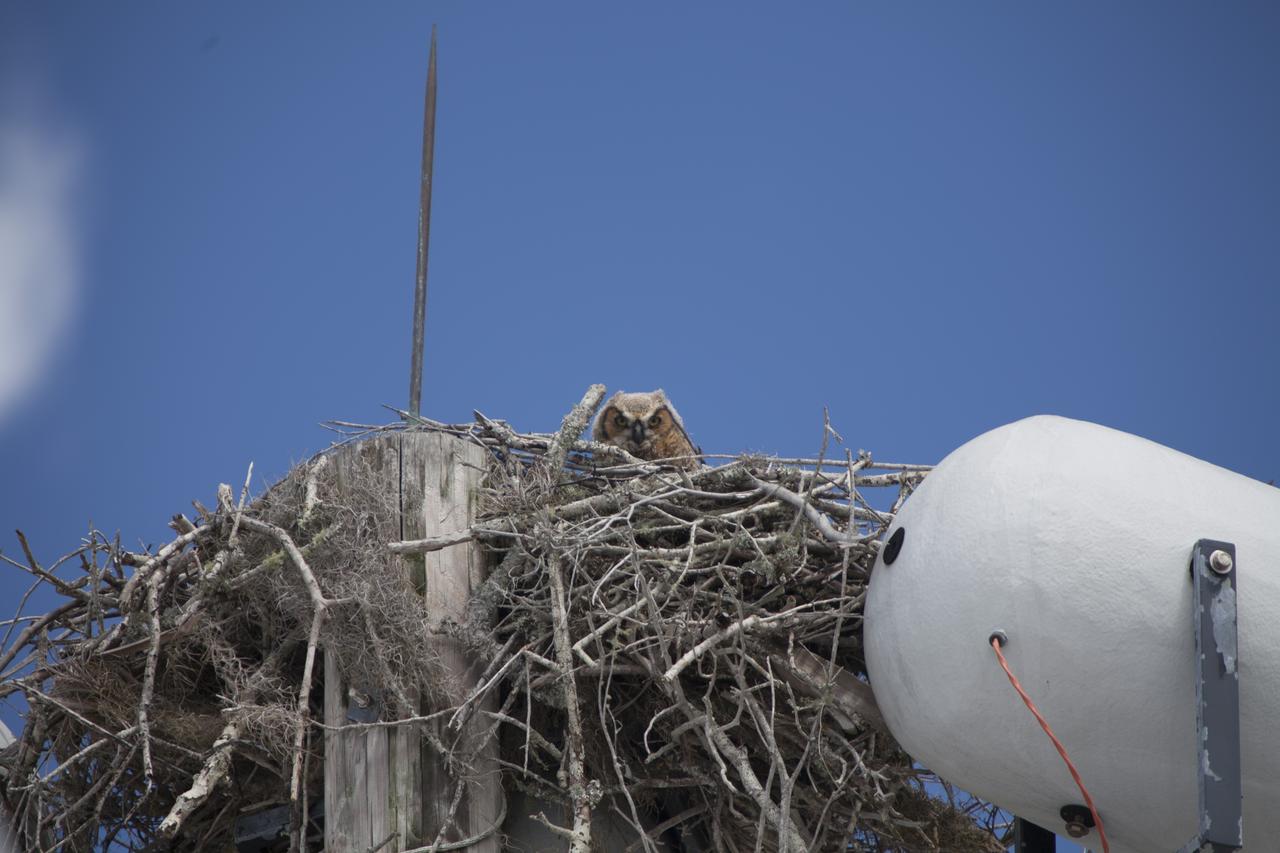
CAPE CANAVERAL, Fla. – At NASA's Kennedy Space Center in Florida, an Owl occupies a nest originally build by an Osprey atop a loudspeaker utility pole. Kennedy Space Center shares a boundary with the Merritt Island National Wildlife Refuge. The Refuge encompasses 140,000 acres that are a habitat for more than 331 species of birds, 31 mammals, 117 fishes, and 65 amphibians and reptiles. The marshes and open water of the refuge provide wintering areas for 23 species of migratory waterfowl, as well as a year-round home for great blue herons, great egrets, wood storks, cormorants, brown pelicans and other species of marsh and shore birds, as well as a variety of insects. For more information, visit: http://www.nasa.gov/centers/kennedy/shuttleoperations/alligators/kscovr.html Photo credit: NASA/Dimitri Gerondidakis
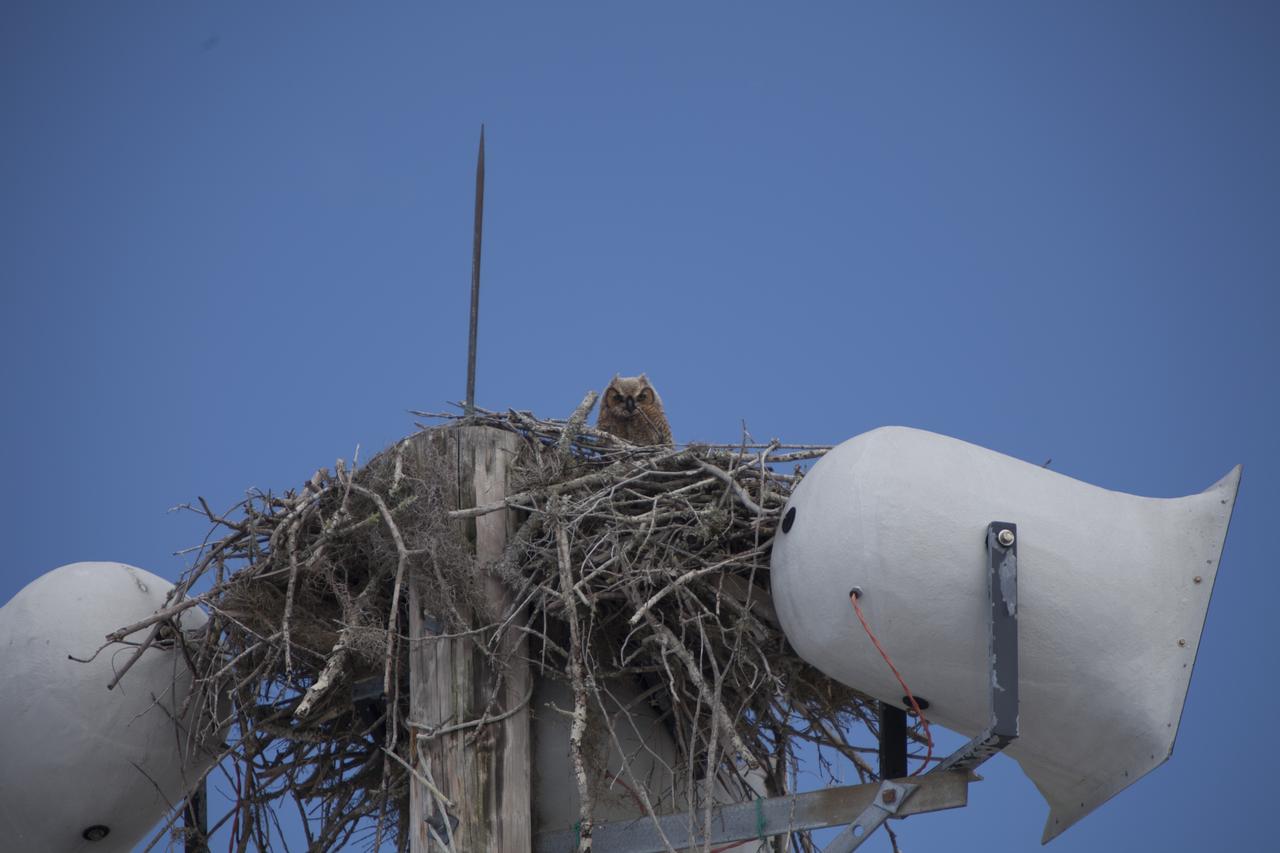
CAPE CANAVERAL, Fla. – At NASA's Kennedy Space Center in Florida, an Owl occupies a nest originally build by an Osprey atop a loudspeaker utility pole. Kennedy Space Center shares a boundary with the Merritt Island National Wildlife Refuge. The Refuge encompasses 140,000 acres that are a habitat for more than 331 species of birds, 31 mammals, 117 fishes, and 65 amphibians and reptiles. The marshes and open water of the refuge provide wintering areas for 23 species of migratory waterfowl, as well as a year-round home for great blue herons, great egrets, wood storks, cormorants, brown pelicans and other species of marsh and shore birds, as well as a variety of insects. For more information, visit: http://www.nasa.gov/centers/kennedy/shuttleoperations/alligators/kscovr.html Photo credit: NASA/Dimitri Gerondidakis
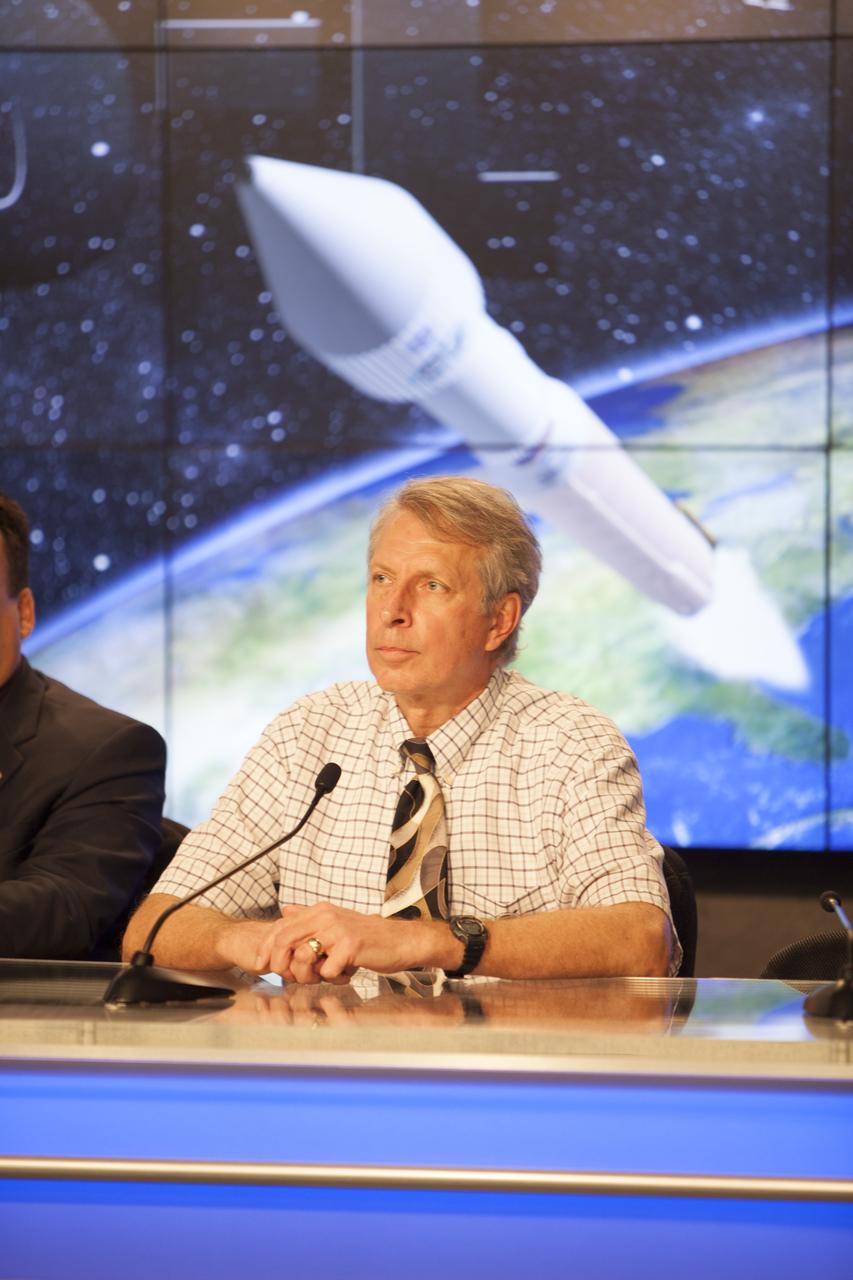
CAPE CANAVERAL, Fla. – During a news conference at NASA's Kennedy Space Center in Florida, agency and contractor officials discussed preparations for the launch of NASA's Tracking and Data Relay Satellite, or TDRS-L, spacecraft. Participants included Clay Flinn, launch weather officer for the 45th Weather Squadron at Cape Canaveral Air Force Station, Fla. The TDRS-L spacecraft is the second of three new satellites designed to ensure vital operational continuity for NASA by expanding the lifespan of the Tracking and Data Relay Satellite System TDRSS fleet, which consists of eight satellites in geosynchronous orbit. The spacecraft provide tracking, telemetry, command and high bandwidth data return services for numerous science and human exploration missions orbiting Earth. These include NASA's Hubble Space Telescope and the International Space Station. TDRS-L has a high-performance solar panel designed for more spacecraft power to meet the growing S-band communications requirements. TDRSS is one of NASA Space Communication and Navigation’s SCaN three networks providing space communications to NASA’s missions. For more information more about TDRS-L, visit: http://www.nasa.gov/tdrs To learn more about SCaN, visit: www.nasa.gov/scan Photo credit: NASA/Frankie Martin
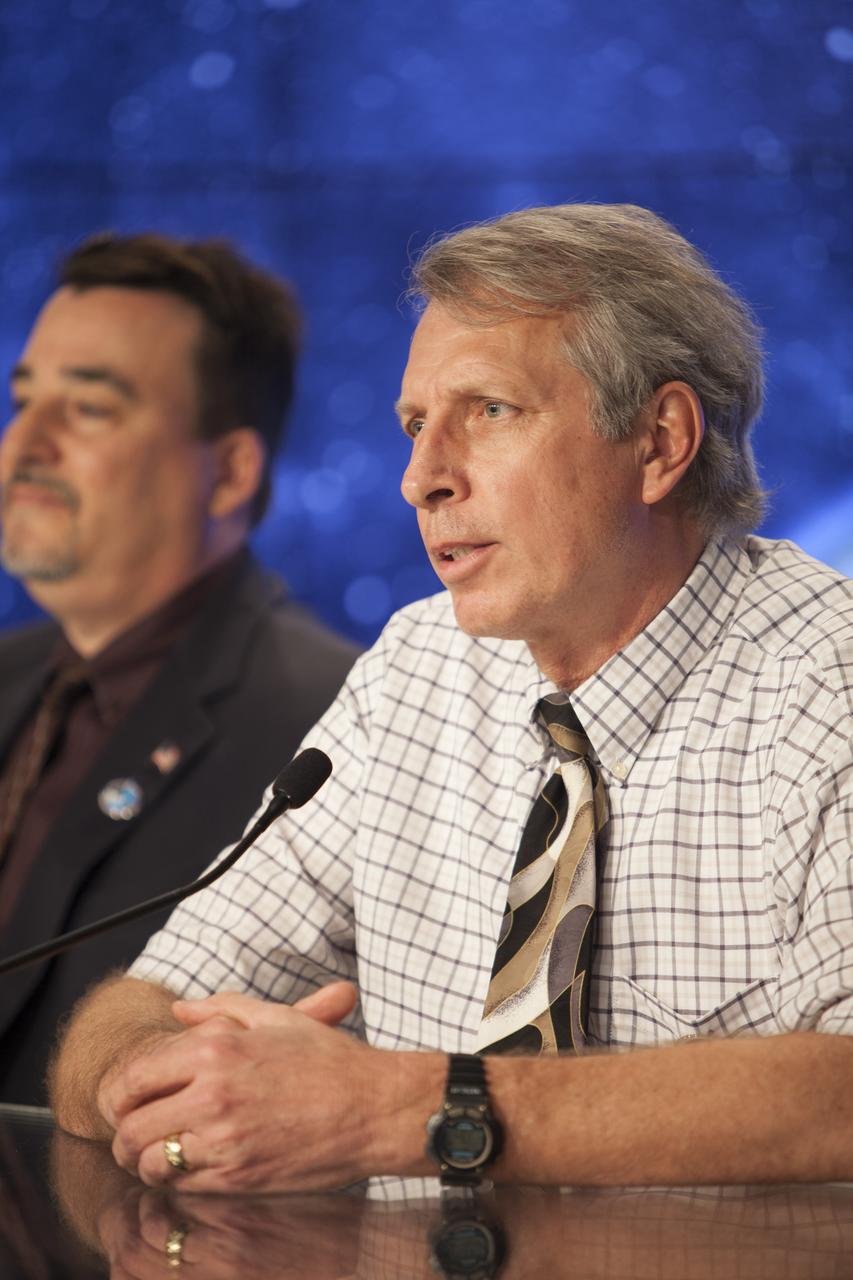
CAPE CANAVERAL, Fla. – During a news conference at NASA's Kennedy Space Center in Florida, agency and contractor officials discussed preparations for the launch of NASA's Tracking and Data Relay Satellite, or TDRS-L, spacecraft. Participants included Clay Flinn, launch weather officer for the 45th Weather Squadron at Cape Canaveral Air Force Station, Fla. Seated behind Flinn is Andy Kopito, Civil Space Programs director for Boeing Space & Intelligence Systems in El Segundo, Calif. The TDRS-L spacecraft is the second of three new satellites designed to ensure vital operational continuity for NASA by expanding the lifespan of the Tracking and Data Relay Satellite System TDRSS fleet, which consists of eight satellites in geosynchronous orbit. The spacecraft provide tracking, telemetry, command and high bandwidth data return services for numerous science and human exploration missions orbiting Earth. These include NASA's Hubble Space Telescope and the International Space Station. TDRS-L has a high-performance solar panel designed for more spacecraft power to meet the growing S-band communications requirements. TDRSS is one of NASA Space Communication and Navigation’s SCaN three networks providing space communications to NASA’s missions. For more information more about TDRS-L, visit: http://www.nasa.gov/tdrs To learn more about SCaN, visit: www.nasa.gov/scan Photo credit: NASA/Frankie Martin
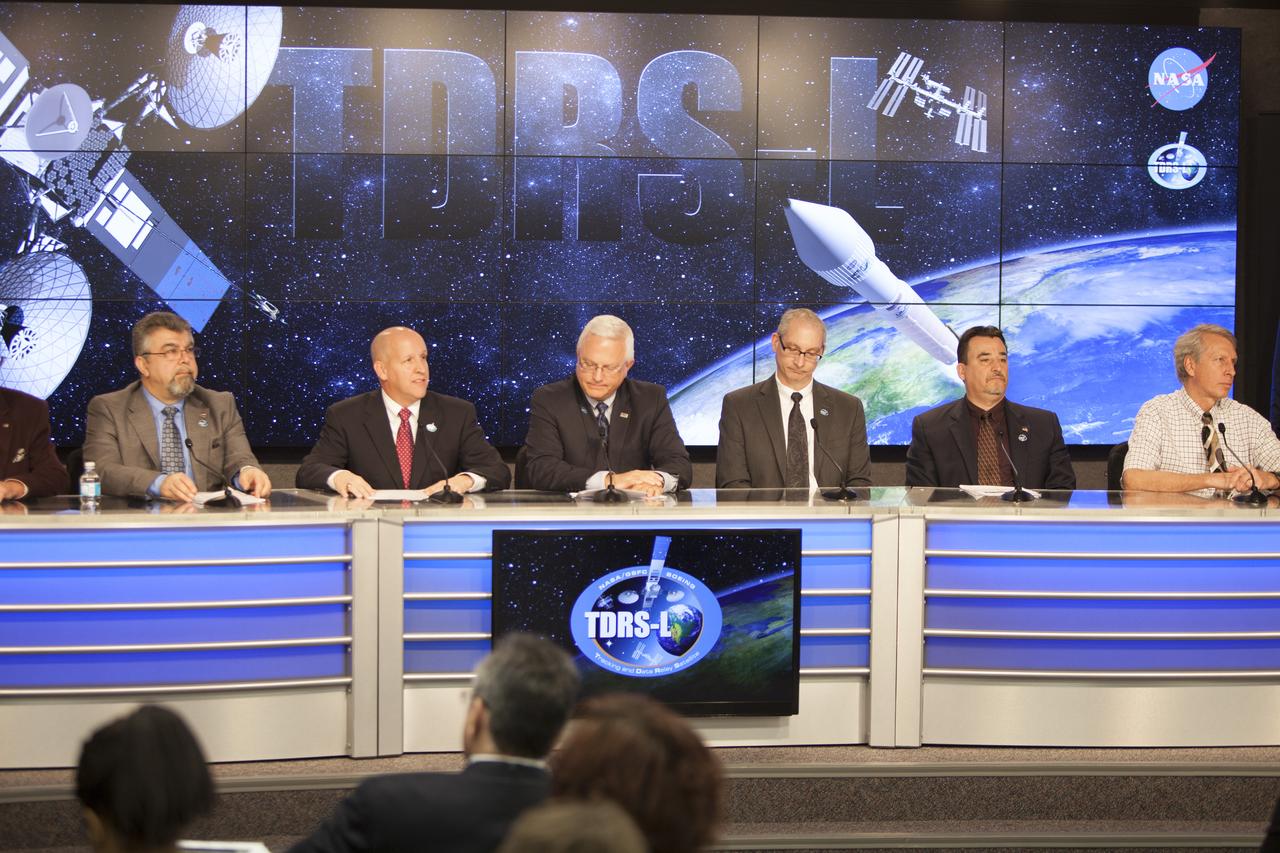
CAPE CANAVERAL, Fla. –During a news conference at NASA's Kennedy Space Center in Florida, agency and contractor officials discussed preparations for the launch of NASA's Tracking and Data Relay Satellite, or TDRS-L, spacecraft. Participating in the briefing, from the left, are Badri Younes, deputy associate administrator, Space Communications and Navigation SCaN NASA Human Exploration and Operations Mission Directorate at NASA Headquarters in Washington D.C., Tim Dunn, NASA launch director at Kennedy, Vernon Thorp, program manager for NASA Missions with United Launch Alliance in Denver, Colo., Jeffrey Gramling, NASA's TDRS-L project manager at the Goddard Space Flight Center in Greenbelt, Md., Andy Kopito, Civil Space Programs director for Boeing Space & Intelligence Systems in El Segundo, Calif., and Clay Flinn, launch weather officer for the 45th Weather Squadron at Cape Canaveral Air Force Station, Fla. The TDRS-L spacecraft is the second of three new satellites designed to ensure vital operational continuity for NASA by expanding the lifespan of the Tracking and Data Relay Satellite System TDRSS fleet, which consists of eight satellites in geosynchronous orbit. The spacecraft provide tracking, telemetry, command and high bandwidth data return services for numerous science and human exploration missions orbiting Earth. These include NASA's Hubble Space Telescope and the International Space Station. TDRS-L has a high-performance solar panel designed for more spacecraft power to meet the growing S-band communications requirements. TDRSS is one of NASA Space Communication and Navigation’s SCaN three networks providing space communications to NASA’s missions. For more information more about TDRS-L, visit: http://www.nasa.gov/tdrs To learn more about SCaN, visit: www.nasa.gov/scan Photo credit: NASA/Frankie Martin