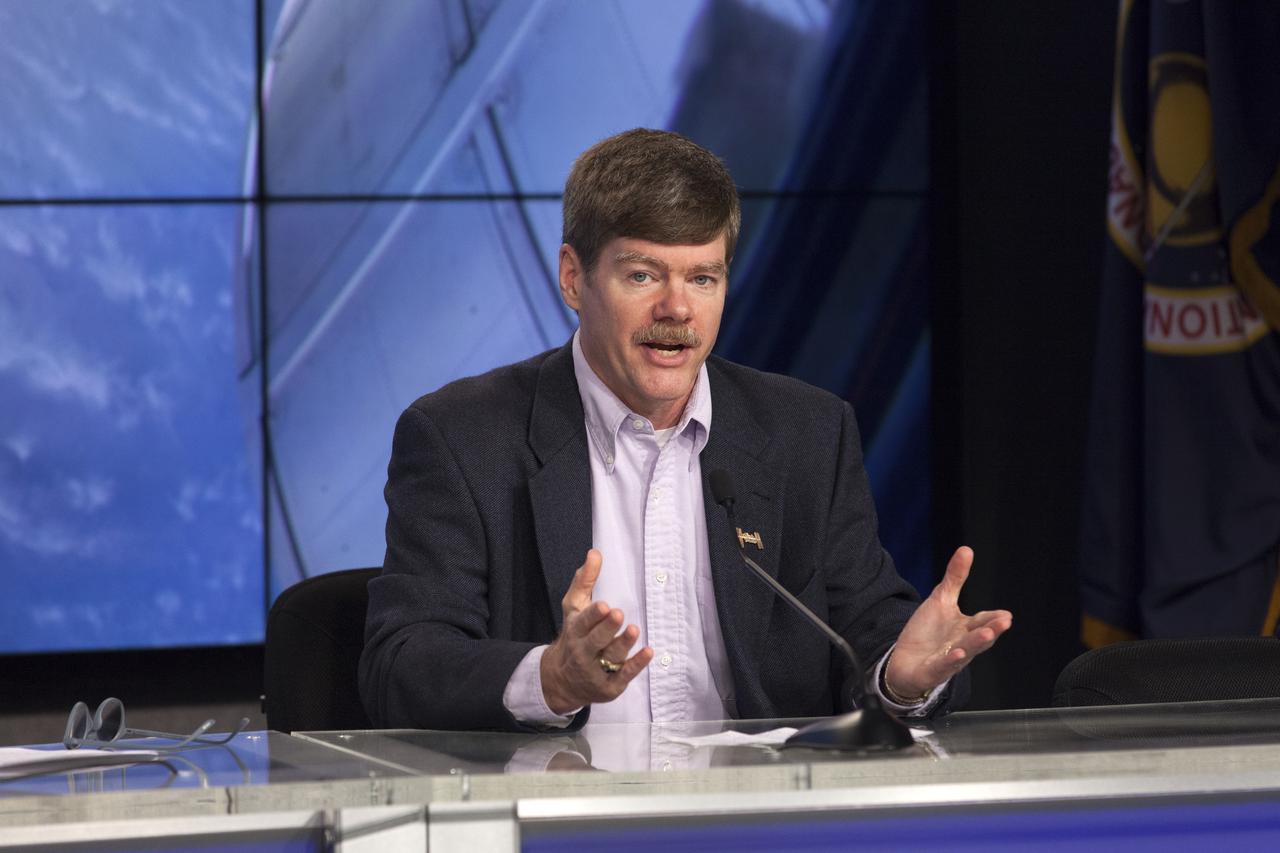
In the Kennedy Space Center’s Press Site auditorium, Pete Hasbrook, associate program scientist for the International Space Station Program, speaks to members of the media during a prelaunch news conference for the SpaceX CRS-12 commercial resupply services mission to the International Space Station. A Dragon spacecraft is scheduled to be launched from Kennedy’s Launch Complex 39A on Aug. 14 atop a SpaceX Falcon 9 rocket on the company's 12th Commercial Resupply Services mission to the space station.
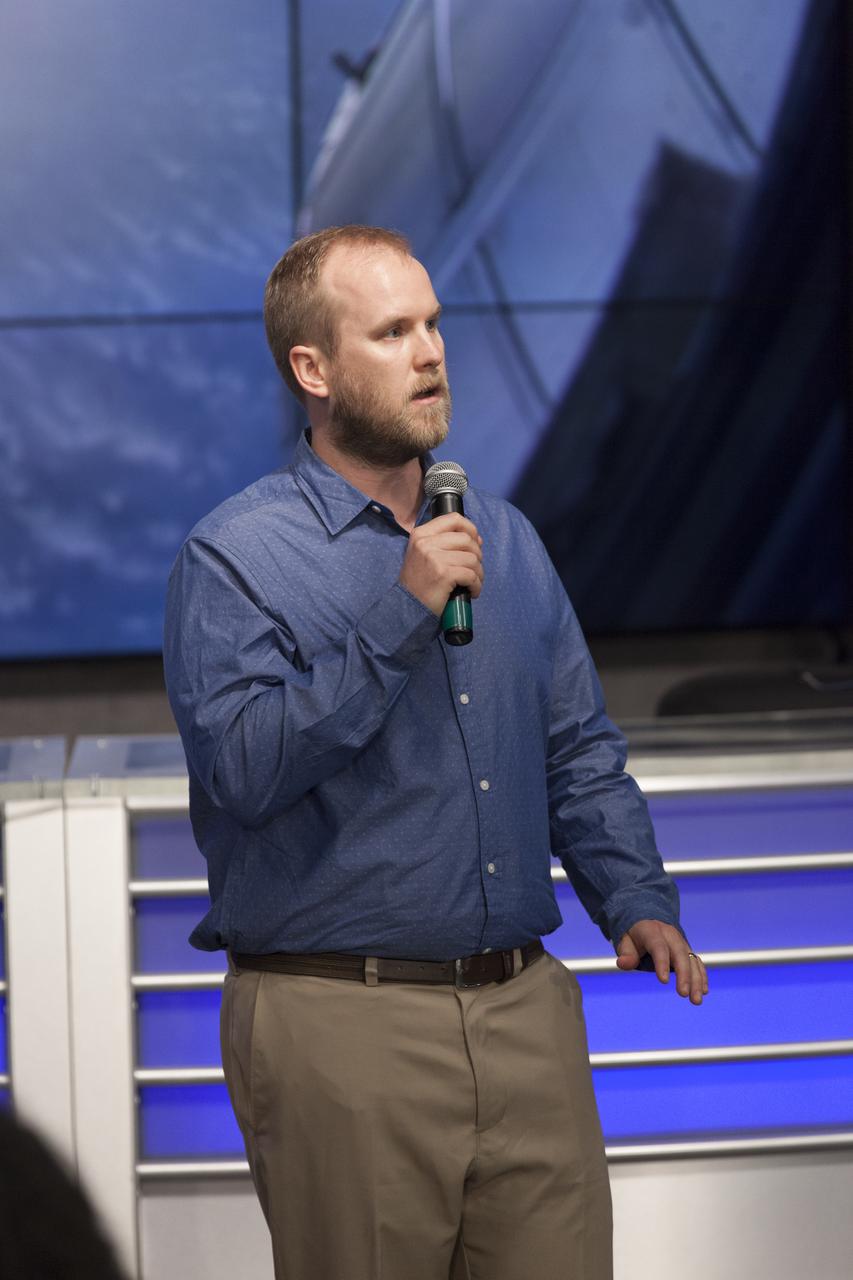
Jacob Smith of the University of Maryland speaks to members of social media in the Kennedy Space Center’s Press Site auditorium. He is operations lead for the International Space Station Cosmic Ray Energetics and Mass, or ISS-CREAM, investigation. The briefing focused on research planned for launch to the International Space Station. The scientific materials and supplies will be aboard a Dragon spacecraft scheduled for launch from Kennedy’s Launch Complex 39A on Aug. 14 atop a SpaceX Falcon 9 rocket on the company's 12th Commercial Resupply Services mission to the space station.
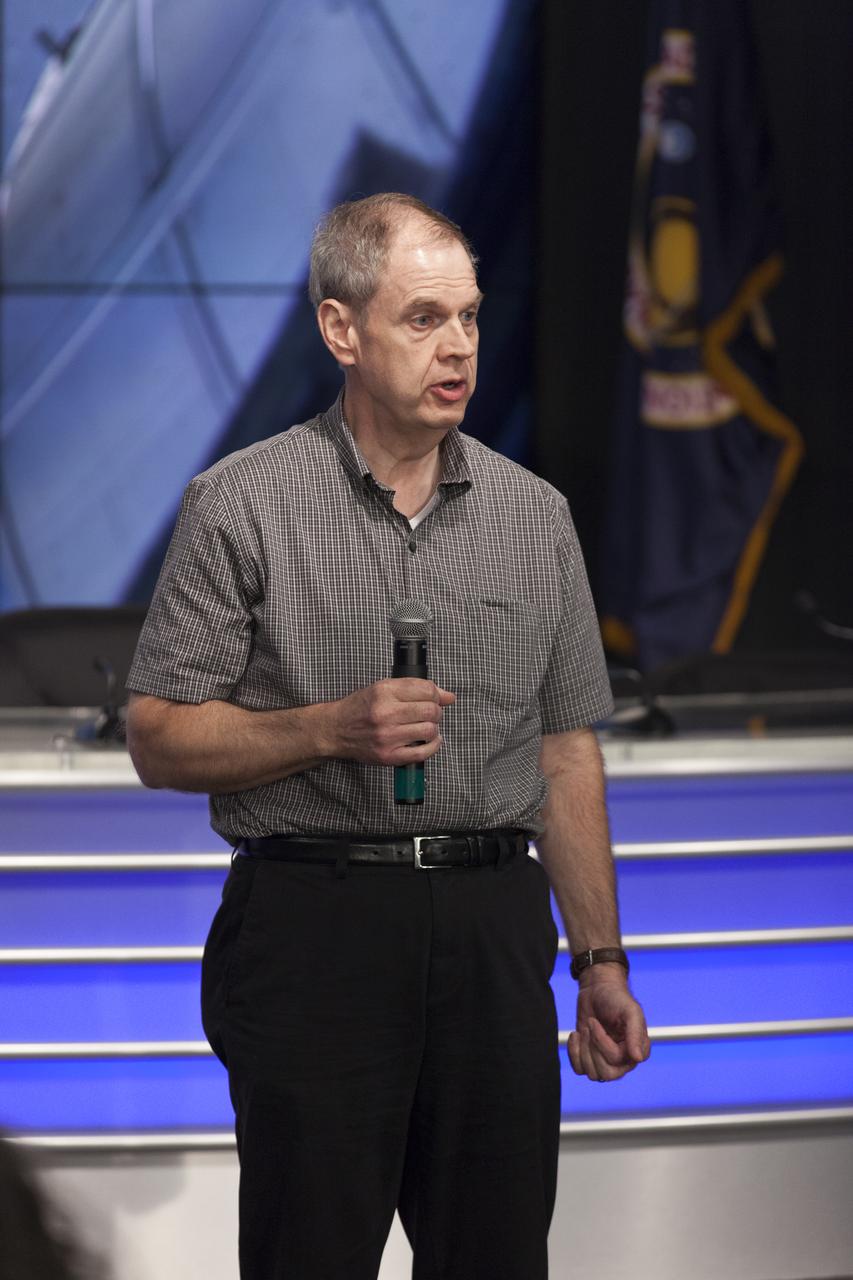
Chip Hardy, Kestrel Eye program manager for the U.S. Army Space and Missile Defense Command, speaks to members of social media in the Kennedy Space Center’s Press Site auditorium. The briefing focused on research planned for launch to the International Space Station. The scientific materials and supplies will be aboard a Dragon spacecraft scheduled for launch from Kennedy’s Launch Complex 39A on Aug. 14 atop a SpaceX Falcon 9 rocket on the company's 12th Commercial Resupply Services mission to the space station.
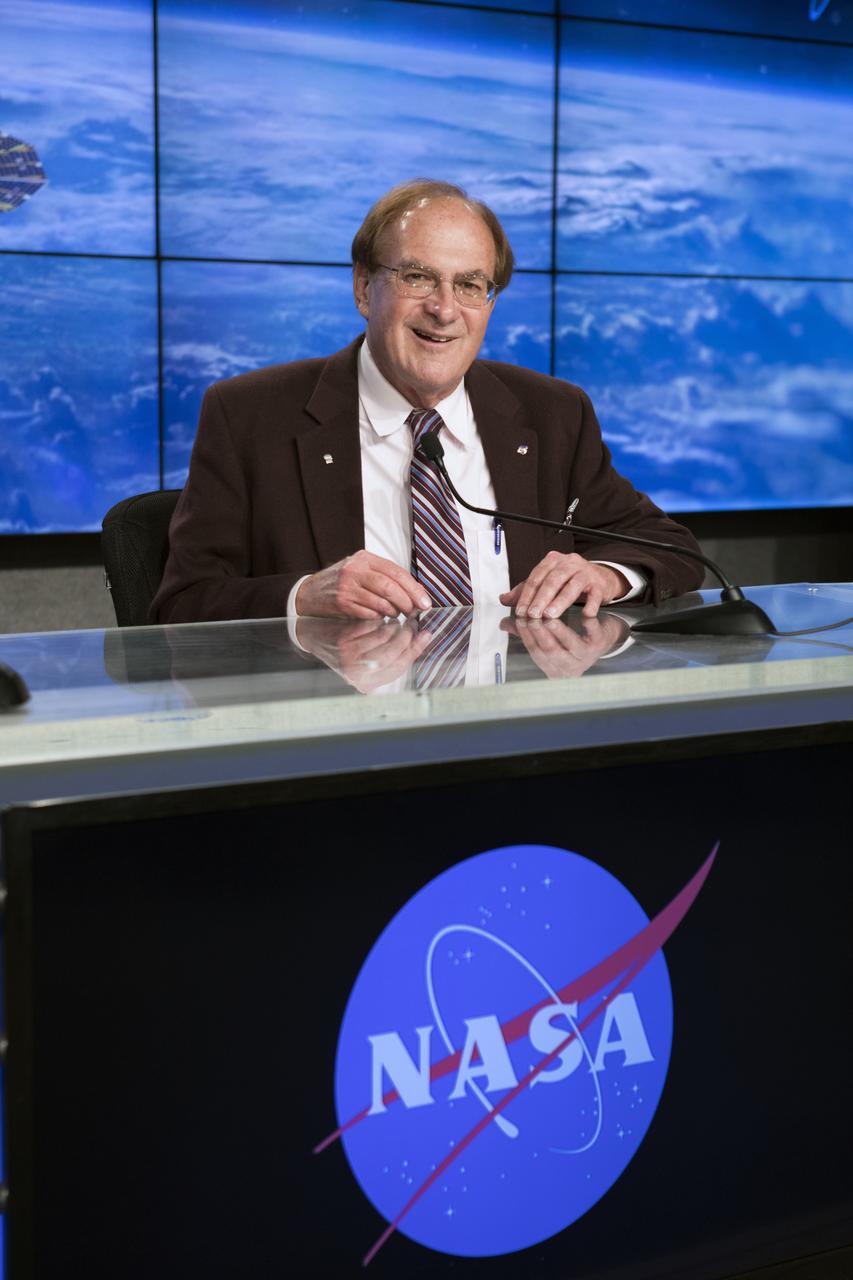
Members of the news media attend a press conference at NASA's Kennedy Space Center in Florida, after the launch of the Orbital ATK Cygnus pressurized cargo module atop a United Launch Alliance Atlas V rocket from Space Launch Complex 41 at Cape Canaveral Air Force Station. It was Orbital ATK's seventh commercial resupply services mission to the International Space Station. Liftoff was at 11:11 a.m. EDT. Moderating the press conference is George Diller, NASA Kennedy Communications.
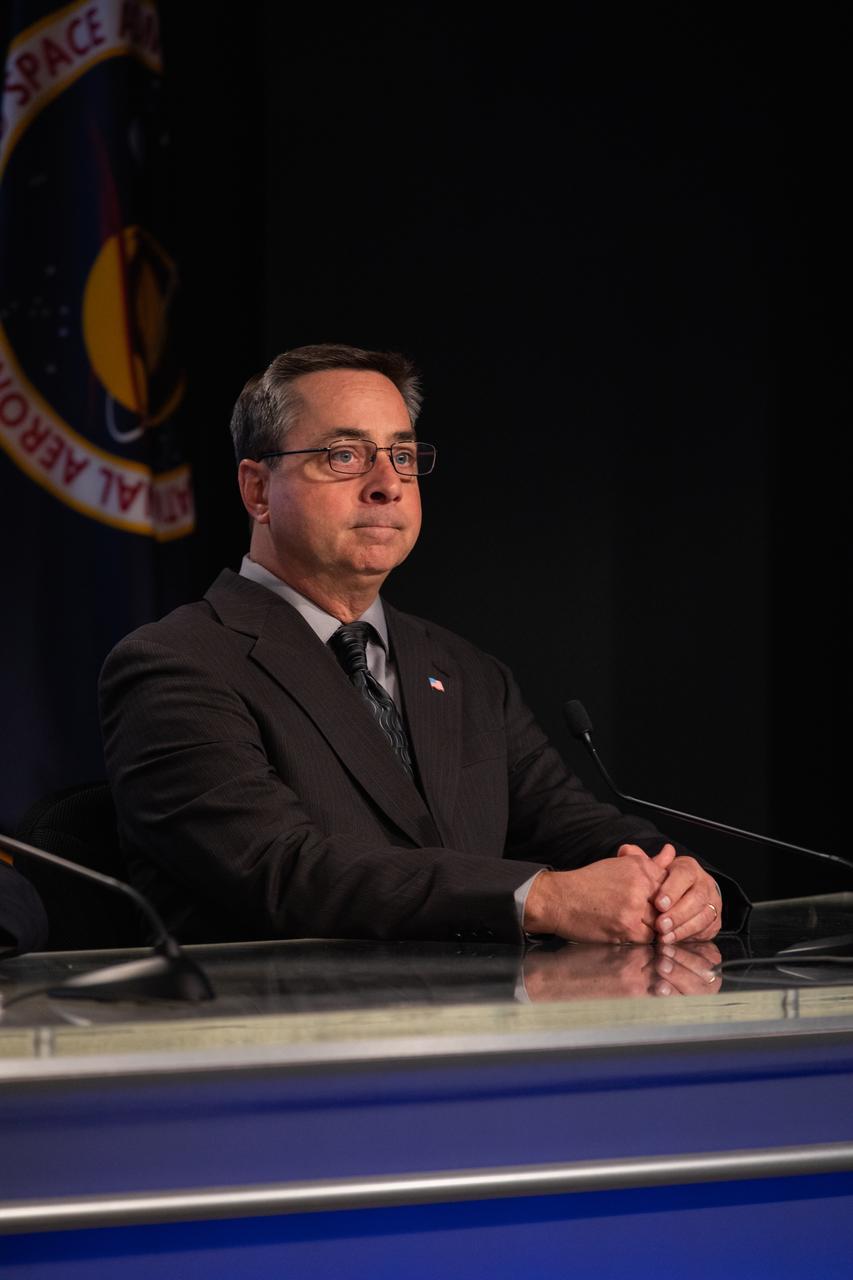
Mike McAleenan, launch weather officer with the U.S. Air Force 45th Space Wing, participates in a prelaunch news conference for SpaceX’s 20th Commercial Resupply Services (CRS-20) mission to the International Space Station at NASA’s Kennedy Space Center in Florida on March 6, 2020. The company’s Falcon 9 rocket and cargo Dragon spacecraft are scheduled to lift off from Cape Canaveral Air Force Station’s Space Launch Complex 40 at 11:50 p.m. EST on March 6, 2020.

Chunhui Xu, associate professor at Emory University School of Medicine and principal investigator for the Generation of Cardiomyocytes from Induced Pluripotent Stem Cells experiment, addresses NASA Social participants during a What’s on Board science briefing at the agency’s Kennedy Space Center in Florida on March 5, 2020. The briefing provided a closer look at some of the payloads launching on SpaceX’s 20th Commercial Resupply Services (CRS-20) mission to the International Space Station. The company’s Falcon 9 rocket is scheduled to lift off from Cape Canaveral Air Force Station’s Space Launch Complex 40 at 11:50 p.m. EST on March 6, 2020.
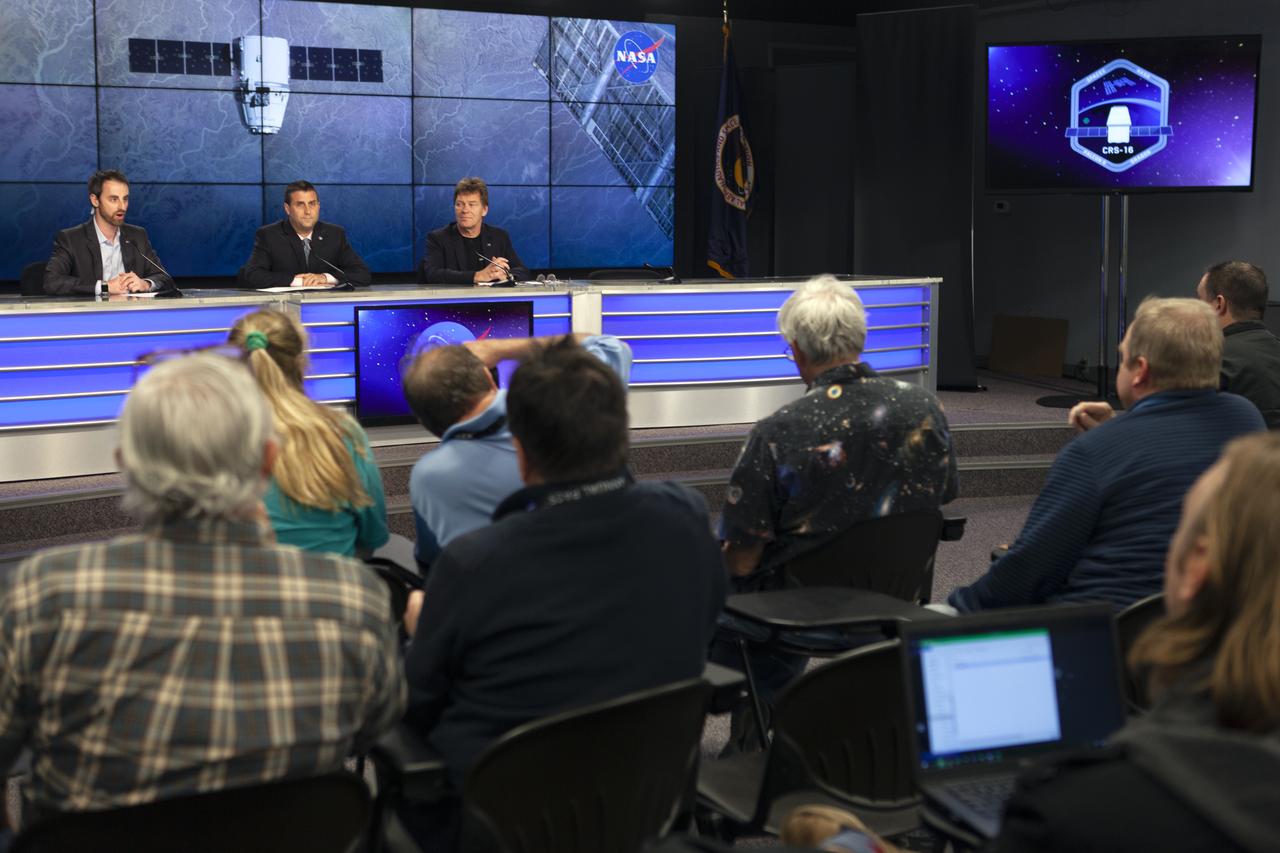
In the Press Site auditorium of NASA's Kennedy Space Center in Florida, from left, Joshua Santora of NASA Communications, Joel Montalbano, deputy International Space Station program manager at NASA's Johnson Space Center in Houston, and Hans Koenigsmann, vice president of Build and Flight Reliability for SpaceX, speak to media at a post-launch news conference following the liftoff of SpaceX CRS-16. The flight is a commercial resupply services mission to the International Space Station. SpaceX CRS-16 lifted off atop a Falcon 9 rocket from Space Launch Complex 40 at Cape Canaveral Air Force Station at 1:16 p.m. EST, Dec. 5, 2018, with supplies and equipment and new science experiments for technology research.
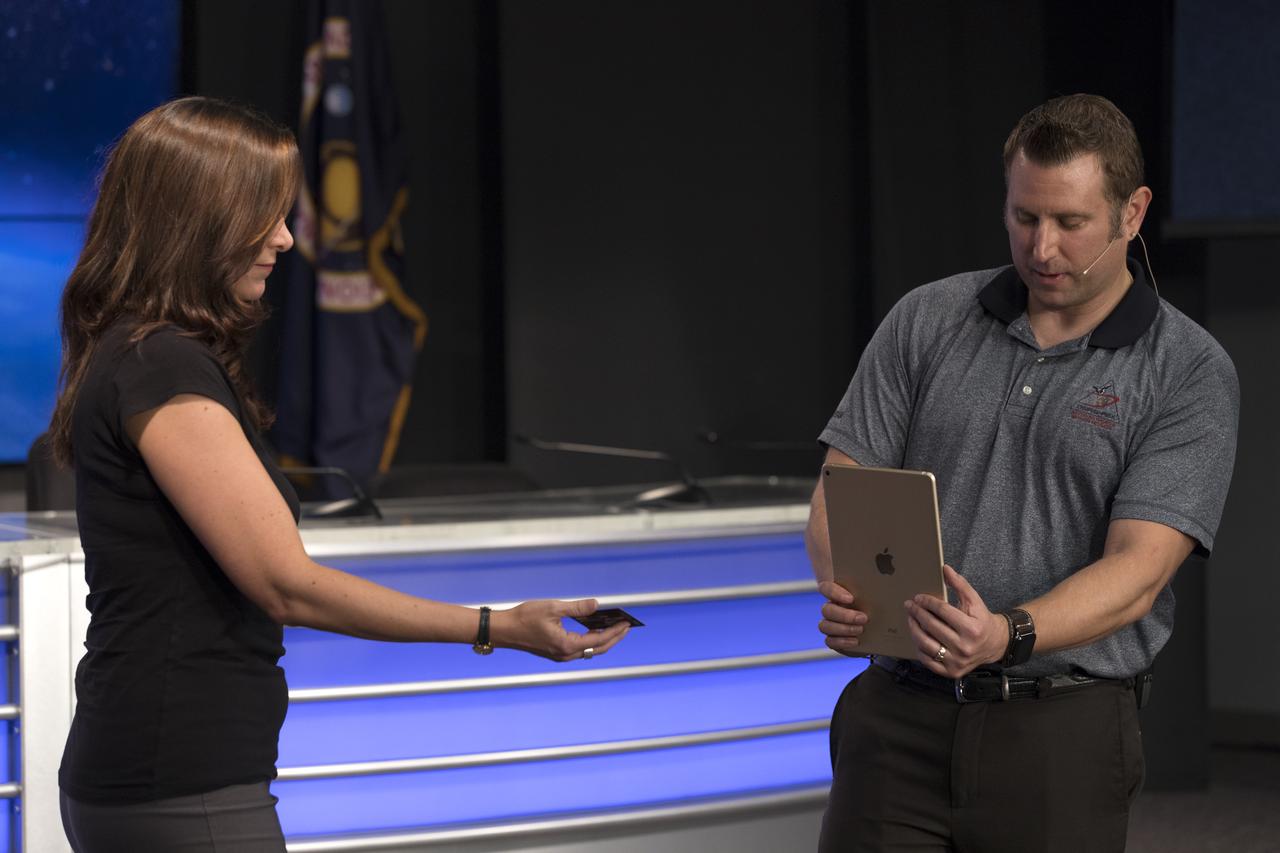
Skip Owen of NASA Launch Services, right, is demonstrating an app that can run on a mobile device such as a smartphone or tablet computer. The app is depicting the launch of the TDRS-M satellite on an Atlas V rocket. The demonstration took place during a briefing focused on preparations to launch NASA's Tracking and Data Relay Satellite, TDRS-M. The latest spacecraft destined for the agency's constellation of communications satellites, TDRS-M will allow nearly continuous contact with orbiting spacecraft ranging from the International Space Station and Hubble Space Telescope to the array of scientific observatories. Liftoff atop a United Launch Alliance Atlas V rocket is scheduled to take place from Space Launch Complex 41 at Cape Canaveral Air Force Station at 8:03 a.m. EDT Aug. 18.
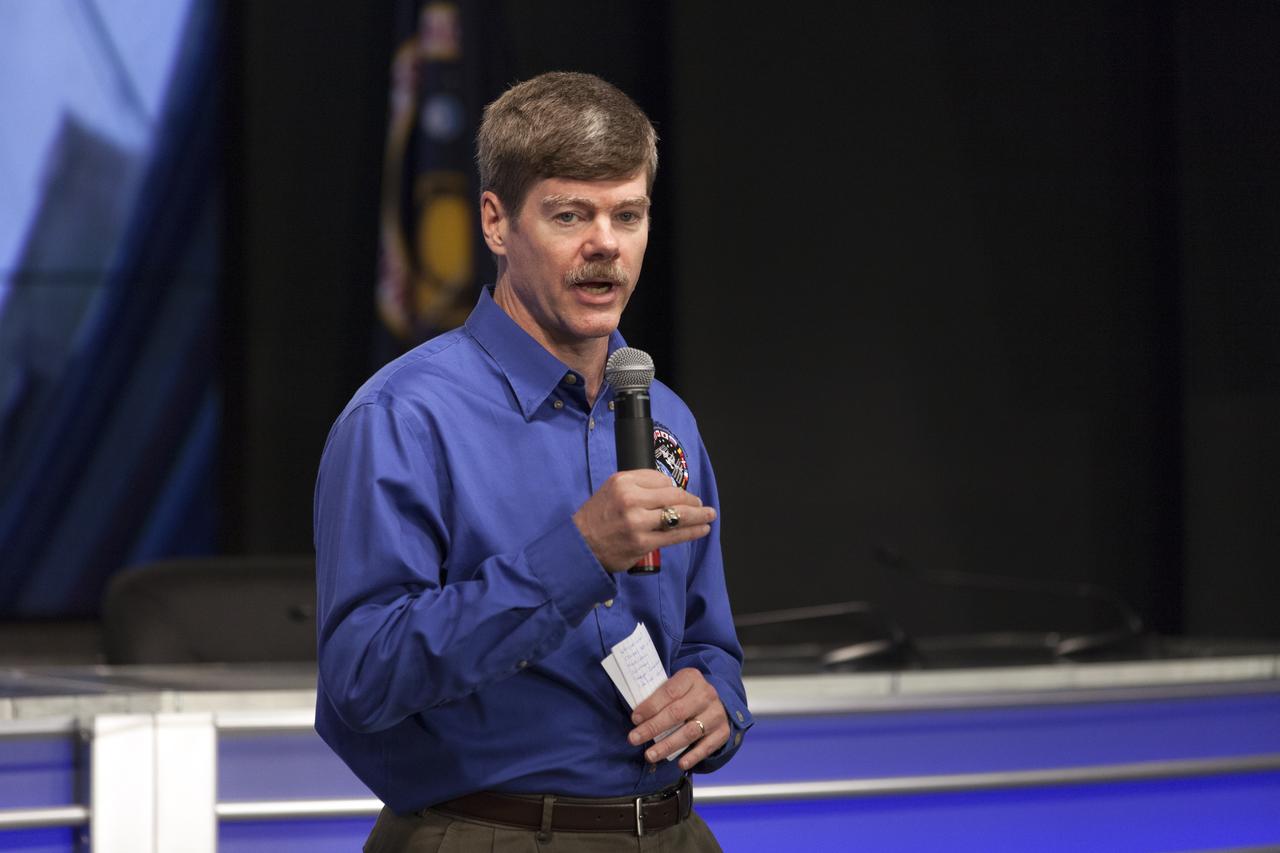
Pete Hasbrook, associate program scientist for the International Space Station Program, speaks to members of social media in the Kennedy Space Center’s Press Site auditorium. The briefing focused on research planned for launch to the International Space Station. The scientific materials and supplies will be aboard a Dragon spacecraft scheduled for launch from Kennedy’s Launch Complex 39A on Aug. 14 atop a SpaceX Falcon 9 rocket on the company's 12th Commercial Resupply Services mission to the space station.
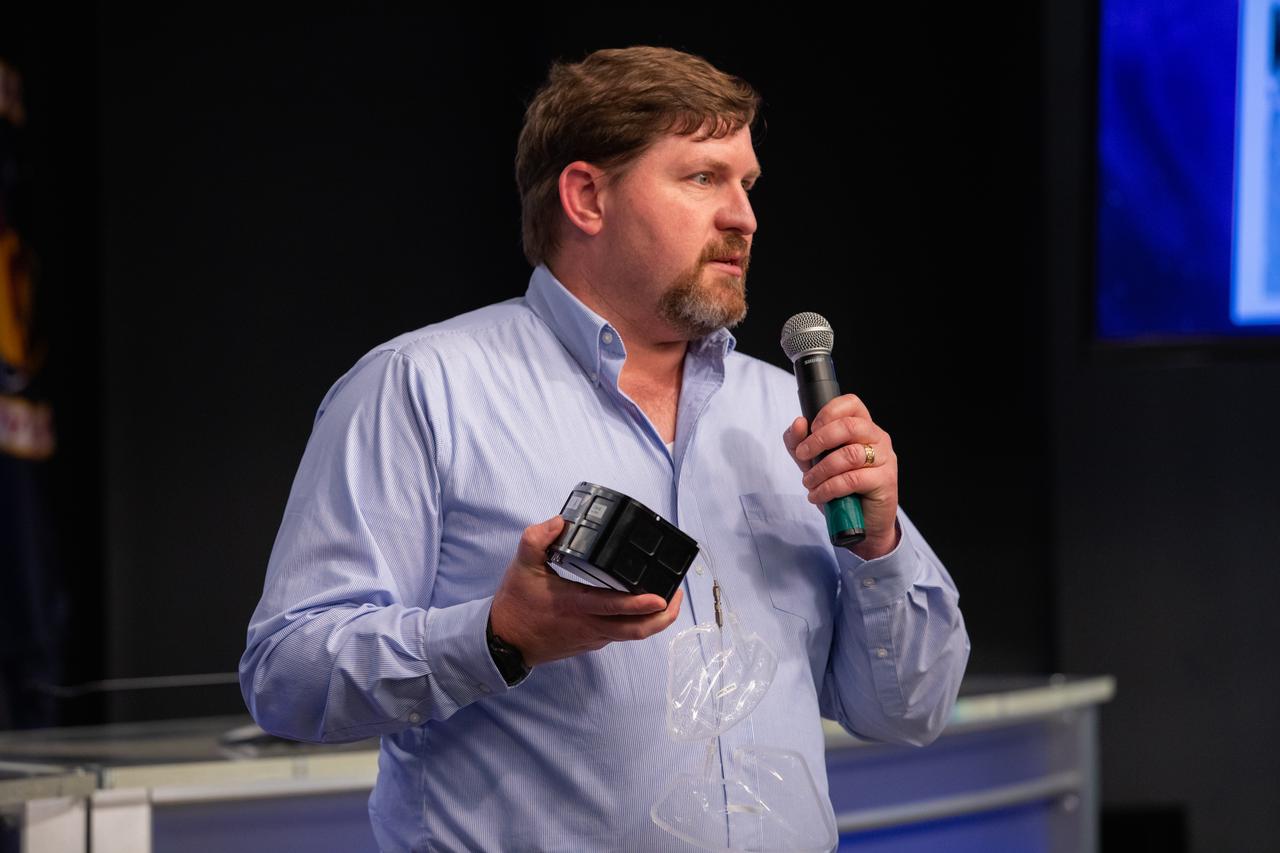
Gene Boland, chief scientist of Techshot, addresses NASA Social participants during a What’s on Board science briefing at the agency’s Kennedy Space Center in Florida on March 5, 2020. The briefing provided a closer look at some of the payloads launching on SpaceX’s 20th Commercial Resupply Services (CRS-20) mission to the International Space Station. The company’s Falcon 9 rocket is scheduled to lift off from Cape Canaveral Air Force Station’s Space Launch Complex 40 at 11:50 p.m. EST on March 6, 2020.

Members of the news media attend a press conference at NASA's Kennedy Space Center in Florida, after the launch of the Orbital ATK Cygnus pressurized cargo module atop a United Launch Alliance Atlas V rocket from Space Launch Complex 41 at Cape Canaveral Air Force Station. It was Orbital ATK's seventh commercial resupply services mission to the International Space Station. Liftoff was at 11:11 a.m. EDT. Moderating the press conference is George Diller, NASA Kennedy Communications.
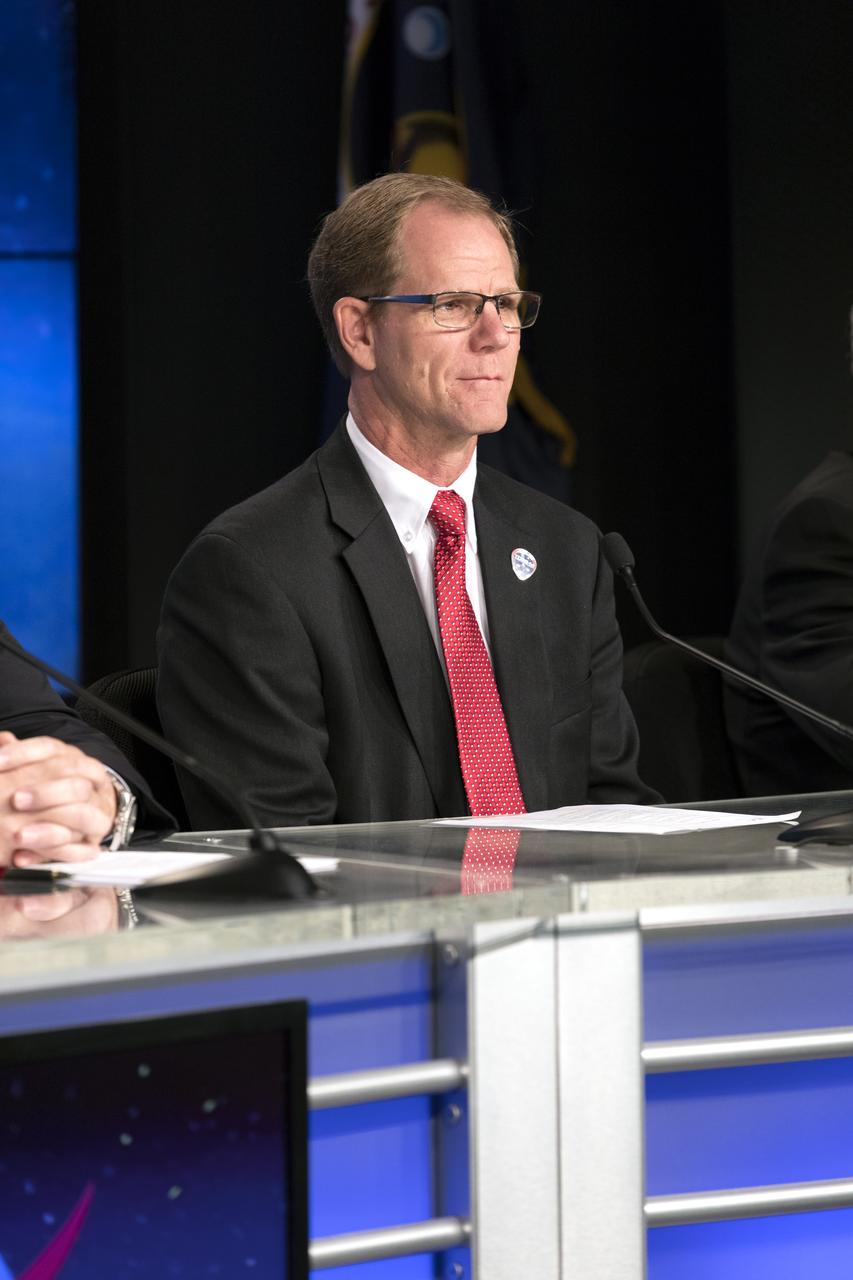
In the Kennedy Space Center's Press Site auditorium, Scott Messer, United Launch Alliance program manager for NASA missions, speaks to members of the media at a prelaunch news conference for NASA's Tracking and Data Relay Satellite, TDRS-M. It is the latest spacecraft destined for the agency's constellation of communications satellites that allows nearly continuous contact with orbiting spacecraft ranging from the International Space Station and Hubble Space Telescope to the array of scientific observatories. Liftoff atop a United Launch Alliance Atlas V rocket is scheduled to take place from Space Launch Complex 41 at Cape Canaveral Air Force Station at 8:03 a.m. EDT Aug. 18.
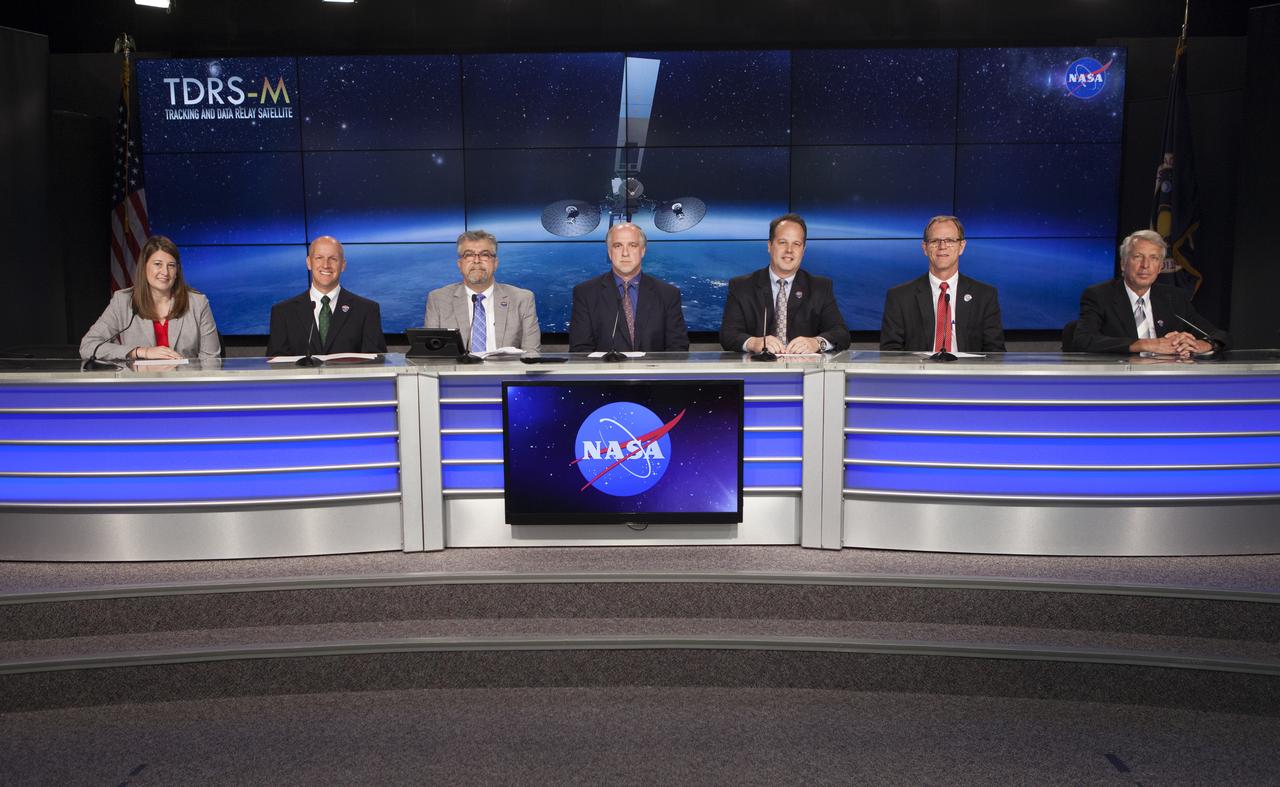
In the Kennedy Space Center's Press Site auditorium, NASA and industry leaders speak to members of the media at a prelaunch news conference for NASA's Tracking and Data Relay Satellite, TDRS-M. Participants from left are: Kathryn Hambleton of NASA Communications, Tim Dunn, launch director at NASA Kennedy, Badri Younes, deputy associate administrator for Space Communications and Navigation at NASA Headquarters in Washington, Dave Littmann, project manager for TDRS-M at NASA’s Goddard Space Flight Center in Greenbelt, Maryland, James Wilson III, Boeing program manager for NASA/Civil Space Programs, Scott Messer, United Launch Alliance program manager for NASA missions, and Clay Flinn, launch weather officer with the 45th Space Wing at Cape Canaveral Air Force Station. TDRS-M is the latest spacecraft destined for the agency's constellation of communications satellites that allows nearly continuous contact with orbiting spacecraft ranging from the International Space Station and Hubble Space Telescope to the array of scientific observatories. Liftoff atop a United Launch Alliance Atlas V rocket is scheduled to take place from Space Launch Complex 41 at Cape Canaveral Air Force Station at 8:03 a.m. EDT Aug. 18.
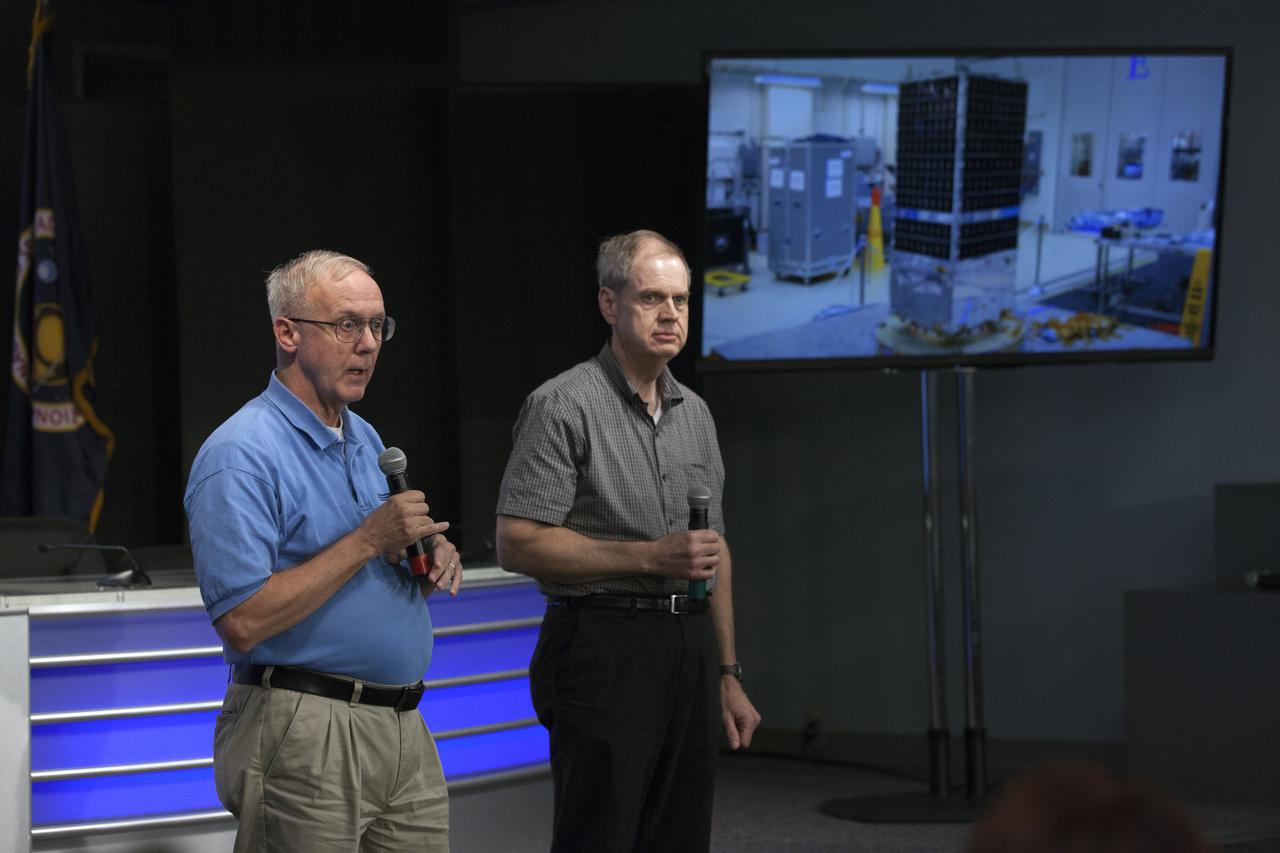
John London, an engineer for the U.S. Army Space and Missile Defense Command, left, and Chip Hardy, Kestrel Eye program manager for the U.S. Army Space and Missile Defense Command, speak to members of social media in the Kennedy Space Center’s Press Site auditorium. The briefing focused on research planned for launch to the International Space Station. The scientific materials and supplies will be aboard a Dragon spacecraft scheduled for launch from Kennedy’s Launch Complex 39A on Aug. 14 atop a SpaceX Falcon 9 rocket on the company's 12th Commercial Resupply Services mission to the space station.
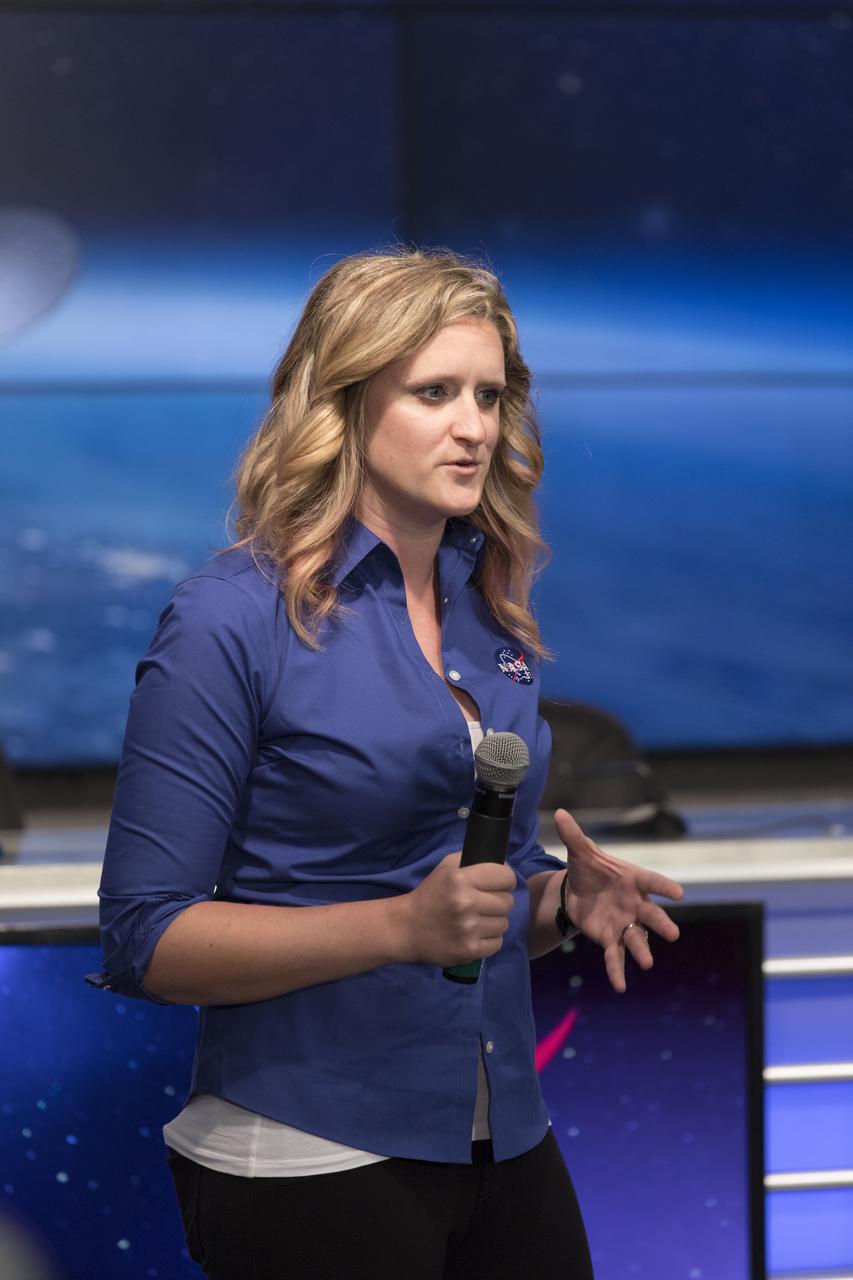
Amber Jacobson of the NASA TDRS Social Media Team speaks to members of social media in the Kennedy Space Center’s Press Site auditorium. The briefing focused on preparations to launch NASA's Tracking and Data Relay Satellite, TDRS-M. The latest spacecraft destined for the agency's constellation of communications satellites, TDRS-M will allow nearly continuous contact with orbiting spacecraft ranging from the International Space Station and Hubble Space Telescope to the array of scientific observatories. Liftoff atop a United Launch Alliance Atlas V rocket is scheduled to take place from Space Launch Complex 41 at Cape Canaveral Air Force Station at 8:03 a.m. EDT Aug. 18.
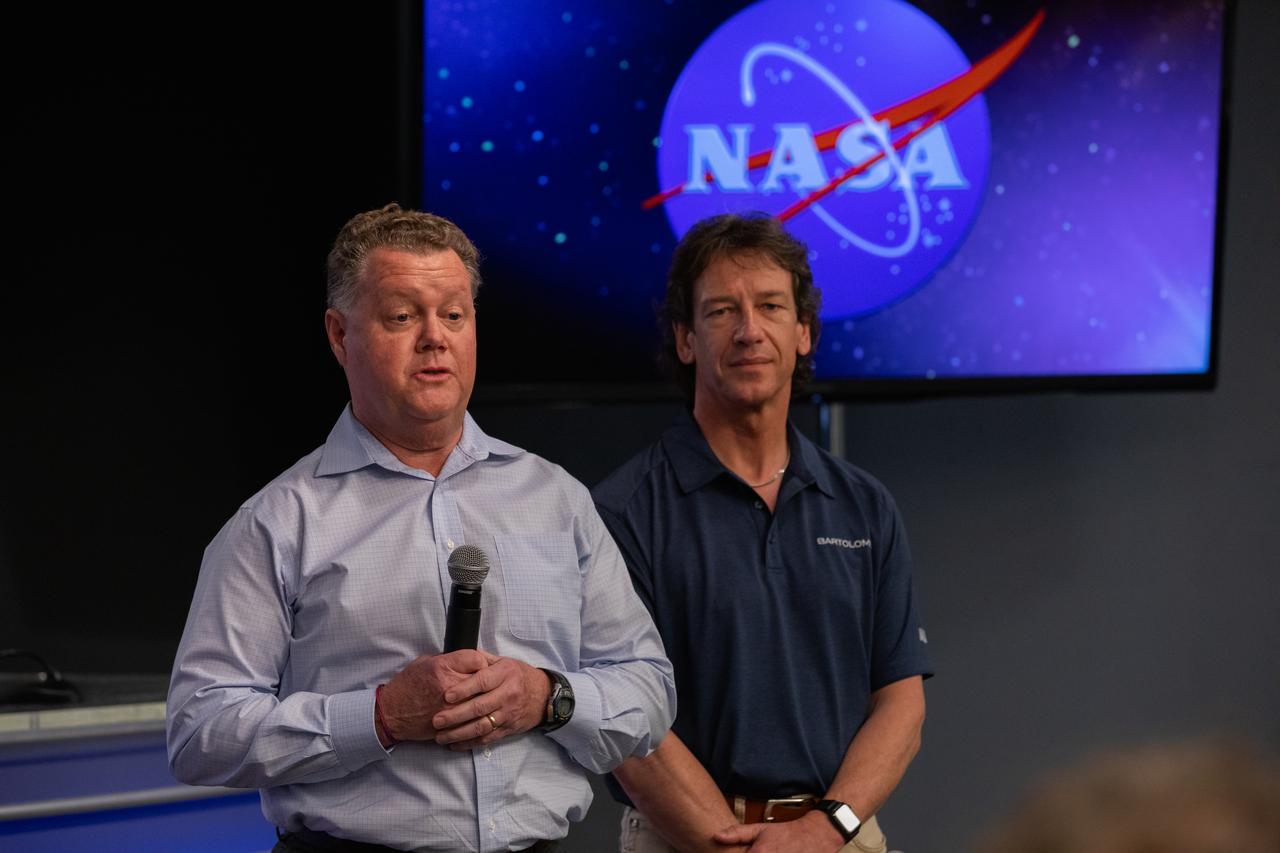
Bill Corely, left, director of business development for Airbus Defence and Space, and Andreas Schütte, Bartolomeo project manager, address NASA Social participants during a What’s on Board science briefing at the agency’s Kennedy Space Center in Florida on March 5, 2020. The briefing provided a closer look at some of the payloads launching on SpaceX’s 20th Commercial Resupply Services (CRS-20) mission to the International Space Station. The company’s Falcon 9 rocket is scheduled to lift off from Cape Canaveral Air Force Station’s Space Launch Complex 40 at 11:50 p.m. EST on March 6, 2020.
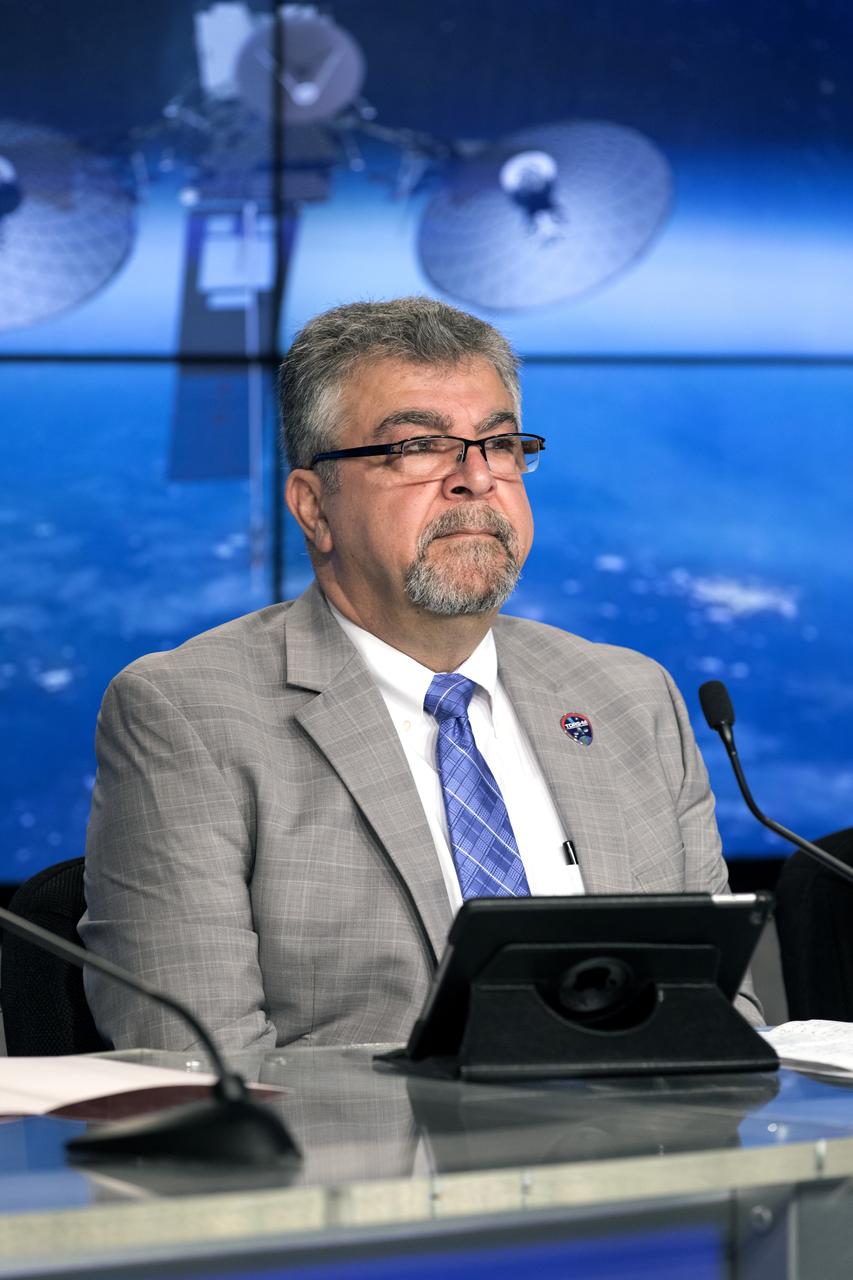
In the Kennedy Space Center's Press Site auditorium, Badri Younes, deputy associate administrator for Space Communications and Navigation at NASA Headquarters in Washington, speaks to members of the media at a prelaunch news conference for NASA's Tracking and Data Relay Satellite, TDRS-M. It is the latest spacecraft destined for the agency's constellation of communications satellites that allows nearly continuous contact with orbiting spacecraft ranging from the International Space Station and Hubble Space Telescope to the array of scientific observatories. Liftoff atop a United Launch Alliance Atlas V rocket is scheduled to take place from Space Launch Complex 41 at Cape Canaveral Air Force Station at 8:03 a.m. EDT Aug. 18.
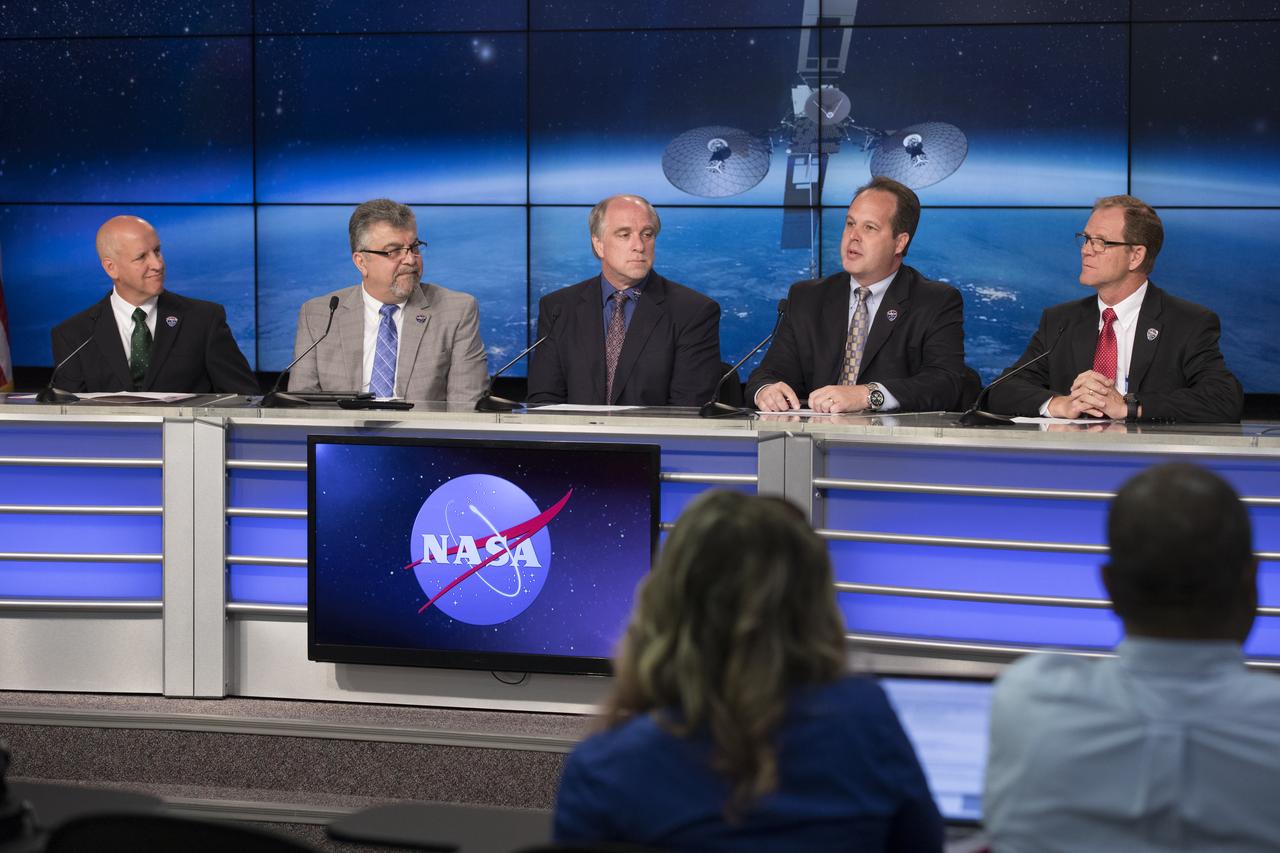
In the Kennedy Space Center's Press Site auditorium, NASA and industry leaders speak to members of the media at a prelaunch news conference for NASA's Tracking and Data Relay Satellite, TDRS-M. Participants from left are: Tim Dunn, launch director at NASA Kennedy, Badri Younes, deputy associate administrator for Space Communications and Navigation at NASA Headquarters in Washington, Dave Littmann, project manager for TDRS-M at NASA’s Goddard Space Flight Center in Greenbelt, Maryland, James Wilson III, Boeing program manager for NASA/Civil Space Programs, and Scott Messer, United Launch Alliance program manager for NASA missions. TDRS-M is the latest spacecraft destined for the agency's constellation of communications satellites that allows nearly continuous contact with orbiting spacecraft ranging from the International Space Station and Hubble Space Telescope to the array of scientific observatories. Liftoff atop a United Launch Alliance Atlas V rocket is scheduled to take place from Space Launch Complex 41 at Cape Canaveral Air Force Station at 8:03 a.m. EDT Aug. 18.
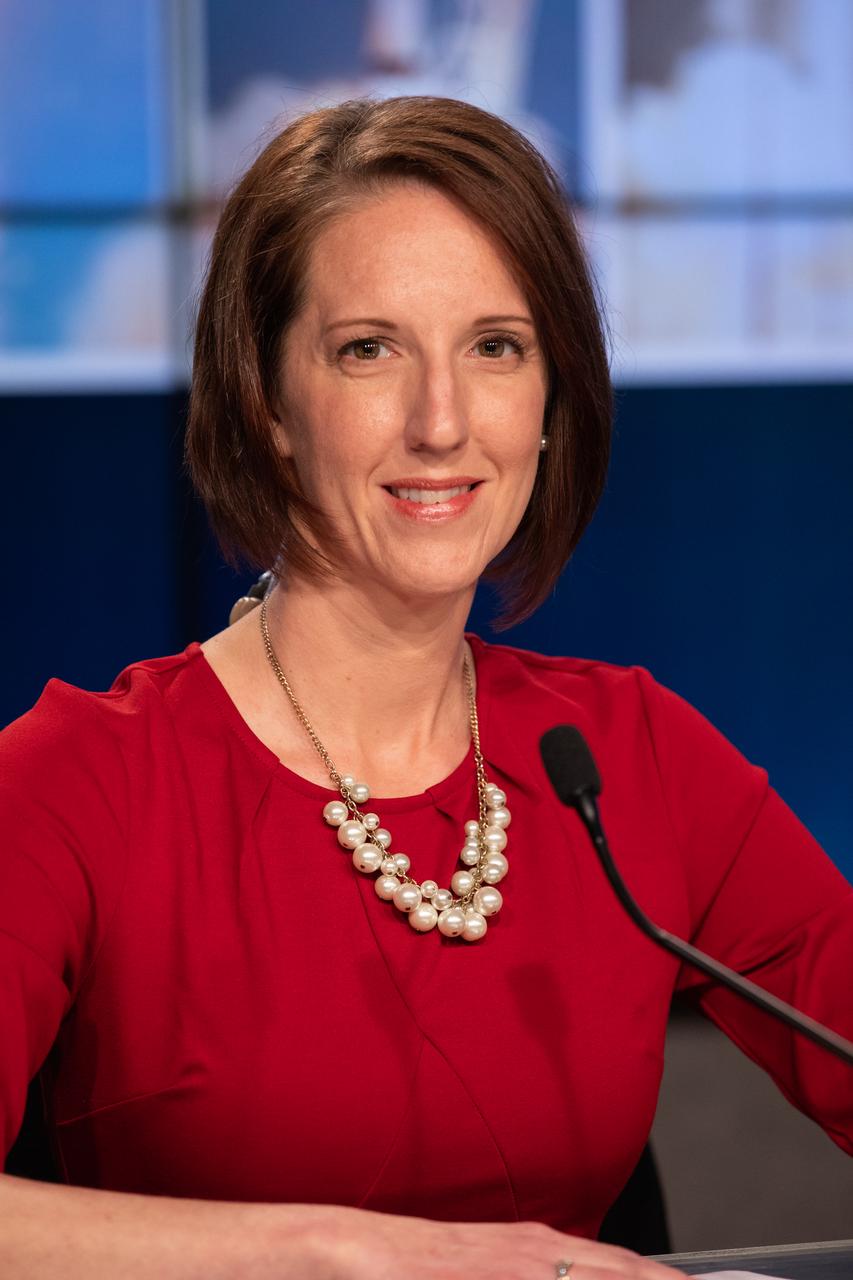
Heather Scott of NASA Communications moderates a prelaunch news conference for SpaceX’s 20th Commercial Resupply Services (CRS-20) mission to the International Space Station at the agency’s Kennedy Space Center in Florida on March 6, 2020. The company’s Falcon 9 rocket and cargo Dragon spacecraft are scheduled to lift off from Cape Canaveral Air Force Station’s Space Launch Complex 40 at 11:50 p.m. EST on March 6, 2020.
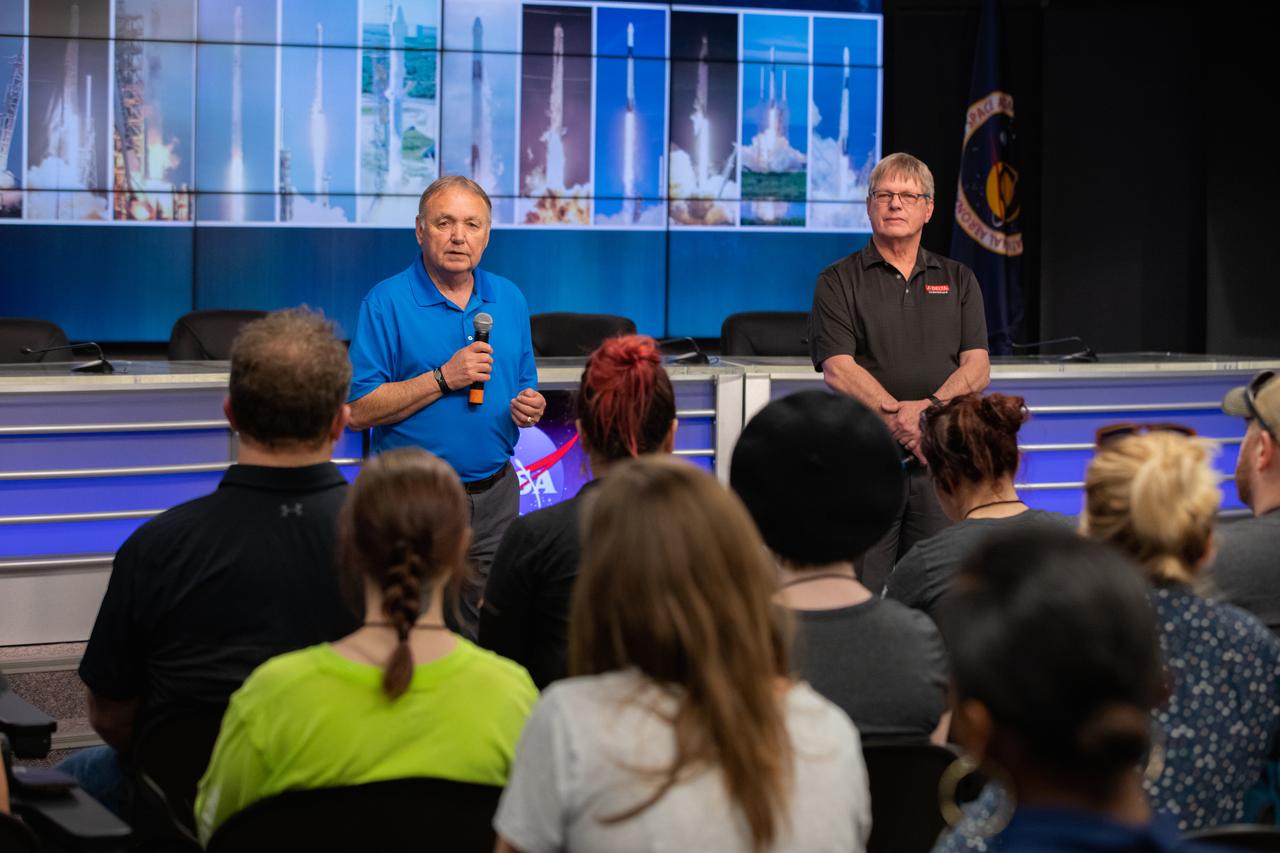
Paul Patton, left, senior manager, front end innovation and regulatory for Delta Faucet, and Garry Marty, principal product engineer for Delta Faucet, address NASA Social participants during a What’s on Board science briefing at the agency’s Kennedy Space Center in Florida on March 5, 2020. The briefing provided a closer look at some of the payloads launching on SpaceX’s 20th Commercial Resupply Services (CRS-20) mission to the International Space Station. The company’s Falcon 9 rocket is scheduled to lift off from Cape Canaveral Air Force Station’s Space Launch Complex 40 at 11:50 p.m. EST on March 6, 2020.
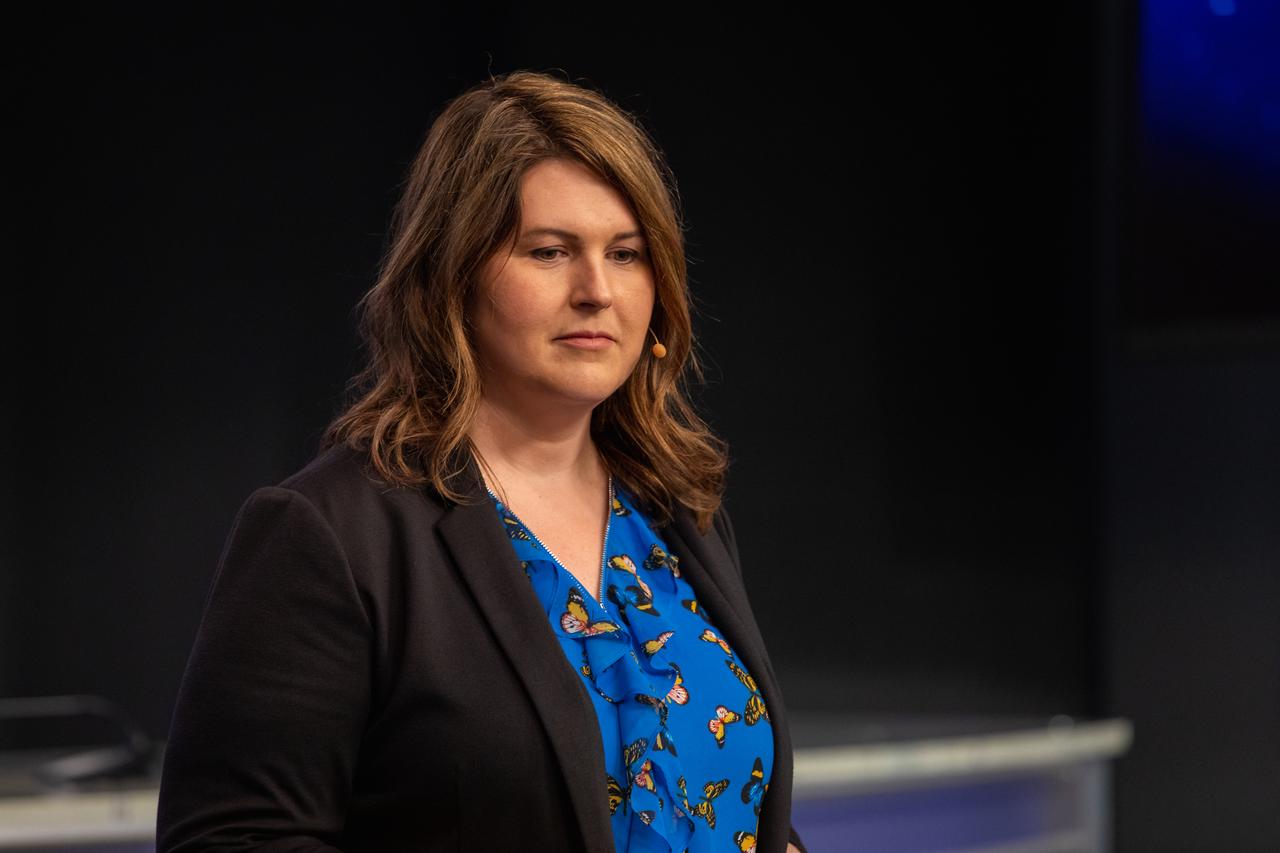
NASA Communications’ Jennifer Wolfinger moderates a What’s on Board science briefing at the agency’s Kennedy Space Center in Florida on March 5, 2020. During the briefing, NASA Social participants had the opportunity to hear from principal investigators for payloads launching on SpaceX’s 20th Commercial Resupply Services (CRS-20) mission. CRS-20 is scheduled to launch from Cape Canaveral Air Force Station’s Space Launch Complex 40 on March 6, 2020. The SpaceX Falcon 9 rocket and cargo Dragon spacecraft are targeting an instantaneous liftoff at 11:50 p.m. EST.

Sebastian Mathea of the University of Oxford in England, speaks to members of social media in the Kennedy Space Center’s Press Site auditorium. Mathea is principal investigator for the Crystallization of LRRK2 Under Microgravity Conditions experiment. The briefing focused on research planned for launch to the International Space Station. The scientific materials and supplies will be aboard a Dragon spacecraft scheduled for launch from Kennedy’s Launch Complex 39A on Aug. 14 atop a SpaceX Falcon 9 rocket on the company's 12th Commercial Resupply Services mission to the space station.
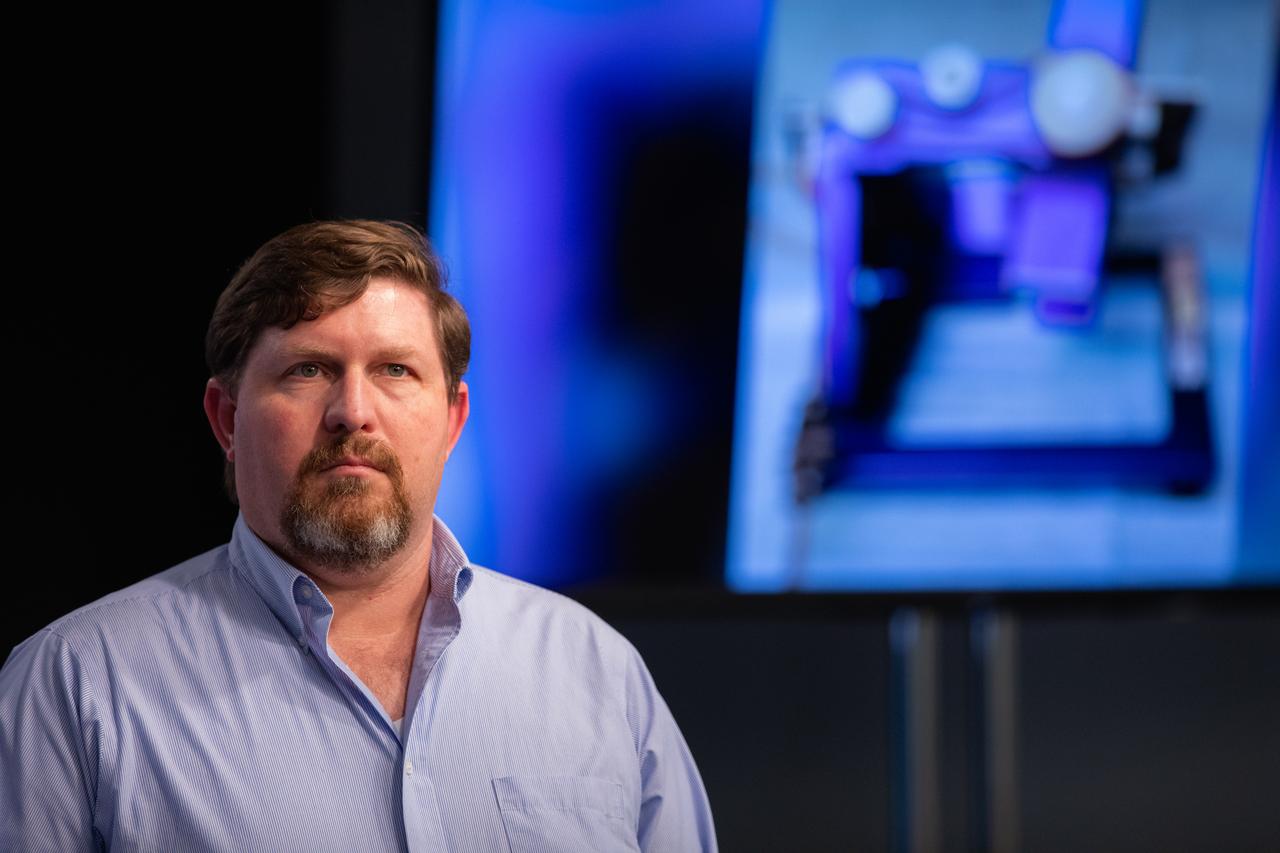
Gene Boland, chief scientist of Techshot, participates in a What’s on Board science briefing at NASA’s Kennedy Space Center in Florida on March 5, 2020. The briefing provided a closer look at some of the payloads launching on SpaceX’s 20th Commercial Resupply Services (CRS-20) mission to the International Space Station. The company’s Falcon 9 rocket is scheduled to lift off from Cape Canaveral Air Force Station’s Space Launch Complex 40 at 11:50 p.m. EST on March 6, 2020.
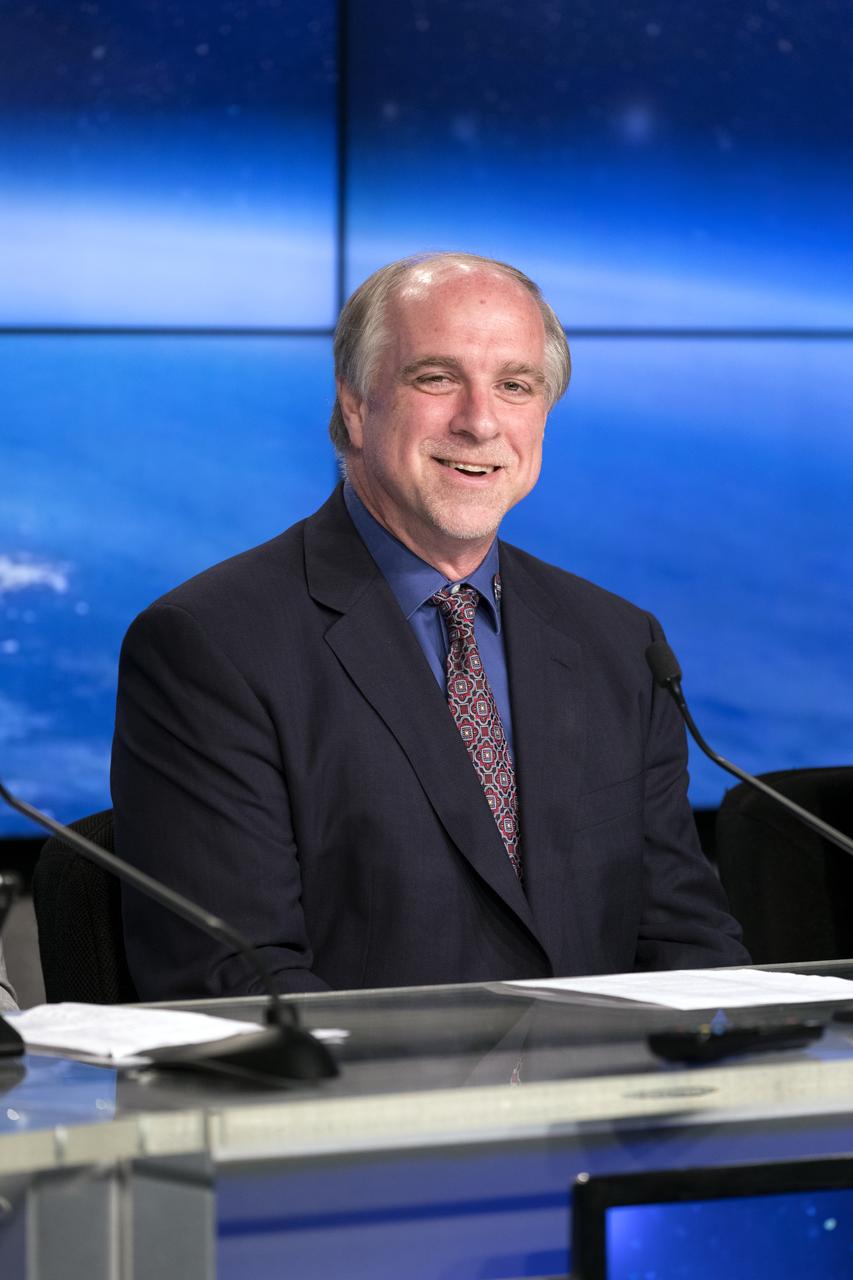
In the Kennedy Space Center's Press Site auditorium, Dave Littmann, project manager for TDRS-M at NASA’s Goddard Space Flight Center in Greenbelt, Maryland, speaks to members of the media at a prelaunch news conference for NASA's Tracking and Data Relay Satellite, TDRS-M. It is the latest spacecraft destined for the agency's constellation of communications satellites that allows nearly continuous contact with orbiting spacecraft ranging from the International Space Station and Hubble Space Telescope to the array of scientific observatories. Liftoff atop a United Launch Alliance Atlas V rocket is scheduled to take place from Space Launch Complex 41 at Cape Canaveral Air Force Station at 8:03 a.m. EDT Aug. 18.

Jennifer Buchli, deputy chief scientist for NASA’s International Space Station Program Science Office, addresses NASA Social participants during a What’s on Board science briefing at the agency’s Kennedy Space Center in Florida on March 5, 2020. The briefing provided a closer look at some of the payloads launching on SpaceX’s 20th Commercial Resupply Services (CRS-20) mission to the International Space Station. The company’s Falcon 9 rocket is scheduled to lift off from Cape Canaveral Air Force Station’s Space Launch Complex 40 at 11:50 p.m. EST on March 6, 2020.

NASA astronaut Nicole Mann speaks to members of social media in the Kennedy Space Center’s Press Site auditorium. The briefing focused on preparations to launch NASA's Tracking and Data Relay Satellite, TDRS-M. The latest spacecraft destined for the agency's constellation of communications satellites, TDRS-M will allow nearly continuous contact with orbiting spacecraft ranging from the International Space Station and Hubble Space Telescope to the array of scientific observatories. Liftoff atop a United Launch Alliance Atlas V rocket is scheduled to take place from Space Launch Complex 41 at Cape Canaveral Air Force Station at 8:03 a.m. EDT Aug. 18.

In the Kennedy Space Center’s Press Site auditorium, Dan Hartman, NASA deputy manager of the International Space Station Program, speaks to members of the media during a prelaunch news conference for the SpaceX CRS-12 commercial resupply services mission to the International Space Station. A Dragon spacecraft is scheduled to be launched from Kennedy’s Launch Complex 39A on Aug. 14 atop a SpaceX Falcon 9 rocket on the company's 12th Commercial Resupply Services mission to the space station.
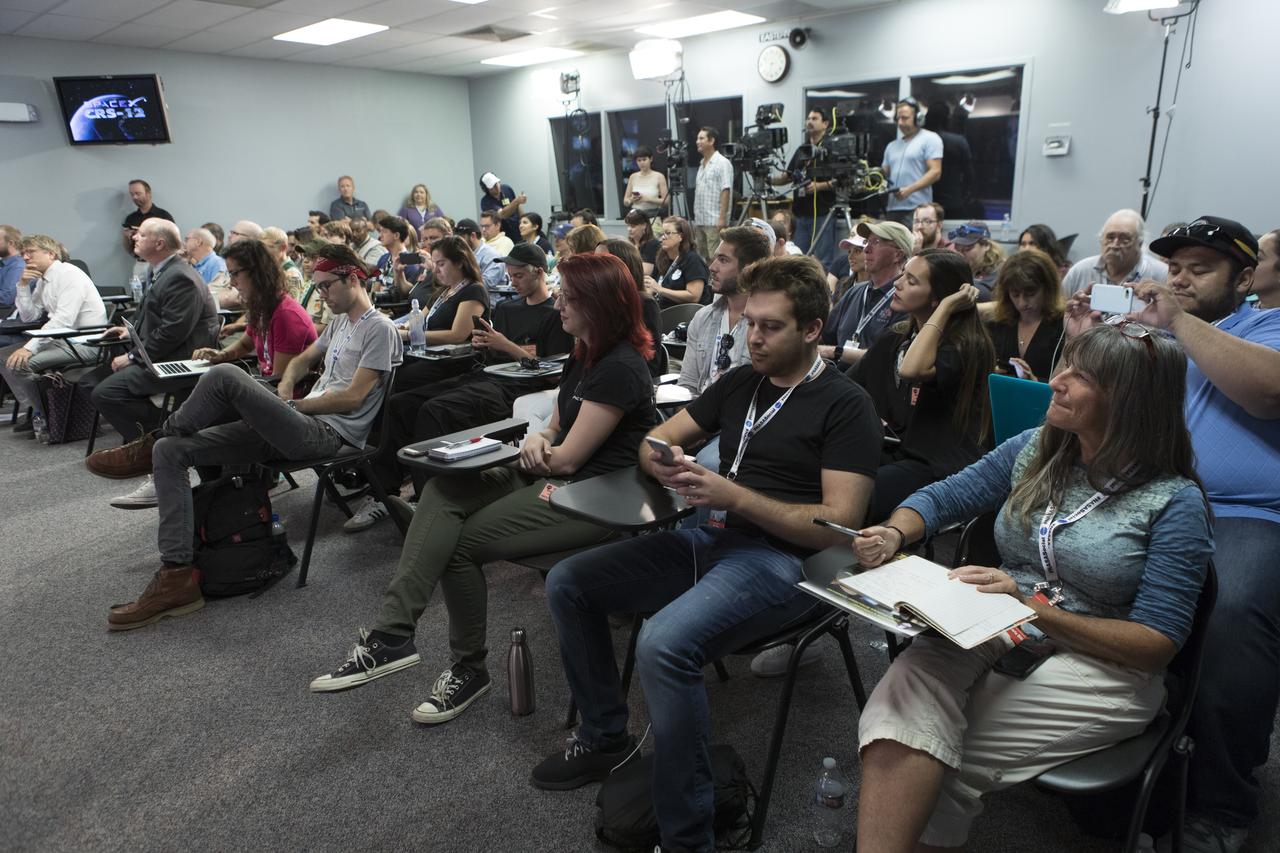
In the Kennedy Space Center’s Press Site auditorium, members of social media listen to a briefing focused on research planned for launch to the International Space Station. The scientific materials and supplies will be aboard a Dragon spacecraft scheduled for launch from Kennedy’s Launch Complex 39A on Aug. 14 atop a SpaceX Falcon 9 rocket on the company's 12th Commercial Resupply Services mission to the space station.
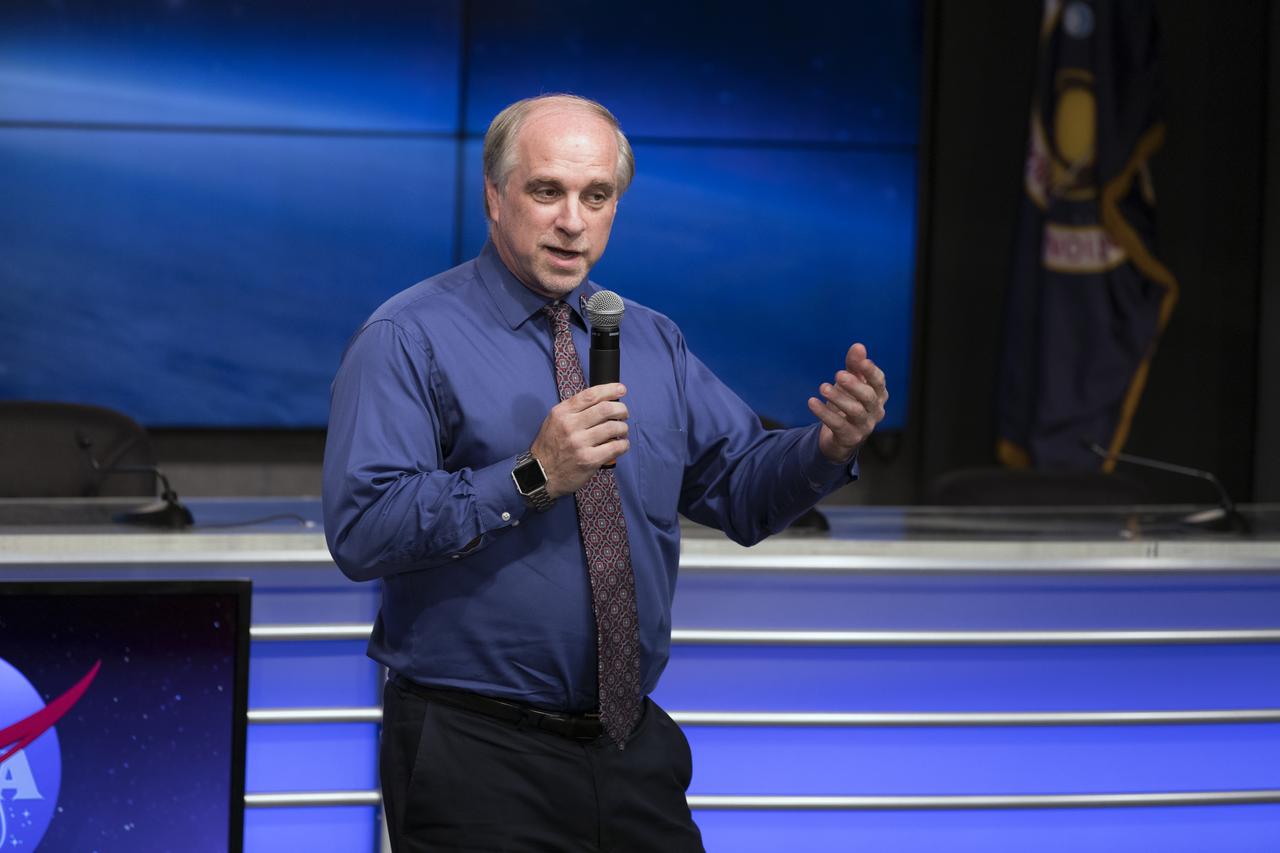
Dave Littmann, project manager for TDRS-M at NASA’s Goddard Space Flight Center in Greenbelt, Maryland, speaks to members of social media in the Kennedy Space Center’s Press Site auditorium. The briefing focused on preparations to launch NASA's Tracking and Data Relay Satellite, TDRS-M. The latest spacecraft destined for the agency's constellation of communications satellites, TDRS-M will allow nearly continuous contact with orbiting spacecraft ranging from the International Space Station and Hubble Space Telescope to the array of scientific observatories. Liftoff atop a United Launch Alliance Atlas V rocket is scheduled to take place from Space Launch Complex 41 at Cape Canaveral Air Force Station at 8:03 a.m. EDT Aug. 18.
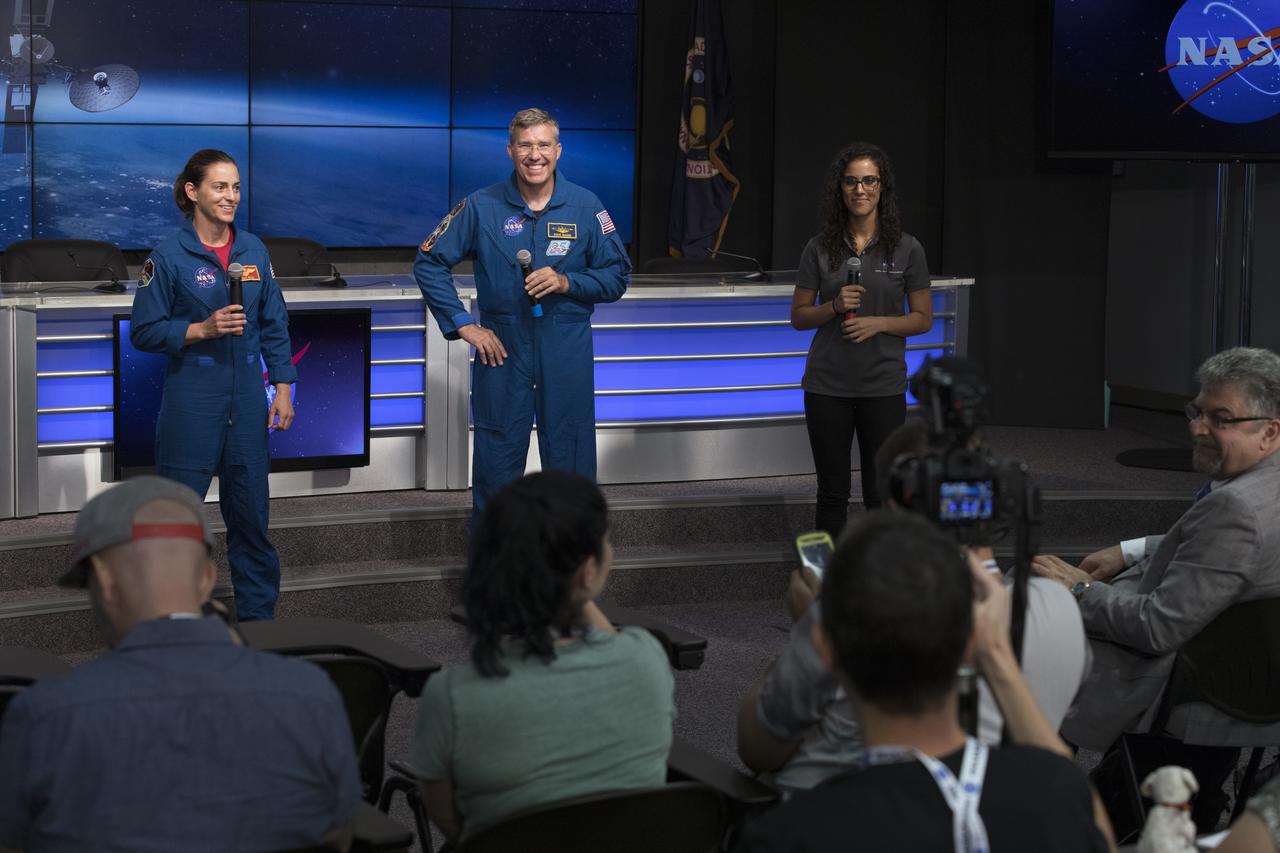
NASA astronauts Nicole Mann, left, and Steve Bowen speak to members of social media in the Kennedy Space Center’s Press Site auditorium. With them on the right is Emily Furfaro of the NASA Social Media Team. The briefing focused on preparations to launch NASA's Tracking and Data Relay Satellite, TDRS-M. The latest spacecraft destined for the agency's constellation of communications satellites, TDRS-M will allow nearly continuous contact with orbiting spacecraft ranging from the International Space Station and Hubble Space Telescope to the array of scientific observatories. Liftoff atop a United Launch Alliance Atlas V rocket is scheduled to take place from Space Launch Complex 41 at Cape Canaveral Air Force Station at 8:03 a.m. EDT Aug. 18.
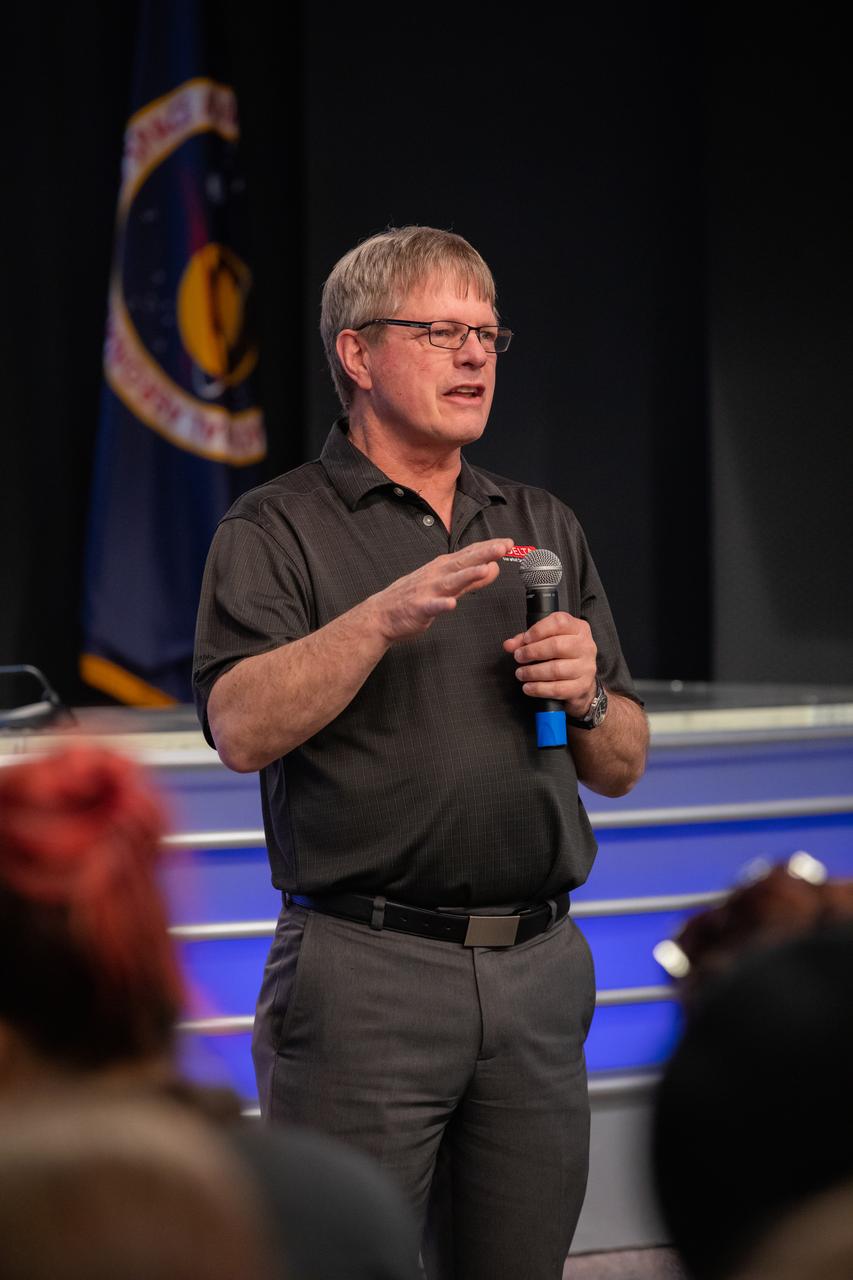
Garry Marty, principal product engineer for Delta Faucet, addresses NASA Social participants during a What’s on Board science briefing at the agency’s Kennedy Space Center in Florida on March 5, 2020. The briefing provided a closer look at some of the payloads launching on SpaceX’s 20th Commercial Resupply Services (CRS-20) mission to the International Space Station. The company’s Falcon 9 rocket is scheduled to lift off from Cape Canaveral Air Force Station’s Space Launch Complex 40 at 11:50 p.m. EST on March 6, 2020.
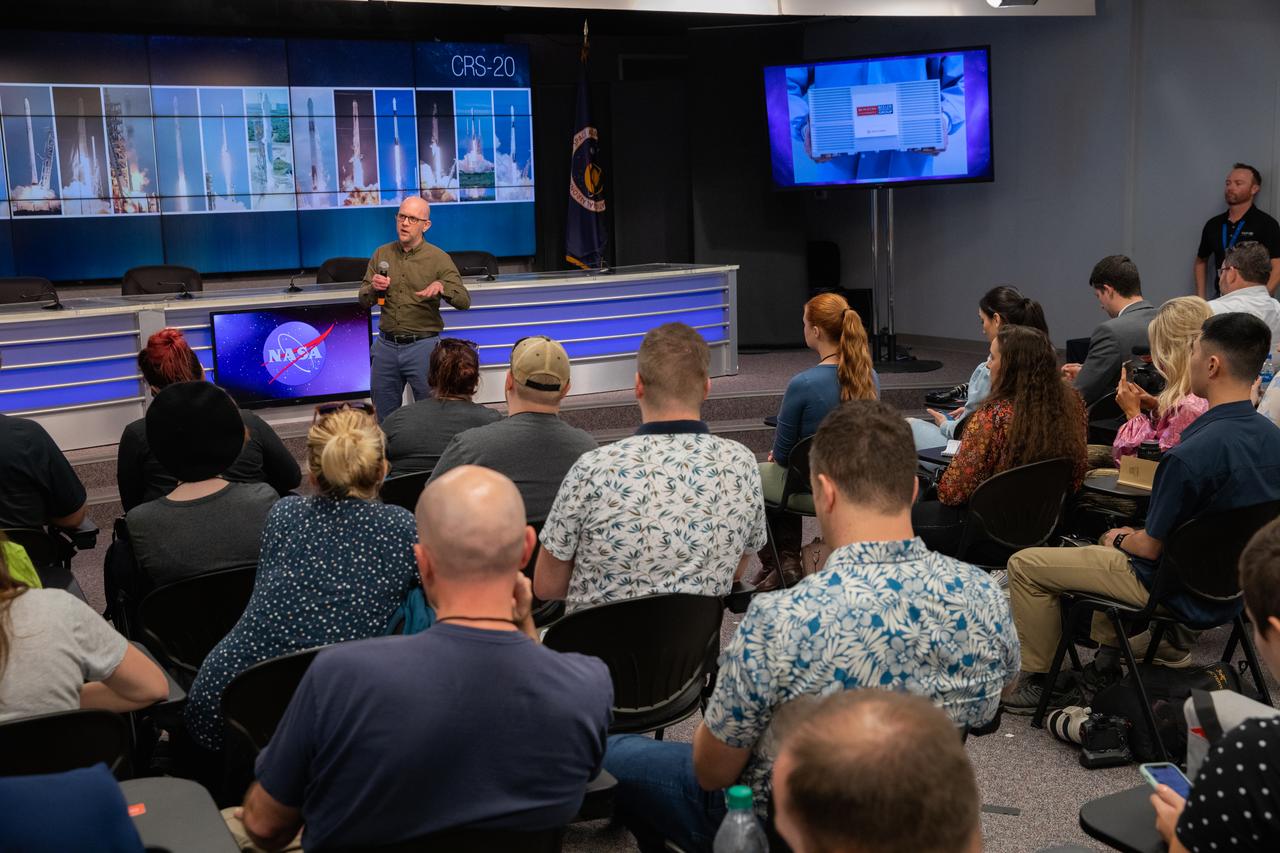
Aaron Beeler, professor of chemistry at Boston University and principal investigator of the Flow Chemistry Platform for Synthetic Reactions on ISS study, addresses NASA Social participants during a What’s on Board science briefing at the agency’s Kennedy Space Center in Florida on March 5, 2020. The briefing provided a closer look at some of the payloads launching on SpaceX’s 20th Commercial Resupply Services (CRS-20) mission to the International Space Station. The company’s Falcon 9 rocket is scheduled to lift off from Cape Canaveral Air Force Station’s Space Launch Complex 40 at 11:50 p.m. EST on March 6, 2020.
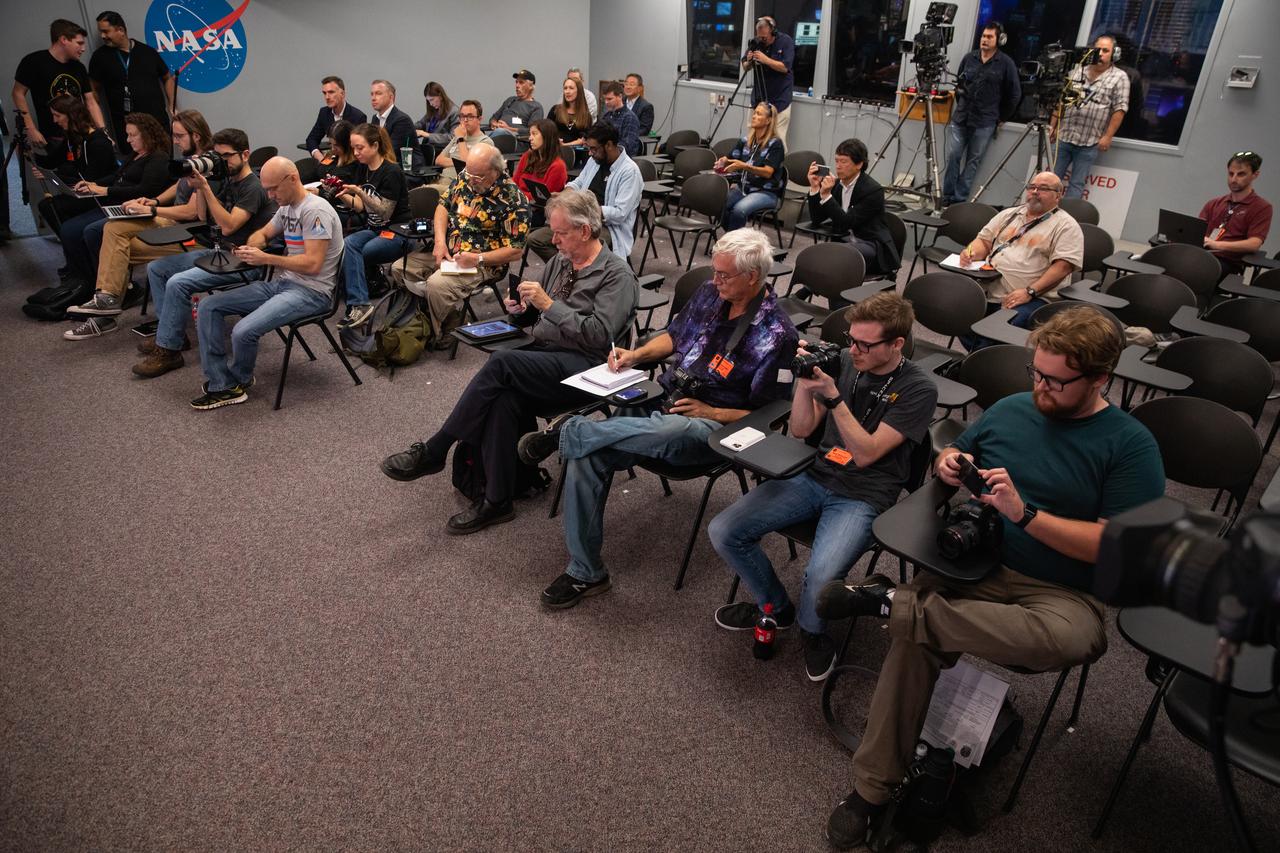
Members of the media attend a prelaunch news conference for SpaceX’s 20th Commercial Resupply Services (CRS-20) mission to the International Space Station at NASA’s Kennedy Space Center in Florida on March 6, 2020. Participants included conference moderator Heather Scott of NASA Communications; Joel Montalbano, manager of the agency’s International Space Station Program; Jennifer Buchli, deputy chief scientist for the International Space Station Program; Hans Koenigsmann, vice president of Build and Flight Reliability at SpaceX; and Mike McAleenan, launch weather officer with the U.S. Air Force 45th Space Wing. SpaceX’s Falcon 9 rocket and cargo Dragon spacecraft are scheduled to lift off from Cape Canaveral Air Force Station’s Space Launch Complex 40 at 11:50 p.m. EST on March 6, 2020.
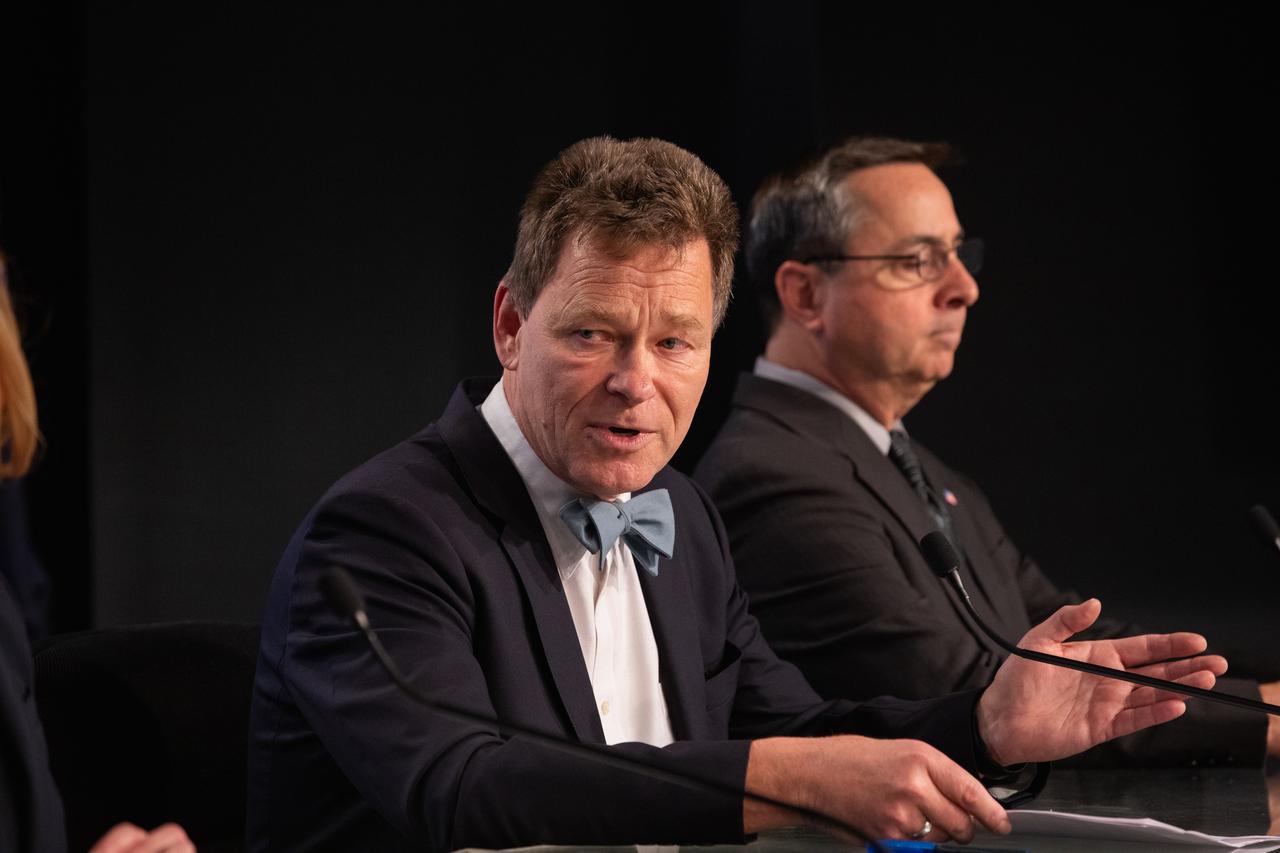
Hans Koenigsmann, vice president of Build and Flight Reliability at SpaceX, addresses members of the news media during a prelaunch news conference for SpaceX’s 20th Commercial Resupply Services (CRS-20) mission to the International Space Station at NASA’s Kennedy Space Center in Florida on March 6, 2020. Beside Koenigsmann is Mike McAleenan, launch weather officer with the U.S. Air Force 45th Space Wing. The company’s Falcon 9 rocket and cargo Dragon spacecraft are scheduled to lift off from Cape Canaveral Air Force Station’s Space Launch Complex 40 at 11:50 p.m. EST on March 6, 2020.
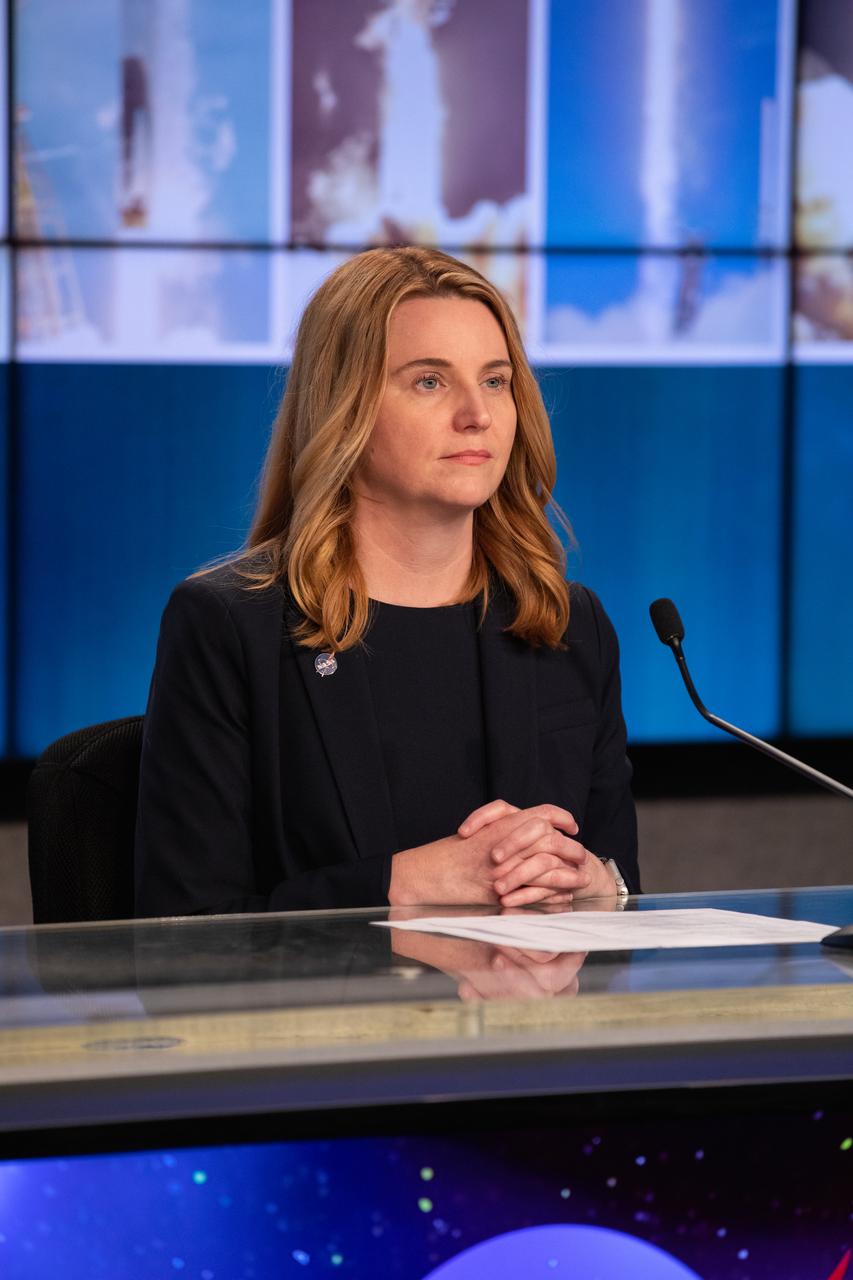
Jennifer Buchli, deputy chief scientist for NASA’s International Space Station Program, participates in a prelaunch news conference for SpaceX’s 20th Commercial Resupply Services (CRS-20) mission to the International Space Station at the agency’s Kennedy Space Center in Florida on March 6, 2020. The company’s Falcon 9 rocket and cargo Dragon spacecraft are scheduled to lift off from Cape Canaveral Air Force Station’s Space Launch Complex 40 at 11:50 p.m. EST on March 6, 2020.
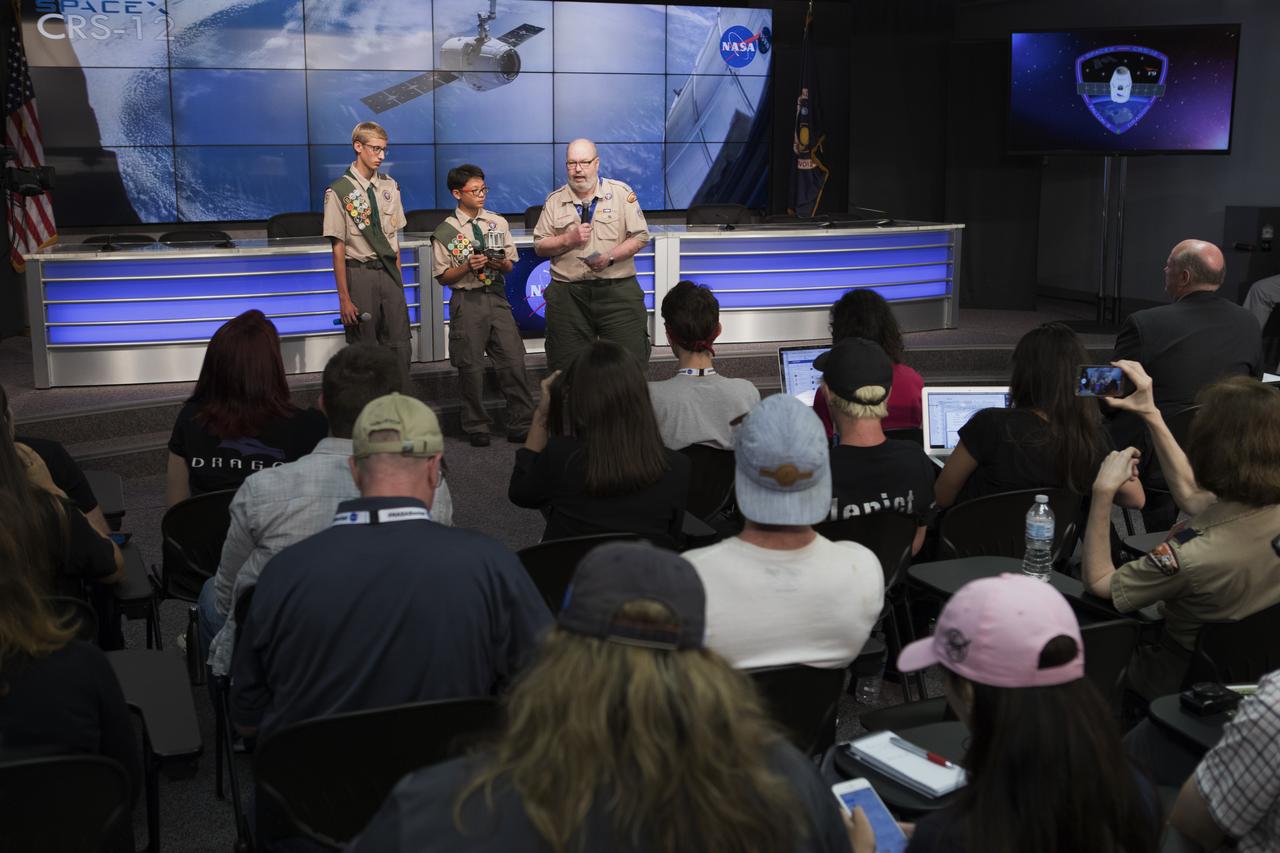
Boy Scouts of America Troop 209 members Andrew Frank, left, Elliot Lee center, and team leader Norman McFarland speak to members of social media in the Kennedy Space Center’s Press Site auditorium. The briefing focused on research planned for launch to the International Space Station. The scientific materials and supplies will be aboard a Dragon spacecraft scheduled for launch from Kennedy’s Launch Complex 39A on Aug. 14 atop a SpaceX Falcon 9 rocket on the company's 12th Commercial Resupply Services mission to the space station.
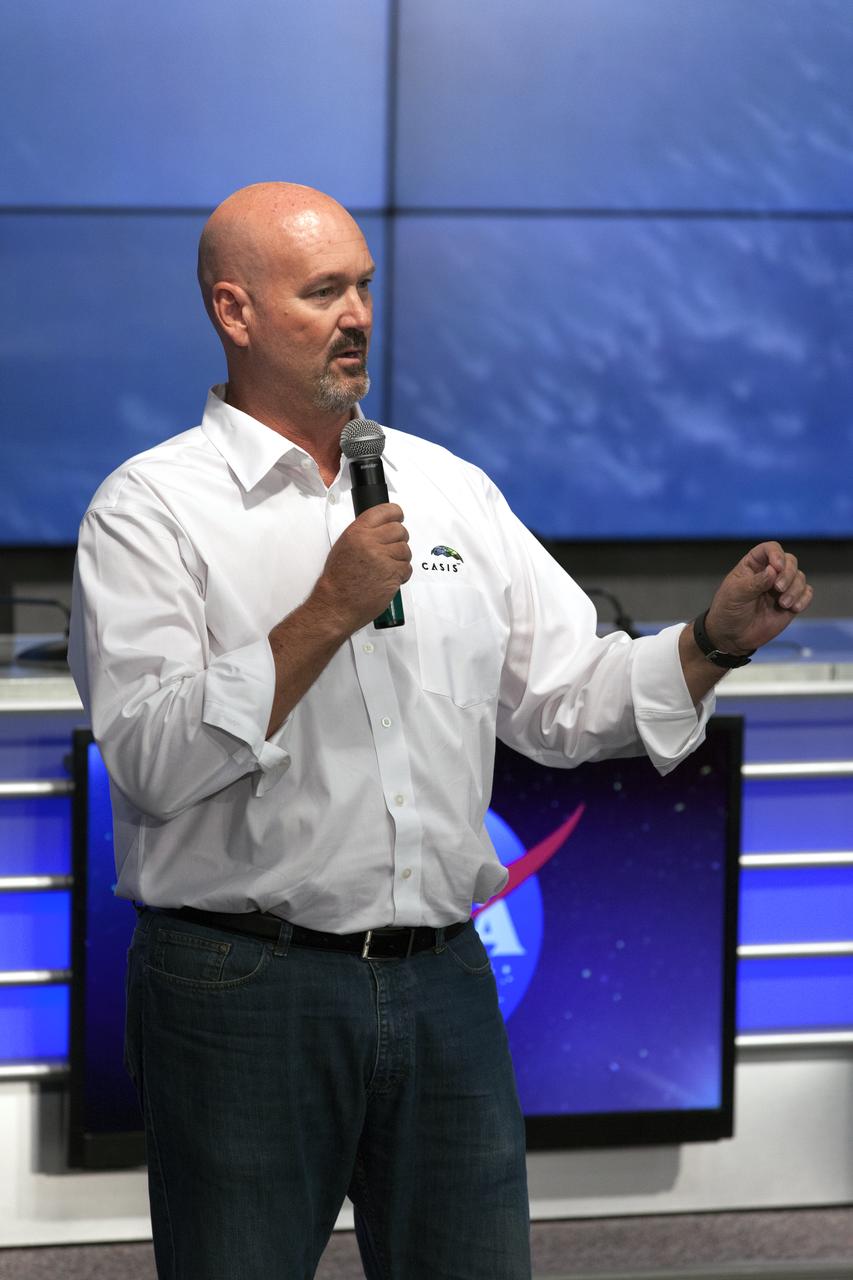
Ken Shields, director of Operations for Center for the Advancement of Science in Space/ISS National Lab, speaks to members of social media in the Kennedy Space Center’s Press Site auditorium. The briefing focused on research planned for launch to the International Space Station. The scientific materials and supplies will be aboard a Dragon spacecraft scheduled for launch from Kennedy’s Launch Complex 39A on Aug. 14 atop a SpaceX Falcon 9 rocket on the company's 12th Commercial Resupply Services mission to the space station.
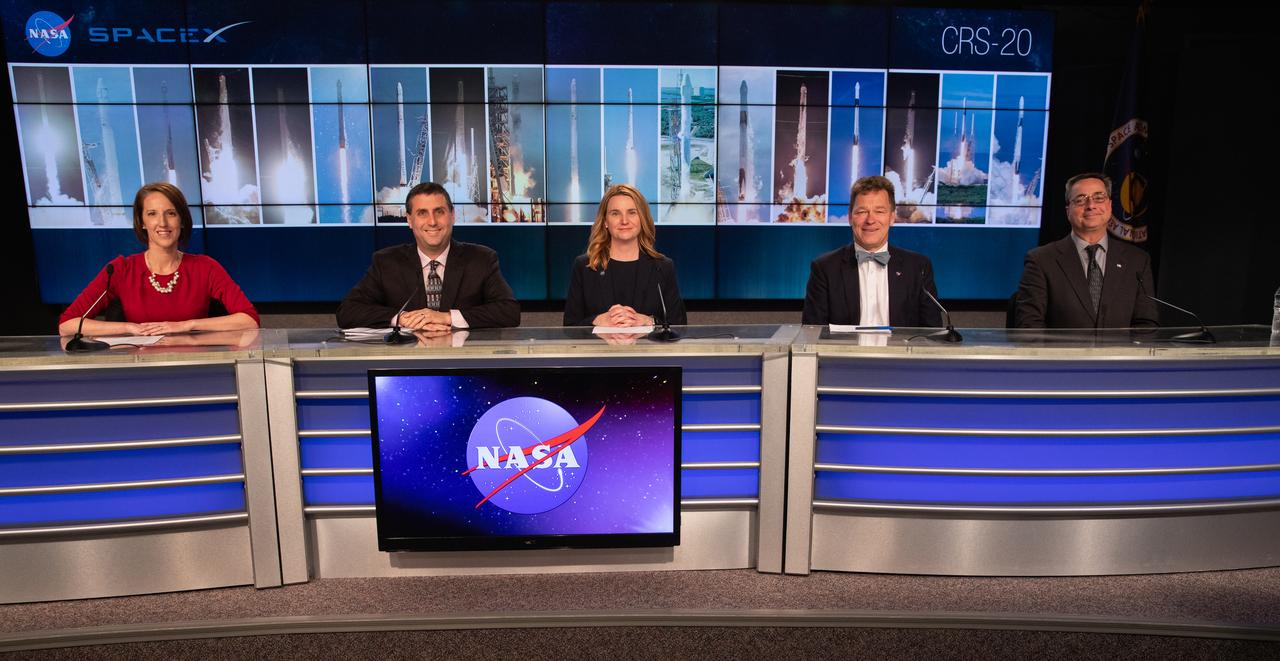
A prelaunch news conference for SpaceX’s 20th Commercial Resupply Services (CRS-20) mission to the International Space Station is held at NASA’s Kennedy Space Center in Florida on March 6, 2020. From left are conference moderator Heather Scott of NASA Communications; Joel Montalbano, manager of the agency’s International Space Station Program; Jennifer Buchli, deputy chief scientist for the International Space Station Program; Hans Koenigsmann, vice president of Build and Flight Reliability at SpaceX; and Mike McAleenan, launch weather officer with the U.S. Air Force 45th Space Wing. SpaceX’s Falcon 9 rocket and cargo Dragon spacecraft are scheduled to lift off from Cape Canaveral Air Force Station’s Space Launch Complex 40 at 11:50 p.m. EST on March 6, 2020.
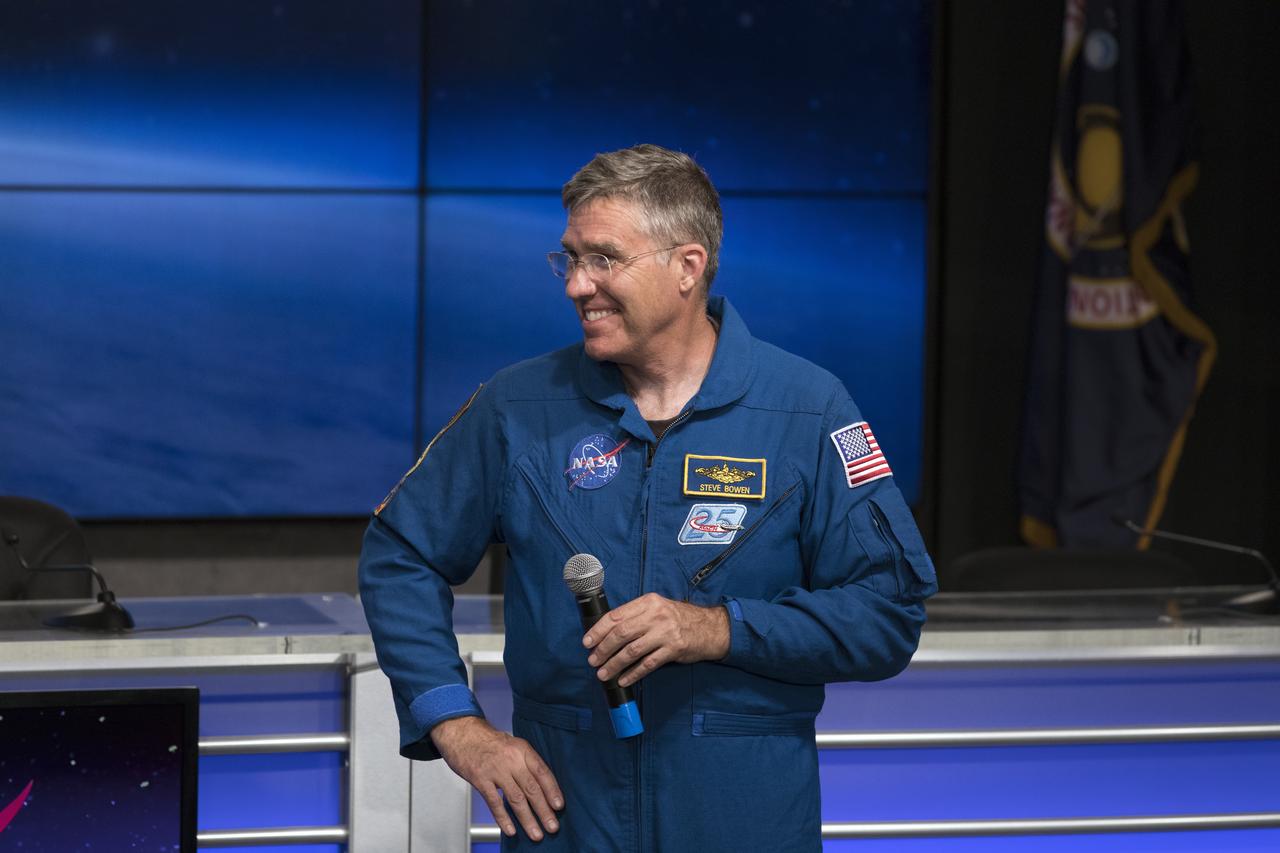
NASA astronaut Steve Bowen speaks to members of social media in the Kennedy Space Center’s Press Site auditorium. The briefing focused on preparations to launch NASA's Tracking and Data Relay Satellite, TDRS-M. The latest spacecraft destined for the agency's constellation of communications satellites, TDRS-M will allow nearly continuous contact with orbiting spacecraft ranging from the International Space Station and Hubble Space Telescope to the array of scientific observatories. Liftoff atop a United Launch Alliance Atlas V rocket is scheduled to take place from Space Launch Complex 41 at Cape Canaveral Air Force Station at 8:03 a.m. EDT Aug. 18.
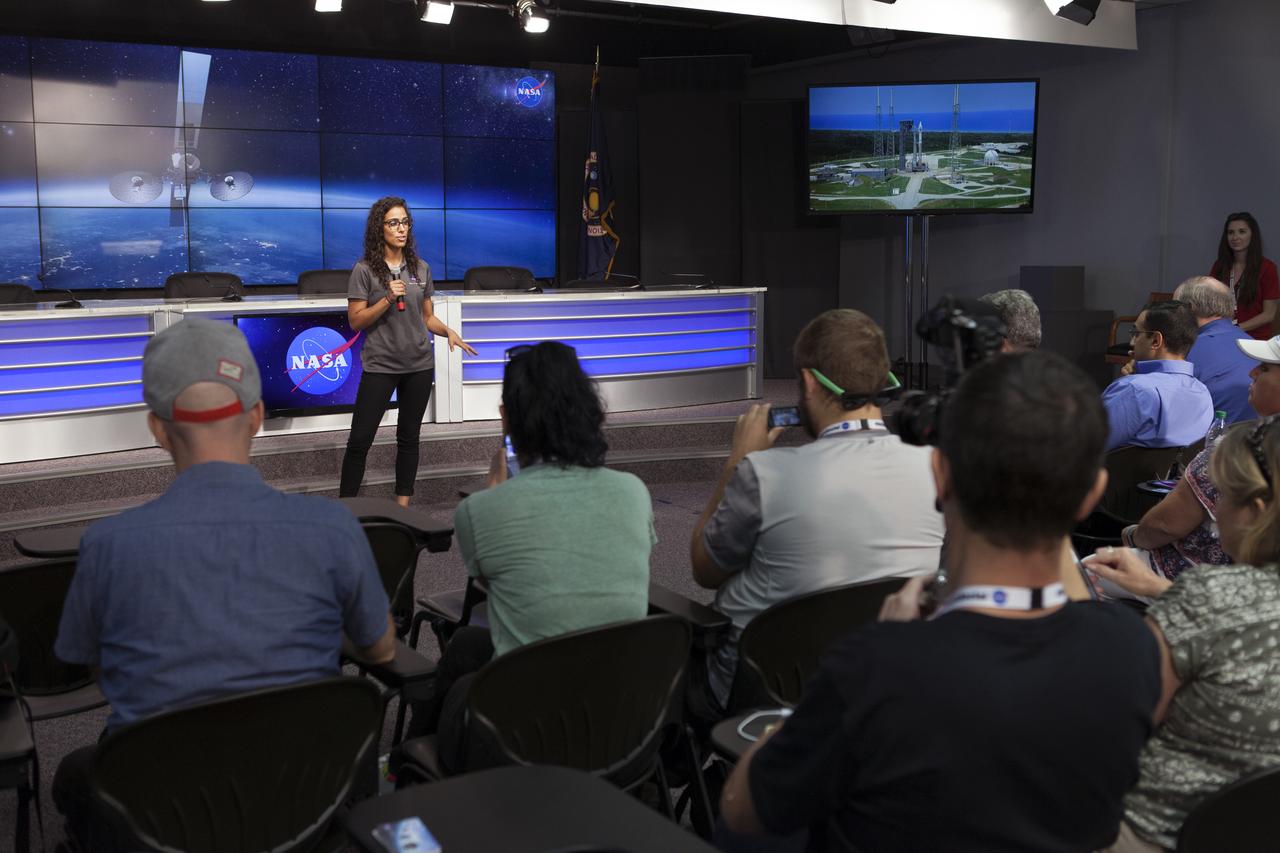
Emily Furfaro of the NASA Social Media Team speaks to members of social media in the Kennedy Space Center’s Press Site auditorium. The briefing focused on preparations to launch NASA's Tracking and Data Relay Satellite, TDRS-M. The latest spacecraft destined for the agency's constellation of communications satellites, TDRS-M will allow nearly continuous contact with orbiting spacecraft ranging from the International Space Station and Hubble Space Telescope to the array of scientific observatories. Liftoff atop a United Launch Alliance Atlas V rocket is scheduled to take place from Space Launch Complex 41 at Cape Canaveral Air Force Station at 8:03 a.m. EDT Aug. 18.
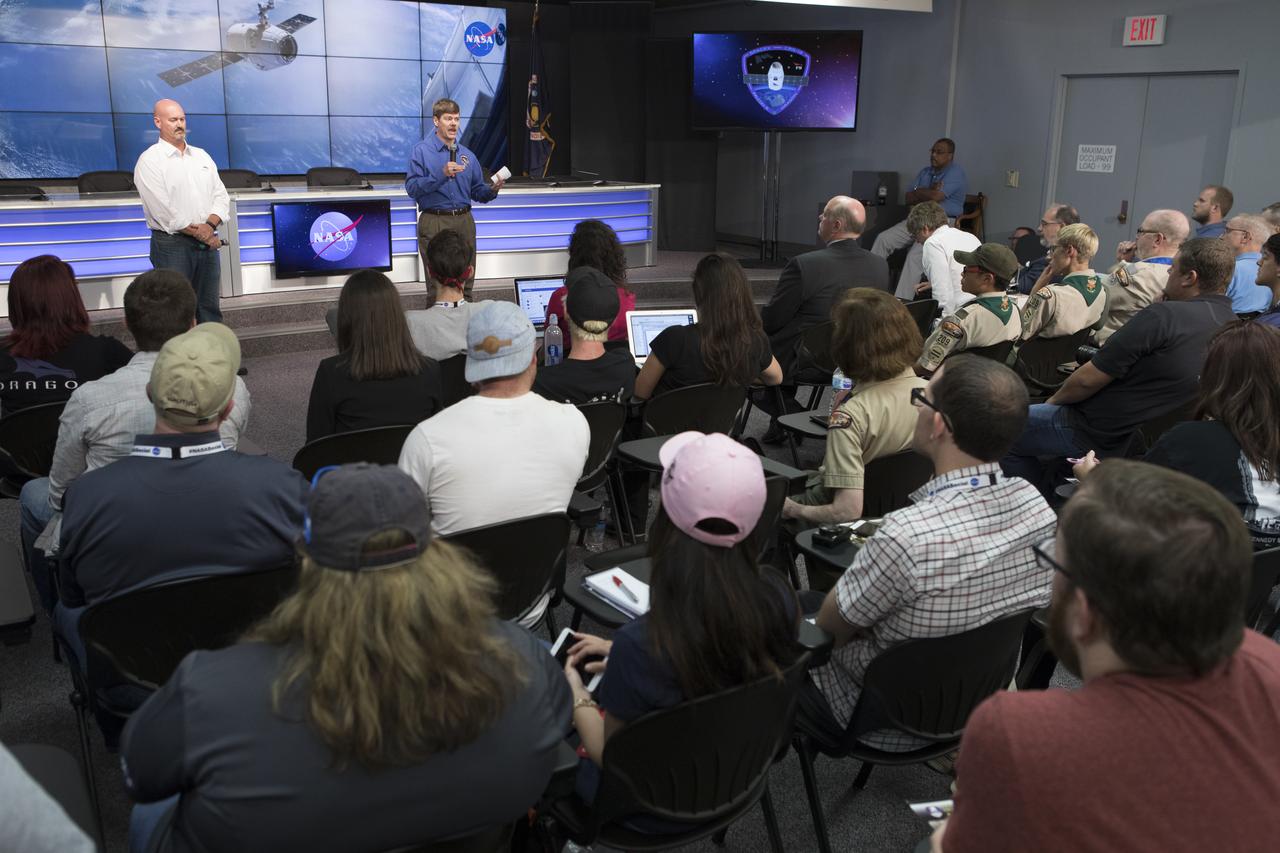
Ken Shields, director of Operations for Center for the Advancement of Science in Space/ISS National Lab, left, and Pete Hasbrook, associate program scientist for the International Space Station Program, speak to members of social media in the Kennedy Space Center’s Press Site auditorium. The briefing focused on research planned for launch to the International Space Station. The scientific materials and supplies will be aboard a Dragon spacecraft scheduled for launch from Kennedy’s Launch Complex 39A on Aug. 14 atop a SpaceX Falcon 9 rocket on the company's 12th Commercial Resupply Services mission to the space station.
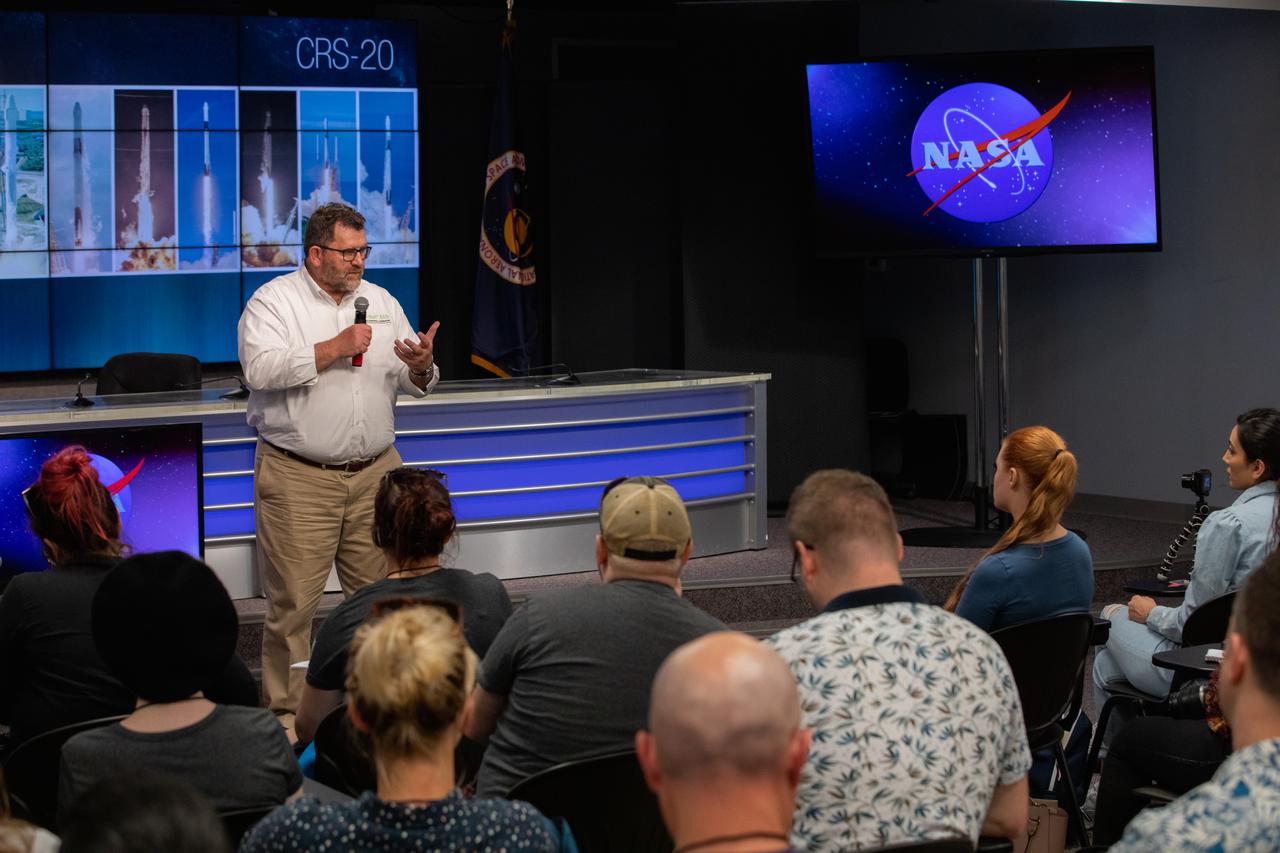
Michael Roberts, interim chief scientist for the International Space Station U.S. National Laboratory, addresses NASA Social participants during a What’s on Board science briefing at the agency’s Kennedy Space Center in Florida on March 5, 2020. The briefing provided a closer look at some of the payloads launching on SpaceX’s 20th Commercial Resupply Services (CRS-20) mission to the International Space Station. The company’s Falcon 9 rocket is scheduled to lift off from Cape Canaveral Air Force Station’s Space Launch Complex 40 at 11:50 p.m. EST on March 6, 2020.
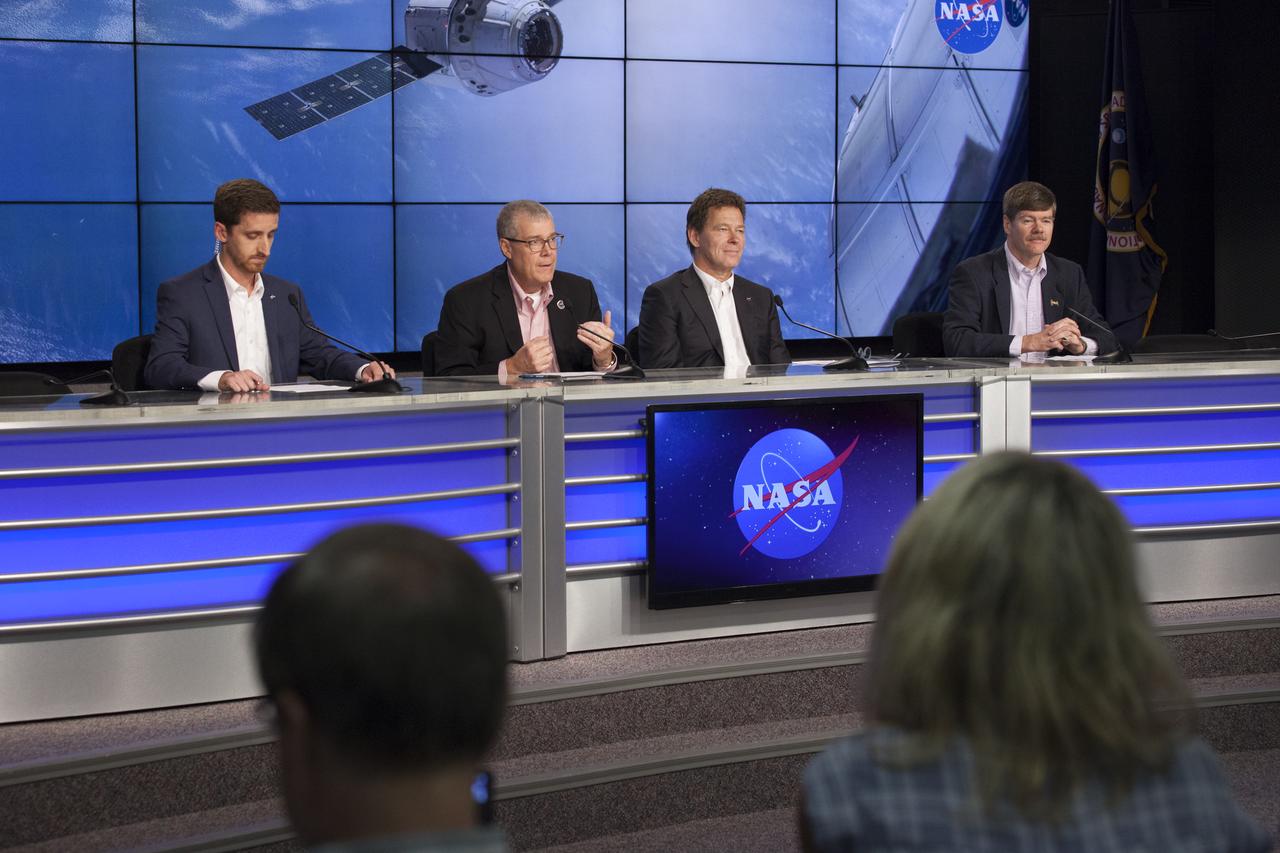
In the Kennedy Space Center’s Press Site auditorium, agency and industry leaders speak to members of the media during a prelaunch news conference for the SpaceX CRS-12 commercial resupply services mission to the International Space Station. From left are: Josh Finch of NASA Communications; Dan Hartman, NASA deputy manager of the International Space Station Program, Hans Koenigsmann, vice president of Build and Flight Reliability for SpaceX, and Pete Hasbrook, associate program scientist for the International Space Station Program. A Dragon spacecraft is scheduled to be launched from Kennedy’s Launch Complex 39A on Aug. 14 atop a SpaceX Falcon 9 rocket on the company's 12th Commercial Resupply Services mission to the space station.
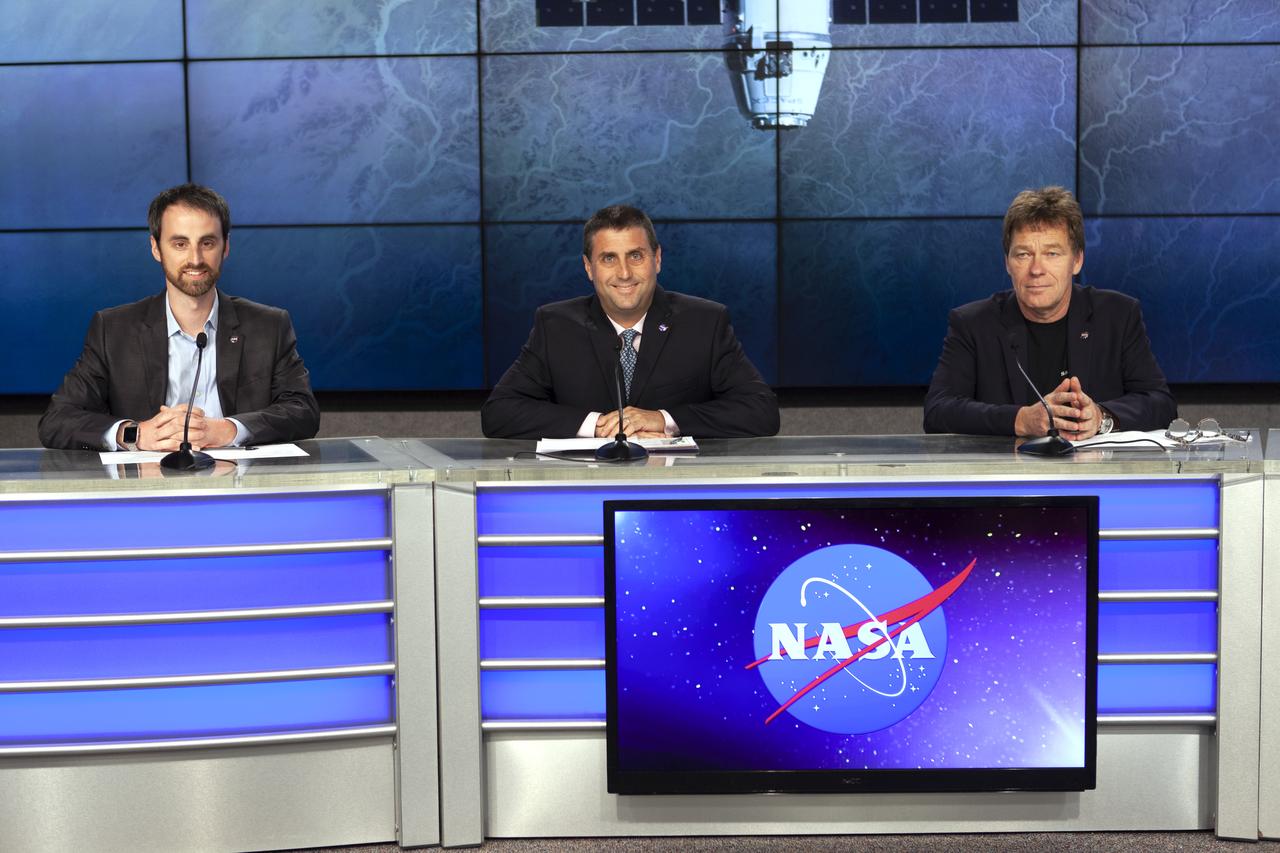
In the Press Site auditorium of NASA's Kennedy Space Center in Florida, from left, Joshua Santora of NASA Communications, Joel Montalbano, deputy International Space Station program manager at NASA's Johnson Space Center in Houston, and Hans Koenigsmann, vice president of Build and Flight Reliability for SpaceX, speak to media at a post-launch news conference following the liftoff of SpaceX CRS-16. The flight is a commercial resupply services mission to the International Space Station. SpaceX CRS-16 lifted off atop a Falcon 9 rocket from Space Launch Complex 40 at Cape Canaveral Air Force Station at 1:16 p.m. EST, Dec. 5, 2018, with supplies and equipment and new science experiments for technology research.
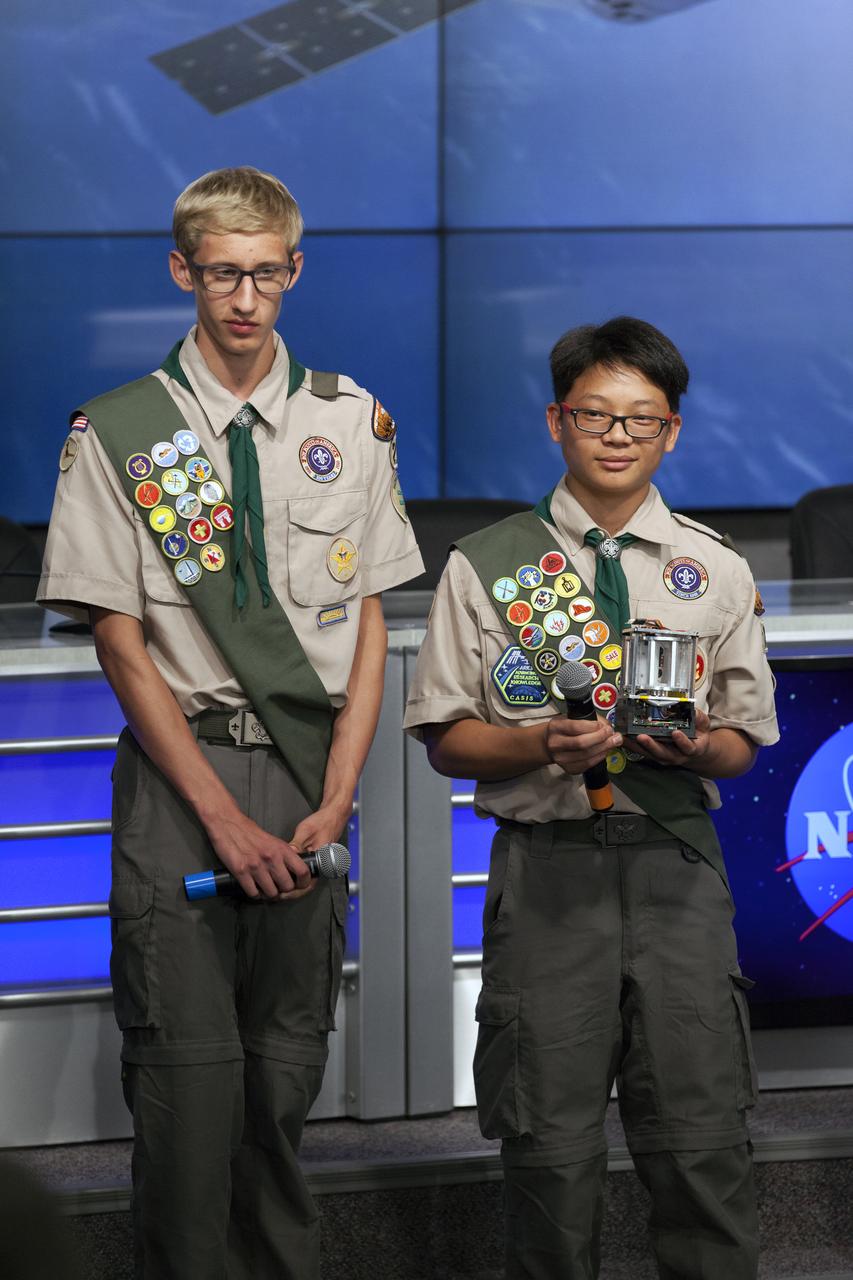
Boy Scouts of America Troop 209 members Andrew Frank, left, and Elliot Lee speak to members of social media in the Kennedy Space Center’s Press Site auditorium. The briefing focused on research planned for launch to the International Space Station. The scientific materials and supplies will be aboard a Dragon spacecraft scheduled for launch from Kennedy’s Launch Complex 39A on Aug. 14 atop a SpaceX Falcon 9 rocket on the company's 12th Commercial Resupply Services mission to the space station.

In the Kennedy Space Center’s Press Site auditorium, Hans Koenigsmann, vice president of Build and Flight Reliability for SpaceX, speaks to members of the media during a prelaunch news conference for the SpaceX CRS-12 commercial resupply services mission to the International Space Station. A Dragon spacecraft is scheduled to be launched from Kennedy’s Launch Complex 39A on Aug. 14 atop a SpaceX Falcon 9 rocket on the company's 12th Commercial Resupply Services mission to the space station.
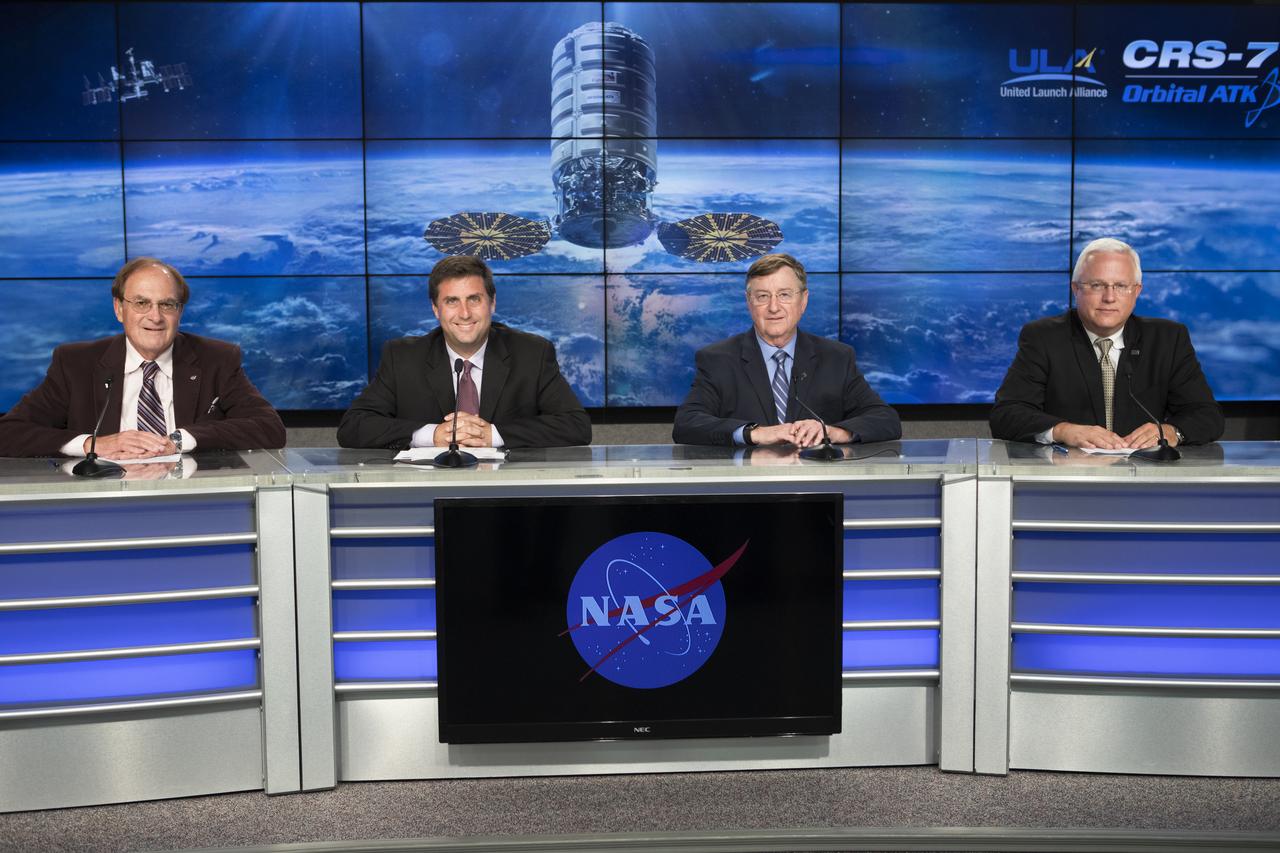
Members of the news media attend a press conference at NASA's Kennedy Space Center in Florida, after the launch of the Orbital ATK Cygnus pressurized cargo module atop a United Launch Alliance Atlas V rocket from Space Launch Complex 41 at Cape Canaveral Air Force Station. It was Orbital ATK's seventh commercial resupply services mission to the International Space Station. Liftoff was at 11:11 a.m. EDT. Speaking to the media are, from left, George Diller, NASA Kennedy Communications; Joel Montalbano, deputy manager, International Space Station Program, NASA Johnson Space Center in Houston; Frank Culbertson, president, Orbital ATK Space Systems Group; and Vern Thorp, program manager, commercial missions, United Launch Alliance.
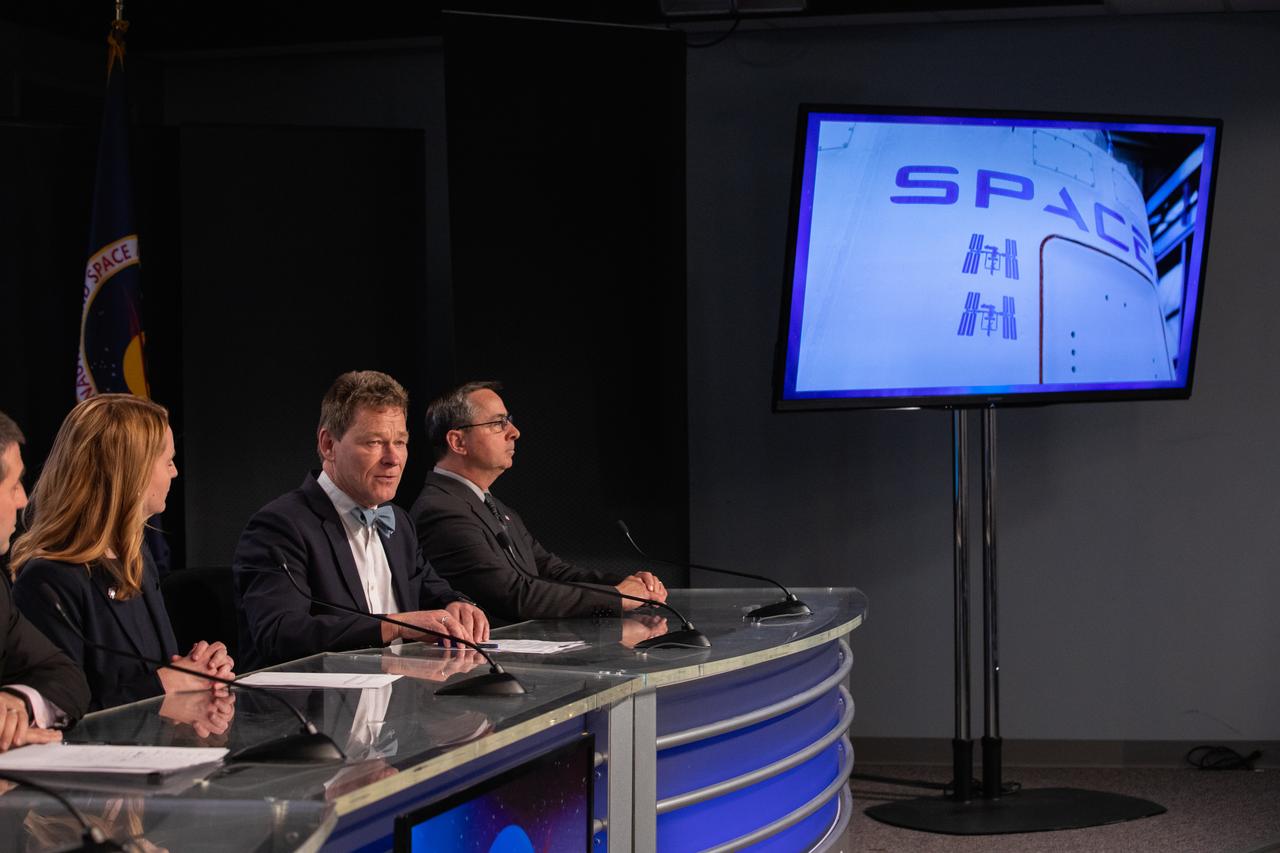
A prelaunch news conference for SpaceX’s 20th Commercial Resupply Services (CRS-20) mission to the International Space Station is held at NASA’s Kennedy Space Center in Florida on March 6, 2020. From left are Joel Montalbano, manager of the agency’s International Space Station Program; Jennifer Buchli, deputy chief scientist for the International Space Station Program; Hans Koenigsmann, vice president of Build and Flight Reliability at SpaceX; and Mike McAleenan, launch weather officer with the U.S. Air Force 45th Space Wing. SpaceX’s Falcon 9 rocket and cargo Dragon spacecraft are scheduled to lift off from Cape Canaveral Air Force Station’s Space Launch Complex 40 at 11:50 p.m. EST on March 6, 2020.
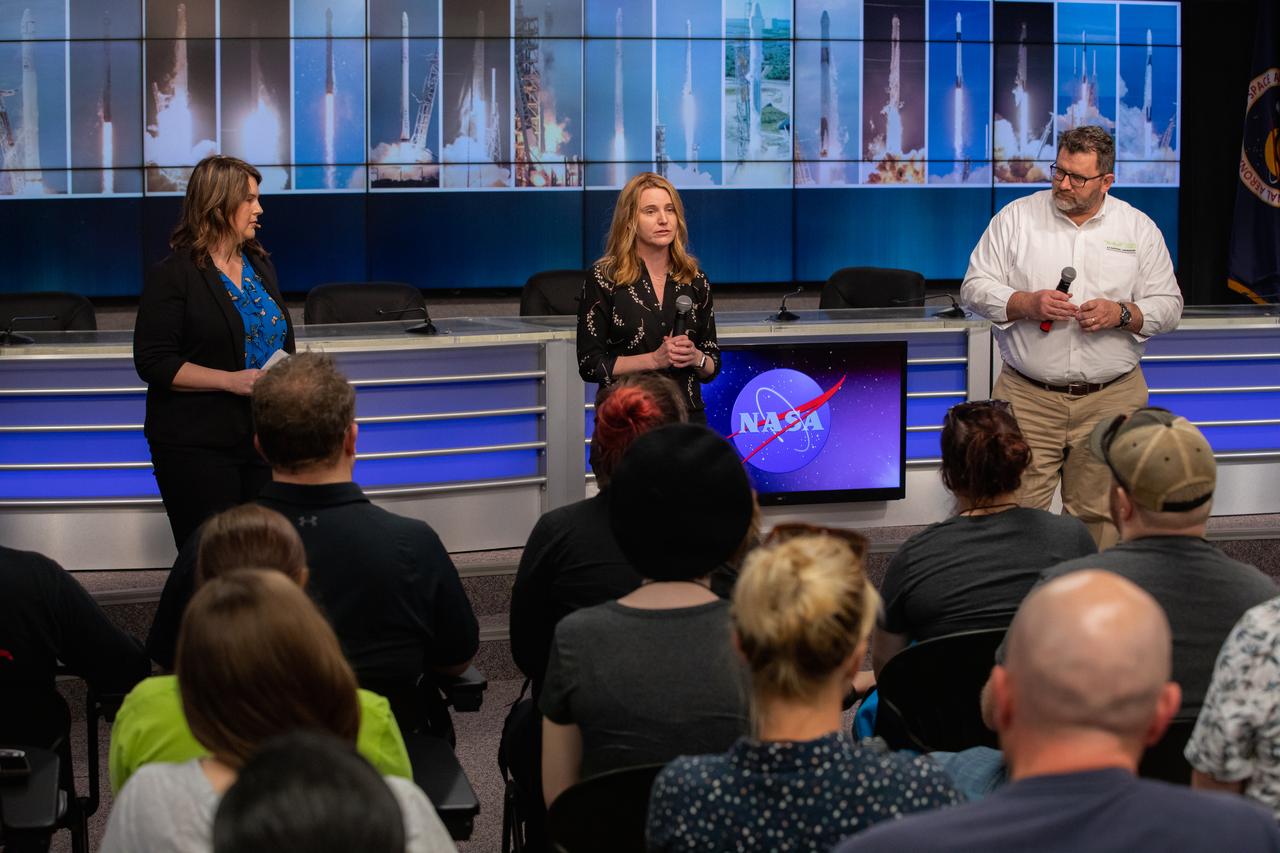
From left, NASA Communications’ Jennifer Wolfinger, briefing moderator; Jennifer Buchli, deputy chief scientist for NASA’s International Space Station Program Science Office; and Michael Roberts, interim chief scientist for the International Space Station U.S. National Laboratory, address NASA Social participants during a What’s on Board science briefing at the agency’s Kennedy Space Center in Florida on March 5, 2020. The briefing provided a closer look at some of the payloads launching on SpaceX’s 20th Commercial Resupply Services (CRS-20) mission to the International Space Station. The company’s Falcon 9 rocket is scheduled to lift off from Cape Canaveral Air Force Station’s Space Launch Complex 40 at 11:50 p.m. EST on March 6, 2020.
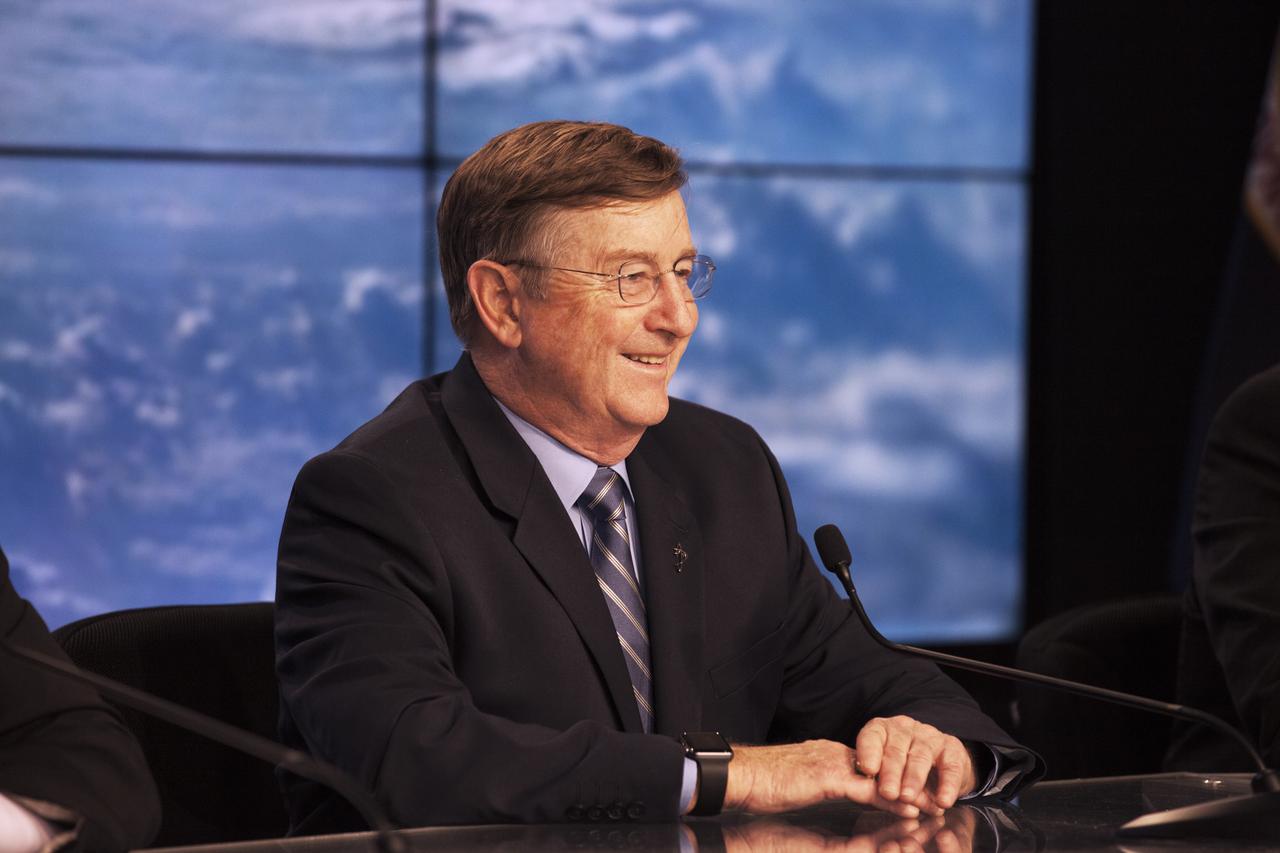
Members of the news media attend a press conference at NASA's Kennedy Space Center in Florida, after the launch of the Orbital ATK Cygnus pressurized cargo module atop a United Launch Alliance Atlas V rocket from Space Launch Complex 41 at Cape Canaveral Air Force Station. It was Orbital ATK's seventh commercial resupply services mission to the International Space Station. Liftoff was at 11:11 a.m. EDT. Speaking to the media is Frank Culbertson, president, Orbital ATK Space Systems Group.
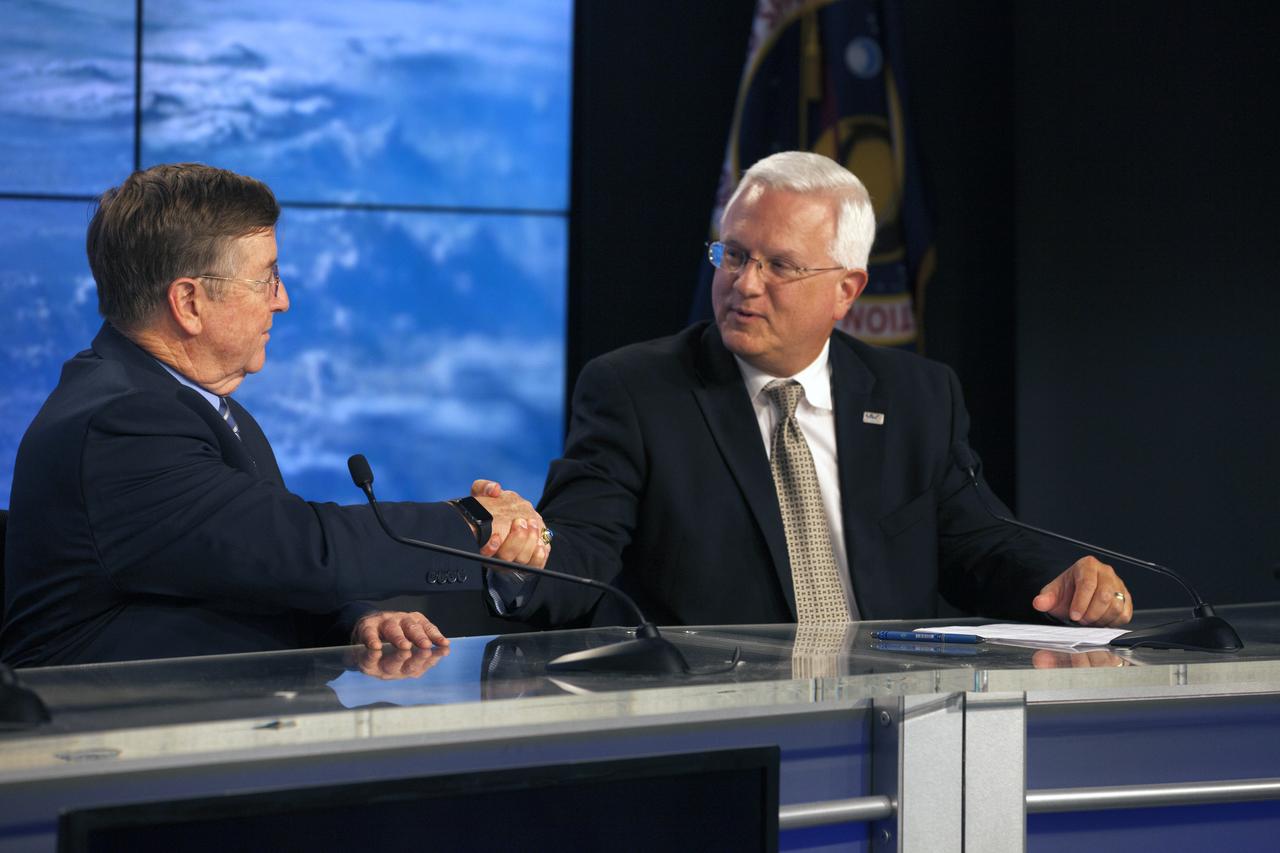
Members of the news media attend a press conference at NASA's Kennedy Space Center in Florida, after the launch of the Orbital ATK Cygnus pressurized cargo module atop a United Launch Alliance Atlas V rocket from Space Launch Complex 41 at Cape Canaveral Air Force Station. It was Orbital ATK's seventh commercial resupply services mission to the International Space Station. Liftoff was at 11:11 a.m. EDT. Shaking hands, from left, are Frank Culbertson, president, Orbital ATK Space Systems Group.and Vern Thorp, program manager, commercial missions, United Launch Alliance.
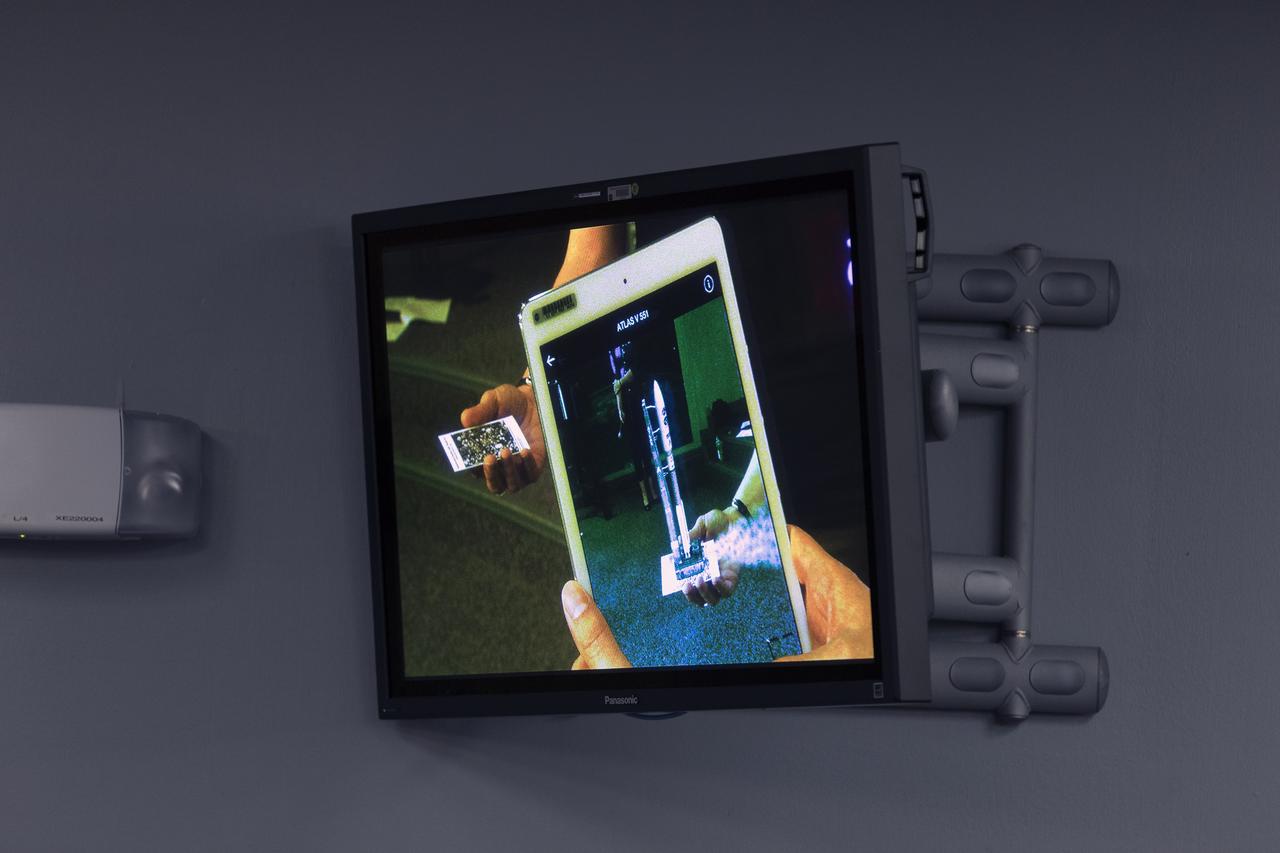
An app is demonstrated that can run on a mobile device such as a smartphone or tablet computer. The app is depicting the launch of the TDRS-M satellite on an Atlas V rocket. The demonstration took place during a briefing focused on preparations to launch NASA's Tracking and Data Relay Satellite, TDRS-M. The latest spacecraft destined for the agency's constellation of communications satellites, TDRS-M will allow nearly continuous contact with orbiting spacecraft ranging from the International Space Station and Hubble Space Telescope to the array of scientific observatories. Liftoff atop a United Launch Alliance Atlas V rocket is scheduled to take place from Space Launch Complex 41 at Cape Canaveral Air Force Station at 8:03 a.m. EDT Aug. 18.
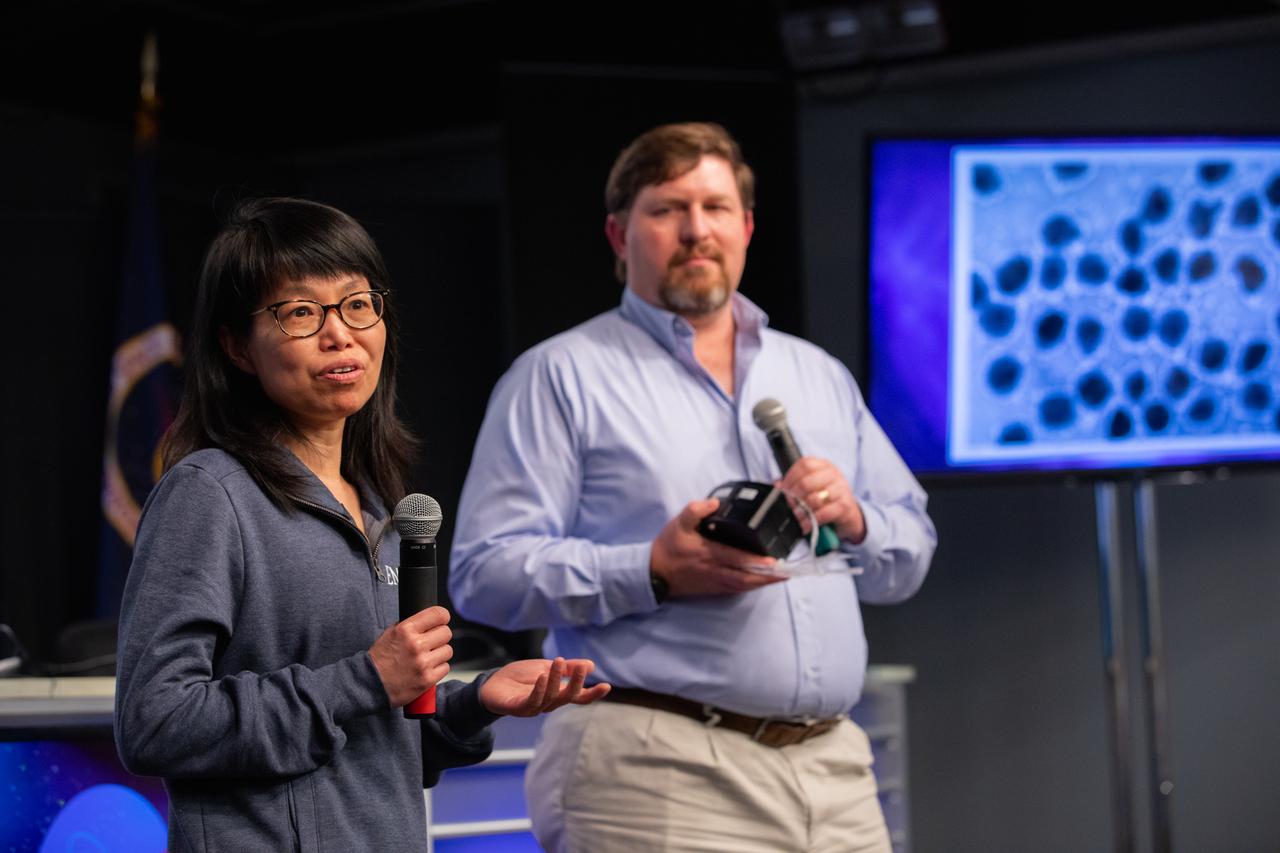
Chunhui Xu, left, associate professor at Emory University School of Medicine and principal investigator for the Generation of Cardiomyocytes from Induced Pluripotent Stem Cells experiment, and Gene Boland, chief scientist of Techshot, address NASA Social participants during a What’s on Board science briefing at the agency’s Kennedy Space Center in Florida on March 5, 2020. The briefing provided a closer look at some of the payloads launching on SpaceX’s 20th Commercial Resupply Services (CRS-20) mission to the International Space Station. The company’s Falcon 9 rocket is scheduled to lift off from Cape Canaveral Air Force Station’s Space Launch Complex 40 at 11:50 p.m. EST on March 6, 2020.
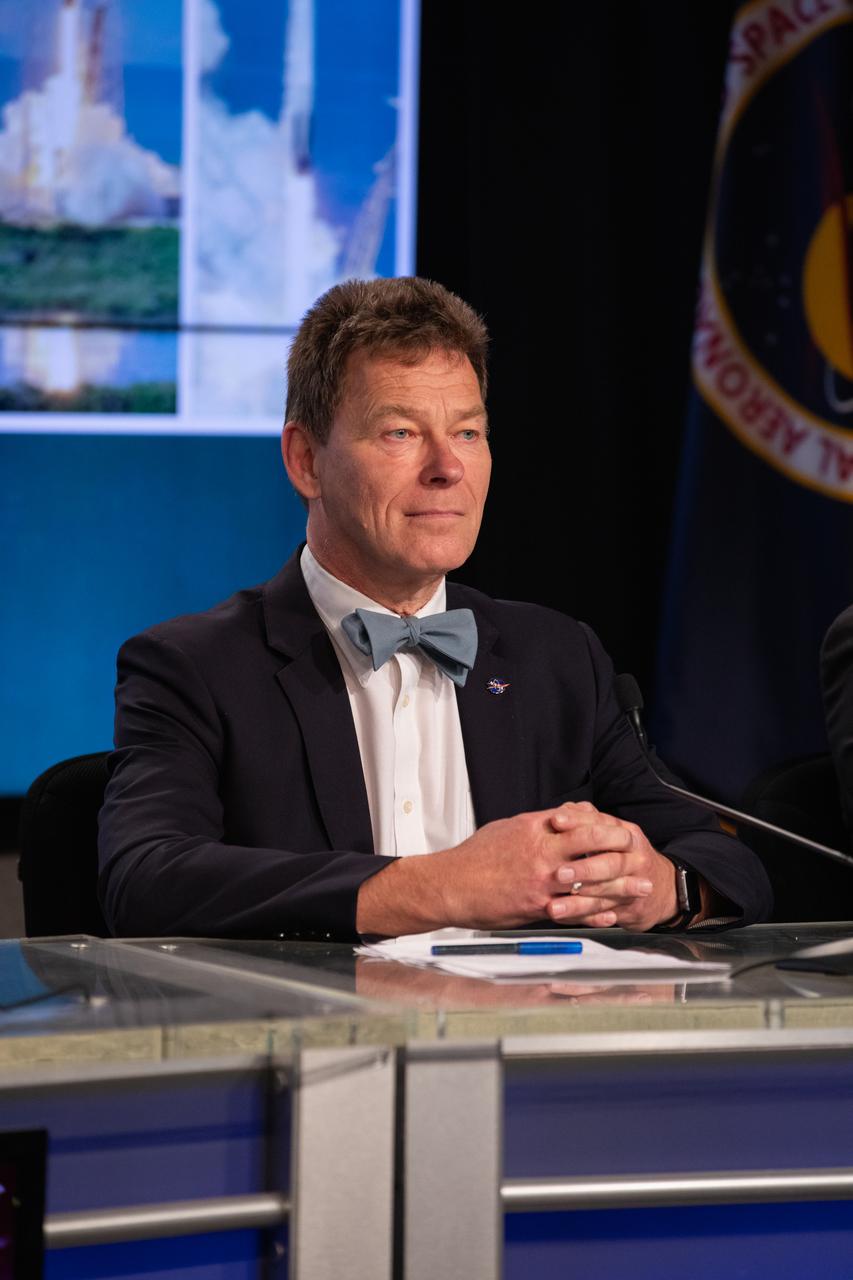
Hans Koenigsmann, vice president of Build and Flight Reliability at SpaceX, participates in a prelaunch news conference for SpaceX’s 20th Commercial Resupply Services (CRS-20) mission to the International Space Station at NASA’s Kennedy Space Center in Florida on March 6, 2020. The company’s Falcon 9 rocket and cargo Dragon spacecraft are scheduled to lift off from Cape Canaveral Air Force Station’s Space Launch Complex 40 at 11:50 p.m. EST on March 6, 2020.
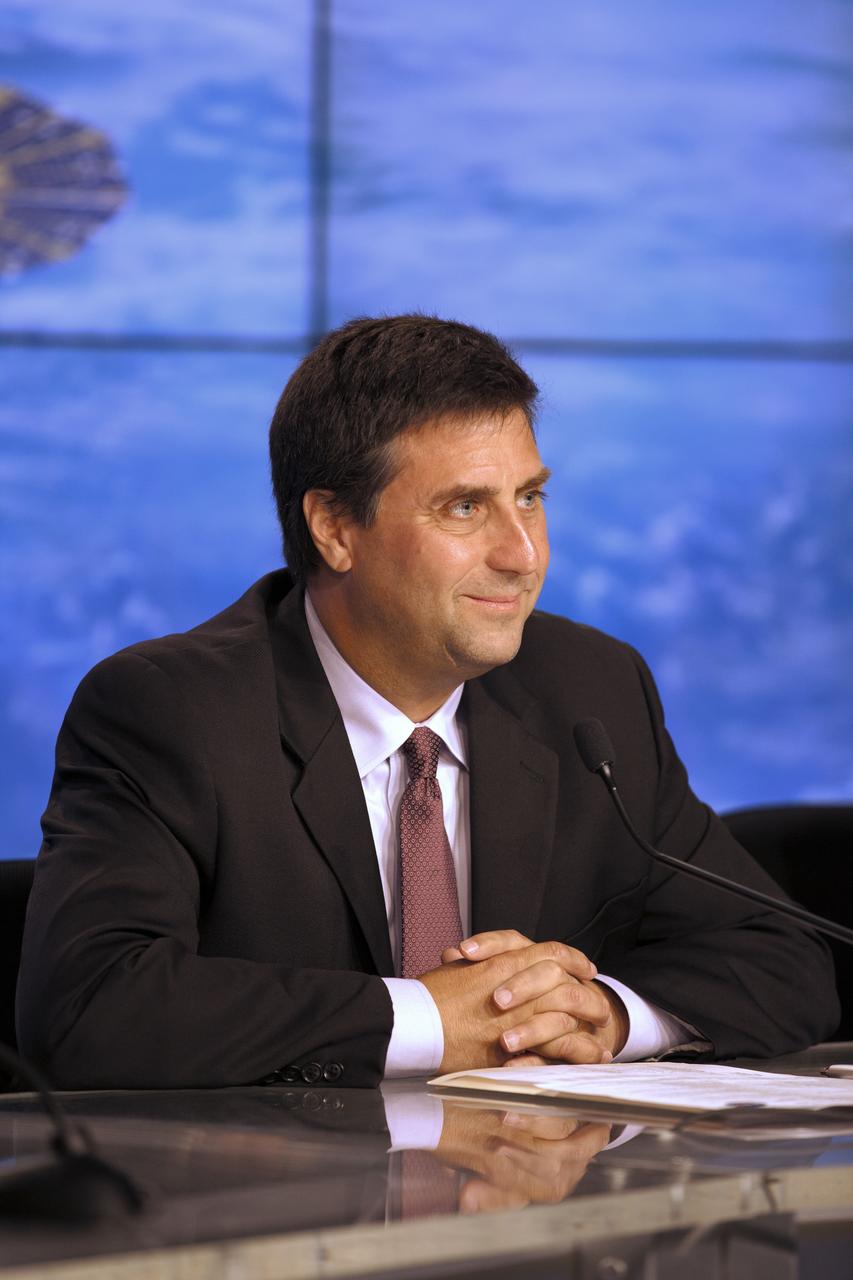
Members of the news media attend a press conference at NASA's Kennedy Space Center in Florida, after the launch of the Orbital ATK Cygnus pressurized cargo module atop a United Launch Alliance Atlas V rocket from Space Launch Complex 41 at Cape Canaveral Air Force Station. It was Orbital ATK's seventh commercial resupply services mission to the International Space Station. Liftoff was at 11:11 a.m. EDT. Speaking to the media is Joel Montalbano, deputy manager, International Space Station Program, NASA Johnson Space Center in Houston.
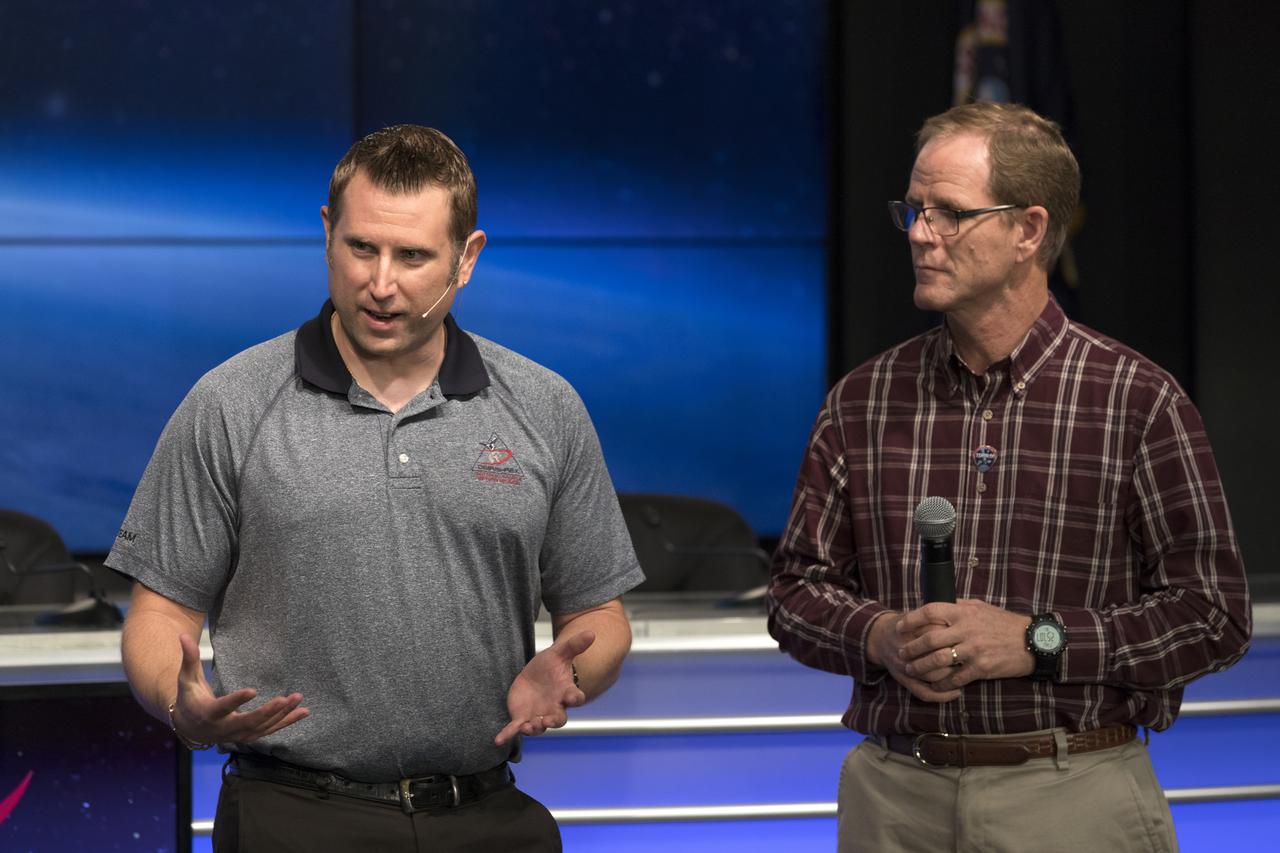
Skip Owen of NASA Launch Services, left and Scott Messer, United Launch Alliance program manager for NASA missions speak to members of social media in the Kennedy Space Center’s Press Site auditorium. The briefing focused on preparations to launch NASA's Tracking and Data Relay Satellite, TDRS-M. The latest spacecraft destined for the agency's constellation of communications satellites, TDRS-M will allow nearly continuous contact with orbiting spacecraft ranging from the International Space Station and Hubble Space Telescope to the array of scientific observatories. Liftoff atop a United Launch Alliance Atlas V rocket is scheduled to take place from Space Launch Complex 41 at Cape Canaveral Air Force Station at 8:03 a.m. EDT Aug. 18.
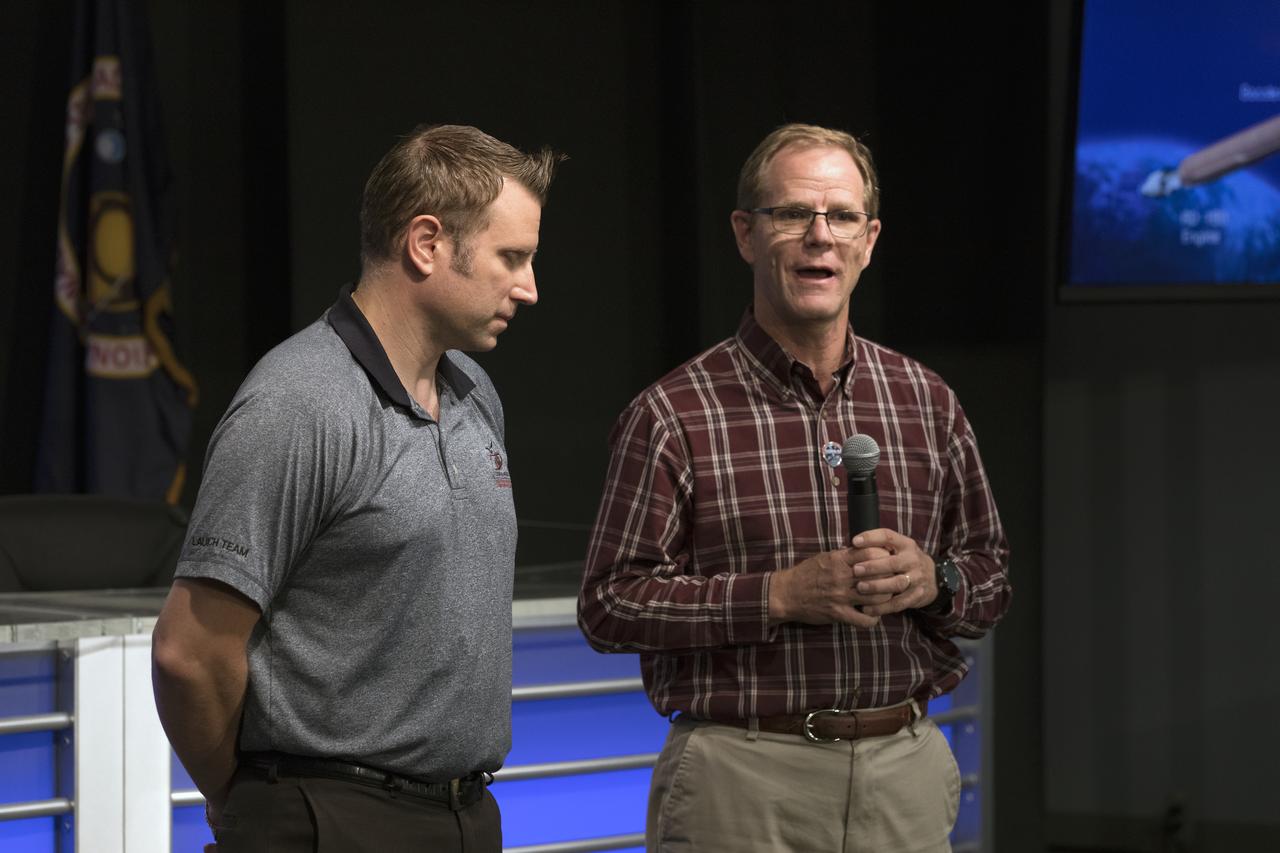
Skip Owen of NASA Launch Services, left and Scott Messer, United Launch Alliance program manager for NASA missions speak to members of social media in the Kennedy Space Center’s Press Site auditorium. The briefing focused on preparations to launch NASA's Tracking and Data Relay Satellite, TDRS-M. The latest spacecraft destined for the agency's constellation of communications satellites, TDRS-M will allow nearly continuous contact with orbiting spacecraft ranging from the International Space Station and Hubble Space Telescope to the array of scientific observatories. Liftoff atop a United Launch Alliance Atlas V rocket is scheduled to take place from Space Launch Complex 41 at Cape Canaveral Air Force Station at 8:03 a.m. EDT Aug. 18.

Badri Younes, deputy associate administrator for Space Communications and Navigation at NASA Headquarters in Washington, speaks to members of social media in the Kennedy Space Center’s Press Site auditorium. The briefing focused on preparations to launch NASA's Tracking and Data Relay Satellite, TDRS-M. The latest spacecraft destined for the agency's constellation of communications satellites, TDRS-M will allow nearly continuous contact with orbiting spacecraft ranging from the International Space Station and Hubble Space Telescope to the array of scientific observatories. Liftoff atop a United Launch Alliance Atlas V rocket is scheduled to take place from Space Launch Complex 41 at Cape Canaveral Air Force Station at 8:03 a.m. EDT Aug. 18.
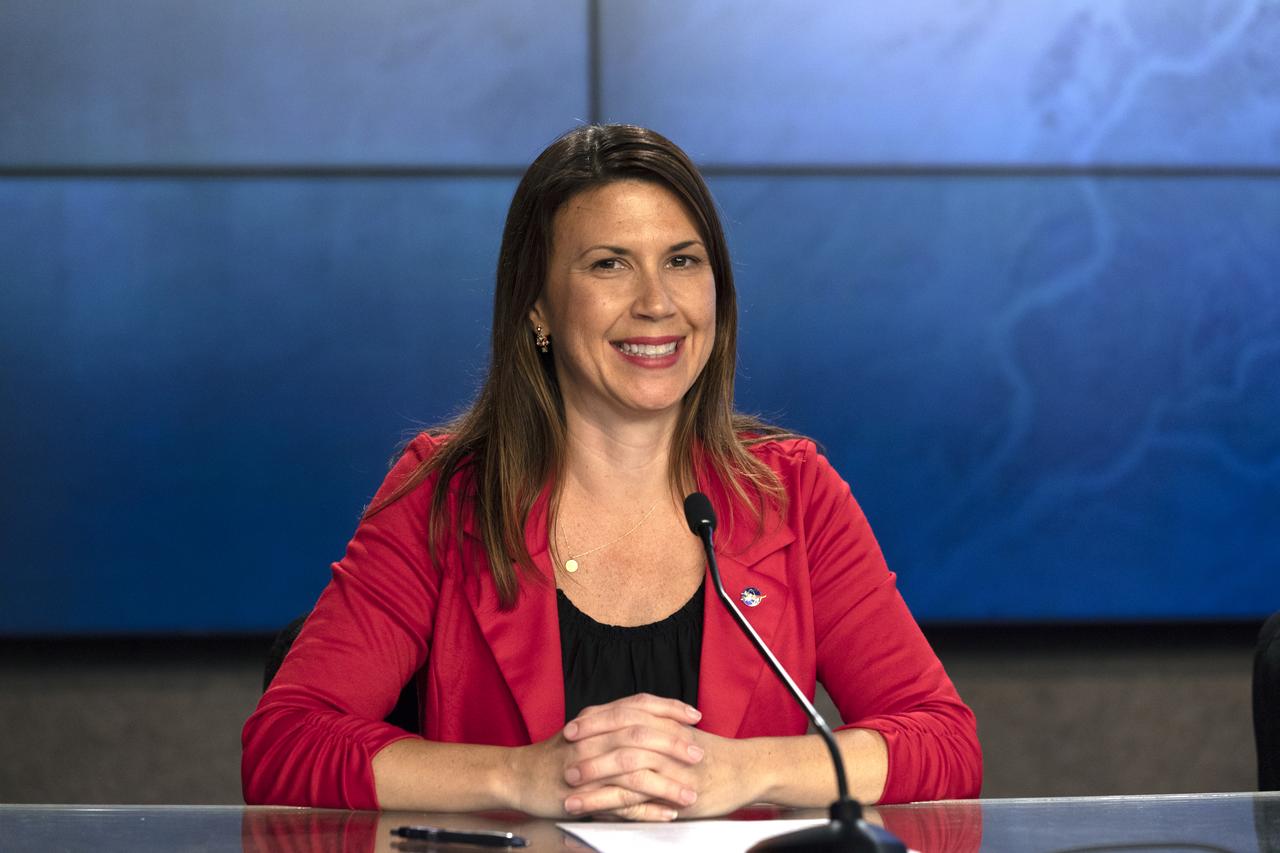
In the Kennedy Space Center’s Press Site auditorium, Tori McLendon of NASA Communications, speaks to members of the media during a prelaunch news conference for the SpaceX CRS-16 commercial resupply services mission to the International Space Station. A Dragon spacecraft is scheduled to be launched from Space Launch Complex 40 at Cape Canaveral Air Force Station. The SpaceX Falcon 9 rocket will lift off on the company's 16th Commercial Resupply Services mission to the space station.
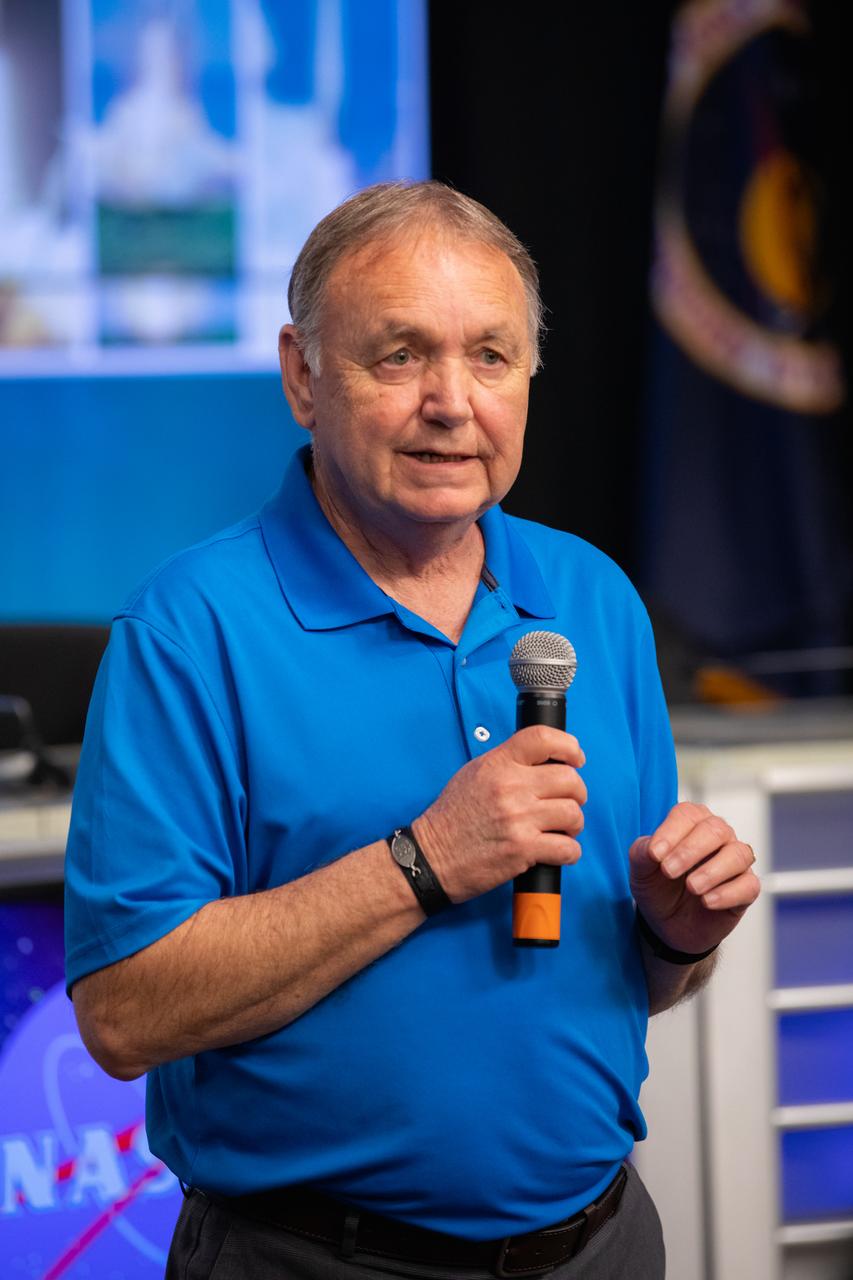
Paul Patton, senior manager, front end innovation and regulatory for Delta Faucet, addresses NASA Social participants during a What’s on Board science briefing at the agency’s Kennedy Space Center in Florida on March 5, 2020. The briefing provided a closer look at some of the payloads launching on SpaceX’s 20th Commercial Resupply Services (CRS-20) mission to the International Space Station. The company’s Falcon 9 rocket is scheduled to lift off from Cape Canaveral Air Force Station’s Space Launch Complex 40 at 11:50 p.m. EST on March 6, 2020.
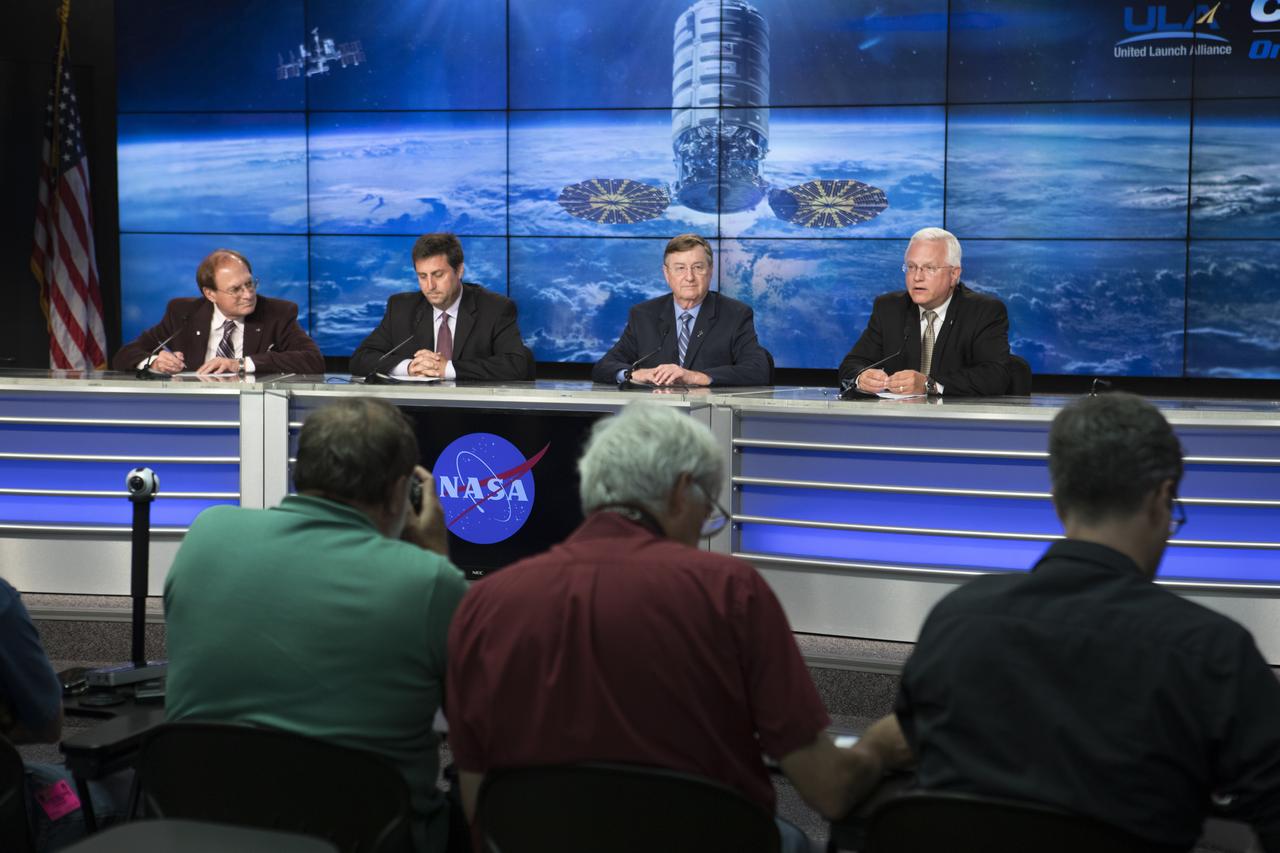
Members of the news media attend a press conference at NASA's Kennedy Space Center in Florida, after the launch of the Orbital ATK Cygnus pressurized cargo module atop a United Launch Alliance Atlas V rocket from Space Launch Complex 41 at Cape Canaveral Air Force Station. It was Orbital ATK's seventh commercial resupply services mission to the International Space Station. Liftoff was at 11:11 a.m. EDT. Speaking to the media are, from left, George Diller, NASA Kennedy Communications; Joel Montalbano, deputy manager, International Space Station Program, NASA Johnson Space Center in Houston; Frank Culbertson, president, Orbital ATK Space Systems Group; and Vern Thorp, program manager, commercial missions, United Launch Alliance.
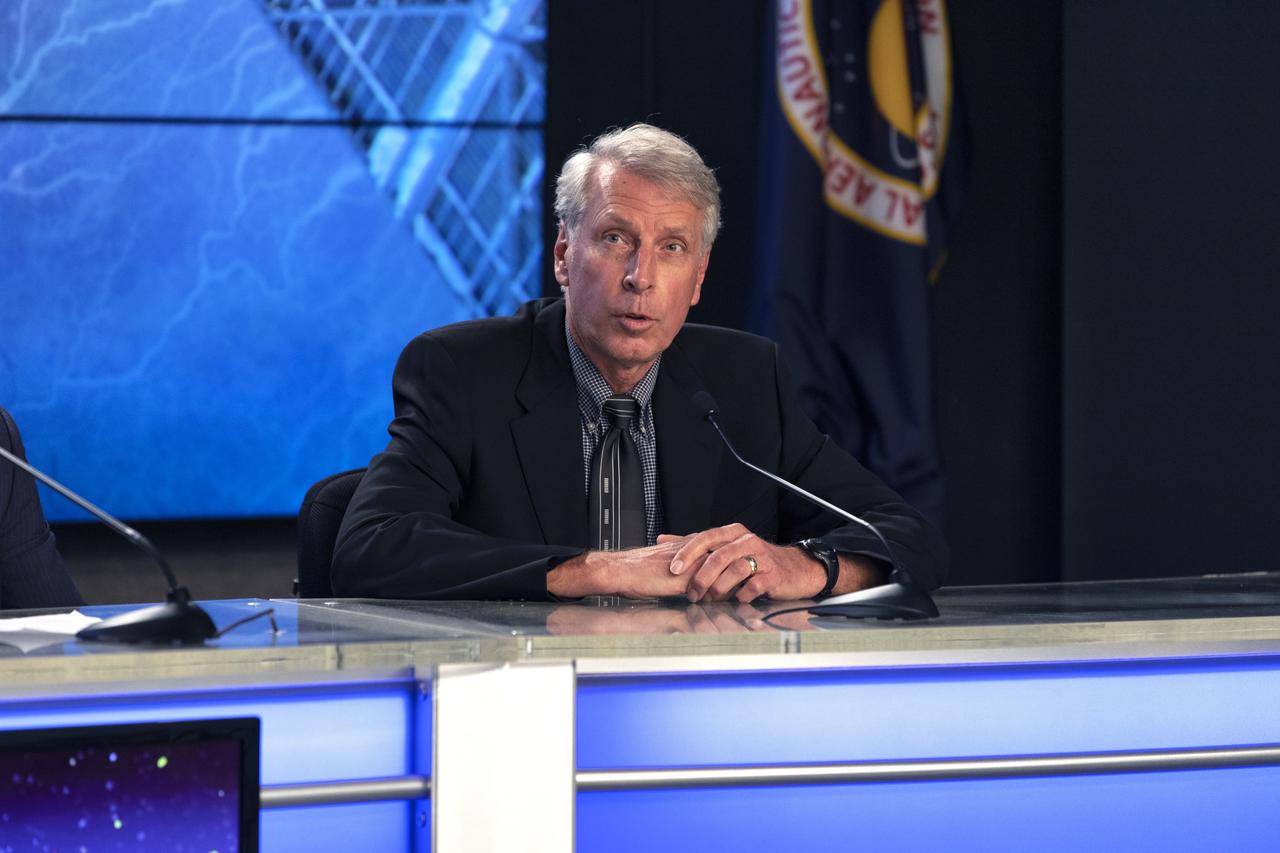
In the Kennedy Space Center’s Press Site auditorium, Clay Flinn, launch weather officer for the U.S. Air Force 45th Space Wing at Cape Canaveral Air Force Station, speaks to members of the media during a prelaunch news conference for the SpaceX CRS-16 commercial resupply services mission to the International Space Station. A Dragon spacecraft is scheduled to be launched from Space Launch Complex 40 at Cape Canaveral Air Force Station. The SpaceX Falcon 9 rocket will lift off on the company's 16th Commercial Resupply Services mission to the space station.
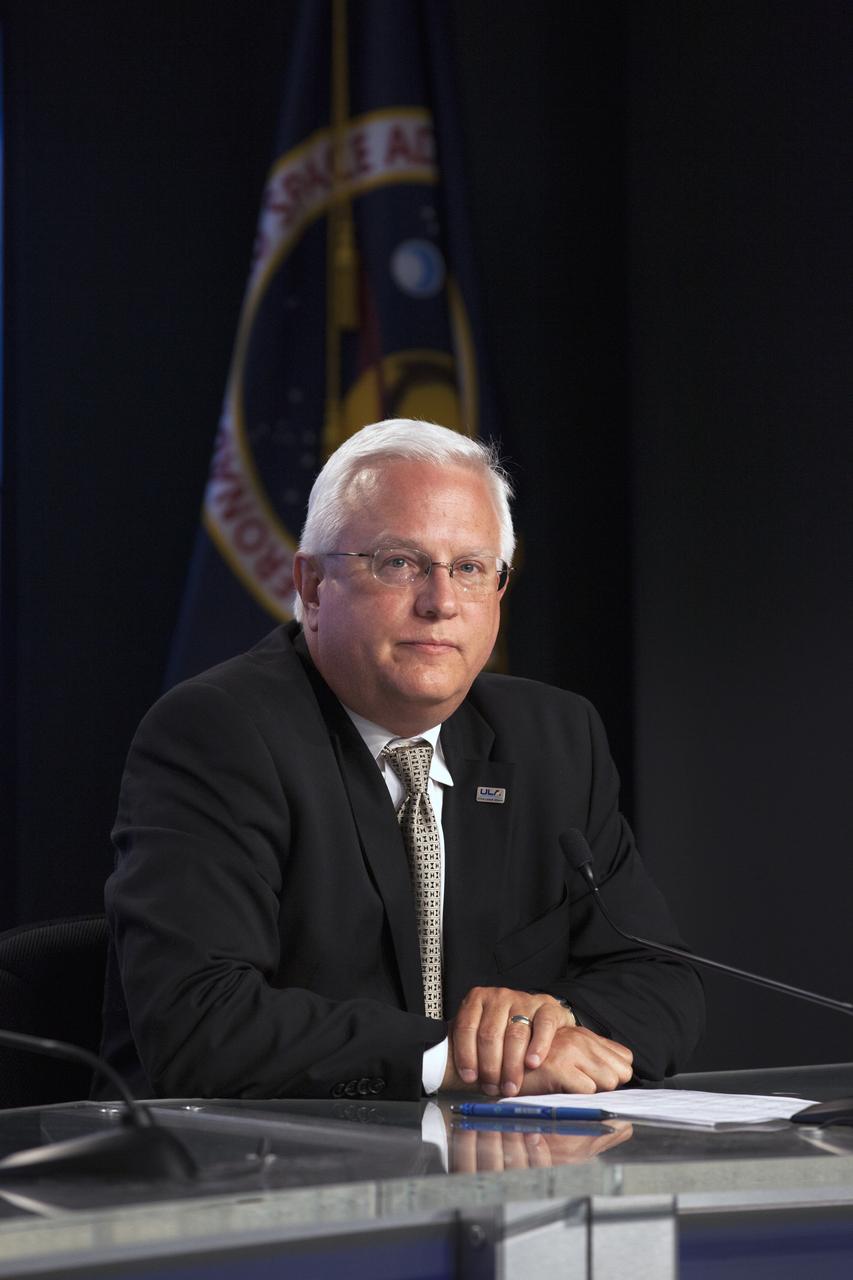
Members of the news media attend a press conference at NASA's Kennedy Space Center in Florida, after the launch of the Orbital ATK Cygnus pressurized cargo module atop a United Launch Alliance Atlas V rocket from Space Launch Complex 41 at Cape Canaveral Air Force Station. It was Orbital ATK's seventh commercial resupply services mission to the International Space Station. Liftoff was at 11:11 a.m. EDT. Speaking to the media is Vern Thorp, program manager, commercial missions, United Launch Alliance.
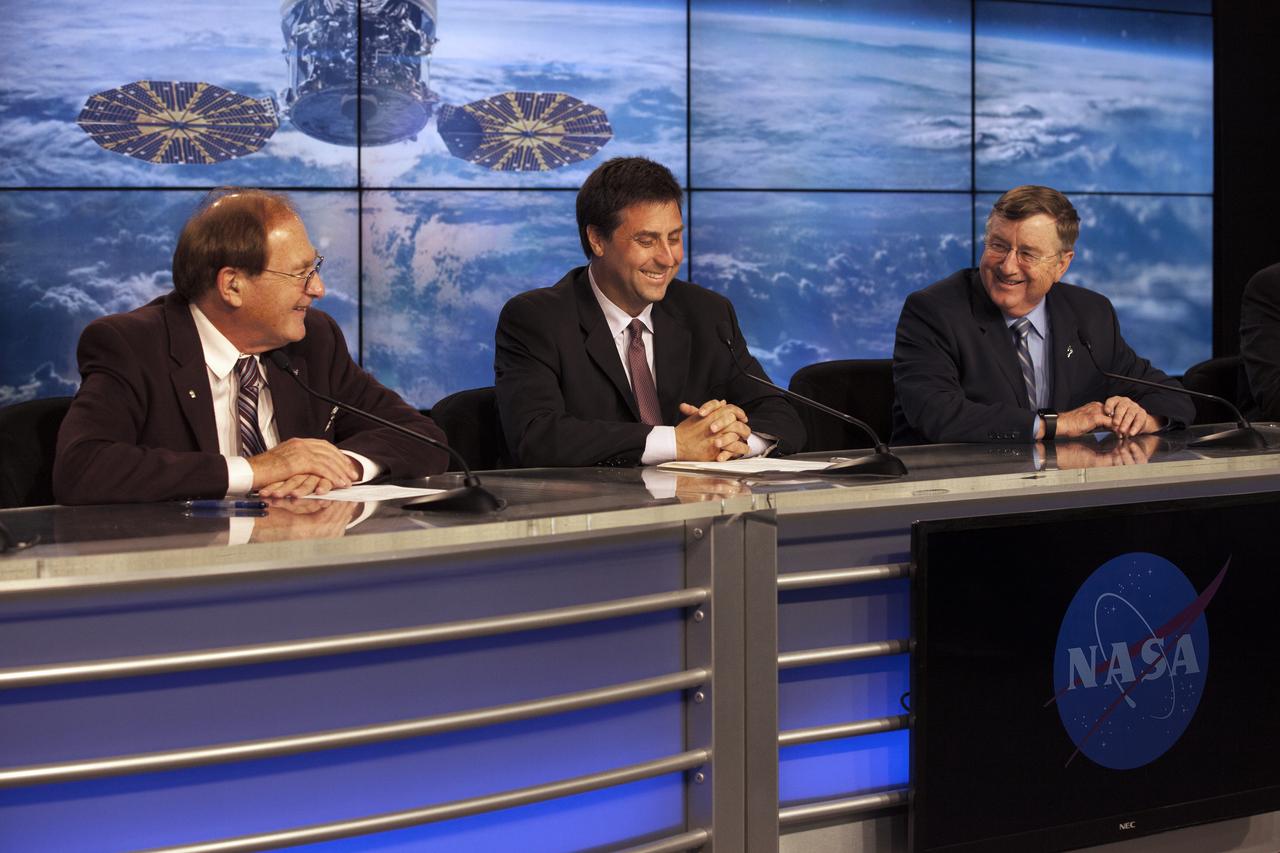
Members of the news media attend a press conference at NASA's Kennedy Space Center in Florida, after the launch of the Orbital ATK Cygnus pressurized cargo module atop a United Launch Alliance Atlas V rocket from Space Launch Complex 41 at Cape Canaveral Air Force Station. It was Orbital ATK's seventh commercial resupply services mission to the International Space Station. Liftoff was at 11:11 a.m. EDT. Speaking to the media are, from left, George Diller, NASA Kennedy Communications; Joel Montalbano, deputy manager, International Space Station Program, NASA Johnson Space Center in Houston; and Frank Culbertson, president, Orbital ATK Space Systems Group.
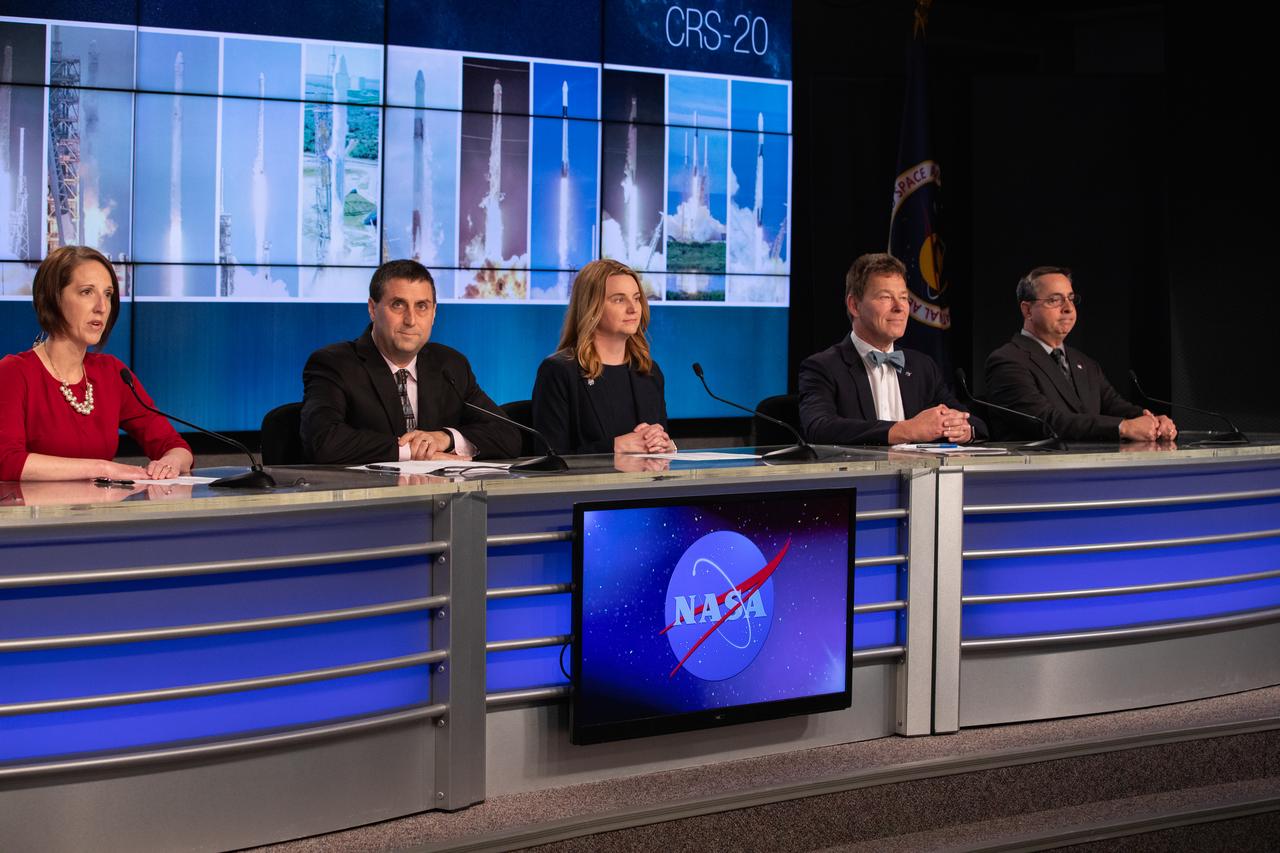
A prelaunch news conference for SpaceX’s 20th Commercial Resupply Services (CRS-20) mission to the International Space Station is held at NASA’s Kennedy Space Center in Florida on March 6, 2020. From left are conference moderator Heather Scott of NASA Communications; Joel Montalbano, manager of the agency’s International Space Station Program; Jennifer Buchli, deputy chief scientist for the International Space Station Program; Hans Koenigsmann, vice president of Build and Flight Reliability at SpaceX; and Mike McAleenan, launch weather officer with the U.S. Air Force 45th Space Wing. SpaceX’s Falcon 9 rocket and cargo Dragon spacecraft are scheduled to lift off from Cape Canaveral Air Force Station’s Space Launch Complex 40 at 11:50 p.m. EST on March 6, 2020.
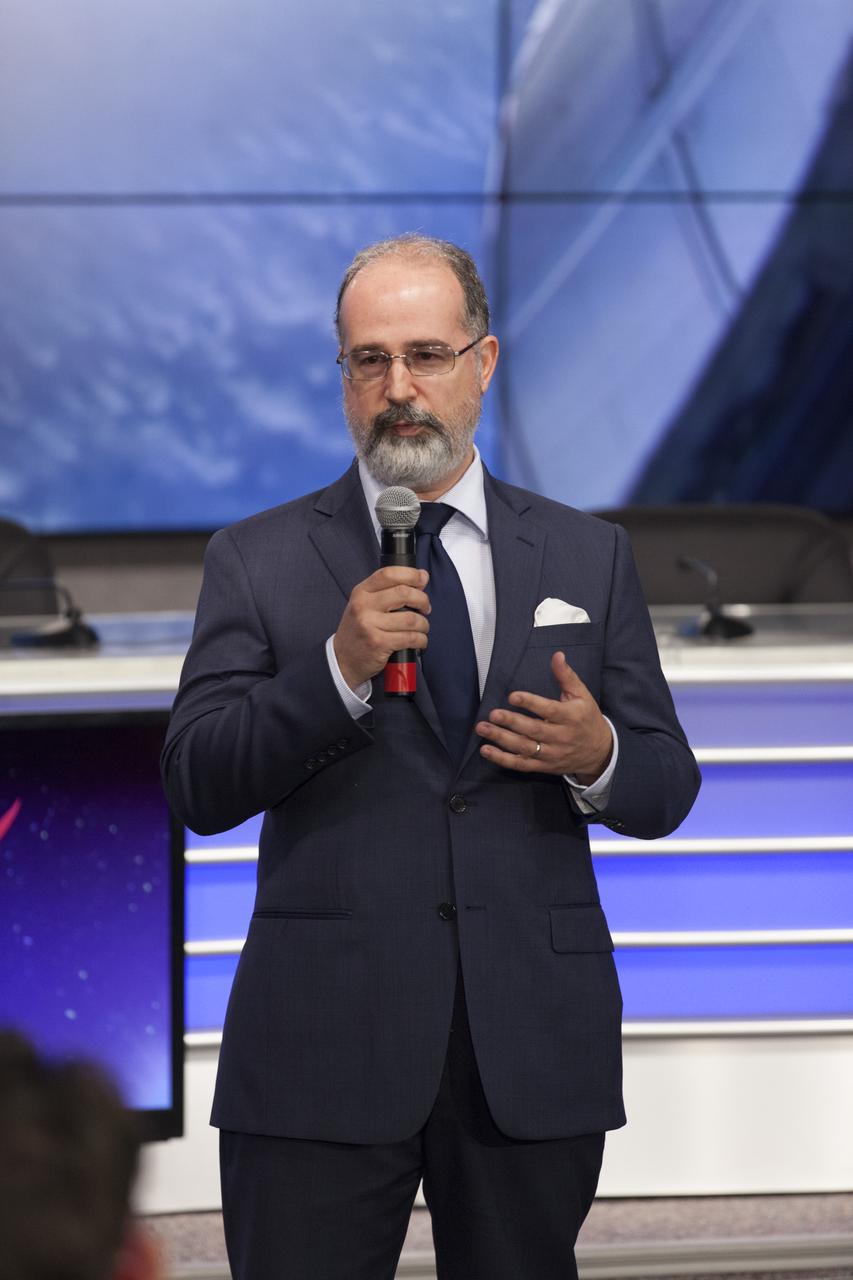
Marco Baptista, director of Research Programs for the Michael J. Fox Foundation, speaks to members of social media in the Kennedy Space Center’s Press Site auditorium about the Crystallization of LRRK2 Under Microgravity Conditions experiment. The briefing focused on research planned for launch to the International Space Station. The scientific materials and supplies will be aboard a Dragon spacecraft scheduled for launch from Kennedy’s Launch Complex 39A on Aug. 14 atop a SpaceX Falcon 9 rocket on the company's 12th Commercial Resupply Services mission to the space station.
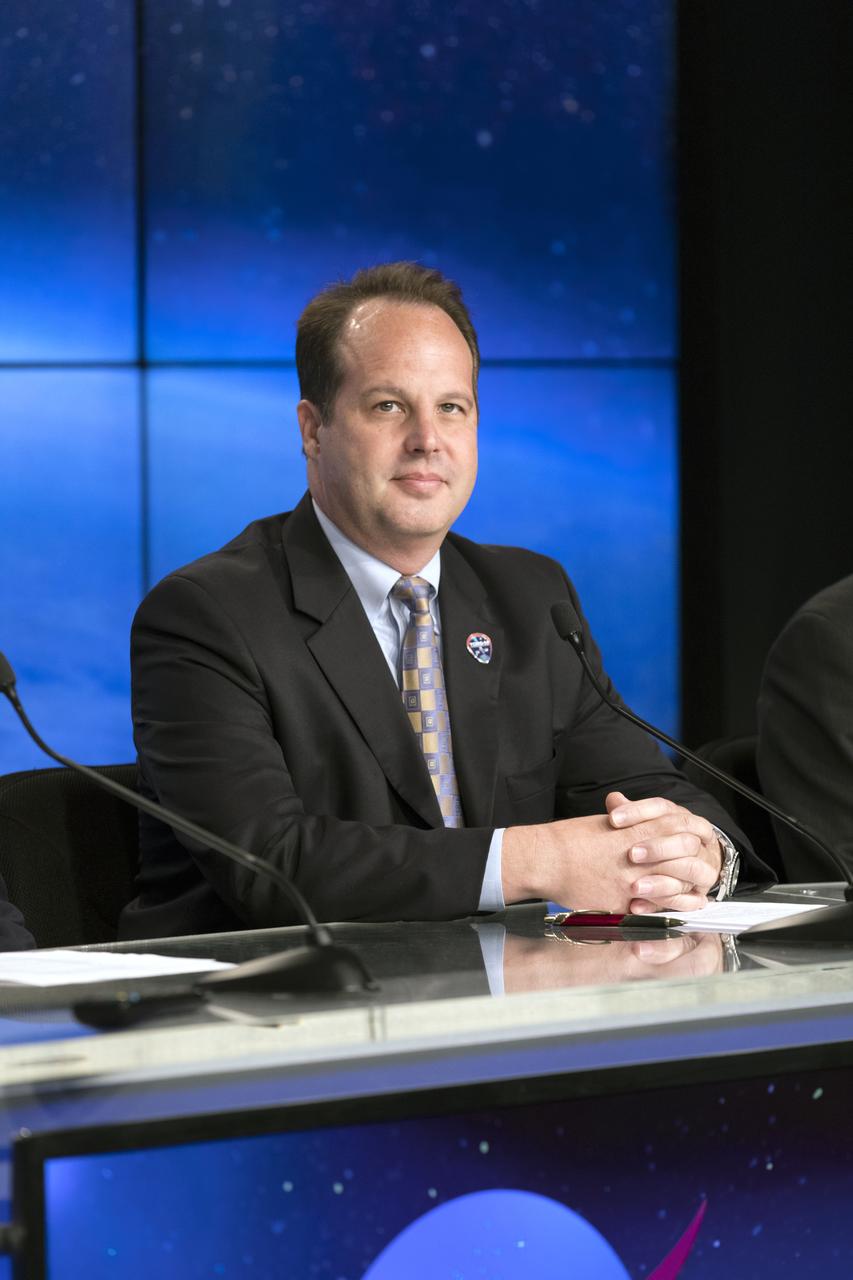
In the Kennedy Space Center's Press Site auditorium, James Wilson III, Boeing program manager for NASA/Civil Space Programs, speaks to members of the media at a prelaunch news conference for NASA's Tracking and Data Relay Satellite, TDRS-M. It is the latest spacecraft destined for the agency's constellation of communications satellites that allows nearly continuous contact with orbiting spacecraft ranging from the International Space Station and Hubble Space Telescope to the array of scientific observatories. Liftoff atop a United Launch Alliance Atlas V rocket is scheduled to take place from Space Launch Complex 41 at Cape Canaveral Air Force Station at 8:03 a.m. EDT Aug. 18.
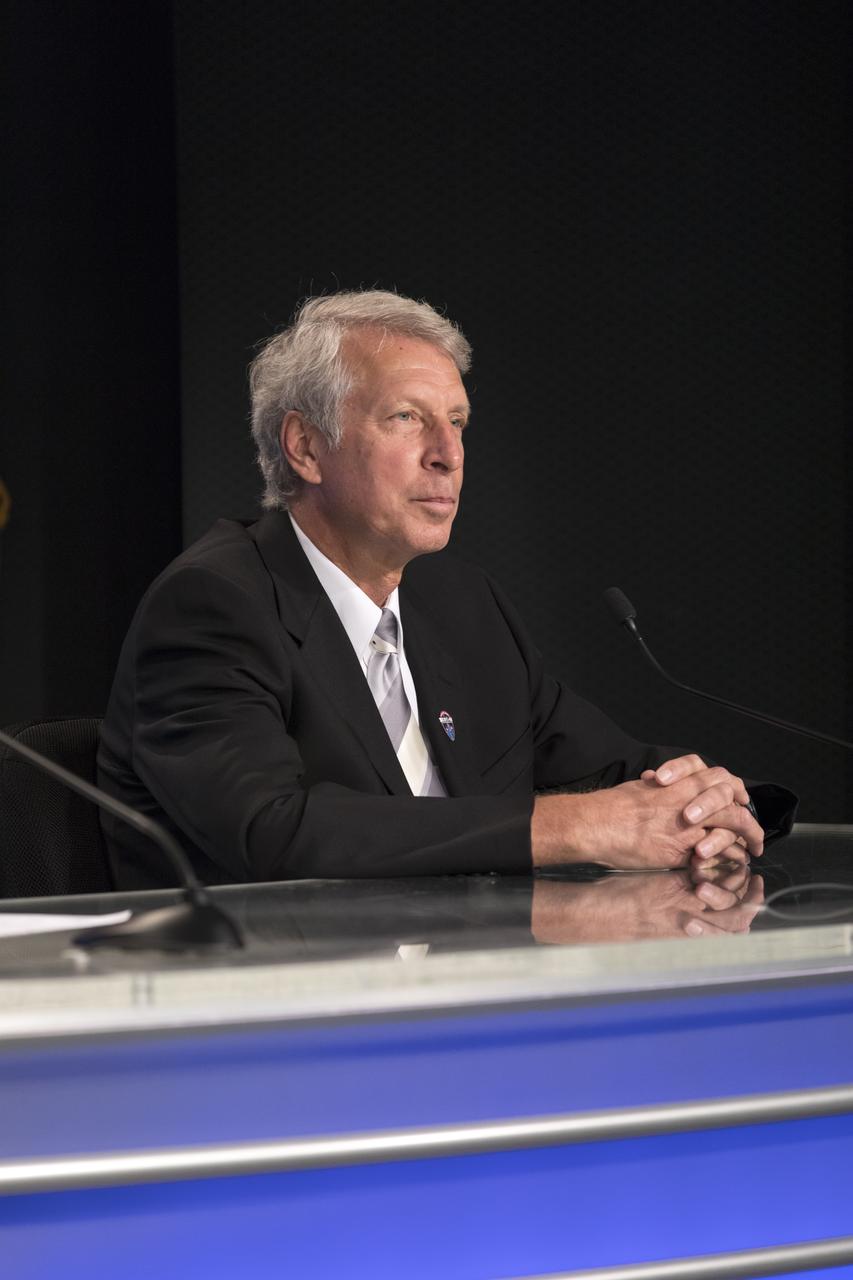
In the Kennedy Space Center's Press Site auditorium, Clay Flinn, launch weather officer with the 45th Space Wing at Cape Canaveral Air Force Station, speaks to members of the media at a prelaunch news conference for NASA's Tracking and Data Relay Satellite, TDRS-M. It is the latest spacecraft destined for the agency's constellation of communications satellites that allows nearly continuous contact with orbiting spacecraft ranging from the International Space Station and Hubble Space Telescope to the array of scientific observatories. Liftoff atop a United Launch Alliance Atlas V rocket is scheduled to take place from Space Launch Complex 41 at Cape Canaveral Air Force Station at 8:03 a.m. EDT Aug. 18.

Aaron Beeler, professor of chemistry at Boston University and principal investigator of the Flow Chemistry Platform for Synthetic Reactions on ISS study, addresses NASA Social participants during a What’s on Board science briefing at the agency’s Kennedy Space Center in Florida on March 5, 2020. The briefing provided a closer look at some of the payloads launching on SpaceX’s 20th Commercial Resupply Services (CRS-20) mission to the International Space Station. The company’s Falcon 9 rocket is scheduled to lift off from Cape Canaveral Air Force Station’s Space Launch Complex 40 at 11:50 p.m. EST on March 6, 2020.
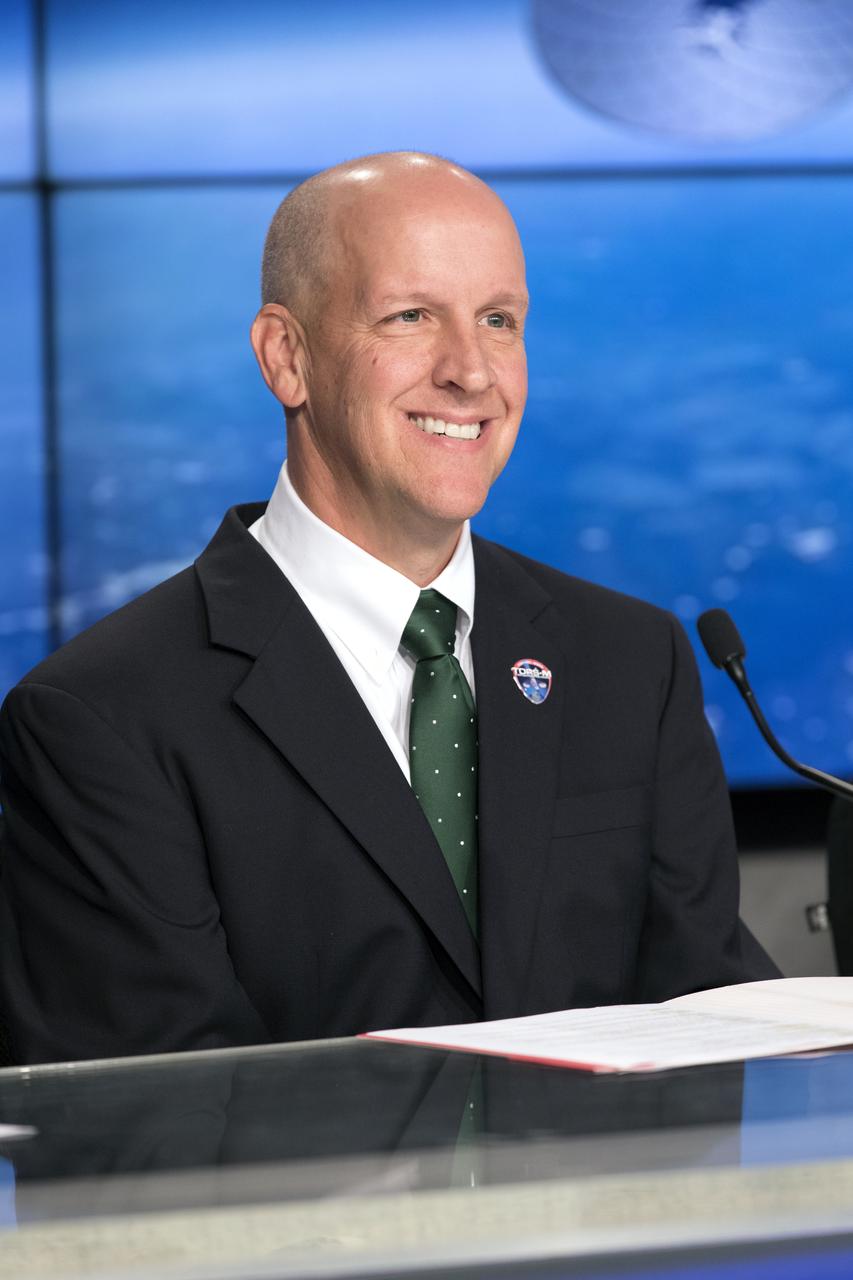
In the Kennedy Space Center's Press Site auditorium, Tim Dunn, launch director at NASA Kennedy, speaks to members of the media at a prelaunch news conference for NASA's Tracking and Data Relay Satellite, TDRS-M. It is the latest spacecraft destined for the agency's constellation of communications satellites that allows nearly continuous contact with orbiting spacecraft ranging from the International Space Station and Hubble Space Telescope to the array of scientific observatories. Liftoff atop a United Launch Alliance Atlas V rocket is scheduled to take place from Space Launch Complex 41 at Cape Canaveral Air Force Station at 8:03 a.m. EDT Aug. 18.

Neil Mallik, NASA deputy network director for Human Spaceflight, speaks to members of social media in the Kennedy Space Center’s Press Site auditorium. The briefing focused on preparations to launch NASA's Tracking and Data Relay Satellite, TDRS-M. The latest spacecraft destined for the agency's constellation of communications satellites, TDRS-M will allow nearly continuous contact with orbiting spacecraft ranging from the International Space Station and Hubble Space Telescope to the array of scientific observatories. Liftoff atop a United Launch Alliance Atlas V rocket is scheduled to take place from Space Launch Complex 41 at Cape Canaveral Air Force Station at 8:03 a.m. EDT Aug. 18.
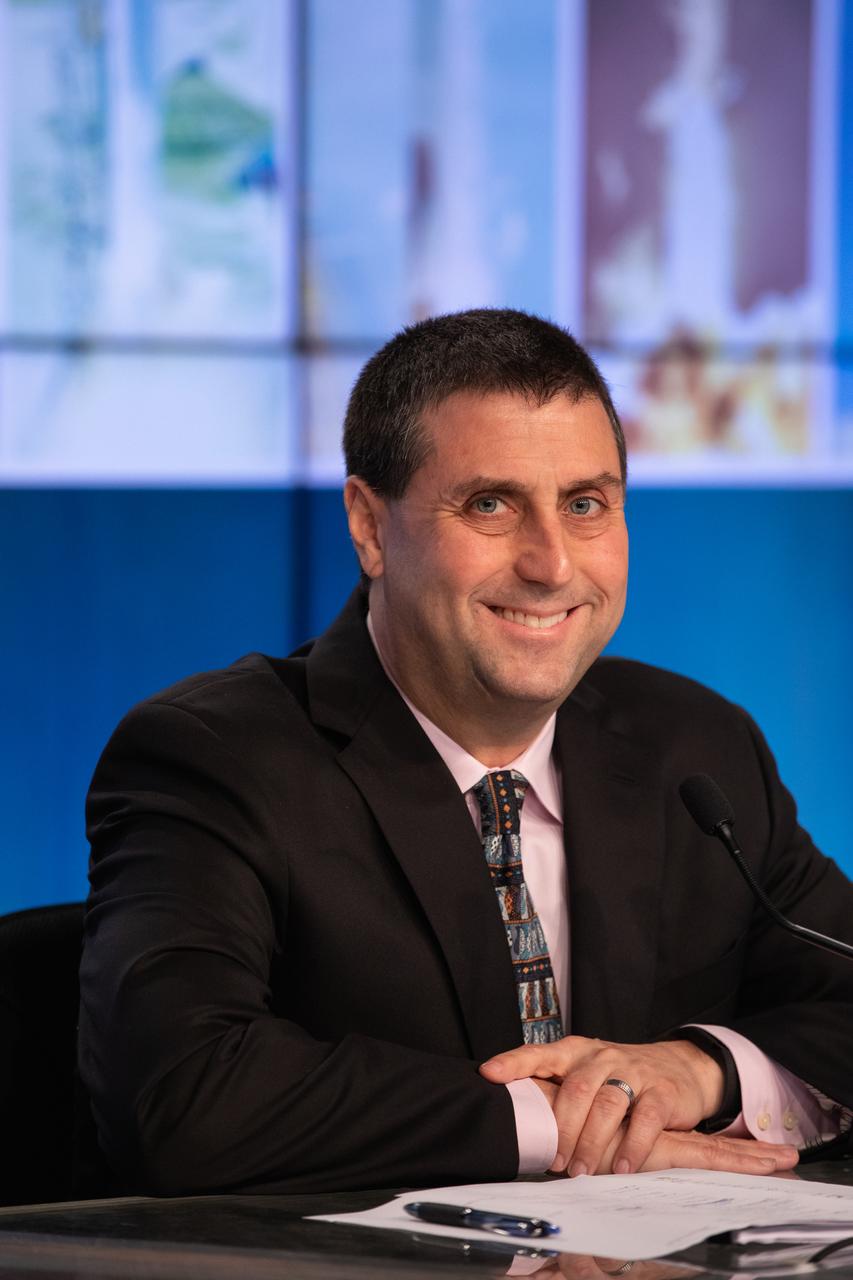
Joel Montalbano, manager of NASA’s International Space Station Program, participates in a prelaunch news conference for SpaceX’s 20th Commercial Resupply Services (CRS-20) mission to the International Space Station at the agency’s Kennedy Space Center in Florida on March 6, 2020. The company’s Falcon 9 rocket and cargo Dragon spacecraft are scheduled to lift off from Cape Canaveral Air Force Station’s Space Launch Complex 40 at 11:50 p.m. EST on March 6, 2020.
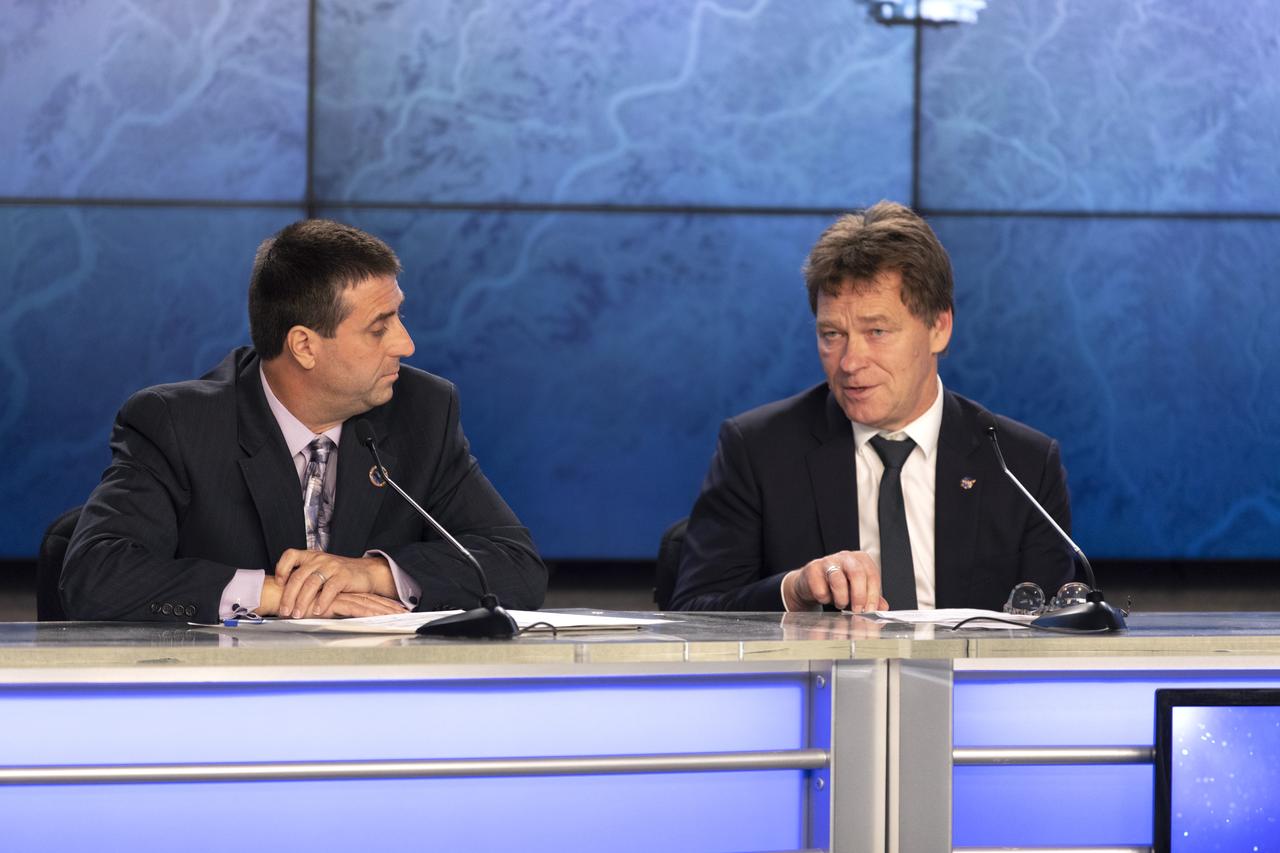
In the Kennedy Space Center’s Press Site auditorium, Joel Montalbano, deputy International Space Station program manager at NASA's Johnson Space Center in Houston, and Hans Koenigsmann, vice president of Build and Flight Reliability for SpaceX, speak to members of the media during a prelaunch news conference for the SpaceX CRS-16 commercial resupply services mission to the International Space Station. A Dragon spacecraft is scheduled to be launched from Space Launch Complex 40 at Cape Canaveral Air Force Station. The SpaceX Falcon 9 rocket will lift off on the company's 16th Commercial Resupply Services mission to the space station.
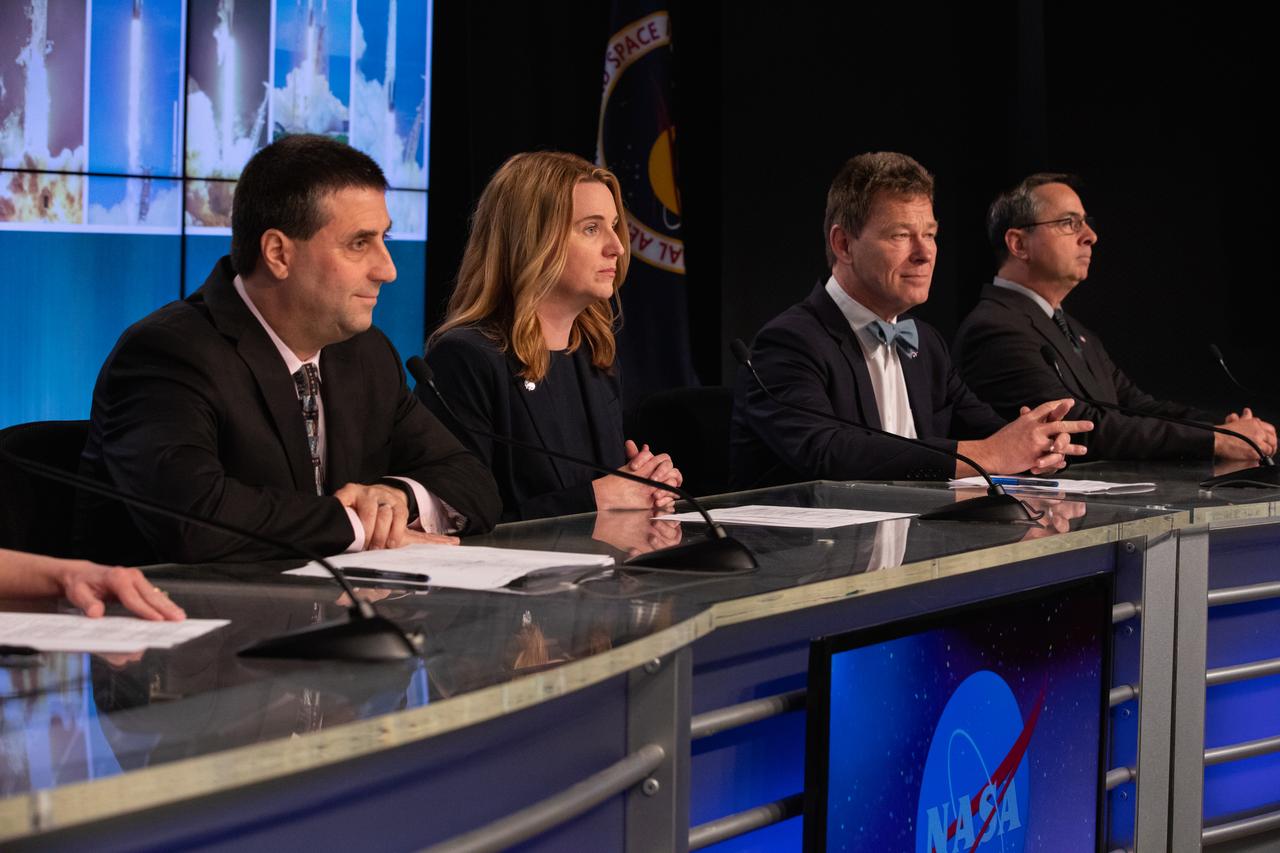
A prelaunch news conference for SpaceX’s 20th Commercial Resupply Services (CRS-20) mission to the International Space Station is held at NASA’s Kennedy Space Center in Florida on March 6, 2020. From left are Joel Montalbano, manager of the agency’s International Space Station Program; Jennifer Buchli, deputy chief scientist for the International Space Station Program; Hans Koenigsmann, vice president of Build and Flight Reliability at SpaceX; and Mike McAleenan, launch weather officer with the U.S. Air Force 45th Space Wing. SpaceX’s Falcon 9 rocket and cargo Dragon spacecraft are scheduled to lift off from Cape Canaveral Air Force Station’s Space Launch Complex 40 at 11:50 p.m. EST on March 6, 2020.
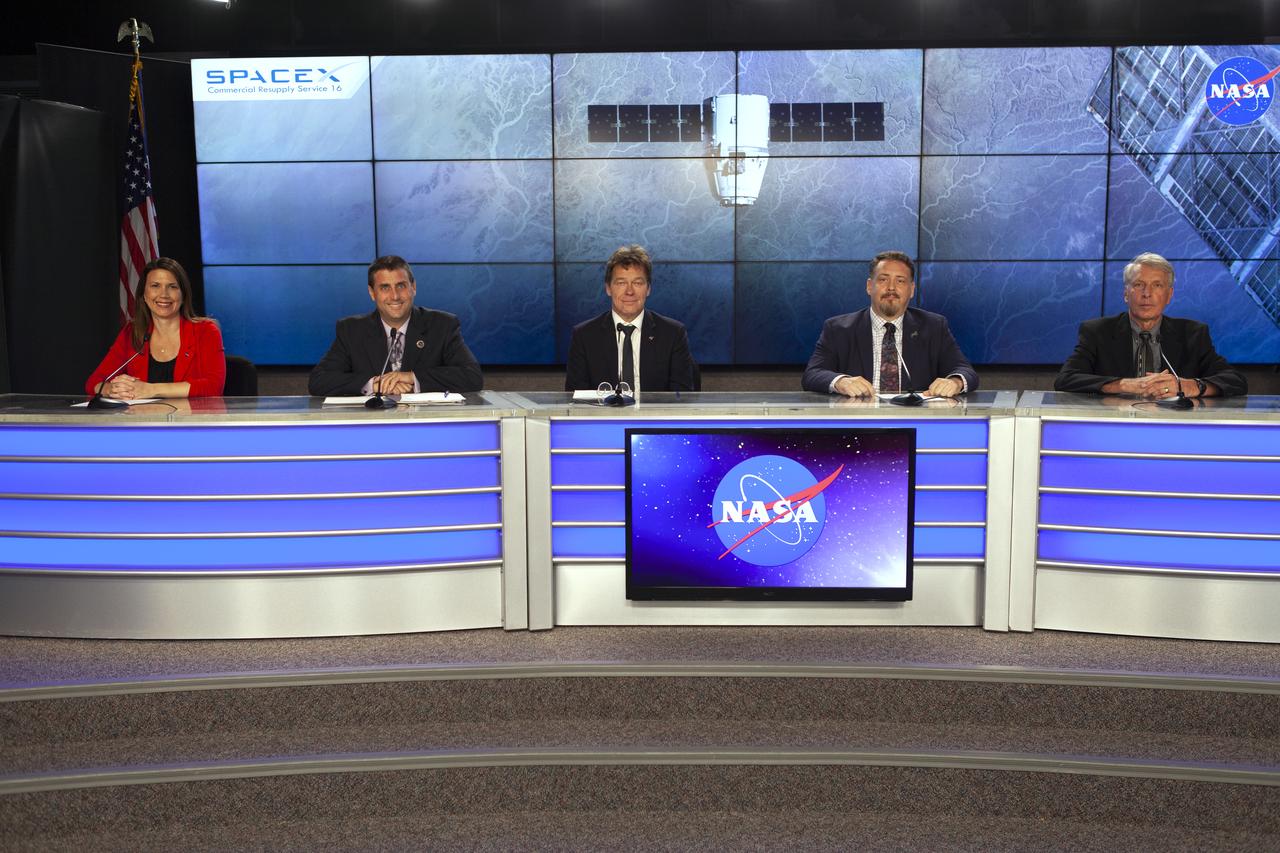
In the Kennedy Space Center’s Press Site auditorium, agency and industry leaders speak to members of the media during a prelaunch news conference for the SpaceX CRS-16 commercial resupply services mission to the International Space Station. From left are: Tori McLendon of NASA Communications, Joel Montalbano, deputy International Space Station program manager at NASA's Johnson Space Center in Houston, Hans Koenigsmann, vice president of Build and Flight Reliability for SpaceX, Kirt Costello, International Space Station program chief scientist at Johnson, and Clay Flinn, launch weather officer for the U.S. Air Force 45th Space Wing at Cape Canaveral Air Force Station. A Dragon spacecraft is scheduled to be launched from Space Launch Complex 40 at Cape Canaveral Air Force Station. The SpaceX Falcon 9 rocket will lift off on the company's 16th Commercial Resupply Services mission to the space station.
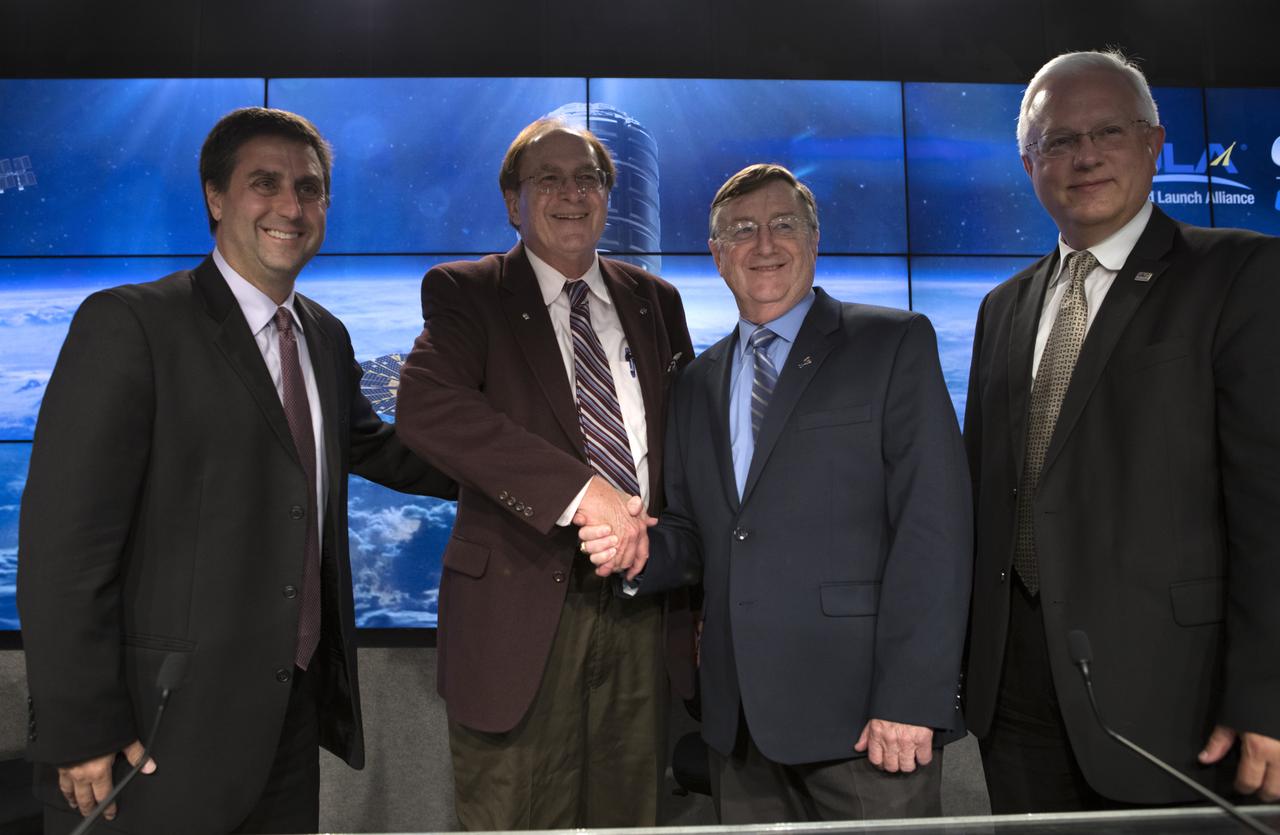
At the conclusion of the Orbital ATK CRS-7 post-launch press conference, moderator George Diller, second from left, NASA Kennedy Communications; shakes hands with Joel Montalbano, deputy manager, International Space Station Program, NASA Johnson Space Center in Houston. Also with them are Frank Culbertson, president, Orbital ATK Space Systems Group; and Vern Thorp, program manager, commercial missions, United Launch Alliance. A United Launch Alliance Atlas V rocket lifted off from Space Launch Complex 41 at Cape Canaveral Air Force Station in Florida, carrying Orbital ATK's Cygnus pressurized cargo module. It is Orbital ATK's seventh commercial resupply services mission to the International Space Station. Liftoff was at 11:11 a.m. EDT.
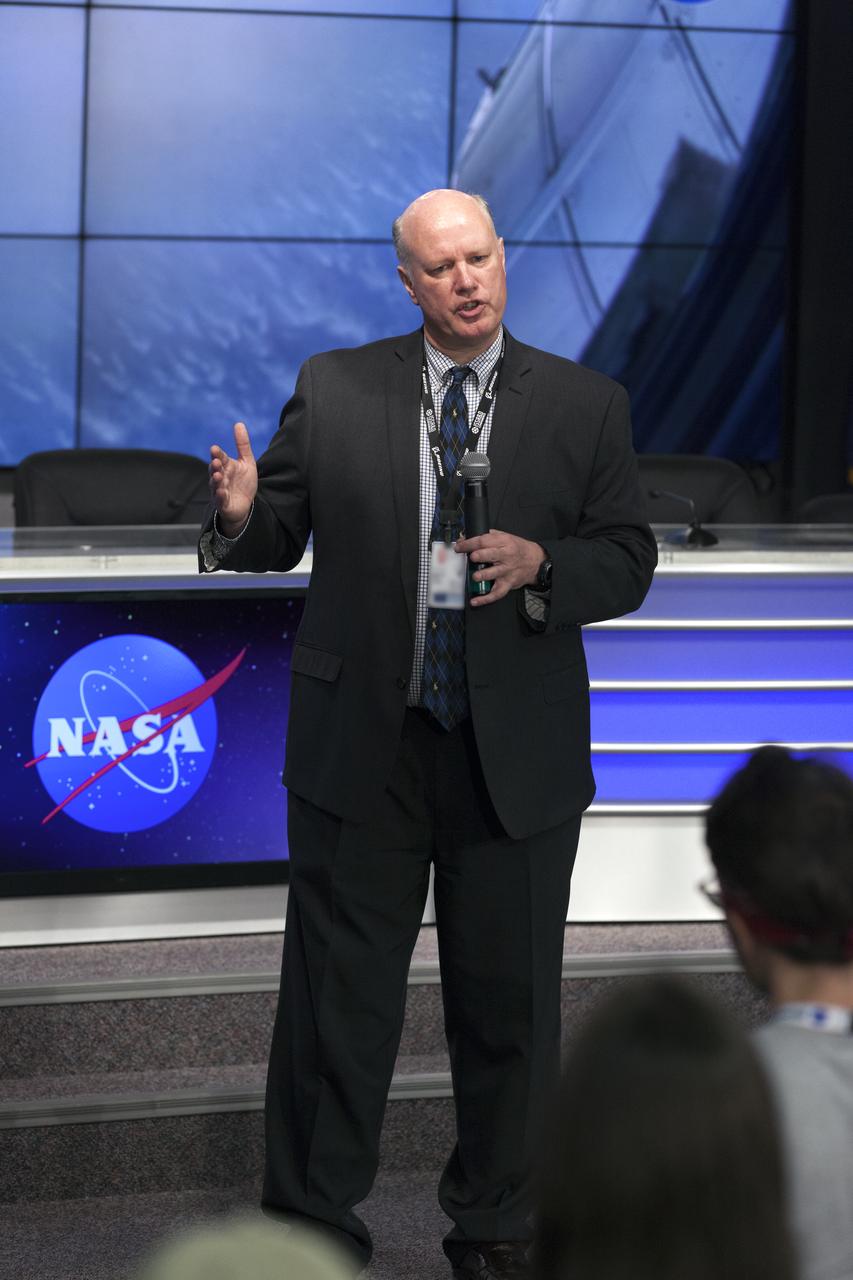
Michael Delp of Florida State University in Tallahassee, speaks to members of social media in the Kennedy Space Center’s Press Site auditorium. He is principal investigator for the Rodent Research-9 experiment. The briefing focused on research planned for launch to the International Space Station. The scientific materials and supplies will be aboard a Dragon spacecraft scheduled for launch from Kennedy’s Launch Complex 39A on Aug. 14 atop a SpaceX Falcon 9 rocket on the company's 12th Commercial Resupply Services mission to the space station.
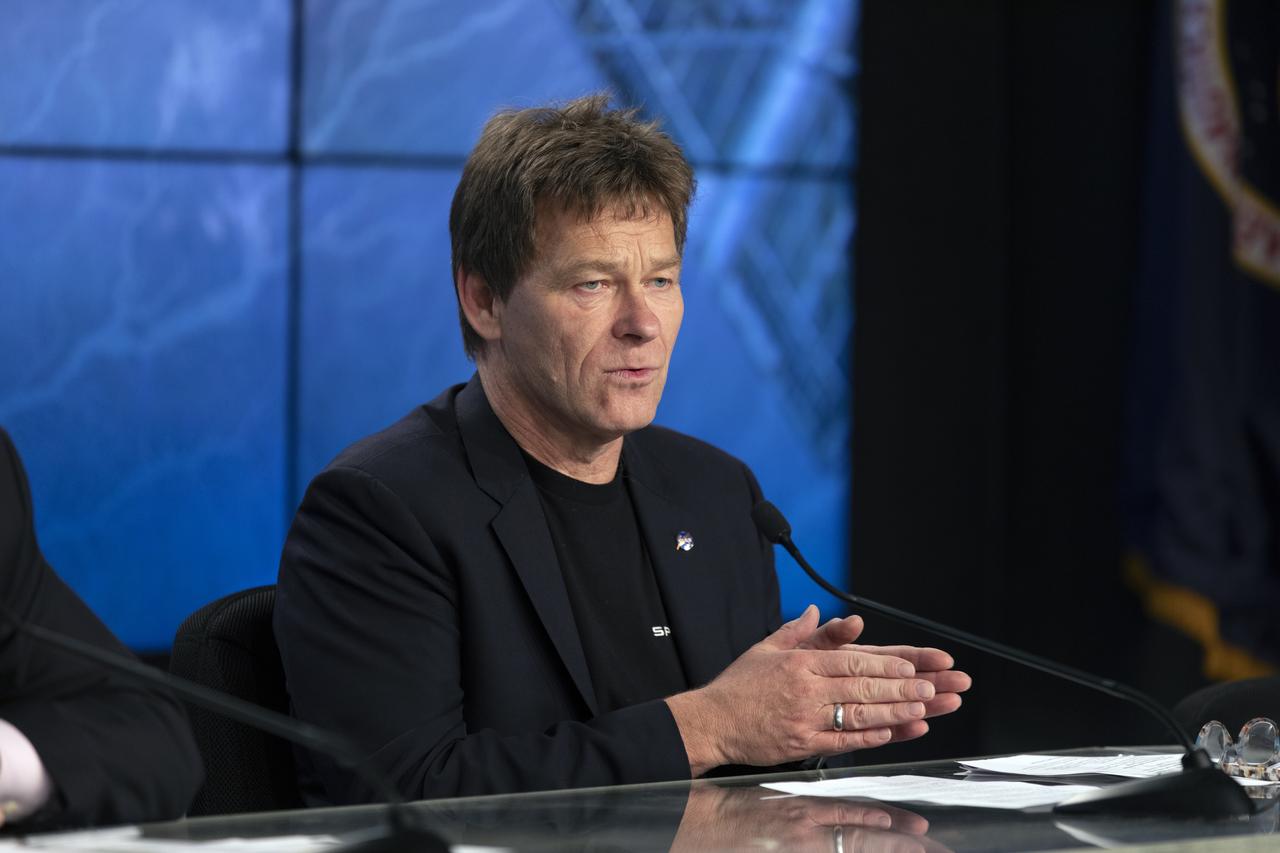
In the Press Site auditorium of NASA's Kennedy Space Center in Florida, Hans Koenigsmann, vice president of Build and Flight Reliability for SpaceX, speaks to media at a post-launch news conference following the liftoff of SpaceX CRS-16. The flight is a commercial resupply services mission to the International Space Station. SpaceX CRS-16 lifted off atop a Falcon 9 rocket from Space Launch Complex 40 at Cape Canaveral Air Force Station at 1:16 p.m. EST, Dec. 5, 2018, with supplies and equipment and new science experiments for technology research.
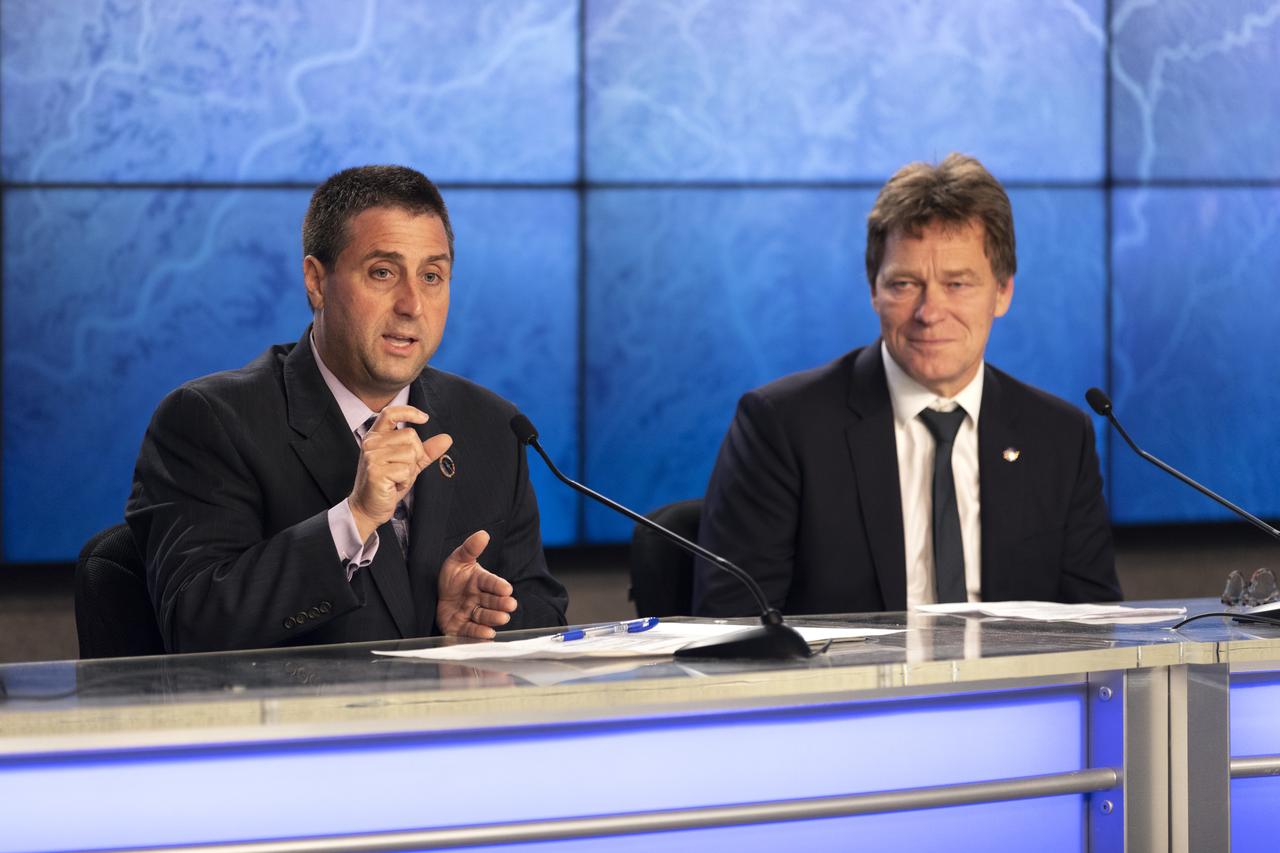
In the Kennedy Space Center’s Press Site auditorium, Joel Montalbano, deputy International Space Station program manager at NASA's Johnson Space Center in Houston, and Hans Koenigsmann, vice president of Build and Flight Reliability for SpaceX, speak to members of the media during a prelaunch news conference for the SpaceX CRS-16 commercial resupply services mission to the International Space Station. A Dragon spacecraft is scheduled to be launched from Space Launch Complex 40 at Cape Canaveral Air Force Station. The SpaceX Falcon 9 rocket will lift off on the company's 16th Commercial Resupply Services mission to the space station.
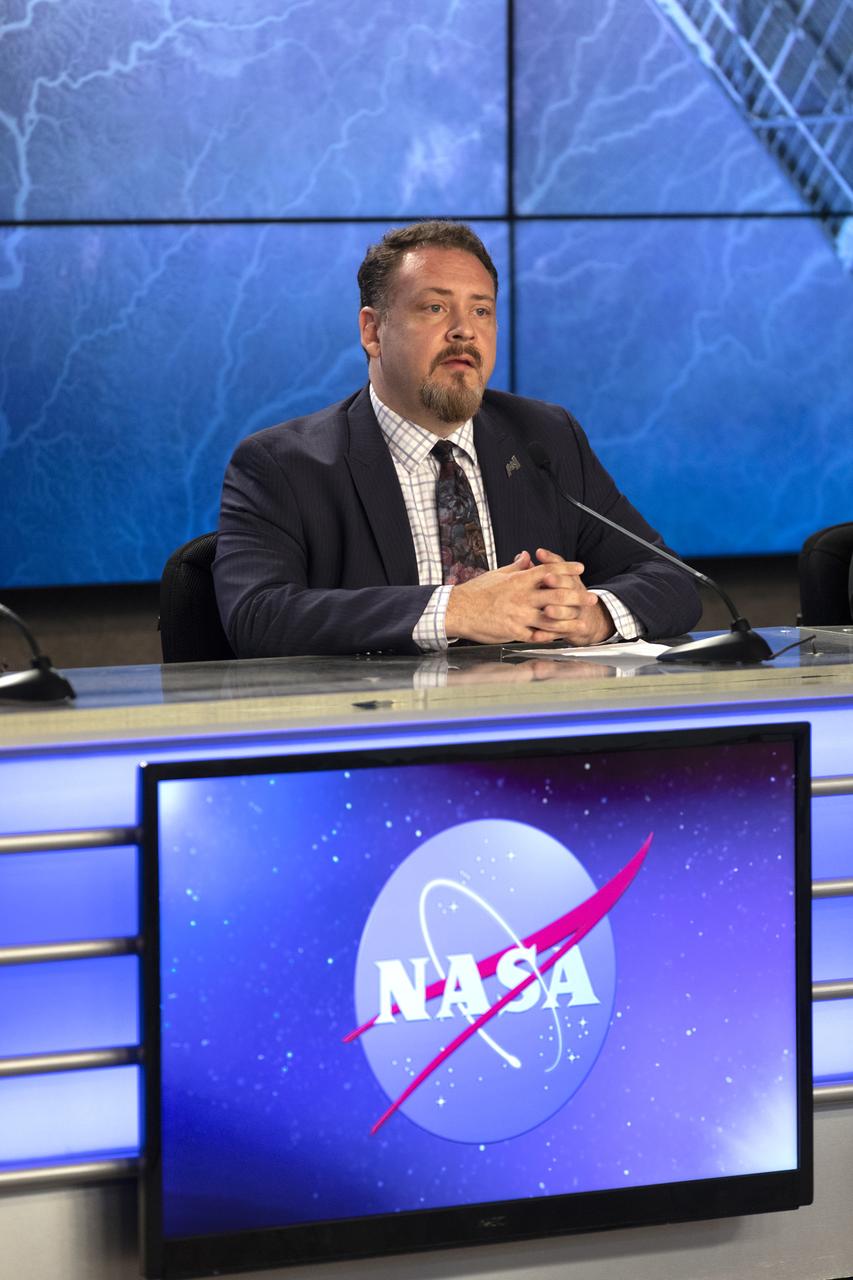
In the Kennedy Space Center’s Press Site auditorium, Kirt Costello, International Space Station program chief scientist at NASA's Johnson Space Center in Houston, speaks to members of the media during a prelaunch news conference for the SpaceX CRS-16 commercial resupply services mission to the International Space Station. A Dragon spacecraft is scheduled to be launched from Space Launch Complex 40 at Cape Canaveral Air Force Station. The SpaceX Falcon 9 rocket will lift off on the company's 16th Commercial Resupply Services mission to the space station.
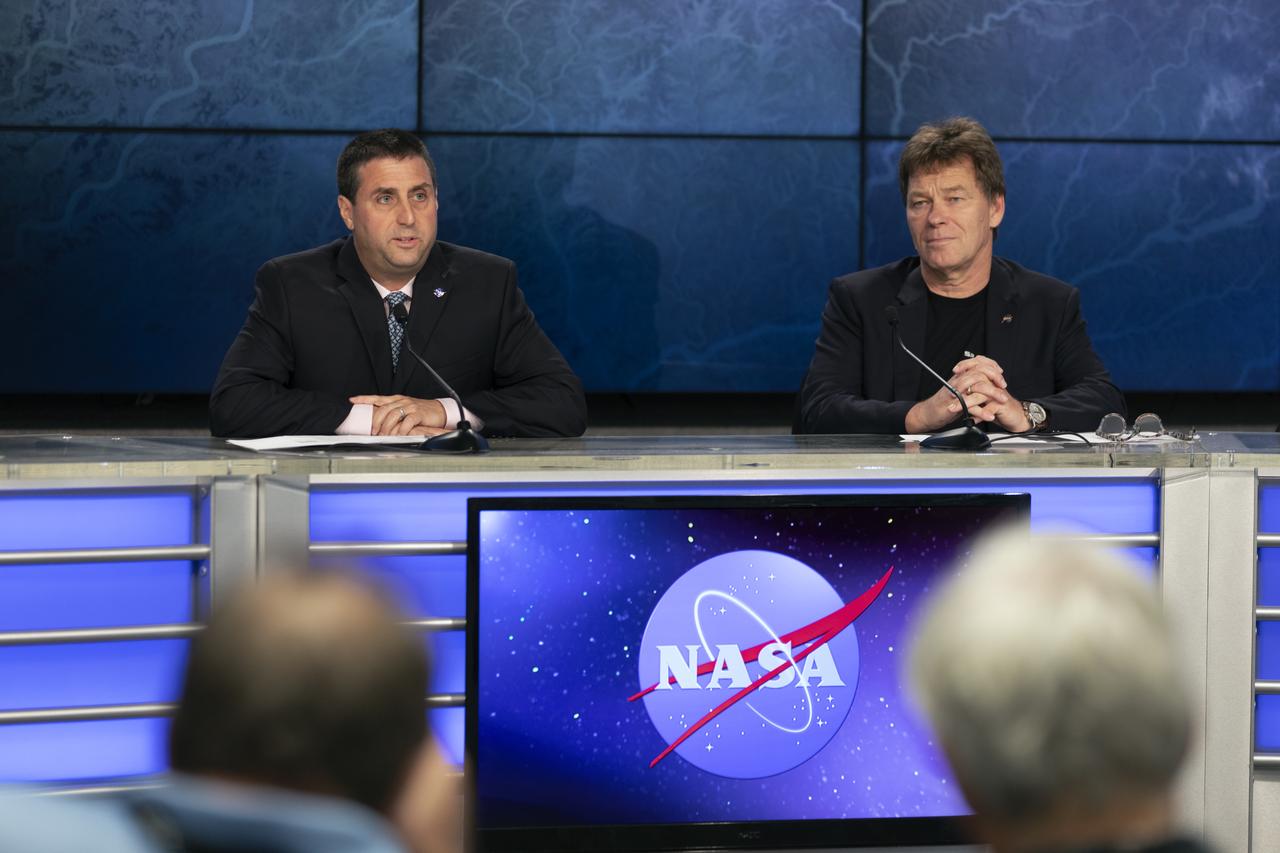
In the Press Site auditorium of NASA's Kennedy Space Center in Florida, Joel Montalbano, deputy International Space Station program manager at NASA's Johnson Space Center in Houston, left, and Hans Koenigsmann, vice president of Build and Flight Reliability for SpaceX, speak to media at a post-launch news conference following the liftoff of SpaceX CRS-16. The flight is a commercial resupply services mission to the International Space Station. SpaceX CRS-16 lifted off atop a Falcon 9 rocket from Space Launch Complex 40 at Cape Canaveral Air Force Station at 1:16 p.m. EST, Dec. 5, 2018, with supplies and equipment and new science experiments for technology research.
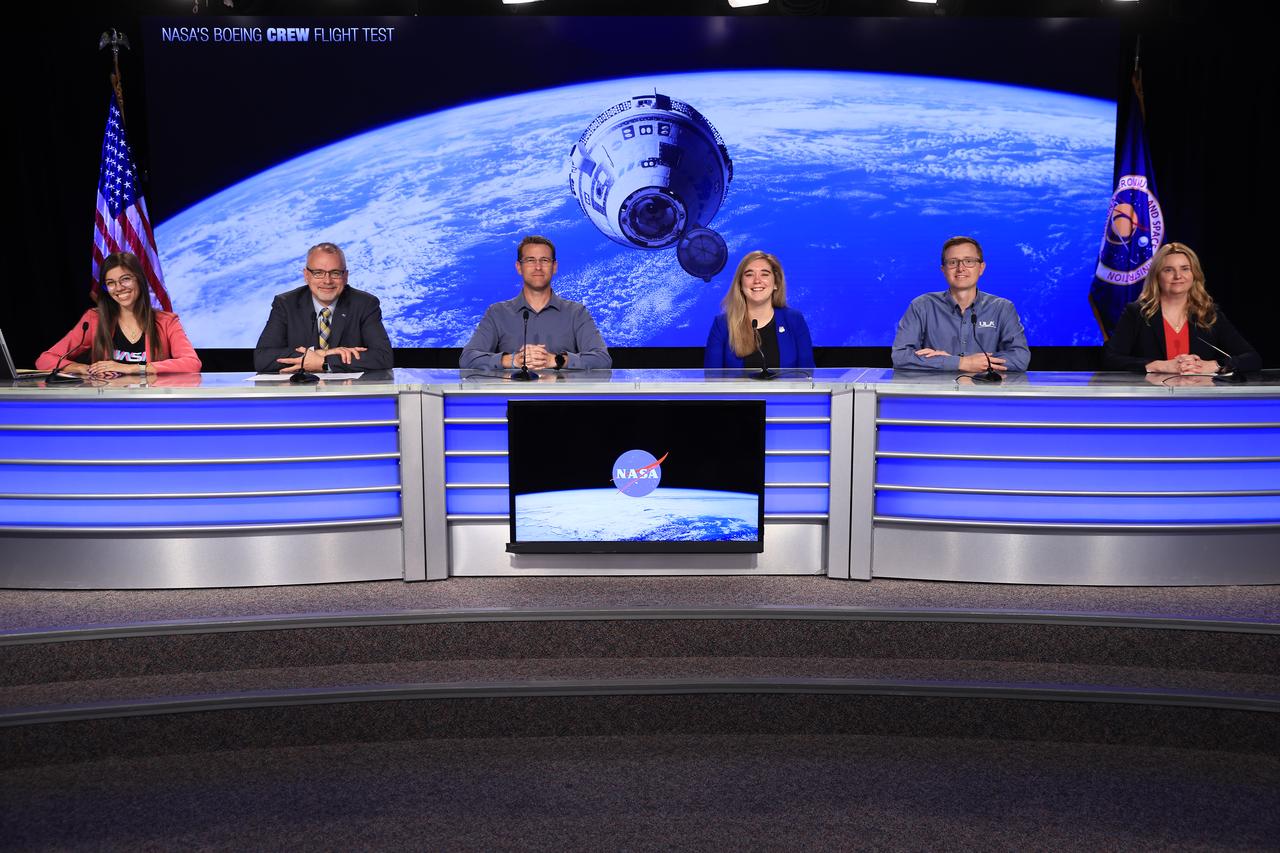
A social media panel discussion takes place at NASA’s Kennedy Space Center in Florida on Friday, May 3, 2024, ahead of NASA’s Boeing Crew Flight Test. Participants, from left to right are Antonia Jaramillo, NASA Communications; Jim Free, NASA associate administrator; Ian Kappes, deputy launch vehicle office manager, NASA’s Commercial Crew Program; Amy Comeau Denker, Starliner associate chief engineer, Boeing; Caleb Weiss, system engineering & test leader, ULA (United Launch Alliance); and Jennifer Buchli, chief scientist, NASA’s International Space Station Program. NASA astronauts Butch Wilmore and Suni Williams are the first to launch aboard Boeing’s Starliner spacecraft atop a ULA Atlas V rocket from Space Launch Complex-41 at Cape Canaveral Space Force Station in Florida. Liftoff is scheduled for 4:43 p.m. ET on Tuesday, May 21.
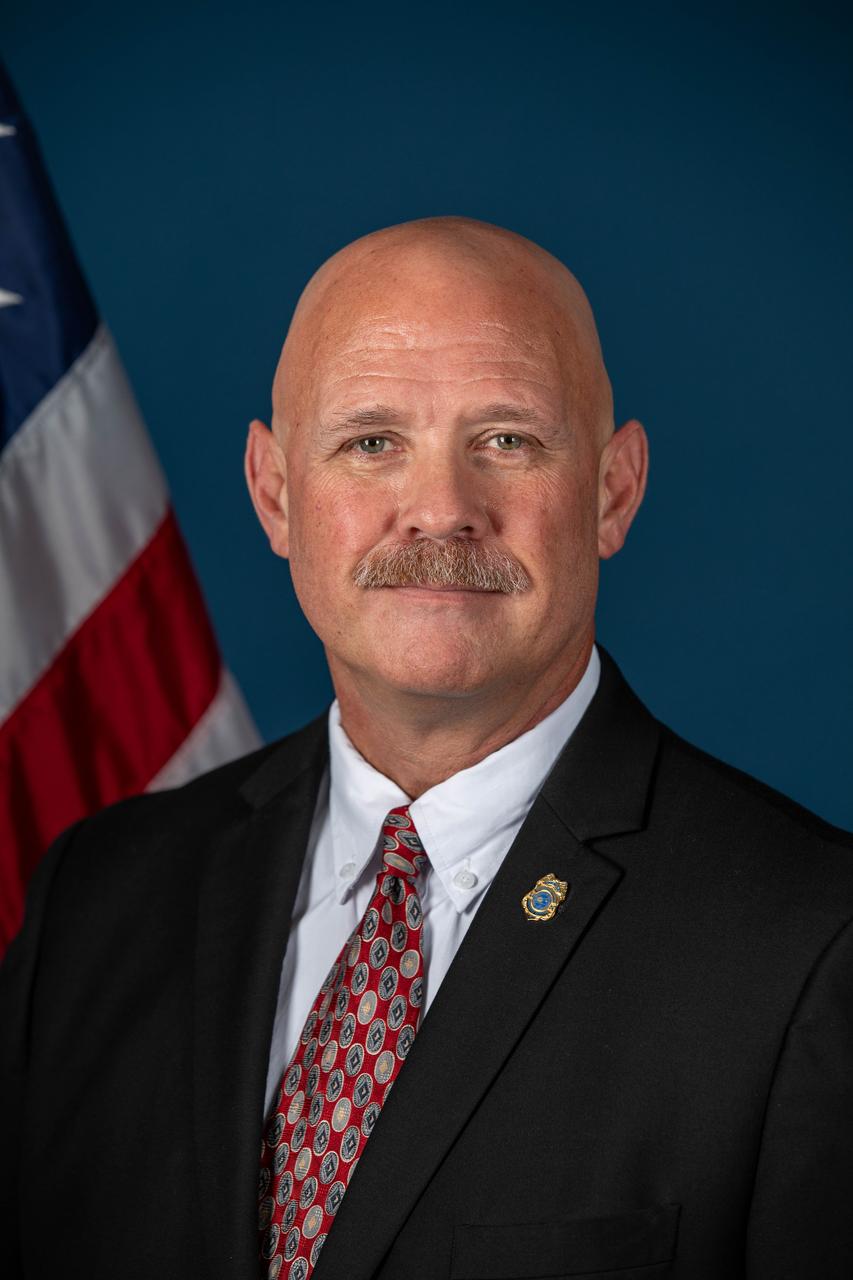
Official portrait of Sean Sanders, special agent, NASA Protective Services Office at the agency's Kennedy Space Center in Florida.