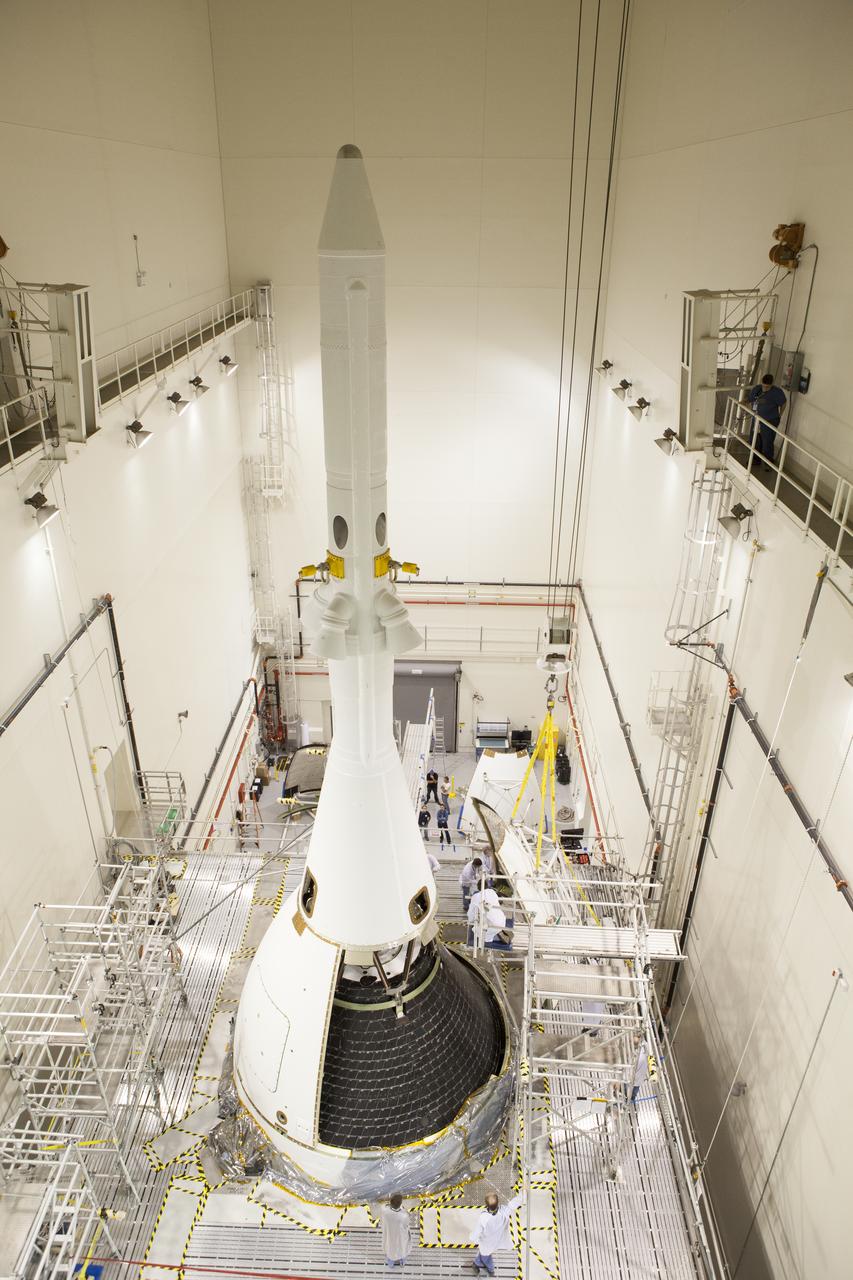
Installation of four Ogive panels on Orion's Launch Abort System continues inside the Launch Abort System Facility at NASA’s Kennedy Space Center in Florida. The panels will smooth the airflow over the conical spacecraft to limit sound and vibration, which will make for a much smoother ride for the astronauts who will ride inside Orion in the future. The work marked the final major assembly steps for the spacecraft before it is transported to Space Launch Complex 37 at Cape Canaveral Air Force Station in November. Orion is the exploration spacecraft designed to carry astronauts to destinations not yet explored by humans, including an asteroid and Mars. It will have emergency abort capability, sustain the crew during space travel and provide safe re-entry from deep space return velocities. The first unpiloted flight test of Orion is scheduled to launch in December 2014 atop a United Launch Alliance Delta IV Heavy rocket, and in 2018 on NASA’s Space Launch System rocket.
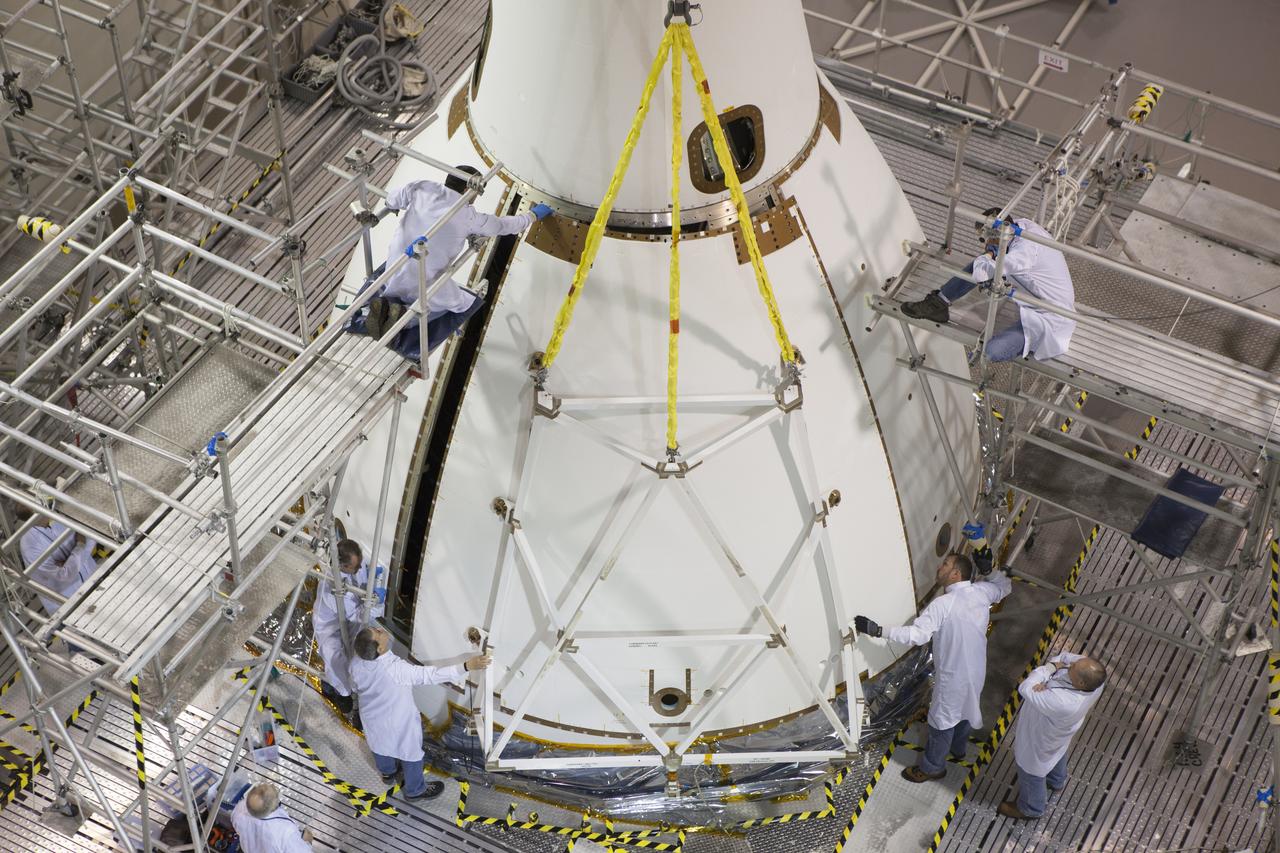
Inside the Launch Abort System Facility at NASA’s Kennedy Space Center in Florida, technicians attach the third of four Ogive panels on Orion's Launch Abort System. The panels will smooth the airflow over the conical spacecraft to limit sound and vibration, which will make for a much smoother ride for the astronauts who will ride inside Orion in the future. The work marked the final major assembly steps for the spacecraft before it is transported to Space Launch Complex 37 at Cape Canaveral Air Force Station in November. Orion is the exploration spacecraft designed to carry astronauts to destinations not yet explored by humans, including an asteroid and Mars. It will have emergency abort capability, sustain the crew during space travel and provide safe re-entry from deep space return velocities. The first unpiloted flight test of Orion is scheduled to launch in December 2014 atop a United Launch Alliance Delta IV Heavy rocket, and in 2018 on NASA’s Space Launch System rocket.
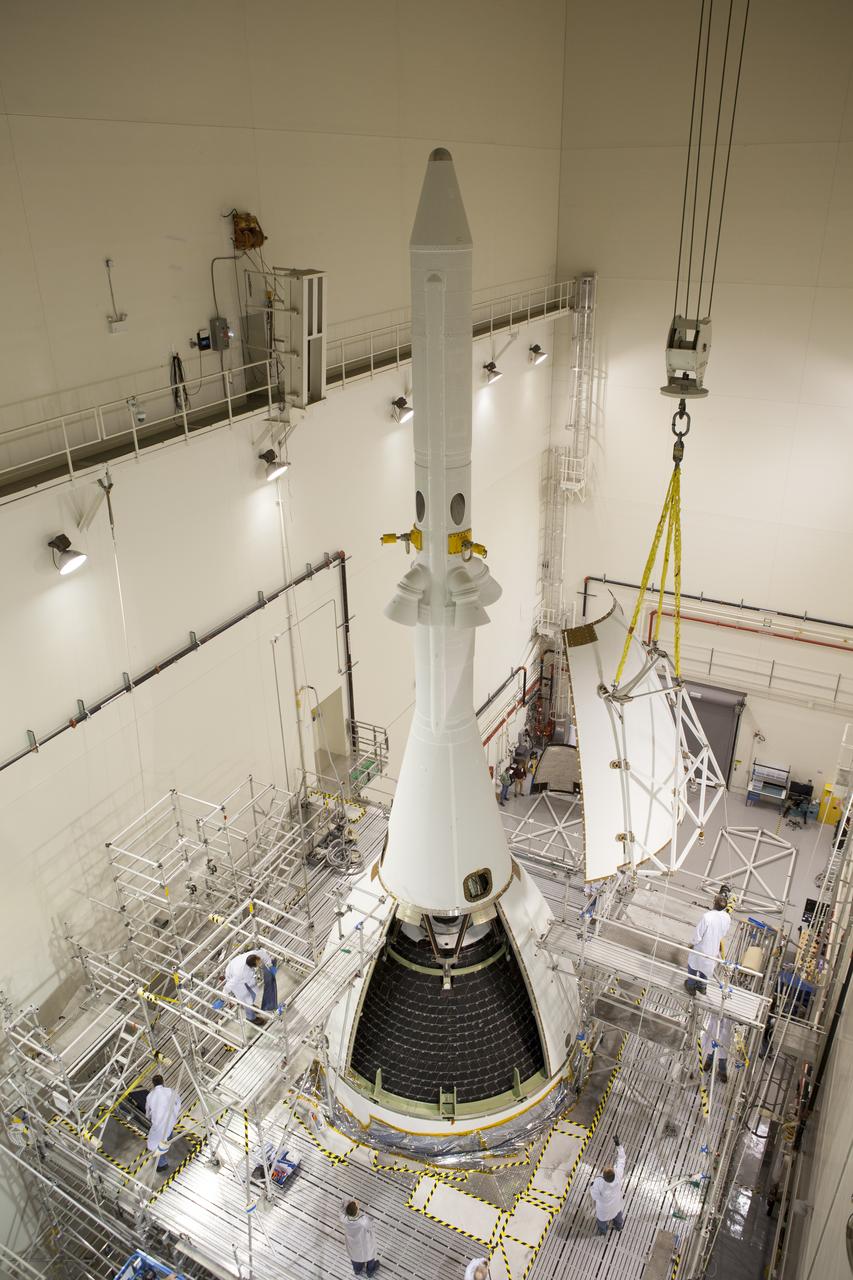
Inside the Launch Abort System Facility at NASA's Kennedy Space Center in Florida, a crane brings the third of four Ogive panels closer for installation on Orion's Launch Abort System. The panels will smooth the airflow over the conical spacecraft to limit sound and vibration, which will make for a much smoother ride for the astronauts who will ride inside Orion in the future. The work marked the final major assembly steps for the spacecraft before it is transported to Space Launch Complex 37 at Cape Canaveral Air Force Station in November. Orion is the exploration spacecraft designed to carry astronauts to destinations not yet explored by humans, including an asteroid and Mars. It will have emergency abort capability, sustain the crew during space travel and provide safe re-entry from deep space return velocities. The first unpiloted flight test of Orion is scheduled to launch in December 2014 atop a United Launch Alliance Delta IV Heavy rocket, and in 2018 on NASA’s Space Launch System rocket.
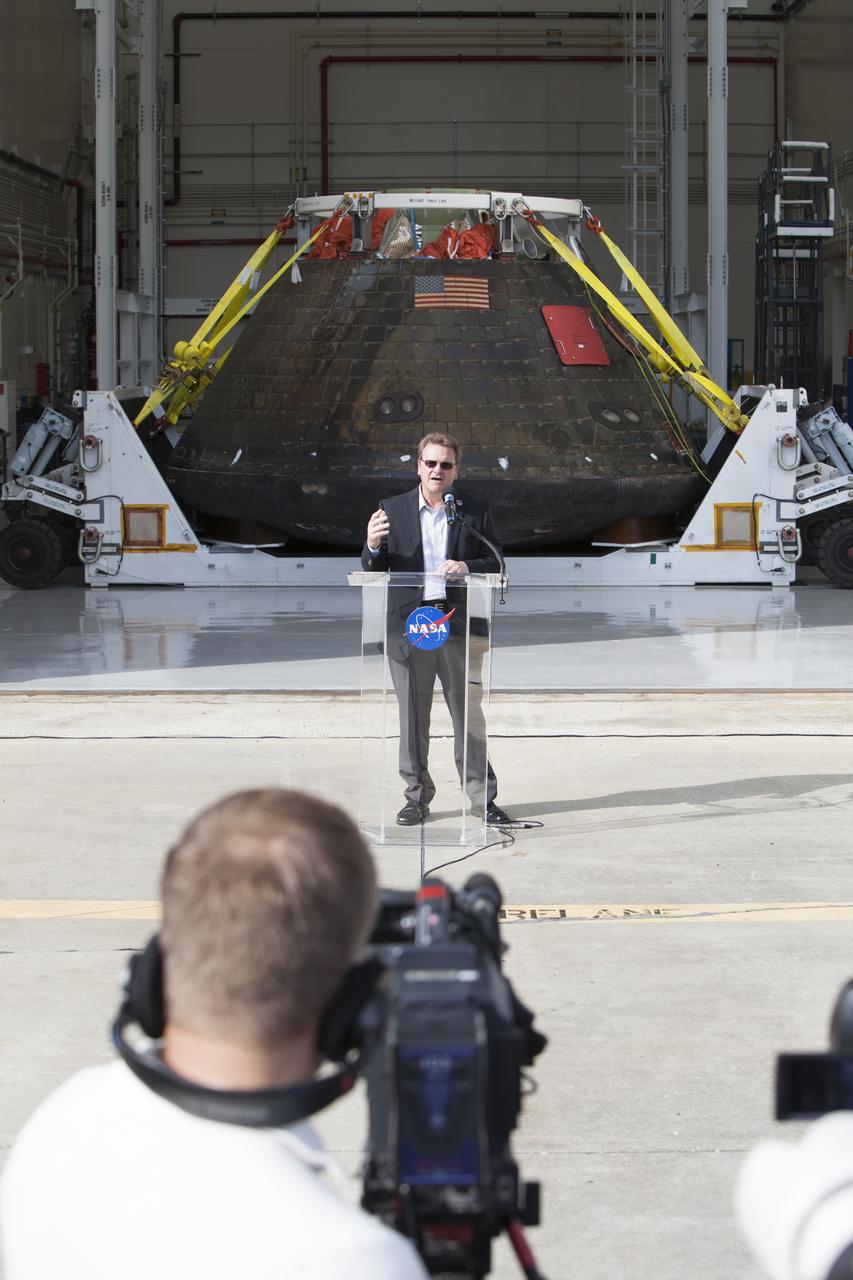
Lockheed Martin Manager Jules Schneider speaks to members of the media during a viewing of NASA's Orion spacecraft at the Launch Abort System Facility at NASA's Kennedy Space Center in Florida. The spacecraft's cross-country return, a 2,700 mile road trip from Naval Base San Diego to Kennedy, sets the stage for in-depth analysis of data obtained during Orion's trip to space. It will provide engineers with detailed information on how the spacecraft fared during its two-orbit, 4.5-hour flight test, completed on Dec. 5. The Ground Systems Development and Operations Program led the recovery, offload and transportation efforts.
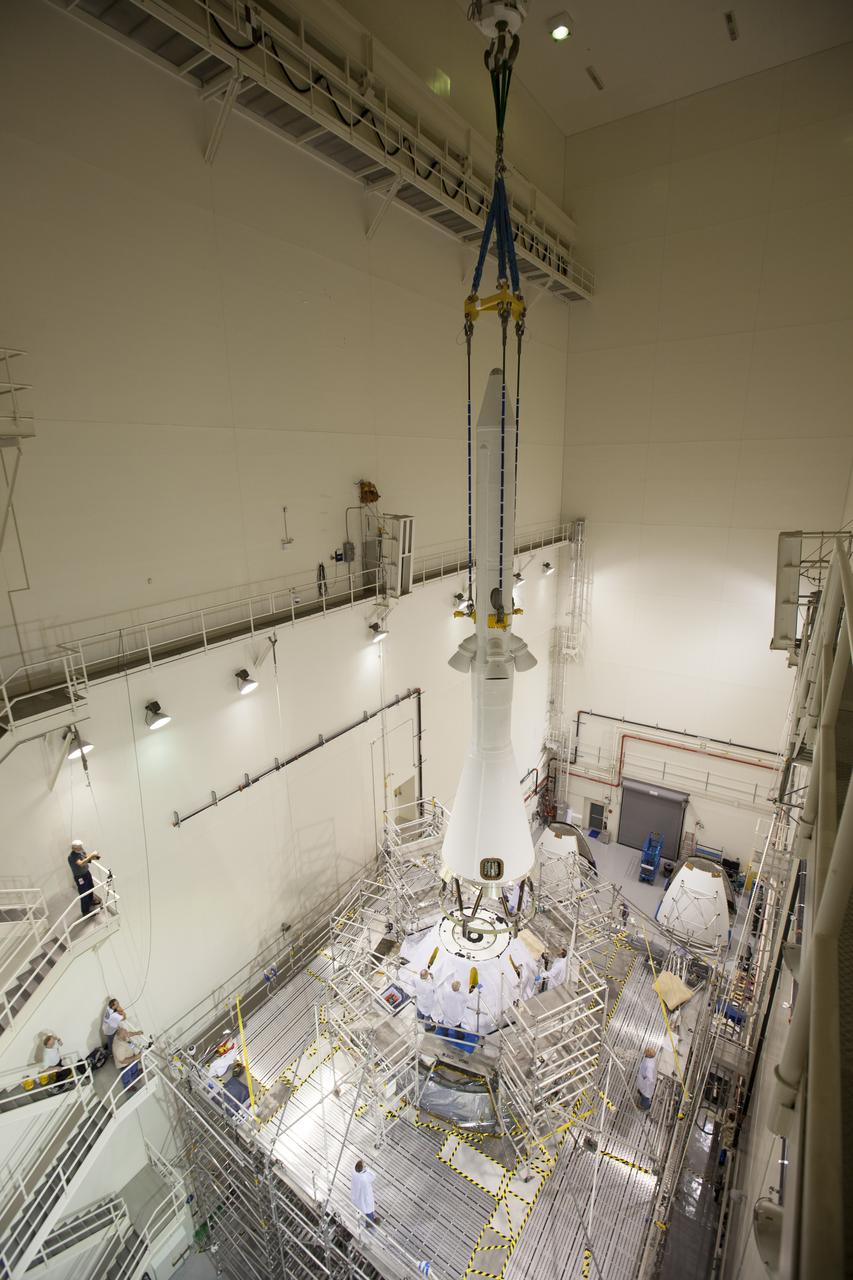
A crane is used to lower the launch abort system closer for installation on the Orion spacecraft for Exploration Flight Test-1 inside the Launch Abort System Facility, or LASF, at NASA's Kennedy Space Center in Florida. The completed crew and service modules will be tested and verified together with the launch abort system. Orion will remain inside the LASF until mid-November, when the United Launch Alliance Delta IV Heavy rocket is ready for integration with the spacecraft. Orion is the exploration spacecraft designed to carry astronauts to destinations not yet explored by humans, including an asteroid and Mars. It will have emergency abort capability, sustain the crew during space travel and provide safe re-entry from deep space return velocities. The first unpiloted test flight of the Orion is scheduled to launch in December atop the Delta IV Heavy rocket from Cape Canaveral Air Force Station in Florida to an altitude of 3,600 miles above the Earth's surface. The two-orbit, four-hour flight test will help engineers evaluate the systems critical to crew safety including the heat shield, parachute system and launch abort system.
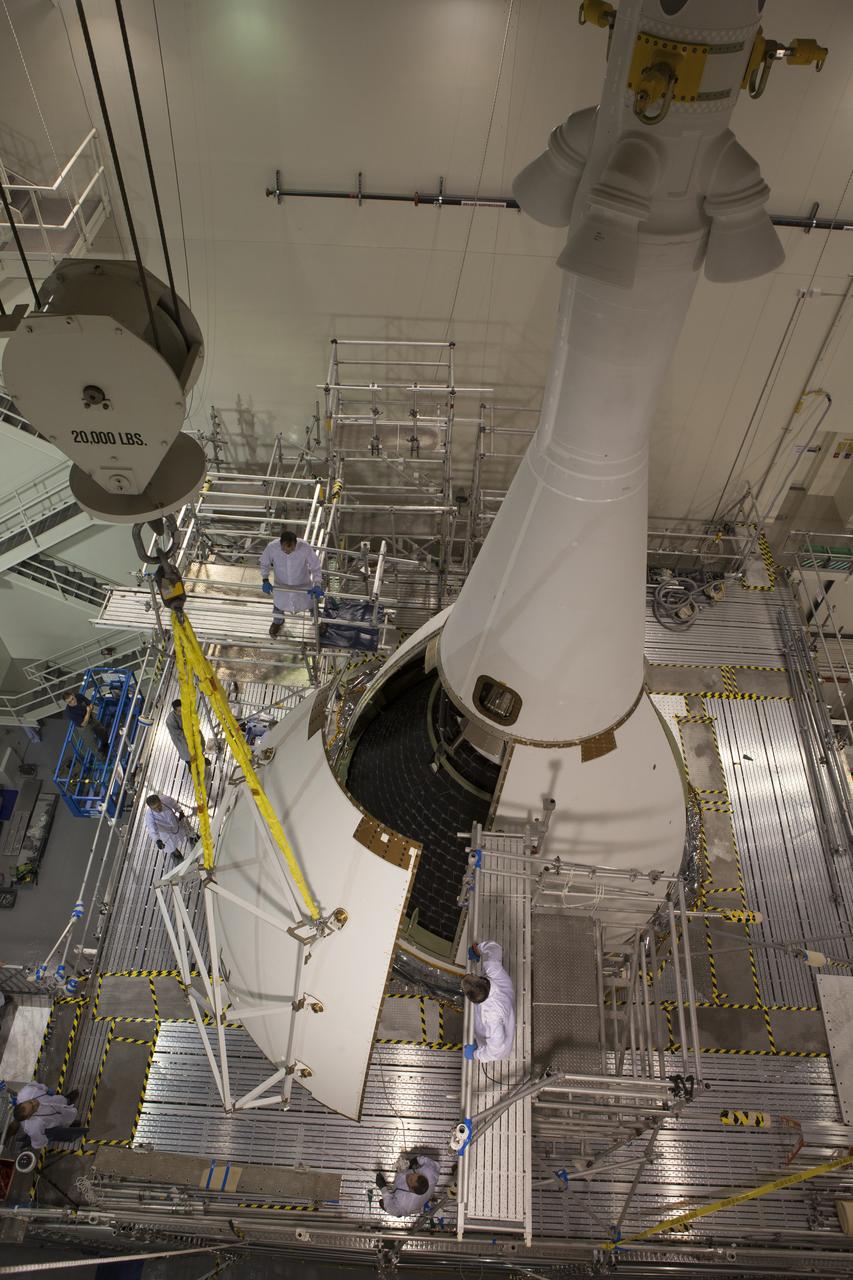
Technicians on work platforms monitor the progress as a crane brings the third of four Ogive panels closer for installation on Orion's Launch Abort System inside the Launch Abort System Facility at NASA’s Kennedy Space Center in Florida. The panels will smooth the airflow over the conical spacecraft to limit sound and vibration, which will make for a much smoother ride for the astronauts who will ride inside Orion in the future. The work marked the final major assembly steps for the spacecraft before it is transported to Space Launch Complex 37 at Cape Canaveral Air Force Station in November. Orion is the exploration spacecraft designed to carry astronauts to destinations not yet explored by humans, including an asteroid and Mars. It will have emergency abort capability, sustain the crew during space travel and provide safe re-entry from deep space return velocities. The first unpiloted flight test of Orion is scheduled to launch in December 2014 atop a United Launch Alliance Delta IV Heavy rocket, and in 2018 on NASA’s Space Launch System rocket.
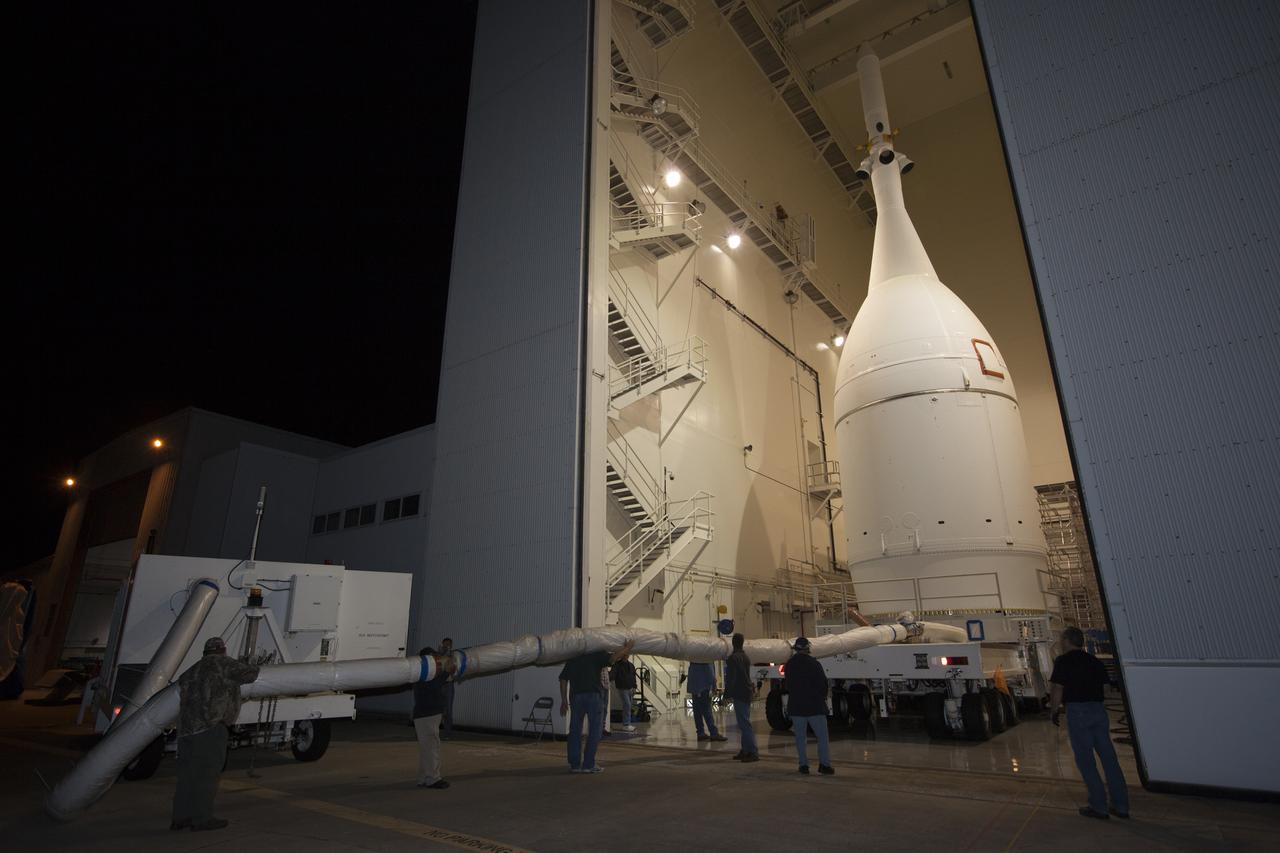
At NASA's Kennedy Space Center in Florida, the agency's completed Orion spacecraft begins its trip from the Launch Abort System Facility to Launch Complex 37 at Cape Canaveral Air Force Station. After arrival at the launch pad, United Launch Alliance engineers and technicians will lift Orion and mount it atop its Delta IV Heavy rocket. Orion is the exploration spacecraft designed to carry astronauts to destinations not yet explored by humans, including an asteroid and Mars. It will have emergency abort capability, sustain the crew during space travel and provide safe re-entry from deep space return velocities. The first unpiloted flight test of Orion is scheduled to launch Dec. 4, 2014 atop a United Launch Alliance Delta IV Heavy rocket, and in 2018 on NASA’s Space Launch System rocket.
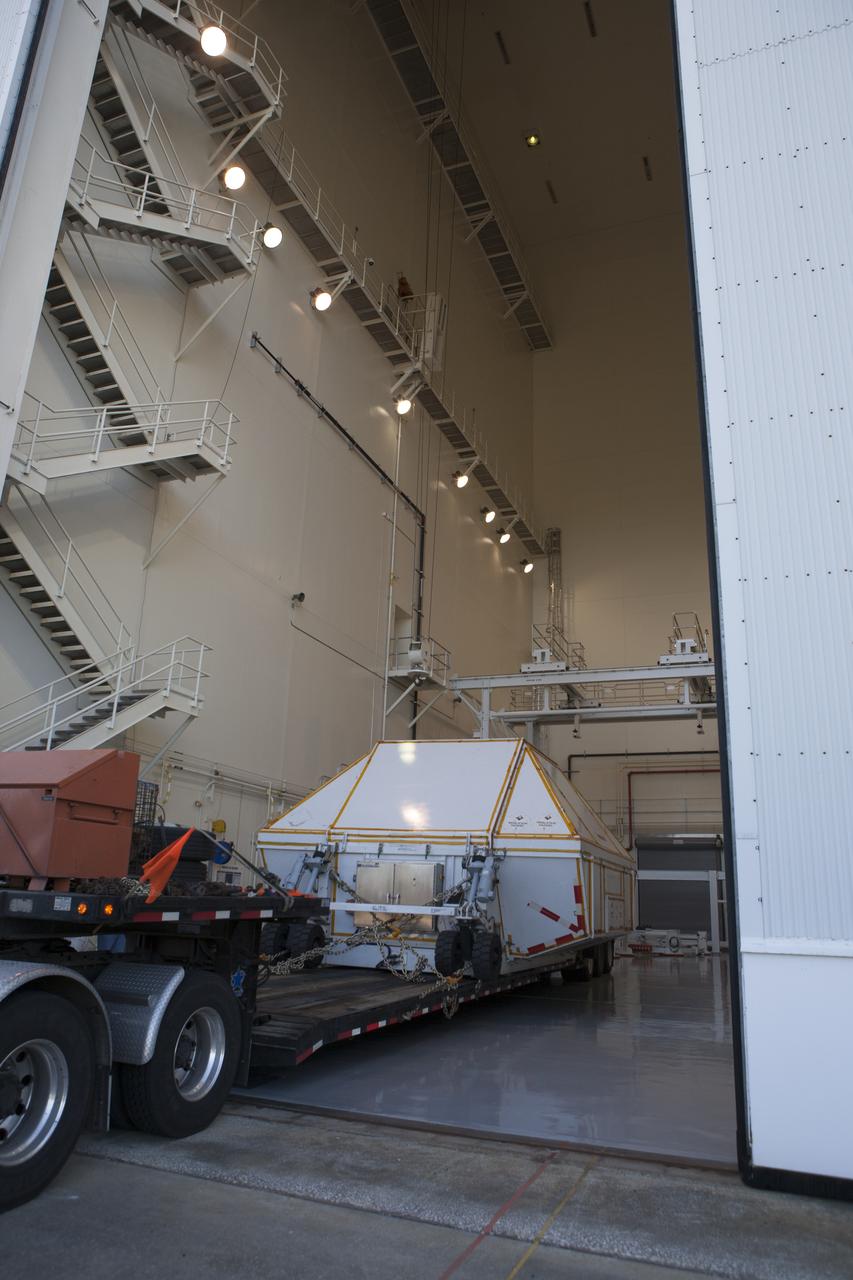
NASA's Orion spacecraft arrives at the Launch Abort System Facility at Kennedy Space Center in Florida. The spacecraft was transported 2,700 miles overland from Naval Base San Diego in California, on a flatbed truck secured in its crew module transportation fixture for the trip. During its first flight test, Orion completed a two-orbit, four-and-a-half hour mission Dec. 5 to test systems critical to crew safety, including the launch abort system, the heat shield and the parachute system. The Ground Systems Development and Operations Program led the recovery, offload and transportation efforts.
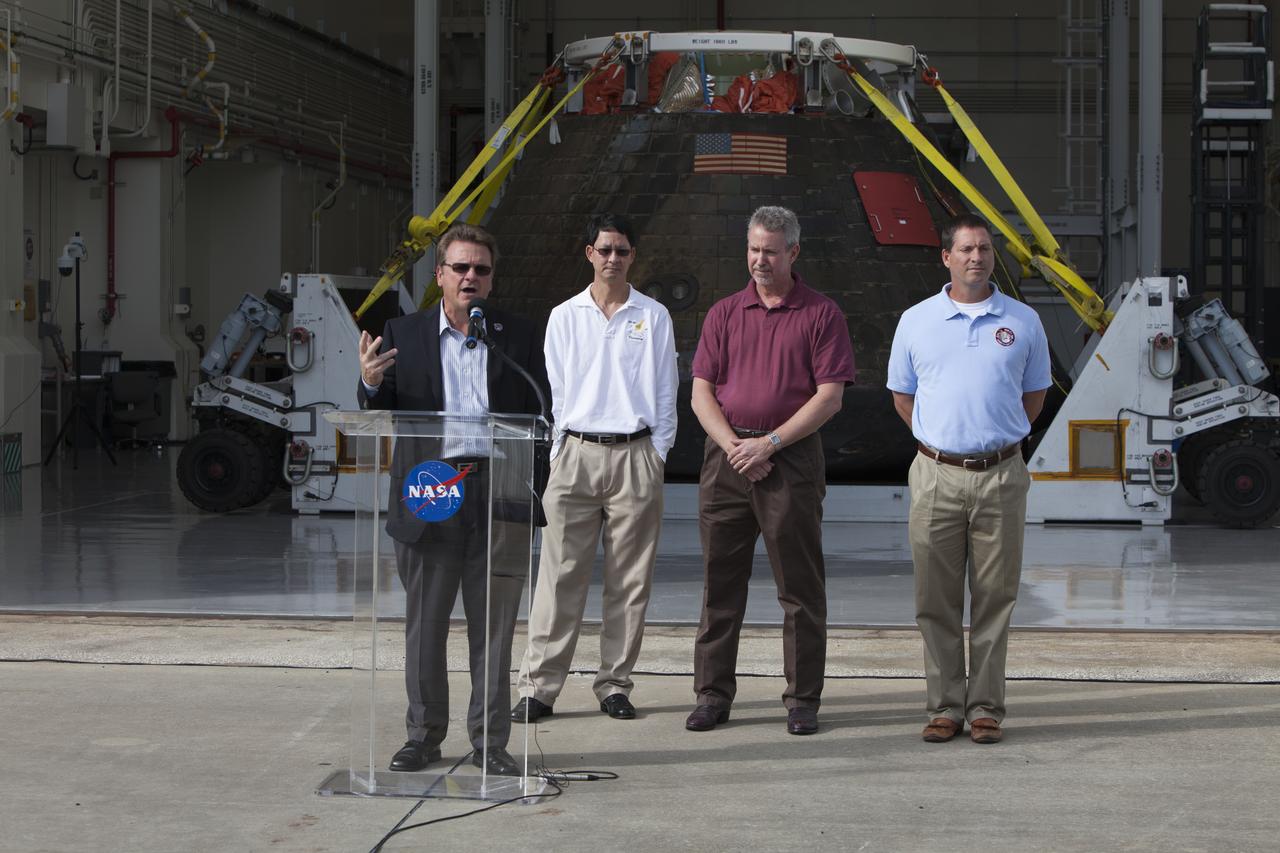
NASA's Orion spacecraft is viewed by members of the media at the Launch Abort System Facility at NASA's Kennedy Space Center in Florida. Speaking to the media during the viewing opportunity is Jules Schneider, Lockheed Martin Manager. Behind him, from left, are Glenn Chin, Orion Production Operations manager and Phil Weber and Lou Garcia, with the Ground Systems Development and Operations Program, or GSDO. Orion made the 8-day, 2,700 mile overland trip back to Kennedy from Naval Base San Diego in California. Analysis of date obtained during its two-orbit, four-and-a-half hour mission Dec. 5 will provide engineers with detailed information on how the spacecraft fared. GSDO led the recovery, offload and transportation efforts.
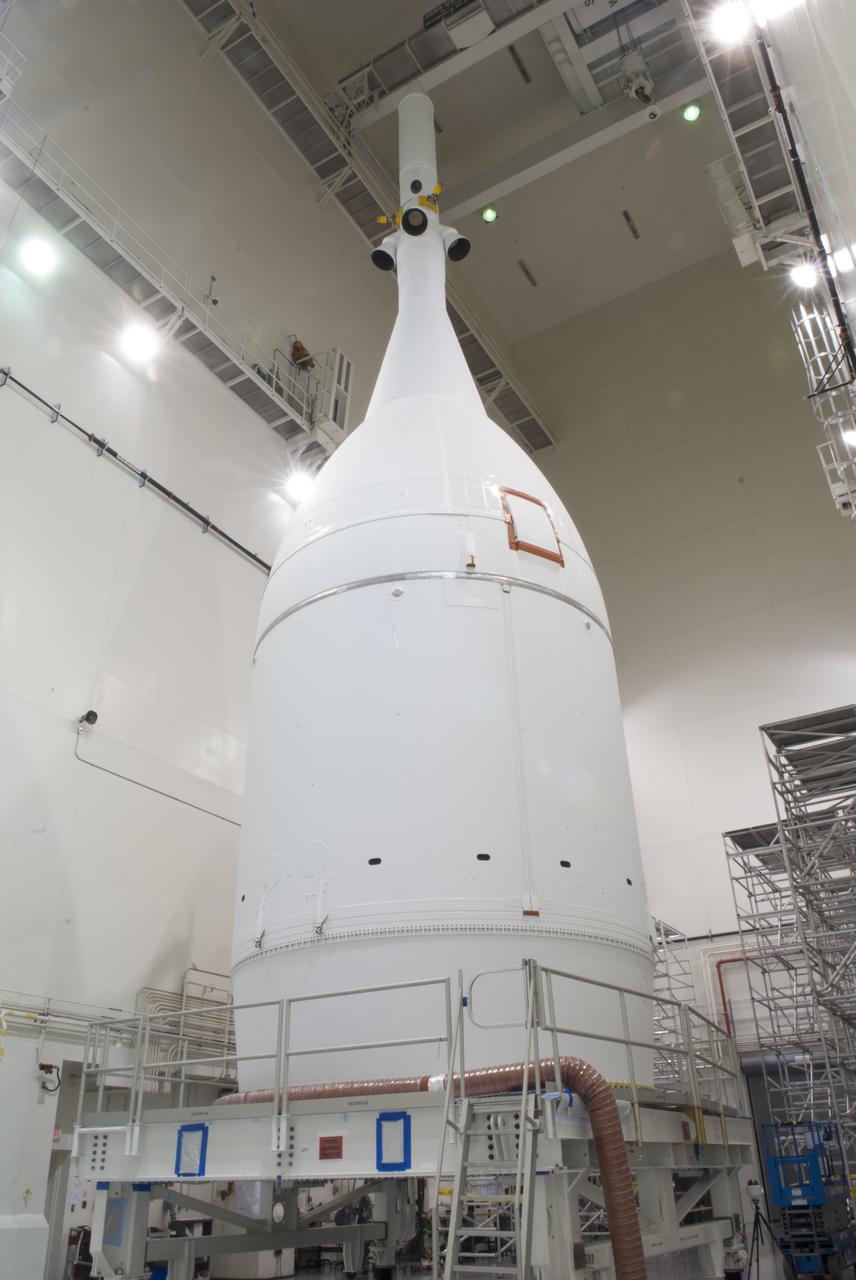
The Orion spacecraft sits inside the Launch Abort System Facility at NASA's Kennedy Space Center in Florida. The Ogive panels have been installed around the launch abort system. The panels will smooth the airflow over the conical spacecraft to limit sound and vibration, which will make for a much smoother ride for the astronauts who will ride inside Orion in the future. The spacecraft is being readied for its move to Space Launch Complex 37 at Cape Canaveral Air Force Station for its flight test. Orion is the exploration spacecraft designed to carry astronauts to destinations not yet explored by humans, including an asteroid and Mars. It will have emergency abort capability, sustain the crew during space travel and provide safe re-entry from deep space return velocities. The first unpiloted flight test of Orion is scheduled to launch in December 2014 atop a United Launch Alliance Delta IV Heavy rocket, and in 2018 on NASA’s Space Launch System rocket.
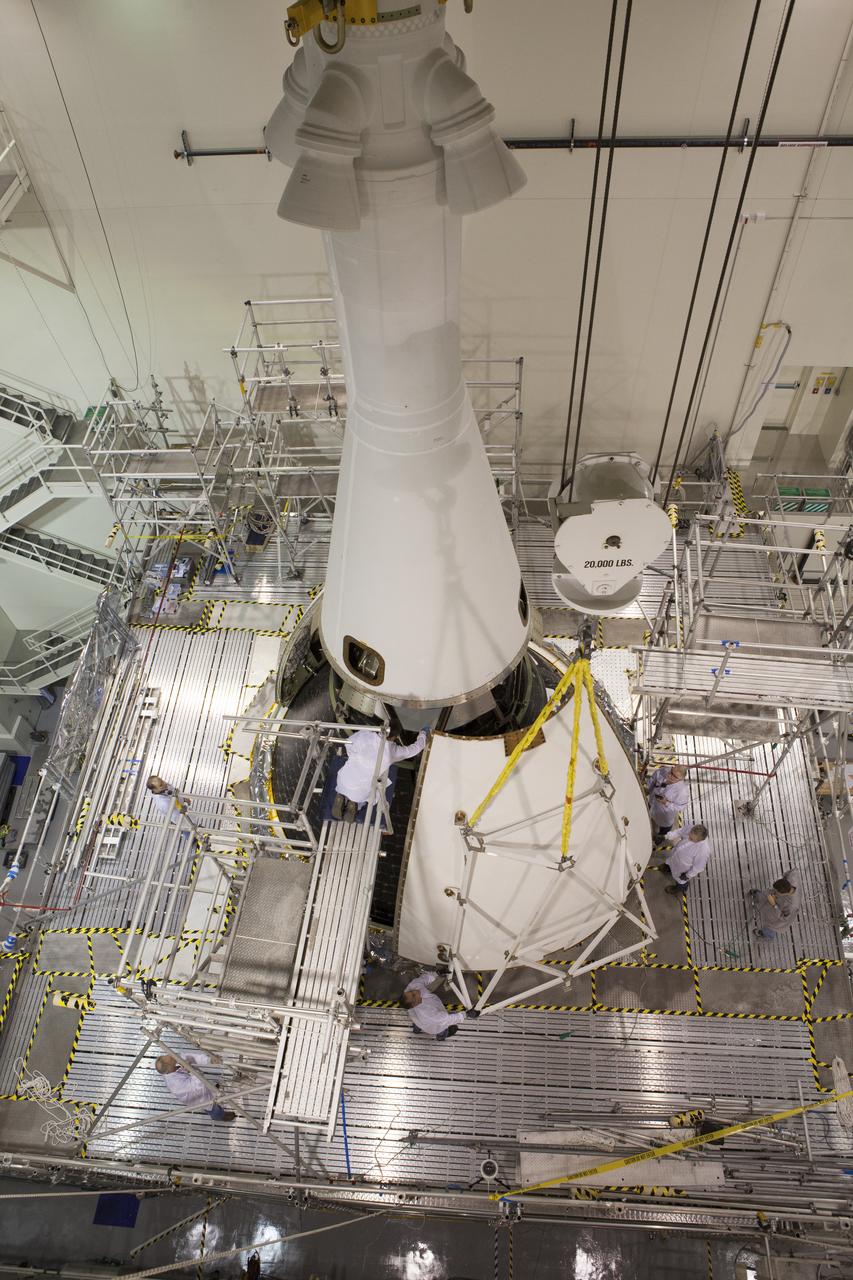
Technicians on work platforms continue the installation of four Ogive panels on Orion's Launch Abort System inside the Launch Abort System Facility at NASA’s Kennedy Space Center in Florida. The panels will smooth the airflow over the conical spacecraft to limit sound and vibration, which will make for a much smoother ride for the astronauts who will ride inside Orion in the future. The work marked the final major assembly steps for the spacecraft before it is transported to Space Launch Complex 37 at Cape Canaveral Air Force Station in November. Orion is the exploration spacecraft designed to carry astronauts to destinations not yet explored by humans, including an asteroid and Mars. It will have emergency abort capability, sustain the crew during space travel and provide safe re-entry from deep space return velocities. The first unpiloted flight test of Orion is scheduled to launch in December 2014 atop a United Launch Alliance Delta IV Heavy rocket, and in 2018 on NASA’s Space Launch System rocket.
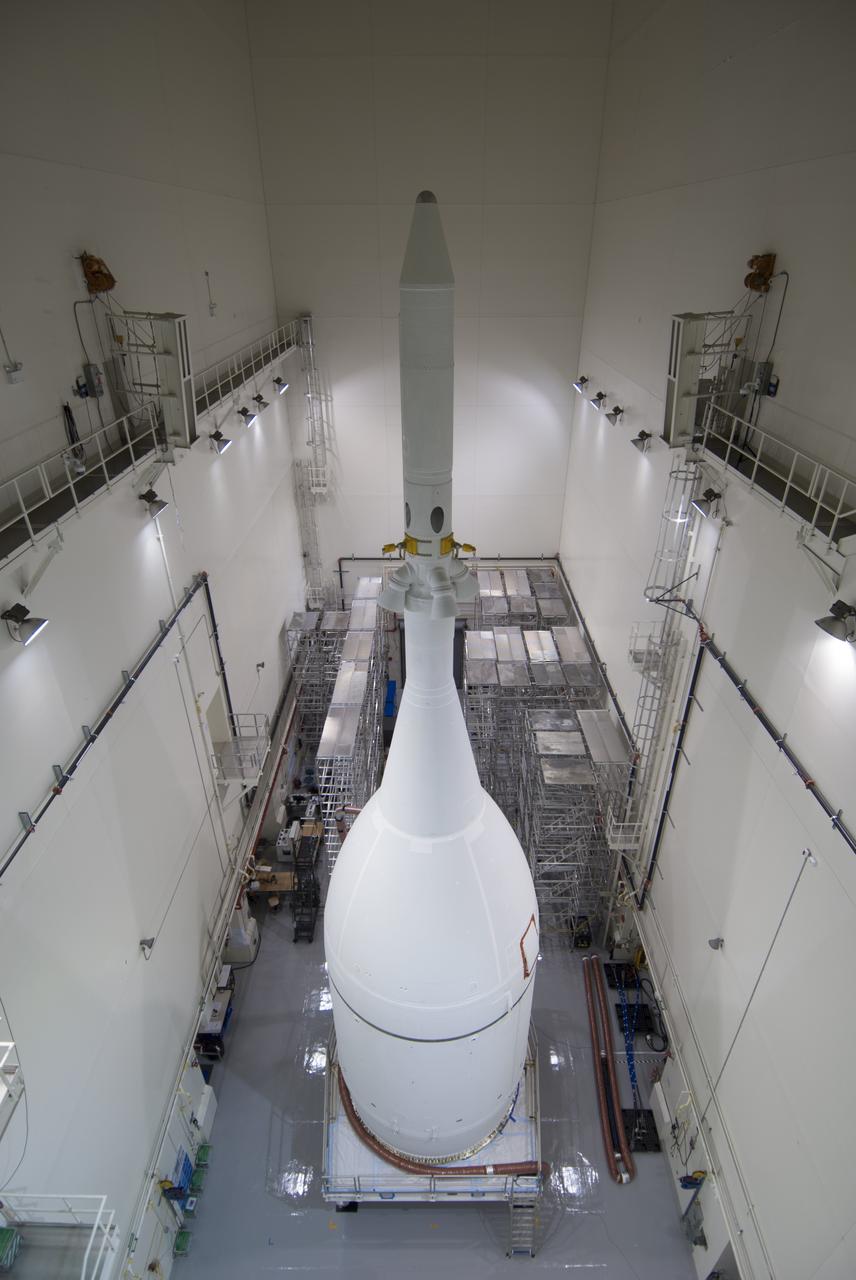
The Orion spacecraft sits inside the Launch Abort System Facility at NASA's Kennedy Space Center in Florida. The Ogive panels have been installed around the launch abort system. The panels will smooth the airflow over the conical spacecraft to limit sound and vibration, which will make for a much smoother ride for the astronauts who will ride inside Orion in the future. The spacecraft is being readied for its move to Space Launch Complex 37 at Cape Canaveral Air Force Station for its flight test. Orion is the exploration spacecraft designed to carry astronauts to destinations not yet explored by humans, including an asteroid and Mars. It will have emergency abort capability, sustain the crew during space travel and provide safe re-entry from deep space return velocities. The first unpiloted flight test of Orion is scheduled to launch in December 2014 atop a United Launch Alliance Delta IV Heavy rocket, and in 2018 on NASA’s Space Launch System rocket.
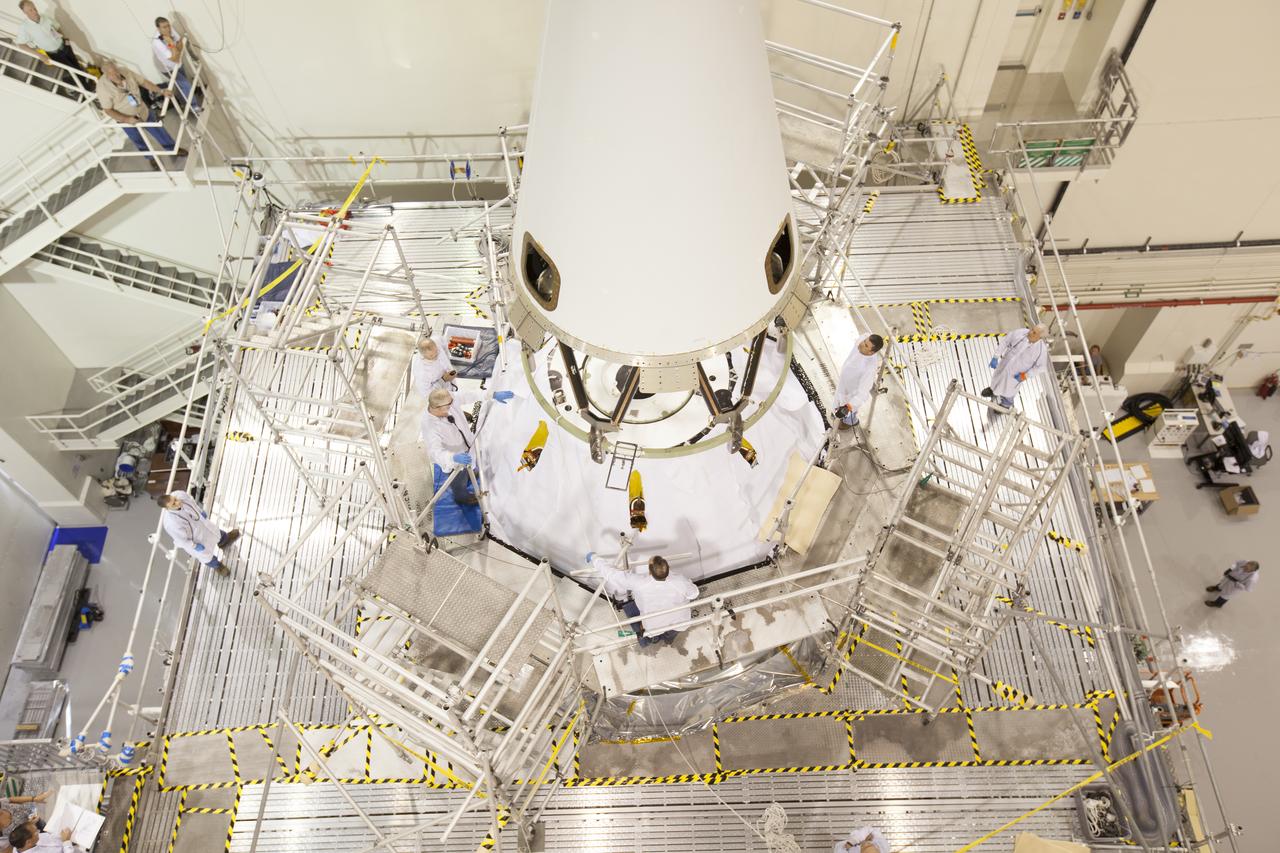
The launch abort system is lowered by crane for installation on the Orion spacecraft for Exploration Flight Test-1 inside the Launch Abort System Facility, or LASF, at NASA's Kennedy Space Center in Florida. The completed crew and service modules will be tested and verified together with the launch abort system. Orion will remain inside the LASF until mid-November, when the United Launch Alliance Delta IV Heavy rocket is ready for integration with the spacecraft. Orion is the exploration spacecraft designed to carry astronauts to destinations not yet explored by humans, including an asteroid and Mars. It will have emergency abort capability, sustain the crew during space travel and provide safe re-entry from deep space return velocities. The first unpiloted test flight of the Orion is scheduled to launch in December atop the Delta IV Heavy rocket from Cape Canaveral Air Force Station in Florida to an altitude of 3,600 miles above the Earth's surface. The two-orbit, four-hour flight test will help engineers evaluate the systems critical to crew safety including the heat shield, parachute system and launch abort system.
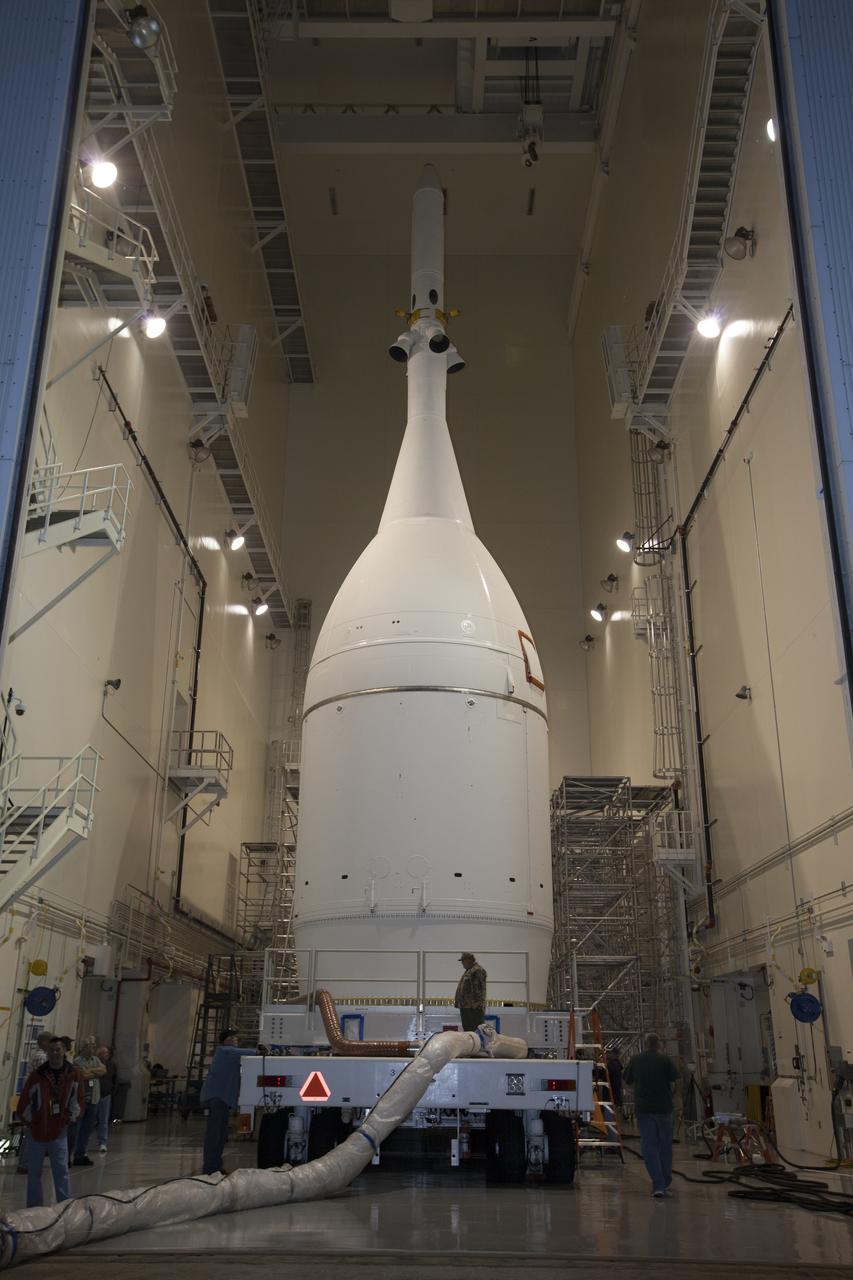
At NASA's Kennedy Space Center in Florida, the agency's completed Orion spacecraft begins its trip from the Launch Abort System Facility to Launch Complex 37 at Cape Canaveral Air Force Station. After arrival at the launch pad, United Launch Alliance engineers and technicians will lift Orion and mount it atop its Delta IV Heavy rocket. Orion is the exploration spacecraft designed to carry astronauts to destinations not yet explored by humans, including an asteroid and Mars. It will have emergency abort capability, sustain the crew during space travel and provide safe re-entry from deep space return velocities. The first unpiloted flight test of Orion is scheduled to launch Dec. 4, 2014 atop a United Launch Alliance Delta IV Heavy rocket, and in 2018 on NASA’s Space Launch System rocket.
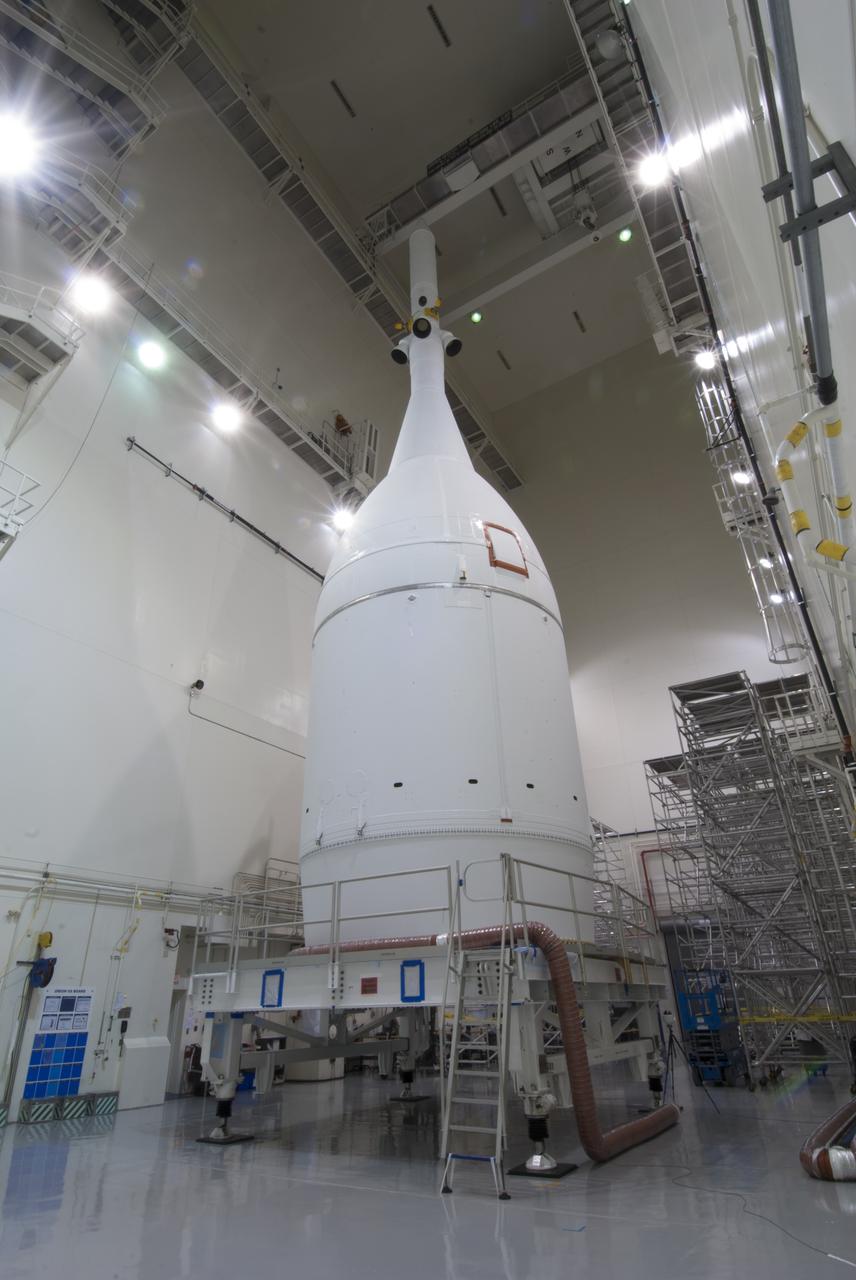
The Orion spacecraft sits inside the Launch Abort System Facility at NASA's Kennedy Space Center in Florida. The Ogive panels have been installed around the launch abort system. The panels will smooth the airflow over the conical spacecraft to limit sound and vibration, which will make for a much smoother ride for the astronauts who will ride inside Orion in the future. The spacecraft is being readied for its move to Space Launch Complex 37 at Cape Canaveral Air Force Station for its flight test. Orion is the exploration spacecraft designed to carry astronauts to destinations not yet explored by humans, including an asteroid and Mars. It will have emergency abort capability, sustain the crew during space travel and provide safe re-entry from deep space return velocities. The first unpiloted flight test of Orion is scheduled to launch in December 2014 atop a United Launch Alliance Delta IV Heavy rocket, and in 2018 on NASA’s Space Launch System rocket.
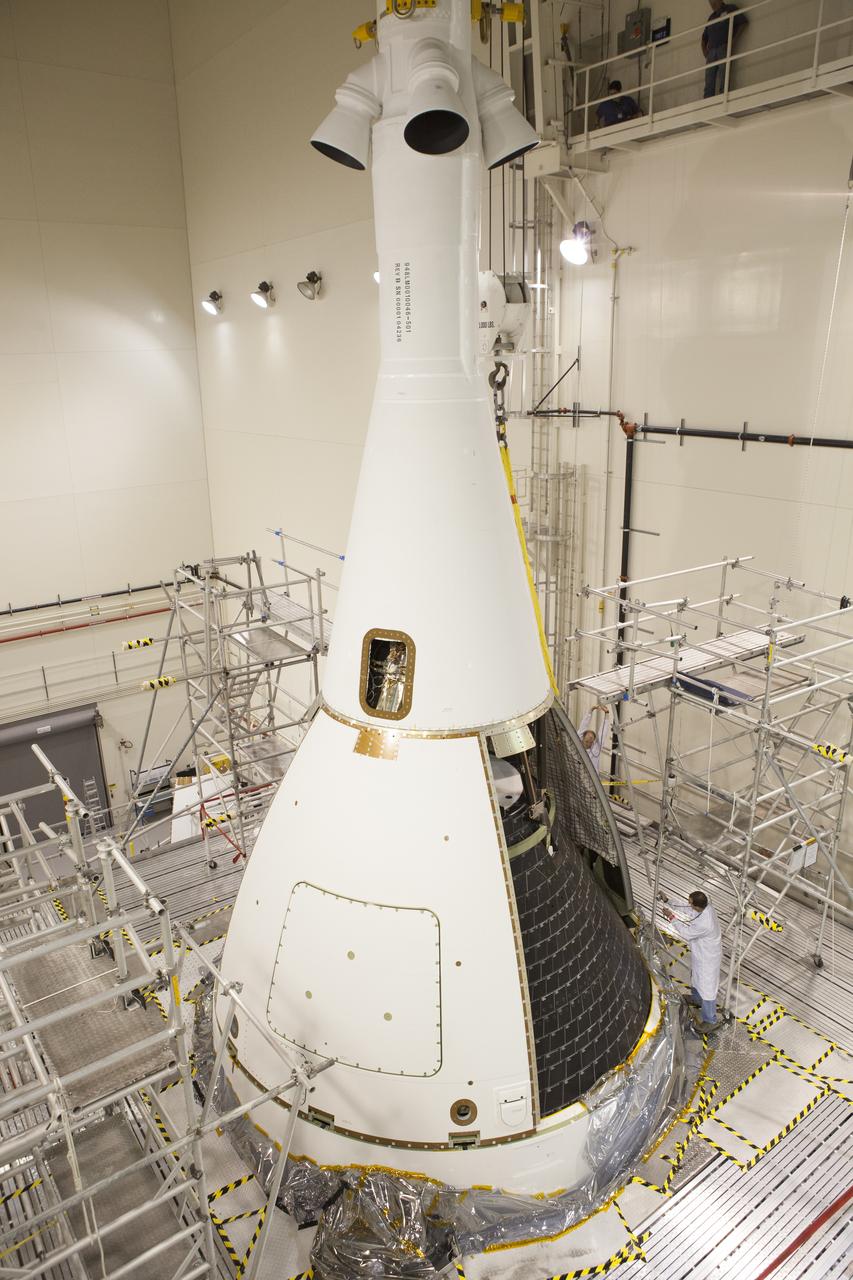
Inside the Launch Abort System Facility at NASA’s Kennedy Space Center in Florida, technicians have installed two of the four Ogive panels on Orion's Launch Abort System. The panels will smooth the airflow over the conical spacecraft to limit sound and vibration, which will make for a much smoother ride for the astronauts who will ride inside Orion in the future. The work marked the final major assembly steps for the spacecraft before it is transported to Space Launch Complex 37 at Cape Canaveral Air Force Station in November. Orion is the exploration spacecraft designed to carry astronauts to destinations not yet explored by humans, including an asteroid and Mars. It will have emergency abort capability, sustain the crew during space travel and provide safe re-entry from deep space return velocities. The first unpiloted flight test of Orion is scheduled to launch in December 2014 atop a United Launch Alliance Delta IV Heavy rocket, and in 2018 on NASA’s Space Launch System rocket.
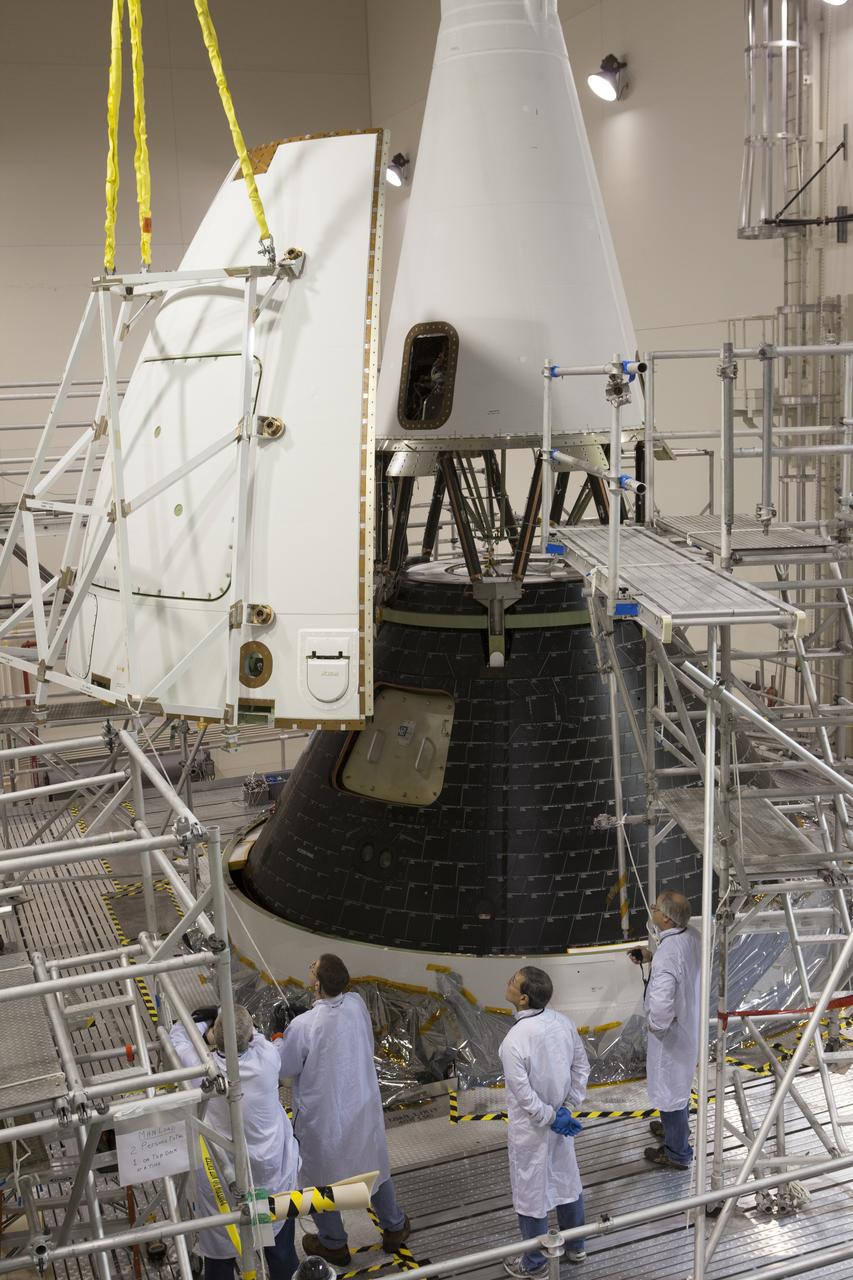
Inside the Launch Abort System Facility at NASA’s Kennedy Space Center in Florida, technicians monitor the progress as a crane moves the first of four Ogive panels closer for installation on Orion's Launch Abort System. The panels will smooth the airflow over the conical spacecraft to limit sound and vibration, which will make for a much smoother ride for the astronauts who will ride inside Orion in the future. The work marked the final major assembly steps for the spacecraft before it is transported to Space Launch Complex 37 at Cape Canaveral Air Force Station in November. Orion is the exploration spacecraft designed to carry astronauts to destinations not yet explored by humans, including an asteroid and Mars. It will have emergency abort capability, sustain the crew during space travel and provide safe re-entry from deep space return velocities. The first unpiloted flight test of Orion is scheduled to launch in December 2014 atop a United Launch Alliance Delta IV Heavy rocket, and in 2018 on NASA’s Space Launch System rocket.
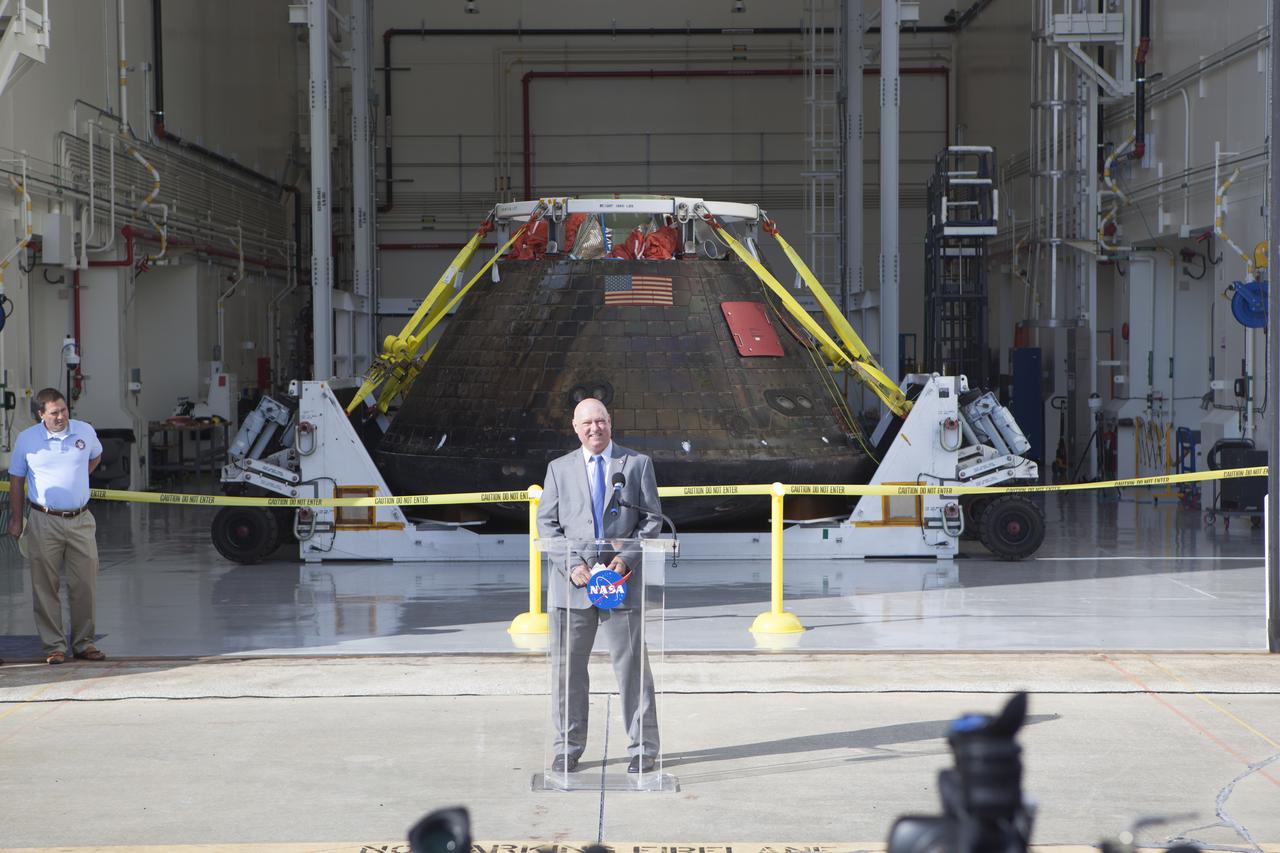
NASA's Orion spacecraft is viewed by members of the media at the Launch Abort System Facility at NASA's Kennedy Space Center in Florida. Kennedy News Chief Mike Curie speaks to the media during the viewing opportunity. Orion made the 8-day, 2,700 mile overland trip back to Kennedy from Naval Base San Diego in California. Analysis of data obtained during its two-orbit, four-and-a-half hour mission Dec. 5 will provide engineers detailed information on how the spacecraft fared. The Ground Systems Development and Operations Program led the recovery, offload and transportation efforts.
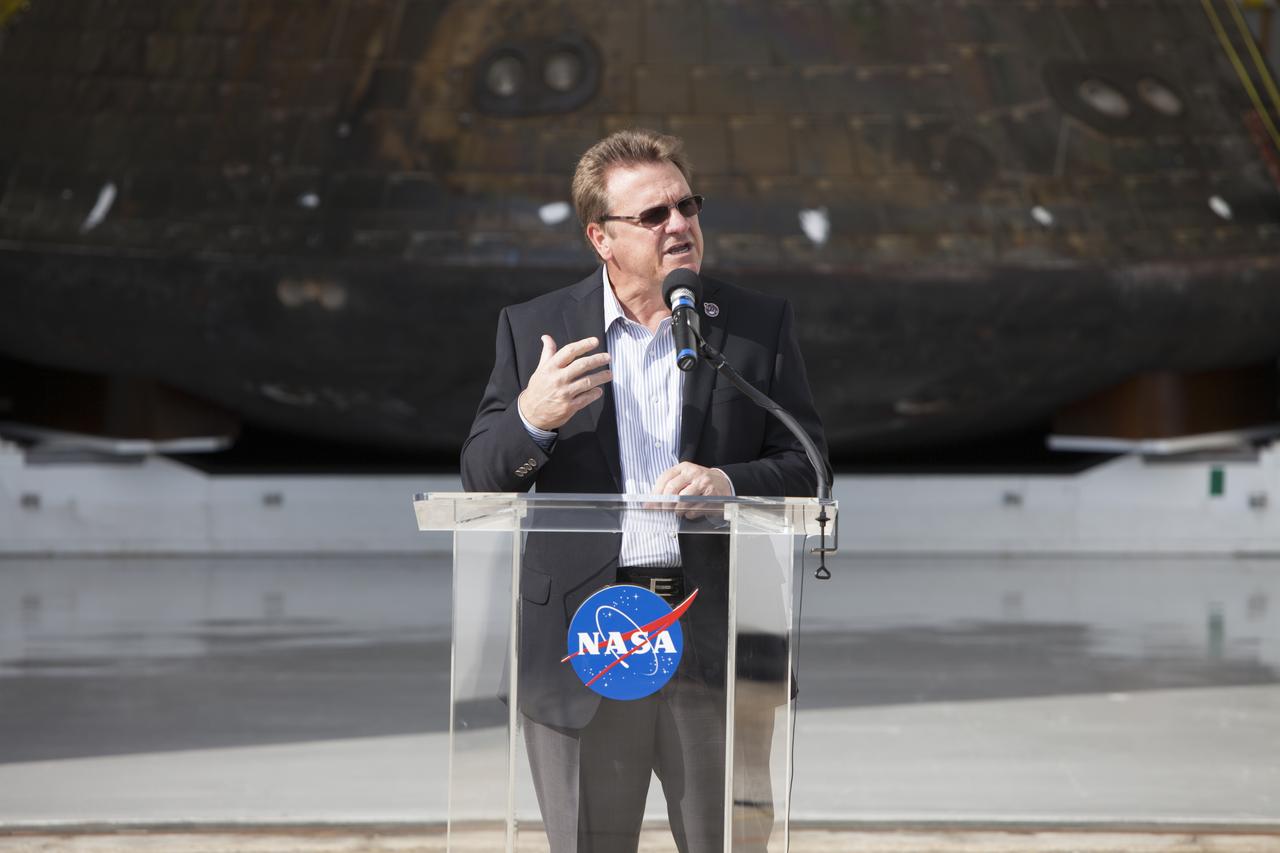
Lockheed Martin Manager Jules Schneider speaks to members of the media during a viewing of NASA's Orion spacecraft at the Launch Abort System Facility at NASA's Kennedy Space Center in Florida. The spacecraft's cross-country return, a 2,700 mile road trip from Naval Base San Diego to Kennedy, sets the stage for in-depth analysis of data obtained during Orion's trip to space. It will provide engineers with detailed information on how the spacecraft fared during its two-orbit, 4.5-hour flight test, completed on Dec. 5. The Ground Systems Development and Operations Program led the recovery, offload and transportation efforts.
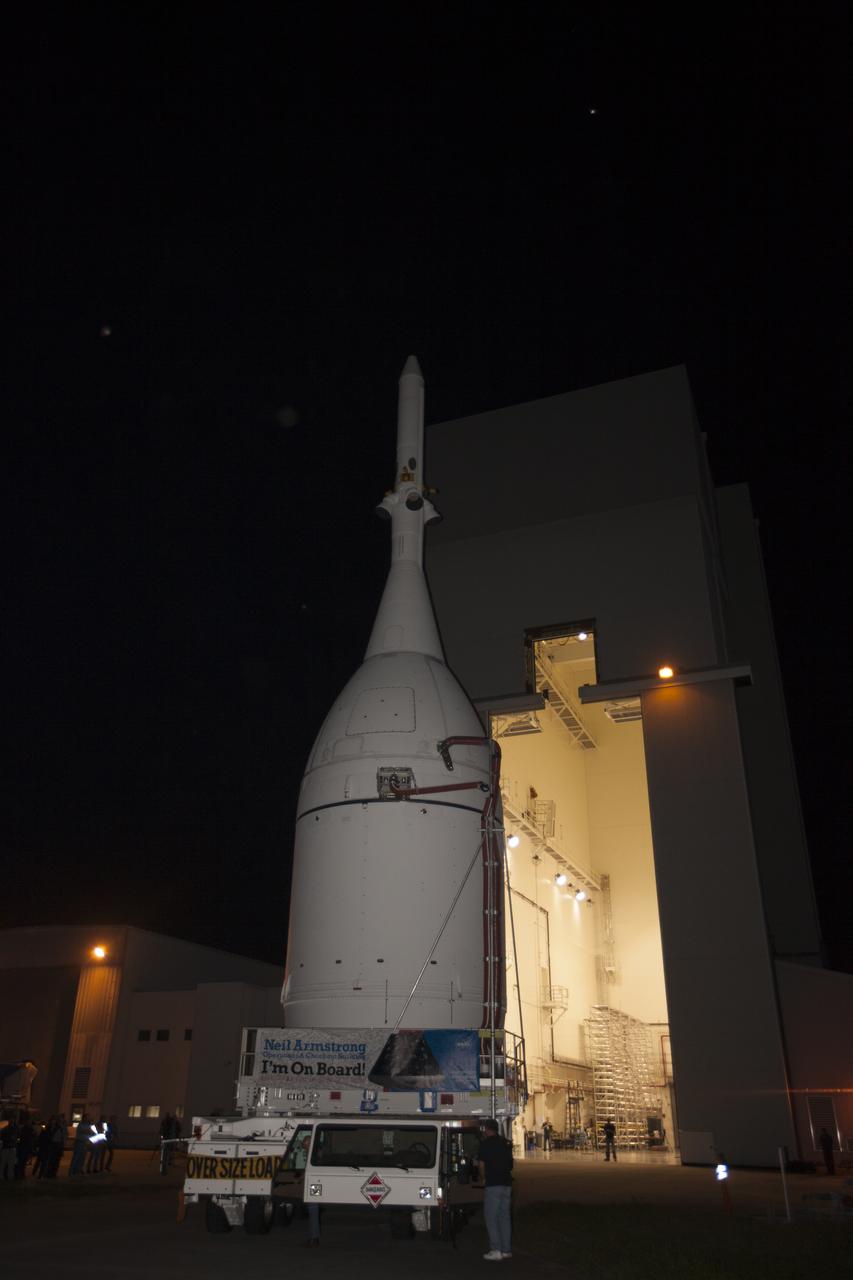
At NASA's Kennedy Space Center in Florida, the agency's completed Orion spacecraft begins its trip from the Launch Abort System Facility to Launch Complex 37 at Cape Canaveral Air Force Station. Orion spent many months in Kennedy's Neil Armstrong Operations and Checkout Building undergoing final assembly. Hundreds of employees who work there signed the banner that states, "I'm On Board!" In doing so, their signature indicated they did their part to ensure mission success. After arrival at the launch pad, United Launch Alliance engineers and technicians will lift Orion and mount it atop its Delta IV Heavy rocket. Orion is the exploration spacecraft designed to carry astronauts to destinations not yet explored by humans, including an asteroid and Mars. It will have emergency abort capability, sustain the crew during space travel and provide safe re-entry from deep space return velocities. The first unpiloted flight test of Orion is scheduled to launch Dec. 4, 2014 atop a United Launch Alliance Delta IV Heavy rocket, and in 2018 on NASA’s Space Launch System rocket.
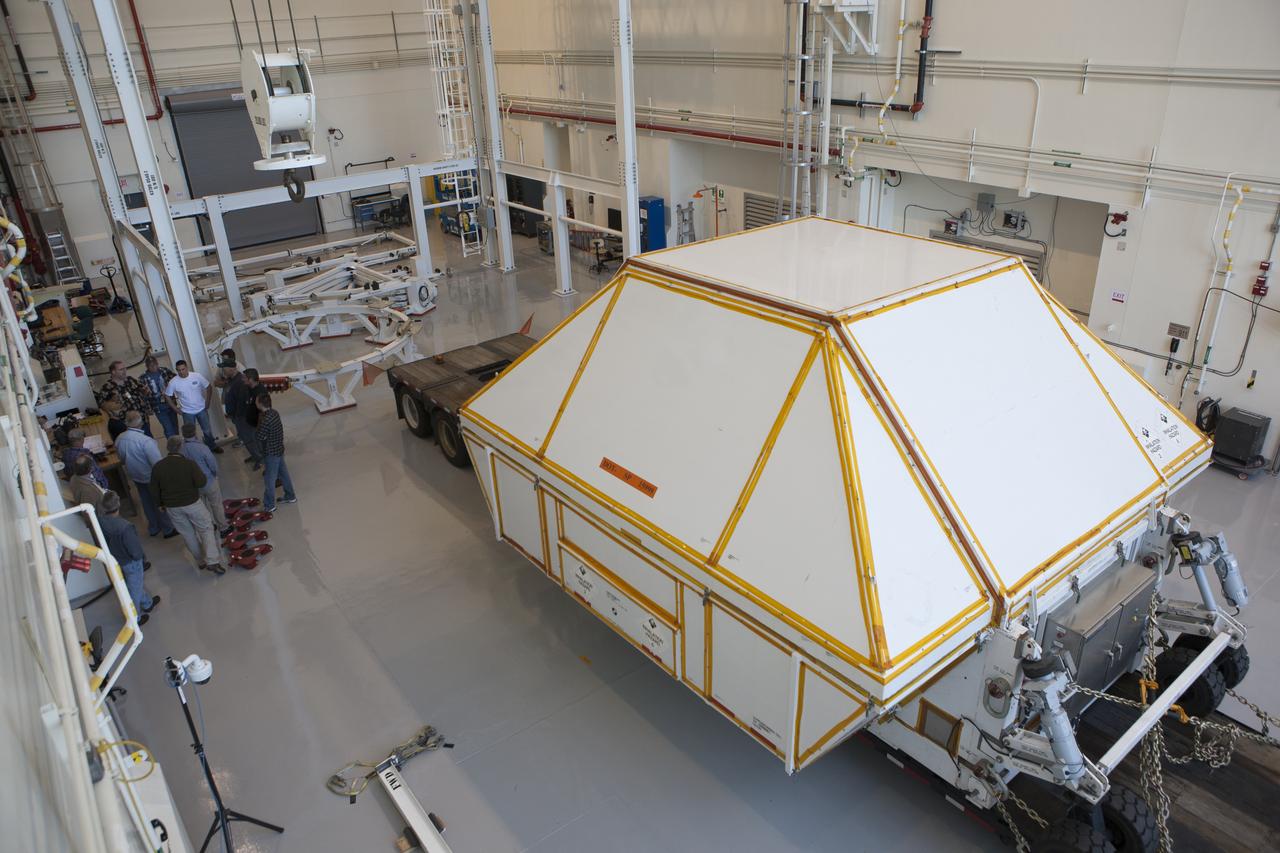
NASA's Orion spacecraft arrives inside the Launch Abort System Facility at Kennedy Space Center in Florida. The spacecraft was transported 2,700 miles overland from Naval Base San Diego in California, on a flatbed truck secured in its crew module transportation fixture for the trip. During its first flight test, Orion completed a two-orbit, four-and-a-half hour mission Dec. 5 to test systems critical to crew safety, including the launch abort system, the heat shield and the parachute system. The Ground Systems Development and Operations Program led the recovery, offload and transportation efforts.
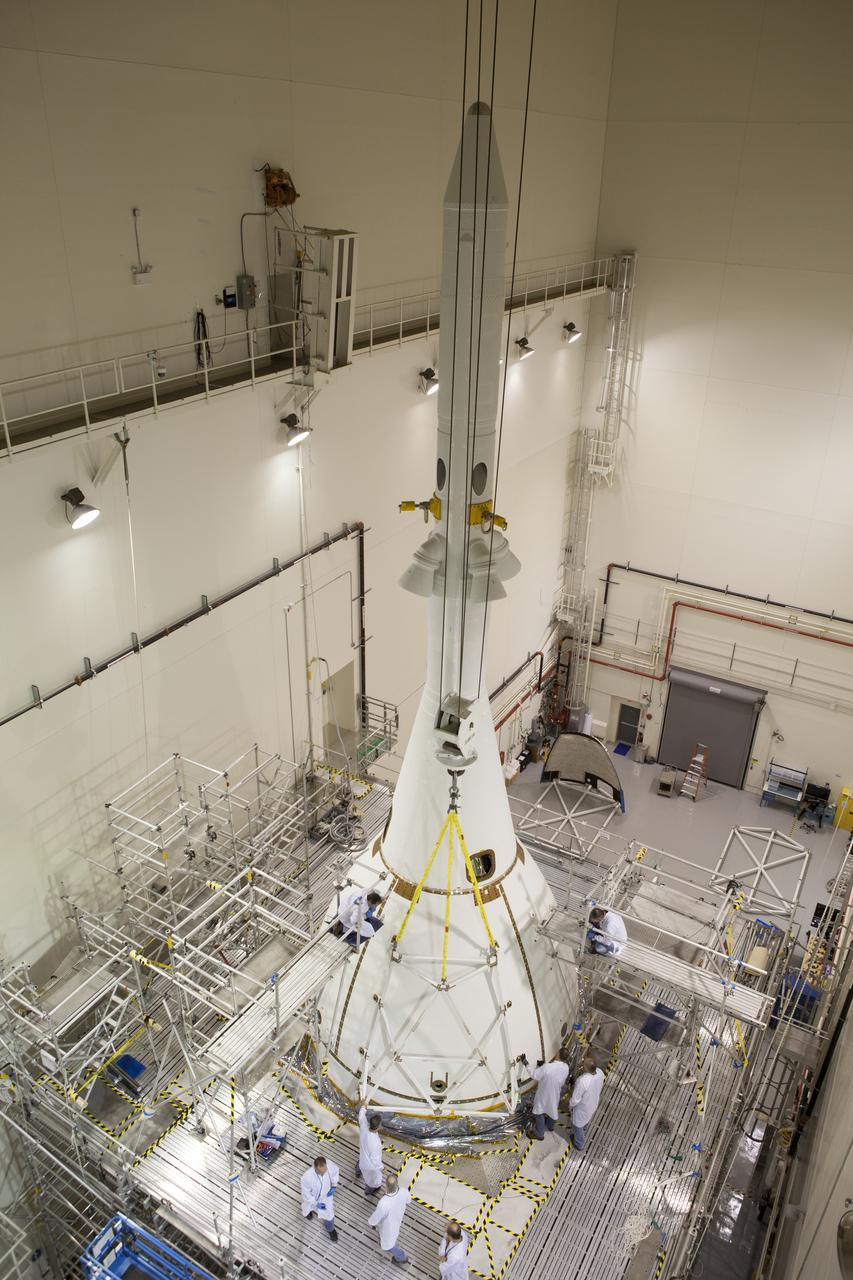
Inside the Launch Abort System Facility at NASA’s Kennedy Space Center in Florida, technicians attach the third of four Ogive panels on Orion's Launch Abort System. The panels will smooth the airflow over the conical spacecraft to limit sound and vibration, which will make for a much smoother ride for the astronauts who will ride inside Orion in the future. The work marked the final major assembly steps for the spacecraft before it is transported to Space Launch Complex 37 at Cape Canaveral Air Force Station in November. Orion is the exploration spacecraft designed to carry astronauts to destinations not yet explored by humans, including an asteroid and Mars. It will have emergency abort capability, sustain the crew during space travel and provide safe re-entry from deep space return velocities. The first unpiloted flight test of Orion is scheduled to launch in December 2014 atop a United Launch Alliance Delta IV Heavy rocket, and in 2018 on NASA’s Space Launch System rocket.
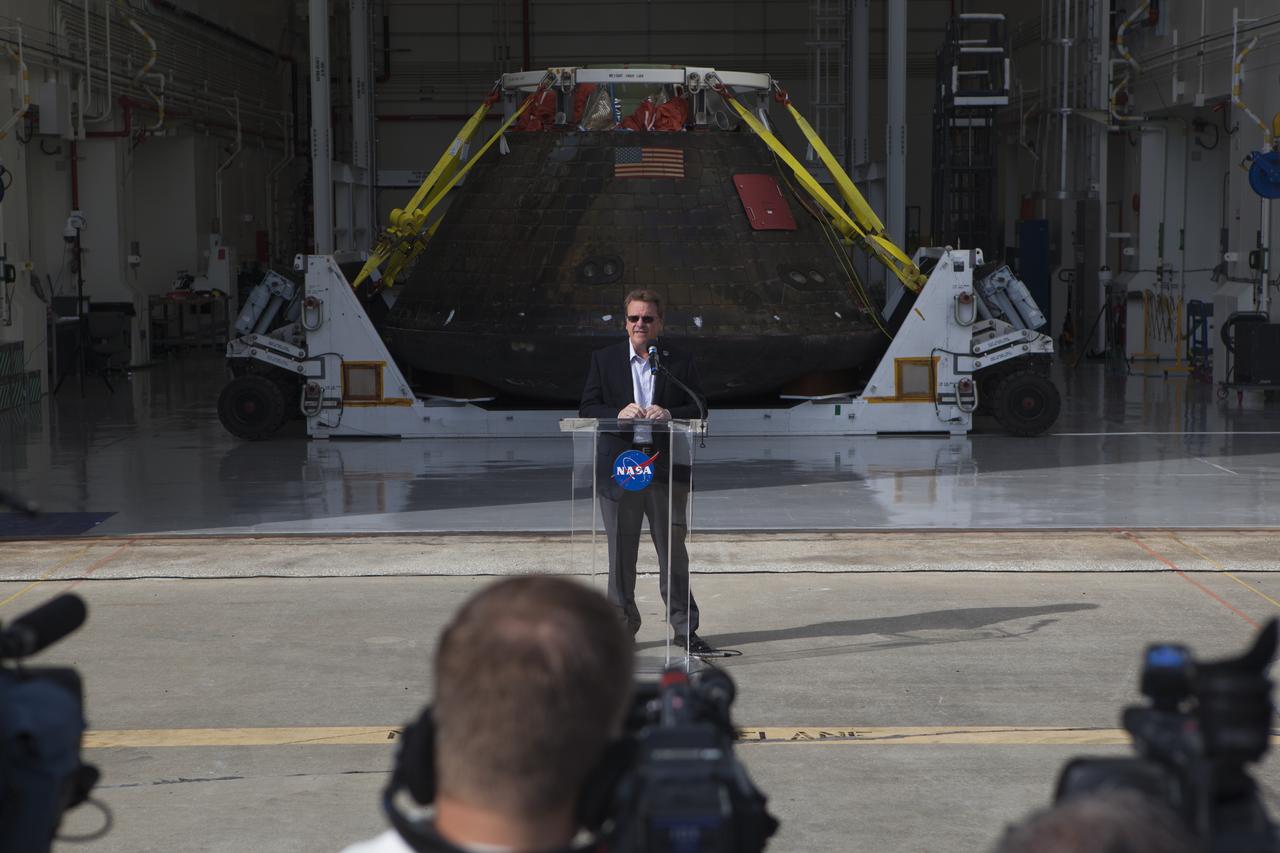
Lockheed Martin Manager Jules Schneider speaks to members of the media during a viewing of NASA's Orion spacecraft at the Launch Abort System Facility at NASA's Kennedy Space Center in Florida. The spacecraft's cross-country return, a 2,700 mile road trip from Naval Base San Diego to Kennedy, sets the stage for in-depth analysis of data obtained during Orion's trip to space. It will provide engineers detailed information on how the spacecraft fared during its two-orbit, 4.5-hour flight test, completed on Dec. 5. The Ground Systems Development and Operations Program led the recovery, offload and transportation efforts.
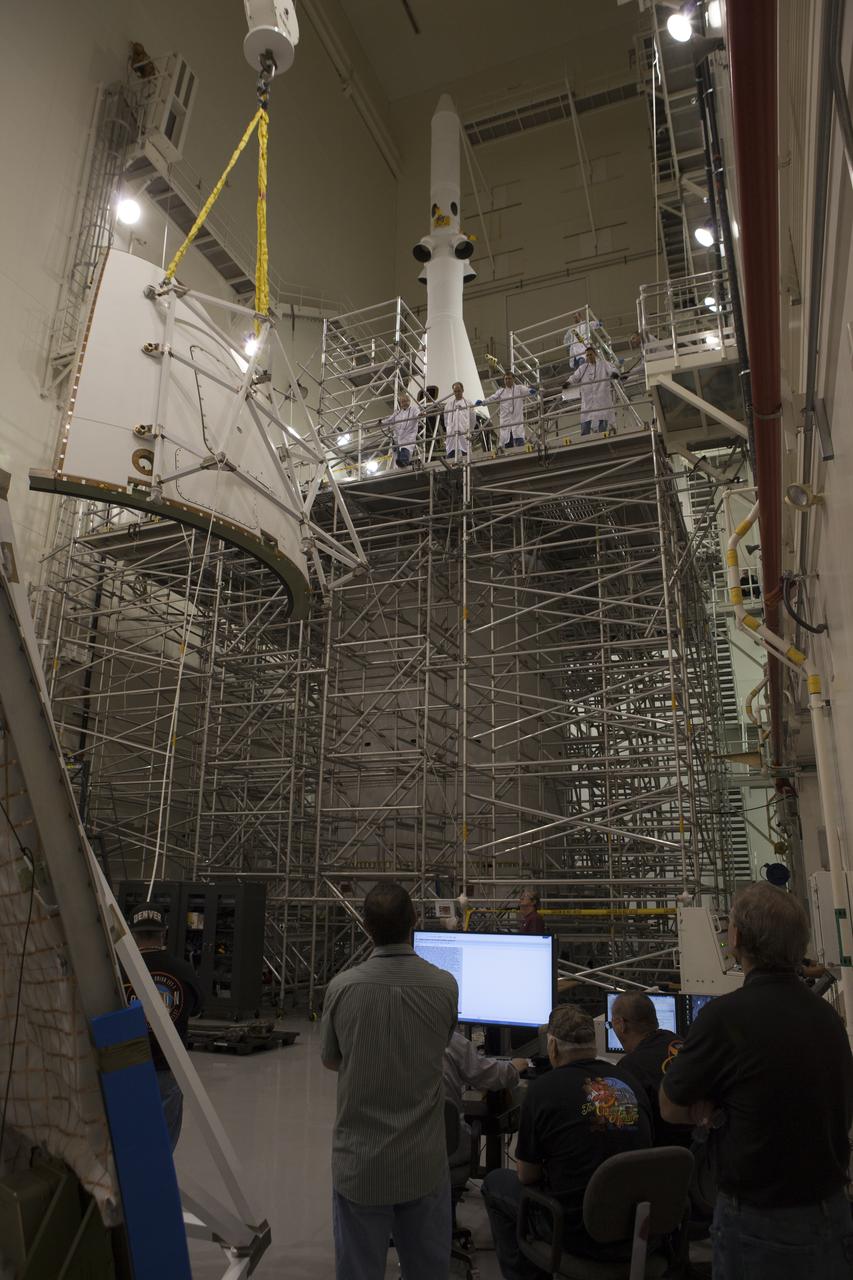
The first of four Ogive panels is lifted by crane for installation on Orion's Launch Abort System inside the Launch Abort System Facility at NASA’s Kennedy Space Center in Florida. The panels will smooth the airflow over the conical spacecraft to limit sound and vibration, which will make for a much smoother ride for the astronauts who will ride inside Orion in the future. The work marked the final major assembly steps for the spacecraft before it is transported to Space Launch Complex 37 at Cape Canaveral Air Force Station in November. Orion is the exploration spacecraft designed to carry astronauts to destinations not yet explored by humans, including an asteroid and Mars. It will have emergency abort capability, sustain the crew during space travel and provide safe re-entry from deep space return velocities. The first unpiloted flight test of Orion is scheduled to launch in December 2014 atop a United Launch Alliance Delta IV Heavy rocket, and in 2018 on NASA’s Space Launch System rocket.
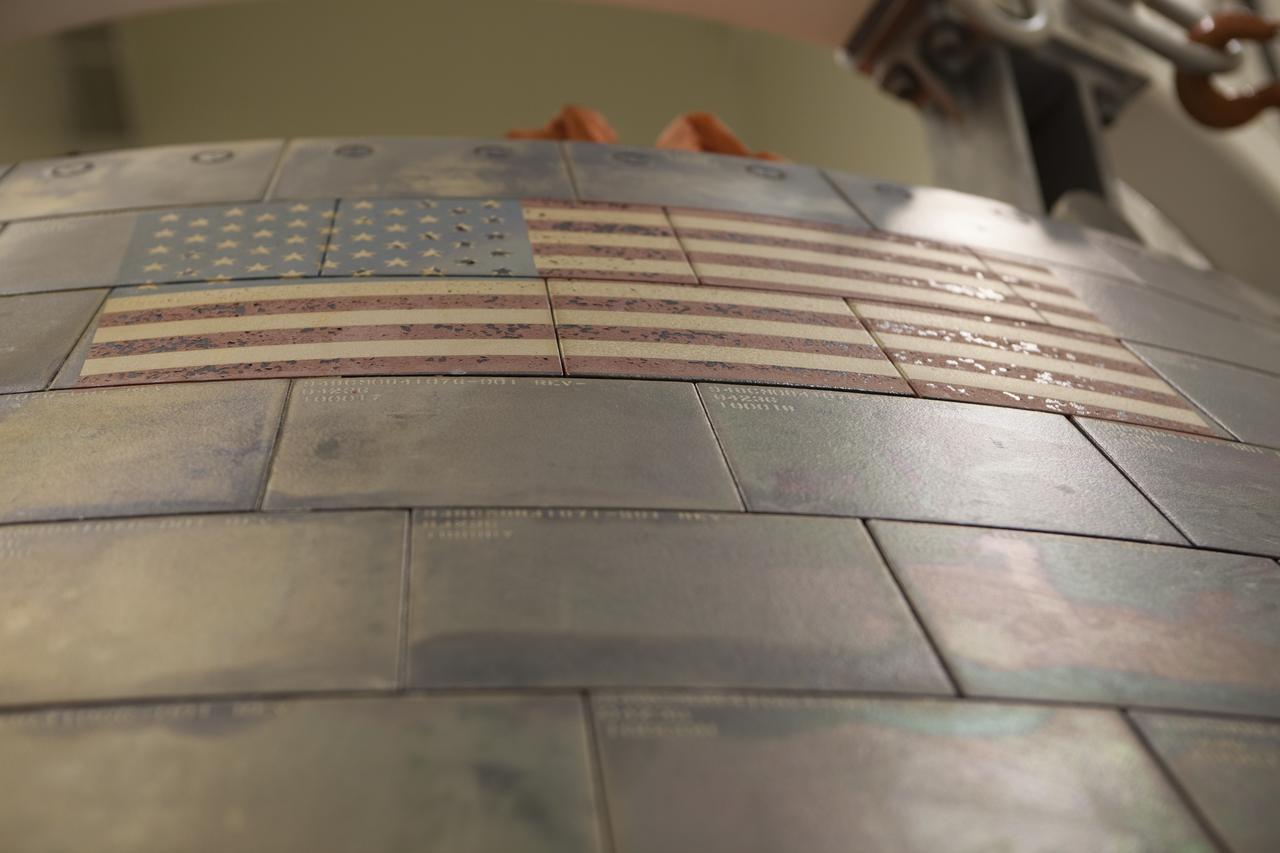
The U.S. Flag is in view on NASA's Orion spacecraft inside the Launch Abort System Facility at NASA's Kennedy Space Center in Florida during a media event. Orion made the 8-day, 2,700 mile overland trip back to Kennedy from Naval Base San Diego in California. Analysis of date obtained during its two-orbit, four-and-a-half hour mission Dec. 5 will provide engineers with detailed information on how the spacecraft fared. The Ground Systems Development and Operations Program led the recovery, offload and transportation efforts.
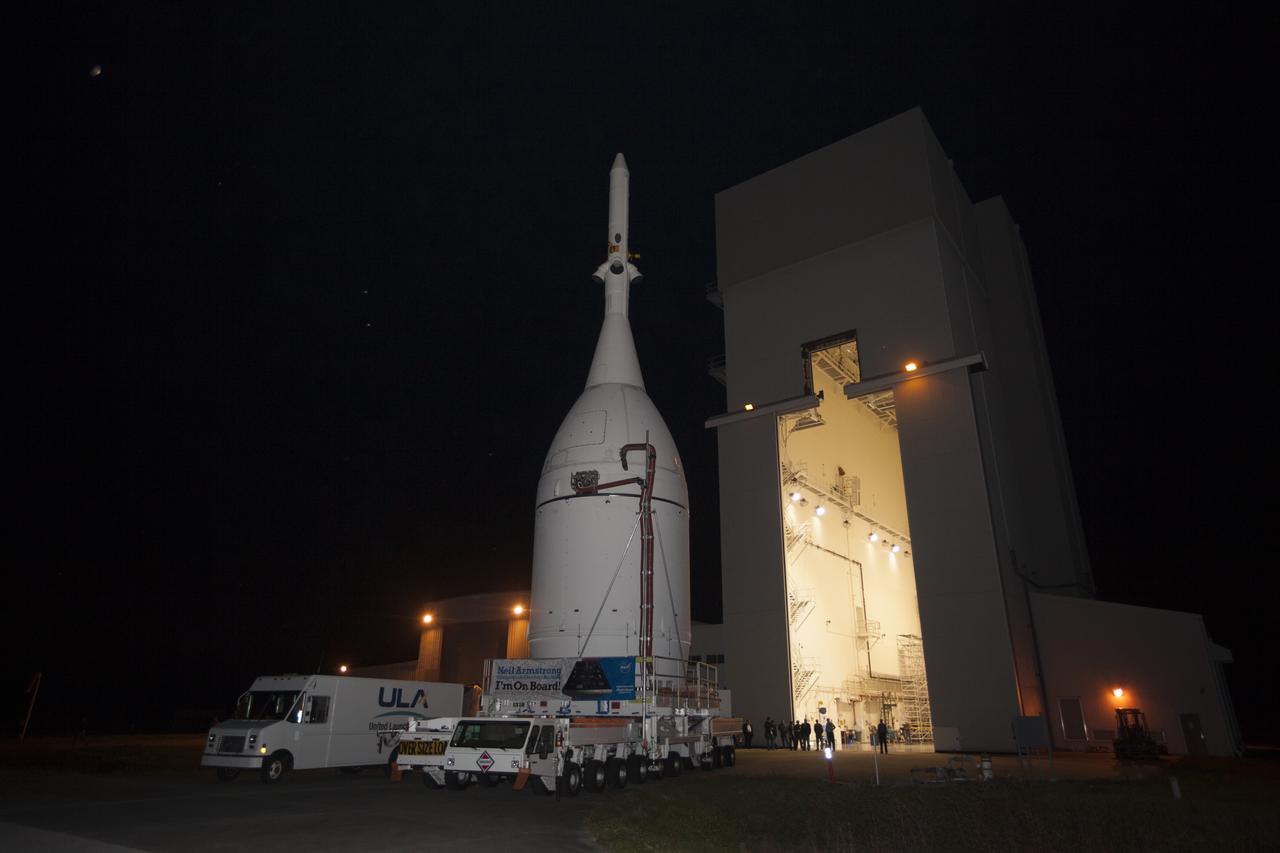
At NASA's Kennedy Space Center in Florida, the agency's completed Orion spacecraft begins its trip from the Launch Abort System Facility to Launch Complex 37 at Cape Canaveral Air Force Station. Orion spent many months in Kennedy's Neil Armstrong Operations and Checkout Building undergoing final assembly. Hundreds of employees who work there signed the banner that states, "I'm On Board!" In doing so, their signature indicated they did their part to ensure mission success. After arrival at the launch pad, United Launch Alliance engineers and technicians will lift Orion and mount it atop its Delta IV Heavy rocket. Orion is the exploration spacecraft designed to carry astronauts to destinations not yet explored by humans, including an asteroid and Mars. It will have emergency abort capability, sustain the crew during space travel and provide safe re-entry from deep space return velocities. The first unpiloted flight test of Orion is scheduled to launch Dec. 4, 2014 atop a United Launch Alliance Delta IV Heavy rocket, and in 2018 on NASA’s Space Launch System rocket.
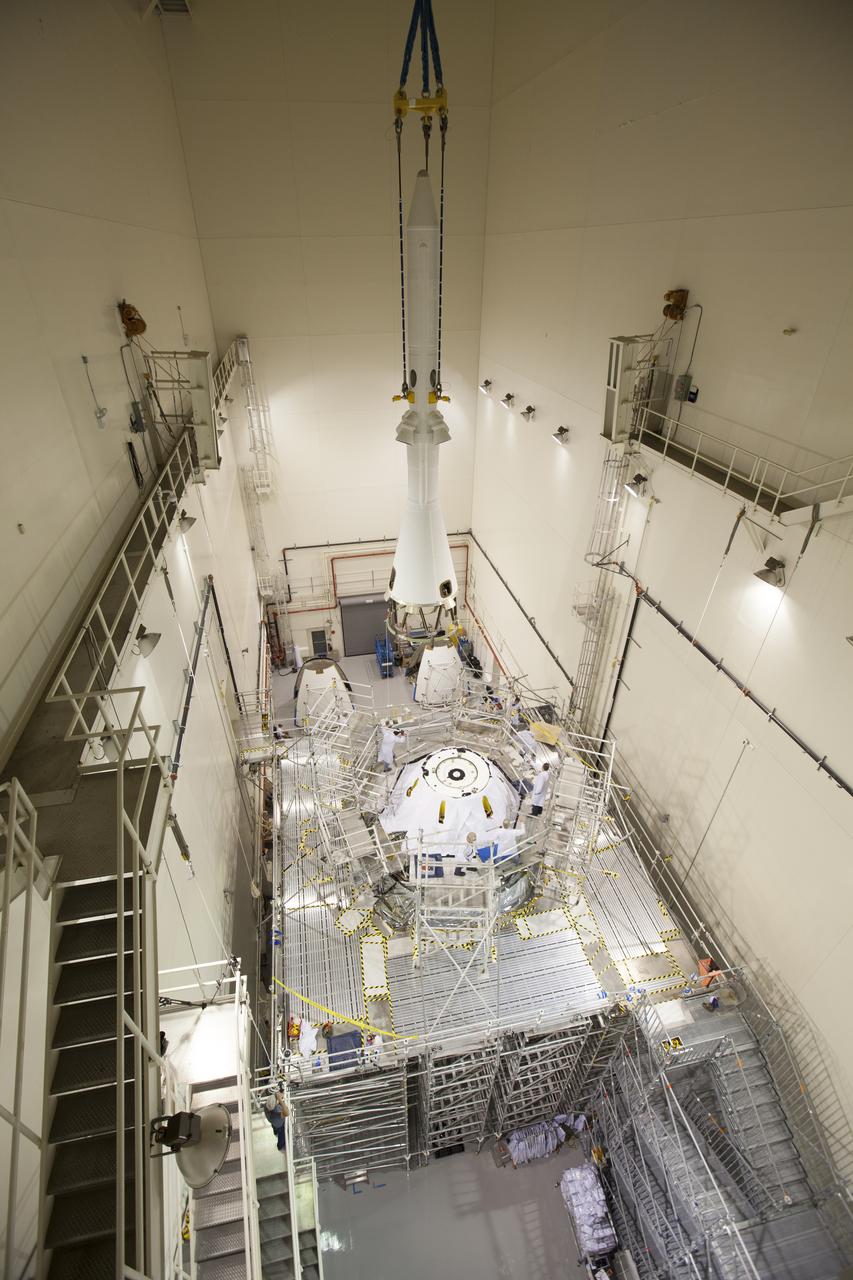
A crane is used to move the launch abort system closer for installation on the Orion spacecraft for Exploration Flight Test-1 inside the Launch Abort System Facility, or LASF, at NASA's Kennedy Space Center in Florida. The completed crew and service modules will be tested and verified together with the launch abort system. Orion will remain inside the LASF until mid-November, when the United Launch Alliance Delta IV Heavy rocket is ready for integration with the spacecraft. Orion is the exploration spacecraft designed to carry astronauts to destinations not yet explored by humans, including an asteroid and Mars. It will have emergency abort capability, sustain the crew during space travel and provide safe re-entry from deep space return velocities. The first unpiloted test flight of the Orion is scheduled to launch in December atop the Delta IV Heavy rocket from Cape Canaveral Air Force Station in Florida to an altitude of 3,600 miles above the Earth's surface. The two-orbit, four-hour flight test will help engineers evaluate the systems critical to crew safety including the heat shield, parachute system and launch abort system.
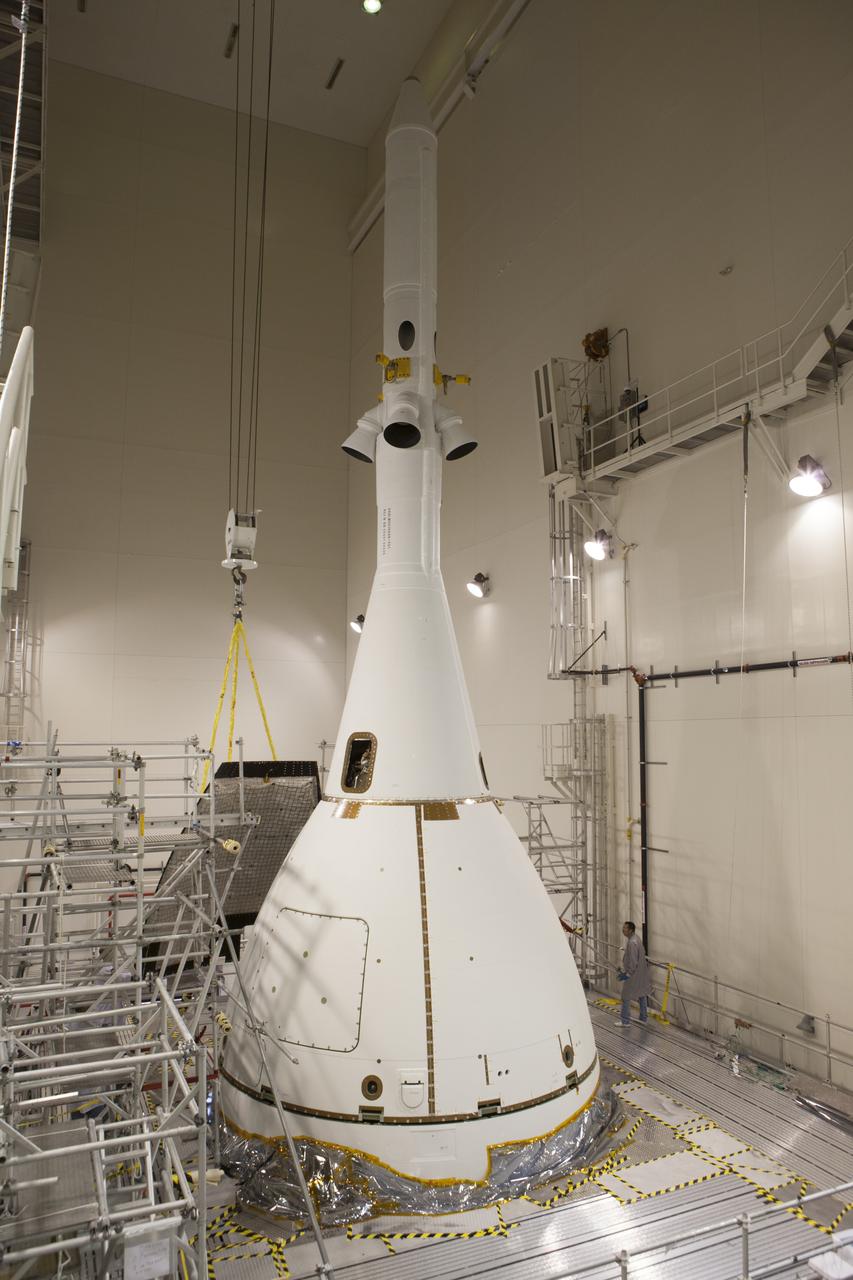
Inside the Launch Abort System Facility at NASA’s Kennedy Space Center in Florida, a crane brings the fourth and final Ogive panel closer for installation on Orion's Launch Abort System. The panels will smooth the airflow over the conical spacecraft to limit sound and vibration, which will make for a much smoother ride for the astronauts who will ride inside Orion in the future. The work marked the final major assembly steps for the spacecraft before it is transported to Space Launch Complex 37 at Cape Canaveral Air Force Station in November. Orion is the exploration spacecraft designed to carry astronauts to destinations not yet explored by humans, including an asteroid and Mars. It will have emergency abort capability, sustain the crew during space travel and provide safe re-entry from deep space return velocities. The first unpiloted flight test of Orion is scheduled to launch in December 2014 atop a United Launch Alliance Delta IV Heavy rocket, and in 2018 on NASA’s Space Launch System rocket.
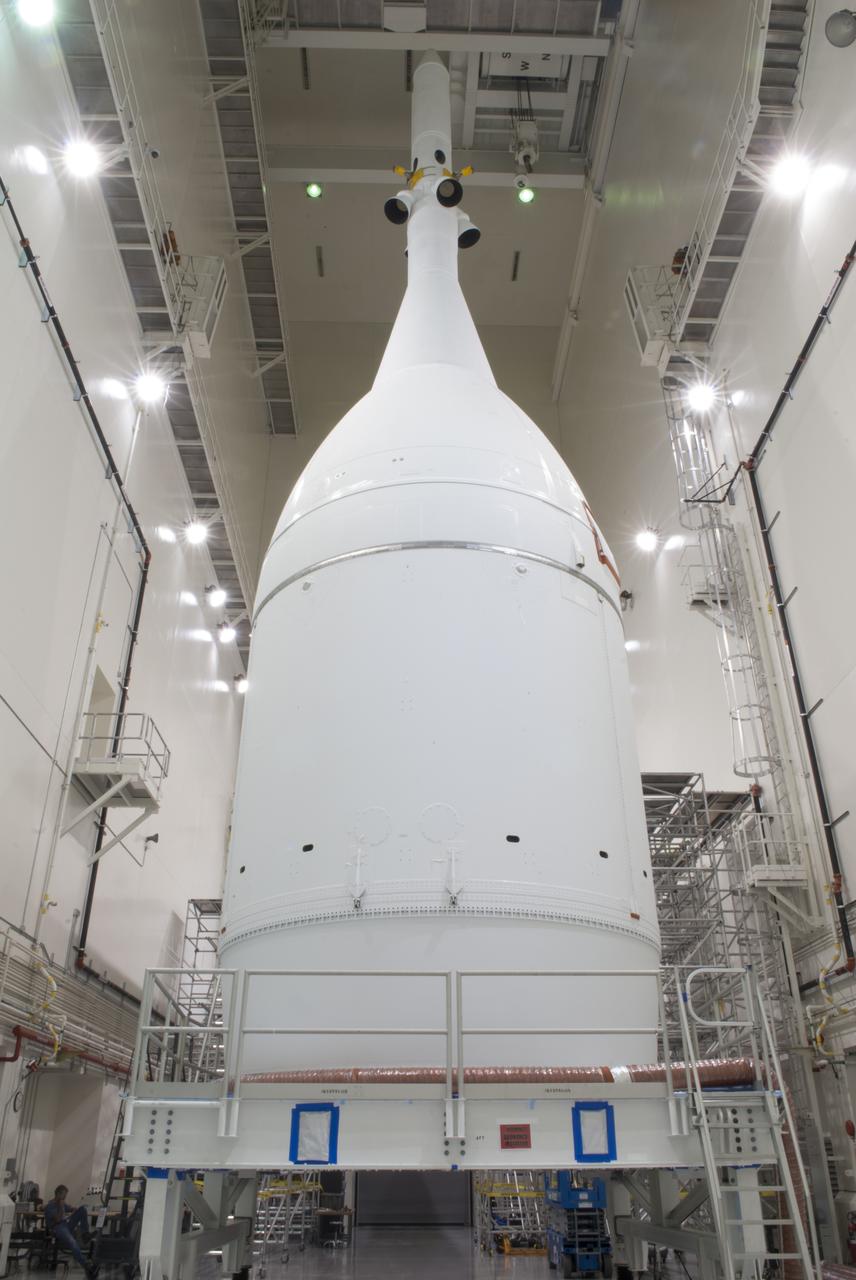
The Orion spacecraft sits inside the Launch Abort System Facility at NASA's Kennedy Space Center in Florida. The Ogive panels have been installed around the launch abort system. The panels will smooth the airflow over the conical spacecraft to limit sound and vibration, which will make for a much smoother ride for the astronauts who will ride inside Orion in the future. The spacecraft is being readied for its move to Space Launch Complex 37 at Cape Canaveral Air Force Station for its flight test. Orion is the exploration spacecraft designed to carry astronauts to destinations not yet explored by humans, including an asteroid and Mars. It will have emergency abort capability, sustain the crew during space travel and provide safe re-entry from deep space return velocities. The first unpiloted flight test of Orion is scheduled to launch in December 2014 atop a United Launch Alliance Delta IV Heavy rocket, and in 2018 on NASA’s Space Launch System rocket.
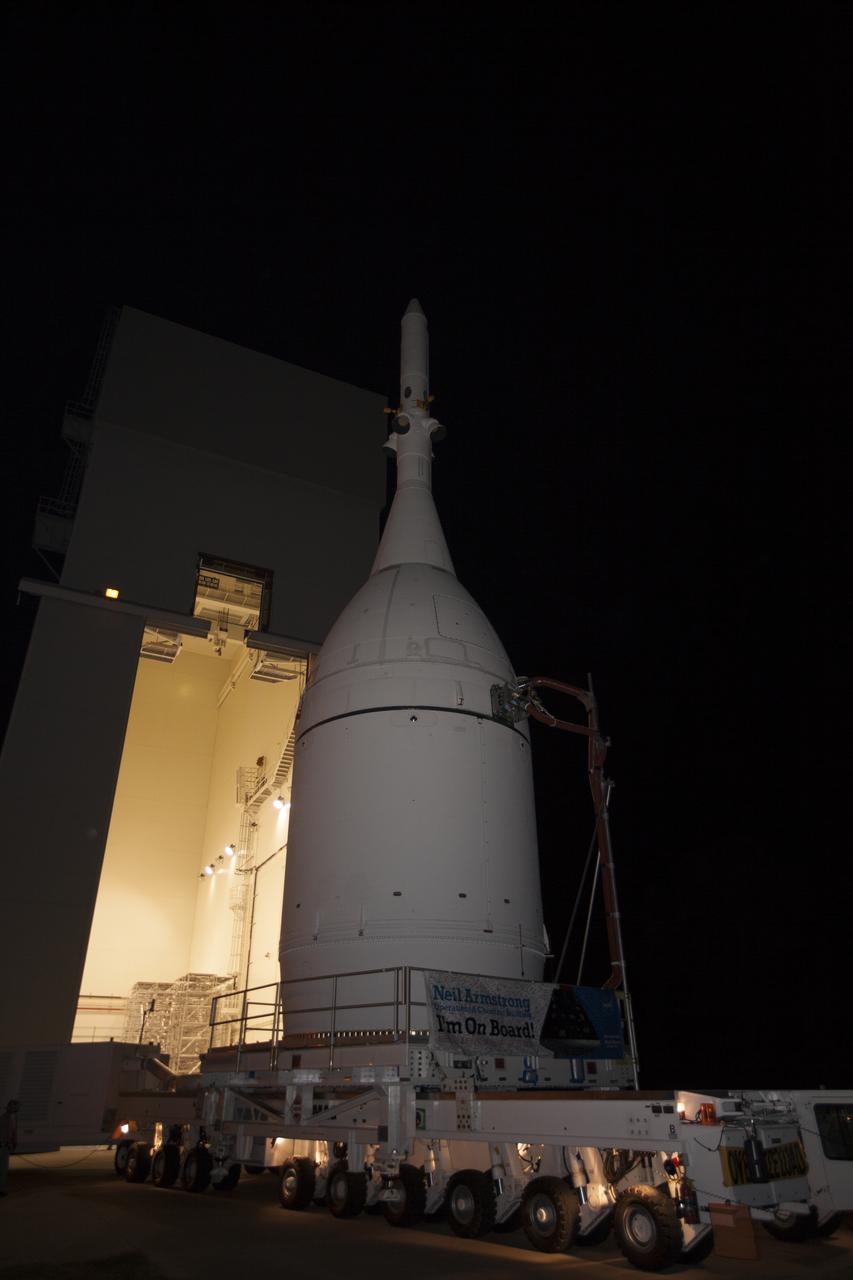
At NASA's Kennedy Space Center in Florida, the agency's completed Orion spacecraft begins its trip from the Launch Abort System Facility to Launch Complex 37 at Cape Canaveral Air Force Station. Orion spent many months in Kennedy's Neil Armstrong Operations and Checkout Building undergoing final assembly. Hundreds of employees who work there signed the banner that states, "I'm On Board!" In doing so, their signature indicated they did their part to ensure mission success. After arrival at the launch pad, United Launch Alliance engineers and technicians will lift Orion and mount it atop its Delta IV Heavy rocket. Orion is the exploration spacecraft designed to carry astronauts to destinations not yet explored by humans, including an asteroid and Mars. It will have emergency abort capability, sustain the crew during space travel and provide safe re-entry from deep space return velocities. The first unpiloted flight test of Orion is scheduled to launch Dec. 4, 2014 atop a United Launch Alliance Delta IV Heavy rocket, and in 2018 on NASA’s Space Launch System rocket.

NASA's Orion spacecraft is viewed by members of the media at the Launch Abort System Facility at NASA's Kennedy Space Center in Florida. Lou Garcia, with the Ground Systems Development and Operations Program, or GSDO, speaks to the media during the viewing opportunity. The spacecraft's cross-country return, a 2,700 mile road trip from Naval Base San Diego to Kennedy, sets the stage for in-depth analysis of data obtained during Orion's trip to space. It will provide engineers with detailed information on how the spacecraft fared during its two-orbit, 4.5-hour flight test, completed on Dec. 5. GSDO led the recovery, offload and transportation efforts.
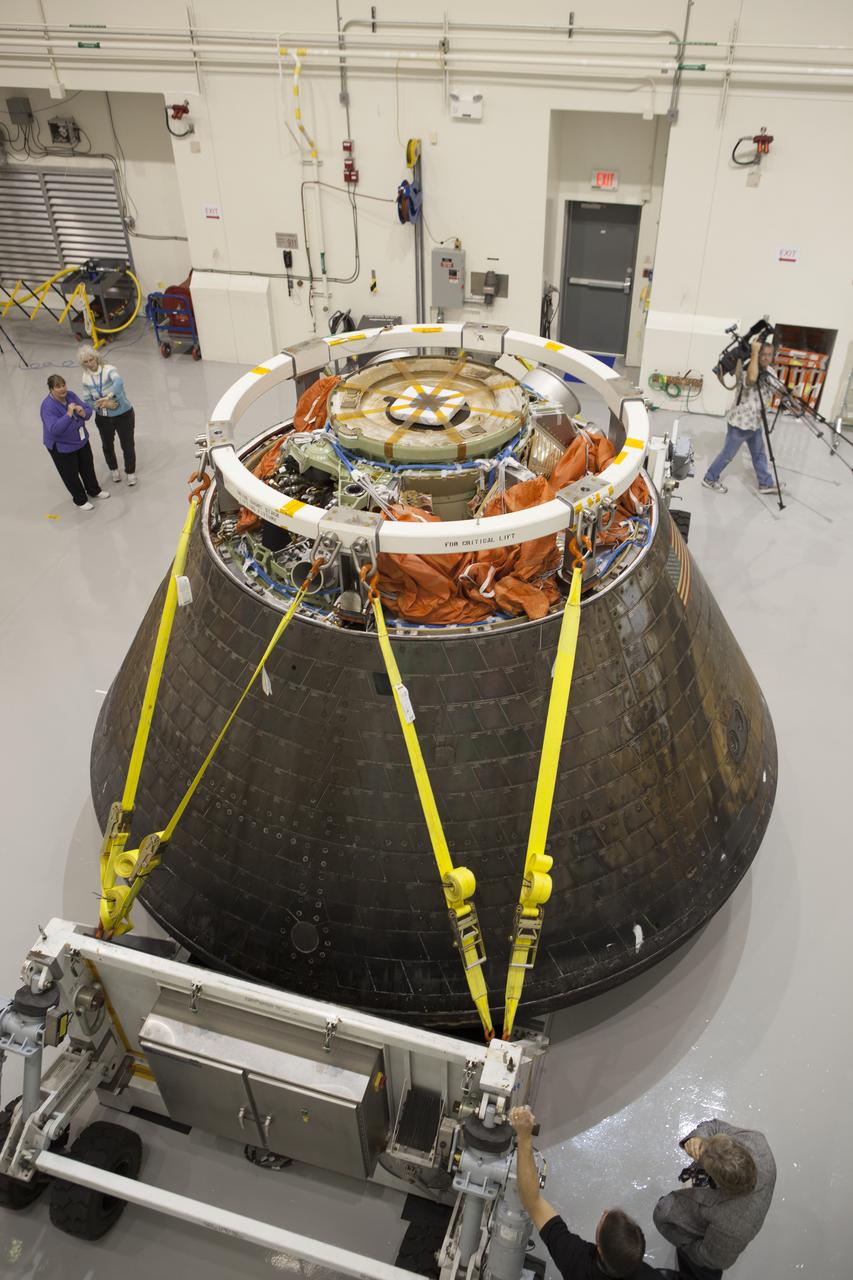
NASA's Orion spacecraft is viewed by members of the media at the Launch Abort System Facility at NASA's Kennedy Space Center in Florida. Orion made the 8-day, 2,700 mile overland trip back to Kennedy from Naval Base San Diego in California. Analysis of date obtained during its two-orbit, four-and-a-half hour mission Dec. 5 will provide engineers with detailed information on how the spacecraft fared. The Ground Systems Development and Operations Program led the recovery, offload and transportation efforts.
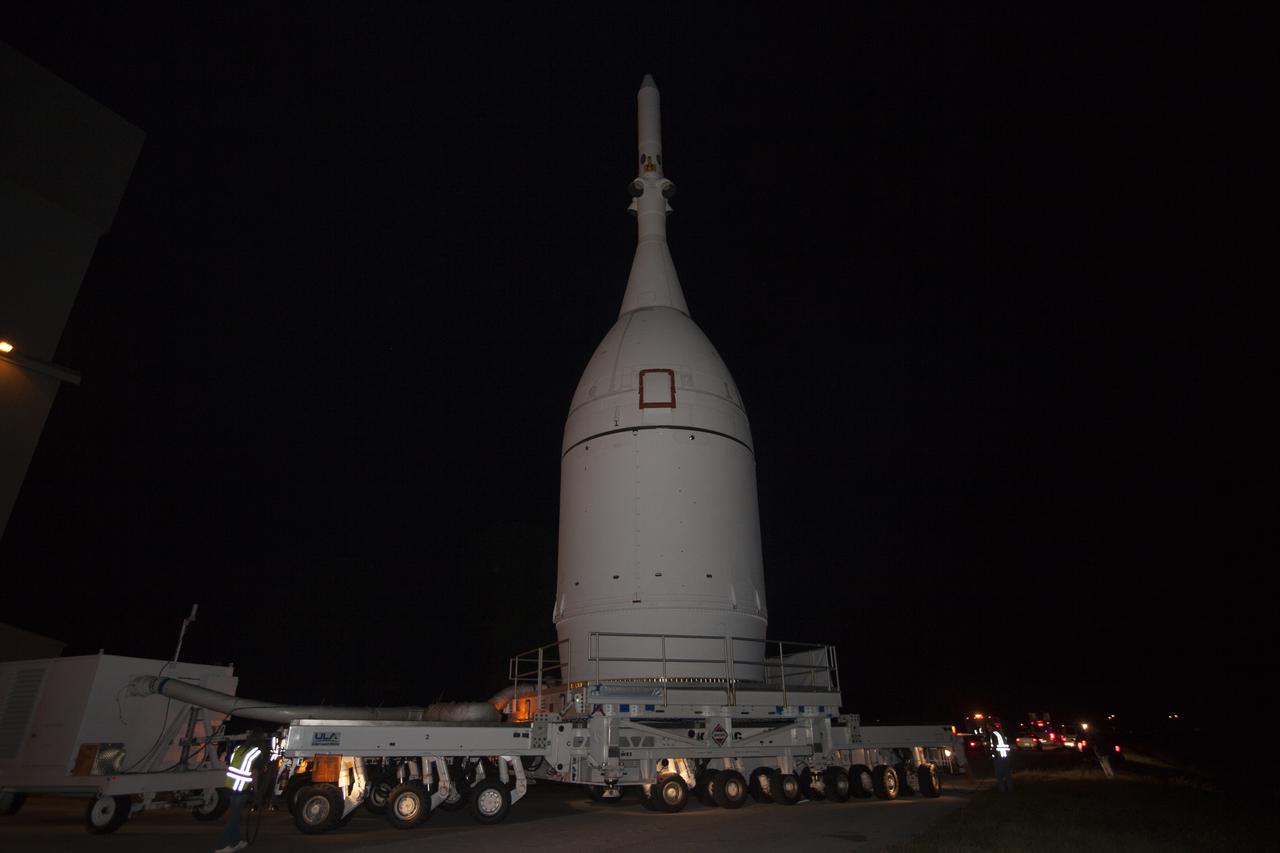
At NASA's Kennedy Space Center in Florida, the agency's completed Orion spacecraft begins its trip from the Launch Abort System Facility to Launch Complex 37 at Cape Canaveral Air Force Station. After arrival at the launch pad, United Launch Alliance engineers and technicians will lift Orion and mount it atop its Delta IV Heavy rocket. Orion is the exploration spacecraft designed to carry astronauts to destinations not yet explored by humans, including an asteroid and Mars. It will have emergency abort capability, sustain the crew during space travel and provide safe re-entry from deep space return velocities. The first unpiloted flight test of Orion is scheduled to launch Dec. 4, 2014 atop a United Launch Alliance Delta IV Heavy rocket, and in 2018 on NASA’s Space Launch System rocket.
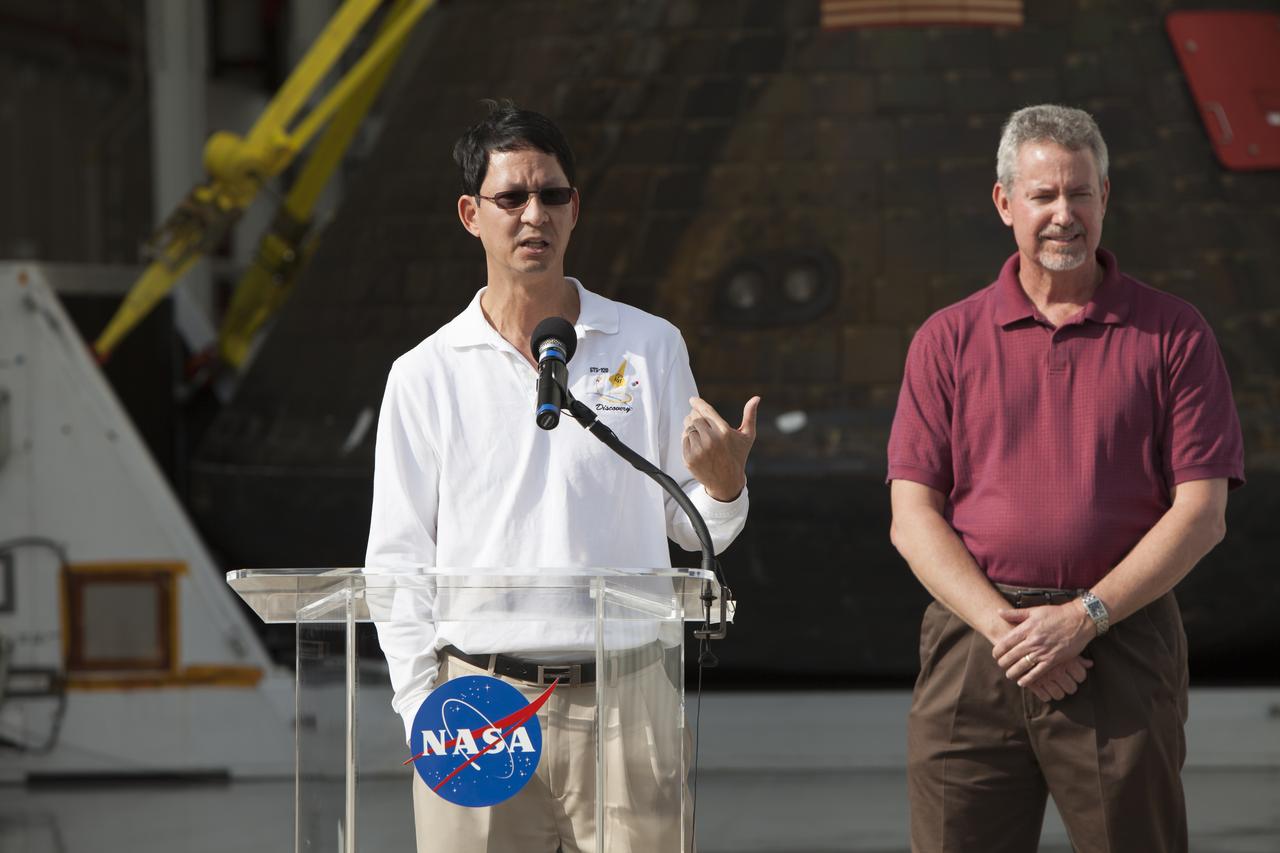
NASA's Orion spacecraft is viewed by members of the media at the Launch Abort System Facility at NASA's Kennedy Space Center in Florida. Speaking to the media during the viewing opportunity is Glenn Chin, Orion Production Operations. To his right is Phil Weber, with the Ground Systems Development and Operations Program, or GSDO. Orion made the 8-day, 2,700 mile overland trip back to Kennedy from Naval Base San Diego in California. Analysis of date obtained during its two-orbit, four-and-a-half hour mission Dec. 5 will provide engineers with detailed information on how the spacecraft fared. GSDO led the recovery, offload and transportation efforts.
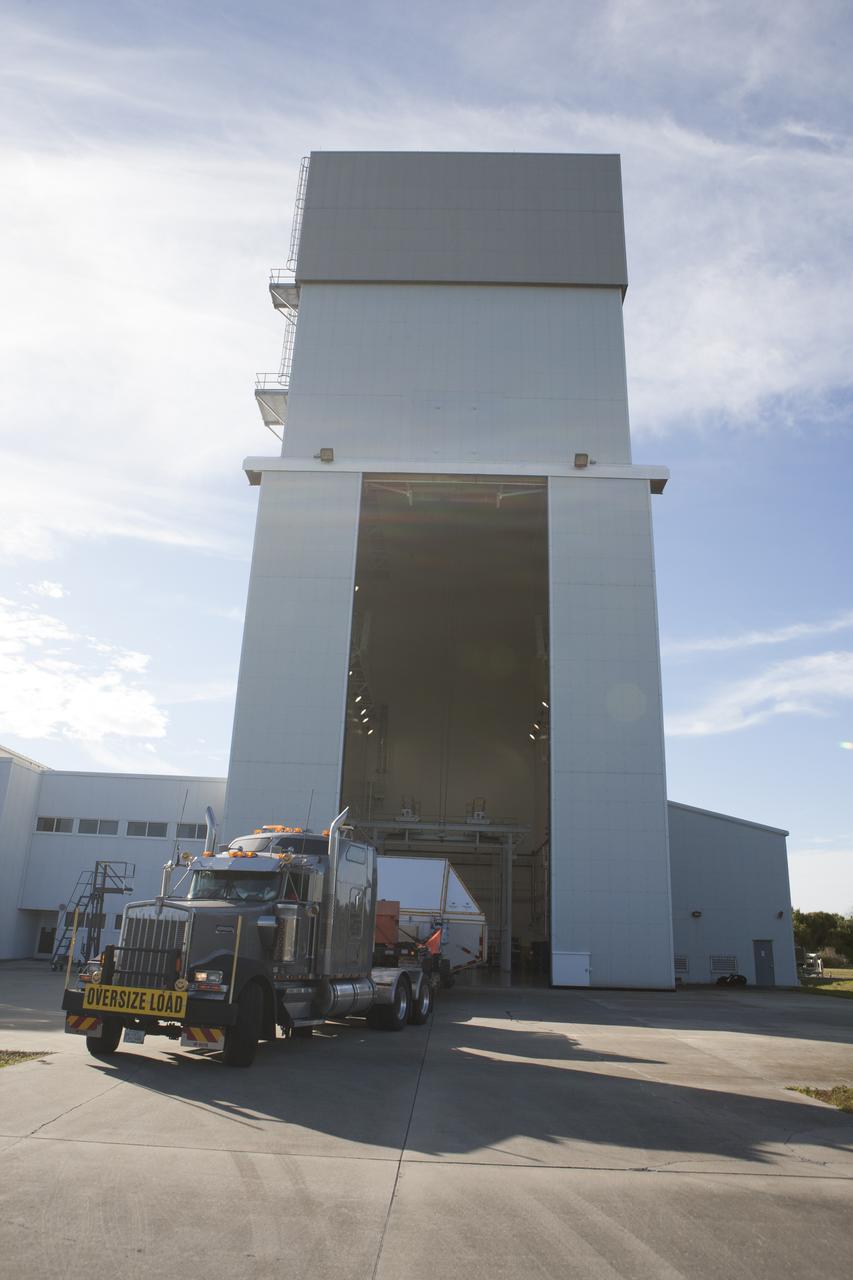
NASA's Orion spacecraft arrives at the Launch Abort System Facility at Kennedy Space Center in Florida. The spacecraft was transported 2,700 miles overland from Naval Base San Diego in California, on a flatbed truck secured in its crew module transportation fixture for the trip. During its first flight test, Orion completed a two-orbit, four-and-a-half hour mission Dec. 5 to test systems critical to crew safety, including the launch abort system, the heat shield and the parachute system. The Ground Systems Development and Operations Program led the recovery, offload and transportation efforts.
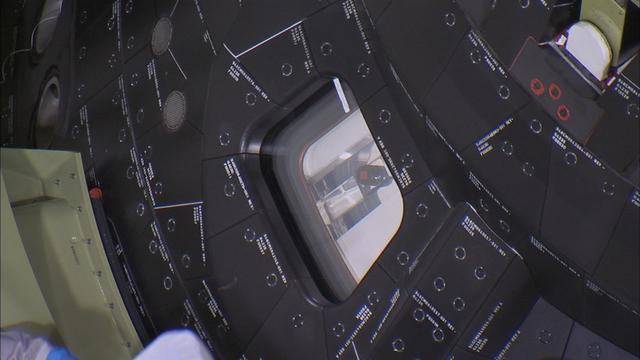
Inside the Launch Abort System Facility at NASA’s Kennedy Space Center in Florida, a window cover has been carefully removed from the Orion spacecraft before the fourth and final Ogive panel is installed around the spacecraft and Launch Abort System. The Ogive panels will smooth the airflow over the conical spacecraft to limit sound and vibration, which will make for a much smoother ride for the astronauts who will ride inside Orion in the future. The work marked the final major assembly steps for the spacecraft before it is transported to Space Launch Complex 37 at Cape Canaveral Air Force Station in November. Orion is the exploration spacecraft designed to carry astronauts to destinations not yet explored by humans, including an asteroid and Mars. It will have emergency abort capability, sustain the crew during space travel and provide safe re-entry from deep space return velocities. The first unpiloted flight test of Orion is scheduled to launch in December 2014 atop a United Launch Alliance Delta IV Heavy rocket, and in 2018 on NASA’s Space Launch System rocket.

At NASA's Kennedy Space Center in Florida, the agency's completed Orion spacecraft begins its trip from the Launch Abort System Facility to Launch Complex 37 at Cape Canaveral Air Force Station. Orion spent many months in Kennedy's Neil Armstrong Operations and Checkout Building undergoing final assembly. Hundreds of employees who work there signed the banner that states, "I'm On Board!" In doing so, their signature indicated they did their part to ensure mission success. After arrival at the launch pad, United Launch Alliance engineers and technicians will lift Orion and mount it atop its Delta IV Heavy rocket. Orion is the exploration spacecraft designed to carry astronauts to destinations not yet explored by humans, including an asteroid and Mars. It will have emergency abort capability, sustain the crew during space travel and provide safe re-entry from deep space return velocities. The first unpiloted flight test of Orion is scheduled to launch Dec. 4, 2014 atop a United Launch Alliance Delta IV Heavy rocket, and in 2018 on NASA’s Space Launch System rocket.
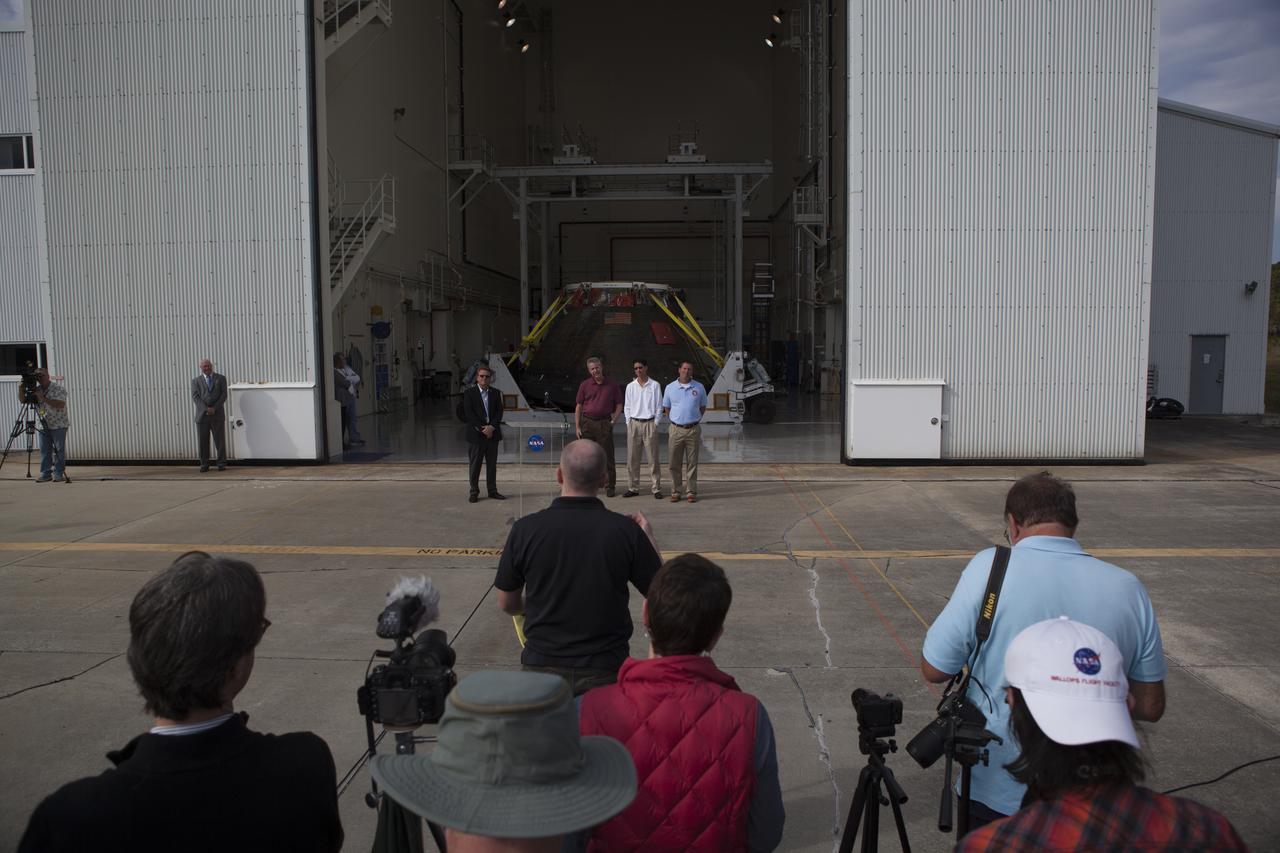
NASA's Orion spacecraft is viewed by members of the media at the Launch Abort System Facility at NASA's Kennedy Space Center in Florida. Orion made the 8-day, 2,700 mile overland trip back to Kennedy from Naval Base San Diego in California. Analysis of date obtained during its two-orbit, four-and-a-half hour mission Dec. 5 will provide engineers detailed information on how the spacecraft fared. The Ground Systems Development and Operations Program led the recovery, offload and transportation efforts.
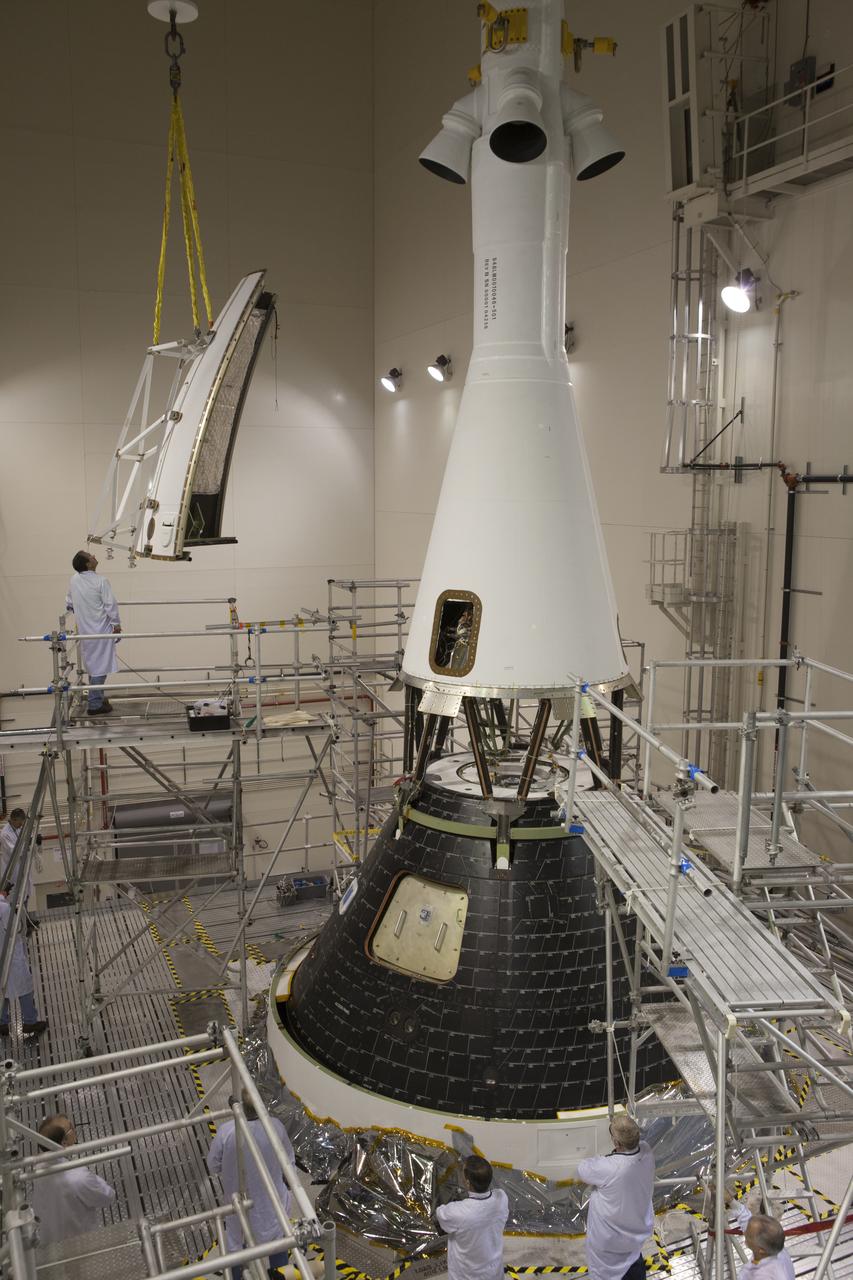
The first of four Ogive panels is lifted by crane for installation on Orion's Launch Abort System inside the Launch Abort System Facility at NASA’s Kennedy Space Center in Florida. The panels will smooth the airflow over the conical spacecraft to limit sound and vibration, which will make for a much smoother ride for the astronauts who will ride inside Orion in the future. The work marked the final major assembly steps for the spacecraft before it is transported to Space Launch Complex 37 at Cape Canaveral Air Force Station in November. Orion is the exploration spacecraft designed to carry astronauts to destinations not yet explored by humans, including an asteroid and Mars. It will have emergency abort capability, sustain the crew during space travel and provide safe re-entry from deep space return velocities. The first unpiloted flight test of Orion is scheduled to launch in December 2014 atop a United Launch Alliance Delta IV Heavy rocket, and in 2018 on NASA’s Space Launch System rocket.
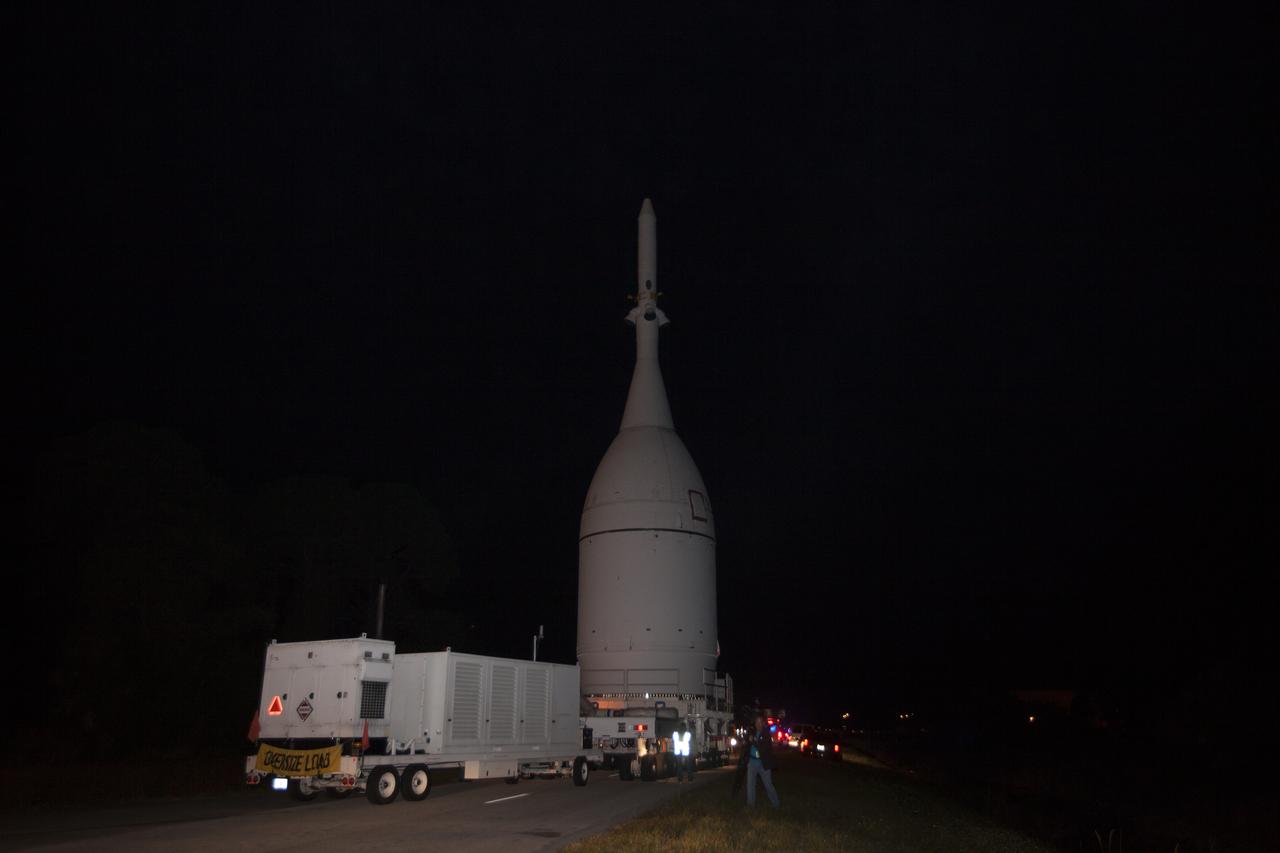
At NASA's Kennedy Space Center in Florida, the agency's completed Orion spacecraft begins its trip from the Launch Abort System Facility to Launch Complex 37 at Cape Canaveral Air Force Station. After arrival at the launch pad, United Launch Alliance engineers and technicians will lift Orion and mount it atop its Delta IV Heavy rocket. Orion is the exploration spacecraft designed to carry astronauts to destinations not yet explored by humans, including an asteroid and Mars. It will have emergency abort capability, sustain the crew during space travel and provide safe re-entry from deep space return velocities. The first unpiloted flight test of Orion is scheduled to launch Dec. 4, 2014 atop a United Launch Alliance Delta IV Heavy rocket, and in 2018 on NASA’s Space Launch System rocket.
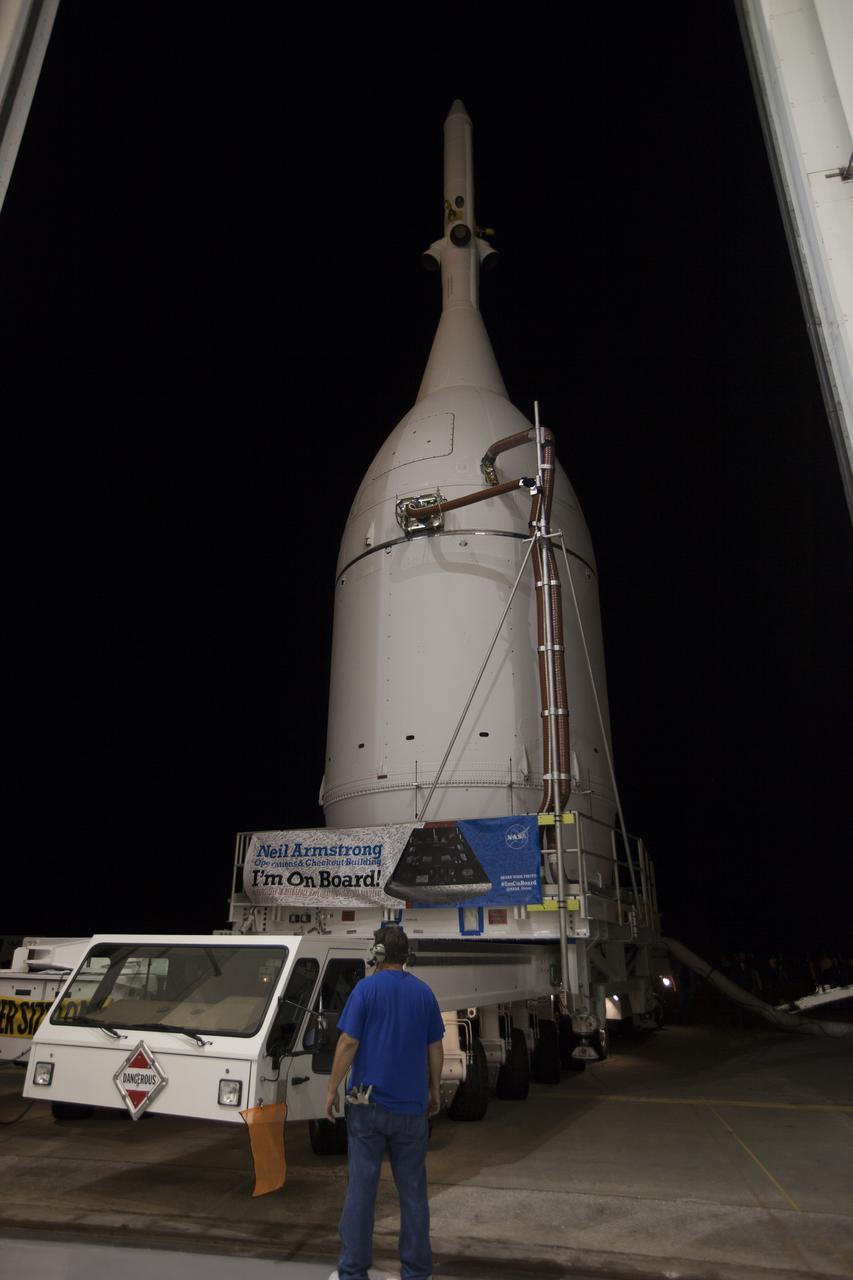
At NASA's Kennedy Space Center in Florida, the agency's completed Orion spacecraft begins its trip from the Launch Abort System Facility to Launch Complex 37 at Cape Canaveral Air Force Station. Orion spent many months in Kennedy's Neil Armstrong Operations and Checkout Building undergoing final assembly. Hundreds of employees who work there signed the banner that states, "I'm On Board!" In doing so, their signature indicated they did their part to ensure mission success. After arrival at the launch pad, United Launch Alliance engineers and technicians will lift Orion and mount it atop its Delta IV Heavy rocket. Orion is the exploration spacecraft designed to carry astronauts to destinations not yet explored by humans, including an asteroid and Mars. It will have emergency abort capability, sustain the crew during space travel and provide safe re-entry from deep space return velocities. The first unpiloted flight test of Orion is scheduled to launch Dec. 4, 2014 atop a United Launch Alliance Delta IV Heavy rocket, and in 2018 on NASA’s Space Launch System rocket.
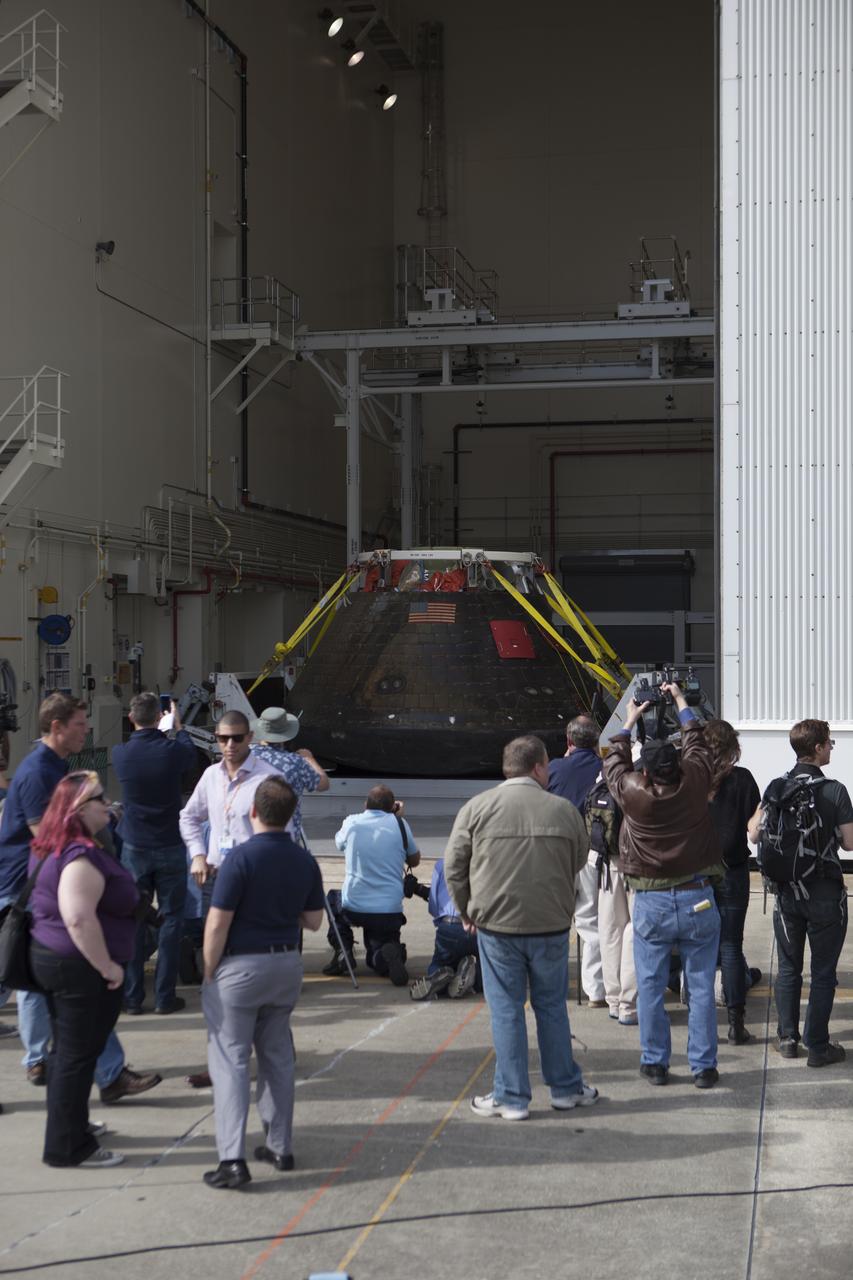
NASA's Orion spacecraft is viewed by members of the media at the Launch Abort System Facility at NASA's Kennedy Space Center in Florida. Orion made the 8-day, 2,700 mile overland trip back to Kennedy from Naval Base San Diego in California. Analysis of date obtained during its two-orbit, four-and-a-half hour mission Dec. 5 will provide engineers detailed information on how the spacecraft fared. The Ground Systems Development and Operations Program led the recovery, offload and transportation efforts.

The launch abort system is lowered by crane for installation on the Orion spacecraft for Exploration Flight Test-1 inside the Launch Abort System Facility, or LASF, at NASA's Kennedy Space Center in Florida. The completed crew and service modules will be tested and verified together with the launch abort system. Orion will remain inside the LASF until mid-November, when the United Launch Alliance Delta IV Heavy rocket is ready for integration with the spacecraft. Orion is the exploration spacecraft designed to carry astronauts to destinations not yet explored by humans, including an asteroid and Mars. It will have emergency abort capability, sustain the crew during space travel and provide safe re-entry from deep space return velocities. The first unpiloted test flight of the Orion is scheduled to launch in December atop the Delta IV Heavy rocket from Cape Canaveral Air Force Station in Florida to an altitude of 3,600 miles above the Earth's surface. The two-orbit, four-hour flight test will help engineers evaluate the systems critical to crew safety including the heat shield, parachute system and launch abort system.
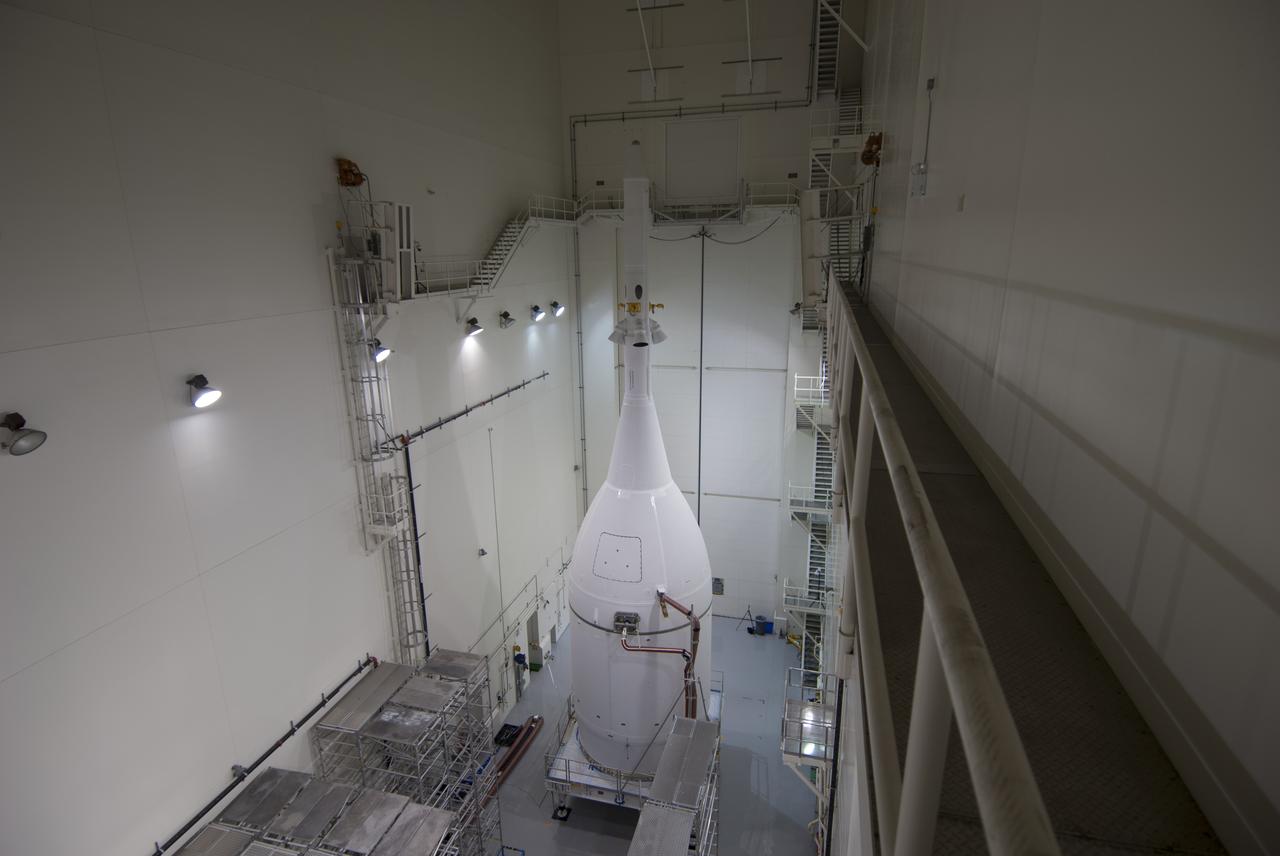
The Orion spacecraft sits inside the Launch Abort System Facility at NASA's Kennedy Space Center in Florida. The Ogive panels have been installed around the launch abort system. The panels will smooth the airflow over the conical spacecraft to limit sound and vibration, which will make for a much smoother ride for the astronauts who will ride inside Orion in the future. The spacecraft is being readied for its move to Space Launch Complex 37 at Cape Canaveral Air Force Station for its flight test. Orion is the exploration spacecraft designed to carry astronauts to destinations not yet explored by humans, including an asteroid and Mars. It will have emergency abort capability, sustain the crew during space travel and provide safe re-entry from deep space return velocities. The first unpiloted flight test of Orion is scheduled to launch in December 2014 atop a United Launch Alliance Delta IV Heavy rocket, and in 2018 on NASA’s Space Launch System rocket.
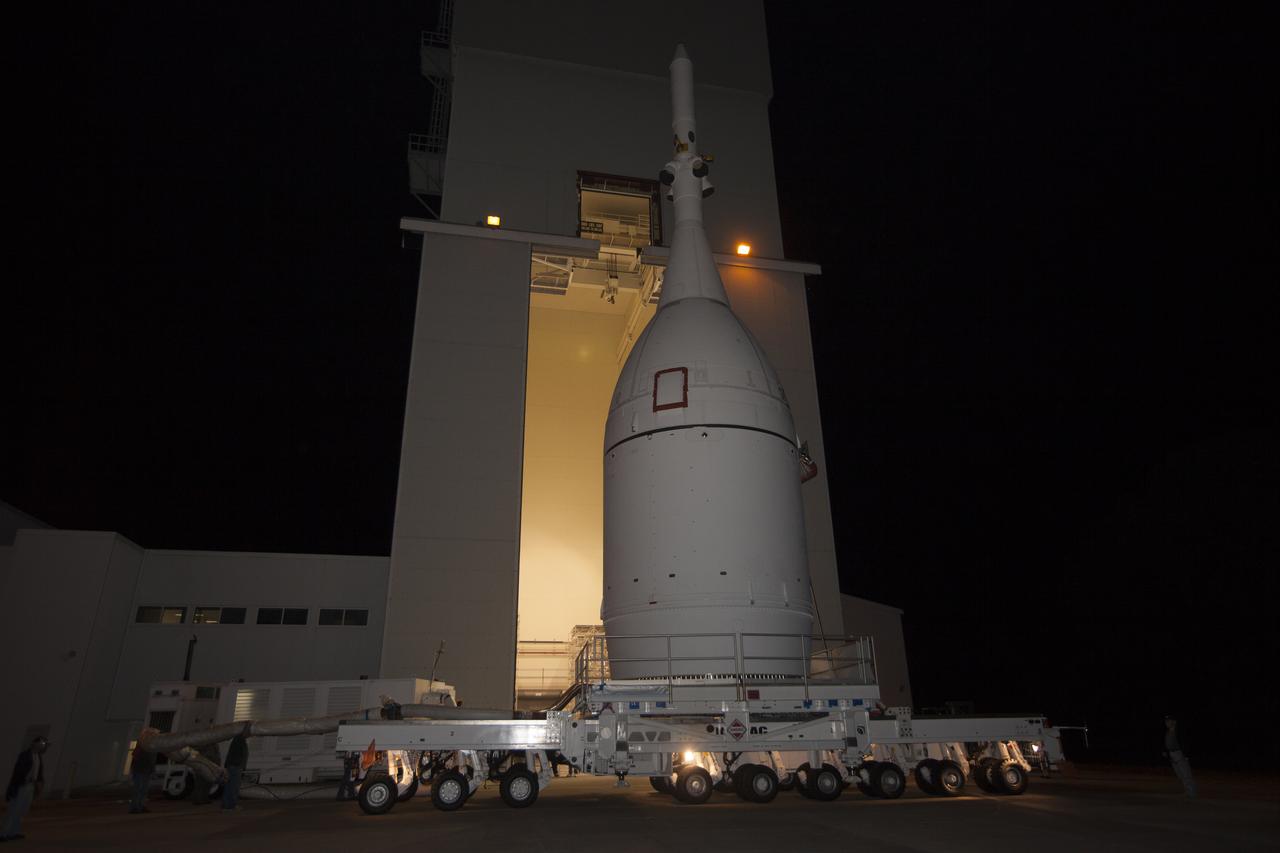
At NASA's Kennedy Space Center in Florida, the agency's completed Orion spacecraft begins its trip from the Launch Abort System Facility to Launch Complex 37 at Cape Canaveral Air Force Station. After arrival at the launch pad, United Launch Alliance engineers and technicians will lift Orion and mount it atop its Delta IV Heavy rocket. Orion is the exploration spacecraft designed to carry astronauts to destinations not yet explored by humans, including an asteroid and Mars. It will have emergency abort capability, sustain the crew during space travel and provide safe re-entry from deep space return velocities. The first unpiloted flight test of Orion is scheduled to launch Dec. 4, 2014 atop a United Launch Alliance Delta IV Heavy rocket, and in 2018 on NASA’s Space Launch System rocket.
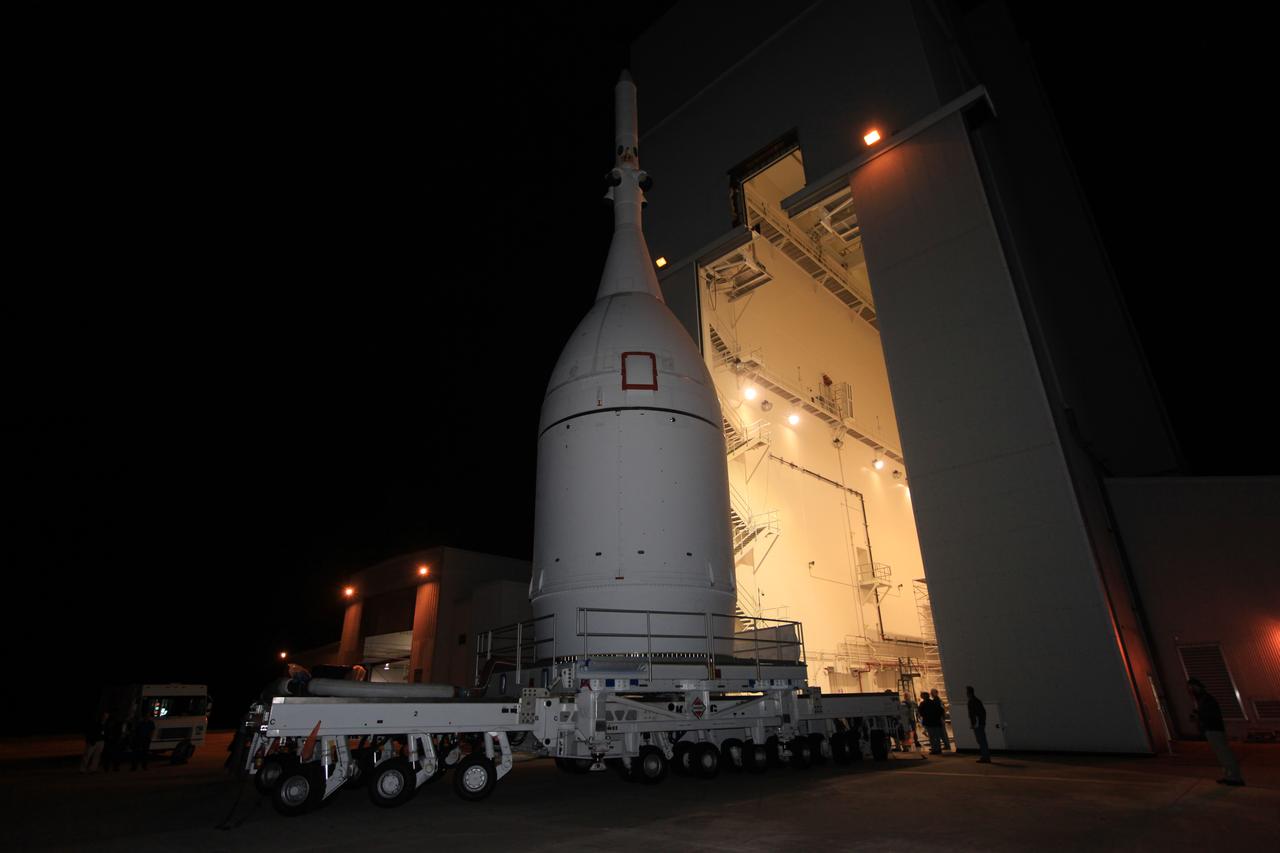
At NASA's Kennedy Space Center in Florida, the agency's completed Orion spacecraft begins its trip from the Launch Abort System Facility to Launch Complex 37 at Cape Canaveral Air Force Station. After arrival at the launch pad, United Launch Alliance engineers and technicians will lift Orion and mount it atop its Delta IV Heavy rocket. Orion is the exploration spacecraft designed to carry astronauts to destinations not yet explored by humans, including an asteroid and Mars. It will have emergency abort capability, sustain the crew during space travel and provide safe re-entry from deep space return velocities. The first unpiloted flight test of Orion is scheduled to launch Dec. 4, 2014 atop a United Launch Alliance Delta IV Heavy rocket, and in 2018 on NASA’s Space Launch System rocket.
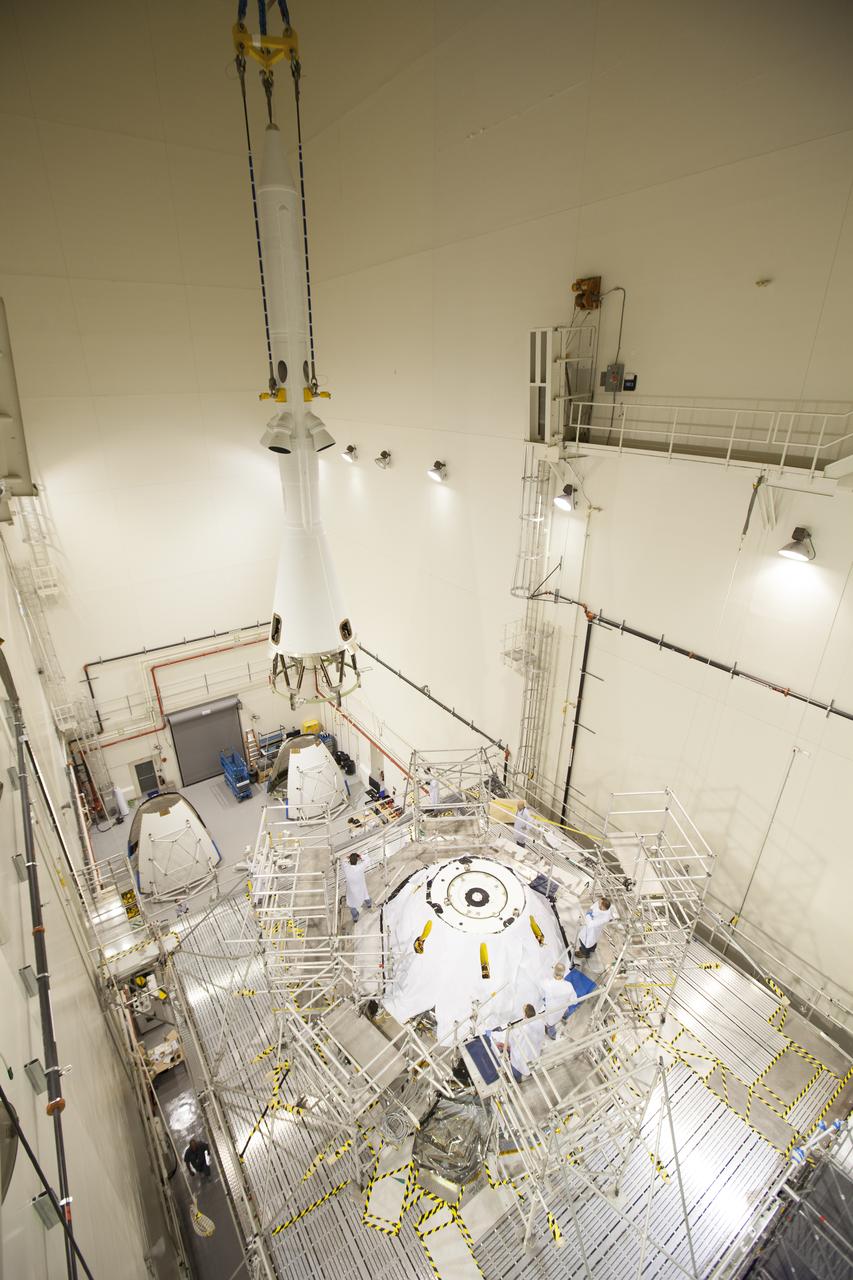
A crane is used to lift and move the launch abort system for installation on the Orion spacecraft for Exploration Flight Test-1 inside the Launch Abort System Facility, or LASF, at NASA's Kennedy Space Center in Florida. The completed crew and service modules will be tested and verified together with the launch abort system. Orion will remain inside the LASF until mid-November, when the United Launch Alliance Delta IV Heavy rocket is ready for integration with the spacecraft. Orion is the exploration spacecraft designed to carry astronauts to destinations not yet explored by humans, including an asteroid and Mars. It will have emergency abort capability, sustain the crew during space travel and provide safe re-entry from deep space return velocities. The first unpiloted test flight of the Orion is scheduled to launch in December atop the Delta IV Heavy rocket from Cape Canaveral Air Force Station in Florida to an altitude of 3,600 miles above the Earth's surface. The two-orbit, four-hour flight test will help engineers evaluate the systems critical to crew safety including the heat shield, parachute system and launch abort system.
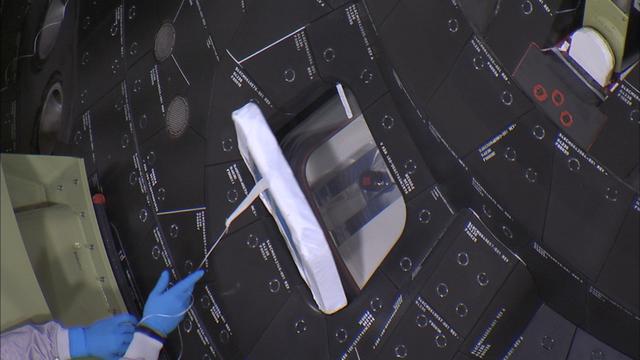
Inside the Launch Abort System Facility at NASA's Kennedy Space Center in Florida, a technician carefully removes the window covers on Orion before the fourth and final Ogive panel is installed around the spacecraft and Launch Abort System. The Ogive panels will smooth the airflow over the conical spacecraft to limit sound and vibration, which will make for a much smoother ride for the astronauts who will ride inside Orion in the future. The work marked the final major assembly steps for the spacecraft before it is transported to Space Launch Complex 37 at Cape Canaveral Air Force Station in November. Orion is the exploration spacecraft designed to carry astronauts to destinations not yet explored by humans, including an asteroid and Mars. It will have emergency abort capability, sustain the crew during space travel and provide safe re-entry from deep space return velocities. The first unpiloted flight test of Orion is scheduled to launch in December 2014 atop a United Launch Alliance Delta IV Heavy rocket, and in 2018 on NASA’s Space Launch System rocket.
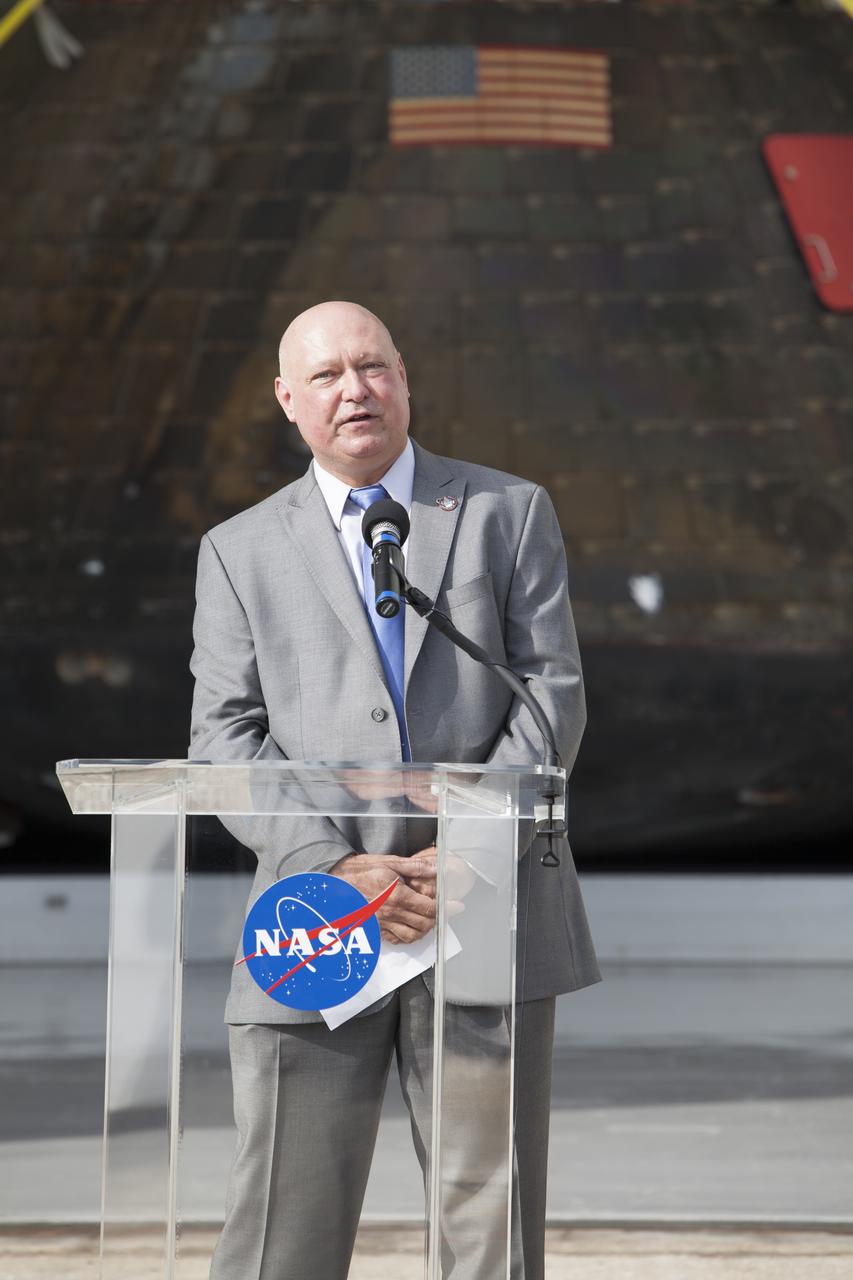
NASA's Orion spacecraft is viewed by members of the media at the Launch Abort System Facility at NASA's Kennedy Space Center in Florida. Kennedy News Chief Mike Curie speaks to the media during the viewing opportunity. Orion made the 8-day, 2,700 mile overland trip back to Kennedy from Naval Base San Diego in California. Analysis of date obtained during its two-orbit, four-and-a-half hour mission Dec. 5 will provide engineers with detailed information on how the spacecraft fared. The Ground Systems Development and Operations Program led the recovery, offload and transportation efforts.
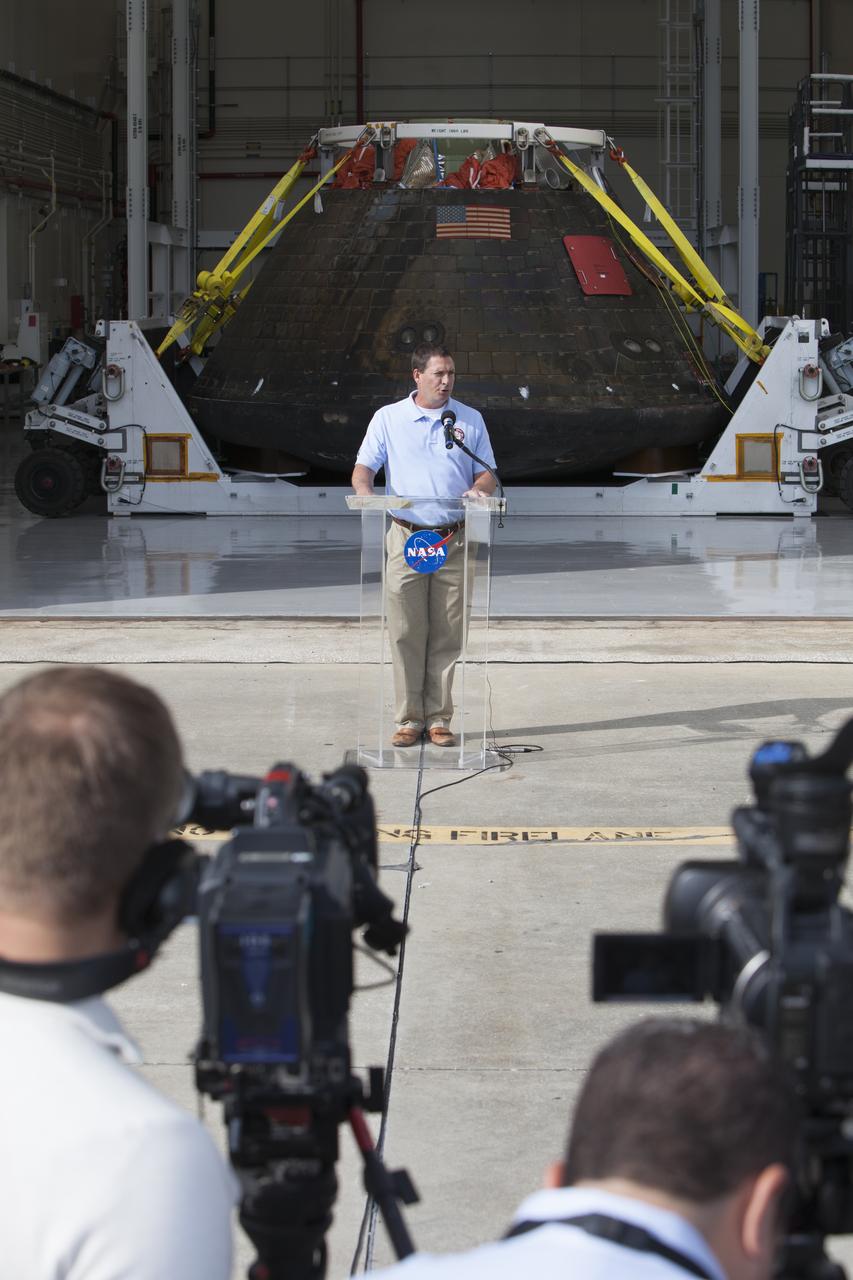
NASA's Orion spacecraft is viewed by members of the media at the Launch Abort System Facility at NASA's Kennedy Space Center in Florida. Lou Garcia, with the Ground Systems Development and Operations Program, or GSDO, speaks to the media during the viewing opportunity. The spacecraft's cross-country return, a 2,700 mile road trip from Naval Base San Diego to Kennedy, sets the stage for in-depth analysis of data obtained during Orion's trip to space. It will provide engineers with detailed information on how the spacecraft fared during its two-orbit, 4.5-hour flight test, completed on Dec. 5. GSDO led the recovery, offload and transportation efforts.
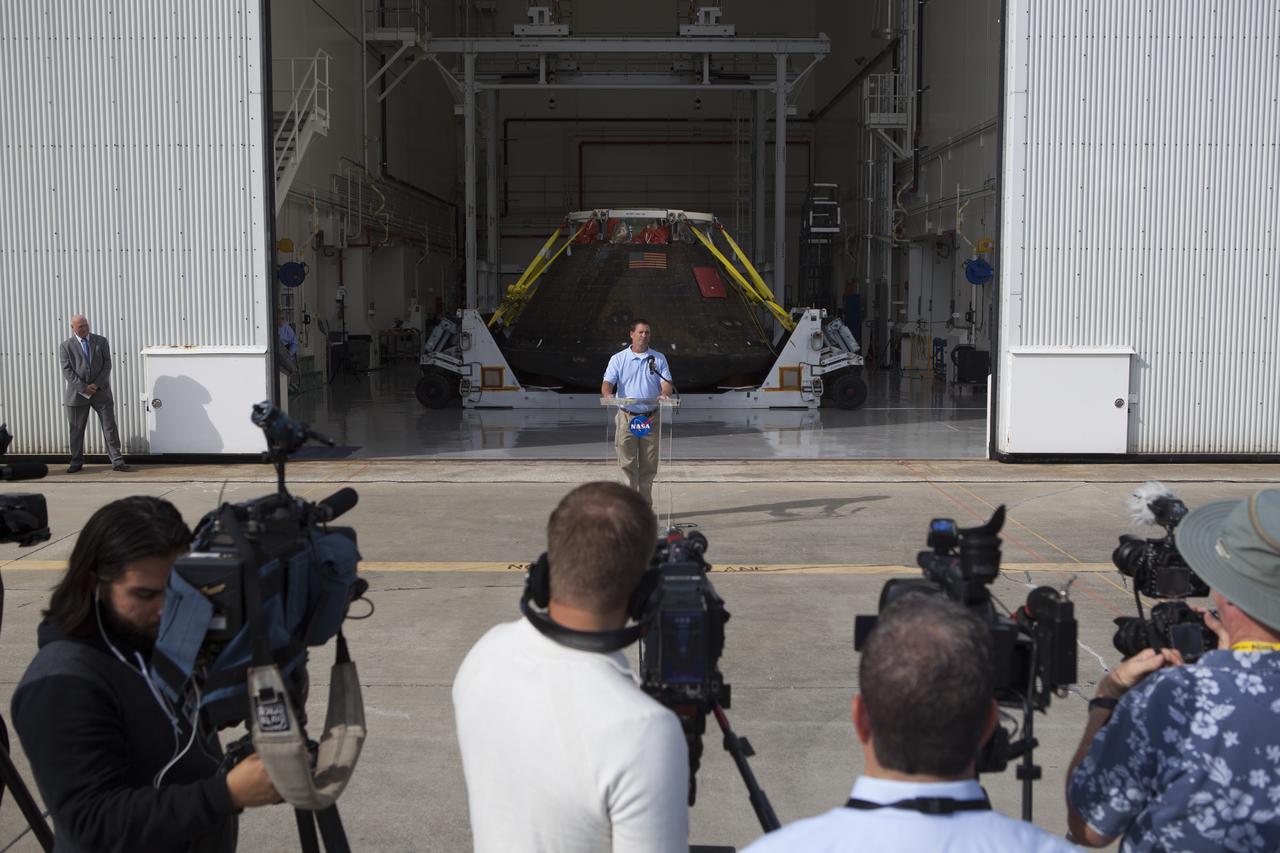
NASA's Orion spacecraft is viewed by members of the media at the Launch Abort System Facility at NASA's Kennedy Space Center in Florida. Lou Garcia, with the Ground Systems Development and Operations Program, or GSDO, speaks to the media during the viewing opportunity. The spacecraft's cross-country return, a 2,700 mile road trip from Naval Base San Diego to Kennedy, sets the stage for in-depth analysis of data obtained during Orion's trip to space. It will provide engineers with detailed information on how the spacecraft fared during its two-orbit, 4.5-hour flight test, completed on Dec. 5. GSDO led the recovery, offload and transportation efforts.
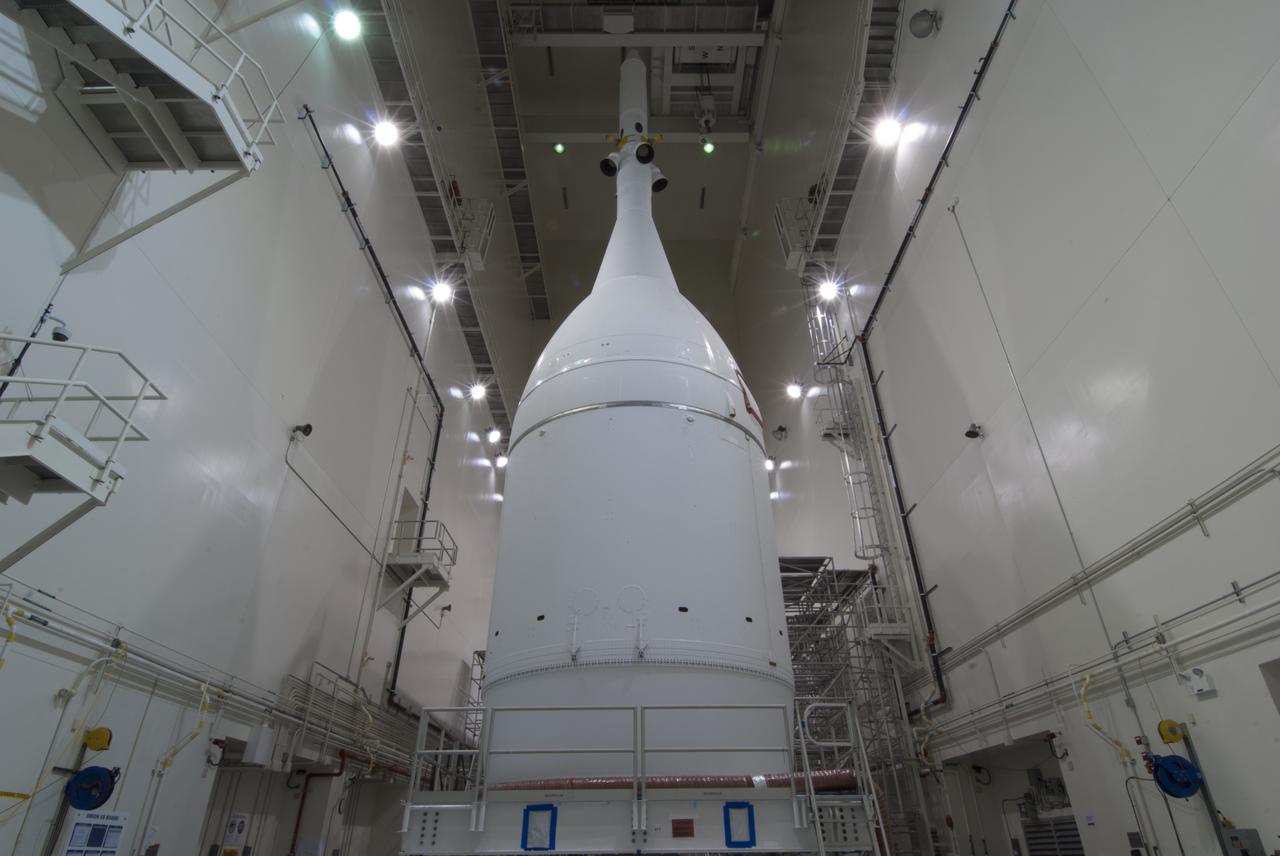
The Orion spacecraft sits inside the Launch Abort System Facility at NASA's Kennedy Space Center in Florida. The Ogive panels have been installed around the launch abort system. The panels will smooth the airflow over the conical spacecraft to limit sound and vibration, which will make for a much smoother ride for the astronauts who will ride inside Orion in the future. The spacecraft is being readied for its move to Space Launch Complex 37 at Cape Canaveral Air Force Station for its flight test. Orion is the exploration spacecraft designed to carry astronauts to destinations not yet explored by humans, including an asteroid and Mars. It will have emergency abort capability, sustain the crew during space travel and provide safe re-entry from deep space return velocities. The first unpiloted flight test of Orion is scheduled to launch in December 2014 atop a United Launch Alliance Delta IV Heavy rocket, and in 2018 on NASA’s Space Launch System rocket.
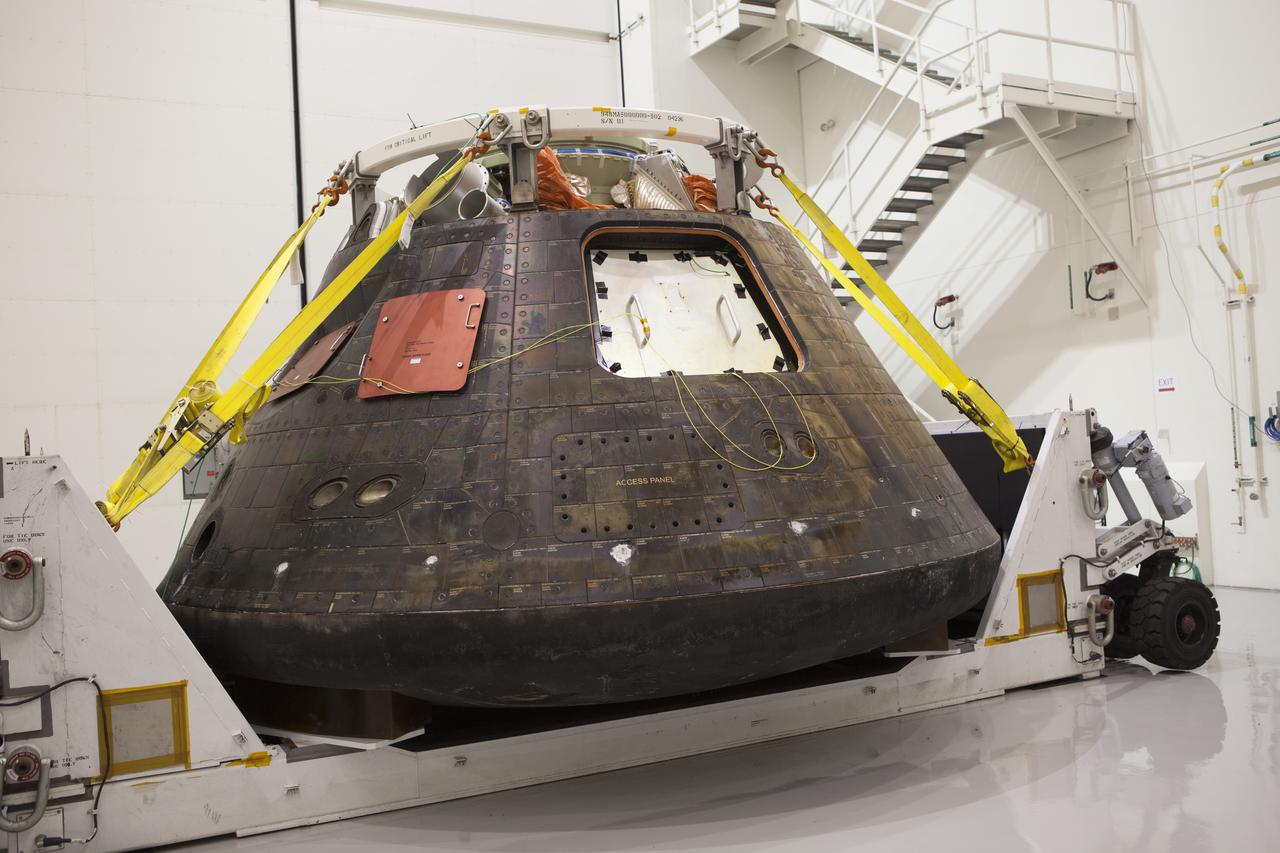
NASA's Orion spacecraft has been uncrated and is inside the Launch Abort System Facility at NASA's Kennedy Space Center in Florida during a media event. Orion made the 8-day, 2,700 mile overland trip back to Kennedy from Naval Base San Diego in California. Analysis of date obtained during its two-orbit, four-and-a-half hour mission Dec. 5 will provide engineers detailed information on how the spacecraft fared. The Ground Systems Development and Operations Program led the recovery, offload and transportation efforts.
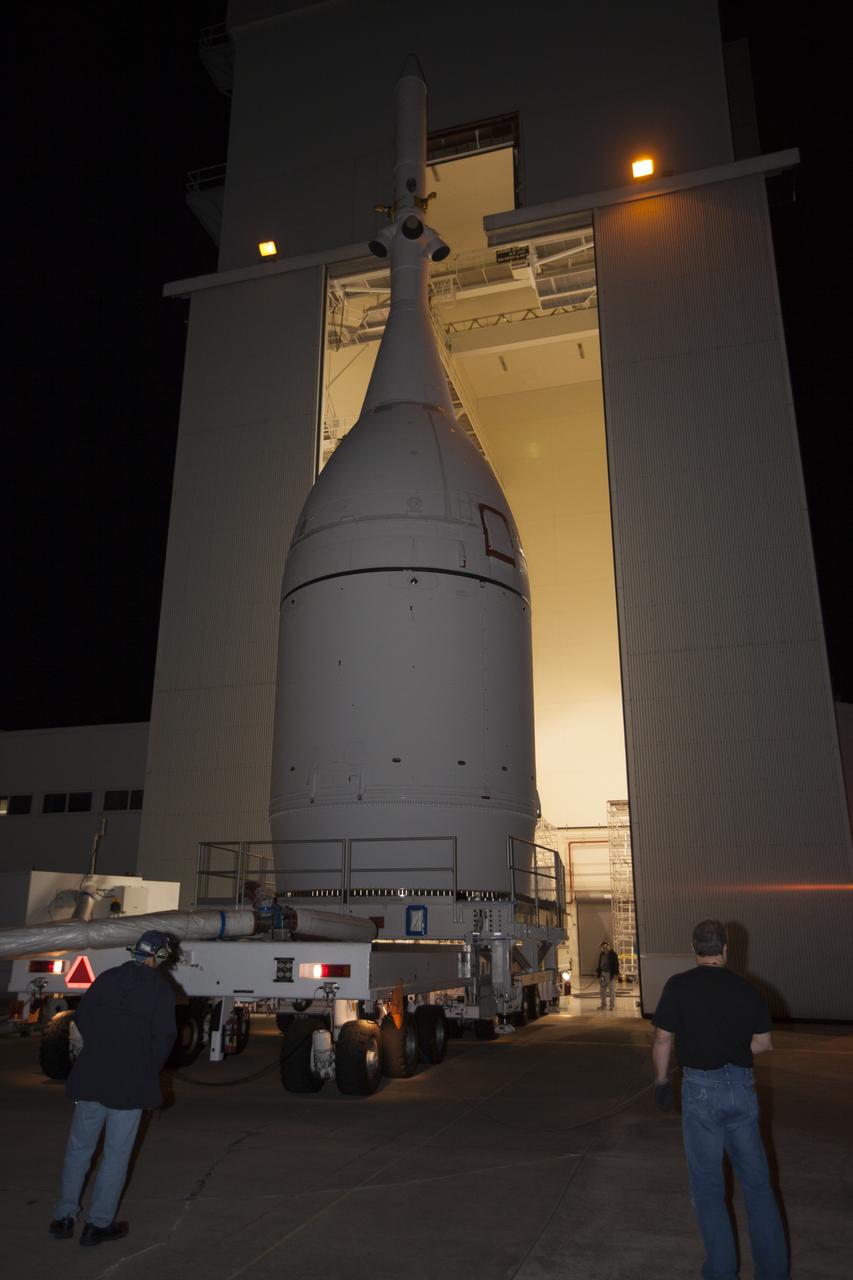
At NASA's Kennedy Space Center in Florida, the agency's completed Orion spacecraft begins its trip from the Launch Abort System Facility to Launch Complex 37 at Cape Canaveral Air Force Station. After arrival at the launch pad, United Launch Alliance engineers and technicians will lift Orion and mount it atop its Delta IV Heavy rocket. Orion is the exploration spacecraft designed to carry astronauts to destinations not yet explored by humans, including an asteroid and Mars. It will have emergency abort capability, sustain the crew during space travel and provide safe re-entry from deep space return velocities. The first unpiloted flight test of Orion is scheduled to launch Dec. 4, 2014 atop a United Launch Alliance Delta IV Heavy rocket, and in 2018 on NASA’s Space Launch System rocket.
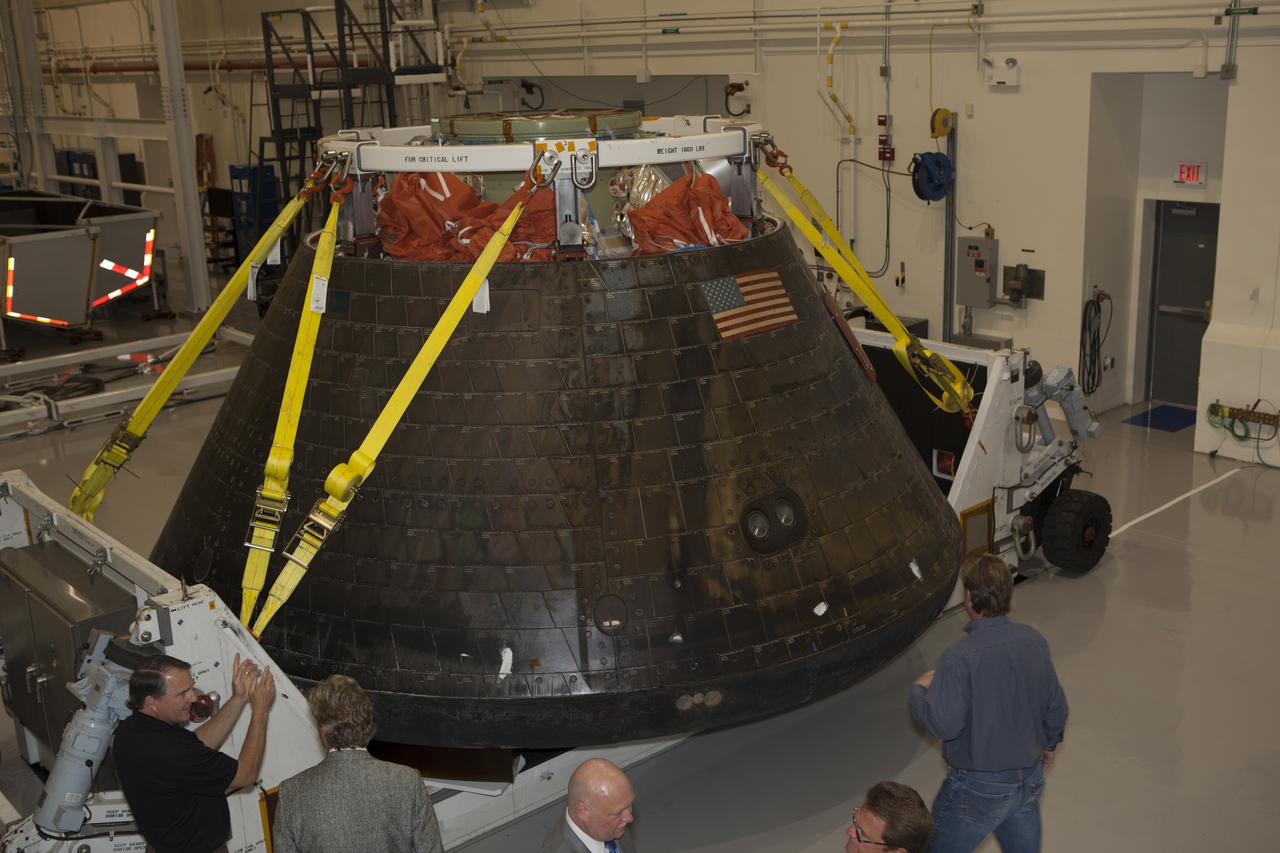
NASA's Orion spacecraft is viewed by members of the media at the Launch Abort System Facility at NASA's Kennedy Space Center in Florida. Orion made the 8-day, 2,700 mile overland trip back to Kennedy from Naval Base San Diego in California. Analysis of date obtained during its two-orbit, four-and-a-half hour mission Dec. 5 will provide engineers detailed information on how the spacecraft fared. The Ground Systems Development and Operations Program led the recovery, offload and transportation efforts.
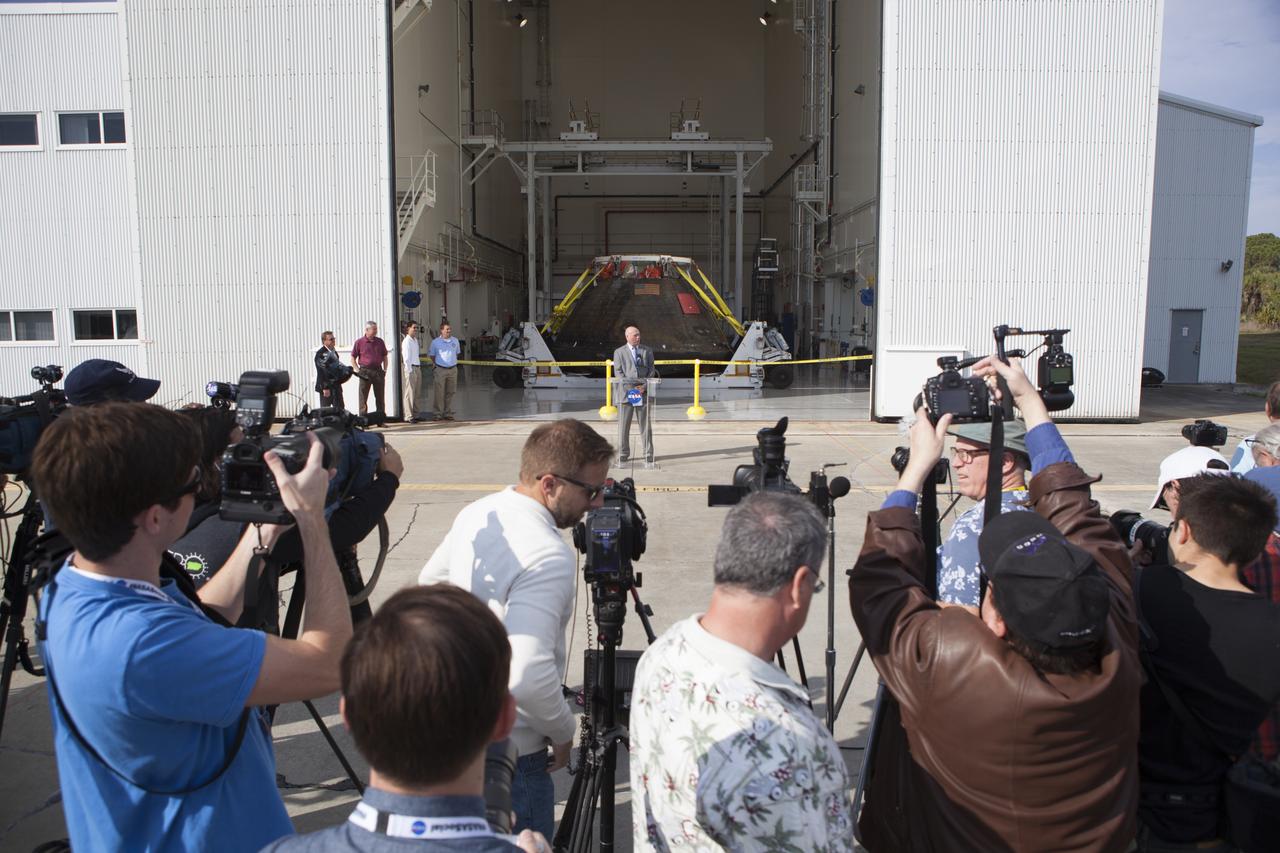
NASA's Orion spacecraft is viewed by members of the media at the Launch Abort System Facility at NASA's Kennedy Space Center in Florida. Kennedy's News Chief Mike Curie speaks to the media during the viewing opportunity. The spacecraft's cross-country return, a 2,700 mile road trip from Naval Base San Diego to Kennedy, sets the stage for in-depth analysis of data obtained during Orion's trip to space. It will provide engineers with detailed information on how the spacecraft fared during its two-orbit, 4.5-hour flight test, completed on Dec. 5. The Ground Systems Development and Operations Program led the recovery, offload and transportation efforts.
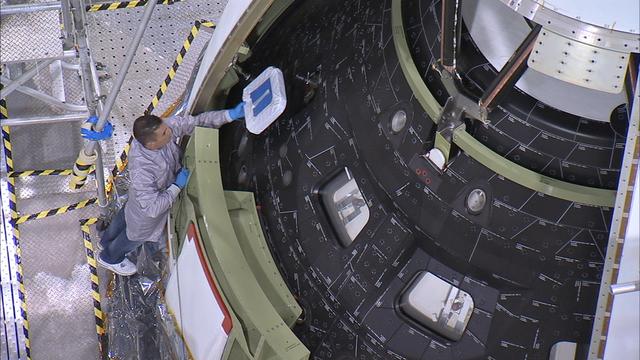
Inside the Launch Abort System Facility at NASA's Kennedy Space Center in Florida, a technician on a work platform carefully removes the window covers on Orion before the fourth and final Ogive panel is installed around the spacecraft and Launch Abort System. The Ogive panels will smooth the airflow over the conical spacecraft to limit sound and vibration, which will make for a much smoother ride for the astronauts who will ride inside Orion in the future. The work marked the final major assembly steps for the spacecraft before it is transported to Space Launch Complex 37 at Cape Canaveral Air Force Station in November. Orion is the exploration spacecraft designed to carry astronauts to destinations not yet explored by humans, including an asteroid and Mars. It will have emergency abort capability, sustain the crew during space travel and provide safe re-entry from deep space return velocities. The first unpiloted flight test of Orion is scheduled to launch in December 2014 atop a United Launch Alliance Delta IV Heavy rocket, and in 2018 on NASA’s Space Launch System rocket.
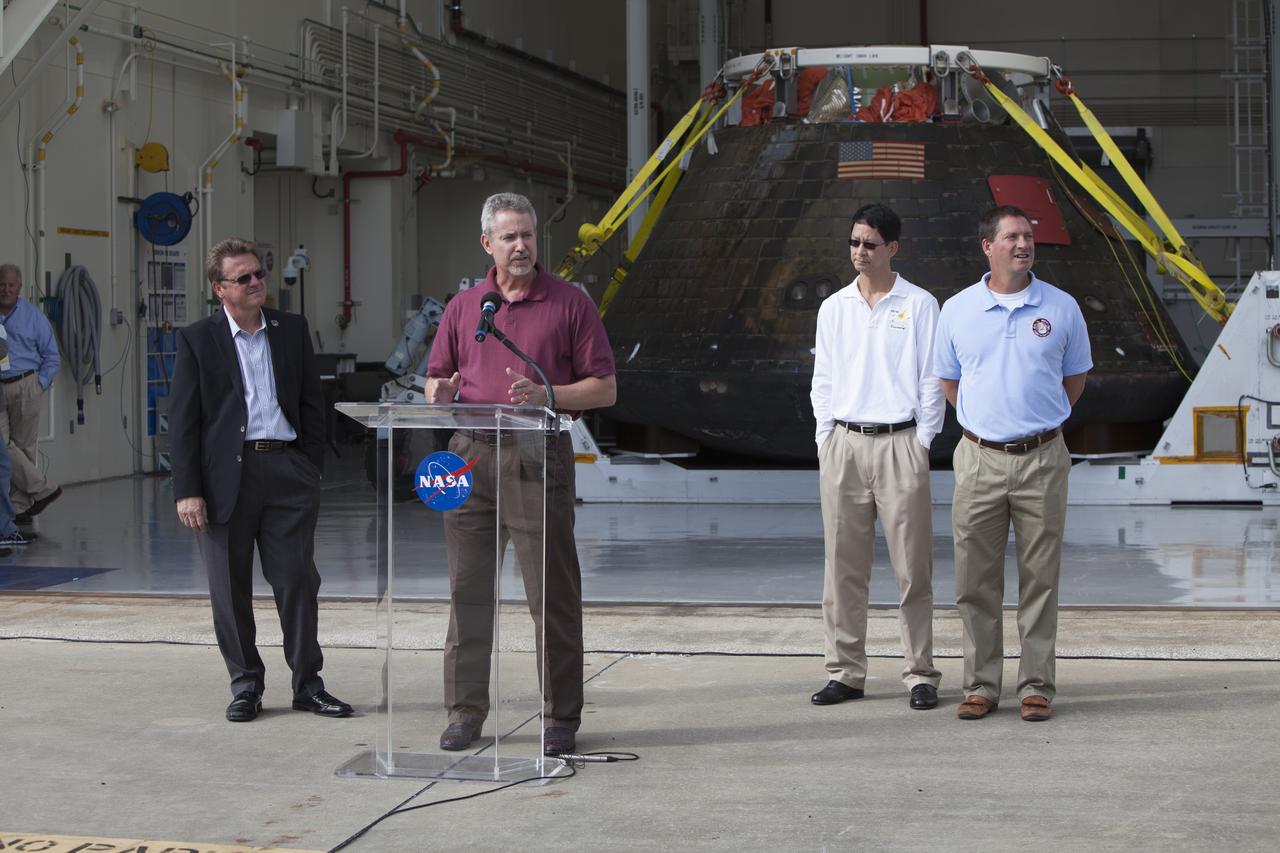
NASA's Orion spacecraft is viewed by members of the media at the Launch Abort System Facility at NASA's Kennedy Space Center in Florida. Speaking to the media during the viewing opportunity is Phil Weber, with the Ground Systems Development and Operations Program, or GSDO. At left is Jules Schneider, Lockheed Martin manager. At right is Glenn Chin, Orion Production Operations, and Lou Garcia, with GSDO. Orion made the 8-day, 2,700 mile overland trip back to Kennedy from Naval Base San Diego in California. Analysis of date obtained during its two-orbit, four-and-a-half hour mission Dec. 5 will provide engineers detailed information on how the spacecraft fared. GSDO led the recovery, offload and transportation efforts.
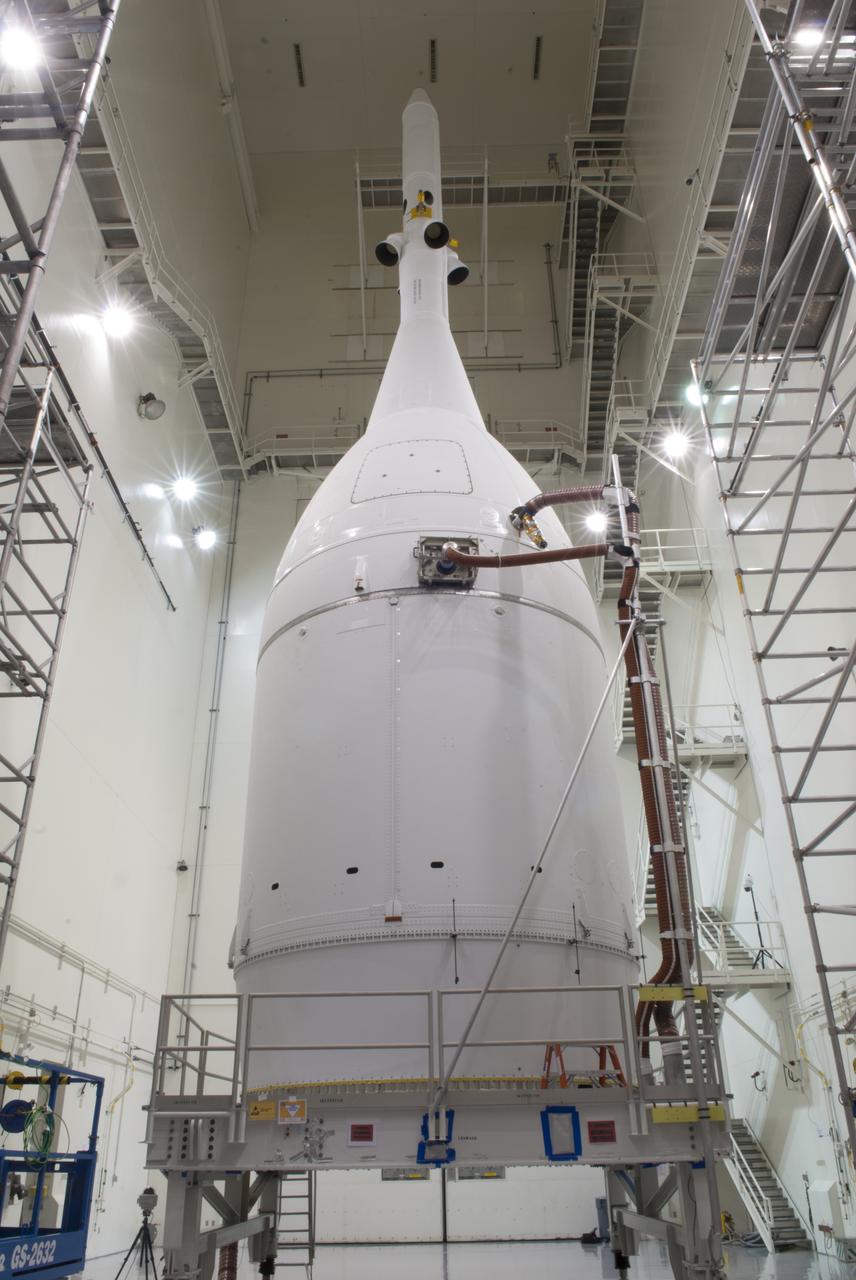
The Orion spacecraft sits inside the Launch Abort System Facility at NASA's Kennedy Space Center in Florida. The Ogive panels have been installed around the launch abort system. The panels will smooth the airflow over the conical spacecraft to limit sound and vibration, which will make for a much smoother ride for the astronauts who will ride inside Orion in the future. The spacecraft is being readied for its move to Space Launch Complex 37 at Cape Canaveral Air Force Station for its flight test. Orion is the exploration spacecraft designed to carry astronauts to destinations not yet explored by humans, including an asteroid and Mars. It will have emergency abort capability, sustain the crew during space travel and provide safe re-entry from deep space return velocities. The first unpiloted flight test of Orion is scheduled to launch in December 2014 atop a United Launch Alliance Delta IV Heavy rocket, and in 2018 on NASA’s Space Launch System rocket.
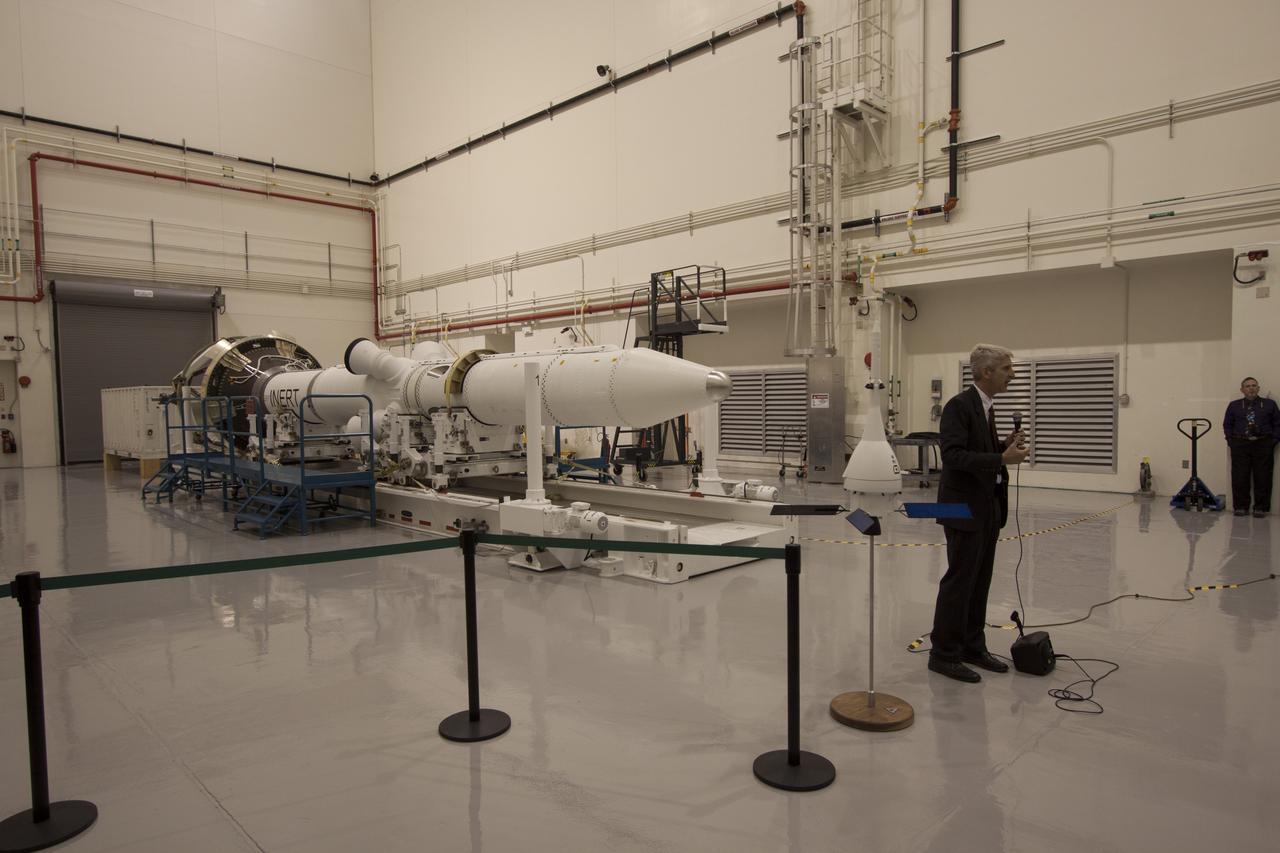
CAPE CANAVERAL, Fla. – A group of news media and social media tweeters toured the Launch Abort System Facility and viewed the launch abort system for the Orion spacecraft at NASA's Kennedy Space Center in Florida. Speaking to the group is Scott Wilson, manager of Production Operations for the Orion Program. The group also toured the Launch Control Center and Vehicle Assembly Building, legacy facilities that are being upgraded by the Ground Systems Development and Operations Program at Kennedy to prepare for processing and launch of NASA's Space Launch System and Orion spacecraft. NASA is developing the Space Launch System and Orion spacecraft to provide an entirely new capability for human exploration beyond low-Earth orbit, with the flexibility to launch spacecraft for crew and cargo missions, including to an asteroid and Mars. Orion’s first unpiloted test flight is scheduled to launch later this year atop a Delta IV rocket. A second uncrewed flight test is scheduled for fiscal year 2018 on the Space Launch System rocket. For more information, visit http://www.nasa.gov/orion. Photo credit: NASA/Cory Huston
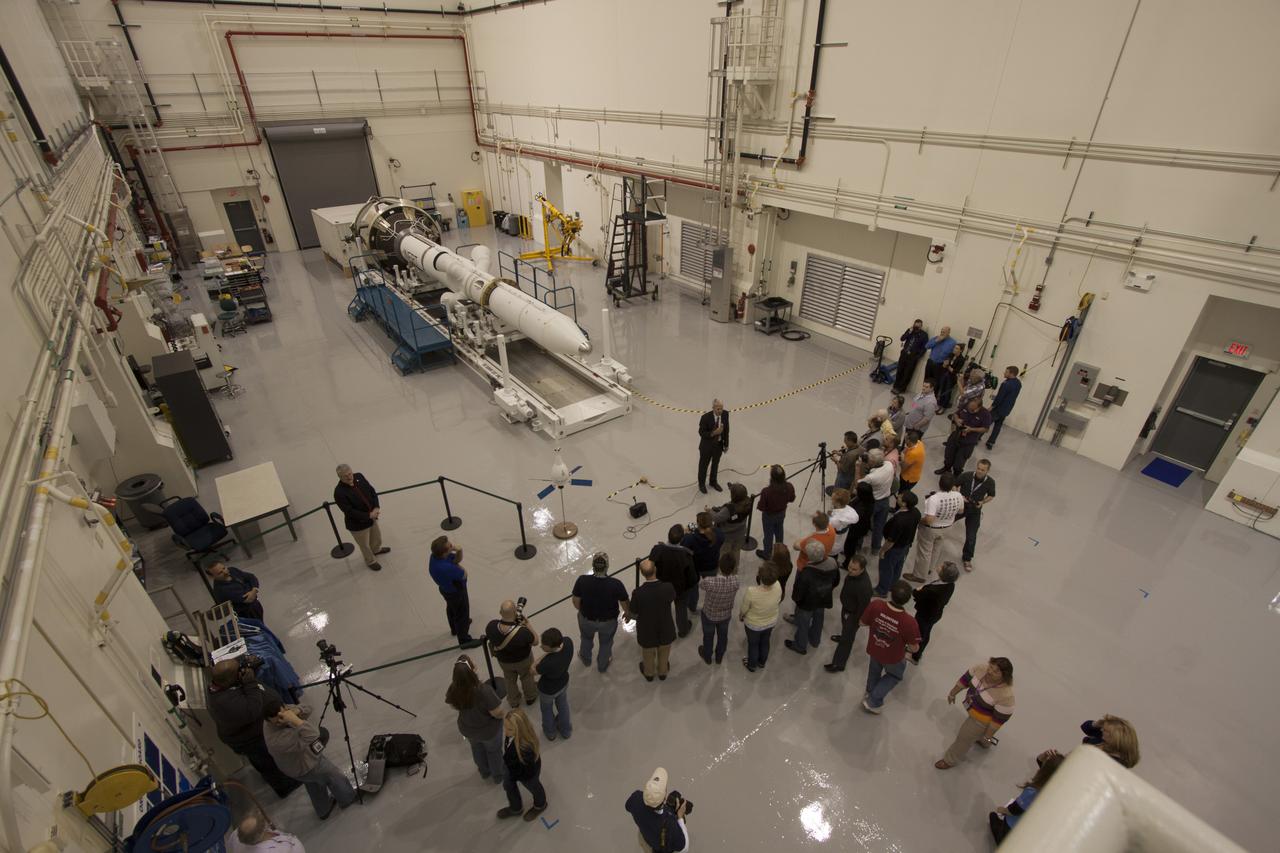
CAPE CANAVERAL, Fla. – A group of news media and social media tweeters toured the Launch Abort System Facility and viewed the launch abort system for the Orion spacecraft at NASA's Kennedy Space Center in Florida. Speaking to the group is Scott Wilson, manager of Production Operations for the Orion Program. The group also toured the Launch Control Center and Vehicle Assembly Building, legacy facilities that are being upgraded by the Ground Systems Development and Operations Program at Kennedy to prepare for processing and launch of NASA's Space Launch System and Orion spacecraft. NASA is developing the Space Launch System and Orion spacecraft to provide an entirely new capability for human exploration beyond low-Earth orbit, with the flexibility to launch spacecraft for crew and cargo missions, including to an asteroid and Mars. Orion’s first unpiloted test flight is scheduled to launch later this year atop a Delta IV rocket. A second uncrewed flight test is scheduled for fiscal year 2018 on the Space Launch System rocket. For more information, visit http://www.nasa.gov/orion. Photo credit: NASA/Cory Huston
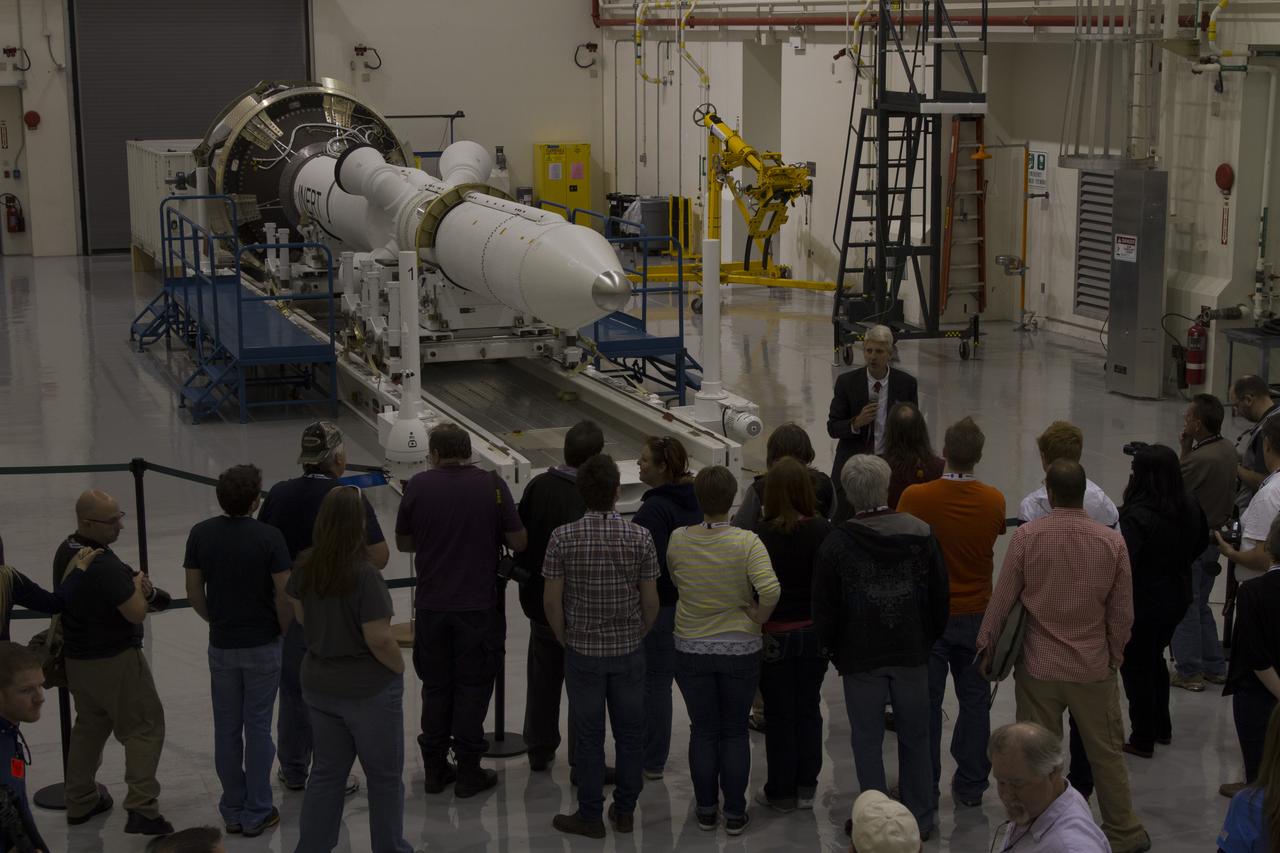
CAPE CANAVERAL, Fla. – A group of news media and social media tweeters toured the Launch Abort System Facility and viewed the launch abort system for the Orion spacecraft at NASA's Kennedy Space Center in Florida. Speaking to the group is Scott Wilson, manager of Production Operations for the Orion Program. The group also toured the Launch Control Center and Vehicle Assembly Building, legacy facilities that are being upgraded by the Ground Systems Development and Operations Program at Kennedy to prepare for processing and launch of NASA's Space Launch System and Orion spacecraft. NASA is developing the Space Launch System and Orion spacecraft to provide an entirely new capability for human exploration beyond low-Earth orbit, with the flexibility to launch spacecraft for crew and cargo missions, including to an asteroid and Mars. Orion’s first unpiloted test flight is scheduled to launch later this year atop a Delta IV rocket. A second uncrewed flight test is scheduled for fiscal year 2018 on the Space Launch System rocket. For more information, visit http://www.nasa.gov/orion. Photo credit: NASA/Cory Huston
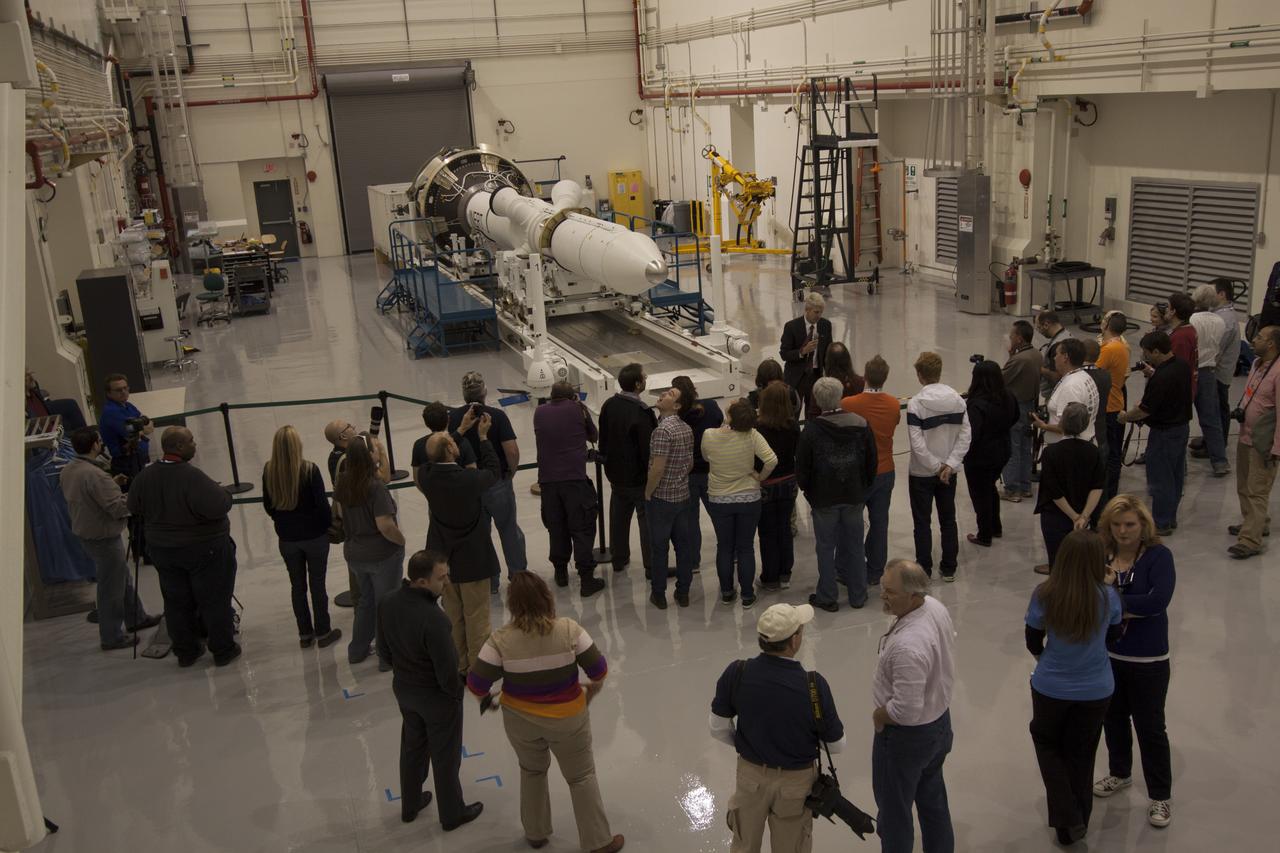
CAPE CANAVERAL, Fla. – A group of news media and social media tweeters toured the Launch Abort System Facility and viewed the launch abort system for the Orion spacecraft at NASA's Kennedy Space Center in Florida. Speaking to the group is Scott Wilson, manager of Production Operations for the Orion Program. The group also toured the Launch Control Center and Vehicle Assembly Building, legacy facilities that are being upgraded by the Ground Systems Development and Operations Program at Kennedy to prepare for processing and launch of NASA's Space Launch System and Orion spacecraft. NASA is developing the Space Launch System and Orion spacecraft to provide an entirely new capability for human exploration beyond low-Earth orbit, with the flexibility to launch spacecraft for crew and cargo missions, including to an asteroid and Mars. Orion’s first unpiloted test flight is scheduled to launch later this year atop a Delta IV rocket. A second uncrewed flight test is scheduled for fiscal year 2018 on the Space Launch System rocket. For more information, visit http://www.nasa.gov/orion. Photo credit: NASA/Cory Huston