NASA and SpaceX launched the 28th commercial resupply mission of the Cargo Dragon from Launch Complex 39A at the agency's Kennedy Space Center in Florida. Liftoff occurred at 11:47 a.m. EDT, June 5, 2023. SpaceX's Dragon will deliver new science investigations, food, supplies, and equipment to the International Space Station for the crew, including the next pair of IROSAs (International Space Station Roll Out Solar Arrays). These solar panels, which roll out using stored kinetic energy, will expand the energy-production capabilities of the space station. This will be the third set launching in the SpaceX Dragon's trunk, and once installed, will help provide a 20% to 30% increase in power for space station research and operations.
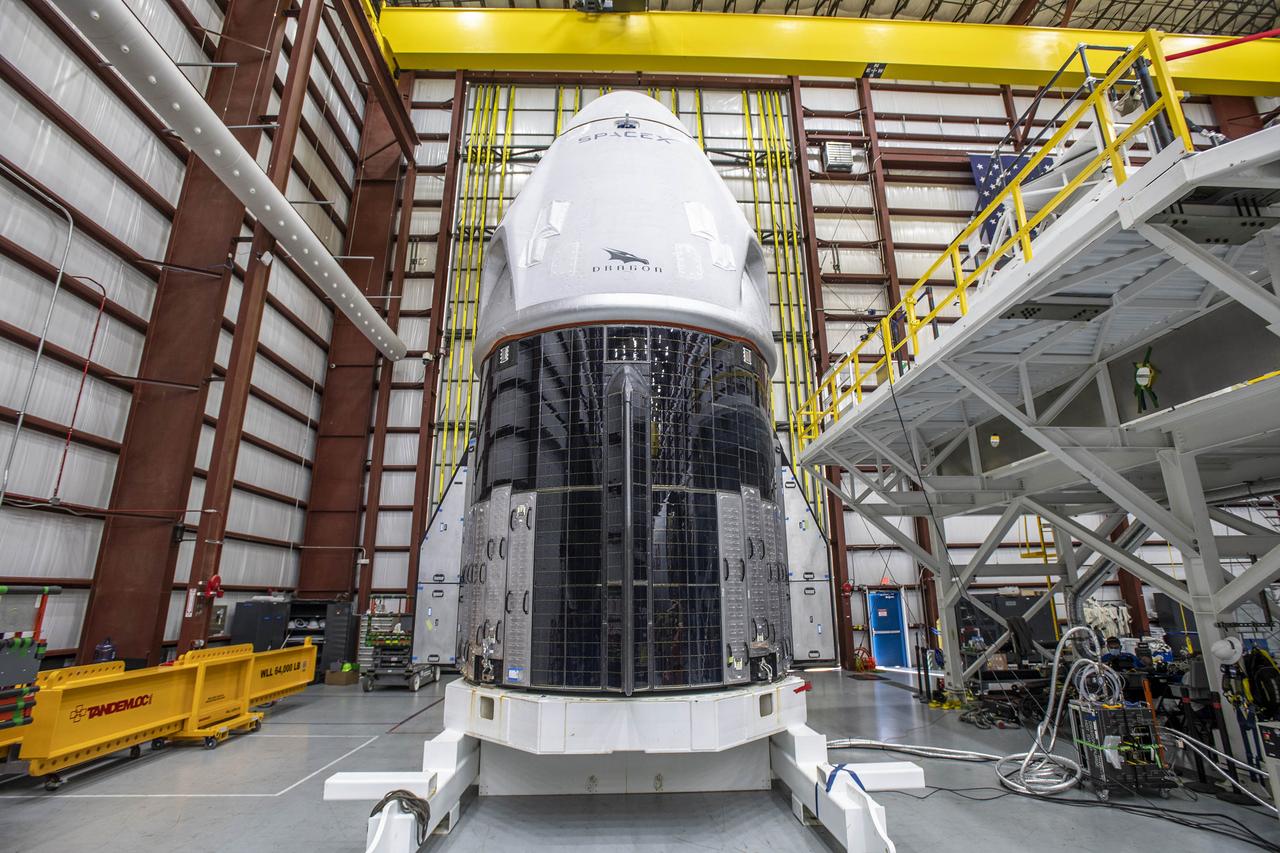
The SpaceX Crew Dragon spacecraft for NASA’s SpaceX Crew-1 mission arrived at Kennedy Space Center’s Launch Complex 39A on Thursday, Nov. 5, after making the trek from its processing facility at nearby Cape Canaveral Air Force Station in Florida. Crew Dragon will launch atop a SpaceX Falcon 9 rocket. The Crew-1 flight will carry Crew Dragon Commander Michael Hopkins, Pilot Victor Glover, and Mission Specialist Shannon Walker, all of NASA, along with Japan Aerospace Exploration Agency (JAXA) Mission Specialist Soichi Noguchi to the space station for a six-month science mission.
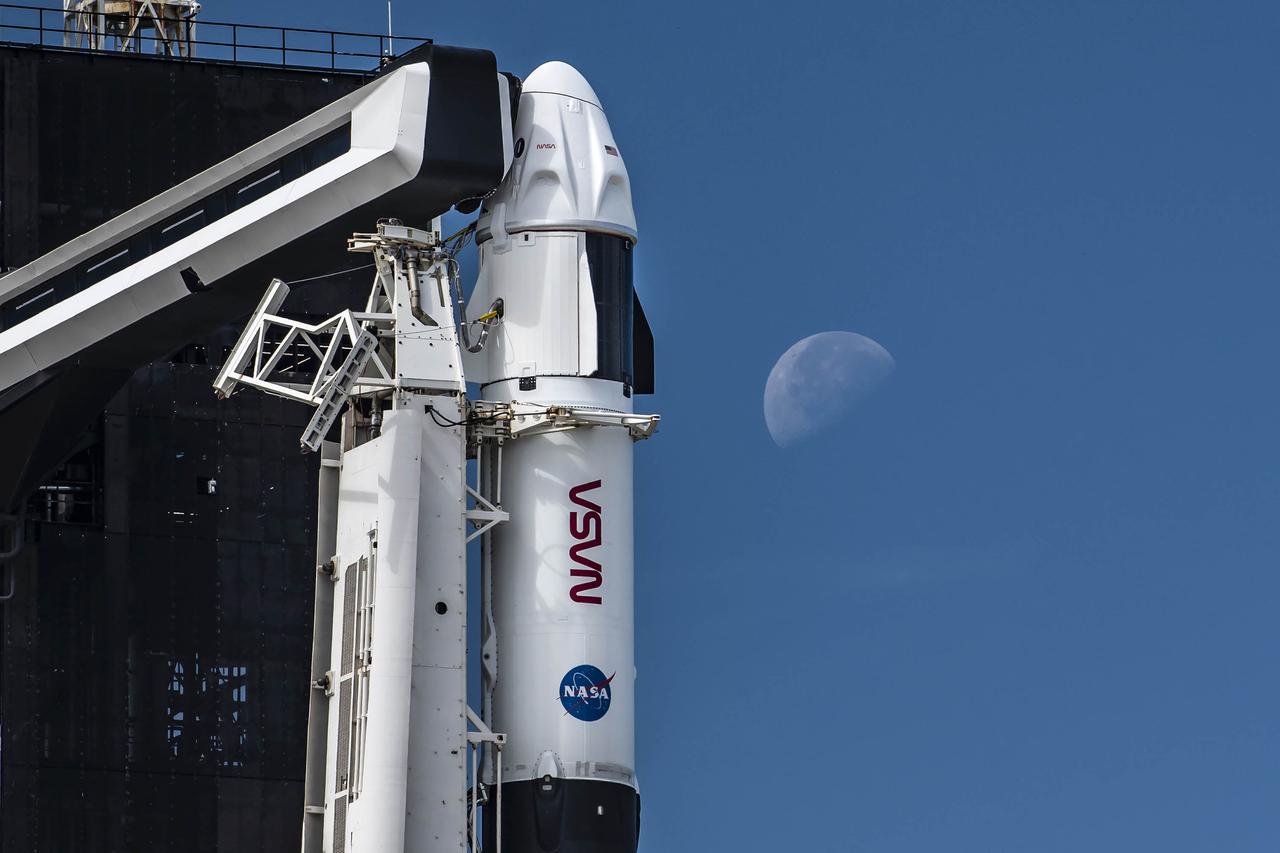
The SpaceX Falcon 9 rocket is vertical with the Crew Dragon atop for the Crew-3 mission at Launch Pad 39A at NASA’s Kennedy Space Center in Florida on Oct. 27, 2021. In view is the crew access arm. A four-person crew will launch aboard the Crew Dragon atop the Falcon 9 on Oct. 31 to the International Space Station. Launch is targeted for 2:21 a.m. EDT from Pad 39A. Crew 3 is the third crew rotation flight to the space station for NASA’s Commercial Crew Program, and the first flight of a new Crew Dragon spacecraft.
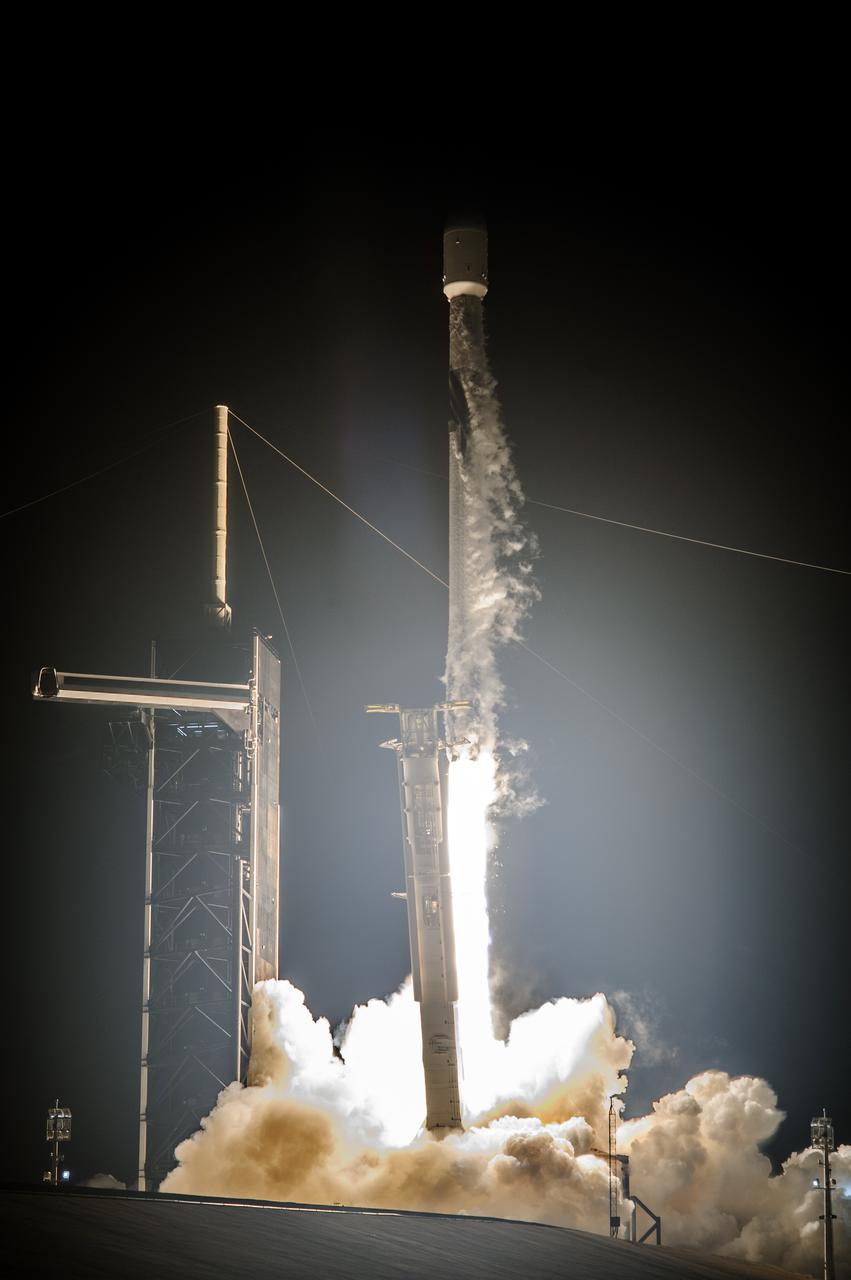
A SpaceX Falcon 9 rocket soars upward after liftoff from the launch pad at Launch Complex 39A at NASA’s Kennedy Space Center in Florida at 1 a.m. EST on Thursday, Dec. 9, 2021. The Falcon 9 carries NASA’s Imaging X-ray Polarimetry Explorer (IXPE) spacecraft. NASA’s Launch Services Program managed this launch. NASA’s Marshall Space Flight Center in Huntsville, Alabama, manages the IXPE mission. Ball Aerospace, headquartered in Broomfield, Colorado, manages spacecraft operations with support from the University of Colorado at Boulder. NASA’s Goddard Space Flight Center in Greenbelt, Maryland, manages the Explorers Program for the agency’s Science Mission Directorate in Washington. The IXPE spacecraft includes three space telescopes with sensitive detectors capable of measuring the polarization of cosmic X-rays, allowing scientists to answer fundamental questions about extremely complex environments in space where gravitational, electric, and magnetic fields are at their limits. The project is a collaboration between NASA and the Italian Space Agency.
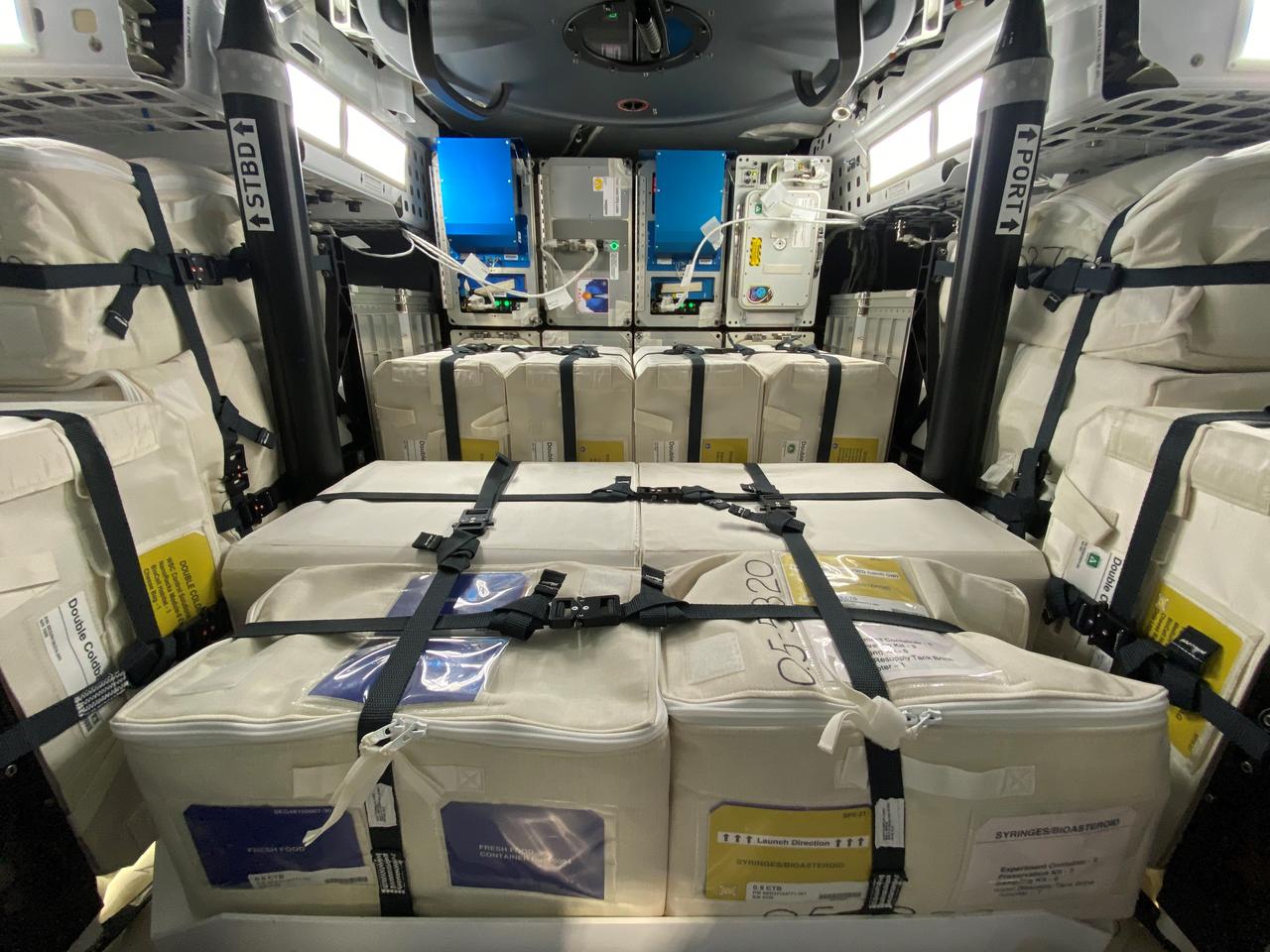
The remaining time-sensitive payloads bound for the International Space Station on SpaceX’s 21st Commercial Resupply Services (CRS-21) mission are loaded into the Cargo Dragon spacecraft on Friday, Dec. 4, 2020. A SpaceX Falcon 9 rocket, carrying the Cargo Dragon, lifted off from Launch Complex 39A at Kennedy Space Center in Florida at 11:17 a.m. EST on Dec. 6, 2020. The spacecraft is delivering more than 6,400 pounds of science investigations and cargo to the orbiting laboratory.
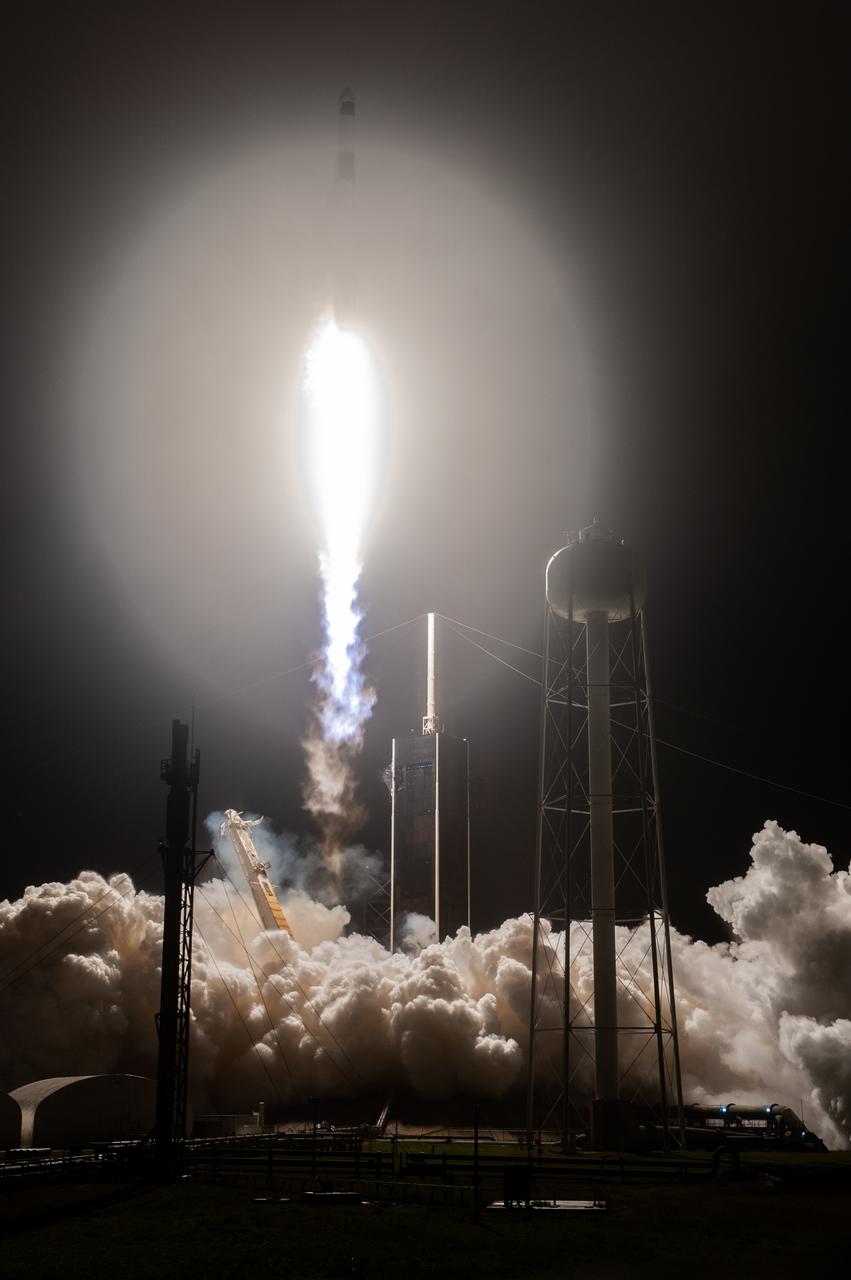
A SpaceX Falcon 9 rocket soars into the sky after lifting off from Launch Complex 39A at Kennedy Space Center in Florida at 5:07 a.m. EST on Tuesday, Dec. 21, 2021, carrying the Dragon spacecraft on its journey to the International Space Station for SpaceX’s 24th commercial resupply services mission. Dragon will deliver new science investigations, supplies, and equipment to the crew on board the space station. Arrival to the orbiting laboratory is planned for Wednesday, Dec. 22.
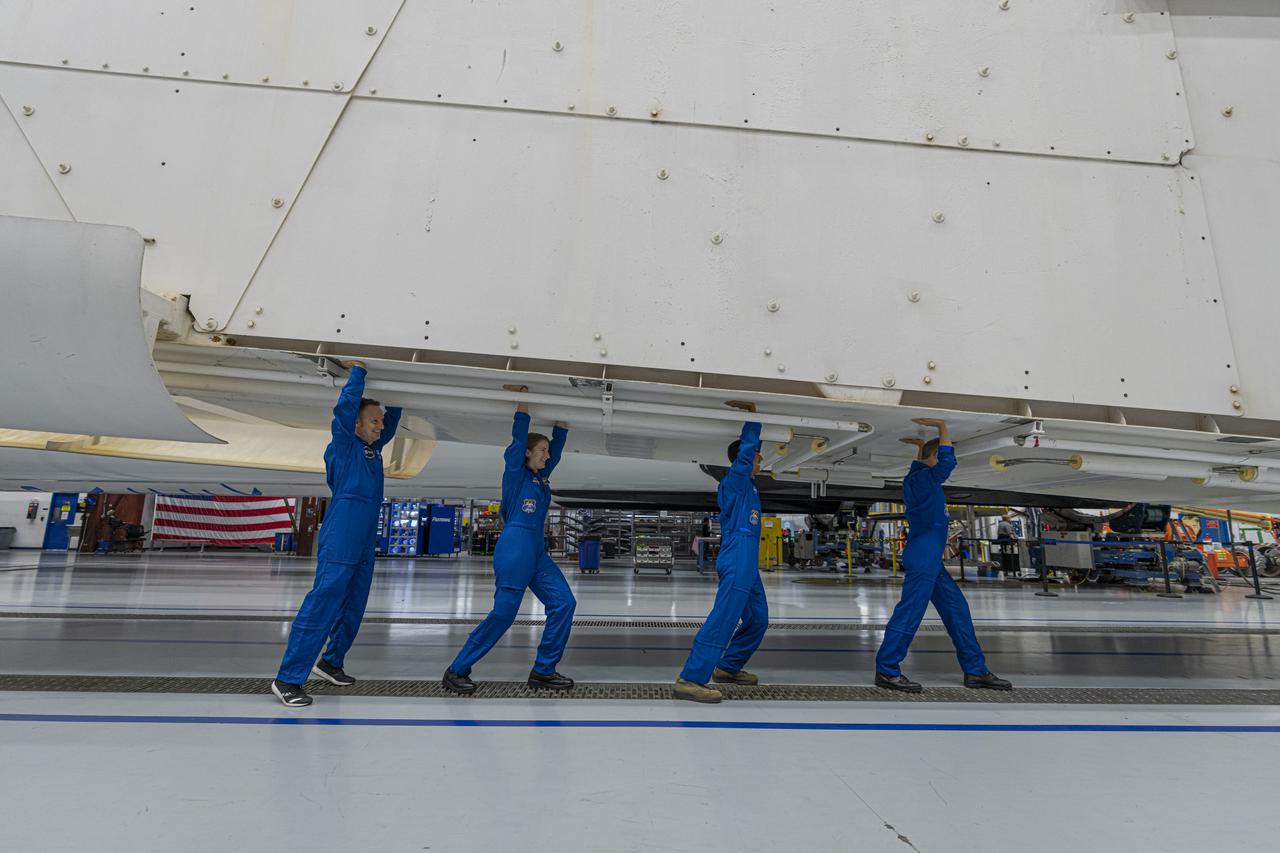
NASA’s SpaceX Crew-3 astronauts are inside the SpaceX horizontal processing facility near Launch Complex 39A at Kennedy Space Center in Florida on Oct. 26, 2021. In this view, they simulate holding up the Falcon 9 rocket on its transporter before rollout to Launch Complex 39A, which occurred on Oct. 27. From left are Matthias Maurer, with the European Space Agency, and NASA astronauts Kayla Barron, Raja Chari, and Tom Marshburn. The four-person crew will launch aboard the Crew Dragon atop the Falcon 9 on Oct. 31 to the International Space Station. Launch is targeted for 2:21 a.m. EDT from Pad 39A. Crew-3 is the third crew rotation flight to the space station for NASA’s Commercial Crew Program, and the first flight of a new Crew Dragon spacecraft.
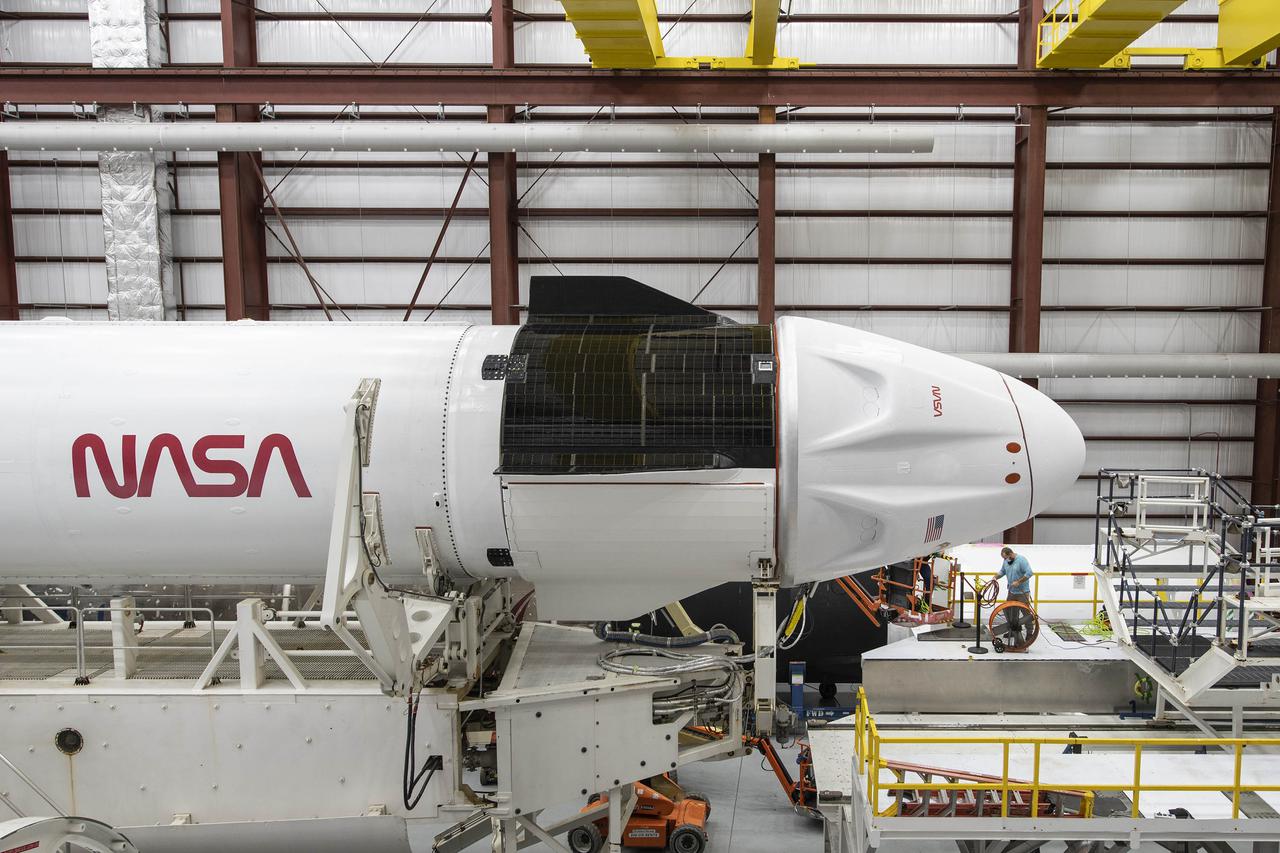
Inside the SpaceX horizontal processing facility at NASA’s Kennedy Space Center in Florida, preparations are underway to roll the SpaceX Falcon 9 rocket with Crew Dragon attached to Launch Complex 39A on Oct. 27, 2021 for NASA’s Space X Crew-3 mission. NASA astronauts Raja Chari, Tom Marshburn and Kayla Barron, along with Matthias Maurer, European Space Agency astronaut, will launch aboard the Crew Dragon on the Falcon 9 rocket on Oct. 31. Launch is targeted for 2:21 a.m. from Pad 39A. Crew-3 is the third crew rotation flight for the agency’s Commercial Crew Program, and the first flight of a new Crew Dragon spacecraft.
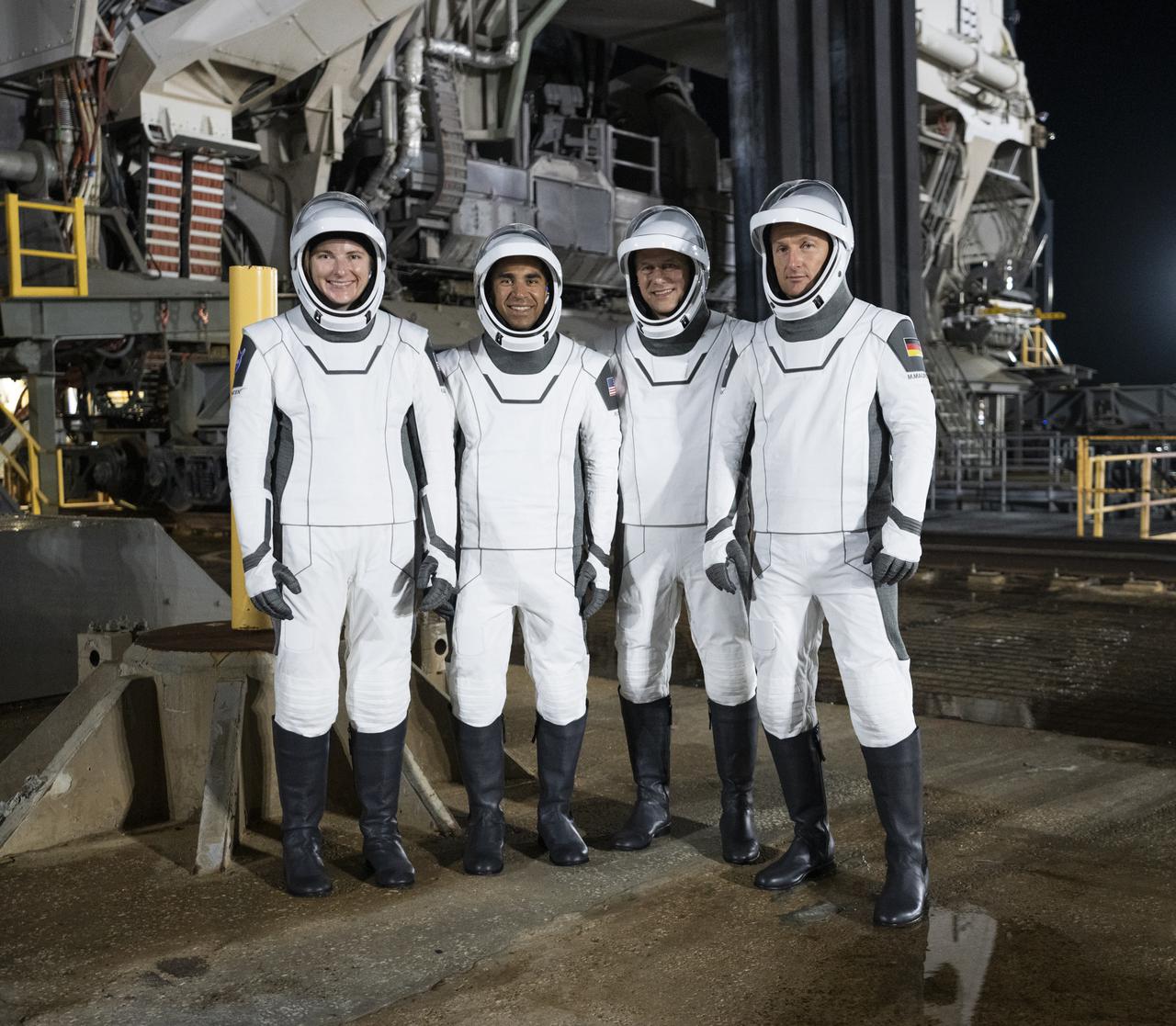
NASA’s SpaceX Crew-3 astronauts participate in a countdown dress rehearsal at the agency’s Kennedy Space Center in Florida on Oct. 28, 2021, to prepare for the upcoming Crew-3 launch. The astronauts are at Launch Pad 39A with the Falcon 9 and Crew Dragon behind them during the rehearsal. From left are NASA astronauts Kayla Barron, Raja Chari, Crew-3 commander, and Tom Marshburn, and European Space Agency astronaut Matthias Maurer. The four-person crew will launch aboard the Crew Dragon atop the Falcon 9 on Oct. 31 to the International Space Station. Launch is targeted for 2:21 a.m. EDT from Pad 39A. Crew-3 is the third crew rotation flight to the space station for NASA’s Commercial Crew Program, and the first flight of a new Crew Dragon spacecraft.

A SpaceX Falcon 9 rocket soars into the sky at 3:27 a.m. EDT on Saturday, Aug. 26, from Kennedy Space Center’s Launch Complex 39A in Florida, carrying NASA’s SpaceX Crew-7 crew members to the International Space Station. Aboard SpaceX’s Dragon spacecraft are NASA astronaut Jasmin Moghbeli, ESA (European Space Agency) astronaut Andreas Mogensen, JAXA (Japan Aerospace Exploration Agency) astronaut Satoshi Furukawa, and Roscosmos cosmonaut Konstantin Borisov.

A SpaceX Falcon Heavy rocket carrying NASA’s Europa Clipper spacecraft lifts off from Launch Complex 39A at NASA’s Kennedy Space Center in Florida at 12:06 p.m. EDT on Monday, Oct. 14, 2024. After launch, the spacecraft plans to fly by Mars in February 2025, then back by Earth in December 2026, using the gravity of each planet to increase its momentum. With help of these “gravity assists,” Europa Clipper will achieve the velocity needed to reach Jupiter in April 2030.
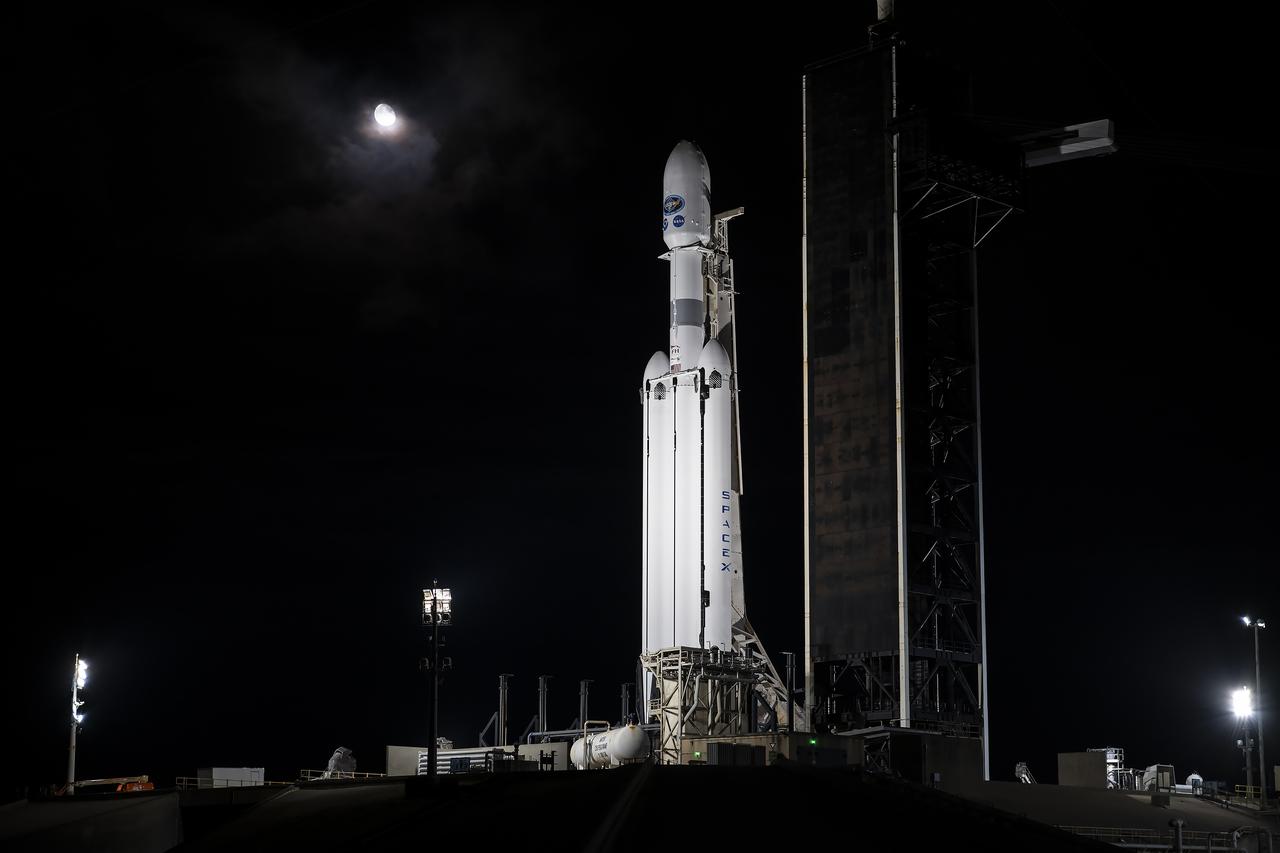
A SpaceX Falcon Heavy rocket carrying the National Oceanic and Atmospheric Administration (NOAA) GOES-U (Geostationary Operational Environmental Satellite U) stands vertical at Launch Complex 39A at NASA’s Kennedy Space Center in Florida on Monday, June 24, 2024. The GOES-U satellite is the final satellite in the GOES-R series, which serves a critical role in providing continuous coverage of the Western Hemisphere, including monitoring tropical systems in the eastern Pacific and Atlantic oceans. The two-hour launch window opens at 5:16 p.m. EDT. on Tuesday, June 25, 2024.
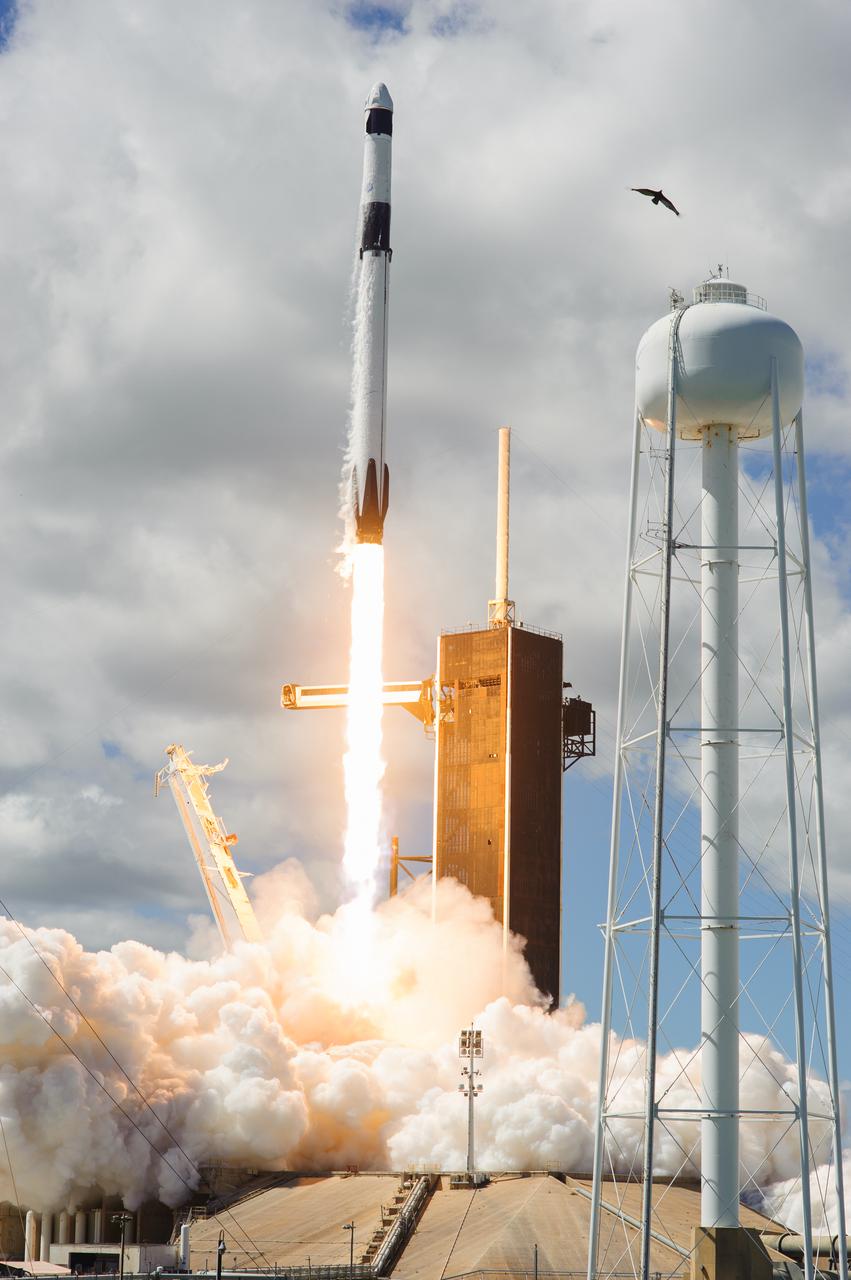
SpaceX’s Falcon 9 rocket, with the Dragon Endurance spacecraft atop, lifts off from NASA’s Kennedy Space Center Launch Complex 39A in Florida on Oct. 5, 2022, on the agency’s SpaceX Crew-5 launch. Inside Endurance are NASA astronauts Nicole Mann, commander; Josh Cassada, pilot; and Mission Specialists Koichi Wakata, of JAXA (Japan Aerospace Exploration Agency), and Roscosmos cosmonaut Anna Kikina. The crew is heading to the International Space Station for a science expedition mission as part of the agency’s Commercial Crew Program. Liftoff occurred at noon EDT.
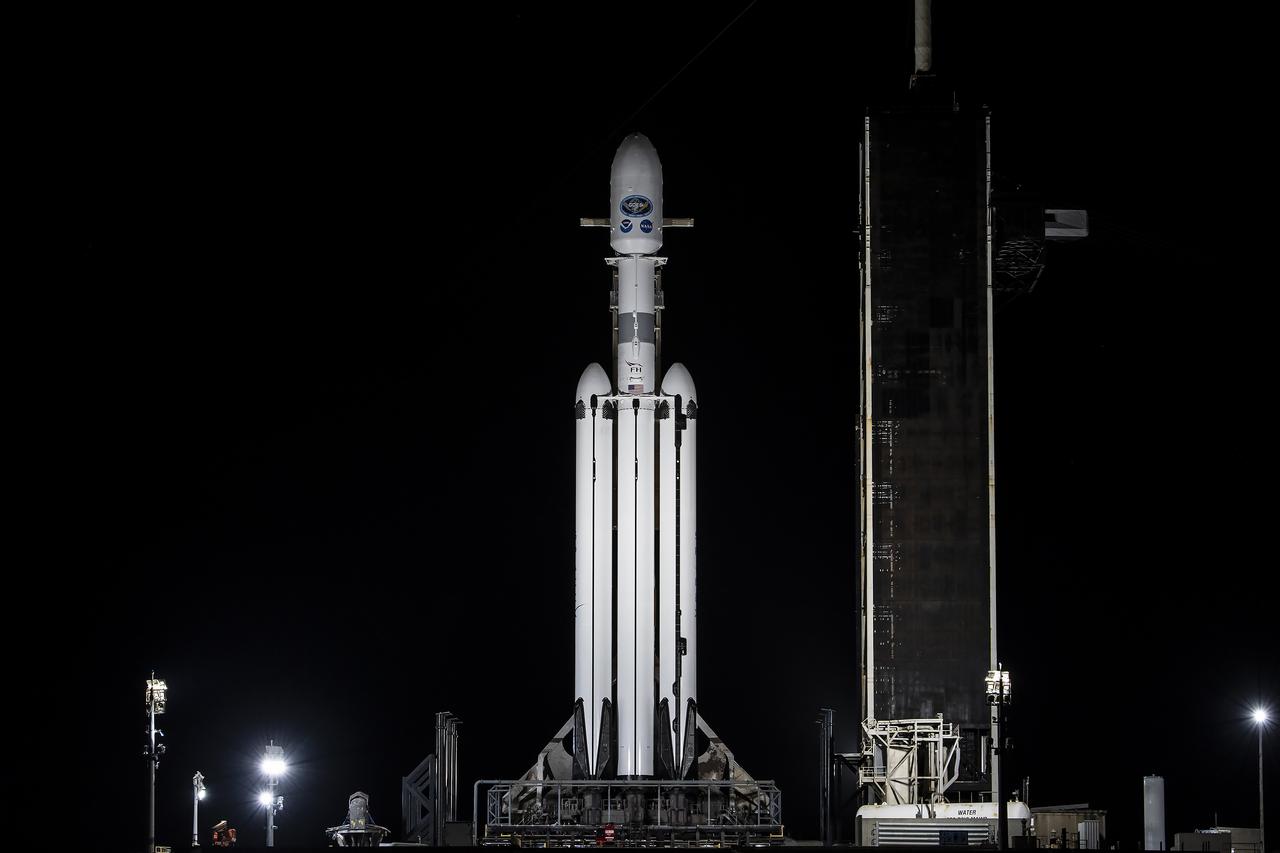
A SpaceX Falcon Heavy rocket carrying the National Oceanic and Atmospheric Administration (NOAA) GOES-U (Geostationary Operational Environmental Satellite U) stands vertical at Launch Complex 39A at NASA’s Kennedy Space Center in Florida on Monday, June 24, 2024. The GOES-U satellite is the final satellite in the GOES-R series, which serves a critical role in providing continuous coverage of the Western Hemisphere, including monitoring tropical systems in the eastern Pacific and Atlantic oceans. The two-hour launch window opens at 5:16 p.m. EDT. on Tuesday, June 25, 2024.

The upgraded version of SpaceX’s Cargo Dragon spacecraft, Dragon 2, is seen atop a Falcon 9 rocket on Dec. 2, 2020, as they prepare to be rolled out to Launch Complex 39A at NASA’s Kennedy Space Center in Florida for the company’s 21st Commercial Resupply Services (CRS-21) launch. The first launch for SpaceX under NASA’s second Commercial Resupply Services contract, CRS-21 will deliver critical supplies, equipment, and material to support a variety of science and research investigations that will take place aboard the International Space Station. Liftoff is scheduled for 11:39 a.m. EST on Saturday, Dec. 5.
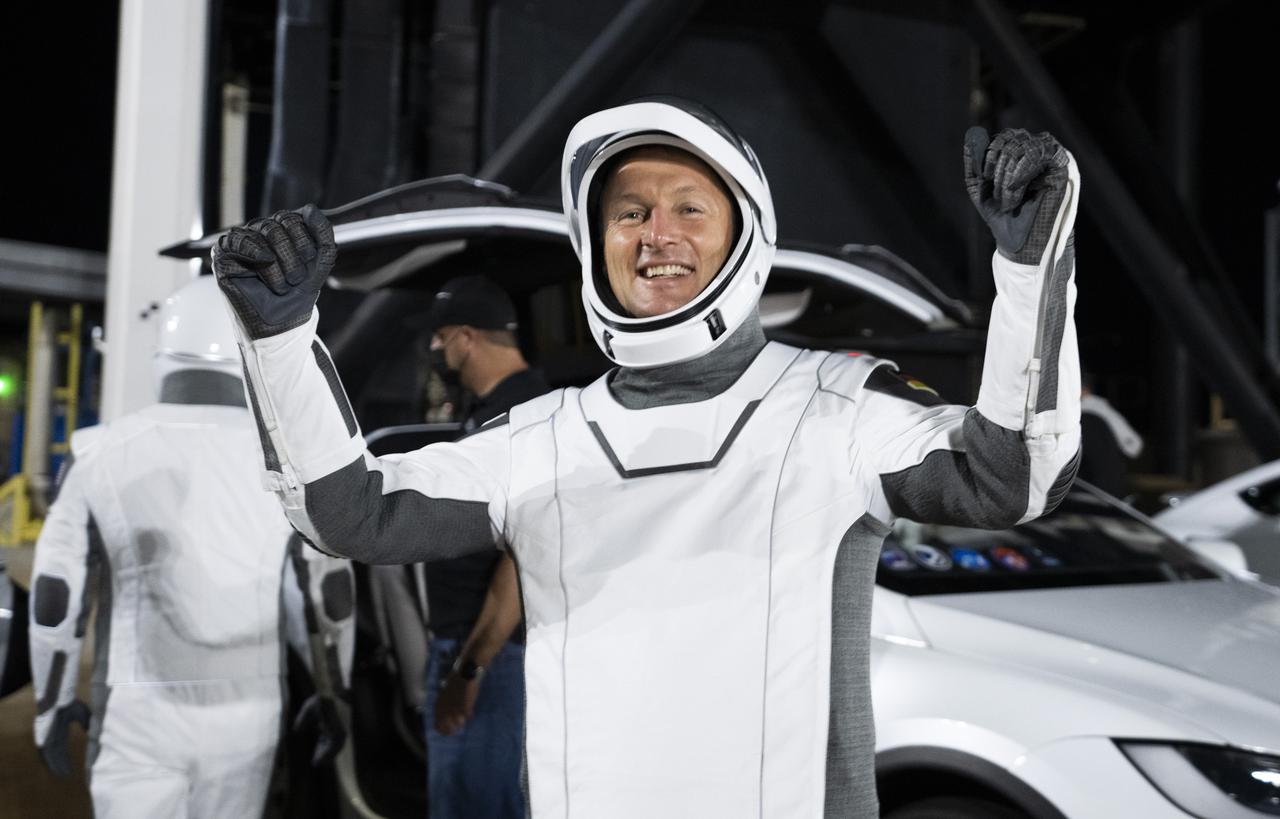
NASA’s SpaceX Crew-3 astronauts participate in a countdown dress rehearsal at the agency’s Kennedy Space Center in Florida on Oct. 28, 2021, to prepare for the upcoming Crew-3 launch. The astronauts are at the Neil Armstrong Operations and Checkout Building as they prepare to enter the Tesla cars for the trip to Launch Pad 39A during the rehearsal. In view is European Space Agency astronaut Matthias Maurer. The four-person crew will launch aboard the Crew Dragon atop the Falcon 9 on Oct. 31 to the International Space Station. Launch is targeted for 2:21 a.m. EDT from Pad 39A. Crew-3 is the third crew rotation flight to the space station for NASA’s Commercial Crew Program, and the first flight of a new Crew Dragon spacecraft.
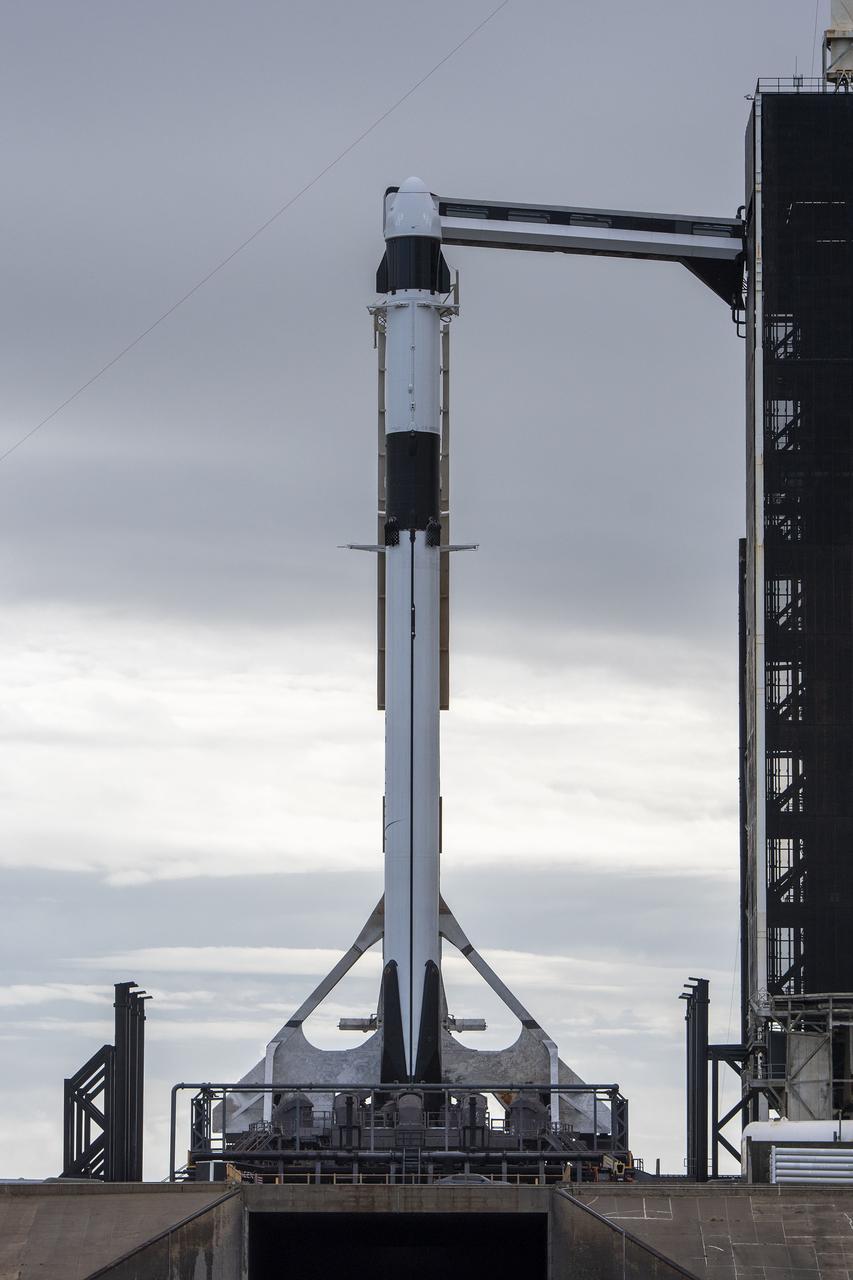
A SpaceX Falcon 9 rocket, with the company’s Dragon cargo spacecraft atop, is raised to a vertical position at NASA Kennedy Space Center’s Launch Complex 39A on Nov. 21, 2022, in preparation for the 26th commercial resupply services launch to the International Space Station. The mission will deliver new science investigations, supplies, and equipment to the crew aboard the space station, including the next pair of ISS Roll Out Solar Arrays (iROSAs). Liftoff is scheduled for 3:54 p.m. EST on Monday, Nov. 22, from Kennedy’s Launch Complex 39A.
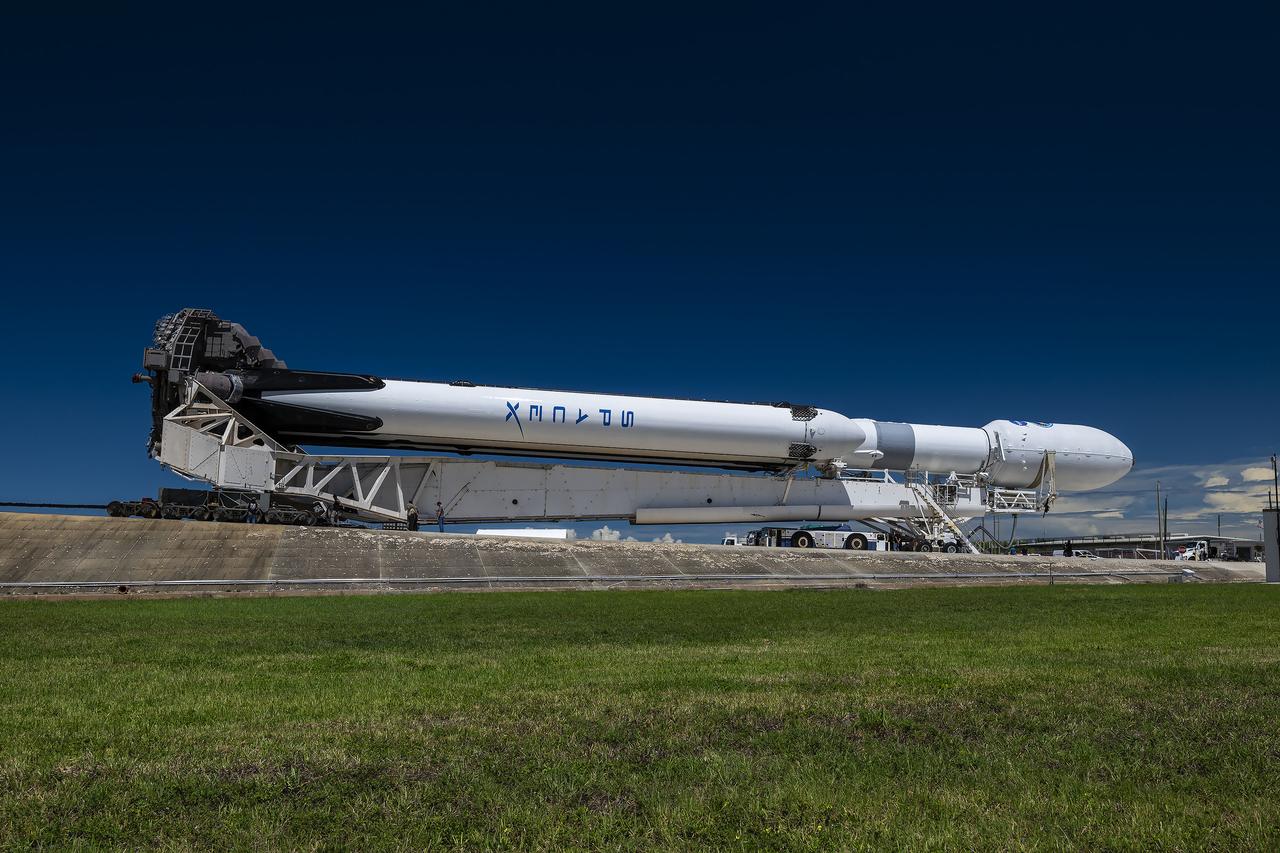
A SpaceX Falcon Heavy rocket carrying the National Oceanic and Atmospheric Administration (NOAA) GOES-U (Geostationary Operational Environmental Satellite U) moves from the hangar to the launch pad at Space Launch Complex 39A at NASA’s Kennedy Space Center in Florida on Monday, June 24, 2024. The GOES-U satellite is the final satellite in the GOES-R series, which serves a critical role in providing continuous coverage of the Western Hemisphere, including monitoring tropical systems in the eastern Pacific and Atlantic oceans. The two-hour launch window opens at 5:16 p.m. EDT Tuesday, June 25.

A SpaceX Falcon 9 rocket lifts off from Launch Complex 39A at NASA’s Kennedy Space Center in Florida at 3:14 a.m. on Aug. 29, 2021, carrying the Dragon spacecraft on its journey to the International Space Station for NASA and SpaceX’s 23rd commercial resupply services mission. Dragon delivered new science investigations, supplies, and equipment to the crew aboard the orbiting laboratory.
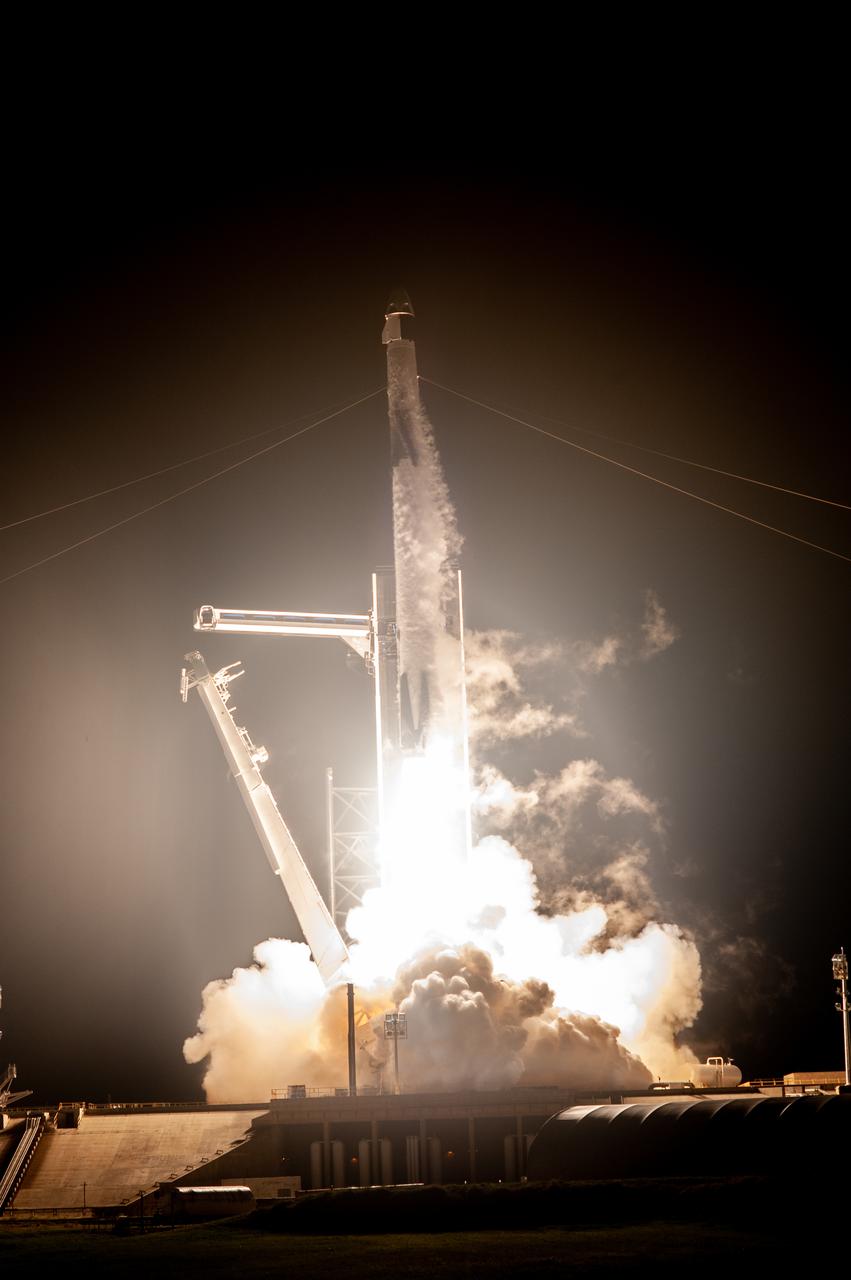
A SpaceX Falcon 9 rocket lifts off at 7:27 p.m. EST from Launch Complex 39A at NASA’s Kennedy Space Center in Florida on Nov. 15, 2020, carrying the company’s Crew Dragon Resilience capsule. Onboard the capsule are NASA’s SpaceX Crew-1 NASA astronauts, Michael Hopkins, spacecraft commander; Victor Glover, pilot; Shannon Walker, mission specialist; and Japan Aerospace Exploration Agency astronaut Soichi Noguchi, mission specialist. Crew-1 is the first regular crew mission of a U.S. commercial spacecraft with astronauts to the International Space Station as part of NASA’s Commercial Crew Program. The Crew Dragon will dock with the space station and the crew will remain on the orbiting laboratory for a six-month science mission.
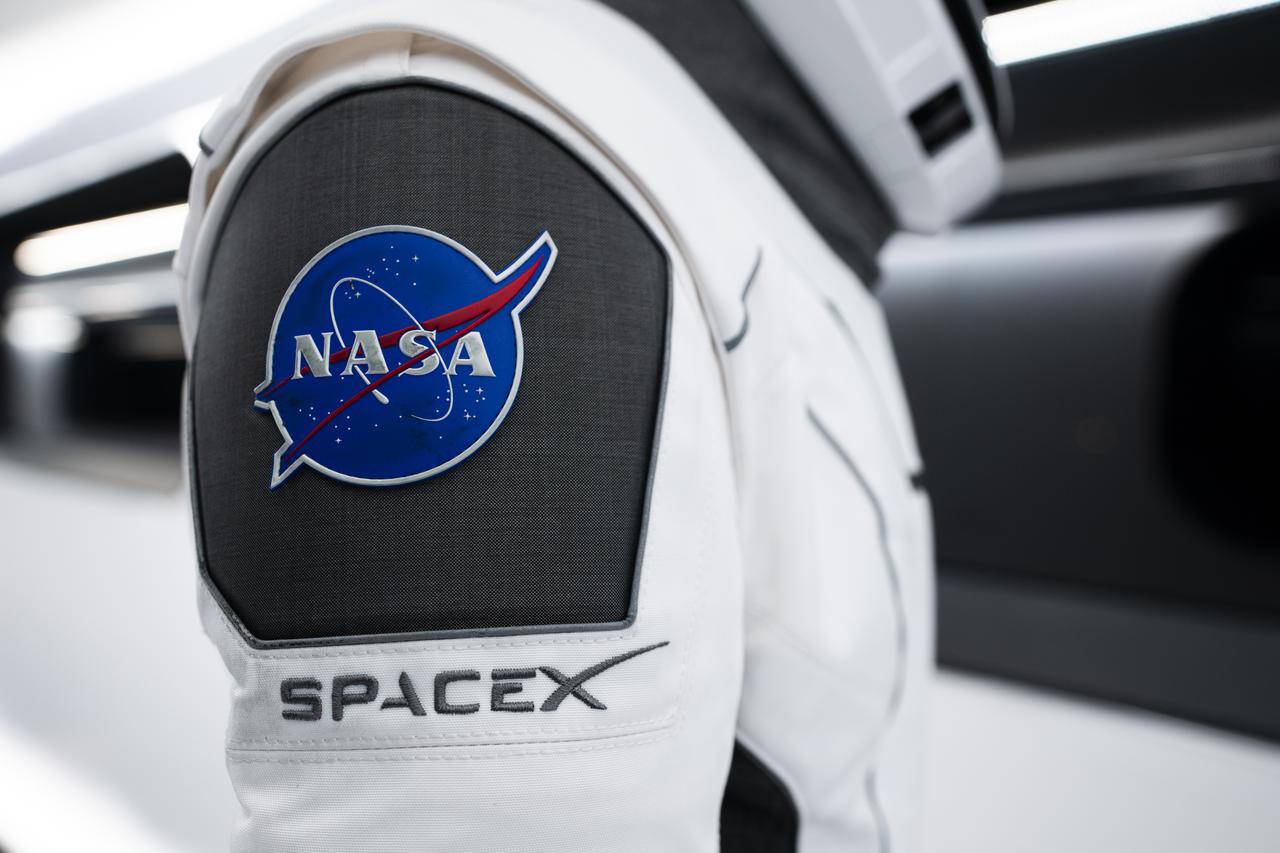
NASA’s SpaceX Crew-3 astronauts participate in a countdown dress rehearsal at the agency’s Kennedy Space Center in Florida on Oct. 28, 2021, to prepare for the upcoming Crew-3 launch. In this view is a close-up of the NASA and SpaceX embroidered emblems on the SpaceX spacesuit worn by NASA astronaut Kayla Barron. Barron is inside the crew access arm leading to the company’s Crew Dragon spacecraft during the rehearsal. The four-person crew will launch aboard the Crew Dragon atop the Falcon 9 on Oct. 31 to the International Space Station. Launch is targeted for 2:21 a.m. EDT from Pad 39A. Crew-3 is the third crew rotation flight to the space station for NASA’s Commercial Crew Program, and the first flight of a new Crew Dragon spacecraft.

A SpaceX Falcon Heavy rocket carrying the National Oceanic and Atmospheric Administration (NOAA) GOES-U (Geostationary Operational Environmental Satellite U) lifts off from Launch Complex 39A at NASA’s Kennedy Space Center in Florida on Tuesday, June 25, 2024. The GOES-U satellite is the final satellite in the GOES-R series, which serves a critical role in providing continuous coverage of the Western Hemisphere, including monitoring tropical systems in the eastern Pacific and Atlantic oceans.
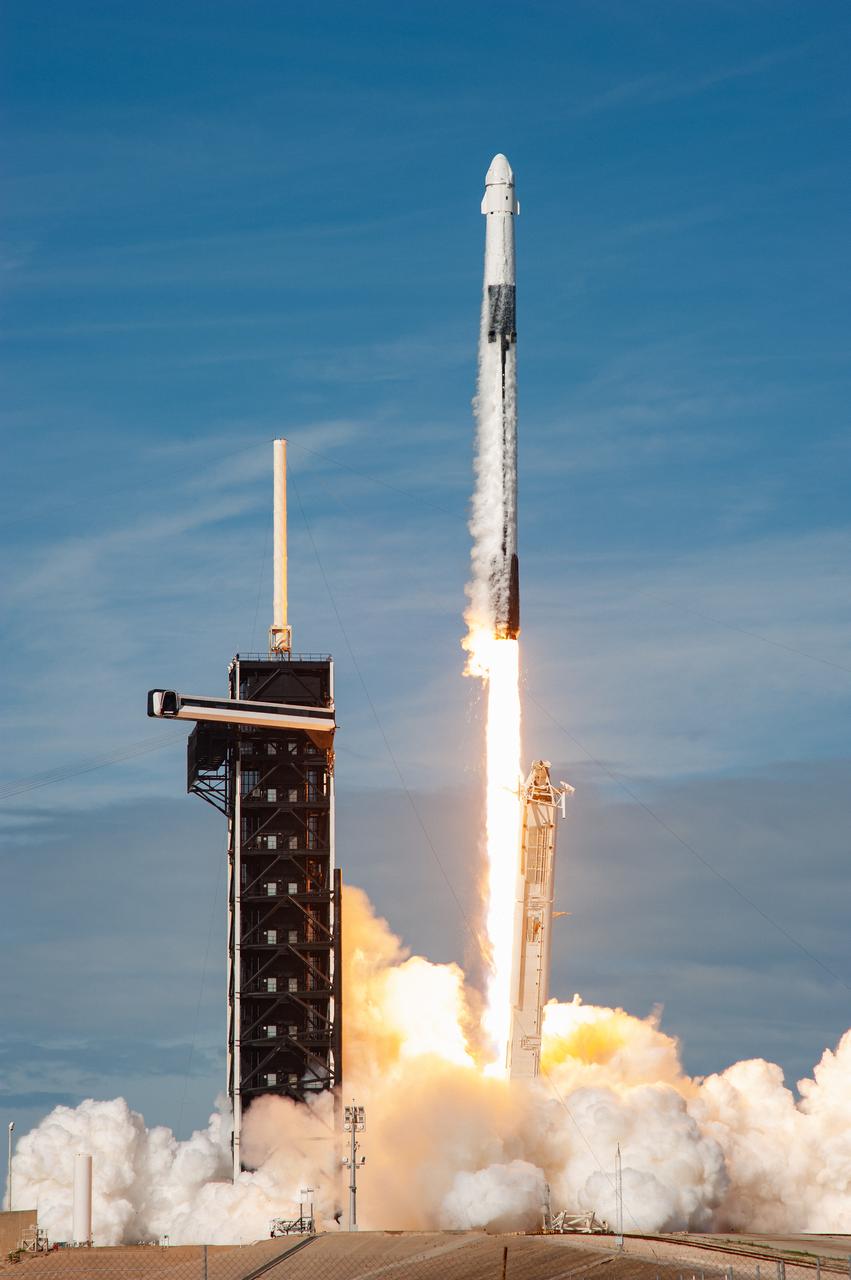
The SpaceX Falcon 9 rocket carrying the Dragon cargo spacecraft lifts off from Launch Complex 39A at NASA’s Kennedy Space Center in Florida on Nov. 26, 2022, on the company’s 26th commercial resupply services mission for the agency to the International Space Station. Liftoff was at 2:20 p.m. EST. Dragon will deliver more than 7,700 pounds of cargo, including a variety of NASA investigations, supplies, and equipment to the crew aboard the space station, including the next pair of ISS Roll Out Solar Arrays (iROSAs). The spacecraft is expected to spend about a month attached to the orbiting outpost before it returns to Earth with research and return cargo, splashing down off the coast of Florida.
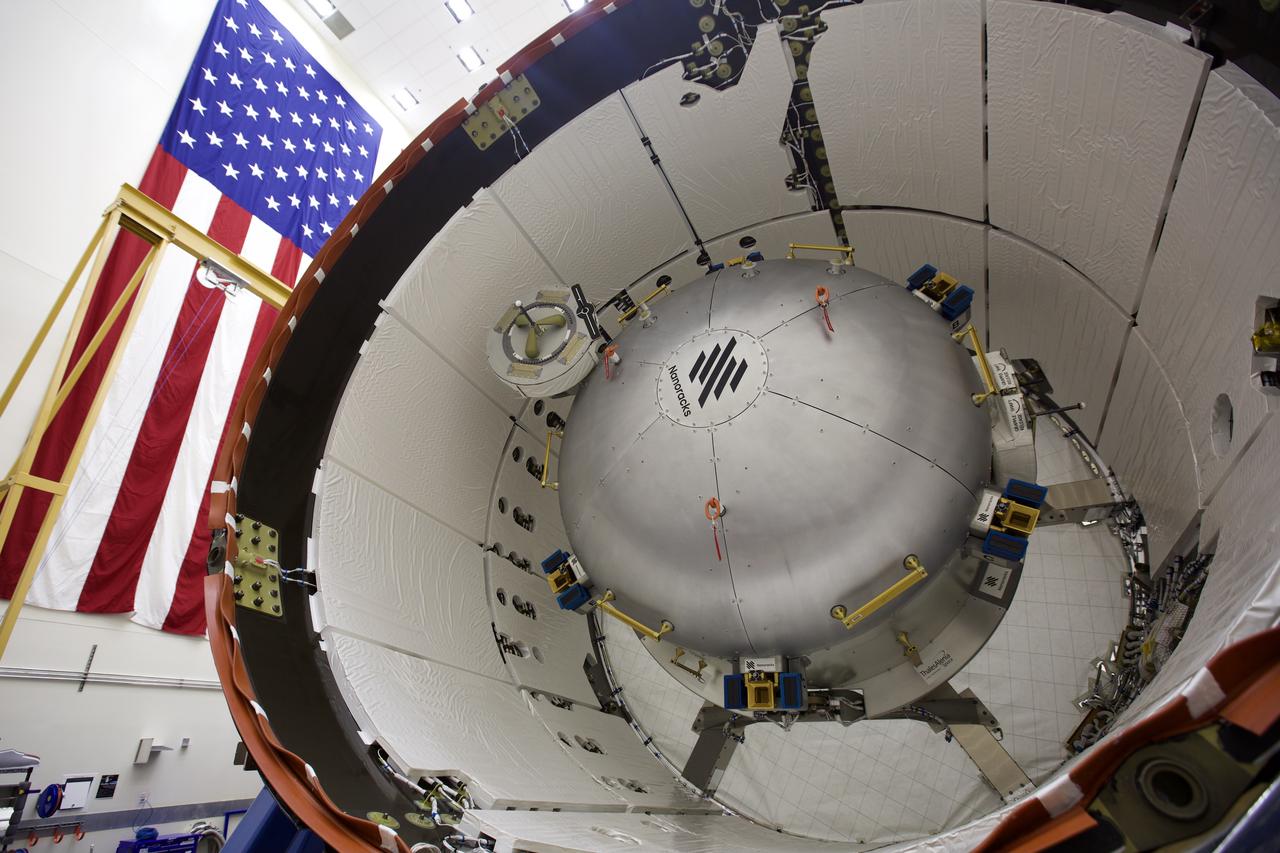
The first commercially funded airlock for the International Space Station is packed in the Cargo Dragon spacecraft’s trunk in October 2020 for its ride to the International Space Station on SpaceX’s 21st Commercial Resupply Services (CRS-21) mission. The airlock will provide payload hosting, robotics testing, and satellite deployment, and also will serve as an outside toolbox for crew members conducting spacewalks. A SpaceX Falcon 9 rocket, carrying the Cargo Dragon, lifted off from Launch Complex 39A at Kennedy Space Center in Florida at 11:17 a.m. EST on Dec. 6, 2020.
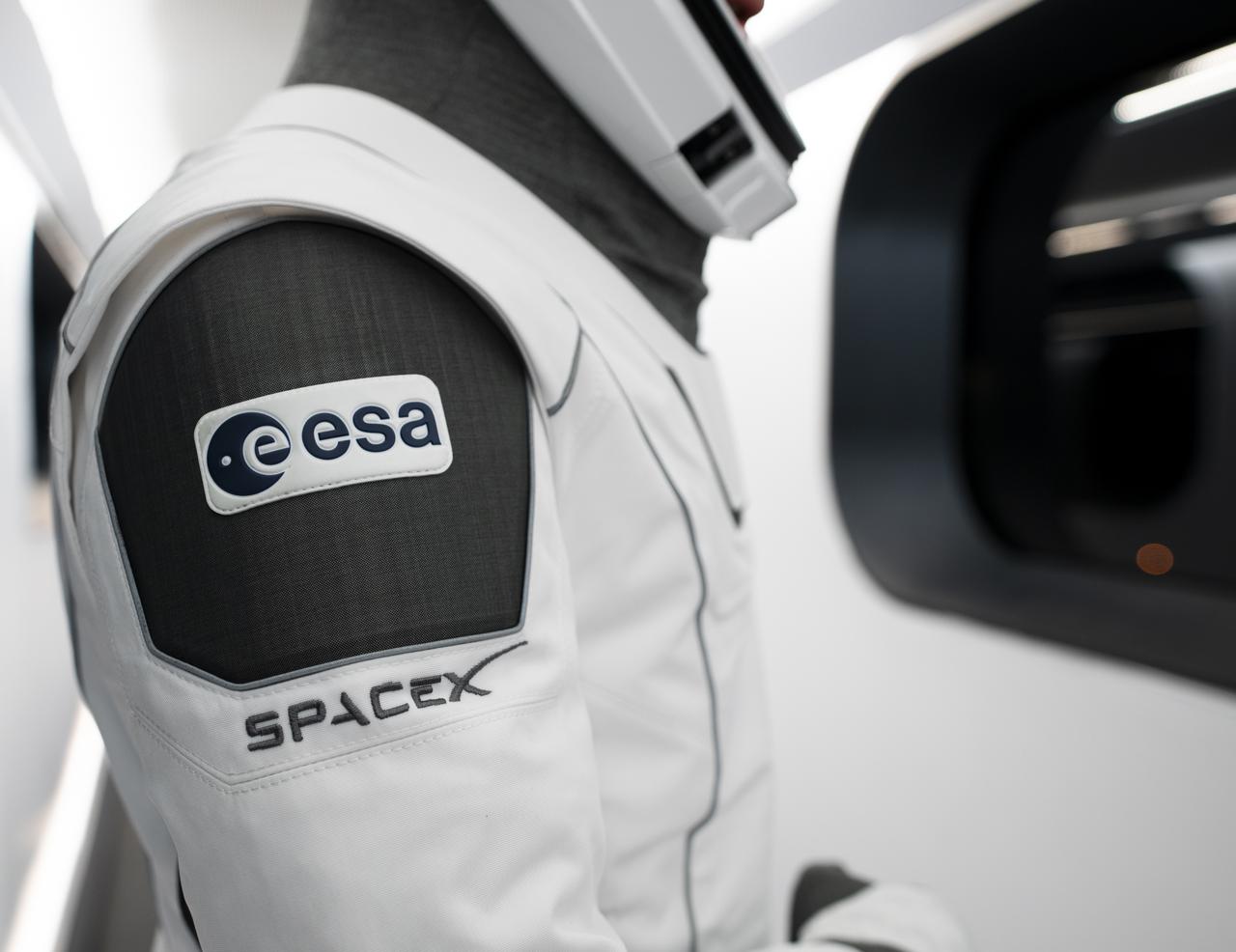
NASA’s SpaceX Crew-3 astronauts participate in a countdown dress rehearsal at the agency’s Kennedy Space Center in Florida on Oct. 28, 2021, to prepare for the upcoming Crew-3 launch. Matthias Maurer, with the European Space Agency (ESA), is inside the crew access arm leading to the company’s Crew Dragon spacecraft during the rehearsal. Maurer’s SpaceX spacesuit is embroidered with the ESA and SpaceX emblems. The four-person crew will launch aboard the Crew Dragon atop the Falcon 9 on Oct. 31 to the International Space Station. Launch is targeted for 2:21 a.m. EDT from Pad 39A. Crew-3 is the third crew rotation flight to the space station for NASA’s Commercial Crew Program, and the first flight of a new Crew Dragon spacecraft.
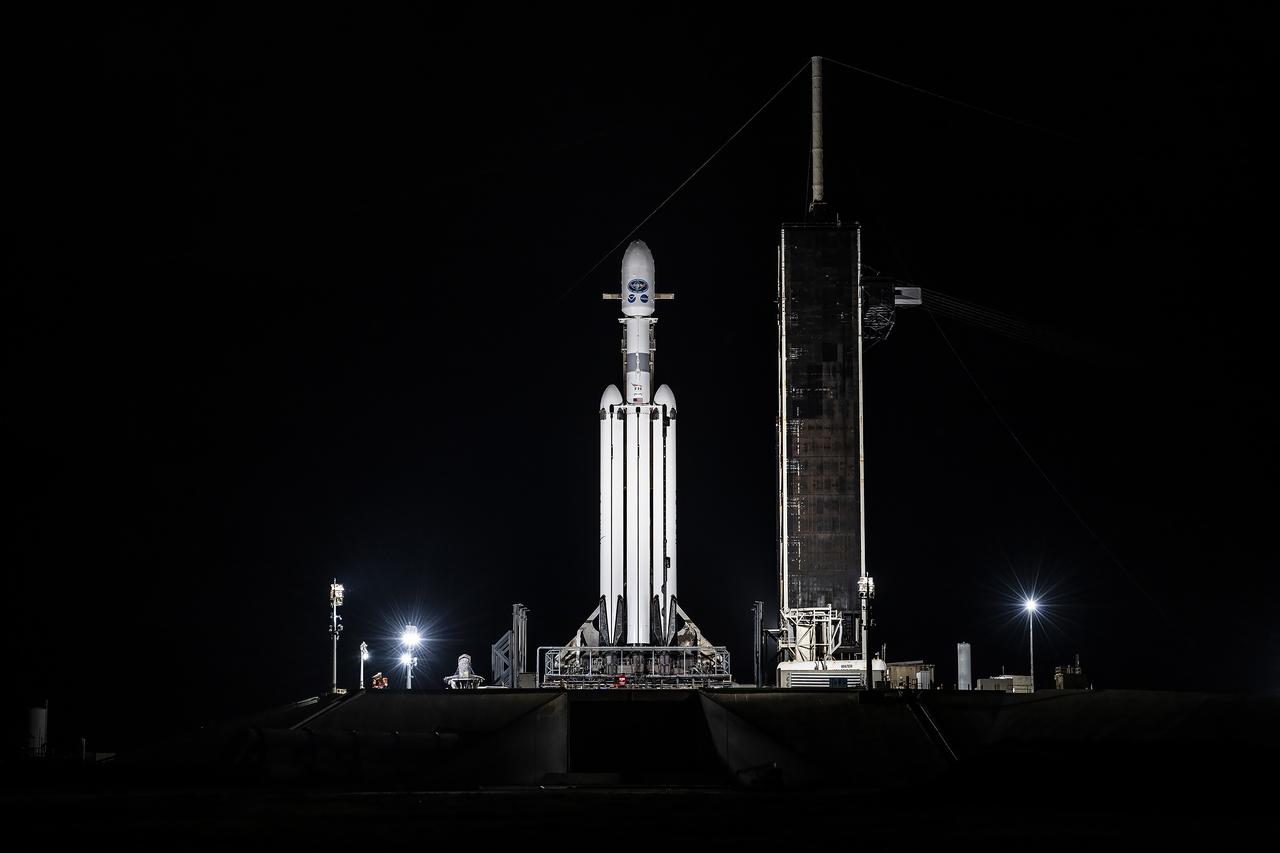
A SpaceX Falcon Heavy rocket carrying the National Oceanic and Atmospheric Administration (NOAA) GOES-U (Geostationary Operational Environmental Satellite U) stands vertical at Launch Complex 39A at NASA’s Kennedy Space Center in Florida on Monday, June 24, 2024. The GOES-U satellite is the final satellite in the GOES-R series, which serves a critical role in providing continuous coverage of the Western Hemisphere, including monitoring tropical systems in the eastern Pacific and Atlantic oceans. The two-hour launch window opens at 5:16 p.m. EDT. on Tuesday, June 25, 2024.

A SpaceX Falcon Heavy rocket carrying NASA’s Europa Clipper spacecraft lifts off from Launch Complex 39A at NASA’s Kennedy Space Center in Florida at 12:06 p.m. EDT on Monday, Oct. 14, 2024. After launch, the spacecraft plans to fly by Mars in February 2025, then back by Earth in December 2026, using the gravity of each planet to increase its momentum. With help of these “gravity assists,” Europa Clipper will achieve the velocity needed to reach Jupiter in April 2030.
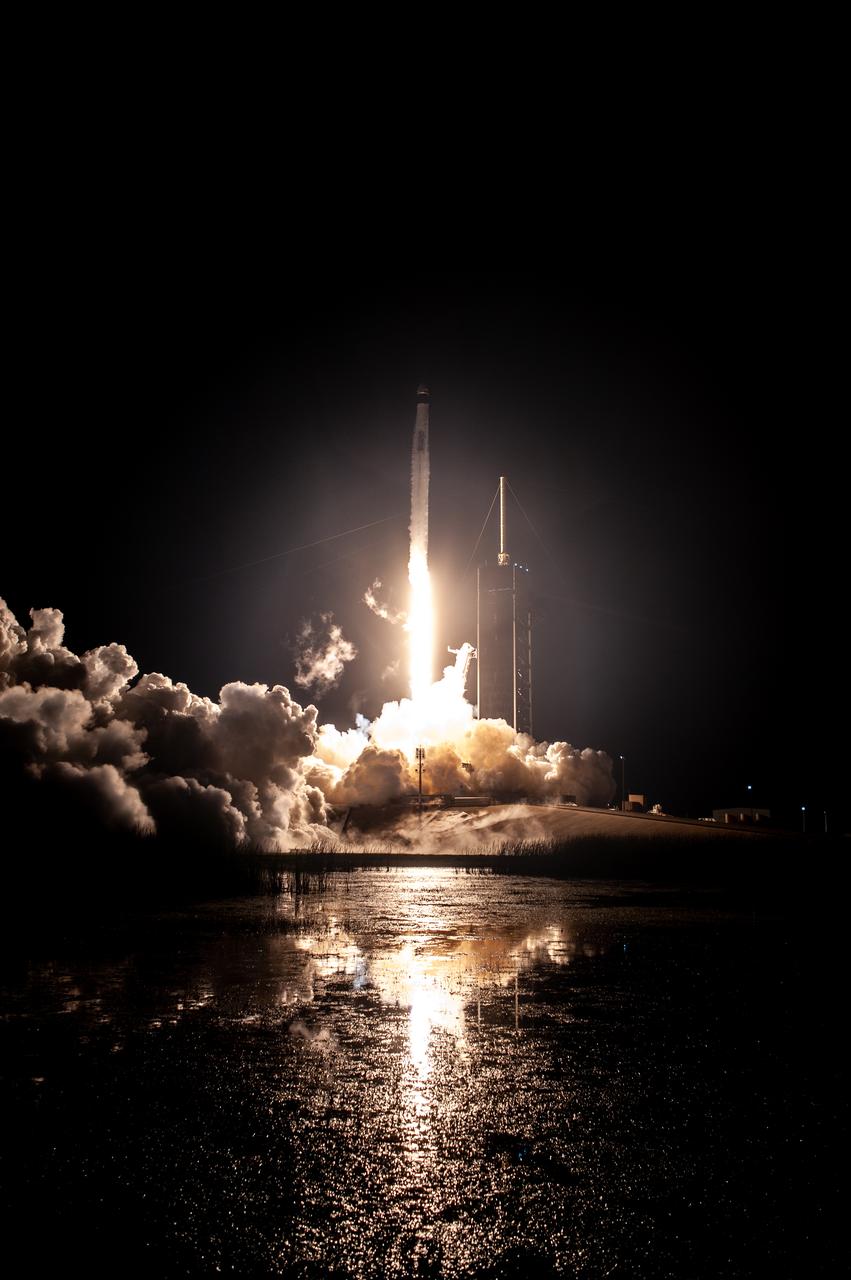
A SpaceX Falcon 9 rocket lifts off at 7:27 p.m. EST from Launch Complex 39A at NASA’s Kennedy Space Center in Florida on Nov. 15, 2020, carrying the company’s Crew Dragon Resilience capsule. Onboard the capsule are NASA’s SpaceX Crew-1 NASA astronauts, Michael Hopkins, spacecraft commander; Victor Glover, pilot; Shannon Walker, mission specialist; and Japan Aerospace Exploration Agency astronaut Soichi Noguchi, mission specialist. Crew-1 is the first regular crew mission of a U.S. commercial spacecraft with astronauts to the International Space Station as part of NASA’s Commercial Crew Program. The Crew Dragon will dock with the space station and the crew will remain on the orbiting laboratory for a six-month science mission.
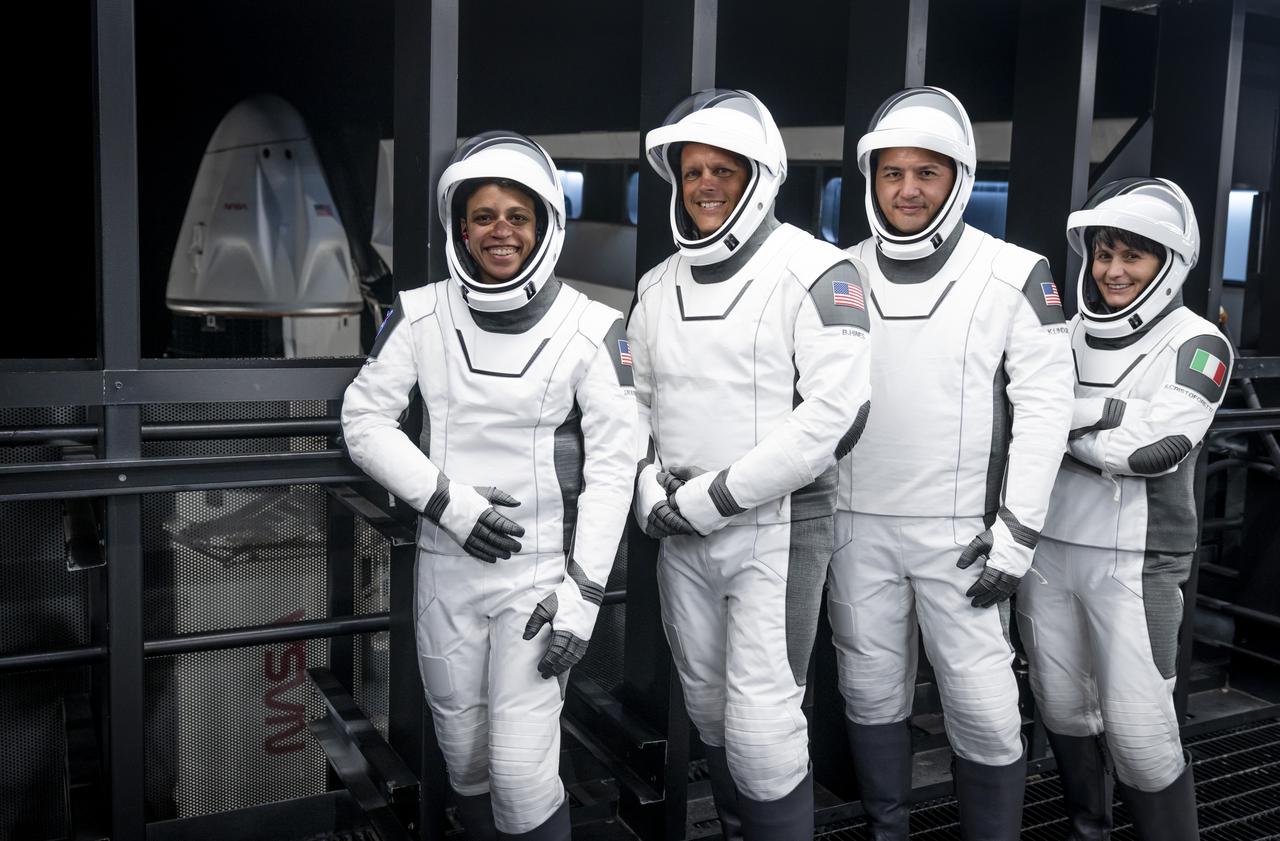
NASA’s SpaceX Crew-4 astronauts, from left, Jessica Watkins, Bob Hines, and Kjell Lindgren, and ESA (European Space Agency) astronaut Samantha Cristoforetti stand inside the crew access arm at Kennedy Space Center’s Launch Complex 39A during a dry dress rehearsal on April 20, 2022. Named Freedom by the Crew-4 crew, SpaceX’s Crew Dragon will carry the astronauts to the International Space Station as part of NASA’s Commercial Crew Program. Liftoff, powered by SpaceX’s Falcon 9 rocket, is targeted for no earlier than 4:15 a.m. EDT on Tuesday, April 26, 2022. Crew-4 will be the first spaceflight for Hines and Watkins and the second flight for Lindgren and Cristoforetti.
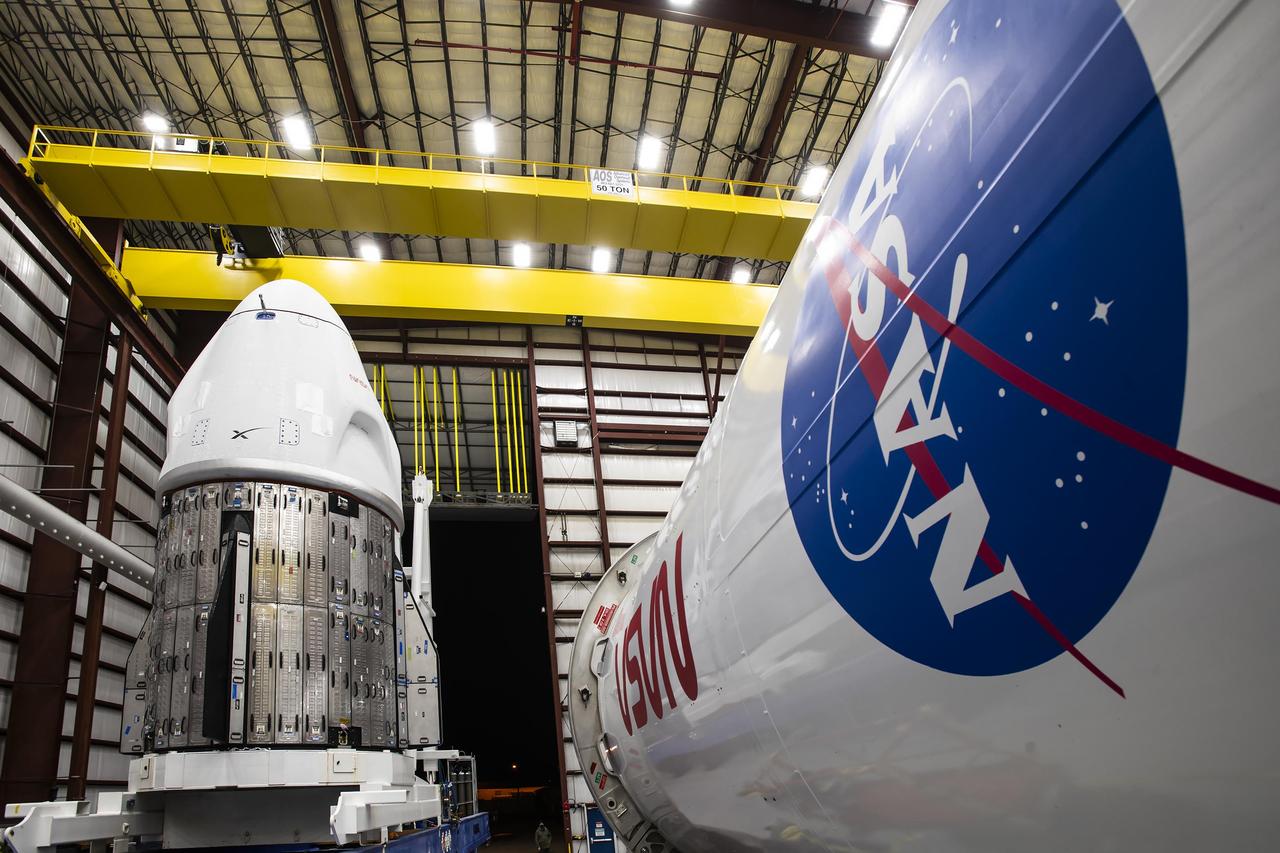
Inside the SpaceX horizontal processing facility at Launch Complex 39A at NASA’s Kennedy Space Center in Florida, the company's Dragon spacecraft is pictured next to a Falcon 9 rocket on Monday, Feb. 19, 2024, prior to integration for NASA’s SpaceX Crew-8 mission to the International Space Station. Liftoff of the eighth crew rotation mission with SpaceX to the station, and the ninth flight of Dragon with people as part of the agency’s Commercial Crew Program is slated for no earlier than 12:04 a.m. EST on Friday, March 1.
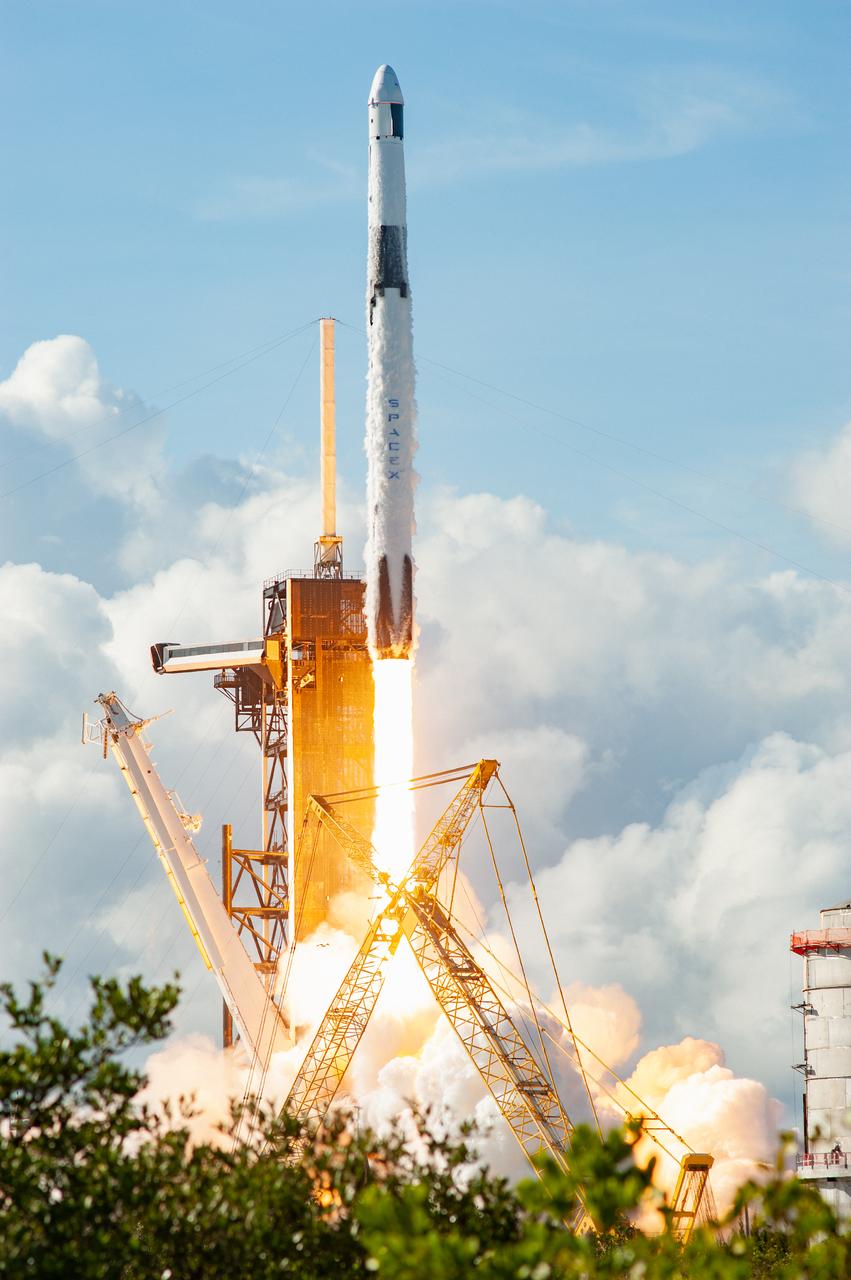
The SpaceX Falcon 9 rocket carrying the Dragon cargo spacecraft lifts off from Launch Complex 39A at NASA’s Kennedy Space Center in Florida on Nov. 26, 2022, on the company’s 26th commercial resupply services mission for the agency to the International Space Station. Liftoff was at 2:20 p.m. EST. Dragon will deliver more than 7,700 pounds of cargo, including a variety of NASA investigations, supplies, and equipment to the crew aboard the space station, including the next pair of ISS Roll Out Solar Arrays (iROSAs). The spacecraft is expected to spend about a month attached to the orbiting outpost before it returns to Earth with research and return cargo, splashing down off the coast of Florida.
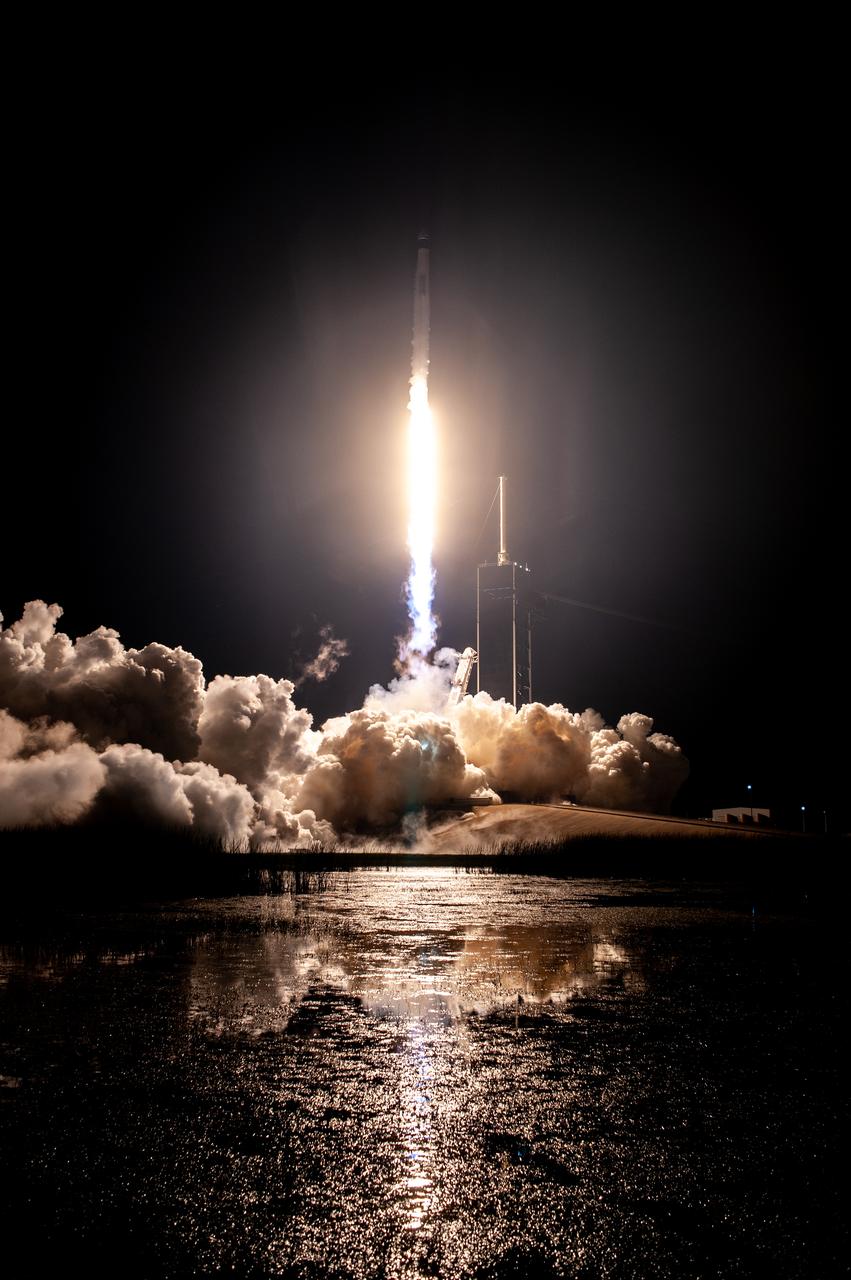
A SpaceX Falcon 9 rocket lifts off at 7:27 p.m. EST from Launch Complex 39A at NASA’s Kennedy Space Center in Florida on Nov. 15, 2020, carrying the company’s Crew Dragon Resilience capsule. Onboard the capsule are NASA’s SpaceX Crew-1 NASA astronauts, Michael Hopkins, spacecraft commander; Victor Glover, pilot; Shannon Walker, mission specialist; and Japan Aerospace Exploration Agency astronaut Soichi Noguchi, mission specialist. Crew-1 is the first regular crew mission of a U.S. commercial spacecraft with astronauts to the International Space Station as part of NASA’s Commercial Crew Program. The Crew Dragon will dock with the space station and the crew will remain on the orbiting laboratory for a six-month science mission.
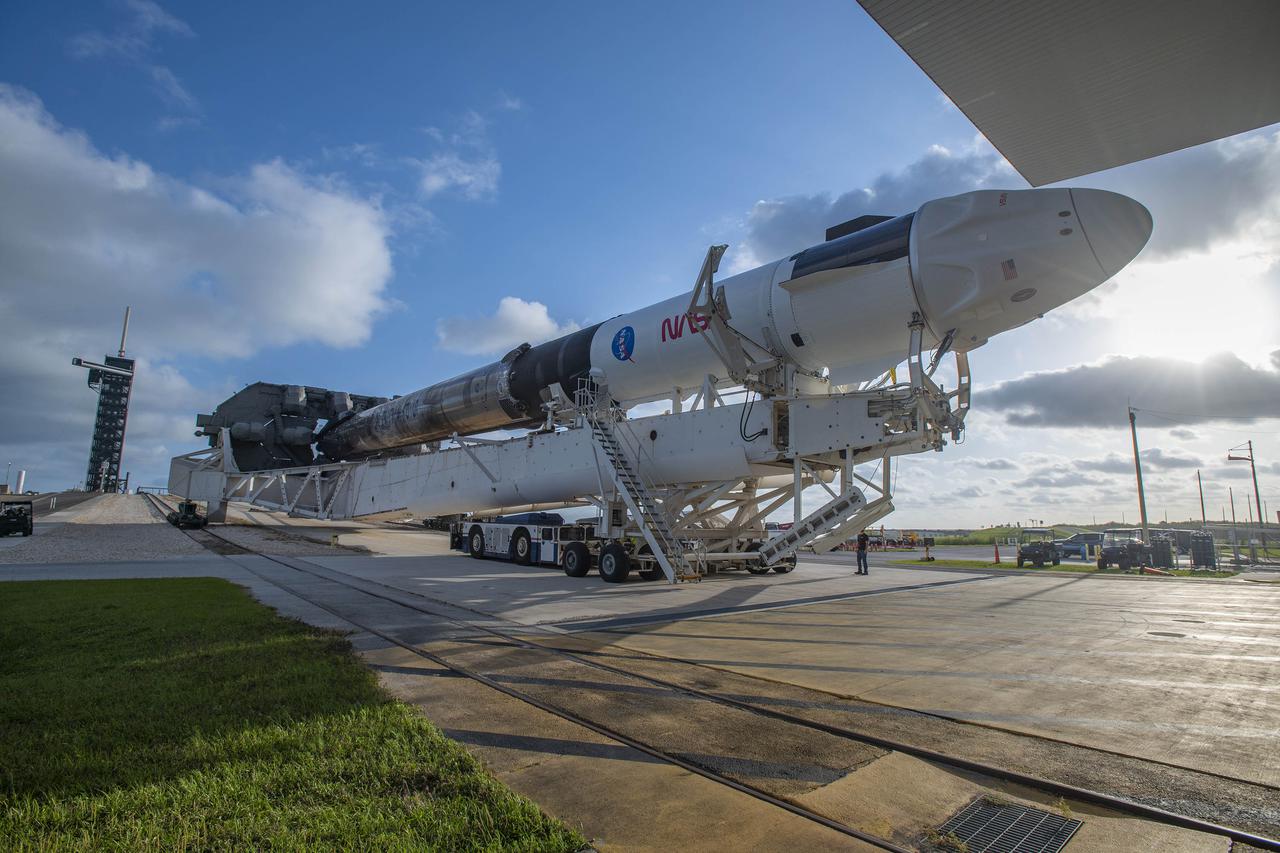
SpaceX’s Crew Dragon – named Freedom by the Crew-4 astronauts – atop the company’s Falcon 9 rocket, leaves the SpaceX integration hangar adjacent to NASA Kennedy Space Center’s Launch Complex 39A for rollout to the launch pad on April 19, 2022. NASA astronauts Kjell Lindgren, Bob Hines, and Jessica Watkins, and ESA (European Space Agency) astronaut Samantha Cristoforetti, who arrived at Kennedy one day ago, will fly to the International Space Station on NASA’s SpaceX Crew-4 mission. Liftoff is targeted for Saturday, April 23, at 5:26 a.m. EDT.
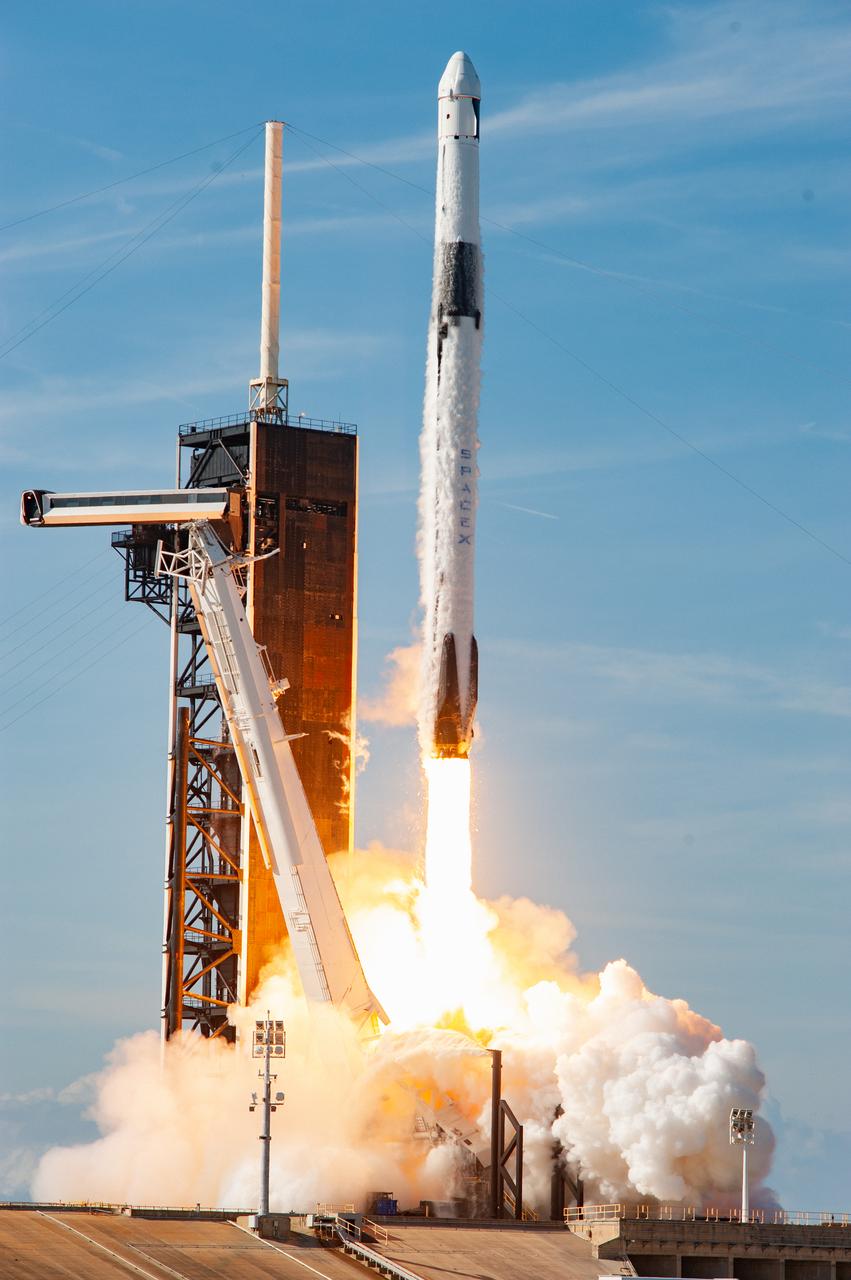
The SpaceX Falcon 9 rocket carrying the Dragon cargo spacecraft lifts off from Launch Complex 39A at NASA’s Kennedy Space Center in Florida on Nov. 26, 2022, on the company’s 26th commercial resupply services mission for the agency to the International Space Station. Liftoff was at 2:20 p.m. EST. Dragon will deliver more than 7,700 pounds of cargo, including a variety of NASA investigations, supplies, and equipment to the crew aboard the space station, including the next pair of ISS Roll Out Solar Arrays (iROSAs). The spacecraft is expected to spend about a month attached to the orbiting outpost before it returns to Earth with research and return cargo, splashing down off the coast of Florida.
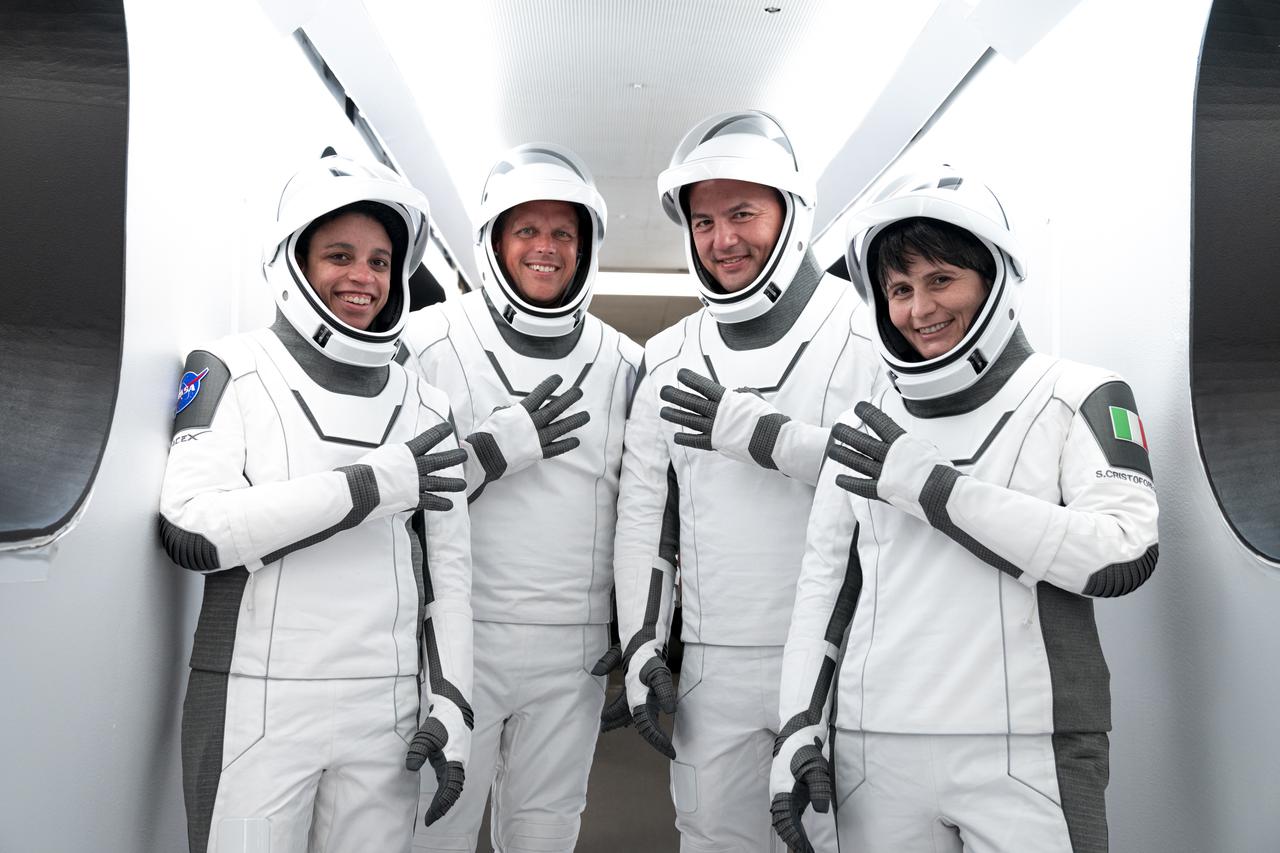
Crew-4 astronauts, from left, Jessica Watkins, mission specialist; Bob Hines, pilot; Kjell Lindgren, commander and Samantha Cristoforetti, mission specialist, pose outside SpaceX’s Crew Dragon, named Freedom by the Crew-4 crew, during a dry dress rehearsal at Kennedy Space Center in Florida on April 20, 2022. Crew-4 will launch the astronauts to the International Space Station as part of NASA’s Commercial Crew Program. Liftoff is targeted for 5:26 a.m. EDT on Saturday, April 23, 2022, from Launch Complex 39A at Kennedy.
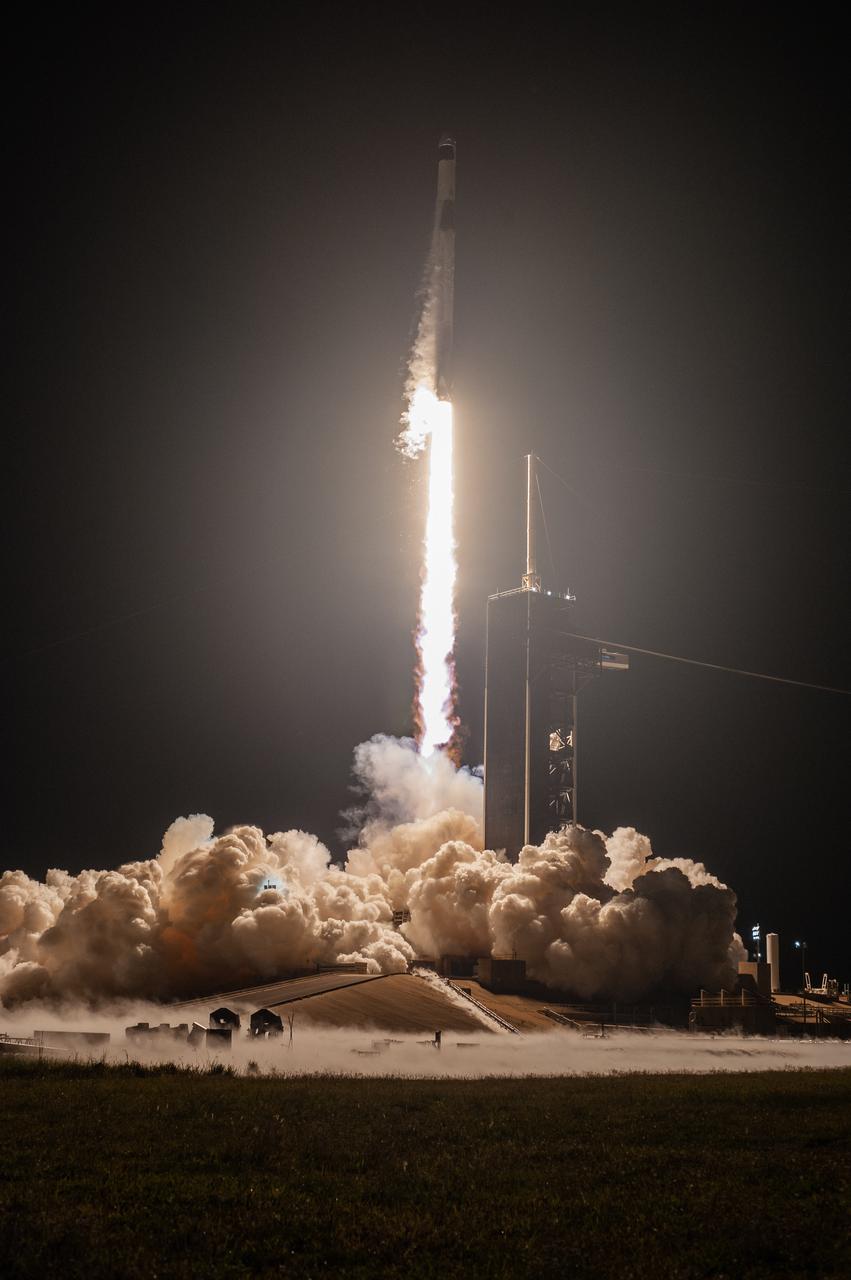
The SpaceX Falcon 9 rocket, with the company’s Crew Dragon atop, lifts off from Launch Pad 39A at Kennedy Space Center in Florida for NASA’s SpaceX Crew-4 mission on April 27, 2022, at 3:52 a.m. EDT. Aboard the Dragon are NASA astronauts Kjell Lindgren, Bob Hines, and Jessica Watkins, and ESA (European Space Agency) astronaut Samantha Cristoforetti. The spacecraft will carry the Crew-4 astronauts to the International Space Station as part of NASA’s Commercial Crew Program. The Dragon spacecraft, named Freedom by the mission’s crew, is scheduled to dock to the space station today at 8:15 p.m. EDT.
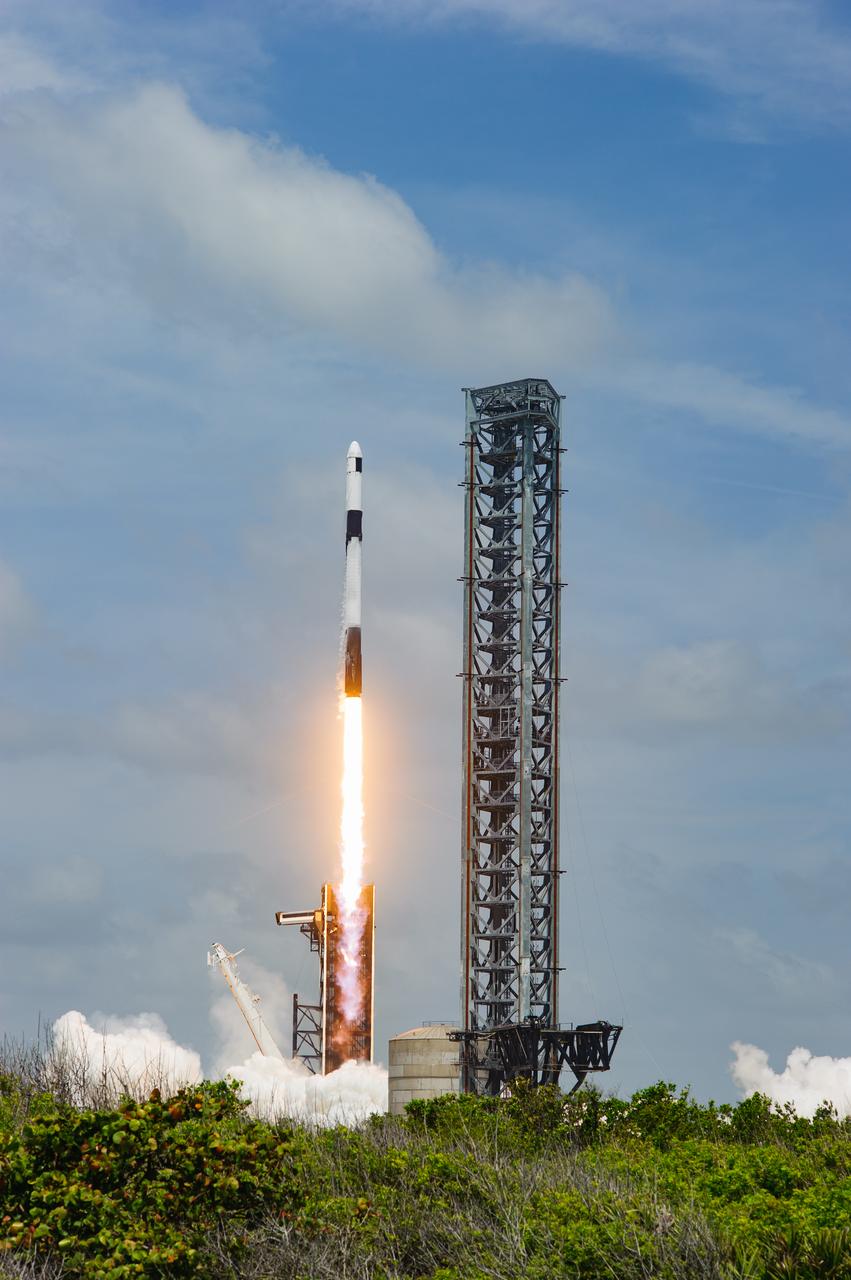
NASA and SpaceX launched the 28th commercial resupply mission of the Cargo Dragon from Launch Complex 39A at the agency's Kennedy Space Center in Florida. Liftoff occurred at 11:47 a.m. EDT, June 5, 2023. SpaceX's Dragon will deliver new science investigations, food, supplies, and equipment to the International Space Station for the crew, including the next pair of IROSAs (International Space Station Roll Out Solar Arrays). These solar panels, which roll out using stored kinetic energy, will expand the energy-production capabilities of the space station. This will be the third set launching in the SpaceX Dragon's trunk, and once installed, will help provide a 20% to 30% increase in power for space station research and operations.
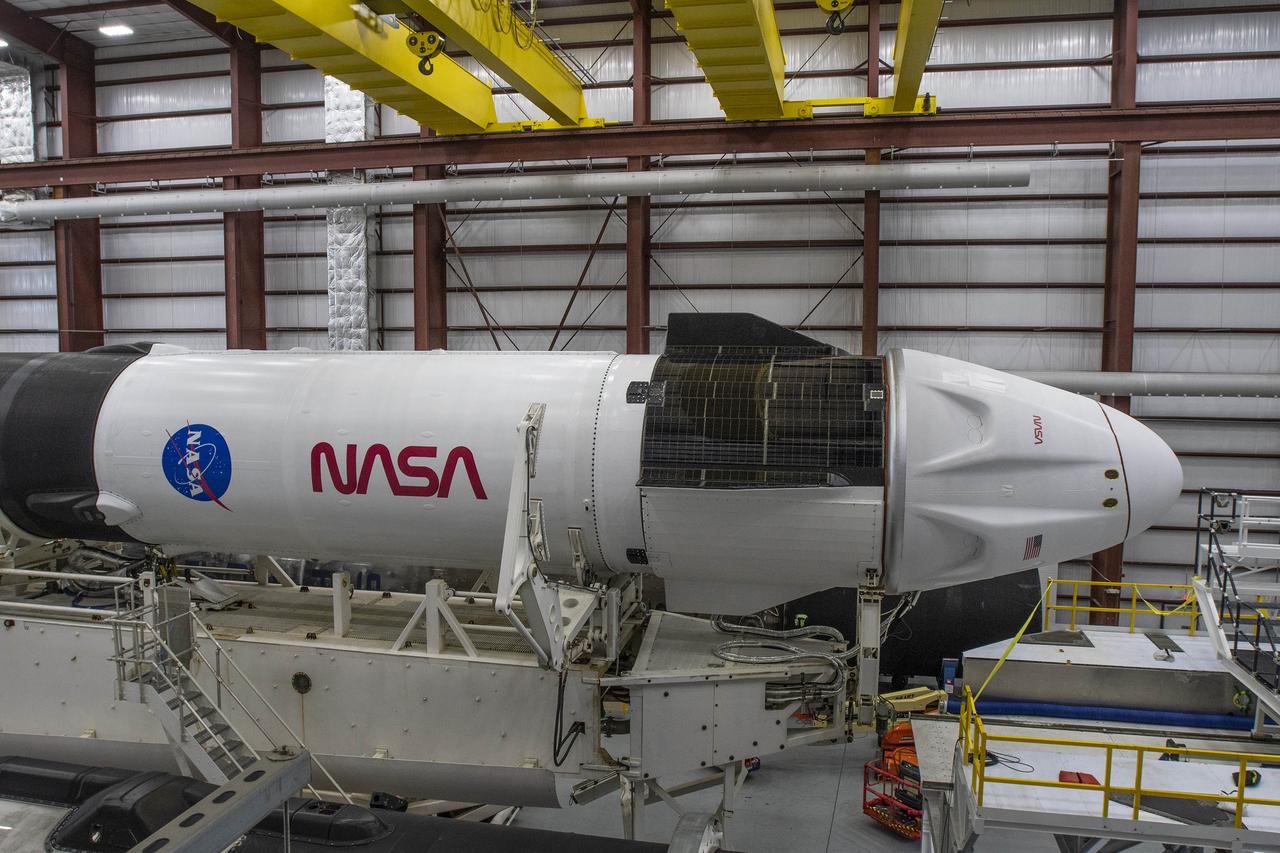
SpaceX’s Crew Dragon – named Freedom by the Crew-4 astronauts – atop the company’s Falcon 9 rocket, is shown inside the SpaceX integration hangar adjacent to NASA Kennedy Space Center’s Launch Complex 39A on April 19, 2022, just before rollout to the launch pad. NASA astronauts Kjell Lindgren, Bob Hines, and Jessica Watkins, and ESA (European Space Agency) astronaut Samantha Cristoforetti, who arrived at Kennedy one day ago, will fly to the International Space Station on NASA’s SpaceX Crew-4 mission. Liftoff is targeted for Saturday, April 23, at 5:26 a.m. EDT.
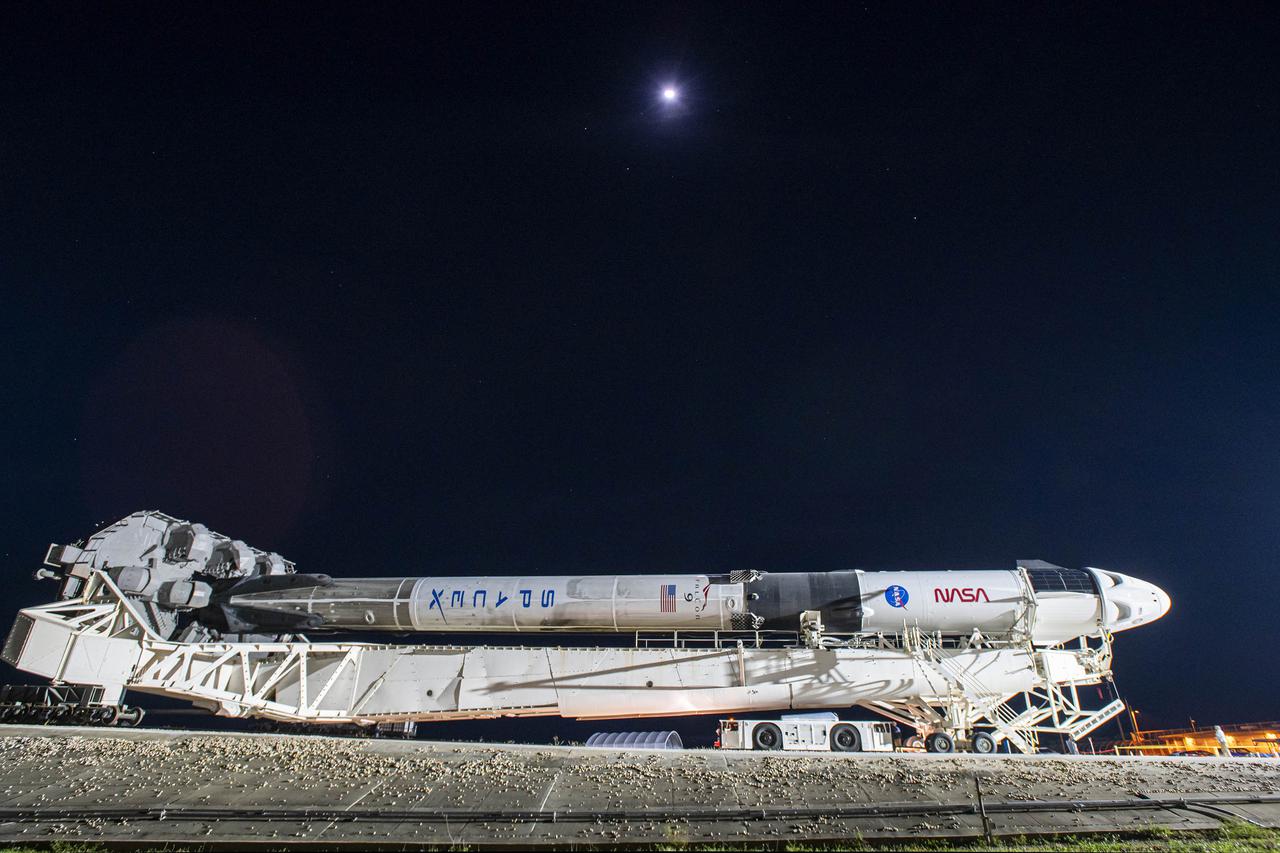
The SpaceX Falcon 9 rocket with Crew Dragon rolls out to Launch Complex 39A at Kennedy Space Center in Florida in the early morning hours of Oct. 27, 2021 for NASA’s SpaceX Crew-3 mission. NASA astronauts Raja Chari, Tom Marshburn and Kayla Barron, along with Matthias Maurer, European Space Agency astronaut, will launch aboard the Crew Dragon on the Falcon 9 rocket on Oct. 31. Launch is targeted for 2:21 a.m. from Pad 39A. Crew-3 is the third crew rotation flight for the agency’s Commercial Crew Program, and the first flight of a new Crew Dragon spacecraft.
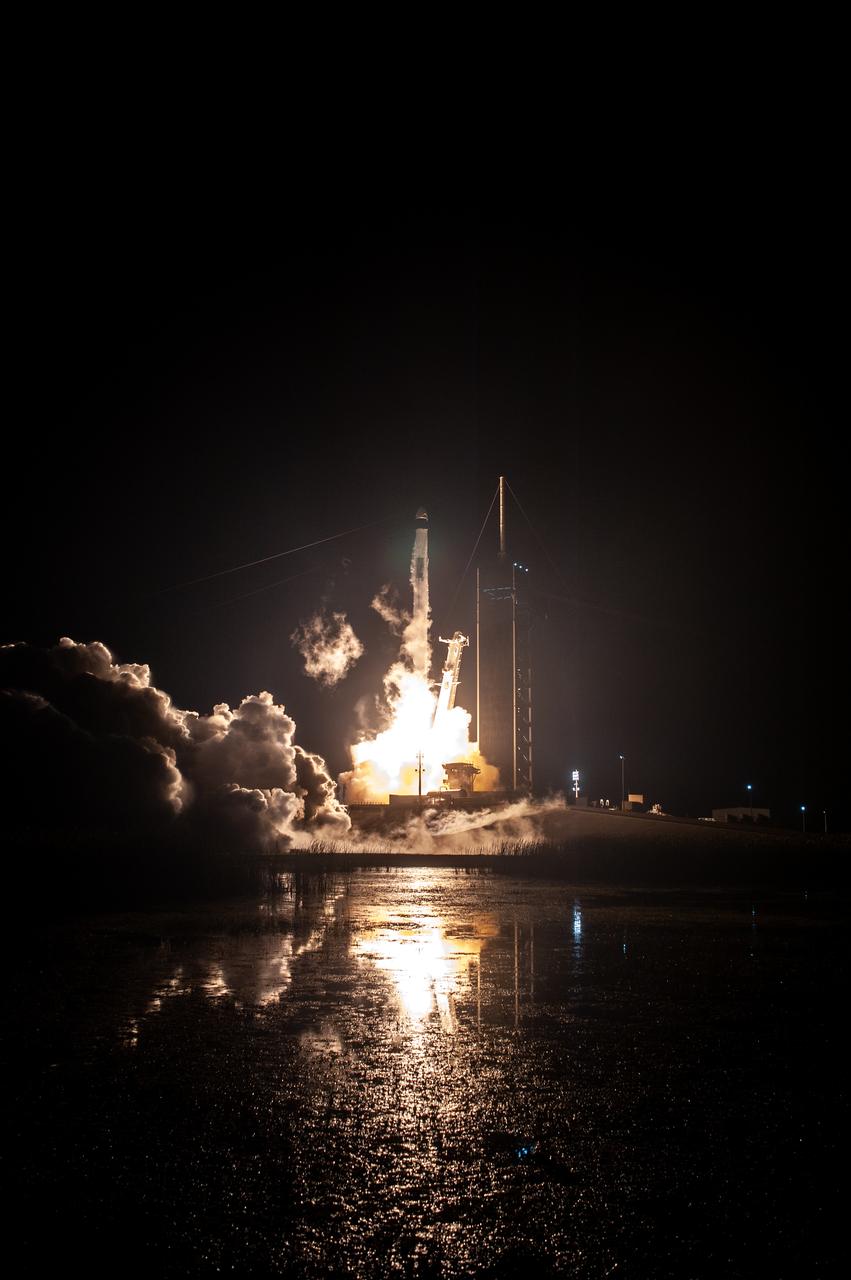
A SpaceX Falcon 9 rocket lifts off at 7:27 p.m. EST from Launch Complex 39A at NASA’s Kennedy Space Center in Florida on Nov. 15, 2020, carrying the company’s Crew Dragon Resilience capsule. Onboard the capsule are NASA’s SpaceX Crew-1 NASA astronauts, Michael Hopkins, spacecraft commander; Victor Glover, pilot; Shannon Walker, mission specialist; and Japan Aerospace Exploration Agency astronaut Soichi Noguchi, mission specialist. Crew-1 is the first regular crew mission of a U.S. commercial spacecraft with astronauts to the International Space Station as part of NASA’s Commercial Crew Program. The Crew Dragon will dock with the space station and the crew will remain on the orbiting laboratory for a six-month science mission.
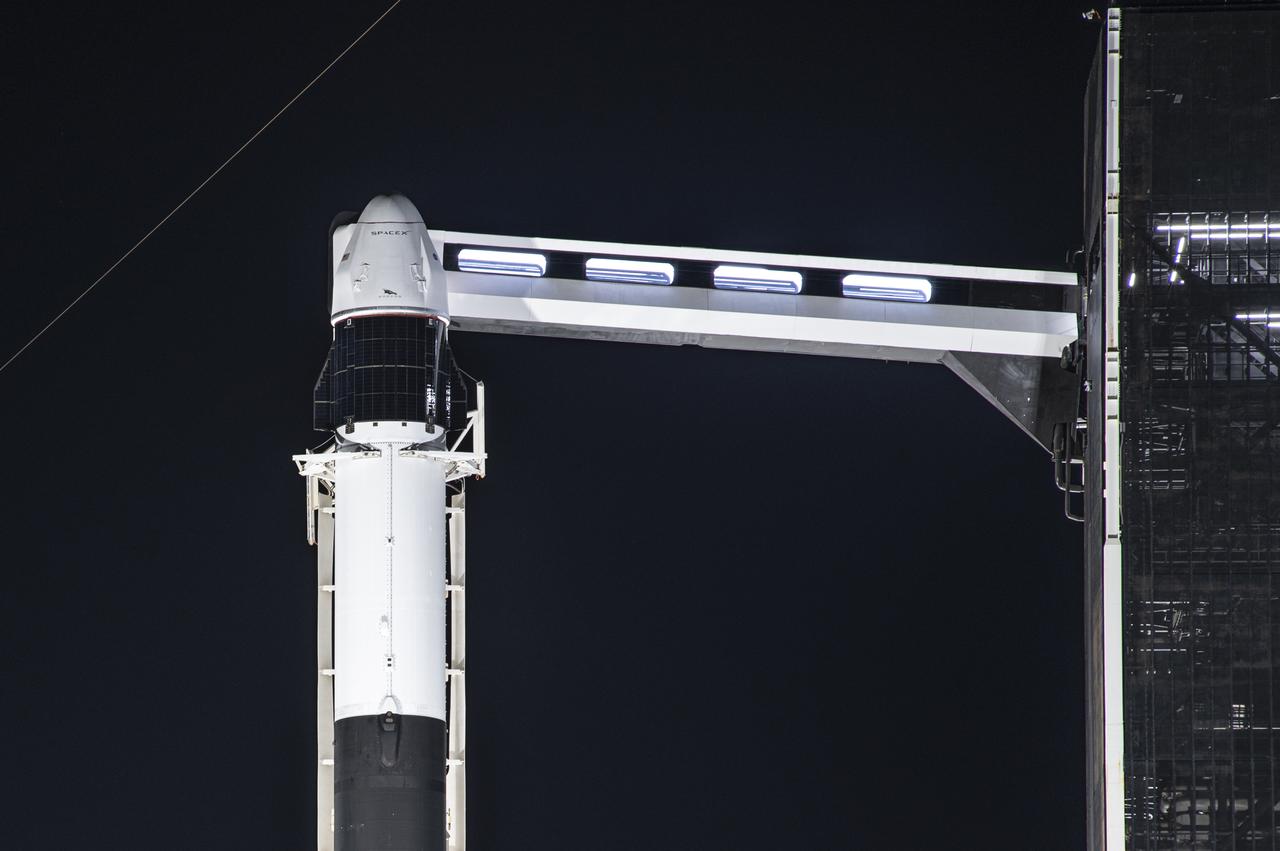
A SpaceX Falcon 9 rocket, topped with the company’s upgraded version of the Dragon spacecraft, stands vertical at NASA Kennedy Space Center’s Launch Complex 39A in Florida on Wednesday, Dec. 2, 2020. The first mission for SpaceX under NASA’s second Commercial Resupply Services contract, CRS-21 is scheduled to lift off from Launch Complex 39A on Saturday, Dec. 5, at 11:39 a.m. EST. The mission will deliver critical supplies and equipment to the International Space Station.
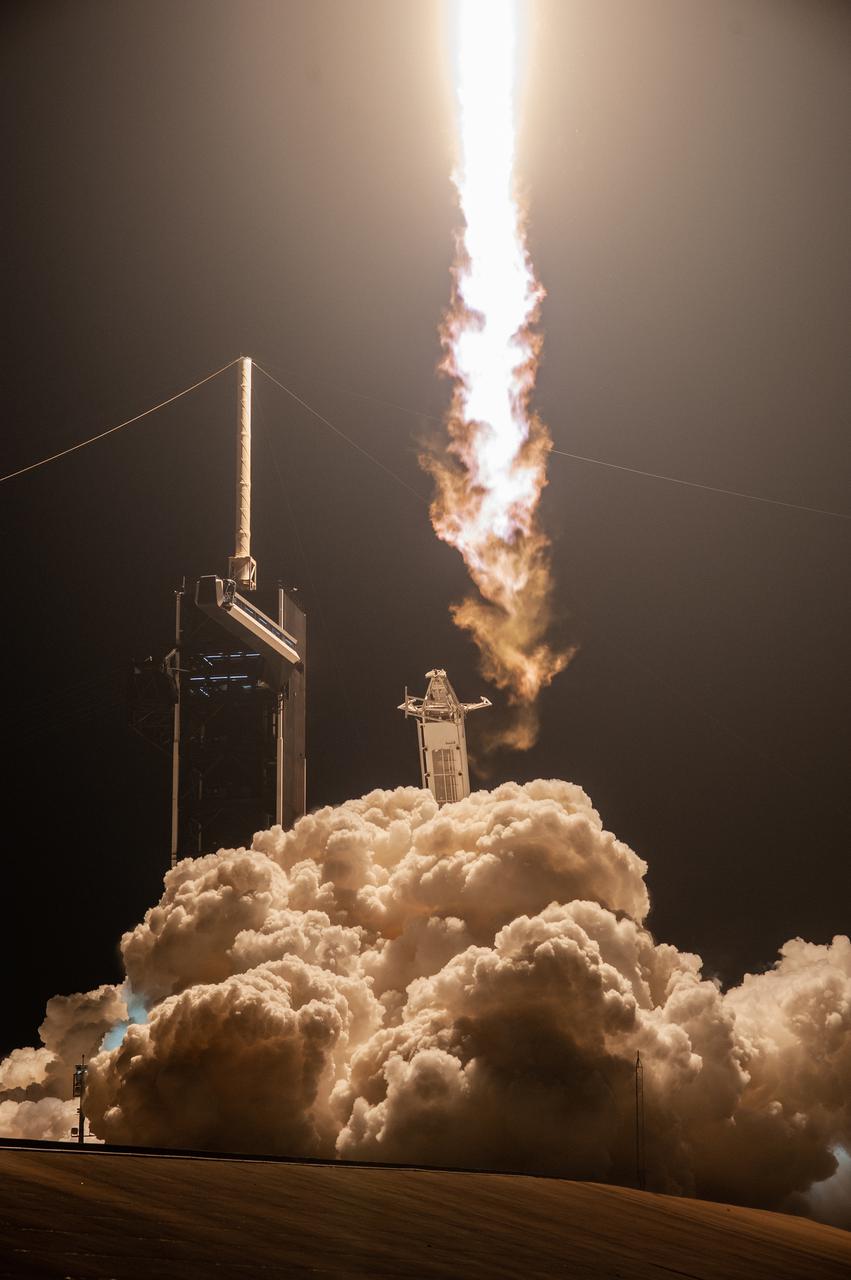
The SpaceX Falcon 9 rocket, with the company’s Crew Dragon atop, lifts off from Launch Pad 39A at Kennedy Space Center in Florida for NASA’s SpaceX Crew-4 mission on April 27, 2022, at 3:52 a.m. EDT. Aboard the Dragon are NASA astronauts Kjell Lindgren, Bob Hines, and Jessica Watkins, and ESA (European Space Agency) astronaut Samantha Cristoforetti. The spacecraft will carry the Crew-4 astronauts to the International Space Station as part of NASA’s Commercial Crew Program. The Dragon spacecraft, named Freedom by the mission’s crew, is scheduled to dock to the space station today at 8:15 p.m. EDT.
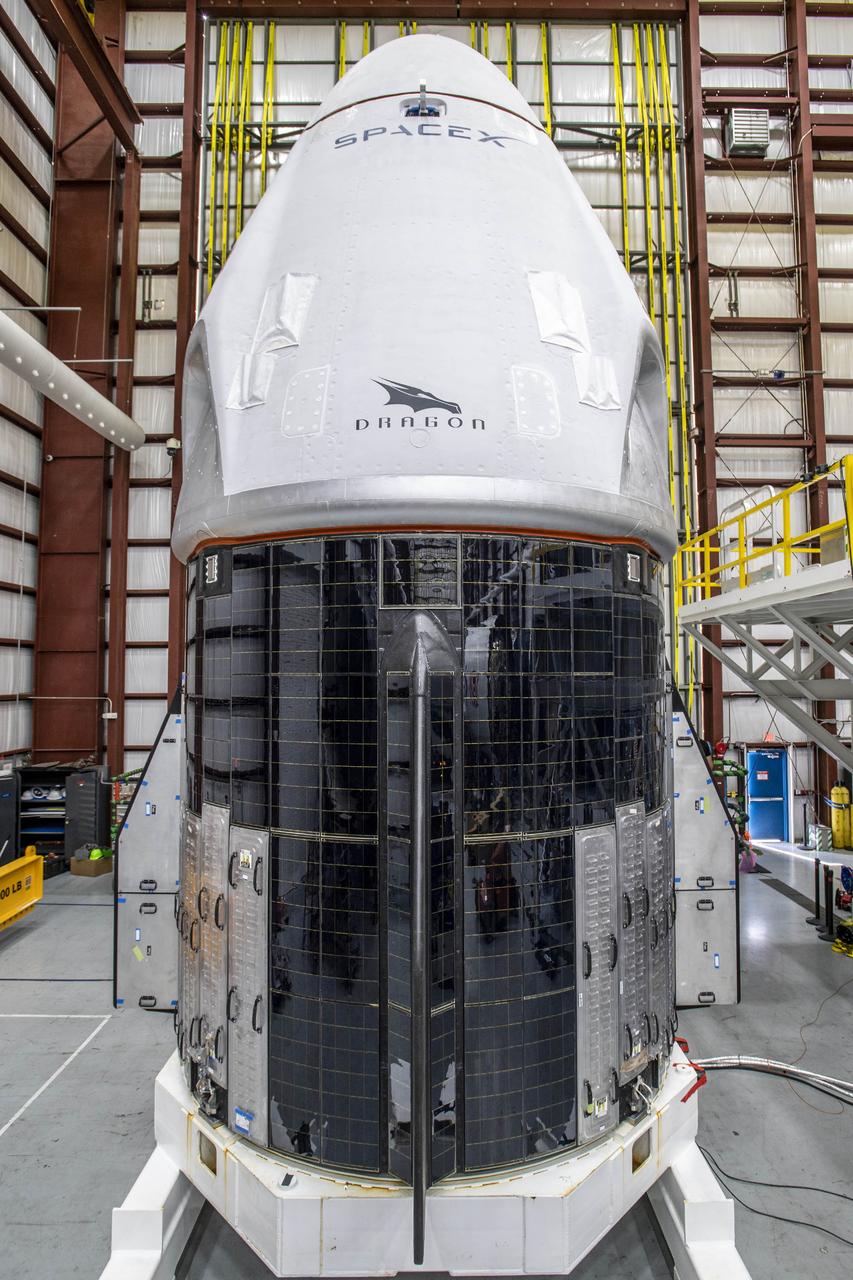
The SpaceX Crew Dragon spacecraft for NASA’s SpaceX Crew-1 mission arrived at Kennedy Space Center’s Launch Complex 39A on Thursday, Nov. 5, after making the trek from its processing facility at nearby Cape Canaveral Air Force Station in Florida. Crew Dragon will launch atop a SpaceX Falcon 9 rocket. The Crew-1 flight will carry Crew Dragon Commander Michael Hopkins, Pilot Victor Glover, and Mission Specialist Shannon Walker, all of NASA, along with Japan Aerospace Exploration Agency (JAXA) Mission Specialist Soichi Noguchi to the space station for a six-month science mission.
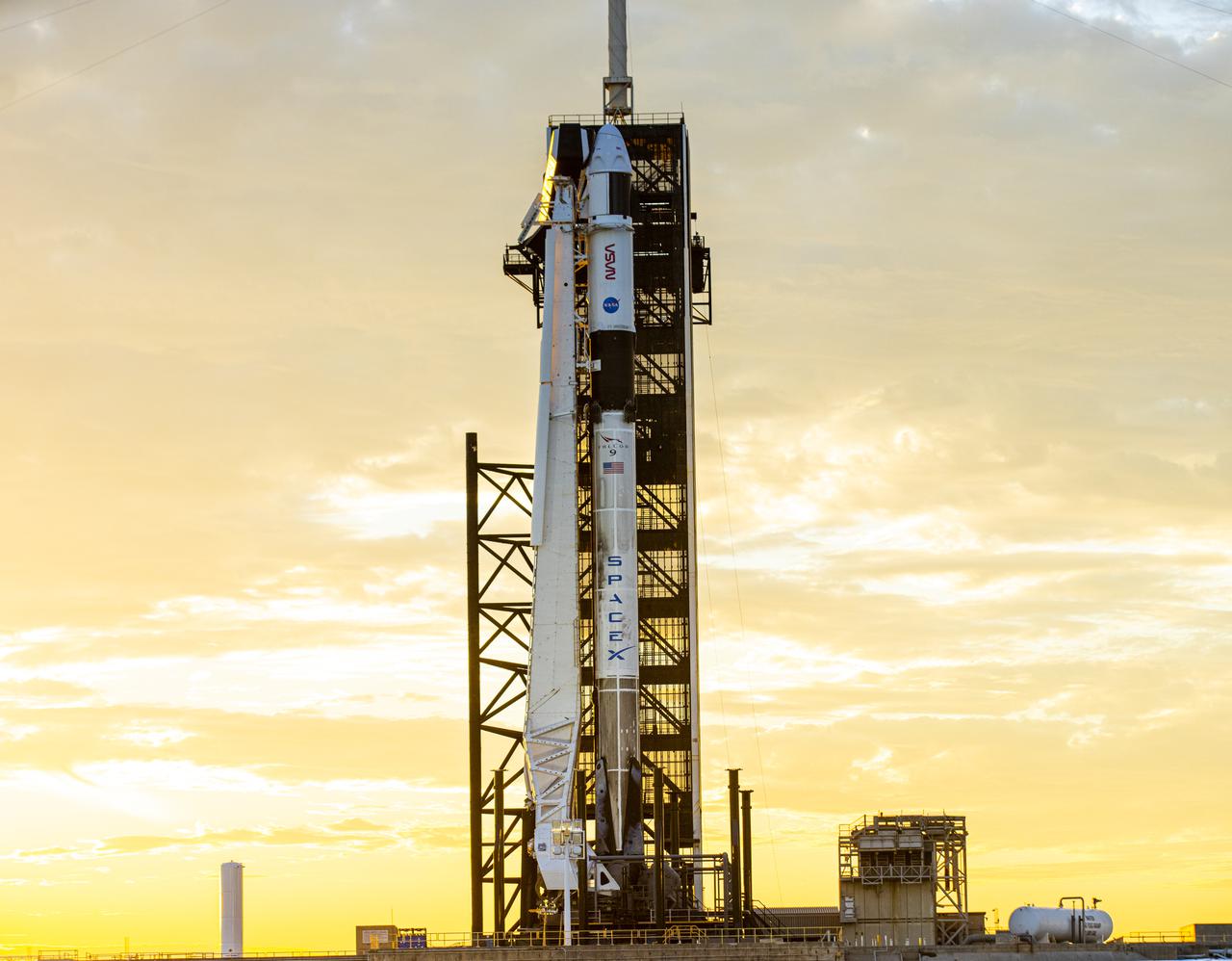
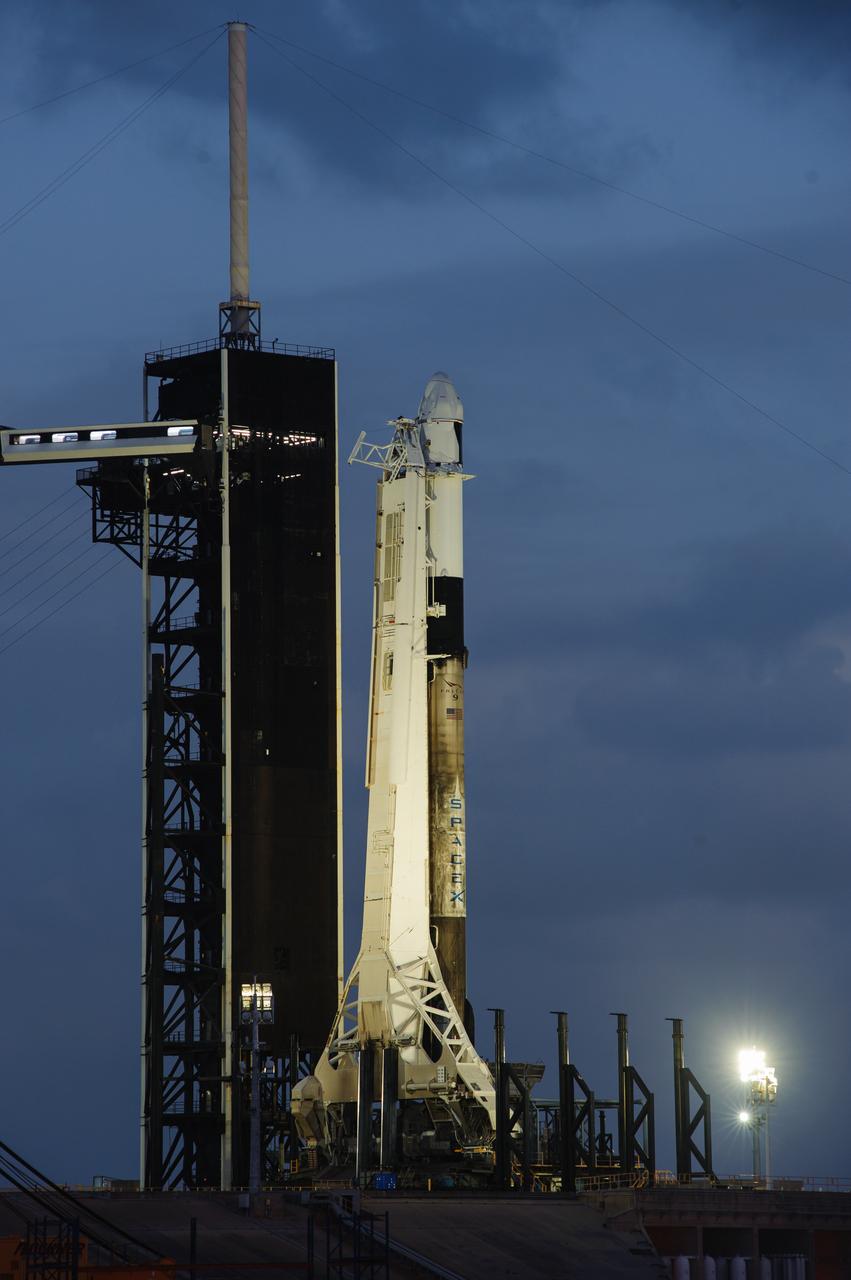
The SpaceX Falcon 9 rocket is vertical with the Crew Dragon atop for the Crew-3 mission at Launch Pad 39A at NASA’s Kennedy Space Center in Florida in this sunset view on Oct. 27, 2021. A four-person crew will launch aboard the Crew Dragon atop the Falcon 9 on Oct. 31 to the International Space Station. Launch is targeted for 2:21 a.m. EDT from Pad 39A. Crew 3 is the third crew rotation flight to the space station for NASA’s Commercial Crew Program, and the first flight of a new Crew Dragon spacecraft.
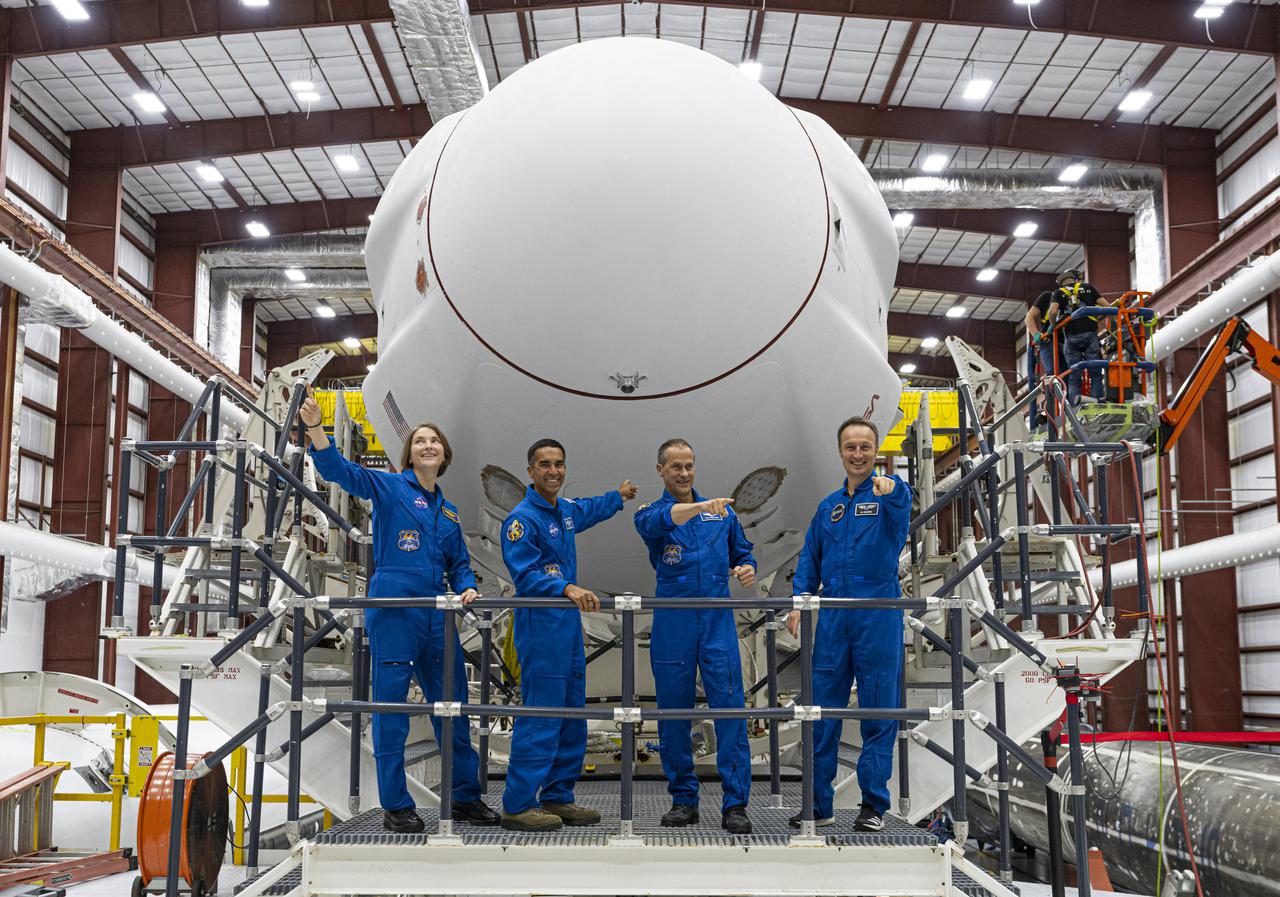
The SpaceX Crew-3 astronauts stand on the transporter in front of the Crew Dragon and Falcon 9 stack inside the SpaceX horizontal processing facility near Launch Complex 39A at Kennedy Space Center in Florida on Oct. 26, 2021. From left are NASA astronauts Kayla Barron, Raja Chari, and Tom Marshburn, along with Matthias Maurer with the European Space Agency. The four-person crew will launch aboard the Crew Dragon atop the Falcon 9 on Oct. 31 to the International Space Station. Launch is targeted for 2:21 a.m. EDT from Pad 39A. Crew-3 is the third crew rotation flight to the space station for NASA’s Commercial Crew Program, and the first flight of a new Crew Dragon spacecraft.
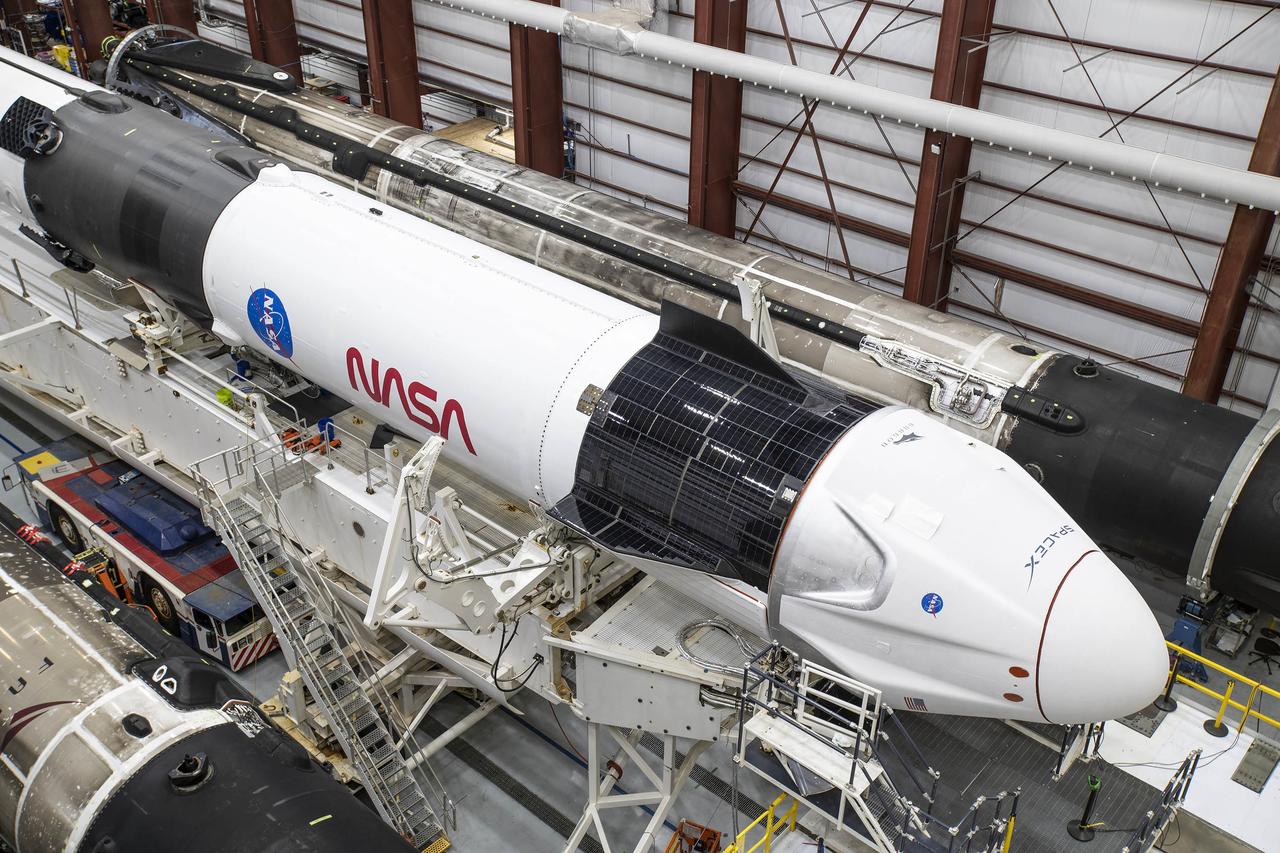
A SpaceX Falcon 9 rocket and Crew Dragon Resilience for NASA SpaceX’s Crew-1 mission are seen inside the SpaceX Hangar at NASA’s Kennedy Space Center in Florida on Nov. 9, 2020, before rollout to Launch Pad 39A. Crew-1 is the first regular crew mission of a U.S. commercial spacecraft with astronauts to the International Space Station as part of NASA’s Commercial Crew Program. The Crew Dragon capsule will launch atop a Falcon 9 rocket from Launch Complex 39A carrying NASA astronauts Michael Hopkins, Victor Glover, Shannon Walker and Japan Aerospace Exploration Agency (JAXA) astronaut Soichi Noguchi to the space station for a six-month science mission.
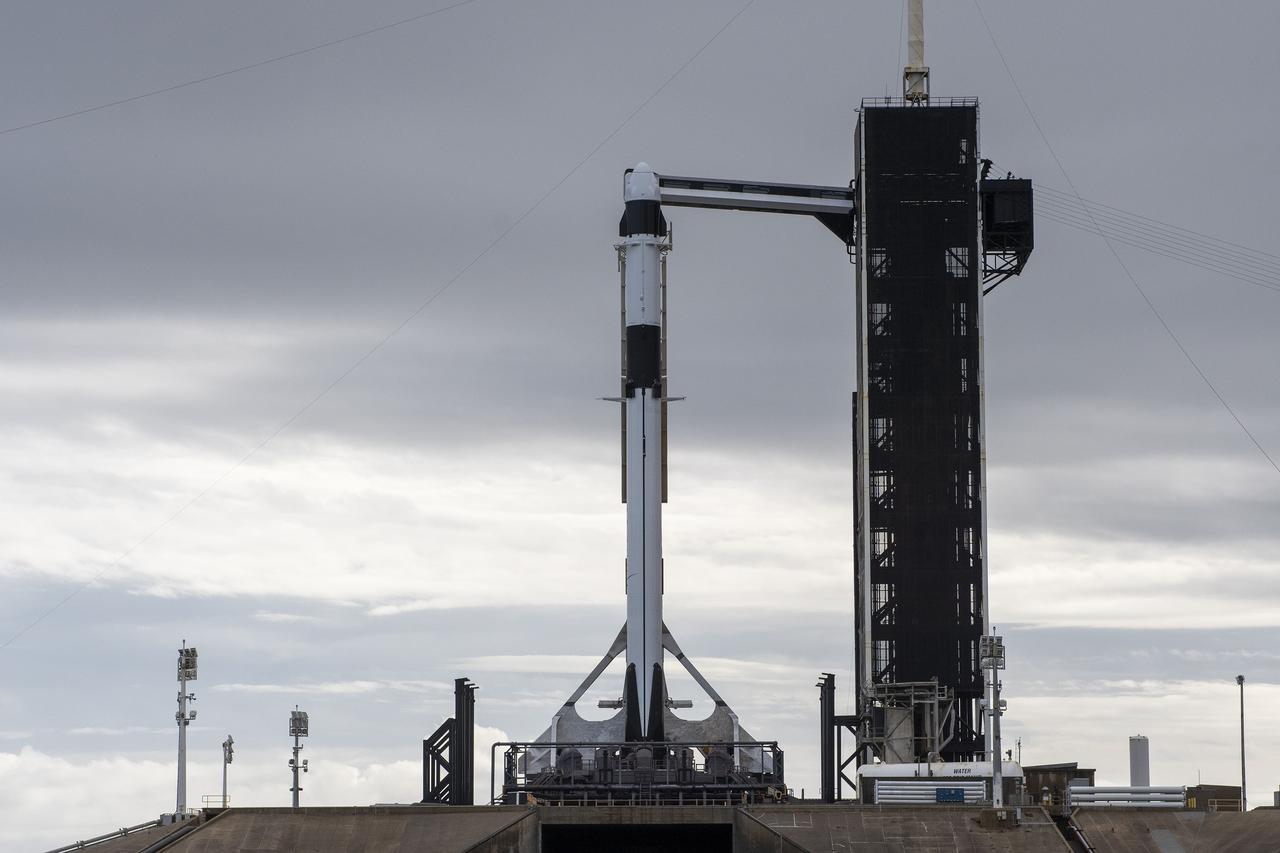
A SpaceX Falcon 9 rocket, with the company’s Dragon cargo spacecraft atop, is raised to a vertical position at NASA Kennedy Space Center’s Launch Complex 39A on Nov. 21, 2022, in preparation for the 26th commercial resupply services launch to the International Space Station. The mission will deliver new science investigations, supplies, and equipment to the crew aboard the space station, including the next pair of ISS Roll Out Solar Arrays (iROSAs). Liftoff is scheduled for 3:54 p.m. EST on Monday, Nov. 22, from Kennedy’s Launch Complex 39A.
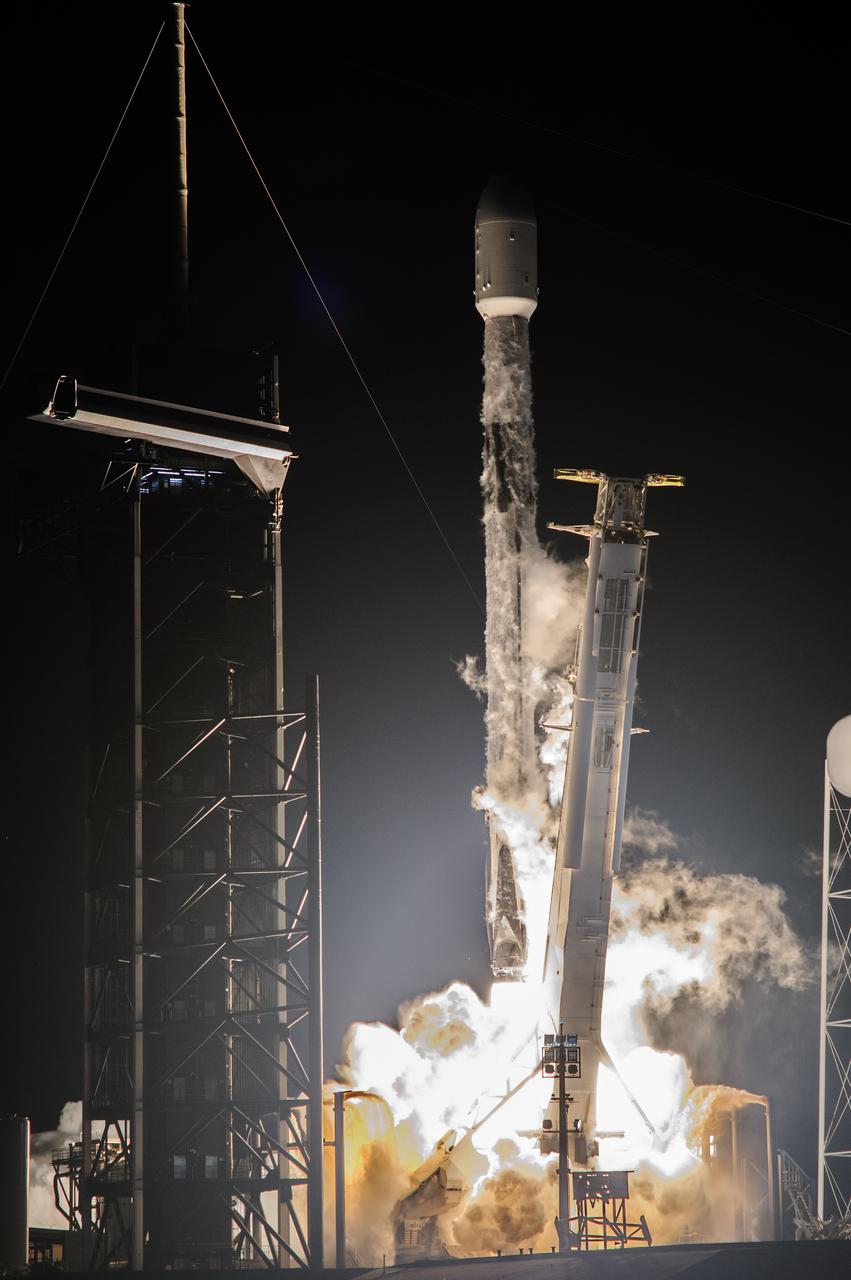
A SpaceX Falcon 9 rocket roars off the launch pad at Launch Complex 39A at NASA’s Kennedy Space Center in Florida at 1 a.m. EST on Thursday, Dec. 9, 2021, carrying NASA’s Imaging X-ray Polarimetry Explorer (IXPE) spacecraft. NASA’s Launch Services Program managed this launch. NASA’s Marshall Space Flight Center in Huntsville, Alabama, manages the IXPE mission. Ball Aerospace, headquartered in Broomfield, Colorado, manages spacecraft operations with support from the University of Colorado at Boulder. NASA’s Goddard Space Flight Center in Greenbelt, Maryland, manages the Explorers Program for the agency’s Science Mission Directorate in Washington. The IXPE spacecraft includes three space telescopes with sensitive detectors capable of measuring the polarization of cosmic X-rays, allowing scientists to answer fundamental questions about extremely complex environments in space where gravitational, electric, and magnetic fields are at their limits. The project is a collaboration between NASA and the Italian Space Agency.
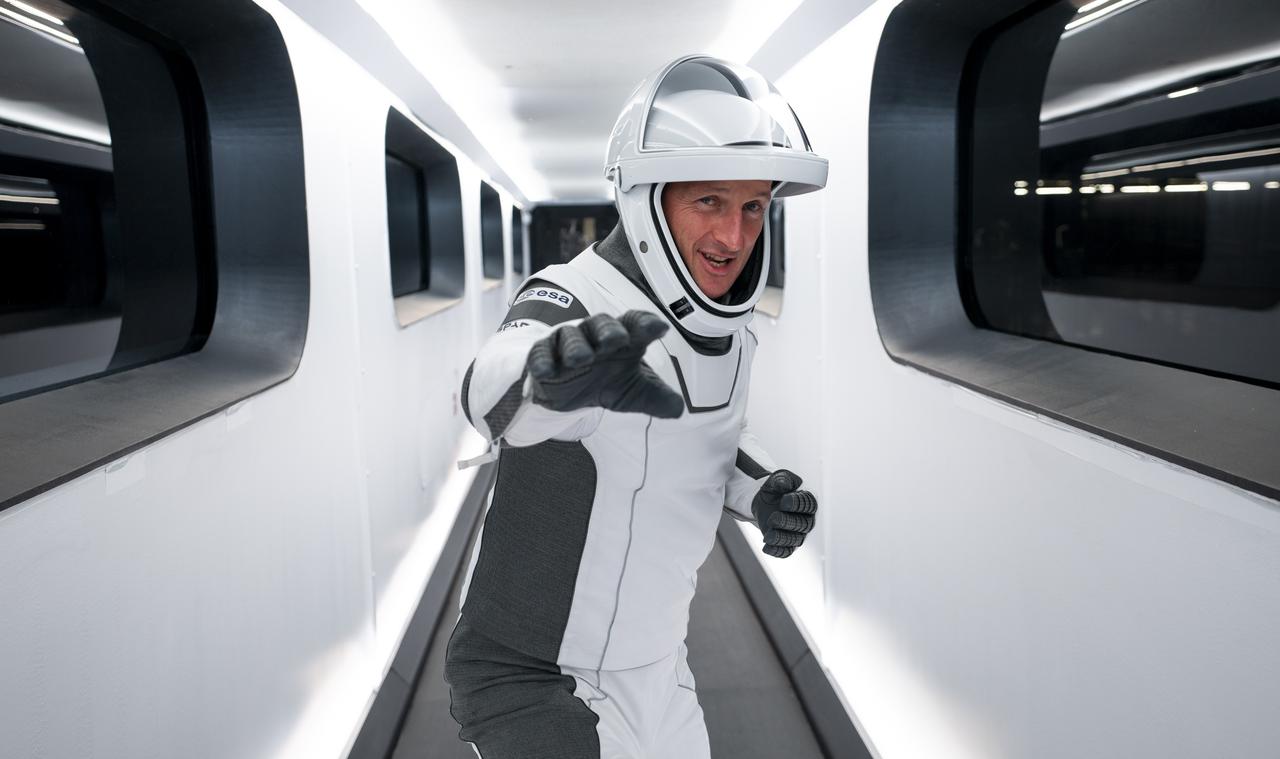
NASA’s SpaceX Crew-3 astronauts participate in a countdown dress rehearsal at the agency’s Kennedy Space Center in Florida on Oct. 28, 2021, to prepare for the upcoming Crew-3 launch. Matthias Maurer, with the European Space Agency, is inside the crew access arm leading to the company’s Crew Dragon spacecraft during the rehearsal. The four-person crew will launch aboard the Crew Dragon atop the Falcon 9 on Oct. 31 to the International Space Station. Launch is targeted for 2:21 a.m. EDT from Pad 39A. Crew-3 is the third crew rotation flight to the space station for NASA’s Commercial Crew Program, and the first flight of a new Crew Dragon spacecraft.
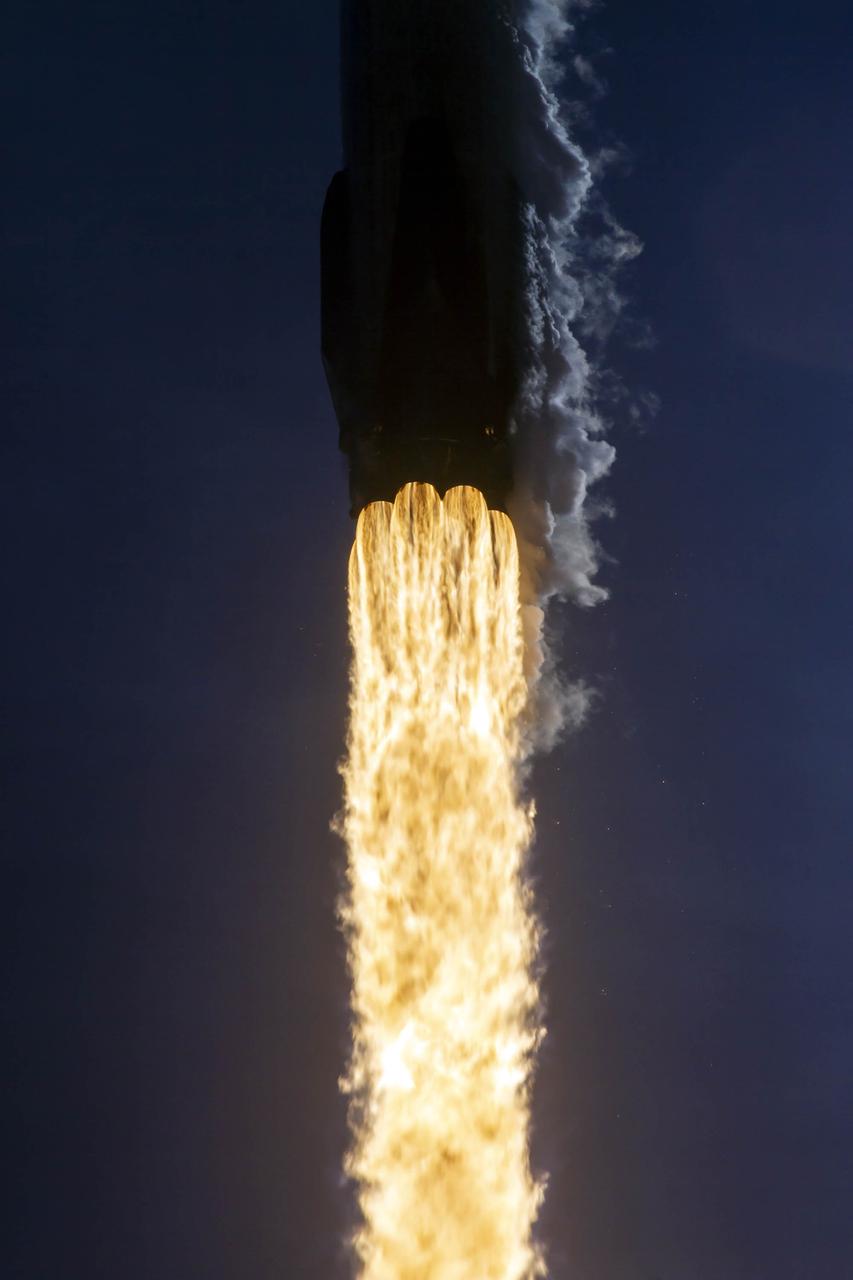
A SpaceX Falcon 9 rocket lifts off from Launch Complex 39A at Kennedy Space Center in Florida at 11:17 a.m. EST on Dec. 6, 2020, carrying the uncrewed cargo Dragon spacecraft on its journey to the International Space Station for NASA and SpaceX’s 21st Commercial Resupply Services (CRS-21) mission. Dragon will deliver more than 6,400 pounds of science investigations and cargo to the orbiting laboratory. The mission marks the first launch for SpaceX under NASA’s CRS-2 contract.
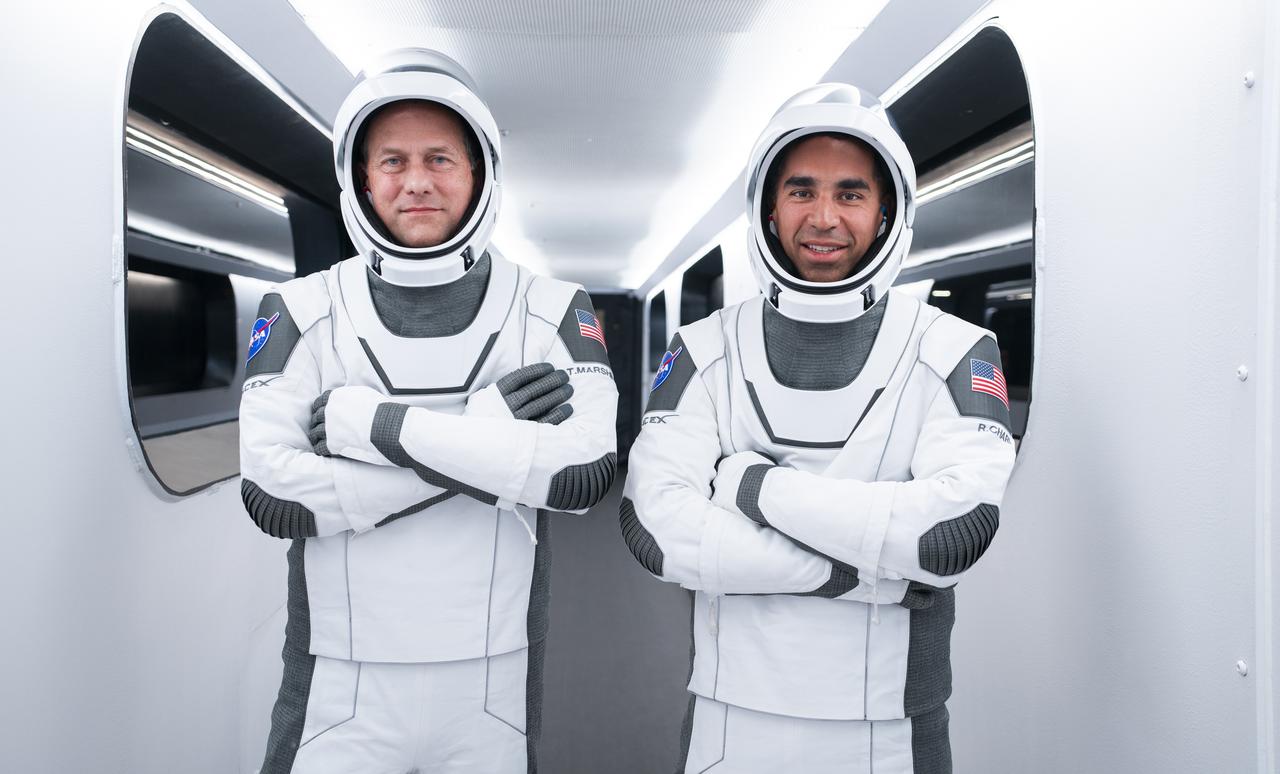
NASA’s SpaceX Crew-3 astronauts participate in a countdown dress rehearsal at the agency’s Kennedy Space Center in Florida on Oct. 28, 2021, to prepare for the upcoming Crew-3 launch. From left are NASA astronauts Tom Marshburn, pilot, and Raja Chari, Crew-3 commander. They are inside the crew access arm leading to the company’s Crew Dragon spacecraft during the rehearsal. The four-person crew will launch aboard the Crew Dragon atop the Falcon 9 on Oct. 31 to the International Space Station. Launch is targeted for 2:21 a.m. EDT from Pad 39A. Crew-3 is the third crew rotation flight to the space station for NASA’s Commercial Crew Program, and the first flight of a new Crew Dragon spacecraft.
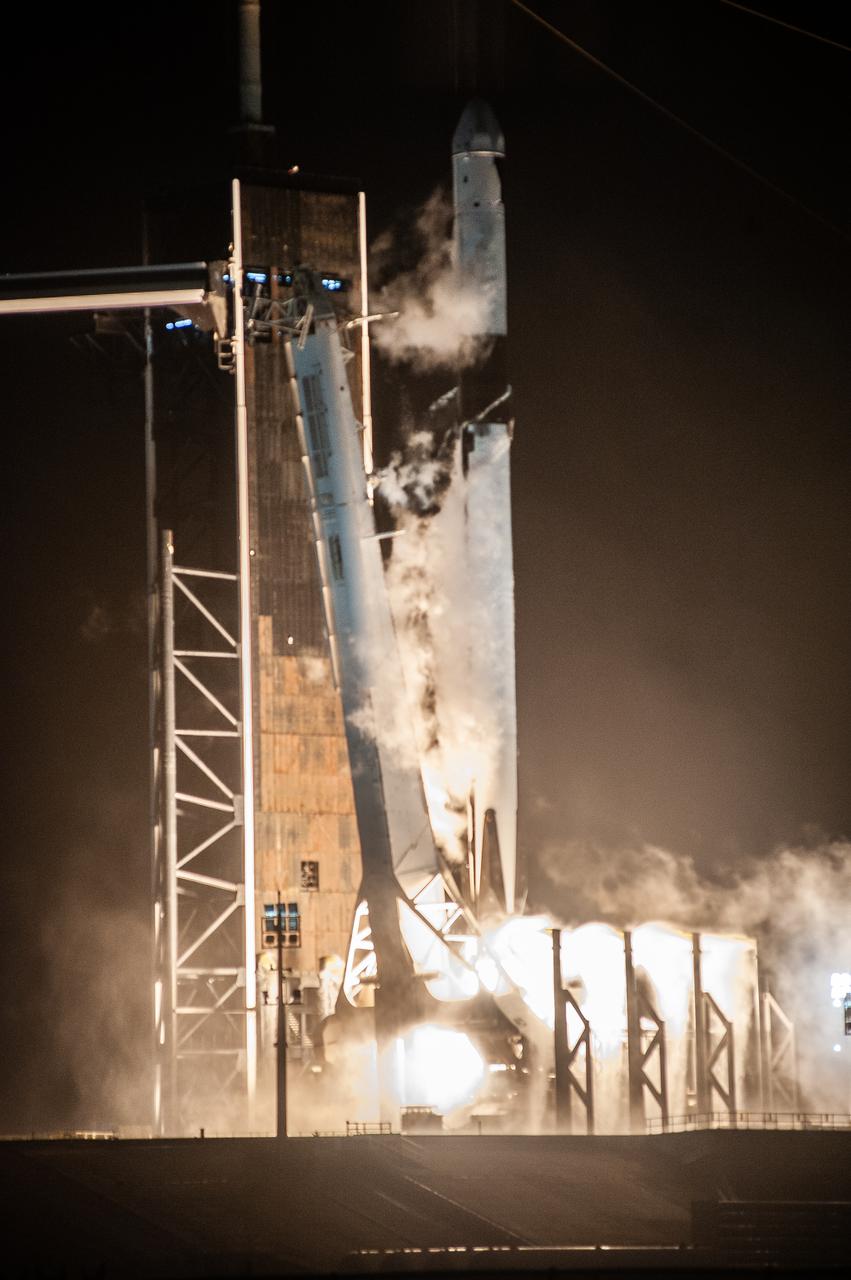
A SpaceX Falcon 9 rocket lifts off from Launch Complex 39A at Kennedy Space Center in Florida at 5:07 a.m. EST on Tuesday, Dec. 21, 2021, carrying the Dragon spacecraft on its journey to the International Space Station for SpaceX’s 24th commercial resupply services mission. Dragon will deliver new science investigations, supplies, and equipment to the crew on board the space station. Arrival to the orbiting laboratory is planned for Wednesday, Dec. 22.
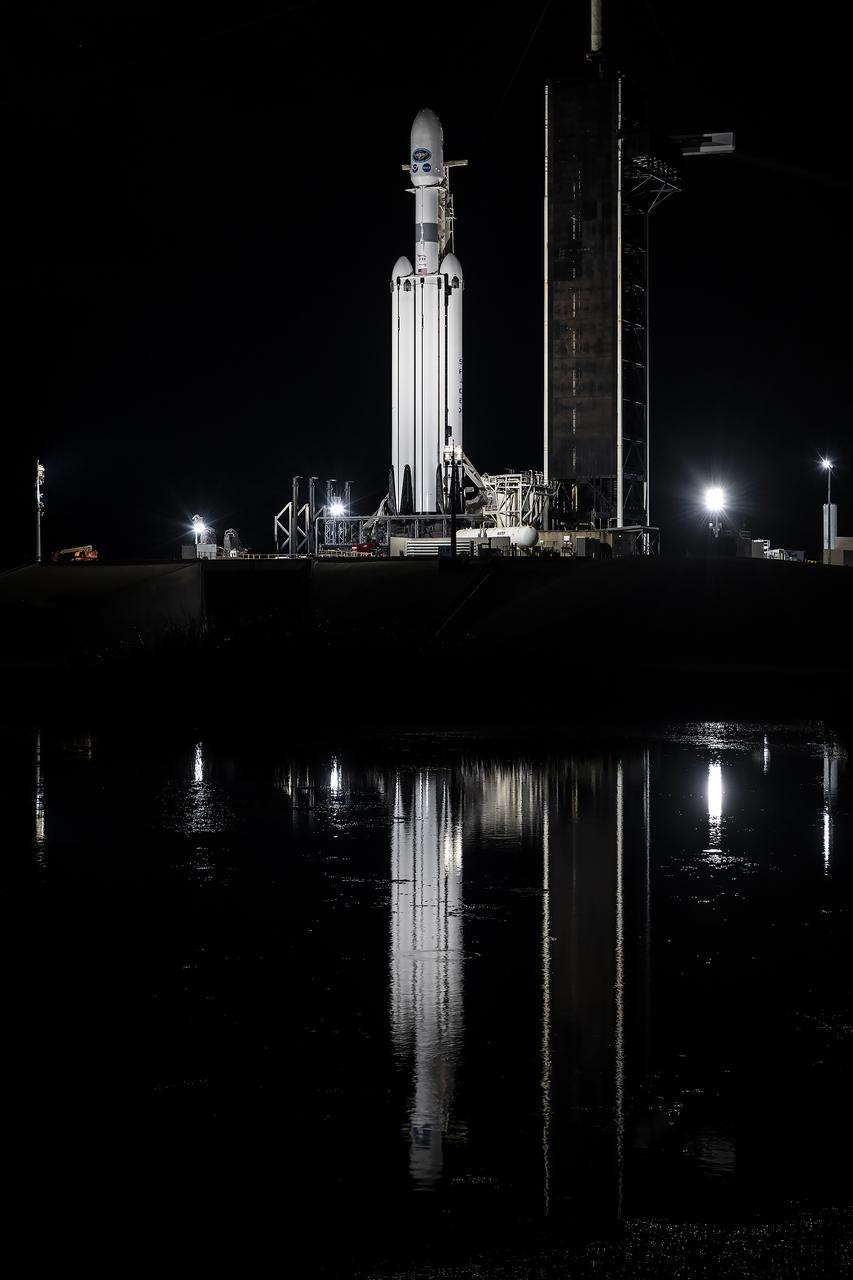
A SpaceX Falcon Heavy rocket carrying the National Oceanic and Atmospheric Administration (NOAA) GOES-U (Geostationary Operational Environmental Satellite U) stands vertical at Launch Complex 39A at NASA’s Kennedy Space Center in Florida on Monday, June 24, 2024. The GOES-U satellite is the final satellite in the GOES-R series, which serves a critical role in providing continuous coverage of the Western Hemisphere, including monitoring tropical systems in the eastern Pacific and Atlantic oceans. The two-hour launch window opens at 5:16 p.m. EDT. on Tuesday, June 25, 2024.
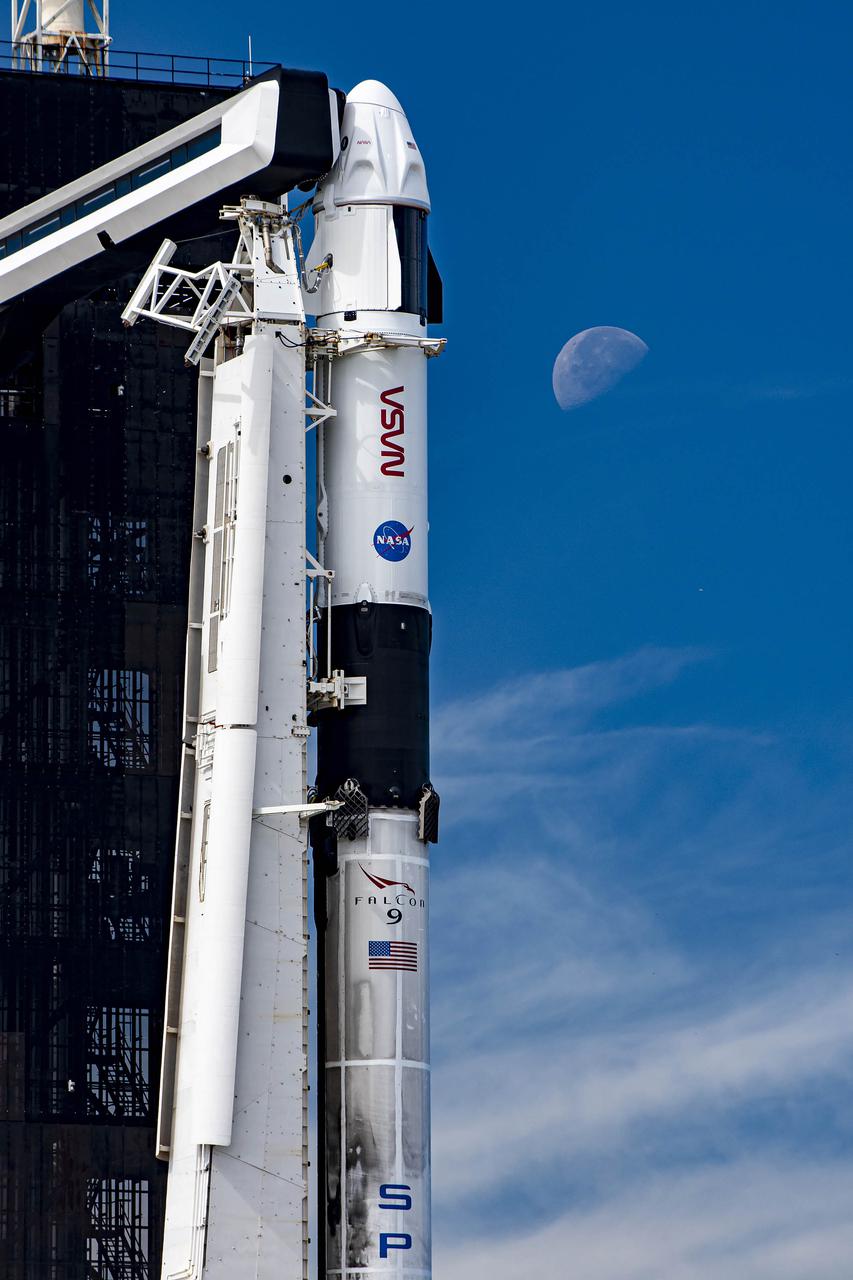
The SpaceX Falcon 9 rocket is vertical with the Crew Dragon atop for the Crew-3 mission at Launch Pad 39A at NASA’s Kennedy Space Center in Florida on Oct. 27, 2021. In view is the crew access arm. A four-person crew will launch aboard the Crew Dragon atop the Falcon 9 on Oct. 31 to the International Space Station. Launch is targeted for 2:21 a.m. EDT from Pad 39A. Crew 3 is the third crew rotation flight to the space station for NASA’s Commercial Crew Program, and the first flight of a new Crew Dragon spacecraft.
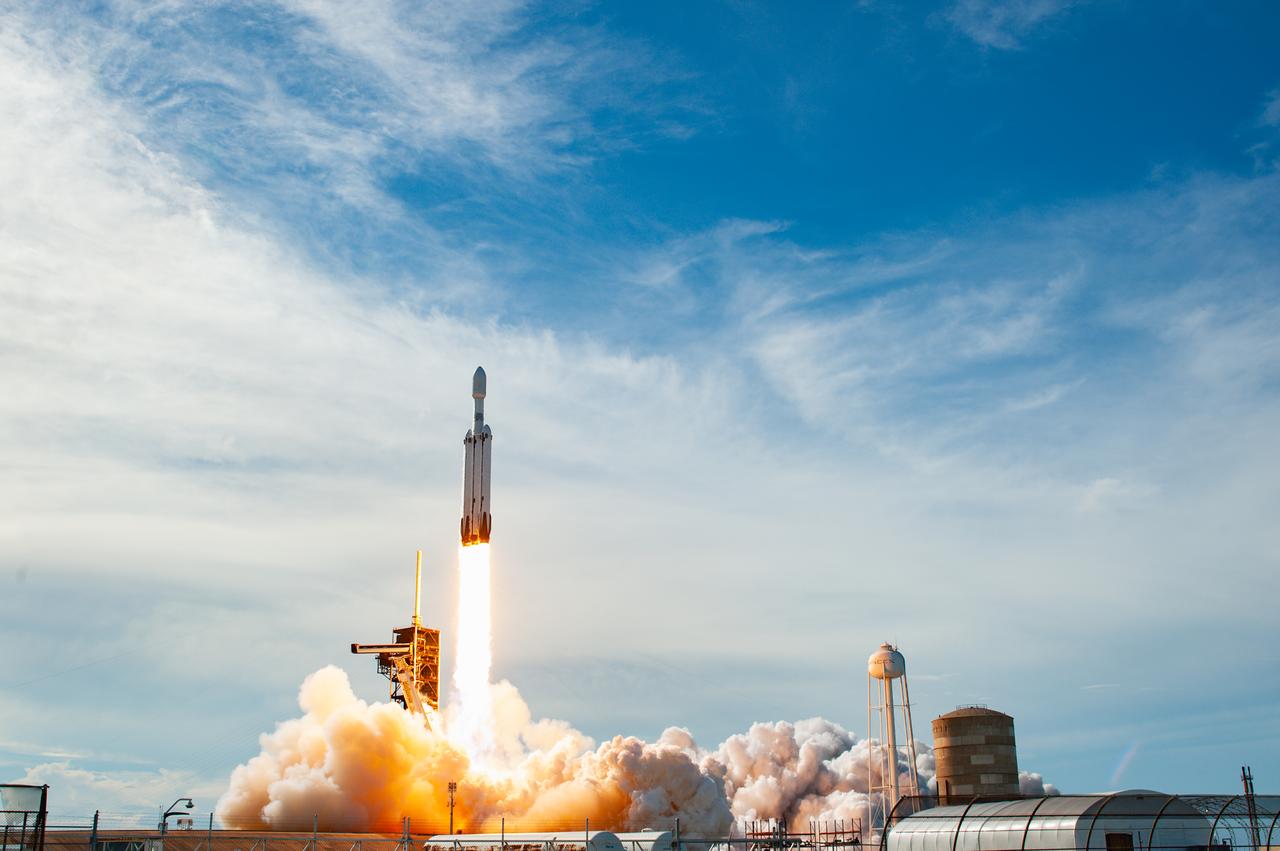
A SpaceX Falcon Heavy rocket carrying the National Oceanic and Atmospheric Administration (NOAA) GOES-U (Geostationary Operational Environmental Satellite U) lifts off from Launch Complex 39A at NASA’s Kennedy Space Center in Florida on Tuesday, June 25, 2024. The GOES-U satellite is the final satellite in the GOES-R series, which serves a critical role in providing continuous coverage of the Western Hemisphere, including monitoring tropical systems in the eastern Pacific and Atlantic oceans.
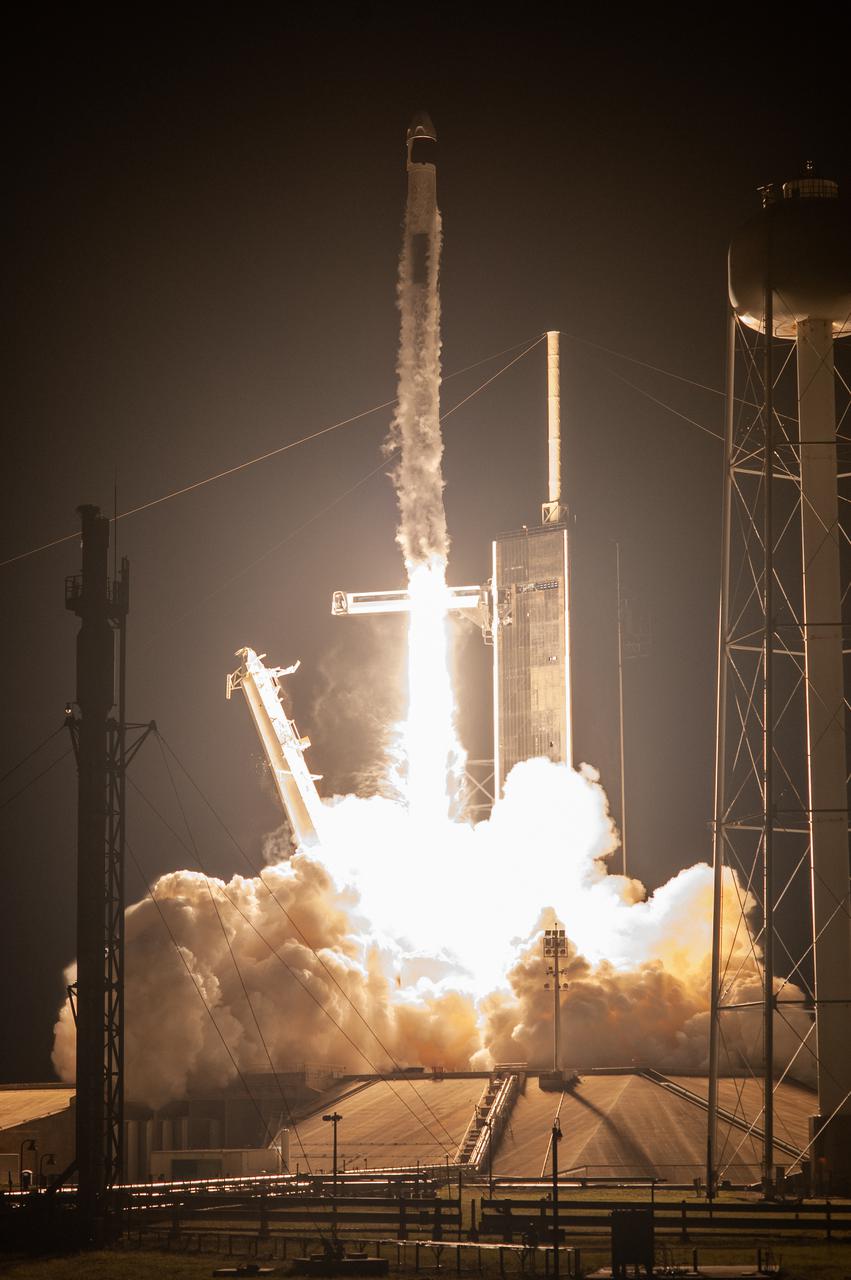
The SpaceX Falcon 9 rocket, with the company’s Crew Dragon atop, lifts off from Launch Pad 39A at Kennedy Space Center in Florida for NASA’s SpaceX Crew-4 mission on April 27, 2022, at 3:52 a.m. EDT. Aboard the Dragon are NASA astronauts Kjell Lindgren, Bob Hines, and Jessica Watkins, and ESA (European Space Agency) astronaut Samantha Cristoforetti. The spacecraft will carry the Crew-4 astronauts to the International Space Station as part of NASA’s Commercial Crew Program. The Dragon spacecraft, named Freedom by the mission’s crew, is scheduled to dock to the space station today at 8:15 p.m. EDT.
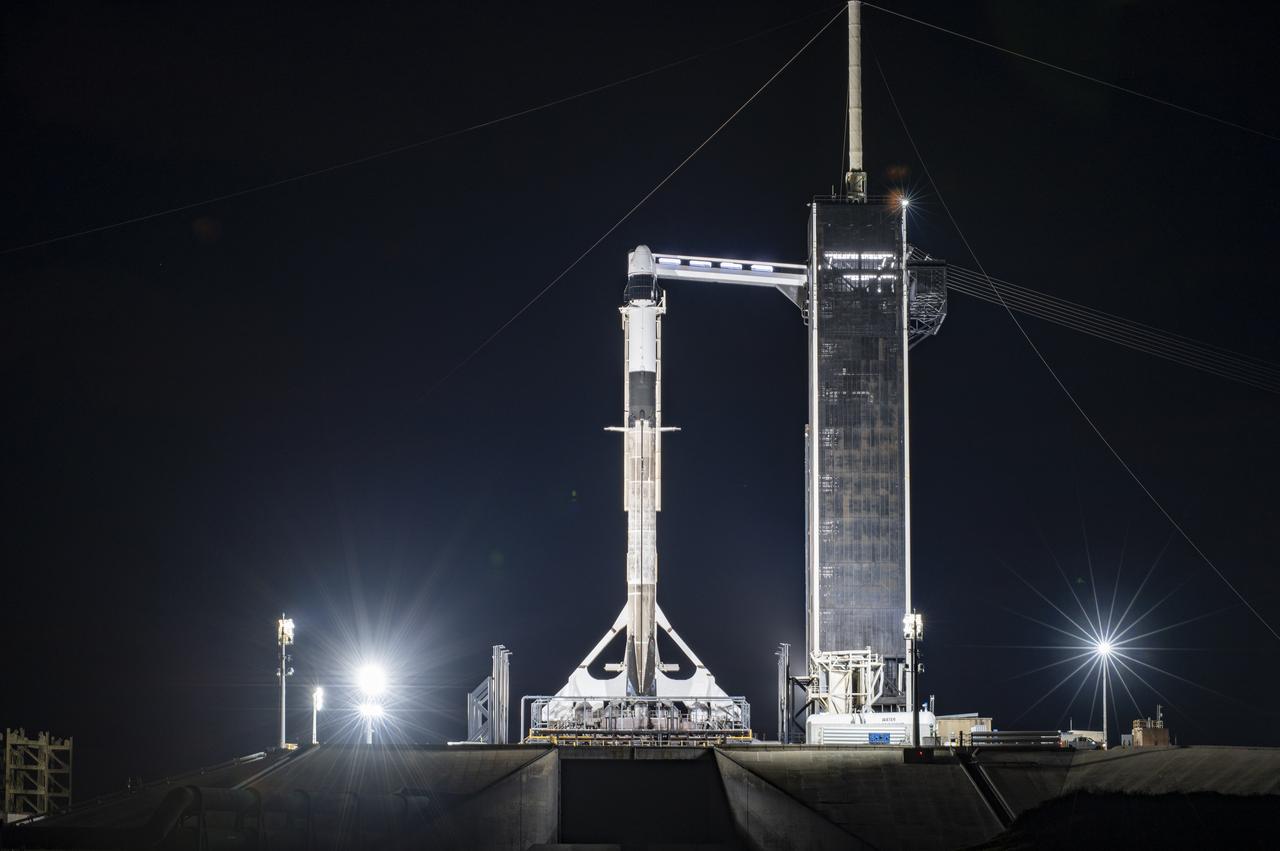
A SpaceX Falcon 9 rocket, topped with the company’s upgraded version of the Dragon spacecraft, stands vertical at NASA Kennedy Space Center’s Launch Complex 39A in Florida on Wednesday, Dec. 2, 2020. The first mission for SpaceX under NASA’s second Commercial Resupply Services contract, CRS-21 is scheduled to lift off from Launch Complex 39A on Saturday, Dec. 5, at 11:39 a.m. EST. The mission will deliver critical supplies and equipment to the International Space Station.
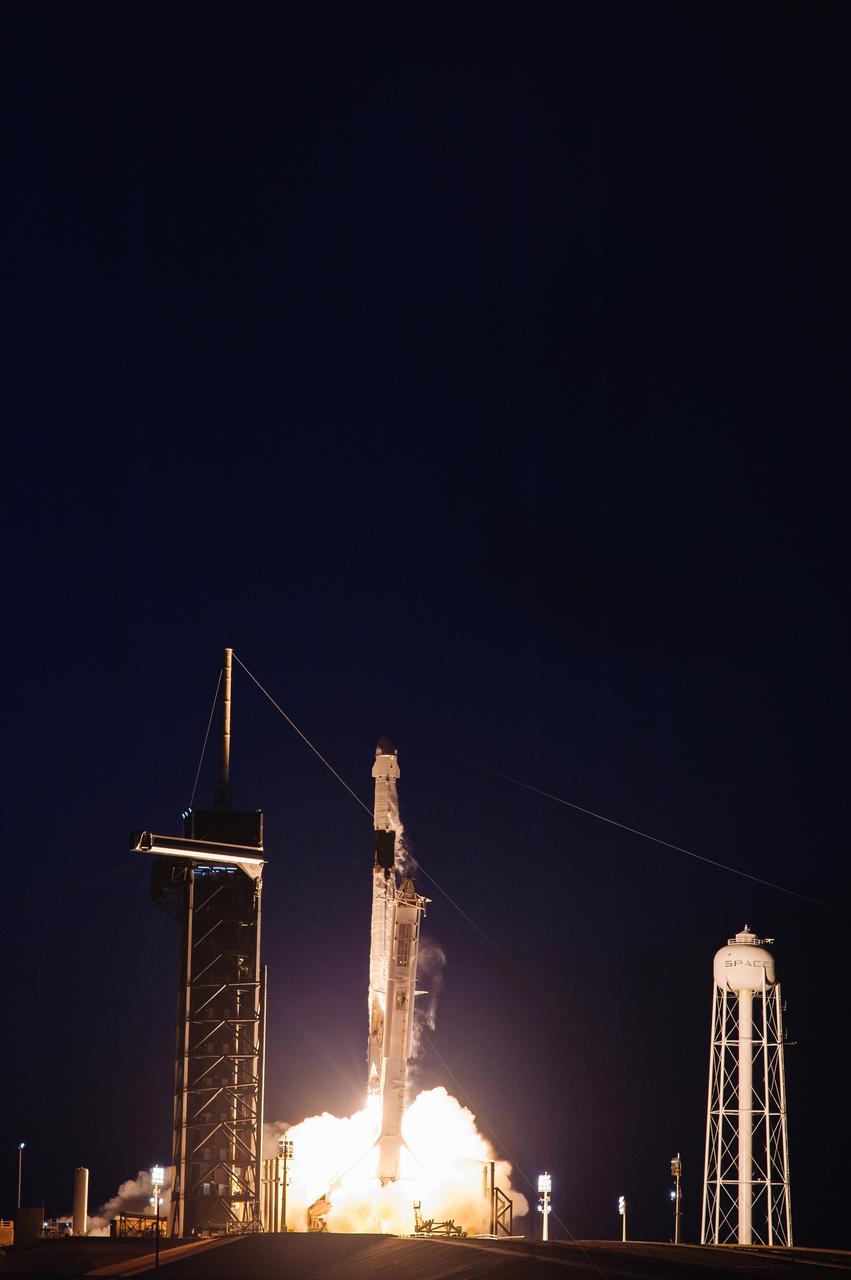
The SpaceX Falcon 9 rocket carrying the Dragon capsule lifts off from Launch Complex 39A at NASA’s Kennedy Space Center in Florida on July 14, 2022, on the company’s 25th Commercial Resupply Services mission for the agency to the International Space Station. Liftoff was at 8:44 p.m. EDT. Dragon will deliver more than 5,800 pounds of cargo, including a variety of NASA investigations, to the space station. The spacecraft is expected to spend about a month attached to the orbiting outpost before it returns to Earth with research and return cargo, splashing down off the coast of Florida.
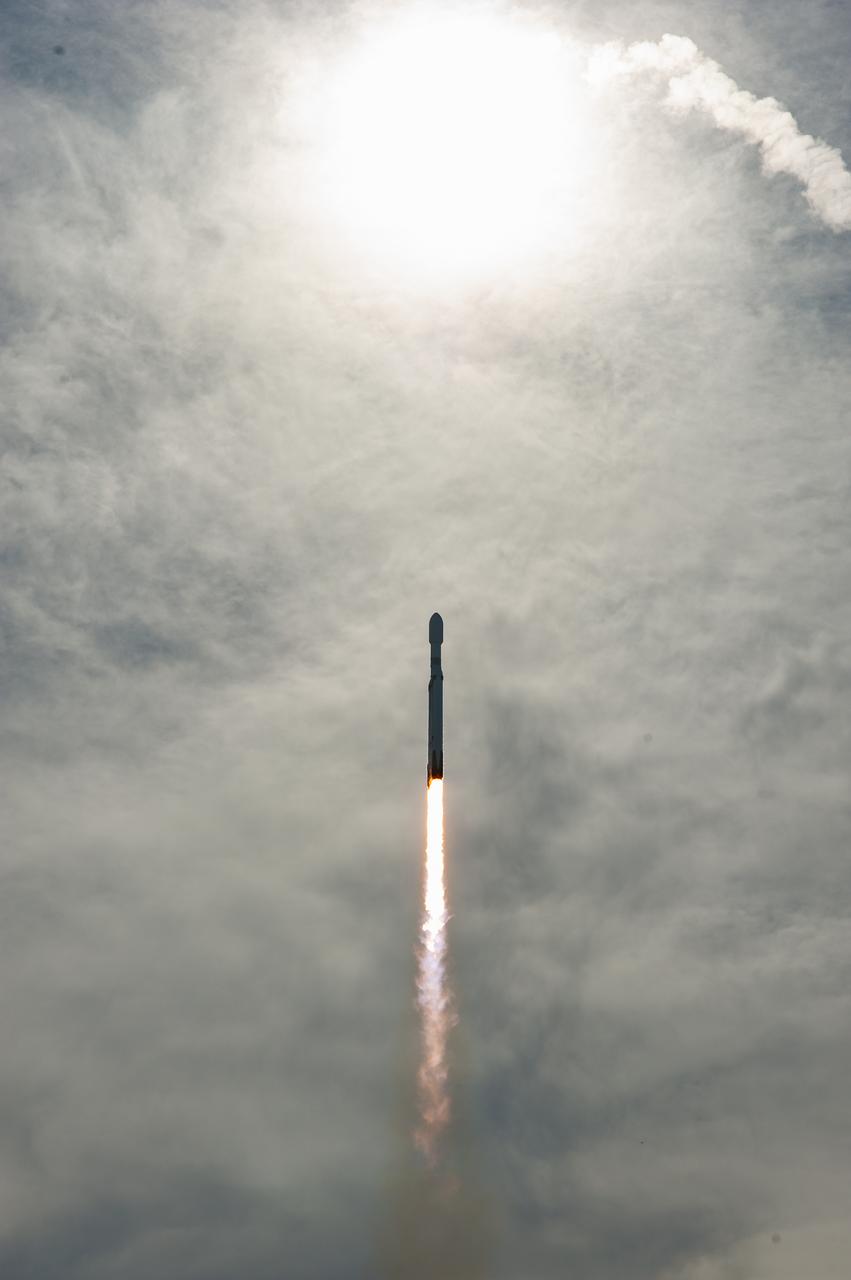
A SpaceX Falcon Heavy rocket carrying the National Oceanic and Atmospheric Administration (NOAA) GOES-U (Geostationary Operational Environmental Satellite U) lifts off from Launch Complex 39A at NASA’s Kennedy Space Center in Florida on Tuesday, June 25, 2024. The GOES-U satellite is the final satellite in the GOES-R series, which serves a critical role in providing continuous coverage of the Western Hemisphere, including monitoring tropical systems in the eastern Pacific and Atlantic oceans.
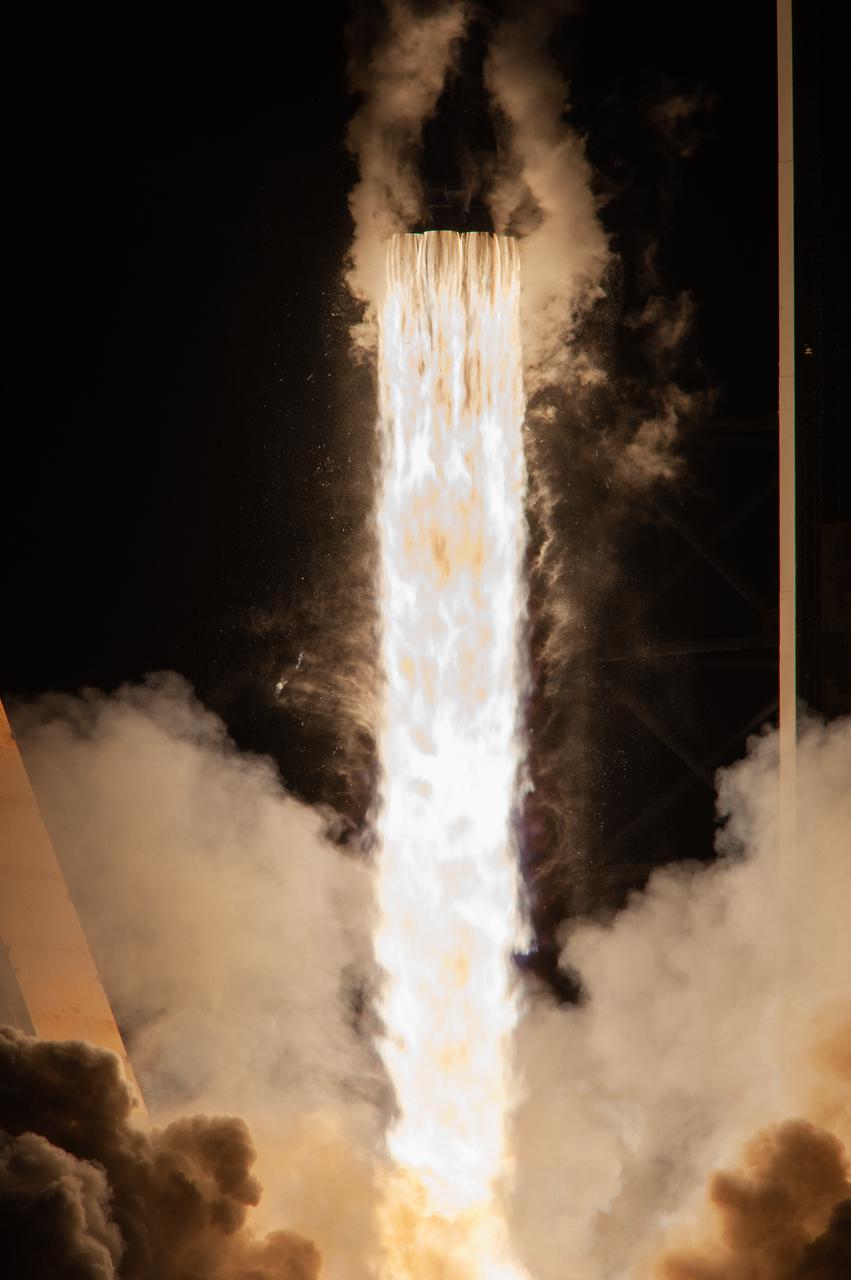
The SpaceX Falcon 9 rocket, with the company’s Crew Dragon atop, lifts off from Launch Pad 39A at Kennedy Space Center in Florida for NASA’s SpaceX Crew-4 mission on April 27, 2022, at 3:52 a.m. EDT. Aboard the Dragon are NASA astronauts Kjell Lindgren, Bob Hines, and Jessica Watkins, and ESA (European Space Agency) astronaut Samantha Cristoforetti. The spacecraft will carry the Crew-4 astronauts to the International Space Station as part of NASA’s Commercial Crew Program. The Dragon spacecraft, named Freedom by the mission’s crew, is scheduled to dock to the space station today at 8:15 p.m. EDT.
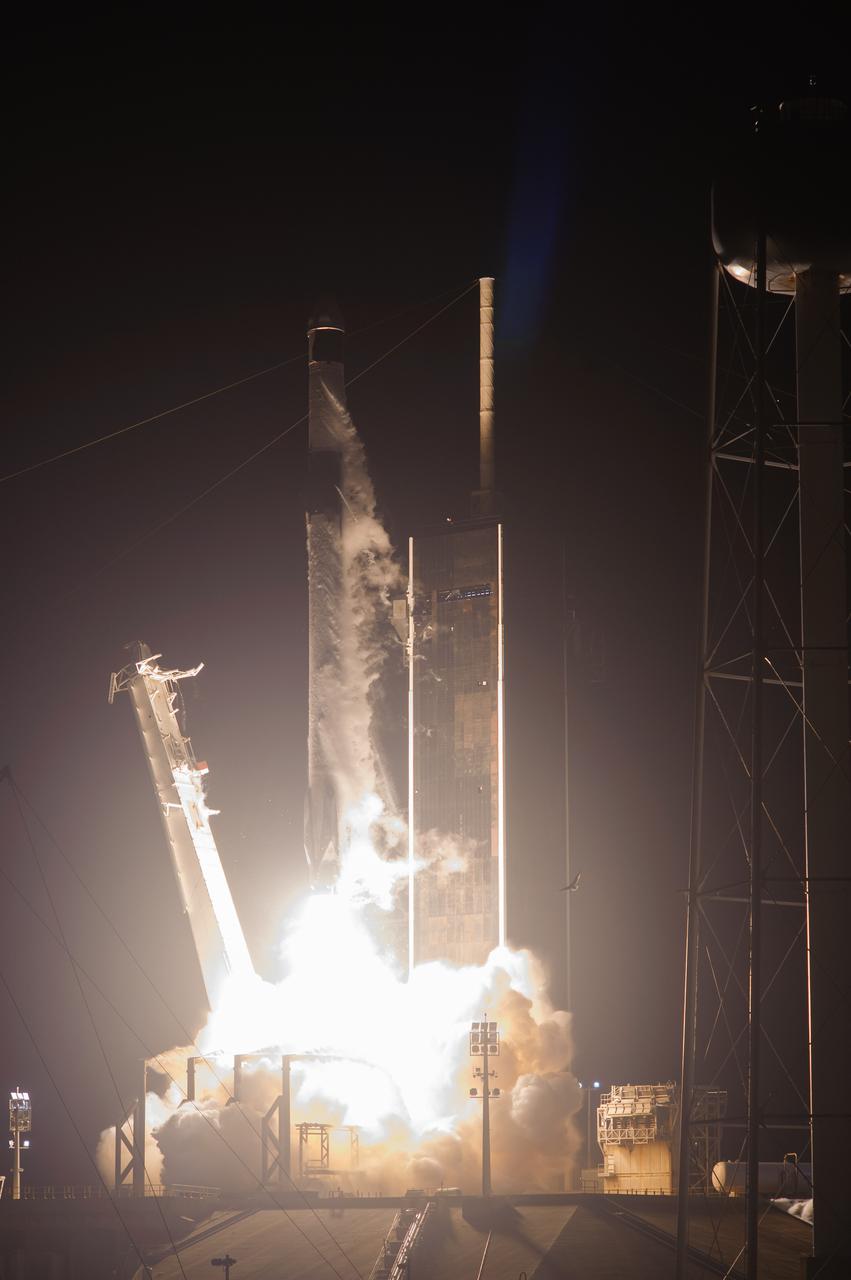
A SpaceX Falcon 9 rocket, with the uncrewed Dragon spacecraft atop, lifts off from Launch Complex 39A at NASA’s Kennedy Space Center in Florida on Aug. 29, 2021, for the company’s 23rd commercial resupply services mission to the International Space Station. The mission delivered new science investigations, supplies, and equipment to the international crew aboard the orbiting laboratory. Liftoff occurred at 3:14 a.m. EDT.

NASA’s SpaceX Crew-3 astronauts participate in a countdown dress rehearsal at the agency’s Kennedy Space Center in Florida on Oct. 28, 2021, to prepare for the upcoming Crew-3 launch. Matthias Maurer, with the European Space Agency, is inside the crew access arm leading to the company’s Crew Dragon spacecraft during the rehearsal. He is wearing a SpaceX spacesuit with his name and the German flag embroidered on it. The four-person crew will launch aboard the Crew Dragon atop the Falcon 9 on Oct. 31 to the International Space Station. Launch is targeted for 2:21 a.m. EDT from Pad 39A. Crew-3 is the third crew rotation flight to the space station for NASA’s Commercial Crew Program, and the first flight of a new Crew Dragon spacecraft.
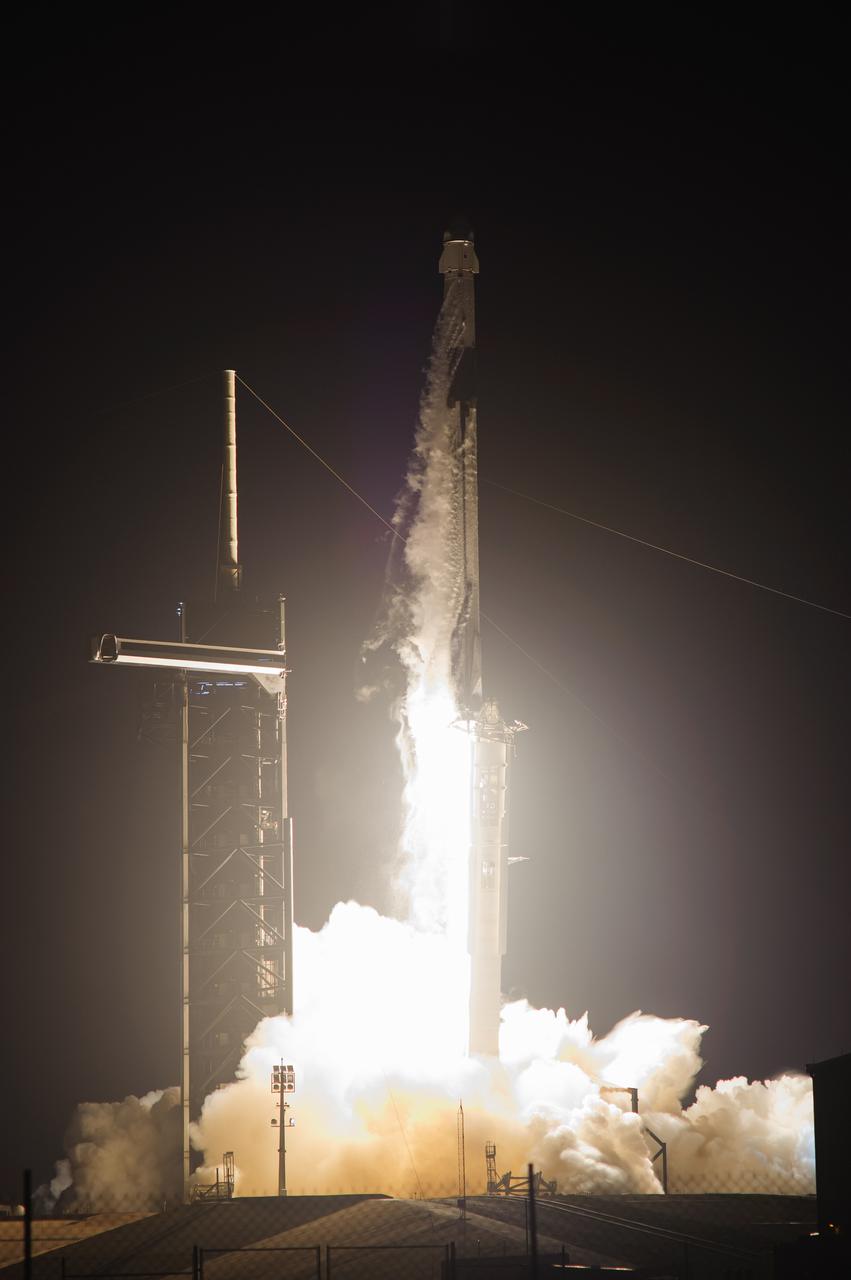
A SpaceX Falcon 9 rocket, with the uncrewed Dragon spacecraft atop, lifts off from Launch Complex 39A at NASA’s Kennedy Space Center in Florida on Aug. 29, 2021, for the company’s 23rd commercial resupply services mission to the International Space Station. The mission delivered new science investigations, supplies, and equipment to the international crew aboard the orbiting laboratory. Liftoff occurred at 3:14 a.m. EDT.
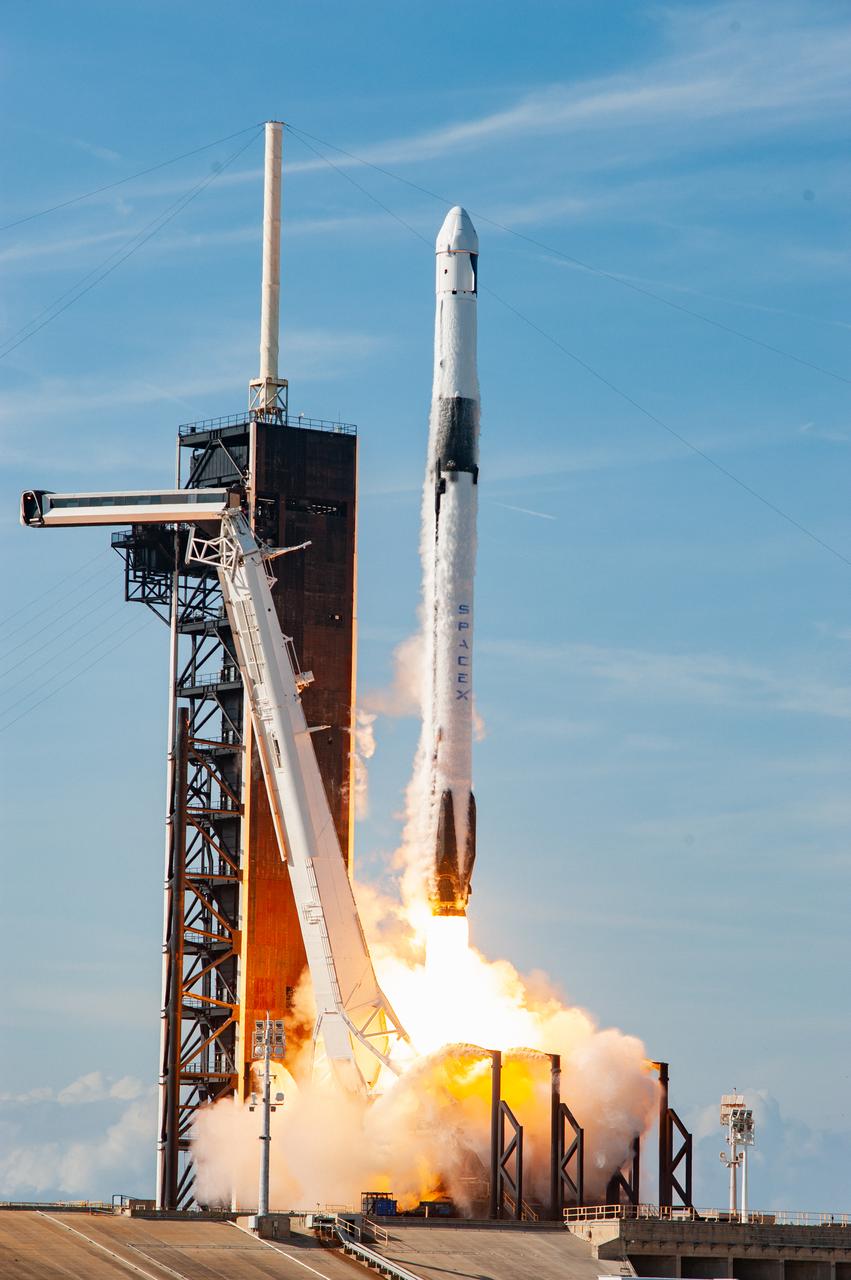
The SpaceX Falcon 9 rocket carrying the Dragon cargo spacecraft lifts off from Launch Complex 39A at NASA’s Kennedy Space Center in Florida on Nov. 26, 2022, on the company’s 26th commercial resupply services mission for the agency to the International Space Station. Liftoff was at 2:20 p.m. EST. Dragon will deliver more than 7,700 pounds of cargo, including a variety of NASA investigations, supplies, and equipment to the crew aboard the space station, including the next pair of ISS Roll Out Solar Arrays (iROSAs). The spacecraft is expected to spend about a month attached to the orbiting outpost before it returns to Earth with research and return cargo, splashing down off the coast of Florida.
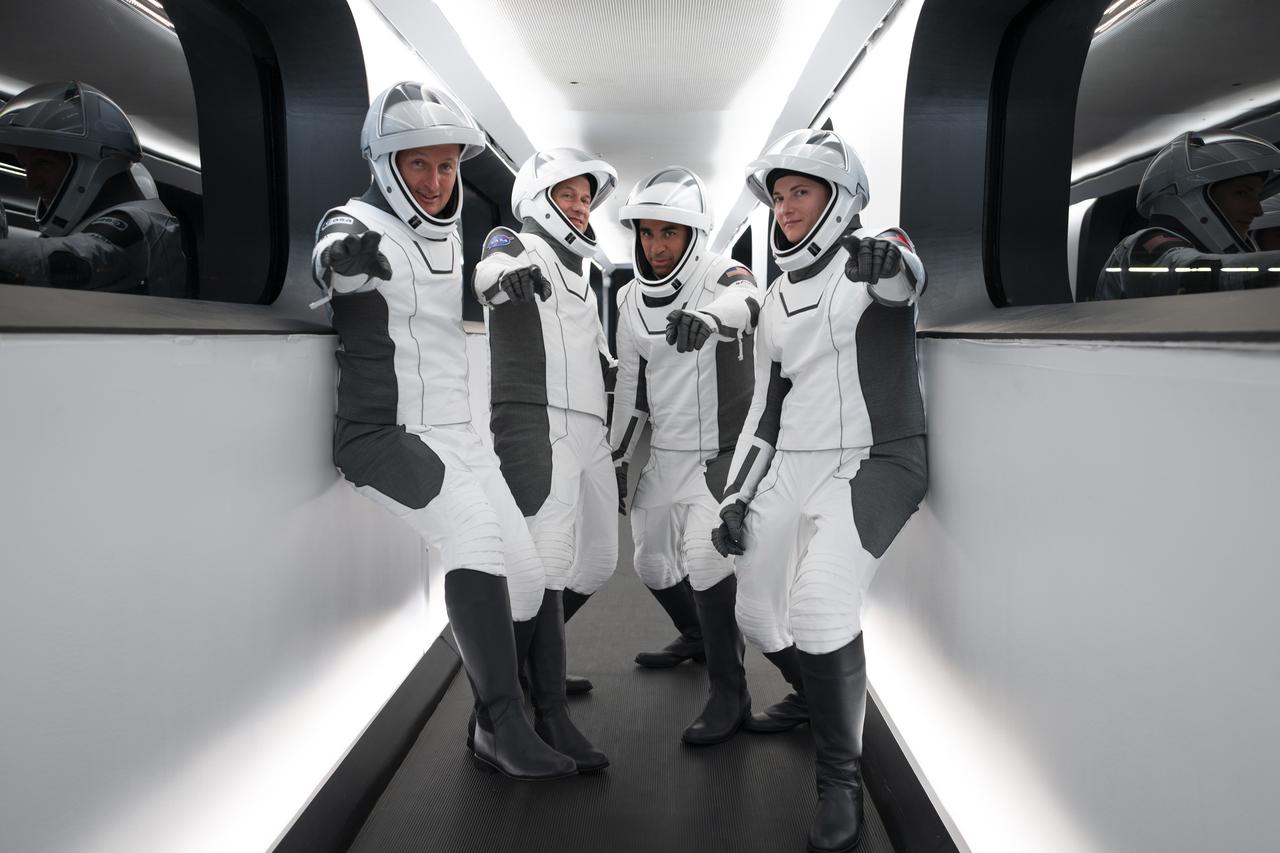
NASA’s SpaceX Crew-3 astronauts participate in a countdown dress rehearsal at the agency’s Kennedy Space Center in Florida on Oct. 28, 2021, to prepare for the upcoming Crew-3 launch. From left are Matthias Maurer, with the European Space Agency, and NASA astronauts Tom Marshburn, Raja Chari, Crew-3 commander, and Kayla Barron. They are inside the crew access arm leading to the company’s Crew Dragon spacecraft during the rehearsal. The four-person crew will launch aboard the Crew Dragon atop the Falcon 9 on Oct. 31 to the International Space Station. Launch is targeted for 2:21 a.m. EDT from Pad 39A. Crew-3 is the third crew rotation flight to the space station for NASA’s Commercial Crew Program, and the first flight of a new Crew Dragon spacecraft.
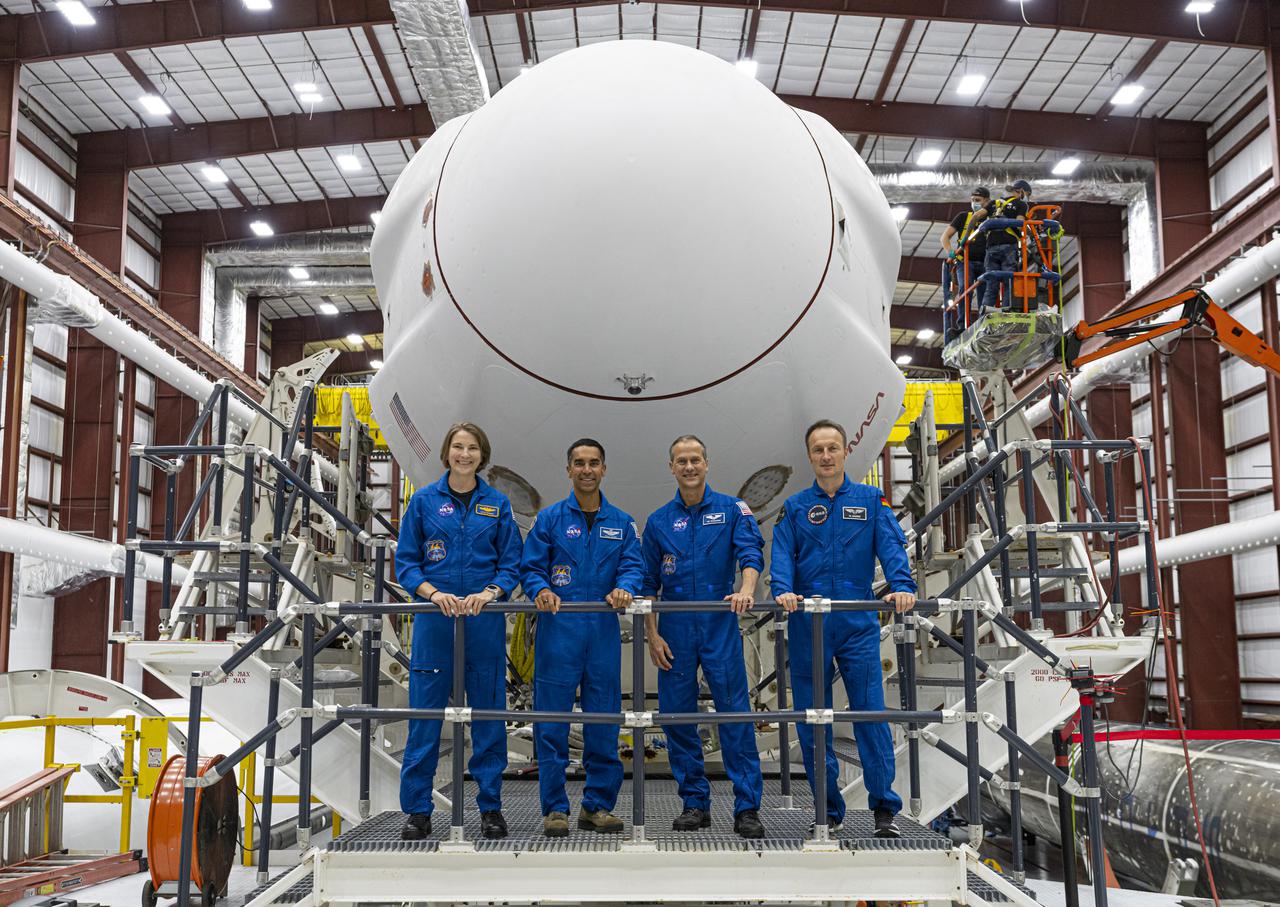
The SpaceX Crew-3 astronauts stand on the transporter in front of the Crew Dragon and Falcon 9 stack inside the SpaceX horizontal processing facility near Launch Complex 39A at Kennedy Space Center in Florida on Oct. 26, 2021. From left are NASA astronauts Kayla Barron, Raja Chari, and Tom Marshburn, along with Matthias Maurer with the European Space Agency. The four-person crew will launch aboard the Crew Dragon atop the Falcon 9 on Oct. 31 to the International Space Station. Launch is targeted for 2:21 a.m. EDT from Pad 39A. Crew-3 is the third crew rotation flight to the space station for NASA’s Commercial Crew Program, and the first flight of a new Crew Dragon spacecraft.
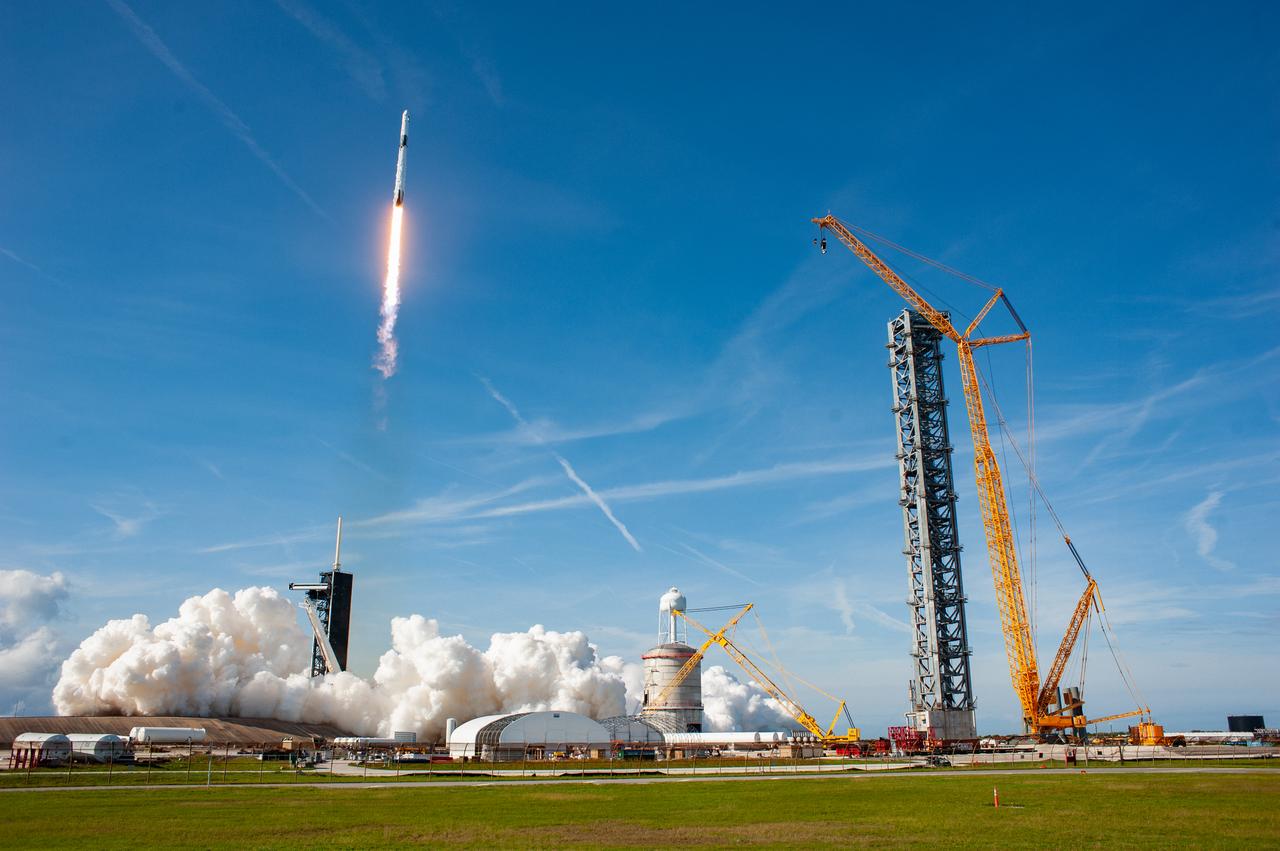
The SpaceX Falcon 9 rocket carrying the Dragon cargo spacecraft lifts off from Launch Complex 39A at NASA’s Kennedy Space Center in Florida on Nov. 26, 2022, on the company’s 26th commercial resupply services mission for the agency to the International Space Station. Liftoff was at 2:20 p.m. EST. Dragon will deliver more than 7,700 pounds of cargo, including a variety of NASA investigations, supplies, and equipment to the crew aboard the space station, including the next pair of ISS Roll Out Solar Arrays (iROSAs). The spacecraft is expected to spend about a month attached to the orbiting outpost before it returns to Earth with research and return cargo, splashing down off the coast of Florida.
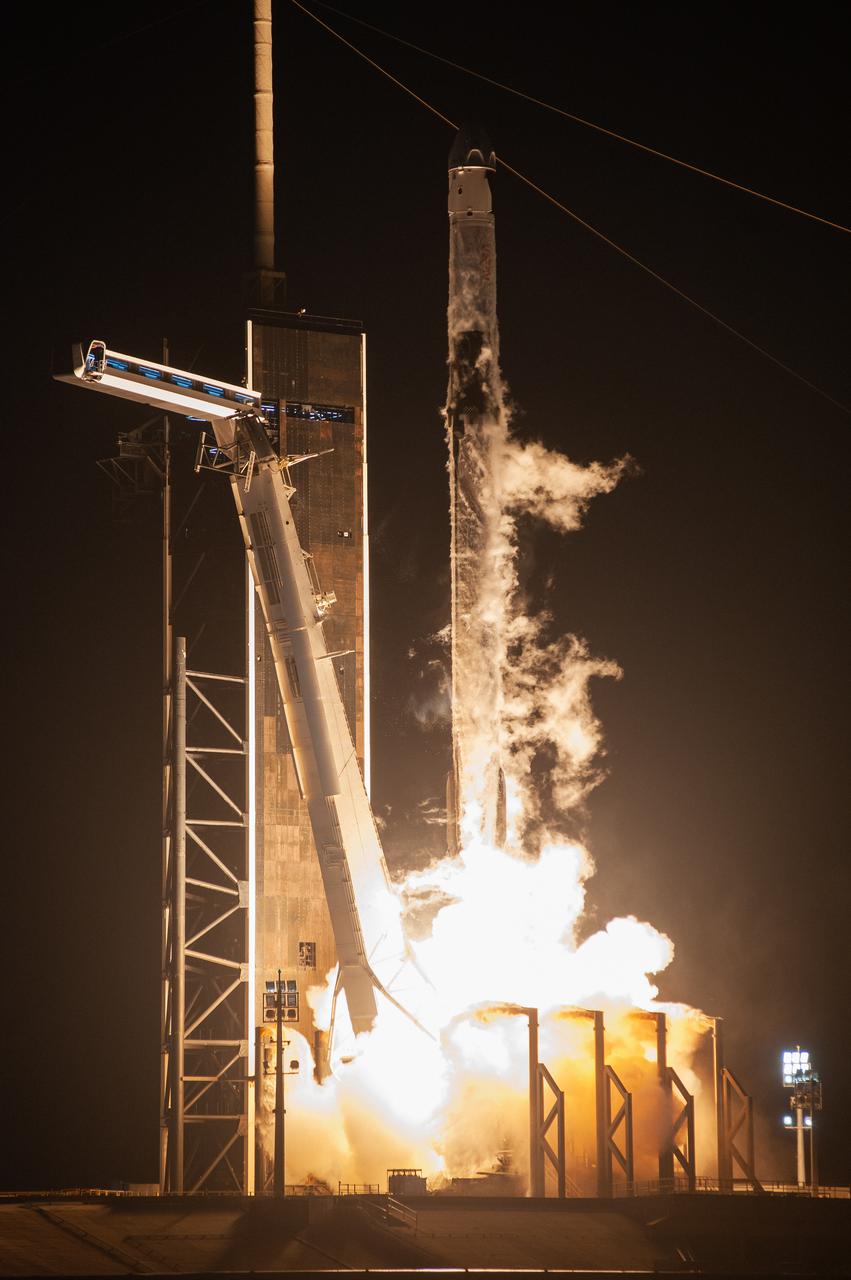
The SpaceX Falcon 9 rocket, with the company’s Crew Dragon atop, lifts off from Launch Pad 39A at Kennedy Space Center in Florida for NASA’s SpaceX Crew-4 mission on April 27, 2022, at 3:52 a.m. EDT. Aboard the Dragon are NASA astronauts Kjell Lindgren, Bob Hines, and Jessica Watkins, and ESA (European Space Agency) astronaut Samantha Cristoforetti. The spacecraft will carry the Crew-4 astronauts to the International Space Station as part of NASA’s Commercial Crew Program. The Dragon spacecraft, named Freedom by the mission’s crew, is scheduled to dock to the space station today at 8:15 p.m. EDT.
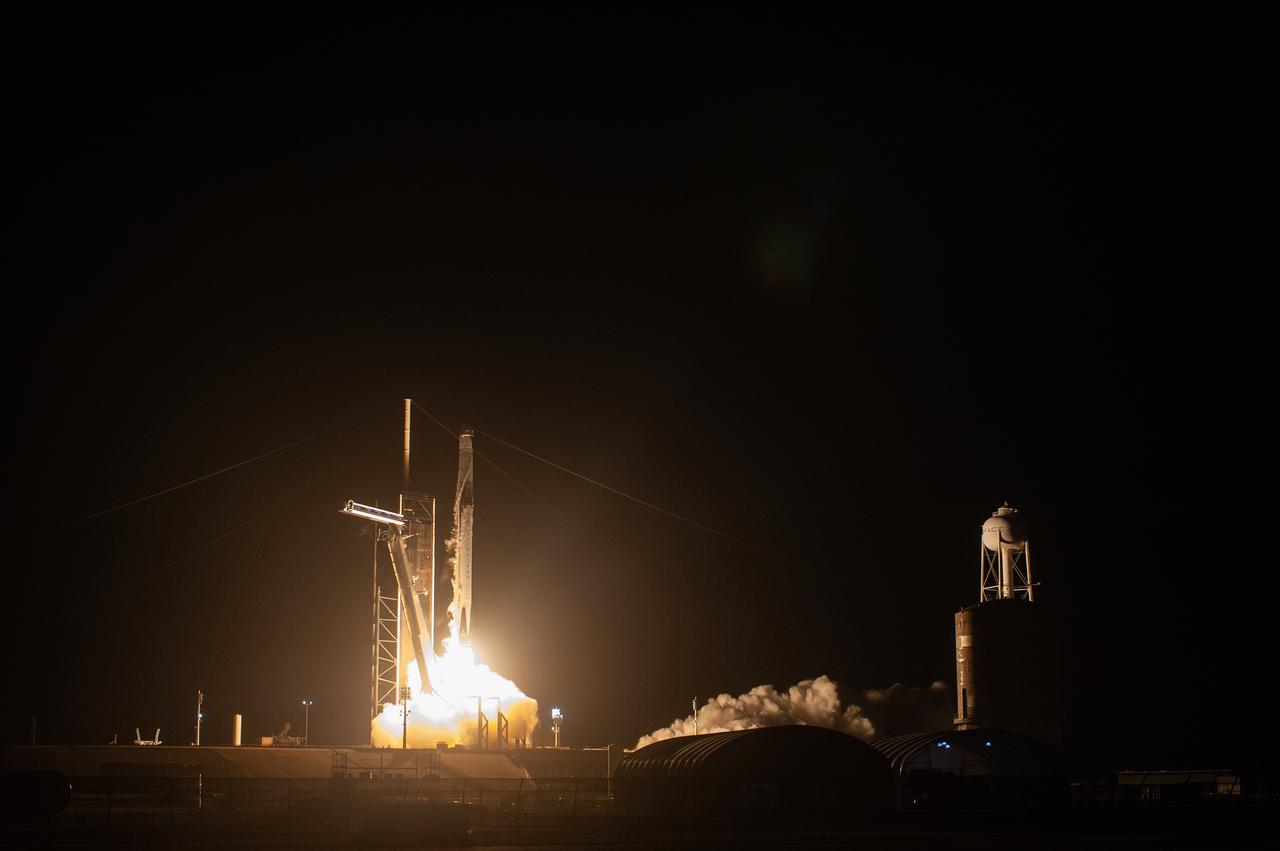
A SpaceX Falcon 9 rocket lifts off the pad at 3:27 a.m. EDT on Saturday, Aug. 26, from Kennedy Space Center’s Launch Complex 39A in Florida, carrying NASA’s SpaceX Crew-7 crew members to the International Space Station. Aboard SpaceX’s Dragon spacecraft are NASA astronaut Jasmin Moghbeli, ESA (European Space Agency) astronaut Andreas Mogensen, JAXA (Japan Aerospace Exploration Agency) astronaut Satoshi Furukawa, and Roscosmos cosmonaut Konstantin Borisov.
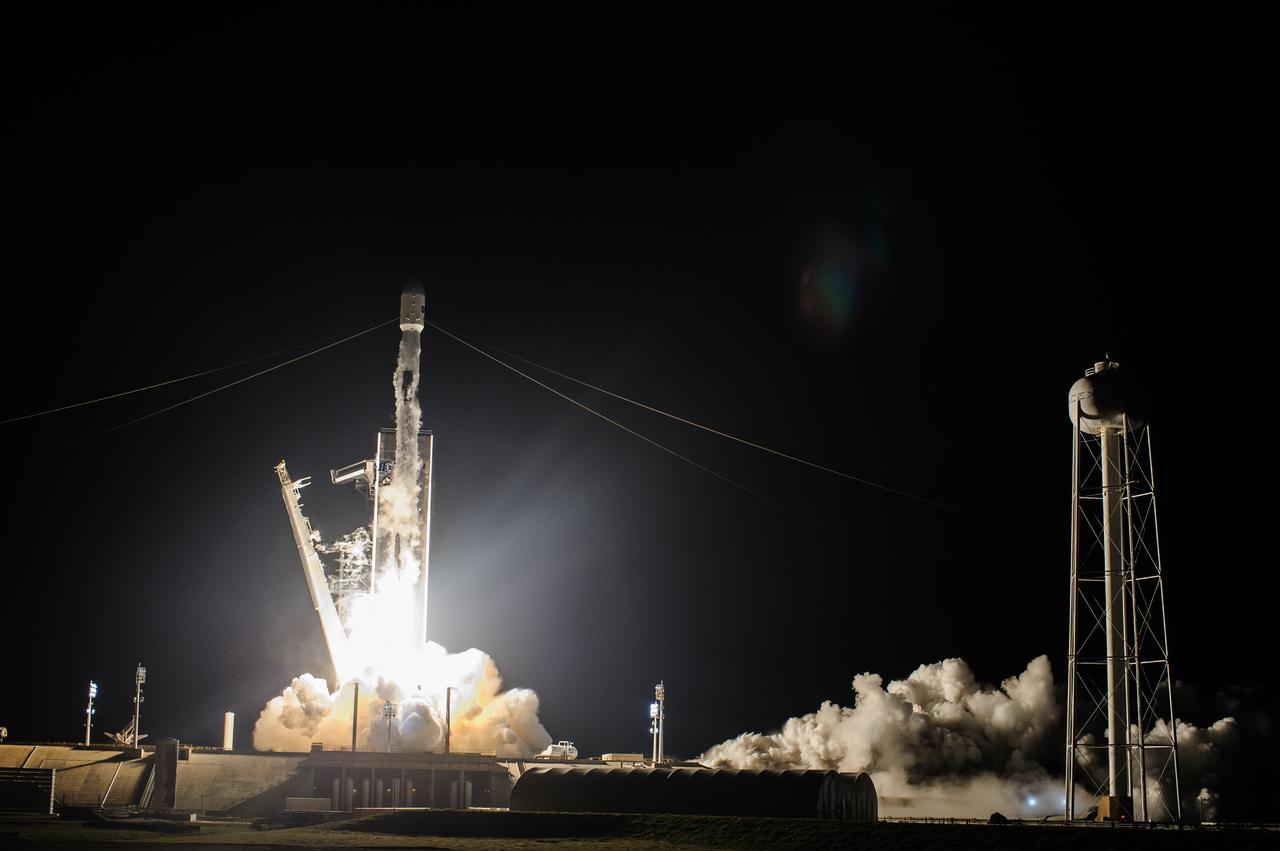
A SpaceX Falcon 9 rocket roars off the launch pad at Launch Complex 39A at NASA’s Kennedy Space Center in Florida at 1 a.m. EST on Thursday, Dec. 9, 2021, carrying NASA’s Imaging X-ray Polarimetry Explorer (IXPE) spacecraft. NASA’s Launch Services Program managed this launch. NASA’s Marshall Space Flight Center in Huntsville, Alabama, manages the IXPE mission. Ball Aerospace, headquartered in Broomfield, Colorado, manages spacecraft operations with support from the University of Colorado at Boulder. NASA’s Goddard Space Flight Center in Greenbelt, Maryland, manages the Explorers Program for the agency’s Science Mission Directorate in Washington. The IXPE spacecraft includes three space telescopes with sensitive detectors capable of measuring the polarization of cosmic X-rays, allowing scientists to answer fundamental questions about extremely complex environments in space where gravitational, electric, and magnetic fields are at their limits. The project is a collaboration between NASA and the Italian Space Agency.
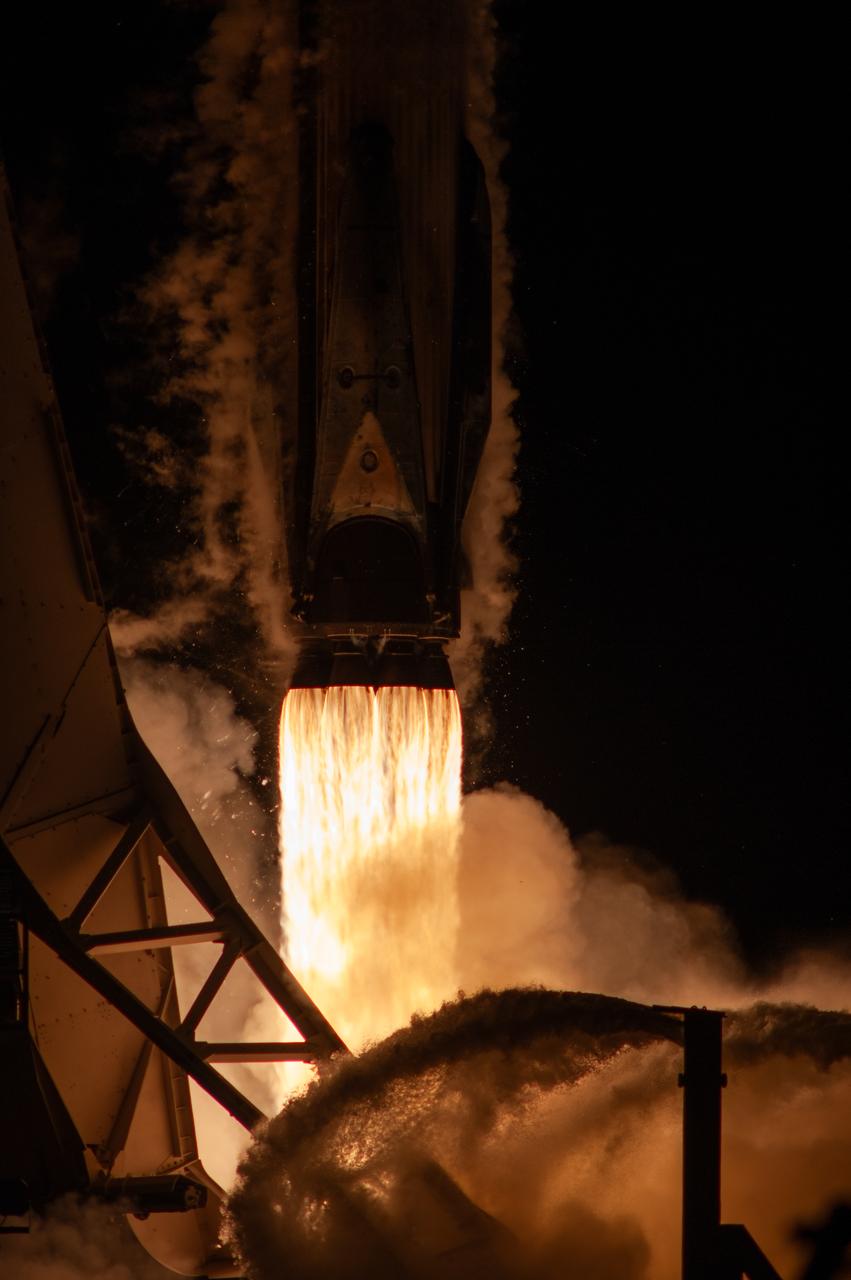
The SpaceX Falcon 9 rocket carrying the Dragon spacecraft lifts off from Launch Complex 39A at NASA’s Kennedy Space Center in Florida on Thursday, Nov. 9, 2023, on the company’s 29th commercial resupply services mission for the agency to the International Space Station. Liftoff was at 8:28 p.m. EST. Dragon will deliver scientific research, technology demonstrations, crew supplies, and hardware to the space station to support its Expedition 70 crew, including NASA’s Integrated Laser Communications Relay Demonstration Low Earth Orbit User Modem and Amplifier Terminal (ILLUMA-T) and Atmospheric Waves Experiment (AWE). The spacecraft is expected to spend about a month attached to the orbiting outpost before it returns to Earth with research and return cargo, splashing down off the coast of Florida.
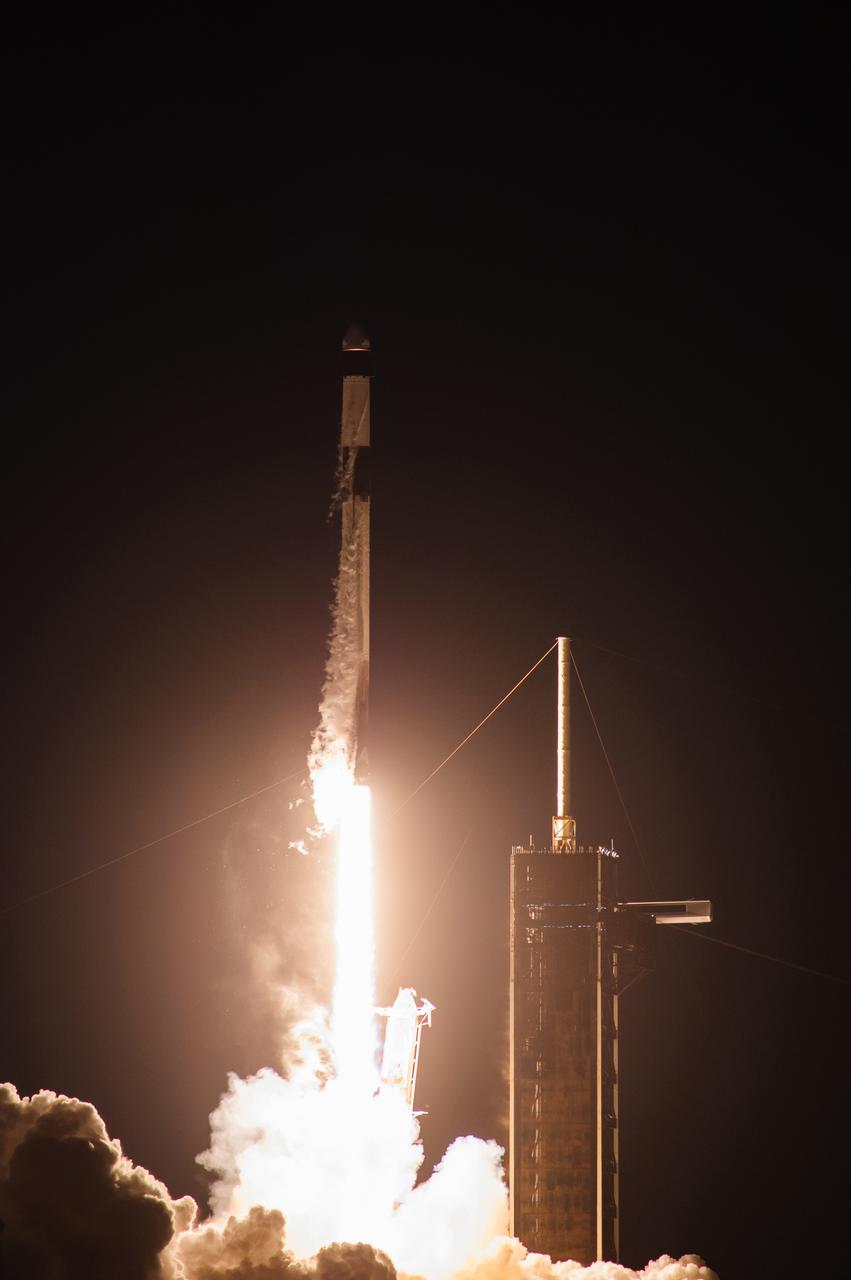
The SpaceX Falcon 9 rocket carrying the Dragon capsule soars upward after lifting off from Launch Complex 39A at NASA’s Kennedy Space Center in Florida on July 14, 2022, on the company’s 25th Commercial Resupply Services mission for the agency to the International Space Station. Liftoff was at 8:44 p.m. EDT. Dragon will deliver more than 5,800 pounds of cargo, including a variety of NASA investigations, to the space station. The spacecraft is expected to spend about a month attached to the orbiting outpost before it returns to Earth with research and return cargo, splashing down off the coast of Florida.
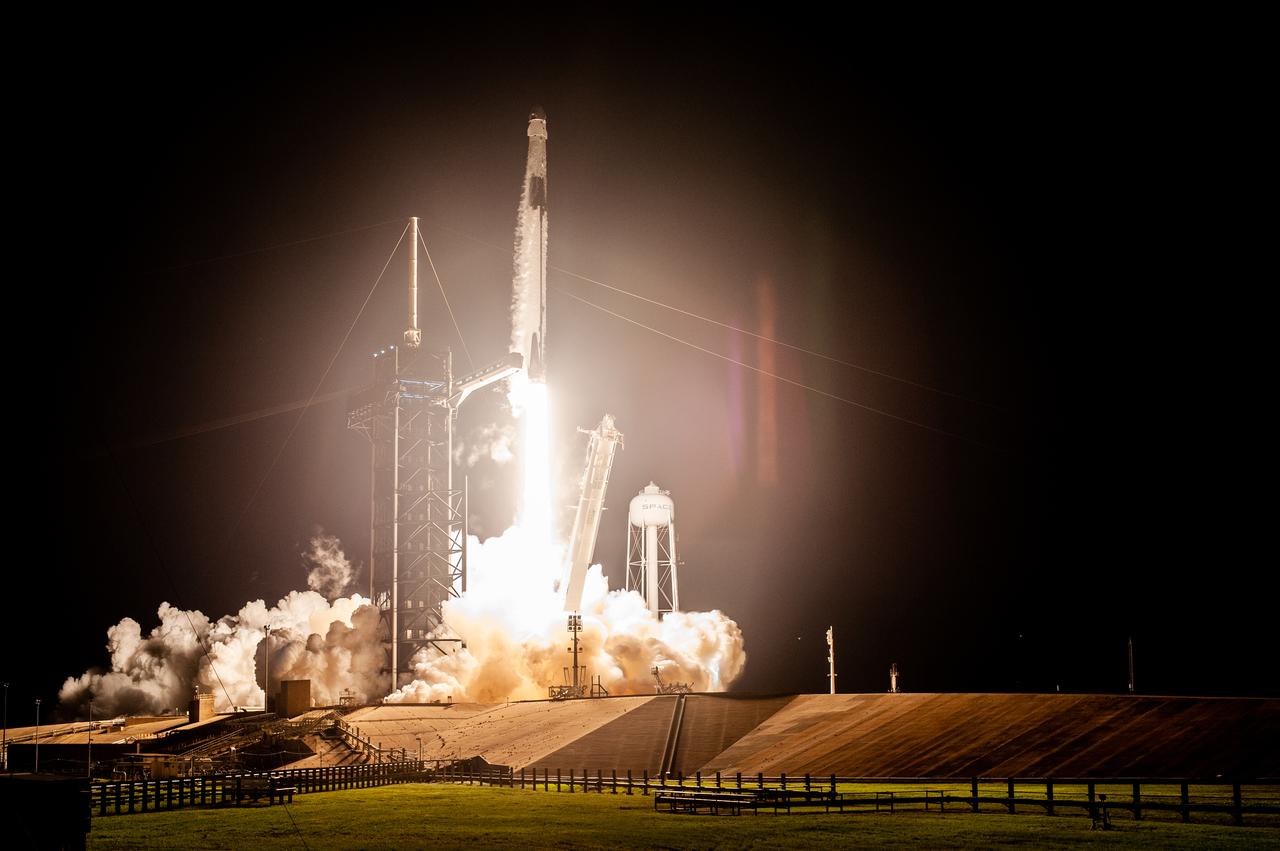
A SpaceX Falcon 9 rocket lifts off at 7:27 p.m. EST from Launch Complex 39A at NASA’s Kennedy Space Center in Florida on Nov. 15, 2020, carrying the company’s Crew Dragon Resilience capsule. Onboard the capsule are NASA’s SpaceX Crew-1 NASA astronauts, Michael Hopkins, spacecraft commander; Victor Glover, pilot; Shannon Walker, mission specialist; and Japan Aerospace Exploration Agency astronaut Soichi Noguchi, mission specialist. Crew-1 is the first regular crew mission of a U.S. commercial spacecraft with astronauts to the International Space Station as part of NASA’s Commercial Crew Program. The Crew Dragon will dock with the space station and the crew will remain on the orbiting laboratory for a six-month science mission.
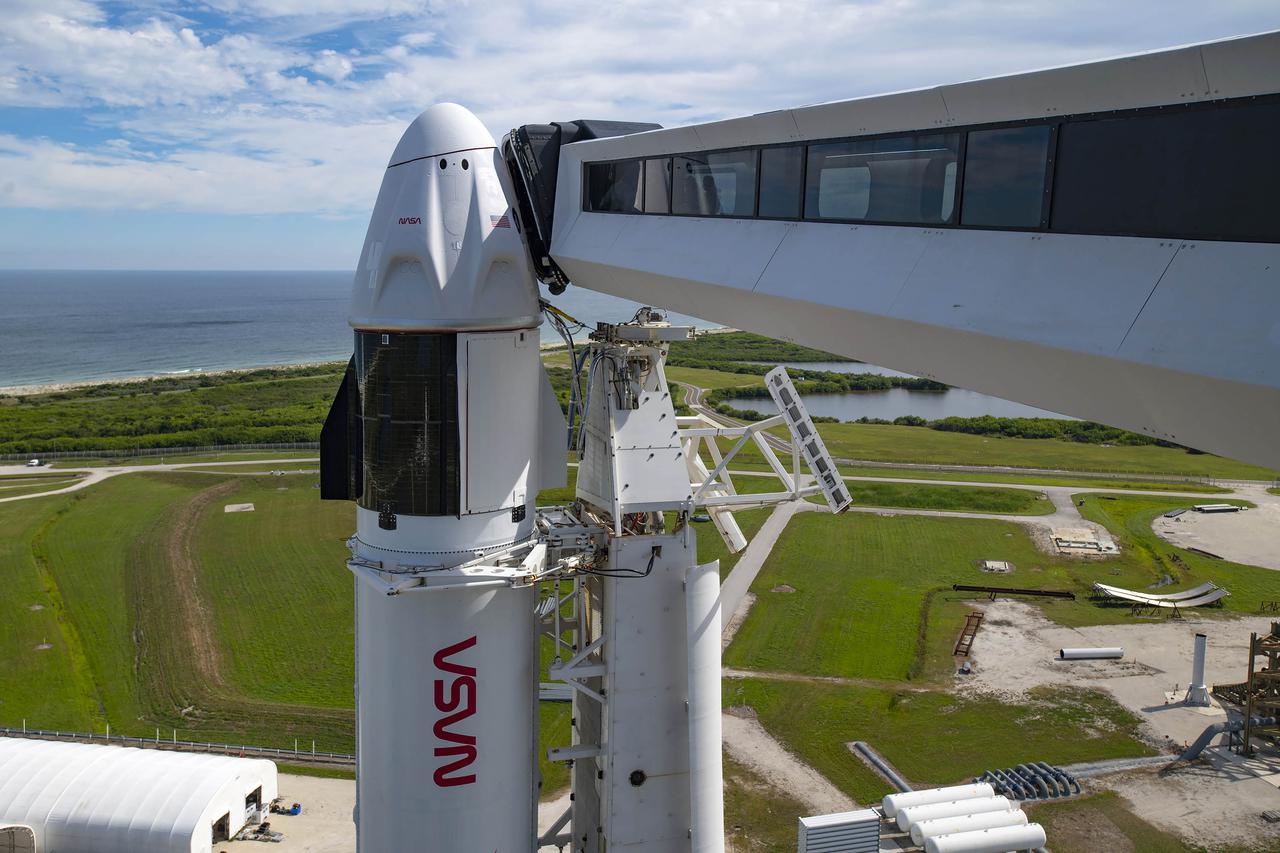
A close-up view of the SpaceX Falcon 9 rocket vertical with the Crew Dragon for the Crew-3 mission at Launch Pad 39A at NASA’s Kennedy Space Center in Florida on Oct. 27, 2021. Also in view is the crew access arm. A four-person crew will launch aboard the Crew Dragon atop the Falcon 9 on Oct. 31 to the International Space Station. Launch is targeted for 2:21 a.m. EDT from Pad 39A. Crew 3 is the third crew rotation flight to the space station for NASA’s Commercial Crew Program, and the first flight of a new Crew Dragon spacecraft.
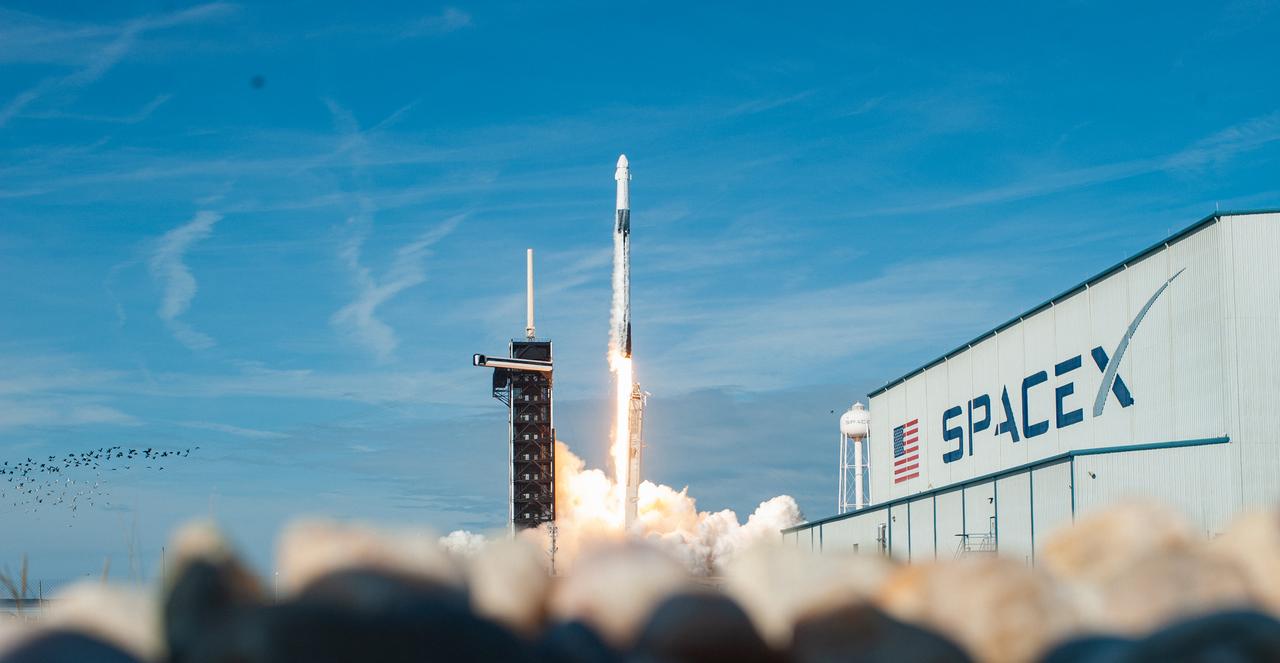
The SpaceX Falcon 9 rocket carrying the Dragon cargo spacecraft lifts off from Launch Complex 39A at NASA’s Kennedy Space Center in Florida on Nov. 26, 2022, on the company’s 26th commercial resupply services mission for the agency to the International Space Station. Liftoff was at 2:20 p.m. EST. Dragon will deliver more than 7,700 pounds of cargo, including a variety of NASA investigations, supplies, and equipment to the crew aboard the space station, including the next pair of ISS Roll Out Solar Arrays (iROSAs). The spacecraft is expected to spend about a month attached to the orbiting outpost before it returns to Earth with research and return cargo, splashing down off the coast of Florida.
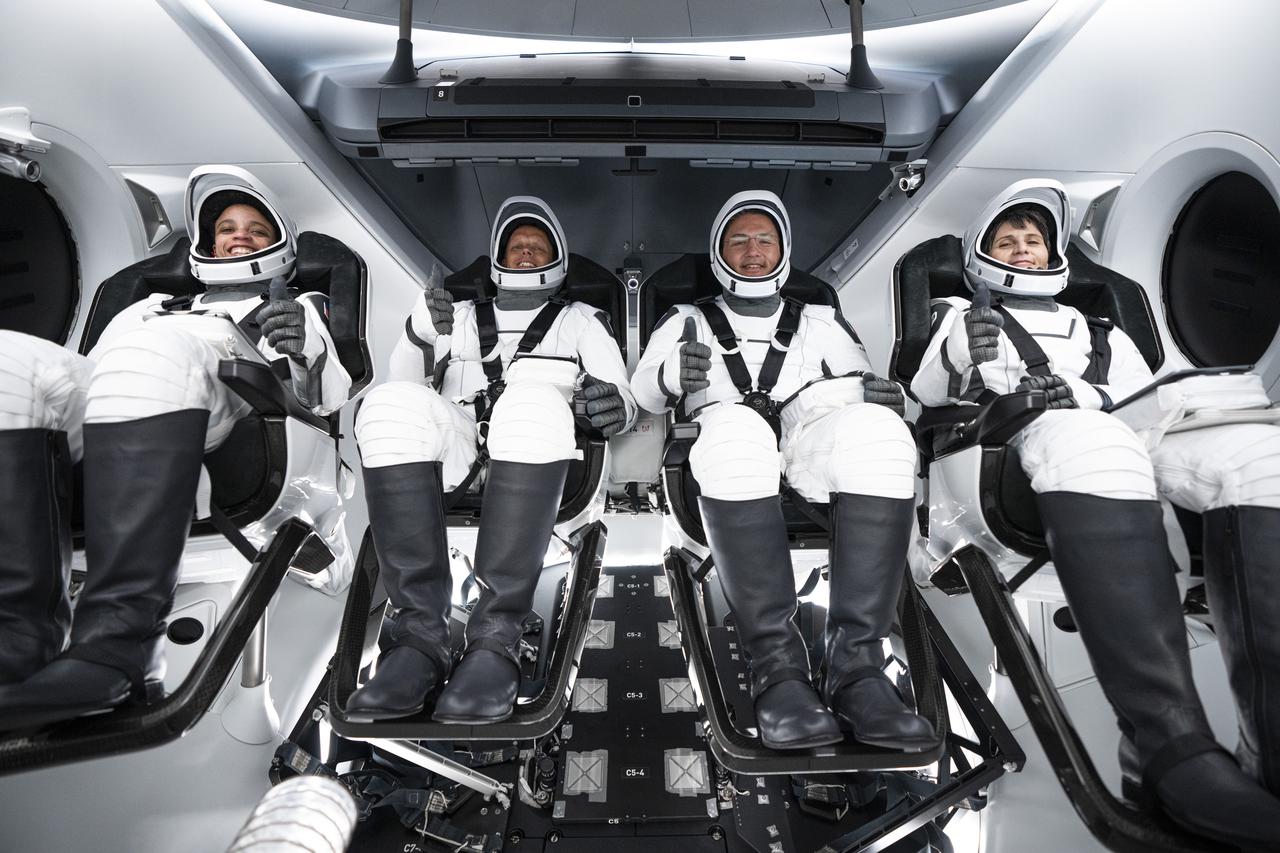
Crew-4 astronauts, from left, Jessica Watkins, mission specialist; Bob Hines, pilot; Kjell Lindgren, commander and Samantha Cristoforetti, mission specialist, are positioned inside SpaceX’s Crew Dragon, named Freedom by the Crew-4 crew, during a dry dress rehearsal at Kennedy Space Center in Florida on April 20, 2022. Crew-4 will launch the astronauts to the International Space Station as part of NASA’s Commercial Crew Program. Liftoff is targeted for 5:26 a.m. EDT on Saturday, April 23, 2022, from Launch Complex 39A at Kennedy.
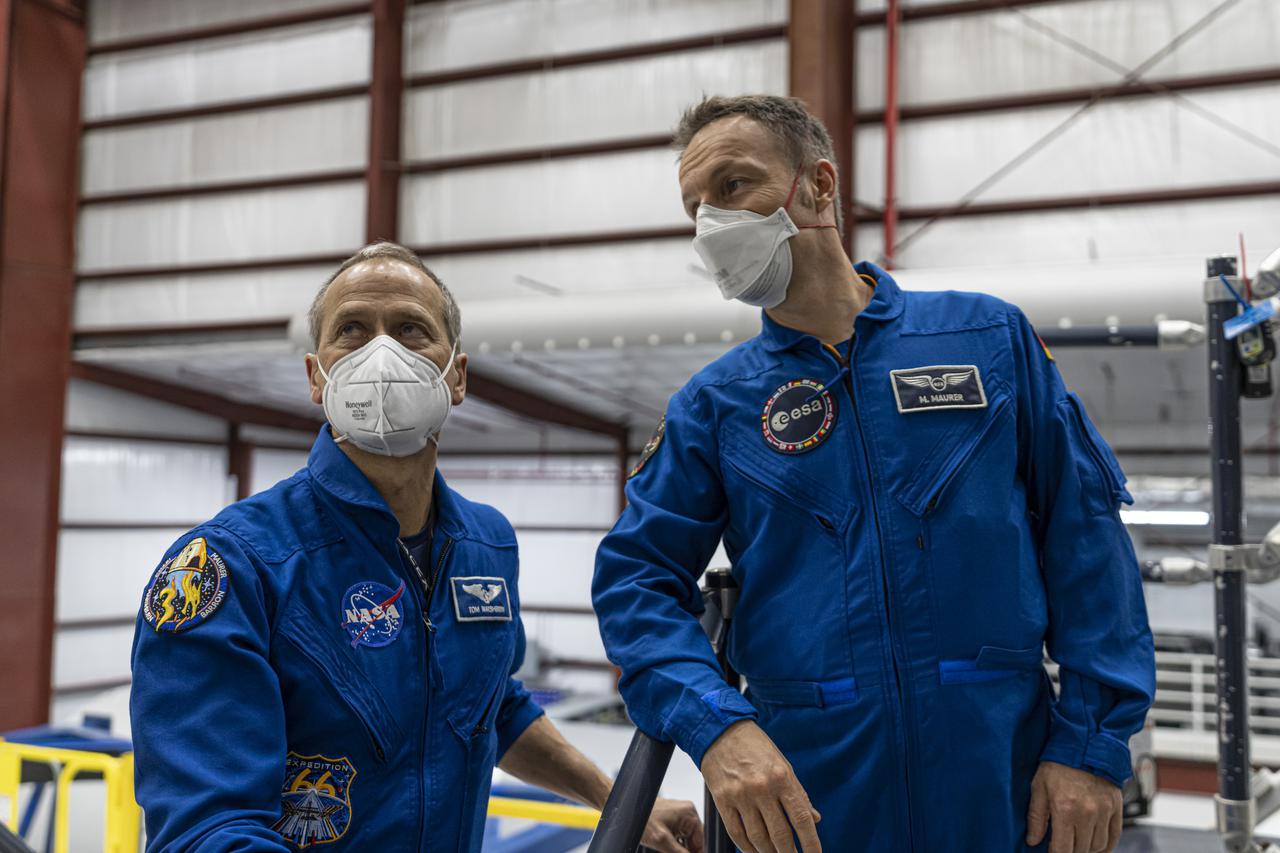
SpaceX Crew-3 NASA astronaut Tom Marshburn, left, and Matthias Maurer, an astronaut with the European Space Agency, are inside the SpaceX horizontal processing facility near Launch Complex 39A at Kennedy Space Center in Florida on Oct. 26, 2021. The astronauts are viewing the Falcon 9 rocket with Crew Dragon before rollout to the launch pad, which occurred on Oct. 27. The four-person crew will launch aboard the Crew Dragon atop the Falcon 9 on Oct. 31 to the International Space Station. Launch is targeted for 2:21 a.m. EDT from Pad 39A. Crew-3 is the third crew rotation flight to the space station for NASA’s Commercial Crew Program, and the first flight of a new Crew Dragon spacecraft.
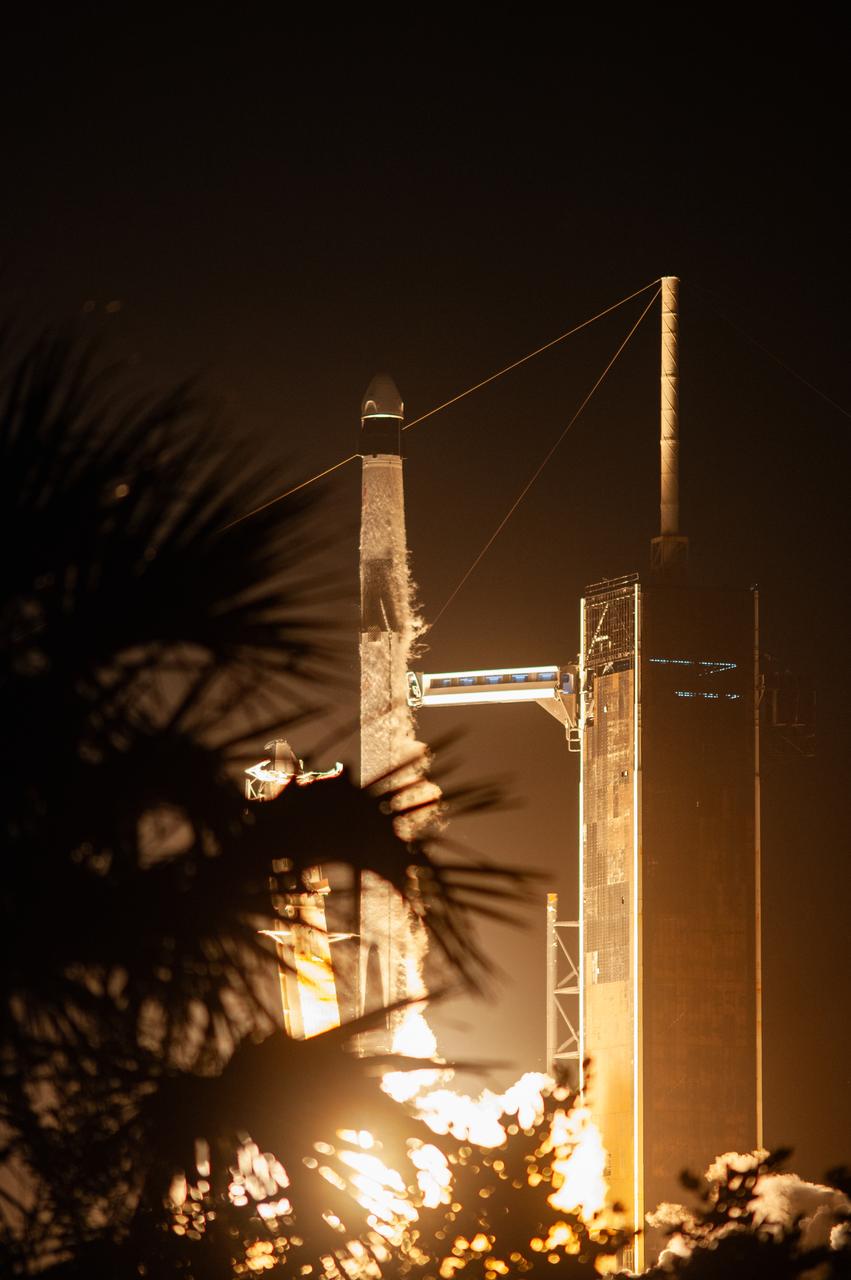
A SpaceX Falcon 9 rocket lifts off the pad at 3:27 a.m. EDT on Saturday, Aug. 26, from Kennedy Space Center’s Launch Complex 39A in Florida, carrying NASA’s SpaceX Crew-7 crew members to the International Space Station. Aboard SpaceX’s Dragon spacecraft are NASA astronaut Jasmin Moghbeli, ESA (European Space Agency) astronaut Andreas Mogensen, JAXA (Japan Aerospace Exploration Agency) astronaut Satoshi Furukawa, and Roscosmos cosmonaut Konstantin Borisov.

A SpaceX Falcon Heavy rocket carrying NASA’s Europa Clipper spacecraft lifts off from Launch Complex 39A at NASA’s Kennedy Space Center in Florida at 12:06 p.m. EDT on Monday, Oct. 14, 2024. After launch, the spacecraft plans to fly by Mars in February 2025, then back by Earth in December 2026, using the gravity of each planet to increase its momentum. With help of these “gravity assists,” Europa Clipper will achieve the velocity needed to reach Jupiter in April 2030.
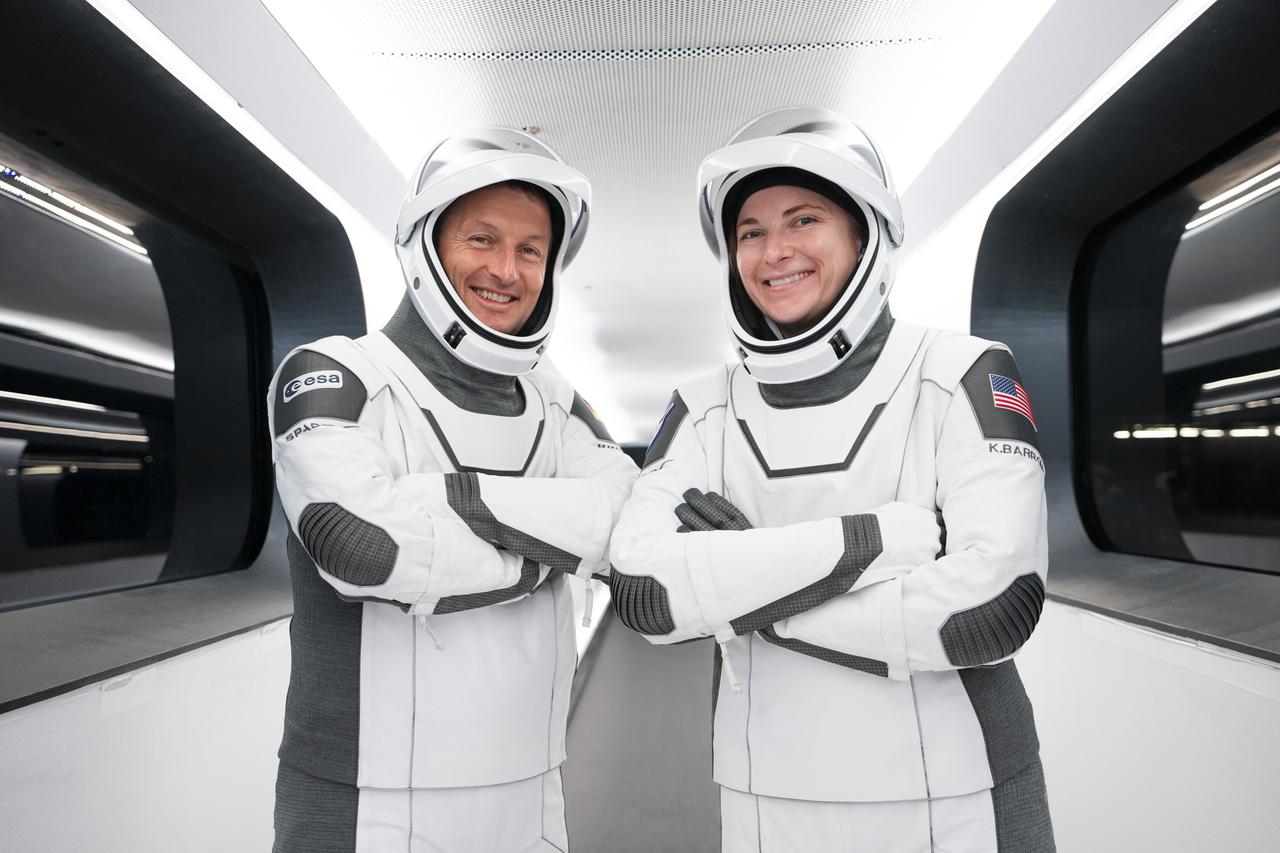
NASA’s SpaceX Crew-3 astronauts participate in a countdown dress rehearsal at the agency’s Kennedy Space Center in Florida on Oct. 28, 2021, to prepare for the upcoming Crew-3 launch. At left is Matthias Maurer, with the European Space Agency (ESA), and NASA astronaut Kayla Barron. They are inside the crew access arm leading to the company’s Crew Dragon spacecraft during the rehearsal. The four-person crew will launch aboard the Crew Dragon atop the Falcon 9 on Oct. 31 to the International Space Station. Launch is targeted for 2:21 a.m. EDT from Pad 39A. Crew-3 is the third crew rotation flight to the space station for NASA’s Commercial Crew Program, and the first flight of a new Crew Dragon spacecraft.
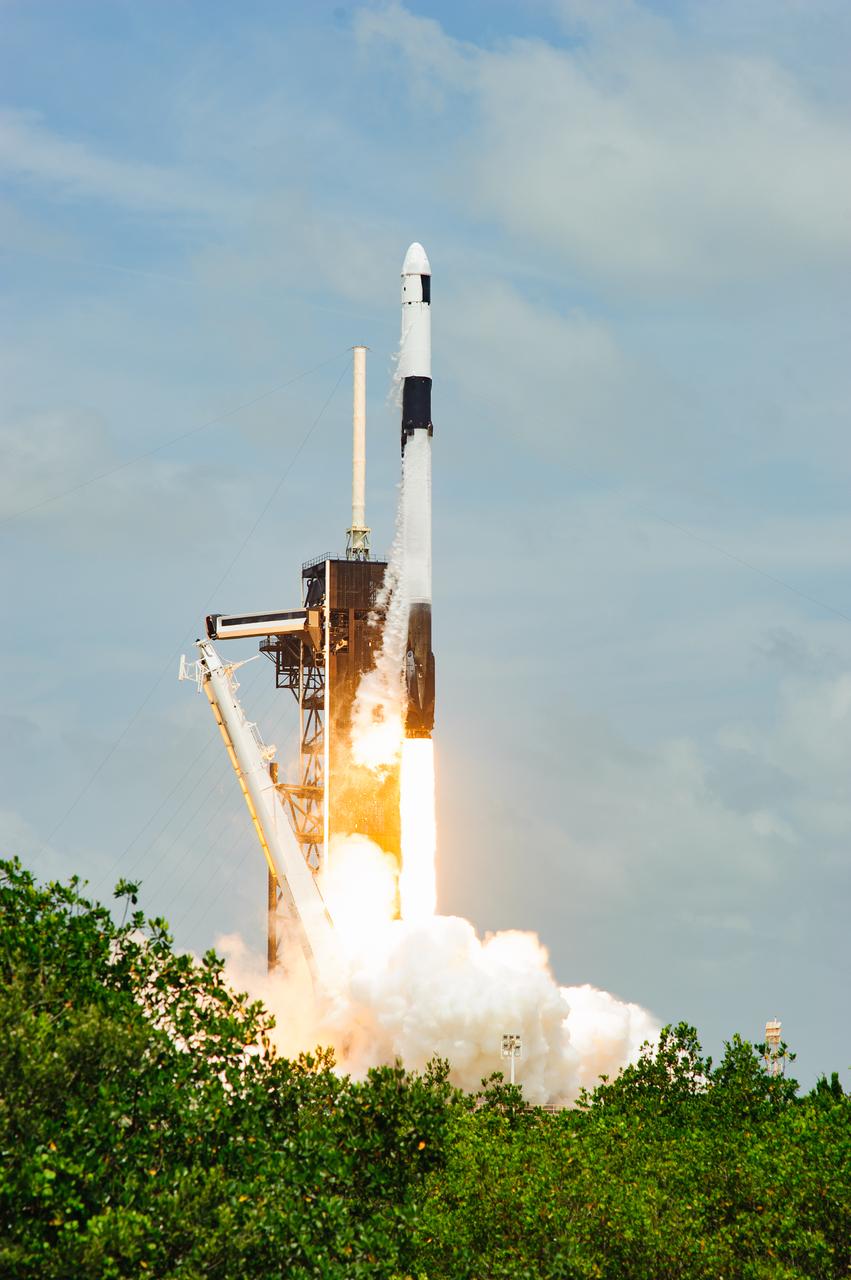
NASA and SpaceX launched the 28th commercial resupply mission of the Cargo Dragon from Launch Complex 39A at the agency's Kennedy Space Center in Florida. Liftoff occurred at 11:47 a.m. EDT, June 5, 2023. SpaceX's Dragon will deliver new science investigations, food, supplies, and equipment to the International Space Station for the crew, including the next pair of IROSAs (International Space Station Roll Out Solar Arrays). These solar panels, which roll out using stored kinetic energy, will expand the energy-production capabilities of the space station. This will be the third set launching in the SpaceX Dragon's trunk, and once installed, will help provide a 20% to 30% increase in power for space station research and operations.
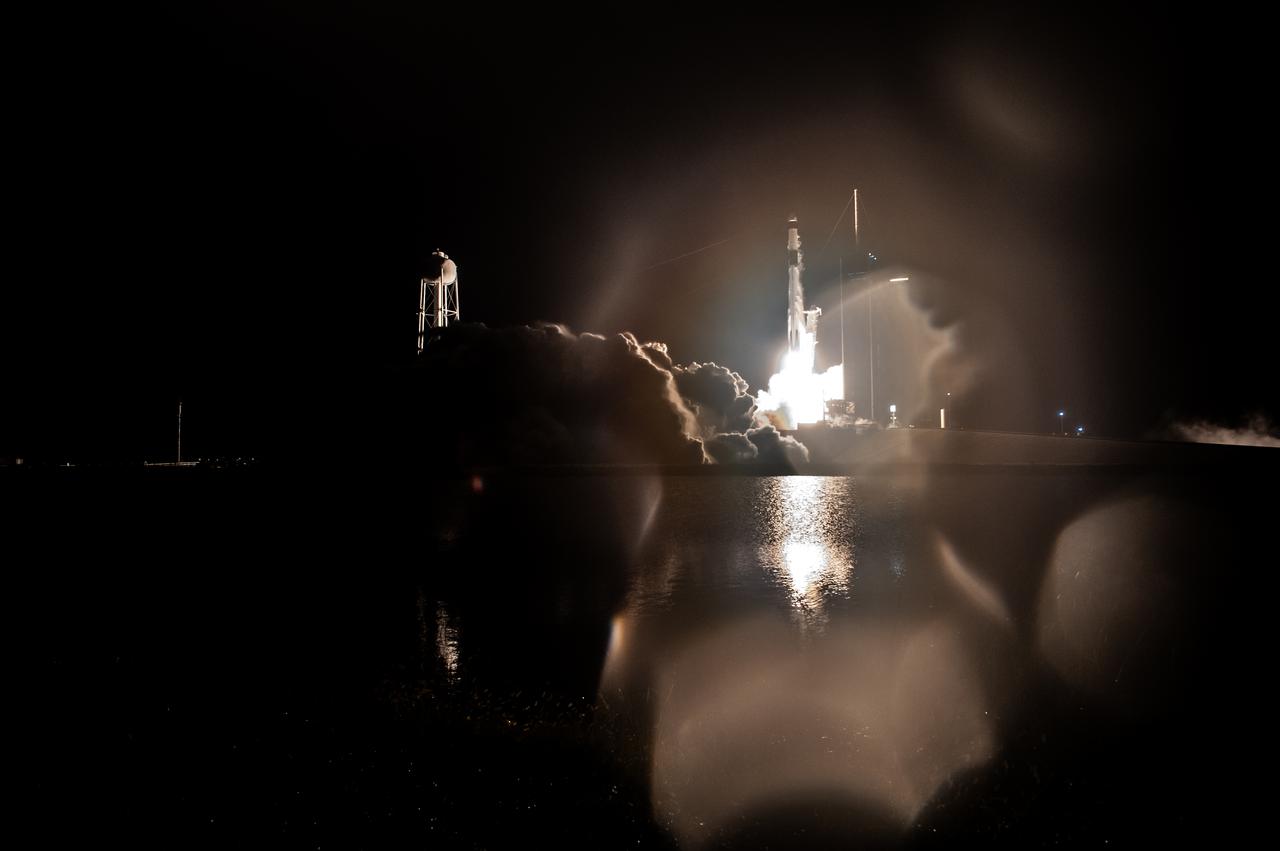
A SpaceX Falcon 9 rocket lifts off from Launch Complex 39A at Kennedy Space Center in Florida at 5:07 a.m. EST on Tuesday, Dec. 21, 2021, carrying the Dragon spacecraft on its journey to the International Space Station for SpaceX’s 24th commercial resupply services mission. Dragon will deliver new science investigations, supplies, and equipment to the crew on board the space station. Arrival to the orbiting laboratory is planned for Wednesday, Dec. 22.

SpaceX’s Falcon 9 rocket, with the Dragon Endurance spacecraft atop, soars upward after lifting off from NASA’s Kennedy Space Center Launch Complex 39A in Florida on Oct. 5, 2022, on the agency’s SpaceX Crew-5 launch. Inside Endurance are NASA astronauts Nicole Mann, commander; Josh Cassada, pilot; and Mission Specialists Koichi Wakata, of JAXA (Japan Aerospace Exploration Agency), and Roscosmos cosmonaut Anna Kikina. The crew is heading to the International Space Station for a science expedition mission as part of the agency’s Commercial Crew Program. Liftoff occurred at noon EDT.
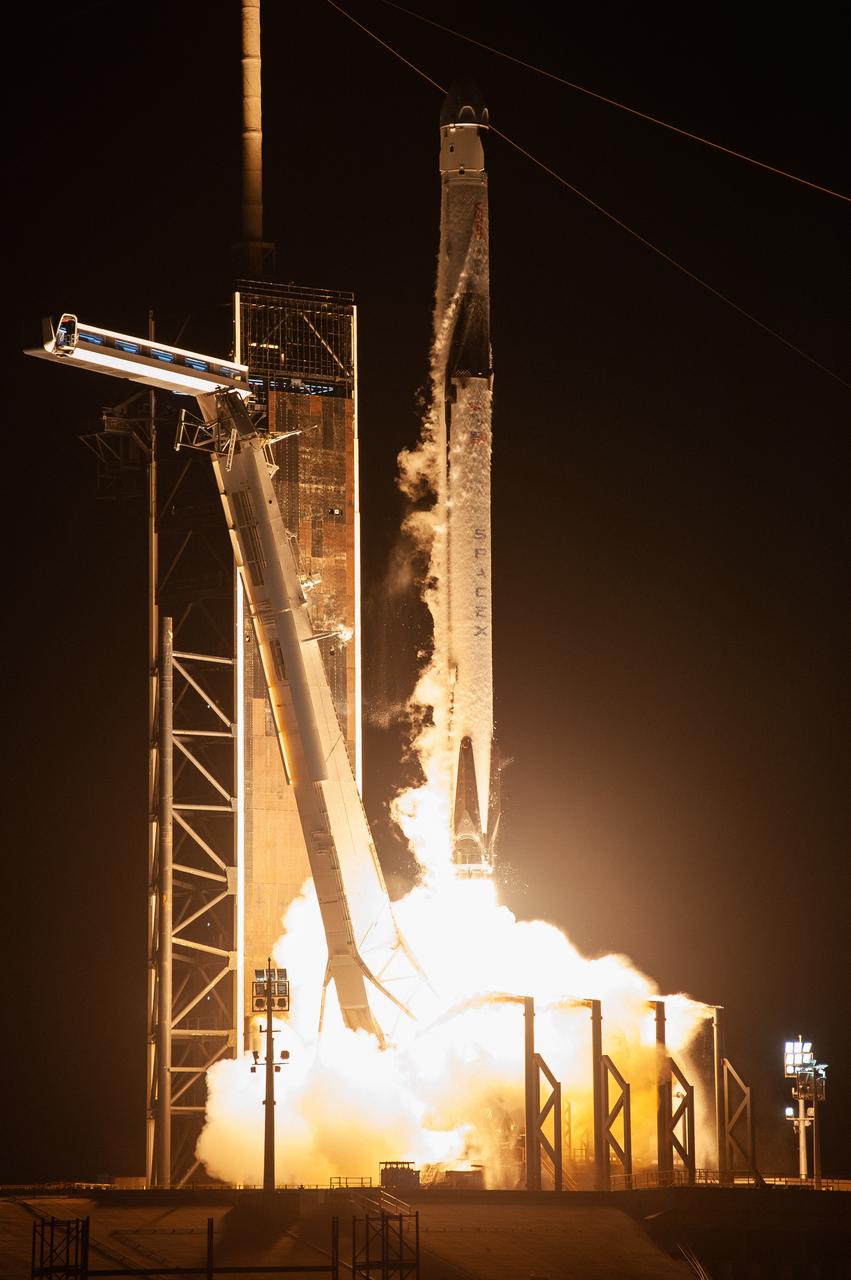
Live launch coverage of NASA’s SpaceX Crew-7 mission, beginning with a summarized video of astronaut suit-up inside the iconic Neil Armstrong Operations and Checkout building and continuing through launch from Kennedy Space Center’s Launch Complex 39A in Florida. The SpaceX Dragon, Endurance, launched at 3:27 a.m. EDT Saturday, Aug. 26, on a Falcon 9 rocket, carrying NASA astronaut Jasmin Moghbeli and ESA (European Space Agency) astronaut Andreas Mogensen, who will serve as spacecraft commander and pilot, respectively. JAXA (Japan Aerospace Exploration Agency) astronaut Satoshi Furukawa and Roscosmos cosmonaut Konstantin Borisov will join as mission specialists. Endurance is scheduled to dock to the International Space Station at 8:39 a.m. EDT Sunday, Aug. 27.
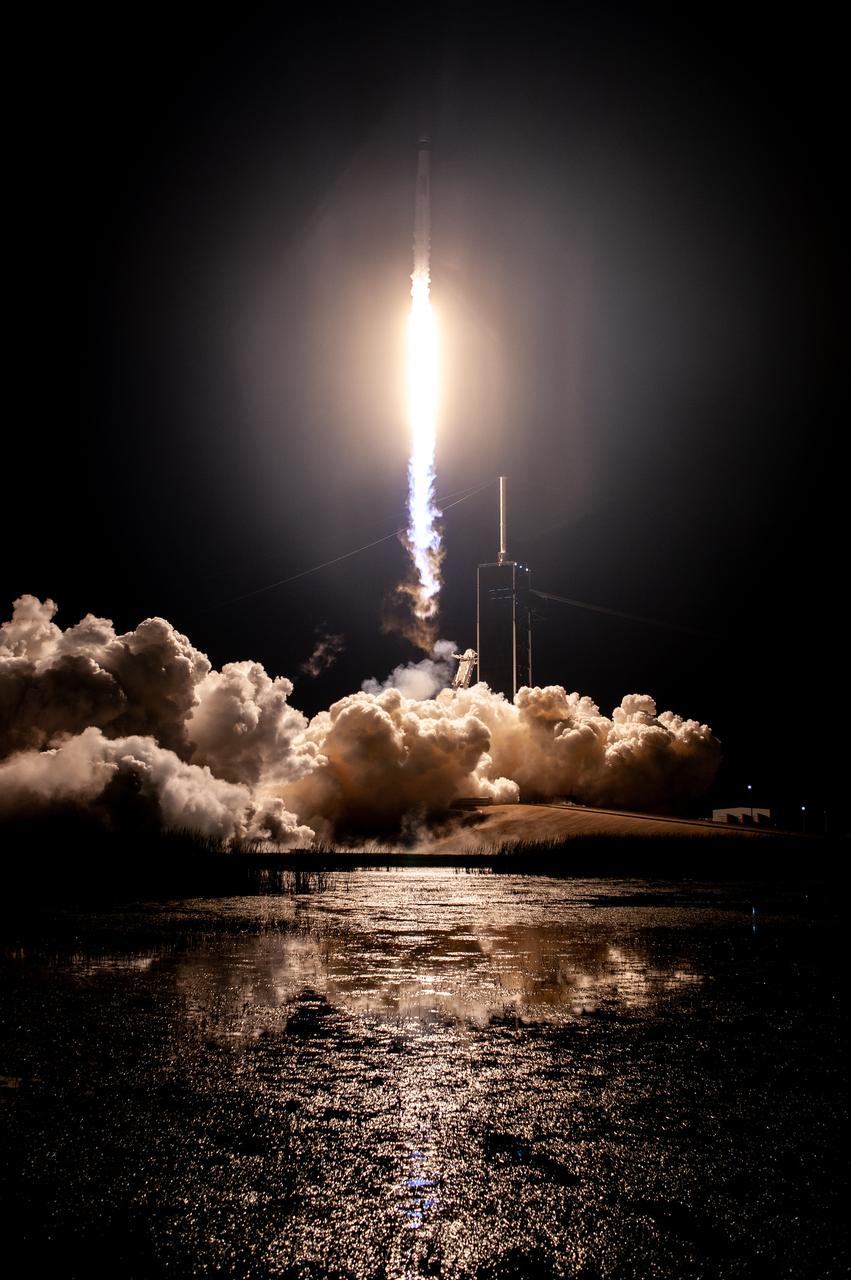
A SpaceX Falcon 9 rocket lifts off at 7:27 p.m. EST from Launch Complex 39A at NASA’s Kennedy Space Center in Florida on Nov. 15, 2020, carrying the company’s Crew Dragon Resilience capsule. Onboard the capsule are NASA’s SpaceX Crew-1 NASA astronauts, Michael Hopkins, spacecraft commander; Victor Glover, pilot; Shannon Walker, mission specialist; and Japan Aerospace Exploration Agency astronaut Soichi Noguchi, mission specialist. Crew-1 is the first regular crew mission of a U.S. commercial spacecraft with astronauts to the International Space Station as part of NASA’s Commercial Crew Program. The Crew Dragon will dock with the space station and the crew will remain on the orbiting laboratory for a six-month science mission.
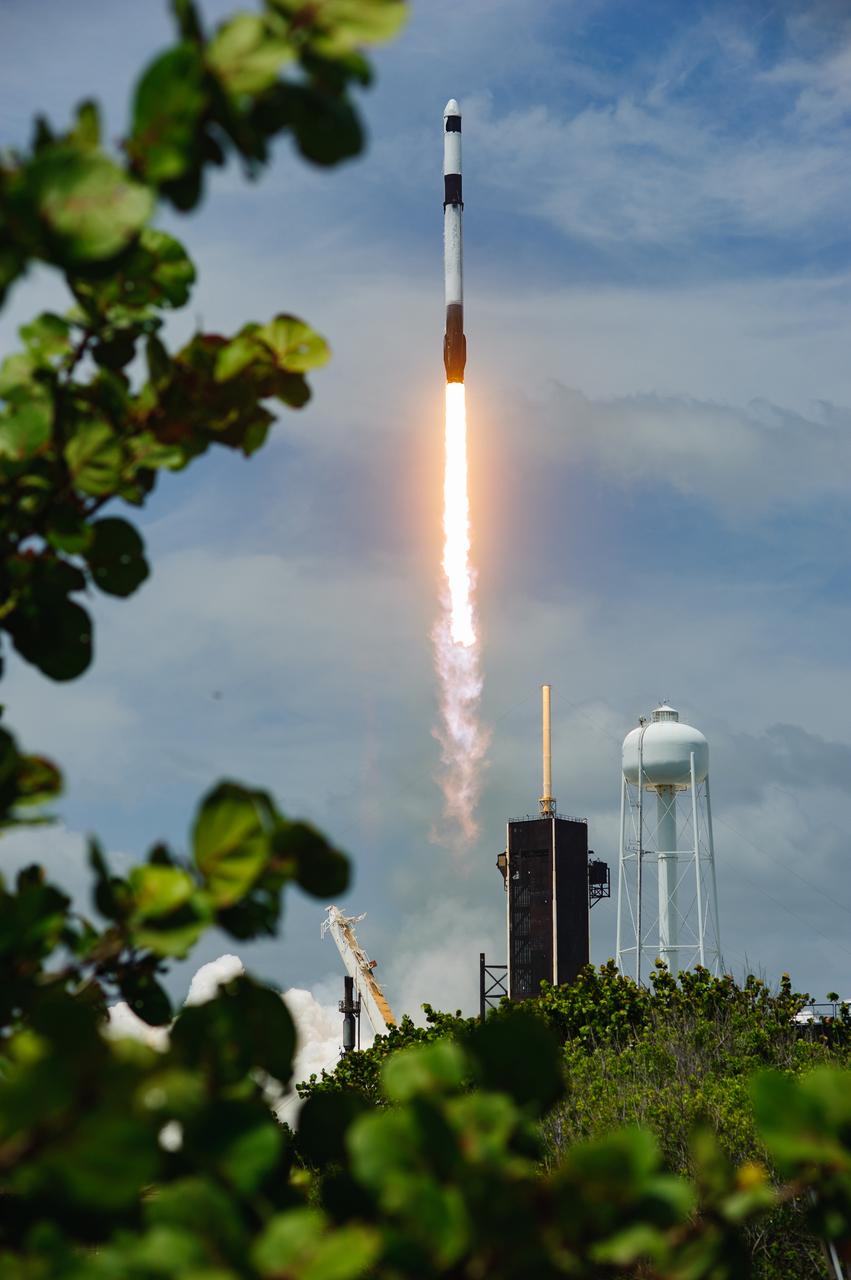
NASA and SpaceX launched the 28th commercial resupply mission of the Cargo Dragon from Launch Complex 39A at the agency's Kennedy Space Center in Florida. Liftoff occurred at 11:47 a.m. EDT, June 5, 2023. SpaceX's Dragon will deliver new science investigations, food, supplies, and equipment to the International Space Station for the crew, including the next pair of IROSAs (International Space Station Roll Out Solar Arrays). These solar panels, which roll out using stored kinetic energy, will expand the energy-production capabilities of the space station. This will be the third set launching in the SpaceX Dragon's trunk, and once installed, will help provide a 20% to 30% increase in power for space station research and operations.
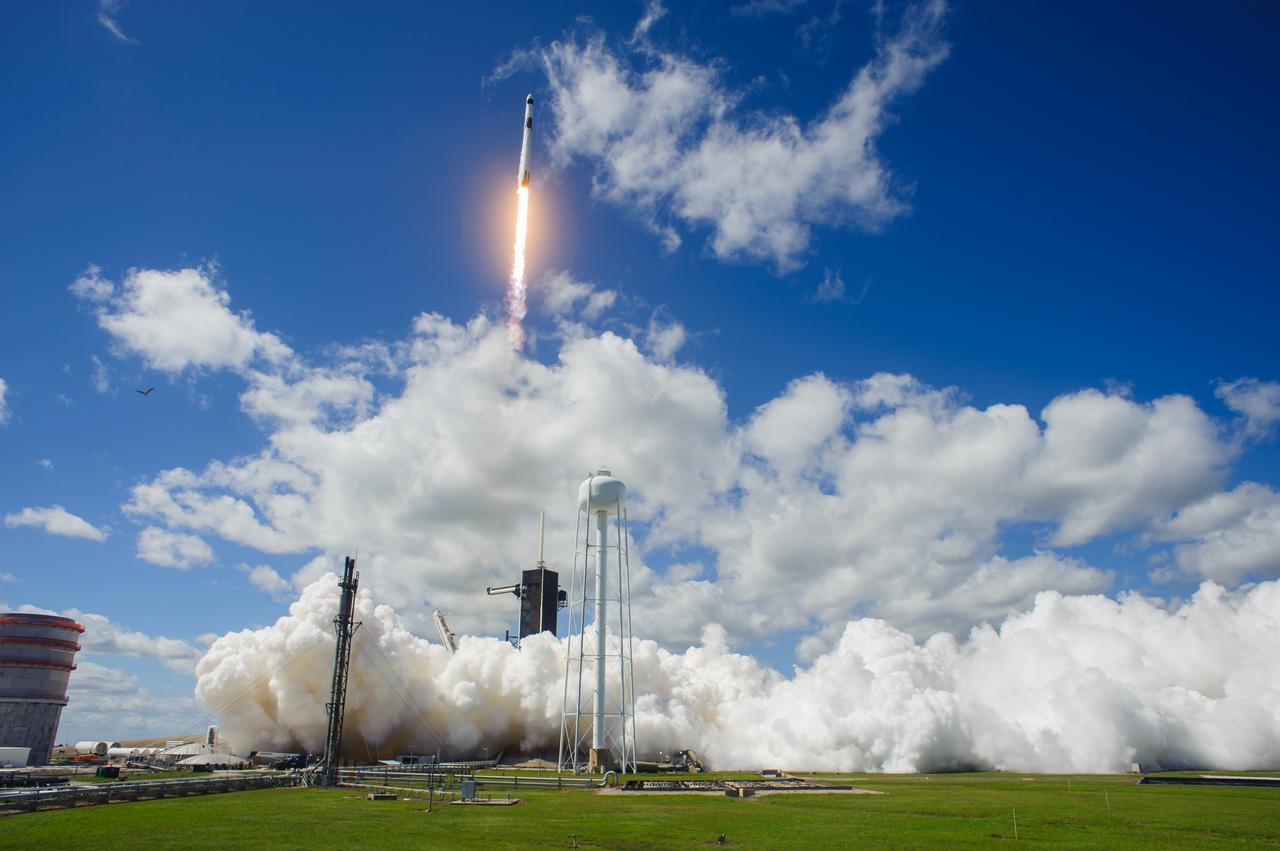
SpaceX’s Falcon 9 rocket, with the Dragon Endurance spacecraft atop, soars upward after lifting off from NASA’s Kennedy Space Center Launch Complex 39A in Florida on Oct. 5, 2022, on the agency’s SpaceX Crew-5 launch. Inside Endurance are NASA astronauts Nicole Mann, commander; Josh Cassada, pilot; and Mission Specialists Koichi Wakata, of JAXA (Japan Aerospace Exploration Agency), and Roscosmos cosmonaut Anna Kikina. The crew is heading to the International Space Station for a science expedition mission as part of the agency’s Commercial Crew Program. Liftoff occurred at noon EDT.
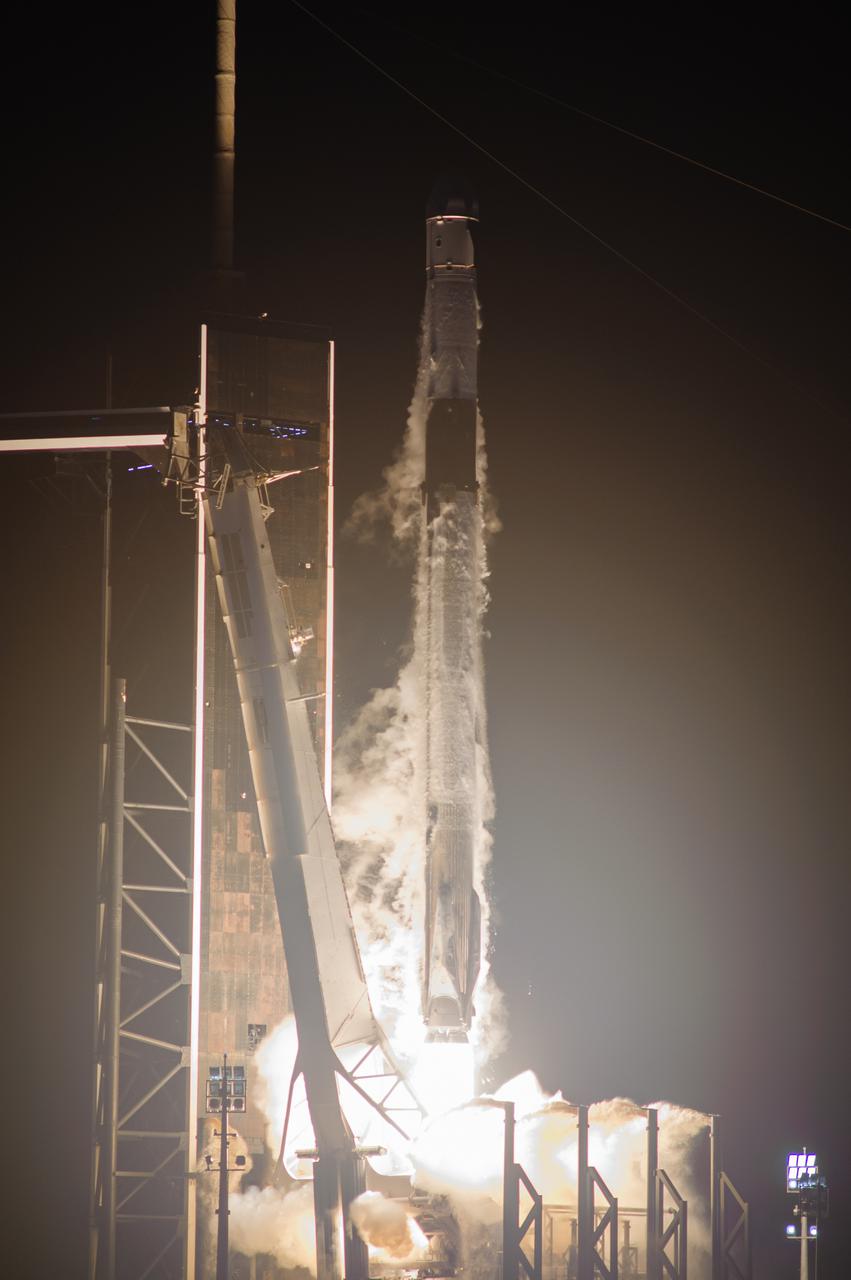
A SpaceX Falcon 9 rocket, with the uncrewed Dragon spacecraft atop, lifts off from Launch Complex 39A at NASA’s Kennedy Space Center in Florida on Aug. 29, 2021, for the company’s 23rd commercial resupply services mission to the International Space Station. The mission delivered new science investigations, supplies, and equipment to the international crew aboard the orbiting laboratory. Liftoff occurred at 3:14 a.m. EDT.

The SpaceX Falcon 9 rocket is vertical with the Crew Dragon atop for the Crew-3 mission at Launch Pad 39A at NASA’s Kennedy Space Center in Florida in this sunset view on Oct. 27, 2021. A four-person crew will launch aboard the Crew Dragon atop the Falcon 9 on Oct. 31 to the International Space Station. Launch is targeted for 2:21 a.m. EDT from Pad 39A. Crew 3 is the third crew rotation flight to the space station for NASA’s Commercial Crew Program, and the first flight of a new Crew Dragon spacecraft.
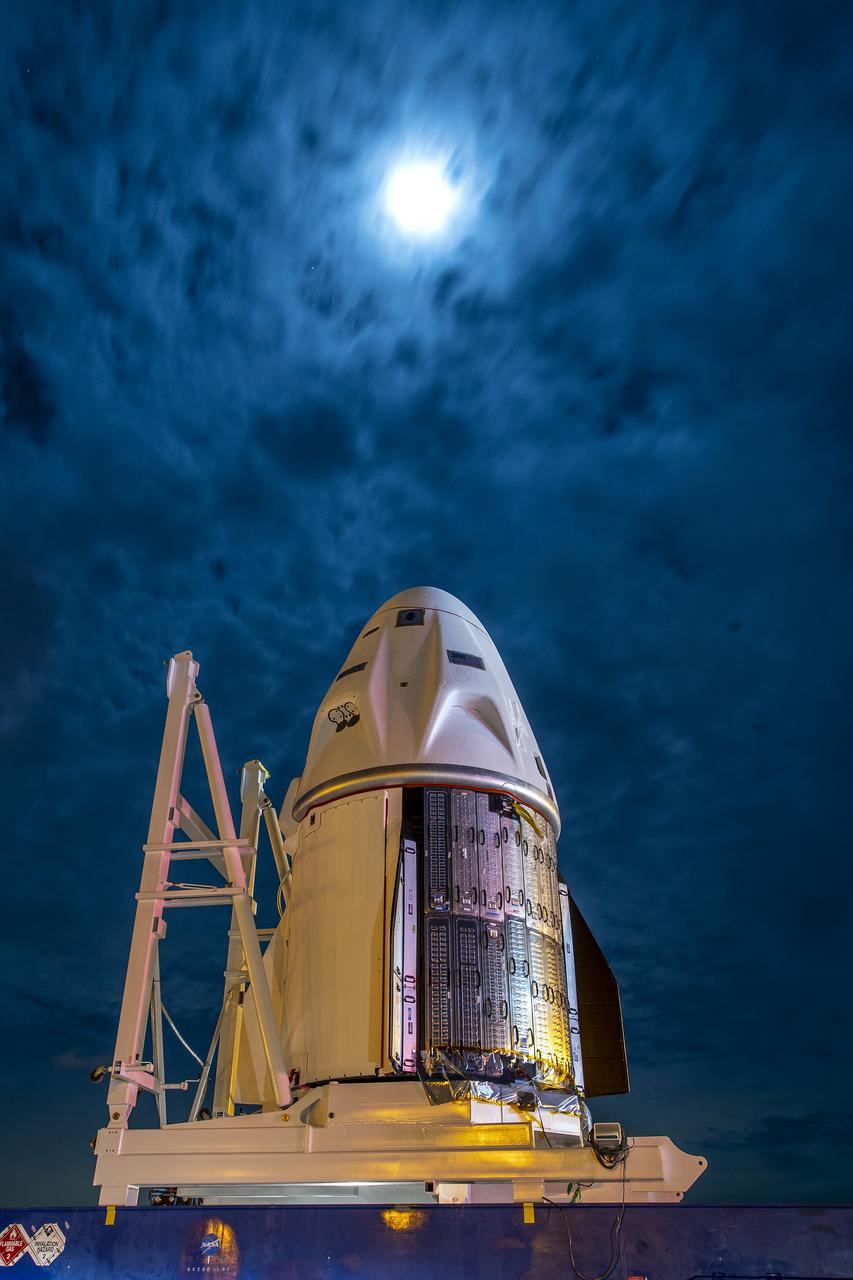
The Crew Dragon spacecraft for NASA’s SpaceX Crew-3 mission arrives at the hangar at Kennedy Space Center’s Launch Complex 39A in Florida on Oct. 24, 2021. The capsule, named Endurance by the crew, arrived at the launch complex after making the short journey from its nearby processing facility at Cape Canaveral Space Force Station. NASA astronauts Raja Chari, Tom Marshburn, and Kayla Barron, along with ESA (European Space Agency) astronaut Matthias Maurer are scheduled to launch to the International Space Station on Oct. 31. Liftoff of SpaceX’s Crew Dragon Endurance and Falcon 9 rocket is scheduled for 2:21 a.m. EDT.
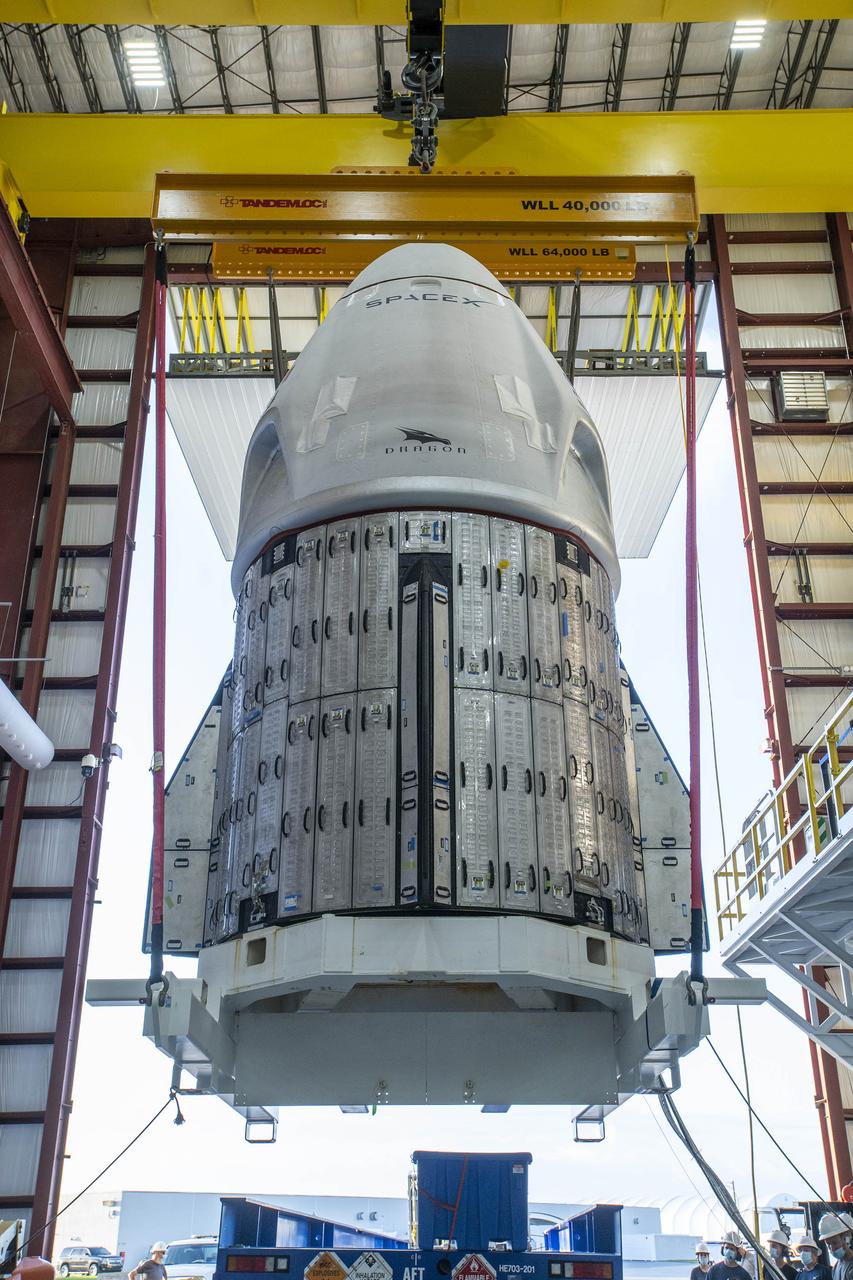
The SpaceX Crew Dragon spacecraft for NASA’s SpaceX Crew-1 mission arrived at Kennedy Space Center’s Launch Complex 39A on Thursday, Nov. 5, after making the trek from its processing facility at nearby Cape Canaveral Air Force Station in Florida. Crew Dragon will launch atop a SpaceX Falcon 9 rocket. The Crew-1 flight will carry Crew Dragon Commander Michael Hopkins, Pilot Victor Glover, and Mission Specialist Shannon Walker, all of NASA, along with Japan Aerospace Exploration Agency (JAXA) Mission Specialist Soichi Noguchi to the space station for a six-month science mission.

A SpaceX Falcon 9 rocket, topped with the upgraded version of the Cargo Dragon spacecraft, is seen inside the company’s hangar at NASA’s Kennedy Space Center in Florida on Dec. 2, 2020, prior to being rolled out to the launch pad in preparation for the 21st Commercial Resupply Services (CRS-21) launch. The first launch for SpaceX under NASA’s second Commercial Resupply Services contract, CRS-21 will deliver critical supplies, equipment, and material to support a variety of science and research investigations that will take place aboard the International Space Station. Liftoff is scheduled for 11:39 a.m. EST on Saturday, Dec. 5, from Kennedy’s Launch Complex 39A.
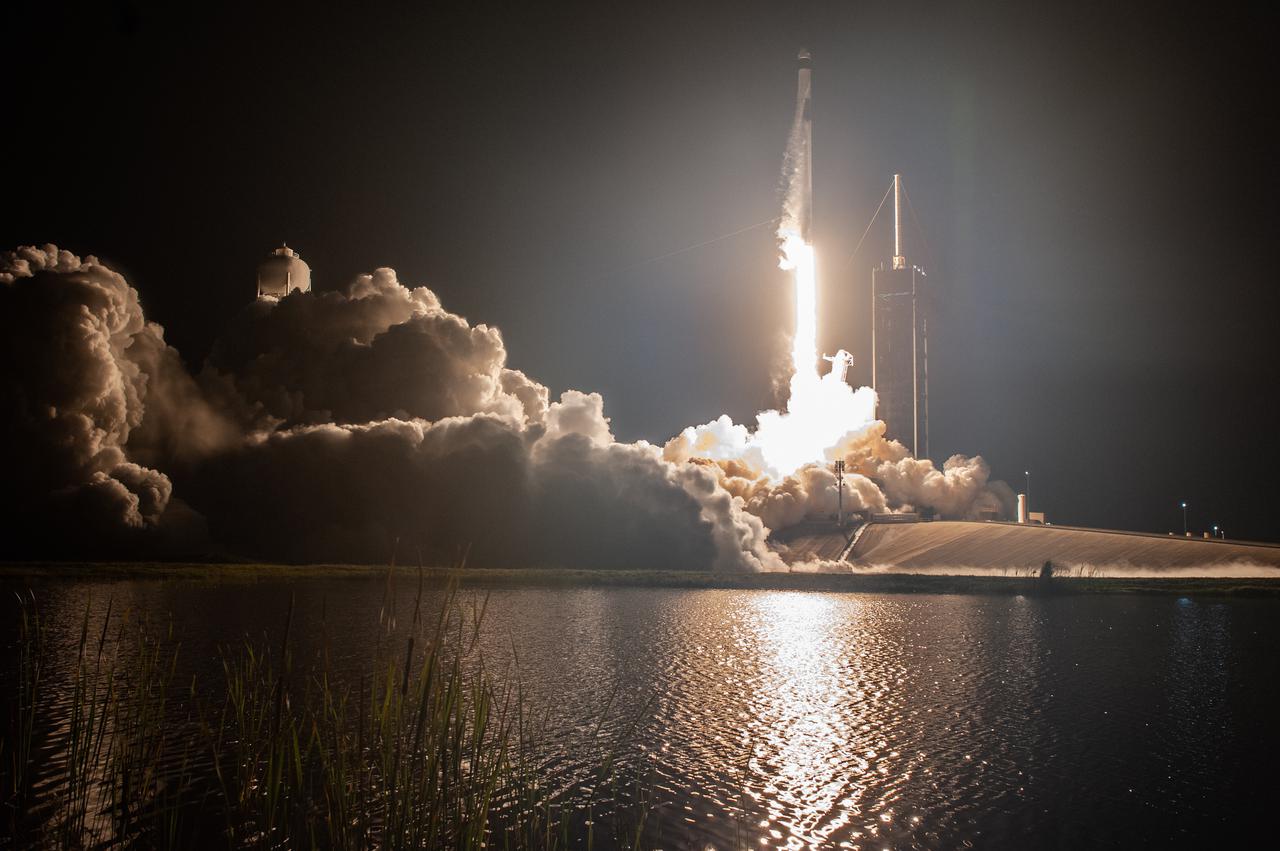
The SpaceX Falcon 9 rocket, with the company’s Crew Dragon atop, lifts off from Launch Pad 39A at Kennedy Space Center in Florida for NASA’s SpaceX Crew-4 mission on April 27, 2022, at 3:52 a.m. EDT. Aboard the Dragon are NASA astronauts Kjell Lindgren, Bob Hines, and Jessica Watkins, and ESA (European Space Agency) astronaut Samantha Cristoforetti. The spacecraft will carry the Crew-4 astronauts to the International Space Station as part of NASA’s Commercial Crew Program. The Dragon spacecraft, named Freedom by the mission’s crew, is scheduled to dock to the space station today at 8:15 p.m. EDT.

A SpaceX Falcon 9 rocket, topped with the upgraded version of the Cargo Dragon spacecraft, is seen inside the company’s hangar at NASA’s Kennedy Space Center in Florida on Dec. 2, 2020, prior to being rolled out to the launch pad in preparation for the 21st Commercial Resupply Services (CRS-21) launch. The first launch for SpaceX under NASA’s second Commercial Resupply Services contract, CRS-21 will deliver critical supplies, equipment, and material to support a variety of science and research investigations that will take place aboard the International Space Station. Liftoff is scheduled for 11:39 a.m. EST on Saturday, Dec. 5, from Kennedy’s Launch Complex 39A.
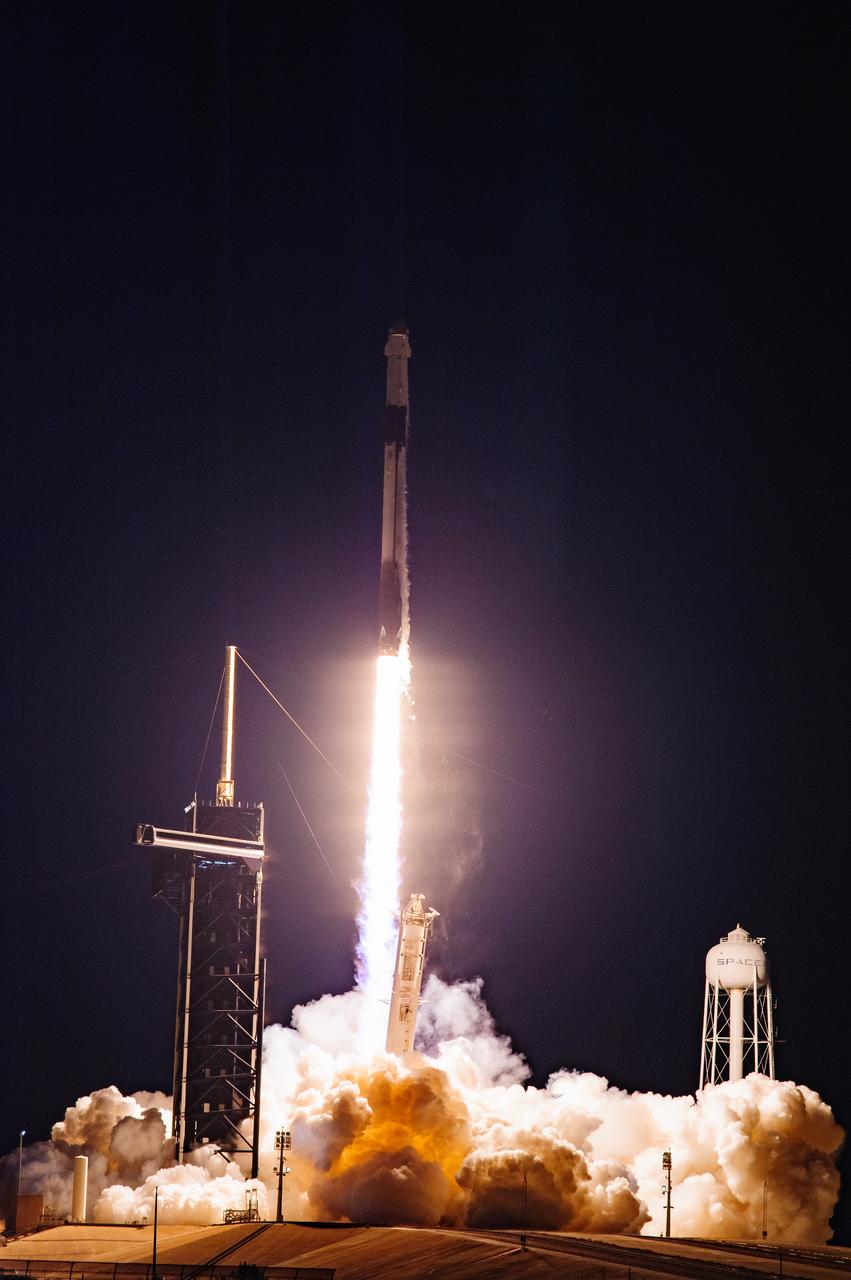
The SpaceX Falcon 9 rocket carrying the Dragon capsule soars upward after lifting off from Launch Complex 39A at NASA’s Kennedy Space Center in Florida on July 14, 2022, on the company’s 25th Commercial Resupply Services mission for the agency to the International Space Station. Liftoff was at 8:44 p.m. EDT. Dragon will deliver more than 5,800 pounds of cargo, including a variety of NASA investigations, to the space station. The spacecraft is expected to spend about a month attached to the orbiting outpost before it returns to Earth with research and return cargo, splashing down off the coast of Florida.
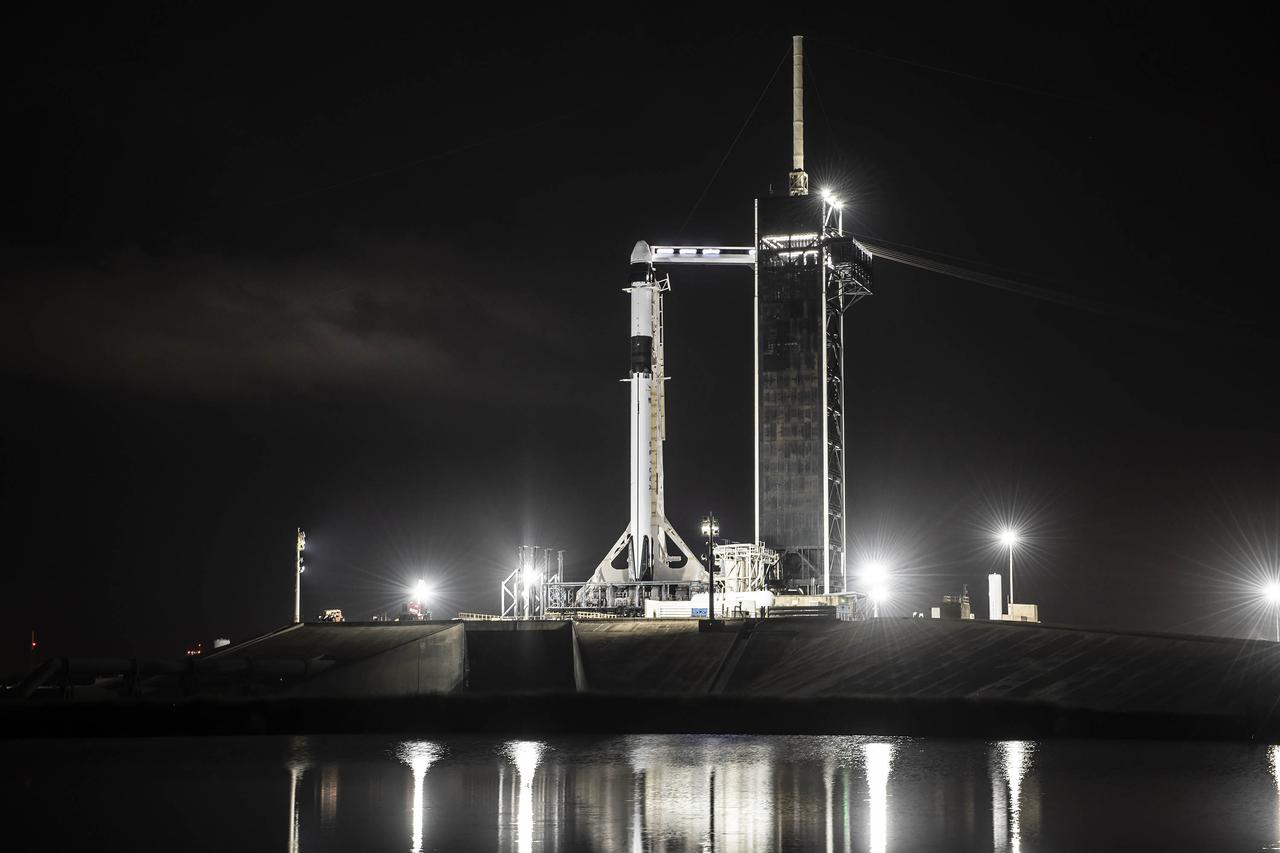
SpaceX's Falcon 9 rocket with Dragon spacecraft rolls out to Launch Complex 39A at NASA's Kennedy Space Center in Florida on Dec. 19, 2021, in preparation for launch. The agency's 24th Commercial Resupply Services mission, targeted for liftoff on Dec. 21, 2021 at 5:06 a.m. EST, will deliver new science investigations, supplies, and equipment to the crew on board the International Space Station.

A SpaceX Falcon Heavy rocket carrying NASA’s Europa Clipper spacecraft lifts off from Launch Complex 39A at NASA’s Kennedy Space Center in Florida at 12:06 p.m. EDT on Monday, Oct. 14, 2024. After launch, the spacecraft plans to fly by Mars in February 2025, then back by Earth in December 2026, using the gravity of each planet to increase its momentum. With help of these “gravity assists,” Europa Clipper will achieve the velocity needed to reach Jupiter in April 2030.
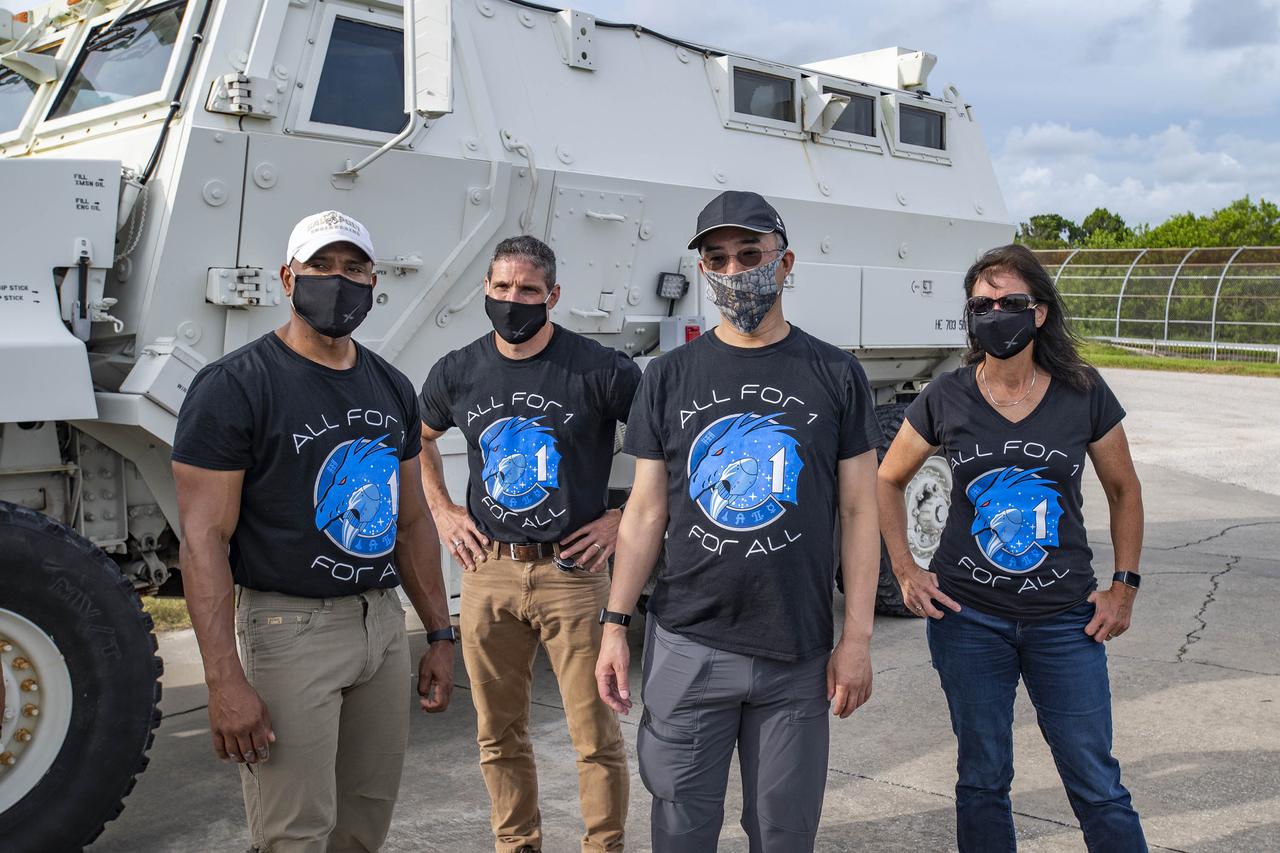
Pilot Victor Glover, spacecraft commander Michael Hopkins, mission specialist Soichi Noguchi, and mission specialist Shannon Walker participate in a SpaceX training exercise on July 22, 2020, at the agency’s Kennedy Space Center in Florida in preparation for NASA’s SpaceX Crew-1 mission. Glover, Hopkins, and Walker are all NASA astronauts; Noguchi is a Japan Aerospace Exploration Agency (JAXA) astronaut. The exercise involved simulating an emergency situation prior to liftoff at Kennedy’s Launch Complex 39A. Crew-1 will be the first operational mission to the International Space Station under NASA’s Commercial Crew Program, following the agency’s certification of SpaceX’s crew transportation system.
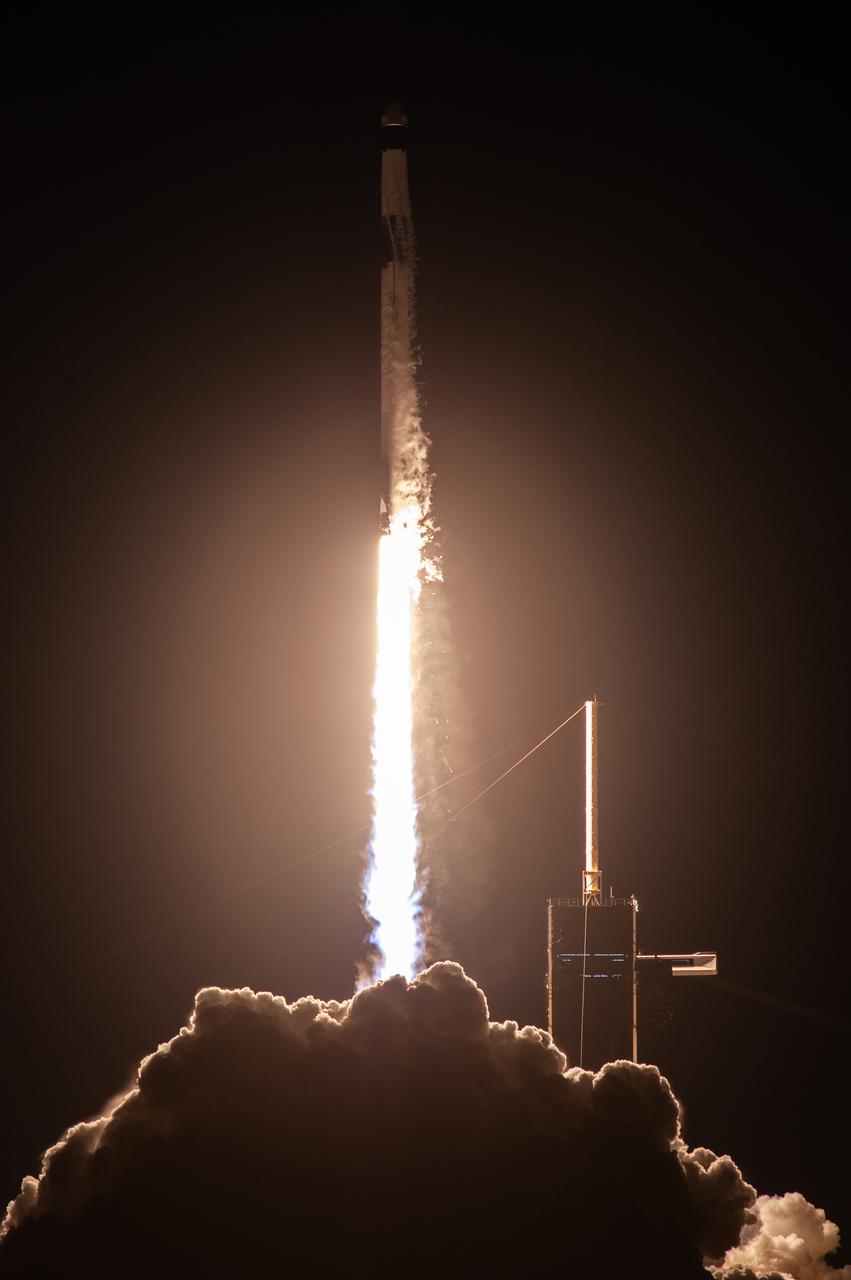
The SpaceX Falcon 9 rocket carrying the Dragon spacecraft lifts off from Launch Complex 39A at NASA’s Kennedy Space Center in Florida on Thursday, Nov. 9, 2023, on the company’s 29th commercial resupply services mission for the agency to the International Space Station. Liftoff was at 8:28 p.m. EST. Dragon will deliver scientific research, technology demonstrations, crew supplies, and hardware to the space station to support its Expedition 70 crew, including NASA’s Integrated Laser Communications Relay Demonstration Low Earth Orbit User Modem and Amplifier Terminal (ILLUMA-T) and Atmospheric Waves Experiment (AWE). The spacecraft is expected to spend about a month attached to the orbiting outpost before it returns to Earth with research and return cargo, splashing down off the coast of Florida.
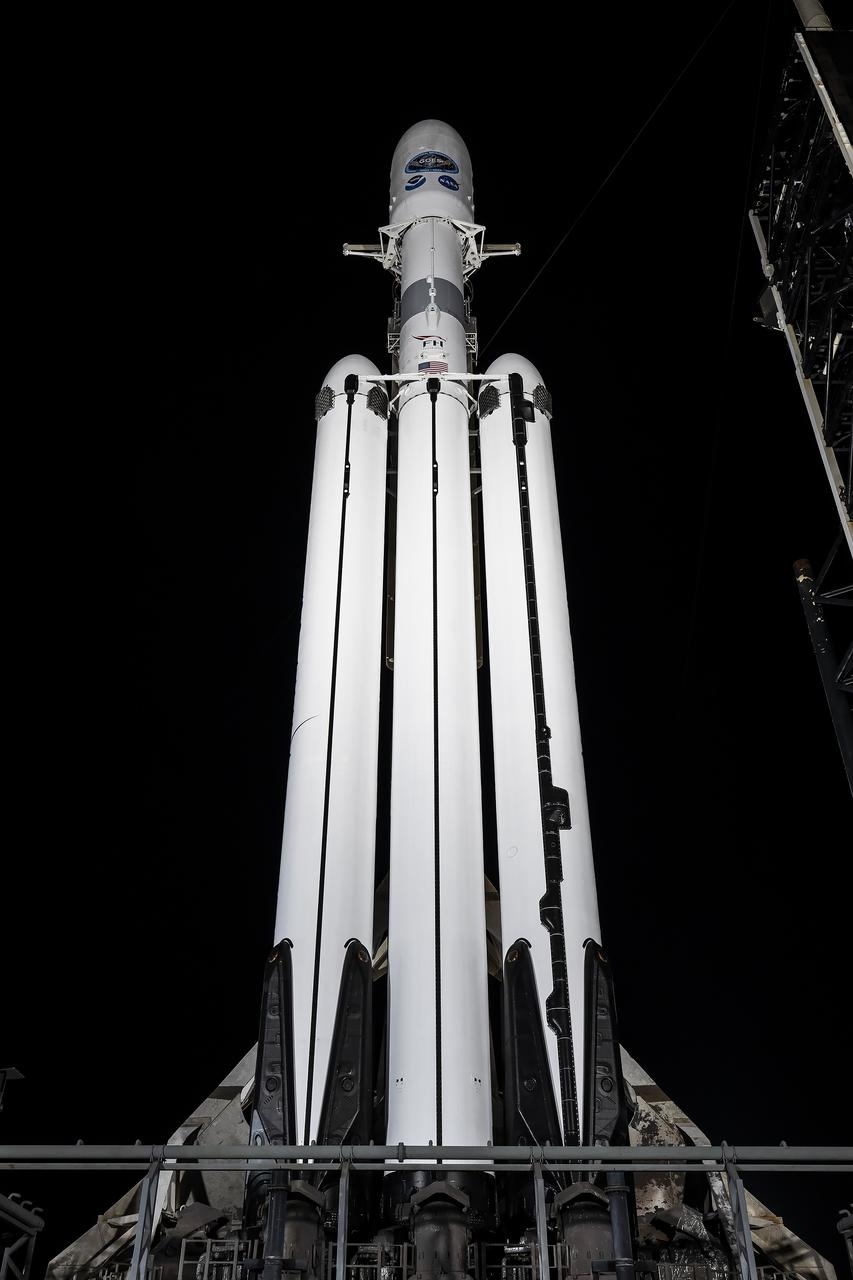
A SpaceX Falcon Heavy rocket carrying the National Oceanic and Atmospheric Administration (NOAA) GOES-U (Geostationary Operational Environmental Satellite U) stands vertical at Launch Complex 39A at NASA’s Kennedy Space Center in Florida on Monday, June 24, 2024. The GOES-U satellite is the final satellite in the GOES-R series, which serves a critical role in providing continuous coverage of the Western Hemisphere, including monitoring tropical systems in the eastern Pacific and Atlantic oceans. The two-hour launch window opens at 5:16 p.m. EDT. on Tuesday, June 25, 2024.