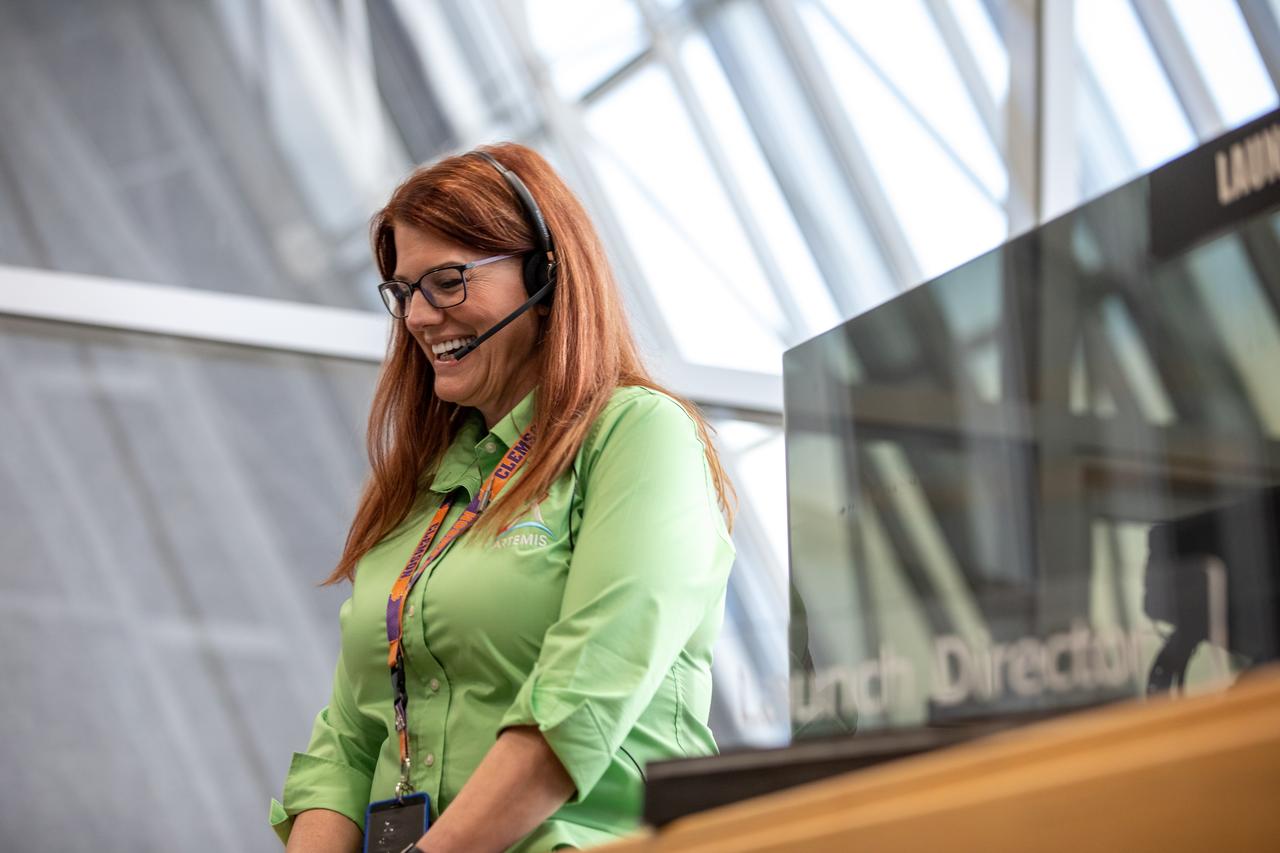
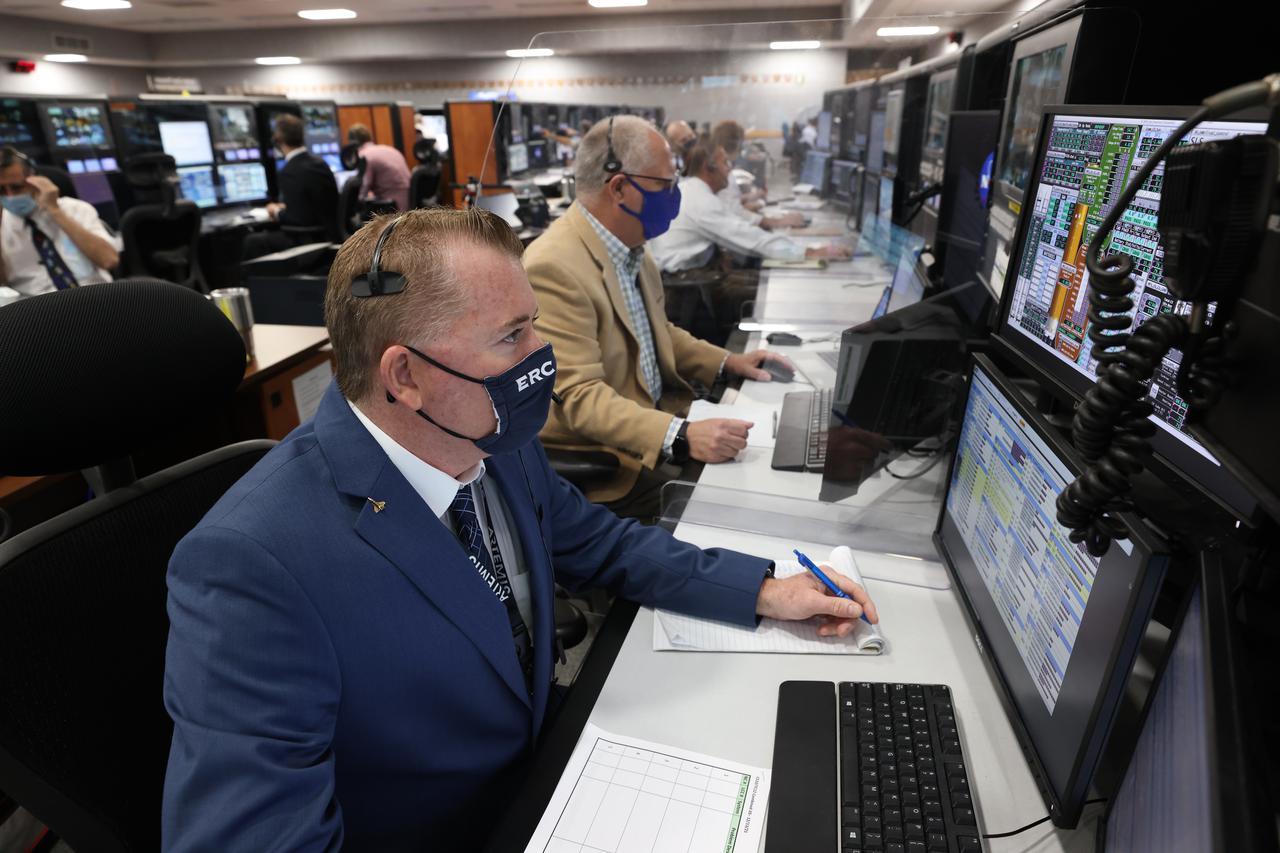
Artemis I Launch Director Charlie Blackwell-Thompson stands at her console in Firing Room 1 as Artemis teams conduct a launch simulation for the Artemis I mission inside the Rocco A. Petrone Launch Control Center at NASA’s Kennedy Space Center in Florida on Oct. 27, 2022. Artemis I will be the first integrated test of NASA’s Space Launch System (SLS) rocket and Orion spacecraft. The primary goal of Artemis I is to thoroughly test the integrated systems before crewed missions by launching Orion atop the SLS rocket, operating the spacecraft in a deep space environment, testing Orion’s heat shield, and recovering the crew module after reentry, descent, and splashdown. During the flight, Orion will launch atop the most powerful rocket in the world and fly farther than any human-rated spacecraft has ever flown, paving the way for human deep space exploration and demonstrating our commitment and capability to extend human presence to the Moon and beyond.
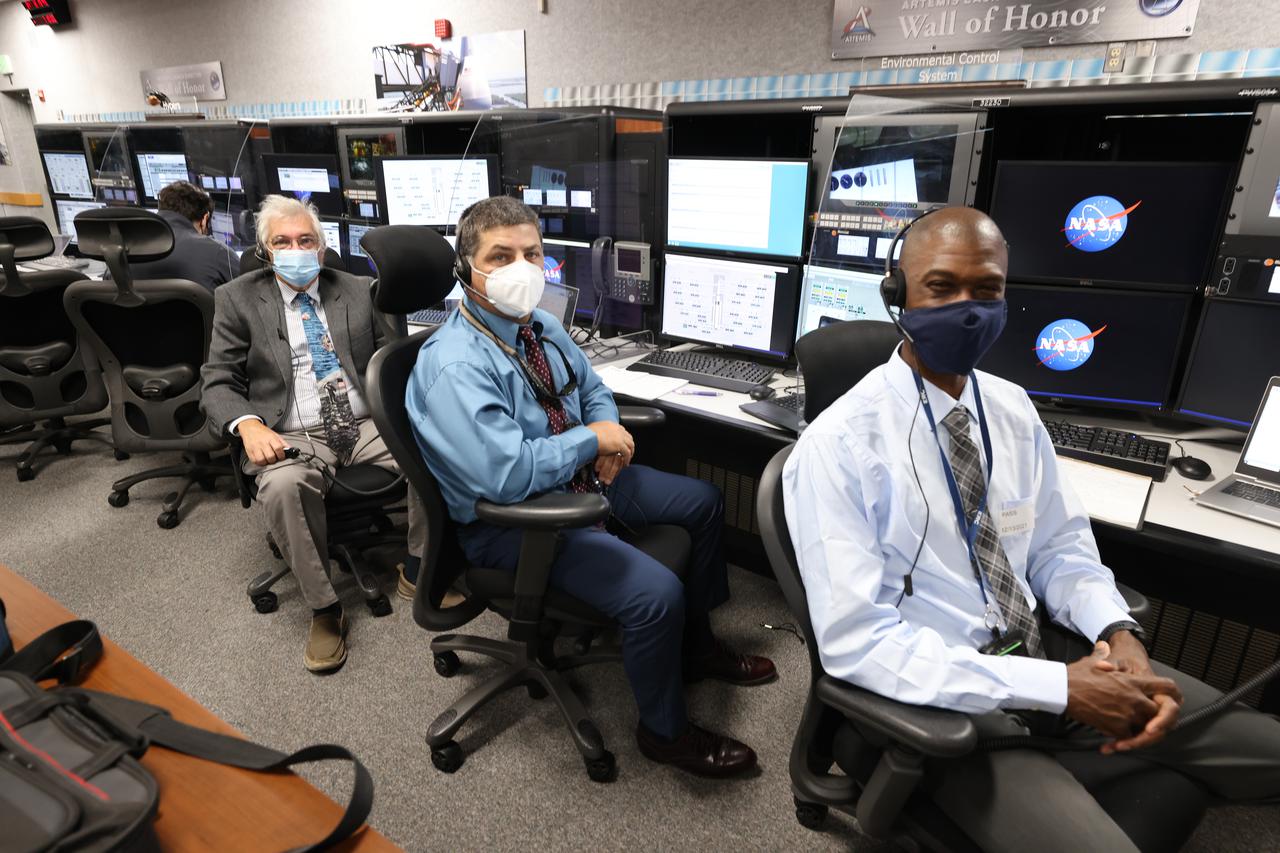
Launch team members are seated at the Environment Control System consoles inside Firing Room 1 of the Launch Control Center at NASA’s Kennedy Space Center in Florida on Dec. 13, 2021. They are participating in a joint integrated simulation for the Artemis I launch that covered both cryogenic loading and terminal countdown portions of prelaunch activities. Members of NASA’s mission management team and launch team conducted the simulation together. The Kennedy team was certified for the Artemis I launch. During Artemis I, the agency’s Orion spacecraft will lift off from Kennedy aboard NASA’s most powerful rocket – the Space Launch System – to fly farther than any spacecraft built for humans has ever flown. Through NASA’s Artemis missions, the agency, along with commercial and international partners, will establish a sustainable human presence on the Moon to prepare for missions to Mars.
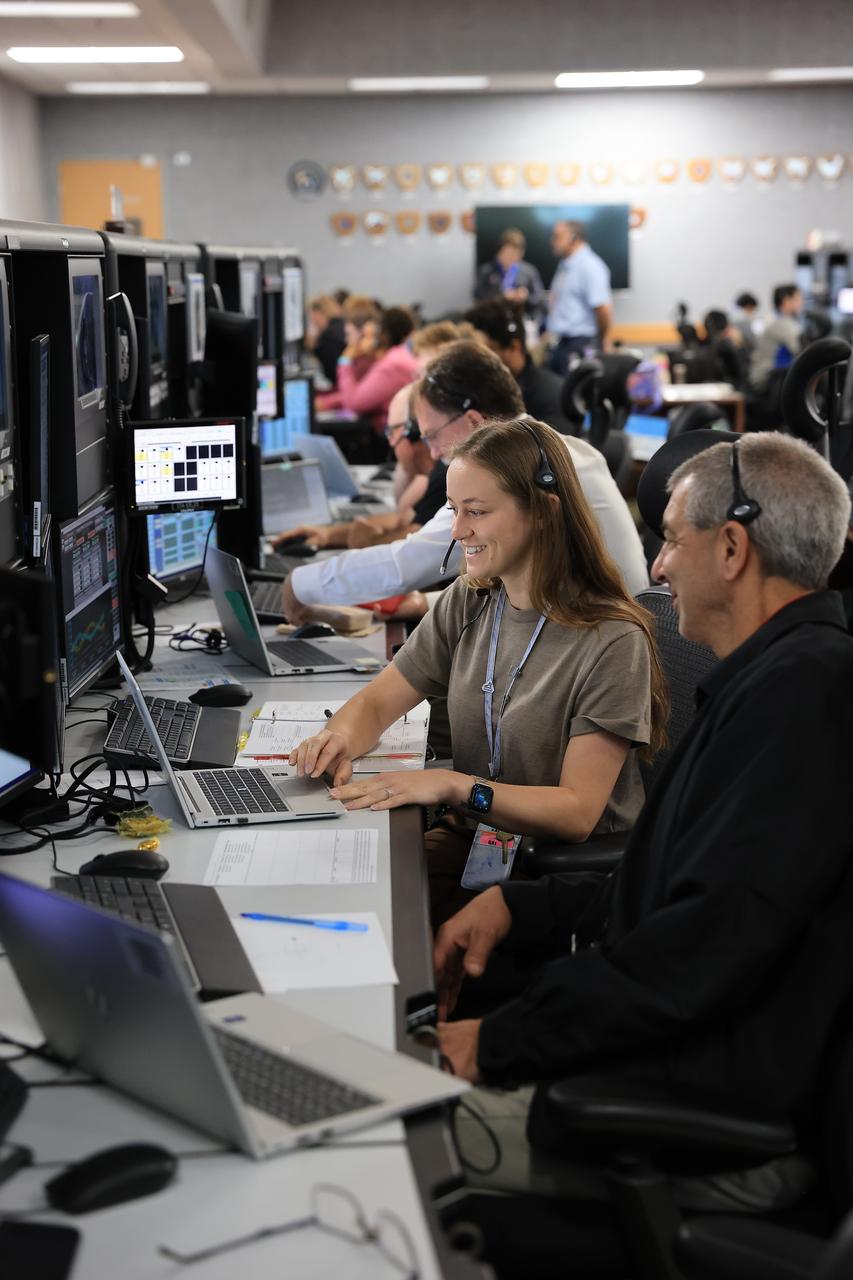
Teams at NASA’s Kennedy Space Center in Florida participate in the first joint integrated launch countdown simulation for Artemis II inside Firing Room 1 of the Launch Control Center on Thursday, Sept. 11, 2025. The training exercise involved engineers from Kennedy, Marshall Space Flight Center in Huntsville, Alabama, and Johnson Space Center in Houston coming together to rehearse all aspects of the launch countdown, from cryogenic loading – filling tanks in the SLS (Space Launch System) rocket’s core stage with liquid hydrogen and liquid oxygen – to liftoff. These simulations will help certify that the launch team is ready for Artemis II – the first crewed Artemis mission that will send four astronauts around the Moon and back.
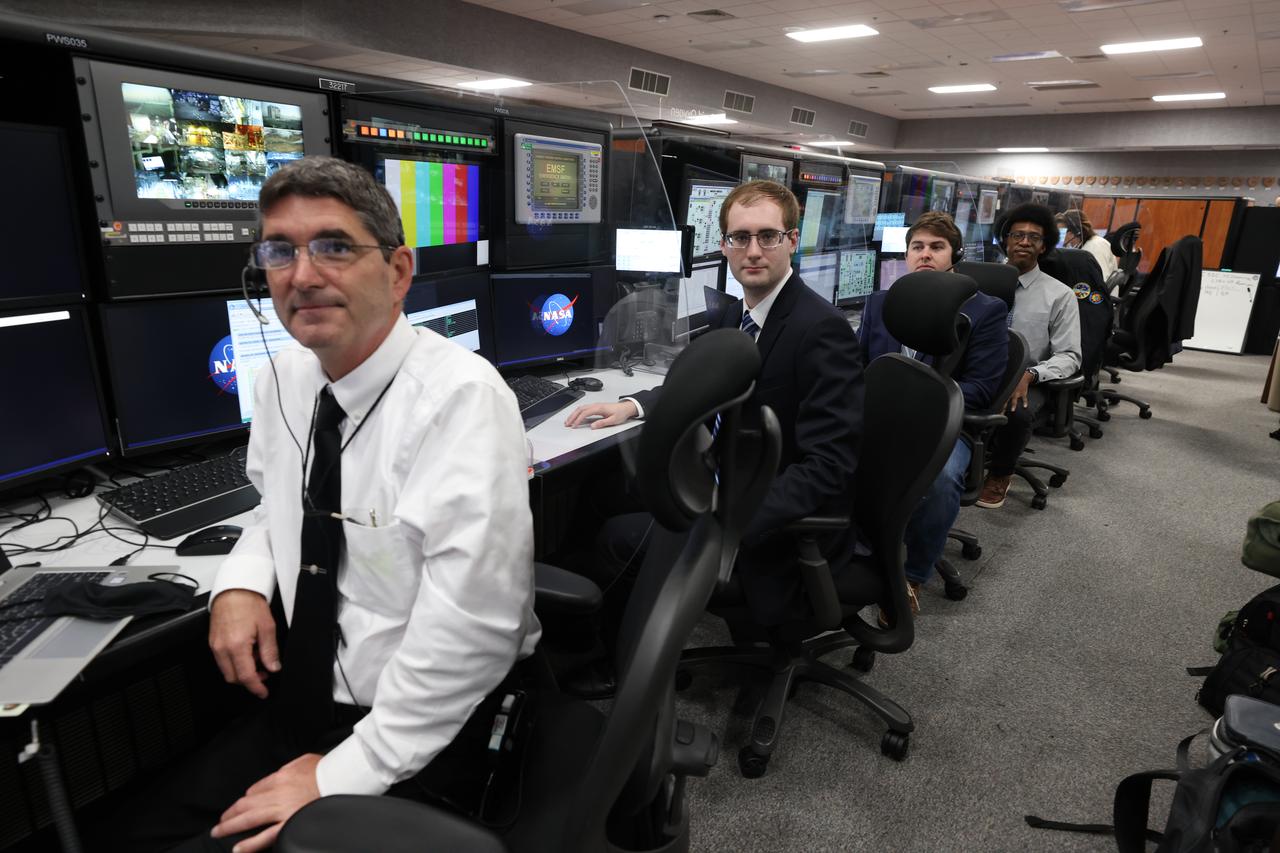
Launch team members are seated at the Liquid Oxygen consoles inside Firing Room 1 of the Launch Control Center at NASA’s Kennedy Space Center in Florida on Dec. 13, 2021. They are participating in a joint integrated simulation for the Artemis I launch that covered both cryogenic loading and terminal countdown portions of prelaunch activities. Members of NASA’s mission management team and launch team conducted the simulation together. The Kennedy team was certified for the Artemis I launch. During Artemis I, the agency’s Orion spacecraft will lift off from Kennedy aboard NASA’s most powerful rocket – the Space Launch System – to fly farther than any spacecraft built for humans has ever flown. Through NASA’s Artemis missions, the agency, along with commercial and international partners, will establish a sustainable human presence on the Moon to prepare for missions to Mars.
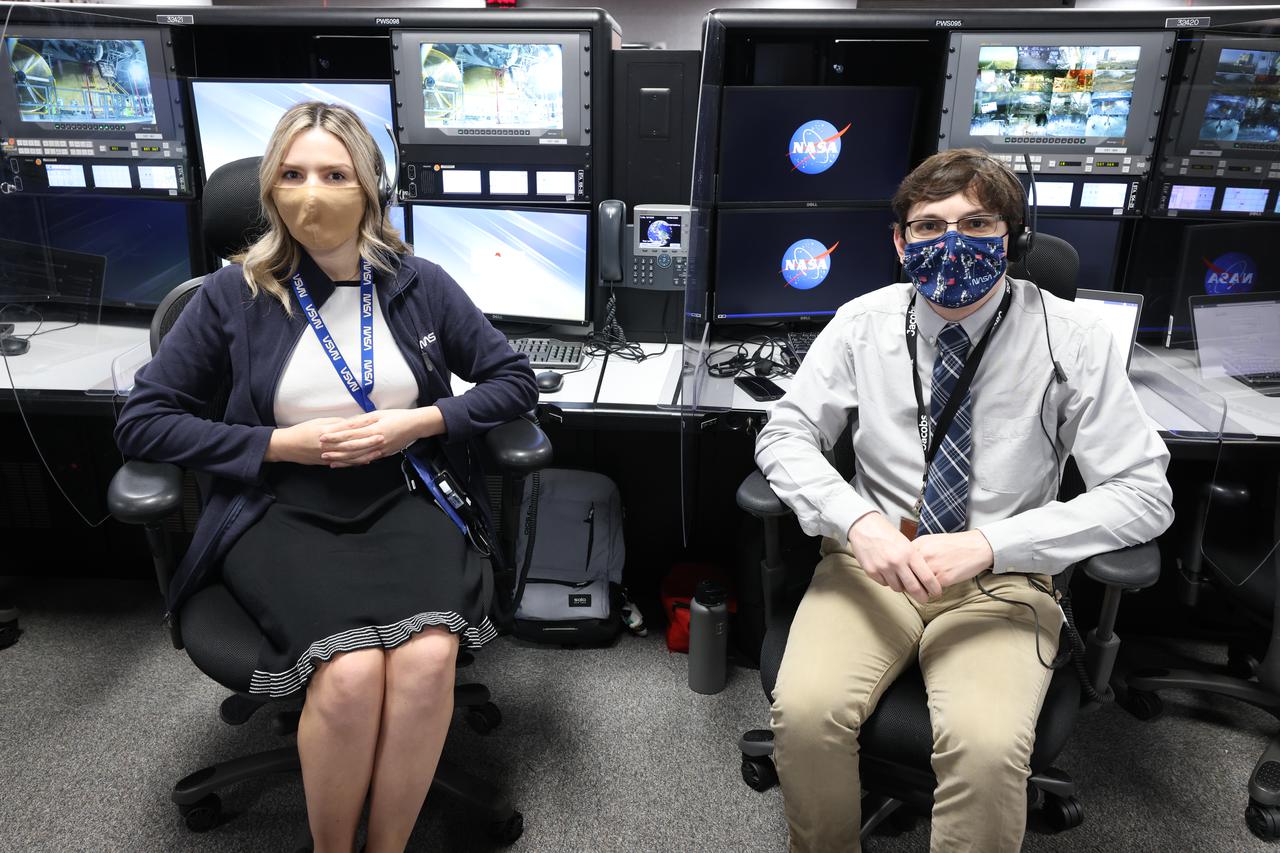
Launch team members are seated at the Communication and Tracking consoles inside Firing Room 1 of the Launch Control Center at NASA’s Kennedy Space Center in Florida on Dec. 13, 2021. They are participating in a joint integrated simulation for the Artemis I launch that covered both cryogenic loading and terminal countdown portions of prelaunch activities. Members of NASA’s mission management team and launch team conducted the simulation together. The Kennedy team was certified for the Artemis I launch. During Artemis I, the agency’s Orion spacecraft will lift off from Kennedy aboard NASA’s most powerful rocket – the Space Launch System – to fly farther than any spacecraft built for humans has ever flown. Through NASA’s Artemis missions, the agency, along with commercial and international partners, will establish a sustainable human presence on the Moon to prepare for missions to Mars.
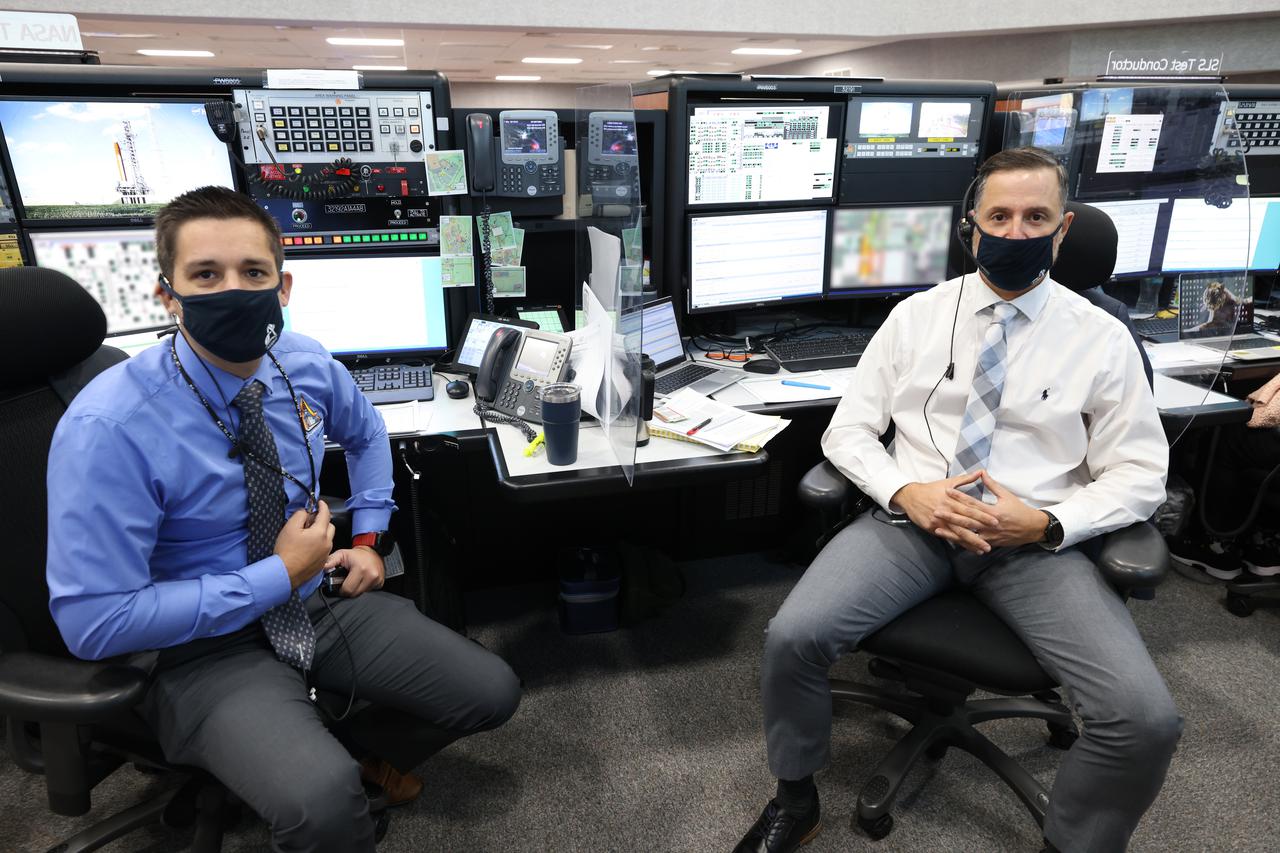
NASA Test Directors Daniel Florez, left, and Carlos Monje, right, with Exploration Ground Systems, are seated at their consoles inside Firing Room 1 of the Launch Control Center at NASA’s Kennedy Space Center in Florida on Dec. 13, 2021. They are participating in a joint integrated simulation for the Artemis I launch that covered both cryogenic loading and terminal countdown portions of prelaunch activities. Members of NASA’s mission management team and launch team conducted the simulation together. The Kennedy team was certified for the Artemis I launch. During Artemis I, the agency’s Orion spacecraft will lift off from Kennedy aboard NASA’s most powerful rocket – the Space Launch System – to fly farther than any spacecraft built for humans has ever flown. Through NASA’s Artemis missions, the agency, along with commercial and international partners, will establish a sustainable human presence on the Moon to prepare for missions to Mars.
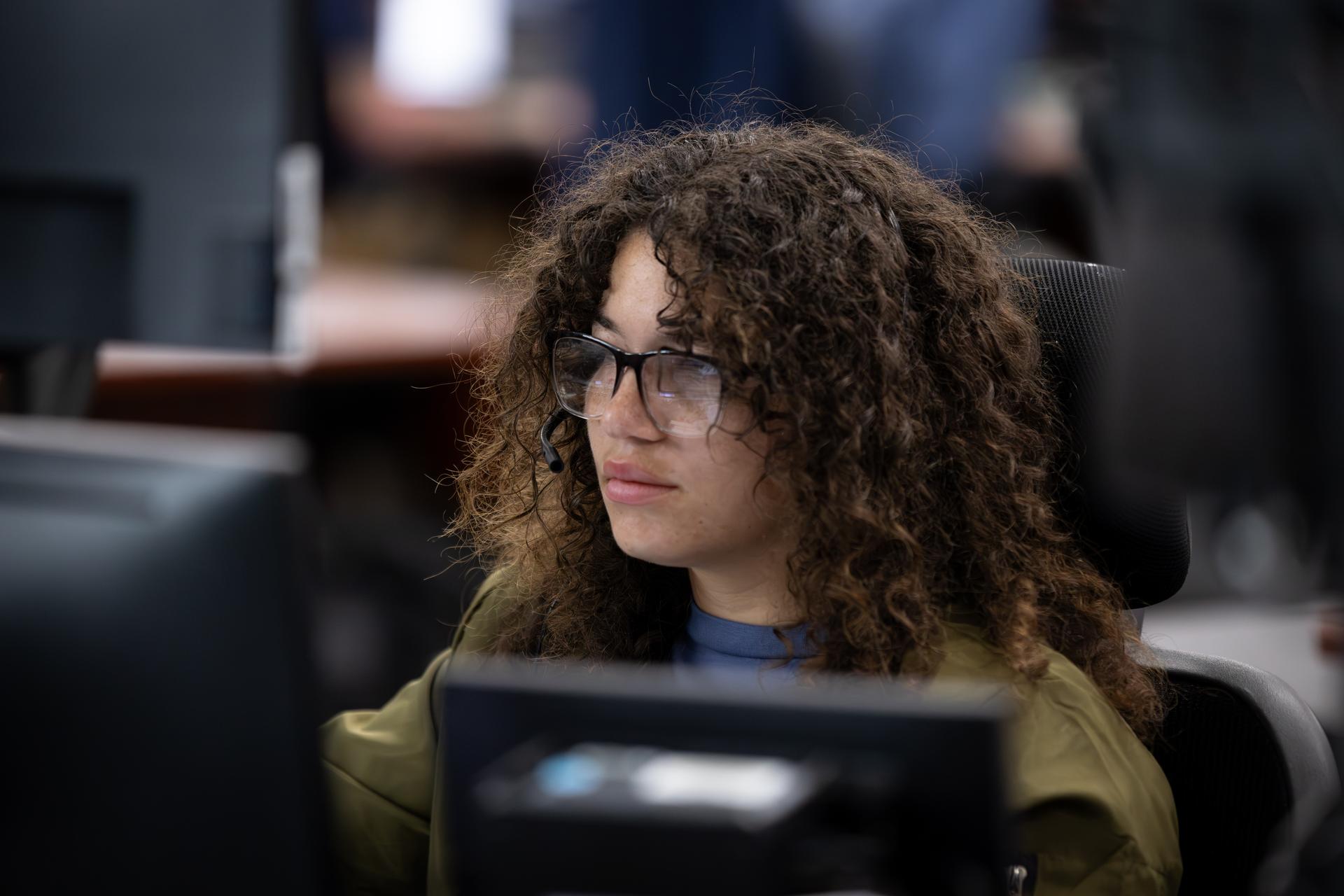
Artemis launch team members participate in a terminal countdown simulation for Artemis III on Thursday, June 11, 2026, inside Firing Room 1 and 2 of the Rocco A. Petrone Launch Control Center at NASA’s Kennedy Space Center in Florida. The terminal count simulation conducted by NASA’s Exploration Ground Systems team runs through the final five hours of launch countdown, including terminal count - the remaining 10 minutes of the countdown. Artemis III will carry out a series of objectives in low Earth orbit designed to demonstrate critical systems needed for future lunar landings, beginning with Artemis IV.
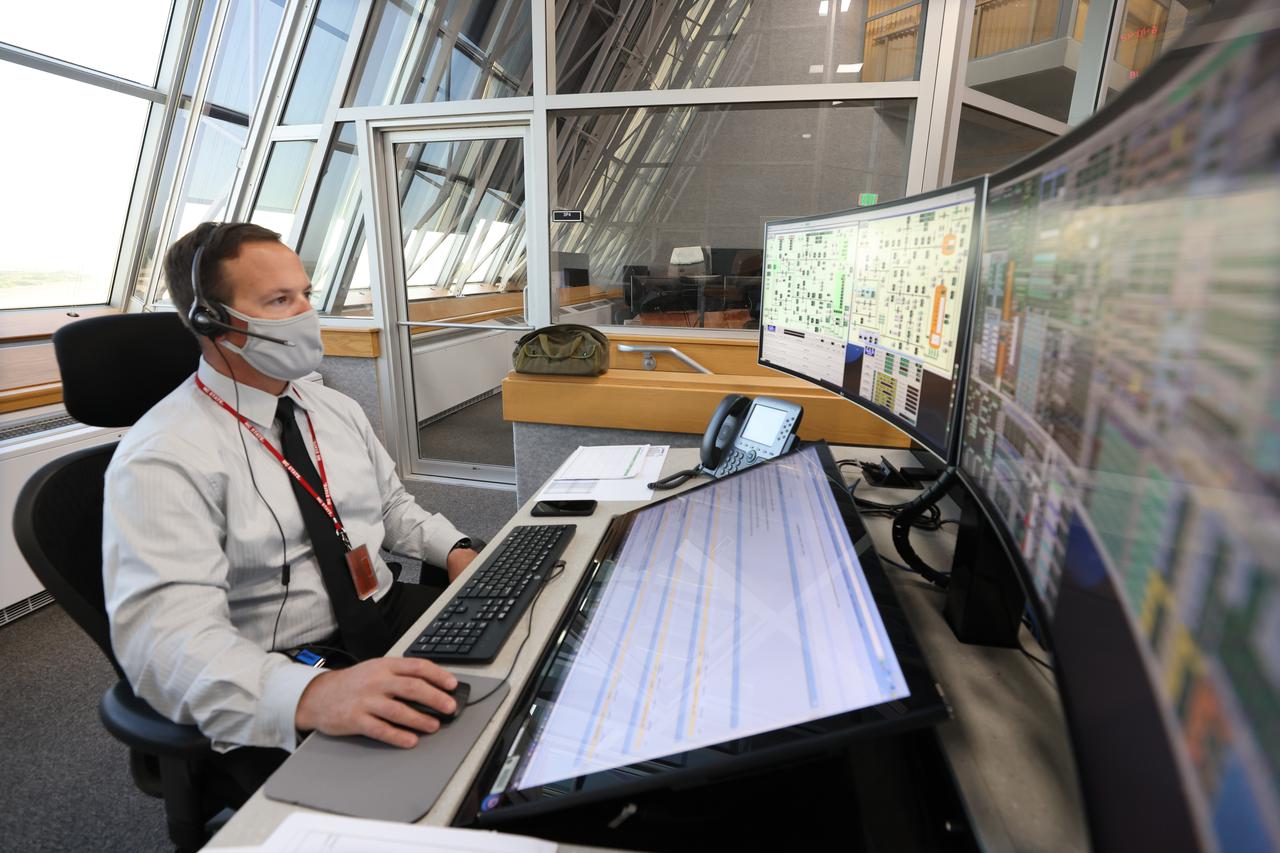
Wes Mosedale, Technical Assistant to the Launch Director, with Exploration Ground Systems, is seated at console inside Firing Room 1 of the Launch Control Center at NASA’s Kennedy Space Center in Florida on Dec. 13, 2021. He is participating in a joint integrated simulation for the Artemis I launch that covered both cryogenic loading and terminal countdown portions of prelaunch activities. Members of NASA’s mission management team and launch team conducted the simulation together. The Kennedy team was certified for the Artemis I launch. During Artemis I, the agency’s Orion spacecraft will lift off from Kennedy aboard NASA’s most powerful rocket – the Space Launch System – to fly farther than any spacecraft built for humans has ever flown. Through NASA’s Artemis missions, the agency, along with commercial and international partners, will establish a sustainable human presence on the Moon to prepare for missions to Mars.
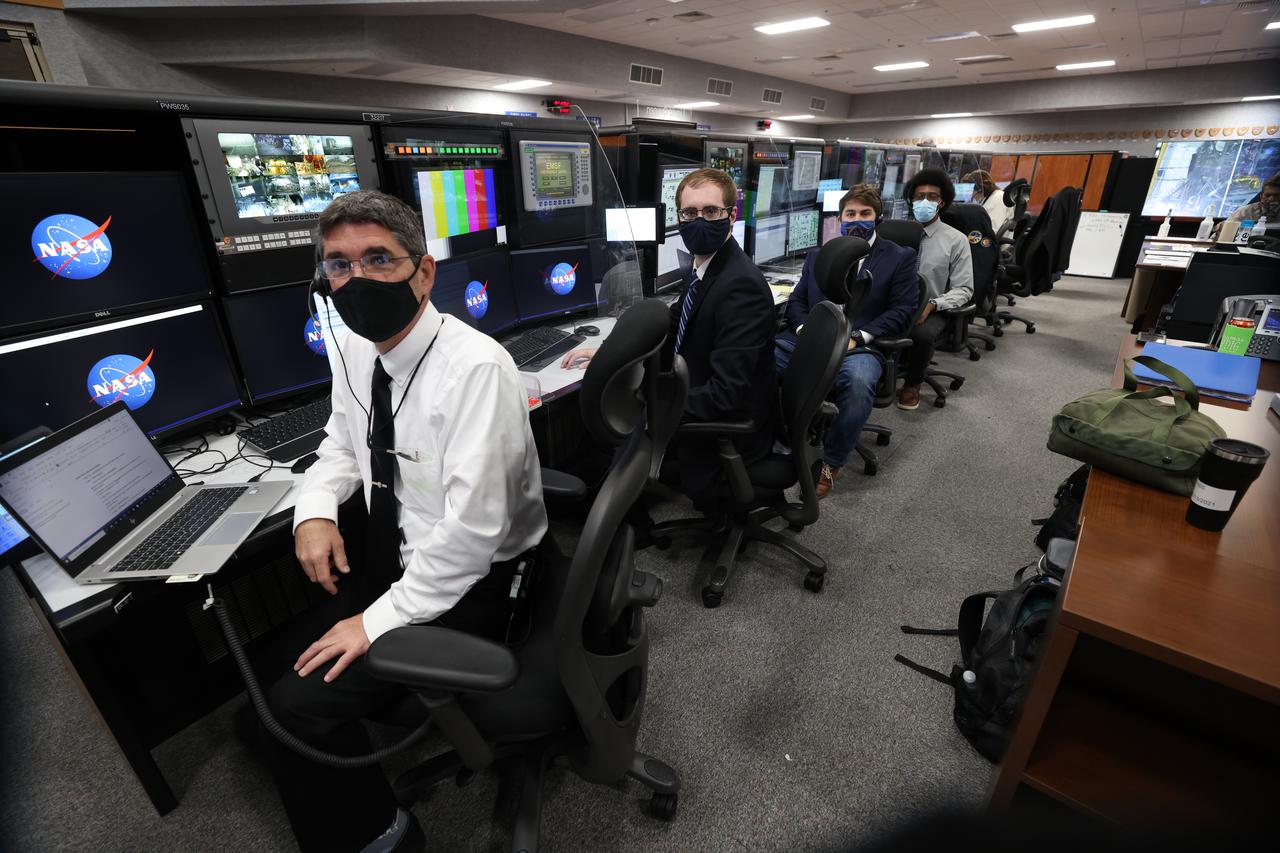
Launch team members are seated at the Liquid Oxygen consoles inside Firing Room 1 of the Launch Control Center at NASA’s Kennedy Space Center in Florida on Dec. 13, 2021. They are participating in a joint integrated simulation for the Artemis I launch that covered both cryogenic loading and terminal countdown portions of prelaunch activities. Members of NASA’s mission management team and launch team conducted the simulation together. The Kennedy team was certified for the Artemis I launch. During Artemis I, the agency’s Orion spacecraft will lift off from Kennedy aboard NASA’s most powerful rocket – the Space Launch System – to fly farther than any spacecraft built for humans has ever flown. Through NASA’s Artemis missions, the agency, along with commercial and international partners, will establish a sustainable human presence on the Moon to prepare for missions to Mars.
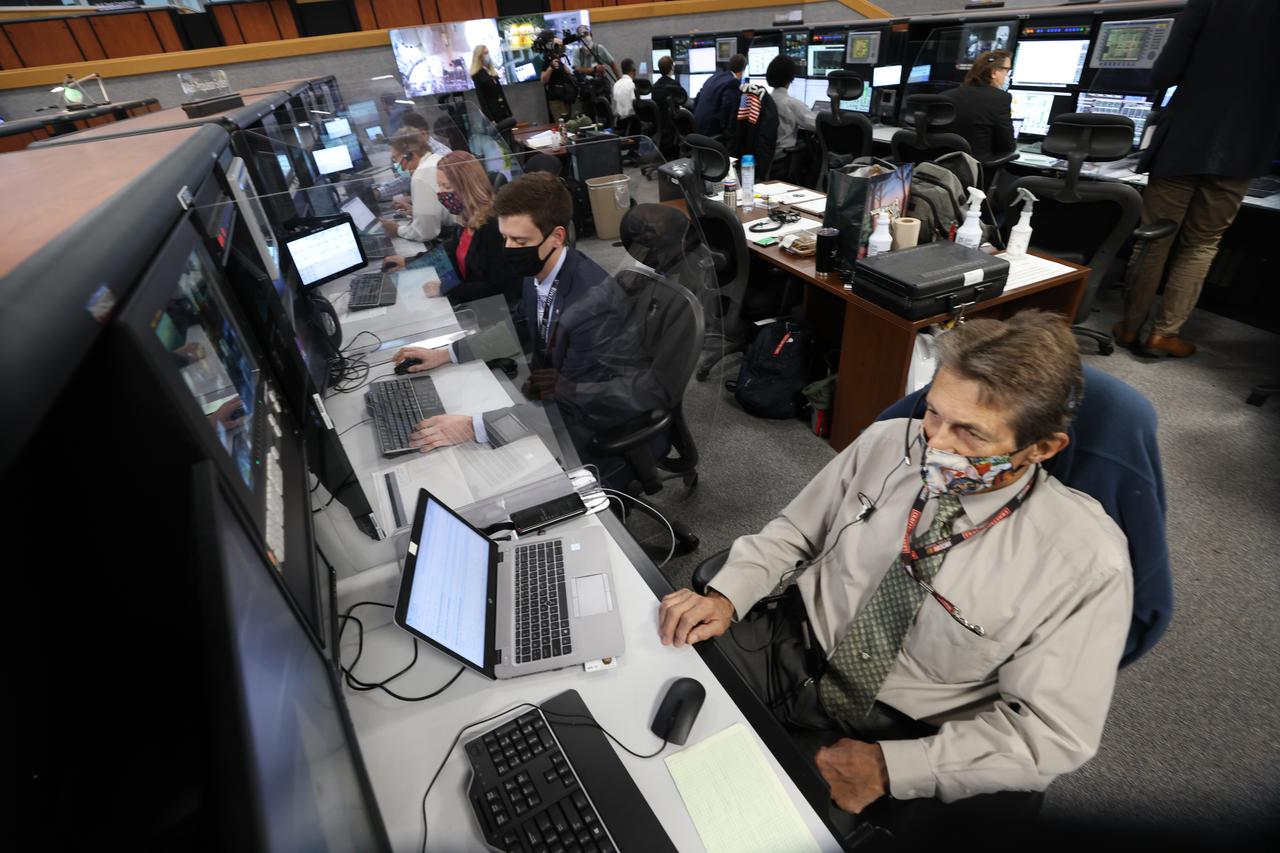
Launch team members are seated at the Main Propulsion System consoles inside Firing Room 1 of the Launch Control Center at NASA’s Kennedy Space Center in Florida on Dec. 13, 2021. They are participating in a joint integrated simulation for the Artemis I launch that covered both cryogenic loading and terminal countdown portions of prelaunch activities. Members of NASA’s mission management team and launch team conducted the simulation together. The Kennedy team was certified for the Artemis I launch. During Artemis I, the agency’s Orion spacecraft will lift off from Kennedy aboard NASA’s most powerful rocket – the Space Launch System – to fly farther than any spacecraft built for humans has ever flown. Through NASA’s Artemis missions, the agency, along with commercial and international partners, will establish a sustainable human presence on the Moon to prepare for missions to Mars.
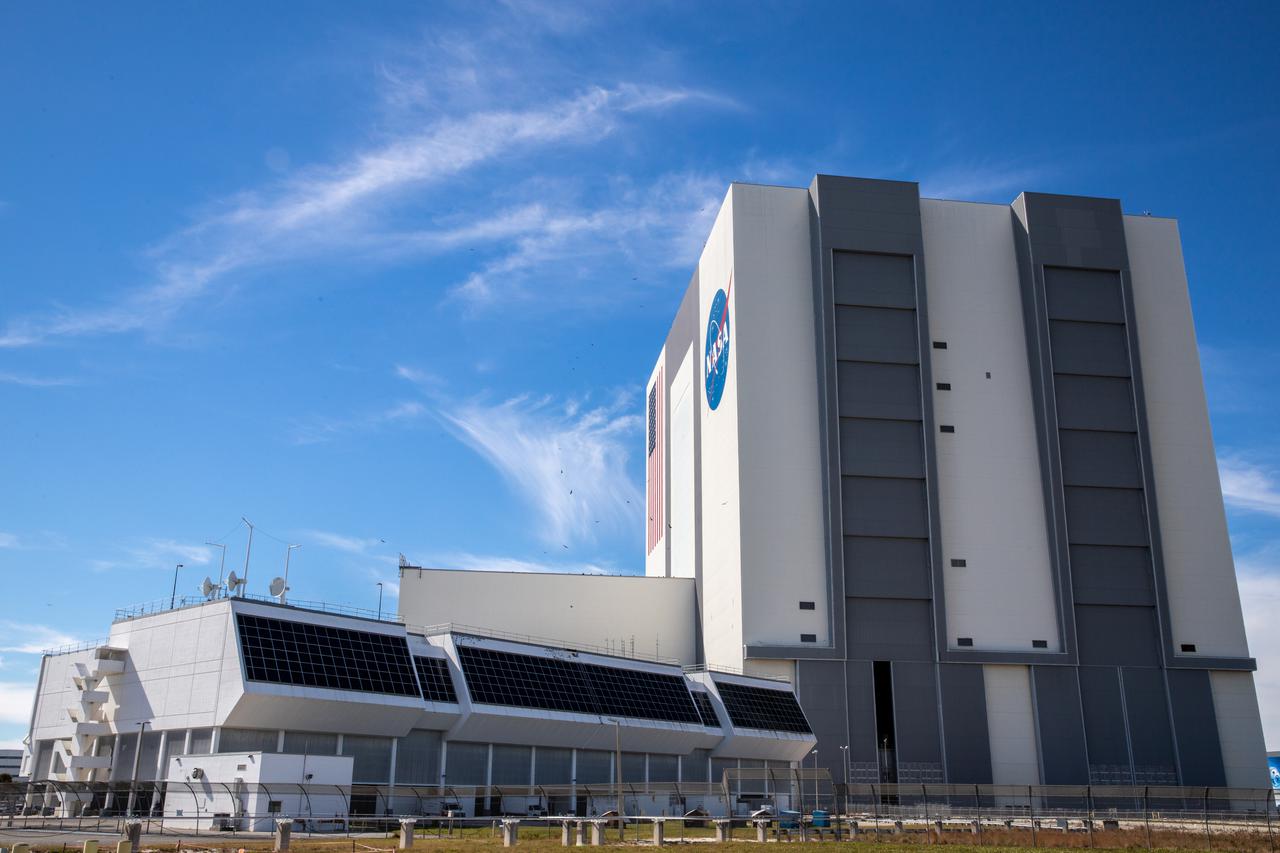
Following a ceremony at NASA’s Kennedy Space Center, the Florida spaceport’s launch control center was officially renamed the Rocco A. Petrone Launch Control Center. The facility serves as a nerve center where engineers and the launch director will monitor their flight consoles and give the “go” for the upcoming launch of Artemis I and later missions that will establish a sustainable presence on the Moon to prepare for missions to Mars. Petrone, who was instrumental in America’s first voyages to the Moon and headed the Apollo program, died in 2006 at the age of 80.

Launch team members are seated at the Flight Controls consoles inside Firing Room 1 of the Launch Control Center at NASA’s Kennedy Space Center in Florida on Dec. 13, 2021. They are participating in a joint integrated simulation for the Artemis I launch that covered both cryogenic loading and terminal countdown portions of prelaunch activities. Members of NASA’s mission management team and launch team conducted the simulation together. The Kennedy team was certified for the Artemis I launch. During Artemis I, the agency’s Orion spacecraft will lift off from Kennedy aboard NASA’s most powerful rocket – the Space Launch System – to fly farther than any spacecraft built for humans has ever flown. Through NASA’s Artemis missions, the agency, along with commercial and international partners, will establish a sustainable human presence on the Moon to prepare for missions to Mars.
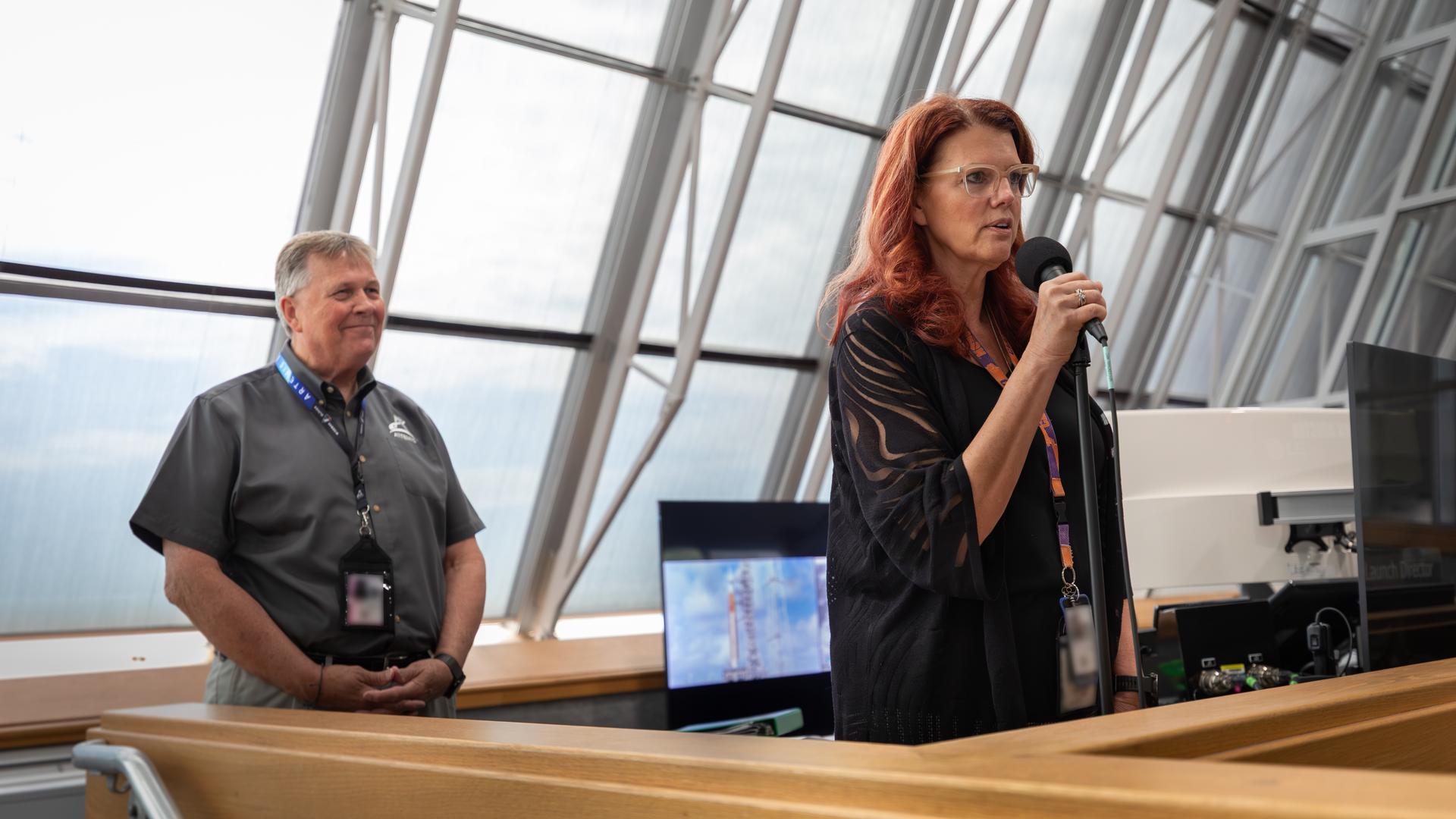
Artemis Launch Director Charlie Blackwell-Thompson delivers a speech on Thursday, June 11, 2026, about the retirement of NASA Test Director Jeff Spaulding inside Firing Room 1 of the Rocco A. Petrone Launch Control Center at NASA’s Kennedy Space Center in Florida. Spaulding began his career at NASA in 1987 as a NASA operations engineer overseeing orbiter processing activities for seven shuttle missions. He later went on to lead the Artemis II launch team during planning, scheduling, and execution on Artemis II on April 1, 2026.
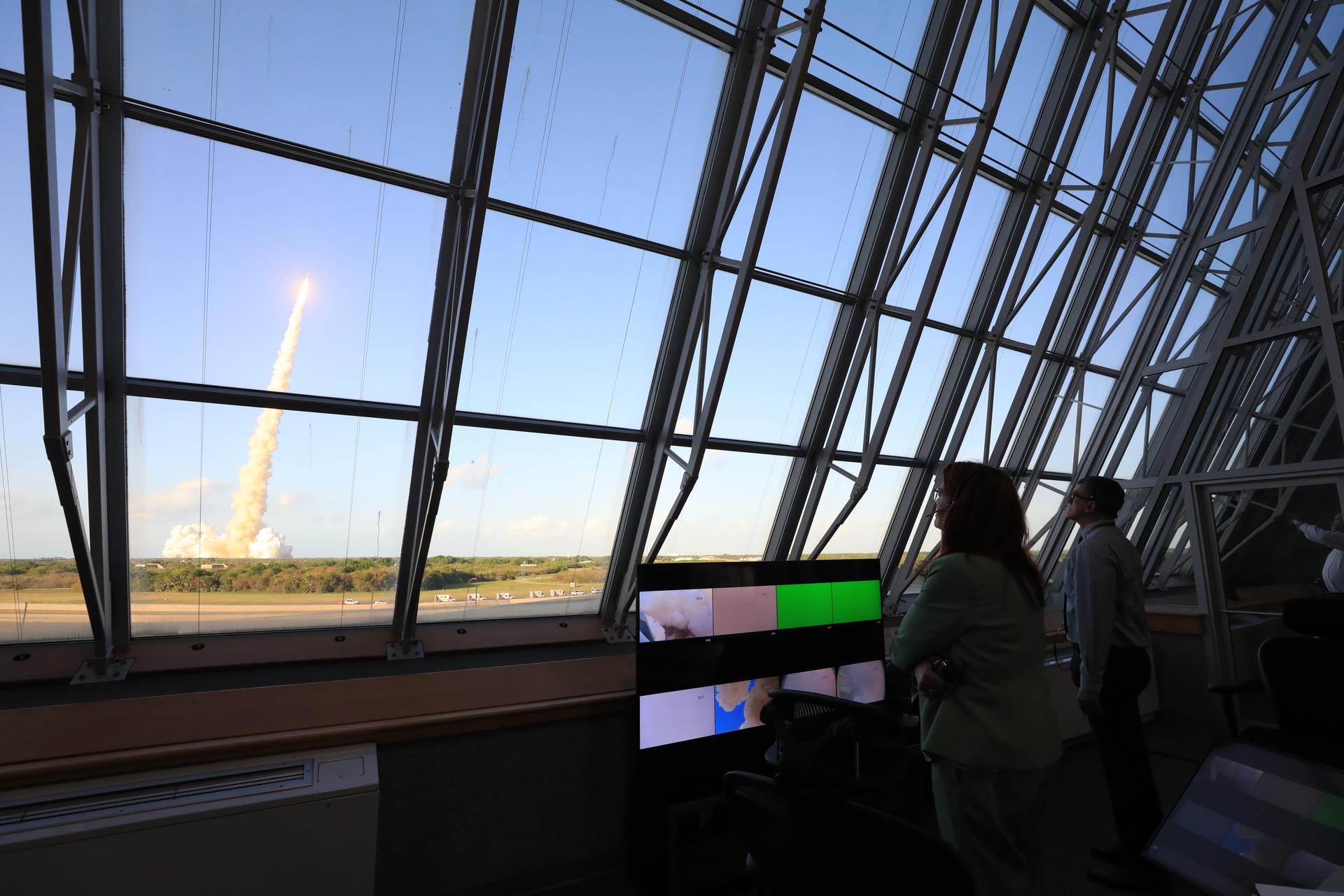
Charlie Blackwell-Thompson, Artemis launch director, and Jeremy Graeber, assistant launch director, each from NASA’s Exploration Ground Systems Program, watch the launch of NASA’s Artemis II test flight launch inside Firing Room 1 of the Rocco Petrone Launch Control Center on Wednesday, April 1, 2026. The Artemis II mission launched Commander Reid Wiseman, Pilot Victor Glover, and Mission Specialist Christina Koch from NASA, and Mission Specialist Jeremy Hansen from the CSA (Canadian Space Agency), aboard NASA’s SLS (Space Launch System) rocket and Orion spacecraft to journey for 10 days around the Moon and back to Earth.
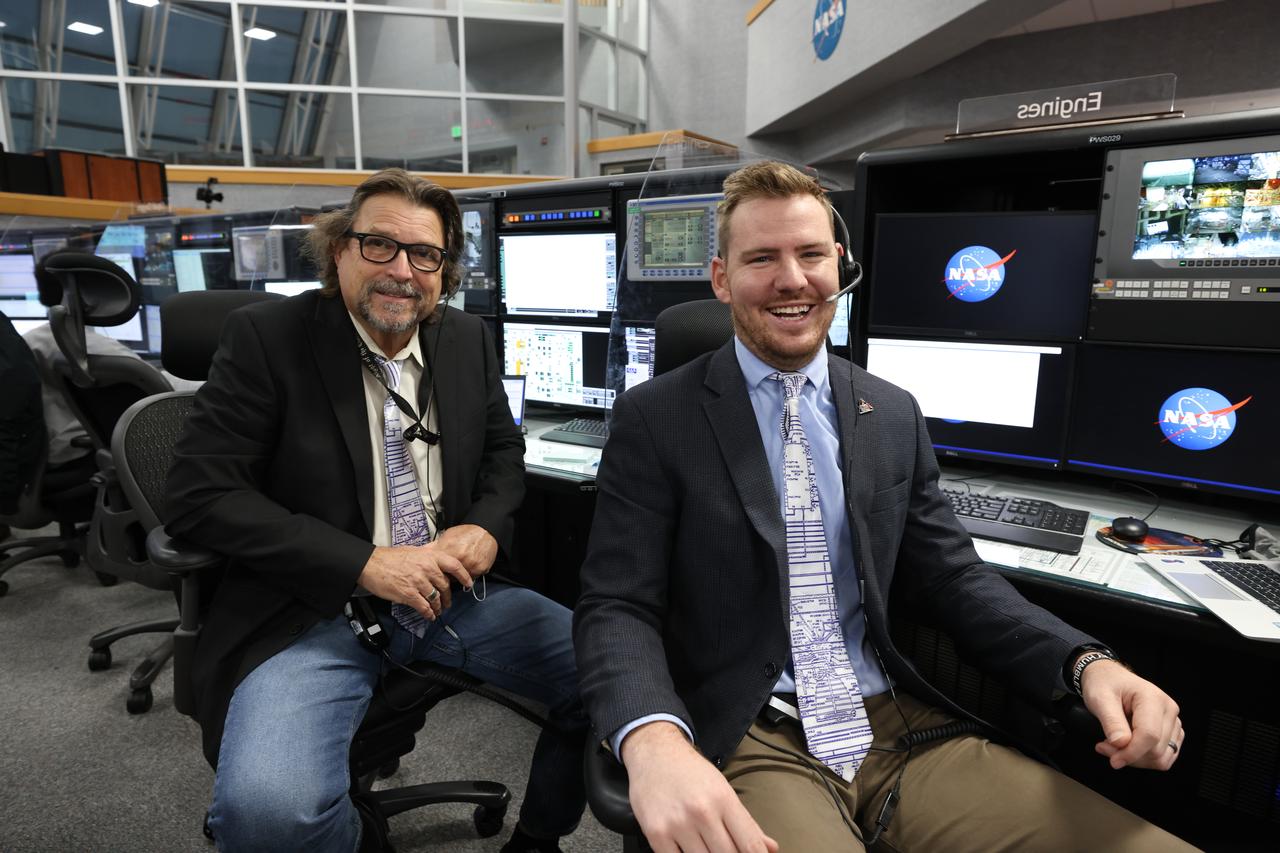
Launch team members are seated the Main Engine consoles inside Firing Room 1 of the Launch Control Center at NASA’s Kennedy Space Center in Florida on Dec. 13, 2021. They are participating in a joint integrated simulation for the Artemis I launch that covered both cryogenic loading and terminal countdown portions of prelaunch activities. Members of NASA’s mission management team and launch team conducted the simulation together. The Kennedy team was certified for the Artemis I launch. During Artemis I, the agency’s Orion spacecraft will lift off from Kennedy aboard NASA’s most powerful rocket – the Space Launch System – to fly farther than any spacecraft built for humans has ever flown. Through NASA’s Artemis missions, the agency, along with commercial and international partners, will establish a sustainable human presence on the Moon to prepare for missions to Mars.
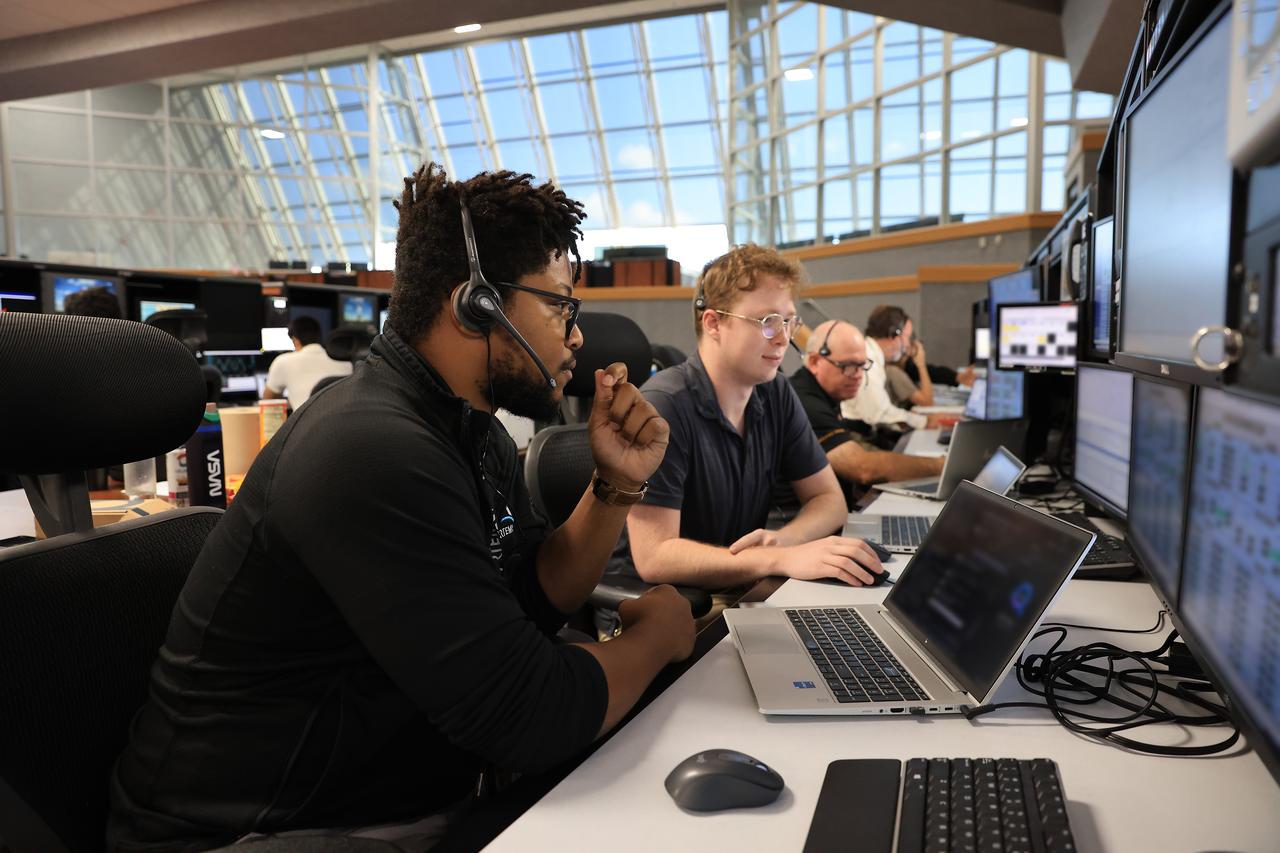
Teams at NASA’s Kennedy Space Center in Florida participate in the first joint integrated launch countdown simulation for Artemis II inside Firing Room 1 of the Launch Control Center on Thursday, Sept. 11, 2025. The training exercise involved engineers from Kennedy, Marshall Space Flight Center in Huntsville, Alabama, and Johnson Space Center in Houston coming together to rehearse all aspects of the launch countdown, from cryogenic loading – filling tanks in the SLS (Space Launch System) rocket’s core stage with liquid hydrogen and liquid oxygen – to liftoff. These simulations will help certify that the launch team is ready for Artemis II – the first crewed Artemis mission that will send four astronauts around the Moon and back.

Artemis III launch team members participate in a cryogenic propellant loading simulation on Wednesday, June 10, 2026, inside Firing Room 1 and 2 of the Rocco A. Petrone Launch Control Center at NASA’s Kennedy Space Center in Florida. Members of NASA’s Exploration Ground Systems team rehearse the steps to load the super-cooled liquid hydrogen and liquid oxygen into the SLS (Space Launch System) rocket core stage, a process that starts several hours before liftoff for the Artemis III mission. Artemis III will carry out a series of objectives in low Earth orbit designed to demonstrate critical systems needed for future lunar landings, beginning with Artemis IV.
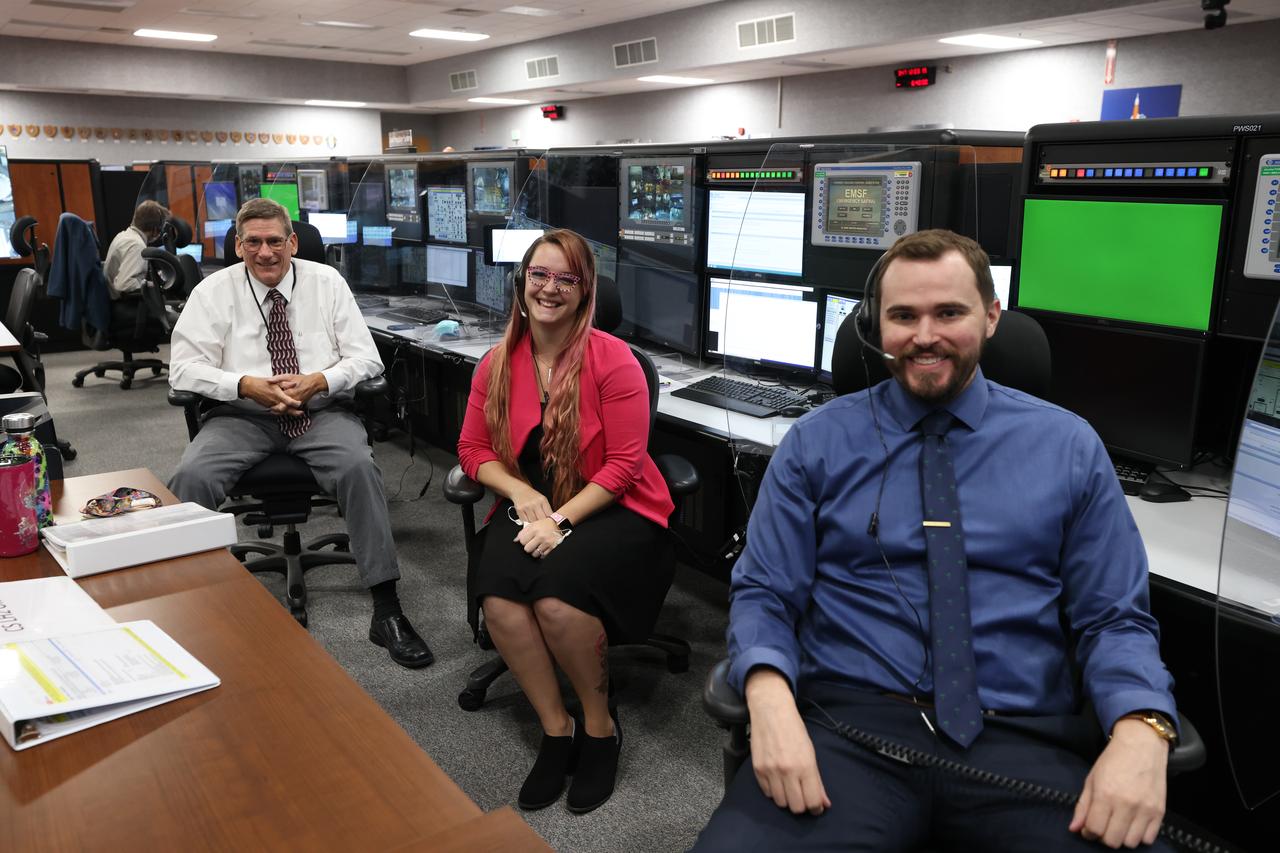
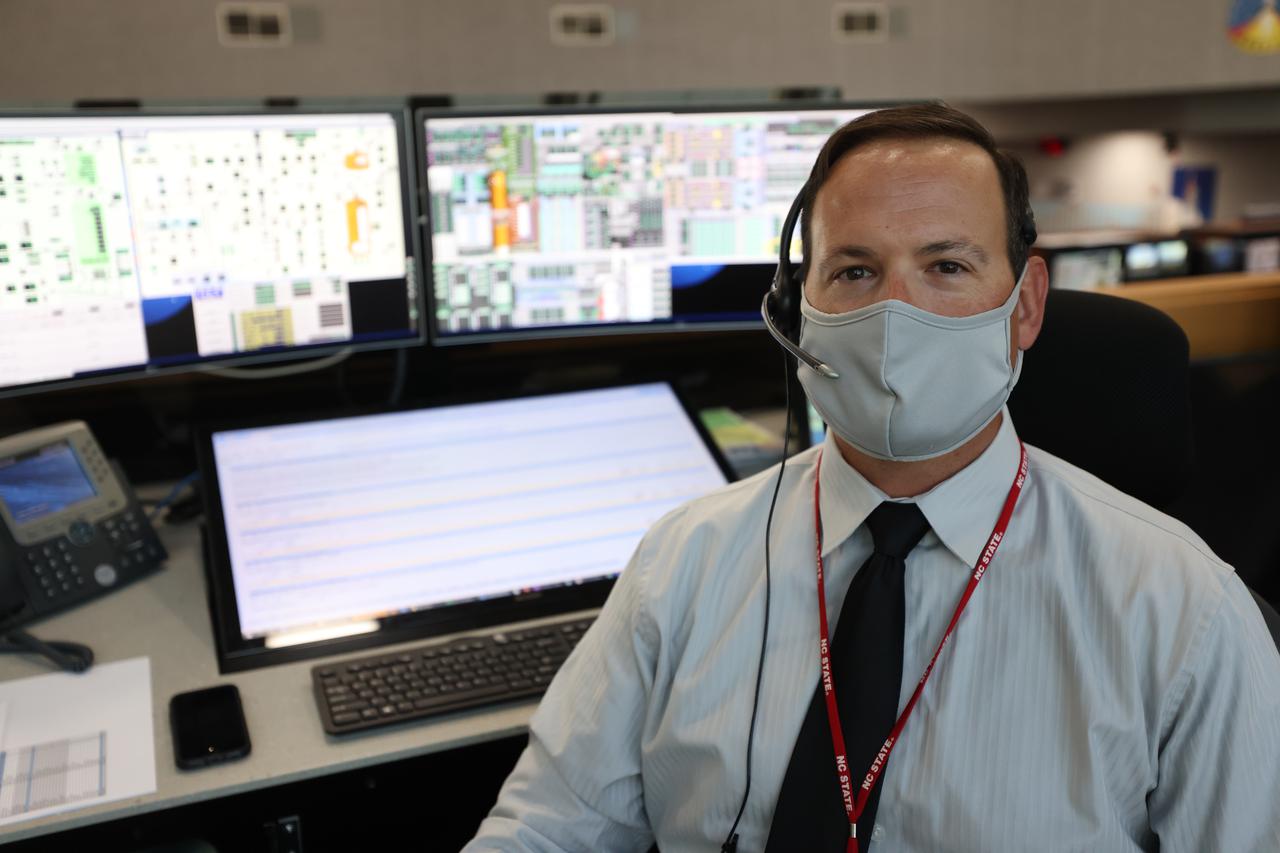
Launch team members are seated at the Liquid Hydrogen consoles inside Firing Room 1 of the Launch Control Center at NASA’s Kennedy Space Center in Florida on Dec. 13, 2021. They are participating in a joint integrated simulation for the Artemis I launch that covered both cryogenic loading and terminal countdown portions of prelaunch activities. Members of NASA’s mission management team and launch team conducted the simulation together. The Kennedy team was certified for the Artemis I launch. During Artemis I, the agency’s Orion spacecraft will lift off from Kennedy aboard NASA’s most powerful rocket – the Space Launch System – to fly farther than any spacecraft built for humans has ever flown. Through NASA’s Artemis missions, the agency, along with commercial and international partners, will establish a sustainable human presence on the Moon to prepare for missions to Mars.
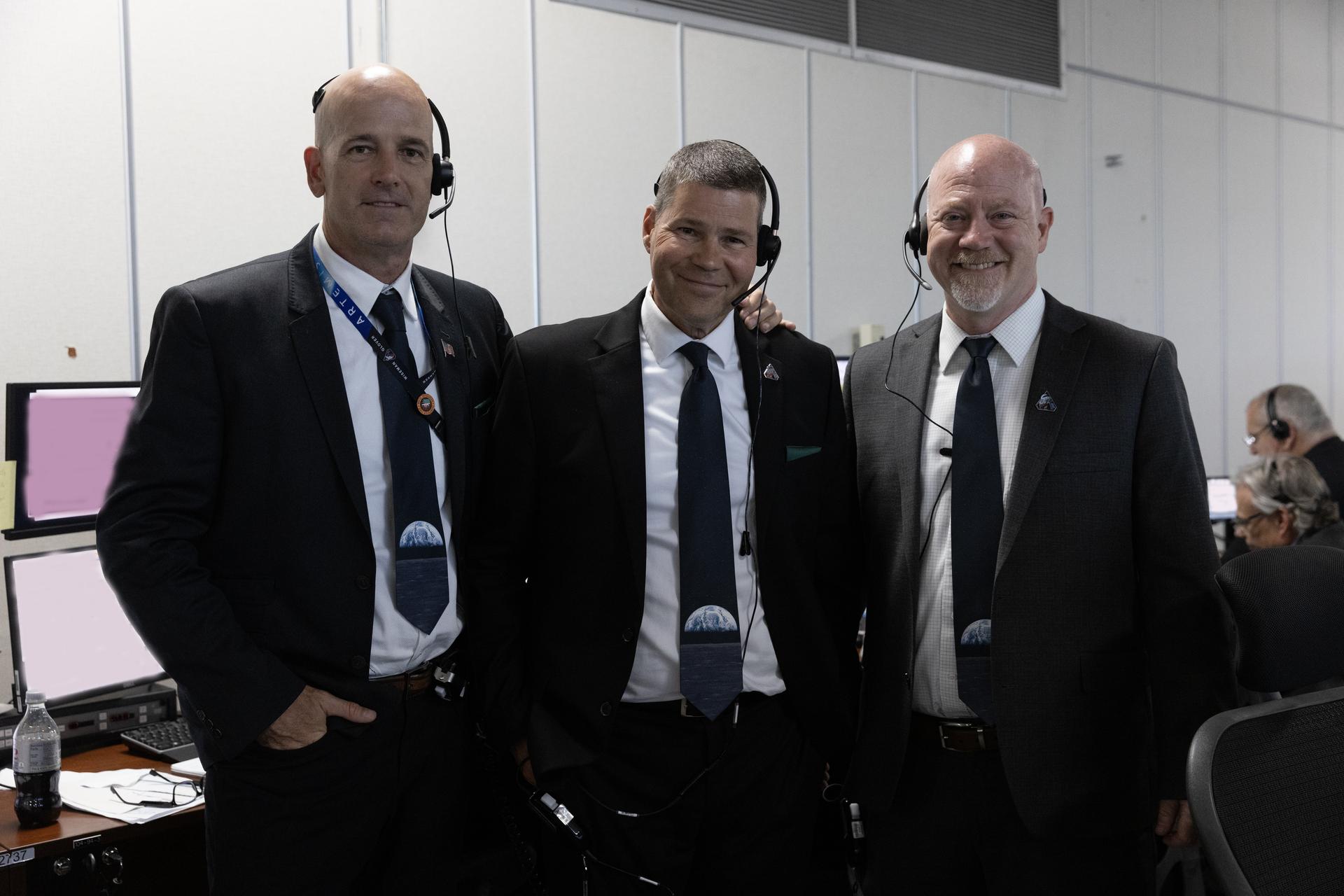
From left to right, Eric Gore, chief engineer; John Blevins, Space Launch System chief engineer; and Ronald Baccus, Orion chief engineer, each from NASA’s Exploration Ground Systems Program, pose for a photograph inside Firing Room 1 of the Rocco Petrone Launch Control Center following the launch of the Artemis II test flight on Wednesday, April 1, 2026. The tie-cutting is a NASA tradition those who have a new role launch. The Artemis II mission launched Commander Reid Wiseman, Pilot Victor Glover, and Mission Specialist Christina Koch from NASA, and Mission Specialist Jeremy Hansen from the CSA (Canadian Space Agency), aboard NASA’s SLS (Space Launch System) rocket and Orion spacecraft to journey for 10 days around the Moon and back to Earth.
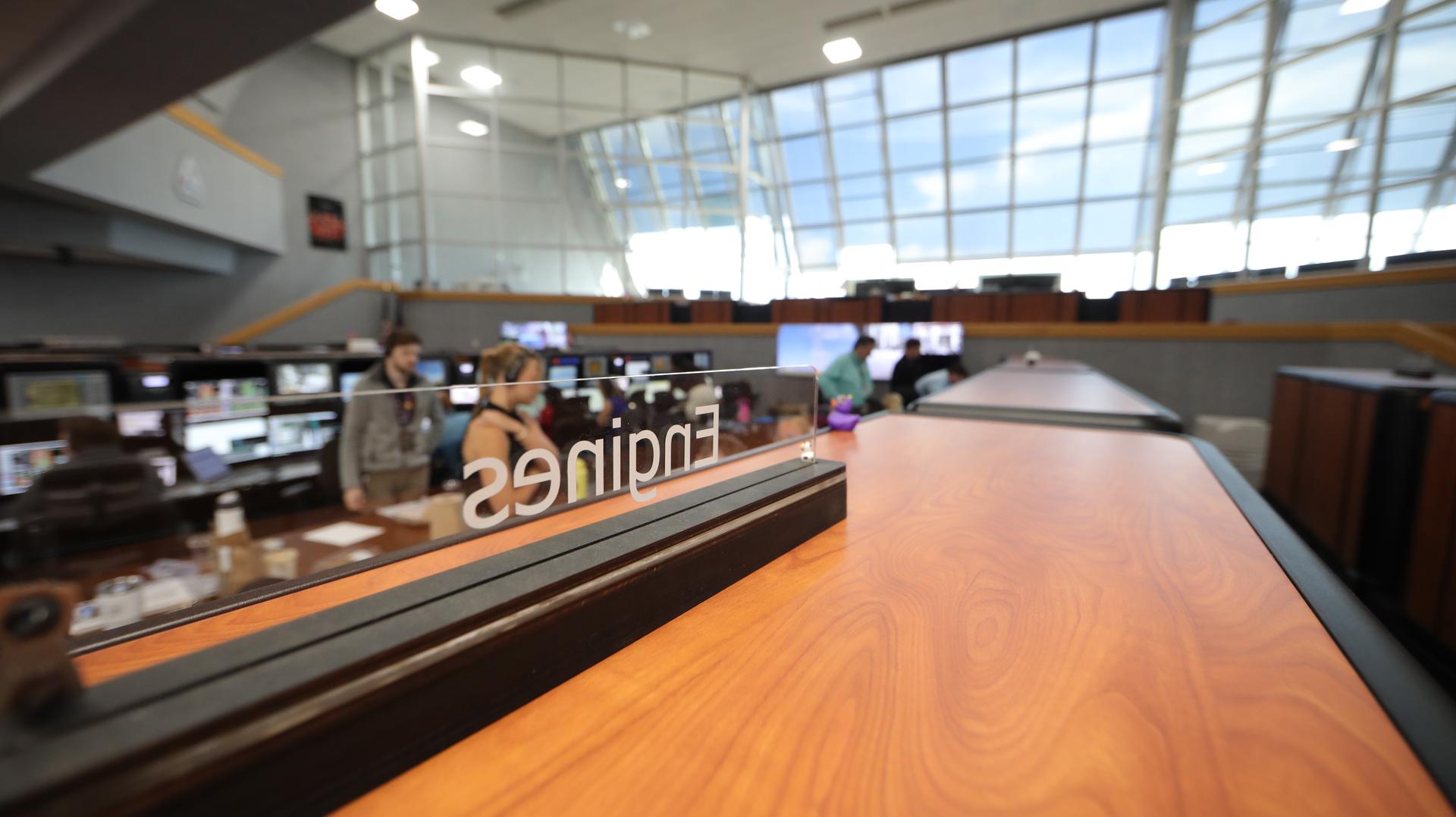
Artemis launch team members participate in a terminal countdown simulation for Artemis III on Thursday, Sept. 10, 2026, inside Firing Room 1 and 2 of the Rocco A. Petrone Launch Control Center at NASA’s Kennedy Space Center in Florida. Terminal count simulations conducted by NASA’s Exploration Ground Systems team run through the final five hours of launch countdown, including terminal count - the remaining 10 minutes of the countdown. Artemis III will carry out a series of objectives in low Earth orbit designed to demonstrate critical systems needed for future lunar landings, beginning with Artemis IV.

Charlie Blackwell-Thompson, Artemis launch director, participates in a cryogenic propellant loading simulation for NASA’s Artemis III mission on Wednesday, June 10, 2026, inside Firing Room 1 of the Rocco A. Petrone Launch Control Center at the agency’s Kennedy Space Center in Florida. Members of NASA’s Exploration Ground Systems team rehearse the steps to load the super-cooled liquid hydrogen and liquid oxygen into the SLS (Space Launch System) rocket core stage, a process that starts several hours before liftoff for the Artemis III mission. Artemis III will carry out a series of objectives in low Earth orbit designed to demonstrate critical systems needed for future lunar landings, beginning with Artemis IV.
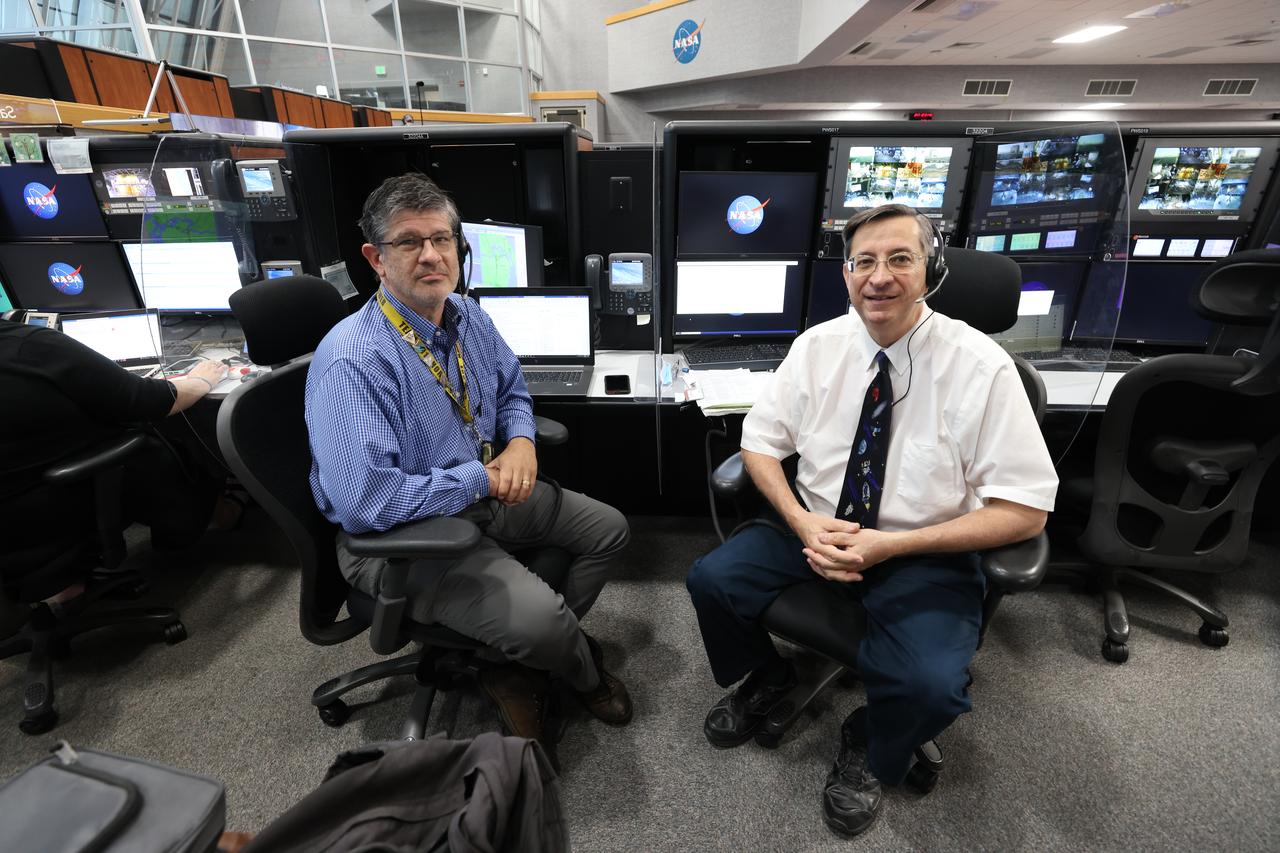
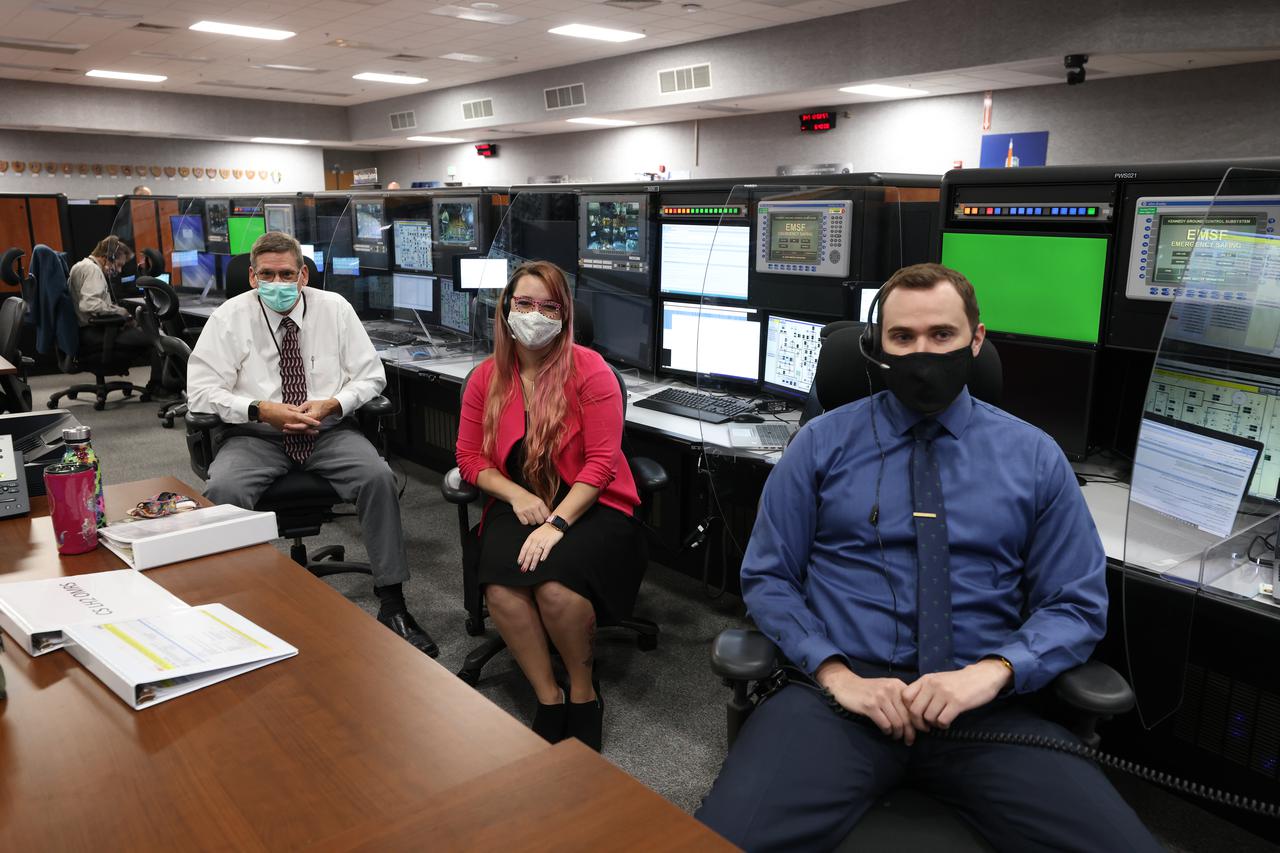
Launch team members are seated at the Biomedical/Emergency Medical Services consoles inside Firing Room 1 of the Launch Control Center at NASA’s Kennedy Space Center in Florida on Dec. 13, 2021. They are participating in a joint integrated simulation for the Artemis I launch that covered both cryogenic loading and terminal countdown portions of prelaunch activities. Members of NASA’s mission management team and launch team conducted the simulation together. The Kennedy team was certified for the Artemis I launch. During Artemis I, the agency’s Orion spacecraft will lift off from Kennedy aboard NASA’s most powerful rocket – the Space Launch System – to fly farther than any spacecraft built for humans has ever flown. Through NASA’s Artemis missions, the agency, along with commercial and international partners, will establish a sustainable human presence on the Moon to prepare for missions to Mars
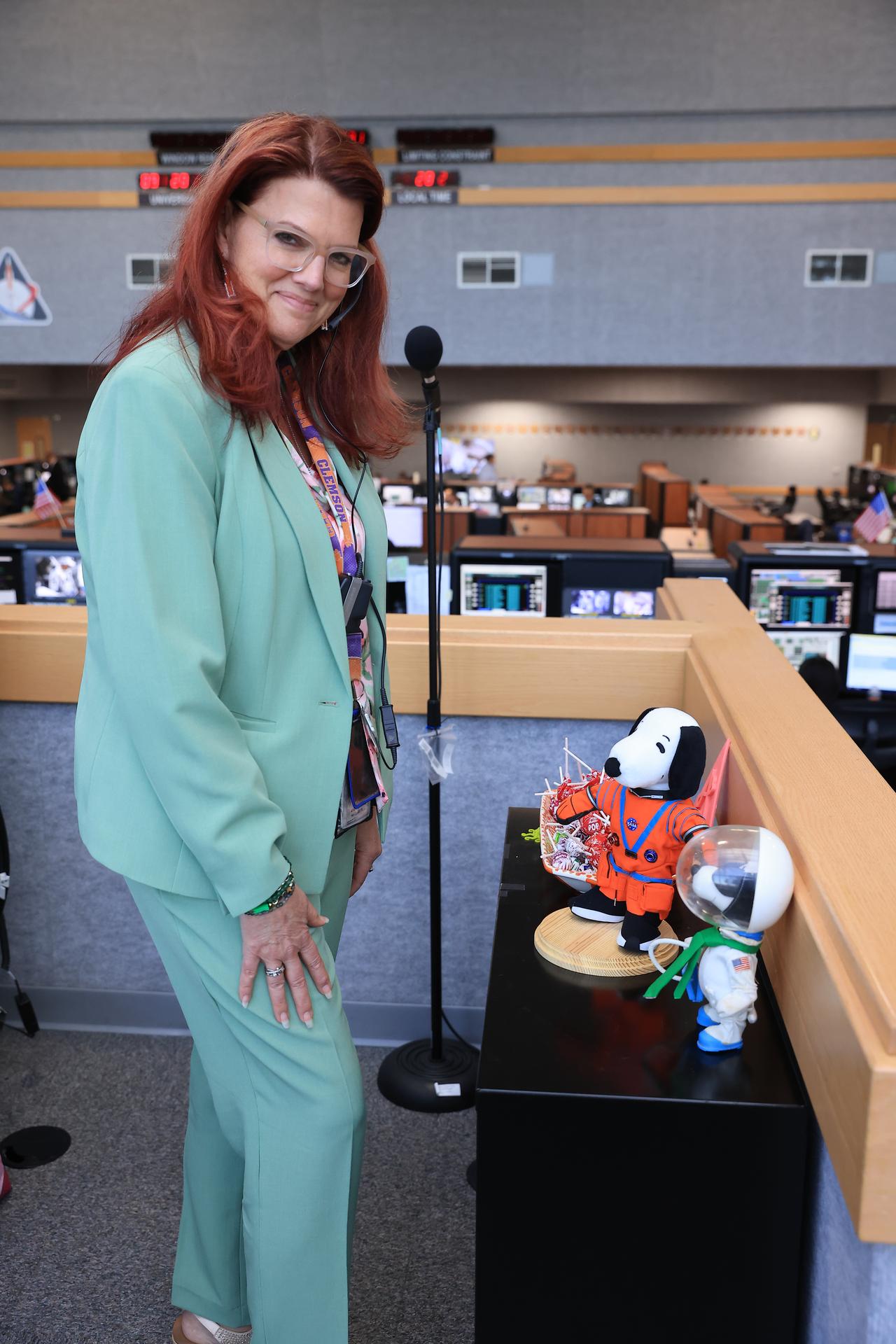
Charlie Blackwell-Thompson, Artemis launch director, NASA’s Exploration Ground Systems Program poses with an Astronaut Snoopy plush toy and her childhood Astronaut Snoopy inside Firing Room 1 of the Rocco Petrone Launch Control Center following the launch of the Artemis II test flight on Wednesday, April 1, 2026. Snoopy has been an official NASA mascot for over 50 years. The Artemis II mission launched Commander Reid Wiseman, Pilot Victor Glover, and Mission Specialist Christina Koch from NASA, and Mission Specialist Jeremy Hansen from the CSA (Canadian Space Agency), aboard NASA’s SLS (Space Launch System) rocket and Orion spacecraft to journey for 10 days around the Moon and back to Earth.
Launch team members are seated at the Ground Test Conductor consoles inside Firing Room 1 of the Launch Control Center at NASA’s Kennedy Space Center in Florida on Dec. 13, 2021. From left are Keith Lawton and Joe Vanhove. They are participating in a joint integrated simulation for the Artemis I launch that covered both cryogenic loading and terminal countdown portions of prelaunch activities. Members of NASA’s mission management team and launch team conducted the simulation together. The Kennedy team was certified for the Artemis I launch. During Artemis I, the agency’s Orion spacecraft will lift off from Kennedy aboard NASA’s most powerful rocket – the Space Launch System – to fly farther than any spacecraft built for humans has ever flown. Through NASA’s Artemis missions, the agency, along with commercial and international partners, will establish a sustainable human presence on the Moon to prepare for missions to Mars.

Artemis Launch Director Charlie Blackwell-Thompson smiles for a photograph inside Firing Room 1 of the Rocco A. Petrone Launch Control Center at NASA’s Kennedy Space Center in Florida on Thursday, June 11, 2026, during a terminal countdown simulation for the Artemis III mission. The terminal count simulation conducted by NASA’s Exploration Ground Systems team runs through the final five hours of launch countdown, including terminal count - the remaining 10 minutes of the countdown. Artemis III will carry out a series of objectives in low Earth orbit designed to demonstrate critical systems needed for future lunar landings, beginning with Artemis IV.
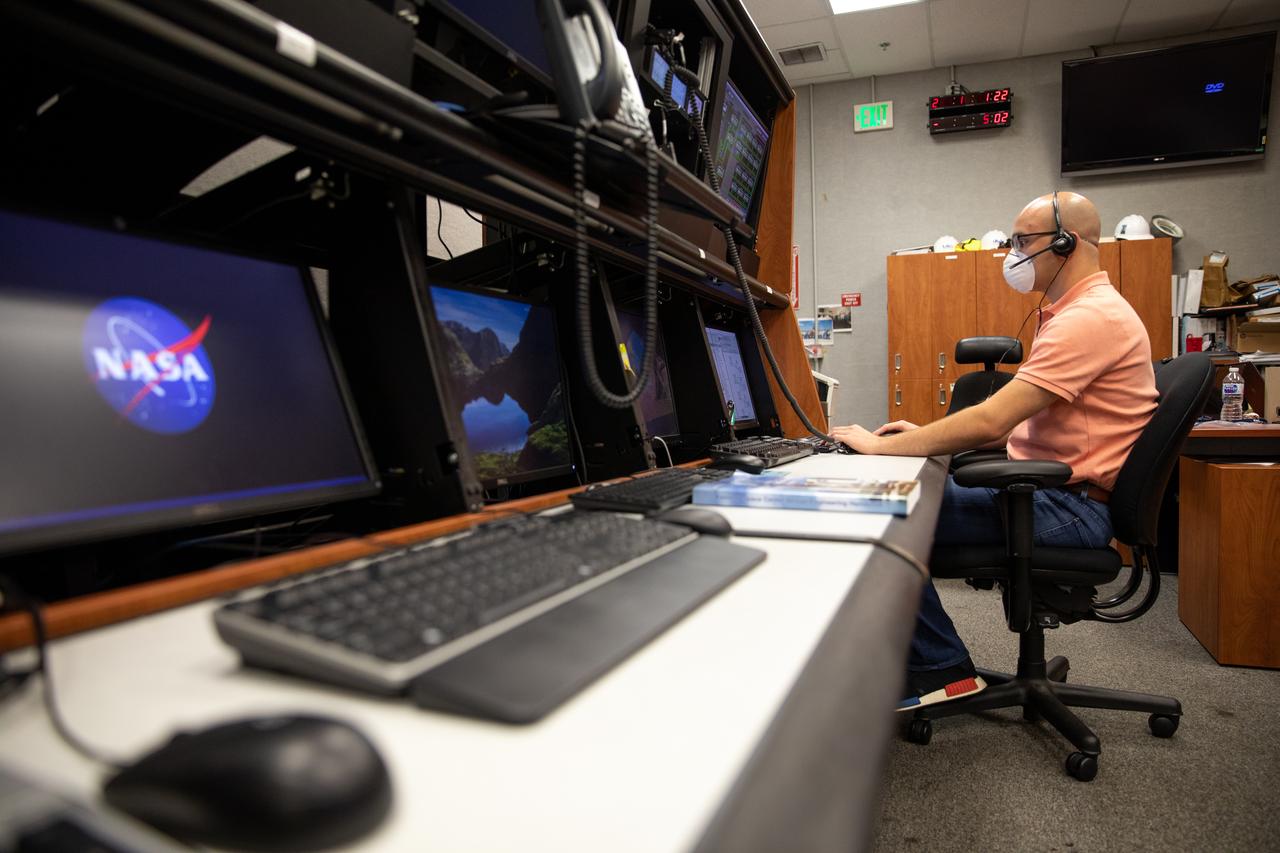
Inside the Launch Control Center at Kennedy Space Center on Sept. 29, 2020, engineer Danny Zaatari, with Exploration Ground Systems, works on software for the launch of Artemis I. Engineers at the Florida spaceport are staying focused on the “Path to the Pad.” Artemis I is the first in a series of increasingly complex missions that will enable human exploration to the Moon and Mars.
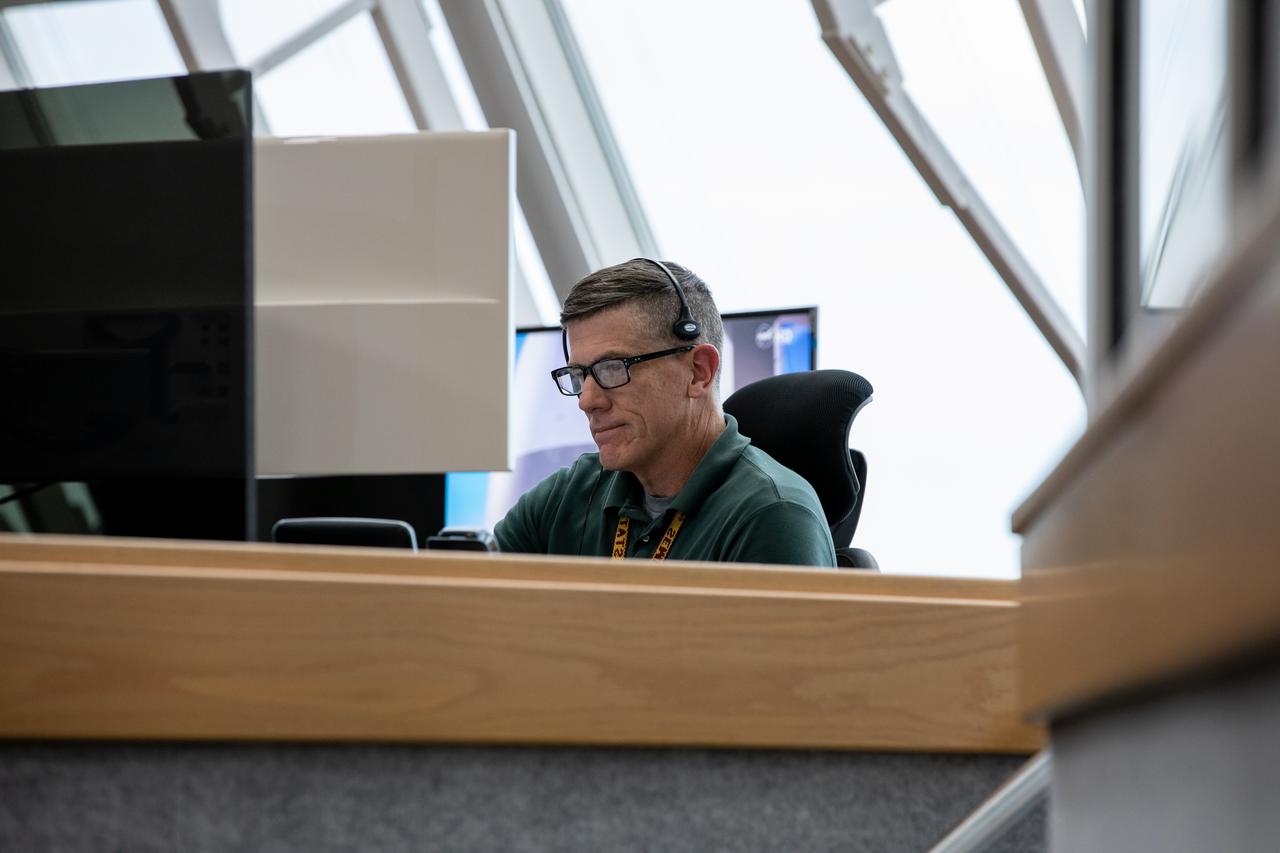
Assistant Launch Director Jeremy Graeber monitors operations from his position in Firing Room 1 as Artemis teams conduct a launch simulation for the Artemis I mission inside the Rocco A. Petrone Launch Control Center at NASA’s Kennedy Space Center in Florida on Oct. 27, 2022. Artemis I will be the first integrated test of NASA’s Space Launch System (SLS) rocket and Orion spacecraft. The primary goal of Artemis I is to thoroughly test the integrated systems before crewed missions by launching Orion atop the SLS rocket, operating the spacecraft in a deep space environment, testing Orion’s heat shield, and recovering the crew module after reentry, descent, and splashdown. During the flight, Orion will launch atop the most powerful rocket in the world and fly farther than any human-rated spacecraft has ever flown, paving the way for human deep space exploration and demonstrating our commitment and capability to extend human presence to the Moon and beyond.
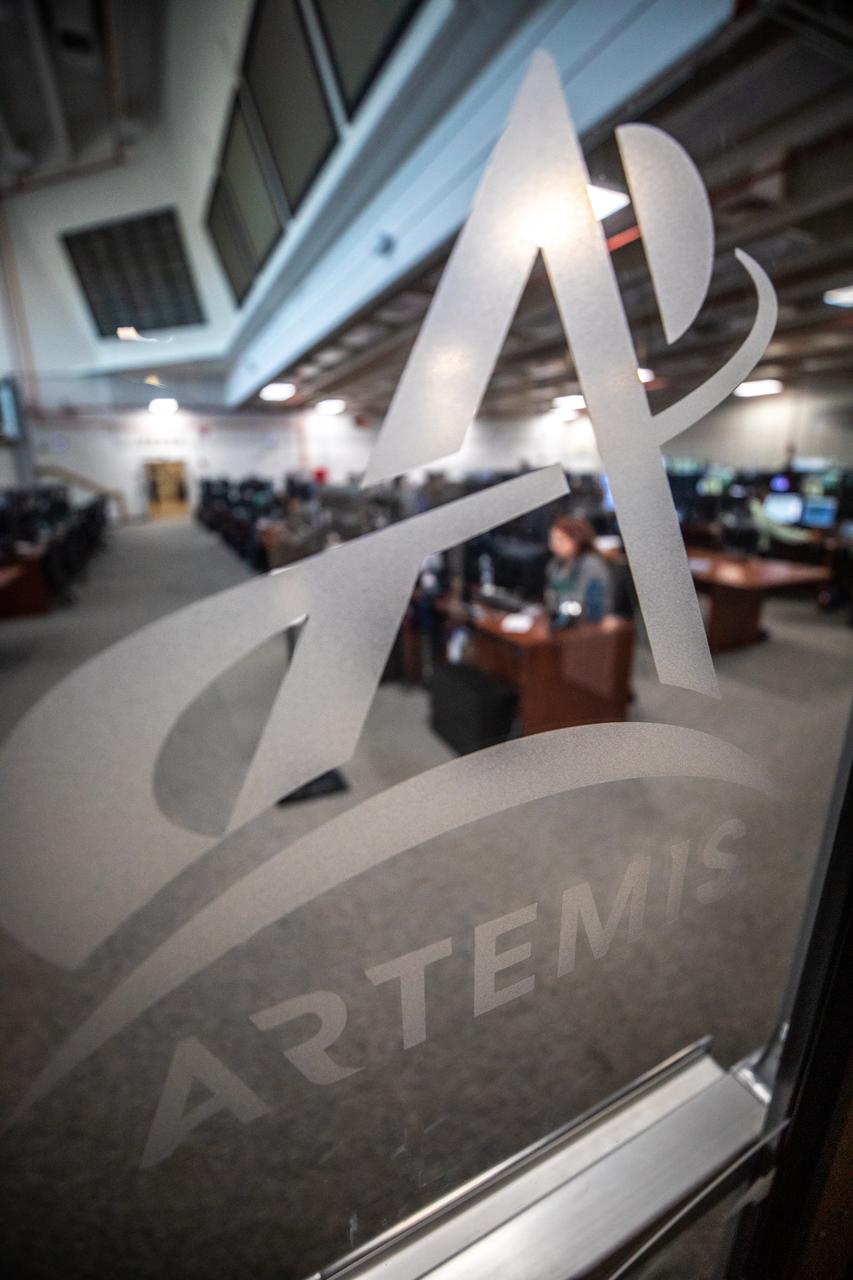
Artemis teams conduct a launch simulation for the Artemis I mission inside Firing Rooms 1 and 2 of the Rocco A. Petrone Launch Control Center at NASA’s Kennedy Space Center in Florida on Oct. 27, 2022. Artemis I will be the first integrated test of NASA’s Space Launch System (SLS) rocket and Orion spacecraft. The primary goal of Artemis I is to thoroughly test the integrated systems before crewed missions by launching Orion atop the SLS rocket, operating the spacecraft in a deep space environment, testing Orion’s heat shield, and recovering the crew module after reentry, descent, and splashdown. During the flight, Orion will launch atop the most powerful rocket in the world and fly farther than any human-rated spacecraft has ever flown, paving the way for human deep space exploration and demonstrating our commitment and capability to extend human presence to the Moon and beyond.
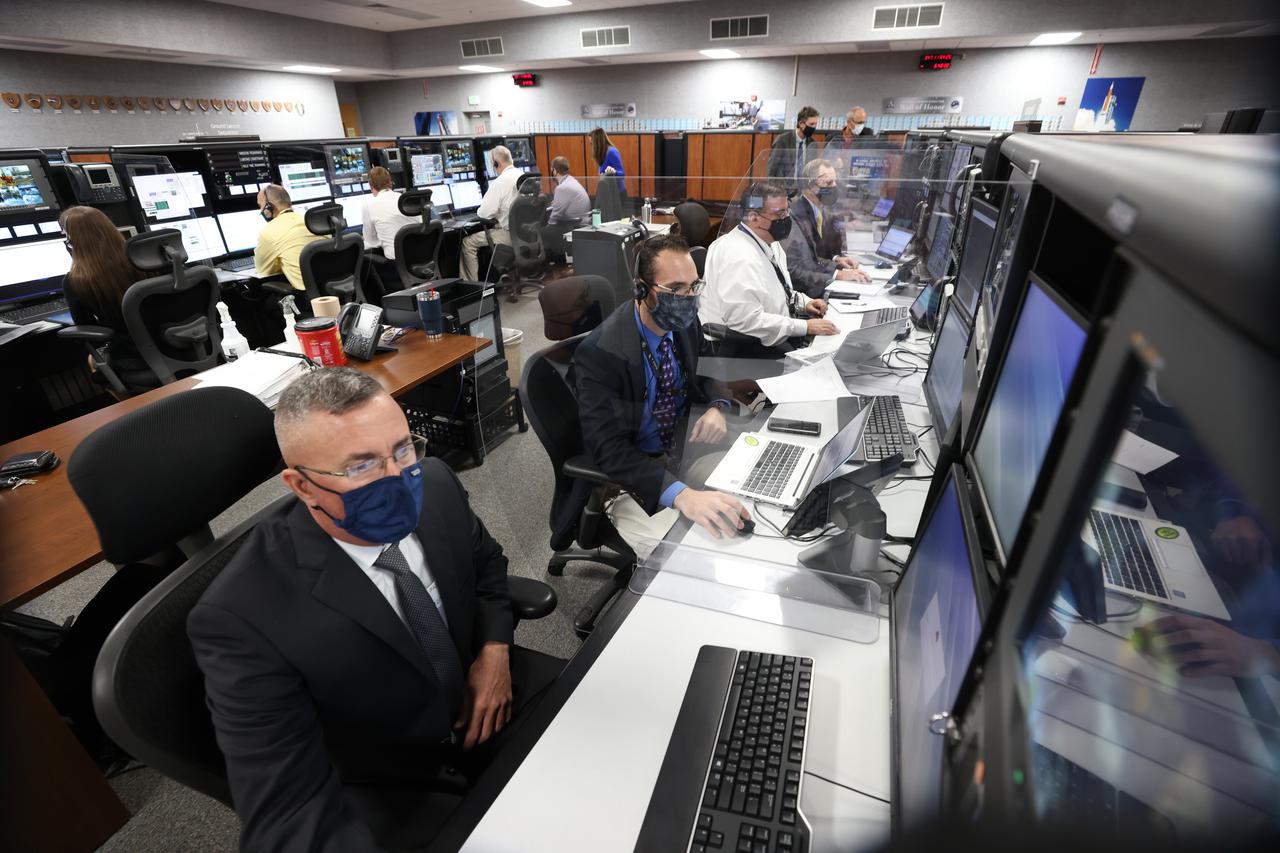
Launch team members are seated at the Integration consoles inside Firing Room 1 of the Launch Control Center at NASA’s Kennedy Space Center in Florida on Dec. 13, 2021. They are participating in a joint integrated simulation for the Artemis I launch that covered both cryogenic loading and terminal countdown portions of prelaunch activities. Members of NASA’s mission management team and launch team conducted the simulation together. The Kennedy team was certified for the Artemis I launch. During Artemis I, the agency’s Orion spacecraft will lift off from Kennedy aboard NASA’s most powerful rocket – the Space Launch System – to fly farther than any spacecraft built for humans has ever flown. Through NASA’s Artemis missions, the agency, along with commercial and international partners, will establish a sustainable human presence on the Moon to prepare for missions to Mars.

Engineers with Exploration Ground Systems at NASA’s Kennedy Space Center in Florida work on software for the launch of Artemis I. Reggie Martin (standing) and Danny Zaatari stay focused on the “Path to the Pad” inside the Launch Control Center on Sept 29, 2020. Artemis I is the first in a series of increasingly complex missions that will enable human exploration to the Moon and Mars.

Launch team members are seated at the Main Engines consoles inside Firing Room 1 of the Launch Control Center at NASA’s Kennedy Space Center in Florida on Dec. 13, 2021. They are participating in a joint integrated simulation for the Artemis I launch that covered both cryogenic loading and terminal countdown portions of prelaunch activities. Members of NASA’s mission management team and launch team conducted the simulation together. The Kennedy team was certified for the Artemis I launch. During Artemis I, the agency’s Orion spacecraft will lift off from Kennedy aboard NASA’s most powerful rocket – the Space Launch System – to fly farther than any spacecraft built for humans has ever flown. Through NASA’s Artemis missions, the agency, along with commercial and international partners, will establish a sustainable human presence on the Moon to prepare for missions to Mars.
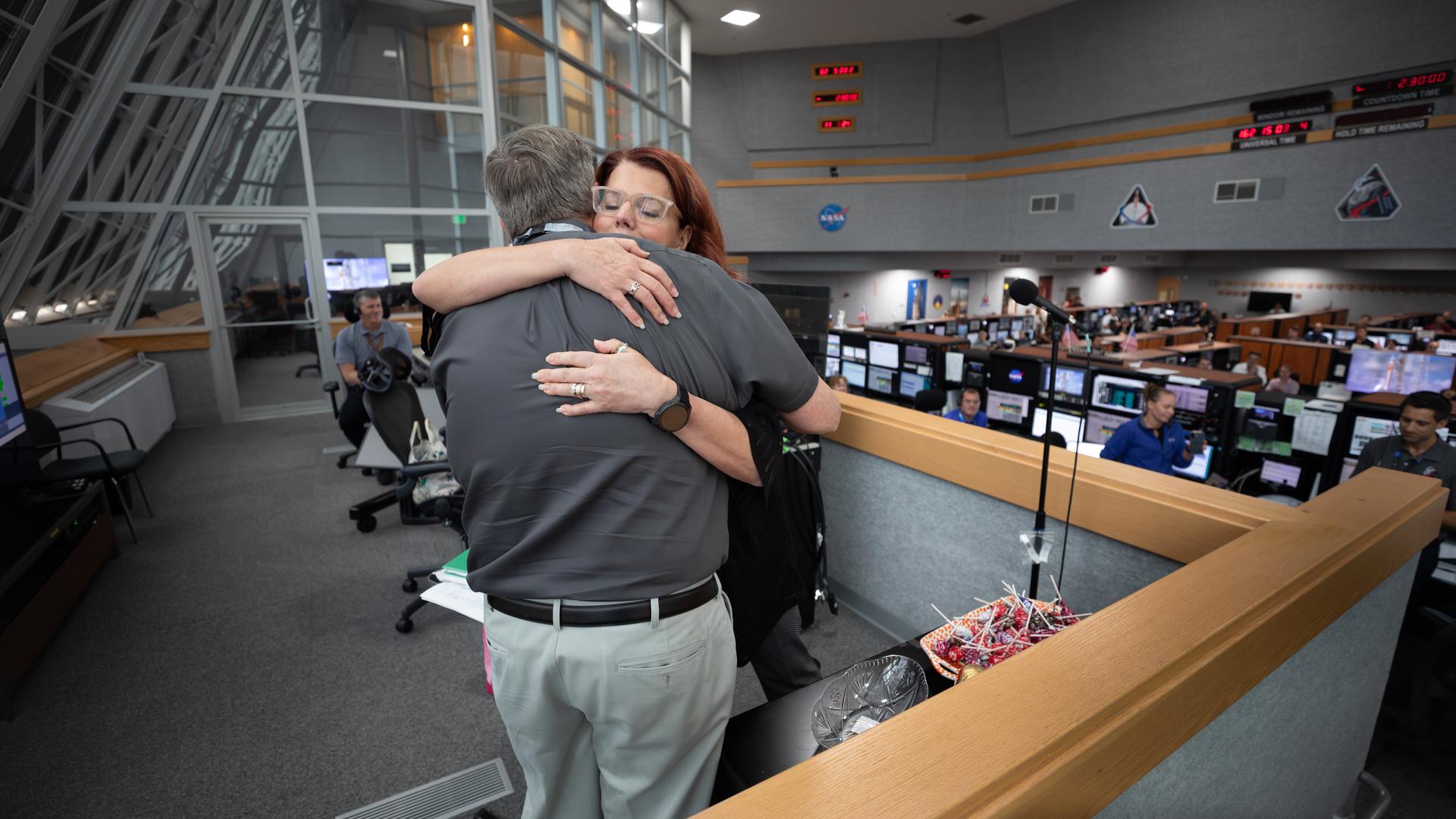
Artemis Launch Director Charlie Blackwell-Thompson gives NASA Test Director Jeff Spaulding a hug Thursday, June 11, 2026, following his retirement from the agency's Kennedy Space Center in Florida. Spaulding began his career at NASA in 1987 as a NASA operations engineer overseeing orbiter processing activities for seven shuttle missions. He later went on to lead the Artemis II launch team during planning, scheduling, and execution on Artemis II on April 1, 2026.
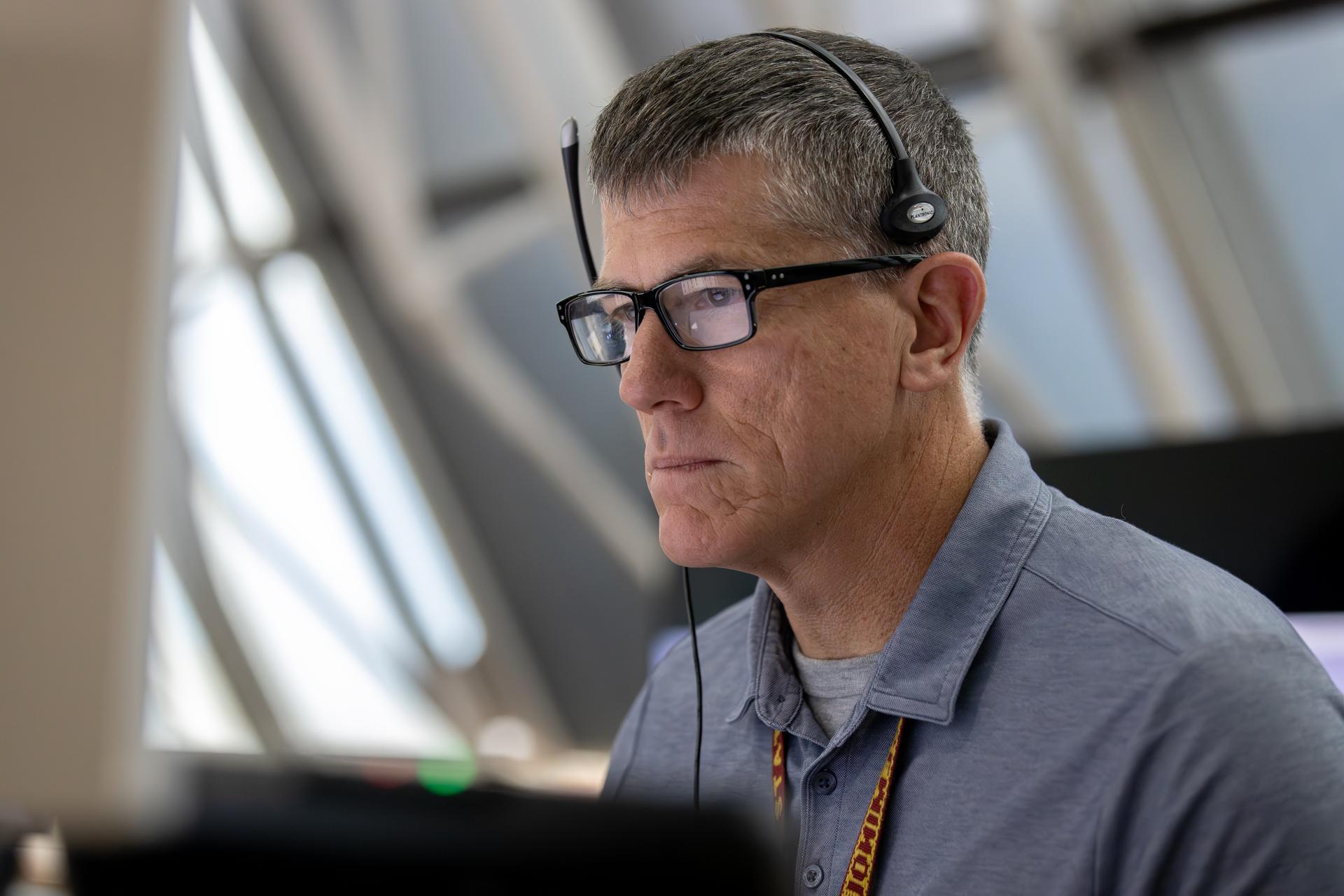
The Artemis launch team performs their second round of Artemis III launch simulations inside Firing Room 1 and 2 in NASA Kennedy's Launch Control Center in Florida.
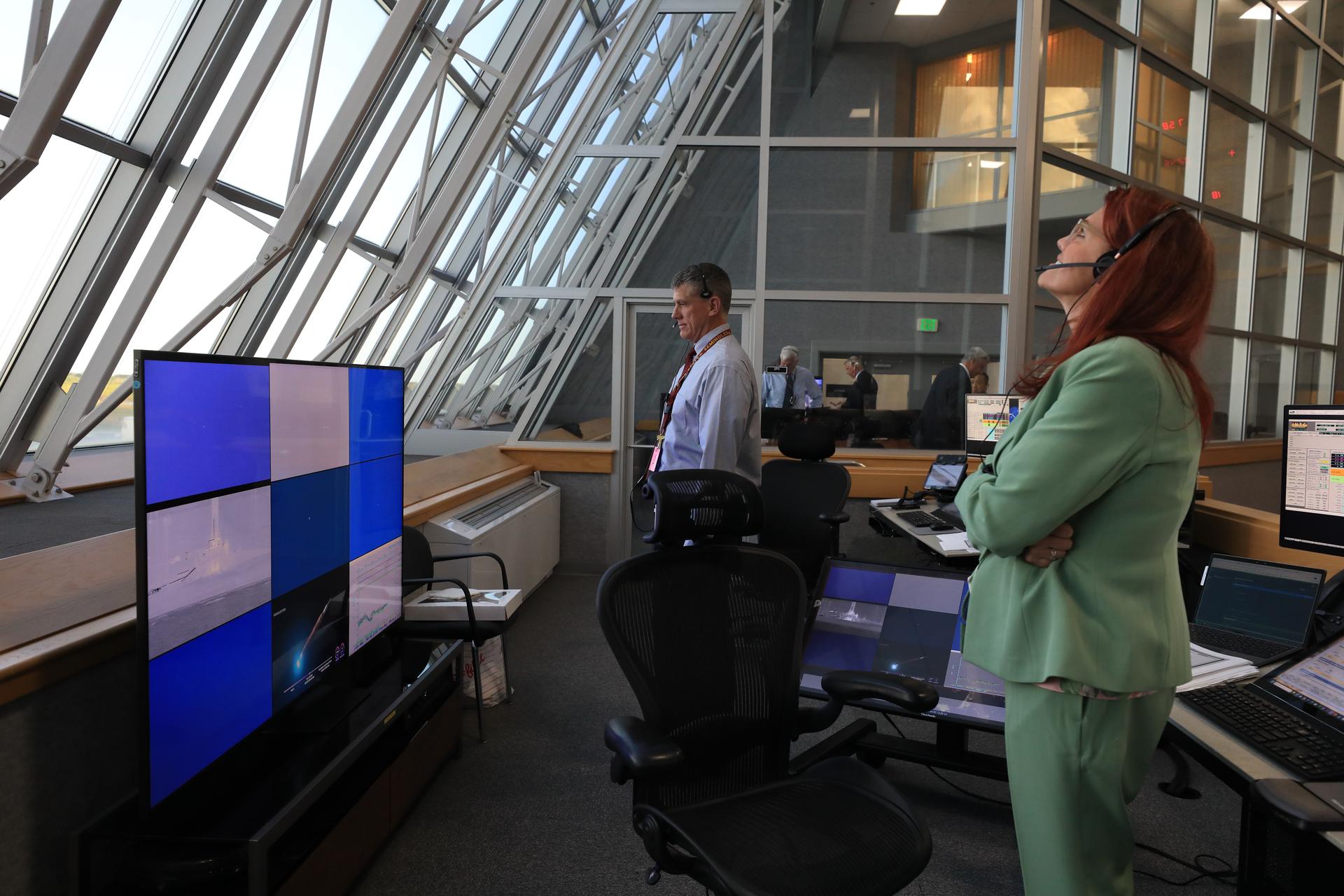
Charlie Blackwell-Thompson, Artemis launch director, and Jeremy Graeber, assistant launch director, each from NASA’s Exploration Ground Systems Program, watch the launch of NASA’s Artemis II test flight launch inside Firing Room 1 of the Rocco Petrone Launch Control Center on Wednesday, April 1, 2026. The Artemis II mission launched Commander Reid Wiseman, Pilot Victor Glover, and Mission Specialist Christina Koch from NASA, and Mission Specialist Jeremy Hansen from the CSA (Canadian Space Agency), aboard NASA’s SLS (Space Launch System) rocket and Orion spacecraft to journey for 10 days around the Moon and back to Earth.
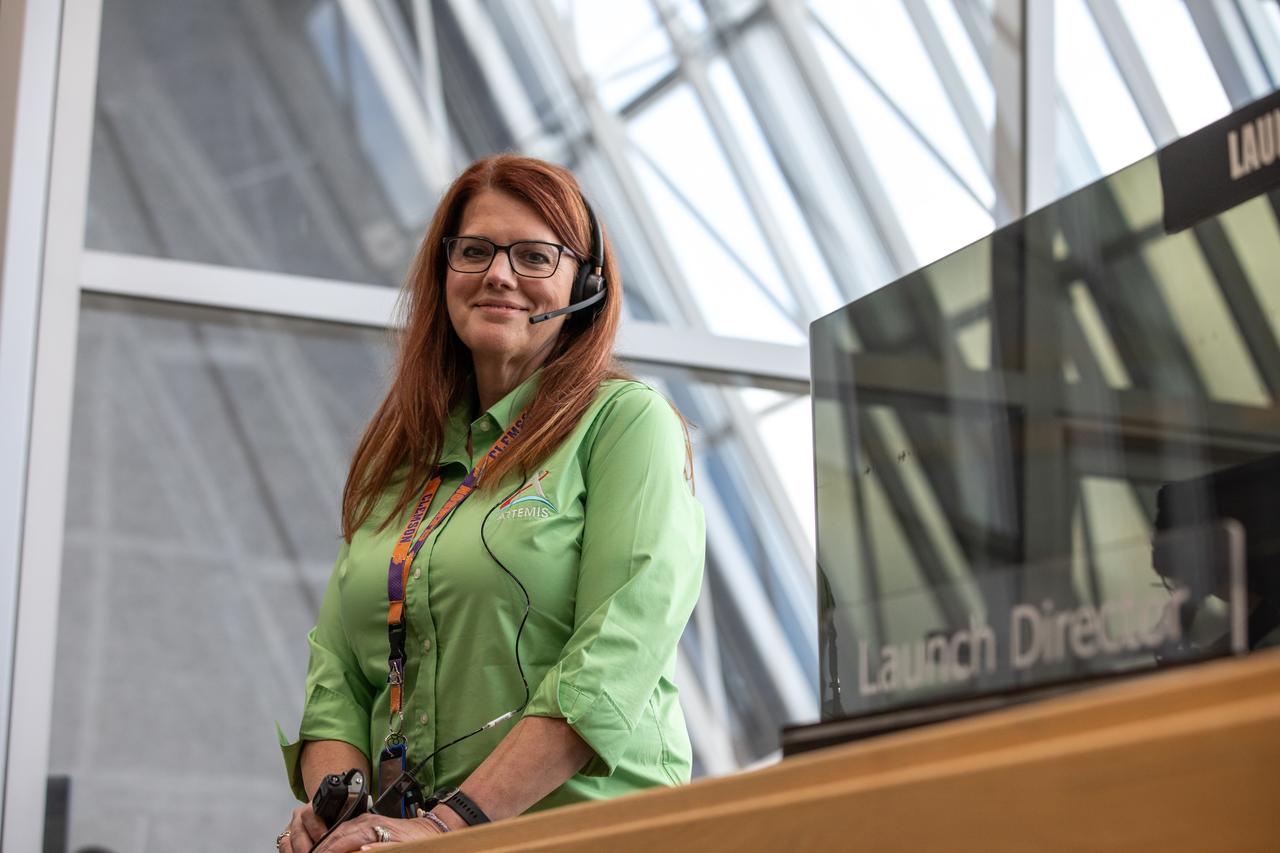
Artemis I Launch Director Charlie Blackwell-Thompson stands at her console in Firing Room 1 as Artemis teams conduct a launch simulation for the Artemis I mission inside the Rocco A. Petrone Launch Control Center at NASA’s Kennedy Space Center in Florida on Oct. 27, 2022. Artemis I will be the first integrated test of NASA’s Space Launch System (SLS) rocket and Orion spacecraft. The primary goal of Artemis I is to thoroughly test the integrated systems before crewed missions by launching Orion atop the SLS rocket, operating the spacecraft in a deep space environment, testing Orion’s heat shield, and recovering the crew module after reentry, descent, and splashdown. During the flight, Orion will launch atop the most powerful rocket in the world and fly farther than any human-rated spacecraft has ever flown, paving the way for human deep space exploration and demonstrating our commitment and capability to extend human presence to the Moon and beyond.
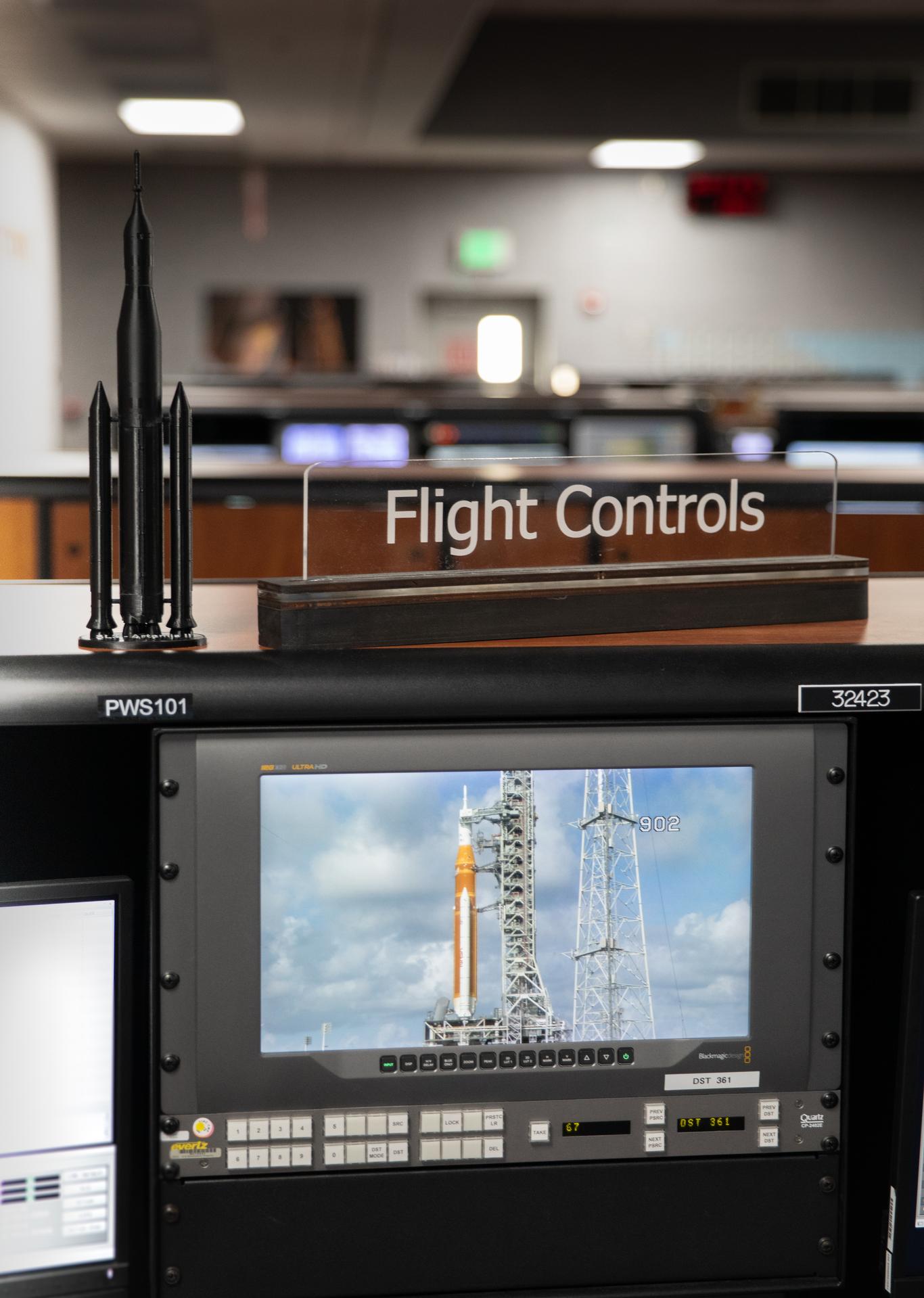
Artemis launch team members participate in a terminal countdown simulation for Artemis III on Thursday, Sept. 10, 2026, inside Firing Room 1 and 2 of the Rocco A. Petrone Launch Control Center at NASA’s Kennedy Space Center in Florida. Terminal count simulations conducted by NASA’s Exploration Ground Systems team run through the final five hours of launch countdown, including terminal count - the remaining 10 minutes of the countdown. Artemis III will carry out a series of objectives in low Earth orbit designed to demonstrate critical systems needed for future lunar landings, beginning with Artemis IV.
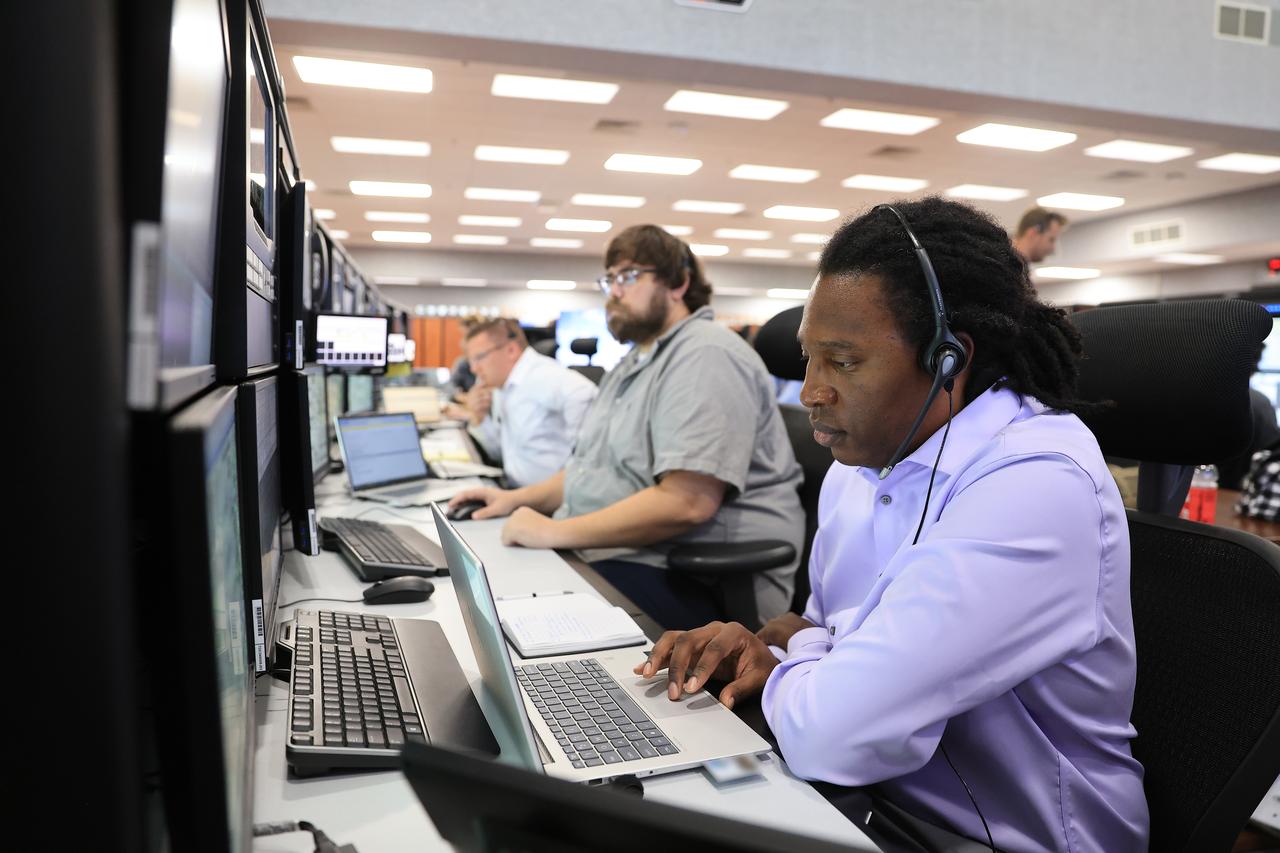
Teams at NASA’s Kennedy Space Center in Florida participate in the first joint integrated launch countdown simulation for Artemis II inside Firing Room 1 of the Launch Control Center on Thursday, Sept. 11, 2025. The training exercise involved engineers from Kennedy, Marshall Space Flight Center in Huntsville, Alabama, and Johnson Space Center in Houston coming together to rehearse all aspects of the launch countdown, from cryogenic loading – filling tanks in the SLS (Space Launch System) rocket’s core stage with liquid hydrogen and liquid oxygen – to liftoff. These simulations will help certify that the launch team is ready for Artemis II – the first crewed Artemis mission that will send four astronauts around the Moon and back.
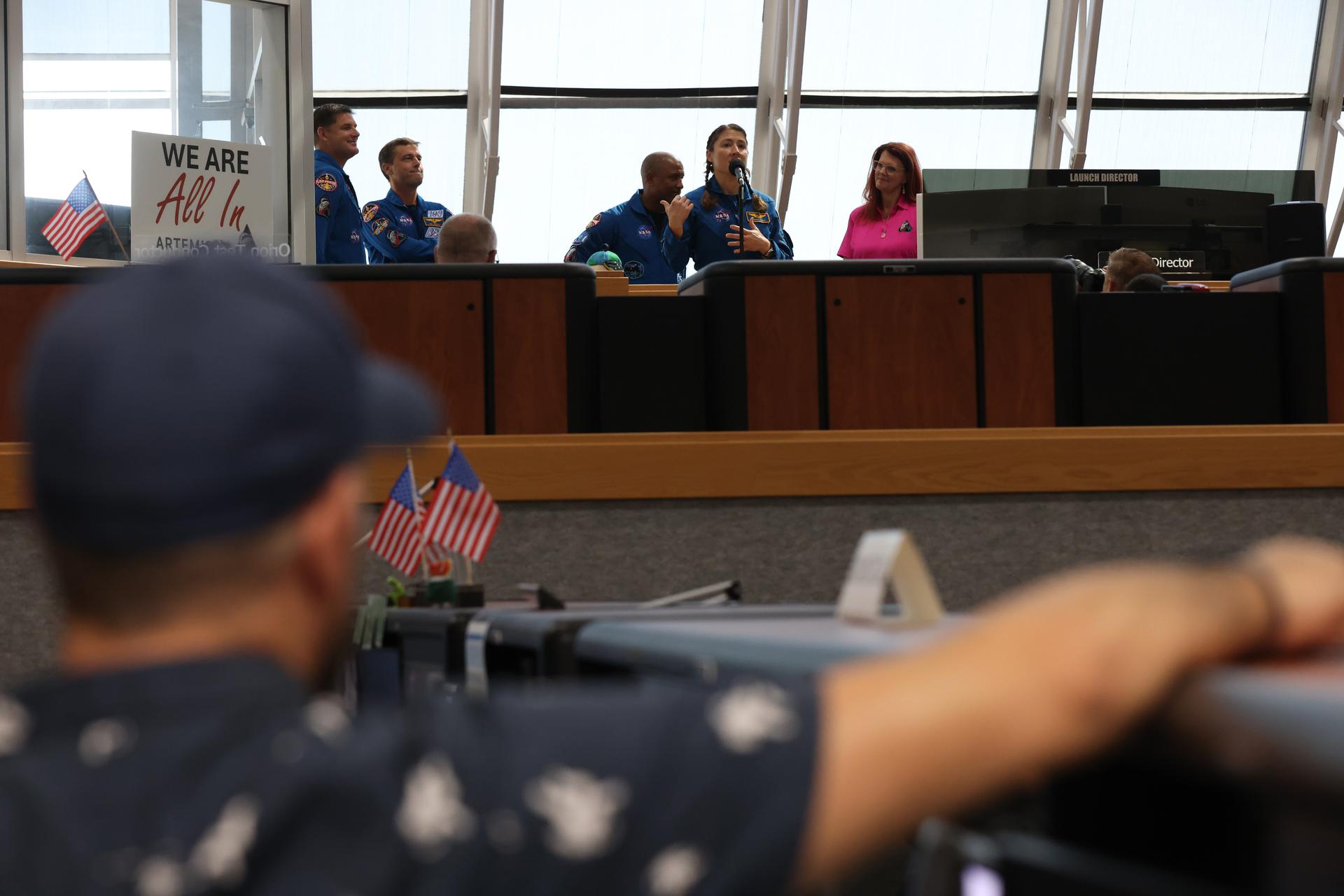
Artemis II NASA astronaut Christina Koch speaks to agency employees inside the Rocco A. Petrone Launch Control Center at NASA’s Kennedy Space Center in Florida on Tuesday, July 7, 2026, joined by Artemis II NASA astronauts Reid Wiseman and Victor Glover, and CSA (Canadian Space Agency) astronaut Jeremy Hansen, as well as Charlie Blackwell-Thompson, Artemis II launch director. The crew returned to NASA Kennedy for their first official visit since launch of Artemis II on Wednesday, April 1, 2026, to visit with the center’s workforce and tour facilities to view progress on Artemis III prelaunch processing.
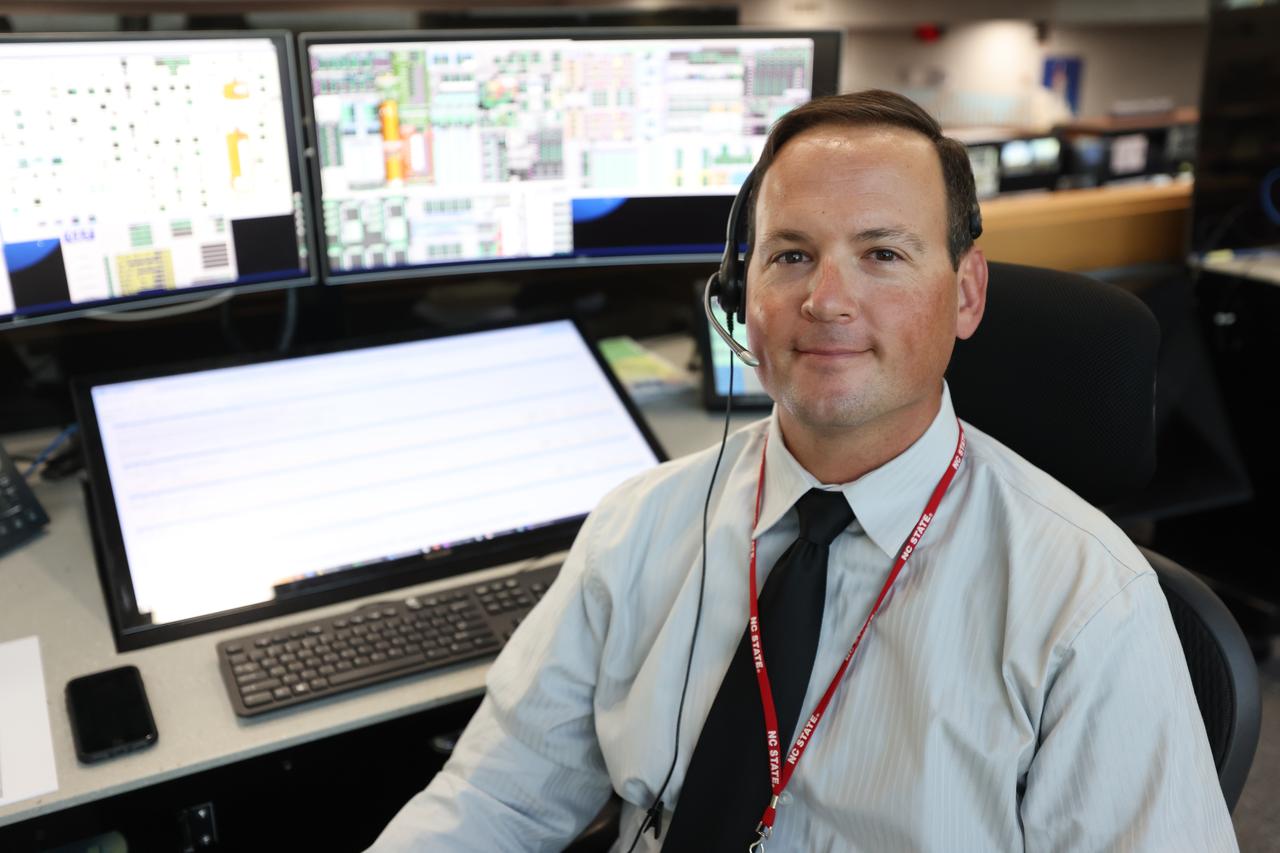
Wes Mosedale, technical assistant to the launch director, is seated at a console inside Firing Room 1 of the Launch Control Center at NASA’s Kennedy Space Center in Florida on Dec. 13, 2021. They are participating in a joint integrated simulation for the Artemis I launch that covered both cryogenic loading and terminal countdown portions of prelaunch activities. Members of NASA’s mission management team and launch team conducted the simulation together. The Kennedy team was certified for the Artemis I launch. During Artemis I, the agency’s Orion spacecraft will lift off from Kennedy aboard NASA’s most powerful rocket – the Space Launch System – to fly farther than any spacecraft built for humans has ever flown. Through NASA’s Artemis missions, the agency, along with commercial and international partners, will establish a sustainable human presence on the Moon to prepare for missions to Mars.
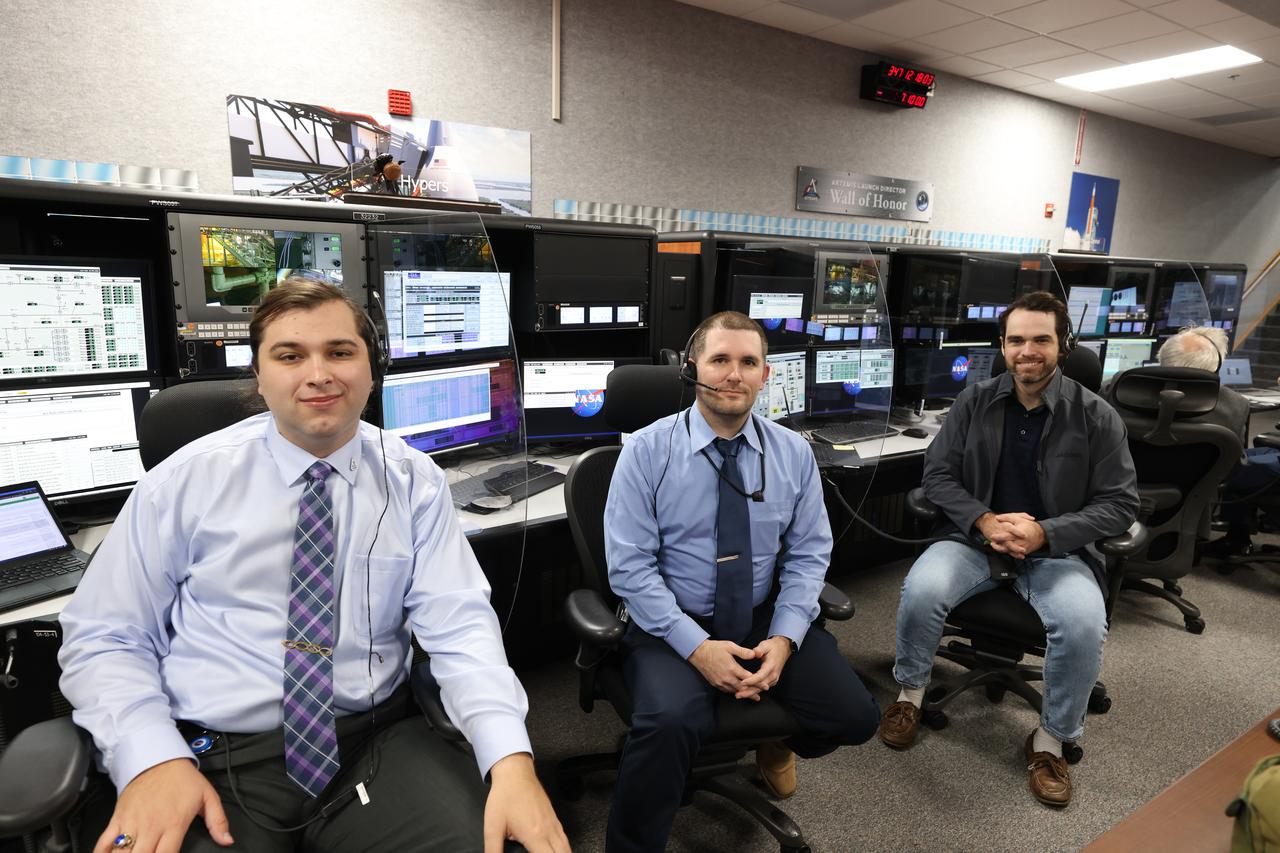
Launch team members are seated at the Hypergols consoles inside Firing Room 1 of the Launch Control Center at NASA’s Kennedy Space Center in Florida on Dec. 13, 2021. They are participating in a joint integrated simulation for the Artemis I launch that covered both cryogenic loading and terminal countdown portions of prelaunch activities. Members of NASA’s mission management team and launch team conducted the simulation together. The Kennedy team was certified for the Artemis I launch. During Artemis I, the agency’s Orion spacecraft will lift off from Kennedy aboard NASA’s most powerful rocket – the Space Launch System – to fly farther than any spacecraft built for humans has ever flown. Through NASA’s Artemis missions, the agency, along with commercial and international partners, will establish a sustainable human presence on the Moon to prepare for missions to Mars.
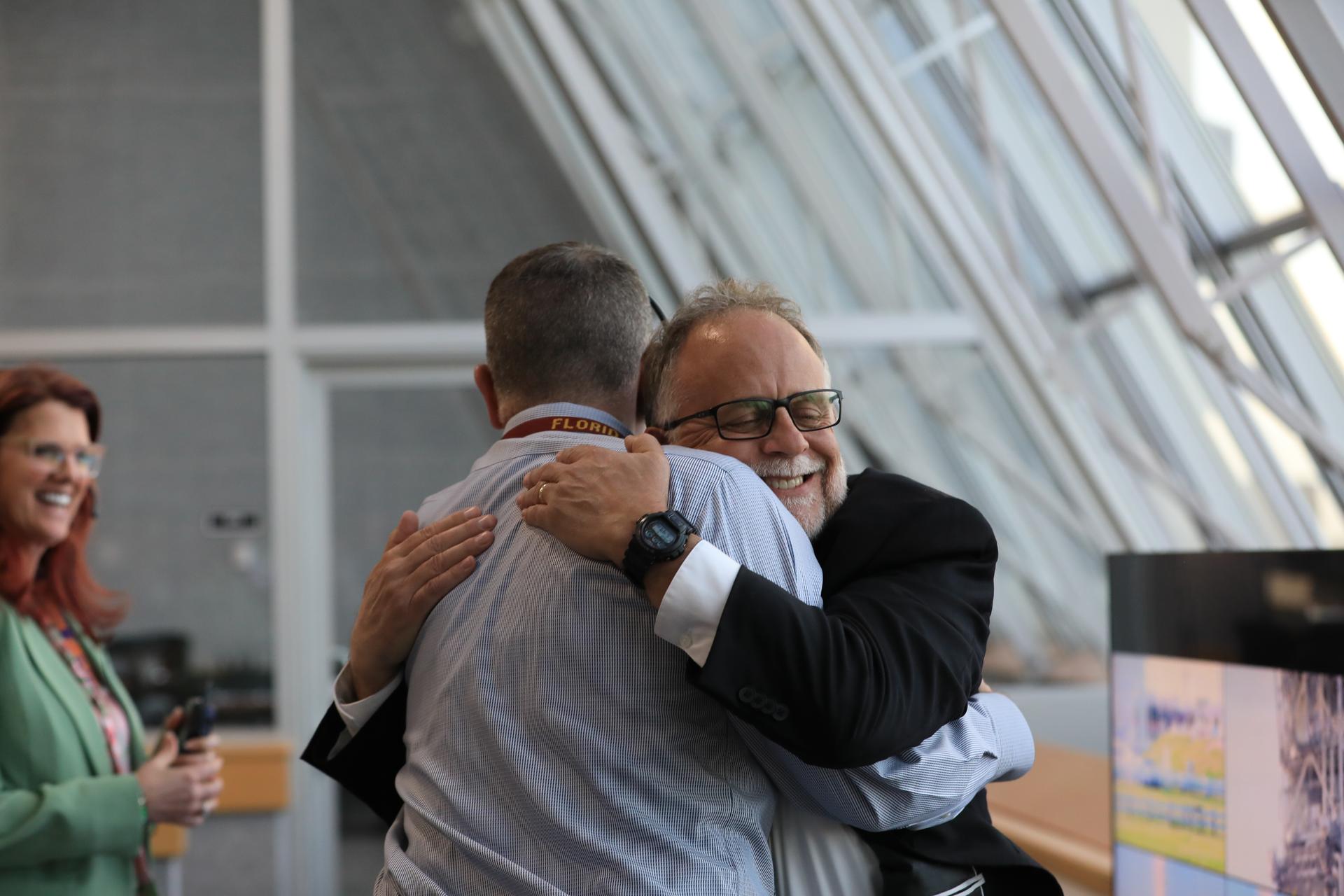
From left, Jeremy Graeber, assistant launch director, and Shawn Quinn, manager, each from NASA’s Exploration Ground Systems Program, smile and hug inside Firing Room 1 of the Rocco A. Petrone Launch Control Center following the launch of the Artemis II test flight on Wednesday, April 1, 2026. The Artemis II mission launched Commander Reid Wiseman, Pilot Victor Glover, and Mission Specialist Christina Koch from NASA, and Mission Specialist Jeremy Hansen from the CSA (Canadian Space Agency), aboard NASA’s SLS (Space Launch System) rocket and Orion spacecraft to journey for 10 days around the Moon and back to Earth.
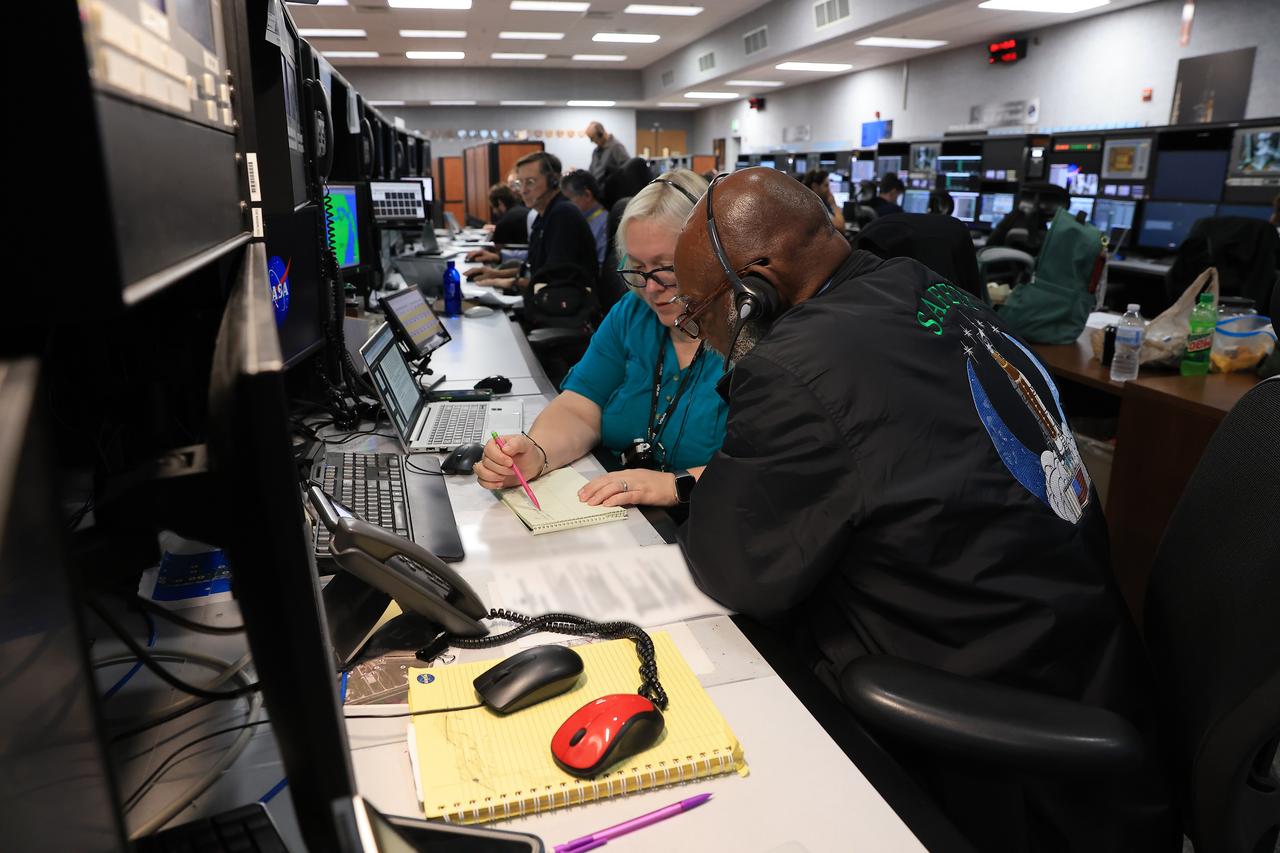
Teams at NASA’s Kennedy Space Center in Florida participate in the first joint integrated launch countdown simulation for Artemis II inside Firing Room 1 of the Launch Control Center on Thursday, Sept. 11, 2025. The training exercise involved engineers from Kennedy, Marshall Space Flight Center in Huntsville, Alabama, and Johnson Space Center in Houston coming together to rehearse all aspects of the launch countdown, from cryogenic loading – filling tanks in the SLS (Space Launch System) rocket’s core stage with liquid hydrogen and liquid oxygen – to liftoff. These simulations will help certify that the launch team is ready for Artemis II – the first crewed Artemis mission that will send four astronauts around the Moon and back.
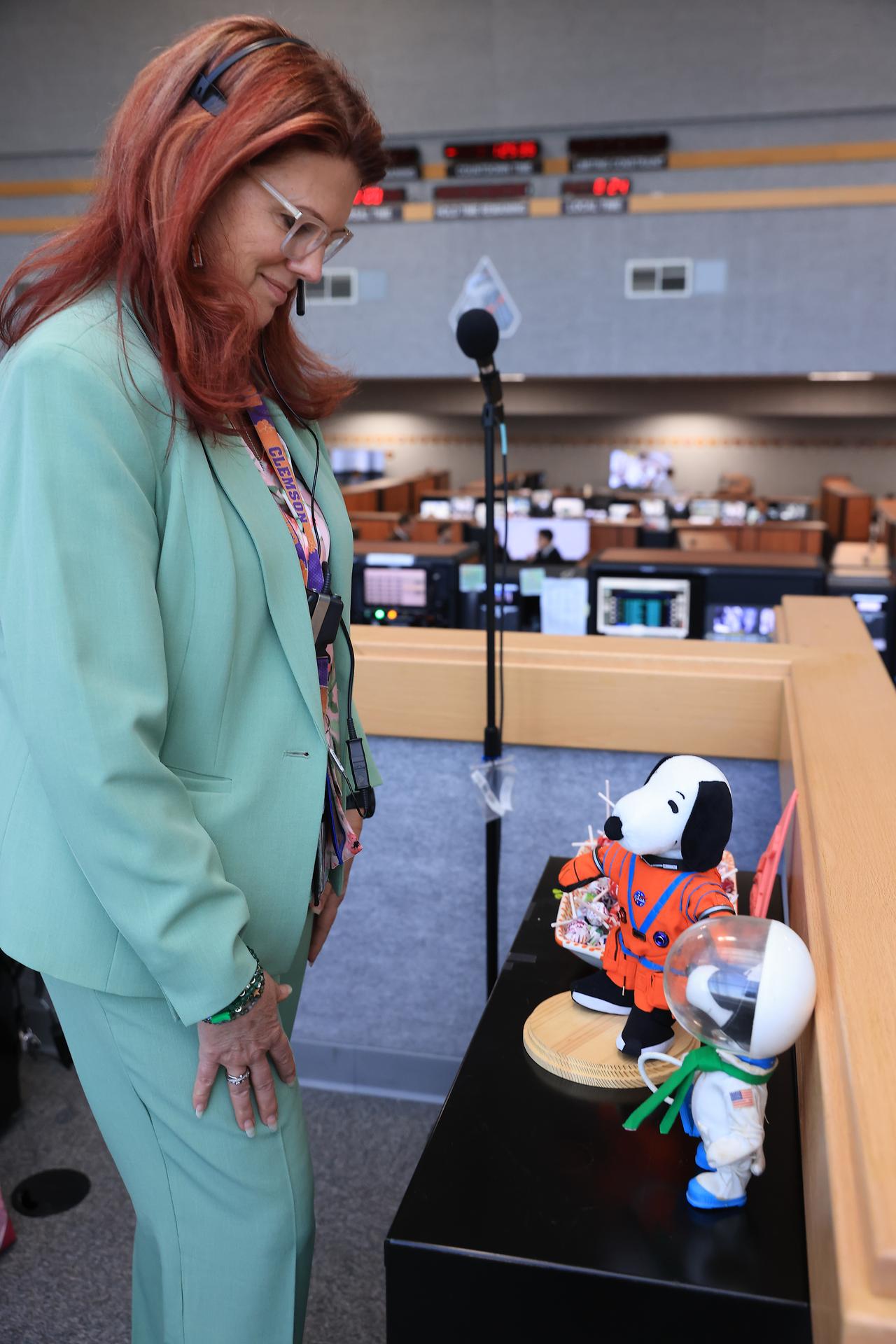
Charlie Blackwell-Thompson, Artemis launch director, NASA’s Exploration Ground Systems Program poses with an Astronaut Snoopy plush toy and her childhood Astronaut Snoopy inside Firing Room 1 of the Rocco Petrone Launch Control Center following the launch of the Artemis II test flight on Wednesday, April 1, 2026. Snoopy has been an official NASA mascot for over 50 years. The Artemis II mission launched Commander Reid Wiseman, Pilot Victor Glover, and Mission Specialist Christina Koch from NASA, and Mission Specialist Jeremy Hansen from the CSA (Canadian Space Agency), aboard NASA’s SLS (Space Launch System) rocket and Orion spacecraft to journey for 10 days around the Moon and back to Earth.
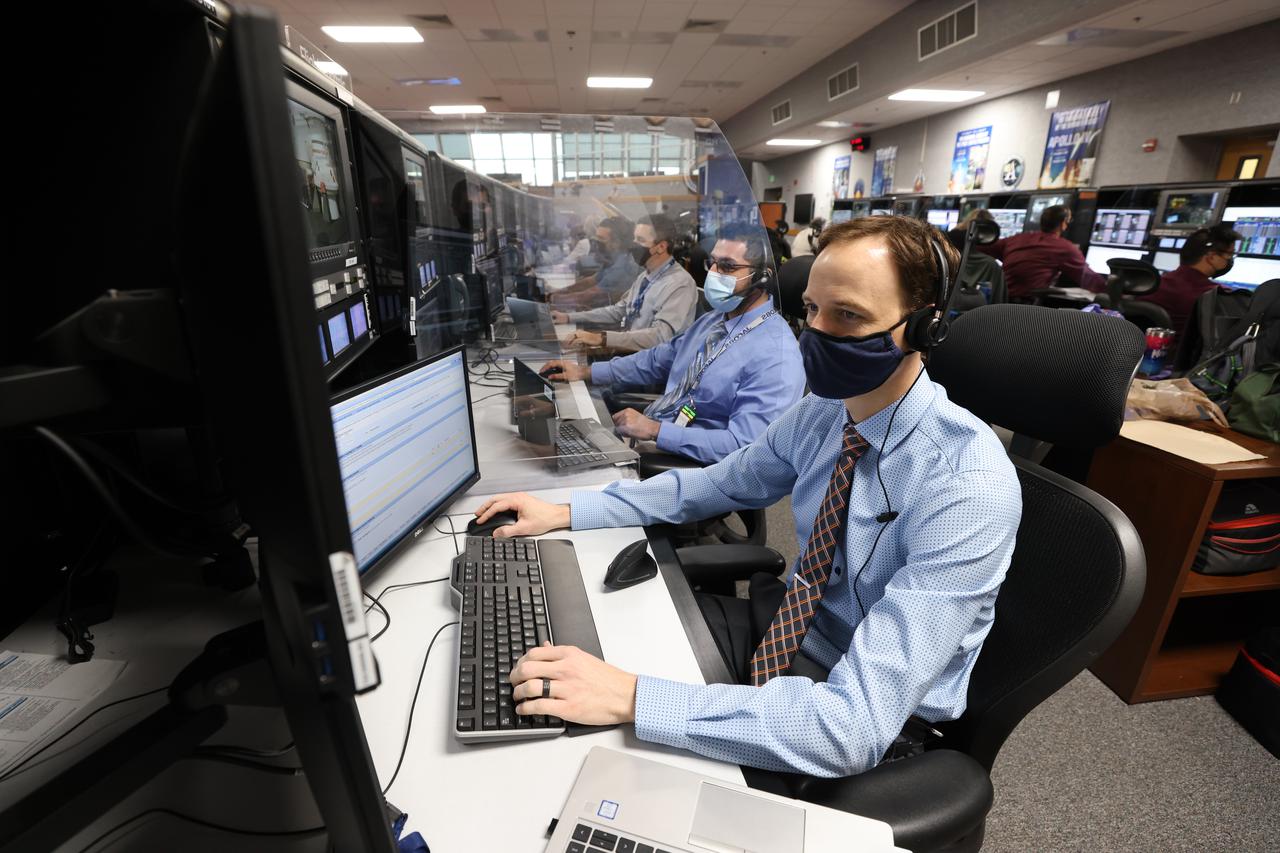
Launch team members are seated at the Flight Controls consoles inside Firing Room 1 of the Launch Control Center at NASA’s Kennedy Space Center in Florida on Dec. 13, 2021. They are participating in a joint integrated simulation for the Artemis I launch that covered both cryogenic loading and terminal countdown portions of prelaunch activities. Members of NASA’s mission management team and launch team conducted the simulation together. The Kennedy team was certified for the Artemis I launch. During Artemis I, the agency’s Orion spacecraft will lift off from Kennedy aboard NASA’s most powerful rocket – the Space Launch System – to fly farther than any spacecraft built for humans has ever flown. Through NASA’s Artemis missions, the agency, along with commercial and international partners, will establish a sustainable human presence on the Moon to prepare for missions to Mars.
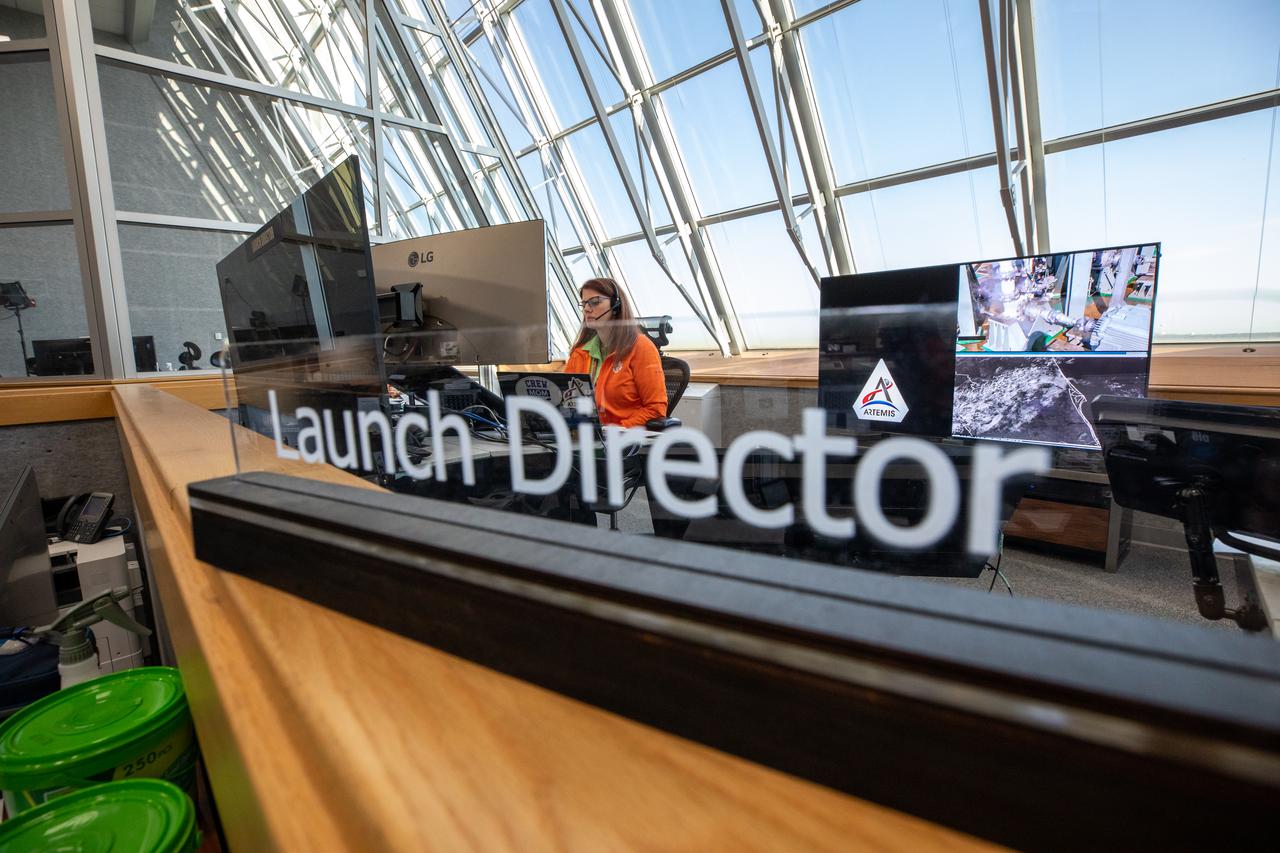
Artemis I Launch Director Charlie Blackwell-Thompson monitors operations from her position in Firing Room 1 as Artemis teams conduct a launch simulation for the Artemis I mission inside the Rocco A. Petrone Launch Control Center at NASA’s Kennedy Space Center in Florida on Oct. 27, 2022. Artemis I will be the first integrated test of NASA’s Space Launch System (SLS) rocket and Orion spacecraft. The primary goal of Artemis I is to thoroughly test the integrated systems before crewed missions by launching Orion atop the SLS rocket, operating the spacecraft in a deep space environment, testing Orion’s heat shield, and recovering the crew module after reentry, descent, and splashdown. During the flight, Orion will launch atop the most powerful rocket in the world and fly farther than any human-rated spacecraft has ever flown, paving the way for human deep space exploration and demonstrating our commitment and capability to extend human presence to the Moon and beyond.

Aaron Sherman, launch project engineer, participates in a cryogenic propellant loading simulation for NASA’s Artemis III mission on Wednesday, June 10, 2026, inside Firing Room 1 of the Rocco A. Petrone Launch Control Center at the agency’s Kennedy Space Center in Florida. Members of NASA’s Exploration Ground Systems team rehearse the steps to load the super-cooled liquid hydrogen and liquid oxygen into the SLS (Space Launch System) rocket core stage, a process that starts several hours before liftoff for the Artemis III mission. Artemis III will carry out a series of objectives in low Earth orbit designed to demonstrate critical systems needed for future lunar landings, beginning with Artemis IV.
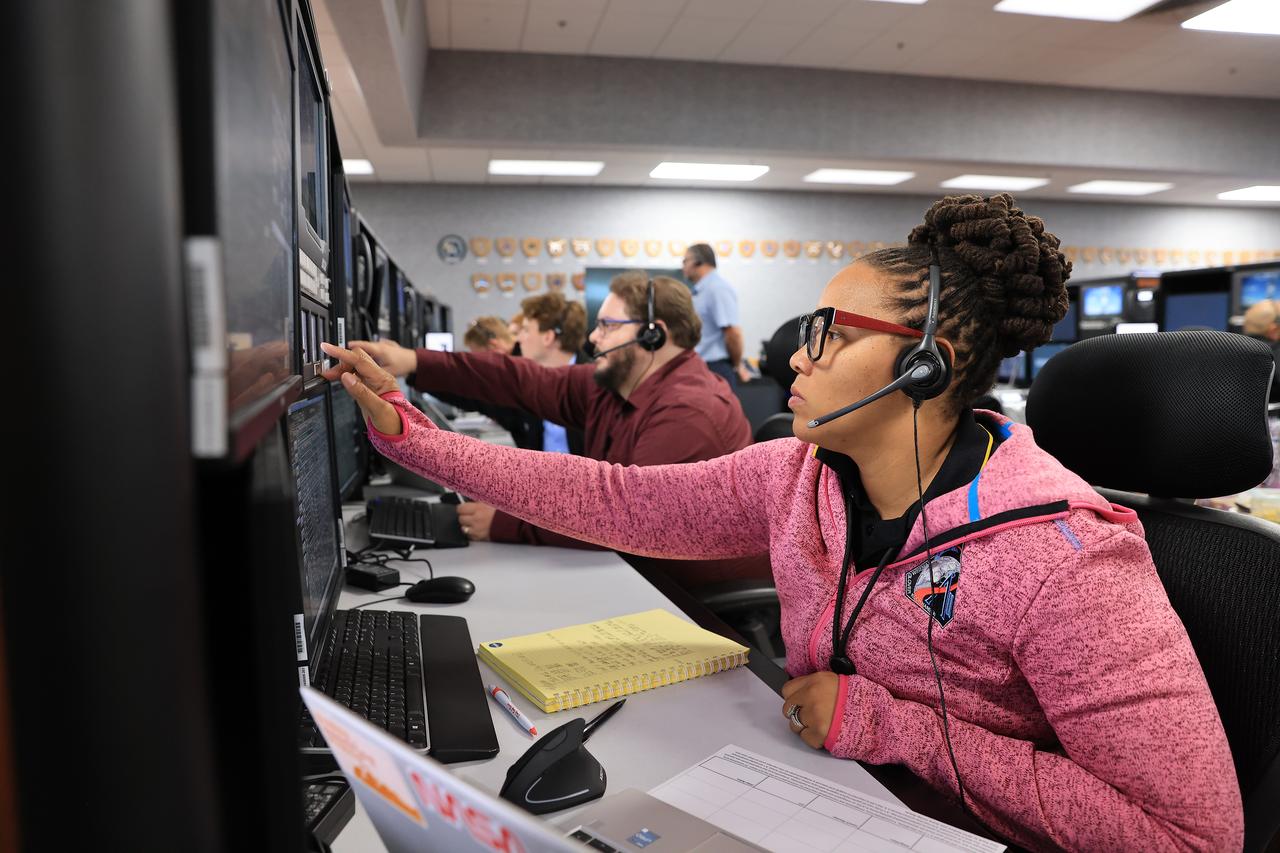
Teams at NASA’s Kennedy Space Center in Florida participate in the first joint integrated launch countdown simulation for Artemis II inside Firing Room 1 of the Launch Control Center on Thursday, Sept. 11, 2025. The training exercise involved engineers from Kennedy, Marshall Space Flight Center in Huntsville, Alabama, and Johnson Space Center in Houston coming together to rehearse all aspects of the launch countdown, from cryogenic loading – filling tanks in the SLS (Space Launch System) rocket’s core stage with liquid hydrogen and liquid oxygen – to liftoff. These simulations will help certify that the launch team is ready for Artemis II – the first crewed Artemis mission that will send four astronauts around the Moon and back.
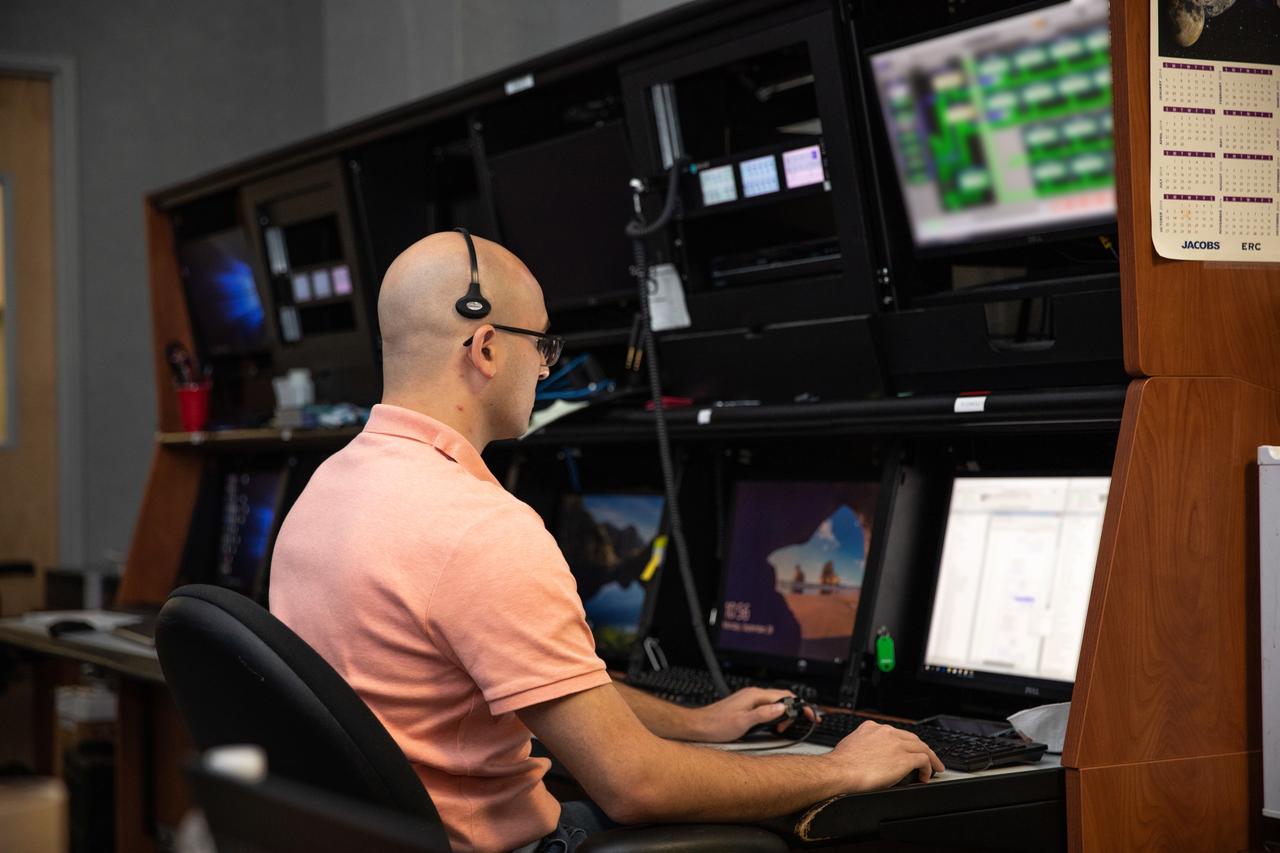
Inside the Launch Control Center at Kennedy Space Center on Sept. 29, 2020, engineer Danny Zaatari, with Exploration Ground Systems, works on software for the launch of Artemis I. Engineers at the Florida spaceport are staying focused on the “Path to the Pad.” Artemis I is the first in a series of increasingly complex missions that will enable human exploration to the Moon and Mars.
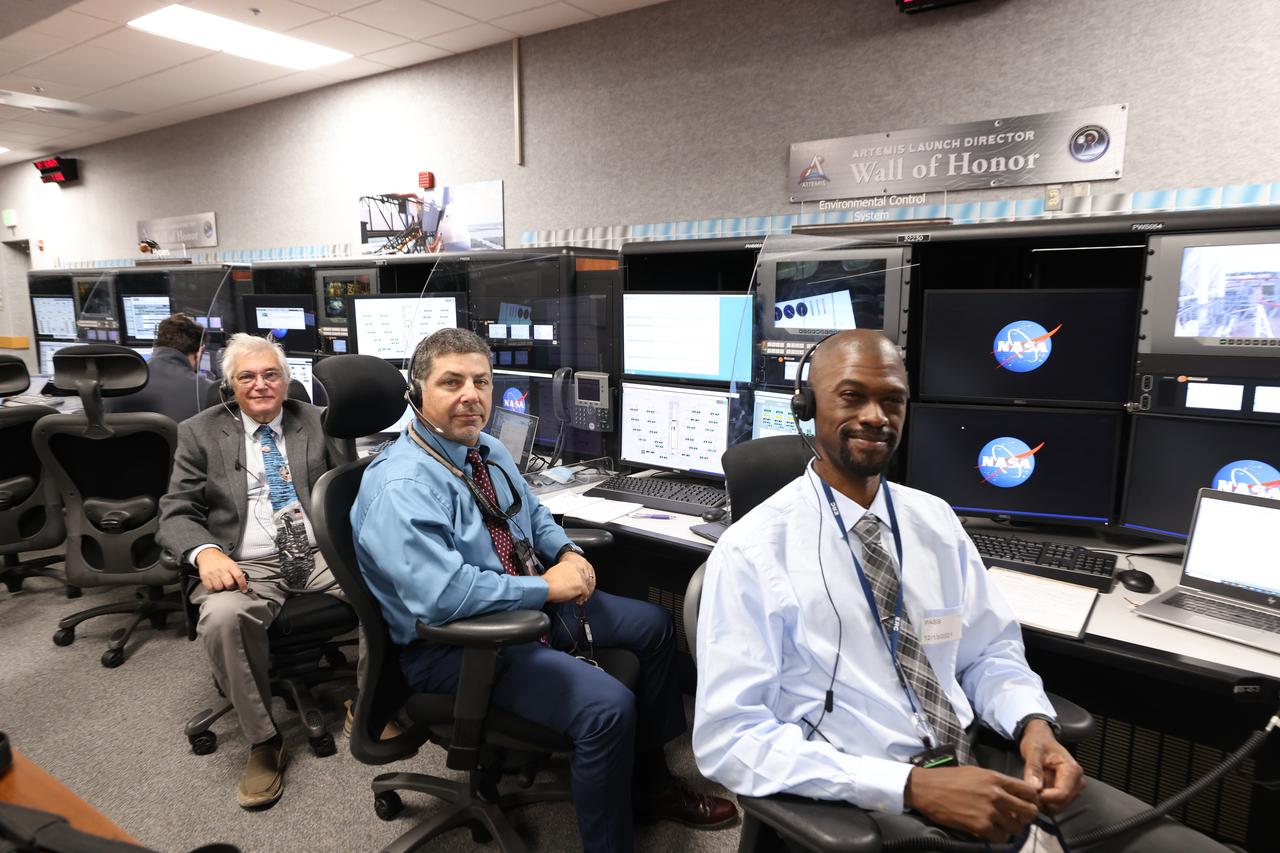
Launch team members are seated at the Environment Control System consoles inside Firing Room 1 of the Launch Control Center at NASA’s Kennedy Space Center in Florida on Dec. 13, 2021. They are participating in a joint integrated simulation for the Artemis I launch that covered both cryogenic loading and terminal countdown portions of prelaunch activities. Members of NASA’s mission management team and launch team conducted the simulation together. The Kennedy team was certified for the Artemis I launch. During Artemis I, the agency’s Orion spacecraft will lift off from Kennedy aboard NASA’s most powerful rocket – the Space Launch System – to fly farther than any spacecraft built for humans has ever flown. Through NASA’s Artemis missions, the agency, along with commercial and international partners, will establish a sustainable human presence on the Moon to prepare for missions to Mars.

NASA Test Directors Daniel Florez, right, and Carlos Monje, left, with Exploration Ground Systems, are seated at their consoles inside Firing Room 1 of the Launch Control Center at NASA’s Kennedy Space Center in Florida on Dec. 13, 2021. They are participating in a joint integrated simulation for the Artemis I launch that covered both cryogenic loading and terminal countdown portions of prelaunch activities. Members of NASA’s mission management team and launch team conducted the simulation together. The Kennedy team was certified for the Artemis I launch. During Artemis I, the agency’s Orion spacecraft will lift off from Kennedy aboard NASA’s most powerful rocket – the Space Launch System – to fly farther than any spacecraft built for humans has ever flown. Through NASA’s Artemis missions, the agency, along with commercial and international partners, will establish a sustainable human presence on the Moon to prepare for missions to Mars.
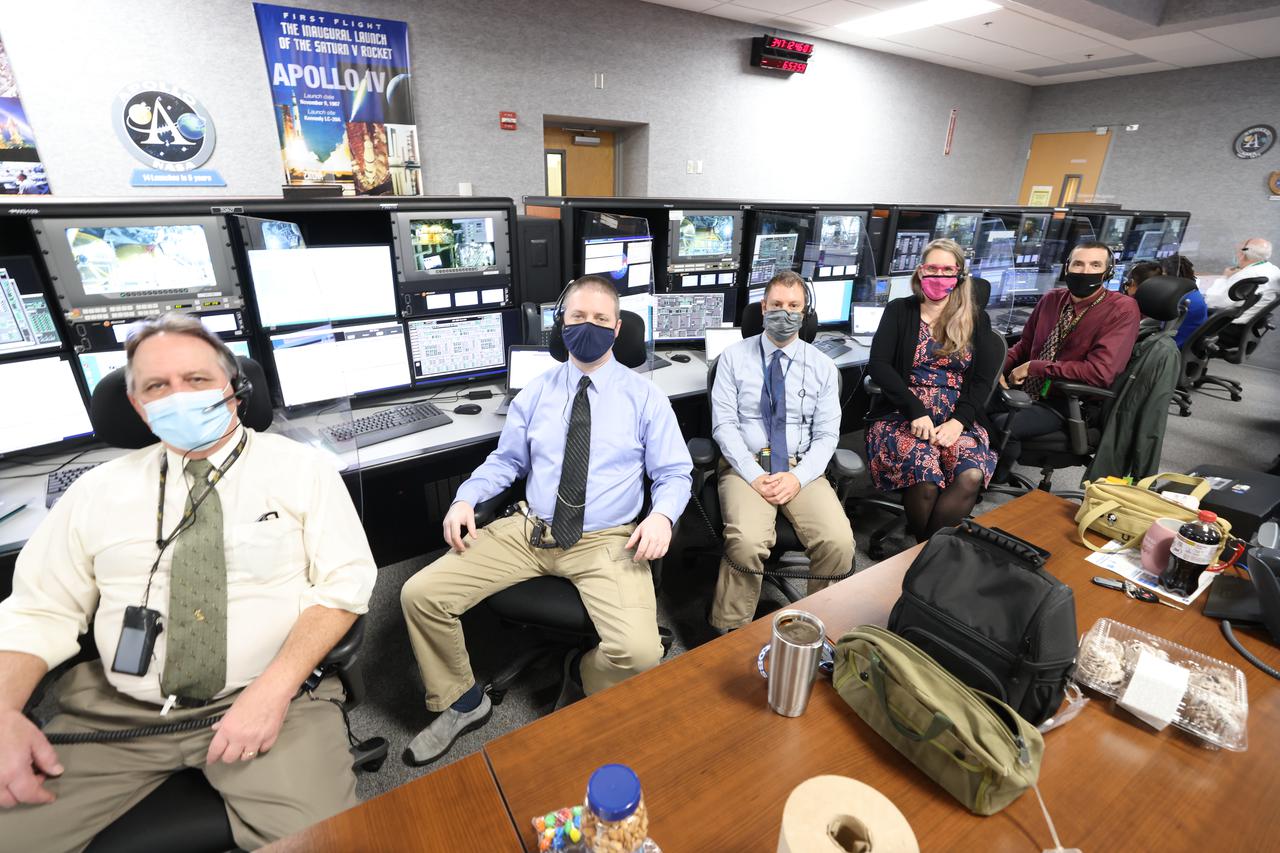
Launch team members are seated at the Avionics consoles inside Firing Room 1 of the Launch Control Center at NASA’s Kennedy Space Center in Florida on Dec. 13, 2021. They are participating in a joint integrated simulation for the Artemis I launch that covered both cryogenic loading and terminal countdown portions of prelaunch activities. Members of NASA’s mission management team and launch team conducted the simulation together. The Kennedy team was certified for the Artemis I launch. During Artemis I, the agency’s Orion spacecraft will lift off from Kennedy aboard NASA’s most powerful rocket – the Space Launch System – to fly farther than any spacecraft built for humans has ever flown. Through NASA’s Artemis missions, the agency, along with commercial and international partners, will establish a sustainable human presence on the Moon to prepare for missions to Mars.
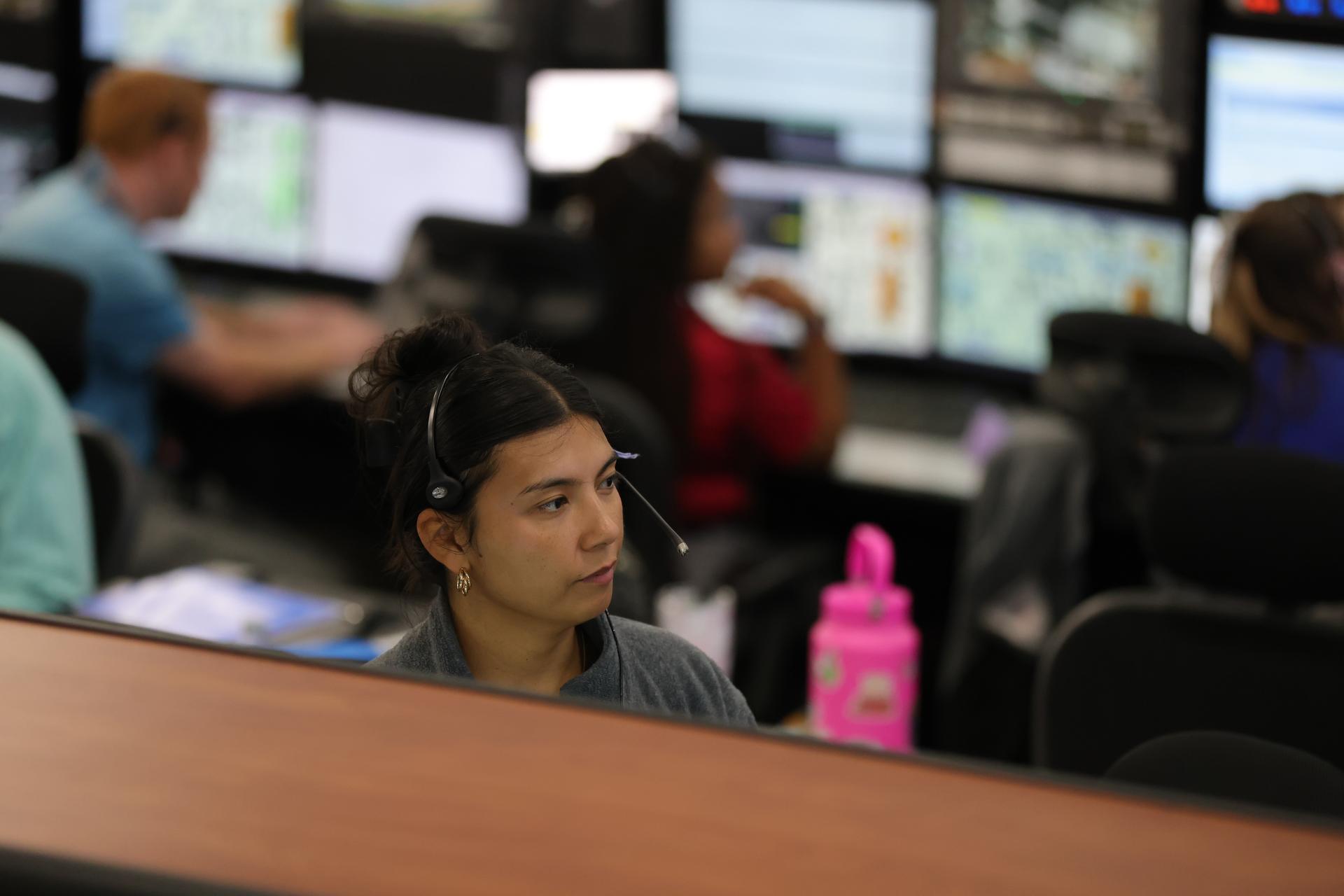
Artemis launch team members participate in a terminal countdown simulation for Artemis III on Thursday, Sept. 10, 2026, inside Firing Room 1 and 2 of the Rocco A. Petrone Launch Control Center at NASA’s Kennedy Space Center in Florida. Terminal count simulations conducted by NASA’s Exploration Ground Systems team run through the final five hours of launch countdown, including terminal count - the remaining 10 minutes of the countdown. Artemis III will carry out a series of objectives in low Earth orbit designed to demonstrate critical systems needed for future lunar landings, beginning with Artemis IV.
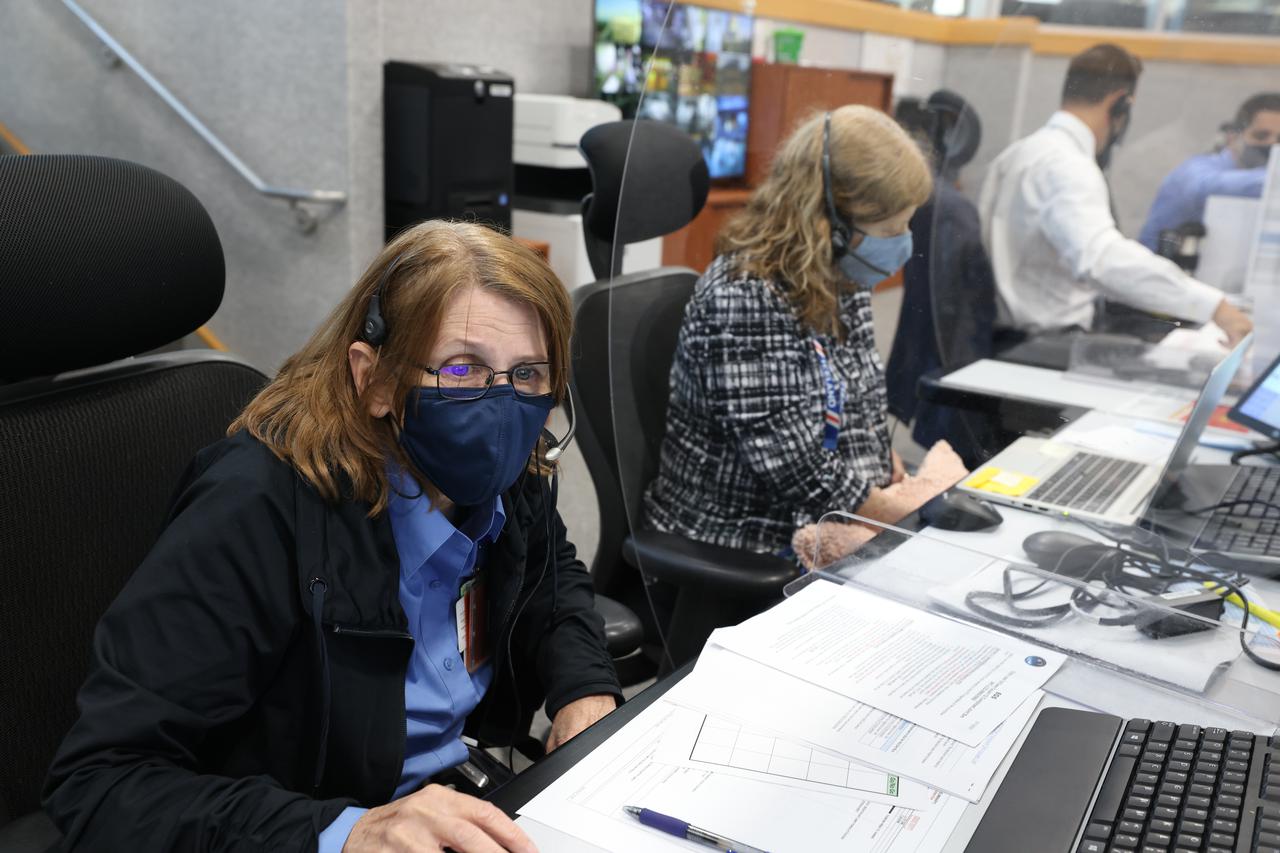
Launch team members are seated at the Space Launch System test conductor consoles inside Firing Room 1 of the Launch Control Center at NASA’s Kennedy Space Center in Florida on Dec. 13, 2021. From left are Teresa Annulis, Roberta Wyrick, Carlos Monge, and Dan Florez. They are participating in a joint integrated simulation for the Artemis I launch that covered both cryogenic loading and terminal countdown portions of prelaunch activities. Members of NASA’s mission management team and launch team conducted the simulation together. The Kennedy team was certified for the Artemis I launch. During Artemis I, the agency’s Orion spacecraft will lift off from Kennedy aboard NASA’s most powerful rocket – the Space Launch System – to fly farther than any spacecraft built for humans has ever flown. Through NASA’s Artemis missions, the agency, along with commercial and international partners, will establish a sustainable human presence on the Moon to prepare for missions to Mars.
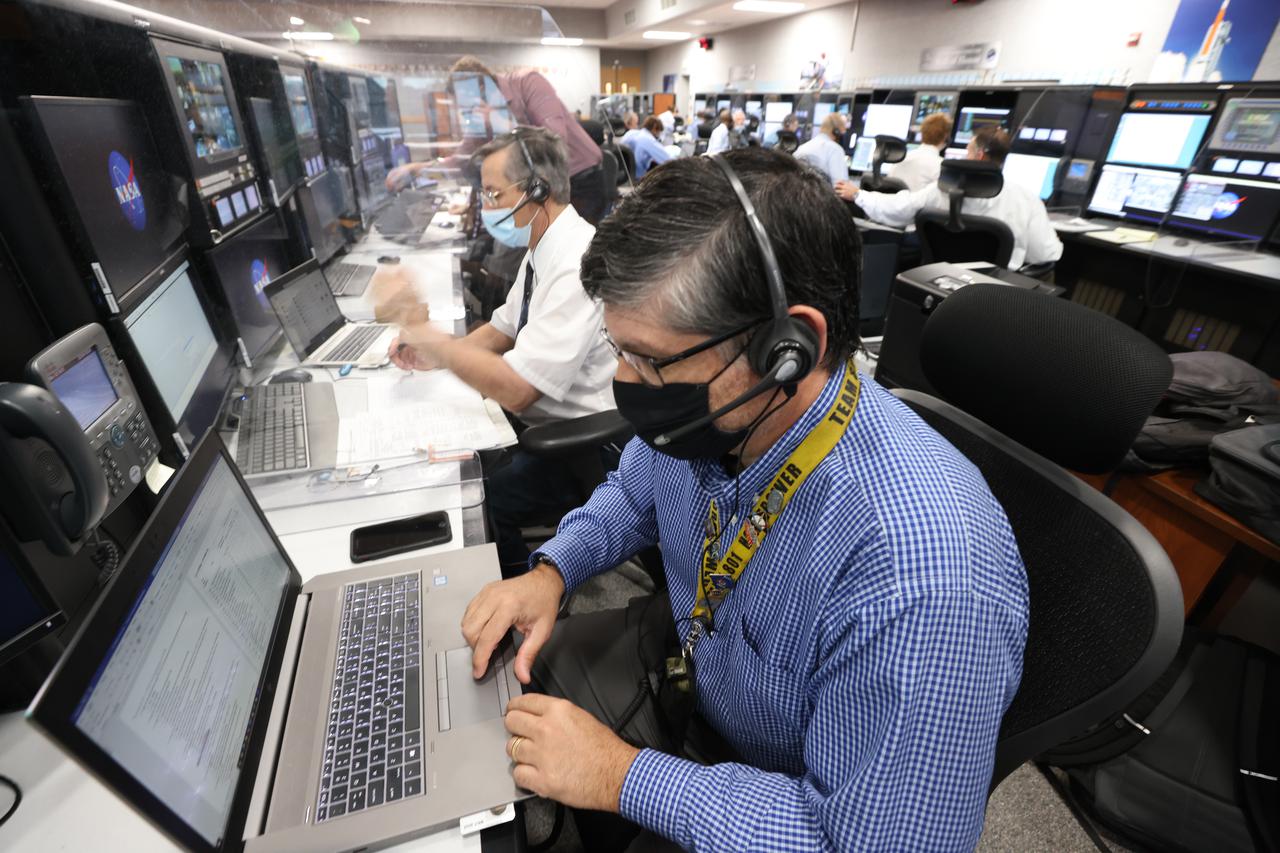
Launch team members are seated at the Biomedical/Emergency Medical Services consoles inside Firing Room 1 of the Launch Control Center at NASA’s Kennedy Space Center in Florida on Dec. 13, 2021. They are participating in a joint integrated simulation for the Artemis I launch that covered both cryogenic loading and terminal countdown portions of prelaunch activities. Members of NASA’s mission management team and launch team conducted the simulation together. The Kennedy team was certified for the Artemis I launch. During Artemis I, the agency’s Orion spacecraft will lift off from Kennedy aboard NASA’s most powerful rocket – the Space Launch System – to fly farther than any spacecraft built for humans has ever flown. Through NASA’s Artemis missions, the agency, along with commercial and international partners, will establish a sustainable human presence on the Moon to prepare for missions to Mars.
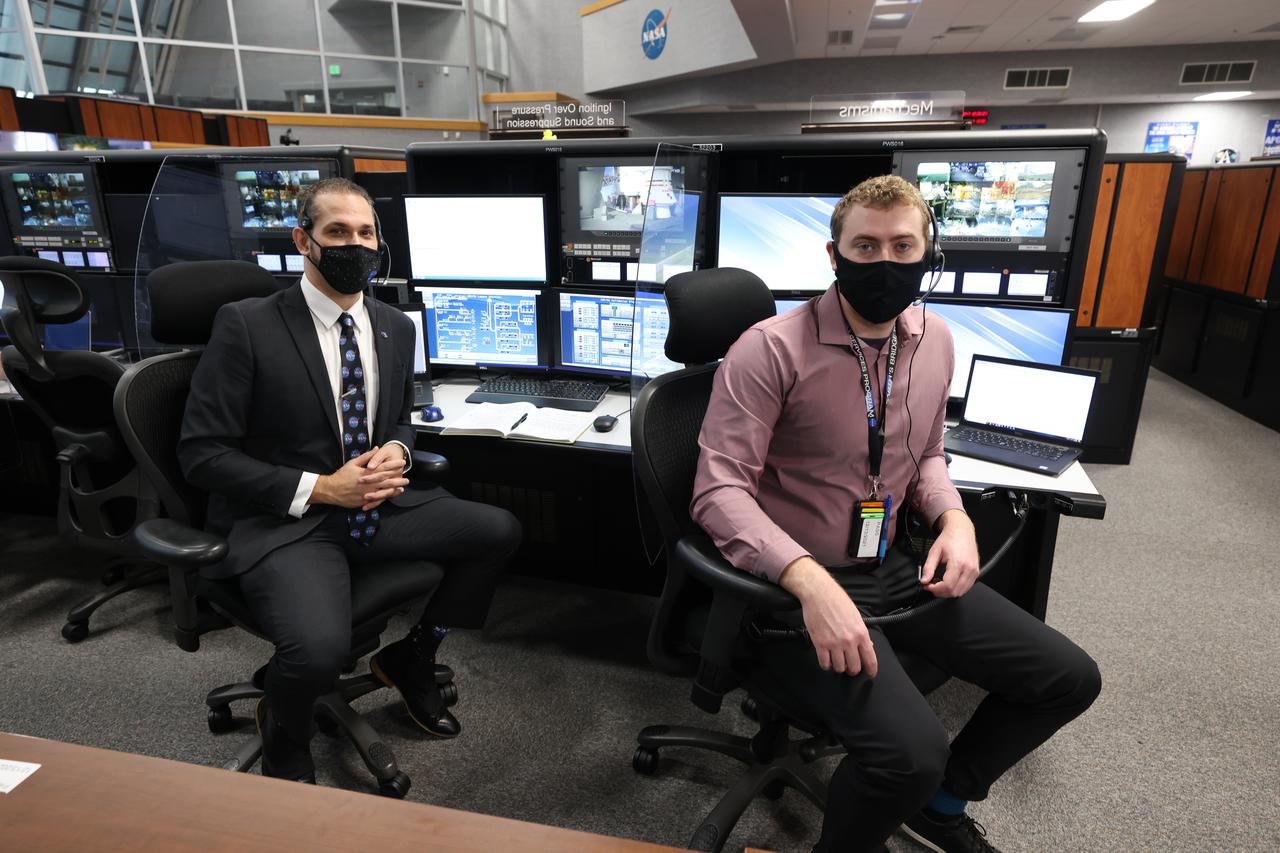
Launch team members are seated at the Mechanisms and Ignition Over Pressure and Sound Suppression System consoles inside Firing Room 1 of the Launch Control Center at NASA’s Kennedy Space Center in Florida on Dec. 13, 2021. They are participating in a joint integrated simulation for the Artemis I launch that covered both cryogenic loading and terminal countdown portions of prelaunch activities. Members of NASA’s mission management team and launch team conducted the simulation together. The Kennedy team was certified for the Artemis I launch. During Artemis I, the agency’s Orion spacecraft will lift off from Kennedy aboard NASA’s most powerful rocket – the Space Launch System – to fly farther than any spacecraft built for humans has ever flown. Through NASA’s Artemis missions, the agency, along with commercial and international partners, will establish a sustainable human presence on the Moon to prepare for missions to Mars.
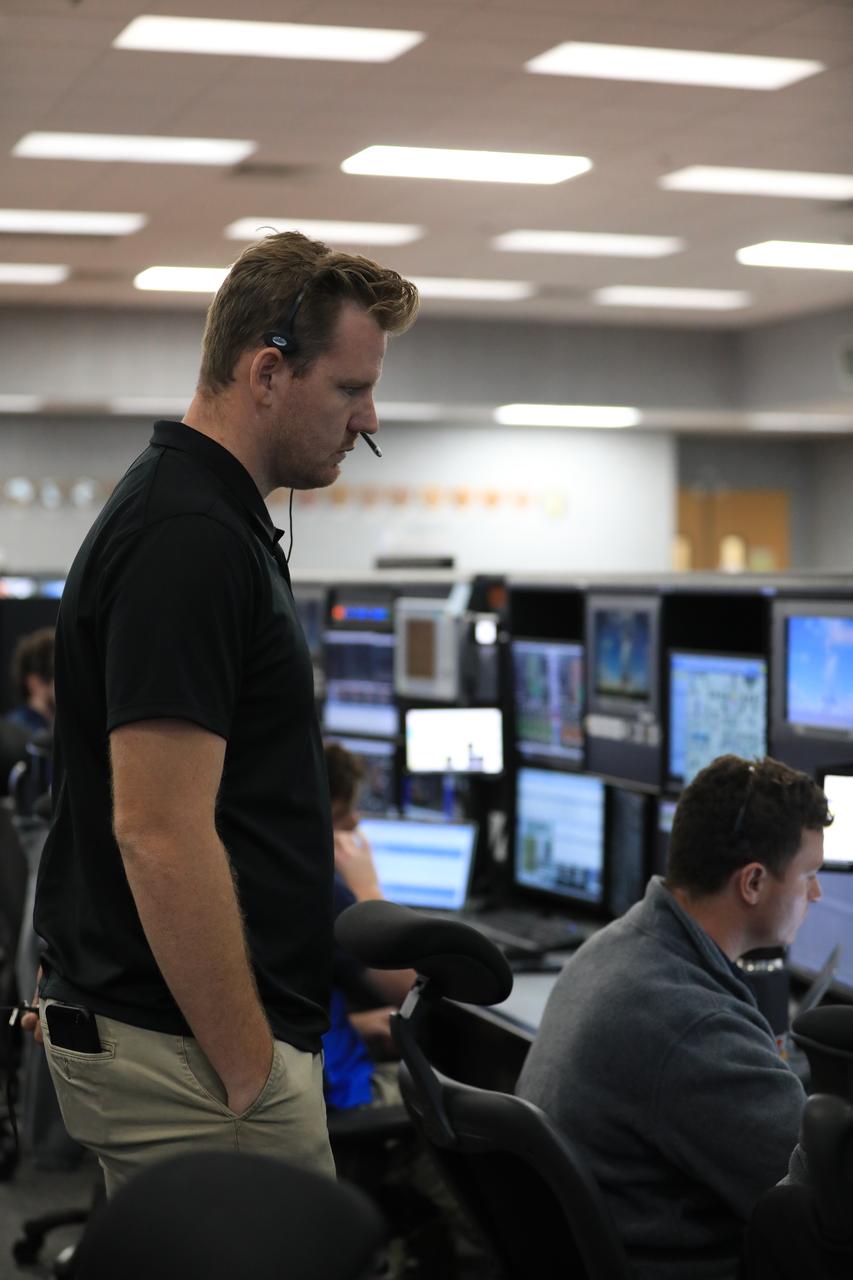
Teams at NASA’s Kennedy Space Center in Florida participate in the first joint integrated launch countdown simulation for Artemis II inside Firing Room 1 of the Launch Control Center on Thursday, Sept. 11, 2025. The training exercise involved engineers from Kennedy, Marshall Space Flight Center in Huntsville, Alabama, and Johnson Space Center in Houston coming together to rehearse all aspects of the launch countdown, from cryogenic loading – filling tanks in the SLS (Space Launch System) rocket’s core stage with liquid hydrogen and liquid oxygen – to liftoff. These simulations will help certify that the launch team is ready for Artemis II – the first crewed Artemis mission that will send four astronauts around the Moon and back.
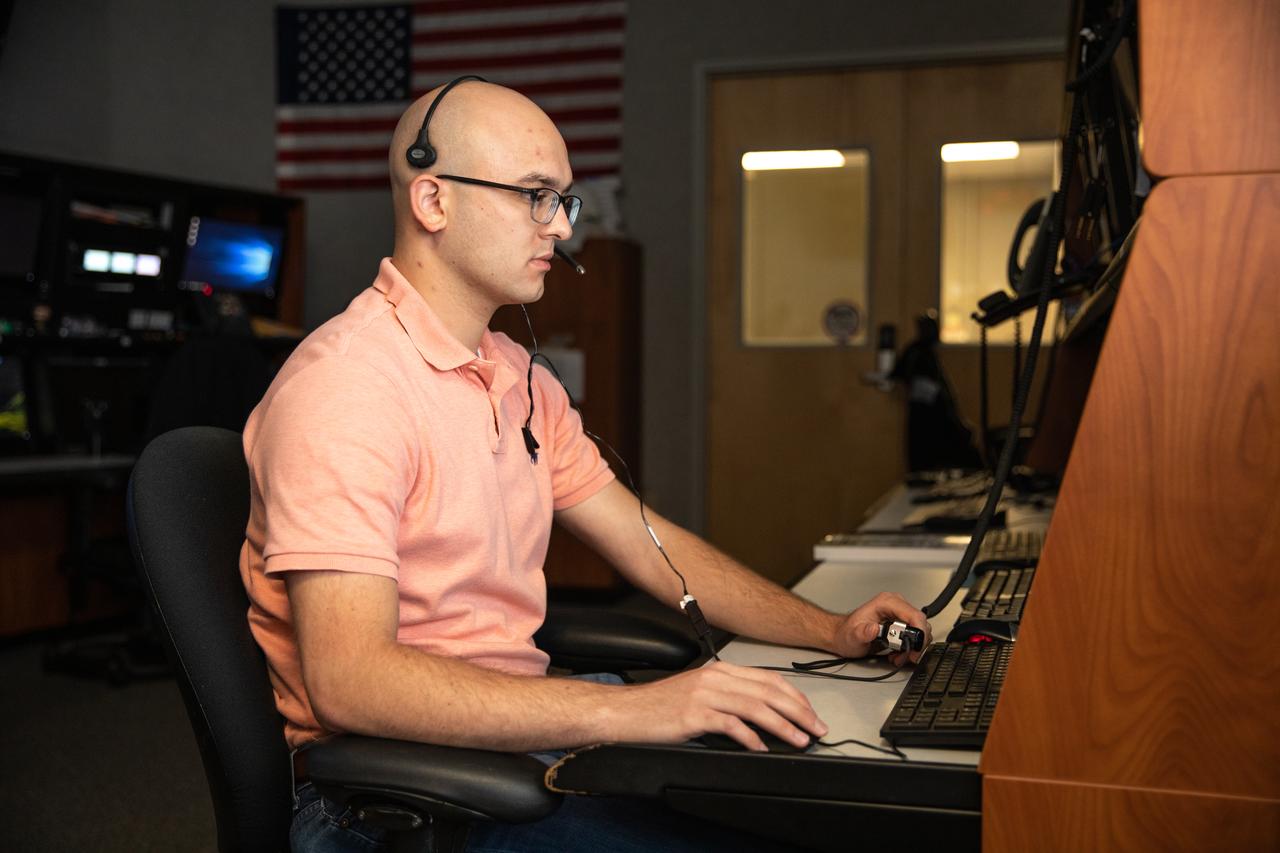
Inside the Launch Control Center at Kennedy Space Center on Sept. 29, 2020, engineer Danny Zaatari, with Exploration Ground Systems, works on software for the launch of Artemis I. Engineers at the Florida spaceport are staying focused on the “Path to the Pad.” Artemis I is the first in a series of increasingly complex missions that will enable human exploration to the Moon and Mars.
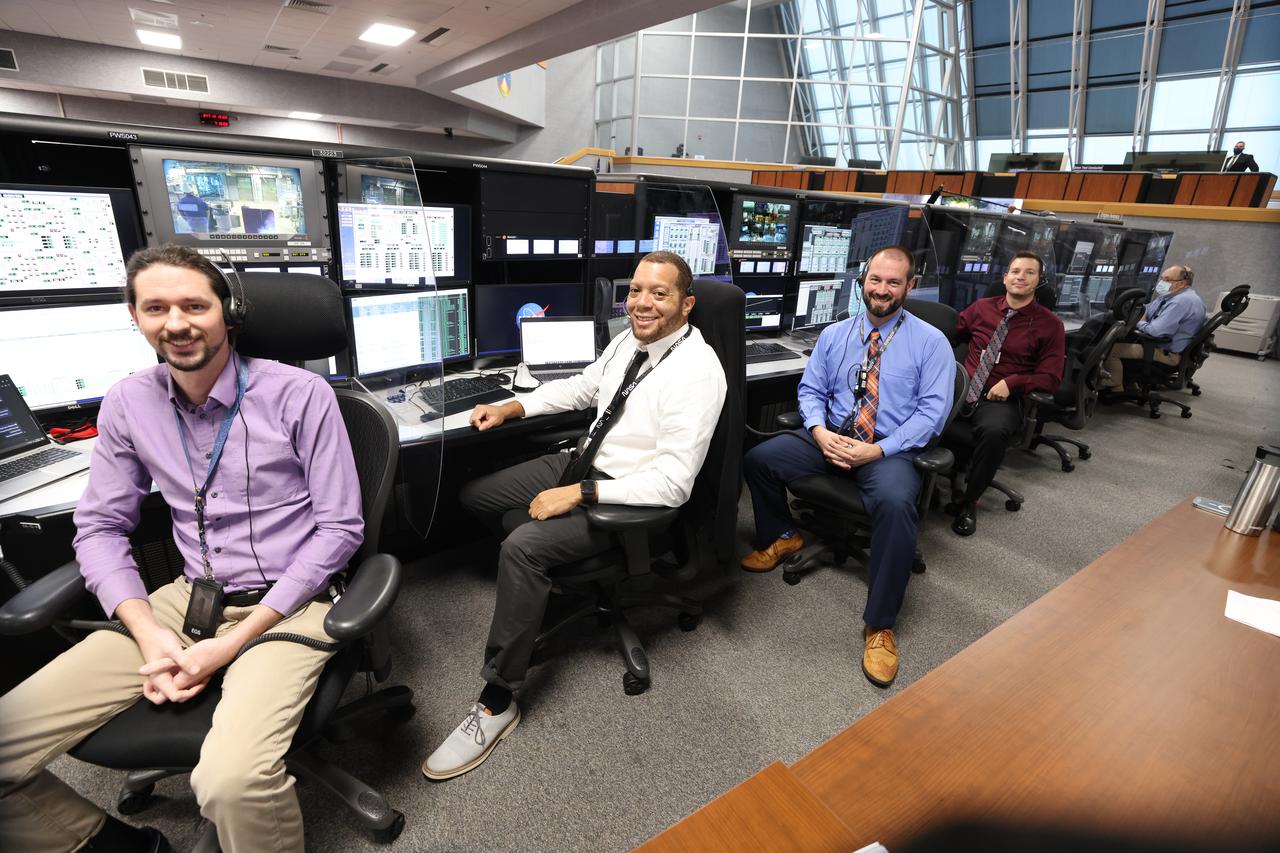
Launch team members are seated at consoles inside Firing Room 1 of the Launch Control Center at NASA’s Kennedy Space Center in Florida on Dec. 13, 2021. They are participating in a joint integrated simulation for the Artemis I launch that covered both cryogenic loading and terminal countdown portions of prelaunch activities. Members of NASA’s mission management team and launch team conducted the simulation together. The Kennedy team was certified for the Artemis I launch. During Artemis I, the agency’s Orion spacecraft will lift off from Kennedy aboard NASA’s most powerful rocket – the Space Launch System – to fly farther than any spacecraft built for humans has ever flown. Through NASA’s Artemis missions, the agency, along with commercial and international partners, will establish a sustainable human presence on the Moon to prepare for missions to Mars.
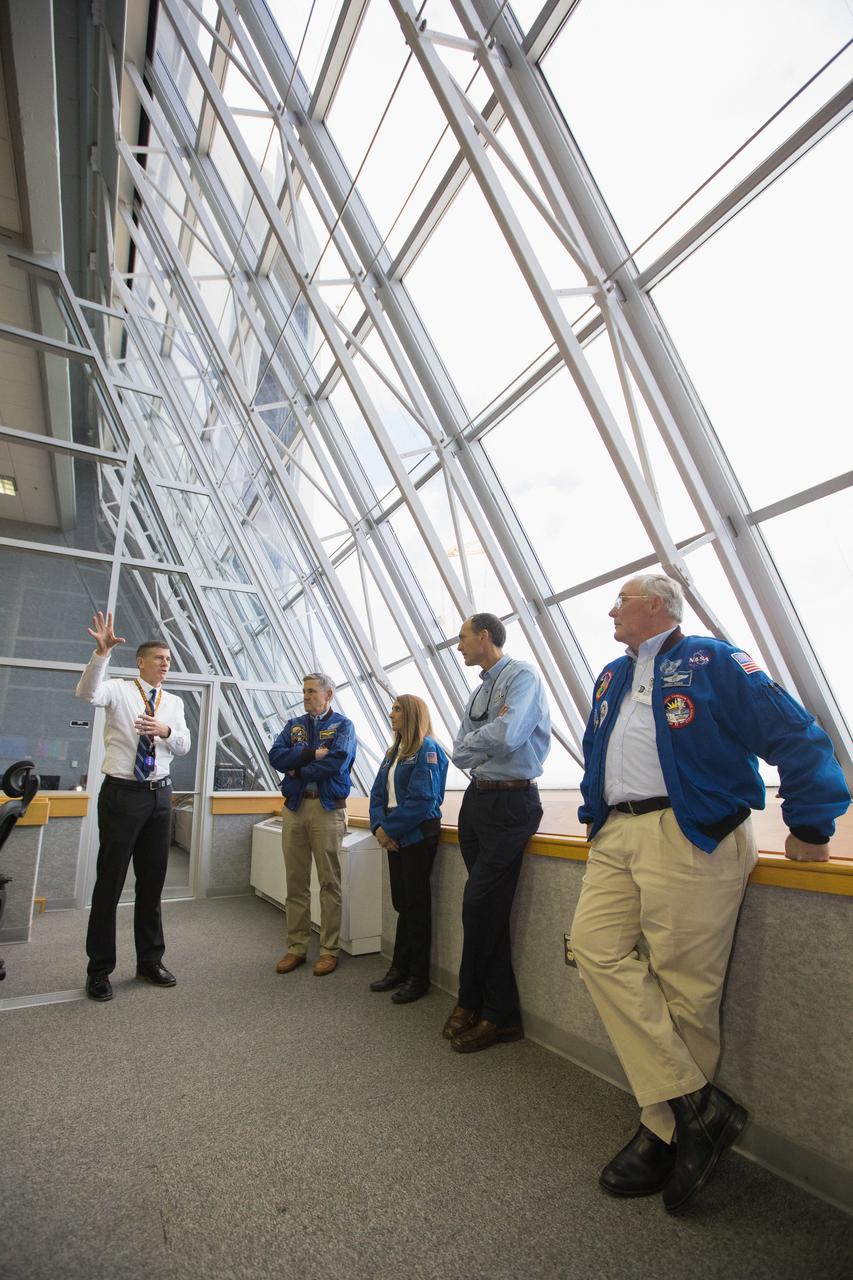
Chief NASA Test Director Jeremy Graeber, left, talks with members of the STS-88 crew inside the Launch Control Center at Kennedy Space Center in Florida on Dec. 10, 2018. They are, from left, Commander Bob Cabana, and mission specialists Nancy Currie-Gregg, Jim Newman and Jerry Ross. Earlier in the day, the group held a panel discussion in recognition of the 20th anniversary of the mission.
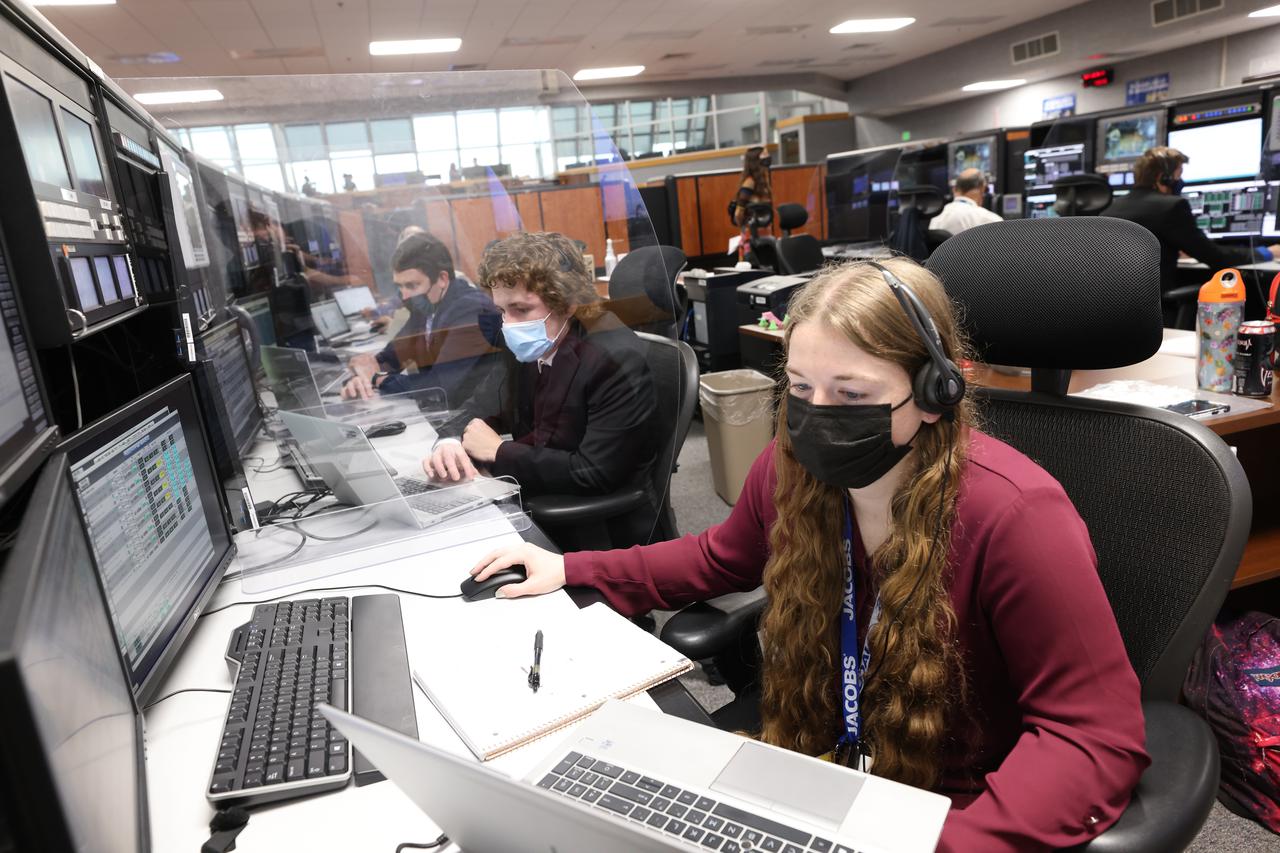
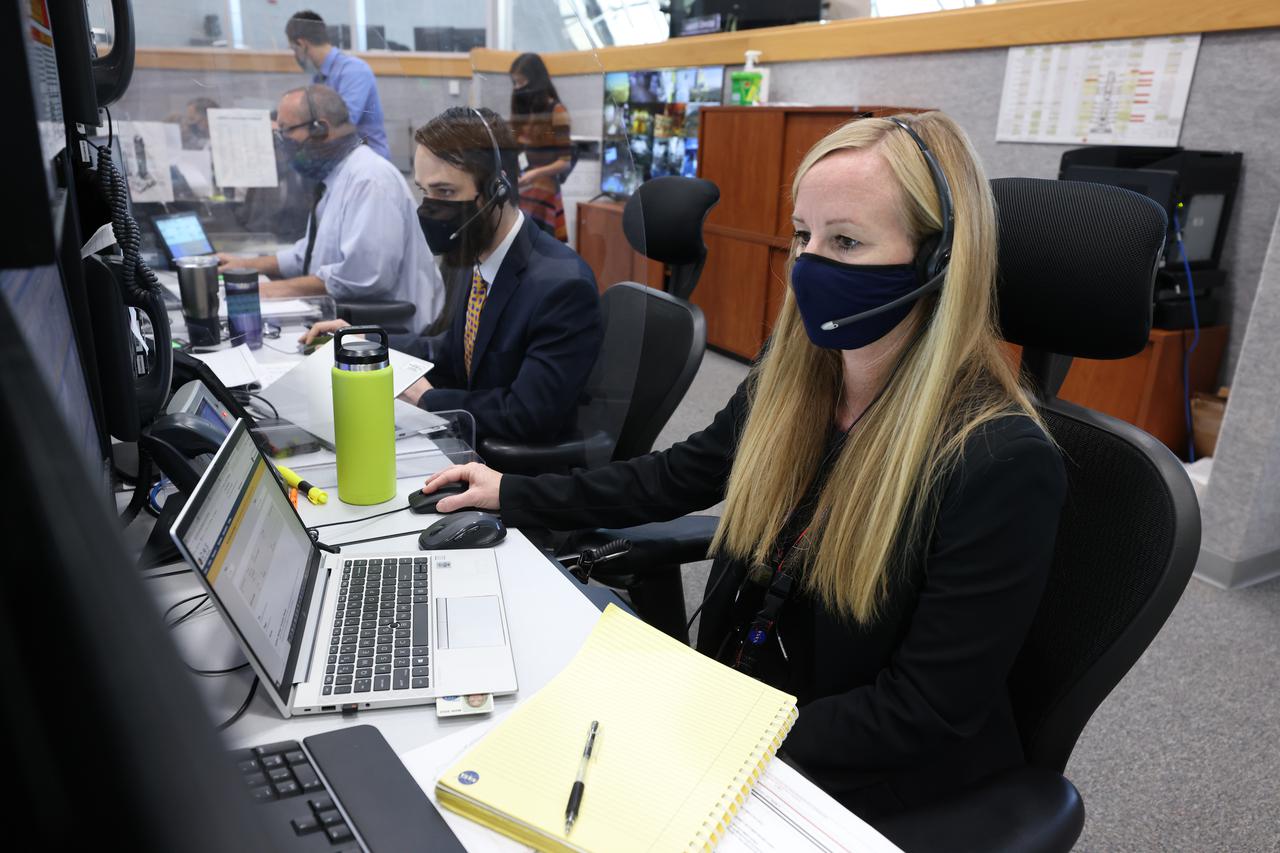
Launch team members are seated at the Environmental Control and Life Support system consoles inside Firing Room 1 of the Launch Control Center at NASA’s Kennedy Space Center in Florida on Dec. 13, 2021. They are participating in a joint integrated simulation for the Artemis I launch that covered both cryogenic loading and terminal countdown portions of prelaunch activities. Members of NASA’s mission management team and launch team conducted the simulation together. The Kennedy team was certified for the Artemis I launch. During Artemis I, the agency’s Orion spacecraft will lift off from Kennedy aboard NASA’s most powerful rocket – the Space Launch System – to fly farther than any spacecraft built for humans has ever flown. Through NASA’s Artemis missions, the agency, along with commercial and international partners, will establish a sustainable human presence on the Moon to prepare for missions to Mars.
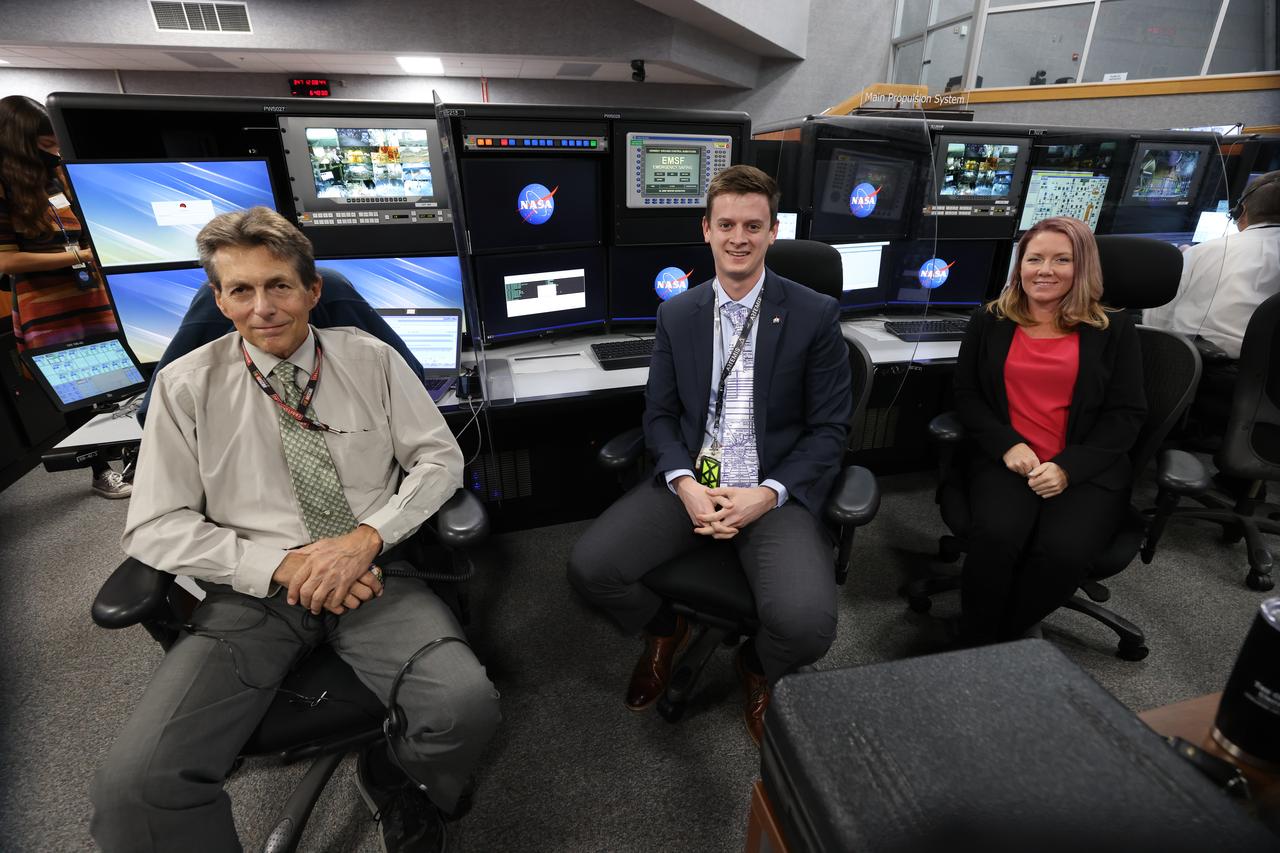
Launch team members are seated at the Main Propulsion consoles inside Firing Room 1 of the Launch Control Center at NASA’s Kennedy Space Center in Florida on Dec. 13, 2021. They are participating in a joint integrated simulation for the Artemis I launch that covered both cryogenic loading and terminal countdown portions of prelaunch activities. Members of NASA’s mission management team and launch team conducted the simulation together. The Kennedy team was certified for the Artemis I launch. During Artemis I, the agency’s Orion spacecraft will lift off from Kennedy aboard NASA’s most powerful rocket – the Space Launch System – to fly farther than any spacecraft built for humans has ever flown. Through NASA’s Artemis missions, the agency, along with commercial and international partners, will establish a sustainable human presence on the Moon to prepare for missions to Mars.

Launch team members are seated the Integration consoles inside Firing Room 1 of the Launch Control Center at NASA’s Kennedy Space Center in Florida on Dec. 13, 2021. They are participating in a joint integrated simulation for the Artemis I launch that covered both cryogenic loading and terminal countdown portions of prelaunch activities. Members of NASA’s mission management team and launch team conducted the simulation together. The Kennedy team was certified for the Artemis I launch. During Artemis I, the agency’s Orion spacecraft will lift off from Kennedy aboard NASA’s most powerful rocket – the Space Launch System – to fly farther than any spacecraft built for humans has ever flown. Through NASA’s Artemis missions, the agency, along with commercial and international partners, will establish a sustainable human presence on the Moon to prepare for missions to Mars.
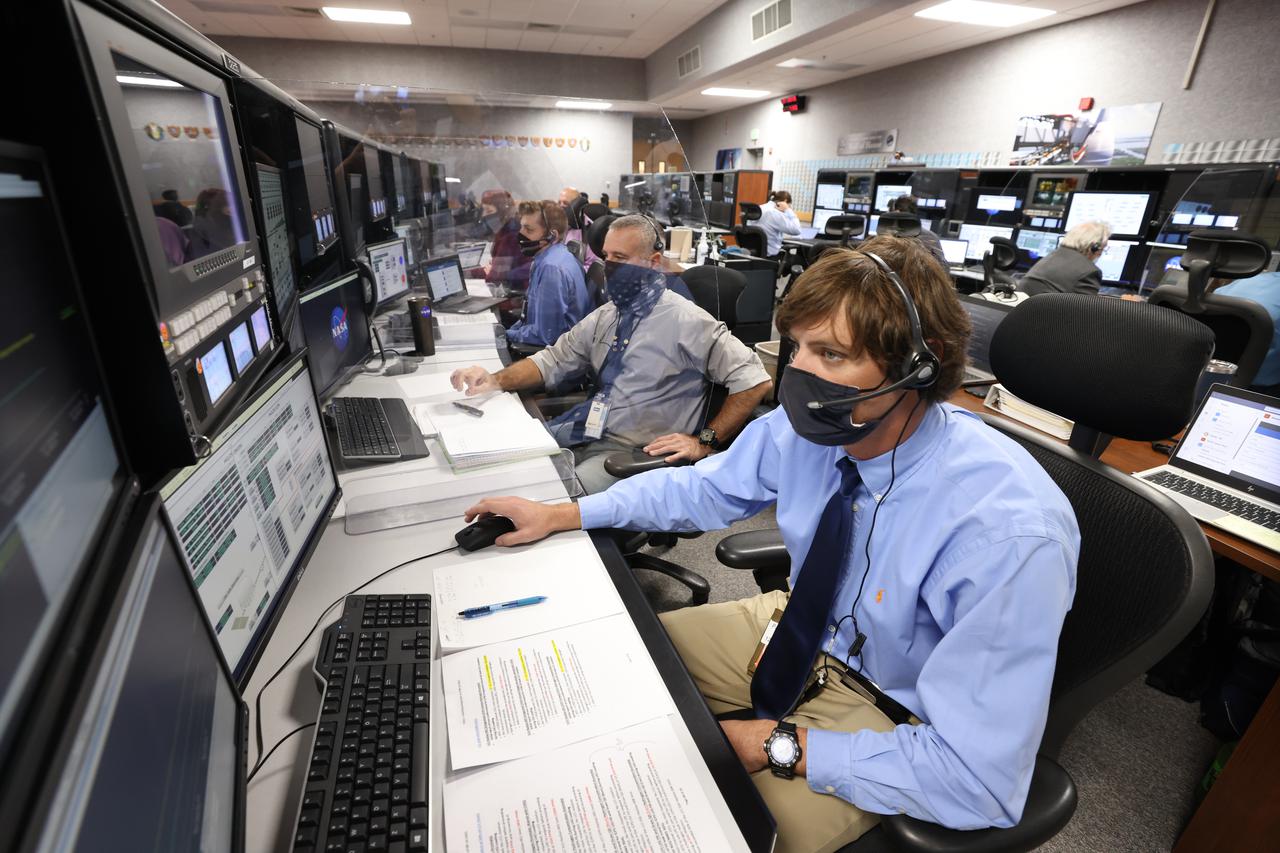
Launch team members are seated at the Hazardous Gas consoles inside Firing Room 1 of the Launch Control Center at NASA’s Kennedy Space Center in Florida on Dec. 13, 2021. They are participating in a joint integrated simulation for the Artemis I launch that covered both cryogenic loading and terminal countdown portions of prelaunch activities. Members of NASA’s mission management team and launch team conducted the simulation together. The Kennedy team was certified for the Artemis I launch. During Artemis I, the agency’s Orion spacecraft will lift off from Kennedy aboard NASA’s most powerful rocket – the Space Launch System – to fly farther than any spacecraft built for humans has ever flown. Through NASA’s Artemis missions, the agency, along with commercial and international partners, will establish a sustainable human presence on the Moon to prepare for missions to Mars.
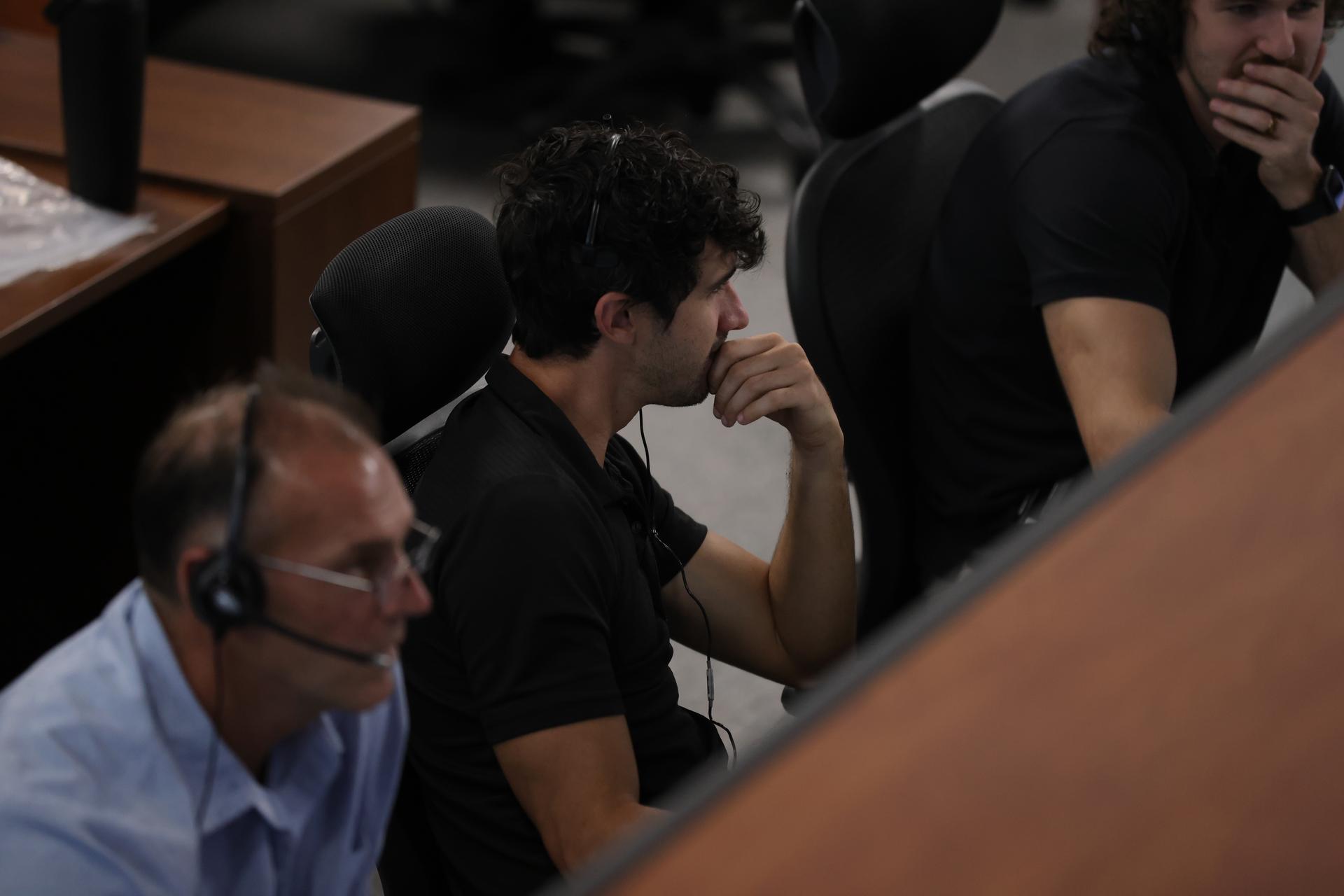
Artemis launch team members participate in a terminal countdown simulation for Artemis III on Thursday, Sept. 10, 2026, inside Firing Room 1 and 2 of the Rocco A. Petrone Launch Control Center at NASA’s Kennedy Space Center in Florida. Terminal count simulations conducted by NASA’s Exploration Ground Systems team run through the final five hours of launch countdown, including terminal count - the remaining 10 minutes of the countdown. Artemis III will carry out a series of objectives in low Earth orbit designed to demonstrate critical systems needed for future lunar landings, beginning with Artemis IV.
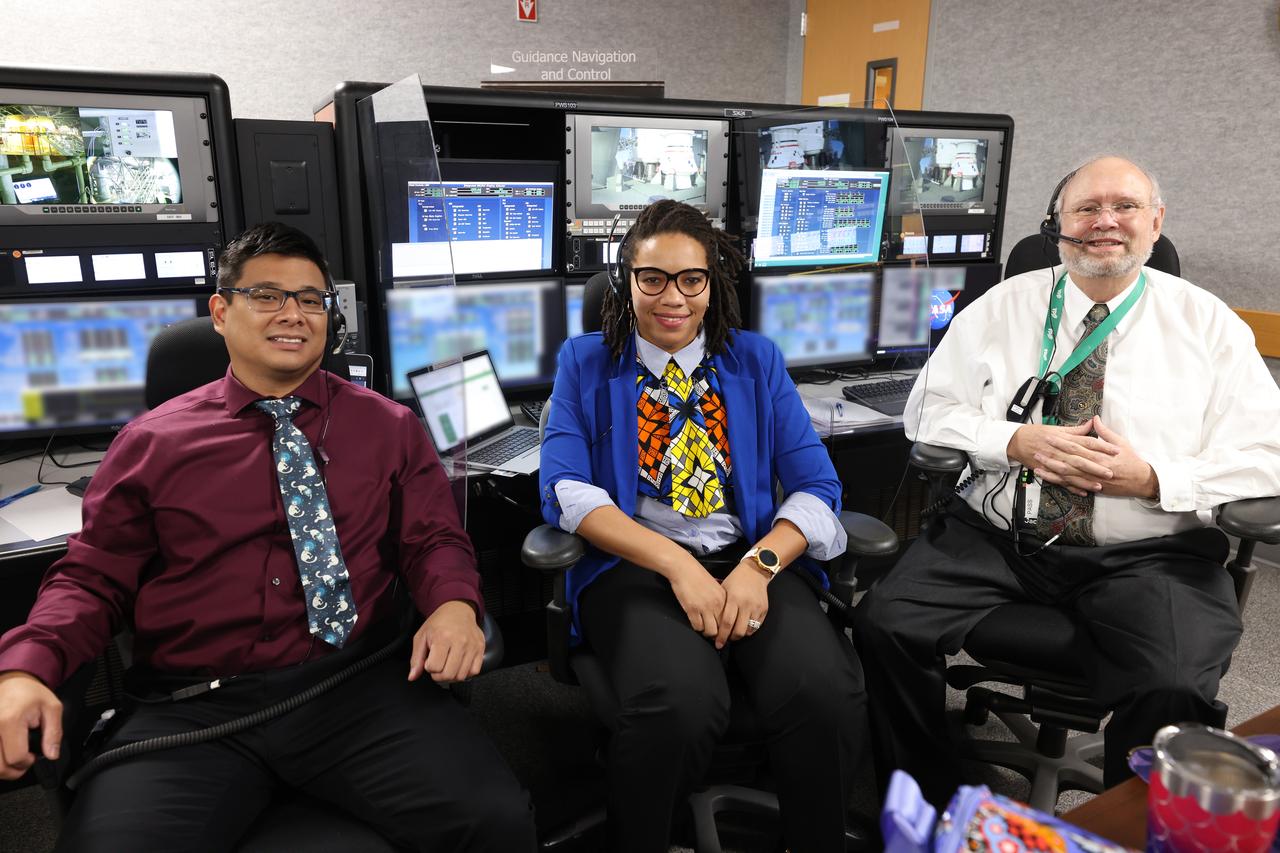
Launch team members are seated at the Guidance, Navigation, and Control consoles inside Firing Room 1 of the Launch Control Center at NASA’s Kennedy Space Center in Florida on Dec. 13, 2021. They are participating in a joint integrated simulation for the Artemis I launch that covered both cryogenic loading and terminal countdown portions of prelaunch activities. Members of NASA’s mission management team and launch team conducted the simulation together. The Kennedy team was certified for the Artemis I launch. During Artemis I, the agency’s Orion spacecraft will lift off from Kennedy aboard NASA’s most powerful rocket – the Space Launch System – to fly farther than any spacecraft built for humans has ever flown. Through NASA’s Artemis missions, the agency, along with commercial and international partners, will establish a sustainable human presence on the Moon to prepare for missions to Mars.

Launch team members are seated at the Guidance, Navigation, and Control consoles inside Firing Room 1 of the Launch Control Center at NASA’s Kennedy Space Center in Florida on Dec. 13, 2021. They are participating in a joint integrated simulation for the Artemis I launch that covered both cryogenic loading and terminal countdown portions of prelaunch activities. Members of NASA’s mission management team and launch team conducted the simulation together. The Kennedy team was certified for the Artemis I launch. During Artemis I, the agency’s Orion spacecraft will lift off from Kennedy aboard NASA’s most powerful rocket – the Space Launch System – to fly farther than any spacecraft built for humans has ever flown. Through NASA’s Artemis missions, the agency, along with commercial and international partners, will establish a sustainable human presence on the Moon to prepare for missions to Mars.
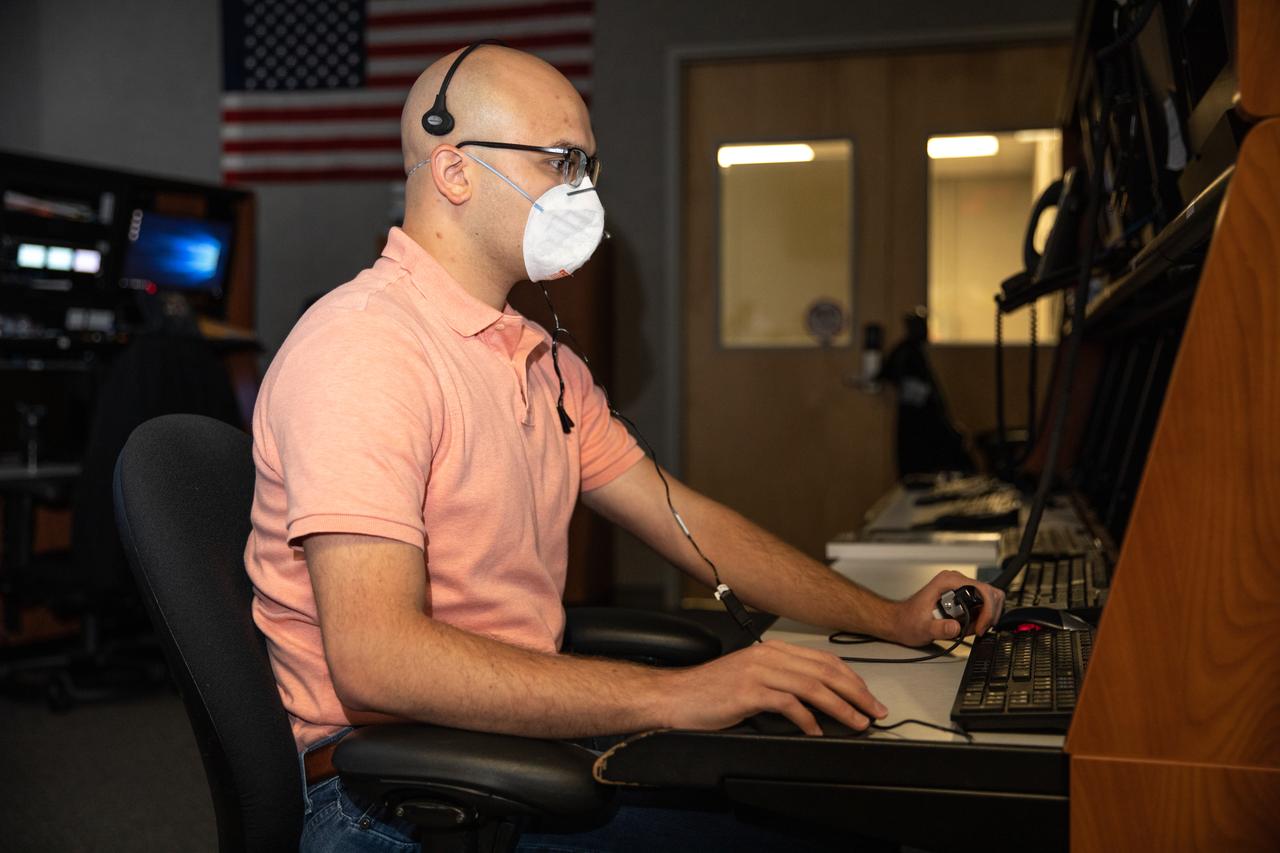
Inside the Launch Control Center at Kennedy Space Center on Sept. 29, 2020, engineer Danny Zaatari, with Exploration Ground Systems, works on software for the launch of Artemis I. Engineers at the Florida spaceport are staying focused on the “Path to the Pad.” Artemis I is the first in a series of increasingly complex missions that will enable human exploration to the Moon and Mars.
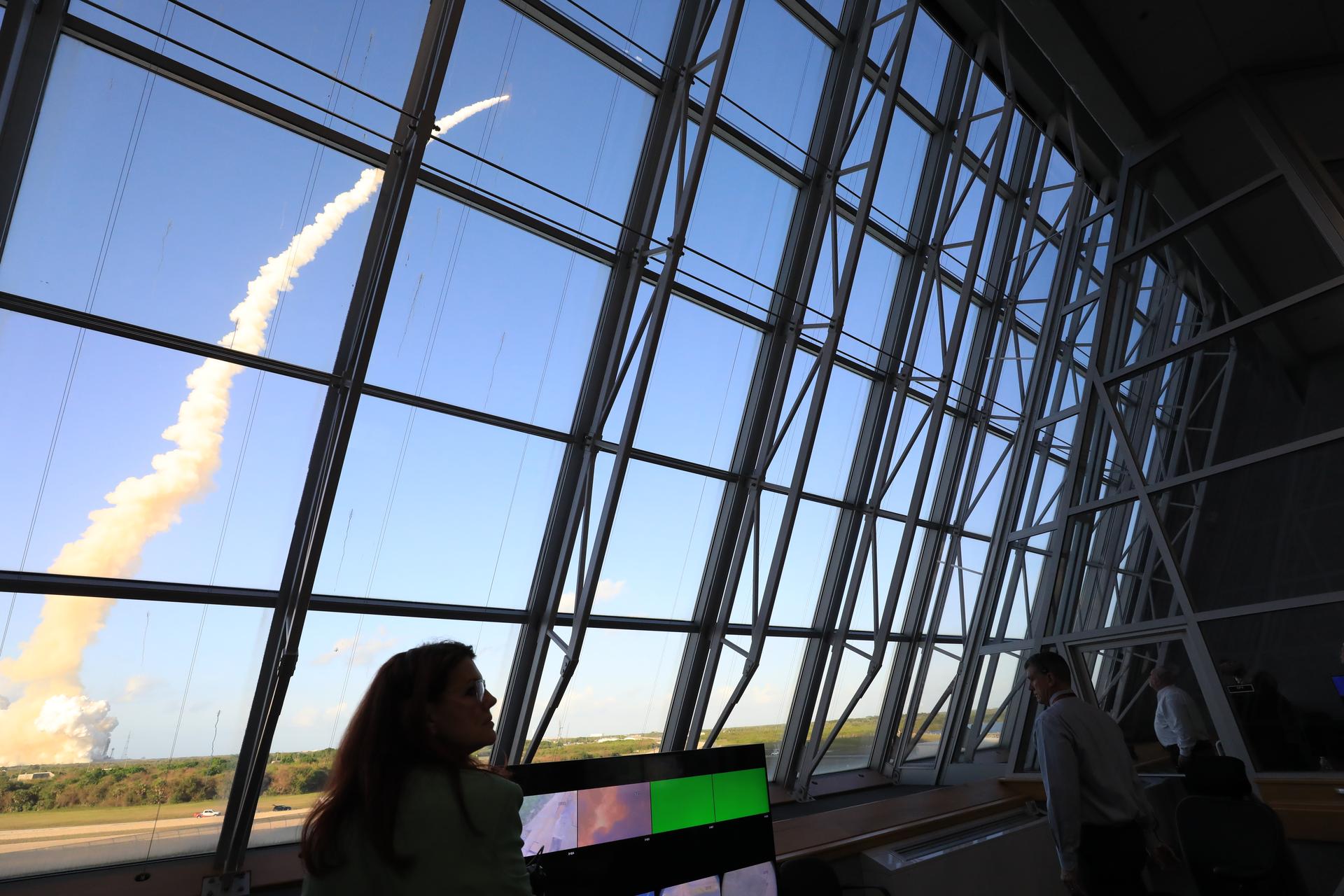
Charlie Blackwell-Thompson, Artemis launch director, and Jeremy Graeber, assistant launch director, each from NASA’s Exploration Ground Systems Program, watch the launch of NASA’s Artemis II test flight launch inside Firing Room 1 of the Rocco Petrone Launch Control Center on Wednesday, April 1, 2026. The Artemis II mission launched Commander Reid Wiseman, Pilot Victor Glover, and Mission Specialist Christina Koch from NASA, and Mission Specialist Jeremy Hansen from the CSA (Canadian Space Agency), aboard NASA’s SLS (Space Launch System) rocket and Orion spacecraft to journey for 10 days around the Moon and back to Earth.
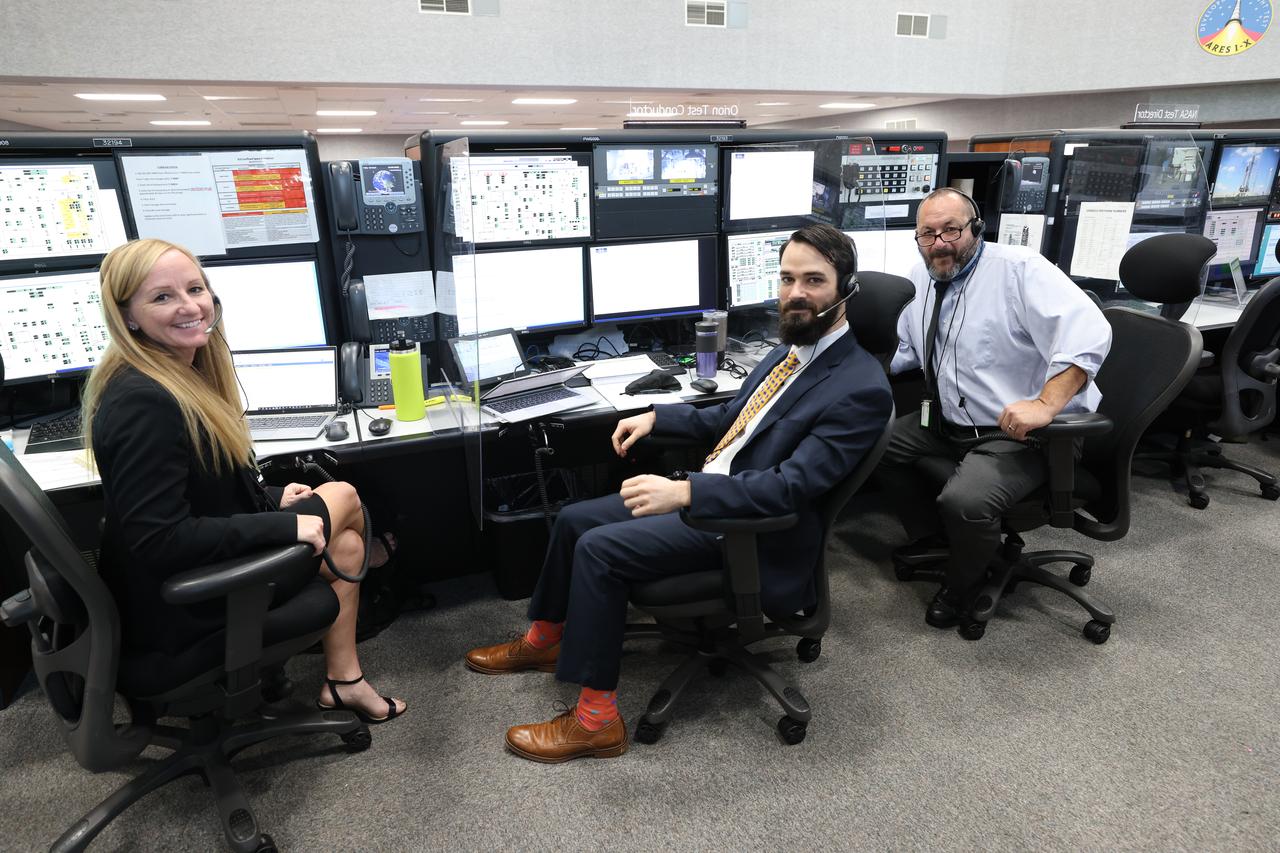
Launch team members, from left, Carla Rekucki, Joshua Coleman, and John Kracsun, are seated at consoles inside Firing Room 1 of the Launch Control Center at NASA’s Kennedy Space Center in Florida on Dec. 13, 2021. They are participating in a joint integrated simulation for the Artemis I launch that covered both cryogenic loading and terminal countdown portions of prelaunch activities. Members of NASA’s mission management team and launch team conducted the simulation together. The Kennedy team was certified for the Artemis I launch. During Artemis I, the agency’s Orion spacecraft will lift off from Kennedy aboard NASA’s most powerful rocket – the Space Launch System – to fly farther than any spacecraft built for humans has ever flown. Through NASA’s Artemis missions, the agency, along with commercial and international partners, will establish a sustainable human presence on the Moon to prepare for missions to Mars.
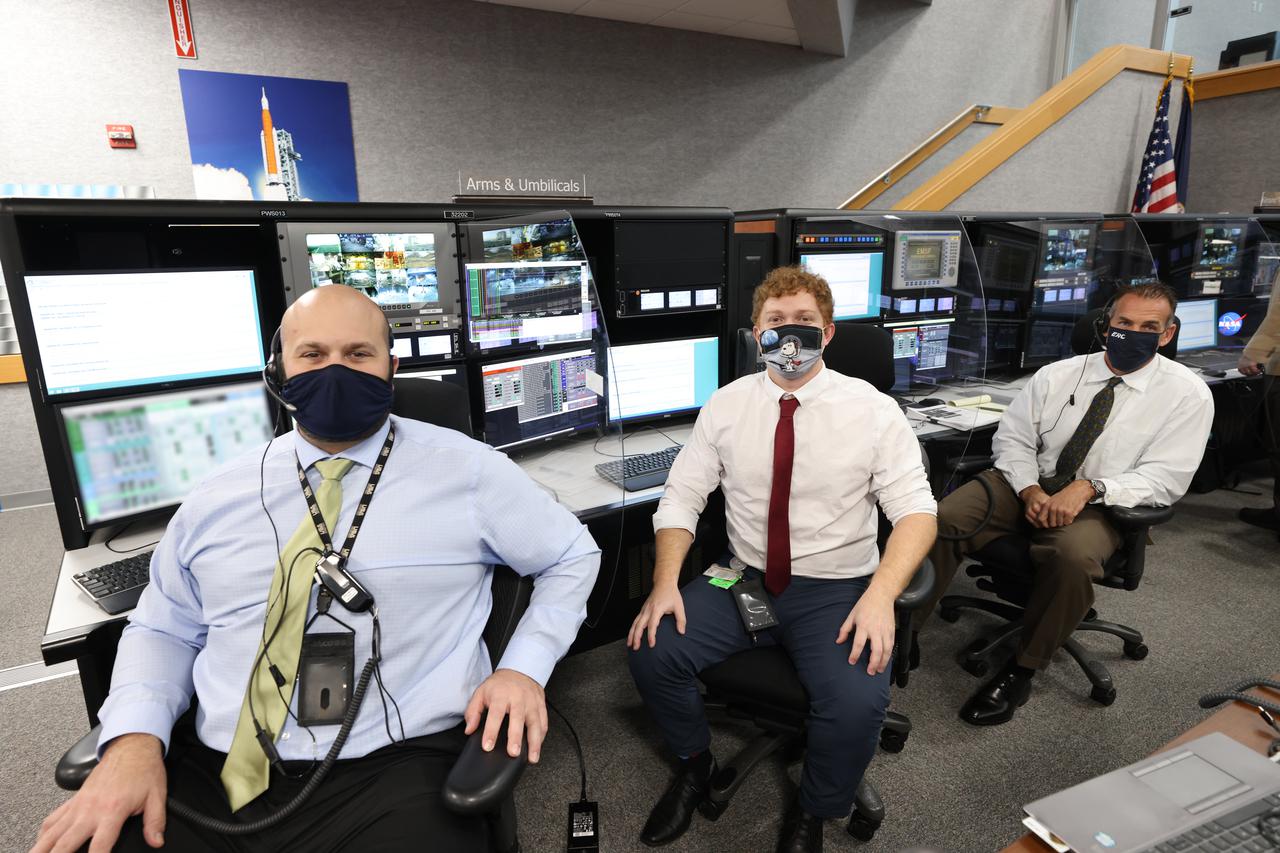
Launch team members are seated at the Arms and Umbilicals consoles inside Firing Room 1 of the Launch Control Center at NASA’s Kennedy Space Center in Florida on Dec. 13, 2021. They are participating in a joint integrated simulation for the Artemis I launch that covered both cryogenic loading and terminal countdown portions of prelaunch activities. Members of NASA’s mission management team and launch team conducted the simulation together. The Kennedy team was certified for the Artemis I launch. During Artemis I, the agency’s Orion spacecraft will lift off from Kennedy aboard NASA’s most powerful rocket – the Space Launch System – to fly farther than any spacecraft built for humans has ever flown. Through NASA’s Artemis missions, the agency, along with commercial and international partners, will establish a sustainable human presence on the Moon to prepare for missions to Mars.
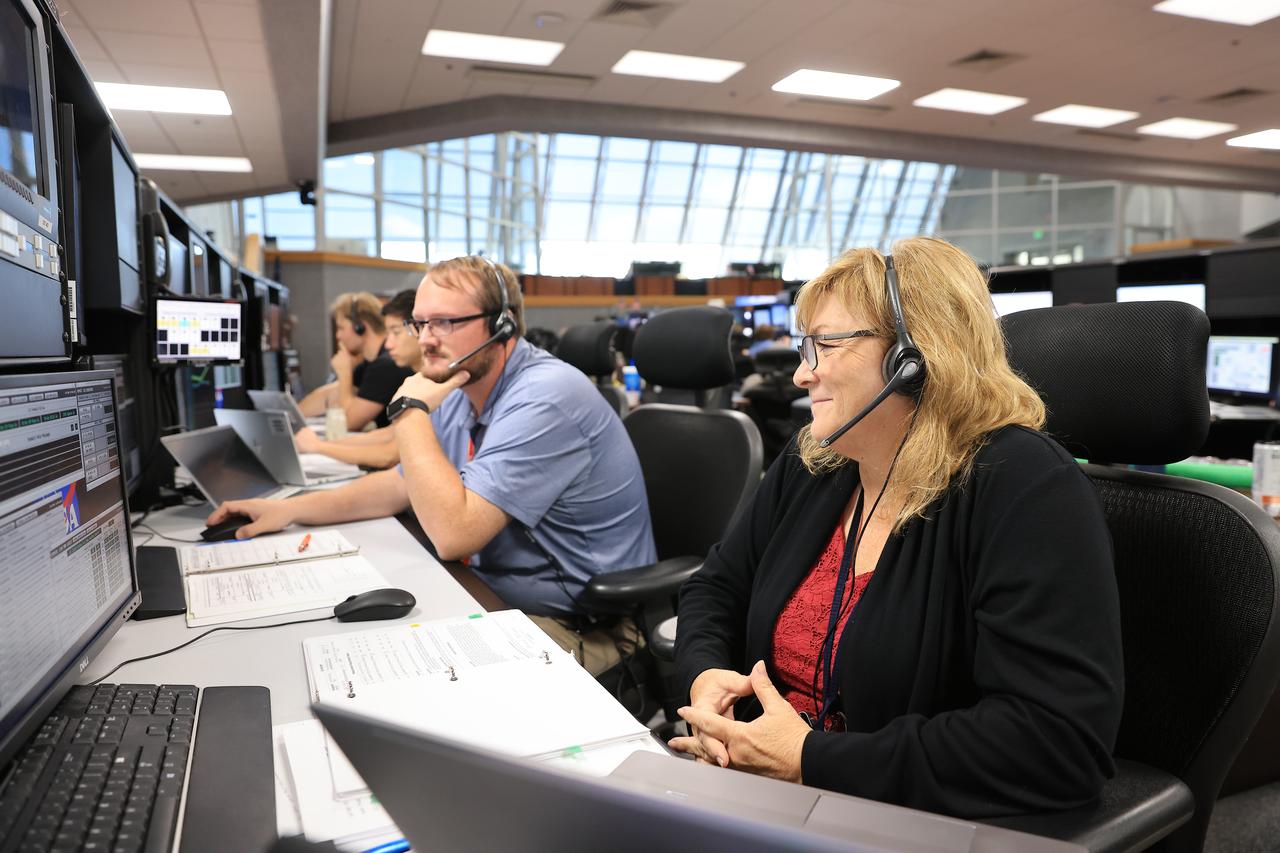
Teams at NASA’s Kennedy Space Center in Florida participate in the first joint integrated launch countdown simulation for Artemis II inside Firing Room 1 of the Launch Control Center on Thursday, Sept. 11, 2025. The training exercise involved engineers from Kennedy, Marshall Space Flight Center in Huntsville, Alabama, and Johnson Space Center in Houston coming together to rehearse all aspects of the launch countdown, from cryogenic loading – filling tanks in the SLS (Space Launch System) rocket’s core stage with liquid hydrogen and liquid oxygen – to liftoff. These simulations will help certify that the launch team is ready for Artemis II – the first crewed Artemis mission that will send four astronauts around the Moon and back.
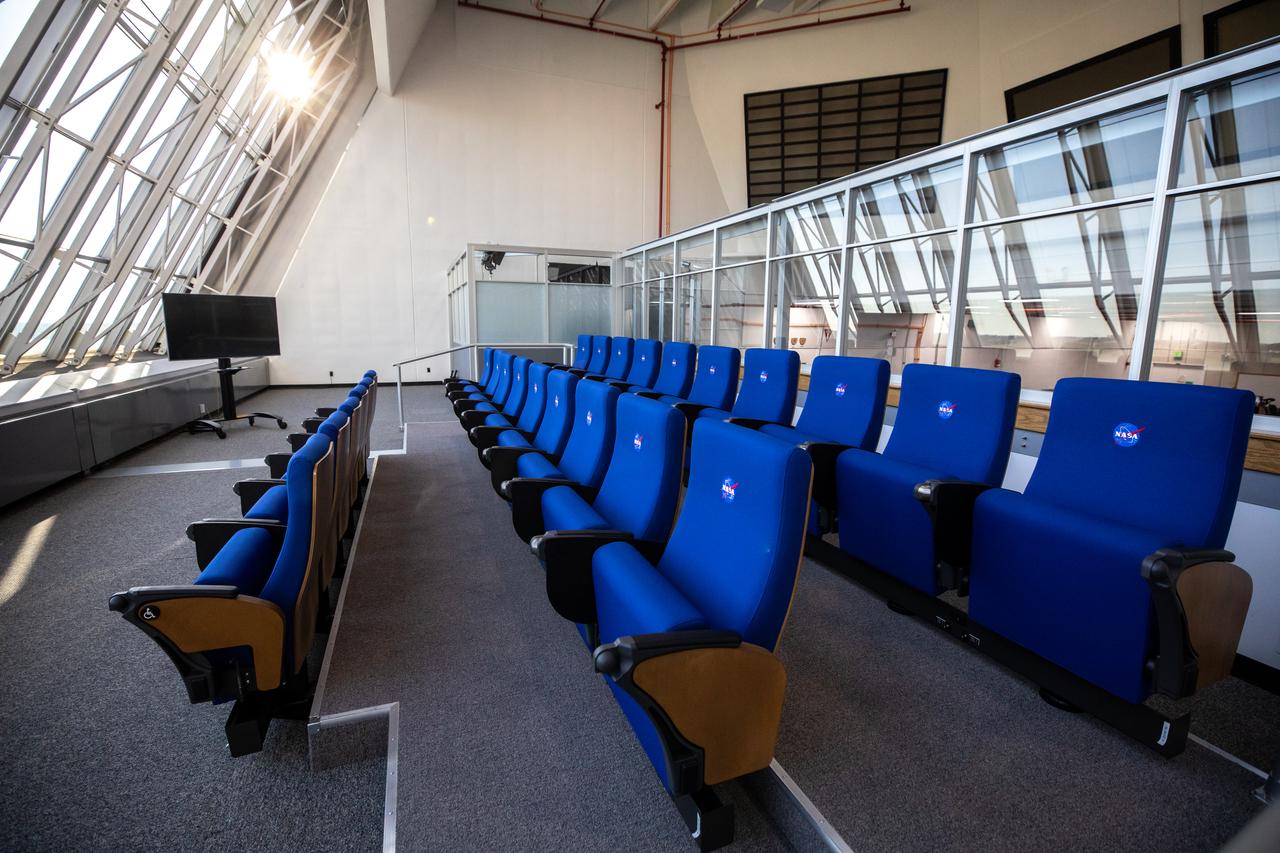
Artemis teams conduct a launch simulation for the Artemis I mission inside the Rocco A. Petrone Launch Control Center at NASA’s Kennedy Space Center in Florida on Oct. 27, 2022. Artemis I will be the first integrated test of NASA’s Space Launch System (SLS) rocket and Orion spacecraft. The primary goal of Artemis I is to thoroughly test the integrated systems before crewed missions by launching Orion atop the SLS rocket, operating the spacecraft in a deep space environment, testing Orion’s heat shield, and recovering the crew module after reentry, descent, and splashdown. During the flight, Orion will launch atop the most powerful rocket in the world and fly farther than any human-rated spacecraft has ever flown, paving the way for human deep space exploration and demonstrating our commitment and capability to extend human presence to the Moon and beyond.
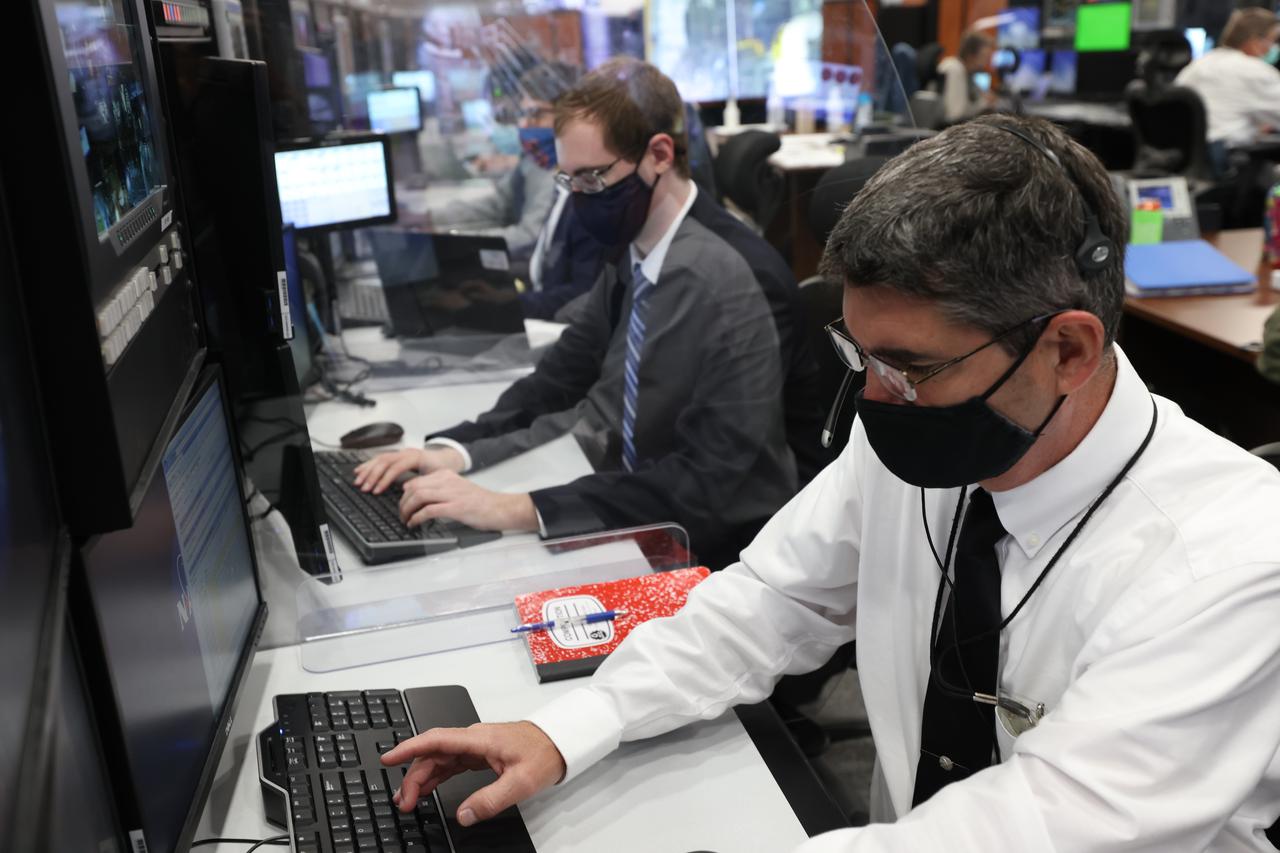
Launch team members are seated at the Liquid Oxygen consoles inside Firing Room 1 of the Launch Control Center at NASA’s Kennedy Space Center in Florida on Dec. 13, 2021. They are participating in a joint integrated simulation for the Artemis I launch that covered both cryogenic loading and terminal countdown portions of prelaunch activities. Members of NASA’s mission management team and launch team conducted the simulation together. The Kennedy team was certified for the Artemis I launch. During Artemis I, the agency’s Orion spacecraft will lift off from Kennedy aboard NASA’s most powerful rocket – the Space Launch System – to fly farther than any spacecraft built for humans has ever flown. Through NASA’s Artemis missions, the agency, along with commercial and international partners, will establish a sustainable human presence on the Moon to prepare for missions to Mars.
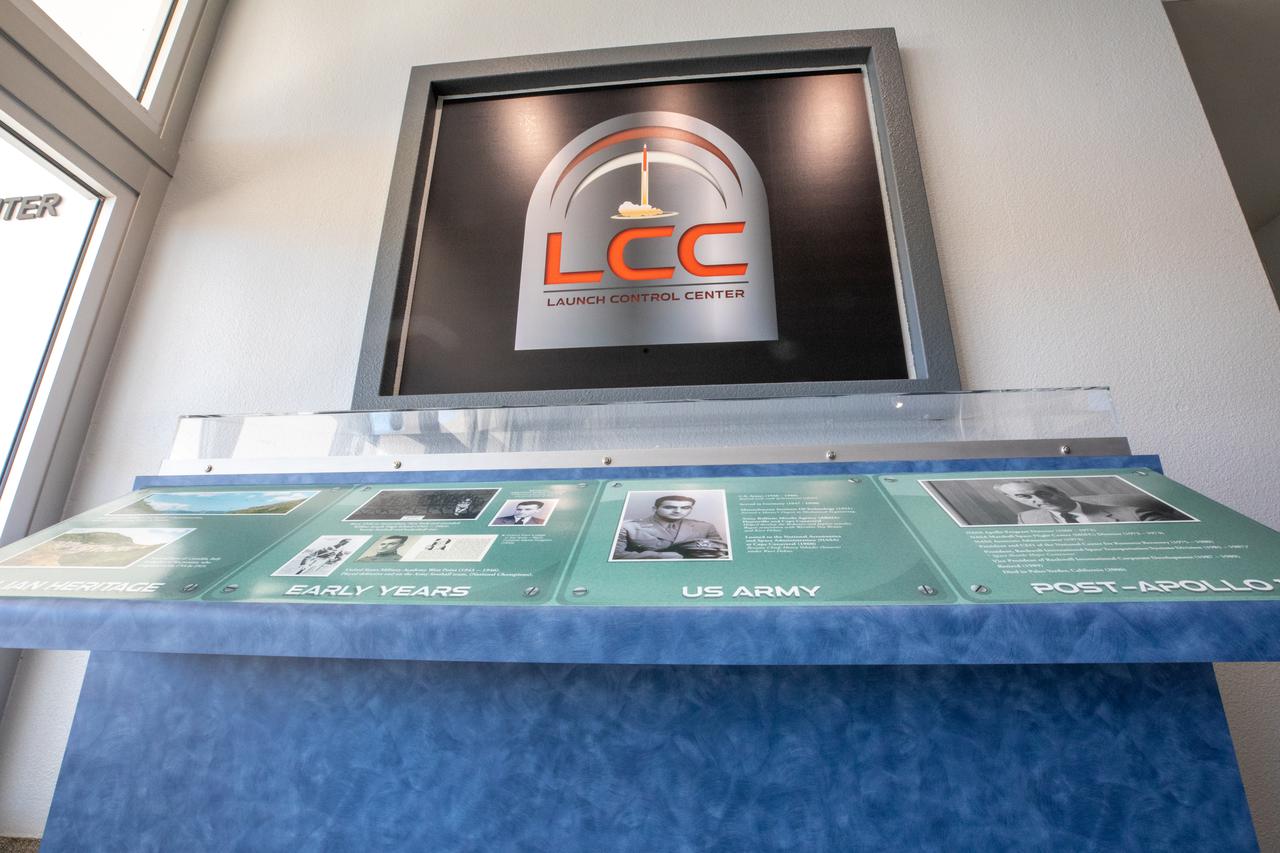
Following a ceremony at NASA’s Kennedy Space Center, the Florida spaceport’s launch control center was officially renamed the Rocco A. Petrone Launch Control Center. The facility serves as a nerve center where engineers and the launch director will monitor their flight consoles and give the “go” for the upcoming launch of Artemis I and later missions that will establish a sustainable presence on the Moon to prepare for missions to Mars. Petrone, who was instrumental in America’s first voyages to the Moon and headed the Apollo program, died in 2006 at the age of 80.

Artemis launch team members participate in a terminal countdown simulation for Artemis III on Thursday, June 11, 2026, inside Firing Room 1 and 2 of the Rocco A. Petrone Launch Control Center at NASA’s Kennedy Space Center in Florida. The terminal count simulation conducted by NASA’s Exploration Ground Systems team runs through the final five hours of launch countdown, including terminal count - the remaining 10 minutes of the countdown. Artemis III will carry out a series of objectives in low Earth orbit designed to demonstrate critical systems needed for future lunar landings, beginning with Artemis IV.
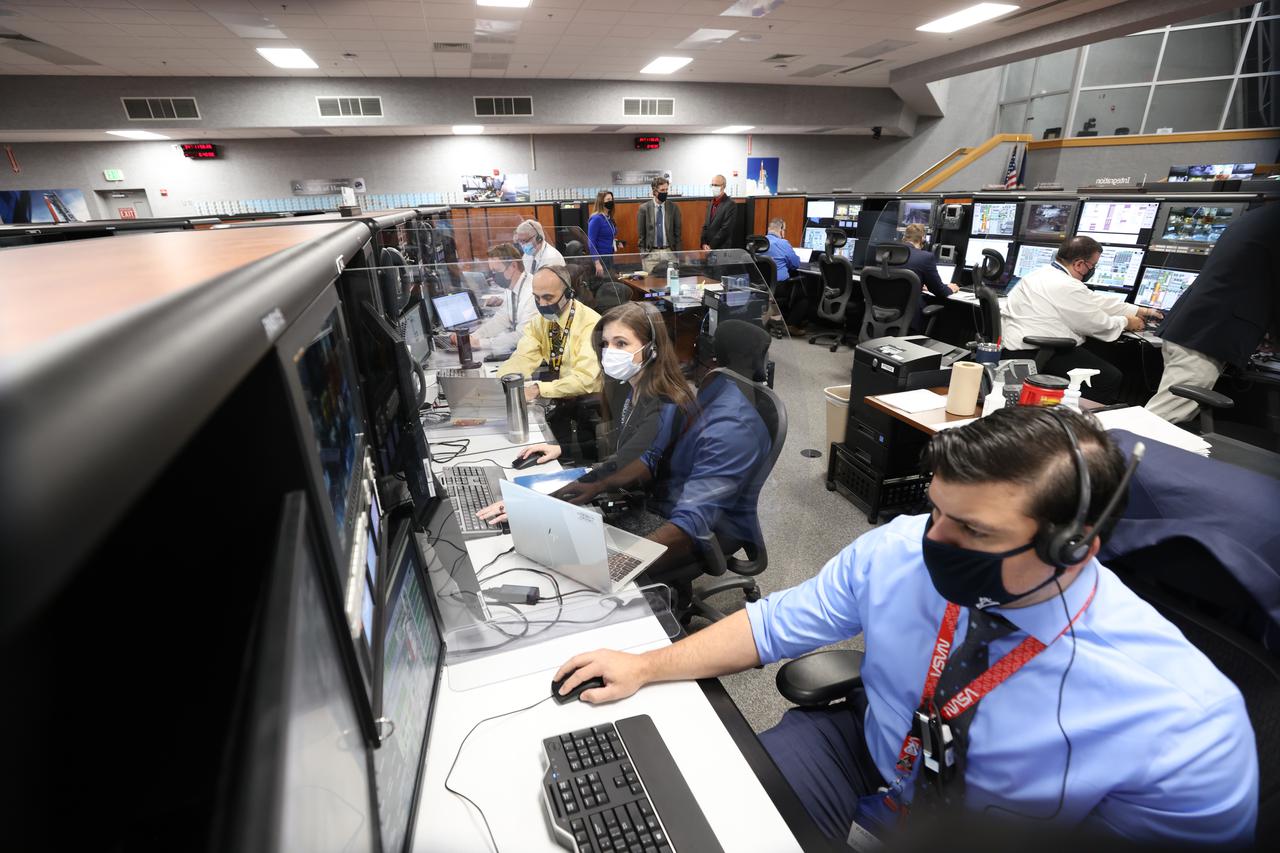
Launch team members are seated at the Integration consoles inside Firing Room 1 of the Launch Control Center at NASA’s Kennedy Space Center in Florida on Dec. 13, 2021. They are participating in a joint integrated simulation for the Artemis I launch that covered both cryogenic loading and terminal countdown portions of prelaunch activities. Members of NASA’s mission management team and launch team conducted the simulation together. The Kennedy team was certified for the Artemis I launch. During Artemis I, the agency’s Orion spacecraft will lift off from Kennedy aboard NASA’s most powerful rocket – the Space Launch System – to fly farther than any spacecraft built for humans has ever flown. Through NASA’s Artemis missions, the agency, along with commercial and international partners, will establish a sustainable human presence on the Moon to prepare for missions to Mars.
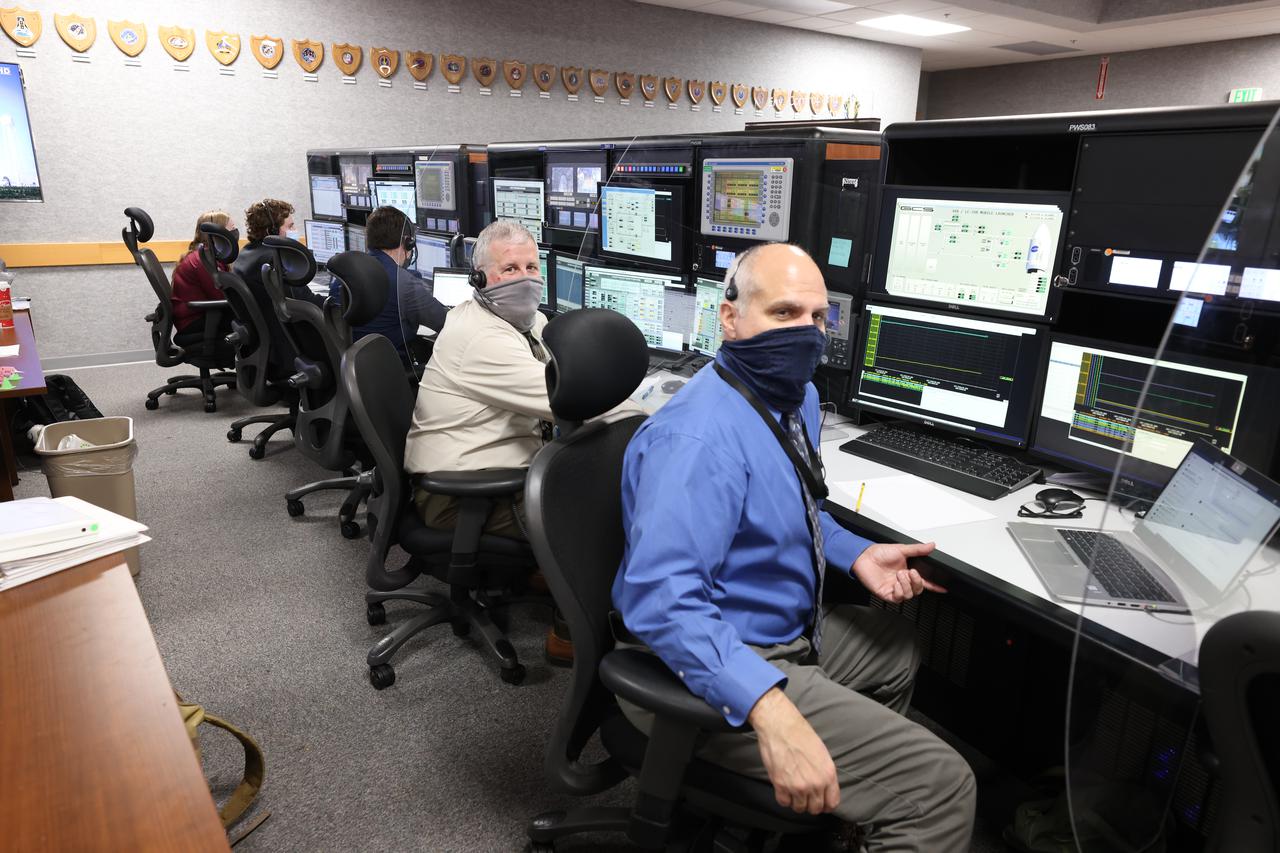
Launch team members are seated at the Environmental Control and Life Support system consoles inside Firing Room 1 of the Launch Control Center at NASA’s Kennedy Space Center in Florida on Dec. 13, 2021. They are participating in a joint integrated simulation for the Artemis I launch that covered both cryogenic loading and terminal countdown portions of prelaunch activities. Members of NASA’s mission management team and launch team conducted the simulation together. The Kennedy team was certified for the Artemis I launch. During Artemis I, the agency’s Orion spacecraft will lift off from Kennedy aboard NASA’s most powerful rocket – the Space Launch System – to fly farther than any spacecraft built for humans has ever flown. Through NASA’s Artemis missions, the agency, along with commercial and international partners, will establish a sustainable human presence on the Moon to prepare for missions to Mars.
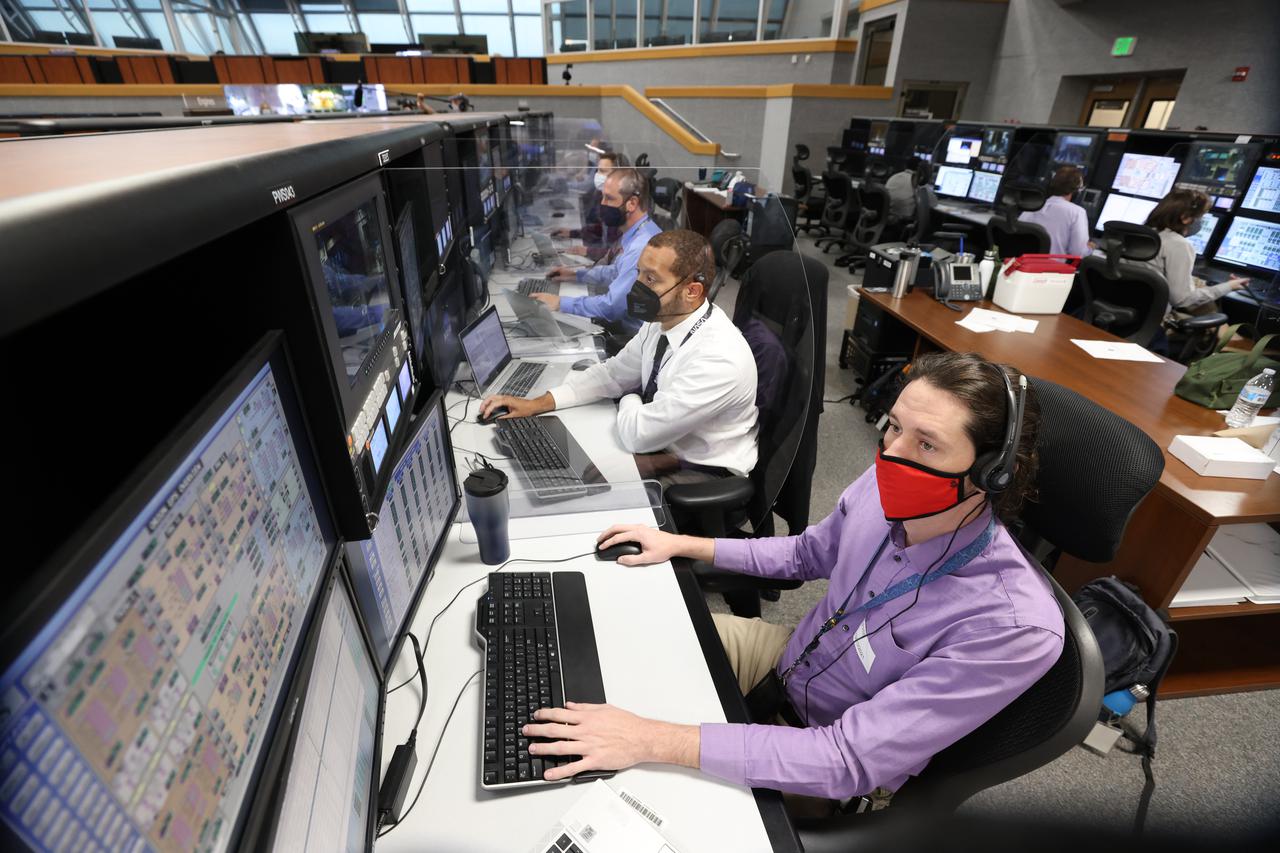
Launch team members are seated at consoles inside Firing Room 1 of the Launch Control Center at NASA’s Kennedy Space Center in Florida on Dec. 13, 2021. They are participating in a joint integrated simulation for the Artemis I launch that covered both cryogenic loading and terminal countdown portions of prelaunch activities. Members of NASA’s mission management team and launch team conducted the simulation together. The Kennedy team was certified for the Artemis I launch. During Artemis I, the agency’s Orion spacecraft will lift off from Kennedy aboard NASA’s most powerful rocket – the Space Launch System – to fly farther than any spacecraft built for humans has ever flown. Through NASA’s Artemis missions, the agency, along with commercial and international partners, will establish a sustainable human presence on the Moon to prepare for missions to Mars.
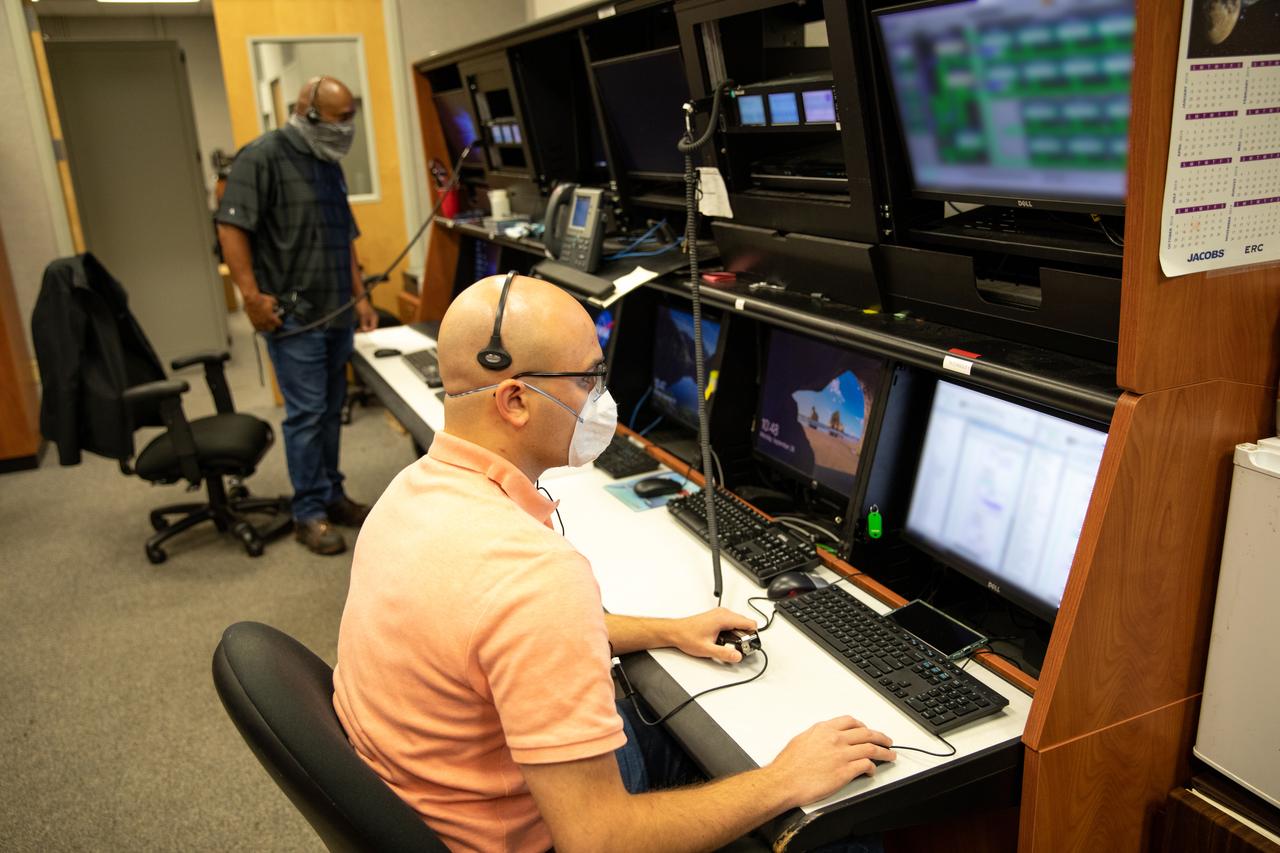
Engineers with Exploration Ground Systems at NASA’s Kennedy Space Center in Florida work on software for the launch of Artemis I. Reggie Martin (standing) and Danny Zaatari stay focused on the “Path to the Pad” inside the Launch Control Center on Sept 29, 2020. Artemis I is the first in a series of increasingly complex missions that will enable human exploration to the Moon and Mars.
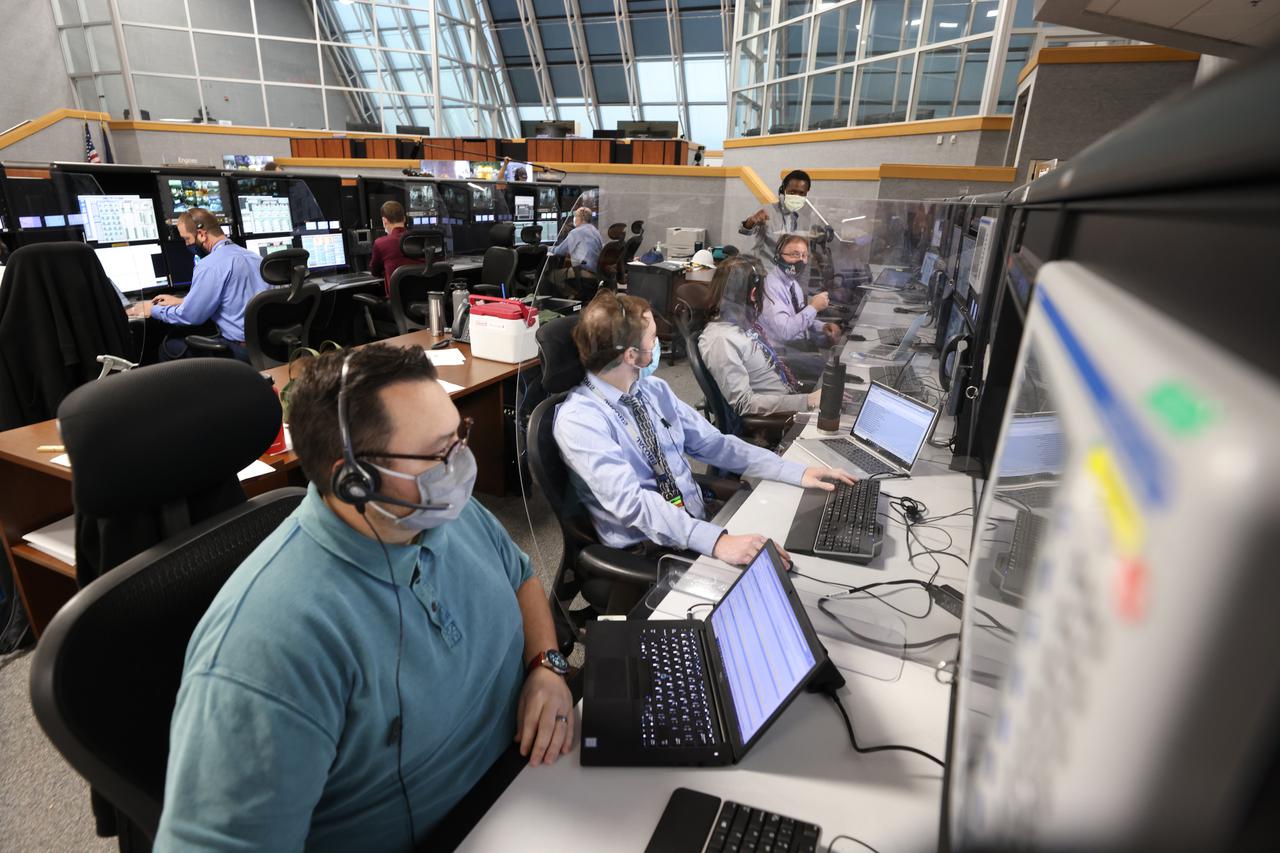
Launch team members are seated at the Electrical System consoles inside Firing Room 1 of the Launch Control Center at NASA’s Kennedy Space Center in Florida on Dec. 13, 2021. They are participating in a joint integrated simulation for the Artemis I launch that covered both cryogenic loading and terminal countdown portions of prelaunch activities. Members of NASA’s mission management team and launch team conducted the simulation together. The Kennedy team was certified for the Artemis I launch. During Artemis I, the agency’s Orion spacecraft will lift off from Kennedy aboard NASA’s most powerful rocket – the Space Launch System – to fly farther than any spacecraft built for humans has ever flown. Through NASA’s Artemis missions, the agency, along with commercial and international partners, will establish a sustainable human presence on the Moon to prepare for missions to Mars.
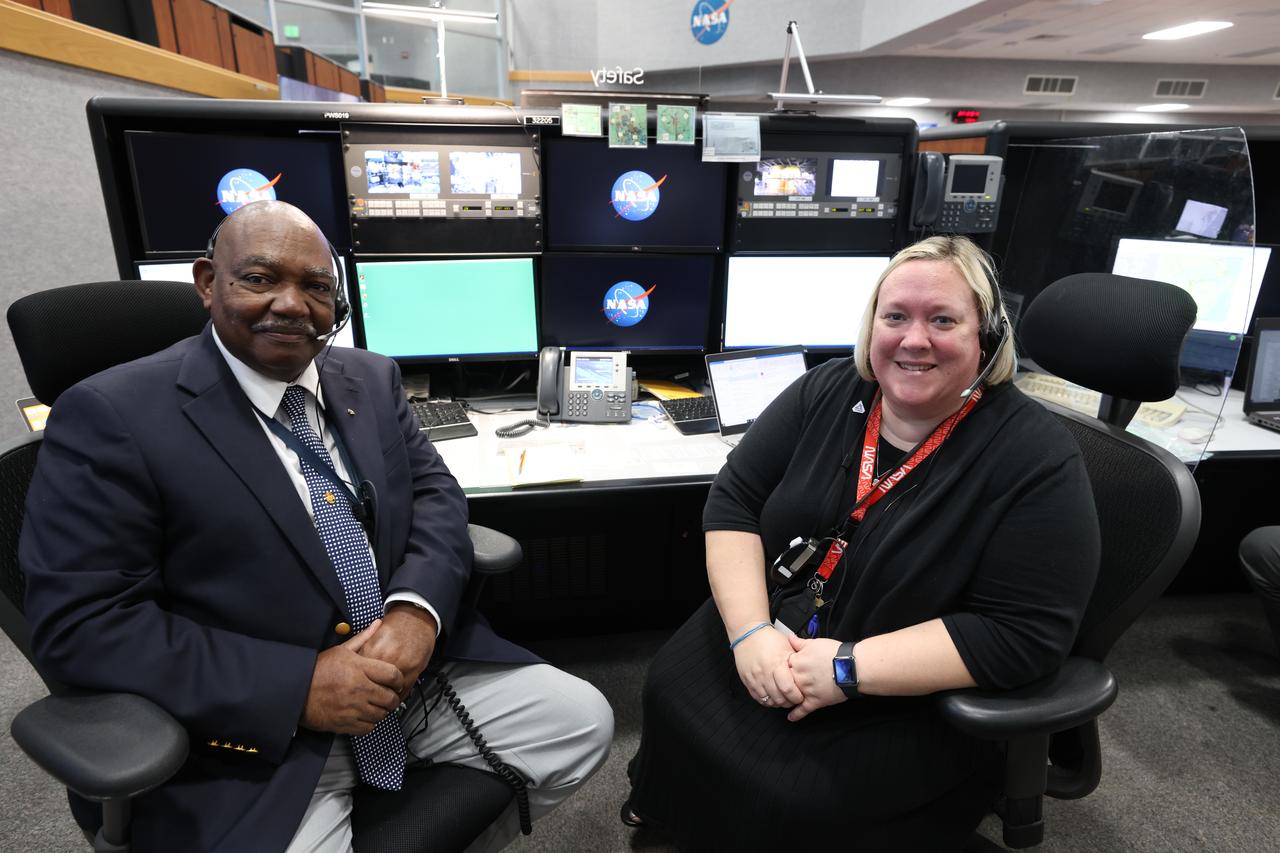
Launch team members are seated at the Safety consoles inside Firing Room 1 of the Launch Control Center at NASA’s Kennedy Space Center in Florida on Dec. 13, 2021. They are participating in a joint integrated simulation for the Artemis I launch that covered both cryogenic loading and terminal countdown portions of prelaunch activities. Members of NASA’s mission management team and launch team conducted the simulation together. The Kennedy team was certified for the Artemis I launch. During Artemis I, the agency’s Orion spacecraft will lift off from Kennedy aboard NASA’s most powerful rocket – the Space Launch System – to fly farther than any spacecraft built for humans has ever flown. Through NASA’s Artemis missions, the agency, along with commercial and international partners, will establish a sustainable human presence on the Moon to prepare for missions to Mars.

Artemis III launch team members participate in a cryogenic propellant loading simulation on Wednesday, June 10, 2026, inside Firing Room 1 and 2 of the Rocco A. Petrone Launch Control Center at NASA’s Kennedy Space Center in Florida. Members of NASA’s Exploration Ground Systems team rehearse the steps to load the super-cooled liquid hydrogen and liquid oxygen into the SLS (Space Launch System) rocket core stage, a process that starts several hours before liftoff for the Artemis III mission. Artemis III will carry out a series of objectives in low Earth orbit designed to demonstrate critical systems needed for future lunar landings, beginning with Artemis IV.
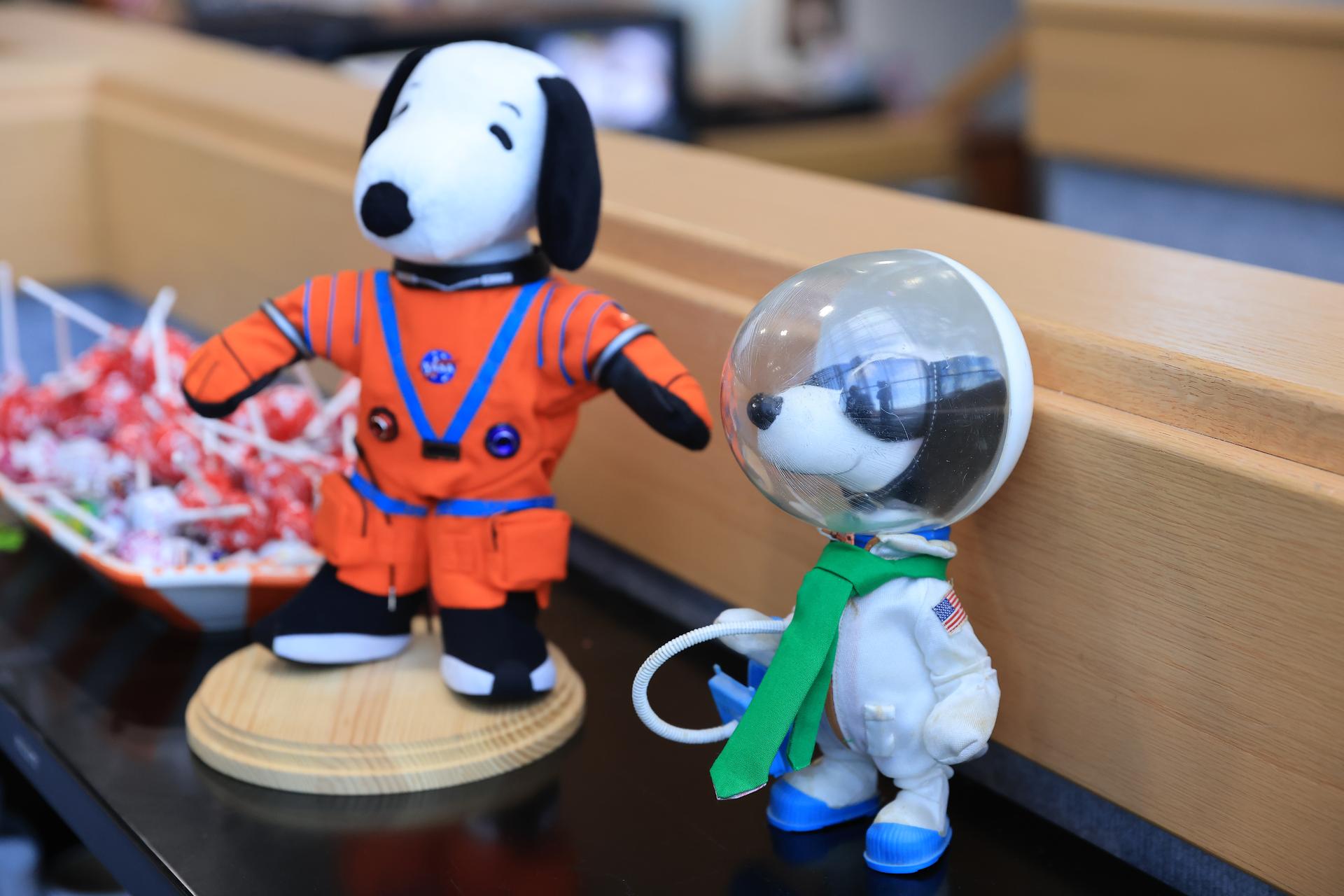
Astronaut Snoopy wearing its own Orion crew survival suit plush toy is on display inside Firing Room 1 of the Rocco Petrone Launch Control Center following the launch of the Artemis II test flight on Wednesday, April 1, 2026. Snoopy has been an official NASA mascot for over 50 years. The Artemis II mission launched Commander Reid Wiseman, Pilot Victor Glover, and Mission Specialist Christina Koch from NASA, and Mission Specialist Jeremy Hansen from the CSA (Canadian Space Agency), aboard NASA’s SLS (Space Launch System) rocket and Orion spacecraft to journey for 10 days around the Moon and back to Earth.
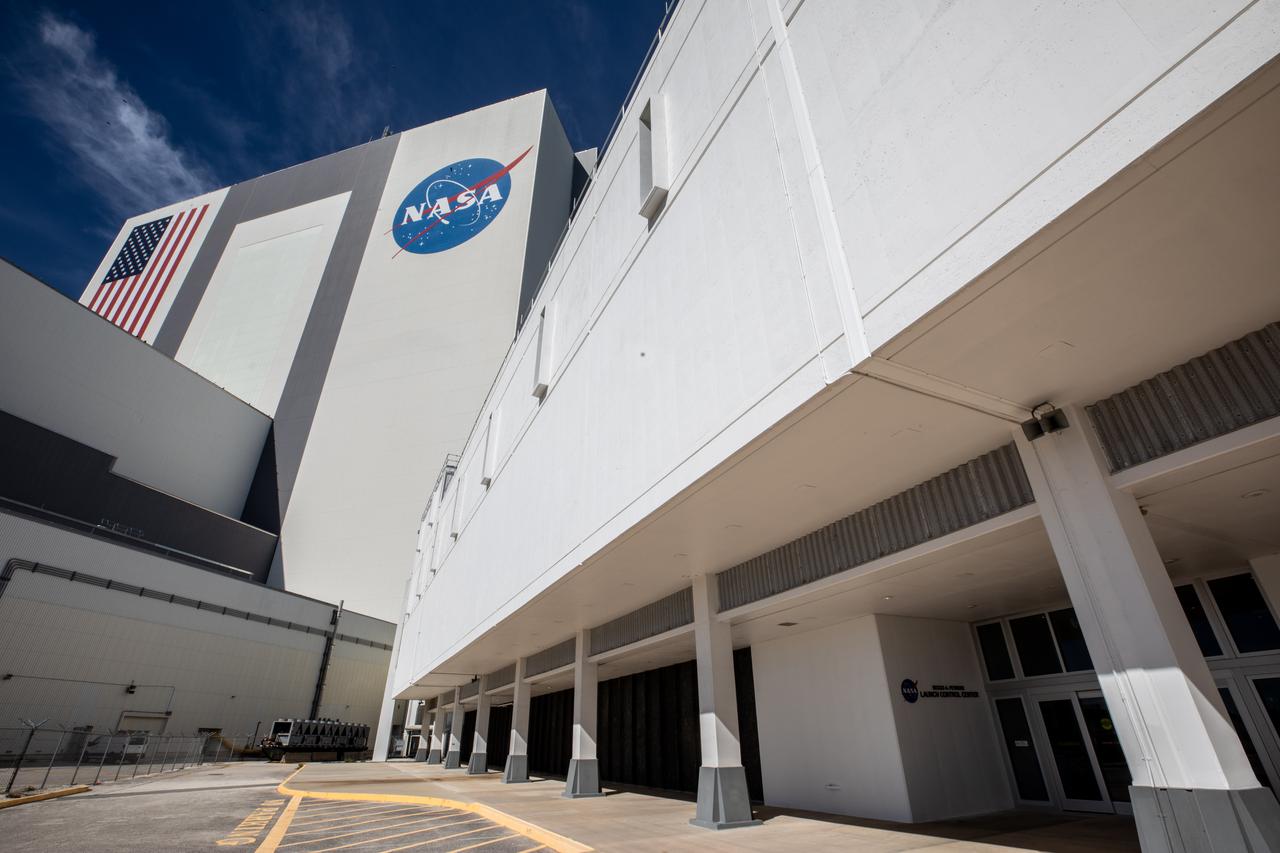
Following a ceremony at NASA’s Kennedy Space Center, the Florida spaceport’s launch control center (foreground) was officially renamed the Rocco A. Petrone Launch Control Center. In the background is Kennedy’s historic Vehicle Assembly Building. The newly named facility serves as a nerve center where engineers and the launch director will monitor their flight consoles and give the “go” for the upcoming launch of Artemis I and later missions that will establish a sustainable presence on the Moon to prepare for missions to Mars. Petrone, who was instrumental in America’s first voyages to the Moon and headed the Apollo program, died in 2006 at the age of 80.
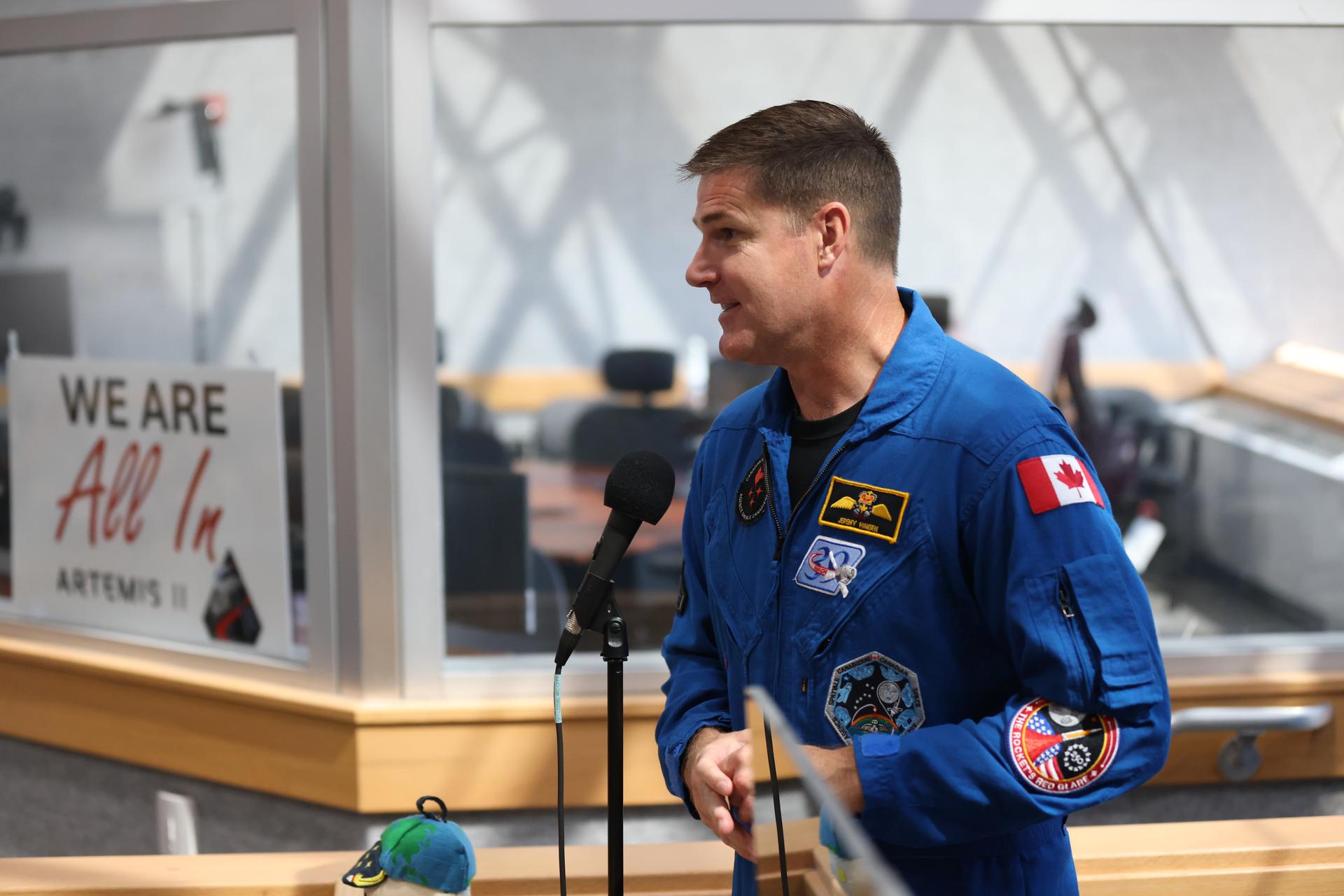
Artemis II CSA (Canadian Space Agency) astronaut Jeremy Hansen speaks to agency employees inside the Rocco A. Petrone Launch Control Center at NASA’s Kennedy Space Center in Florida on Tuesday, July 7, 2026. The Artemis II crew, Hansen, along with NASA astronauts Reid Wiseman, Victor Glover, and Christina Koch, returned to NASA Kennedy for their first official visit since launch of Artemis II on Wednesday, April 1, 2026, to visit with the center’s workforce and tour facilities to view progress on Artemis III prelaunch processing.
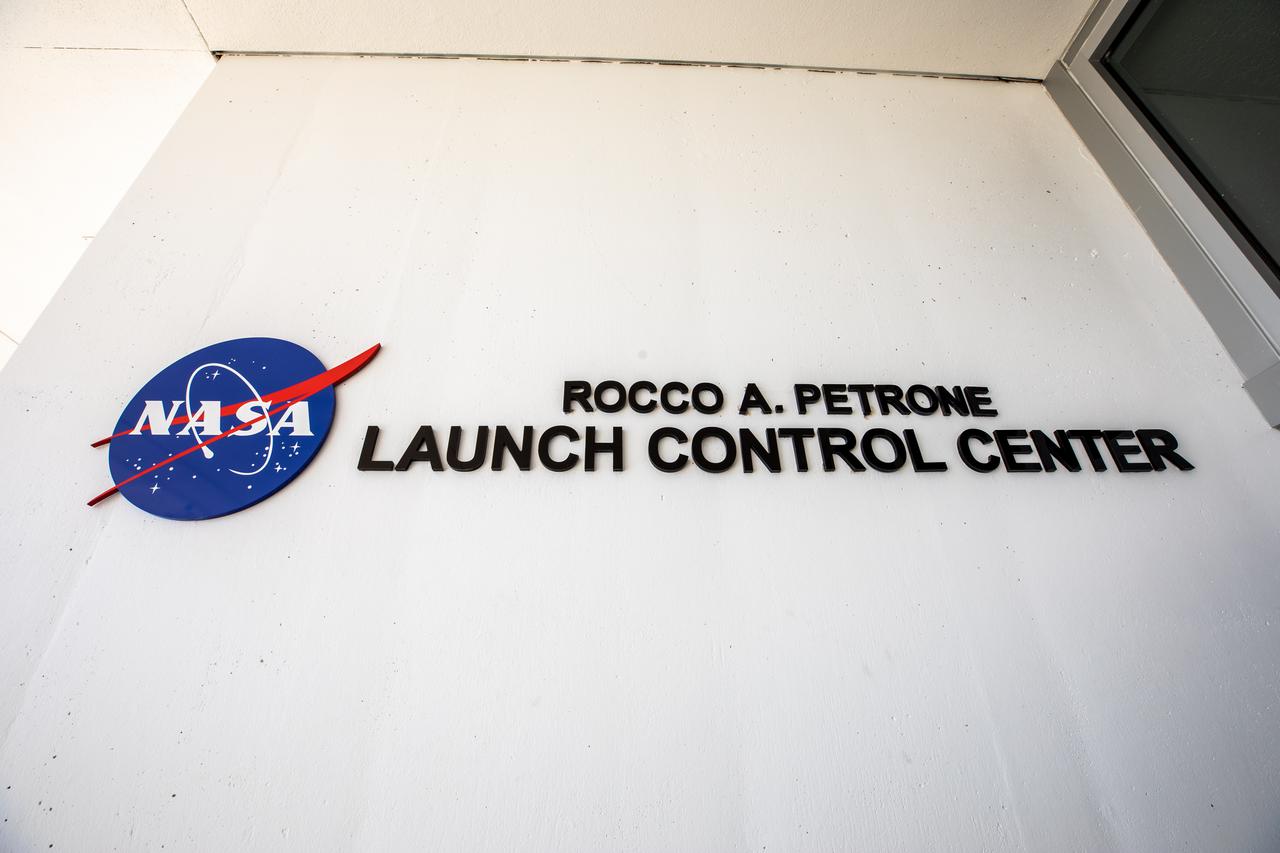
Following a ceremony at NASA’s Kennedy Space Center, the Florida spaceport’s launch control center was officially renamed the Rocco A. Petrone Launch Control Center. The facility serves as a nerve center where engineers and the launch director will monitor their flight consoles and give the “go” for the upcoming launch of Artemis I and later missions that will establish a sustainable presence on the Moon to prepare for missions to Mars. Petrone, who was instrumental in America’s first voyages to the Moon and headed the Apollo program, died in 2006 at the age of 80.
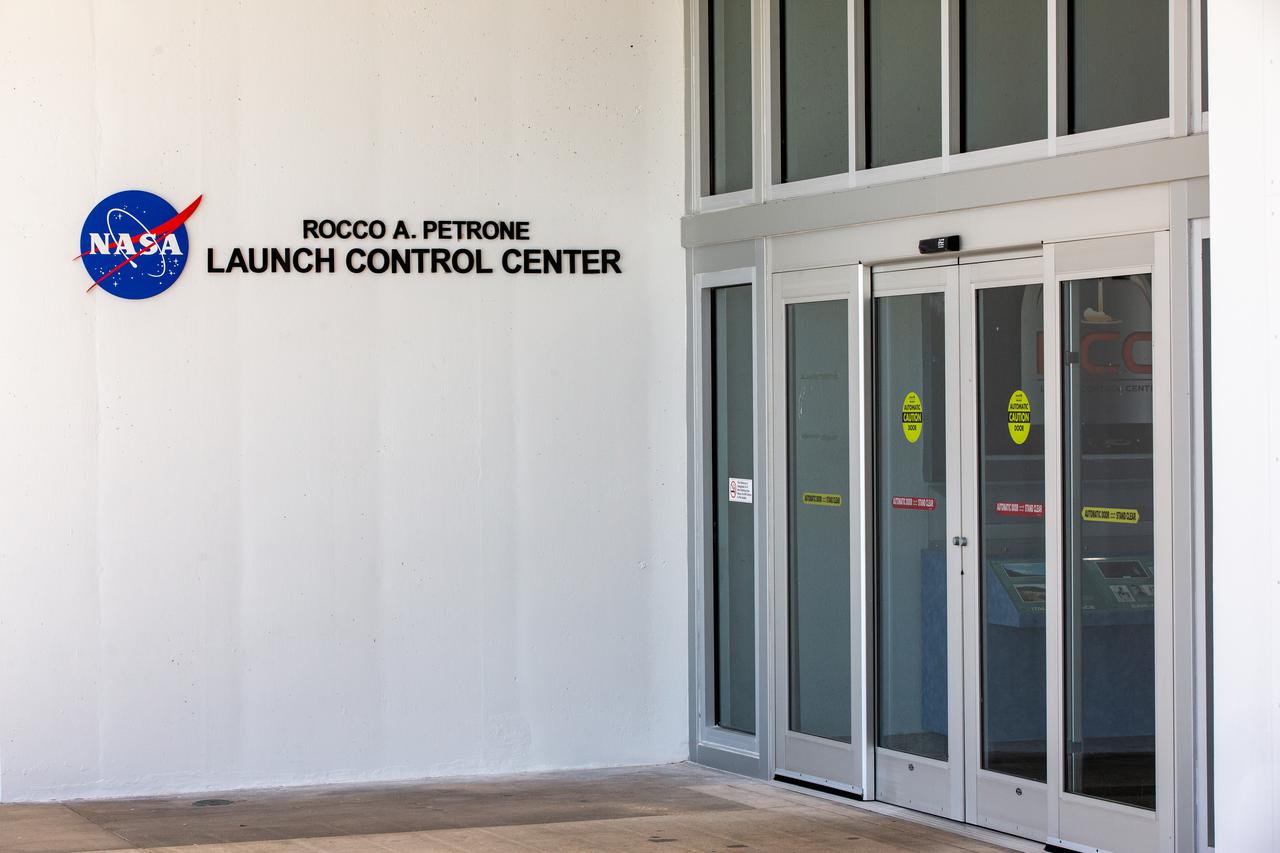
Following a ceremony at NASA’s Kennedy Space Center, the Florida spaceport’s launch control center was officially renamed the Rocco A. Petrone Launch Control Center. The facility serves as a nerve center where engineers and the launch director will monitor their flight consoles and give the “go” for the upcoming launch of Artemis I and later missions that will establish a sustainable presence on the Moon to prepare for missions to Mars. Petrone, who was instrumental in America’s first voyages to the Moon and headed the Apollo program, died in 2006 at the age of 80.
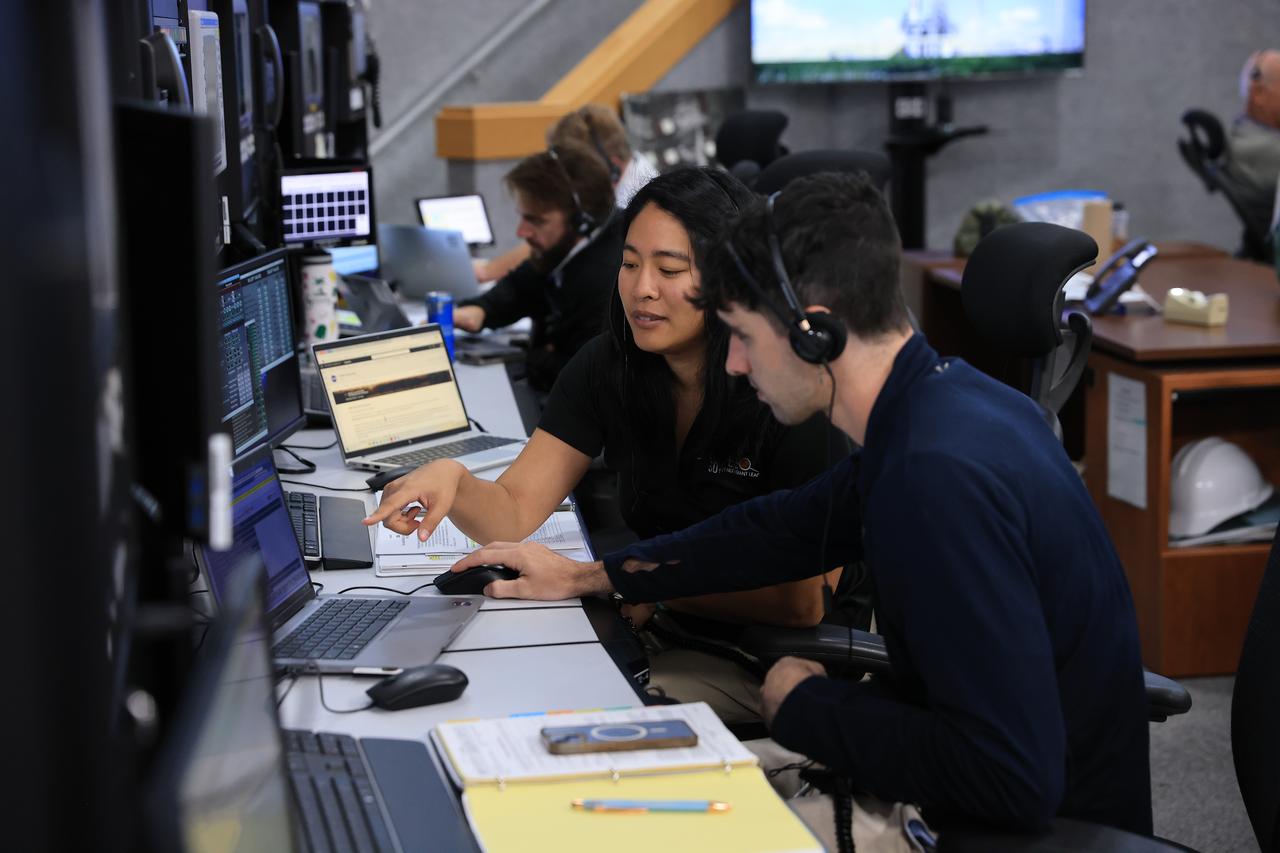
Teams at NASA’s Kennedy Space Center in Florida participate in the first joint integrated launch countdown simulation for Artemis II inside Firing Room 1 of the Launch Control Center on Thursday, Sept. 11, 2025. The training exercise involved engineers from Kennedy, Marshall Space Flight Center in Huntsville, Alabama, and Johnson Space Center in Houston coming together to rehearse all aspects of the launch countdown, from cryogenic loading – filling tanks in the SLS (Space Launch System) rocket’s core stage with liquid hydrogen and liquid oxygen – to liftoff. These simulations will help certify that the launch team is ready for Artemis II – the first crewed Artemis mission that will send four astronauts around the Moon and back.
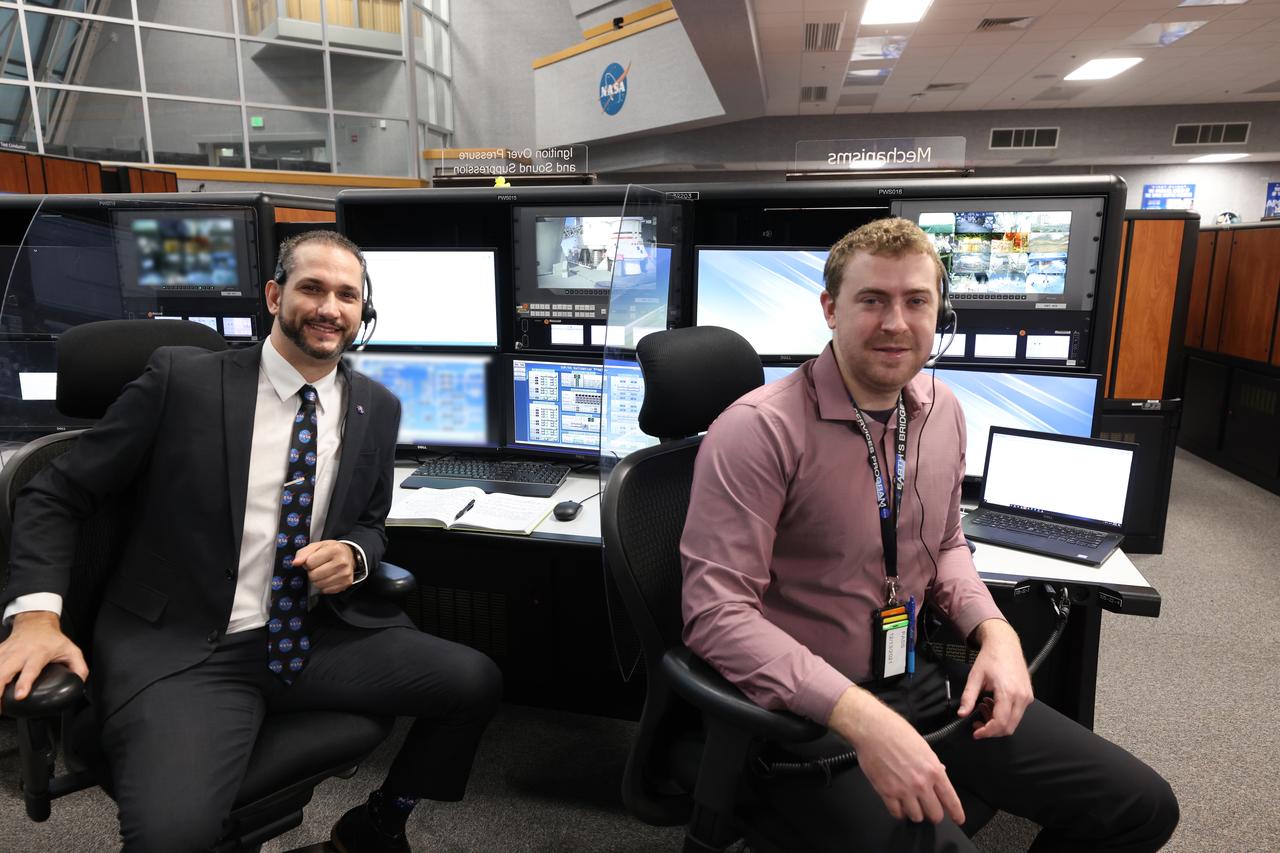
Launch team members are seated at the Mechanisms and Ignition Over Pressure and Sound Suppression System consoles inside Firing Room 1 of the Launch Control Center at NASA’s Kennedy Space Center in Florida on Dec. 13, 2021. They are participating in a joint integrated simulation for the Artemis I launch that covered both cryogenic loading and terminal countdown portions of prelaunch activities. Members of NASA’s mission management team and launch team conducted the simulation together. The Kennedy team was certified for the Artemis I launch. During Artemis I, the agency’s Orion spacecraft will lift off from Kennedy aboard NASA’s most powerful rocket – the Space Launch System – to fly farther than any spacecraft built for humans has ever flown. Through NASA’s Artemis missions, the agency, along with commercial and international partners, will establish a sustainable human presence on the Moon to prepare for missions to Mars.

Artemis III launch team members participate in a cryogenic propellant loading simulation on Wednesday, June 10, 2026, inside Firing Room 1 and 2 of the Rocco A. Petrone Launch Control Center at NASA’s Kennedy Space Center in Florida. Members of NASA’s Exploration Ground Systems team rehearse the steps to load the super-cooled liquid hydrogen and liquid oxygen into the SLS (Space Launch System) rocket core stage, a process that starts several hours before liftoff for the Artemis III mission. Artemis III will carry out a series of objectives in low Earth orbit designed to demonstrate critical systems needed for future lunar landings, beginning with Artemis IV.
Following a ceremony at NASA’s Kennedy Space Center, the Florida spaceport’s launch control center was officially renamed the Rocco A. Petrone Launch Control Center. The facility serves as a nerve center where engineers and the launch director will monitor their flight consoles and give the “go” for the upcoming launch of Artemis I and later missions that will establish a sustainable presence on the Moon to prepare for missions to Mars. Petrone, who was instrumental in America’s first voyages to the Moon and headed the Apollo program, died in 2006 at the age of 80.
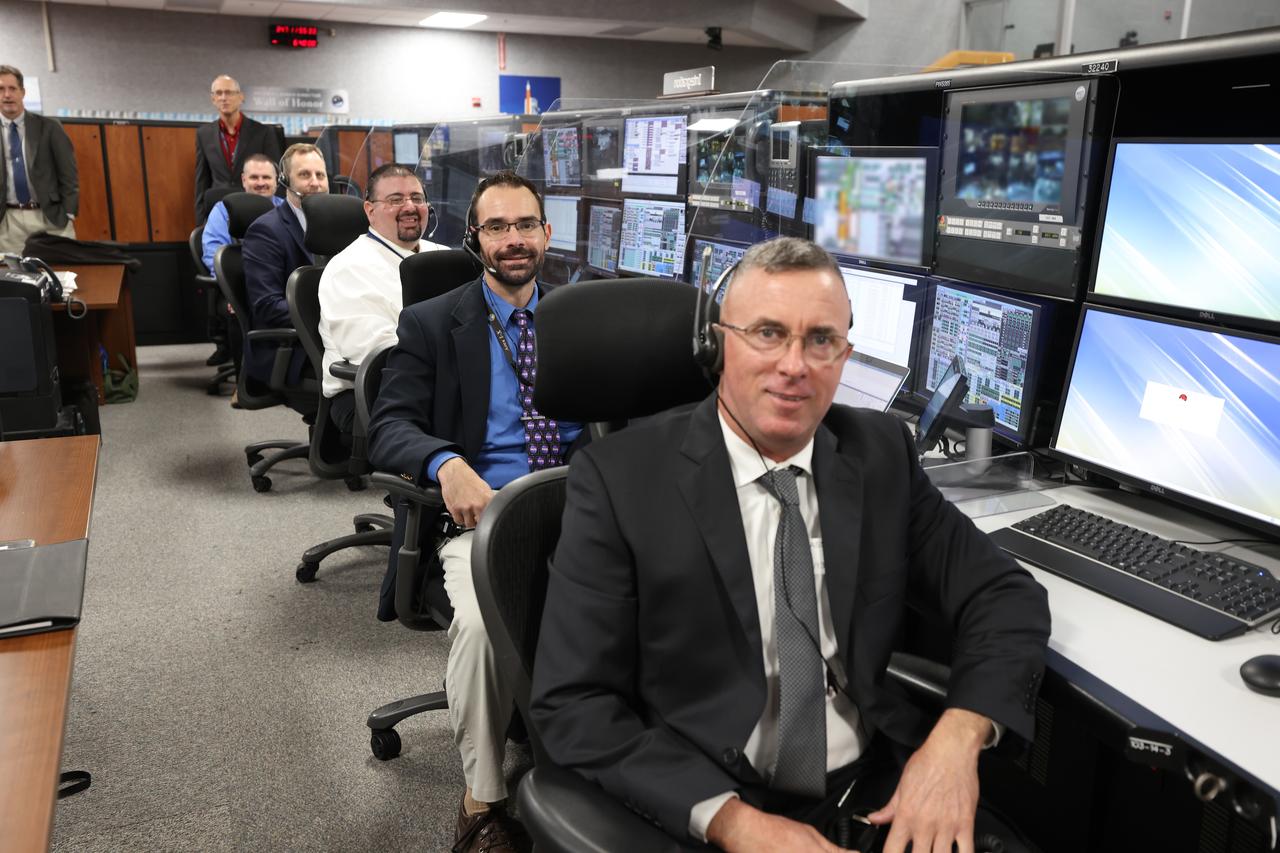
Launch team members are seated at the Integration consoles inside Firing Room 1 of the Launch Control Center at NASA’s Kennedy Space Center in Florida on Dec. 13, 2021. They are participating in a joint integrated simulation for the Artemis I launch that covered both cryogenic loading and terminal countdown portions of prelaunch activities. Members of NASA’s mission management team and launch team conducted the simulation together. The Kennedy team was certified for the Artemis I launch. During Artemis I, the agency’s Orion spacecraft will lift off from Kennedy aboard NASA’s most powerful rocket – the Space Launch System – to fly farther than any spacecraft built for humans has ever flown. Through NASA’s Artemis missions, the agency, along with commercial and international partners, will establish a sustainable human presence on the Moon to prepare for missions to Mars.
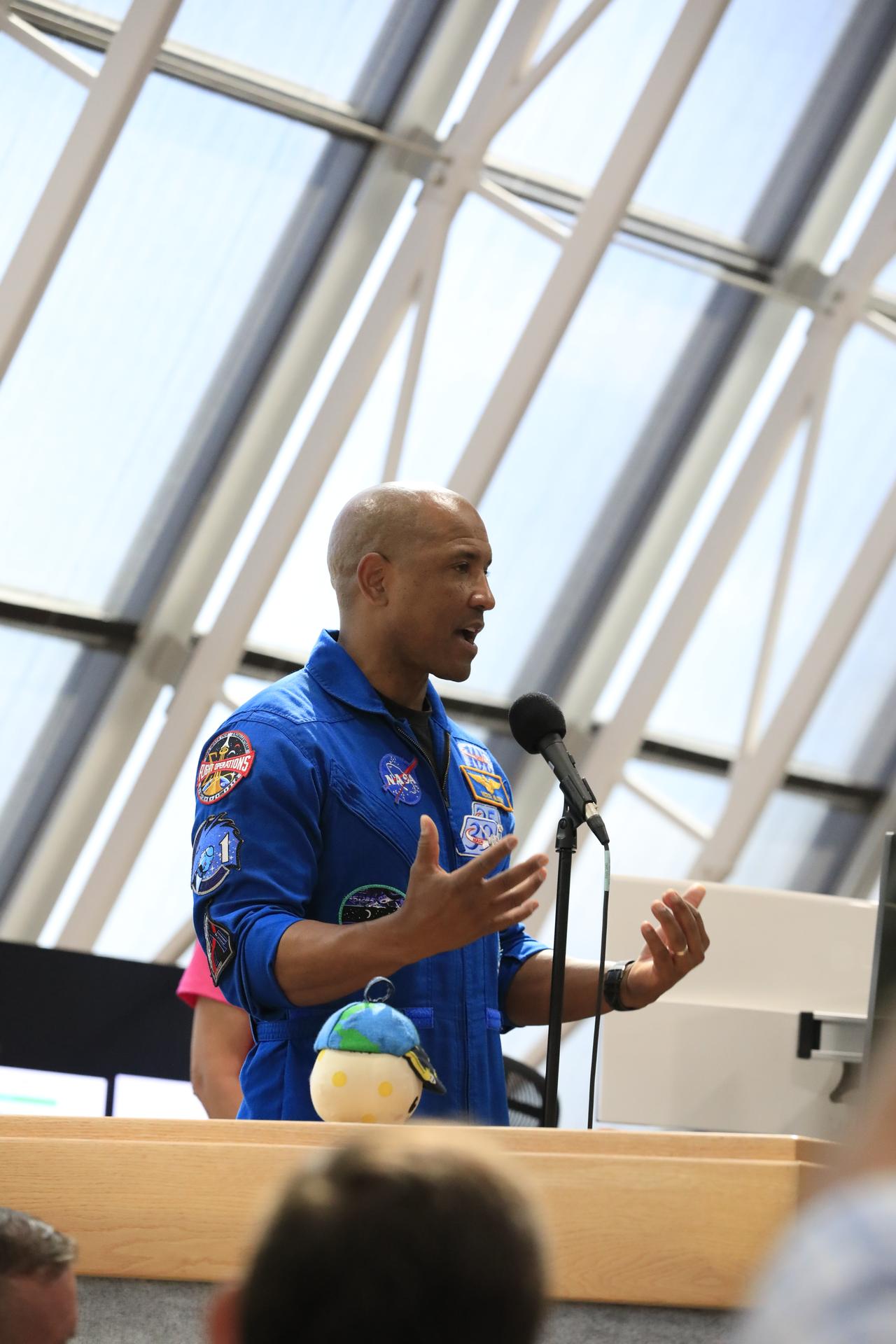
Artemis II NASA astronaut Victor Glover speaks to agency employees inside the Rocco A. Petrone Launch Control Center at NASA’s Kennedy Space Center in Florida on Tuesday, July 7, 2026. The Artemis II crew, Glover, fellow NASA astronauts Reid Wiseman and Christina Koch, and CSA (Canadian Space Agency) astronaut Jeremy Hansen, returned to NASA Kennedy for their first official visit since launch of Artemis II on Wednesday, April 1, 2026, to visit with the center’s workforce and tour facilities to view progress on Artemis III prelaunch processing.
Launch team members are seated at Liquid Hydrogen consoles inside Firing Room 1 of the Launch Control Center at NASA’s Kennedy Space Center in Florida on Dec. 13, 2021. They are participating in a joint integrated simulation for the Artemis I launch that covered both cryogenic loading and terminal countdown portions of prelaunch activities. Members of NASA’s mission management team and launch team conducted the simulation together. The Kennedy team was certified for the Artemis I launch. During Artemis I, the agency’s Orion spacecraft will lift off from Kennedy aboard NASA’s most powerful rocket – the Space Launch System – to fly farther than any spacecraft built for humans has ever flown. Through NASA’s Artemis missions, the agency, along with commercial and international partners, will establish a sustainable human presence on the Moon to prepare for missions to Mars.
Launch team members are seated at the Orion Test Conductor consoles inside Firing Room 1 of the Launch Control Center at NASA’s Kennedy Space Center in Florida on Dec. 13, 2021. From right are Carla Rekucki, Joshua Coleman, John Kracsun, and Dan Florez. They are participating in a joint integrated simulation for the Artemis I launch that covered both cryogenic loading and terminal countdown portions of prelaunch activities. Members of NASA’s mission management team and launch team conducted the simulation together. The Kennedy team was certified for the Artemis I launch. During Artemis I, the agency’s Orion spacecraft will lift off from Kennedy aboard NASA’s most powerful rocket – the Space Launch System – to fly farther than any spacecraft built for humans has ever flown. Through NASA’s Artemis missions, the agency, along with commercial and international partners, will establish a sustainable human presence on the Moon to prepare for missions to Mars.
Wes Mosedale, Technical Assistant to the Launch Director, with Exploration Ground Systems, is seated at console inside Firing Room 1 of the Launch Control Center at NASA’s Kennedy Space Center in Florida on Dec. 13, 2021. He is participating in a joint integrated simulation for the Artemis I launch that covered both cryogenic loading and terminal countdown portions of prelaunch activities. Members of NASA’s mission management team and launch team conducted the simulation together. The Kennedy team was certified for the Artemis I launch. During Artemis I, the agency’s Orion spacecraft will lift off from Kennedy aboard NASA’s most powerful rocket – the Space Launch System – to fly farther than any spacecraft built for humans has ever flown. Through NASA’s Artemis missions, the agency, along with commercial and international partners, will establish a sustainable human presence on the Moon to prepare for missions to Mars.
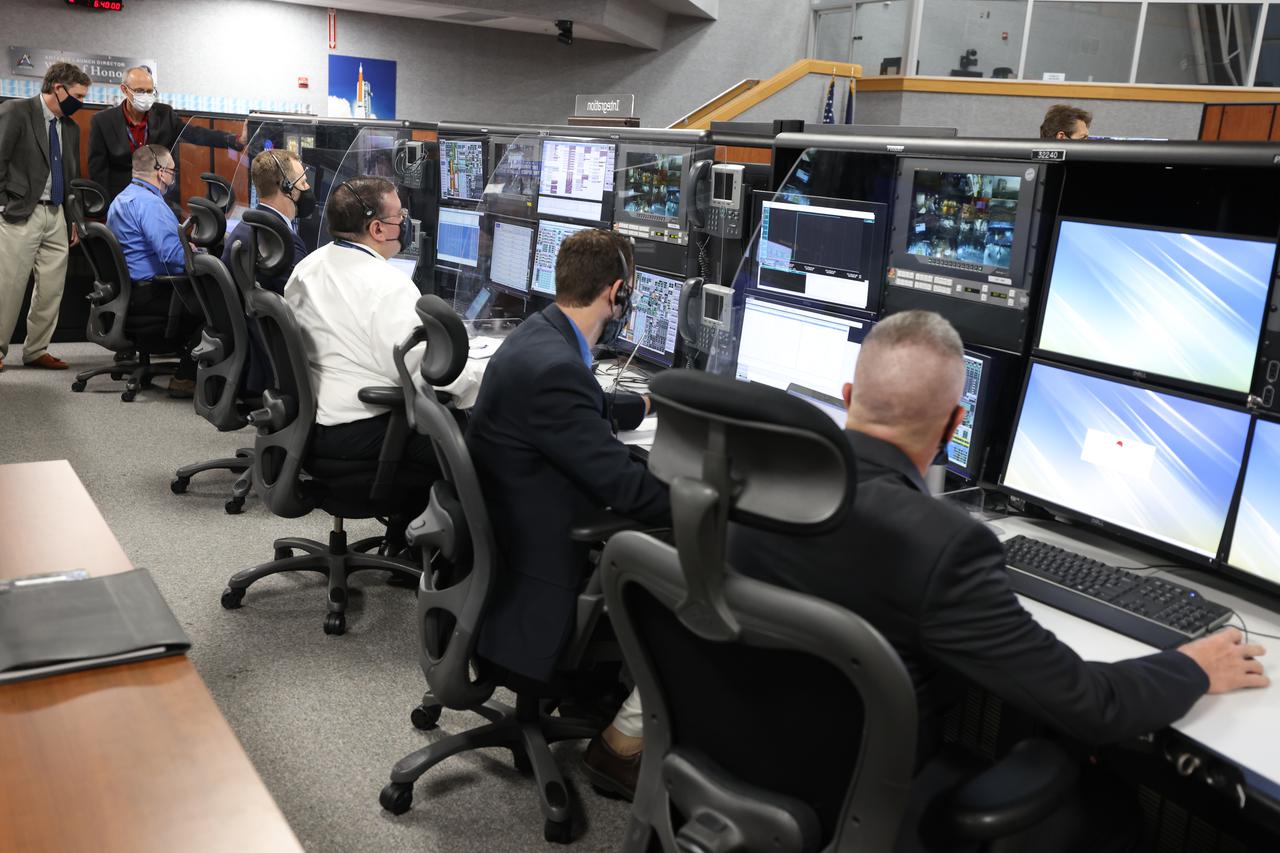
Launch team members are seated at the Integration consoles inside Firing Room 1 of the Launch Control Center at NASA’s Kennedy Space Center in Florida on Dec. 13, 2021. They are participating in a joint integrated simulation for the Artemis I launch that covered both cryogenic loading and terminal countdown portions of prelaunch activities. Members of NASA’s mission management team and launch team conducted the simulation together. The Kennedy team was certified for the Artemis I launch. During Artemis I, the agency’s Orion spacecraft will lift off from Kennedy aboard NASA’s most powerful rocket – the Space Launch System – to fly farther than any spacecraft built for humans has ever flown. Through NASA’s Artemis missions, the agency, along with commercial and international partners, will establish a sustainable human presence on the Moon to prepare for missions to Mars.
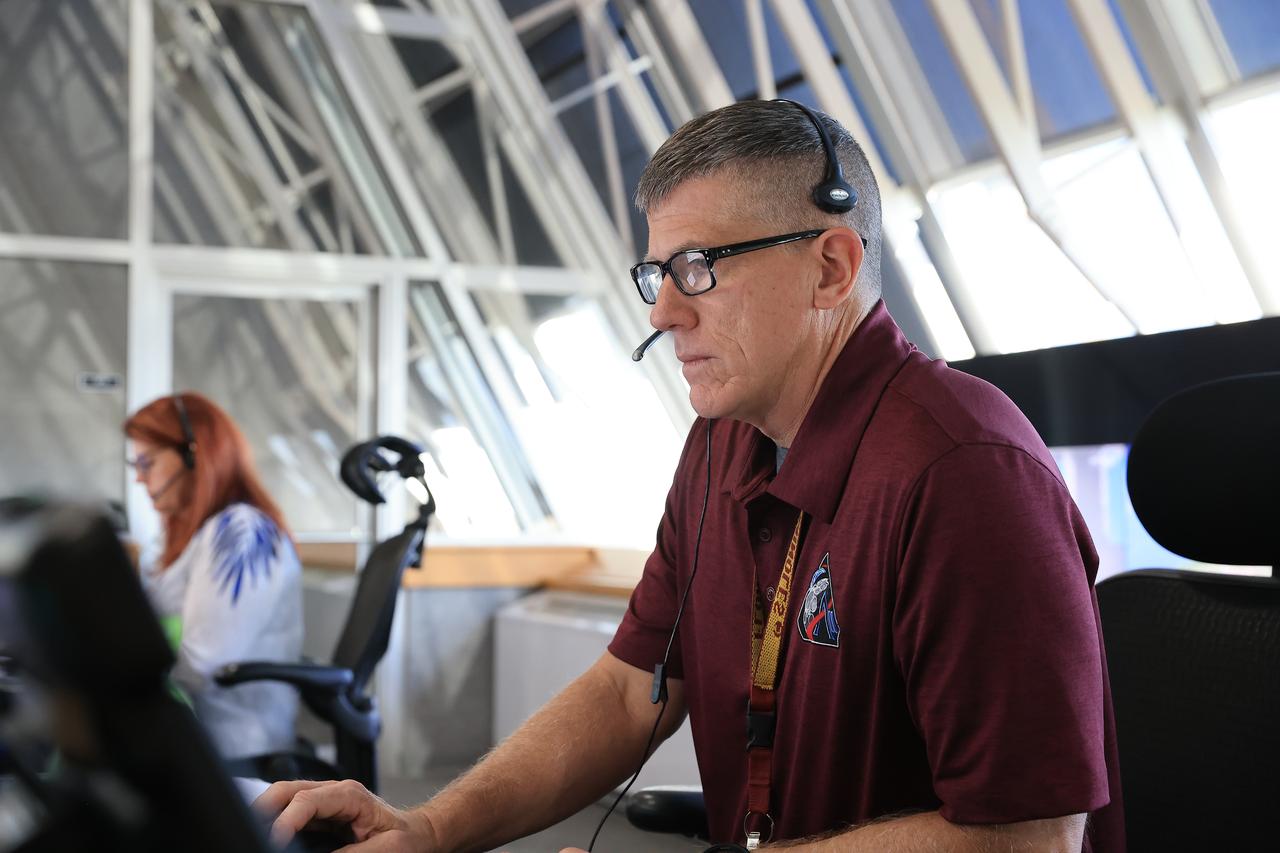
Jeremy Graeber, Artemis assistant launch director within NASA’s Exploration Ground Systems Program, participates in the first joint integrated launch countdown simulation for Artemis II inside Firing Room 1 of the Launch Control Center on Thursday, Sept. 11, 2025 at the agency’s Kennedy Space Center in Florida. The training exercise involved engineers from Kennedy, Marshall Space Flight Center in Huntsville, Alabama, and Johnson Space Center in Houston coming together to rehearse all aspects of the launch countdown, from cryogenic loading – filling tanks in the SLS (Space Launch System) rocket’s core stage with liquid hydrogen and liquid oxygen – to liftoff. These simulations will help certify that the launch team is ready for Artemis II – the first crewed Artemis mission that will send four astronauts around the Moon and back.

Artemis III launch team members participate in a cryogenic propellant loading simulation on Wednesday, June 10, 2026, inside Firing Room 1 and 2 of the Rocco A. Petrone Launch Control Center at NASA’s Kennedy Space Center in Florida. Members of NASA’s Exploration Ground Systems team rehearse the steps to load the super-cooled liquid hydrogen and liquid oxygen into the SLS (Space Launch System) rocket core stage, a process that starts several hours before liftoff for the Artemis III mission. Artemis III will carry out a series of objectives in low Earth orbit designed to demonstrate critical systems needed for future lunar landings, beginning with Artemis IV.
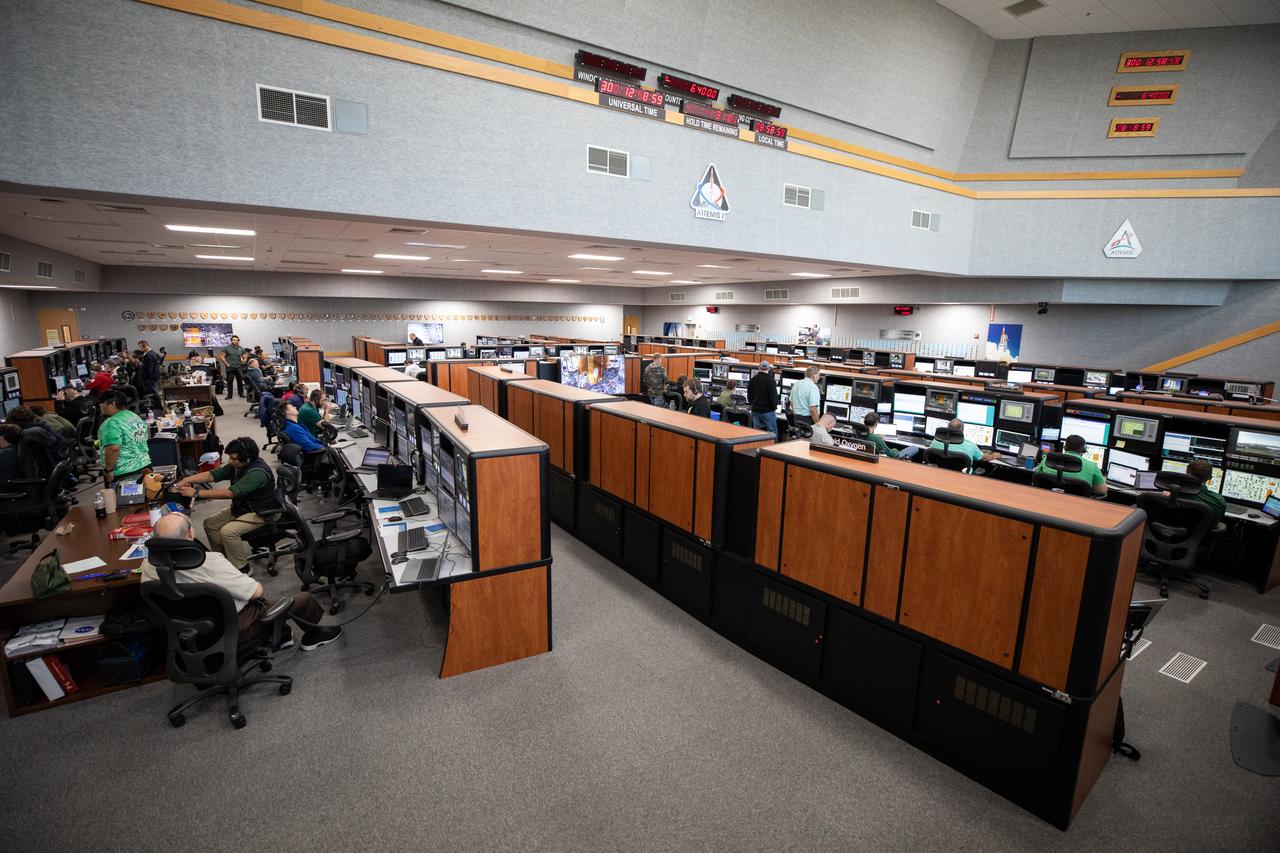
Artemis teams conduct a launch simulation for the Artemis I mission inside the Rocco A. Petrone Launch Control Center at NASA’s Kennedy Space Center in Florida on Oct. 27, 2022. Artemis I will be the first integrated test of NASA’s Space Launch System (SLS) rocket and Orion spacecraft. The primary goal of Artemis I is to thoroughly test the integrated systems before crewed missions by launching Orion atop the SLS rocket, operating the spacecraft in a deep space environment, testing Orion’s heat shield, and recovering the crew module after reentry, descent, and splashdown. During the flight, Orion will launch atop the most powerful rocket in the world and fly farther than any human-rated spacecraft has ever flown, paving the way for human deep space exploration and demonstrating our commitment and capability to extend human presence to the Moon and beyond.