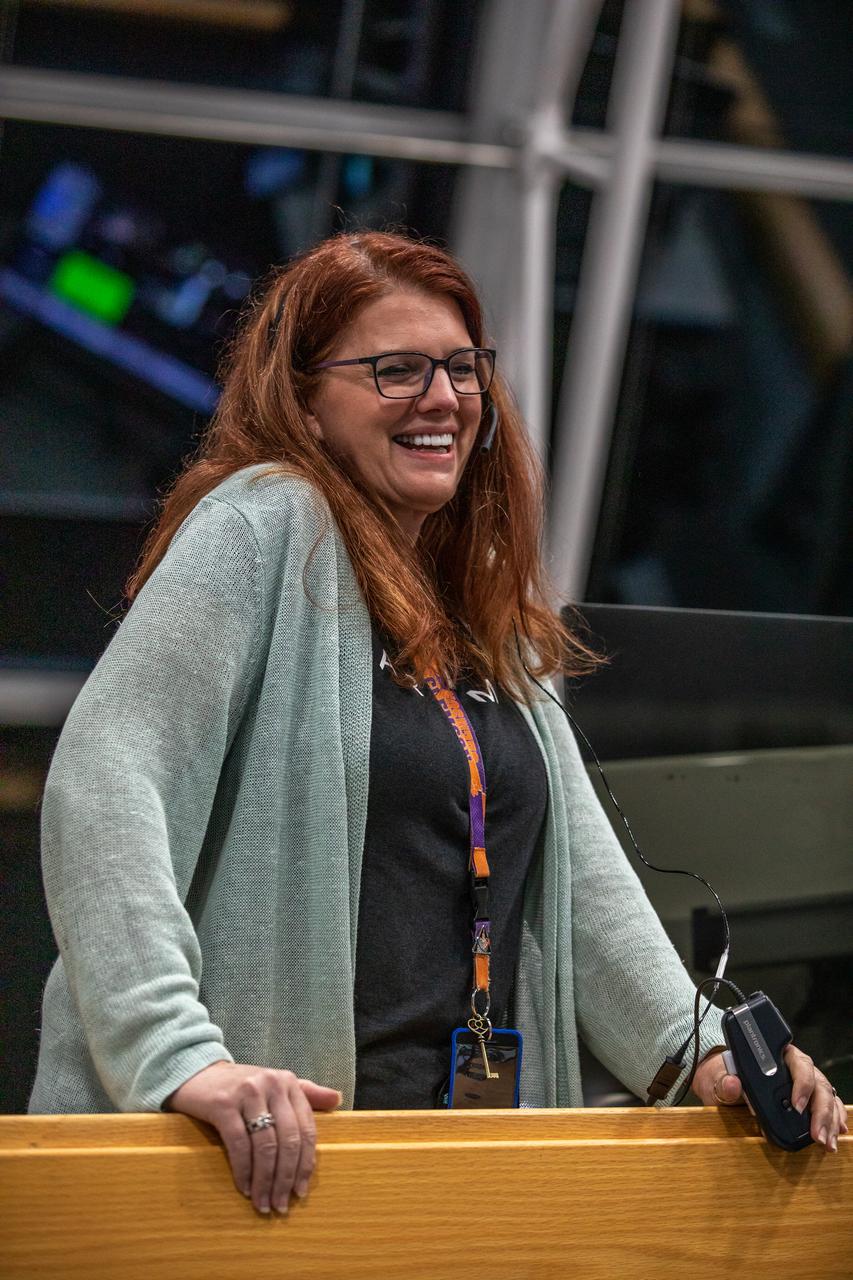
Artemis I Launch Director Charlie Blackwell-Thompson stands at her console in Firing Room 1 inside the Rocco A. Petrone Launch Control Center at NASA’s Kennedy Space Center in Florida on Nov. 4, 2022, as NASA’s Space Launch System (SLS) rocket and Orion spacecraft for the Artemis I mission roll out to Launch Pad 39B. The primary goal of Artemis I is to thoroughly test the integrated systems before crewed missions by launching Orion atop the SLS rocket, operating the spacecraft in a deep space environment, testing Orion’s heat shield, and recovering the crew module after reentry, descent, and splashdown. During the flight, Orion will launch atop the most powerful rocket in the world and fly farther than any human-rated spacecraft has ever flown, paving the way for human deep space exploration and demonstrating our commitment and capability to extend human presence to the Moon and beyond.
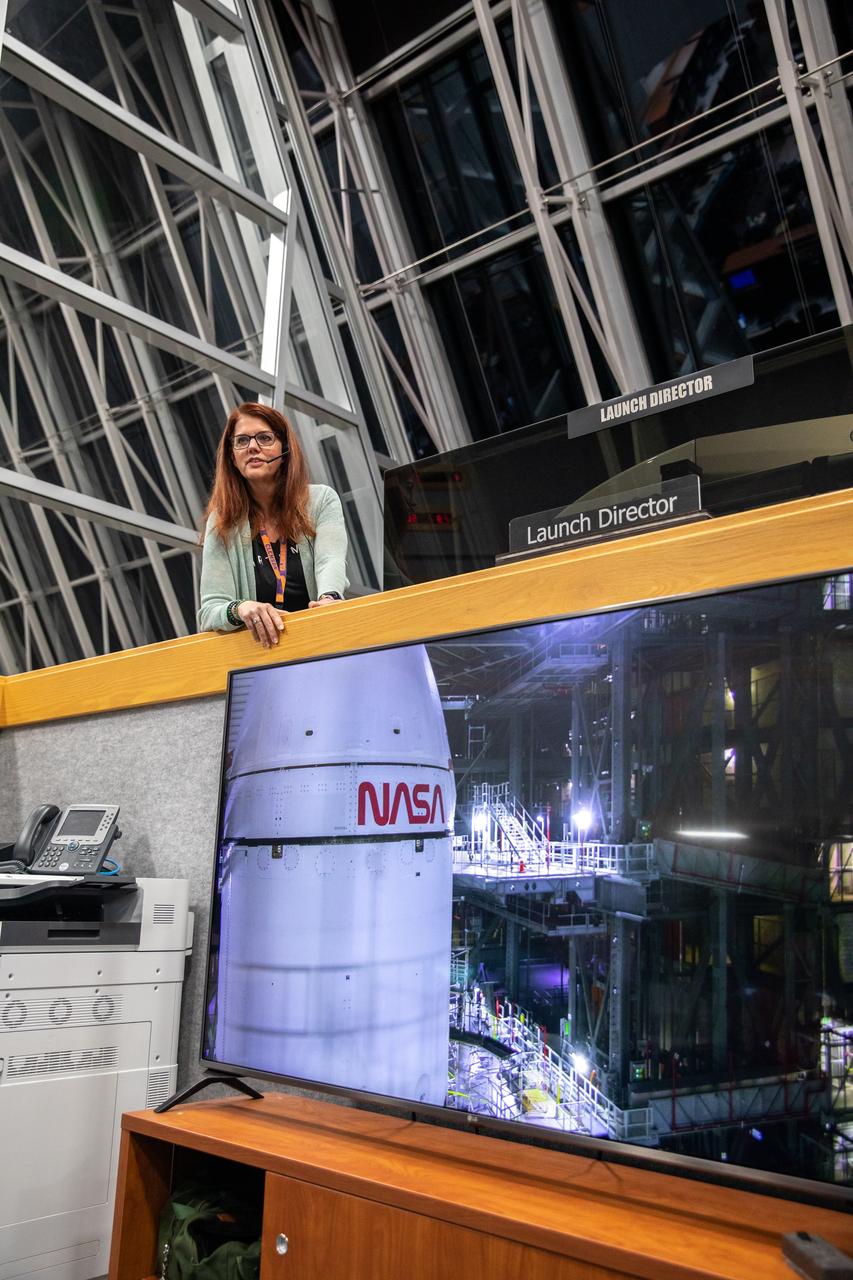
Artemis I Launch Director Charlie Blackwell-Thompson stands at her console in Firing Room 1 inside the Rocco A. Petrone Launch Control Center at NASA’s Kennedy Space Center in Florida on Nov. 4, 2022, as NASA’s Space Launch System (SLS) rocket and Orion spacecraft for the Artemis I mission roll out to Launch Pad 39B. The primary goal of Artemis I is to thoroughly test the integrated systems before crewed missions by launching Orion atop the SLS rocket, operating the spacecraft in a deep space environment, testing Orion’s heat shield, and recovering the crew module after reentry, descent, and splashdown. During the flight, Orion will launch atop the most powerful rocket in the world and fly farther than any human-rated spacecraft has ever flown, paving the way for human deep space exploration and demonstrating our commitment and capability to extend human presence to the Moon and beyond.
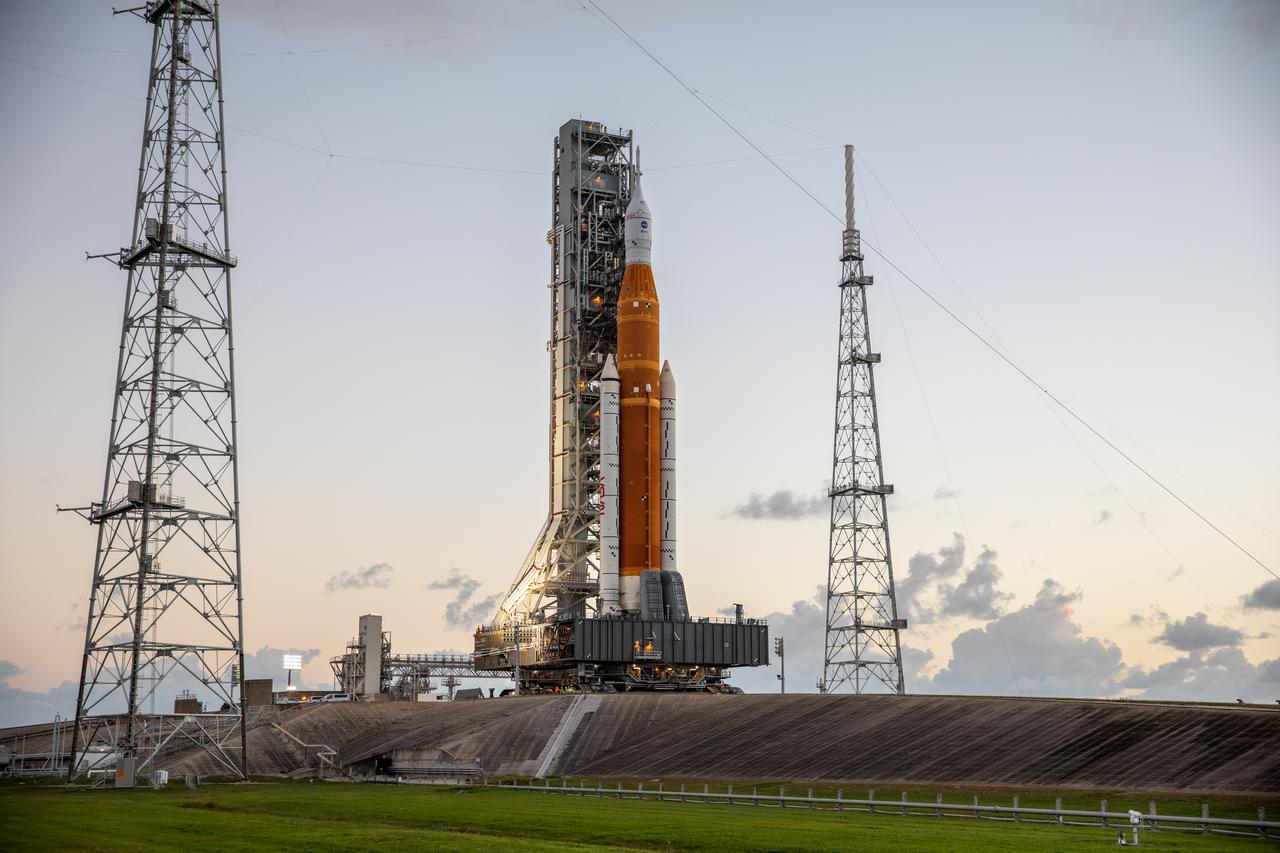
NASA’s Space Launch System (SLS) rocket and Orion spacecraft, standing atop the mobile launcher, arrive at Launch Pad 39B at the agency’s Kennedy Space Center in Florida on Nov. 4, 2022, ahead of the uncrewed Artemis I launch. Artemis I will be the first integrated test of NASA’s SLS rocket and Orion spacecraft and is scheduled to launch Monday, Nov. 14. The primary goal of Artemis I is to thoroughly test the integrated systems before crewed missions by launching Orion atop the SLS rocket, operating the spacecraft in a deep space environment, testing Orion’s heat shield, and recovering the crew module after reentry, descent, and splashdown. During the flight, Orion will launch atop the most powerful rocket in the world and fly farther than any human-rated spacecraft has ever flown, paving the way for human deep space exploration and demonstrating our commitment and capability to extend human presence to the Moon and beyond.
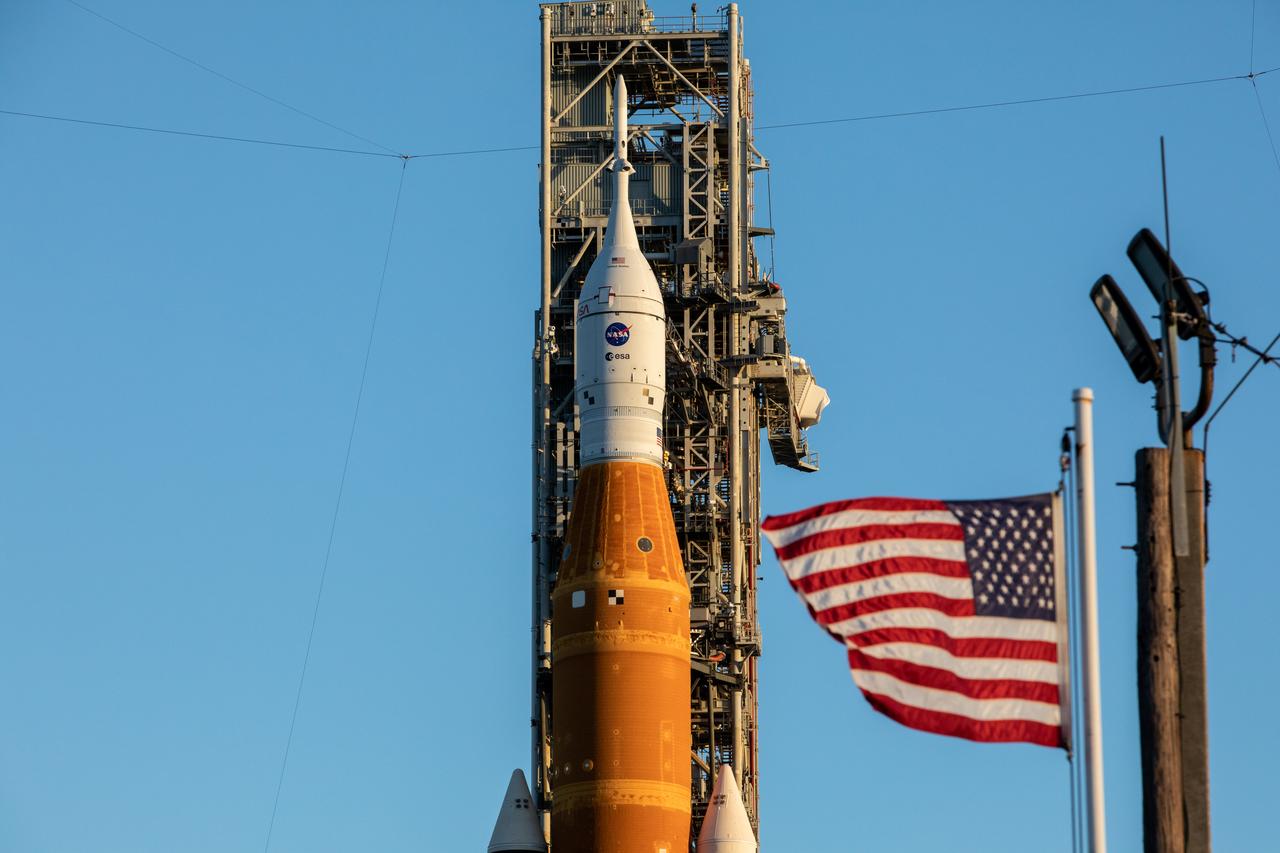
Standing atop the mobile launcher, NASA’s Space Launch System (SLS) rocket and Orion spacecraft arrive at Launch Pad 39B at the agency’s Kennedy Space Center in Florida on Nov. 4, 2022. The Artemis I stack was carried from the Vehicle Assembly Building to the pad – a 4.2-mile journey that took nearly 11 hours to complete – by NASA’s crawler-transporter 2 ahead of the uncrewed launch. Artemis I will be the first integrated test of NASA’s SLS rocket and Orion spacecraft and is scheduled to launch Monday, Nov. 14. The primary goal of Artemis I is to thoroughly test the integrated systems before crewed missions by launching Orion atop the SLS rocket, operating the spacecraft in a deep space environment, testing Orion’s heat shield, and recovering the crew module after reentry, descent, and splashdown. During the flight, Orion will launch atop the most powerful rocket in the world and fly farther than any human-rated spacecraft has ever flown, paving the way for human deep space exploration and demonstrating our commitment and capability to extend human presence to the Moon and beyond.
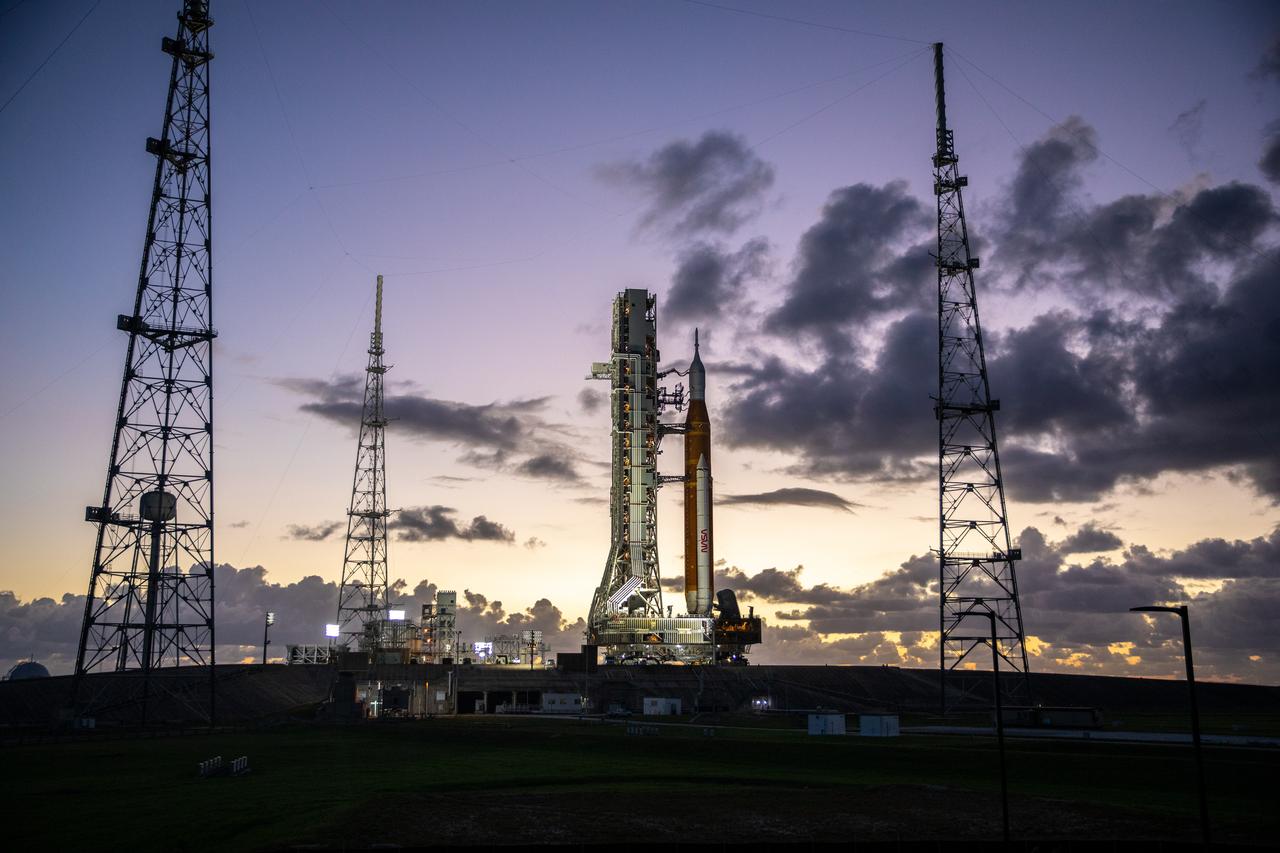
NASA’s Space Launch System (SLS) rocket and Orion spacecraft, standing atop the mobile launcher, arrive at Launch Pad 39B at the agency’s Kennedy Space Center in Florida on Nov. 4, 2022, ahead of the uncrewed Artemis I launch. Artemis I will be the first integrated test of NASA’s SLS rocket and Orion spacecraft and is scheduled to launch Monday, Nov. 14. The primary goal of Artemis I is to thoroughly test the integrated systems before crewed missions by launching Orion atop the SLS rocket, operating the spacecraft in a deep space environment, testing Orion’s heat shield, and recovering the crew module after reentry, descent, and splashdown. During the flight, Orion will launch atop the most powerful rocket in the world and fly farther than any human-rated spacecraft has ever flown, paving the way for human deep space exploration and demonstrating our commitment and capability to extend human presence to the Moon and beyond.
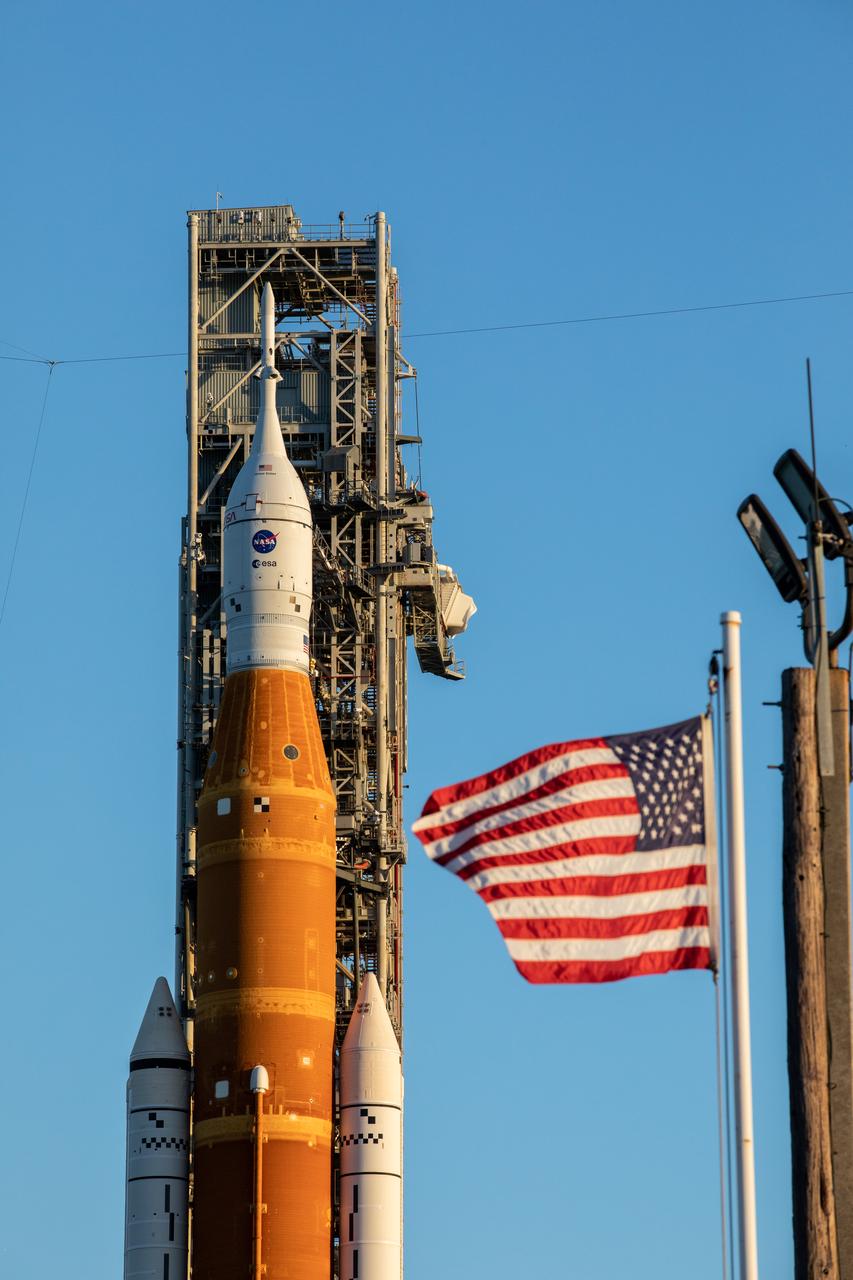
Standing atop the mobile launcher, NASA’s Space Launch System (SLS) rocket and Orion spacecraft arrive at Launch Pad 39B at the agency’s Kennedy Space Center in Florida on Nov. 4, 2022. The Artemis I stack was carried from the Vehicle Assembly Building to the pad – a 4.2-mile journey that took nearly 11 hours to complete – by NASA’s crawler-transporter 2 ahead of the uncrewed launch. Artemis I will be the first integrated test of NASA’s SLS rocket and Orion spacecraft and is scheduled to launch Monday, Nov. 14. The primary goal of Artemis I is to thoroughly test the integrated systems before crewed missions by launching Orion atop the SLS rocket, operating the spacecraft in a deep space environment, testing Orion’s heat shield, and recovering the crew module after reentry, descent, and splashdown. During the flight, Orion will launch atop the most powerful rocket in the world and fly farther than any human-rated spacecraft has ever flown, paving the way for human deep space exploration and demonstrating our commitment and capability to extend human presence to the Moon and beyond.

Artemis I Launch Director Charlie Blackwell-Thompson stands at her console in Firing Room 1 inside the Rocco A. Petrone Launch Control Center at NASA’s Kennedy Space Center in Florida on Nov. 4, 2022, as NASA’s Space Launch System (SLS) rocket and Orion spacecraft for the Artemis I mission roll out to Launch Pad 39B. The primary goal of Artemis I is to thoroughly test the integrated systems before crewed missions by launching Orion atop the SLS rocket, operating the spacecraft in a deep space environment, testing Orion’s heat shield, and recovering the crew module after reentry, descent, and splashdown. During the flight, Orion will launch atop the most powerful rocket in the world and fly farther than any human-rated spacecraft has ever flown, paving the way for human deep space exploration and demonstrating our commitment and capability to extend human presence to the Moon and beyond.