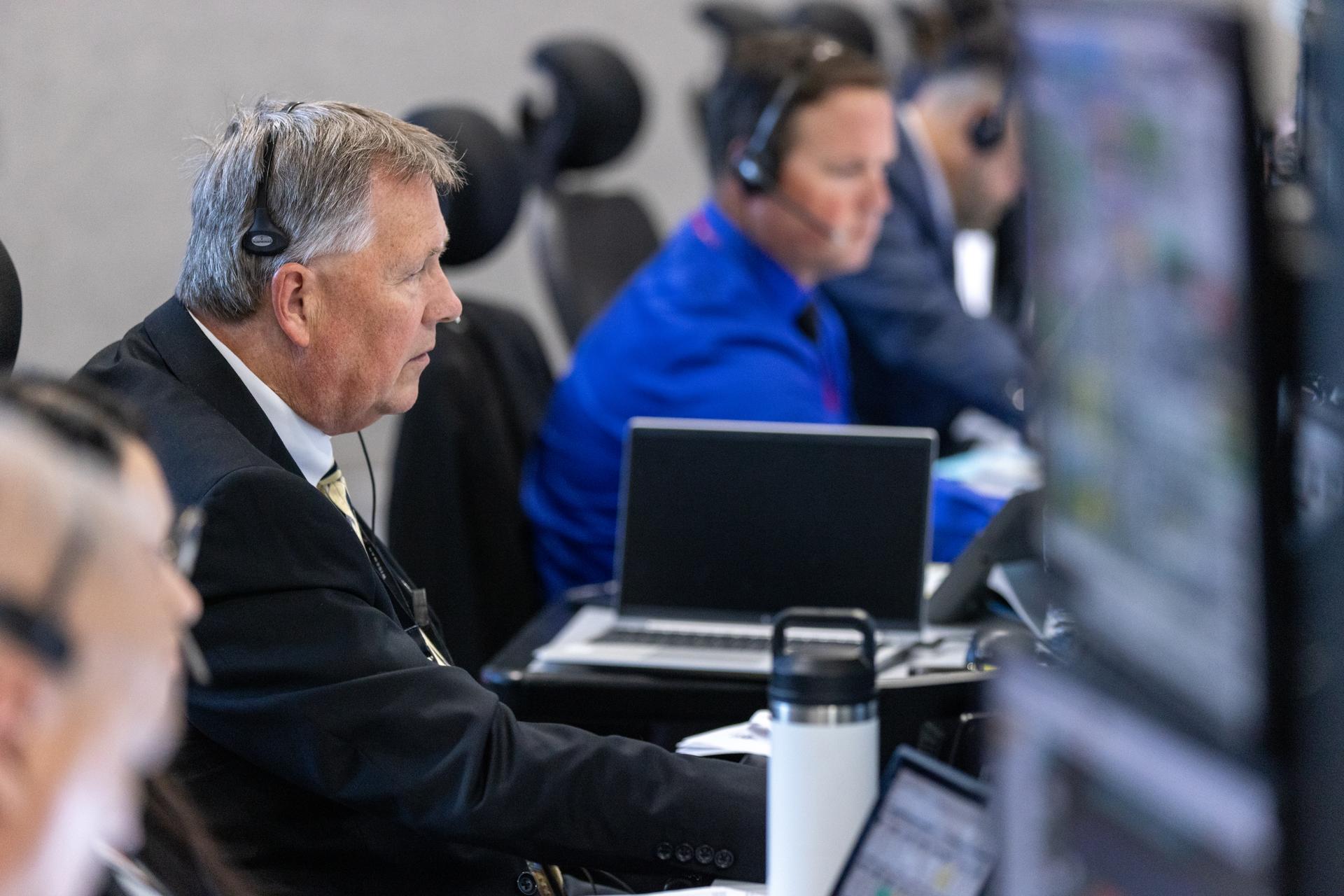
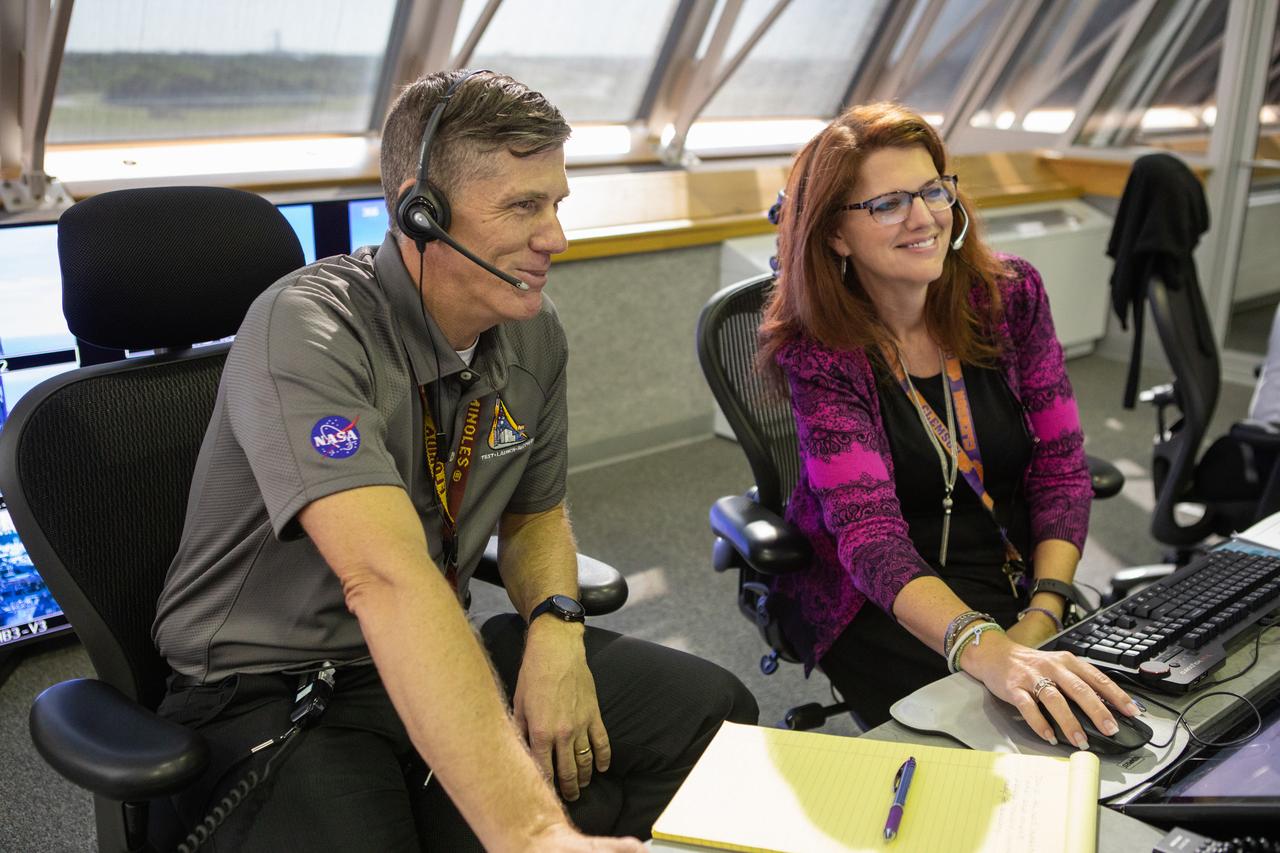
From left, Jeff Spaulding, senior NASA test director, and Wes Mosedale, NASA test director, monitor the progress of a countdown demonstration test with Artemis II crewmembers NASA astronauts Reid Wiseman, commander; Victor Glover, pilot; Christina Koch, mission specialist; and CSA (Canadian Space Agency) astronaut Jeremy Hansen, mission specialist onboard their Orion spacecraft from Firing Room 1 of the Rocco A. Petrone Launch Control Center, Saturday, Dec. 20, 2025, at NASA’s Kennedy Space Center in Florida. For this operation, the Artemis II crew and launch teams are simulating the launch day timeline including suit-up, walkout, and spacecraft ingress and egress. Through the Artemis campaign, NASA will send astronauts to explore the Moon for scientific discovery, economic benefits, and to build the foundation for the first crewed missions to Mars, for the benefit of all.
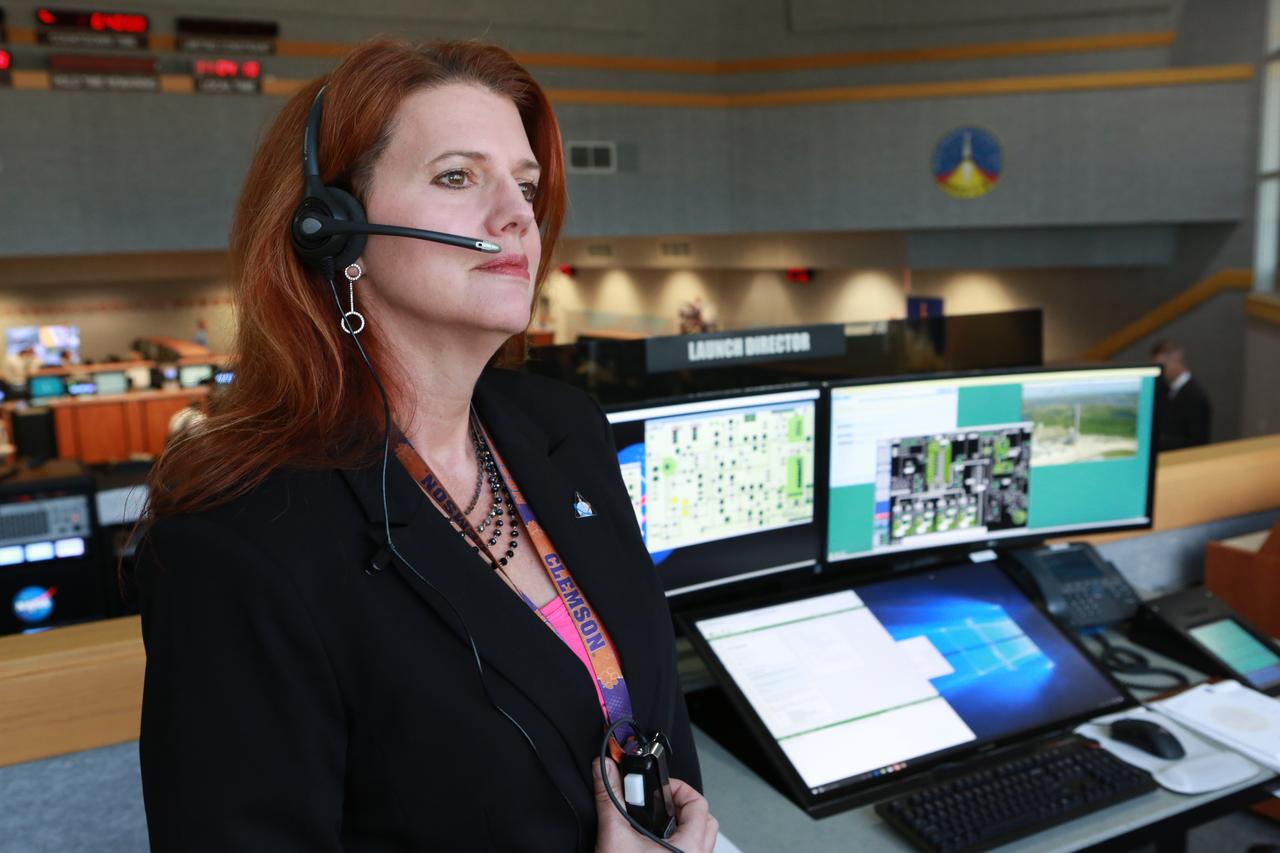
NASA Launch Director Charlie Blackwell-Thompson stands next to her console in Firing Room 1 at the Kennedy Space Center's Launch Control Center during a countdown simulation for Exploration Mission 1. It was the agency's first simulation of a portion of the countdown for the first launch of a Space Launch System rocket and Orion spacecraft that will eventually take astronauts beyond low-Earth orbit to destinations such as the Moon and Mars.

Inside the Launch Control Center’s Firing Room 1 at NASA’s Kennedy Space Center in Florida, members of the Artemis I launch team rehearse the procedures for fueling the Space Launch System (SLS) rocket with super cold propellants, or cryogenics, on Aug. 18, 2020. During the cryogenic simulation, potential problem scenarios were introduced to test the tools, processes, and procedures necessary for fueling the rocket. Artemis I will be the first integrated test flight of SLS and the Orion spacecraft – the system that will ultimately land the first woman and the next man on the Moon by 2024.
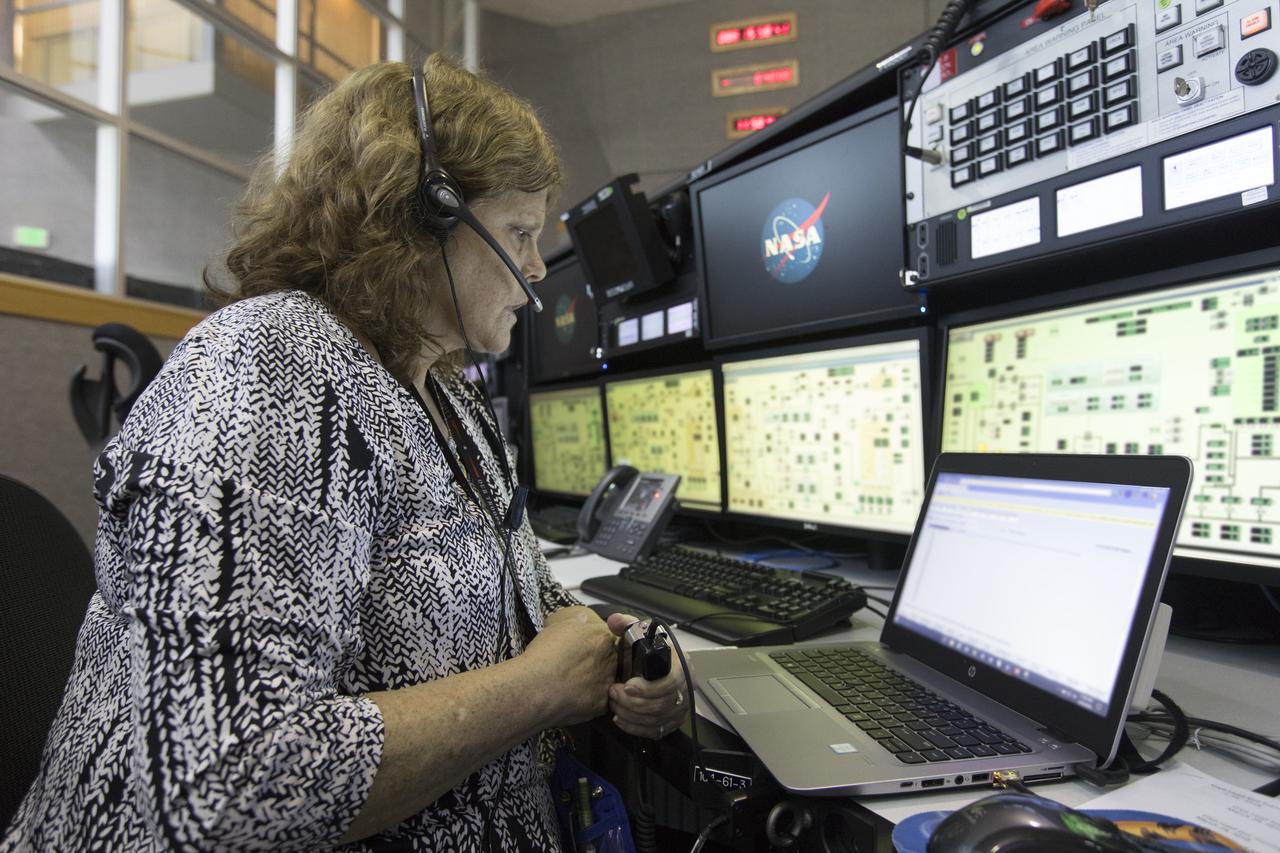
Roberta Wyrick, spacecraft test conductor with Jacobs, NASA's Test and Operations Support Contractor, monitors operations from her console in Firing Room 1 at the Kennedy Space Center's Launch Control Center during a countdown simulation for Exploration Mission 1. It was the agency's first simulation of a portion of the countdown for the first launch of a Space Launch System rocket and Orion spacecraft that will eventually take astronauts beyond low-Earth orbit to destinations such as the Moon and Mars.

Inside the Launch Control Center’s Firing Room 1 at NASA’s Kennedy Space Center in Florida, members of the Artemis I launch team rehearse the procedures for fueling the Space Launch System (SLS) rocket with super cold propellants, or cryogenics, on Aug. 18, 2020. During the cryogenic simulation, potential problem scenarios were introduced to test the tools, processes, and procedures necessary for fueling the rocket. Artemis I will be the first integrated test flight of SLS and the Orion spacecraft – the system that will ultimately land the first woman and the next man on the Moon by 2024.
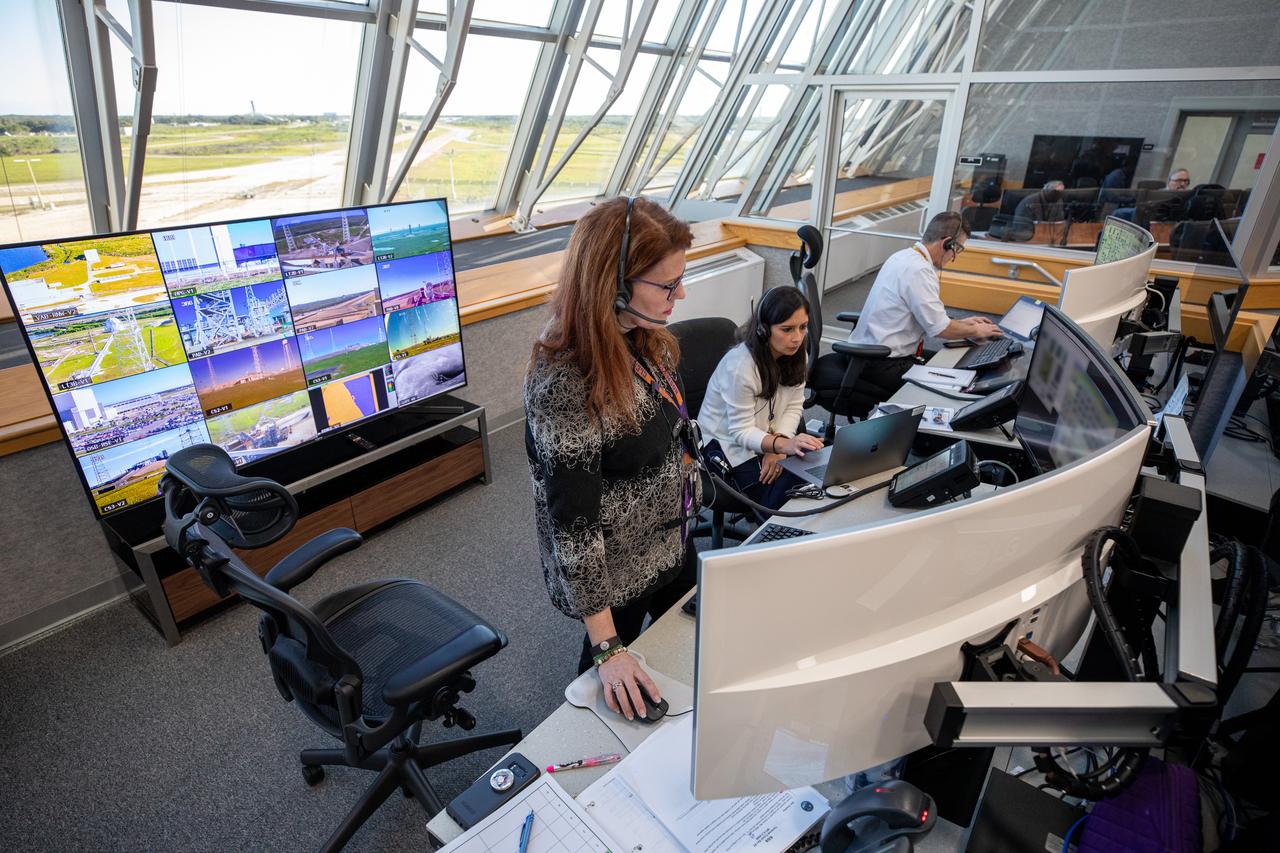
Artemis I Launch Director Charlie Blackwell-Thompson (left) stands at the launch console inside the Launch Control Center’s Firing Room 1 at the Kennedy Space Center in Florida during a countdown simulation. Next to her are Jessica Parsons, technical assistant to the launch director, and Jeremy Graeber, NASA’s Test, Launch and Recovery Operations branch chief, who also serves as the assistant launch director. A team of nearly 100 engineers from Orion, Space Launch System (SLS) and the agency’s Exploration Ground Systems coming together on Feb. 3, 2020, to work through a series of simulated challenges, as well as a final countdown procedure. During these exercises, different issues were introduced to familiarize the team with launch day operations, while providing them with an opportunity to practice how they would handle those issues in real-time. Artemis I will be the first integrated test flight of the Orion spacecraft and SLS rocket – the system that will ultimately land the first woman and the next man on the Moon.
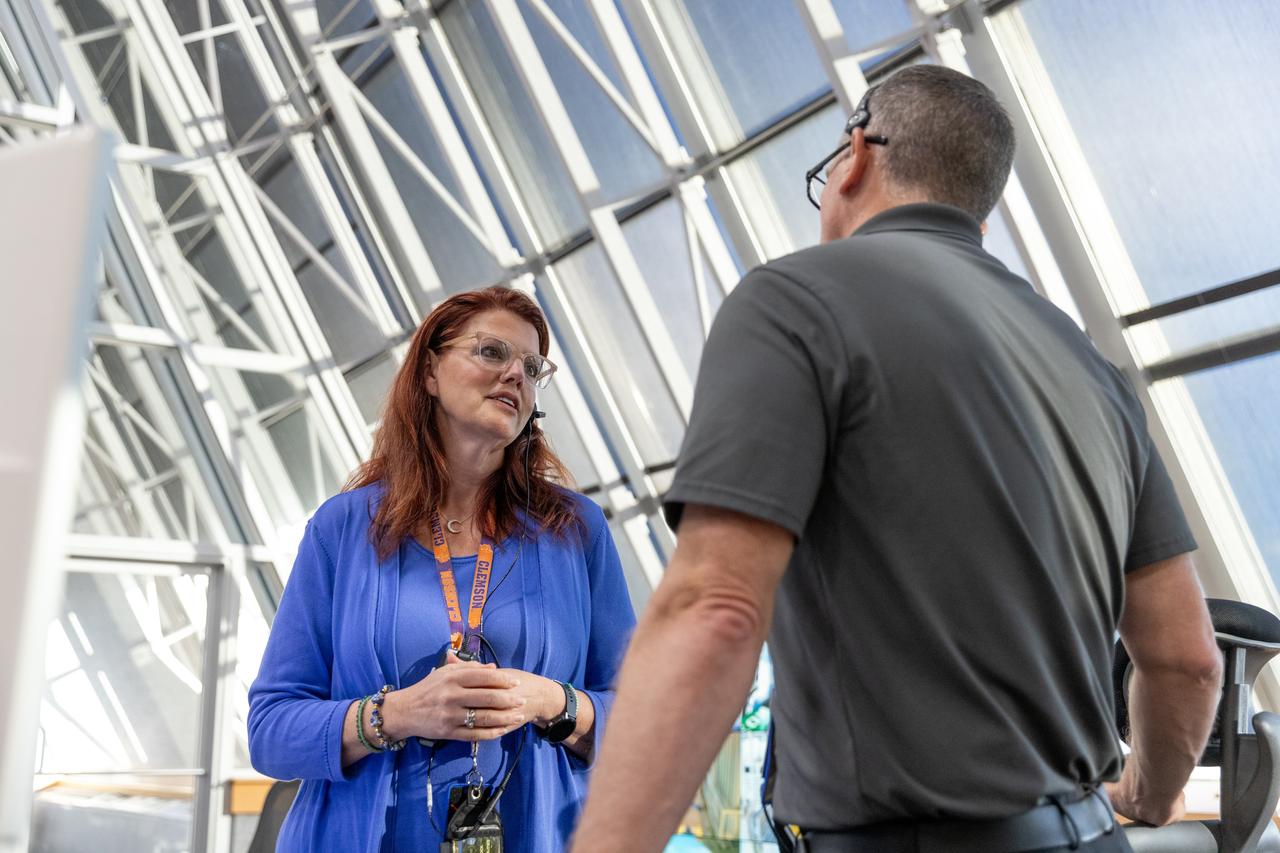
Charlie Blackwell-Thompson, Artemis launch director, Exploration Ground Systems at NASA’s Kennedy Space Center in Florida, participates in an emergency escape or egress demonstration simulation for the Artemis II mission inside Firing Room 1 in the Launch Control Center at NASA’s Kennedy on Monday, Aug. 12, 2024. Other members of the closeout crew, pad rescue team, and the Exploration Ground Systems Program performed emergency egress demonstrations during a series of integrated system verification tests at Launch Pad 39B in preparation for the Artemis II launch.
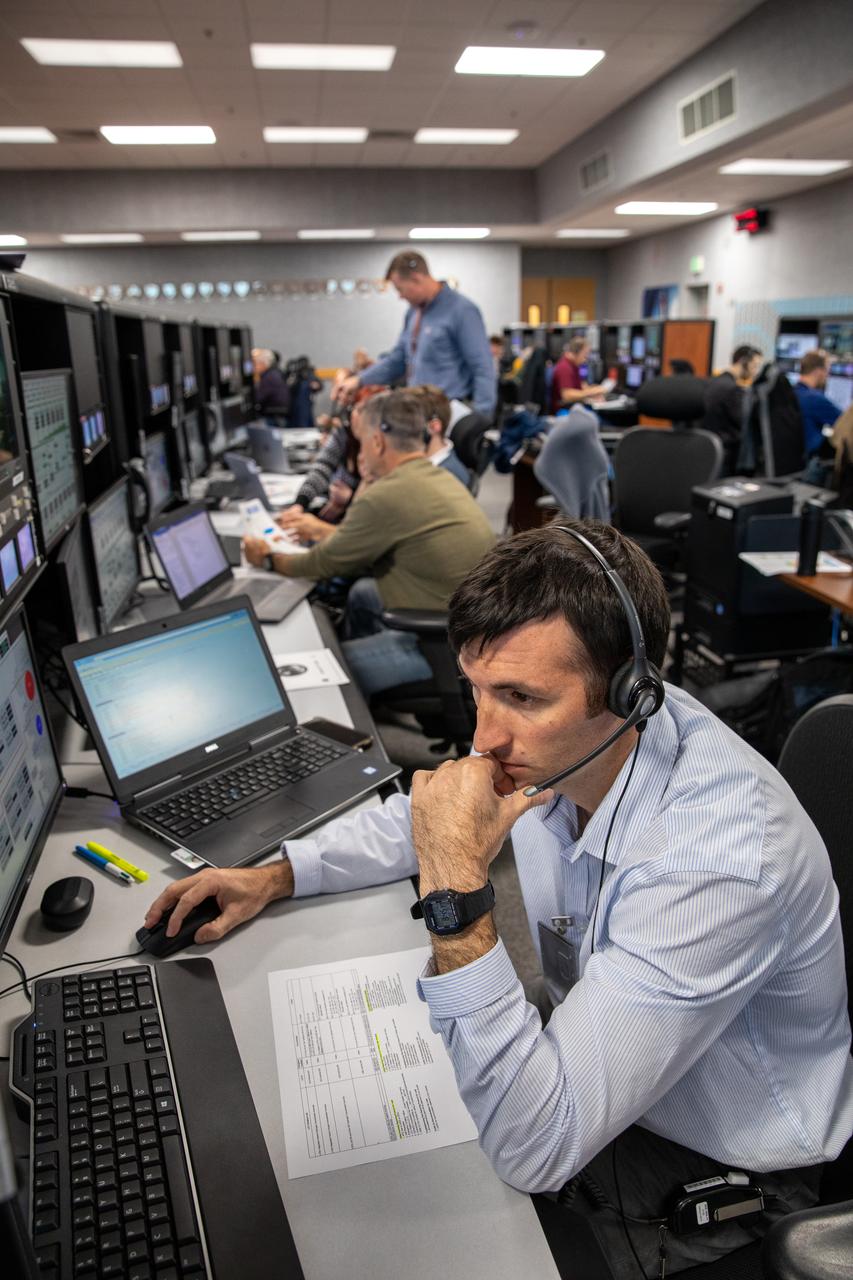
Billy Mitchell, a hazardous gas engineer at NASA’s Kennedy Space Center in Florida, participates in an Artemis I launch countdown training exercise inside Firing Room 1 in the Launch Control Center on Feb. 3, 2020. Under the leadership of Launch Director Charlie Blackwell-Thompson, a team of nearly 100 engineers from Orion, Space Launch System (SLS) and NASA’s Exploration Ground Systems came together to work through a series of simulated challenges, as well as a final countdown procedure. During these exercises, different issues were introduced to familiarize the team with launch day operations, while providing them with an opportunity to practice how they would handle those issues in real-time. Artemis I will be the first integrated test flight of the Orion spacecraft and SLS rocket – the system that will ultimately land the first woman and the next man on the Moon.
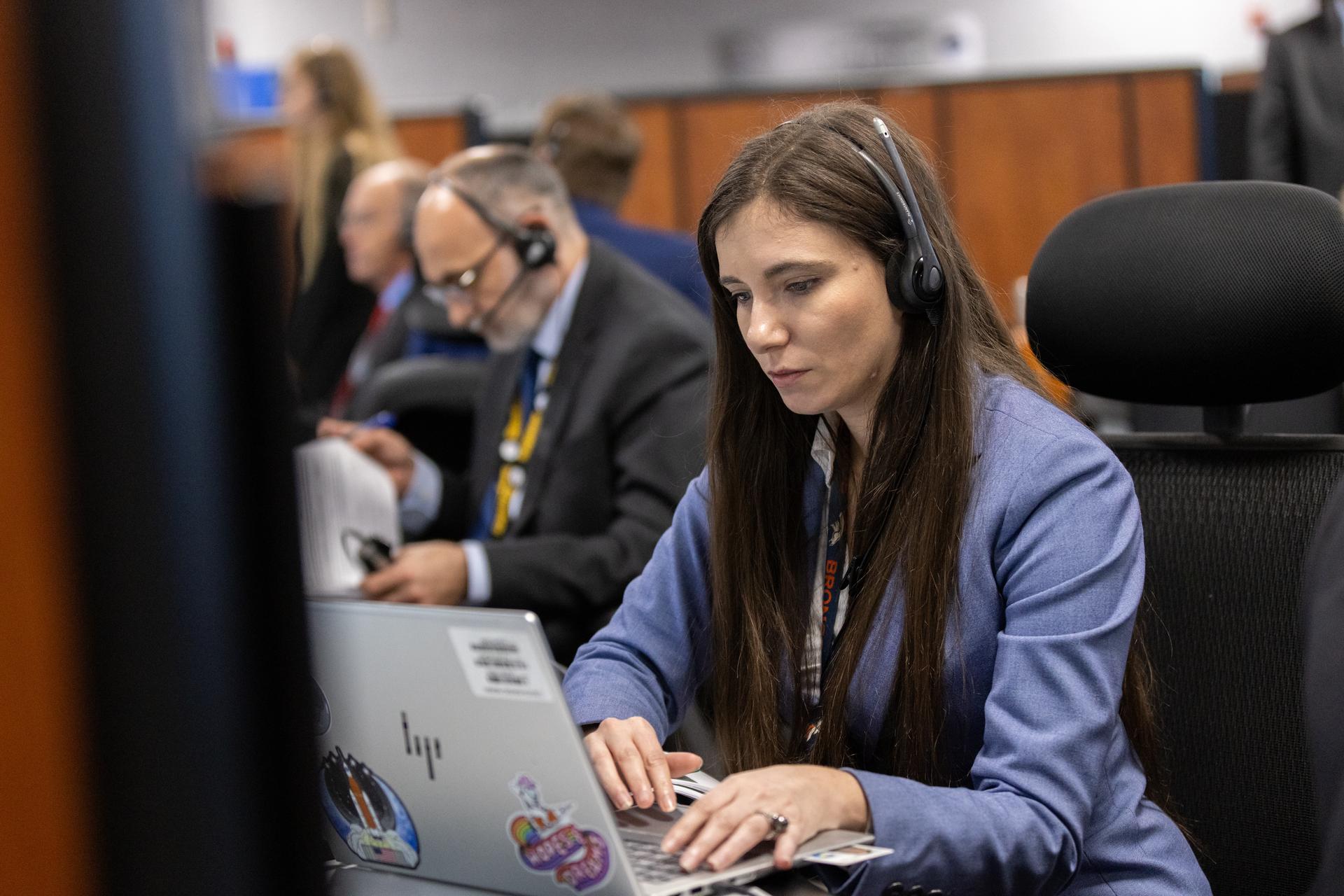
Teams monitor the progress of a countdown demonstration test with Artemis II crewmembers NASA astronauts Reid Wiseman, commander; Victor Glover, pilot; Christina Koch, mission specialist; and CSA (Canadian Space Agency) astronaut Jeremy Hansen, mission specialist onboard their Orion spacecraft from Firing Room 1 of the Rocco A. Petrone Launch Control Center, Saturday, Dec. 20, 2025, at NASA’s Kennedy Space Center in Florida. For this operation, the Artemis II crew and launch teams are simulating the launch day timeline including suit-up, walkout, and spacecraft ingress and egress. Through the Artemis campaign, NASA will send astronauts to explore the Moon for scientific discovery, economic benefits, and to build the foundation for the first crewed missions to Mars, for the benefit of all.
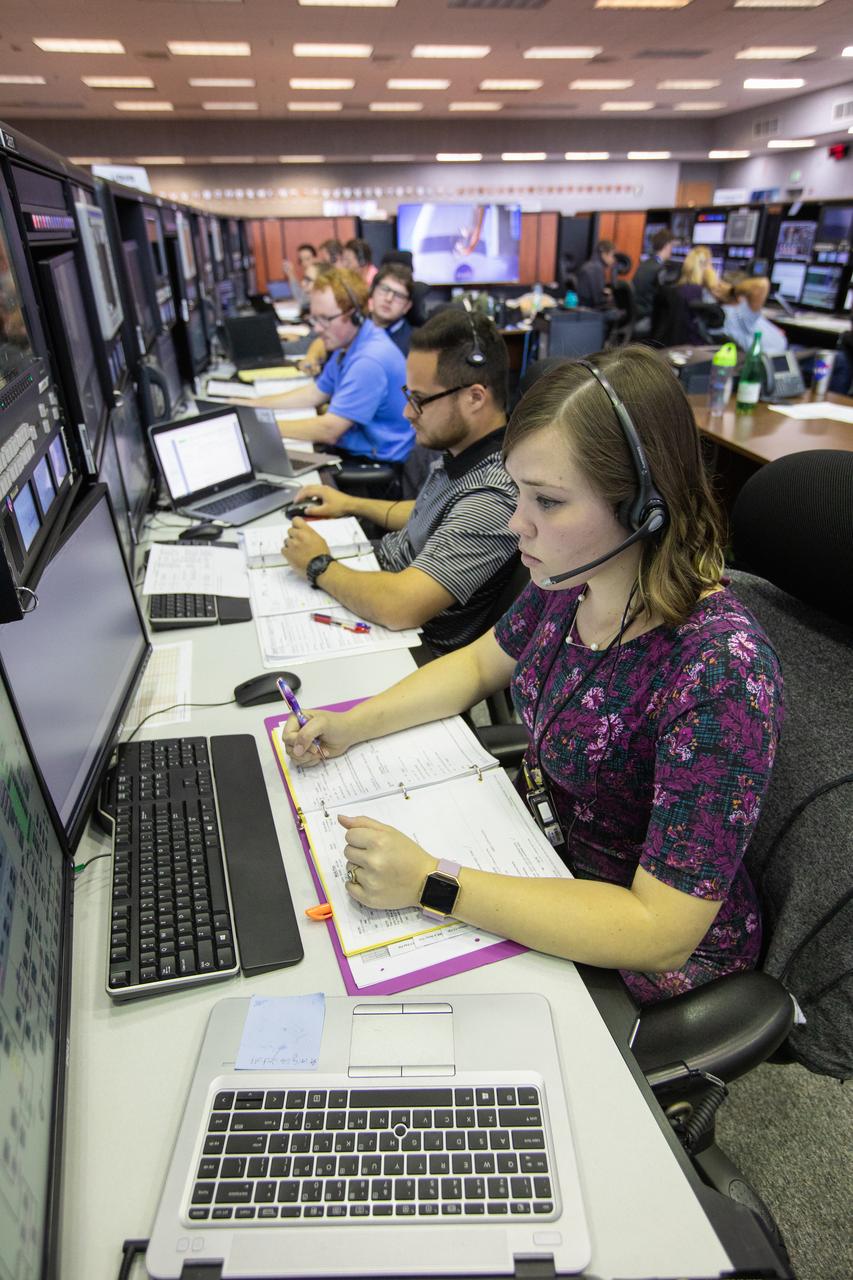
Members of the Artemis 1 launch team, including personnel with NASA’s Exploration Ground Systems (EGS) and Jacobs Test and Operations Contract (TOSC), monitor activities during the first formal terminal countdown simulation inside Firing Room 1 in the Launch Control Center at NASA’s Kennedy Space Center in Florida on July 12, 2019. This was the first in a series of simulations to help the team prepare for the launch of Artemis 1, the uncrewed first flight of the Space Launch System rocket and Orion spacecraft.
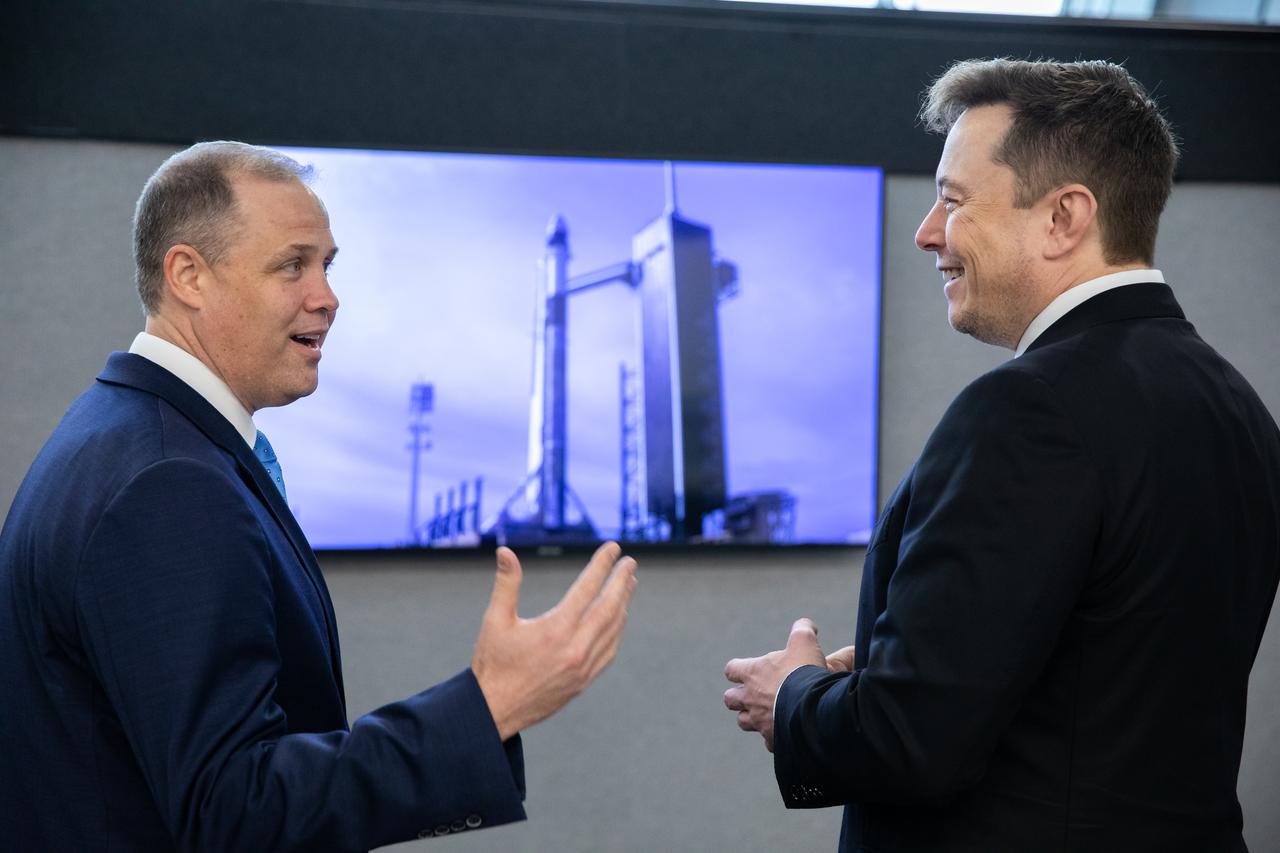
NASA Administrator Jim Bridenstine, left, and SpaceX Chief Engineer Elon Musk converse inside Firing Room 4 in Kennedy Space Center’s Launch Control Center while awaiting the liftoff of a SpaceX Falcon 9 rocket and Crew Dragon spacecraft on the uncrewed In-Flight Abort Test, Jan. 19, 2020. The test demonstrated the spacecraft’s escape capabilities in preparation for crewed flights to the International Space Station as part of the agency’s Commercial Crew Program.
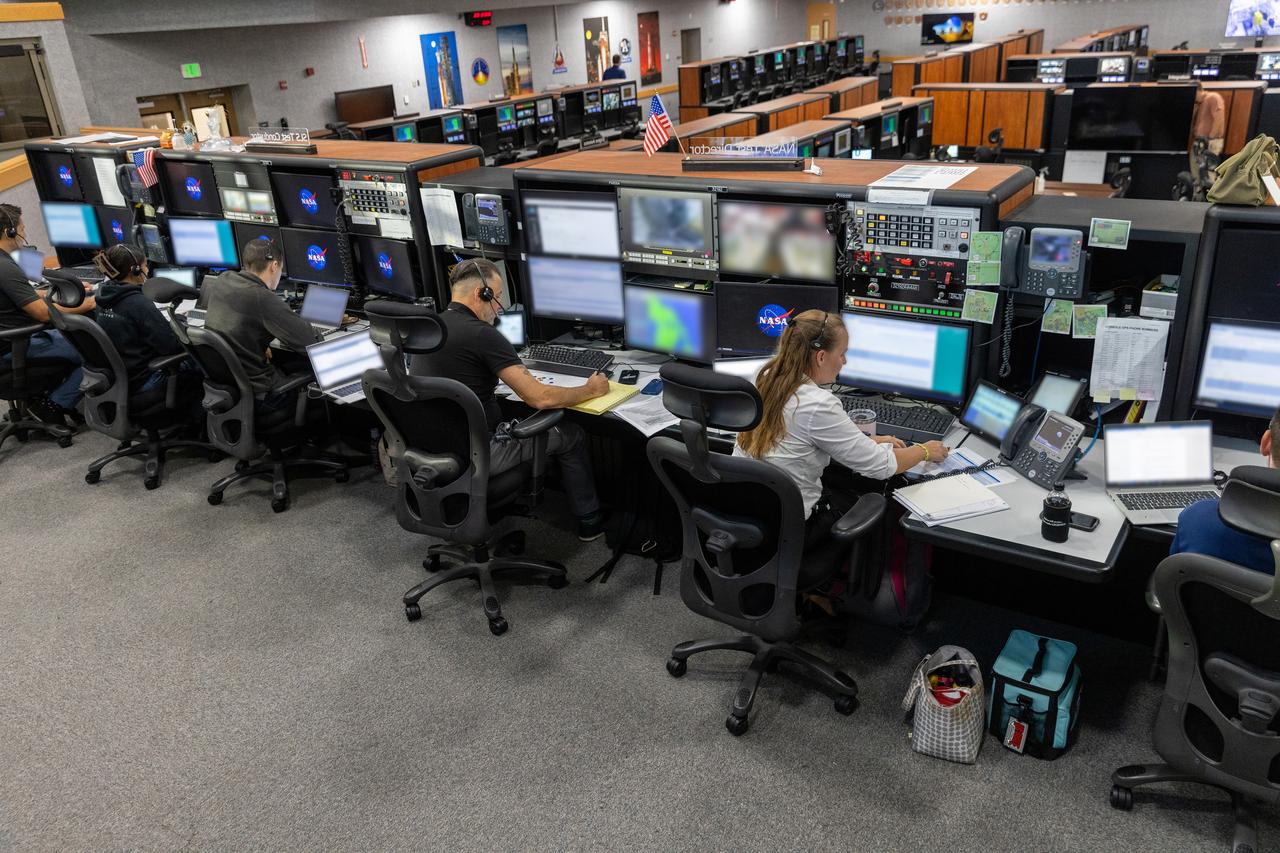
Members of the Artemis II launch team, including personnel with NASA’s Exploration Ground Systems participate in an emergency escape or egress demonstration simulation for the Artemis II mission inside Firing Room 1 in the Launch Control Center at NASA’s Kennedy on Monday, Aug. 12, 2024. Other members of the closeout crew, pad rescue team, and the Exploration Ground Systems Program performed emergency egress demonstrations during a series of integrated system verification tests at Launch Pad 39B in preparation for the Artemis II launch.
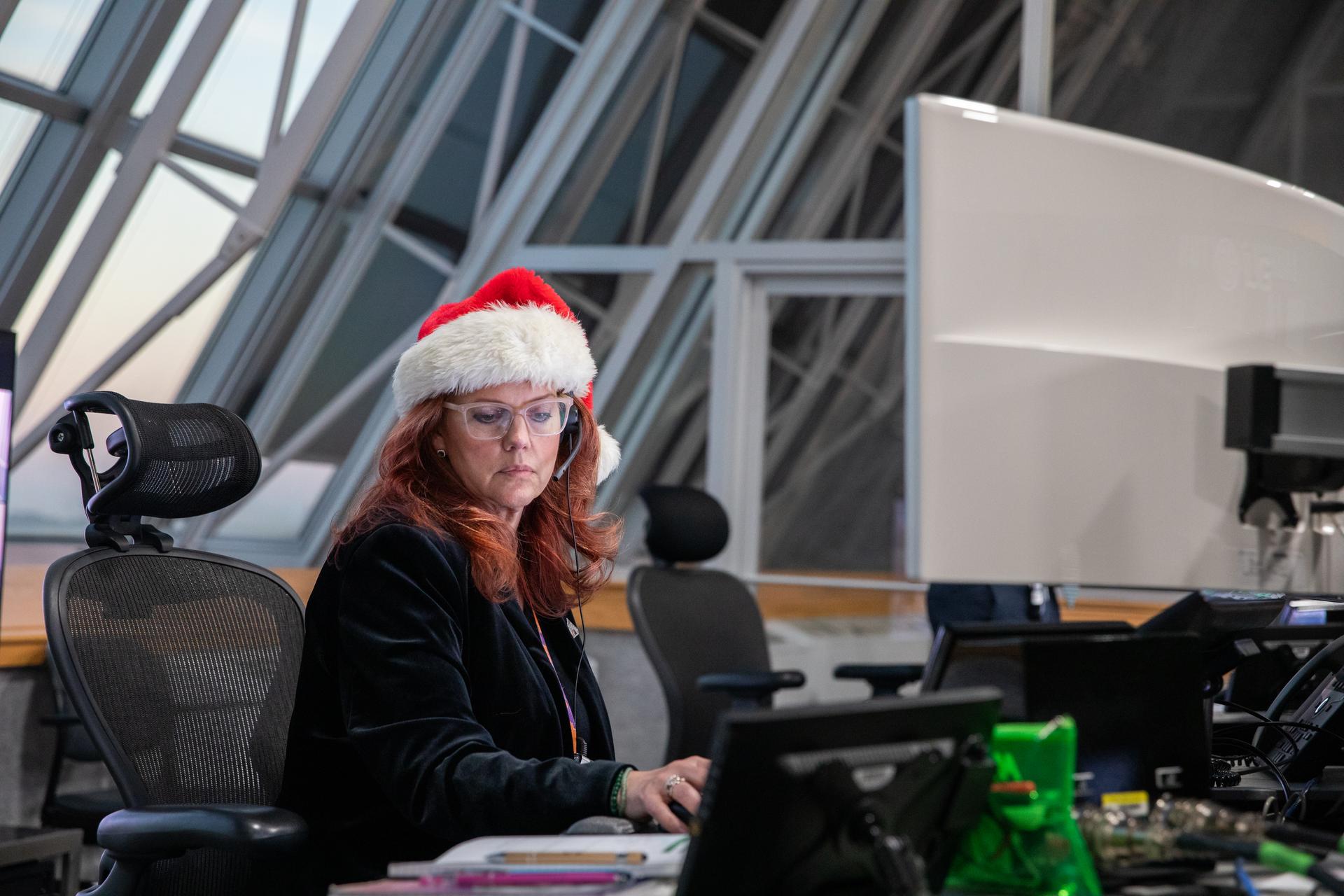
Charlie Blackwell-Thompson, Artemis launch director, monitors the progress of a countdown demonstration test with Artemis II crewmembers NASA astronauts Reid Wiseman, commander; Victor Glover, pilot; Christina Koch, mission specialist; and CSA (Canadian Space Agency) astronaut Jeremy Hansen, mission specialist onboard their Orion spacecraft from Firing Room 1 of the Rocco A. Petrone Launch Control Center, Saturday, Dec. 20, 2025, at NASA’s Kennedy Space Center in Florida. For this operation, the Artemis II crew and launch teams are simulating the launch day timeline including suit-up, walkout, and spacecraft ingress and egress. Through the Artemis campaign, NASA will send astronauts to explore the Moon for scientific discovery, economic benefits, and to build the foundation for the first crewed missions to Mars, for the benefit of all.
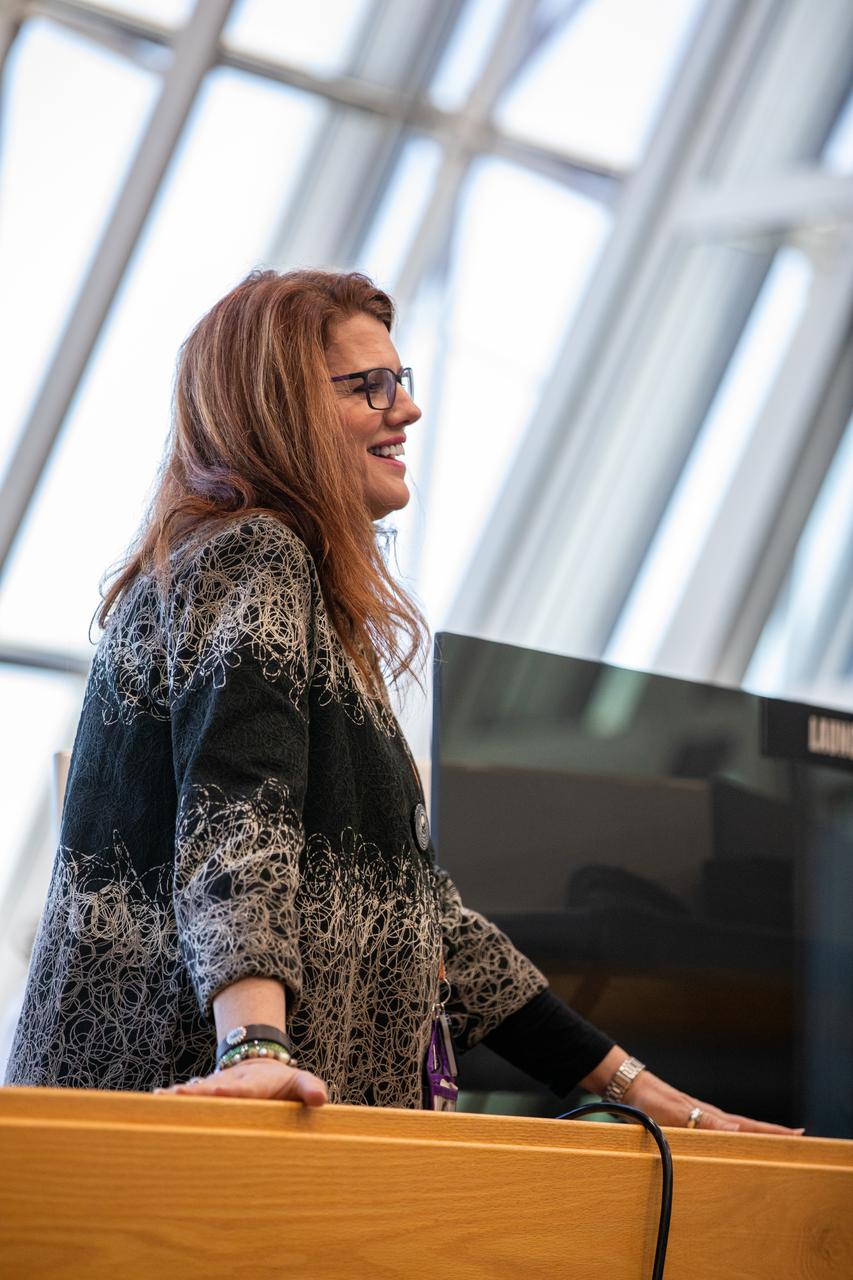
Artemis I Launch Director Charlie Blackwell-Thompson stands at her console during countdown simulation training inside the Launch Control Center’s Firing Room 1 at NASA’s Kennedy Space Center in Florida. On Feb. 3, 2020, a team of nearly 100 engineers from Orion, Space Launch System (SLS) and the agency’s Exploration Ground Systems came together to work through a series of simulated challenges, as well as a final countdown procedure. During these exercises, different issues were introduced to familiarize the team with launch day operations, while providing them with an opportunity to practice how they would handle those issues in real-time. Artemis I will be the first integrated test flight of the Orion spacecraft and SLS rocket – the system that will ultimately land the first woman and the next man on the Moon.
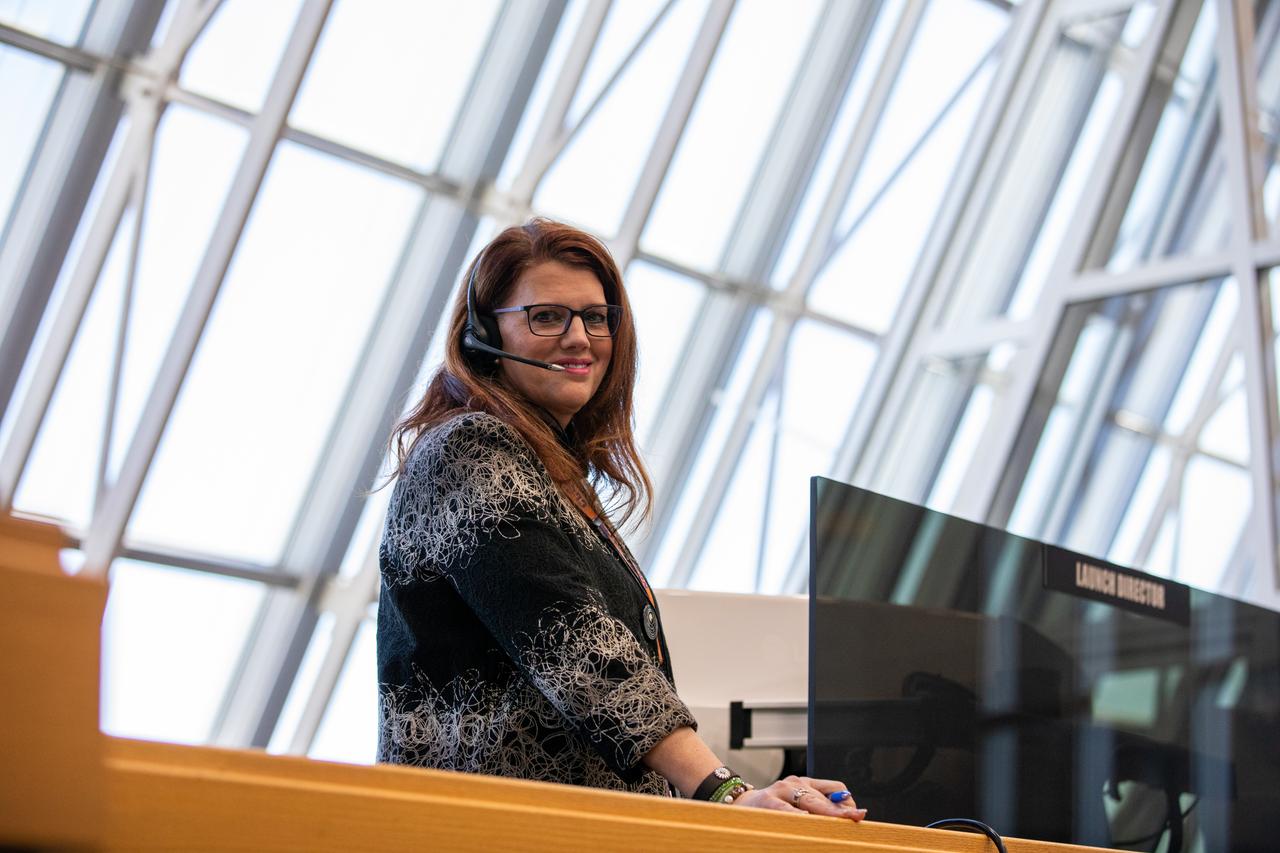
Artemis I Launch Director Charlie Blackwell-Thompson stands at her console inside the Launch Control Center’s Firing Room 1 at NASA’s Kennedy Space Center in Florida during launch countdown training. On Feb. 3, 2020, a team of nearly 100 engineers from Orion, Space Launch System (SLS) and the agency’s Exploration Ground Systems came together to work through a series of simulated challenges, as well as a final countdown procedure. During these exercises, different issues were introduced to familiarize the team with launch day operations, while providing them with an opportunity to practice how they would handle those issues in real-time. Artemis I will be the first integrated test flight of the Orion spacecraft and SLS rocket – the system that will ultimately land the first woman and the next man on the Moon.
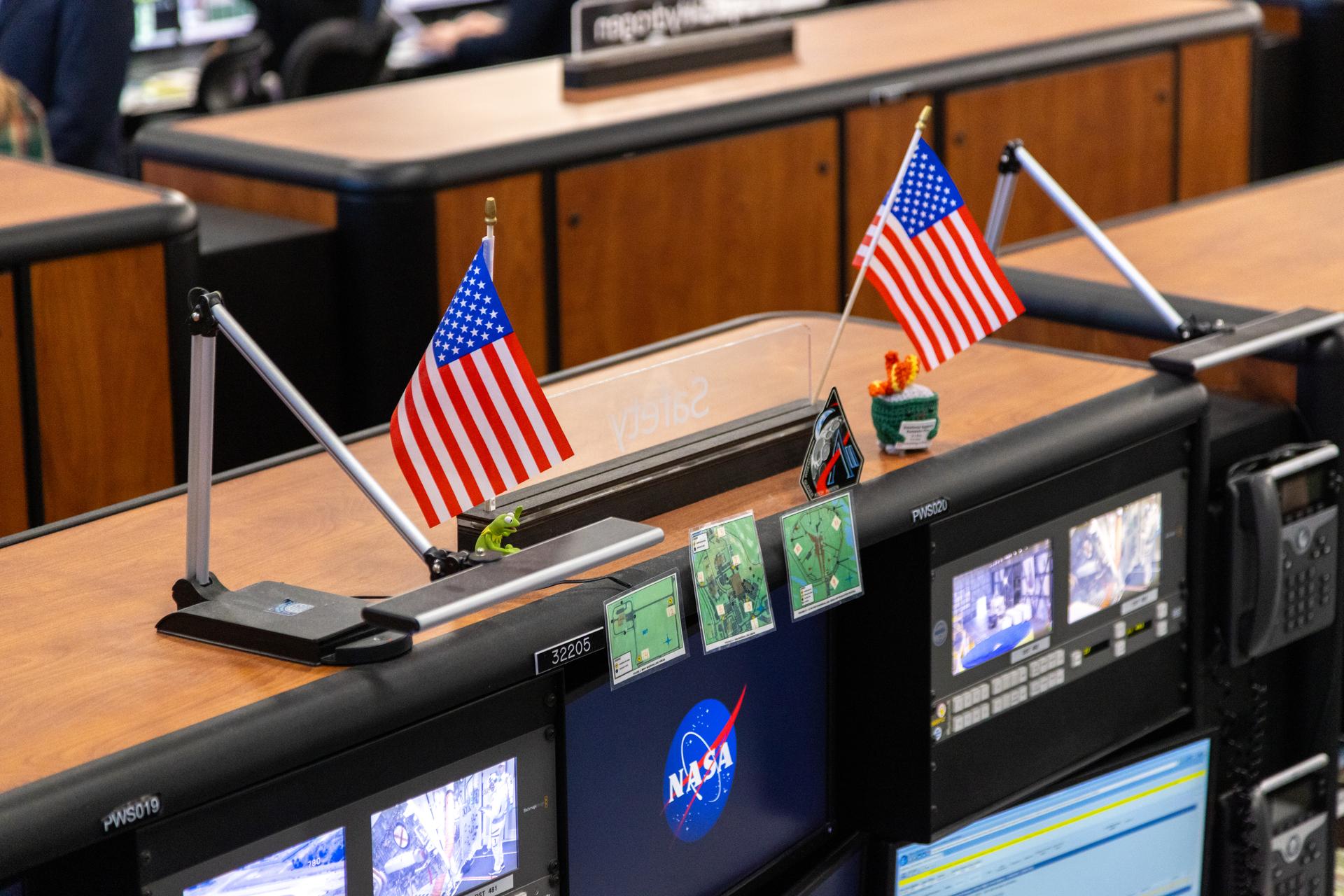
Teams monitor the progress of a countdown demonstration test with Artemis II crewmembers NASA astronauts Reid Wiseman, commander; Victor Glover, pilot; Christina Koch, mission specialist; and CSA (Canadian Space Agency) astronaut Jeremy Hansen, mission specialist onboard their Orion spacecraft from Firing Room 1 of the Rocco A. Petrone Launch Control Center, Saturday, Dec. 20, 2025, at NASA’s Kennedy Space Center in Florida. For this operation, the Artemis II crew and launch teams are simulating the launch day timeline including suit-up, walkout, and spacecraft ingress and egress. Through the Artemis campaign, NASA will send astronauts to explore the Moon for scientific discovery, economic benefits, and to build the foundation for the first crewed missions to Mars, for the benefit of all.
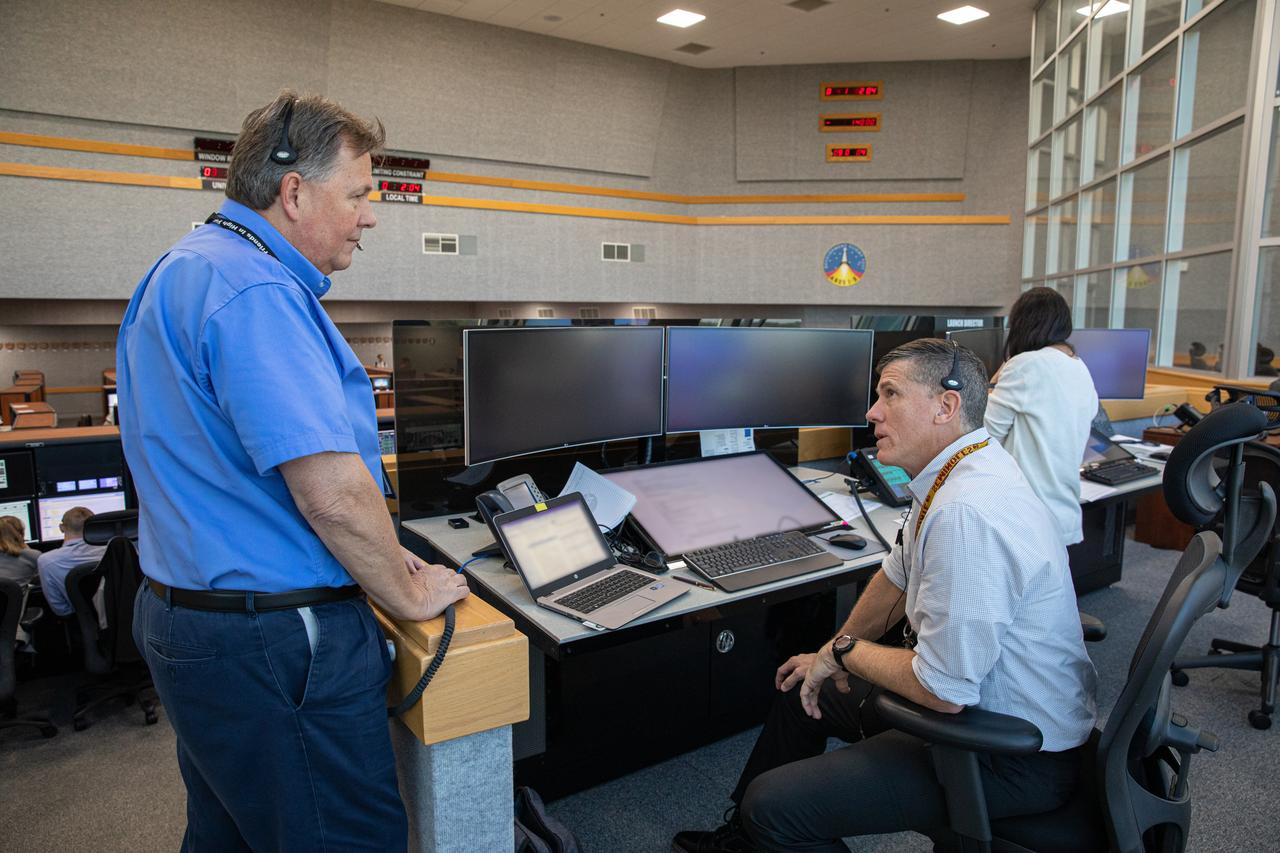
Jeff Spaulding, left, NASA test director, and NASA’s Test, Launch and Recovery Operations Branch Chief Jeremy Graeber, who also serves as the assistant launch director, participate in an Artemis I launch countdown simulation inside the Launch Control Center’s Firing Room 1 at the Kennedy Space Center in Florida. Under the leadership of Launch Director Charlie Blackwell-Thompson, a team of nearly 100 engineers from Orion, Space Launch System (SLS) and the agency’s Exploration Ground Systems came together Feb. 3, 2020, to work through a series of simulated challenges, as well as a final countdown procedure. During these exercises, different issues were introduced to familiarize the team with launch day operations, while providing them with an opportunity to practice how they would handle those issues in real-time. Artemis I will be the first integrated test flight of the Orion spacecraft and SLS rocket – the system that will ultimately land the first woman and the next man on the Moon.
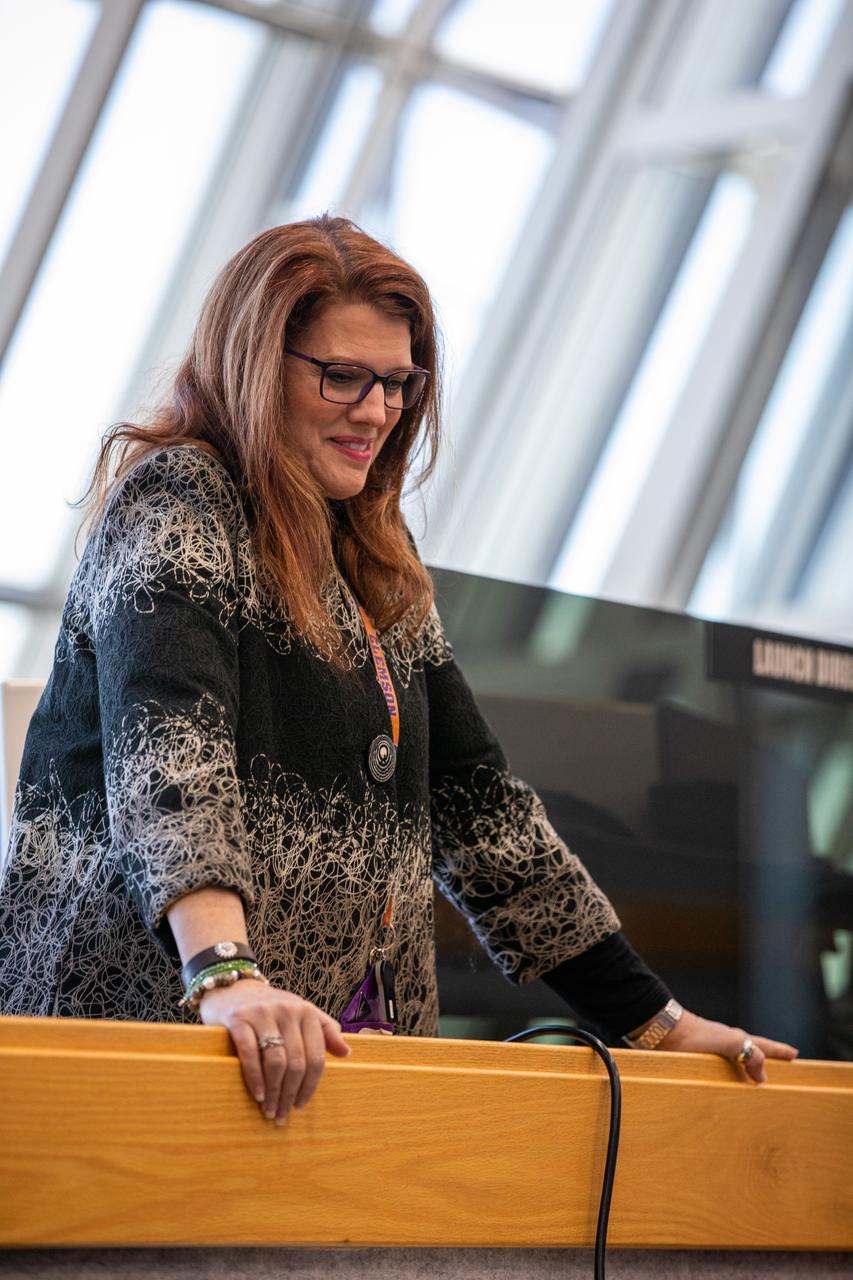
Artemis I Launch Director Charlie Blackwell-Thompson stands at her console during countdown simulation training inside the Launch Control Center’s Firing Room 1 at NASA’s Kennedy Space Center in Florida. On Feb. 3, 2020, a team of nearly 100 engineers from Orion, Space Launch System (SLS) and the agency’s Exploration Ground Systems came together to work through a series of simulated challenges, as well as a final countdown procedure. During these exercises, different issues were introduced to familiarize the team with launch day operations, while providing them with an opportunity to practice how they would handle those issues in real-time. Artemis I will be the first integrated test flight of the Orion spacecraft and SLS rocket – the system that will ultimately land the first woman and the next man on the Moon.
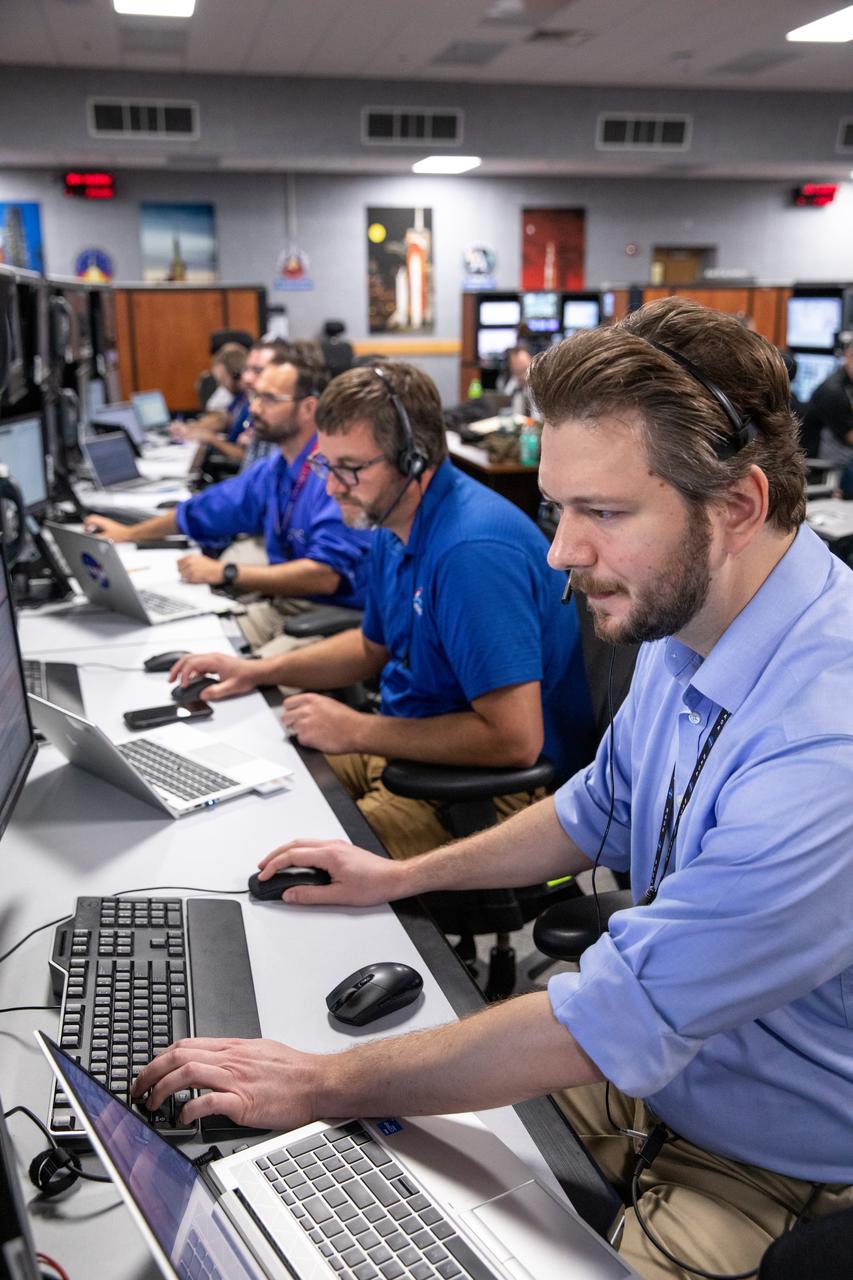
Members of the Artemis II launch team, including personnel with NASA’s Exploration Ground Systems and contractor Jacobs, monitor activities during the Artemis II terminal countdown simulation inside Firing Room 1 in the Launch Control Center at NASA’s Kennedy Space Center in Florida on Monday, Sept. 11, 2023. This is part of a series of simulations to help the team prepare for the launch of Artemis II, the first mission with astronauts under Artemis that will test and check out all of the Orion spacecraft’s systems needed for future crewed missions.

Inside the Launch Control Center’s Firing Room 1 at NASA’s Kennedy Space Center in Florida, members of the Artemis I launch team rehearse the procedures for fueling the Space Launch System (SLS) rocket with super cold propellants, or cryogenics, on Aug. 18, 2020. During the cryogenic simulation, potential problem scenarios were introduced to test the tools, processes, and procedures necessary for fueling the rocket. Artemis I will be the first integrated test flight of SLS and the Orion spacecraft – the system that will ultimately land the first woman and the next man on the Moon by 2024.
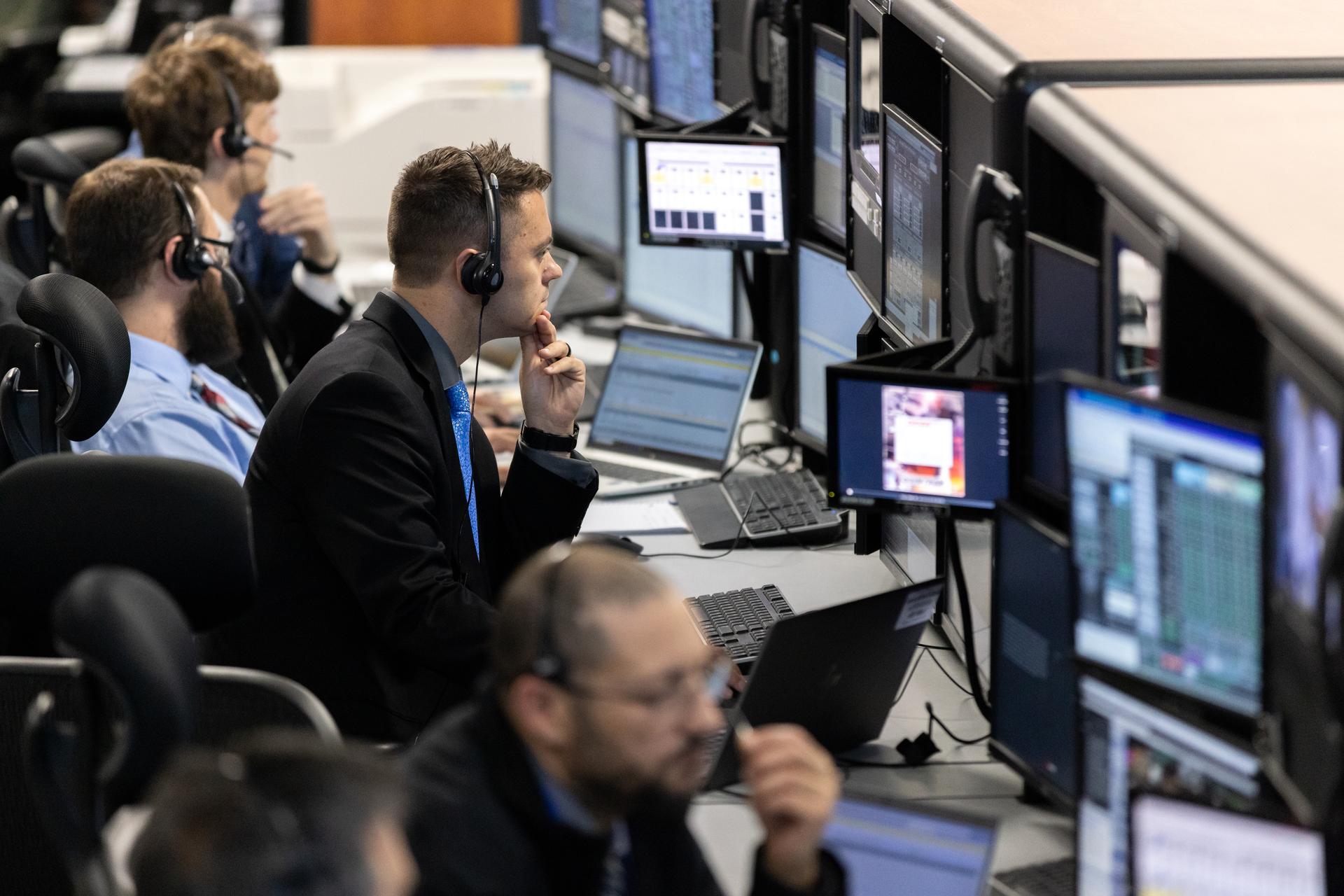
Teams monitor the progress of a countdown demonstration test with Artemis II crewmembers NASA astronauts Reid Wiseman, commander; Victor Glover, pilot; Christina Koch, mission specialist; and CSA (Canadian Space Agency) astronaut Jeremy Hansen, mission specialist onboard their Orion spacecraft from Firing Room 1 of the Rocco A. Petrone Launch Control Center, Saturday, Dec. 20, 2025, at NASA’s Kennedy Space Center in Florida. For this operation, the Artemis II crew and launch teams are simulating the launch day timeline including suit-up, walkout, and spacecraft ingress and egress. Through the Artemis campaign, NASA will send astronauts to explore the Moon for scientific discovery, economic benefits, and to build the foundation for the first crewed missions to Mars, for the benefit of all.
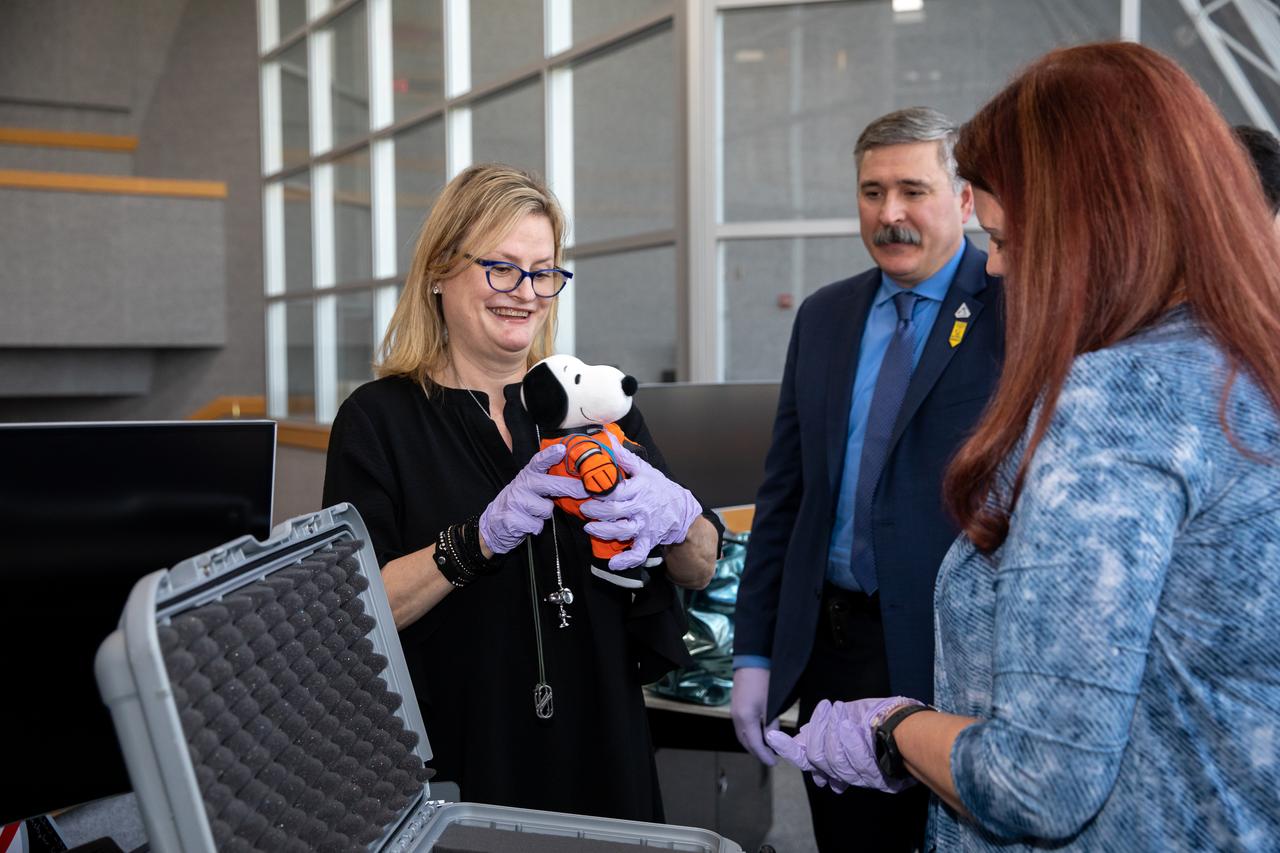
Melissa Menta, at left, senior vice president with Peanuts Worldwide LLC, accepts Snoopy during an official handover from Artemis Launch Director Charlie Blackwell-Thompson inside Launch Control Center Firing Room 1 at NASA’s Kennedy Space Center in Florida on Jan. 18, 2023. To the left of Charlie is Mike Sarafin, Artemis I mission manager. Snoopy served as the zero-gravity indicator during the Artemis I mission. Snoopy was secured inside Orion during the mission, a journey beyond the Moon and back to prepare for crewed missions to the Moon. Artemis I launched atop the Space Launch System rocket on Nov. 16, 2022 from Kennedy’s Launch Complex 39B. Orion returned to Earth for a splashdown in the Pacific Ocean on Dec. 11, 2022 after traveling more than 1.4 million miles. NASA has held an association with Snoopy since the Apollo Era – the character has contributed to the excitement for NASA human spaceflight missions, helping inspire generations to dream big, and is a symbol of NASA’s safety culture and mission success.
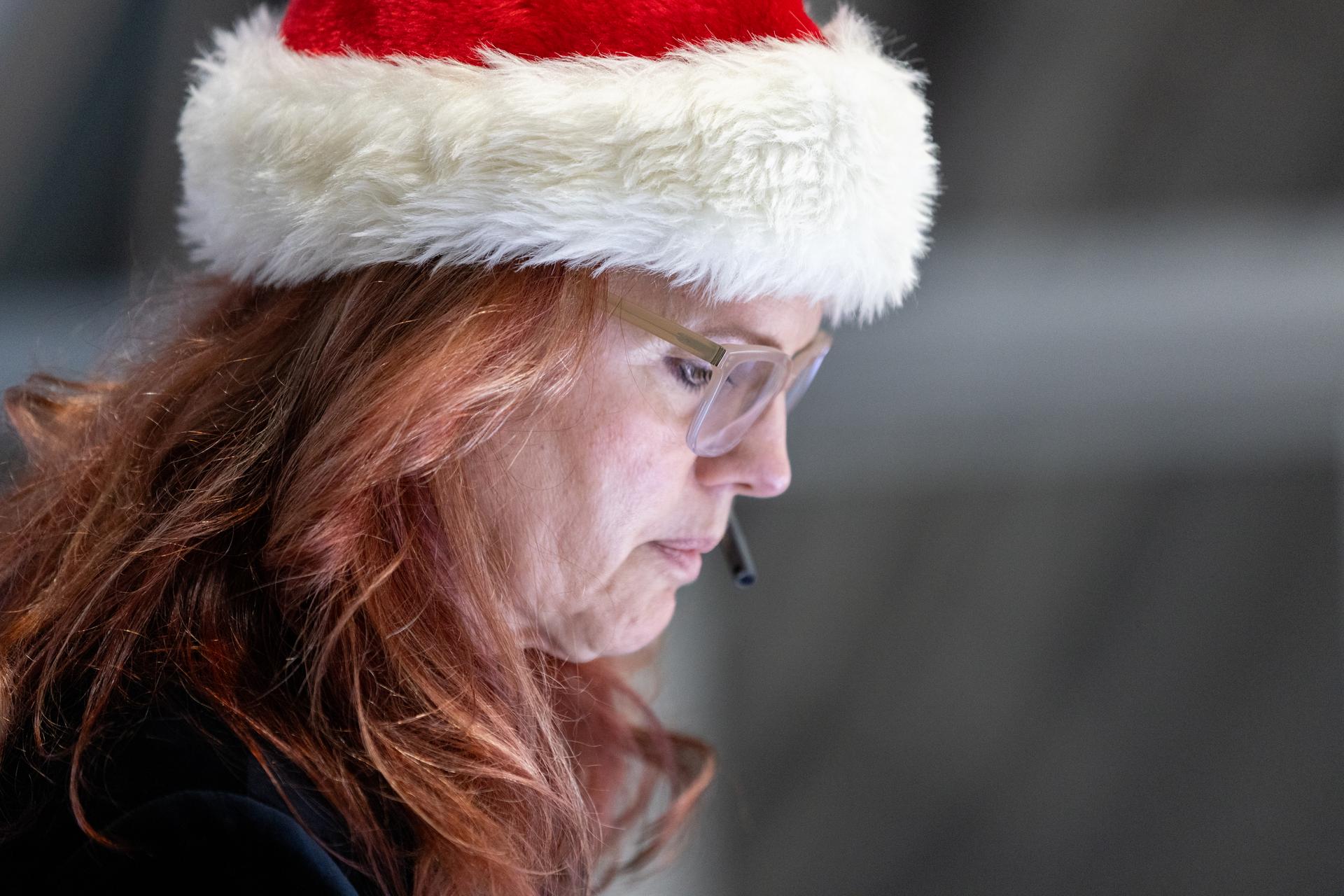
Charlie Blackwell-Thompson, Artemis launch director, monitors the progress of a countdown demonstration test with Artemis II crewmembers NASA astronauts Reid Wiseman, commander; Victor Glover, pilot; Christina Koch, mission specialist; and CSA (Canadian Space Agency) astronaut Jeremy Hansen, mission specialist onboard their Orion spacecraft from Firing Room 1 of the Rocco A. Petrone Launch Control Center, Saturday, Dec. 20, 2025, at NASA’s Kennedy Space Center in Florida. For this operation, the Artemis II crew and launch teams are simulating the launch day timeline including suit-up, walkout, and spacecraft ingress and egress. Through the Artemis campaign, NASA will send astronauts to explore the Moon for scientific discovery, economic benefits, and to build the foundation for the first crewed missions to Mars, for the benefit of all.
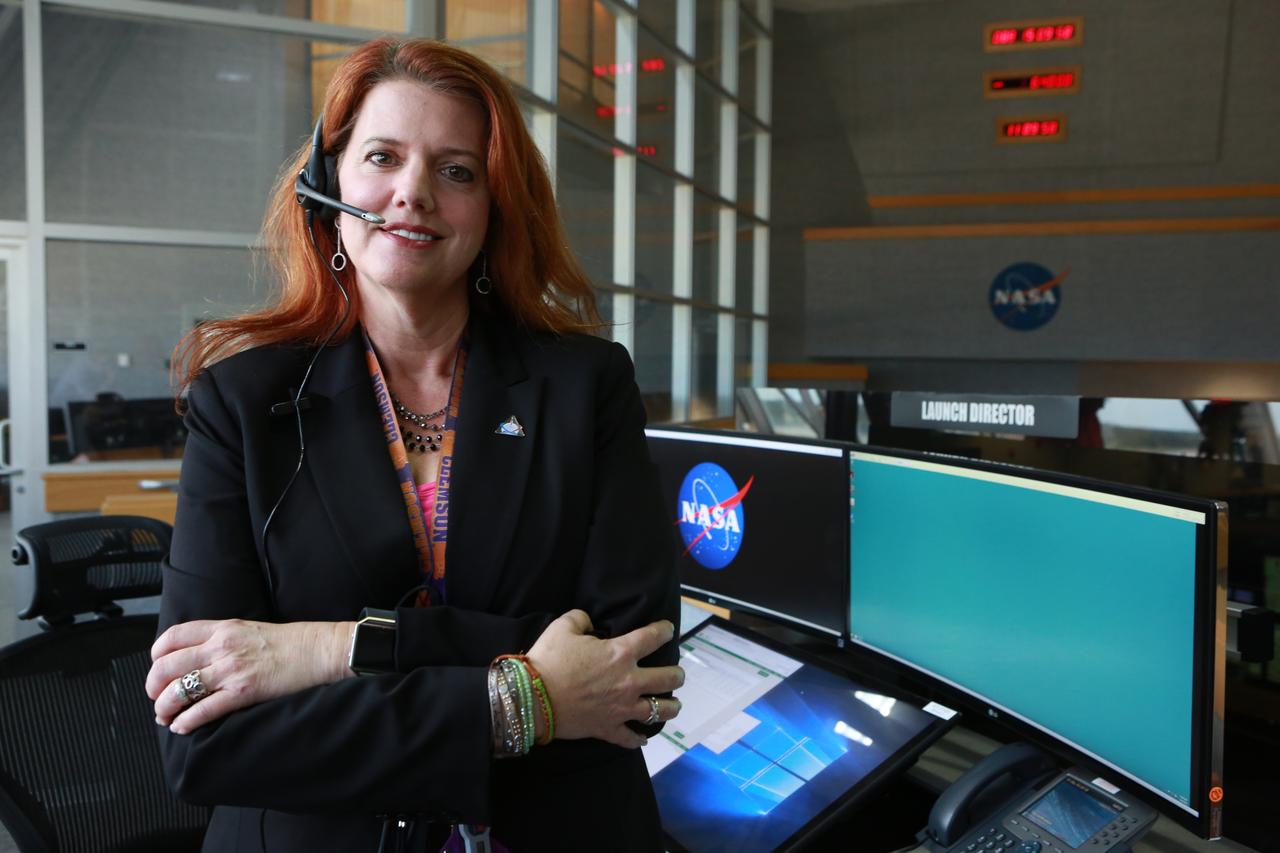
NASA Launch Director Charlie Blackwell-Thompson stands next to her console in Firing Room 1 at the Kennedy Space Center's Launch Control Center during a countdown simulation for Exploration Mission 1. It was the agency's first simulation of a portion of the countdown for the first launch of a Space Launch System rocket and Orion spacecraft that will eventually take astronauts beyond low-Earth orbit to destinations such as the Moon and Mars.
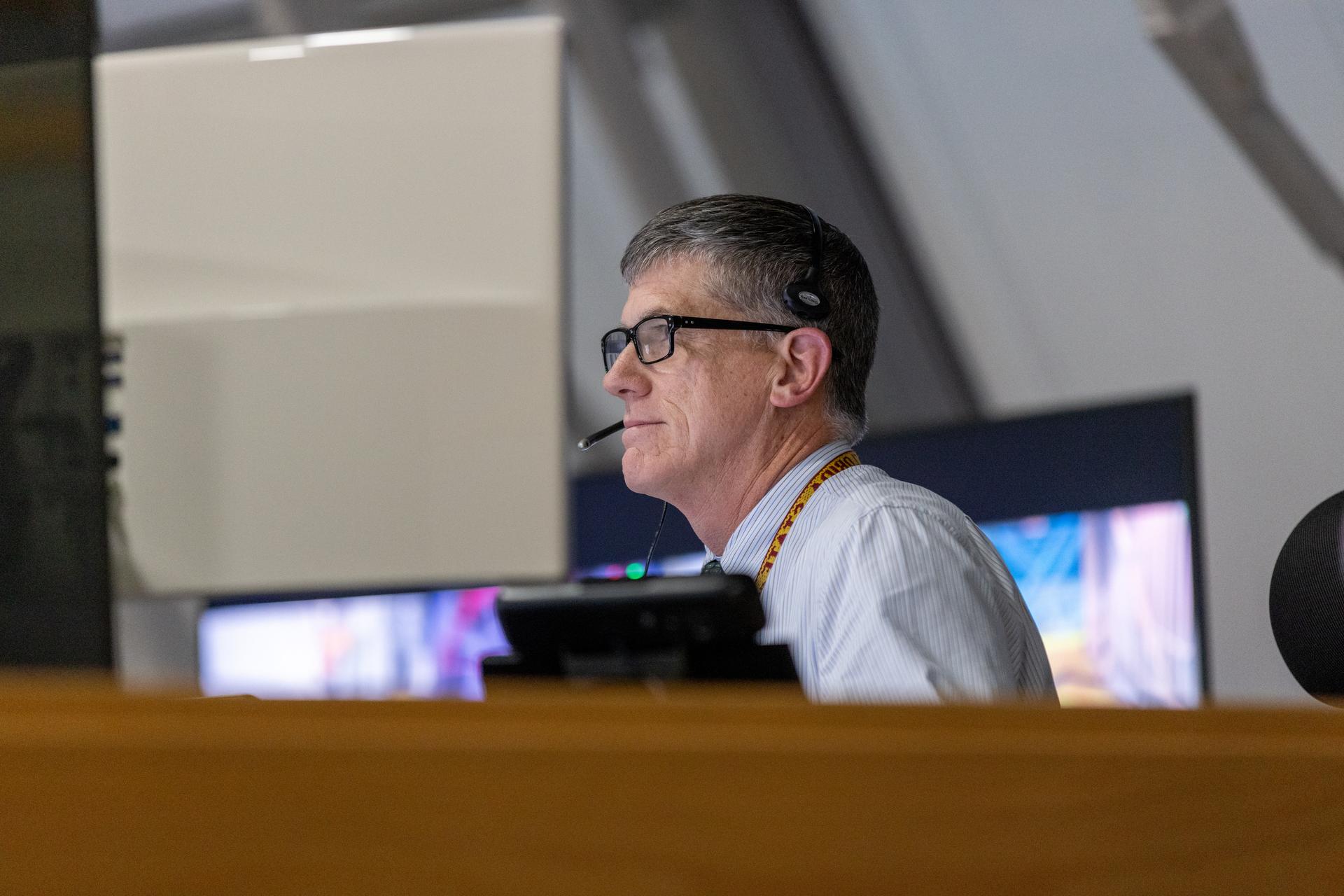
Jeremy Graeber, assistant launch director, monitors the progress of a countdown demonstration test with Artemis II crewmembers NASA astronauts Reid Wiseman, commander; Victor Glover, pilot; Christina Koch, mission specialist; and CSA (Canadian Space Agency) astronaut Jeremy Hansen, mission specialist onboard their Orion spacecraft from Firing Room 1 of the Rocco A. Petrone Launch Control Center, Saturday, Dec. 20, 2025, at NASA’s Kennedy Space Center in Florida. For this operation, the Artemis II crew and launch teams are simulating the launch day timeline including suit-up, walkout, and spacecraft ingress and egress. Through the Artemis campaign, NASA will send astronauts to explore the Moon for scientific discovery, economic benefits, and to build the foundation for the first crewed missions to Mars, for the benefit of all.
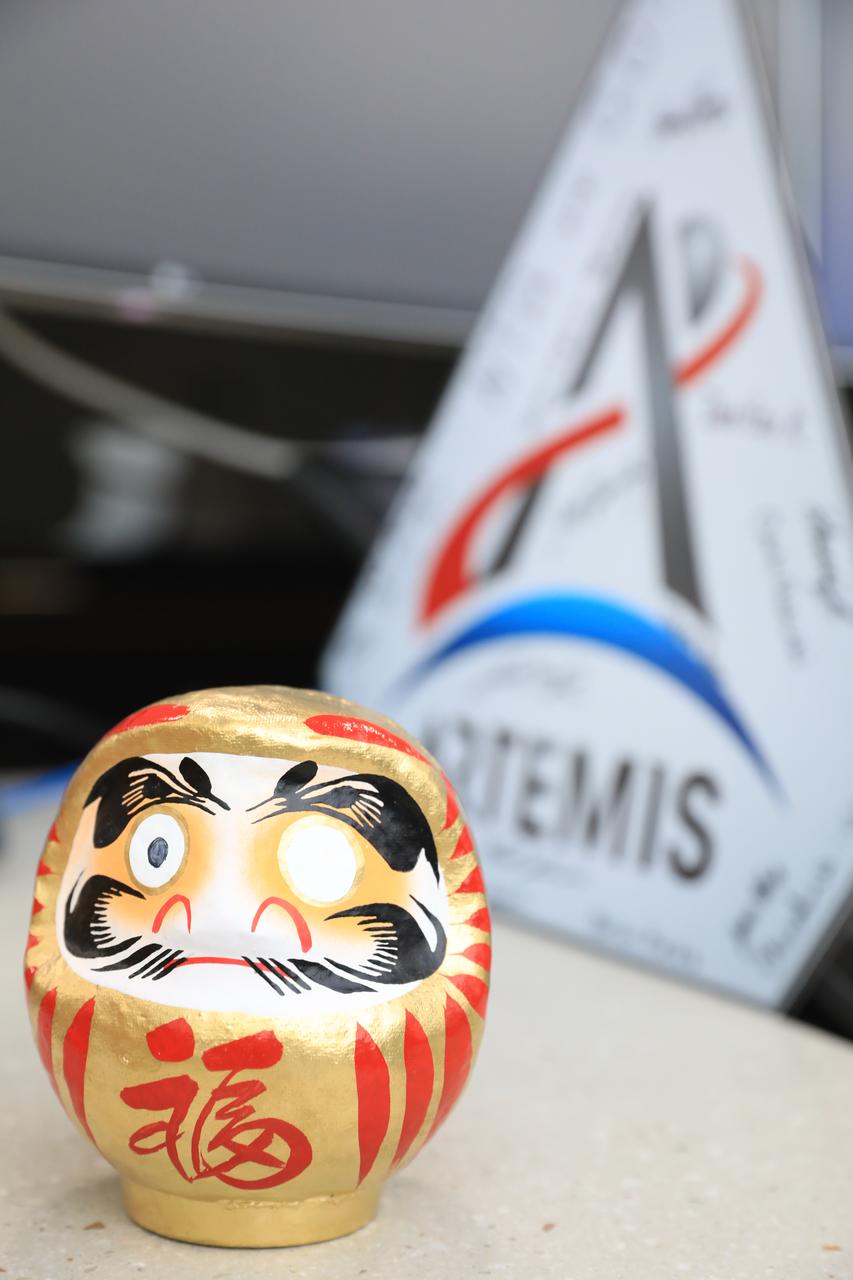
Artemis launch director, Charlie Blackwell-Thompson and associate administrator of NASA’s Space Operations Mission Directorate, Kathryn Lueders finish coloring in the other eye of the Japanese Daruma doll to highlight the successful Artemis I mission on Dec. 20, 2022 in Firing Room 1 of the Rocco A. Petrone Launch Control Center at NASA’s Kennedy Space Center in Florida. The Japan Aerospace Exploration Agency gave a Daruma doll to both Lueders and associate administrator for the Exploration Systems Development Mission Directorate, Jim Free as a token of good luck prior to the Artemis I launch. Free filled in his eye on Dec. 11, 2022, with Artemis I Ascent and Entry Flight Director Judd Frieling in Mission Control Center at NASA’s Johnson Space Center in Houston, Texas.
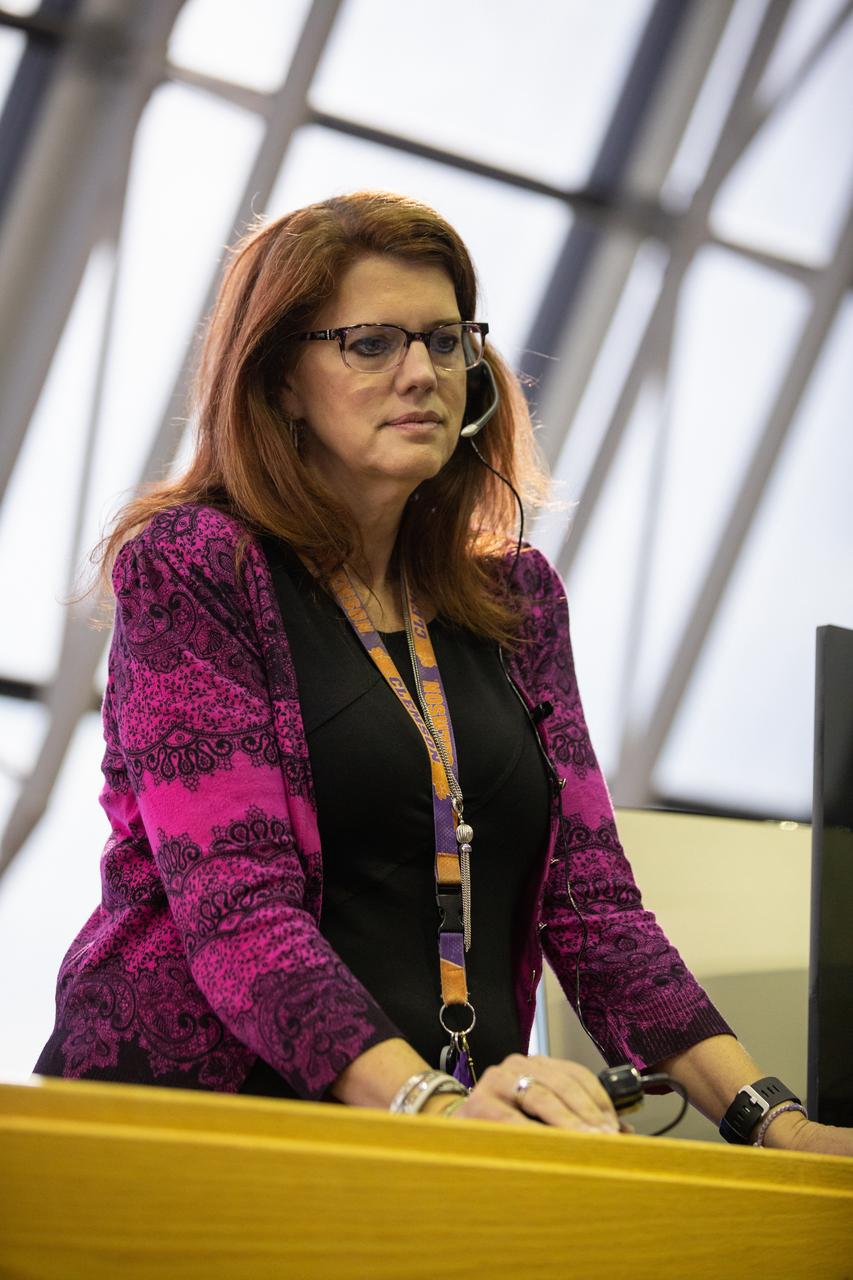
Artemis 1 Launch Director Charlie Blackwell-Thompson leads the launch team through validation testing inside Firing Room 1 in the Launch Control Center at NASA’s Kennedy Space Center in Florida on July 11, 2019. The team includes personnel with NASA’s Exploration Ground Systems (EGS) and Jacobs Test and Operations Contract (TOSC). The simulation was designed to validate the firing room consoles and communications systems, as well as the new Spaceport Command and Control System (SCCS), which will operate, monitor and coordinate ground equipment in preparation for Artemis 1, the uncrewed first flight of the Space Launch System rocket and Orion spacecraft.
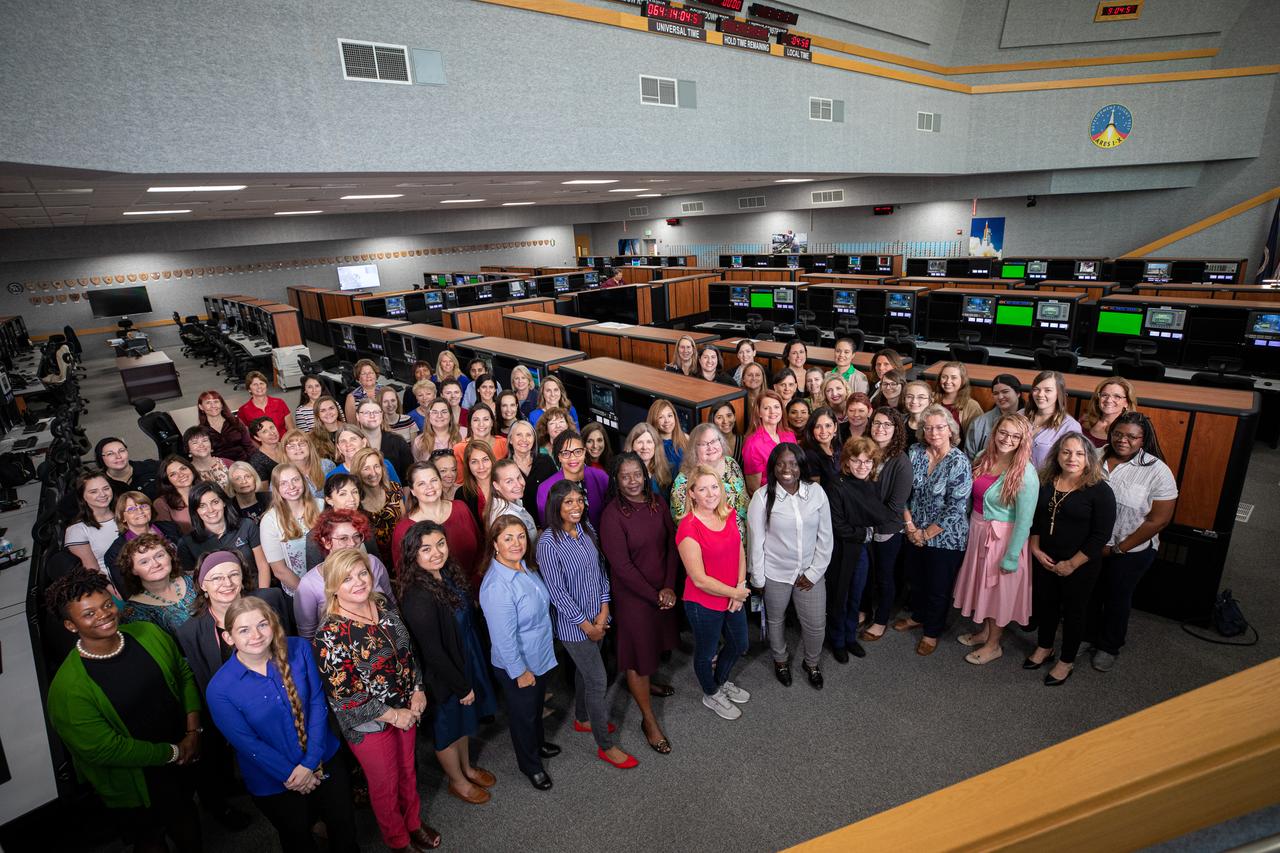
In celebration of Women’s History Month, the “Women of Launch Control” working in Exploration Ground Systems take time out of their Artemis I launch planning to pose for a photo in Firing Room 1 of the Launch Control Center at NASA’s Kennedy Space Center in Florida on March 4, 2020. Artemis I will be the first integrated flight test of the Orion spacecraft and Space Launch System rocket, the system that will ultimately land the first woman and the next man on the Moon.
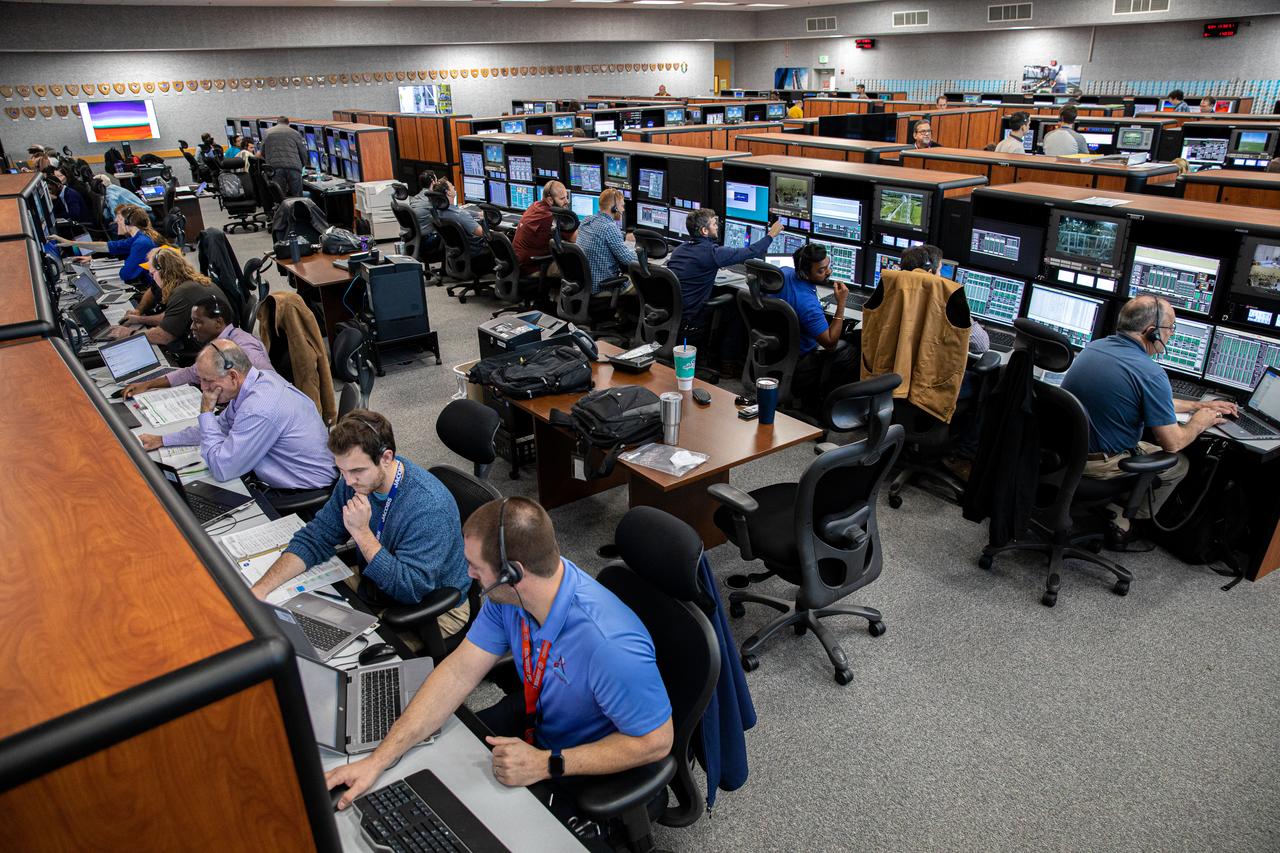
Members of the Artemis I launch team participate in a countdown simulation inside the Launch Control Center’s Firing Room 1 at NASA’s Kennedy Space Center in Florida on Feb. 3, 2020. Under the leadership of Launch Director Charlie Blackwell-Thompson, a team of nearly 100 engineers from Orion, Space Launch System (SLS) and NASA’s Exploration Ground Systems came together to work through a series of simulated challenges, as well as a final countdown procedure. During these exercises, different issues were introduced to familiarize the team with launch day operations, while providing them with an opportunity to practice how they would handle those issues in real-time. Artemis I will be the first integrated test flight of the Orion spacecraft and SLS rocket – the system that will ultimately land the first woman and the next man on the Moon.
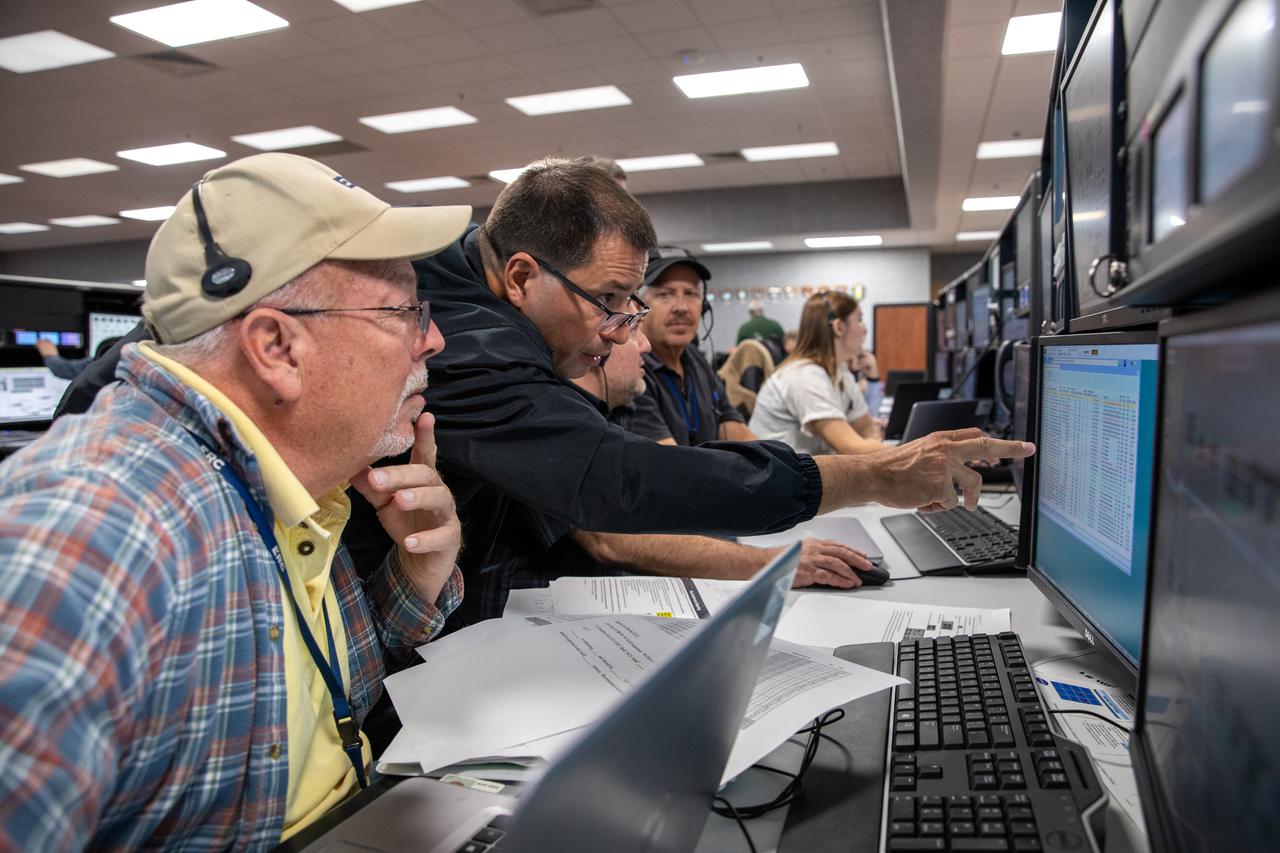
From left to right, Joe Novitsky, Martin Schnetzer, Troy Akseraylian and Will Booker, environmental control systems engineers at NASA’s Kennedy Space Center in Florida, participate in a launch countdown simulation on Feb. 3, 2020, inside the Launch Control Center’s Firing Room 1. Under the leadership of Launch Director Charlie Blackwell-Thompson, a team of nearly 100 engineers from Orion, Space Launch System (SLS) and NASA’s Exploration Ground Systems came together to work through a series of simulated challenges, as well as a final countdown procedure, in preparation for the Artemis I launch. During these exercises, different issues were introduced to familiarize the team with launch day operations, while providing them with an opportunity to practice how they would handle those issues in real-time. Artemis I will be the first integrated test flight of the Orion spacecraft and SLS rocket – the system that will ultimately land the first woman and the next man on the Moon.
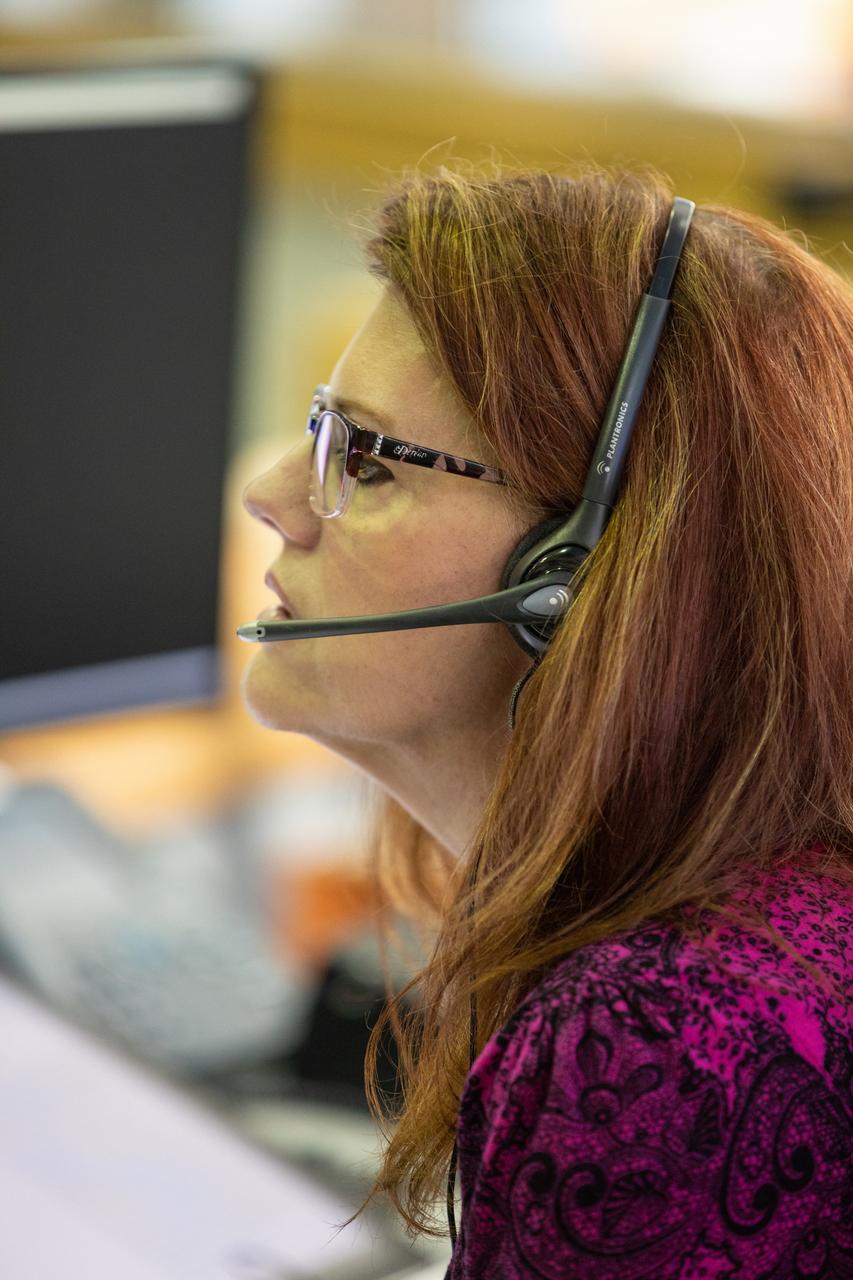
Artemis 1 Launch Director Charlie Blackwell-Thompson leads the launch team, including personnel with NASA’s Exploration Ground Systems (EGS) and Jacobs Test and Operations Contract (TOSC), through validation testing inside Firing Room 1 in the Launch Control Center at NASA’s Kennedy Space Center in Florida on July 11, 2019. The simulation was designed to validate the firing room consoles and communications systems, as well as the new Spaceport Command and Control System (SCCS), which will operate, monitor and coordinate ground equipment in preparation for Artemis 1, the uncrewed first flight of the Space Launch System rocket and Orion spacecraft.

Joe Pavicic, operations project engineer, participates in an Artemis II launch countdown simulation inside Firing Room 1 in the Launch Control Center at NASA’s Kennedy Space Center in Florida on Wednesday, Oct. 8, 2025. The simulations go through launch day scenarios to help launch team members test software and make adjustments if needed during countdown operations. For Artemis II, four astronauts will venture around the Moon, the first crewed mission on NASA’s path to establishing a long-term presence for science and exploration through Artemis.
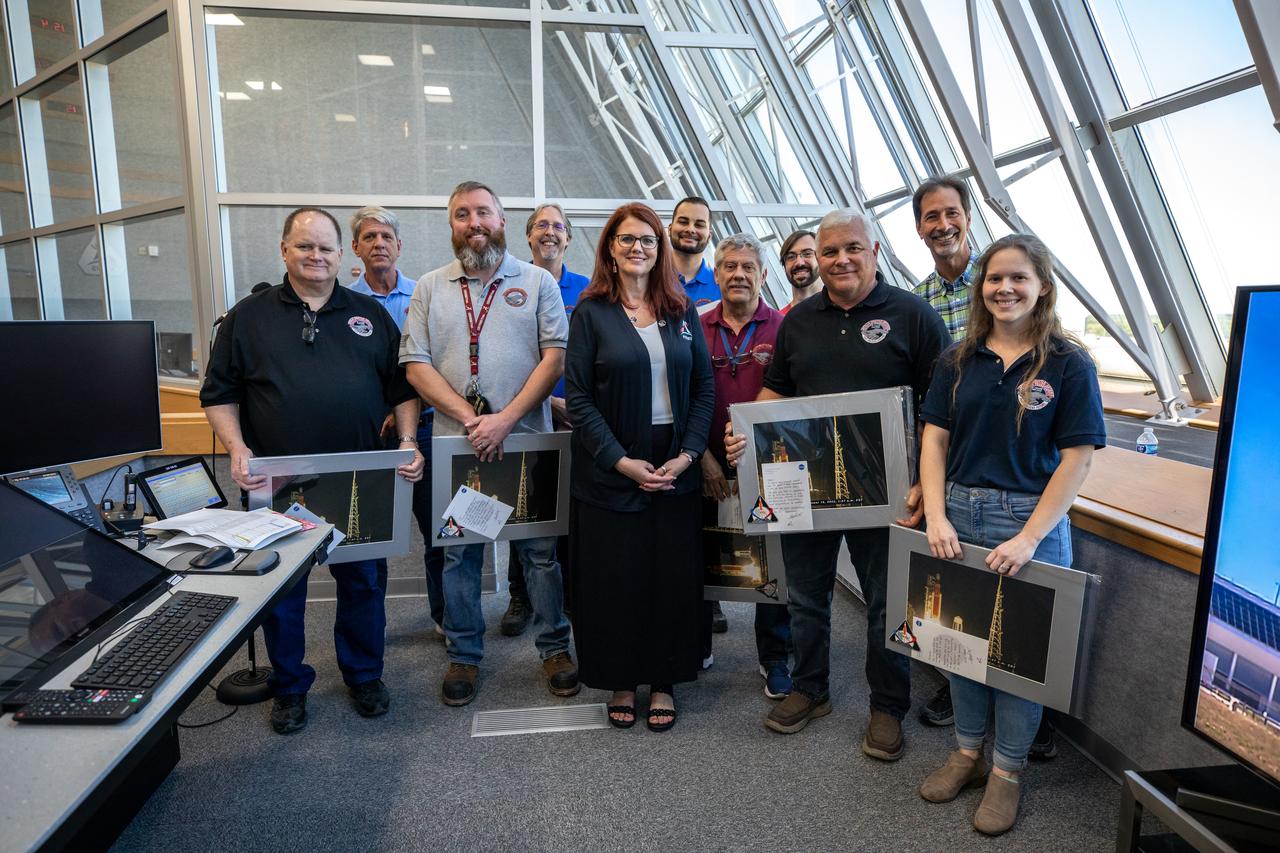
Artemis Launch Director Charlie Blackwell-Thompson (center) acknowledged and honored members of the Artemis team during the inaugural Artemis Launch Director Awards, held March 24, 2023, inside Firing Room 1 of the Rocco A. Petrone Launch Control Center at NASA’s Kennedy Space Center in Florida. Award recipients included members of the crawler transporter team, which using Crawler-Transporter 2, carried the agency’s mobile launcher with the Space Launch System rocket and Orion spacecraft 4.2 miles from the Vehicle Assembly Building to Launch Pad 39B for the launch of Artemis I. The first in a series of increasingly complex missions, Artemis I launched successfully at 1:47 a.m. EST on Nov. 16, 2022.
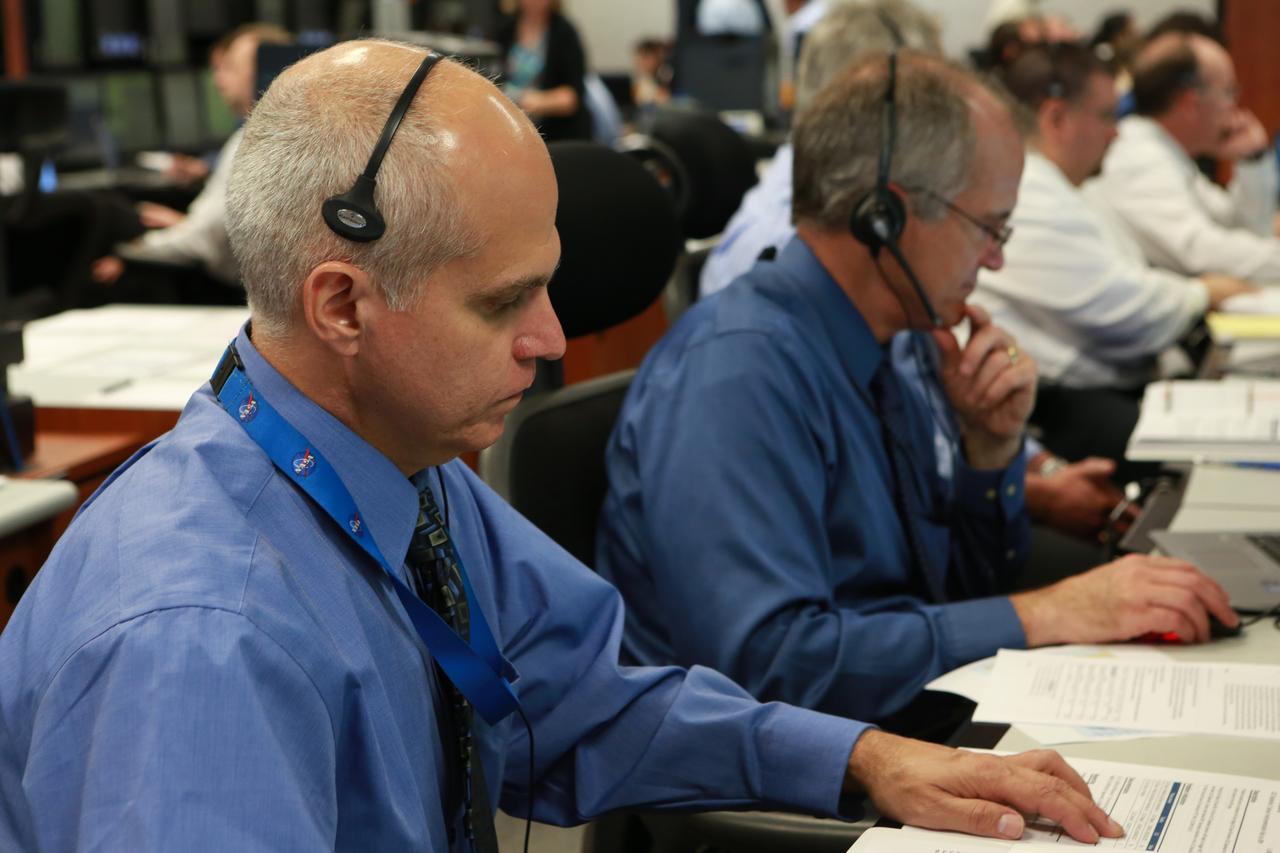
Jacobs Test Project Engineer Don Vinton, left and NASA Operations Project Engineer Doug Robertson, monitor operations from his position in Firing Room 1 at the Kennedy Space Center's Launch Control Center during a countdown simulation for Exploration Mission 1. It was the agency's first simulation of a portion of the countdown for the first launch of a Space Launch System rocket and Orion spacecraft that will eventually take astronauts beyond low-Earth orbit to destinations such as the Moon and Mars.
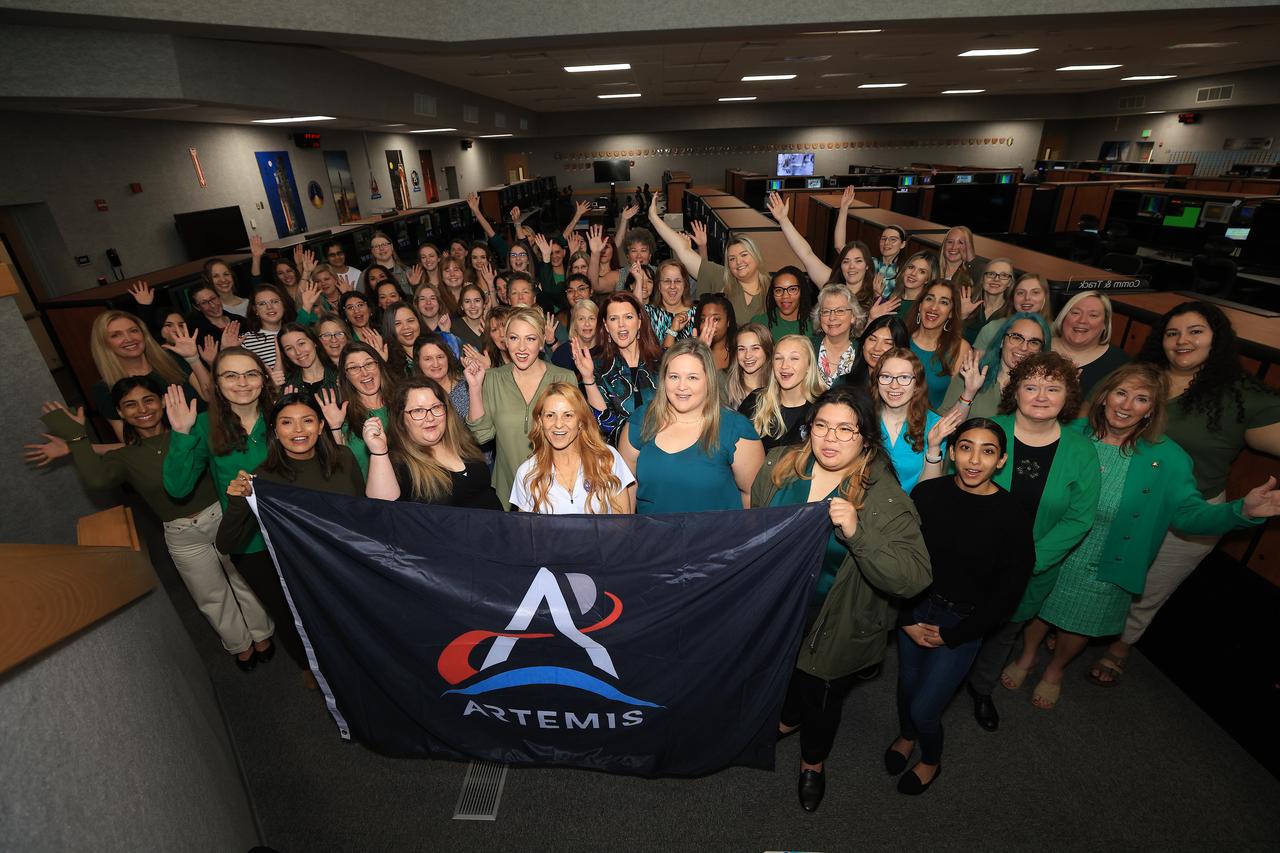
The women who comprise the Artemis launch team are photographed inside Firing Room 1 of the Launch Control Center at NASA’s Kennedy Space Center in Florida on Friday, March 15, 2024. In the second row center behind the Artemis banner is NASA’s first female Launch Director Charlie Blackwell-Thompson. The team, which is about 30% women, will launch the agency’s Artemis II mission from Kennedy’s Launch Pad 39B, the first crewed mission on NASA's path to establishing a long-term presence at the Moon for science and exploration through Artemis.

Artemis I Launch Director Charlie Blackwell-Thompson stands at her console inside the Launch Control Center’s Firing Room 1 at NASA’s Kennedy Space Center in Florida during a simulation rehearsing propellant loading on Aug. 18, 2020. The simulation involved members of the launch team practicing the procedures for loading the Space Launch System (SLS) rocket with cryogenics, or super cold propellants. During the exercise, potential problem scenarios were introduced to test the tools, processes, and procedures necessary for fueling the rocket. Artemis I will be the first integrated test flight of SLS and the Orion spacecraft – the system that will ultimately land the first woman and the next man on the Moon by 2024.
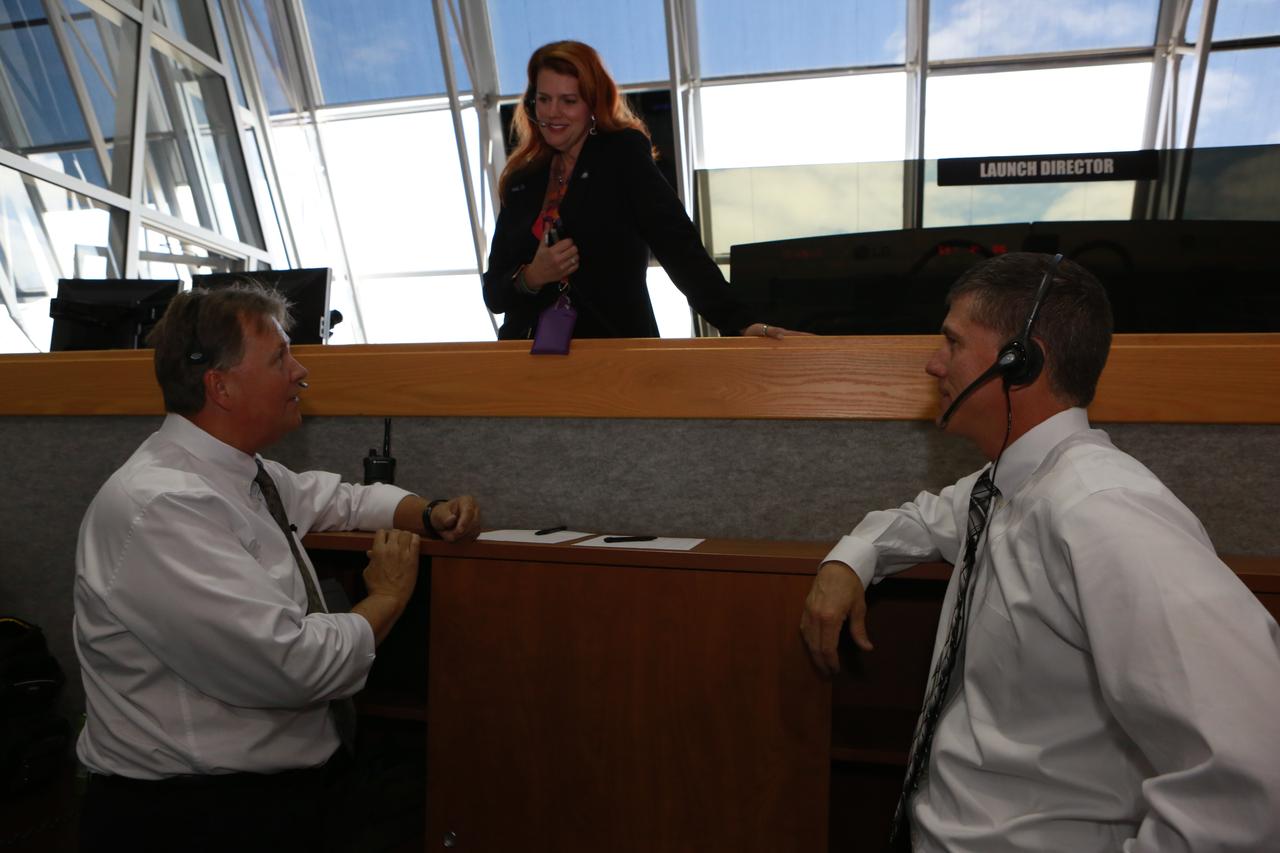
NASA Launch Director Charlie Blackwell-Thompson, above, confers with Senior NASA Test Director Jeff Spaulding, left, and Chief NASA Test Director Jeremy Graeber in Firing Room 1 at the Kennedy Space Center's Launch Control Center during a countdown simulation for Exploration Mission 1. It was the agency's first simulation of a portion of the countdown for the first launch of a Space Launch System rocket and Orion spacecraft that will eventually take astronauts beyond low-Earth orbit to destinations such as the Moon and Mars.
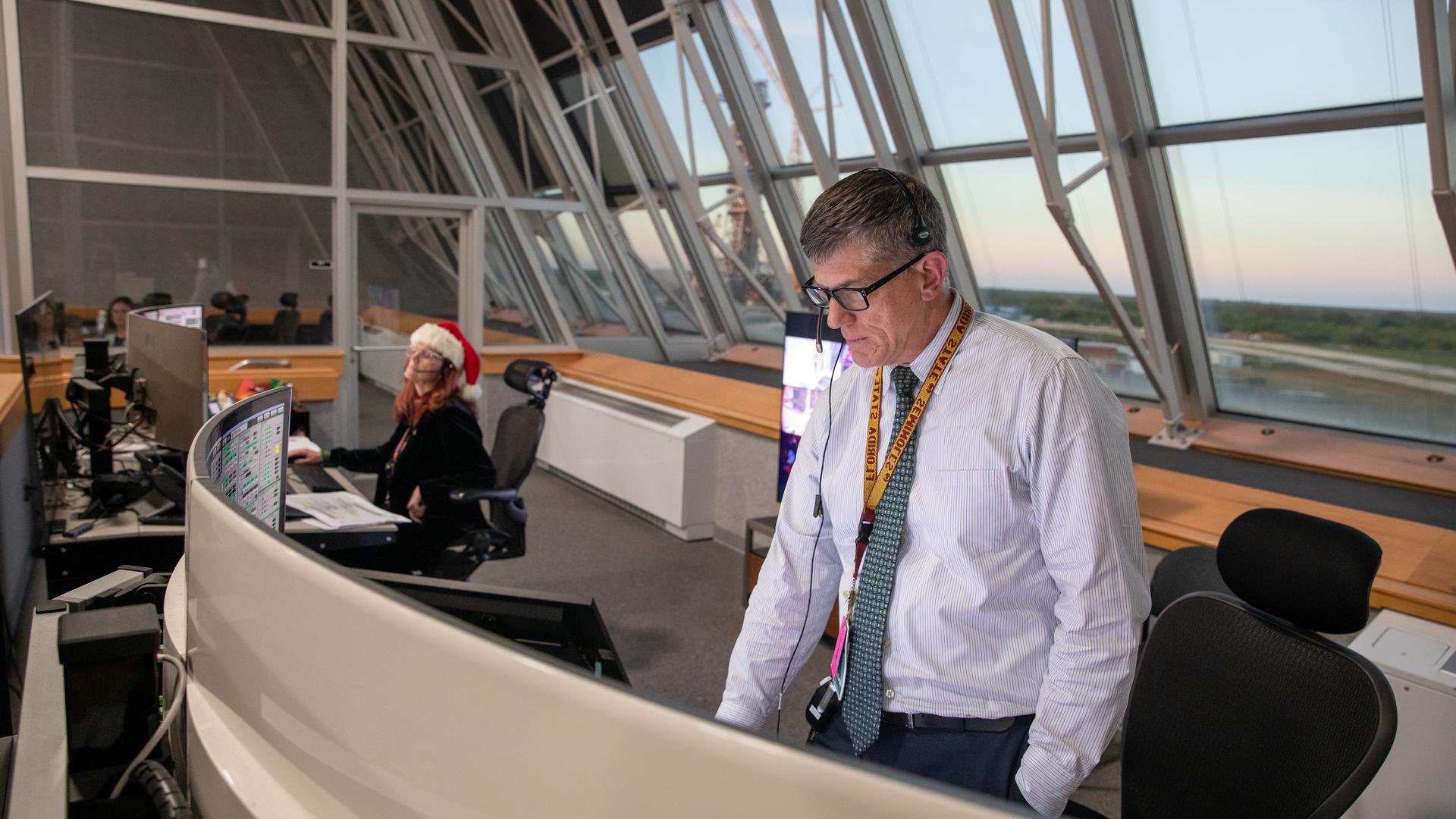
Jeremy Graeber, assistant launch director, monitors the progress of a countdown demonstration test with Artemis II crewmembers NASA astronauts Reid Wiseman, commander; Victor Glover, pilot; Christina Koch, mission specialist; and CSA (Canadian Space Agency) astronaut Jeremy Hansen, mission specialist onboard their Orion spacecraft from Firing Room 1 of the Rocco A. Petrone Launch Control Center, Saturday, Dec. 20, 2025, at NASA’s Kennedy Space Center in Florida. For this operation, the Artemis II crew and launch teams are simulating the launch day timeline including suit-up, walkout, and spacecraft ingress and egress. Through the Artemis campaign, NASA will send astronauts to explore the Moon for scientific discovery, economic benefits, and to build the foundation for the first crewed missions to Mars, for the benefit of all.
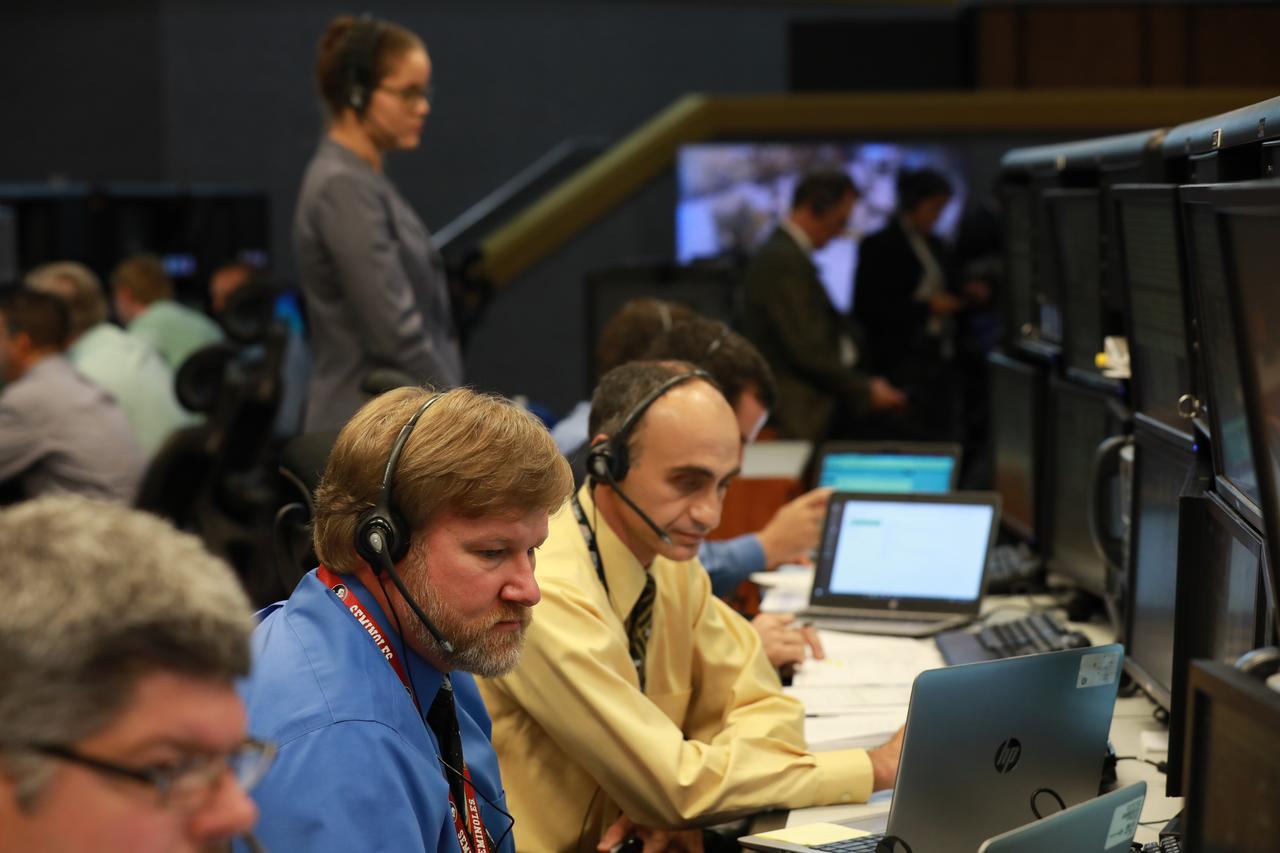
Space Launch System and Orion launch team engineers and managers monitor operations from their console in Firing Room 1 at the Kennedy Space Center's Launch Control Center during a countdown simulation for Exploration Mission 1. It was the agency's first simulation of a portion of the countdown for the first launch of a Space Launch System rocket and Orion spacecraft that will eventually take astronauts beyond low-Earth orbit to destinations such as the Moon and Mars.
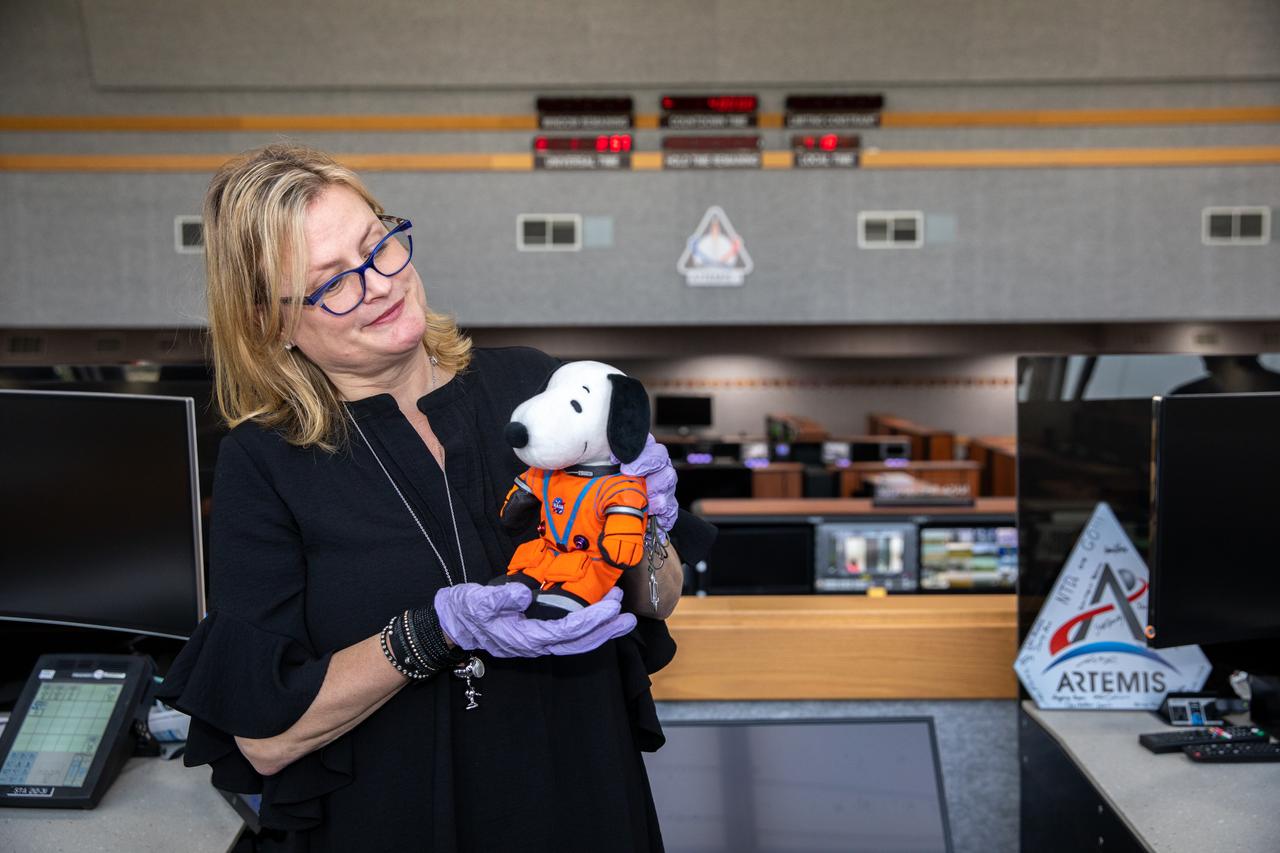
Melissa Menta, senior vice president with Peanuts Worldwide LLC, accepts Snoopy during an official handover from Artemis Launch Director Charlie Blackwell-Thompson inside Launch Control Center Firing Room 1 at NASA’s Kennedy Space Center in Florida on Jan. 18, 2023. Snoopy served as the zero-gravity indicator during the Artemis I mission. Snoopy was secured inside Orion during the mission, a journey beyond the Moon and back to prepare for crewed missions to the Moon. Artemis I launched atop the Space Launch System rocket on Nov. 16, 2022 from Kennedy’s Launch Complex 39B. Orion returned to Earth for a splashdown in the Pacific Ocean on Dec. 11, 2022 after traveling more than 1.4 million miles. NASA has held an association with Snoopy since the Apollo Era – the character has contributed to the excitement for NASA human spaceflight missions, helping inspire generations to dream big, and is a symbol of NASA’s safety culture and mission success.
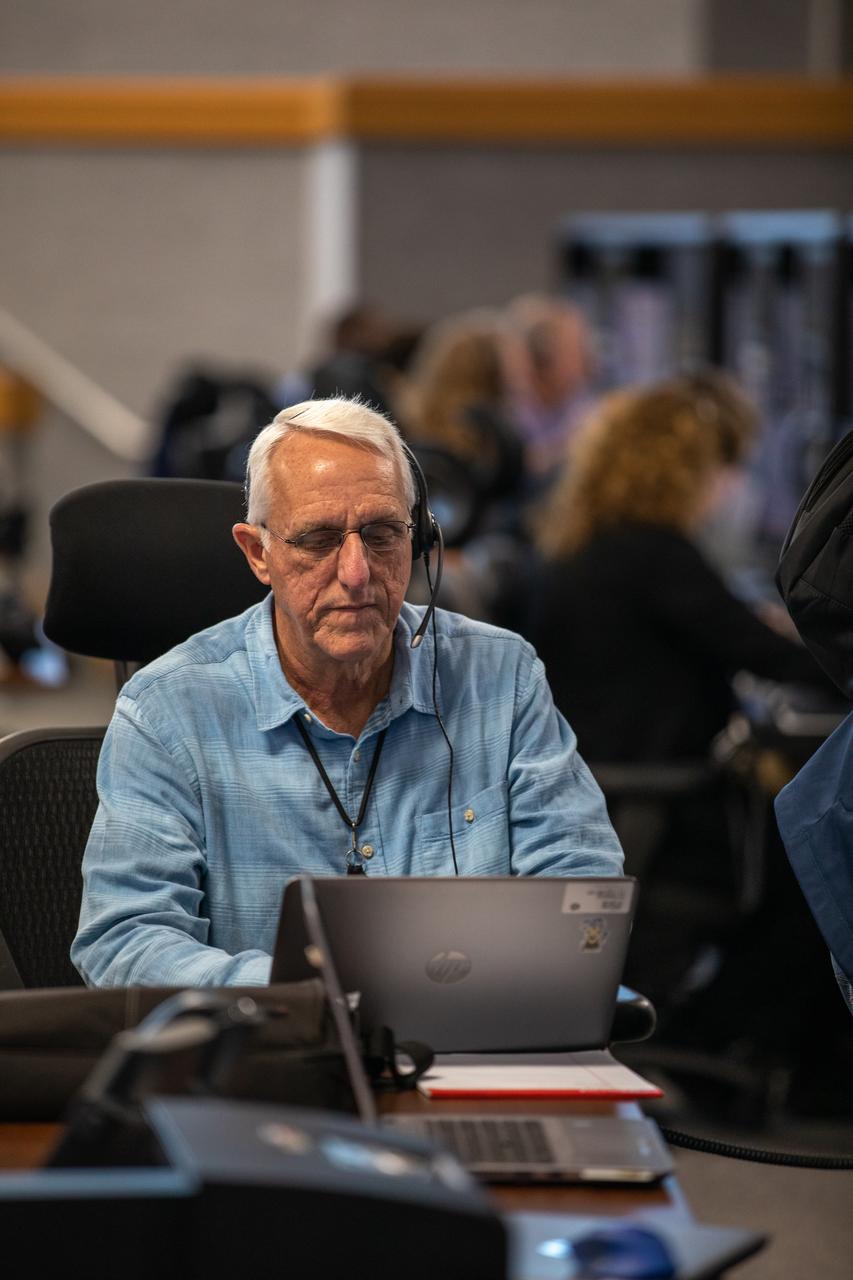
Inside the Launch Control Center’s Firing Room 1 at NASA’s Kennedy Space Center in Florida, Phil Youmans, an avionics engineer, participates in an Artemis I launch countdown training exercise on Feb. 3, 2020. Under the leadership of Launch Director Charlie Blackwell-Thompson, a team of nearly 100 engineers from Orion, Space Launch System (SLS) and NASA’s Exploration Ground Systems came together to work through a series of simulated challenges, as well as a final countdown procedure. During these exercises, different issues were introduced to familiarize the team with launch day operations, while providing them with an opportunity to practice how they would handle those issues in real-time. Artemis I will be the first integrated test flight of the Orion spacecraft and SLS rocket – the system that will ultimately land the first woman and the next man on the Moon.
!["I was on console as a part of the primary launch team [for Artemis I]. I was the Orion system specialist for Guidance, Navigation, and Control. … In a few missions, we're sending astronauts to the Moon again, so being a part of the very, very first mission [was memorable]. … I wasn't here in 2017 when they first began discussions, but [I can’t even explain how it felt] that within just the four-year journey, I could see how far we had come: from when we were talking about getting the hardware here, to the hardware arriving, and then [to realize] ‘Oh, it's going today, we’re going!’ “… From a personal standpoint, I'm a person of faith, so for me, it was like: We launched at night — it was in the darkest part of the [night]. … Once the rocket launched, [I saw] how it illuminated such a dark space. So even when you're in a dark space, you can let your light shine. And it won't just shine for you and those that are immediately around you, but even people that you don't know will notice it, even people that you will never see will notice your light shining and be inspired.” — Ales-cia Winsley, Guidance, Navigation, and Flight Control Engineer, Kennedy Space Center Interviewer: NASA / Michelle Zajac](https://images-assets.nasa.gov/image/KSC-20231128-PH-CSH01_0003/KSC-20231128-PH-CSH01_0003~medium.jpg)
"I was on console as a part of the primary launch team [for Artemis I]. I was the Orion system specialist for Guidance, Navigation, and Control. … In a few missions, we're sending astronauts to the Moon again, so being a part of the very, very first mission [was memorable]. … I wasn't here in 2017 when they first began discussions, but [I can’t even explain how it felt] that within just the four-year journey, I could see how far we had come: from when we were talking about getting the hardware here, to the hardware arriving, and then [to realize] ‘Oh, it's going today, we’re going!’ “… From a personal standpoint, I'm a person of faith, so for me, it was like: We launched at night — it was in the darkest part of the [night]. … Once the rocket launched, [I saw] how it illuminated such a dark space. So even when you're in a dark space, you can let your light shine. And it won't just shine for you and those that are immediately around you, but even people that you don't know will notice it, even people that you will never see will notice your light shining and be inspired.” — Ales-cia Winsley, Guidance, Navigation, and Flight Control Engineer, Kennedy Space Center Interviewer: NASA / Michelle Zajac
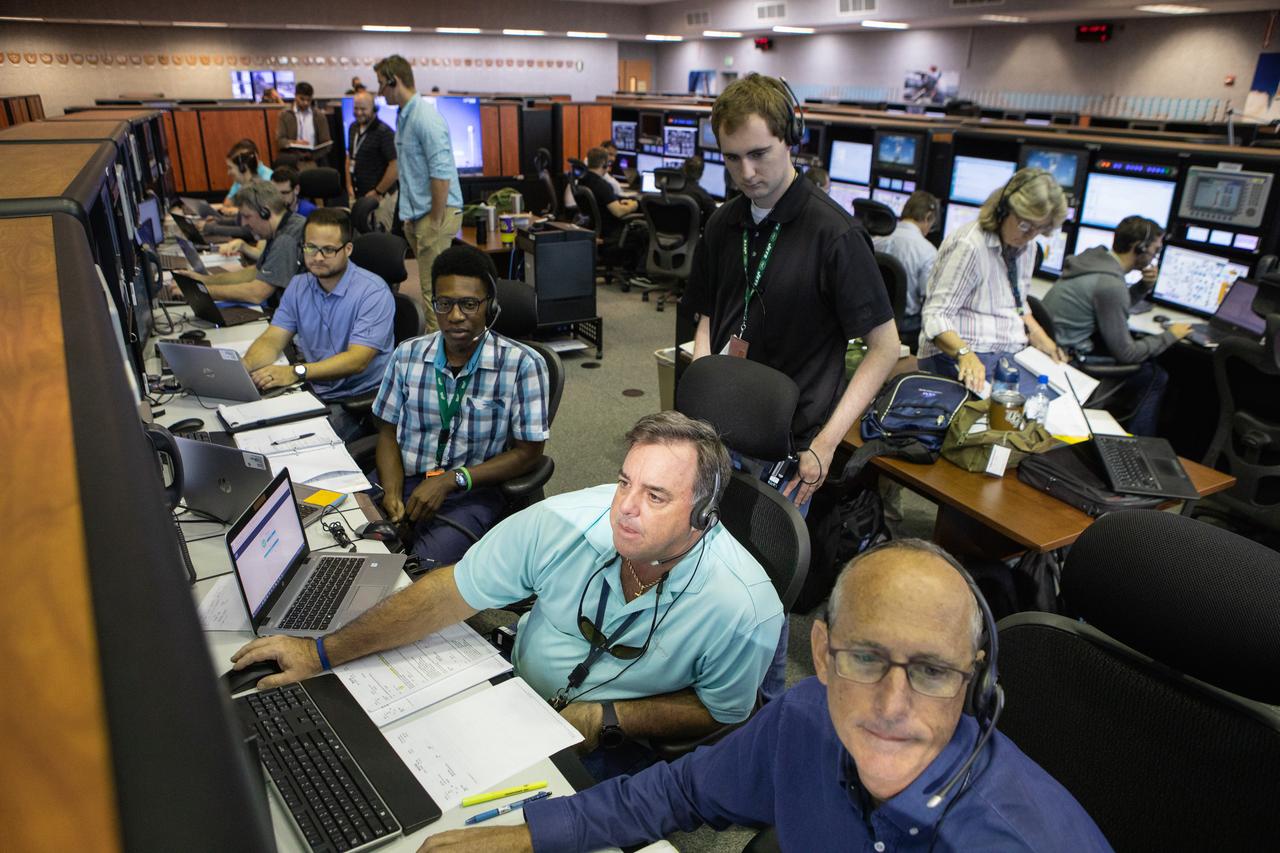
Members of the Artemis 1 launch team, including personnel with NASA’s Exploration Ground Systems (EGS) and Jacobs Test and Operations Contract (TOSC), participate in validation testing inside Firing Room 1 in the Launch Control Center at NASA’s Kennedy Space Center in Florida on July 11, 2019. The simulation was designed to validate the firing room consoles and communications systems, as well as the new Spaceport Command and Control System (SCCS), which will operate, monitor and coordinate ground equipment in preparation for Artemis 1, the uncrewed first flight of the Space Launch System rocket and Orion spacecraft.
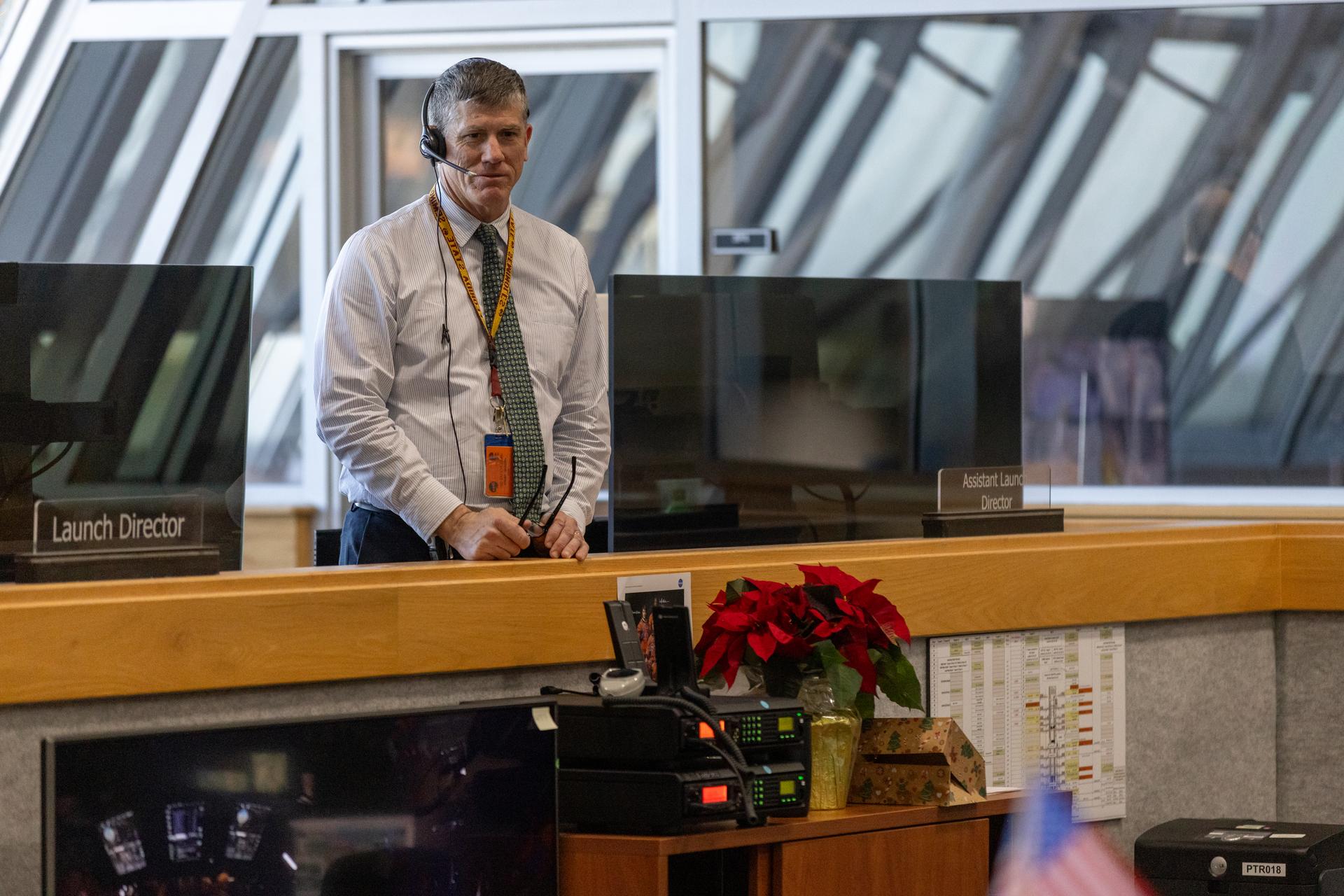
Jeremy Graeber, assistant launch director, monitors the progress of a countdown demonstration test with Artemis II crewmembers NASA astronauts Reid Wiseman, commander; Victor Glover, pilot; Christina Koch, mission specialist; and CSA (Canadian Space Agency) astronaut Jeremy Hansen, mission specialist onboard their Orion spacecraft from Firing Room 1 of the Rocco A. Petrone Launch Control Center, Saturday, Dec. 20, 2025, at NASA’s Kennedy Space Center in Florida. For this operation, the Artemis II crew and launch teams are simulating the launch day timeline including suit-up, walkout, and spacecraft ingress and egress. Through the Artemis campaign, NASA will send astronauts to explore the Moon for scientific discovery, economic benefits, and to build the foundation for the first crewed missions to Mars, for the benefit of all.
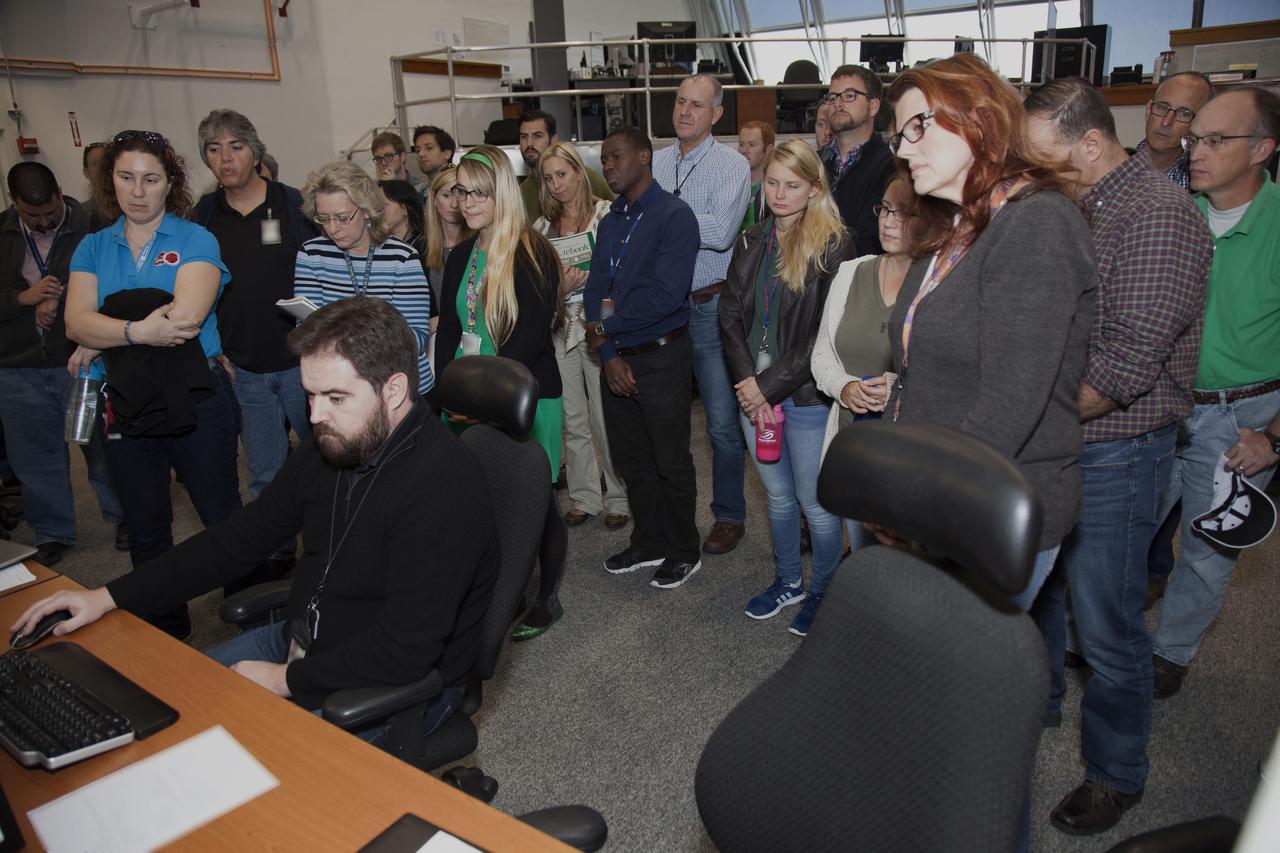
NASA engineers and test directors gather in Firing Room 3 in the Launch Control Center at NASA's Kennedy Space Center in Florida, to watch a demonstration of the automated command and control software for the agency's Space Launch System (SLS) and Orion spacecraft. In front, far right, is Charlie Blackwell-Thompson, launch director for Exploration Mission 1 (EM-1). The software is called the Ground Launch Sequencer. It will be responsible for nearly all of the launch commit criteria during the final phases of launch countdowns. The Ground and Flight Application Software Team (GFAST) demonstrated the software. It was developed by the Command, Control and Communications team in the Ground Systems Development and Operations (GSDO) Program. GSDO is helping to prepare the center for the first test flight of Orion atop the SLS on EM-1.
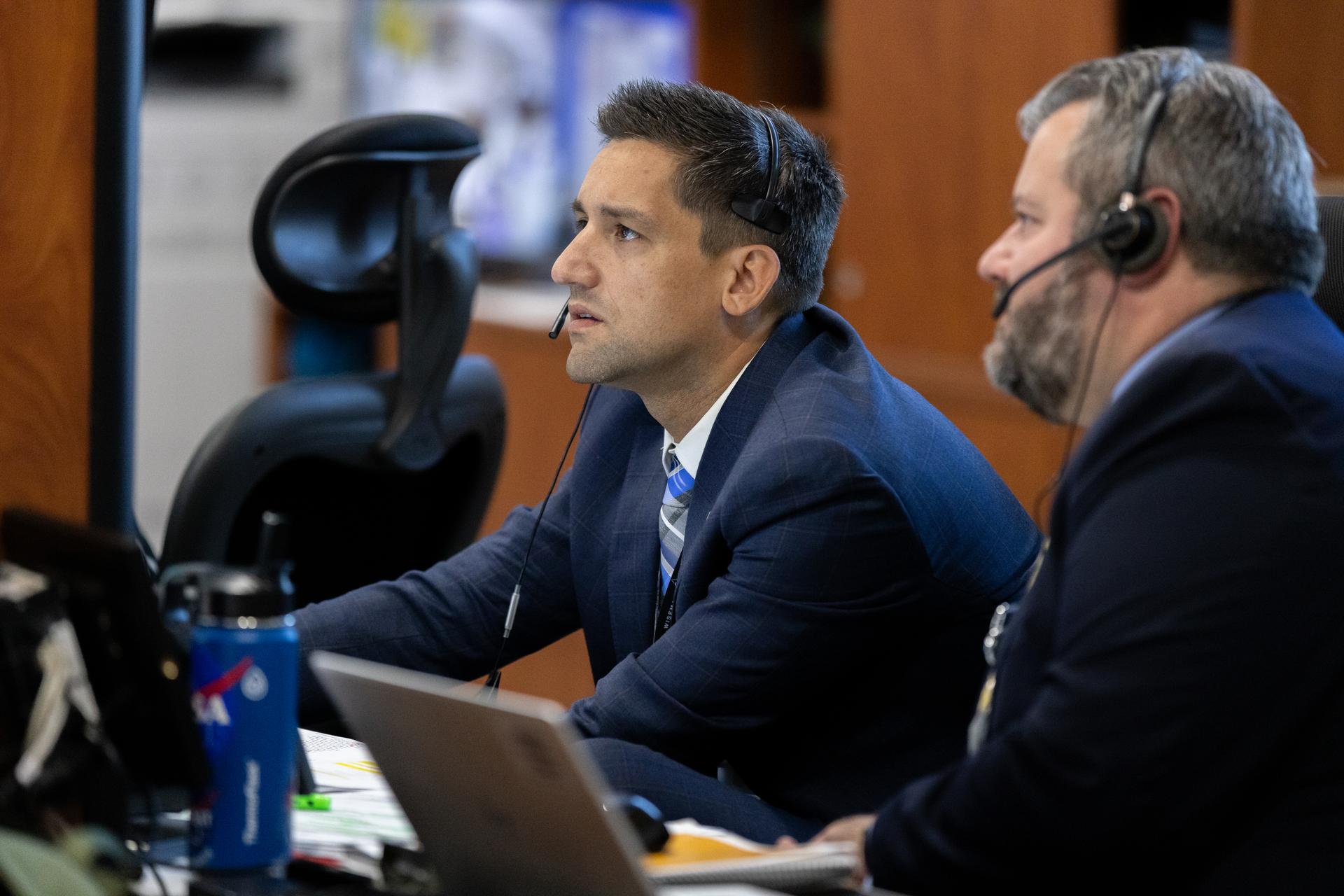
Dan Florez, NASA test director (second from right), monitors the progress of a countdown demonstration test with Artemis II crewmembers NASA astronauts Reid Wiseman, commander; Victor Glover, pilot; Christina Koch, mission specialist; and CSA (Canadian Space Agency) astronaut Jeremy Hansen, mission specialist onboard their Orion spacecraft from Firing Room 1 of the Rocco A. Petrone Launch Control Center, Saturday, Dec. 20, 2025, at NASA’s Kennedy Space Center in Florida. For this operation, the Artemis II crew and launch teams are simulating the launch day timeline including suit-up, walkout, and spacecraft ingress and egress. Through the Artemis campaign, NASA will send astronauts to explore the Moon for scientific discovery, economic benefits, and to build the foundation for the first crewed missions to Mars, for the benefit of all.

Charlie Blackwell-Thompson, NASA Artemis launch director, leads the first launch simulation for the Artemis II mission inside Firing Room at the Launch Control Center at NASA’s Kennedy Space Center in Florida on July 20, 2023. A team of engineers with Exploration Ground Systems and Jacobs, are rehearsing the steps to launch NASA’s Space Launch System and Orion spacecraft for the Artemis II crewed mission. Artemis II will be the first mission with astronauts under Artemis that will test and check out all of Orion’s systems needed for future crewed missions.
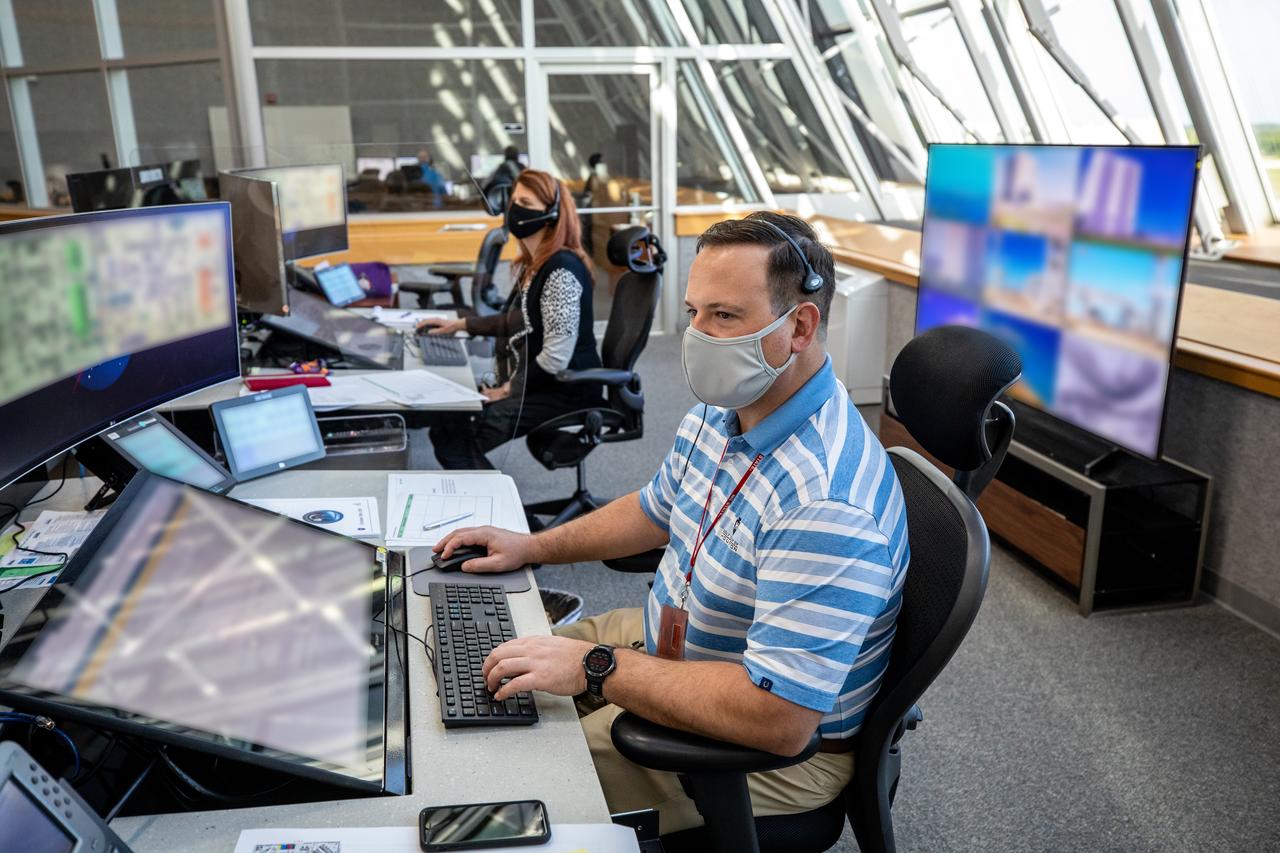
Charlie Blackwell-Thompson, at left, NASA Artemis launch director; and Wes Mosedale, technical assistant to the launch director, monitor a cryogenic propellant loading simulation inside Firing Room 1 in the Launch Control Center on Nov. 2, 2020, at NASA’s Kennedy Space Center in Florida. A team of engineers with Exploration Ground Systems and Jacobs, members of the cryogenics launch team, are rehearsing the steps to load the super-cooled liquid hydrogen and liquid oxygen into the Space Launch System’s (SLS) core and second stages to prepare for Artemis I. The first in a series of increasingly complex missions, Artemis I will test the Orion spacecraft and Space Launch System as an integrated system ahead of crewed flights to the Moon. NASA will land the first woman and the next man on the Moon in 2024.
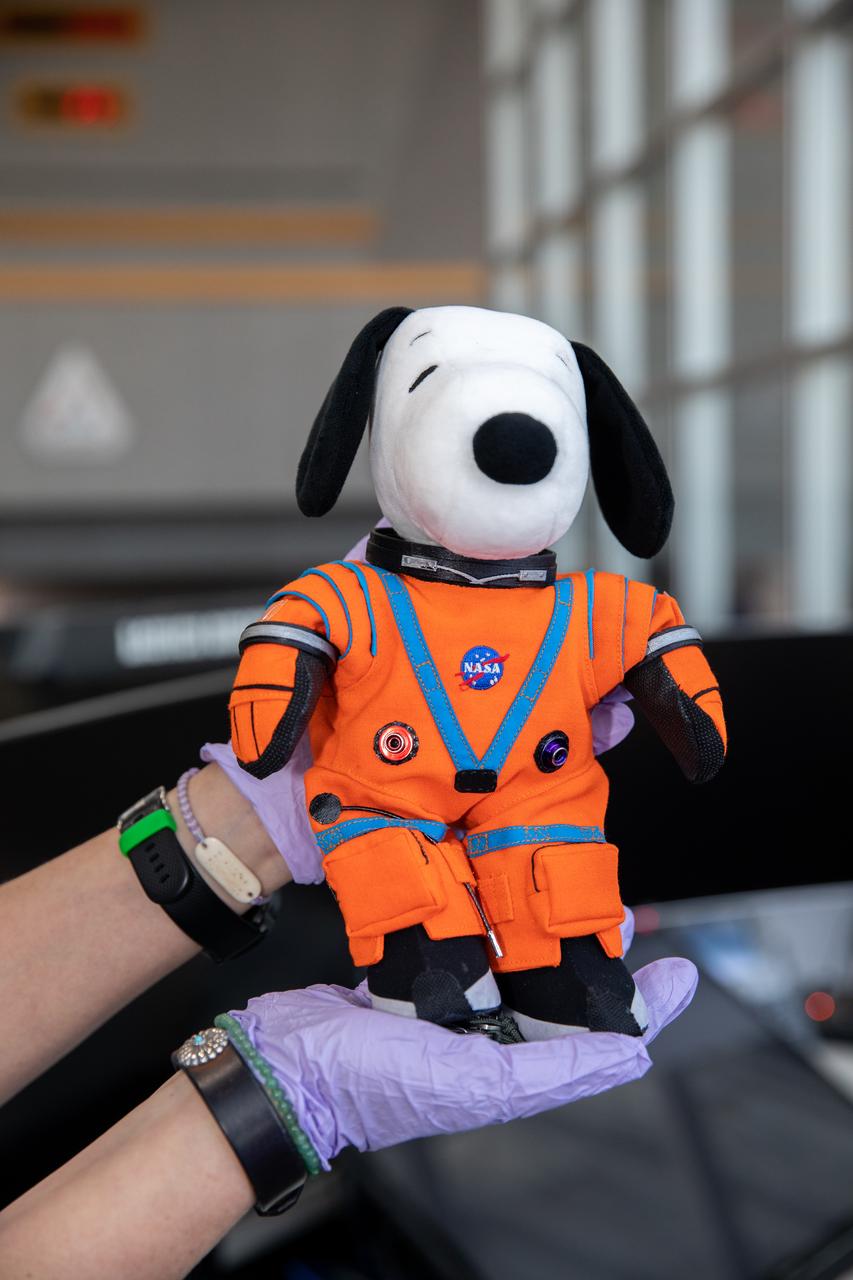
Snoopy is officially handed over to Melissa Menta, senior vice president with Peanuts Worldwide LLC, inside Launch Control Center Firing Room 1 at NASA’s Kennedy Space Center in Florida on Jan. 18, 2023. Snoopy served as the zero-gravity indicator during the Artemis I mission. Snoopy was secured inside Orion during the mission, a journey beyond the Moon and back to prepare for crewed missions to the Moon. Artemis I launched atop the Space Launch System rocket on Nov. 16, 2022 from Kennedy’s Launch Complex 39B. Orion returned to Earth for a splashdown in the Pacific Ocean on Dec. 11, 2022 after traveling more than 1.4 million miles. NASA has held an association with Snoopy since the Apollo Era – the character has contributed to the excitement for NASA human spaceflight missions, helping inspire generations to dream big, and is a symbol of NASA’s safety culture and mission success.
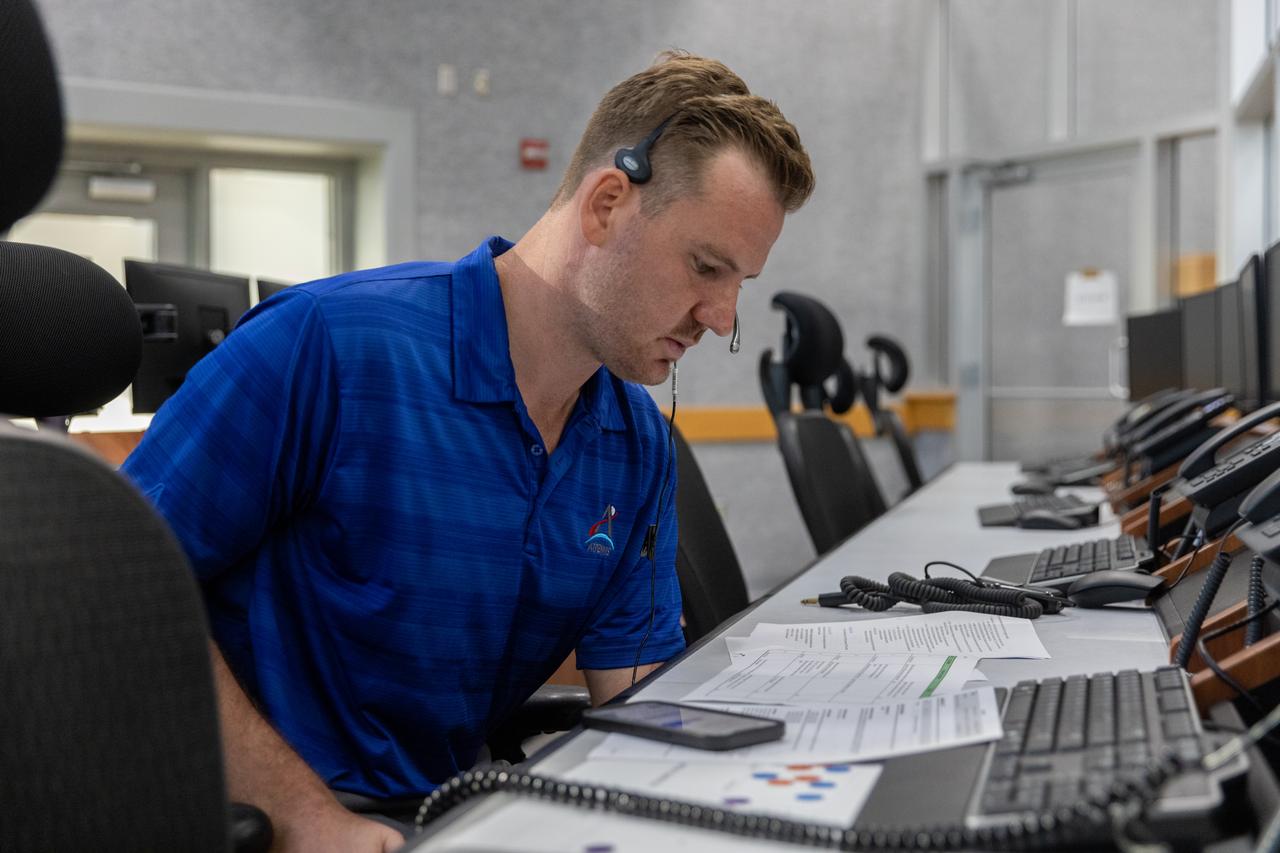
Joseph Pavicic, operations project engineer, Exploration Ground Systems at NASA’s Kennedy Space Center in Florida, participates in an emergency escape or egress demonstration simulation for the Artemis II mission inside Firing Room 1 in the Launch Control Center at NASA’s Kennedy on Monday, Aug. 12, 2024. Other members of the closeout crew, pad rescue team, and the Exploration Ground Systems Program performed emergency egress demonstrations during a series of integrated system verification tests at Launch Pad 39B in preparation for the Artemis II launch.
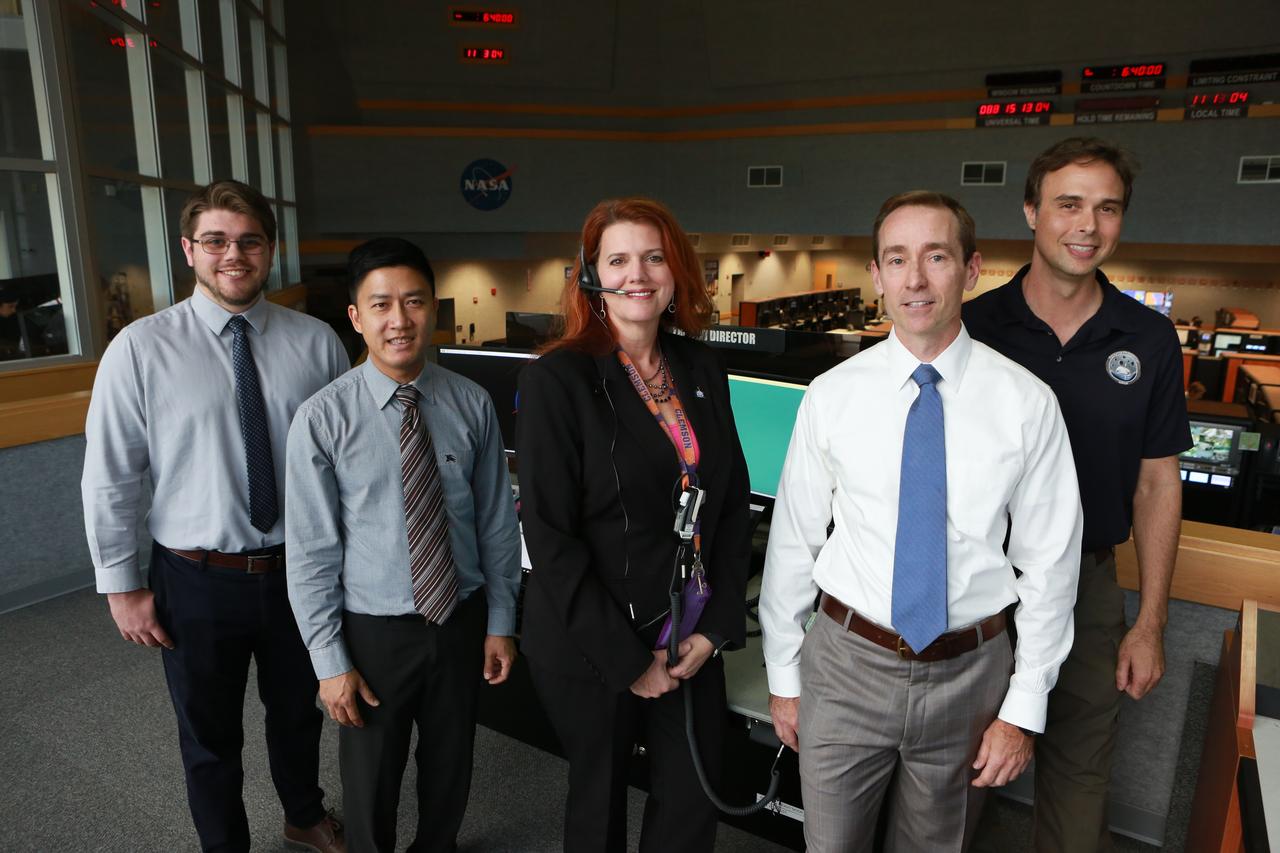
NASA Launch Director Charlie Blackwell-Thompson, center, stands next to her console in Firing Room 1 at the Kennedy Space Center's Launch Control Center. With her, from the left, are NASA intern Justin Connolly, NASA Engineering Project Manager Dan Tran, Blackwell-Thompson, Shawn Reverter, Project Manager for Red Canyon Software, Inc., and NASA Structures and Mechanisms Design Branch Chief Adam Dokos, during a countdown simulation for Exploration Mission 1. It was the agency's first simulation of a portion of the countdown for the first launch of a Space Launch System rocket and Orion spacecraft that will eventually take astronauts beyond low-Earth orbit to destinations such as the Moon and Mars.
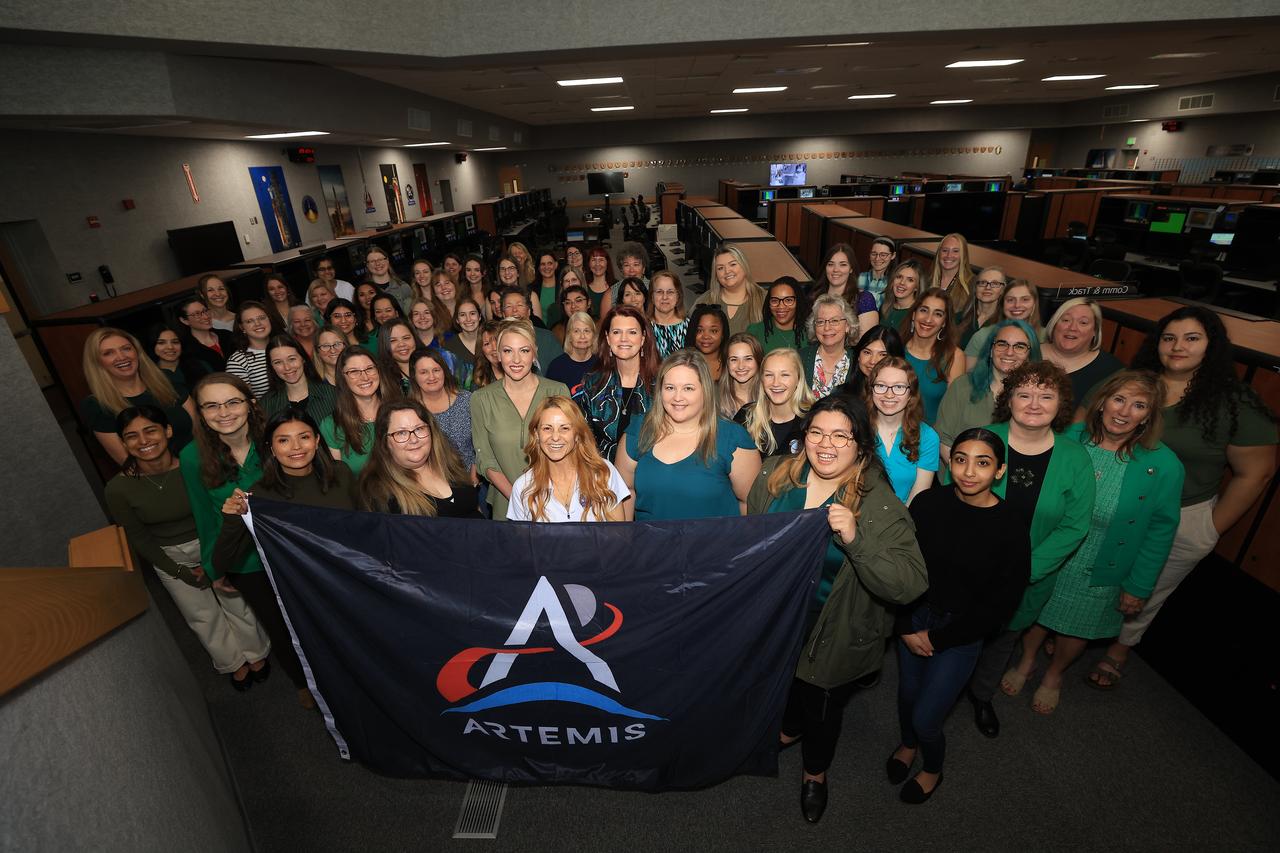
The women who comprise the Artemis launch team are photographed inside Firing Room 1 of the Launch Control Center at NASA’s Kennedy Space Center in Florida on Friday, March 15, 2024. In the second row center behind the Artemis banner is NASA’s first female Launch Director Charlie Blackwell-Thompson. The team, which is about 30% women, will launch the agency’s Artemis II mission from Kennedy’s Launch Pad 39B, the first crewed mission on NASA's path to establishing a long-term presence at the Moon for science and exploration through Artemis.
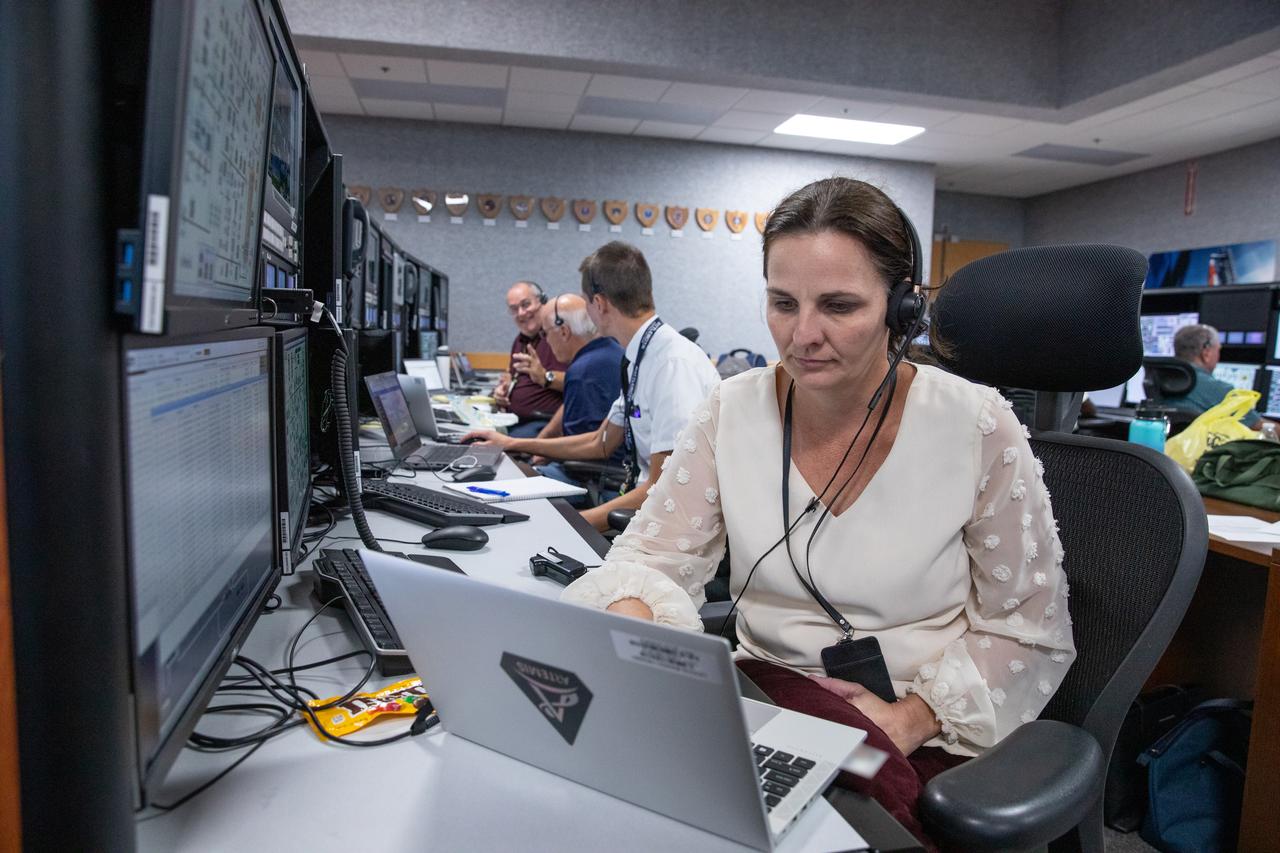
Members of the Artemis II launch team, including personnel with NASA’s Exploration Ground Systems and contractor Jacobs, monitor activities during the Artemis II terminal countdown simulation inside Firing Room 1 in the Launch Control Center at NASA’s Kennedy Space Center in Florida on Monday, Sept. 11, 2023. This is part of a series of simulations to help the team prepare for the launch of Artemis II, the first mission with astronauts under Artemis that will test and check out all of the Orion spacecraft’s systems needed for future crewed missions.
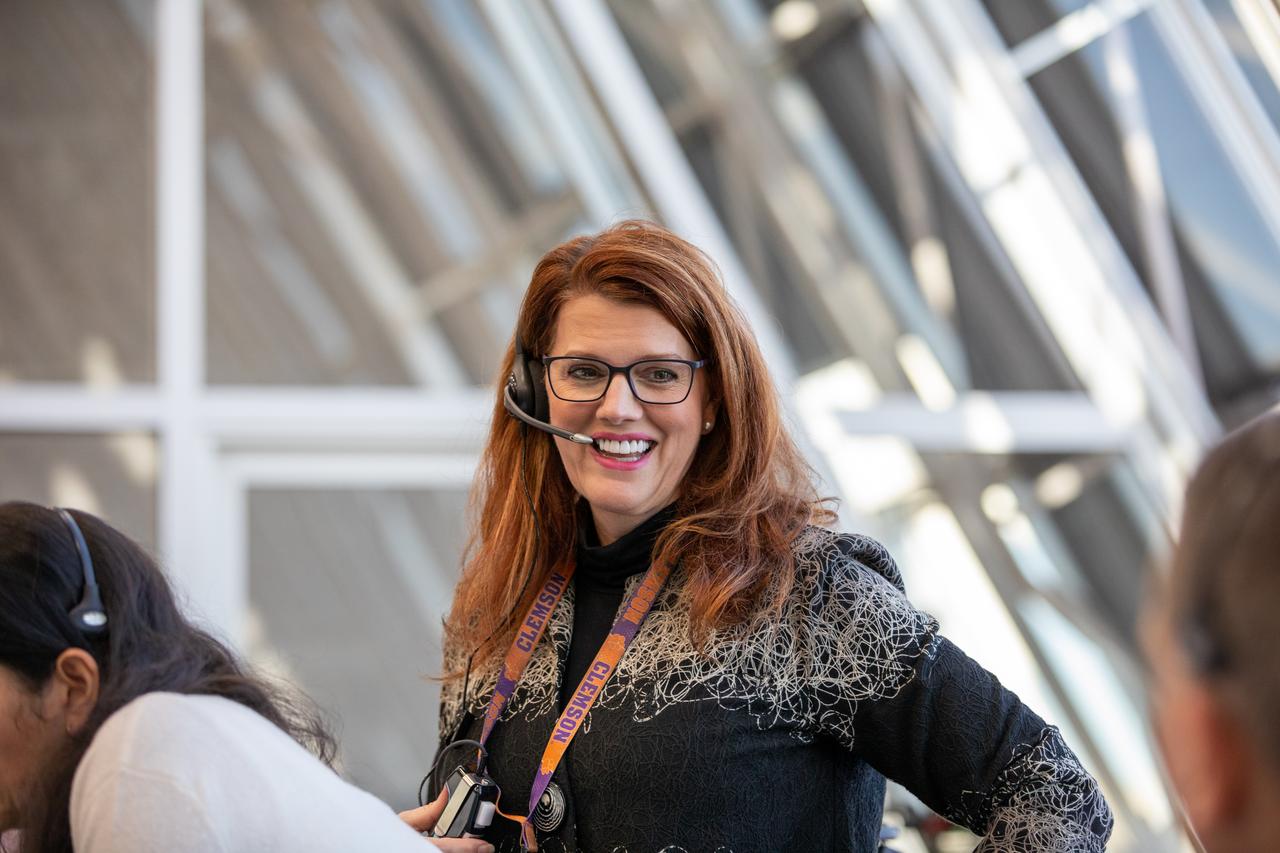
Artemis I Launch Director Charlie Blackwell-Thompson stands at her console inside the Launch Control Center’s Firing Room 1 at NASA’s Kennedy Space Center in Florida during launch countdown training. On Feb. 3, 2020, a team of nearly 100 engineers from Orion, Space Launch System (SLS) and the agency’s Exploration Ground Systems came together to work through a series of simulated challenges, as well as a final countdown procedure. During these exercises, different issues were introduced to familiarize the team with launch day operations, while providing them with an opportunity to practice how they would handle those issues in real-time. Artemis I will be the first integrated test flight of the Orion spacecraft and SLS rocket – the system that will ultimately land the first woman and the next man on the Moon.
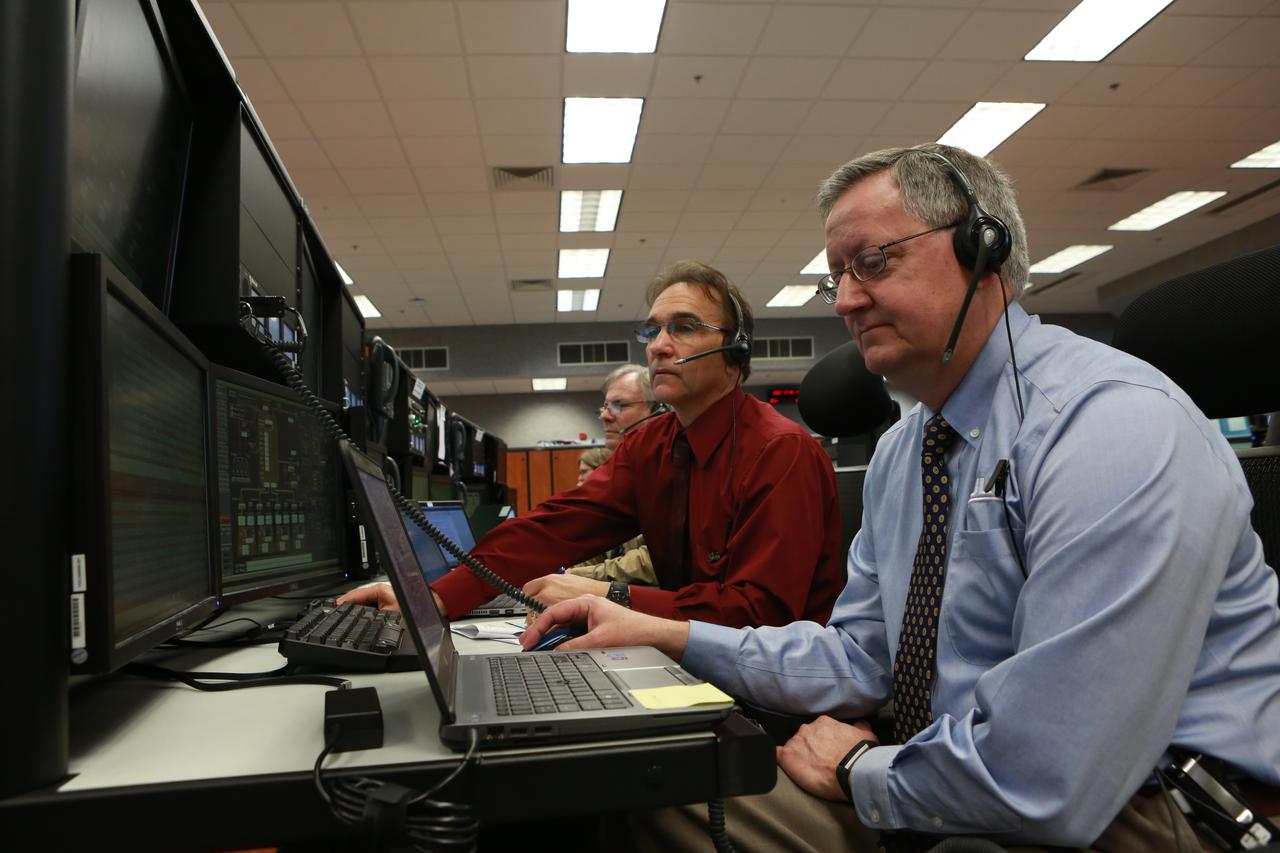
Test Project Engineer Rick Brown, left, and Master Console Operator Jason Robinson, both with Jacobs, monitor operations from their consoles in Firing Room 1 at the Kennedy Space Center's Launch Control Center during a countdown simulation for Exploration Mission 1. It was the agency's first simulation of a portion of the countdown for the first launch of a Space Launch System rocket and Orion spacecraft that will eventually take astronauts beyond low-Earth orbit to destinations such as the Moon and Mars.
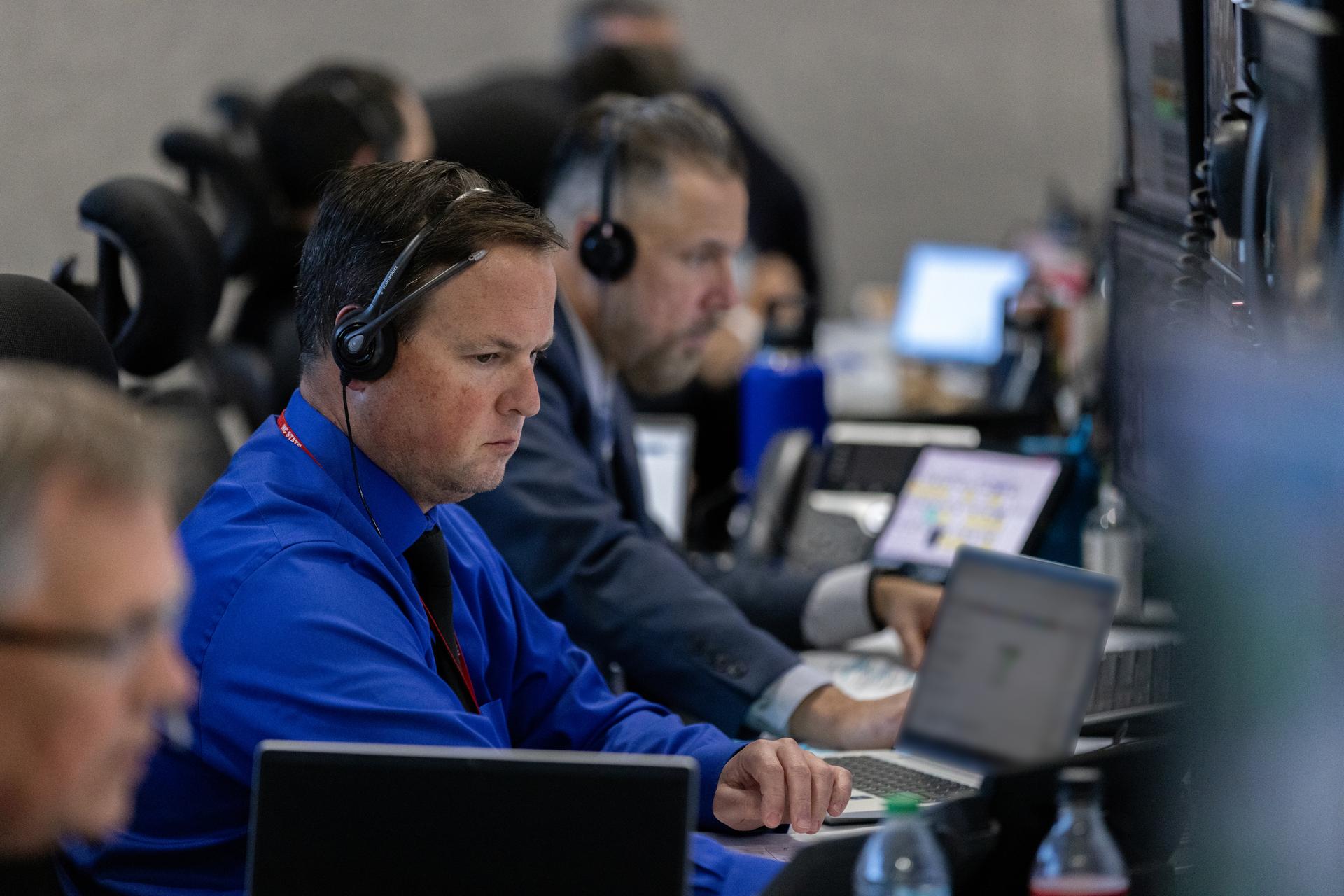
Wes Mosedale, NASA test director, monitors the progress of a countdown demonstration test with Artemis II crewmembers NASA astronauts Reid Wiseman, commander; Victor Glover, pilot; Christina Koch, mission specialist; and CSA (Canadian Space Agency) astronaut Jeremy Hansen, mission specialist onboard their Orion spacecraft from Firing Room 1 of the Rocco A. Petrone Launch Control Center, Saturday, Dec. 20, 2025, at NASA’s Kennedy Space Center in Florida. For this operation, the Artemis II crew and launch teams are simulating the launch day timeline including suit-up, walkout, and spacecraft ingress and egress. Through the Artemis campaign, NASA will send astronauts to explore the Moon for scientific discovery, economic benefits, and to build the foundation for the first crewed missions to Mars, for the benefit of all.
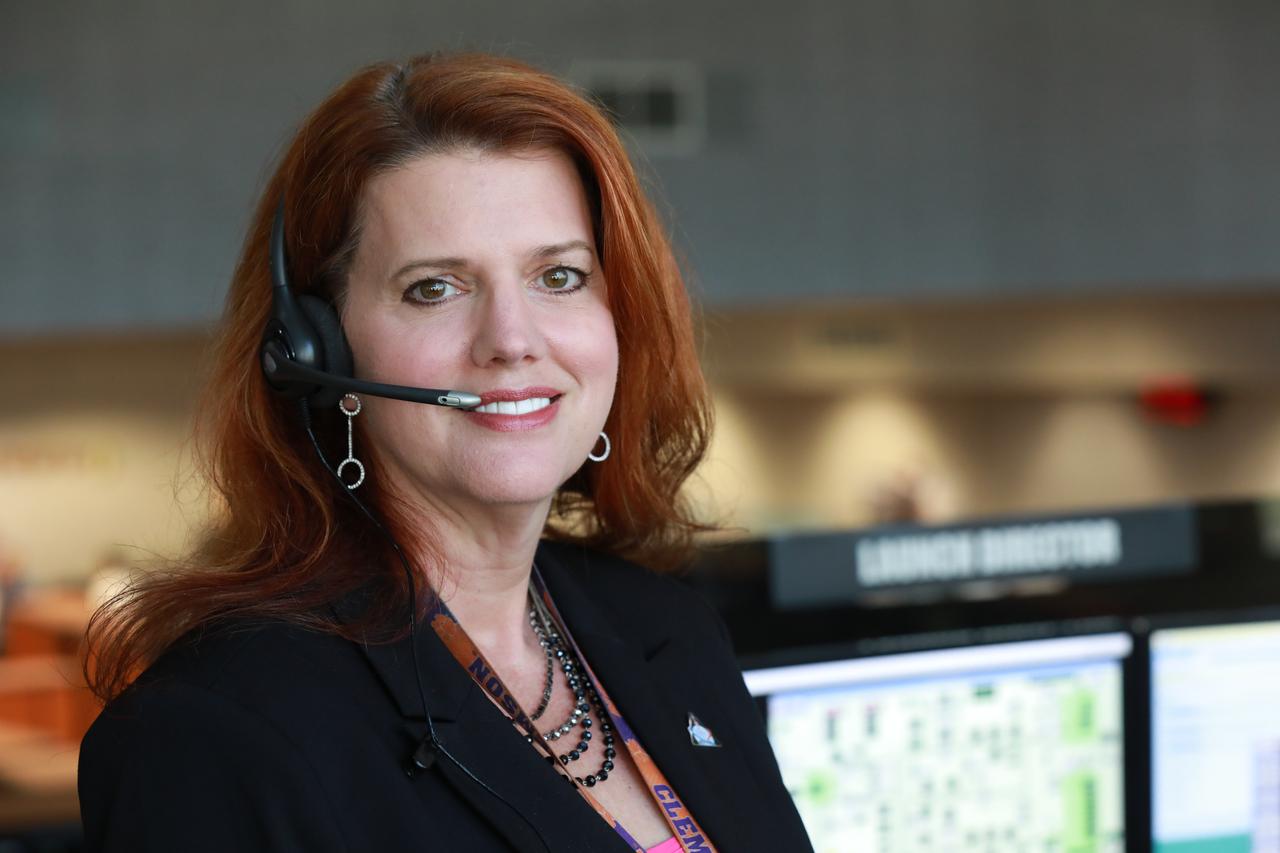
NASA Launch Director Charlie Blackwell-Thompson stands next to her console in Firing Room 1 at the Kennedy Space Center's Launch Control Center during a countdown simulation for Exploration Mission 1. It was the agency's first simulation of a portion of the countdown for the first launch of a Space Launch System rocket and Orion spacecraft that will eventually take astronauts beyond low-Earth orbit to destinations such as the Moon and Mars.

NASA’s Test, Launch and Recovery Operations Branch Chief Jeremy Graeber, who also serves as the assistant launch director, participates in Artemis I launch countdown training on Feb. 3, 2020, inside the Kennedy Space Center’s Firing Room 1 in the Launch Control Center. Under the leadership of Launch Director Charlie Blackwell-Thompson, a team of nearly 100 engineers from Orion, Space Launch System (SLS) and NASA’s Exploration Ground Systems came together to work through a series of simulated challenges, as well as a final countdown procedure. During these exercises, different issues were introduced to familiarize the team with launch day operations, while providing them with an opportunity to practice how they would handle those issues in real-time. Artemis I will be the first integrated test flight of the Orion spacecraft and SLS rocket – the system that will ultimately land the first woman and the next man on the Moon.
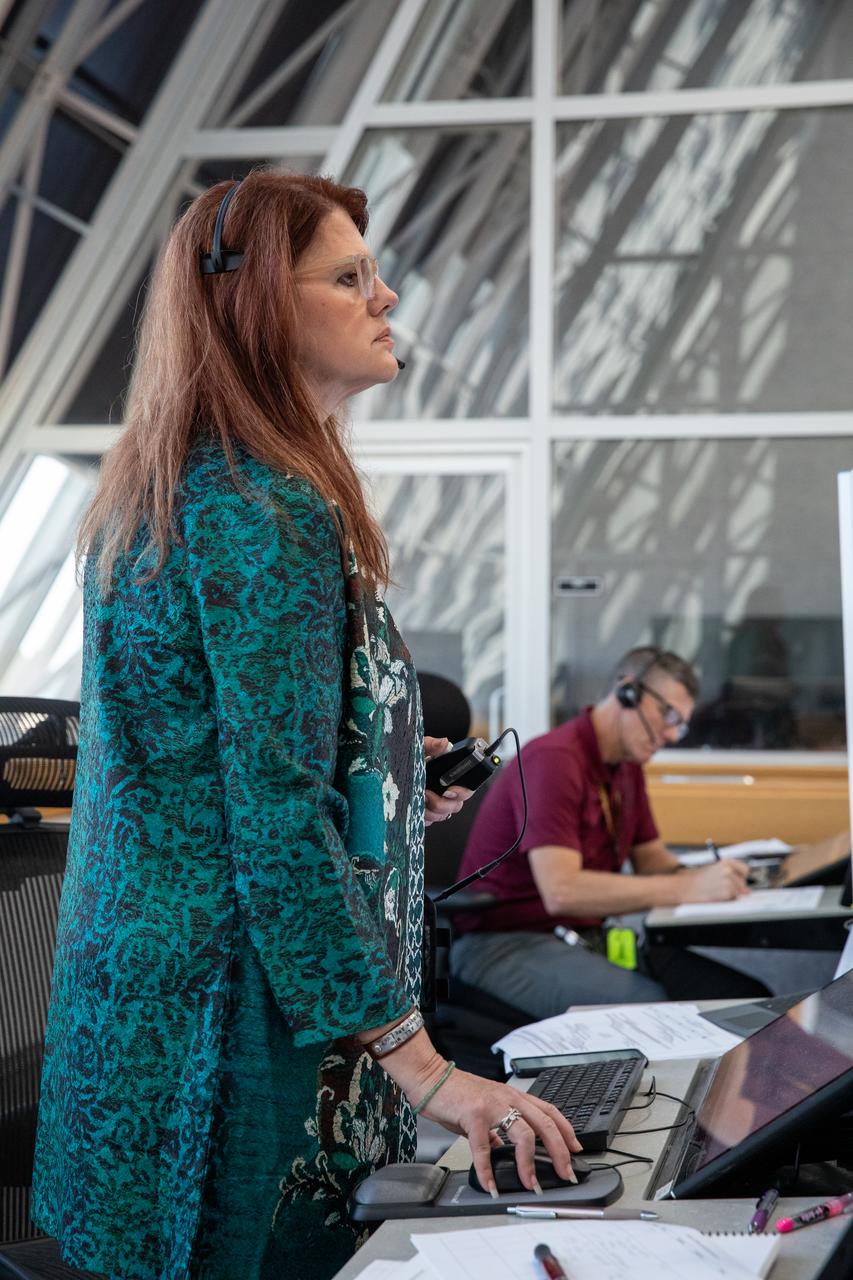
NASA Artemis Launch Director Charlie Blackwell-Thompson, left, and Assistant Artemis Launch Director Jeremy Graeber monitor activities during the Artemis II terminal countdown simulation inside Firing Room 1 in the Launch Control Center at NASA’s Kennedy Space Center in Florida on Monday, Sept. 11, 2023. Members of the Artemis II launch team include personnel with NASA’s Exploration Ground Systems and contractor Jacobs. This is part of a series of simulations to help the team prepare for the launch of Artemis II, the first mission with astronauts under Artemis that will test and check out all of the Orion spacecraft’s systems needed for future crewed missions.
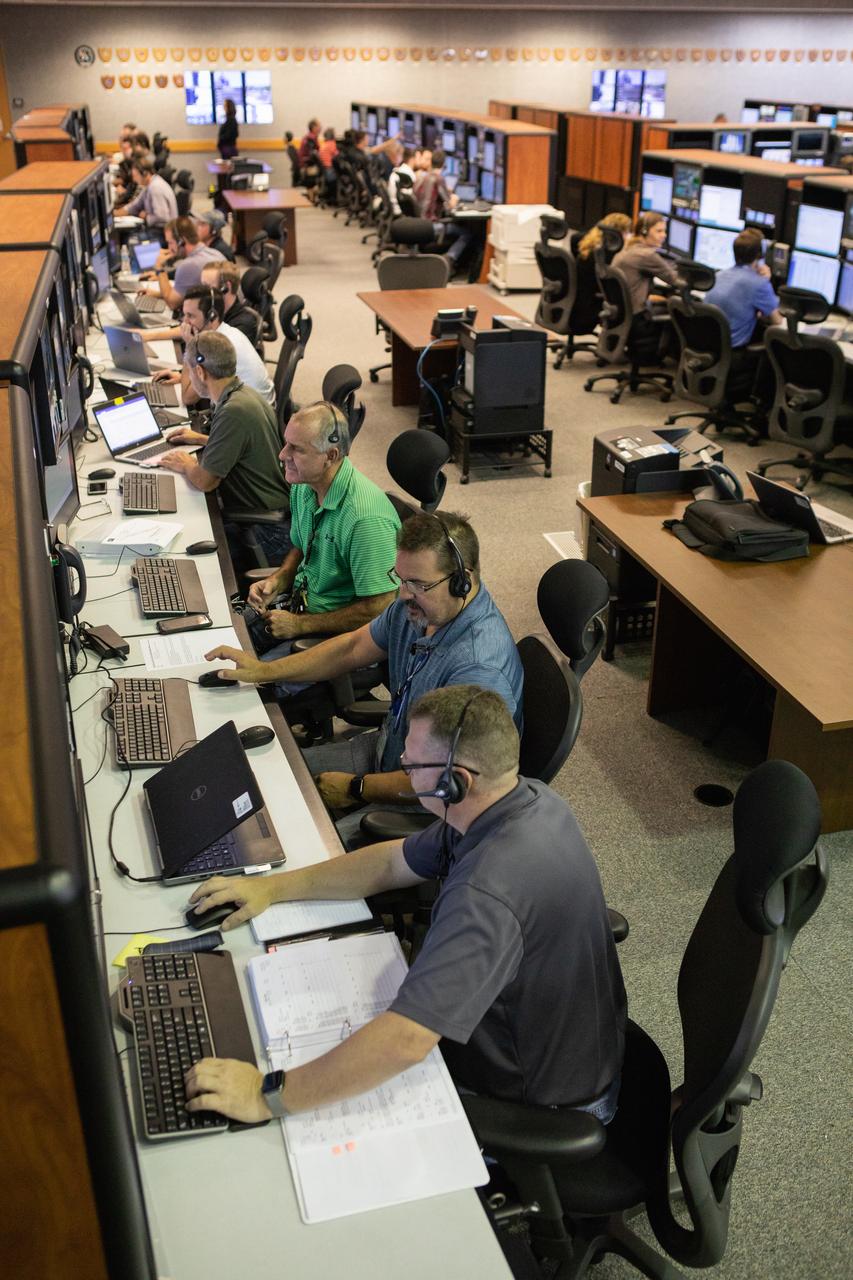
Members of the Artemis 1 launch team, including personnel with NASA’s Exploration Ground Systems (EGS) and Jacobs Test and Operations Contract (TOSC), participate in validation testing inside Firing Room 1 in the Launch Control Center at NASA’s Kennedy Space Center in Florida on July 11, 2019. The team includes personnel with NASA’s Exploration Ground Systems (EGS) and Jacobs Test and Operations Contract (TOSC). The simulation was designed to validate the firing room consoles and communications systems, as well as the new Spaceport Command and Control System (SCCS), which will operate, monitor and coordinate ground equipment in preparation for Artemis 1, the uncrewed first flight of the Space Launch System rocket and Orion spacecraft.
From left, Jeremy Graeber, chief NASA test director, and Charlie Blackwell-Thompson, Artemis 1 launch director, participate in validation testing inside Firing Room 1 in the Launch Control Center at NASA’s Kennedy Space Center in Florida on July 11, 2019. The launch team includes personnel with NASA’s Exploration Ground Systems (EGS) and Jacobs Test and Operations Contract (TOSC). The simulation was designed to validate the firing room consoles and communications systems, as well as the new Spaceport Command and Control System (SCCS), which will operate, monitor and coordinate ground equipment in preparation for Artemis 1, the uncrewed first flight of the Space Launch System rocket and Orion spacecraft.
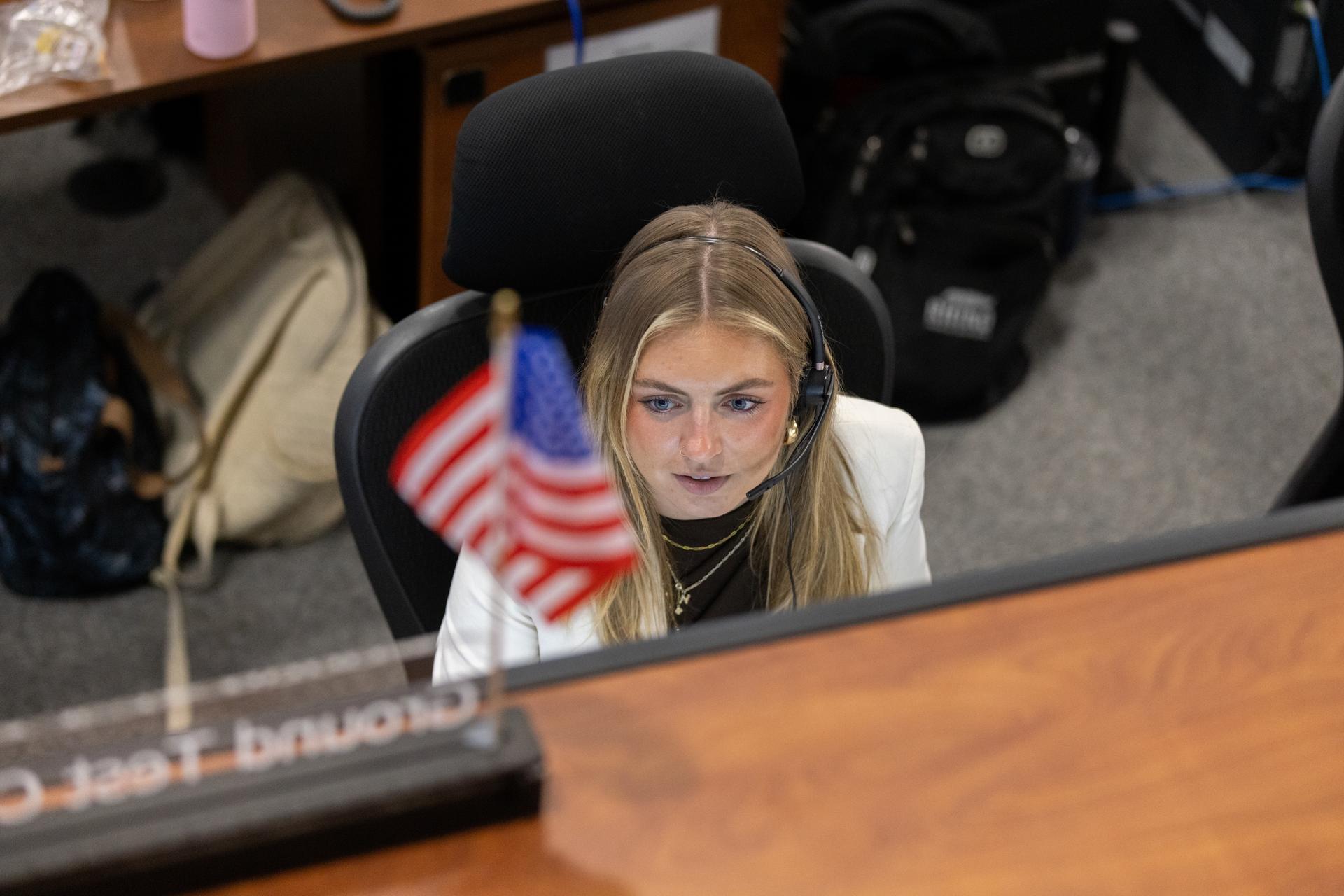
Teams monitor the progress of a countdown demonstration test with Artemis II crewmembers NASA astronauts Reid Wiseman, commander; Victor Glover, pilot; Christina Koch, mission specialist; and CSA (Canadian Space Agency) astronaut Jeremy Hansen, mission specialist onboard their Orion spacecraft from Firing Room 1 of the Rocco A. Petrone Launch Control Center, Saturday, Dec. 20, 2025, at NASA’s Kennedy Space Center in Florida. For this operation, the Artemis II crew and launch teams are simulating the launch day timeline including suit-up, walkout, and spacecraft ingress and egress. Through the Artemis campaign, NASA will send astronauts to explore the Moon for scientific discovery, economic benefits, and to build the foundation for the first crewed missions to Mars, for the benefit of all.
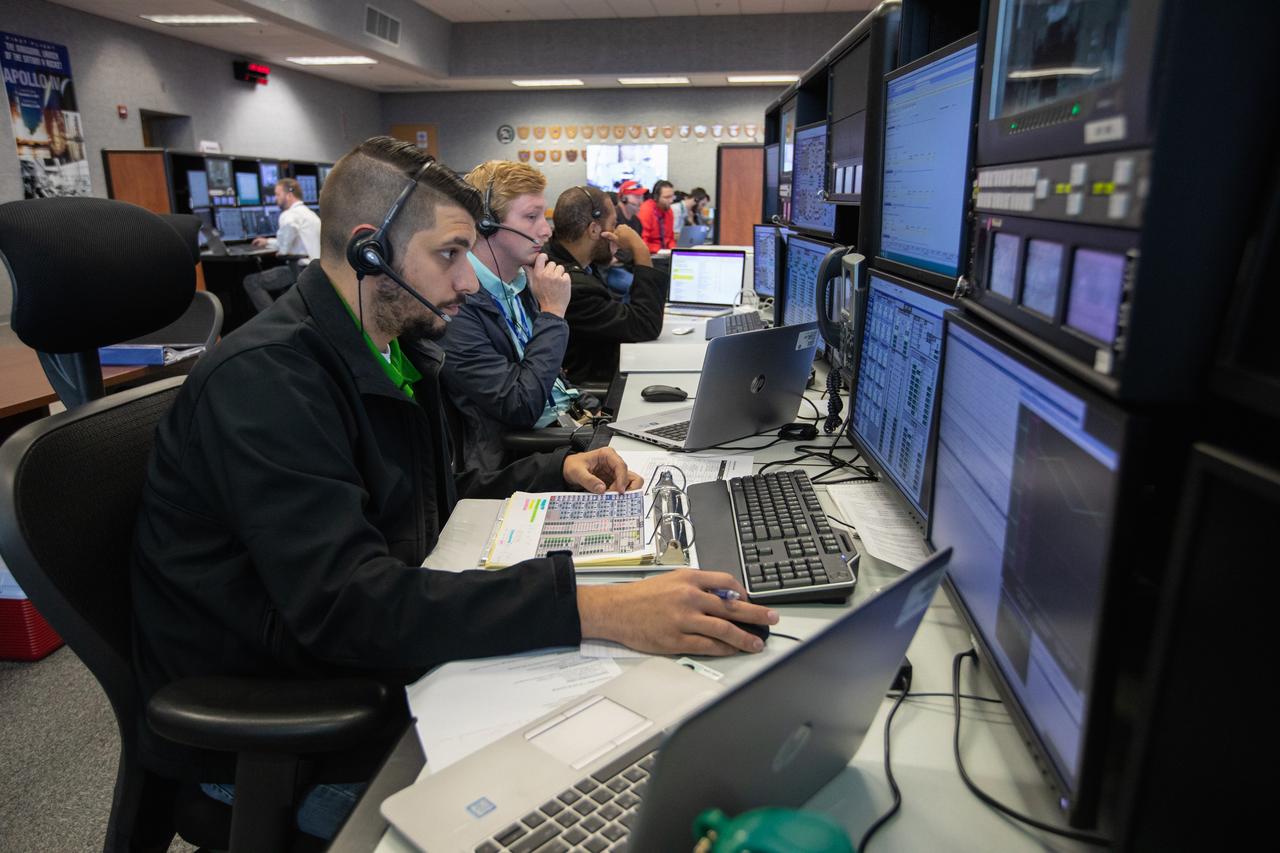
Members of the Artemis 1 launch team, including personnel with NASA’s Exploration Ground Systems (EGS) and Jacobs Test and Operations Contract (TOSC), monitor activities during the first formal terminal countdown simulation inside Firing Room 1 in the Launch Control Center at NASA’s Kennedy Space Center in Florida on July 12, 2019. This was the first in a series of simulations to help the team prepare for the launch of Artemis 1, the uncrewed first flight of the Space Launch System rocket and Orion spacecraft.
!["I was on console as a part of the primary launch team [for Artemis I]. I was the Orion system specialist for Guidance, Navigation, and Control. … In a few missions, we're sending astronauts to the Moon again, so being a part of the very, very first mission [was memorable]. … I wasn't here in 2017 when they first began discussions, but [I can’t even explain how it felt] that within just the four-year journey, I could see how far we had come: from when we were talking about getting the hardware here, to the hardware arriving, and then [to realize] ‘Oh, it's going today, we’re going!’ “… From a personal standpoint, I'm a person of faith, so for me, it was like: We launched at night — it was in the darkest part of the [night]. … Once the rocket launched, [I saw] how it illuminated such a dark space. So even when you're in a dark space, you can let your light shine. And it won't just shine for you and those that are immediately around you, but even people that you don't know will notice it, even people that you will never see will notice your light shining and be inspired.” — Ales-cia Winsley, Guidance, Navigation, and Flight Control Engineer, Kennedy Space Center Interviewer: NASA / Michelle Zajac](https://images-assets.nasa.gov/image/KSC-20231128-PH-CSH01_0004/KSC-20231128-PH-CSH01_0004~medium.jpg)
"I was on console as a part of the primary launch team [for Artemis I]. I was the Orion system specialist for Guidance, Navigation, and Control. … In a few missions, we're sending astronauts to the Moon again, so being a part of the very, very first mission [was memorable]. … I wasn't here in 2017 when they first began discussions, but [I can’t even explain how it felt] that within just the four-year journey, I could see how far we had come: from when we were talking about getting the hardware here, to the hardware arriving, and then [to realize] ‘Oh, it's going today, we’re going!’ “… From a personal standpoint, I'm a person of faith, so for me, it was like: We launched at night — it was in the darkest part of the [night]. … Once the rocket launched, [I saw] how it illuminated such a dark space. So even when you're in a dark space, you can let your light shine. And it won't just shine for you and those that are immediately around you, but even people that you don't know will notice it, even people that you will never see will notice your light shining and be inspired.” — Ales-cia Winsley, Guidance, Navigation, and Flight Control Engineer, Kennedy Space Center Interviewer: NASA / Michelle Zajac

Artemis I Launch Director Charlie Blackwell-Thompson stands at her console inside the Launch Control Center’s Firing Room 1 at NASA’s Kennedy Space Center in Florida during a simulation rehearsing propellant loading on Aug. 18, 2020. The simulation involved members of the launch team practicing the procedures for loading the Space Launch System (SLS) rocket with cryogenics, or super cold propellants. During the exercise, potential problem scenarios were introduced to test the tools, processes, and procedures necessary for fueling the rocket. Artemis I will be the first integrated test flight of SLS and the Orion spacecraft – the system that will ultimately land the first woman and the next man on the Moon by 2024.
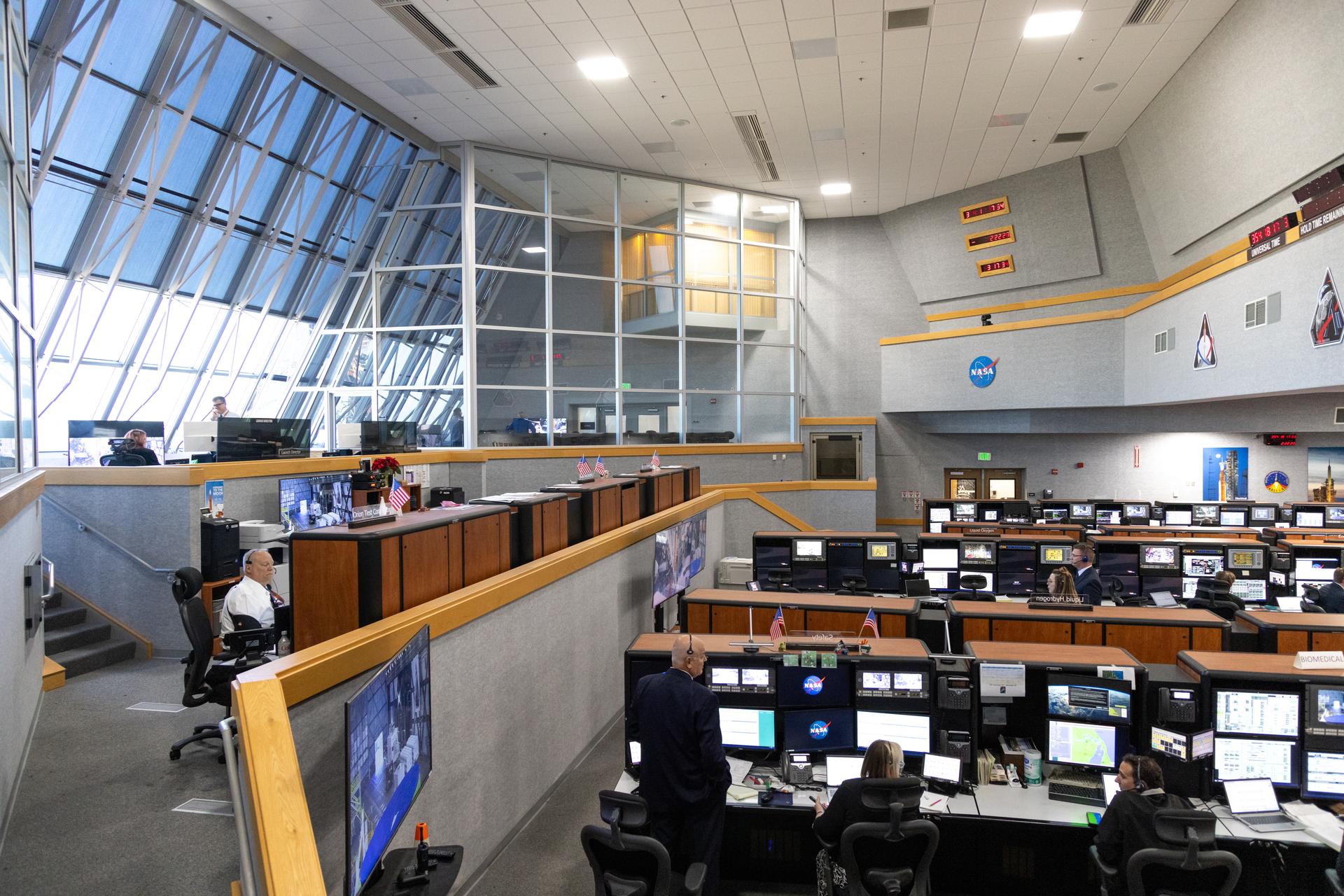
Teams monitor the progress of a countdown demonstration test with Artemis II crewmembers NASA astronauts Reid Wiseman, commander; Victor Glover, pilot; Christina Koch, mission specialist; and CSA (Canadian Space Agency) astronaut Jeremy Hansen, mission specialist onboard their Orion spacecraft from Firing Room 1 of the Rocco A. Petrone Launch Control Center, Saturday, Dec. 20, 2025, at NASA’s Kennedy Space Center in Florida. For this operation, the Artemis II crew and launch teams are simulating the launch day timeline including suit-up, walkout, and spacecraft ingress and egress. Through the Artemis campaign, NASA will send astronauts to explore the Moon for scientific discovery, economic benefits, and to build the foundation for the first crewed missions to Mars, for the benefit of all.
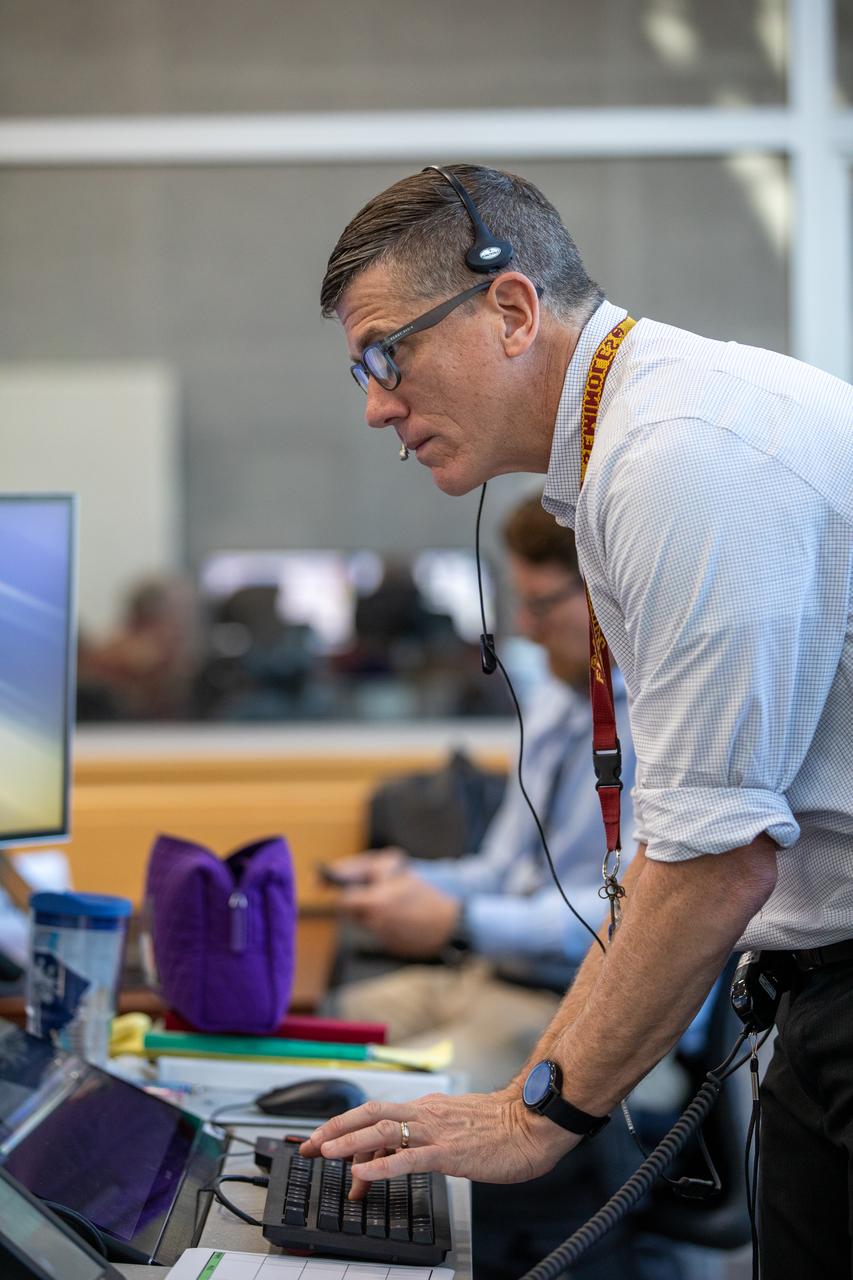
Jeremy Graeber, NASA’s Test, Launch and Recovery Operations branch chief, who also serves as the assistant launch director, participates in an Artemis I launch countdown training simulation inside the Launch Control Center’s Firing Room 1 at NASA’s Kennedy Space Center in Florida. Under the leadership of Launch Director Charlie Blackwell-Thompson, a team of nearly 100 engineers from Orion, Space Launch System (SLS) and NASA’s Exploration Ground Systems came together Feb. 3, 2020, to work through a series of simulated challenges, as well as a final countdown procedure. During these exercises, different issues were introduced to familiarize the team with launch day operations, while providing them with an opportunity to practice how they would handle those issues in real-time. Artemis I will be the first integrated test flight of the Orion spacecraft and SLS rocket – the system that will ultimately land the first woman and the next man on the Moon.
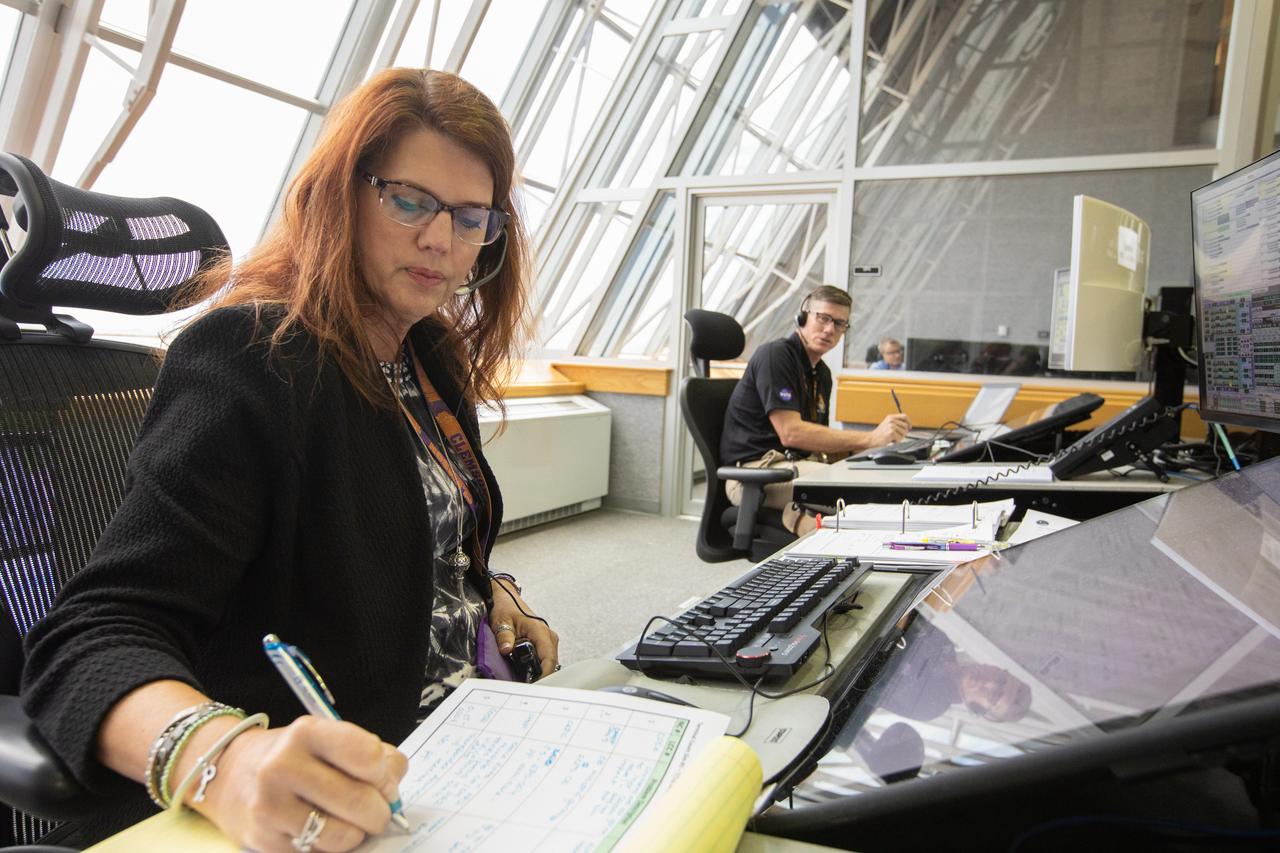
Charlie Blackwell-Thompson, left, launch director for Artemis 1, and Jeremy Graeber, right, chief NASA test director, monitor activities during the first formal terminal countdown simulation inside Firing Room 1 in the Launch Control Center at NASA’s Kennedy Space Center in Florida on July 12, 2019. This was the first in a series of simulations to help the members of the launch team, including personnel with NASA’s Exploration Ground Systems (EGS) and Jacobs Test and Operations Contract (TOSC), prepare for the launch of Artemis 1, the uncrewed first flight of the Space Launch System rocket and Orion spacecraft.
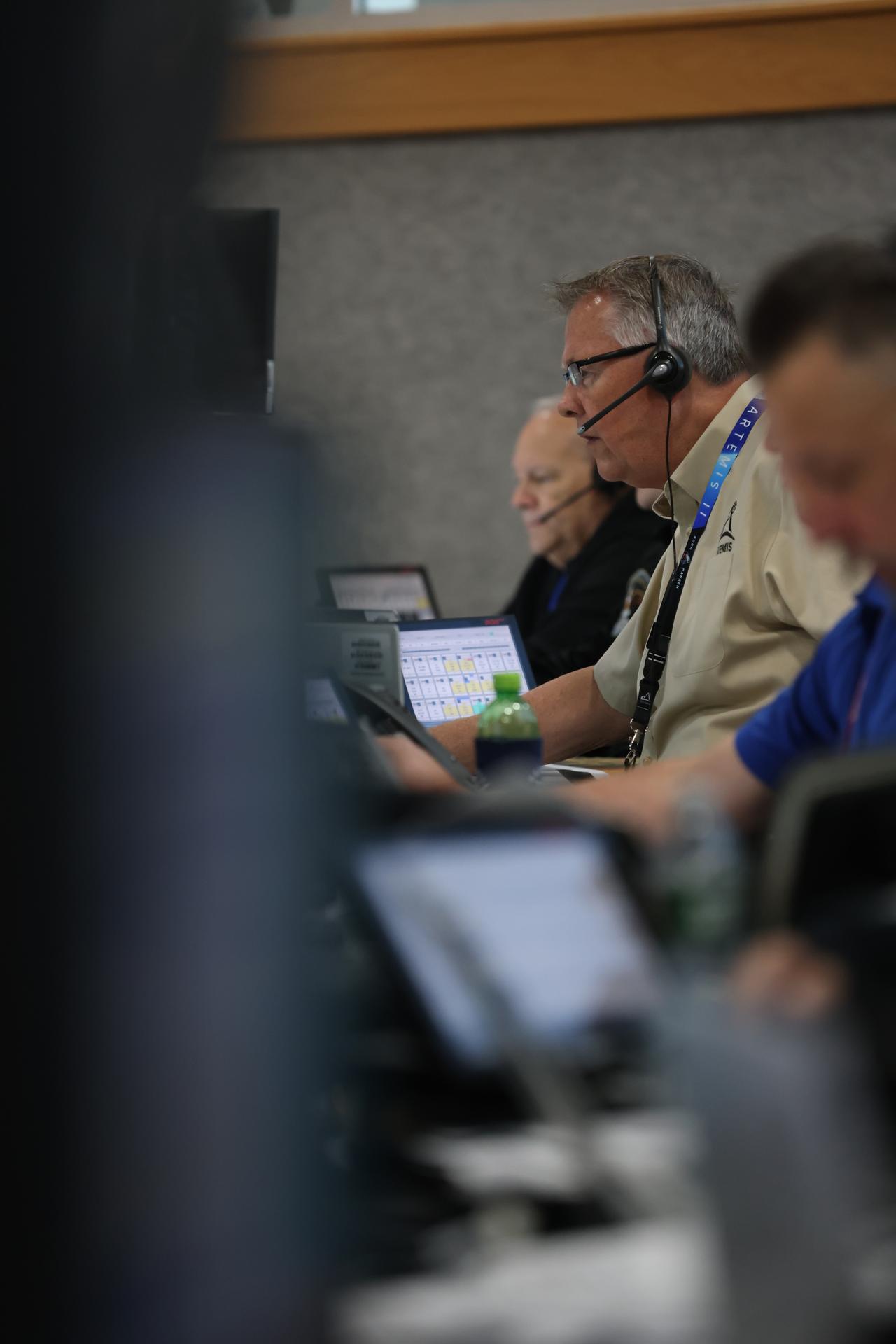
Jeff Spaulding, senior NASA test director for Artemis II at NASA’s Kennedy Space Center in Florida participates in an Artemis II launch countdown simulation inside Firing Room 1 in the Launch Control Center at NASA Kennedy on Wednesday, Oct. 8, 2025. The simulations go through launch day scenarios to help launch team members test software and make adjustments if needed during countdown operations. For Artemis II, four astronauts will venture around the Moon, the first crewed mission on NASA’s path to establishing a long-term presence for science and exploration through Artemis.

Inside the Launch Control Center’s Firing Room 1 at NASA’s Kennedy Space Center in Florida, members of the Artemis I launch team rehearse the procedures for fueling the Space Launch System (SLS) rocket with super cold propellants, or cryogenics, on Aug. 18, 2020. During the cryogenic simulation, potential problem scenarios were introduced to test the tools, processes, and procedures necessary for fueling the rocket. Artemis I will be the first integrated test flight of SLS and the Orion spacecraft – the system that will ultimately land the first woman and the next man on the Moon by 2024.
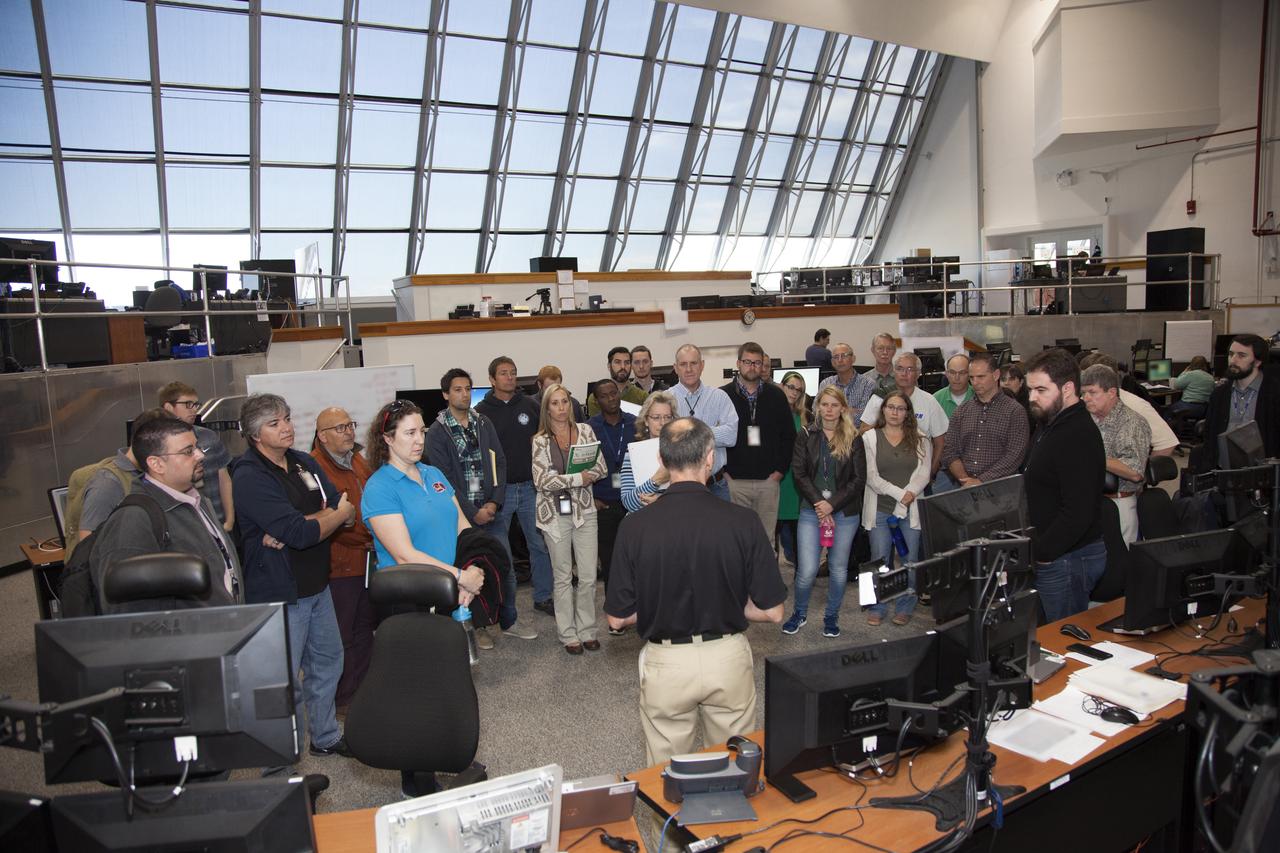
NASA engineers and test directors gather in Firing Room 3 in the Launch Control Center at NASA's Kennedy Space Center in Florida, to watch a demonstration of the automated command and control software for the agency's Space Launch System (SLS) and Orion spacecraft. The software is called the Ground Launch Sequencer. It will be responsible for nearly all of the launch commit criteria during the final phases of launch countdowns. The Ground and Flight Application Software Team (GFAST) demonstrated the software. It was developed by the Command, Control and Communications team in the Ground Systems Development and Operations (GSDO) Program. GSDO is helping to prepare the center for the first test flight of Orion atop the SLS on Exploration Mission 1.
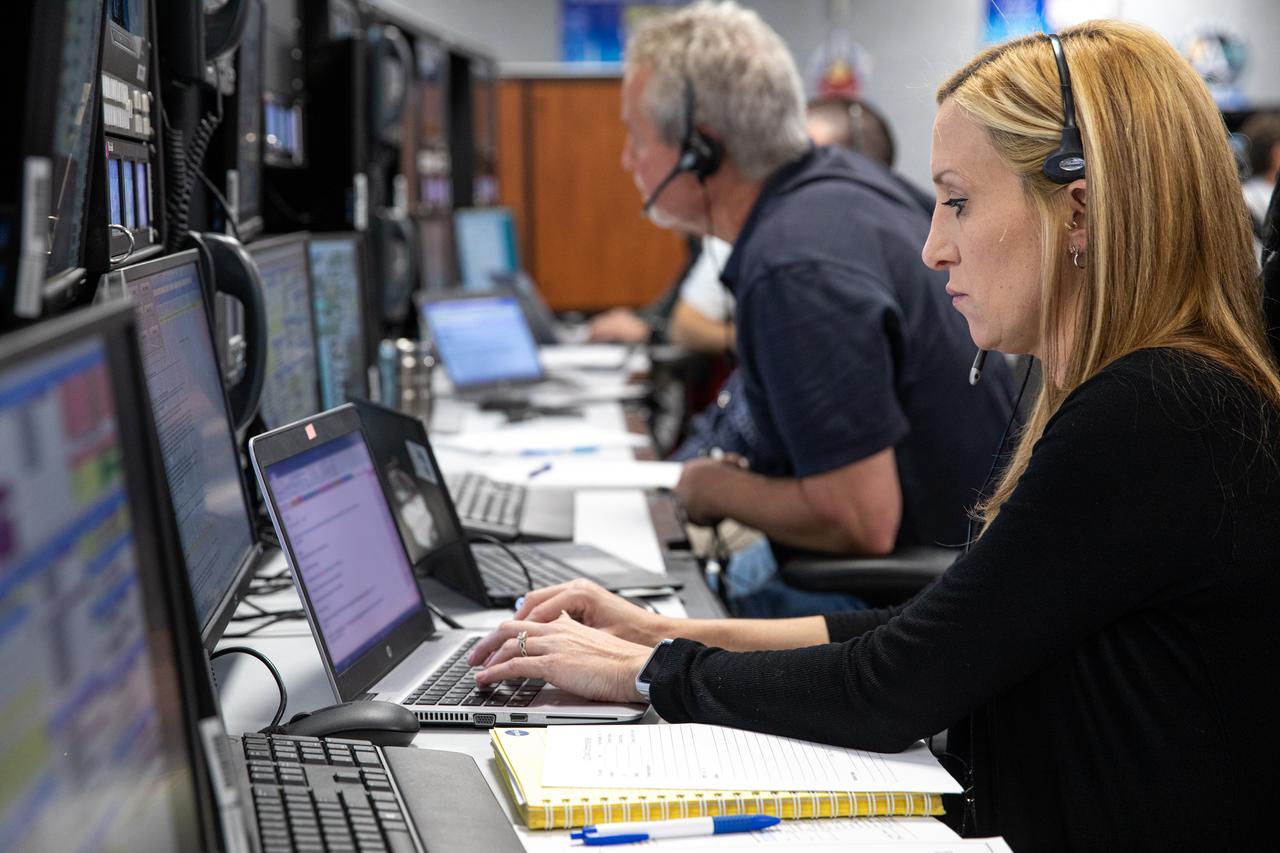
On Feb. 3, 2020, Melissa Batis, an operations project engineer, participates in an Artemis I launch countdown training exercise inside Firing Room 1 in the Launch Control Center at NASA’s Kennedy Space Center in Florida. Under the leadership of Launch Director Charlie Blackwell-Thompson, a team of nearly 100 engineers from Orion, Space Launch System (SLS) and NASA’s Exploration Ground Systems came together to work through a series of simulated challenges, as well as a final countdown procedure. During these exercises, different issues were introduced to familiarize the team with launch day operations, while providing them with an opportunity to practice how they would handle those issues in real-time. Artemis I will be the first integrated test flight of the Orion spacecraft and SLS rocket – the system that will ultimately land the first woman and the next man on the Moon.
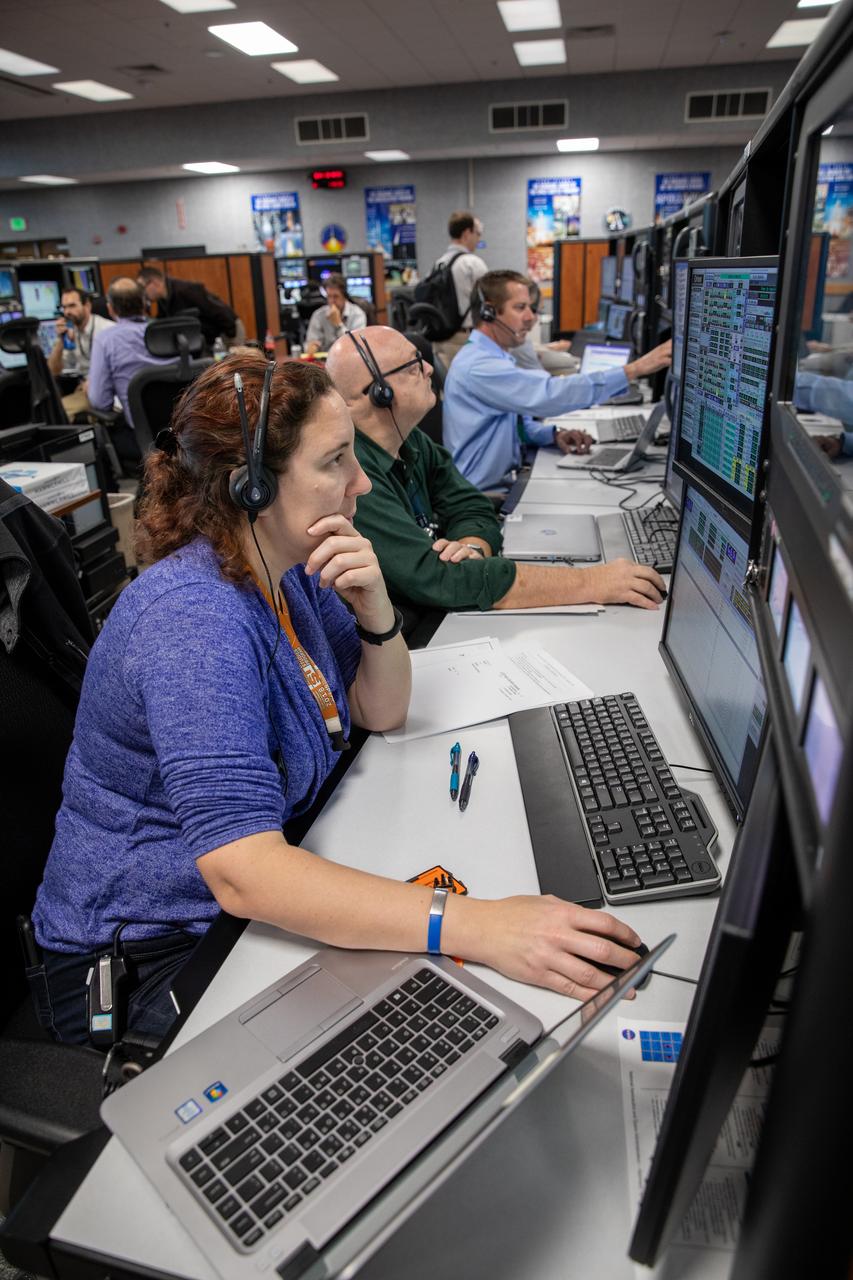
Members of the Artemis I launch team participate in a countdown simulation inside the Launch Control Center’s Firing Room 1 at NASA’s Kennedy Space Center in Florida on Feb. 3, 2020. Under the leadership of Launch Director Charlie Blackwell-Thompson, a team of nearly 100 engineers from Orion, Space Launch System (SLS) and NASA’s Exploration Ground Systems came together to work through a series of simulated challenges, as well as a final countdown procedure. During these exercises, different issues were introduced to familiarize the team with launch day operations, while providing them with an opportunity to practice how they would handle those issues in real-time. Artemis I will be the first integrated test flight of the Orion spacecraft and SLS rocket – the system that will ultimately land the first woman and the next man on the Moon.
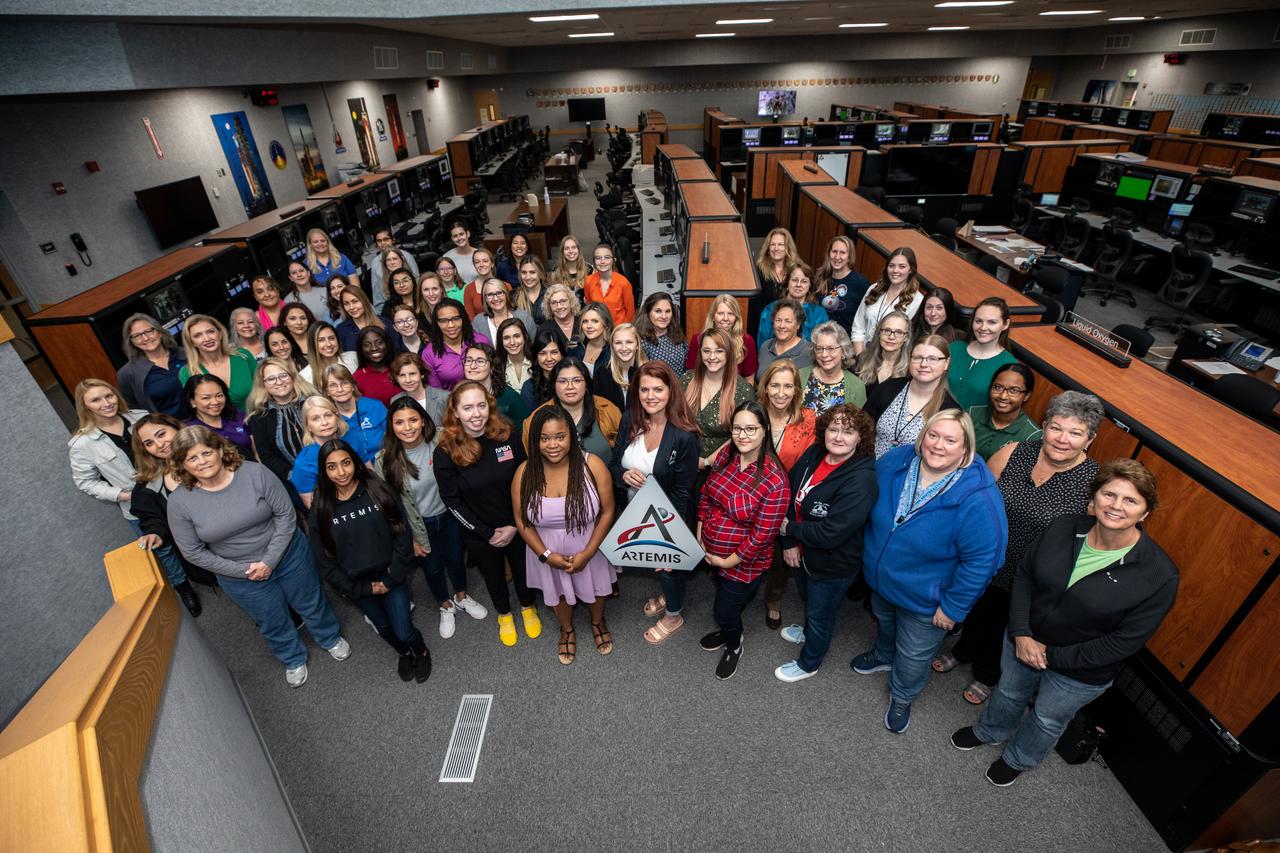
The women who comprise the Artemis launch team are photographed inside Firing Room 1 of the Launch Control Center at NASA’s Kennedy Space Center in Florida on Feb. 10, 2023. In the center, holding the Artemis mission logo, is NASA’s first female Launch Director Charlie Blackwell-Thompson. The team, which is about 30% women, launched the agency’s Artemis I mission – the first in an increasingly complex series of missions to return humans to the Moon – from Kennedy’s Launch Pad 39B on Nov. 16, 2022. The primary goal of Artemis I was to thoroughly test the Space Launch System rocket and Orion spacecraft’s integrated systems before crewed missions to the lunar surface. Under Artemis, NASA aims to land the first woman and first person of color on the Moon and establish sustainable lunar exploration in the near future.
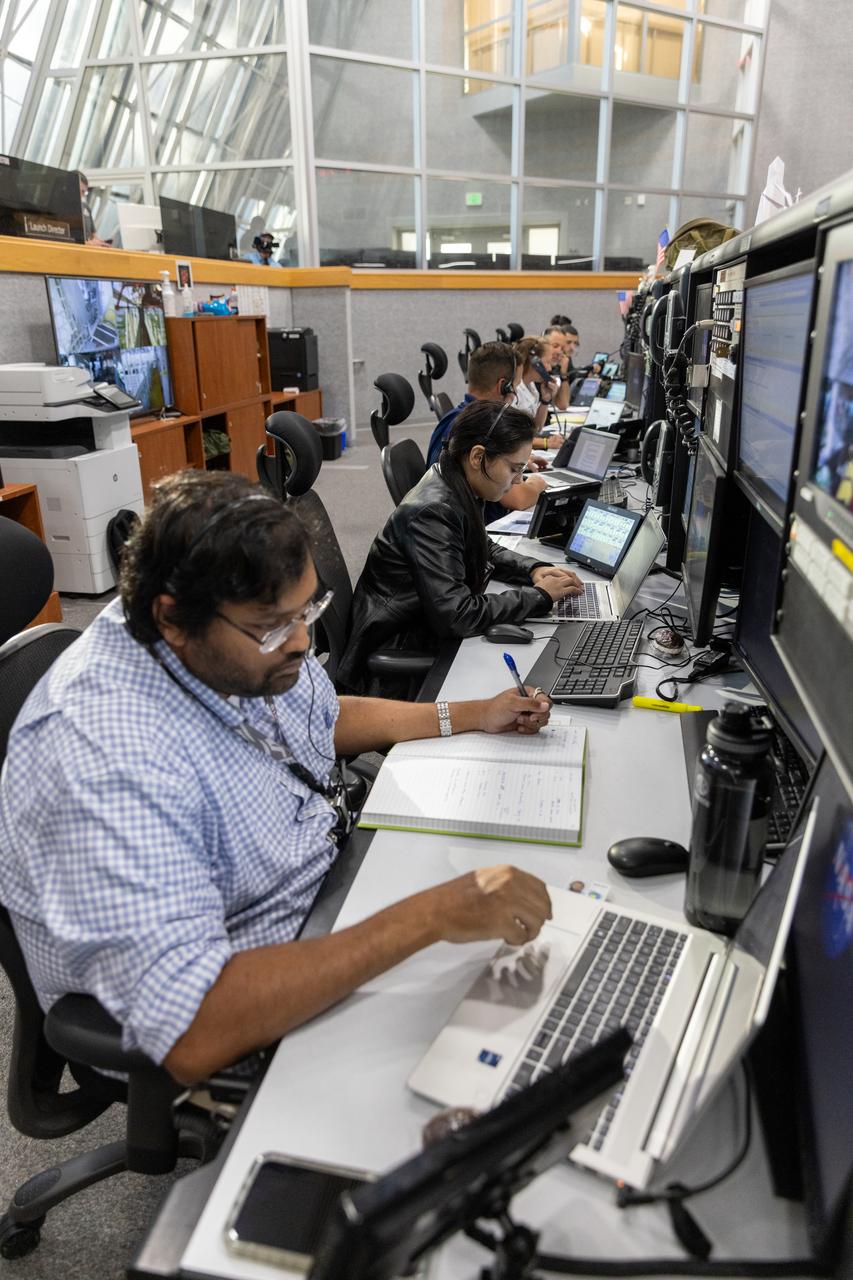
Members of the Artemis II launch team, including personnel with NASA’s Exploration Ground Systems participate in an emergency escape or egress demonstration simulation for the Artemis II mission inside Firing Room 1 in the Launch Control Center at NASA’s Kennedy on Monday, Aug. 12, 2024. Other members of the closeout crew, pad rescue team, and the Exploration Ground Systems Program performed emergency egress demonstrations during a series of integrated system verification tests at Launch Pad 39B in preparation for the Artemis II launch.
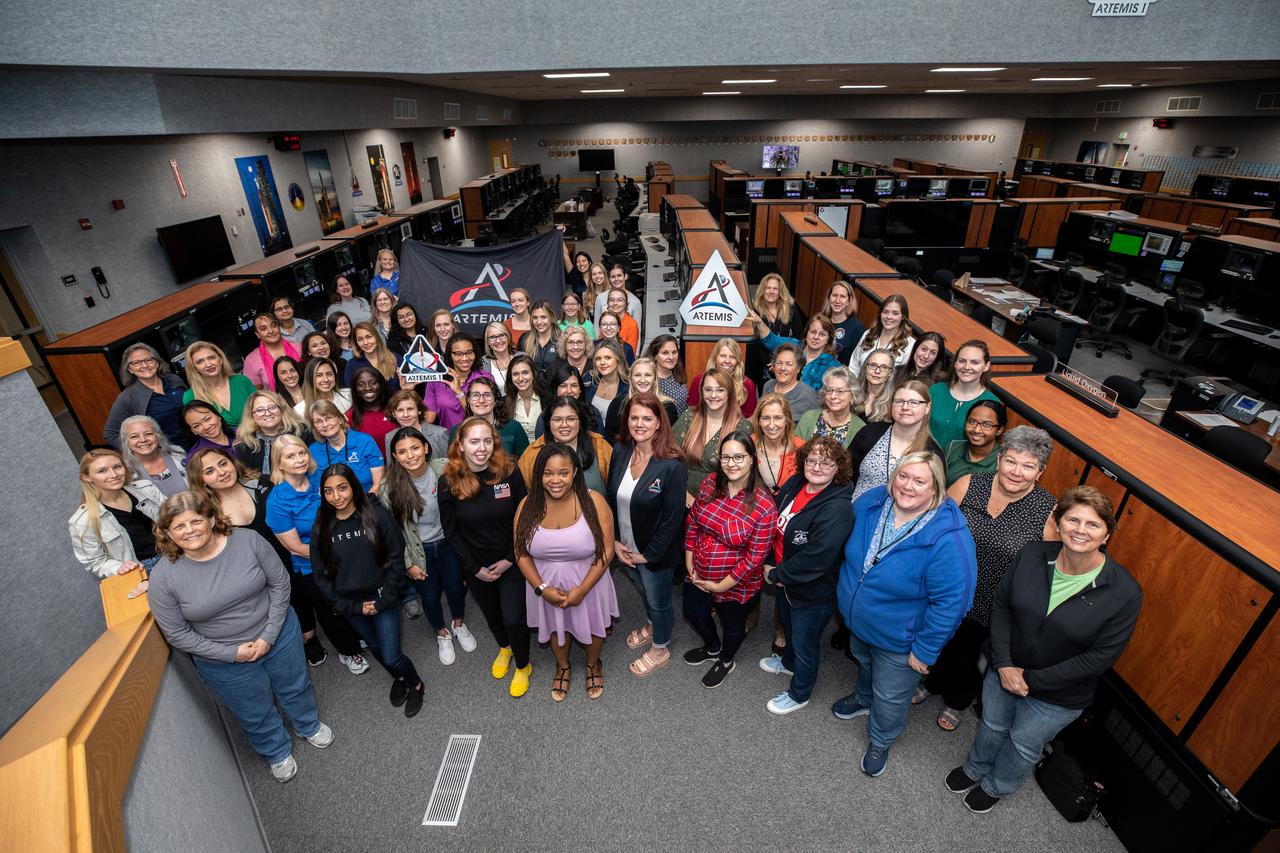
The women who comprise the Artemis launch team are photographed inside Firing Room 1 of the Launch Control Center at NASA’s Kennedy Space Center in Florida on Feb. 10, 2023. In the center of the front row is NASA’s first female Launch Director Charlie Blackwell-Thompson. The team, which is about 30% women, launched the agency’s Artemis I mission – the first in an increasingly complex series of missions to return humans to the Moon – from Kennedy’s Launch Pad 39B on Nov. 16, 2022. The primary goal of Artemis I was to thoroughly test the Space Launch System rocket and Orion spacecraft’s integrated systems before crewed missions to the lunar surface. Under Artemis, NASA aims to land the first woman and first person of color on the Moon and establish sustainable lunar exploration in the near future.
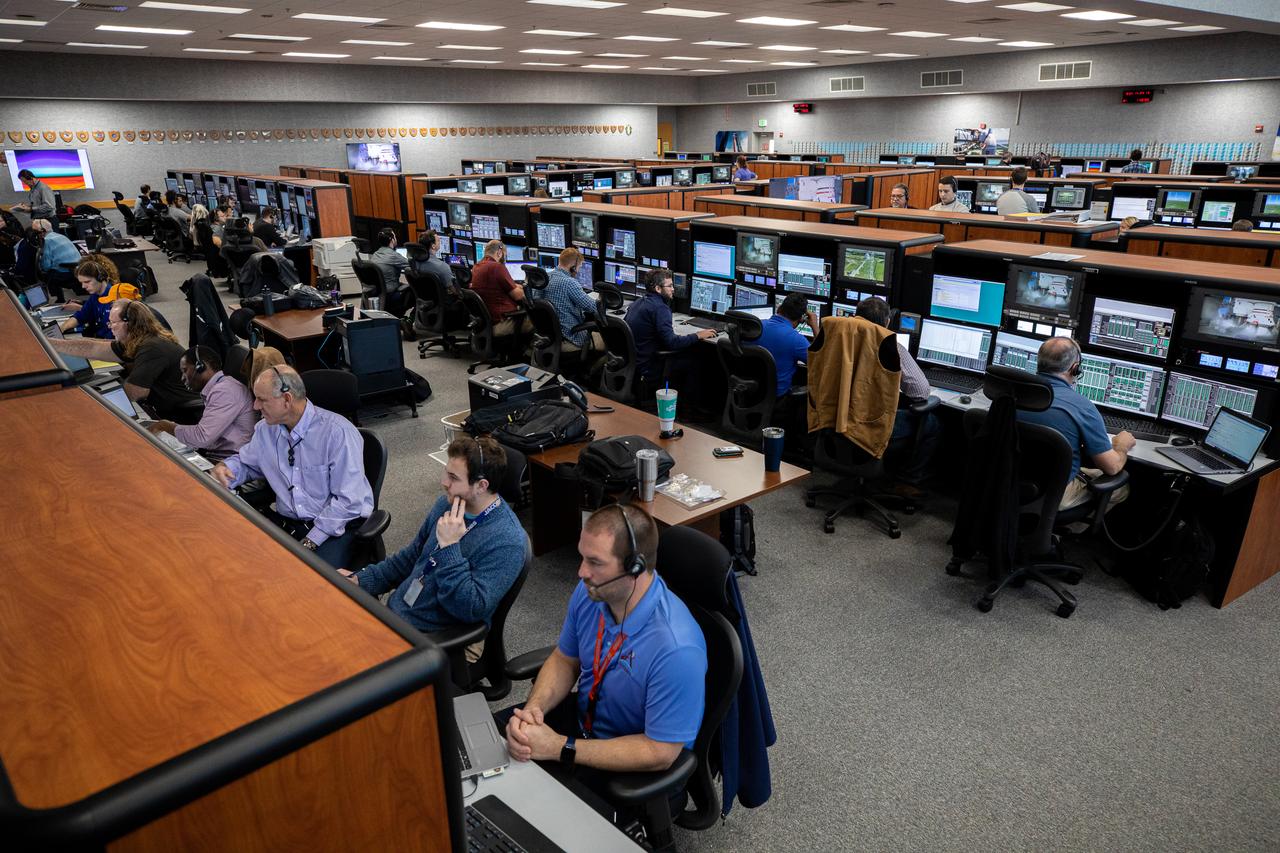
Members of the Artemis I launch team participate in a countdown simulation inside the Launch Control Center’s Firing Room 1 at NASA’s Kennedy Space Center in Florida on Feb. 3, 2020. Under the leadership of Launch Director Charlie Blackwell-Thompson, a team of nearly 100 engineers from Orion, Space Launch System (SLS) and NASA’s Exploration Ground Systems came together to work through a series of simulated challenges, as well as a final countdown procedure. During these exercises, different issues were introduced to familiarize the team with launch day operations, while providing them with an opportunity to practice how they would handle those issues in real-time. Artemis I will be the first integrated test flight of the Orion spacecraft and SLS rocket – the system that will ultimately land the first woman and the next man on the Moon.
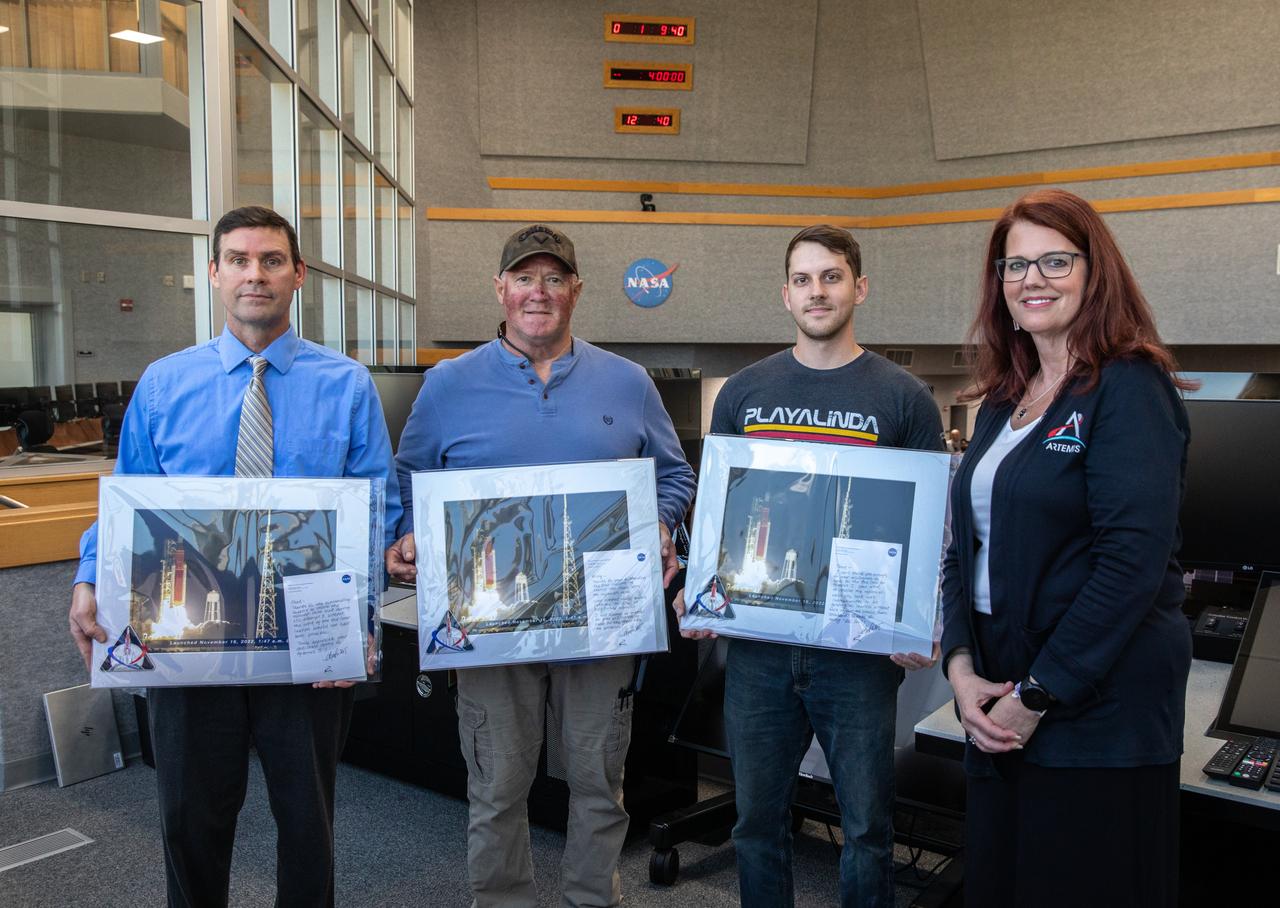
Artemis Launch Director Charlie Blackwell-Thompson (right) acknowledged and honored members of the Artemis team during the inaugural Artemis Launch Director Awards, held March 24, 2023, inside Firing Room 1 of the Rocco A. Petrone Launch Control Center at NASA’s Kennedy Space Center in Florida. Award recipients included members of the red crew, who are employees of ERC – a company that partners with Jacobs, which is the prime contractor on NASA’s Test and Operations Support Contract. From left are ERC employees Chad Garrett, safety engineer; Billy Cairns, cryogenic engineering technician; and Trent Annis, cryogenic engineering technician. The team of technicians are part of the personnel specially trained to conduct operations at the launch pad during cryogenic loading operations at the launch pad. Prior to the launch of Artemis I, the red crew entered the zero deck, or base, of the mobile launcher and tightened several bolts to troubleshoot a valve used to replenish the core stage with liquid hydrogen, which showed a leak with readings above limits. Artemis I launched successfully from Kennedy's Launch Pad 39B at 1:47 a.m. EST on Nov. 16, 2022.
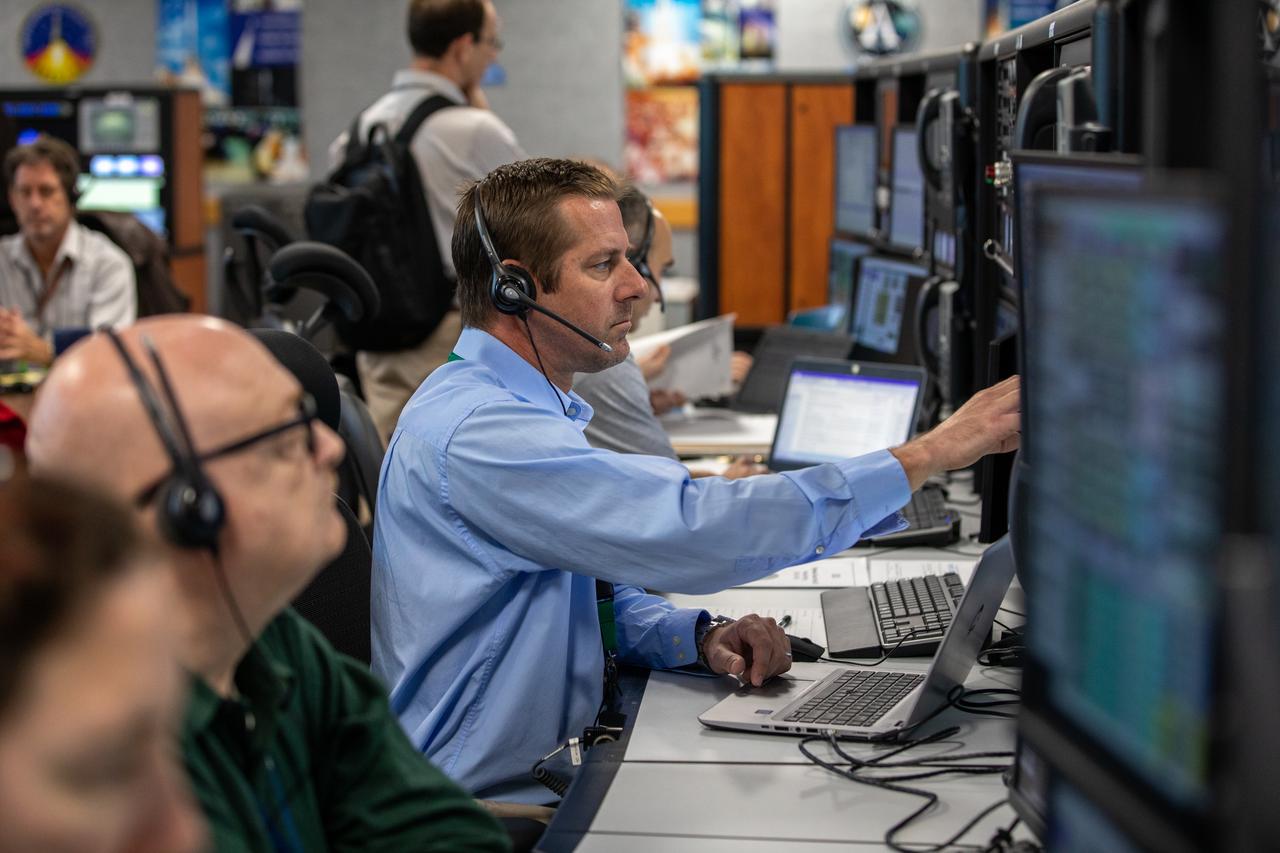
Inside the Launch Control Center’s Firing Room 1 at NASA’s Kennedy Space Center in Florida, Ryan Bowers, a ground launch sequencer support engineer, participates in an Artemis I launch countdown simulation on Feb. 3, 2020. Under the leadership of Launch Director Charlie Blackwell-Thompson, a team of nearly 100 engineers from Orion, Space Launch System (SLS) and NASA’s Exploration Ground Systems came together to work through a series of simulated challenges, as well as a final countdown procedure. During these exercises, different issues were introduced to familiarize the team with launch day operations, while providing them with an opportunity to practice how they would handle those issues in real-time. Artemis I will be the first integrated test flight of the Orion spacecraft and SLS rocket – the system that will ultimately land the first woman and the next man on the Moon.
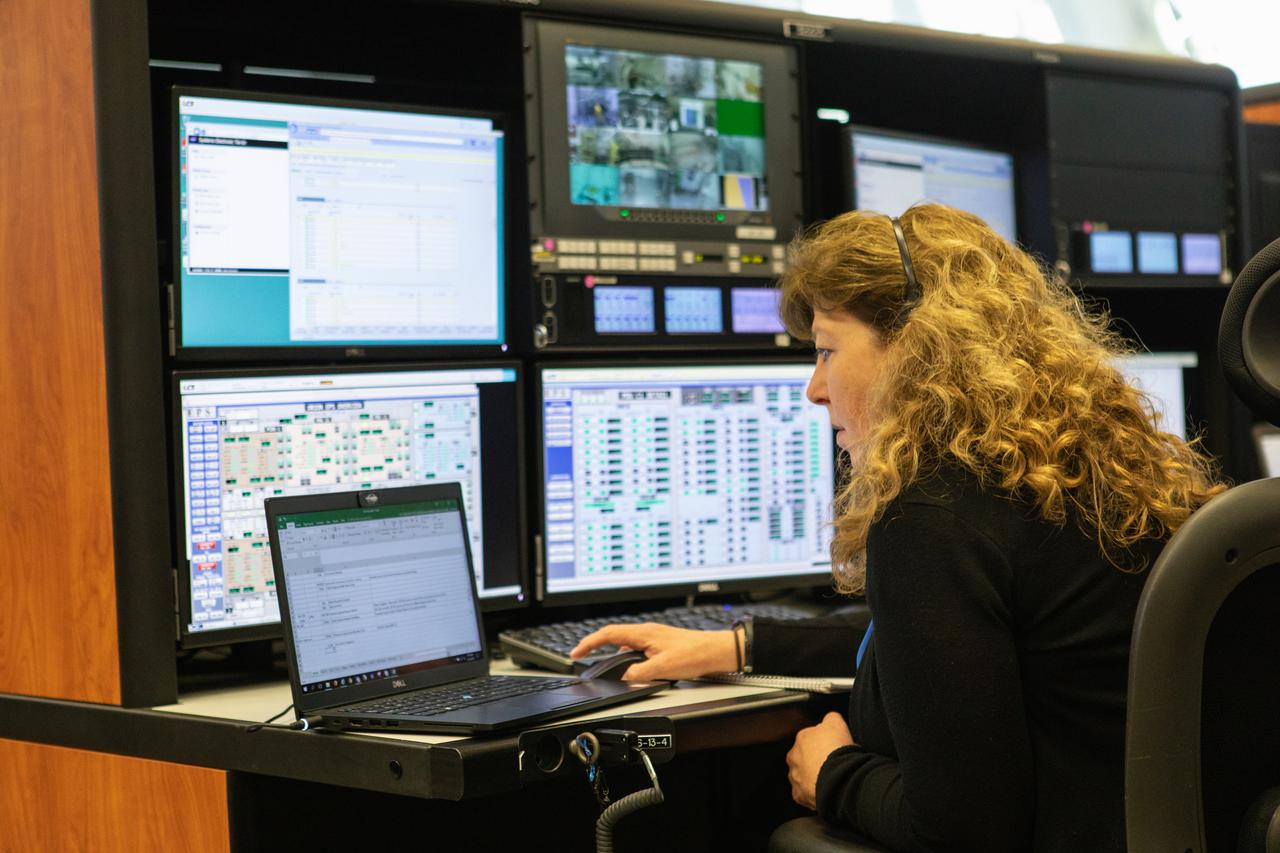
A member of the Artemis 1 launch team participates in validation testing inside Firing Room 1 in the Launch Control Center at NASA’s Kennedy Space Center in Florida on July 11, 2019. The launch team includes personnel with NASA’s Exploration Ground Systems (EGS) and Jacobs Test and Operations Contract (TOSC). The simulation was designed to validate the firing room consoles and communications systems, as well as the new Spaceport Command and Control System (SCCS), which will operate, monitor and coordinate ground equipment in preparation for Artemis 1, the uncrewed first flight of the Space Launch System rocket and Orion spacecraft.
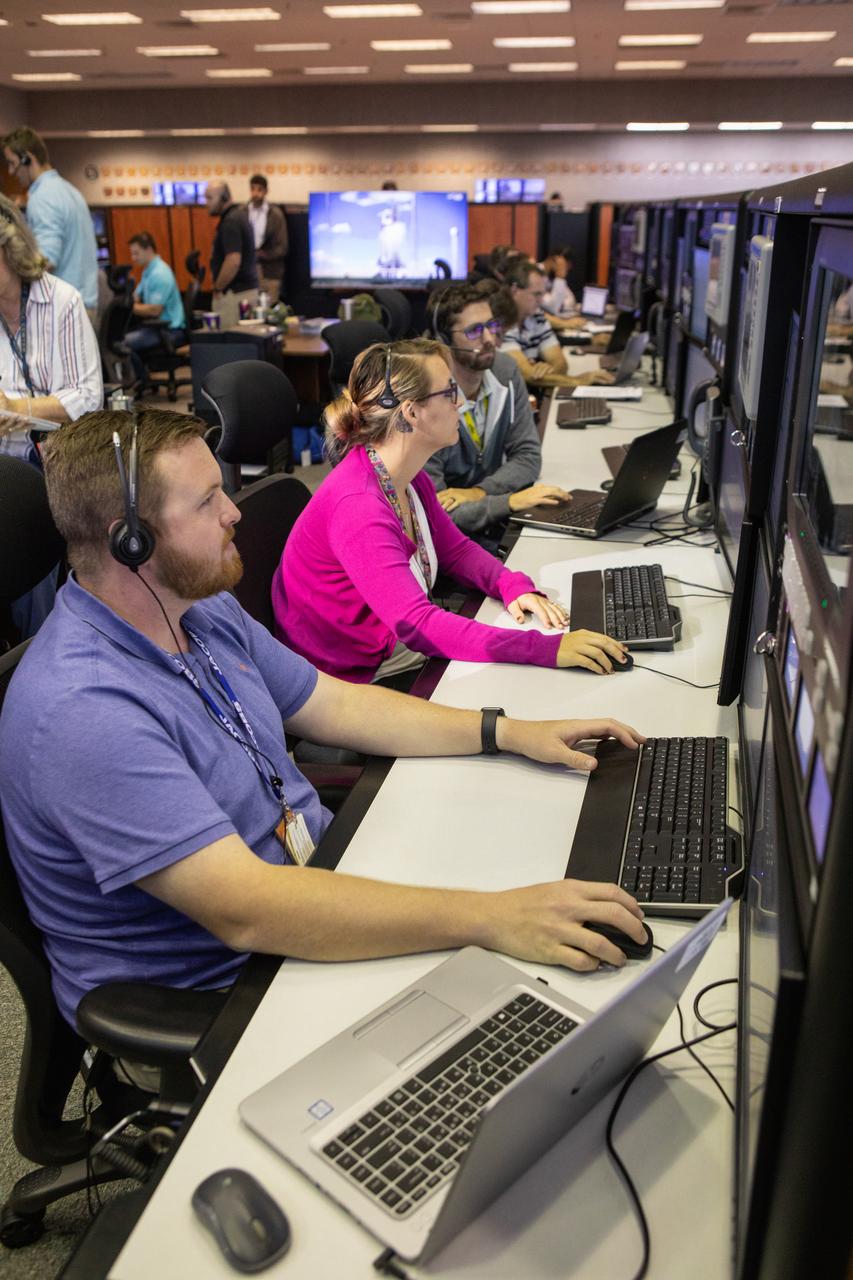
Members of the Artemis 1 launch team, including personnel with NASA’s Exploration Ground Systems (EGS) and Jacobs Test and Operations Contract (TOSC), participate in validation testing inside Firing Room 1 in the Launch Control Center at NASA’s Kennedy Space Center in Florida on July 11, 2019. The simulation was designed to validate the firing room consoles and communications systems, as well as the new Spaceport Command and Control System (SCCS), which will operate, monitor and coordinate ground equipment in preparation for Artemis 1, the uncrewed first flight of the Space Launch System rocket and Orion spacecraft.

Artemis launch director, Charlie Blackwell-Thompson and associate administrator of NASA’s Space Operations Mission Directorate, Kathryn Lueders finish coloring in the other eye of the Japanese Daruma doll to highlight the successful Artemis I mission on Dec. 20, 2022 in Firing Room 1 of the Rocco A. Petrone Launch Control Center at NASA’s Kennedy Space Center in Florida. The Japan Aerospace Exploration Agency gave a Daruma doll to both Lueders and associate administrator for the Exploration Systems Development Mission Directorate, Jim Free as a token of good luck prior to the Artemis I launch. Free filled in his eye on Dec. 11, 2022, with Artemis I Ascent and Entry Flight Director Judd Frieling in Mission Control Center at NASA’s Johnson Space Center in Houston, Texas.
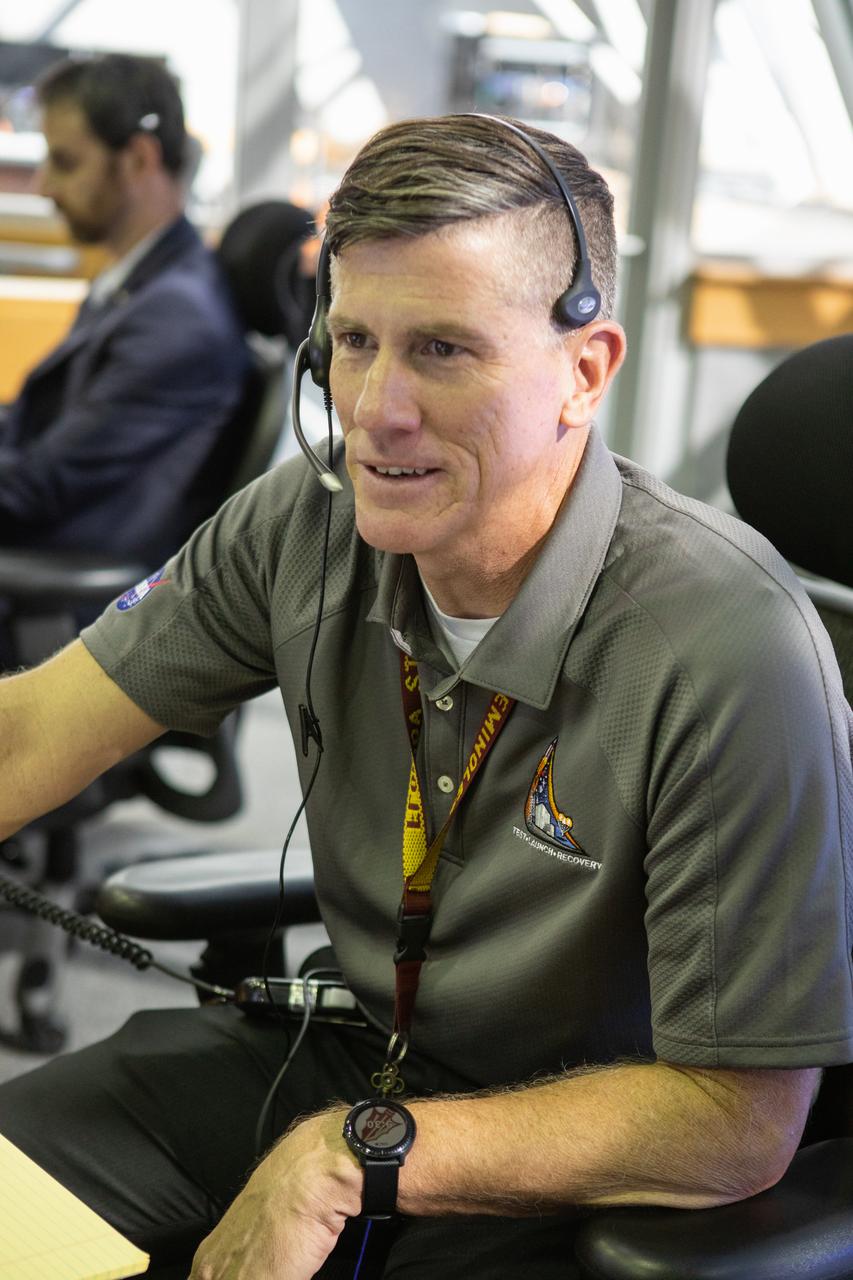
Jeremy Graeber, chief NASA test director, participates in validation testing inside Firing Room 1 in the Launch Control Center at NASA’s Kennedy Space Center in Florida on July 11, 2019. The Artemis 1 launch team includes personnel with NASA’s Exploration Ground Systems (EGS) and Jacobs Test and Operations Contract (TOSC). The simulation was designed to validate the firing room consoles and communications systems, as well as the new Spaceport Command and Control System (SCCS), which will operate, monitor and coordinate ground equipment in preparation for Artemis 1, the uncrewed first flight of the Space Launch System rocket and Orion spacecraft.
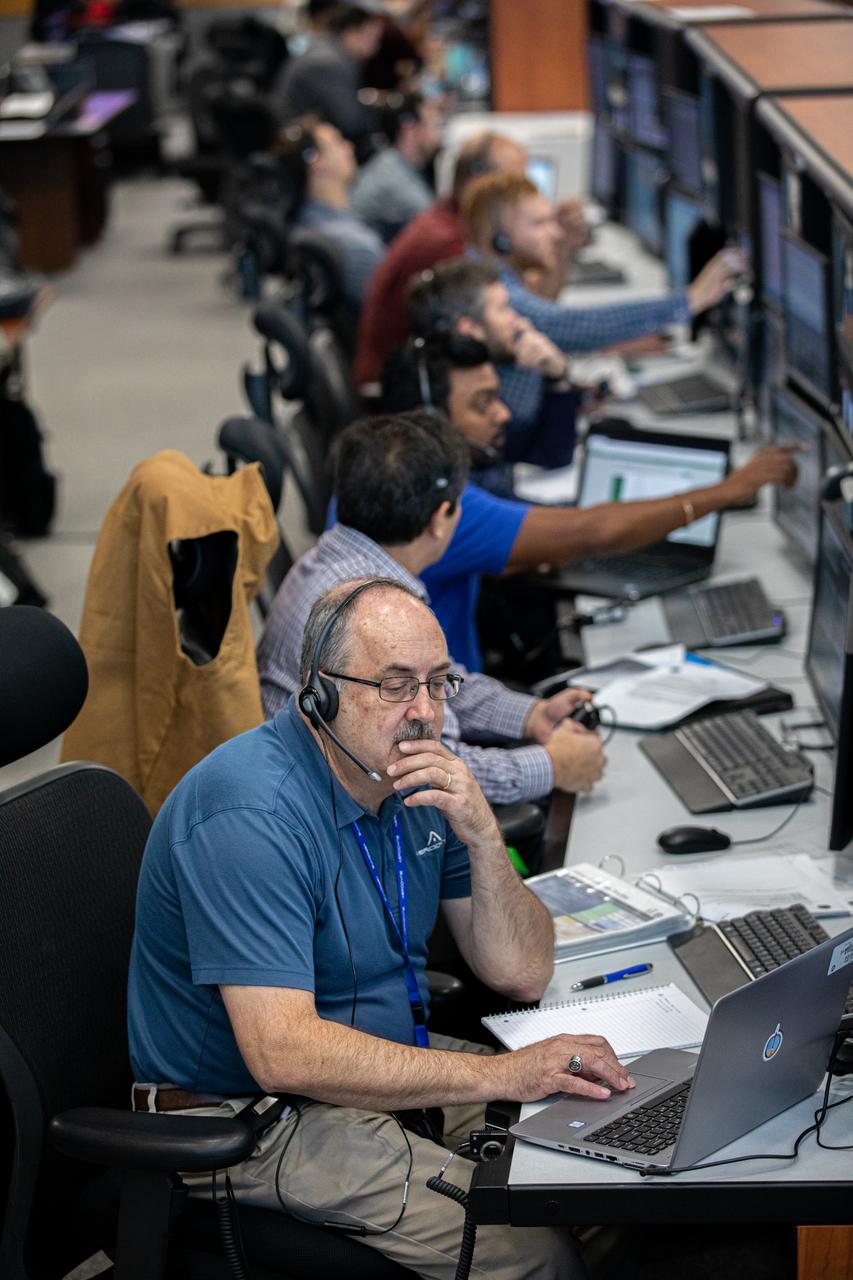
Members of the Artemis I launch team participate in a countdown simulation inside the Launch Control Center’s Firing Room 1 at NASA’s Kennedy Space Center in Florida on Feb. 3, 2020. Under the leadership of Launch Director Charlie Blackwell-Thompson, a team of nearly 100 engineers from Orion, Space Launch System (SLS) and NASA’s Exploration Ground Systems came together to work through a series of simulated challenges, as well as a final countdown procedure. During these exercises, different issues were introduced to familiarize the team with launch day operations, while providing them with an opportunity to practice how they would handle those issues in real-time. Artemis I will be the first integrated test flight of the Orion spacecraft and SLS rocket – the system that will ultimately land the first woman and the next man on the Moon.
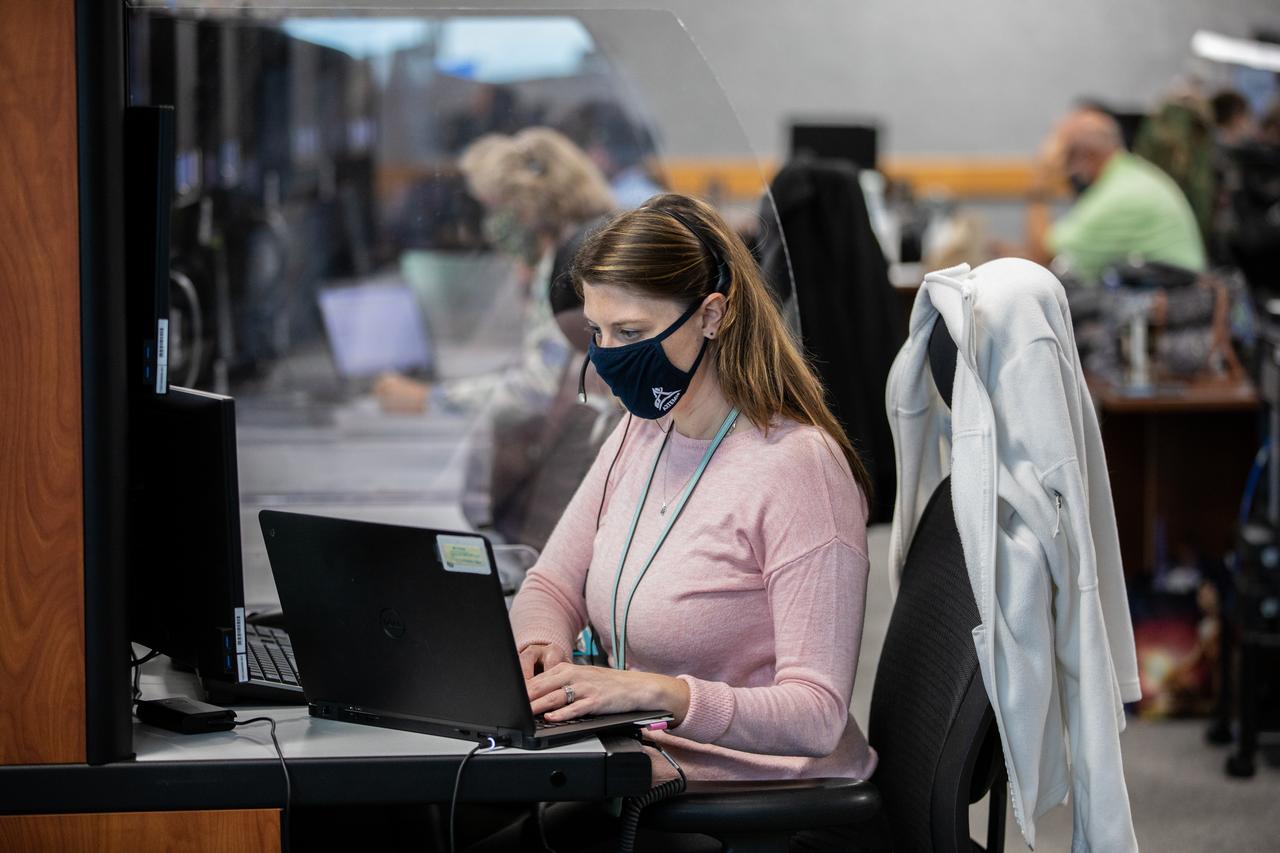
Amanda Arrieta, a members of the cryogenics launch team, participates in a cryogenic propellant loading simulation inside Firing Room 1 in the Launch Control Center on Nov. 2, 2020, at NASA’s Kennedy Space Center in Florida. A team of engineers with Exploration Ground Systems and Jacobs are rehearsing the steps to load the super-cooled liquid hydrogen and liquid oxygen into the Space Launch System’s (SLS) core and second stages to prepare for Artemis I. The first in a series of increasingly complex missions, Artemis I will test the Orion spacecraft and Space Launch System as an integrated system ahead of crewed flights to the Moon. NASA will land the first woman and the next man on the Moon in 2024.
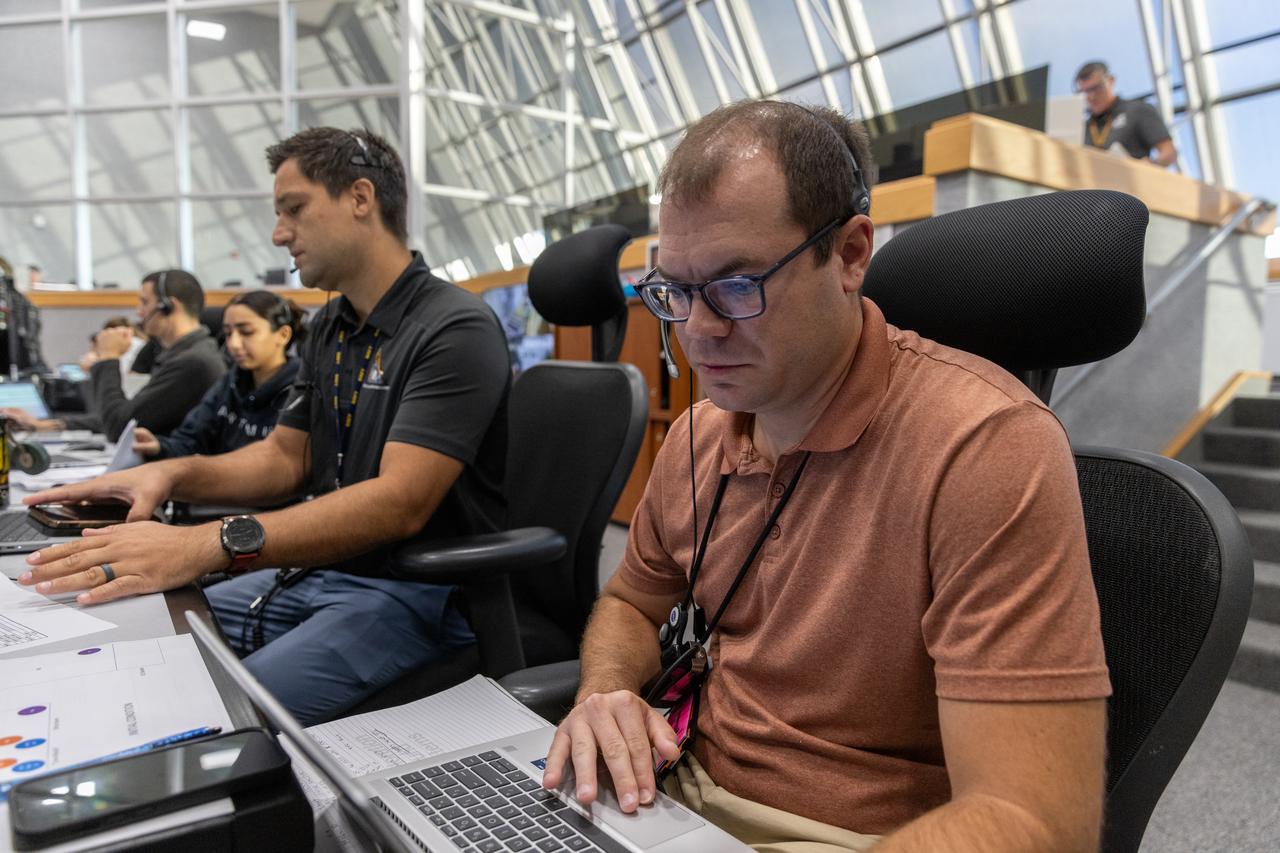
Jeremy Graeber, Artemis assistant launch director, Exploration Ground Systems at NASA’s Kennedy Space Center in Florida, participates in an emergency escape or egress demonstration simulation for the Artemis II mission inside Firing Room 1 in the Launch Control Center at NASA’s Kennedy on Monday, Aug. 12, 2024. Other members of the closeout crew, pad rescue team, and the Exploration Ground Systems Program performed emergency egress demonstrations during a series of integrated system verification tests at Launch Pad 39B in preparation for the Artemis II launch.
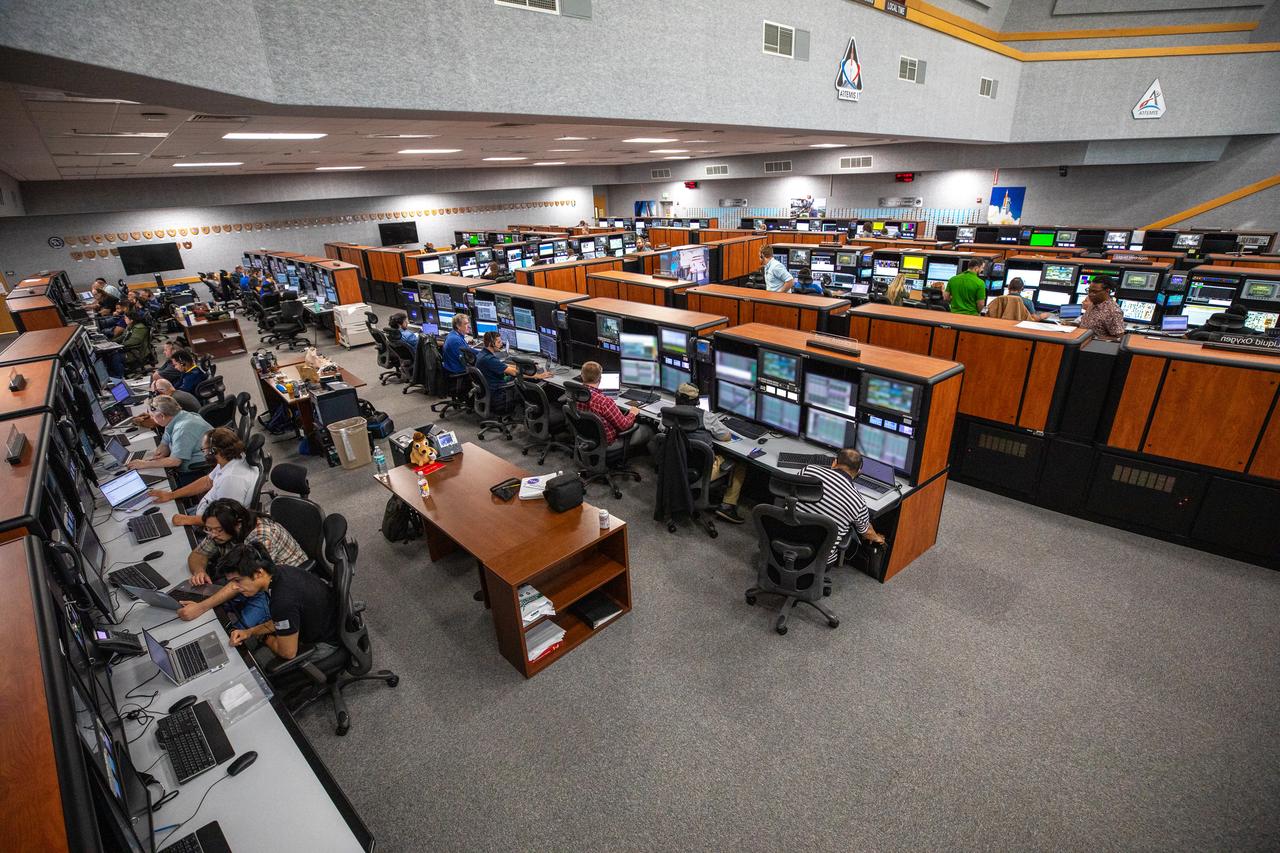
A team of NASA and Jacobs engineers are on console for the first Artemis II launch simulation inside Firing Room at the Launch Control Center at NASA’s Kennedy Space Center in Florida on July 20, 2023. The team is rehearsing the steps to launch NASA’s Space Launch System and Orion spacecraft for the Artemis II crewed mission. Artemis II will be the first mission with astronauts under Artemis that will test and check out all of Orion’s systems needed for future crewed missions.
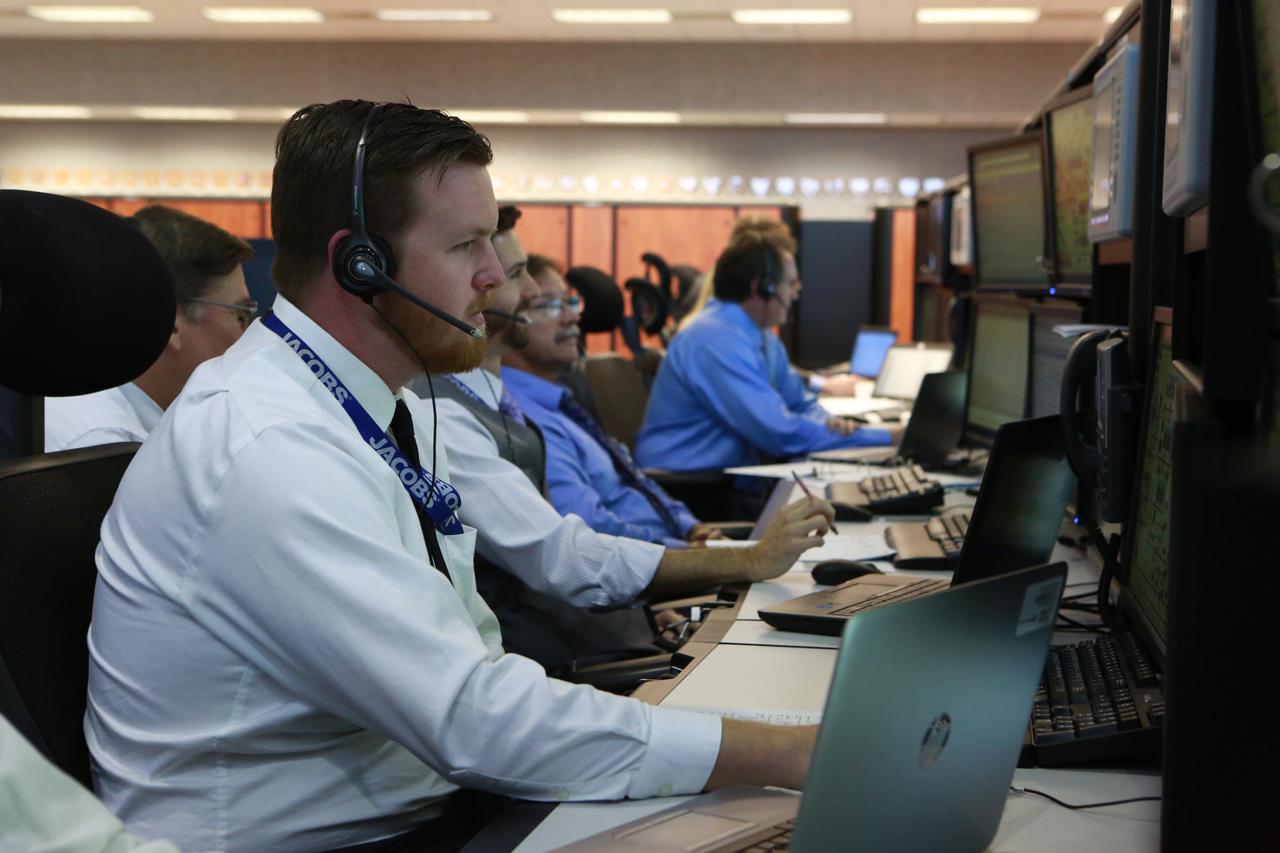
Alex Higgins, a liquid hydrogen operations engineer with Jacobs, monitors operations from his position in Firing Room 1 at the Kennedy Space Center's Launch Control Center during a countdown simulation for Exploration Mission 1. It was the agency's first simulation of a portion of the countdown for the first launch of a Space Launch System rocket and Orion spacecraft that will eventually take astronauts beyond low-Earth orbit to destinations such as the Moon and Mars.
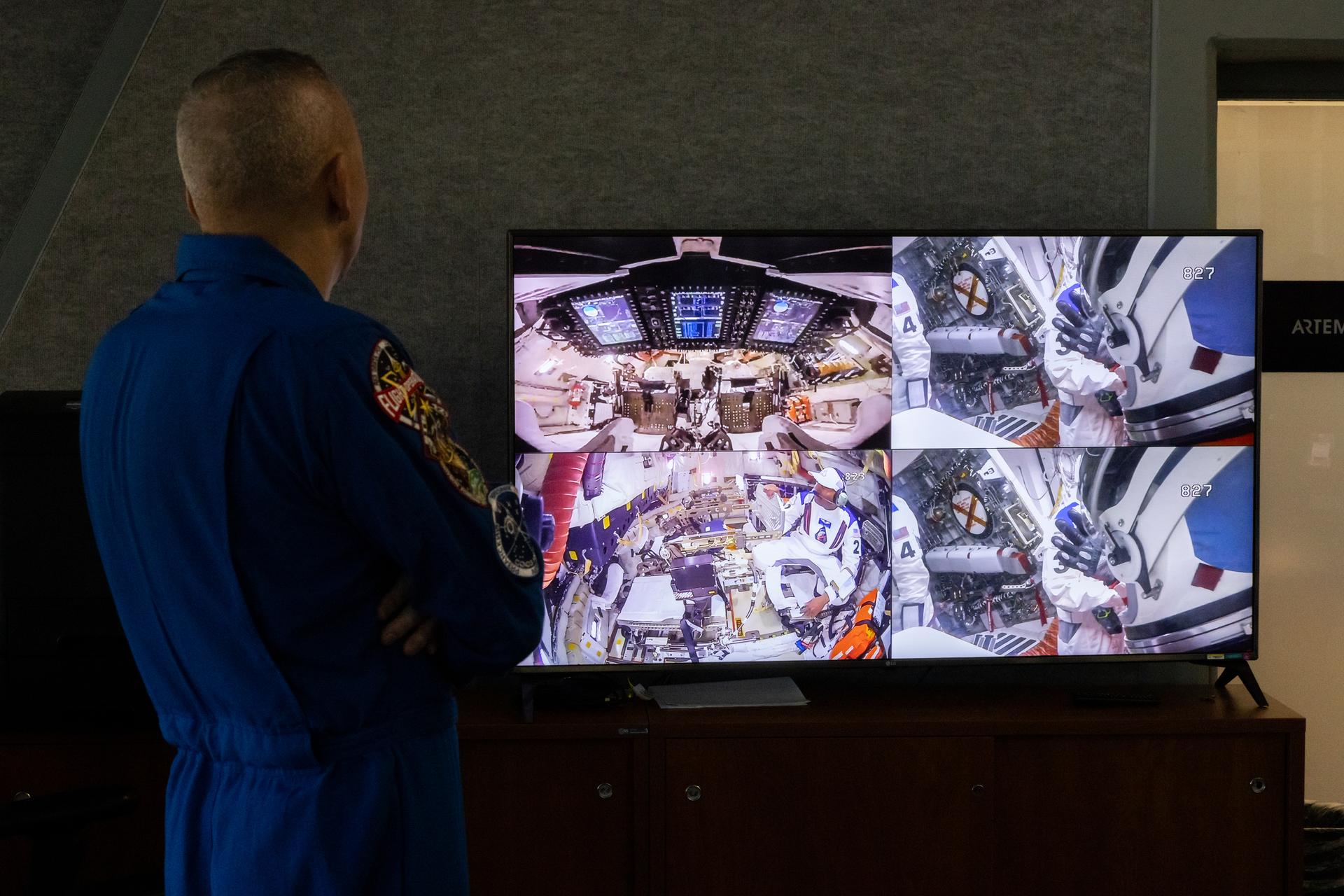
NASA astronaut Randy Bresnick monitors the progress of a countdown demonstration test with Artemis II crewmembers NASA astronauts Reid Wiseman, commander; Victor Glover, pilot; Christina Koch, mission specialist; and CSA (Canadian Space Agency) astronaut Jeremy Hansen, mission specialist onboard their Orion spacecraft from Firing Room 1 of the Rocco A. Petrone Launch Control Center, Saturday, Dec. 20, 2025, at NASA’s Kennedy Space Center in Florida. For this operation, the Artemis II crew and launch teams are simulating the launch day timeline including suit-up, walkout, and spacecraft ingress and egress. Through the Artemis campaign, NASA will send astronauts to explore the Moon for scientific discovery, economic benefits, and to build the foundation for the first crewed missions to Mars, for the benefit of all.
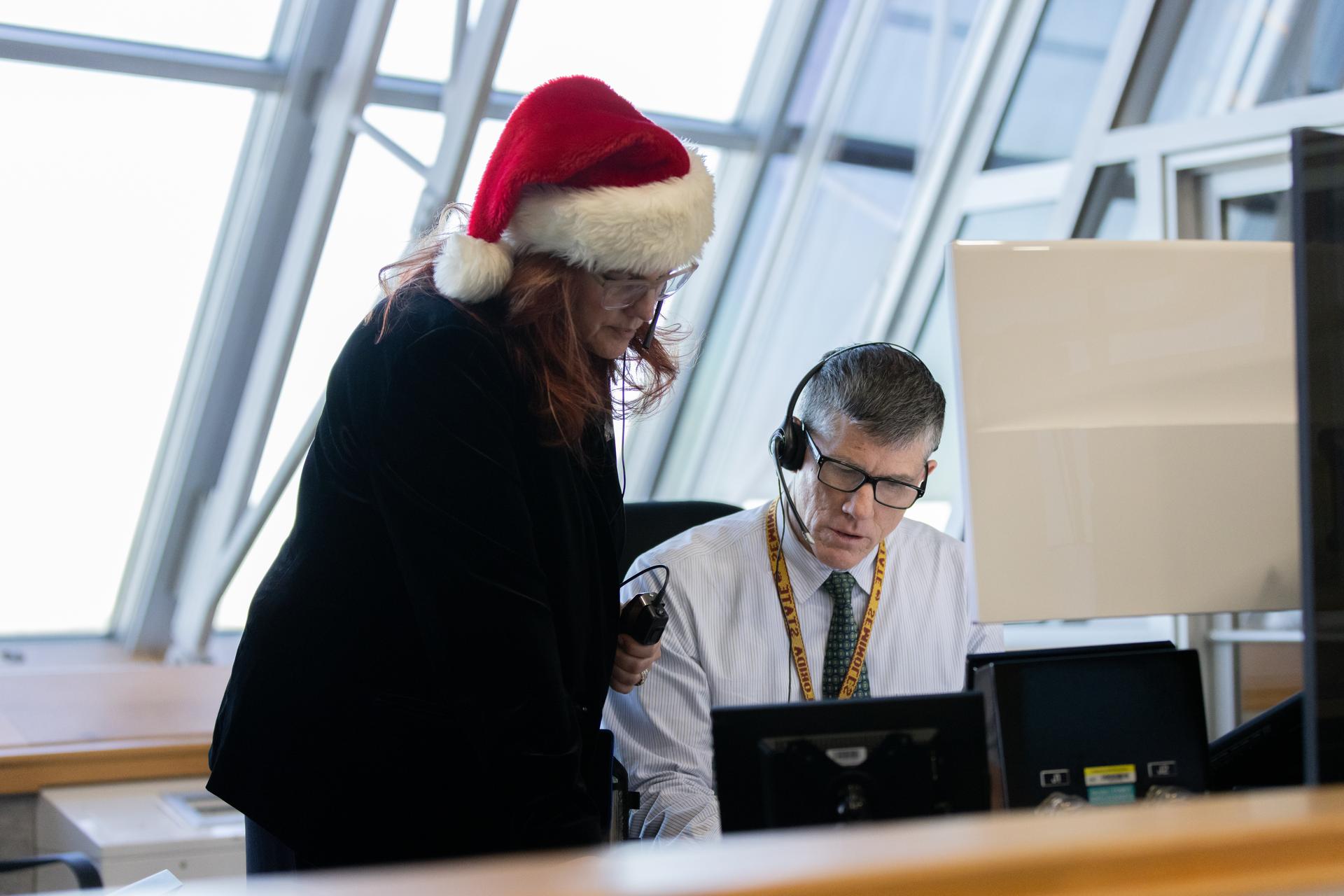
Charlie Blackwell-Thompson, Artemis launch director, and Jeremy Graeber, assistant launch director, monitor the progress of a countdown demonstration test with Artemis II crewmembers NASA astronauts Reid Wiseman, commander; Victor Glover, pilot; Christina Koch, mission specialist; and CSA (Canadian Space Agency) astronaut Jeremy Hansen, mission specialist onboard their Orion spacecraft from Firing Room 1 of the Rocco A. Petrone Launch Control Center, Saturday, Dec. 20, 2025, at NASA’s Kennedy Space Center in Florida. For this operation, the Artemis II crew and launch teams are simulating the launch day timeline including suit-up, walkout, and spacecraft ingress and egress. Through the Artemis campaign, NASA will send astronauts to explore the Moon for scientific discovery, economic benefits, and to build the foundation for the first crewed missions to Mars, for the benefit of all.

A Kennedy Space Center employee participates in the first joint integrated launch countdown simulation for Artemis I inside the Florida spaceport’s Launch Control Center on July 8, 2021. The training exercise involved engineers from Kennedy, Marshall Space Flight Center in Alabama, and Johnson Space Center in Houston coming together to rehearse all aspects of the launch countdown, from cryogenic loading – filling tanks in the Space Launch System (SLS) rocket’s core stage with liquid hydrogen and liquid oxygen – to liftoff. These simulations will help certify that the launch team is ready for Artemis I – the first test flight of SLS and Orion as an integrated system prior to crewed flights to the Moon.
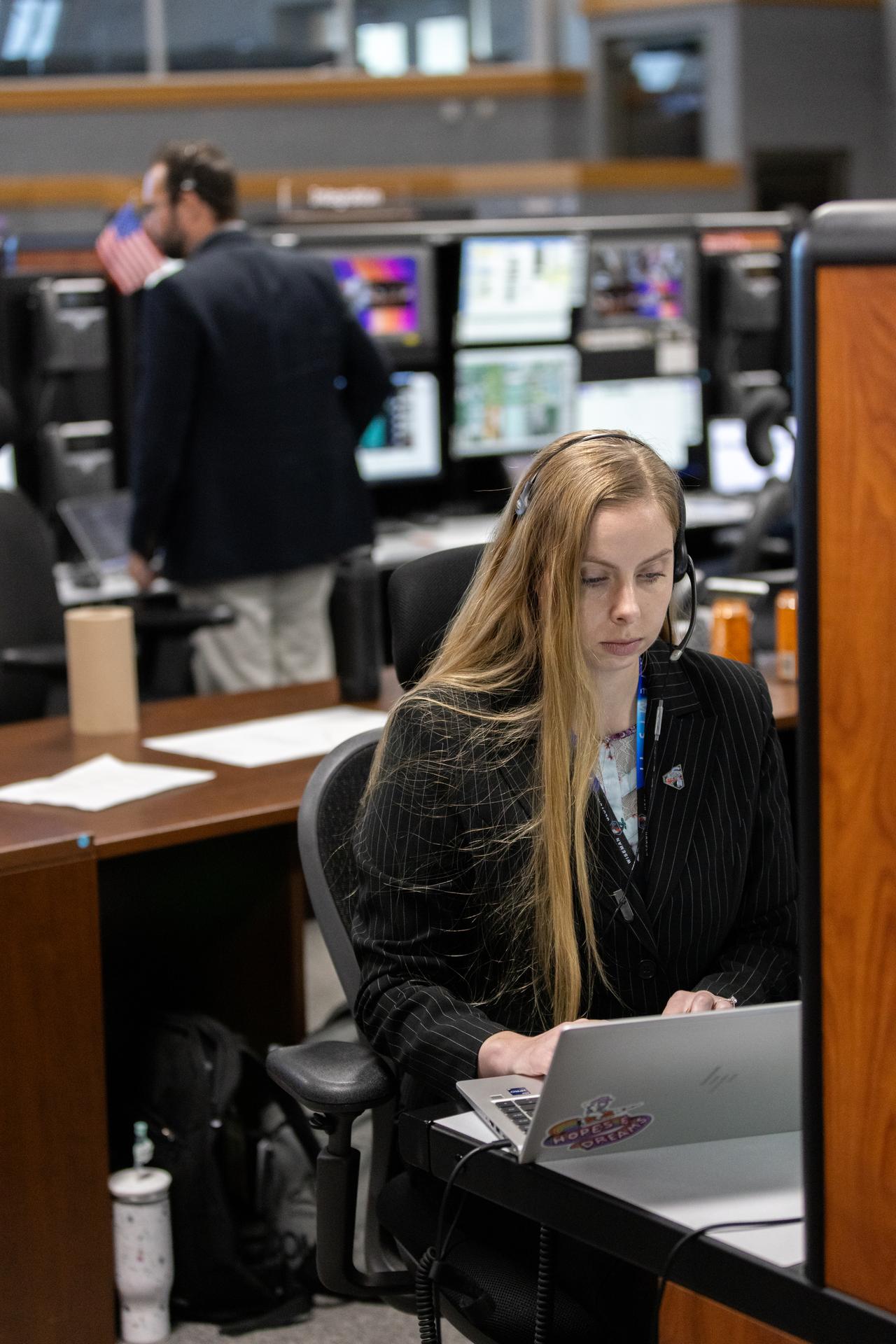
Teams monitor the progress of a countdown demonstration test with Artemis II crewmembers NASA astronauts Reid Wiseman, commander; Victor Glover, pilot; Christina Koch, mission specialist; and CSA (Canadian Space Agency) astronaut Jeremy Hansen, mission specialist onboard their Orion spacecraft from Firing Room 1 of the Rocco A. Petrone Launch Control Center, Saturday, Dec. 20, 2025, at NASA’s Kennedy Space Center in Florida. For this operation, the Artemis II crew and launch teams are simulating the launch day timeline including suit-up, walkout, and spacecraft ingress and egress. Through the Artemis campaign, NASA will send astronauts to explore the Moon for scientific discovery, economic benefits, and to build the foundation for the first crewed missions to Mars, for the benefit of all.
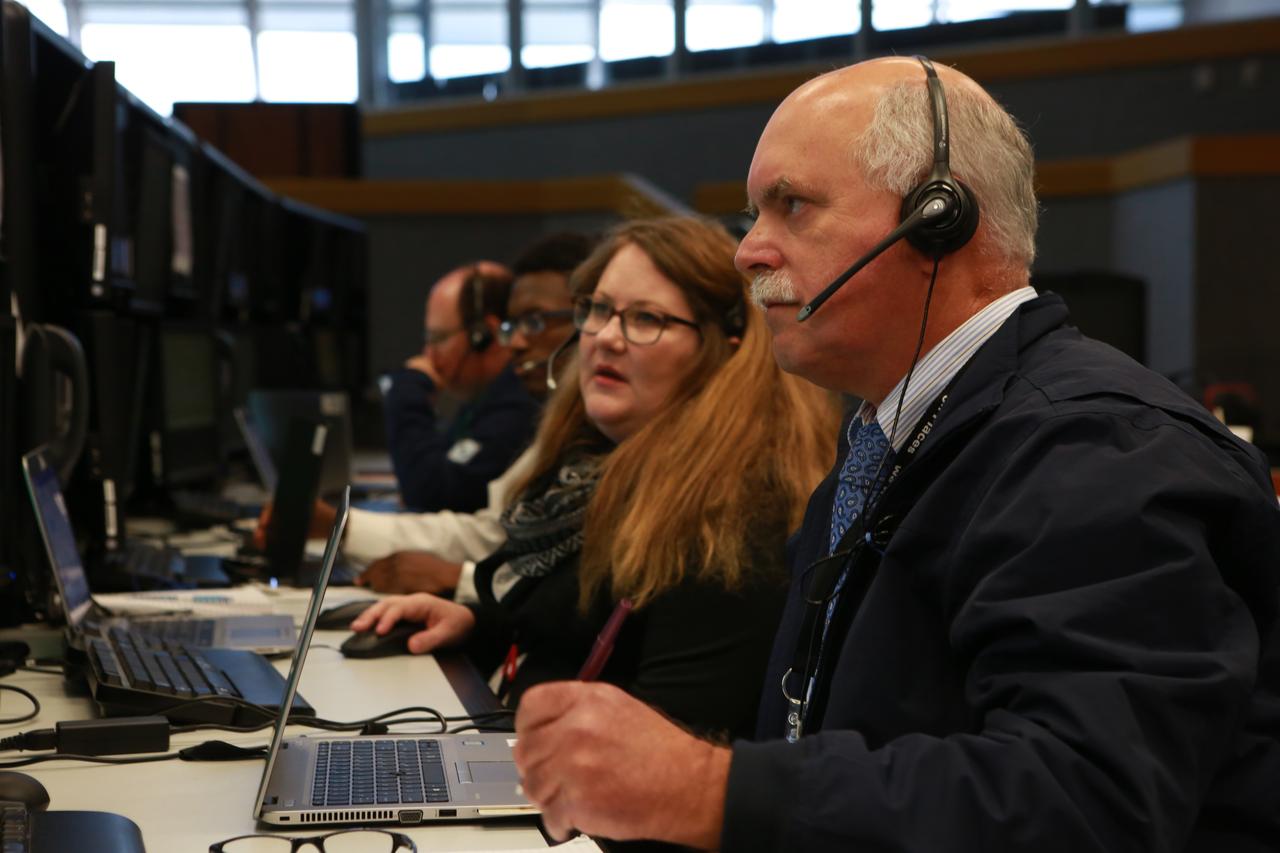
Master Console Operators Andrea Oneill, left and David Walsh, monitor operations from their positions in Firing Room 1 at the Kennedy Space Center's Launch Control Center during a countdown simulation for Exploration Mission 1. It was the agency's first simulation of a portion of the countdown for the first launch of a Space Launch System rocket and Orion spacecraft that will eventually take astronauts beyond low-Earth orbit to destinations such as the Moon and Mars.
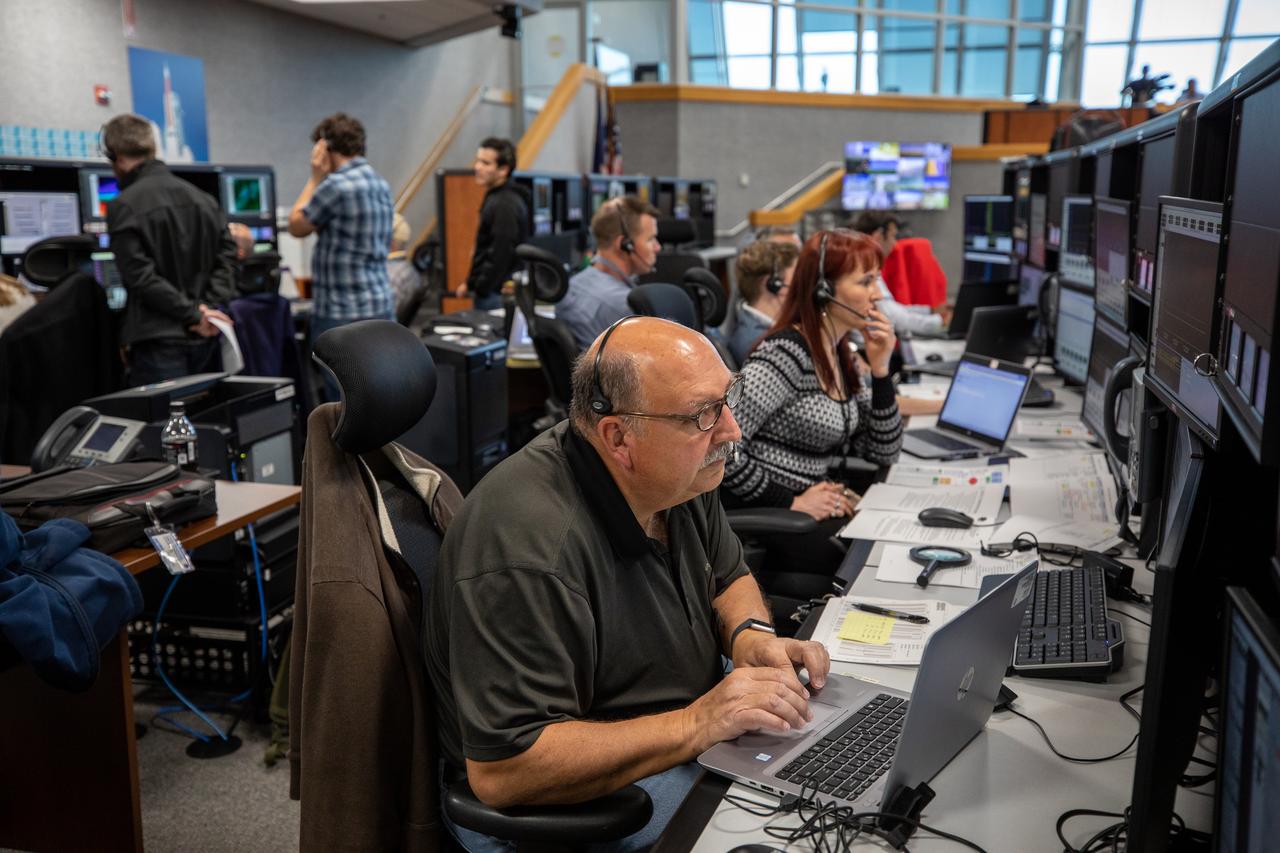
Members of the Artemis I launch team participate in a countdown simulation inside the Launch Control Center’s Firing Room 1 at NASA’s Kennedy Space Center in Florida on Feb. 3, 2020. Under the leadership of Launch Director Charlie Blackwell-Thompson, a team of nearly 100 engineers from Orion, Space Launch System (SLS) and NASA’s Exploration Ground Systems came together to work through a series of simulated challenges, as well as a final countdown procedure. During these exercises, different issues were introduced to familiarize the team with launch day operations, while providing them with an opportunity to practice how they would handle those issues in real-time. Artemis I will be the first integrated test flight of the Orion spacecraft and SLS rocket – the system that will ultimately land the first woman and the next man on the Moon.
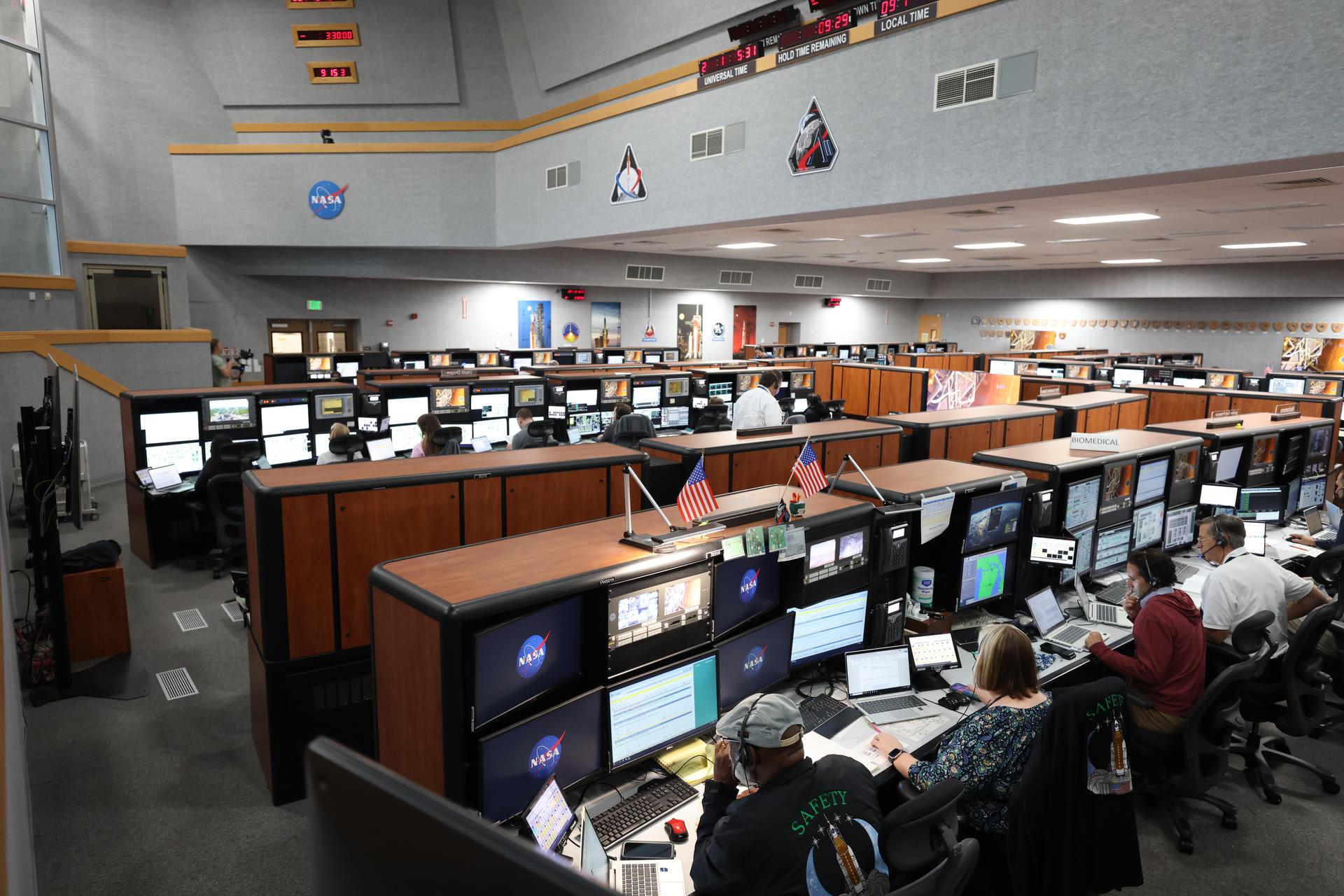
Members of the Artemis launch team participate in an Artemis II launch countdown simulation inside Firing Room 1 in the Launch Control Center at NASA’s Kennedy Space Center in Florida on Wednesday, Oct. 8, 2025. The simulations go through launch day scenarios to help launch team members test software and make adjustments if needed during countdown operations. For Artemis II, four astronauts will venture around the Moon, the first crewed mission on NASA’s path to establishing a long-term presence for science and exploration through Artemis.

Jessica Parsons, the technical assistant to Launch Director Charlie Blackwell-Thompson, participates in Artemis I launch countdown training inside the Launch Control Center’s Firing Room 1 at NASA’s Kennedy Space Center in Florida. On Feb. 3, 2020, a team of nearly 100 engineers from Orion, Space Launch System (SLS) and the agency’s Exploration Ground Systems came together to work through a series of simulated challenges, as well as a final countdown procedure. During these exercises, different issues were introduced to familiarize the team with launch day operations, while providing them with an opportunity to practice how they would handle those issues in real-time. Artemis I will be the first integrated test flight of the Orion spacecraft and SLS rocket – the system that will ultimately land the first woman and the next man on the Moon.
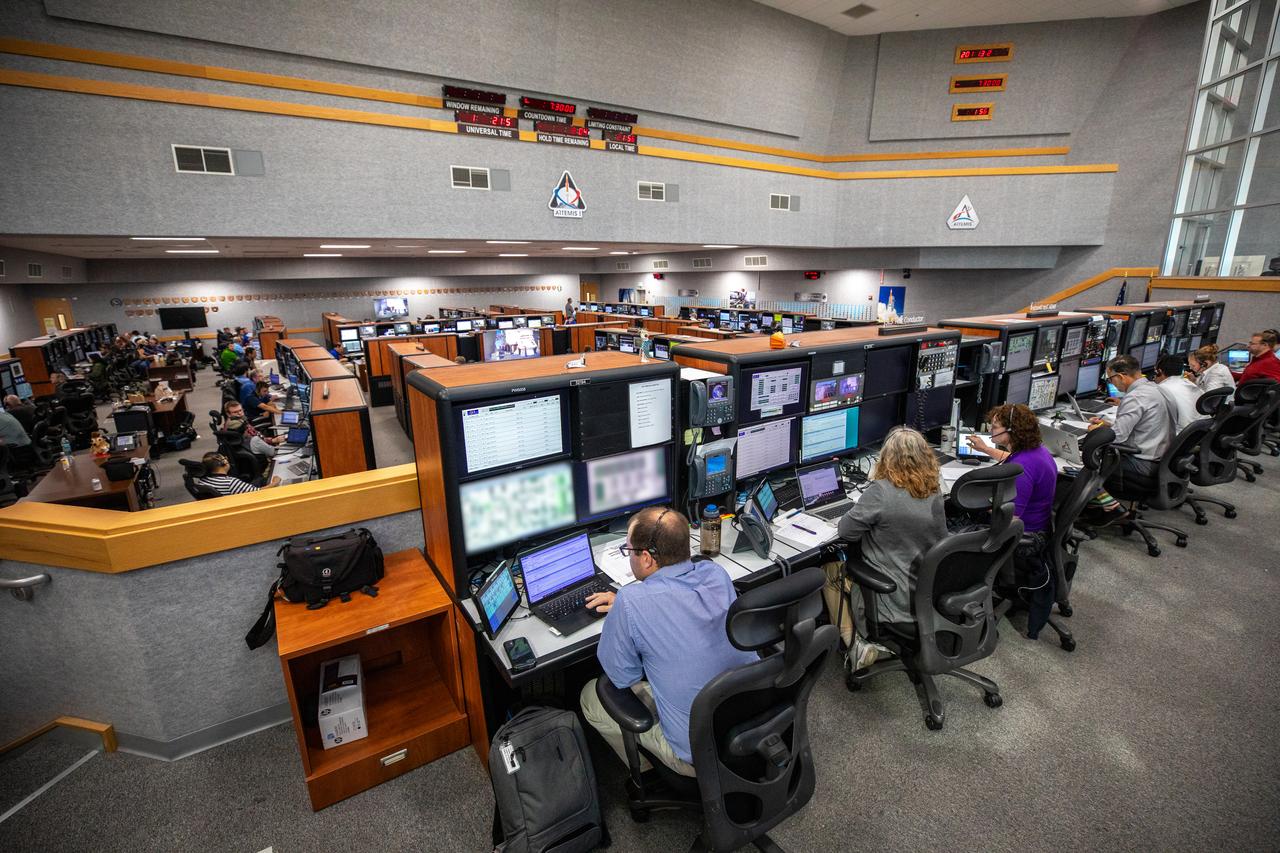
A team of NASA and Jacobs engineers are on console for the first Artemis II launch simulation inside Firing Room at the Launch Control Center at NASA’s Kennedy Space Center in Florida on July 20, 2023. The team is rehearsing the steps to launch NASA’s Space Launch System and Orion spacecraft for the Artemis II crewed mission. Artemis II will be the first mission with astronauts under Artemis that will test and check out all of Orion’s systems needed for future crewed missions.
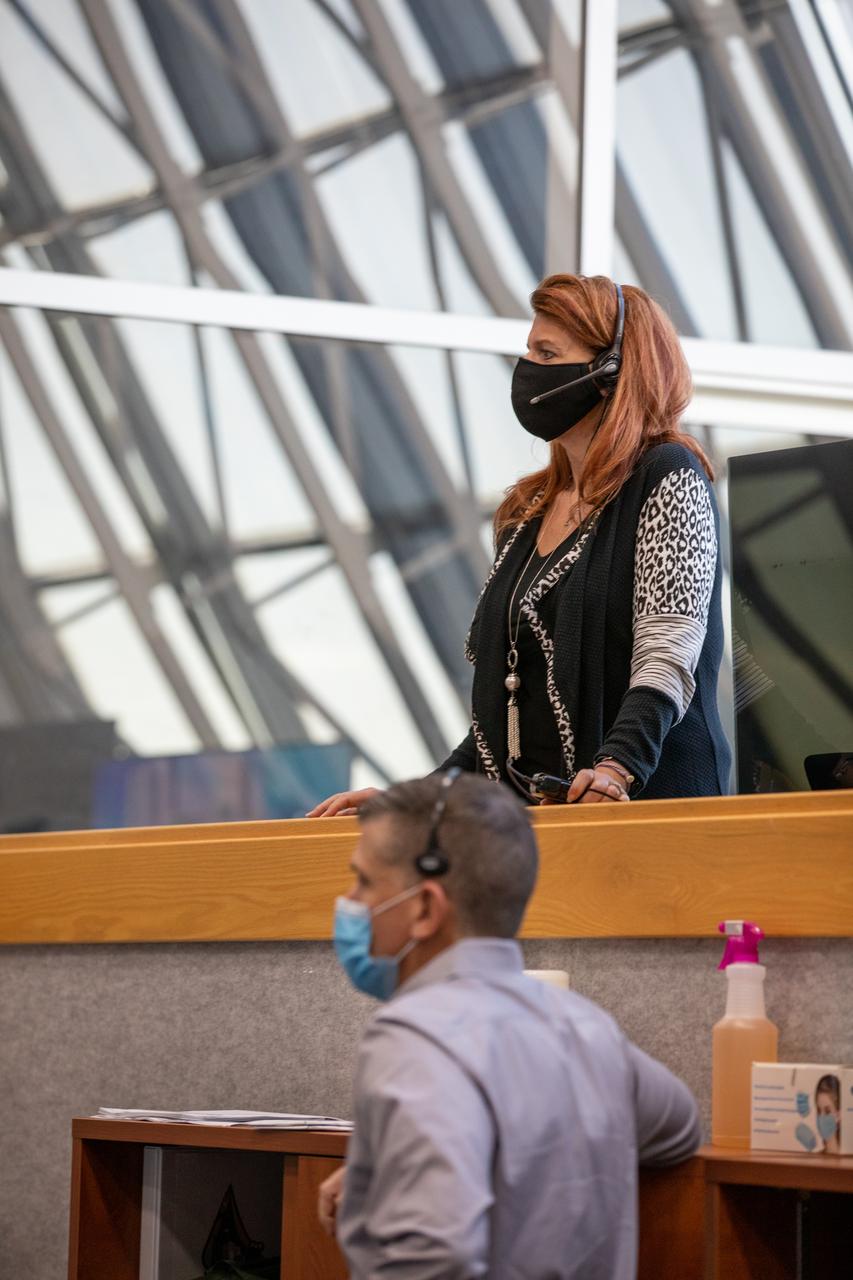
Charlie Blackwell-Thompson, standing, NASA Artemis launch director; and Jeremy Graeber, chief of the Test, Launch and Recovery Operations Branch within Exploration Ground Systems (EGS), monitor a cryogenic propellant loading simulation inside Firing Room 1 in the Launch Control Center on Nov. 2, 2020, at NASA’s Kennedy Space Center in Florida. A team of engineers with EGS and Jacobs, members of the cryogenics launch team, are rehearsing the steps to load the super-cooled liquid hydrogen and liquid oxygen into the Space Launch System’s (SLS) core and second stages to prepare for Artemis I. The first in a series of increasingly complex missions, Artemis I will test the Orion spacecraft and Space Launch System as an integrated system ahead of crewed flights to the Moon. NASA will land the first woman and the next man on the Moon in 2024.
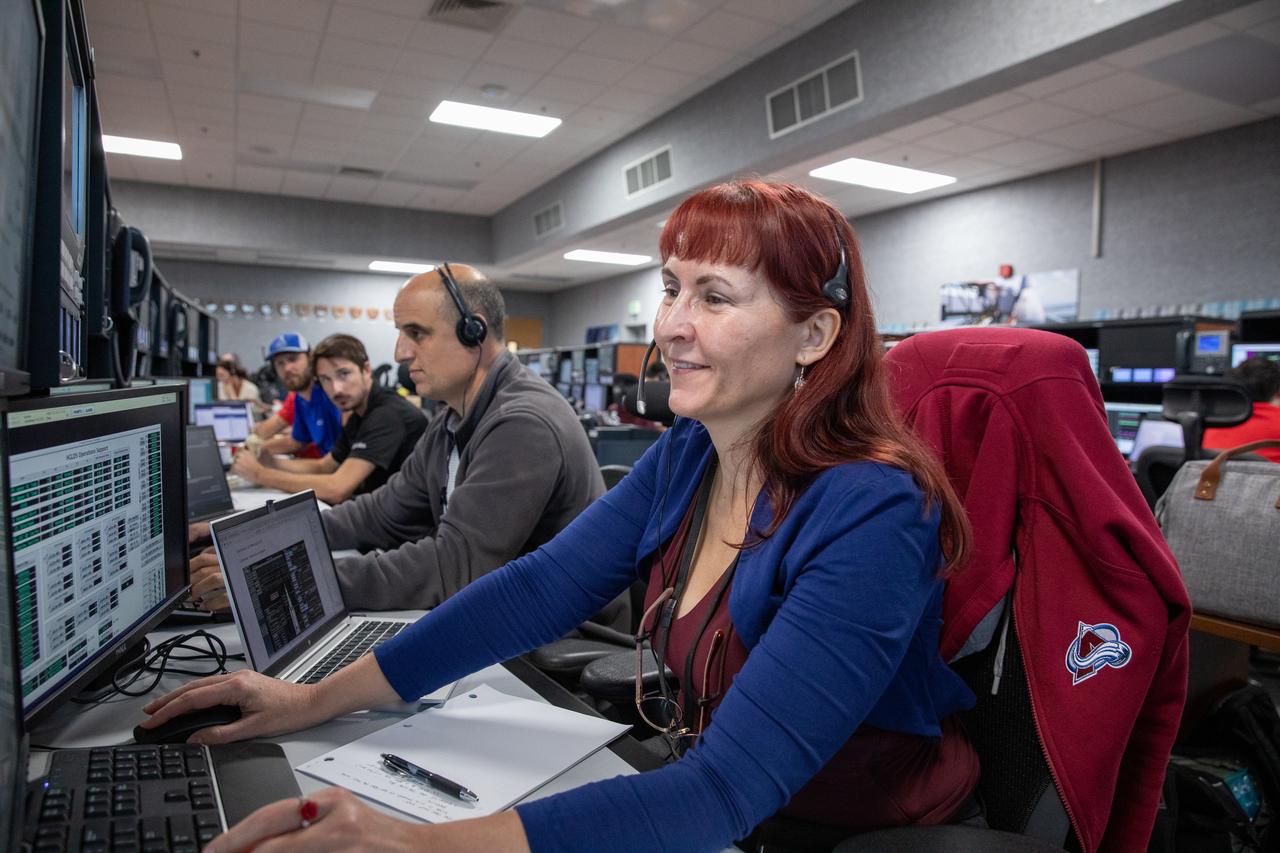
Members of the Artemis II launch team, including personnel with NASA’s Exploration Ground Systems and contractor Jacobs, monitor activities during the Artemis II terminal countdown simulation inside Firing Room 1 in the Launch Control Center at NASA’s Kennedy Space Center in Florida on Monday, Sept. 11, 2023. This is part of a series of simulations to help the team prepare for the launch of Artemis II, the first mission with astronauts under Artemis that will test and check out all of the Orion spacecraft’s systems needed for future crewed missions.
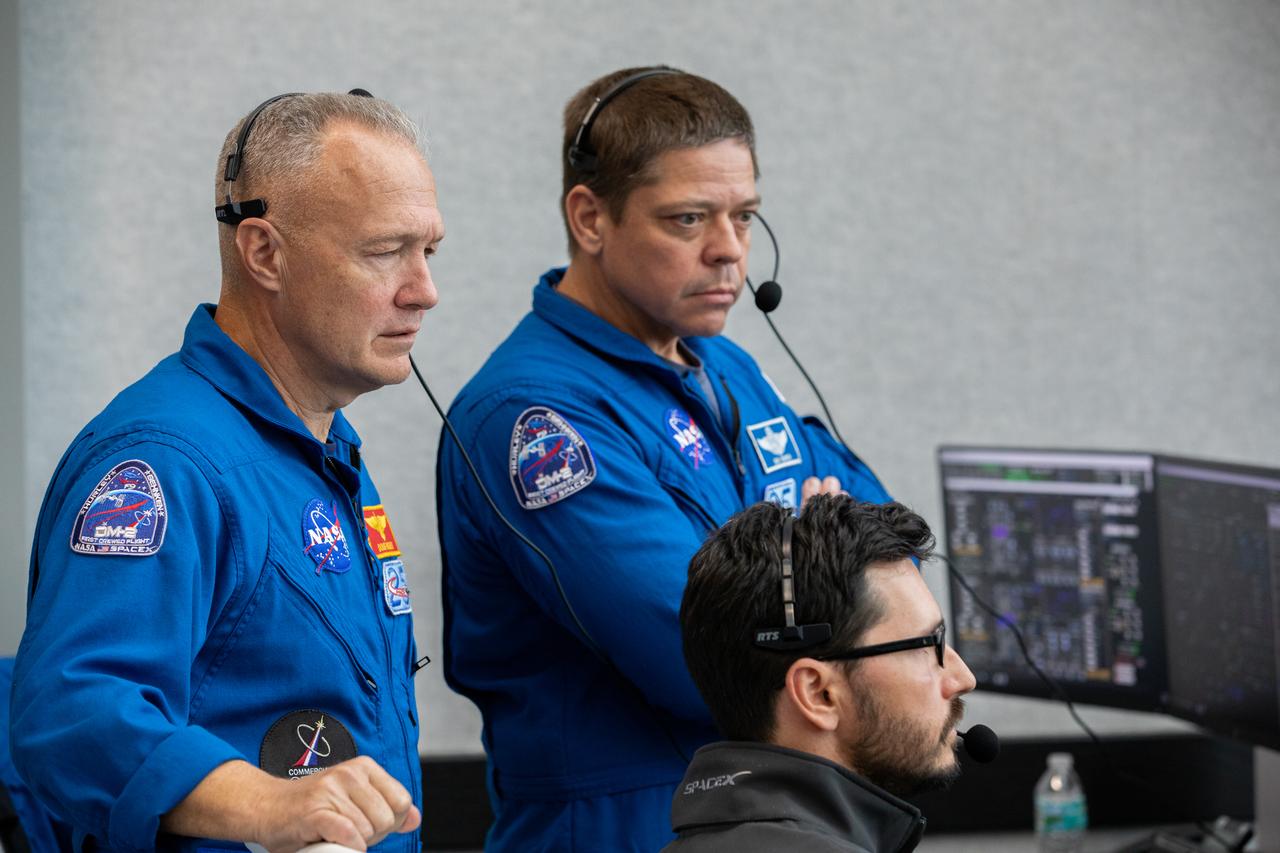
NASA astronauts Doug Hurley, left, and Bob Behnken watch the liftoff of a SpaceX Falcon 9 rocket and Crew Dragon spacecraft on the uncrewed In-Flight Abort Test, Jan. 19, 2020, inside Firing Room 4 in Kennedy Space Center’s Launch Control Center. The test demonstrated the spacecraft’s escape capabilities in preparation for crewed flights to the International Space Station as part of the agency’s Commercial Crew Program.