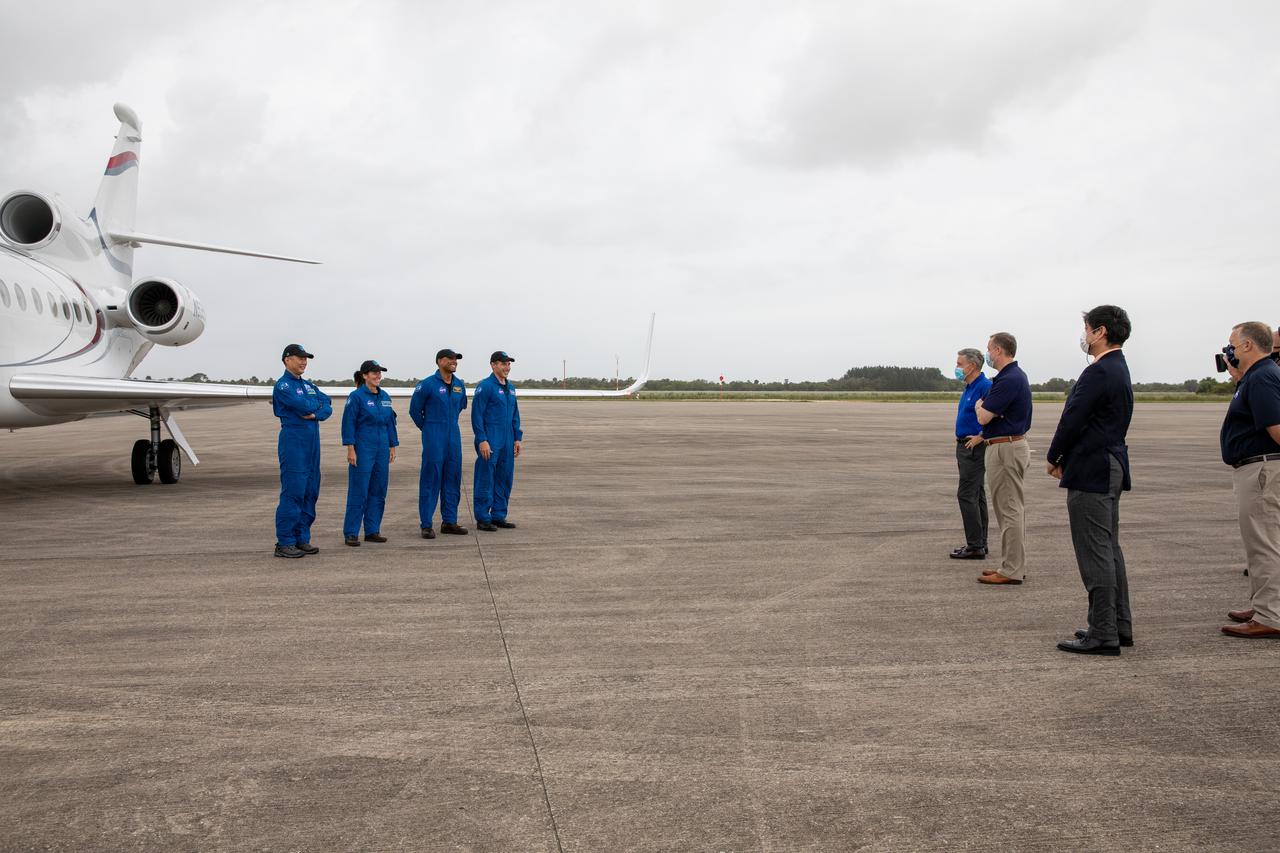
The astronauts for NASA’s SpaceX Crew-1 mission arrive at the Launch and Landing Facility at the agency’s Kennedy Space Center in Florida on Nov. 8, 2020, and are greeted by NASA and JAXA leadership. From left are, JAXA astronaut Soichi Noguchi, mission specialist; NASA astronaut Shannon Walker, mission specialist; NASA astronaut Victor Glover, pilot; and NASA astronaut Michael Hopkins, spacecraft commander. At right, from left are Bob Cabana, director, Kennedy Space Center; NASA Administrator Jim Bridenstine; Junichi Sakai, manager, International Space Station Program, JAXA; and NASA Deputy Administrator Jim Morhard. Crew-1 is the first crew rotation mission of a U.S. commercial spacecraft with astronauts to the International Space Station as part of NASA’s Commercial Crew Program. The SpaceX Crew Dragon spacecraft, named Resilience, will launch atop a Falcon 9 rocket from Kennedy’s Launch Complex 39A.
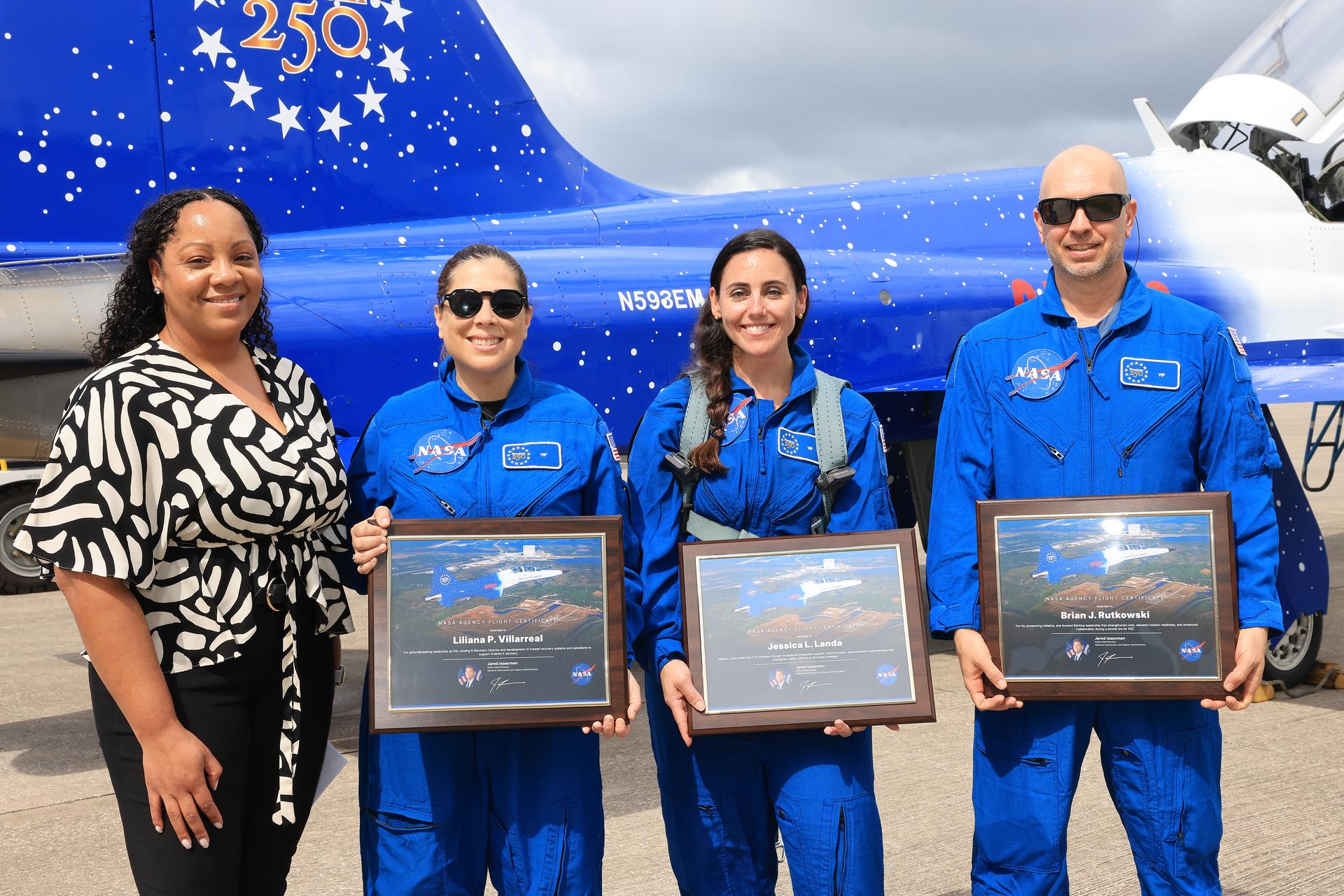
From left, Toni Gardner, Kennedy Space Center Deputy Director of Human Capital Office, along with NASA employees Lilianna Villarreal, Jessica Landa, and Brian Rutkowski pose for a photograph after participating in an employee incentive flying event using NASA Administrator Jared Isaacman's personal F-5 aircraft, Friday, Sept. 18, 2026, at NASA’s Kennedy Space Center in Florida. As part of the agency’s Flight Experience Award program, the employees donned NASA flight suits, completed preflight briefings, and experienced a unique flight. The ride-along flight experience award program highlights NASA’s commitment to celebrating excellence across the workforce.
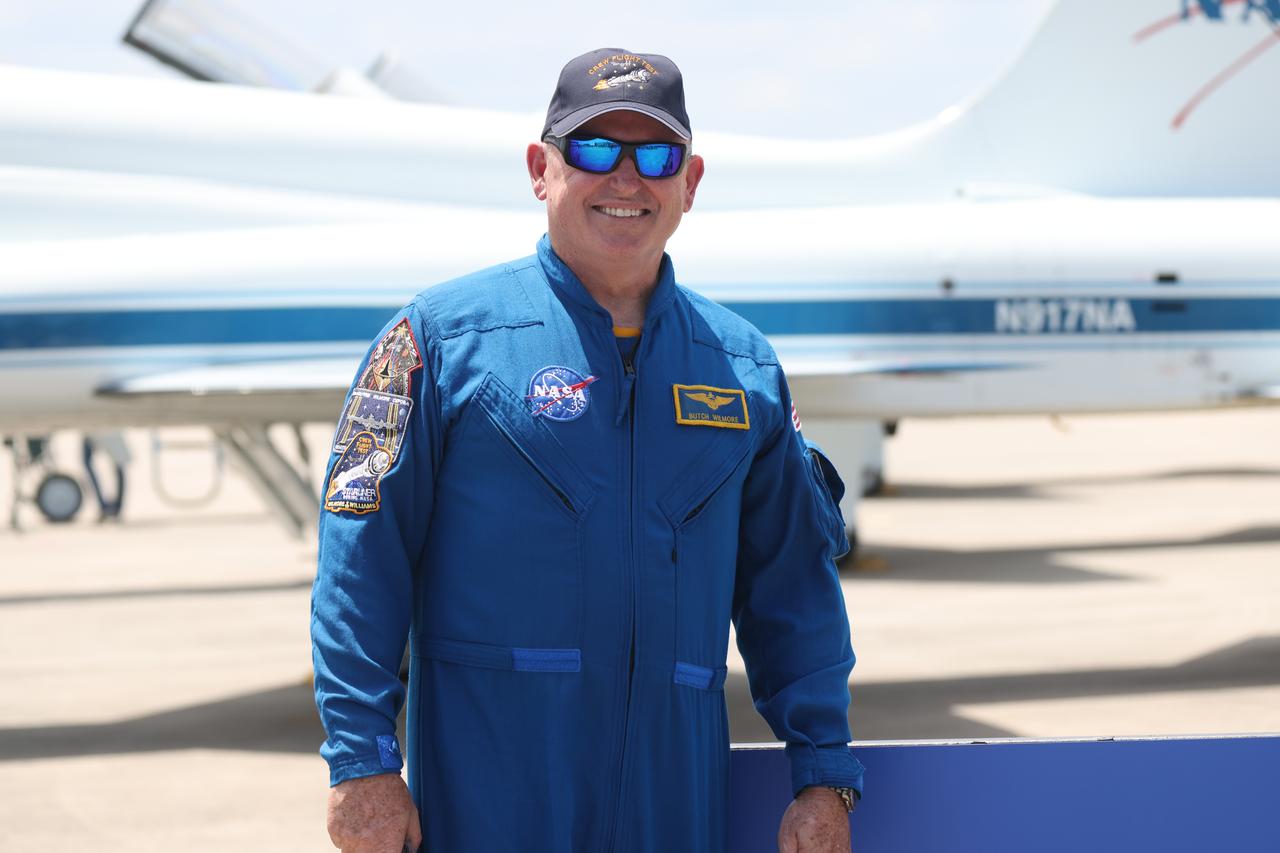
NASA astronauts Butch Wilmore poses for photos at the Launch and Landing Facility at NASA’s Kennedy Space Center in Florida following his arrival for the agency’s Boeing Crew Flight Test. As part of the agency’s Commercial Crew Program, Williams and Wilmore are the first crew to launch aboard Boeing’s Starliner spacecraft atop a United Launch Alliance Atlas V rocket from Space Launch Complex-41 at Cape Canaveral Space Force Station in Florida. Liftoff is scheduled for 10:34 p.m. ET on Monday, May 6.
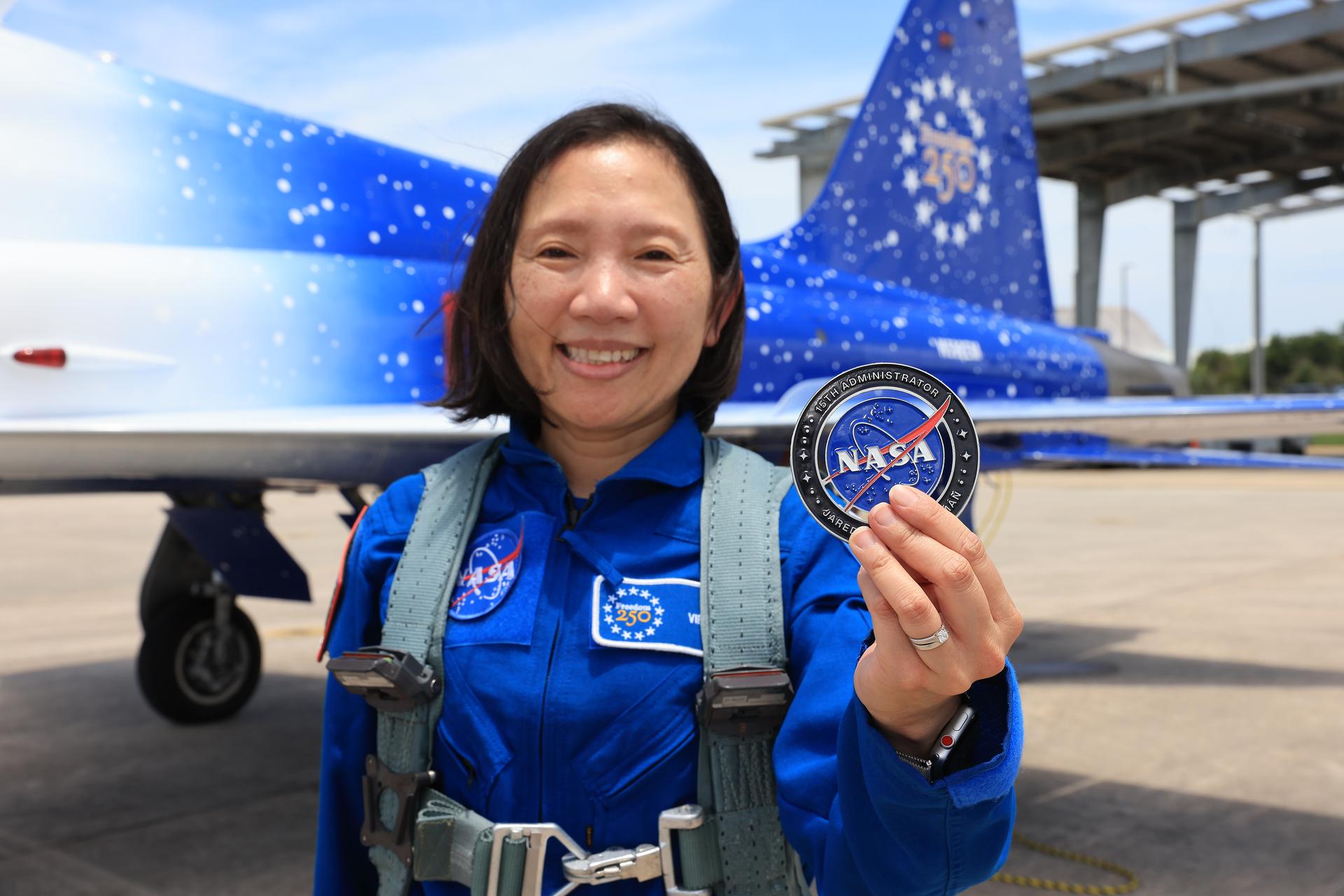
NASA employee Kuo-Chia “Alice” Liu is recognized as part of NASA Administrator Jared Isaacman’s Flight Experience Award program on Thursday, June 18, 2026, at the Launch and Landing Facility at the agency’s Kennedy Space Center in Florida. Liu, with other awardees, suited up, completed pre-flight briefings, and experienced a unique flight aboard the administrator’s personal F-5 aircraft. The ride-along flight experience award program highlights NASA’s commitment to celebrating excellence across the workforce.
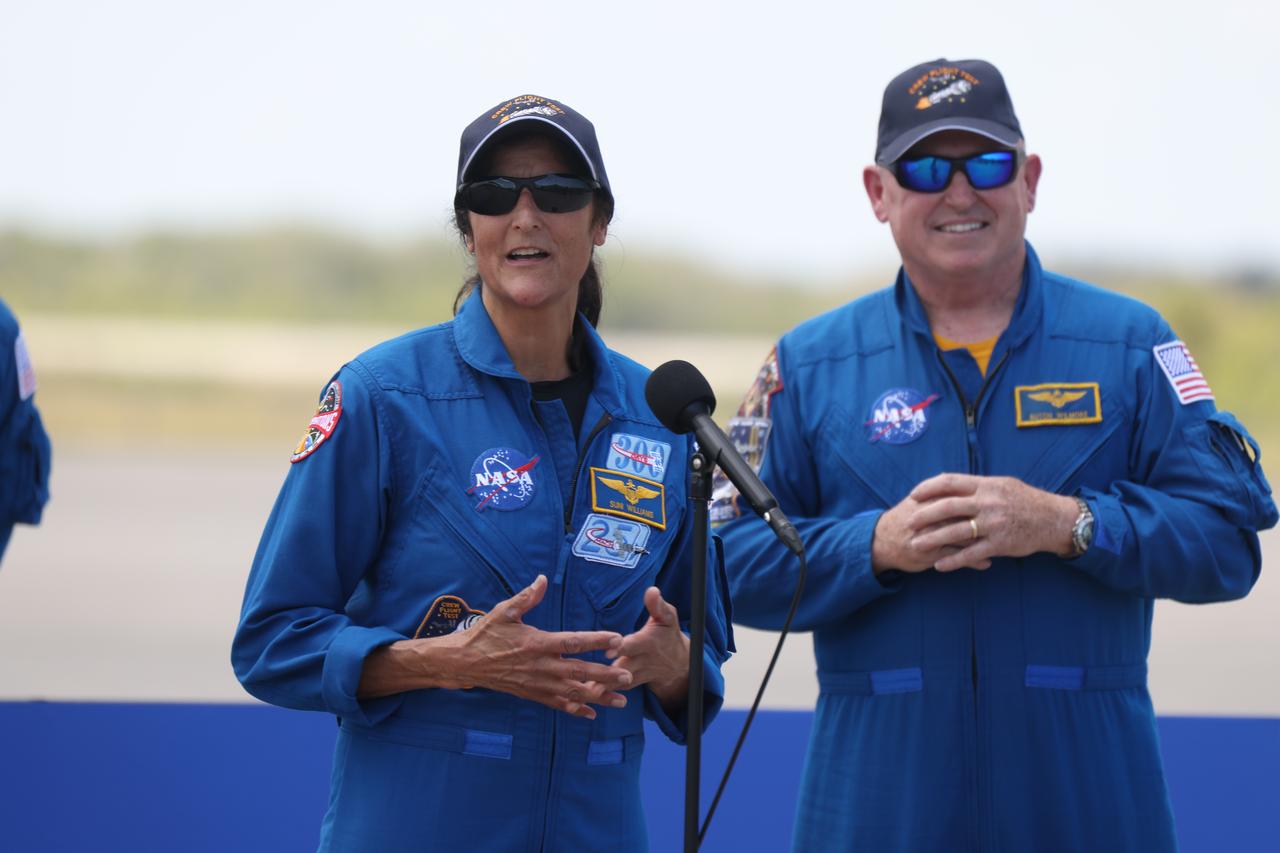
NASA astronauts Butch Wilmore and Suni Williams deliver remarks to members of the news media at the Launch and Landing Facility at NASA’s Kennedy Space Center in Florida following their arrival for the agency’s Boeing Crew Flight Test. As part of the agency’s Commercial Crew Program, Williams and Wilmore are the first crew to launch aboard Boeing’s Starliner spacecraft atop a United Launch Alliance Atlas V rocket from Space Launch Complex-41 at Cape Canaveral Space Force Station in Florida. Liftoff is scheduled for 10:34 p.m. ET on Monday, May 6.
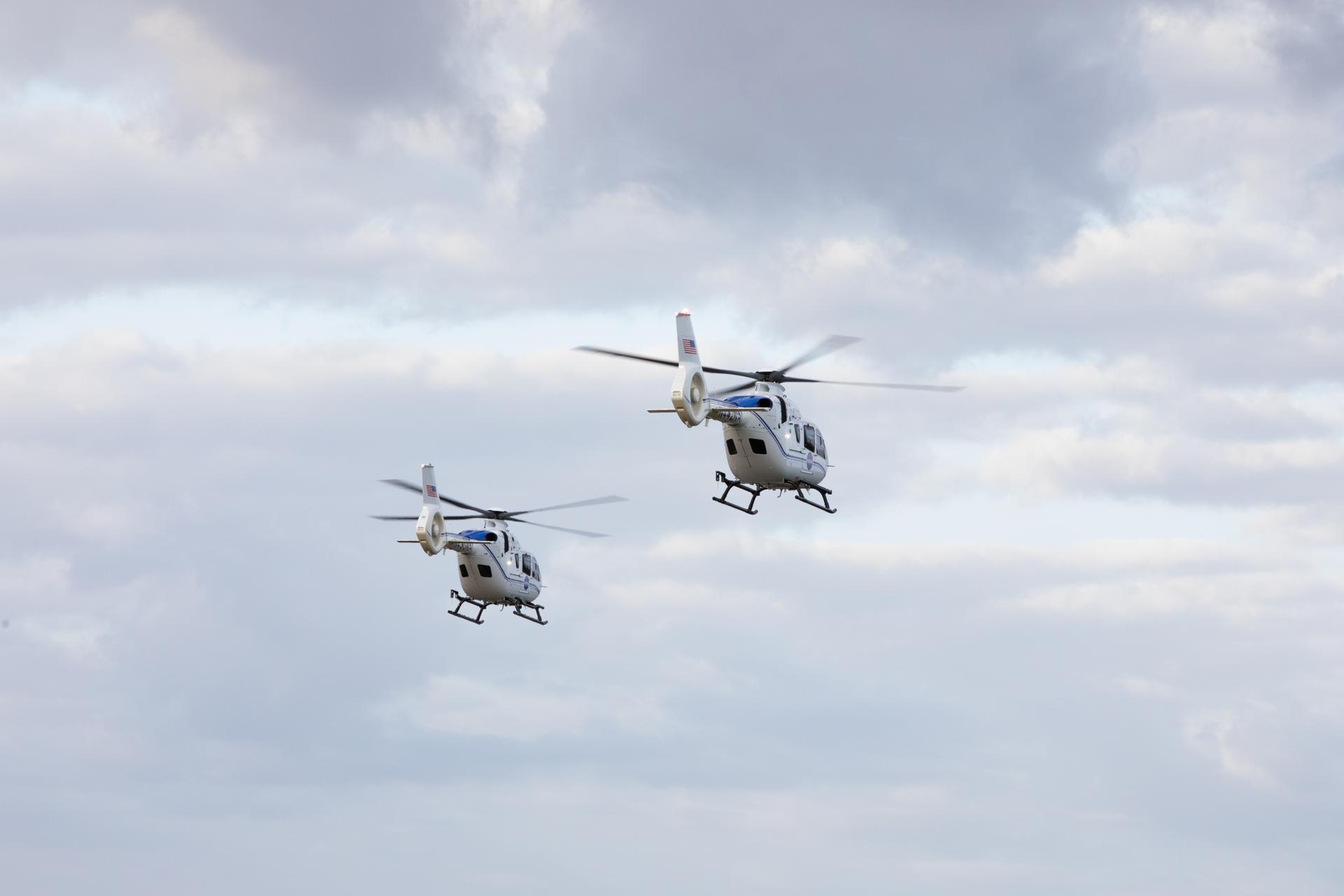
NASA Airbus H135 (T3) helicopters carrying NASA Administrator Jared Isaacman and leadership from the agency’s Kennedy Space Center in Florida perform an aerial tour of the spaceport on Tuesday, Jan. 13, 2026. Isaacman, NASA’s 15th administrator, began visiting the agency’s centers after his appointment on Dec. 17, 2025, to meet with employees, contractors, and partners.
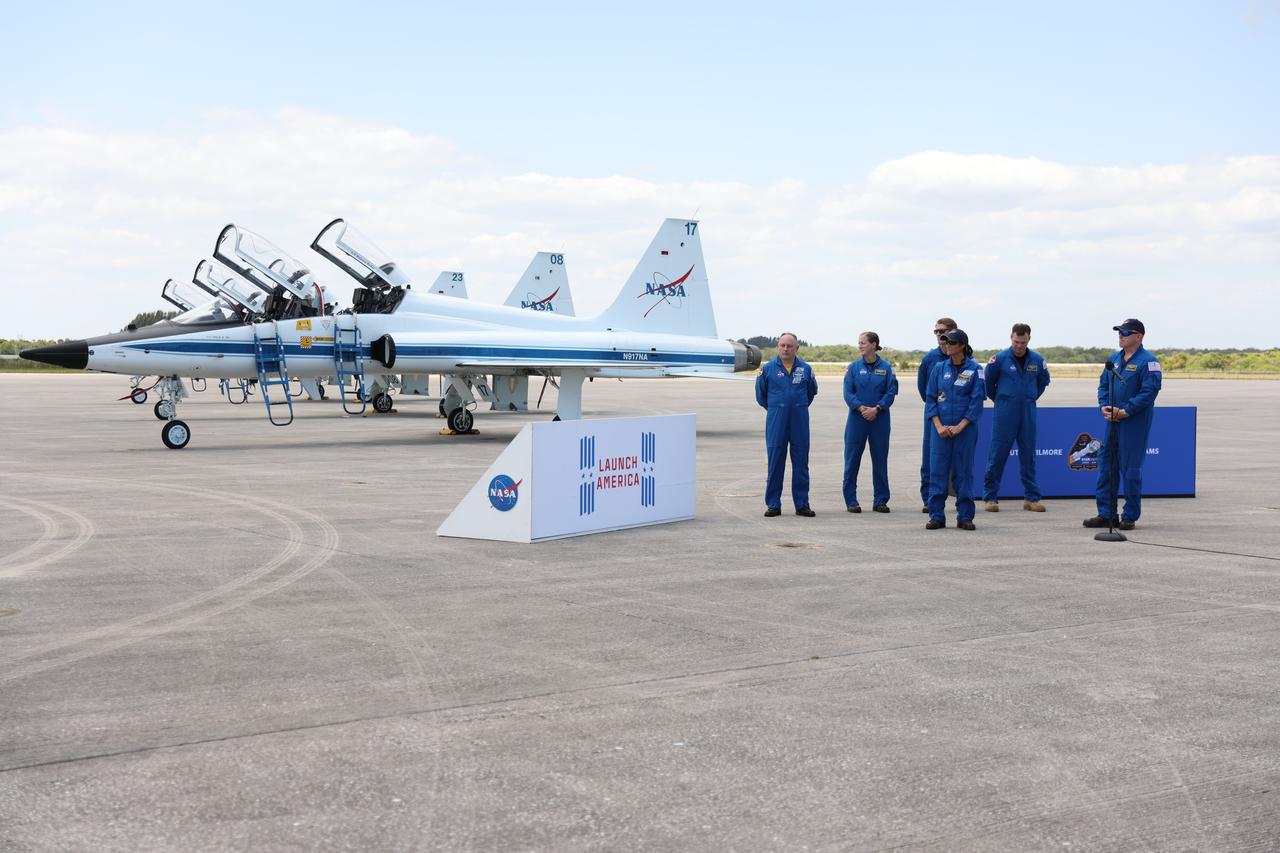
NASA astronauts pose for photos at the Launch and Landing Facility at NASA’s Kennedy Space Center in Florida following their arrival for the agency’s Boeing Crew Flight Test. As part of the agency’s Commercial Crew Program, NASA astronauts Suni Williams and Butch Wilmore are the first crew to launch aboard Boeing’s Starliner spacecraft atop a United Launch Alliance Atlas V rocket from Space Launch Complex-41 at Cape Canaveral Space Force Station in Florida. Liftoff is scheduled for 10:34 p.m. ET on Monday, May 6.
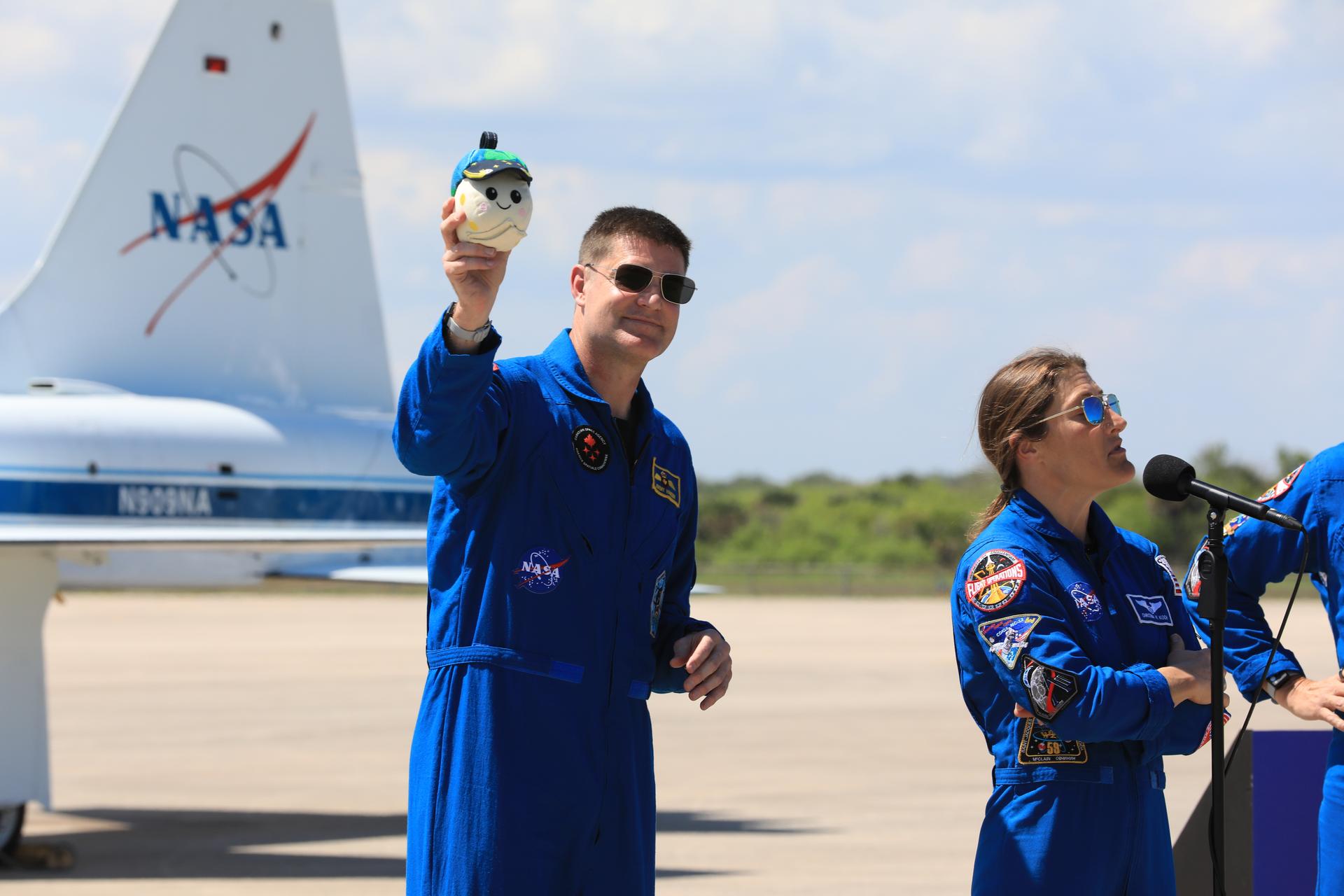
From left to right, CSA (Canadian Space Agency) Jeremy Hansen and NASA astronaut Christina Koch arrive on Friday, March 27, 2026, at the Launch and Landing Facility at the agency’s Kennedy Space Center in Florida in preparation for the Artemis II test flight. Hansen is holding the Moon Mascot, Rise, which is the zero gravity indicator that will fly on the Artemis II test flight. Hansen, Koch, and NASA astronauts Commander Reid Wiseman and Pilot Victor Glover launch on a 10-day journey around the Moon and back aboard the agency’s SLS (Space Launch System) rocket and Orion spacecraft from Launch Complex 39B no earlier than 6:24 p.m. EDT on Wednesday, April 1.
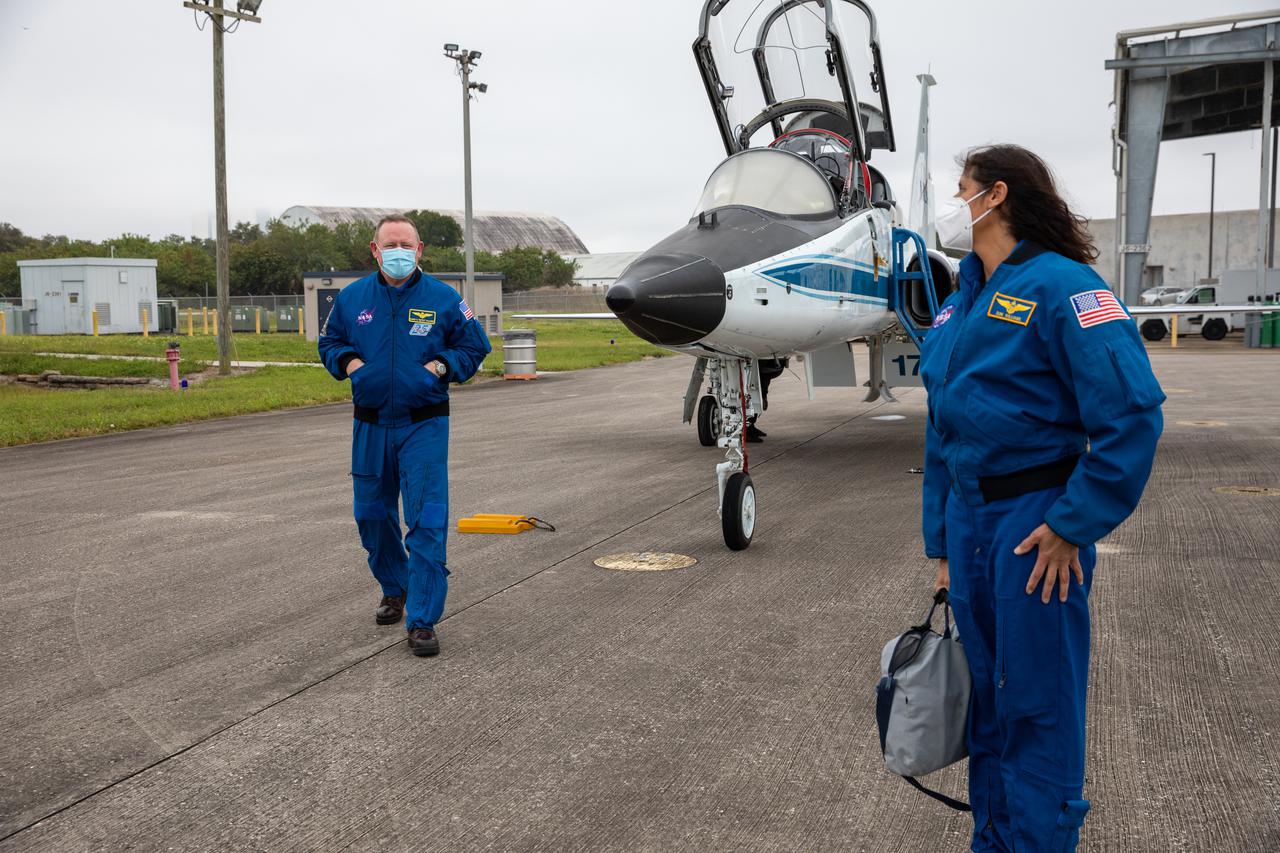
NASA astronauts arrive aboard T-38 jet aircraft at the Launch and Landing Facility at Kennedy Space Center in Florida on Dec. 17, 2020. The astronauts are at Kennedy to prepare for their flights to the International Space Station on Boeing’s CST-100 Starliner, as part of the agency’s Commercial Crew Program. At right is Sunita “Suni” Williams. At left is Barry “Butch” Wilmore. Wilmore and Williams will command the company’s Crew Flight Test and the Starliner-1 mission, respectively.
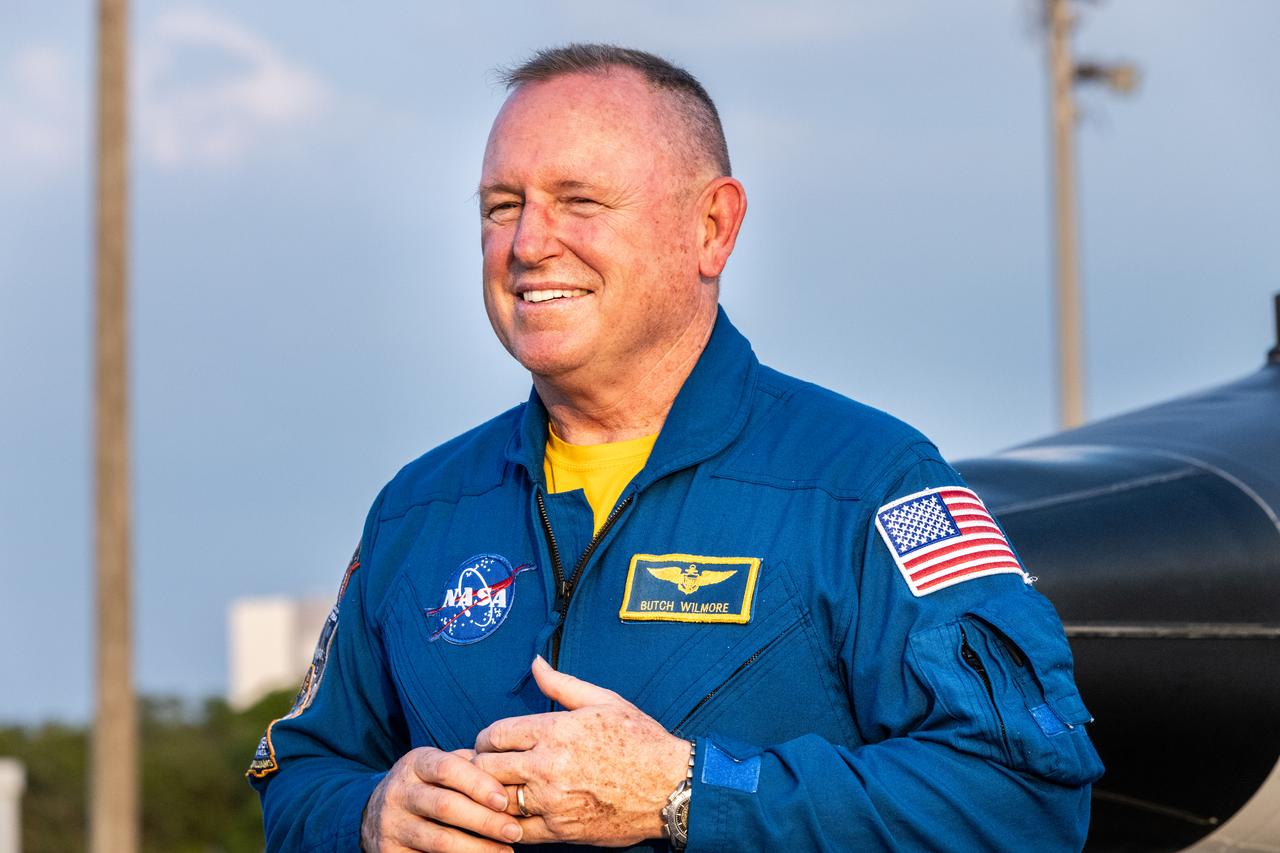
NASA astronaut Butch Wilmore poses for photos during his arrival back at the Launch and Landing Facility at the agency’s Kennedy Space Center in Florida on Tuesday, May 28, 2024, ahead of NASA’s Boeing Crew Flight Test. The first launch attempt on May 6 was scrubbed. As part of the agency’s Commercial Crew Program, Wilmore and fellow crew member Suni Williams are the first to launch to the International Space Station aboard Boeing’s Starliner spacecraft atop a United Launch Alliance Atlas V rocket from Space Launch Complex-41 at nearby Cape Canaveral Space Force Station. Liftoff is scheduled for 12:25 p.m. EDT on Saturday, June 1.
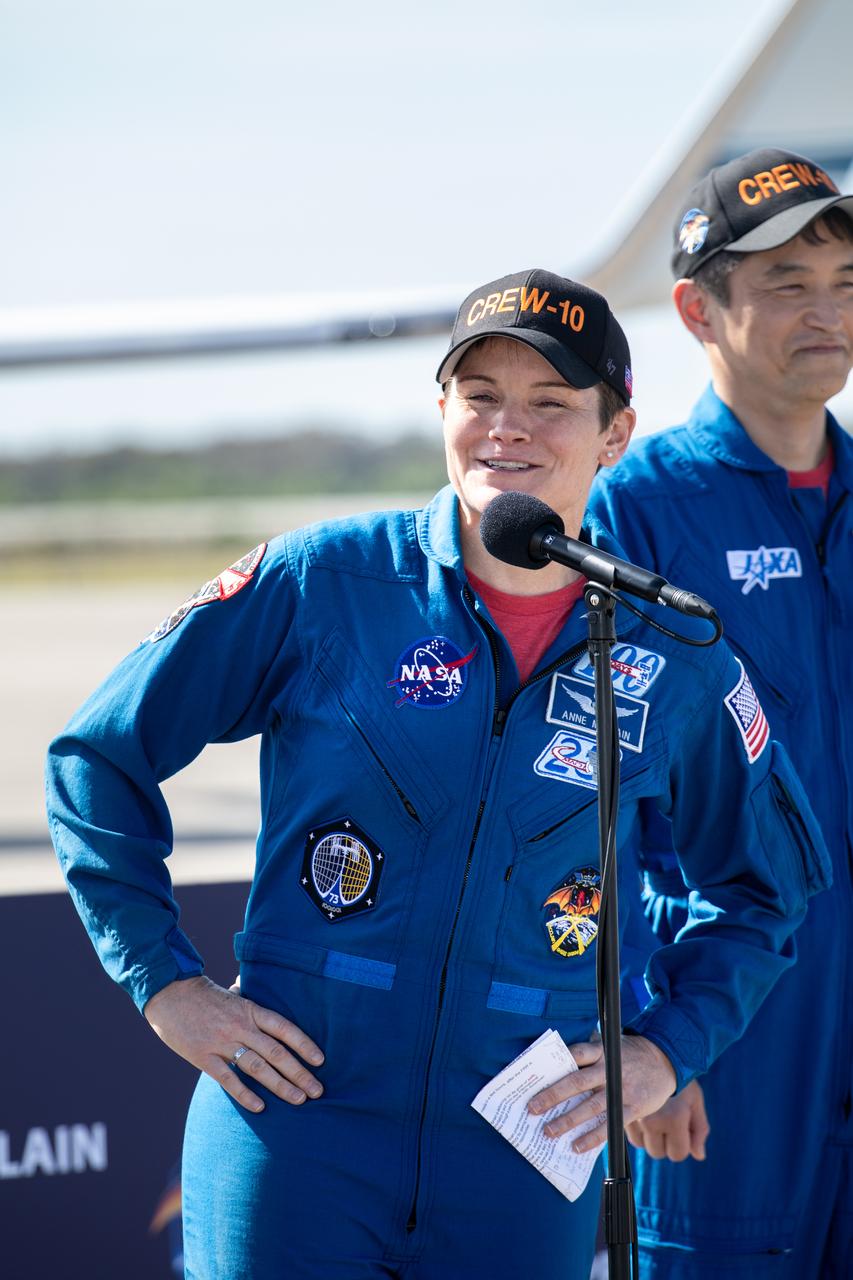
NASA astronaut Anne McClain, Crew-10 commander, delivers remarks to members of the news media during crew arrival for NASA’s SpaceX Crew-10 mission at the Launch and Landing Facility at the agency’s Kennedy Space Center in Florida on Friday, March 7, 2025. McClain and fellow NASA astronaut Nichole Ayers, along with JAXA (Japan Aerospace Exploration Agency) astronaut Takuya Onishi and Roscosmos cosmonaut Kirill Peskov will launch to the International Space Station aboard SpaceX’s Dragon spacecraft and Falcon 9 rocket. Launch is targeted for 7:48 p.m. EDT on Wednesday, March 12, 2025, from Launch Complex 39A at NASA Kennedy. Crew-10 is the 10th crew rotation mission with SpaceX to the space station as part of the agency’s Commercial Crew Program.
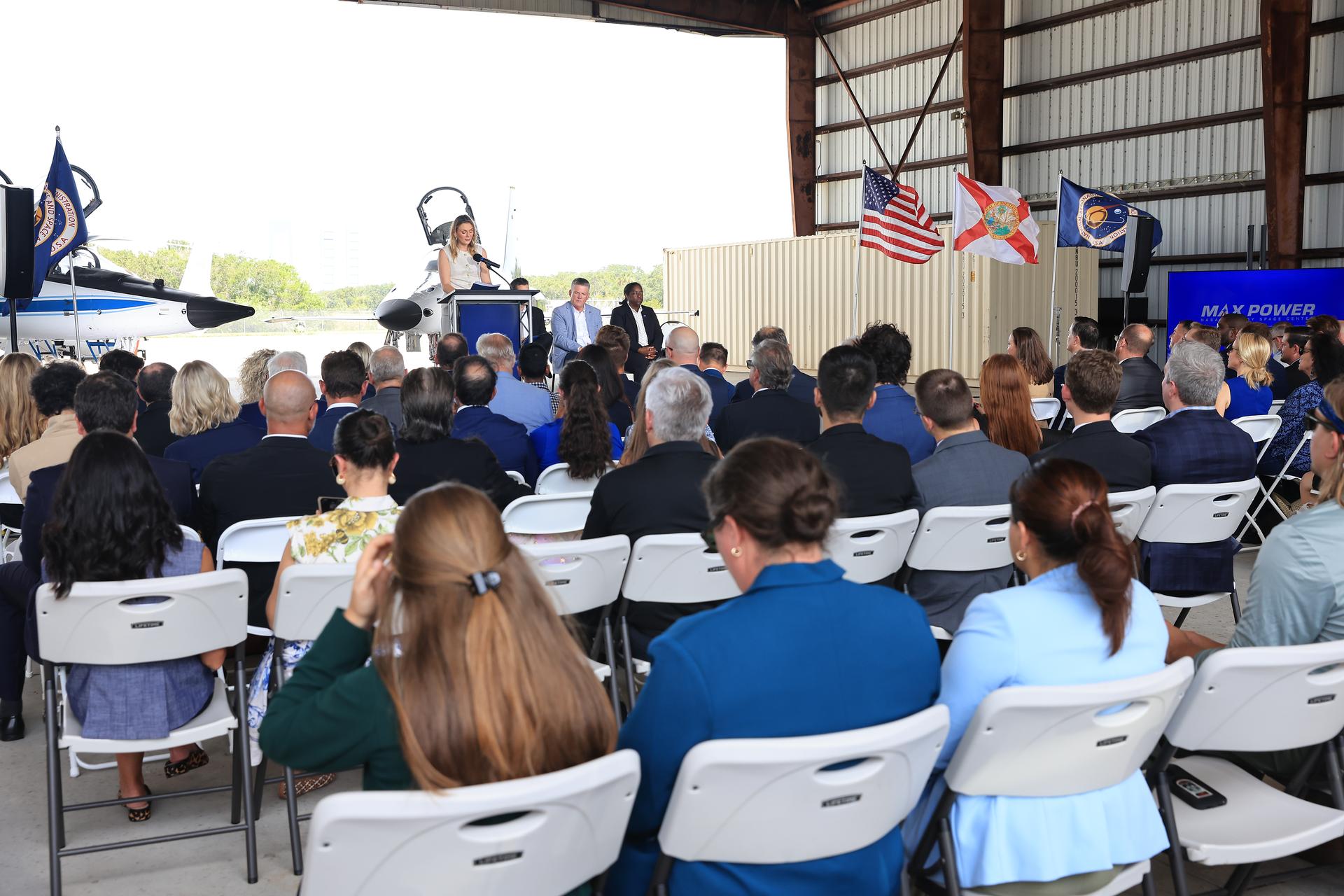
NASA Press Secretary Bethany Stevens introduces NASA Administrator Jared Isaacman, agency leadership, and members of Congress during the announcement of MAX POWER at the Shuttle Landing Facility at NASA’s Kennedy Space Center in Florida on Friday, Aug. 14, 2026. The multi-day exposition of air and space technologies scheduled for November is tied to America’s 250th anniversary, showcasing the next-generation aircraft, spacecraft, autonomous vehicles, and technologies that will help define the future of transportation in air and space and lay a foundation for our nation’s future endeavors: from Earth to the Moon, Mars, and beyond.
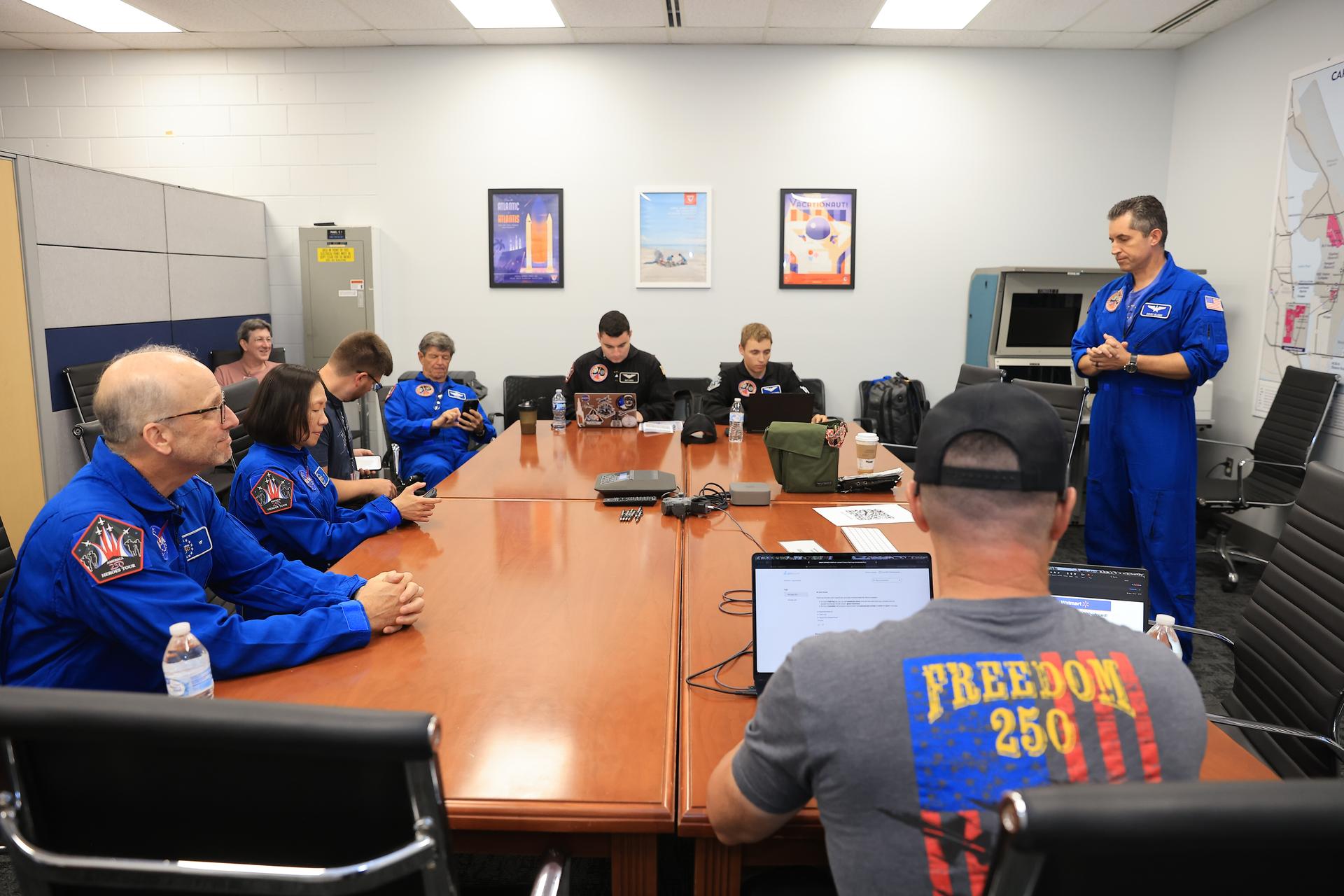
As part of NASA Administrator Jared Isaacman’s Flight Experience Award program, NASA employees Kuo-Chia “Alice” Liu, Raymond “Jim” Lanzi, and Logan Larson participate in a pre-flight briefing on Thursday, June 18, 2026, at the Launch and Landing Facility at the agency’s Kennedy Space Center in Florida. Awardees donned NASA flight suits, completed pre-flight briefings, and experienced a unique flight aboard the administrator’s personal F-5 aircraft. The ride-along flight experience award program highlights NASA’s commitment to celebrating excellence across the workforce.
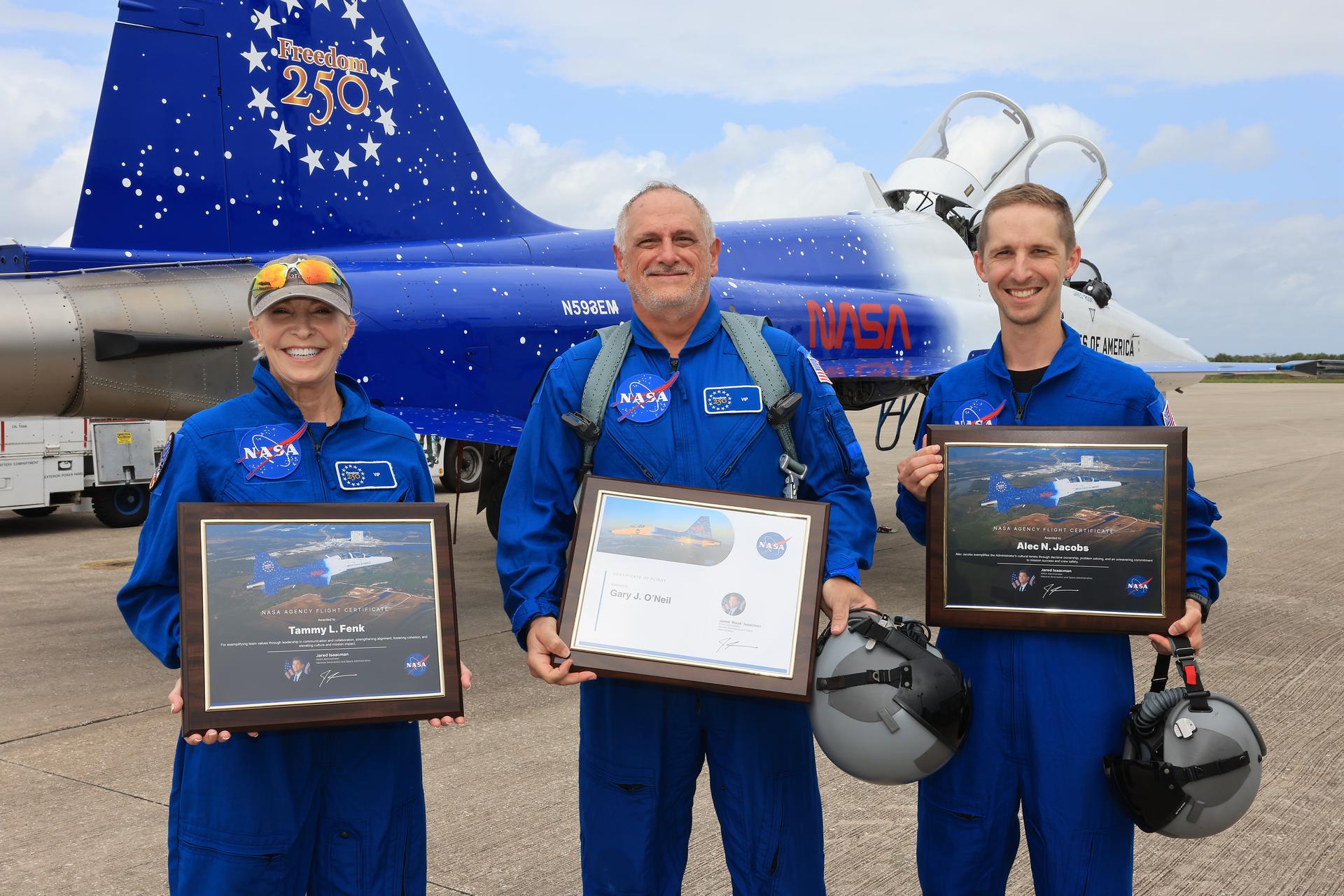
From left, NASA employees Tammy Fenk, Gary O’Neil, and Alec Jacobs pose for a photograph after participating in an employee incentive flying event using NASA Administrator Jared Isaacman's personal F-5 aircraft, Thursday, Sept. 17, 2026, at NASA’s Kennedy Space Center in Florida. As part of the agency’s Flight Experience Award program, the employees donned NASA flight suits, completed preflight briefings, and experienced a unique flight. The ride-along flight experience award program highlights NASA’s commitment to celebrating excellence across the workforce.
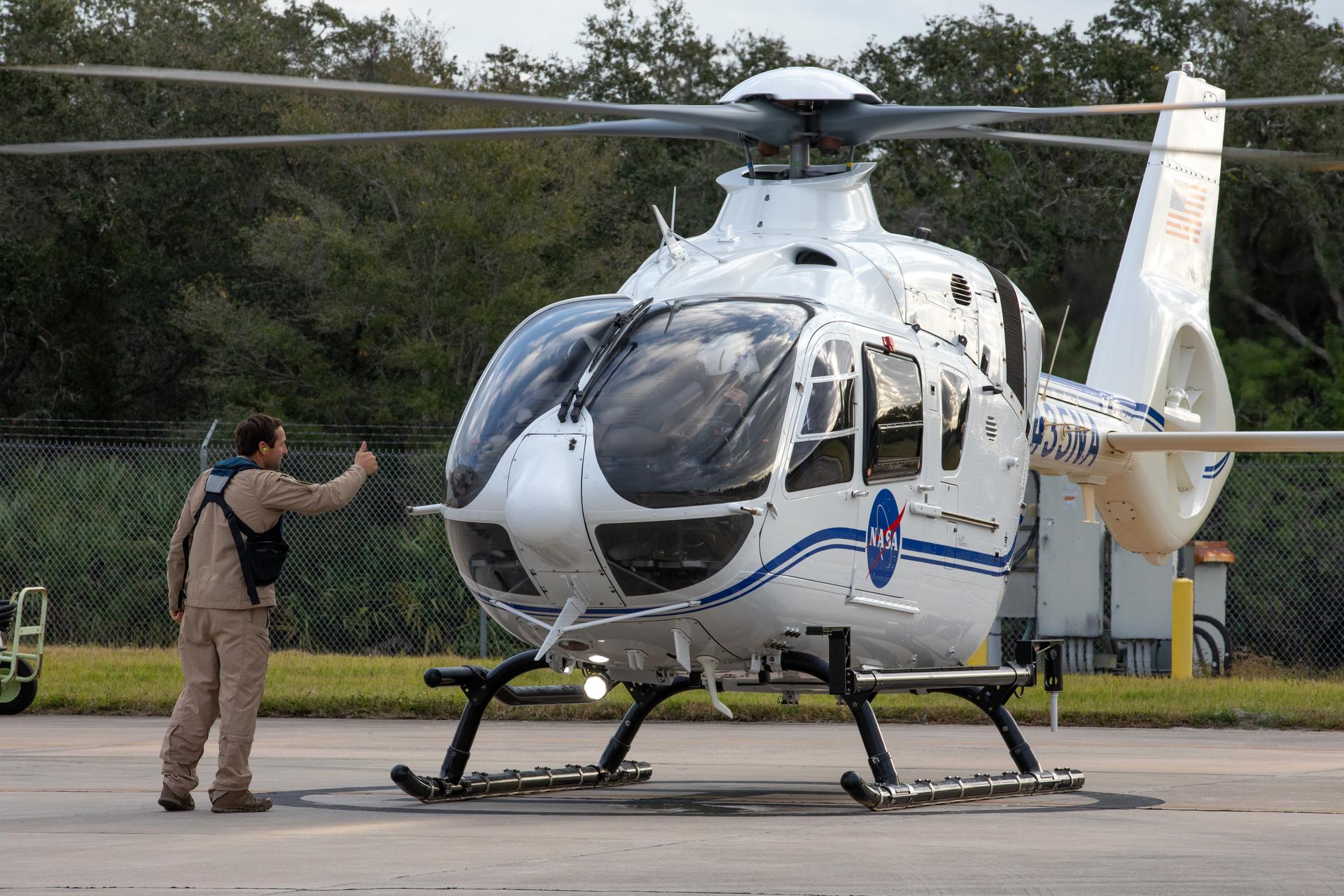
A member of Flight Operations at NASA’s Kennedy Space Center in Florida gives a thumbs up to the NASA Airbus H135 (T3) helicopters carrying NASA Administrator Jared Isaacman and NASA Kennedy leadership on Tuesday, Jan. 13, 2026. Isaacman, NASA’s 15th administrator, began visiting the agency’s centers after his appointment on Dec. 17, 2025, to meet with employees, contractors, and partners.
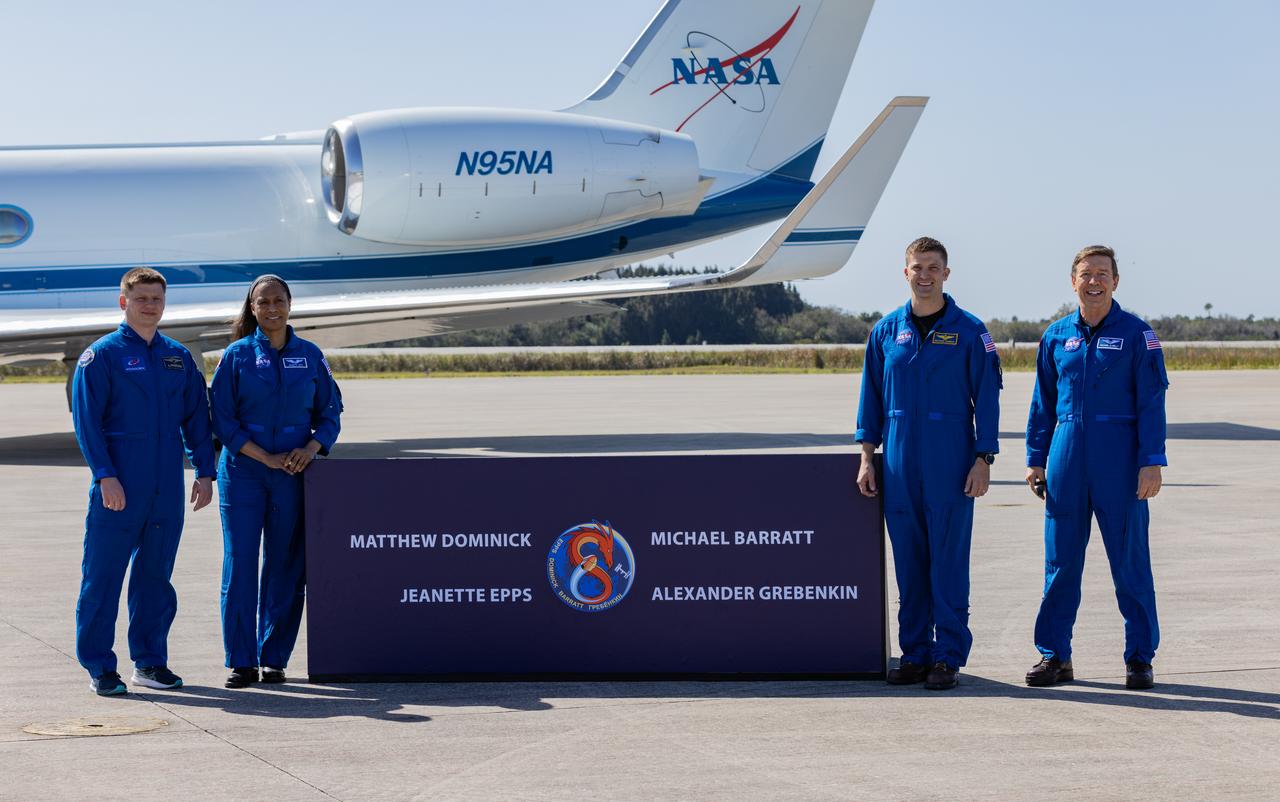
Crew members of NASA’s SpaceX Crew-8 mission to the International Space Station from right to left NASA astronauts Michael Barratt, Matthew Dominick, and Jeanette Epps, and Roscosmos cosmonaut Alexander Grebenkin, stand before members of the news media at the Launch and Landing Facility at Kennedy Space Center in Florida on Sunday, Feb. 25, 2024. The Crew-8 mission is slated to launch aboard SpaceX’s Dragon spacecraft, powered by the company’s Falcon 9 rocket from Launch Complex 39A no earlier than 12:04 a.m. EST on Friday, March 1, 2024.
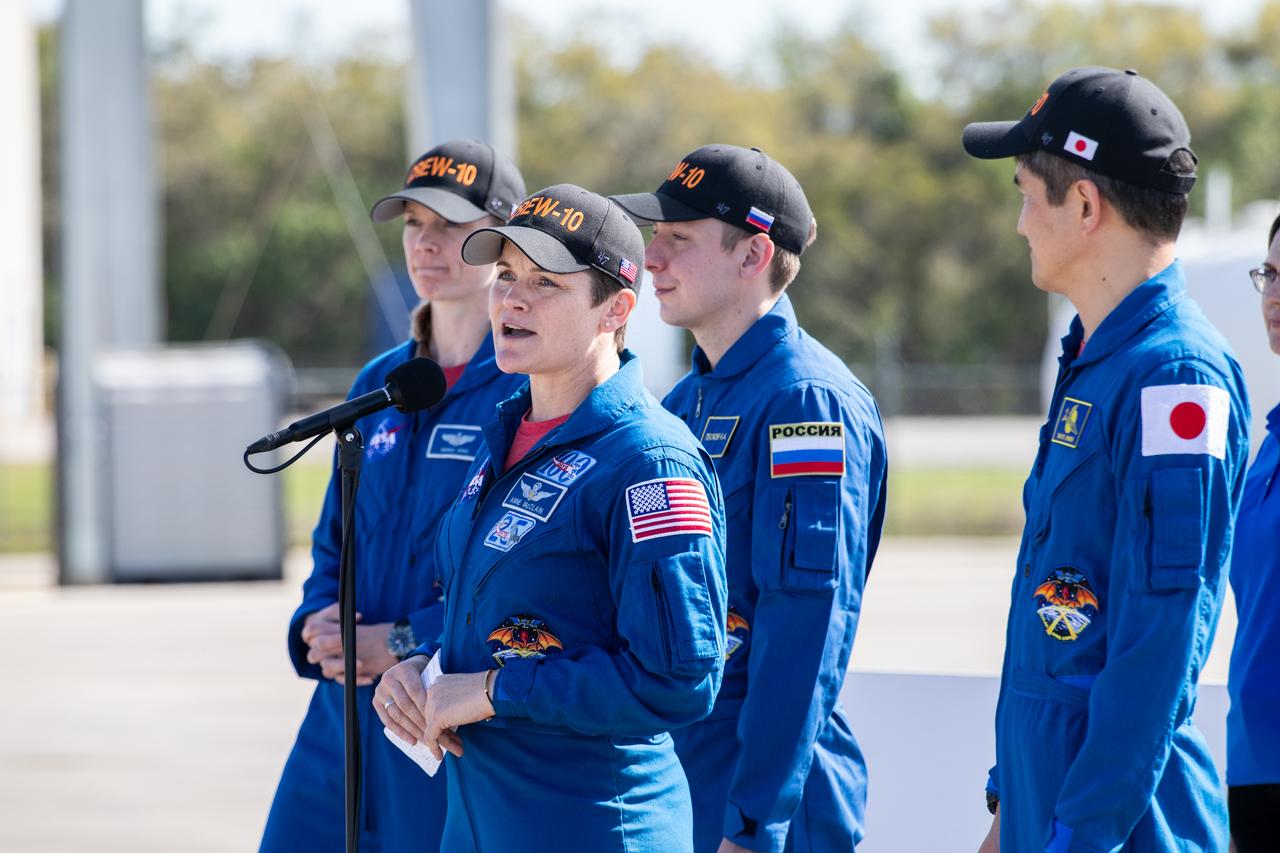
NASA astronaut Anne McClain, Crew-10 commander, delivers remarks to members of the news media during crew arrival for NASA’s SpaceX Crew-10 mission at the Launch and Landing Facility at the agency’s Kennedy Space Center in Florida on Friday, March 7, 2025. McClain and fellow NASA astronaut Nichole Ayers, along with JAXA (Japan Aerospace Exploration Agency) astronaut Takuya Onishi and Roscosmos cosmonaut Kirill Peskov will launch to the International Space Station aboard SpaceX’s Dragon spacecraft and Falcon 9 rocket. Launch is targeted for 7:48 p.m. EDT on Wednesday, March 12, 2025, from Launch Complex 39A at NASA Kennedy. Crew-10 is the 10th crew rotation mission with SpaceX to the space station as part of the agency’s Commercial Crew Program.
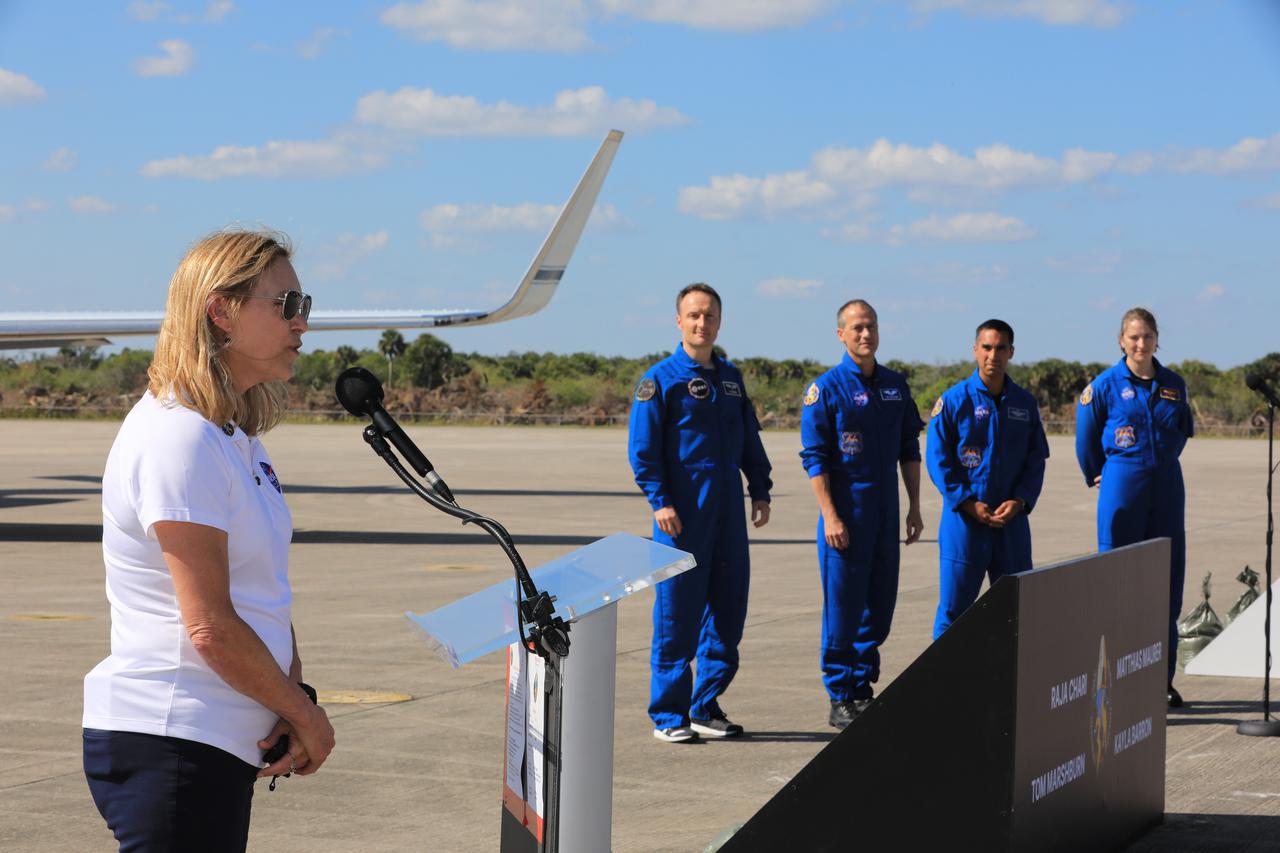
Kennedy Space Center Director Janet Petro, far left, greets the crew members of NASA’s SpaceX Crew-3 mission after their arrival at the center’s Launch and Landing Facility in Florida on Oct. 26, 2021. From left are European Space Agency astronaut Matthias Maurer, and NASA astronauts Tom Marshburn, Raja Chari, and Kayla Barron. Crew-3 will launch aboard the Crew Dragon on a SpaceX Falcon 9 rocket. Launch is targeted for 2:21 a.m. EDT on October 31 from Launch Complex 39A.
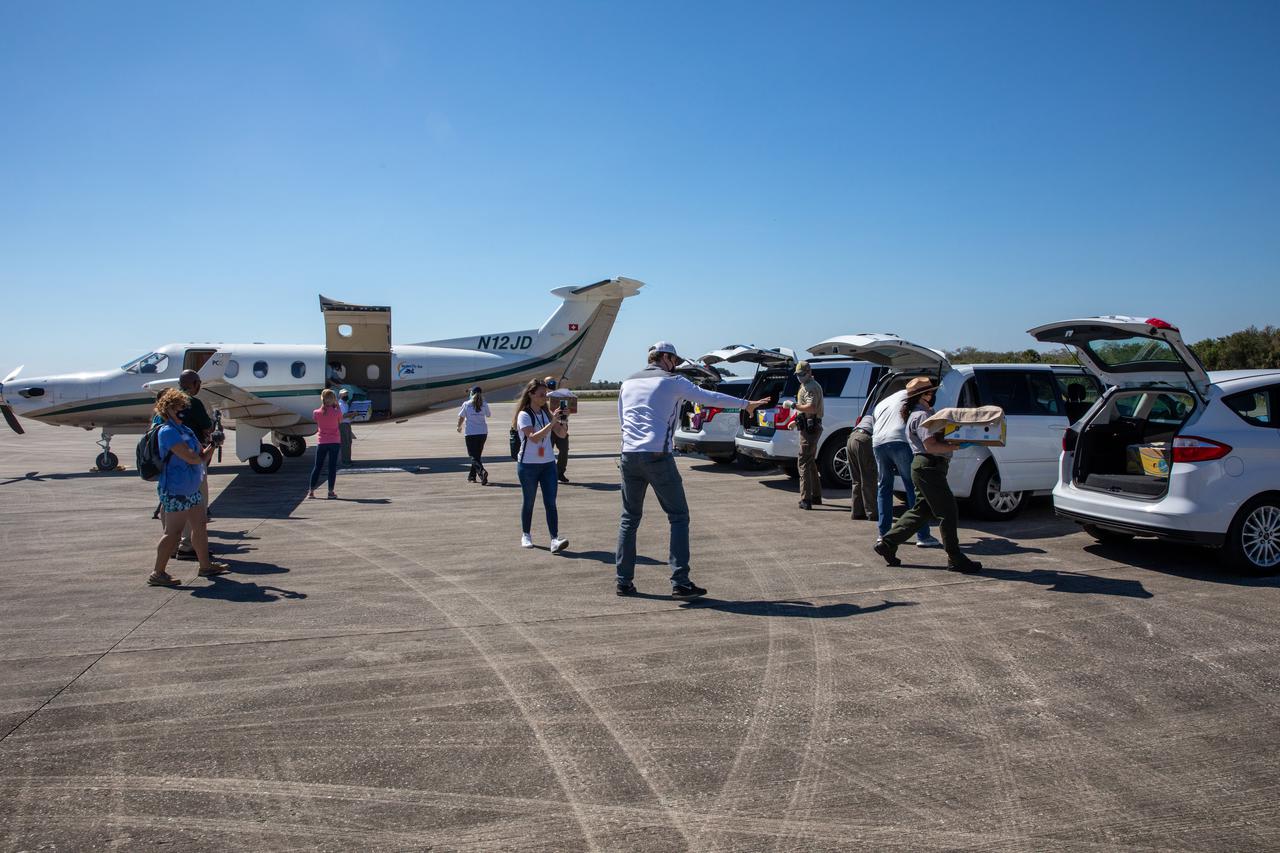
Staff with NASA and partner agencies help to unpack the containers of Kemp’s ridley and other sea turtles from the PC12 aircraft that arrived at the Launch and Landing Facility, managed by Space Florida, at NASA’s Kennedy Space Center in Florida on Feb. 26, 2021. The rescued and rehabilitated turtles were flown from aquatic centers in Massachusetts and New York. The containers of turtles will be transferred to vehicles for the short trip to the Canaveral National Seashore, where they will be released into the Atlantic Ocean. NASA, U.S. Fish and Wildlife Service, NOAA Fisheries, Space Florida, and Herndon Solutions Group, the center’s environmental services contractor, provided support. The Turtles Fly Too organization provided the flight to Kennedy. All marine turtle footage/images was obtained with the approval of the Florida Fish and Wildlife Conservation Commission (FWC) under conditions not harmful to marine turtles. Footage was acquired while conducting authorized conservation activities pursuant to: FWC 2021 Consent Permit, MTP-21-005 and MTP-21-114.
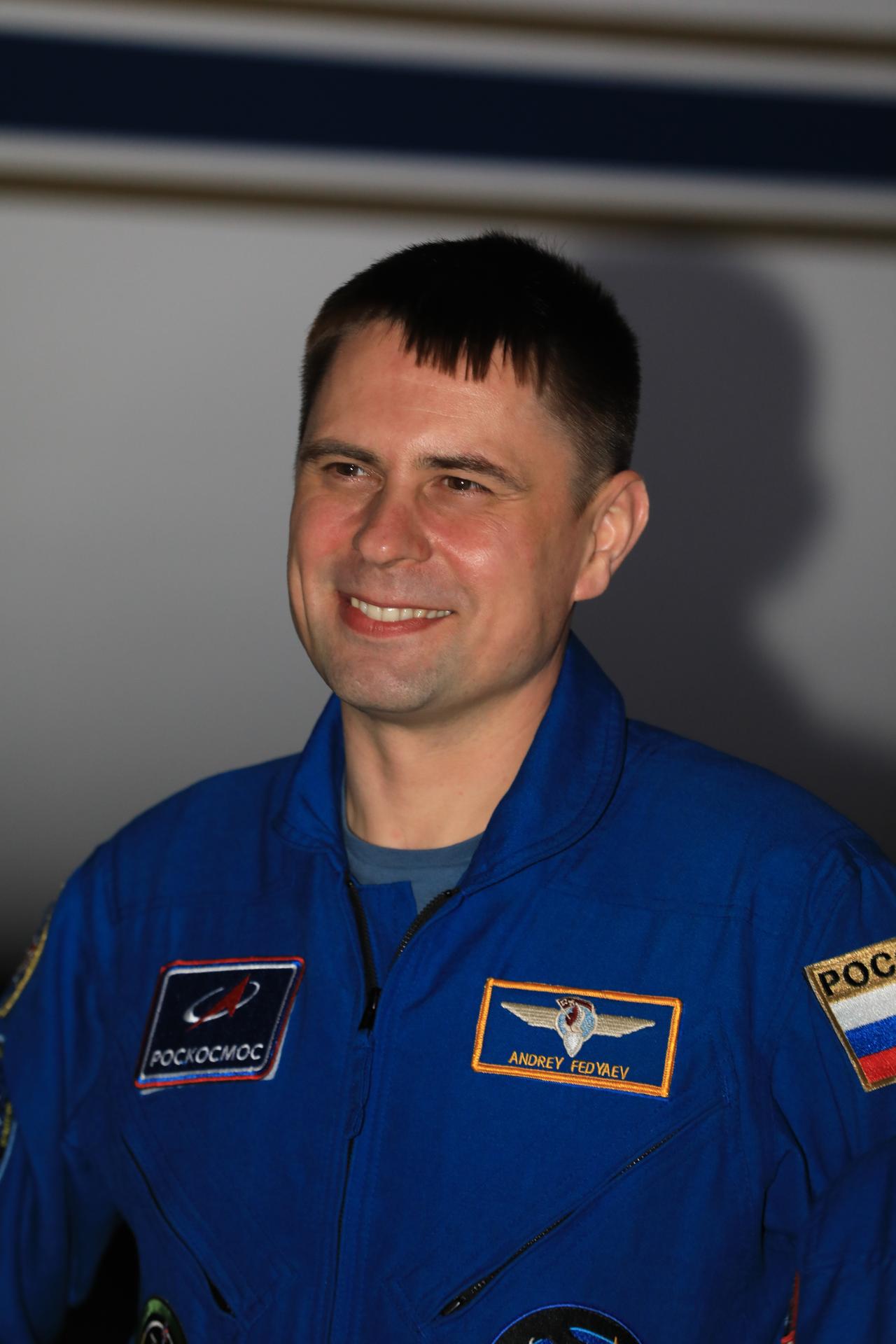
Roscosmos cosmonaut Andrey Fedyaev, mission specialist, arrives Friday, Feb. 6, 2026, at the Launch and Landing Facility at the agency’s Kennedy Space Center in Florida. NASA astronauts Jessica Meir and Jack Hathaway, and ESA (European Space Agency) astronaut Sophie Adenot will launch along with Fedyaev to the International Space Station aboard SpaceX’s Dragon spacecraft and Falcon 9 rocket at 6:01 a.m. EST on Wednesday, Feb. 11, from Cape Canaveral Space Force Station’s Space Launch Complex 40. Crew-12 is the 12th crew rotation mission with SpaceX to the space station as part of NASA’s Commercial Crew Program.
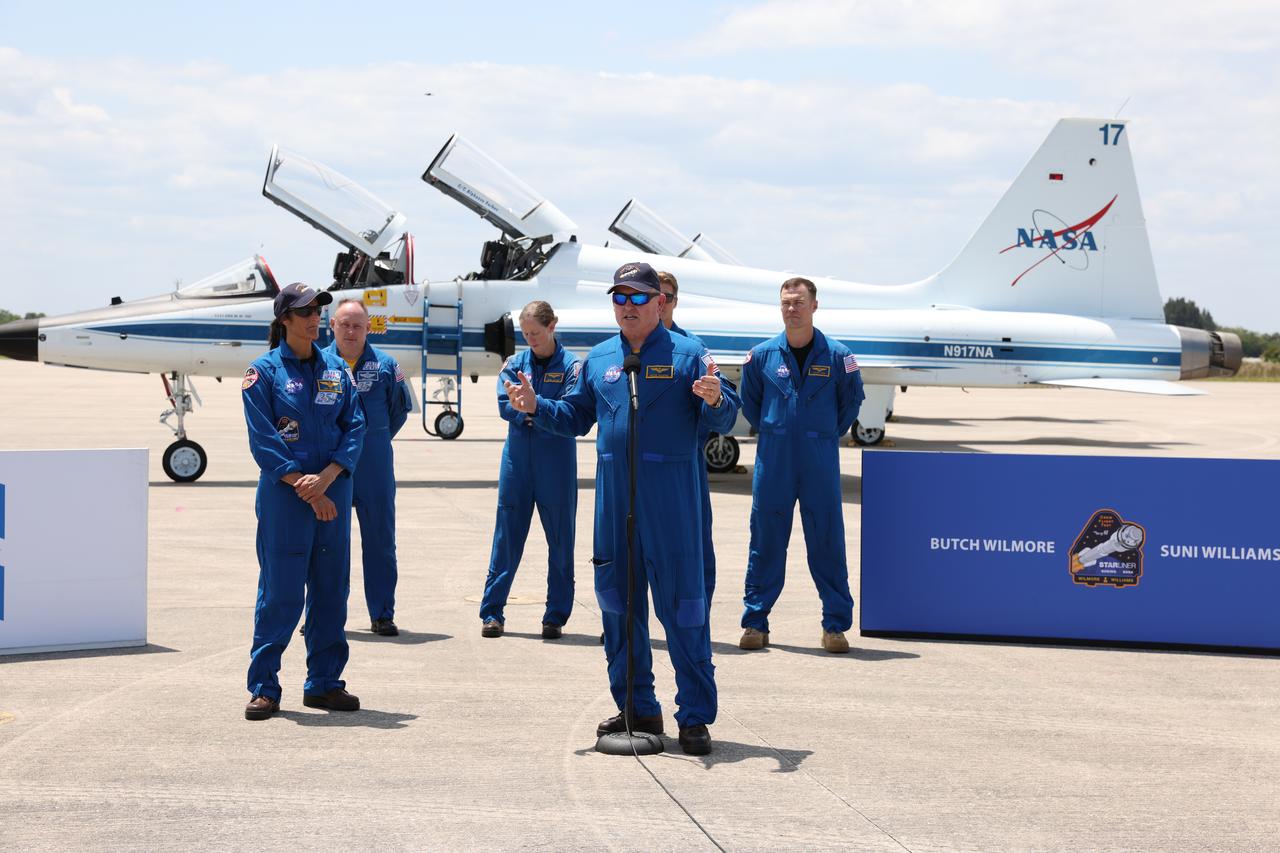
NASA astronaut Butch Wilmore delivers remarks to members of the news media at the Launch and Landing Facility at the NASA’s Kennedy Space Center in Florida following his arrival for the agency’s Boeing Crew Flight Test. As part of the agency’s Commercial Crew Program, Wilmore is joined by NASA astronaut Suni Williams as the first crew to launch aboard Boeing’s Starliner spacecraft atop a United Launch Alliance Atlas V rocket from Space Launch Complex-41 at Cape Canaveral Space Force Station in Florida. Liftoff is scheduled for 10:34 p.m. ET on Monday, May 6.
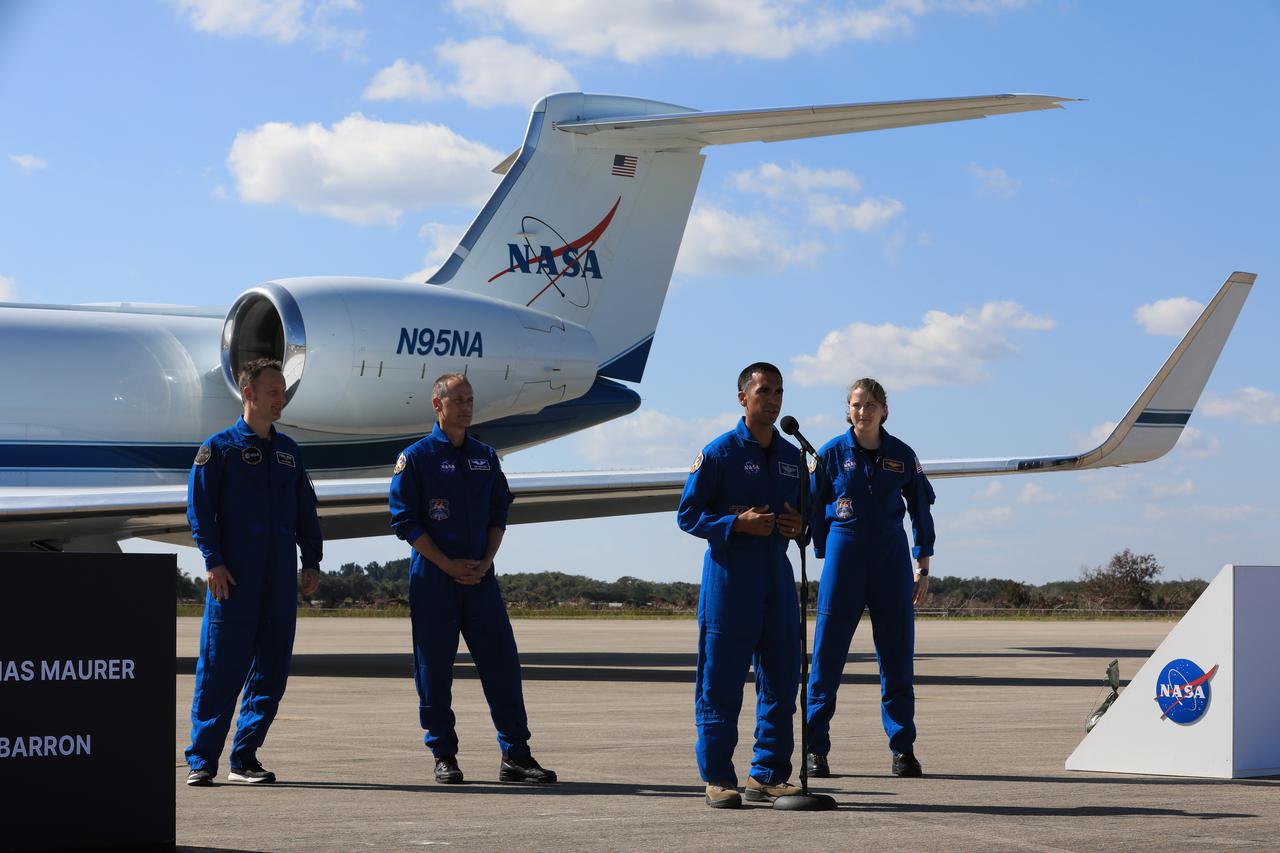
NASA Astronaut Raja Chari, commander, speaks to members of the news media during crew arrival for NASA’s SpaceX Crew-3 mission at Kennedy Space Center’s Launch and Landing Facility in Florida on Oct. 26, 2021. Chari, along with from left, Matthias Mauer, European Space Agency astronaut, and NASA astronauts Tom Marshburn and Kayla Barron arrived at the landing facility from Houston. The astronauts will launch aboard the Crew Dragon on a SpaceX Falcon 9 rocket on Oct. 31. Launch is targeted for 2:21 a.m. from Launch Complex 39A. Crew-3 is the third crew rotation flight for the agency’s Commercial Crew Program, and the first flight of a new Crew Dragon spacecraft.

Dana Hutcherson, deputy program manager, Commercial Crew Program, NASA’s Kennedy, delivers remarks to members of the news media during crew arrival for NASA’s SpaceX Crew-8 mission at the Launch and Landing Facility at Kennedy Space Center in Florida on Sunday, Feb. 25, 2024. The Crew-8 mission will send NASA astronauts Matthew Dominick, Michael Barratt, and Jeanette Epps, and Roscosmos cosmonaut Alexander Grebenkin, to the International Space Station aboard SpaceX’s Dragon spacecraft on the company’s Falcon 9 rocket from Kennedy’s Launch Complex 39A no earlier than 12:04 a.m. EST Friday, March 1, 2024.
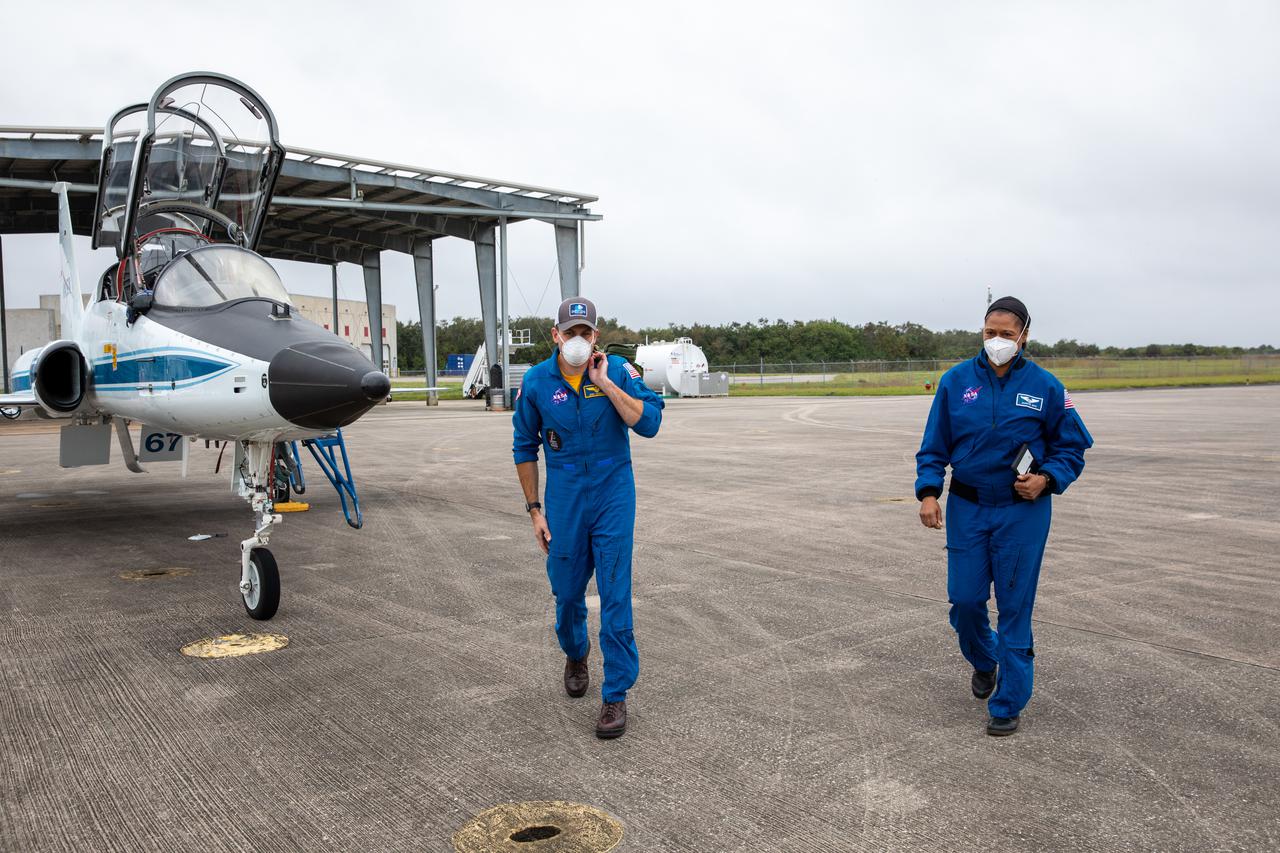
NASA astronauts arrive aboard T-38 jet aircraft at the Launch and Landing Facility at Kennedy Space Center in Florida on Dec. 17, 2020. The astronauts are at Kennedy to prepare for their flights to the International Space Station on Boeing’s CST-100 Starliner, as part of the agency’s Commercial Crew Program. From left are Josh Cassada and Jeanette Epps.
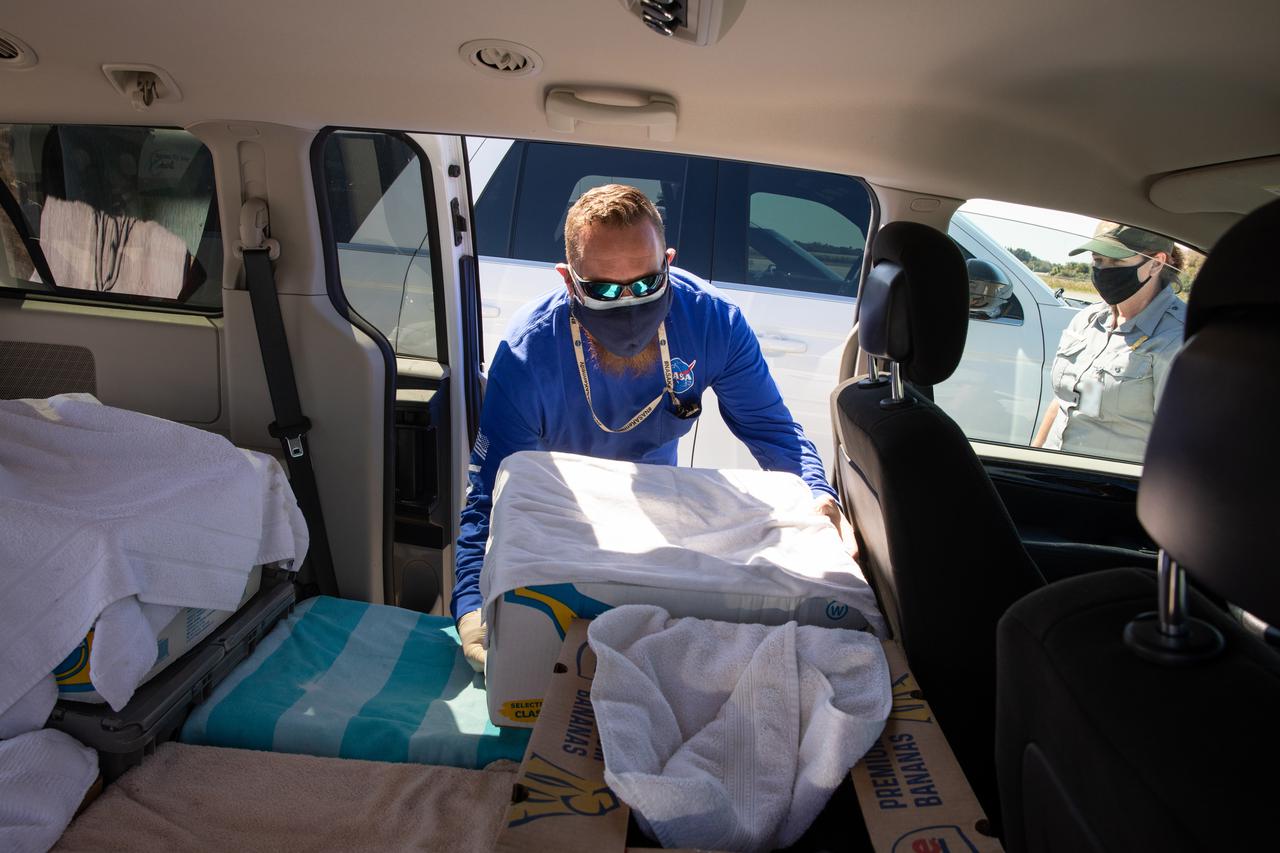
Staff with NASA and partner agencies help to unpack the containers of Kemp’s ridley and other sea turtles from the PC12 aircraft that arrived at the Launch and Landing Facility, managed by Space Florida, at NASA’s Kennedy Space Center in Florida on Feb. 26, 2021. The rescued and rehabilitated turtles were flown from aquatic centers in Massachusetts and New York. The containers of turtles will be transferred to vehicles for the short trip to the Canaveral National Seashore, where they will be released into the Atlantic Ocean. NASA, U.S. Fish and Wildlife Service, NOAA Fisheries, Space Florida, and Herndon Solutions Group, the center’s environmental services contractor, provided support. The Turtles Fly Too organization provided the flight to Kennedy. All marine turtle footage/images was obtained with the approval of the Florida Fish and Wildlife Conservation Commission (FWC) under conditions not harmful to marine turtles. Footage was acquired while conducting authorized conservation activities pursuant to: FWC 2021 Consent Permit, MTP-21-005 and MTP-21-114.
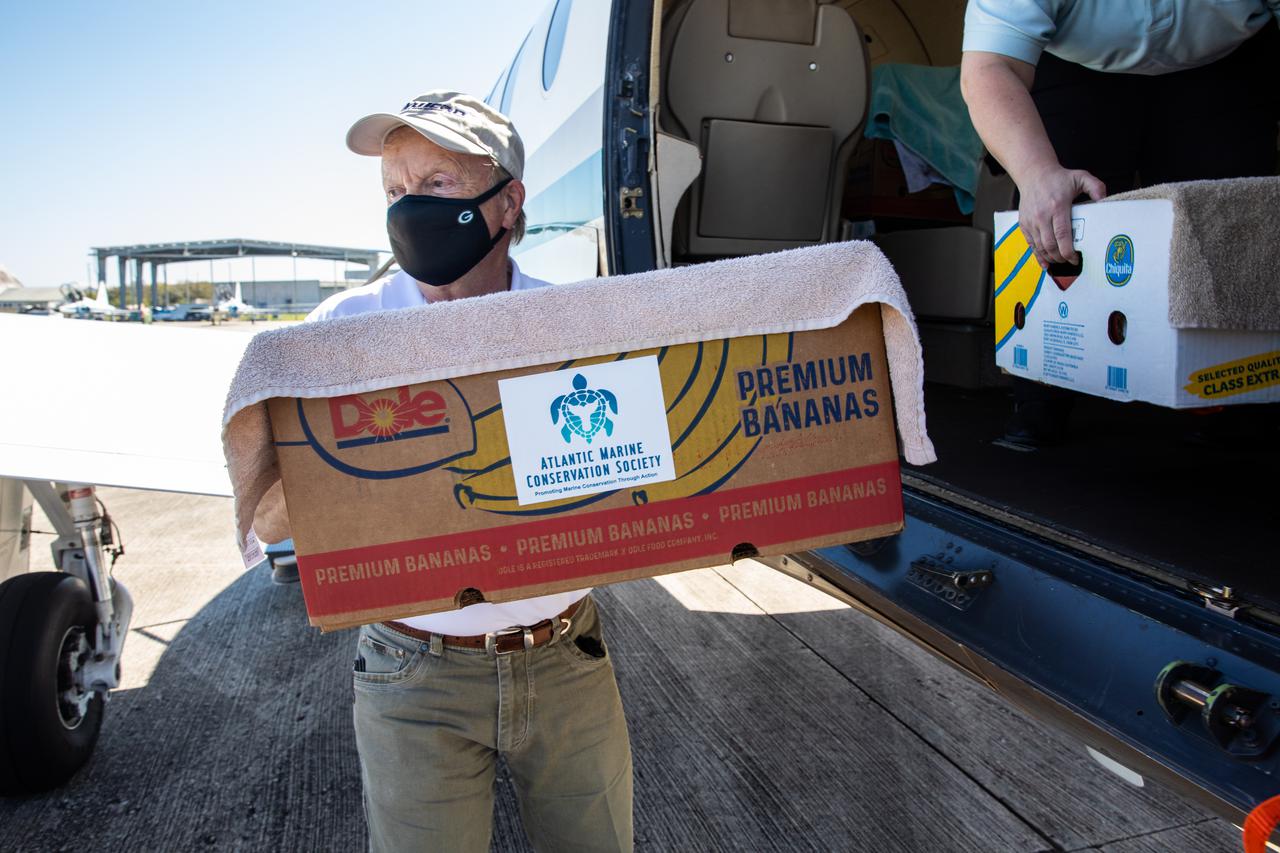
Staff with NASA and partner agencies help to unpack the containers of Kemp’s ridley and other sea turtles from the PC12 aircraft that arrived at the Launch and Landing Facility, managed by Space Florida, at NASA’s Kennedy Space Center in Florida on Feb. 26, 2021. The rescued and rehabilitated turtles were flown from aquatic centers in Massachusetts and New York. The containers of turtles will be transferred to vehicles for the short trip to the Canaveral National Seashore, where they will be released into the Atlantic Ocean. NASA, U.S. Fish and Wildlife Service, NOAA Fisheries, Space Florida, and Herndon Solutions Group, the center’s environmental services contractor, provided support. The Turtles Fly Too organization provided the flight to Kennedy. All marine turtle footage/images was obtained with the approval of the Florida Fish and Wildlife Conservation Commission (FWC) under conditions not harmful to marine turtles. Footage was acquired while conducting authorized conservation activities pursuant to: FWC 2021 Consent Permit, MTP-21-005 and MTP-21-114.
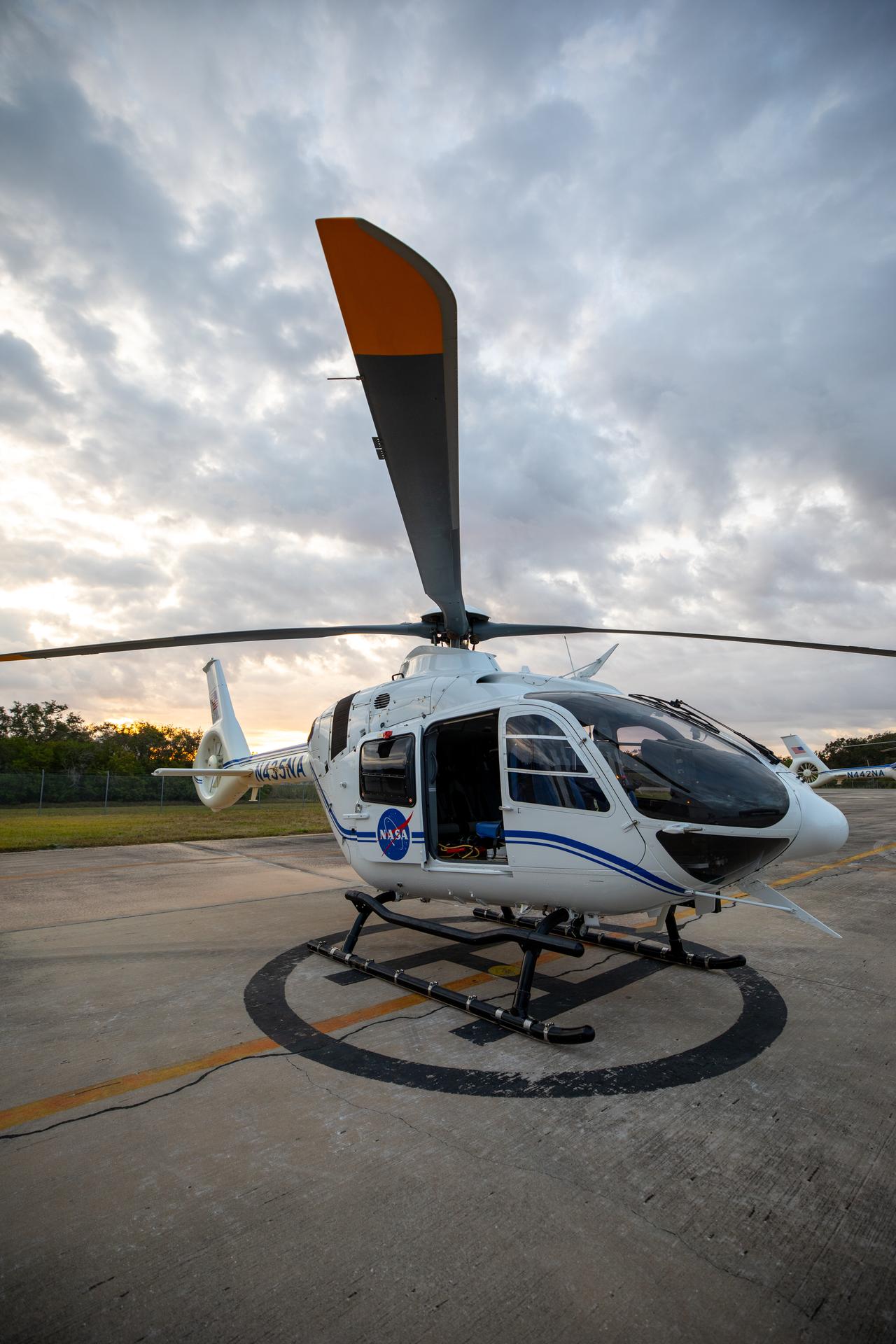
NASA Airbus H135 (T3) helicopters prepare for takeoff from the Launch and Landing Facility at the agency’s Kennedy Space Center in Florida carrying NASA Administrator Jared Isaacman and NASA Kennedy leadership on Tuesday, Jan. 13, 2026. Isaacman, NASA’s 15th administrator, began visiting the agency’s centers after his appointment on Dec. 17, 2025, to meet with employees, contractors, and partners.
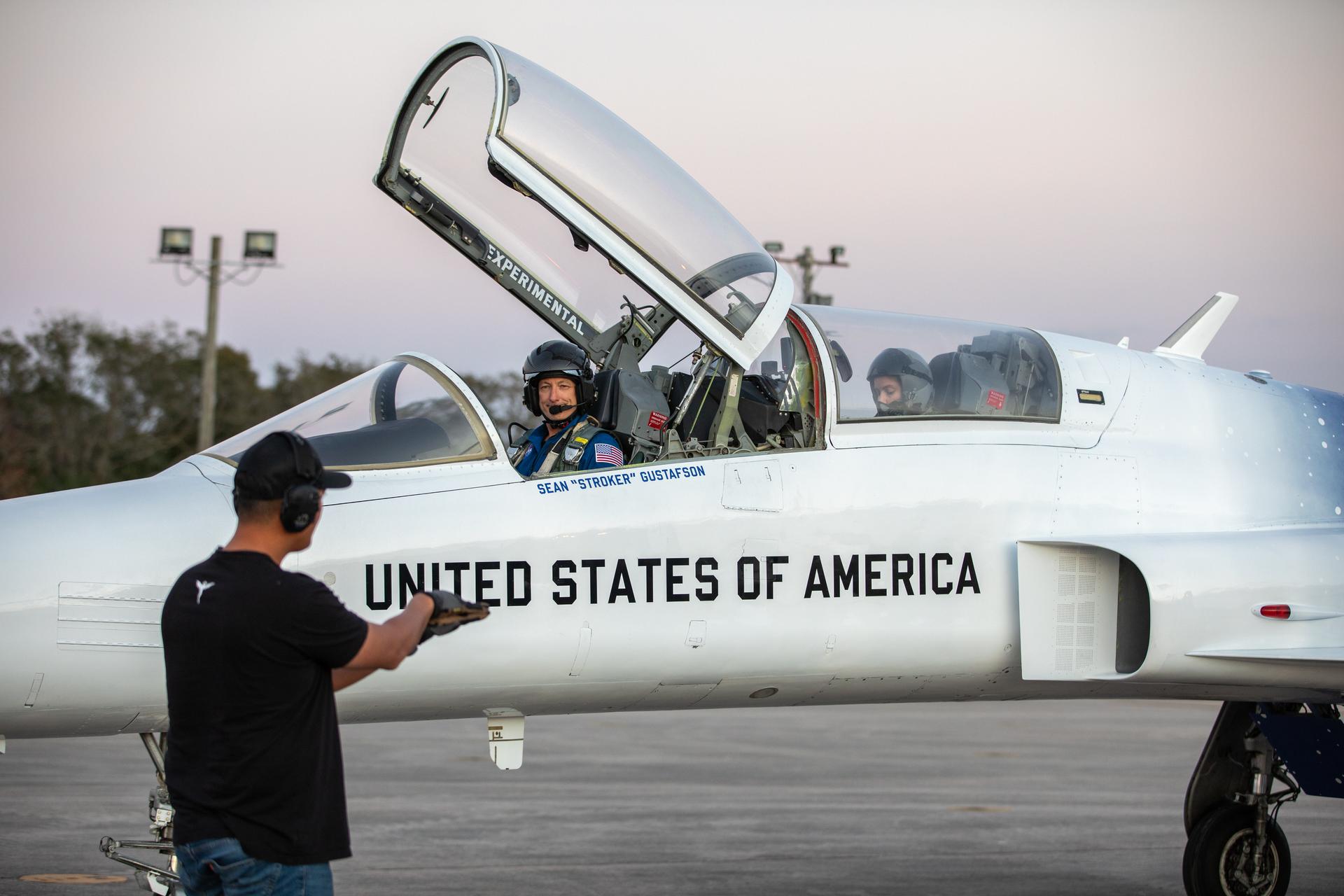
From left, Sean “Stroker” Gustafson, pilot, and Ashley Scharfenberg, Systems Engineering and Integration for Exploration Ground Systems, prepares for her employee incentive flight around NASA’s Kennedy Space Center in Florida on Tuesday, Jan. 13, 2026. As the newly appointed 15th administrator of the agency, Jared Isaacman created a ride-along program to recognize and reward members of the workforce for their dedication to accomplishing agency priorities. Scharfenberg, and Daniel Forrestel, manager, Ground and Missions Operations Office, (not pictured), were the first two employees to be recognized in the ride-along program to fly in Isaacman’s personal Northrop F-5 Tiger II aircraft.
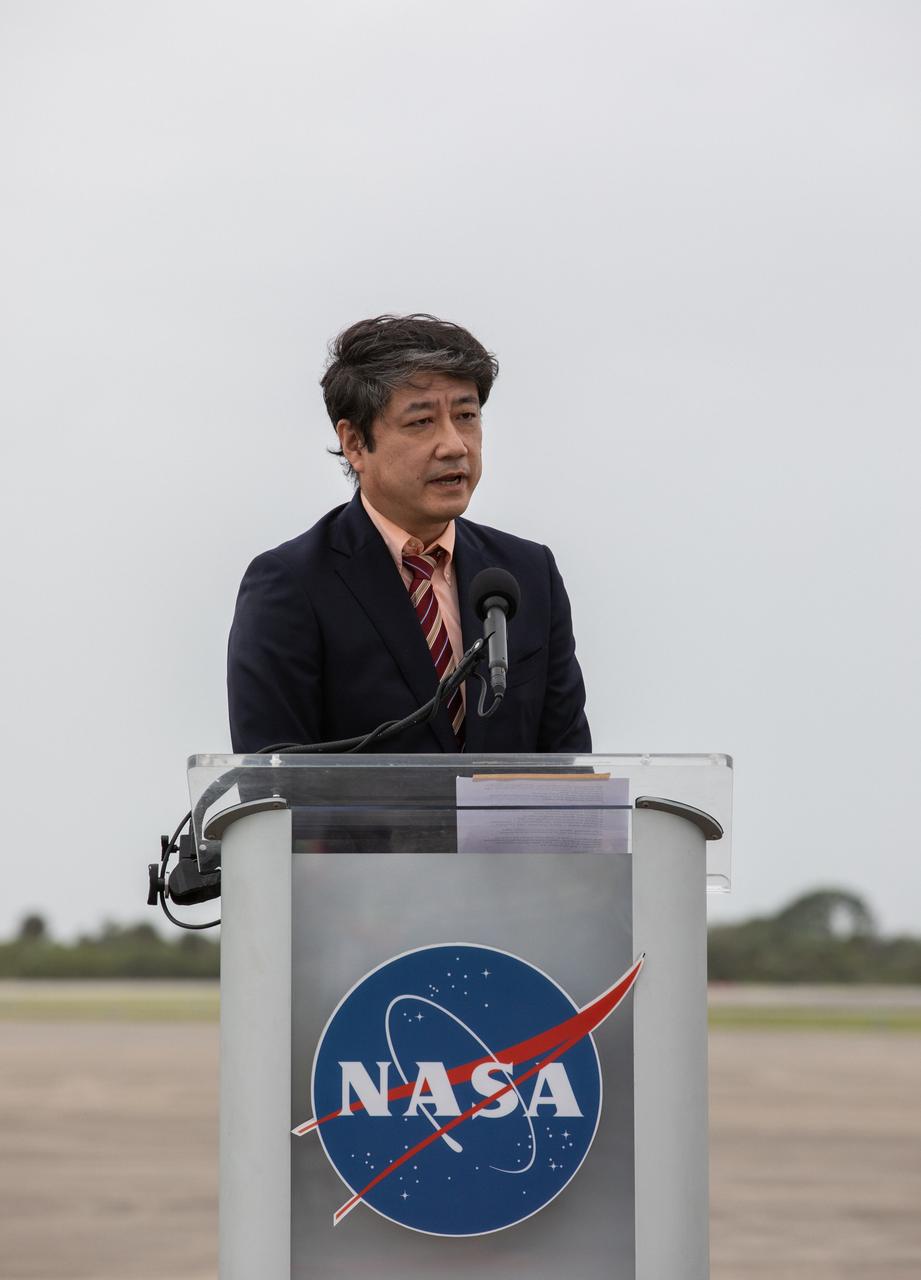
Junichi Sakai, manager, International Space Station Program, JAXA, speaks to members of the media during a crew arrival event for NASA’s SpaceX Crew-1 mission at the Launch and Landing Facility at the agency’s Kennedy Space Center in Florida on Nov. 8, 2020. Crew-1 is the first crew rotation mission of a U.S. commercial spacecraft with astronauts to the International Space Station as part of NASA’s Commercial Crew Program. The SpaceX Crew Dragon spacecraft, named Resilience, will launch atop a Falcon 9 rocket from Kennedy’s Launch Complex 39A.
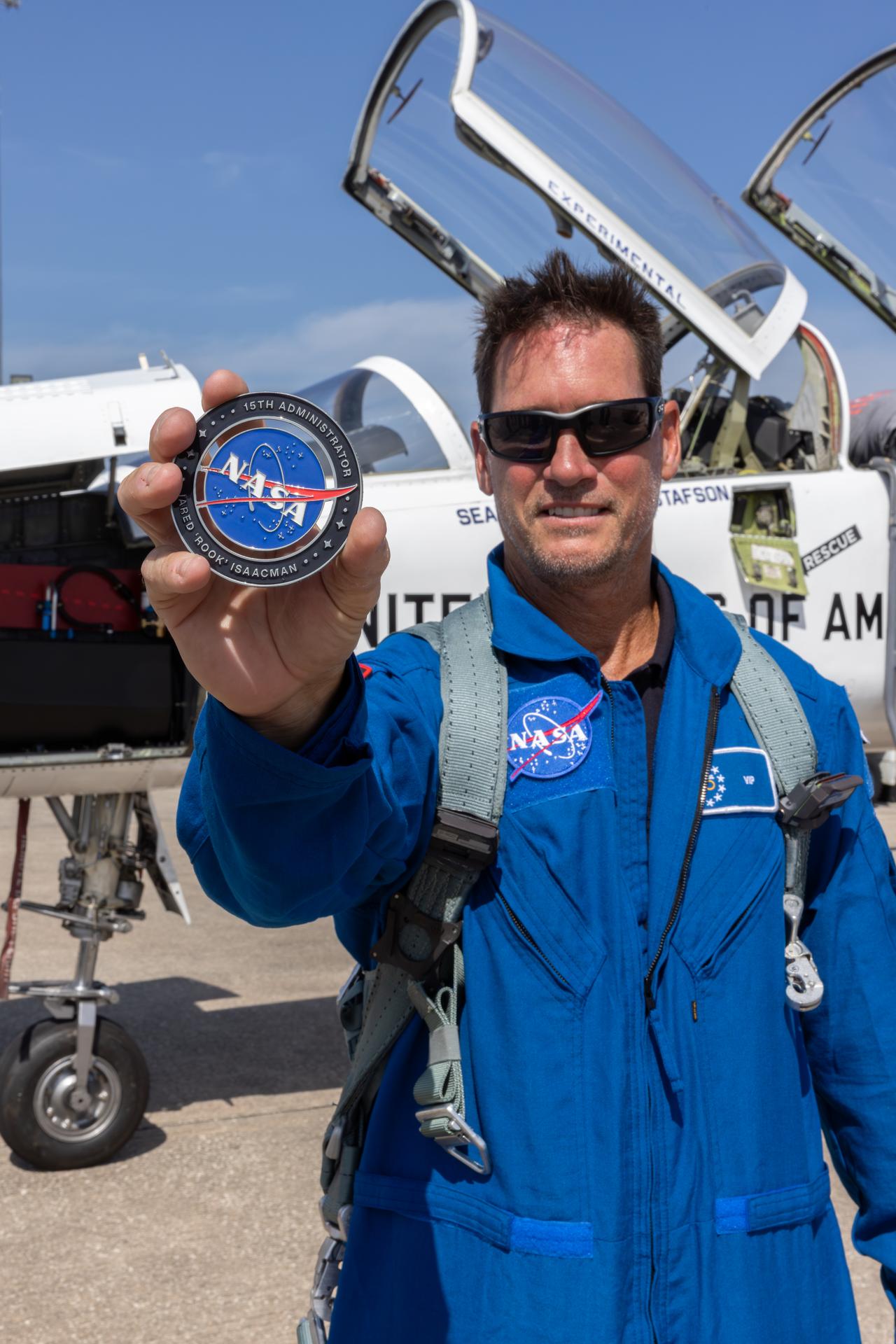
NASA employee Charles Meilbye is recognized as part of NASA Administrator Jared Isaacman’s Flight Experience Award program on Wednesday, June 17, 2026, at the Launch and Landing Facility at the agency’s Kennedy Space Center in Florida. Meilbye, with other awardees, suited up, completed preflight briefings, and experienced a unique flight aboard the administrator’s personal F-5 aircraft. The ride-along flight experience award program highlights NASA’s commitment to celebrating excellence across the workforce.
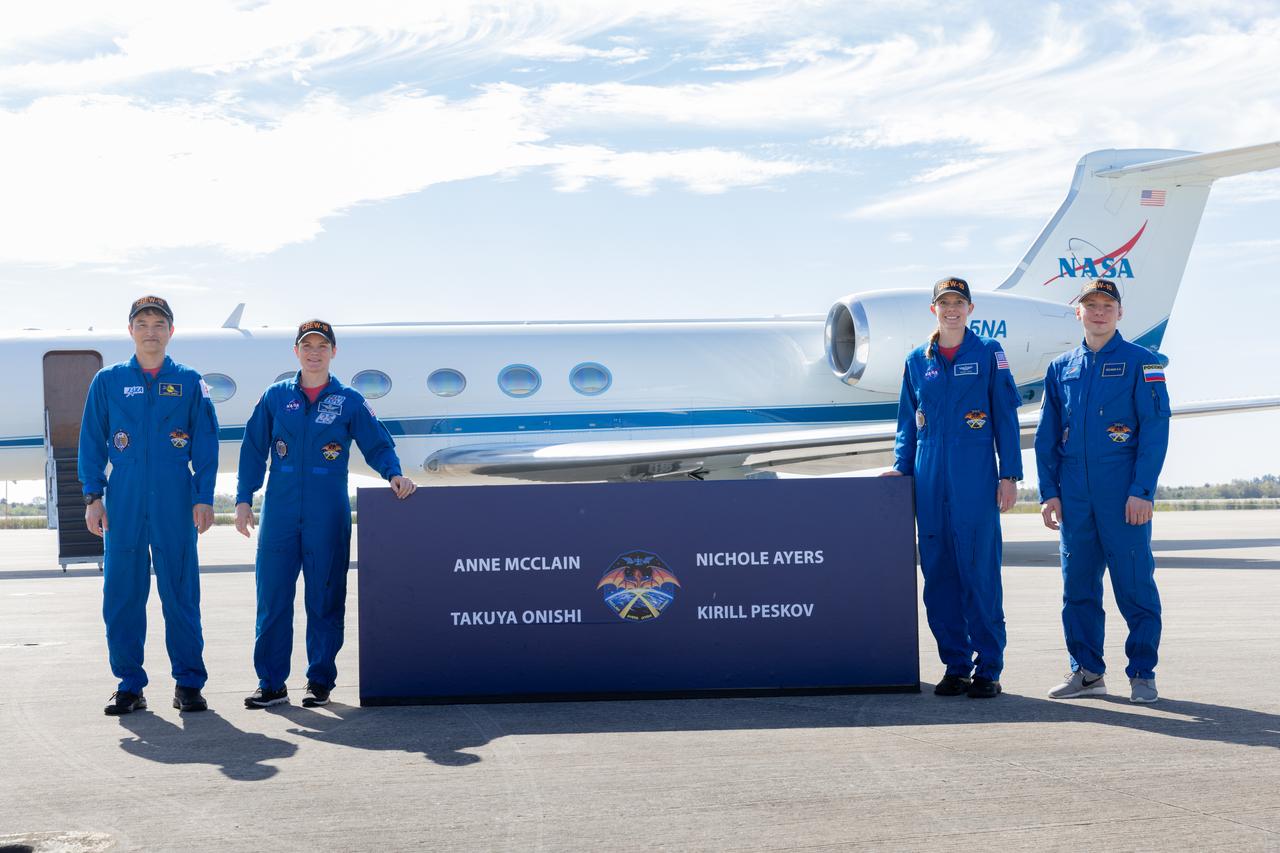
Crew members of NASA’s SpaceX Crew-10 mission to the International Space Station from left to right JAXA (Japan Aerospace Exploration Agency) astronaut Takuya Onishi, NASA astronaut Anne McClain, NASA astronaut Nichole Ayers, and Roscosmos cosmonaut Kirill Peskov stand before members of the news media after arrival to the Launch and Landing Facility at Kennedy Space Center in Florida on Friday, March 7, 2025. The Crew-10 mission is slated to launch aboard SpaceX’s Dragon spacecraft, powered by the company’s Falcon 9 rocket from NASA Kennedy’s Launch Complex 39A no earlier than 7:48 p.m. EDT on Wednesday, March 12, 2025.
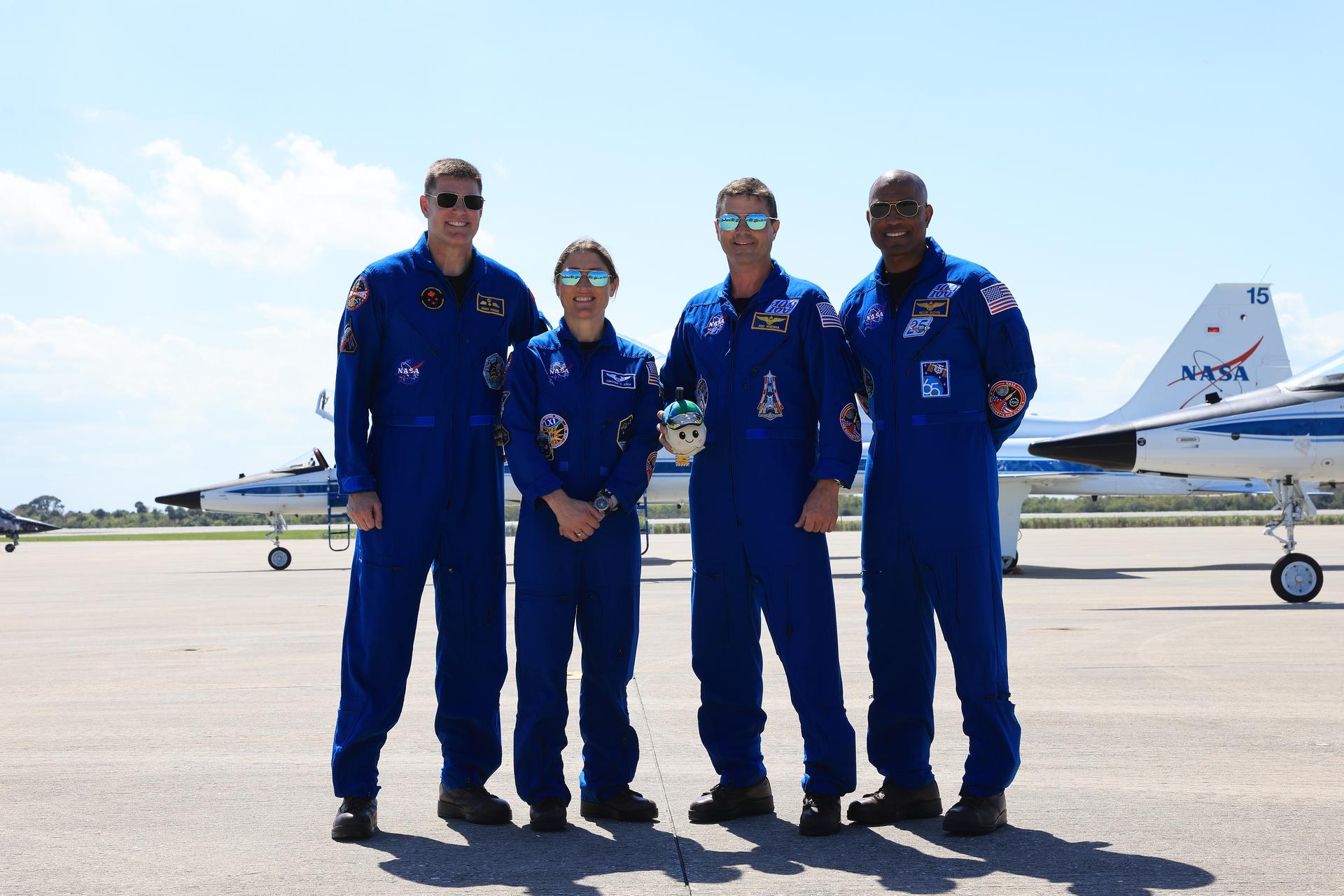
From left to right, Artemis II Mission Specialist Jeremy Hansen from CSA (Canadian Space Agency), Mission Specialist Christina Koch, Commander Reid Wiseman, and Pilot Victor Glover, arrive on Friday, March 27, 2026, at the Launch and Landing Facility at the agency’s Kennedy Space Center in Florida in preparation for the Artemis II test flight. The Artemis II mission will take the crew on a 10-day journey around the Moon and back aboard NASA’s SLS (Space Launch System) rocket and Orion spacecraft from Launch Complex 39B no earlier than 6:24 p.m. EDT on Wednesday, April 1.
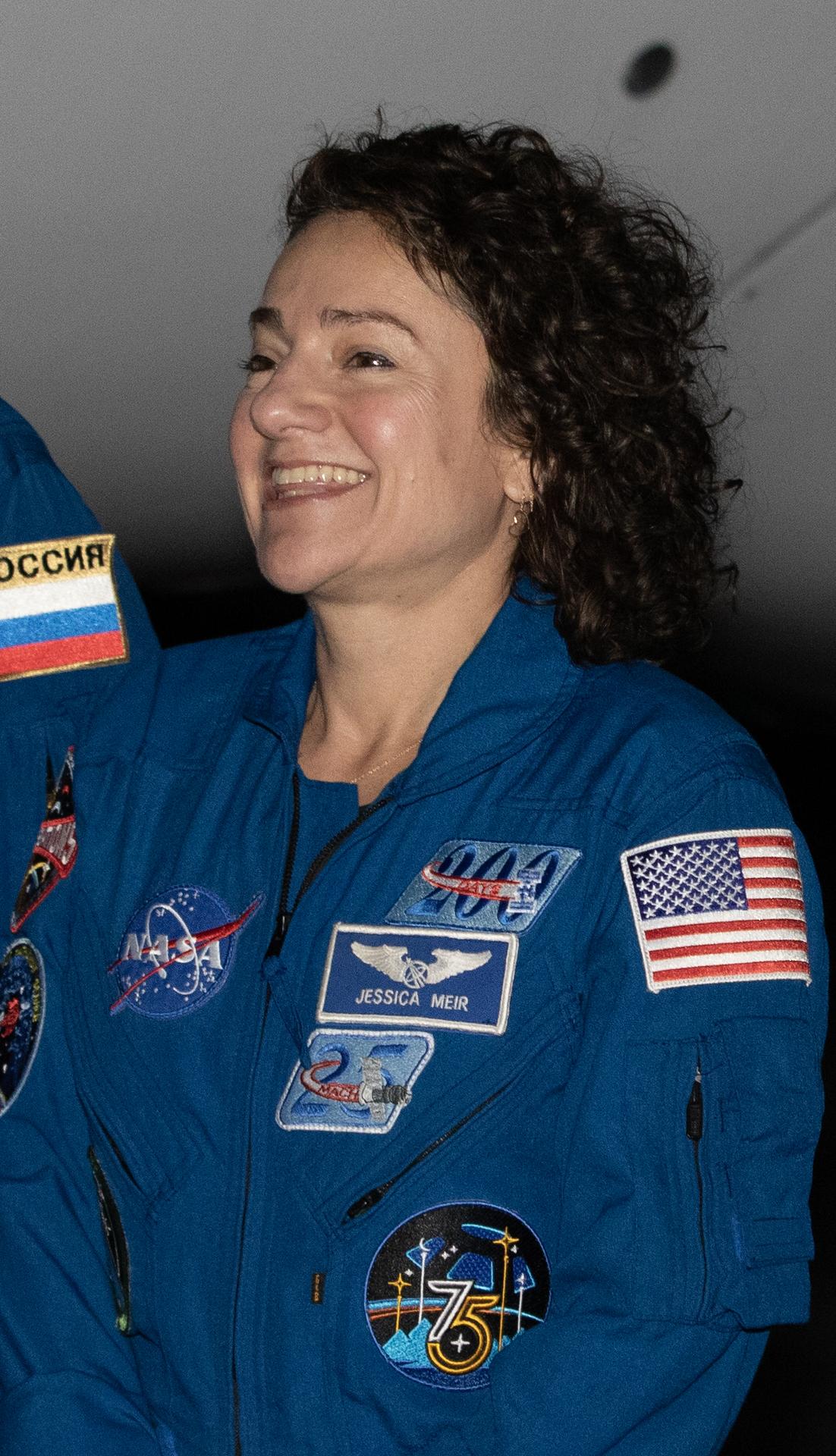
NASA astronaut Jessica Meir, Crew-12 commander, arrives Friday, Feb. 6, 2026, at the Launch and Landing Facility at the agency’s Kennedy Space Center in Florida. Meir and fellow NASA astronaut Jack Hathaway, along with ESA (European Space Agency) astronaut Sophie Adenot, and Roscosmos cosmonaut Andrey Fedyaev will launch to the International Space Station aboard SpaceX’s Dragon spacecraft and Falcon 9 rocket at 6:01 a.m. EST on Wednesday, Feb. 11, from Cape Canaveral Space Force Station’s Space Launch Complex 40. Crew-12 is the 12th crew rotation mission with SpaceX to the space station as part of NASA’s Commercial Crew Program.
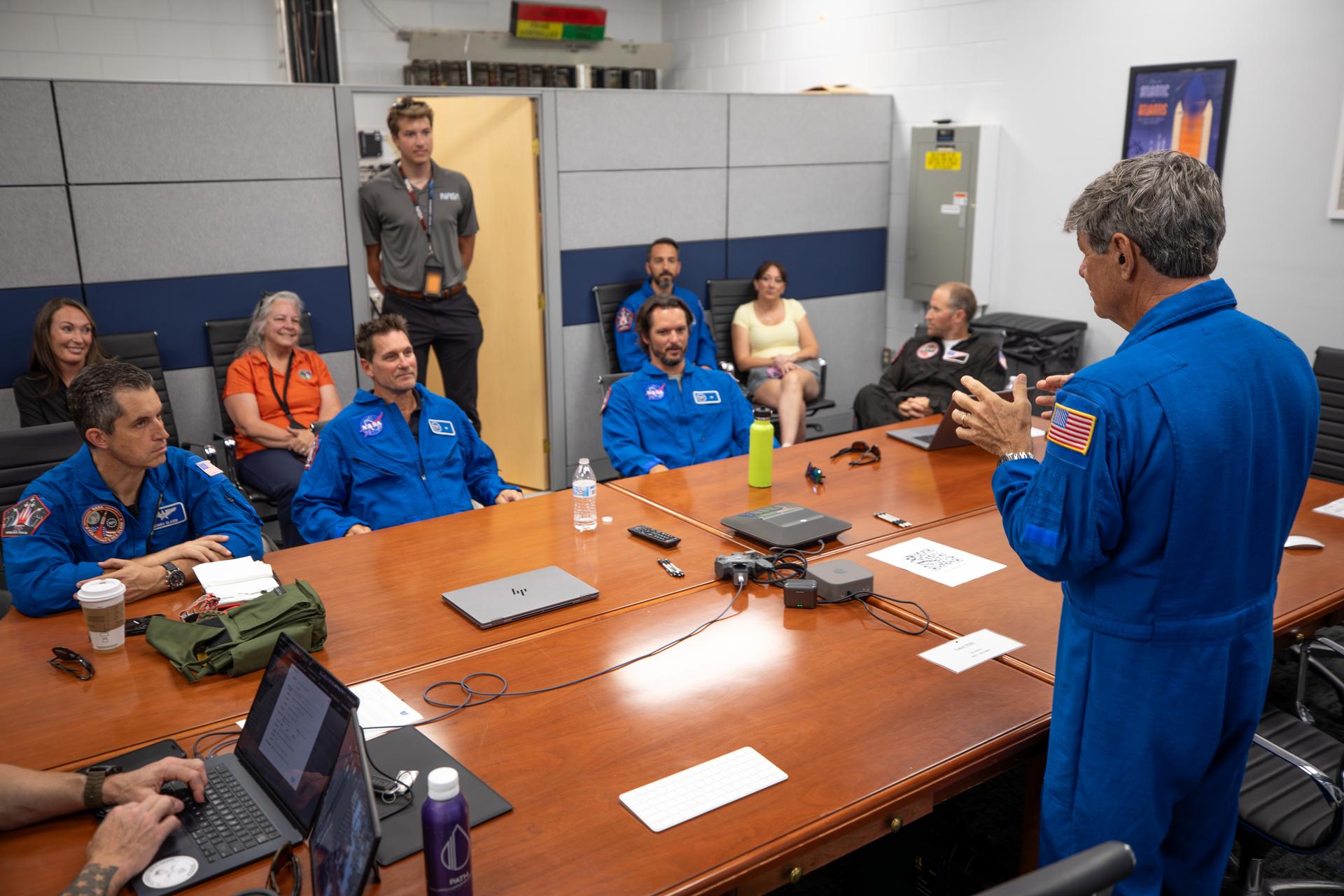
As part of NASA Administrator Jared Isaacman’s Flight Experience Award program, NASA employees Matthew Kufner, Charles Meilbye, Aaron Smith participate in a preflight briefing on Wednesday, June 17, 2026, at the Launch and Landing Facility at the agency’s Kennedy Space Center in Florida. The awardees donned NASA flight suits, completed preflight briefings, and experienced a unique flight aboard the administrator’s personal F-5 aircraft. The ride-along flight experience award program highlights NASA’s commitment to celebrating excellence across the workforce.

NASA Artemis II Pilot Victor Glover arrives on Friday, March 27, 2026, at the Launch and Landing Facility at the agency’s Kennedy Space Center in Florida in preparation for the Artemis II test flight. Glover, Commander Reid Wiseman, and Mission Specialist Christina Koch from NASA, and Mission Specialist Jeremy Hansen from the CSA (Canadian Space Agency) will launch on a 10-day journey around the Moon and back aboard the agency’s SLS (Space Launch System) rocket and Orion spacecraft from Launch Complex 39B no earlier than 6:24 p.m. EDT on Wednesday, April 1.
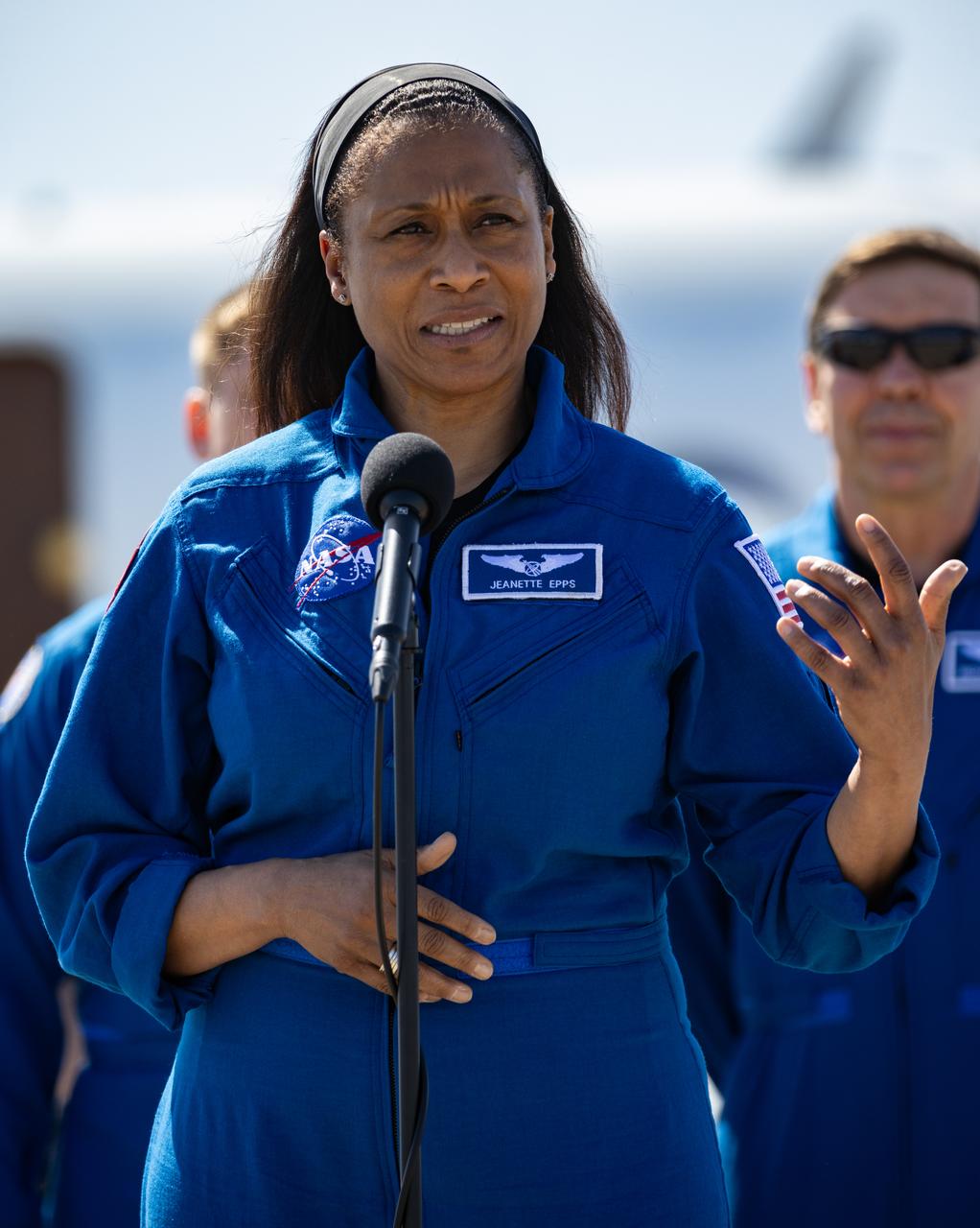
NASA astronaut Jeanette Epps, Crew-8 mission specialist, delivers remarks to members of the news media during crew arrival for NASA’s SpaceX Crew-8 mission at the Launch and Landing Facility at Kennedy Space Center in Florida on Sunday, Feb. 25, 2024. Epps, along with NASA astronauts Matthew Dominick and Jeanette Epps, as well as Roscosmos cosmonaut Alexander Grebenkin, will launch to the International Space Station aboard SpaceX’s Dragon spacecraft on the company’s Falcon 9 rocket from Kennedy’s Launch Complex 39A no earlier than 12:04 a.m. EST Friday, March 1, 2024.
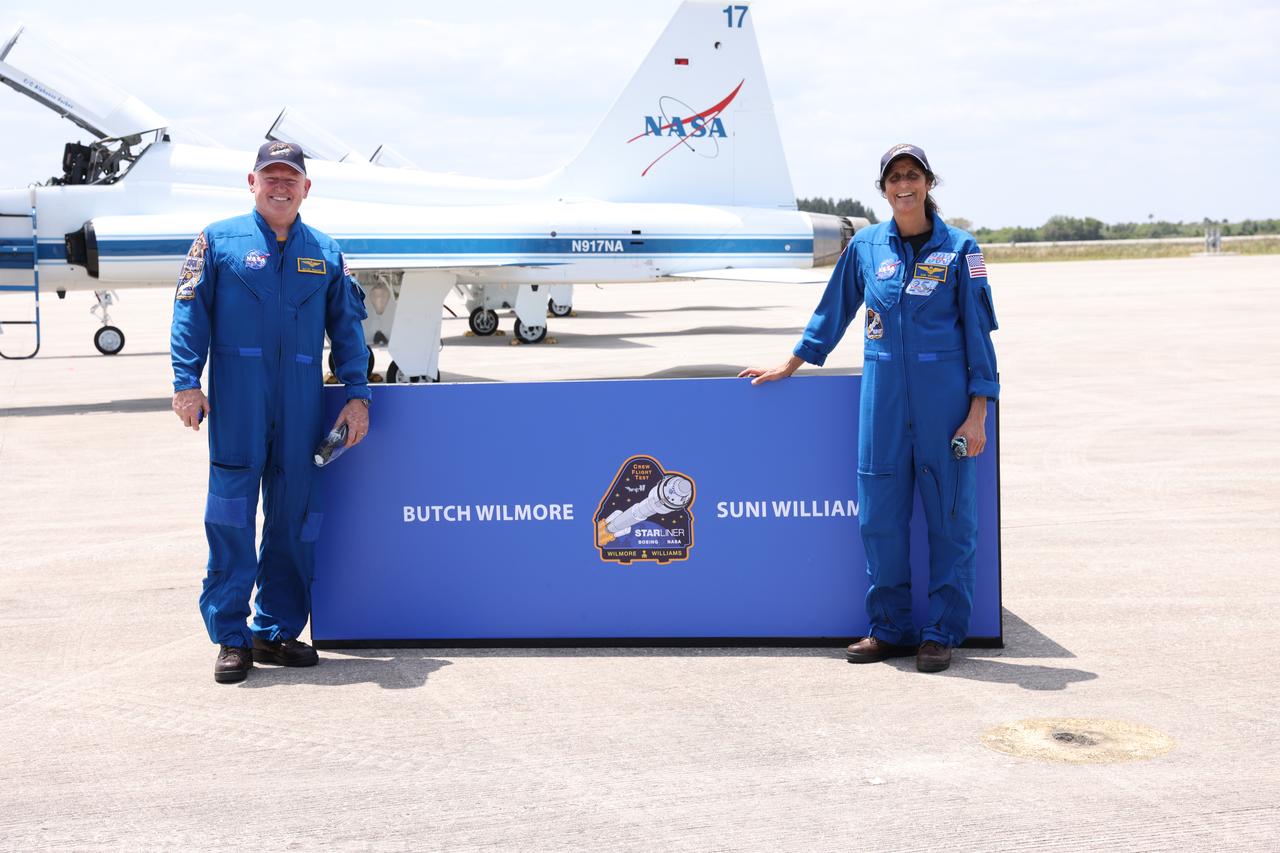
NASA Kennedy Space Center’s Associate Director Jennifer Kunz and NASA Commercial Crew Program Deputy Manager Dana Hutcherson participate in a media event at the Florida spaceport on Thursday, April 25, 2024, upon the arrival of NASA astronauts Butch Wilmore and Suni Williams for the agency’s Boeing Crew Flight Test to the International Space Station. As part of the NASA’s Commercial Crew Program, Boeing’s Starliner spacecraft is scheduled to launch atop a United Launch Alliance Atlas V rocket at 10:34 p.m. EDT on Monday, May 6. The Atlas V will lift off from Space Launch Complex-41 at Cape Canaveral Space Force Station in Florida.
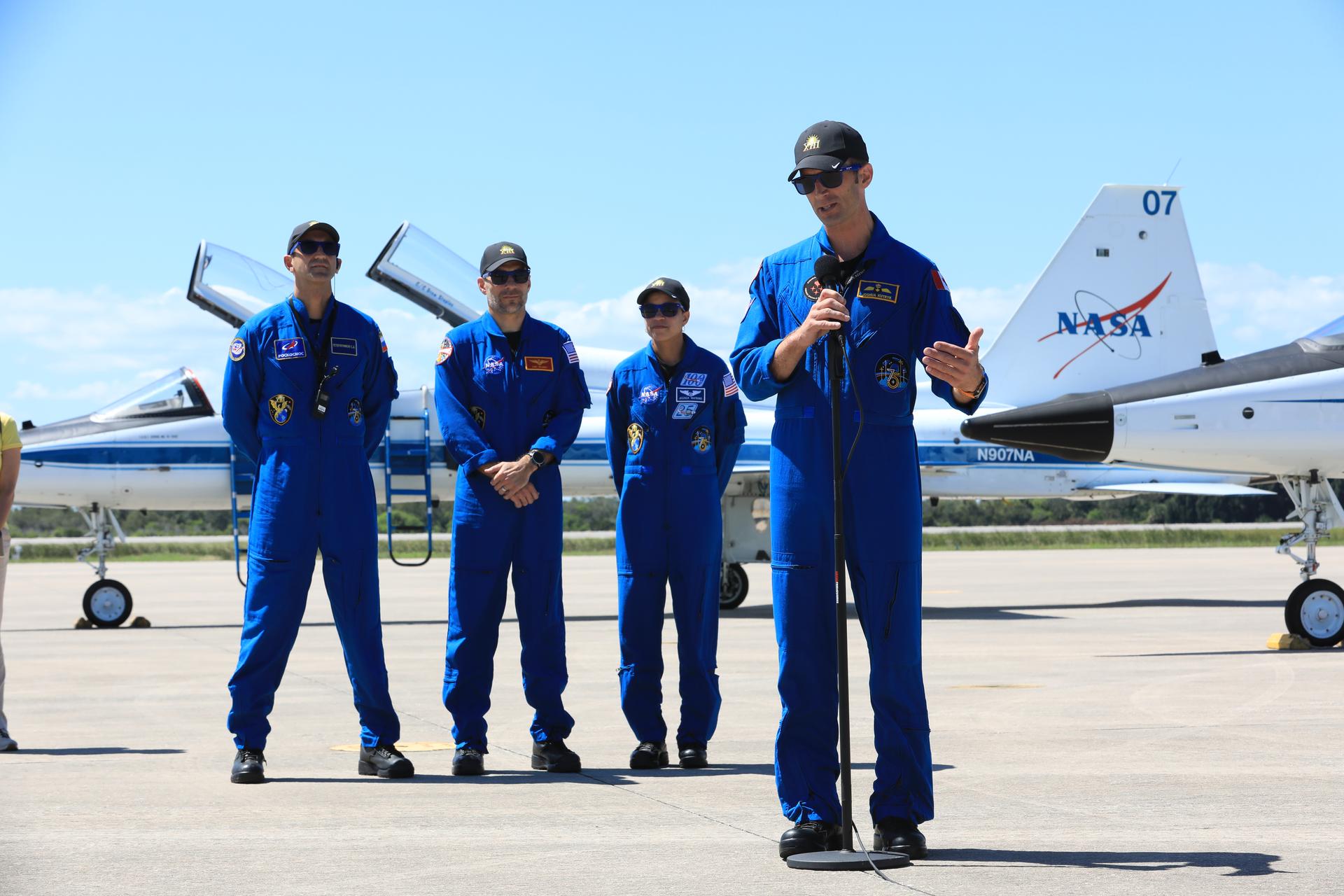
CSA (Canadian Space Agency) astronaut Joshua Kutryk, mission specialist, speaks to the news media during crew arrival for NASA’s SpaceX Crew-13 mission at the Shuttle Landing Facility at the agency’s Kennedy Space Center in Florida on Saturday, Sept. 26, 2026. NASA astronauts Jessica Watkins and Luke Delaney, and Roscosmos cosmonaut Sergey Teteryatnikov will launch along with Kutryk to the International Space Station aboard SpaceX’s Dragon spacecraft and Falcon 9 rocket at 11:10 a.m. EDT on Thursday, Oct. 1, from Cape Canaveral Space Force Station’s Space Launch Complex 40.
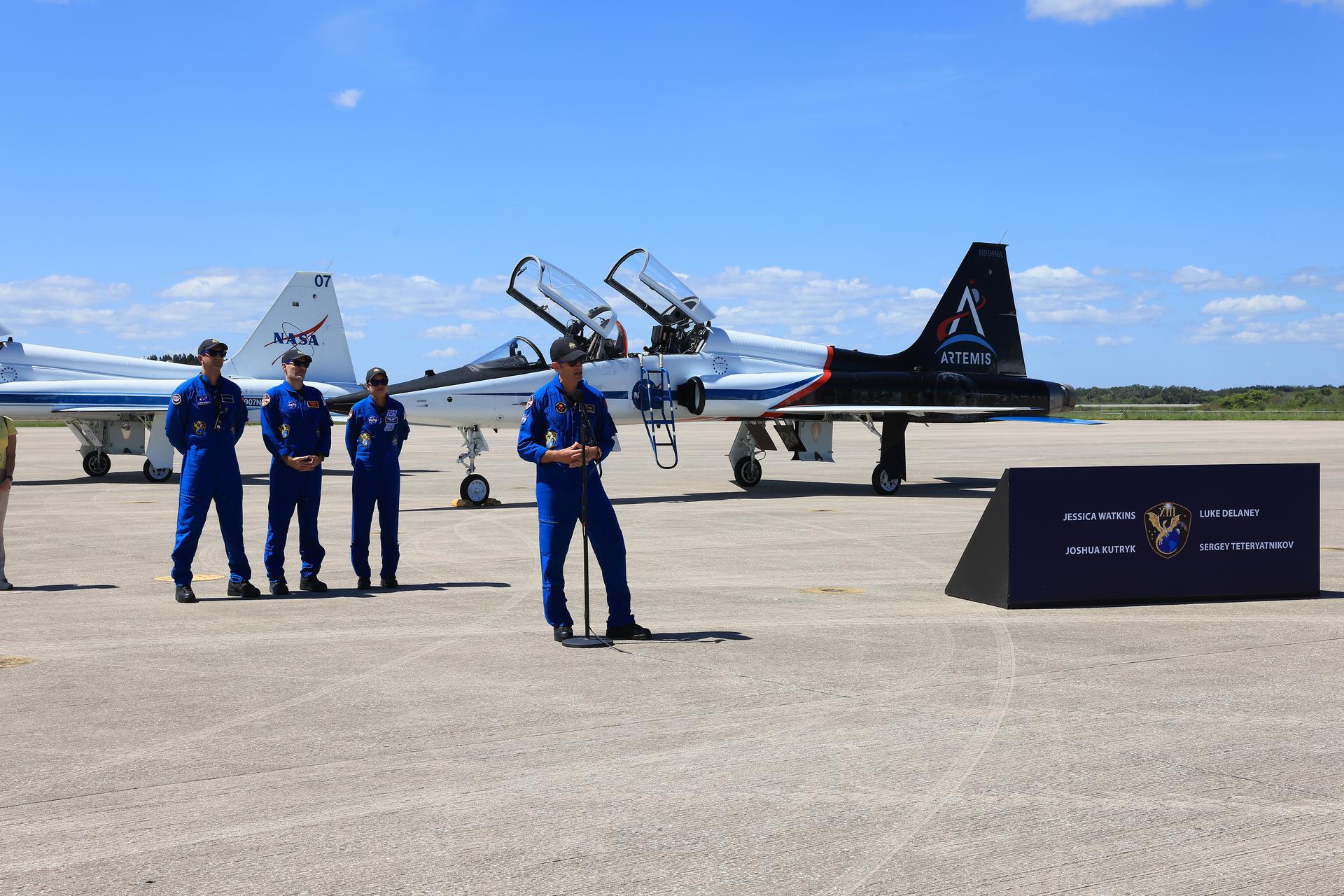
CSA (Canadian Space Agency) astronaut Joshua Kutryk, mission specialist, speaks to the news media during crew arrival for NASA’s SpaceX Crew-13 mission at the Shuttle Landing Facility at the agency’s Kennedy Space Center in Florida on Saturday, Sept. 26, 2026. NASA astronauts Jessica Watkins and Luke Delaney, and Roscosmos cosmonaut Sergey Teteryatnikov will launch along with Kutryk to the International Space Station aboard SpaceX’s Dragon spacecraft and Falcon 9 rocket at 11:10 a.m. EDT on Thursday, Oct. 1, from Cape Canaveral Space Force Station’s Space Launch Complex 40.
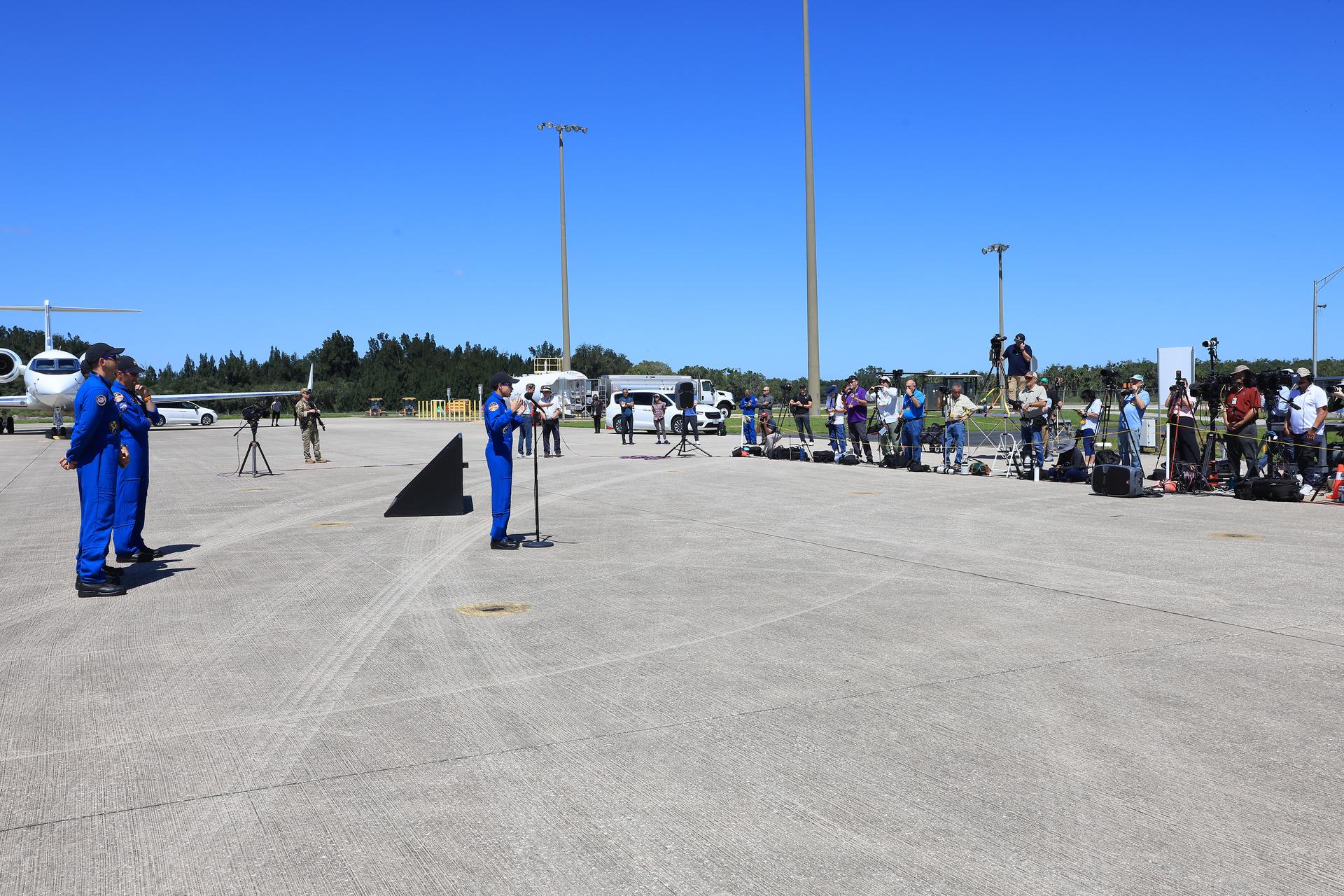
NASA astronaut Jessica Watkins, commander, speaks to the news media during crew arrival for NASA’s SpaceX Crew-13 mission at the Shuttle Landing Facility at the agency’s Kennedy Space Center in Florida on Saturday, Sept. 26, 2026. Watkins and fellow NASA astronaut Luke Delaney, along with CSA (Canadian Space Agency) astronaut Joshua Kutryk, and Roscosmos cosmonaut Sergey Teteryatnikov will launch to the International Space Station aboard SpaceX’s Dragon spacecraft and Falcon 9 rocket at 11:10 a.m. EDT on Thursday, Oct. 1, from Cape Canaveral Space Force Station’s Space Launch Complex 40.
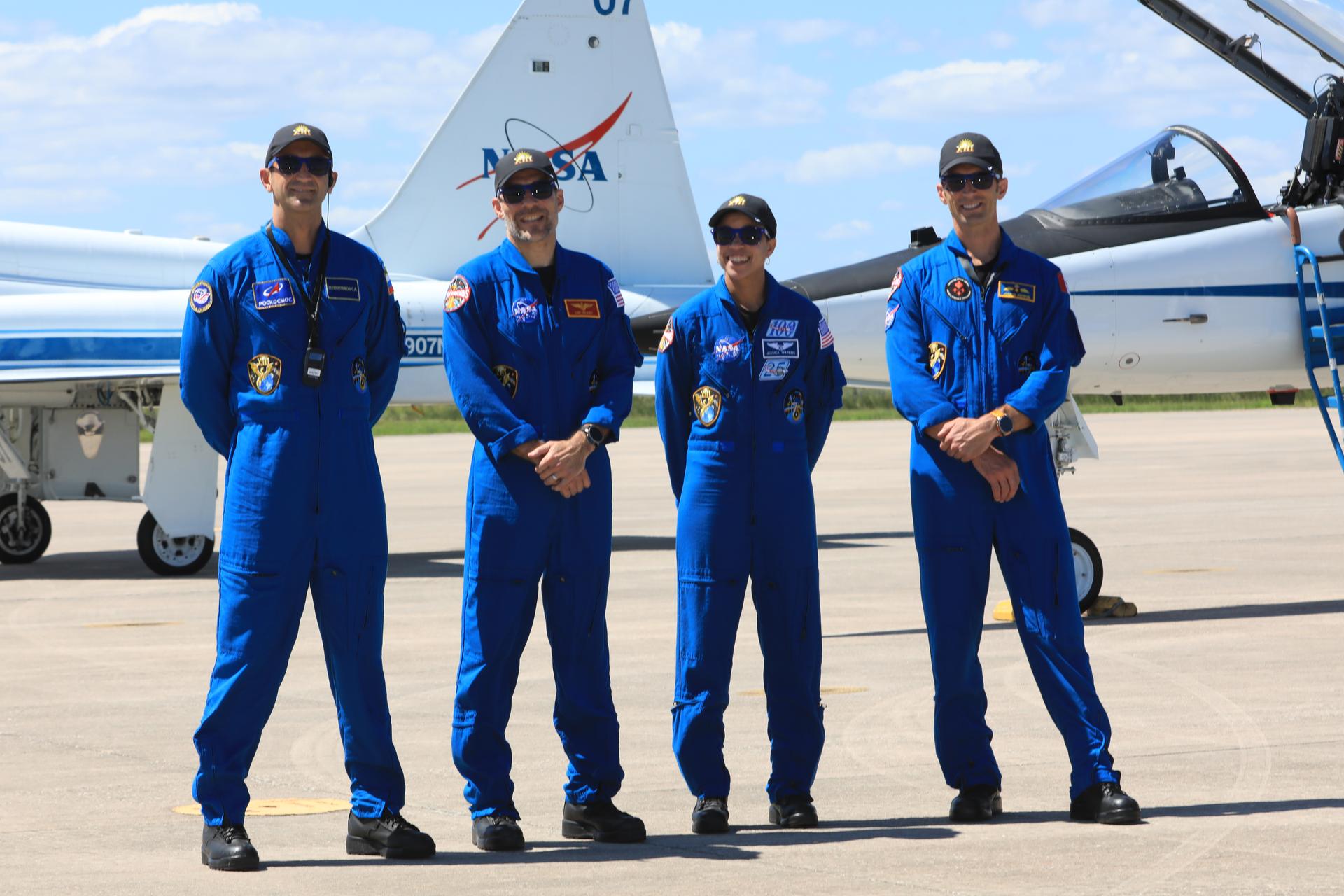
From left, crew members of NASA’s SpaceX Crew-13 mission, Roscosmos cosmonaut Sergey Teteryatnikov, NASA astronauts Luke Delaney and Jessica Watkins, and CSA (Canadian Space Agency) astronaut Joshua Kutryk arrive Saturday, Sept. 26, 2026, at the Shuttle Landing Facility at the agency’s Kennedy Space Center in Florida. The Crew-13 mission is slated to launch to the International Space Station aboard SpaceX’s Dragon spacecraft atop company’s Falcon 9 rocket from Cape Canaveral Space Force Station’s Space Launch Complex 40 at 11:10 a.m. EDT on Thursday, Oct. 1.
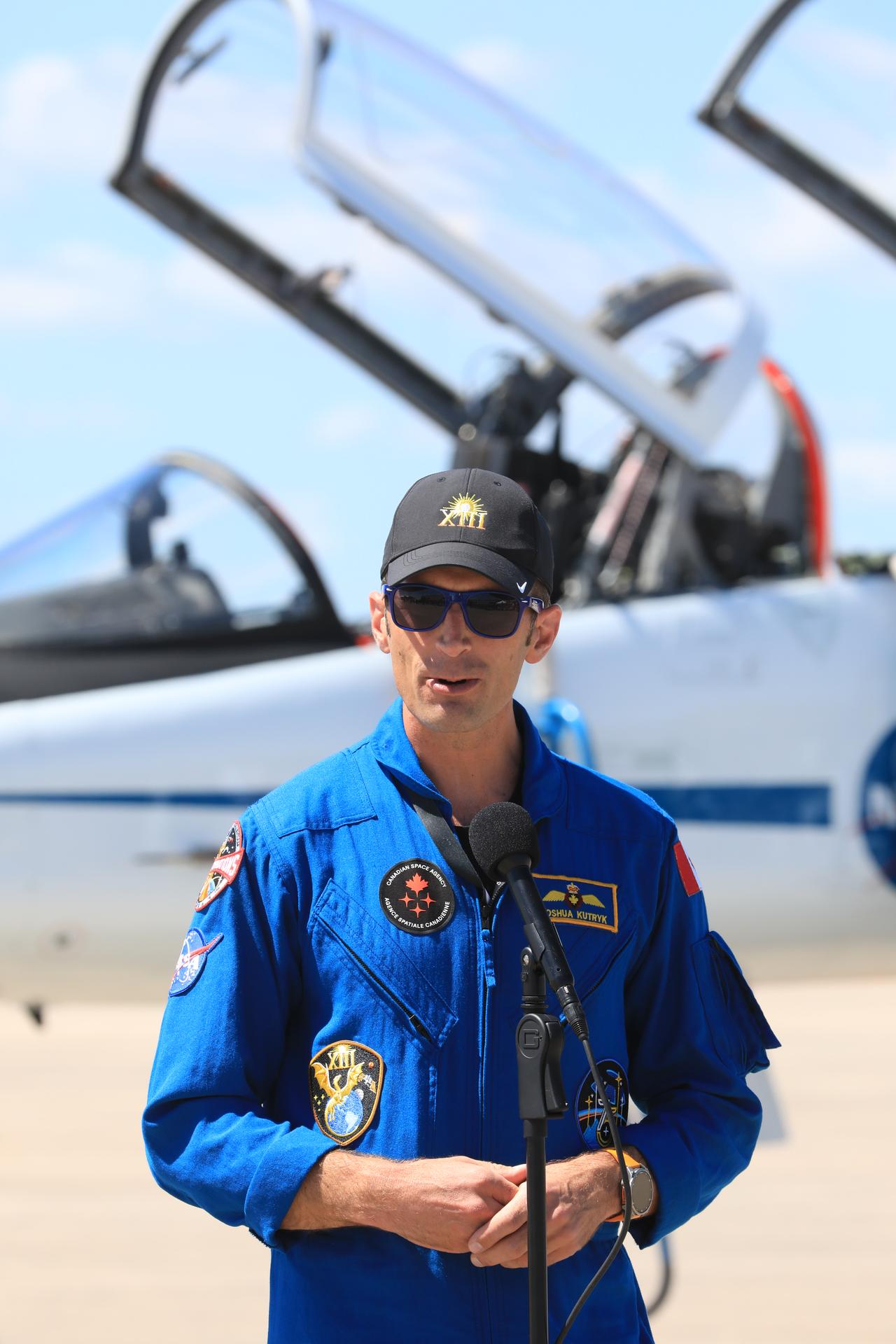
CSA (Canadian Space Agency) astronaut Joshua Kutryk, mission specialist, speaks to the news media during crew arrival for NASA’s SpaceX Crew-13 mission at the Shuttle Landing Facility at the agency’s Kennedy Space Center in Florida on Saturday, Sept. 26, 2026. NASA astronauts Jessica Watkins and Luke Delaney, and Roscosmos cosmonaut Sergey Teteryatnikov will launch along with Kutryk to the International Space Station aboard SpaceX’s Dragon spacecraft and Falcon 9 rocket at 11:10 a.m. EDT on Thursday, Oct. 1, from Cape Canaveral Space Force Station’s Space Launch Complex 40.
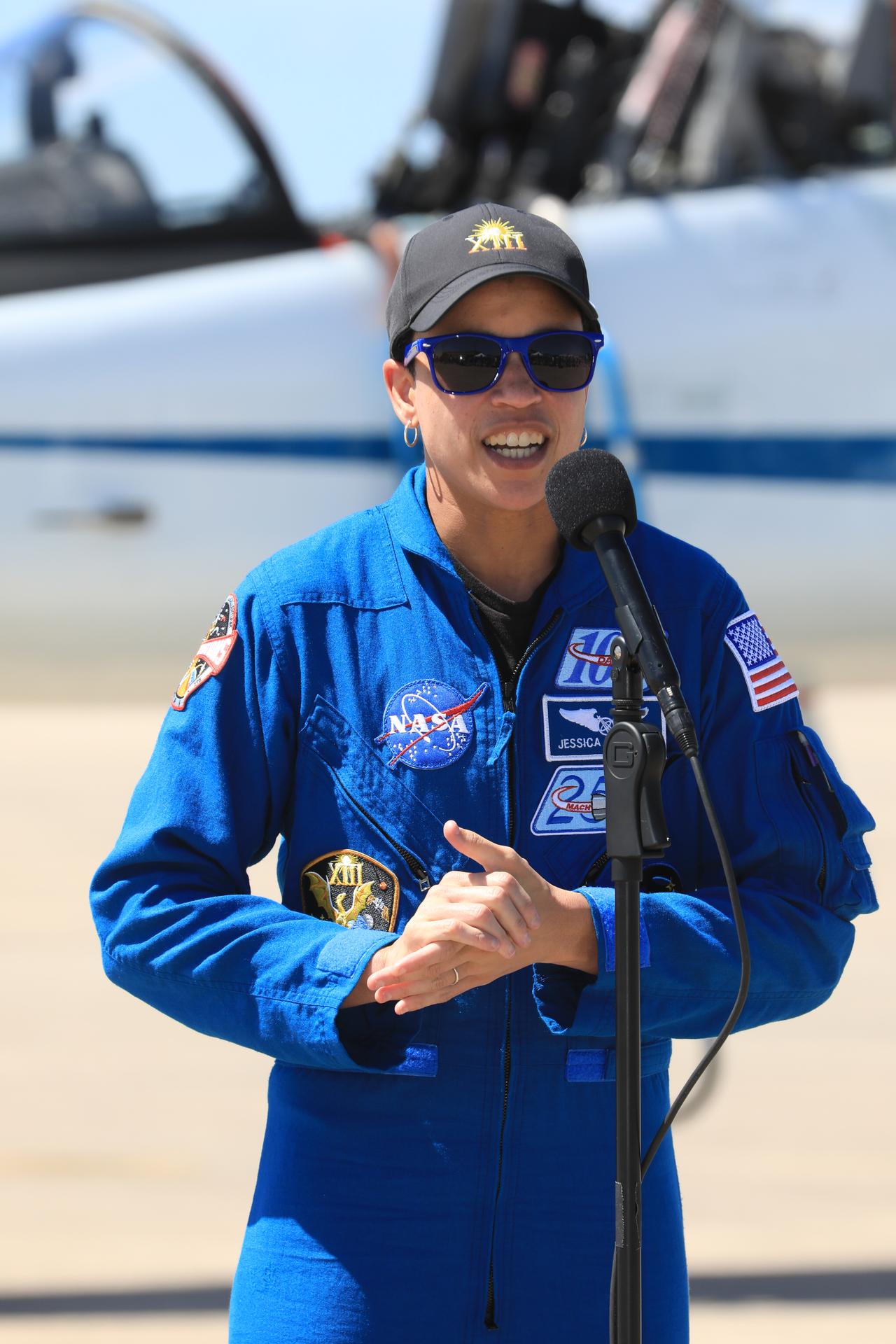
NASA astronaut Jessica Watkins, commander, speaks to the news media during crew arrival for NASA’s SpaceX Crew-13 mission at the Shuttle Landing Facility at the agency’s Kennedy Space Center in Florida on Saturday, Sept. 26, 2026. Watkins and fellow NASA astronaut Luke Delaney, along with CSA (Canadian Space Agency) astronaut Joshua Kutryk, and Roscosmos cosmonaut Sergey Teteryatnikov will launch to the International Space Station aboard SpaceX’s Dragon spacecraft and Falcon 9 rocket at 11:10 a.m. EDT on Thursday, Oct. 1, from Cape Canaveral Space Force Station’s Space Launch Complex 40.
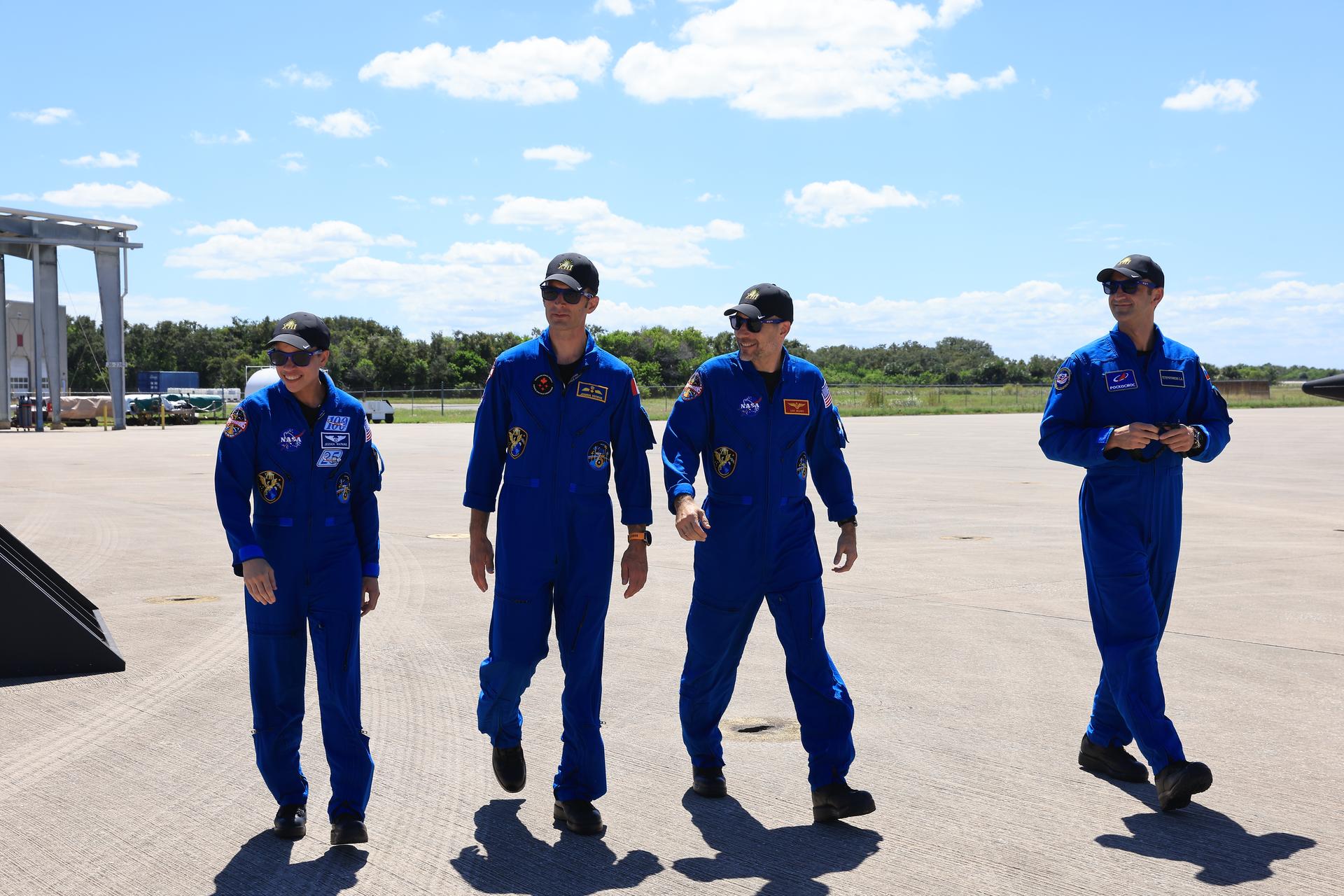
From left, crew members of NASA’s SpaceX Crew-13 mission, NASA astronaut Jessica Watkins, CSA (Canadian Space Agency) astronaut Joshua Kutryk, NASA astronaut Luke Delaney, and Roscosmos cosmonaut Sergey Teteryatnikov arrive Saturday, Sept. 26, 2026, at the Shuttle Landing Facility at the agency’s Kennedy Space Center in Florida. The Crew-13 mission is slated to launch to the International Space Station aboard SpaceX’s Dragon spacecraft atop company’s Falcon 9 rocket from Cape Canaveral Space Force Station’s Space Launch Complex 40 at 11:10 a.m. EDT on Thursday, Oct. 1.
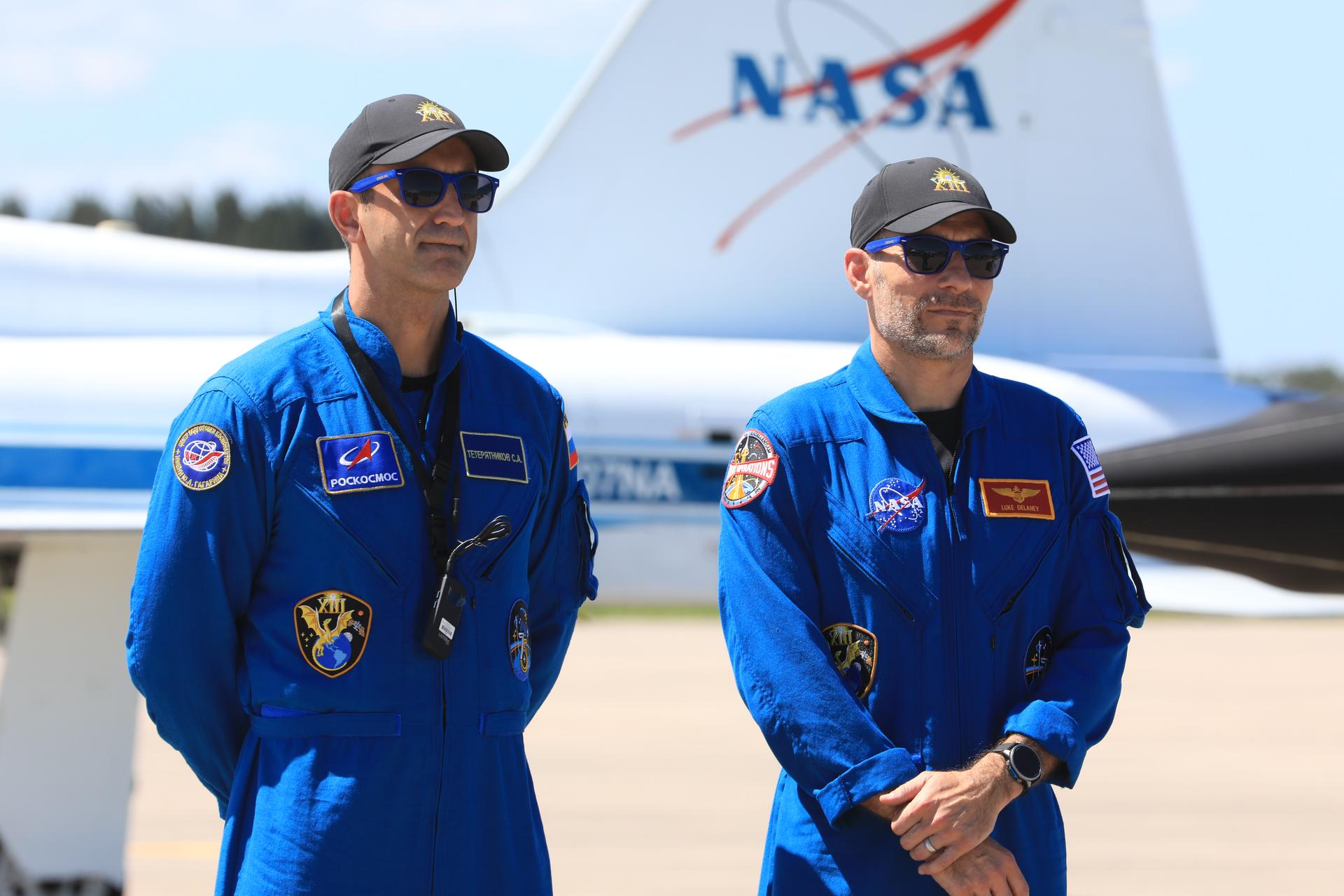
From left, Roscosmos cosmonaut mission specialist Sergey Teteryatnikov and NASA astronaut Luke Delaney participate in a news media event during crew arrival for NASA’s SpaceX Crew-13 mission at the Shuttle Landing Facility at the agency’s Kennedy Space Center in Florida on Saturday, Sept. 26, 2026. NASA astronauts Jessica Watkins and Delaney, along with CSA (Canadian Space Agency) astronaut Joshua Kutryk and Teteryatnikov will launch to the International Space Station aboard SpaceX’s Dragon spacecraft and Falcon 9 rocket at 11:10 a.m. EDT on Thursday, Oct. 1, from Cape Canaveral Space Force Station’s Space Launch Complex 40.
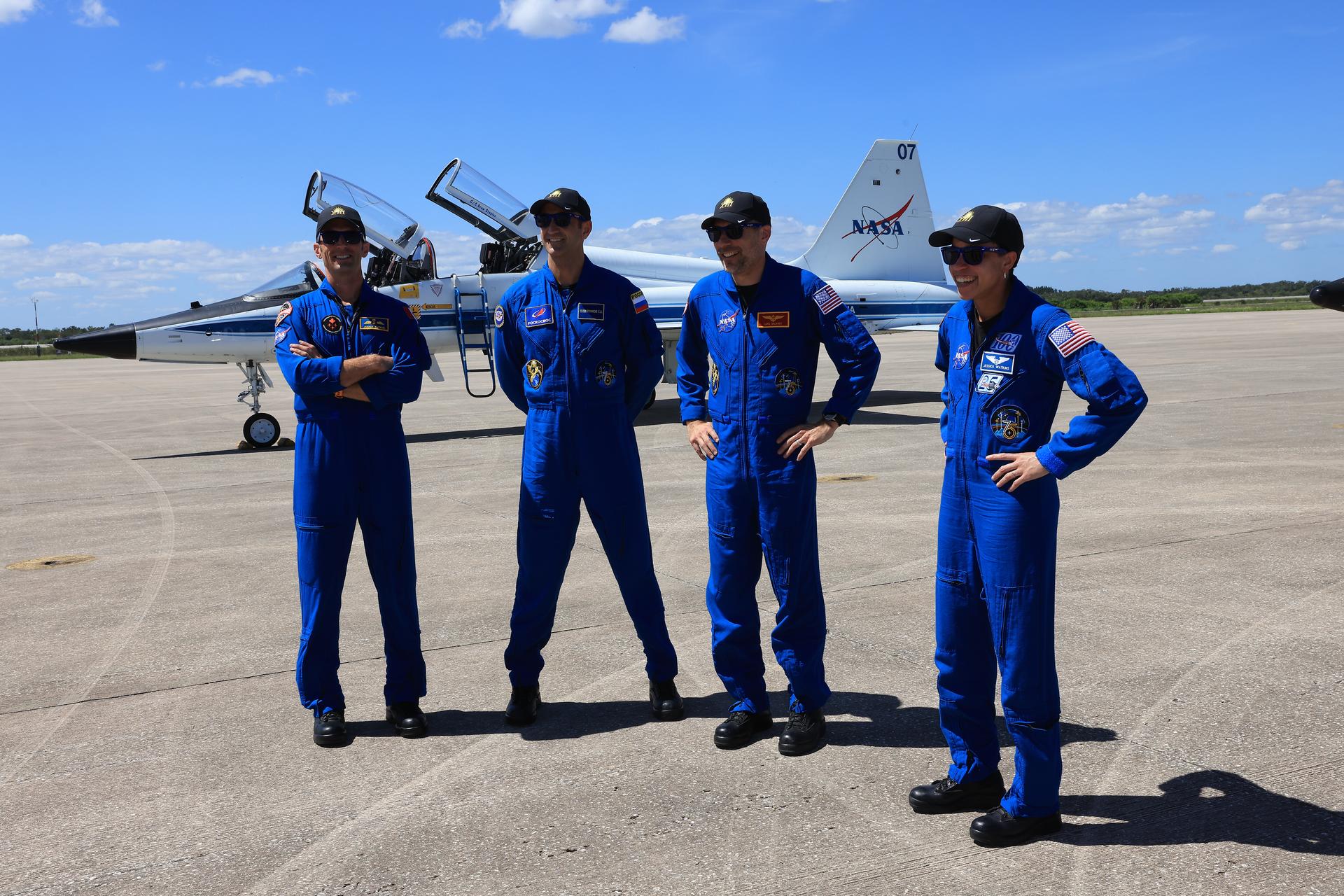
From left, crew members of NASA’s SpaceX Crew-13 mission, CSA (Canadian Space Agency) astronaut Joshua Kutryk, Roscosmos cosmonaut Sergey Teteryatnikov, and NASA astronauts Luke Delaney and Jessica Watkins arrive Saturday, Sept. 26, 2026, at the Shuttle Landing Facility at the agency’s Kennedy Space Center in Florida. The Crew-13 mission is slated to launch to the International Space Station aboard SpaceX’s Dragon spacecraft atop company’s Falcon 9 rocket from Cape Canaveral Space Force Station’s Space Launch Complex 40 at 11:10 a.m. EDT on Thursday, Oct. 1.
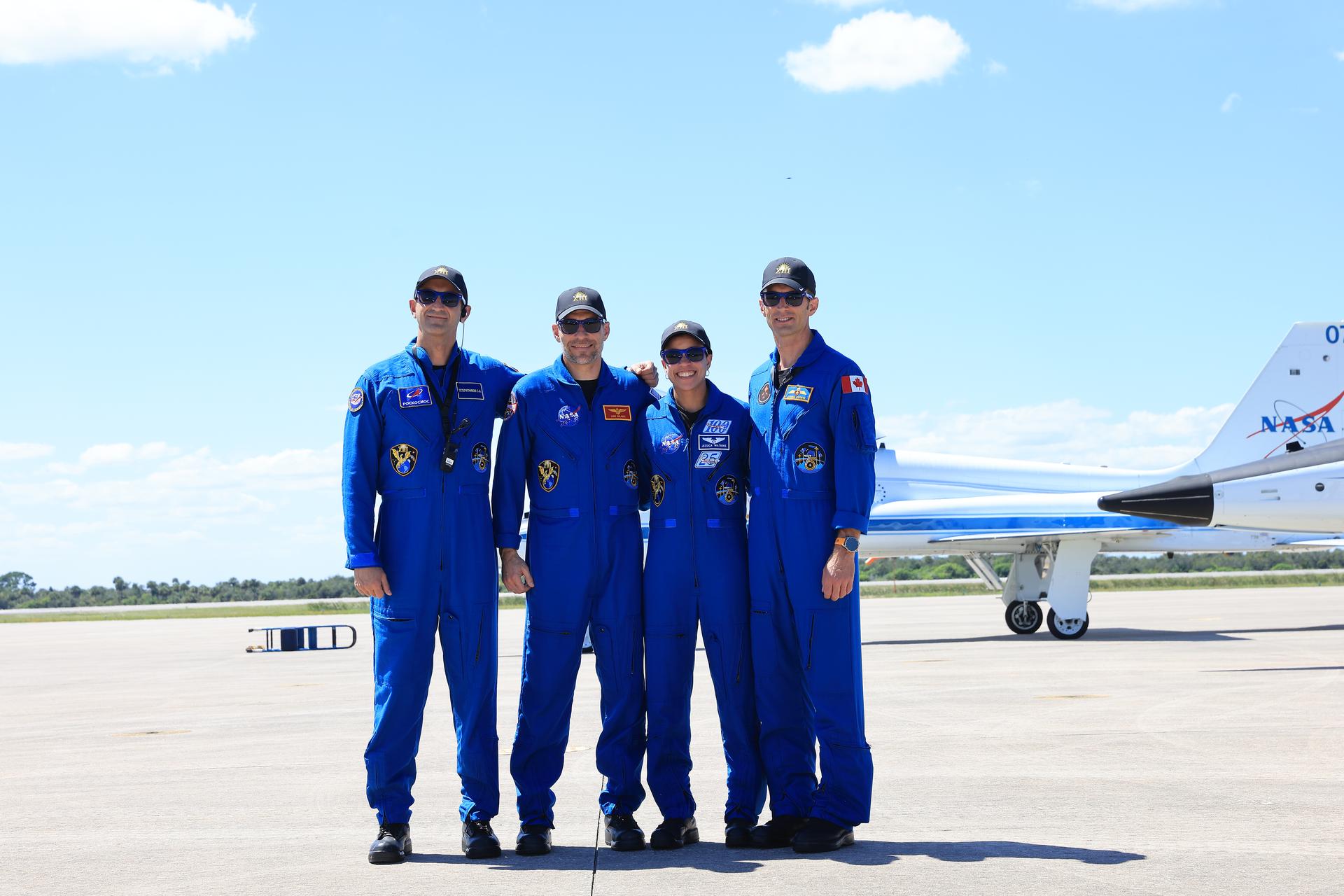
From left, crew members of NASA’s SpaceX Crew-13 mission, Roscosmos cosmonaut Sergey Teteryatnikov, NASA astronauts Luke Delaney and Jessica Watkins, and CSA (Canadian Space Agency) astronaut Joshua Kutryk arrive Saturday, Sept. 26, 2026, at the Shuttle Landing Facility at the agency’s Kennedy Space Center in Florida. The Crew-13 mission is slated to launch to the International Space Station aboard SpaceX’s Dragon spacecraft atop company’s Falcon 9 rocket from Cape Canaveral Space Force Station’s Space Launch Complex 40 at 11:10 a.m. EDT on Thursday, Oct. 1.
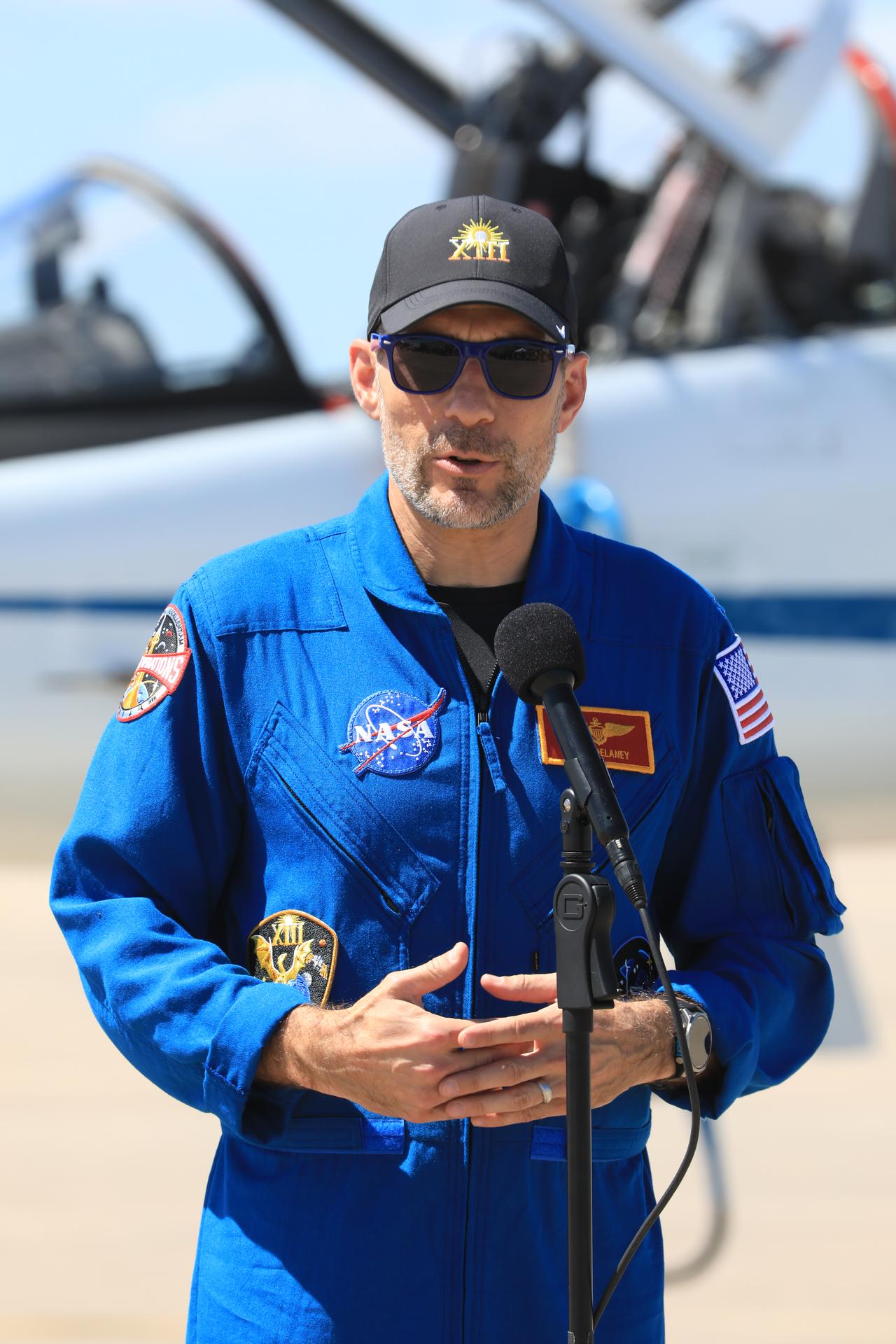
NASA astronaut Luke Delaney, pilot, speaks to the news media during crew arrival for NASA’s SpaceX Crew-13 mission at the Shuttle Landing Facility at the agency’s Kennedy Space Center in Florida on Saturday, Sept. 26, 2026. Delaney and fellow NASA astronaut Jessica Watkins, along with CSA (Canadian Space Agency) astronaut Joshua Kutryk, and Roscosmos cosmonaut Sergey Teteryatnikov will launch to the International Space Station aboard SpaceX’s Dragon spacecraft and Falcon 9 rocket at 11:10 a.m. EDT on Thursday, Oct. 1, from Cape Canaveral Space Force Station’s Space Launch Complex 40.
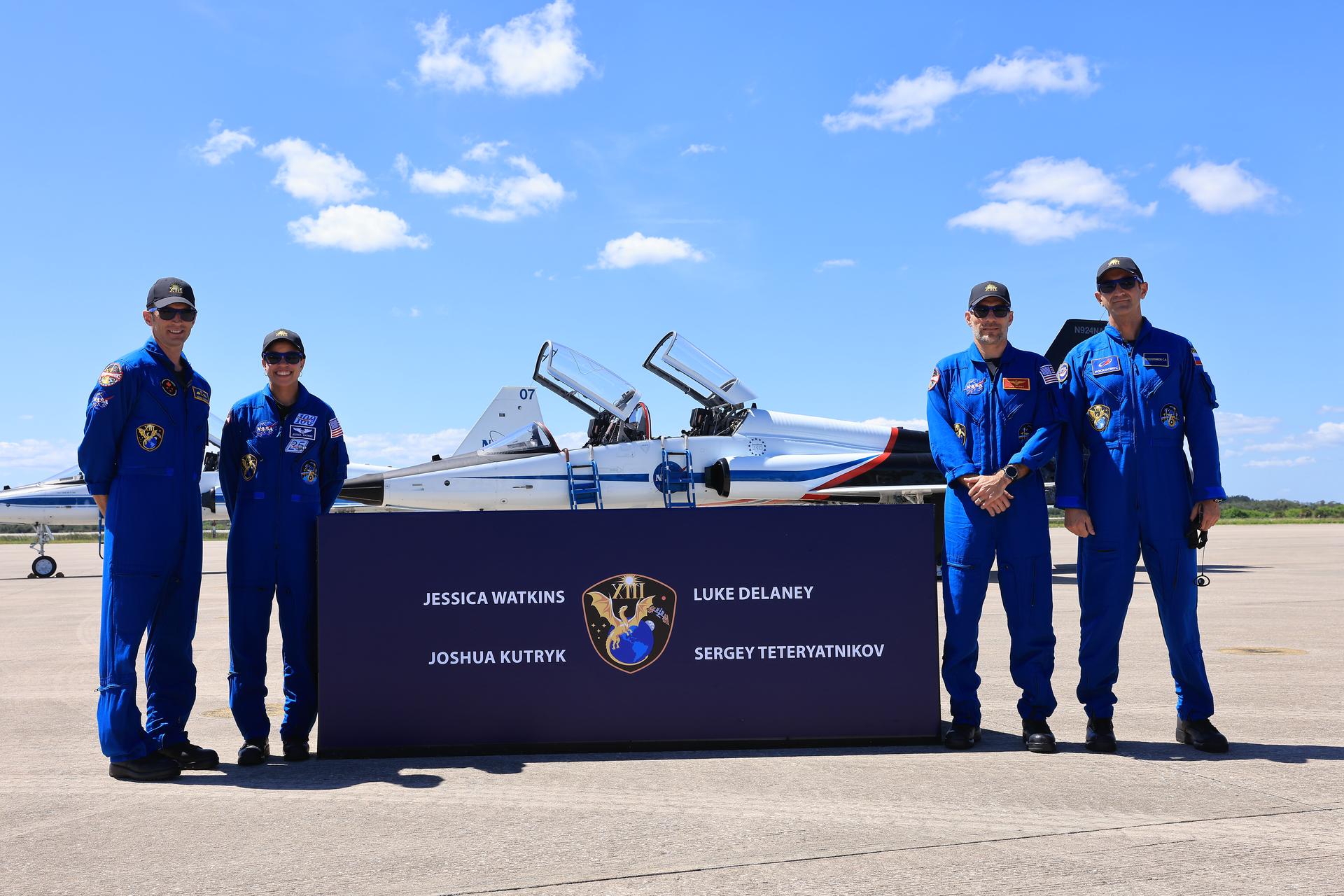
From left, crew members of NASA’s SpaceX Crew-13 mission, CSA (Canadian Space Agency) astronaut Joshua Kutryk, NASA astronaut Jessica Watkins, NASA astronaut Luke Delaney, and Roscosmos cosmonaut Sergey Teteryatnikov arrive Saturday, Sept. 26, 2026, at the Shuttle Landing Facility at the agency’s Kennedy Space Center in Florida. The Crew-13 mission is slated to launch to the International Space Station aboard SpaceX’s Dragon spacecraft atop company’s Falcon 9 rocket from Cape Canaveral Space Force Station’s Space Launch Complex 40 at 11:10 a.m. EDT on Thursday, Oct. 1.
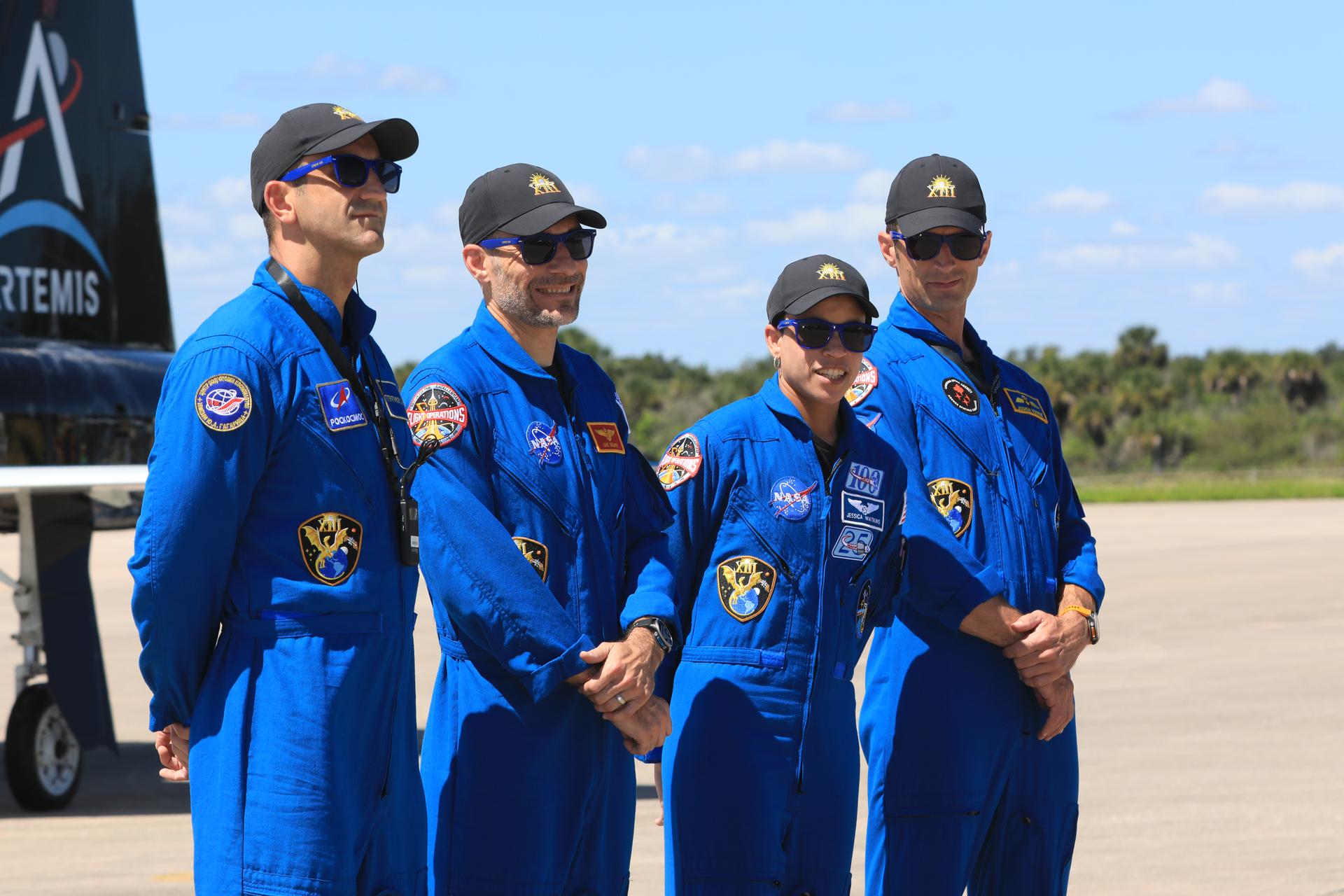
From left, crew members of NASA’s SpaceX Crew-13 mission, Roscosmos cosmonaut Sergey Teteryatnikov, NASA astronauts Luke Delaney and Jessica Watkins, and CSA (Canadian Space Agency) astronaut Joshua Kutryk arrive Saturday, Sept. 26, 2026, at the Shuttle Landing Facility at the agency’s Kennedy Space Center in Florida. The Crew-13 mission is slated to launch to the International Space Station aboard SpaceX’s Dragon spacecraft atop company’s Falcon 9 rocket from Cape Canaveral Space Force Station’s Space Launch Complex 40 at 11:10 a.m. EDT on Thursday, Oct. 1.
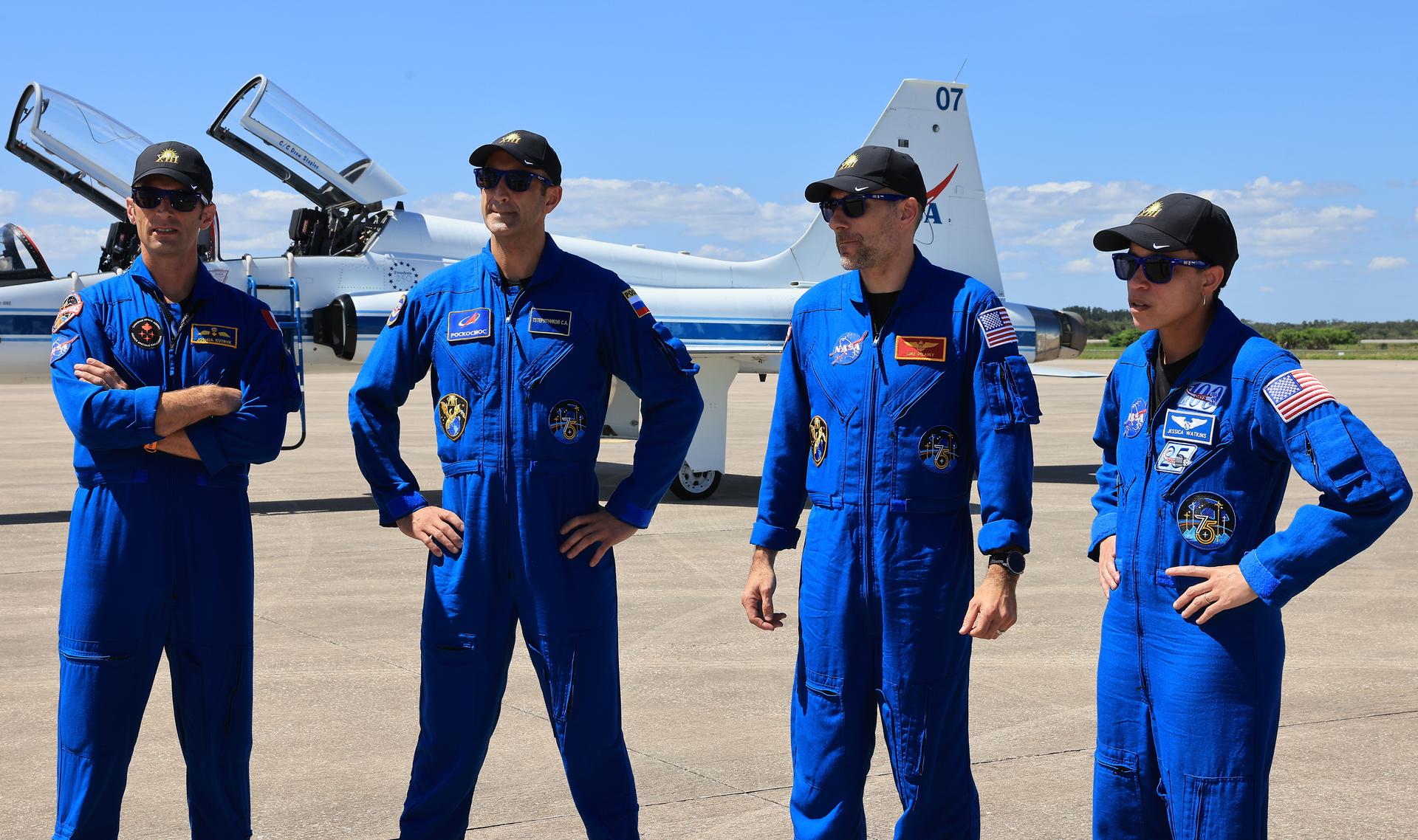
From left, crew members of NASA’s SpaceX Crew-13 mission, CSA (Canadian Space Agency) astronaut Joshua Kutryk, Roscosmos cosmonaut Sergey Teteryatnikov, and NASA astronauts Luke Delaney and Jessica Watkins arrive Saturday, Sept. 26, 2026, at the Shuttle Landing Facility at the agency’s Kennedy Space Center in Florida. The Crew-13 mission is slated to launch to the International Space Station aboard SpaceX’s Dragon spacecraft atop company’s Falcon 9 rocket from Cape Canaveral Space Force Station’s Space Launch Complex 40 at 11:10 a.m. EDT on Thursday, Oct. 1.
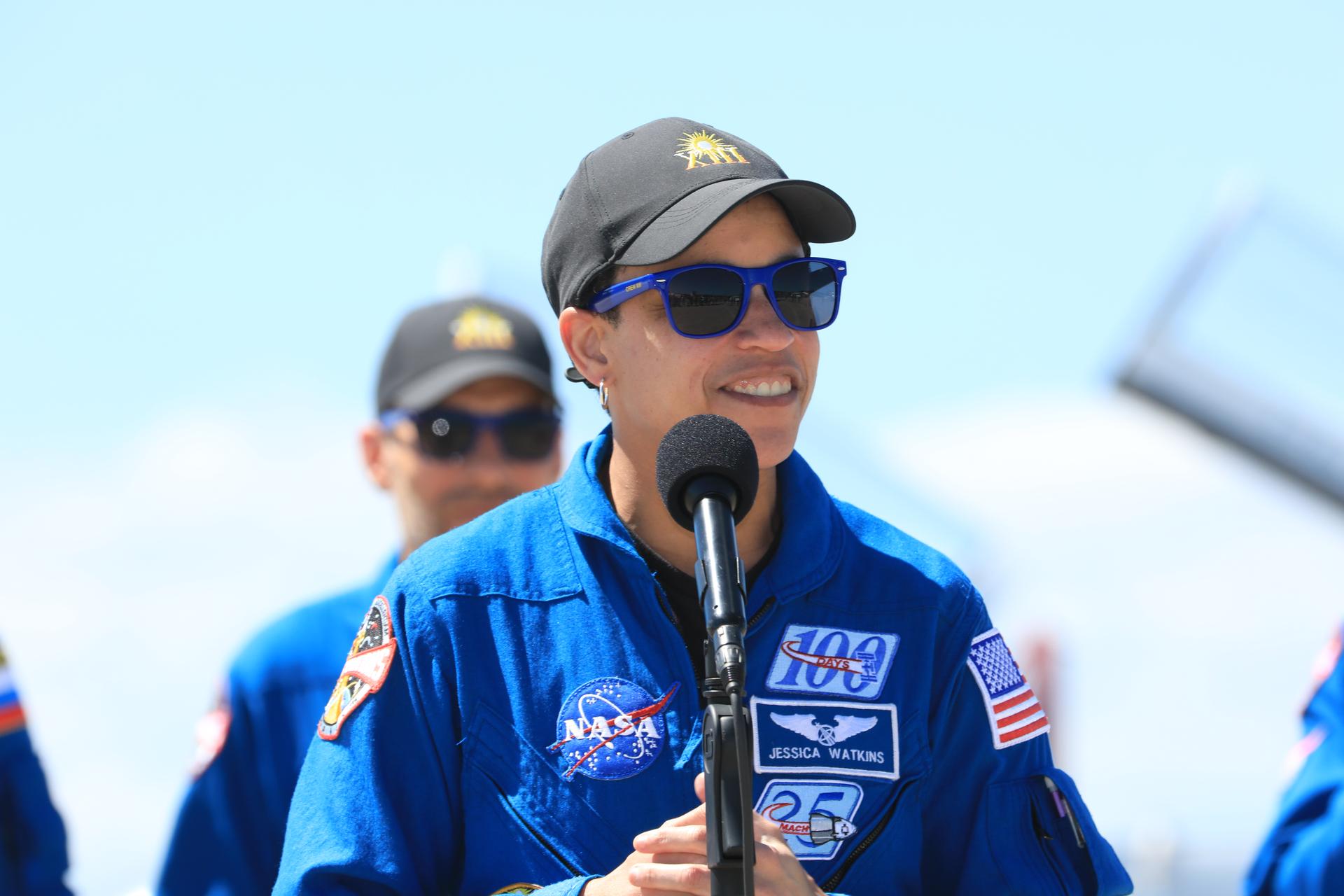
NASA astronaut Jessica Watkins, commander, speaks to the news media during crew arrival for NASA’s SpaceX Crew-13 mission at the Shuttle Landing Facility at the agency’s Kennedy Space Center in Florida on Saturday, Sept. 26, 2026. Watkins and fellow NASA astronaut Luke Delaney, along with CSA (Canadian Space Agency) astronaut Joshua Kutryk, and Roscosmos cosmonaut Sergey Teteryatnikov will launch to the International Space Station aboard SpaceX’s Dragon spacecraft and Falcon 9 rocket at 11:10 a.m. EDT on Thursday, Oct. 1, from Cape Canaveral Space Force Station’s Space Launch Complex 40.
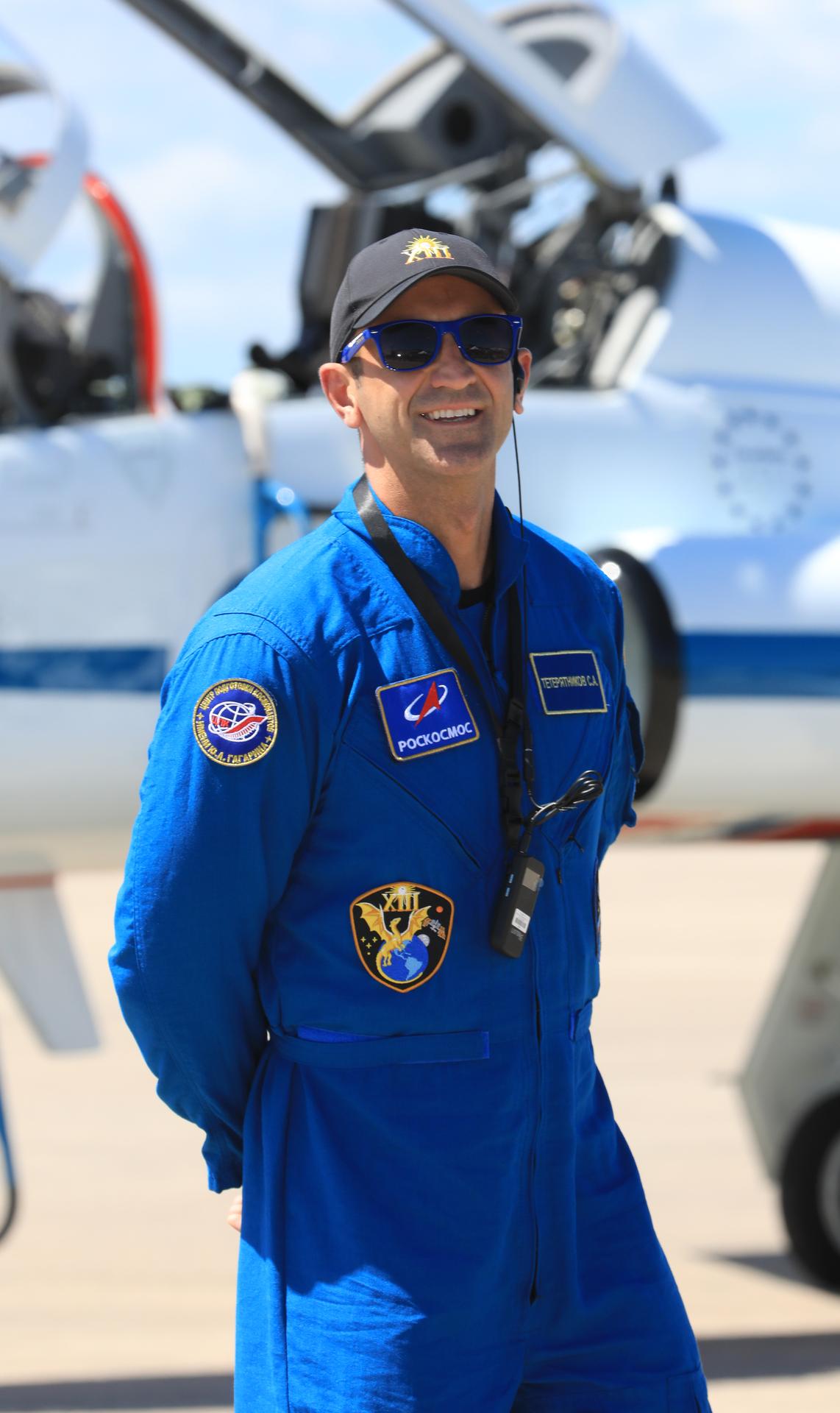
Roscosmos cosmonaut mission specialist Sergey Teteryatnikov participates in a news media event during crew arrival for NASA’s SpaceX Crew-13 mission at the Shuttle Landing Facility at the agency’s Kennedy Space Center in Florida on Saturday, Sept. 26, 2026. NASA astronauts NASA astronauts Jessica Watkins and Luke Delaney, and CSA (Canadian Space Agency) astronaut Joshua Kutryk will launch along with Teteryatnikov to the International Space Station aboard SpaceX’s Dragon spacecraft and Falcon 9 rocket at 11:10 a.m. EDT on Thursday, Oct. 1, from Cape Canaveral Space Force Station’s Space Launch Complex 40.
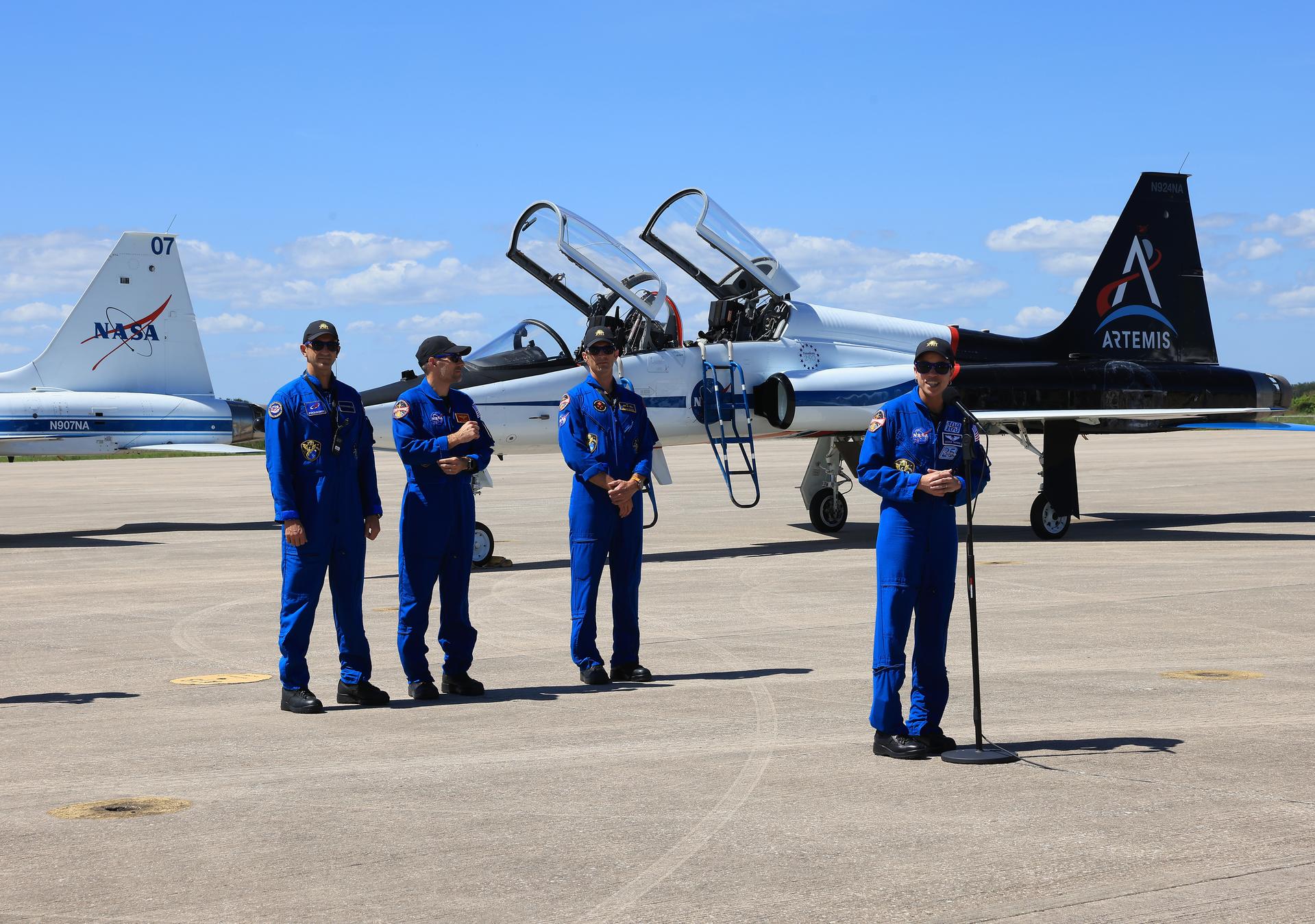
NASA astronaut Jessica Watkins, commander, speaks to the news media during crew arrival for NASA’s SpaceX Crew-13 mission at the Shuttle Landing Facility at the agency’s Kennedy Space Center in Florida on Saturday, Sept. 26, 2026. Watkins and fellow NASA astronaut Luke Delaney, along with CSA (Canadian Space Agency) astronaut Joshua Kutryk, and Roscosmos cosmonaut Sergey Teteryatnikov will launch to the International Space Station aboard SpaceX’s Dragon spacecraft and Falcon 9 rocket at 11:10 a.m. EDT on Thursday, Oct. 1, from Cape Canaveral Space Force Station’s Space Launch Complex 40.
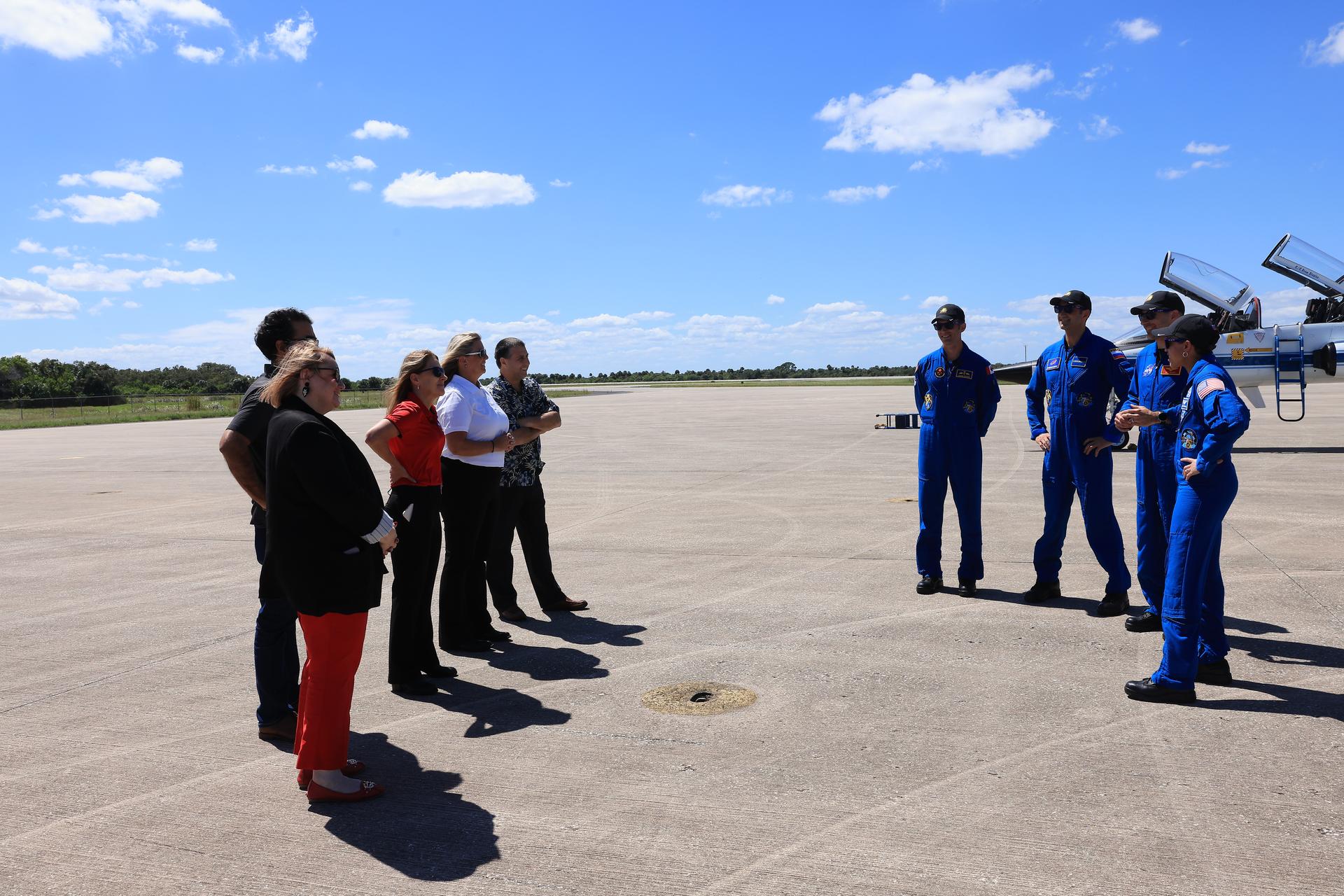
Crew members of NASA’s SpaceX Crew-13 mission NASA astronauts Jessica Watkins and Luke Delaney, CSA (Canadian Space Agency) astronaut Joshua Kutryk, and Roscosmos cosmonaut Sergey Teteryatnikov arrive Saturday, Sept. 26, 2026, at the Shuttle Landing Facility at the agency’s Kennedy Space Center in Florida. The Crew-13 mission is slated to launch to the International Space Station aboard SpaceX’s Dragon spacecraft atop company’s Falcon 9 rocket from Cape Canaveral Space Force Station’s Space Launch Complex 40 at 11:10 a.m. EDT on Thursday, Oct. 1.
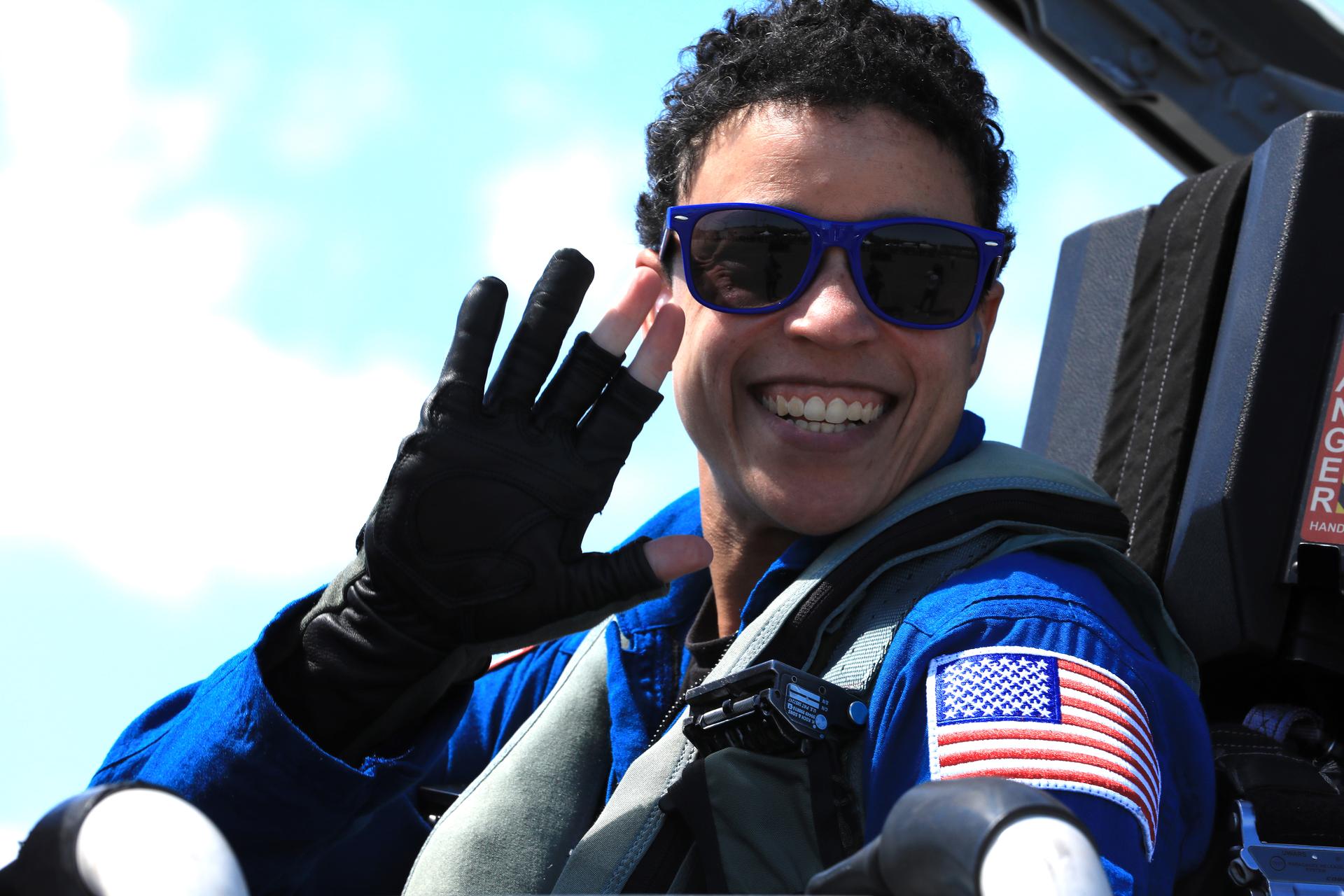
NASA astronaut Jessica Watkins, commander, waves from a T-38 jet during crew arrival for NASA’s SpaceX Crew-13 mission at the Shuttle Landing Facility at the agency’s Kennedy Space Center in Florida on Saturday, Sept. 26, 2026. Watkins and fellow NASA astronaut Luke Delaney, along with CSA (Canadian Space Agency) astronaut Joshua Kutryk, and Roscosmos cosmonaut Sergey Teteryatnikov will launch to the International Space Station aboard SpaceX’s Dragon spacecraft and Falcon 9 rocket at 11:10 a.m. EDT on Thursday, Oct. 1, from Cape Canaveral Space Force Station’s Space Launch Complex 40.
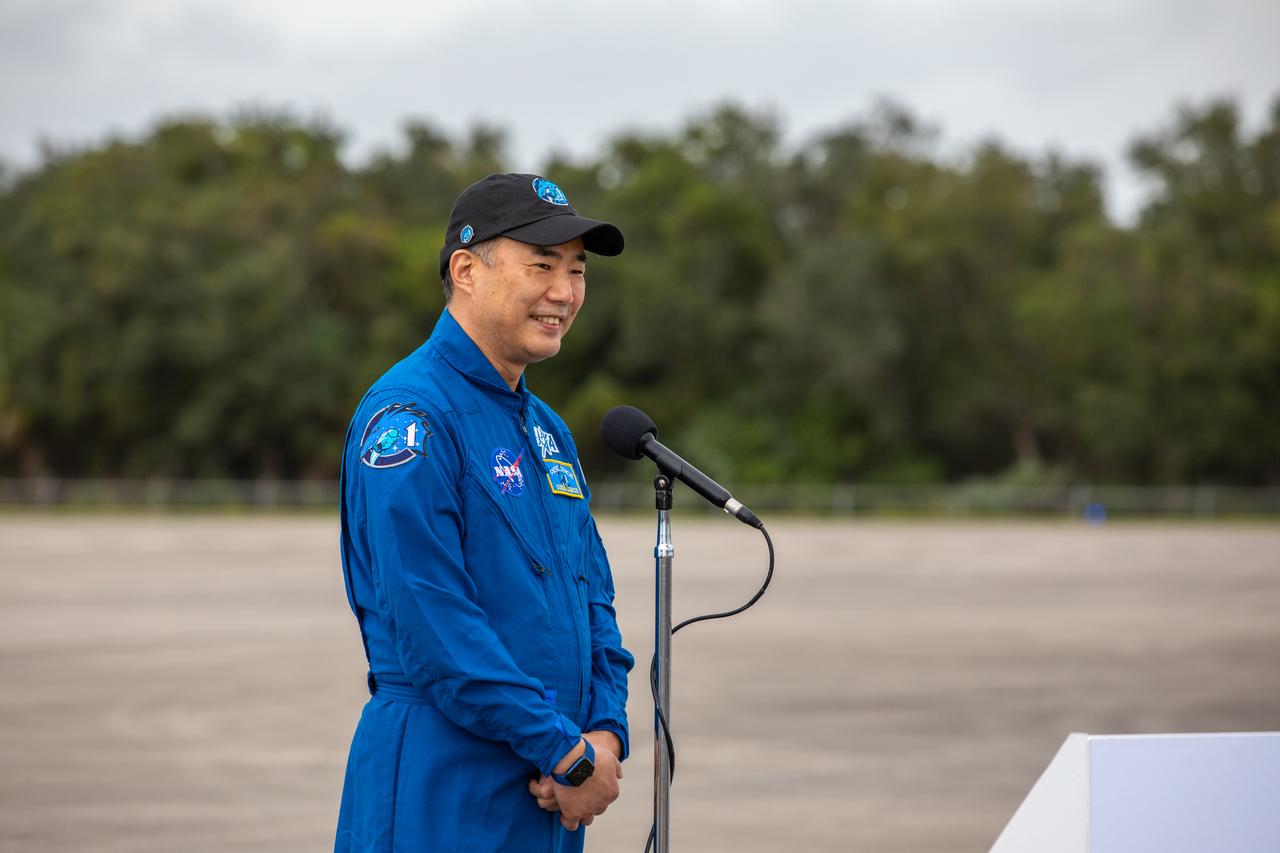
JAXA astronaut Soichi Noguchi, mission specialist, speaks to members of the media during a crew arrival event for NASA’s SpaceX Crew-1 mission at the Launch and Landing Facility at the agency’s Kennedy Space Center in Florida on Nov. 8, 2020. Crew-1 is the first crew rotation mission of a U.S. commercial spacecraft with astronauts to the International Space Station as part of NASA’s Commercial Crew Program. The SpaceX Crew Dragon spacecraft, named Resilience, will launch atop a Falcon 9 rocket from Kennedy’s Launch Complex 39A.
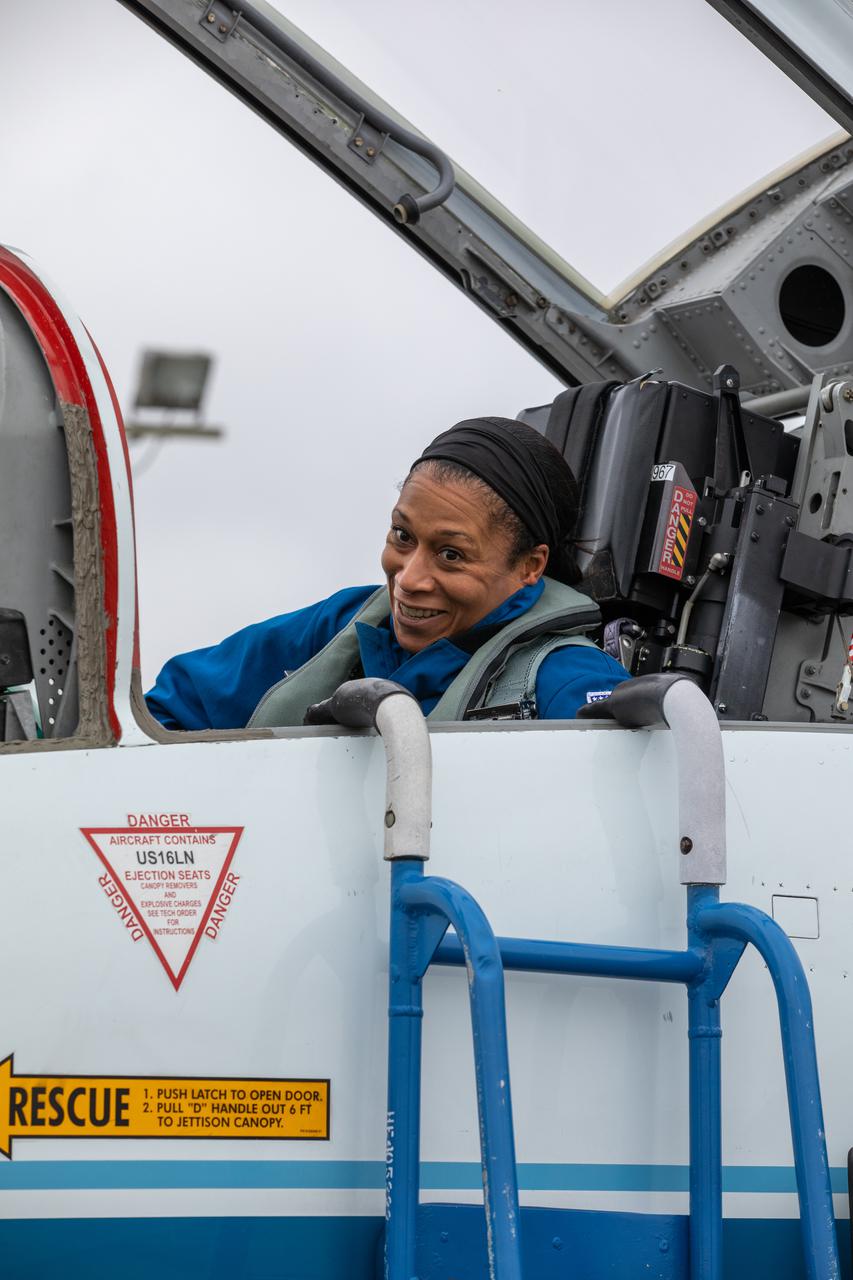
NASA astronaut Jeanette Epps, a crew member for Boeing’s Starliner-1 mission, arrives aboard a T-38 jet aircraft at the Launch and Landing Facility at Kennedy Space Center in Florida on Dec. 17, 2020. She is at Kennedy to prepare for her flight to the International Space Station on Boeing’s CST-100 Starliner, as part of the agency’s Commercial Crew Program.
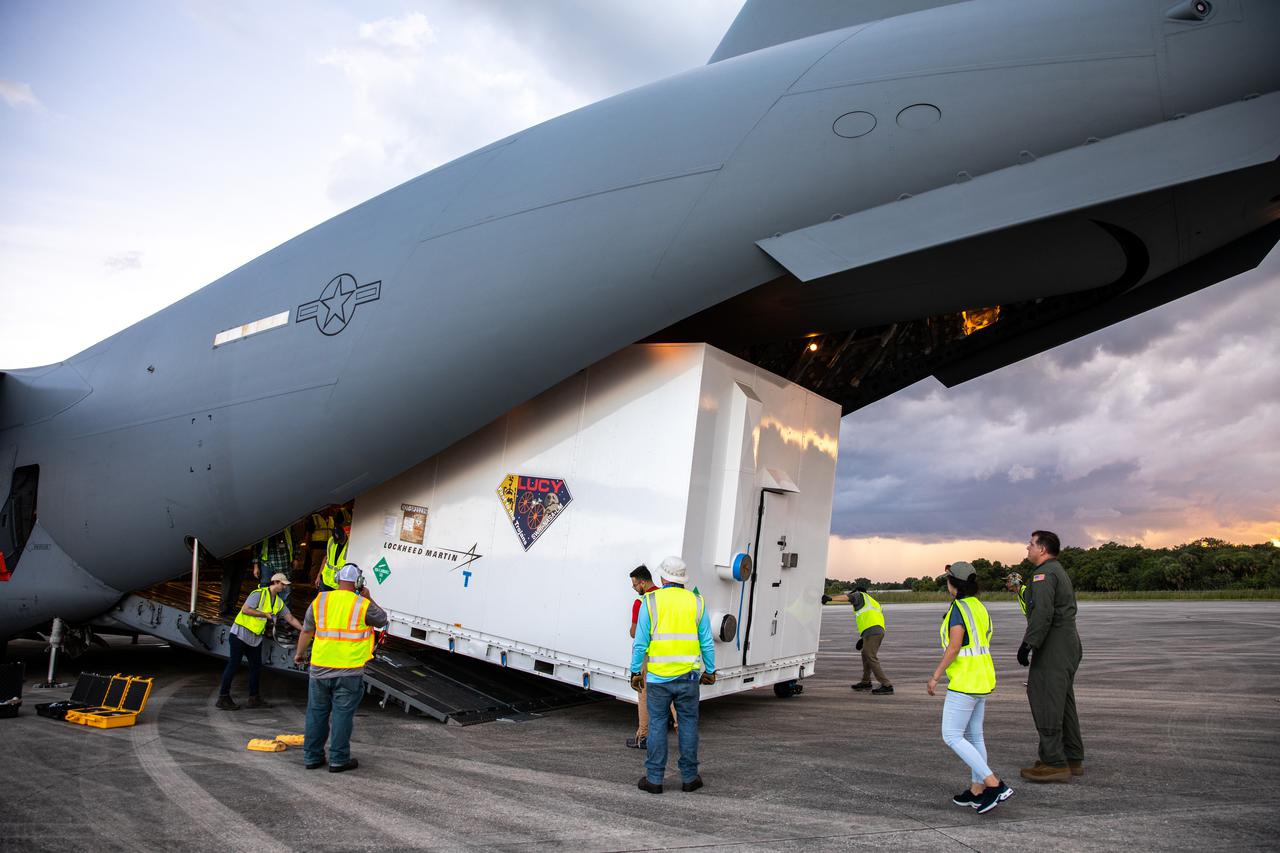
The shipping container holding NASA's Lucy spacecraft is unloaded from a United States Air Force C-17 cargo plane, stationed out of Charleston Air Force Base in South Carolina, on the runway of the Launch and Landing Facility at Kennedy Space Center in Florida on July 30, 2021. From there, the Lucy spacecraft will move to the Astrotech Space Operations payload processing facility in nearby Titusville, Florida, before its scheduled launch on a United Launch Alliance (ULA) Atlas V rocket from Cape Canaveral Space Force Station on October 16, 2021. The Lucy mission will be the first space mission to explore a diverse population of small bodies known as the Jupiter Trojan asteroids. The launch is being managed by NASA's Launch Services Program based at Kennedy, America's multi-user spaceport.
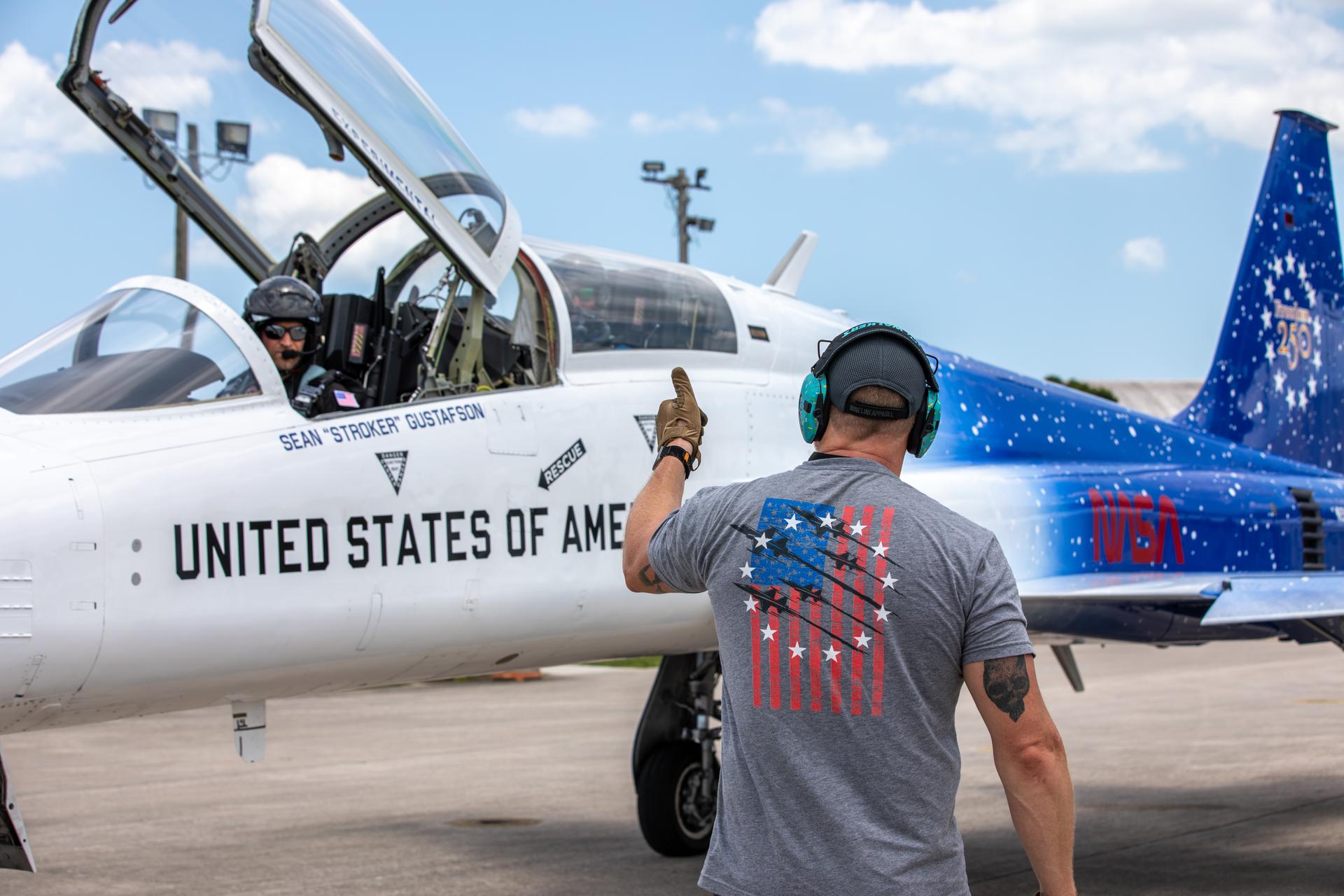
Piloting one of NASA Administrator Jared Isaacman’s personal F-5 aircraft, Pilot Scott Glaser is given the go-ahead to taxi for liftoff at the Launch and Landing Facility at the agency’s Kennedy Space Center in Florida, on Wednesday, June 17, 2026. As part of the administrator’s Flight Experience Award program, NASA employees Matthew Kufner, Charles Meilbye, and Aaron Smith donned NASA flight suits, completed preflight briefings, and experienced a unique flight. The ride-along flight experience award program highlights NASA’s commitment to celebrating excellence across the workforce.
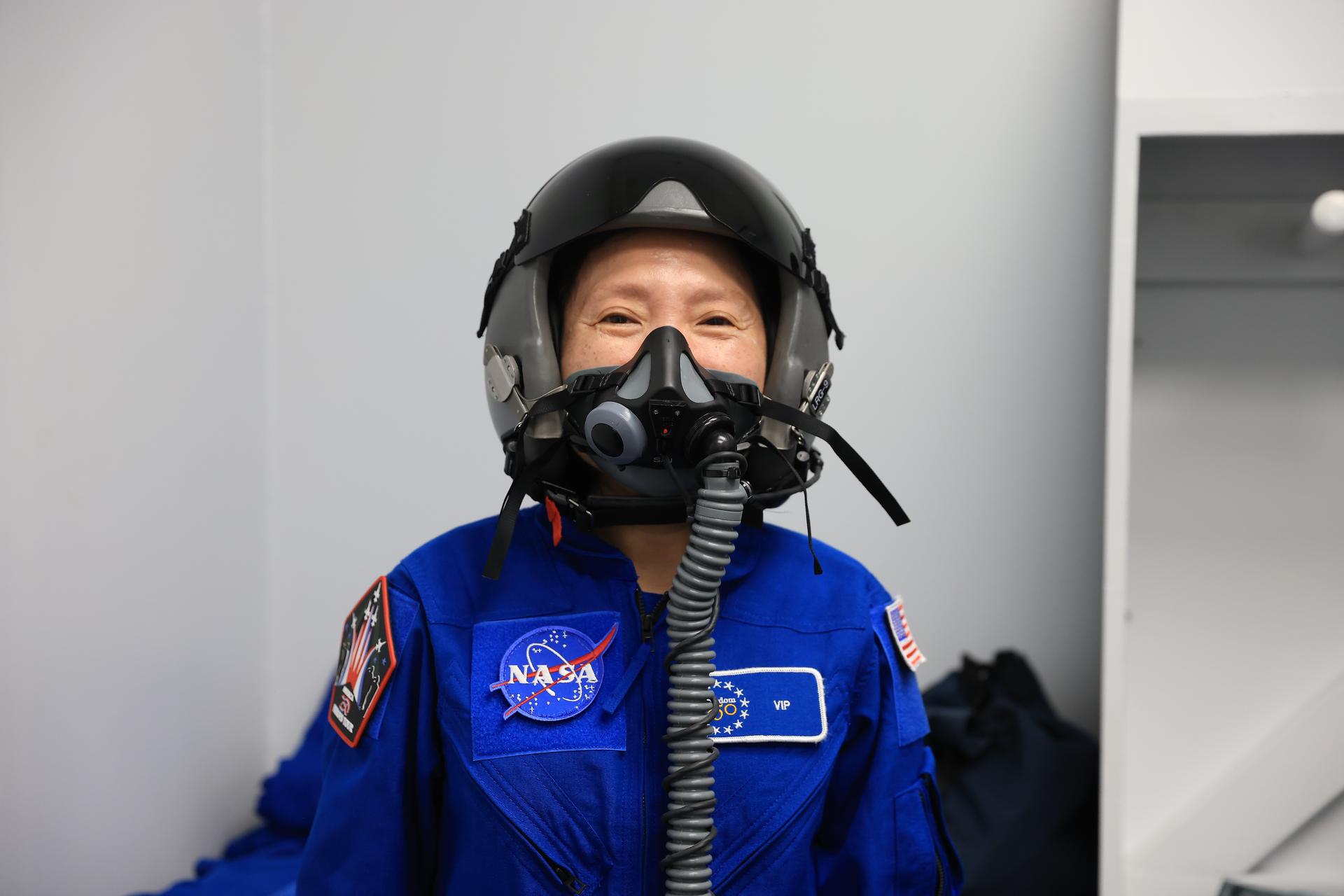
NASA employee Kuo-Chia “Alice” Liu dons a blue NASA flight suit and helmet ahead of her ride-along flight, as part of NASA Administrator Jared Isaacman’s Flight Experience Award program on Thursday, June 18, 2026, at the Launch and Landing Facility at the agency’s Kennedy Space Center in Florida. Liu, with other awardees, suited up, completed pre-flight briefings, and experienced a unique flight aboard the administrator’s personal F-5 aircraft. The ride-along flight experience award program highlights NASA’s commitment to celebrating excellence across the workforce.

From left to right, Artemis II Mission Specialist Jeremy Hansen from the CSA (Canadian Space Agency), Mission Specialist Christina Koch, Commander Reid Wiseman, and Pilot Victor Glover, arrive on Friday, March 27, 2026, at the Launch and Landing Facility at the agency’s Kennedy Space Center in Florida in preparation for the Artemis II test flight. The Artemis II mission will take the crew on a 10-day journey around the Moon and back aboard NASA’s SLS (Space Launch System) rocket and Orion spacecraft from Launch Complex 39B no earlier than 6:24 p.m. EDT on Wednesday, April 1.
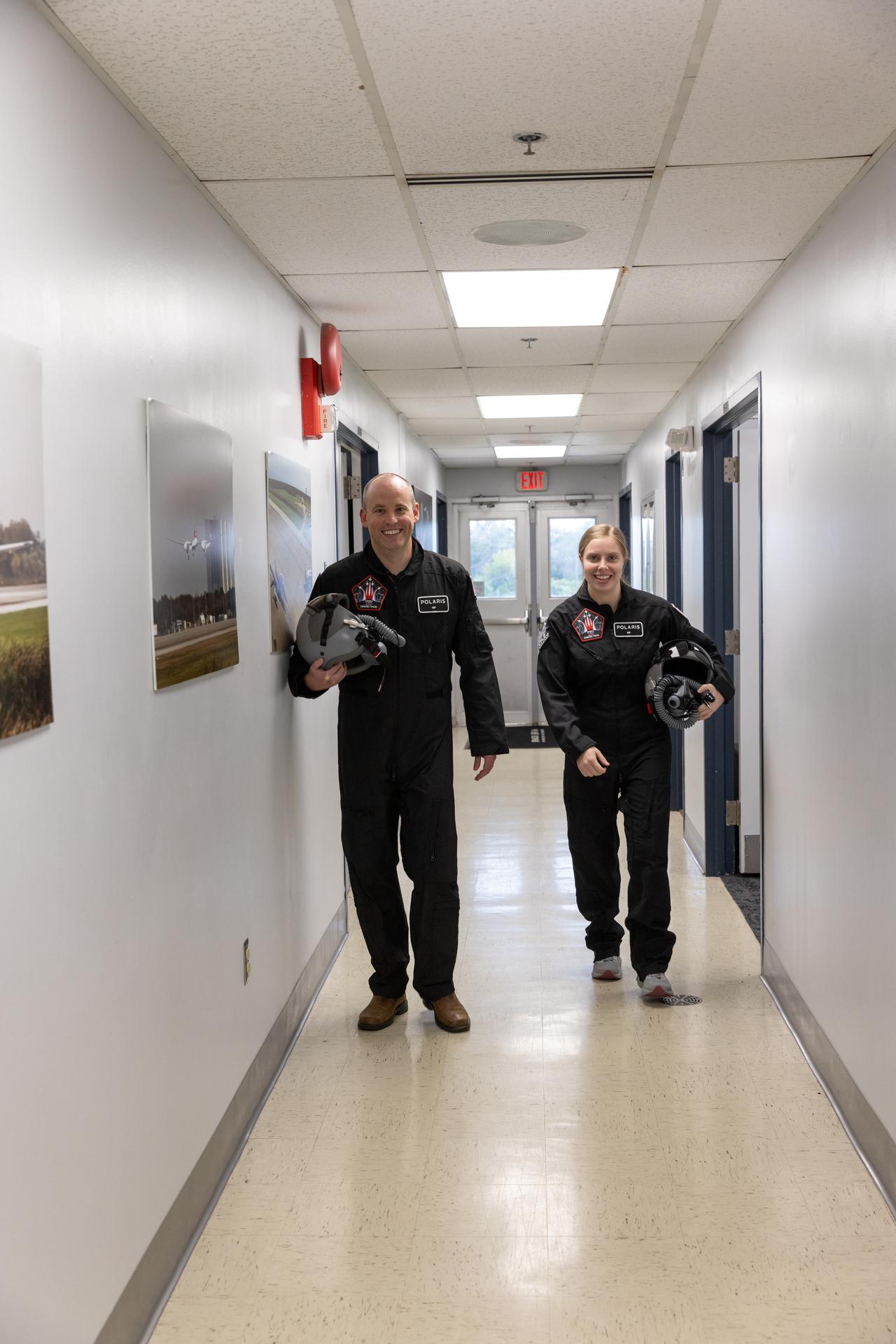
From left to right, Daniel Forrestel, manager, Ground and Missions Operations Office of NASA’s Commercial Crew Program and Ashley Scharfenberg, Systems Engineering and Integration for Exploration Ground Systems, walk in their flight suits at NASA’s Kennedy Space Center in Florida on Tuesday, Jan. 13, 2026. NASA Administrator Jared Isaacman flew Forrestel and Scharfenberg on an employee incentive in Isaacman’s personal Northrop F-5 Tiger II aircraft around NASA Kennedy. As the newly appointed 15th administrator of the agency, Isaacman created a ride-along program to recognize and reward members of the workforce for their dedication to accomplishing agency priorities.
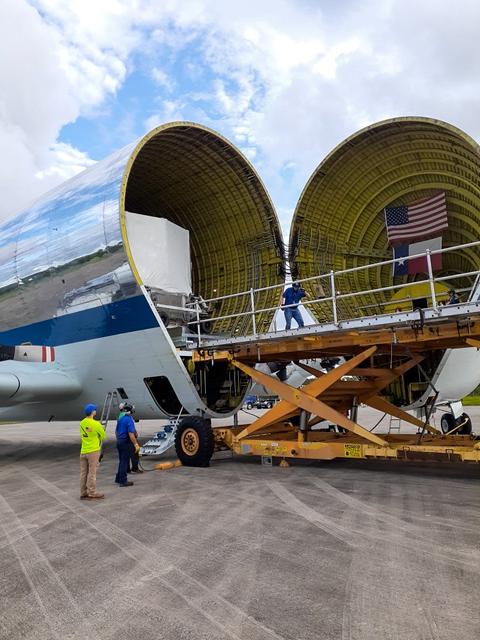
NASA’s Super Guppy arrives at Kennedy Space Center’s Launch and Landing Facility in Florida on Sept. 11, 2020, carrying the Orion Service Module Structural Test Article (SM-STA). Composed of the European Service Module (ESM) and crew module adapter (CMA), these components mark the completion of the test campaign to certify Orion’s Service Module for Artemis I. The Orion SM-STA is being offloaded for transport to the Neil Armstrong Operations and Checkout Building. The first in a series of increasingly complex missions, Artemis I will test the Orion spacecraft and Space Launch System as an integrated system ahead of crewed flights to the Moon. Under the Artemis program, NASA will land the first woman and the next man on the Moon by 2024. Photo credit:
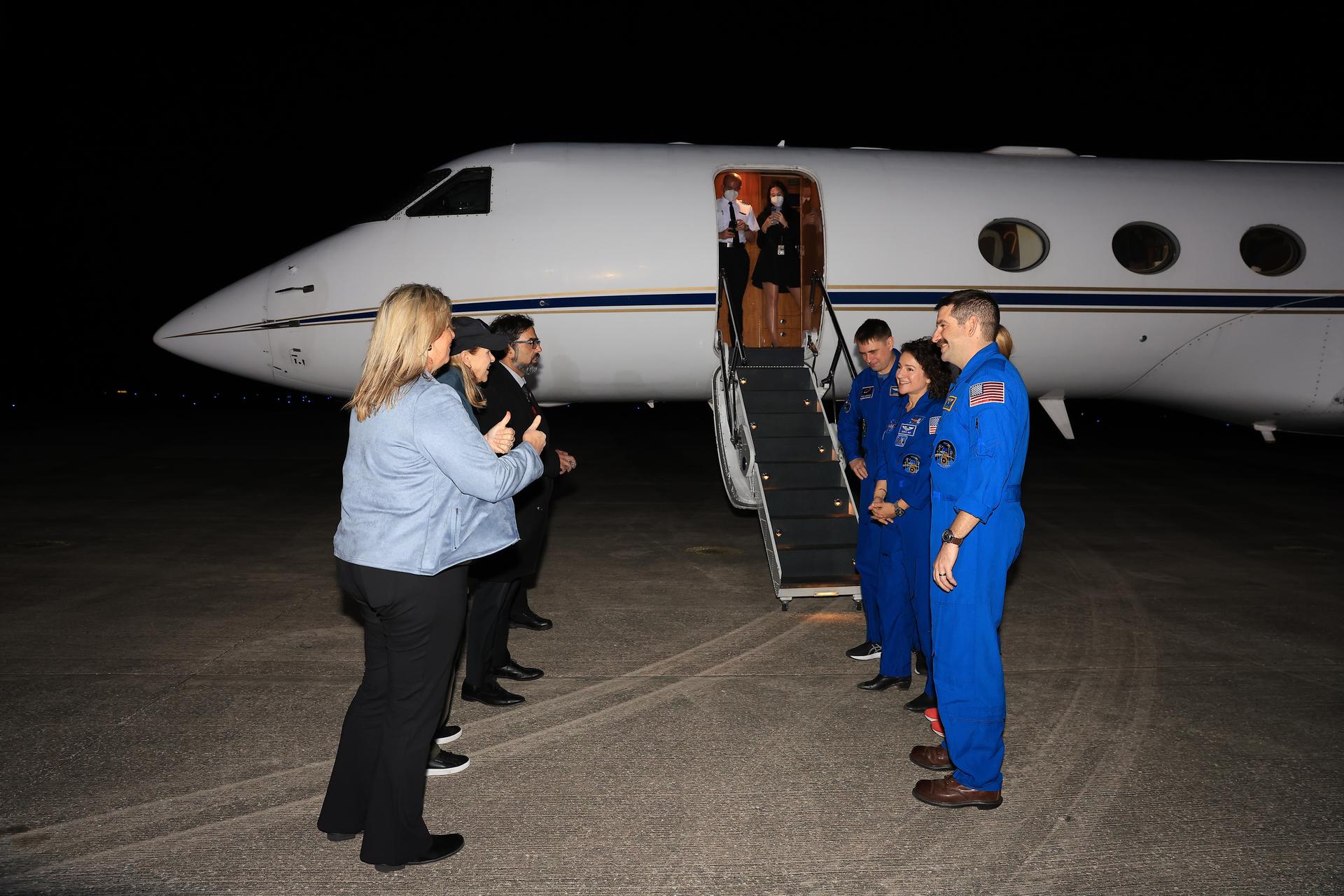
Crew members of NASA’s SpaceX Crew-12 mission, from left to right, Roscosmos cosmonaut Andrey Fedyaev, NASA astronaut Jessica Meir, ESA (European Space Agency) astronaut Sophie Adenot, and NASA astronaut Jack Hathaway, arrive Friday, Feb. 6, 2026, at the Launch and Landing Facility at the agency’s Kennedy Space Center in Florida. The Crew-12 mission is slated to launch to the International Space Station aboard SpaceX’s Dragon spacecraft atop company’s Falcon 9 rocket from Cape Canaveral Space Force Station’s Space Launch Complex 40 at 6:01 a.m. EST on Wednesday, Feb. 11.
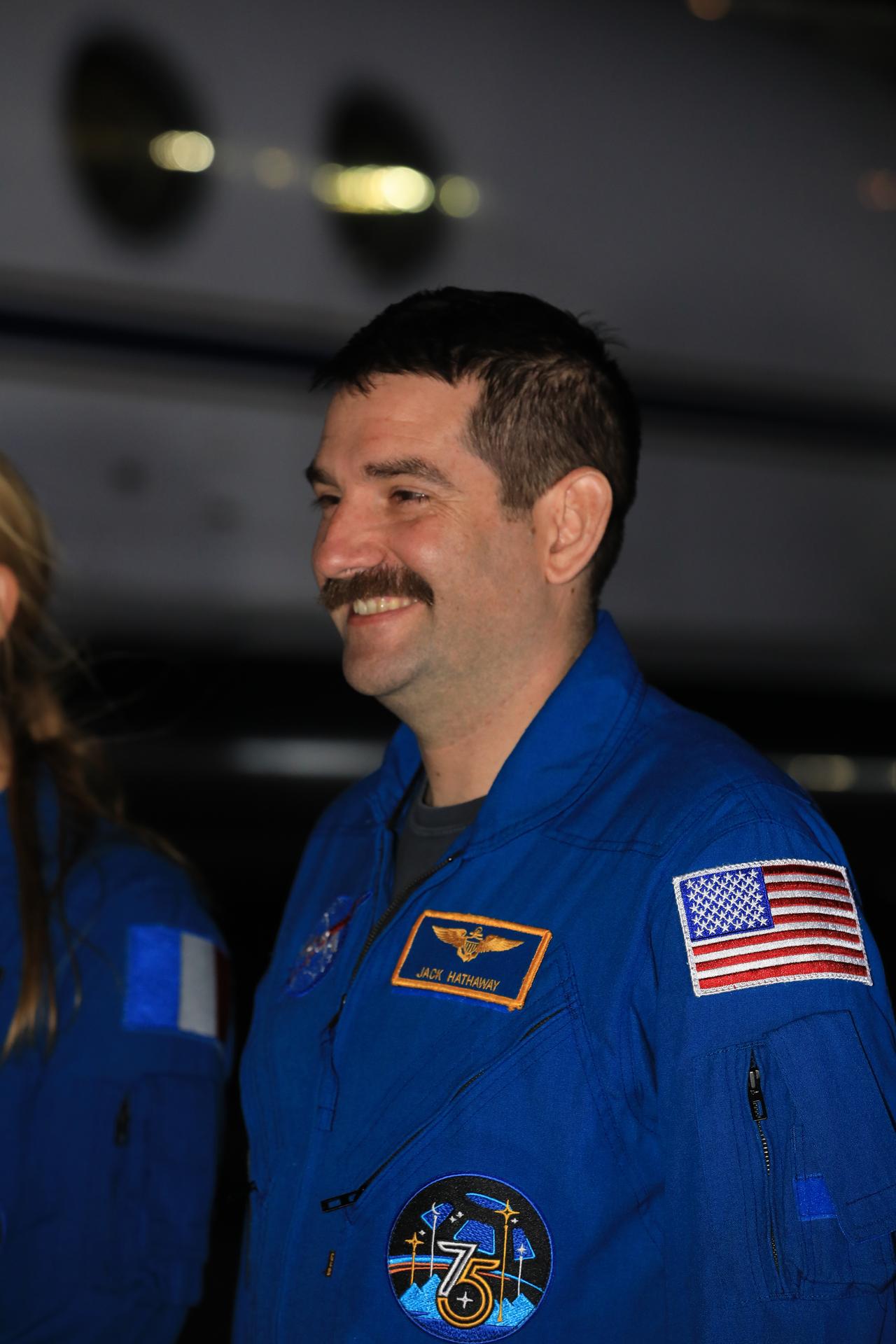
NASA astronaut Jack Hathaway, Crew-12 pilot, arrives Friday, Feb. 6, 2026, at the Launch and Landing Facility at the agency’s Kennedy Space Center in Florida. Hathaway and fellow NASA astronaut Jessica Meir, along with ESA (European Space Agency) astronaut Sophie Adenot, and Roscosmos cosmonaut Andrey Fedyaev will launch to the International Space Station aboard SpaceX’s Dragon spacecraft and Falcon 9 rocket at 6:01 a.m. EST on Wednesday, Feb. 11, from Cape Canaveral Space Force Station’s Space Launch Complex 40. Crew-12 is the 12th crew rotation mission with SpaceX to the space station as part of NASA’s Commercial Crew Program.
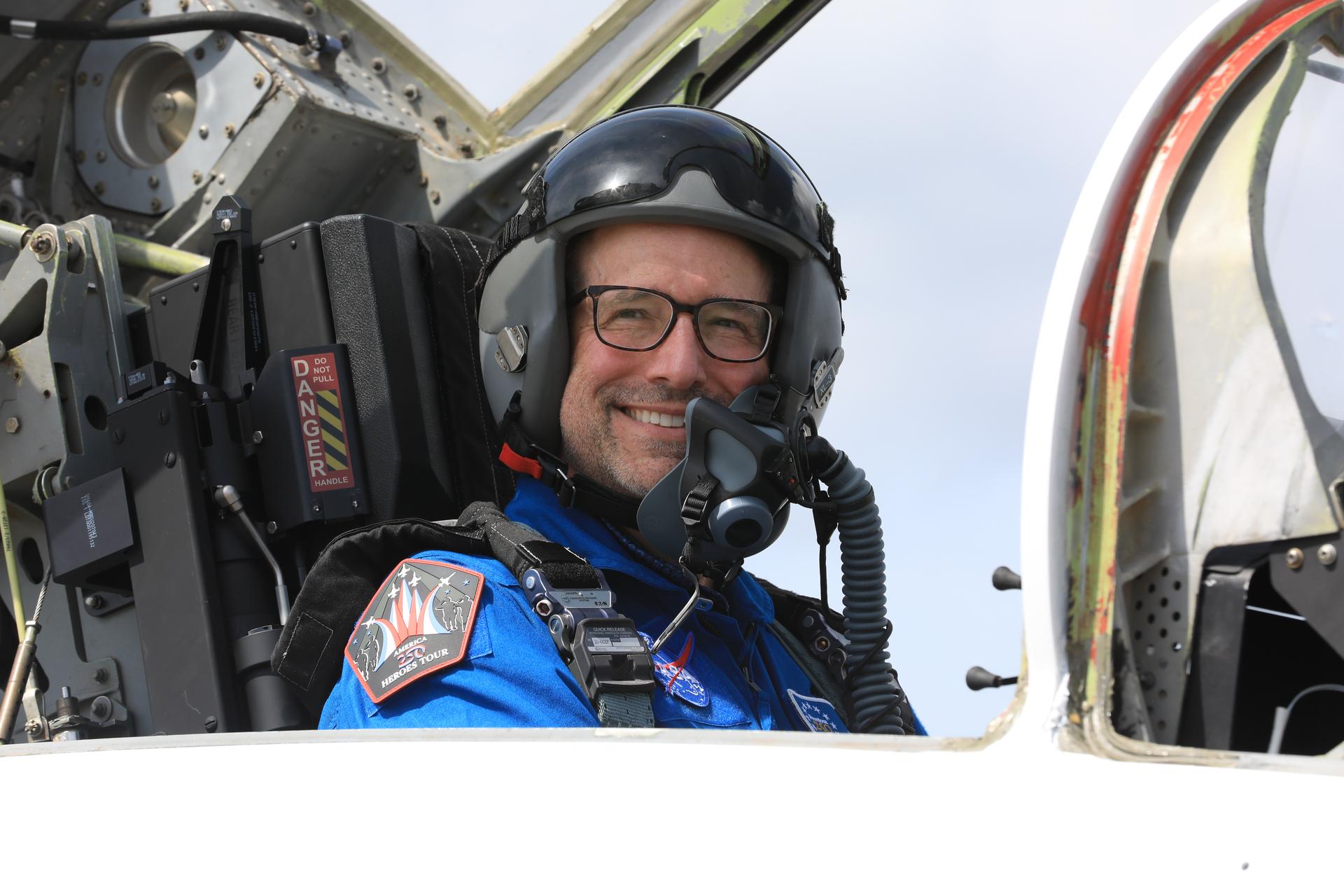
NASA employee Raymond “Jim” Lanzi completes a ride-along flight in one of NASA Administrator Jared Isaacman’s personal F-5 aircraft at the Launch and Landing Facility at the agency’s Kennedy Space Center in Florida on Thursday, June 18, 2026, as part of the Administrator’s Flight Experience Award program. Lanzi, with other awardees, suited up, completed pre-flight briefings, and experienced a unique flight. The ride-along flight experience award program highlights NASA’s commitment to celebrating excellence across the workforce.
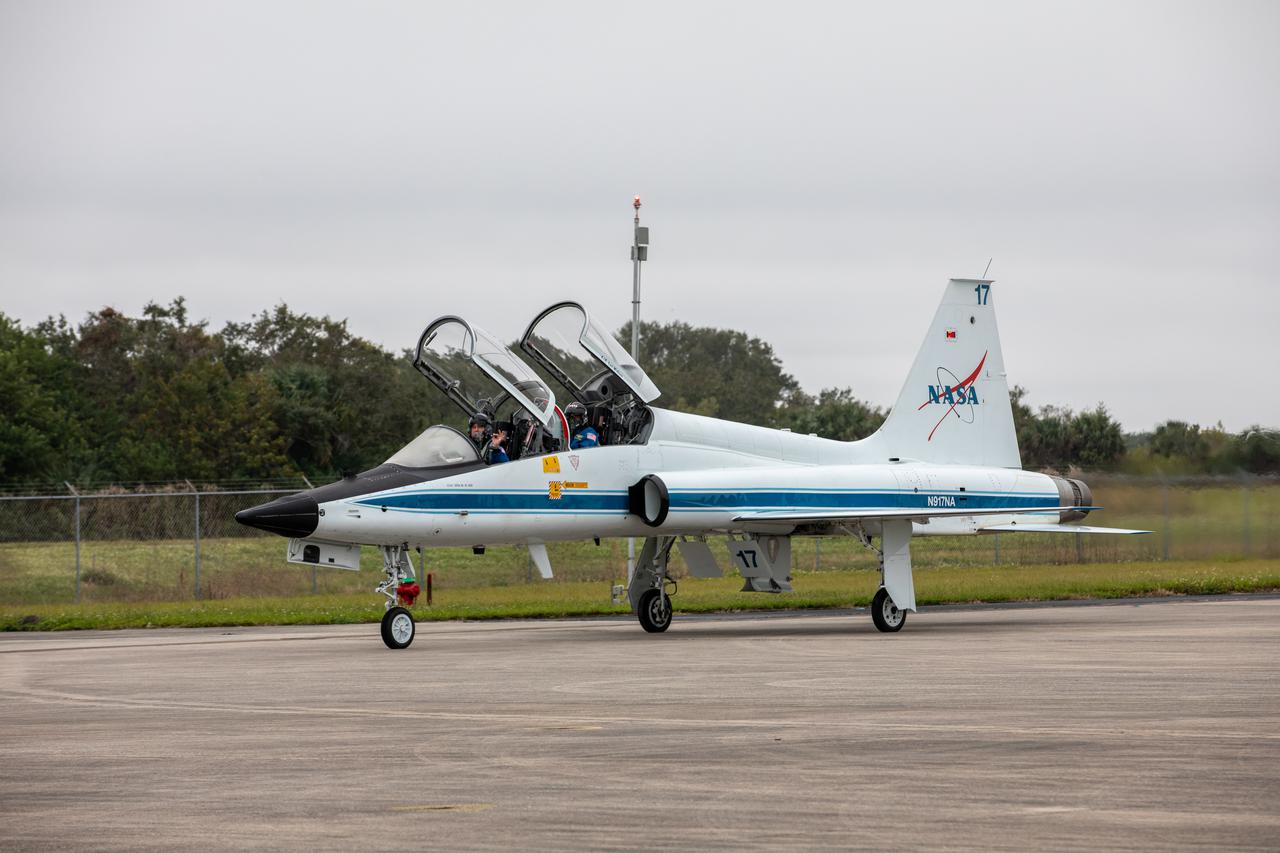
NASA astronauts Barry “Butch” Wilmore and Sunita "Suni" Williams arrive aboard T-38 jet aircraft at the Launch and Landing Facility at Kennedy Space Center in Florida on Dec. 17, 2020. The astronauts are at Kennedy to prepare for their flights on Boeing’s CST-100 Starliner. Wilmore and Williams will command the Crew Flight Test and the Starliner-1 mission, respectively. The crew members will fly to the International Space Station as part of the agency’s Commercial Crew Program.

Crew members of NASA’s SpaceX Crew-10 mission to the International Space Station descend the ramp of a Gulfstream jet upon arrival to the Launch and Landing Facility at Kennedy Space Center in Florida on Friday, March 7, 2025. NASA astronauts Anne McClain and Nichole Ayers, along with JAXA (Japan Aerospace Exploration Agency) astronaut Takuya Onishi and Roscosmos cosmonaut Kirill Peskov, stand before members of the news media after are slated to launch aboard SpaceX’s Dragon spacecraft, powered by the company’s Falcon 9 rocket from NASA Kennedy’s Launch Complex 39A no earlier than 7:48 p.m. EDT on Wednesday, March 12, 2025.
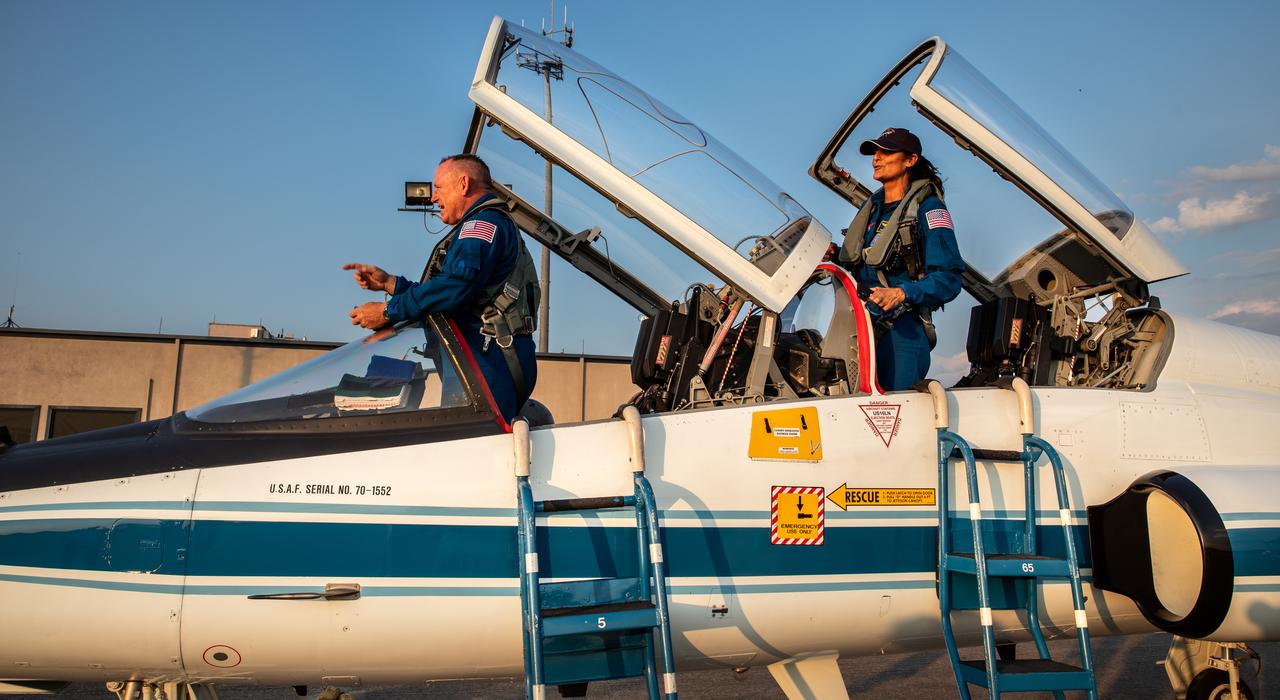
NASA astronauts Butch Wilmore and Suni Williams arrive back at the Launch and Landing Facility at the agency’s Kennedy Space Center in Florida on Tuesday, May 28, 2024, ahead of NASA’s Boeing Crew Flight Test. The first launch attempt on May 6 was scrubbed. As part of the agency’s Commercial Crew Program, Wilmore and Williams are the first to launch to the International Space Station aboard Boeing’s Starliner spacecraft atop a United Launch Alliance Atlas V rocket from Space Launch Complex-41 at nearby Cape Canaveral Space Force Station. Liftoff is scheduled for 12:25 p.m. EDT on Saturday, June 1.
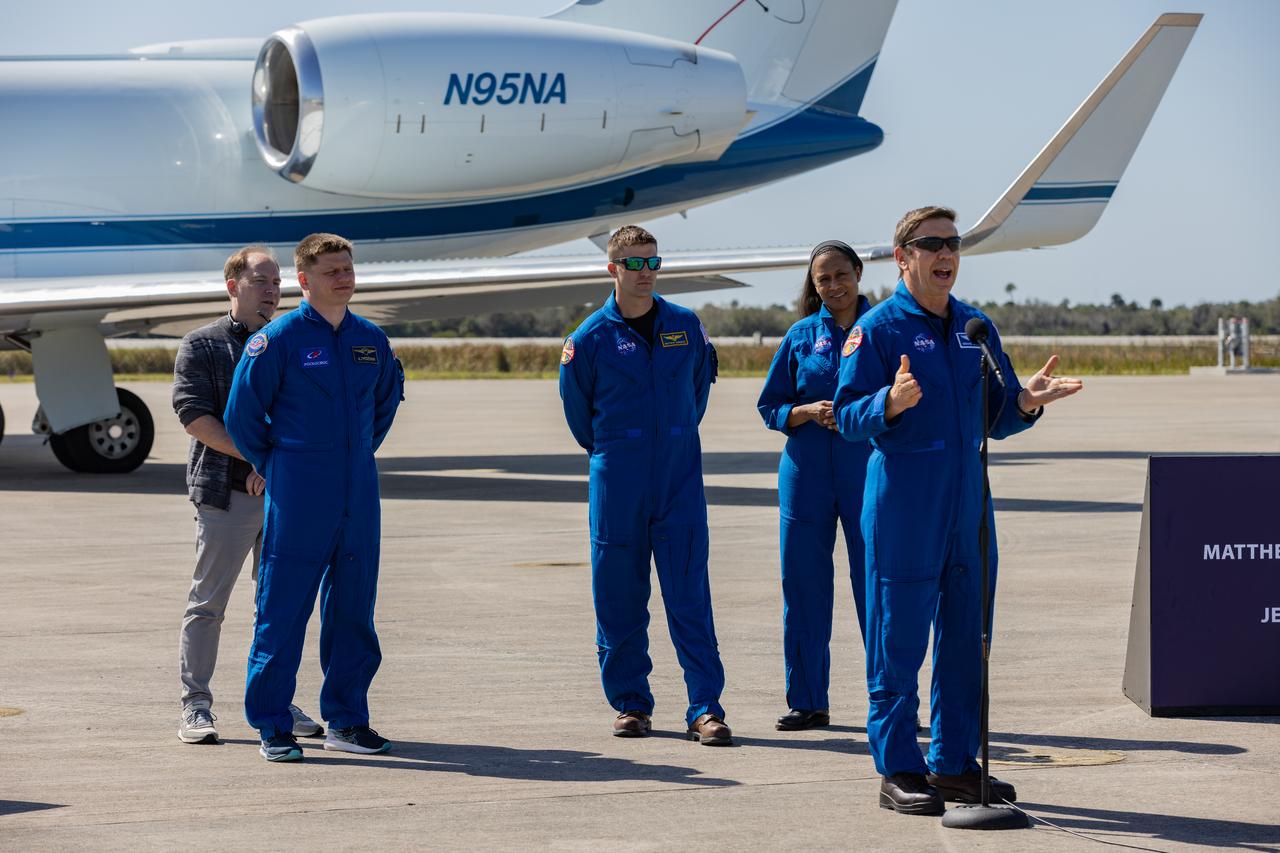
NASA astronaut Michael Barratt, Crew-8 pilot, delivers remarks to members of the news media during crew arrival for NASA’s SpaceX Crew-8 mission at the Launch and Landing Facility at Kennedy Space Center in Florida on Sunday, Feb. 25, 2024. Barratt, along with NASA astronauts Matthew Dominick and Jeanette Epps, as well as Roscosmos cosmonaut Alexander Grebenkin, will launch to the International Space Station aboard SpaceX’s Dragon spacecraft on the company’s Falcon 9 rocket from Kennedy’s Launch Complex 39A no earlier than 12:04 a.m. EST Friday, March 1, 2024.
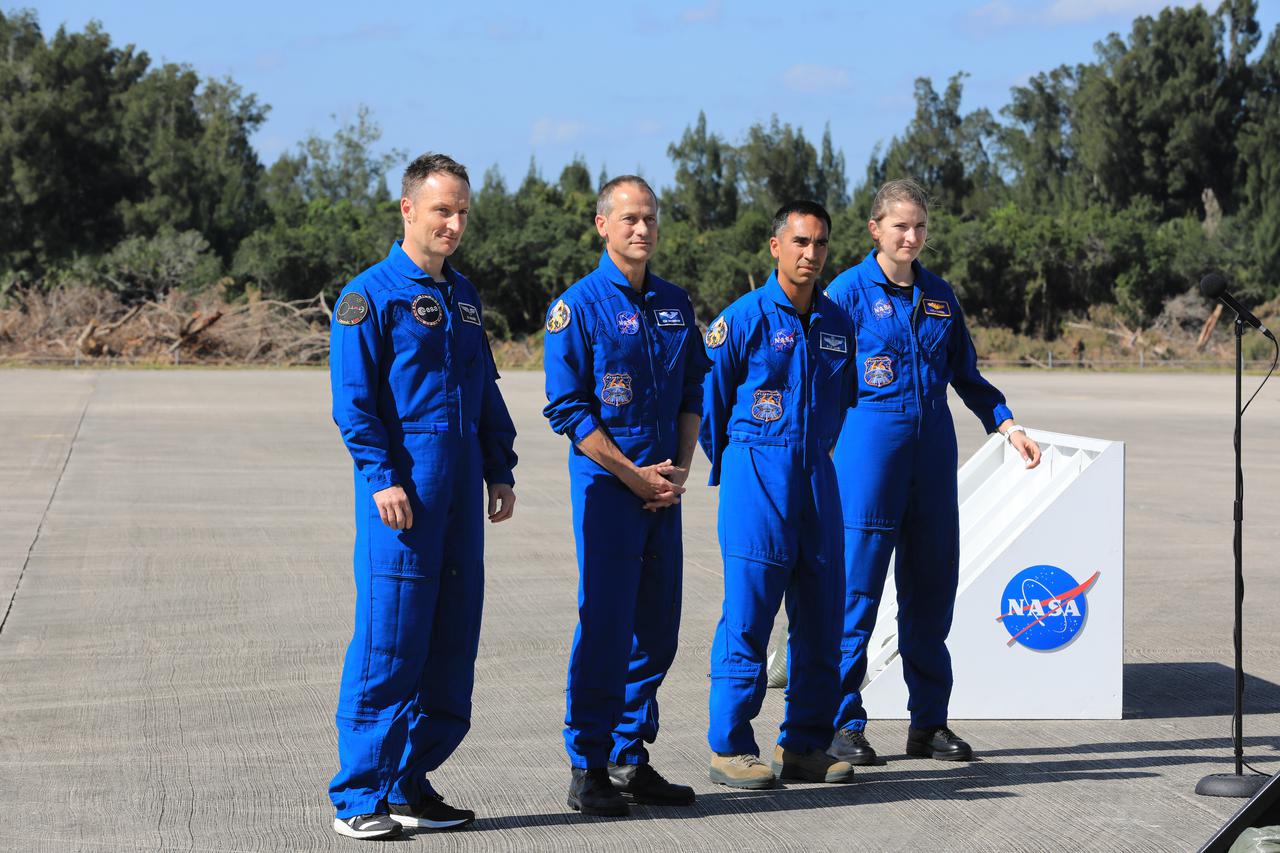
Crew members for NASA’s SpaceX Crew-3 mission to the International Space Station arrive at Kennedy Space Center’s Launch and Landing Facility in Florida on Oct. 26, 2021. From left, European Space Agency astronaut Matthias Maurer, and NASA astronauts Tom Marshburn, Raja Chari, and Kayla Barron speak to members of the news media. The crew will enter quarantine at the center’s Crew Quarters as they await launch aboard the Crew Dragon on a SpaceX Falcon 9 rocket. Launch is targeted for 2:21 a.m. EDT on Oct. 31 from Launch Complex 39A. Crew-3 is the third crew rotation flight for the agency’s Commercial Crew Program, and the first flight of a new Crew Dragon spacecraft.
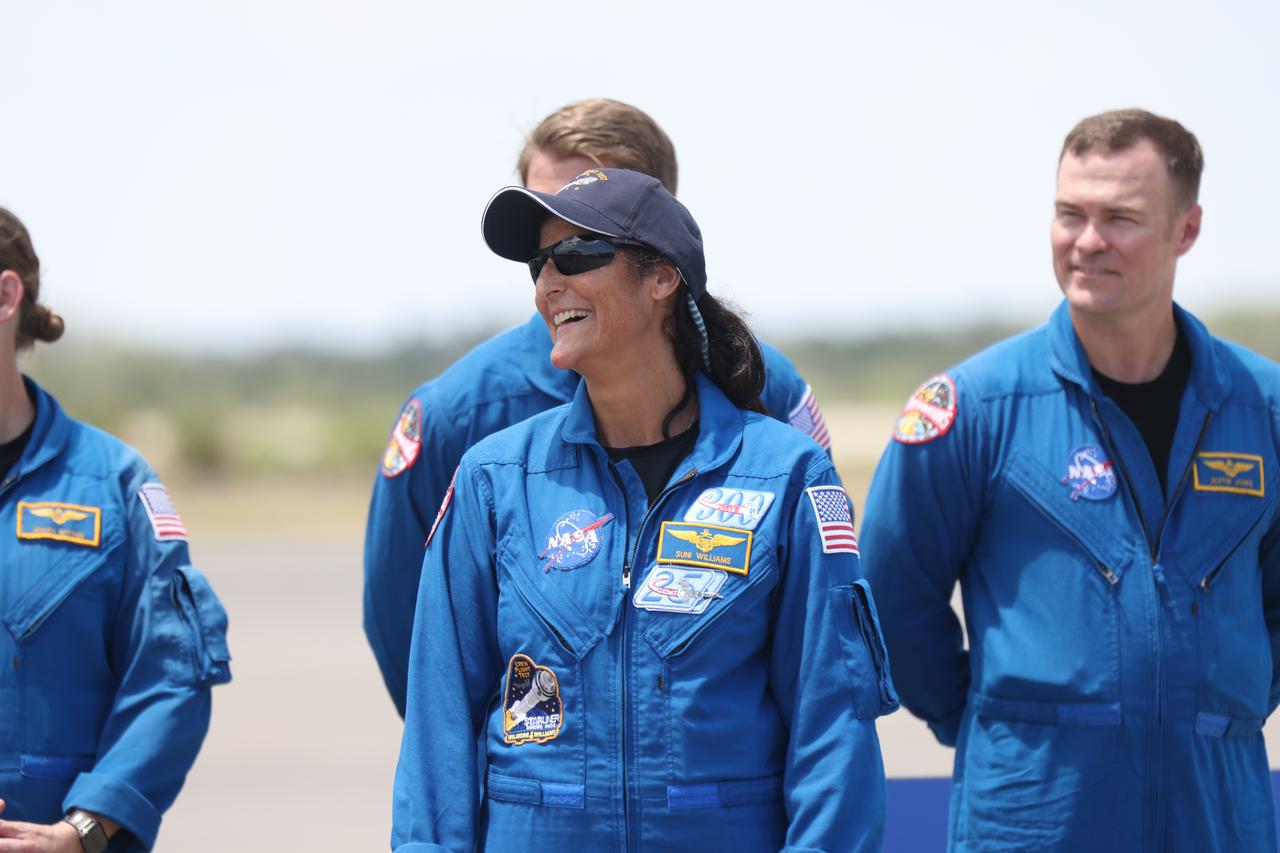
NASA astronaut Suni Williams delivers remarks to members of the news media at the Launch and Landing Facility at NASA’s Kennedy Space Center in Florida following her arrival for the agency’s Boeing Crew Flight Test. As part of the agency’s Commercial Crew Program, Williams is joined by NASA astronaut Butch Wilmore as the first crew to launch aboard Boeing’s Starliner spacecraft atop a United Launch Alliance Atlas V rocket from Space Launch Complex-41 at Cape Canaveral Space Force Station in Florida. Liftoff is scheduled for 10:34 p.m. ET on Monday, May 6.
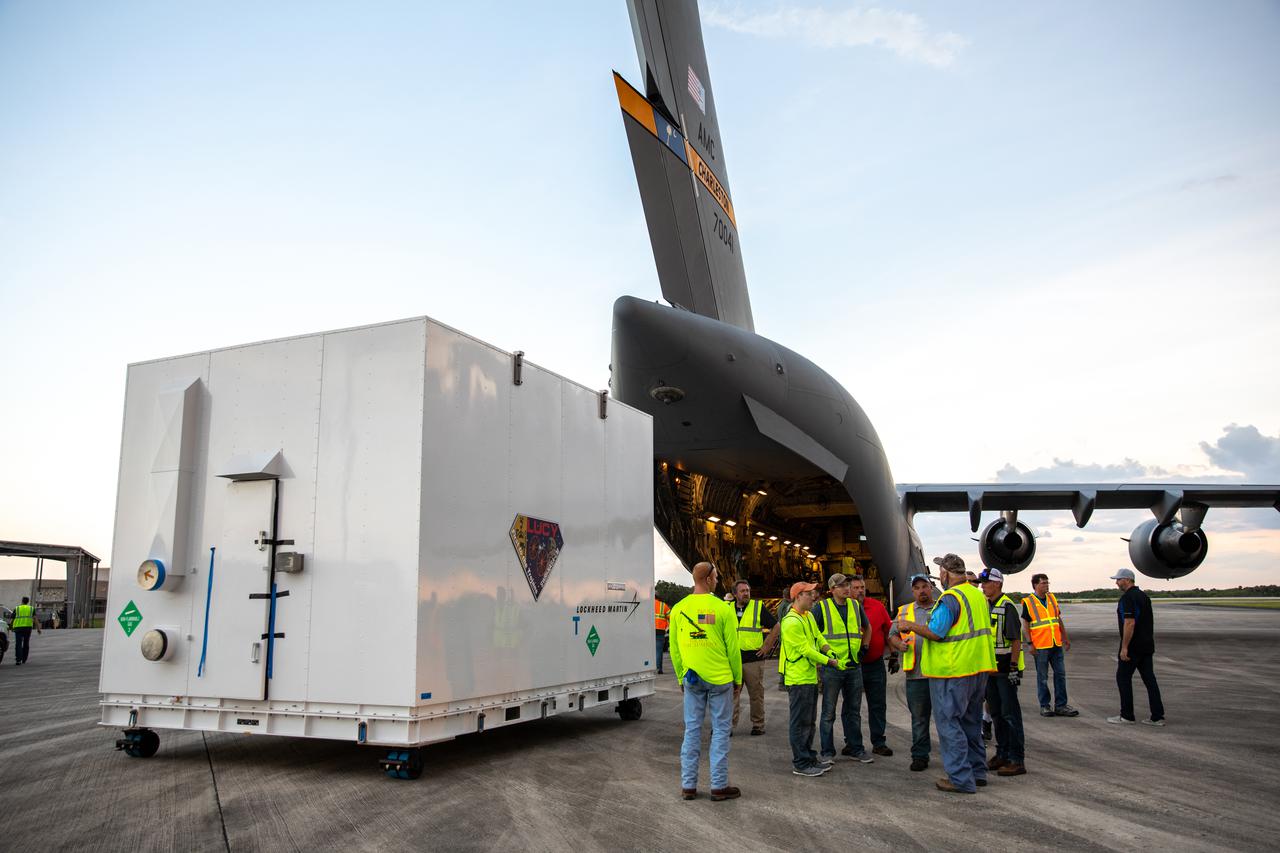
The shipping container holding NASA's Lucy spacecraft is unloaded from an Air Force C-17 cargo aircraft on the runway of the Launch and Landing Facility at Kennedy Space Center in Florida on July 30, 2021. From there, the Lucy spacecraft will move to the Astrotech Space Operations payload processing facility in nearby Titusville, Florida, before its scheduled launch on a United Launch Alliance (ULA) Atlas V rocket from Cape Canaveral Space Force Station on October 16, 2021. The Lucy mission will be the first space mission to explore a diverse population of small bodies known as the Jupiter Trojan asteroids. The launch is being managed by NASA's Launch Services Program based at Kennedy, America's premier multi-user spaceport.
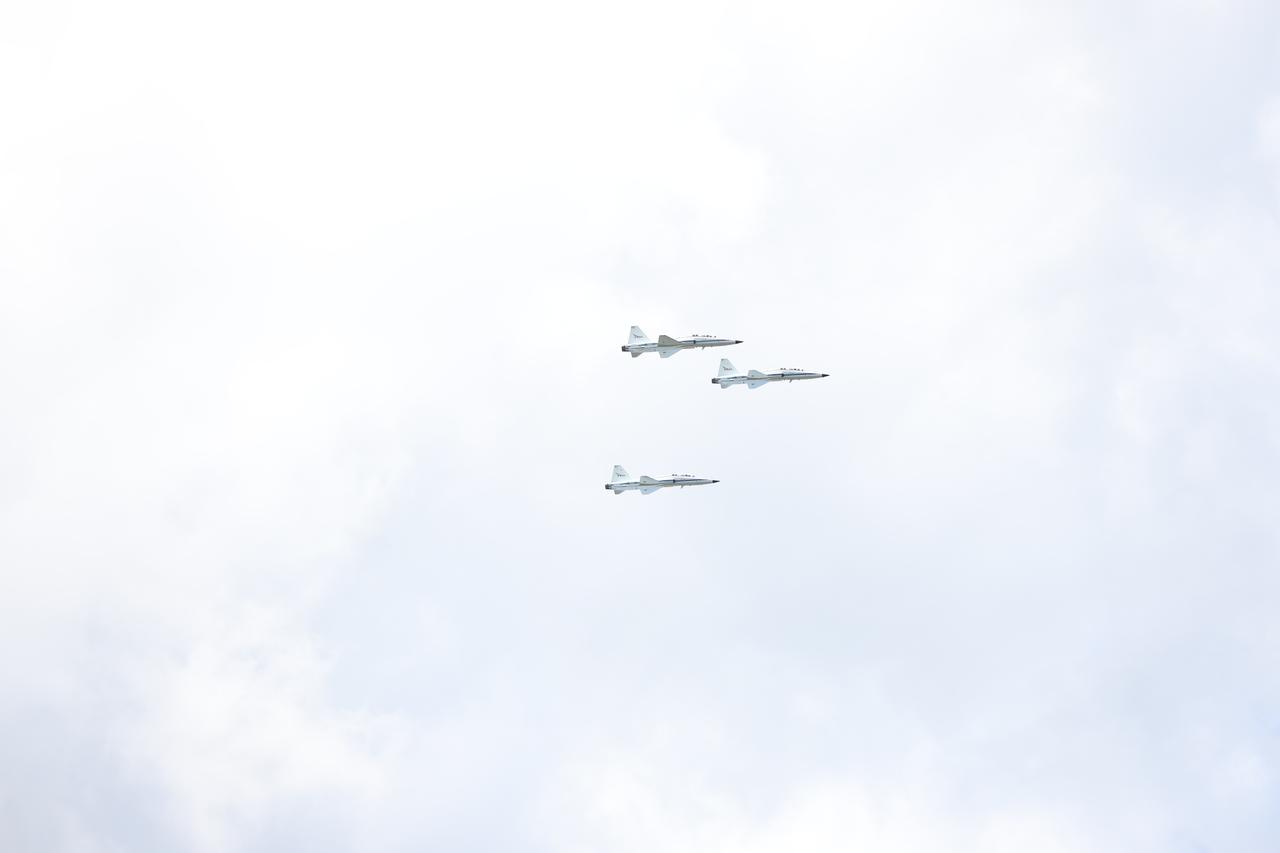
NASA astronauts arrive in a trio of Northrop T-38 Talon jets at the Launch and Landing Facility at Kennedy Space Center in Florida on Thursday, April 25, 2024, ahead of the agency’s Boeing Crew Flight Test to the International Space Station. As part of the agency’s Commercial Crew Program, NASA astronaut Butch Wilmore and Suni Williams are the first to launch aboard Boeing’s Starliner spacecraft atop a United Launch Alliance Atlas V rocket from Space Launch Complex-41 at Cape Canaveral Space Force Station in Florida. Liftoff is scheduled for 10:34 p.m. ET on Monday, May 6.
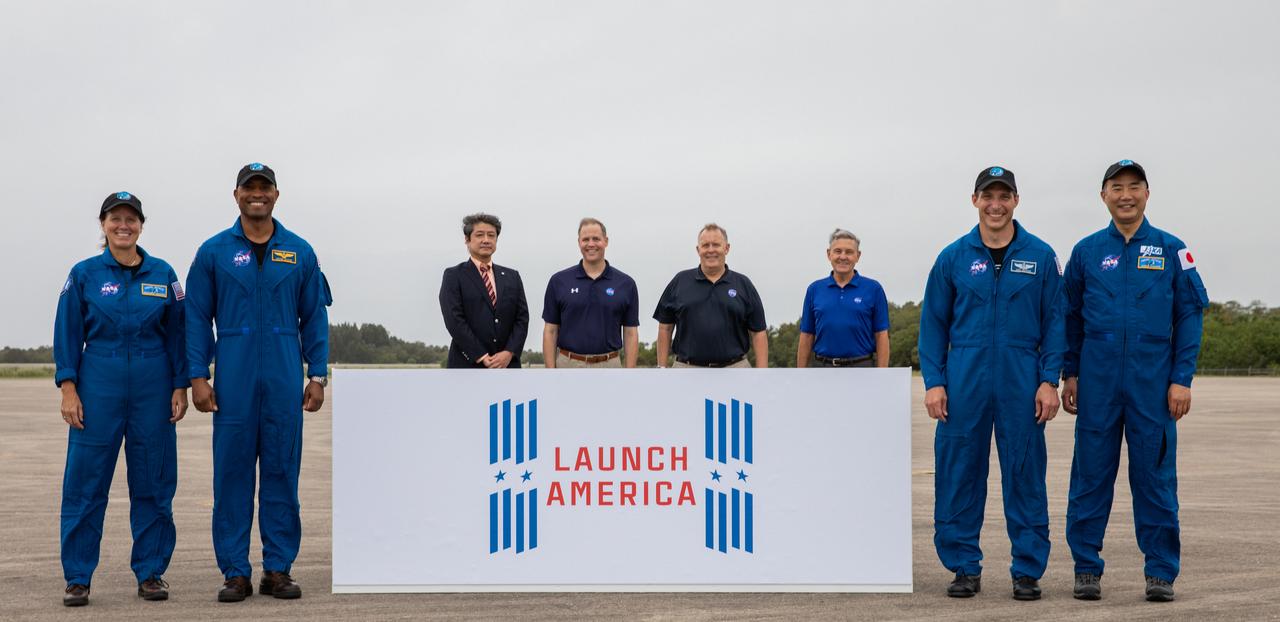
A crew arrival media event for NASA’s SpaceX Crew-1 mission is held Nov. 8, 2020, at the Launch and Landing Facility at the agency’s Kennedy Space Center in Florida. From left NASA astronaut Shannon Walker, mission specialist; NASA astronaut Victor Glover, pilot; Junichi Sakai, manager, International Space Station Program, JAXA; NASA Administrator Jim Bridenstine; NASA Deputy Administrator Jim Morhard; Bob Cabana, director, Kennedy Space Center; NASA astronaut Michael Hopkins, spacecraft commander; and JAXA astronaut Soichi Noguchi, mission specialist, pose for a photograph after speaking to members of the media. Crew-1 is the first crew rotation mission of a U.S. commercial spacecraft with astronauts to the International Space Station as part of NASA’s Commercial Crew Program. The SpaceX Crew Dragon spacecraft, named Resilience, will launch atop a Falcon 9 rocket from Kennedy’s Launch Complex 39A.
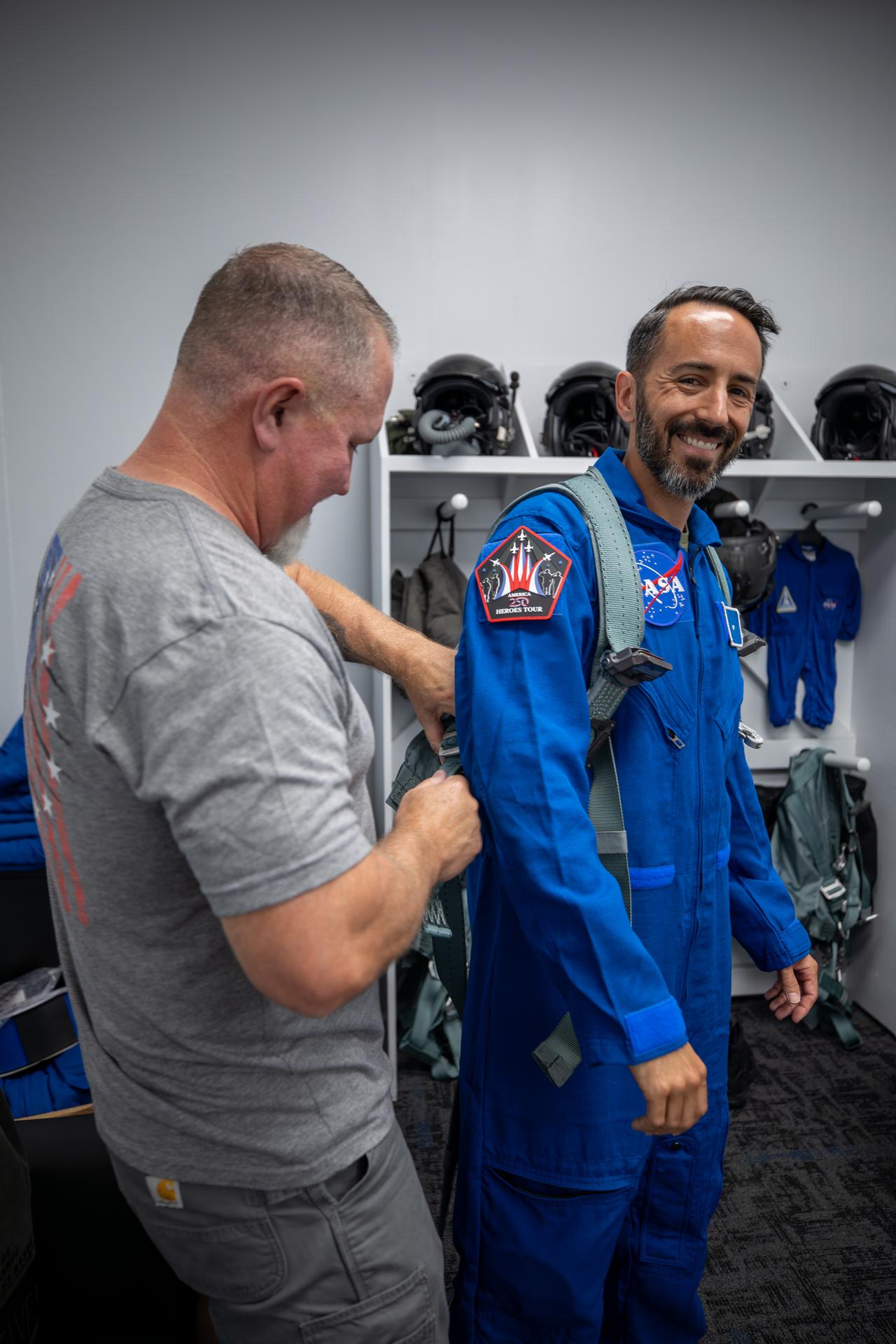
NASA employee Matthew Kufner, right, dons his flight suit ahead of a ride-along flight aboard one of NASA Administrator Jared Isaacman’s personal F-5 aircraft on Wednesday, June 17, 2026, at the Launch and Landing Facility at the agency’s Kennedy Space Center in Florida. As part of the Administrator’s Flight Experience Award program, Kufner and other awardees suited up, completed preflight briefings, and experienced a unique flight. The ride-along flight experience award program highlights NASA’s commitment to celebrating excellence across the workforce.
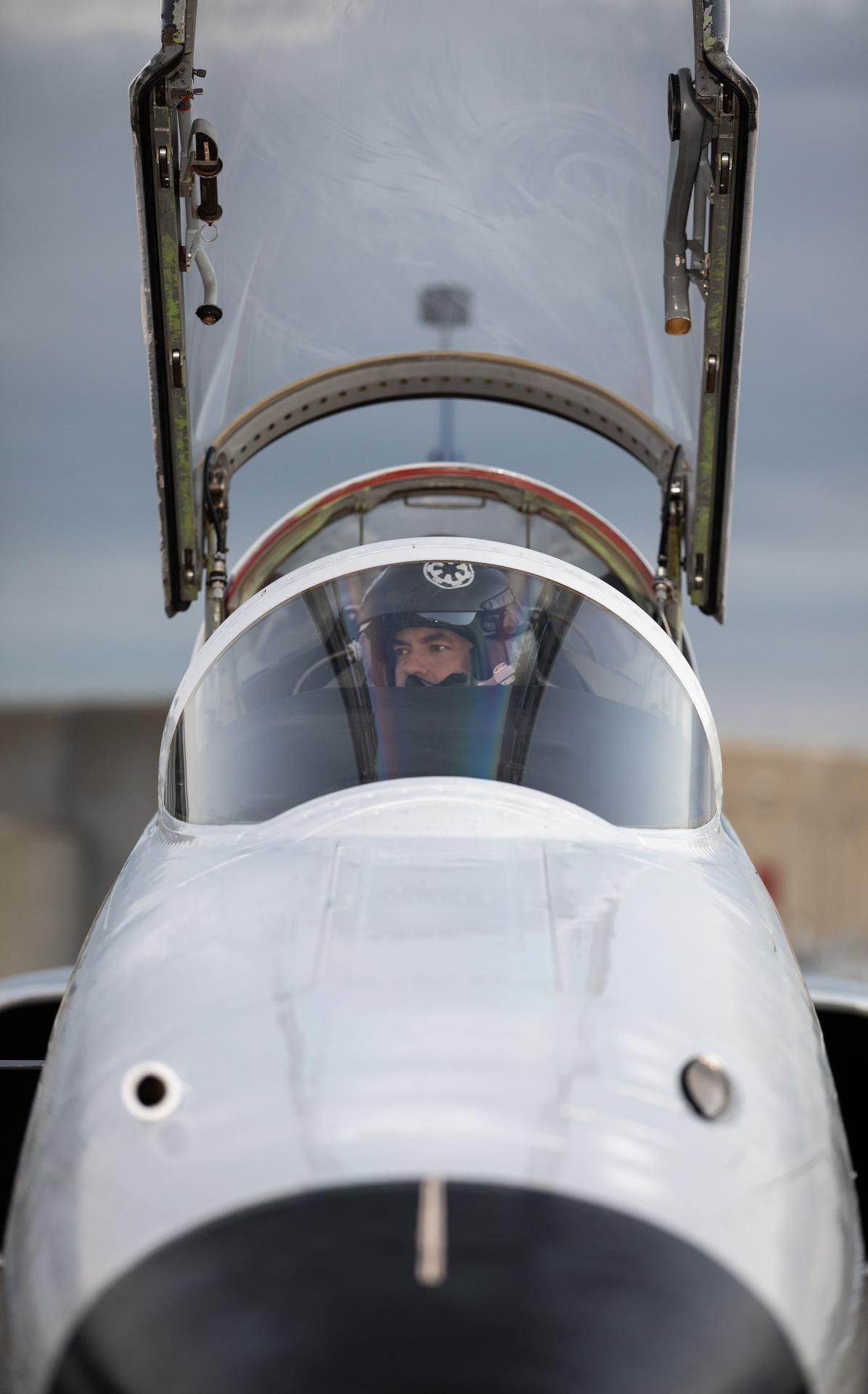
NASA Administrator Jared Isaacman sits in the cockpit of a Northrop F-5 aircraft at NASA’s Kennedy Space Center in Florida on Tuesday, Jan. 13, 2026. As the newly 15th administrator of the agency, Isaacman created a ride-along program to recognize and reward members of the workforce to fly in Isaacman’s personal F-5 Tiger II aircraft. NASA’s first “A” stands for aeronautics, and the agency is continuing efforts to the efforts to safely and sustainably transform aviation for the 21st century.
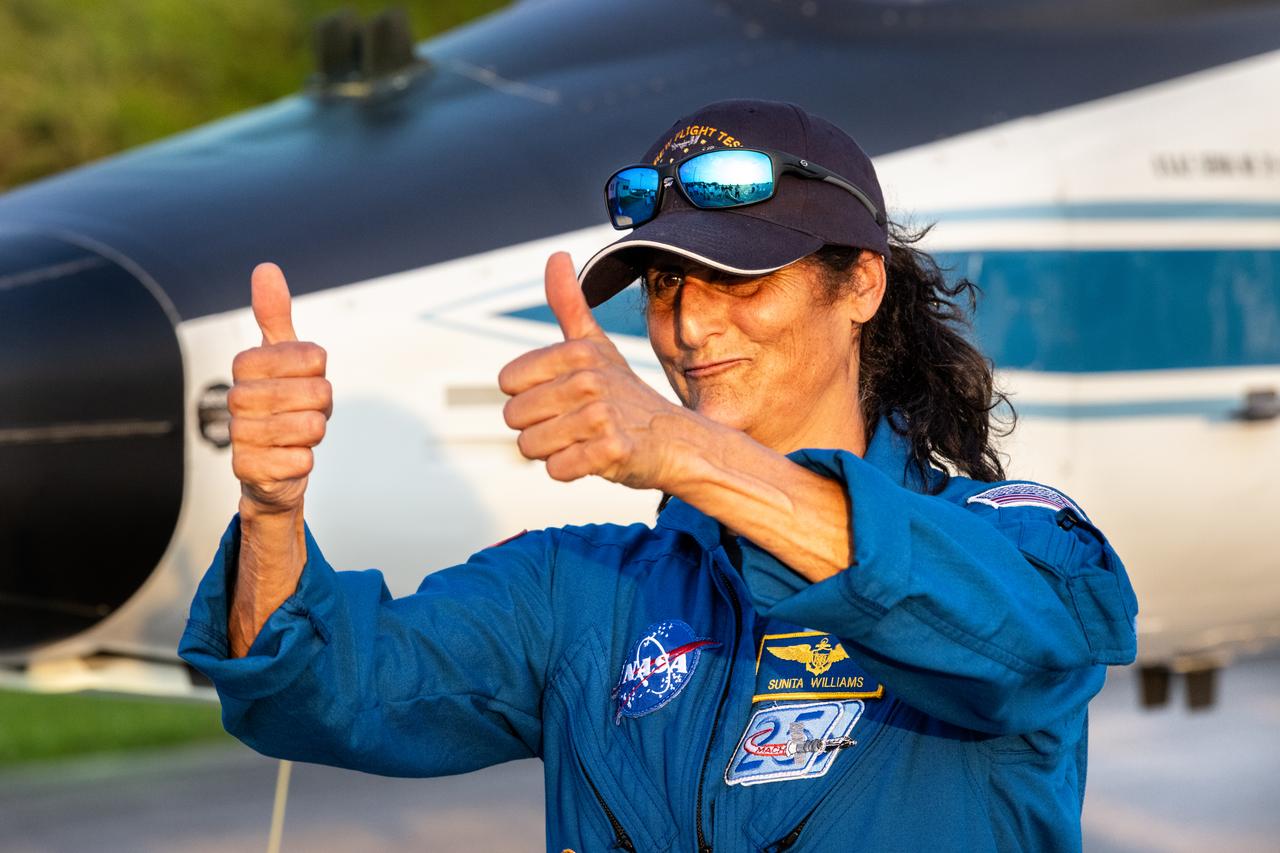
NASA astronaut Suni Williams poses for photos during her arrival back at the Launch and Landing Facility at the agency’s Kennedy Space Center in Florida on Tuesday, May 28, 2024, ahead of NASA’s Boeing Crew Flight Test. The first launch attempt on May 6 was scrubbed. As part of the agency’s Commercial Crew Program, Williams and fellow crew member Butch Wilmore are the first to launch to the International Space Station aboard Boeing’s Starliner spacecraft atop a United Launch Alliance Atlas V rocket from Space Launch Complex-41 at nearby Cape Canaveral Space Force Station. Liftoff is scheduled for 12:25 p.m. EDT on Saturday, June 1.
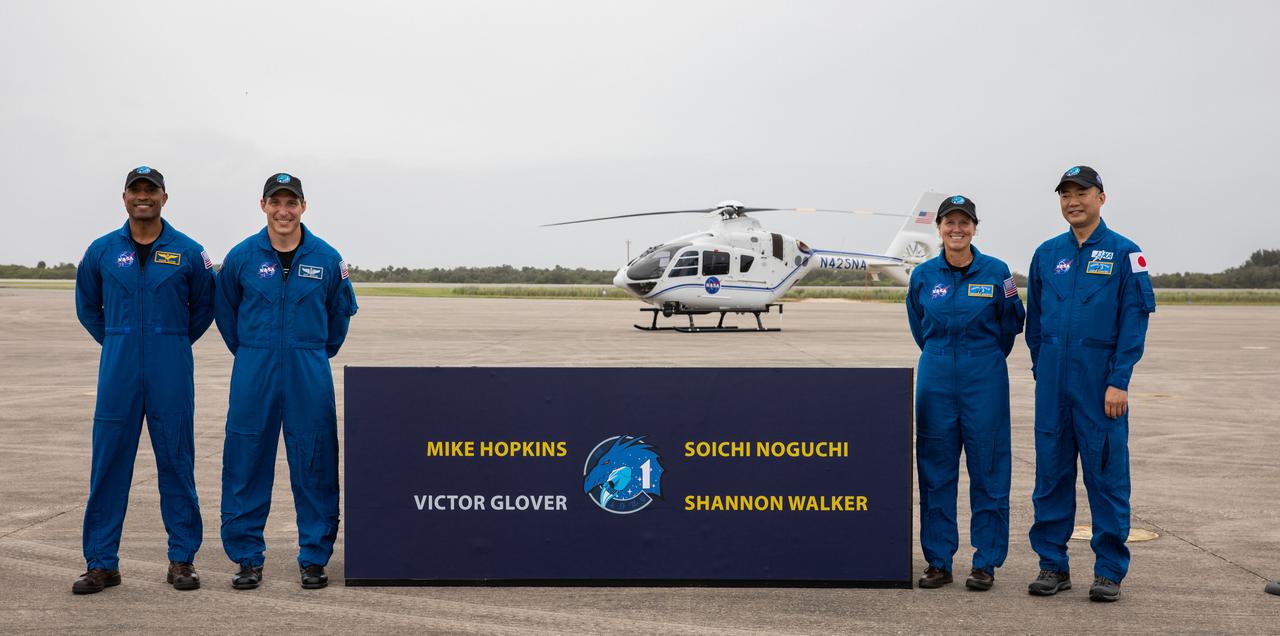
A crew arrival media event for NASA’s SpaceX Crew-1 mission is held Nov. 8, 2020, at the Launch and Landing Facility at the agency’s Kennedy Space Center in Florida. Posing for a photograph after speaking to the media, from left are, NASA astronaut Victor Glover, pilot; NASA astronaut Michael Hopkins, spacecraft commander; NASA astronaut Shannon Walker, mission specialist; and JAXA astronaut Soichi Noguchi, mission specialist. Crew-1 is the first crew rotation mission of a U.S. commercial spacecraft with astronauts to the International Space Station as part of NASA’s Commercial Crew Program. The SpaceX Crew Dragon spacecraft, named Resilience, will launch atop a Falcon 9 rocket from Kennedy’s Launch Complex 39A.
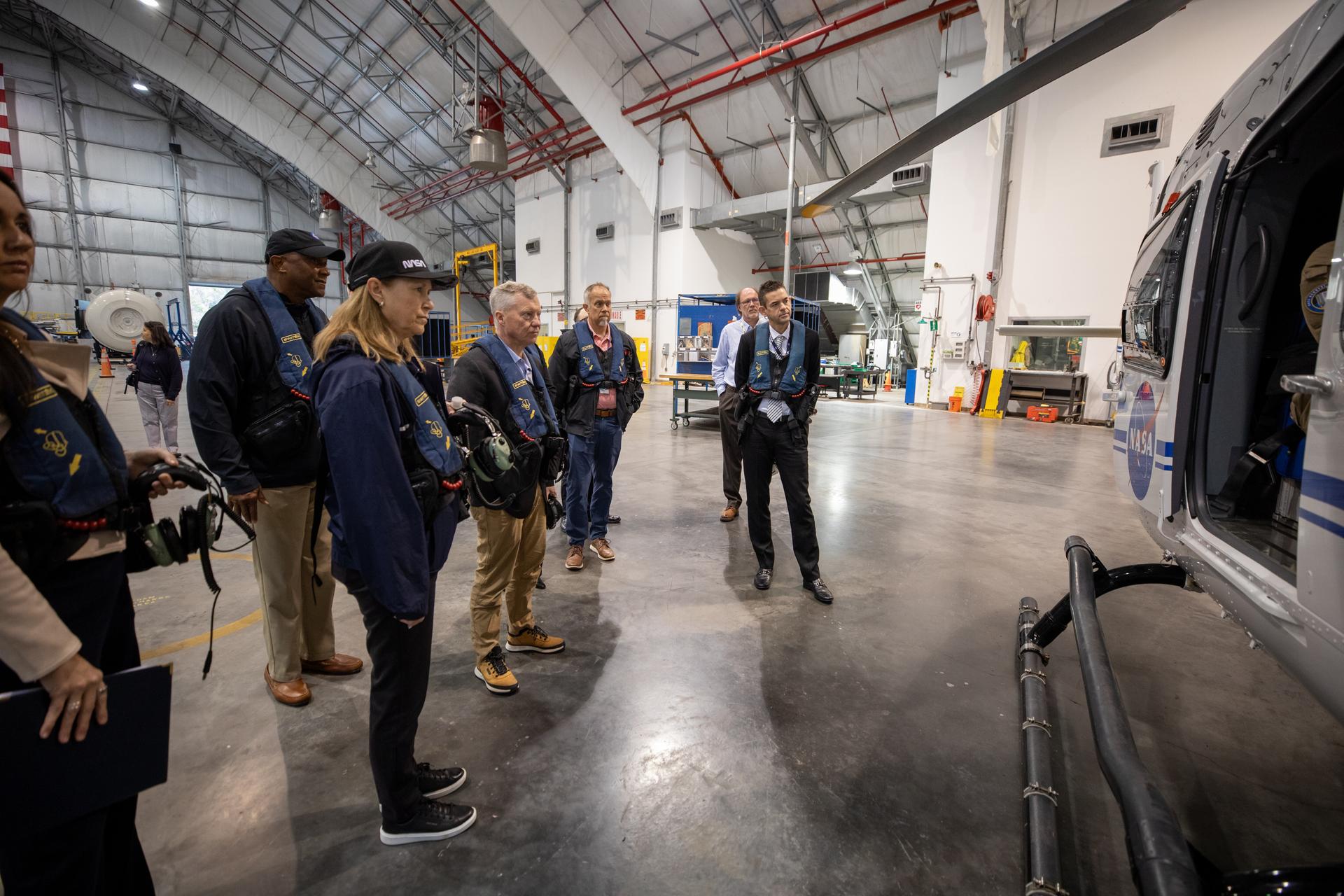
NASA Administrator Jared Isaacman (right) and leadership from the agency’s Kennedy Space Center in Florida prepare to board NASA Airbus H135 (T3) helicopters for an aerial tour of the spaceport during the administrator’s visit on Tuesday, Jan. 13, 2026. Participants on the helicopter tour include, from left, Kennedy Space Center Deputy Director Kelvin Manning; Kennedy Space Center Director Janet Petro; Todd Ericson, senior advisor to the NASA administrator; Kennedy Space Center Chief of Staff Trey Carlson; John Graves, NASA senior project manager, and Isaacman. Isaacman, NASA’s 15th administrator, began visiting the agency’s centers after his appointment on Dec. 17, 2025, to meet with employees, contractors, and partners.
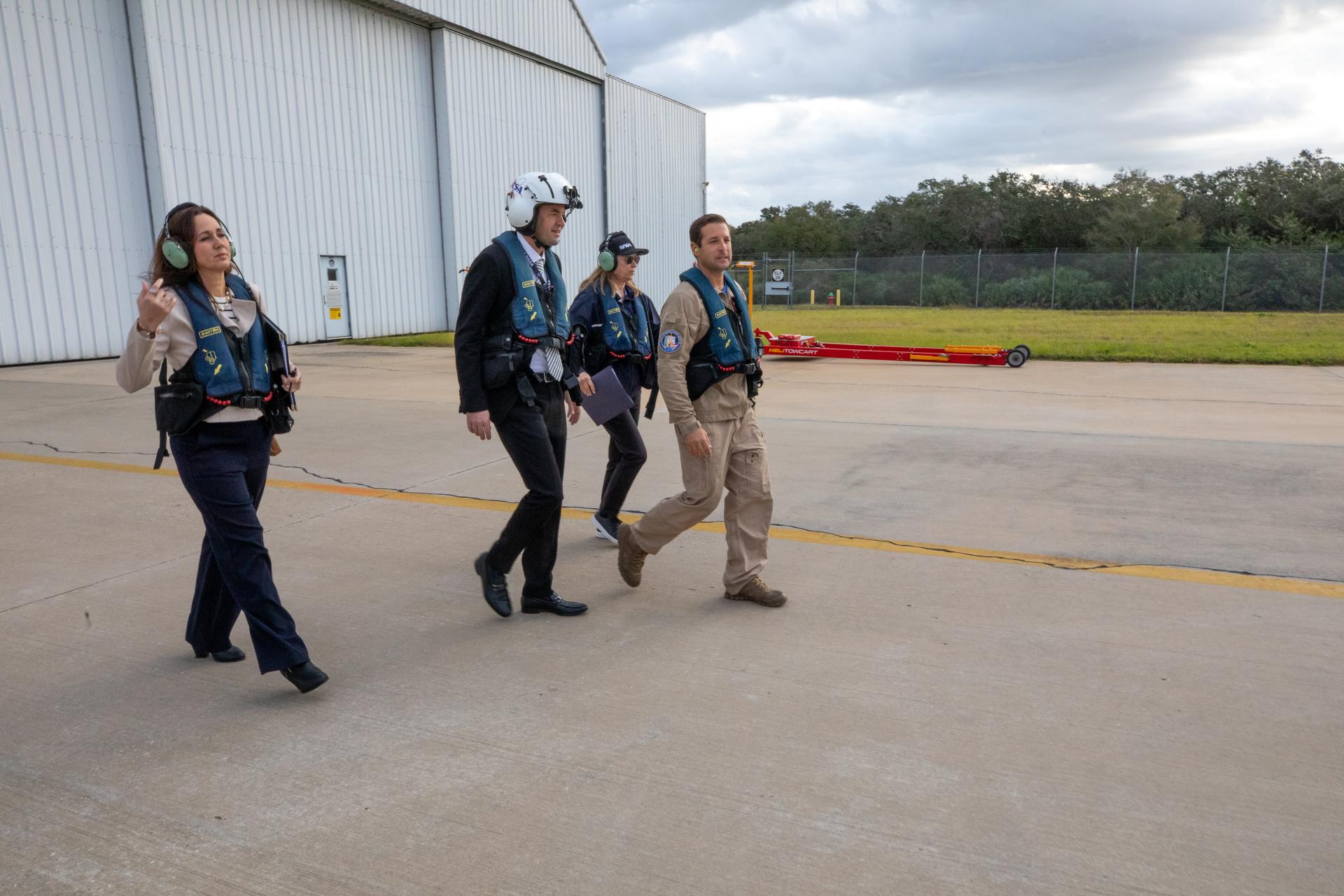
NASA Administrator Jared Isaacman (center left) and Kennedy Space Center Director Janet Petro (center right) prepare to board NASA Airbus H135 (T3) helicopters during the administrator’s visit to the agency’s Florida spaceport on Tuesday, Jan. 13, 2026. Isaacman, NASA’s 15th administrator, began visiting the agency’s centers after his appointment on Dec. 17, 2025, to meet with employees, contractors, and partners.
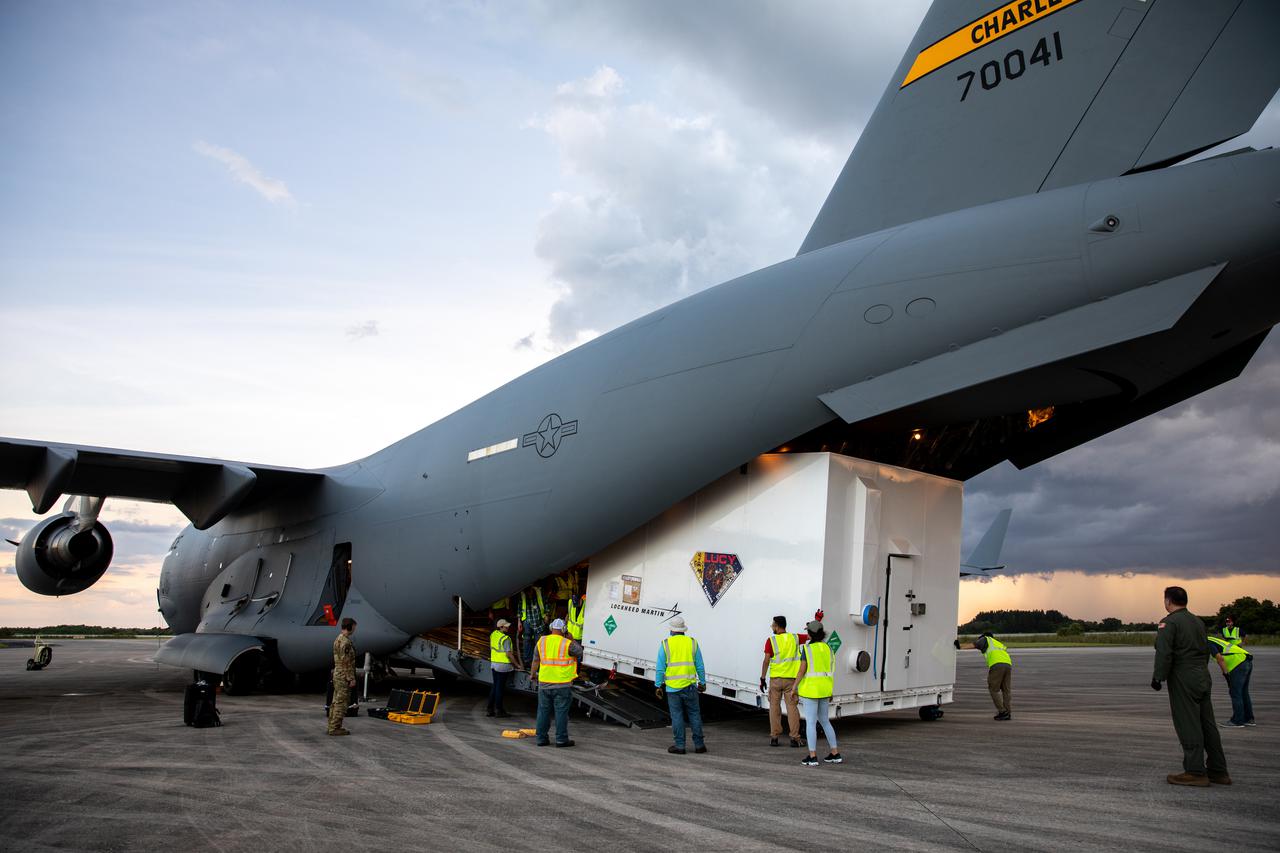
NASA’s Lucy spacecraft arrives by cargo plane and is unloaded on the runway of the Launch and Landing Facility at Kennedy Space Center in Florida on July 30, 2021. From there, the Lucy spacecraft will move to the Astrotech Space Operations - Florida payload processing facility in nearby Titusville, Florida, before its scheduled launch on a United Launch Alliance (ULA) Atlas V rocket from Cape Canaveral Space Force Station on October 16, 2021. The Lucy mission will be the first space mission to explore a diverse population of small bodies known as the Jupiter Trojan asteroids. The launch is being managed by NASA’s Launch Services Program based at Kennedy, America’s premier multi-user spaceport.
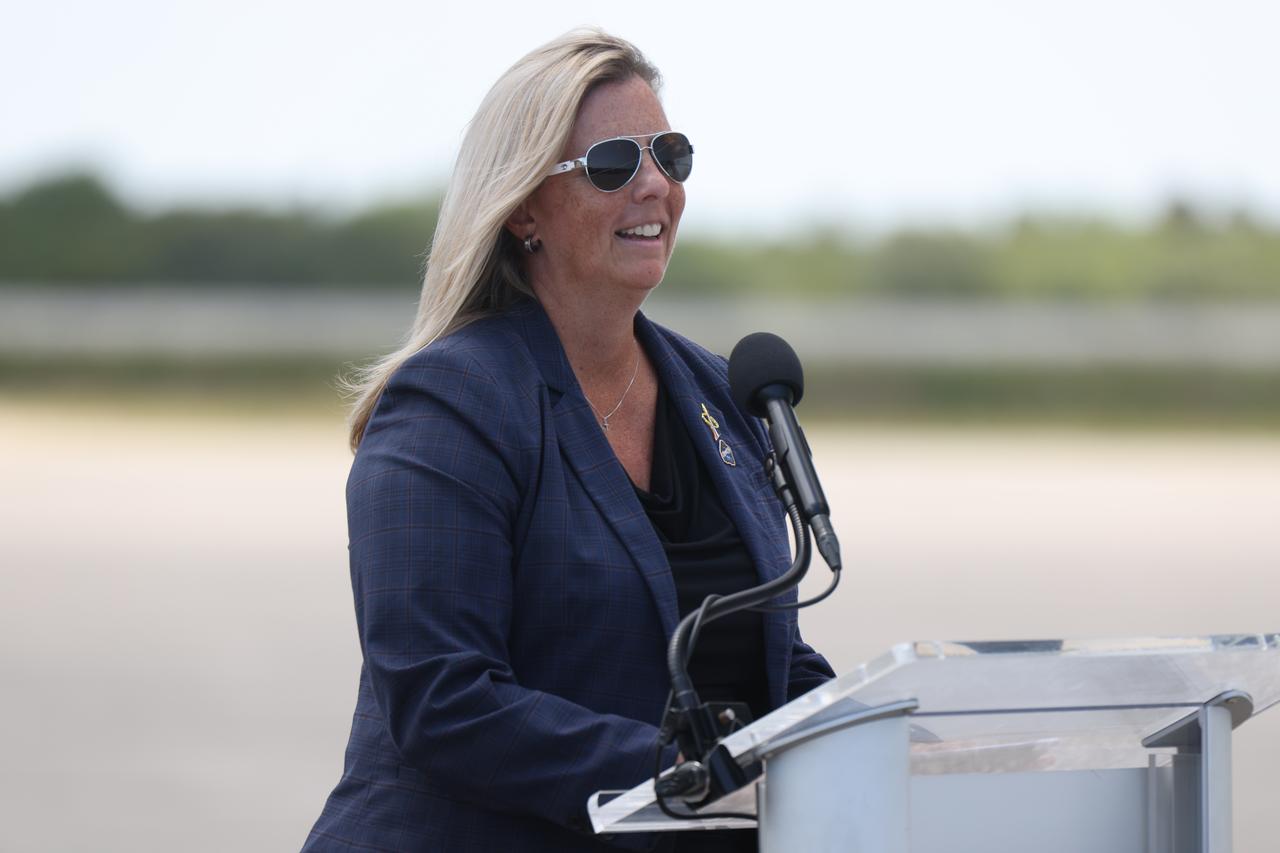
Dana Hutcherson, deputy manager, NASA’s Commercial Crew Program delivers remarks to members of the news media at the Launch and Landing Facility at NASA’s Kennedy Space Center in Florida during crew arrival for the agency’s Boeing Crew Flight Test. As part of the agency’s Commercial Crew Program, NASA astronauts Butch Wilmore and Suni Williams are the first to launch aboard Boeing’s Starliner spacecraft atop a United Launch Alliance Atlas V rocket from Space Launch Complex-41 at Cape Canaveral Space Force Station in Florida. Liftoff is scheduled for 10:34 p.m. ET on Monday, May 6.

JAXA (Japan Aerospace Exploration Agency) astronaut Takuya Onishi participates in a news media event during crew arrival for NASA’s SpaceX Crew-10 mission at the Launch and Landing Facility at the agency’s Kennedy Space Center in Florida on Friday, March 7, 2025. NASA astronauts Anne McClain and Nichole Ayers, along with Onishi and Roscosmos cosmonaut Kirill Peskov will launch to the International Space Station aboard SpaceX’s Dragon spacecraft and Falcon 9 rocket. Launch is targeted for 7:48 p.m. EDT on Wednesday, March 12, 2025, from Launch Complex 39A at NASA Kennedy. Crew-10 is the 10th crew rotation mission with SpaceX to the space station as part of the agency’s Commercial Crew Program
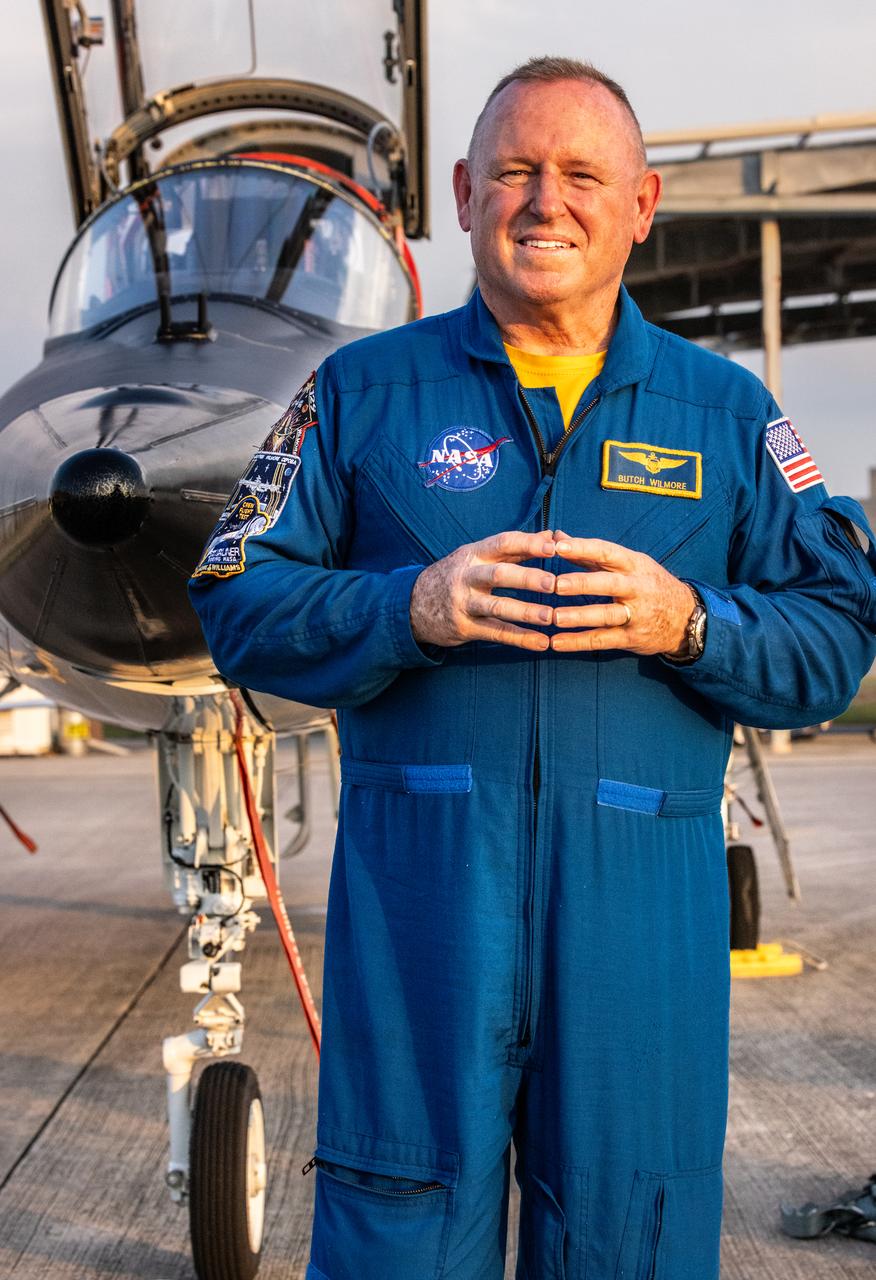
NASA astronaut Butch Wilmore arrives back at the Launch and Landing Facility at the agency’s Kennedy Space Center in Florida on Tuesday, May 28, 2024, ahead of NASA’s Boeing Crew Flight Test. The first launch attempt on May 6 was scrubbed. As part of the agency’s Commercial Crew Program, Wilmore and fellow crew member Suni Williams are the first to launch to the International Space Station aboard Boeing’s Starliner spacecraft atop a United Launch Alliance Atlas V rocket from Space Launch Complex-41 at nearby Cape Canaveral Space Force Station. Liftoff is scheduled for 12:25 p.m. EDT on Saturday, June 1.
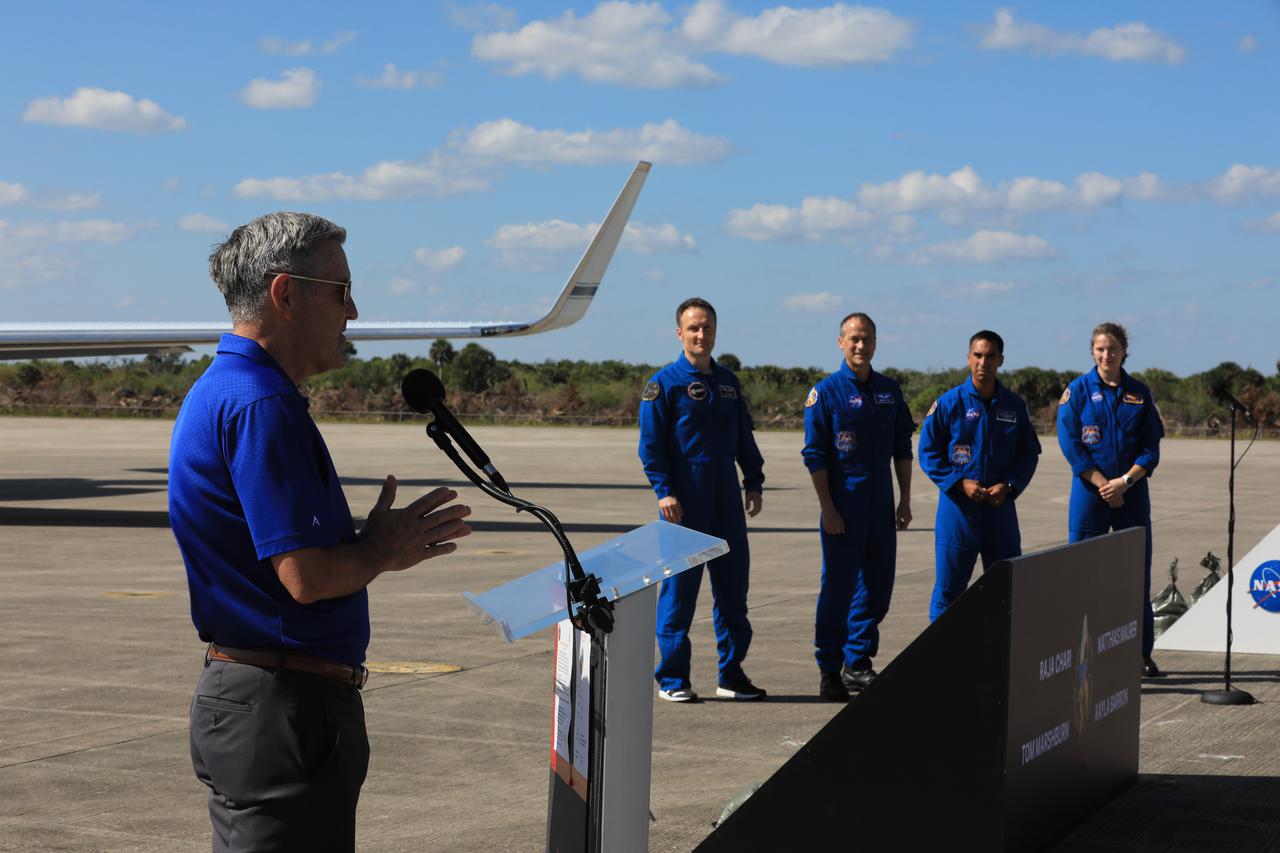
NASA Associate Administrator Bob Cabana greets the crew members of NASA’s SpaceX Crew-3 mission after their arrival at the center’s Launch and Landing Facility in Florida on Oct. 26, 2021. From left are European Space Agency astronaut Matthias Maurer, and NASA astronauts Tom Marshburn, Raja Chari, and Kayla Barron. Crew-3 will launch aboard the Crew Dragon on a SpaceX Falcon 9 rocket. Launch is targeted for 2:21 a.m. EDT on October 31 from Launch Complex 39A.
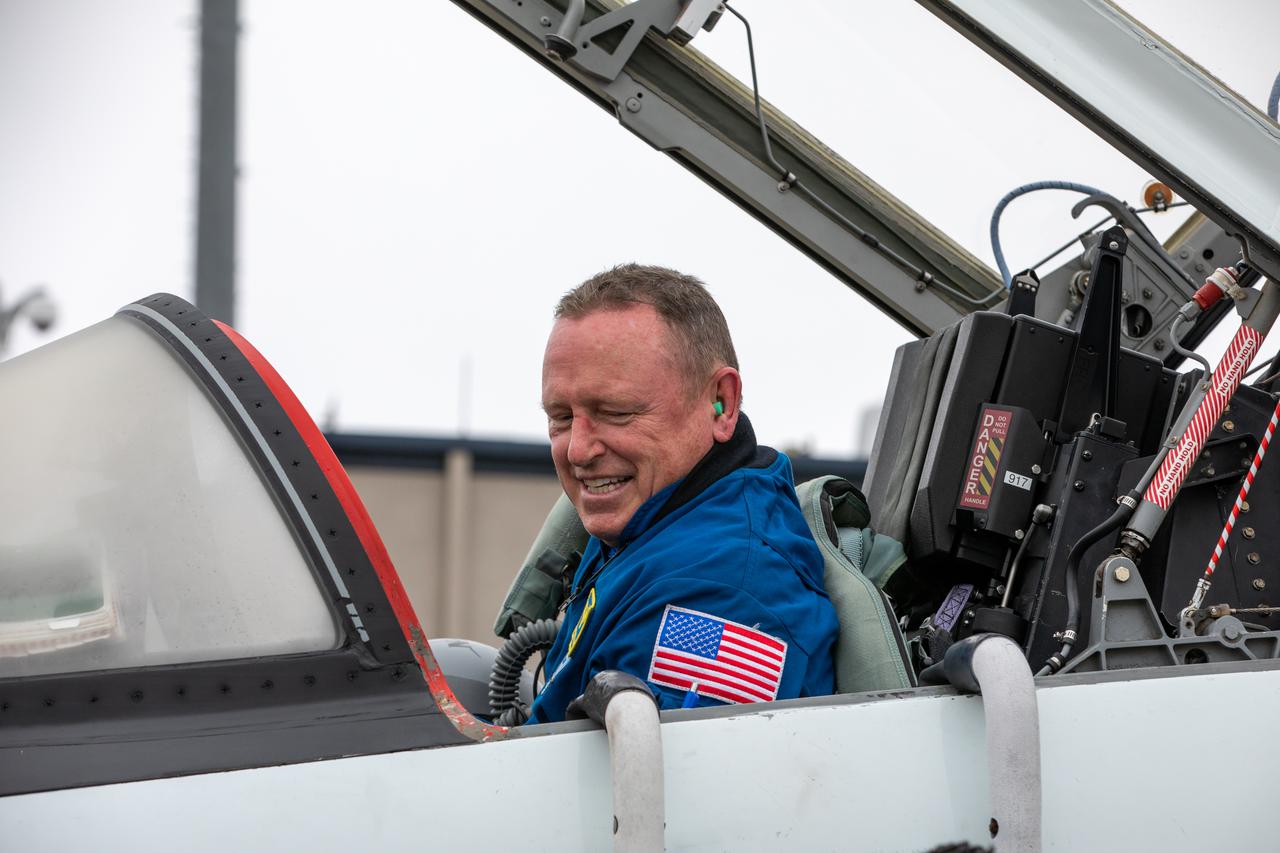
NASA astronaut Barry “Butch” Wilmore, commander of Boeing’s Crew Flight Test, arrives aboard a T-38 jet aircraft at the Launch and Landing Facility at Kennedy Space Center in Florida on Dec. 17, 2020. He is at Kennedy to prepare for his flight to the International Space Station on Boeing’s CST-100 Starliner, as part of the agency’s Commercial Crew Program.
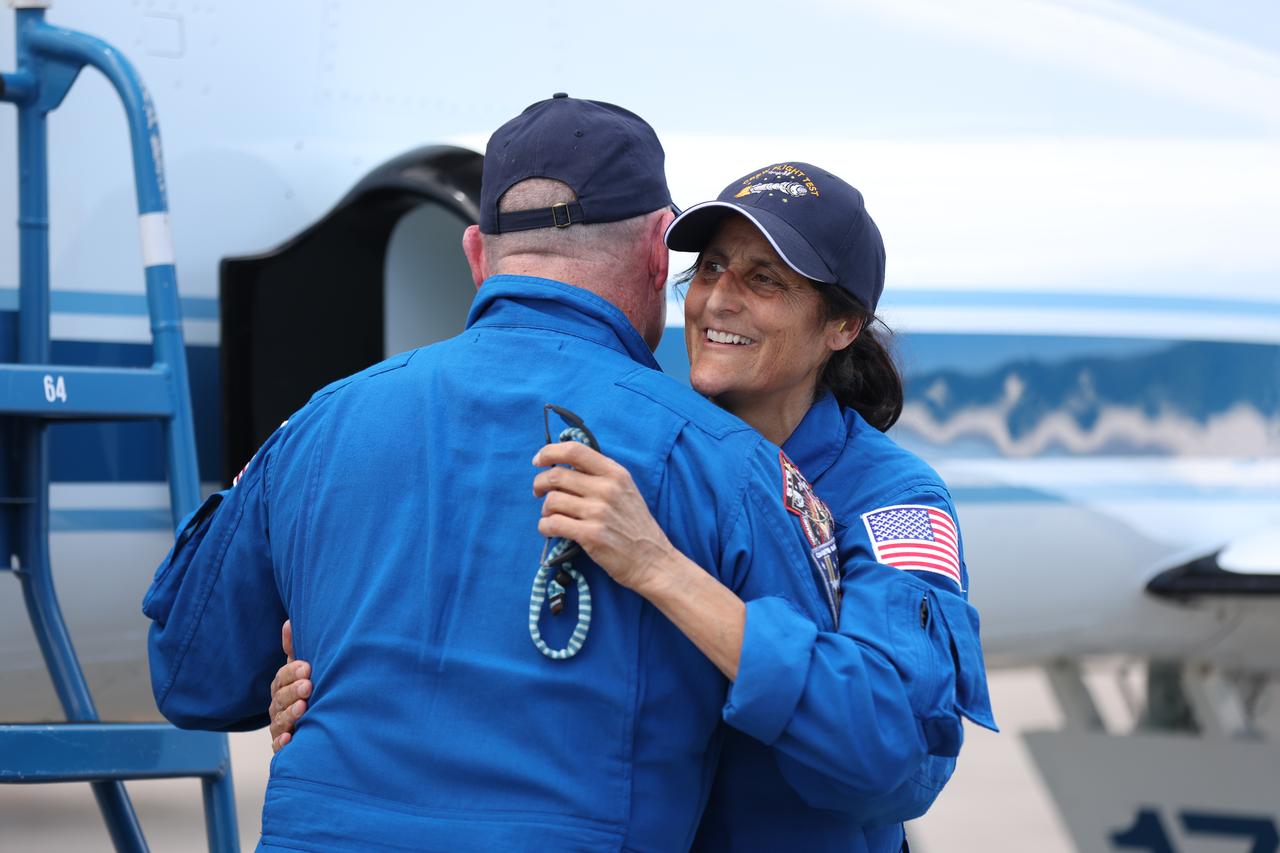
NASA astronauts Butch Wilmore and Suni Williams hug at the Launch and Landing Facility at NASA’s Kennedy Space Center in Florida following their arrival for the agency’s Boeing Crew Flight Test. As part of the agency’s Commercial Crew Program, Williams and Wilmore are the first crew to launch aboard Boeing’s Starliner spacecraft atop a United Launch Alliance Atlas V rocket from Space Launch Complex-41 at Cape Canaveral Space Force Station in Florida. Liftoff is scheduled for 10:34 p.m. ET on Monday, May 6.

NASA astronauts Butch Wilmore and Suni Williams arrive in a Northrop T-38 Talon at the Launch and Landing Facility at Kennedy Space Center in Florida on Thursday, April 25, 2024, ahead of the agency’s Boeing Crew Flight Test to the International Space Station. As part of the agency’s Commercial Crew Program, Wilmore and Williams are the first to launch aboard Boeing’s Starliner spacecraft atop a United Launch Alliance Atlas V rocket from Space Launch Complex-41 at Cape Canaveral Space Force Station in Florida. Liftoff is scheduled for 10:34 p.m. ET on Monday, May 6.
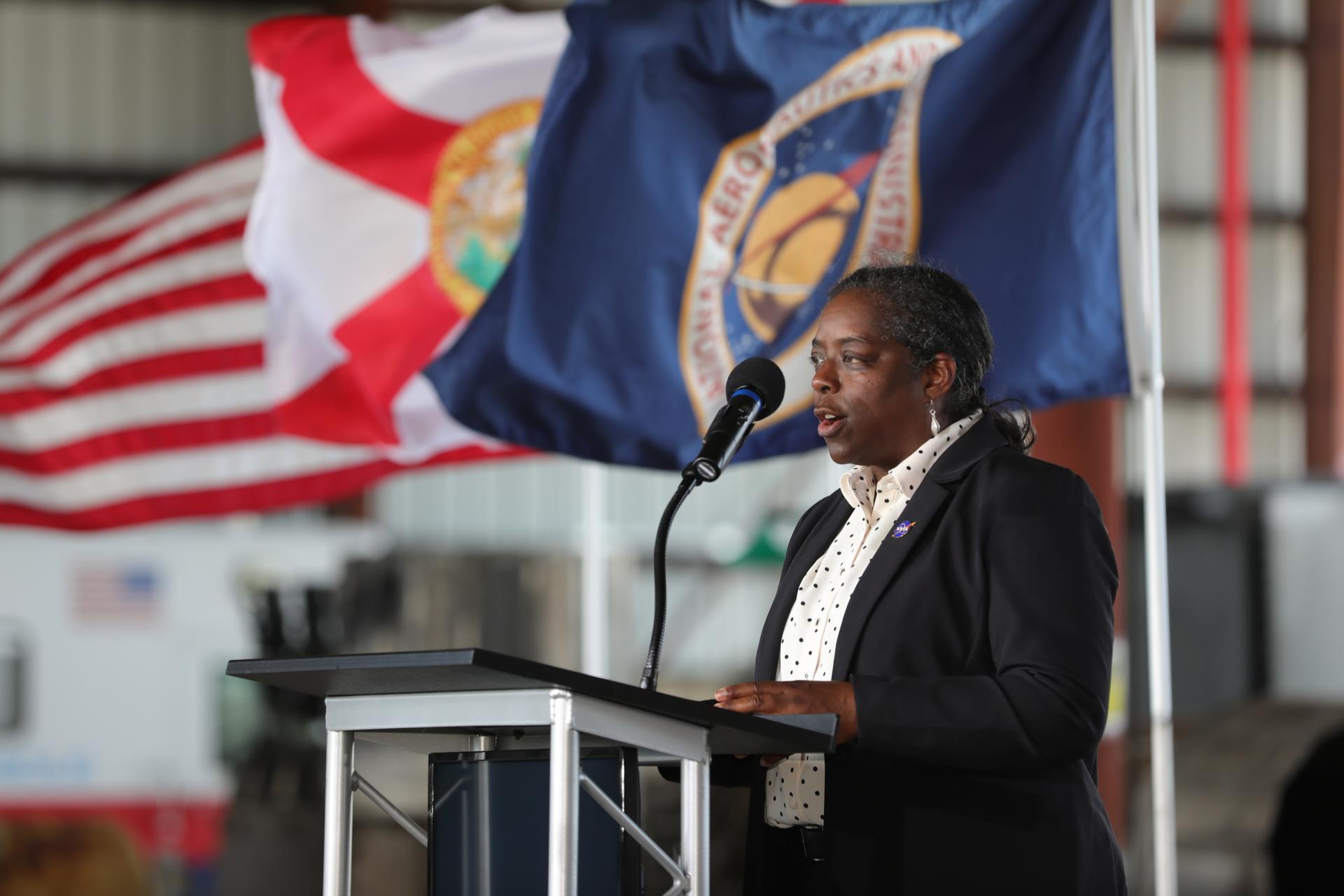
Laurie Grindle, director of the Aeronautics Division within the Research and Technology Mission Directorate at NASA Headquarters in Washington speaks to members of the media during the announcement of MAX POWER at the Shuttle Landing Facility at NASA’s Kennedy Space Center in Florida on Friday, Aug. 14, 2026. Grindle, along with NASA Administrator Jared Isaacman, agency leadership, and members of Congress announced the multi-day exposition of air and space technologies scheduled for November and tied to America’s 250th anniversary. The expo will showcase the next-generation aircraft, spacecraft, autonomous vehicles, and technologies that will help define the future of transportation in air and space and lay a foundation for our nation’s future endeavors: from Earth to the Moon, Mars, and beyond.

Roscosmos cosmonaut Kirill Peskov participates in a news media event during crew arrival for NASA’s SpaceX Crew-10 mission at the Launch and Landing Facility at the agency’s Kennedy Space Center in Florida on Friday, March 7, 2025. NASA astronauts Anne McClain and Nichole Ayers, along with JAXA (Japan Aerospace Exploration Agency) astronaut Takuya Onishi and Peskov will launch to the International Space Station aboard SpaceX’s Dragon spacecraft and Falcon 9 rocket. Launch is targeted for 7:48 p.m. EDT on Wednesday, March 12, 2025, from Launch Complex 39A at NASA Kennedy. Crew-10 is the 10th crew rotation mission with SpaceX to the space station as part of the agency’s Commercial Crew Program.
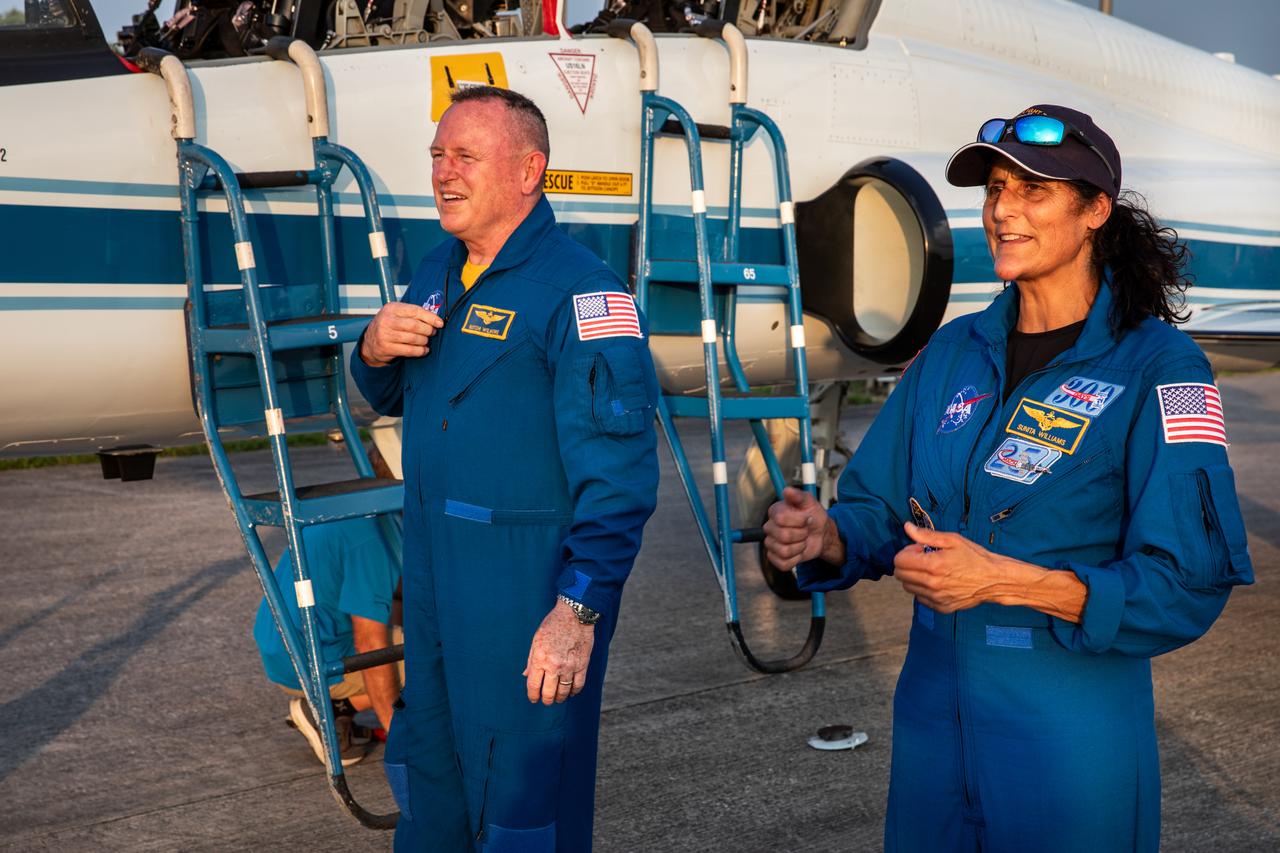
NASA astronauts Butch Wilmore and Suni Williams arrive back at the Launch and Landing Facility at the agency’s Kennedy Space Center in Florida on Tuesday, May 28, 2024, ahead of NASA’s Boeing Crew Flight Test. The first launch attempt on May 6 was scrubbed. As part of the agency’s Commercial Crew Program, Wilmore and Williams are the first to launch to the International Space Station aboard Boeing’s Starliner spacecraft atop a United Launch Alliance Atlas V rocket from Space Launch Complex-41 at nearby Cape Canaveral Space Force Station. Liftoff is scheduled for 12:25 p.m. EDT on Saturday, June 1.
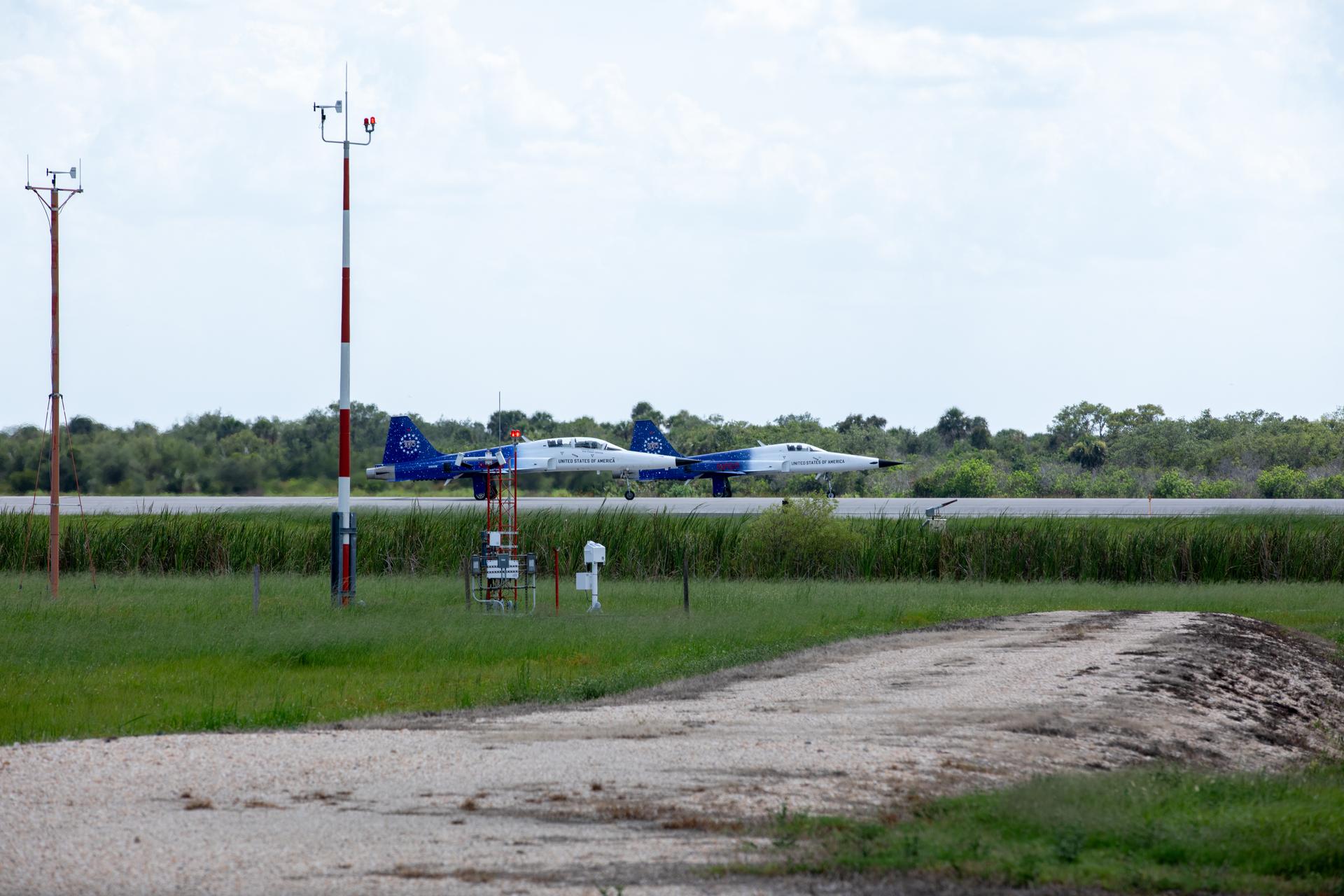
NASA employees participate in an employee incentive flying event using NASA Administrator Jared Isaacman's personal F-5 aircraft, Wednesday, June 17, 2026, at NASA’s Kennedy Space Center in Florida. As part of the administrator’s Flight Experience Award program, NASA employees Matthew Kufner, Charles Meilbye, and Aaron Smith donned NASA flight suits, completed preflight briefings, and experienced a unique flight. The ride-along flight experience award program highlights NASA’s commitment to celebrating excellence across the workforce.
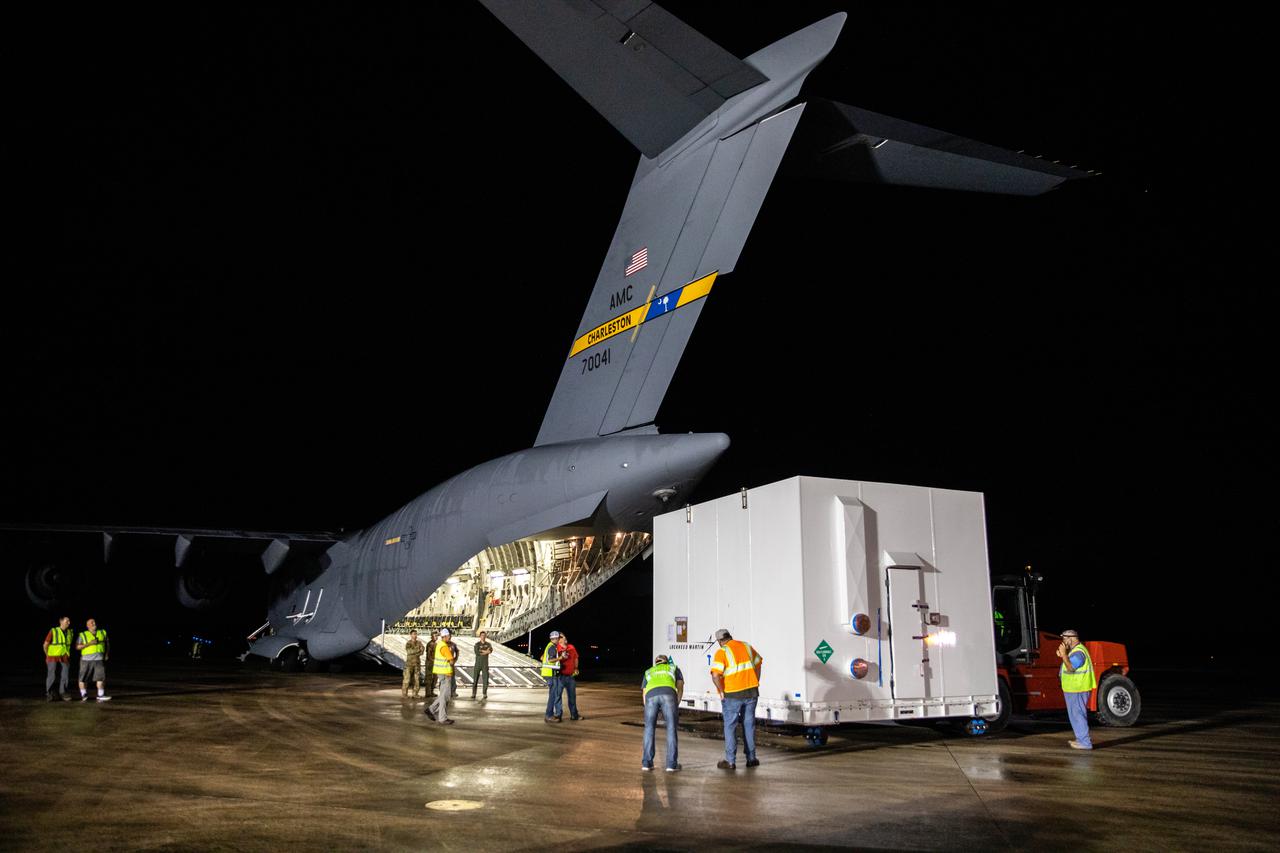
The shipping container holding NASA's Lucy spacecraft is unloaded from a United States Air Force C-17 cargo plane, stationed out of Charleston Air Force Base in South Carolina, on the runway of the Launch and Landing Facility at Kennedy Space Center in Florida on July 30, 2021. From there, the Lucy spacecraft will move to the Astrotech Space Operations payload processing facility in nearby Titusville, Florida, before its scheduled launch on a United Launch Alliance (ULA) Atlas V rocket from Cape Canaveral Space Force Station on October 16, 2021. The Lucy mission will be the first space mission to explore a diverse population of small bodies known as the Jupiter Trojan asteroids. The launch is being managed by NASA's Launch Services Program based at Kennedy, America's multi-user spaceport.
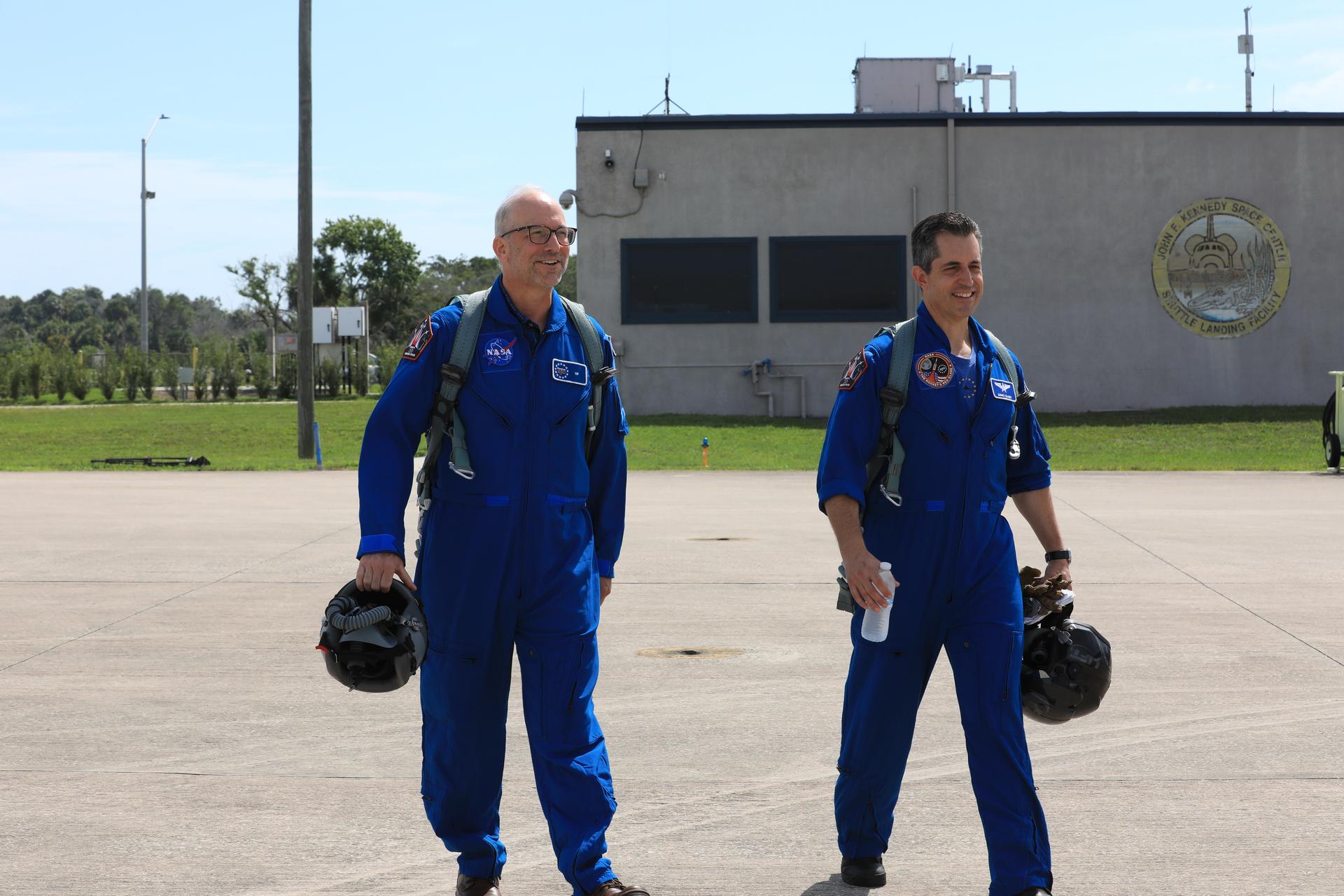
NASA employee Raymond “Jim” Lanzi (left) and Pilot Scott Glaser walk on the tarmac at the Launch and Landing Facility at the agency’s Kennedy Space Center in Florida on Thursday, June 18, 2026. As part of the NASA Administrator Jared Isaacman’s Flight Experience Award program, Lanzi, along with other awardees, suited up, completed pre-flight briefings, and experienced a unique flight aboard the Administrator’s personal F-5 aircraft. The ride-along flight experience award program highlights NASA’s commitment to celebrating excellence across the workforce.
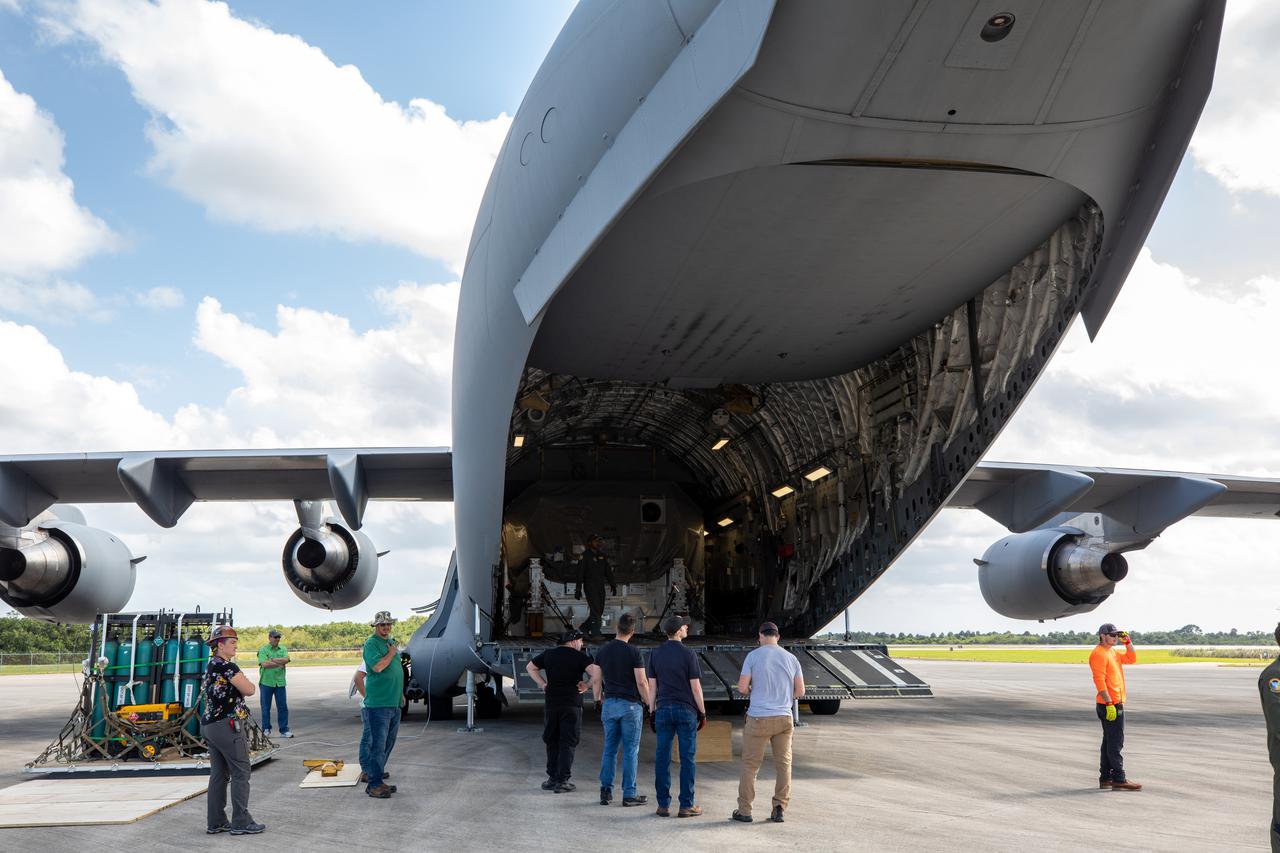
Preparations are underway to offload NASA’s Psyche spacecraft from the C-17 aircraft it arrived aboard at Kennedy Space Center’s Launch and Landing Facility in Florida on April 29, 2022. Psyche arrived from NASA’s Jet Propulsion Laboratory (JPL) in Southern California. Psyche is scheduled to launch aboard a SpaceX Falcon Heavy rocket on Aug. 1, 2022. The spacecraft will use its solar-electric propulsion to travel approximately 1.5 billion miles to rendezvous with its namesake asteroid in 2026. The Psyche mission is led by Arizona State University. JPL, which is managed for NASA by Caltech in Pasadena, California, is responsible for the mission’s overall management, system engineering, integration and testing, and mission operations. Maxar Technologies in Palo Alto, California, provided the high-power solar electric propulsion spacecraft chassis. NASA’s Launch Services Program (LSP), based at Kennedy, is managing the launch. Psyche will be the 14th mission in the agency's Discovery program and LSP’s 100th primary mission.
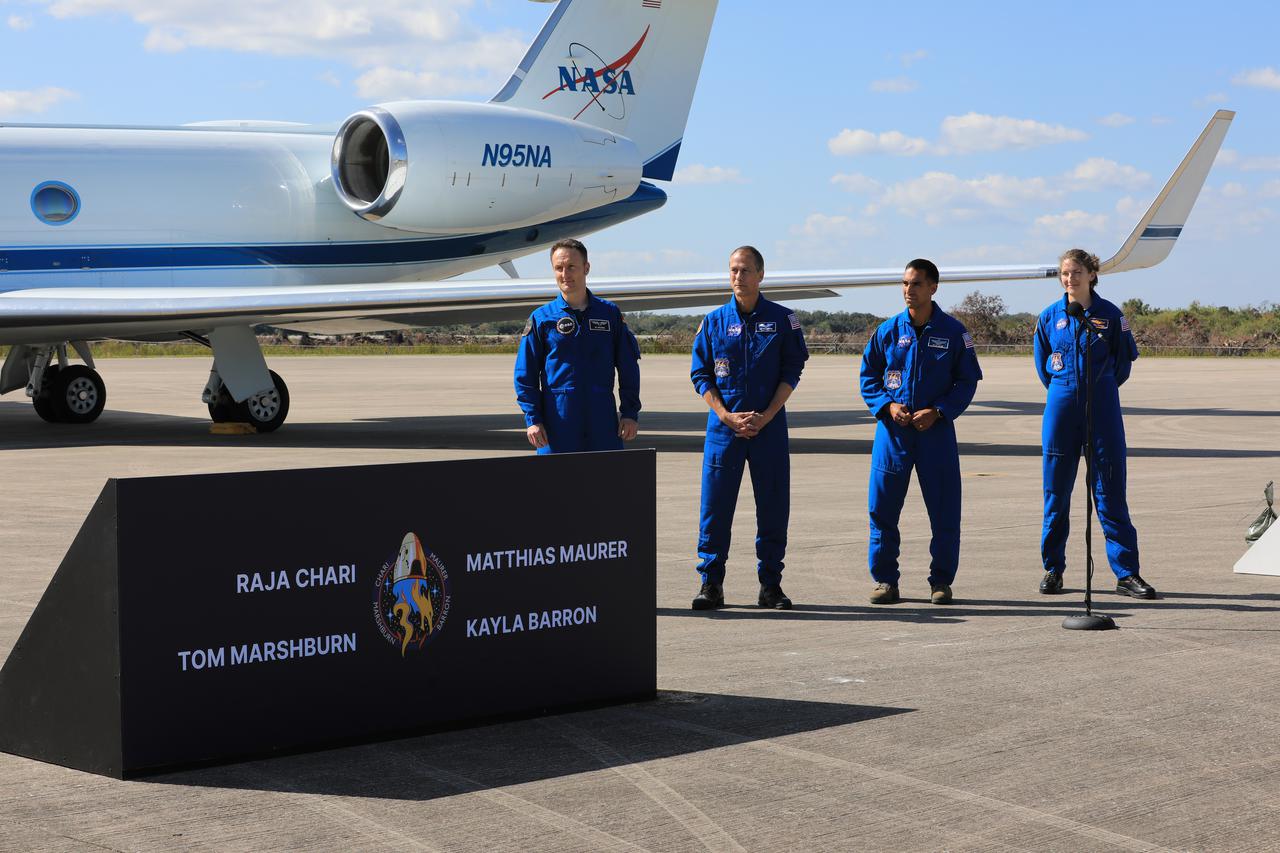
Crew members for NASA’s SpaceX Crew-3 mission to the International Space Station arrive at Kennedy Space Center’s Launch and Landing Facility in Florida on Oct. 26, 2021. From left, European Space Agency astronaut Matthias Maurer, and NASA astronauts Tom Marshburn, Raja Chari, and Kayla Barron speak to members of the news media. The crew will enter quarantine at the center’s Crew Quarters as they await launch aboard the Crew Dragon on a SpaceX Falcon 9 rocket. Launch is targeted for 2:21 a.m. EDT on Oct. 31 from Launch Complex 39A. Crew-3 is the third crew rotation flight for the agency’s Commercial Crew Program, and the first flight of a new Crew Dragon spacecraft.
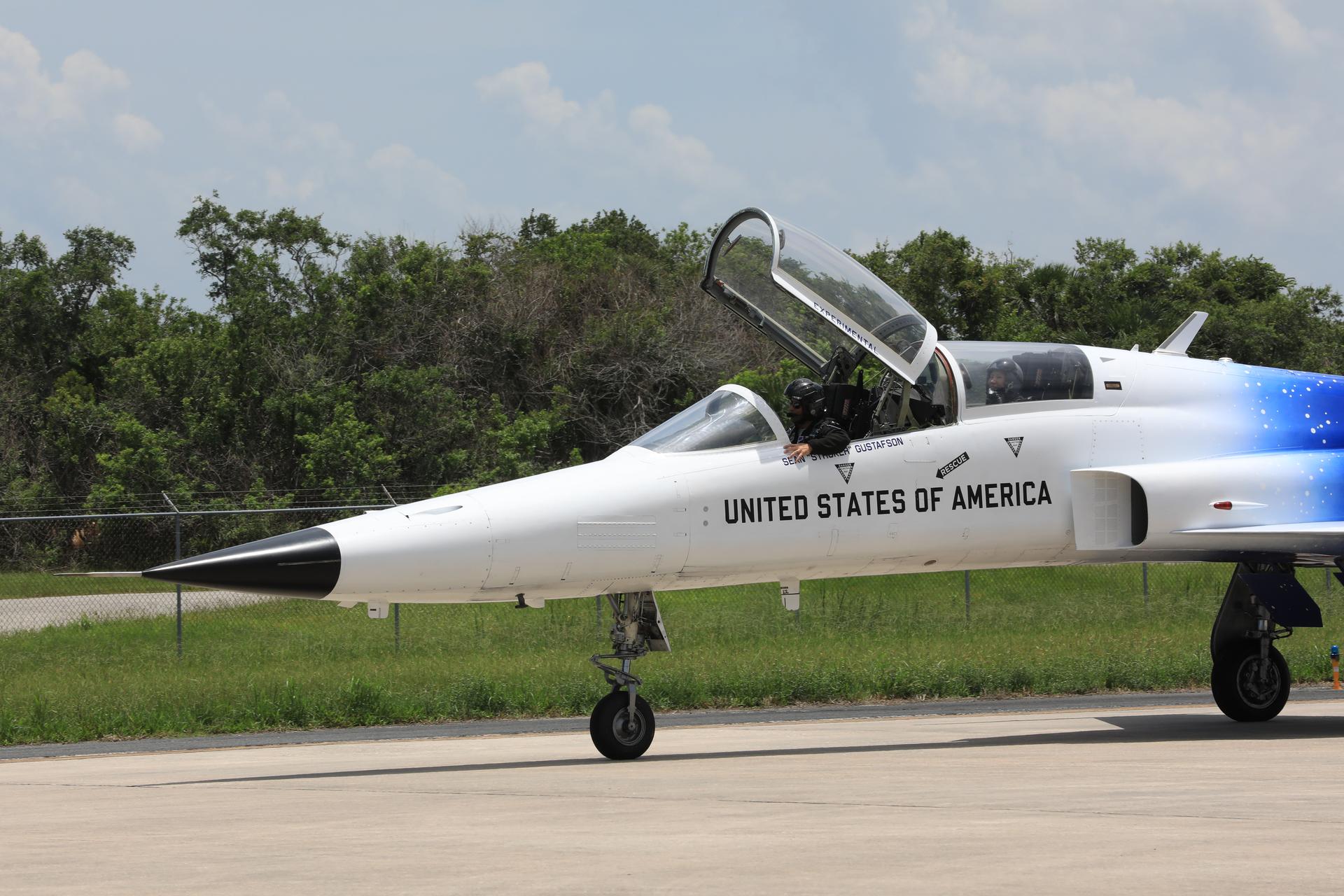
One of NASA Administrator Jared Isaacman’s personal F-5 aircraft taxis on the runway at the Launch and Landing Facility at the agency’s Kennedy Space Center in Florida on Thursday, June 18, 2026, as part of the Administrator’s Flight Experience Award program. Multiple NASA awardees suited up, completed pre-flight briefings, and experienced a unique flight. The ride-along flight experience award program highlights NASA’s commitment to celebrating excellence across the workforce.

Courtney Beasley, NASA communications, delivers opening remarks following the arrival of the Artemis II test flight crew at the Launch and Landing Facility at the agency’s Kennedy Space Center in Florida on Friday, March 27, 2026. Artemis II Commander Reid Wiseman, Pilot Victor Glover, and Mission Specialist Christina Koch from NASA, and Mission Specialist Jeremy Hansen from the CSA (Canadian Space Agency) will launch on a 10-day journey around the Moon and back aboard the agency’s SLS (Space Launch System) rocket and Orion spacecraft from Launch Complex 39B no earlier than 6:24 p.m. EDT on Wednesday, April 1.