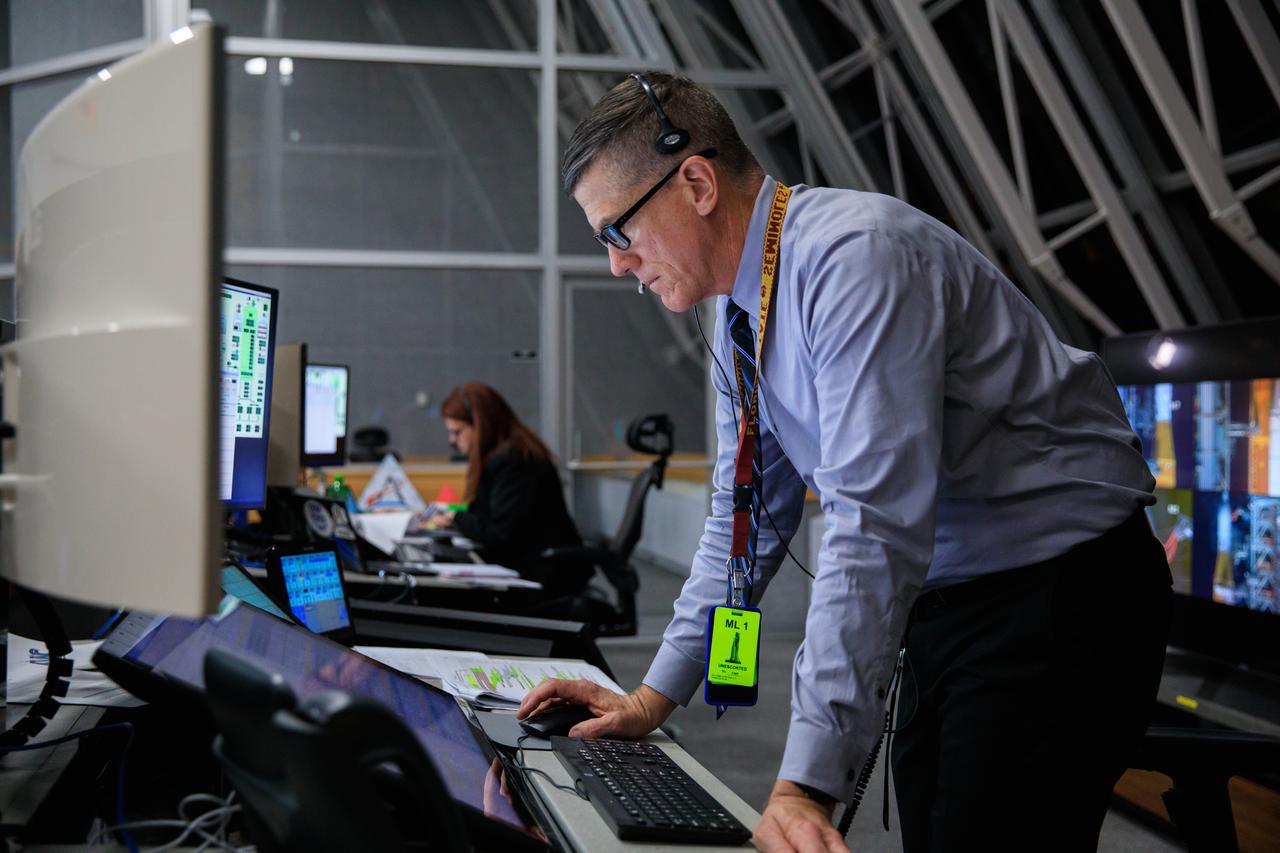
Artemis I Assistant Launch Director Jeremy Graeber monitors countdown activities inside Firing Room 1 of the Launch Control Center at NASA’s Kennedy Space Center in Florida on Nov. 16, 2022. Liftoff of the agency’s Space Launch System and Orion spacecraft from Launch Complex 39B was at 1:47 a.m. EST. The first in a series of increasingly complex missions, Artemis I will provide a foundation for human deep space exploration and demonstrate our commitment and capability to extend human presence to the Moon and beyond. The primary goal of Artemis I is to thoroughly test the integrated systems before crewed missions by operating the spacecraft in a deep space environment, testing Orion’s heat shield, and recovering the crew module after reentry, descent, and splashdown.
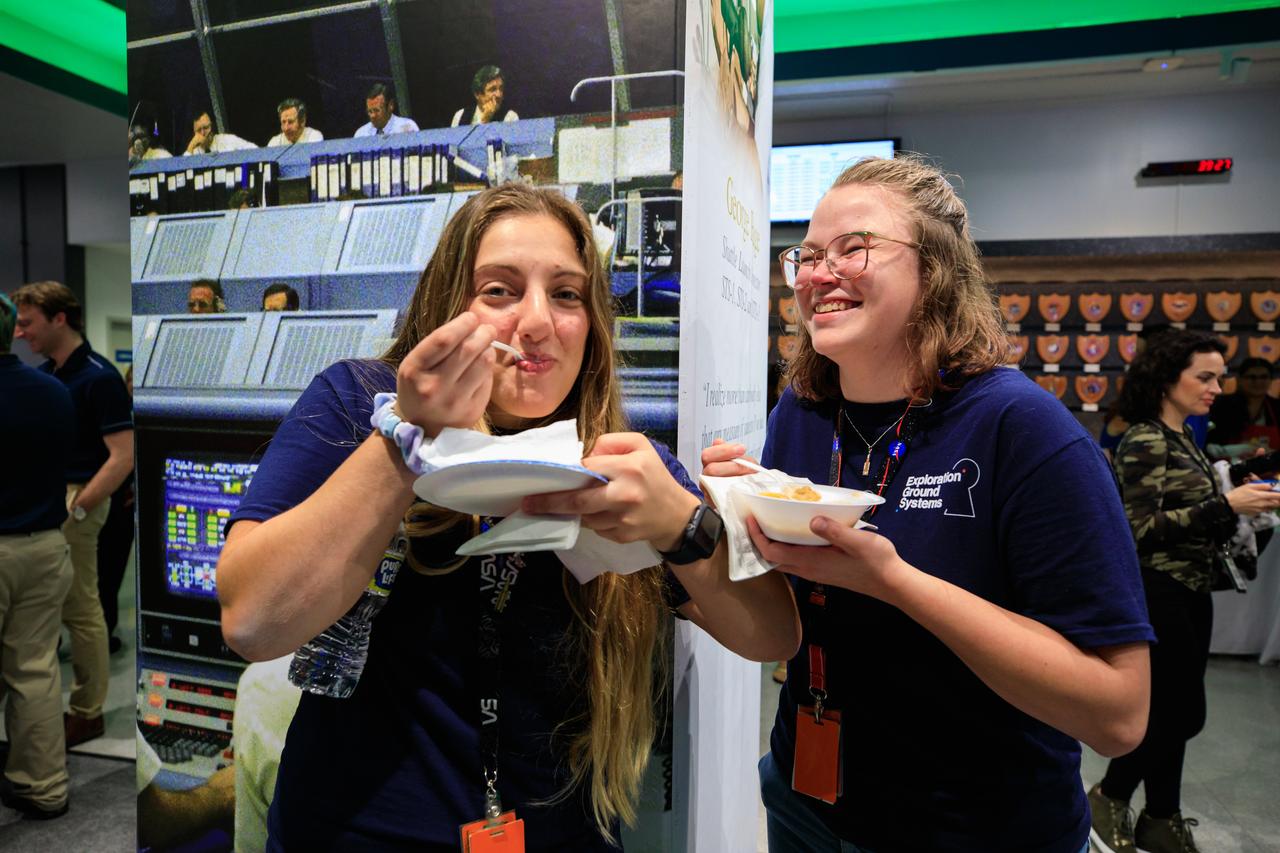
Artemis I launch team members celebrate the successful launch of NASA’s Space Launch System and Orion spacecraft on Nov. 16, 2022, with the traditional meal of beans and cornbread inside Firing Room 1 of the Launch Control Center at Kennedy Space Center in Florida. Liftoff was at 1:47 a.m. EST. The first in a series of increasingly complex missions, Artemis I will provide a foundation for human deep space exploration and demonstrate our commitment and capability to extend human presence to the Moon and beyond. The primary goal of Artemis I is to thoroughly test the integrated systems before crewed missions by operating the spacecraft in a deep space environment, testing Orion’s heat shield, and recovering the crew module after reentry, descent, and splashdown.
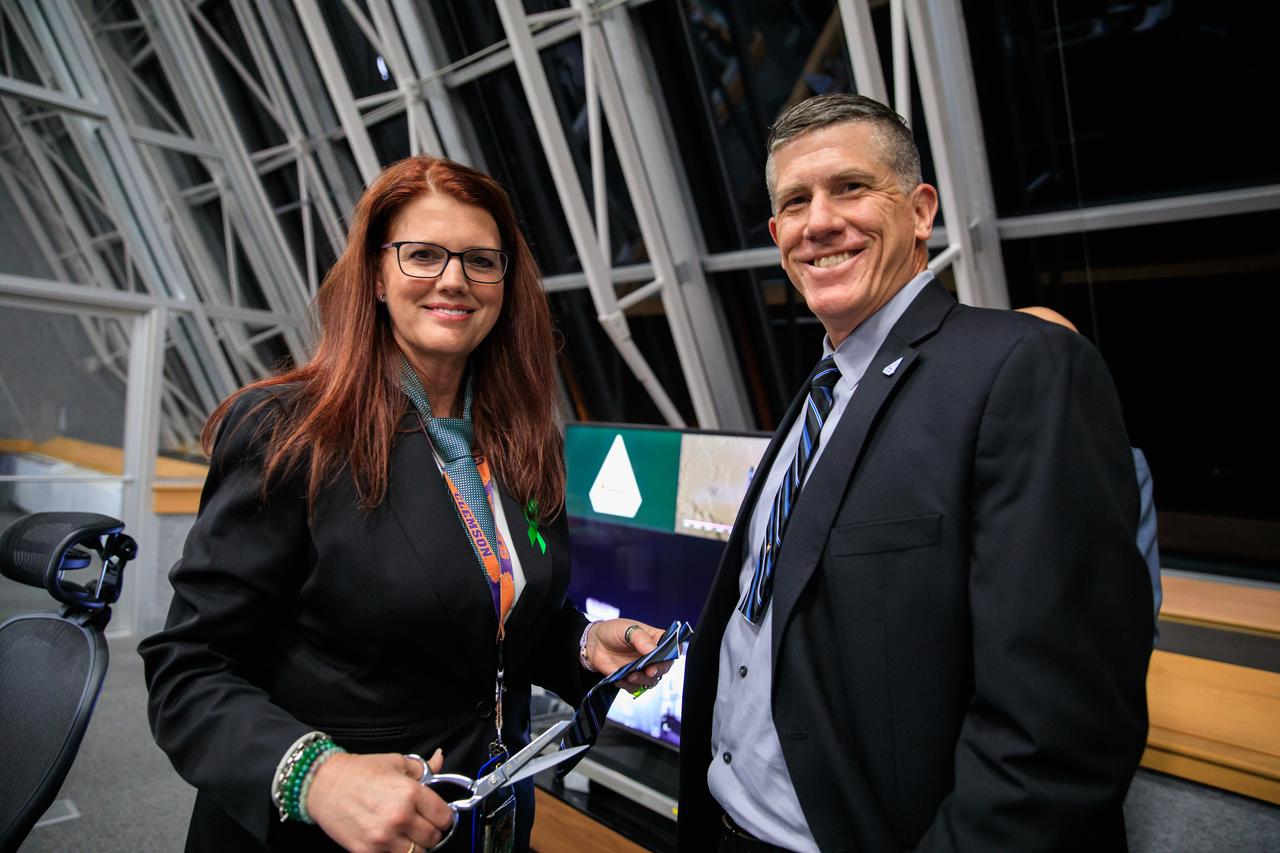
Artemis I Launch Director Charlie Blackwell-Thompson, at left, performs the traditional cutting of the tie for Assistant Launch Director Jeremy Graeber after the successful liftoff of NASA’s Space Launch System and Orion spacecraft from Kennedy’s Launch Complex 39B on Nov. 16, 2022. Liftoff was at 1:47 a.m. EST. The first in a series of increasingly complex missions, Artemis I will provide a foundation for human deep space exploration and demonstrate our commitment and capability to extend human presence to the Moon and beyond. The primary goal of Artemis I is to thoroughly test the integrated systems before crewed missions by operating the spacecraft in a deep space environment, testing Orion’s heat shield, and recovering the crew module after reentry, descent, and splashdown.

Former space shuttle Launch Directors Mike Leinbach, left, and Bob Sieck, shake hands inside Launch Control Center Firing Room 1 at NASA’s Kennedy Space Center in Florida on Nov. 16, 2022 after the successful launch of the agency’s Artemis I Space Launch System and Orion spacecraft. Liftoff from Launch Complex 39B was at 1:47 a.m. EST. The first in a series of increasingly complex missions, Artemis I will provide a foundation for human deep space exploration and demonstrate our commitment and capability to extend human presence to the Moon and beyond. The primary goal of Artemis I is to thoroughly test the integrated systems before crewed missions by operating the spacecraft in a deep space environment, testing Orion’s heat shield, and recovering the crew module after reentry, descent, and splashdown.
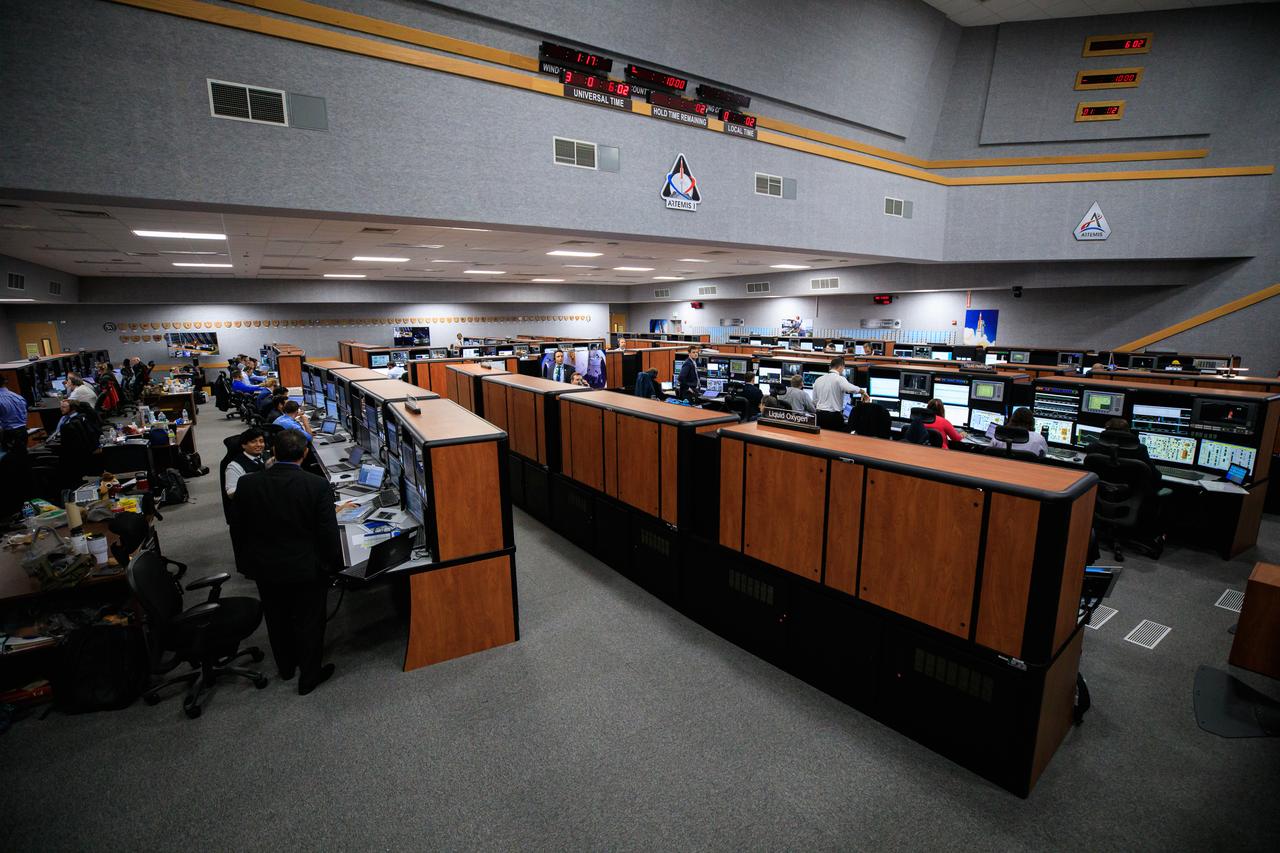
Artemis I launch team members are at their consoles in Launch Control Center Firing Room 1 at NASA’s Kennedy Space Center in Florida during countdown and liftoff of the agency’s Space Launch System and Orion spacecraft from Launch Complex 39B on Nov. 16, 2022. Liftoff was at 1:47 a.m. EST. The first in a series of increasingly complex missions, Artemis I will provide a foundation for human deep space exploration and demonstrate our commitment and capability to extend human presence to the Moon and beyond. The primary goal of Artemis I is to thoroughly test the integrated systems before crewed missions by operating the spacecraft in a deep space environment, testing Orion’s heat shield, and recovering the crew module after reentry, descent, and splashdown.

Charlie Blackwell-Thompson, Artemis launch director, Exploration Ground Systems at NASA’s Kennedy Space Center in Florida, participates in an Artemis II launch countdown simulation inside Firing Room 1 in the Launch Control Center at NASA’s Kennedy on Thursday, Jan. 23, 2025. The simulations go through launch day scenarios to help launch team members test software and make adjustments if needed during countdown operations. For Artemis II, four astronauts will venture around the Moon, the first crewed mission on NASA’s path to establishing a long-term presence for science and exploration through Artemis.

Artemis I team members hand out iconic beans and cornbread to the launch team inside the Launch Control Center at NASA’s Kennedy Space Center in Florida as part of a postlaunch tradition to celebrate successful launches. The Artemis I Space Launch System and Orion spacecraft lifted off from Launch Complex 39B on Nov. 22, 2022 at 1:47 a.m. EST. Artemis I will provide a foundation for human deep space exploration and demonstrate our commitment and capability to extend human presence to the Moon and beyond. The primary goal of Artemis I is to thoroughly test the integrated systems before crewed missions by operating the spacecraft in a deep space environment, testing Orion’s heat shield, and recovering the crew module after reentry, descent, and splashdown.
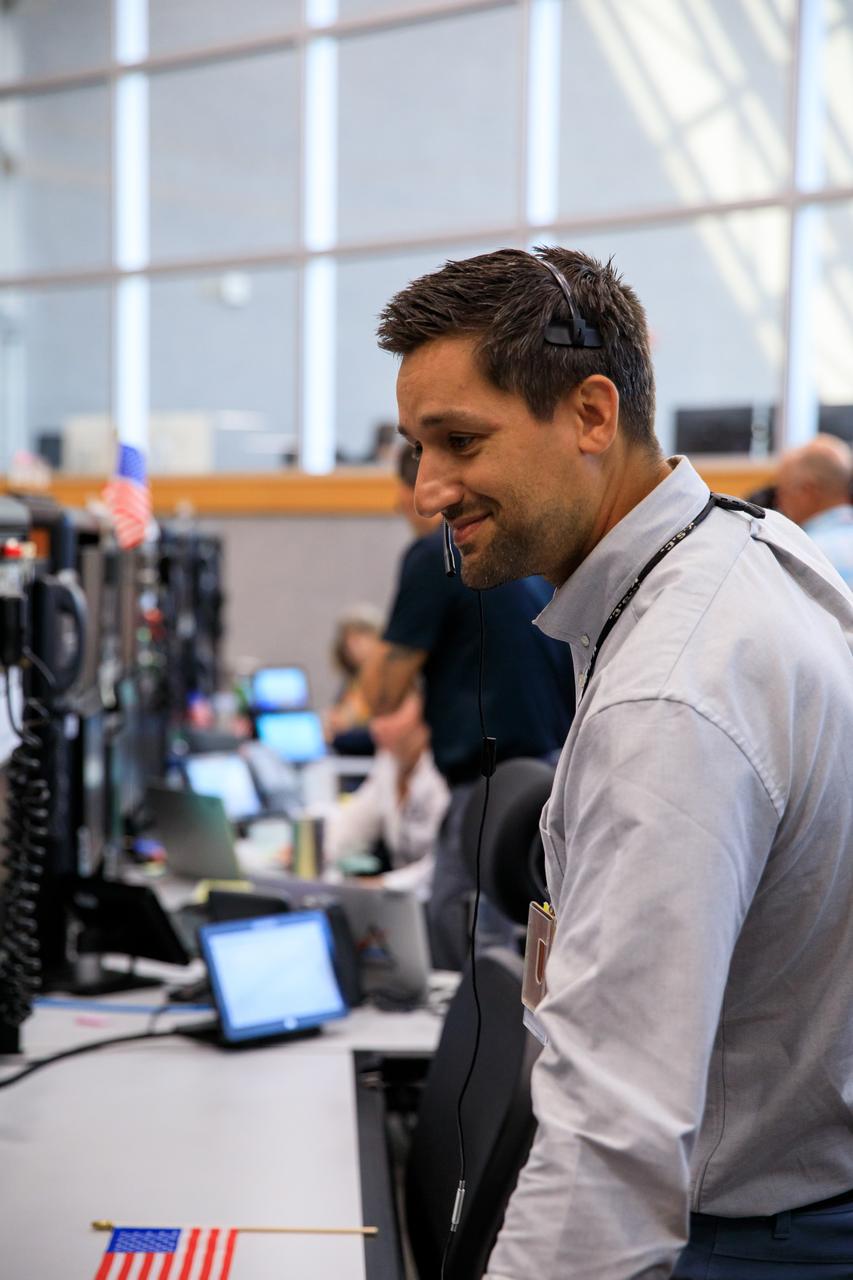
A member of the Artemis II launch team monitors activities during the launch day demonstration for one of the Artemis II integrated ground systems tests from Firing Room 1 in the Launch Control Center at Kennedy Space Center in Florida on Wednesday, Sept. 20. This is part of a series of tests to ensure the ground systems team is ready to support the crew timeline on launch day. Artemis II is the first mission with astronauts under Artemis that will test and check out all of the Orion spacecraft’s systems needed for future crewed missions.
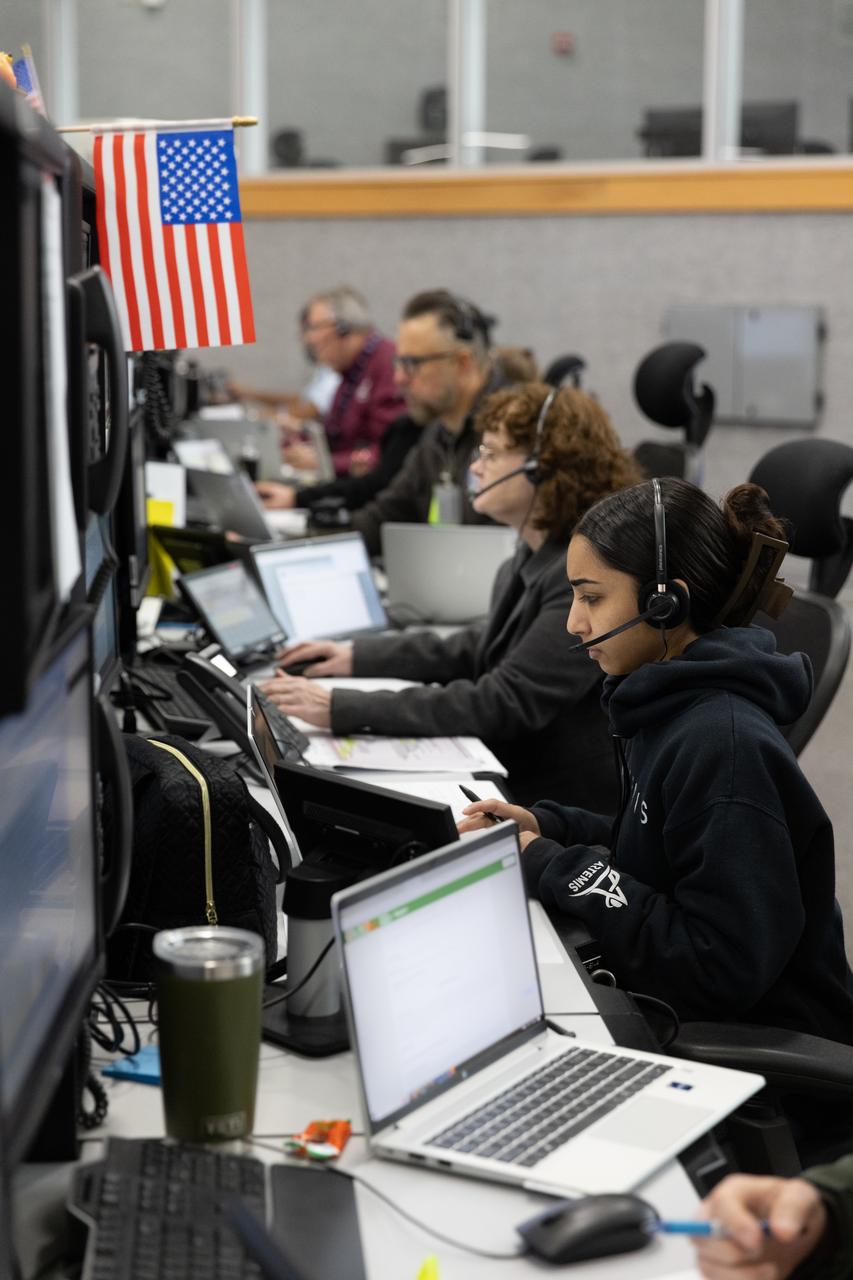
Members of the Artemis launch team participate in an Artemis II launch countdown simulation inside Firing Room 1 in the Launch Control Center at NASA’s Kennedy Space Center in Florida on Thursday, Jan. 23, 2025. The simulations go through launch day scenarios to help launch team members test software and make adjustments if needed during countdown operations. For Artemis II, four astronauts will venture around the Moon, the first crewed mission on NASA’s path to establishing a long-term presence for science and exploration through Artemis.
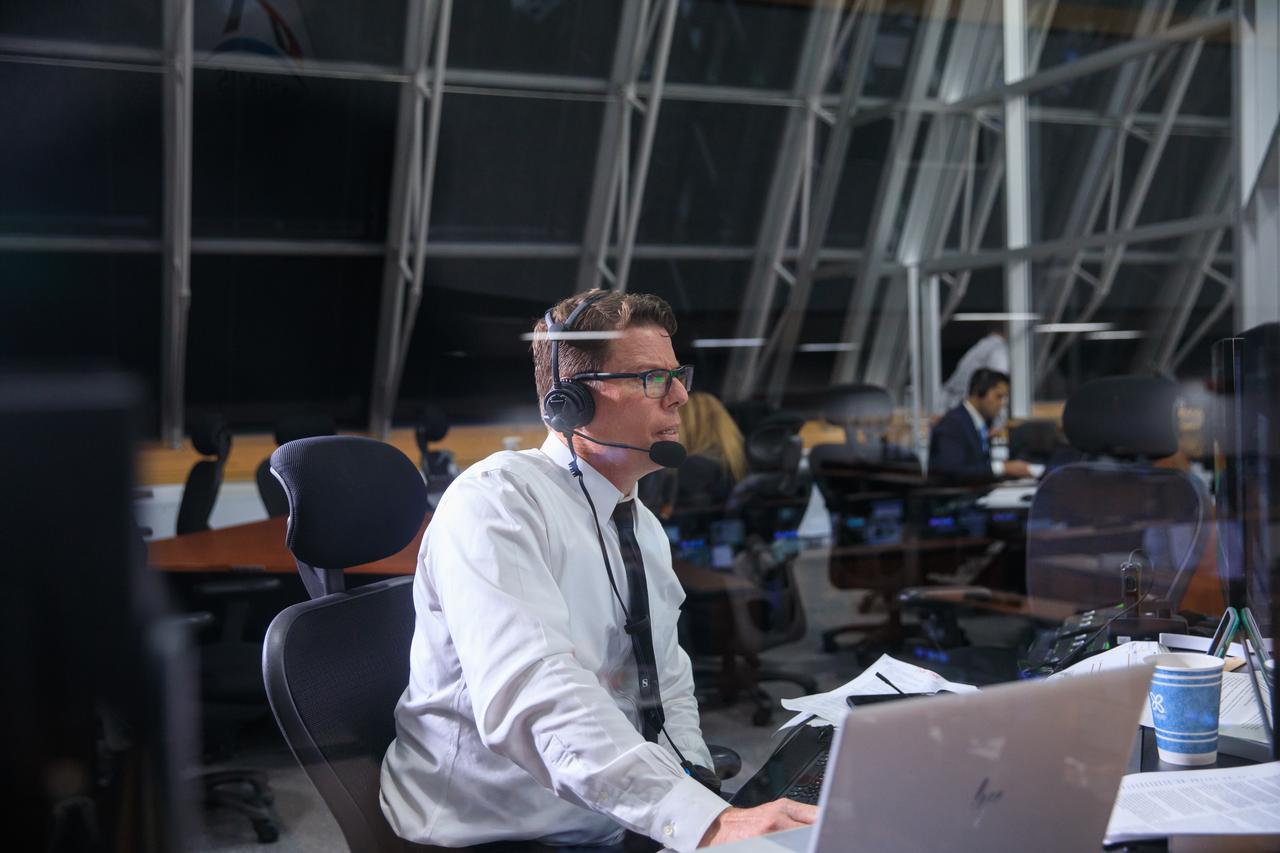
Derrol Nail, NASA Communications, leads commentary during Artemis I launch countdown inside Firing Room 1 of the Launch Control Center at NASA’s Kennedy Space Center in Florida on Nov. 16, 2022. Liftoff of the agency’s Space Launch System and Orion spacecraft from Launch Complex 39B was at 1:47 a.m. EST. The first in a series of increasingly complex missions, Artemis I will provide a foundation for human deep space exploration and demonstrate our commitment and capability to extend human presence to the Moon and beyond. The primary goal of Artemis I is to thoroughly test the integrated systems before crewed missions by operating the spacecraft in a deep space environment, testing Orion’s heat shield, and recovering the crew module after reentry, descent, and splashdown.

Artemis I Launch Director Charlie Blackwell-Thompson leads launch countdown activities inside Firing Room 1 of the Launch Control Center at NASA’s Kennedy Space Center in Florida on Nov. 16, 2022. Liftoff of the agency’s Space Launch System and Orion spacecraft from Launch Complex 39B was at 1:47 a.m. EST. The first in a series of increasingly complex missions, Artemis I will provide a foundation for human deep space exploration and demonstrate our commitment and capability to extend human presence to the Moon and beyond. The primary goal of Artemis I is to thoroughly test the integrated systems before crewed missions by operating the spacecraft in a deep space environment, testing Orion’s heat shield, and recovering the crew module after reentry, descent, and splashdown.
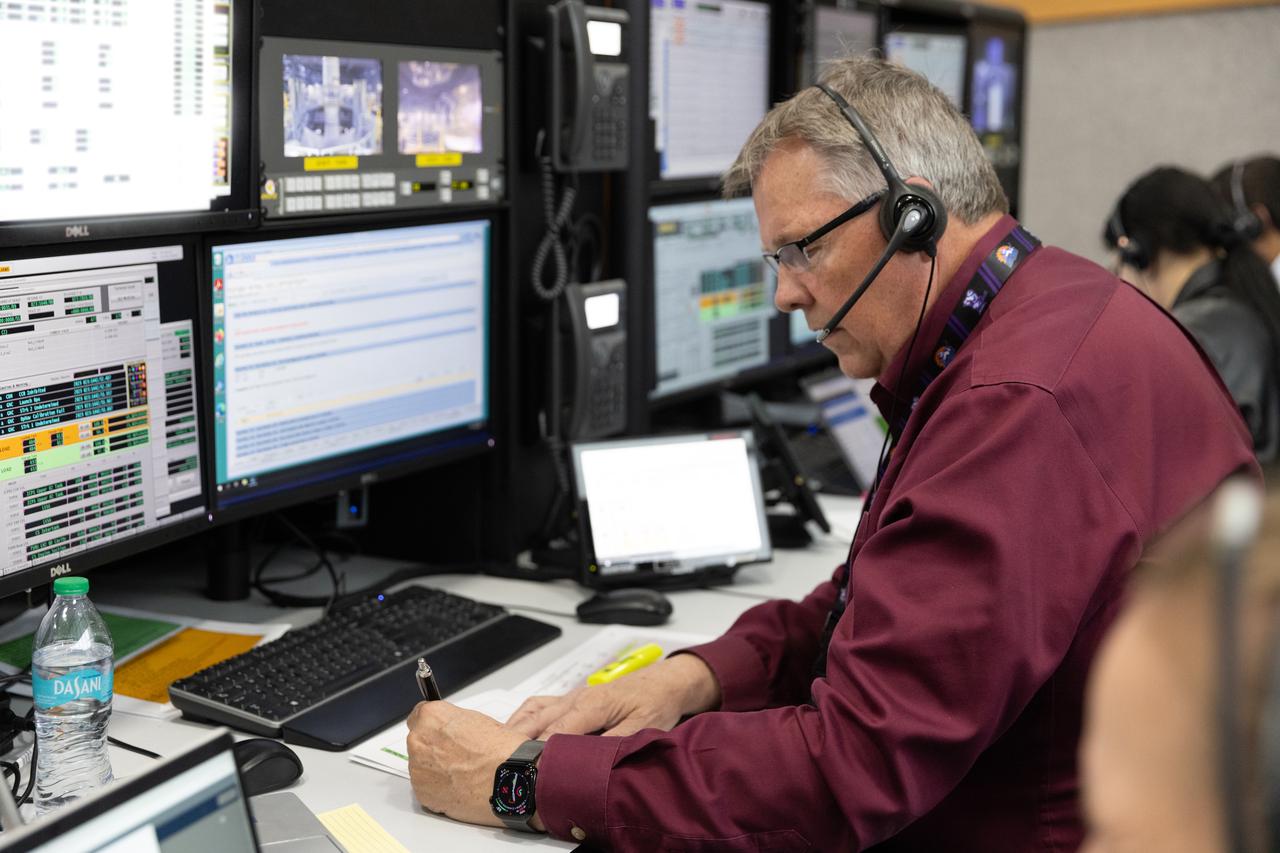
Members of the Artemis launch team participate in an Artemis II launch countdown simulation inside Firing Room 1 in the Launch Control Center at NASA’s Kennedy Space Center in Florida on Thursday, Jan. 23, 2025. The simulations go through launch day scenarios to help launch team members test software and make adjustments if needed during countdown operations. For Artemis II, four astronauts will venture around the Moon, the first crewed mission on NASA’s path to establishing a long-term presence for science and exploration through Artemis.

Artemis I launch team members are at their consoles in Launch Control Center Firing Room 1 at NASA’s Kennedy Space Center in Florida during countdown and liftoff of the agency’s Space Launch System and Orion spacecraft from Launch Complex 39B on Nov. 16, 2022. Liftoff was at 1:47 a.m. EST. The first in a series of increasingly complex missions, Artemis I will provide a foundation for human deep space exploration and demonstrate our commitment and capability to extend human presence to the Moon and beyond. The primary goal of Artemis I is to thoroughly test the integrated systems before crewed missions by operating the spacecraft in a deep space environment, testing Orion’s heat shield, and recovering the crew module after reentry, descent, and splashdown.

Artemis I Assistant Launch Director Jeremy Graeber monitors countdown activities inside Firing Room 1 of the Launch Control Center at NASA’s Kennedy Space Center in Florida on Nov. 16, 2022. Liftoff of the agency’s Space Launch System and Orion spacecraft from Launch Complex 39B was at 1:47 a.m. EST. The first in a series of increasingly complex missions, Artemis I will provide a foundation for human deep space exploration and demonstrate our commitment and capability to extend human presence to the Moon and beyond. The primary goal of Artemis I is to thoroughly test the integrated systems before crewed missions by operating the spacecraft in a deep space environment, testing Orion’s heat shield, and recovering the crew module after reentry, descent, and splashdown.
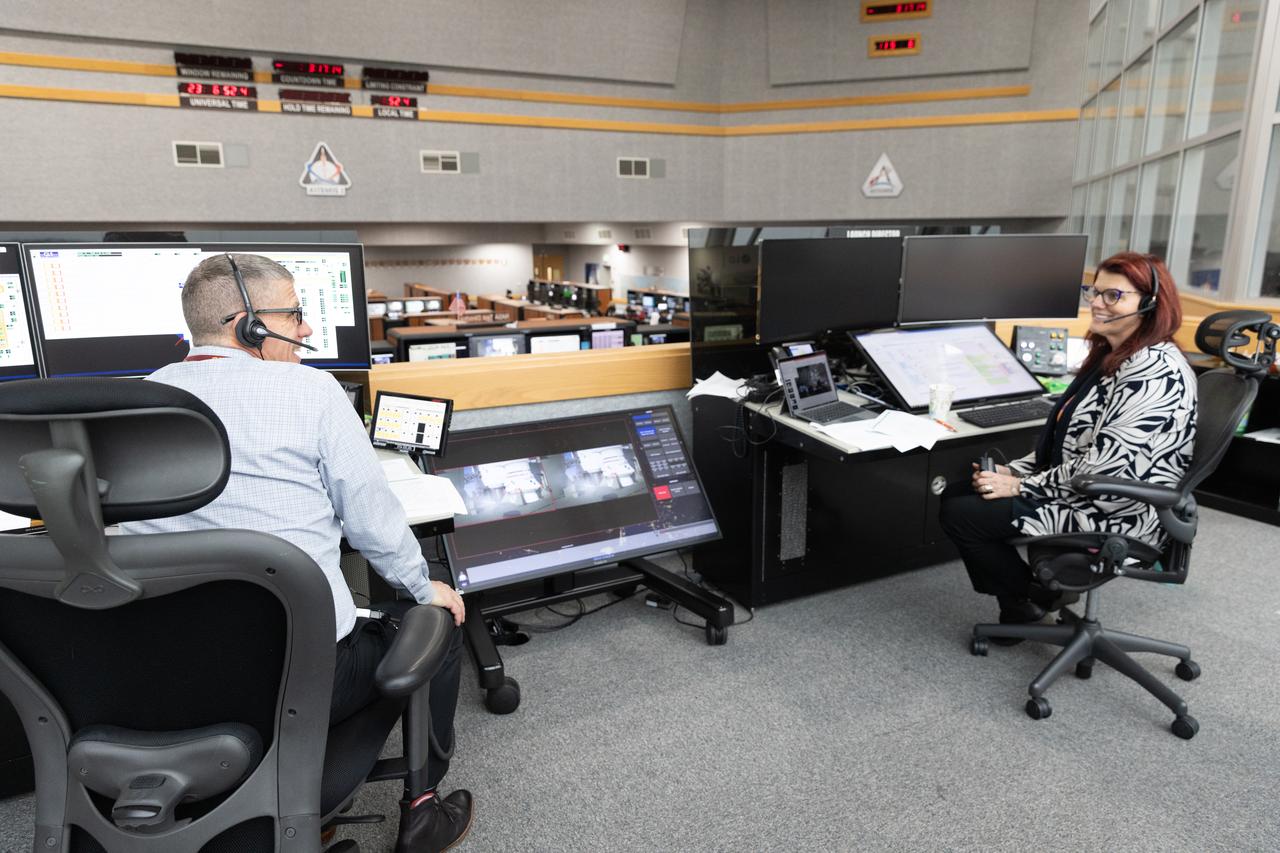
Jeremy Graeber, at left, assistant Artemis launch director, and Charlie Blackwell-Thompson, at left, NASA Artemis launch director, participate in an Artemis II launch countdown simulation inside Firing Room 1 in the Launch Control Center at NASA’s Kennedy on Thursday, Jan. 23, 2025. The simulations go through launch day scenarios to help launch team members test software and make adjustments if needed during countdown operations. For Artemis II, four astronauts will venture around the Moon, the first crewed mission on NASA’s path to establishing a long-term presence for science and exploration through Artemis.
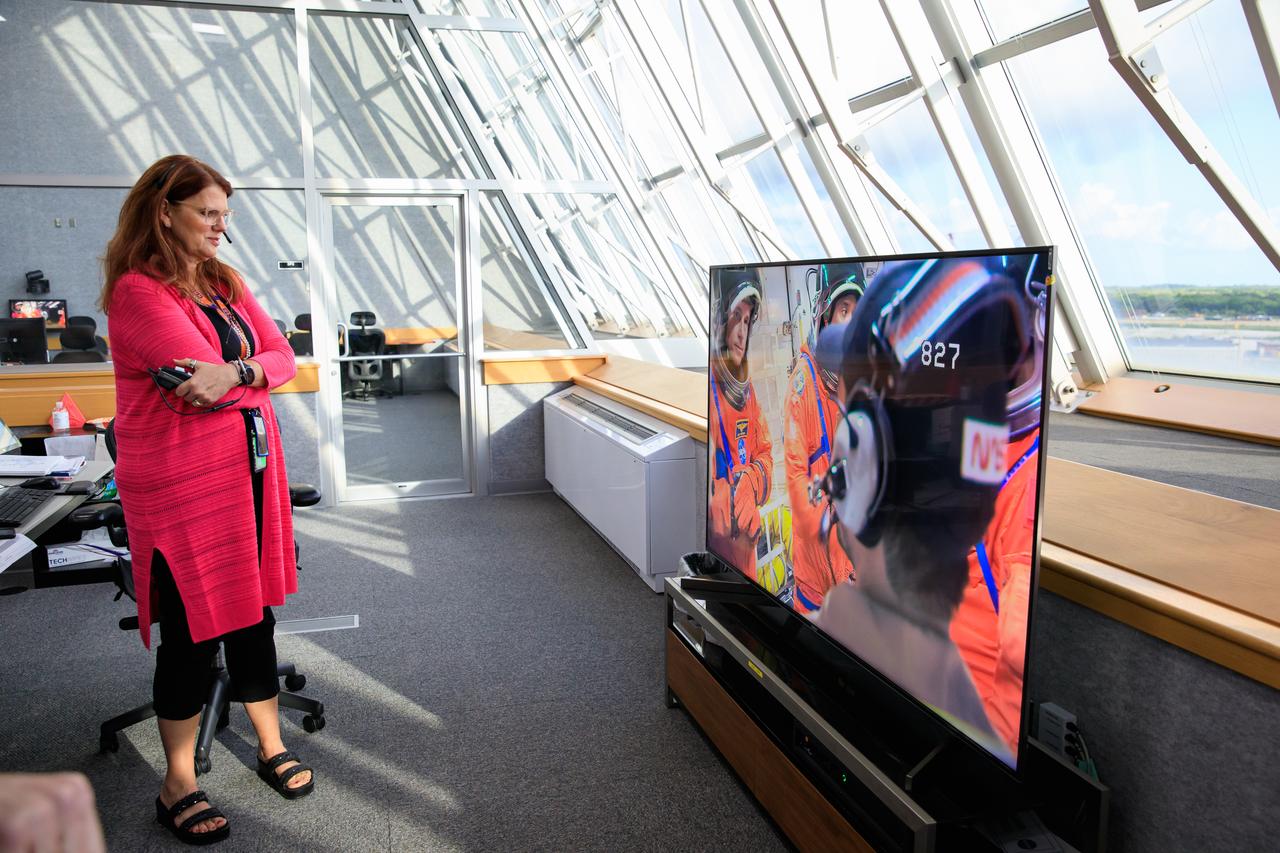
NASA Artemis Launch Director Charlie Blackwell-Thompson monitors activities during the launch day demonstration for one of the Artemis II integrated ground systems tests from Firing Room 1 in the Launch Control Center at Kennedy Space Center in Florida on Wednesday, Sept. 20. This is part of a series of tests to ensure the ground systems team is ready to support the crew timeline on launch day. Artemis II is the first mission with astronauts under Artemis that will test and check out all of the Orion spacecraft’s systems needed for future crewed missions.
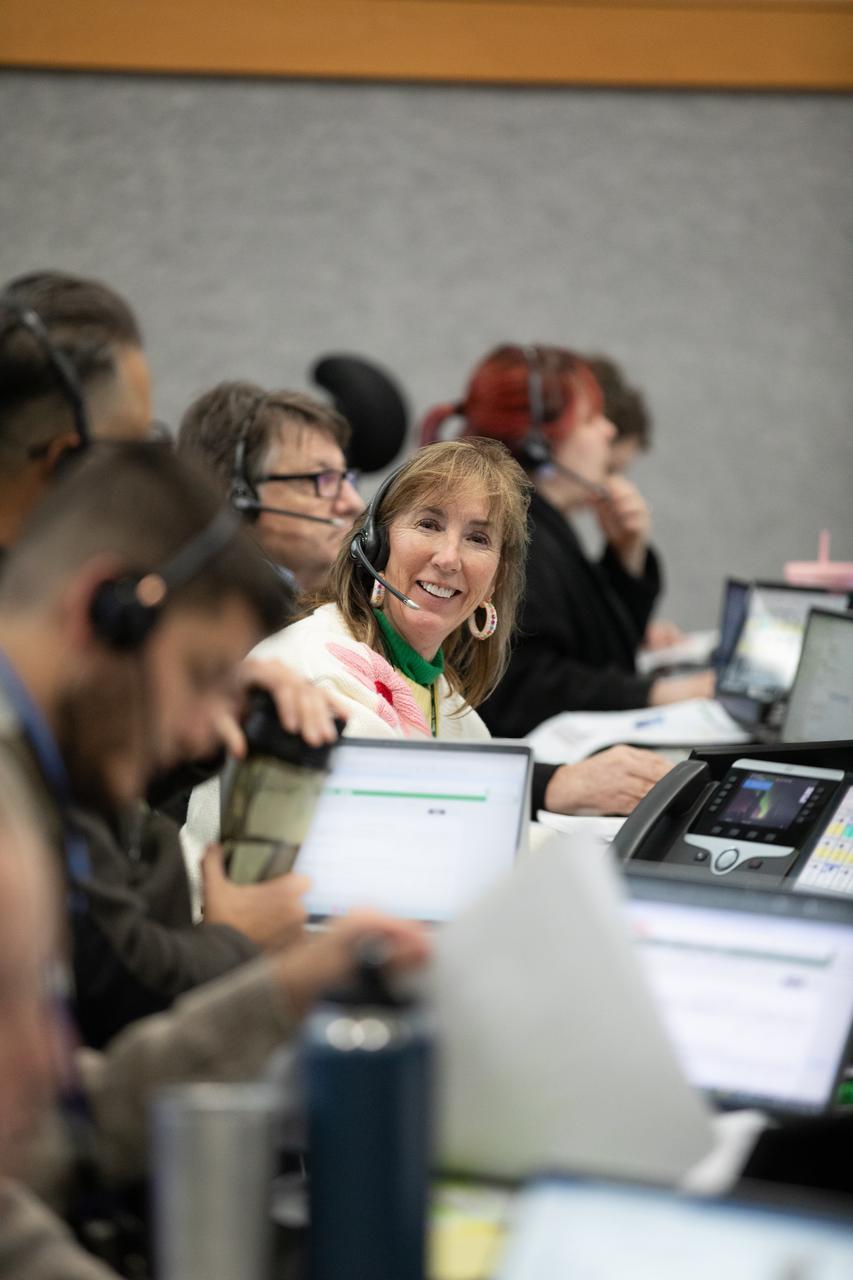
Members of the Artemis launch team participate in an Artemis II launch countdown simulation inside Firing Room 1 in the Launch Control Center at NASA’s Kennedy Space Center in Florida on Thursday, Jan. 23, 2025. The simulations go through launch day scenarios to help launch team members test software and make adjustments if needed during countdown operations. For Artemis II, four astronauts will venture around the Moon, the first crewed mission on NASA’s path to establishing a long-term presence for science and exploration through Artemis.
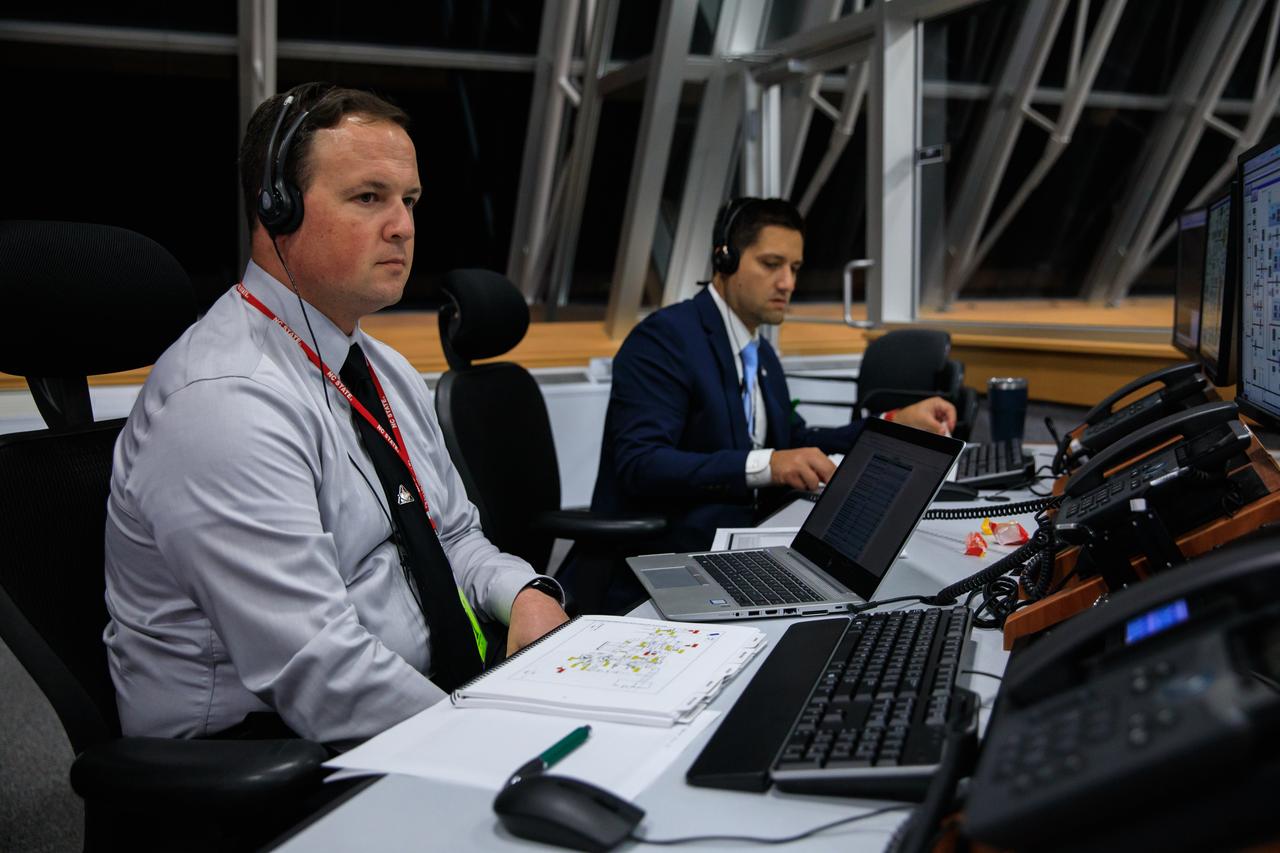
Wes Mosedale, at left, technical assistant to the launch director, and Dan Florez, NASA test director, monitor their consoles during countdown and liftoff of the agency’s Space Launch System and Orion spacecraft from Launch Complex 39B on Nov. 16, 2022. Liftoff was at 1:47 a.m. EST. The first in a series of increasingly complex missions, Artemis I will provide a foundation for human deep space exploration and demonstrate our commitment and capability to extend human presence to the Moon and beyond. The primary goal of Artemis I is to thoroughly test the integrated systems before crewed missions by operating the spacecraft in a deep space environment, testing Orion’s heat shield, and recovering the crew module after reentry, descent, and splashdown.

Artemis I launch team members are at their consoles in Launch Control Center Firing Room 1 at NASA’s Kennedy Space Center in Florida during countdown and liftoff of the agency’s Space Launch System and Orion spacecraft from Launch Complex 39B on Nov. 16, 2022. Liftoff was at 1:47 a.m. EST. The first in a series of increasingly complex missions, Artemis I will provide a foundation for human deep space exploration and demonstrate our commitment and capability to extend human presence to the Moon and beyond. The primary goal of Artemis I is to thoroughly test the integrated systems before crewed missions by operating the spacecraft in a deep space environment, testing Orion’s heat shield, and recovering the crew module after reentry, descent, and splashdown.

Artemis I launch team members are at their consoles in Launch Control Center Firing Room 1 at NASA’s Kennedy Space Center in Florida during countdown and liftoff of the agency’s Space Launch System and Orion spacecraft from Launch Complex 39B on Nov. 16, 2022. Liftoff was at 1:47 a.m. EST. The first in a series of increasingly complex missions, Artemis I will provide a foundation for human deep space exploration and demonstrate our commitment and capability to extend human presence to the Moon and beyond. The primary goal of Artemis I is to thoroughly test the integrated systems before crewed missions by operating the spacecraft in a deep space environment, testing Orion’s heat shield, and recovering the crew module after reentry, descent, and splashdown.

Artemis I Assistant Launch Director Jeremy Graeber monitors his console during launch countdown activities inside Firing Room 1 of the Launch Control Center at NASA’s Kennedy Space Center in Florida on Nov. 16, 2022. Liftoff of the agency’s Space Launch System and Orion spacecraft from Launch Complex 39B was at 1:47 a.m. EST. The first in a series of increasingly complex missions, Artemis I will provide a foundation for human deep space exploration and demonstrate our commitment and capability to extend human presence to the Moon and beyond. The primary goal of Artemis I is to thoroughly test the integrated systems before crewed missions by operating the spacecraft in a deep space environment, testing Orion’s heat shield, and recovering the crew module after reentry, descent, and splashdown.

Artemis I launch team members are at their consoles in Launch Control Center Firing Room 1 at NASA’s Kennedy Space Center in Florida during countdown and liftoff of the agency’s Space Launch System and Orion spacecraft from Launch Complex 39B on Nov. 16, 2022. Liftoff was at 1:47 a.m. EST. The first in a series of increasingly complex missions, Artemis I will provide a foundation for human deep space exploration and demonstrate our commitment and capability to extend human presence to the Moon and beyond. The primary goal of Artemis I is to thoroughly test the integrated systems before crewed missions by operating the spacecraft in a deep space environment, testing Orion’s heat shield, and recovering the crew module after reentry, descent, and splashdown.
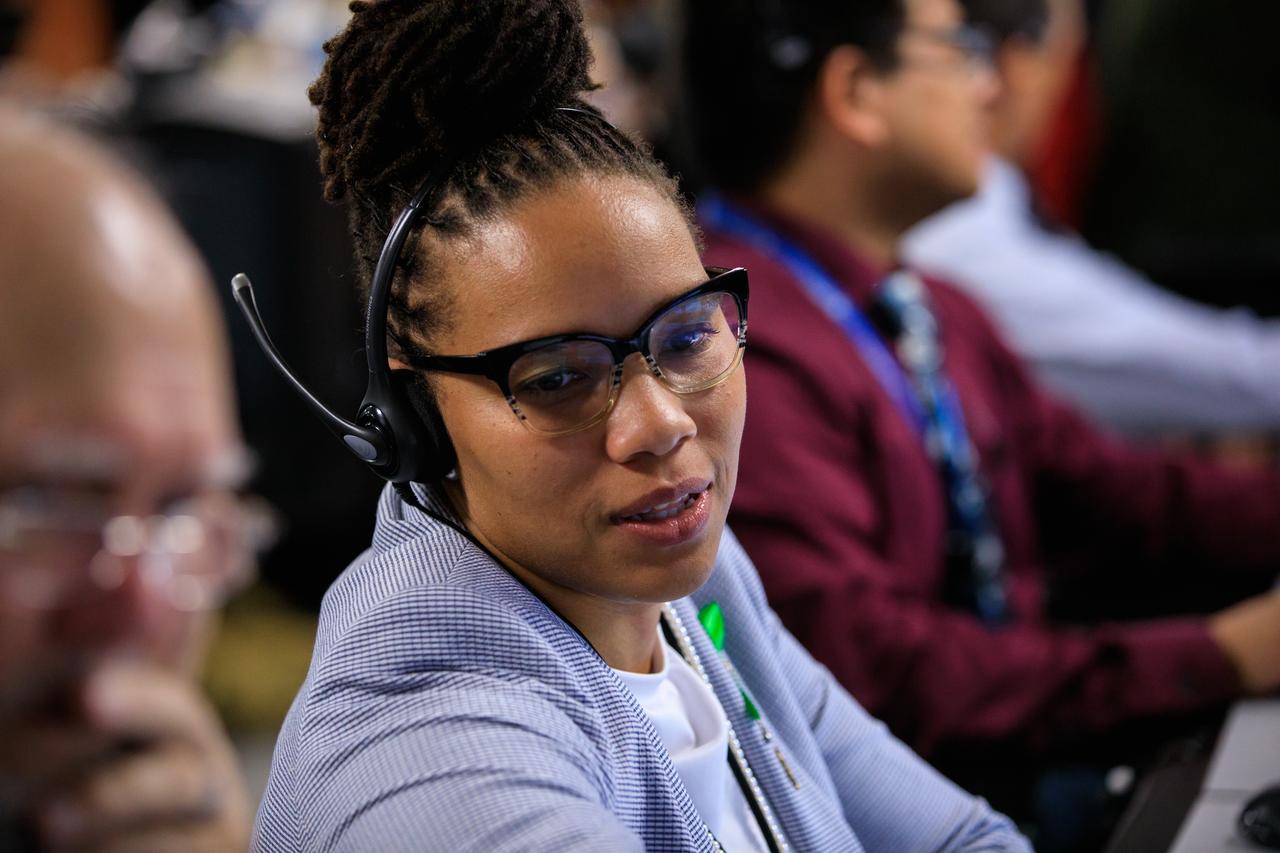
Artemis I launch team members are at their consoles in Launch Control Center Firing Room 1 at NASA’s Kennedy Space Center in Florida during countdown and liftoff of the agency’s Space Launch System and Orion spacecraft from Launch Complex 39B on Nov. 16, 2022. Liftoff was at 1:47 a.m. EST. The first in a series of increasingly complex missions, Artemis I will provide a foundation for human deep space exploration and demonstrate our commitment and capability to extend human presence to the Moon and beyond. The primary goal of Artemis I is to thoroughly test the integrated systems before crewed missions by operating the spacecraft in a deep space environment, testing Orion’s heat shield, and recovering the crew module after reentry, descent, and splashdown.
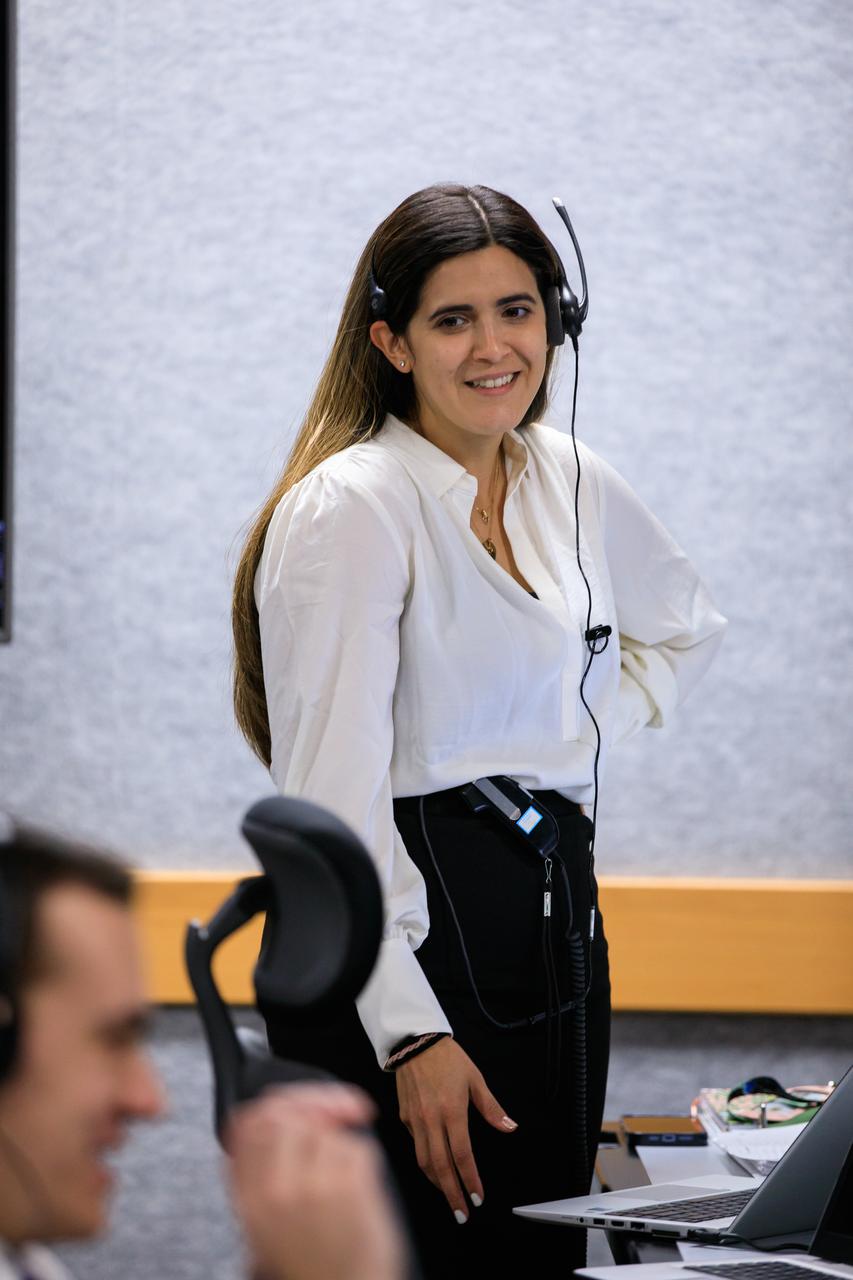
Artemis I launch team members are at their consoles in Launch Control Center Firing Room 1 at NASA’s Kennedy Space Center in Florida during countdown and liftoff of the agency’s Space Launch System and Orion spacecraft from Launch Complex 39B on Nov. 16, 2022. Liftoff was at 1:47 a.m. EST. The first in a series of increasingly complex missions, Artemis I will provide a foundation for human deep space exploration and demonstrate our commitment and capability to extend human presence to the Moon and beyond. The primary goal of Artemis I is to thoroughly test the integrated systems before crewed missions by operating the spacecraft in a deep space environment, testing Orion’s heat shield, and recovering the crew module after reentry, descent, and splashdown.
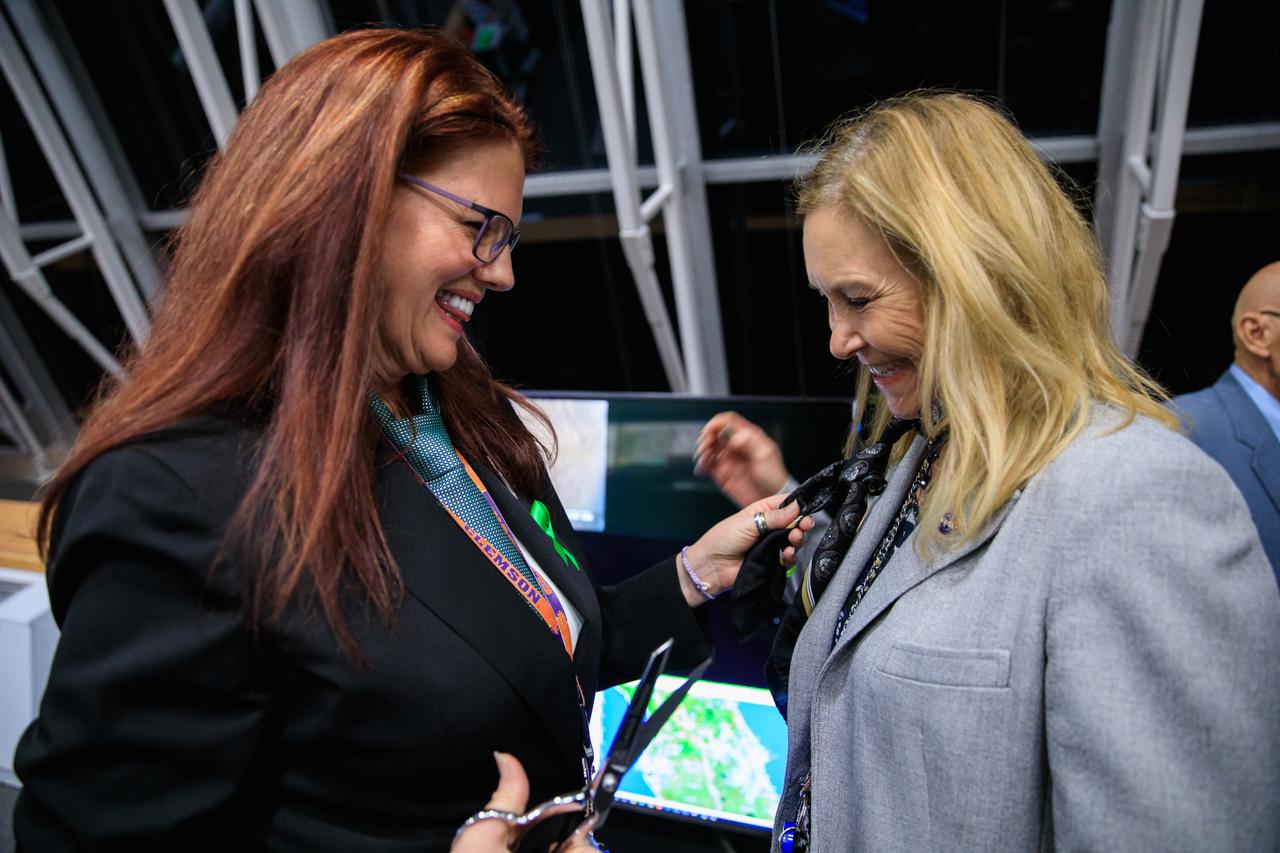
Artemis I Launch Director Charlie Blackwell-Thompson, at left, performs the traditional cutting of the tie for Kennedy Space Center Director Janet Petro after the successful liftoff of NASA’s Space Launch System and Orion spacecraft from Kennedy’s Launch Complex 39B on Nov. 16, 2022. Liftoff was at 1:47 a.m. EST. The first in a series of increasingly complex missions, Artemis I will provide a foundation for human deep space exploration and demonstrate our commitment and capability to extend human presence to the Moon and beyond. The primary goal of Artemis I is to thoroughly test the integrated systems before crewed missions by operating the spacecraft in a deep space environment, testing Orion’s heat shield, and recovering the crew module after reentry, descent, and splashdown.
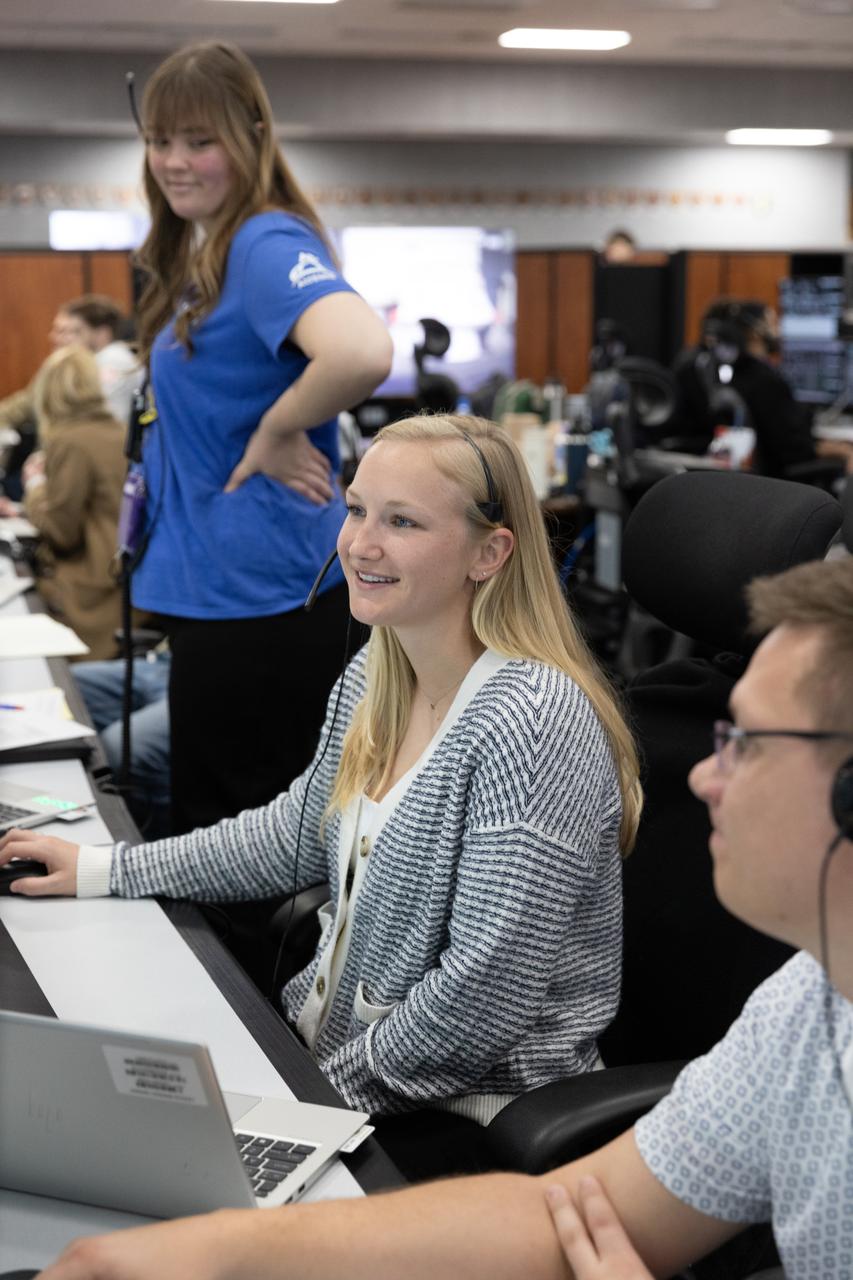
Members of the Artemis launch team participate in an Artemis II launch countdown simulation inside Firing Room 1 in the Launch Control Center at NASA’s Kennedy Space Center in Florida on Thursday, Jan. 23, 2025. The simulations go through launch day scenarios to help launch team members test software and make adjustments if needed during countdown operations. For Artemis II, four astronauts will venture around the Moon, the first crewed mission on NASA’s path to establishing a long-term presence for science and exploration through Artemis.
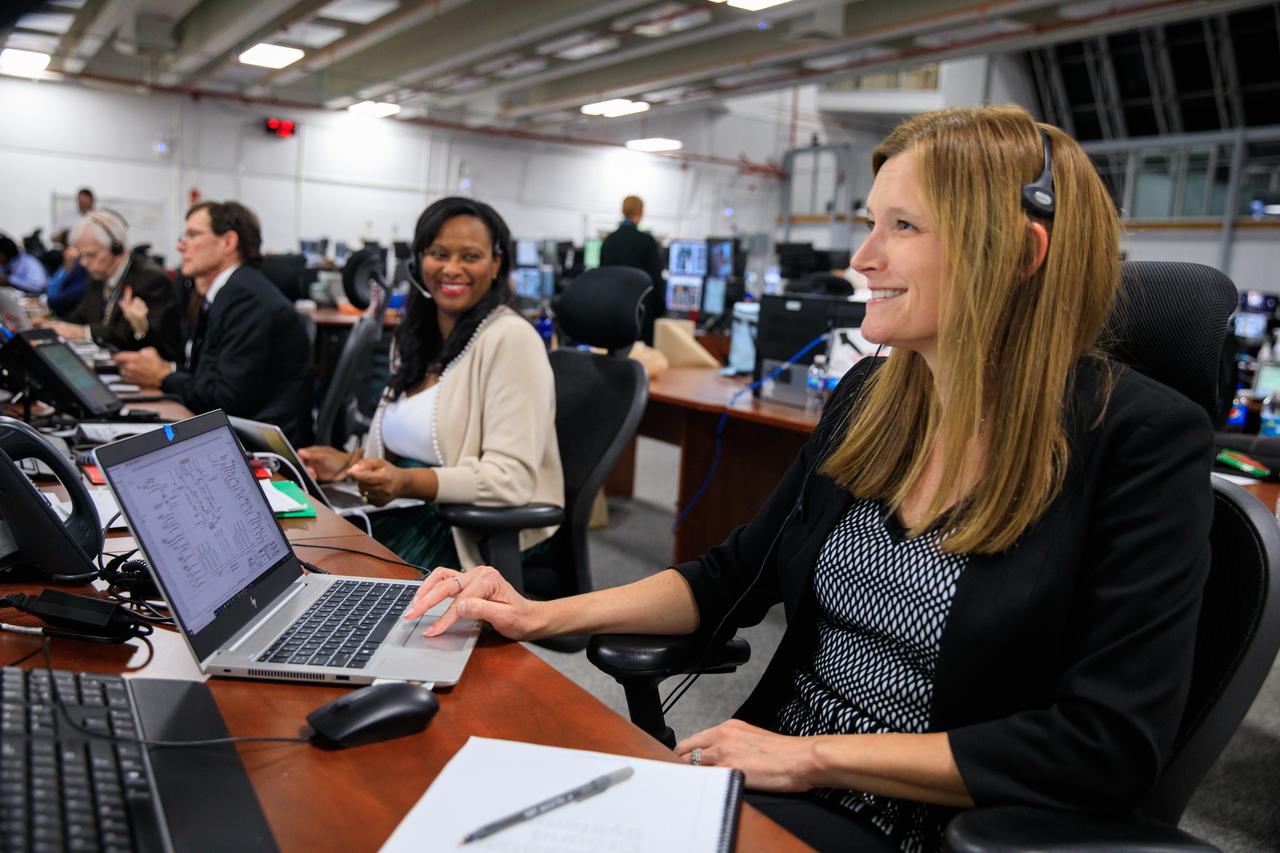
Artemis I launch team members are at their consoles in Launch Control Center Firing Room 1 at NASA’s Kennedy Space Center in Florida during countdown and liftoff of the agency’s Space Launch System and Orion spacecraft from Launch Complex 39B on Nov. 16, 2022. Liftoff was at 1:47 a.m. EST. The first in a series of increasingly complex missions, Artemis I will provide a foundation for human deep space exploration and demonstrate our commitment and capability to extend human presence to the Moon and beyond. The primary goal of Artemis I is to thoroughly test the integrated systems before crewed missions by operating the spacecraft in a deep space environment, testing Orion’s heat shield, and recovering the crew module after reentry, descent, and splashdown.
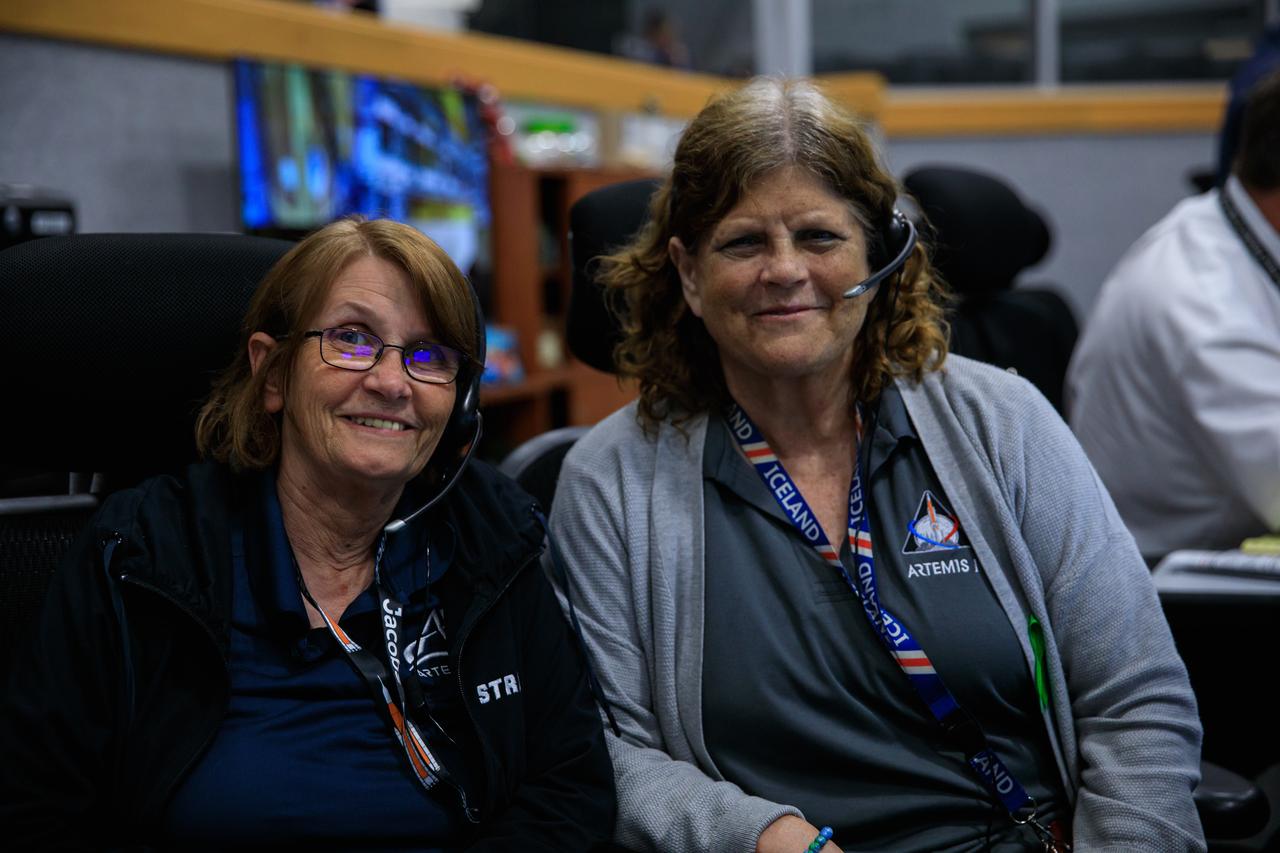
NASA Test Conductors Teresa Annulis, at left, and Roberta Wyrick, monitor launch countdown activities inside Firing Room 1 of the Launch Control Center at NASA’s Kennedy Space Center in Florida on Nov. 16, 2022. Liftoff of the agency’s Space Launch System and Orion spacecraft from Launch Complex 39B was at 1:47 a.m. EST. The first in a series of increasingly complex missions, Artemis I will provide a foundation for human deep space exploration and demonstrate our commitment and capability to extend human presence to the Moon and beyond. The primary goal of Artemis I is to thoroughly test the integrated systems before crewed missions by operating the spacecraft in a deep space environment, testing Orion’s heat shield, and recovering the crew module after reentry, descent, and splashdown.
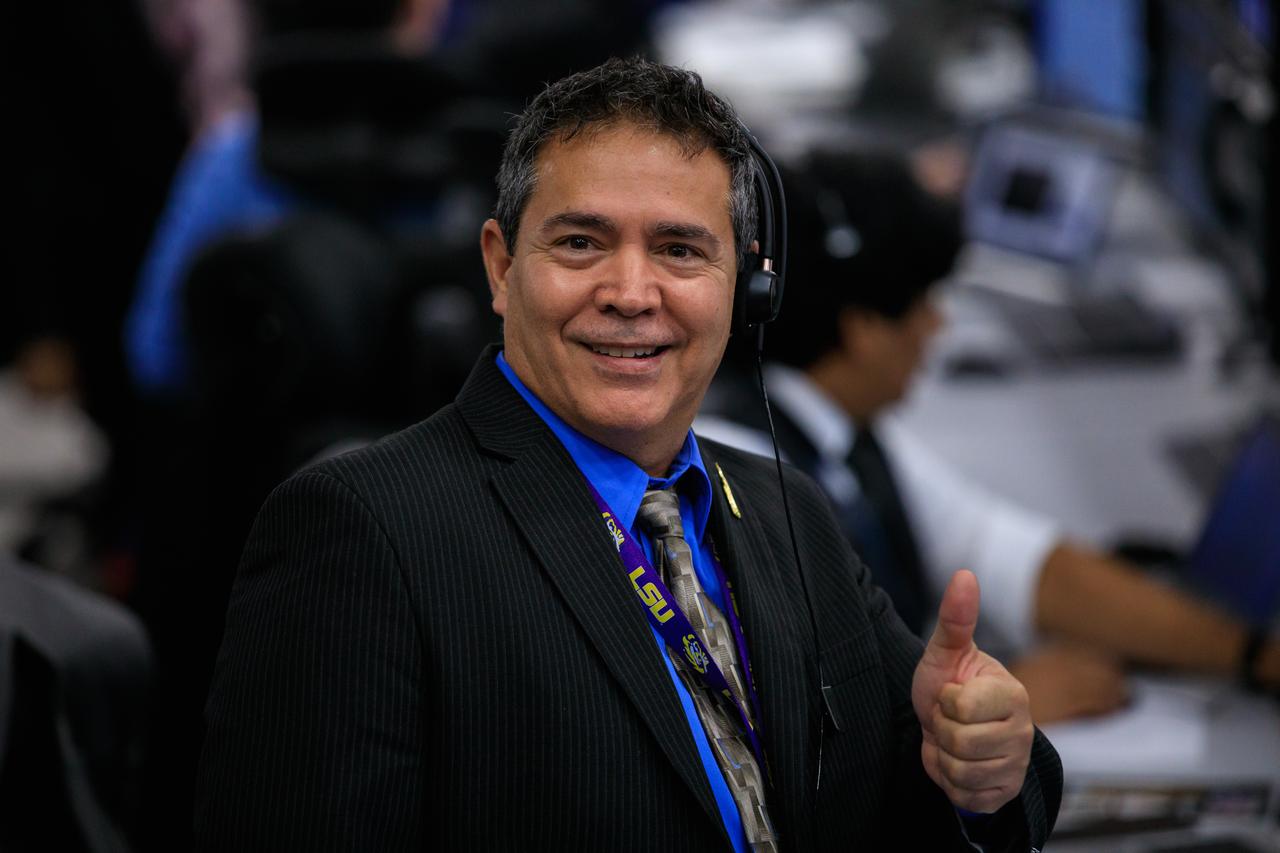
Artemis I launch team members are at their consoles in Launch Control Center Firing Room 1 at NASA’s Kennedy Space Center in Florida during countdown and liftoff of the agency’s Space Launch System and Orion spacecraft from Launch Complex 39B on Nov. 16, 2022. Liftoff was at 1:47 a.m. EST. The first in a series of increasingly complex missions, Artemis I will provide a foundation for human deep space exploration and demonstrate our commitment and capability to extend human presence to the Moon and beyond. The primary goal of Artemis I is to thoroughly test the integrated systems before crewed missions by operating the spacecraft in a deep space environment, testing Orion’s heat shield, and recovering the crew module after reentry, descent, and splashdown.

Members of the Artemis II launch team monitor activities during the launch day demonstration for one of the Artemis II integrated ground systems tests from Firing Room 1 in the Launch Control Center at Kennedy Space Center in Florida on Wednesday, Sept. 20. This is part of a series of tests to ensure the ground systems team is ready to support the crew timeline on launch day. Artemis II is the first mission with astronauts under Artemis that will test and check out all of the Orion spacecraft’s systems needed for future crewed missions.
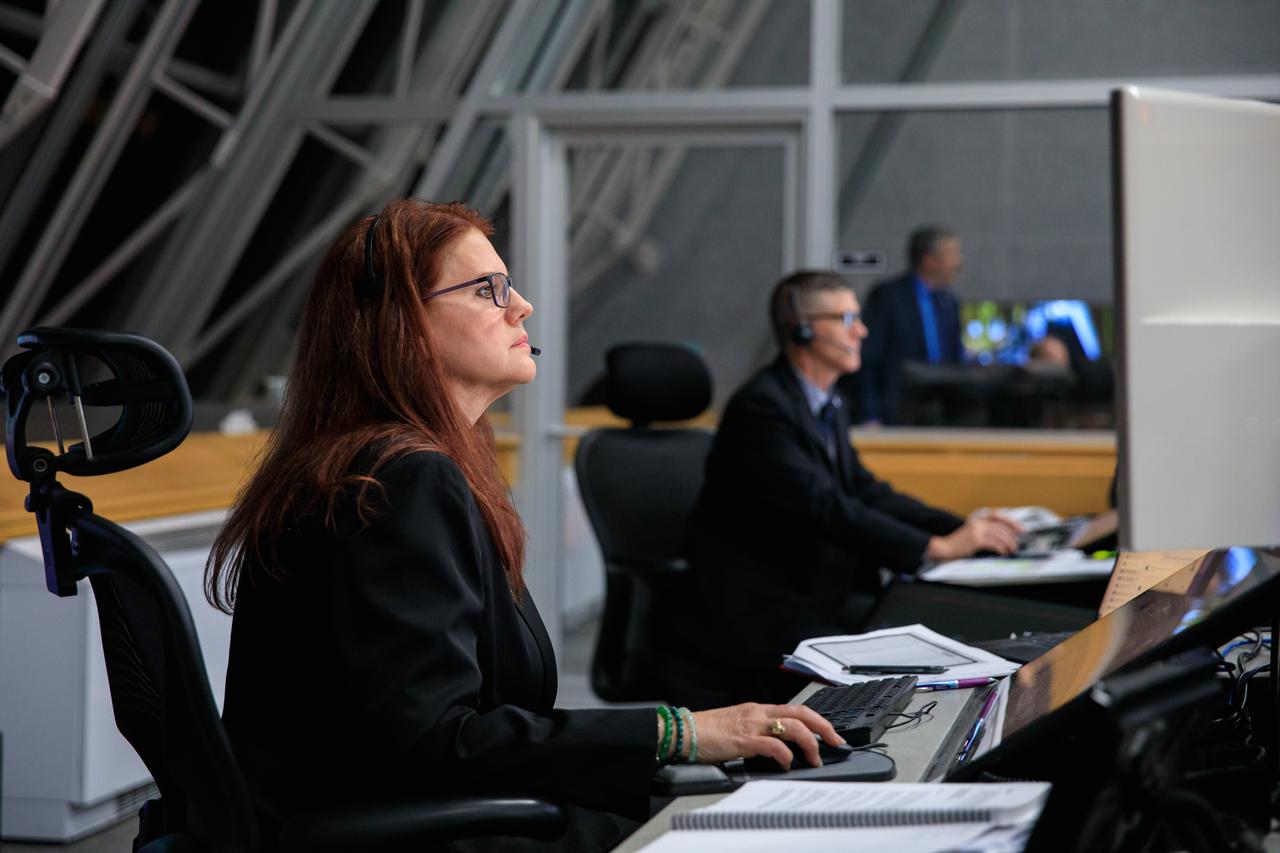
Artemis I Launch Director Charlie Blackwell-Thompson, at left, and Assistant Launch Director Jeremy Graeber, monitor launch countdown activities inside Firing Room 1 of the Launch Control Center at NASA’s Kennedy Space Center in Florida on Nov. 16, 2022. Liftoff of the agency’s Space Launch System and Orion spacecraft from Launch Complex 39B was at 1:47 a.m. EST. The first in a series of increasingly complex missions, Artemis I will provide a foundation for human deep space exploration and demonstrate our commitment and capability to extend human presence to the Moon and beyond. The primary goal of Artemis I is to thoroughly test the integrated systems before crewed missions by operating the spacecraft in a deep space environment, testing Orion’s heat shield, and recovering the crew module after reentry, descent, and splashdown.
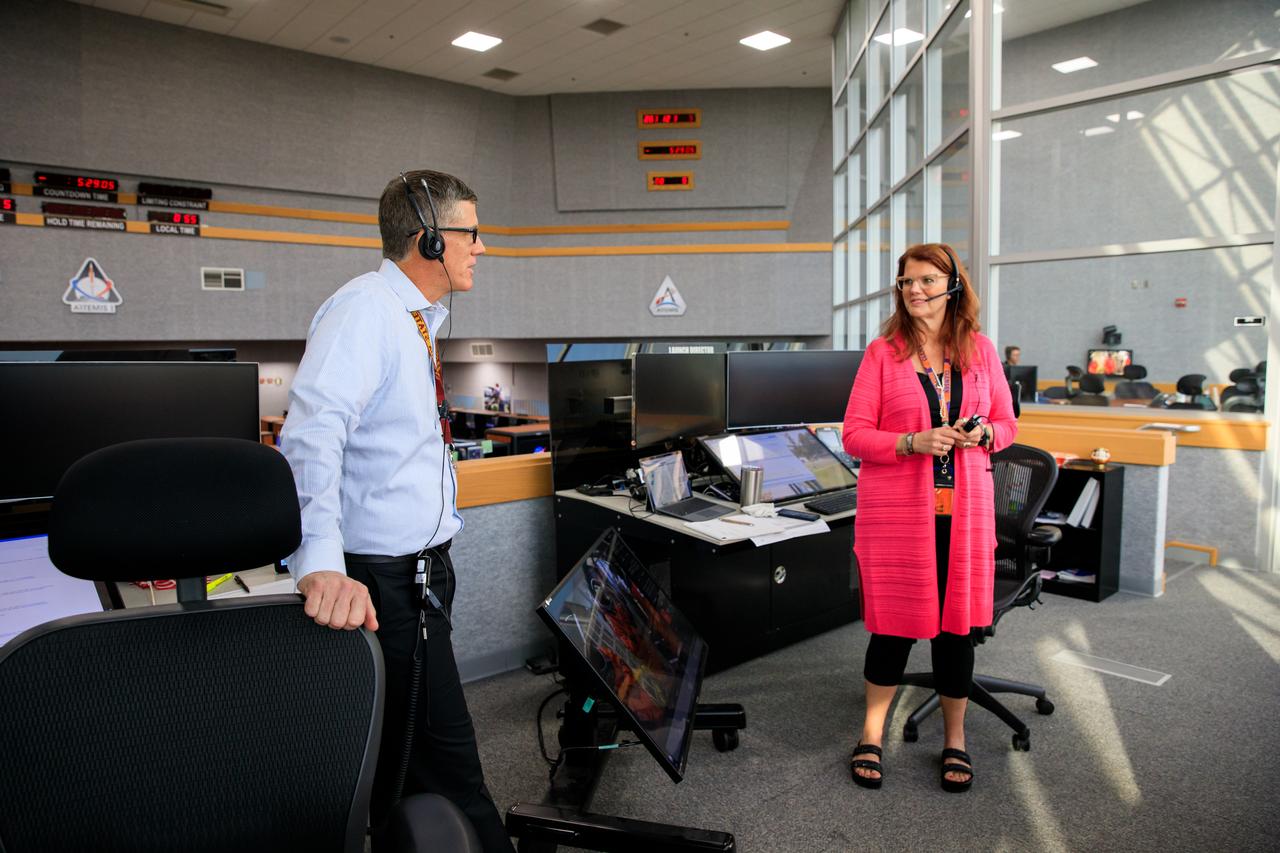
Assistant Artemis Launch Director Jeremy Graeber (left) and NASA Artemis Launch Director Charlie Blackwell-Thompson monitor activities during the launch day demonstration for one of the Artemis II integrated ground systems tests inside Firing Room 1 in the Launch Control Center at Kennedy Space Center in Florida on Wednesday, Sept. 20. This is part of a series of tests to ensure the ground systems team is ready to support the crew timeline on launch day. Artemis II is the first mission with astronauts under Artemis that will test and check out all of the Orion spacecraft’s systems needed for future crewed missions.
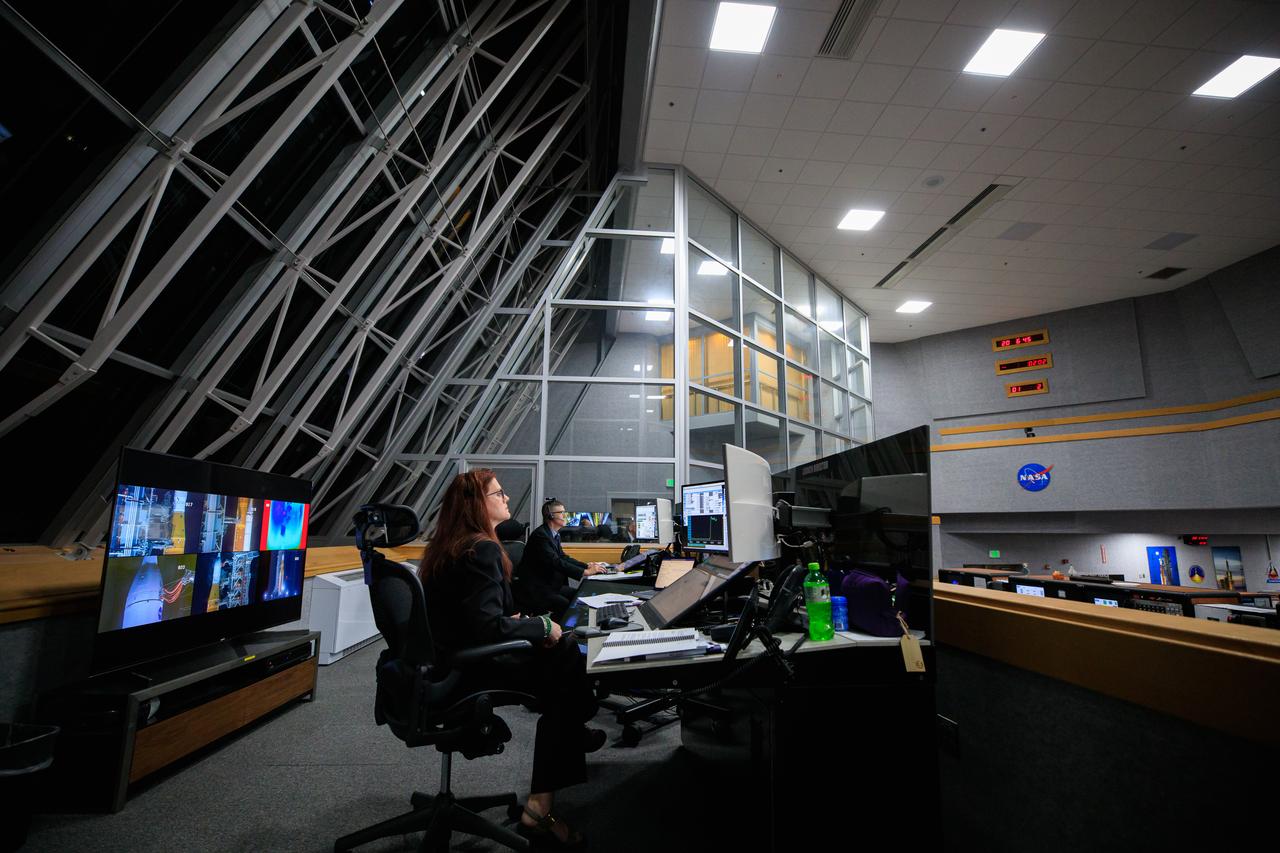
Artemis I Launch Director Charlie Blackwell-Thompson leads launch countdown activities inside Firing Room 1 of the Launch Control Center at NASA’s Kennedy Space Center in Florida on Nov. 16, 2022. Liftoff of the agency’s Space Launch System and Orion spacecraft from Launch Complex 39B was at 1:47 a.m. EST. The first in a series of increasingly complex missions, Artemis I will provide a foundation for human deep space exploration and demonstrate our commitment and capability to extend human presence to the Moon and beyond. The primary goal of Artemis I is to thoroughly test the integrated systems before crewed missions by operating the spacecraft in a deep space environment, testing Orion’s heat shield, and recovering the crew module after reentry, descent, and splashdown.
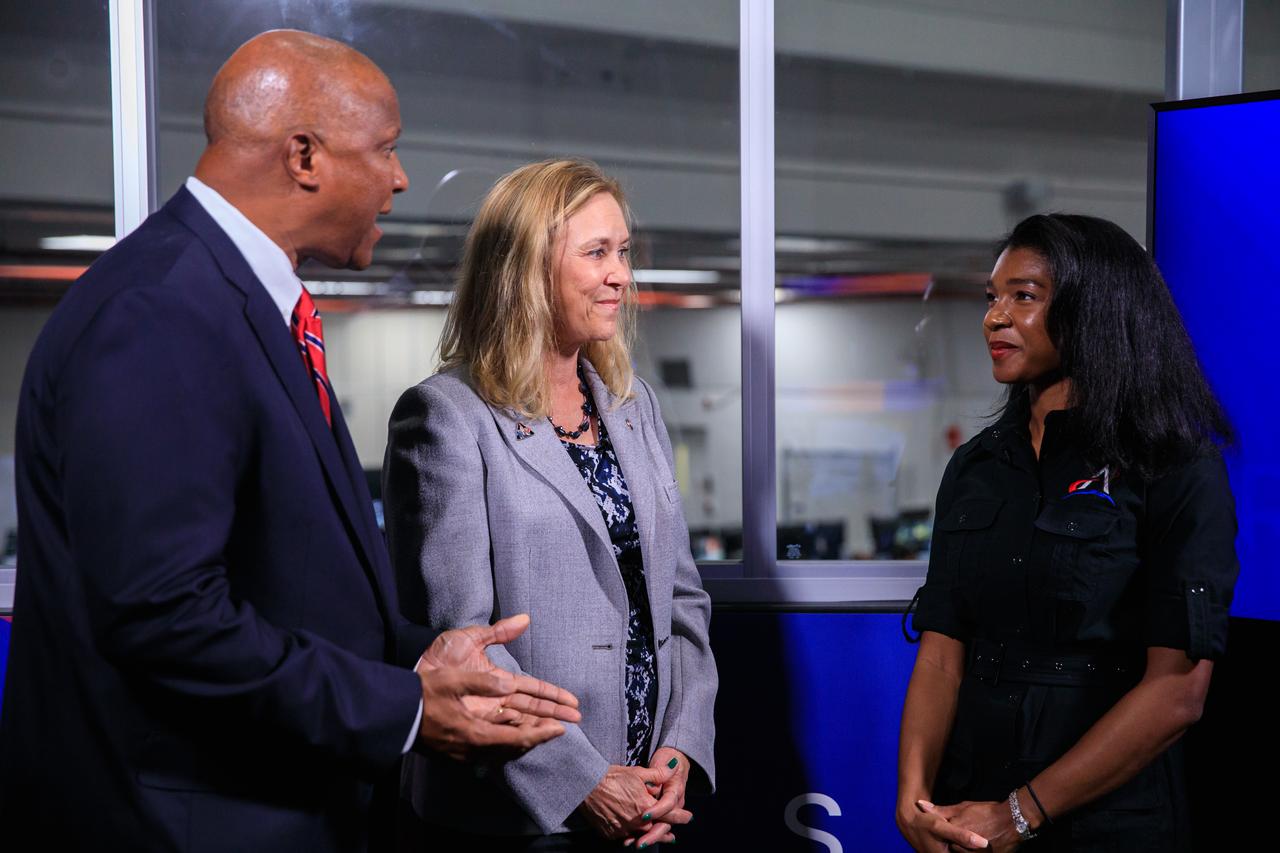
Jasmine Hopkins, at right, NASA Communications, speaks with Kelvin Manning, at left, deputy director, and Janet Petro, director of Kennedy Space Center, during Artemis I launch countdown activities inside Firing Room 1 of the Launch Control Center at NASA’s Kennedy Space Center in Florida on Nov. 16, 2022. Liftoff of the agency’s Space Launch System and Orion spacecraft from Launch Complex 39B was at 1:47 a.m. EST. The first in a series of increasingly complex missions, Artemis I will provide a foundation for human deep space exploration and demonstrate our commitment and capability to extend human presence to the Moon and beyond. The primary goal of Artemis I is to thoroughly test the integrated systems before crewed missions by operating the spacecraft in a deep space environment, testing Orion’s heat shield, and recovering the crew module after reentry, descent, and splashdown.

NASA dignitaries and launch team members gather inside Firing Room 1 of the Launch Control Center at Kennedy Space Center in Florida after the successful launch of the agency’s Space Launch System and Orion spacecraft on Nov. 16, 2022. Liftoff from Launch Complex 39B was at 1:47 a.m. EST. From left, are Artemis I Launch Director Charlie Blackwell-Thompson; Bob Cabana, NASA associate administrator; NASA Administrator Bill Nelson; Kennedy Space Center Director Janet Petro; former space shuttle Launch Director Bob Sieck; NASA Deputy Administrator Pam Melroy; Mike Bolger, Exploration Ground Systems manager; former space shuttle Launch Director Mike Leinbach; and Artemis I Assistant Launch Director Jeremy Graeber. The first in a series of increasingly complex missions, Artemis I will provide a foundation for human deep space exploration and demonstrate our commitment and capability to extend human presence to the Moon and beyond. The primary goal of Artemis I is to thoroughly test the integrated systems before crewed missions by operating the spacecraft in a deep space environment, testing Orion’s heat shield, and recovering the crew module after reentry, descent, and splashdown.
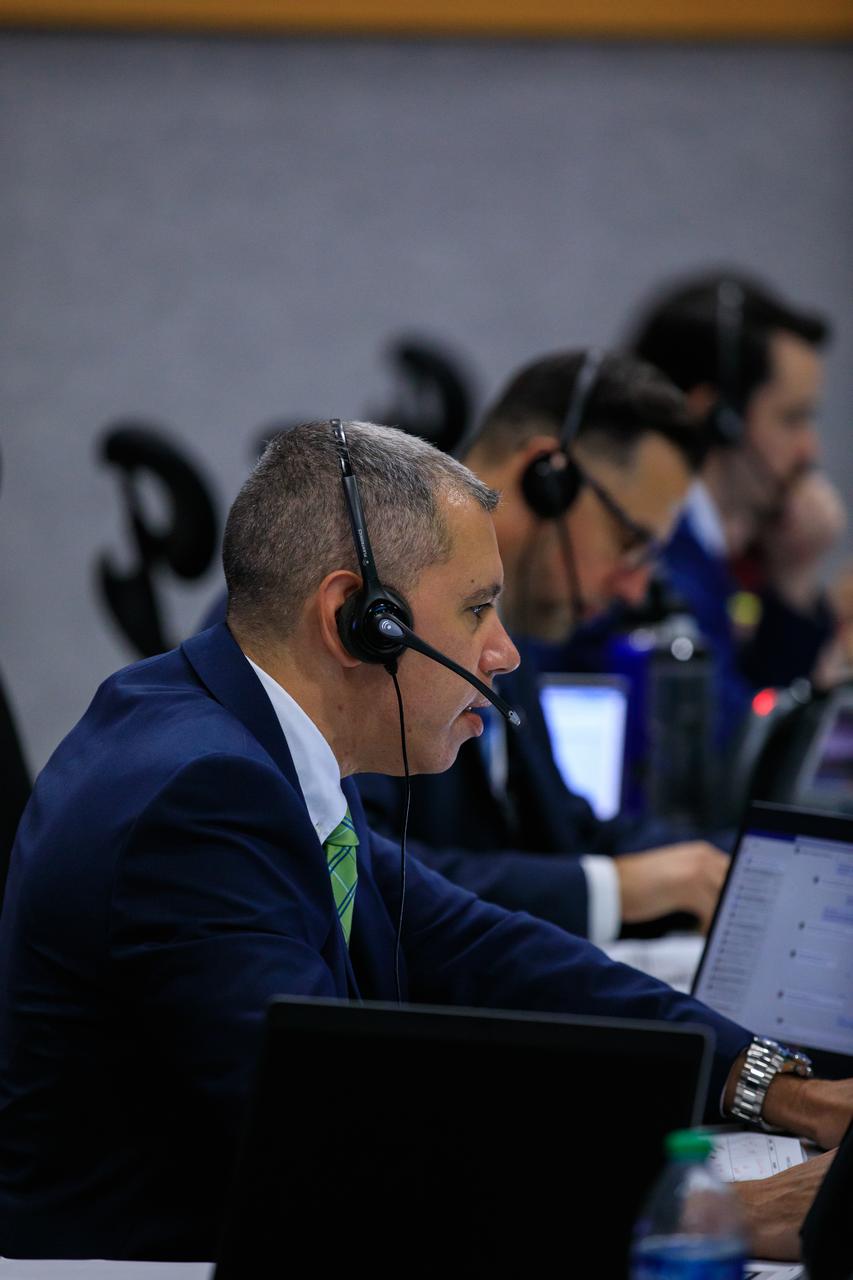
NASA Test Director Danny Zeno monitors launch countdown activities inside Firing Room 1 of the Launch Control Center at NASA’s Kennedy Space Center in Florida on Nov. 16, 2022. Liftoff of the agency’s Space Launch System and Orion spacecraft from Launch Complex 39B was at 1:47 a.m. EST. The first in a series of increasingly complex missions, Artemis I will provide a foundation for human deep space exploration and demonstrate our commitment and capability to extend human presence to the Moon and beyond. The primary goal of Artemis I is to thoroughly test the integrated systems before crewed missions by operating the spacecraft in a deep space environment, testing Orion’s heat shield, and recovering the crew module after reentry, descent, and splashdown.
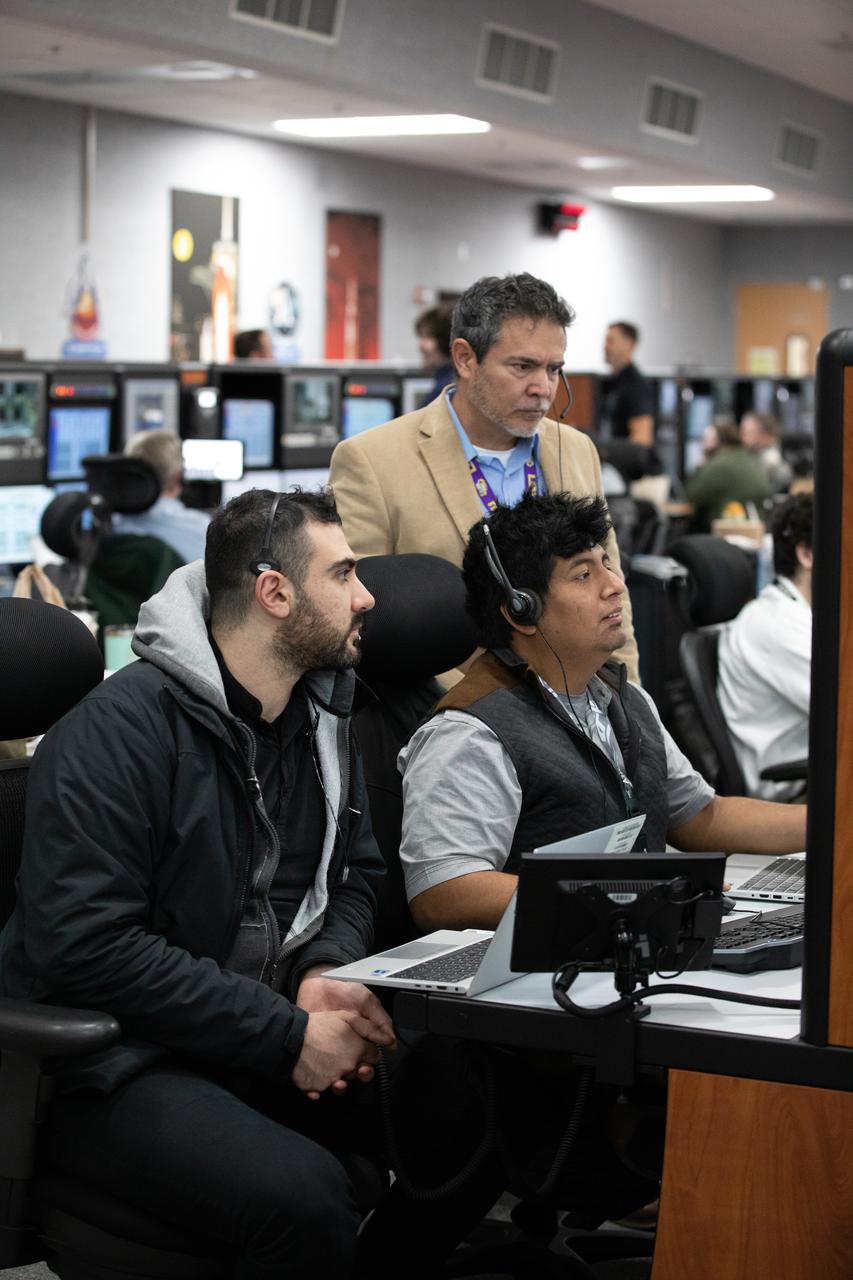
Members of the Artemis launch team participate in an Artemis II launch countdown simulation inside Firing Room 1 in the Launch Control Center at NASA’s Kennedy Space Center in Florida on Thursday, Jan. 23, 2025. The simulations go through launch day scenarios to help launch team members test software and make adjustments if needed during countdown operations. For Artemis II, four astronauts will venture around the Moon, the first crewed mission on NASA’s path to establishing a long-term presence for science and exploration through Artemis.
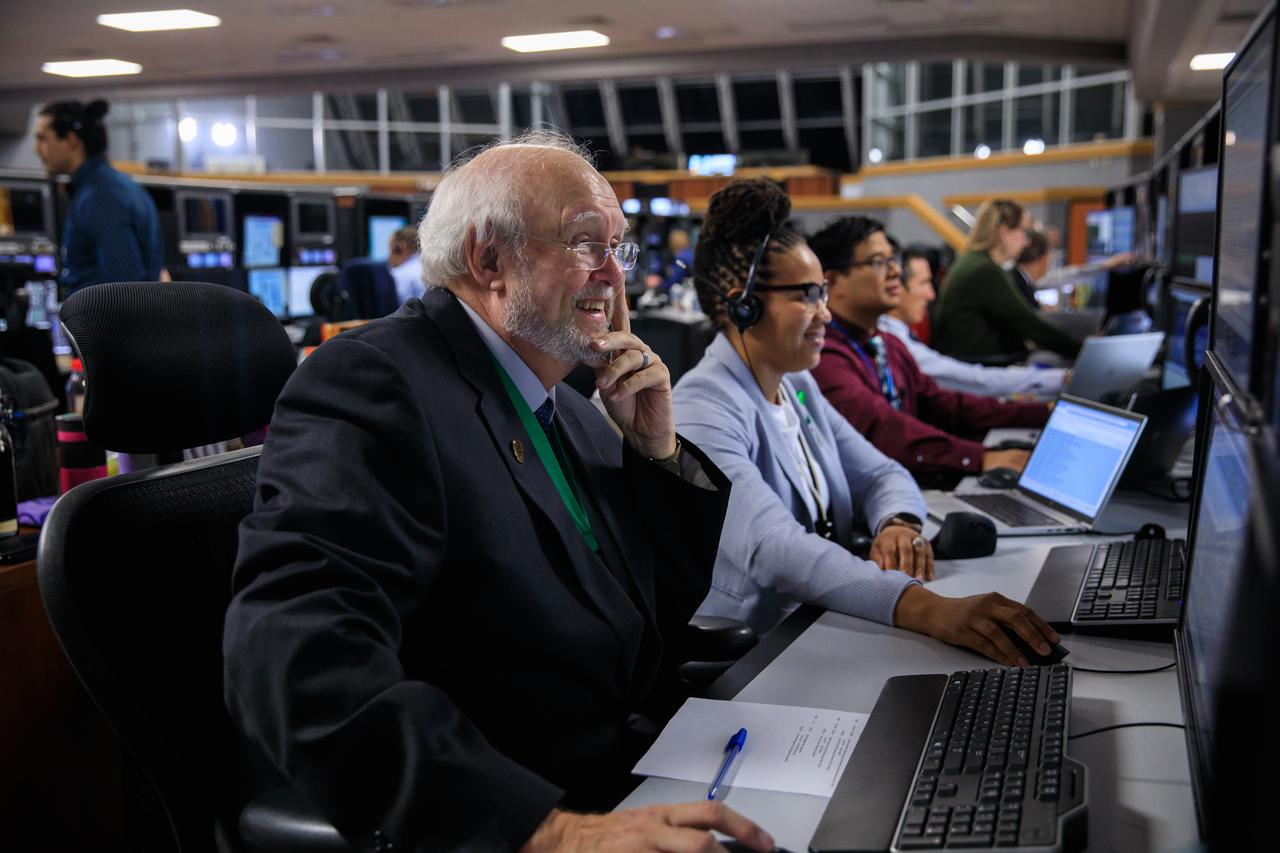
Artemis I launch team members are at their consoles in Launch Control Center Firing Room 1 at NASA’s Kennedy Space Center in Florida during countdown and liftoff of the agency’s Space Launch System and Orion spacecraft from Launch Complex 39B on Nov. 16, 2022. Liftoff was at 1:47 a.m. EST. The first in a series of increasingly complex missions, Artemis I will provide a foundation for human deep space exploration and demonstrate our commitment and capability to extend human presence to the Moon and beyond. The primary goal of Artemis I is to thoroughly test the integrated systems before crewed missions by operating the spacecraft in a deep space environment, testing Orion’s heat shield, and recovering the crew module after reentry, descent, and splashdown.
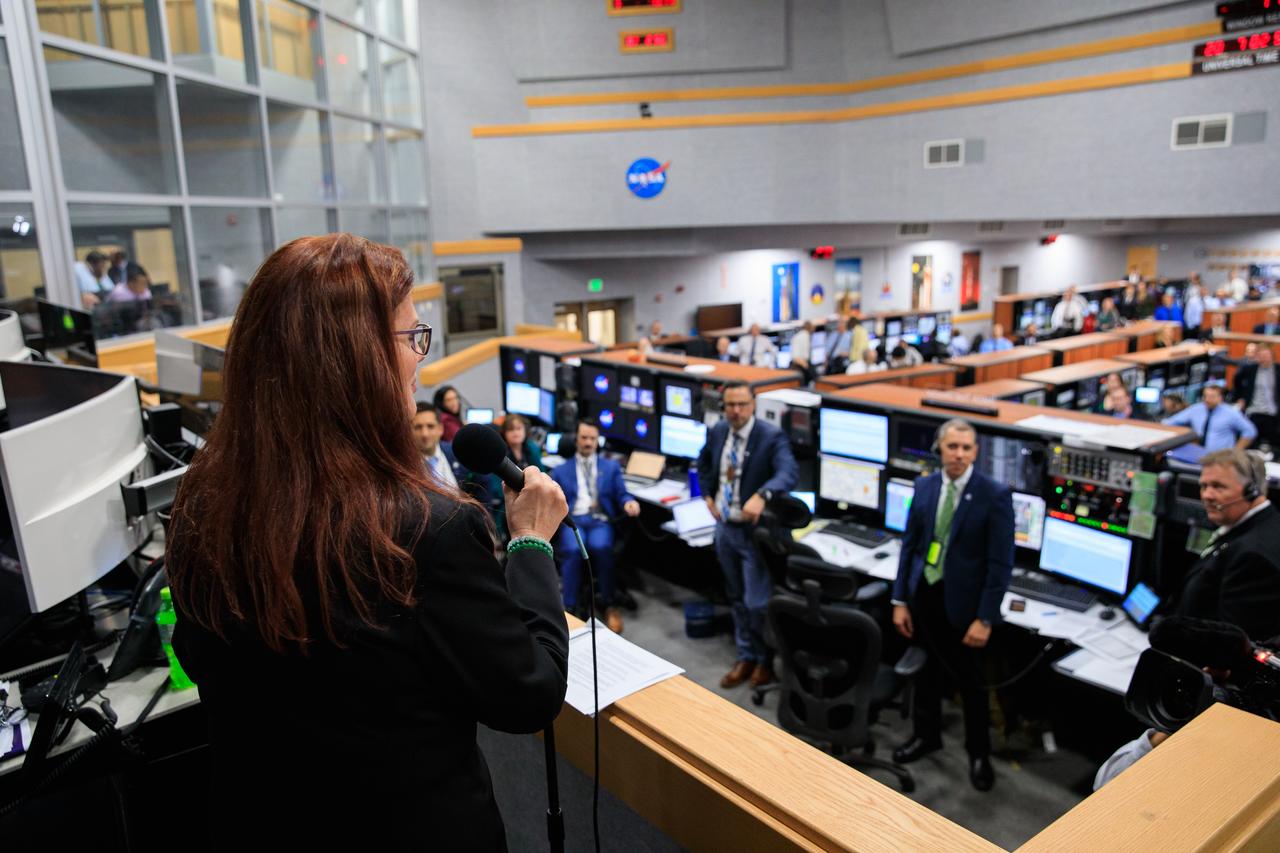
Artemis I Launch Director Charlie Blackwell-Thompson congratulates the launch team after NASA’s Space Launch System and Orion spacecraft lift off from Launch Complex 39B at Kennedy Space Center in Florida on Nov. 16, 2022. Liftoff was at 1:47 a.m. EST. The first in a series of increasingly complex missions, Artemis I will provide a foundation for human deep space exploration and demonstrate our commitment and capability to extend human presence to the Moon and beyond. The primary goal of Artemis I is to thoroughly test the integrated systems before crewed missions by operating the spacecraft in a deep space environment, testing Orion’s heat shield, and recovering the crew module after reentry, descent, and splashdown.
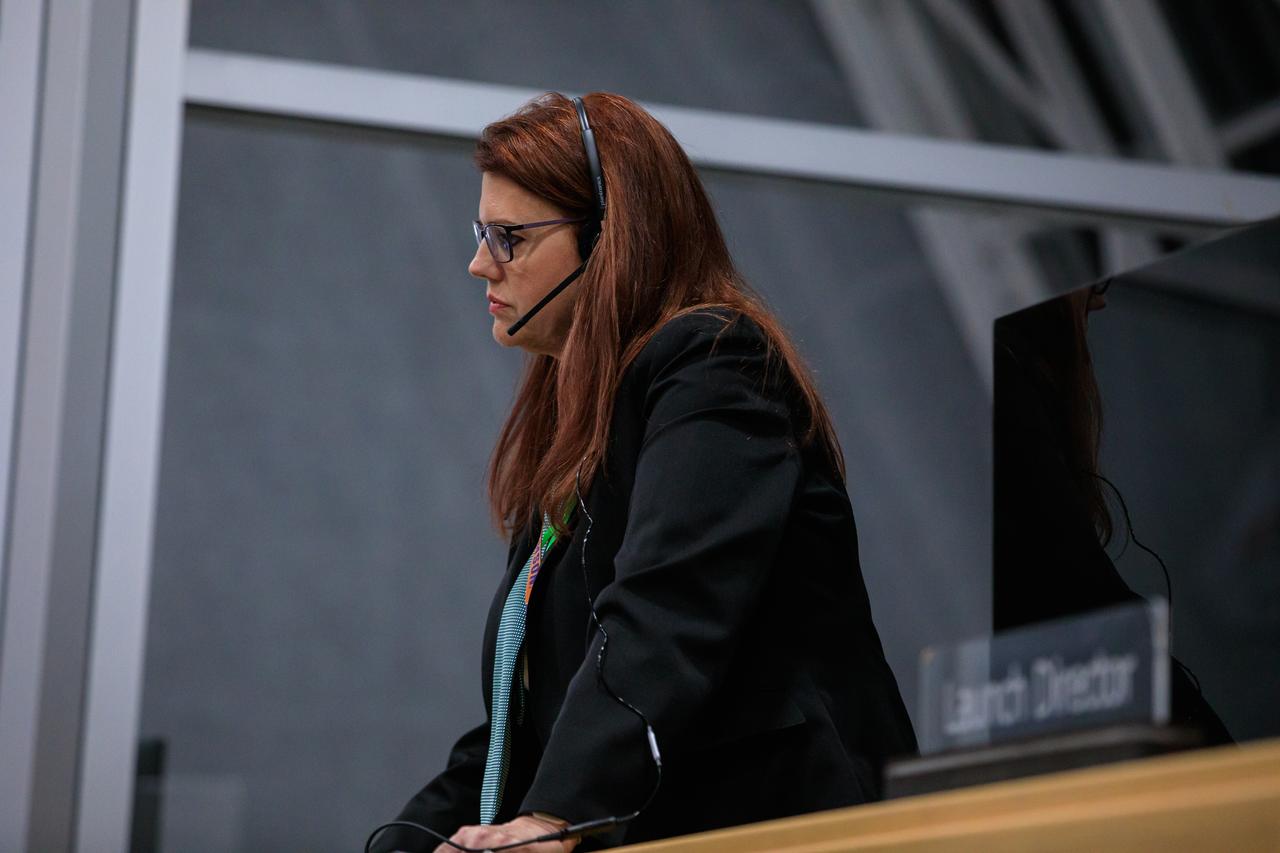
Artemis I Launch Director Charlie Blackwell-Thompson leads launch countdown activities inside Firing Room 1 of the Launch Control Center at NASA’s Kennedy Space Center in Florida on Nov. 16, 2022. Liftoff of the agency’s Space Launch System and Orion spacecraft from Launch Complex 39B was at 1:47 a.m. EST. The first in a series of increasingly complex missions, Artemis I will provide a foundation for human deep space exploration and demonstrate our commitment and capability to extend human presence to the Moon and beyond. The primary goal of Artemis I is to thoroughly test the integrated systems before crewed missions by operating the spacecraft in a deep space environment, testing Orion’s heat shield, and recovering the crew module after reentry, descent, and splashdown.
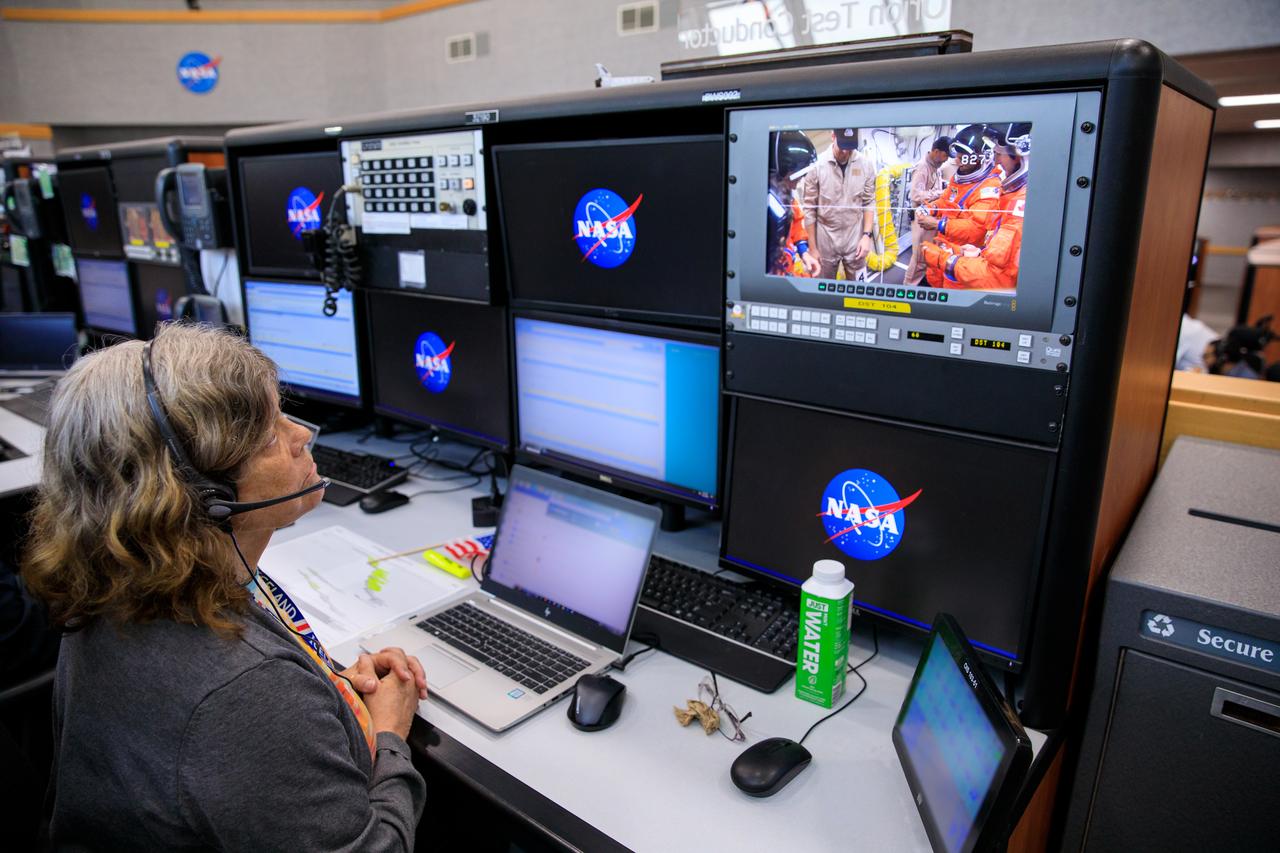
A member of the Artemis II launch team monitors activities during the launch day demonstration for one of the Artemis II integrated ground systems tests from Firing Room 1 in the Launch Control Center at Kennedy Space Center in Florida on Wednesday, Sept. 20. This is part of a series of tests to ensure the ground systems team is ready to support the crew timeline on launch day. Artemis II is the first mission with astronauts under Artemis that will test and check out all of the Orion spacecraft’s systems needed for future crewed missions.

Artemis I Launch Director Charlie Blackwell-Thompson congratulates the launch team after NASA’s Space Launch System and Orion spacecraft lift off from Launch Complex 39B at Kennedy Space Center in Florida on Nov. 16, 2022. Liftoff was at 1:47 a.m. EST. The first in a series of increasingly complex missions, Artemis I will provide a foundation for human deep space exploration and demonstrate our commitment and capability to extend human presence to the Moon and beyond. The primary goal of Artemis I is to thoroughly test the integrated systems before crewed missions by operating the spacecraft in a deep space environment, testing Orion’s heat shield, and recovering the crew module after reentry, descent, and splashdown.
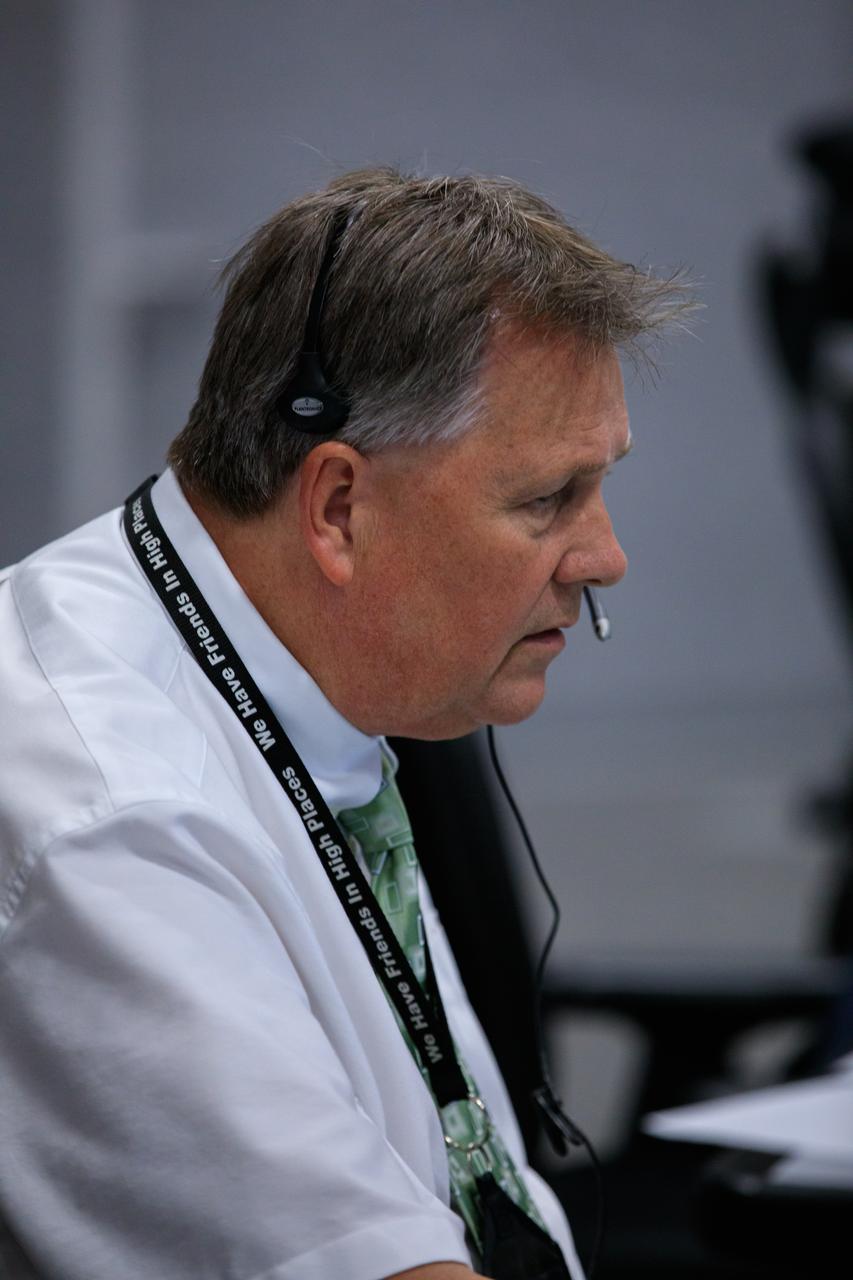
NASA Test Director Jeff Spaulding monitors launch countdown activities inside Firing Room 1 of the Launch Control Center at NASA’s Kennedy Space Center in Florida on Nov. 16, 2022. Liftoff of the agency’s Space Launch System and Orion spacecraft from Launch Complex 39B was at 1:47 a.m. EST. The first in a series of increasingly complex missions, Artemis I will provide a foundation for human deep space exploration and demonstrate our commitment and capability to extend human presence to the Moon and beyond. The primary goal of Artemis I is to thoroughly test the integrated systems before crewed missions by operating the spacecraft in a deep space environment, testing Orion’s heat shield, and recovering the crew module after reentry, descent, and splashdown.
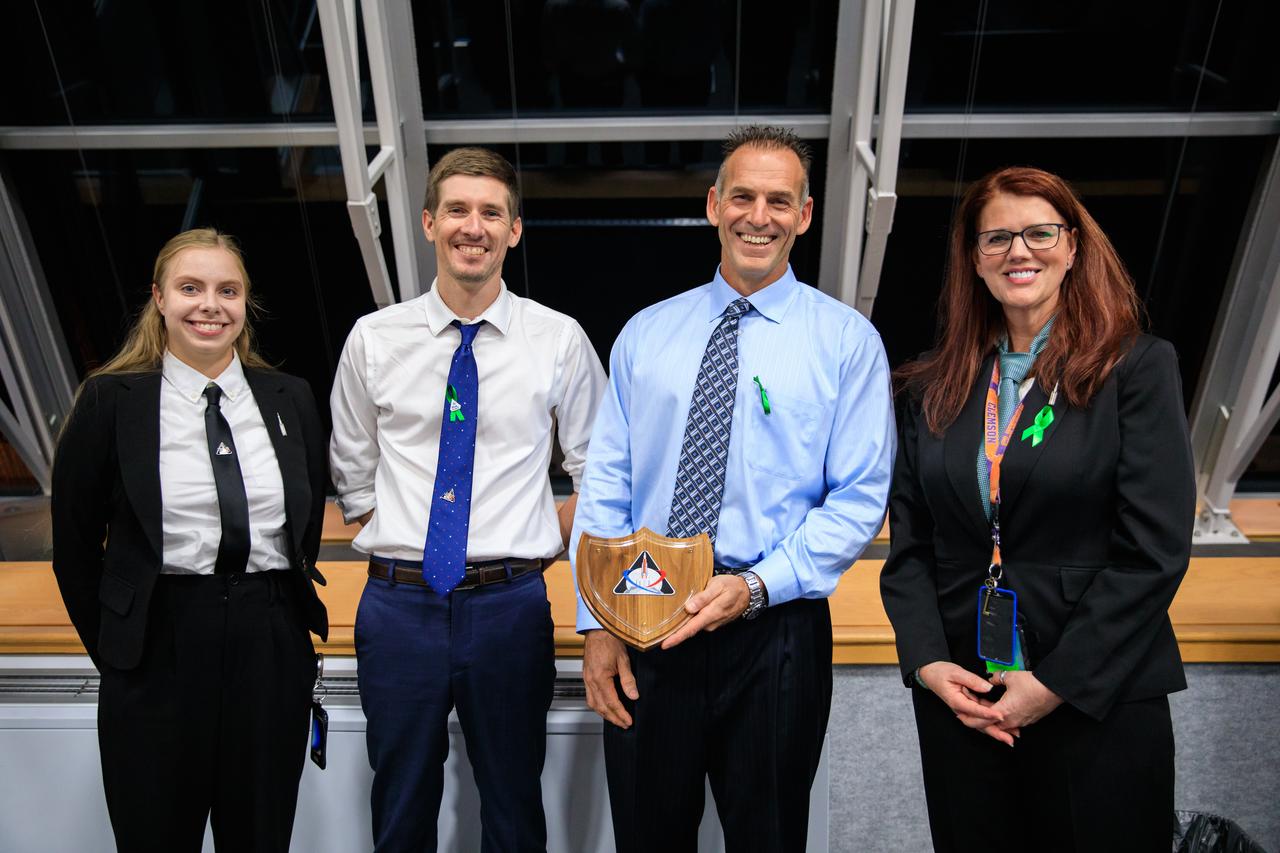
Inside Launch Control Center Firing Room 1 at NASA’s Kennedy Space Center in Florida, Artemis I launch team members and Artemis I Launch Director Charlie Blackwell-Thompson, at right, celebrate the successful launch of the agency’s Artemis I Space Launch System and Orion spacecraft from Launch Complex 39B on Nov. 16, 2022. Liftoff was at 1:47 a.m. EST. The first in a series of increasingly complex missions, Artemis I will provide a foundation for human deep space exploration and demonstrate our commitment and capability to extend human presence to the Moon and beyond. The primary goal of Artemis I is to thoroughly test the integrated systems before crewed missions by operating the spacecraft in a deep space environment, testing Orion’s heat shield, and recovering the crew module after reentry, descent, and splashdown.
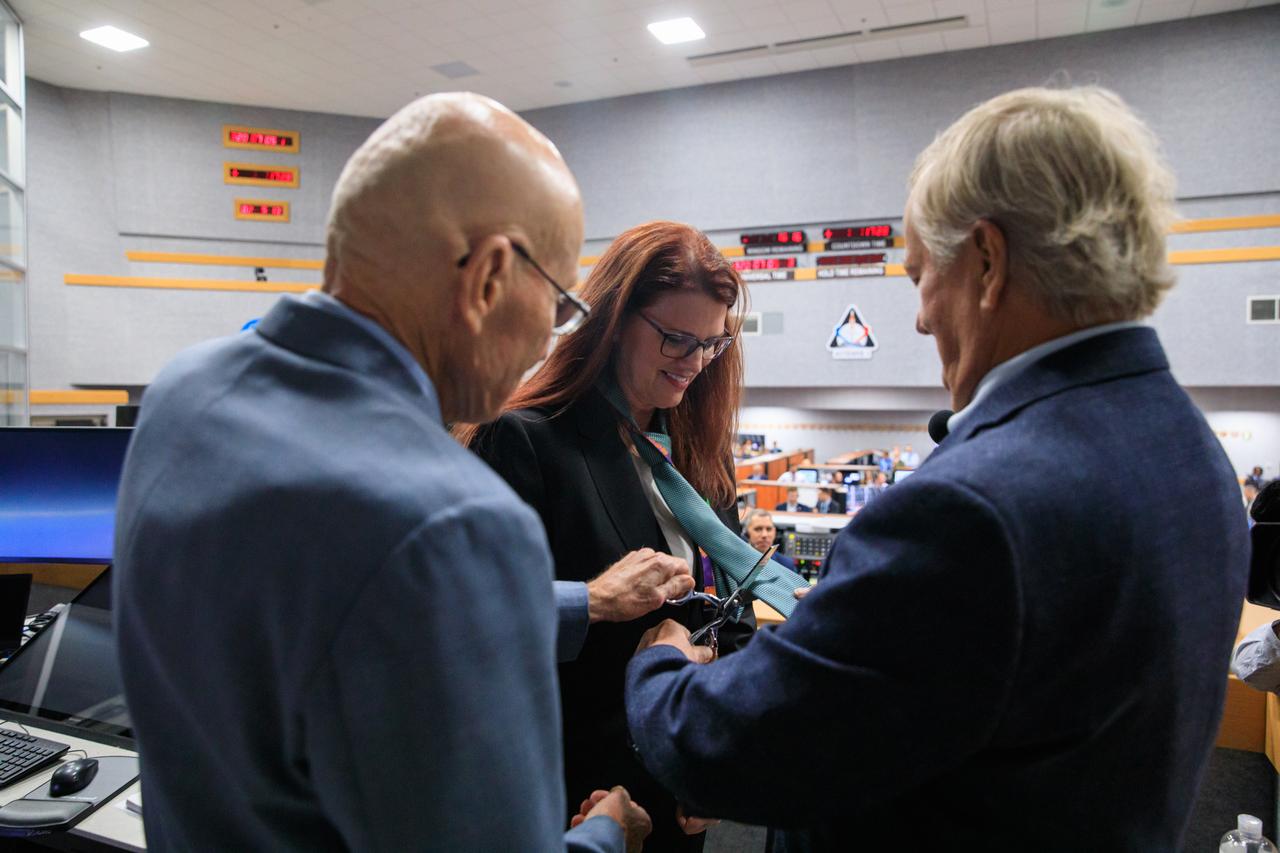
Former space shuttle launch directors Mike Leinbach, at right, and Bob Sieck perform the traditional cutting of the tie for Artemis I Launch Director Charlie Blackwell-Thompson inside the Launch Control Center at NASA’s Kennedy Space Center in Florida, after the launch of the agency’s Space Launch System and Orion spacecraft from Launch Complex 39B on Nov. 16, 2022. Liftoff was at 1:47 a.m. EST. The first in a series of increasingly complex missions, Artemis I will provide a foundation for human deep space exploration and demonstrate our commitment and capability to extend human presence to the Moon and beyond. The primary goal of Artemis I is to thoroughly test the integrated systems before crewed missions by operating the spacecraft in a deep space environment, testing Orion’s heat shield, and recovering the crew module after reentry, descent, and splashdown.
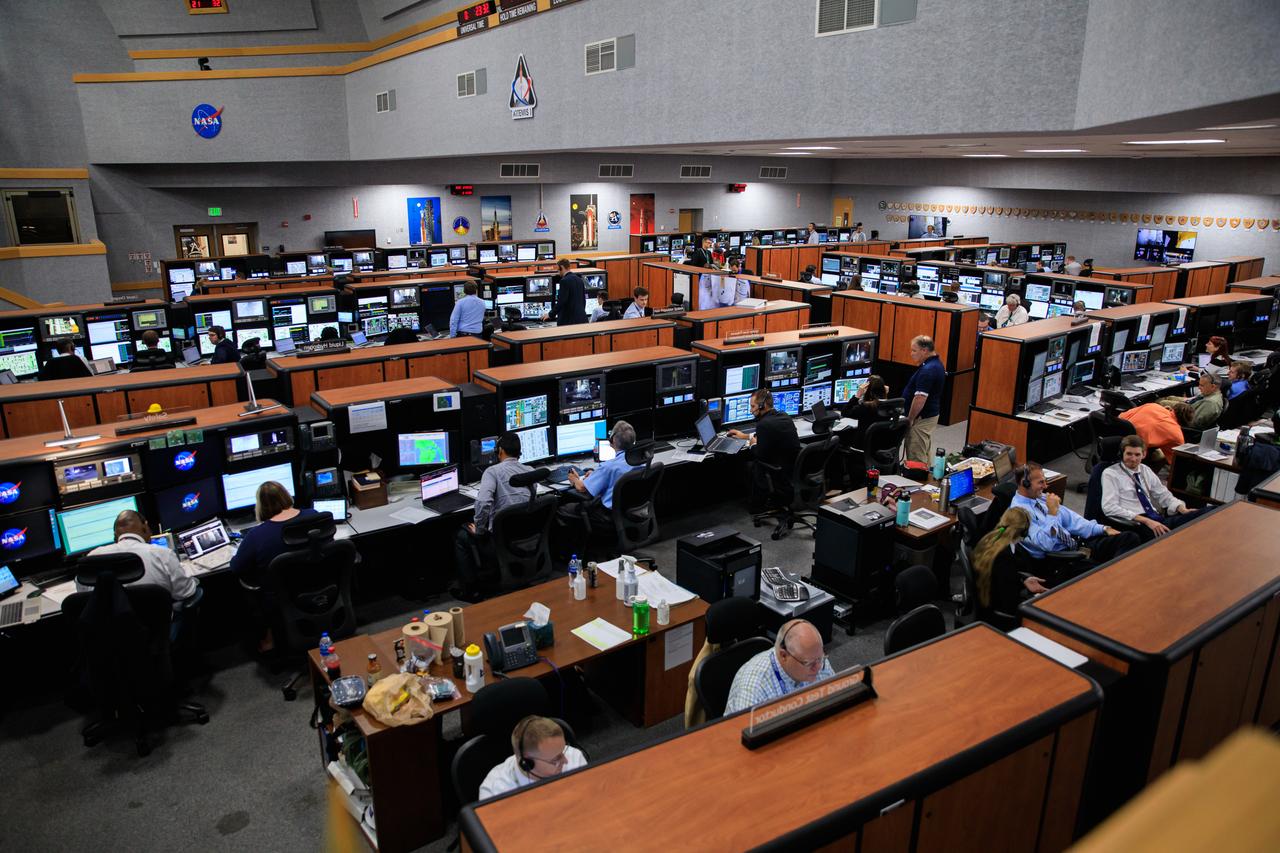
Artemis I launch team members are at their consoles in Launch Control Center Firing Room 1 at NASA’s Kennedy Space Center in Florida during countdown and liftoff of the agency’s Space Launch System and Orion spacecraft from Launch Complex 39B on Nov. 16, 2022. Liftoff was at 1:47 a.m. EST. The first in a series of increasingly complex missions, Artemis I will provide a foundation for human deep space exploration and demonstrate our commitment and capability to extend human presence to the Moon and beyond. The primary goal of Artemis I is to thoroughly test the integrated systems before crewed missions by operating the spacecraft in a deep space environment, testing Orion’s heat shield, and recovering the crew module after reentry, descent, and splashdown.