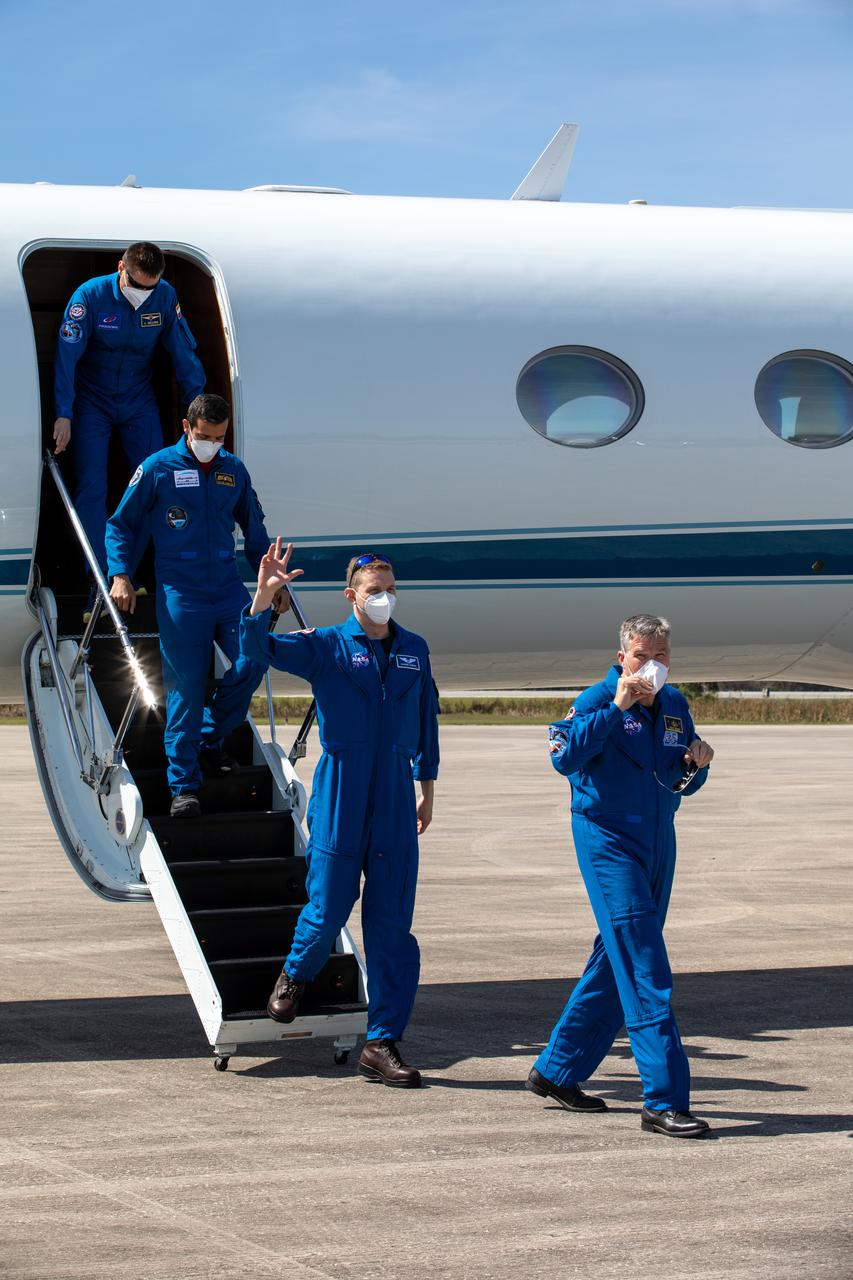
Crew members for NASA’s SpaceX Crew-6 mission to the International Space Station arrive at Kennedy Space Center’s Launch and Landing Facility in Florida on Feb. 21, 2023. From the front are NASA astronauts Stephen Bowen and Warren “Woody” Hoburg, UAE (United Arab Emirates) astronaut Sultan Alneyadi, and Roscosmos cosmonaut Andrey Fedyaev. The crew will head to the center’s Astronaut Crew Quarters as they await launch aboard the Crew Dragon on a SpaceX Falcon 9 rocket. Launch is targeted for no earlier than Feb. 26 at 2:07 a.m. EST. Crew-6 is the sixth crew rotation mission with SpaceX to the station, and the seventh flight of Dragon with people as part of the agency’s Commercial Crew Program.
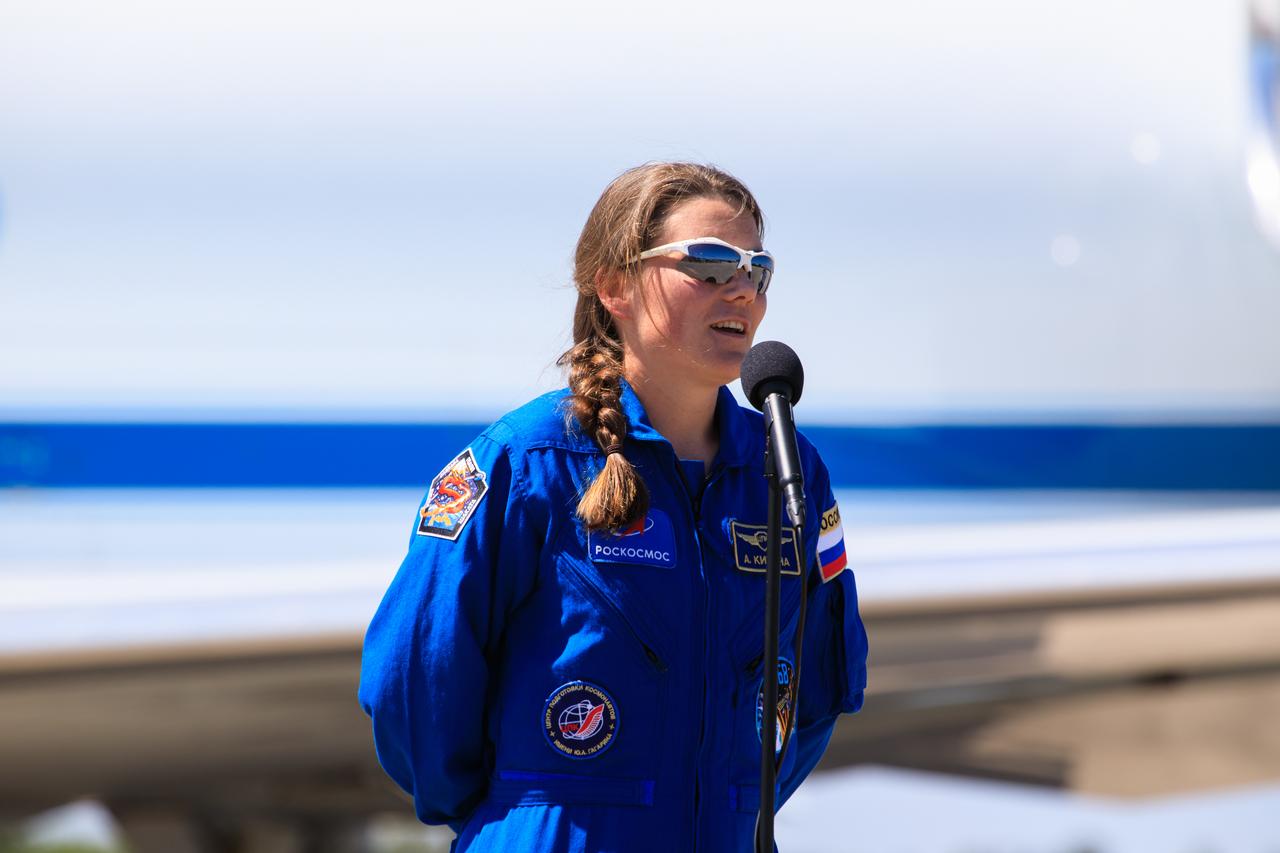
Roscosmos cosmonaut Anna Kikina speaks to members of the news media during crew arrival for NASA’s SpaceX Crew-5 mission at the Launch and Landing Facility at Kennedy Space Center in Florida on Oct. 1, 2022. The astronauts will launch aboard the Crew Dragon on a SpaceX Falcon 9 rocket on Oct. 5. Launch is targeted for noon EDT from Launch Complex 39A. Crew-5 is the fifth crew rotation mission with SpaceX to the station, and the sixth flight of Dragon with people as part of the agency’s Commercial Crew Program.
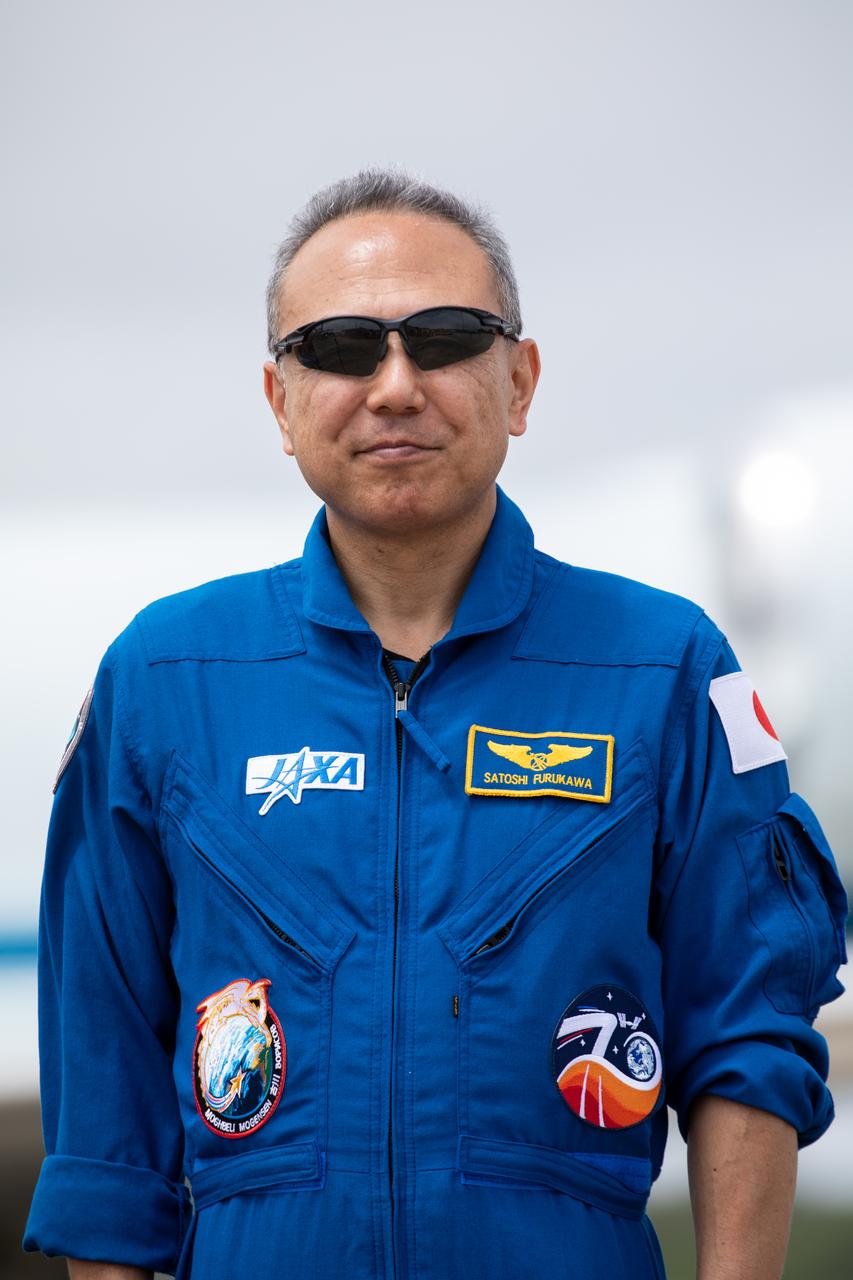
NASA’s SpaceX Crew-7 crew member and JAXA (Japan Aerospace Exploration Agency) astronaut Satoshi Furukawa smiles to the crowd after arriving at the Launch and Landing Facility at Kennedy Space Center in Florida – along with the rest of his crewmates – on Sunday, Aug. 20, 2023. Crew-7 will launch to the International Space Station aboard SpaceX’s Dragon spacecraft on the company’s Falcon 9 rocket. Liftoff is targeted for 3:49 a.m. EDT Friday, Aug. 25, 2023, from Kennedy’s Launch Complex 39A.
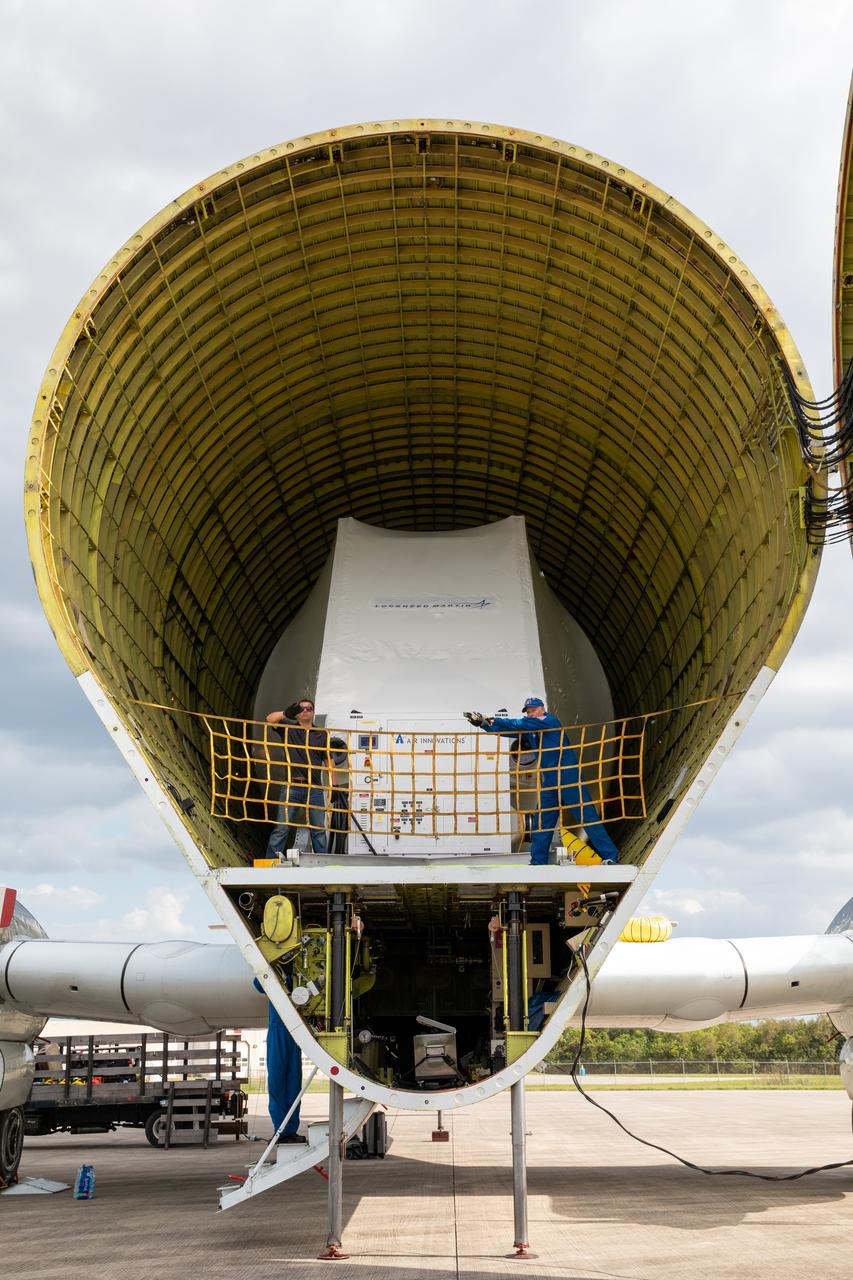
NASA’s Orion spacecraft, protected in its shipping container, is removed from the agency’s Super Guppy aircraft at the Launch and Landing Facility runway at Kennedy Space Center on March 25, 2020, for transportation to the Neil Armstrong Operations and Checkout Building. After testing at NASA’s Plum Brook Station in Ohio verified it can handle the extreme conditions of a deep-space environment, the spacecraft has returned to the Florida spaceport for final testing and assembly. Following this, it will be integrated with the Space Launch System rocket for Artemis I – the first in a series of increasingly complex missions to the Moon that will ultimately lead to the exploration of Mars.
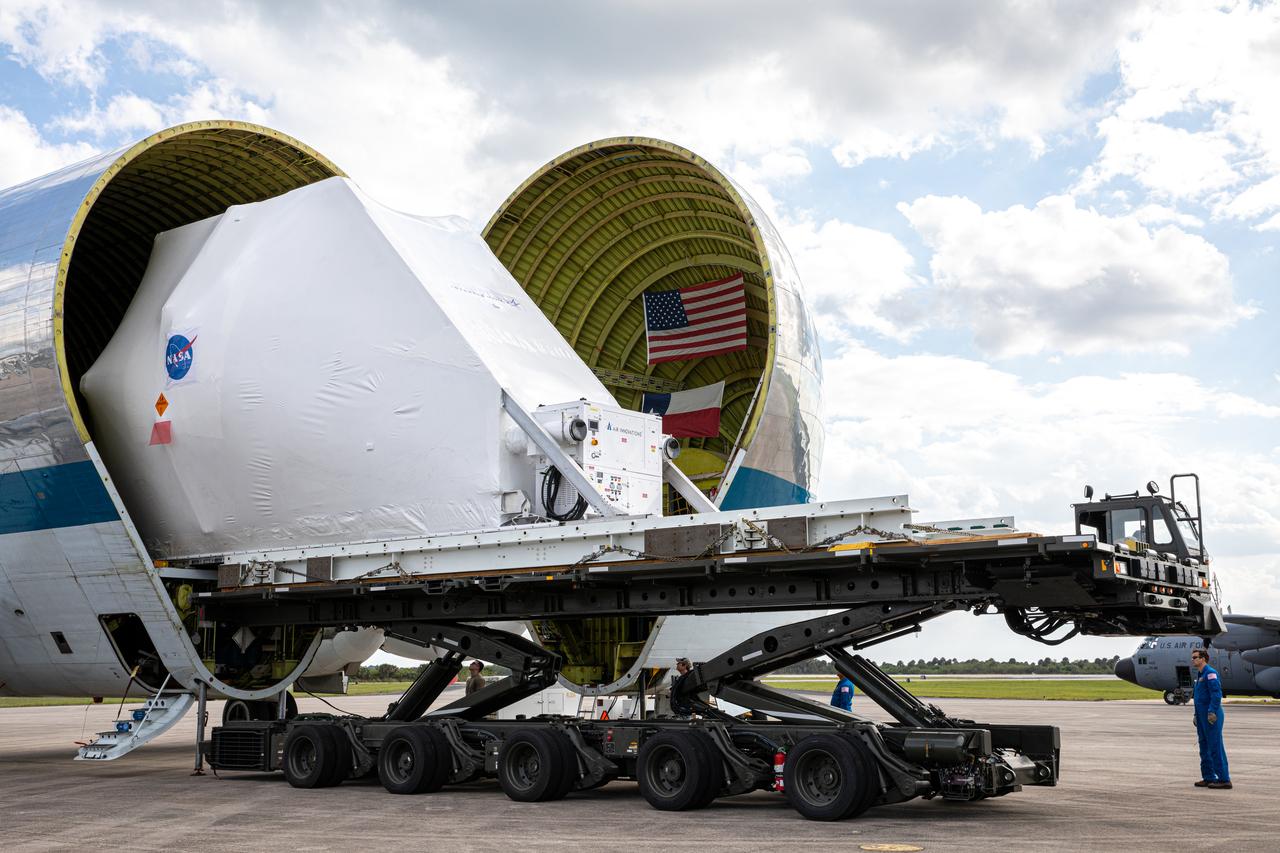
NASA’s Orion spacecraft, protected in its shipping container, is removed from the agency’s Super Guppy aircraft at the Launch and Landing Facility runway at Kennedy Space Center on March 25, 2020, for transportation to the Neil Armstrong Operations and Checkout Building. After testing at NASA’s Plum Brook Station in Ohio verified it can handle the extreme conditions of a deep-space environment, the spacecraft has returned to the Florida spaceport for final testing and assembly. Following this, it will be integrated with the Space Launch System rocket for Artemis I – the first in a series of increasingly complex missions to the Moon that will ultimately lead to the exploration of Mars.
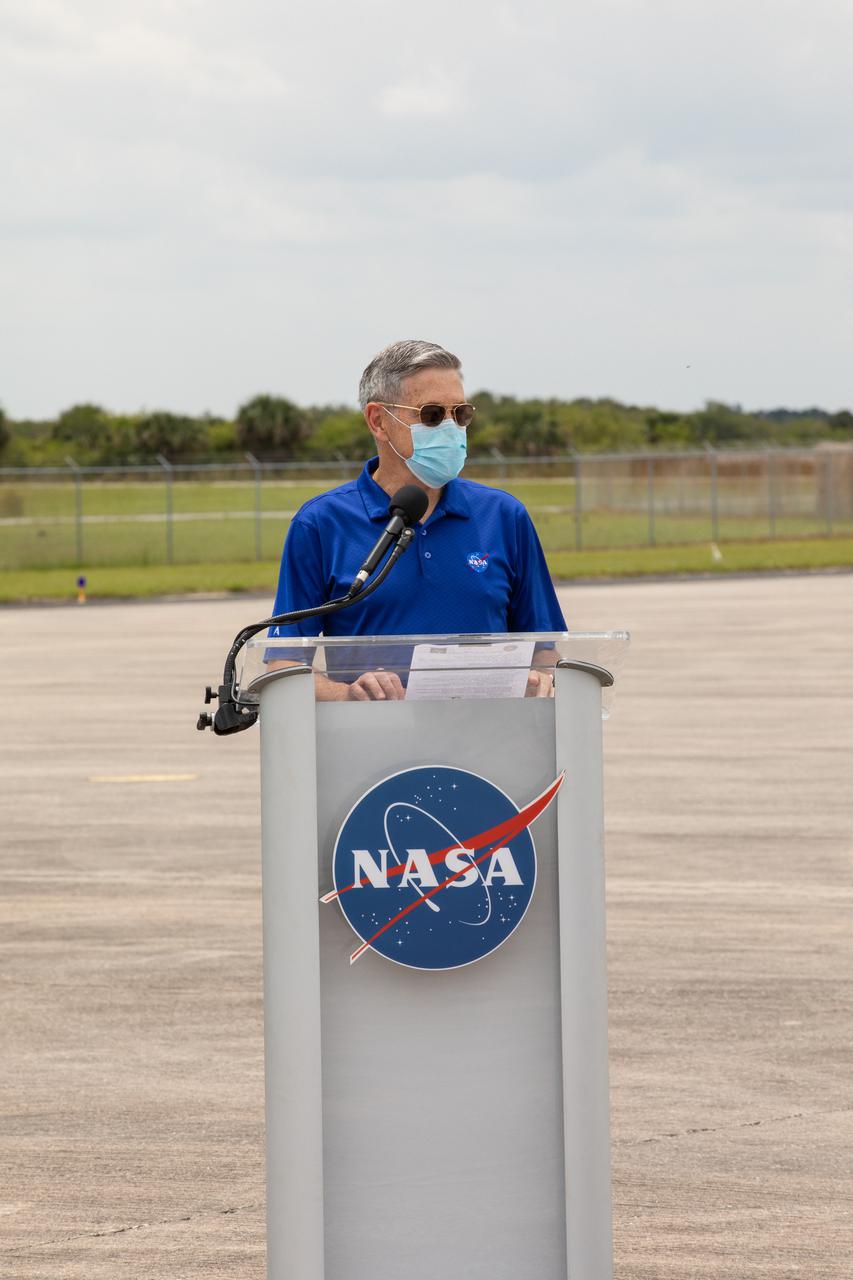
Kennedy Space Center Director Bob Cabana speaks during NASA’s SpaceX Crew-2 arrival media event held at the Florida spaceport on April 16, 2021. NASA astronauts Shane Kimbrough and Megan McArthur, JAXA astronaut Akihiko Hoshide, and ESA astronaut Thomas Pesquet, who arrived at Kennedy just minutes before the media event, will fly to the International Space Station on NASA’s SpaceX Crew-2 mission. Liftoff is targeted for Thursday, April 22, at 6:11 a.m. EDT.
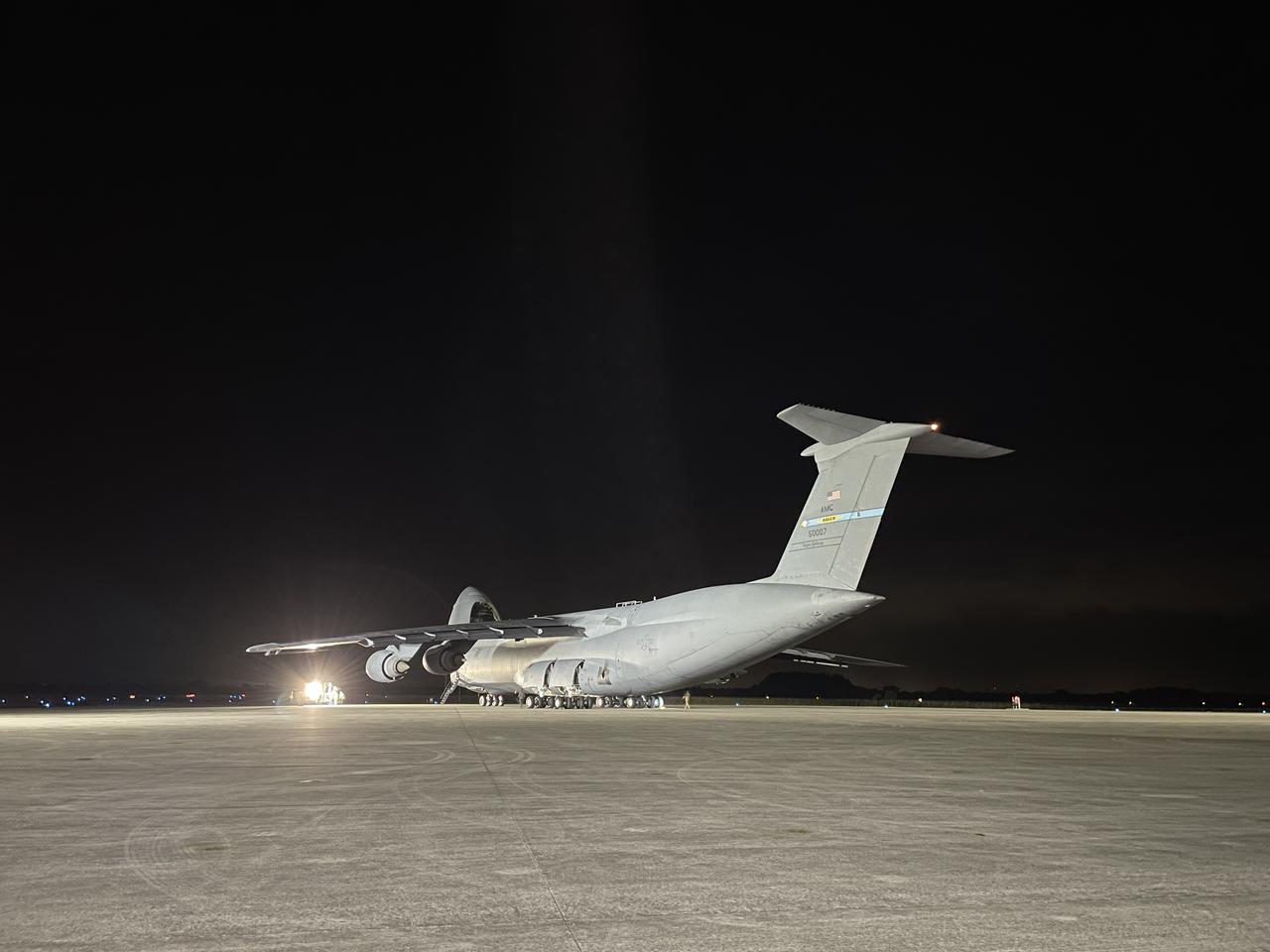
A C-5M Super Galaxy transport aircraft carrying NOAA’s Geostationary Operational Environmental Satellite-U (GOES-U) arrives at the Launch and Landing Facility at NASA’s Kennedy Space Center in Florida on Tuesday, Jan. 23, 2024. Crews offloaded and transported the satellite to the Astrotech Space Operations facility in nearby Titusville, Florida to prepare it for launch. Part of a collaborative NOAA and NASA program, GOES-U is the fourth in a series of four advanced geostationary weather satellites. Data from the GOES satellite constellation – consisting of the GOES-R, GOES-S, GOES-T and GOES-U spacecraft – enables forecasters to predict, observe, and track local weather events that affect public safety like thunderstorms, hurricanes, and wildfires.
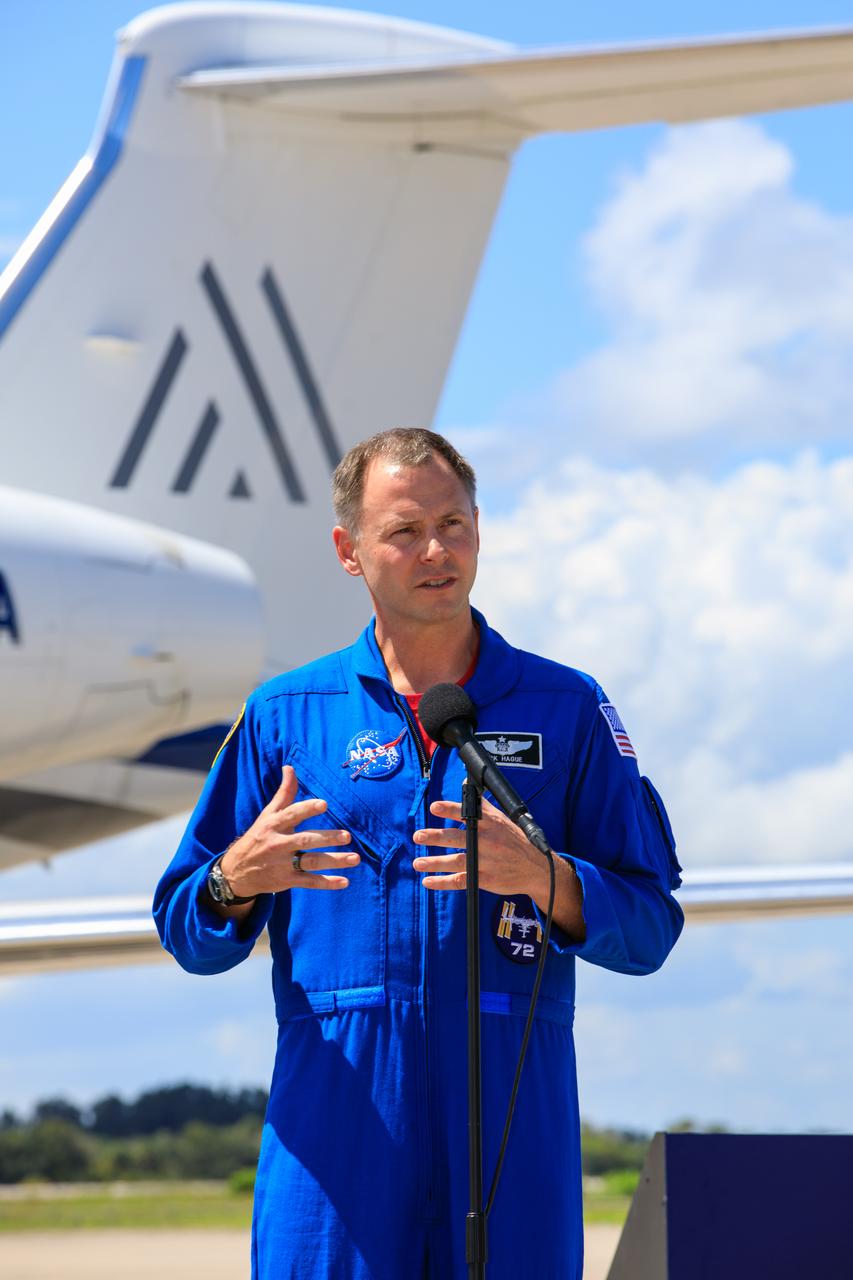
Representatives from NASA participate in a media event at the agency’s Kennedy Space Center in Florida on Saturday, Sept. 21, upon the arrival of NASA astronaut Nick Hague, commander, and Roscosmos cosmonaut Aleksandr Gorbunov, mission specialist, in advance of NASA’s SpaceX Crew-9 mission to the International Space Station as part of the agency’s Commercial Crew Program. Participants include Kelvin Manning, Kennedy Space Center deputy director, and Dana Hutcherson, deputy manager, NASA’s Commercial Crew Program. Launch is targeted for no earlier than 2:05 p.m. EDT Thursday, Sept. 26, 2024. The SpaceX Dragon spacecraft will launch on a Falcon 9 rocket from Space Launch Complex-40 at Cape Canaveral Space Force Station in Florida.
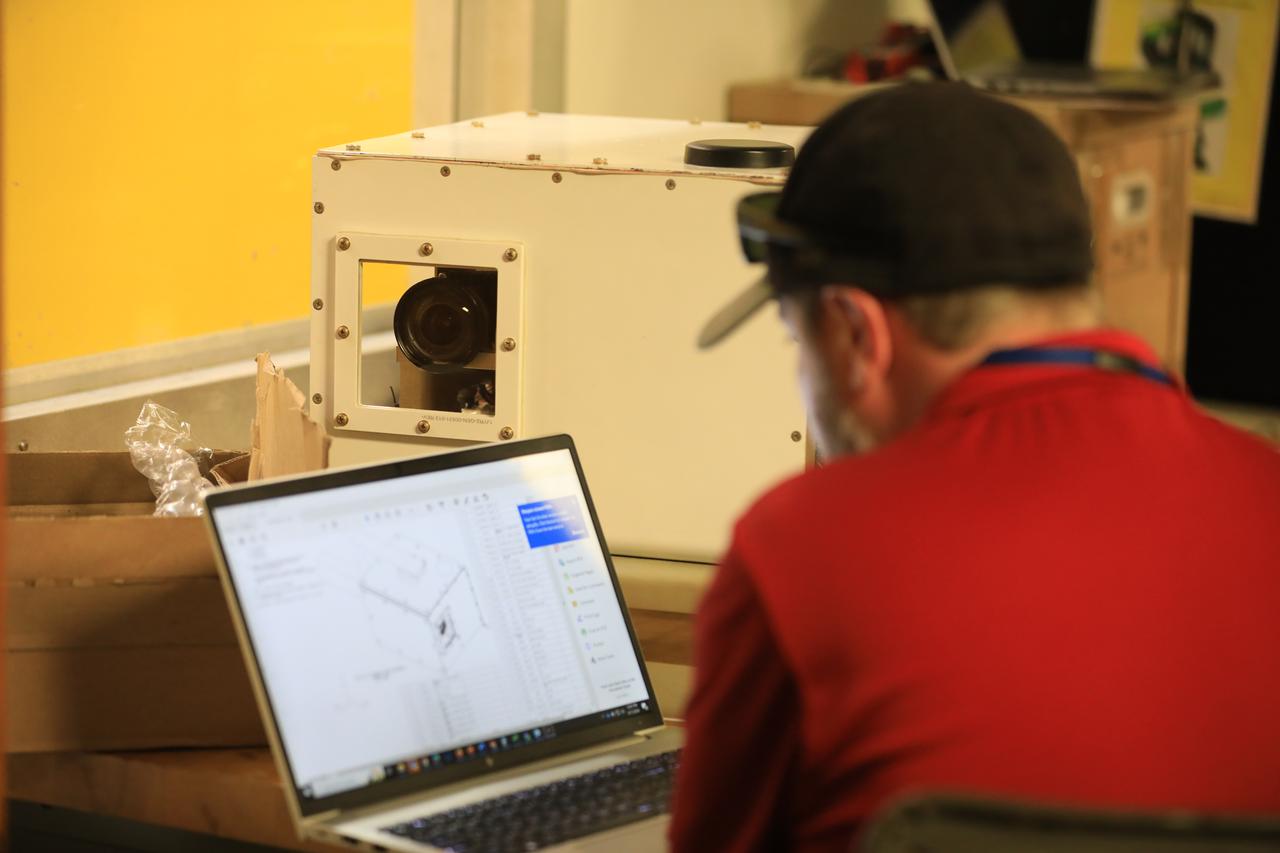
NASA researcher A.J. Jaffe prepares the NASA Airborne Instrumentation for Real-world Video of Urban Environments (AIRVUE) sensor pod for testing at NASA’s Kennedy Space Center in Cape Canaveral, Florida in April 2024. The AIRVUE pod will be used to collect data for autonomous aircraft like air taxis, drones, or other Advanced Air Mobility aircraft.
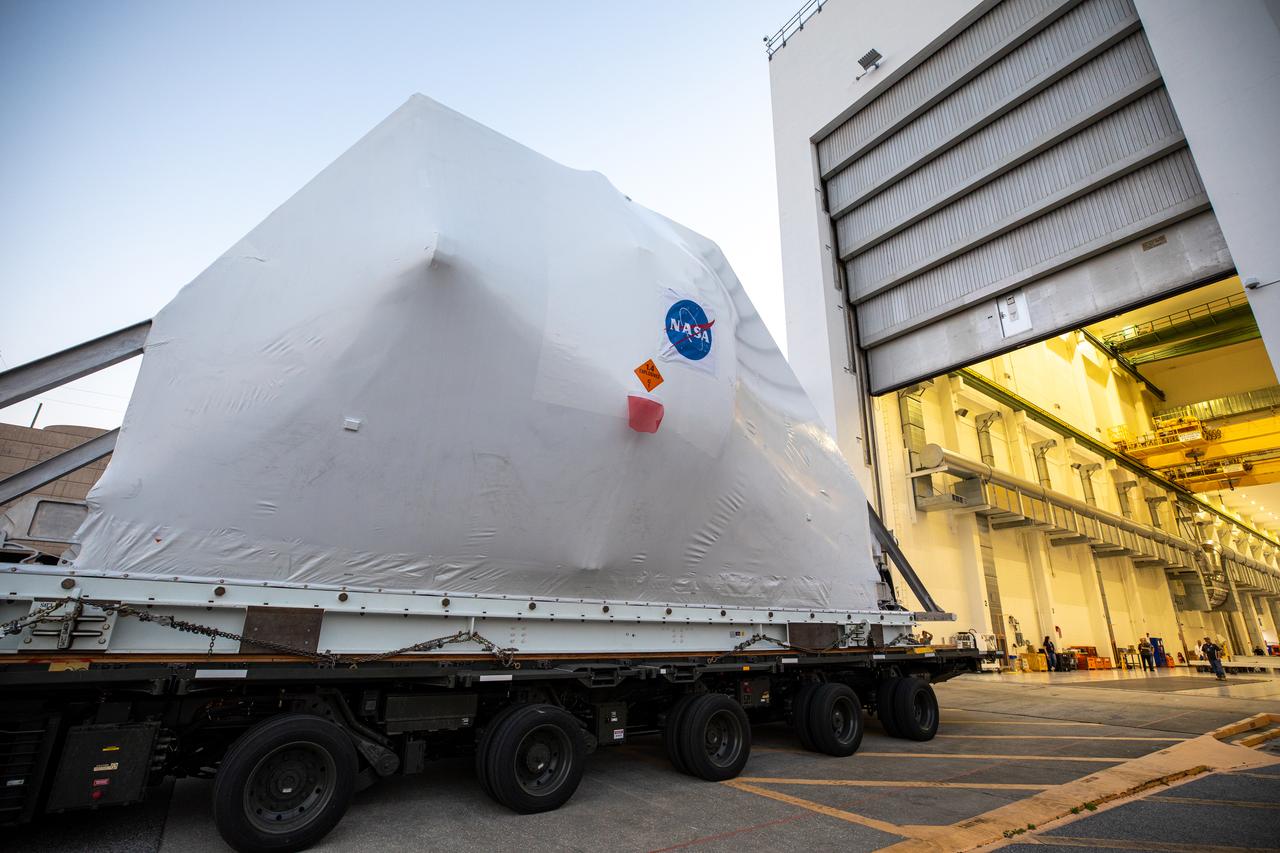
The Orion spacecraft, secured atop a transporter in its shipping container, arrives at the Neil Armstrong Operations and Checkout Building at NASA’s Kennedy Space Center in Florida on March 25, 2020, for final testing and assembly. The spacecraft was transported to Kennedy in NASA’s Super Guppy aircraft from the agency’s Plum Brook Station in Ohio, where it underwent two phase of environmental testing. Following these final preparations, Orion will be integrated with the Space Launch System rocket for the Artemis I launch – the first in a series of increasingly complex missions to the Moon that will ultimately lead to the exploration of Mars.
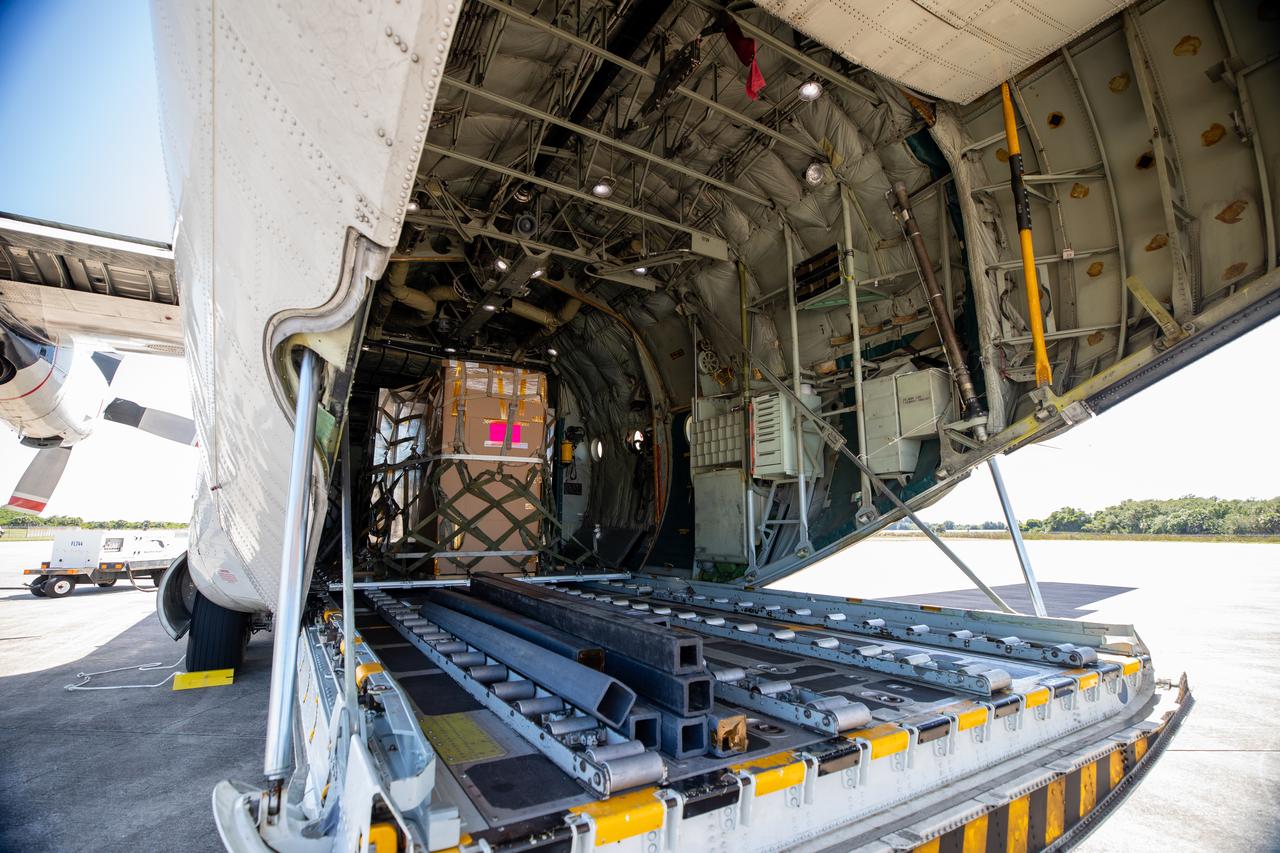
NASA’s C-130 aircraft cargo hold is open for offloading of the Adaptive Caching Assembly (ACA) for NASA’s Mars Perseverance rover at Kennedy Space Center’s Launch and Landing Facility in Florida on May 11, 2020. The ACA consists of seven motors and more than 3,000 parts, all working in unison to collect samples from the surface of Mars. A chief component of the assembly is the Sample Handling Arm, which will move sample tubes to the main robotic arm's coring drill and then transfer the filled sample tubes into a space to be sealed and stored. The Mars Perseverance rover is scheduled to launch in mid-July atop a United Launch Alliance Atlas V 541 rocket from Pad 41 at nearby Cape Canaveral Air Force Station. The rover is part of NASA’s Mars Exploration Program, a long-term effort of robotic exploration of the Red Planet. The rover will search for habitable conditions in the ancient past and signs of past microbial life on Mars. The Launch Services Program at Kennedy is responsible for launch management.
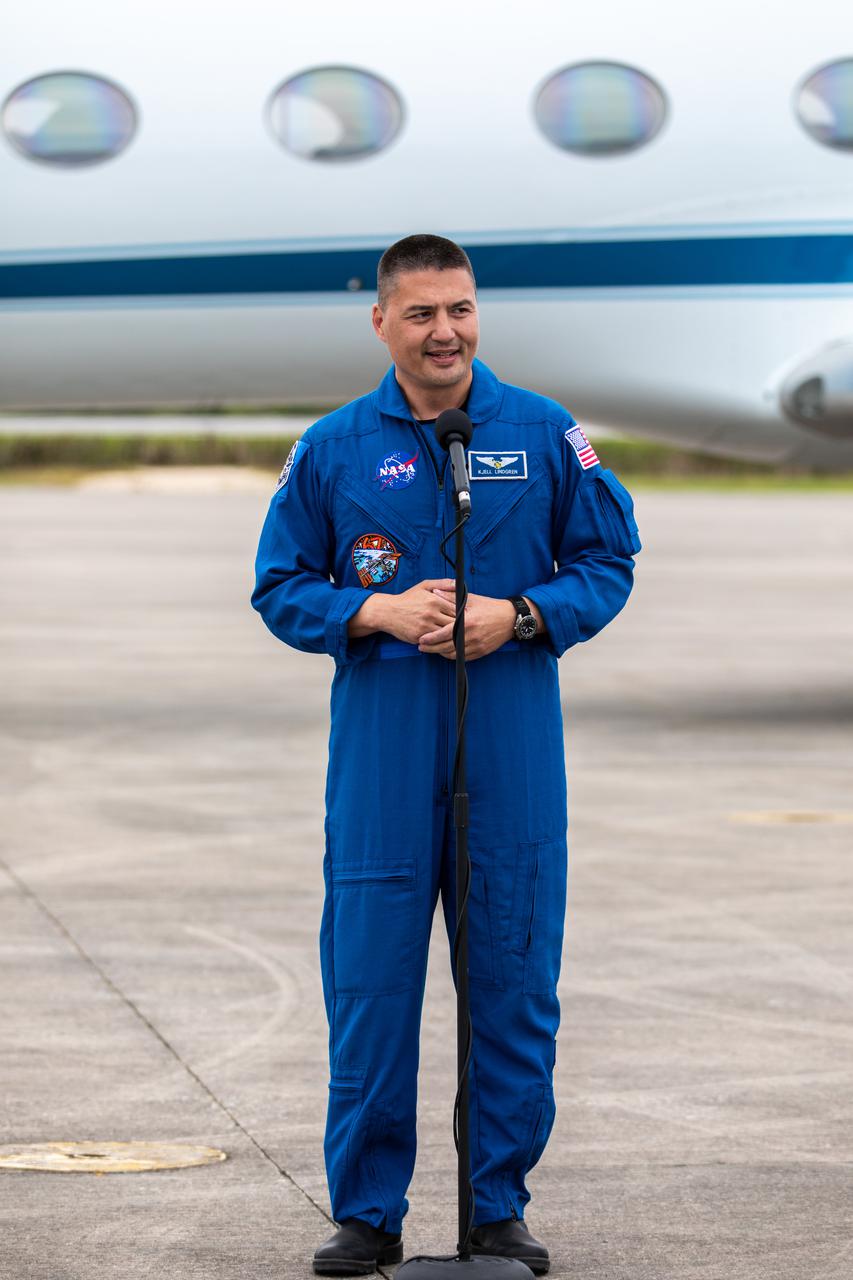
NASA astronaut Bob Hines speaks to members of the news media during crew arrival for NASA’s SpaceX Crew-4 mission at the Launch and Landing Facility at Kennedy Space Center in Florida on April 18, 2022. Hines, along with NASA astronauts Kjell Lindgren and Jessica Watkins, and ESA (European Space Agency) astronaut Samantha Cristoforetti, will launch aboard SpaceX’s Crew Dragon and Falcon 9 rocket on April 23, 2022. Launch is targeted for 5:26 a.m. EDT from Kennedy’s Launch Complex 39A.
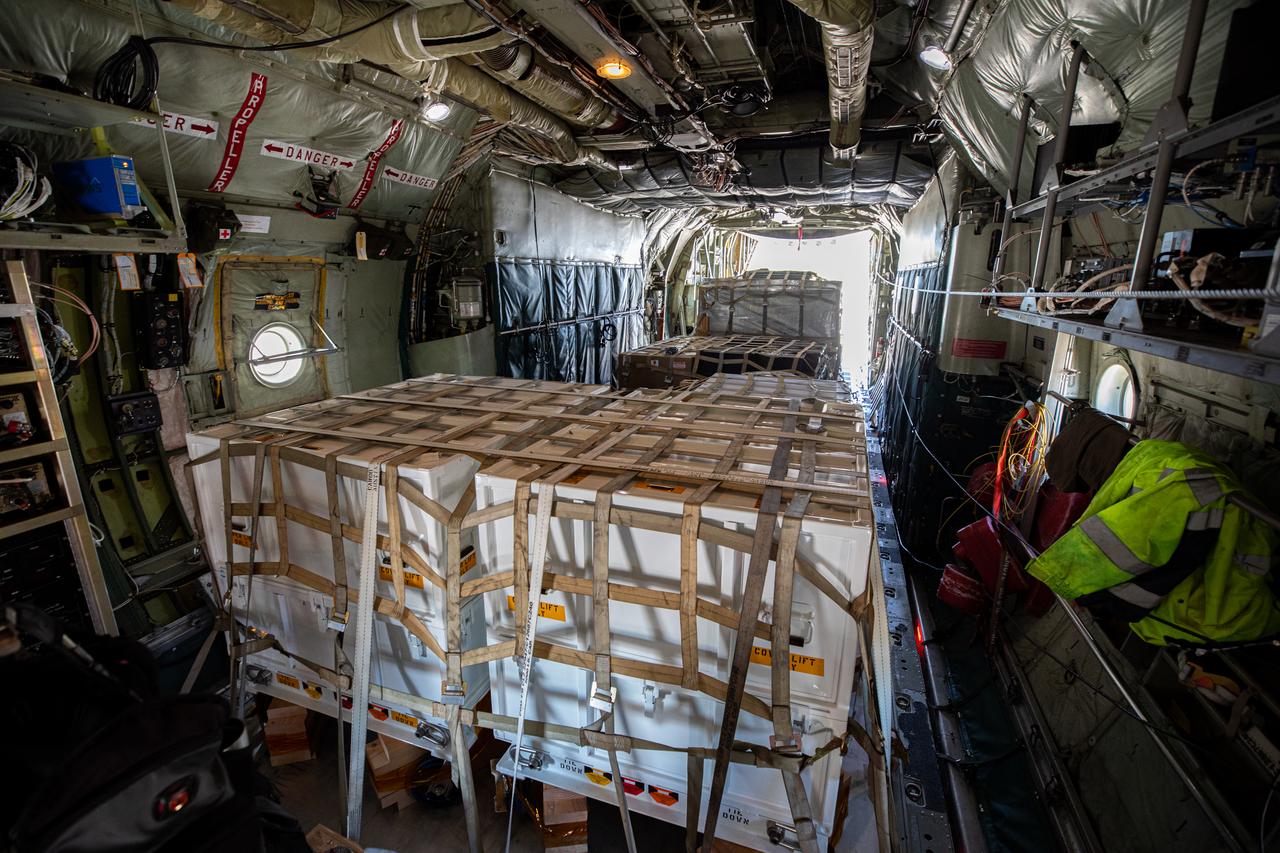
Preparations are underway to offload the Adaptive Caching Assembly (ACA) for NASA’s Mars Perseverance rover from the agency’s C-130 aircraft at Kennedy Space Center’s Launch and Landing Facility in Florida on May 11, 2020. The ACA consists of seven motors and more than 3,000 parts, all working in unison to collect samples from the surface of Mars. A chief component of the assembly is the Sample Handling Arm, which will move sample tubes to the main robotic arm's coring drill and then transfer the filled sample tubes into a space to be sealed and stored. The Mars Perseverance rover is scheduled to launch in mid-July atop a United Launch Alliance Atlas V 541 rocket from Pad 41 at nearby Cape Canaveral Air Force Station. The rover is part of NASA’s Mars Exploration Program, a long-term effort of robotic exploration of the Red Planet. The rover will search for habitable conditions in the ancient past and signs of past microbial life on Mars. The Launch Services Program at Kennedy is responsible for launch management.
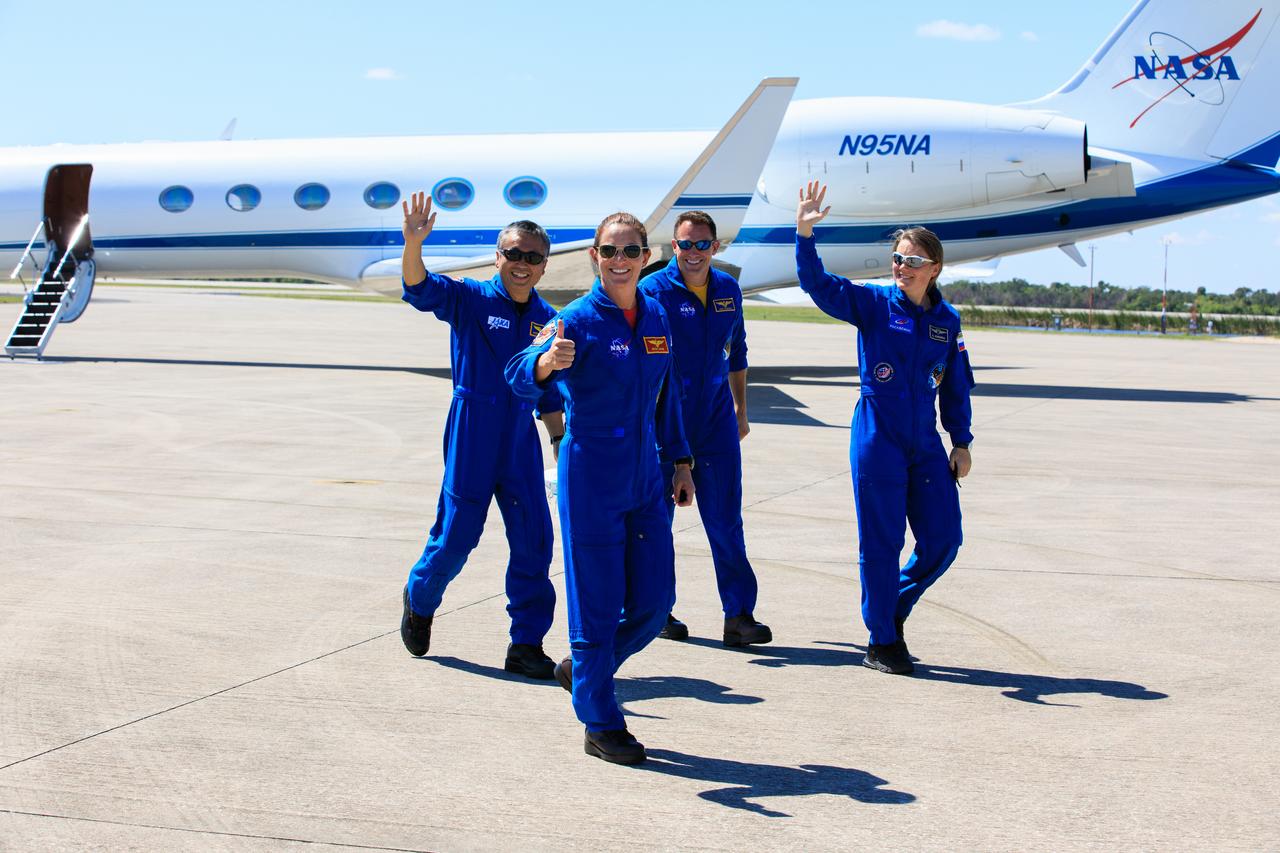
Crew members for NASA’s SpaceX Crew-5 mission to the International Space Station wave during a crew arrival media event at the Launch and Landing Facility at Kennedy Space Center in Florida on Oct. 1, 2022. From left are Koichi Wakata, mission specialist; Nicole Mann, commander; Josh Cassada, pilot; and Anna Kikina, mission specialist. The crew will head to the center’s Crew Quarters as they await launch aboard the Crew Dragon on a SpaceX Falcon 9 rocket. Launch is targeted for noon EDT on Oct. 5 from Launch Complex 39A. Crew-5 is the fifth crew rotation mission with SpaceX to the station, and the sixth flight of Dragon with people as part of the agency’s Commercial Crew Program.
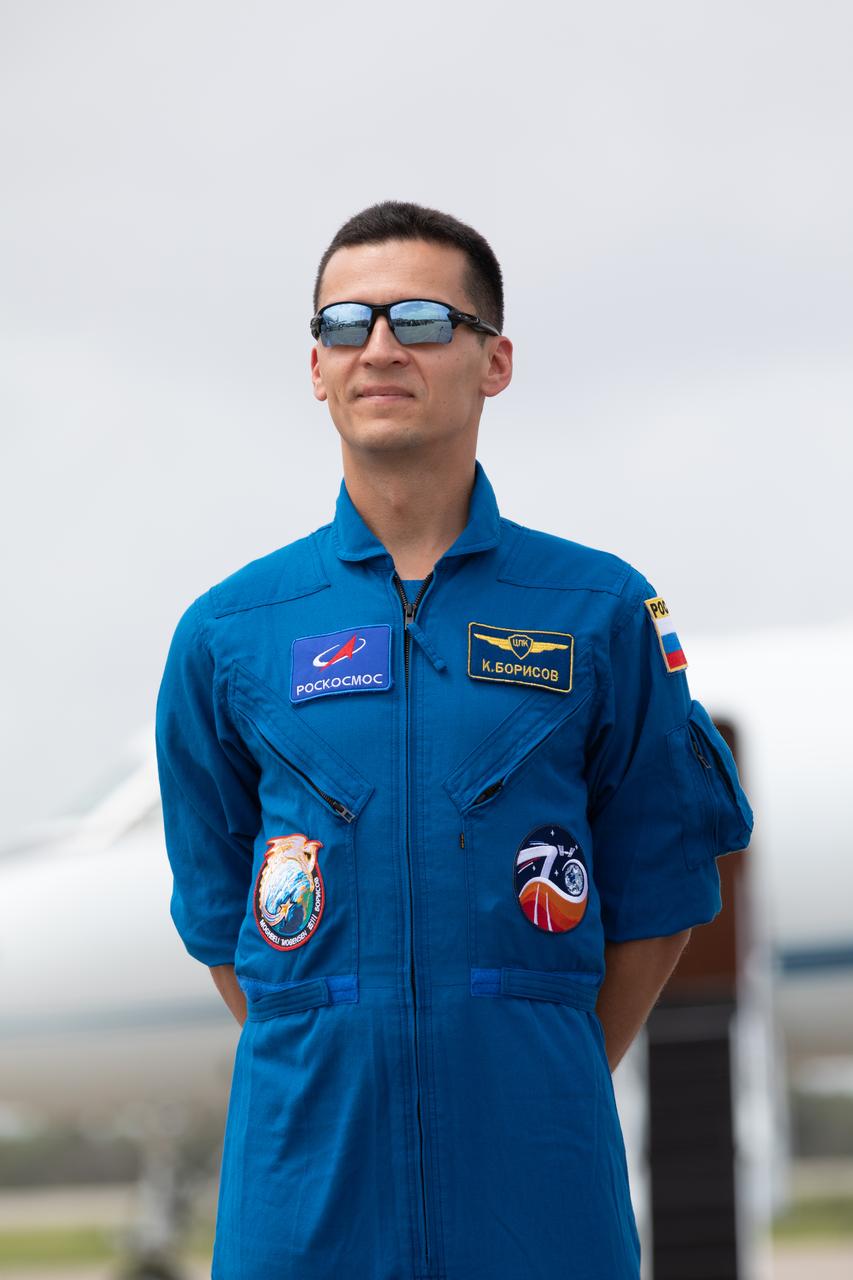
NASA’s SpaceX Crew-7 crew member and Roscosmos cosmonaut Konstantin Borisov stands tall after arriving at the Launch and Landing Facility at Kennedy Space Center in Florida – along with the rest of his crewmates – on Sunday, Aug. 20, 2023. Crew-7 will launch to the International Space Station aboard SpaceX’s Dragon spacecraft on the company’s Falcon 9 rocket. Liftoff is targeted for 3:49 a.m. EDT Friday, Aug. 25, 2023, from Kennedy’s Launch Complex 39A.
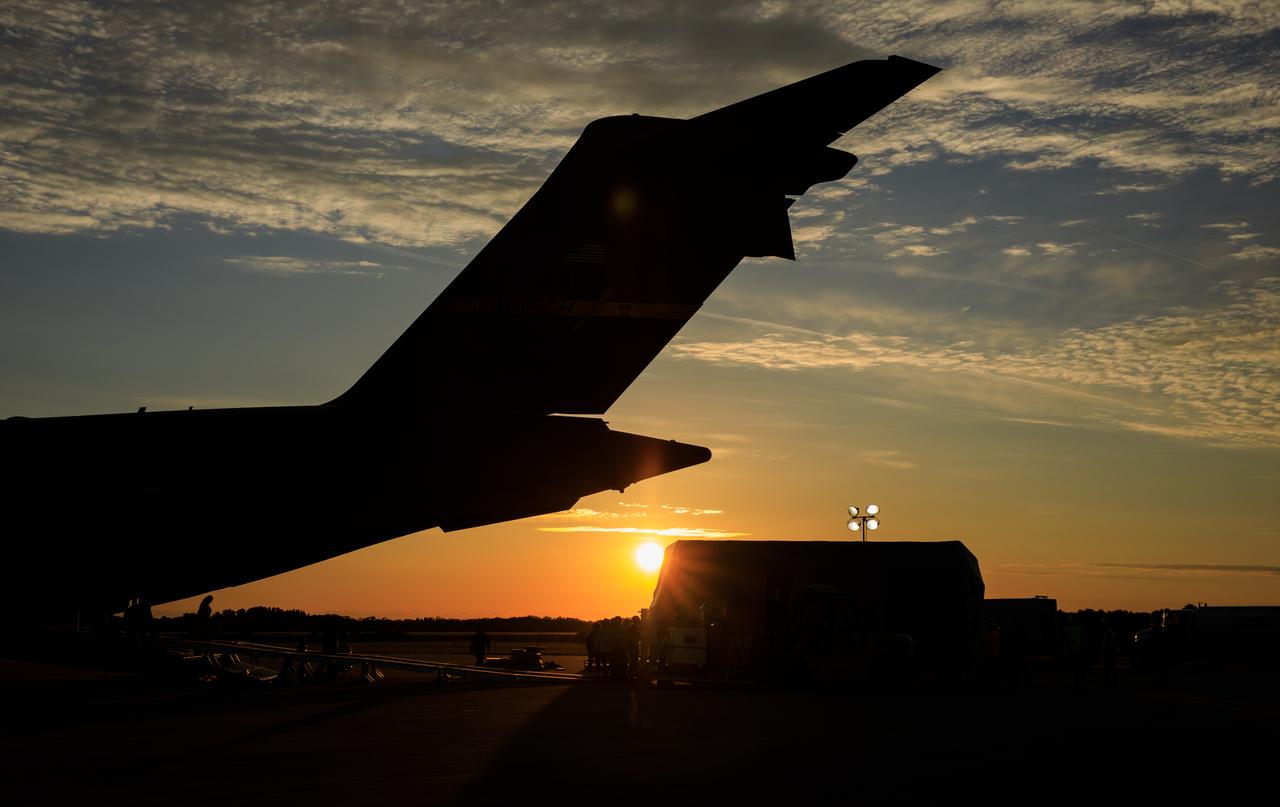
Teams offload NASA’s largest planetary mission spacecraft, Europa Clipper, from a United States Air Force C-17 Globemaster III transport aircraft onto the flatbed of a heavy-lift truck at the Launch and Landing Facility at NASA’s Kennedy Space Center in Florida on Thursday, May 23, 2024. Crews transported Europa Clipper to the Payload Hazardous Servicing Facility at Kennedy to prepare it for launch aboard a SpaceX Falcon Heavy rocket later this year from Launch Complex 39A at the Florida spaceport. Europa Clipper will help determine if conditions exist below the surface Jupiter’s fourth largest moon, Europa, that could support life.
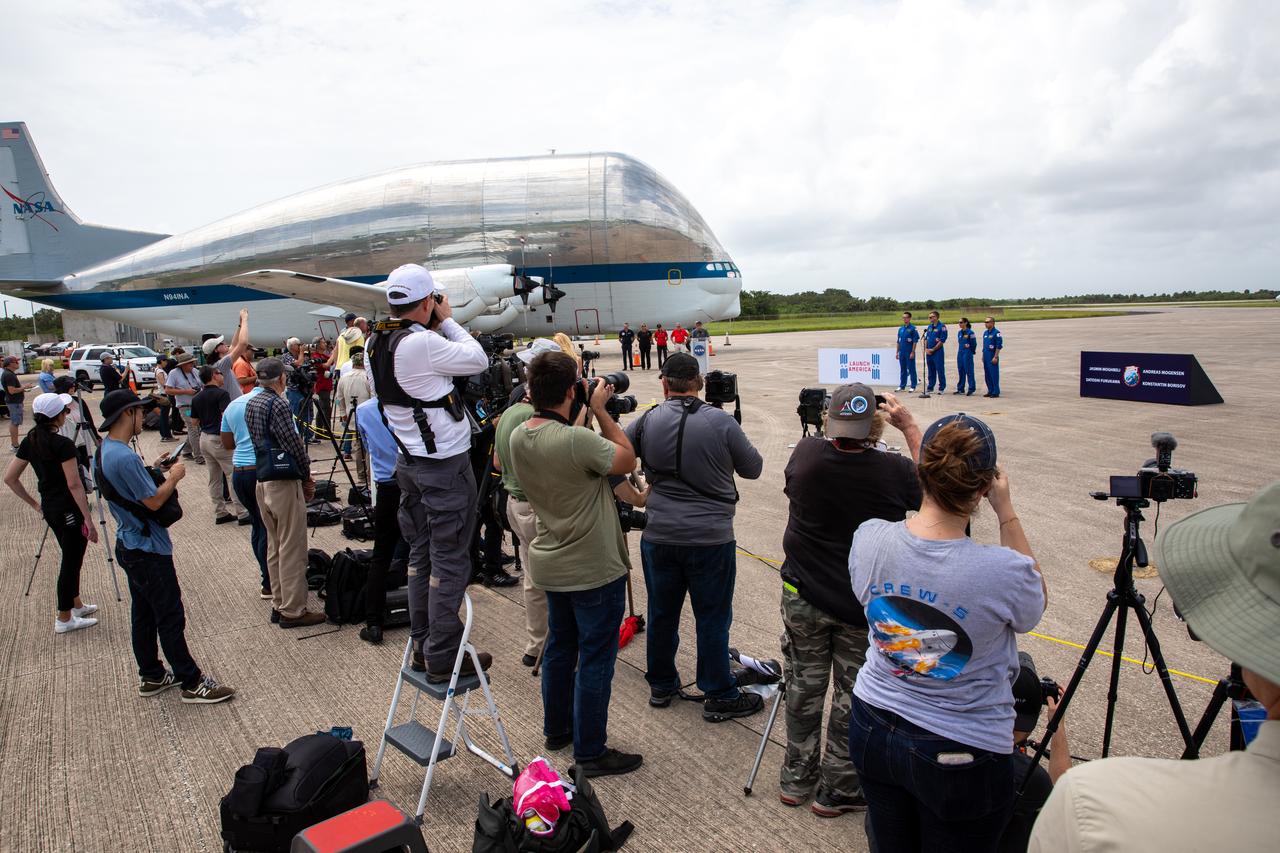
Crew members for NASA’s SpaceX Crew-7 mission to the International Space Station arrive at the Launch and Landing Facility at Kennedy Space Center in Florida on Sunday, Aug. 20, 2023. From left, Roscosmos cosmonaut Konstantin Borisov, ESA (European Space Agency) astronaut Andreas Mogensen, NASA astronaut Jasmin Moghbeli, and JAXA (Japan Aerospace Exploration Agency) astronaut Satoshi Furukawa stand before members of the news media. Liftoff of the Crew-7 mission is targeted for 3:49 a.m. EDT Friday, Aug. 25, 2023, from Kennedy’s Launch Complex 39A.
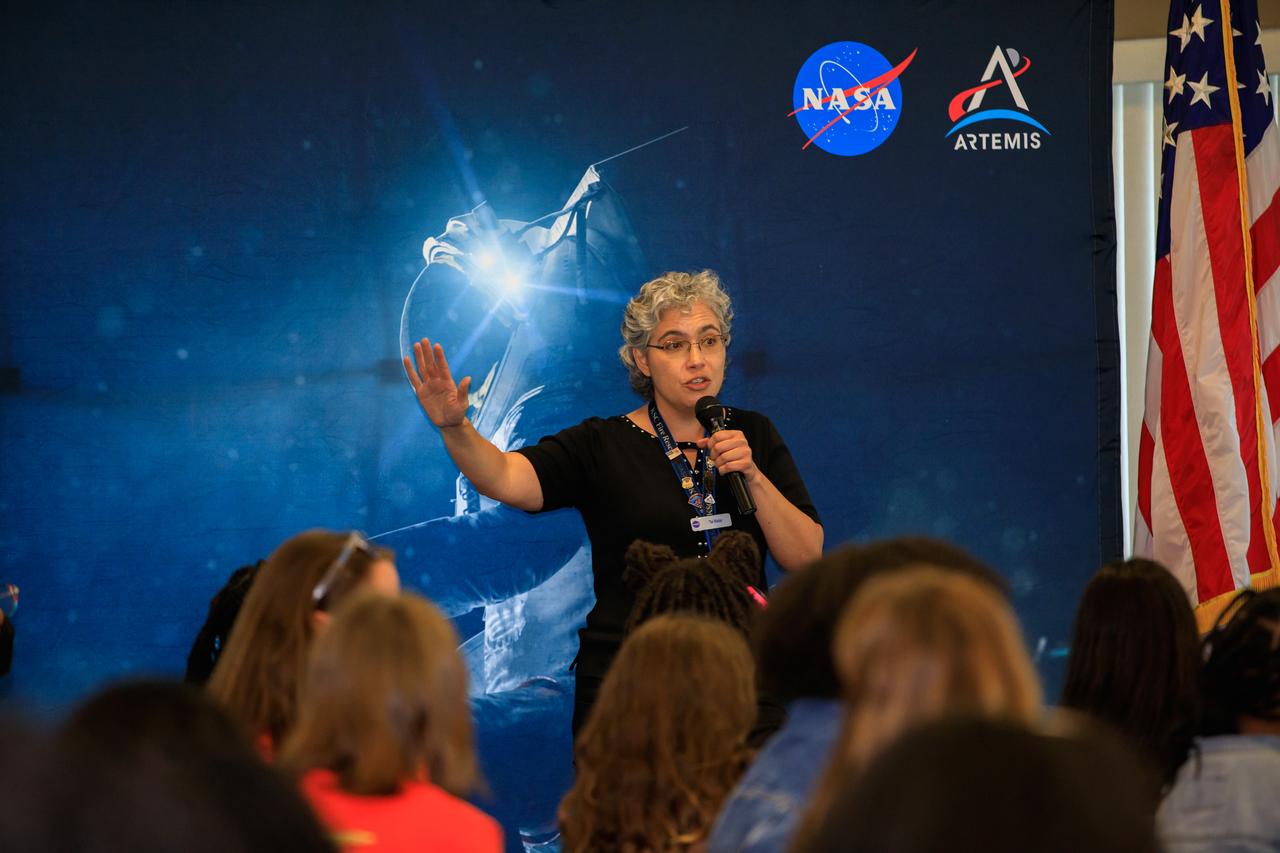
Tai Victor, Kennedy Space Center events lead, speaks to students who were brought to Kennedy on Delta Air Lines’ Women Inspiring Our Next Generation (WING) flight from Atlanta, Georgia, on Sept. 23, 2022. An all-female crew flew girls from a variety of schools and organizations with a STEM (science, technology, engineering, math) focus to Kennedy to learn about the various careers available at the Florida spaceport. While at Kennedy, the group had the opportunity to view NASA’s Artemis I Moon rocket at Launch Pad 39B, hear from a panel of 18 women with a combination of careers from Kennedy and Delta, and tour the visitor complex.
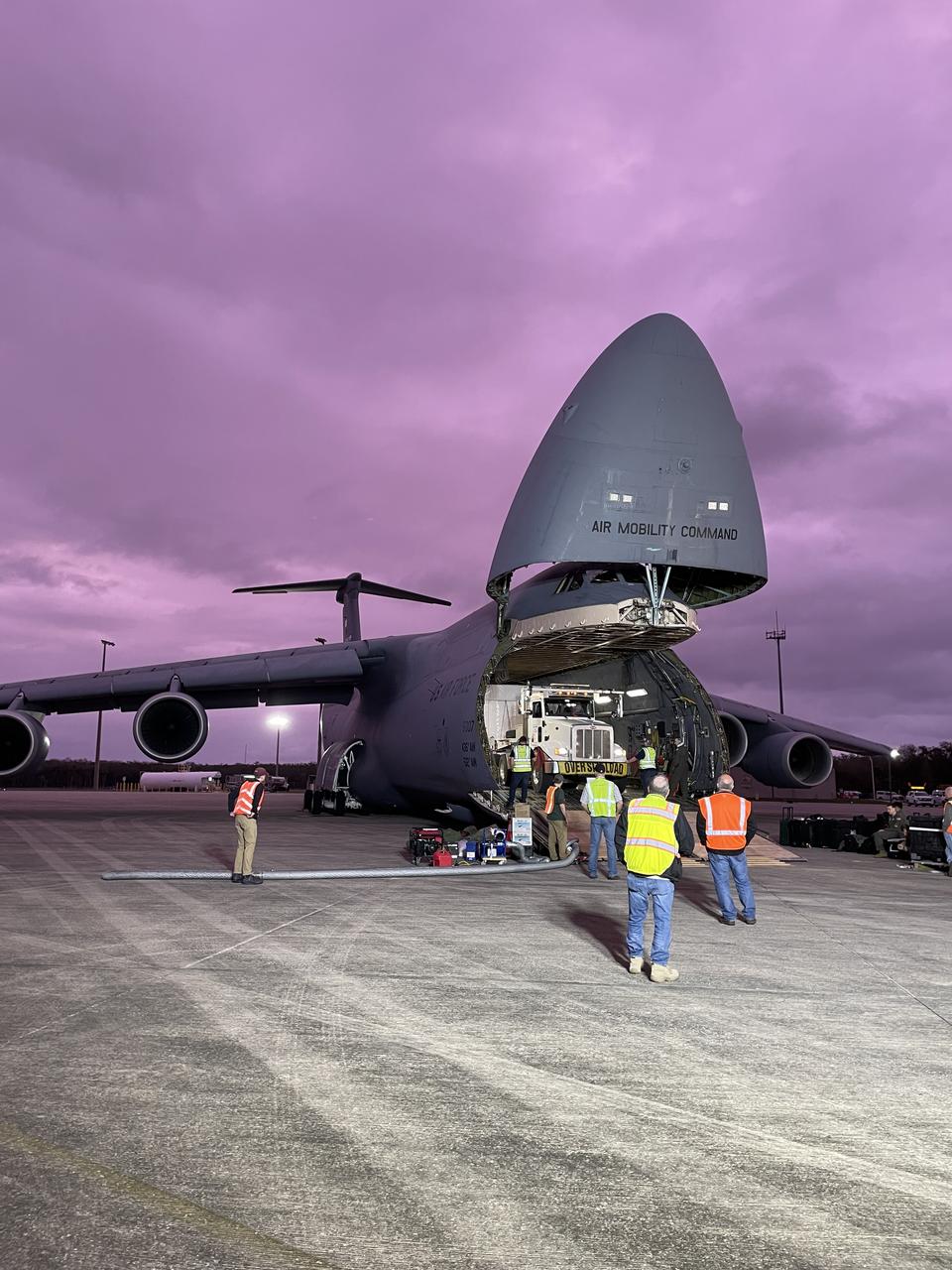
NOAA’s Geostationary Operational Environmental Satellite-U (GOES-U) is offloaded from a C-5M Super Galaxy transport aircraft onto the flatbed of a heavy-lift truck at the Launch and Landing Facility at NASA’s Kennedy Space Center in Florida on Tuesday, Jan. 23, 2024. Crews transported the satellite to the Astrotech Space Operations facility in Titusville, Florida to prepare it for launch. Part of a collaborative NOAA and NASA program, GOES-U is the fourth in a series of four advanced geostationary weather satellites. Data from the GOES satellite constellation – consisting of the GOES-R, GOES-S, GOES-T and GOES-U spacecraft – enables forecasters to predict, observe, and track local weather events that affect public safety like thunderstorms, hurricanes, and wildfires.
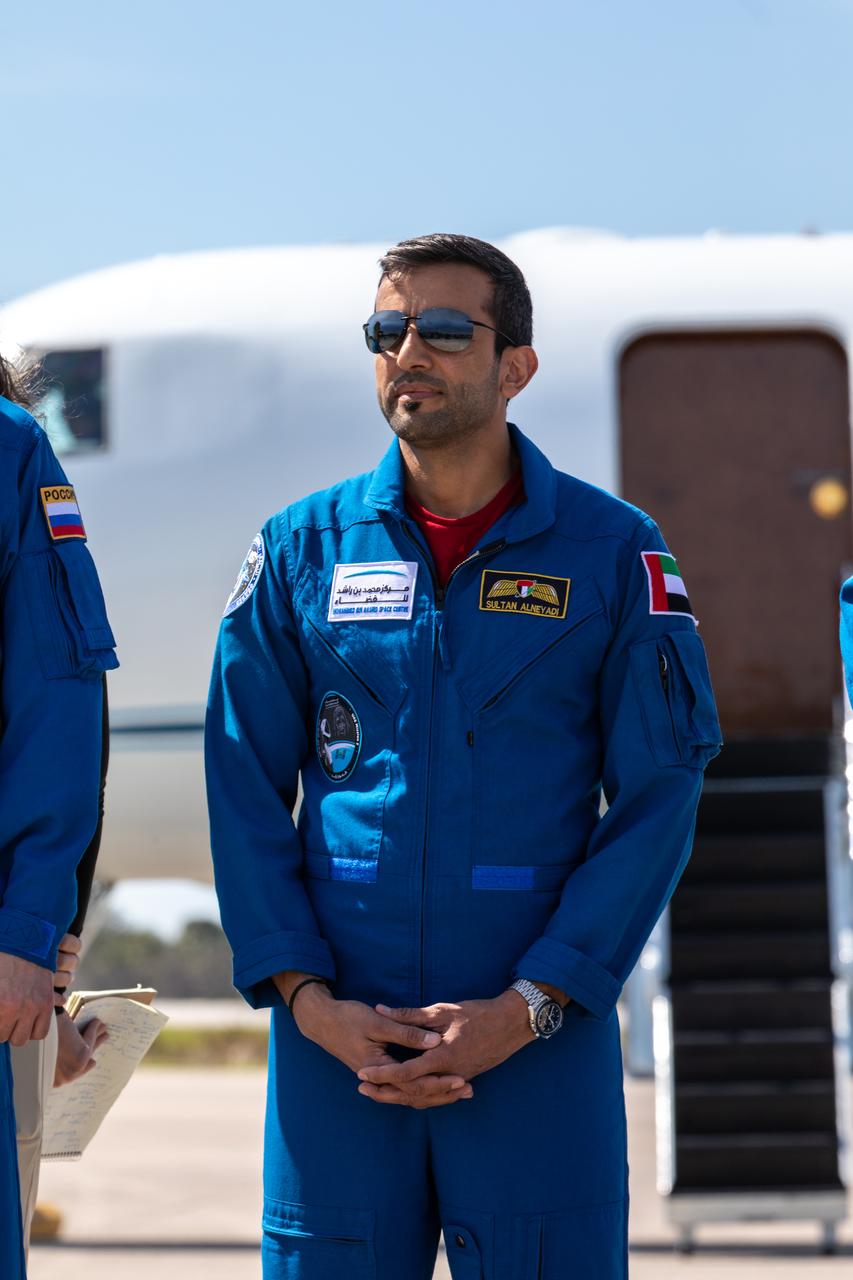
UAE (United Arab Emirates) astronaut Sultan Alneyadi speaks to members of the news media during crew arrival for NASA’s SpaceX Crew-6 mission at Kennedy Space Center’s Launch and Landing Facility in Florida on Feb. 21, 2023. Alneyadi, along with NASA astronauts Stephen Bowen and Warren “Woody” Hoburg, and Roscosmos cosmonaut Andrey Fedyaev will launch to the International Space Station aboard the Crew Dragon on a SpaceX Falcon 9. Launch is targeted for no earlier than Feb. 26 at 2:07 a.m. EST from Launch Complex 39A. Crew-6 is the sixth crew rotation mission with SpaceX to the station, and the seventh flight of Dragon with people as part of the agency’s Commercial Crew Program.
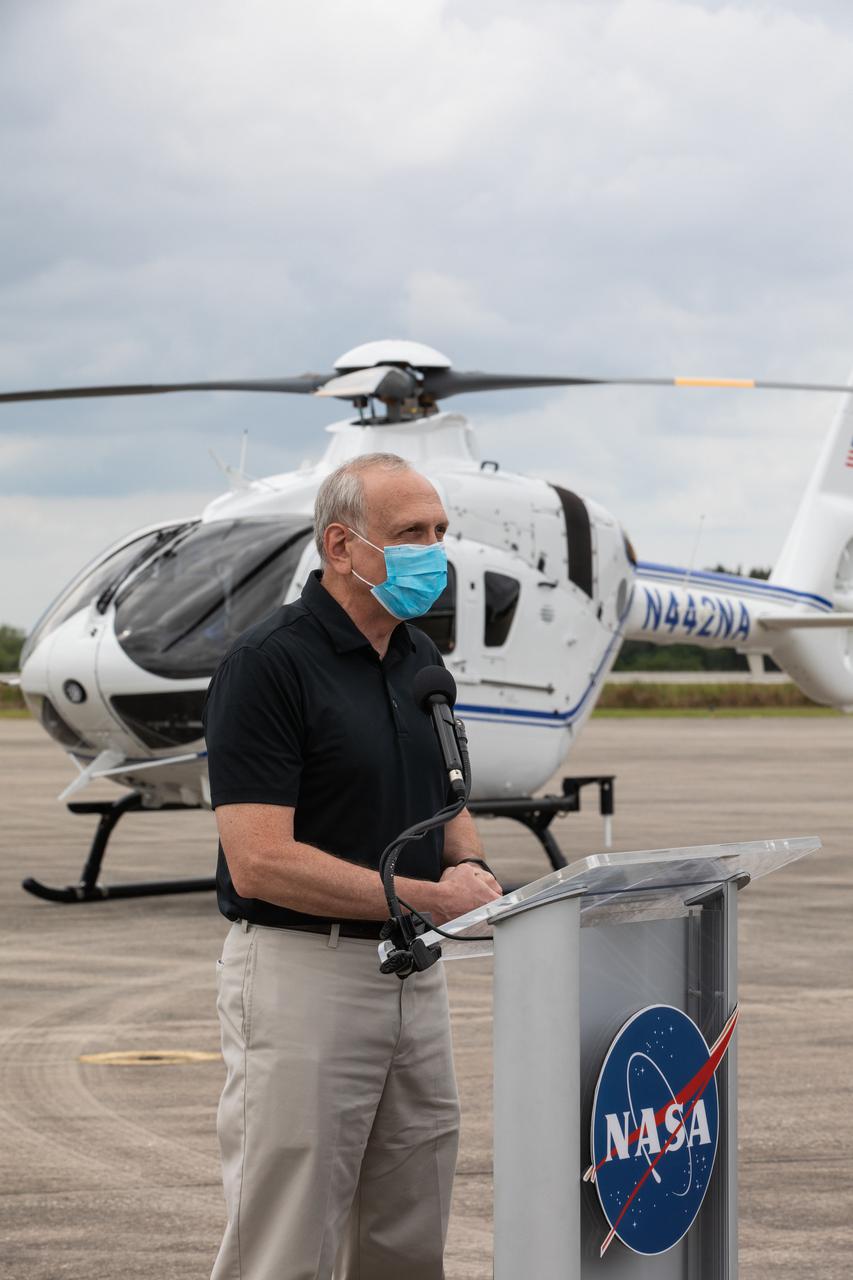
Acting NASA Administrator Steve Jurczyk speaks during NASA’s SpaceX Crew-2 arrival media event held at Kennedy Space Center in Florida on April 16, 2021. NASA astronauts Shane Kimbrough and Megan McArthur, JAXA astronaut Akihiko Hoshide, and ESA astronaut Thomas Pesquet, who arrived at Kennedy just minutes before the media event, will fly to the International Space Station on NASA’s SpaceX Crew-2 mission. Liftoff is targeted for Thursday, April 22, at 6:11 a.m. EDT.
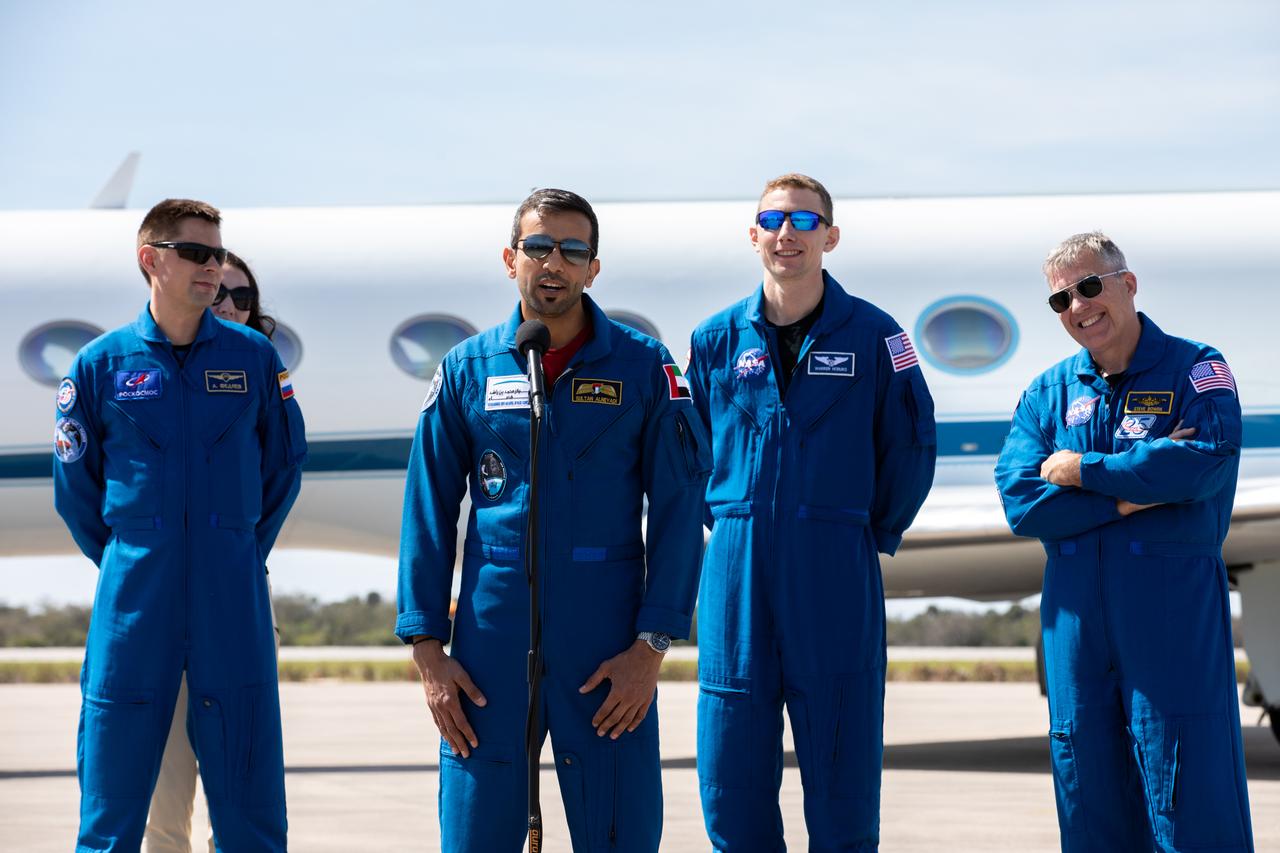
UAE (United Arab Emirates) astronaut Sultan Alneyadi speaks to members of the news media during crew arrival for NASA’s SpaceX Crew-6 mission at Kennedy Space Center’s Launch and Landing Facility in Florida on Feb. 21, 2023. Behind him, from left, are Roscosmos cosmonaut Andrey Fedyaev Alneyadi and NASA astronauts Warren “Woody” Hoburg and Stephen Bowen. The crew will launch to the International Space Station aboard the Crew Dragon on a SpaceX Falcon 9 no earlier than Feb. 26 at 2:07 a.m. EST from Launch Complex 39A. Crew-6 is the sixth crew rotation mission with SpaceX to the station, and the seventh flight of Dragon with people as part of the agency’s Commercial Crew Program.
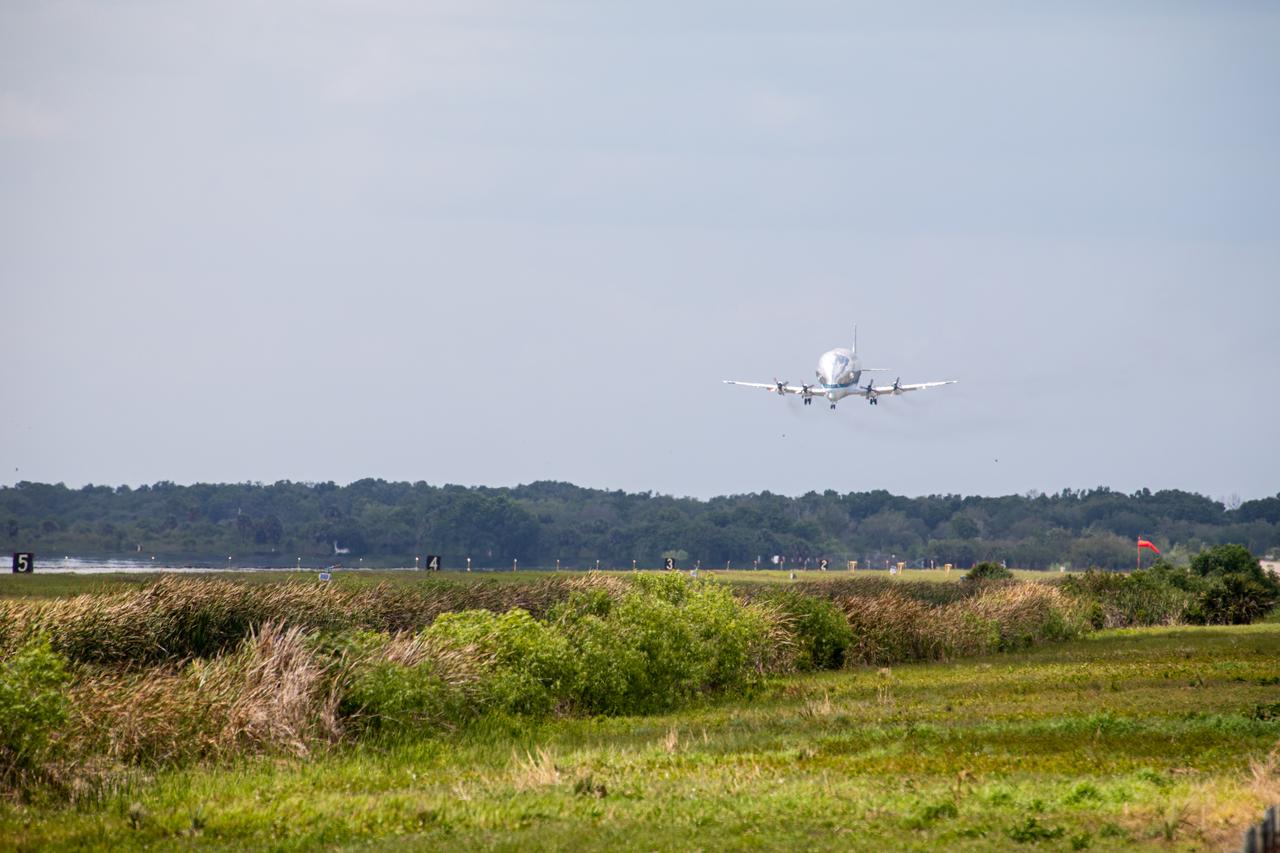
NASA’s Super Guppy aircraft, carrying the Orion spacecraft, lands at the Launch and Landing Facility runway at Kennedy Space Center in Florida on March 25, 2020. Orion has returned to Kennedy after testing at the agency’s Plum Brook Station in Ohio verified the spacecraft can handle the extreme conditions of a deep-space environment. The spacecraft will now undergo final testing and assembly prior to being integrated with the Space Launch System rocket. Orion will fly on the agency’s Artemis I mission – the first in a series of increasingly complex missions to the Moon that will ultimately lead to the exploration of Mars.
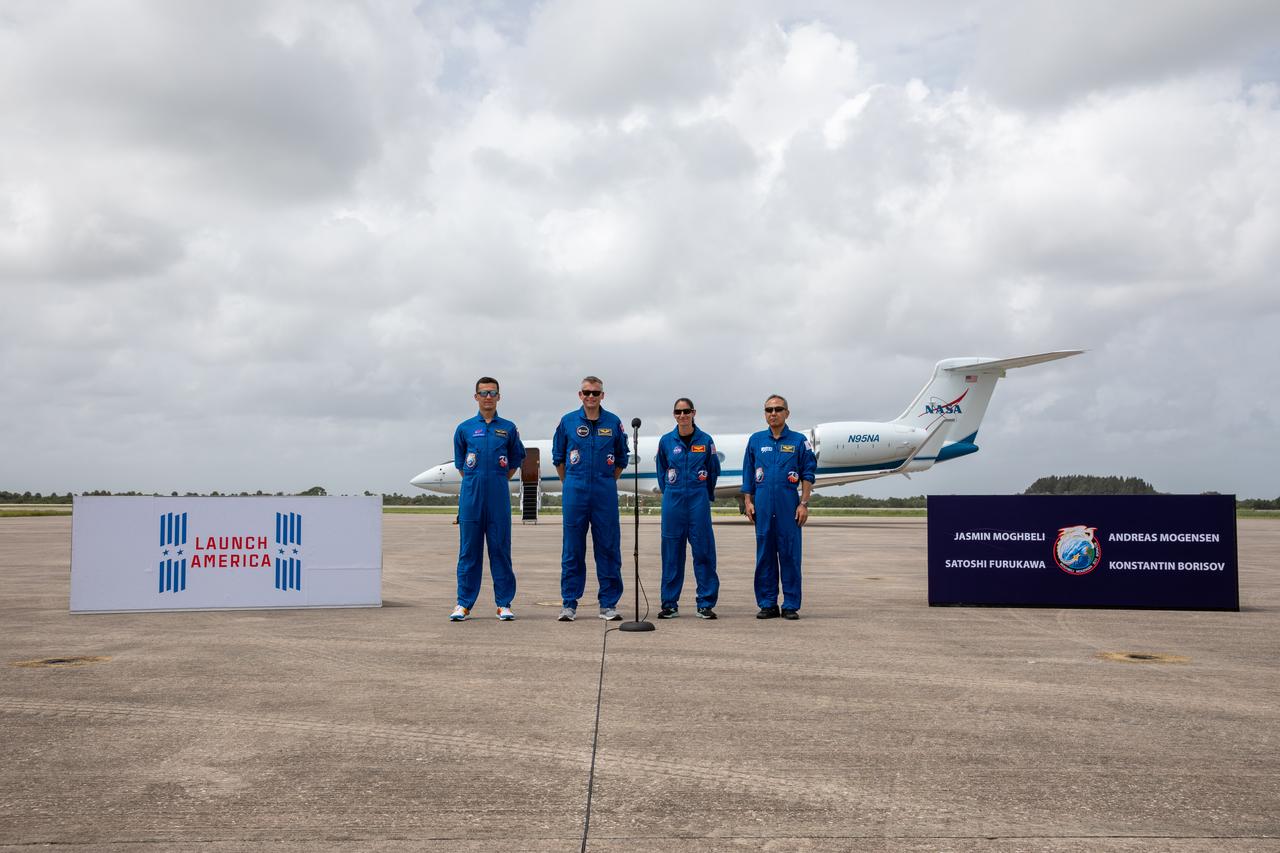
Crew members for NASA’s SpaceX Crew-7 mission to the International Space Station arrive at the Launch and Landing Facility at Kennedy Space Center in Florida on Sunday, Aug. 20, 2023. From left, Roscosmos cosmonaut Konstantin Borisov, ESA (European Space Agency) astronaut Andreas Mogensen, NASA astronaut Jasmin Moghbeli, and JAXA (Japan Aerospace Exploration Agency) astronaut Satoshi Furukawa stand before members of the news media. Liftoff of the Crew-7 mission is targeted for 3:49 a.m. EDT Friday, Aug. 25, 2023, from Kennedy’s Launch Complex 39A.
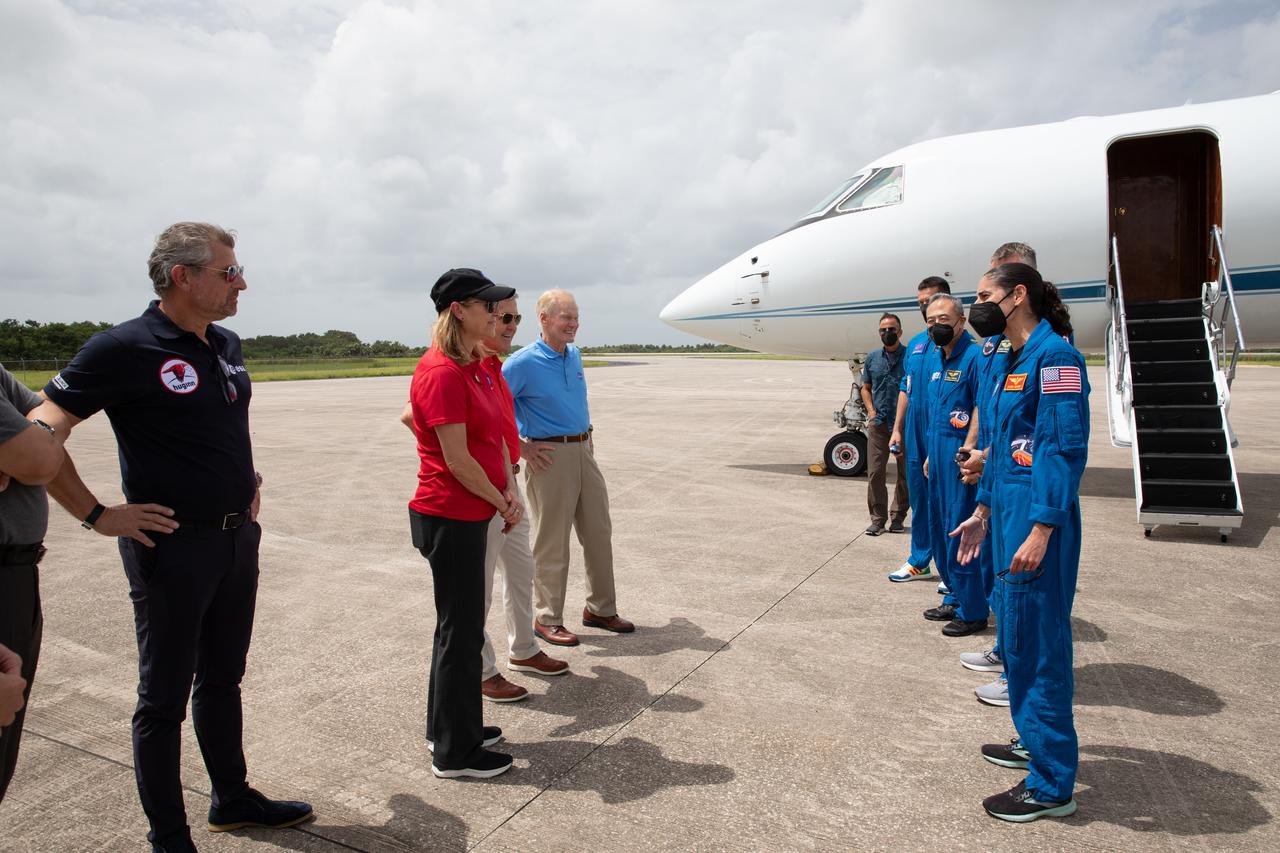
Leaders from NASA, ESA (European Space Agency), and JAXA (Japanese Aerospace Exploration Agency) greet the crew members of NASA’s SpaceX Crew-7 mission after their arrival to the Florida spaceport on Sunday, Aug. 20, 2023. Crew-7 will launch aboard SpaceX’s Dragon spacecraft on the company’s Falcon 9 rocket. Liftoff is targeted for 3:49 a.m. EDT Friday, Aug. 25, 2023, from Kennedy’s Launch Complex 39A.

Workers use a special handling device to offload the Adaptive Caching Assembly (ACA) for NASA’s Mars Perseverance rover from the agency’s C-130 aircraft at Kennedy Space Center’s Launch and Landing Facility in Florida on May 11, 2020. The ACA consists of seven motors and more than 3,000 parts, all working in unison to collect samples from the surface of Mars. A chief component of the assembly is the Sample Handling Arm, which will move sample tubes to the main robotic arm's coring drill and then transfer the filled sample tubes into a space to be sealed and stored. The Mars Perseverance rover is scheduled to launch in mid-July atop a United Launch Alliance Atlas V 541 rocket from Pad 41 at nearby Cape Canaveral Air Force Station. The rover is part of NASA’s Mars Exploration Program, a long-term effort of robotic exploration of the Red Planet. The rover will search for habitable conditions in the ancient past and signs of past microbial life on Mars. The Launch Services Program at Kennedy is responsible for launch management.

NOAA’s Geostationary Operational Environmental Satellite-U (GOES-U) is offloaded from a C-5M Super Galaxy transport aircraft onto the flatbed of a heavy-lift truck at the Launch and Landing Facility at NASA’s Kennedy Space Center in Florida on Tuesday, Jan. 23, 2024. Crews transported the satellite to the Astrotech Space Operations facility in Titusville, Florida to prepare it for launch. Part of a collaborative NOAA and NASA program, GOES-U is the fourth in a series of four advanced geostationary weather satellites. Data from the GOES satellite constellation – consisting of the GOES-R, GOES-S, GOES-T and GOES-U spacecraft – enables forecasters to predict, observe, and track local weather events that affect public safety like thunderstorms, hurricanes, and wildfires.
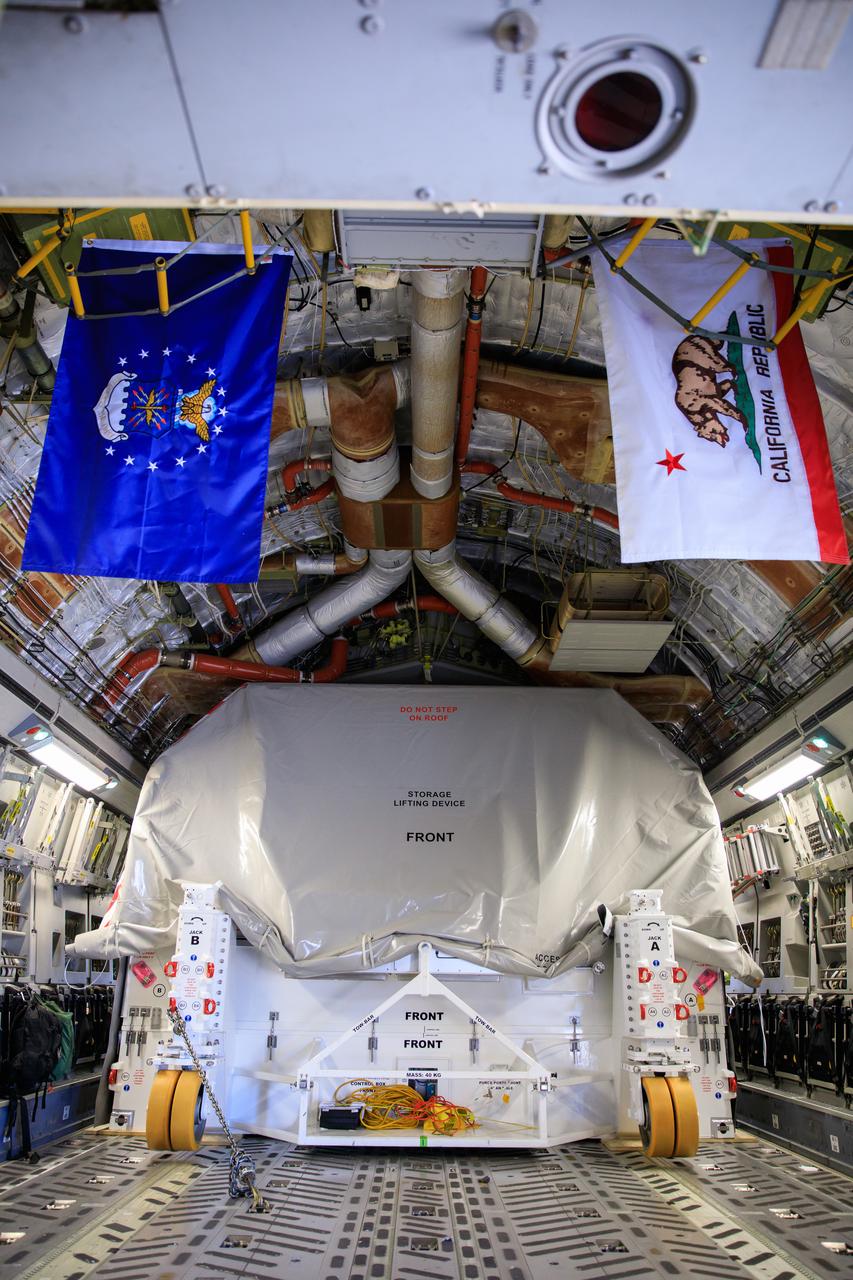
Teams offload NASA’s largest planetary mission spacecraft, Europa Clipper, from a United States Air Force C-17 Globemaster III transport aircraft onto the flatbed of a heavy-lift truck at the Launch and Landing Facility at NASA’s Kennedy Space Center in Florida on Thursday, May 23, 2024. Crews transported Europa Clipper to the Payload Hazardous Servicing Facility at Kennedy to prepare it for launch aboard a SpaceX Falcon Heavy rocket later this year from Launch Complex 39A at the Florida spaceport. Europa Clipper will help determine if conditions exist below the surface Jupiter’s fourth largest moon, Europa, that could support life.
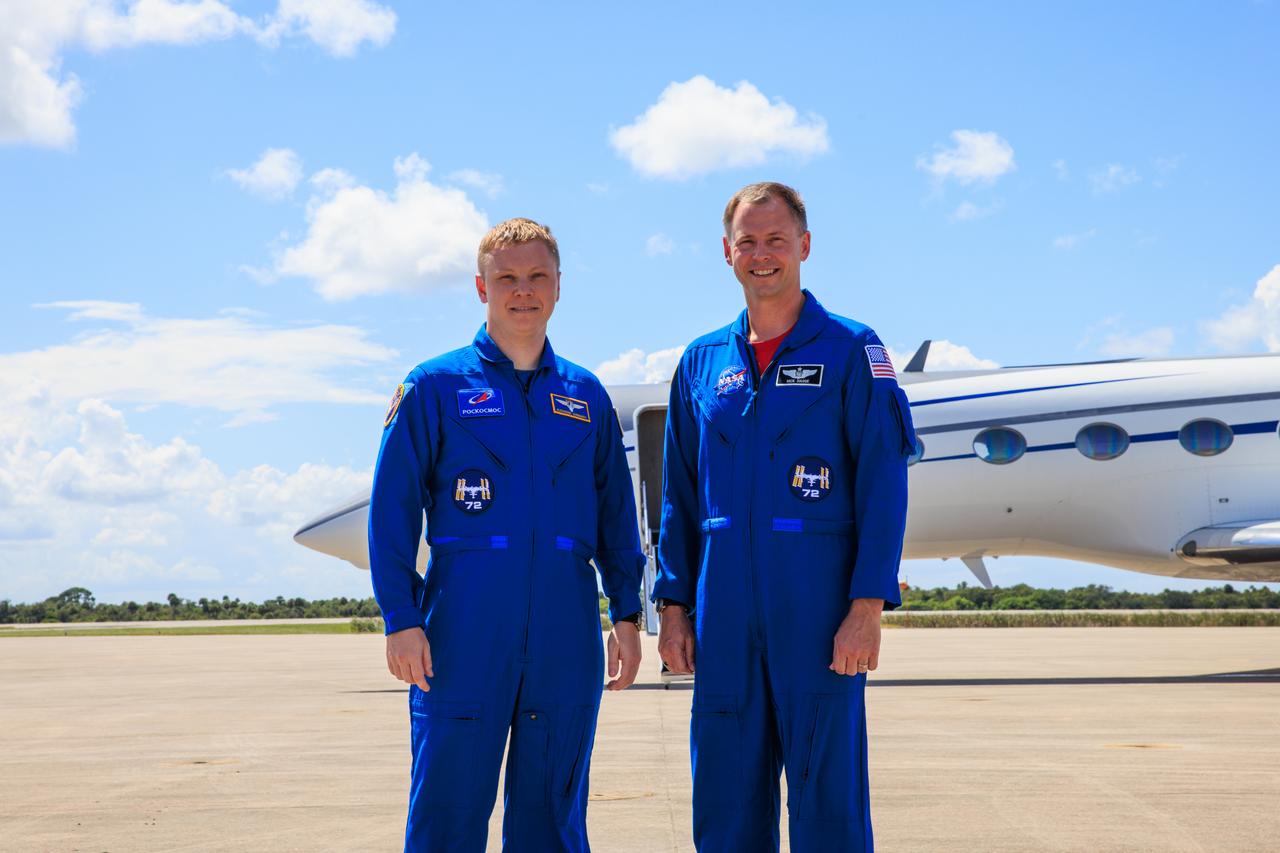
Representatives from NASA participate in a media event at the agency’s Kennedy Space Center in Florida on Saturday, Sept. 21, upon the arrival of NASA astronaut Nick Hague, commander, and Roscosmos cosmonaut Aleksandr Gorbunov, mission specialist, in advance of NASA’s SpaceX Crew-9 mission to the International Space Station as part of the agency’s Commercial Crew Program. Participants include Kelvin Manning, Kennedy Space Center deputy director, and Dana Hutcherson, deputy manager, NASA’s Commercial Crew Program. Launch is targeted for no earlier than 2:05 p.m. EDT Thursday, Sept. 26, 2024. The SpaceX Dragon spacecraft will launch on a Falcon 9 rocket from Space Launch Complex-40 at Cape Canaveral Space Force Station in Florida.
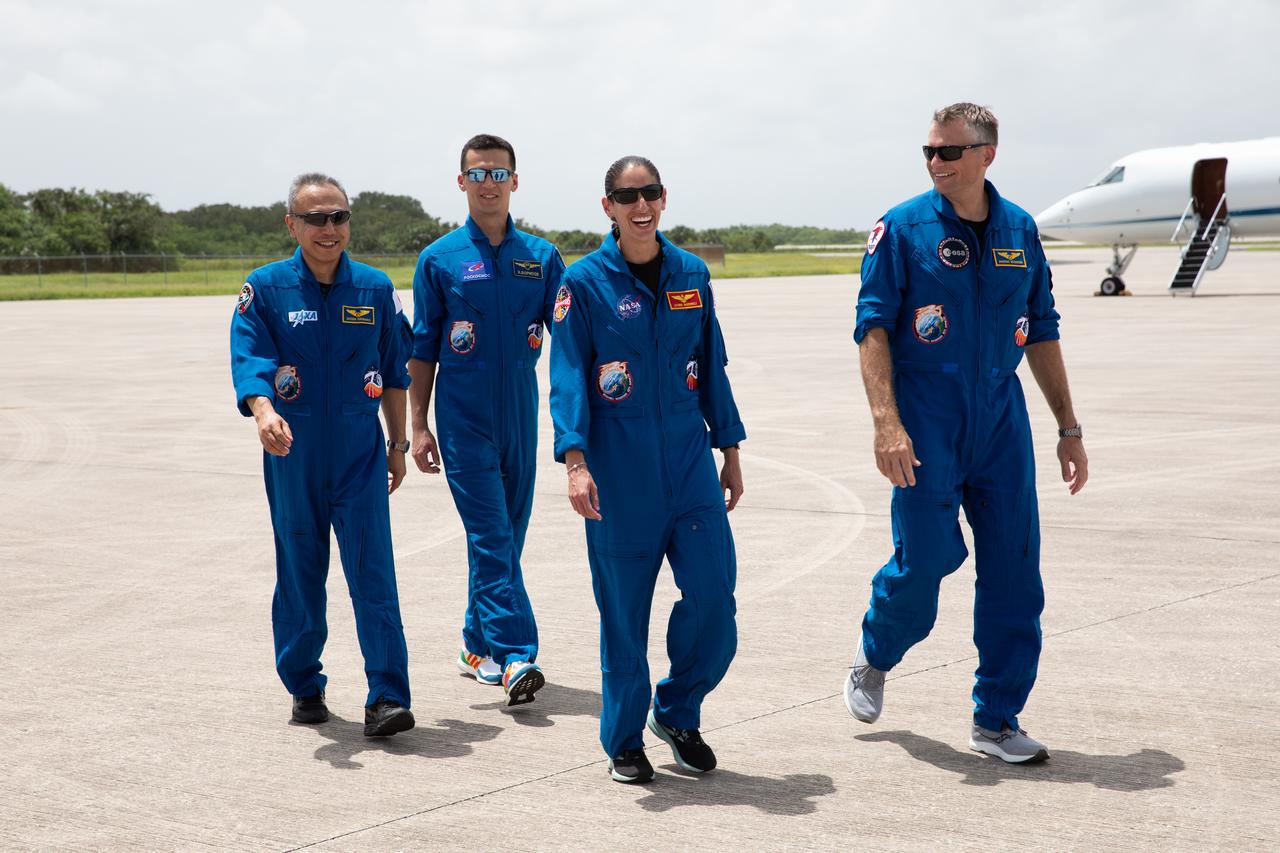
Crewmates for NASA’s SpaceX Crew-7 mission to the International Space Station walk along the runway at the Launch and Landing Facility at Kennedy Space Center in Florida on Sunday, Aug. 20, 2023. From left, JAXA (Japan Aerospace Exploration Agency) astronaut Satoshi Furukawa, Roscosmos cosmonaut Konstantin Borisov, NASA astronaut Jasmin Moghbeli, and ESA (European Space Agency) astronaut Andreas Mogensen will launch aboard a SpaceX Dragon spacecraft and Falcon 9 rocket at 3:49 a.m. EDT Friday, Aug. 25, 2023, from Kennedy’s Launch Complex 39A.
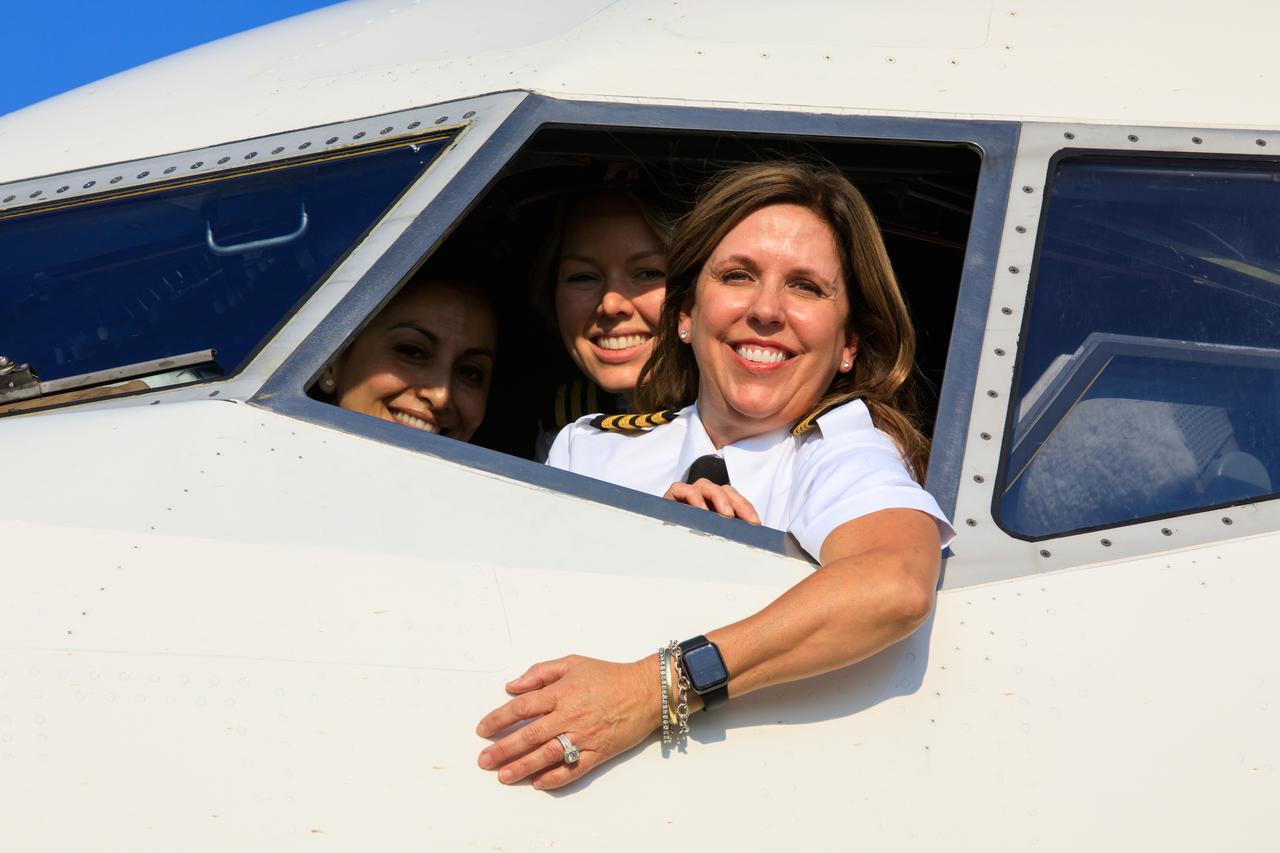
Part of the all-female crew for Delta Air Lines’ Women Inspiring Our Next Generation (WING) flight is photographed just after touching down at the Launch and Landing Facility at NASA’s Kennedy Space Center in Florida on Sept. 23, 2022. The flight brought girls from Atlanta, Georgia, ranging in age from 11 to 18, to learn about the various careers available at the Florida spaceport. While at Kennedy, the group had the opportunity to view NASA’s Artemis I Moon rocket at Launch Pad 39B, hear from a panel of 18 women with a combination of careers from Kennedy and Delta, and tour the visitor complex.
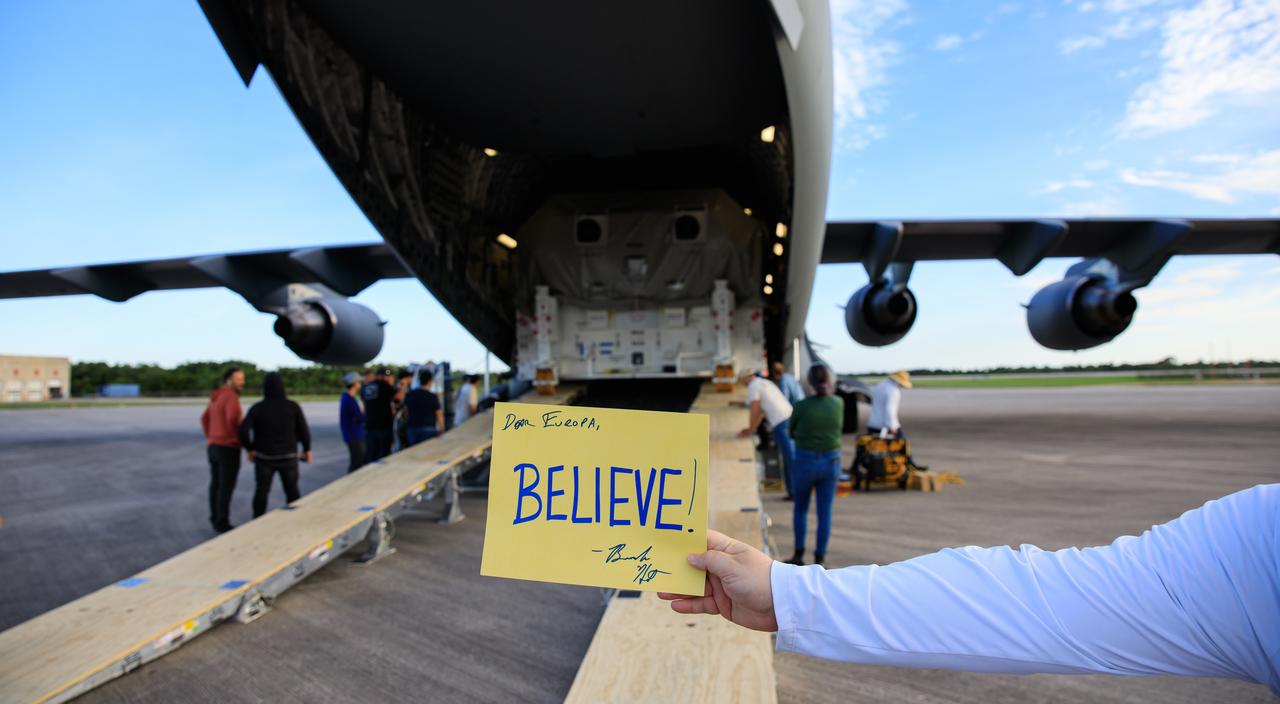
Teams offload NASA’s largest planetary mission spacecraft, Europa Clipper, from a United States Air Force C-17 Globemaster III transport aircraft onto the flatbed of a heavy-lift truck at the Launch and Landing Facility at NASA’s Kennedy Space Center in Florida on Thursday, May 23, 2024. Crews transported Europa Clipper to the Payload Hazardous Servicing Facility at Kennedy to prepare it for launch aboard a SpaceX Falcon Heavy rocket later this year from Launch Complex 39A at the Florida spaceport. Europa Clipper will help determine if conditions exist below the surface Jupiter’s fourth largest moon, Europa, that could support life.
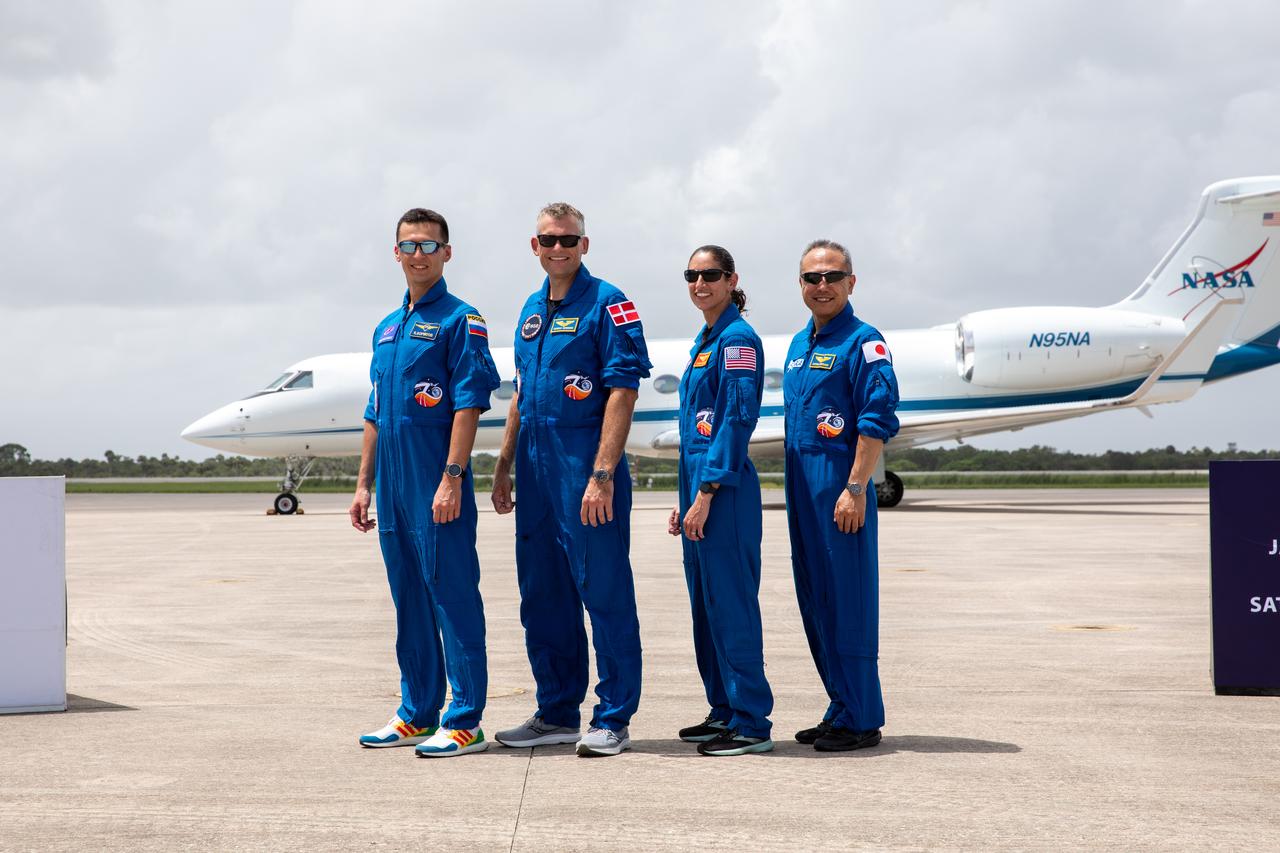
Crew members for NASA’s SpaceX Crew-7 mission to the International Space Station stand before members of the news media at the Launch and Landing Facility at Kennedy Space Center in Florida on Sunday, Aug. 20, 2023. From left, Roscosmos cosmonaut Konstantin Borisov, ESA (European Space Agency) astronaut Andreas Mogensen, NASA astronaut Jasmin Moghbeli, and JAXA (Japan Aerospace Exploration Agency) astronaut Satoshi Furukawa will launch aboard a SpaceX Dragon spacecraft and Falcon 9 rocket at 3:49 a.m. EDT Friday, Aug. 25, 2023, from Kennedy’s Launch Complex 39A.
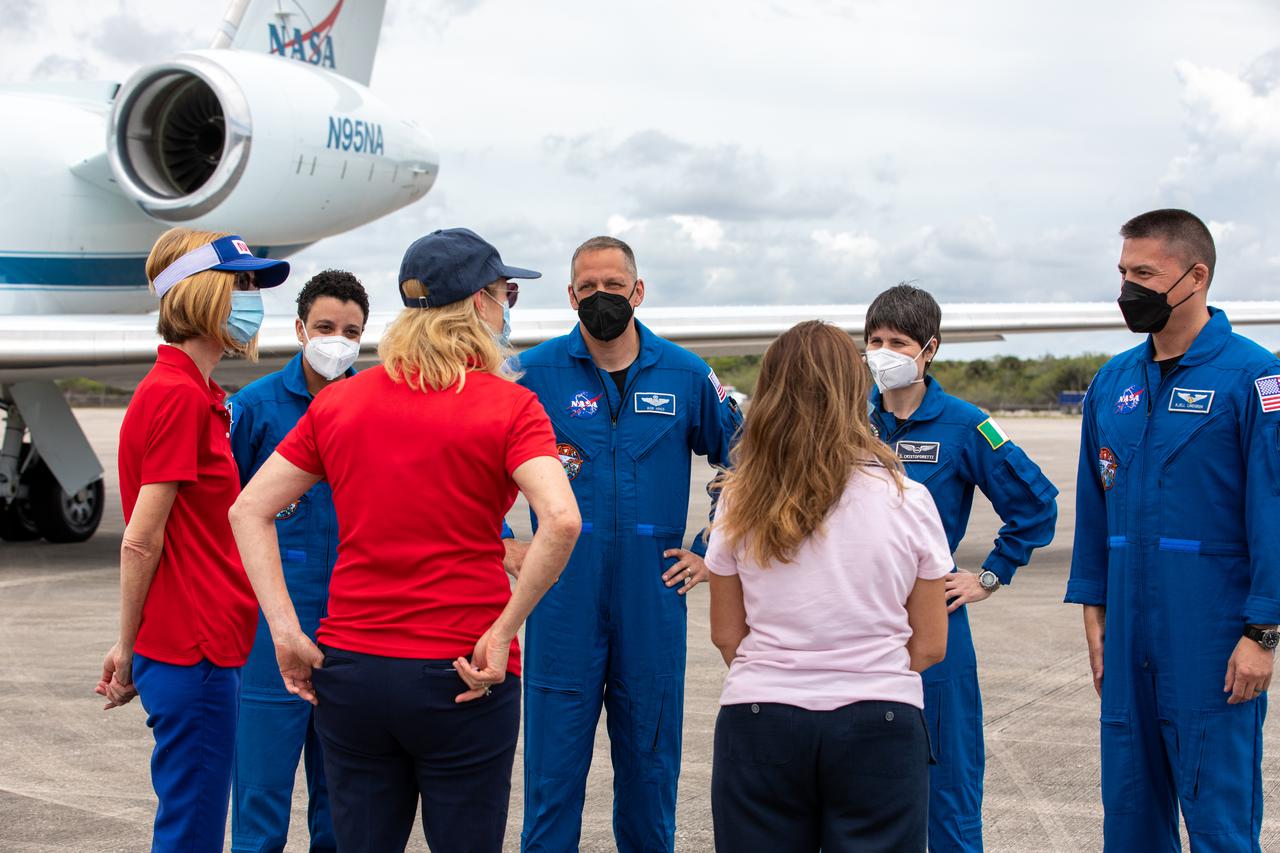
From left, Kathy Lueders, associate administrator, Space Operations, NASA Headquarters; Kennedy Space Center Director Janet Petro; and Barbara Nucera, ESA (European Space Agency) Houston Office team leader, greet the crew members of NASA’s SpaceX Crew-4 mission after their arrival at the Launch and Landing Facility at Kennedy Space Center in Florida on April 18, 2022. From left are NASA astronauts Jessica Watkins and Bob Hines, ESA astronaut Samantha Cristoforetti, and NASA astronaut Kjell Lindgren. Crew-4 will launch aboard SpaceX’s Crew Dragon on the company’s Falcon 9 rocket. Launch is targeted for 5:26 a.m. EDT on April 23, 2022, from Kennedy’s Launch Complex 39A.
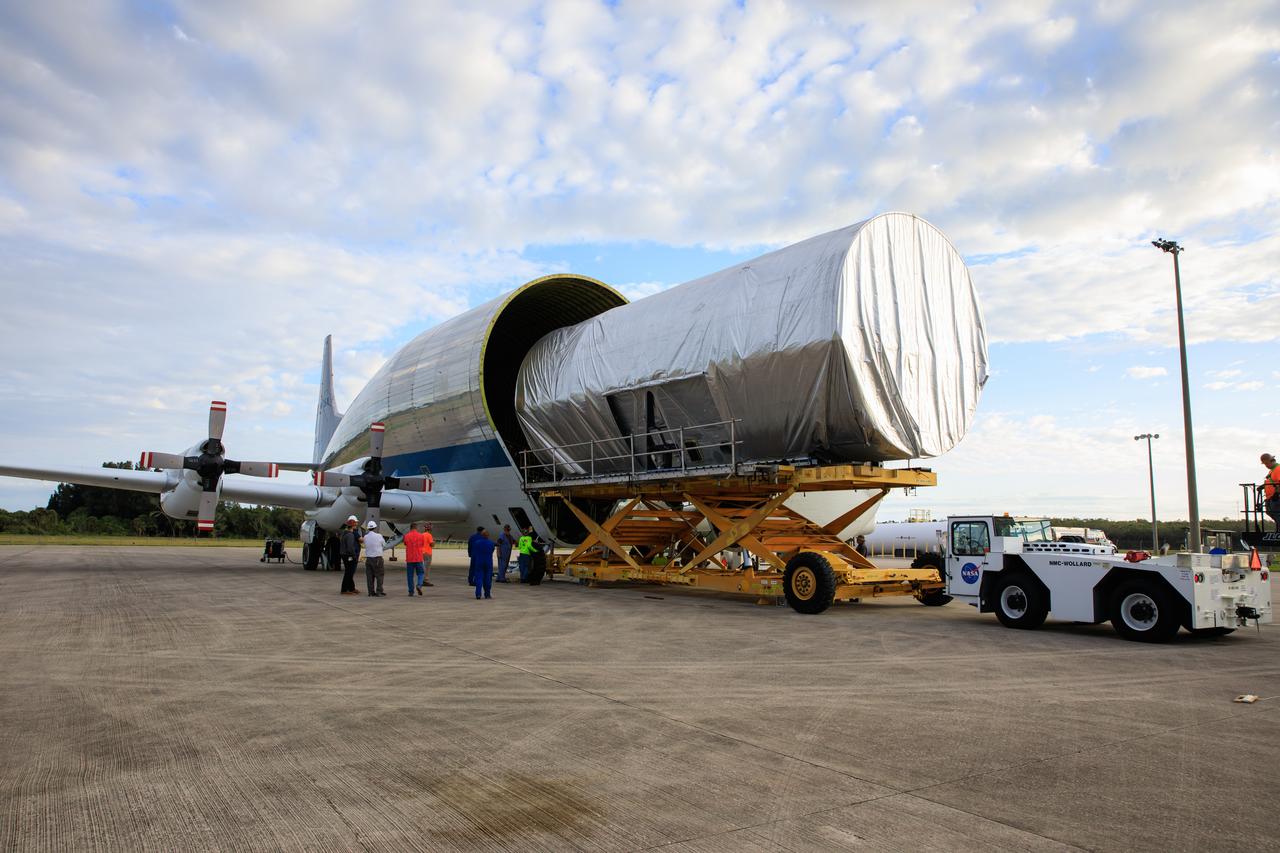
The Multi-Purpose Logistics Module (MPLM), used during the Space Shuttle Program to transfer cargo to and from the International Space Station, is loaded into NASA's Super Guppy aircraft at the Launch and Landing Facility runway at Kennedy Space Center in Florida on April 25, 2023. The MPLM will be transported to Ellington Field in Houston, where it will then be transported by road to Axiom’s facility near Ellington to be utilized to further commercialization of space. Three MPLMs were built by Thales Alenia Space Italia (TASI) for the Italian Space Agency (ASI) and named after Italian masters (Leonardo, Raffaello, and Donatello). Only two ever flew to the space station, Leonardo and Raffaello, with Axiom intending to use the Raffaello module as a future element that will attach to a segment being built by the company for addition to the station.
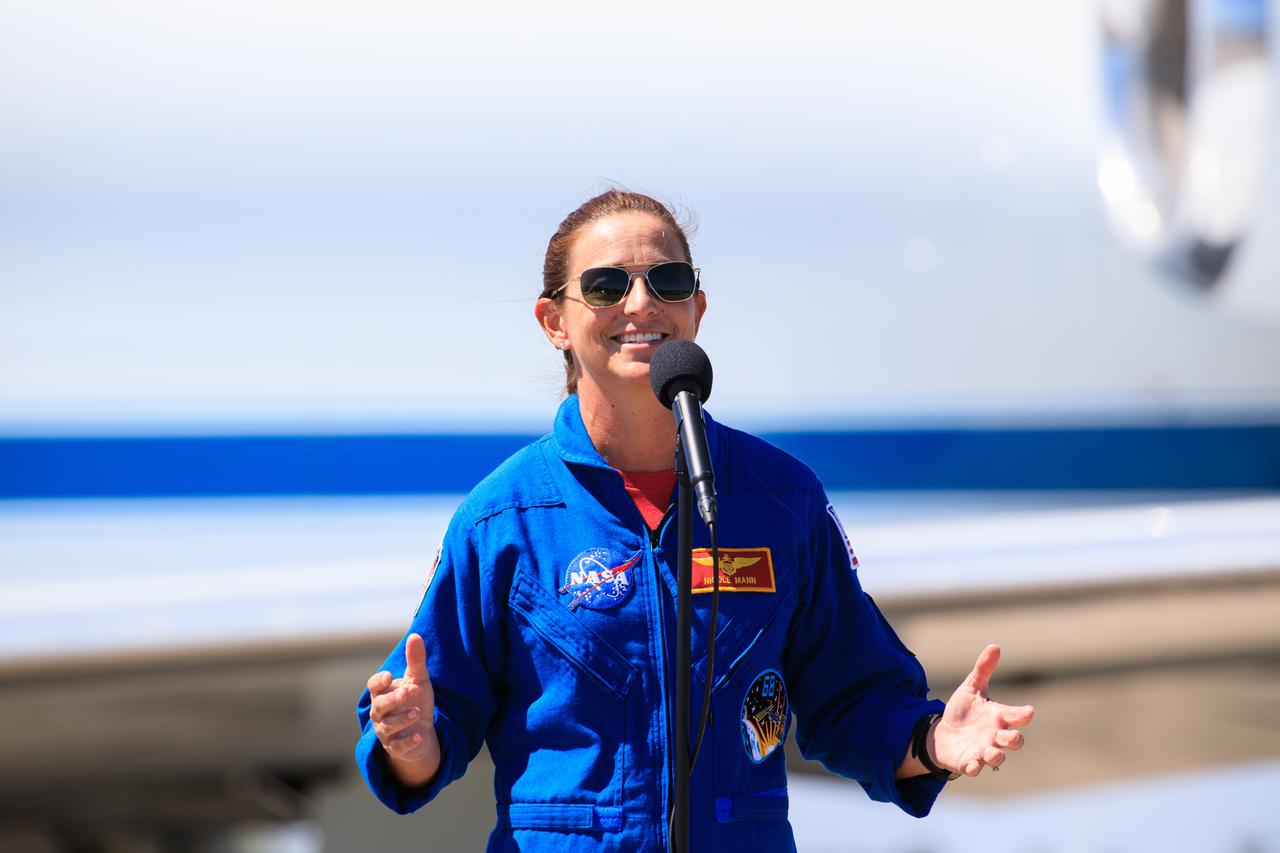
NASA astronaut Nicole Mann speaks to members of the news media during crew arrival for NASA’s SpaceX Crew-5 mission at the Launch and Landing Facility at Kennedy Space Center in Florida on Oct. 1, 2022. The astronauts will launch aboard the Crew Dragon on a SpaceX Falcon 9 rocket on Oct. 5. Launch is targeted for noon EDT from Launch Complex 39A. Crew-5 is the fifth crew rotation mission with SpaceX to the station, and the sixth flight of Dragon with people as part of the agency’s Commercial Crew Program.
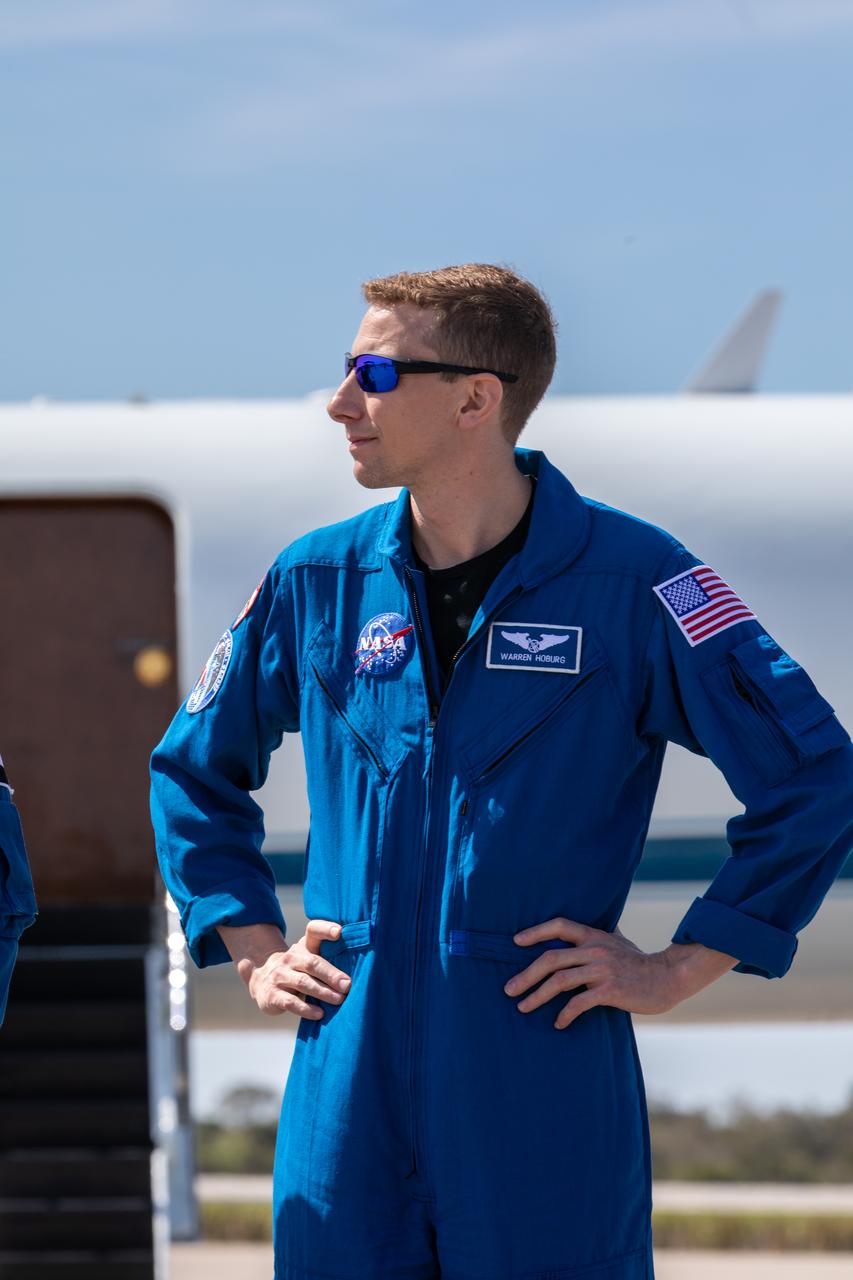
NASA astronaut Warren “Woody” Hoburg speaks to members of the news media during crew arrival for NASA’s SpaceX Crew-6 mission at Kennedy Space Center’s Launch and Landing Facility in Florida on Feb. 21, 2023. Hoburg, along with NASA astronaut Stephen Bowen, UAE (United Arab Emirates) astronaut Sultan Alneyadi, and Roscosmos cosmonaut Andrey Fedyaev will launch to the International Space Station aboard the Crew Dragon on a SpaceX Falcon 9. Launch is targeted for no earlier than Feb. 26 at 2:07 a.m. EST from Launch Complex 39A. Crew-6 is the sixth crew rotation mission with SpaceX to the station, and the seventh flight of Dragon with people as part of the agency’s Commercial Crew Program.
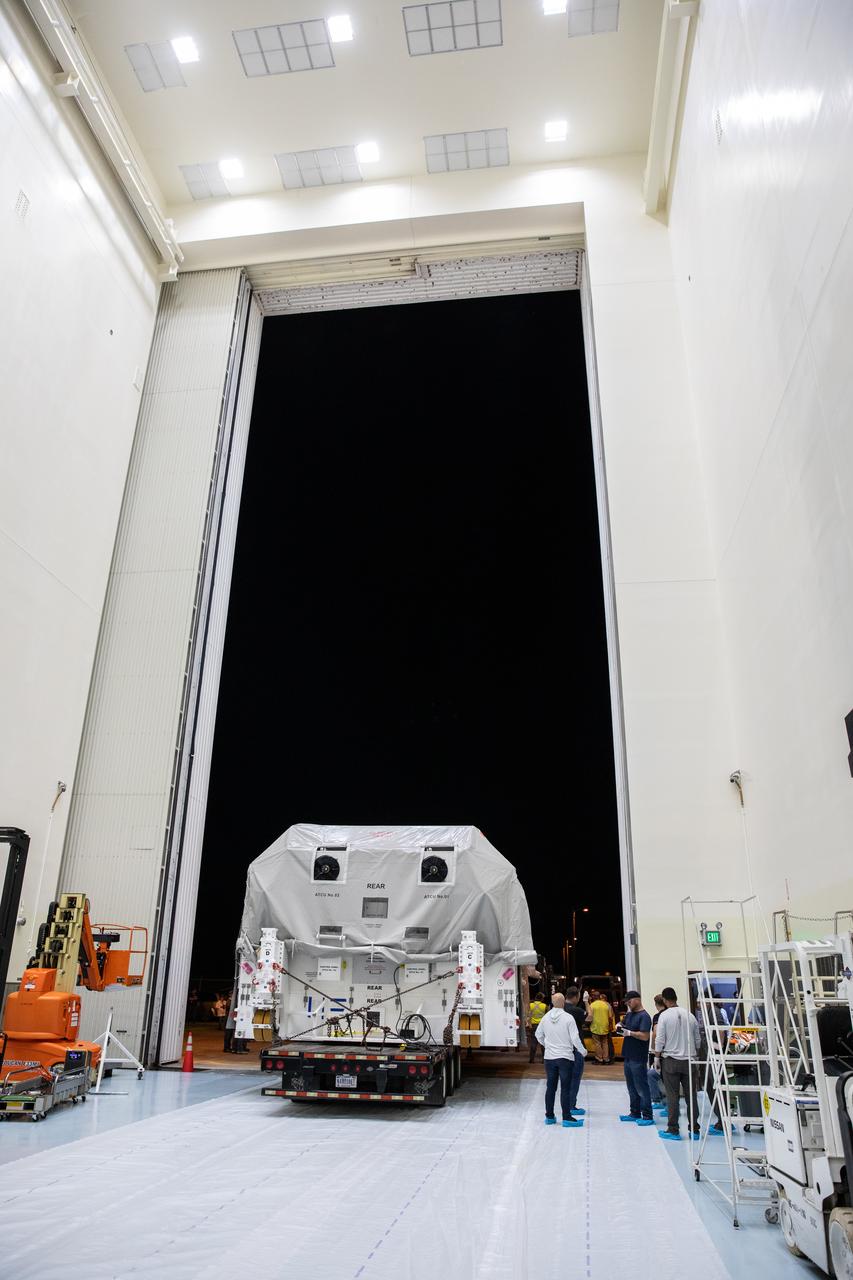
NASA’s largest planetary mission spacecraft, Europa Clipper, arrives at the Payload Hazardous Servicing Facility at the agency’s Kennedy Space Center in Florida on Thursday, May 23, 2024. Slated to launch aboard a SpaceX Falcon Heavy rocket later this year from Launch Complex 39A at Kennedy, Europa Clipper will help determine if life-sustaining conditions exist below the surface Jupiter’s fourth largest moon, Europa.
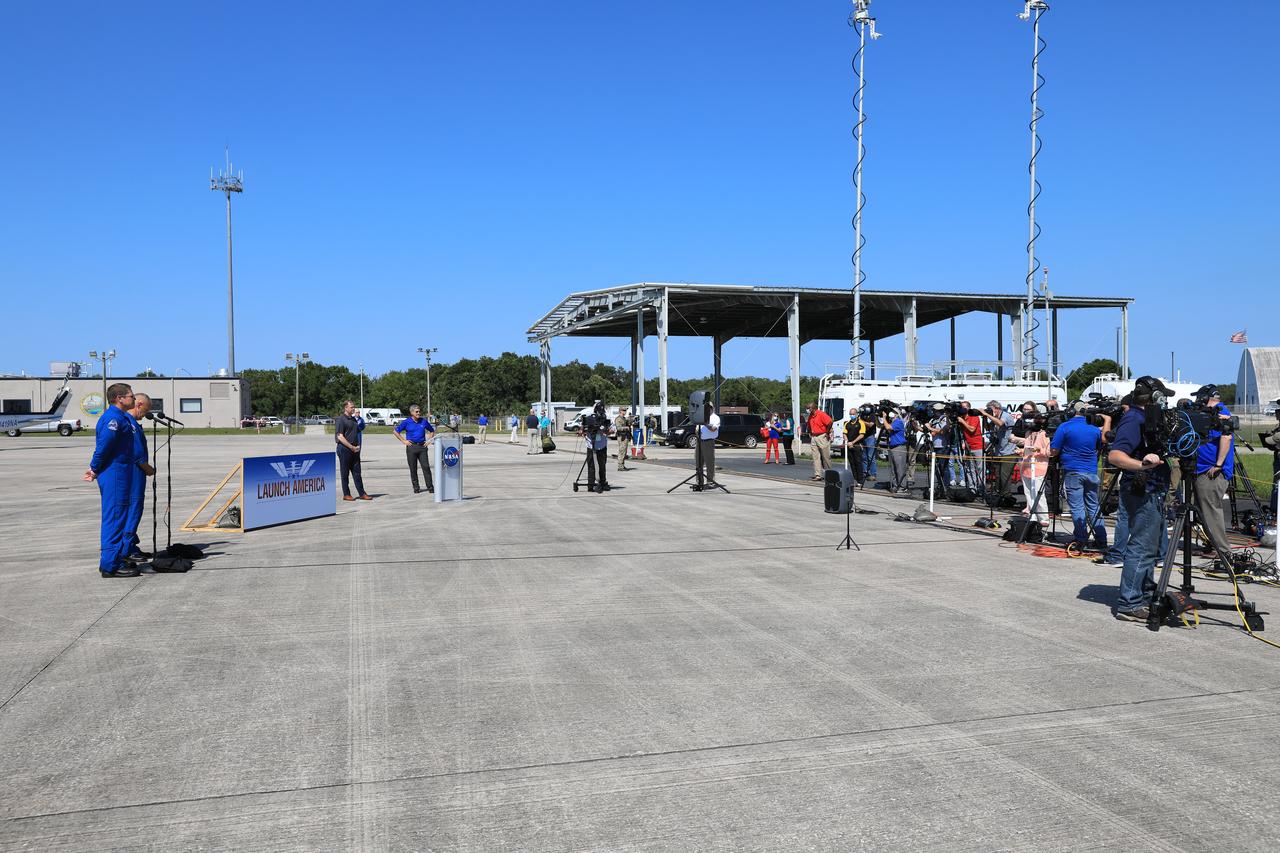
From left, Demo-2 crew members Robert Behnken and Douglas Hurley, NASA Administrator Jim Bridenstine and Kennedy Space Center Director Bob Cabana speak to members of the media on May 20, 2020, at the Launch and Landing Facility runway following the crew’s arrival to the Florida spaceport. Under NASA’s Commercial Crew Program, Behnken and Hurley will be the first astronauts launching to the International Space Station from U.S. soil since the end of the Space Shuttle Program in 2011. Liftoff of the SpaceX Falcon 9 rocket and Crew Dragon spacecraft is scheduled for 4:33 p.m. on May 27 from Kennedy’s Launch Complex 39A.
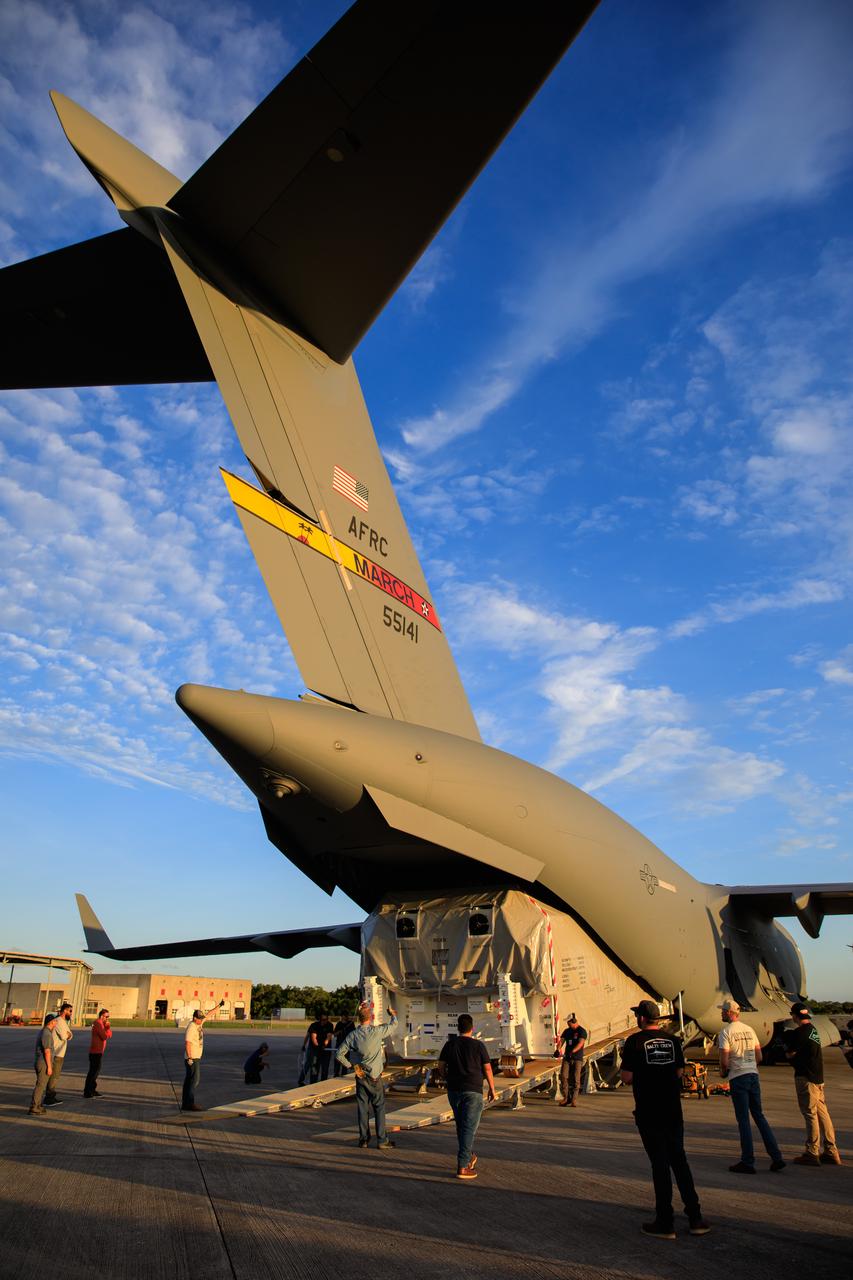
Teams offload NASA’s largest planetary mission spacecraft, Europa Clipper, from a United States Air Force C-17 Globemaster III transport aircraft onto the flatbed of a heavy-lift truck at the Launch and Landing Facility at NASA’s Kennedy Space Center in Florida on Thursday, May 23, 2024. Crews transported Europa Clipper to the Payload Hazardous Servicing Facility at Kennedy to prepare it for launch aboard a SpaceX Falcon Heavy rocket later this year from Launch Complex 39A at the Florida spaceport. Europa Clipper will help determine if conditions exist below the surface Jupiter’s fourth largest moon, Europa, that could support life.
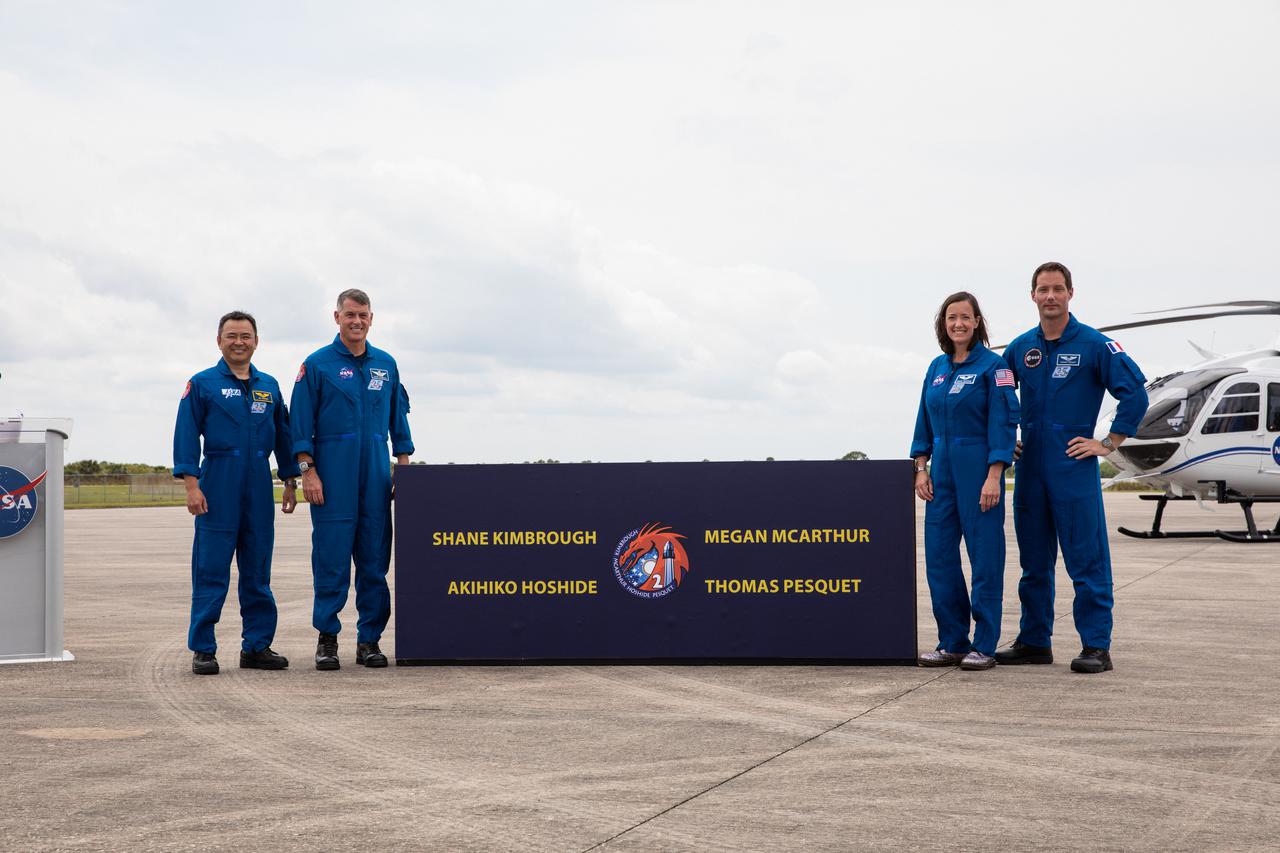
From left to right, Crew-2 mission astronauts Akihiko Hoshide (JAXA), Shane Kimbrough (NASA), Megan McArthur (NASA), and Thomas Pesquet (ESA), arrive at Kennedy Space Center’s Launch and Landing Facility on April 16, 2021. The astronauts departed by plane from Ellington Field near the agency’s Johnson Space Center in Houston, making the short flight and touching down at Kennedy. The Crew-2 mission is set to lift off from Kennedy’s Launch Complex 39A on April 22, at 6:11 a.m. EDT.
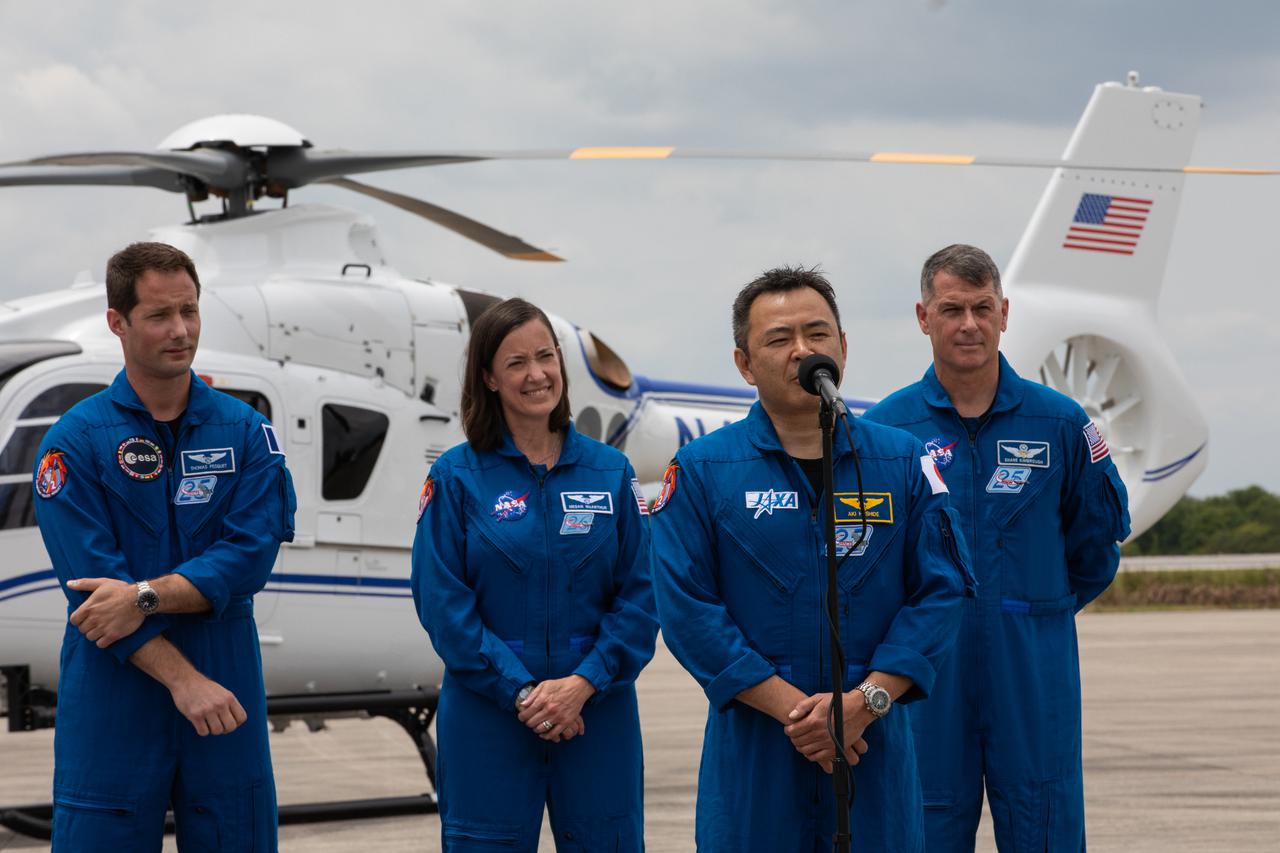
Representatives from NASA participate in a media event at the agency’s Kennedy Space Center in Florida on Friday, April 16, 2021, upon the arrival of NASA astronauts Shane Kimbrough and Megan McArthur – who will serve as the mission’s spacecraft commander and pilot, respectively – along with JAXA (Japan Aerospace Exploration Agency) astronaut Akihiko Hoshide and ESA (European Space Agency) astronaut Thomas Pesquet, who will serve as mission specialists in advance of NASA’s SpaceX Crew-2 mission to the International Space Station as part of NASA’s Commercial Crew Program. Participants include: NASA Acting Administrator Steve Jurzczyk; Bob Cabana, director, Kennedy Space Center; Junichi Sakai, manager, International Space Station Program, JAXA; Frank de Winne, manager, International Space Station Program, ESA,; NASA astronaut Shane Kimbrough, spacecraft commander; NASA astronaut Megan McArtur, pilot; JAXA astronaut Akihiko Hoshide, mission specialist and ESA astronaut Thomas Pesquet, mission specialist. Launch is currently targeted for 6:11 a.m. ET Thursday, April 22. The SpaceX Crew Dragon spacecraft, name Endeavour by the Crew-2 astronauts, will launch on a Falcon 9 rocket from historic Launch Complex 39A at NASA’s Kennedy Space Center in Florida.
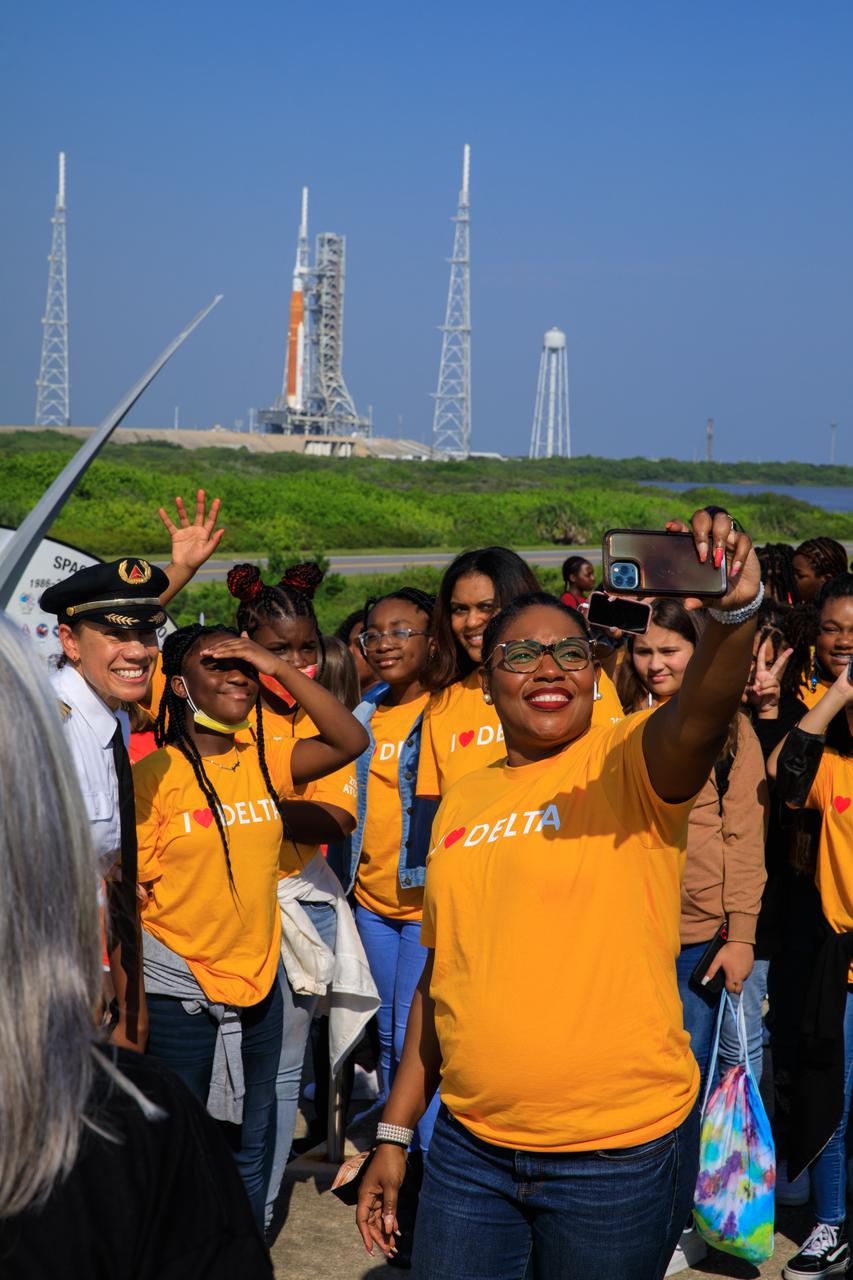
A group of girls pose for a selfie in front of NASA’s Artemis I Moon rocket at Launch Pad 39B at the agency’s Kennedy Space Center in Florida on Sept. 23, 2022. As part of Delta Air Lines’ Women Inspiring Our Next Generation (WING) program, an all-female crew flew girls from a variety of Atlanta, Georgia area schools and organizations with a STEM (science, technology, engineering, math) focus to Kennedy to learn about the various careers available at the Florida spaceport. While at Kennedy, the group also had the opportunity to hear from a panel of 18 women with a combination of careers from Kennedy and Delta and tour the visitor complex.
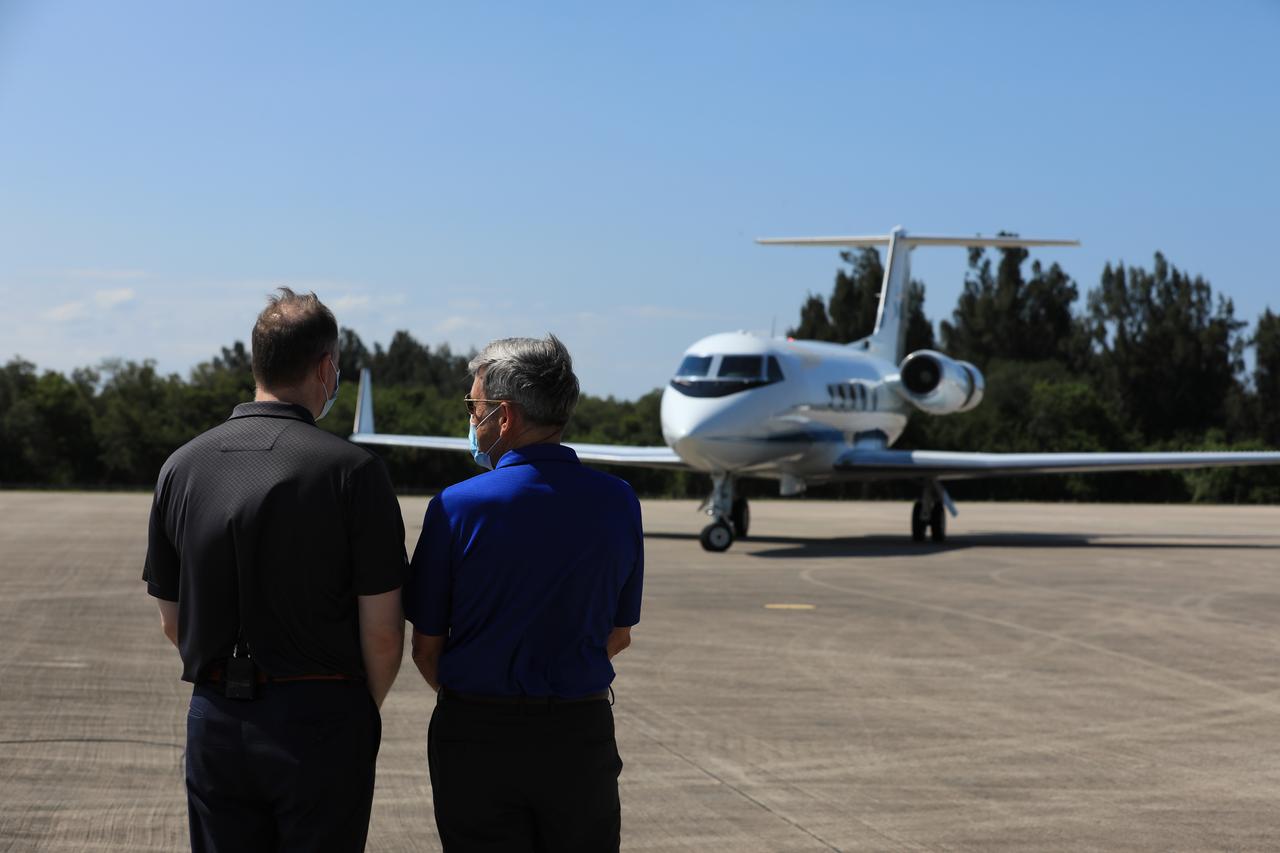
NASA Administrator Jim Bridenstine (left) and Kennedy Space Center Director Bob Cabana watch as the Gulfstream jet, carrying NASA astronauts Robert Behnken and Douglas Hurley, who will fly on the agency’s SpaceX Demo-2 mission to the International Space Station, lands at the Launch and Landing Facility runway at the Florida spaceport on May 20, 2020. Under NASA’s Commercial Crew Program, Behnken and Hurley will be the first astronauts to launch to the orbiting laboratory from U.S. soil since the end of the Space Shuttle Program in 2011. Liftoff of the SpaceX Falcon 9 rocket and Crew Dragon spacecraft is scheduled for 4:33 p.m. on May 27 from Kennedy’s Launch Complex 39A.
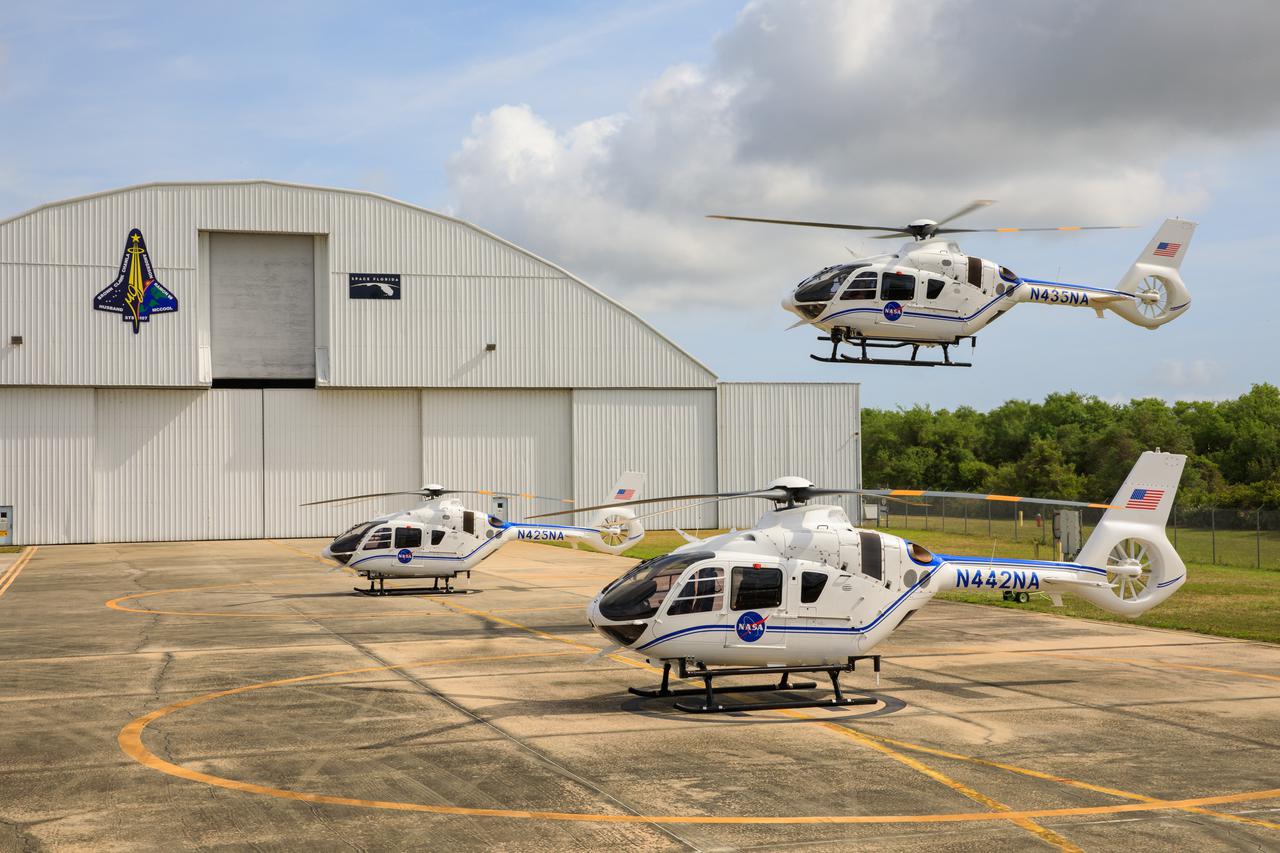
The third and final Airbus H135 helicopter touches down at the Launch and Landing Facility runway at NASA’s Kennedy Space Center in Florida on March 26, 2021, completing the upgraded fleet of aircraft used for security operations. The Airbus H135 helicopters replace the Bell Huey 2 aircraft that had been in service at Kennedy for the last 30 years. Maintained by the Flight Operations team, these new helicopters provide a number of technological and safety advantages over the Hueys, such as more lifting power, greater stability in the air, and expanded medical capabilities.
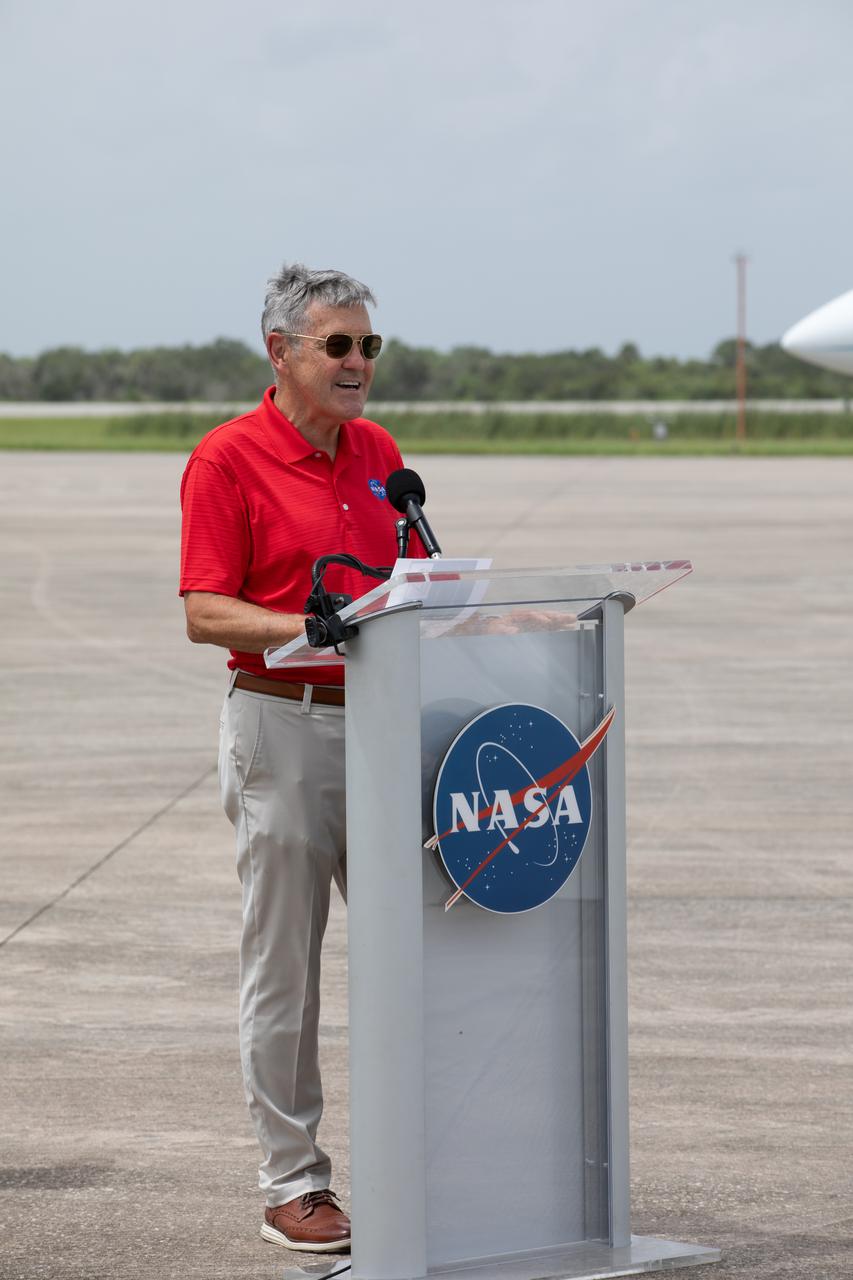
NASA Associate Administrator Bob Cabana speaks to members of the news media during crew arrival for NASA’s SpaceX Crew-7 mission at the Launch and Landing Facility at Kennedy Space Center in Florida on Sunday, Aug. 20, 2023. The crew will launch to the International Space Station aboard SpaceX’s Dragon spacecraft on the company’s Falcon 9 rocket. Liftoff is targeted for 3:49 a.m. EDT Friday, Aug. 25, 2023, from Kennedy’s Launch Complex 39A. Crew-7 is the seventh crew rotation mission with SpaceX to the station, and the eighth flight of Dragon with people as part of the agency’s Commercial Crew Program.
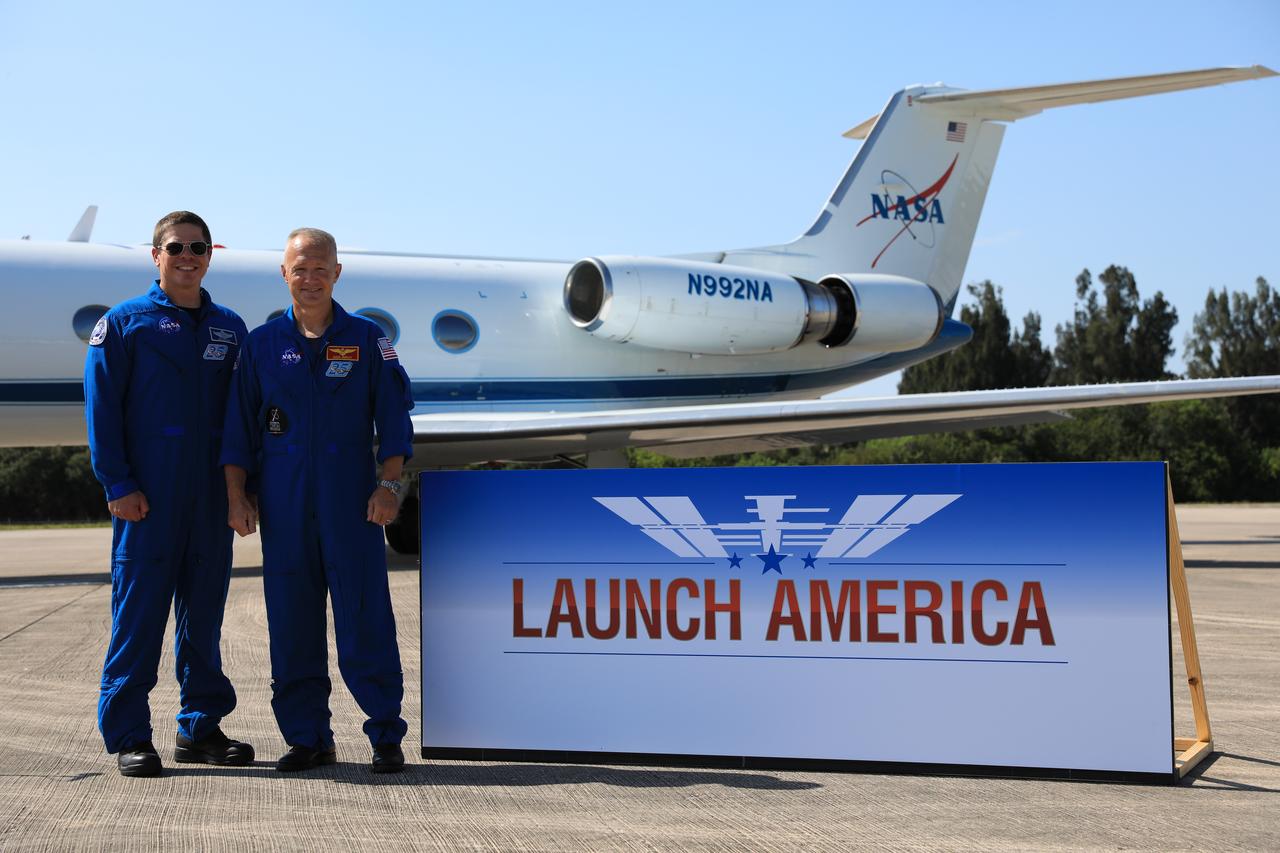
From left, Demo-2 crew members Robert Behnken and Douglas Hurley pose for a photo after speaking to members of the media on May 20, 2020, at the Launch and Landing Facility runway following the crew’s arrival to the Florida spaceport. Under NASA’s Commercial Crew Program, Behnken and Hurley will be the first astronauts launching to the International Space Station from U.S. soil since the end of the Space Shuttle Program in 2011. Liftoff of the SpaceX Falcon 9 rocket and Crew Dragon spacecraft is scheduled for 4:33 p.m. on May 27 from Kennedy’s Launch Complex 39A.
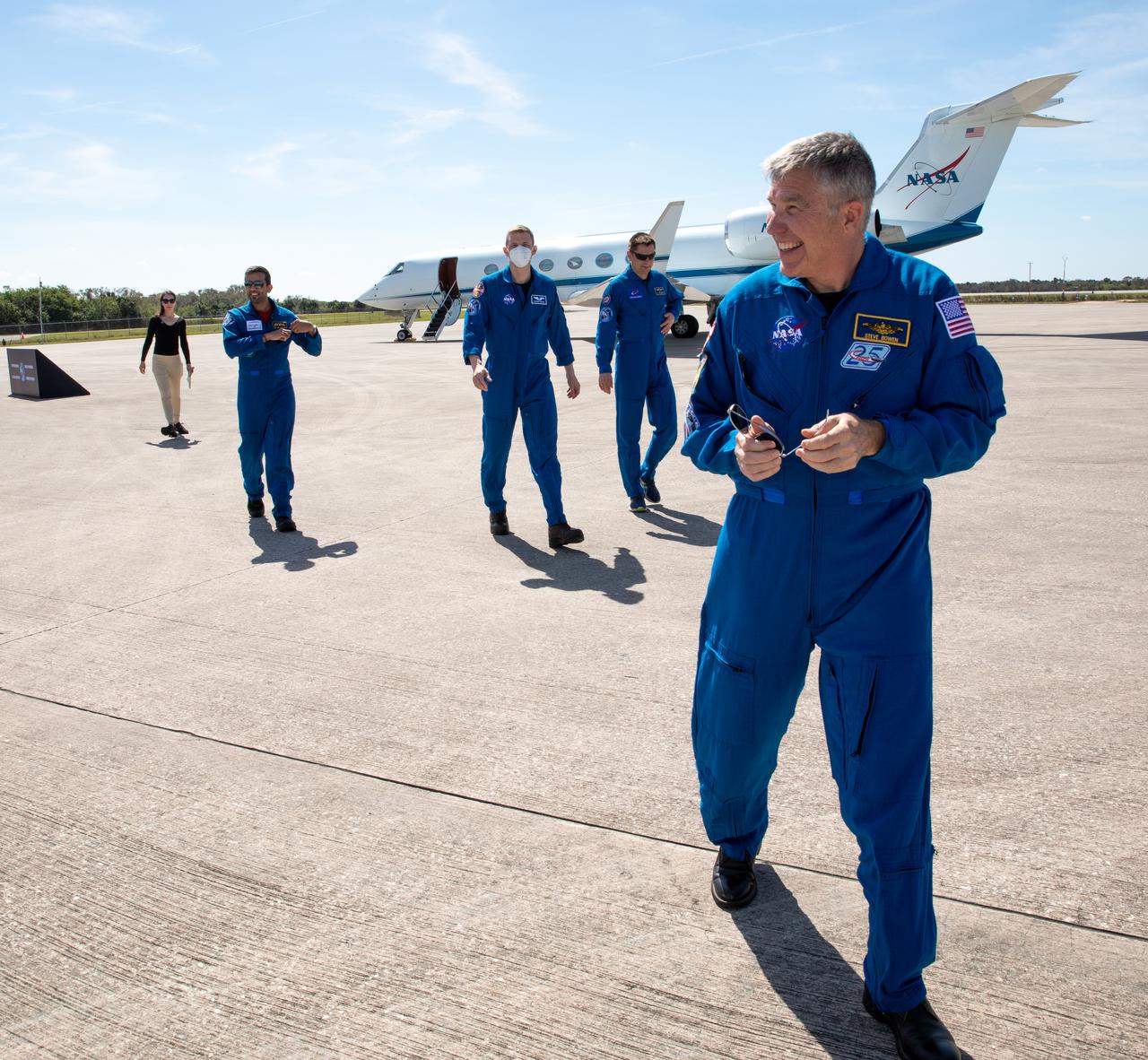
Crew members for NASA’s SpaceX Crew-6 mission to the International Space Station arrive at Kennedy Space Center’s Launch and Landing Facility in Florida on Feb. 21, 2023. In front is NASA astronaut Stephen Bowen, and behind him from left are UAE (United Arab Emirates) astronaut Sultan Alneyadi, NASA astronaut Warren “Woody” Hoburg, and Roscosmos cosmonaut Andrey Fedyaev. The crew will head to the center’s Astronaut Crew Quarters as they await launch aboard the Crew Dragon on a SpaceX Falcon 9 rocket. Launch is targeted for no earlier than Feb. 26 at 2:07 a.m. EST. Crew-6 is the sixth crew rotation mission with SpaceX to the station, and the seventh flight of Dragon with people as part of the agency’s Commercial Crew Program.
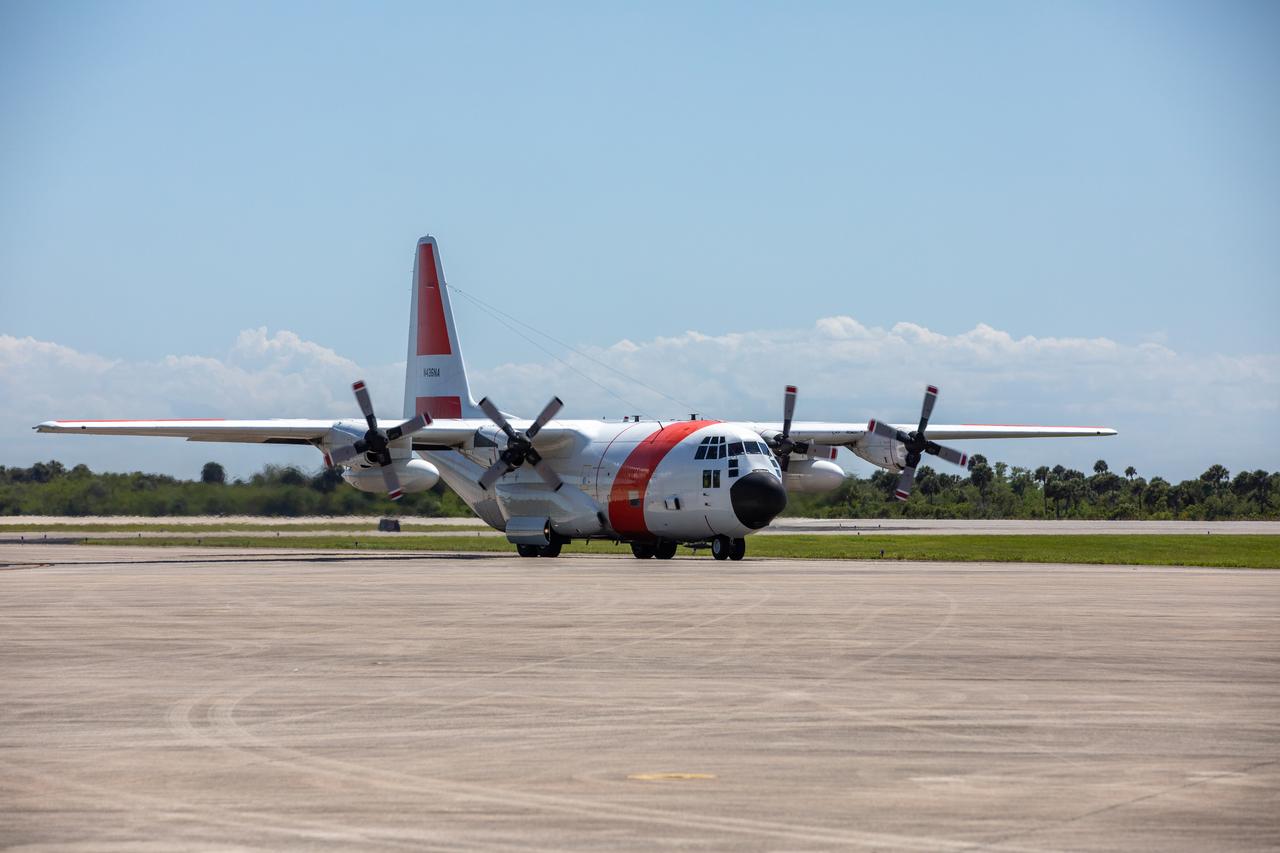
The Adaptive Caching Assembly (ACA) for NASA’s Mars Perseverance rover arrives aboard NASA’s C-130 aircraft at the Launch and Landing Facility at the agency’s Kennedy Space Center in Florida on May 11, 2020. The ACA consists of seven motors and more than 3,000 parts, all working in unison to collect samples from the surface of Mars. A chief component of the assembly is the Sample Handling Arm, which will move sample tubes to the main robotic arm's coring drill and then transfer the filled sample tubes into a space to be sealed and stored. The Mars Perseverance rover is scheduled to launch in mid-July atop a United Launch Alliance Atlas V 541 rocket from Pad 41 at nearby Cape Canaveral Air Force Station. The rover is part of NASA’s Mars Exploration Program, a long-term effort of robotic exploration of the Red Planet. The rover will search for habitable conditions in the ancient past and signs of past microbial life on Mars. The Launch Services Program at Kennedy is responsible for launch management.
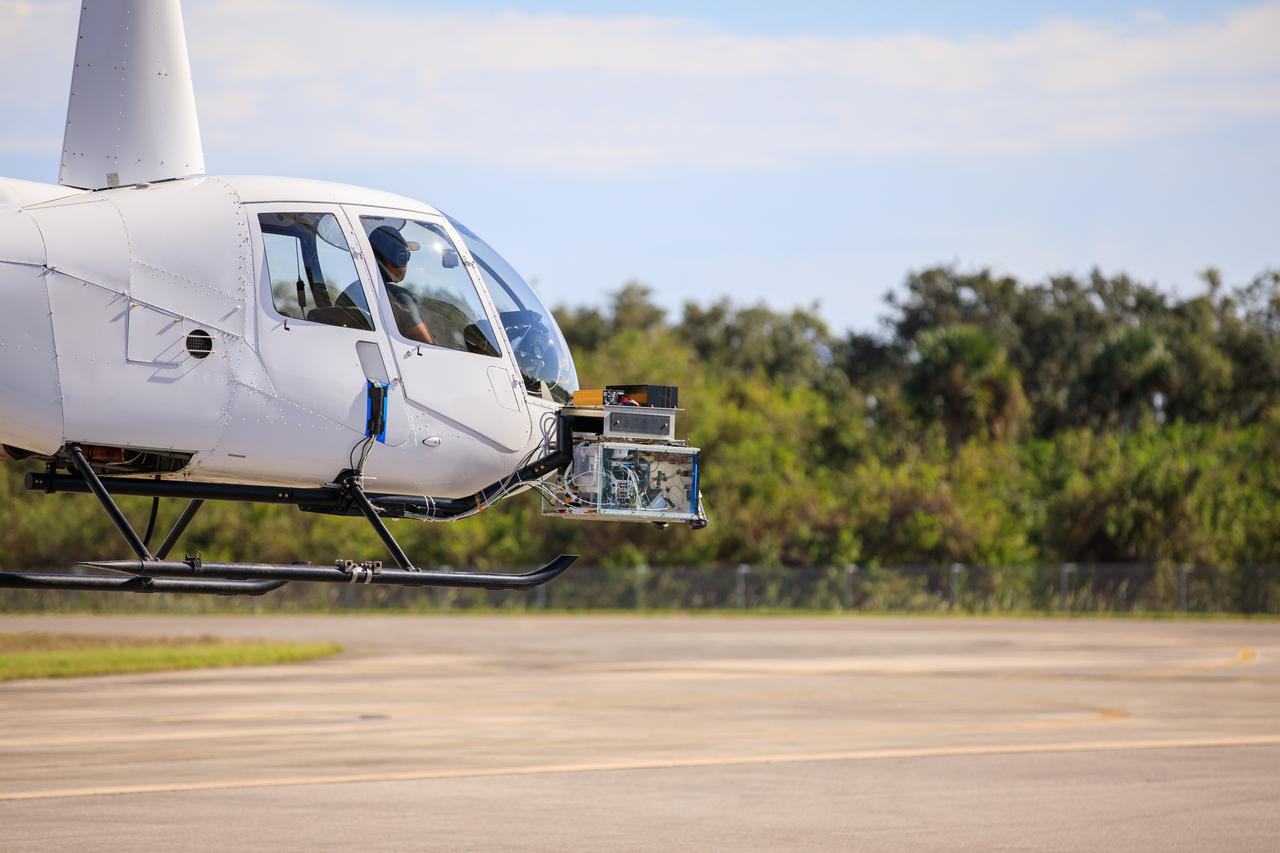
Testing of navigation pod sensors for Intuitive Machines’ Nova-C lunar lander is underway at NASA’s Kennedy Space Center in Florida on Nov. 18, 2022. The test involved flying the sensors over a simulated lunar surface at the Launch and Landing Facility on a private helicopter. Intuitive Machines is scheduled to launch two missions to the Moon in 2023 – one of which will carry NASA’s Mass Spectrometer observing lunar operations (MSolo) instrument that will help analyze the chemical makeup of landing sites on the Moon, as well as study water on the lunar surface. Through NASA’s Commercial Lunar Payload Services initiative, the agency selected Intuitive Machines to deliver science and technology demonstration payloads to the Moon, contributing to NASA’s goal of establishing a sustainable human presence on the lunar surface.
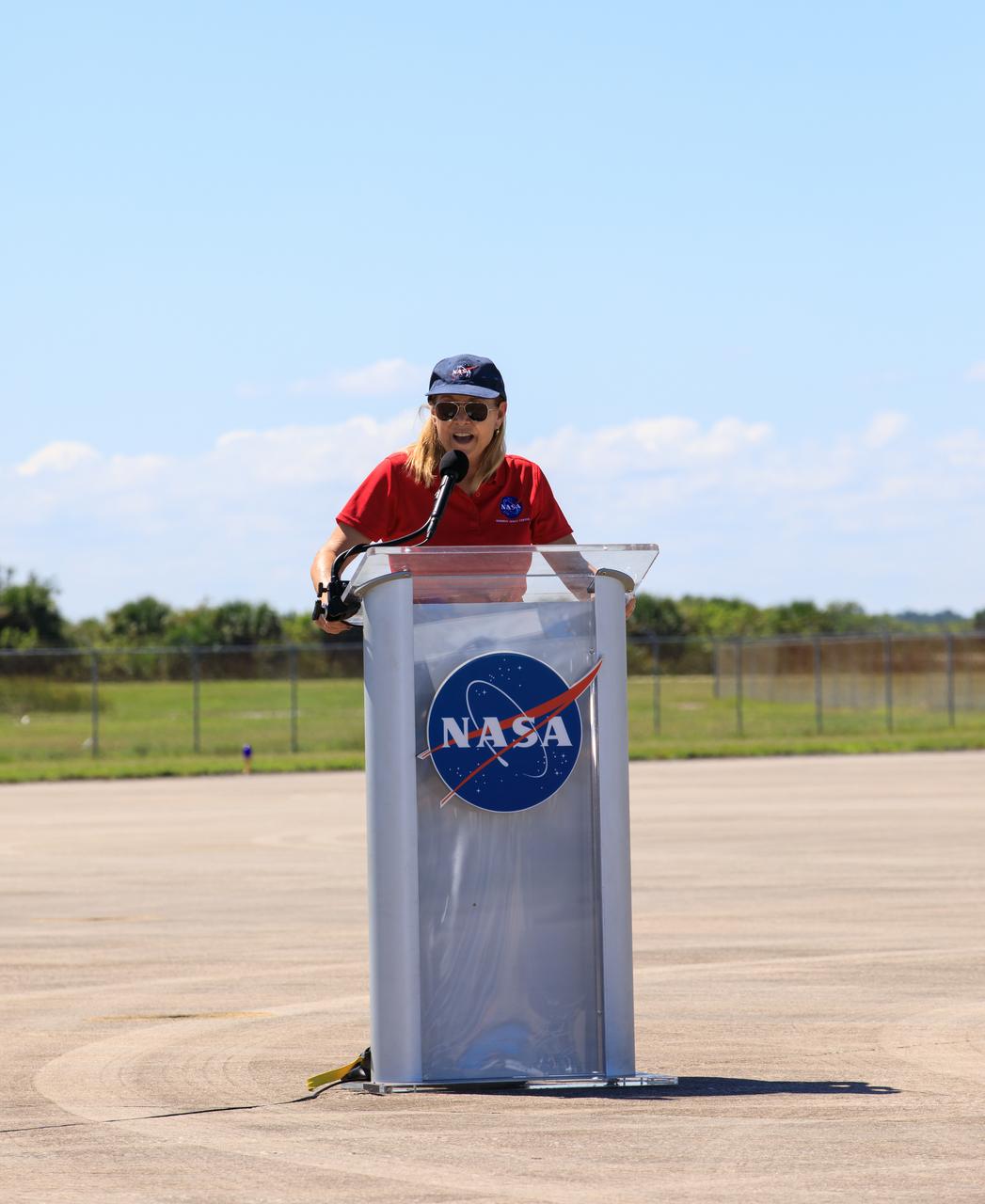
Kennedy Space Center Director Janet Petro speaks to members of the news media during crew arrival for NASA’s SpaceX Crew-5 mission at the Launch and Landing Facility at Kennedy Space Center in Florida on Oct. 1, 2022. The astronauts will launch aboard the Crew Dragon on a SpaceX Falcon 9 rocket on Oct. 5. Launch is targeted for noon EDT from Launch Complex 39A. Crew-5 is the fifth crew rotation mission with SpaceX to the station, and the sixth flight of Dragon with people as part of the agency’s Commercial Crew Program.
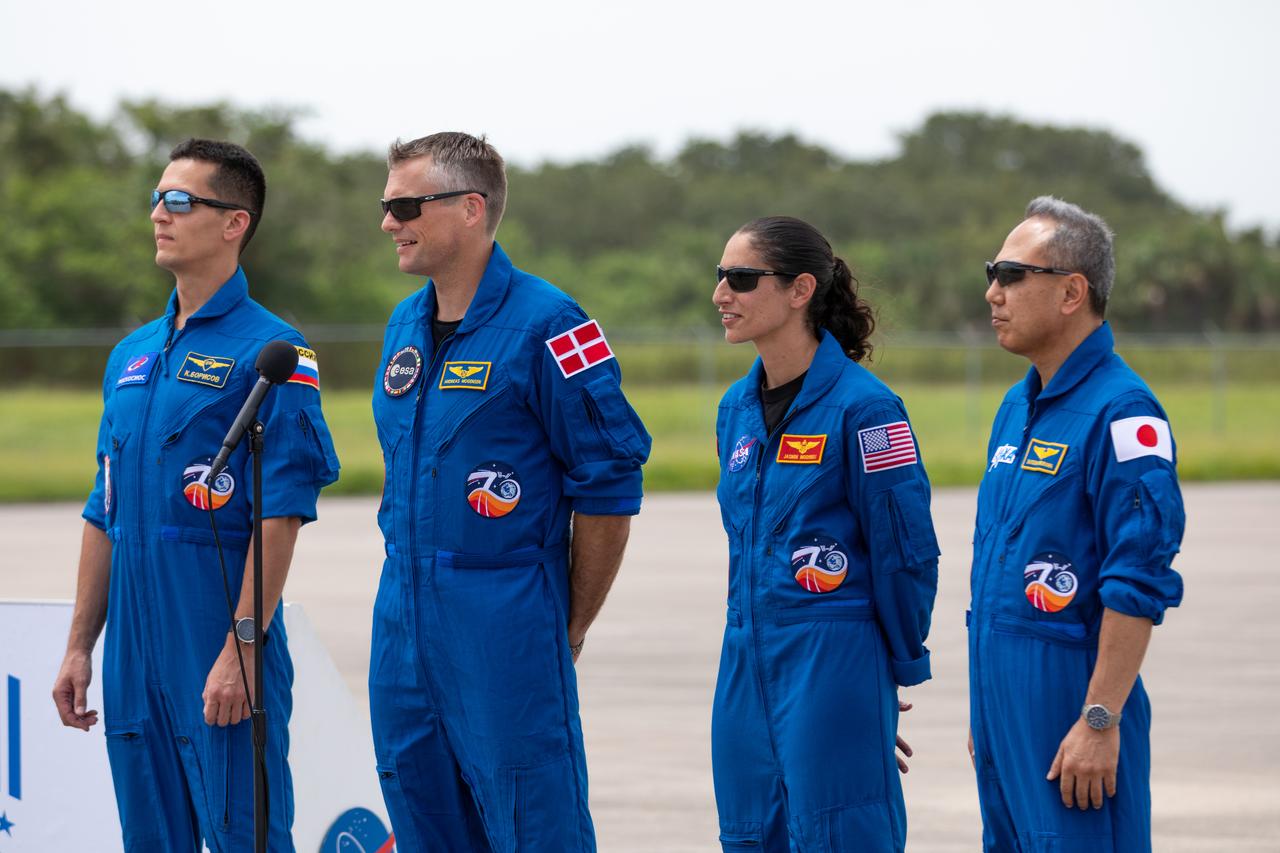
Crew members for NASA’s SpaceX Crew-7 mission to the International Space Station arrive at the Launch and Landing Facility at Kennedy Space Center in Florida on Sunday, Aug. 20, 2023. From left are Roscosmos cosmonaut Konstantin Borisov, ESA (European Space Agency) astronaut Andreas Mogensen, NASA astronaut Jasmin Moghbeli, and JAXA (Japan Aerospace Exploration Agency) astronaut Satoshi Furukawa. Liftoff is targeted for 3:49 a.m. EDT Friday, Aug. 25, 2023, from Kennedy’s Launch Complex 39A.

NOAA’s Geostationary Operational Environmental Satellite-U (GOES-U) is offloaded from a C-5M Super Galaxy transport aircraft onto the flatbed of a heavy-lift truck at the Launch and Landing Facility at NASA’s Kennedy Space Center in Florida on Tuesday, Jan. 23, 2024. Crews transported the satellite to the Astrotech Space Operations facility in Titusville, Florida to prepare it for launch. Part of a collaborative NOAA and NASA program, GOES-U is the fourth in a series of four advanced geostationary weather satellites. Data from the GOES satellite constellation – consisting of the GOES-R, GOES-S, GOES-T and GOES-U spacecraft – enables forecasters to predict, observe, and track local weather events that affect public safety like thunderstorms, hurricanes, and wildfires.
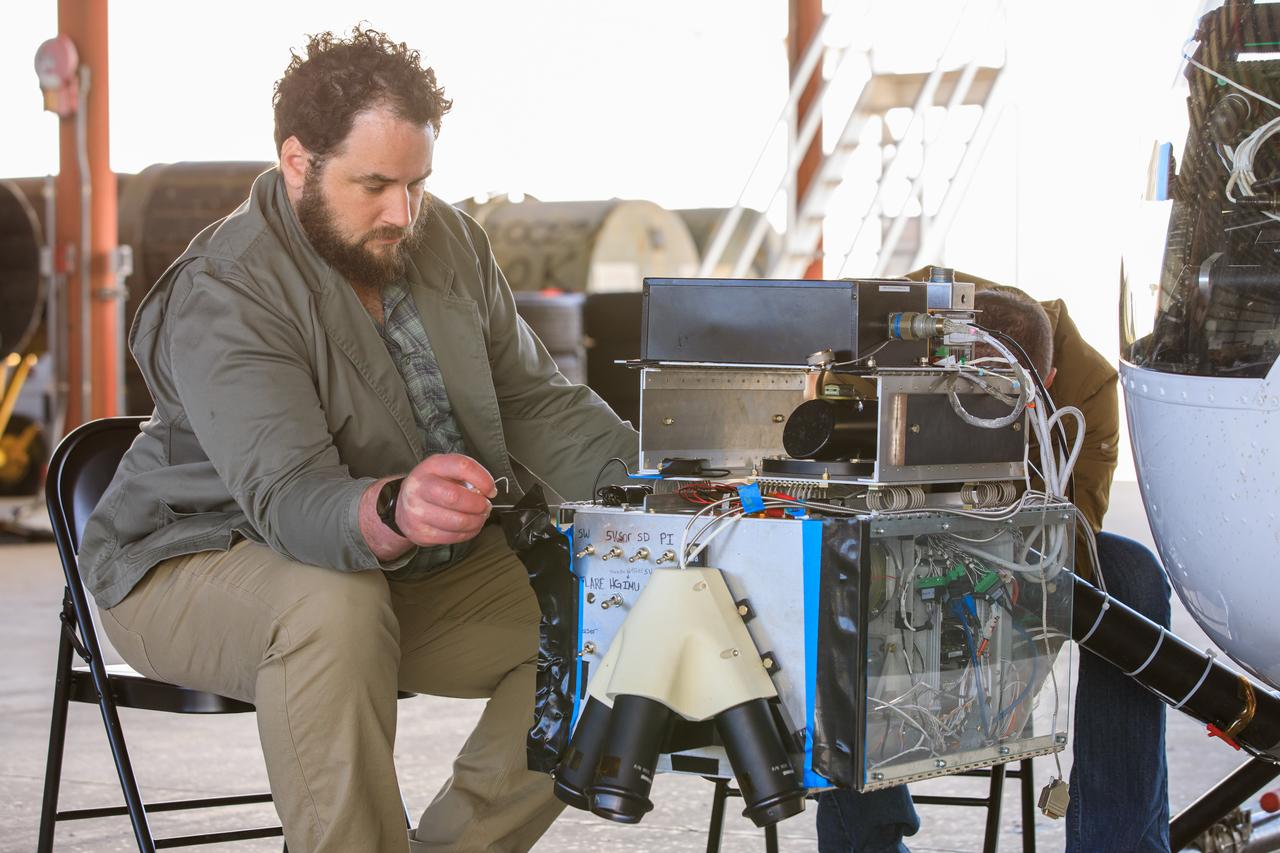
Two Intuitive Machines employees ready navigation pod sensors for the company’s Nova-C lunar lander in preparation for testing at NASA’s Kennedy Space Center in Florida on Nov. 18, 2022. The test involved flying the sensors over a simulated lunar surface at the Launch and Landing Facility on a private helicopter. Intuitive Machines is scheduled to launch two missions to the Moon in 2023 – one of which will carry NASA’s Mass Spectrometer observing lunar operations (MSolo) instrument that will help analyze the chemical makeup of landing sites on the Moon, as well as study water on the lunar surface. Through NASA’s Commercial Lunar Payload Services initiative, the agency selected Intuitive Machines to deliver science and technology demonstration payloads to the Moon, contributing to NASA’s goal of establishing a sustainable human presence on the lunar surface.
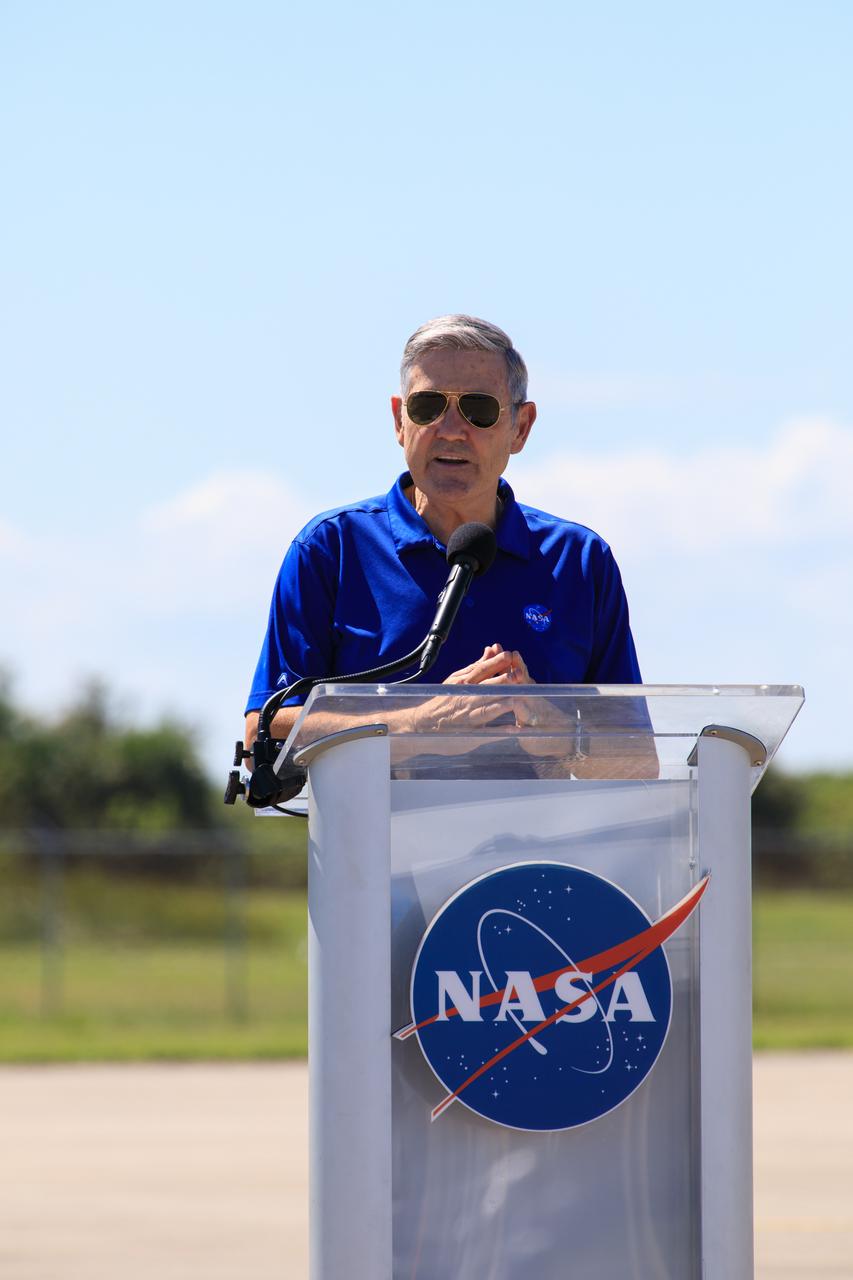
NASA Associate Administrator Bob Cabana speaks to members of the news media during crew arrival for NASA’s SpaceX Crew-5 mission at the Launch and Landing Facility at Kennedy Space Center in Florida on Oct. 1, 2022. The astronauts will launch aboard the Crew Dragon on a SpaceX Falcon 9 rocket on Oct. 5. Launch is targeted for noon EDT from Launch Complex 39A. Crew-5 is the fifth crew rotation mission with SpaceX to the station, and the sixth flight of Dragon with people as part of the agency’s Commercial Crew Program.
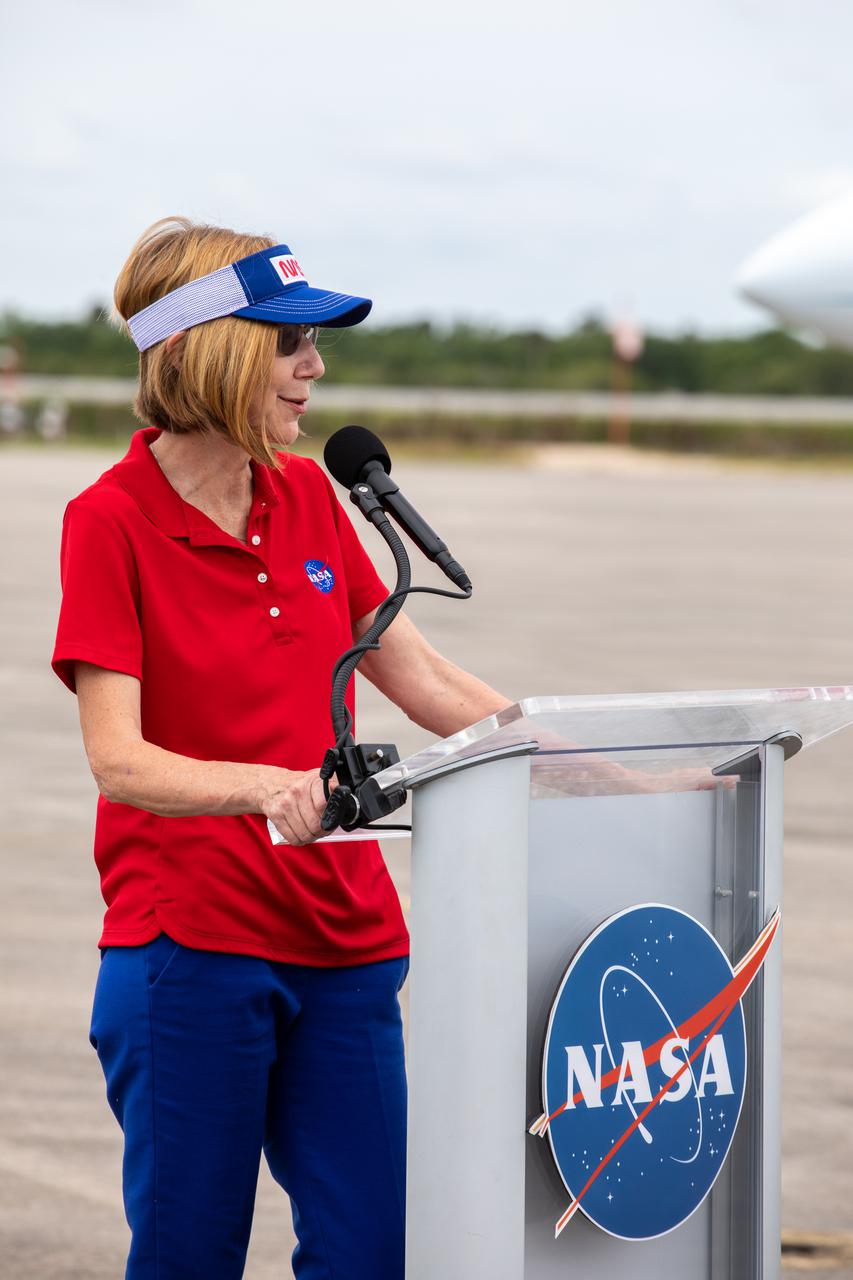
Kathy Lueders, associate administrator, Space Operations, NASA Headquarters, welcomes the crew members of NASA’s SpaceX Crew-4 mission after their arrival at the Launch and Landing Facility at Kennedy Space Center in Florida on April 18, 2022. NASA astronauts Kjell Lindgren, Bob Hines and Jessica Watkins, and ESA (European Space Agency) astronaut Samantha Cristoforetti, will launch aboard SpaceX’s Crew Dragon on the company’s Falcon 9 rocket. Launch is targeted for 5:26 a.m. EDT on April 23, 2022, from Kennedy’s Launch Complex 39A.
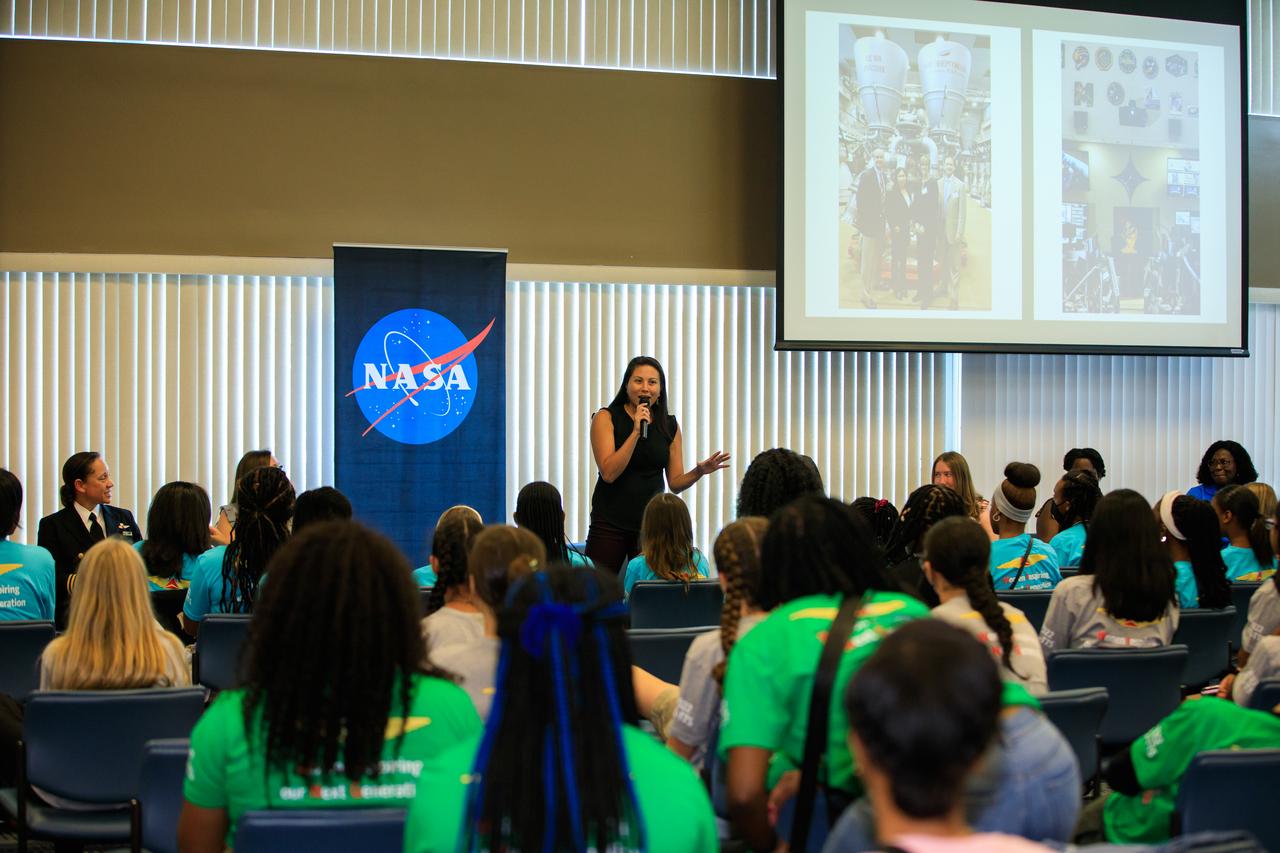
Josephine Pereira, Kennedy Space Center’s chief of Workforce Strategy and Development, speaks to students who were brought to Kennedy on Delta Air Lines’ Women Inspiring Our Next Generation (WING) flight from Atlanta, Georgia, on Sept. 23, 2022. An all-female crew flew girls from a variety of schools and organizations with a STEM (science, technology, engineering, math) focus to Kennedy to learn about the various careers available at the Florida spaceport. While at Kennedy, the group had the opportunity to view NASA’s Artemis I Moon rocket at Launch Pad 39B, hear from a panel of 18 women with a combination of careers from Kennedy and Delta, and tour the visitor complex.
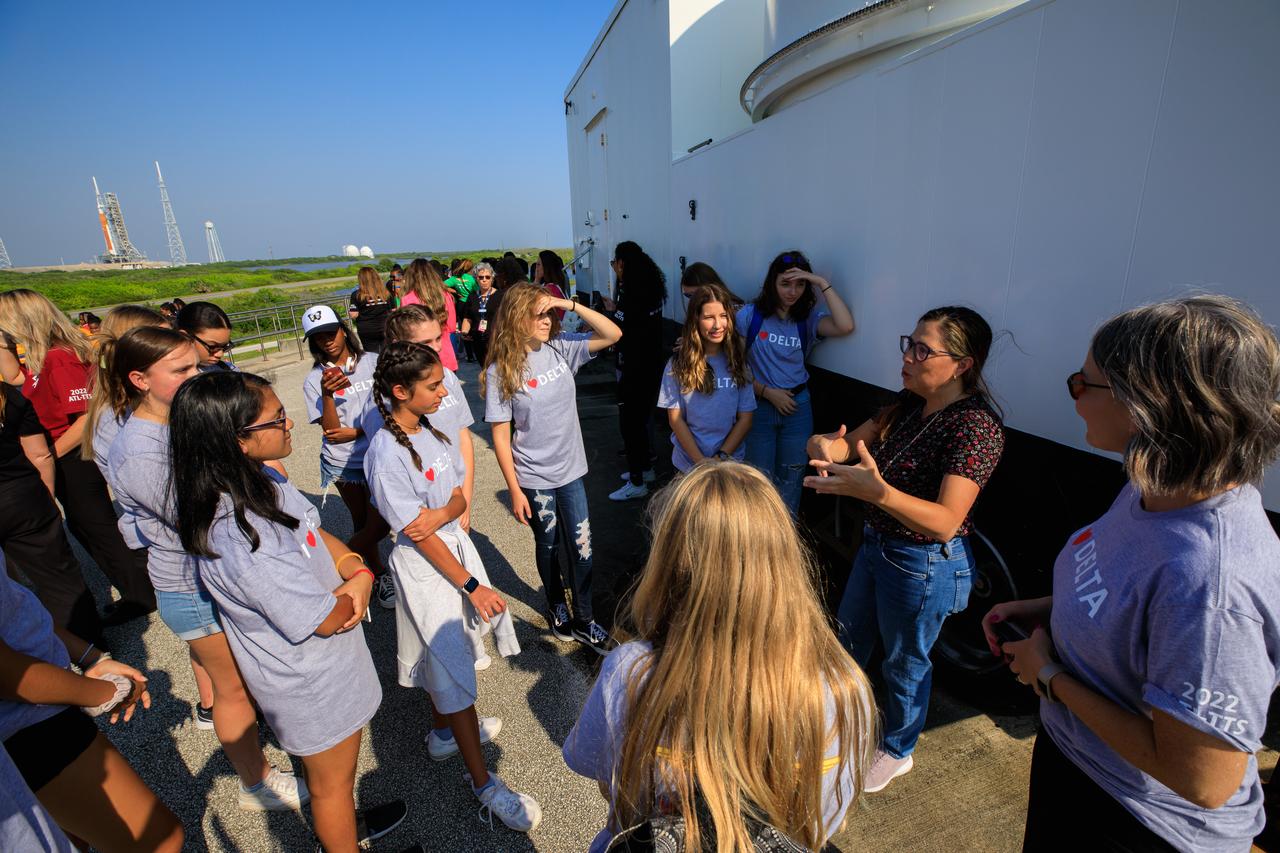
Liliana Villarreal (right), operations flow manager with NASA’s Exploration Ground Systems program, speaks to a group of students on a tour to see the agency’s Artemis I Moon rocket at Launch Pad 39B during their visit to Kennedy Space Center on Sept. 23, 2022. As part of Delta Air Lines’ Women Inspiring Our Next Generation (WING) program, an all-female crew flew girls from a variety of Atlanta, Georgia area schools and organizations with a STEM (science, technology, engineering, math) focus to Kennedy to learn about the various careers available at the Florida spaceport. While at Kennedy, the group also had the opportunity to hear from a panel of 18 women with a combination of careers from Kennedy and Delta and tour the visitor complex.
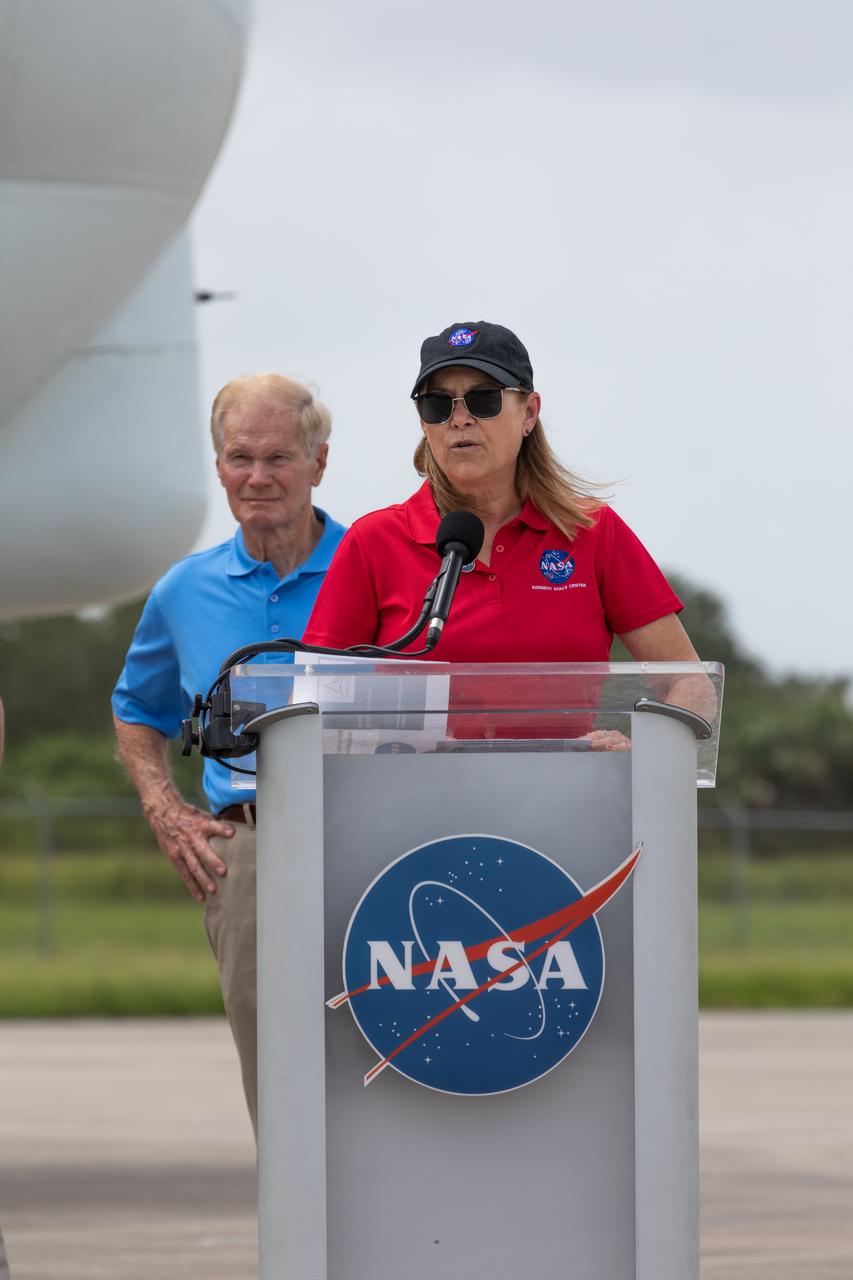
Kennedy Space Center Director Janet Petro speaks to members of the news media during crew arrival for NASA’s SpaceX Crew-7 mission at the Launch and Landing Facility at Kennedy Space Center in Florida on Sunday, Aug. 20, 2023. The crew will launch to the International Space Station aboard SpaceX’s Dragon spacecraft on the company’s Falcon 9 rocket. Liftoff is targeted for 3:49 a.m. EDT Friday, Aug. 25, 2023, from Kennedy’s Launch Complex 39A. Crew-7 is the seventh crew rotation mission with SpaceX to the station, and the eighth flight of Dragon with people as part of the agency’s Commercial Crew Program.
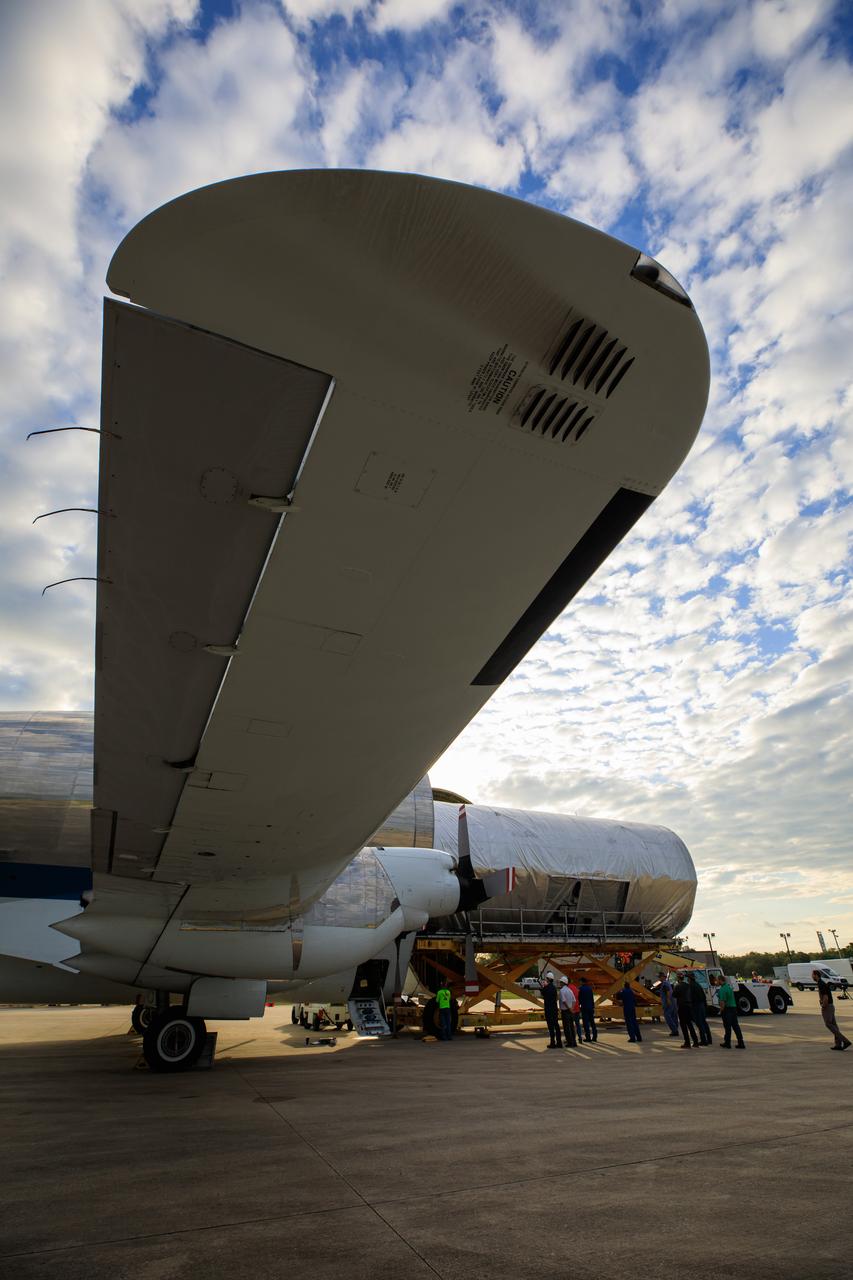
The Multi-Purpose Logistics Module (MPLM), used during the Space Shuttle Program to transfer cargo to and from the International Space Station, is loaded into NASA's Super Guppy aircraft at the Launch and Landing Facility runway at Kennedy Space Center in Florida on April 25, 2023. The MPLM will be transported to Ellington Field in Houston, where it will then be transported by road to Axiom’s facility near Ellington to be utilized to further commercialization of space. Three MPLMs were built by Thales Alenia Space Italia (TASI) for the Italian Space Agency (ASI) and named after Italian masters (Leonardo, Raffaello, and Donatello). Only two ever flew to the space station, Leonardo and Raffaello, with Axiom intending to use the Raffaello module as a future element that will attach to a segment being built by the company for addition to the station.
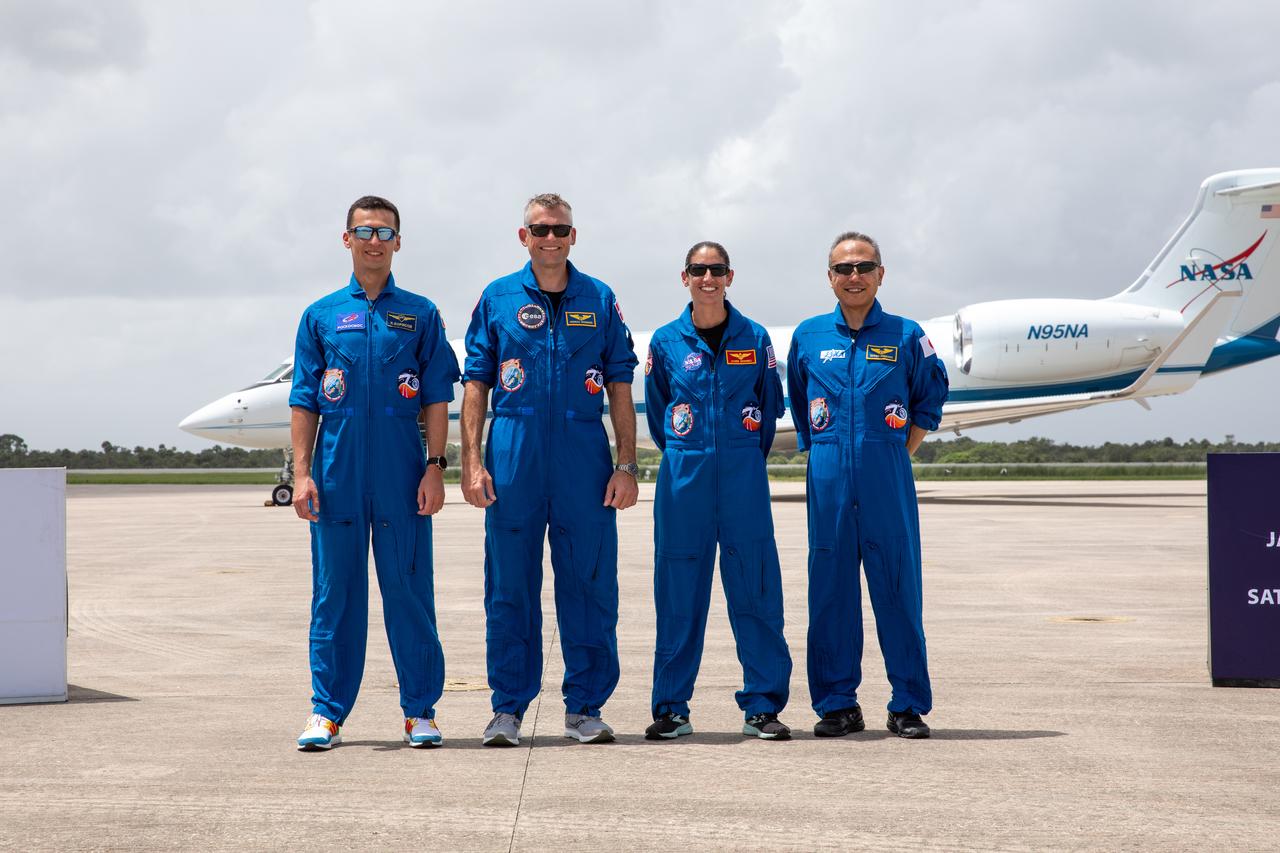
Crewmates for NASA’s SpaceX Crew-7 mission to the International Space Station stand before members of the news media at the Launch and Landing Facility at Kennedy Space Center in Florida on Sunday, Aug. 20, 2023. From left, Roscosmos cosmonaut Konstantin Borisov, ESA (European Space Agency) astronaut Andreas Mogensen, NASA astronaut Jasmin Moghbeli, and JAXA (Japan Aerospace Exploration Agency) astronaut Satoshi Furukawa will launch aboard a SpaceX Dragon spacecraft and Falcon 9 rocket at 3:49 a.m. EDT Friday, Aug. 25, 2023, from Kennedy’s Launch Complex 39A.
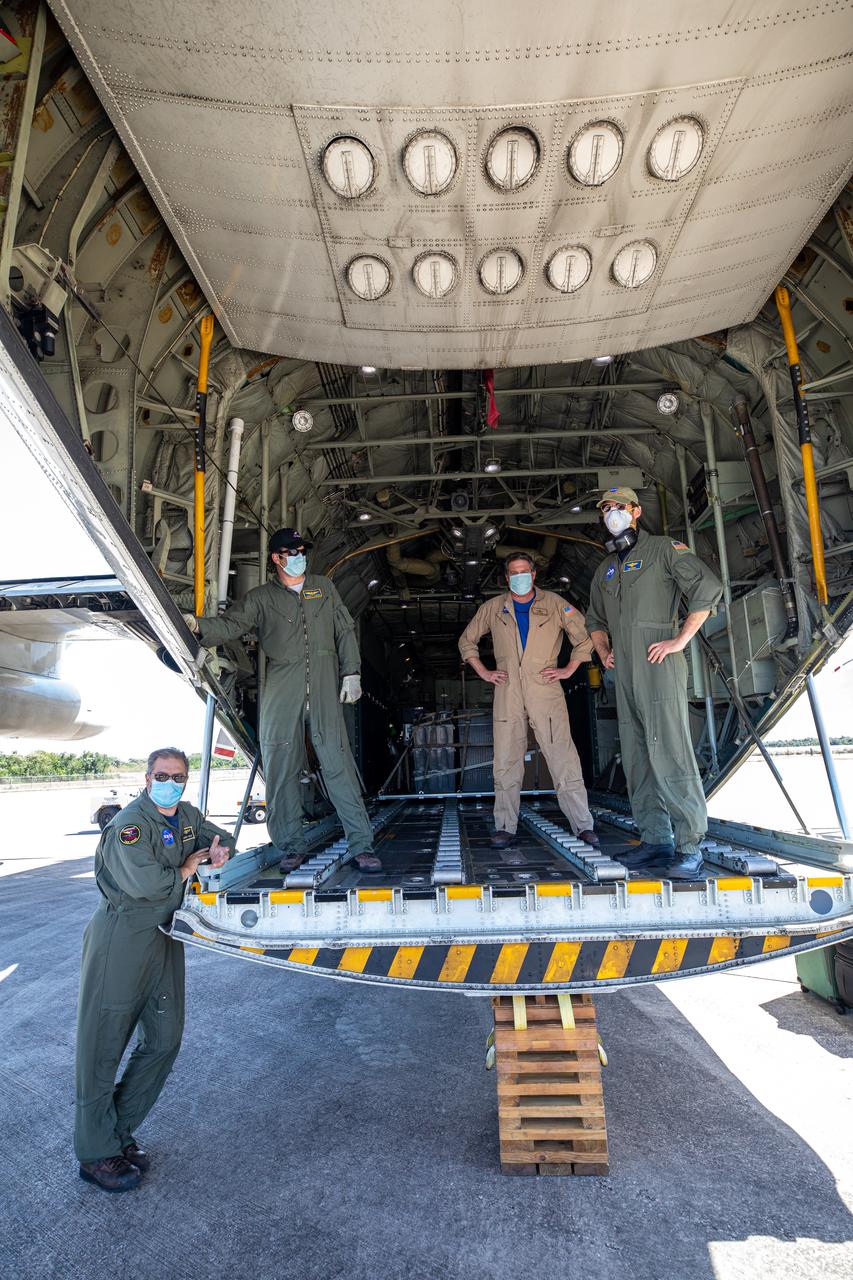
Workers prepare to offload the Adaptive Caching Assembly (ACA) for NASA’s Mars Perseverance rover from the agency’s C-130 aircraft at Kennedy Space Center’s Launch and Landing Facility in Florida on May 11, 2020. The ACA consists of seven motors and more than 3,000 parts, all working in unison to collect samples from the surface of Mars. A chief component of the assembly is the Sample Handling Arm, which will move sample tubes to the main robotic arm's coring drill and then transfer the filled sample tubes into a space to be sealed and stored. The Mars Perseverance rover is scheduled to launch in mid-July atop a United Launch Alliance Atlas V 541 rocket from Pad 41 at nearby Cape Canaveral Air Force Station. The rover is part of NASA’s Mars Exploration Program, a long-term effort of robotic exploration of the Red Planet. The rover will search for habitable conditions in the ancient past and signs of past microbial life on Mars. The Launch Services Program at Kennedy is responsible for launch management.
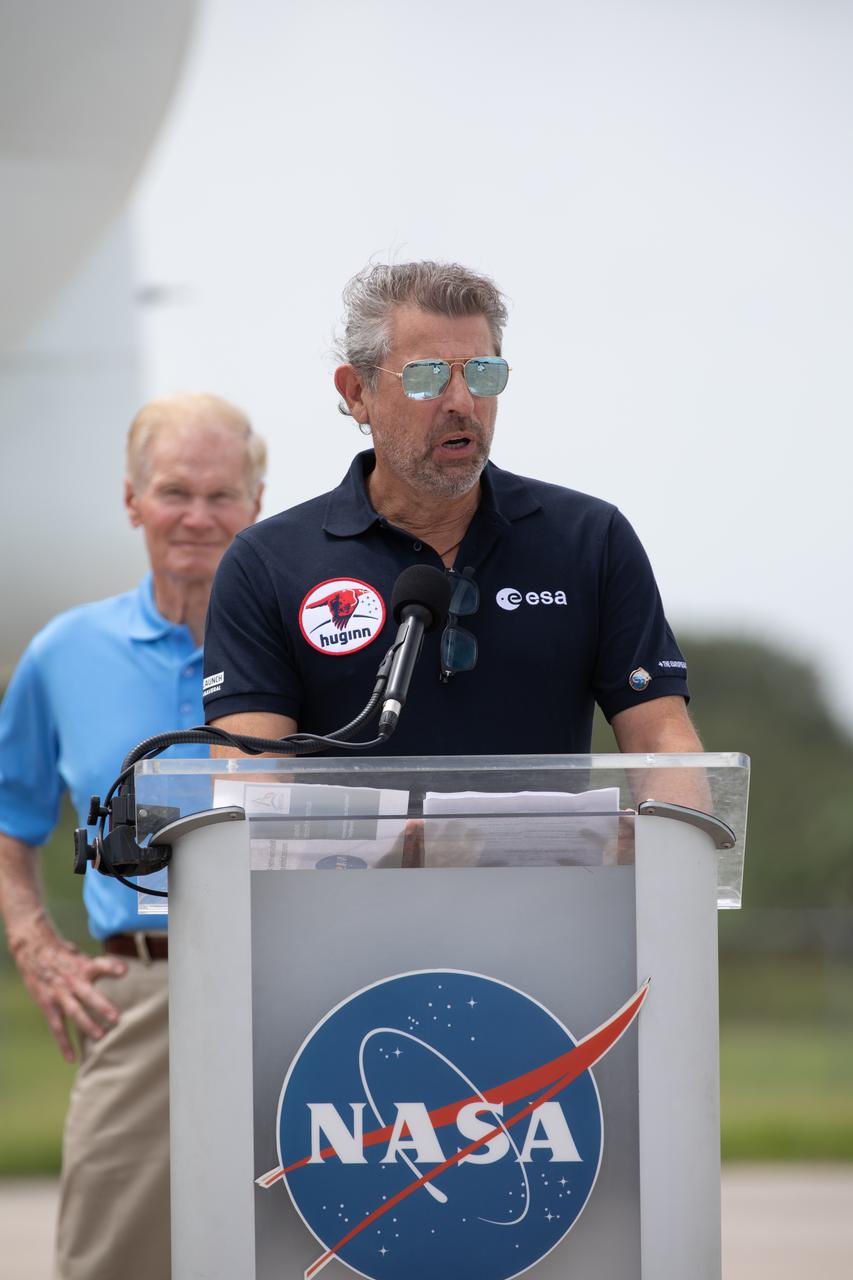
Eric van der Wal of ESA (European Space Agency) speaks to members of the news media during crew arrival for NASA’s SpaceX Crew-7 mission at the Launch and Landing Facility at Kennedy Space Center in Florida on Sunday, Aug. 20, 2023. The crew will launch to the International Space Station aboard SpaceX’s Dragon spacecraft on the company’s Falcon 9 rocket. Liftoff is targeted for 3:49 a.m. EDT Friday, Aug. 25, 2023, from Kennedy’s Launch Complex 39A. Crew-7 is the seventh crew rotation mission with SpaceX to the station, and the eighth flight of Dragon with people as part of the agency’s Commercial Crew Program.
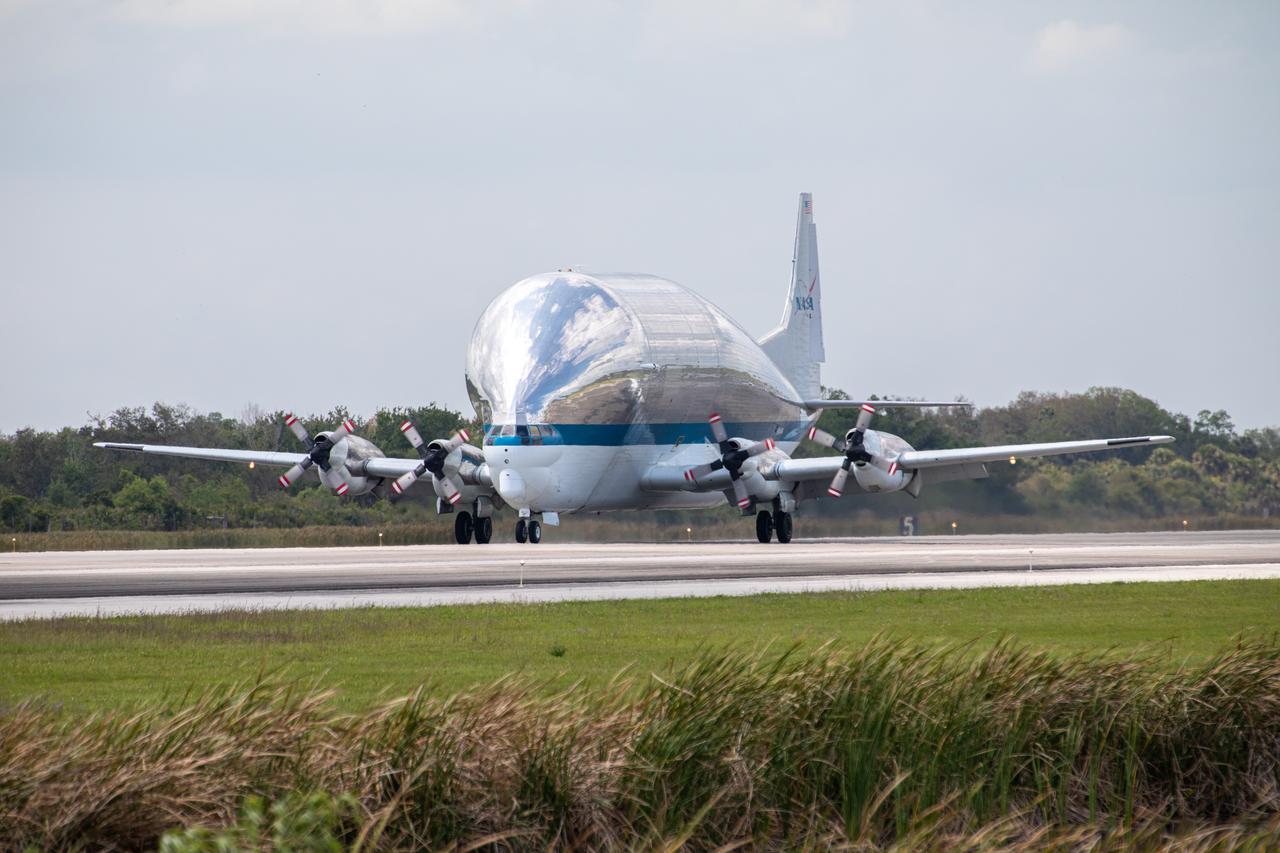
NASA’s Super Guppy aircraft, carrying the Orion spacecraft, lands at the Launch and Landing Facility runway at Kennedy Space Center in Florida on March 25, 2020. Orion has returned to Kennedy after testing at the agency’s Plum Brook Station in Ohio verified the spacecraft can handle the extreme conditions of a deep-space environment. The spacecraft will now undergo final testing and assembly prior to being integrated with the Space Launch System rocket. Orion will fly on the agency’s Artemis I mission – the first in a series of increasingly complex missions to the Moon that will ultimately lead to the exploration of Mars.
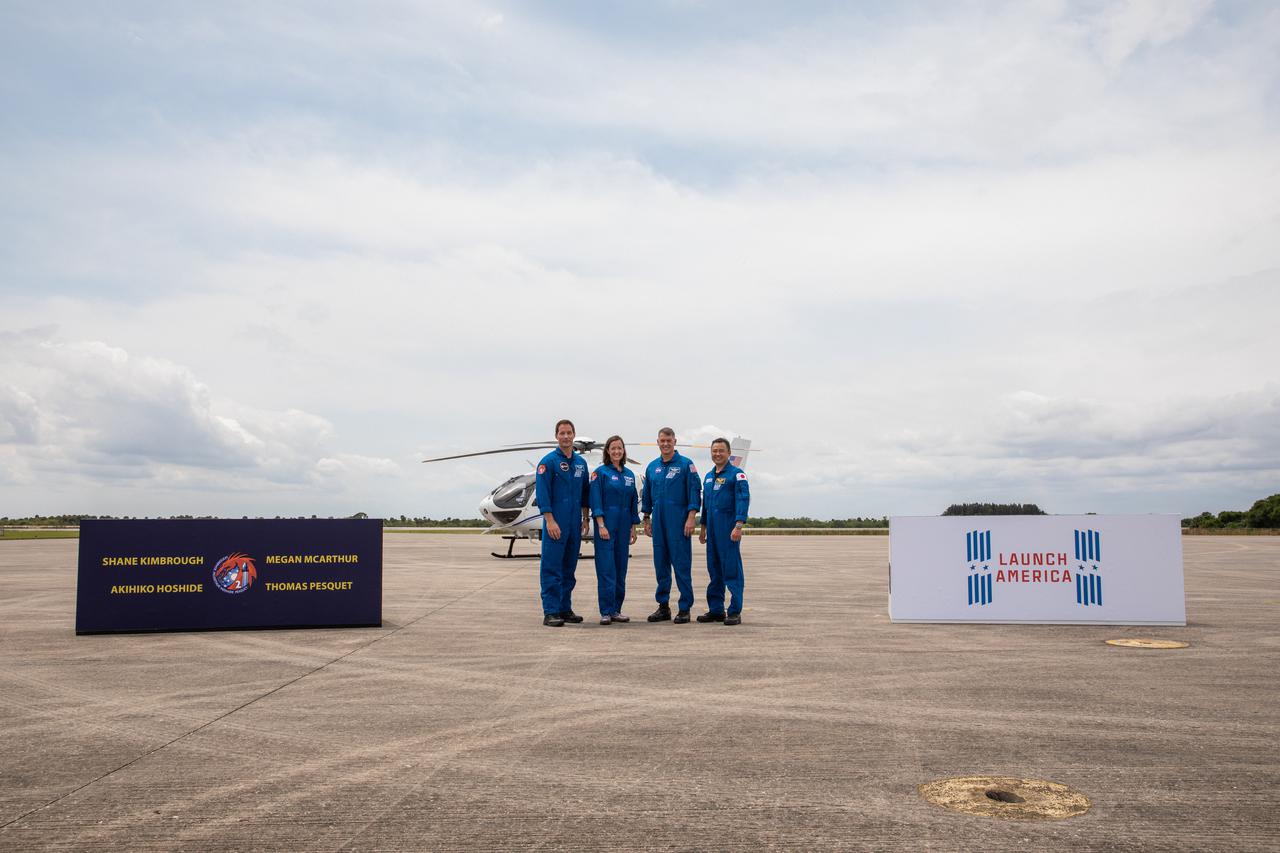
From left to right, Crew-2 mission astronauts Thomas Pesquet (ESA), Megan McArthur (NASA), Shane Kimbrough (NASA), and Akihiko Hoshide (JAXA), arrive at Kennedy Space Center’s Launch and Landing Facility on April 16, 2021. The astronauts departed by plane from Ellington Field near the agency’s Johnson Space Center in Houston, making the short flight and touching down at Kennedy. The Crew-2 mission is set to lift off from Kennedy’s Launch Complex 39A on April 22, at 6:11 a.m. EDT.
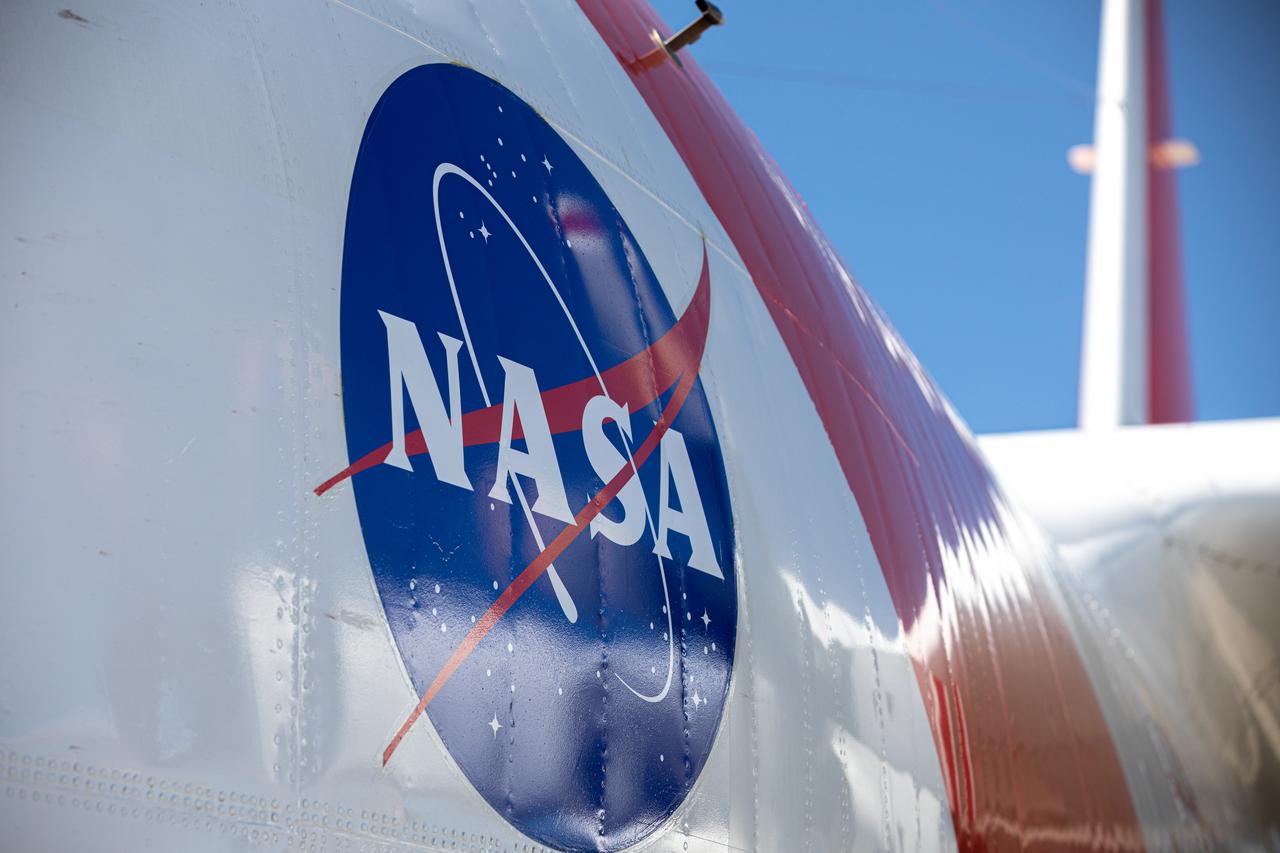
A close-up view of NASA’s C-130 aircraft that carries the Adaptive Caching Assembly (ACA) for NASA’s Mars Perseverance rover as it arrives at Kennedy Space Center’s Launch and Landing Facility in Florida on May 11, 2020. The ACA consists of seven motors and more than 3,000 parts, all working in unison to collect samples from the surface of Mars. A chief component of the assembly is the Sample Handling Arm, which will move sample tubes to the main robotic arm's coring drill and then transfer the filled sample tubes into a space to be sealed and stored. The Mars Perseverance rover is scheduled to launch in mid-July atop a United Launch Alliance Atlas V 541 rocket from Pad 41 at nearby Cape Canaveral Air Force Station. The rover is part of NASA’s Mars Exploration Program, a long-term effort of robotic exploration of the Red Planet. The rover will search for habitable conditions in the ancient past and signs of past microbial life on Mars. The Launch Services Program at Kennedy is responsible for launch management.
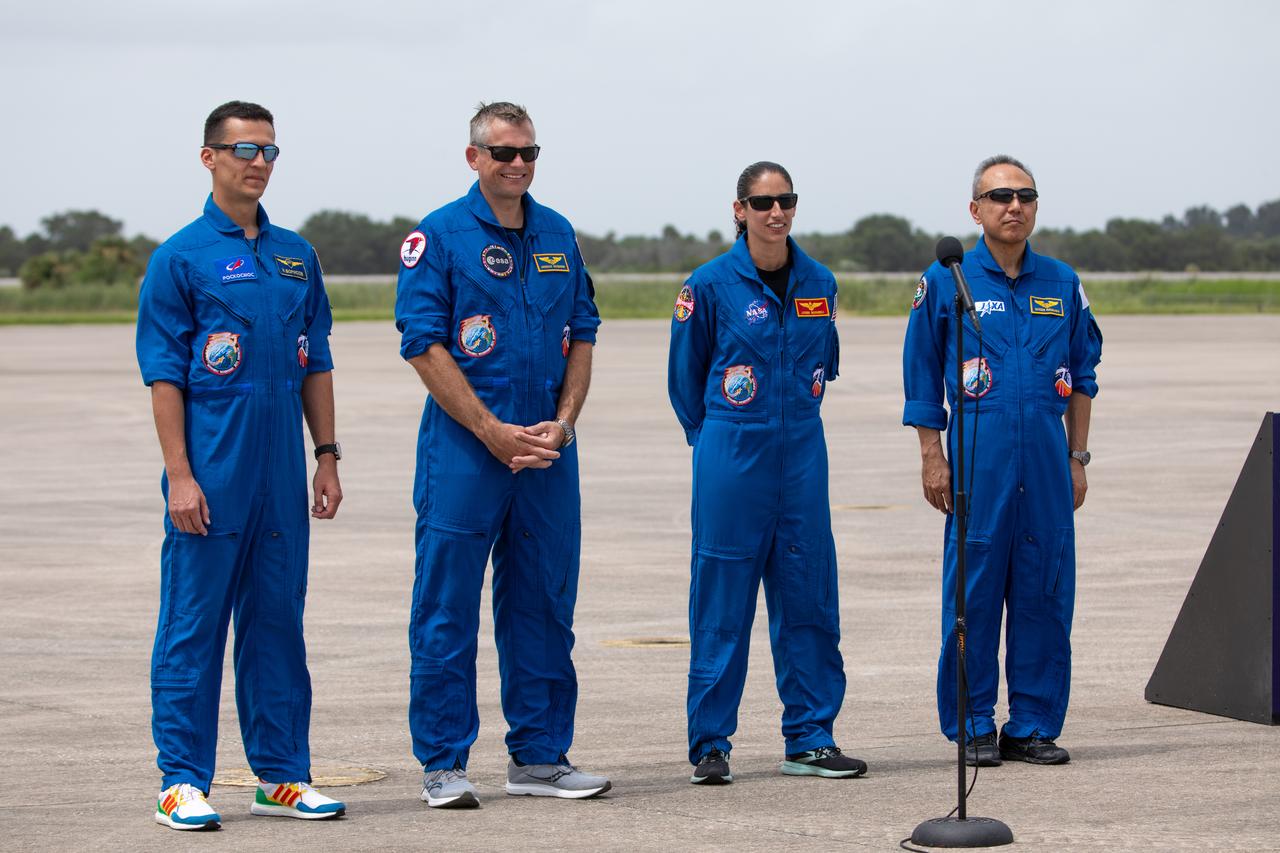
Crew members for NASA’s SpaceX Crew-7 mission to the International Space Station arrive at the Launch and Landing Facility at Kennedy Space Center in Florida on Sunday, Aug. 20, 2023. From left, Roscosmos cosmonaut Konstantin Borisov, ESA (European Space Agency) astronaut Andreas Mogensen, NASA astronaut Jasmin Moghbeli, and JAXA (Japan Aerospace Exploration Agency) astronaut Satoshi Furukawa stand before members of the news media. Liftoff of the Crew-7 mission is targeted for 3:49 a.m. EDT Friday, Aug. 25, 2023, from Kennedy’s Launch Complex 39A.
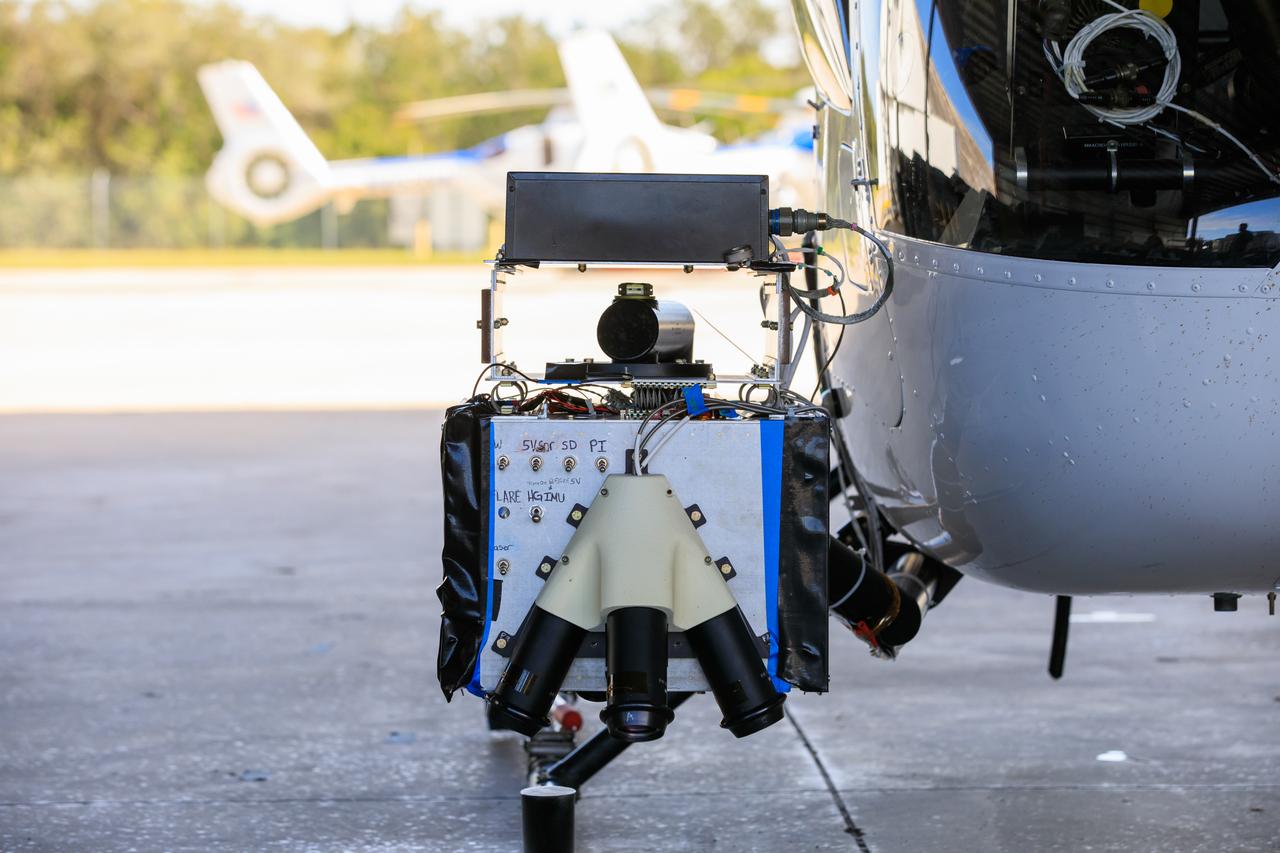
Seen here is a close-up view of Intuitive Machines’ navigation pod sensors for the company’s Nova-C lunar lander ahead of testing done at NASA’s Kennedy Space Center in Florida on Nov. 18, 2022. The test involved flying the sensors over a simulated lunar surface at the Launch and Landing Facility on a private helicopter. Intuitive Machines is scheduled to launch two missions to the Moon in 2023 – one of which will carry NASA’s Mass Spectrometer observing lunar operations (MSolo) instrument that will help analyze the chemical makeup of landing sites on the Moon, as well as study water on the lunar surface. Through NASA’s Commercial Lunar Payload Services initiative, the agency selected Intuitive Machines to deliver science and technology demonstration payloads to the Moon, contributing to NASA’s goal of establishing a sustainable human presence on the lunar surface.
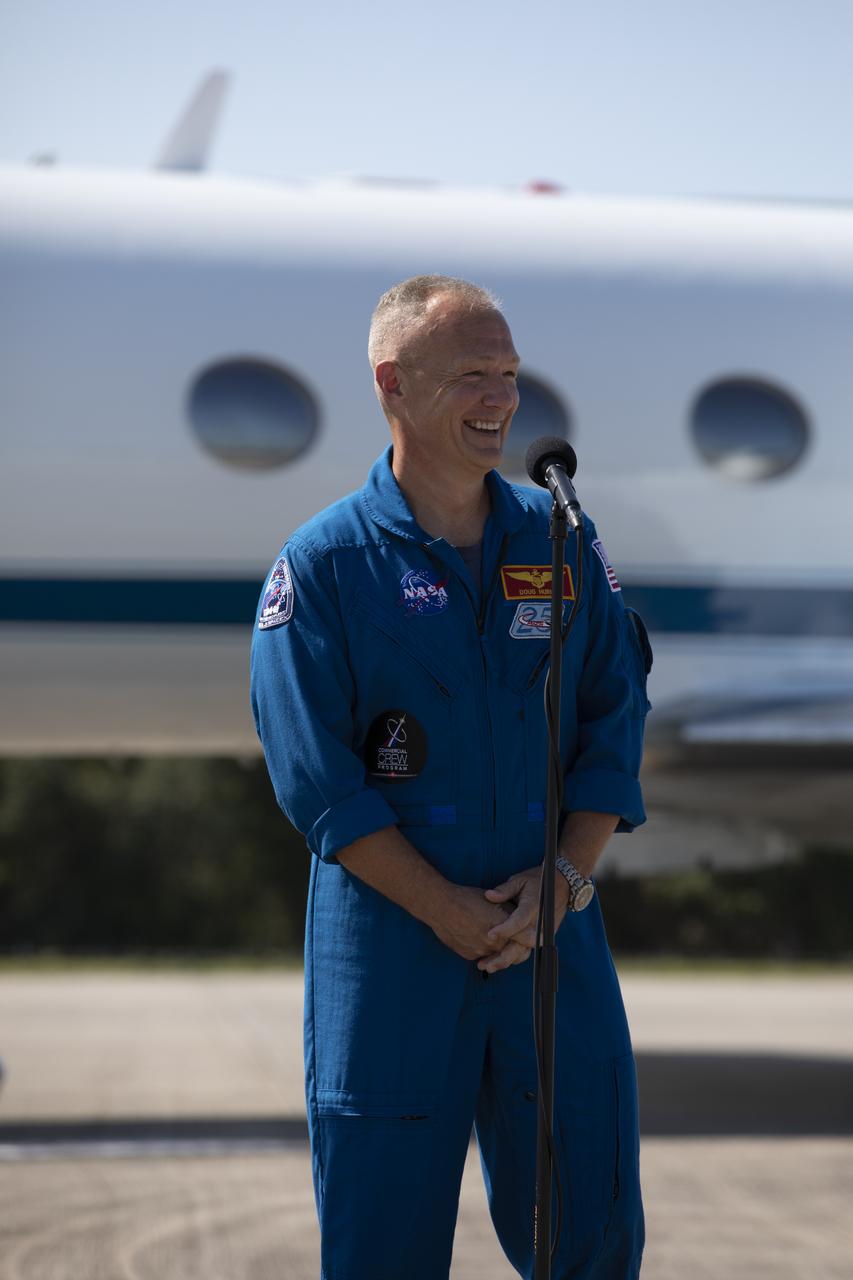
Demo-2 crew member Douglas Hurley speaks to members of the media at the Launch and Landing Facility runway at the agency’s Kennedy Space Center in Florida on May 20, 2020, following his arrival from Houston, Texas. Under the agency’s Commercial Crew Program, Hurley and crewmate Robert Behnken will be the first astronauts to launch to the International Space Station from U.S. soil since the end of the Space Shuttle Program in 2011. Liftoff of the SpaceX Falcon 9 rocket and Crew Dragon spacecraft is scheduled for 4:33 p.m. on May 27 from Kennedy’s Launch Complex 39A.
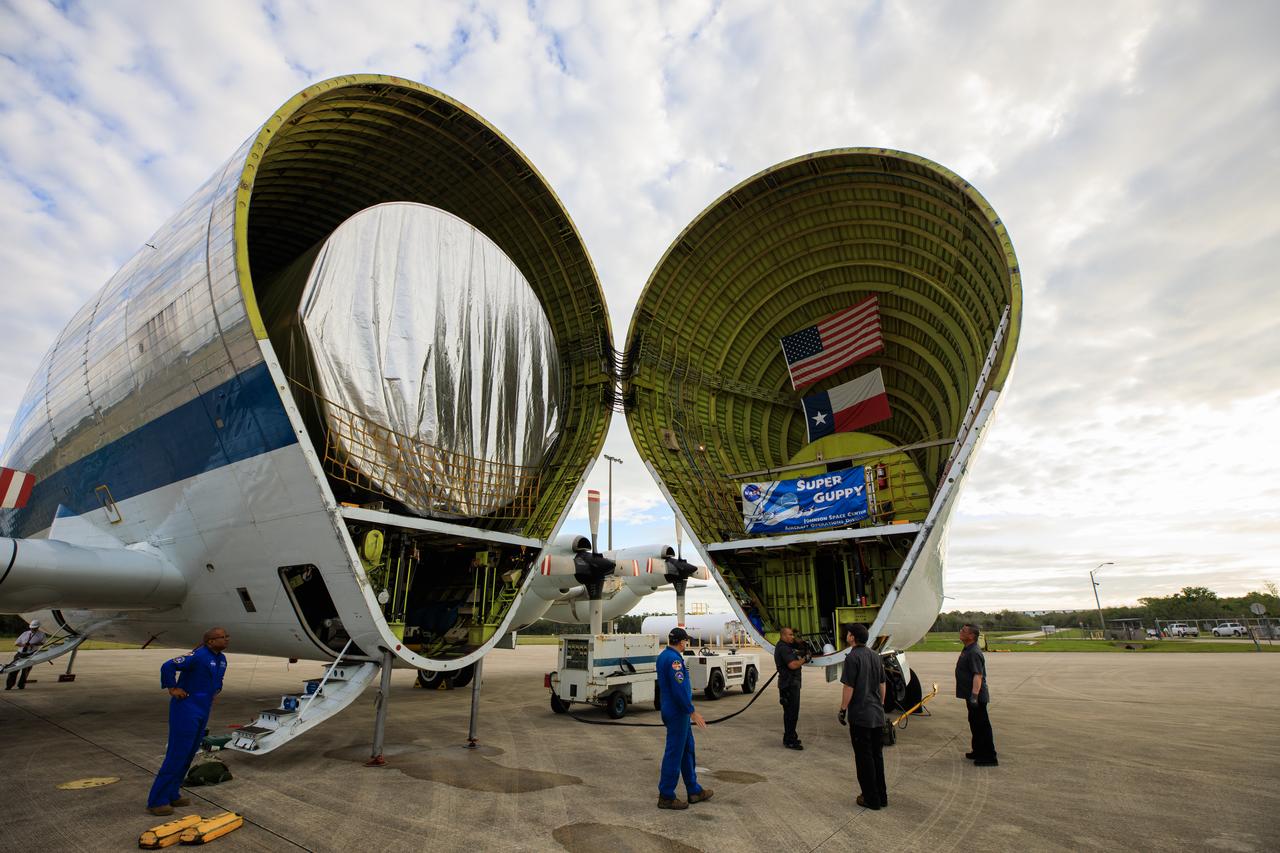
The Multi-Purpose Logistics Module (MPLM), used during the Space Shuttle Program to transfer cargo to and from the International Space Station, is loaded into NASA's Super Guppy aircraft at the Launch and Landing Facility runway at Kennedy Space Center in Florida on April 25, 2023. The MPLM will be transported to Ellington Field in Houston, where it will then be transported by road to Axiom’s facility near Ellington to be utilized to further commercialization of space. Three MPLMs were built by Thales Alenia Space Italia (TASI) for the Italian Space Agency (ASI) and named after Italian masters (Leonardo, Raffaello, and Donatello). Only two ever flew to the space station, Leonardo and Raffaello, with Axiom intending to use the Raffaello module as a future element that will attach to a segment being built by the company for addition to the station.
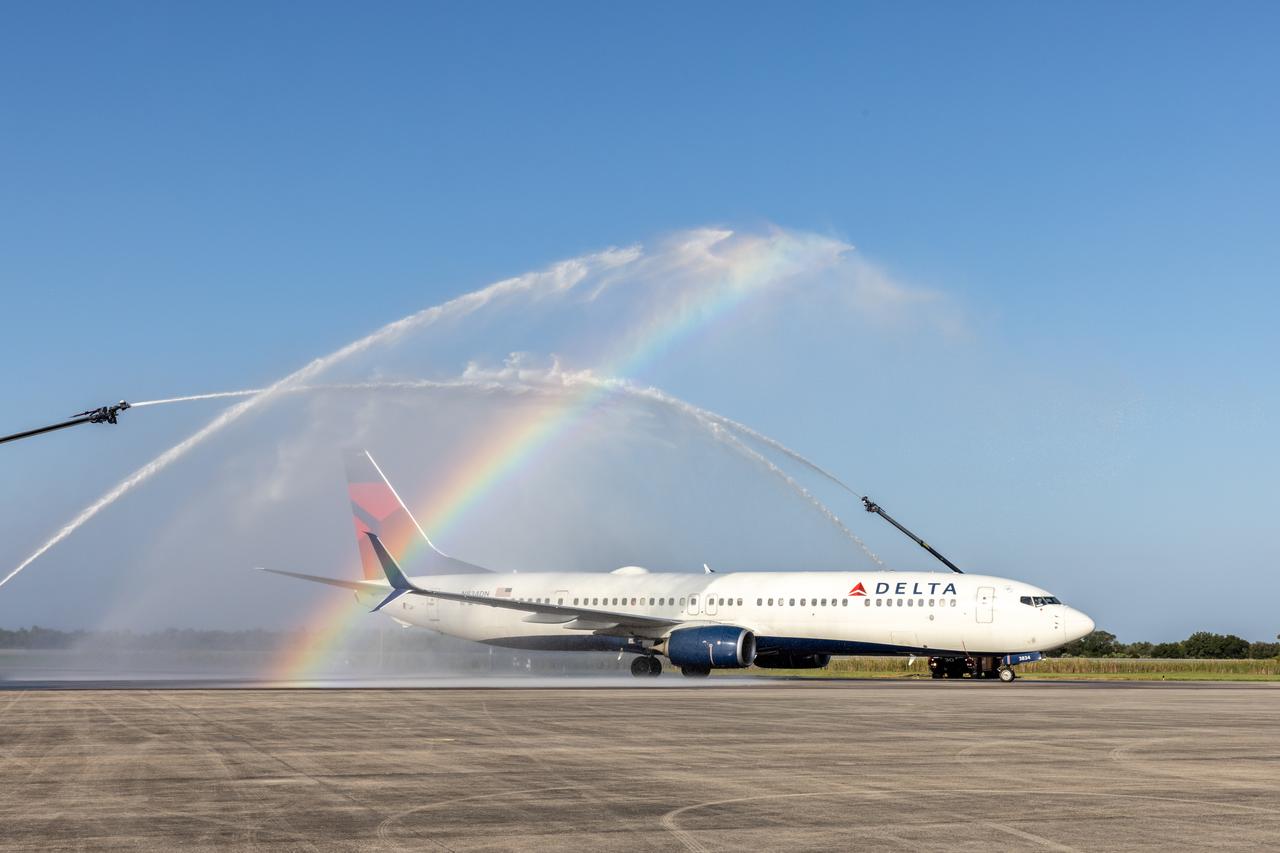
A Delta plane, carrying an all-female crew and 130 young women ages 11 to 18, received a “water salute” upon arrival on Friday, Sept. 20, 2024, at the Launch and Landing Facility at NASA’s Kennedy Space Center in Florida. Part of the Delta Air Lines’ Women Inspiring Our Next Generation (WING) flight, the young women from the Atlanta, Georgia area, learned about the various women-led STEM (science, technology, engineering, and math) careers available at the Florida spaceport.
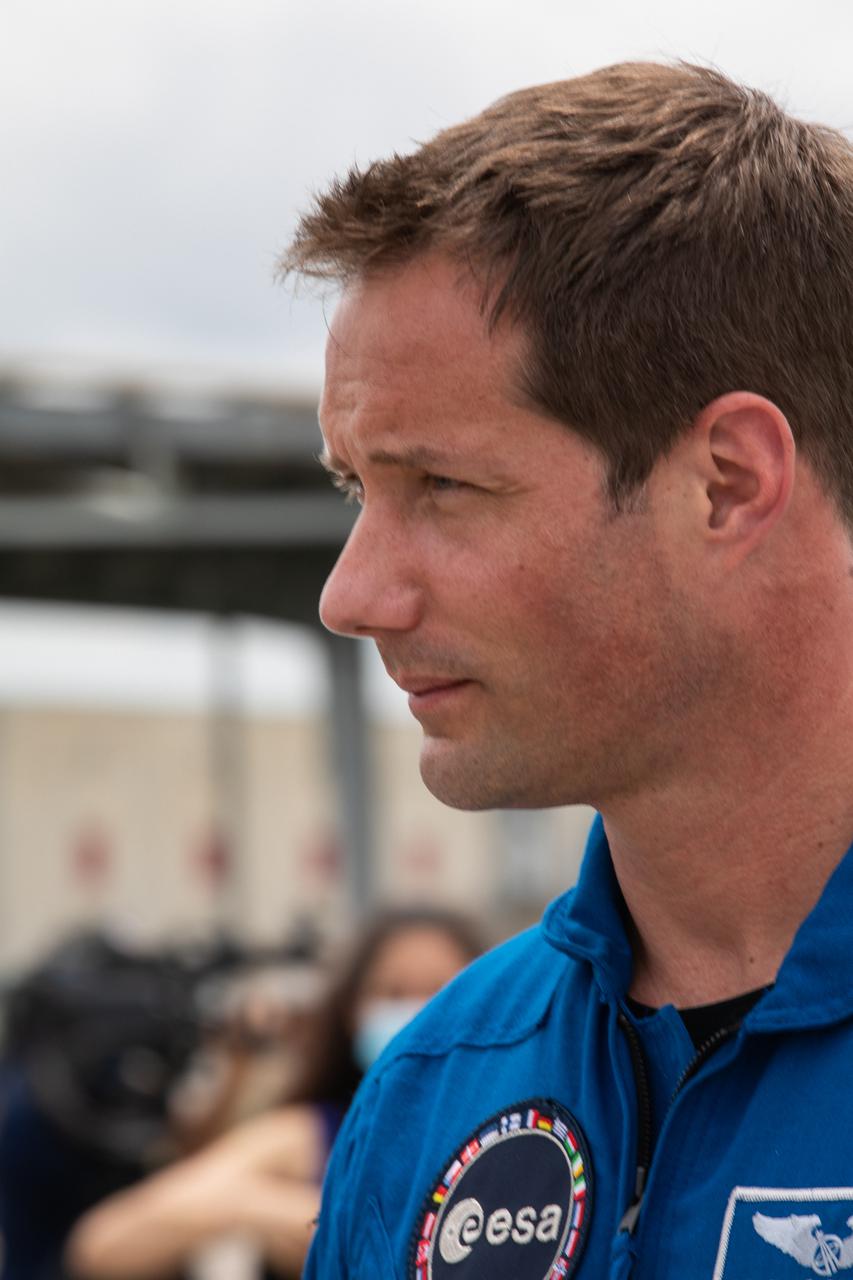
ESA astronaut Thomas Pesquet looks on during the SpaceX Crew-2 arrival media event held at Kennedy Space Center in Florida on April 16, 2021. Pesquet is part of NASA’s SpaceX Crew-2 crew, which includes NASA astronauts Megan McArthur and Shane Kimbrough, along with Akihilo Hoshide of JAXA. The astronauts will fly to the space station on NASA’s SpaceX Crew-2 mission. Liftoff is targeted for Thursday, April 22, at 6:11 a.m. EDT.
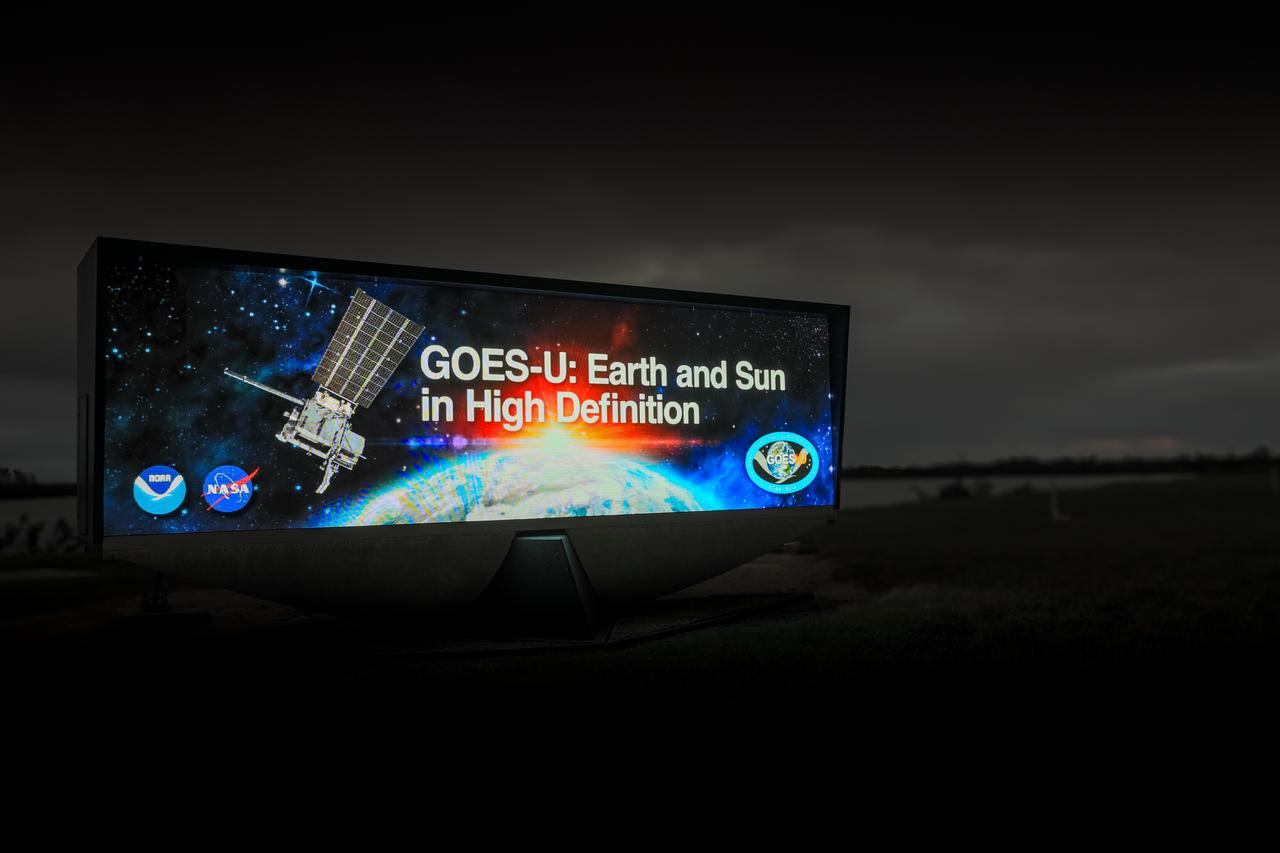
NOAA’s Geostationary Operational Environmental Satellite-U (GOES-U) mission graphic is displayed on the historic countdown clock at Kennedy Space Center’s NASA News Center in Florida on Tuesday, Jan. 23, 2024. GOES-U is the fourth and final satellite in NOAA's GOES-R series of advanced geostationary weather satellites. Data from the GOES satellite constellation – consisting of the GOES-R, GOES-S, GOES-T and GOES-U spacecraft – enables forecasters to predict, observe, and track local weather events that affect public safety like thunderstorms, hurricanes, and wildfires.
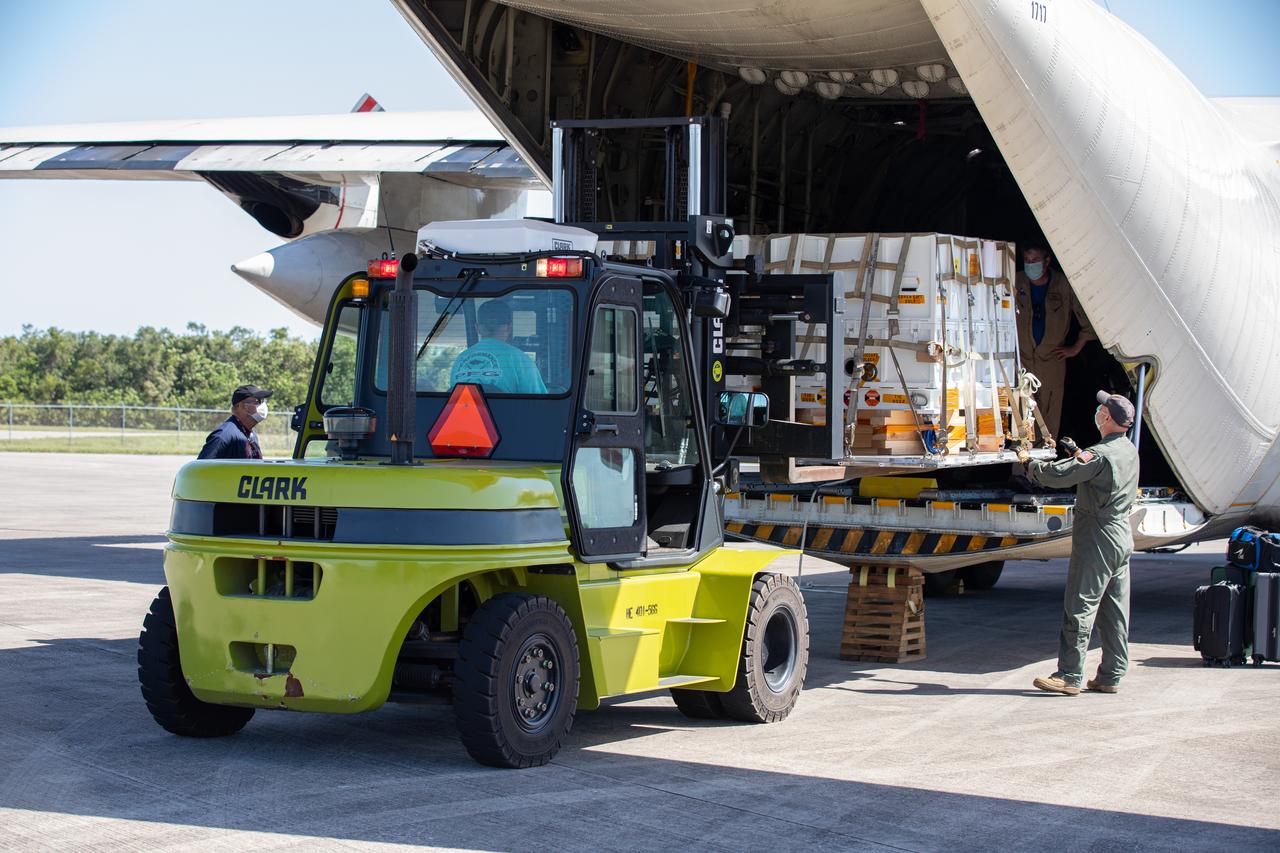
Workers offload the Adaptive Caching Assembly (ACA) for NASA’s Mars Perseverance rover from the agency’s C-130 aircraft at Kennedy Space Center’s Launch and Landing Facility in Florida on May 11, 2020. The ACA consists of seven motors and more than 3,000 parts, all working in unison to collect samples from the surface of Mars. A chief component of the assembly is the Sample Handling Arm, which will move sample tubes to the main robotic arm's coring drill and then transfer the filled sample tubes into a space to be sealed and stored. The Mars Perseverance rover is scheduled to launch in mid-July atop a United Launch Alliance Atlas V 541 rocket from Pad 41 at nearby Cape Canaveral Air Force Station. The rover is part of NASA’s Mars Exploration Program, a long-term effort of robotic exploration of the Red Planet. The rover will search for habitable conditions in the ancient past and signs of past microbial life on Mars. The Launch Services Program at Kennedy is responsible for launch management.
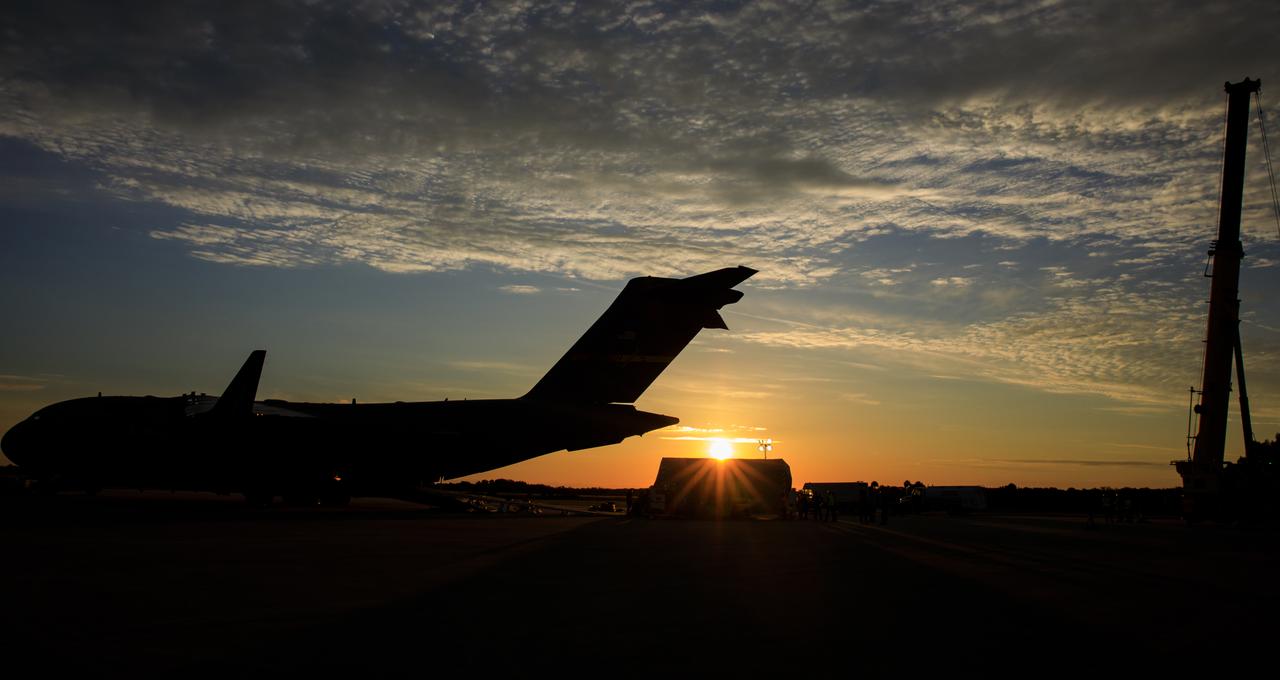
Teams offload NASA’s largest planetary mission spacecraft, Europa Clipper, from a United States Air Force C-17 Globemaster III transport aircraft onto the flatbed of a heavy-lift truck at the Launch and Landing Facility at NASA’s Kennedy Space Center in Florida on Thursday, May 23, 2024. Crews transported Europa Clipper to the Payload Hazardous Servicing Facility at Kennedy to prepare it for launch aboard a SpaceX Falcon Heavy rocket later this year from Launch Complex 39A at the Florida spaceport. Europa Clipper will help determine if conditions exist below the surface Jupiter’s fourth largest moon, Europa, that could support life.
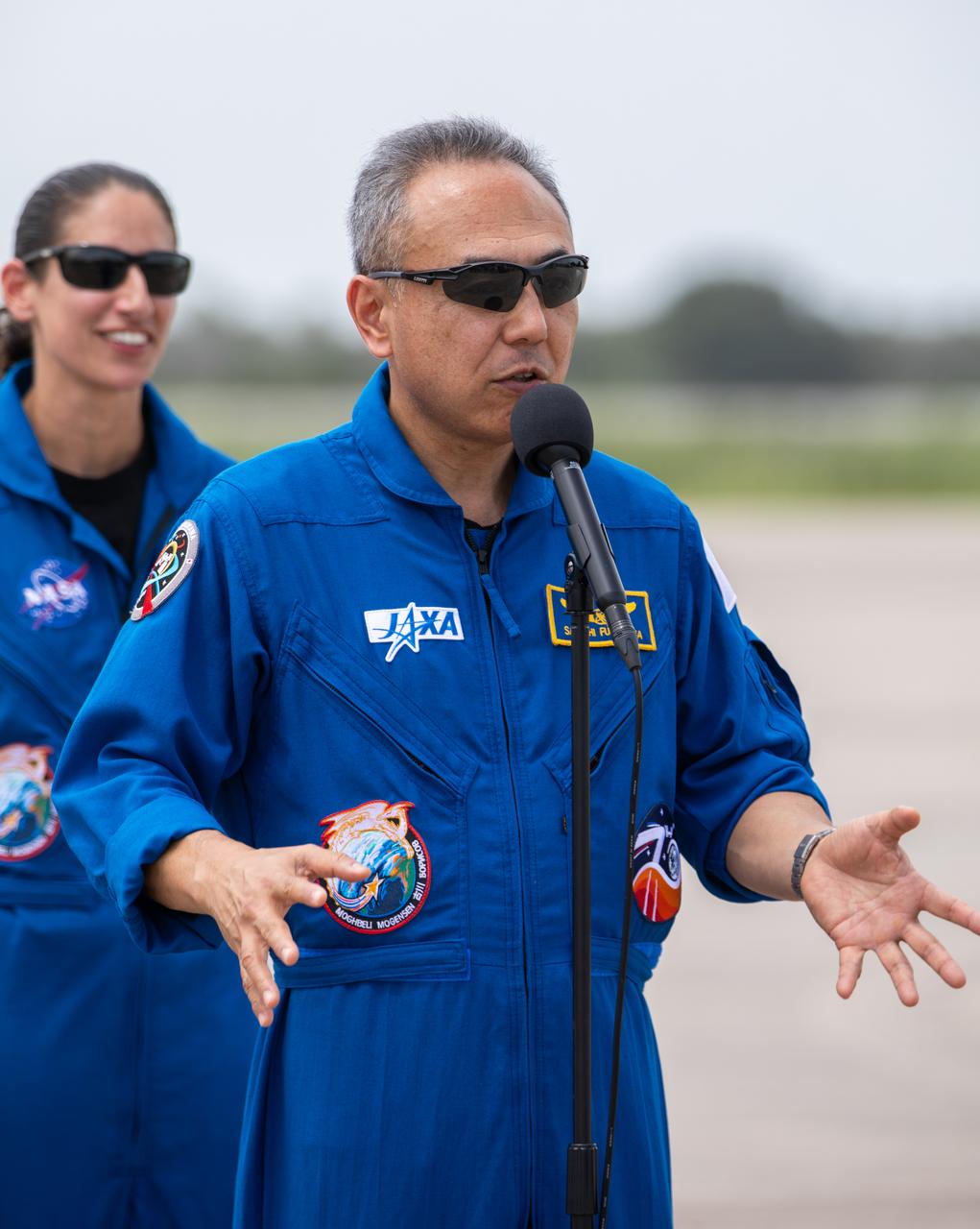
JAXA (Japan Aerospace Exploration Agency) astronaut Satoshi Furukawa addresses members of the news media during NASA’s SpaceX Crew-7 crew arrival event at the Launch and Landing Facility at Kennedy Space Center in Florida on Sunday, Aug. 20, 2023. In the background is NASA astronaut Jasmin Moghbeli. Liftoff for the Crew-7 mission is targeted for 3:49 a.m. EDT Friday, Aug. 25, 2023, from Kennedy’s Launch Complex 39A.
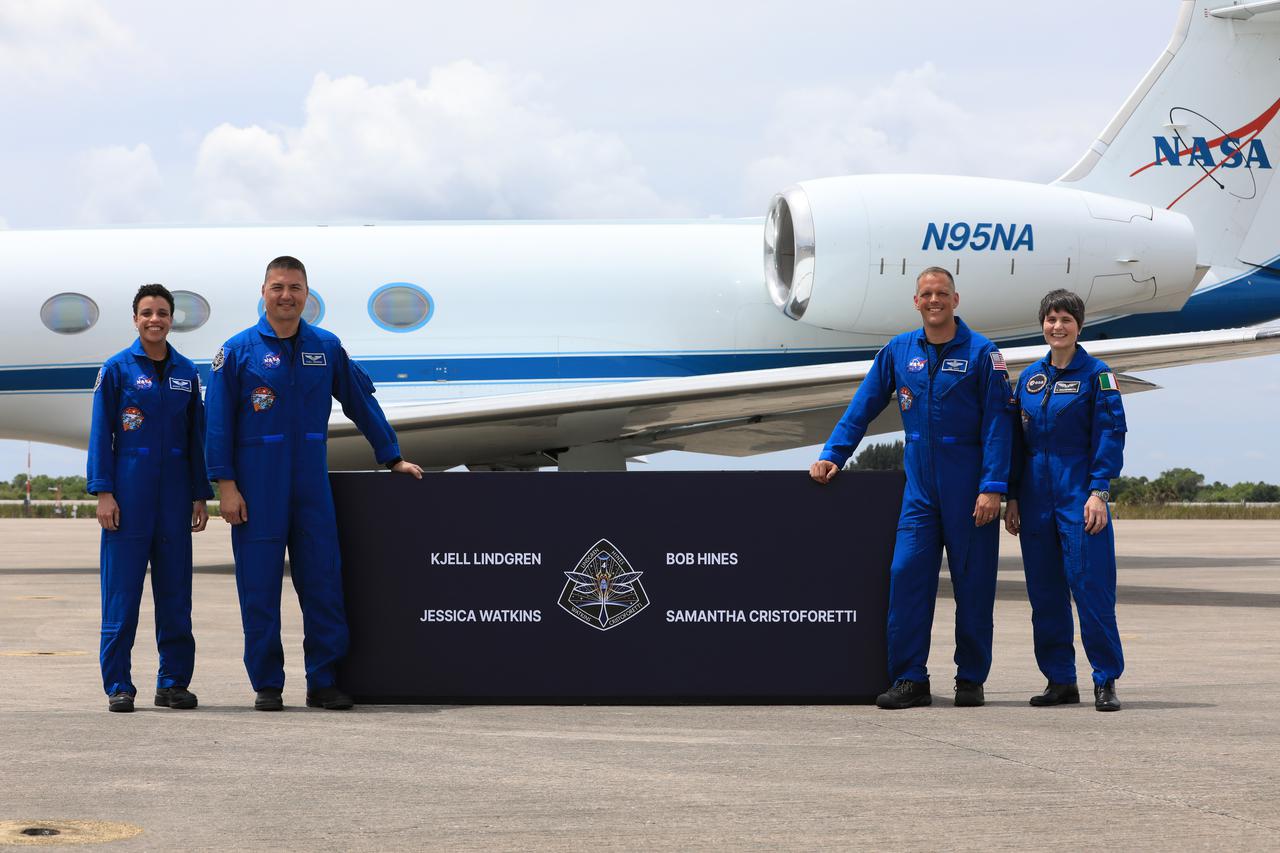
Crew members for NASA’s SpaceX Crew-4 mission to the International Space Station arrive at the Launch and Landing Facility at Kennedy Space Center in Florida on April 18, 2022. From left, are NASA astronauts Jessica Watkins, Kjell Lindgren and Bob Hines, and Samantha Cristoforetti, ESA (European Space Agency) astronaut. The crew will enter quarantine at the center’s astronaut crew quarters as they await launch aboard SpaceX’s Crew Dragon and Falcon 9 rocket. Launch is targeted for 5:26 a.m. EDT on April 23, 2022, from Launch Complex 39A. Crew-4 is the fourth crew rotation flight to the space station as part of NASA’s Commercial Crew Program.
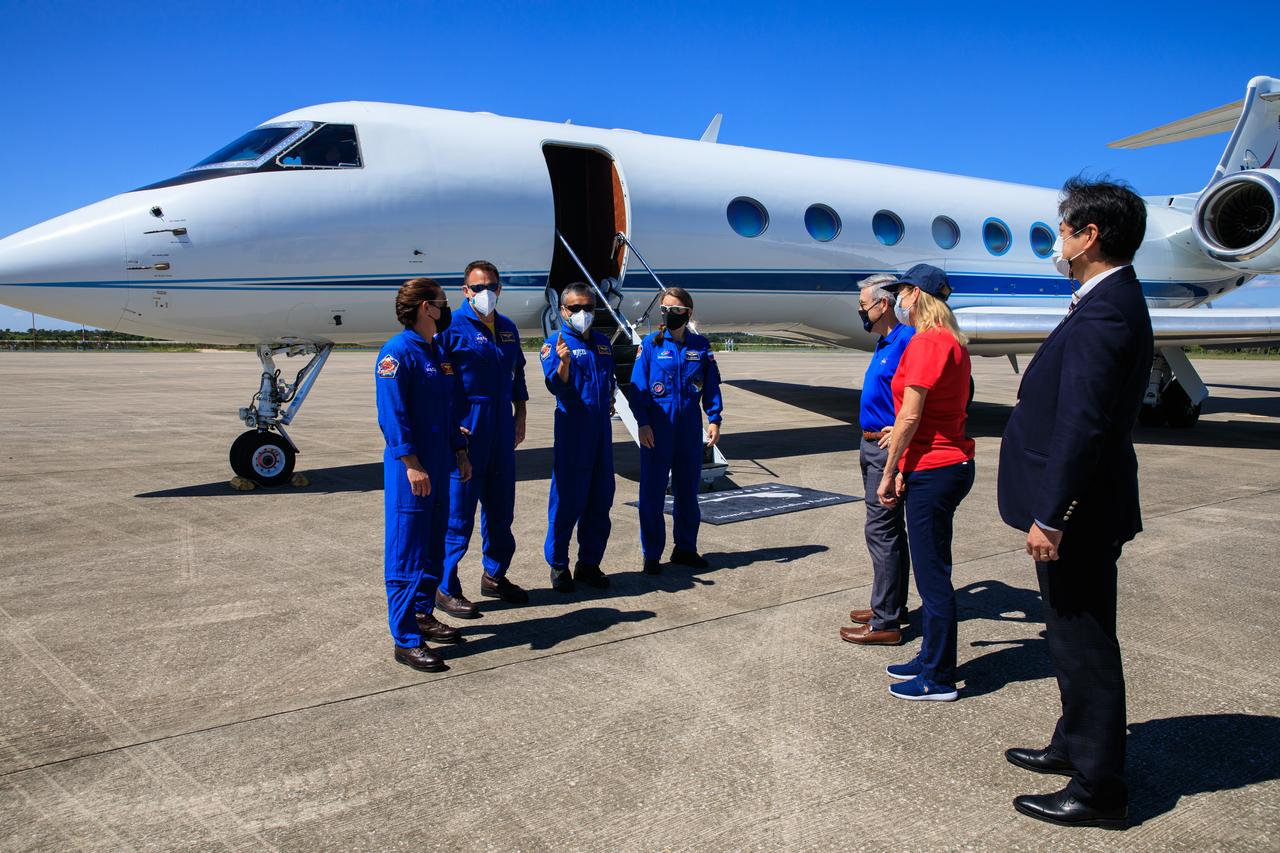
Crew members for NASA’s SpaceX Crew-5 mission to the International Space Station arrive at the Launch and Landing Facility at Kennedy Space Center in Florida on Oct. 1, 2022. From left are Nicole Mann, commander; Josh Cassada, pilot; Koichi Wakata, mission specialist; and Anna Kikina, mission specialist. Greeting the crew, from left, are Bob Cabana, NASA associate administrator; Janet Petro, Kennedy director; and Junichi Sakai, manager, International Space Station, JAXA. The crew will head to the center’s Crew Quarters as they await launch aboard the Crew Dragon on a SpaceX Falcon 9 rocket. Launch is targeted for noon EDT on Oct. 5 from Launch Complex 39A. Crew-5 is the fifth crew rotation mission with SpaceX to the station, and the sixth flight of Dragon with people as part of the agency’s Commercial Crew Program.
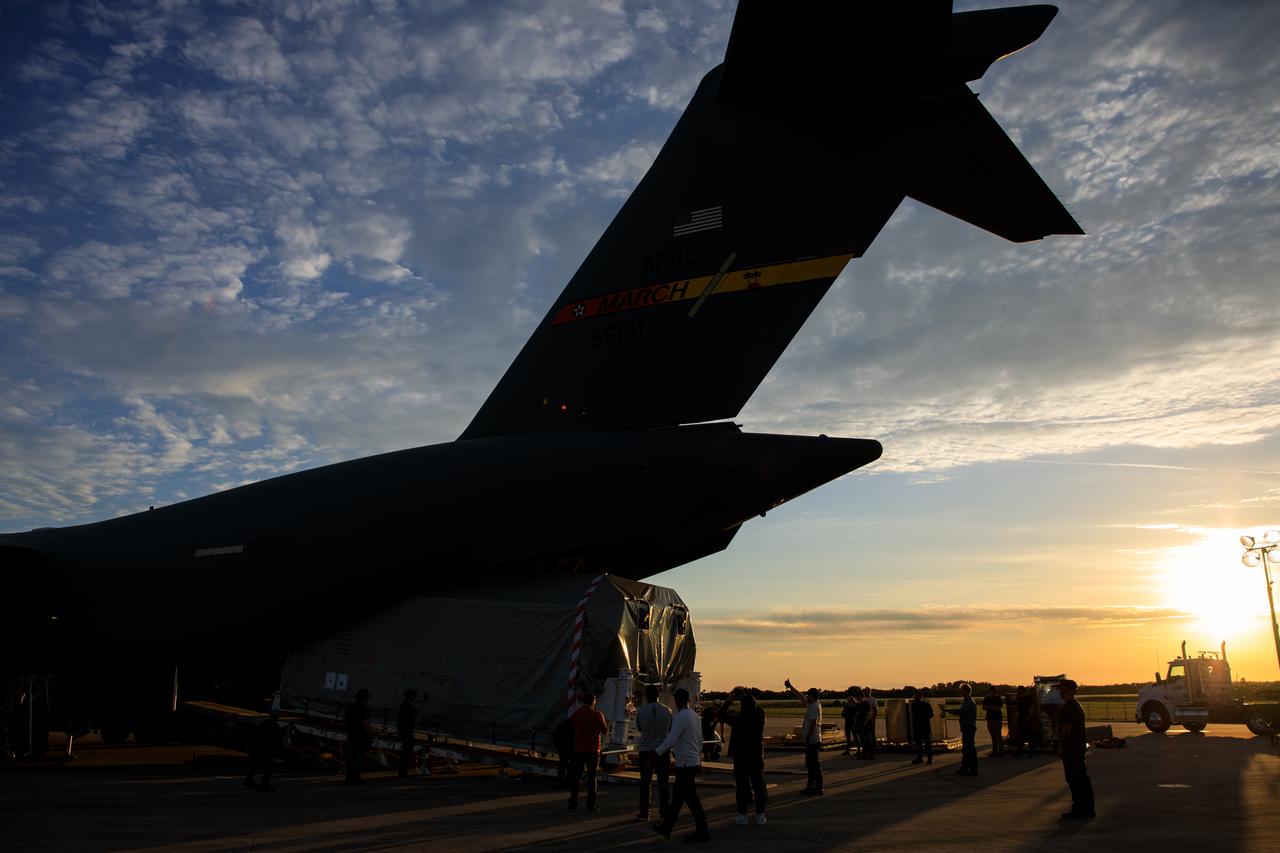
Teams offload NASA’s largest planetary mission spacecraft, Europa Clipper, from a United States Air Force C-17 Globemaster III transport aircraft onto the flatbed of a heavy-lift truck at the Launch and Landing Facility at NASA’s Kennedy Space Center in Florida on Thursday, May 23, 2024. Crews transported Europa Clipper to the Payload Hazardous Servicing Facility at Kennedy to prepare it for launch aboard a SpaceX Falcon Heavy rocket later this year from Launch Complex 39A at the Florida spaceport. Europa Clipper will help determine if conditions exist below the surface Jupiter’s fourth largest moon, Europa, that could support life.
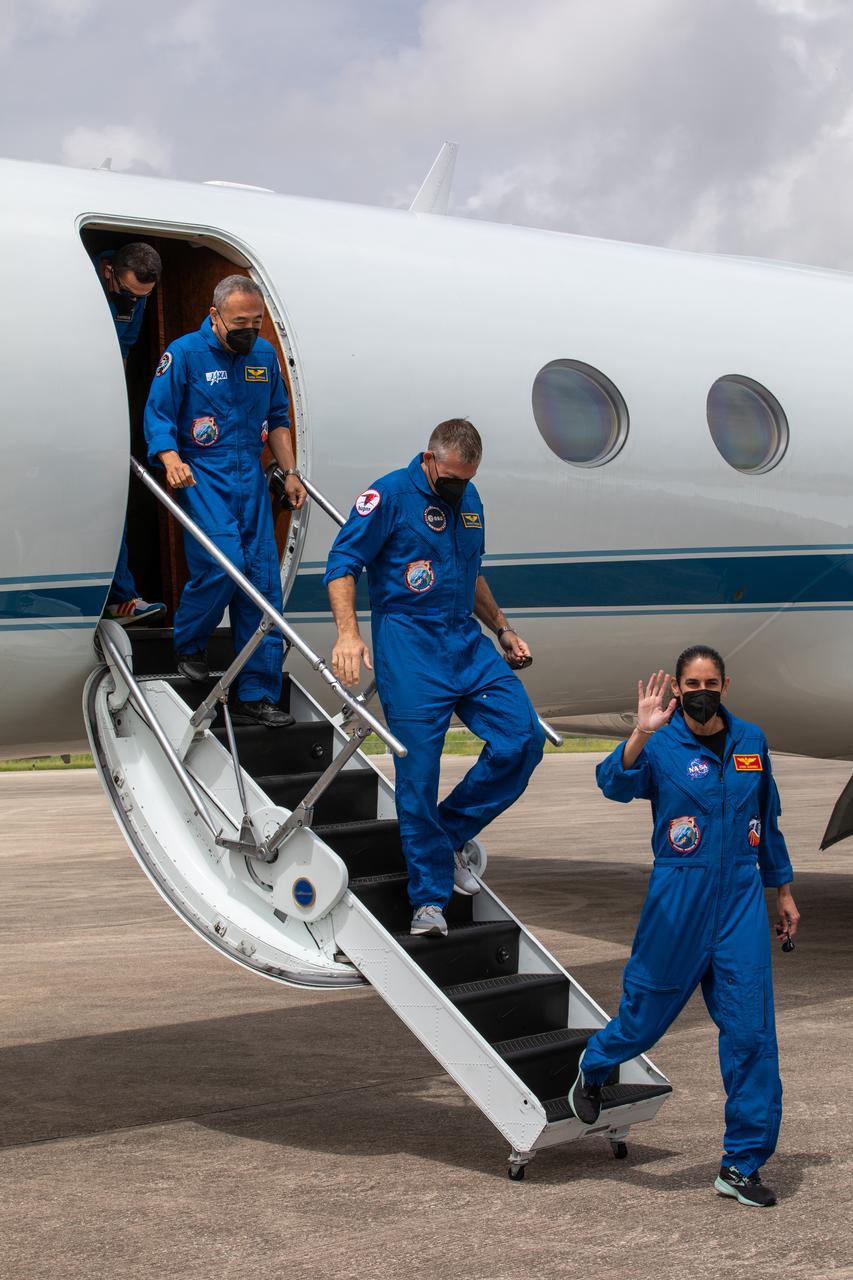
Crew members for NASA’s SpaceX Crew-7 mission to the International Space Station arrive at the Launch and Landing Facility at Kennedy Space Center in Florida on Sunday, Aug. 20, 2023. After briefly addressing the media, NASA astronaut Jasmin Moghbeli, ESA (European Space Agency) astronaut Andreas Mogensen, JAXA (Japan Aerospace Exploration Agency) astronaut Satoshi Furukawa, and Roscosmos cosmonaut Konstantin Borisov will head to Kennedy’s Astronaut Crew Quarters as they await launch aboard SpaceX’s Dragon spacecraft and Falcon 9 rocket. Liftoff is targeted for 3:49 a.m. EDT Friday, Aug. 25, 2023, from Kennedy’s Launch Complex 39A. Crew-7 is the seventh crew rotation mission with SpaceX to the station and the eighth flight of Dragon with people as part of NASA’s Commercial Crew Program.
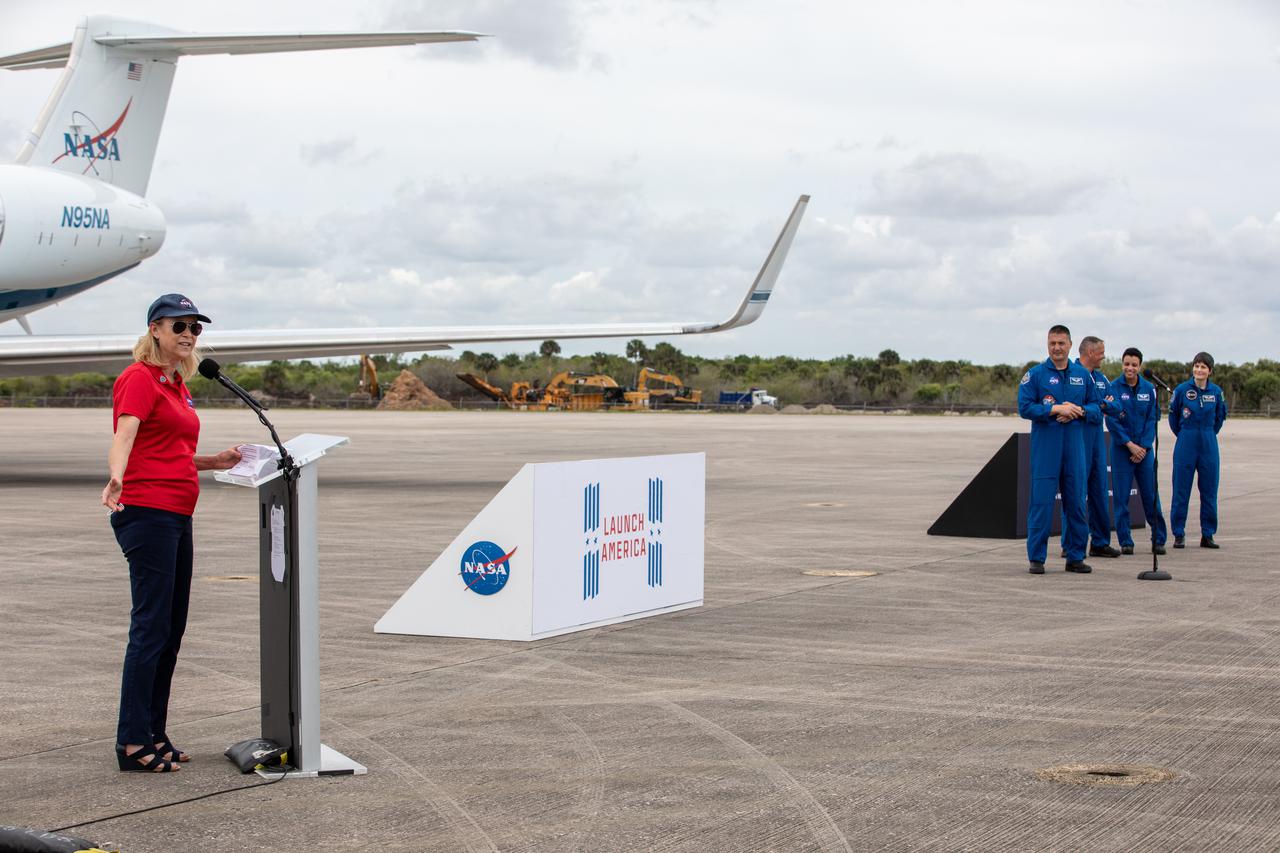
Kennedy Space Center Director Janet Petro, at the podium, welcomes the crew members of NASA’s SpaceX Crew-4 mission after their arrival at the Launch and Landing Facility at Kennedy Space Center in Florida on April 18, 2022. From left are NASA astronauts Kjell Lindgren, Bob Hines and Jessica Watkins, and ESA (European Space Agency) astronaut Samantha Cristoforetti. Crew-4 will launch aboard SpaceX’s Crew Dragon on the company’s Falcon 9 rocket. Launch is targeted for 5:26 a.m. EDT on April 23, 2022, from Kennedy’s Launch Complex 39A.

NASA astronaut Douglas Hurley exits the Gulfstream jet that carried him from Houston, Texas, to the Launch and Landing Facility runway at NASA’s Kennedy Space Center in Florida on May 20, 2020, ahead of the agency’s SpaceX Demo-2 mission. Under NASA’s Commercial Crew Program, Hurley and crewmate Robert Behnken will be the first astronauts to launch to the International Space Station from U.S. soil since the end of the Space Shuttle Program in 2011. Liftoff of the SpaceX Falcon 9 rocket and Crew Dragon spacecraft is scheduled for 4:33 p.m. on May 27 from Kennedy’s Launch Complex 39A.
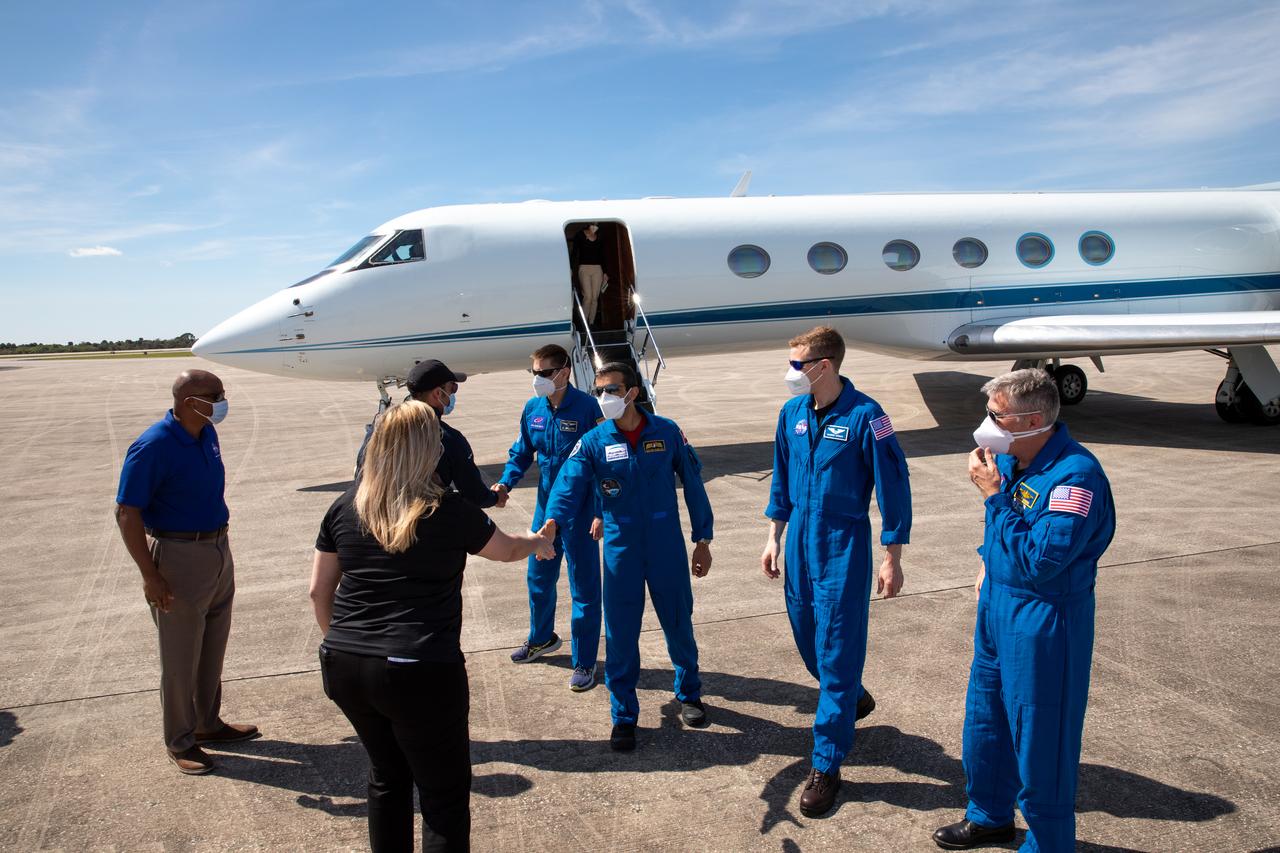
Kennedy Space Center Deputy Director Kelvin Manning, Dana Hutcherson, deputy manager, NASA’s Commercial Crew Program, and Salem AlMarri, director general, Mohammed Bin Rashid Space Centre, greet the crew members of NASA’s SpaceX Crew-6 mission after their arrival at the center’s Launch and Landing Facility in Florida on Feb. 21, 2023. From left are Manning, Hutcherson, AlMarri, Roscosmos cosmonaut Andrey Fedyaev, UAE (United Arab Emirates) astronaut Sultan Alneyadi, and NASA astronauts Warren “Woody” Hoburg and Stephen Bowen. Crew-6 will launch aboard the Crew Dragon on a SpaceX Falcon 9 rocket. Launch is targeted for no earlier than Feb. 26 at 2:07 a.m. EST.

Testing of navigation pod sensors for Intuitive Machines’ Nova-C lunar lander is underway at NASA’s Kennedy Space Center in Florida on Nov. 18, 2022. The test involved flying the sensors over a simulated lunar surface at the Launch and Landing Facility on a private helicopter. Intuitive Machines is scheduled to launch two missions to the Moon in 2023 – one of which will carry NASA’s Mass Spectrometer observing lunar operations (MSolo) instrument that will help analyze the chemical makeup of landing sites on the Moon, as well as study water on the lunar surface. Through NASA’s Commercial Lunar Payload Services initiative, the agency selected Intuitive Machines to deliver science and technology demonstration payloads to the Moon, contributing to NASA’s goal of establishing a sustainable human presence on the lunar surface.
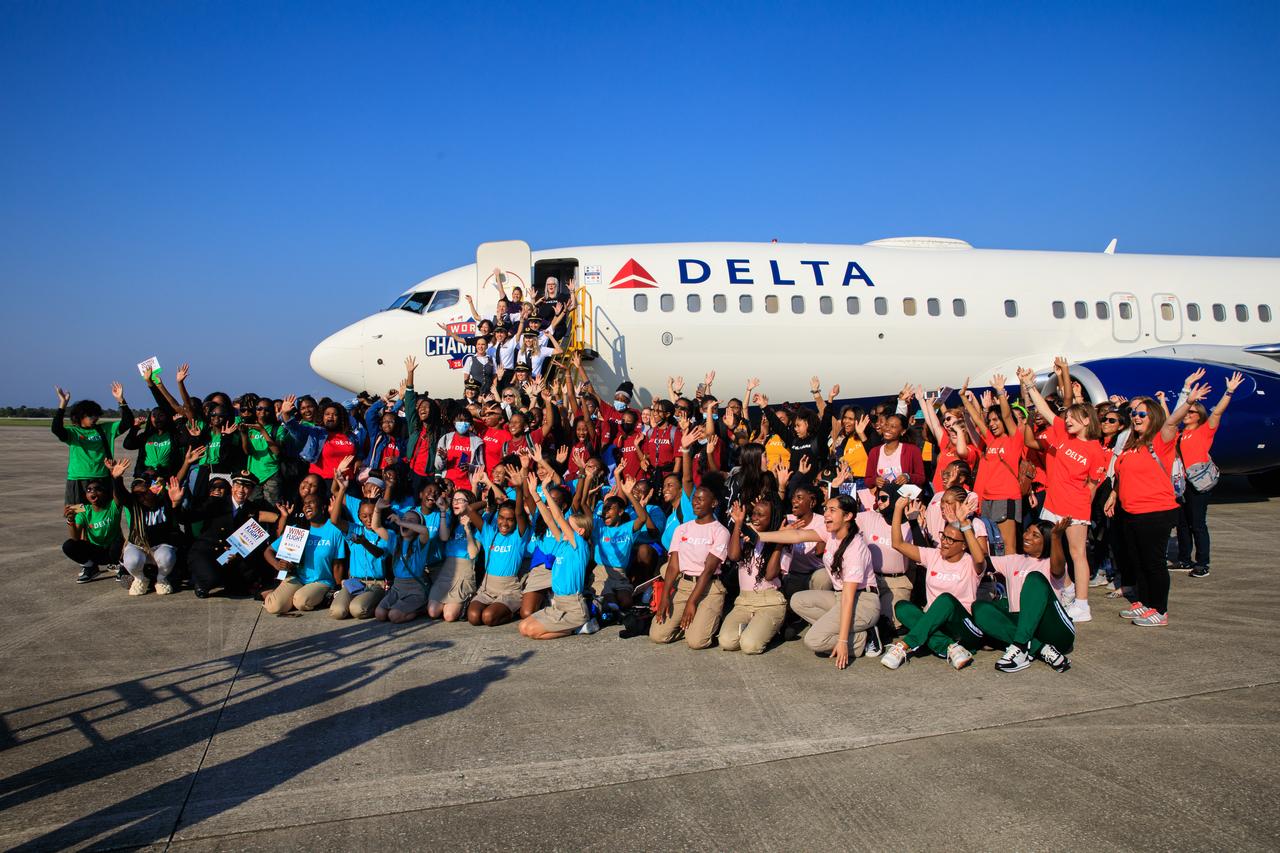
Students from various schools and organizations with a STEM (science, technology, engineering, math) focus are photographed at the Launch and Landing Facility following their arrival to the Kennedy Space Center on Sept. 23, 2022, as part of Delta Air Lines’ Women Inspiring Our Next Generation (WING) flight. The all-female flight crew brought girls from Atlanta, Georgia, ranging in age from 11 to 18, to learn about the various careers available at the Florida spaceport. While at Kennedy, the group had the opportunity to view NASA’s Artemis I Moon rocket at Launch Pad 39B, hear from a panel of 18 women with a combination of careers from Kennedy and Delta, and tour the visitor complex.
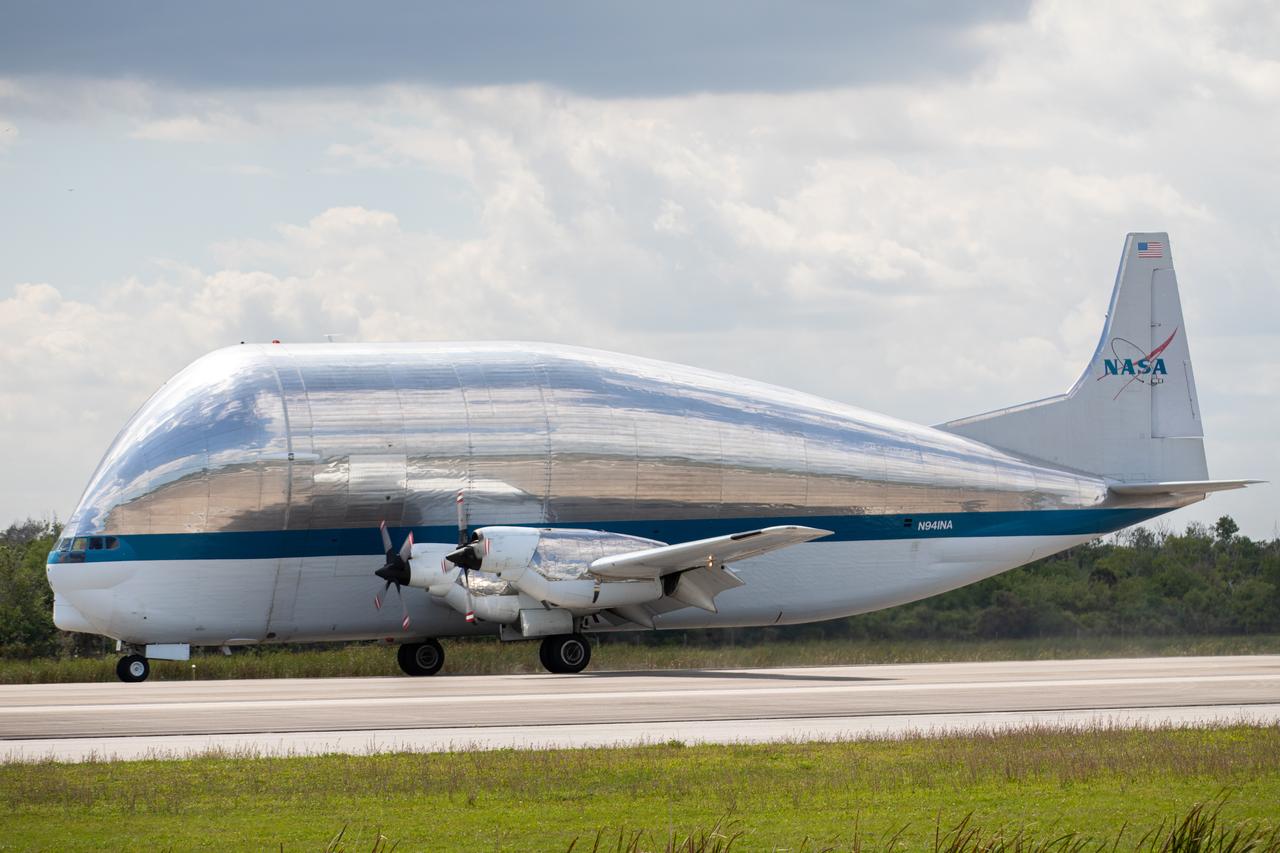
NASA’s Super Guppy aircraft, carrying the Orion spacecraft, lands at the Launch and Landing Facility runway at Kennedy Space Center in Florida on March 25, 2020. Orion has returned to Kennedy after testing at the agency’s Plum Brook Station in Ohio verified the spacecraft can handle the extreme conditions of a deep-space environment. The spacecraft will now undergo final testing and assembly prior to being integrated with the Space Launch System rocket. Orion will fly on the agency’s Artemis I mission – the first in a series of increasingly complex missions to the Moon that will ultimately lead to the exploration of Mars.
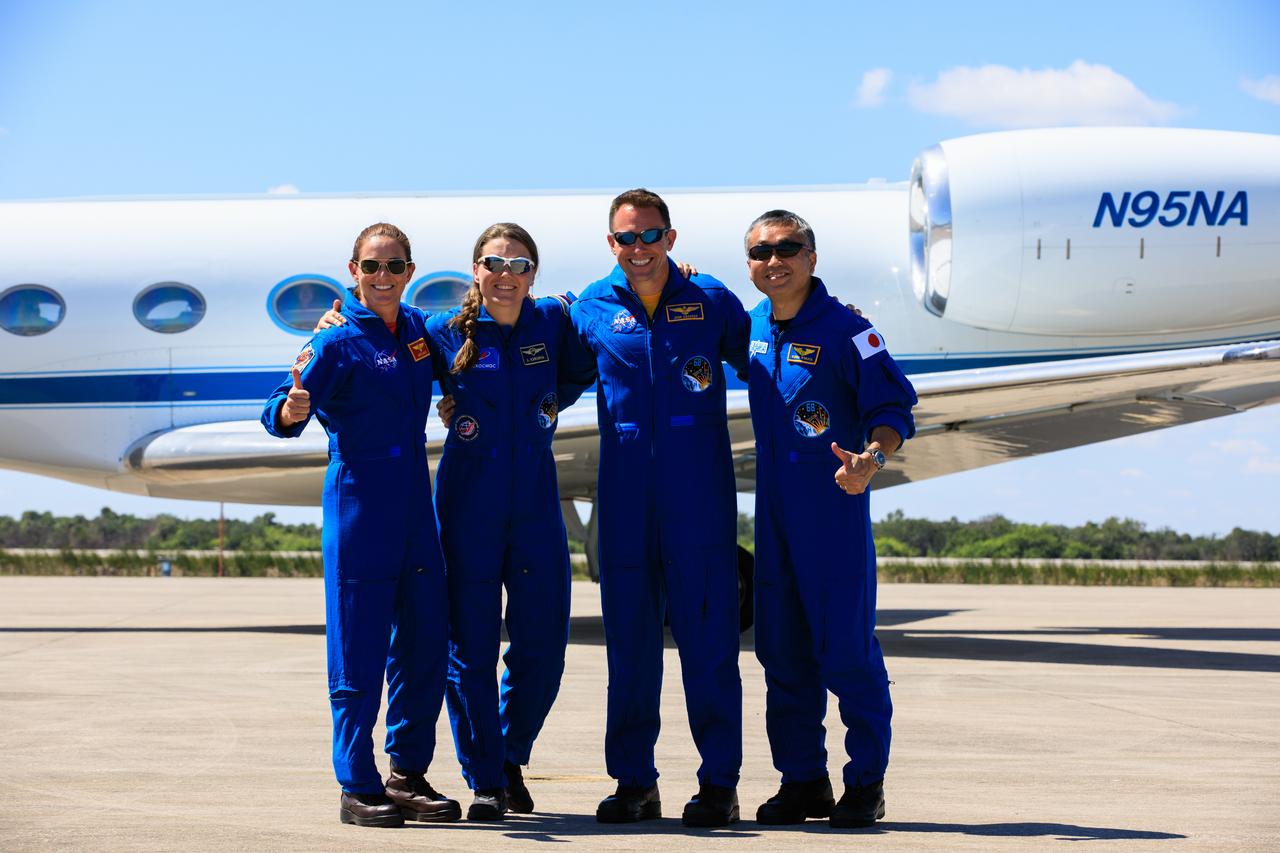
Crew members for NASA’s SpaceX Crew-5 mission to the International Space Station pose at the Launch and Landing Facility at Kennedy Space Center in Florida on Oct. 1, 2022. From left are Nicole Mann, commander; Anna Kikina, mission specialist; Josh Cassada, pilot; and Koichi Wakata, mission specialist. The crew will head to the center’s Crew Quarters as they await launch aboard the Crew Dragon on a SpaceX Falcon 9 rocket. Launch is targeted for noon EDT on Oct. 5 from Launch Complex 39A. Crew-5 is the fifth crew rotation mission with SpaceX to the station, and the sixth flight of Dragon with people as part of the agency’s Commercial Crew Program.
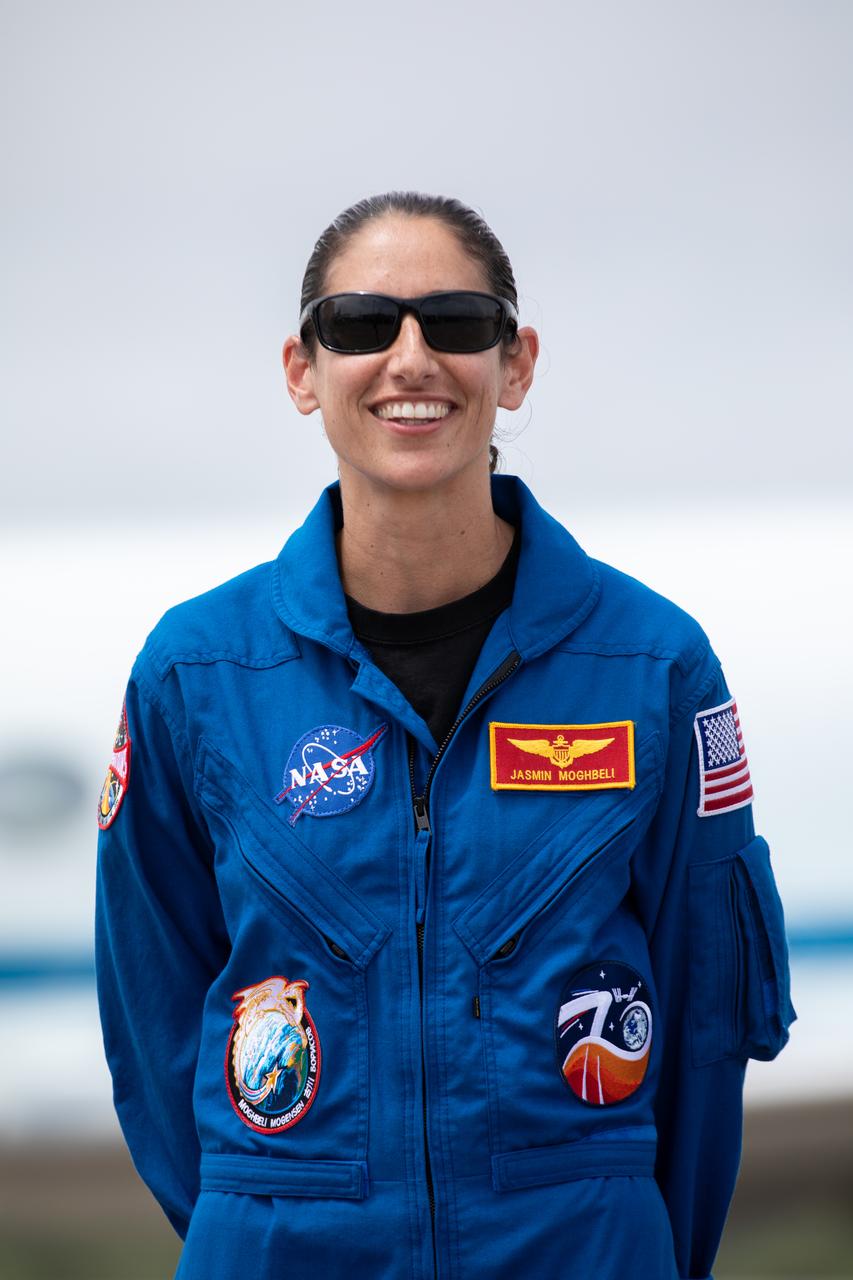
NASA’s SpaceX Crew-7 crew member and NASA astronaut Jasmin Moghbeli smiles to the crowd after arriving at the Launch and Landing Facility at Kennedy Space Center in Florida – along with the rest of her crewmates – on Sunday, Aug. 20, 2023. Crew-7 will launch to the International Space Station aboard SpaceX’s Dragon spacecraft on the company’s Falcon 9 rocket. Liftoff is targeted for 3:49 a.m. EDT Friday, Aug. 25, 2023, from Kennedy’s Launch Complex 39A.
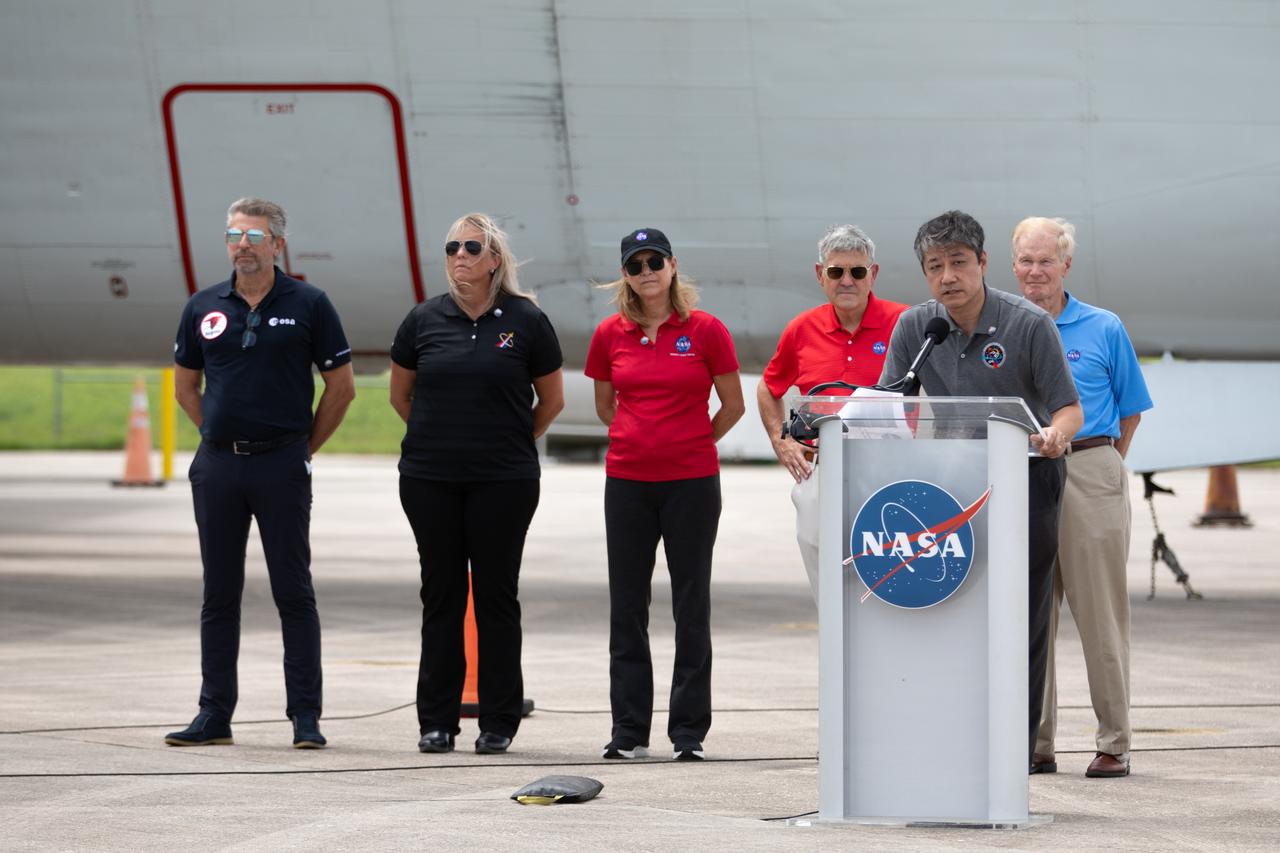
Junichi Sakai, program manager, International Space Station, JAXA (Japan Aerospace Exploration Agency), speaks to members of the news media during crew arrival for NASA’s SpaceX Crew-7 mission at the Launch and Landing Facility at Kennedy Space Center in Florida on Sunday, Aug. 20, 2023. In the background, from left, are: Eric van der Wal, ESA (European Space Agency); Dana Hutcherson, deputy program manager, Commercial Crew Program; Janet Petro, director, NASA Kennedy; Bob Cabana, associate administrator, NASA; and Bill Nelson, administrator, NASA. Crew-7 will launch to the International Space Station aboard SpaceX’s Dragon spacecraft on the company’s Falcon 9 rocket. Liftoff is targeted for 3:49 a.m. EDT Friday, Aug. 25, 2023, from Kennedy’s Launch Complex 39A.
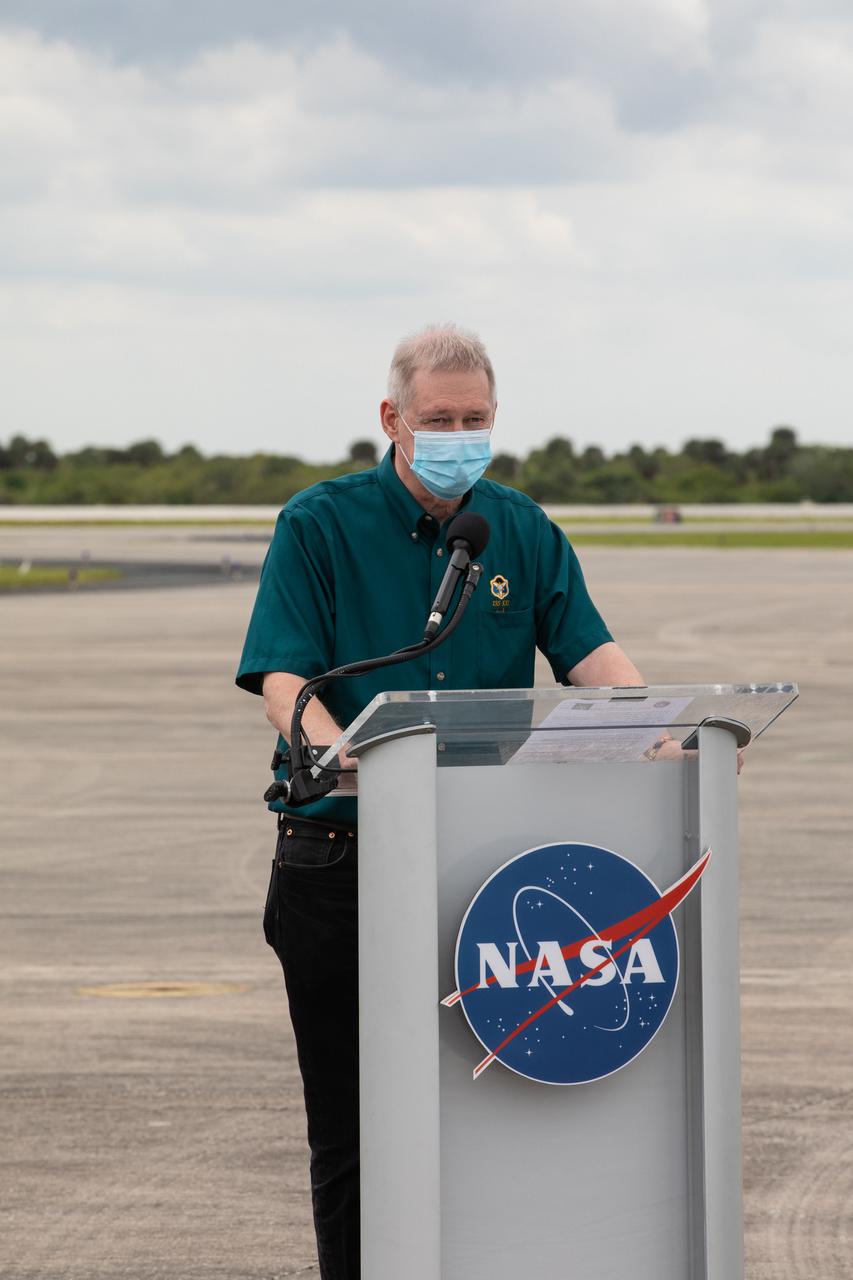
Frank de Winne, manager, International Space Station Program, ESA, speaks during NASA’s SpaceX Crew-2 arrival media event held at Kennedy Space Center in Florida on April 16, 2021. NASA astronauts Shane Kimbrough and Megan McArthur, JAXA astronaut Akihiko Hoshide, and ESA astronaut Thomas Pesquet, who arrived at Kennedy just minutes before the media event, will fly to the space station on NASA’s SpaceX Crew-2 mission. Liftoff is targeted for Thursday, April 22, at 6:11 a.m. EDT.
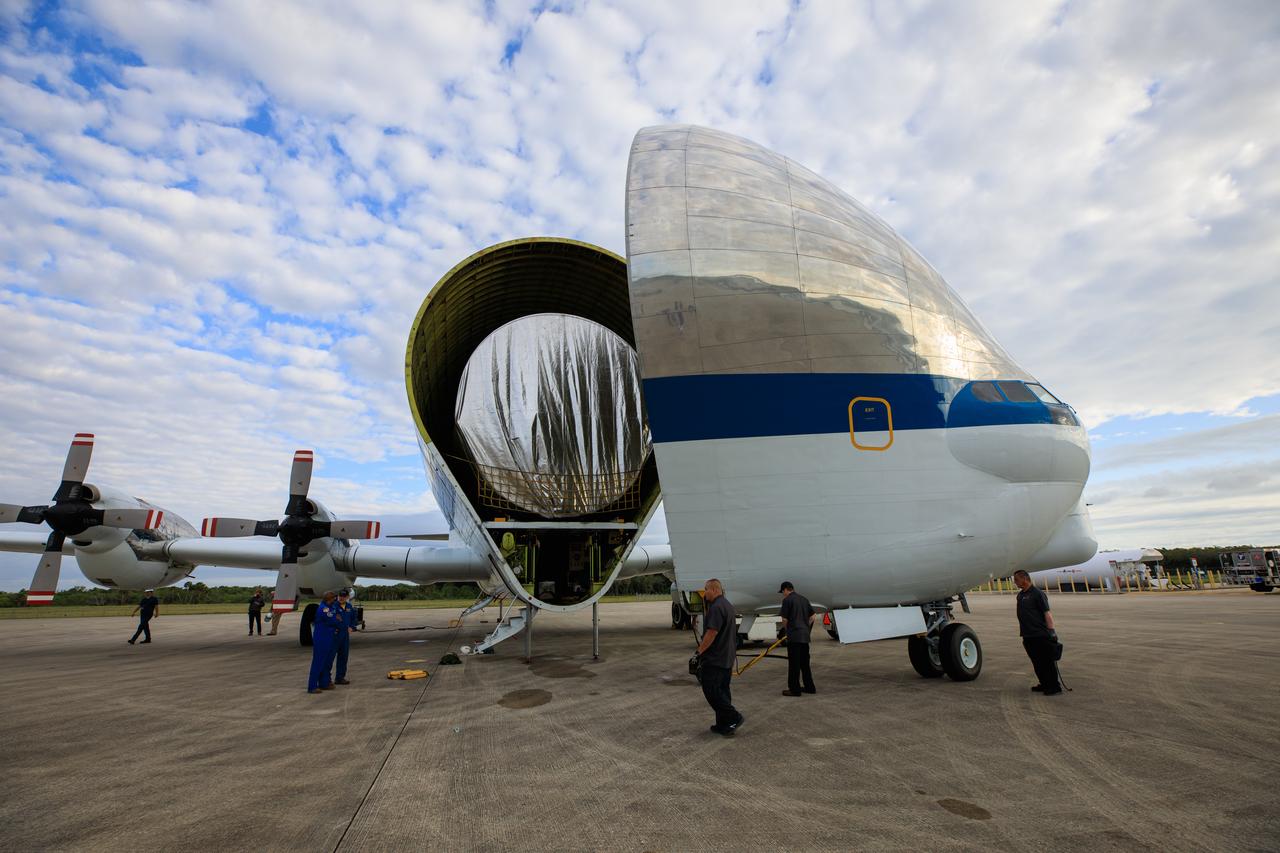
The Multi-Purpose Logistics Module (MPLM), used during the Space Shuttle Program to transfer cargo to and from the International Space Station, is loaded into NASA's Super Guppy aircraft at the Launch and Landing Facility runway at Kennedy Space Center in Florida on April 25, 2023. The MPLM will be transported to Ellington Field in Houston, where it will then be transported by road to Axiom’s facility near Ellington to be utilized to further commercialization of space. Three MPLMs were built by Thales Alenia Space Italia (TASI) for the Italian Space Agency (ASI) and named after Italian masters (Leonardo, Raffaello, and Donatello). Only two ever flew to the space station, Leonardo and Raffaello, with Axiom intending to use the Raffaello module as a future element that will attach to a segment being built by the company for addition to the station.
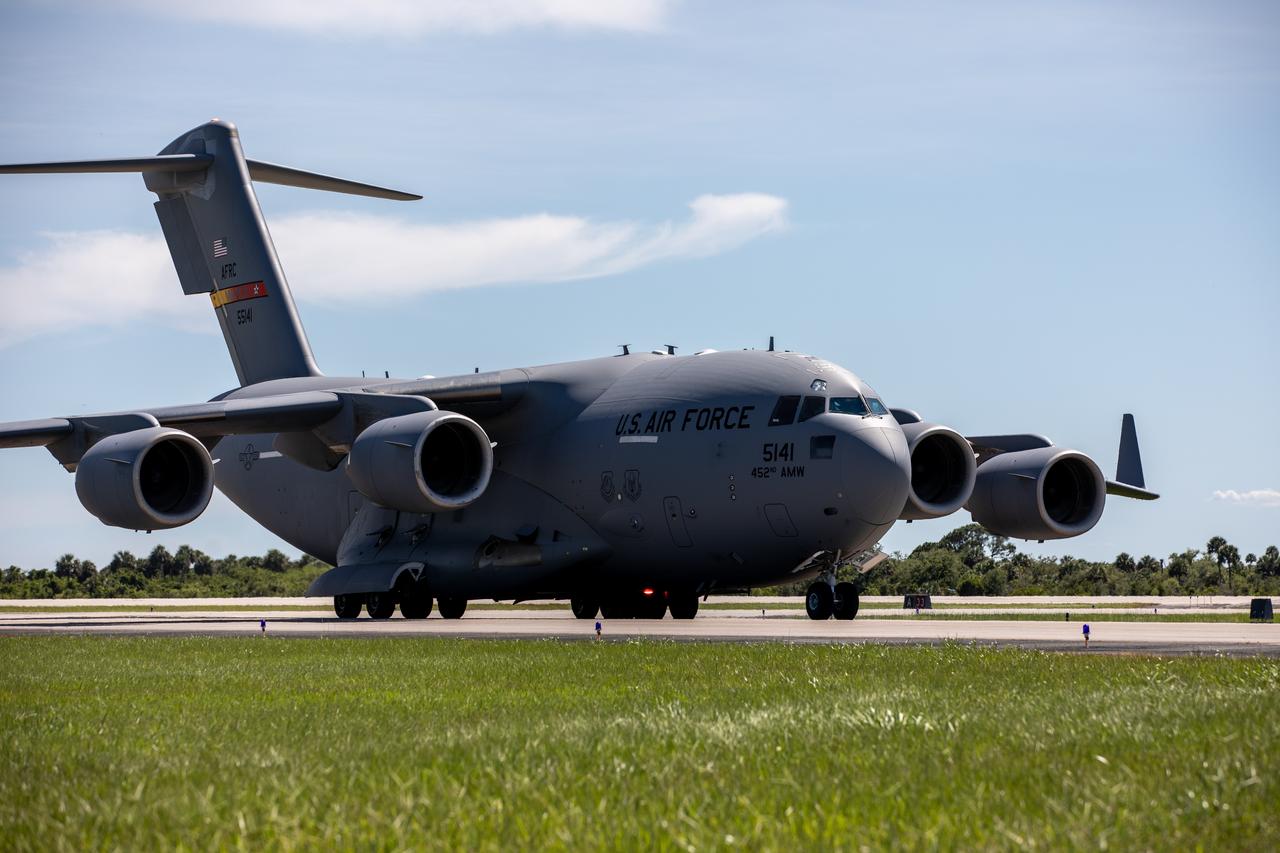
A United States Air Force C-17 Globemaster III transport aircraft carrying NASA’s largest planetary mission spacecraft, Europa Clipper, arrives at the Launch and Landing Facility at the agency's Kennedy Space Center in Florida on Thursday, May 23, 2024. Teams spent several hours offloading Europa Clipper then transferring it to the Payload Hazardous Servicing Facility at Kennedy to prepare it for launch aboard a SpaceX Falcon Heavy rocket later this year from Launch Complex 39A at the Florida spaceport. Europa Clipper will help determine if life-sustaining conditions exist below the surface Jupiter’s fourth largest moon, Europa.
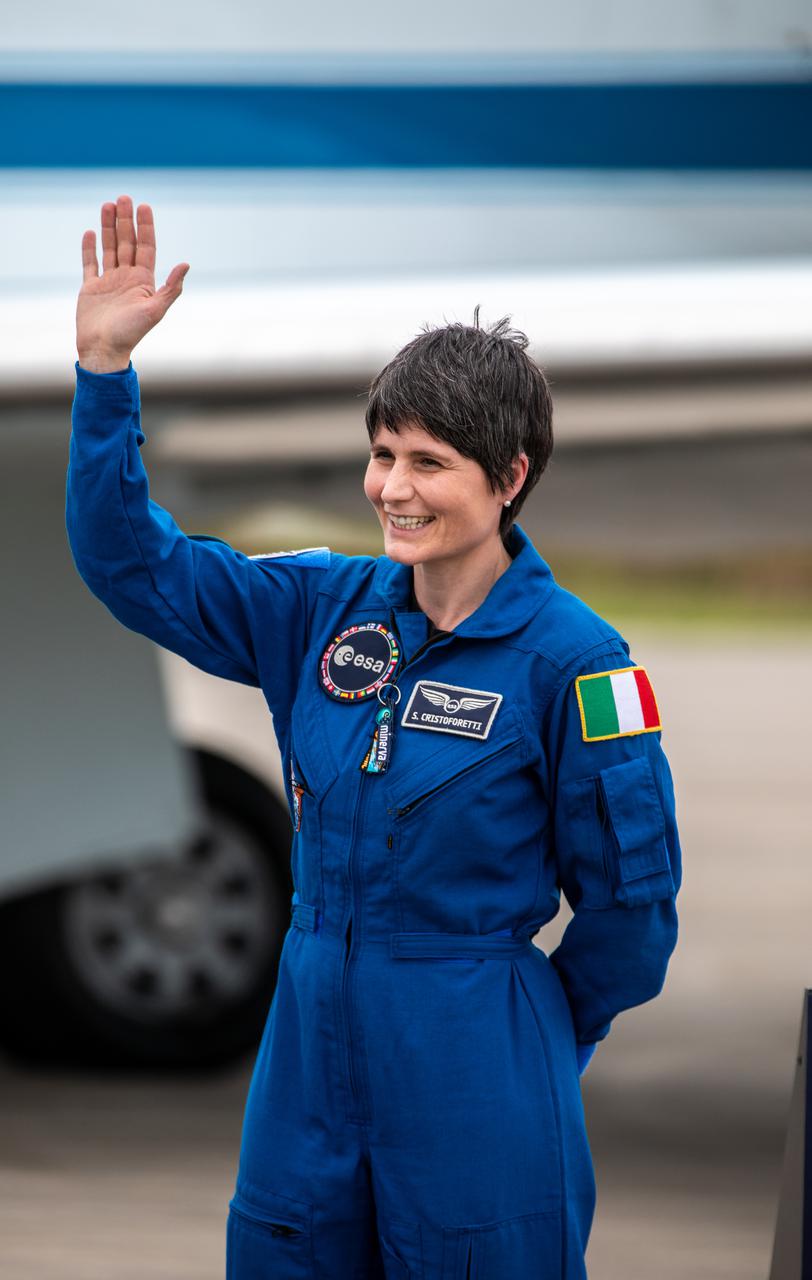
ESA (European Space Agency) astronaut Samantha Cristoforetti speaks to members of the news media during crew arrival for NASA’s SpaceX Crew-4 mission at the Launch and Landing Facility at Kennedy Space Center in Florida on April 18, 2022. Cristoforetti, along with NASA astronauts Bob Hines, Kjell Lindgren, and Jessica Watkins, will launch aboard SpaceX’s Crew Dragon and Falcon 9 rocket on April 23, 2022. Launch is targeted for 5:26 a.m. EDT from Kennedy’s Launch Complex 39A.
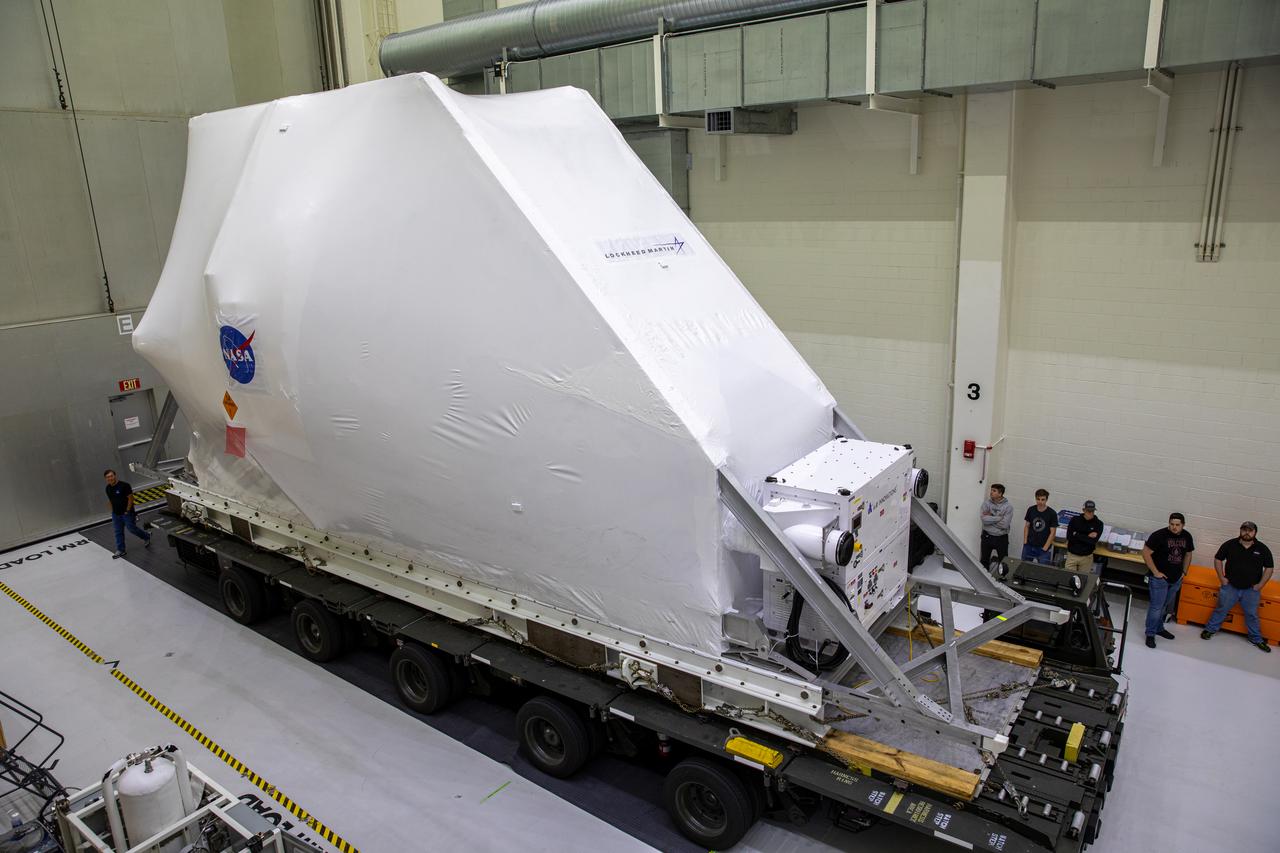
The Orion spacecraft, secured atop a transporter in its shipping container, arrives at the Neil Armstrong Operations and Checkout Building at NASA’s Kennedy Space Center in Florida on March 25, 2020, for final testing and assembly. The spacecraft was transported to Kennedy in NASA’s Super Guppy aircraft from the agency’s Plum Brook Station in Ohio, where it underwent two phase of environmental testing. Following these final preparations, Orion will be integrated with the Space Launch System rocket for the Artemis I launch – the first in a series of increasingly complex missions to the Moon that will ultimately lead to the exploration of Mars.

NASA's Super Guppy aircraft lifts off from the Launch and Landing Facility runway at Kennedy Space Center in Florida on April 25, 2023. Carrying the Multi-Purpose Logistics Module (MPLM), used during the Space Shuttle Program to transfer cargo to and from the International Space Station, the aircraft is transporting the module to Ellington Field in Houston, where it will then be transported by road to Axiom’s facility near Ellington to be utilized to further commercialization of space. Three MPLMs were built by Thales Alenia Space Italia (TASI) for the Italian Space Agency (ASI) and named after Italian masters (Leonardo, Raffaello, and Donatello). Only two ever flew to the space station, Leonardo and Raffaello, with Axiom intending to use the Raffaello module as a future element that will attach to a segment being built by the company for addition to the station.
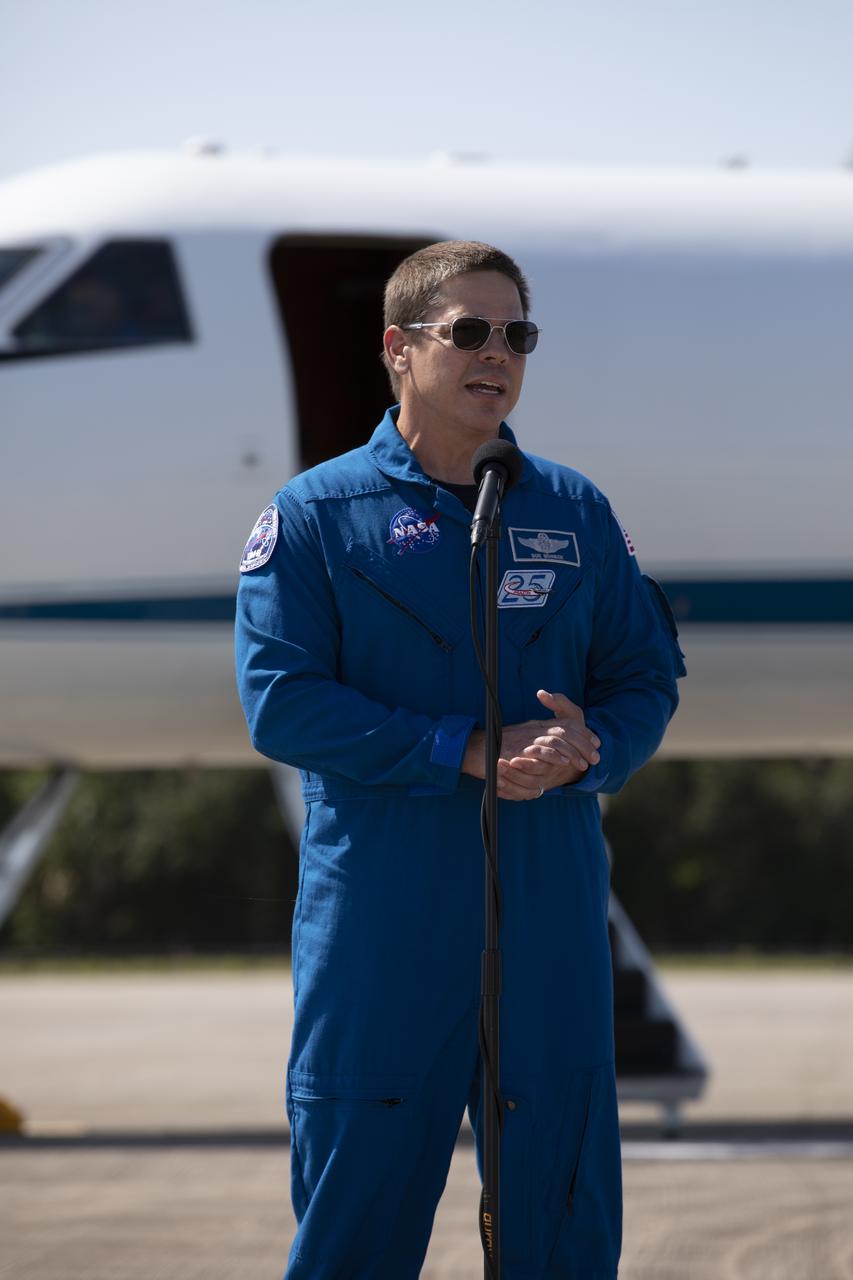
Demo-2 crew member Robert Behnken speaks to members of the media at the Launch and Landing Facility runway at the agency’s Kennedy Space Center in Florida on May 20, 2020, following his arrival from Houston, Texas. Under the agency’s Commercial Crew Program, Behnken and crewmate Douglas Hurley will be the first astronauts to launch to the International Space Station from U.S. soil since the end of the Space Shuttle Program in 2011. Liftoff of the SpaceX Falcon 9 rocket and Crew Dragon spacecraft is scheduled for 4:33 p.m. on May 27 from Kennedy’s Launch Complex 39A.
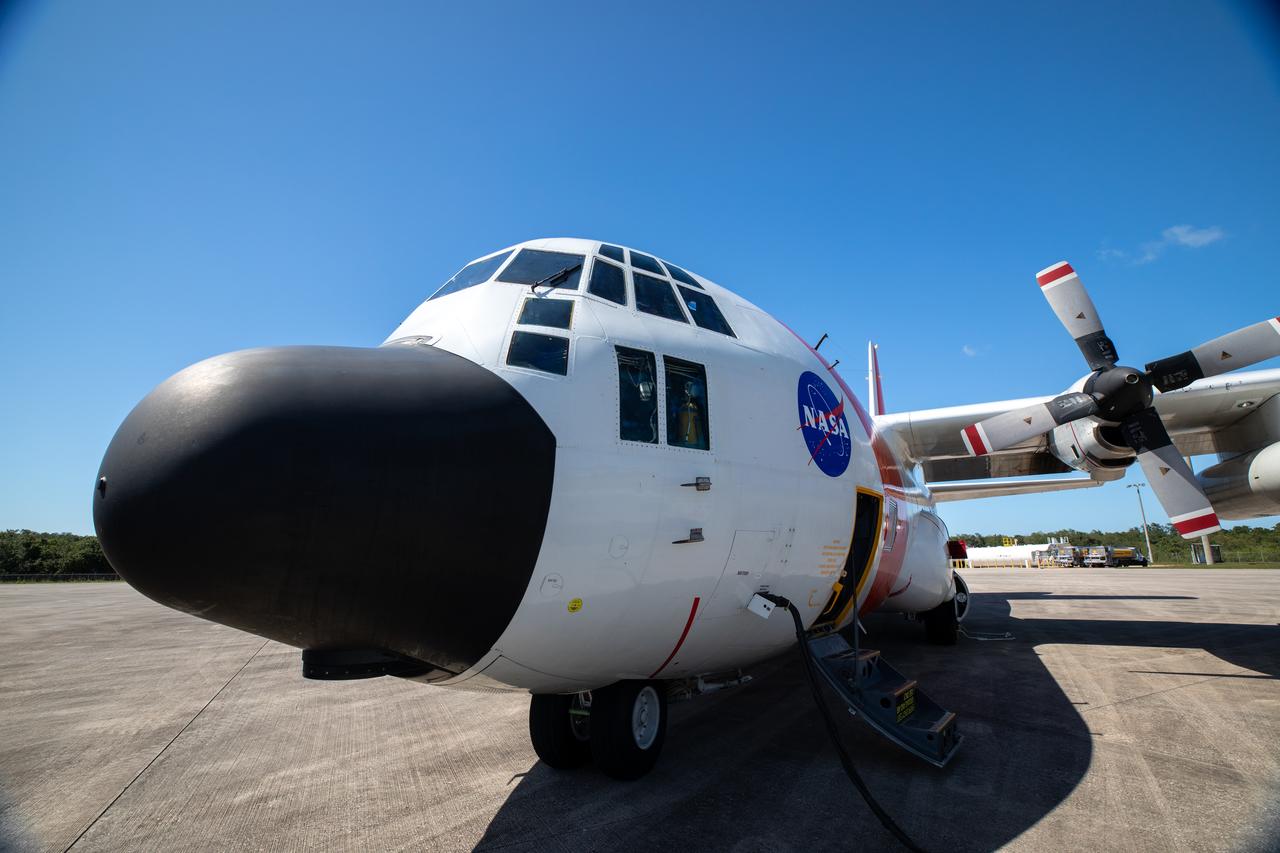
NASA’s C-130 aircraft arrives at Kennedy Space Center’s Launch and Landing Facility in Florida on May 11, 2020, carrying the Adaptive Caching Assembly (ACA) for NASA’s Mars Perseverance rover The ACA consists of seven motors and more than 3,000 parts, all working in unison to collect samples from the surface of Mars. A chief component of the assembly is the Sample Handling Arm, which will move sample tubes to the main robotic arm's coring drill and then transfer the filled sample tubes into a space to be sealed and stored. The Mars Perseverance rover is scheduled to launch in mid-July atop a United Launch Alliance Atlas V 541 rocket from Pad 41 at nearby Cape Canaveral Air Force Station. The rover is part of NASA’s Mars Exploration Program, a long-term effort of robotic exploration of the Red Planet. The rover will search for habitable conditions in the ancient past and signs of past microbial life on Mars. The Launch Services Program at Kennedy is responsible for launch management.
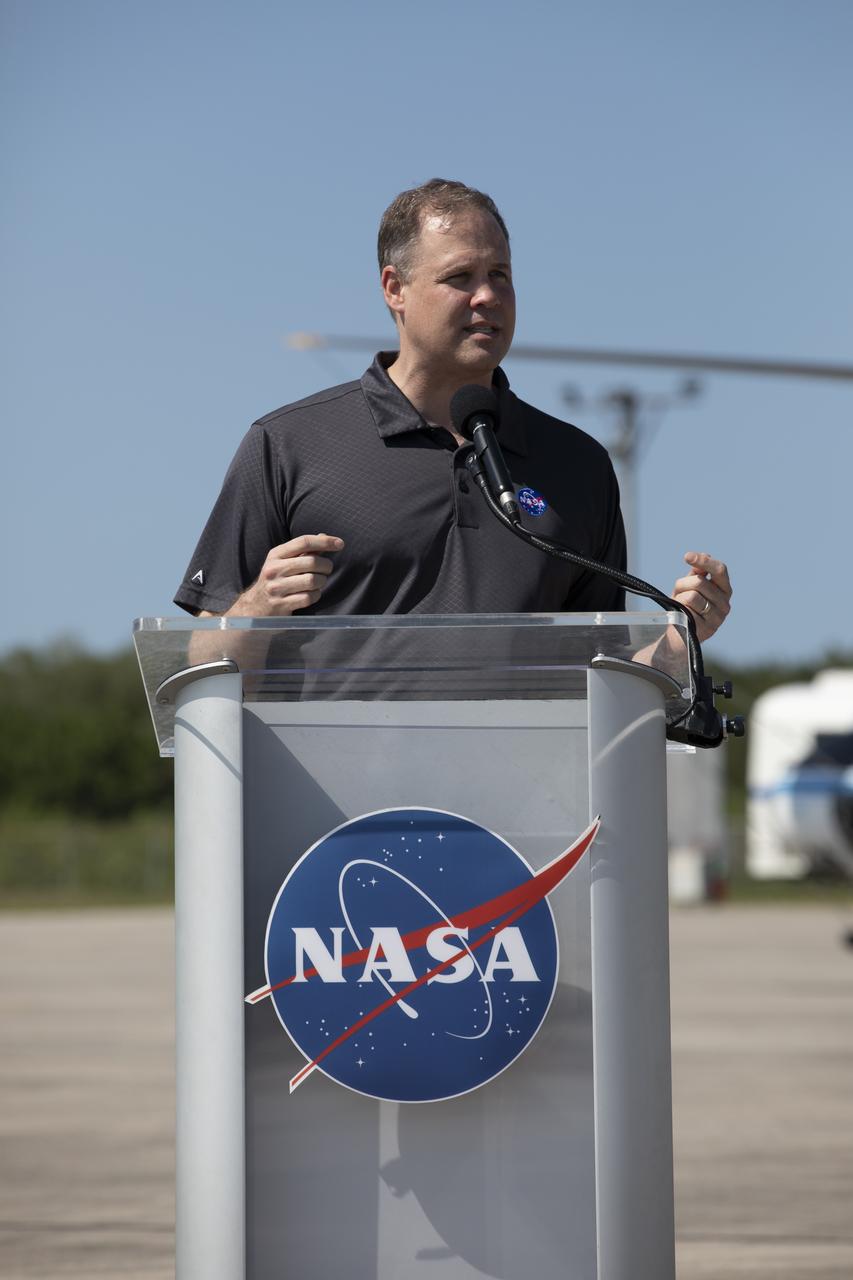
NASA Administrator Jim Bridenstine speaks to members of the media at the Launch and Landing Facility runway at the agency’s Kennedy Space Center in Florida on May 20, 2020, following Demo-2 crew members Robert Behnken and Douglas Hurley’s arrival from Houston, Texas. Under the agency’s Commercial Crew Program, Behnken and Hurley will be the first astronauts to launch to the International Space Station from U.S. soil since the end of the Space Shuttle Program in 2011. Liftoff of the SpaceX Falcon 9 rocket and Crew Dragon spacecraft is scheduled for 4:33 p.m. on May 27 from Kennedy’s Launch Complex 39A.
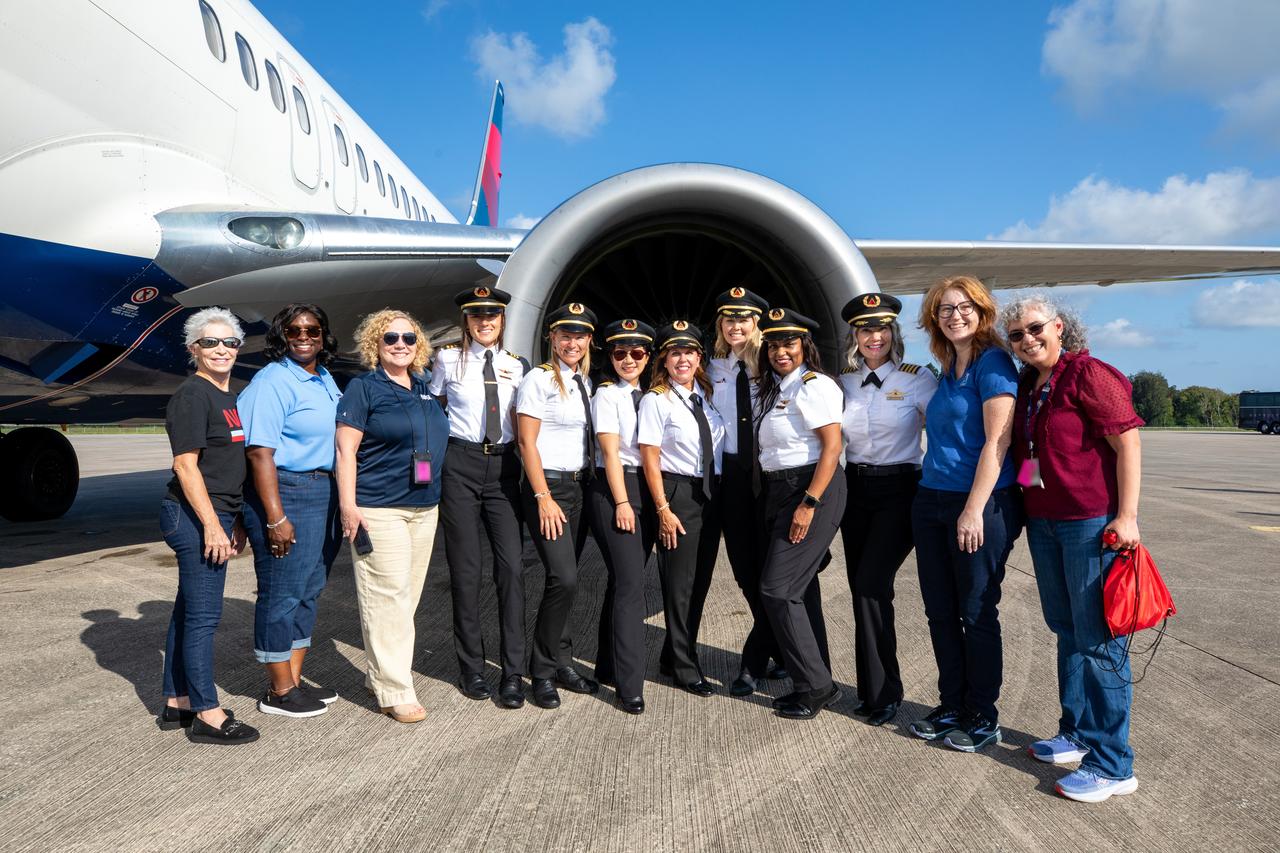
Women with leadership positions at NASA’s Kennedy Space Center pose with members of the all-female crew for Delta Air Lines’ Women Inspiring Our Next Generation (WING) flight after the crew touched down on Friday, Sept. 20, 2024, at the Launch and Landing Facility at the Florida spaceport. The flight brought girls from Atlanta, Georgia, ranging in age from 11 to 18, to view center facilities and hear a panel of women discuss their careers with NASA and Delta Air Lines.
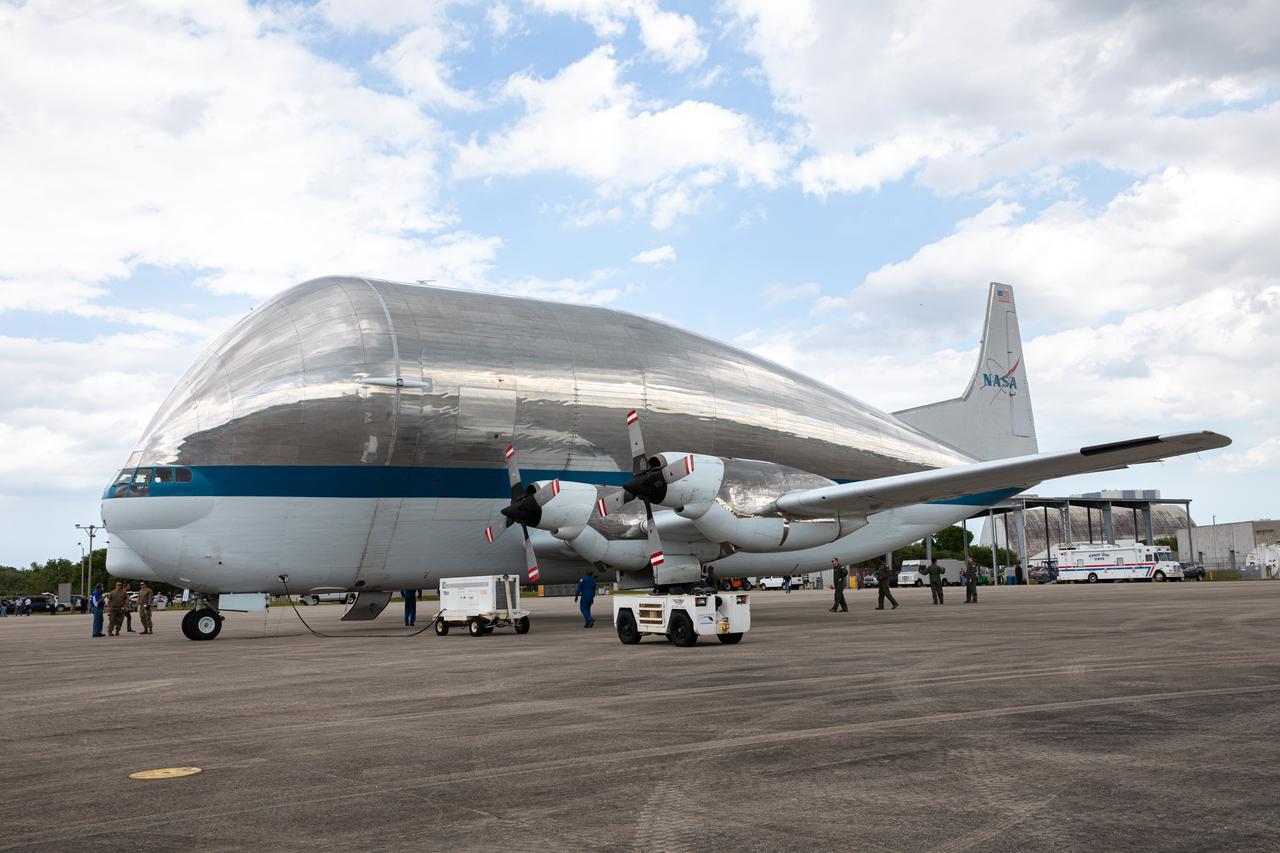
NASA’s Super Guppy aircraft, carrying the Orion spacecraft, lands at the Launch and Landing Facility runway at Kennedy Space Center in Florida on March 25, 2020. Orion has returned to Kennedy after testing at the agency’s Plum Brook Station in Ohio verified the spacecraft can handle the extreme conditions of a deep-space environment. The spacecraft will now undergo final testing and assembly prior to being integrated with the Space Launch System rocket. Orion will fly on the agency’s Artemis I mission – the first in a series of increasingly complex missions to the Moon that will ultimately lead to the exploration of Mars.