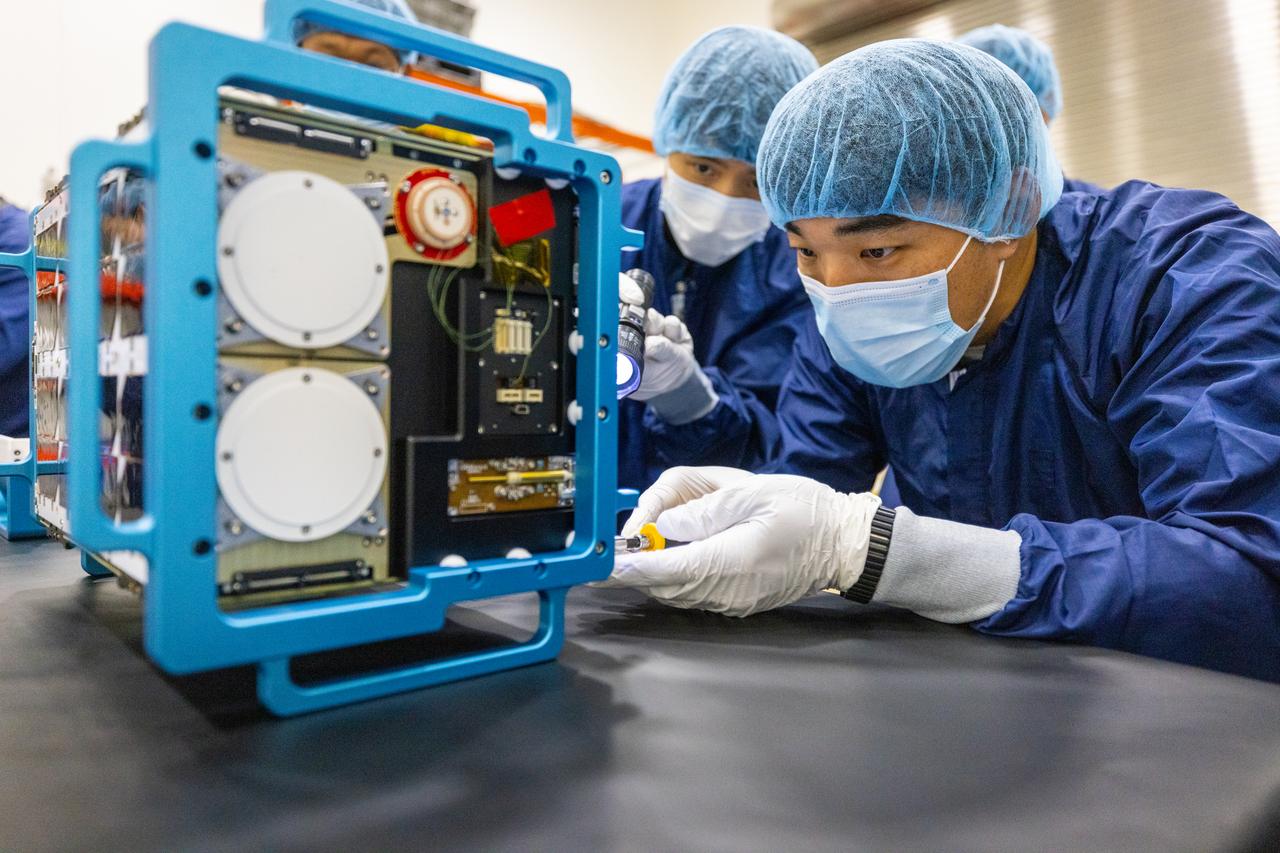
Inside the Multi-Payload Processing Facility at NASA’s Kennedy Space Center in Florida, on Tuesday, Aug. 26, 2025, technicians with the Korea AeroSpace Administration (KASA) inspect the K-Rad Cube, one of several international CubeSats slated to fly on NASA’s Artemis II test flight in 2026. Deploying in high Earth orbit from a spacecraft adapter on NASA’s SLS (Space Launch System) rocket after Orion is safely flying on its own with its crew of four astronauts, K-Rad Cube will use a dosimeter made of material designed to mimic human tissue to measure space radiation and assess biological effects at various altitudes across the Van Allen radiation belts, a critical area of research for human presence at the Moon and Mars.
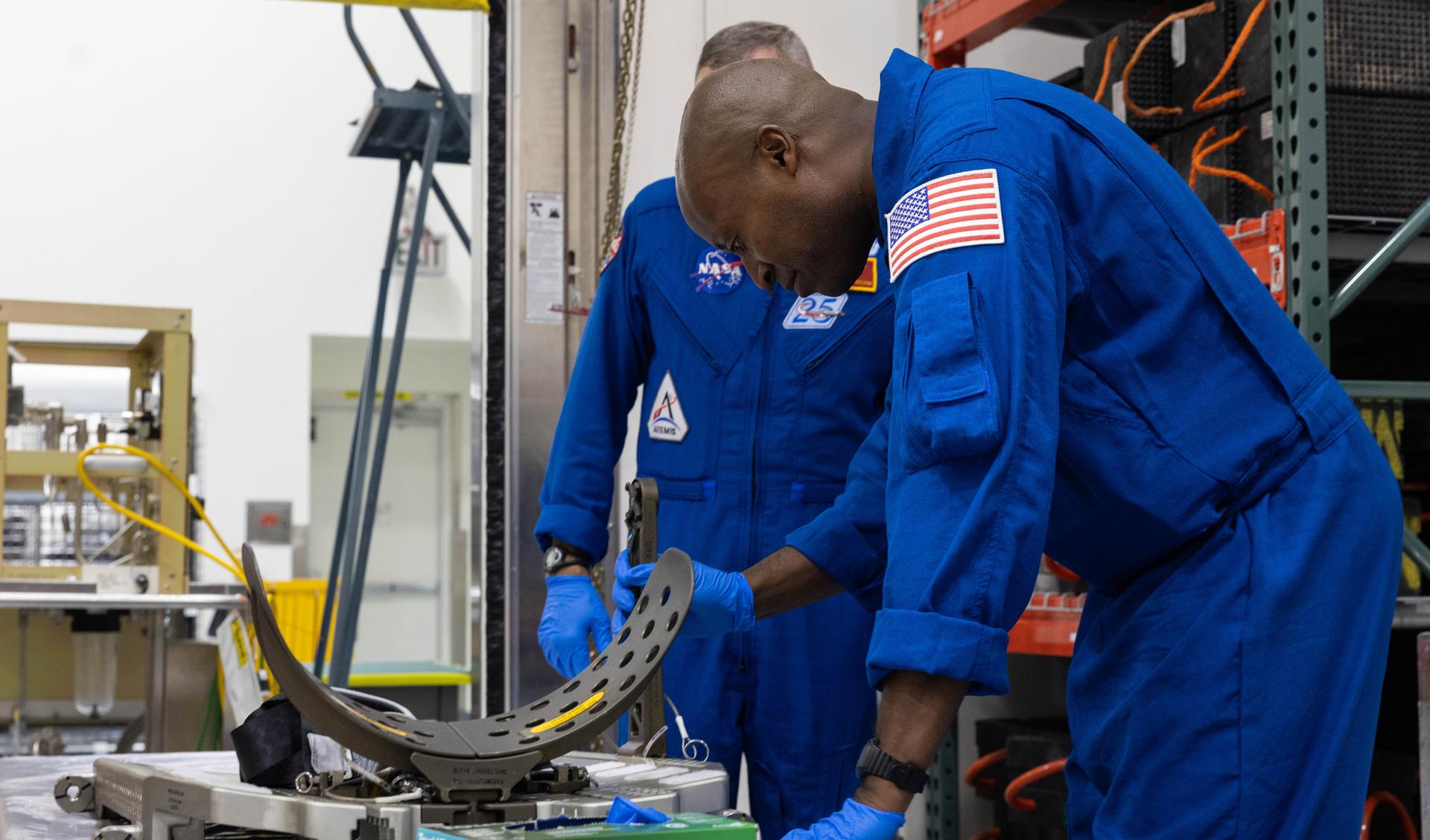
Artemis III crew members, NASA astronauts Andre Douglas and Randy Bresnick (obscured) and get a close look Orion spacecraft hardware inside the Multi-Payload Processing Facility at NASA’s Kennedy Space Center in Florida on Friday, July 10, 2026. Bresnick, Douglas, NASA astronaut Frank Rubio, and ESA (European Space Agency) astronaut Luca Parmitano will launch aboard Orion on the Artemis III mission to conduct critical rendezvous and docking tests with lunar lander systems in low Earth orbit, advancing the capabilities needed before astronauts return to the lunar surface on Artemis IV.
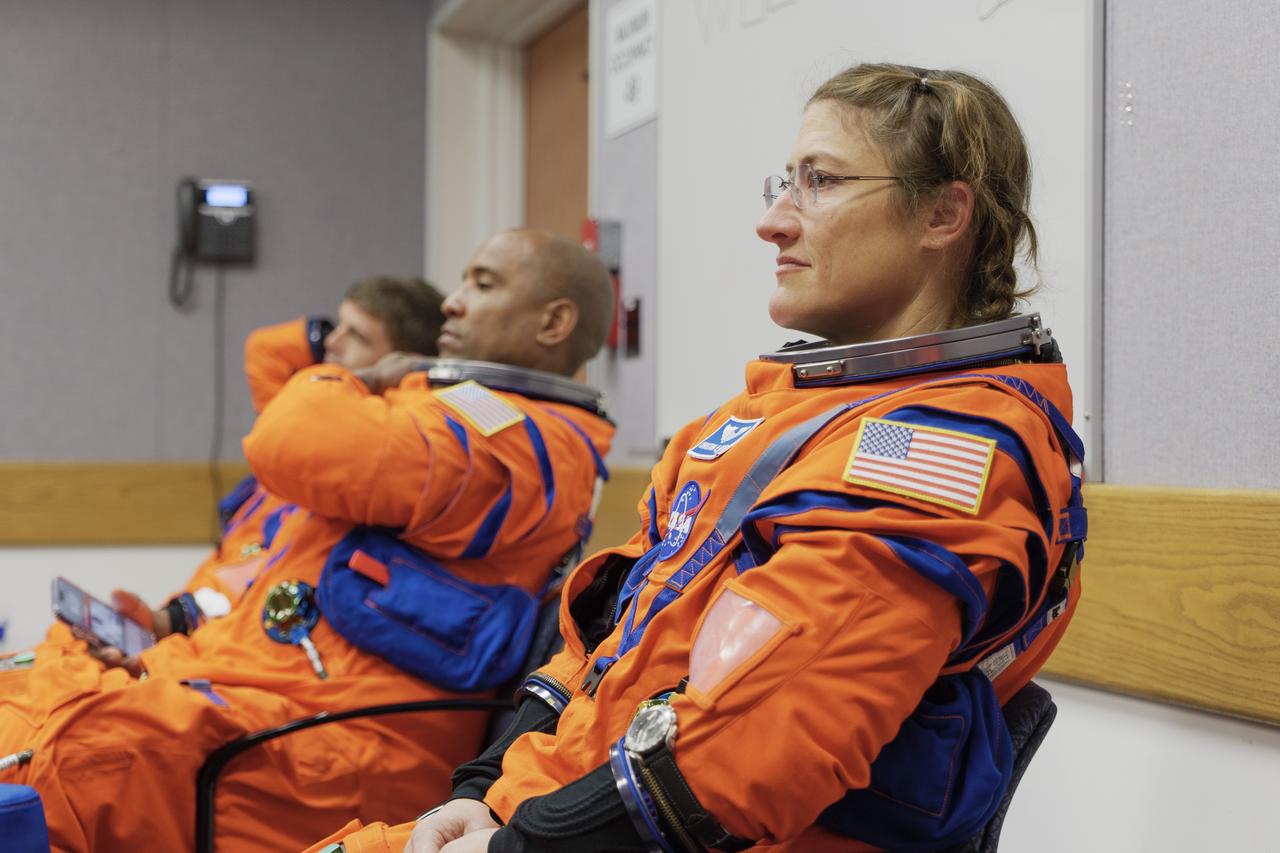
The crew of NASA’s Artemis II mission participates in a suited crew test on Thursday, July 31, 2025, at the agency’s Kennedy Space Center in Florida. From left, NASA astronauts Reid Wiseman, Artemis II commander; Victor Glover, Artemis II pilot; and Christina Koch, mission specialist, and CSA (Canadian Space Agency) Jeremy Hansen (not pictured), donned their Orion crew survival system spacesuits, for training at NASA’s Kennedy’s Multi-Payload Processing Facility, where they entered their fully powered Orion spacecraft as part of the test. Artemis II will take the four astronauts around the Moon, as the first crewed mission on NASA’s path to establishing a long-term presence for science and exploration through Artemis.
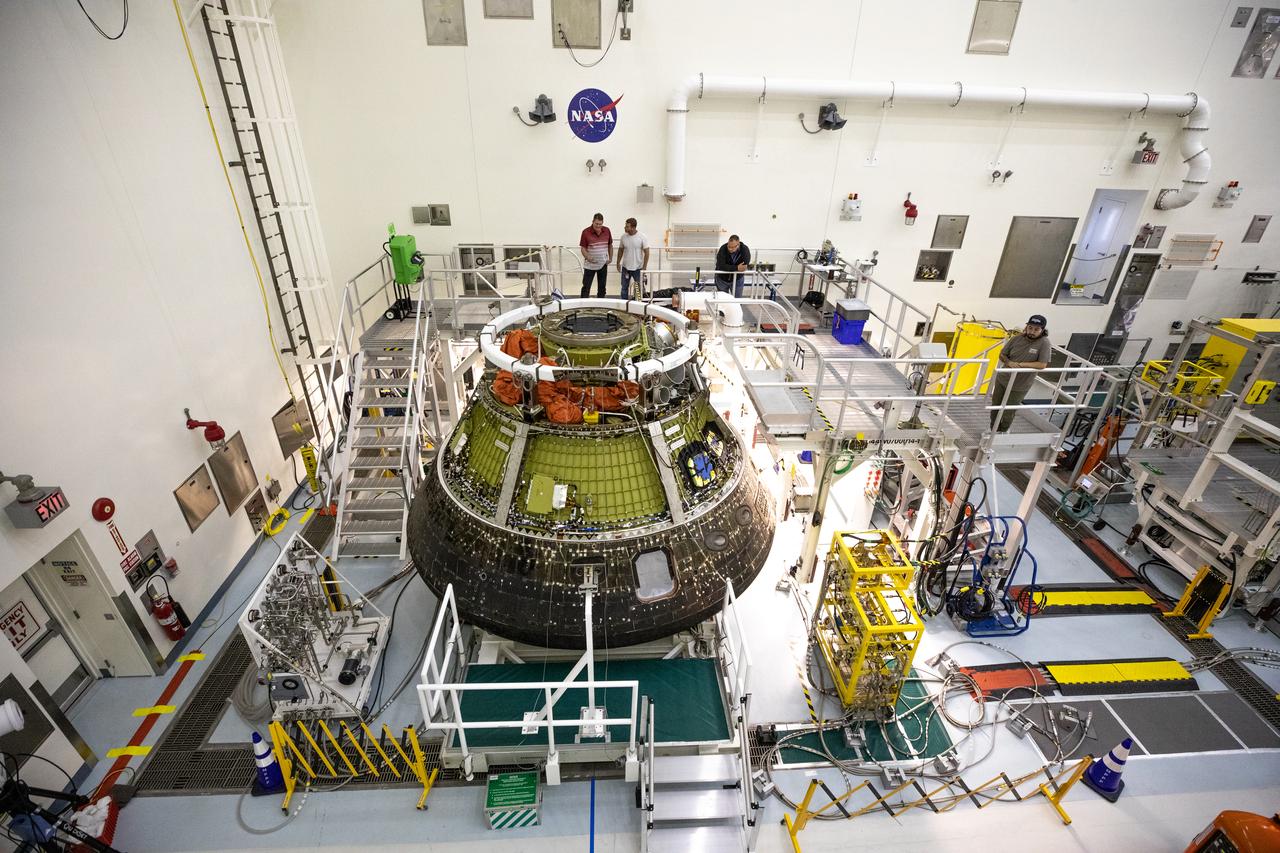
A view from above shows NASA’s Artemis I Orion capsule secured on a platform inside the Multi-Payload Processing Facility (MPPF) at Kennedy Space Center in Florida on Jan. 6, 2023. Orion splashed down in the Pacific Ocean at 12:40 p.m. EST on Dec. 11, 2022. The spacecraft was secured inside the well deck of the USS Portland for the voyage to U.S. Naval Base Sand Diego, arriving on Dec. 13, 2022. Orion was offloaded and transported back to Kennedy for deservicing inside the MPPF. Orion launched atop the Space Launch System rocket on Nov. 16, 2022 at 1:47 a.m. EST from Kennedy’s Launch Complex 39B for a 25-day trip beyond the Moon and back. During the flight, Orion flew farther than any human-rated spacecraft has ever flown, paving the way for human deep space exploration and demonstrating NASA’s commitment and capability to extend human presence to the Moon and beyond.
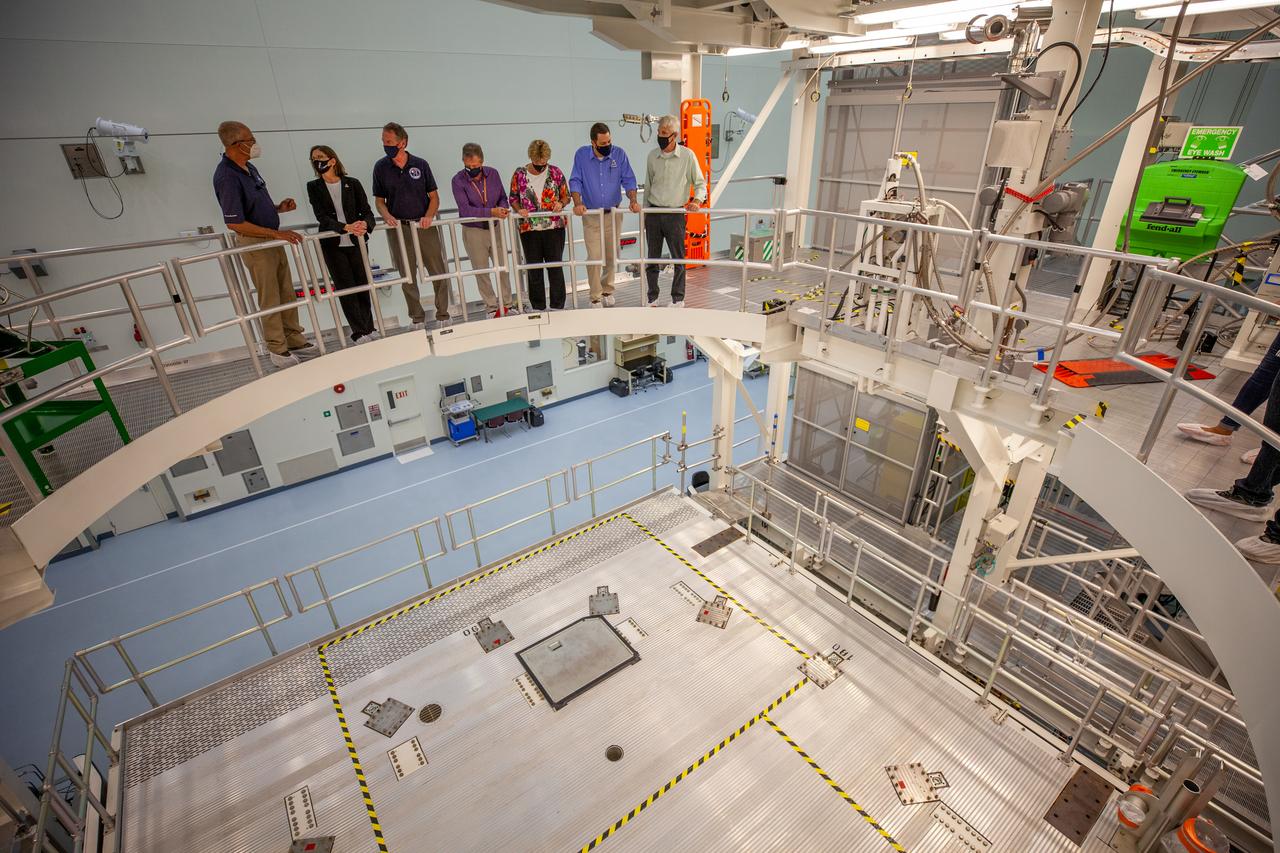
Catherine Koerner, second from left, NASA Orion Program manager, along with senior managers from Orion, Exploration Ground Systems (EGS) and TOSC, tours the Multi-Payload Processing Facility (MPPF) at NASA’s Kennedy Space Center in Florida on Oct. 5, 2020. Accompanying her, from left are Skip Williams, operations manager for the MPPF spacecraft offline element integration team; Mike Bolger, EGS manager; Nicolas Kindred, TOSC flow manager; Annette Hasbrook, Orion Program assistant manager; Jeremy Parsons, EGS deputy manager; and Scott Wilson, Orion Production Operations manager. Koerner viewed spacecraft hardware and processing facilities for the Artemis I and II missions. The first in a series of increasingly complex missions, Artemis I will test the Orion spacecraft and Space Launch System as an integrated system ahead of crewed flights to the Moon. Under the Artemis program, NASA will land the first woman and the next man on the Moon in 2024.
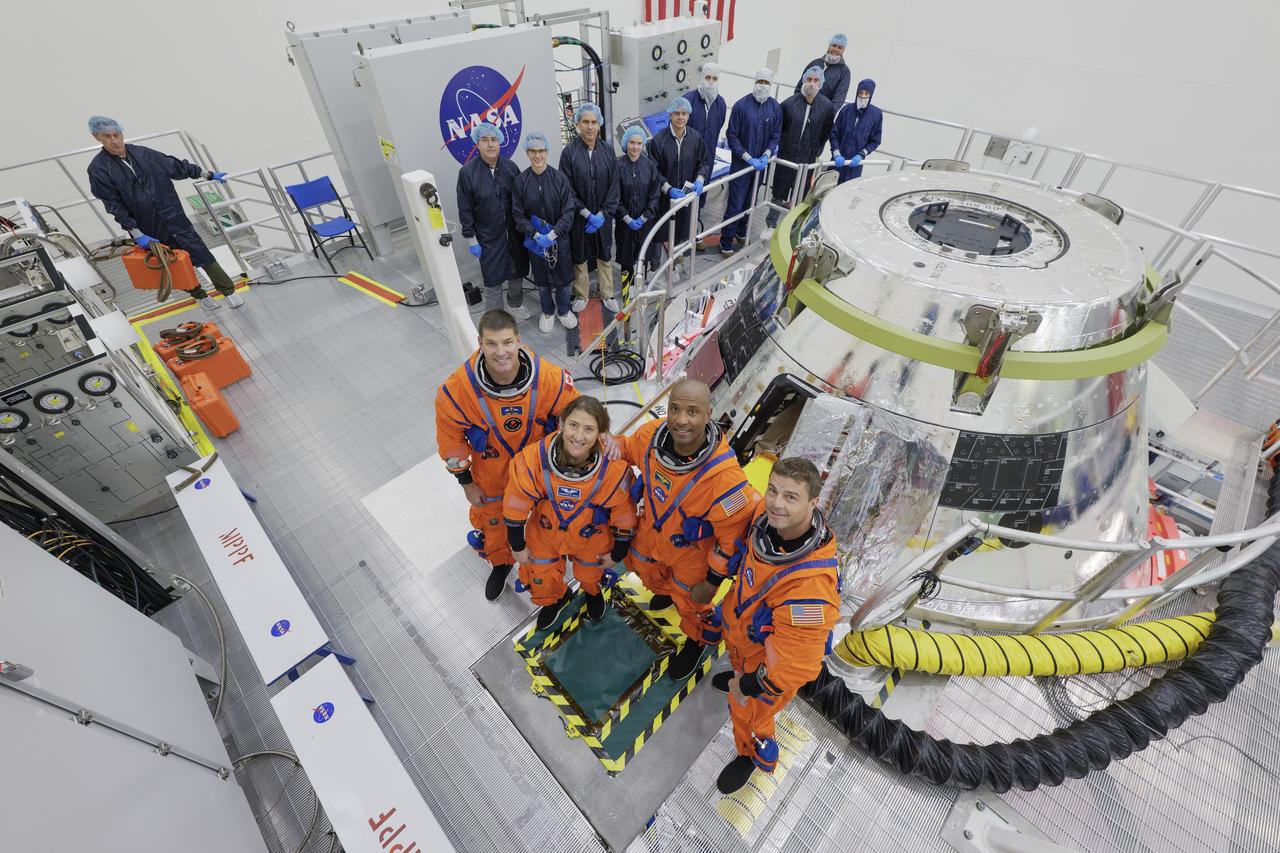
The Artemis II crew (from left to right) CSA (Canadian Space Agency) Jeremy Hansen, mission specialist; Christina Koch, mission specialist; Victor Glover, pilot; and Reid Wiseman, commander, don their Orion Crew Survival System Suits for a multi-day crew module training beginning Thursday, July 31, 2025 at the agency’s Kennedy Space Center in Florida. Behind the crew, wearing clean room apparel, are members of the Artemis II closeout crew. Testing included a suited crew test and crew equipment interface test, performing launch day and simulated orbital activities inside the Orion spacecraft. This series of tests marks the first time the crew entered their spacecraft that will take them around the Moon and back to Earth while wearing their spacesuits.
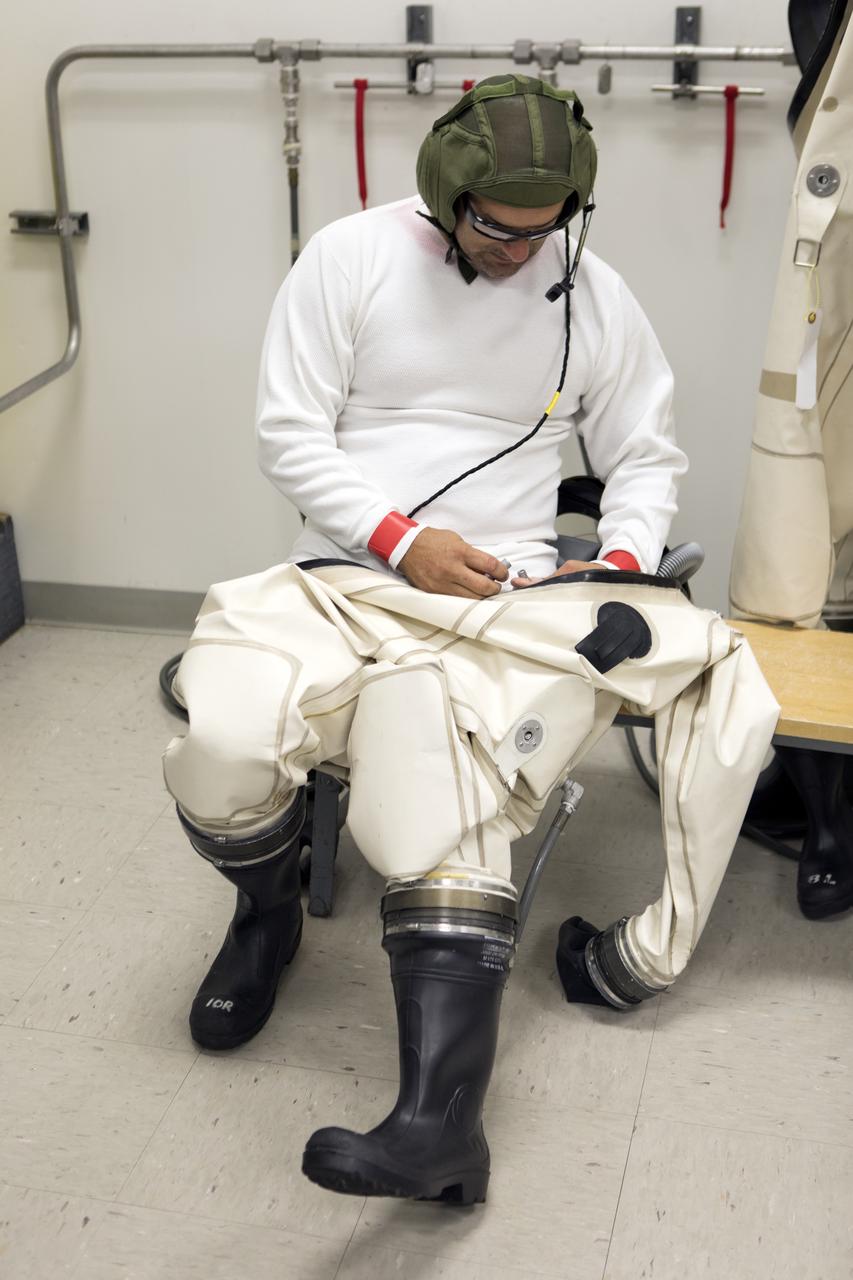
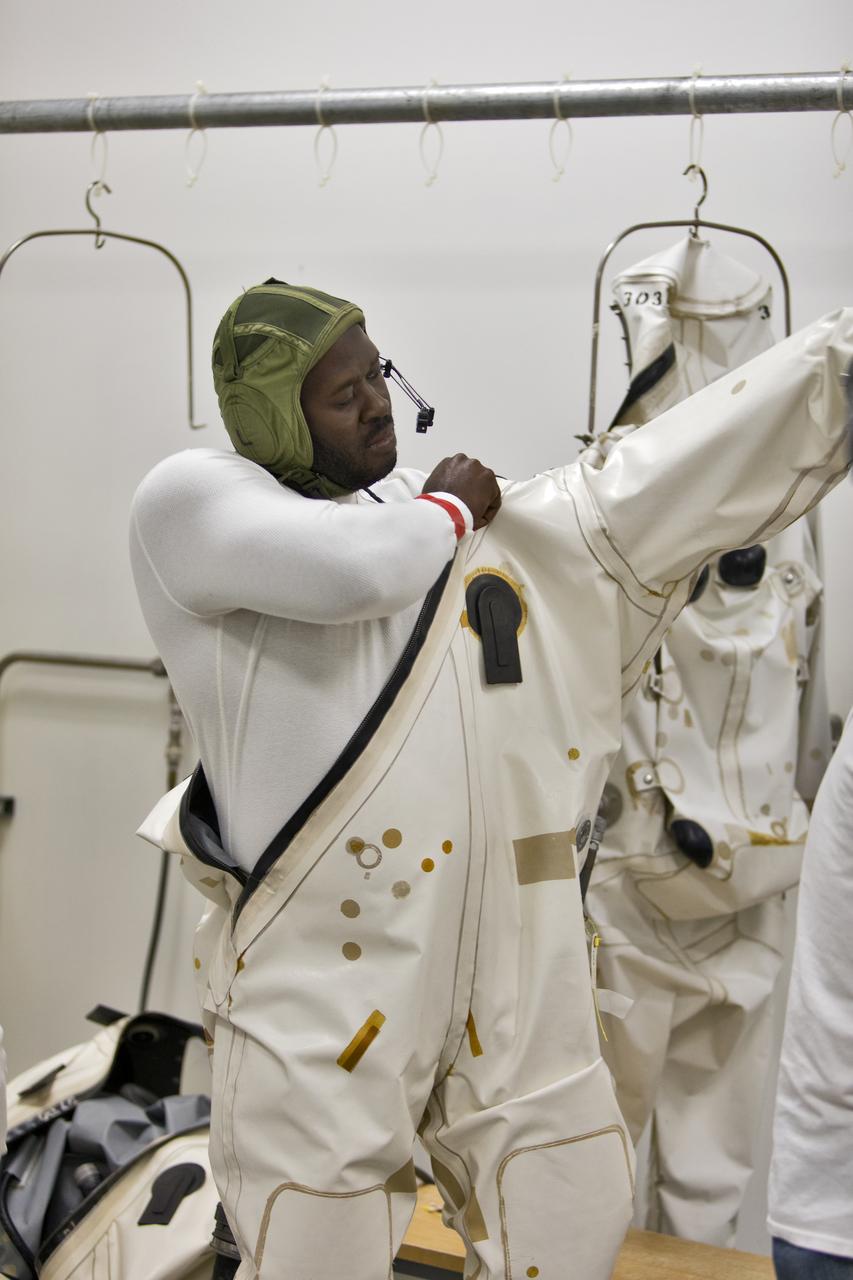
An operator dons a Self-Contained Atmospheric Protective Ensemble (SCAPE) suit inside a room in the Multi-Payload Processing Facility (MPPF) at NASA's Kennedy Space Center in Florida on Oct. 31, 2018. SCAPE operators, wearing the suits, will participate in a hypergolic systems hot flow test at the MPPF. The test will serve as operational validation of the hypergol subsystem and demonstrate that the hypergols subsystem can service the Orion spacecraft, flow fuel at the required rates, drain and de-service the system, and meet the intended timeline. SCAPE suite are used in operations involving toxic propellants and are supplied with air either through a hardline or through a self-contained environmental control unit.

Catherine Koerner, in front, NASA Orion Program manager, along with senior managers from Orion, Exploration Ground Systems (EGS) and TOSC, tours the Multi-Payload Processing Facility (MPPF) at NASA’s Kennedy Space Center in Florida on Oct. 5, 2020. Accompanying her, from left are Nicolas Kindred, (partically hidden), TOSC flow manager; Jeremy Parsons, EGS deputy manager; Scott Wilson, Orion Production Operations manager; Mike Bolger, (partially hidden), EGS manager; and Skip Williams, operations manager for the MPPF spacecraft offline element integration team. Koerner viewed spacecraft hardware and processing facilities for the Artemis I and II missions. The first in a series of increasingly complex missions, Artemis I will test the Orion spacecraft and Space Launch System as an integrated system ahead of crewed flights to the Moon. Under the Artemis program, NASA will land the first woman and the next man on the Moon in 2024.
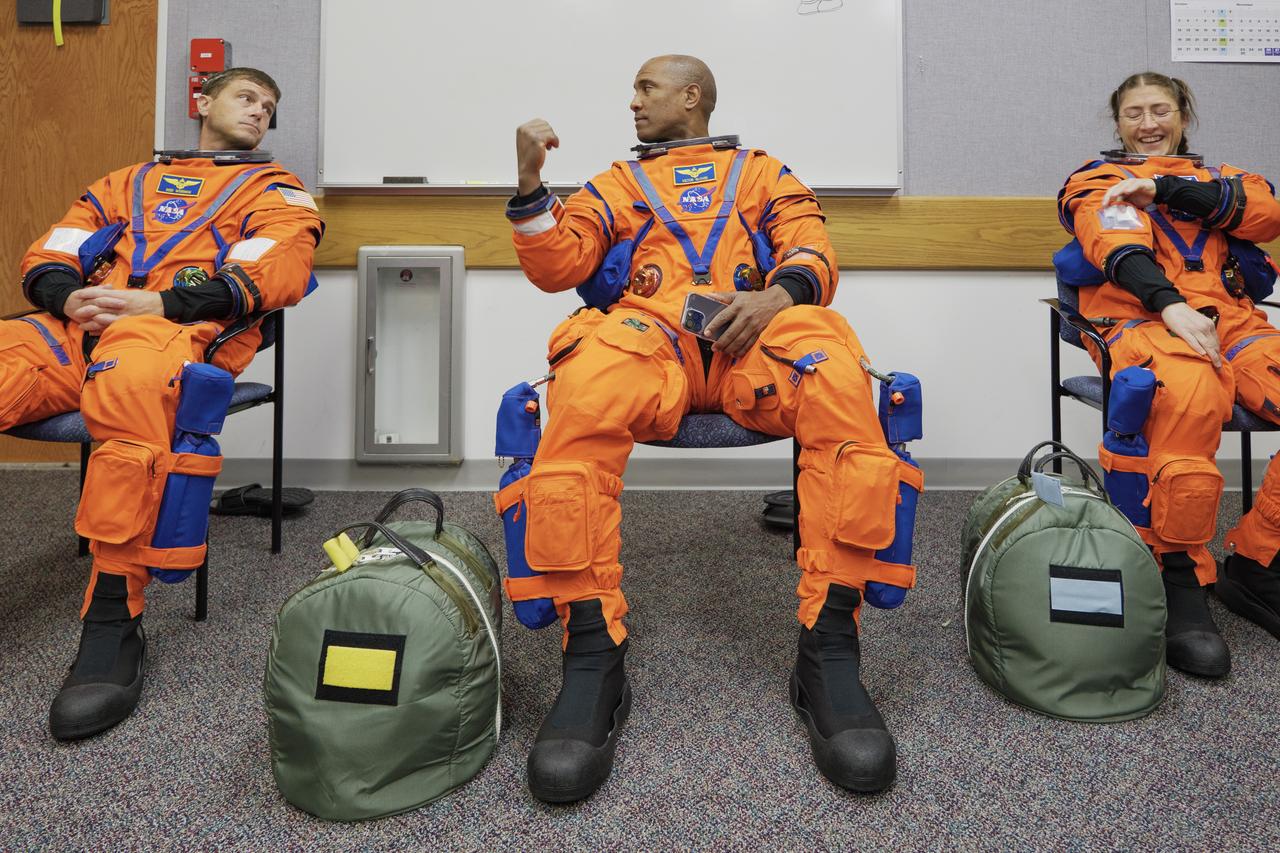
From left, NASA astronauts Reid Wiseman, Artemis II commander; Victor Glover, Artemis II pilot; and Christina Koch, mission specialist, participate in a suited crew test on Thursday, July 31, 2025, at the agency’s Kennedy Space Center in Florida. Along with CSA (Canadian Space Agency) astronaut Jeremy Hansen, mission specialist, the crew of NASA’s Artemis II mission donned their Orion crew survival system spacesuits for training at NASA’s Kennedy’s Multi-Payload Processing Facility, where they entered their fully powered Orion spacecraft as part of the test. Artemis II will take the four astronauts around the Moon, as the first crewed mission on NASA’s path to establishing a long-term presence for science and exploration through Artemis.
Technicans inside Kennedy's Multi-Payload Processing Facility do testing in SCAPE (Self-Contained Atmospheric Protective Ensemble) suits.
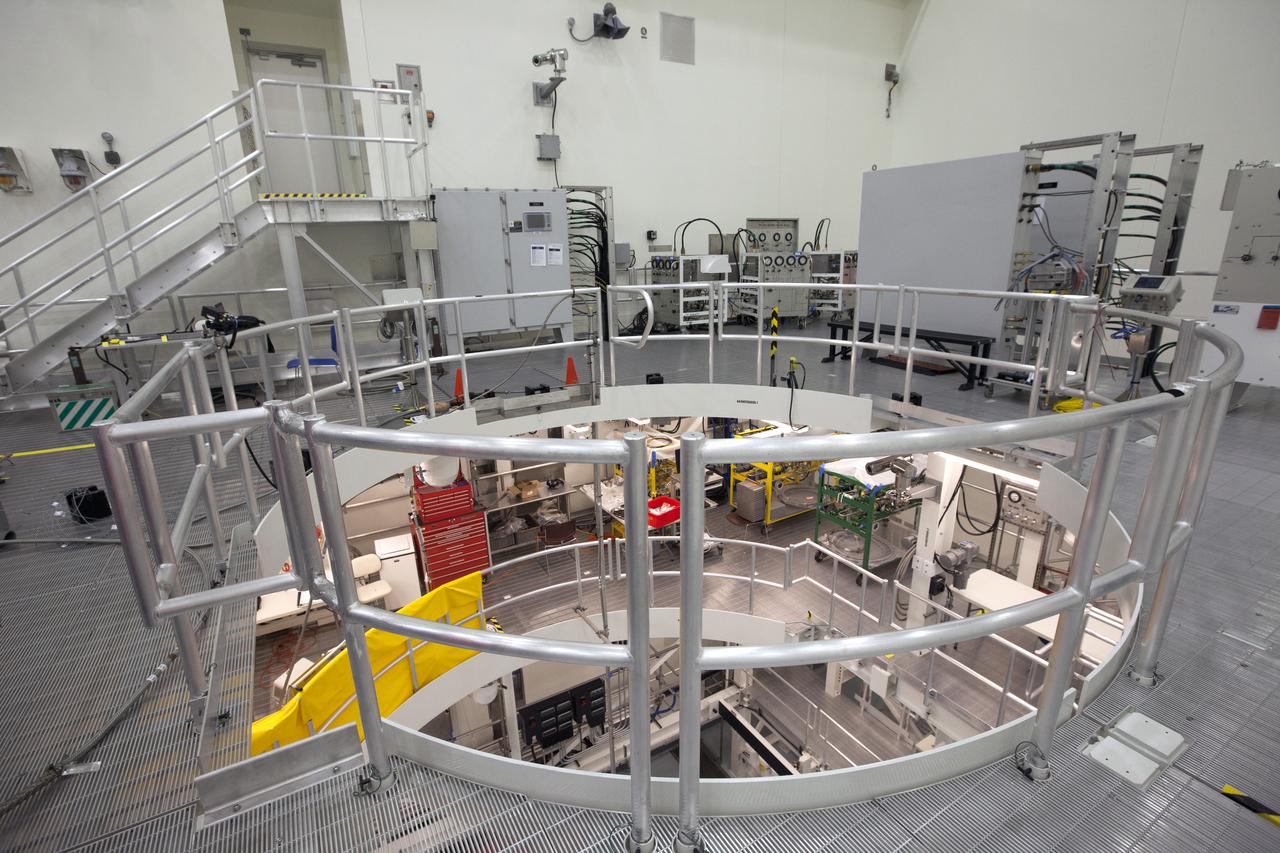
Engineers and technicians completed verification and validation testing of several pneumatic systems inside and outside the Multi-Payload Processing Facility (MPPF) at NASA's Kennedy Space Center in Florida. In view is the top level of the service platform for Orion spacecraft processing. The MPPF will be used for offline processing and fueling of the Orion spacecraft and service module stack before launch. Orion also will be de-serviced in the MPPF after a mission. The Ground Systems Development and Operations Program (GSDO) is overseeing upgrades to the facility. The Engineering Directorate led the recent pneumatic tests.
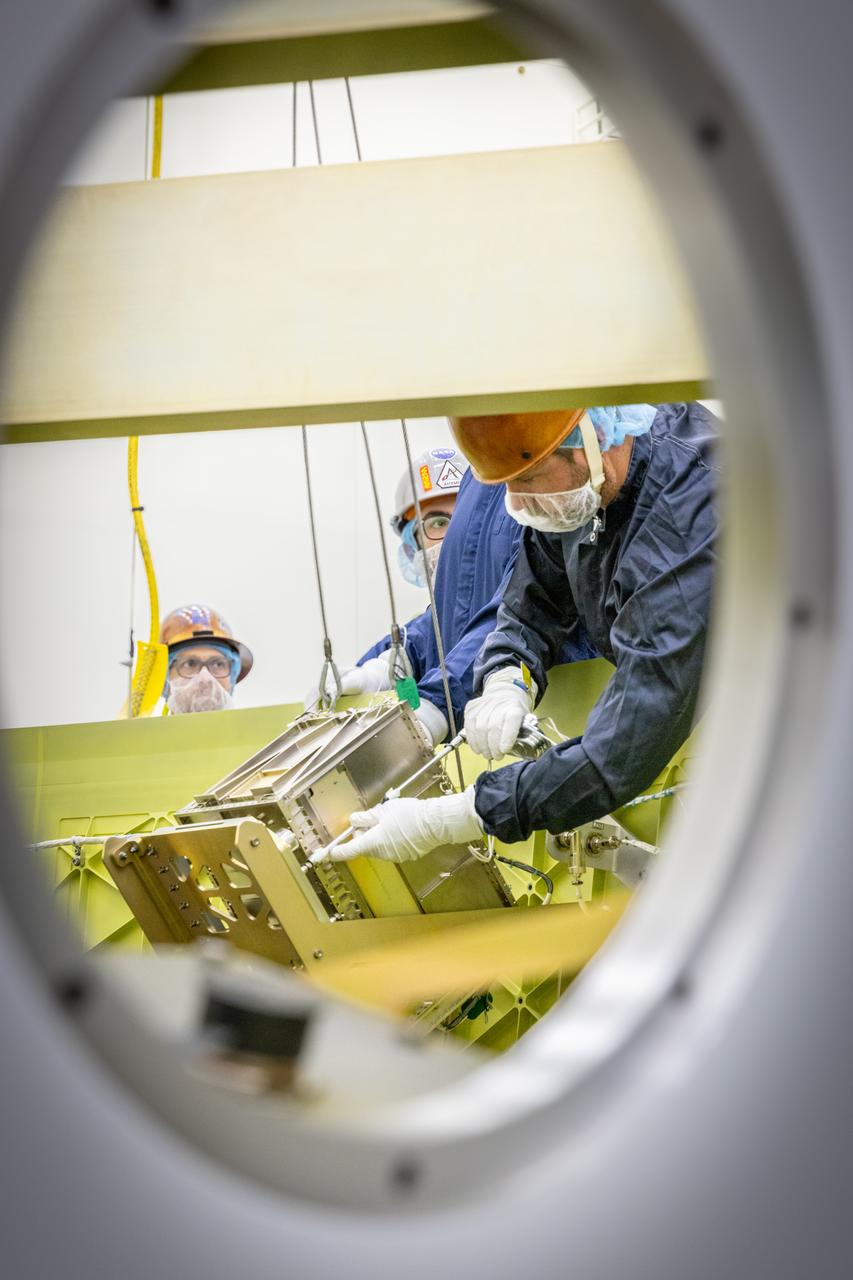
Technicians install the Korea AeroSpace Administration (KASA) K-Rad Cube within the Orion stage adapter inside the Multi-Payload Processing Facility at NASA’s Kennedy Space Center in Florida on Tuesday, Sept. 2, 2025. The K-Rad Cube, about the size of a shoebox, is one of the CubeSats slated to fly on NASA’s Artemis II test flight in 2026. Deploying in high Earth orbit from a spacecraft adapter on NASA’s SLS (Space Launch System) rocket after Orion is safely flying on its own with its crew of four astronauts, K-Rad Cube will use a dosimeter made of material designed to mimic human tissue to measure space radiation and assess biological effects at various altitudes across the Van Allen radiation belts, a critical area of research for human presence at the Moon and Mars.

NASA’s Artemis II Orion spacecraft arrives at the Multi-Payload Processing Facility at Kennedy Space Center in Florida on Saturday, May 3, 2025, to undergo fueling and processing operations for prelaunch operations. The Artemis II test flight is the first crewed flight under NASA’s Artemis campaign and is another step toward missions on the lunar surface and helping the agency prepare for future human missions to Mars.
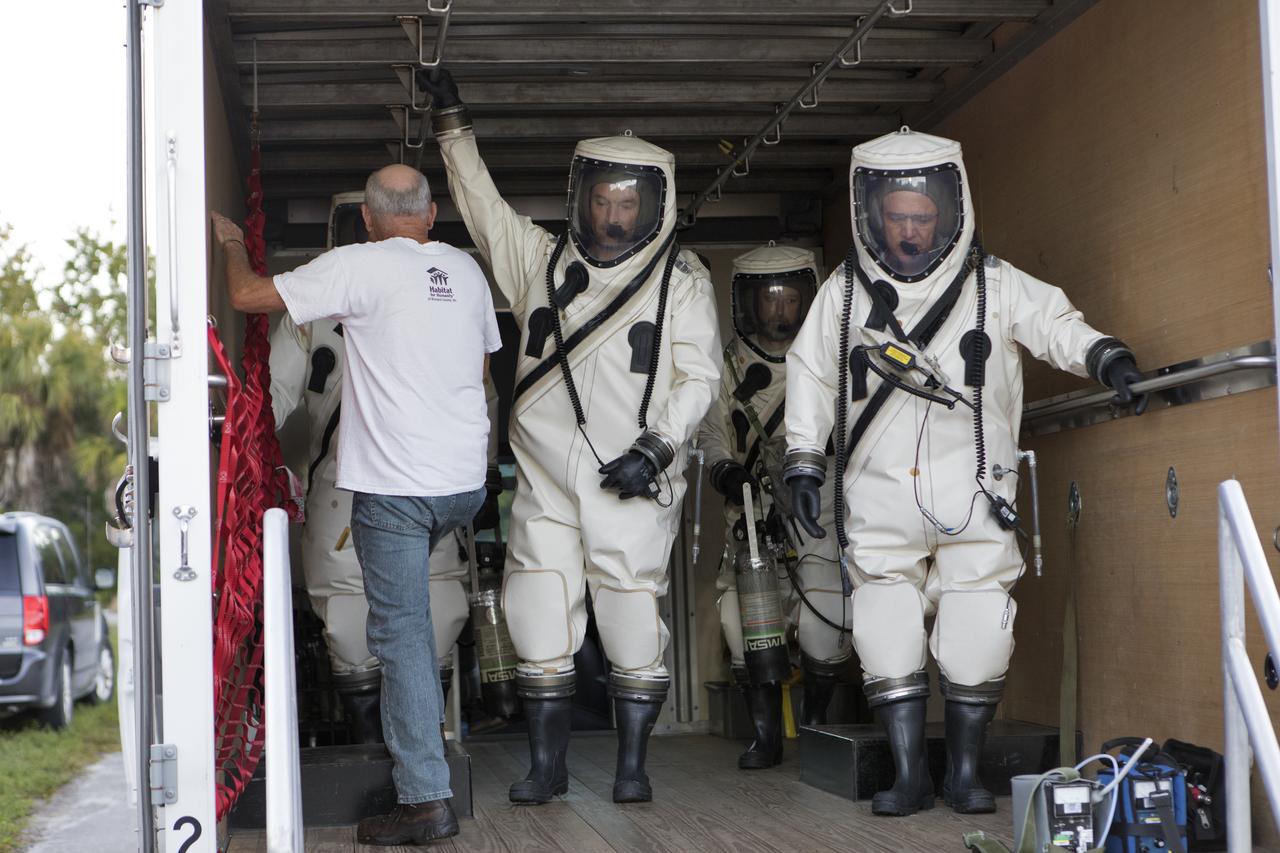
Technicans inside Kennedy's Multi-Payload Processing Facility do testing in SCAPE (Self-Contained Atmospheric Protective Ensemble) suits.
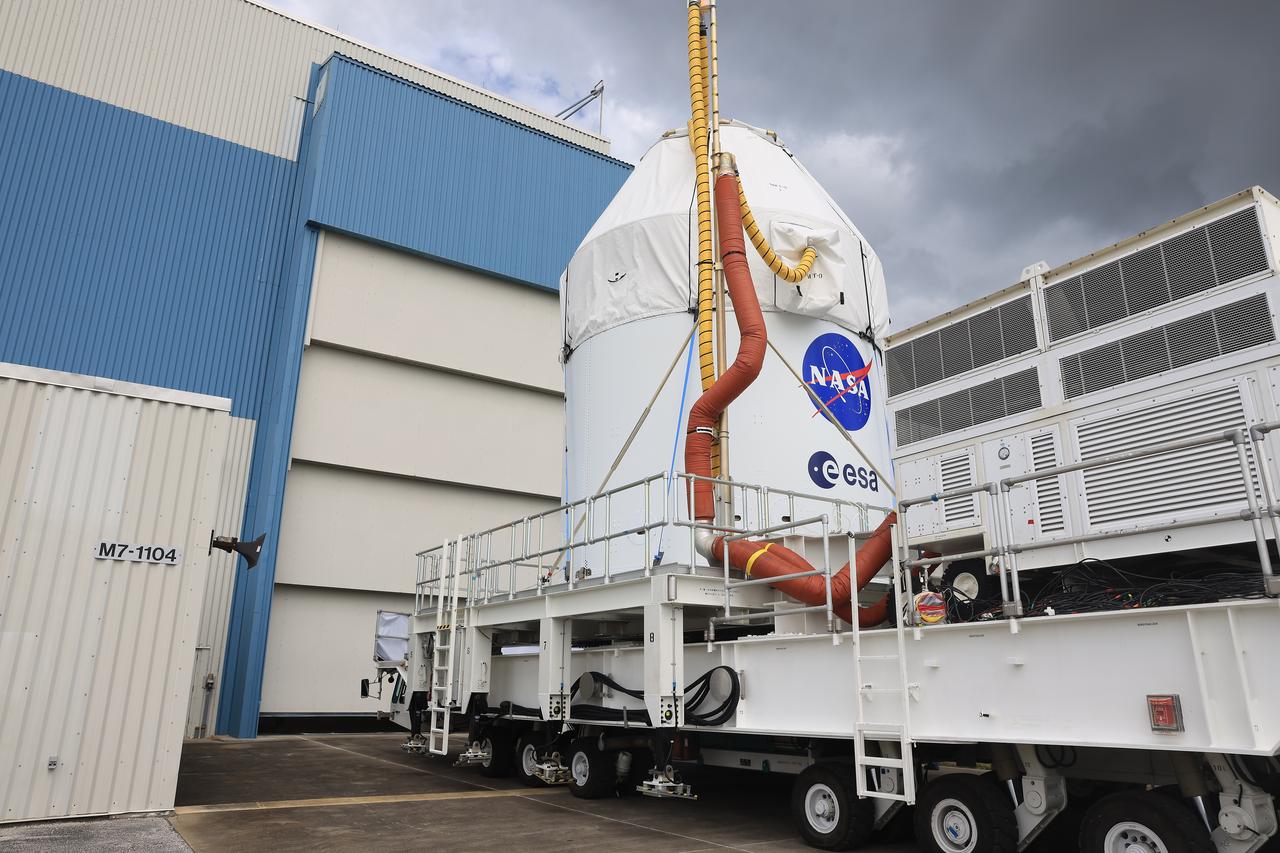
NASA’s Artemis II Orion spacecraft arrives at the Multi-Payload Processing Facility at Kennedy Space Center in Florida on Saturday, May 3, 2025, to undergo fueling and processing operations for prelaunch operations. The Artemis II test flight is the first crewed flight under NASA’s Artemis campaign and is another step toward missions on the lunar surface and helping the agency prepare for future human missions to Mars.
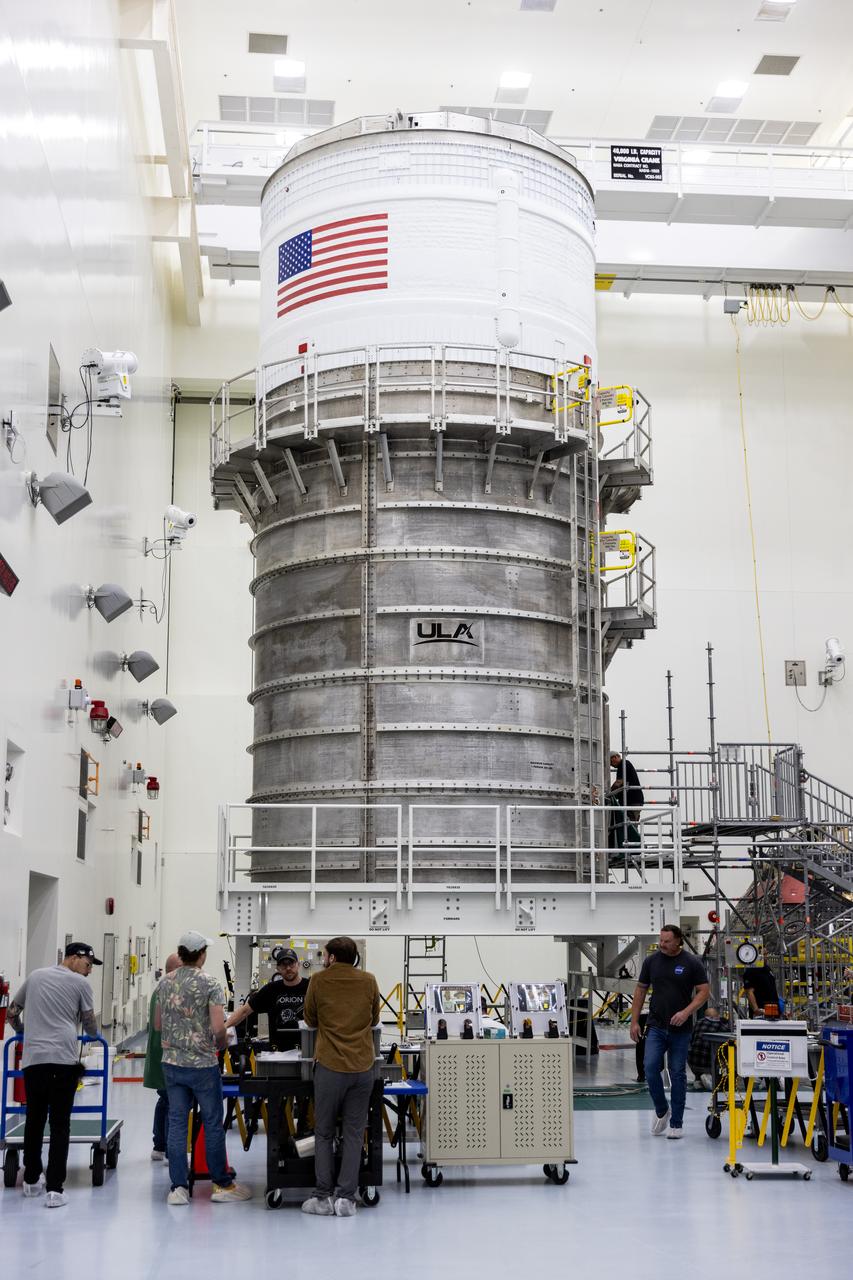
The upper stage for NASA’s SLS (Space Launch System) Moon rocket that will power the agency’s Artemis II mission and send astronauts around the Moon is shown inside the Multi-Payload Processing Facility at NASA’s Kennedy Space Center in Florida on Monday, March 10, 2025, after being transported from United Launch Alliance’s Delta Operations Center at nearby Cape Canaveral Space Force Station. The interim cryogenic propulsion stage is a liquid oxygen and liquid hydrogen-based system that will fire its RL10 engine to give the Orion spacecraft the big in-space push needed to fly around the Moon and back.
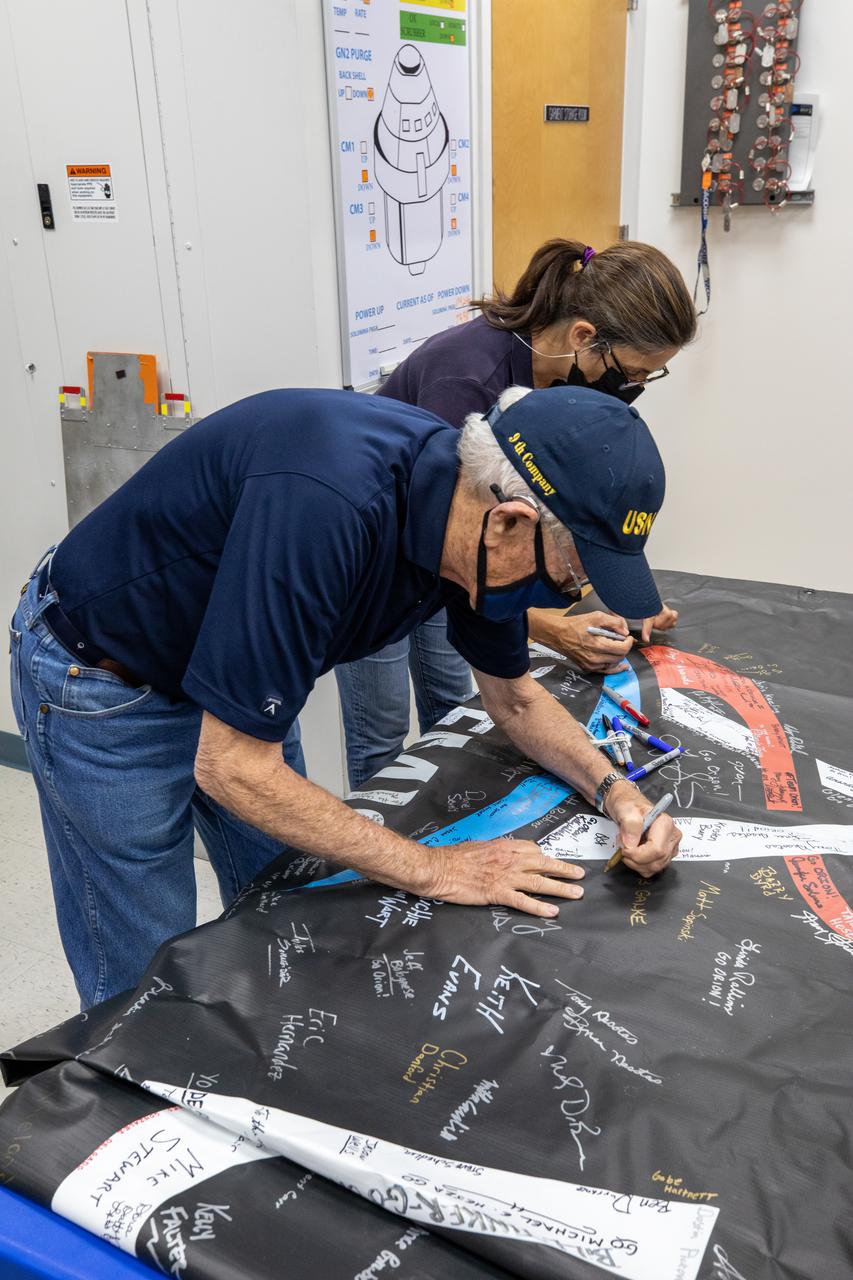
Charlie Duke, NASA Astronaut (former), and Nicole Stott, NASA Astronaut (former), add their signatures to the Artemis “We Are Going” banner inside the Multi-Payload Processing Facility (MPPF) during a visit to NASA’s Kennedy Space Center in Florida on May 10, 2021. During their time at Kennedy, they also had the opportunity to view the Orion spacecraft and Interim Cryogenic Propulsion Stage currently being serviced inside the MPPF ahead of the Artemis I launch. The first in a series of increasingly complex missions, Artemis I will test Orion and the Space Launch System rocket as an integrated system prior to crewed flights to the Moon.

NASA’s Orion spacecraft for the agency’s Artemis II mission arrives at the NASA’s Kennedy Space Cen-ter Multi Payload Processing Facility in Florida on Thursday, April 30, 2026, for de-servicing operations on the spacecraft. The Orion spacecraft successfully splashed down on Friday April 10, 2026, in the Pacific Ocean following its approximate 10-day journey around the Moon carrying NASA astronauts Reid Wiseman, Victor Glover, and Christina Koch, and CSA (Canadian Space Agency) astronaut Jeremy Hansen. As part of a Golden Age of innovation and exploration, Artemis II marked another step toward new U.S.-crewed missions on the Moon’s surface that will help the agency prepare to send the first astronauts – Americans – to Mars.
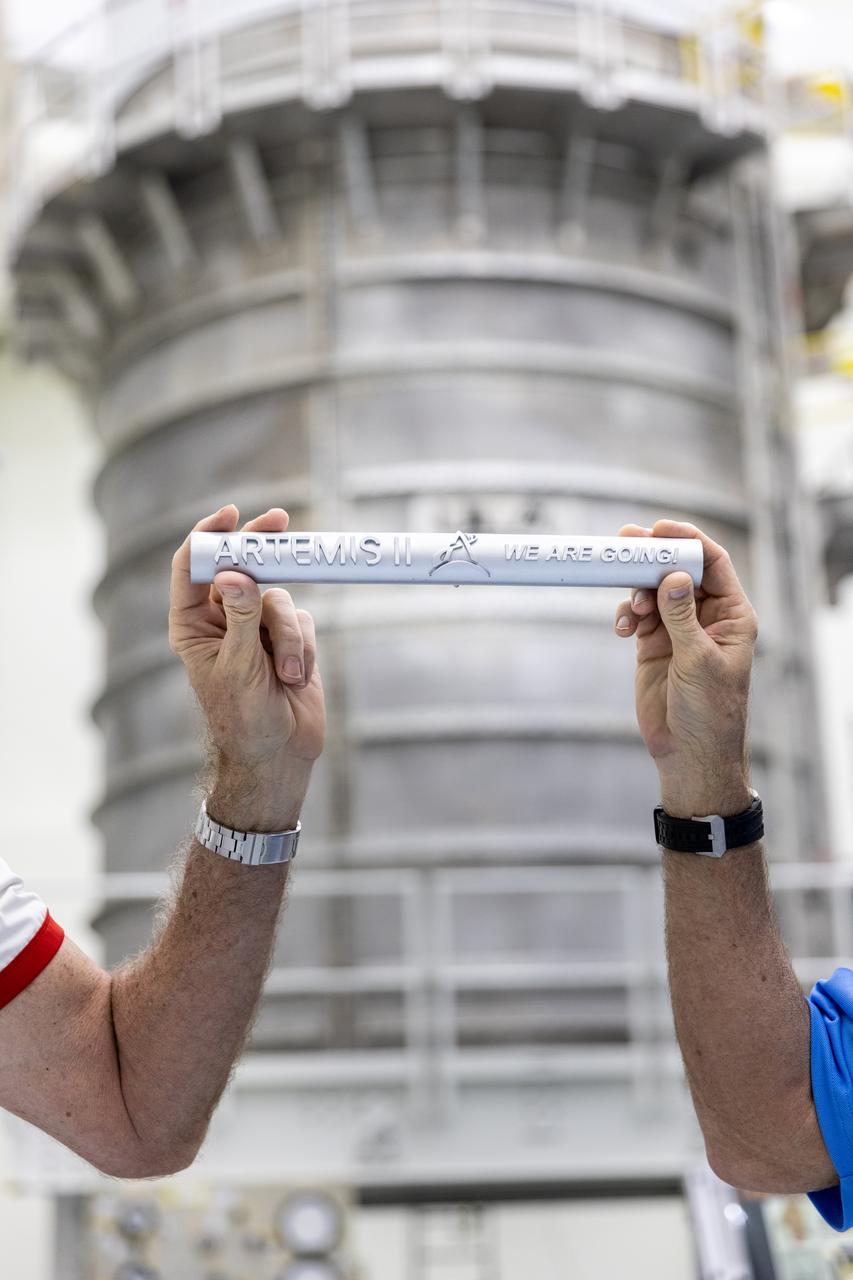
Managers from NASA’s Exploration Ground Systems (EGS) and SLS (Space Launch System) Programs hold a baton signifying the hand off of the SLS interim cryogenic propulsion stage to Kennedy’s EGS Program inside the Multi-Payload Processing Facility at NASA’s Kennedy Space Center in Florida on Monday, March 10, 2025, after being transported from United Launch Alliance’s Delta Operations Center at nearby Cape Canaveral Space Force Station. Teams with EGS will begin fueling the upper stage inside the facility ahead of the agency’s Artemis II mission. The interim cryogenic propulsion stage is a liquid oxygen and liquid hydrogen-based system that will fire its RL10 engine to give the Orion spacecraft the big in-space push needed to fly around the Moon and back.
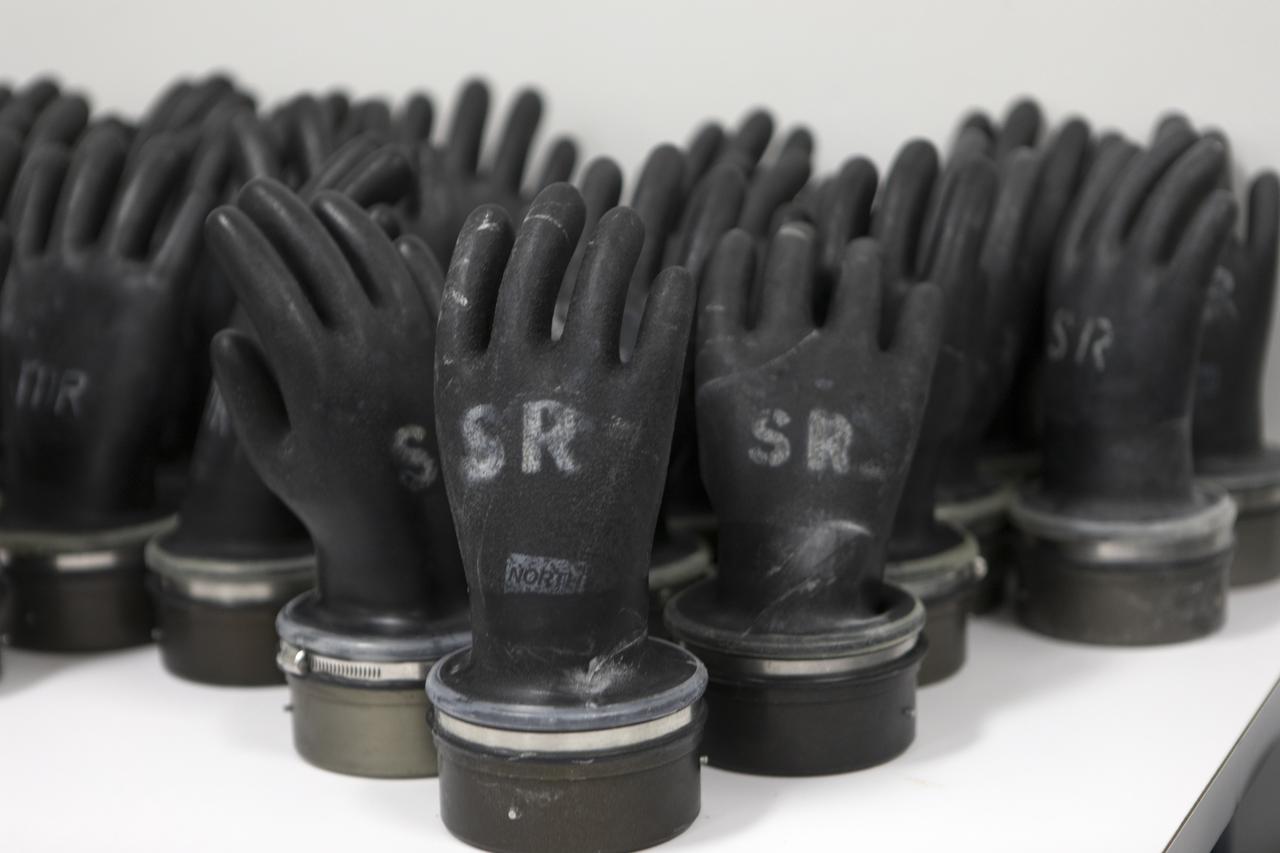
Technicans inside Kennedy's Multi-Payload Processing Facility do testing in SCAPE (Self-Contained Atmospheric Protective Ensemble) suits.
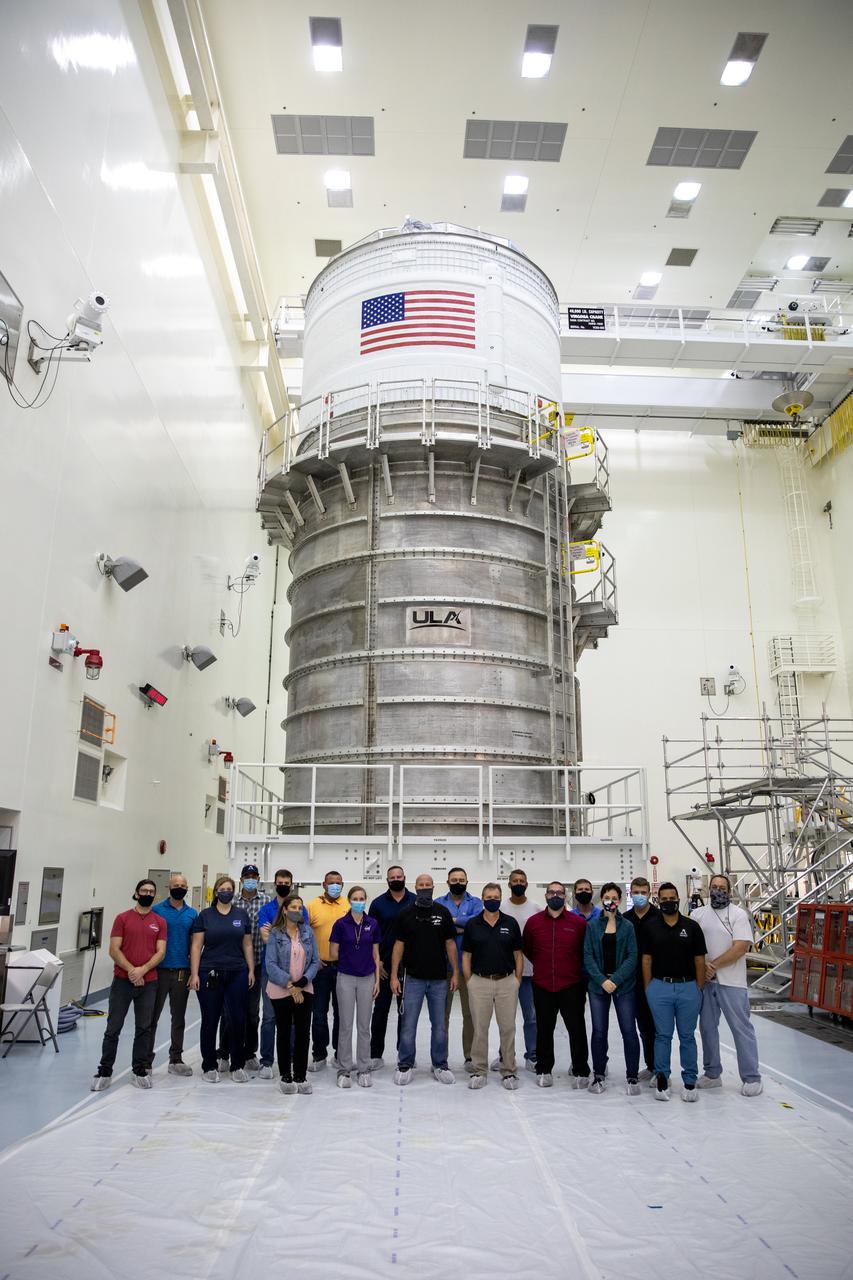
The Space Launch System (SLS) rocket’s interim cryogenic propulsion stage (ICPS) moved into the Multi-Payload Processing Facility February 18, 2021, at NASA’s Kennedy Space Center in Florida for the Artemis I mission. It will undergo fueling and servicing in the facility ahead of launch by teams from NASA’s Exploration Ground Systems and their primary contractor, Jacobs Technology. Artemis I will be an integrated flight test of the SLS rocket and Orion spacecraft ahead of the crewed flights to the Moon. Under the Artemis program, NASA will land the first woman and the next man on the lunar surface and establish a sustainable presence at the Moon to prepare for human missions to Mars.
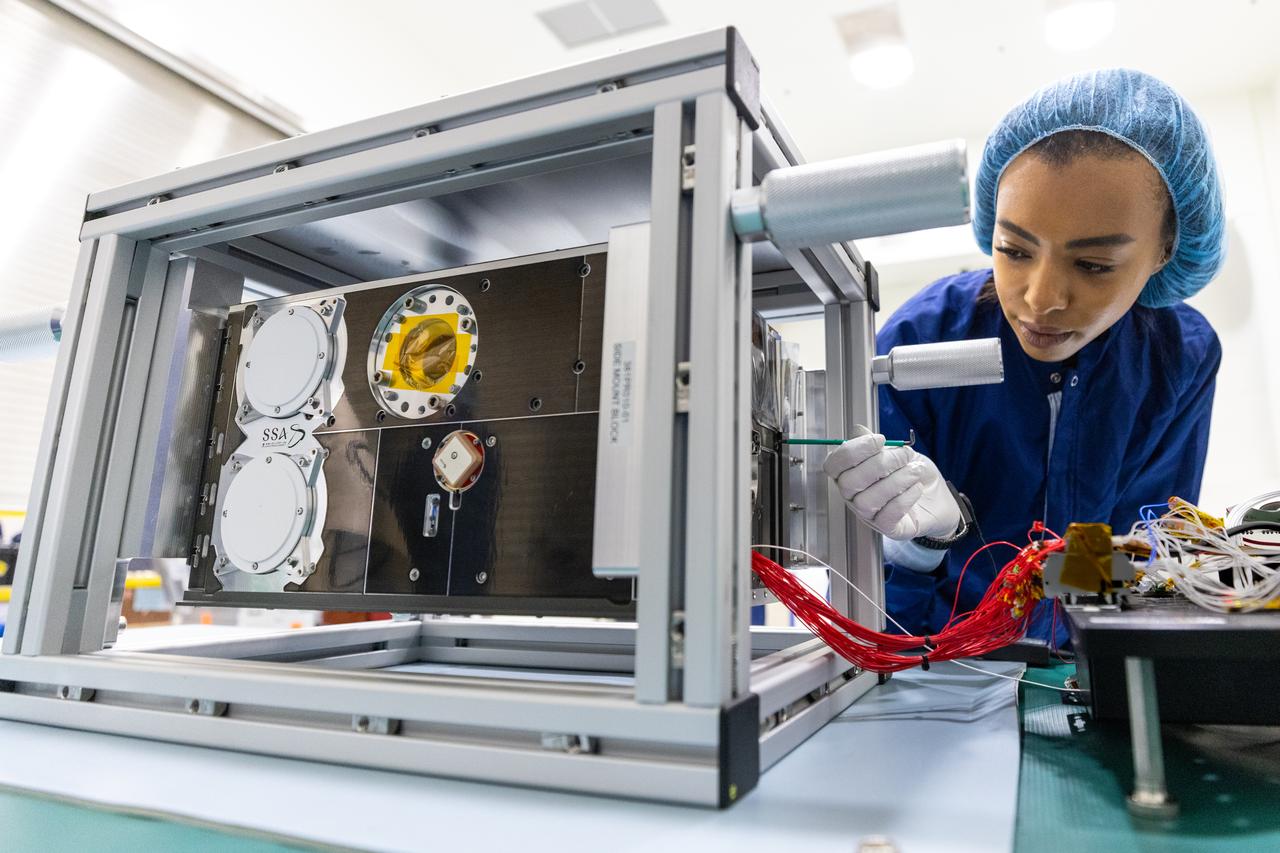
Inside the Multi-Payload Processing Facility at NASA’s Kennedy Space Center in Florida, on Tuesday, Aug. 26, 2025, a technician inspects the Saudi Space Agency’s Space Weather CubeSat, one of several international CubeSats slated to fly on NASA’s Artemis II test flight in 2026. Deploying in high Earth orbit from a spacecraft adapter on NASA’s SLS (Space Launch System) rocket after Orion is safely flying on its own with its crew of four astronauts, the CubeSat will measure aspects of space weather – space radiation, solar X-rays, solar energetic particles, and magnetic fields – at a range of distances from Earth.
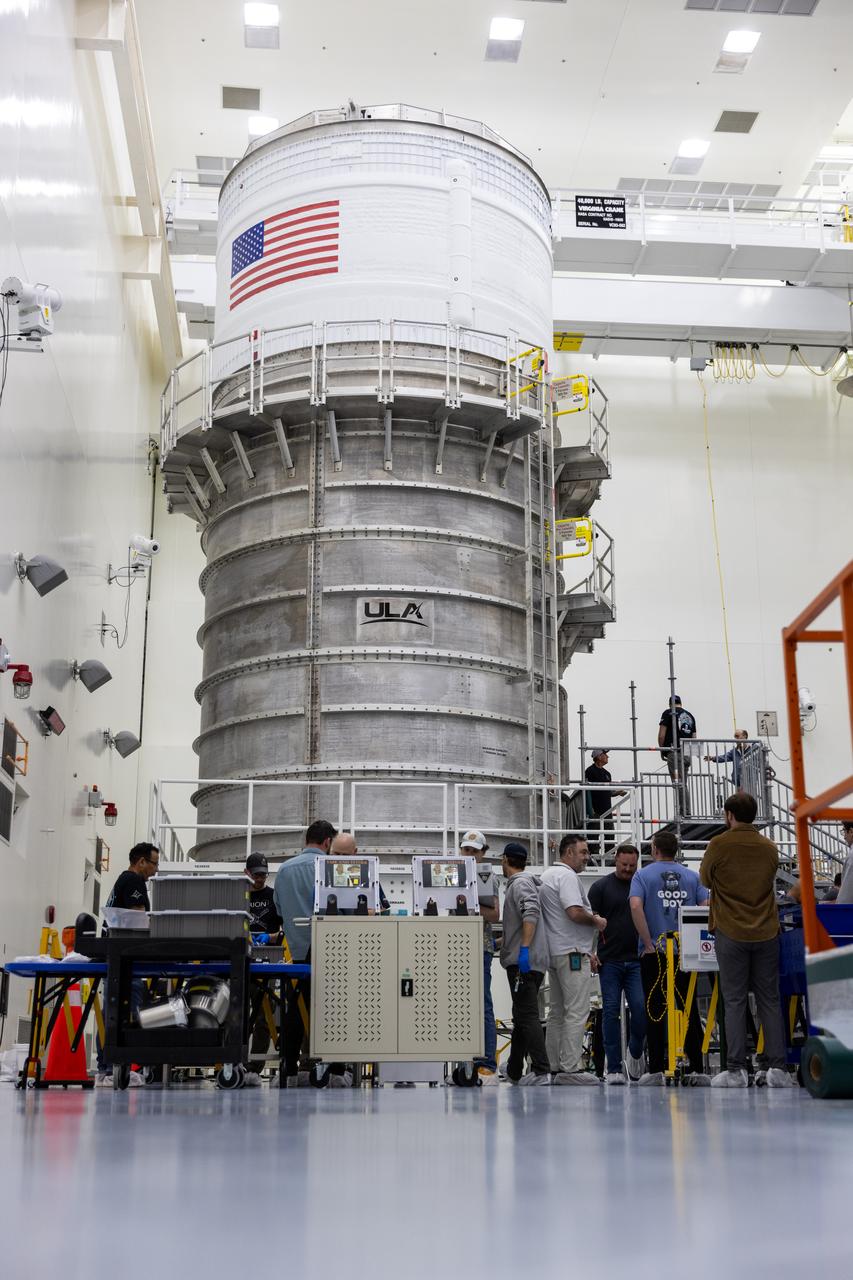
The upper stage for NASA’s SLS (Space Launch System) Moon rocket that will power the agency’s Artemis II mission and send astronauts around the Moon is shown inside the Multi-Payload Processing Facility at NASA’s Kennedy Space Center in Florida on Monday, March 10, 2025, after being transported from United Launch Alliance’s Delta Operations Center at nearby Cape Canaveral Space Force Station. The interim cryogenic propulsion stage is a liquid oxygen and liquid hydrogen-based system that will fire its RL10 engine to give the Orion spacecraft the big in-space push needed to fly around the Moon and back.
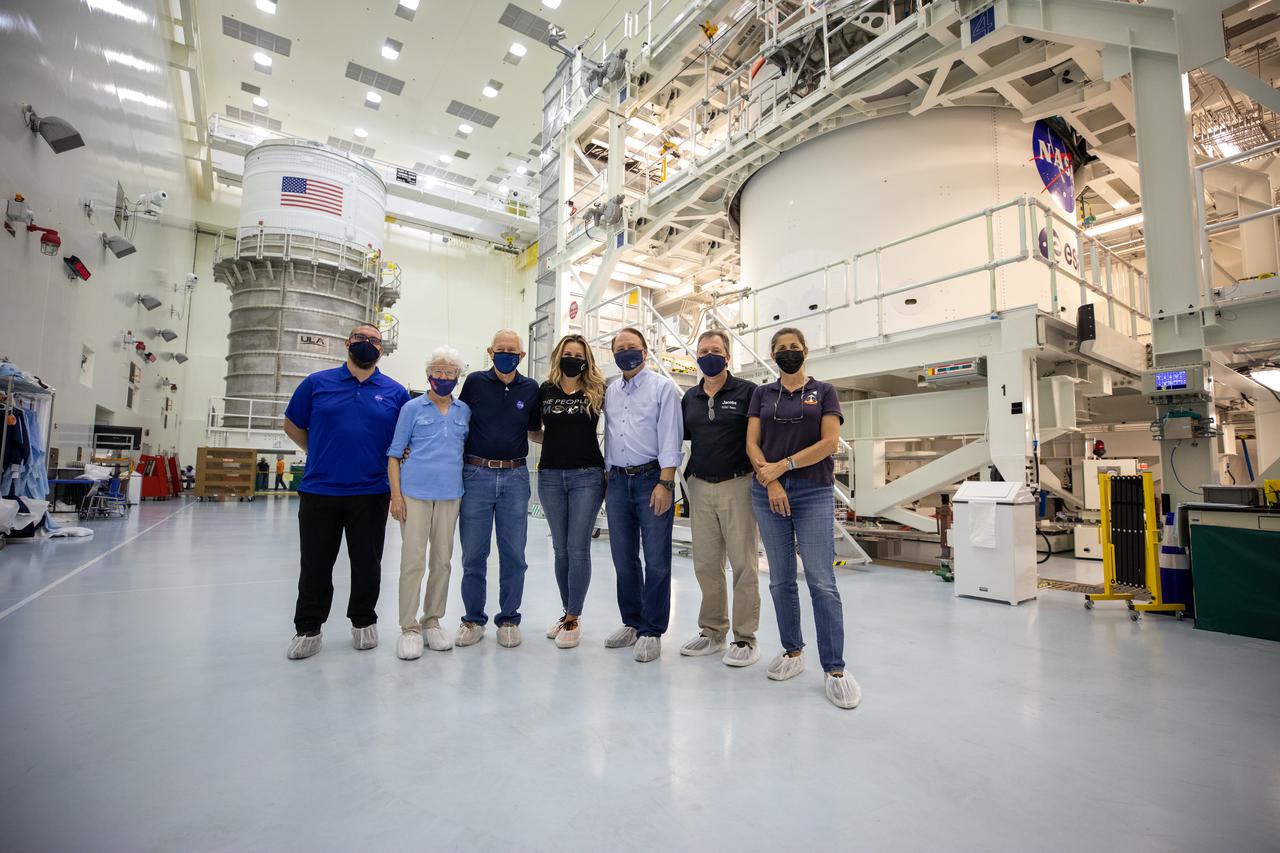
From left to right, Adam Leppek, ARES Corporation (KLXSIII), Deputy Element Operations Manager; Dottie Duke, wife of Charlie Duke; Charlie Duke, NASA Astronaut (former); Christina Korp, Assistant to Charlie Duke; Jim Keys, Pilot; Nick Kindred, Jacobs Technology, Flow Manager; and Nicole Stott, NASA Astronaut (former), shown in the Multi-Payload Processing Facility (MPPF) at NASA's Kennedy Space Center in Florida on May 10, 2021. In the background, on the left, is the Interim Cryogenic Propulsion Stage for the Space Launch System (SLS) rocket. On the right, the NASA “meatball” insignia and ESA (European Space Agency) logos on the European-built service module are visible. Both pieces of hardware will undergo fueling and servicing in the facility ahead of the Artemis I launch by teams from NASA’s Exploration Ground Systems and their primary contractor, Jacobs Technology. The first in a series of increasingly complex missions, Artemis I will test Orion and the Space Launch System rocket as an integrated system prior to crewed flights to the Moon.
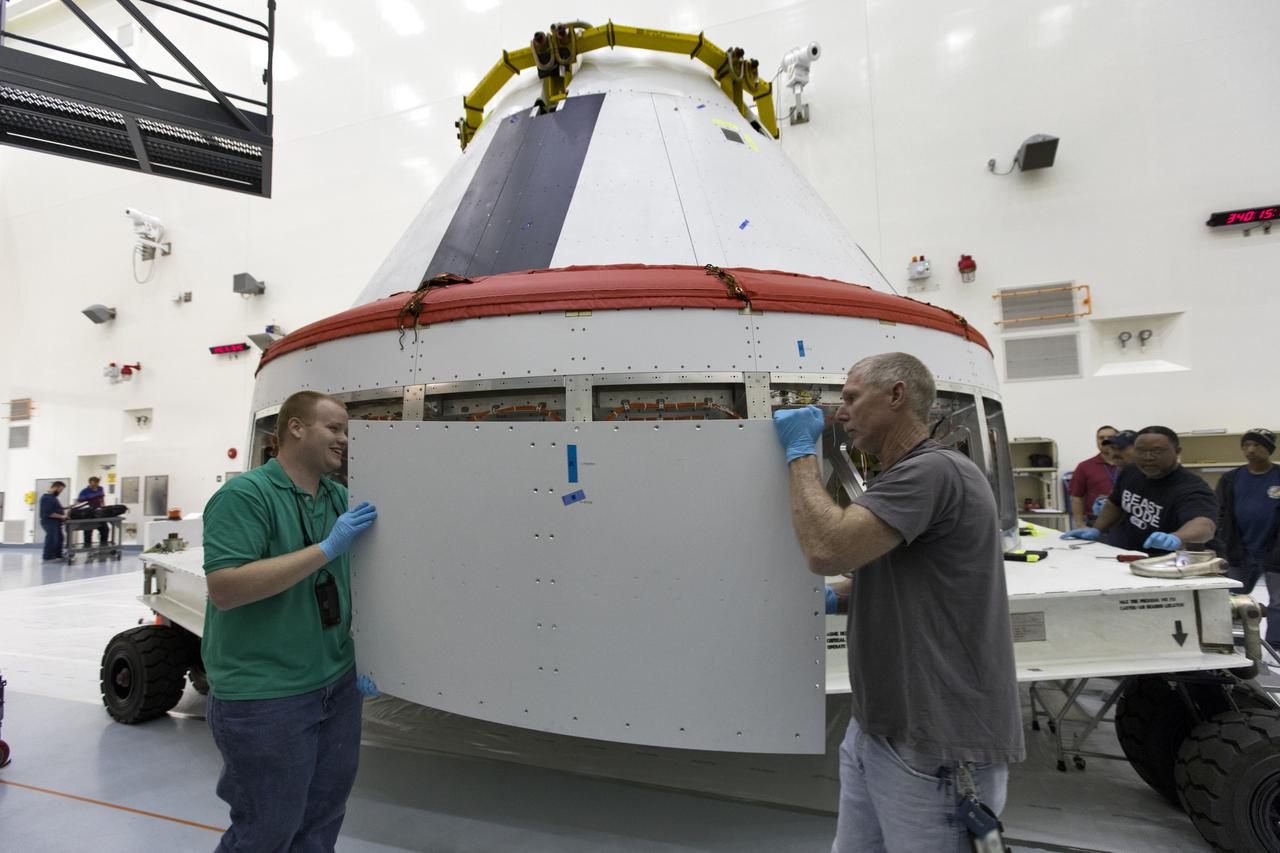
Workers remove cover plates from a mock Orion crew module inside the Multi-Payload Processing Facility at NASA’s Kennedy Space Center in Florida on Dec. 6, 2018. The crew module will be used during a full stress test of the Launch Abort System (LAS), called Ascent Abort-2 (AA-2), scheduled for April 2019. During the test, the Northrop Grumman booster will launch from Space Launch Complex 46, carrying a fully functional LAS and the 22,000-pound Orion test vehicle to an altitude of 31,000 feet and traveling at more than 1,000 miles an hour. The test will verify the LAS can steer the crew module and astronauts aboard to safety in the event of an issue with the Space Launch System (SLS) rocket when the spacecraft is under the highest aerodynamic loads it will experience during a rapid climb into space.

This close-up photograph shows NASA’s Orion spacecraft inside the agency’s Kennedy Space Center Multi-Payload Processing Facility in Florida on Thursday, April 30, 2026, for de-servicing operations on the spacecraft. The Orion spacecraft successfully splashed down on Friday, April 10, 2026, in the Pacific Ocean following its approximate 10-day journey around the Moon carrying NASA astronauts Reid Wiseman, Victor Glover, and Christina Koch, and CSA (Canadian Space Agency) astronaut Jeremy Hansen for the Artemis II test flight mission. During reentry, the Orion spacecraft hits Earth’s atmosphere at 25,000 mph.
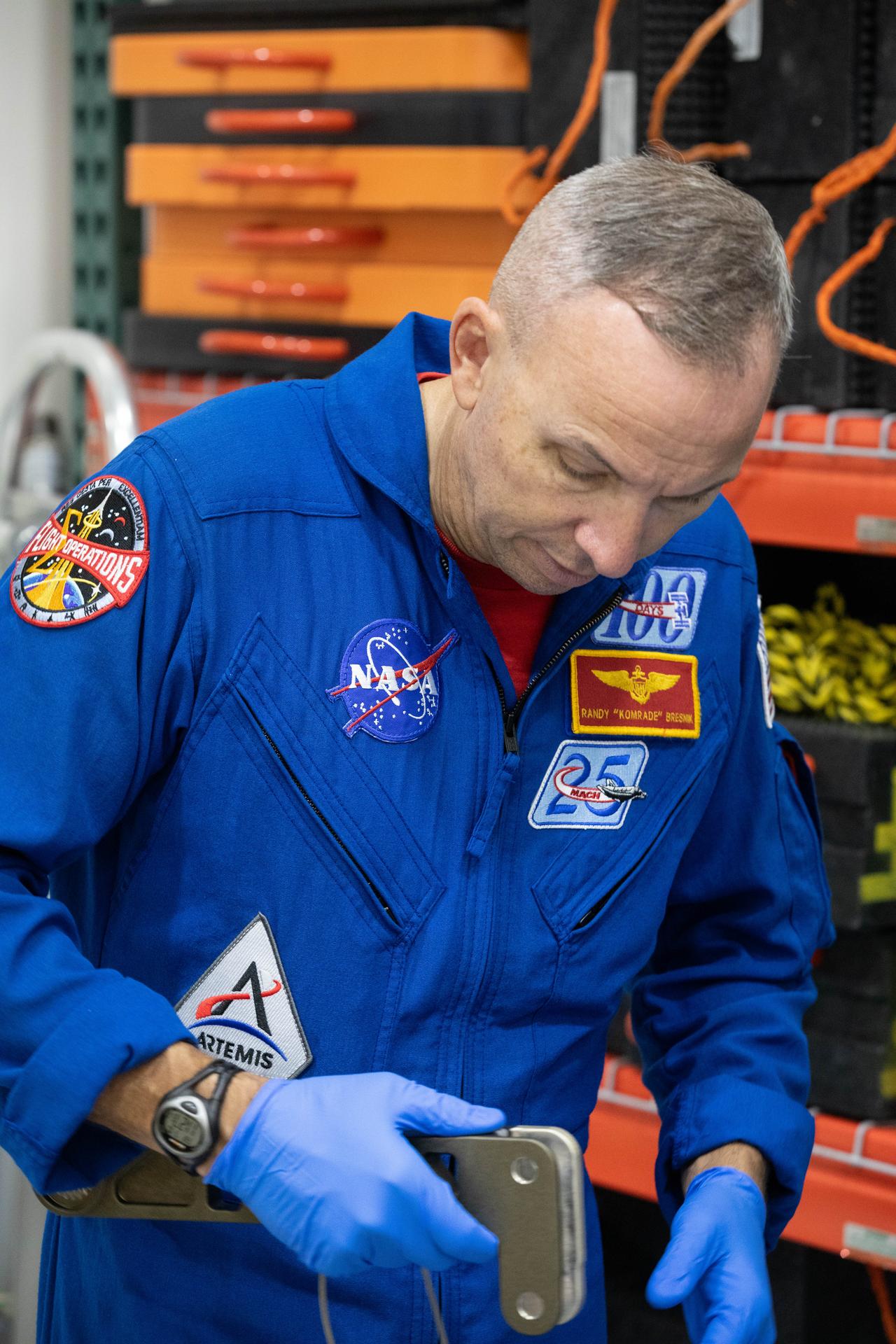
Artemis III crew members, NASA astronaut Randy Bresnick gets a close look at Orion spacecraft hardware inside the Multi-Payload Processing Facility at NASA’s Kennedy Space Center in Florida on Friday, July 10, 2026. Bresnick, along with fellow crewmate NASA astronaut Andre Douglas visited NASA Kennedy as part of preparations for their upcoming mission. Bresnick, Douglas, NASA astronaut Frank Rubio, and ESA (European Space Agency) astronaut Luca Parmitano will launch aboard Orion on the Artemis III mission to conduct critical rendezvous and docking tests with lunar lander systems in low Earth orbit, advancing the capabilities needed before astronauts return to the lunar surface on Artemis IV.
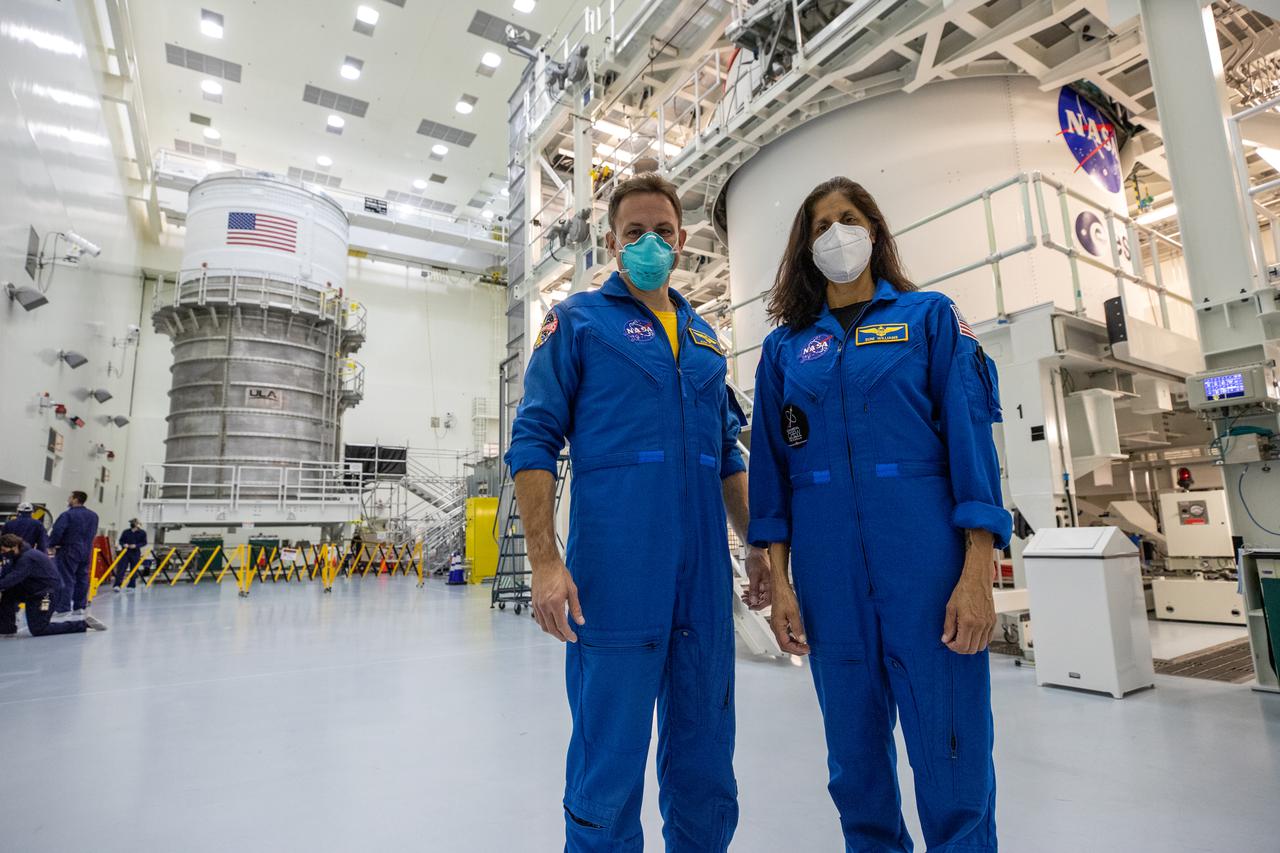
NASA astronauts Josh Cassada, left, and Sunita “Suni” Williams pause for a photo during a tour of the Multi-Payload Processing Facility (MPPF) at NASA’s Kennedy Space Center in Florida on April 6, 2021. In the background to the left is the Interim Cryogenic Propulsion Stage for the Space Launch System (SLS) rocket, and to the right is the European-built service module, topped with the crew module. During their time at Kennedy, Cassada and Williams also had the opportunity to view the Orion spacecraft – this also being serviced inside the MPPF ahead of the Artemis I launch. The first in a series of increasingly complex missions, Artemis I will test Orion and SLS as an integrated system prior to crewed flights to the Moon.
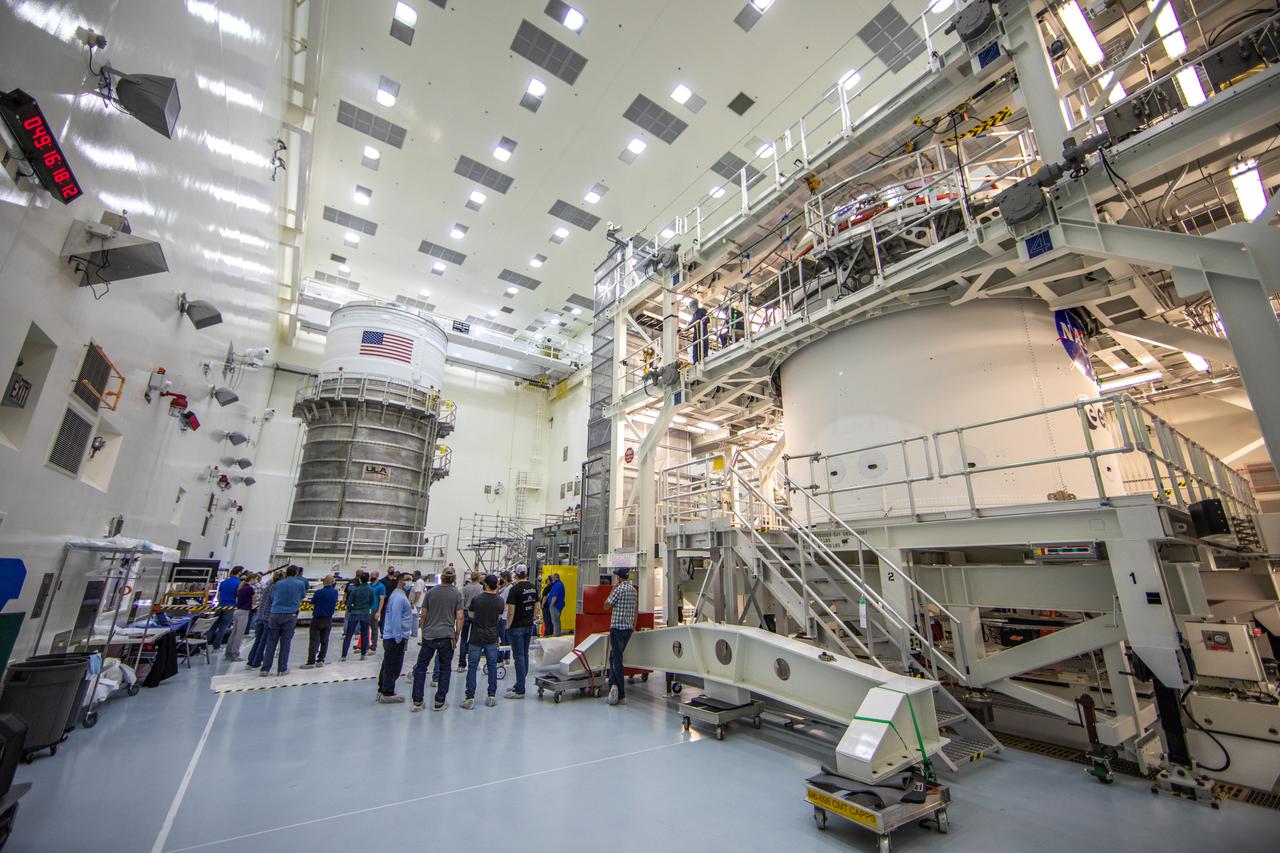
The Space Launch System (SLS) rocket’s interim cryogenic propulsion stage (ICPS) moved into the Multi-Payload Processing Facility February 18, 2021, at NASA’s Kennedy Space Center in Florida for the Artemis I mission. It will undergo fueling and servicing in the facility ahead of launch by teams from NASA’s Exploration Ground Systems and their primary contractor, Jacobs Technology. Artemis I will be an integrated flight test of the SLS rocket and Orion spacecraft ahead of the crewed flights to the Moon. Under the Artemis program, NASA will land the first woman and the next man on the lunar surface and establish a sustainable presence at the Moon to prepare for human missions to Mars.
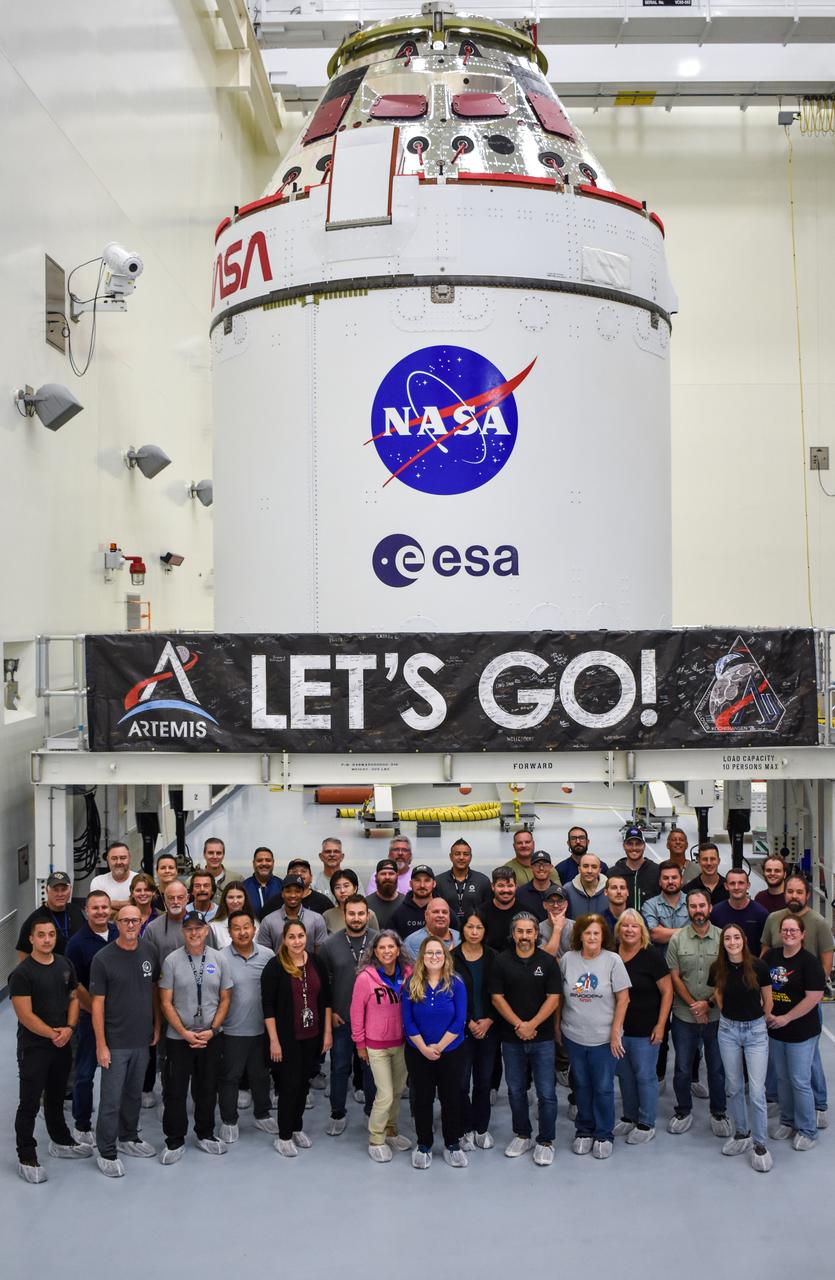
NASA engineers and technicians pose for a photograph in front of the agency’s Artemis II Orion spacecraft on Thursday, Aug. 7, 2025, inside the Multi-Payload Processing Facility (MPPF) at NASA’s Kennedy Space Center in Florida. Orion arrived at the MPPF in early May for fueling and processing and will next head to the spaceport’s Launch Abort System Facility to be integrated with its 44-foot-tall launch abort system. Once integration is complete, the stack will be transported to High Bay 3 inside NASA Kennedy’s Vehicle Assembly Building and integrated with the SLS (Space Launch System) rocket that will launch NASA’s Artemis II astronauts Reid Wiseman, Victor Glover, and Christina Koch, and CSA (Canadian Space Agency) astronaut Jeremy Hansen around the Moon and back.
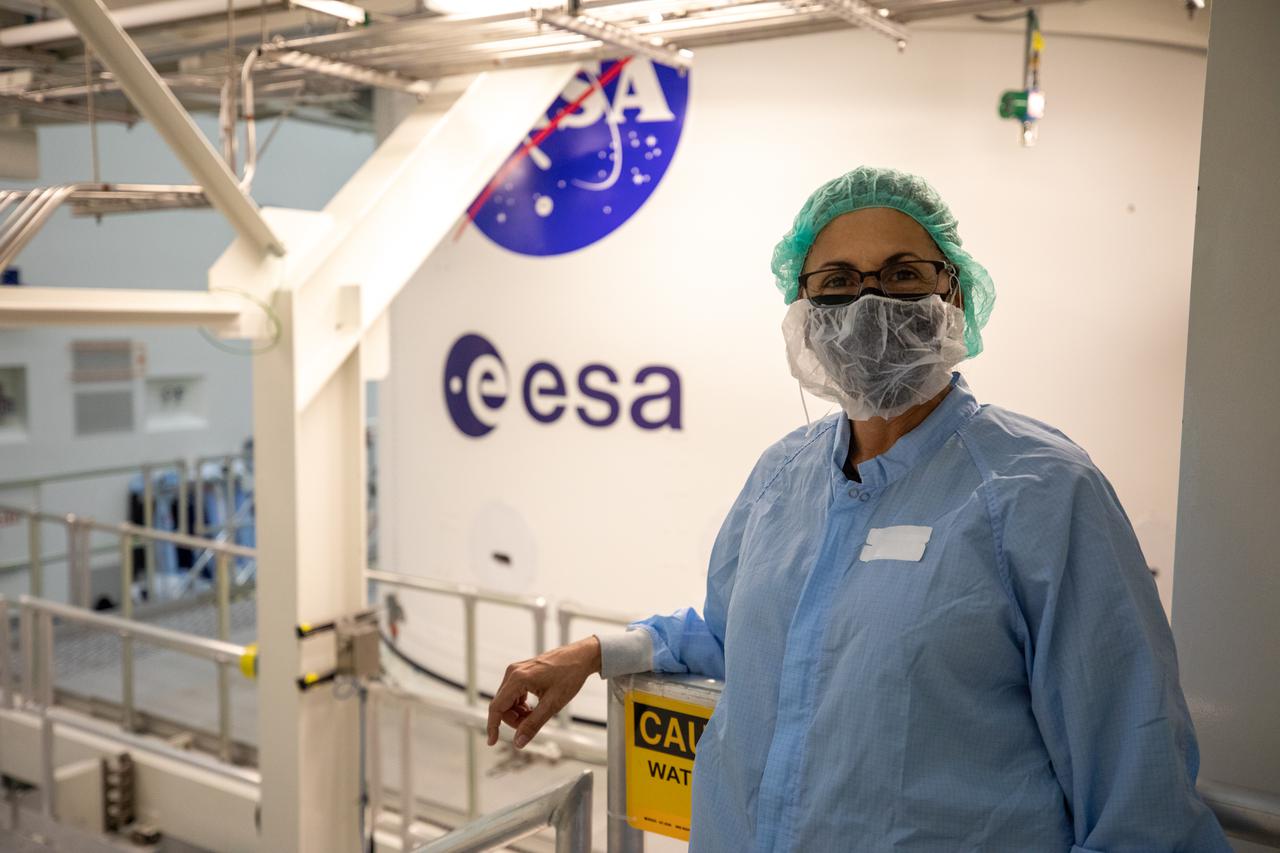
Nicole Stott, NASA Astronaut (former), shown next to the NASA “meatball” and European Space Agency insignias on the European-built service module for the Orion spacecraft, inside the Multi-Payload Processing Facility (MPPF) during a visit to NASA’s Kennedy Space Center in Florida on May 10, 2021. The first in a series of increasingly complex missions, Artemis I will test Orion and the Space Launch System rocket as an integrated system prior to crewed flights to the Moon.
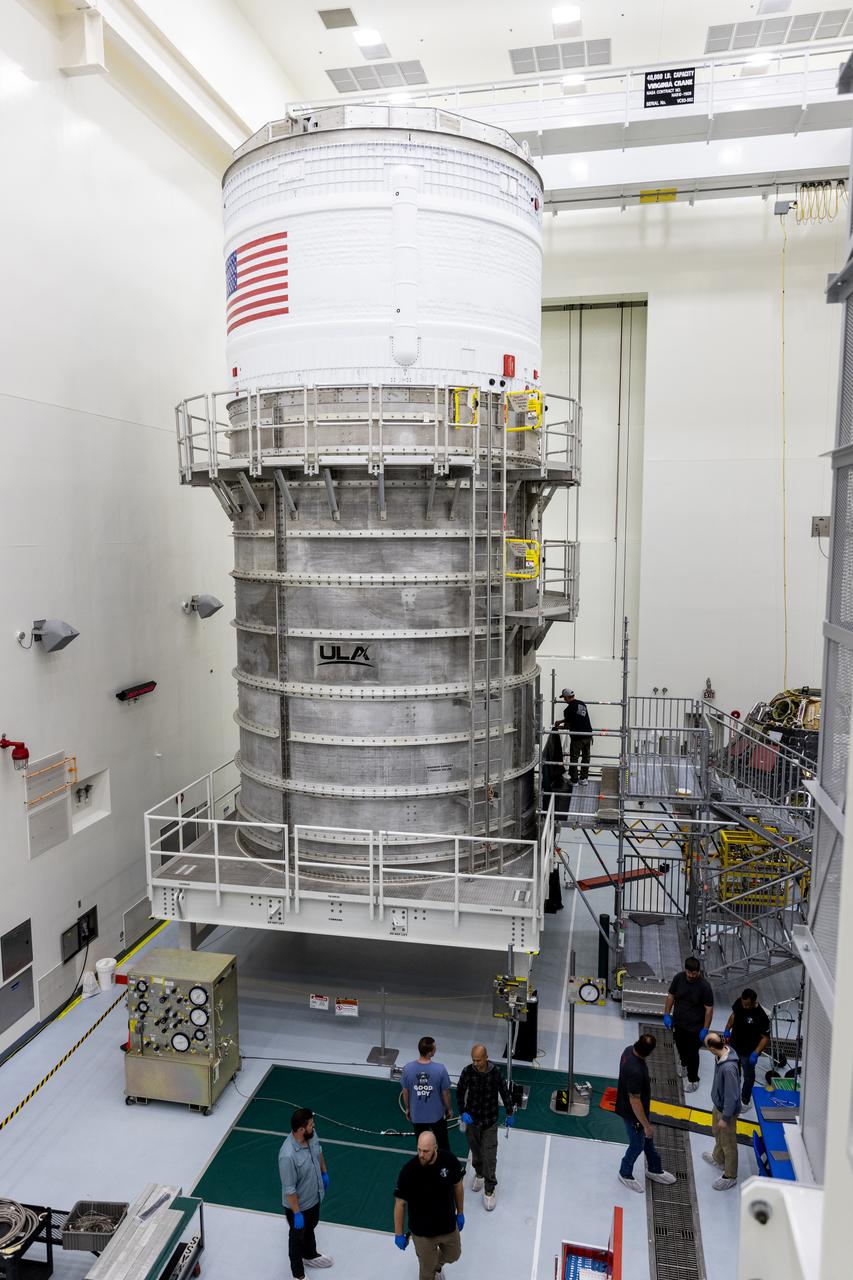
The upper stage for NASA’s SLS (Space Launch System) Moon rocket that will power the agency’s Artemis II mission and send astronauts around the Moon is shown inside the Multi-Payload Processing Facility at NASA’s Kennedy Space Center in Florida on Monday, March 10, 2025, after being transported from United Launch Alliance’s Delta Operations Center at nearby Cape Canaveral Space Force Station. The interim cryogenic propulsion stage is a liquid oxygen and liquid hydrogen-based system that will fire its RL10 engine to give the Orion spacecraft the big in-space push needed to fly around the Moon and back.
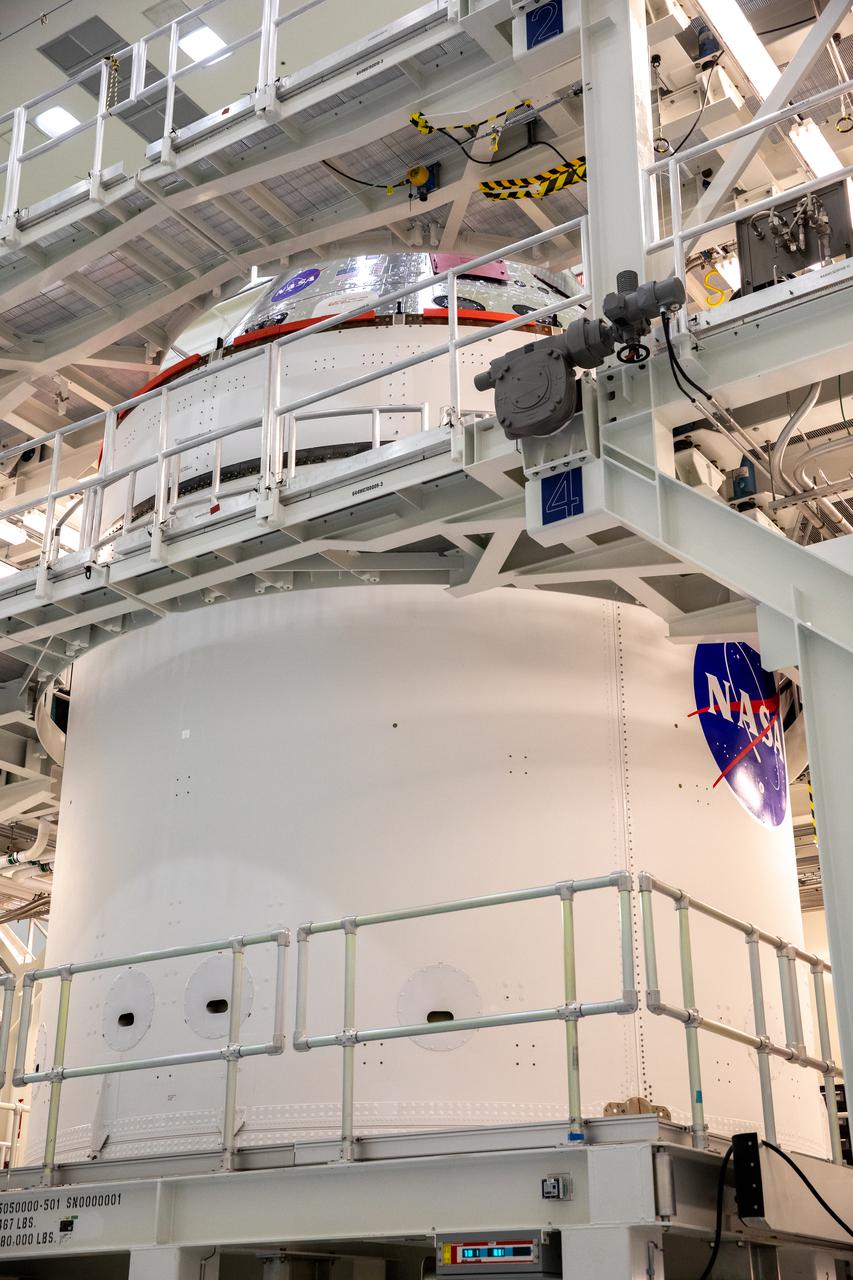
NASA’s famous “meatball” insignia is affixed to the Artemis I Orion spacecraft adapter jettison fairings, which protect the European built service module, Jan. 20, 2021, inside the Multi-Payload Processing Facility at NASA’s Kennedy Space Center in Florida. Shown inside its servicing stand, ground processing begins on Orion, with the Exploration Ground Systems and Jacobs teams performing checkouts and fueling the spacecraft with commodities as part of preparations ahead of the Artemis I mission.
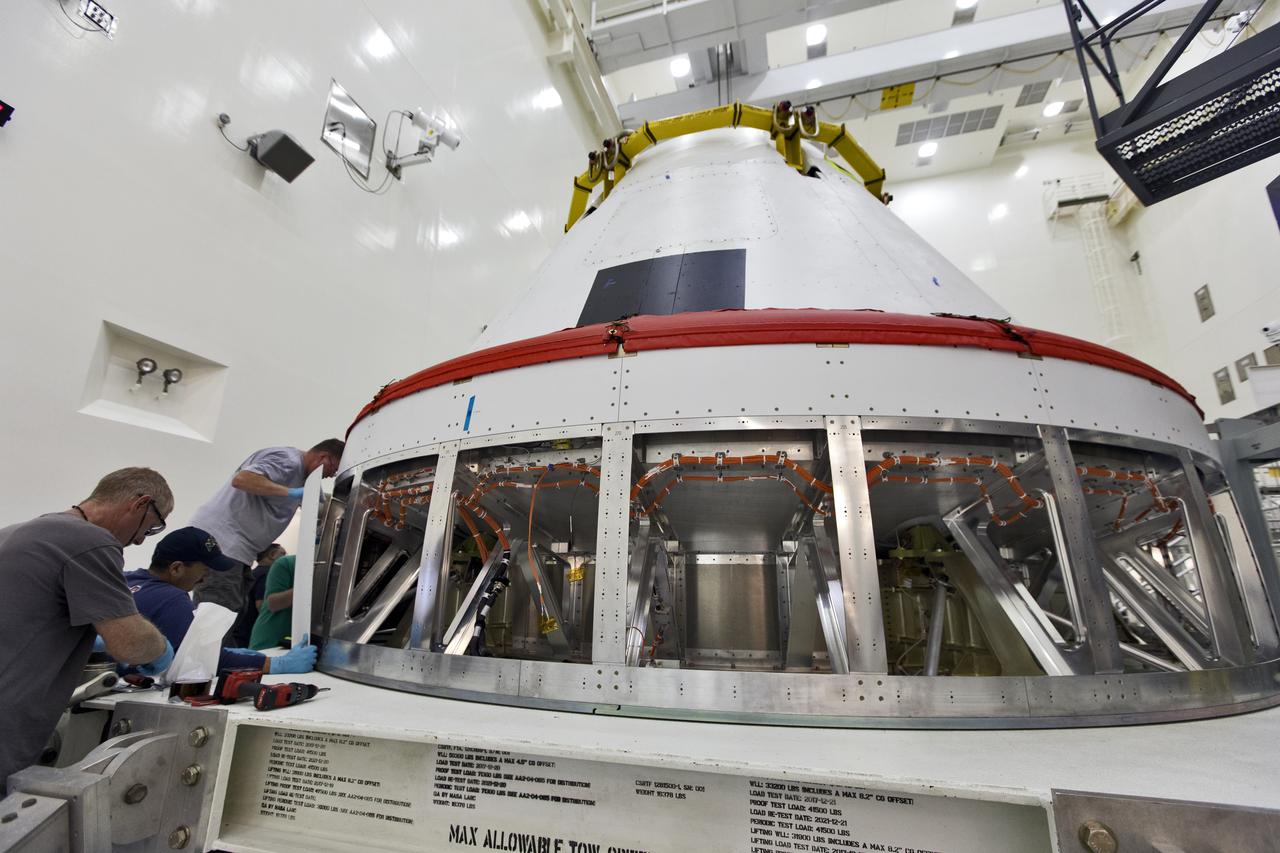
Workers remove cover plates from a mock Orion crew module inside the Multi-Payload Processing Facility at NASA’s Kennedy Space Center in Florida on Dec. 6, 2018. The crew module will be used during a full stress test of the Launch Abort System (LAS), called Ascent Abort-2 (AA-2), scheduled for April 2019. During the test, the booster will launch from Space Launch Complex 46, carrying a fully functional LAS and the 22,000-pound Orion test vehicle to an altitude of 31,000 feet and traveling at more than 1,000 miles an hour. The test will verify the LAS can steer the crew module and astronauts aboard to safety in the event of an issue with the Space Launch System (SLS) rocket when the spacecraft is under the highest aerodynamic loads it will experience during a rapid climb into space.
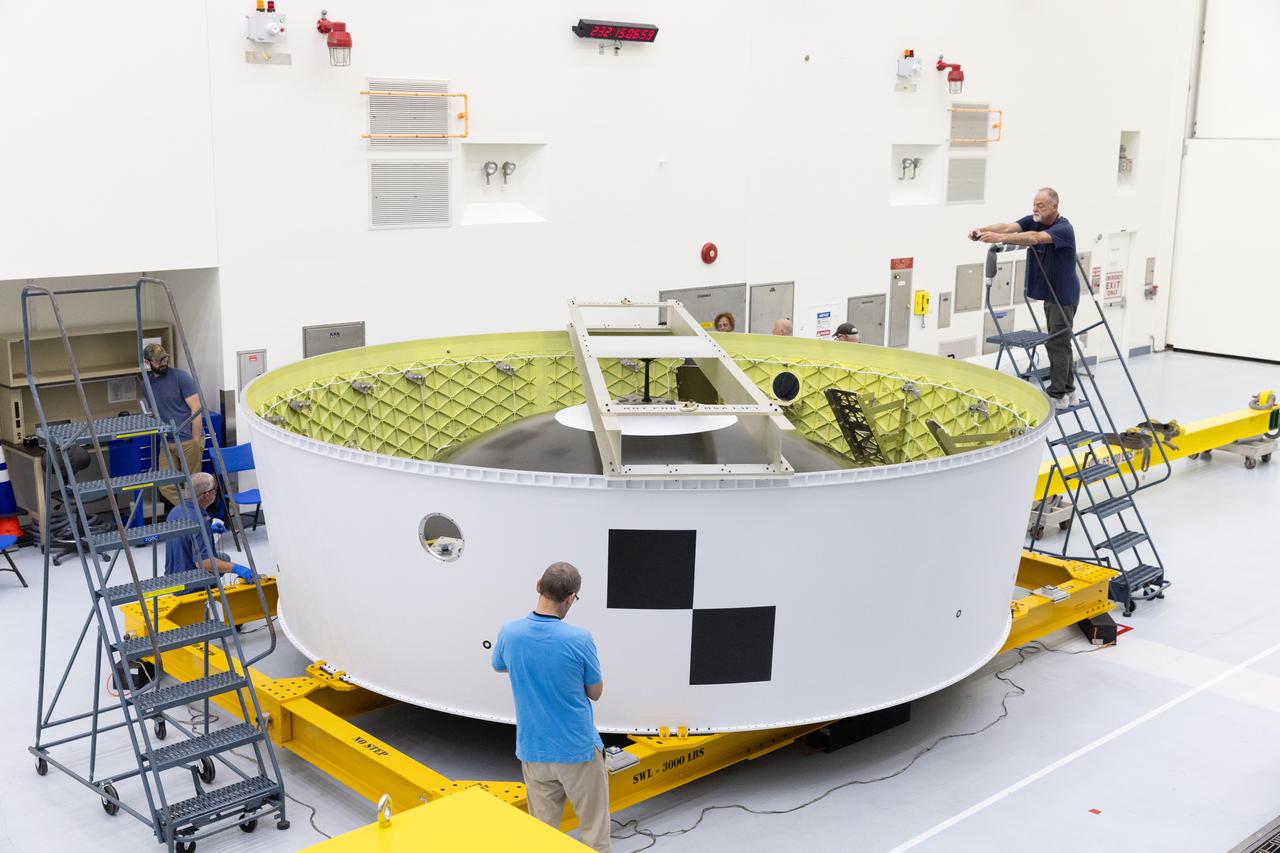
Technicians at NASA’s Kennedy Space Center in Florida complete routine inspections the Artemis II Orion stage adapter on Wednesday, Aug. 20, 2025, to the spaceport’s Multi-Payload Processing Facility to undergo CubeSat integration following its arrival from the agency’s Marshall Space Flight Center in Huntsville, Alabama. NASA Marshall built the Orion stage adapter which connects to the SLS (Space Launch System) rocket’s interim cryogenic propulsion stage to the Orion spacecraft and protects Orion from flammable gases generated during launch. The Artemis II test flight will take four astronauts around the Moon and return them back home in early 2026.
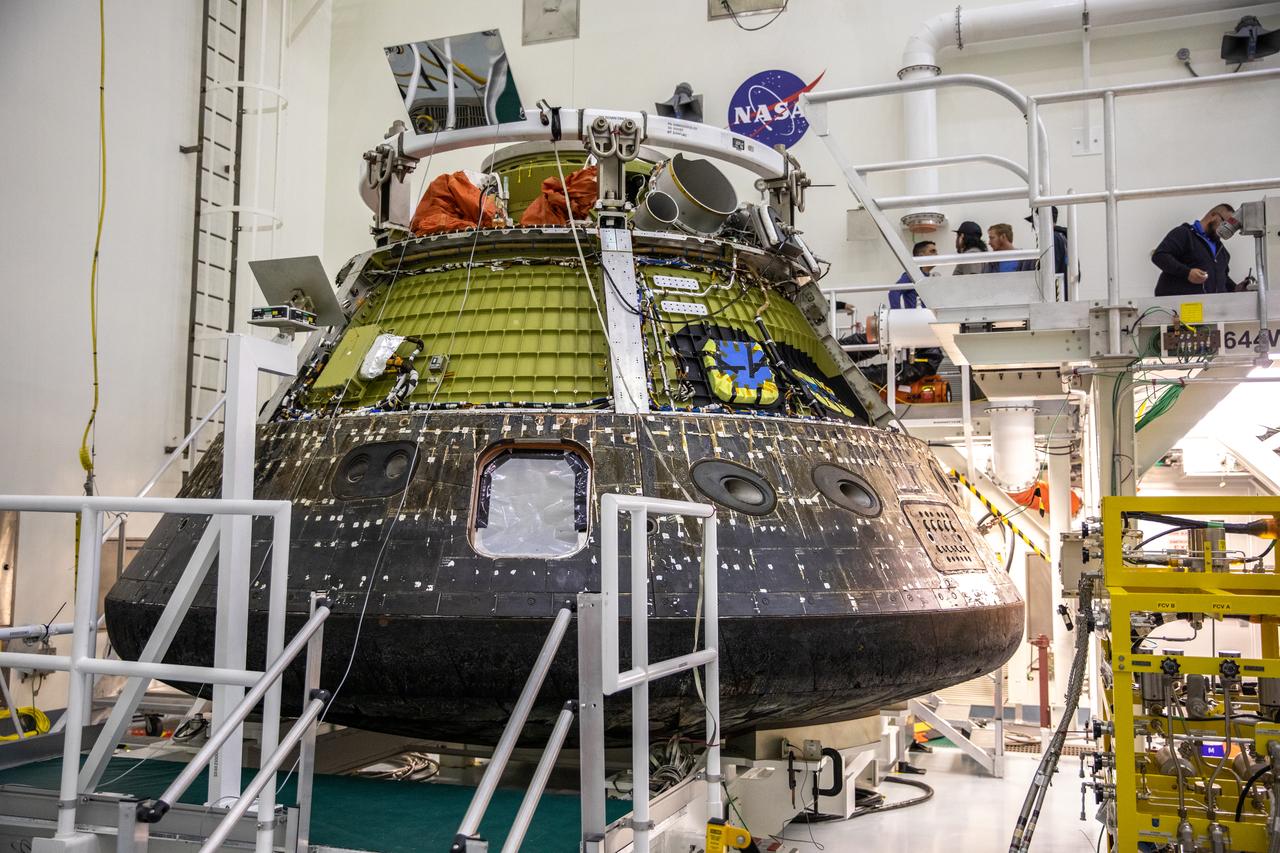
NASA’s Artemis I Orion capsule is secured on a platform inside the Multi-Payload Processing Facility (MPPF) at Kennedy Space Center in Florida on Jan. 6, 2023. Orion splashed down in the Pacific Ocean at 12:40 p.m. EST on Dec. 11, 2022. The spacecraft was secured inside the well deck of the USS Portland for the voyage to U.S. Naval Base Sand Diego, arriving on Dec. 13, 2022. Orion was offloaded and transported back to Kennedy for deservicing inside the MPPF. Orion launched atop the Space Launch System rocket on Nov. 16, 2022 at 1:47 a.m. EST from Kennedy’s Launch Complex 39B for a 25-day trip beyond the Moon and back. During the flight, Orion flew farther than any human-rated spacecraft has ever flown, paving the way for human deep space exploration and demonstrating NASA’s commitment and capability to extend human presence to the Moon and beyond.

NASA’s Orion spacecraft for the agency’s Artemis II mission arrives at the NASA’s Kennedy Space Center Multi-Payload Processing Facility in Florida on Thursday, April 30, 2026, for de-servicing operations on the spacecraft. The Orion spacecraft successfully splashed down on Friday, April 10, 2026, in the Pacific Ocean following its approximate 10-day journey around the Moon carrying NASA astronauts Reid Wiseman, Victor Glover, and Christina Koch, and CSA (Canadian Space Agency) astronaut Jeremy Hansen. As part of a Golden Age of innovation and exploration, Artemis II marked another step toward new U.S.-crewed missions on the Moon’s surface that will help the agency prepare to send the first astronauts – Americans – to Mars.
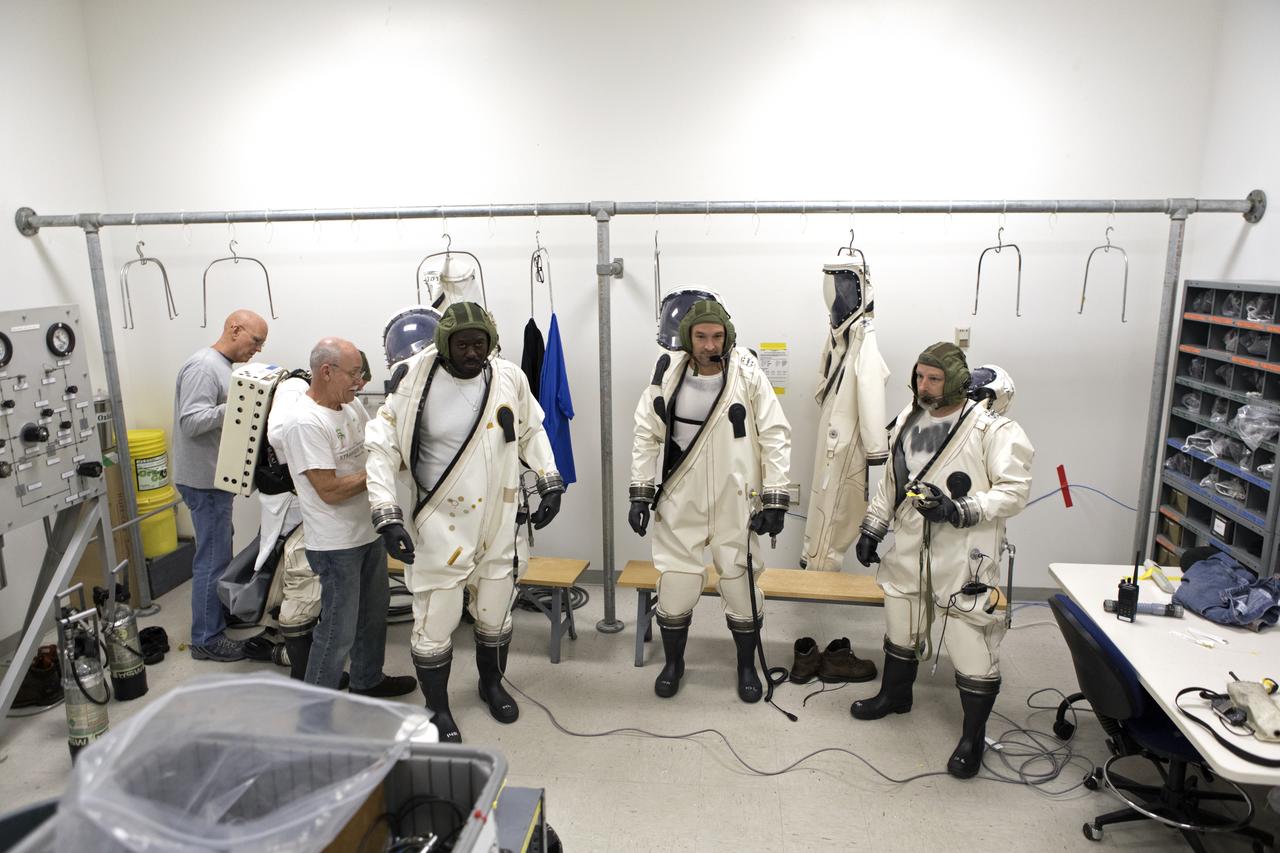
Technicans inside Kennedy's Multi-Payload Processing Facility do testing in SCAPE (Self-Contained Atmospheric Protective Ensemble) suits.
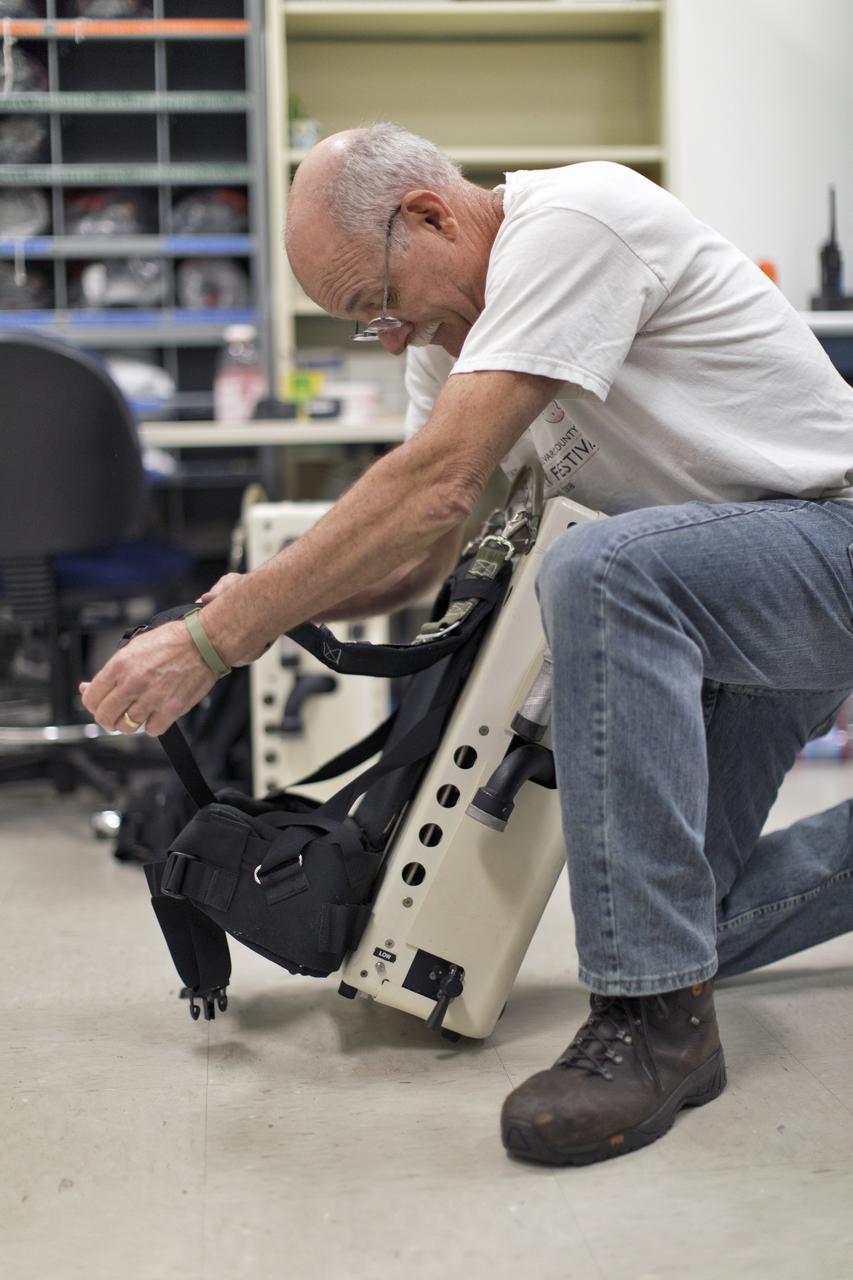
Technicans inside Kennedy's Multi-Payload Processing Facility do testing in SCAPE (Self-Contained Atmospheric Protective Ensemble) suits.
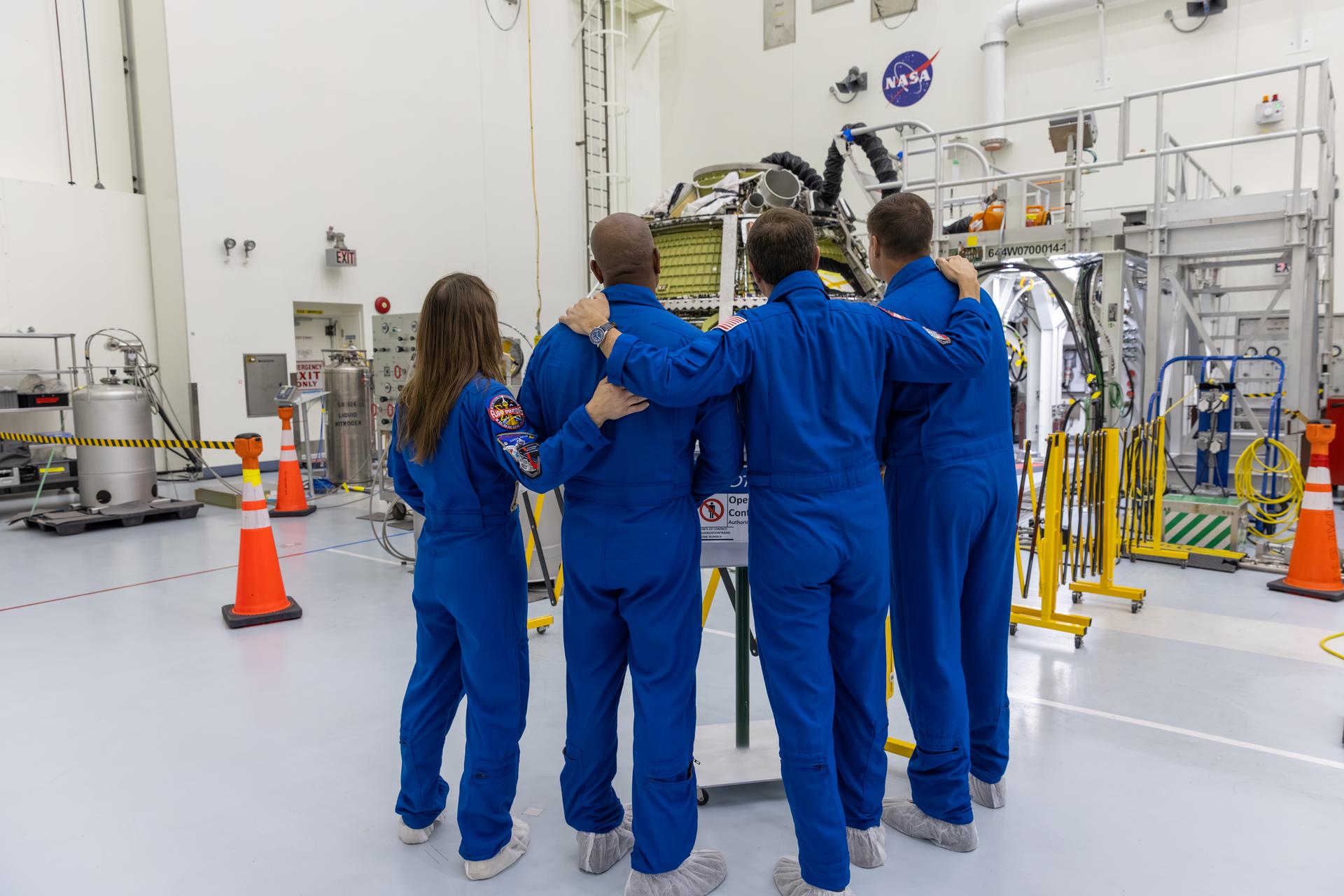
From left, Artemis II NASA astronauts Christina Koch, Victor Glover, and Reid Wiseman, along with CSA (Canadian Space Agency) astronaut Jeremy Hansen view the Artemis II Orion spacecraft inside the Multi-Payload Processing Facility at NASA’s Kennedy Space Center in Florida on Wednesday, July 8, 2026. The crew returned to NASA Kennedy for their first official visit since launch of Artemis II on Wednesday, April 1, 2026, to visit with the center’s workforce and tour facilities to view progress on Artemis III prelaunch processing.
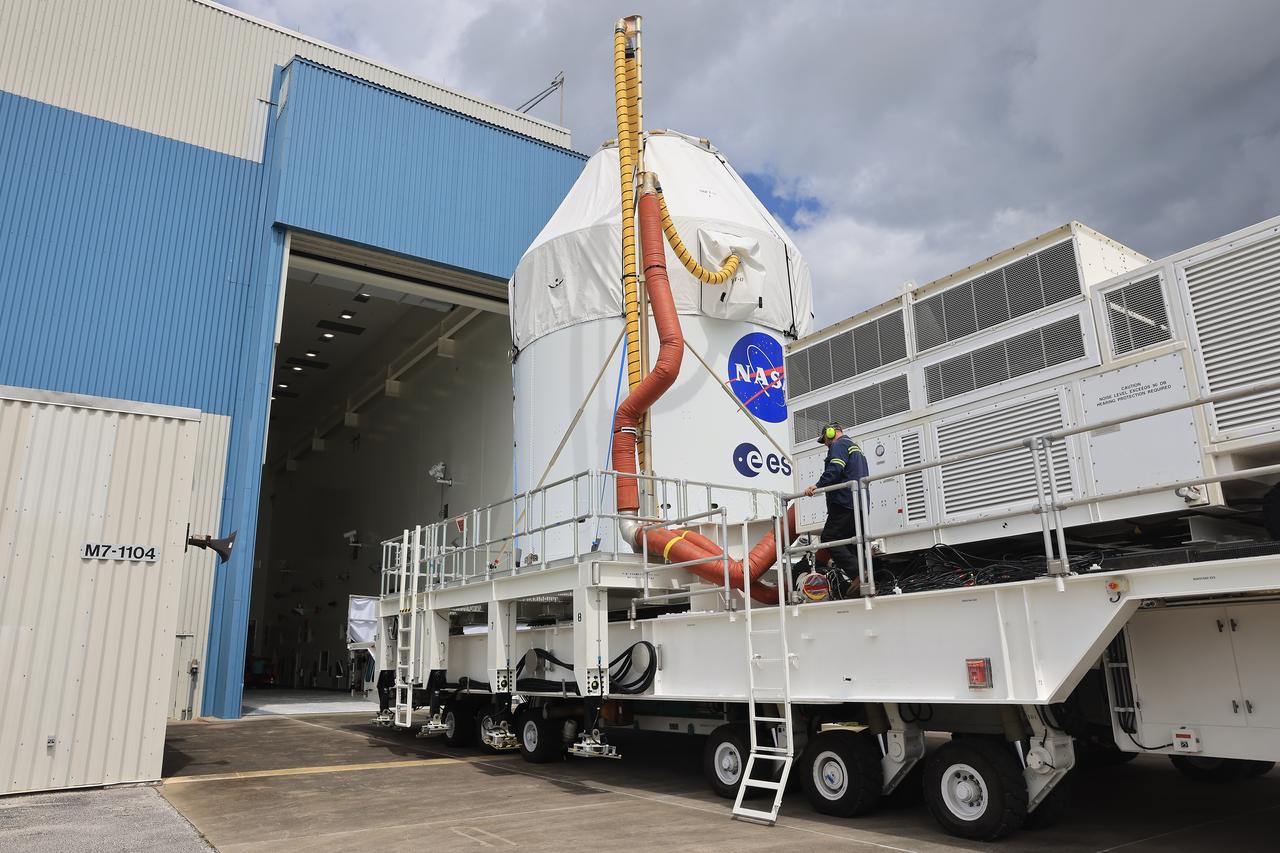
NASA’s Artemis II Orion spacecraft arrives at the Multi-Payload Processing Facility at Kennedy Space Center in Florida on Saturday, May 3, 2025, to undergo fueling and processing operations for prelaunch operations. The Artemis II test flight is the first crewed flight under NASA’s Artemis campaign and is another step toward missions on the lunar surface and helping the agency prepare for future human missions to Mars.
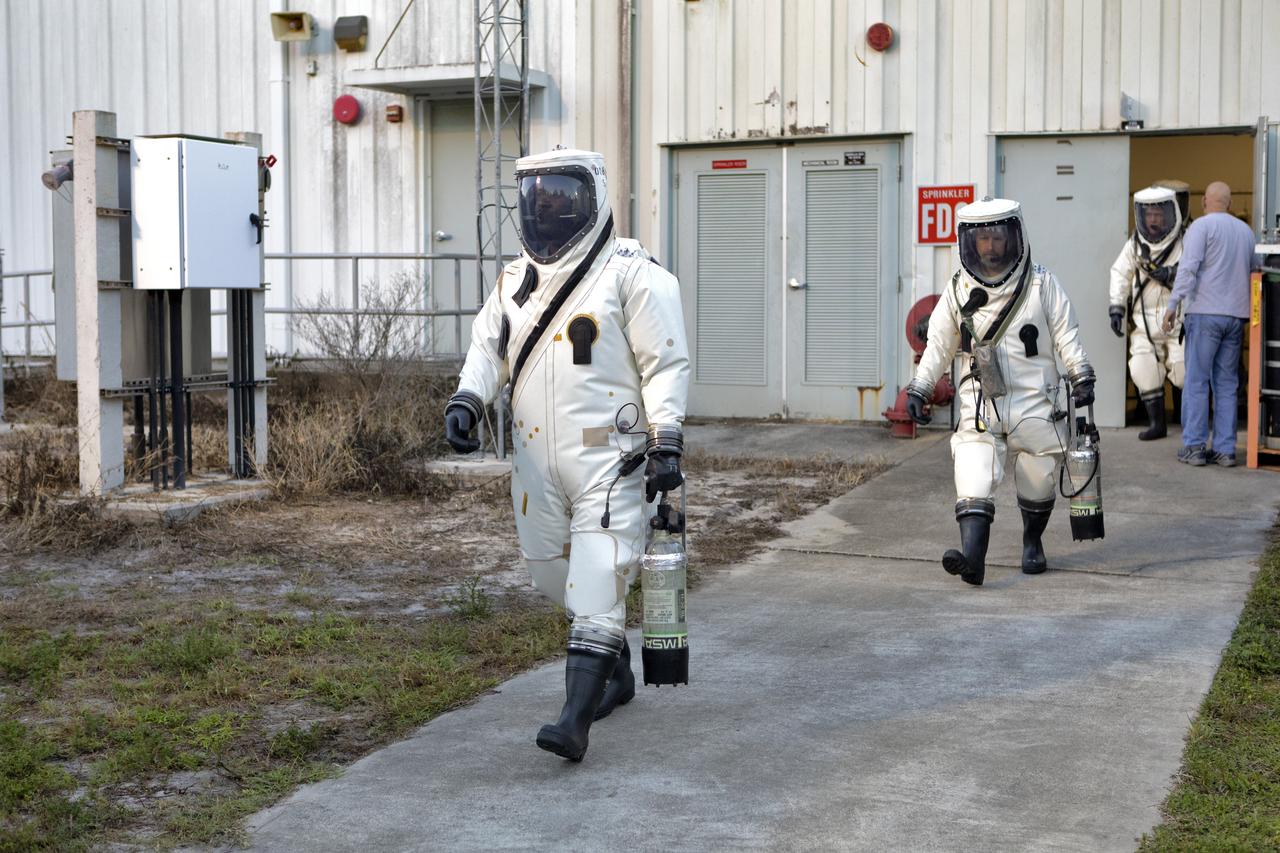
Operators wearing Self-Contained Atmospheric Protective Ensemble (SCAPE) suits depart the suit-up room at the Multi-Payload Processing Facility (MPPF) at NASA's Kennedy Space Center in Florida on Oct. 31, 2018. SCAPE operators are preparing to participate in a hypergolic systems hot flow test at the MPPF. The test will serve as operational validation of the hypergol subsystem and demonstrate that the hypergols subsystem can service the Orion spacecraft, flow fuel at the required rates, drain and de-service the system, and meet the intended timeline. SCAPE suite are used in operations involving toxic propellants and are supplied with air either through a hardline or through a self-contained environmental control unit.
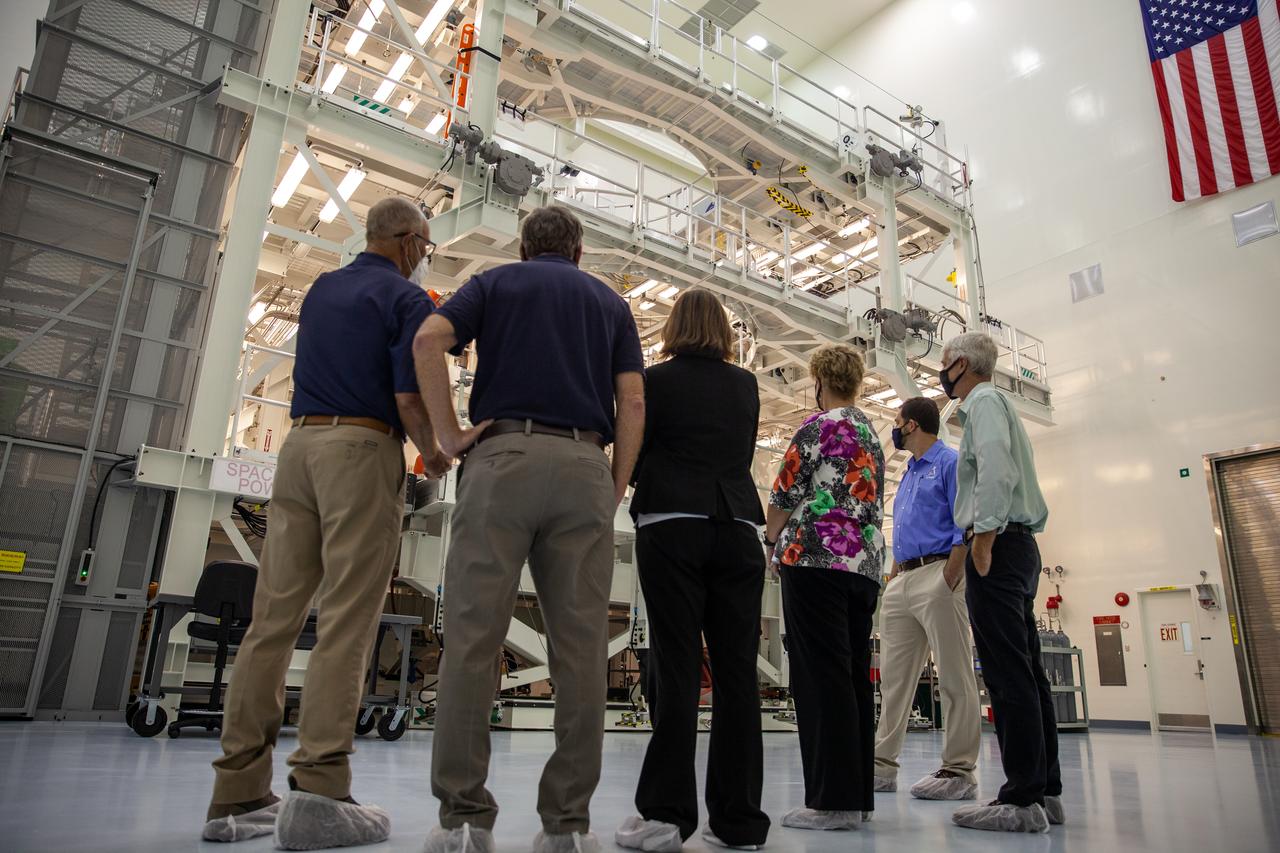
Catherine Koerner, third from left, NASA Orion Program manager, along with senior managers from Orion, and Exploration Ground Systems (EGS), visits the Multi-Payload Processing Facility (MPPF) at NASA’s Kennedy Space Center in Florida on Oct. 5, 2020. Accompanying her, from left are Skip Williams, operations manager for the MPPF spacecraft offline element integration team; Mike Bolger, EGS manager; Annette Hasbrook, Orion Program assistant manager; Scott Wilson, Orion Production Operations manager; and Jeremy Parsons, EGS deputy manager. Koerner viewed spacecraft hardware and processing facilities for the Artemis I and II missions. The first in a series of increasingly complex missions, Artemis I will test the Orion spacecraft and Space Launch System as an integrated system ahead of crewed flights to the Moon. Under the Artemis program, NASA will land the first woman and the next man on the Moon in 2024.
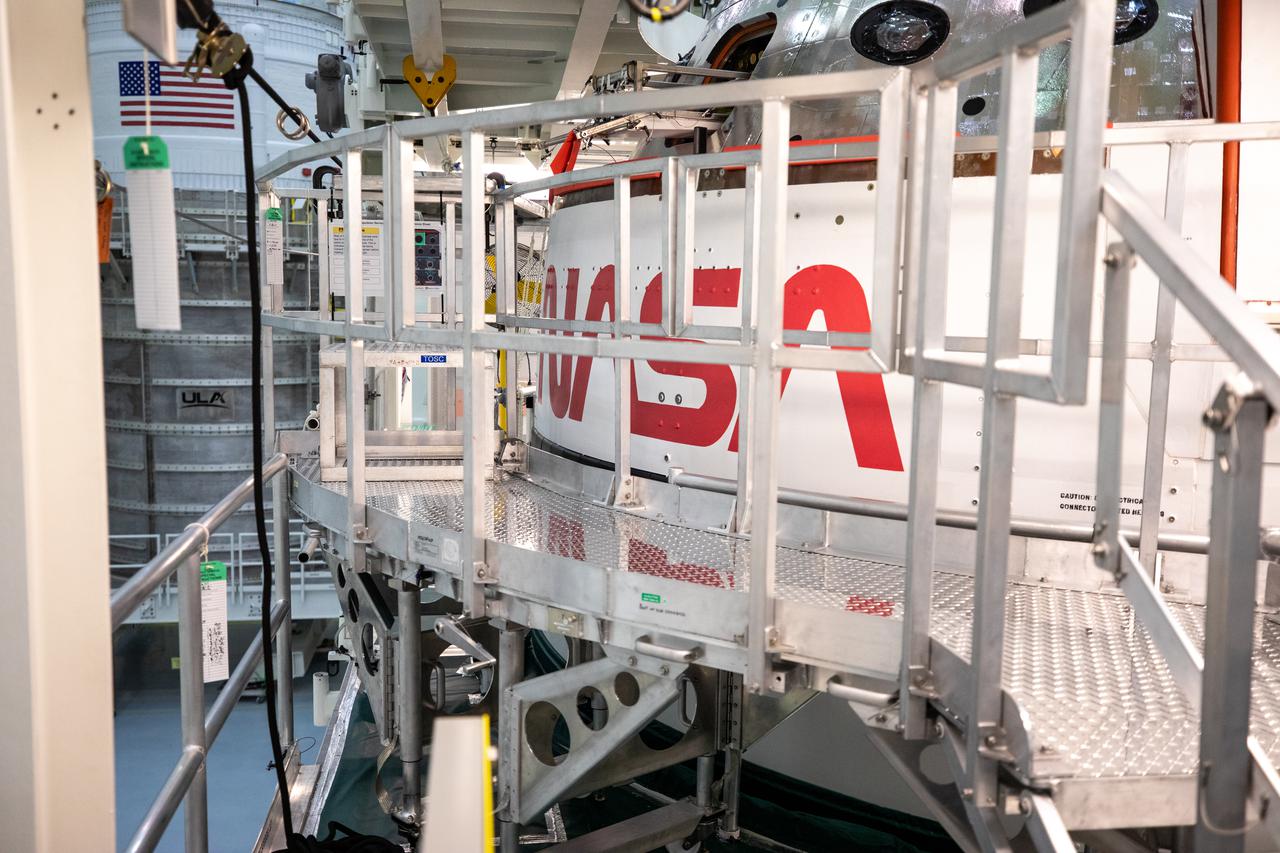
Charlie Duke and Nicole Stott visit the Multi-Payload Processing Facility (MPPF) and Vehicle Assembly Building (VAB) at NASA's Kennedy Space Center.
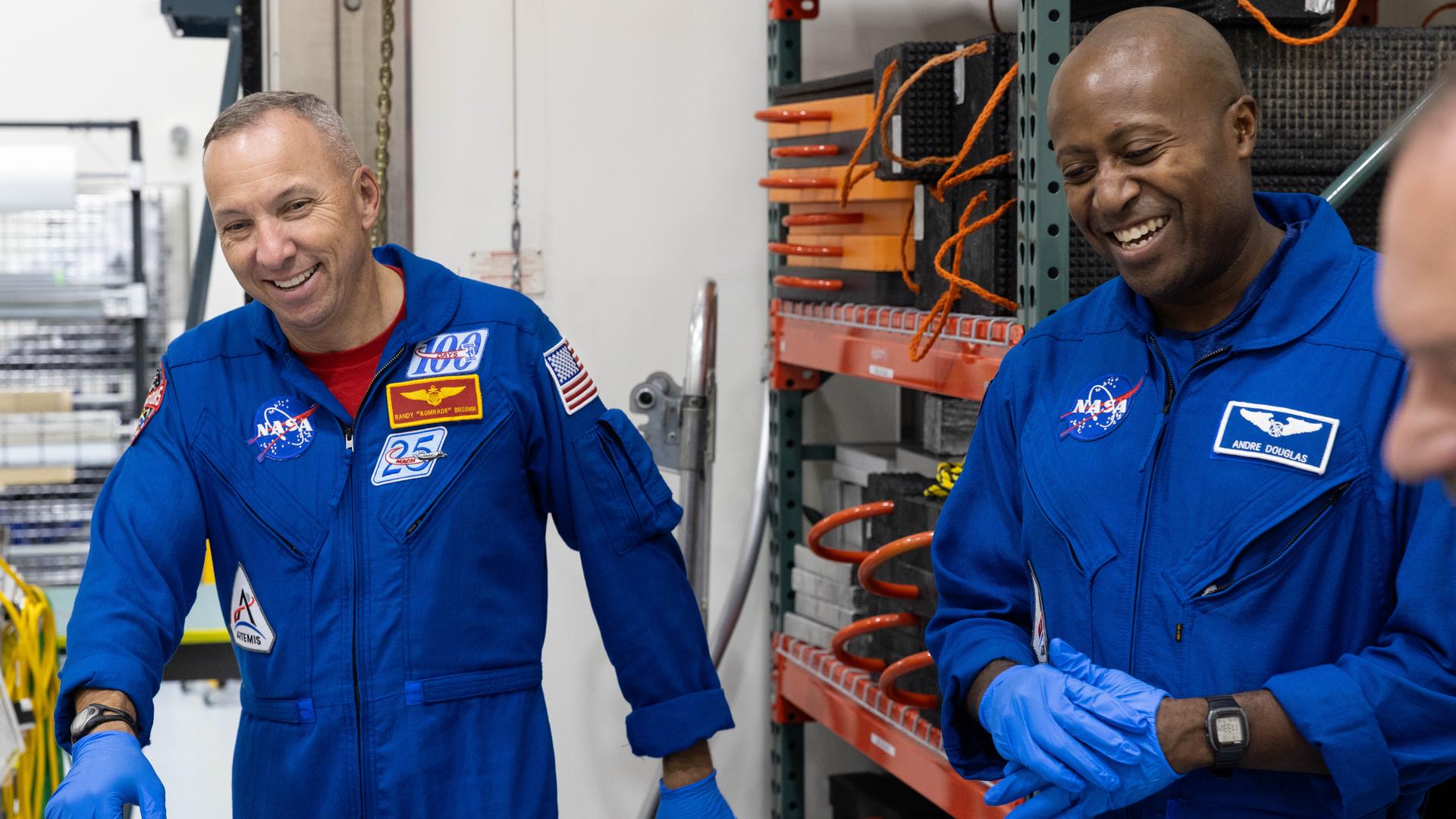
Artemis III crew members, NASA astronauts Randy Bresnick (left) and Andre Douglas get a close look Orion spacecraft hardware inside the Multi-Payload Processing Facility at NASA’s Kennedy Space Center in Florida on Friday, July 10, 2026. Bresnick, Douglas, NASA astronaut Frank Rubio, and ESA (European Space Agency) astronaut Luca Parmitano will launch aboard Orion on the Artemis III mission to conduct critical rendezvous and docking tests with lunar lander systems in low Earth orbit, advancing the capabilities needed before astronauts return to the lunar surface on Artemis IV.

Howard Hu, manager, Orion Program, inspects NASA’s Orion spacecraft following its arrival at the agency’s Kennedy Space Center Multi-Payload Processing Facility in Florida on Thursday, April 30, 2026, for de-servicing operations on the spacecraft. The Orion spacecraft successfully splashed down on Friday, April 10, 2026, in the Pacific Ocean following its approximate 10-day journey around the Moon carrying NASA astronauts Reid Wiseman, Victor Glover, and Christina Koch, and CSA (Canadian Space Agency) astronaut Jeremy Hansen for the Artemis II test flight mission.
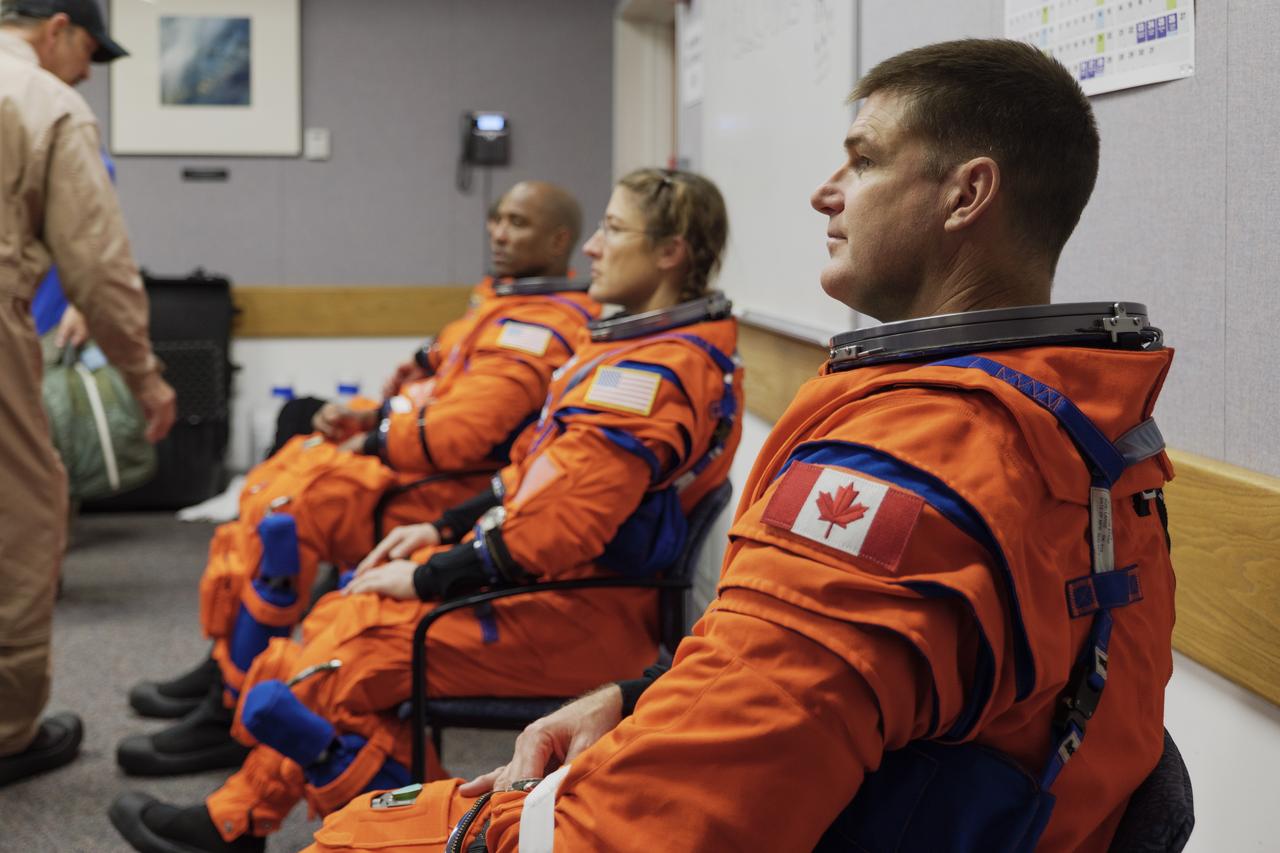
The crew of NASA’s Artemis II mission participates in a suited crew test on Thursday, July 31, 2025, at the agency’s Kennedy Space Center in Florida. From left, NASA astronauts Reid Wiseman, Artemis II commander; Victor Glover, Artemis II pilot; and Christina Koch, mission specialist; along with CSA (Canadian Space Agency) astronaut Jeremy Hansen donned their Orion crew survival system spacesuits for training at NASA’s Kennedy’s Multi-Payload Processing Facility, where they entered their fully powered Orion spacecraft as part of the test. Artemis II will take the four astronauts around the Moon, as the first crewed mission on NASA’s path to establishing a long-term presence for science and exploration through Artemis.
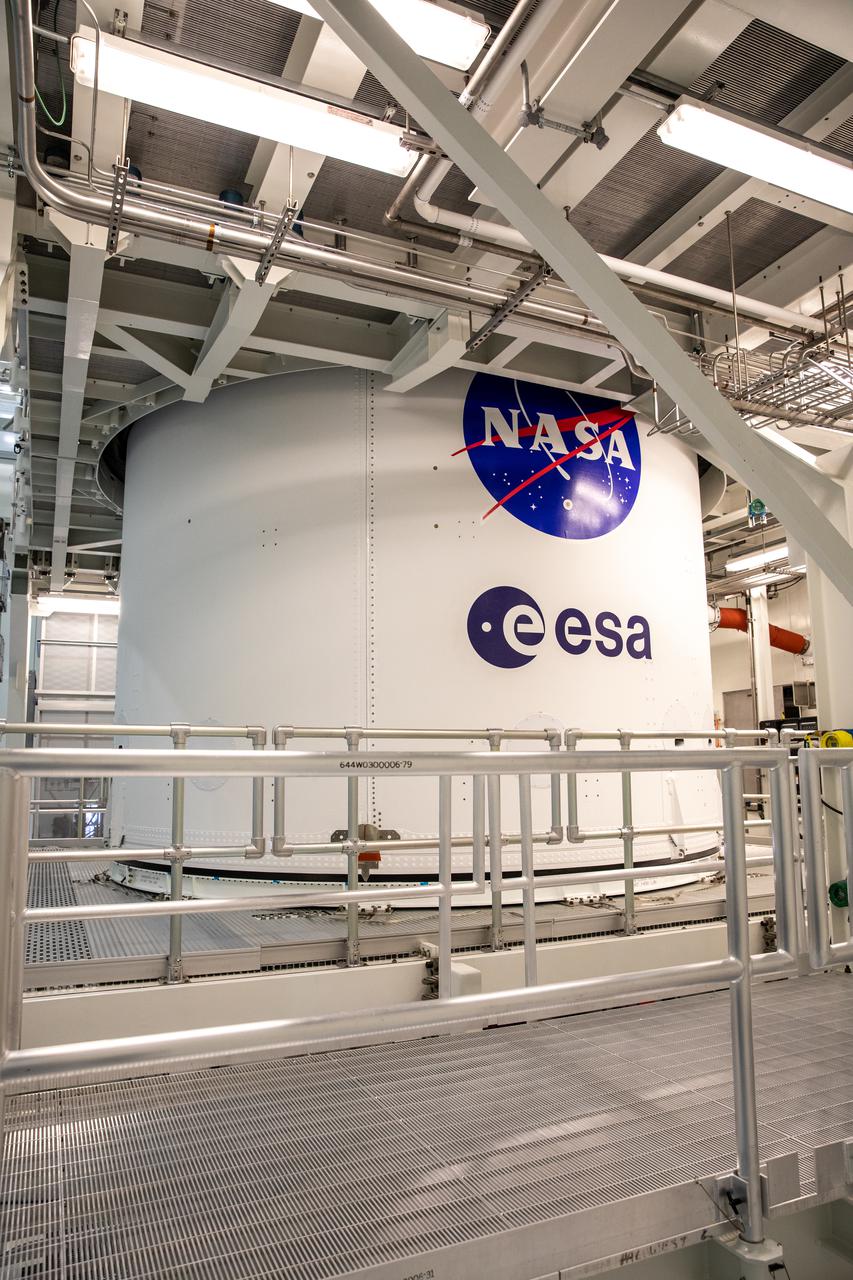
Artemis I extends NASA and ESA’s (European Space Agency) strong international partnership beyond low-Earth orbit to lunar exploration with Orion on Artemis missions, as the ESA logo joins the historic NASA “meatball” insignia on the Artemis I spacecraft adapter jettison fairing panels that protect the service module during launch. Orion is currently stationed at NASA’s Kennedy Space Center in the Multi-Payload Processing Facility, where it will undergo fueling and servicing by NASA’s Exploration Ground Systems and Jacobs Technology teams in preparation for the upcoming flight test with the Space Launch System rocket under the agency’s Artemis program.
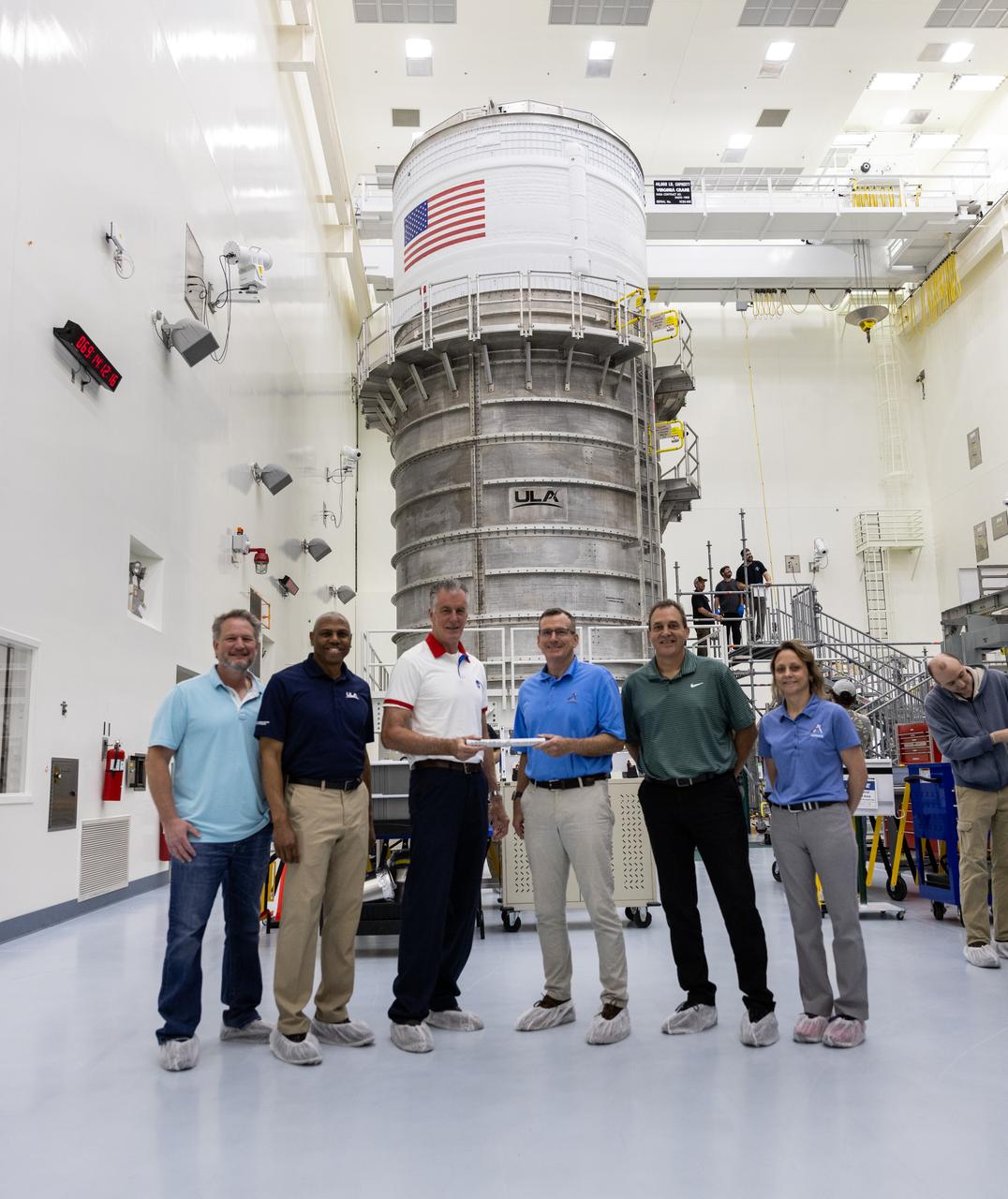
Managers from NASA and industry partners for NASA’s SLS (Space Launch System) rocket upper stage hand off the baton to managers from the agency’s Exploration Ground Systems (EGS) are shown with the SLS interim cryogenic propulsion stage inside the Multi-Payload Processing Facility at NASA’s Kennedy Space Center in Florida on Monday, March 10, 2025, after being transported from United Launch Alliance’s (ULA) Delta Operations Center at nearby Cape Canaveral Space Force Station. From left to right are Jim Bonato, ICPS Mission Manager, ULA; Ron Fortson, Director and General Manager, ULA; Chris Calfee, Spacecraft/Payload Integration and Evolution element manager, SLS; Cliff Lanham, senior vehicle operations manager, EGS; Todd Lamond, Strategic Planning and Integration, Amentum; and Natasha Wiest, Interim Director, Boeing Core Stage Integrated Product Team; The interim cryogenic propulsion stage is a liquid oxygen and liquid hydrogen-based system that will fire its RL10 engine to give the Orion spacecraft the big in-space push needed to fly around the Moon and back.
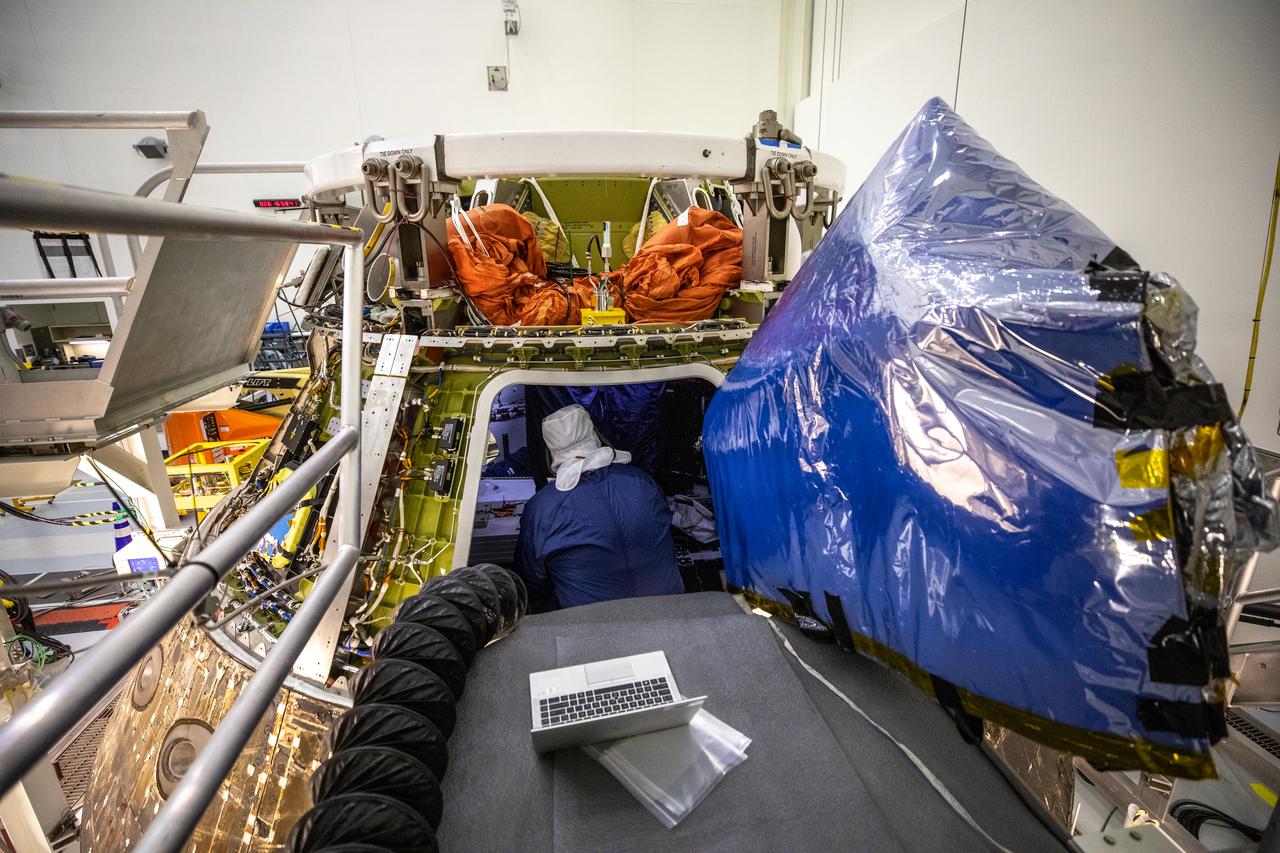
A technician unpacks NASA’s Artemis I Orion capsule inside the Multi-Payload Processing Facility (MPPF) at Kennedy Space Center in Florida on Jan. 6, 2023. Orion splashed down in the Pacific Ocean at 12:40 p.m. EST on Dec. 11, 2022. The spacecraft was secured inside the well deck of the USS Portland for the voyage to U.S. Naval Base Sand Diego, arriving on Dec. 13, 2022. Orion was offloaded and transported back to Kennedy for deservicing inside the MPPF. Orion launched atop the Space Launch System rocket on Nov. 16, 2022 at 1:47 a.m. EST from Kennedy’s Launch Complex 39B for a 25-day trip beyond the Moon and back. During the flight, Orion flew farther than any human-rated spacecraft has ever flown, paving the way for human deep space exploration and demonstrating NASA’s commitment and capability to extend human presence to the Moon and beyond.
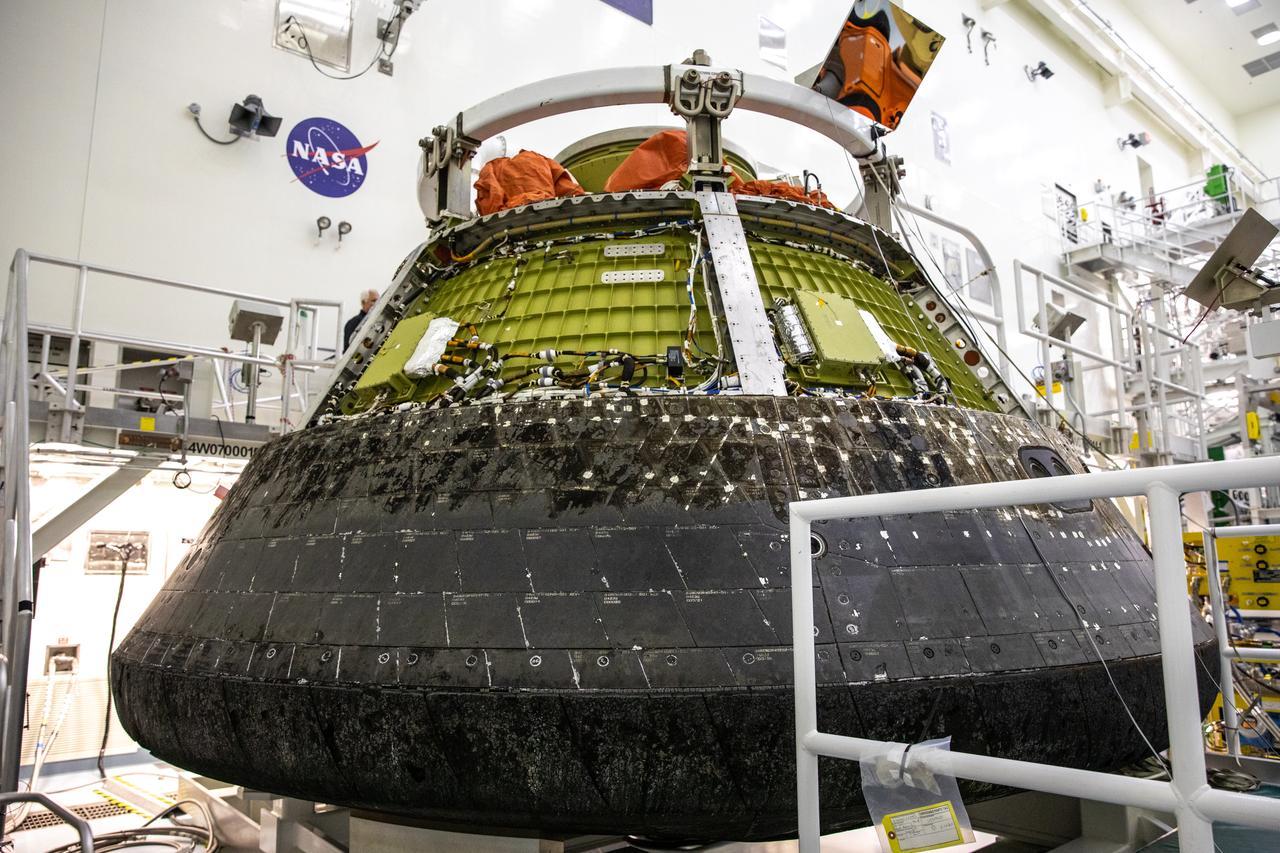
A close-up view shows NASA’s Artemis I Orion capsule secured on a platform inside the Multi-Payload Processsing Facility (MPPF) at Kennedy Space Center in Florida on Jan. 6, 2023. Orion splashed down in the Pacific Ocean at 12:40 p.m. EST on Dec. 11, 2022. The spacecraft was secured inside the well deck of the USS Portland for the voyage to U.S. Naval Base Sand Diego, arriving on Dec. 13, 2022. Orion was offloaded and transported back to Kennedy for deservicing inside the MPPF. Orion launched atop the Space Launch System rocket on Nov. 16, 2022 at 1:47 a.m. EST from Kennedy’s Launch Complex 39B for a 25-day trip beyond the Moon and back. During the flight, Orion flew farther than any human-rated spacecraft has ever flown, paving the way for human deep space exploration and demonstrating NASA’s commitment and capability to extend human presence to the Moon and beyond.
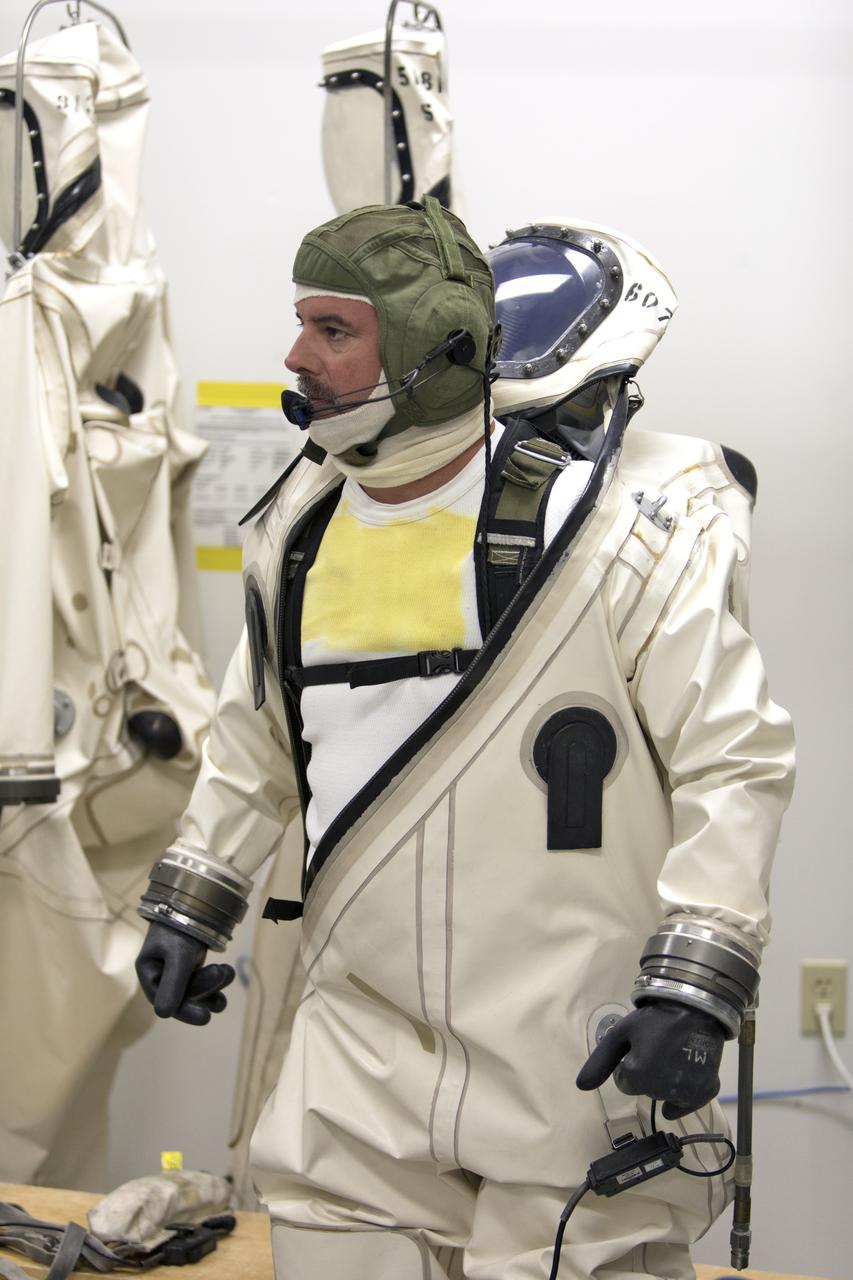
Technicans inside Kennedy's Multi-Payload Processing Facility do testing in SCAPE (Self-Contained Atmospheric Protective Ensemble) suits.
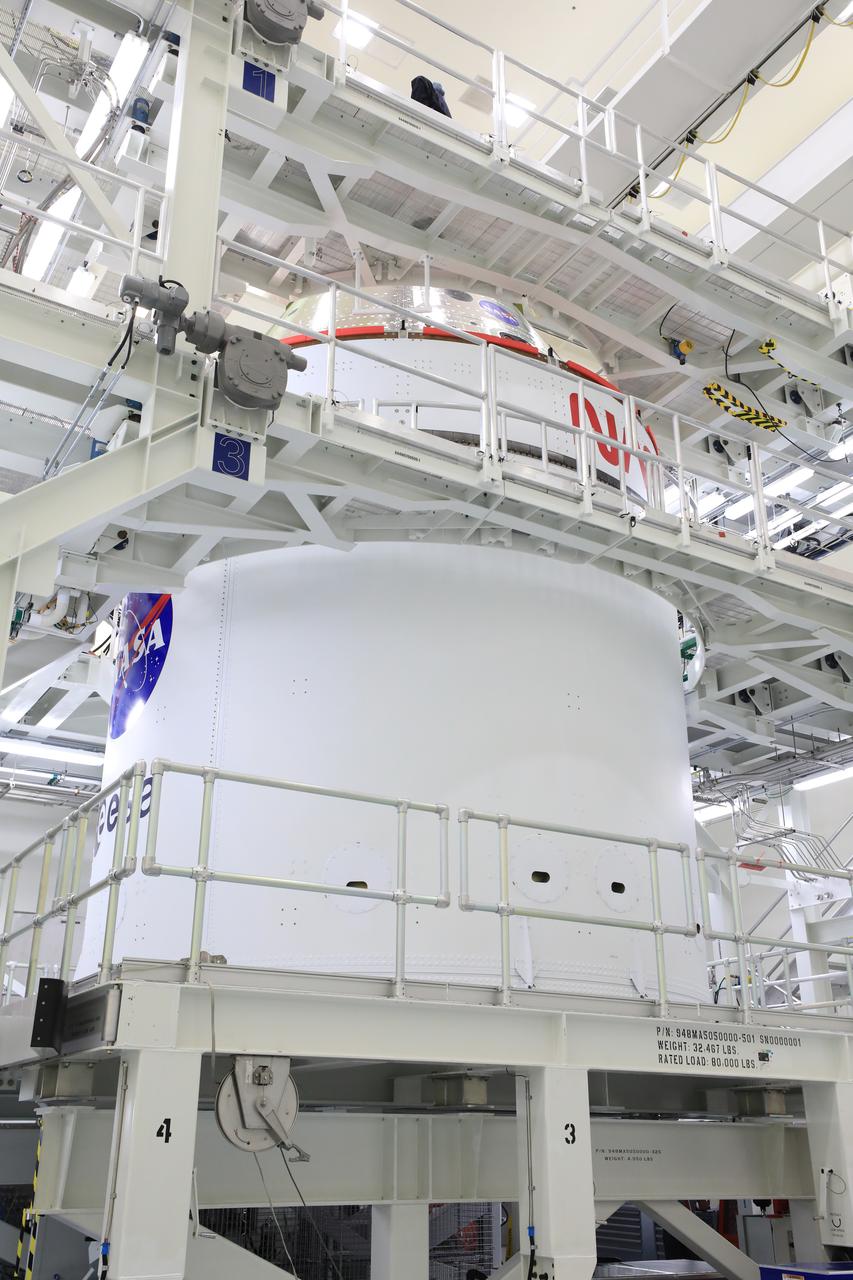
Technicians with NASA’s Exploration Ground Systems Program offload the agency’s Orion spacecraft from the KAMAG transporter to the servicing stand inside the Multi-Payload Processing Facility at Kennedy Space Center in Florida on Sunday, May 4, 2025, to undergo fueling and processing operations for prelaunch operations. The Artemis II test flight is the first crewed flight under NASA’s Artemis campaign and is another step toward missions on the lunar surface and helping the agency prepare for future human missions to Mars.

Technicians install the Korea AeroSpace Administration (KASA) K-Rad Cube within the Orion stage adapter inside the Multi-Payload Processing Facility at NASA’s Kennedy Space Center in Florida on Tuesday, Sept. 2, 2025. The K-Rad Cube, about the size of a shoebox, is one of the CubeSats slated to fly on NASA’s Artemis II test flight in 2026. Deploying in high Earth orbit from a spacecraft adapter on NASA’s SLS (Space Launch System) rocket after Orion is safely flying on its own with its crew of four astronauts, K-Rad Cube will use a dosimeter made of material designed to mimic human tissue to measure space radiation and assess biological effects at various altitudes across the Van Allen radiation belts, a critical area of research for human presence at the Moon and Mars.
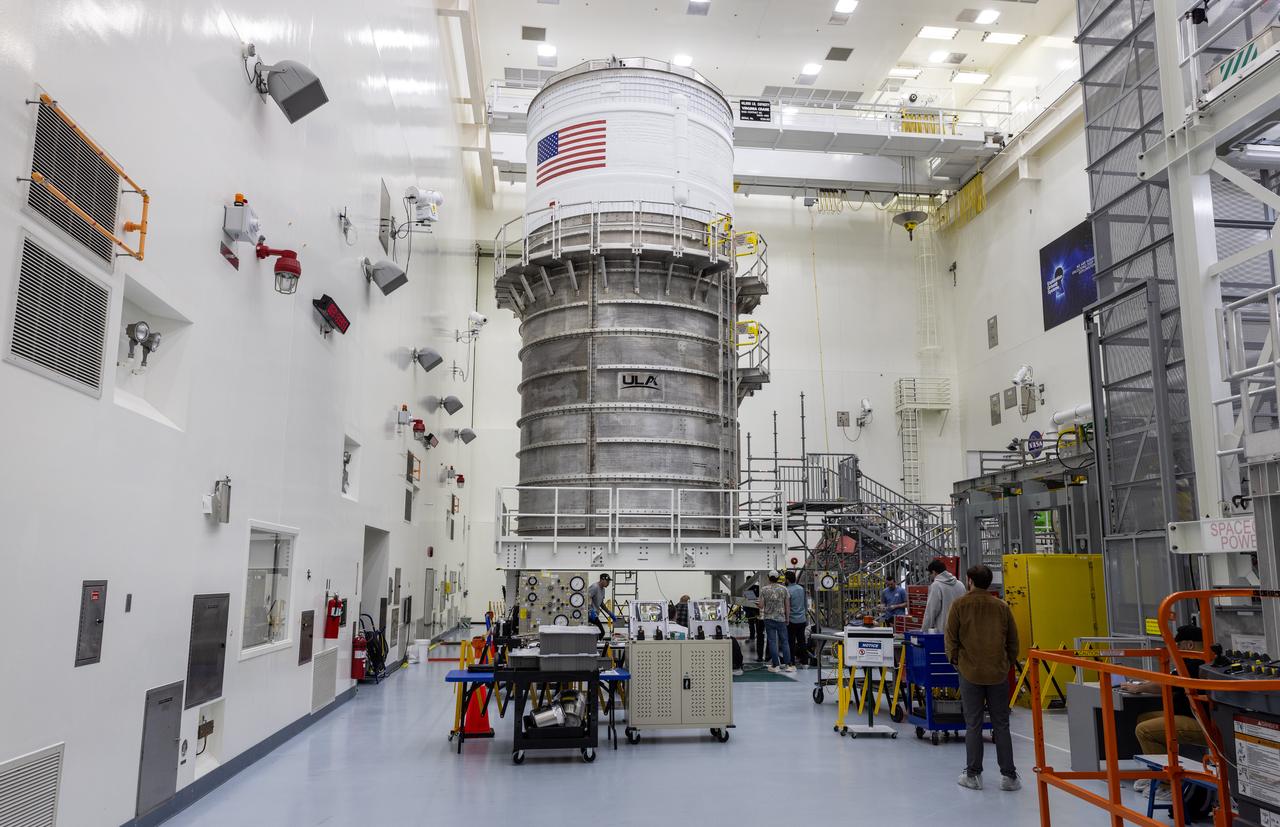
The upper stage for NASA’s SLS (Space Launch System) Moon rocket that will power the agency’s Artemis II mission and send astronauts around the Moon is shown inside the Multi-Payload Processing Facility at NASA’s Kennedy Space Center in Florida on Monday, March 10, 2025, after being transported from United Launch Alliance’s Delta Operations Center at nearby Cape Canaveral Space Force Station. The interim cryogenic propulsion stage is a liquid oxygen and liquid hydrogen-based system that will fire its RL10 engine to give the Orion spacecraft the big in-space push needed to fly around the Moon and back.
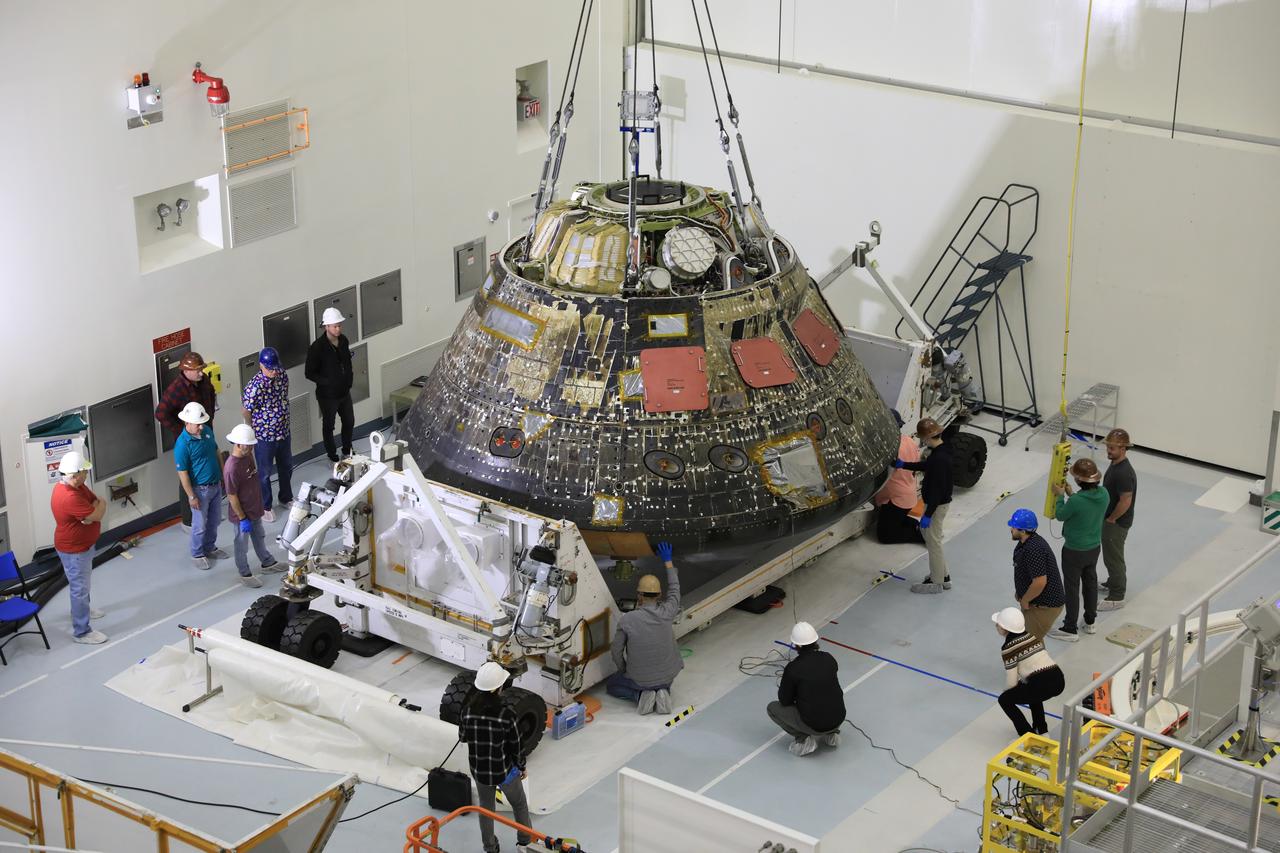
Technicians inside NASA’s Kennedy Space Centers Multi-Payload Processing Facility (MPPF) in Florida use a crane to load the Artemis I spacecraft - now called an environmental test article – into the crew module transportation fixture in preparation for its departure to NASA’s Neil Armstrong Test Facility in Sandusky, Ohio

Catherine Koerner, second from right, NASA Orion Program manager, along with senior managers from Orion, Exploration Ground Systems (EGS) and TOSC, tours the Multi-Payload Processing Facility (MPPF) at NASA’s Kennedy Space Center in Florida on Oct. 5, 2020. Accompanying her, from left are Scott Wilson, Orion Production Operations manager; Mike Bolger, EGS manager; and Nicolas Kindred, TOSC flow manager. At right is Jeremy Parsons, EGS deputy manager. Koerner viewed spacecraft hardware and processing facilities for the Artemis I and II missions. The first in a series of increasingly complex missions, Artemis I will test the Orion spacecraft and Space Launch System as an integrated system ahead of crewed flights to the Moon. Under the Artemis program, NASA will land the first woman and the next man on the Moon in 2024.
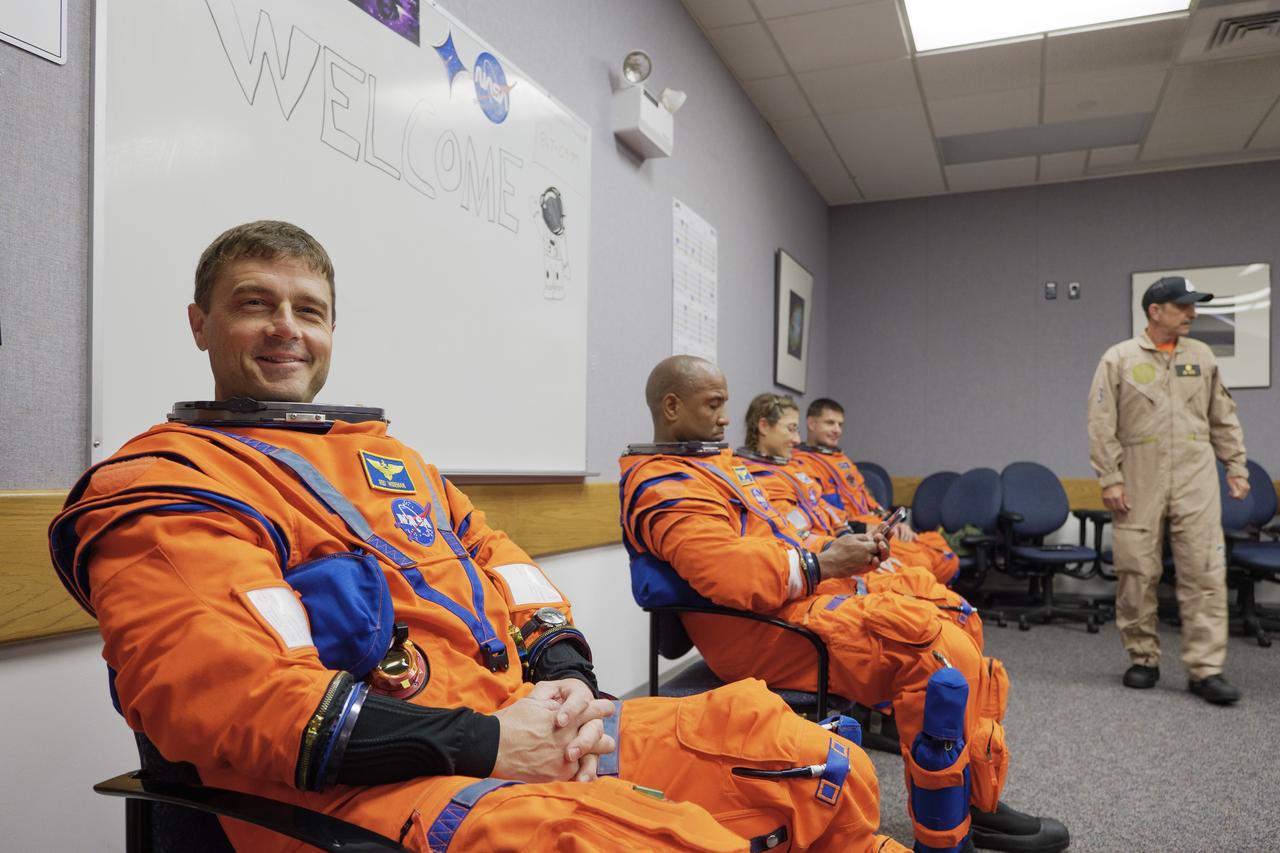
The crew of NASA’s Artemis II mission participates in a suited crew test on Thursday, July 31, 2025, at the agency’s Kennedy Space Center in Florida. From left, NASA astronauts Reid Wiseman, Artemis II commander; Victor Glover, Artemis II pilot; and Christina Koch, mission specialist; along with CSA (Canadian Space Agency) astronaut Jeremy Hansen,. mission specialist, donned their Orion crew survival system spacesuits for training at NASA’s Kennedy’s Multi-Payload Processing Facility, where they entered their fully powered Orion spacecraft as part of the test. Artemis II will take the four astronauts around the Moon, as the first crewed mission on NASA’s path to establishing a long-term presence for science and exploration through Artemis.
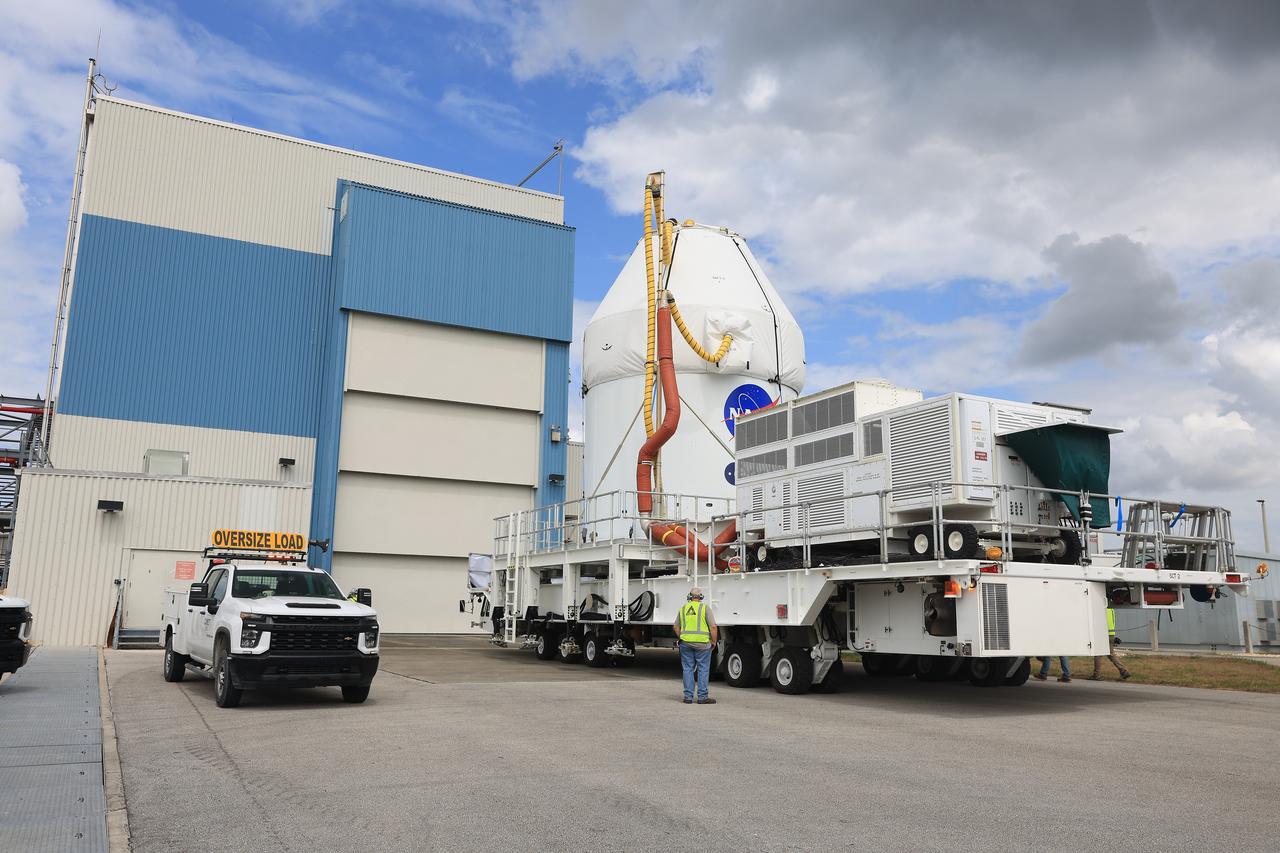
NASA’s Artemis II Orion spacecraft arrives at the Multi-Payload Processing Facility at Kennedy Space Center in Florida on Saturday, May 3, 2025, to undergo fueling and processing operations for prelaunch operations. The Artemis II test flight is the first crewed flight under NASA’s Artemis campaign and is another step toward missions on the lunar surface and helping the agency prepare for future human missions to Mars.
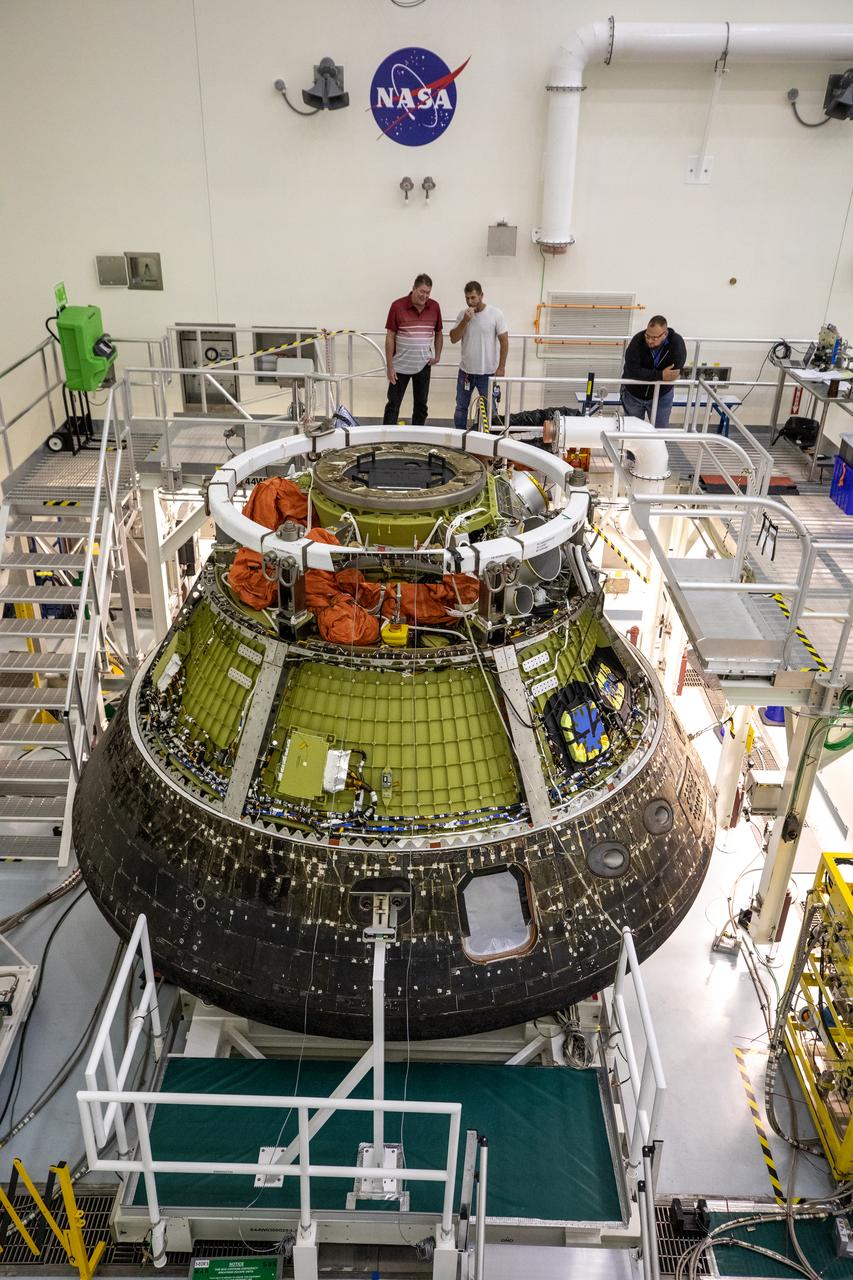
NASA’s Artemis I Orion capsule is secured on a platform inside the Multi-Payload Processing Facility (MPPF) at Kennedy Space Center in Florida on Jan. 6, 2023. Orion splashed down in the Pacific Ocean at 12:40 p.m. EST on Dec. 11, 2022. The spacecraft was secured inside the well deck of the USS Portland for the voyage to U.S. Naval Base Sand Diego, arriving on Dec. 13, 2022. Orion was offloaded and transported back to Kennedy for deservicing inside the MPPF. Orion launched atop the Space Launch System rocket on Nov. 16, 2022 at 1:47 a.m. EST from Kennedy’s Launch Complex 39B for a 25-day trip beyond the Moon and back. During the flight, Orion flew farther than any human-rated spacecraft has ever flown, paving the way for human deep space exploration and demonstrating NASA’s commitment and capability to extend human presence to the Moon and beyond.
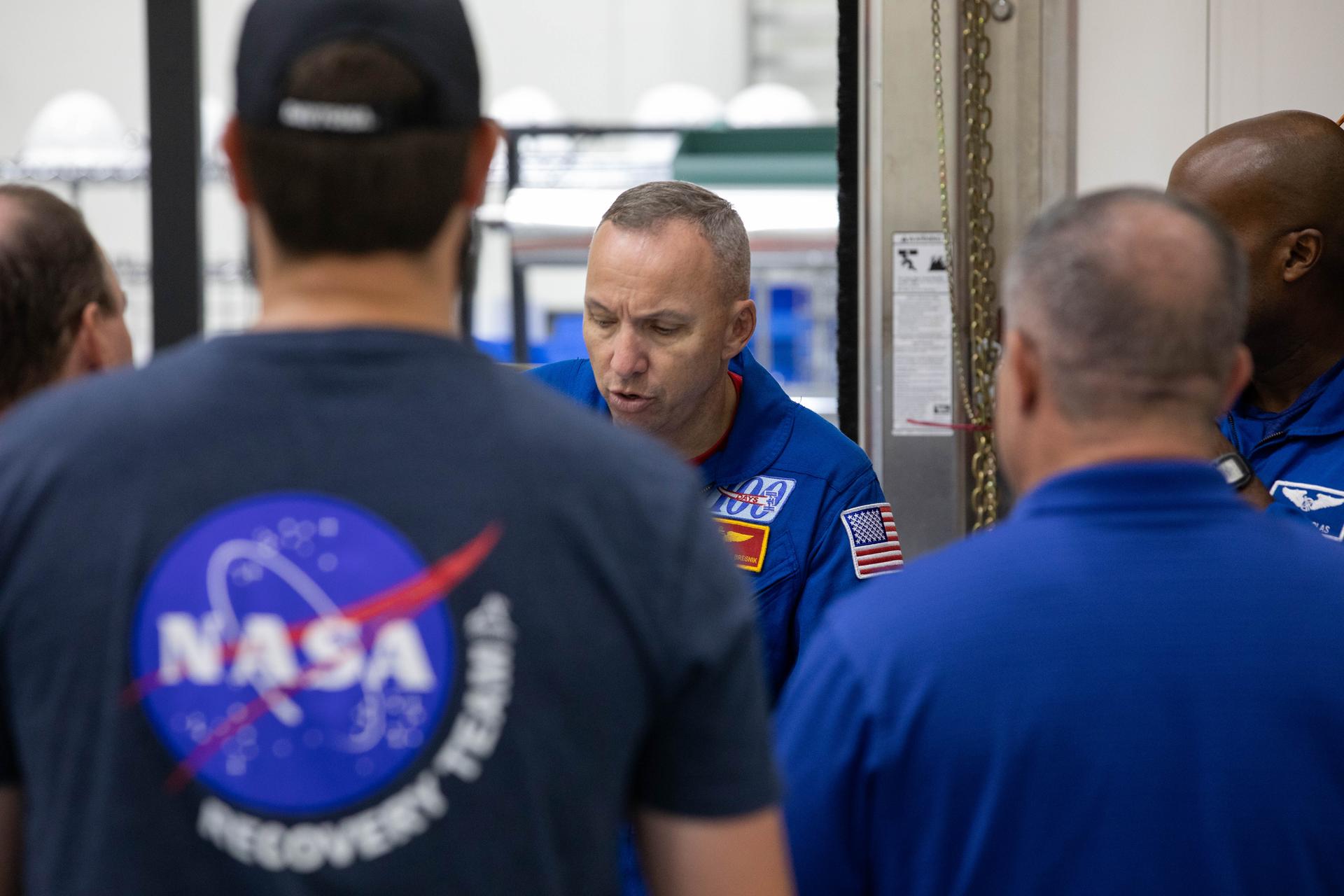
Artemis III crew members, NASA astronauts Randy Bresnick (center) and Andre Douglas (obscured) get a close look Orion spacecraft hardware inside the Multi-Payload Processing Facility at NASA’s Kennedy Space Center in Florida on Friday, July 10, 2026. Bresnick, Douglas, NASA astronaut Frank Rubio, and ESA (European Space Agency) astronaut Luca Parmitano will launch aboard Orion on the Artemis III mission to conduct critical rendezvous and docking tests with lunar lander systems in low Earth orbit, advancing the capabilities needed before astronauts return to the lunar surface on Artemis IV.
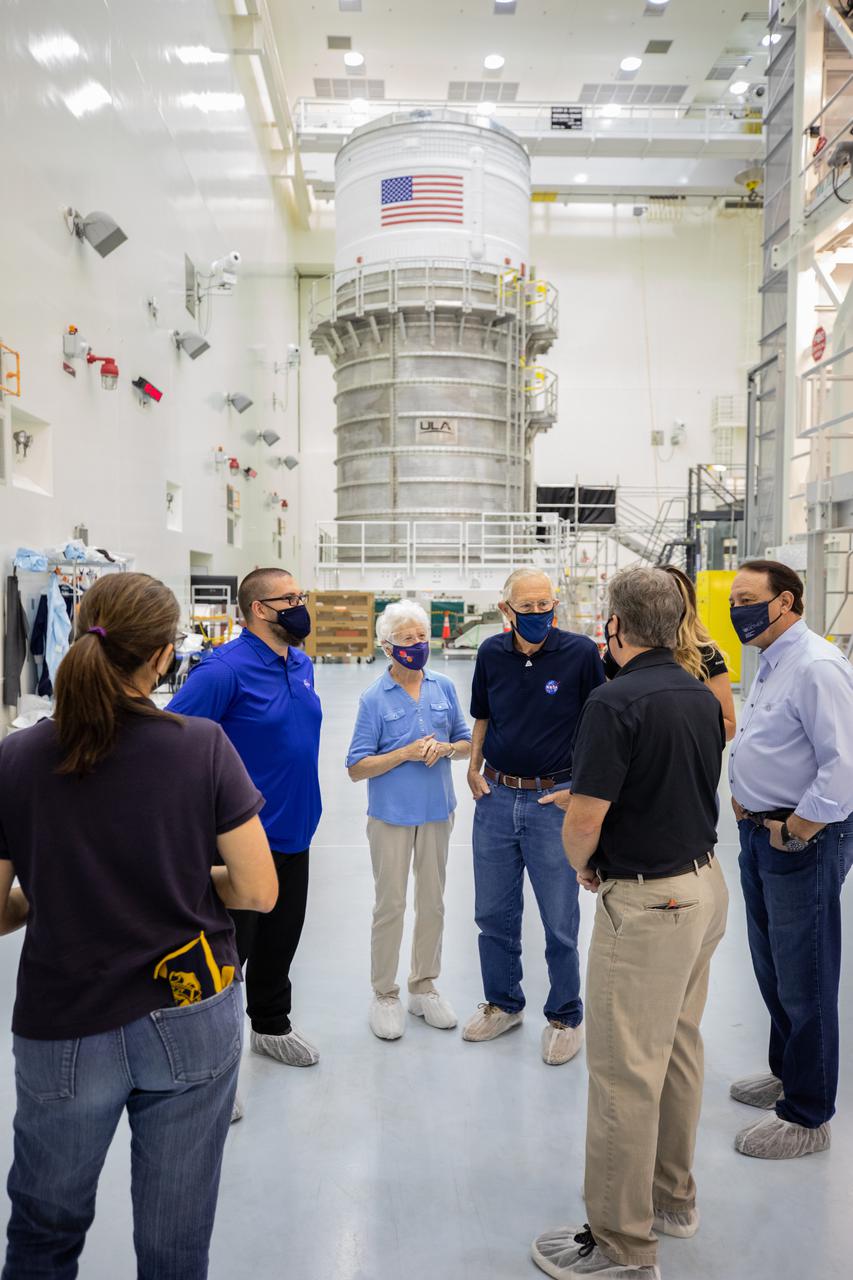
From left to right, Nicole Stott (black shirt back facing camera), NASA Astronaut (former); Adam Leppek, ARES Corporation (KLXSIII), Deputy Element Operations Manager; Dottie Duke, wife of Charlie Duke; Charlie Duke, NASA Astronaut (former); Nick Kindred, Jacobs Technology, Flow Manager; and Jim Keys, Pilot, tour the inside of the Multi-Payload Processing Facility (MPPF) during a visit to NASA’s Kennedy Space Center in Florida on May 10, 2021. Shown in the background is the Interim Cryogenic Propulsion Stage for the Artemis I mission. The first in a series of increasingly complex missions, Artemis I will test Orion and the Space Launch System rocket as an integrated system prior to crewed flights to the Moon.
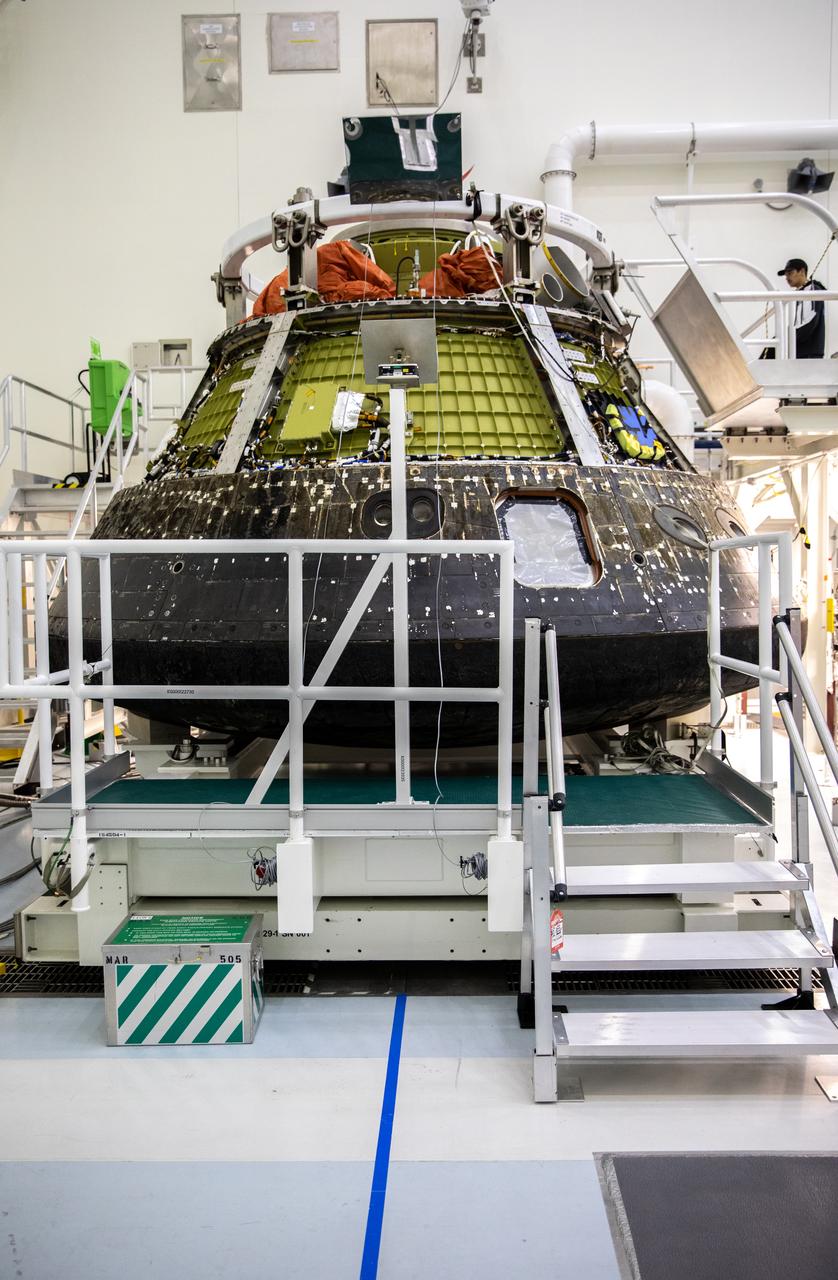
NASA’s Artemis I Orion capsule is secured on a platform inside the Multi-Payload Processing Facility (MPPF) at Kennedy Space Center in Florida on Jan. 6, 2023. Orion splashed down in the Pacific Ocean at 12:40 p.m. EST on Dec. 11, 2022. The spacecraft was secured inside the well deck of the USS Portland for the voyage to U.S. Naval Base Sand Diego, arriving on Dec. 13, 2022. Orion was offloaded and transported back to Kennedy for deservicing inside the MPPF. Orion launched atop the Space Launch System rocket on Nov. 16, 2022 at 1:47 a.m. EST from Kennedy’s Launch Complex 39B for a 25-day trip beyond the Moon and back. During the flight, Orion flew farther than any human-rated spacecraft has ever flown, paving the way for human deep space exploration and demonstrating NASA’s commitment and capability to extend human presence to the Moon and beyond.
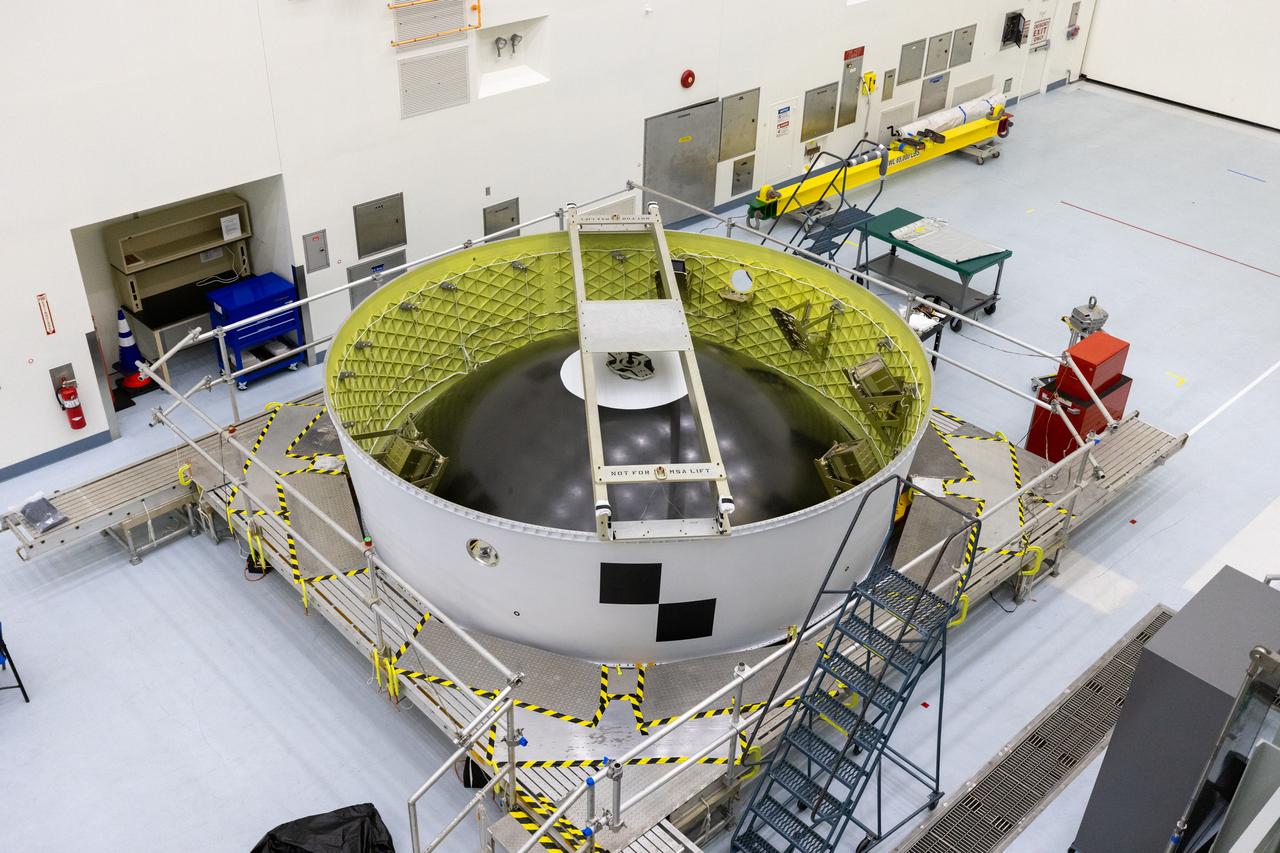
Technicians completed installation of the German Aerospace Center TACHELES CubeSat within the Orion stage adapter inside the Multi-Payload Processing Facility at NASA’s Kennedy Space Center in Florida on Wednesday, Sept. 17, 2025. The TACHELES CubeSat, about the size of a shoebox, is one of the CubeSats slated to fly on NASA’s Artemis II test flight in 2026. Deploying in high Earth orbit from a spacecraft adapter on NASA’s SLS (Space Launch System) rocket after Orion is safely flying on its own with its crew of four astronauts, TACHELES will collect measurements on the effects of the space environment on electrical components to inform technologies for lunar vehicles.
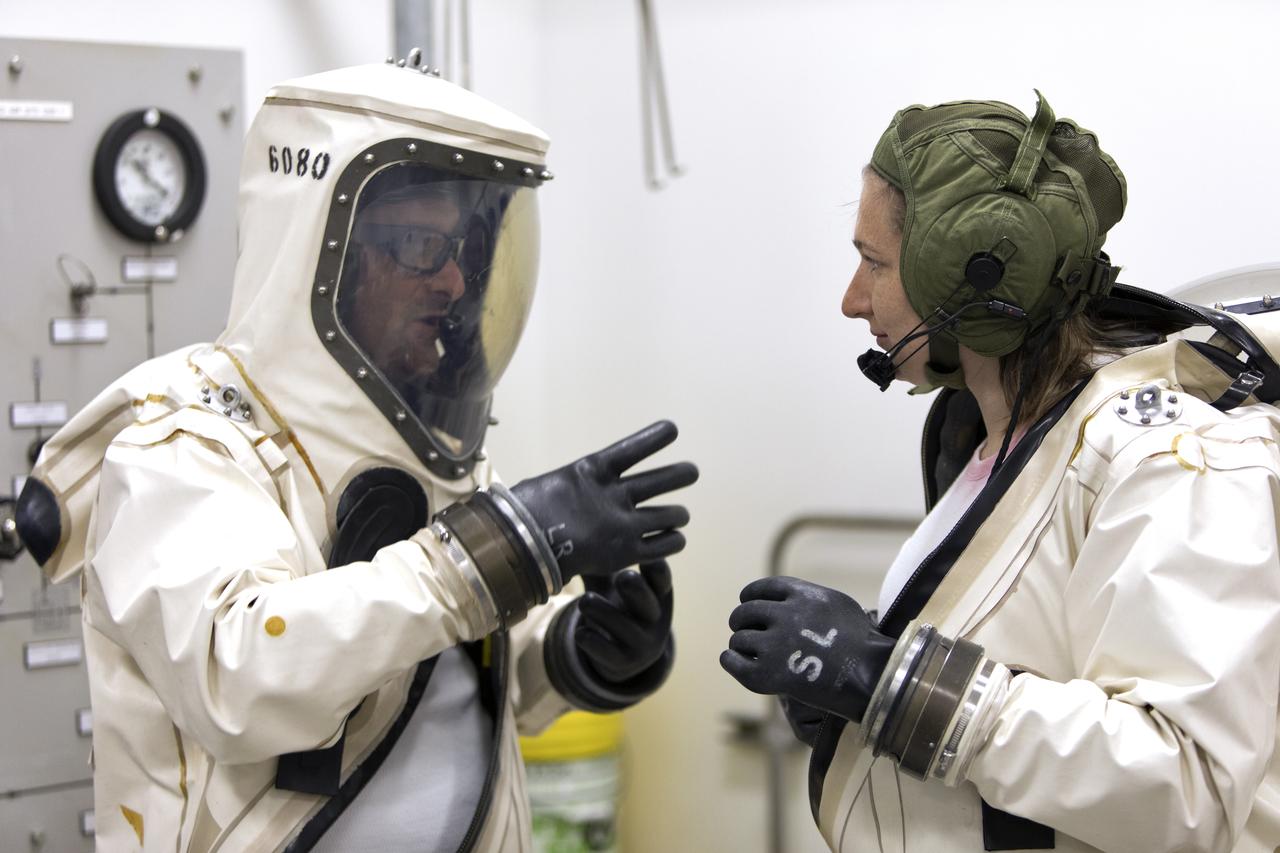
Technicans inside Kennedy's Multi-Payload Processing Facility do testing in SCAPE (Self-Contained Atmospheric Protective Ensemble) suits.
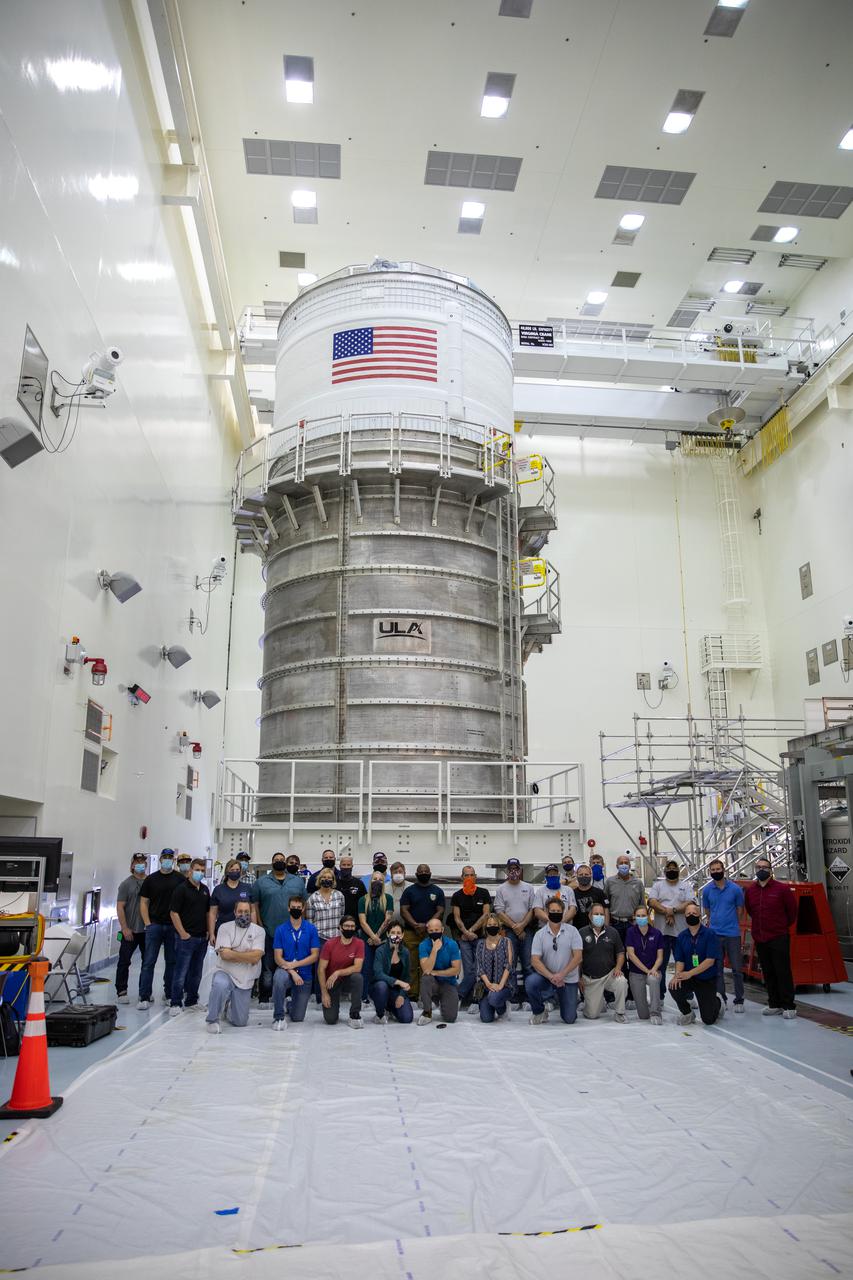
The Space Launch System (SLS) rocket’s interim cryogenic propulsion stage (ICPS) moved into the Multi-Payload Processing Facility February 18, 2021, at NASA’s Kennedy Space Center in Florida for the Artemis I mission. It will undergo fueling and servicing in the facility ahead of launch by teams from NASA’s Exploration Ground Systems and their primary contractor, Jacobs Technology. Artemis I will be an integrated flight test of the SLS rocket and Orion spacecraft ahead of the crewed flights to the Moon. Under the Artemis program, NASA will land the first woman and the next man on the lunar surface and establish a sustainable presence at the Moon to prepare for human missions to Mars.

NASA’s Orion spacecraft for the agency’s Artemis II mission arrives at the NASA’s Kennedy Space Center Multi-Payload Processing Facility in Florida on Thursday, April 30, 2026, for de-servicing operations on the spacecraft. The Orion spacecraft successfully splashed down on Friday, April 10, 2026, in the Pacific Ocean following its approximate 10-day journey around the Moon carrying NASA astronauts Reid Wiseman, Victor Glover, and Christina Koch, and CSA (Canadian Space Agency) astronaut Jeremy Hansen. As part of a Golden Age of innovation and exploration, Artemis II marked another step toward new U.S.-crewed missions on the Moon’s surface that will help the agency prepare to send the first astronauts – Americans – to Mars.
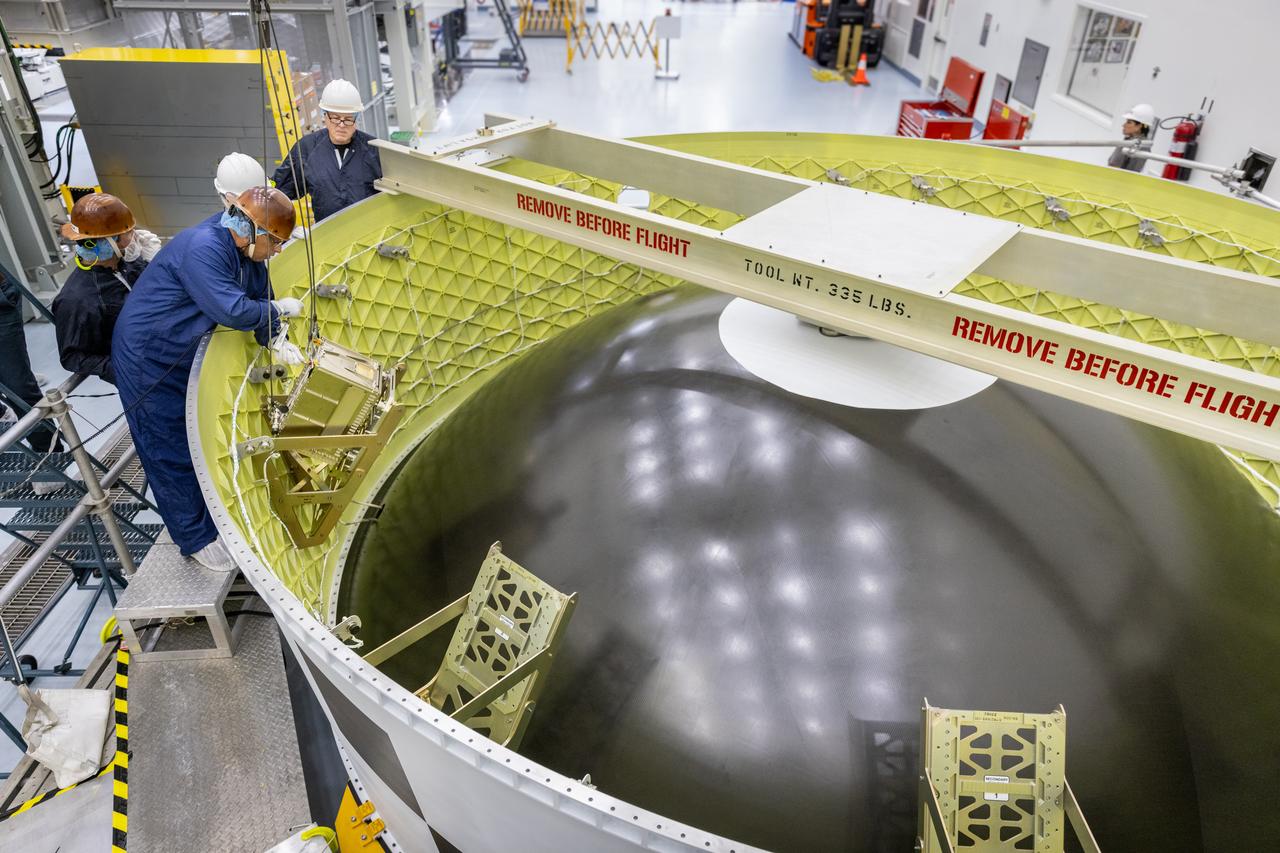
Technicians install the Korea AeroSpace Administration (KASA) K-Rad Cube within the Orion stage adapter inside the Multi-Payload Processing Facility at NASA’s Kennedy Space Center in Florida on Tuesday, Sept. 2, 2025. The K-Rad Cube, about the size of a shoebox, is one of the CubeSats slated to fly on NASA’s Artemis II test flight in 2026. Deploying in high Earth orbit from a spacecraft adapter on NASA’s SLS (Space Launch System) rocket after Orion is safely flying on its own with its crew of four astronauts, K-Rad Cube will use a dosimeter made of material designed to mimic human tissue to measure space radiation and assess biological effects at various altitudes across the Van Allen radiation belts, a critical area of research for human presence at the Moon and Mars.

From left, Meagan Jones, engineer, NASA’s Kennedy Space Center, and Howard Hu, manager, Orion Program, looks at NASA’s Orion spacecraft following its arrival at the NASA’s Kennedy Multi-Payload Processing Facility in Florida on Thursday, April 30, 2026, for de-servicing operations on the spacecraft. The Orion spacecraft successfully splashed down on Friday, April 10, 2026, in the Pacific Ocean following its approximate 10-day journey around the Moon carrying NASA astronauts Reid Wiseman, Victor Glover, and Christina Koch, and CSA (Canadian Space Agency) astronaut Jeremy Hansen for the Artemis II test flight mission.
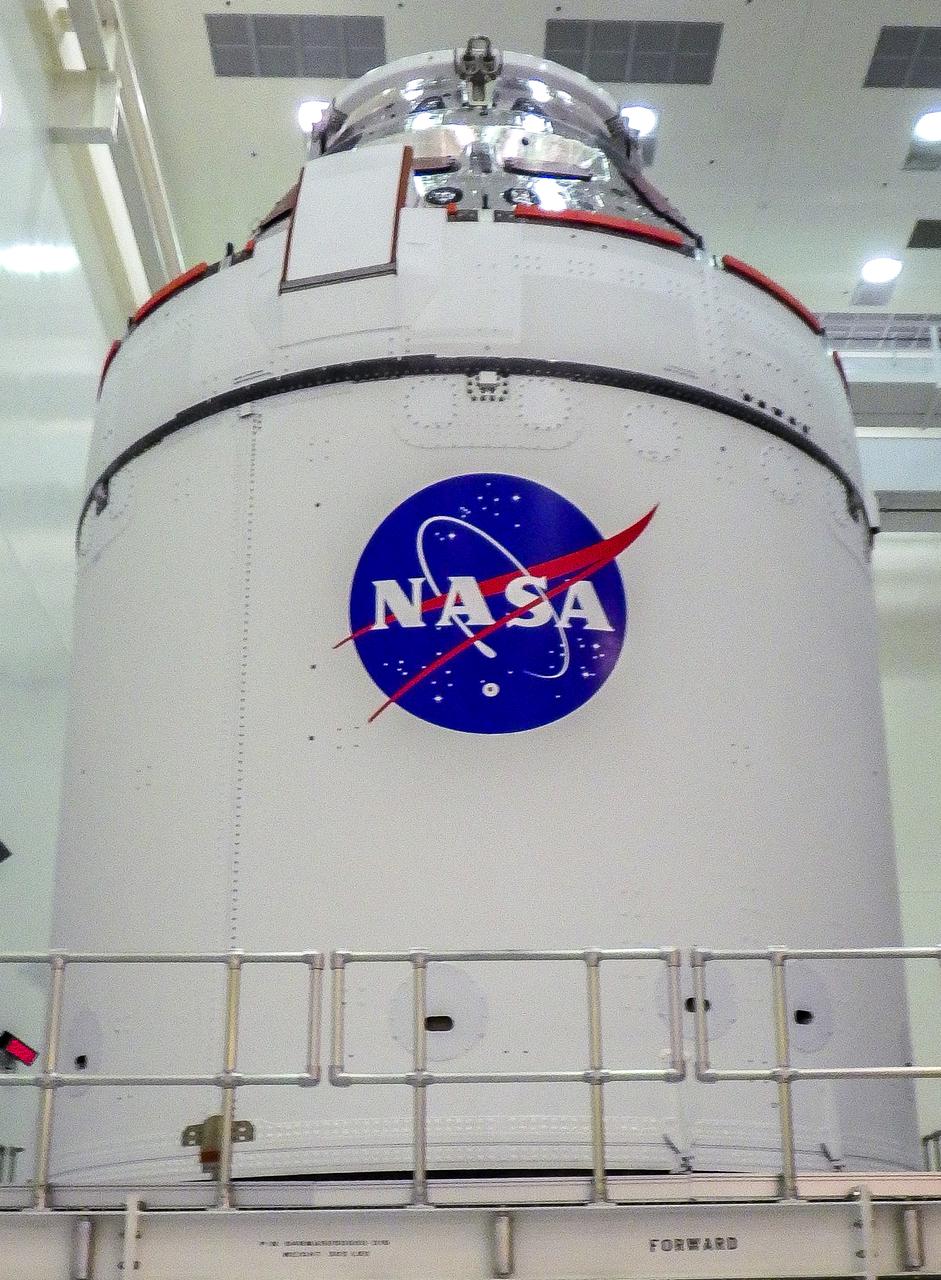
A close-up view of the Artemis I Orion spacecraft with NASA’s famous “meatball” insignia is affixed to the spacecraft adapter jettison fairings, which protect the European built service module, inside the Multi-Payload Processing Facility at Kennedy Space Center on Jan. 20, 2021. Ground processing will begin on Orion, with the Exploration Ground Systems and Jacobs teams performing checkouts and fueling the spacecraft with commodities as part of preparations ahead of the Artemis I mission.
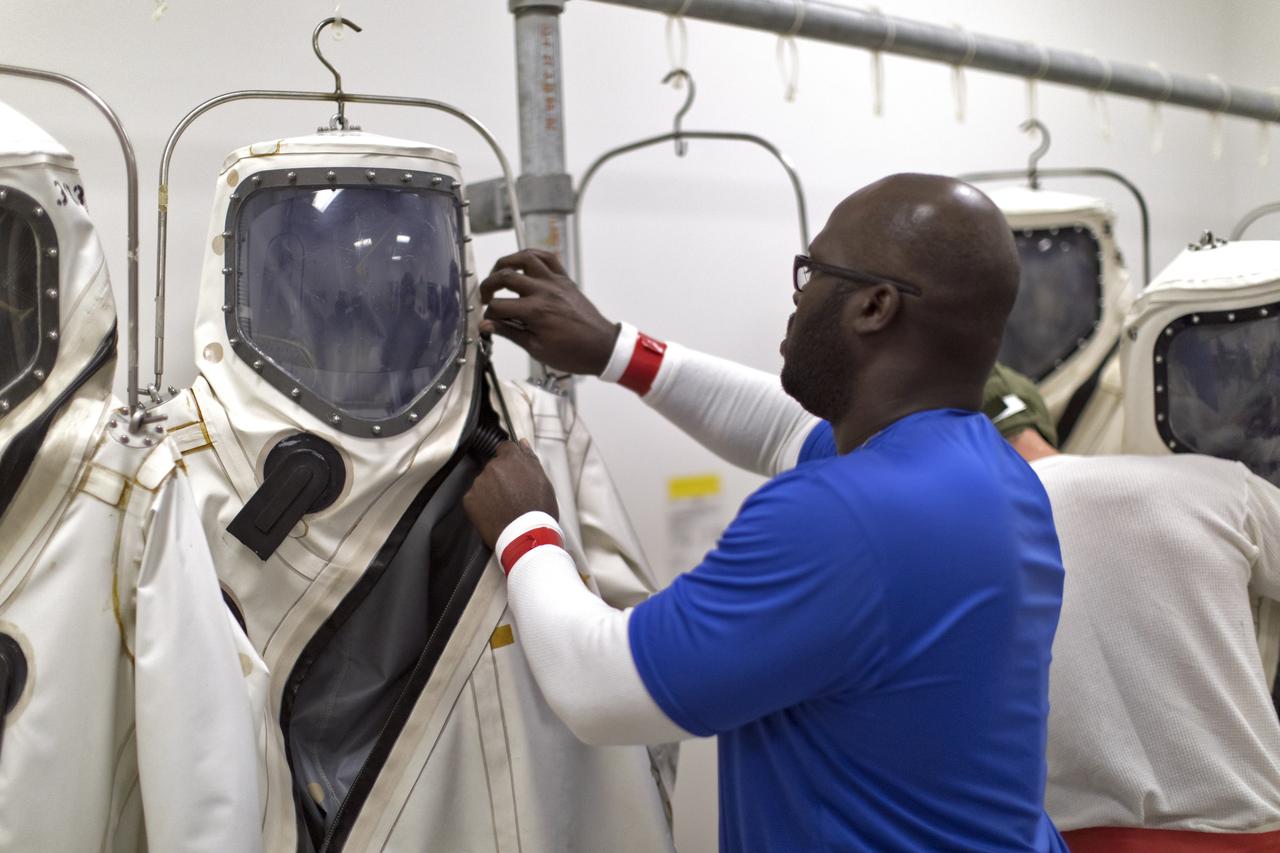
An operator prepares to don a Self-Contained Atmospheric Protective Ensemble (SCAPE) suit inside a room in the Multi-Payload Processing Facility (MPPF) at NASA's Kennedy Space Center in Florida on Oct. 31, 2018. SCAPE operators, wearing the suits, will participate in a hypergolic systems hot flow test at the MPPF. The test will serve as operational validation of the hypergol subsystem and demonstrate that the hypergols subsystem can service the Orion spacecraft, flow fuel at the required rates, drain and de-service the system, and meet the intended timeline. SCAPE suite are used in operations involving toxic propellants and are supplied with air either through a hardline or through a self-contained environmental control unit.
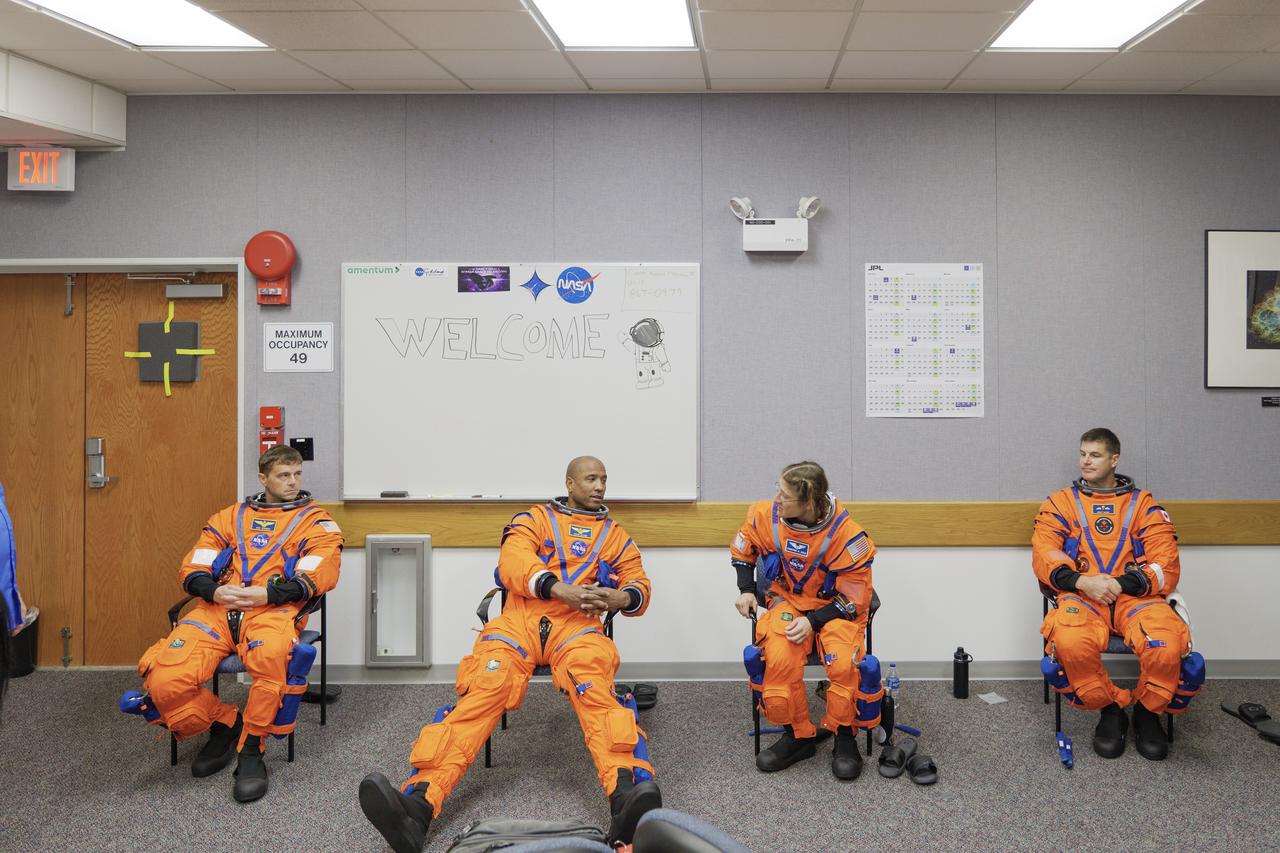
The crew of NASA’s Artemis II mission participates in a suited crew test on Thursday, July 31, 2025, at the agency’s Kennedy Space Center in Florida. From left, NASA astronauts Reid Wiseman, Artemis II commander; Victor Glover, Artemis II pilot; and Christina Koch, mission specialist; along with CSA (Canadian Space Agency) astronaut Jeremy Hansen,. mission specialist, donned their Orion crew survival system spacesuits for training at NASA’s Kennedy’s Multi-Payload Processing Facility, where they entered their fully powered Orion spacecraft as part of the test. Artemis II will take the four astronauts around the Moon, as the first crewed mission on NASA’s path to establishing a long-term presence for science and exploration through Artemis.
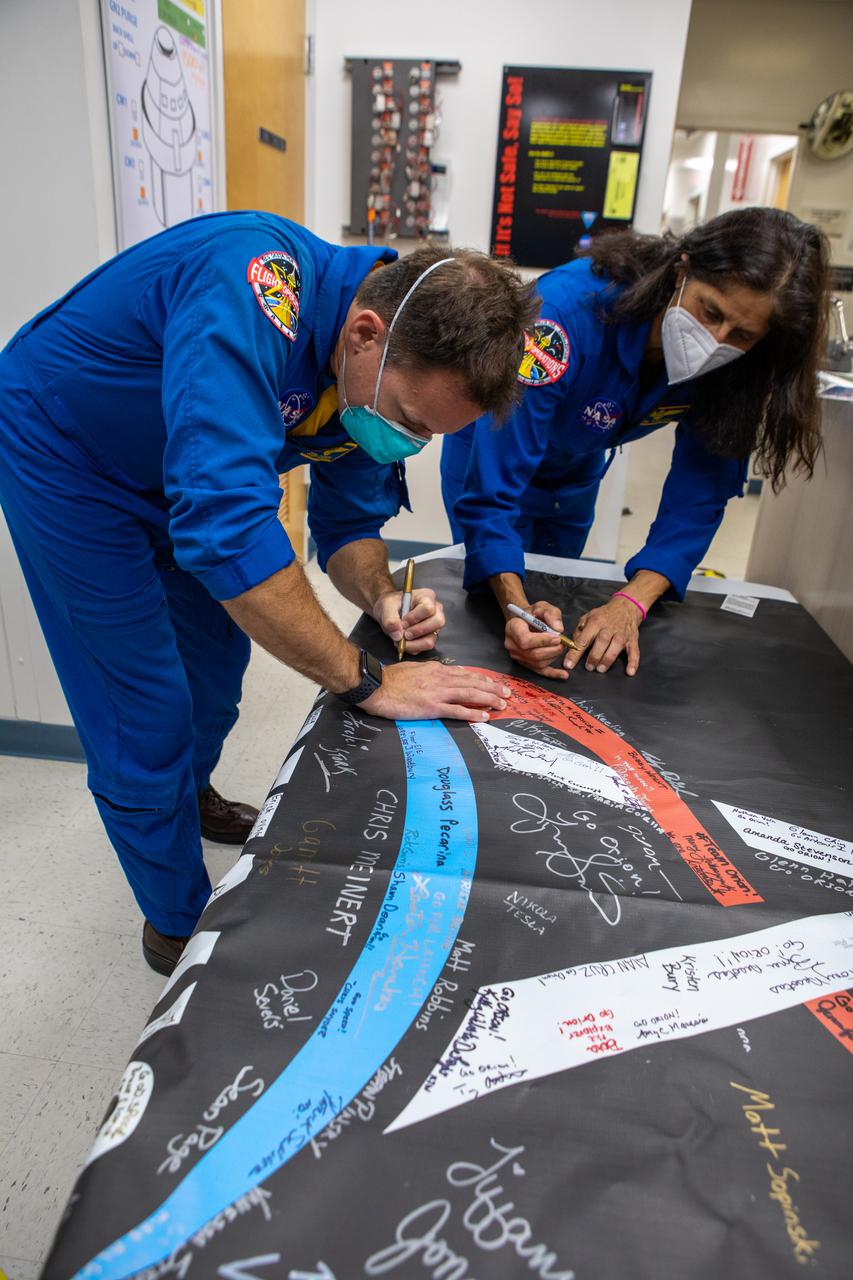
NASA astronauts Josh Cassada, left, and Sunita “Suni” Williams add their signatures to an Artemis “We Are Going” banner inside the Multi-Payload Processing Facility (MPPF) during a visit to NASA’s Kennedy Space Center in Florida on April 6, 2021. During their time at Kennedy, they also had the opportunity to view the Orion spacecraft and Space Launch System’s (SLS) Interim Cryogenic Propulsion Stage – both being serviced inside the MPPF ahead of the Artemis I launch. The first in a series of increasingly complex missions, Artemis I will test Orion and SLS as an integrated system prior to crewed flights to the Moon.
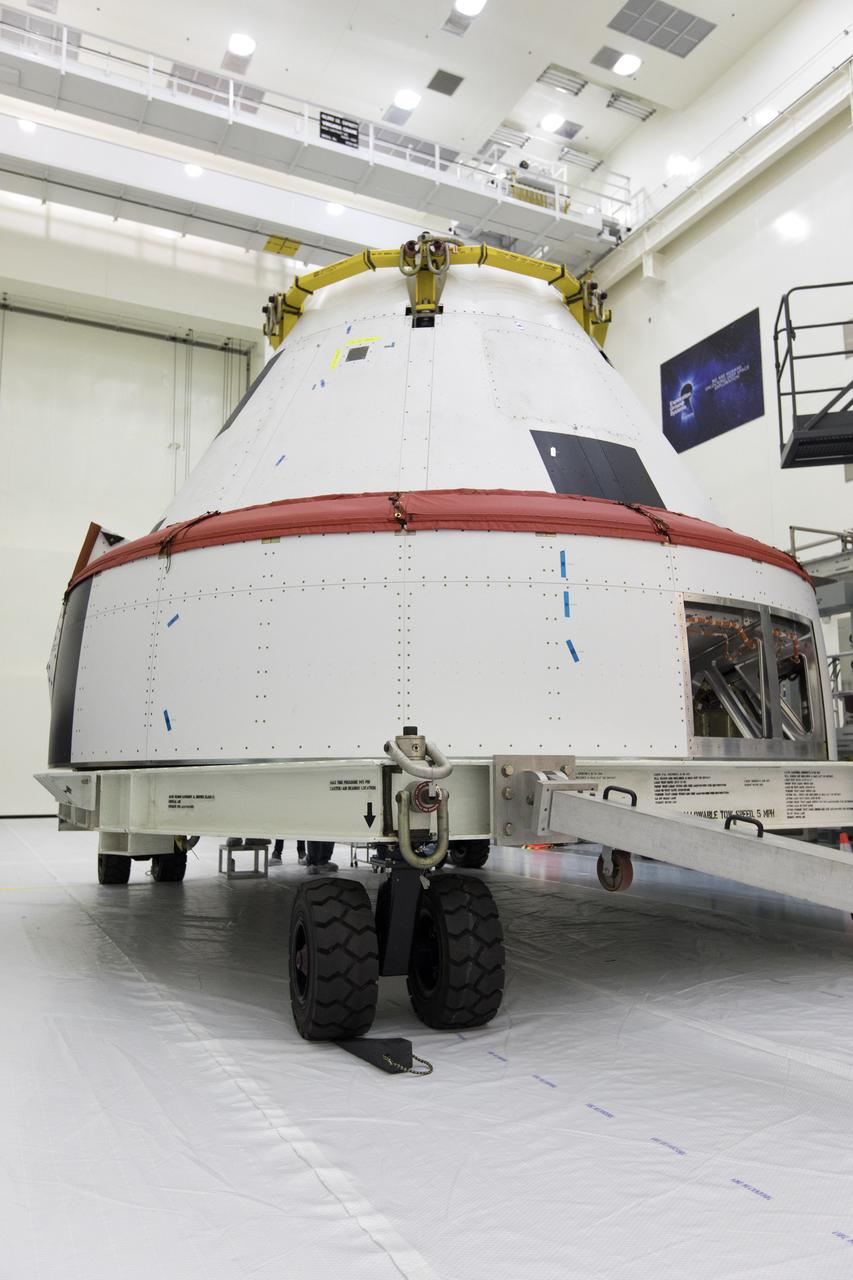
A mock Orion crew module is inside the Multi-Payload Processing Facility at NASA’s Kennedy Space Center in Florida on Dec. 6, 2018. The crew module will be used during a full stress test of the Launch Abort System (LAS), called Ascent Abort-2 (AA-2), scheduled for April 2019. During the test, the Northrop Grumman booster will launch from Space Launch Complex 46, carrying a fully functional LAS and the 22,000-pound Orion test vehicle to an altitude of 31,000 feet and traveling at more than 1,000 miles an hour. The test will verify the LAS can steer the crew module and astronauts aboard to safety in the event of an issue with the Space Launch System (SLS) rocket when the spacecraft is under the highest aerodynamic loads it will experience during a rapid climb into space.
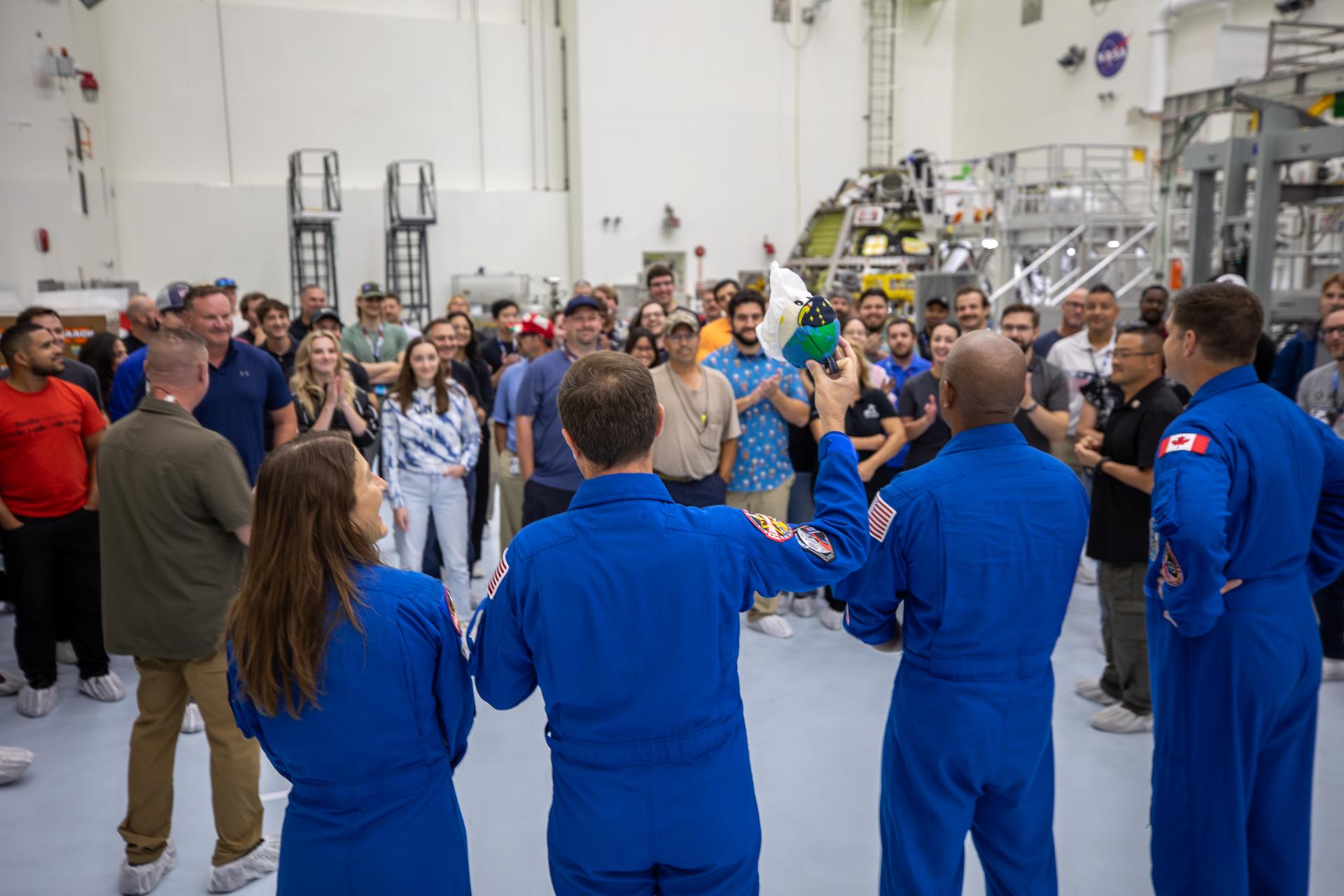
From left, Artemis II NASA astronauts Christina Koch, Reid Wiseman, Victor Glover, along with CSA (Canadian Space Agency) astronaut Jeremy Hansen speak to employees inside the Multi-Payload Processing Facility at NASA’s Kennedy Space Center in Florida on Wednesday, July 8, 2026. The crew returned to NASA Kennedy for their first official visit since launch of Artemis II on Wednesday, April 1, 2026, to visit with the center’s workforce and tour facilities to view progress on Artemis III prelaunch processing.
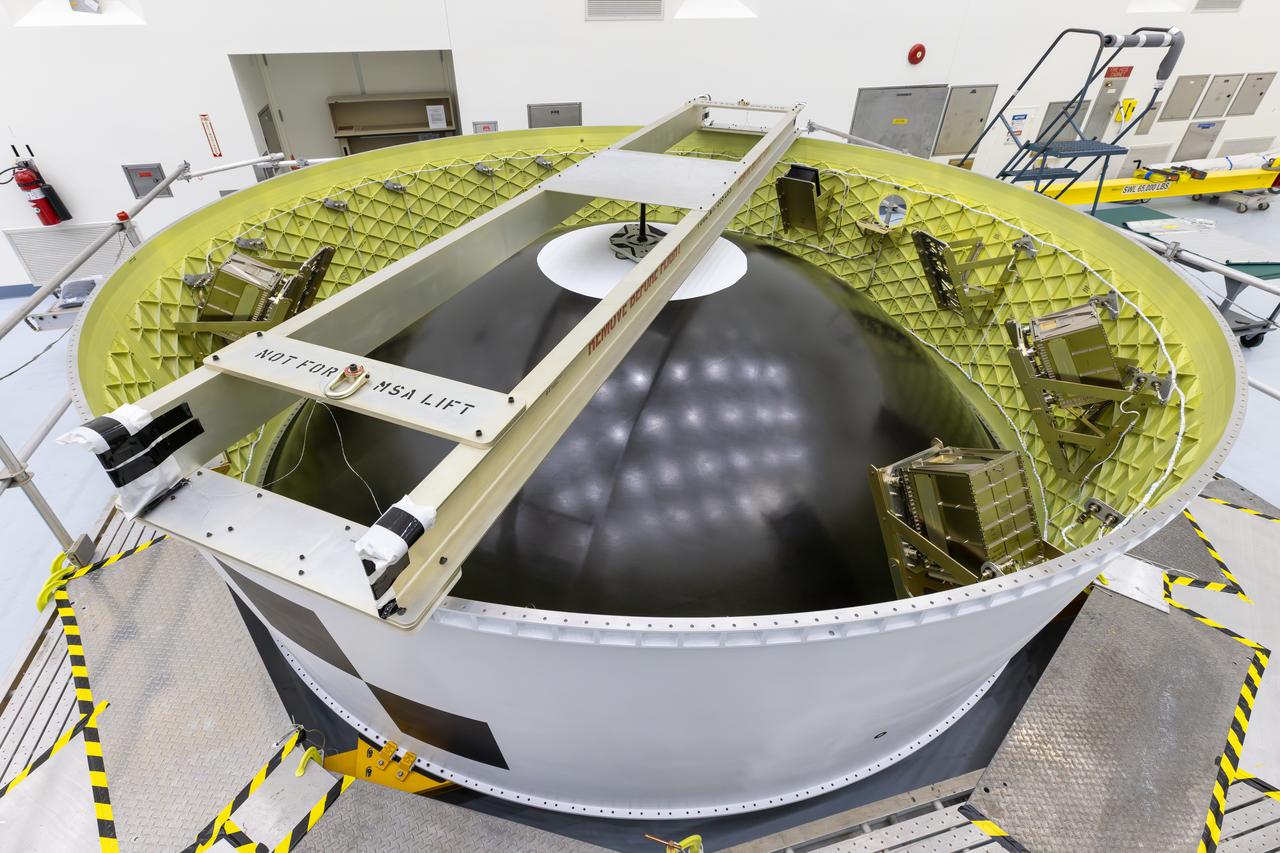
Technicians completed installation of the German Aerospace Center TACHELES CubeSat within the Orion stage adapter inside the Multi-Payload Processing Facility at NASA’s Kennedy Space Center in Florida on Wednesday, Sept. 17, 2025. The TACHELES CubeSat, about the size of a shoebox, is one of the CubeSats slated to fly on NASA’s Artemis II test flight in 2026. Deploying in high Earth orbit from a spacecraft adapter on NASA’s SLS (Space Launch System) rocket after Orion is safely flying on its own with its crew of four astronauts, TACHELES will collect measurements on the effects of the space environment on electrical components to inform technologies for lunar vehicles.
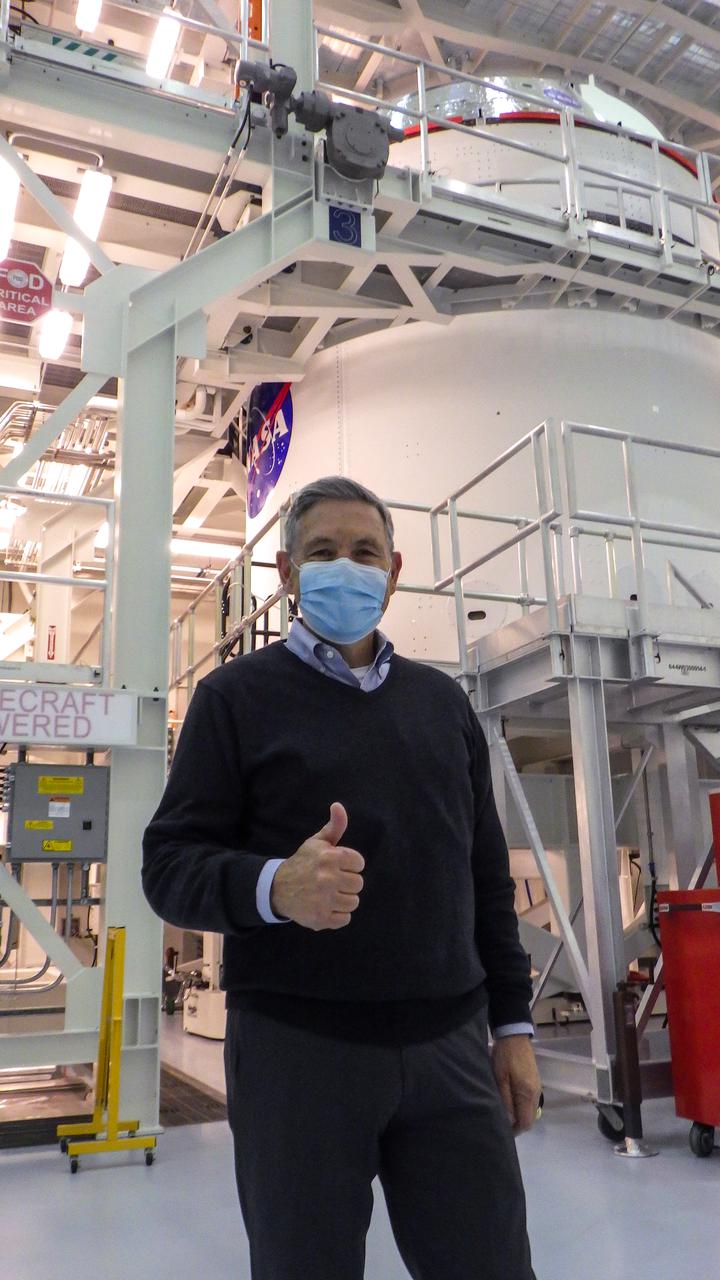
Kennedy Space Center Director Bob Cabana gives a thumbs up inside the Multi-Payload Processing Facility at the center on Jan. 20, 2021. Behind him is the Artemis I Orion spacecraft with NASA’s famous “meatball” insignia is affixed to the Artemis I Orion spacecraft adapter jettison fairings, which protect the European built service module. Shown inside its servicing stand, ground processing begins on Orion, with the Exploration Ground Systems and Jacobs teams performing checkouts and fueling the spacecraft with commodities as part of preparations ahead of the Artemis I mission.
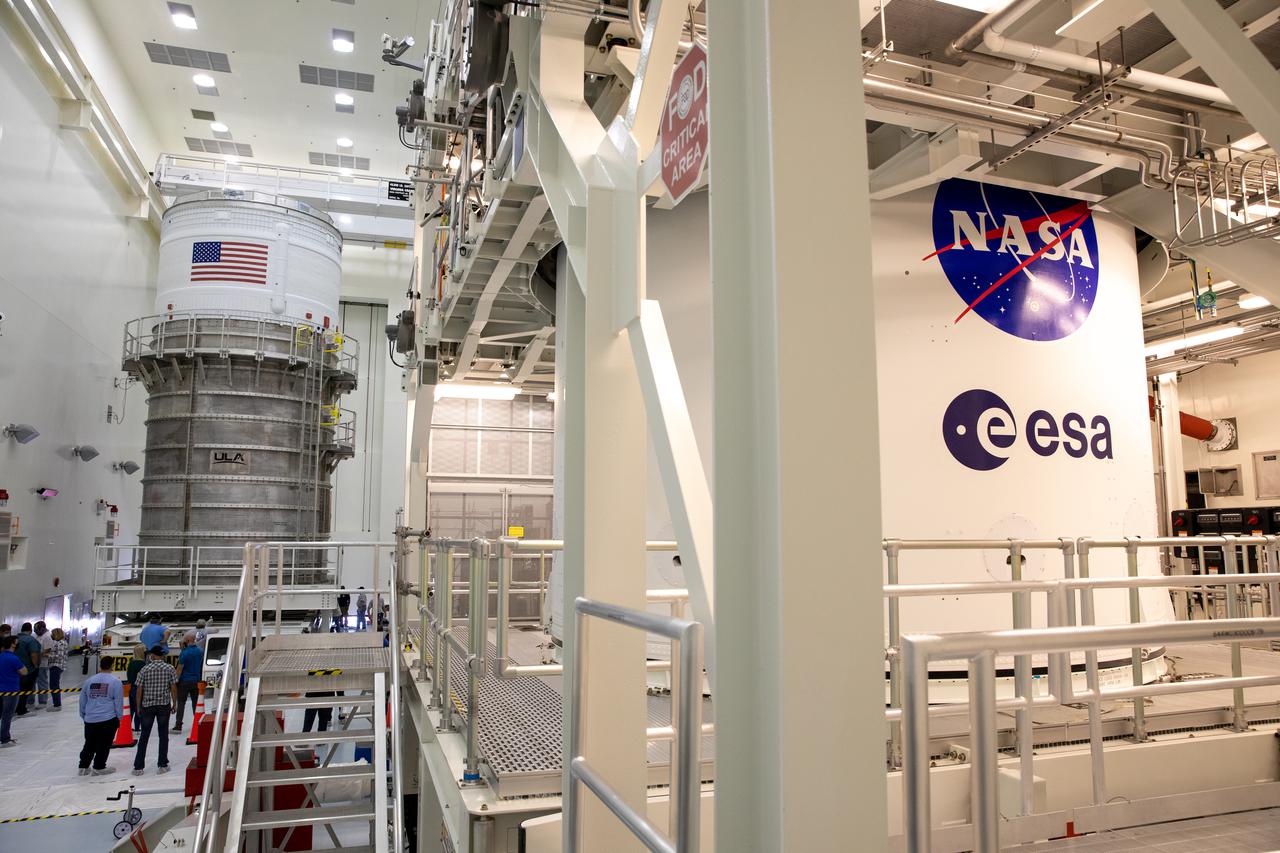
The Space Launch System (SLS) rocket’s interim cryogenic propulsion stage (ICPS) moved into the Multi-Payload Processing Facility February 18, 2021, at NASA’s Kennedy Space Center in Florida alongside one of its flight partners for the Artemis I mission, the Orion spacecraft. Both pieces of hardware will undergo fueling and servicing in the facility ahead of launch by teams from NASA’s Exploration Ground Systems and their primary contractor, Jacobs Technology. In view, at right, are the NASA insignia and ESA (European Space Agency) logos on the European-built service module. Artemis I will be an integrated flight test of the SLS rocket and Orion spacecraft ahead of the crewed flights to the Moon. Under the Artemis program, NASA will land the first woman and the next man on the lunar surface and establish a sustainable presence at the Moon to prepare for human missions to Mars.
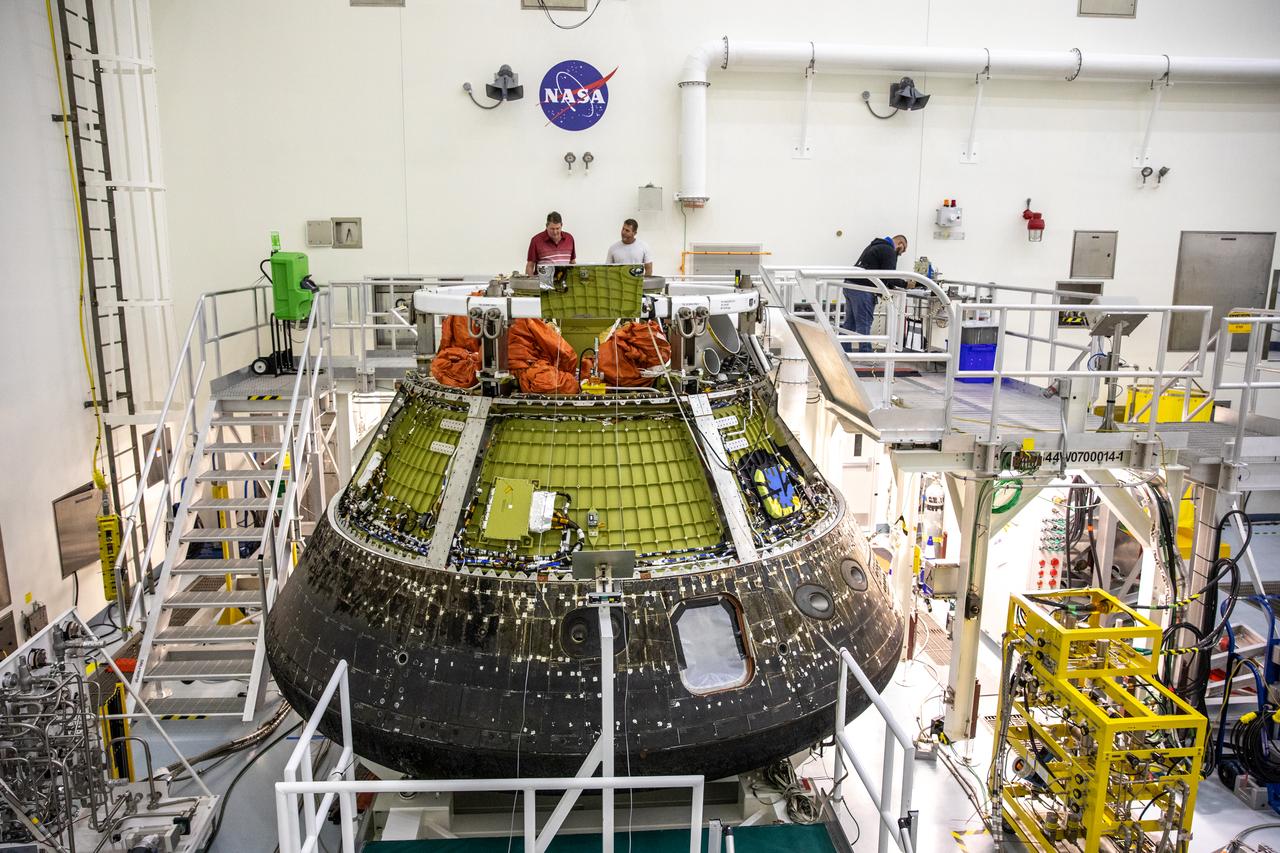
A close-up view shows NASA’s Artemis I Orion capsule secured on a platform inside the Multi-Payload Processsing Facility (MPPF) at Kennedy Space Center in Florida on Jan. 6, 2023. Orion splashed down in the Pacific Ocean at 12:40 p.m. EST on Dec. 11, 2022. The spacecraft was secured inside the well deck of the USS Portland for the voyage to U.S. Naval Base Sand Diego, arriving on Dec. 13, 2022. Orion was offloaded and transported back to Kennedy for deservicing inside the MPPF. Orion launched atop the Space Launch System rocket on Nov. 16, 2022 at 1:47 a.m. EST from Kennedy’s Launch Complex 39B for a 25-day trip beyond the Moon and back. During the flight, Orion flew farther than any human-rated spacecraft has ever flown, paving the way for human deep space exploration and demonstrating NASA’s commitment and capability to extend human presence to the Moon and beyond.
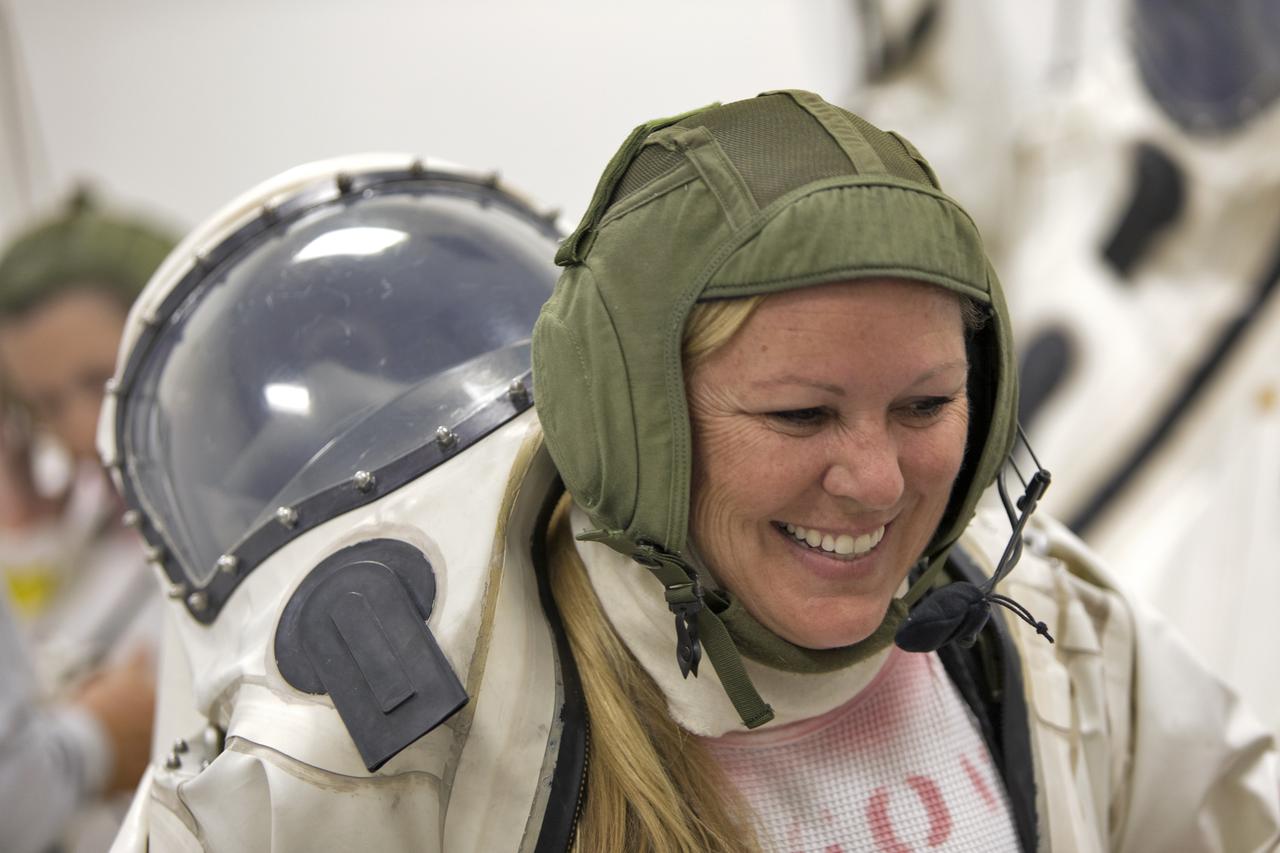
An operator dons a Self-Contained Atmospheric Protective Ensemble (SCAPE) suit inside a room in the Multi-Payload Processing Facility (MPPF) at NASA's Kennedy Space Center in Florida on Oct. 31, 2018. SCAPE operators, wearing the suits, will participate in a hypergolic systems hot flow test at the MPPF. The test will serve as operational validation of the hypergol subsystem and demonstrate that the hypergols subsystem can service the Orion spacecraft, flow fuel at the required rates, drain and de-service the system, and meet the intended timeline. SCAPE suite are used in operations involving toxic propellants and are supplied with air either through a hardline or through a self-contained environmental control unit.
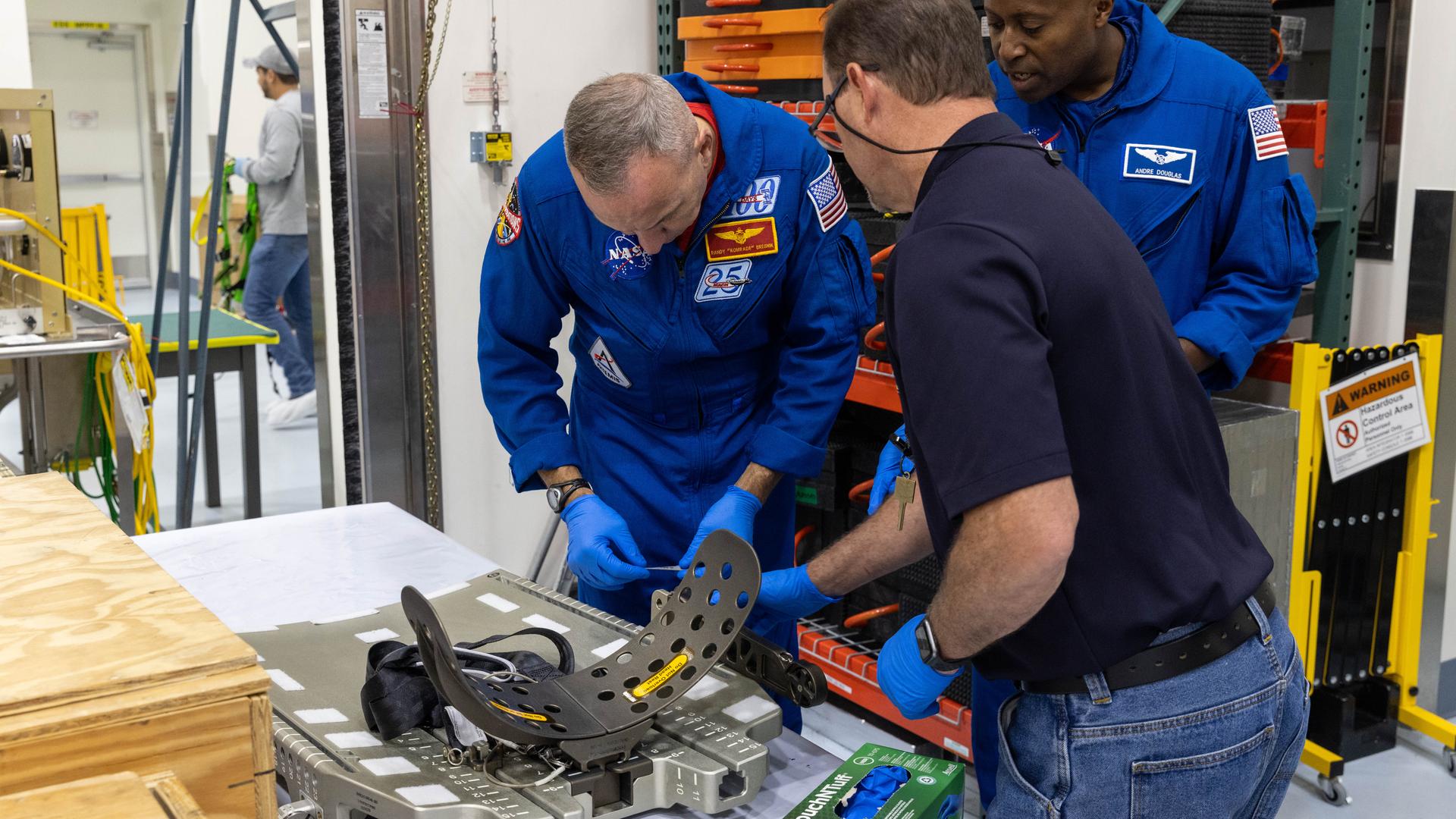
Artemis III crew members, NASA astronauts Randy Bresnick (left) and Andre Douglas get a close look Orion spacecraft hardware inside the Multi-Payload Processing Facility at NASA’s Kennedy Space Center in Florida on Friday, July 10, 2026. Bresnick, Douglas, NASA astronaut Frank Rubio, and ESA (European Space Agency) astronaut Luca Parmitano will launch aboard Orion on the Artemis III mission to conduct critical rendezvous and docking tests with lunar lander systems in low Earth orbit, advancing the capabilities needed before astronauts return to the lunar surface on Artemis IV.
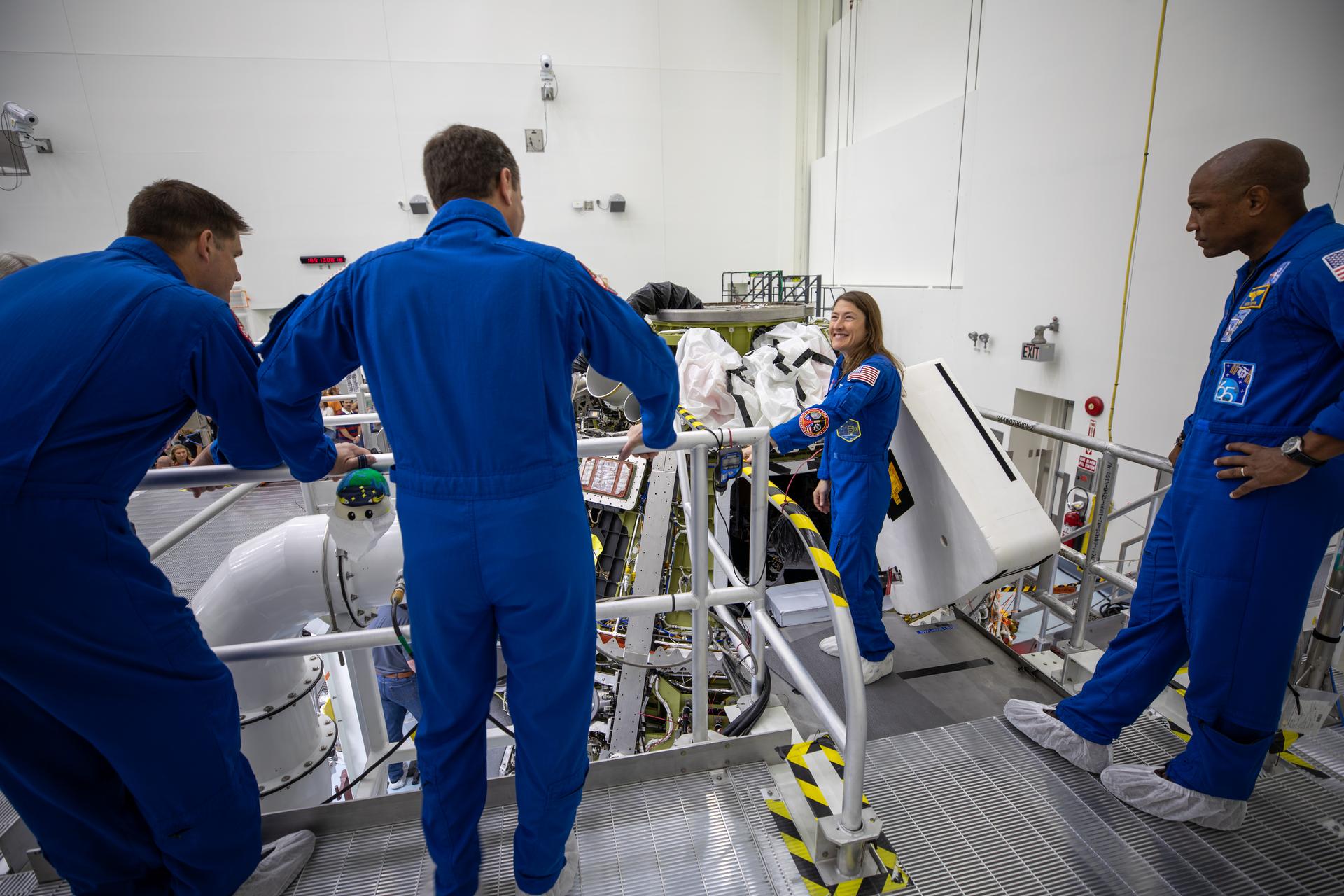
From left, Artemis II CSA (Canadian Space Agency) astronaut Jeremy Hansen, and NASA astronauts Reid Wiseman, Christina Koch, and Victor Glover view the Artemis II Orion spacecraft inside the Multi-Payload Processing Facility at NASA’s Kennedy Space Center in Florida on Wednesday, July 8, 2026. The crew returned to NASA Kennedy for their first official visit since launch of Artemis II on Wednesday, April 1, 2026, to visit with the center’s workforce and tour facilities to view progress on Artemis III prelaunch processing.
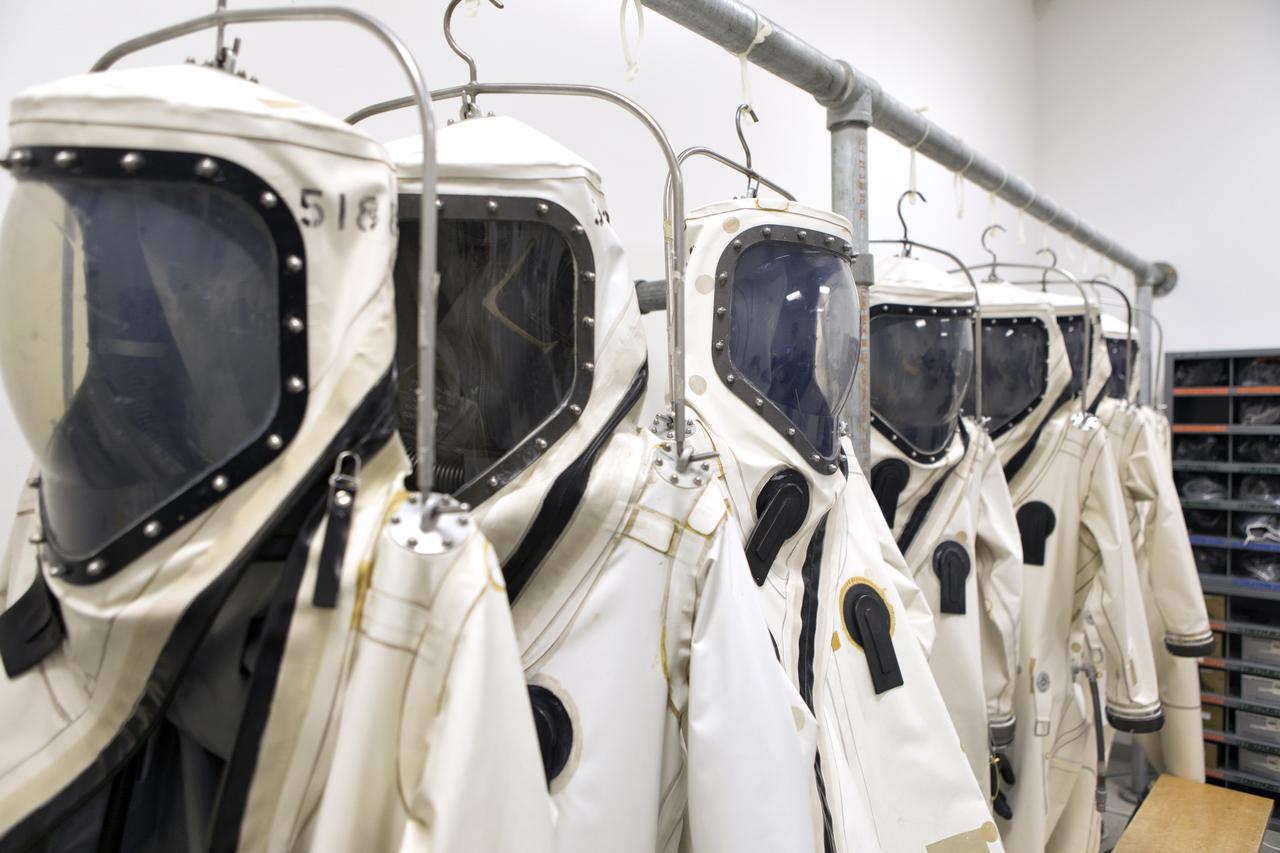
Self-Contained Atmospheric Protective Ensemble (SCAPE) suits are hanging in a row inside the Multi-Payload Processing Facility (MPPF) at NASA's Kennedy Space Center in Florida on Oct. 31, 2018. SCAPE operators will don the suits and then participate in a hypergolic systems hot flow test at the MPPF. The test will serve as operational validation of the hypergol subsystem and demonstrate that the hypergols subsystem can service the Orion spacecraft, flow fuel at the required rates, drain and de-service the system, and meet the intended timeline. SCAPE suite are used in operations involving toxic propellants and are supplied with air either through a hardline or through a self-contained environmental control unit.
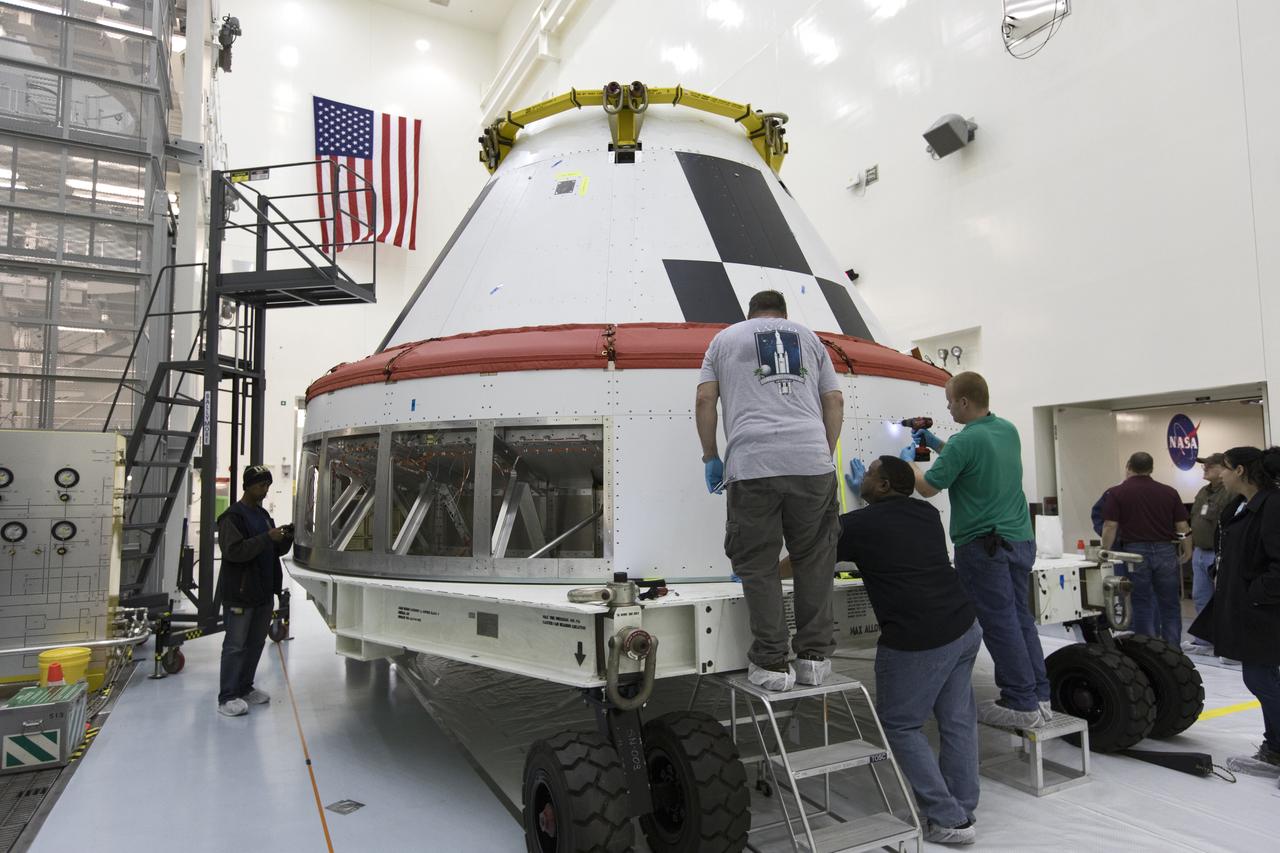
Workers remove cover plates from a mock Orion crew module inside the Multi-Payload Processing Facility at NASA’s Kennedy Space Center in Florida on Dec. 6, 2018. The crew module will be used during a full stress test of the Launch Abort System (LAS), called Ascent Abort-2 (AA-2), scheduled for April 2019. During the test, the Northrop Grumman booster will launch from Space Launch Complex 46, carrying a fully functional LAS and the 22,000-pound Orion test vehicle to an altitude of 31,000 feet and traveling at more than 1,000 miles an hour. The test will verify the LAS can steer the crew module and astronauts aboard to safety in the event of an issue with the Space Launch System (SLS) rocket when the spacecraft is under the highest aerodynamic loads it will experience during a rapid climb into space.
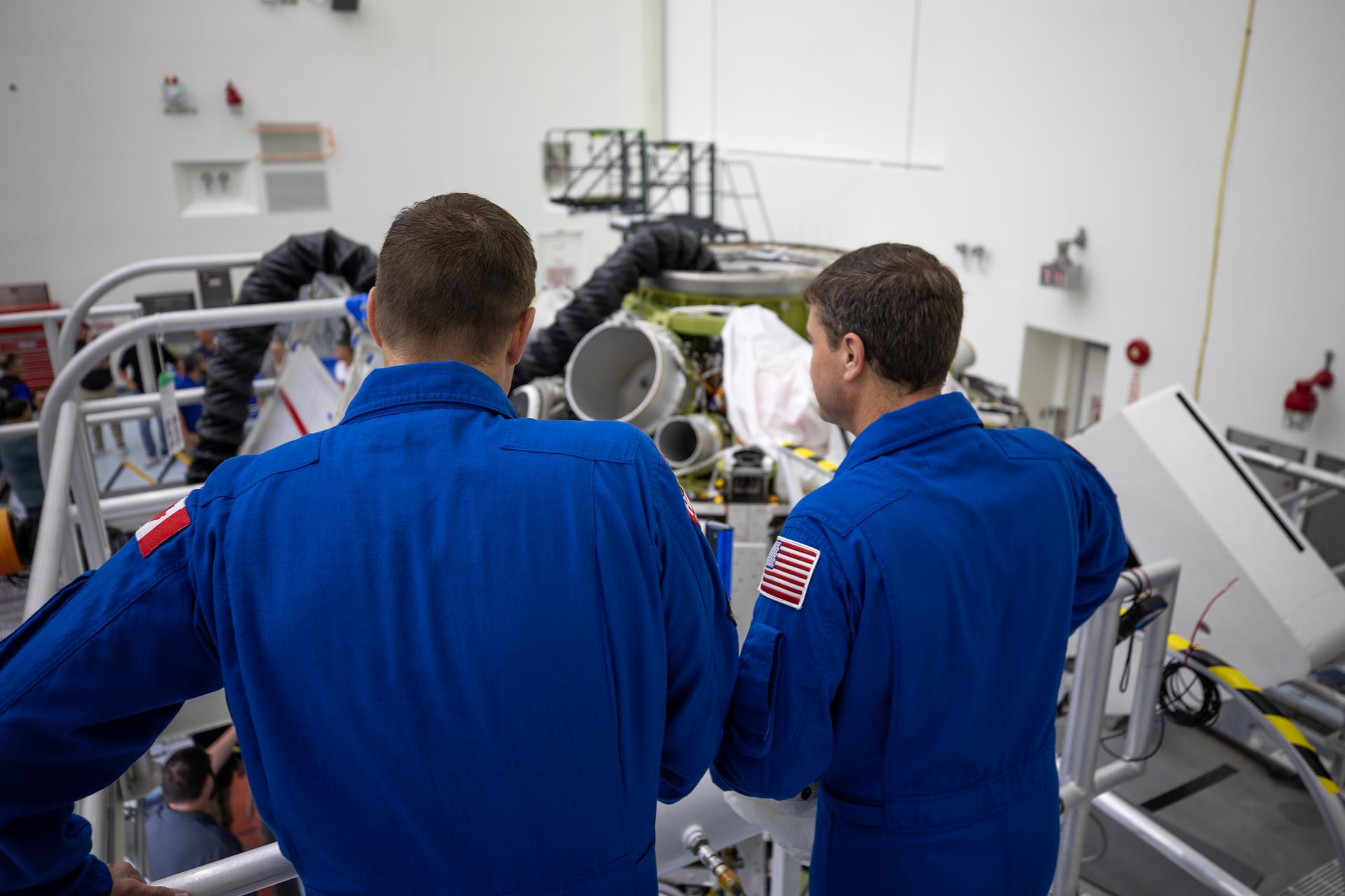
From left, Artemis II CSA (Canadian Space Agency) astronaut Jeremy Hansen and NASA astronaut Reid Wiseman view the Artemis II Orion spacecraft inside the Multi-Payload Processing Facility at NASA’s Kennedy Space Center in Florida on Wednesday, July 8, 2026. Wiseman, Hansen, and Artemis II NASA astronauts Victor Glover and Christina Koch returned to NASA Kennedy for their first official visit since launch of Artemis II on Wednesday, April 1, 2026, to visit with the center’s workforce and tour facilities to view progress on Artemis III prelaunch processing.

NASA’s Artemis I Orion capsule is secured on a platform inside the Multi-Payload Processing Facility (MPPF) at Kennedy Space Center in Florida on Jan. 6, 2023. Orion splashed down in the Pacific Ocean at 12:40 p.m. EST on Dec. 11, 2022. The spacecraftwas secured inside the well deck of the USS Portland for the voyage to U.S. Naval Base Sand Diego, arriving on Dec. 13, 2022. Orion was offloaded and transported back to Kennedy for deservicing inside the MPPF. Orion launched atop the Space Launch System rocket on Nov. 16, 2022 at 1:47 a.m. EST from Kennedy’s Launch Complex 39B for a 25-day trip beyond the Moon and back. During the flight, Orion flew farther than any human-rated spacecraft has ever flown, paving the way for human deep space exploration and demonstrating NASA’s commitment and capability to extend human presence to the Moon and beyond.
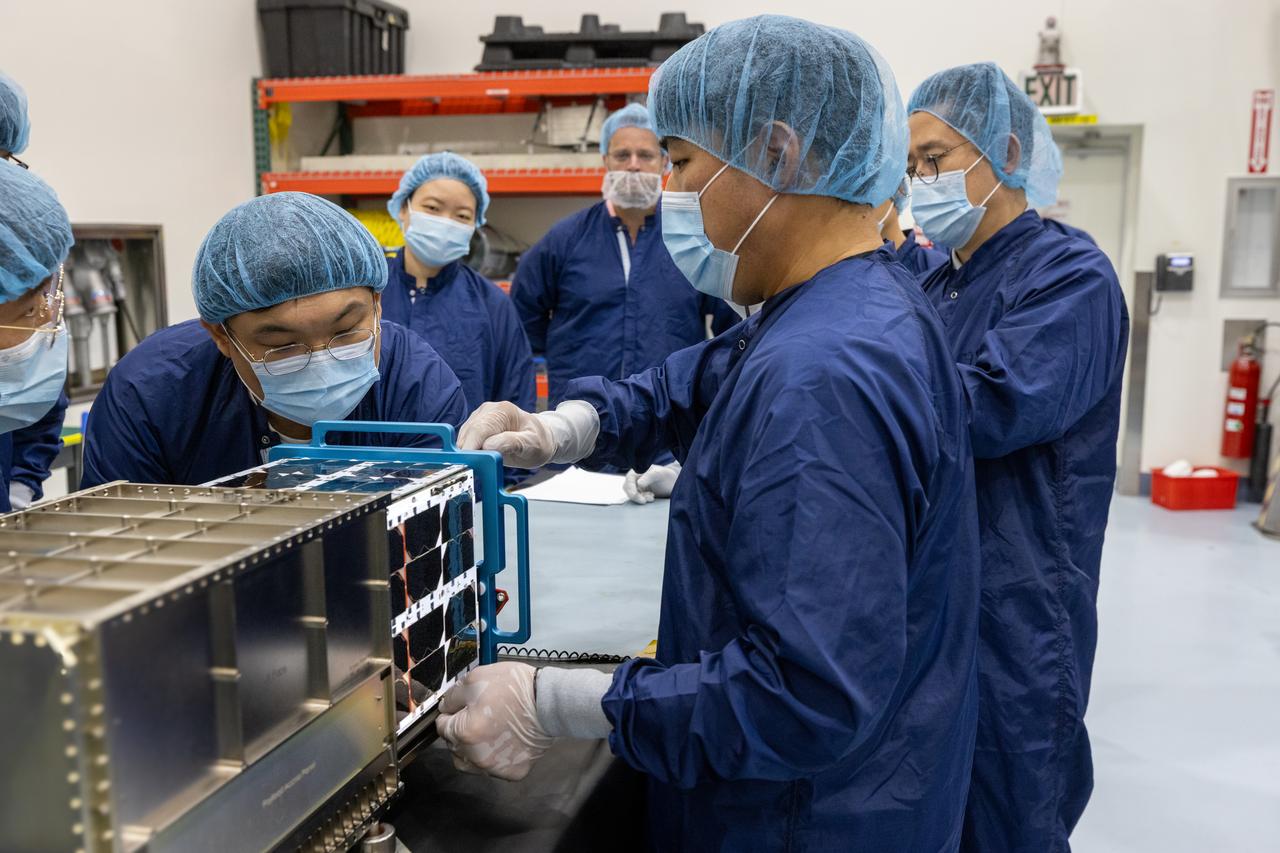
Inside the Multi-Payload Processing Facility at NASA’s Kennedy Space Center in Florida, on Wednesday, Aug. 27, 2025, technicians with the Korea AeroSpace Administration (KASA) complete closeouts on the K-Rad Cube, one of several international CubeSats slated to fly on NASA’s Artemis II test flight in 2026. Deploying in high Earth orbit from a spacecraft adapter on NASA’s SLS (Space Launch System) rocket after Orion is safely flying on its own with its crew of four astronauts, K-Rad Cube will use a dosimeter made of material designed to mimic human tissue to measure space radiation and assess biological effects at various altitudes across the Van Allen radiation belts, a critical area of research for human presence at the Moon and Mars.
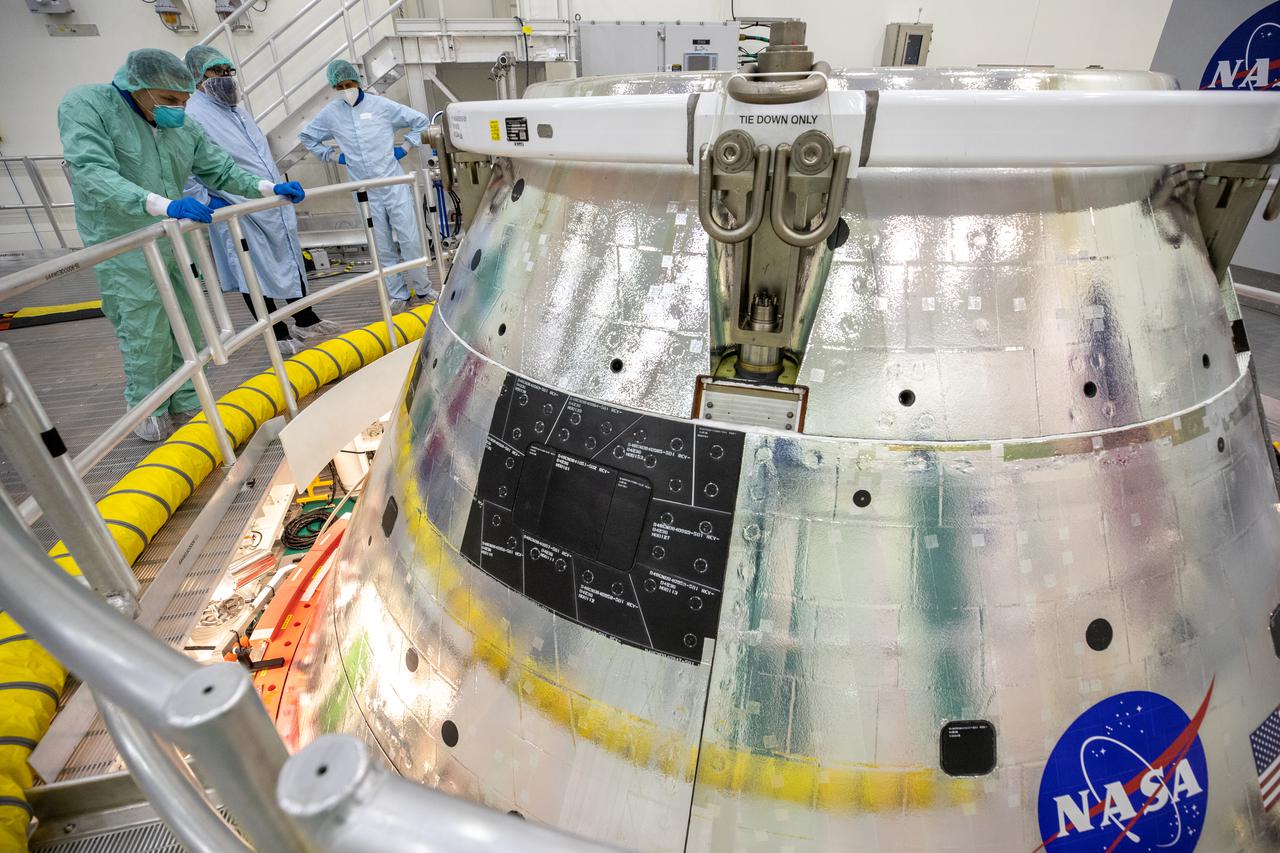
NASA astronauts Josh Cassada, left, and Sunita “Suni” Williams, far right, view the Orion spacecraft with Adam Leppek, Spacecraft Offline deputy element operations manager with ARES Corporation (KLXSIII), inside the Multi-Payload Processing Facility (MPPF) during a visit to NASA’s Kennedy Space Center in Florida on April 6, 2021. During their time at Kennedy, Cassada and Williams also had the opportunity to view the Interim Cryogenic Propulsion Stage for the Space Launch System (SLS) rocket – this and Orion being serviced inside the MPPF ahead of the Artemis I launch. The first in a series of increasingly complex missions, Artemis I will test Orion and SLS as an integrated system prior to crewed flights to the Moon.
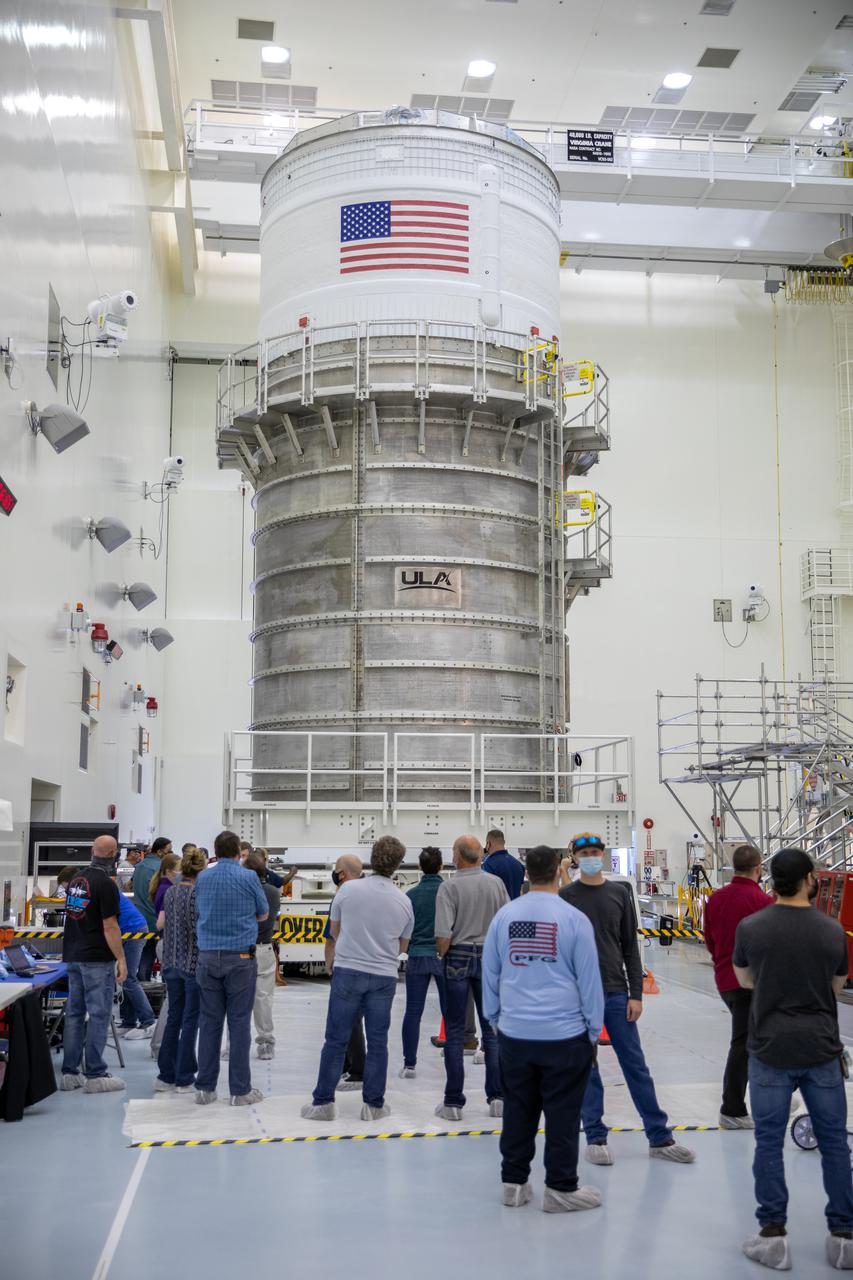
The Space Launch System (SLS) rocket’s interim cryogenic propulsion stage (ICPS) moved into the Multi-Payload Processing Facility February 18, 2021, at NASA’s Kennedy Space Center in Florida for the Artemis I mission. It will undergo fueling and servicing in the facility ahead of launch by teams from NASA’s Exploration Ground Systems and their primary contractor, Jacobs Technology. Artemis I will be an integrated flight test of the SLS rocket and Orion spacecraft ahead of the crewed flights to the Moon. Under the Artemis program, NASA will land the first woman and the next man on the lunar surface and establish a sustainable presence at the Moon to prepare for human missions to Mars.
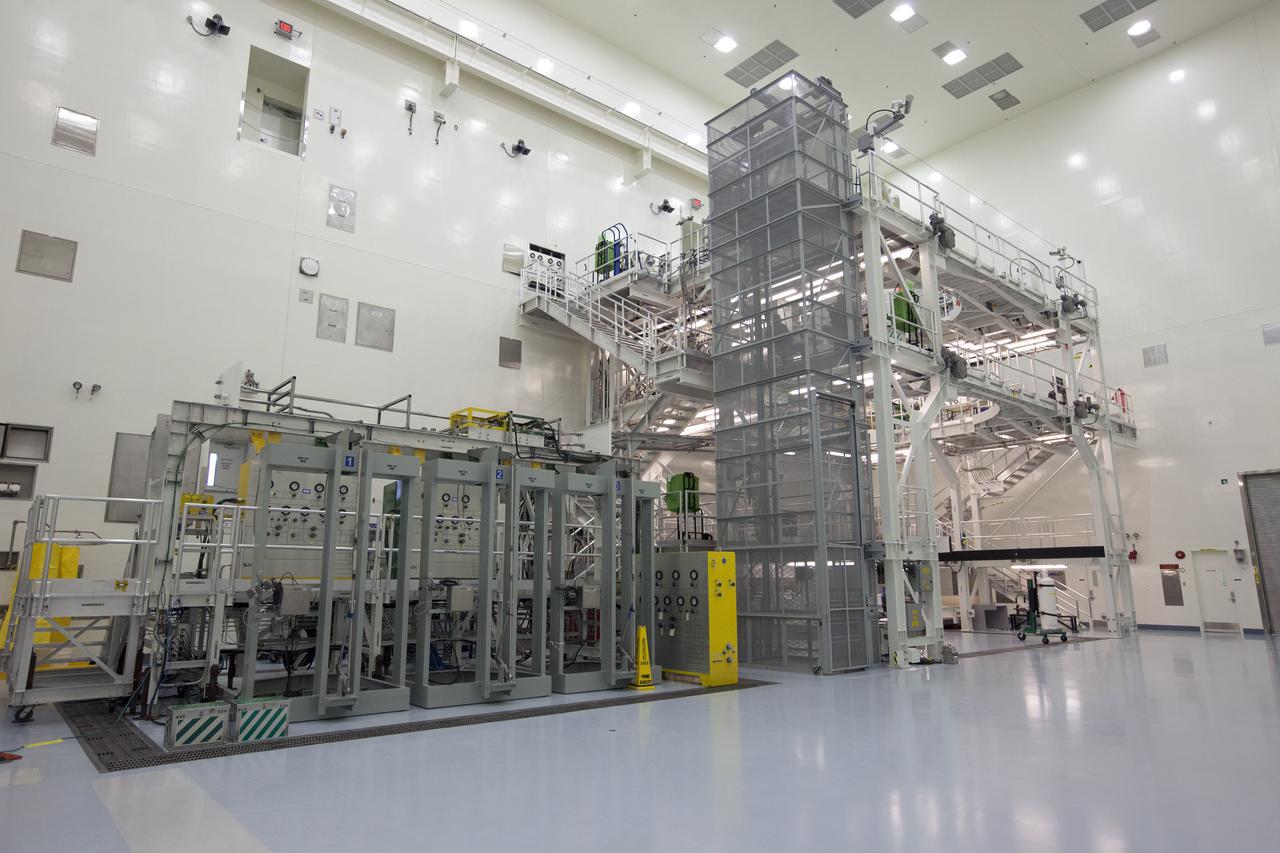
Engineers and technicians completed verification and validation testing of several pneumatic systems inside and outside the Multi-Payload Processing Facility (MPPF) at NASA's Kennedy Space Center in Florida. In view is the service platform for Orion spacecraft processing. To the left are several pneumatic panels. The MPPF will be used for offline processing and fueling of the Orion spacecraft and service module stack before launch. Orion also will be de-serviced in the MPPF after a mission. The Ground Systems Development and Operations Program (GSDO) is overseeing upgrades to the facility. The Engineering Directorate led the recent pneumatic tests.
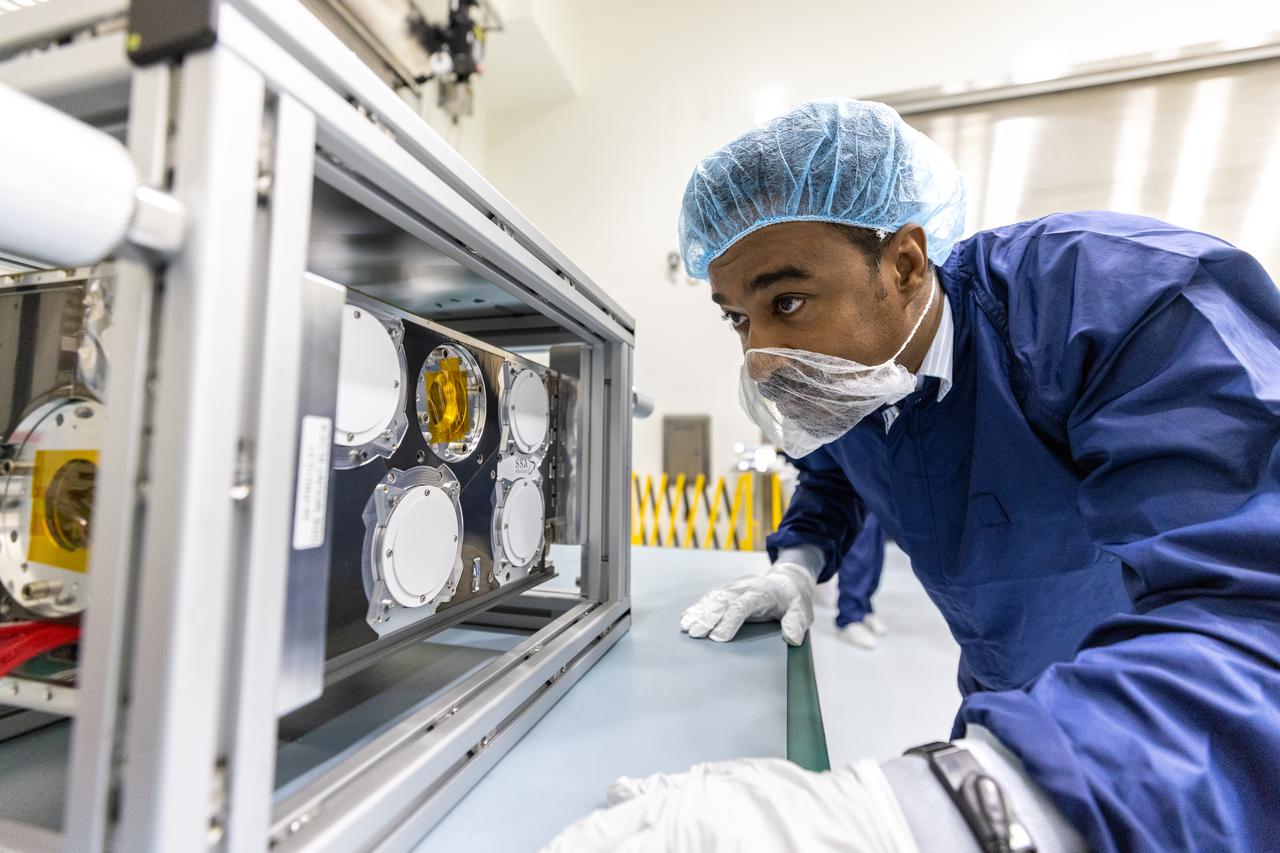
Inside the Multi-Payload Processing Facility at NASA’s Kennedy Space Center in Florida, on Tuesday, Aug. 26, 2025, a technician inspects the Saudi Space Agency’s Space Weather CubeSat, one of several international CubeSats slated to fly on NASA’s Artemis II test flight in 2026. Deploying in high Earth orbit from a spacecraft adapter on NASA’s SLS (Space Launch System) rocket after Orion is safely flying on its own with its crew of four astronauts, the CubeSat will measure aspects of space weather – space radiation, solar X-rays, solar energetic particles, and magnetic fields – at a range of distances from Earth.
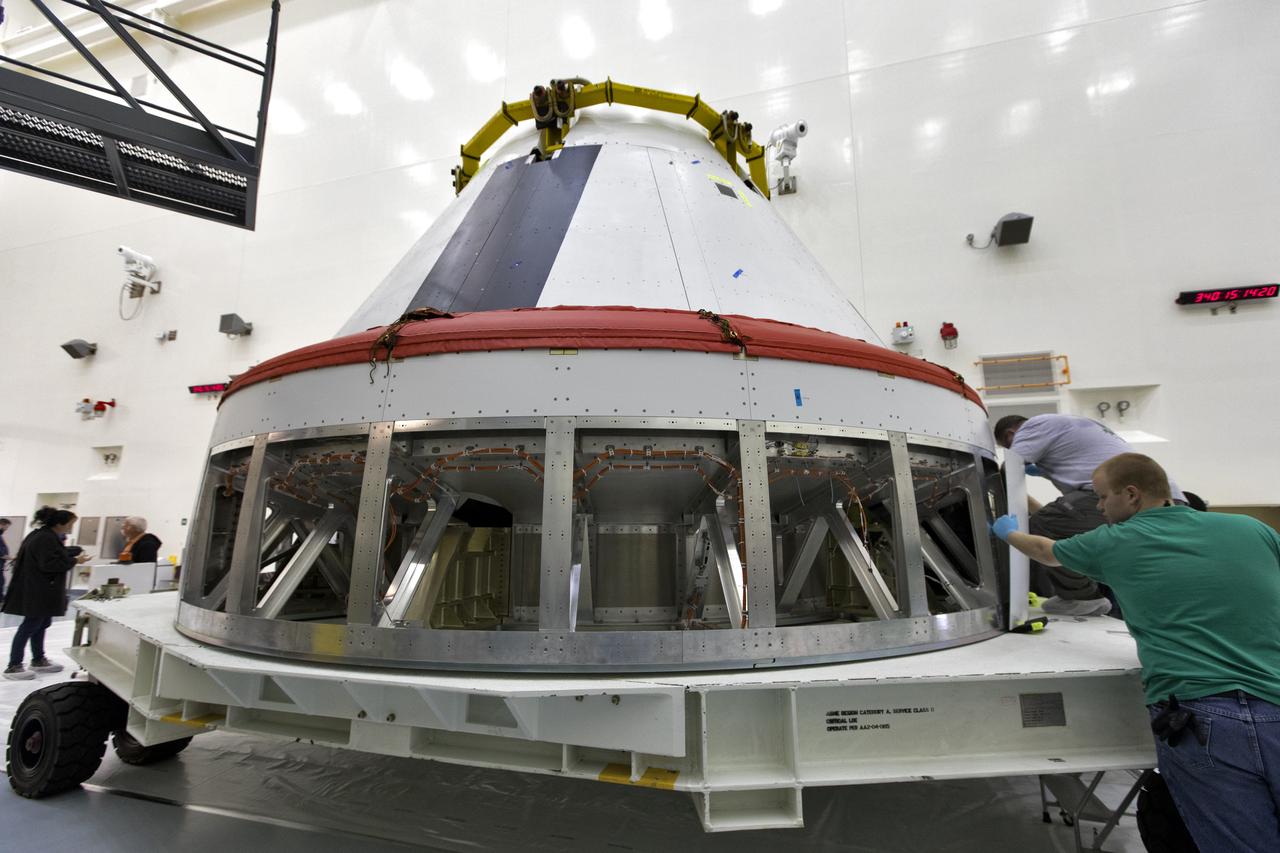
Workers remove cover plates from a mock Orion crew module inside the Multi-Payload Processing Facility at NASA’s Kennedy Space Center in Florida on Dec. 6, 2018. The crew module will be used during a full stress test of the Launch Abort System (LAS), called Ascent Abort-2 (AA-2), scheduled for April 2019. During the test, the Northrop Grumman booster will launch from Space Launch Complex 46, carrying a fully functional LAS and the 22,000-pound Orion test vehicle to an altitude of 31,000 feet and traveling at more than 1,000 miles an hour. The test will verify the LAS can steer the crew module and astronauts aboard to safety in the event of an issue with the Space Launch System (SLS) rocket when the spacecraft is under the highest aerodynamic loads it will experience during a rapid climb into space.

NASA’s famous “meatball” insignia is affixed to the Artemis I Orion spacecraft adapter jettison fairings, which protect the European built service module, Jan. 20, 2021, inside the Multi-Payload Processing Facility at NASA’s Kennedy Space Center in Florida. Shown inside its servicing stand, ground processing begins on Orion, with the Exploration Ground Systems and Jacobs teams performing checkouts and fueling the spacecraft with commodities as part of preparations ahead of the Artemis I mission.
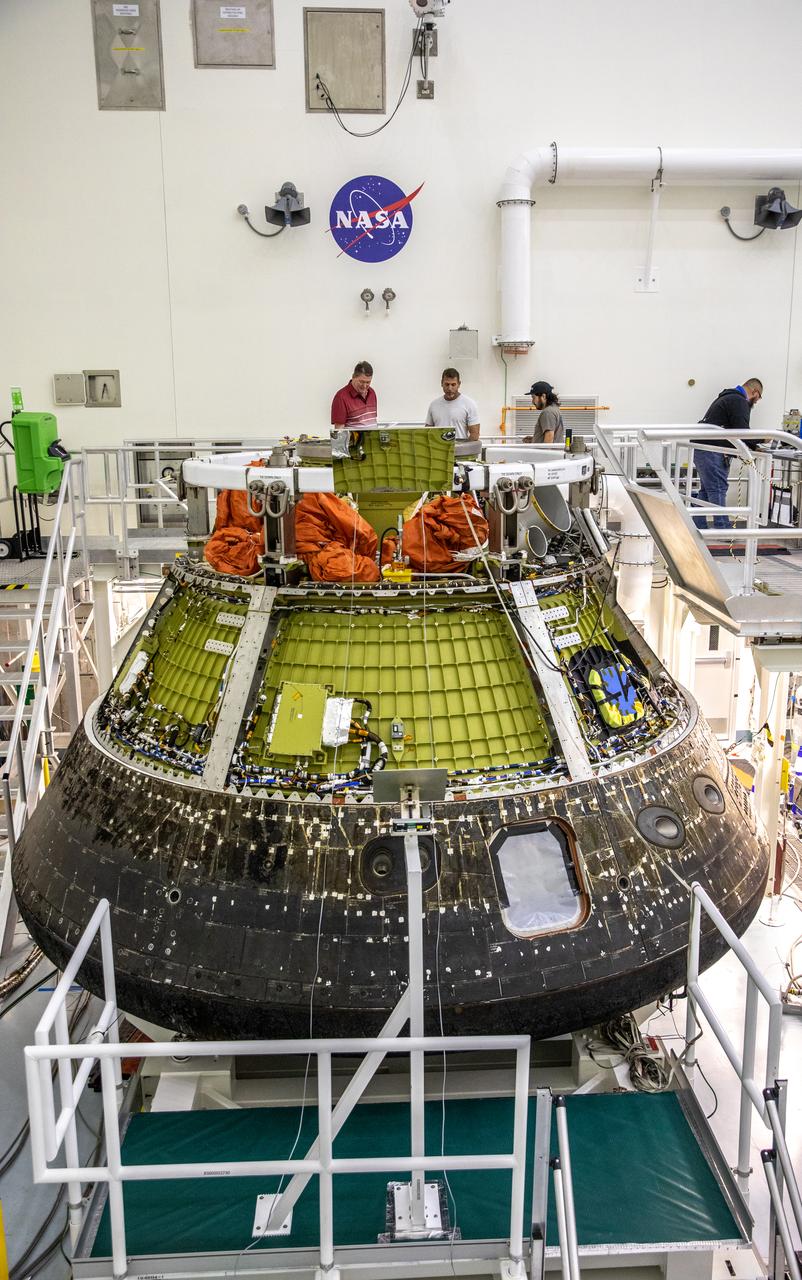
A close-up view shows NASA’s Artemis I Orion capsule secured on a platform inside the Multi-Payload Processsing Facility (MPPF) at Kennedy Space Center in Florida on Jan. 6, 2023. Orion splashed down in the Pacific Ocean at 12:40 p.m. EST on Dec. 11, 2022. The spacecraft was secured inside the well deck of the USS Portland for the voyage to U.S. Naval Base Sand Diego, arriving on Dec. 13, 2022. Orion was offloaded and transported back to Kennedy for deservicing inside the MPPF. Orion launched atop the Space Launch System rocket on Nov. 16, 2022 at 1:47 a.m. EST from Kennedy’s Launch Complex 39B for a 25-day trip beyond the Moon and back. During the flight, Orion flew farther than any human-rated spacecraft has ever flown, paving the way for human deep space exploration and demonstrating NASA’s commitment and capability to extend human presence to the Moon and beyond.
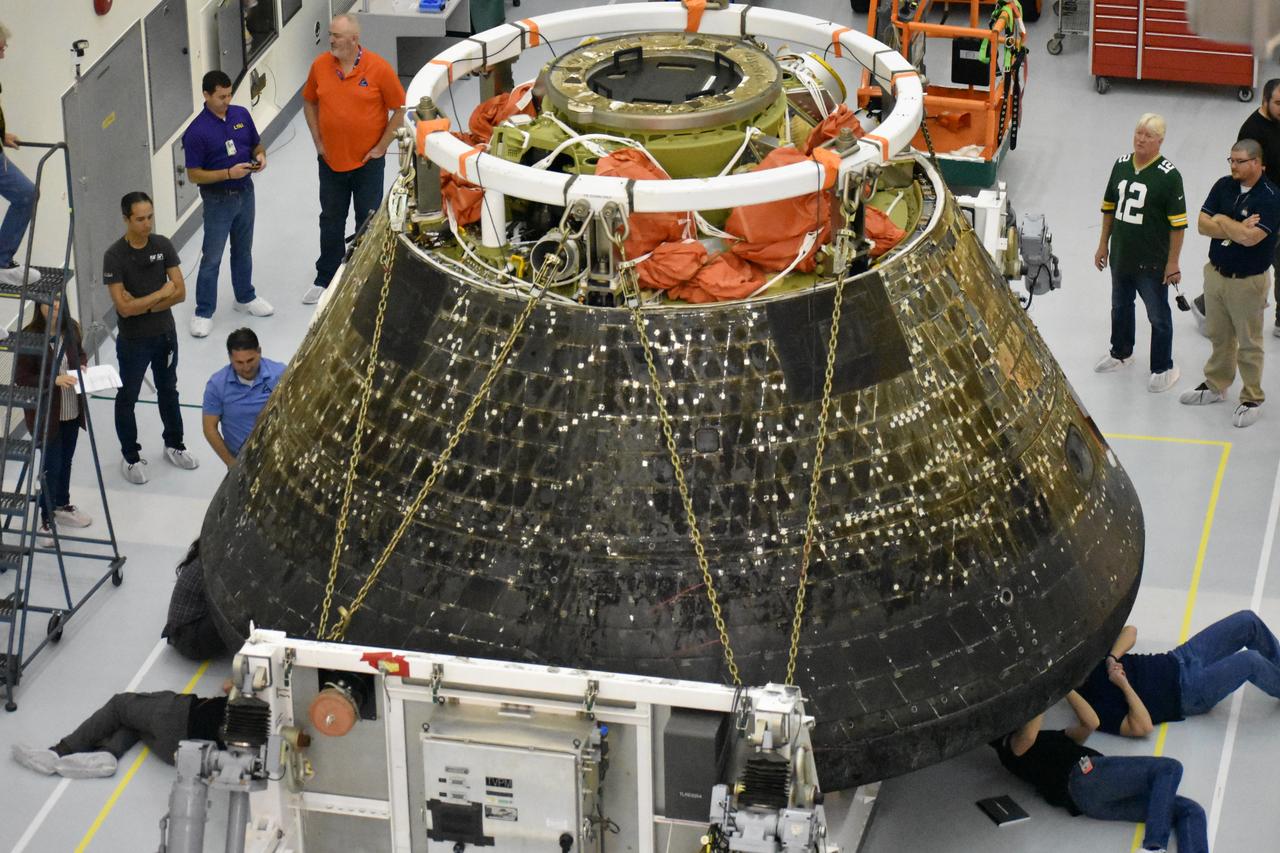
Inside the Multi Payload Processing Facility at NASA’s Kennedy Space Center in Florida, engineers and technicians conduct inspections of the heat shield on the Orion spacecraft for the Artemis I mission. Orion returned to Kennedy on Dec. 30, 2022, after splashing down in the Pacific Ocean on Dec. 11 following a 25-day mission around the Moon.

The crew of NASA’s Artemis II mission participates in a suited crew test on Thursday, July 31, 2025, at the agency’s Kennedy Space Center in Florida. From left, NASA astronauts Reid Wiseman, Artemis II commander; Victor Glover, Artemis II pilot; and Christina Koch, mission specialist; along with CSA (Canadian Space Agency) astronaut Jeremy Hansen,. mission specialist, donned their Orion crew survival system spacesuits for training at NASA’s Kennedy’s Multi-Payload Processing Facility, where they entered their fully powered Orion spacecraft as part of the test. Artemis II will take the four astronauts around the Moon, as the first crewed mission on NASA’s path to establishing a long-term presence for science and exploration through Artemis.
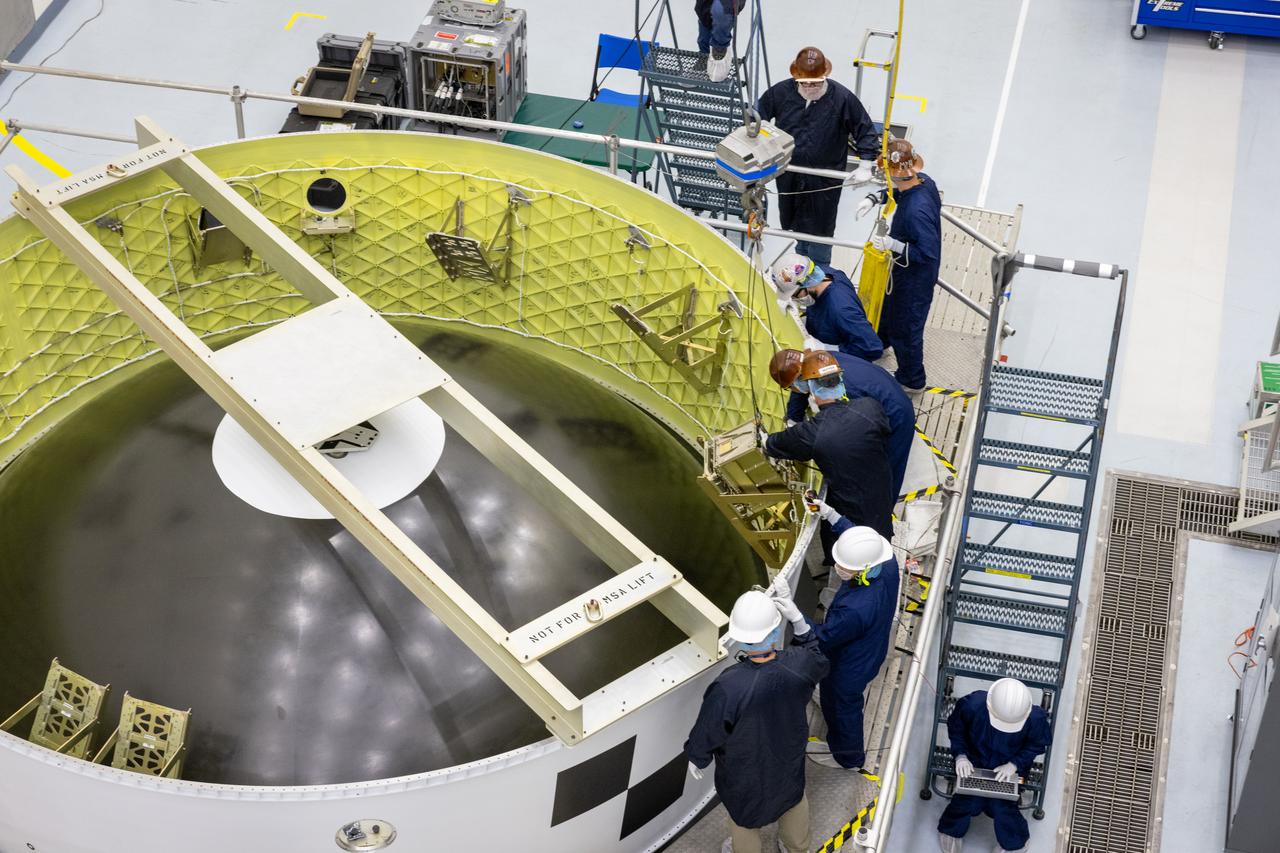
Technicians install the Korea AeroSpace Administration (KASA) K-Rad Cube within the Orion stage adapter inside the Multi-Payload Processing Facility at NASA’s Kennedy Space Center in Florida on Tuesday, Sept. 2, 2025. The K-Rad Cube, about the size of a shoebox, is one of the CubeSats slated to fly on NASA’s Artemis II test flight in 2026. Deploying in high Earth orbit from a spacecraft adapter on NASA’s SLS (Space Launch System) rocket after Orion is safely flying on its own with its crew of four astronauts, K-Rad Cube will use a dosimeter made of material designed to mimic human tissue to measure space radiation and assess biological effects at various altitudes across the Van Allen radiation belts, a critical area of research for human presence at the Moon and Mars.
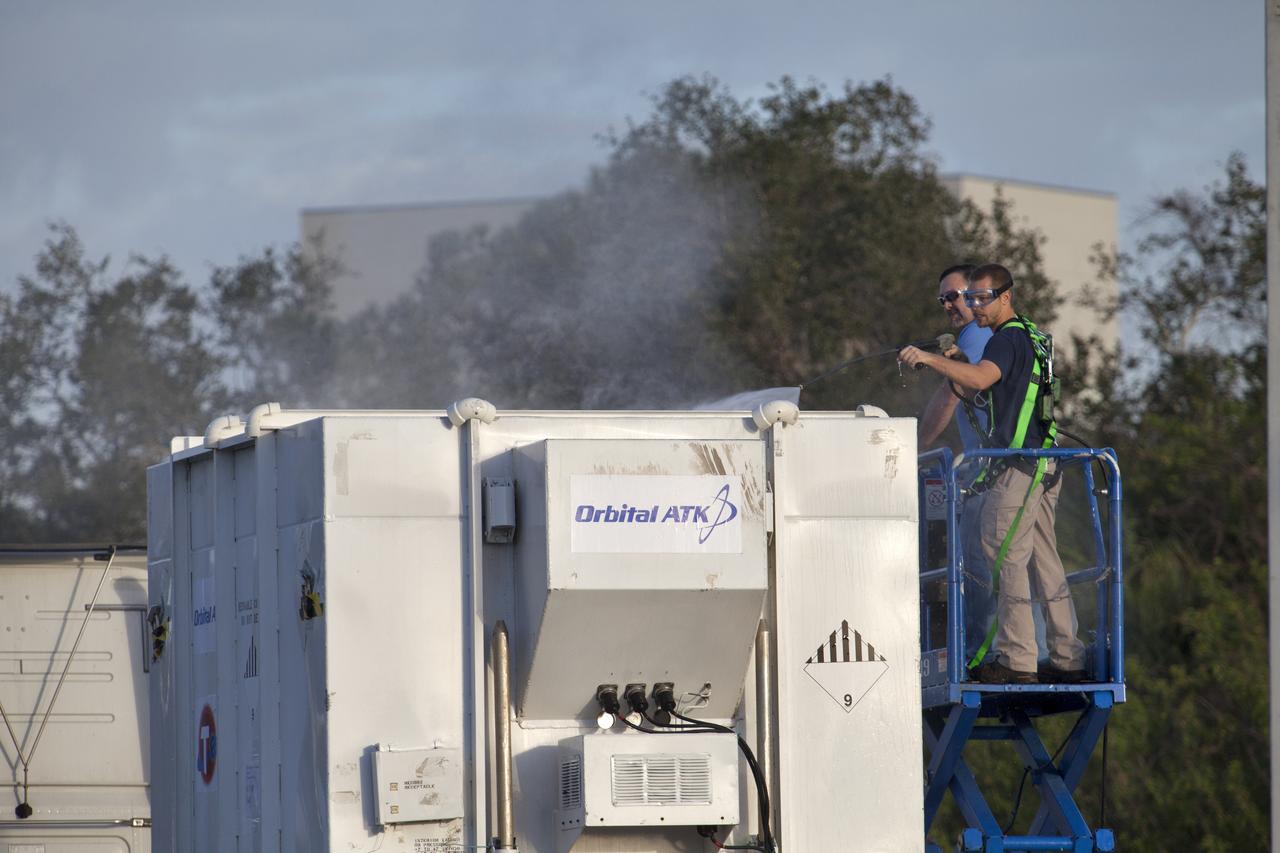
NASA's Transiting Exoplanet Survey Satellite (TESS) container is pressure washed at the Multi-Payload Processing Facility at the agency's Kennedy Space Center in Florida. Tess will be moved to the Payload Hazardous Servicing Facility to be processed and prepared for flight. TESS is scheduled to launch atop a SpaceX Falcon 9 rocket from Space Launch Complex 40 at Cape Canaveral Air Force Station. TESS is the next step in NASA's search for planets outside our solar system, known as exoplanets. TESS is a NASA Astrophysics Explorer mission led and operated by MIT in Cambridge, Massachusetts, and managed by NASA’s Goddard Space Flight Center in Greenbelt, Maryland. Dr. George Ricker of MIT’s Kavli Institute for Astrophysics and Space Research serves as principal investigator for the mission. Additional partners include Orbital ATK, NASA’s Ames Research Center, the Harvard-Smithsonian Center for Astrophysics and the Space Telescope Science Institute. More than a dozen universities, research institutes and observatories worldwide are participants in the mission. NASA’s Launch Services Program is responsible for launch management.
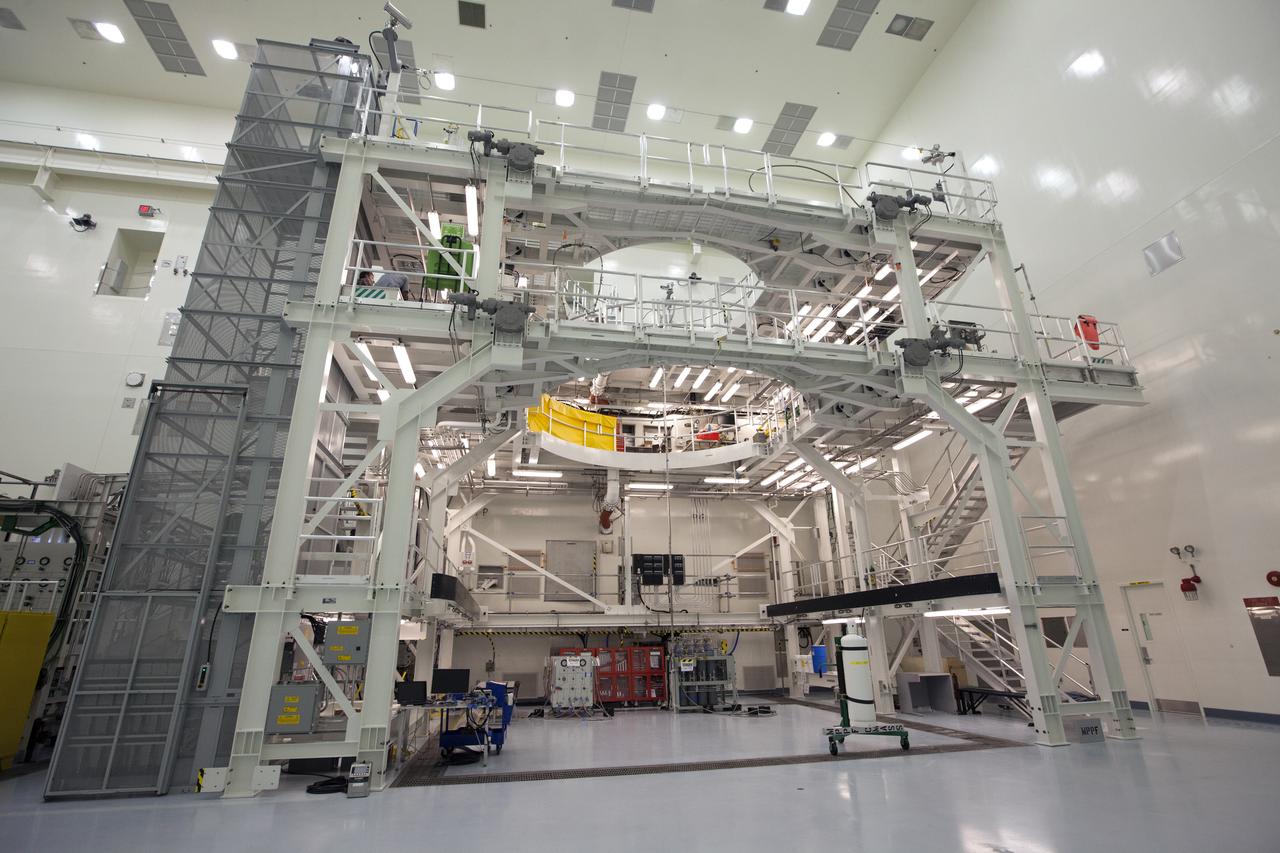
Engineers and technicians completed verification and validation testing of several pneumatic systems inside and outside the Multi-Payload Processing Facility (MPPF) at NASA's Kennedy Space Center in Florida. In view is the service platform for Orion spacecraft processing. The MPPF will be used for offline processing and fueling of the Orion spacecraft and service module stack before launch. Orion also will be de-serviced in the MPPF after a mission. The Ground Systems Development and Operations Program (GSDO) is overseeing upgrades to the facility. The Engineering Directorate led the recent pneumatic tests.
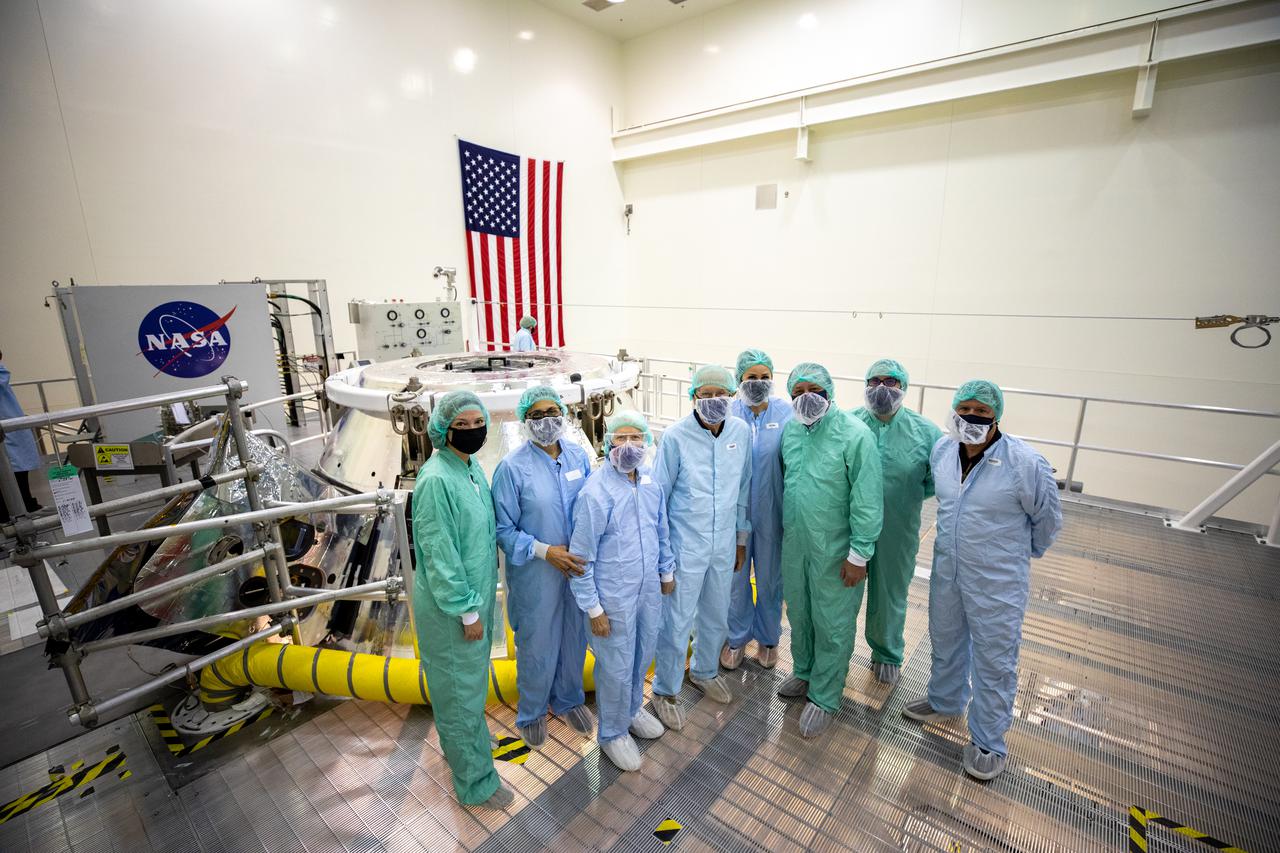
From left to right, Tiffany Nail, KSC Protocol Officer; Nicole Stott, NASA Astronaut (former); Dottie Duke, wife of Charlie Duke; Charlie Duke, NASA Astronaut (former); Christina Korp, Assistant to Charlie Duke; Jim Keys, Pilot; Adam Leppek, ARES Corporation (KLXSIII), Deputy Element Operations Manager; and Nick Kindred, Jacobs Technology, Flow Manager, shown in front of the Orion spacecraft for the Artemis I mission, inside the Multi-Payload Processing Facility (MPPF) during a visit to NASA’s Kennedy Space Center in Florida on May 10, 2021. The first in a series of increasingly complex missions, Artemis I will test Orion and the Space Launch System rocket as an integrated system prior to crewed flights to the Moon.