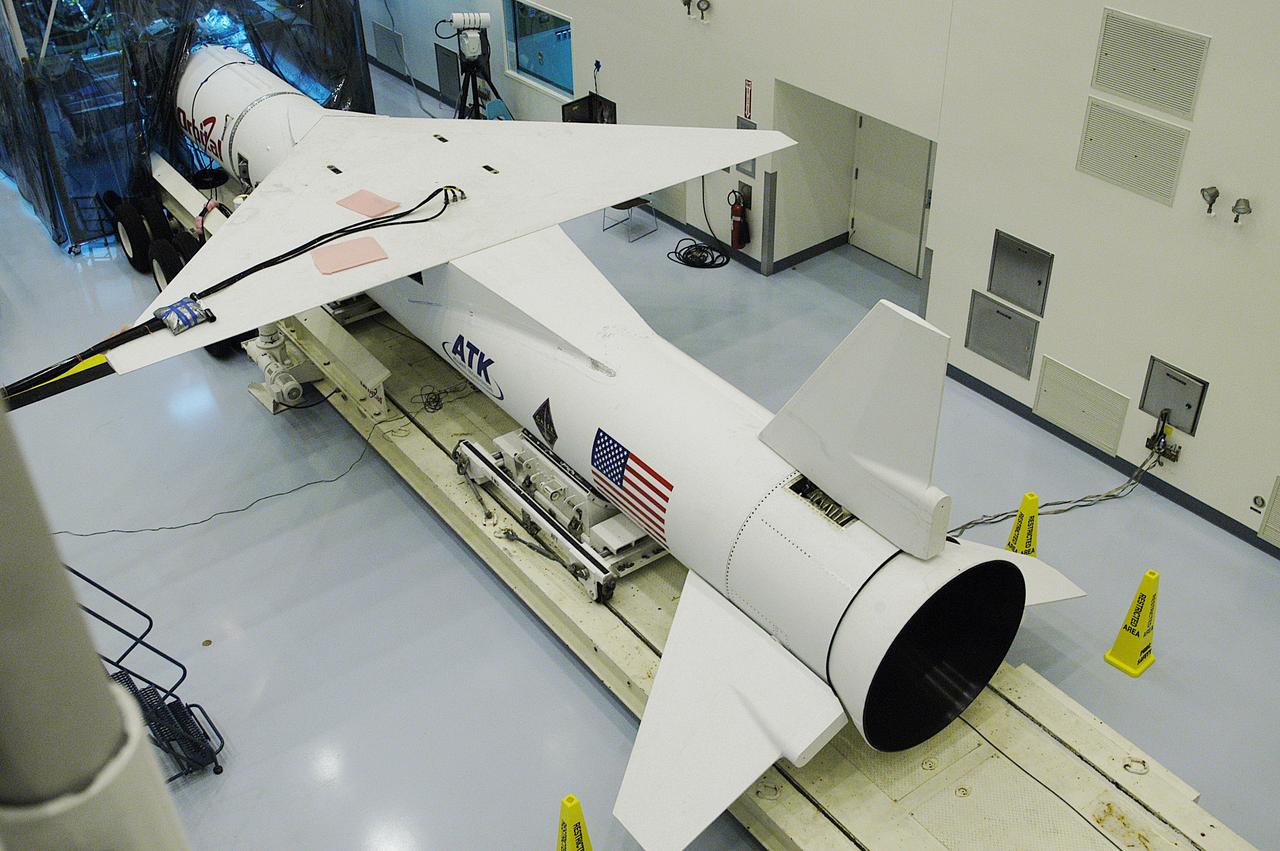
In the Multi-Payload Processing Facility, the Pegasus XL launch vehicle is in position for mating of the Galaxy Evolution Explorer (GALEX) satellite. The GALEX, set to launch April 2 from Cape Canaveral Air Force Station, will carry into space an orbiting telescope that will observe a million galaxies across 10 billion years of cosmic history to help astronomers determine when the stars and elements we see today had their origins. The spacecraft will sweep the skies for 28 months using state-of-the-art ultraviolet detectors to single out galaxies dominated by young, hot, short-lived stars that give off a great deal of energy at that wavelength. These galaxies are actively creating stars, and therefore provide a window into the history and causes of star formation in galaxies.
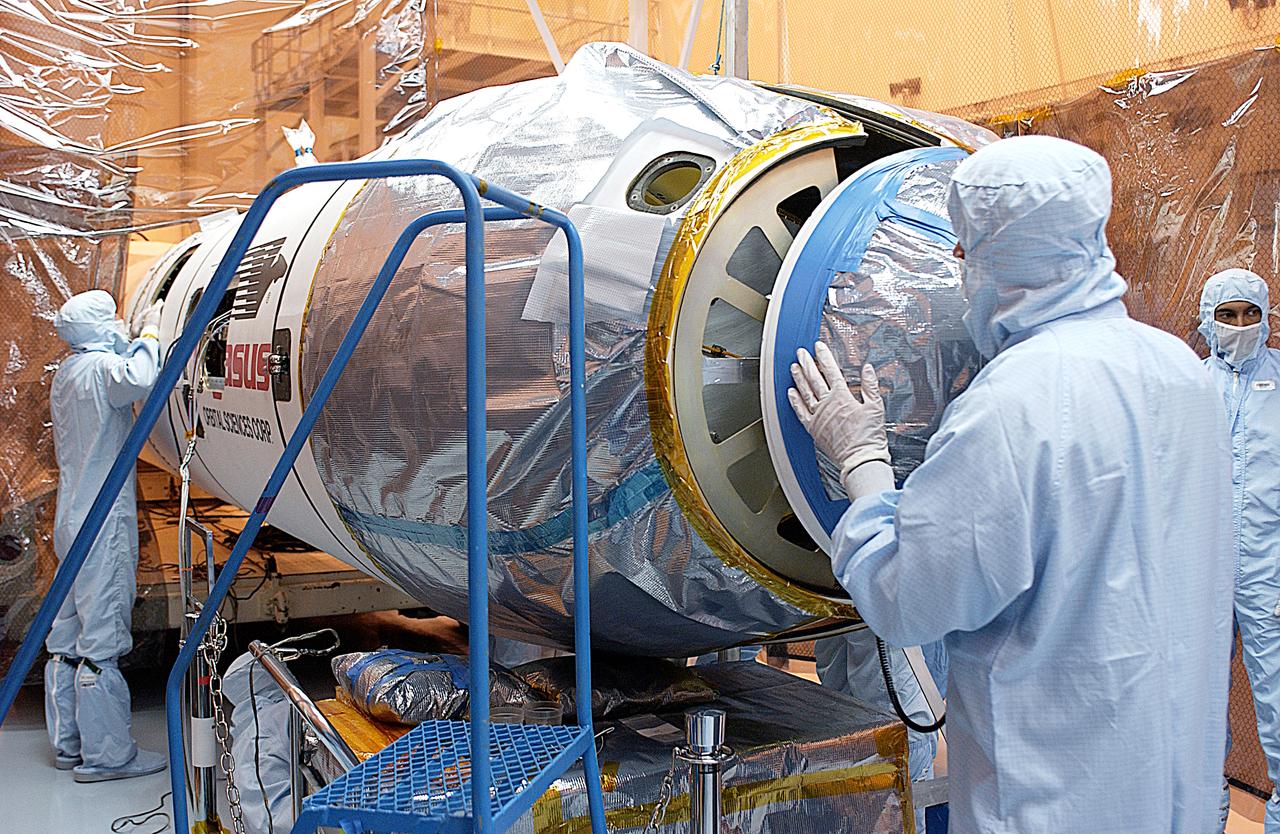
Workers in the Multi-Payload Processing Facility prepare to close the port fairing around the Galaxy Evolution Explorer (GALEX). The spacecraft is already mated to the Pegasus launch vehicle. After encapsulation, the GALEX/Pegasus will be transported to Cape Canaveral Air Force Station and mated to the L-1011 about four days before launch. A new launch date has not been determined.
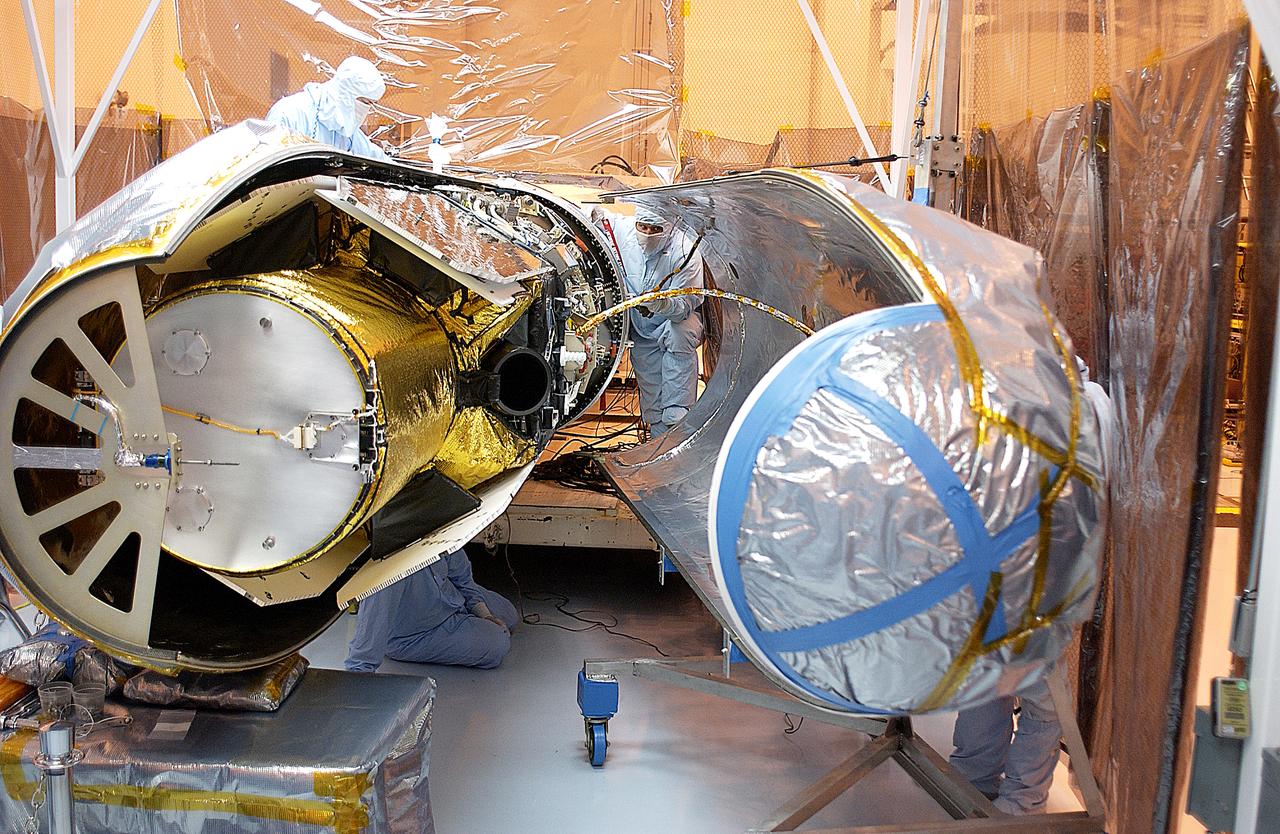
Workers in the Multi-Payload Processing Facility prepare to close the port fairing around the Galaxy Evolution Explorer (GALEX). The spacecraft is already mated to the Pegasus launch vehicle. After encapsulation, the GALEX/Pegasus will be transported to Cape Canaveral Air Force Station and mated to the L-1011 about four days before launch. A new launch date has not been determined.

In the Multi-Payload Processing Facility, the Pegasus XL launch vehicle waits for mating of the Galaxy Evolution Explorer (GALEX) satellite. The GALEX, set to launch April 2 from Cape Canaveral Air Force Station, will carry into space an orbiting telescope that will observe a million galaxies across 10 billion years of cosmic history to help astronomers determine when the stars and elements we see today had their origins. The spacecraft will sweep the skies for 28 months using state-of-the-art ultraviolet detectors to single out galaxies dominated by young, hot, short-lived stars that give off a great deal of energy at that wavelength. These galaxies are actively creating stars, and therefore provide a window into the history and causes of star formation in galaxies.