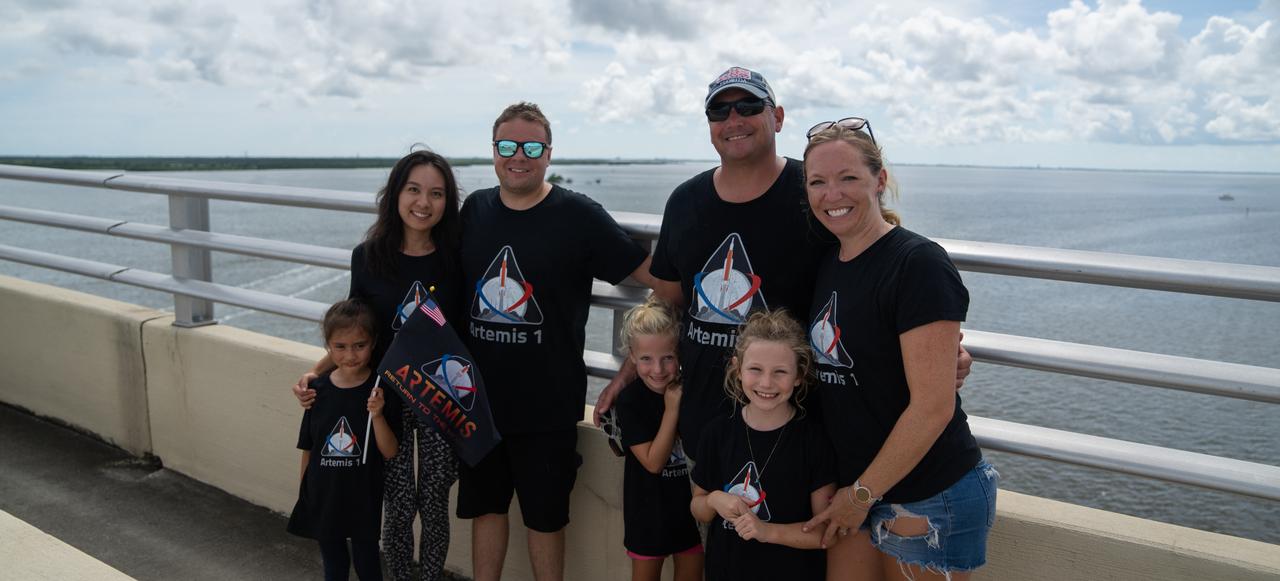
A family wearing matching Artemis shirts are on the Max Brewer Bridge in Titusville, Florida, to witness the launch of NASA’s Artemis I mission on Sept. 3, 2022. The launch was waived off for the day. The first in a series of increasingly complex missions, Artemis I will provide a foundation for human deep space exploration and demonstrate our commitment and capability to extend human presence to the Moon and beyond. The primary goal of Artemis I is to thoroughly test the integrated systems before crewed missions by operating the spacecraft in a deep space environment, testing Orion’s heat shield, and recovering the crew module after reentry, descent, and splashdown.
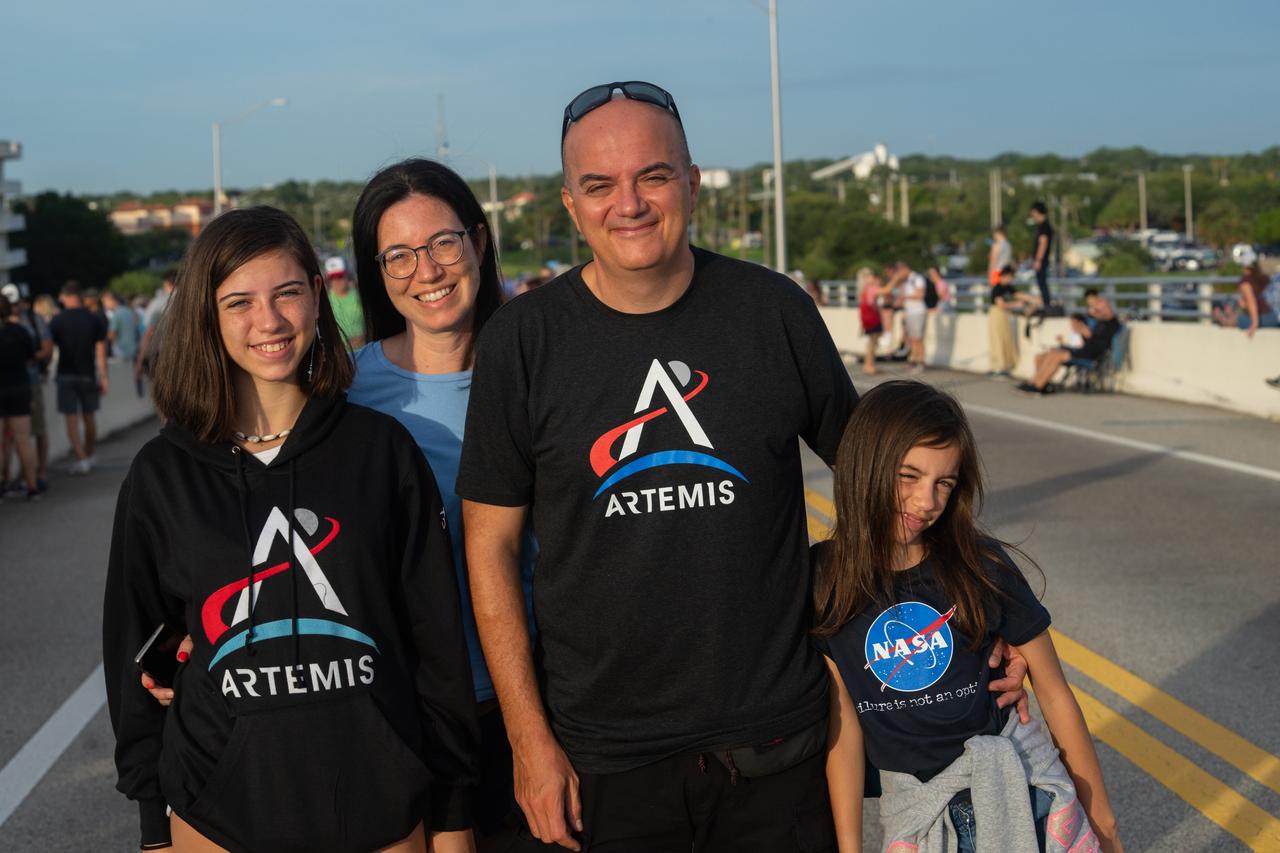
A family wearing NASA and Artemis shirts are on the Max Brewer Bridge in Titusville, Florida, to witness the launch of NASA’s Artemis I mission on Aug. 29, 2022. The launch was waved off for the day. The first in a series of increasingly complex missions, Artemis I will provide a foundation for human deep space exploration and demonstrate our commitment and capability to extend human presence to the Moon and beyond. The primary goal of Artemis I is to thoroughly test the integrated systems before crewed missions by operating the spacecraft in a deep space environment, testing Orion’s heat shield, and recovering the crew module after reentry, descent, and splashdown.
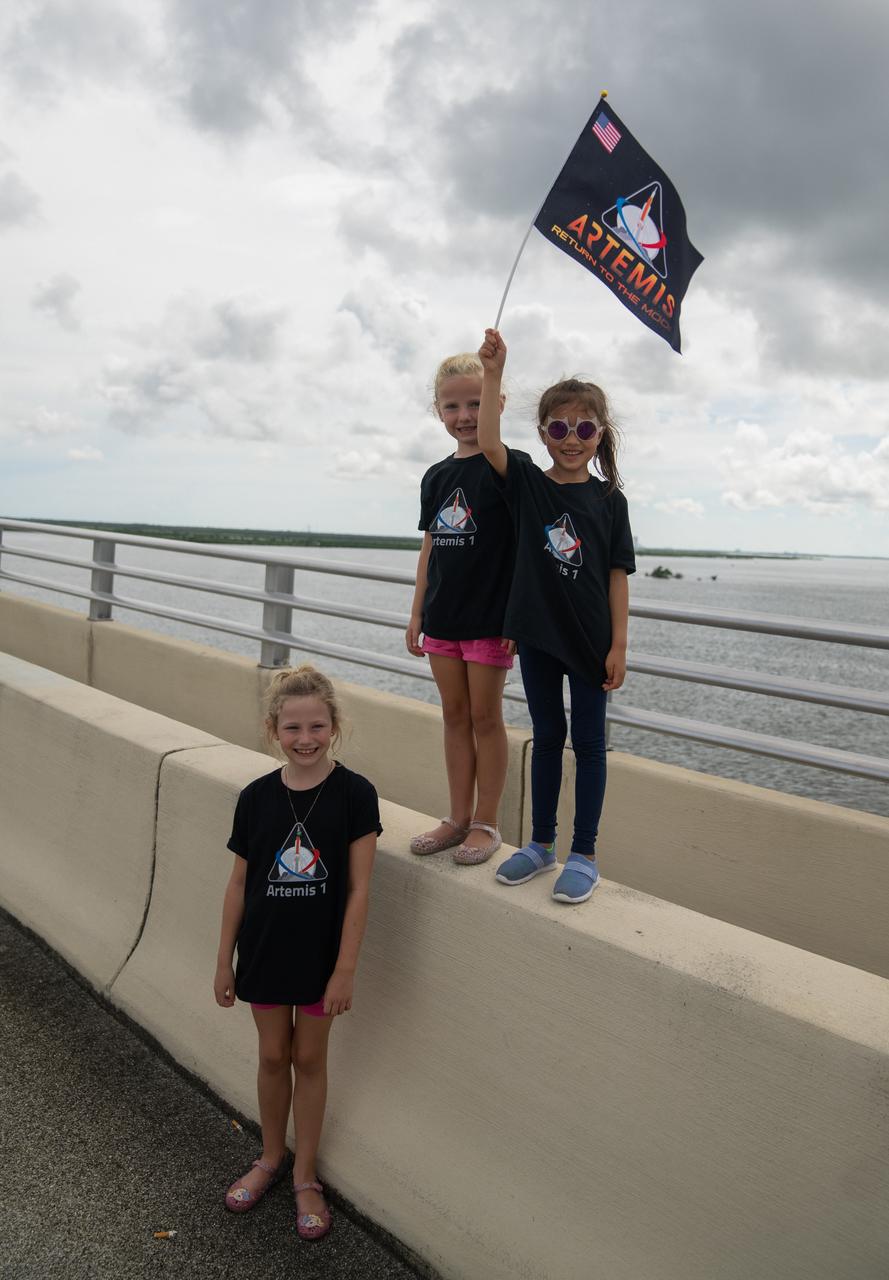
A group of young children with an Artemis flag are photographed on the Max Brewer Bridge in Titusville, Florida, as they wait to watch the launch of NASA’s Artemis I mission on Sept. 3, 2022. The launch was waived off for the day. The first in a series of increasingly complex missions, Artemis I will provide a foundation for human deep space exploration and demonstrate our commitment and capability to extend human presence to the Moon and beyond. The primary goal of Artemis I is to thoroughly test the integrated systems before crewed missions by operating the spacecraft in a deep space environment, testing Orion’s heat shield, and recovering the crew module after reentry, descent, and splashdown.
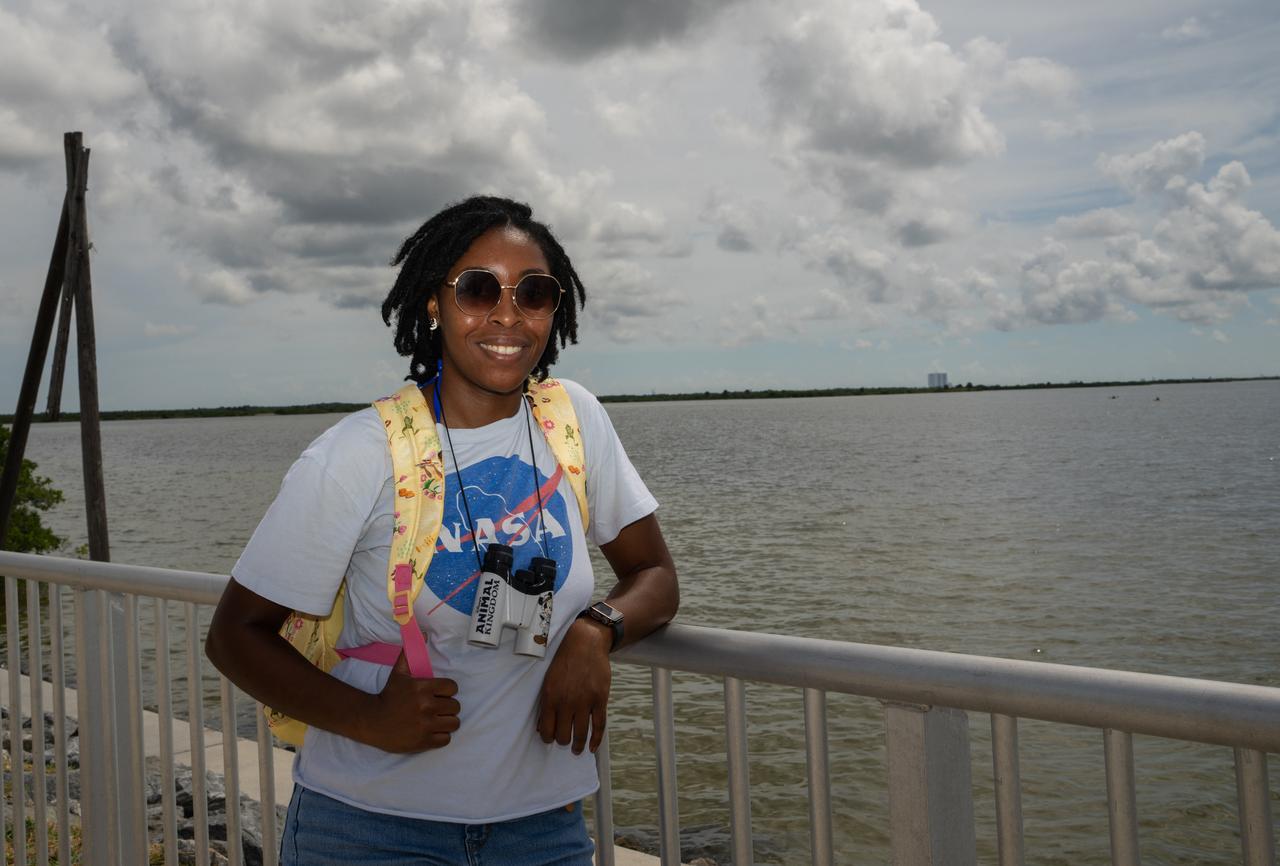
A woman wearing a NASA shirt is on the Max Brewer Bridge in Titusville, Florida, waiting to witness the launch of NASA’s Artemis I mission on Sept. 3, 2022. The launch was waived off for the day. The first in a series of increasingly complex missions, Artemis I will provide a foundation for human deep space exploration and demonstrate our commitment and capability to extend human presence to the Moon and beyond. The primary goal of Artemis I is to thoroughly test the integrated systems before crewed missions by operating the spacecraft in a deep space environment, testing Orion’s heat shield, and recovering the crew module after reentry, descent, and splashdown.
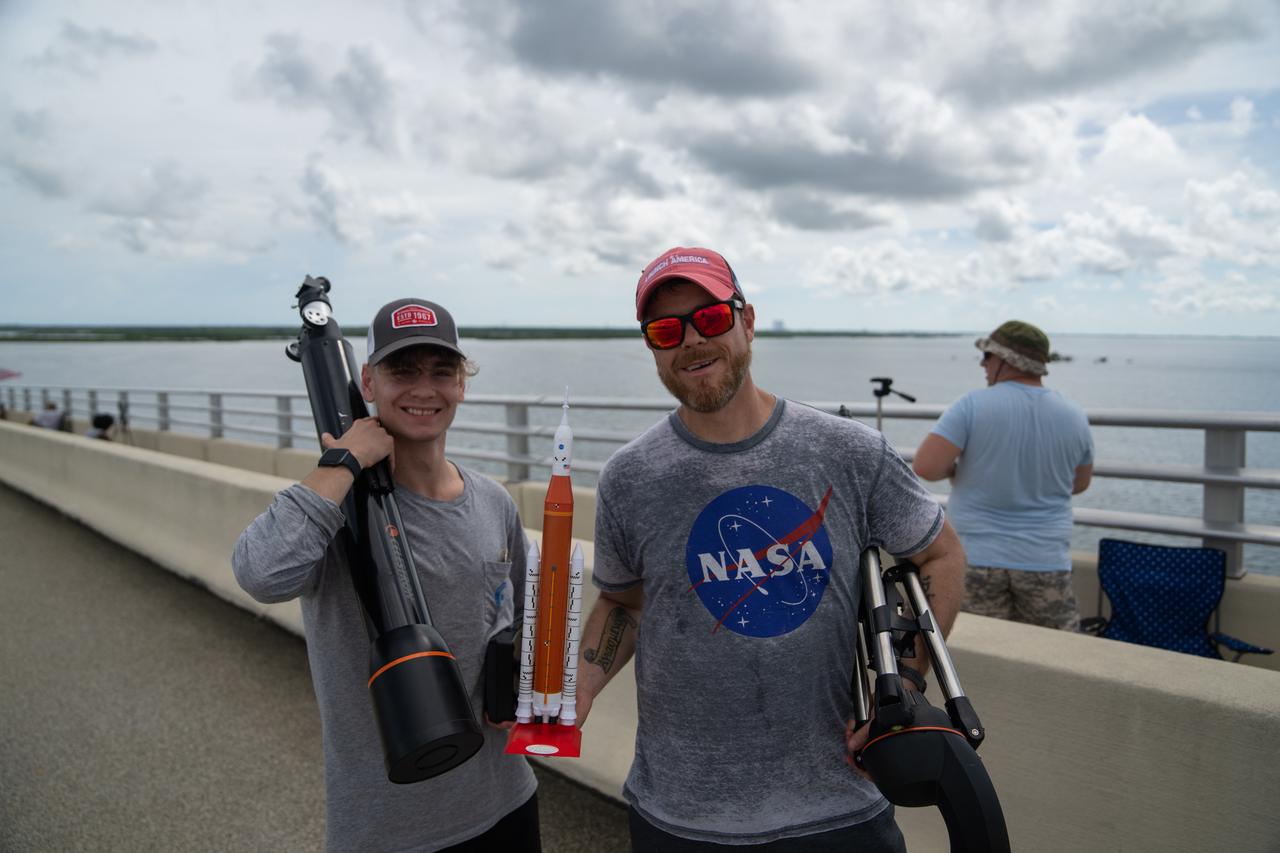
Two individuals wearing NASA shirts and holding a model Space Launch System rocket are on the Max Brewer Bridge in Titusville, Florida, to witness the launch of NASA’s Artemis I mission on Sept. 3, 2022. The launch was waived off for the day. The first in a series of increasingly complex missions, Artemis I will provide a foundation for human deep space exploration and demonstrate our commitment and capability to extend human presence to the Moon and beyond. The primary goal of Artemis I is to thoroughly test the integrated systems before crewed missions by operating the spacecraft in a deep space environment, testing Orion’s heat shield, and recovering the crew module after reentry, descent, and splashdown.
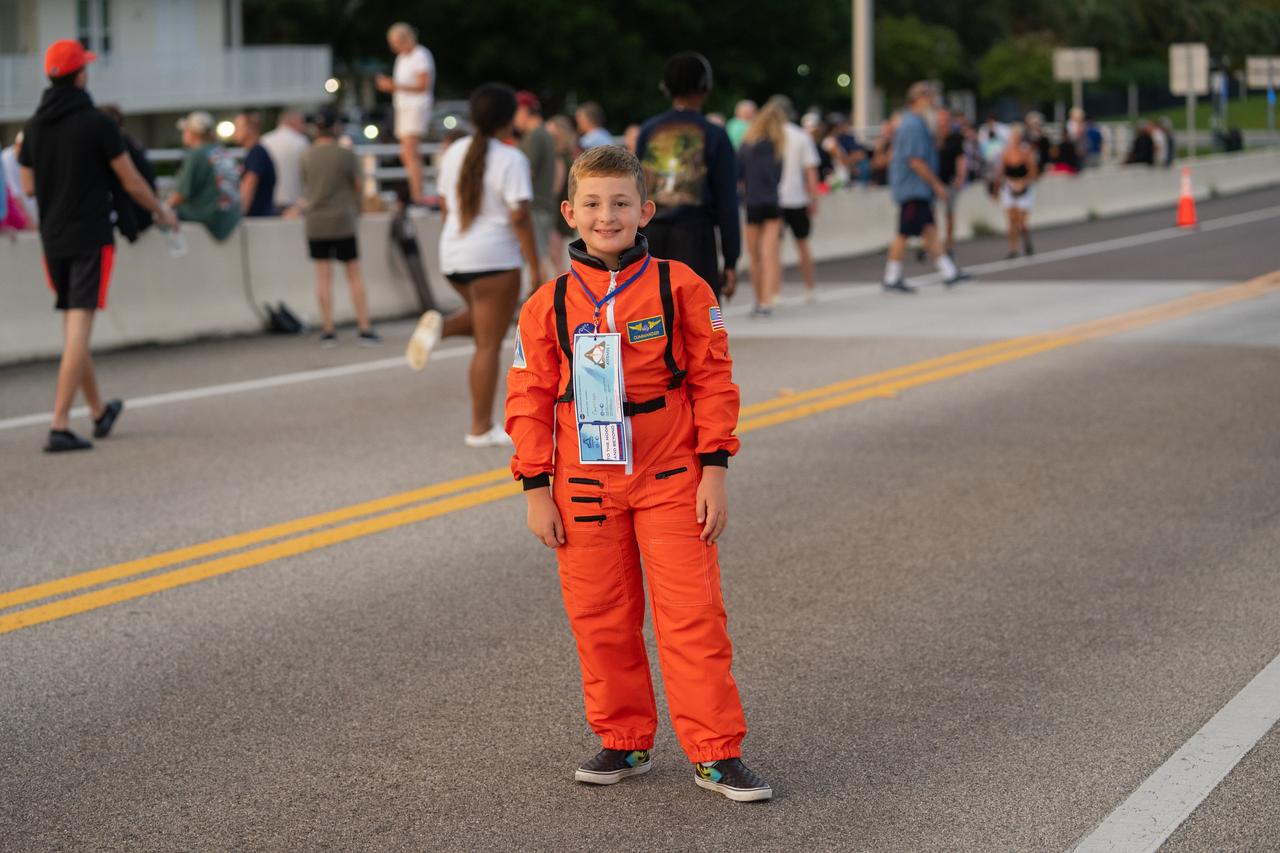
A young child dressed in an astronaut spacesuit is one of the spectators gathering on the Max Brewer Bridge in Titusville, Florida, to witness NASA’s Artemis I launch on Aug. 29, 2022. The launch was waved off for the day at the agency’s Kennedy Space Center. The first in a series of increasingly complex missions, Artemis I will provide a foundation for human deep space exploration and demonstrate our commitment and capability to extend human presence to the Moon and beyond. The primary goal of Artemis I is to thoroughly test the integrated systems before crewed missions by operating the spacecraft in a deep space environment, testing Orion’s heat shield, and recovering the crew module after reentry, descent, and splashdown.
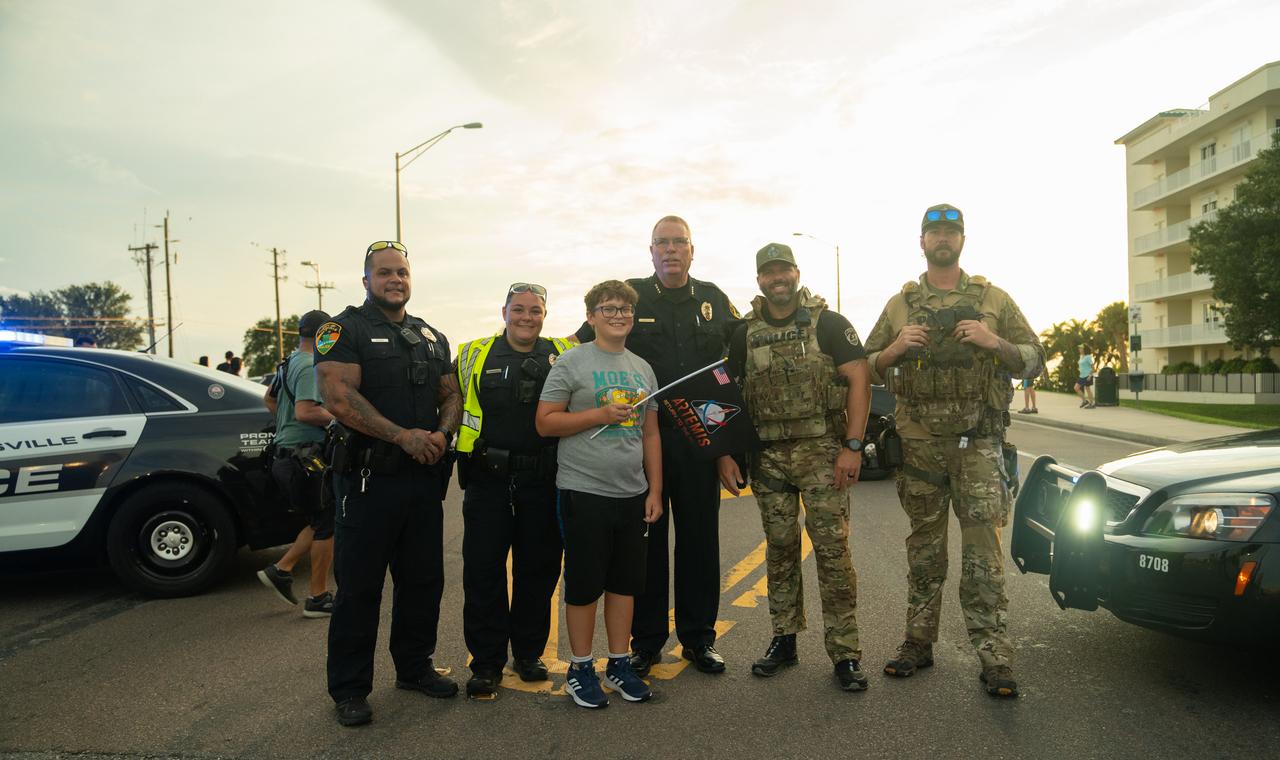
A young child waving an Artemis flag poses with members of the Titusville Police Dept. on the Max Brewer Bridge on Aug. 29, 2022, during Artemis I countdown festivities. The launch was waved off for the day at the agency’s Kennedy Space Center. The first in a series of increasingly complex missions, Artemis I will provide a foundation for human deep space exploration and demonstrate our commitment and capability to extend human presence to the Moon and beyond. The primary goal of Artemis I is to thoroughly test the integrated systems before crewed missions by operating the spacecraft in a deep space environment, testing Orion’s heat shield, and recovering the crew module after reentry, descent, and splashdown.

The rising Sun illuminates the sky on Tuesday, March 24, 2026, as NASA’s Artemis II SLS (Space Launch System) rocket and Orion spacecraft stand vertical at Launch Complex 39B at NASA’s Kennedy Space Center in Florida. The Artemis II test flight will take Commander Reid Wiseman, Pilot Victor Glover, and Mission Specialist Christina Koch from NASA, and Mission Specialist Jeremy Hansen from the CSA (Canadian Space Agency), around the Moon and back to Earth with launch opportunities beginning in April 2026.
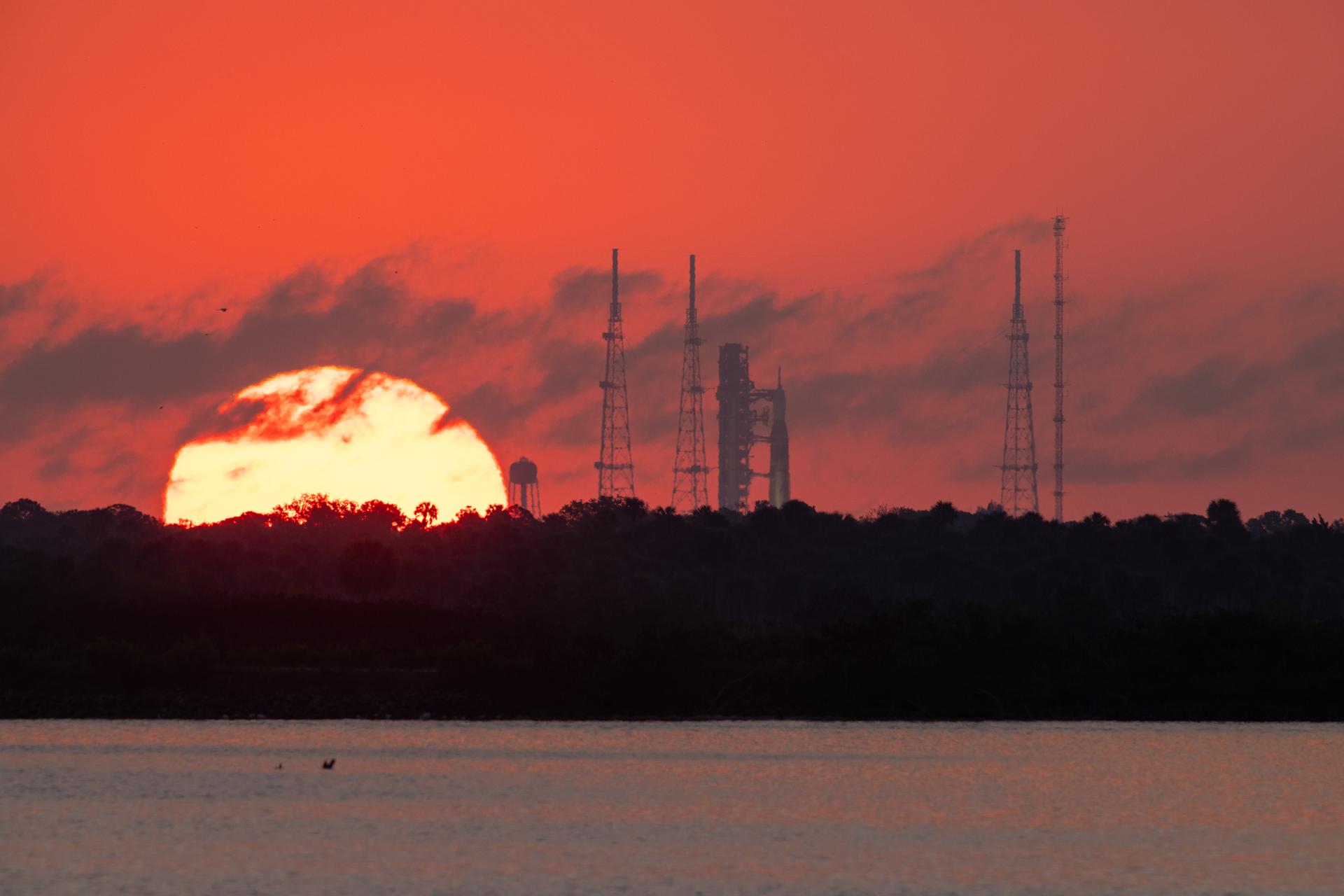
The Sun rises behind NASA’s Artemis II SLS (Space Launch System) rocket and Orion spacecraft at Launch Complex 39B at NASA’s Kennedy Space Center in Florida on Tuesday, March 24, 2026. The Artemis II test flight will take Commander Reid Wiseman, Pilot Victor Glover, and Mission Specialist Christina Koch from NASA, and Mission Specialist Jeremy Hansen from the CSA (Canadian Space Agency), around the Moon and back to Earth with launch opportunities beginning in April 2026.

The rising Sun illuminates the sky on Tuesday, March 24, 2026, as NASA’s Artemis II SLS (Space Launch System) rocket and Orion spacecraft stand vertical at Launch Complex 39B at NASA’s Kennedy Space Center in Florida. The Artemis II test flight will take Commander Reid Wiseman, Pilot Victor Glover, and Mission Specialist Christina Koch from NASA, and Mission Specialist Jeremy Hansen from the CSA (Canadian Space Agency), around the Moon and back to Earth with launch opportunities beginning in April 2026.