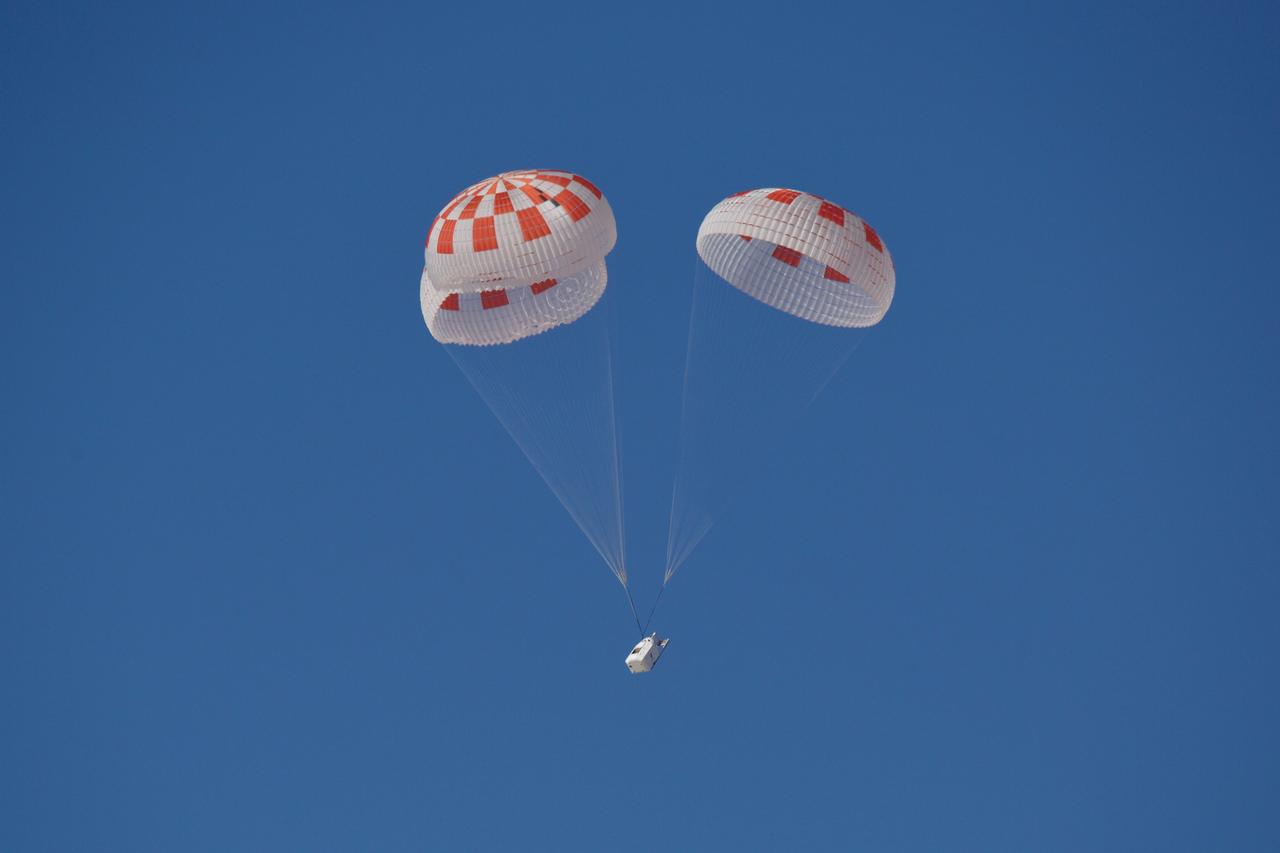
SpaceX performed its fourteenth overall parachute test supporting Crew Dragon development. This most recent exercise was the first of several planned parachute system qualification tests ahead of the spacecraft’s first crewed flight and resulted in the successful touchdown of Crew Dragon’s parachute system. During this test, a C-130 aircraft transported the parachute test vehicle, designed to achieve the maximum speeds that Crew Dragon could experience on re-entry, over the Mojave Desert in Southern California and dropped the vehicle from an altitude of 25,000 feet. The test demonstrated an off-nominal situation, deploying only one of the two drogue chutes and intentionally skipping a reefing stage on one of the four main parachutes, proving a safe landing in such a contingency scenario.
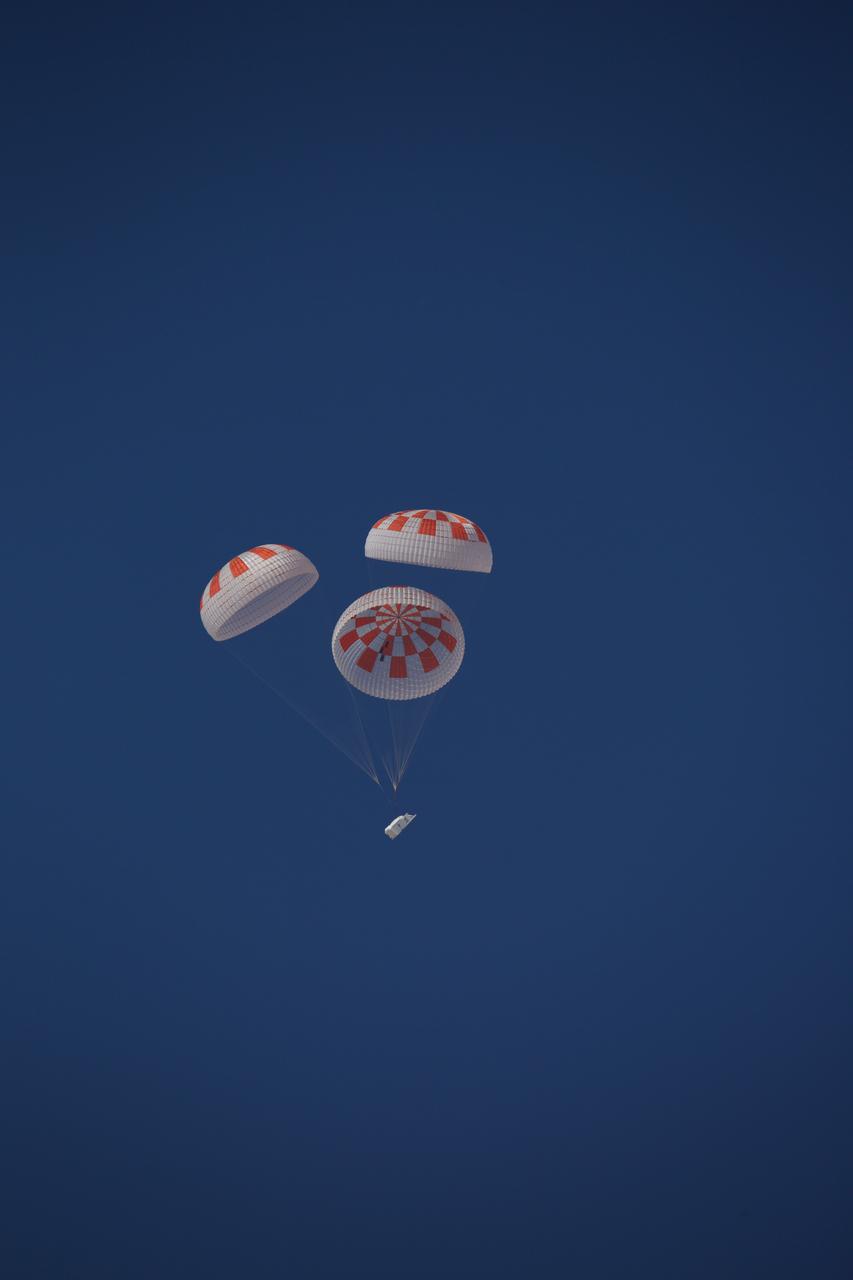
SpaceX performed its fourteenth overall parachute test supporting Crew Dragon development. This most recent exercise was the first of several planned parachute system qualification tests ahead of the spacecraft’s first crewed flight and resulted in the successful touchdown of Crew Dragon’s parachute system. During this test, a C-130 aircraft transported the parachute test vehicle, designed to achieve the maximum speeds that Crew Dragon could experience on re-entry, over the Mojave Desert in Southern California and dropped the vehicle from an altitude of 25,000 feet. The test demonstrated an off-nominal situation, deploying only one of the two drogue chutes and intentionally skipping a reefing stage on one of the four main parachutes, proving a safe landing in such a contingency scenario.
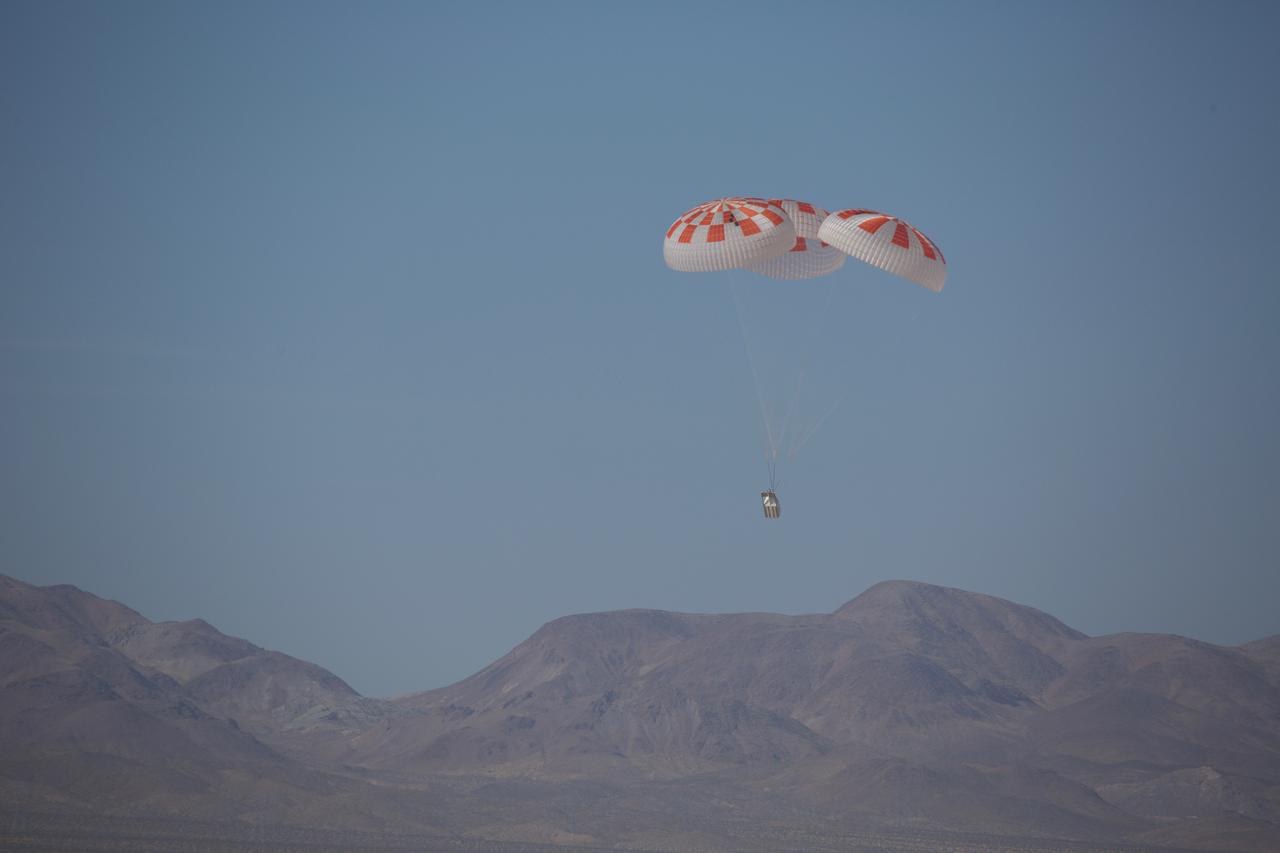
SpaceX performed its fourteenth overall parachute test supporting Crew Dragon development. This most recent exercise was the first of several planned parachute system qualification tests ahead of the spacecraft’s first crewed flight and resulted in the successful touchdown of Crew Dragon’s parachute system. During this test, a C-130 aircraft transported the parachute test vehicle, designed to achieve the maximum speeds that Crew Dragon could experience on re-entry, over the Mojave Desert in Southern California and dropped the vehicle from an altitude of 25,000 feet. The test demonstrated an off-nominal situation, deploying only one of the two drogue chutes and intentionally skipping a reefing stage on one of the four main parachutes, proving a safe landing in such a contingency scenario.
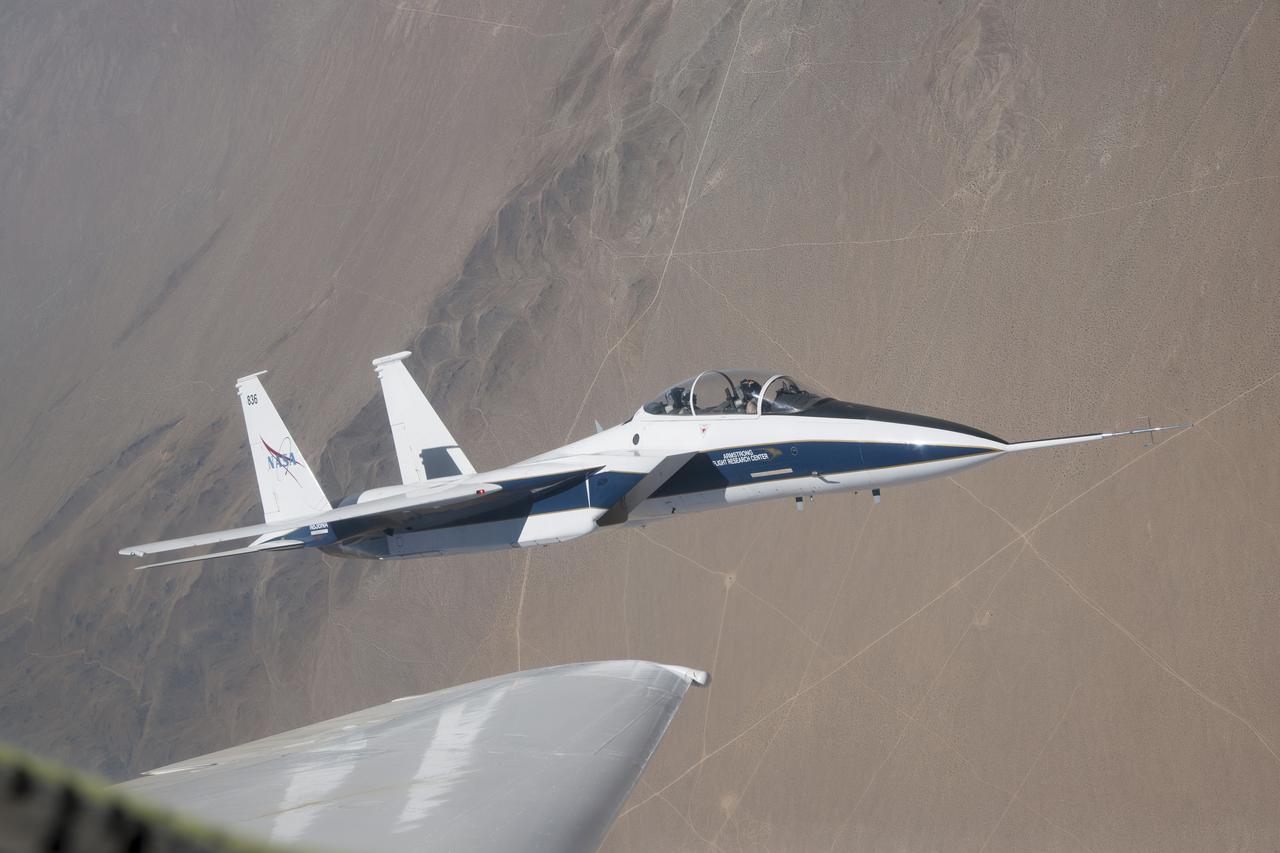
NASA’s F-15 research test bed will expose the Swept Wing Laminar Flow test article to speeds up to Mach 2, matching conditions presented during wind tunnel testing at NASA’s Langley Research Center.
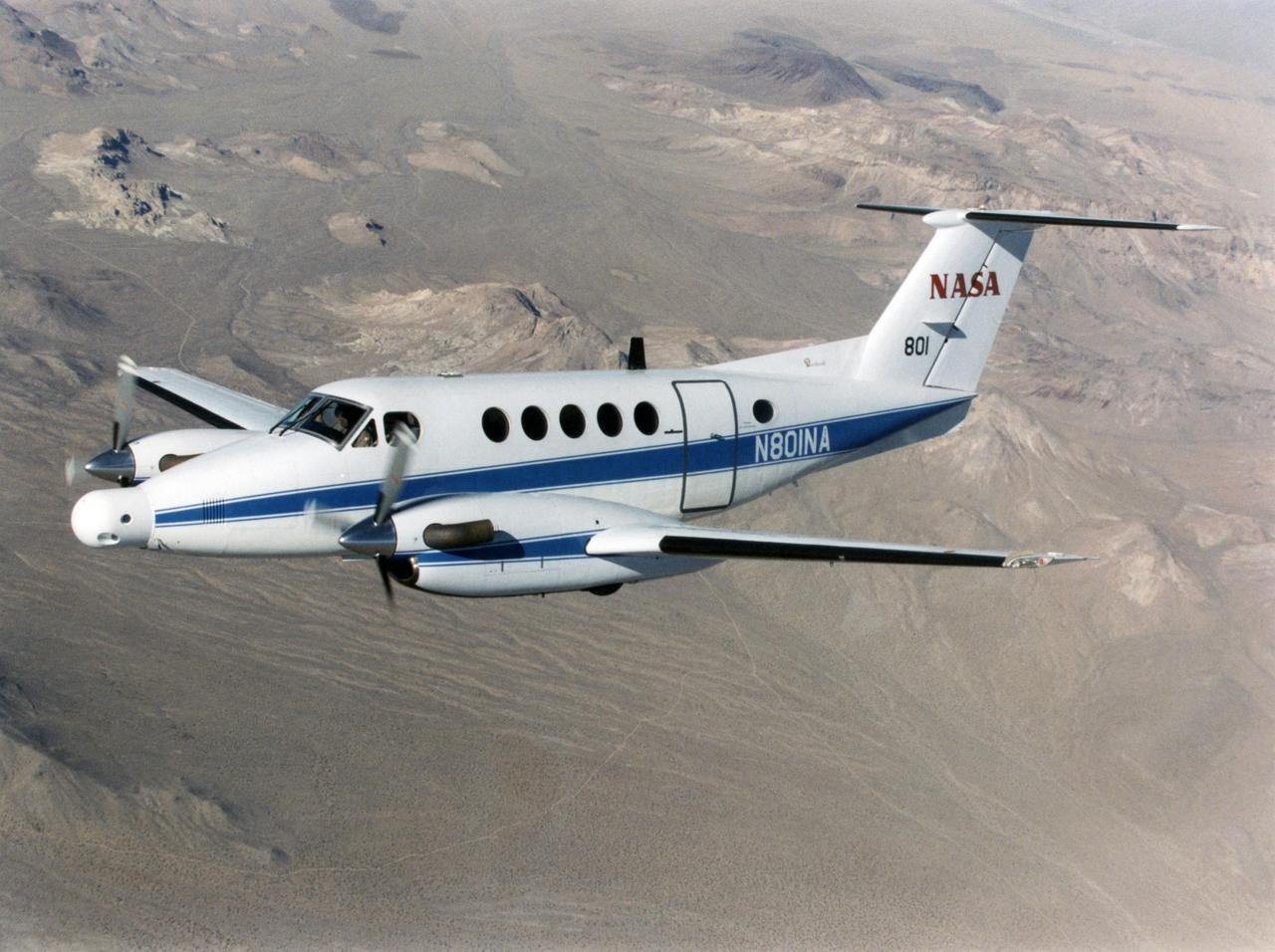
A NASA King Air successfully tested the Advanced Data Acquisition and Telemetry System during a recent series of three research flights.
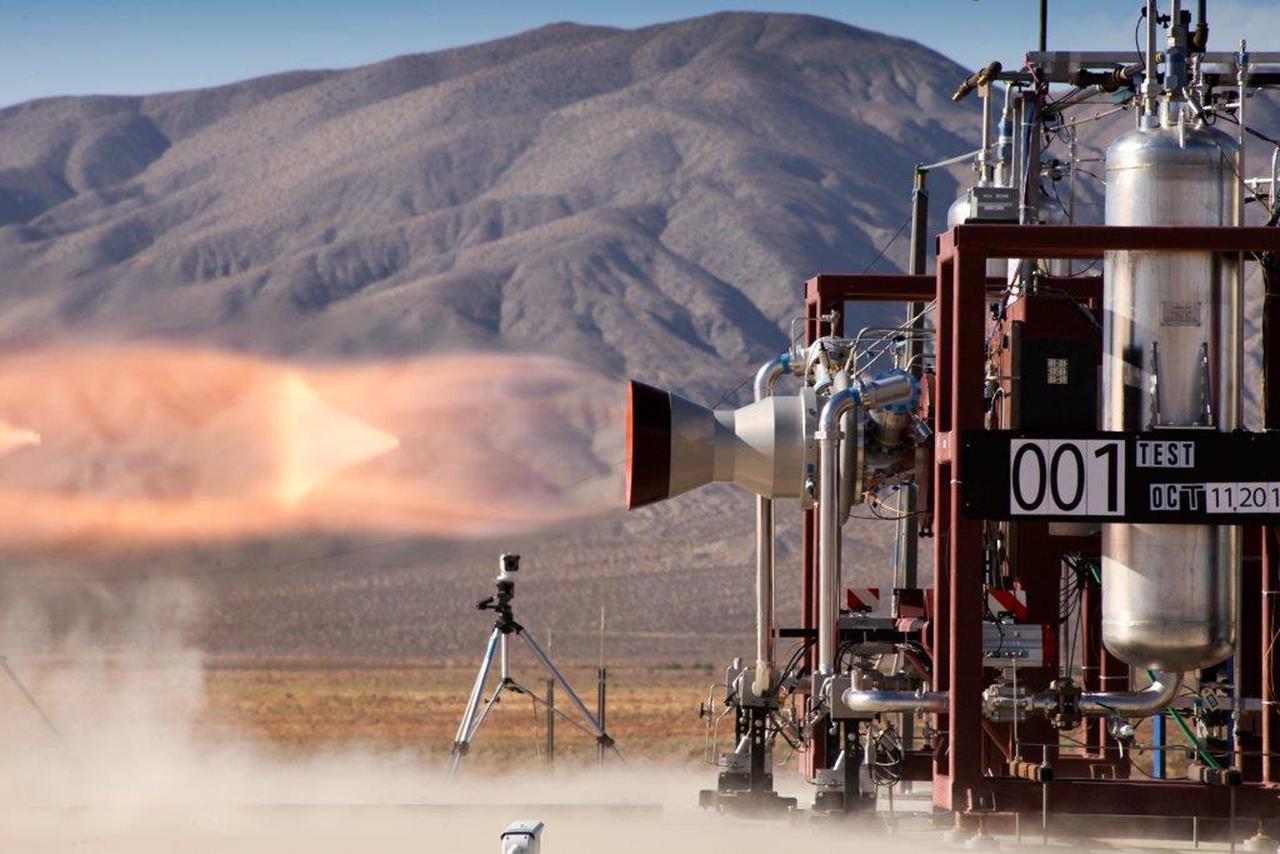
Boeing and Aerojet Rocketdyne have begun a series of developmental hot-fire tests with two launch abort engines similar to the ones that will be part of Boeing’s CST-100 Starliner service module, in the Mojave Desert in California. The engines, designed to maximize thrust build-up, while minimizing overshoot during start up, will be fired between half a second and 3 seconds each during the test campaign. If the Starliner’s four launch abort engines were used during an abort scenario, they would fire between 3 and 5.5. seconds, with enough thrust to get the spacecraft and its crew away from the rocket, before splashing down in the ocean under parachutes.
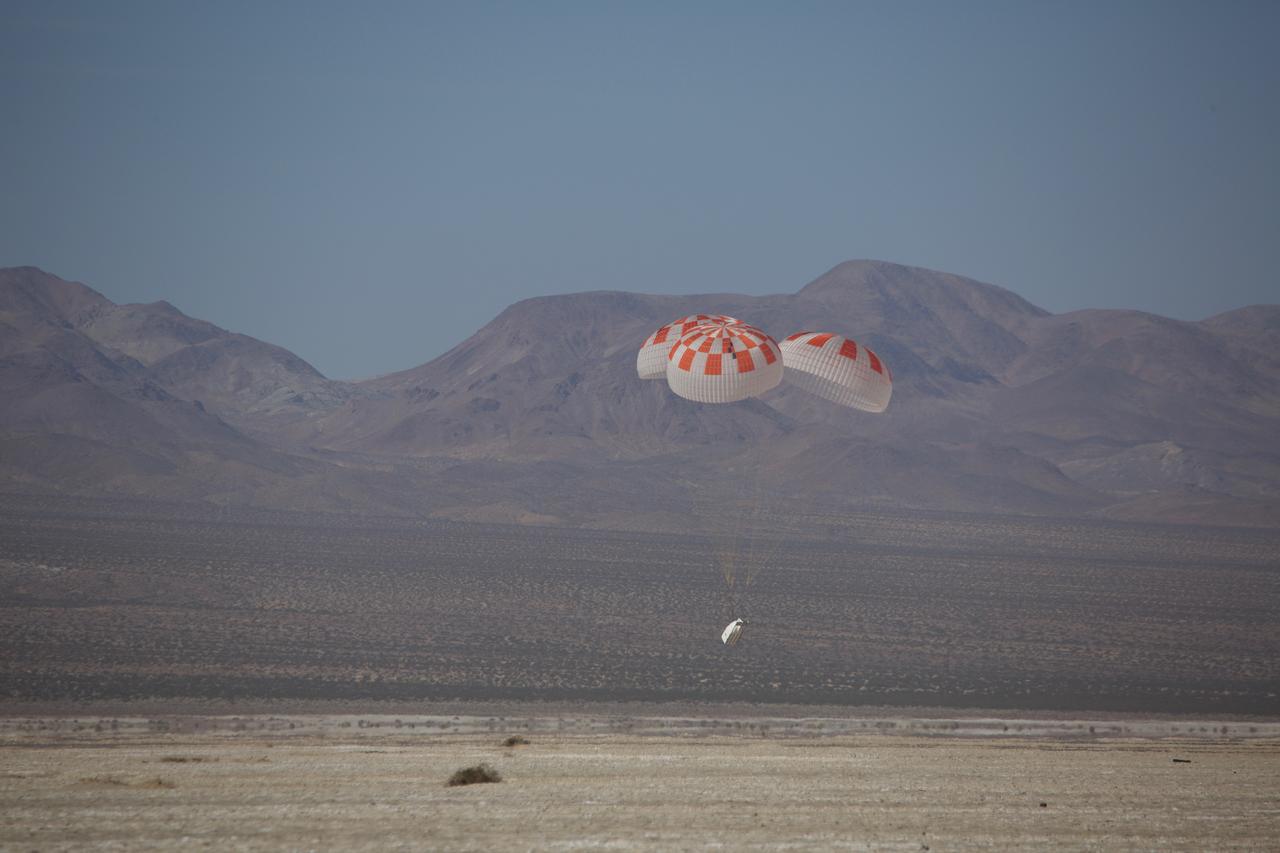
SpaceX performed its fourteenth overall parachute test supporting Crew Dragon development. This most recent exercise was the first of several planned parachute system qualification tests ahead of the spacecraft’s first crewed flight and resulted in the successful touchdown of Crew Dragon’s parachute system. During this test, a C-130 aircraft transported the parachute test vehicle, designed to achieve the maximum speeds that Crew Dragon could experience on re-entry, over the Mojave Desert in Southern California and dropped the vehicle from an altitude of 25,000 feet. The test demonstrated an off-nominal situation, deploying only one of the two drogue chutes and intentionally skipping a reefing stage on one of the four main parachutes, proving a safe landing in such a contingency scenario.
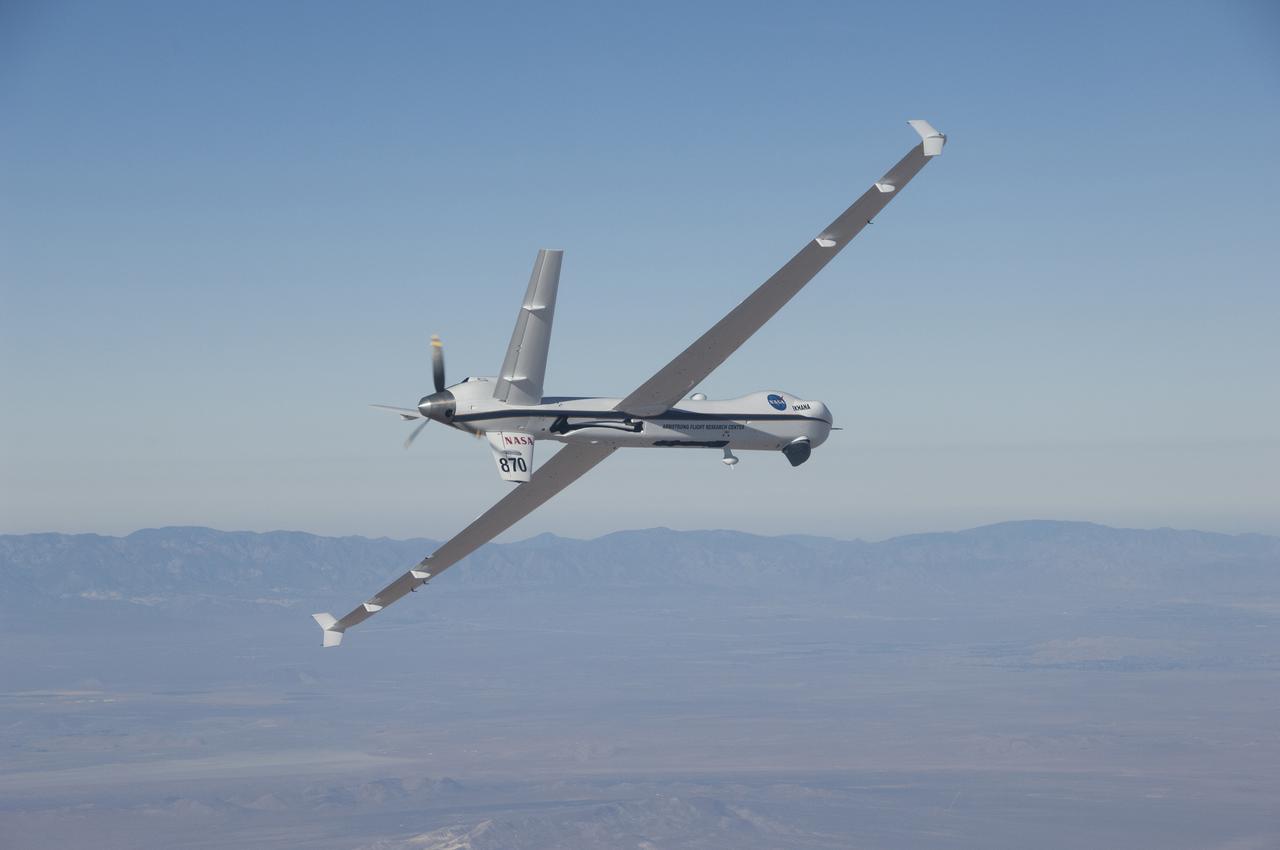
The Ikhana aircraft is flying a TAMDAR Edge probe that could significantly improve weather models and forecasts.

NASA photographer Jim Ross captured this shot while pilot Troy Asher flew inverted in an F-15D. The F-15B is seen here flying over the mirror farm, AKA the Abengoa Mojave Solar Project, east of Four Corners off of Highway 58 in Southern California.