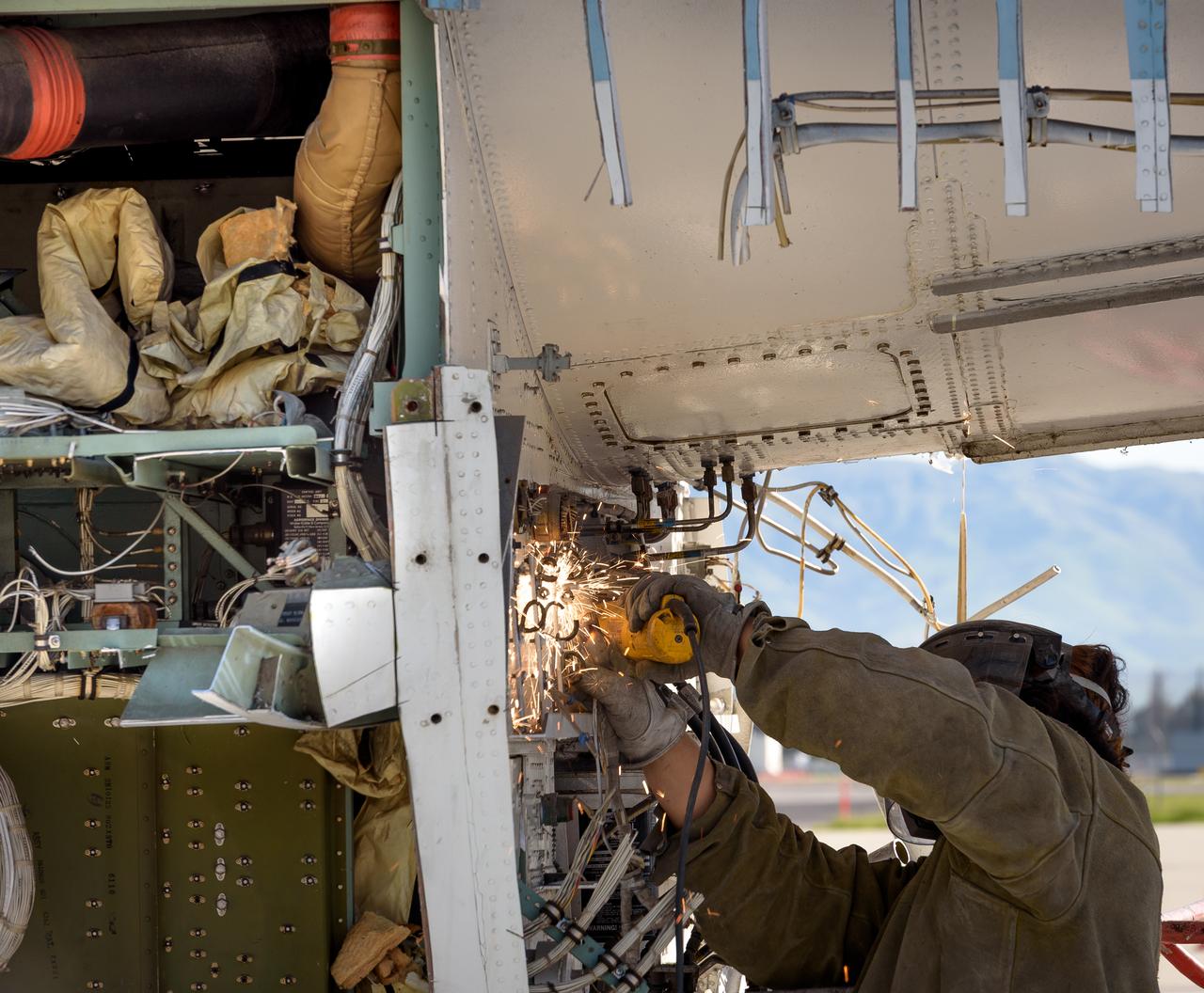
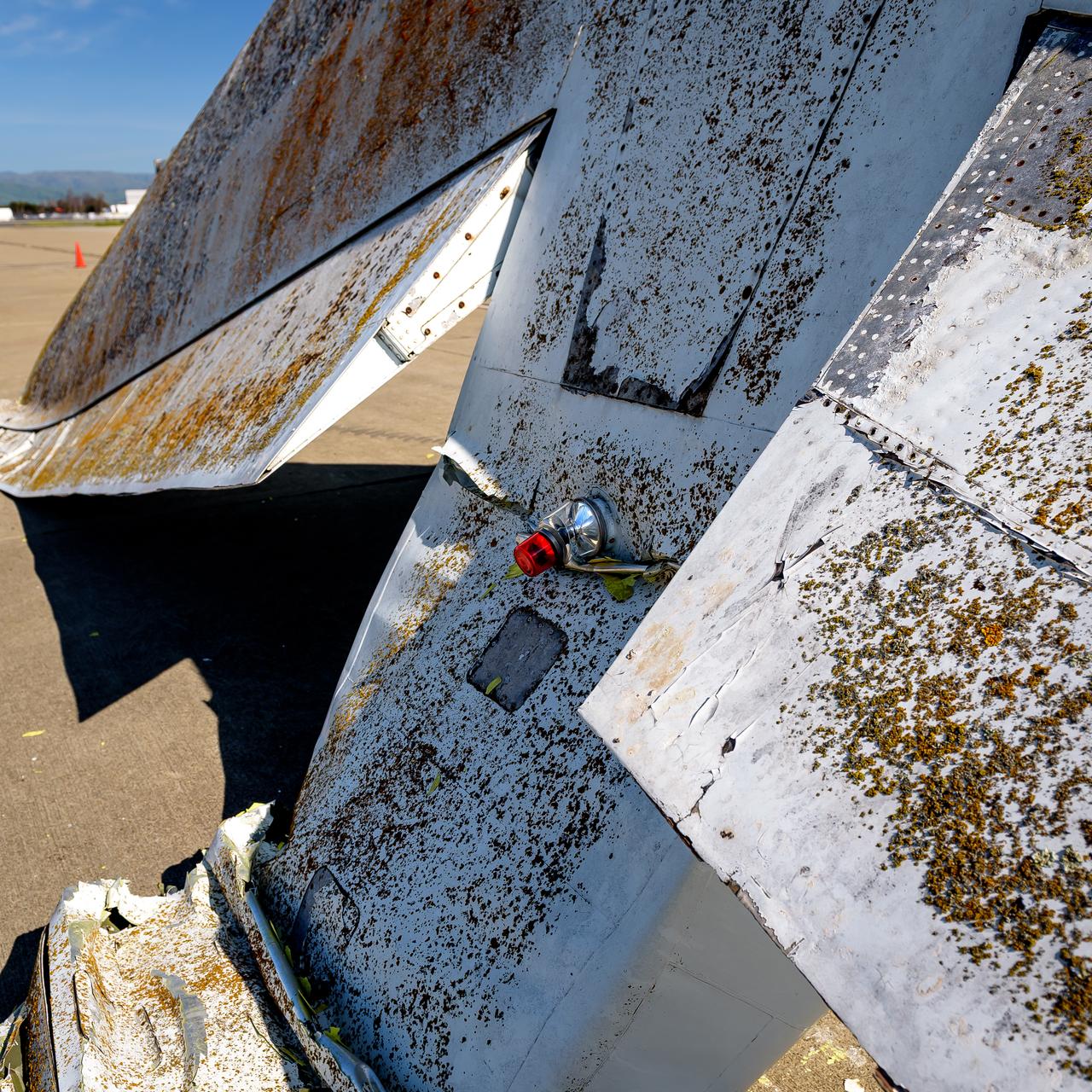
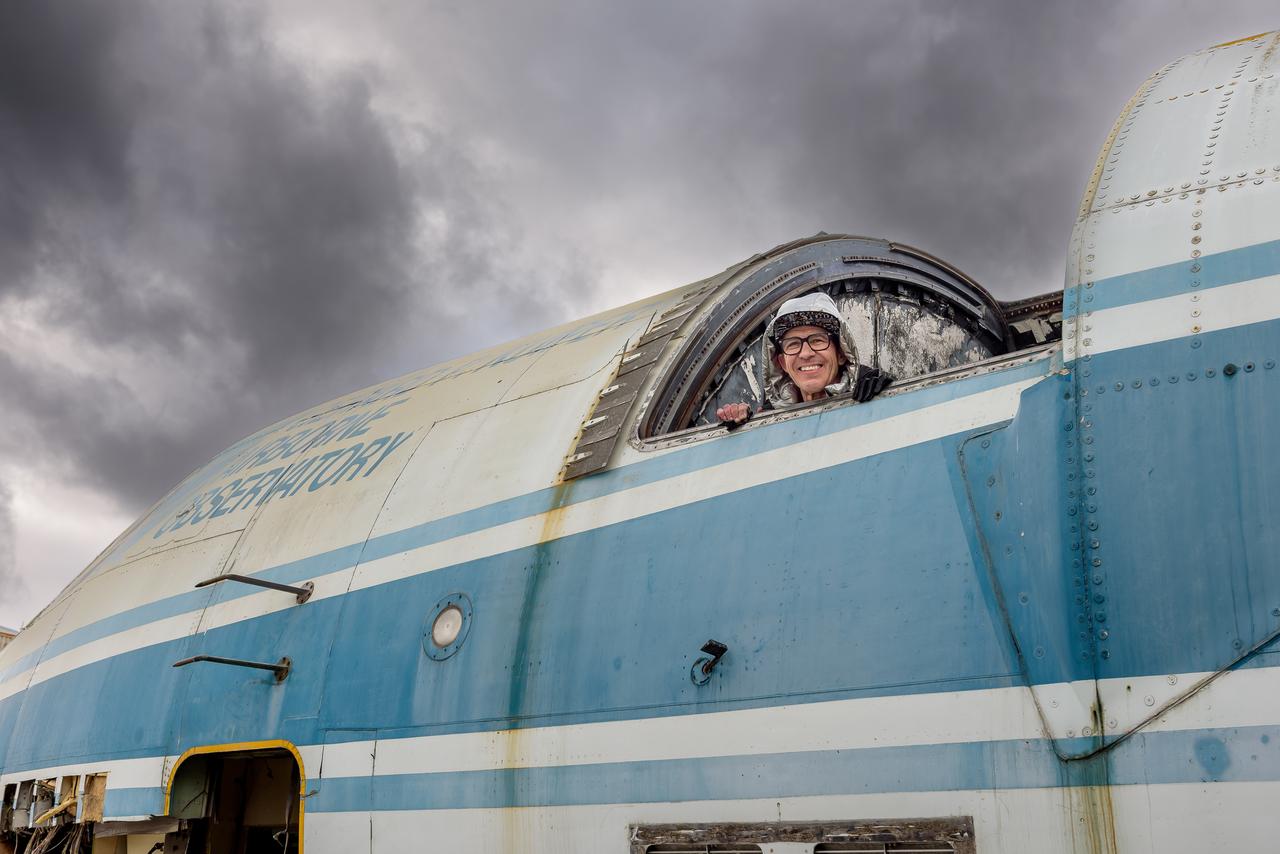
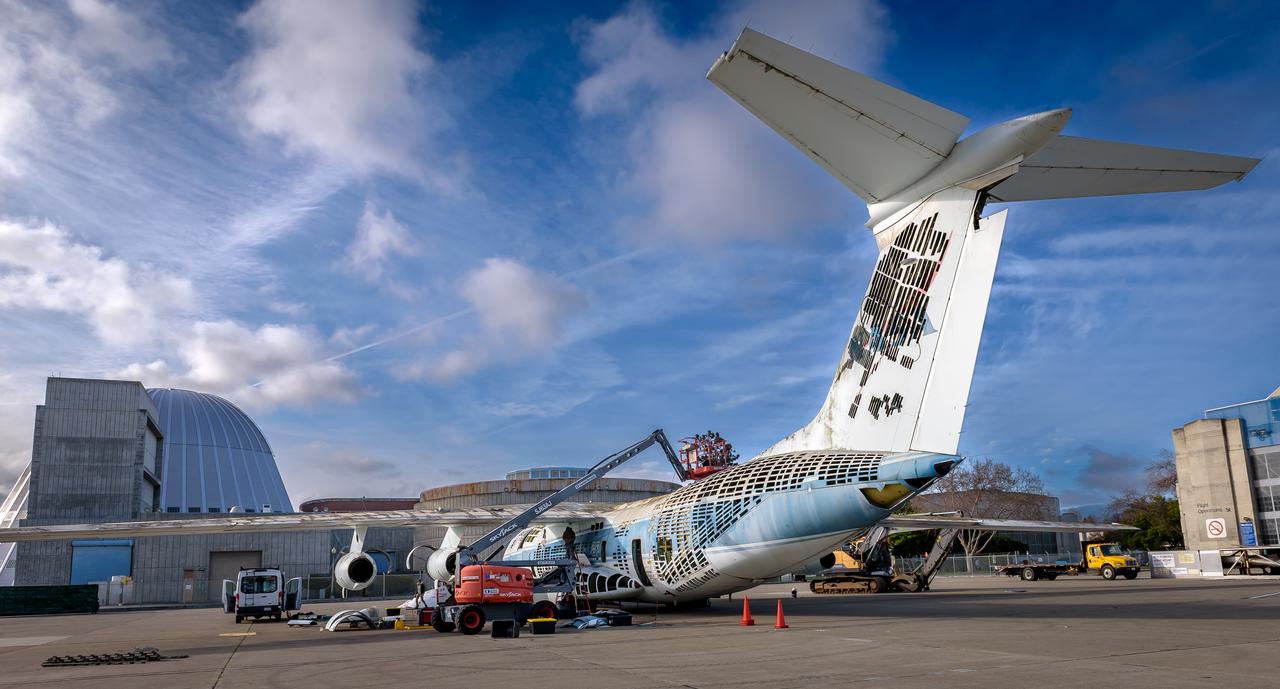
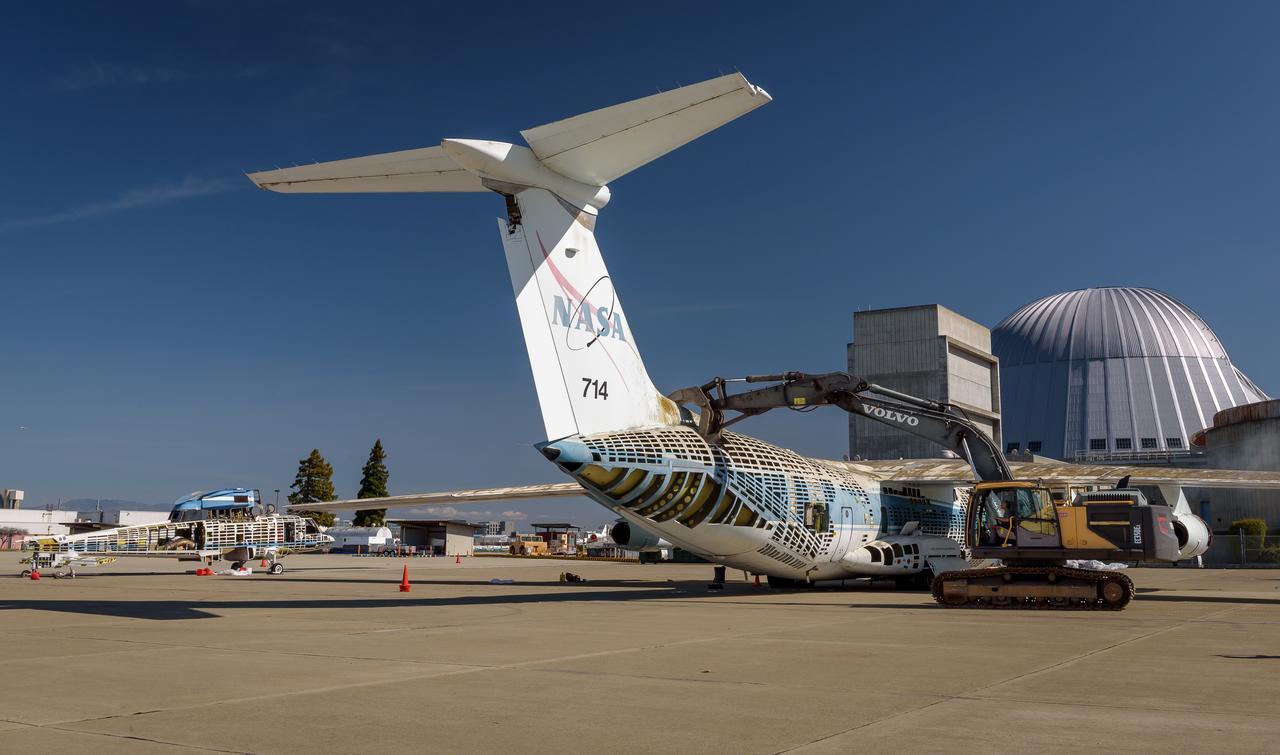
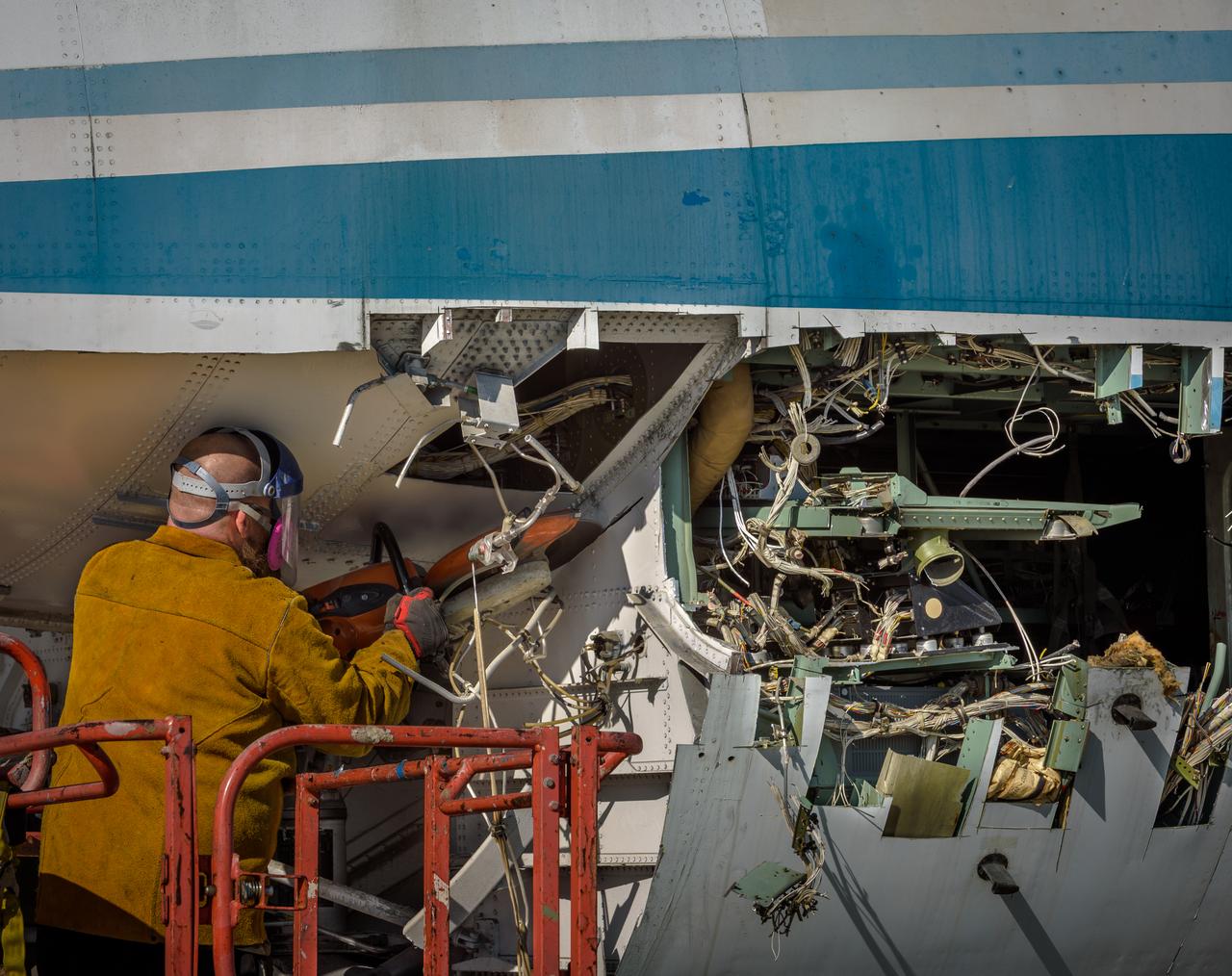
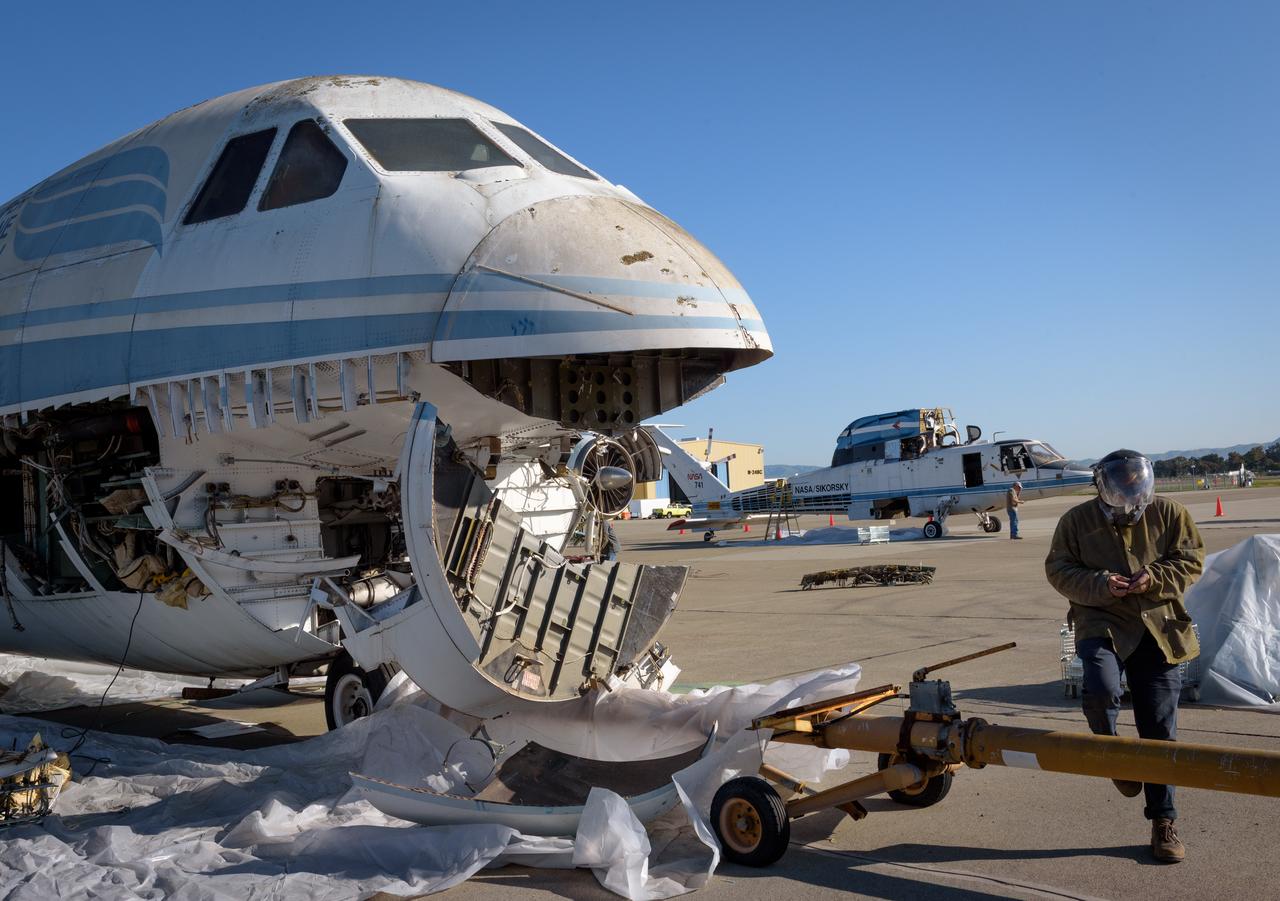
Close-up view of the tail section of the modified C-141 Kuiper Airborne Observatory, (KAO) (NASA-714), during its demolition on the N211 apron at Moffett Field, California.
Kuiper Airborne Observatory (KAO) Demolition
Removing the skin from the airframe of the modified C-141 Kuiper Airborne Observatory, (KAO) (NASA-714), on the N211 apron at Moffett Field, California.
Kuiper Airborne Observatory (KAO) Demolition
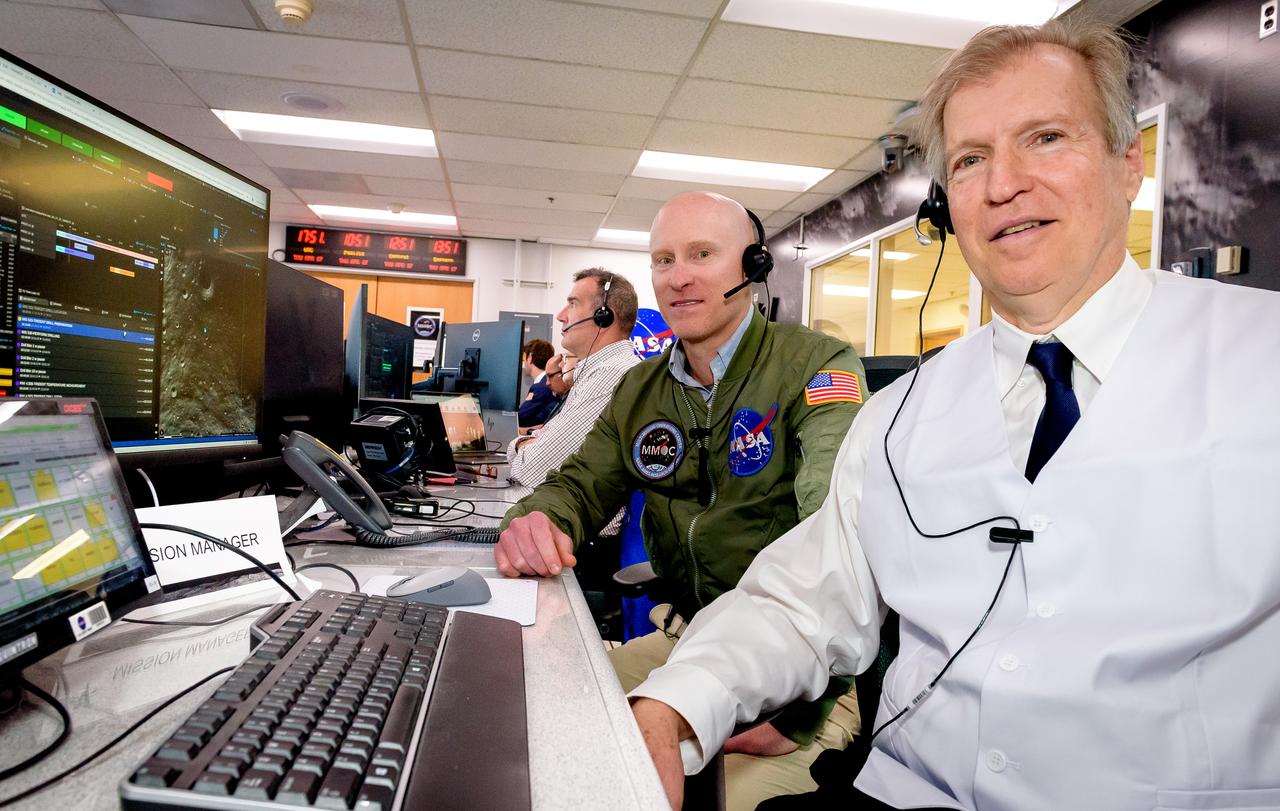
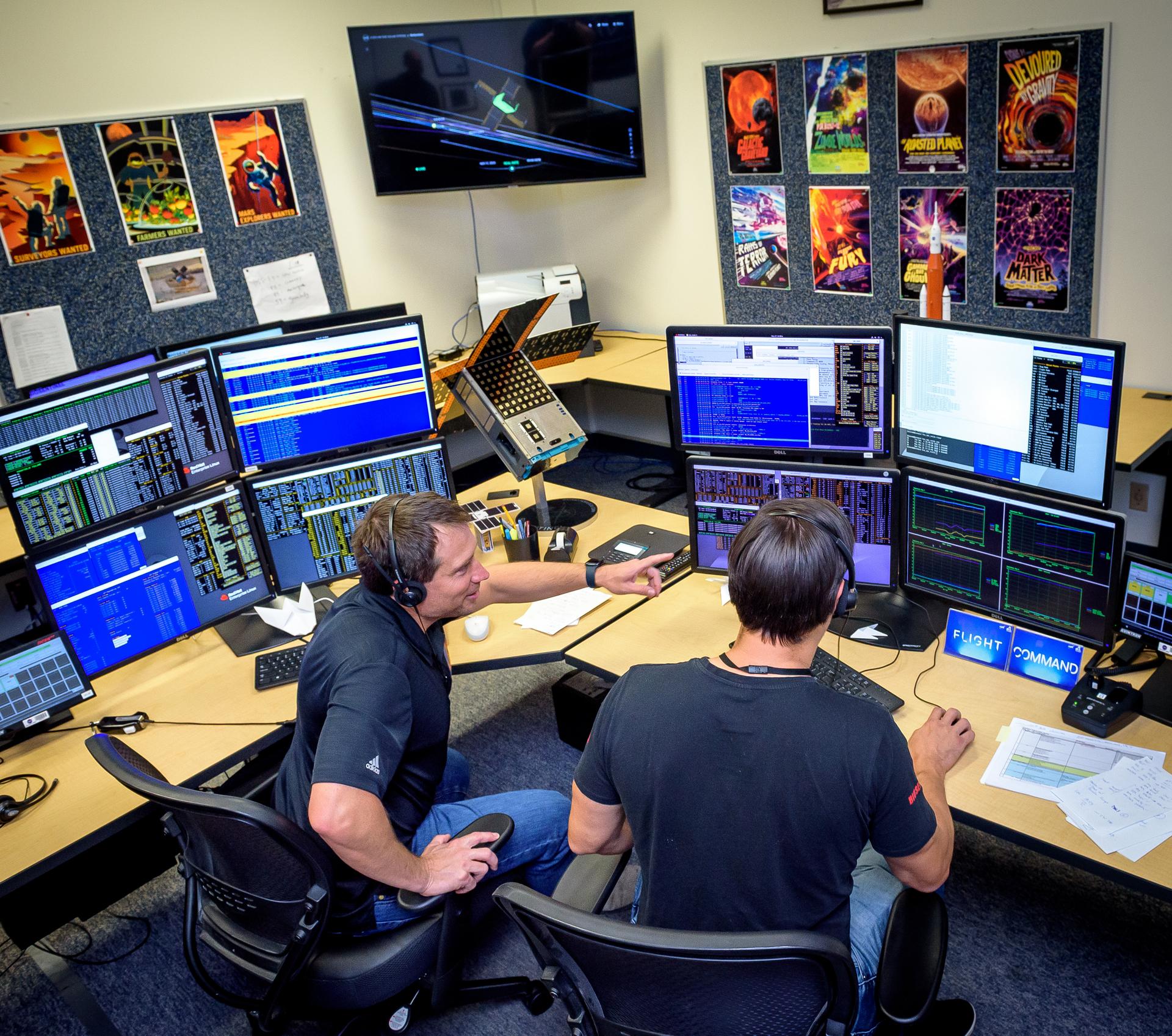
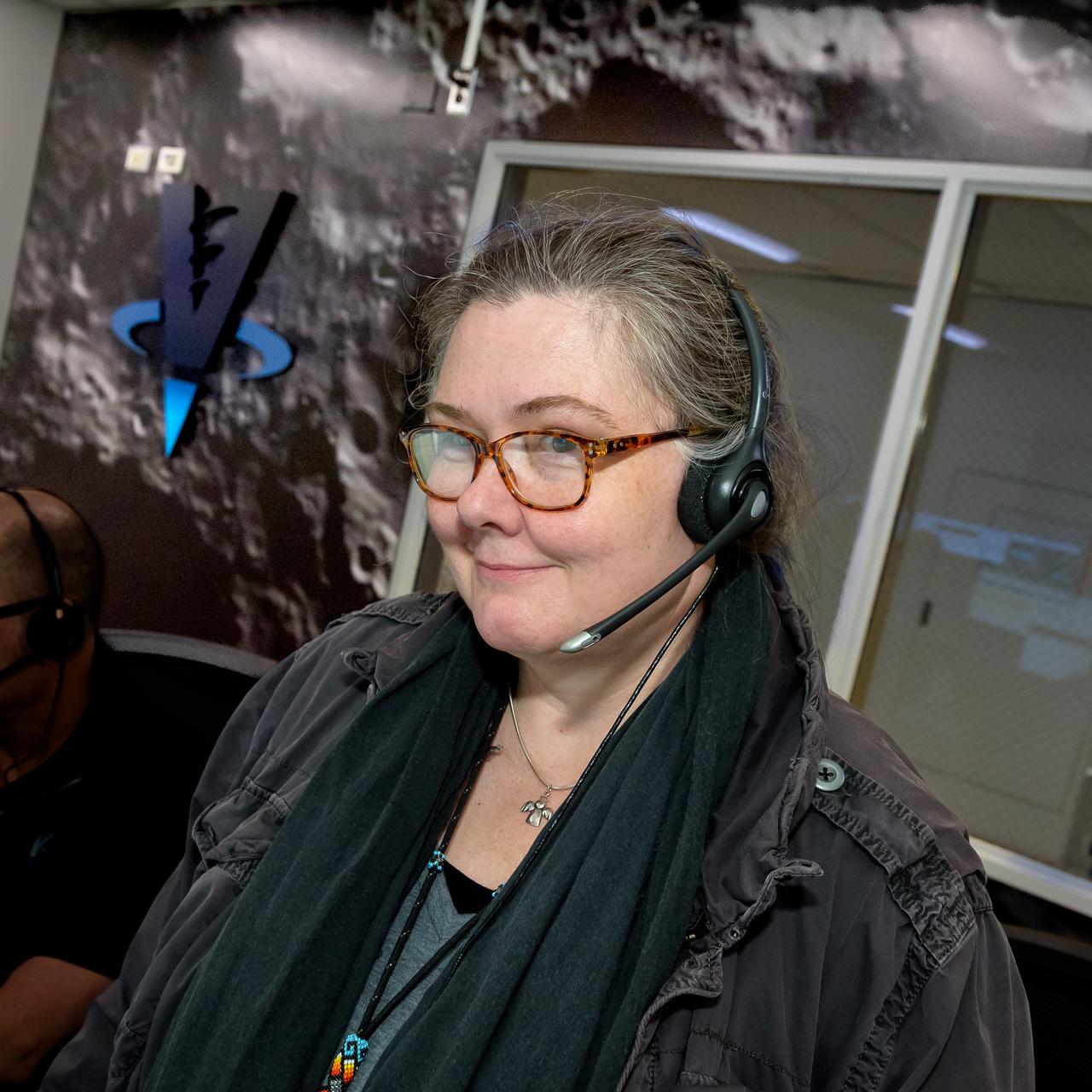
Rusty Hunt during the Volatiles Investigating Polar Exploration Rover (VIPER) vehicle operational readiness test in the Multi-Mission Operations Center (MMOC), N240A.
VIPER Vehicle Operational Readiness Test
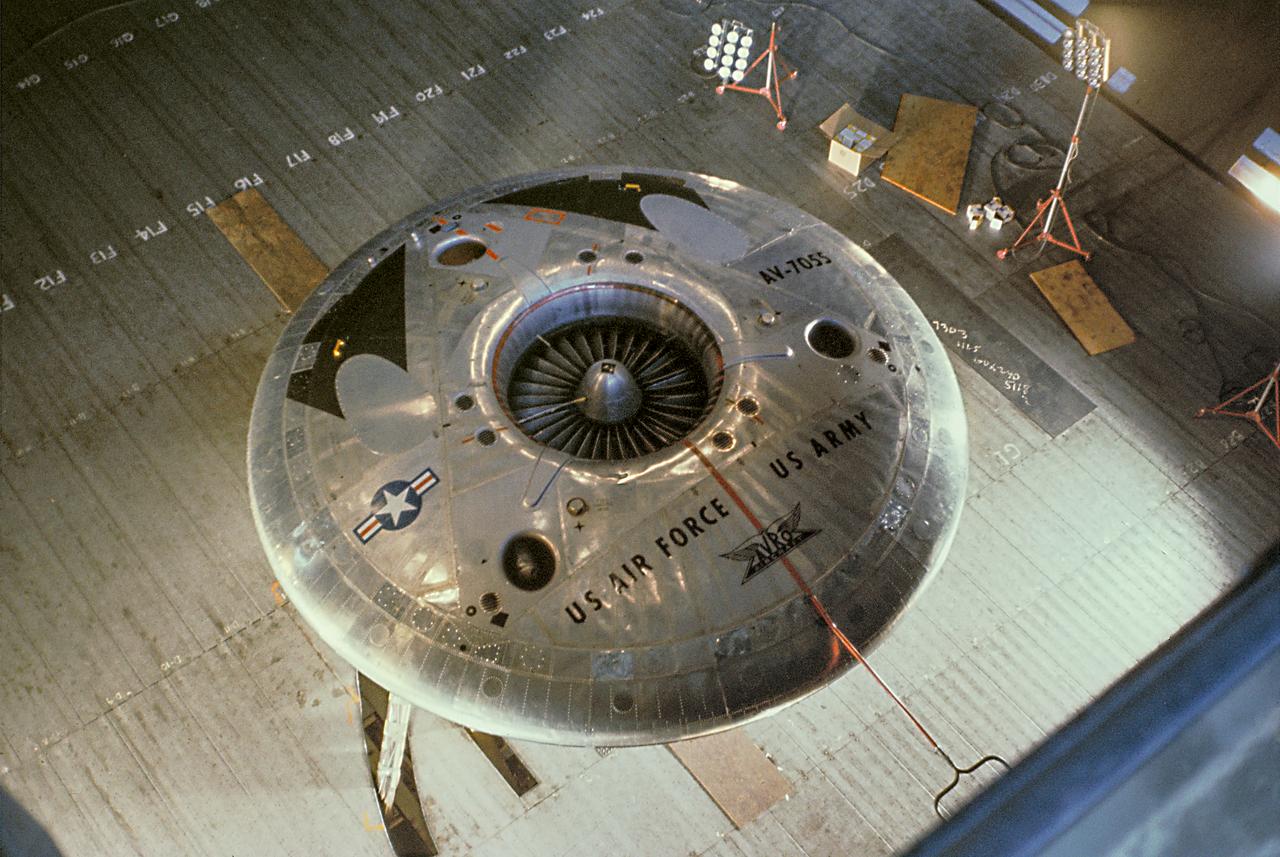
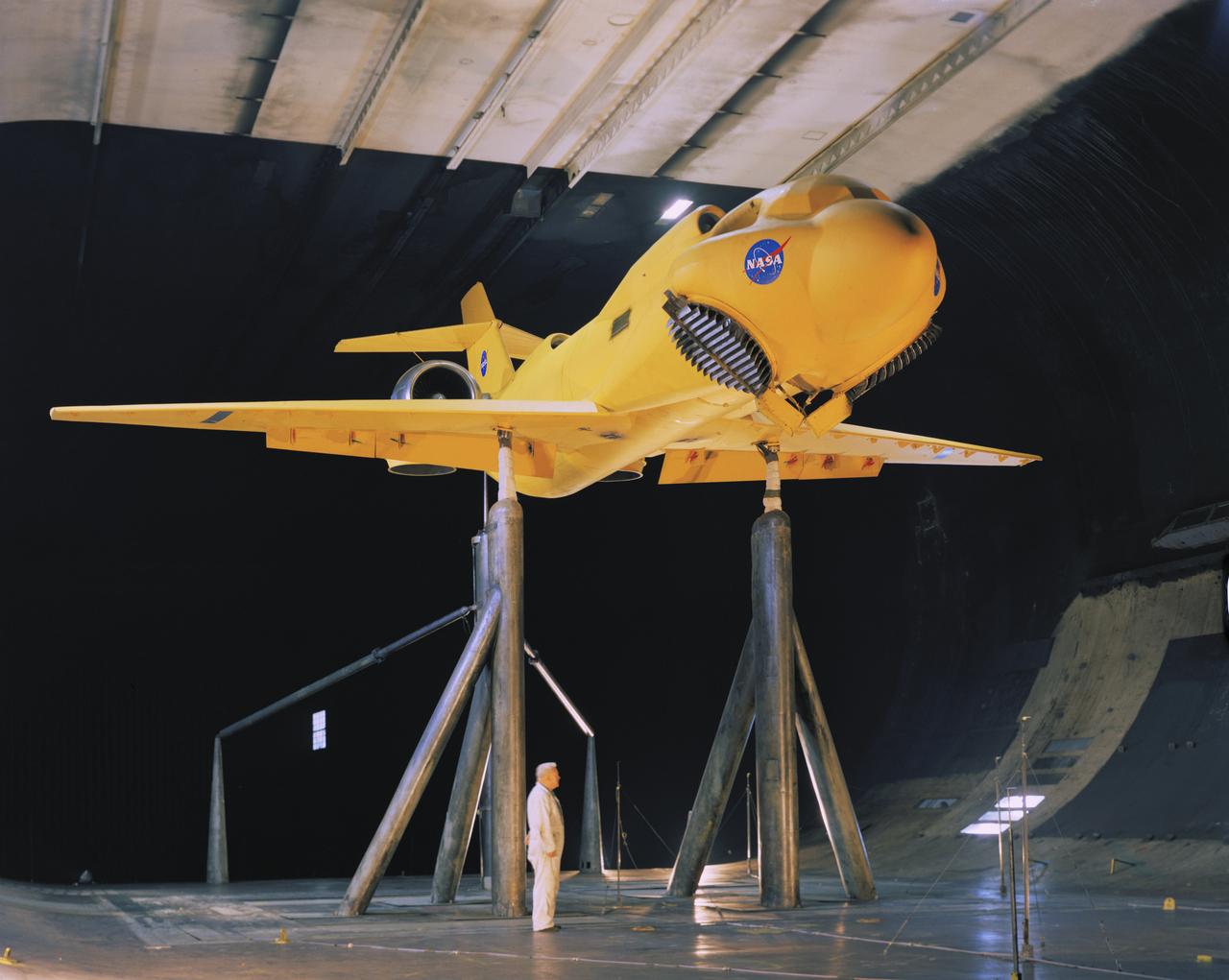
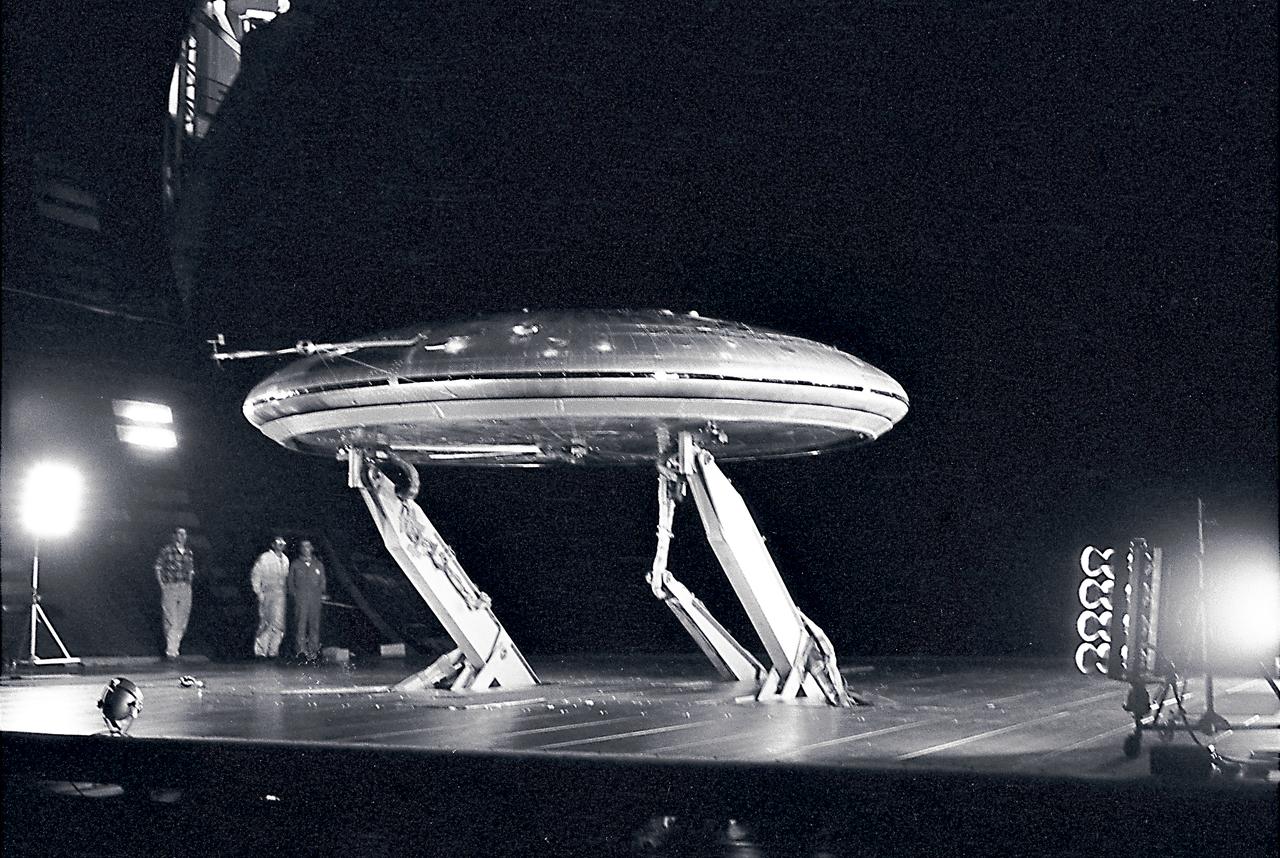
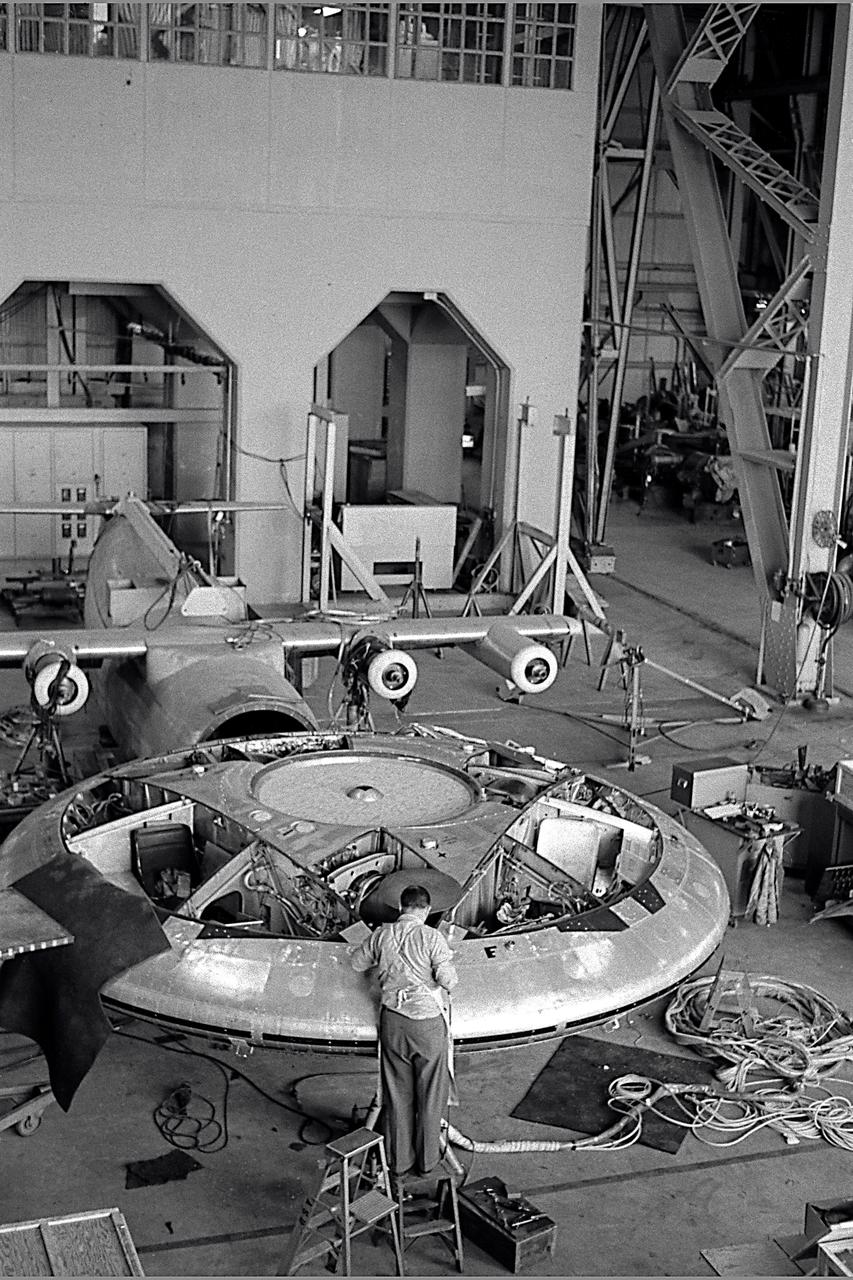
Front view of the Avrocar on variable height struts in 40x 80 wind tunnel with overhead doors open.
AVROCAR tested in the NASA Ames 40x80ft Wind Tunnel
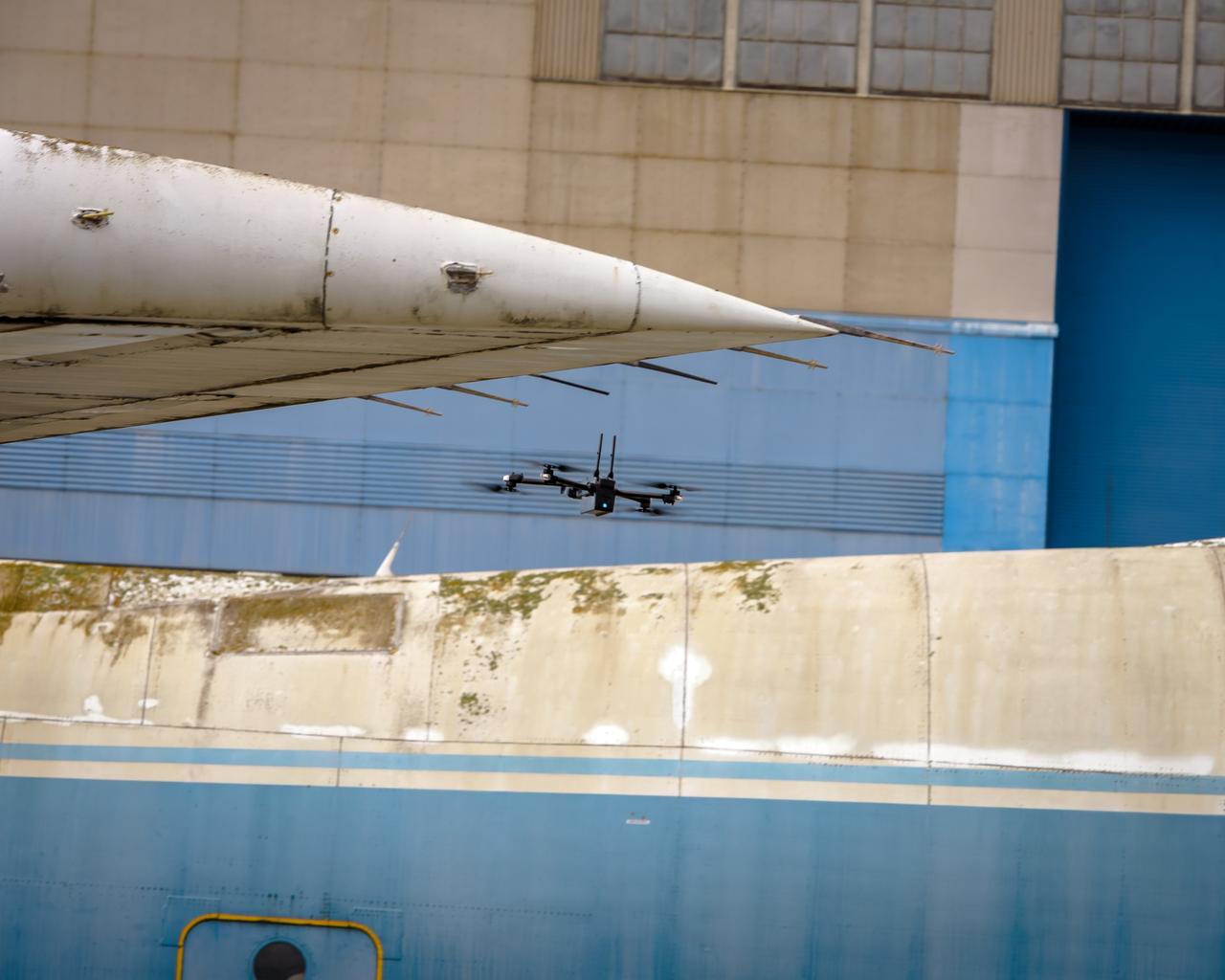
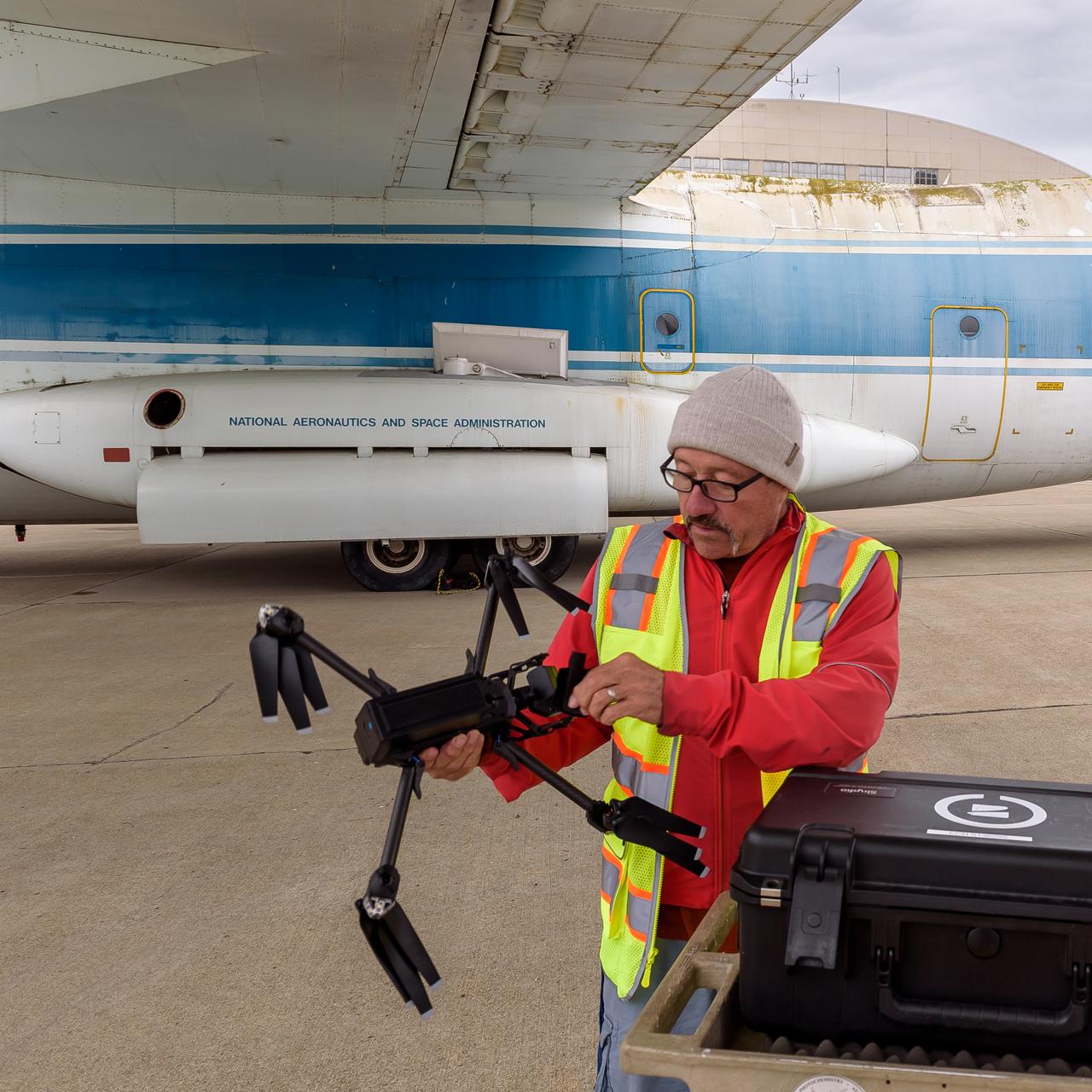
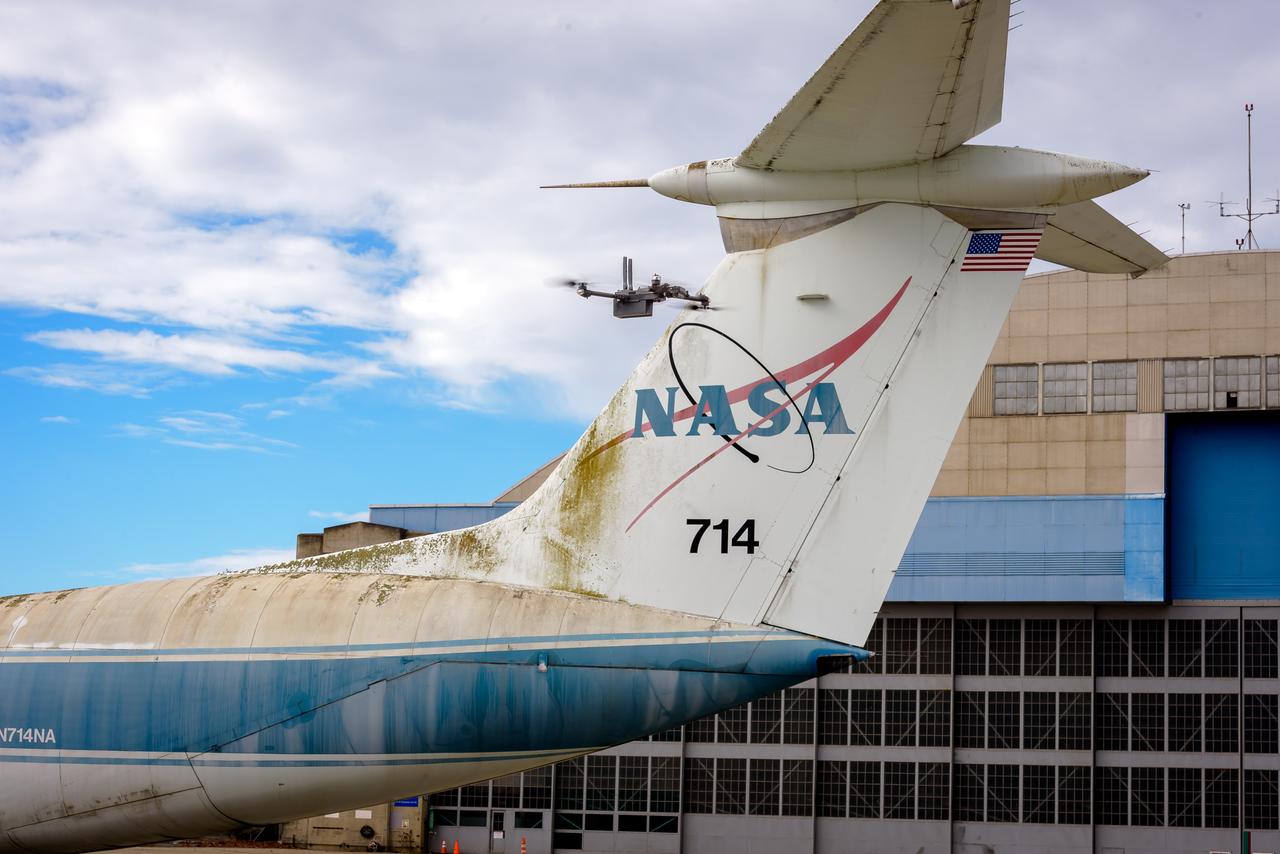
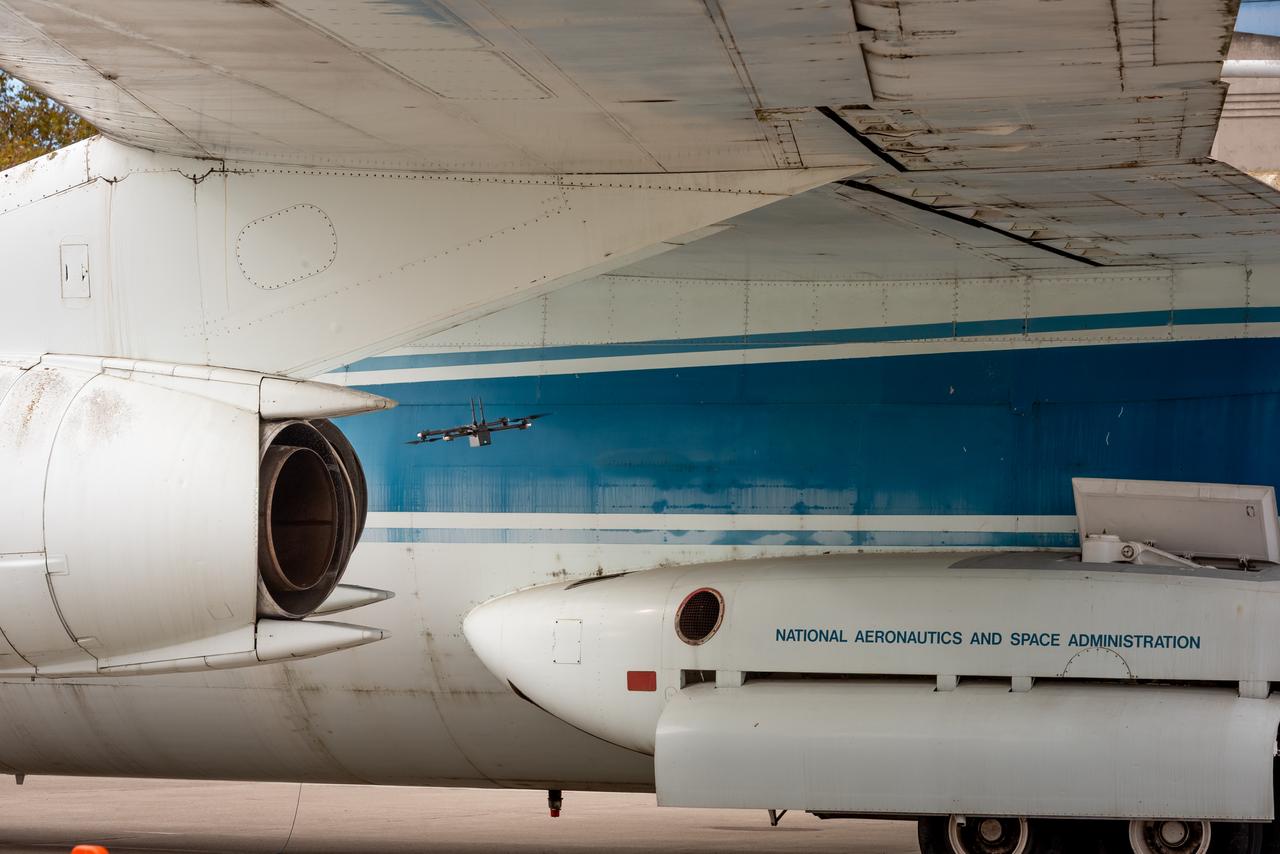
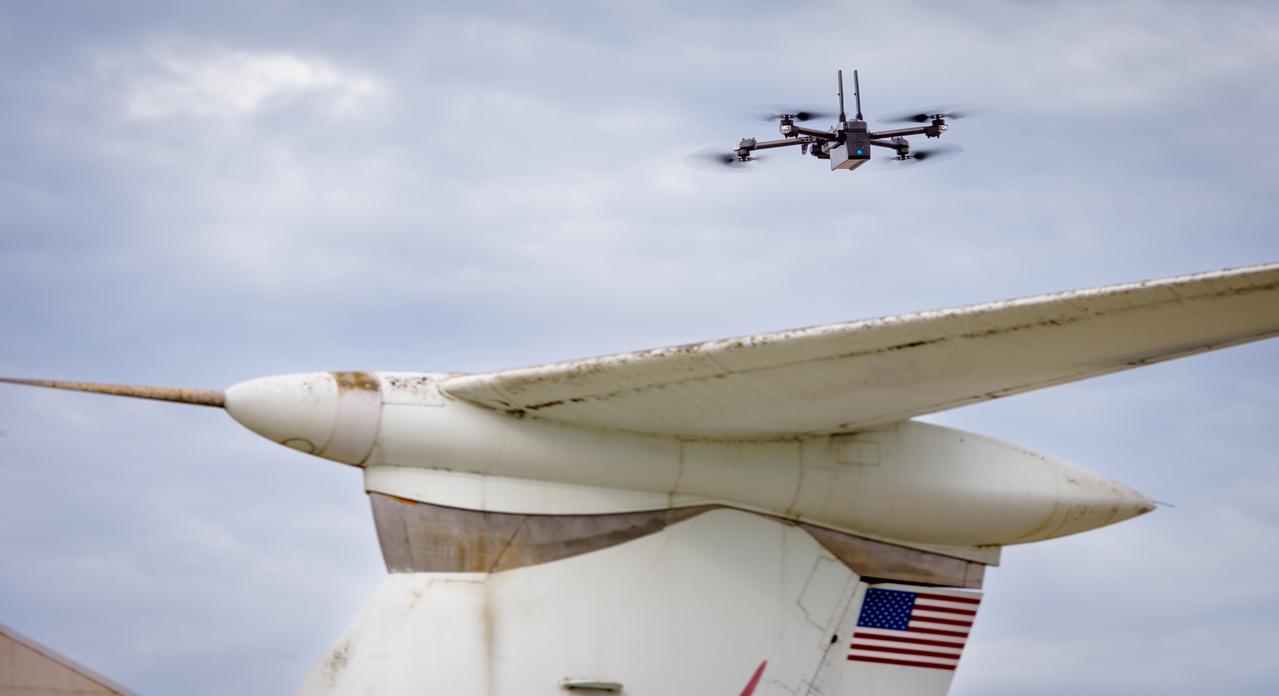
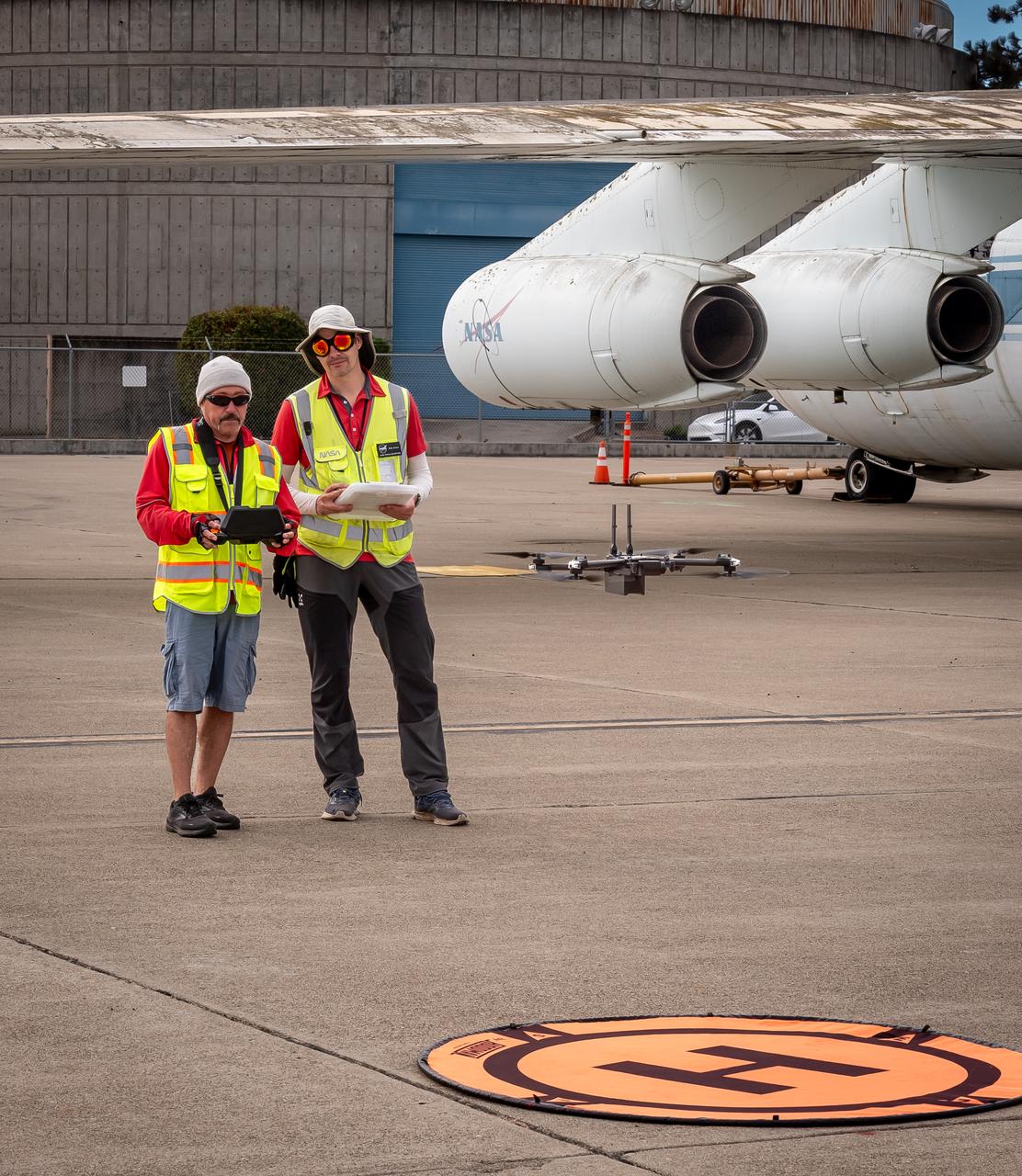
Richard Kolyer unfolds the drone and prepares it for flight around the modified C-141 Kuiper Airborne Observatory, (KAO) (NASA-714).
Kuiper Airborne Observatory (KAO) Demolition
Composite image of Background Oriented Schlieren (BOS) data (contour) with a cut-out images of the T-38’s during a Mach Number 1.01 pass. This data is the first time shockwave interactions between two full scale aircraft traveling faster than the speed of sound have been imaged and shown with schlieren visualization. Original recording of the pass taken in the Black Mountain Supersonic Corridor at near Edwards AFB in December of 2018. Image acquired by JT Heineck, schlieren data processed by Neal Smith
AirBOS4
The drone follows an autonomously defined path around the modified C-141 Kuiper Airborne Observatory, (KAO) (NASA-714), on the N211 apron.  The drone photographs the aircraft with a visible and infrared camera which are processed using a photogrammetry software package called Pix4D that converts them into a 3D model.  Scanning the aircraft is the first phase of documenting the aircraft demolition as well as an opportunity to train pilots to operate the Pix4D software.
Kuiper Airborne Observatory (KAO) Demolition
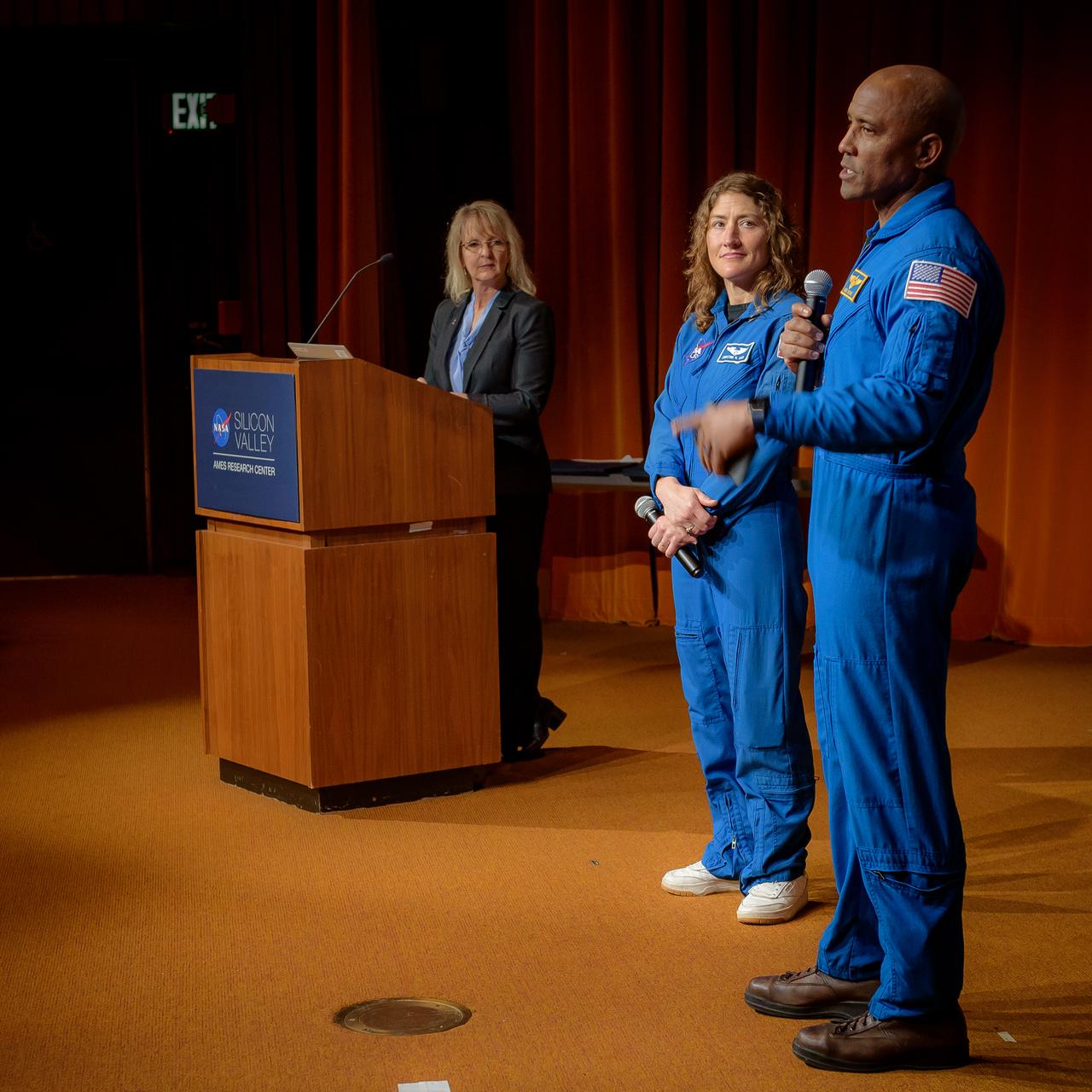
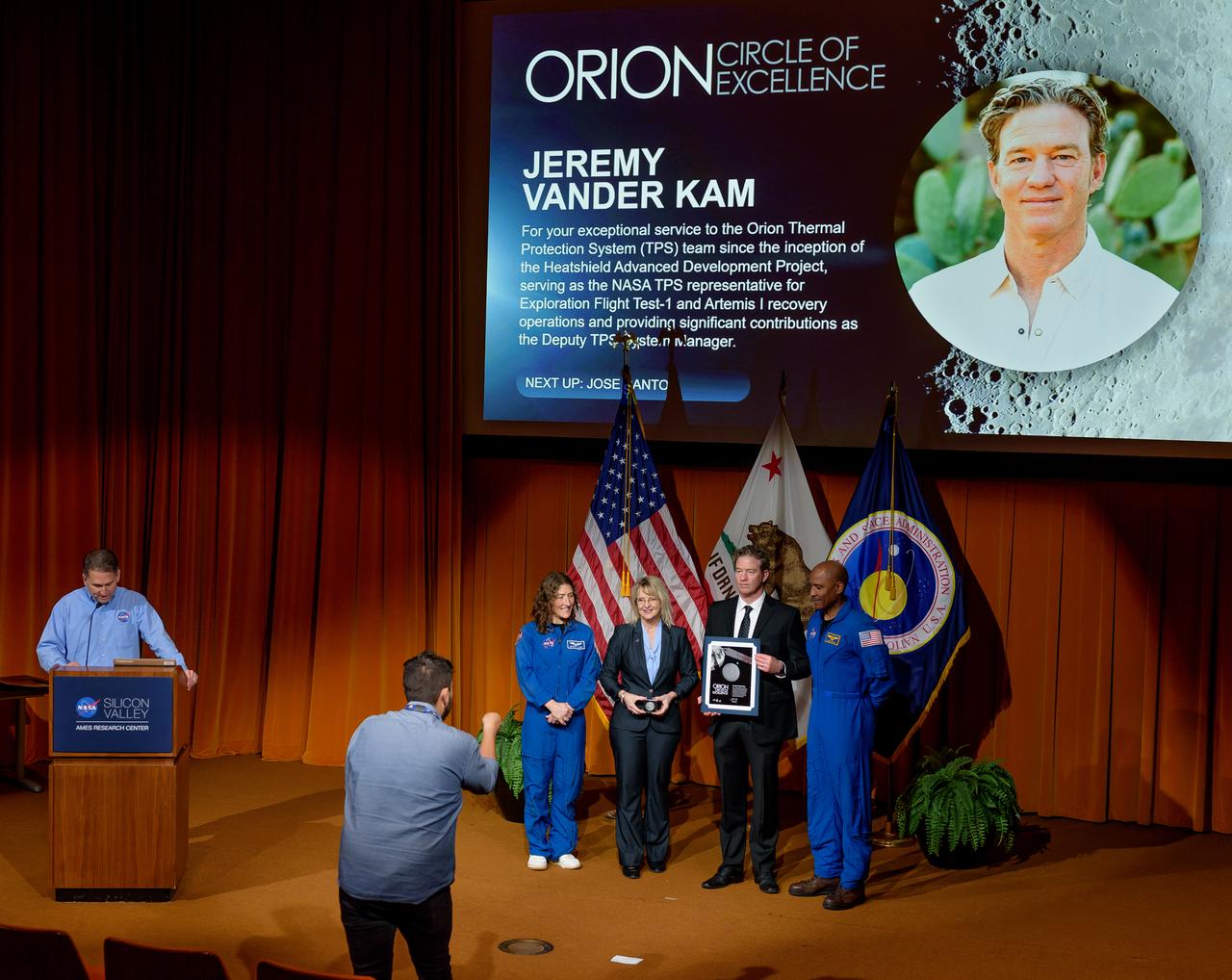
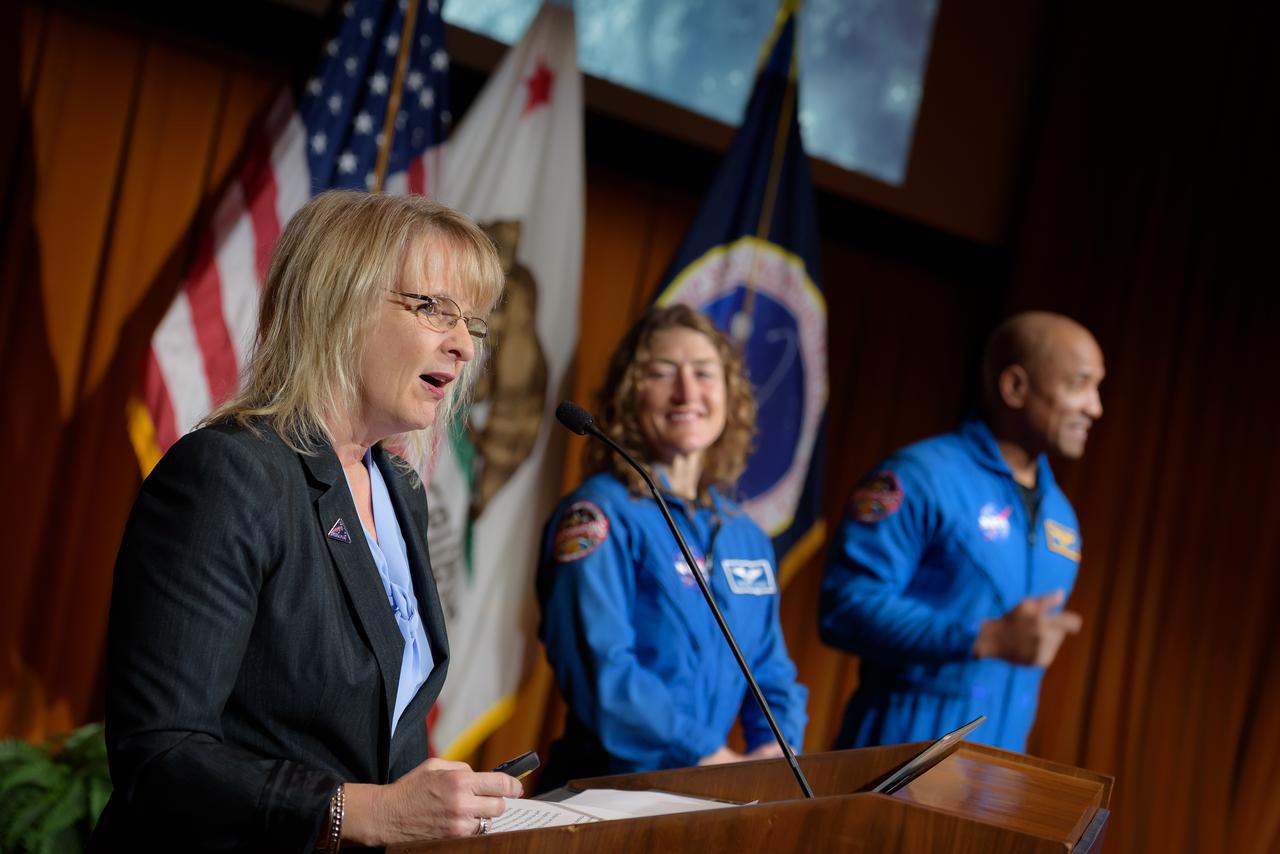
NASA Ames staff photographer Brandon Torres Navarette, front, photographs Orion Circle of Excellence Award being presented to Jeremy Vander Kam (ACD25-0023-001), center, by Orion Deputy Program Manager Debbie Korth, left, NASA astronauts Victor J. Glover, right, and Christina Koch, left.  Luis Saucedo is the master of the ceremonies at the podium on the far left, in the Syvertson Auditorium, N201.
Orion Astronauts Visit Ames Entry Systems and Technology Divisio
Location portrait of Jay Trimble in the Multi-Mission Operations Center (MMOC), N240, for the Volatiles Investigating Polar Exploration Rover (VIPER) mission.
VIPER Family Day
Right to left: Jay Trimble, Rachel Hoover, and Kelsey Herrmann in the Multi-Mission Operations Center (MMOC), N240, during Volatiles Investigating Polar Exploration Rover (VIPER) for VIPER Family Day.
VIPER Family Day
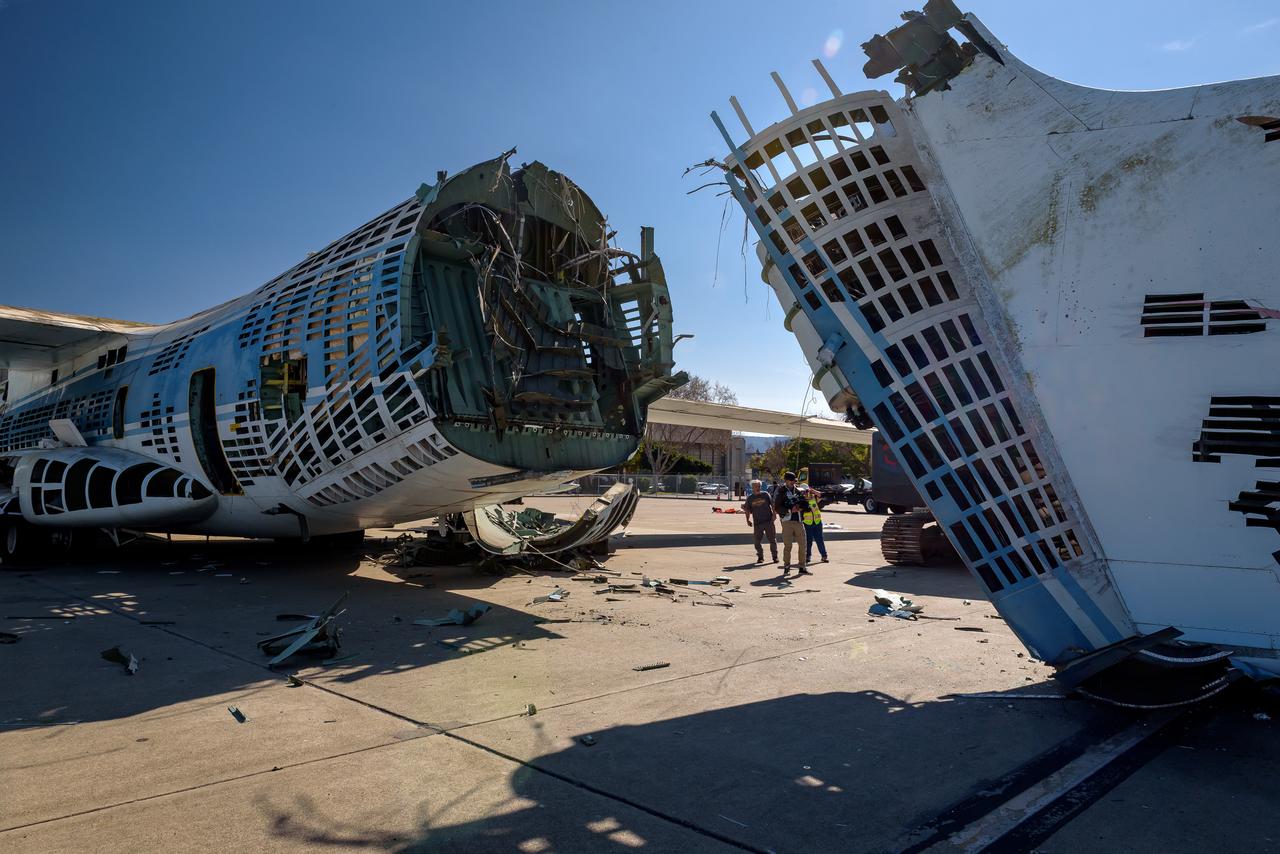
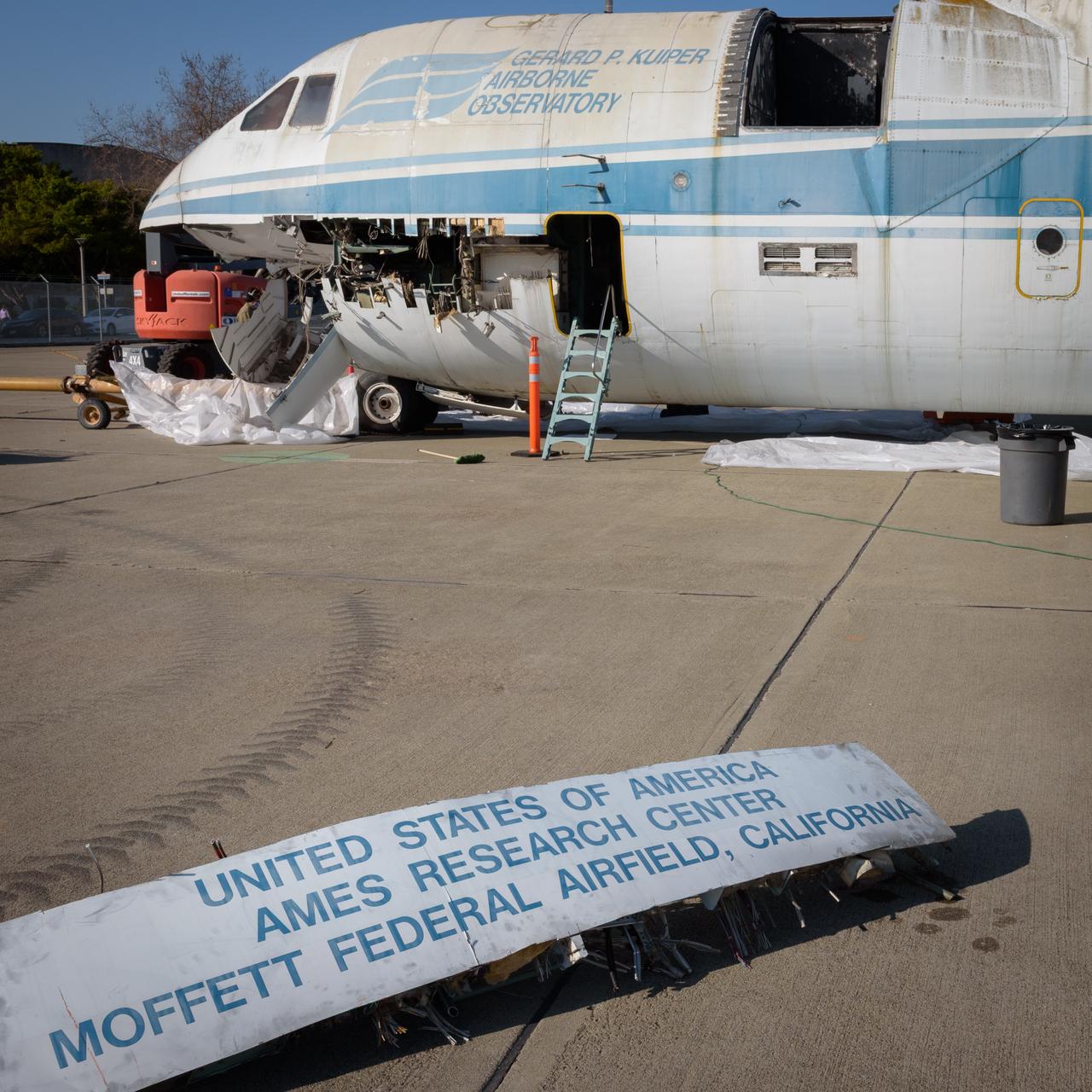
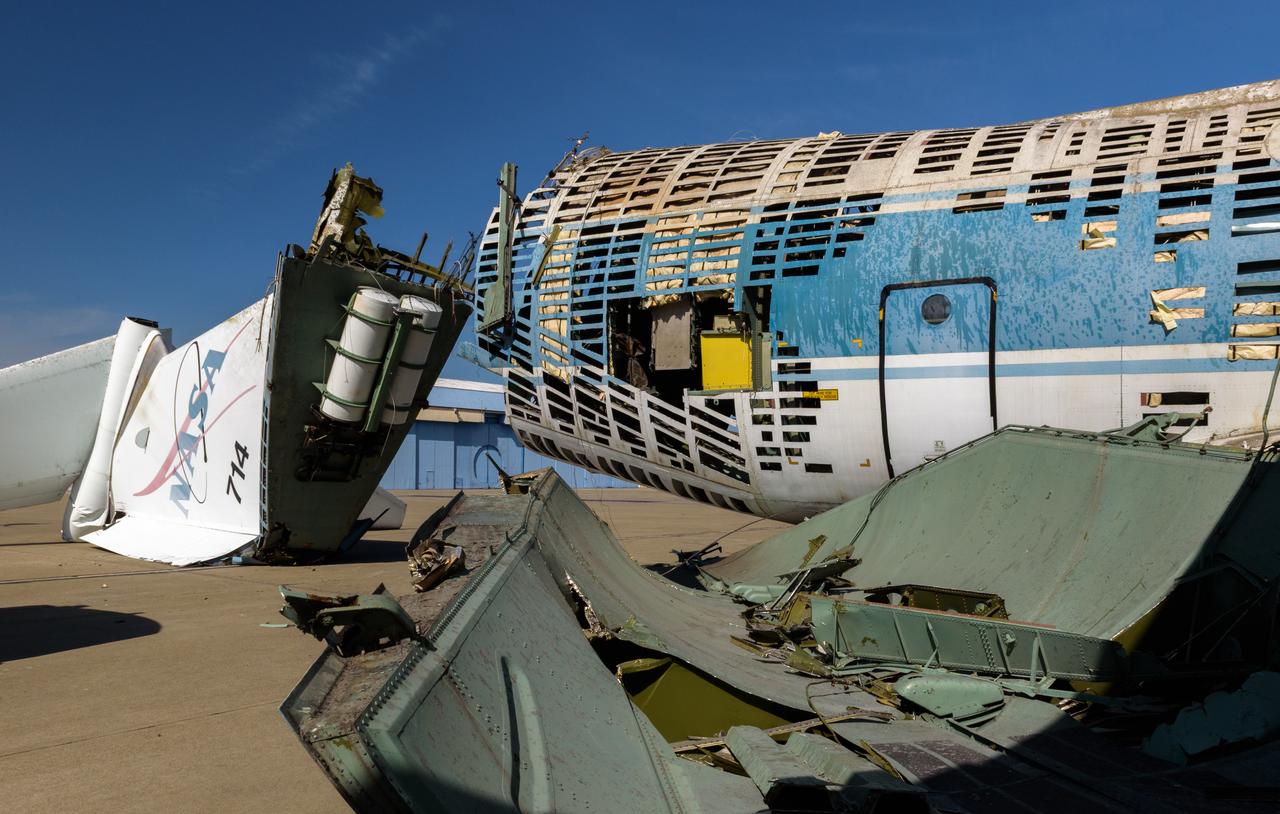
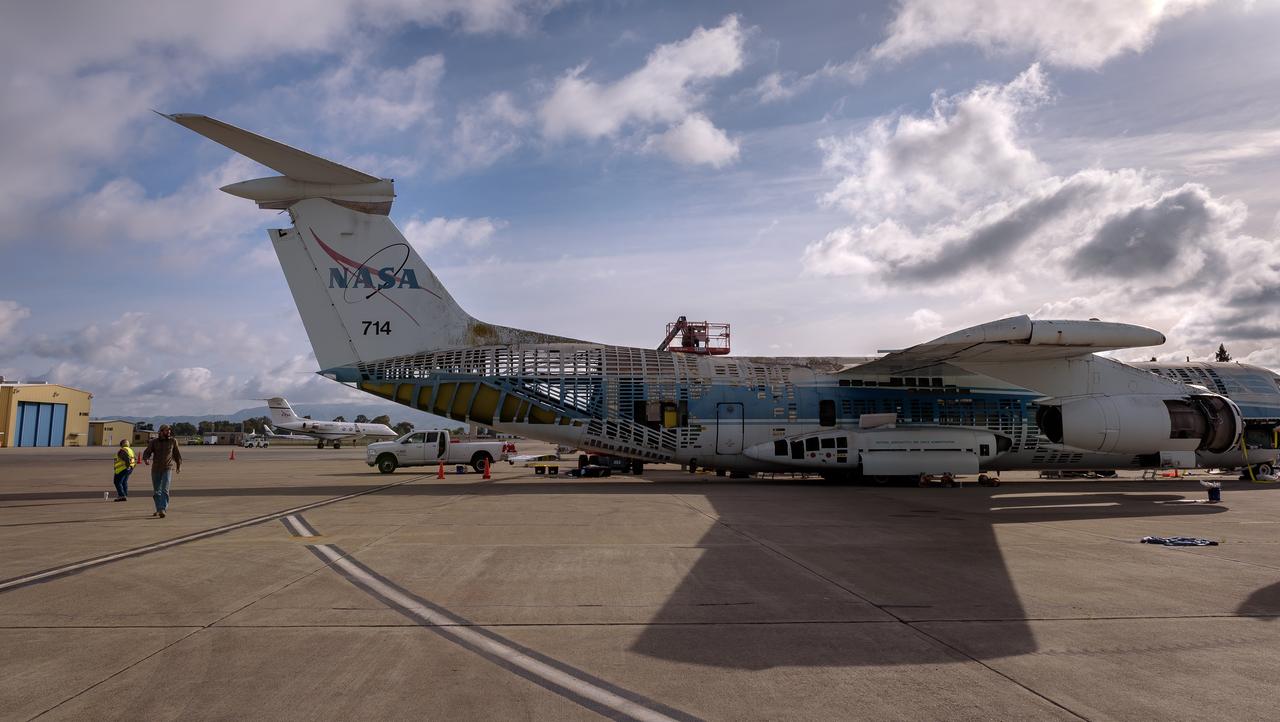
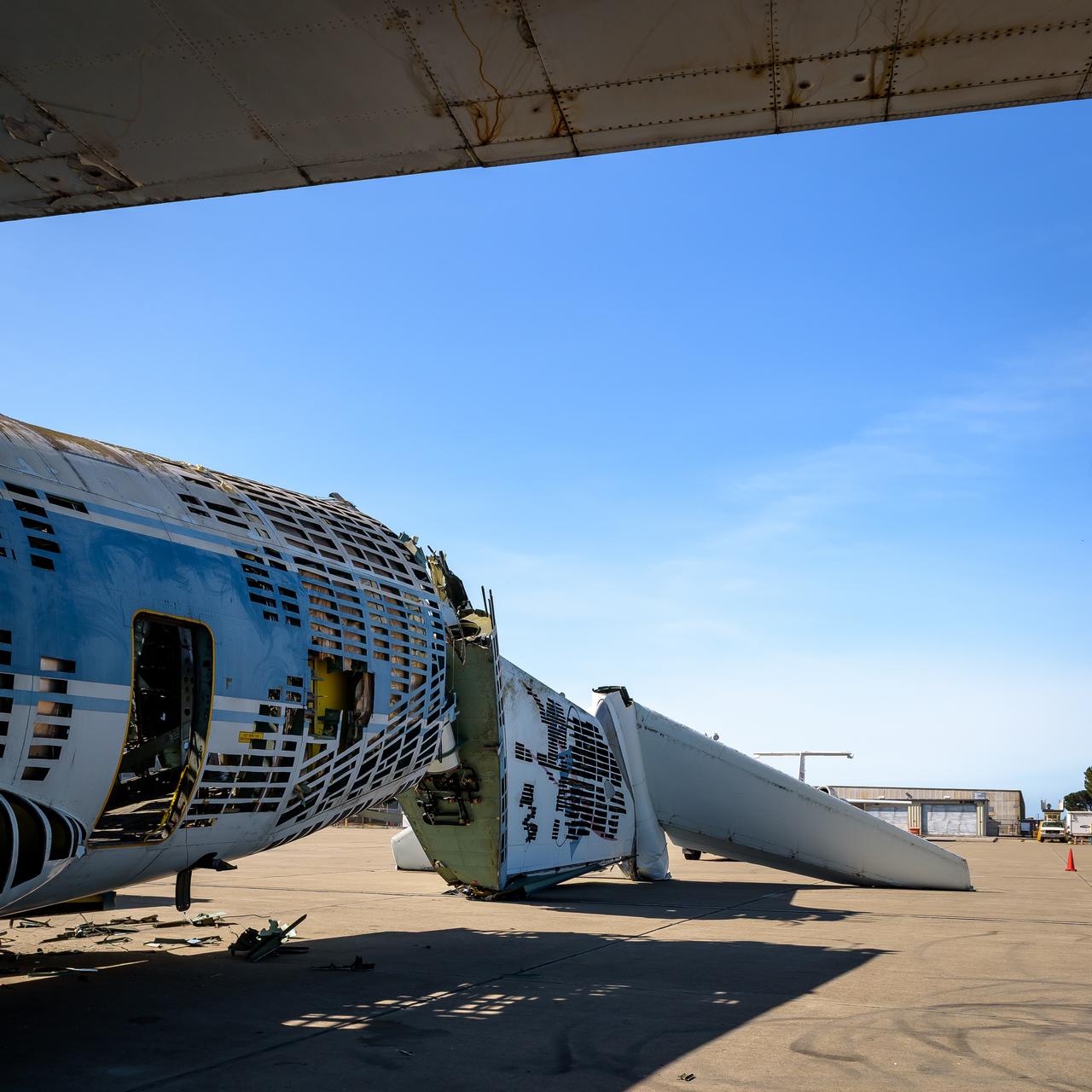
The tail section of the modified C-141 Kuiper Airborne Observatory, (KAO) (NASA-714), severed from the fuselage on the N211 apron of Moffett Field, California.
Kuiper Airborne Observatory (KAO) Demolition
3/4 front view of Avrocar without tail, showing ground board and variable height struts.  The ground board minimizes the boundary layer on the floor under the model.   black and white negative: KODAK T-MAX 100 Professional. SBA settings neutral SBA on, color SBA on
40X80 foot Wind Tunnel Tests Of Avrocar Annular Jet VTOL Airplane.
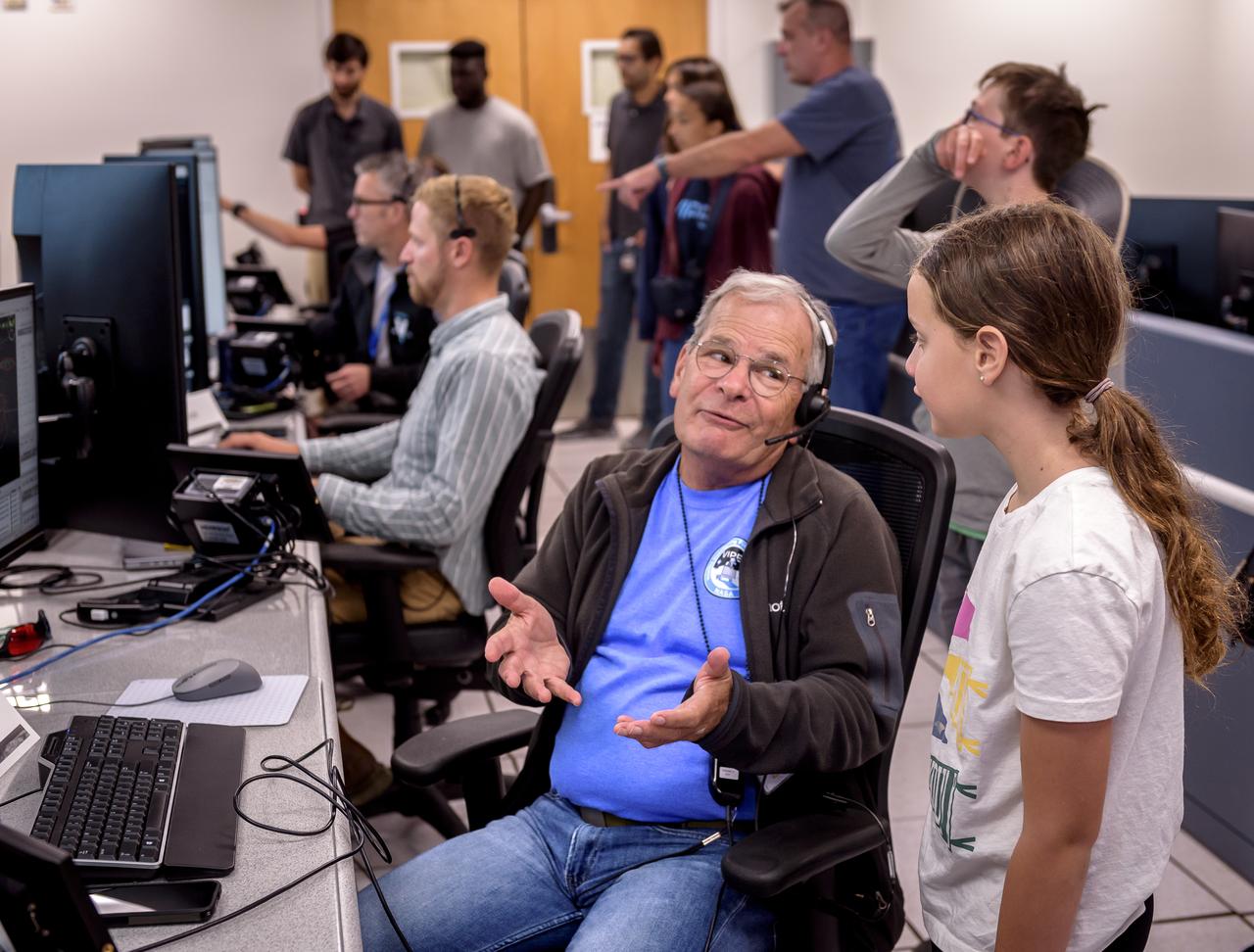
Arno Rogg explains the Volatiles Investigating Polar Exploration Rover (VIPER) mission to visitors in the Multi-Mission Operations Center (MMOC), N240, during VIPER Family Day.
VIPER Family Day
The tail section of the modified C-141 Kuiper Airborne Observatory, (KAO) (NASA-714), severed from the fuselage on the N211 apron of Moffett Field, California.
Kuiper Airborne Observatory (KAO) Demolition
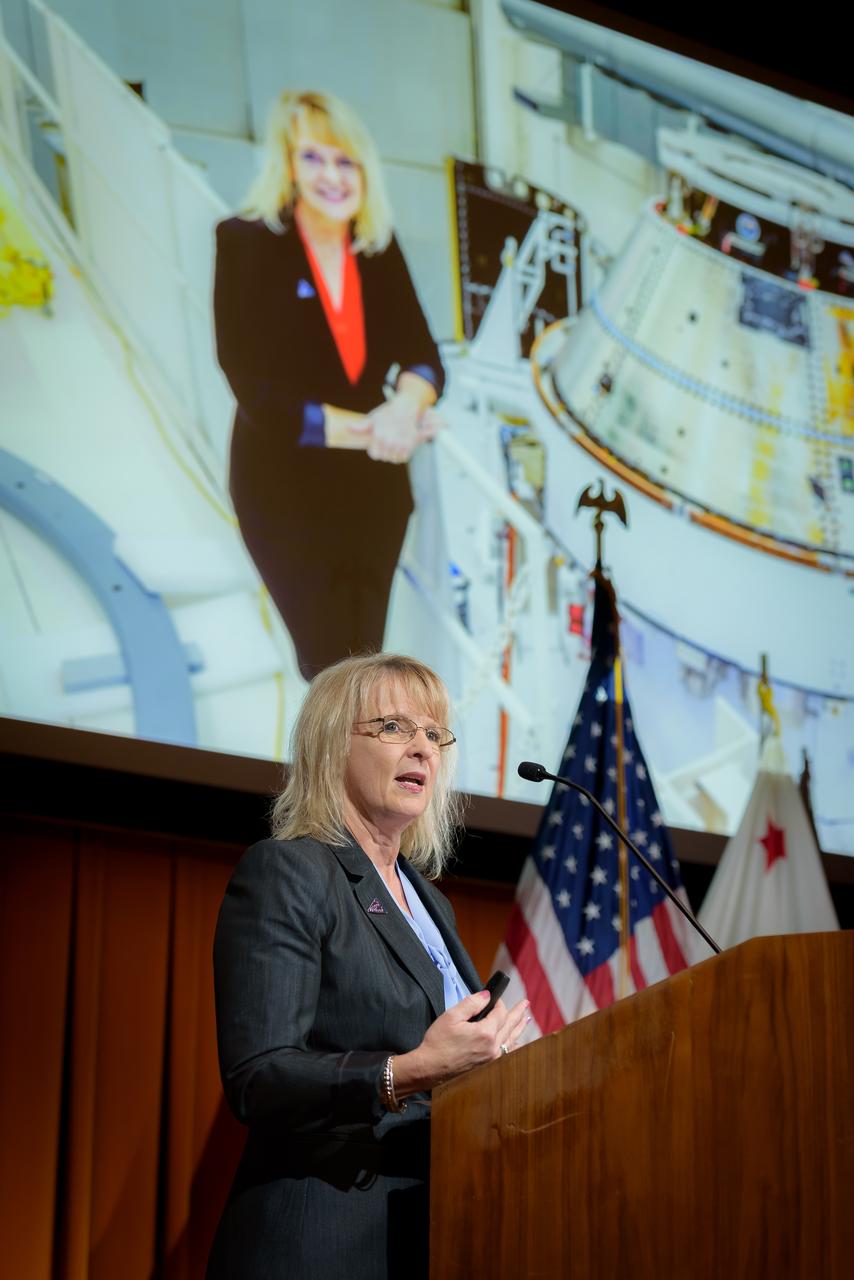
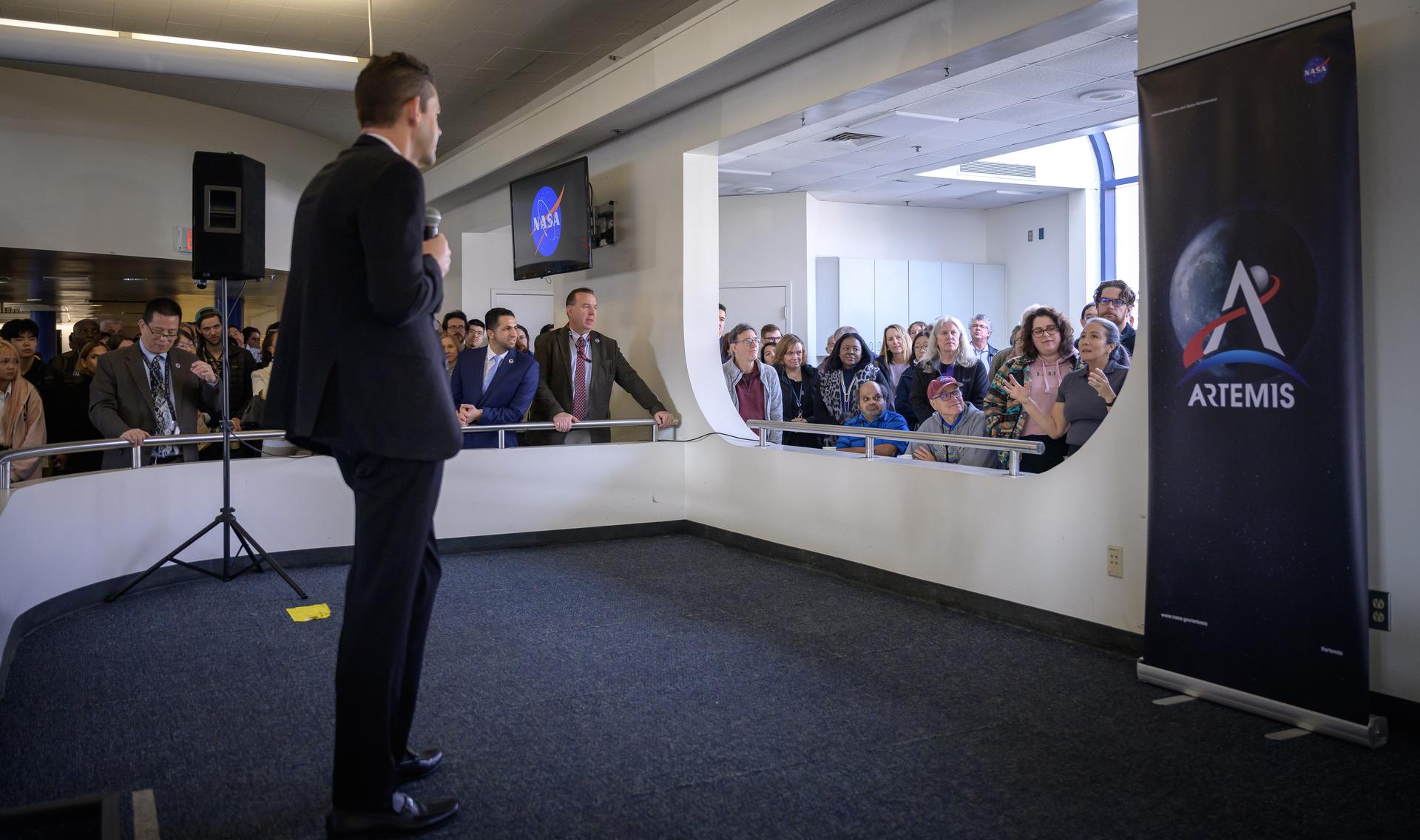
Orion Deputy Program Manager Debbie Korth welcomes Ames employees to the Orion Circle of Excellence Award Ceremony in the Syvertson Auditorium, N201.
Orion Astronauts Visit Ames Entry Systems and Technology Divisio
The telescope mount in the modified C-141 Kuiper Airborne Observatory, (KAO) (NASA-714), during its demolition on the N211 apron at Moffett Field, California.
Kuiper Airborne Observatory (KAO) Demolition
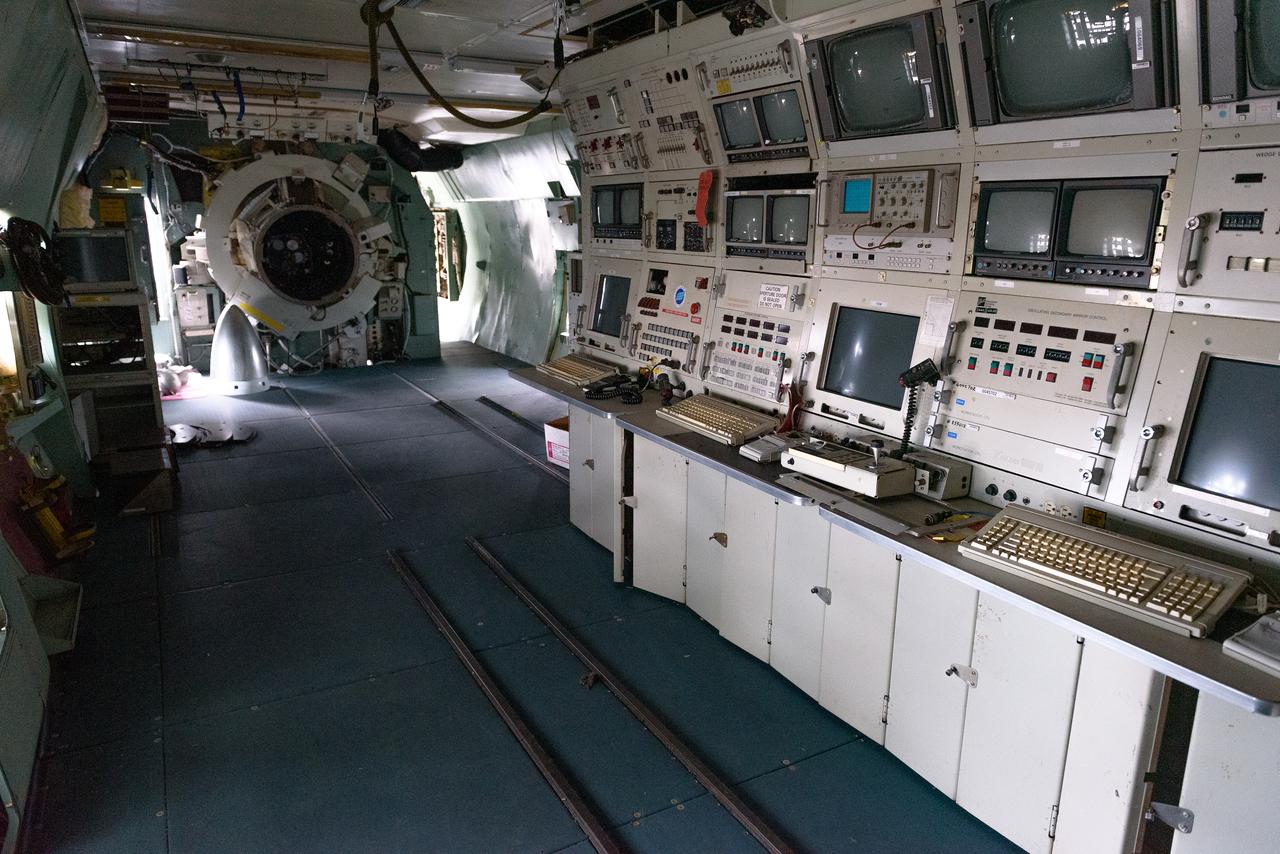
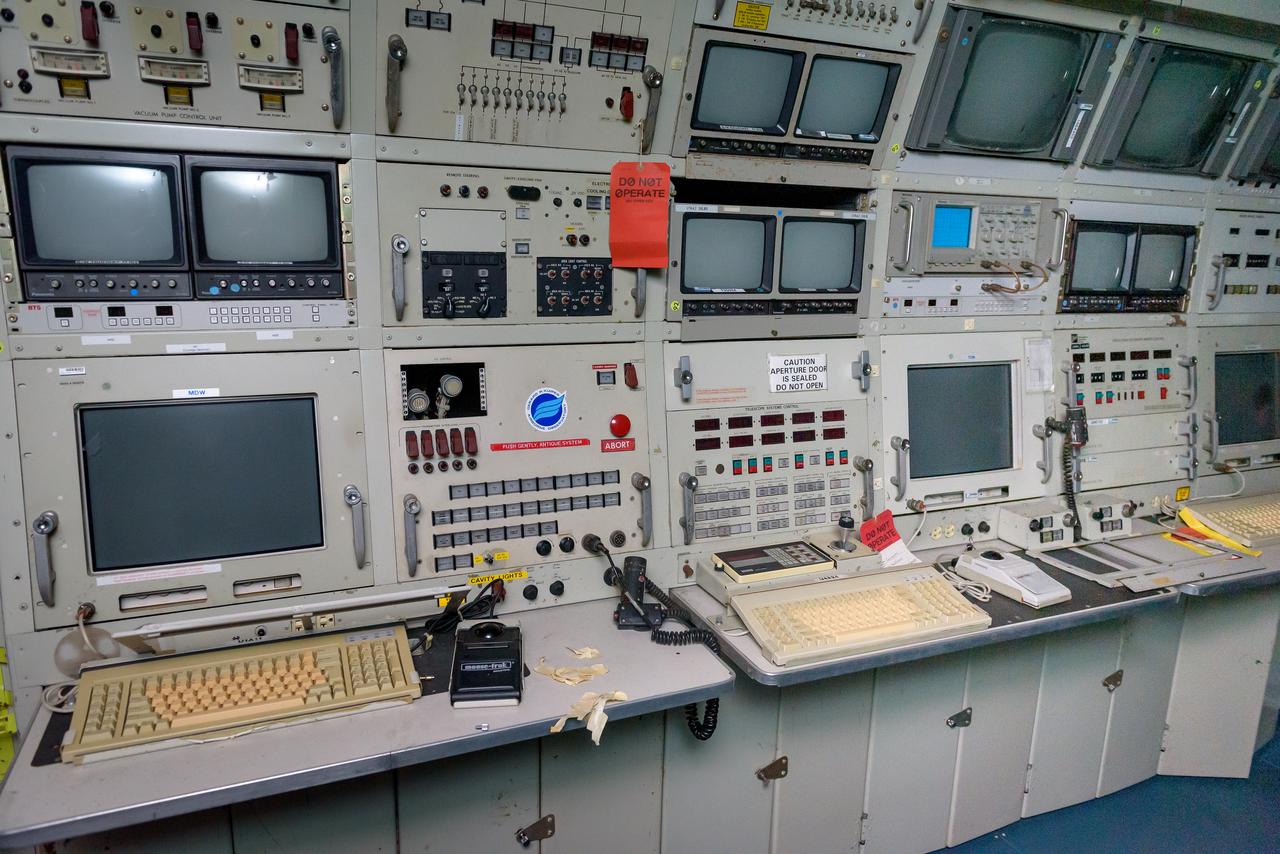
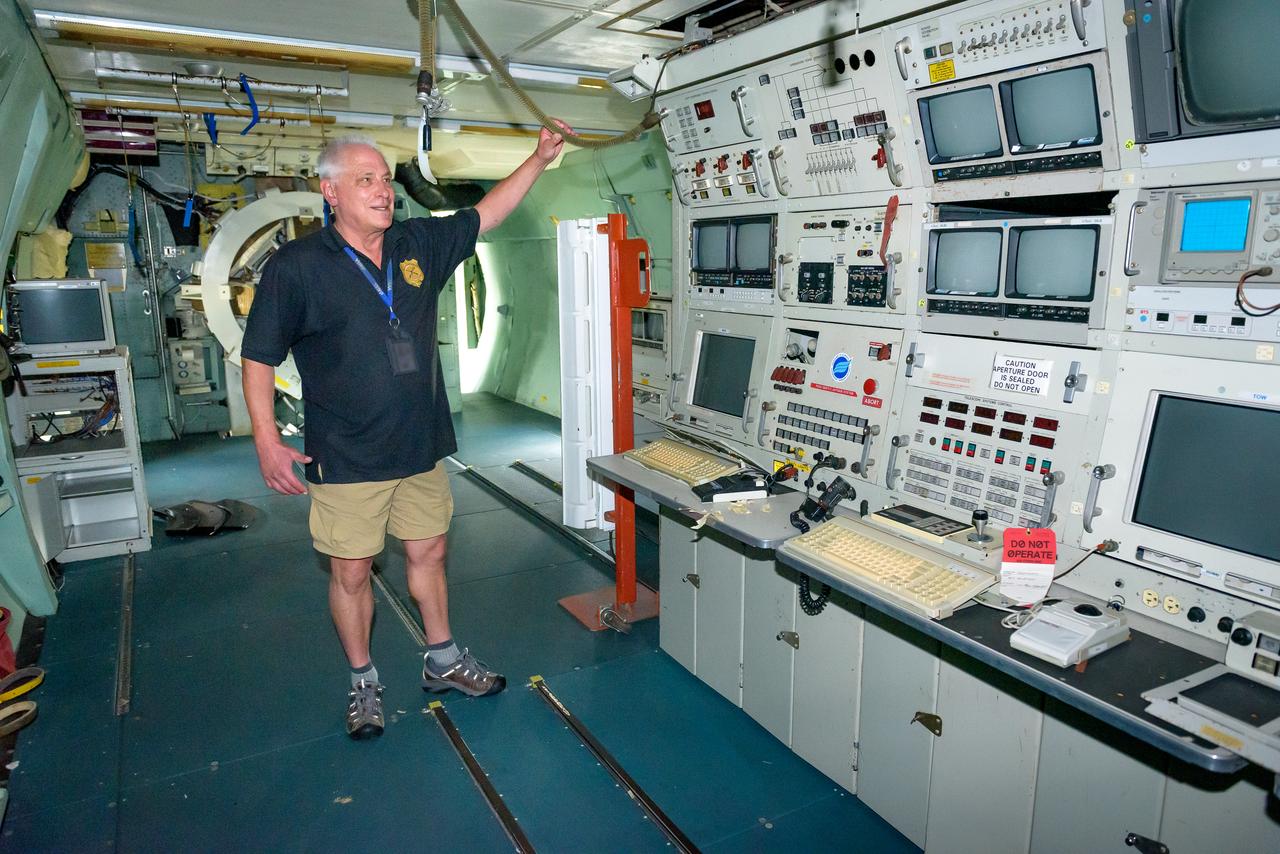
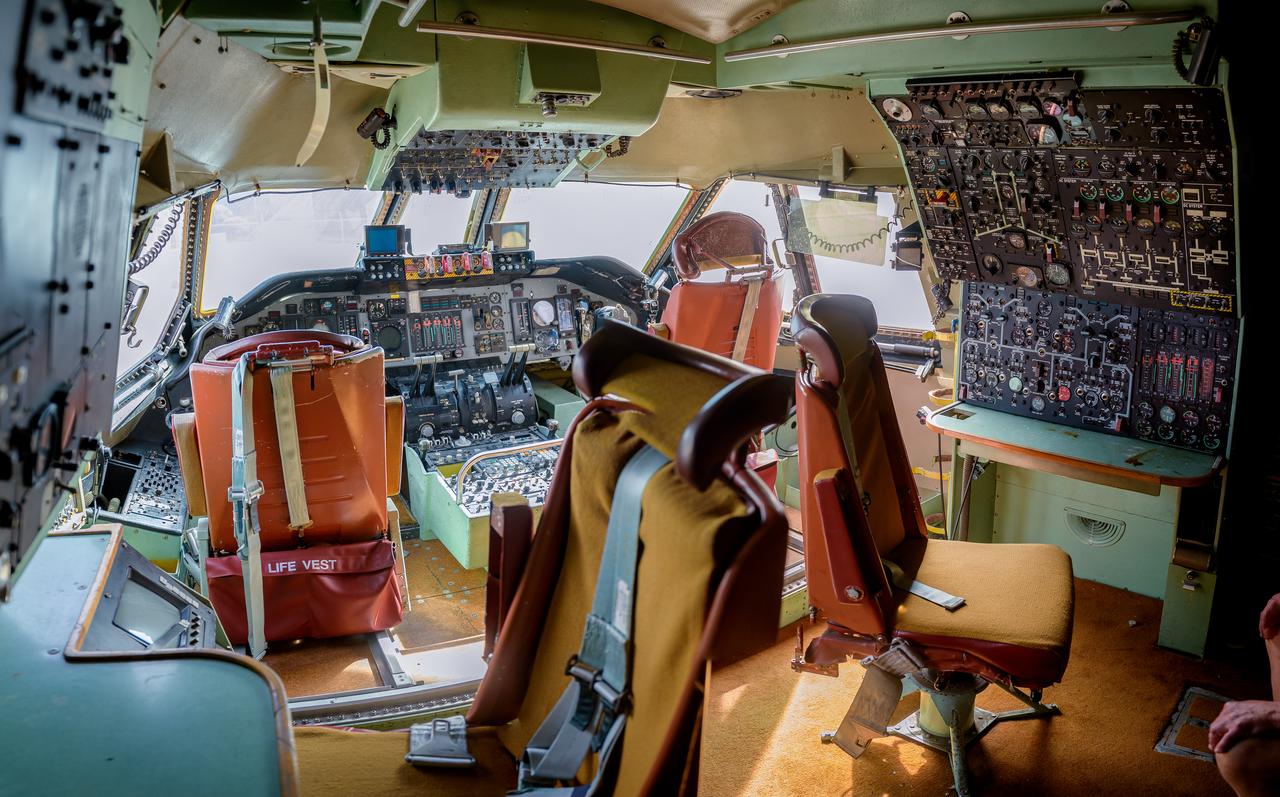
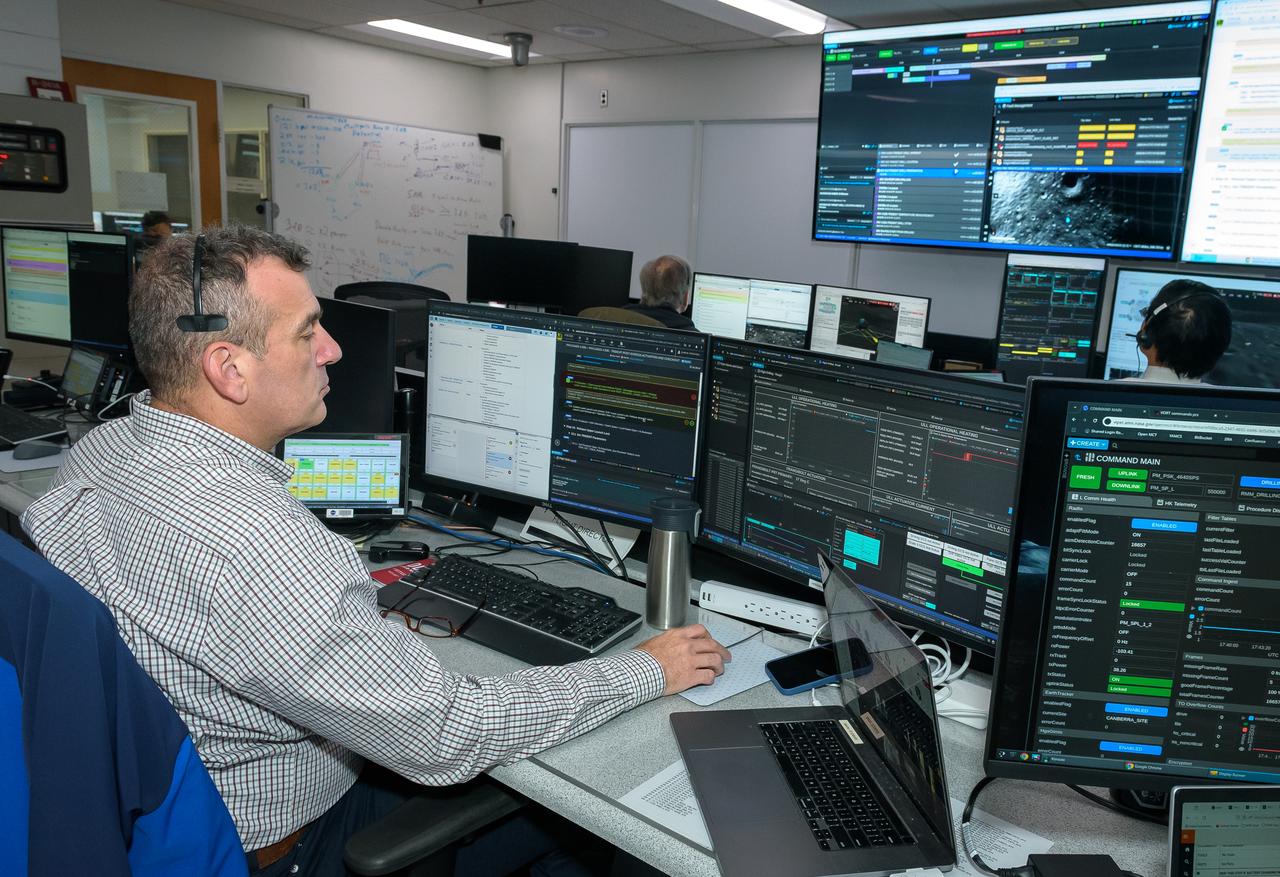
Mission Director Stephen Patterson at his workstation at the console of the modified C-141 Kuiper Airborne Observatory, (KAO) (NASA-714).
Kuiper Airborne Observatory (KAO) Demolition
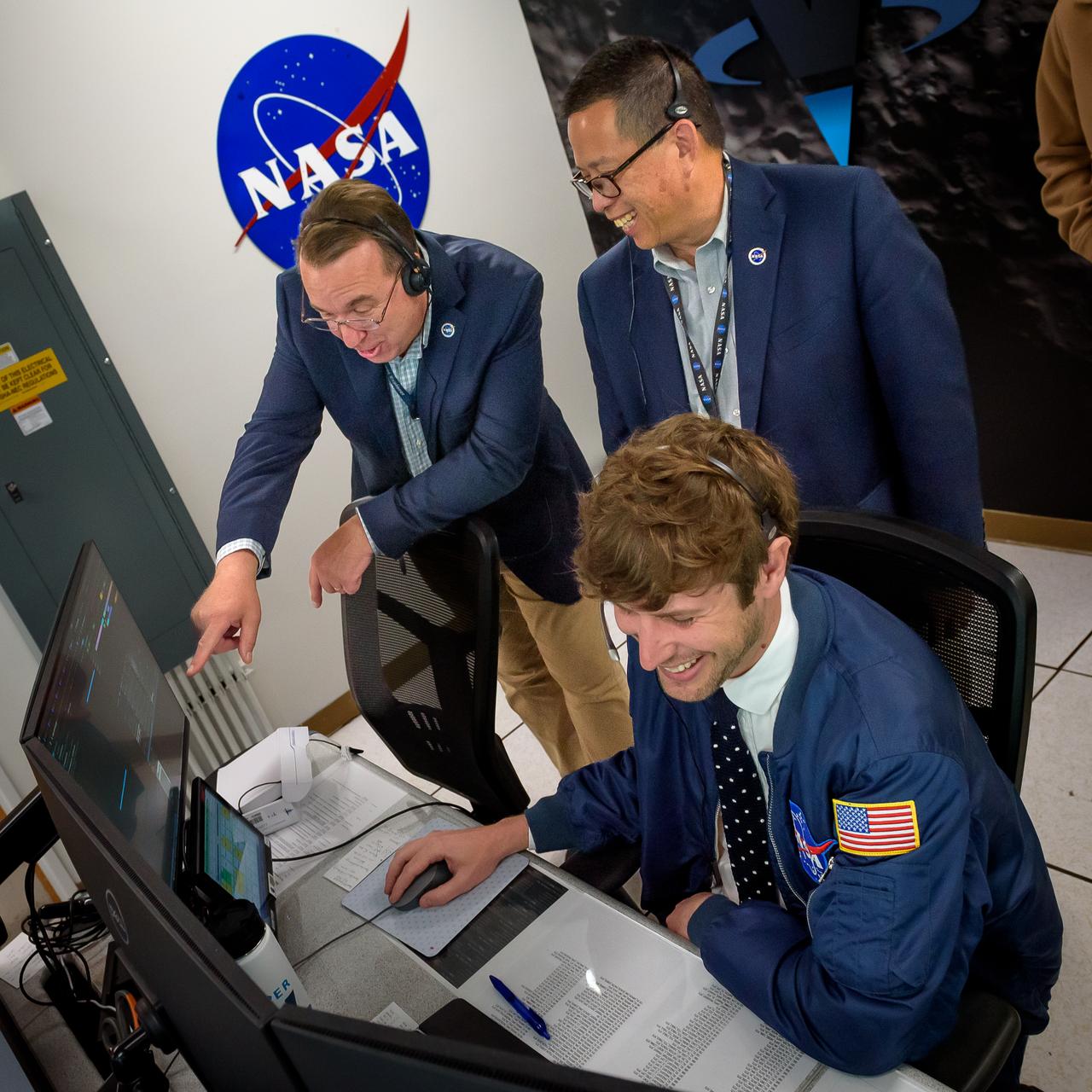
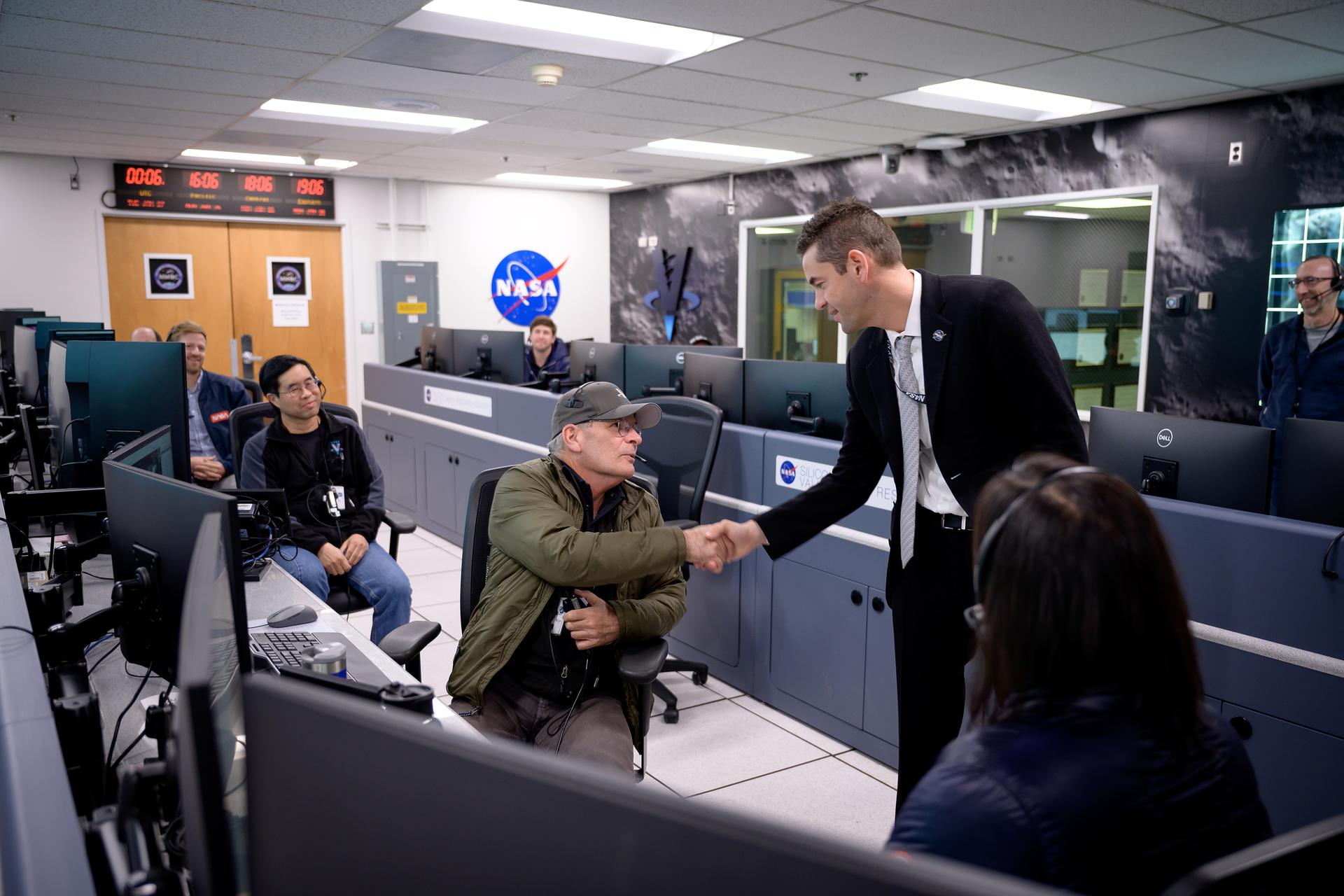
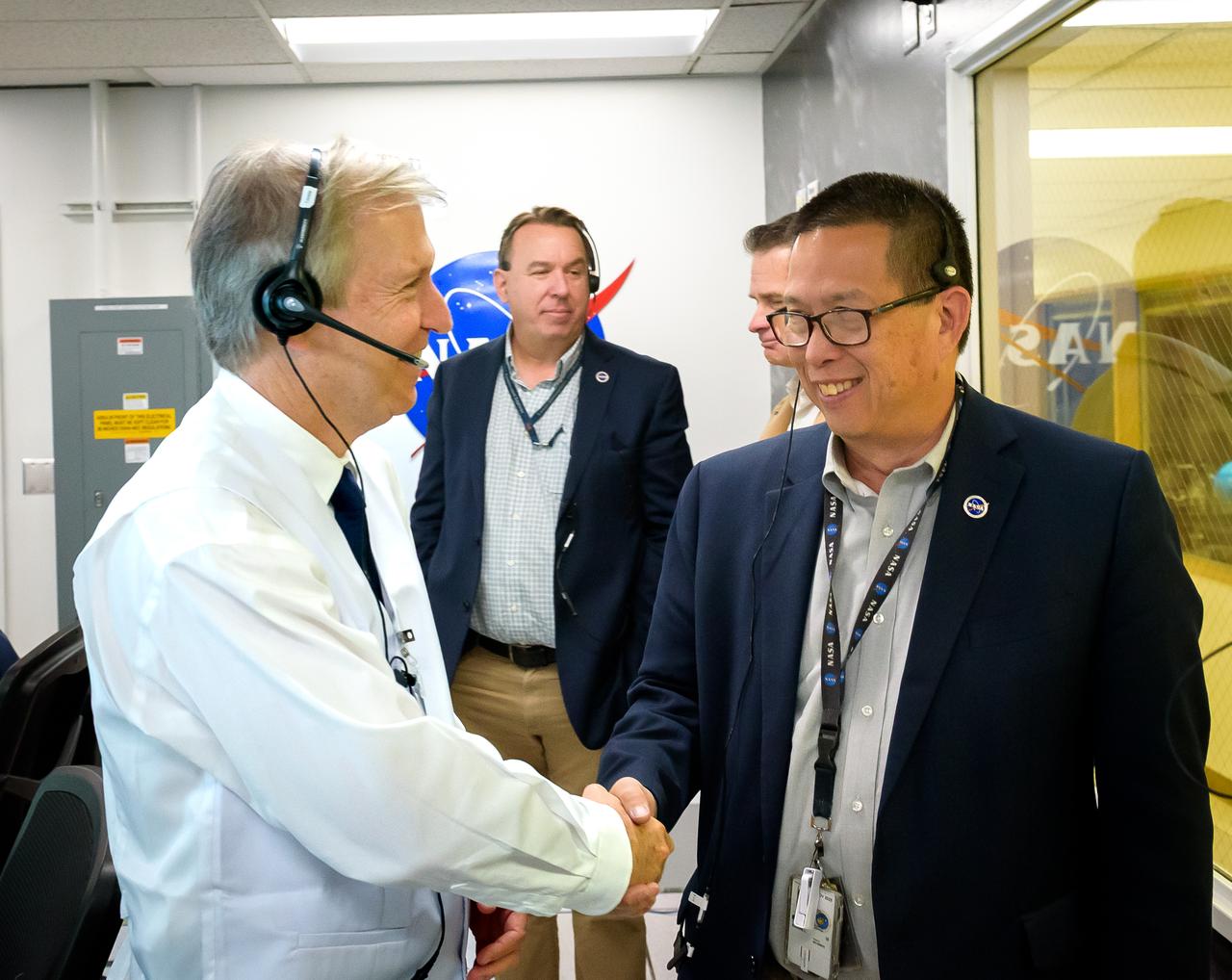
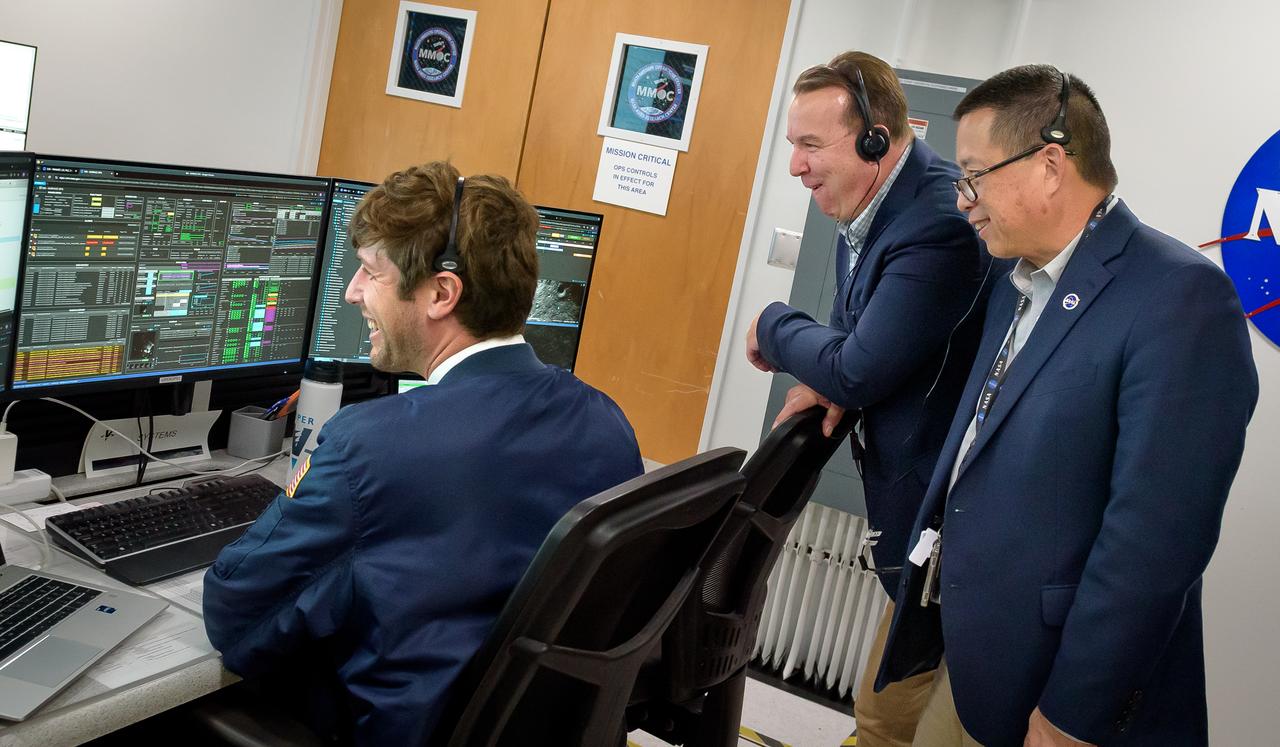
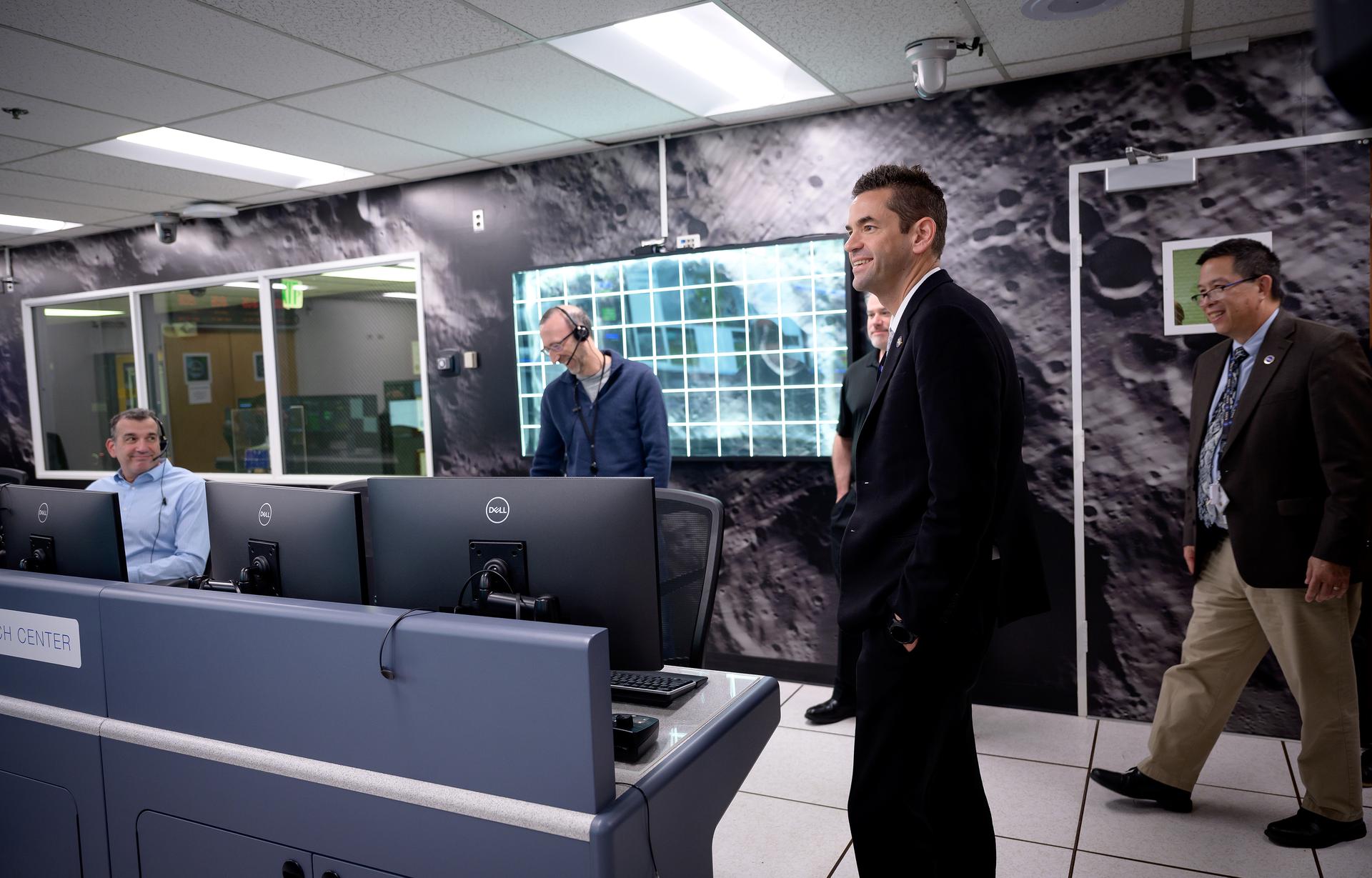
Volatiles Investigating Polar Exploration Rover (VIPER) mission systems manager Jay Trimble, left, with Center Director Eugene Tu during the vehicle operational readiness test in the Multi-Mission Operations Center (MMOC), N240A.  Deputy Center Director David Korsmeyer, behind.
VIPER Vehicle Operational Readiness Test
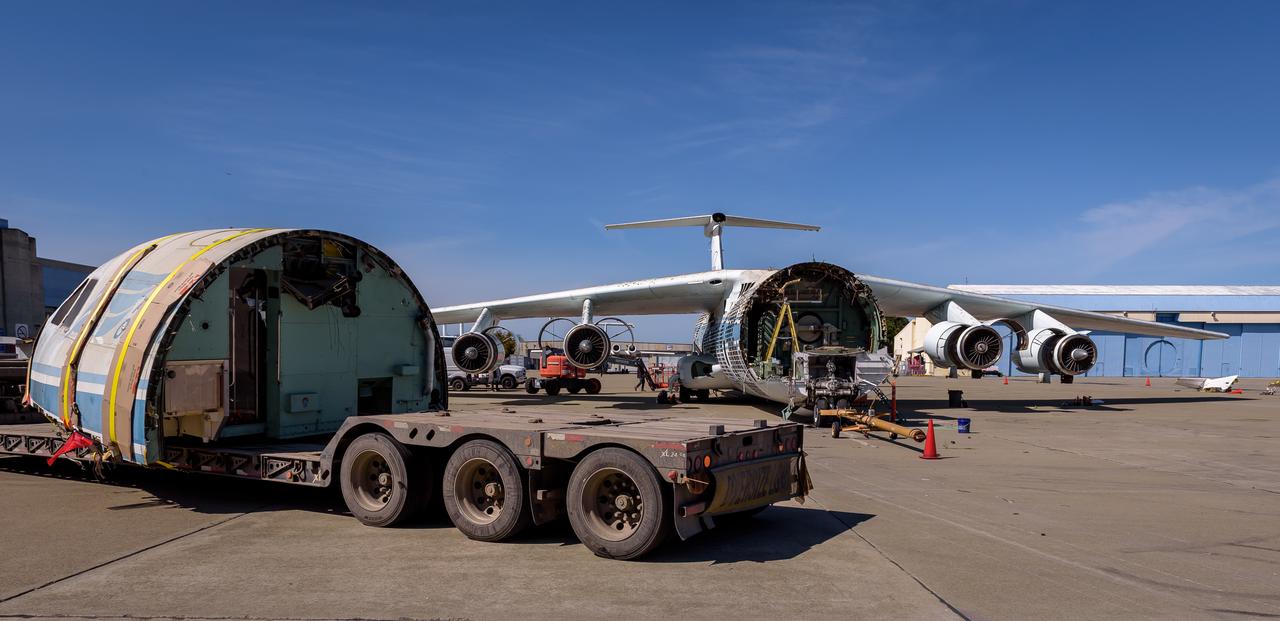
The cockpit of the modified C-141 Kuiper Airborne Observatory, (KAO) (NASA-714), is separated from the airframe on the N211 apron at Moffett Field, California.
Kuiper Airborne Observatory (KAO) Demolition
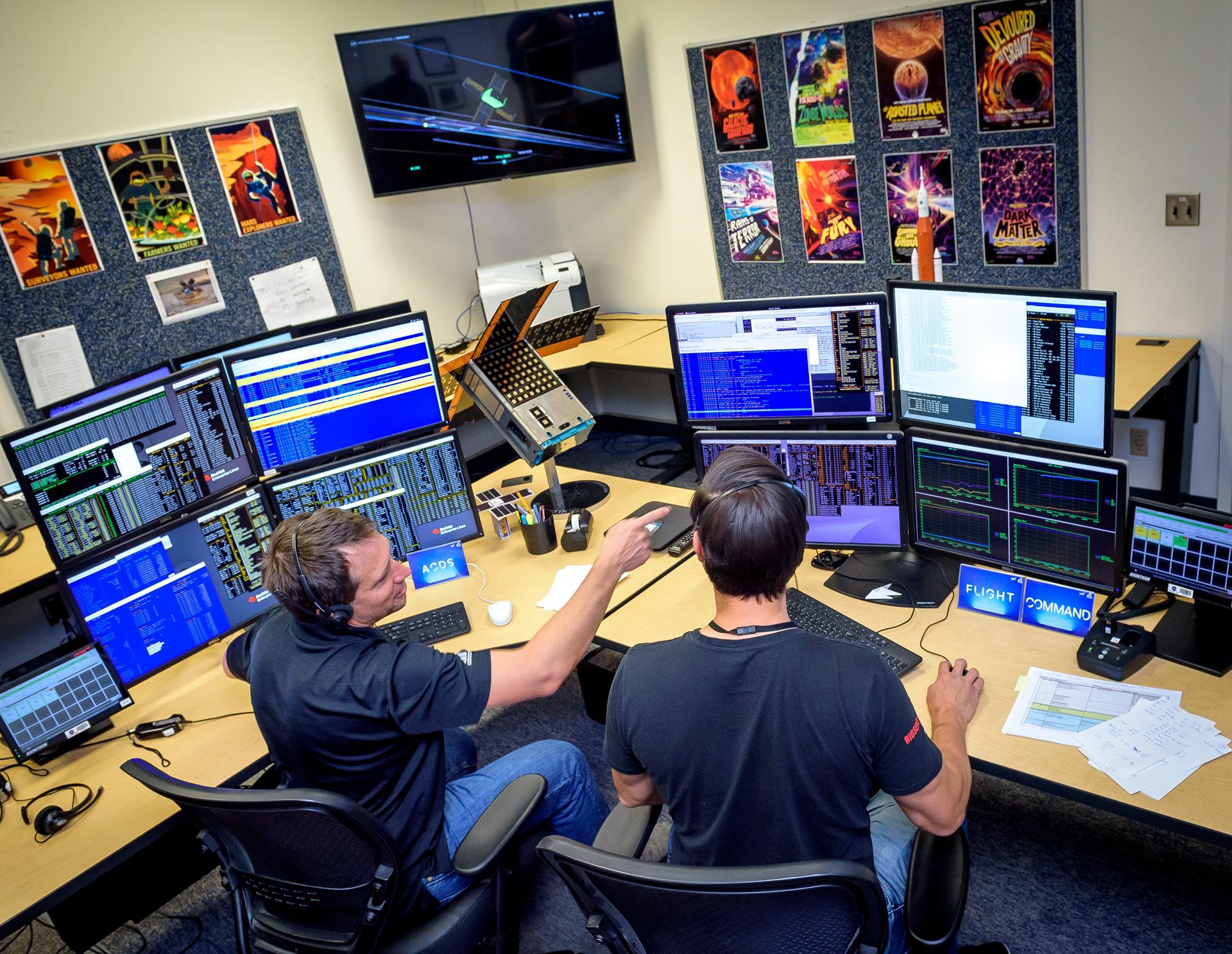
Matt Machlis during the Volatiles Investigating Polar Exploration Rover (VIPER) vehicle operational readiness test in the Multi-Mission Operations Center (MMOC), N240A.
VIPER Vehicle Operational Readiness Test
Volatiles Investigating Polar Exploration Rover (VIPER) mission systems manager Jay Trimble, right, with Multi-Mission Operations Center (MMOC) Director Justin Pane, during the vehicle operational readiness test in the MMOC, N240A.
VIPER Vehicle Operational Readiness Test
Vinh To during the Volatiles Investigating Polar Exploration Rover (VIPER) vehicle operational readiness test in the Multi-Mission Operations Center (MMOC), N240A.
VIPER Vehicle Operational Readiness Test
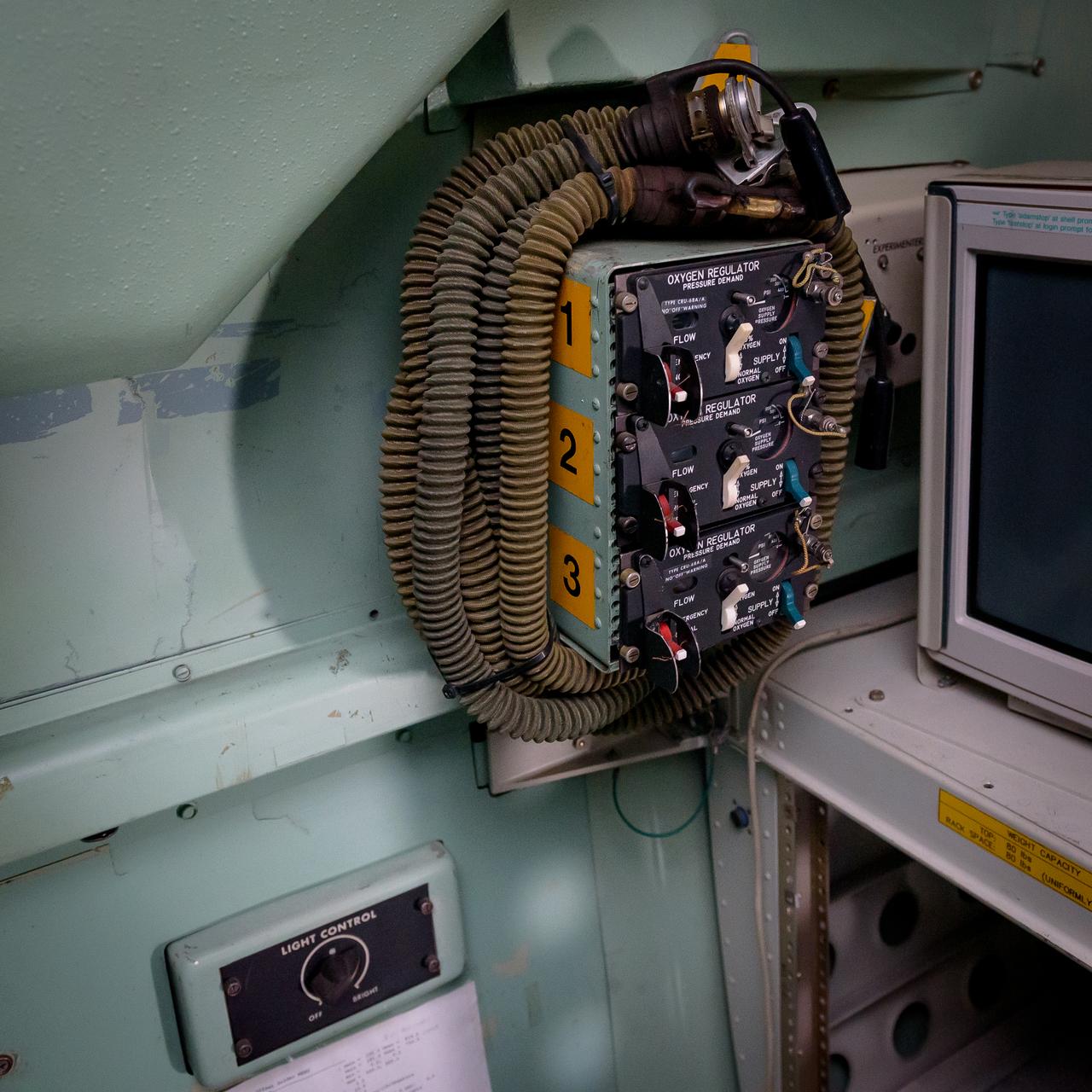
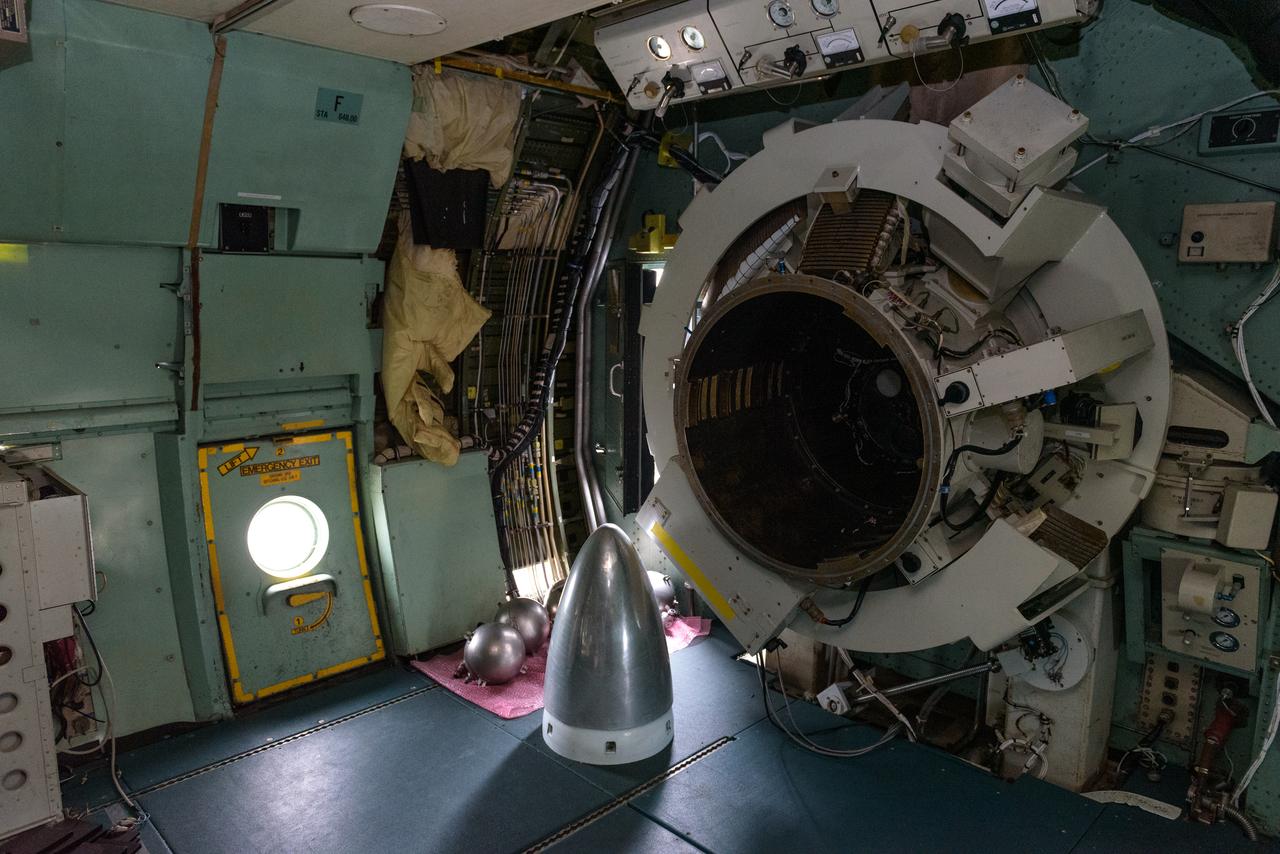
The science instrument mount/telescope flange leading to the telescope cavity.  The port work area is where science instruments were connected to the telescope. Astronomers and the science team sat immediately to the left in the port work area on the modified C-141 Kuiper Airborne Observatory, (KAO) (NASA-714), (seats have been removed).
Kuiper Airborne Observatory (KAO) Demolition
David Tsay during the Volatiles Investigating Polar Exploration Rover (VIPER) vehicle operational readiness test in the Multi-Mission Operations Center (MMOC), N240A.
VIPER Vehicle Operational Readiness Test
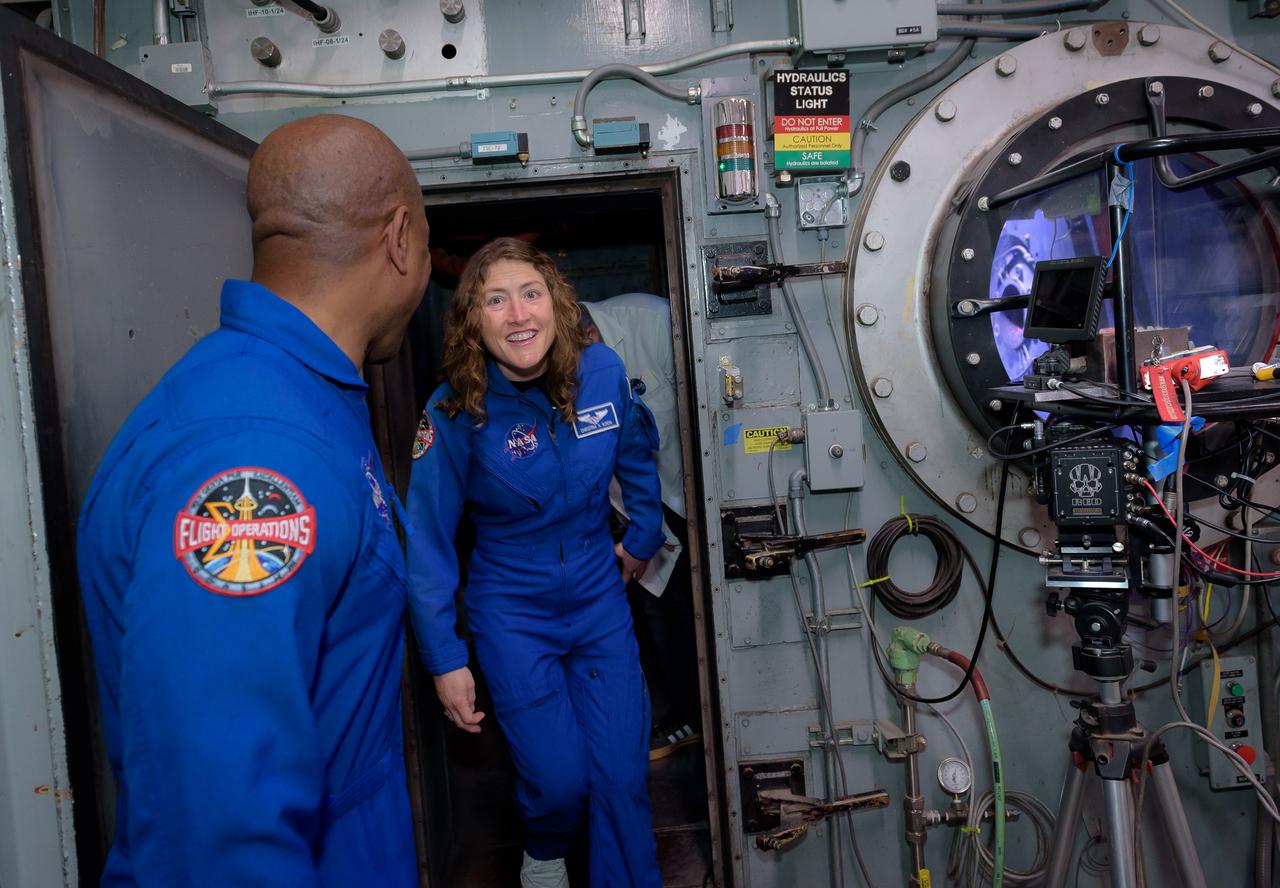
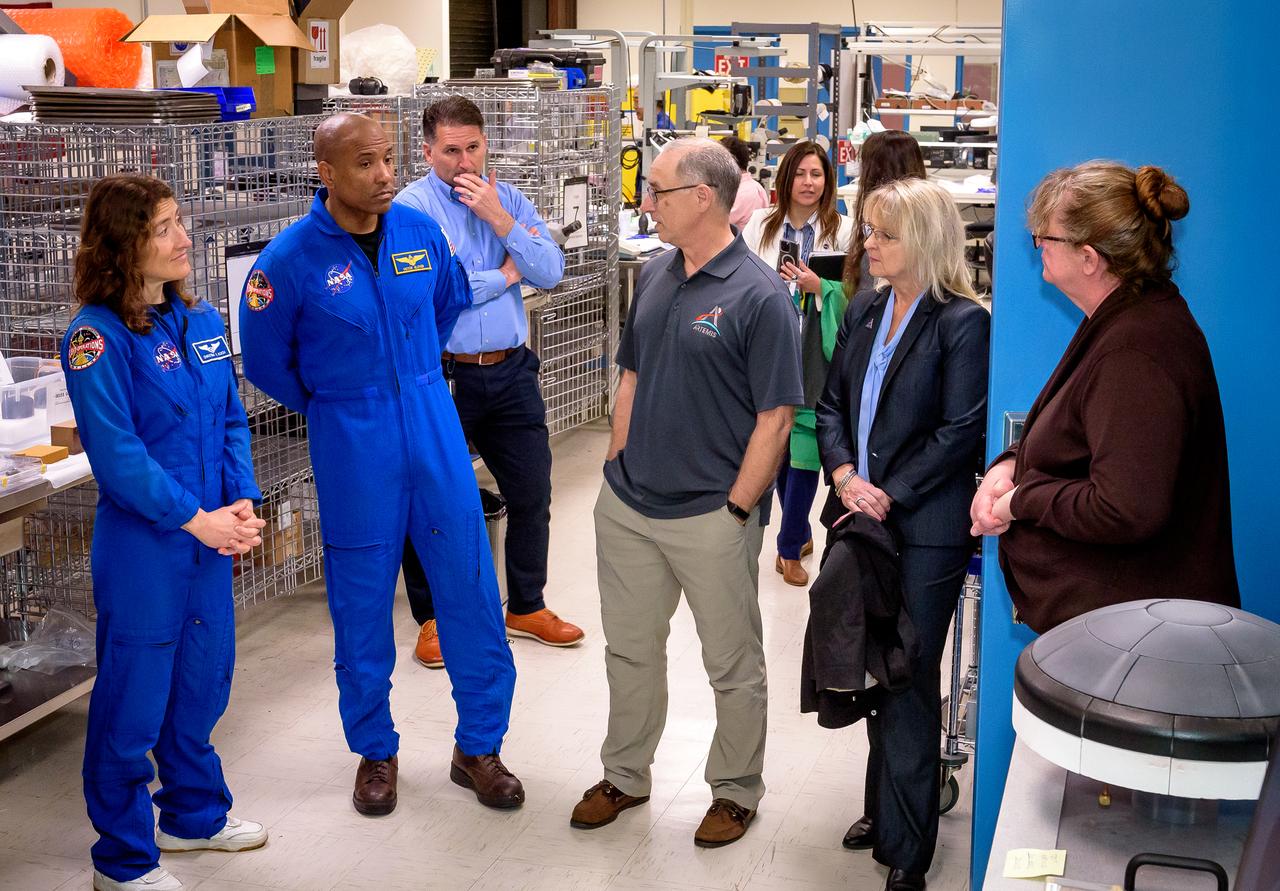
NASA astronauts Victor J. Glover and Christina Koch tour the Ames Arc Jet Complex, N238.
Orion Astronauts Visit Ames Entry Systems and Technology Divisio
Rick Elphic during the Volatiles Investigating Polar Exploration Rover (VIPER) vehicle operational readiness test in the Multi-Mission Operations Center (MMOC), N240A.
VIPER Vehicle Operational Readiness Test
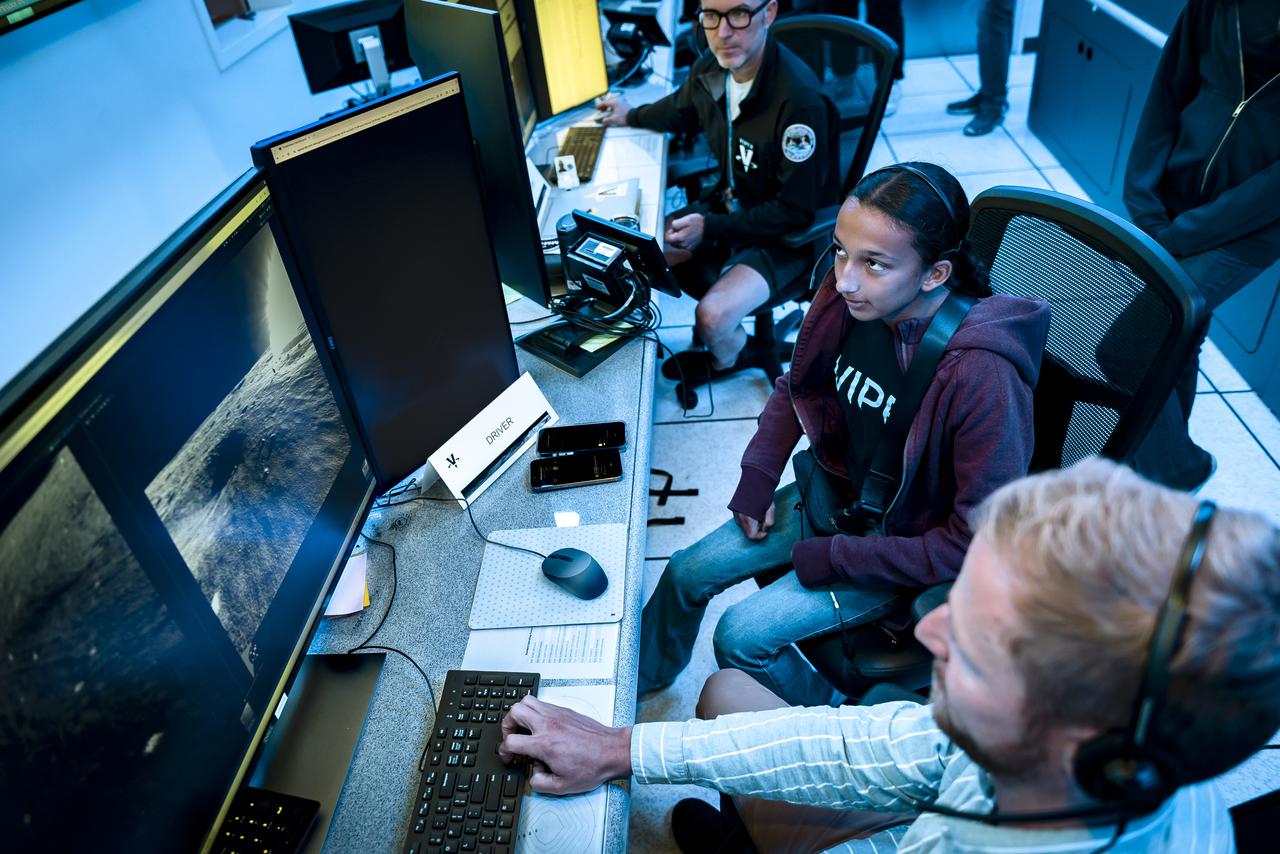
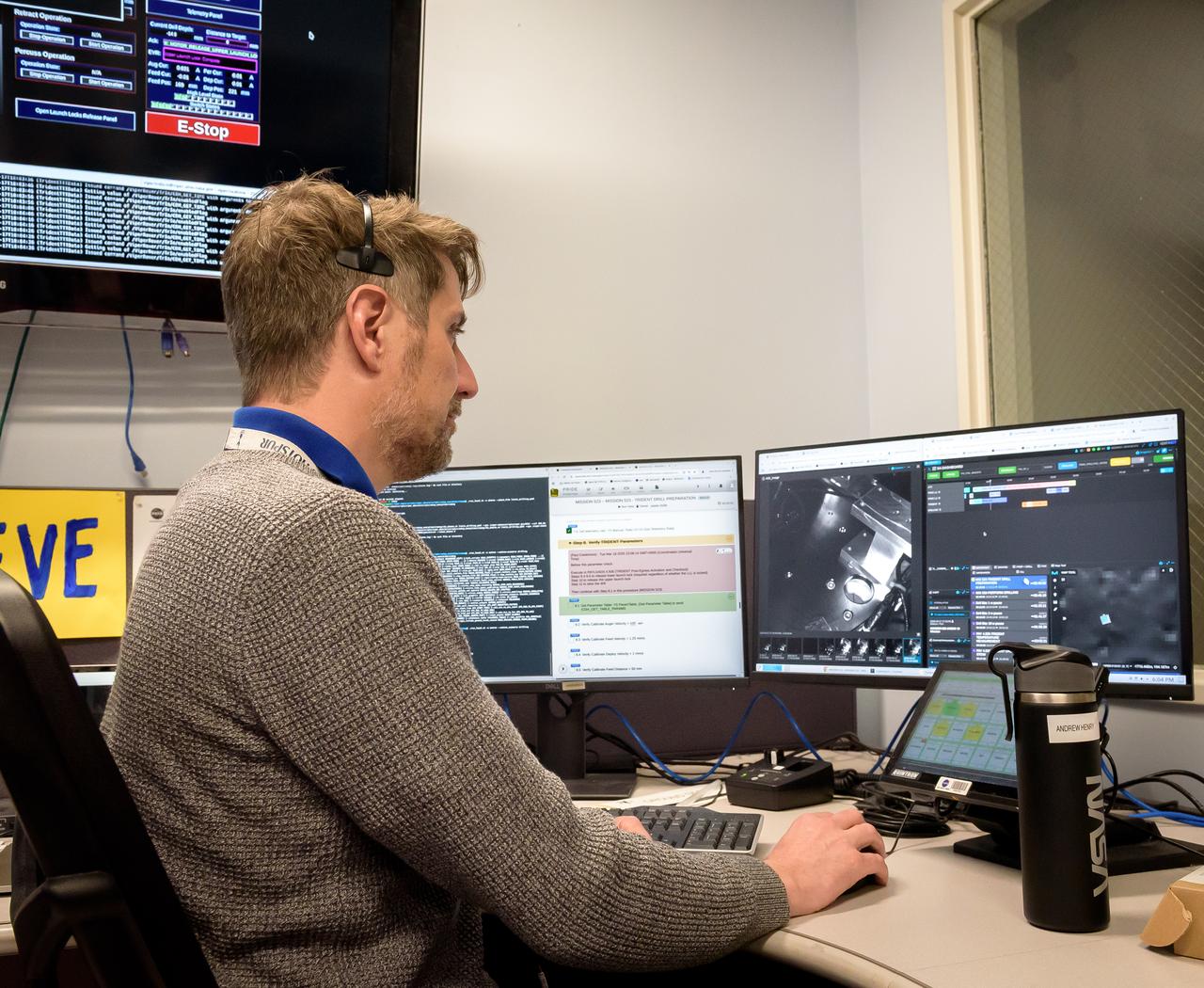
Zachary Burkland, left, and Jay Trimble, during the Volatiles Investigating Polar Exploration Rover (VIPER) vehicle operational readiness test in the Multi-Mission Operations Center (MMOC), N240A.
VIPER Vehicle Operational Readiness Test
Rick Elphic, front, and Terry Fong, during the Volatiles Investigating Polar Exploration Rover (VIPER) vehicle operational readiness test in the Multi-Mission Operations Center (MMOC), N240A.
VIPER Vehicle Operational Readiness Test
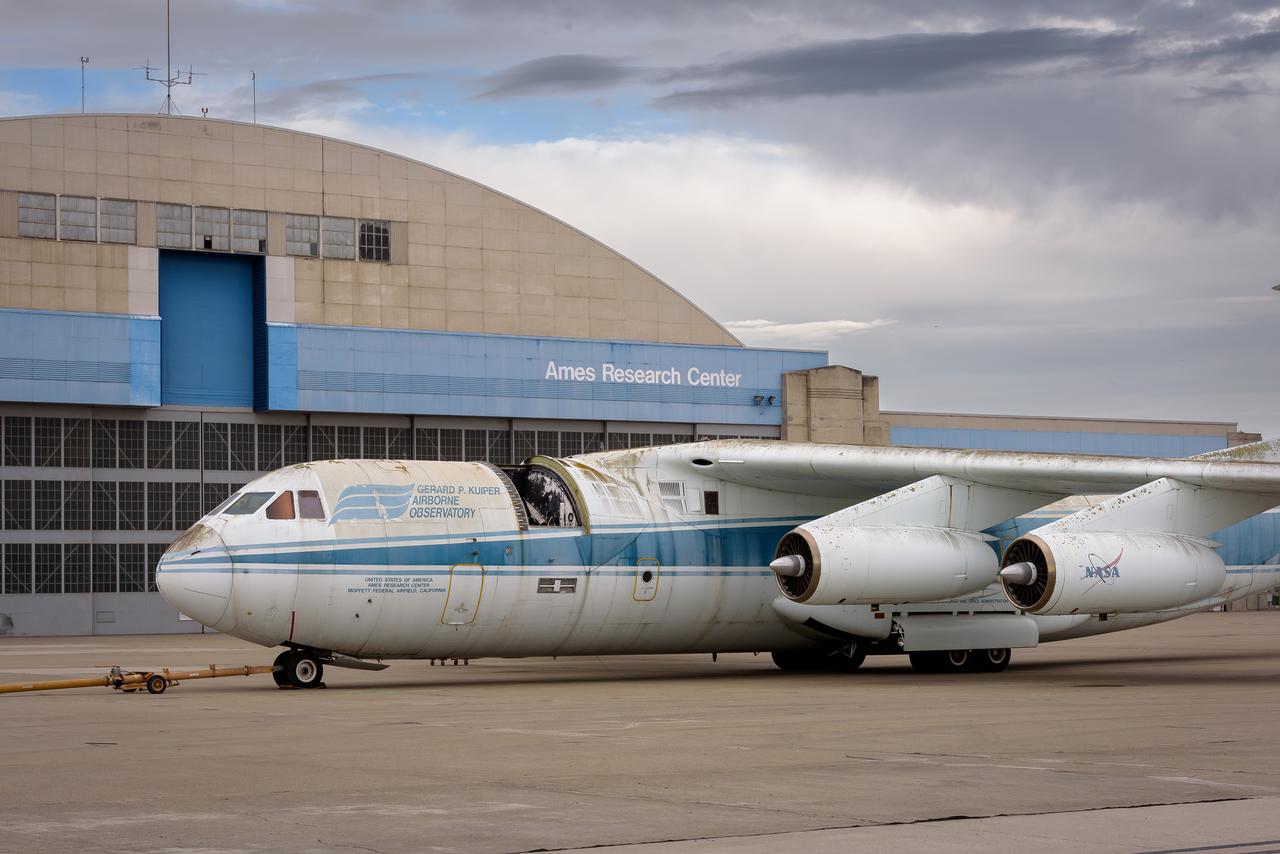
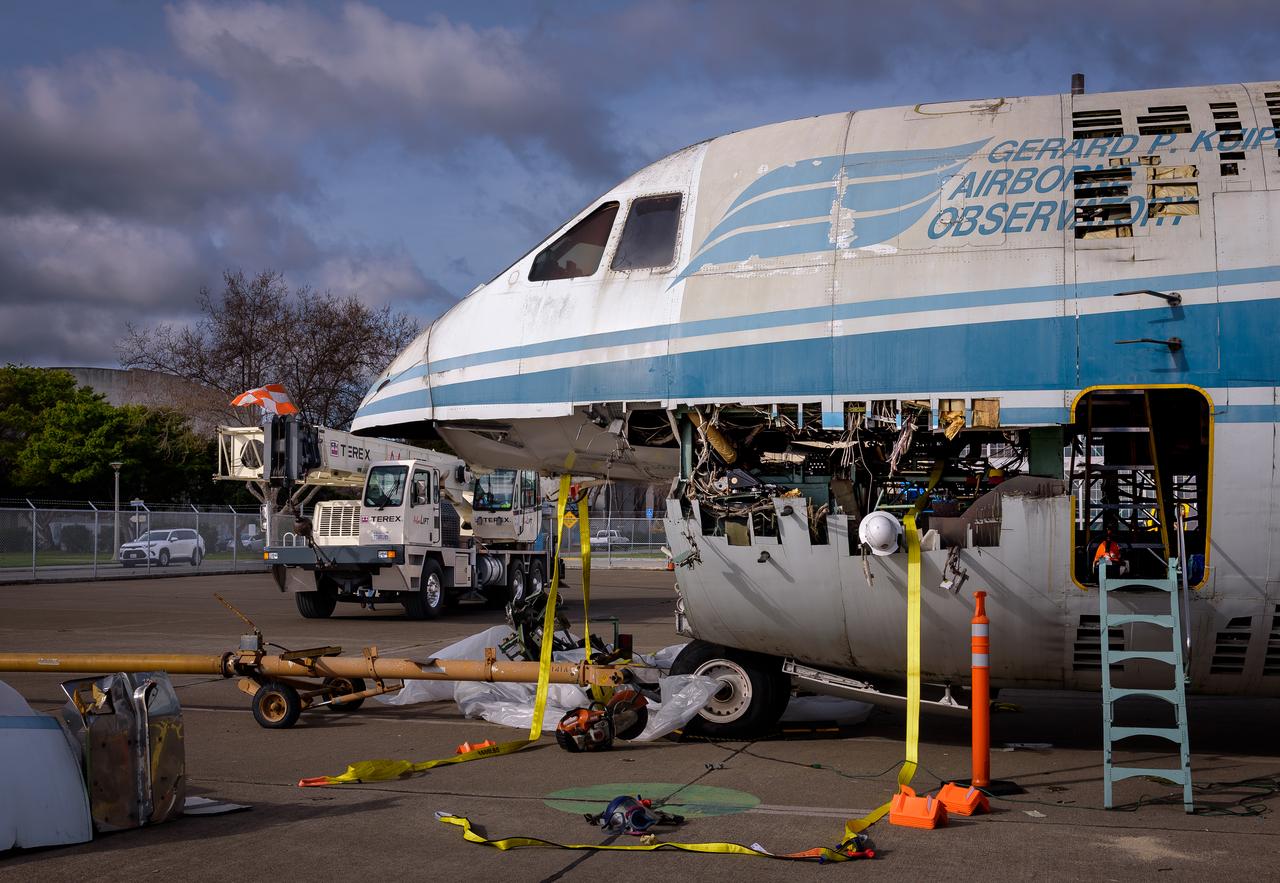
Close-up front view of the modified C-141 Kuiper Airborne Observatory, (KAO) (NASA-714), on the N211 apron at Moffett Field, California.
Kuiper Airborne Observatory (KAO) Demolition
The drone follows an autonomously defined path around the modified C-141 Kuiper Airborne Observatory, (KAO) (NASA-714), on the N211 apron.  The drone photographs the aircraft with a visible and infrared camera which are processed using a photogrammetry software package called Pix4D that converts them into a 3D model.  Scanning the aircraft is the first phase of documenting the aircraft demolition as well as an opportunity to train pilots to operate the Pix4D software.
Kuiper Airborne Observatory (KAO) Demolition
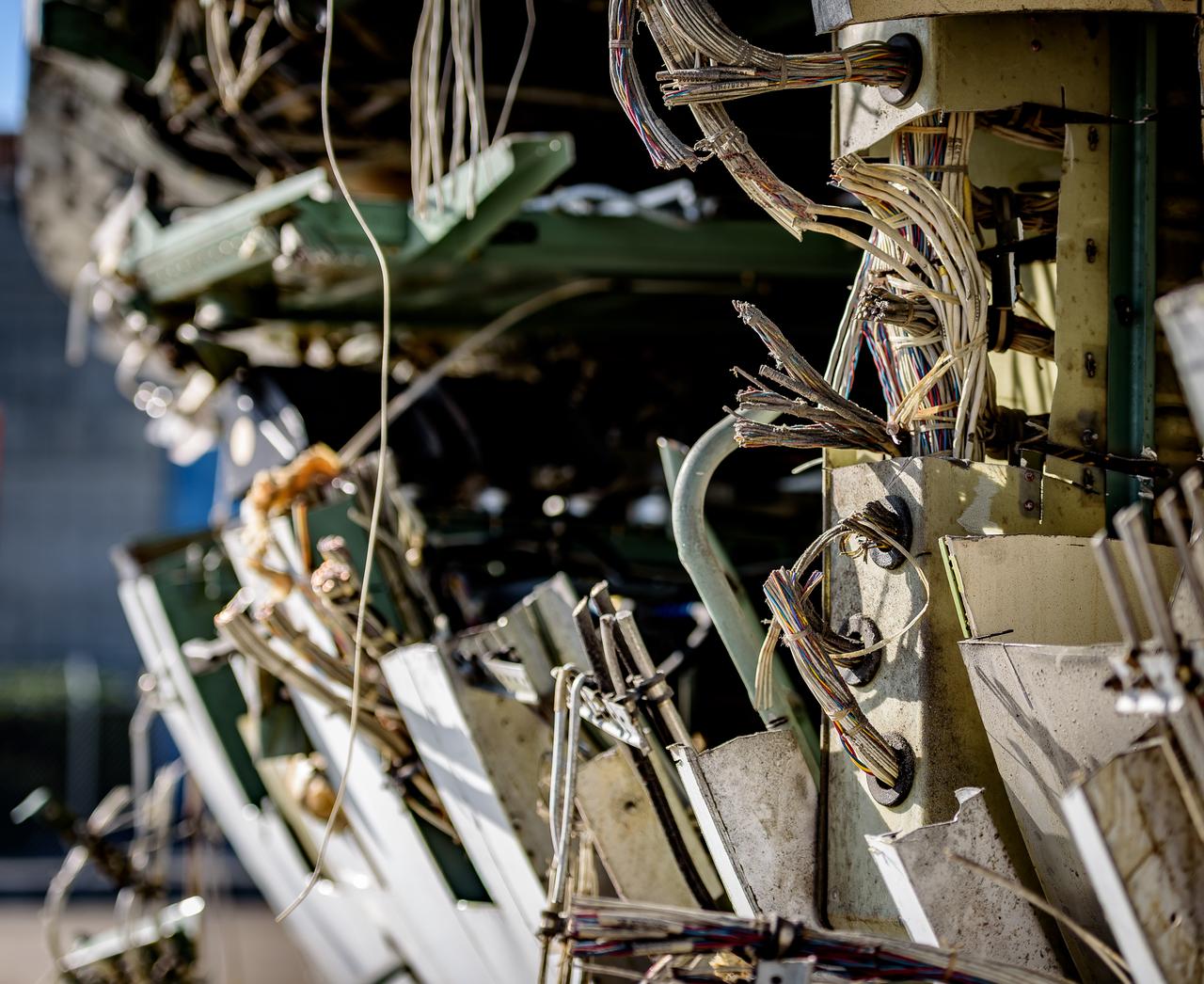
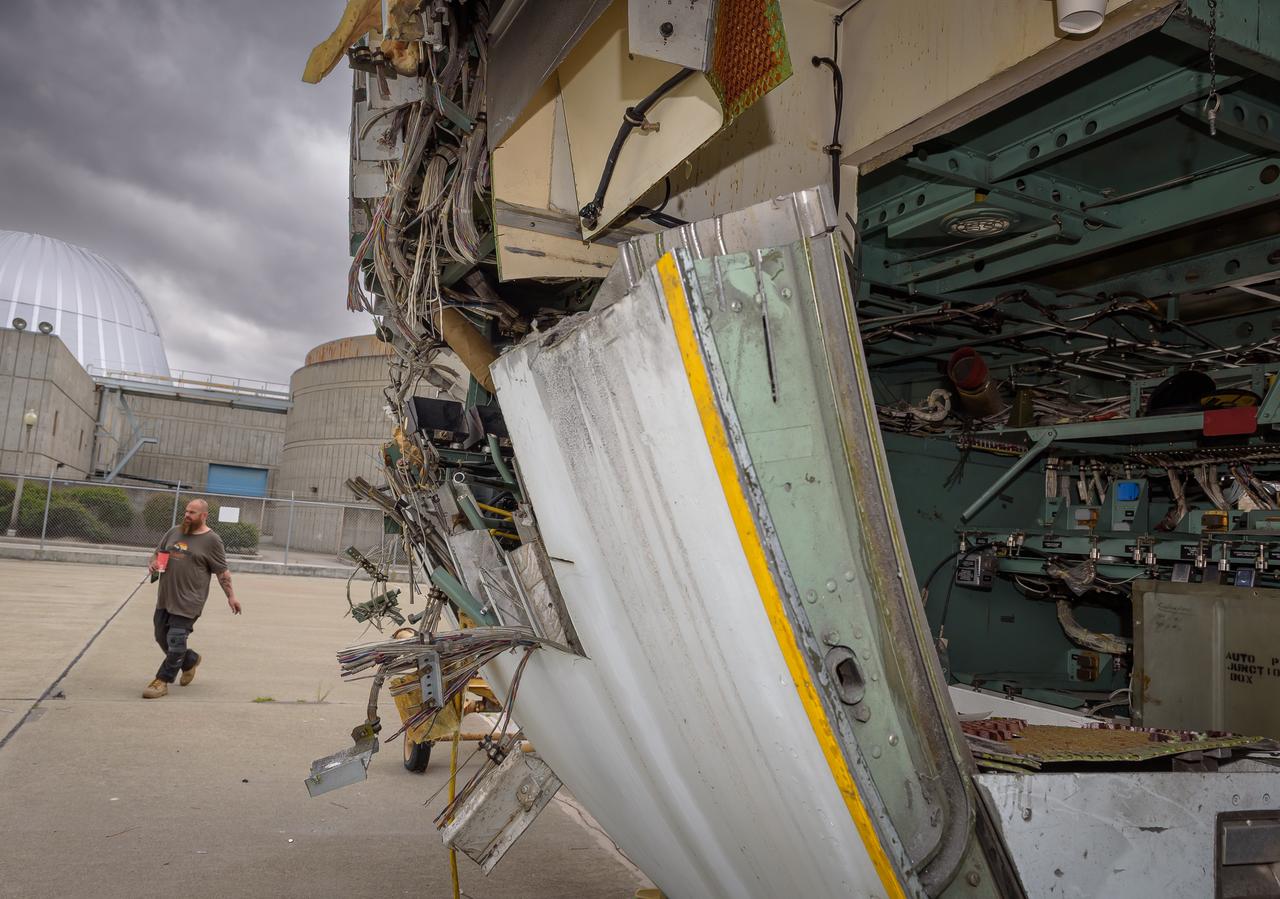
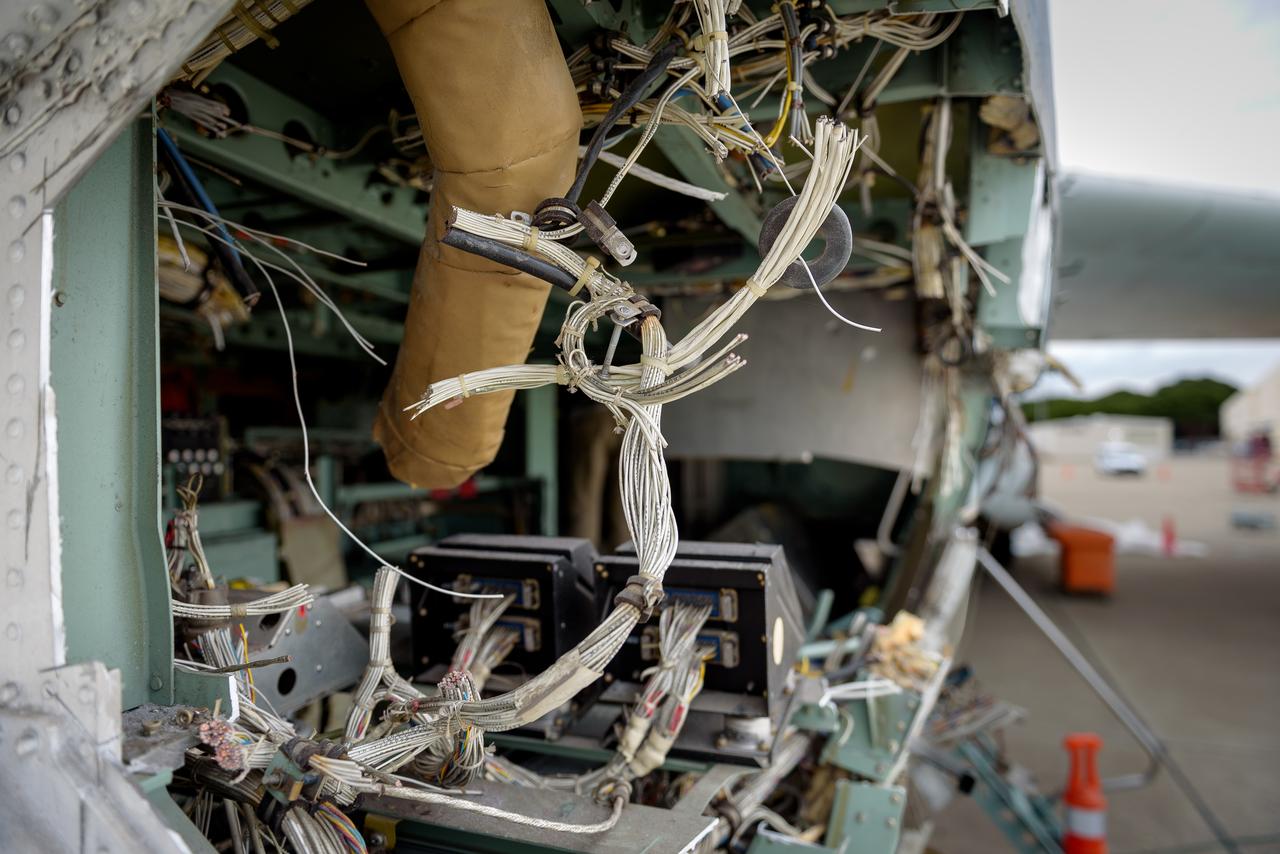
Cables in the modified C-141 Kuiper Airborne Observatory, (KAO) (NASA-714), severed prior to removing the cockpit on the N211 apron at Moffett Field, California.
Kuiper Airborne Observatory (KAO) Demolition
The cockpit of the modified C-141 Kuiper Airborne Observatory, (KAO) (NASA-714), is separated from the airframe on the N211 apron at Moffett Field, California.
Kuiper Airborne Observatory (KAO) Demolition
Yellow straps are threaded through the airframe of the modified C-141 Kuiper Airborne Observatory, (KAO) (NASA-714), before removing the cockpit on the N211 apron at Moffett Field, California.
Kuiper Airborne Observatory (KAO) Demolition
The Intersex Progress Pride flag flies for the first time at any NASA center below the American flag, in front of the Ames Administration Building, N200, to commemorate Pride Month.
Intersex Progress Pride Flag at Ames
Group photo in STAR Labs in N242 with NASA astronauts Christina Koch and Victor J. Glover.
Orion Astronauts Visit Ames Entry Systems and Technology Divisio
Cables in the modified C-141 Kuiper Airborne Observatory, (KAO) (NASA-714), severed prior to removing the cockpit on the N211 apron at Moffett Field, California.
Kuiper Airborne Observatory (KAO) Demolition
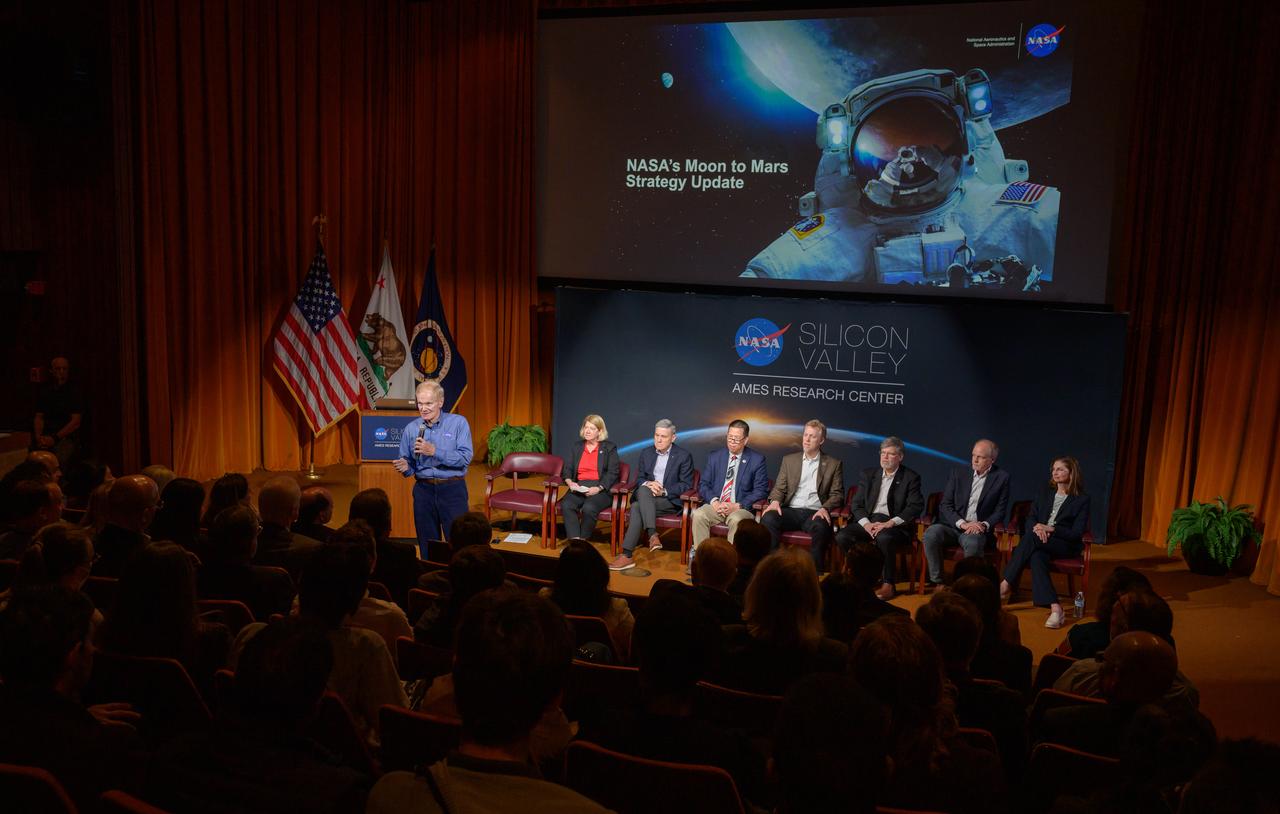
Eugene Tu, center director at NASA’s Ames Research Center in California’s Silicon Valley, offers his opening remarks to the   Ames workforce during the “Moon to Mars” town hall in the N201 Syvertson Auditorium. Town hall panel, seated right to left, are  NASA Administrator Bill Nelson, Deputy Administrator Pam Melroy, Associate Administrator Bob Cabana, Director of Space Architectures Kurt “Spuds” Vogel, Deputy Associate Administrator for Exploration in the Science Mission Directorate Joel Kearns, Deputy Associate Administrator for Programs in the Space Technology Mission Directorate Walt Engelund, and Deputy Associate Administrator for Exploration Systems Development Cathy Koerner.
NASA Administrator Bill Nelson, Deputy Administrator Pam Melroy,
Composite image of Background Oriented Schlieren (BOS) data (contour) with a cut-out images of the T-38’s during a Mach Number 1.01 pass. This data is the first time shockwave interactions between two full scale aircraft traveling faster than the speed of sound have been imaged and shown with schlieren visualization. Original recording of the pass taken in the Black Mountain Supersonic Corridor at near Edwards AFB in December of 2018. Image acquired by JT Heineck, schlieren data processed by Neal Smith
AirBOS4
Right to left: Jay Trimble, Rachel Hoover, and Kelsey Herrmann in the Multi-Mission Operations Center (MMOC), N240, during Volatiles Investigating Polar Exploration Rover (VIPER) for VIPER Family Day.
VIPER Family Day
Loretta Falcone during the Volatiles Investigating Polar Exploration Rover (VIPER) vehicle operational readiness test in the Multi-Mission Operations Center (MMOC), N240A.
VIPER Vehicle Operational Readiness Test
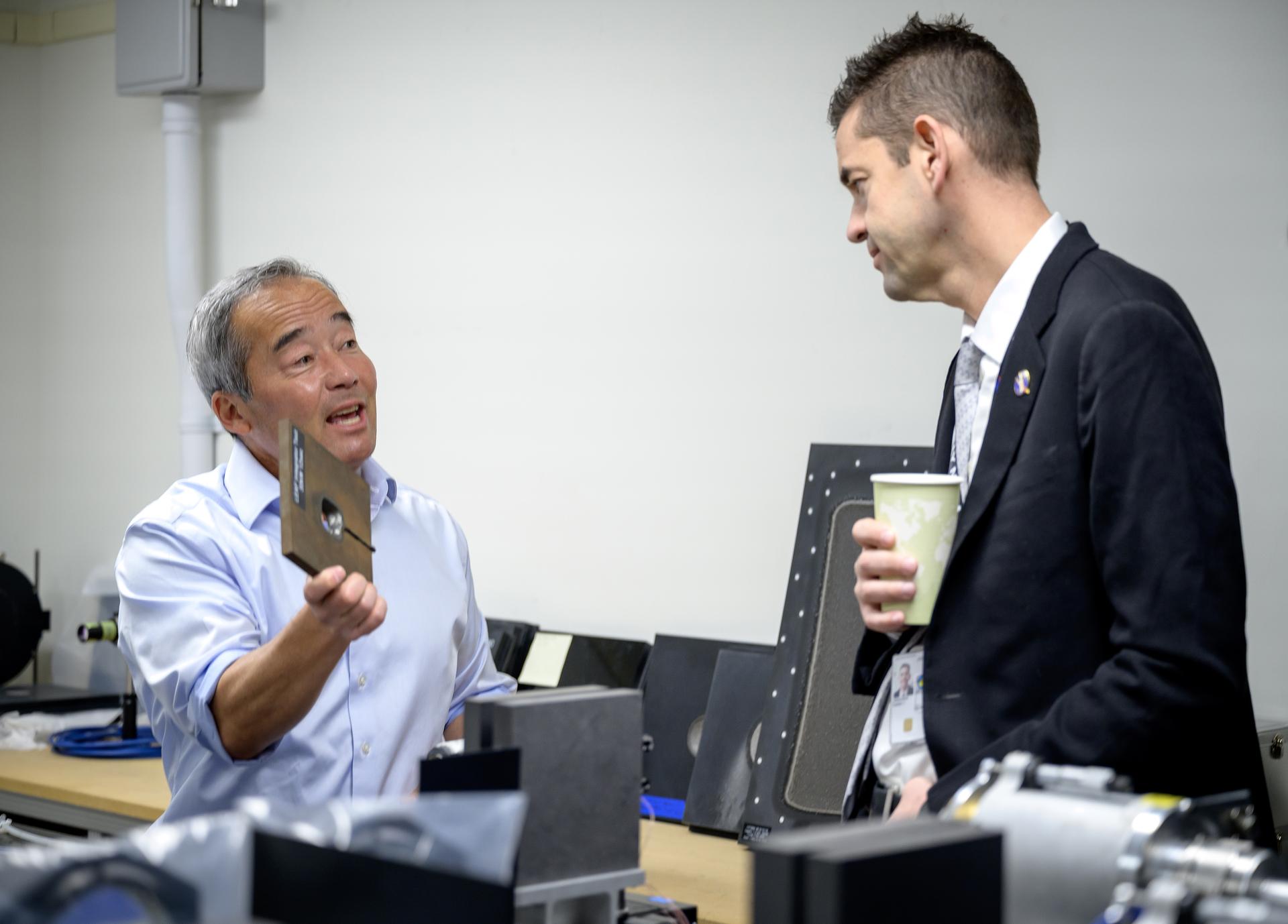
NASA Astronaut Christina Koch, left, holds a test sample for Victor J. Glover to photograph.  The sample is a half-inch steel plate with a hole that was drilled by a 12-second burst from a 30kW laser in the Laser Enhanced Arc Jet Facility (LEAF) laboratory, N238.
Orion Astronauts Visit Ames Entry Systems and Technology Divisio
Jasper Wolfe, left, explains the Volatiles Investigating Polar Exploration Rover (VIPER) mission to visitors in the Multi-Mission Operations Center (MMOC), N240, for VIPER Family Day.
VIPER Family Day
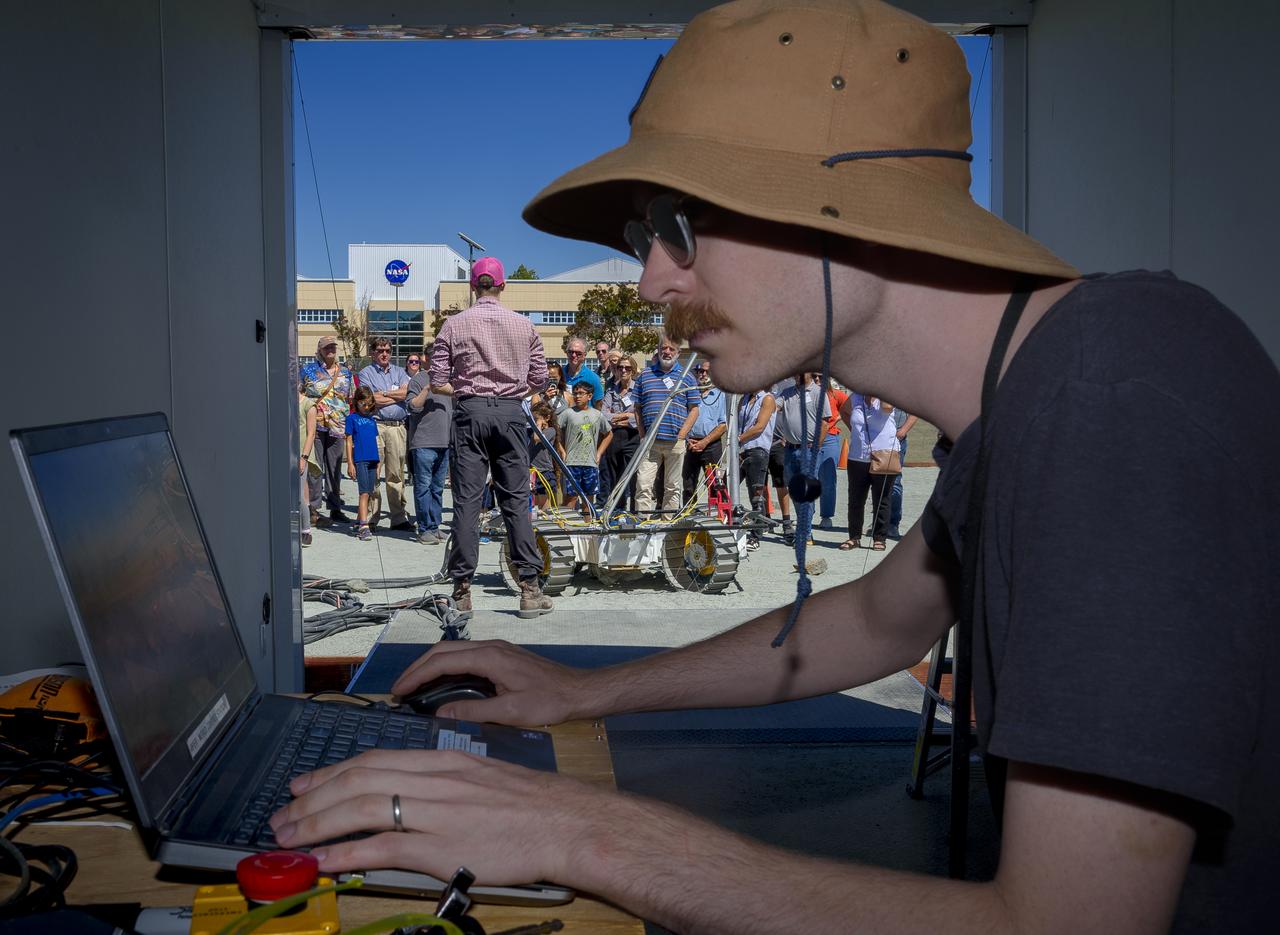
Ethan Massey, in the control booth, sends commands that control the movement of the Moon Gravity Representative Unit (MGRU3) at the Roverscape during Family Day for team members of the Volatiles Investigating Polar Exploration Rover (VIPER).  MGRU3 is a weight equivalent mobility and navigation test platform for VIPER. It is used to test, develop and validate the different mobility and navigation techniques and capabilities of the VIPER rover, to safely and efficiently map water at the Moon’s South Pole.
VIPER Family Day
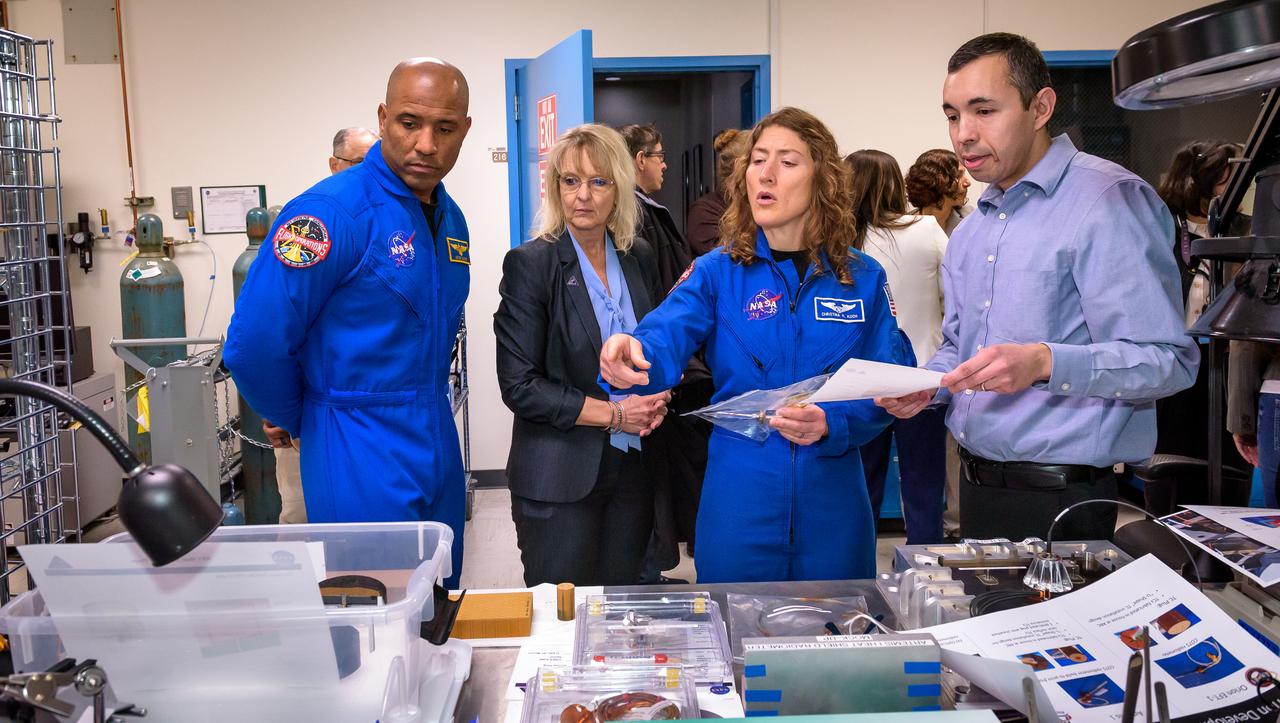
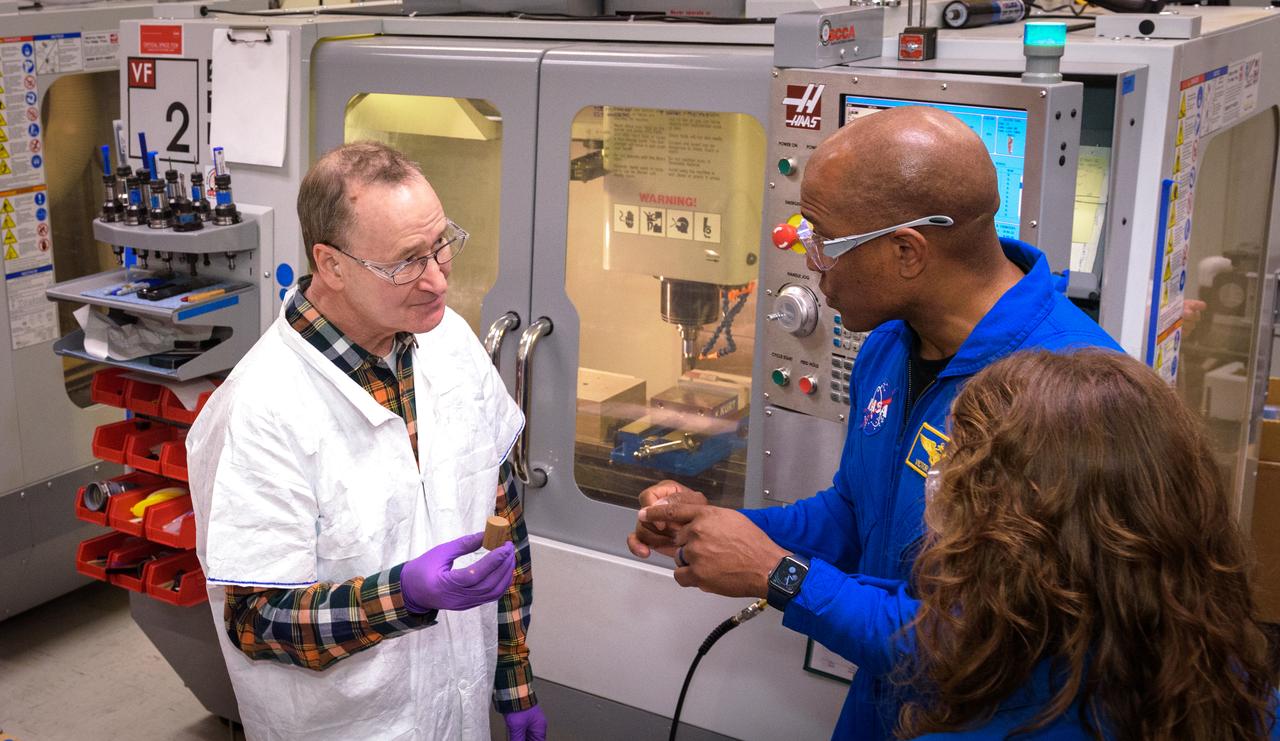
NASA astronauts Christina Koch and Victor J. Glover examine a sample of AVCOAT Thermal Protection System (TPS) that protects the Orion spacecraft as it enters Earth’s atmosphere.
Orion Astronauts Visit Ames Entry Systems and Technology Divisio
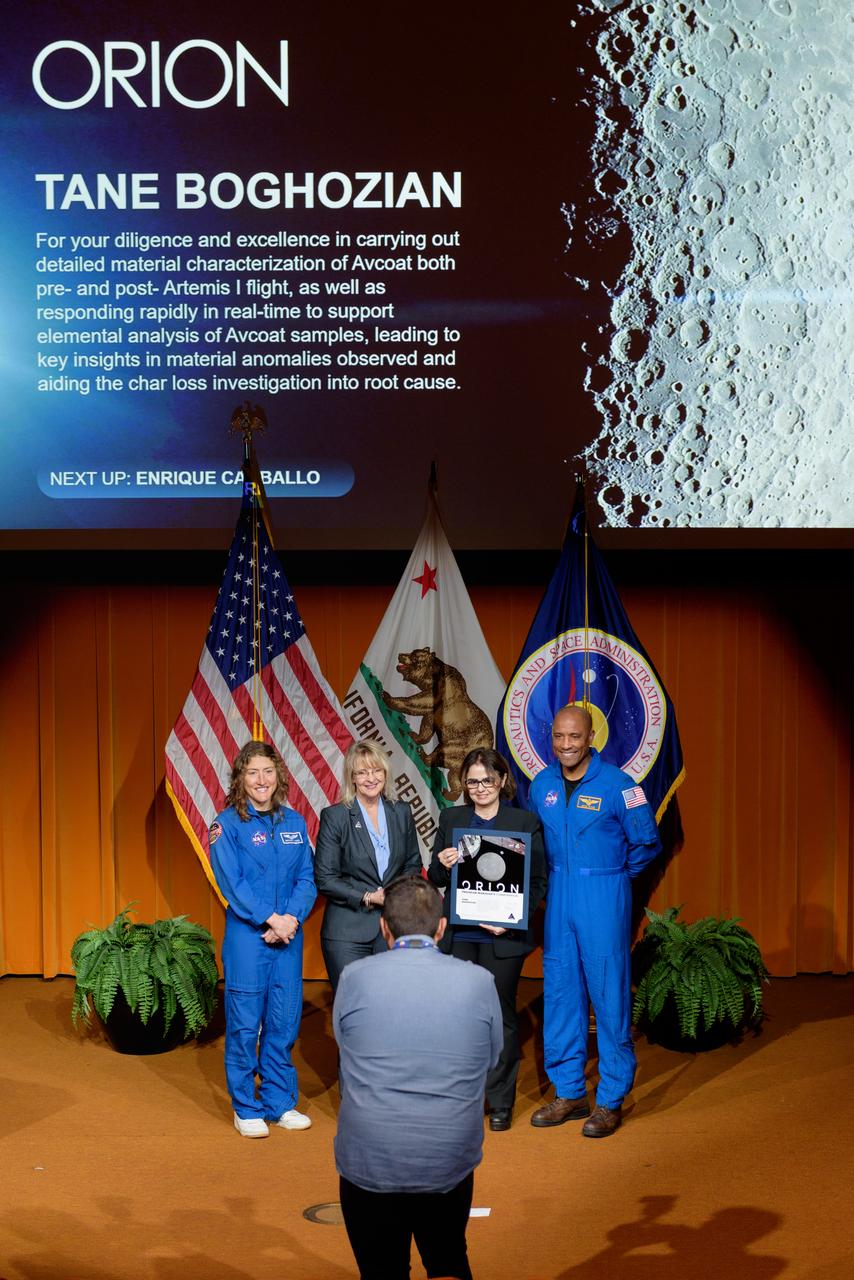
NASA Ames staff photographer Brandon Torres Navarette, front, photographs Orion program manager’s commendation award presented to Tane Boghozian (ACD25-0023-005), center, by Orion Deputy Program Manager Debbie Korth, left, NASA astronauts Victor J. Glover, right, and Christina Koch, left, in the Syvertson Auditorium, N201.
Orion Astronauts Visit Ames Entry Systems and Technology Divisio
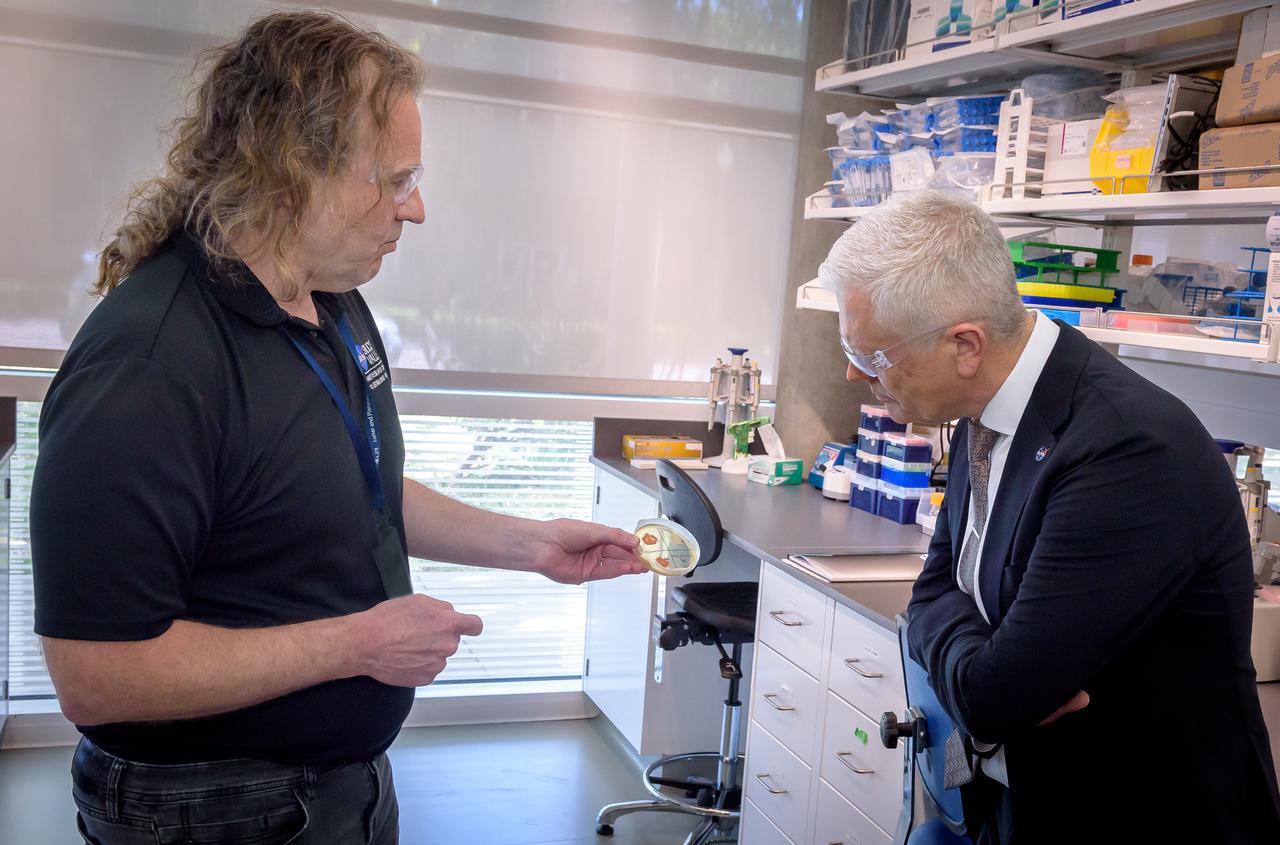
Director of Science Michael Hesse, left, presents an overview of Lunar Explorer Instrument for space biology Applications (LEIA) to Acting Deputy Associate Administrator (DAA) for the Science Mission Directorate (SMD) Mark Clampin in the Bioscience Collaborative Laboratory, N288.
Mark Clampin Tours the Bioscience Collaborative Laboratory
Director of Science Michael Hesse, left, presents an overview of Lunar Explorer Instrument for space biology Applications (LEIA) to Acting Deputy Associate Administrator (DAA) for the Science Mission Directorate (SMD) Mark Clampin in the Bioscience Collaborative Laboratory, N288.
Mark Clampin Tours the Bioscience Collaborative Laboratory
The cockpit of the modified C-141 Kuiper Airborne Observatory, (KAO) (NASA-714), is separated from the airframe on the N211 apron at Moffett Field, California.
Kuiper Airborne Observatory (KAO) Demolition
Front 3/4 view of the Avrocar mounted on variable height struts in the Ames 40x80 foot wind tunnel, without tail.
Front 3/4 view of the Avrocar.
Rick Elphic during the Volatiles Investigating Polar Exploration Rover (VIPER) vehicle operational readiness test in the Multi-Mission Operations Center (MMOC), N240A.
VIPER Vehicle Operational Readiness Test
Erin Fritzler during the Volatiles Investigating Polar Exploration Rover (VIPER) vehicle operational readiness test in the Multi-Mission Operations Center (MMOC), N240A.
VIPER Vehicle Operational Readiness Test
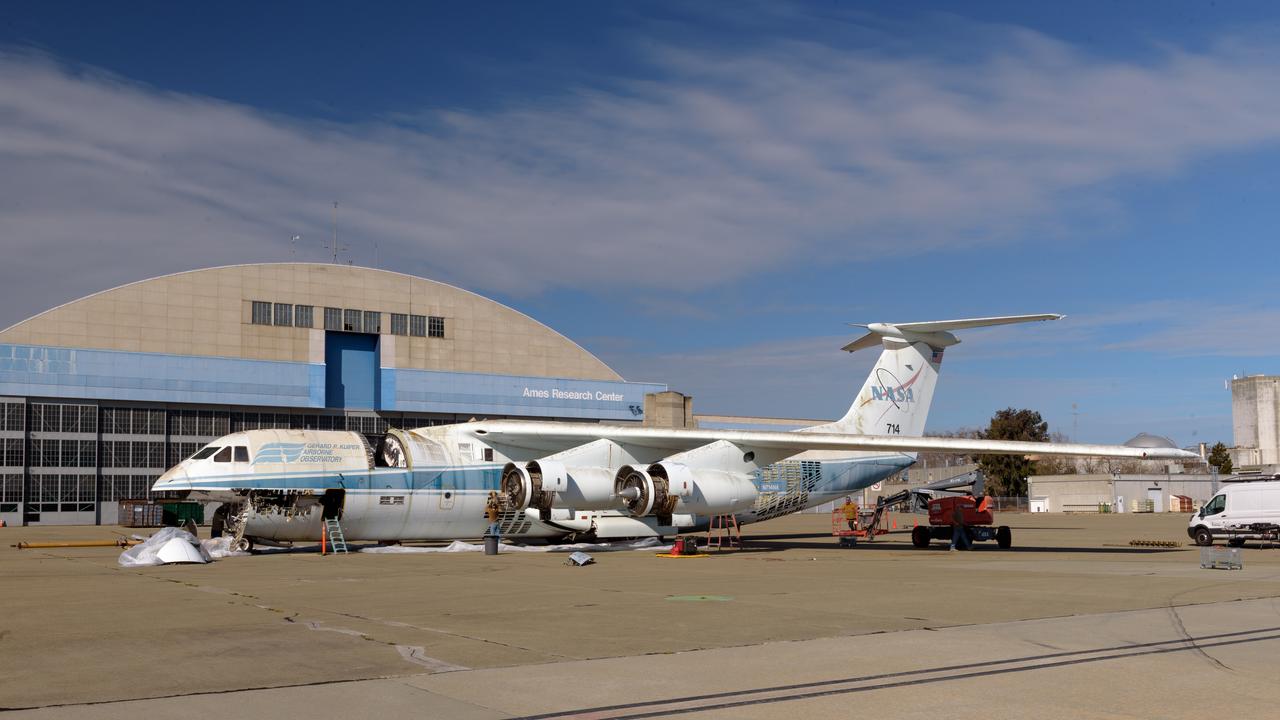
Demolition of the modified C-141 Kuiper Airborne Observatory, (KAO) (NASA-714), on the N211 apron at Moffett Field, California.
Kuiper Airborne Observatory (KAO) Demolition
Rick Elphic, NSS instrument principal investigator, left, explains the Volatiles Investigating Polar Exploration Rover (VIPER) mission to visitors in the Multi-Mission Operations Center (MMOC), N240, during VIPER Family Day.
VIPER Family Day
NASA Administrator Bill Nelson, front, talks to the workforce at NASA’s Ames Research Center in California’s Silicon Valley during the “Moon to Mars” town hall in the N201 Syvertson Auditorium.  Behind him, left to right, are Deputy Administrator Pam Melroy, Associate Administrator Bob Cabana, Ames Center Director Eugene Tu, and Director of Space Architectures Kurt “Spuds” Vogel.
NASA Administrator Bill Nelson, Deputy Administrator Pam Melroy,
Volatiles Investigating Polar Exploration Rover (VIPER) mission systems manager Jay Trimble, right, with Multi-Mission Operations Center (MMOC) Director Justin Pane, during the vehicle operational readiness test in the MMOC, N240A.
VIPER Vehicle Operational Readiness Test
Cables in the modified C-141 Kuiper Airborne Observatory, (KAO) (NASA-714), severed prior to removing the cockpit on the N211 apron at Moffett Field, California.
Kuiper Airborne Observatory (KAO) Demolition
Center Director Eugene Tu, left, with Multi-Mission Operations Center (MMOC) Director Justin Pane during the Volatiles Investigating Polar Exploration Rover (VIPER) vehicle operational readiness test in the MMOC, N240A.  Deputy Center Director David Korsmeyer, back left, with VIPER Project Manager Daniel Andrews.
VIPER Vehicle Operational Readiness Test
A Volvo Crawler Excavator severs the airframe, separating the tail section from the fuselage, of the modified C-141 Kuiper Airborne Observatory, (KAO) (NASA-714), on the N211 apron of Moffett Field, California.
Kuiper Airborne Observatory (KAO) Demolition
Monty Miranda in the telescope reticle during the demolition of the modified C-141 Kuiper Airborne Observatory, (KAO) (NASA-714), on the N211 apron at Moffett Field, California.
Kuiper Airborne Observatory (KAO) Demolition
Charles Hacskaylo during the Volatiles Investigating Polar Exploration Rover (VIPER) vehicle operational readiness test in the Multi-Mission Operations Center (MMOC), N240A.
VIPER Vehicle Operational Readiness Test
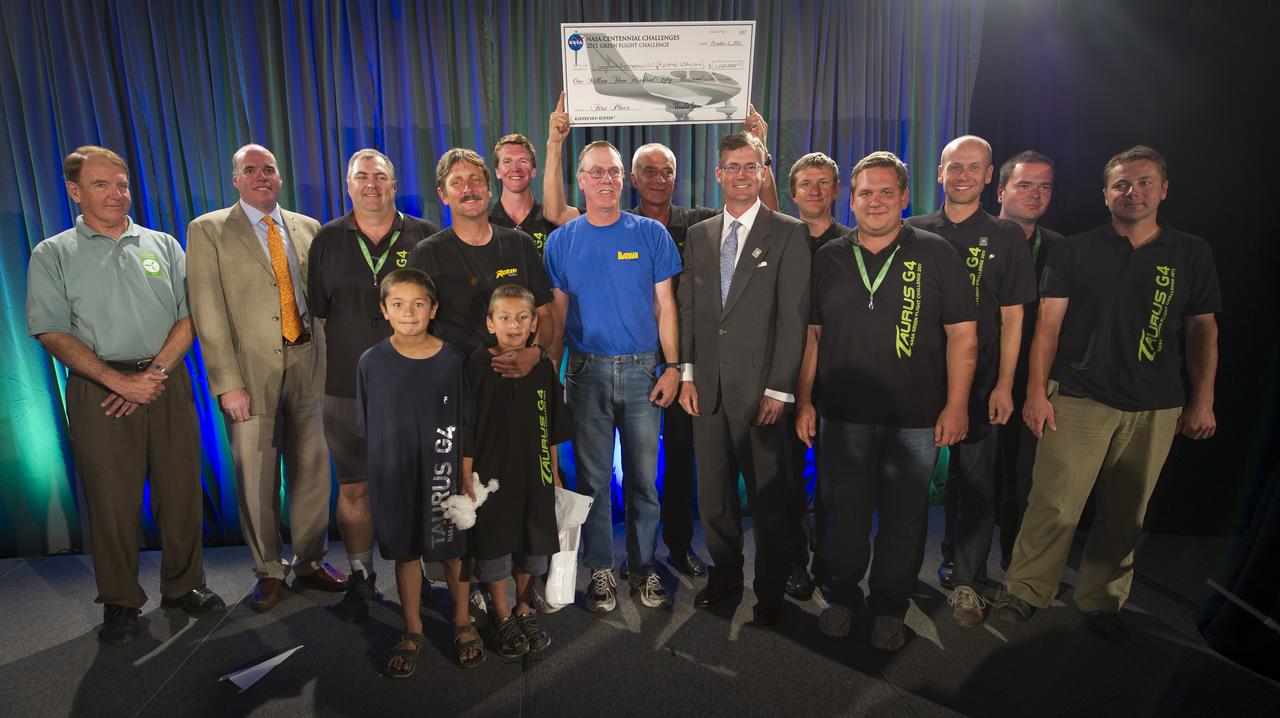
Comparative Aircraft Flight Efficiency (CAFE) Foundation President Brien A. Seeley M.D., left, NASA Acting Chief Technologist Joe Parrish, 2nd from left, and Pipistrel-USA Team Lead Jack Langelaan, center with suit, and the entire Pipistrel-USA, Taurus G4 aircraft team pose for a photograph shortly after winning the 2011 Green Flight Challenge, sponsored by Google, on Monday, Oct. 3, 2011 at the NASA Ames Research Center, Mountain View, Calif.  The all electric Taurus G4 aircraft achieved the equivalency of more than 400 miles per gallon.  NASA and CAFE held the challenge to advance technologies in fuel efficiency and reduced emissions with cleaner renewable fuels and electric aircraft. Photo Credit: (NASA/Bill Ingalls)
Green Flight Challenge
Arno Rogg explains the Volatiles Investigating Polar Exploration Rover (VIPER) mission to visitors in the Multi-Mission Operations Center (MMOC), N240, during VIPER Family Day.
VIPER Family Day
The modified C-141 Kuiper Airborne Observatory, (KAO) (NASA-714), is demolished on the N211 apron at Moffett Field, California.
Kuiper Airborne Observatory (KAO) Demolition
Zachary Burkland, left, Justin Pane, and Jay Trimble, right during the Volatiles Investigating Polar Exploration Rover (VIPER) vehicle operational readiness test in the Multi-Mission Operations Center (MMOC), N240A.
VIPER Vehicle Operational Readiness Test
The drone follows an autonomously defined path around the modified C-141 Kuiper Airborne Observatory, (KAO) (NASA-714), on the N211 apron.  The drone photographs the aircraft with a visible and infrared camera which are processed using a photogrammetry software package called Pix4D that converts them into a 3D model.  Scanning the aircraft is the first phase of documenting the aircraft demolition as well as an opportunity to train pilots to operate the Pix4D software.
Kuiper Airborne Observatory (KAO) Demolition
Antoine Tardy explains the operation of the Moon Gravity Representative Unit (MGRU3) at the Roverscape during Family Day for team members of the Volatiles Investigating Polar Exploration Rover (VIPER).  MGRU3 is a weight equivalent mobility and navigation test platform for VIPER. It is used to test, develop and validate the different mobility and navigation techniques and capabilities of the VIPER rover, to safely and efficiently map water at the Moon’s South Pole.
VIPER Family Day
The cockpit of the modified C-141 Kuiper Airborne Observatory, (KAO) (NASA-714), is separated from the airframe on the N211 apron at Moffett Field, California.
Kuiper Airborne Observatory (KAO) Demolition
Kelsey Herrmann, right, reviewing the flight control display in the Multi-Mission Operations Center (MMOC), N240, for the Volatiles Investigating Polar Exploration Rover (VIPER) to Rachel Hoover during VIPER Family Day.
VIPER Family Day
The drone follows an autonomously defined path around the modified C-141 Kuiper Airborne Observatory, (KAO) (NASA-714), on the N211 apron.  The drone photographs the aircraft with a visible and infrared camera which are processed using a photogrammetry software package called Pix4D that converts them into a 3D model.  Scanning the aircraft is the first phase of documenting the aircraft demolition as well as an opportunity to train pilots to operate the Pix4D software.
Kuiper Airborne Observatory (KAO) Demolition
Chris Provencher during the Volatiles Investigating Polar Exploration Rover (VIPER) vehicle operational readiness test in the Multi-Mission Operations Center (MMOC), N240A.
VIPER Vehicle Operational Readiness Test
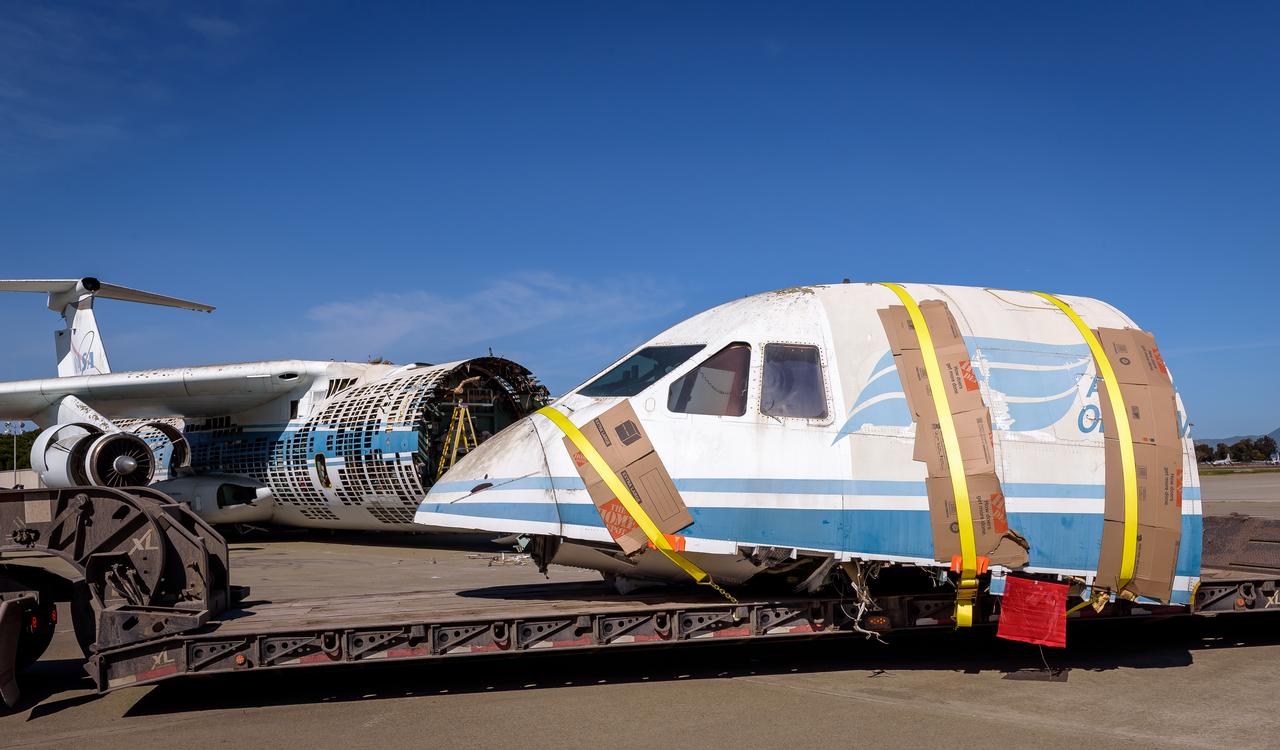
Yellow straps fasten the cockpit of the modified C-141 Kuiper Airborne Observatory, (KAO) (NASA-714), to the trailer that carries it off the N211 apron at Moffett Field, California.
Kuiper Airborne Observatory (KAO) Demolition
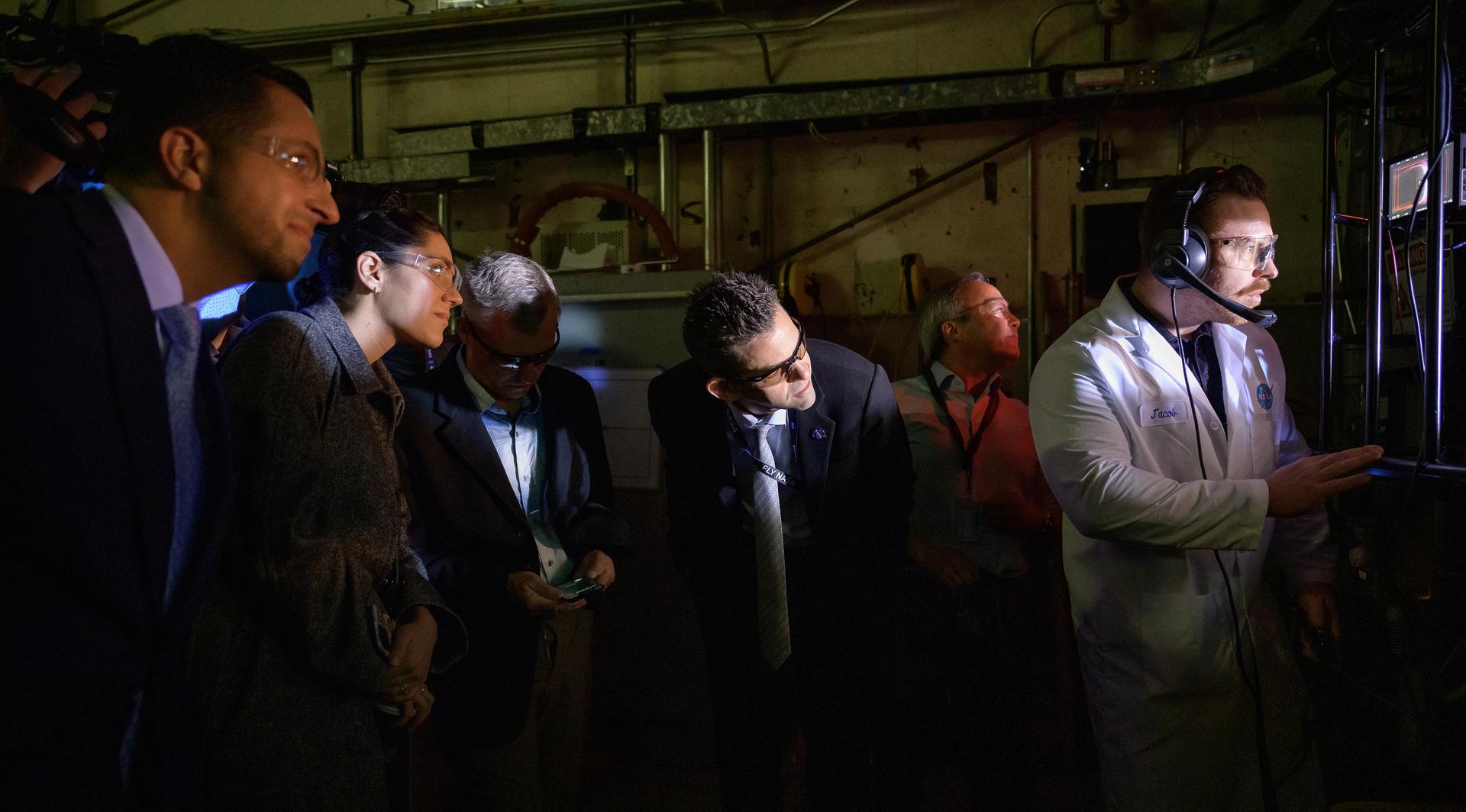
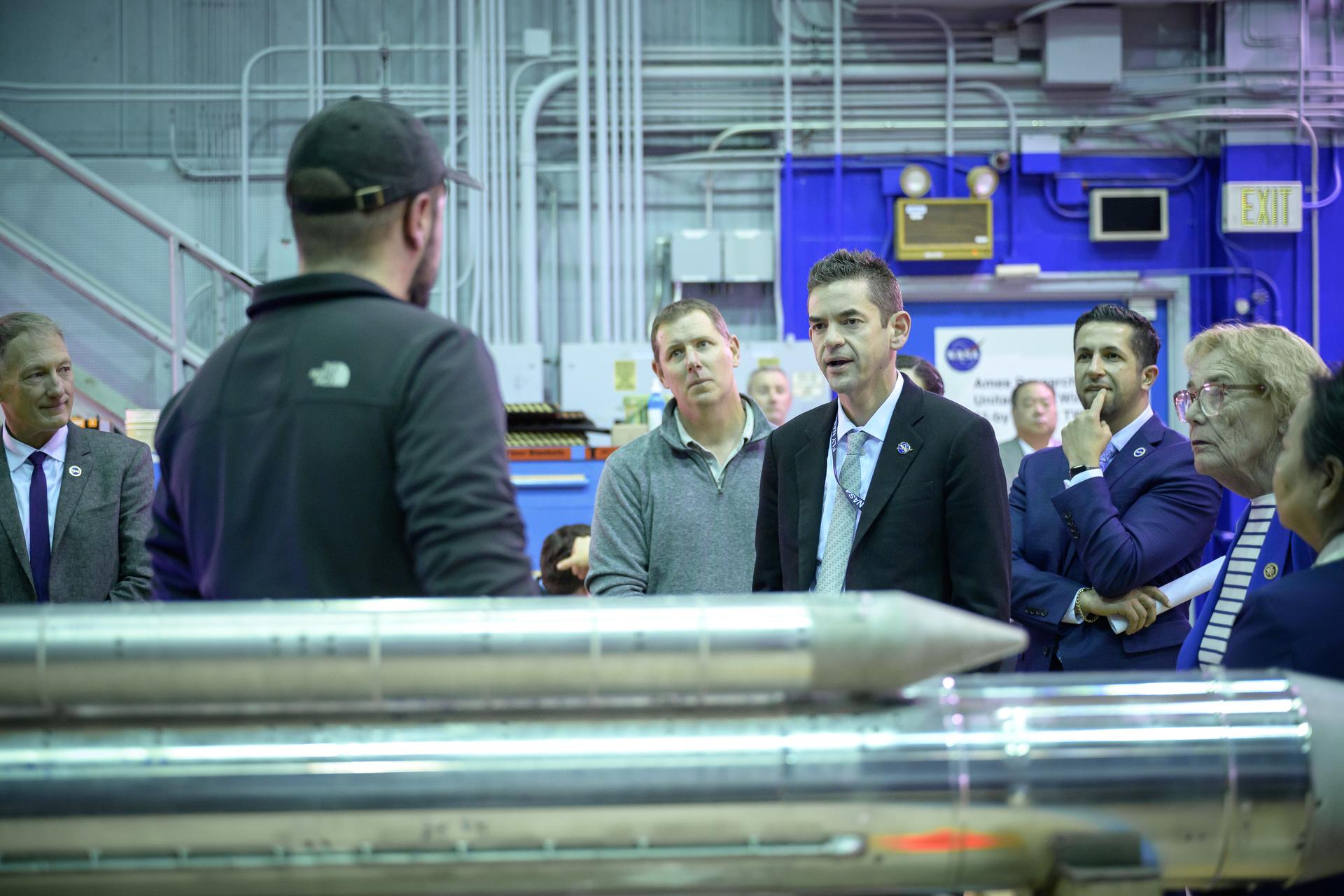
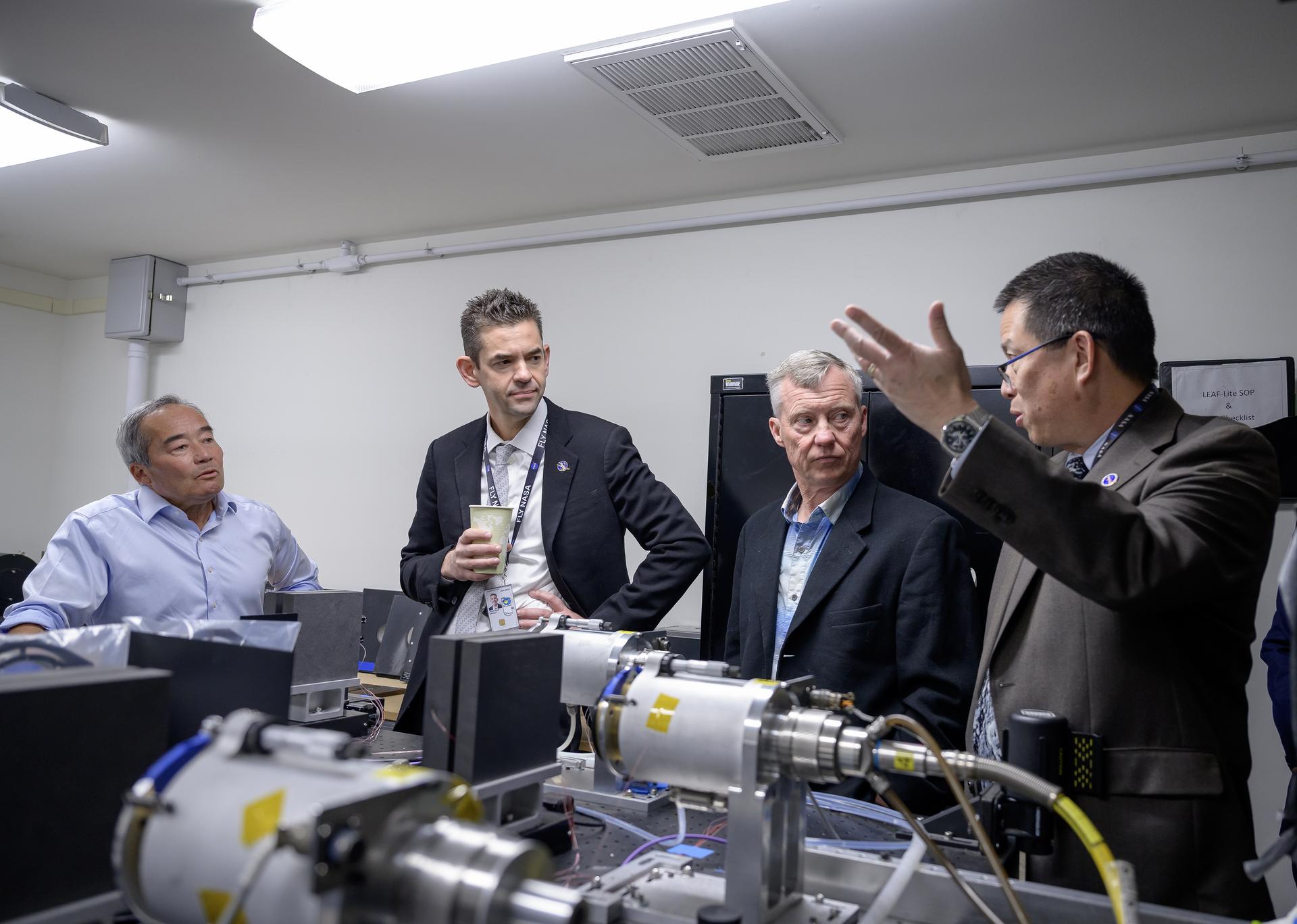
Megan MacDonald, left, leads NASA astronauts Christina Koch and Victor J. Glover, right, on a tour of the Laser Enhanced Arc Jet Facility (LEAF) laboratory, in N238.  The LEAF laser augments the hypersonic shock heating experienced by a test sample during an arc jet test and provides improved test simulation quality by supplying an intense source of optical heating while the arc jet flow provides shock-driven convective heating.
Orion Astronauts Visit Ames Entry Systems and Technology Divisio
Volatiles Investigating Polar Exploration Rover (VIPER) vehicle operational readiness test in the Multi-Mission Operations Center (MMOC), N240A.  Jasper Wolfe, front, with David Korsmeyer, left, Jay Trimble, Eugene Tu, Dan Andrews, and Justin Pane, right.
VIPER Vehicle Operational Readiness Test
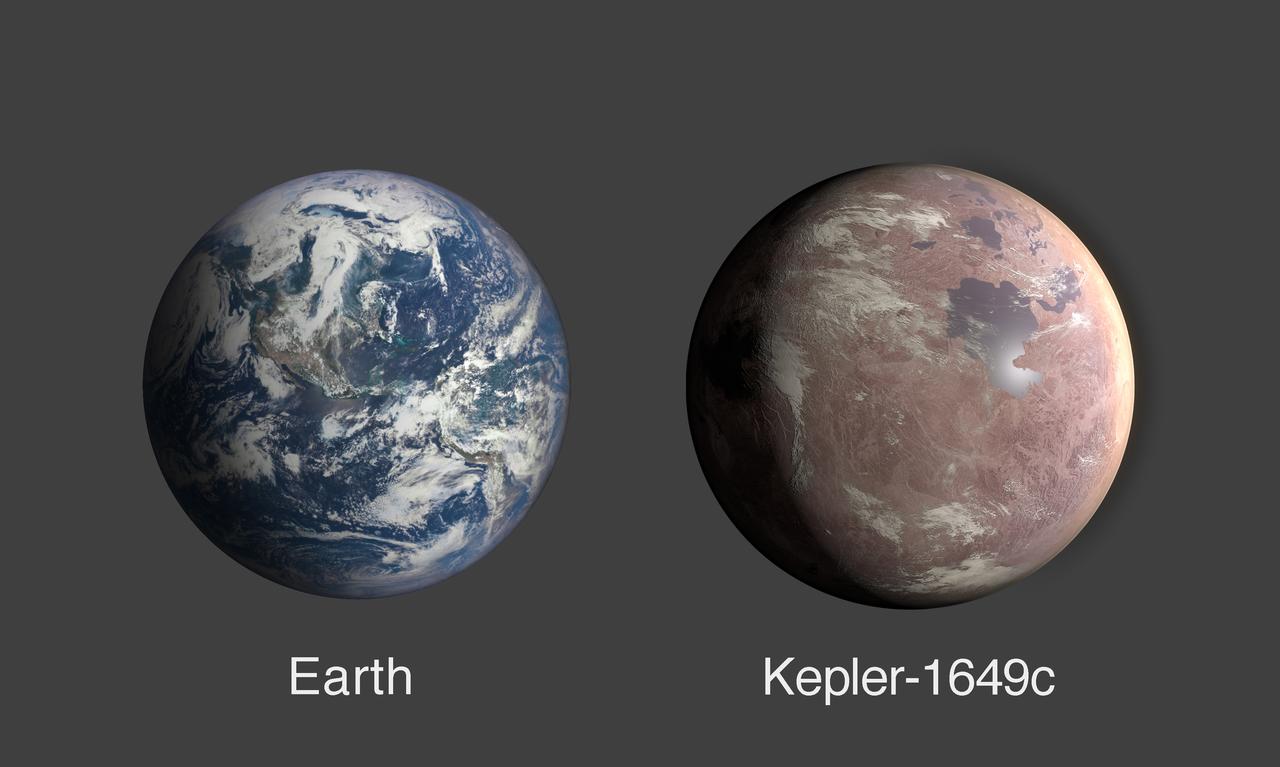
A comparison of Earth and Kepler-1649c, an exoplanet only 1.06 times Earth's radius. Labeled Art Credit: NASA/Ames Research Center/Daniel Rutter
ACD20-0044-003_1
NASA Administrator Bill Nelson, front, talks to the workforce at NASA’s Ames Research Center in California’s Silicon Valley during the “Moon to Mars” town hall in the N201 Syvertson Auditorium.  Behind, left to right, are Deputy Administrator Pam Melroy, Associate Administrator Bob Cabana, Ames Center Director Eugene Tu, Director of Space Architectures Kurt “Spuds” Vogel, Deputy Associate Administrator for Exploration in the Science Mission Directorate Joel Kearns.
NASA Administrator Bill Nelson, Deputy Administrator Pam Melroy,
Removing the skin from the airframe of the modified C-141 Kuiper Airborne Observatory, (KAO) (NASA-714), on the N211 apron at Moffett Field, California.
Kuiper Airborne Observatory (KAO) Demolition
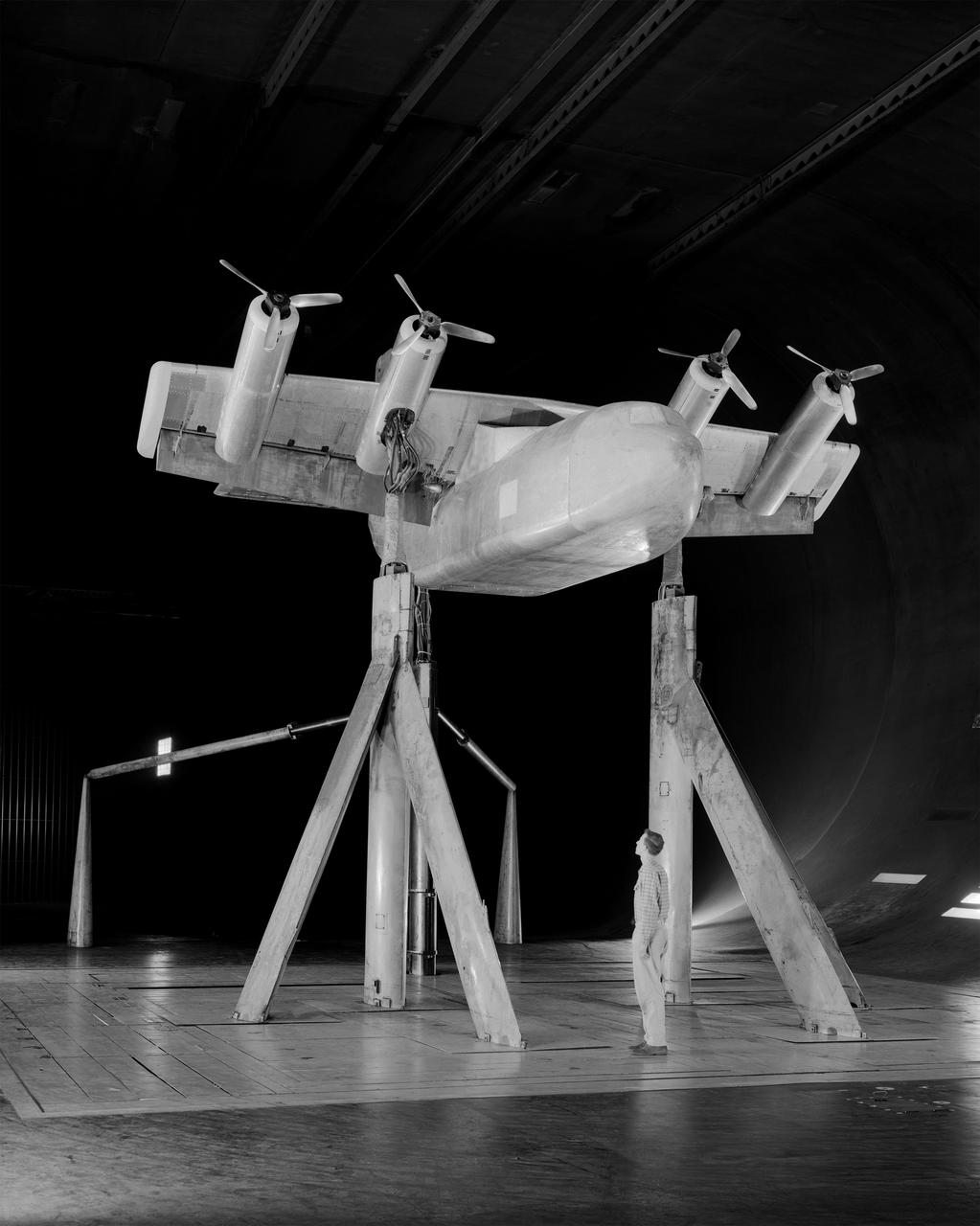
4 propeller Tilt Wing. Pictured with Tommy Wills wind tunnel mechanic in the 40x80 foot wind tunnel.
Tilt-Wing/Propeller Model With Blowing Flaps Tested in the 40x80 foot Wind Tunnel at NASA Ames.
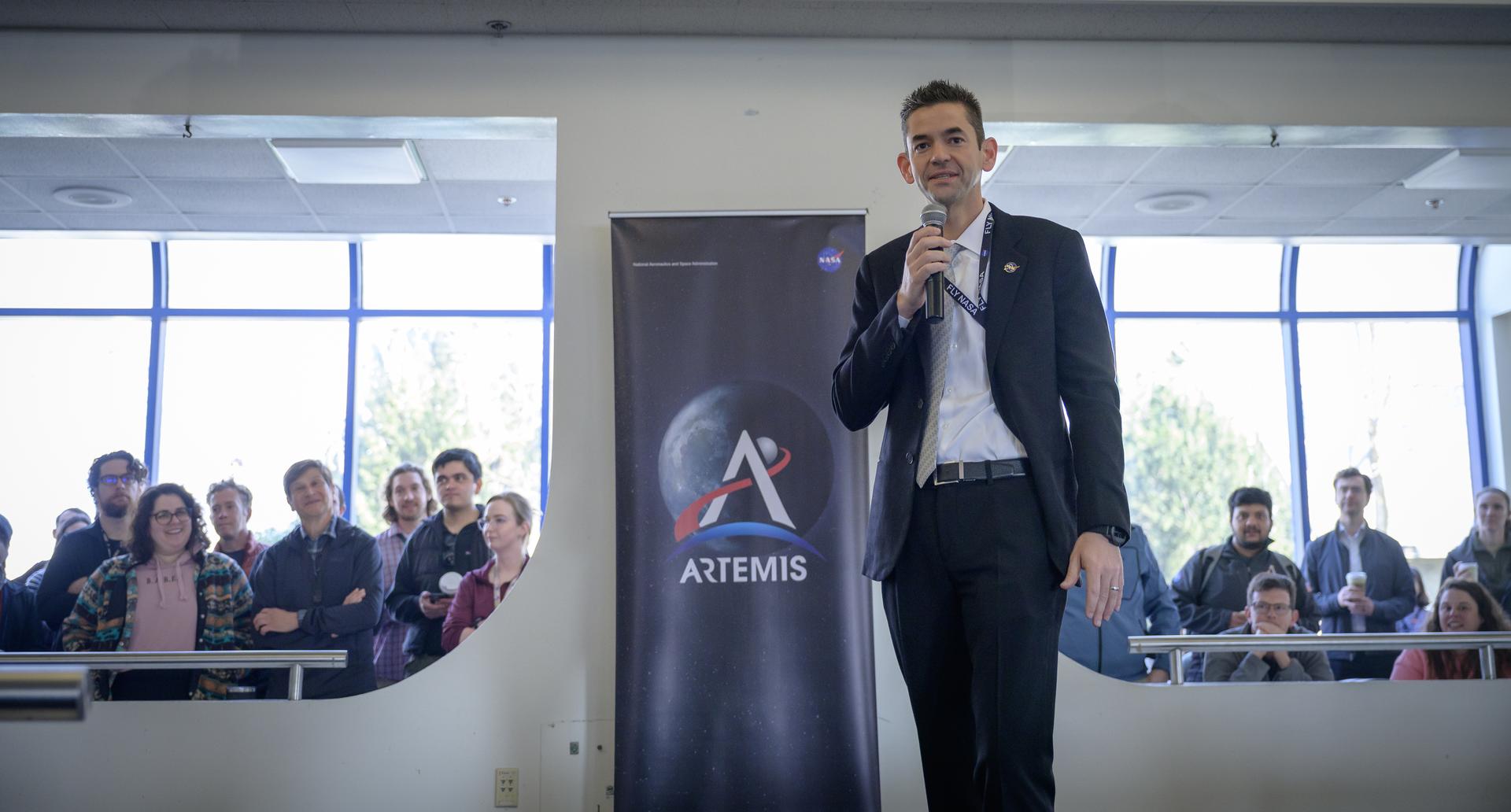
David Korsmeyer welcomes Ames employees to the Orion Circle of Excellence Award Ceremony in the Syvertson Auditorium, N201.
Orion Astronauts Visit Ames Entry Systems and Technology Divisio
Photo composite (11 frames) of the modified C-141 Kuiper Airborne Observatory, (KAO) (NASA-714), beneath the wing on the N211 apron at Moffett Field, California.

Kuiper Airborne Observatory (KAO) Demolition
The Intersex Progress Pride flag flies beneath the American flag on the center pole with the California state and NASA flag at either side.  The Intersex Progress Pride flag flies for the first time at any NASA center in front of the Ames Administration Building, N200, to commemorate Pride Month.
Intersex Progress Pride Flag at Ames
Richard Bielawski during the Volatiles Investigating Polar Exploration Rover (VIPER) vehicle operational readiness test in the Multi-Mission Operations Center (MMOC), N240A.
VIPER Vehicle Operational Readiness Test
Two nitrogen, LN2, tanks mounted in the aft section of the modified C-141 Kuiper Airborne Observatory, (KAO) (NASA-714), used to cool and purge moisture from the telescope cavity.  The aft pressure door, hinged at top, was closed during flight; the clamshell cargo doors in the aft fuselage could also lower the aft ramp to allow supplies to be driven aboard.
Kuiper Airborne Observatory (KAO) Demolition
The modified C-141 Kuiper Airborne Observatory, (KAO) (NASA-714), is demolished on the N211 apron at Moffett Field, California.
Kuiper Airborne Observatory (KAO) Demolition
Antoine Tardy explains the operation of the Moon Gravity Representative Unit (MGRU3) at the Roverscape during Family Day for team members of the Volatiles Investigating Polar Exploration Rover (VIPER).  MGRU3 is a weight equivalent mobility and navigation test platform for VIPER. It is used to test, develop and validate the different mobility and navigation techniques and capabilities of the VIPER rover, to safely and efficiently map water at the Moon’s South Pole.
VIPER Family Day
A Volvo Crawler Excavator severs the airframe, separating the tail section from the fuselage, of the modified C-141 Kuiper Airborne Observatory, (KAO) (NASA-714), on the N211 apron of Moffett Field, California.
Kuiper Airborne Observatory (KAO) Demolition
Arno Rogg explains the Volatiles Investigating Polar Exploration Rover (VIPER) mission to visitors in the Multi-Mission Operations Center (MMOC), N240, during VIPER Family Day.
VIPER Family Day
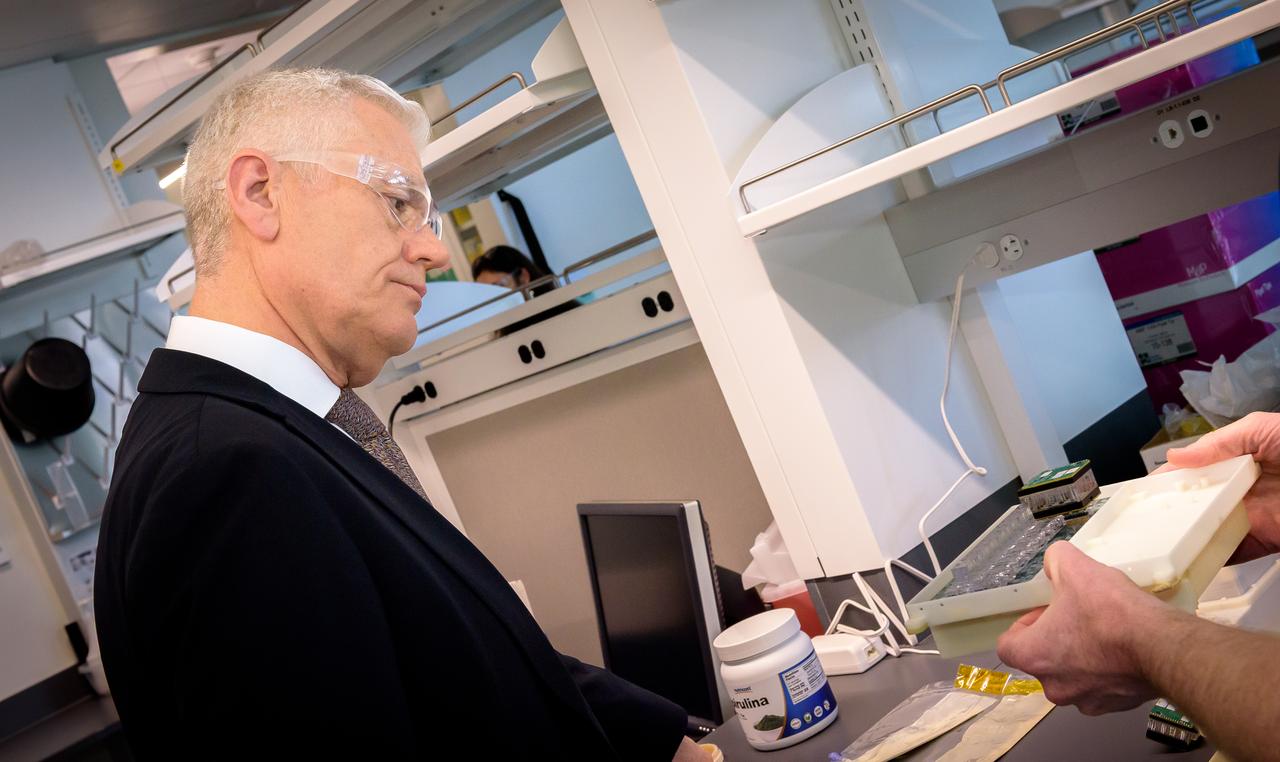
Acting Deputy Associate Administrator (DAA) for the Science Mission Directorate (SMD) Mark Clampin learns about the Lunar Explorer Instrument for space biology Applications (LEIA) the Bioscience Collaborative Laboratory, N288.
Mark Clampin Tours the Bioscience Collaborative Laboratory
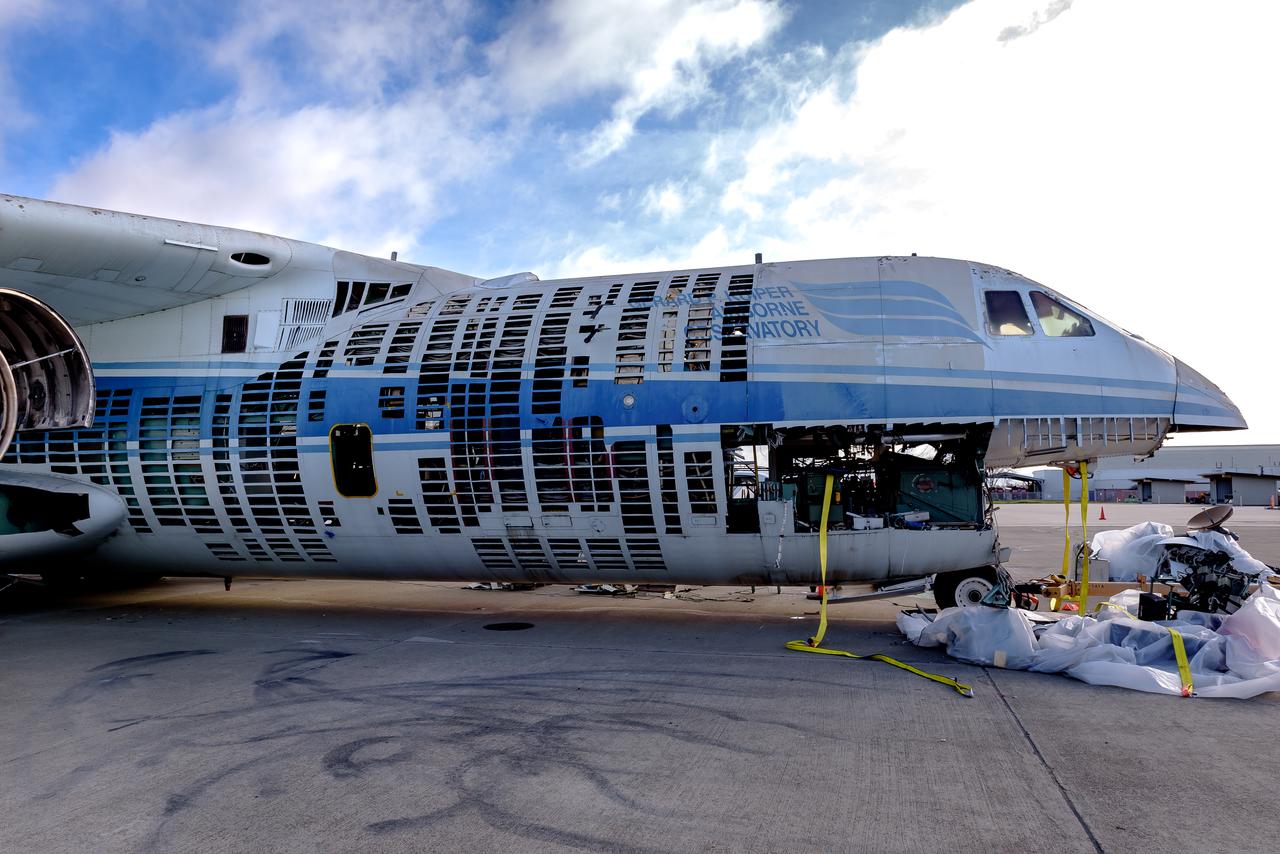
Daylight shines through the airframe of the modified C-141 Kuiper Airborne Observatory, (KAO) (NASA-714), fuselage during its demolition on the N211 apron at Moffett Field, California
Kuiper Airborne Observatory (KAO) Demolition
Director of Science Michael Hesse, right, presents an overview of Lunar Explorer Instrument for space biology Applications (LEIA) to Acting Deputy Associate Administrator (DAA) for the Science Mission Directorate (SMD) Mark Clampin in the Bioscience Collaborative Laboratory, N288.
Mark Clampin Tours the Bioscience Collaborative Laboratory
NASA is sending a mobile robot to the south pole of the Moon to get a close-up view of the location and concentration of water ice in the region and for the first time ever, actually sample the water ice at the same pole where the first woman and next man will land in 2024 under the Artemis program. About the size of a golf cart, the Volatiles Investigating Polar Exploration Rover, or VIPER, will roam several miles, using its four science instruments — including a 1-meter drill — to sample various soil environments. Planned for delivery in December 2022, VIPER will collect about 100 days of data that will be used to inform development of the first global water resource maps of the Moon. Illustration by Daniel Rutter.
VIPER Drill
Yellow straps fasten the cockpit of the modified C-141 Kuiper Airborne Observatory, (KAO) (NASA-714), to the trailer that carries it off the N211 apron at Moffett Field, California.
Kuiper Airborne Observatory (KAO) Demolition
Acting Deputy Associate Administrator (DAA) for the Science Mission Directorate (SMD) Mark Clampin learns about the Lunar Explorer Instrument for space biology Applications (LEIA) the Bioscience Collaborative Laboratory, N288.
Mark Clampin Tours the Bioscience Collaborative Laboratory
Cables in the modified C-141 Kuiper Airborne Observatory, (KAO) (NASA-714), severed prior to removing the cockpit on the N211 apron at Moffett Field, California.
Kuiper Airborne Observatory (KAO) Demolition
A chambered and twisted wing-body. Arrow wing hypersonic model tested in the 6x6 foot wind tunnel at the NASA Ames Research Center.
Arrow Wing Model in the 6x6 Foot Wind Tunnel at NASA Ames.
Ethan Massey, in the control booth, sends commands that control the movement of the Moon Gravity Representative Unit (MGRU3) at the Roverscape during Family Day for team members of the Volatiles Investigating Polar Exploration Rover (VIPER).  MGRU3 is a weight equivalent mobility and navigation test platform for VIPER. It is used to test, develop and validate the different mobility and navigation techniques and capabilities of the VIPER rover, to safely and efficiently map water at the Moon’s South Pole.
VIPER Family Day
Daylight shines through the airframe of the modified C-141 Kuiper Airborne Observatory, (KAO) (NASA-714), fuselage during its demolition on the N211 apron at Moffett Field, California
Kuiper Airborne Observatory (KAO) Demolition
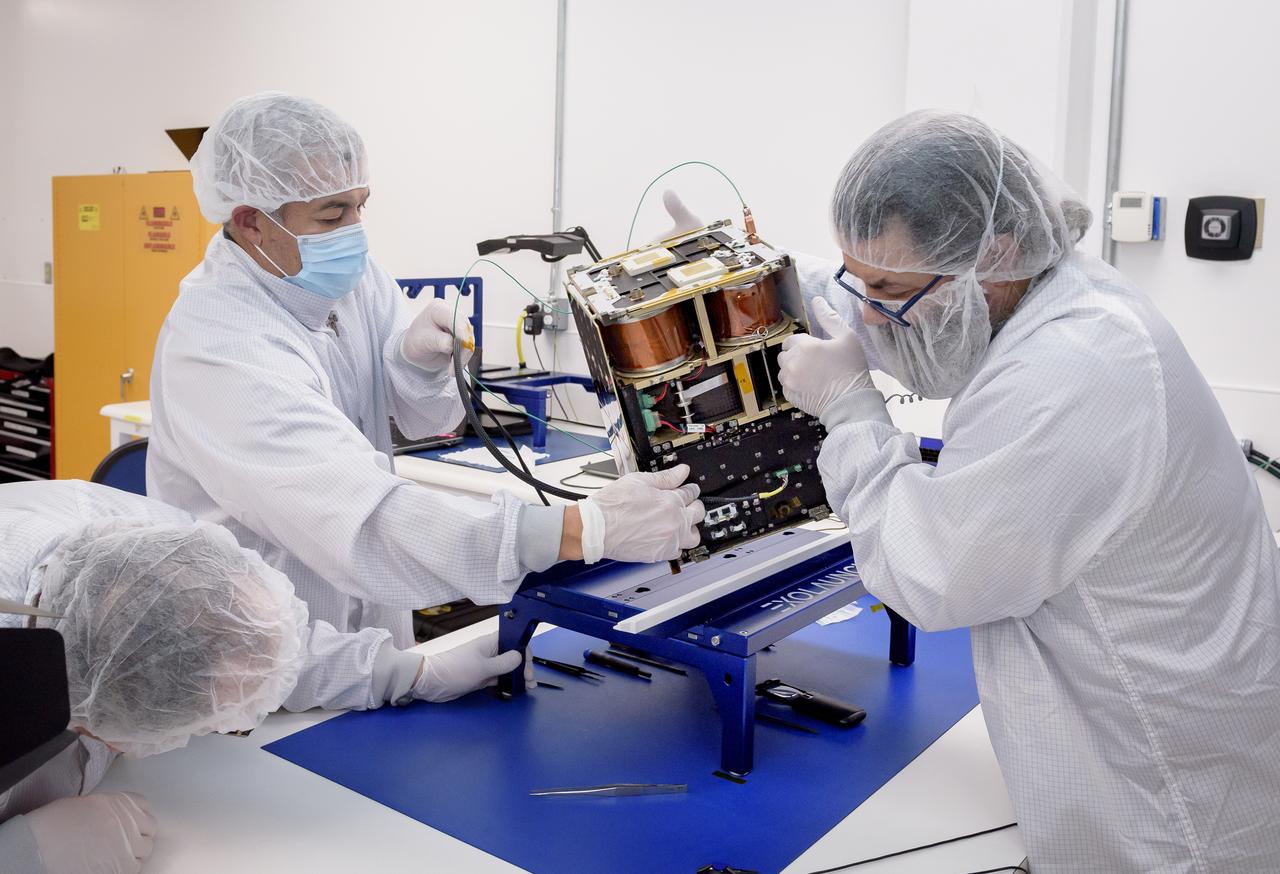
Mario Perez, back, holds the deployable solar panel as Craig Turczynski, left, secures it to the Advanced Composite Solar Sail System (ACS3) spacecraft in the Ames Integration Facility located in N213 room 104.
ACS3 Test and Final Preparation for Launch
Chris Provencher explains the Volatiles Investigating Polar Exploration Rover (VIPER) mission to his family in the Multi-Mission Operations Center (MMOC), N240, for VIPER Family Day. Dennis Heher is seated at the control console at the left.
VIPER Family Day
Composite image of Background Oriented Schlieren (BOS) data (contour) with a cut-out images of the T-38’s during a Mach Number 1.02 pass. The interaction of the shockwave of the trailing aircraft with the exhaust plume of the lead aircraft shows a shockwave reflection. Original recording of the pass taken in the Black Mountain Supersonic Corridor at near Edwards AFB in December of 2018. Image acquired by JT Heineck, schlieren data processed by Neal Smith.
AirBOS4
Composite image of Background Oriented Schlieren (BOS) data (contour) with a cut-out images of the T-38’s during a Mach Number 1.02 pass. The interaction of the shockwave of the trailing aircraft with the exhaust plume of the lead aircraft shows a shockwave reflection. Original recording of the pass taken in the Black Mountain Supersonic Corridor at near Edwards AFB in December of 2018. Image acquired by JT Heineck, schlieren data processed by Neal Smith.
AirBOS4